Minnesota Prairie Roots

Writing and photography by Audrey Kletscher Helbling

Minnesota cultural consultant & author to talk about chickens in the bus & more February 13, 2024

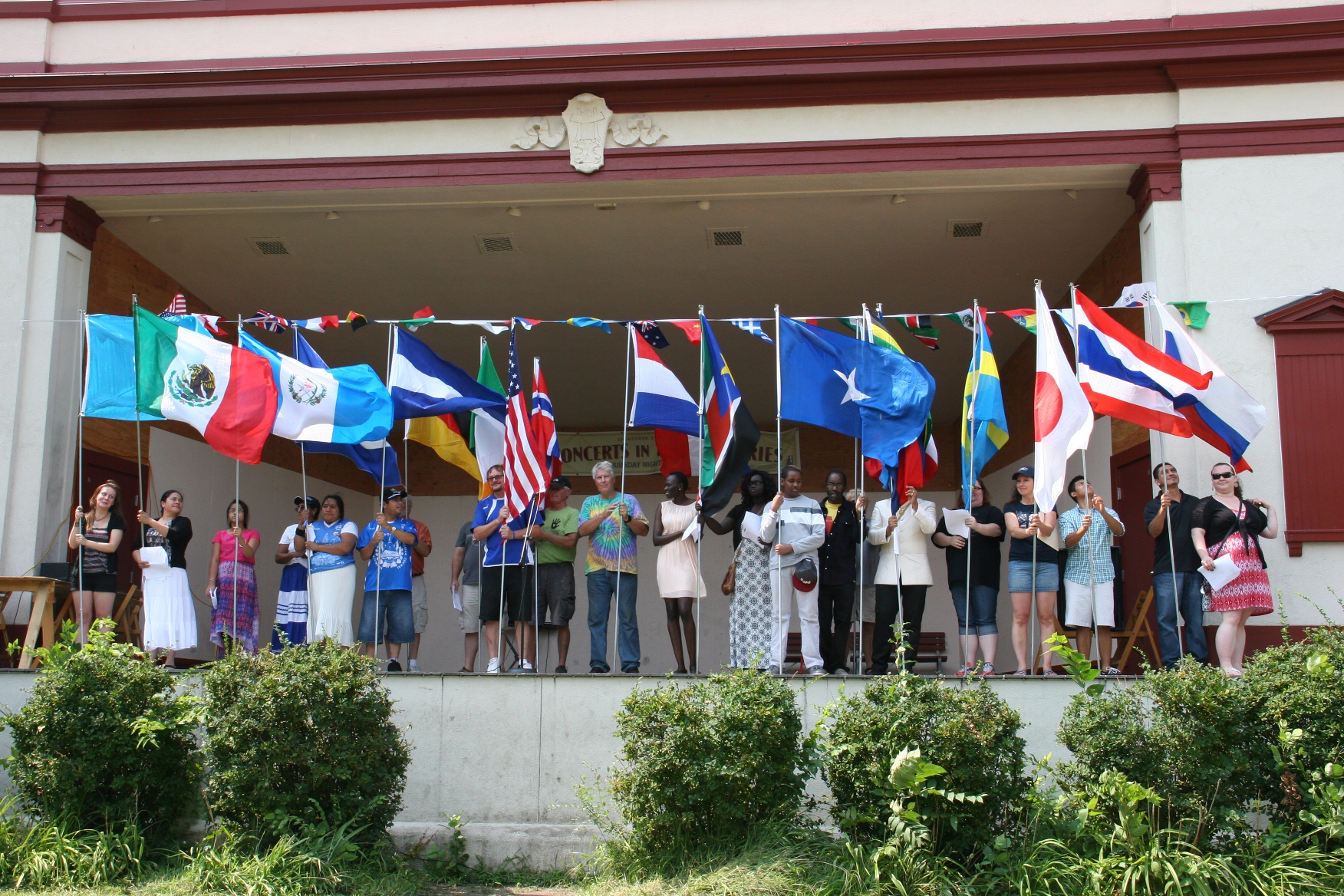
A flag ceremony, representing the country of origins of many peoples who call Faribault home, was part of the 2015 International Festival Faribault. Joseph Mbele is shown just to the right of center in this photo, dressed in black with a yellow and red shirt. (Minnesota Prairie Roots copyrighted file photo August 2015)

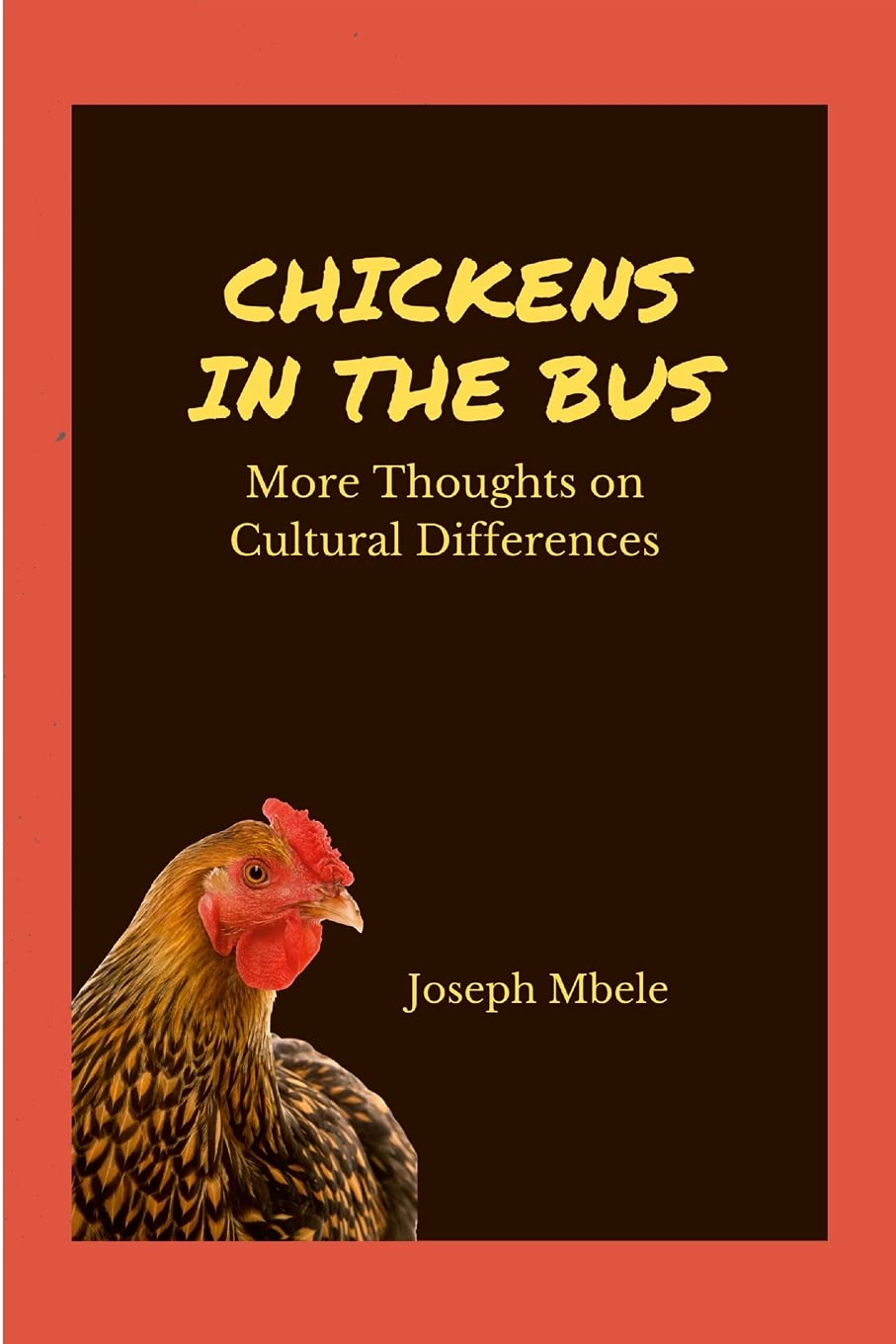
I FIRST MET JOSEPH L. MBELE in 2015 at the International Festival Faribault. The author, cultural consultant and professor of English at St. Olaf College in Northfield was representing his native Tanzania during this fest celebrating the cultural diversity of my community. Then late last year I talked to Mbele again, when he was selling his latest book, Chickens in the Bus: More Thoughts on Cultural Differences, at a local holiday church bazaar. He is engaging, soft-spoken, knowledgeable and just an overall kind and gentle soul.

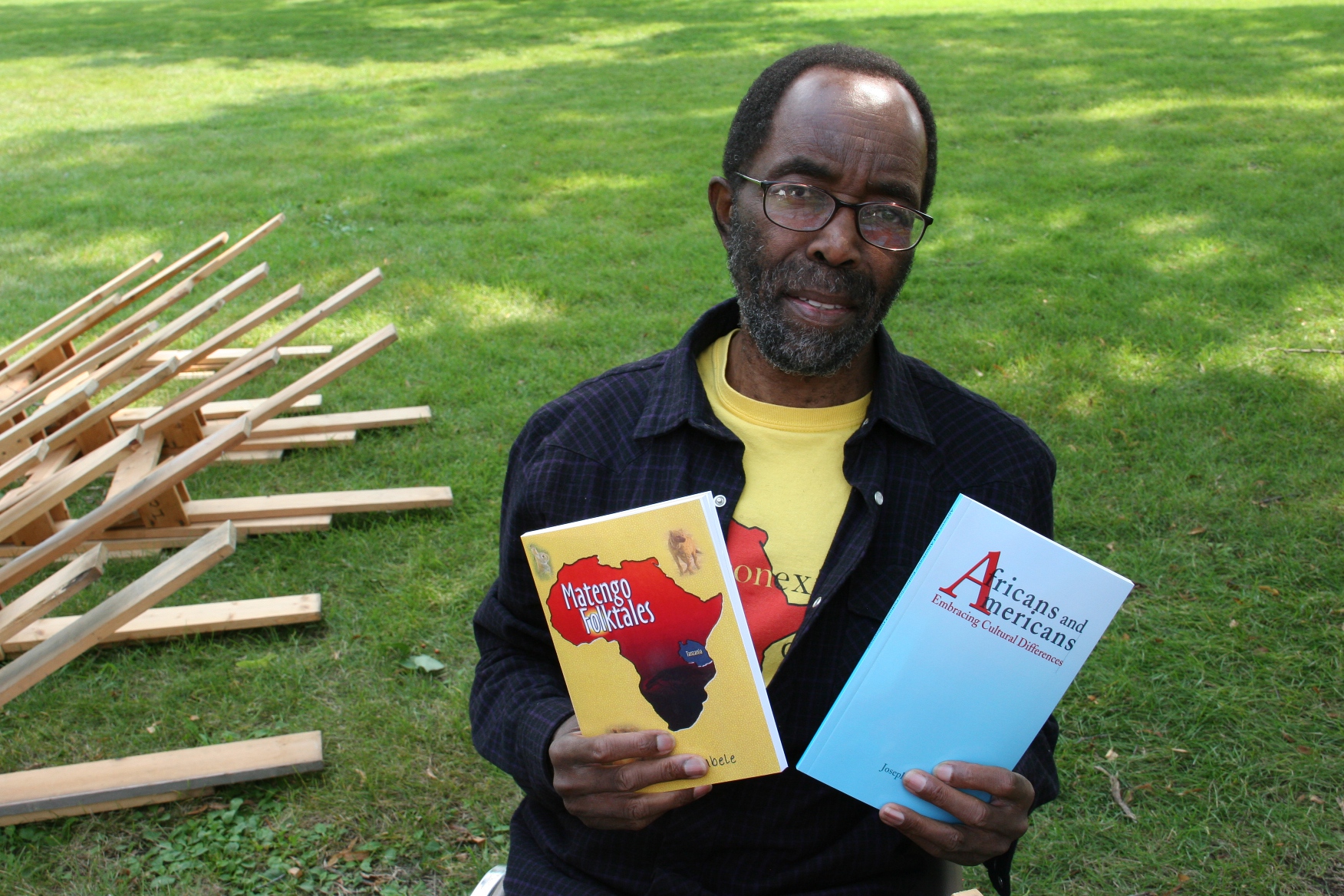
Author Joseph L. Mbele with two of his three books, photographed at the 2015 International Festival Faribault. (Minnesota Prairie Roots copyrighted file photo August 2015)

This Thursday evening, February 15, the writer and expert on cultural differences returns to Faribault for a literary event at Books on Central, a recently-opened used bookstore operated by the Rice County Area United Way. Mbele will share stories, offer cultural insights and lead an interactive discussion. The event begins at 6 pm at the bookshop, 227 Central Avenue North.

This image shows the cultural diversity of Faribault. This photo was taken at a downtown car show in 2015. (Minnesota Prairie Roots copyrighted file photo July 2015)

That he is appearing at a business along Faribault’s Central Avenue is meaningful in itself. Many Somali residents live in second floor apartments here in the heart of our downtown business district. Other of our newest immigrants have opened restaurants and shops along the avenue and side streets, making for a diverse downtown. But it was their presence here that stirred up complaints and controversy a few years back, and likely still does, although those are not as loudly vocalized as previously.

Mbele’s latest book, published in 2021. (Cover image sourced online)

In Chickens in the Bus, Mbele terms this “the sidewalk issue.” Business owners expressed concerns about Somali men congregating outside, blocking sidewalks, scaring customers away, Mbele writes. His words are not new to me. I’d heard them, too, from business owners and from local residents. People were, they said, afraid to come downtown. I’ve never feared walking along Central Avenue past groups of Somali men. What people don’t understand, they all too often fear.

To Mbele’s credit, he has worked hard to inform, to enlighten, to listen, to help bridge cultural divides. He spoke to Faribault business owners. He spoke to members of the Somali community. He’s also spoken publicly at libraries and elsewhere. I appreciate his efforts.

At the core of “the sidewalk issue” are cultural differences, according to this native Tanzanian who specializes in teaching folklore at Northfield’s St. Olaf College. Somalians come from an oral culture, one that relies on social gatherings to share news, Mbele writes. “…Somali gatherings in downtown Faribault are the Somali newsstands,” he told local business owners and includes in his book. That’s so down-to-earth understandable.

Mbele’s slim volume, Chickens in the Bus, which I purchased at the November 2023 holiday market, is an excellent primer for anyone desiring to learn more about cultural differences. This author and cultural consultant highlights how those differences can both challenge communities, but also present opportunities in an ever-increasingly connected world that is decidedly global. He writes in a way that is peaceful and soothing and seeks to create harmony.

A rooster, photographed at a rural Faribault farm and used here for illustration only. (Minnesota Prairie Roots copyrighted file photo May 2018)

I learned a lot about “African Time” and “American Time,” about native-born Africans who do not view themselves as black or as “people of colour” (vs African Americans who do), about chickens in the bus, and much more. In Africa, Mbele writes, someone may carry a chicken onto a bus, a gift from a rural villager.

His newest book, a sequel to Africans and Americans: Embracing Cultural Differences, proved an easy and informative read, one that enlightened me about my newest neighbors. They enrich Faribault with their culture, bringing their food, language, dress, customs and more. I will never travel to Africa. So I am the richer for the Africans who now call southern Minnesota home, who bring their culture into my community, to me.

© Copyright 2024 Audrey Kletscher Helbling


When the Minnesota northwoods focus a mystery series January 3, 2024

An iconic northwoods Minnesota lake cabin. (Minnesota Prairie Roots copyrighted file photo July 2022)

I RECENTLY FOUND LINDA NORLANDER’S fourth bookDeath of a Fox—in the new fiction section of my local library. Labeled #4 in “A Cabin by the Lake Mystery,” the series name and cover art drew me to pull the book from the shelf and read the back cover summary. I do, indeed, judge a book by its cover and title. Take note, book editors and marketing teams.

The fourth book in Norlander’s cabin mystery series. (Sourced from Norlander’s website)

Given the series name, I expected this book might be by a Minnesotan or set in Minnesota. It’s both. Sort of. The author grew up in Minnesota as the daughter of a rural newspaper editor, raised her family on 10 acres of land in the central part of our state and then moved to Tacoma, Washington. I won’t hold that against her because, well, Minnesota winters are not for everyone forever. But Norlander’s cabin mysteries are for anyone who likes a good mystery set in the Minnesota northwoods.

I’m a long-time fan of mysteries, dating back to the Nancy Drew mystery series of my youth. I’ll admit that I’ve had to force myself to read outside that genre. I still don’t read romance novels, although Norlander’s writing does include a bit of romance for main character Jamie Forest, a freelance editor who recently moved from her native New York City to a family lake cabin in northern Minnesota.

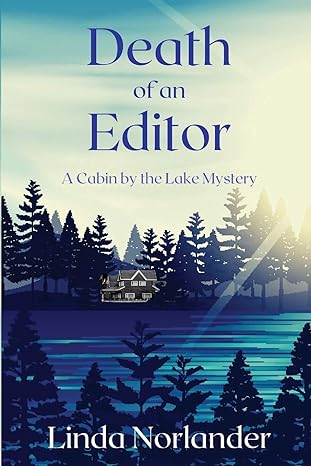
The first book in the cabin mystery series. (Book cover image sourced online)

In that tranquil setting, Jamie attempts to reclaim her life, leaving behind a traumatizing event involving law enforcement in the Big Apple. This I learned in book #1, Death of an Editor. I’m reading the books in order and just finished the first. I couldn’t put it down. It was that good.

Loons are common on the lakes of central and northern Minnesota. (Minnesota Prairie Roots copyrighted file photo July 2022)

Good not only mystery-wise, but also because this is definitely a Minnesota-centric read. Norlander references reserved Minnesotans, hot dish (not casserole), Minnesota Nice, loons…even appropriately names a local eatery the Loonfeather Cafe.

The author doesn’t shy from hard topics either, like biases against Native Americans (many of her characters are partial or full-blooded Ojibwe, including Jamie), proposed copper and nickel mining, and school shootings, all integral parts of the plot in Death of an Editor and part of Minnesota’s past and present. And, yes, an editor is murdered in this fictional book.

Jamie quickly becomes a suspect in that murder. Without revealing too much of the story, I will share that she sets out to clear her name, then that of another accused, along the way finding herself in life-death situations. There are many heart-stopping moments, questions about who can be trusted and who can’t. Lots of mysteries within the mystery to unravel.

Land greed. A troubling family past. Corrupt and threatening law enforcement officers. Men in red caps. Efforts to save the pristine northwoods from development. Secrets. Even Minnesota weather, which is forever and always a topic of conversation in our state, shape this first of Norlander’s books. Death of an Editor is set in summer and Norlander’s three subsequent books happen in our other three distinct seasons.

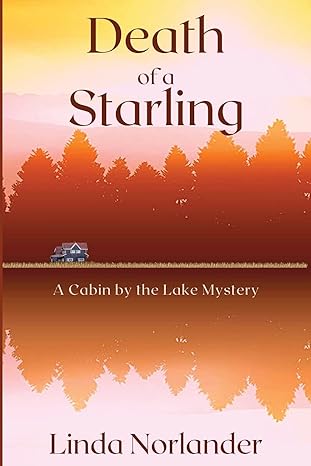
The second book in Norlander’s series. (Book cover image sourced online)

I just started her autumn seasonal second book, Death of a Starling, and am already drawn into the thickening plot, a continuation of book #1 as Jamie, considered an outsider and big city tree hugger, continues her efforts to uncover the truth. Already I’m finding this book to be another enthralling mystery that I can’t put down, not even to watch the 10 o’clock news.

© Copyright 2024 Audrey Kletscher Helbling
 

The power of hair among Native Peoples September 19, 2023

“My Powerful Hair,” published in 2023 by Abrams Books for Young Readers. (Book cover source: Abrams Books)

SOME OF THE MOST MEANINGFUL, enlightening and powerful books I’ve read, I’ve found in the children’s picture book section of my local public library. That includes My Powerful Hair written by Carole Lindstrom and illustrated by Steph Littlebird.

I happened upon this book while searching for recently-published astronaut and geography books for my 4-year-old grandson. I never did find those sought-after titles. Not that it mattered. What I discovered instead were three must-read books: My Powerful Hair, Boycott Blues—How Rosa Parks Inspired a Nation and We Are Better Together.

Parks is certainly familiar to me as the Black seamstress who in 1955 refused to give up her seat to a white man on a city bus in Montgomery, Alabama. That sparked a bus boycott and the Civil Rights Movement. Likewise, working together to effect change, to improve our world, to help one another is a familiar theme.

“The Native Man, His Eagle & His Chanupa,” an oil painting by Dana Hanson and part of her 2018 “Healing the Land” exhibit at the Owatonna Arts Center. (Minnesota Prairie Roots copyrighted file photo 2018, used for illustration only. Art copyrighted by Dana Hanson.)

THE IMPORTANCE OF HAIR REVEALED

It is the story on hair, though, which proved a particularly teachable read. My Powerful Hair focuses on Native Peoples’ hair and its importance in their culture, their history, their lives. Through the writing of New York Times bestselling and award-winning author Lindstrom, who is Anishinaabe/Metis (and an enrolled citizen of the Turtle Mountain Band of Ojibwe), and Indigenous artist Littlebird of Oregon’s Confederated Tribes of Grand Ronde, I learned the symbolism and power of hair in Native American culture. Admittedly, this is something I should have known, having grown up on the southwestern Minnesota prairie between the Upper Sioux and Lower Sioux Indian Reservations (today termed “communities”). I thought I was informed. But I wasn’t, not about hair.

Told from the perspective of a young Native girl, My Powerful Hair explains the reasons Native Peoples grow their hair long. And keep it long. Hair holds stories, memories, strength, sorrow, connections to each other and to Mother Earth. And more. Page after page, the narrator shares events in her life that weave into her hair. When Nimishoomis (her grandfather) taught her to fish, her hair reached her ears. When her cousins taught her to make moccasins, her hair flowed past her shoulders. In the sharing of these moments, I began to understand the power of hair in Native American culture.

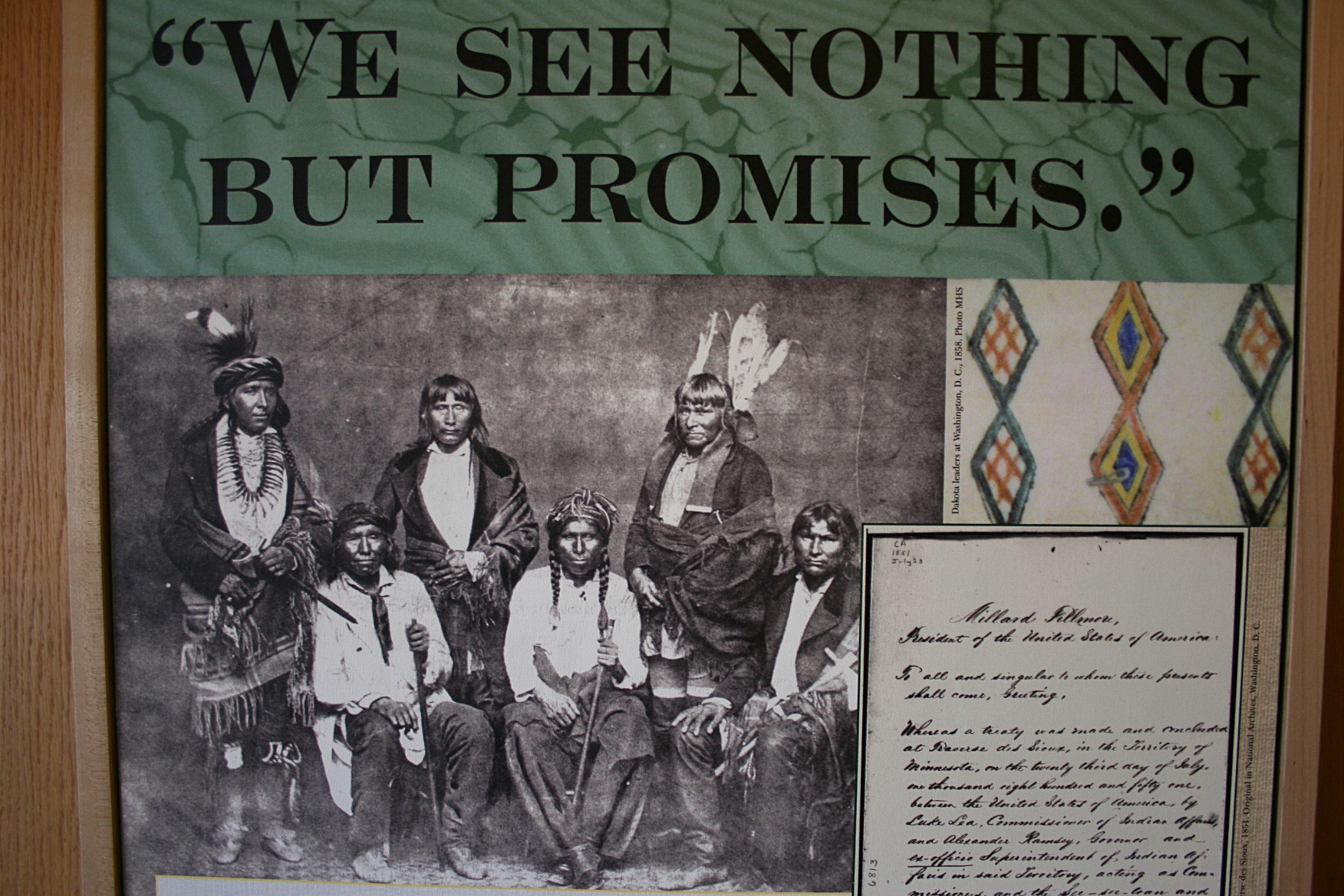
A photo panel at the Traverse des Sioux Treaty Center in St. Peter shows Dakota leaders photographed in Washington D.C. in 1858. The photo is from the Minnesota Historical Society and is used here for illustration only.

FORCED HAIRCUTS

I also understood fully, for the first time, the trauma inflicted upon Indigenous individuals forced long ago by white people to cut their hair. The writer and illustrator don’t hold back. In the first few pages, a young Nokomis (grandmother) is in tears as the hands of a Catholic nun grasp, then cut, her braids. It’s an emotionally impactful visual.

But this was reality at Indian boarding schools, within faith communities and elsewhere back in the day, in a time period when efforts focused on erasing Indigenous culture, on conforming Native Peoples to European ways. It was wrong.

Displayed at Bridge Square during Northfield’s Earth Day celebration in 2022. (Minnesota Prairie Roots copyrighted file photo April 2022, used for illustration only)

A TERRIBLE INJUSTICE”

A blogger friend from the central Minnesota lakes region recently shared a bit of her family’s experience per my request. Of unverified (records were often destroyed) Cherokee ancestry, Rose speaks of her mother’s trauma after being sent to a Catholic girls’ school in Crookston. “Mom didn’t tell us much about her experience there,” Rose says, “only that they made her cut her long black hair. My mom never cut her hair again for the rest of her life. She saw the forced haircut as a terrible injustice.” Injustice seems a fitting word.

In an author’s note, Carole Lindstrom shares the same trauma, documented, she writes, in a photo of her grandmother and two great aunts with their black hair shorn above their ears. They were forced into an Indian boarding school in the early 1900s.

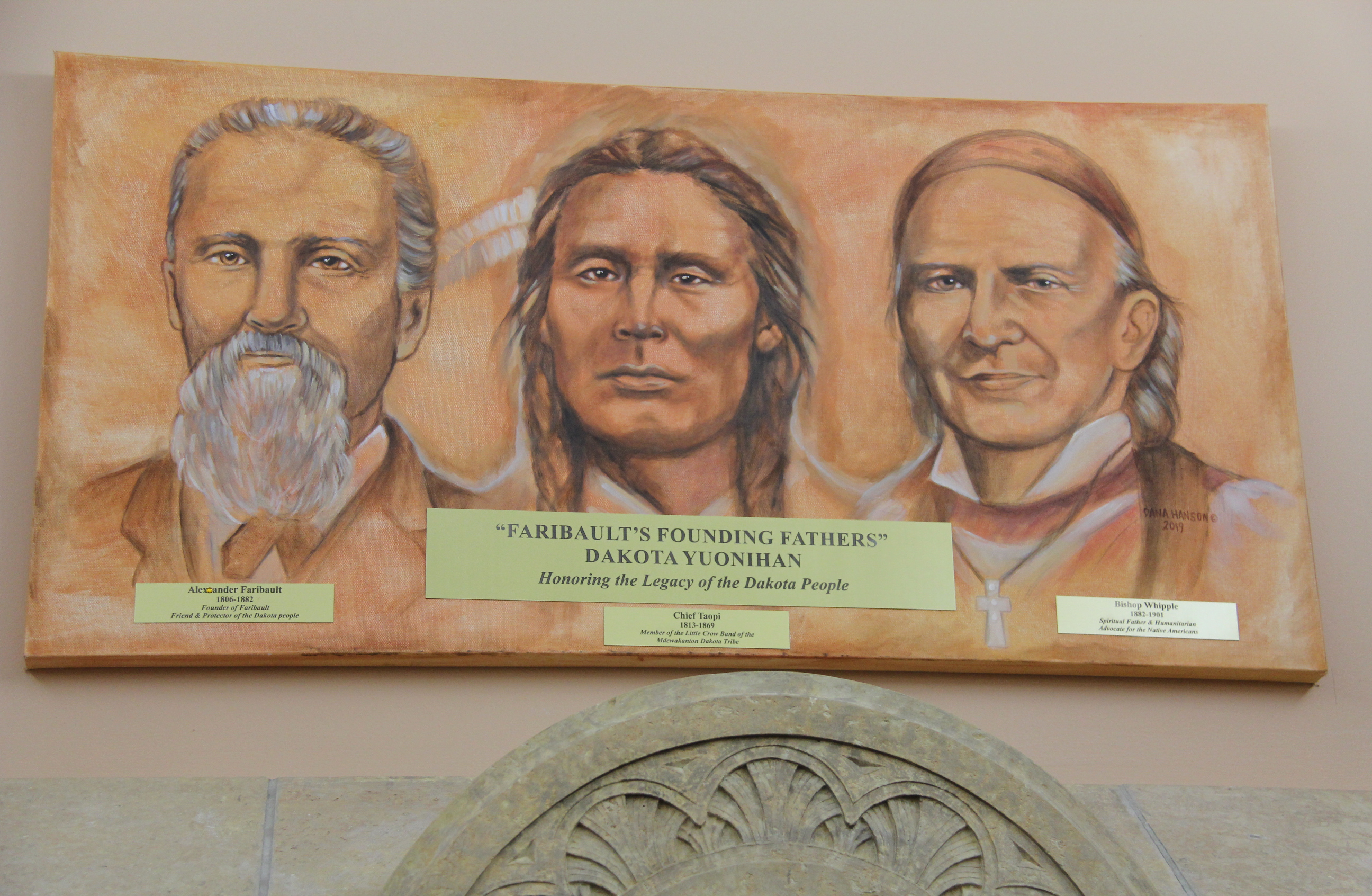
“Honoring the Legacy of the Dakota People” focuses this artwork by Dana Hanson. Chief Taopi centers the painting with Alexander Faribault to the left and Bishop Henry Whipple on the right. The word “Yuonihan” means honor or respect. This art hangs inside Buckham Memorial Library. (Minnesota Prairie Roots copyrighted file photo November 2022. Art copyrighted by Dana Hanson.)

POWER IN STORIES, IN HERITAGE, IN RESPECT

Rose is thankful for books like My Powerful Hair. “I am glad that stories like this are being told,” she says. “Much First Nations history nearly disappeared. And many First Nations keep their ceremonies and other information ‘secret’ so it won’t be distorted or misused by people who don’t understand, or who seek to harm them.” Based on history, that seems warranted.

This Minnesota woman has one more reason to feel grateful for children’s picture books by Indigenous Peoples. Her grandchildren are of Ojibwe heritage; their other grandmother lives on the White Earth Nation in northwestern Minnesota. “My hopes for my grandchildren are that they learn all they can about their Ojibwe ancestors and customs and values,” Rose says. “I hope they can choose what lessons they want to carry forward in their own life. I hope they are fantastic examples of how people from different backgrounds can get along and respect and love one another.”

And so I learned, not only from Rose, but from reading My Powerful Hair. Stories woven into our hair matter. For they are powerful.

© Copyright 2023 Audrey Kletscher Helbling
 

Book review: A collection of short stories & art from the Minnesota prairie by Elizabeth Johanneck July 27, 2023

The cover of Elizabeth Johanneck’s new book features the art of her grandfather, Arnold Kramer. (Minnesota Prairie Roots photo July 2023)

DECADES REMOVED from southwestern Minnesota, Twin Cities writer Elizabeth Johanneck and I remain rooted to the prairie—the land and people and smalls towns which shaped us. We both grew up on Redwood County farms, were Wabasso High School classmates and today hold a deep respect and fondness for the place we once called home.

Beth, as she’s known to me, recently published a book, If You Can’t Make it to Heaven, at Least Get to Seaforth—The Monica Stories and Then Some. This book features short stories and snippet observations in Beth’s humorous storytelling style, plus paintings and photos. These could be my stories, my memories, just with different characters and settings. Any prairie farm kid likely will feel the same.

ABOUT SEAFORTH & MONICA

But where is Seaforth? And who is Monica? Seaforth, population 77, is a farming community located along County Road 7, south of Minnesota State Highway 19 in central Redwood County. It’s near my hometown of Vesta, seven miles to the northwest. Monica Fischer is Beth’s friend, former co-worker and a character. A baby shoe in a pot of egg coffee and pantyhose found clinging inside a pant leg during Catholic Mass are among the many entertaining Monica stories that left me laughing aloud. By the time I’d finished reading this section of the book, I felt like I knew Monica well. Everyone should have a friend like her.

GROWING UP ON THE MINNESOTA PRAIRIE IN THE 1960s

And everyone should be so fortunate to have experienced rural Minnesota life in the 1960s, as Beth and I did. It is Part 2, “Random Nonsense of a MN Country Mouse,” that I find most similar to my childhood. Both farmers’ daughters with many siblings, Beth and I share the commonalities of being raised on the land among aunts and uncles and cousins and grandparents and immediate family who loved us deeply.

As in “The Monica Stories,” Beth writes about her personal experiences in a casual conversational style. It’s as if she and I are chatting over cups of coffee, and Beth does like her coffee. I connect with her stories about “the grove,” jars of pocket gopher feet in the freezer, grab bags, bloodsuckers, The Weekly Reader, hearing corn grow and more.

Her humor-infused short stories stretch into adulthood, into becoming a parent and grandparent. These are not earth-shattering remembrances, but rather observations about everyday life and events that could be mine, could be yours, but are definitively Beth’s.

NIBBLES OF COUNTRY INSIGHTS

In a section titled “Country Mouse Nibbles,” Beth shares her thoughts on topics in a sentence or two, the first being “When You Are Raised Close to the Land.” I fully understand—the smell after autumn harvest, looking to the west for approaching storms, filled fruit jars crowding root cellar shelves… And “Holding onto Memories”—Distant cheers from a local ball game are souvenirs worth saving for winter. Truly poetic words.

FEATURING THE ART OF “MINNESOTA’S GRANDPA MOSES”

There is much to be cherished in this book beyond pages and pages of rural memories and insights. Beth also intersperses photos, most from Seaforth. But it is Part 3, “Paintings by Arnold Kramer, Minnesota’s ‘Grandpa Moses,’” which is an historic agrarian art treasure. Following his retirement, Seaforth farmer Arnold Kramer took up painting, visually documenting early to mid-1900s rural life and scenes. He became well-known for his folk art style paintings done in primary colors. Beth’s book holds the only printed collection of paintings by her grandfather. The self-taught artist created more than 400 works of art and was dubbed “Minnesota’s Grandpa Moses” by the University of Minnesota at the peak of his creativity in the 1960s.

Book signing promo courtesy of Elizabeth Johanneck.

BOOK SIGNING SATURDAY IN SEAFORTH

Like her grandfather before her, Beth is also a visual artist. She illustrated a just-published children’s picture book by her lifelong friend, Cindy Bernardy Lavin, our WHS classmate. Both writers, along with Monica Pistulka Fisher, are doing a book signing from noon to 3 pm this Saturday, July 29, at the C4th Bar during Seaforth’s Hometown Days celebration.

Beth’s book is also available for purchase at Chapter Two Bookstore in Redwood Falls and online at Amazon and Barnes & Noble. Both her book and Cindy’s achieved bestseller status on Amazon following their release.

Julie Kramer, author of bestseller Stalking Susan, praises Beth’s book in her back cover endorsement, calling it “a delightful collection from a farm girl who grew up near the Minnesota home of Laura Ingalls Wilder.” I agree. Fully.

#

Disclaimer: I edited Beth’s book and advised her on the manuscript. She also included my poem, “Her Treasure,” as a companion piece in the “Country Mouse Nibbles” section. For many years, Beth hosted a blog, Minnesota Country Mouse.

© Copyright 2023 Audrey Kletscher Helbling


Fiction focus on teens’ mental health with Van Gogh thrown in the mix June 21, 2023

I NEARLY WALKED OUT of church once during a sermon. The pastor called Vincent Van Gogh “crazy.” Yes, the artist suffered from mental illness. But labeling him as “crazy” did not sit well with me. I find the term derogatory and disrespectful of anyone battling a mental health issue.

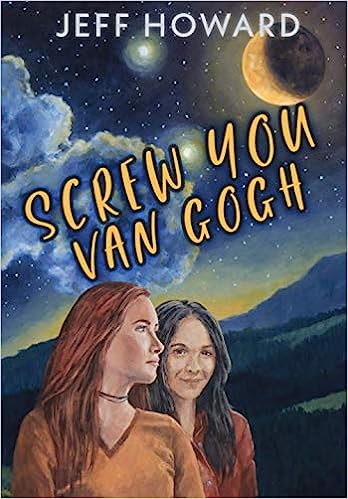
So when I picked up a newly-released book, Screw You Van Gogh, by Minnesotan Jeff Howard, I wondered how the Dutch painter would fit into the story line. Turns out the reference to the artist, who battled anxiety and depression, was held in asylums for the insane and eventually committed suicide, proved a good focal point for a story about high school students.

This fictional book, based on real life experiences, is not a feel good story about teenagers. But rather, this story is heavy, heavy with the issues teens face. Depression. Anxiety. Bullying. Relationship struggles. Trauma from abuse. Pressure to do well. And more.

WRITING WITH AUTHENTICITY

The author, a high school counselor for the past 15 years, writes with authenticity. A main character in the book, Michael Burns, is a counselor at Roosevelt High School. Therein comes the Van Gogh reference. Burns has a jigsaw puzzle of the artist’s painting, “Starry Night,” in his office for kids to work on with him. One of those students is Cassidy Towers, 16, new to Masonville, Iowa, and dealing with panic attacks, suicidal thoughts and more.

As the plot unfolds, so does a certain familiarity. This could be a high school anywhere so real are the characters. The popular kids. The quiet ones who follow the rules. The kids who, on the outside, appear not to give a damn about what they say or do, but who are hurting inside, hiding their truth. Like Tommi, who befriends Cassidy. She is in counseling for severe anxiety and depression, a fact she hides from her classmates. “Tommi could not bear the thought of people knowing she was crazy,” Howard writes.

There’s that word, “crazy,” again. But this time it fits because this is the thinking of a high school student with thoughts of suicide that sometimes “crept into her mind like an evil spirit.” As Tommi and Cassidy’s friendship grows, so does Cassidy’s awareness of Tommi’s struggles. She observes the vacant look in her friend’s eyes, her unkempt appearance, her repetitive petting of a kitten, all signs of Tommi’s declining mental health. By this time, Cassidy has worked through her own mental health issues via talking with the high school counselor, an improved relationship with her mother and using tools (like music) to help her cope.

HELP, HOPE & STIGMA

The author, given his professional work as a counselor, includes helpful ways to deal with anxiety, depression and more. Like Cassidy’s use of music. He emphasizes listening, empathy, deep breathing, hope…

He also addresses the ongoing stigma attached to mental illness. In a conversation with Cassidy, fictional counselor Burns talks about Van Gogh and how he grew anxious and depressed after art experts criticized his impressionist style of painting. Van Gogh turned to alcohol. Burns tells Cassidy that people, especially teens, “don’t want to admit they need help because that makes them weird.” And, because of that sometimes people “crash,” he says. That happens in this book, in a tragic way.

HUNTING & HOTDISH

Within all the heaviness of Screw You Van Gogh are the subplots of counselor Burns’ personal life and relationships and then a budding relationship between Cassidy and classmate Patrick, who once called her “a little crazy” and “goofy upstairs.” When the teens eventually go on a first date, it’s not to a movie, but pheasant hunting. That proved a lighthearted moment for me in the reading of this book. Oh, how rural Iowa/Minnesota, I thought. And then when the author threw in Minnesota’s signature tater tot hotdish served in the school cafeteria, I laughed aloud.

This book is authentic through and through and should be read by every teen, every parent, every educator, every counselor… And perhaps every counselor should purchase the jigsaw puzzle “Starry Night” as a tool to get kids to open up about their emotions, experiences, struggles, as Van Gogh did via his painting.

© Copyright 2023 Audrey Kletscher Helbling
 

“So much snow,” yup, that’s winter in Minnesota May 23, 2023

Our three snow removal shovels. (Minnesota Prairie Roots copyrighted file photo December 2021)

DISCLAIMER: If you don’t want to read the words snow or winter, then stop reading. This is a post about both. But also about spring. And a book.

Three prompts led me to write on this seasonal topic. First, when I was scanning my mom’s journals recently, I came across a May 11, 1966, entry in which she wrote, “Snow on the ground.” This didn’t surprise me. Occasionally snow falls in southern Minnesota in May. While I don’t recall the 1966 snow Mom references, I do remember driving back from my native prairie once on Memorial Day weekend to see snow atop a car in New Ulm. That would be at the end of May.

Secondly, a few weeks ago, Randy asked whether he should put the snow shovels away. I encouraged him to wait. And he did, until he felt confident the possibility of snow had passed. It has. I hope.

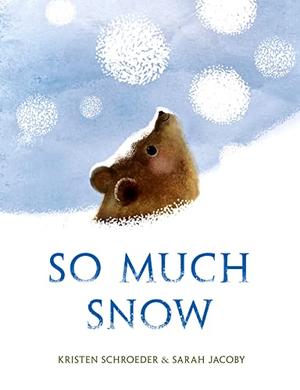
Finally, a new children’s picture book, So Much Snow by Minnesotan Kristen Schroeder, prompted this post. The book recently won the 2023 Minnesota Book Award in children’s literature. It’s as if Schroeder had the winter of 2022-2023 in mind when she penned this story. This past winter proved among our snowiest ever in Minnesota. The winter we thought would never end.

With minimal words per page, Schroeder writes the story of a week-long snowfall. Day after day after day the snow piles high around a menagerie of animals. Rabbit, fox, bear, moose… Illustrator Sarah Jacoby’s art has a dreamy, soft quality, just like the falling snow. That both artist (from Pittsburgh) and author understand winter is clear in their work.

Eventually, the sun shines, the snow melts, the grass greens. And spring, so it seems, has arrived. But then, a last page surprise. You can probably guess what that may be. It happens here in Minnesota seemingly every year. Just when we think winter has ended…

FYI: To read a short interview with Kristen Schroeder, click here.

© Copyright 2023 Audrey Kletscher Helbling


Connecting with my new neighbors via “Amazing Africa: A to Z” May 15, 2023

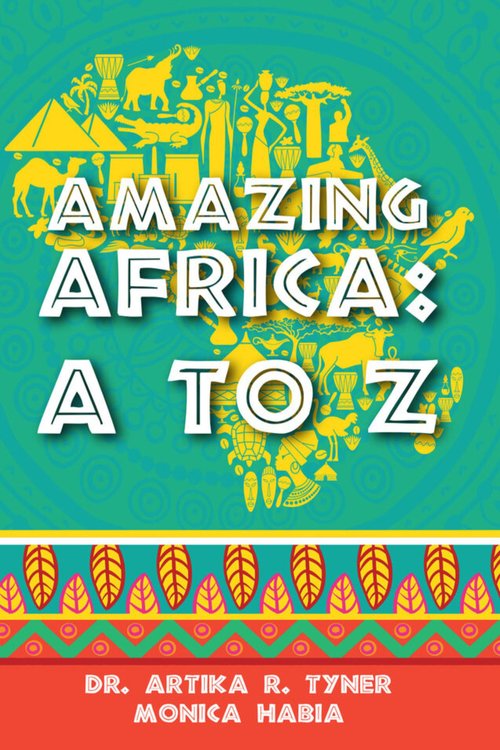
(Book cover credit: Artika Tyner’s website)

BUSY PATTERNS. Bold hues. Strong images and words. All define Amazing Africa: A to Z, a children’s picture book co-authored by Minnesotan Dr. Artika Tyner and Ghanaian Monica Habia and illustrated by Reyhana Ismail of the UK.

Somalians are very much a part of the Faribault community, photographed here at a Downtown Car Cruise Night. (Minnesota Prairie Roots copyrighted file photo)

For a community like mine, with a sizable Somali population, this book proves a natural draw. I always appreciate learning more about my new Faribault neighbors from the east African country of Somalia. The more we know about each other, the more comfortable and connected we feel. Disconnect and conflict often arise from lack of knowledge, fear of the unknown and differences. Differences in dress, food, language, culture, faith.

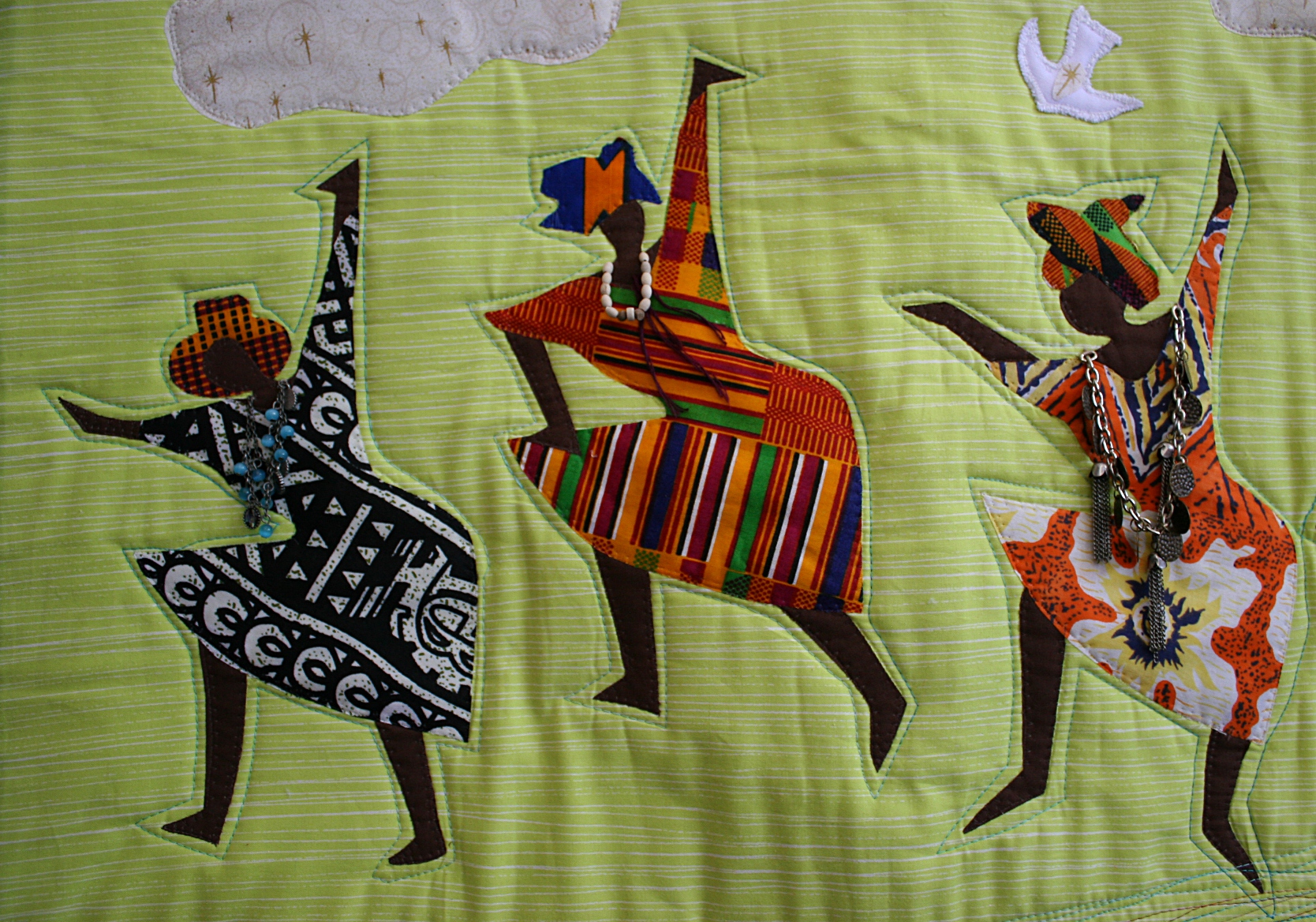
Nigerian-themed quilt art by my friend Susan Griebel. The fabric is from the collection of her mother-in-law, Margaret Griebel. Margaret’s husband was a Lutheran missionary in Nigeria, where the family lived. (Minnesota Prairie Roots copyrighted file photo)

This book bridges differences via facts and art that carries a signature African style of intense patterns and colors. With every new bit of information, with every turn of the page, I feel more and more connected to this continent of 54 countries. For example, the word hospitality, chosen to represent the letter “H” in this alphabet book, strikes me as exactly what I hope for in Faribault. Africans believe no one is an island; rather everyone is part of the community, the text reads in part. Two clasped hands visually reinforce that belief.

Lul Abdi shows off beautiful wood crafts from Kenya and Somalia at a past International Festival Faribault (Minnesota Prairie Roots copyrighted file photo)

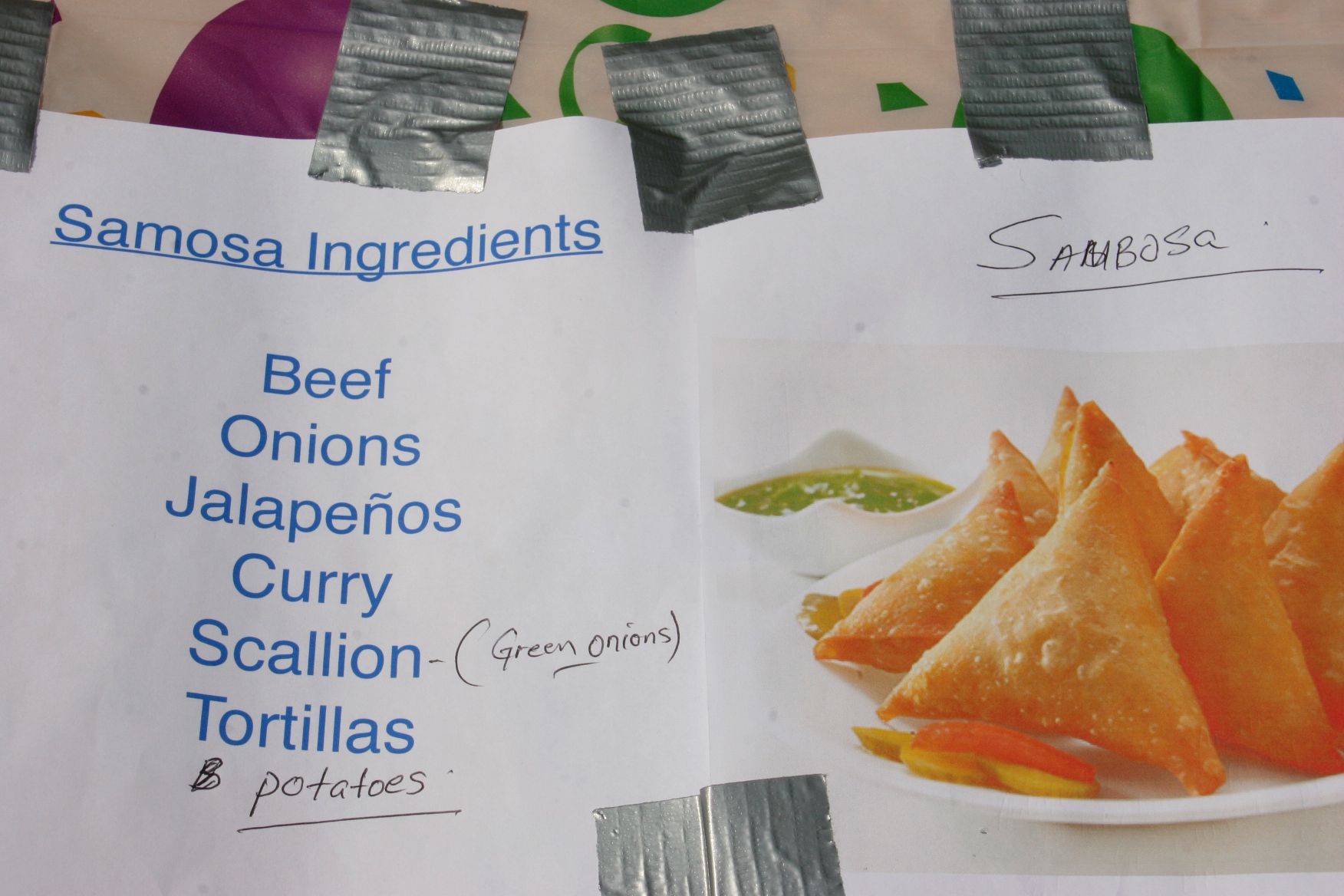
Events like the Faribault Diversity Coalition’s summer International Festival Faribault and now occasional public talks by immigrants and others are ways we join hands and grow community. I’ve seen the art of my neighbors from Africa. I’ve heard the music, tasted the sambusa, admired colorful clothing… Faribault’s newest residents add a depth and richness to my southern Minnesota city.

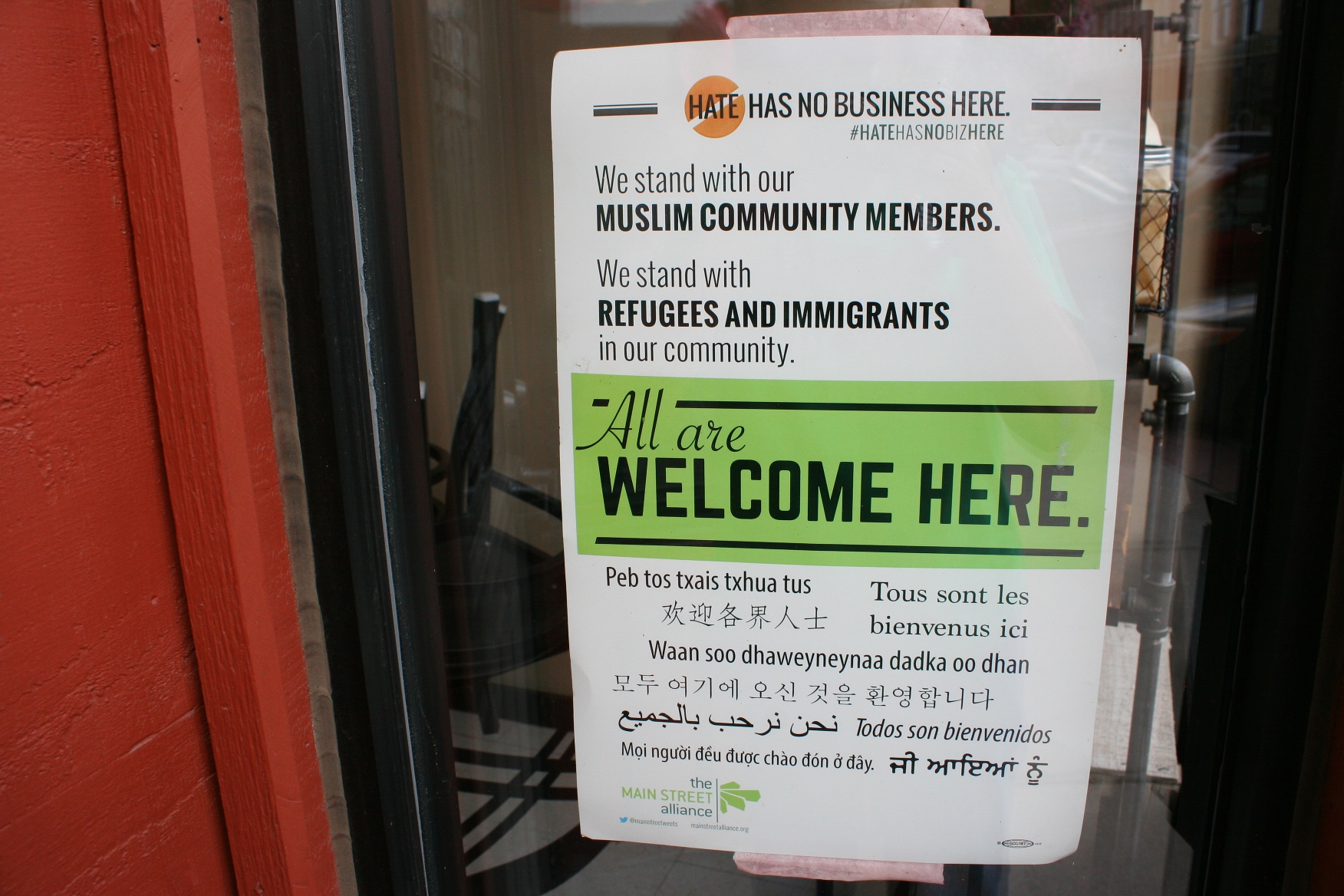
A sign posted in a downtown Faribault business storefront window several years ago. (Minnesota Prairie Roots copyrighted file photo)

Consider African proverbs, chosen in Amazing Africa: A to Z to represent the letter “P.” These wise sayings span cultures. The authors include this powerful Swahili proverb, among several, at the end of the book: “Unity is strength, division is weakness.” If only we all read and take those words to heart. I firmly believe that we, as individuals and as community, need to be here for one another. We truly are stronger when not divided.

A sign lists Somali food sold at a past International Festival Faribault. (Minnesota Prairie Roots copyrighted file photo)

As I read of 1,000 languages spoken throughout Africa, I think of the Somalians now living in my community. Many have overcome war, poverty and other unimaginable challenges to settle in Minnesota. And now they must also overcome language barriers and resentment. If only we would all pause for a moment and remember that, for most of us Minnesotans, English was not the native tongue of our immigrant forefathers. Mine spoke German. Others spoke Norwegian, French, Dutch…

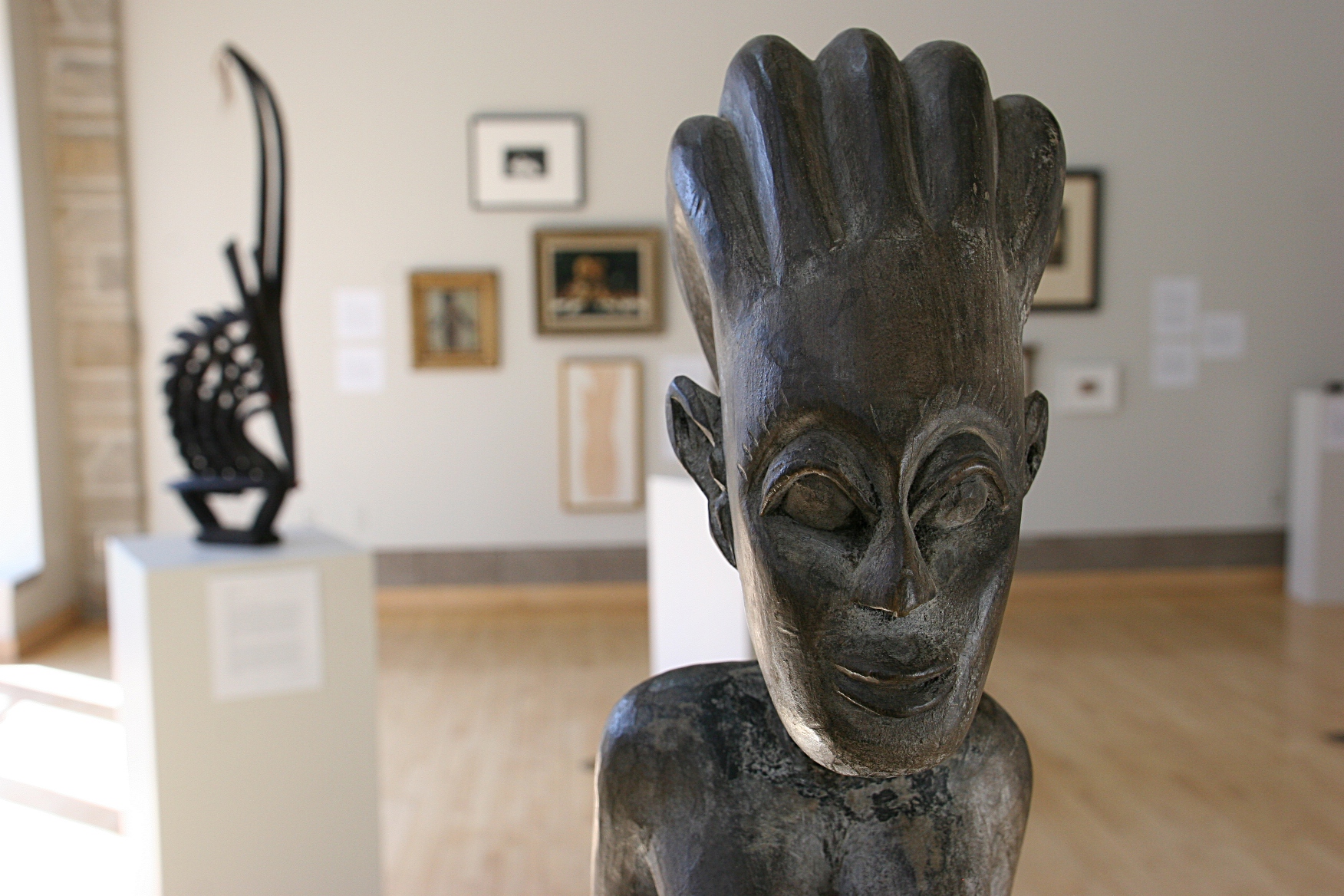
A wood sculpture from Africa, artist unknown, and titled “Seated Maternity Figure.” Exhibited at St. Olaf College, Northfield, in 2015. (Minnesota Prairie Roots copyrighted file photo April 2015)

I certainly can’t pronounce all of the words published in this book about Africa. Words like Uhuru, Yamoussoukro, Ugali and more. But I can appreciate the beauty of language, the way these words speak the rhythm of the continent of Africa.

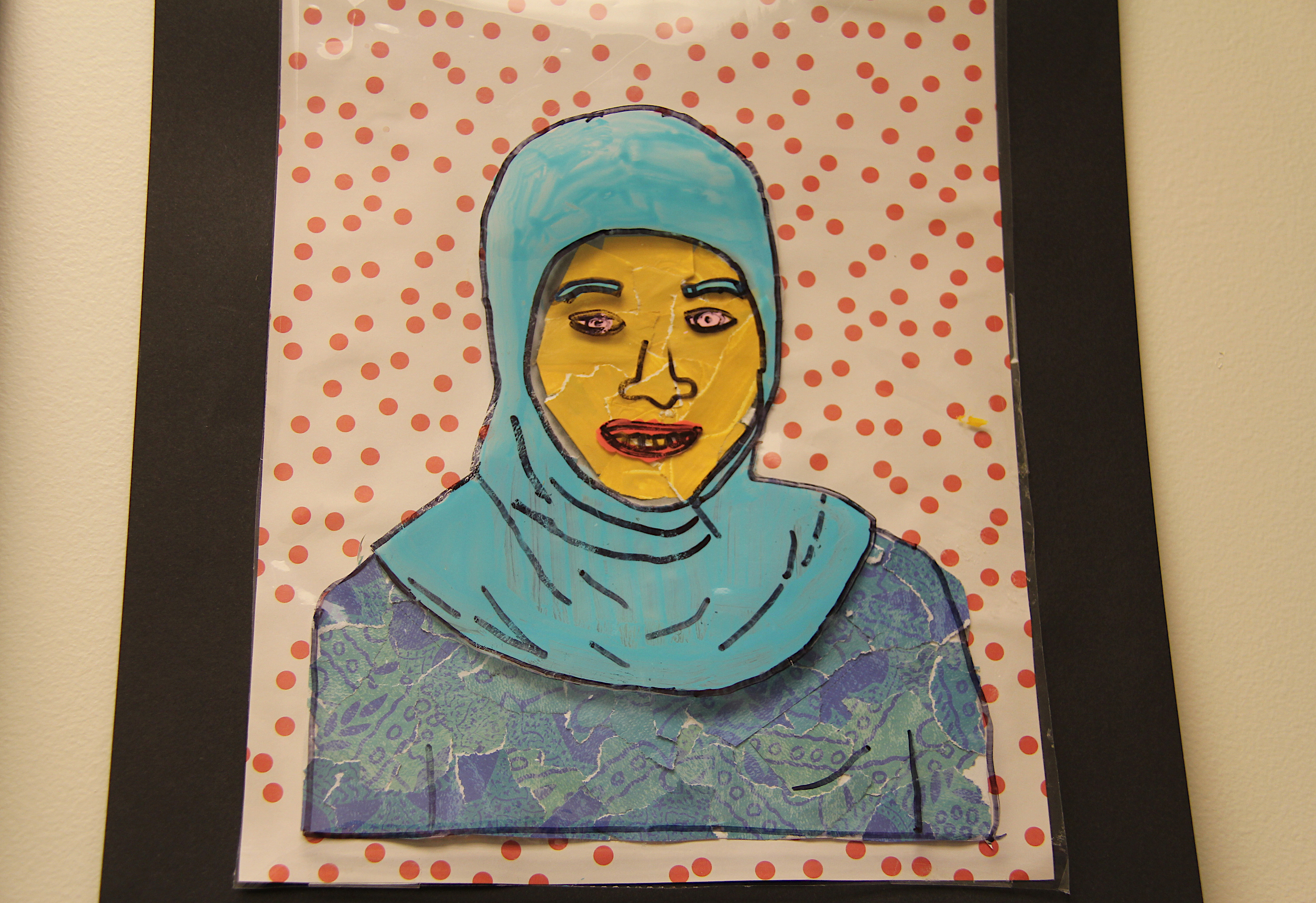
Bisa Butler inspired art created by fourth grader Ilwad and exhibited at a Student Art Show in Faribault. Butler is an award-winning African American textile artist. (Minnesota Prairie Roots copyrighted file photo March 2023)

Africa is the story of slavery, of dancing, of the world’s largest waterfall, of greatness, of so much richness and depth. You’ll find that, see that, read that in Amazing Africa: A to Z.

FYI: Dr. Artika Tyner, co-author of this book (and many others) and also a motivational speaker, educator and attorney, will speak on her journey towards justice from 6-7 pm Tuesday, May 16, at Buckham Memorial Library, Faribault. She is part of the Southeastern Libraries Cooperating 2023 Minnesota Author Tour. In her work, she focuses on racial and economic justice and social change. Tyner founded the nonprofit, Planting People Growing Justice Leadership Institute.

I previously reviewed Tyner’s children’s book, Justice Makes a Difference—The Story of Miss Freedom Fighter, Esquire. To read that book review, click here.

© Copyright 2023 Audrey Kletscher Helbling


Book review: Things you gotta see & do in Minnesota showcased in new travel guidebook April 17, 2023

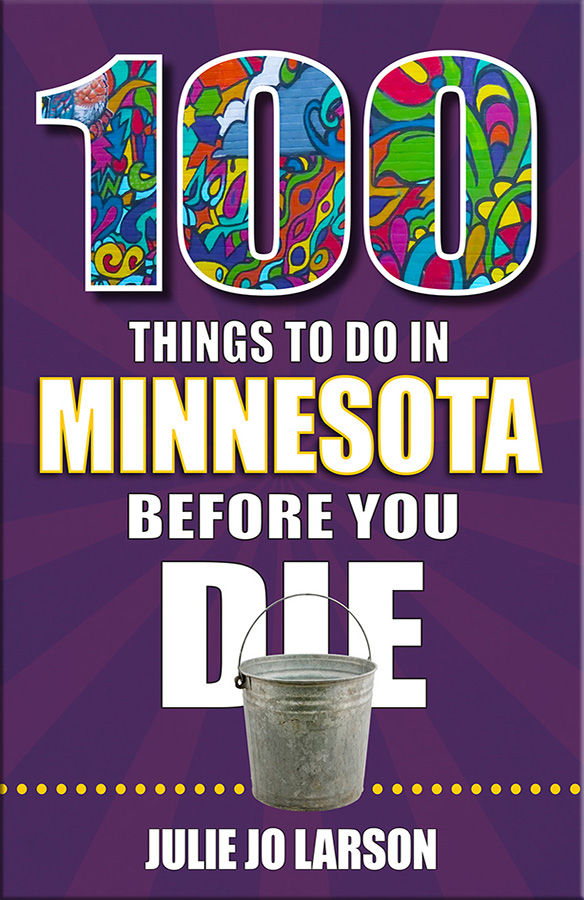
(Image source: Julie Jo Larson’s website)

WHETHER YOU’RE A LIFE-LONG Minnesotan, a newbie or a visitor, Julie Jo Larson’s newly-published 100 Things to Do in Minnesota Before You Die guidebook is an invaluable resource for exploring this place I call home. I’ve lived here my entire life, but only experienced or visited one-quarter of the listings in Larson’s travel guide.

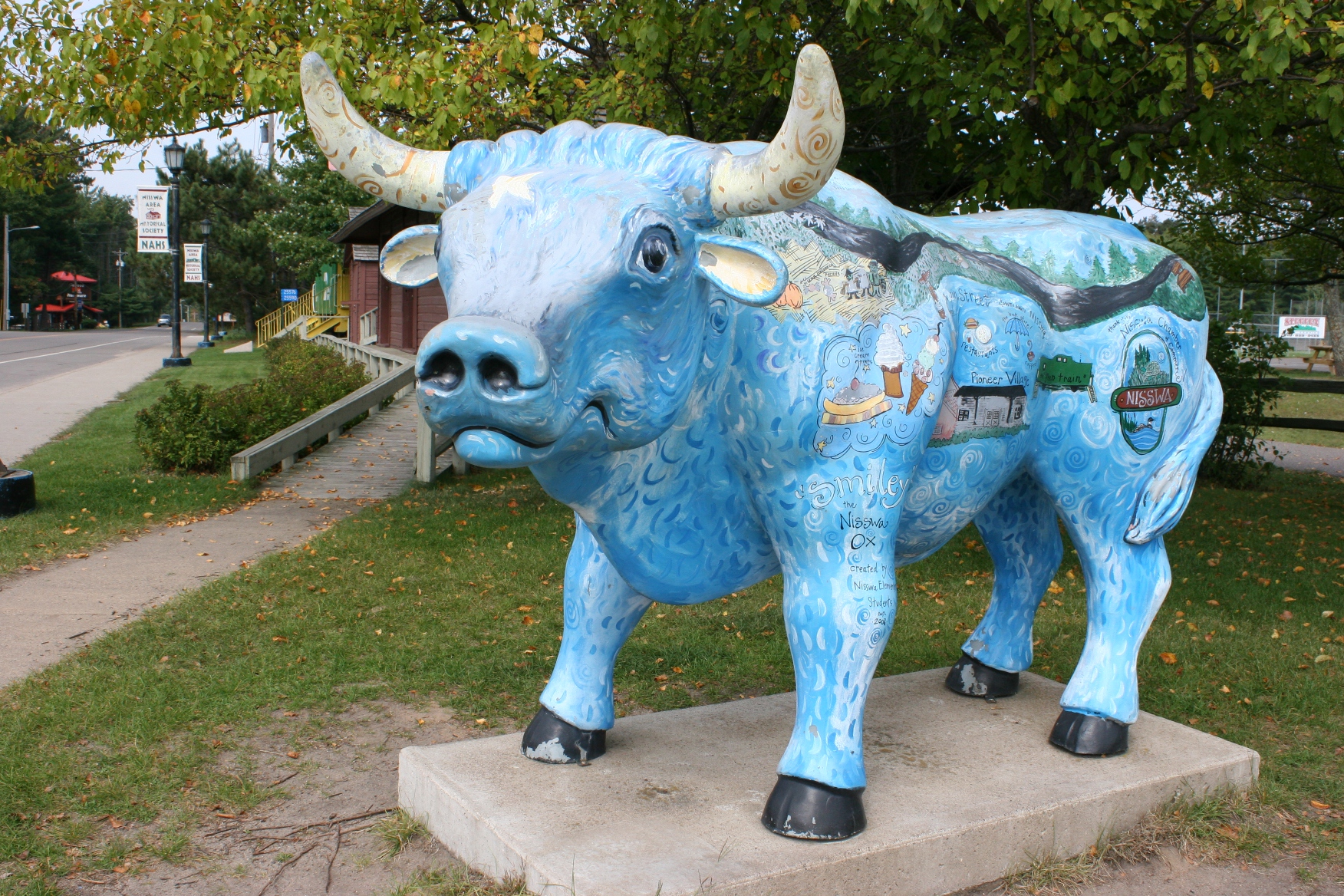
Babe the Blue Ox of Paul Bunyan legend stands along Nisswa’s Main Street. In her book, Larson encourages readers to seek out the many Minnesota-centric statues found throughout our state. (Minnesota Prairie Roots copyrighted file photo 2017)

Minnesota is an expansive state, spanning 400 miles from north to south and 350 miles from east to west. So there’s lots to see and do from prairie to woodland, from lakes to rivers, from bluffs to valleys, from small towns to bigger cities. Larson offers a good mix of destinations and activities.

Domeier’s German Store, nestled in a residential neighborhood for decades, is a must-see German import shop in New Ulm. (Minnesota Prairie Roots copyrighted file photo)

I should note that I feel a kinship with Larson in a commonality of roots. She was born in New Ulm, in Brown County next to my home county of Redwood in southwestern Minnesota. New Ulm, situated in the Minnesota River Valley and rich in German heritage and culture, has long been a favorite community of mine. There’s so much to see and do from touring and sampling beer at August Schell Brewing Company; shopping at compact German import store, Domeier’s; exploring Flandrau State Park along the Cottonwood River; watching the Glockenspiel; and lots more. Larson now lives in rural Brainerd and has already written a guide on the Minnesota Northwoods. Her love for Minnesota shines.

Craft beer flights are served on old movie reels at Sleepy Eye Brewing, housed in a former movie theater. While not included in Larson’s book, I recommend a stop at this unique southwestern Minnesota brewery. (Minnesota Prairie Roots copyrighted file photo)

In creating this travel book, Larson divides her suggested “things to do” into five categories: Food and Drink, Music and Entertainment, Sports and Recreation, Culture and History, and Shopping and Fashion.

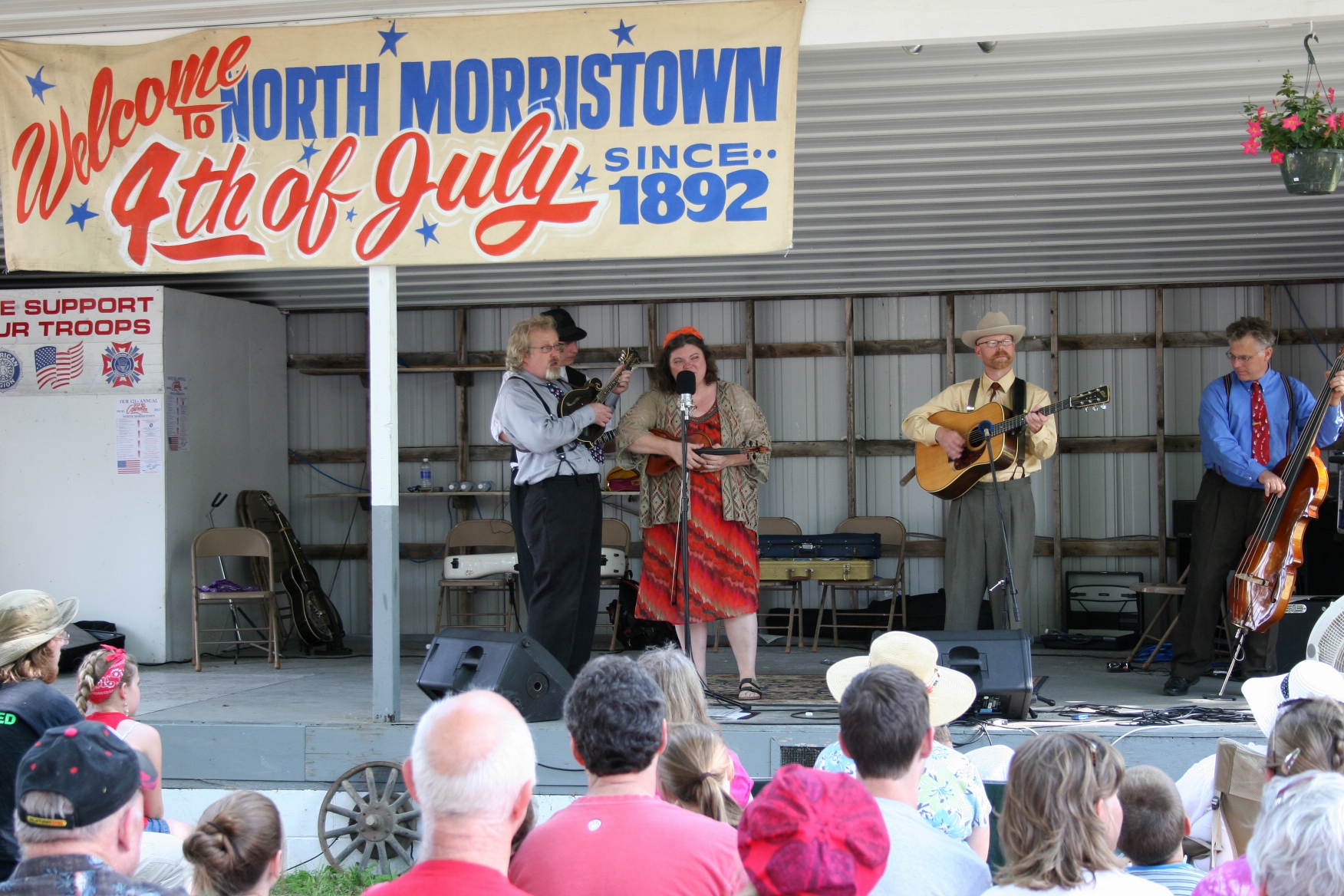
The bluegrass band, Monroe Crossing, performs every July 4 in North Morristown. (Minnesota Prairie Roots copyrighted file photo)

I so now want to try the chicken wild rice pizza at Poor Guy’s Pizza in Moose Lake. That—the wild rice part—sounds incredibly Minnesotan. I want to tour the Minnesota Music Hall of Fame in New Ulm to learn more about musicians and bands like Monroe Crossing, which performs each July Fourth in North Morristown. I want to wander among the 50 metal sculptures crafted by Ken Nyberg in Vining simply because I love outdoor public art. I want to tour the Mille Lacs Indian Museum and Trading Post in Onamia to learn more about that region’s Indigenous peoples. I want to peruse the handcrafted goods at The Shoppes of Little Falls. I want to…

I climbed up to the tower, but not up the Paul M. Thiede Fire Tower. I’d suggest combining a stop here with Pequot Lakes’ annual Bean Hole Days in July. (Minnesota Prairie Roots copyrighted file photo 2021)

Yes, there’s a lot to do in Minnesota. Some things on Larson’s list, though, I won’t do. I won’t travel into the depths of the earth at the Soudan iron ore mine. I won’t climb to the top of a fire tower at Pequot Lakes, although I’ve hiked to it. I won’t zip through the trees 175 feet off the ground on a Kerfoot Canopy Tour in the Minnesota River Valley at Henderson. But other readers of Larson’s guidebook will and that’s good. Her “100 things to do” offers a variety of experiences and places that appeal to diverse interests.

At Minneopa State Park, Mankato, visitors can get up close with a bison herd on a drive-through across the prairie. (Minnesota Prairie Roots copyrighted file photo August 2019)

As a life-long southern Minnesotan who has explored this region extensively, I especially appreciate Larson’s tips from other areas of this vast state. She even breaks down her list to activities by seasons and suggested itineraries. Black-and-white photos scattered through the pages and a centerfold of color images only further entice readers to get out and explore.

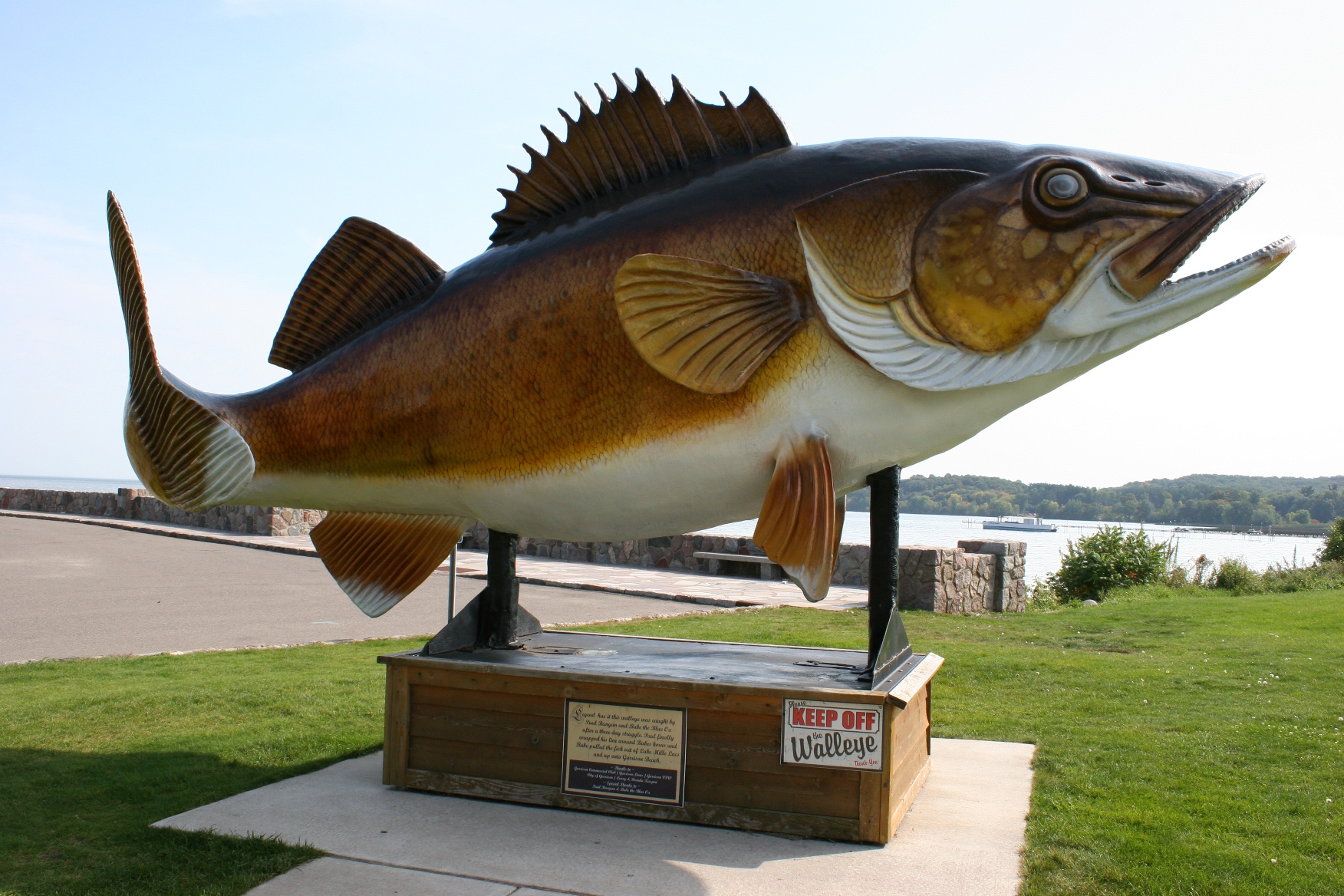
A walleye statue fronts Lake Mille Lacs in Garrison. The walleye is Minnesota’s state fish. (Minnesota Prairie Roots copyrighted file photo)

Bottom line, 100 Things to Do in Minnesota Before You Die rates as an excellent resource for anyone planning a road trip, looking for something to do/see while in a specific area of Minnesota or even just seeking to learn more about the North Star State.

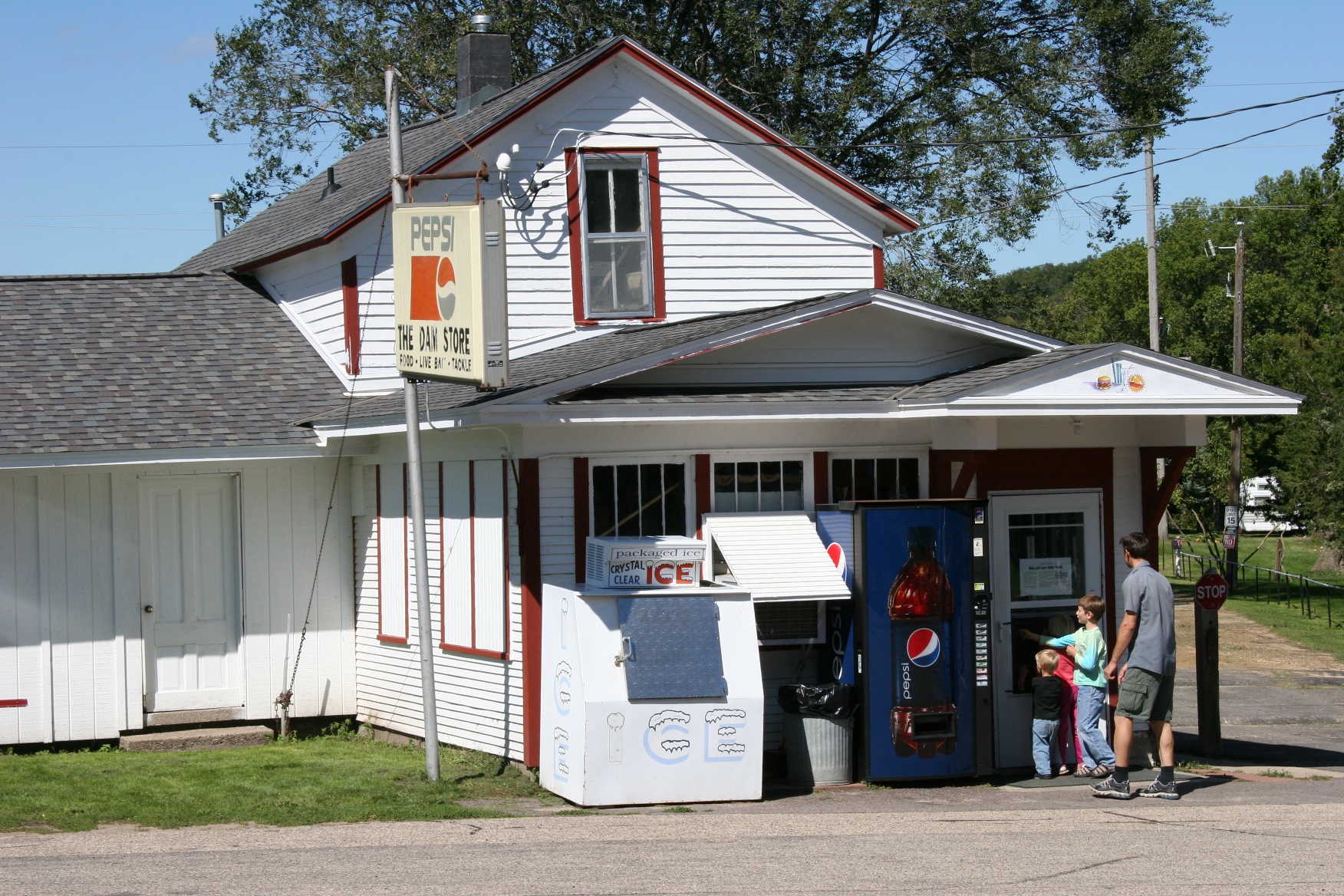
You’ll find great hamburgers and homemade pies at The Dam Store. (Minnesota Prairie Roots copyrighted file photo 2010)

Looking for a great slice of pie? Larson recommends (and so do I) the Rapidan Dam Store, yes, by the dam at Rapidan (which is near Mankato). Want to enjoy art in a top-notch museum along the Mississippi River? Visit the Minnesota Marine Art Museum in Winona. Interested in a cave tour? Head to Niagra Cave near Harmony. Wanna see a replica Viking ship? The Hjemkost Center in Moorhead features one. Need a book fix? Visit any one of Minnesota’s independent bookstores.

The independent bookstore portion of Victor Lundeen Company in Fergus Falls. (Minnesota Prairie Roots copyrighted file photo)

And while we’re talking books, buy a copy of 100 Things to Do in Minnesota Before You Die, published by Reedy Press. Support a Minnesota author while, bonus, learning about all sorts of places to visit and things to do in this place Larson and I call home.

© Copyright 2023 Audrey Kletscher Helbling
 

About that man named Ove March 10, 2023

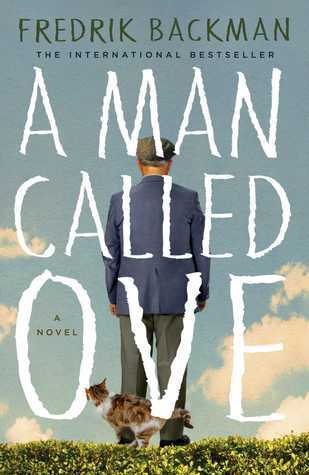
Book cover source: Goodreads

I NEARLY STOPPED READING the book several chapters in. The content weighed on me, so emotionally heavy that I wondered if I could continue. But then the story line began to unfold in a more hopeful way. And I read on.

By the time I reached the final chapter of A Man Called Ove, I was so invested in this book, the characters and relationships that formed, the way lives intertwined to save a life, that I wondered why I ever considered not finishing.

This 2014 international bestselling novel by Swedish blogger and columnist Fredrik Backman now ranks as a favorite book of mine. It made me cry. Correction. Sob. I struggled to read the final pages as tears blurred my vision. It’s been awhile since a work of fiction has spawned such a heart-wrenching emotional reaction.

I challenge you to pick up this book and read about aging Ove and his grief and grumpiness and outspokenness and how the edges of his hardness begin to soften. I laughed. I cried. I worried. I felt hopeful. I cheered. I wanted to give Ove a kick in the pants. I pondered. I related.

The mix of emotions elicited by A Man Called Ove tells me one thing. This is a remarkable book. The writing. The way mental health weaves into the story. There’s no avoidance of hard topics—of bullying and trauma and loss and grief and obsessive compulsive behavior and suicide and the way the mind wraps and detours and struggles and copes.

Into all of this, the author brings hope. In new neighbors. In a mangy cat. In a teen with sooty eyes and a determined journalist and a friend with dementia. I appreciate how, in the end, differences matter not. It’s that kind of book. Real. Honest. Heart-breaking.

I did not see the American movie, “A Man Called Otto,” based on the book. I’ve been told it’s good by some, advised by others to watch the Swedish version instead. Usually I’m disappointed in film adaptations. I haven’t seen a movie on the big screen in many years.

This Sunday evening, movies will be front and center in Los Angeles as “best of” awards are presented at The Oscars. I didn’t find “A Man Called Otto” (or any of the actors/actresses) on a quick scroll through The Academy Awards nominees list. Tom Hanks stars as Otto. I’m not into Hollywood events like this, although certainly they are important to honor those who do outstanding work in their craft. Rather, I prefer books, where I can read and then visualize people, scenes, interactions. My imagination unleashes, prompted by the writing of creatives passionate about the written word.

TELL ME: Have you read A Man Called Ove and/or seen the Swedish or American film based on the novel? I’d like to hear your reactions to either or both.

Thank you to readers Ken and Colleen who suggested I read this book.

© Copyright 2023 Audrey Kletscher Helbling

 

George Floyd’s aunt lifts her voice in an impactful book February 3, 2023

IT’S NOT ENOUGH. I recognize that. It’s not enough to simply read books about black history and racism in America and call it good. But reading is a step toward widening my knowledge and understanding and then my compassion. So I will continue to read, and learn.

I recently finished Lift Your Voice—How My Nephew George Floyd’s Murder Changed the World. Angela Harrelson—who is Floyd’s aunt, lives in Minneapolis and works as a registered nurse—wrote this book with Michael Levin. Floyd, known as “Perry” to his family, died on May 25, 2020, at the hands of Minneapolis police officers, three now serving prison time in Floyd’s death, the fourth awaiting a judge’s decision on charges.

On the day I turned the last pages of Lift Your Voice, family, friends and activists were raising their voices at the funeral of Tyre Nichols, who was brutally beaten by police during a traffic stop in Memphis and died three days later. Listening to a portion of that service, a speaker called the young black man a “son, father, brother, friend and human being.” Human being. Those two words emerge in Harrelson’s book when she writes of (those) white people who don’t see black people as human beings. She traces that back to slavery (when slaves were viewed as property), sharing her own family history of slavery and lynchings.

Harrelson specifically cites Minneapolis Police Officer Derek Chauvin as failing to view her nephew as a human being. Chauvin kneeled/pressed on Floyd’s neck for more than nine minutes as the young man lay handcuffed and face down on the street pleading for his life, “I can’t breathe.”
It’s a lot, this book. To read about Floyd’s tragic death and the deeply personal stories of Harrelson and her family and all they’ve endured simply because of the color of their skin is difficult. But stories resonate and make an impact. When she writes of “white privilege” as something held simply because of white skin color and unrelated to wealth and status, that clicked for me. Unlike Harrelson, I don’t have to think about being watched in public, suspected of something, anything, because of my skin color. Harrelson does and she shares specifics.
Her book covers topics of systemic racism, a police culture that needs to change (she’s not anti-police), the emotional exhaustion and trauma she feels, the importance of faith in her life, her role as an activist. But she doesn’t stop there. Harrelson calls for each of us, individually, to call out racism, to speak up when we see injustices, to treat each other with respect.

In my own community, I’ve, on more than one occasion, found myself responding to racist comments related to housing, employment, even the way people dress or their scent. It’s hard to hear this stereotyping, this obvious disrespect and racism. So I speak up, or as George “Perry” Floyd’s aunt encourages, I lift my voice. Lifting voices and being heard is how, Harrelson writes, the world will heal.

© Copyright 2023 Audrey Kletscher Helbling