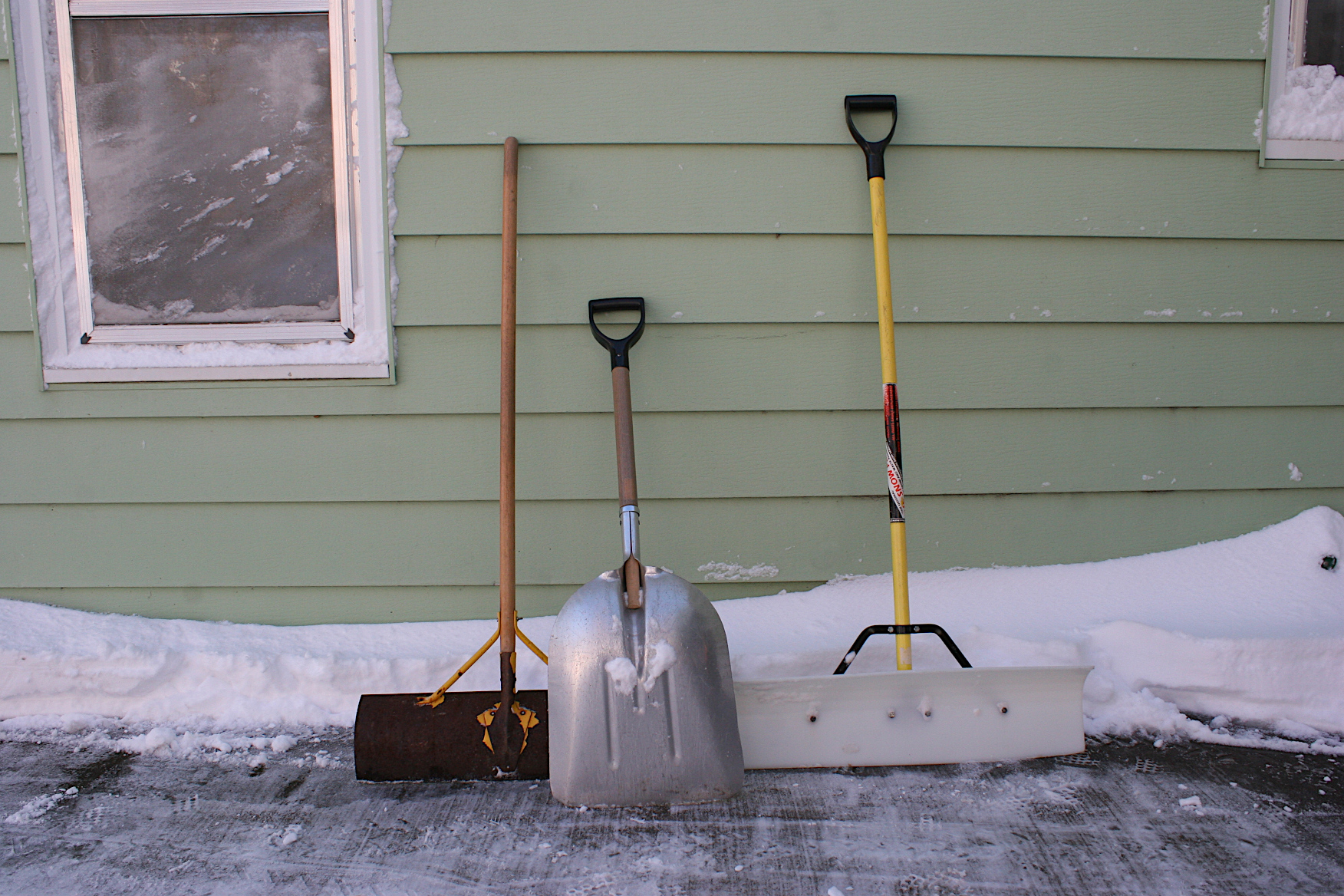
Our three snow removal shovels. (Minnesota Prairie Roots copyrighted file photo December 2021)
DISCLAIMER: If you don’t want to read the words snow or winter, then stop reading. This is a post about both. But also about spring. And a book.
Three prompts led me to write on this seasonal topic. First, when I was scanning my mom’s journals recently, I came across a May 11, 1966, entry in which she wrote, “Snow on the ground.” This didn’t surprise me. Occasionally snow falls in southern Minnesota in May. While I don’t recall the 1966 snow Mom references, I do remember driving back from my native prairie once on Memorial Day weekend to see snow atop a car in New Ulm. That would be at the end of May.
Secondly, a few weeks ago, Randy asked whether he should put the snow shovels away. I encouraged him to wait. And he did, until he felt confident the possibility of snow had passed. It has. I hope.
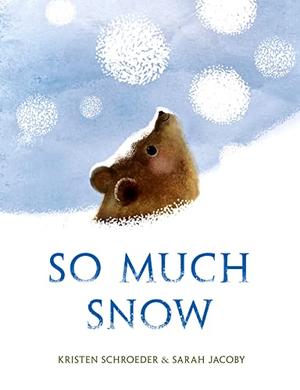
With minimal words per page, Schroeder writes the story of a week-long snowfall. Day after day after day the snow piles high around a menagerie of animals. Rabbit, fox, bear, moose… Illustrator Sarah Jacoby’s art has a dreamy, soft quality, just like the falling snow. That both artist (from Pittsburgh) and author understand winter is clear in their work.
Eventually, the sun shines, the snow melts, the grass greens. And spring, so it seems, has arrived. But then, a last page surprise. You can probably guess what that may be. It happens here in Minnesota seemingly every year. Just when we think winter has ended…
Somalians are very much a part of the Faribault community, photographed here at a Downtown Car Cruise Night. (Minnesota Prairie Roots copyrighted file photo)
For a community like mine, with a sizable Somali population, this book proves a natural draw. I always appreciate learning more about my new Faribault neighbors from the east African country of Somalia. The more we know about each other, the more comfortable and connected we feel. Disconnect and conflict often arise from lack of knowledge, fear of the unknown and differences. Differences in dress, food, language, culture, faith.
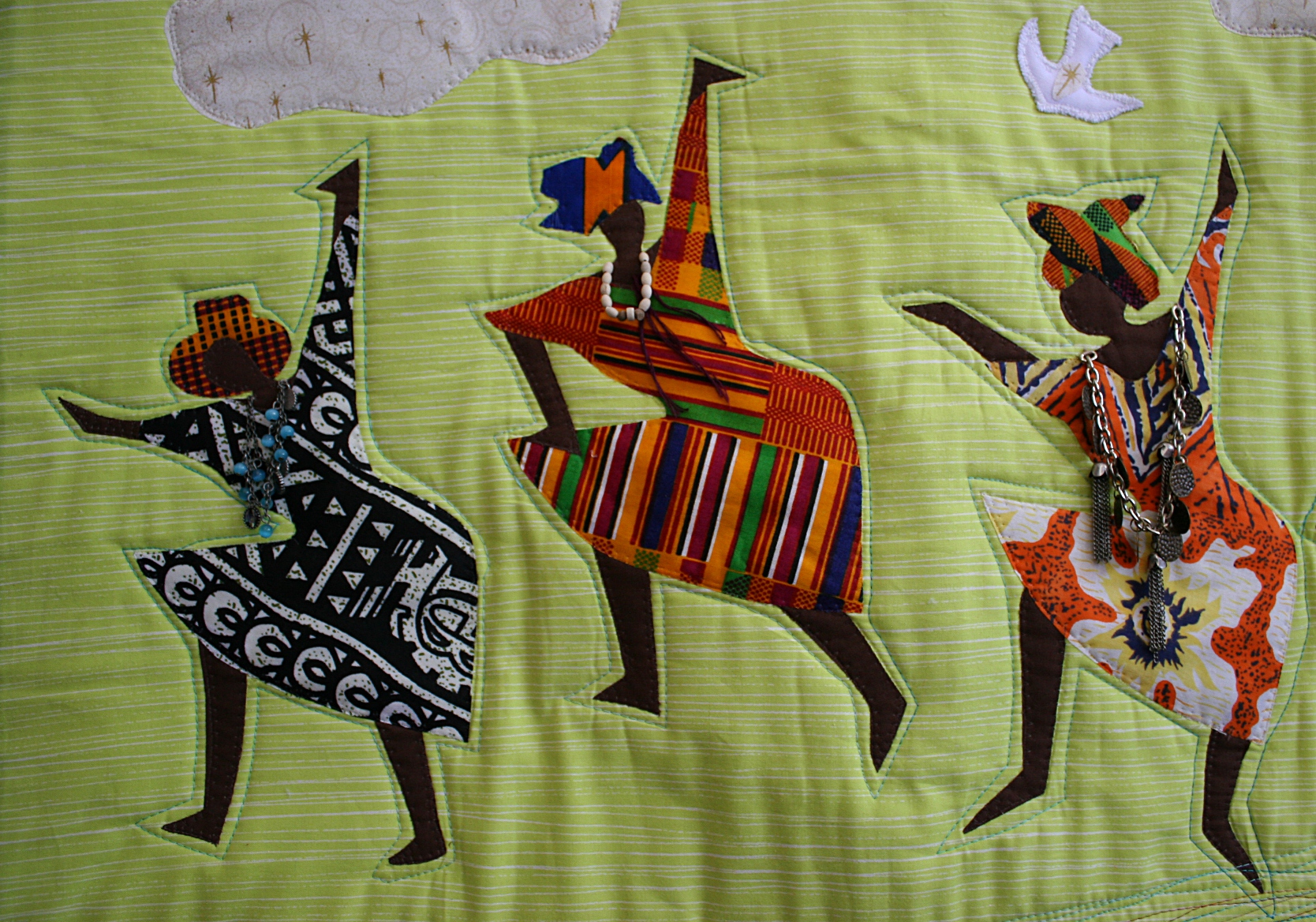
Nigerian-themed quilt art by my friend Susan Griebel. The fabric is from the collection of her mother-in-law, Margaret Griebel. Margaret’s husband was a Lutheran missionary in Nigeria, where the family lived. (Minnesota Prairie Roots copyrighted file photo)
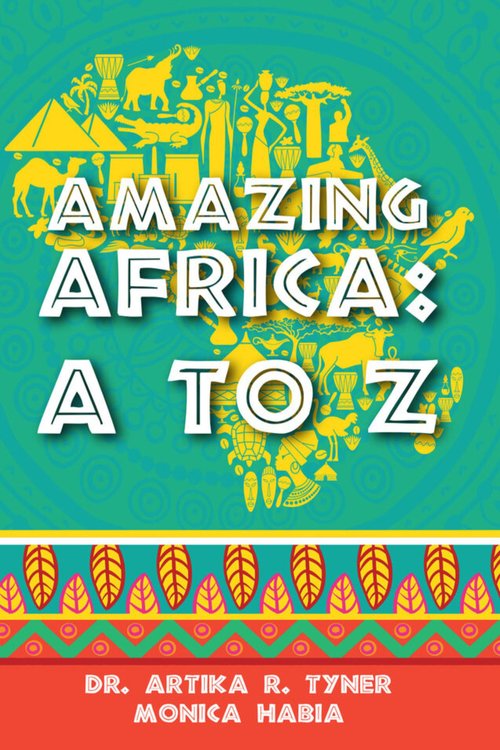
This book bridges differences via facts and art that carries a signature African style of intense patterns and colors. With every new bit of information, with every turn of the page, I feel more and more connected to this continent of 54 countries. For example, the word hospitality, chosen to represent the letter “H” in this alphabet book, strikes me as exactly what I hope for in Faribault. Africans believe no one is an island; rather everyone is part of the community, the text reads in part. Two clasped hands visually reinforce that belief.
Lul Abdi shows off beautiful wood crafts from Kenya and Somalia at a past International Festival Faribault (Minnesota Prairie Roots copyrighted file photo)
Events like the Faribault Diversity Coalition’s summer International Festival Faribault and now occasional public talks by immigrants and others are ways we join hands and grow community. I’ve seen the art of my neighbors from Africa. I’ve heard the music, tasted the sambusa, admired colorful clothing… Faribault’s newest residents add a depth and richness to my southern Minnesota city.
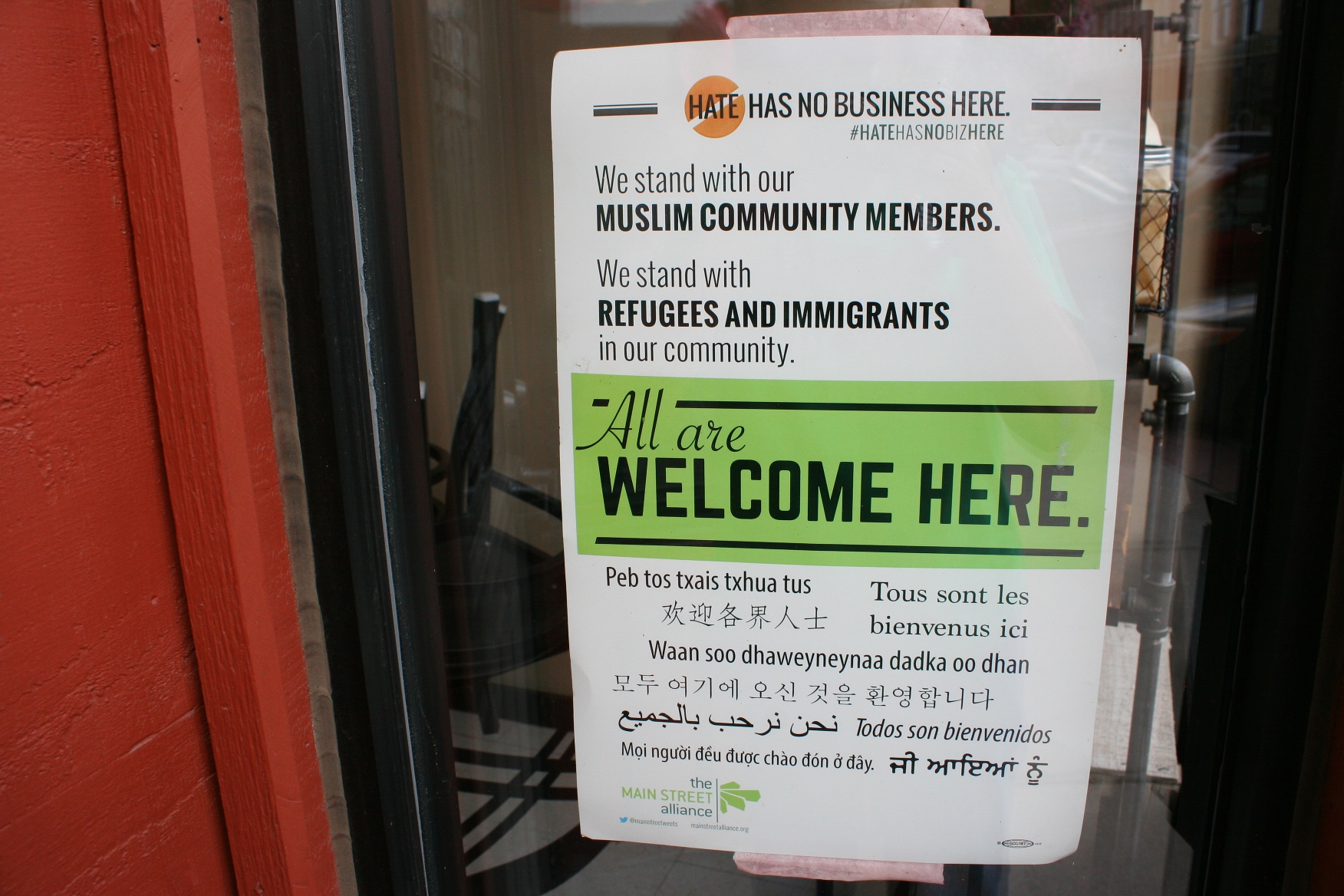
A sign posted in a downtown Faribault business storefront window several years ago. (Minnesota Prairie Roots copyrighted file photo)
Consider African proverbs, chosen in Amazing Africa: A to Z to represent the letter “P.” These wise sayings span cultures. The authors include this powerful Swahili proverb, among several, at the end of the book: “Unity is strength, division is weakness.” If only we all read and take those words to heart. I firmly believe that we, as individuals and as community, need to be here for one another. We truly are stronger when not divided.
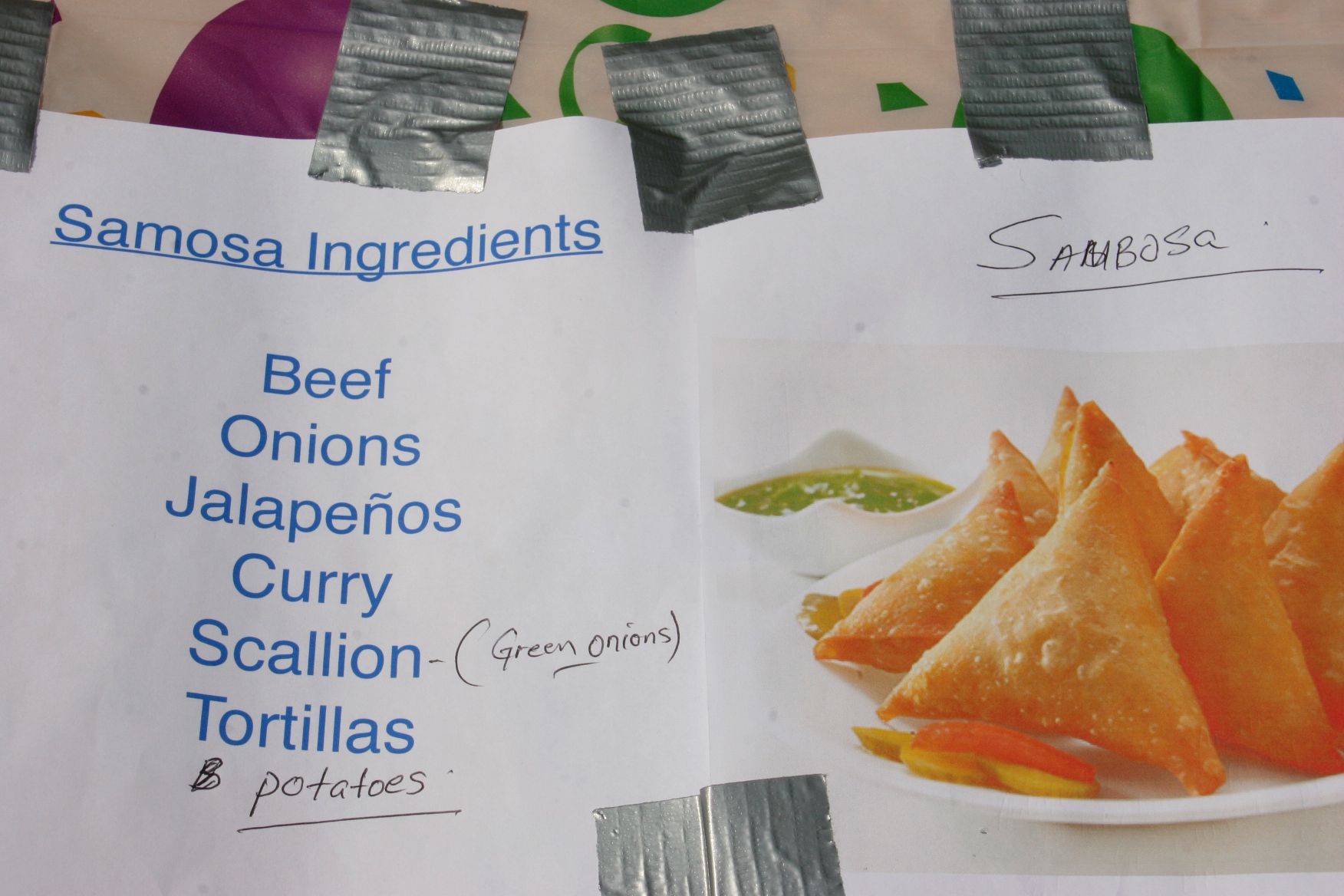
A sign lists Somali food sold at a past International Festival Faribault. (Minnesota Prairie Roots copyrighted file photo)
As I read of 1,000 languages spoken throughout Africa, I think of the Somalians now living in my community. Many have overcome war, poverty and other unimaginable challenges to settle in Minnesota. And now they must also overcome language barriers and resentment. If only we would all pause for a moment and remember that, for most of us Minnesotans, English was not the native tongue of our immigrant forefathers. Mine spoke German. Others spoke Norwegian, French, Dutch…
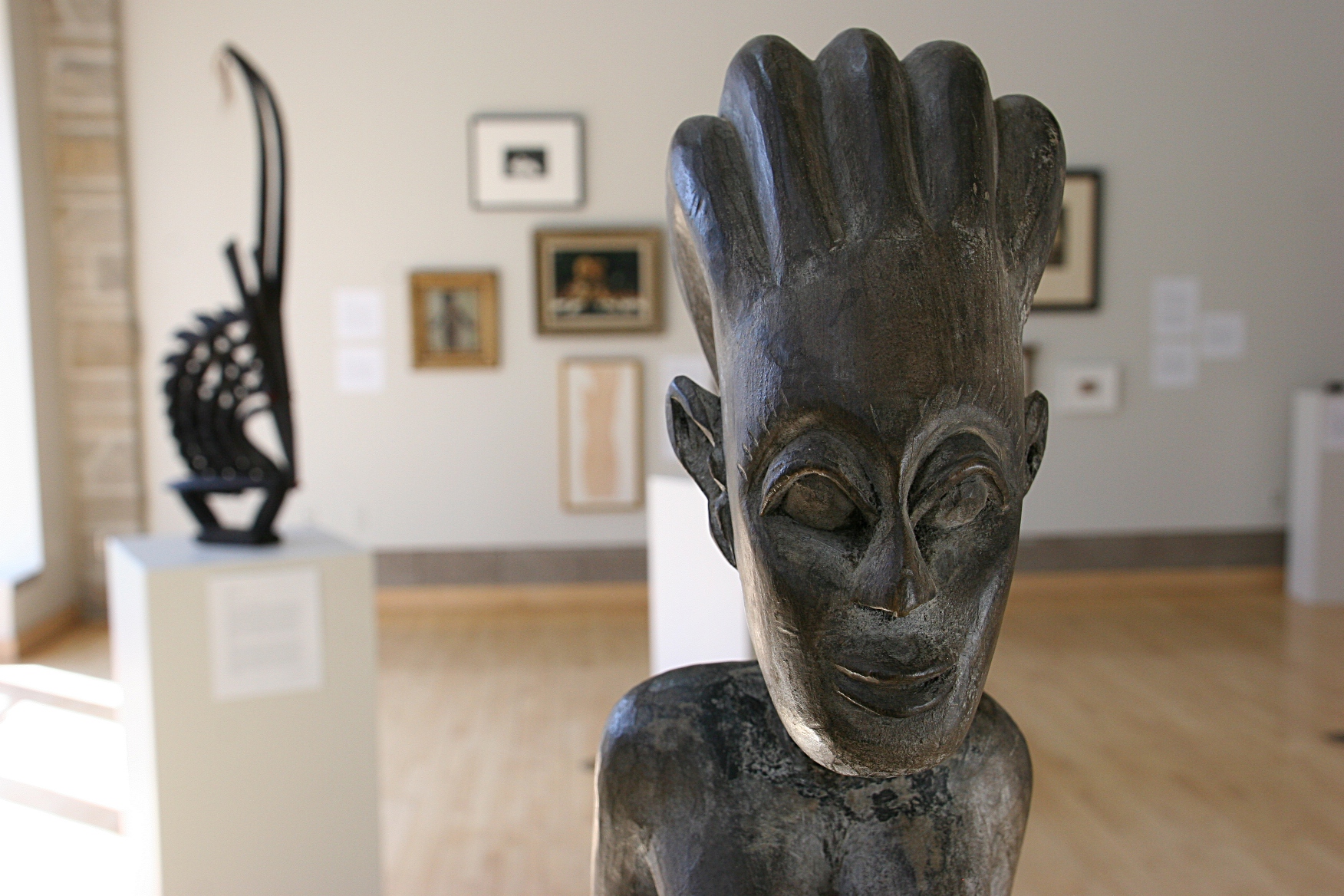
A wood sculpture from Africa, artist unknown, and titled “Seated Maternity Figure.” Exhibited at St. Olaf College, Northfield, in 2015. (Minnesota Prairie Roots copyrighted file photo April 2015)
I certainly can’t pronounce all of the words published in this book about Africa. Words like Uhuru, Yamoussoukro, Ugali and more. But I can appreciate the beauty of language, the way these words speak the rhythm of the continent of Africa.
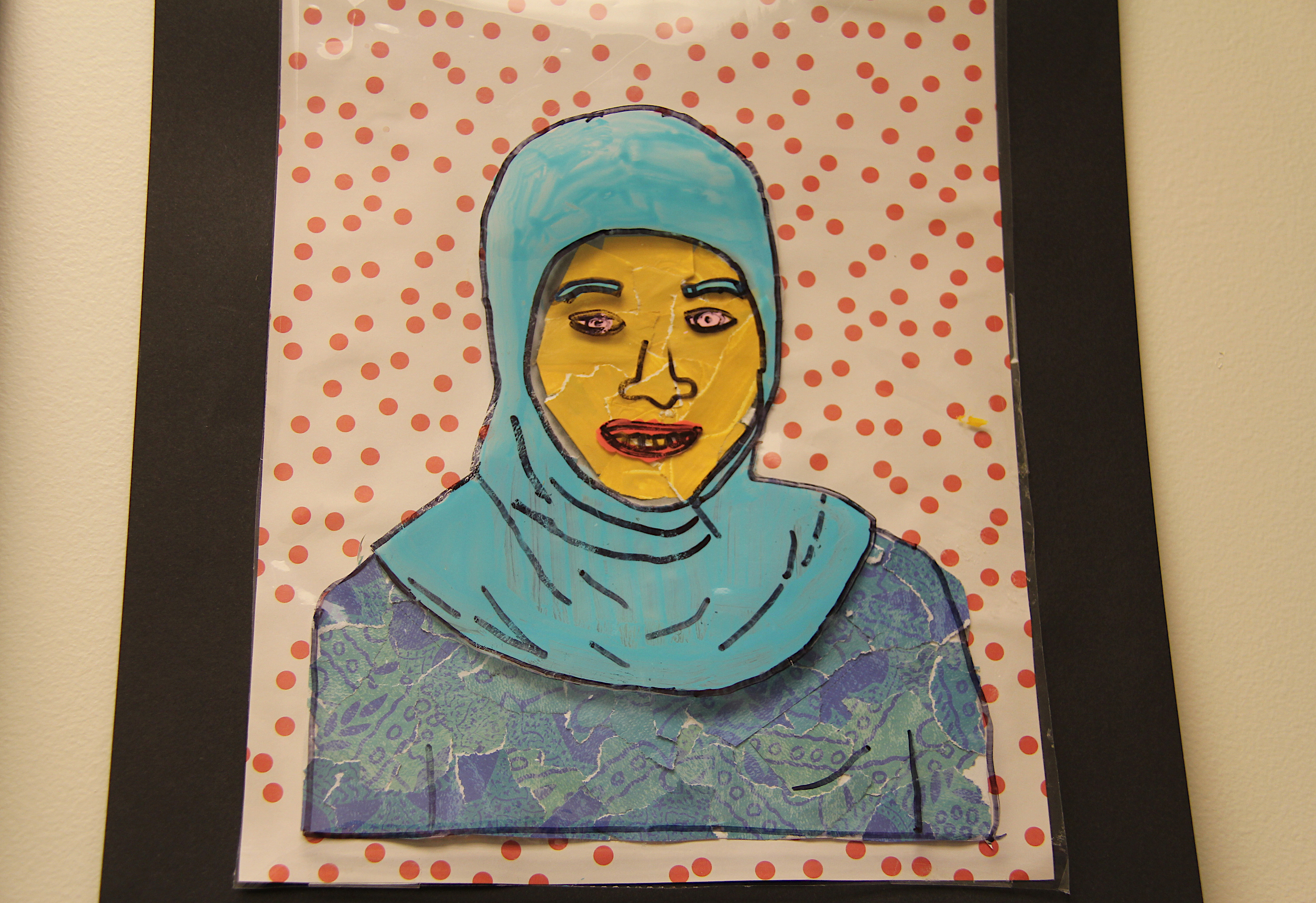
Bisa Butler inspired art created by fourth grader Ilwad and exhibited at a Student Art Show in Faribault. Butler is an award-winning African American textile artist. (Minnesota Prairie Roots copyrighted file photo March 2023)
Africa is the story of slavery, of dancing, of the world’s largest waterfall, of greatness, of so much richness and depth. You’ll find that, see that, read that in Amazing Africa: A to Z.
FYI: Dr. Artika Tyner, co-author of this book (and many others) and also a motivational speaker, educator and attorney, will speak on her journey towards justice from 6-7 pm Tuesday, May 16, at Buckham Memorial Library, Faribault. She is part of the Southeastern Libraries Cooperating 2023 Minnesota Author Tour. In her work, she focuses on racial and economic justice and social change. Tyner founded the nonprofit, Planting People Growing Justice Leadership Institute.
I previously reviewed Tyner’s children’s book, Justice Makes a Difference—The Story of Miss Freedom Fighter, Esquire. To read that book review, click here.
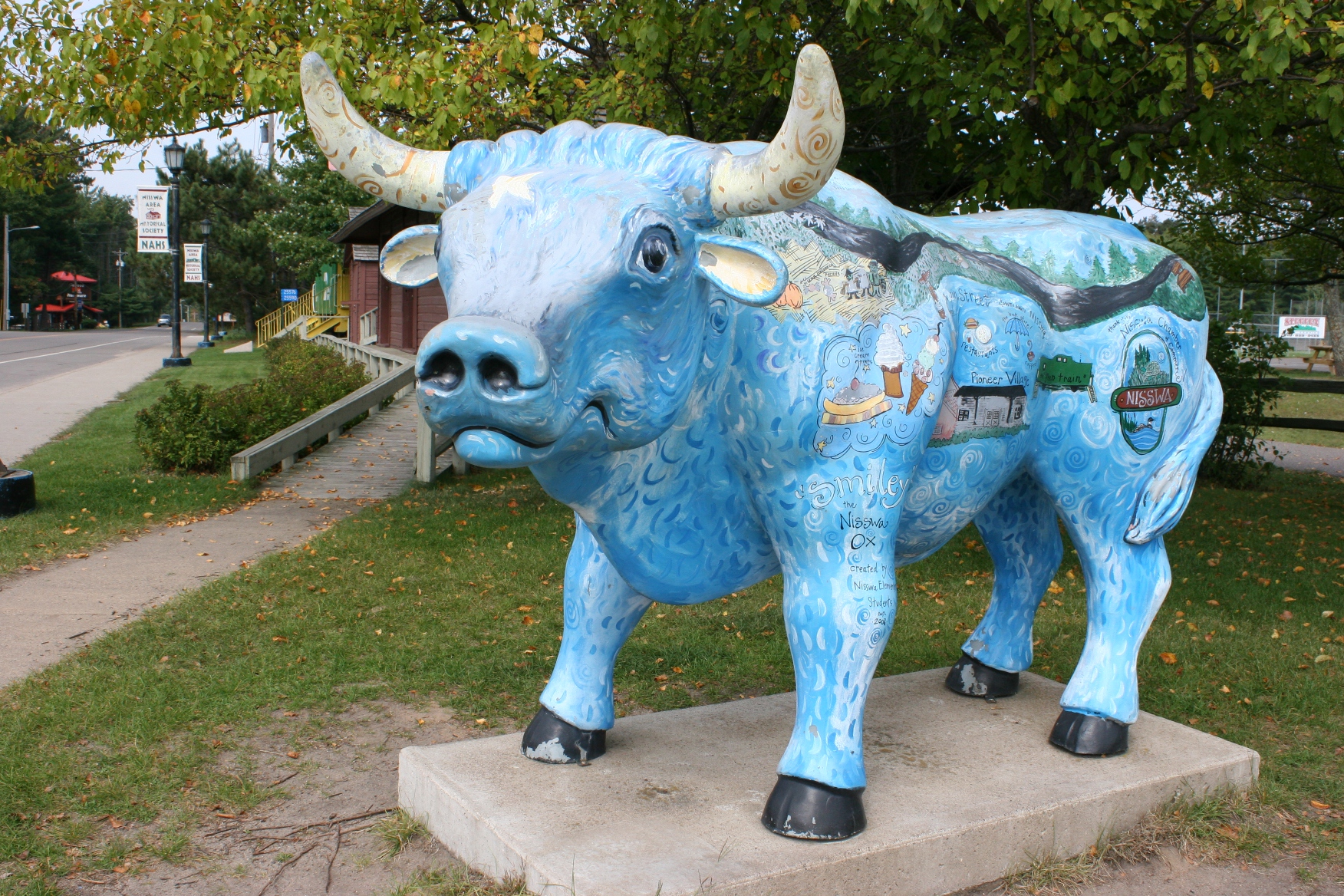
Babe the Blue Ox of Paul Bunyan legend stands along Nisswa’s Main Street. In her book, Larson encourages readers to seek out the many Minnesota-centric statues found throughout our state. (Minnesota Prairie Roots copyrighted file photo 2017)
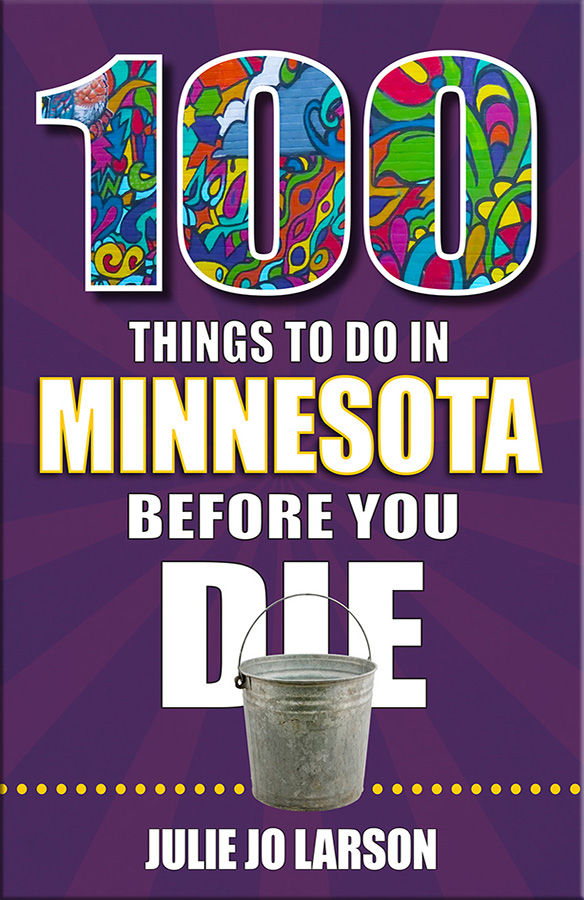
Minnesota is an expansive state, spanning 400 miles from north to south and 350 miles from east to west. So there’s lots to see and do from prairie to woodland, from lakes to rivers, from bluffs to valleys, from small towns to bigger cities. Larson offers a good mix of destinations and activities.
Domeier’s German Store, nestled in a residential neighborhood for decades, is a must-see German import shop in New Ulm. (Minnesota Prairie Roots copyrighted file photo)
I should note that I feel a kinship with Larson in a commonality of roots. She was born in New Ulm, in Brown County next to my home county of Redwood in southwestern Minnesota. New Ulm, situated in the Minnesota River Valley and rich in German heritage and culture, has long been a favorite community of mine. There’s so much to see and do from touring and sampling beer at August Schell Brewing Company; shopping at compact German import store, Domeier’s; exploring Flandrau State Park along the Cottonwood River; watching the Glockenspiel; and lots more. Larson now lives in rural Brainerd and has already written a guide on the Minnesota Northwoods. Her love for Minnesota shines.
Craft beer flights are served on old movie reels at Sleepy Eye Brewing, housed in a former movie theater. While not included in Larson’s book, I recommend a stop at this unique southwestern Minnesota brewery. (Minnesota Prairie Roots copyrighted file photo)
In creating this travel book, Larson divides her suggested “things to do” into five categories: Food and Drink, Music and Entertainment, Sports and Recreation, Culture and History, and Shopping and Fashion.
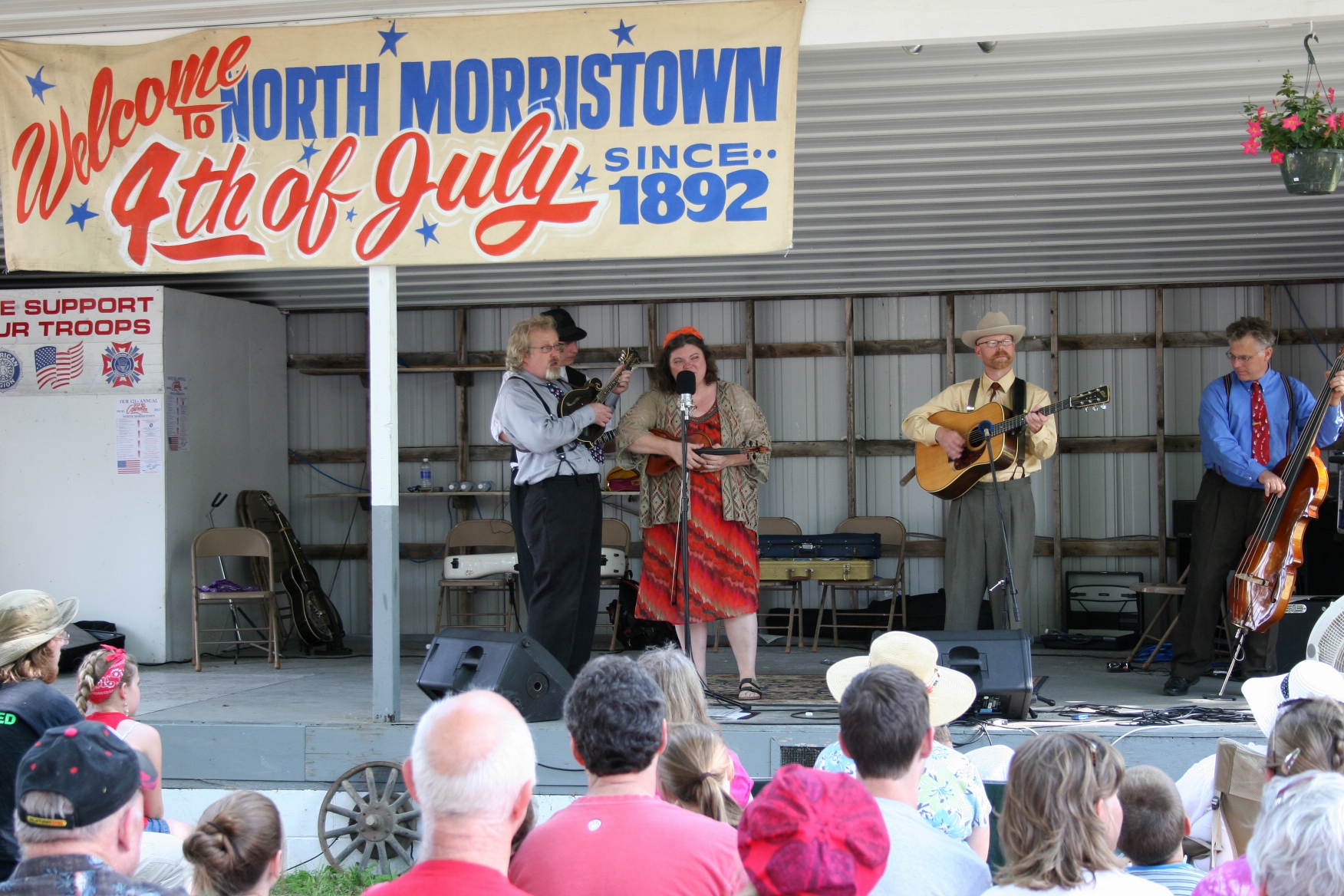
The bluegrass band, Monroe Crossing, performs every July 4 in North Morristown. (Minnesota Prairie Roots copyrighted file photo)
I so now want to try the chicken wild rice pizza at Poor Guy’s Pizza in Moose Lake. That—the wild rice part—sounds incredibly Minnesotan. I want to tour the Minnesota Music Hall of Fame in New Ulm to learn more about musicians and bands like Monroe Crossing, which performs each July Fourth in North Morristown. I want to wander among the 50 metal sculptures crafted by Ken Nyberg in Vining simply because I love outdoor public art. I want to tour the Mille Lacs Indian Museum and Trading Post in Onamia to learn more about that region’s Indigenous peoples. I want to peruse the handcrafted goods at The Shoppes of Little Falls. I want to…
I climbed up to the tower, but not up the Paul M. Thiede Fire Tower. I’d suggest combining a stop here with Pequot Lakes’ annual Bean Hole Days in July.(Minnesota Prairie Roots copyrighted file photo 2021)
Yes, there’s a lot to do in Minnesota. Some things on Larson’s list, though, I won’t do. I won’t travel into the depths of the earth at the Soudan iron ore mine. I won’t climb to the top of a fire tower at Pequot Lakes, although I’ve hiked to it. I won’t zip through the trees 175 feet off the ground on a Kerfoot Canopy Tour in the Minnesota River Valley at Henderson. But other readers of Larson’s guidebook will and that’s good. Her “100 things to do” offers a variety of experiences and places that appeal to diverse interests.
At Minneopa State Park, Mankato, visitors can get up close with a bison herd on a drive-through across the prairie. (Minnesota Prairie Roots copyrighted file photo August 2019)
As a life-long southern Minnesotan who has explored this region extensively, I especially appreciate Larson’s tips from other areas of this vast state. She even breaks down her list to activities by seasons and suggested itineraries. Black-and-white photos scattered through the pages and a centerfold of color images only further entice readers to get out and explore.
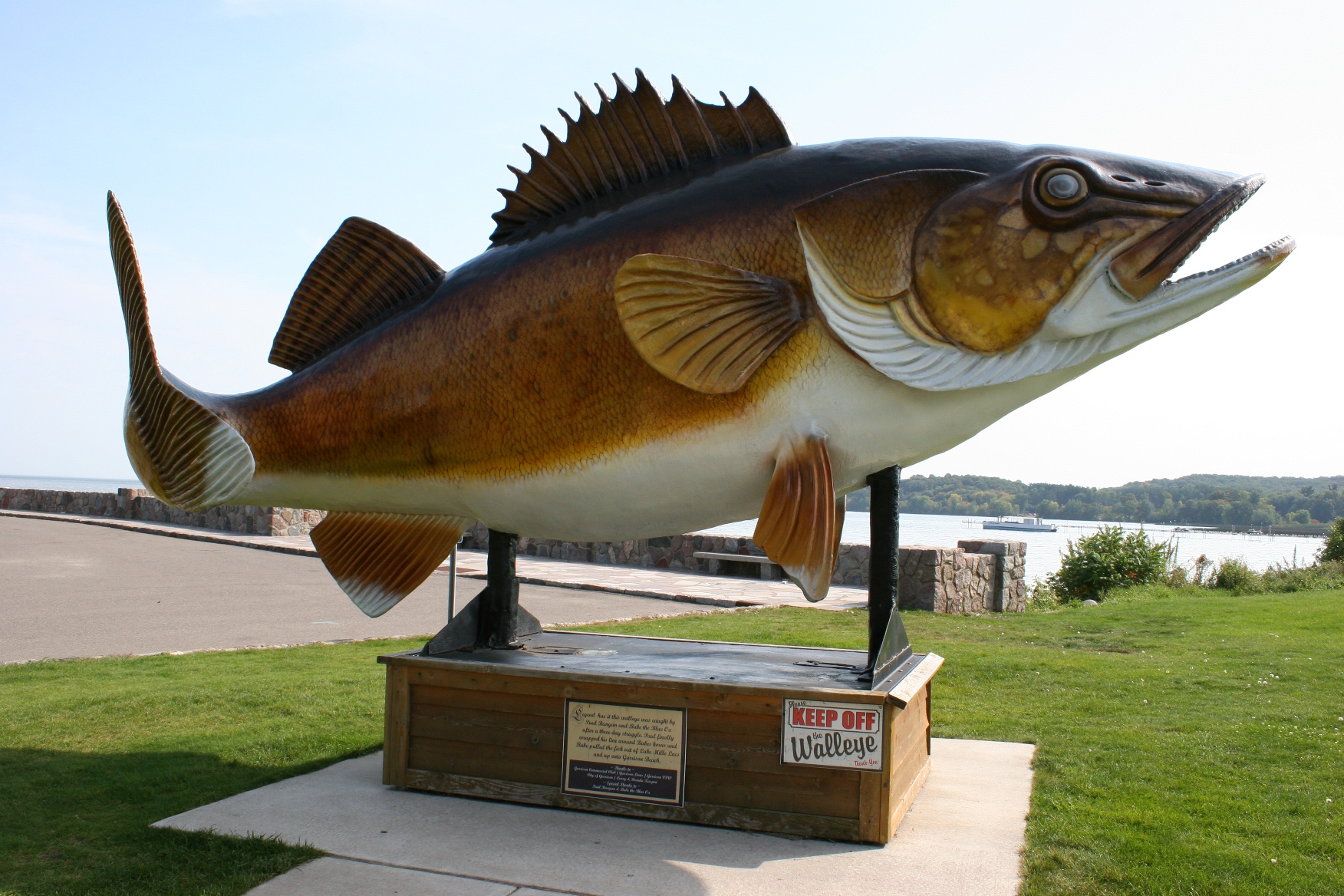
A walleye statue fronts Lake Mille Lacs in Garrison. The walleye is Minnesota’s state fish. (Minnesota Prairie Roots copyrighted file photo)
Bottom line, 100 Things to Do in Minnesota Before You Die rates as an excellent resource for anyone planning a road trip, looking for something to do/see while in a specific area of Minnesota or even just seeking to learn more about the North Star State.
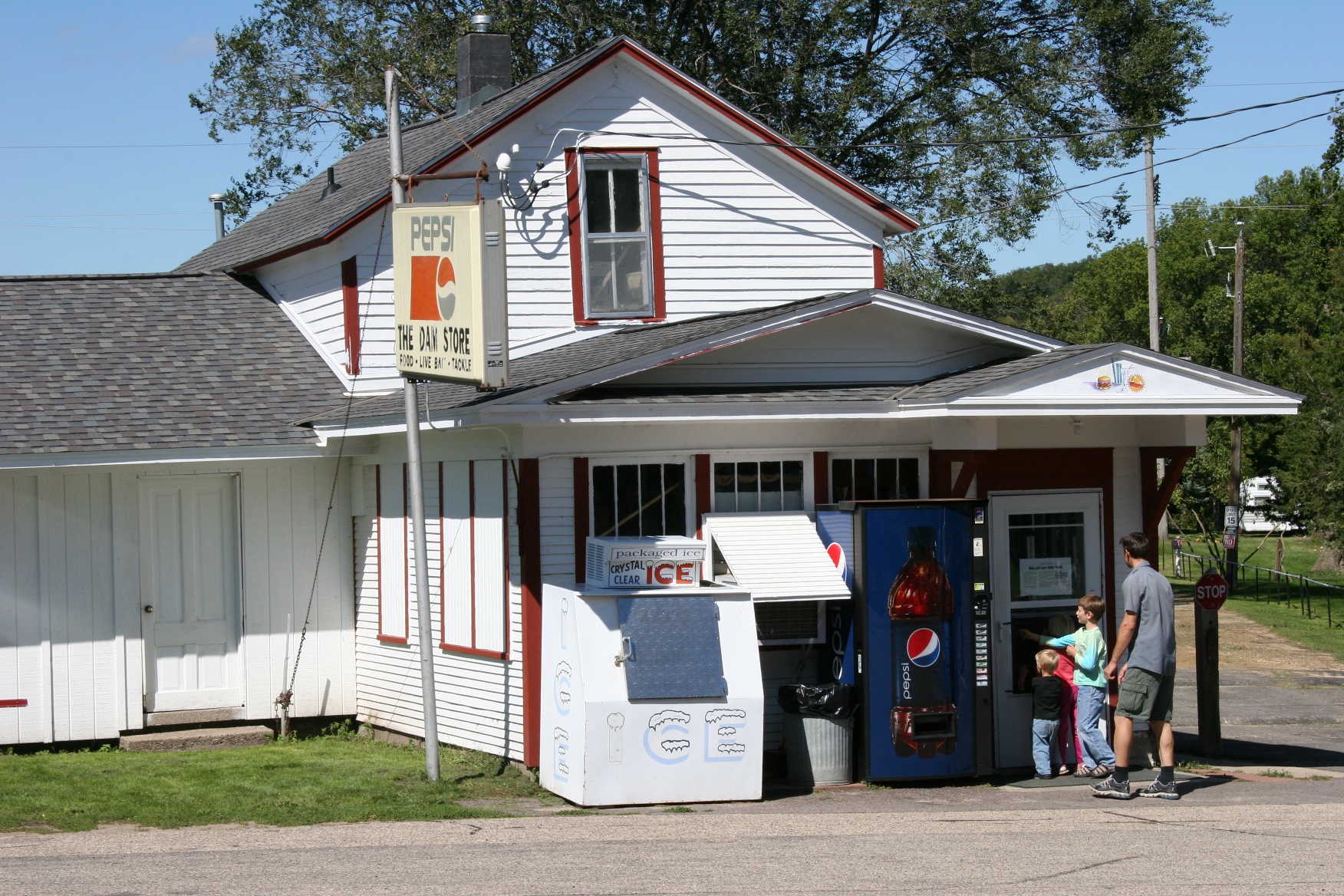
You’ll find great hamburgers and homemade piesat The Dam Store. (Minnesota Prairie Roots copyrighted file photo 2010)
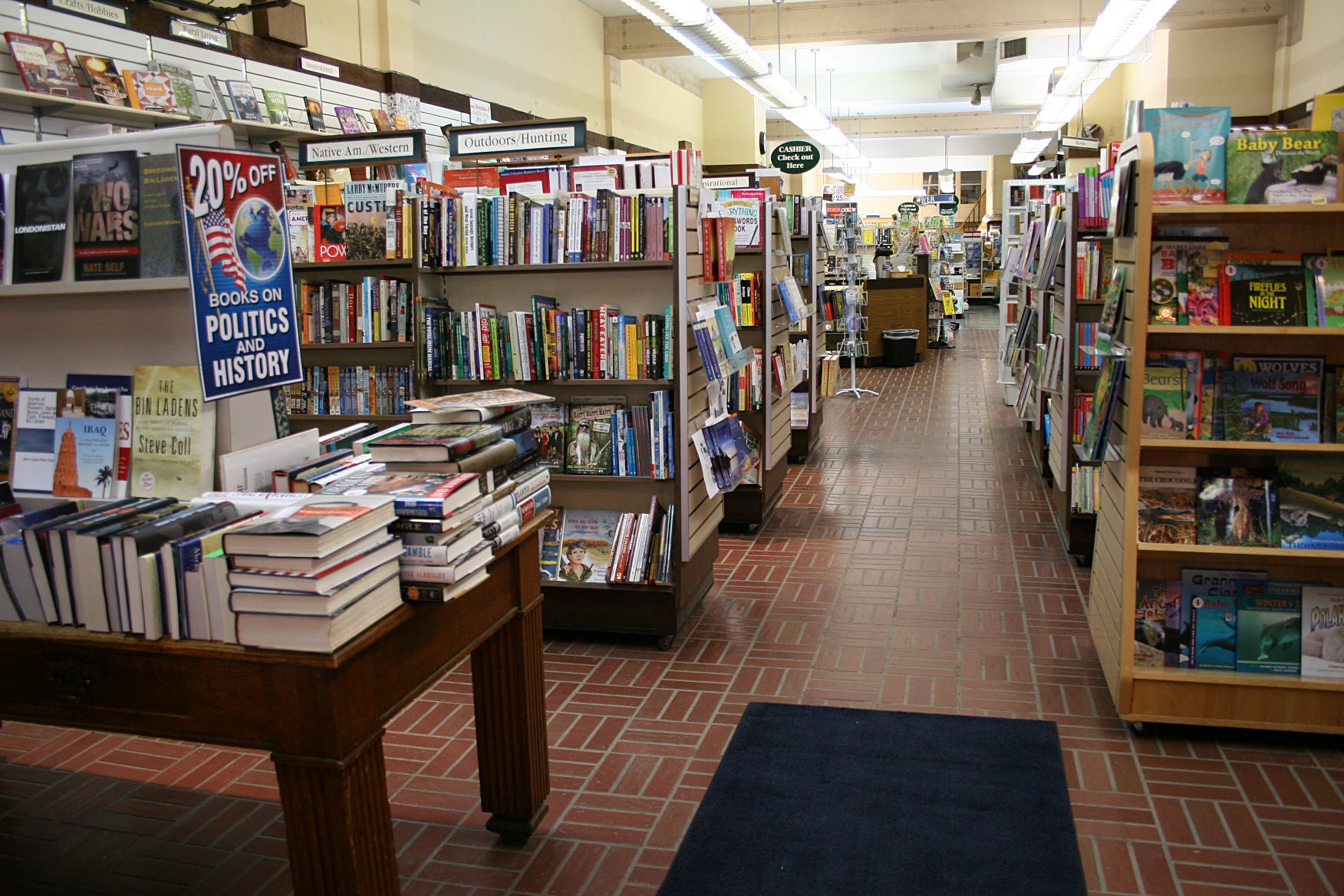
Looking for a great slice of pie? Larson recommends (and so do I) the Rapidan Dam Store, yes, by the dam at Rapidan (which is near Mankato). Want to enjoy art in a top-notch museum along the Mississippi River? Visit the Minnesota Marine Art Museum in Winona. Interested in a cave tour? Head to Niagra Cave near Harmony. Wanna see a replica Viking ship? The Hjemkost Center in Moorhead features one. Need a book fix? Visit any one of Minnesota’s independent bookstores.
The independent bookstore portion of Victor Lundeen Company in Fergus Falls. (Minnesota Prairie Roots copyrighted file photo)
I NEARLY STOPPED READING the book several chapters in. The content weighed on me, so emotionally heavy that I wondered if I could continue. But then the story line began to unfold in a more hopeful way. And I read on.
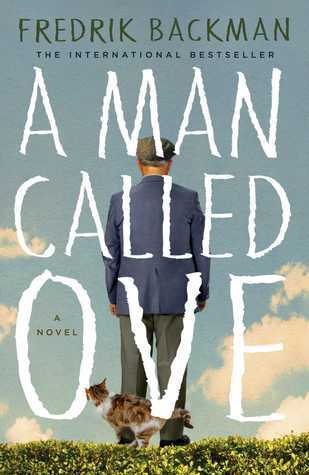
By the time I reached the final chapter of A Man Called Ove, I was so invested in this book, the characters and relationships that formed, the way lives intertwined to save a life, that I wondered why I ever considered not finishing.
This 2014 international bestselling novel by Swedish blogger and columnist Fredrik Backman now ranks as a favorite book of mine. It made me cry. Correction. Sob. I struggled to read the final pages as tears blurred my vision. It’s been awhile since a work of fiction has spawned such a heart-wrenching emotional reaction.
I challenge you to pick up this book and read about aging Ove and his grief and grumpiness and outspokenness and how the edges of his hardness begin to soften. I laughed. I cried. I worried. I felt hopeful. I cheered. I wanted to give Ove a kick in the pants. I pondered. I related.
The mix of emotions elicited by A Man Called Ove tells me one thing. This is a remarkable book. The writing. The way mental health weaves into the story. There’s no avoidance of hard topics—of bullying and trauma and loss and grief and obsessive compulsive behavior and suicide and the way the mind wraps and detours and struggles and copes.
Into all of this, the author brings hope. In new neighbors. In a mangy cat. In a teen with sooty eyes and a determined journalist and a friend with dementia. I appreciate how, in the end, differences matter not. It’s that kind of book. Real. Honest. Heart-breaking.
I did not see the American movie, “A Man Called Otto,” based on the book. I’ve been told it’s good by some, advised by others to watch the Swedish version instead. Usually I’m disappointed in film adaptations. I haven’t seen a movie on the big screen in many years.
This Sunday evening, movies will be front and center in Los Angeles as “best of” awards are presented at The Oscars. I didn’t find “A Man Called Otto” (or any of the actors/actresses) on a quick scroll through The Academy Awards nominees list. Tom Hanks stars as Otto. I’m not into Hollywood events like this, although certainly they are important to honor those who do outstanding work in their craft. Rather, I prefer books, where I can read and then visualize people, scenes, interactions. My imagination unleashes, prompted by the writing of creatives passionate about the written word.
TELL ME: Have you read A Man Called Ove and/or seen the Swedish or American film based on the novel? I’d like to hear your reactions to either or both.
Thank you to readers Ken and Colleen who suggested I read this book.
IT’S NOT ENOUGH. I recognize that. It’s not enough to simply read books about black history and racism in America and call it good. But reading is a step toward widening my knowledge and understanding and then my compassion. So I will continue to read, and learn.
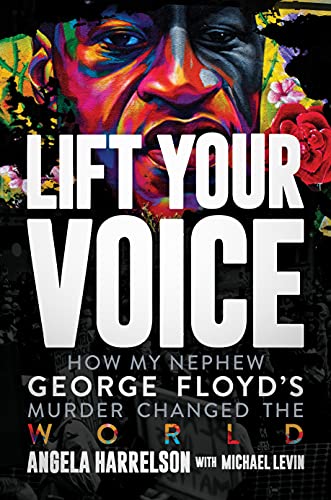
I recently finished Lift Your Voice—How My Nephew George Floyd’s Murder Changed the World. Angela Harrelson—who is Floyd’s aunt, lives in Minneapolis and works as a registered nurse—wrote this book with Michael Levin. Floyd, known as “Perry” to his family, died on May 25, 2020, at the hands of Minneapolis police officers, three now serving prison time in Floyd’s death, the fourth awaiting a judge’s decision on charges.
On the day I turned the last pages of Lift Your Voice, family, friends and activists were raising their voices at the funeral of Tyre Nichols, who was brutally beaten by police during a traffic stop in Memphis and died three days later. Listening to a portion of that service, a speaker called the young black man a “son, father, brother, friend and human being.” Human being. Those two words emerge in Harrelson’s book when she writes of (those) white people who don’t see black people as human beings. She traces that back to slavery (when slaves were viewed as property), sharing her own family history of slavery and lynchings.
Harrelson specifically cites Minneapolis Police Officer Derek Chauvin as failing to view her nephew as a human being. Chauvin kneeled/pressed on Floyd’s neck for more than nine minutes as the young man lay handcuffed and face down on the street pleading for his life, “I can’t breathe.”
It’s a lot, this book. To read about Floyd’s tragic death and the deeply personal stories of Harrelson and her family and all they’ve endured simply because of the color of their skin is difficult. But stories resonate and make an impact. When she writes of “white privilege” as something held simply because of white skin color and unrelated to wealth and status, that clicked for me. Unlike Harrelson, I don’t have to think about being watched in public, suspected of something, anything, because of my skin color. Harrelson does and she shares specifics.
Her book covers topics of systemic racism, a police culture that needs to change (she’s not anti-police), the emotional exhaustion and trauma she feels, the importance of faith in her life, her role as an activist. But she doesn’t stop there. Harrelson calls for each of us, individually, to call out racism, to speak up when we see injustices, to treat each other with respect.
In my own community, I’ve, on more than one occasion, found myself responding to racist comments related to housing, employment, even the way people dress or their scent. It’s hard to hear this stereotyping, this obvious disrespect and racism. So I speak up, or as George “Perry” Floyd’s aunt encourages, I lift my voice. Lifting voices and being heard is how, Harrelson writes, the world will heal.
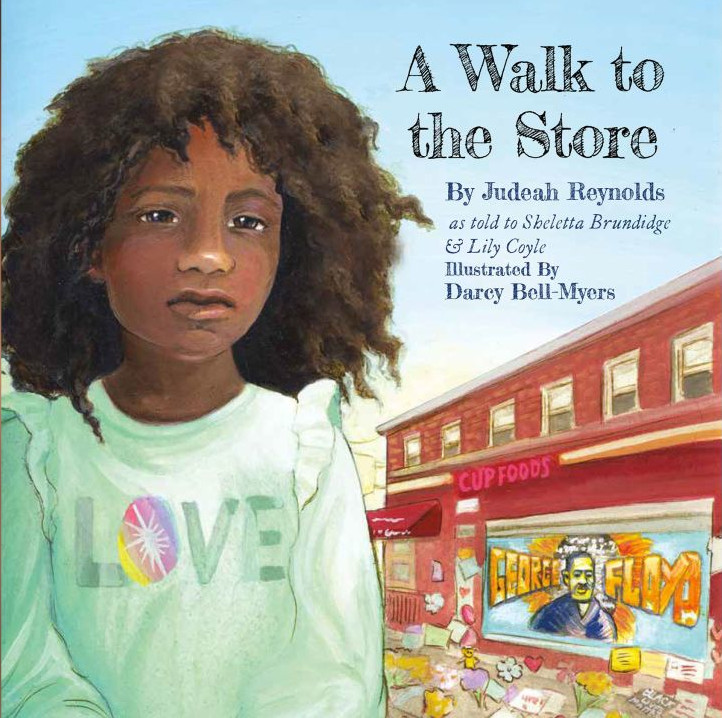
SHE WAS ONLY NINE YEARS OLD, too young to walk alone to the store to buy candy with the $3 clutched in her hand. Eventually, her 17-year-old cousin, Darnella Frazier, agreed to accompany Judeah Reynolds to Cup Foods. That decision on May 25, 2020, would forever change their lives. And the world.
When I learned of the book’s September 2022 release by St. Paul-based Beaver’s Pond Press, I knew immediately that I needed to read this recounting of Judeah’s witness to Floyd’s death. The cousins arrived on an unfolding scene outside Cup Foods where Floyd lay on the ground next to a squad car, a police officer pressing his knee into the 46-year-old’s neck. Judeah, Darnella and other bystanders pleaded with the police to stop while Darnella recorded the scene on her cellphone and then shared that video online. She won a 2021 Pulitzer Prize for that documentation.
While this book recounts the death of George Floyd from a child’s perspective, it is much more than a basic retelling. The story also reveals the trauma Judeah experienced. The sadness. The difficulty sleeping. The bad dreams. The replaying of Floyd’s killing in her mind.
But this is also a story of strength and hope and about being brave enough to speak up. To say something. To let your voice be heard. To effect change.
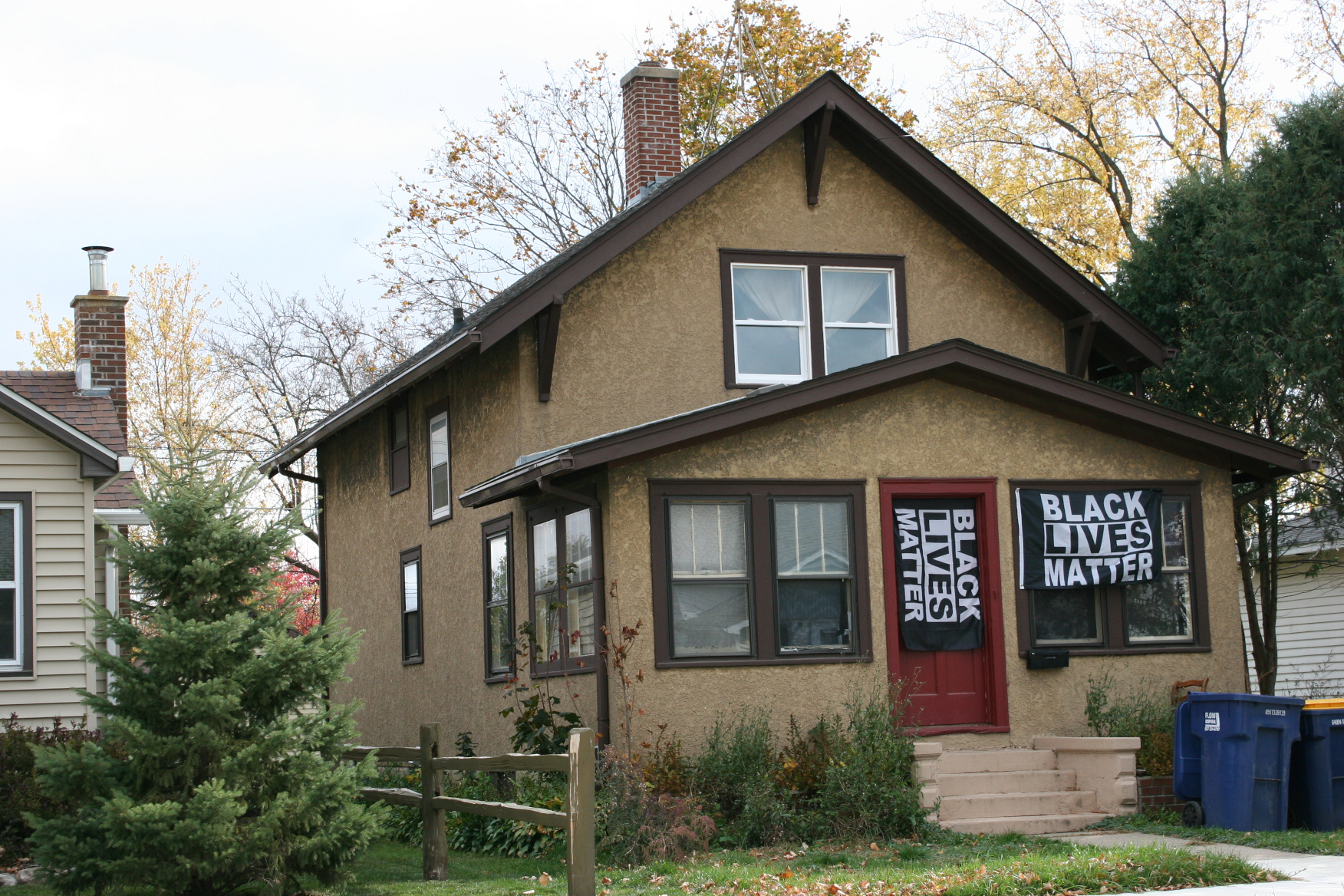
Messages like this are included in the book. I photographed this two years ago in small town Kenyon, MN. (Minnesota Prairie Roots copyrighted file photo 2020)
I heard Judeah’s determined voice in her words. I saw it, too, in Darcy Bell-Myers’ art, which reinforces the story with strong, message-filled illustrations. This book is empowering for children who read or hear this story. And it’s equally as impactful for adults.
At the end of the book is a list—How to Help Children Process a Traumatic Event. I appreciate the inclusion of those 10 suggestions given Judeah did, indeed, experience trauma. Her family even moved out of Minnesota.
This LOVE mural by Minneapolis artist Jordyn Brennan graces a building in the heart of historic downtown Faribault. The hands are signing LOVE. (Minnesota Prairie Roots copyrighted file photo June 2021)
As I finished reading A Walk to the Store, I considered how ironic that young Judeah wore a colorful shirt emblazoned with the word LOVE as she stood on the sidewalk outside Cup Foods, witness to George Floyd’s murder.
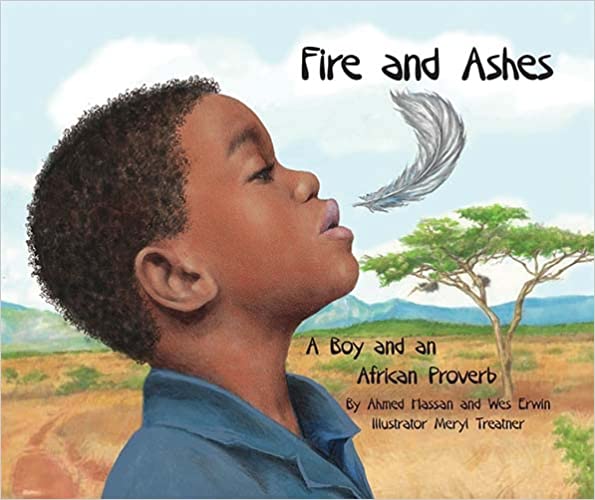
LIVING IN A MINNESOTA community with a sizable Somali population, I was excited to read the recently-published children’s picture book Fire and Ashes—A Boy and an African Proverb co-authored by Minnesotans Ahmed Hassan and Wes Erwin. Why? It’s important for me to learn about my new neighbors, their homeland, their culture, their experiences before resettling in Faribault. Reading books is one way to gain insights.
Fire and Ashes, even though a book geared toward children, is an enlightening read for adults, too. I found myself fully-engaged in the story of young Warfa, a refugee from Somalia who experienced unimaginable trauma. His trauma flares when he works on a school assignment—creating a poster about himself. I can almost feel my tummy hurting, my head spinning, my heart racing right along with Warfa as he relives terrifying moments in Africa. That includes witnessing the violent death of a neighbor. (Because of that, children should read this story with an adult.)
Award-winning children’s book illustrator Meryl Treatner reinforces the story line with art so realistic that I felt like I stepped into Africa and then into Warfa’s American classroom. I could almost smell the flowery scent of the acacia tree, feel the threat in a shadowy figure, hear Warfa’s uneven breathing.
It is Warfa’s grandma who helps her “little lion” deal with his anxiety via an African proverb and practical visualization and breathing techniques. Proverbs are used in many cultures to effectively teach, to pass along wisdom. The co-authors of Fire and Ashes, both licensed counselors, wrote this book not only to share a proverb, to tell Warfa’s story, but also to shine a light on mental health and self-care. The book includes authors’ notes and a link to additional supportive resources.
There are so many reasons to appreciate Fire and Ashes. The book gives readers like me a glimpse into atrocities experienced by my new neighbors. This book gives insights into culture. And for those who have endured any type of trauma, whether young like Warfa or two generations older, this book opens the door to discussion and then to healing, to an understanding that memories are ashes, not fire.
FYI:Fire and Ashes—A Boy and an African Proverb is available for check-out at Buckham Memorial Library in Faribault and the Lanesboro Public Library, local requests only. I hope other libraries in the 11-county Southeastern Libraries Cooperating system add this book to their collections. This book, published by The Little Fig, is the first in a series focusing on African proverbs. I’d recommend purchasing Fire and Ashes for your personal library or as a gift.
Sunrise on Horseshoe Lake in the central Minnesota lakes region. (Minnesota Prairie Roots copyrighted photo September 2022)
I’M FEELING A BIT INTROSPECTIVE these days. Perhaps it’s the season. Perhaps it’s the state of the world. Perhaps it’s the challenges faced by people I love, people in my circle. I can’t pinpoint a specific reason for feeling this way, only a recognition that my thoughts seem more reflective.
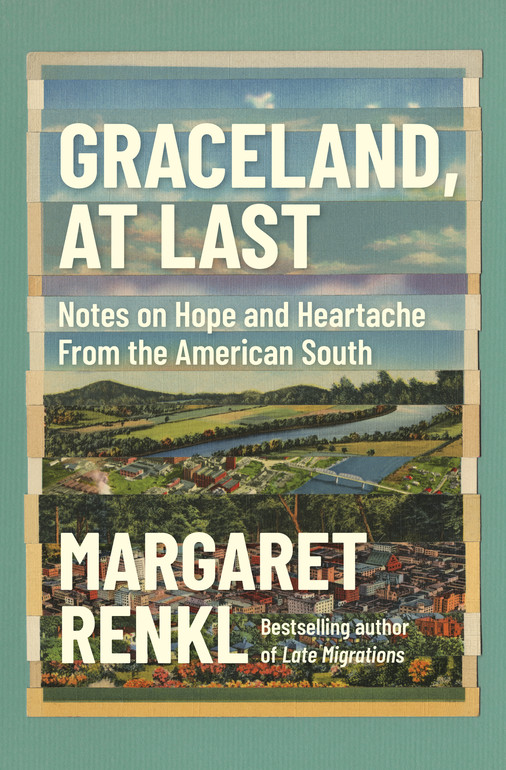
(Book cover credit: Milkweed Editions)
My reading follows that thread. I just finished Graceland, at Last—Notes on Hope and Heartache From the American South by Margaret Renkl. A friend recommended this award-winning book published by Minneapolis-based Milkweed Editions. She knew I would appreciate the essays therein which cover topics ranging from politics to social justice to the environment to family, community and more. So much resonated with me, inspired me, focused my thoughts. To read about these issues from a Southern perspective enlightened me.
Yes, this book includes political viewpoints that could anger some readers. Not me. Equally as important, Renkl also writes on everyday topics like the optimism of youth. I especially appreciated her chapter, “These Kids Are Done Waiting for Change.” In that essay on youth activists, she concludes: They are young enough to imagine a better future, to have faith in their own power to change the world for good.
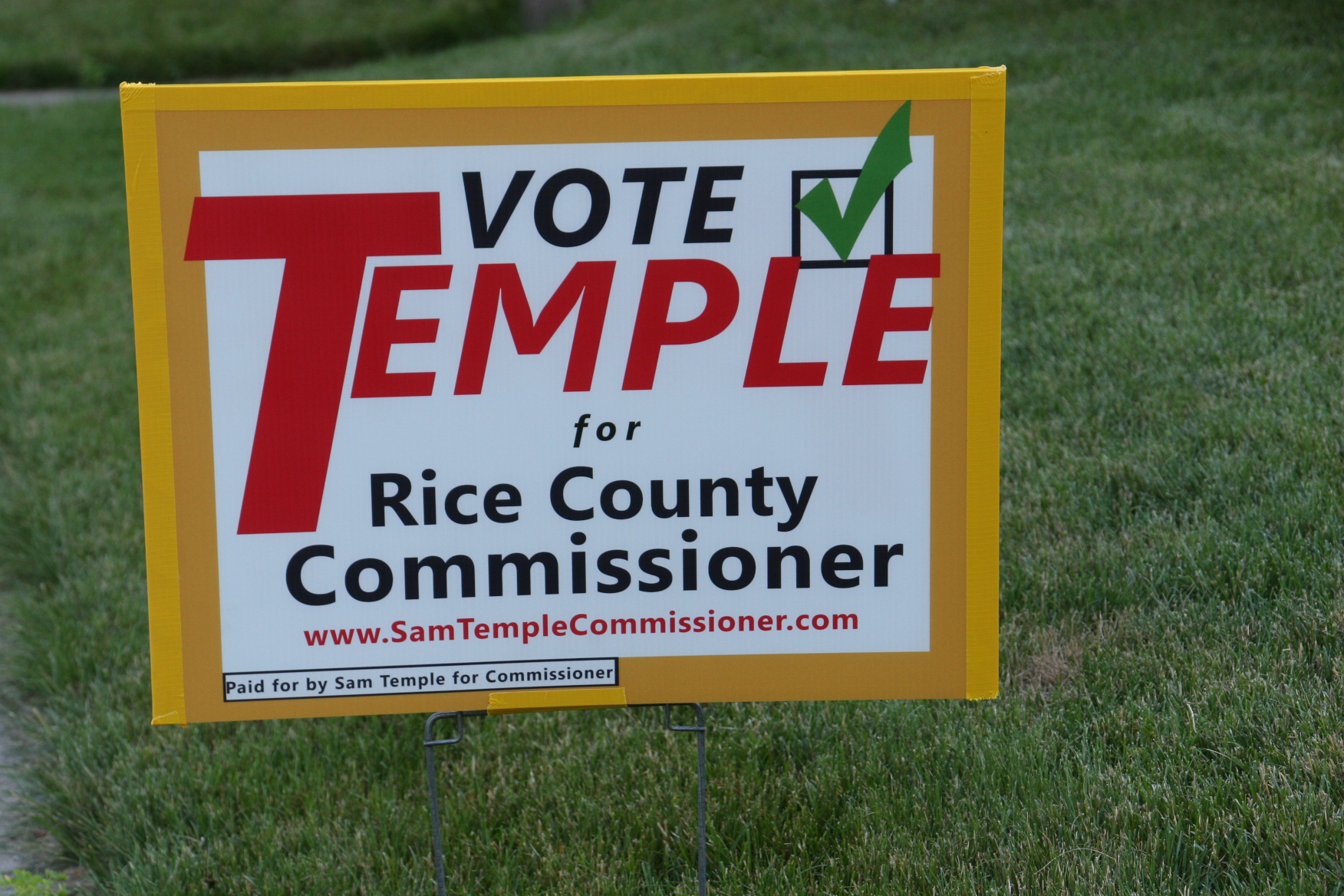
Sam Temple, 21, is running for county commissioner in Rice County. (Minnesota Prairie Roots copyrighted photo July 2022)
That quote fits a young candidate running for Third District county commissioner in my county of Rice. Last week I attended an American Association of University Women-sponsored debate between the two candidates, one 21, the other 67. It’s refreshing to see a young person running for public office, someone who cares deeply about his community, about issues, about history, about humanity. He is well-informed, experienced in public service, thoughtful, a good listener, invested, and brings a new, young voice into the public realm. I felt hopeful as I listened to the two candidates answer written questions submitted by the audience. There was no mud-slinging, no awfulness, but rather honest answers from two men who seem decent, kind, respectful and genuine. Those attributes are important as I consider anyone running for public office. Candidates may disagree, and these two do on some issues, but that didn’t give way to personal or political attacks.
Among Faribault’s newest apartment complexes, Straight River Apartments. Many new apartment buildings have been built in the past year with more under construction. Yet, this is not enough to meet demand. (Minnesota Prairie Roots copyrighted file photo 2022)
Renkl, in Graceland, writes on pertinent topics of concern to many of us, including those seeking election to public office. In “Demolition Blues,” an essay on housing changes in her neighborhood, she shares how housing has become unaffordable for many who work in the Nashville metro. The same can be said for my southern Minnesota community, where high rental rates and housing prices leave lower income and working class people without affordable housing. That’s linked to a severe shortage of rentals and single family homes.
It would be easy to feel discouraged by real-life issues that flow into our days whether via a book, an election, personal experiences, media… But then I think of those young activists, the young candidate running for office in my county, and I feel hope for the future.
Among the many sympathy cards I received after my mom died. (Minnesota Prairie Roots copyrighted file photo January 2022)
I feel hope, also, within. We each possess the capacity to “do something.” That needn’t be complicated as Renkl writes in her essay, “The Gift of Shared Grief.” She reminds readers of the importance of sending handwritten condolences. I understand. My mom died in January and I treasure every single card with handwritten message received. There’s something profoundly powerful and personal about the penned word, about connecting beyond technology. It doesn’t take much effort to buy a greeting card, write a few heartfelt sentences and mail it. Yet, the art of connecting via paper is vanishing. I’d like to see more people sending paper birthday cards again…I miss getting a mailbox filled with cards.
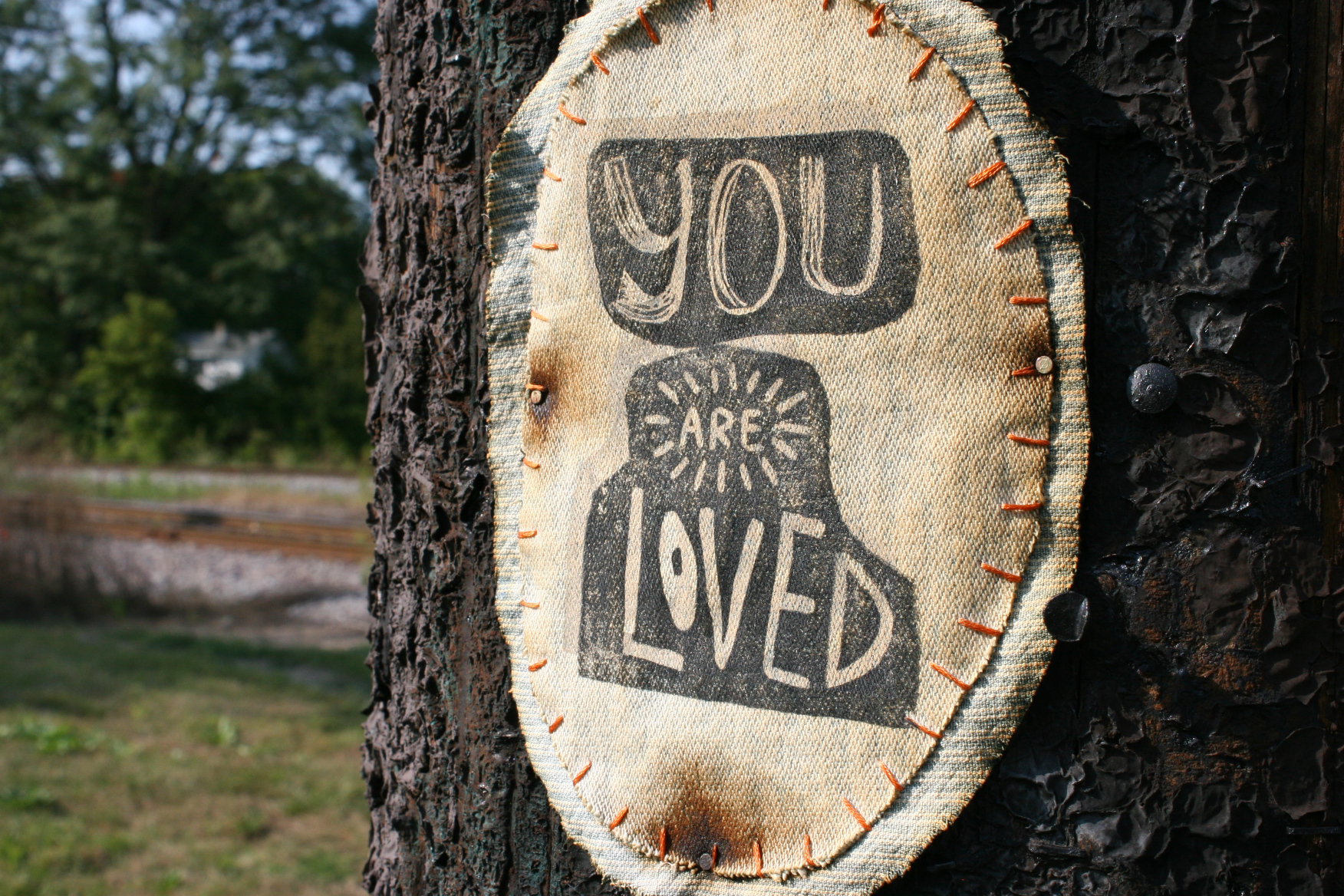
I photographed this message along a recreational trail in the Atwood Neighborhood of Madison, WI., several years ago. To this day, it remains one of my favorite public finds and photos. (Minnesota Prairie Roots copyrighted file photo)
One final essay penned by Renkl, “What It Means to Be #Nashvillestrong,” took me back to that candidate forum last Thursday. When asked to identify the most pressing issue people face locally, the younger candidate replied with “personal issues.” He’s right. No matter what we face jointly as a society (such as inflation), it is personal issues which most challenge us. Author Renkl, referencing a text from a friend, calls those—cancer, death, etc—our “private Katrina.” That in no way minimizes the death and destruction of large-scale disasters like Hurricane Katrina. But we all have something. Her friend texted: One day the sun is shining and all is intact, the next day everything is broken. And the rest of the world goes on. You’re trapped in your own crazy snow globe that’s been shaken so hard all the pieces fly loose.
And when those pieces fly loose in our circle, in our community and beyond, what do we do? We can, writes Renkl, be the hands that help our neighbors dig out.
OF ALL THE BOOKS I could have pulled from the “new fiction” section at Buckham Memorial Library, I chose, among others, one by a Minnesotan. But not until I was several chapters into the book did I flip to the back pages for information about the author, Barbara A. Luker.
I was delighted to learn that Luker hails from St. Peter, a college town in the Minnesota River Valley some 40 miles west of Faribault. To discover another Minnesota writer always pleases me. Luker works full-time for the City of St. Peter and is fairly new to writing books.
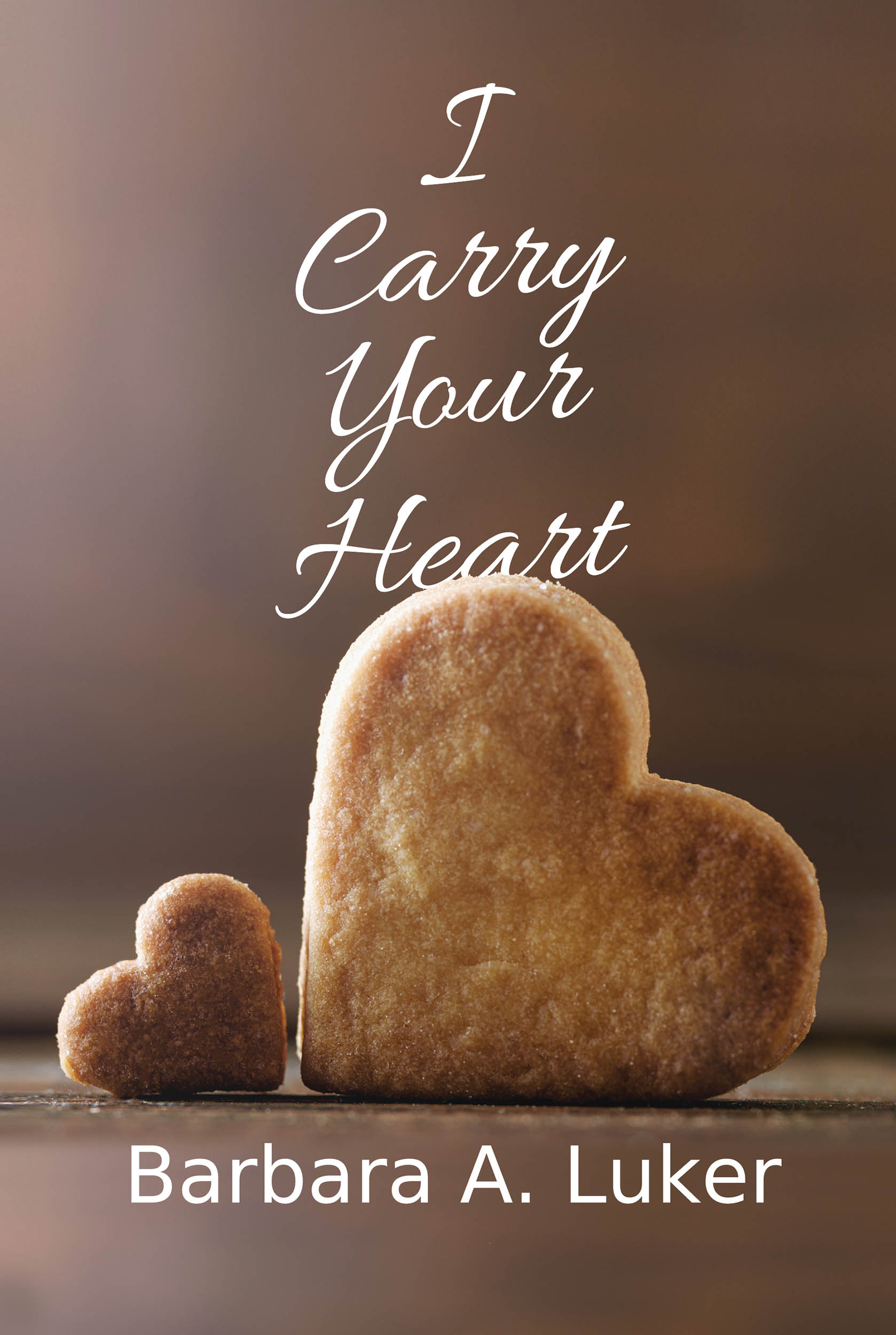
It was the title and the simple cover art—a small cut-out heart-shaped cookie next to a larger one—that first drew my eye to I Carry Your Heart. I bake similar plain heart-shaped cookies from my mom’s Cream Cheese Roll-out Cookies recipe each Valentine’s Day. Yes, cover art and titles matter to me given all the books out there. And this art connected to me personally.
Then I turned to the back cover for the story summary. The plot sounded interesting enough to add the book to those already stashed inside my cloth Boomerang bag reserved for library check-outs. I Carry Your Heart, a title taken from e.e. cummings’ poem of the same name, is, as you might guess, a love story. And, yes, there’s romance, a genre I don’t typically read and which made me blush.
This book is truly a tender, multi-layered love story. Not only of romantic love, but also of family love and community love and the sacrifices sometimes made for love.
This is a generational story that takes the reader back in time to reveal secrets kept by Abigail Lillian Peterson Ward. When she dies unexpectedly, her granddaughter, whom Abigail appointed to sort through her belongings, uncovers another side, another truth about her Nan.
The story felt somewhat predictable to me. Yet there were enough twists to surprise me at times and certainly to hold my interest to the end.
I appreciate also the Minnesota influence in the writing. The author shows her roots, for example, in the fictional town described as like a Norman Rockwell painting by one character. In my mind I pictured Luker’s hometown of St. Peter. I could also envision the church ladies serving a luncheon after Abigail’s funeral and the turkey commercials served in her restaurant. Both are, oh, so Minnesotan (although I’m more familiar with a beef commercial). Details like that add authenticity.
All in all, I Carry Your Heart proved a good read, even if in a genre I don’t typically choose.
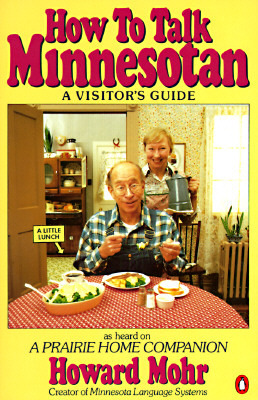
MINNESOTA SEEMS, TO ME, a hotbed for writers. And five days ago we lost one of our most beloved, Howard Mohr. He was perhaps best-known for his wildly popular, at least in Minnesota, book, How to Talk Minnesotan: A Visitor’s Guide, published in 1987. The book was later updated and adapted into an equally popular musical.
Many years have passed since I read my copy of this entertaining, humorous, and, yes, truthful, summary of Minnesota life. In honor of Mohr, who died September 4 of Parkinson’s at Fieldcrest Assisted Living in Cottonwood, I pulled my book from the shelf and reread it.
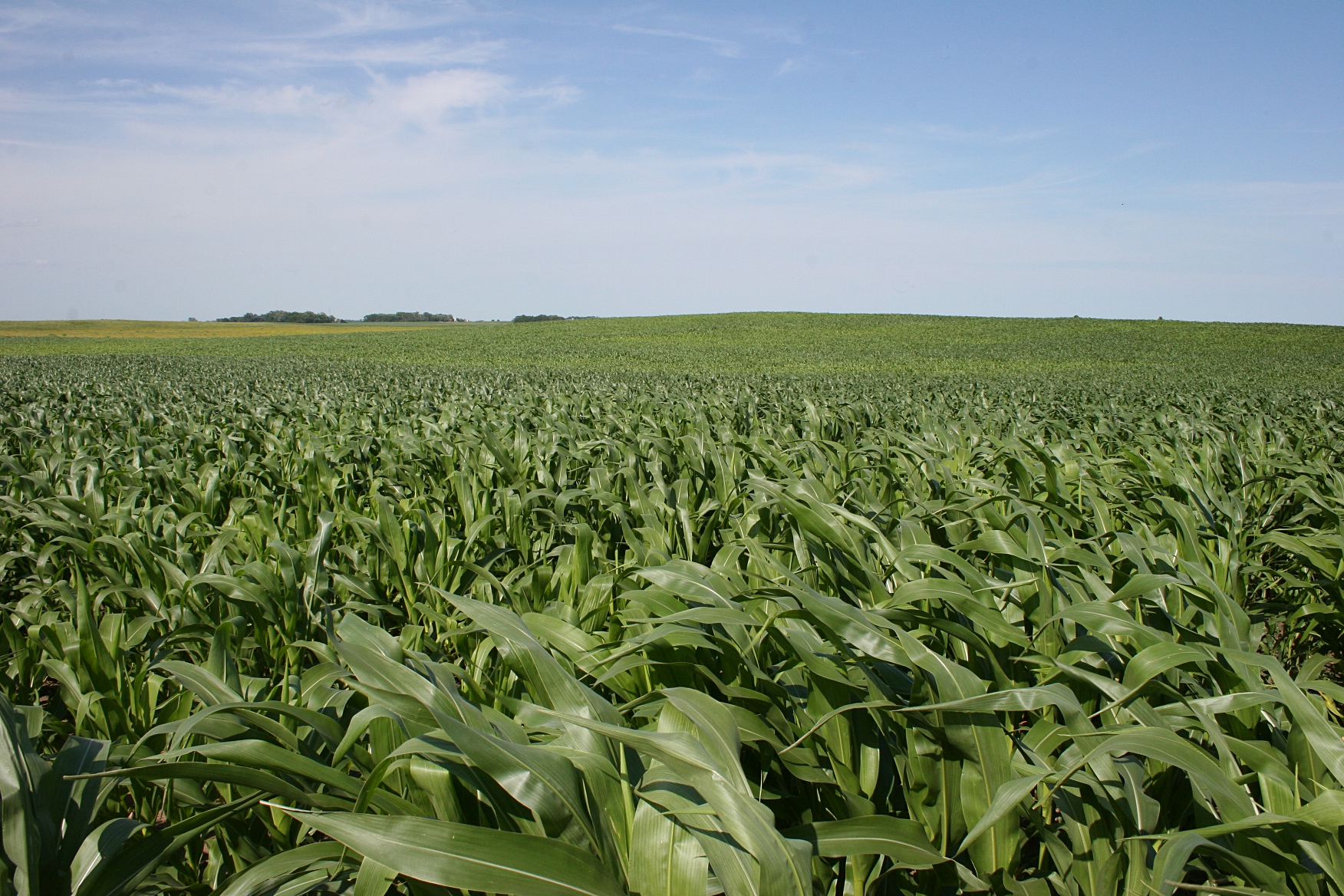
A corn field in southwestern Minnesota. (Minnesota Prairie Roots copyrighted file photo)
That Mohr, 83, recently moved from his Lyon County farm home of 52 years to a facility called Fieldcrest seems especially fitting. He lived in farming country, my native southwestern Minnesota, the place of small towns defined by grain elevators and land defined by fields of corn and soybean. He understood the people and place of the prairie. So when I read the sentence in his book declaring the produce of Minnesota writers to be as valuable as a crop of soybeans and corn, I felt he nailed it.
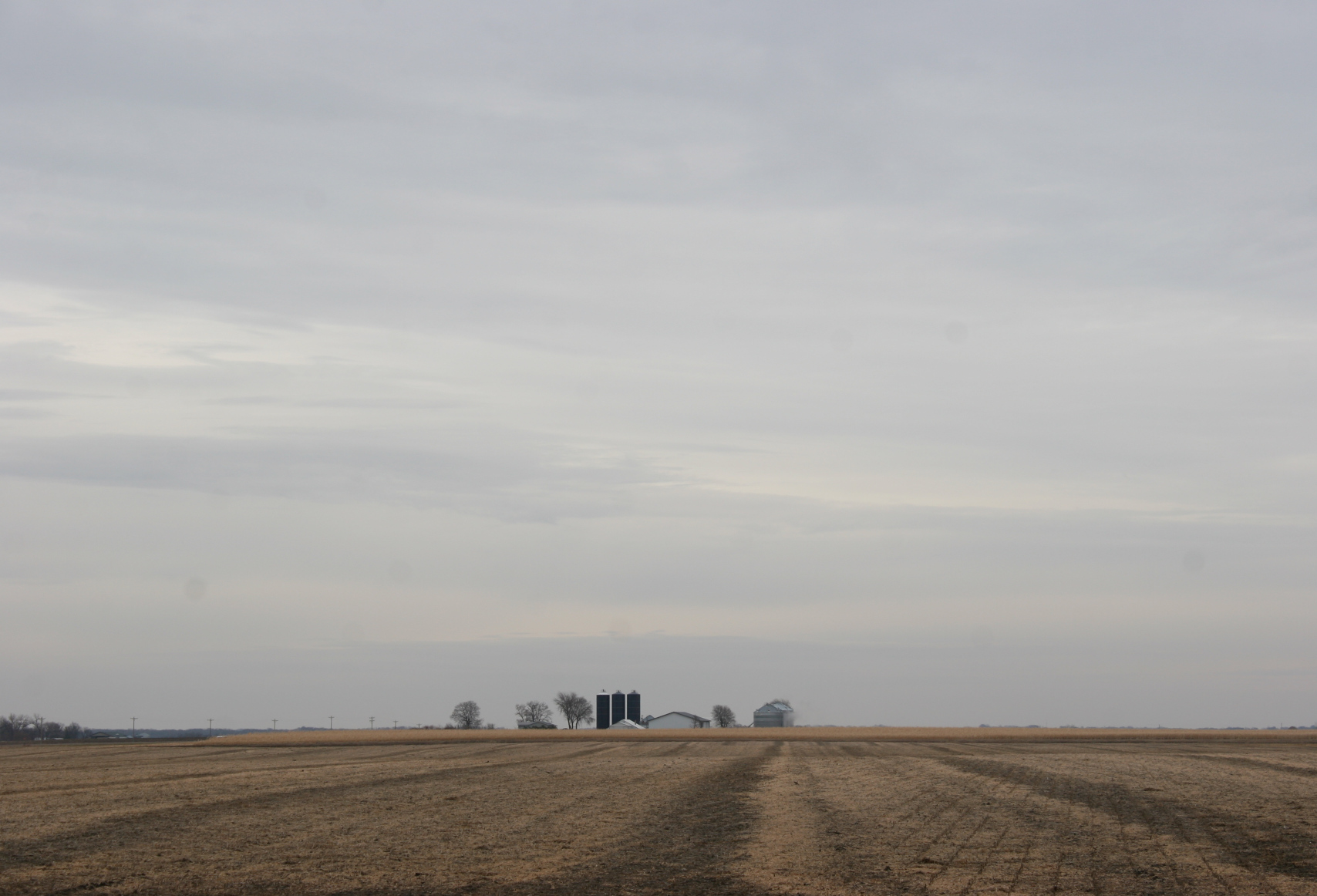
A harvested field and farm site in my native Redwood County, Minnesota, where the land and sky stretch into forever. (Minnesota Prairie Roots copyrighted file photo)
I’ve long celebrated writers rooted in the prairie like Mohr, Bill Holm, Robert Bly, Frederick Manfred, Leo Dangel… My friend Larry Gavin of Faribault, too, poet and writer who studied under those writers and lived for 15 years on the prairie. Some shared their knowledge, their talents, by teaching at Southwest Minnesota State University in Marshall. That’s near Cottonwood. Mohr taught English at Southwest State. He also penned Minnesota Book of Days, How to Tell a Tornado (poetry and prose) and wrote for “A Prairie Home Companion,” also appearing on the show.
A serene country scene just north of Lamberton in southern Redwood County. (Minnesota Prairie Roots copyrighted file photo)
I’m most familiar with How to Talk Minnesotan. The content reflects my rural upbringing. The dairy and crop farm of my youth lies a mere 15 miles to the south and east of Cottonwood, thus rereading Mohr’s book is like traveling back home, a reminder of that which defines me as a native of rural Redwood County. Even after nearly 40 years of living in Faribault, in town, I still call the noon-time meal “dinner” and the evening meal “supper.” My adult kids don’t, so I/they, always clarify when invitations are extended to a meal. To me “lunch” will always come mid-afternoon or in the evening before guests leave.
This huge, hard-as-rock snowdrift blocked our Redwood County farm driveway in this March 1965 photo. I’m standing next to my mom in the back. (Minnesota Prairie Roots copyrighted file photo)
Mohr’s references to the noon whistle, Jell-O (once popular, not so much now) winter survival kits, snowbirds (those who leave Minnesota in the winter and return in the spring), hotdish (casserole), pancake feeds, seed corn caps, lutefisk, Lutherans, bullheads (smaller versions of catfish), the “long goodbye” all resonate. I especially understand his point that Minnesotans are obsessed with the weather. We are.
Bars made by Lutherans. ( Minnesota Prairie Roots copyrighted file photo)
Some 10-plus years ago, when my now son-in-law moved to Minnesota from Los Angeles after falling in love with my eldest daughter, I gifted him with Mohr’s How to Talk Minnesotan. I figured this would help him adjust to our language and state. Whether it did or didn’t, I don’t know. But Marc hasn’t moved back to his native California. And he never commented on Mohr’s statement that Californians struggle to adapt to life in Minnesota. Marc fits in just fine. I do recall, though, his comment on “bars,” a word with duo meaning here in our state. “Bars” are both a place to gather and drink alcohol and a baked or unbaked sweet treat (made with lots of sugar and often topped with chocolate) pressed or spread into a 9 x 13-inch cake pan.
Maybe I really ought to make a pan of bars, cut them into squares, plate and serve them with coffee for “a little lunch” as a way to honor Howard Mohr, writer, satirist, humorist. He yielded a mighty fine crop of writing.
FYI:I encourage you to read Mohr’s obituary by clicking here. Be sure to read the insightful and loving comments. And if you haven’t read How to Talk Minnesotan, do. If you’re Minnesotan, it will be a refresher course in our life and language. If you’re not from here, you’ll better understand us upon reading this guide.














Recent Comments