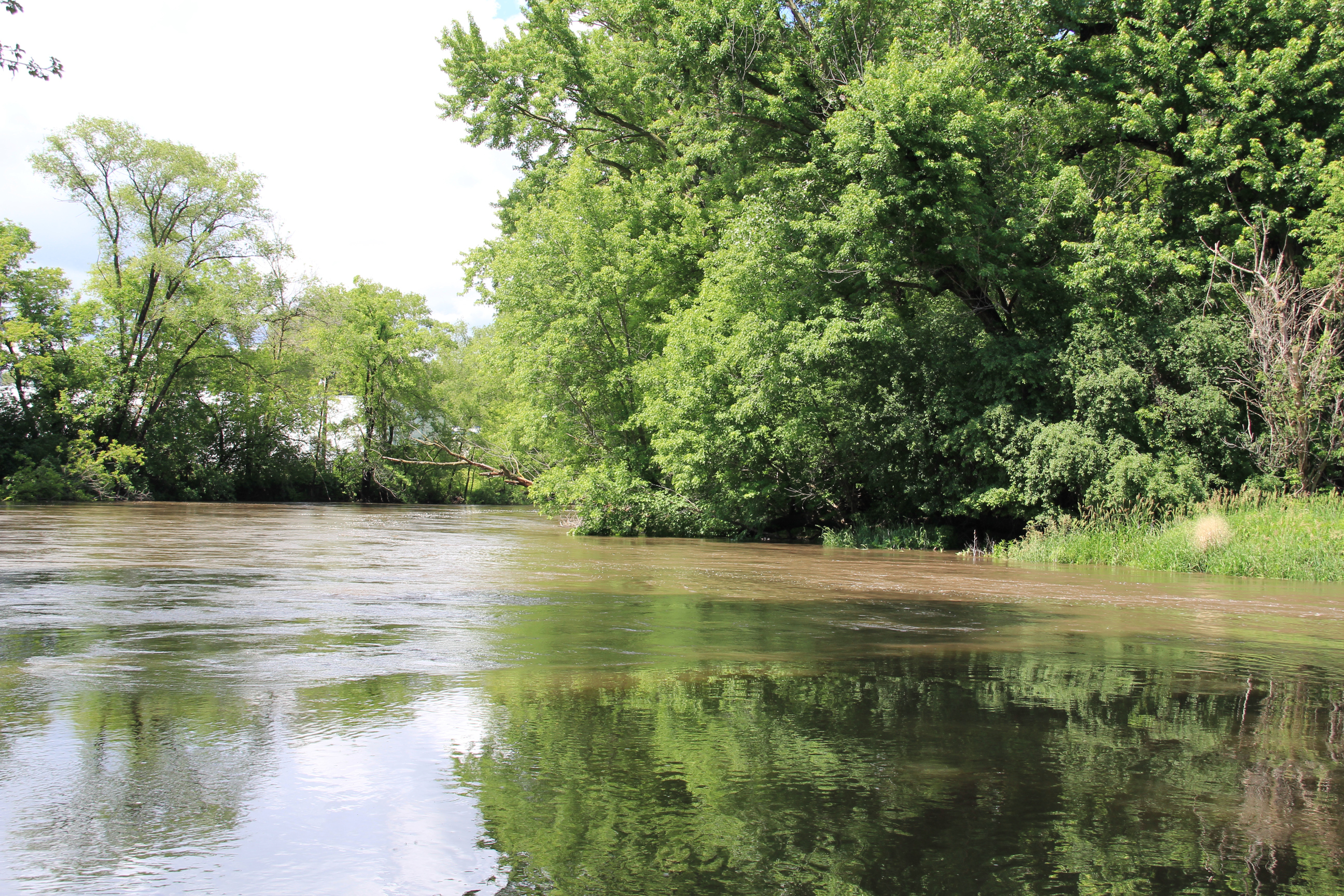
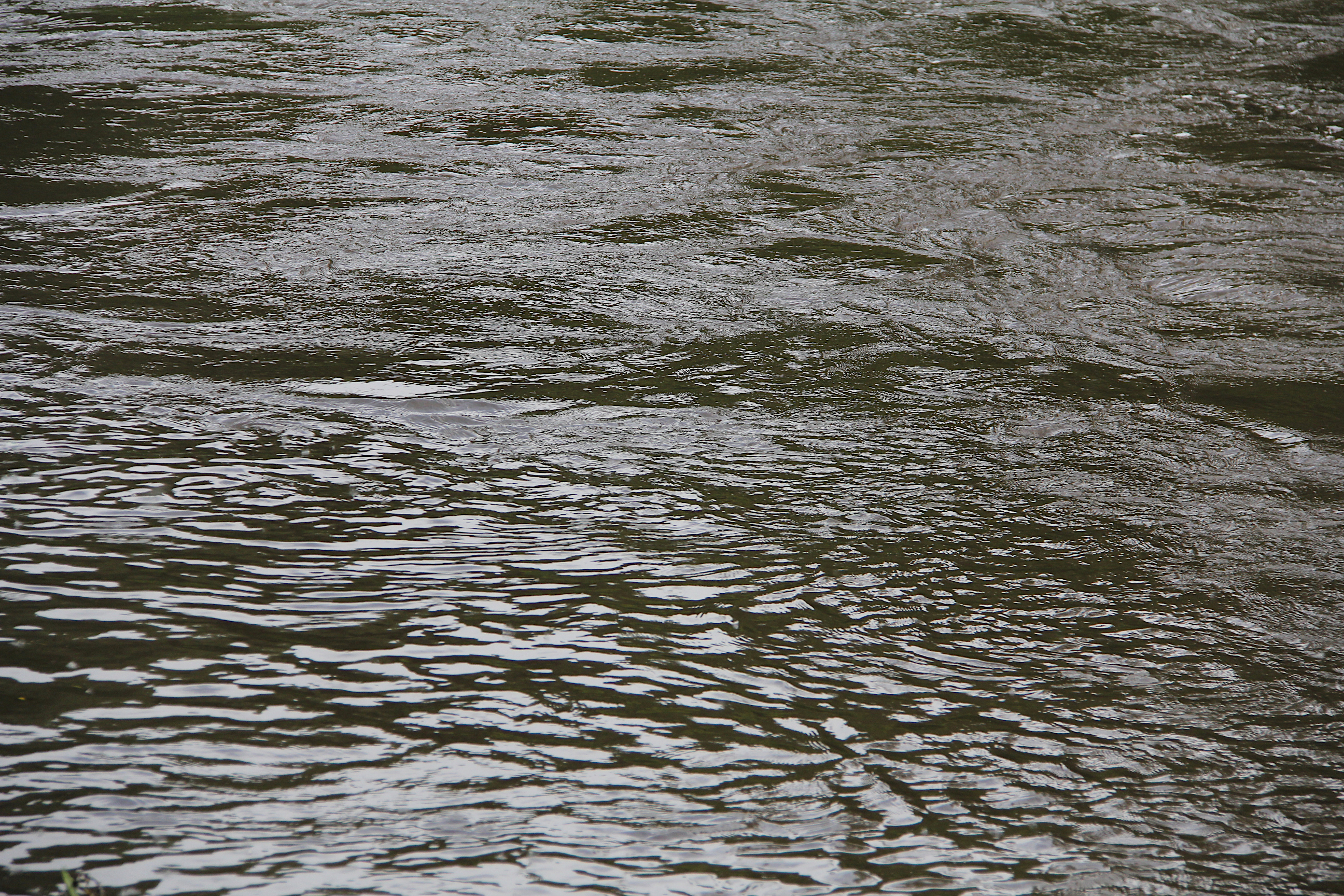
River reflections. (Minnesota Prairie Roots copyrighted photo June 2024)
THE SHRILL TRILL OF TREE FROGS cut through the woods along the river. Yet, the frogs remained unseen, despite their overwhelmingly loud voices seemingly screaming for attention. Nature is odd like that sometimes. Raucous, but stealthy enough to remain hidden.
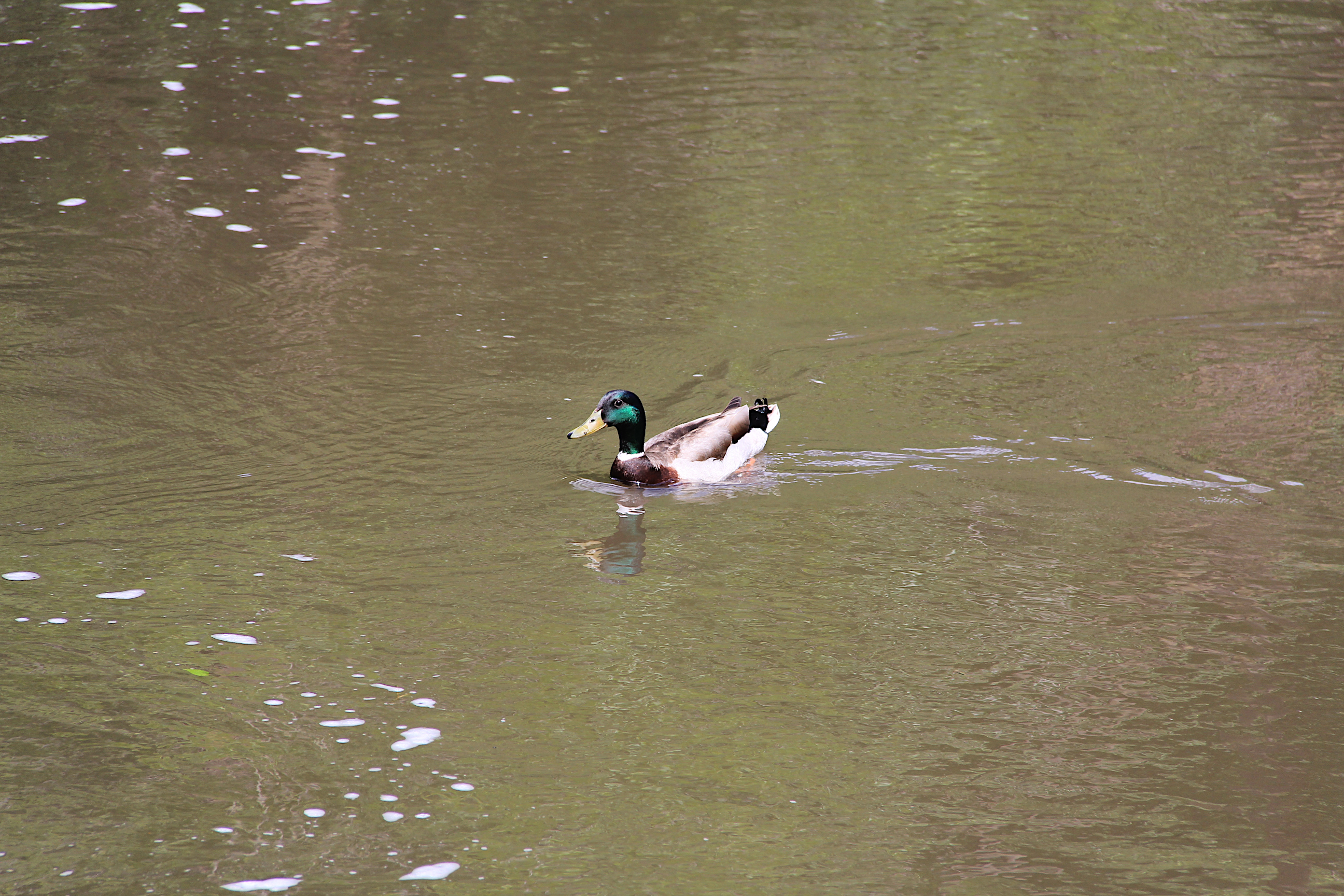
A mallard drake adds a spot of color to the dirty river water. (Minnesota Prairie Roots copyrighted photo June 2024)
Yet, on this walk along the Cannon River near Two Rivers Park in Faribault, not all creatures stayed unseen by me. A mallard drake swam in the river, shimmering iridescent neck and head contrasting sharply with water muddied by recent heavy rains.
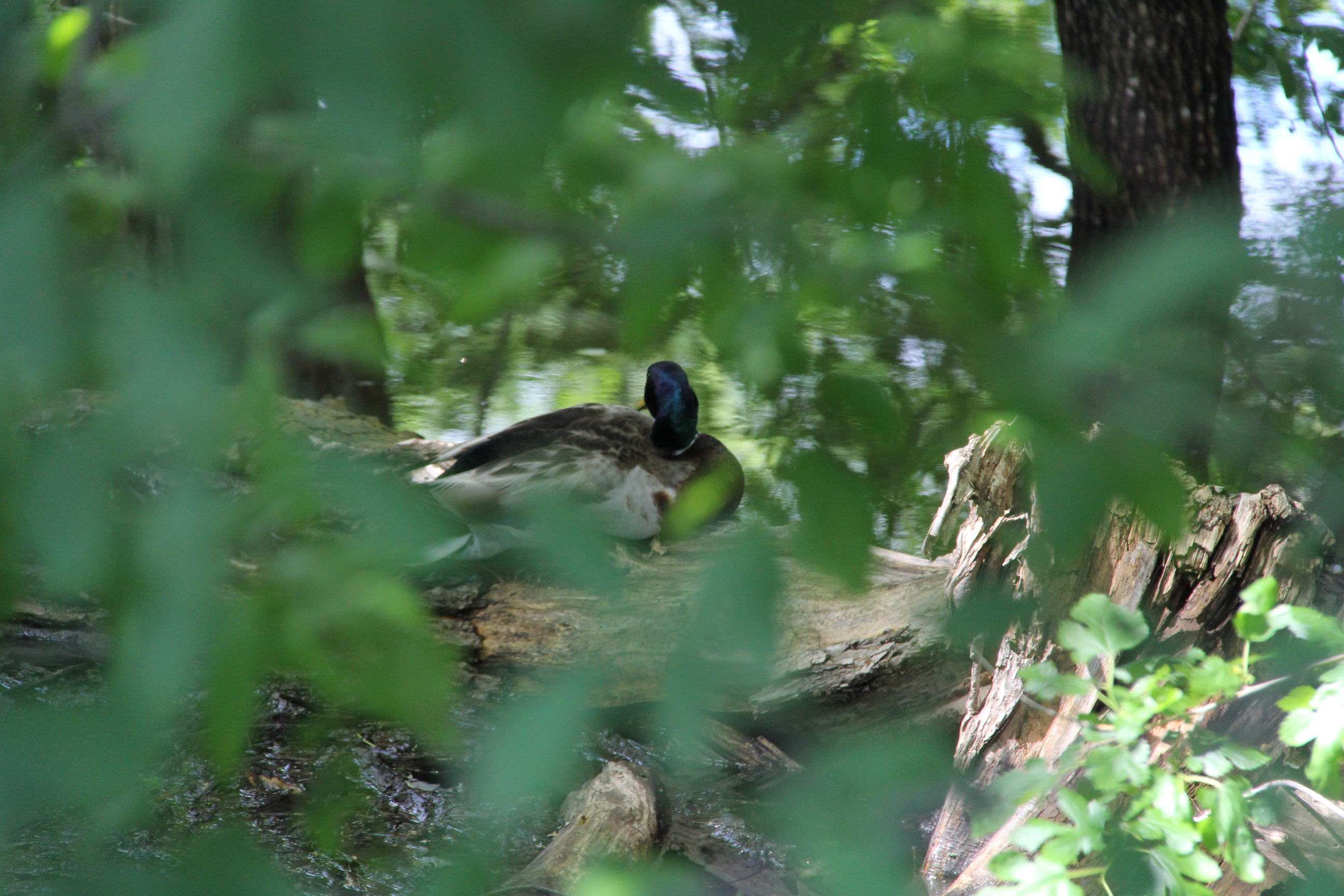
A mallard drake nearly hidden from view along the wooded edge of river backwaters. (Minnesota Prairie Roots copyrighted photo June 2024)
Through a curtain of leaves, I spotted a second drake settled on a fallen limb. Sometimes you have to look closely to notice nature in a natural landscape.
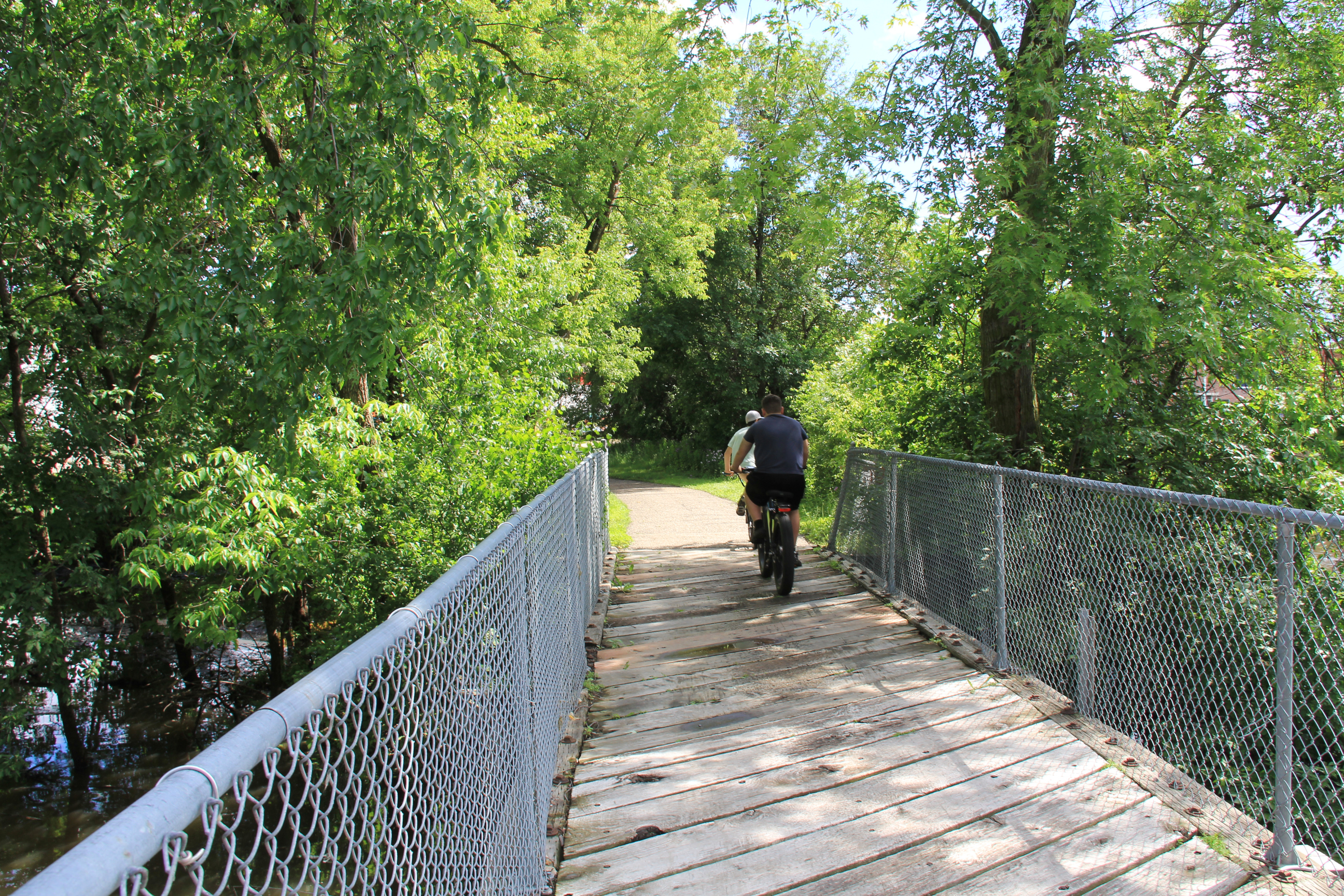
Crossing the river along the Straight River Trail near Two Rivers Park. (Minnesota Prairie Roots copyrighted photo June 2024)
I doubt the two youth pedaling the bike trail across the river bridge, along the river, around the bend beside the woods, noticed.
Two rows of boxcars parked near the former Faribault Canning Company by the Straight River Trail were painted with graffiti. (Minnesota Prairie Roots copyrighted photo June 2024)
They likely noticed the parked boxcars, though, painted with graffiti. Bold. Vivid. Graphics seemingly screaming for attention. Messages undecipherable to me. Street art. Public art. Boxcar art. Perhaps even some gang graffiti.
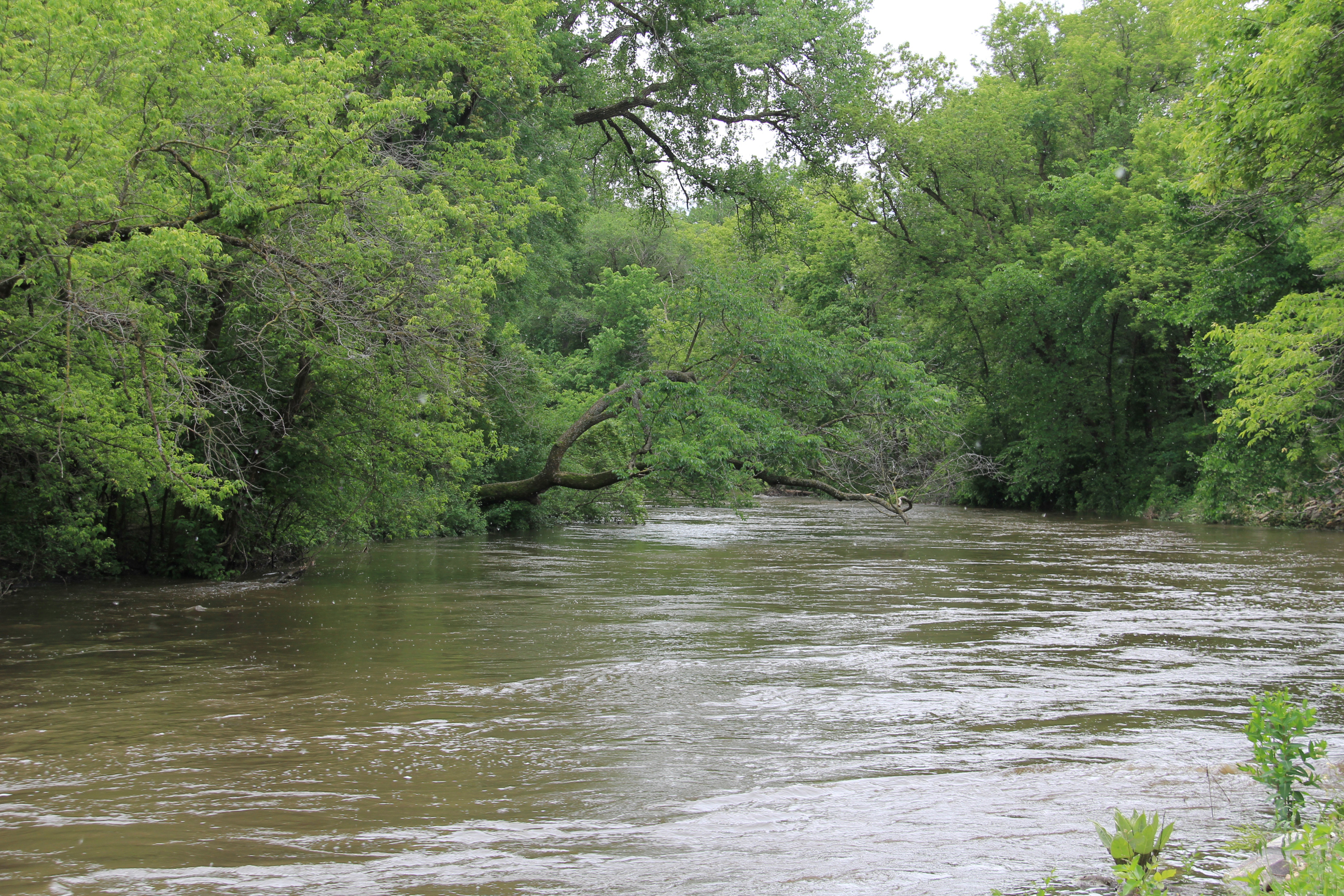
The rushing, rippling Straight River by the Straight River Trail near Fleckenstein Bluffs Park. (Minnesota Prairie Roots copyrighted photo June 2024)
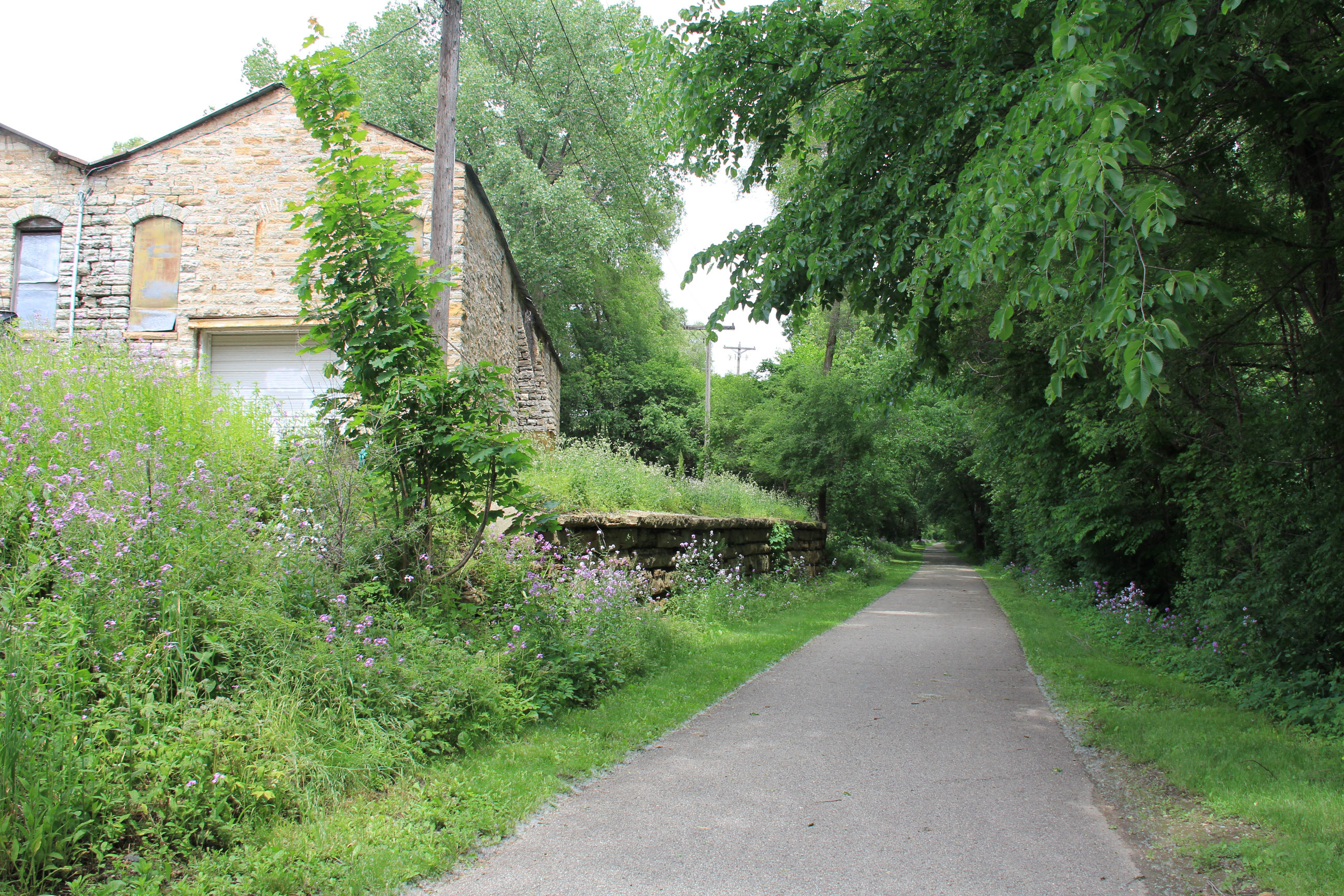
A portion of the Straight River Trail that runs through Faribault. (Minnesota Prairie Roots copyrighted photo June 2024)
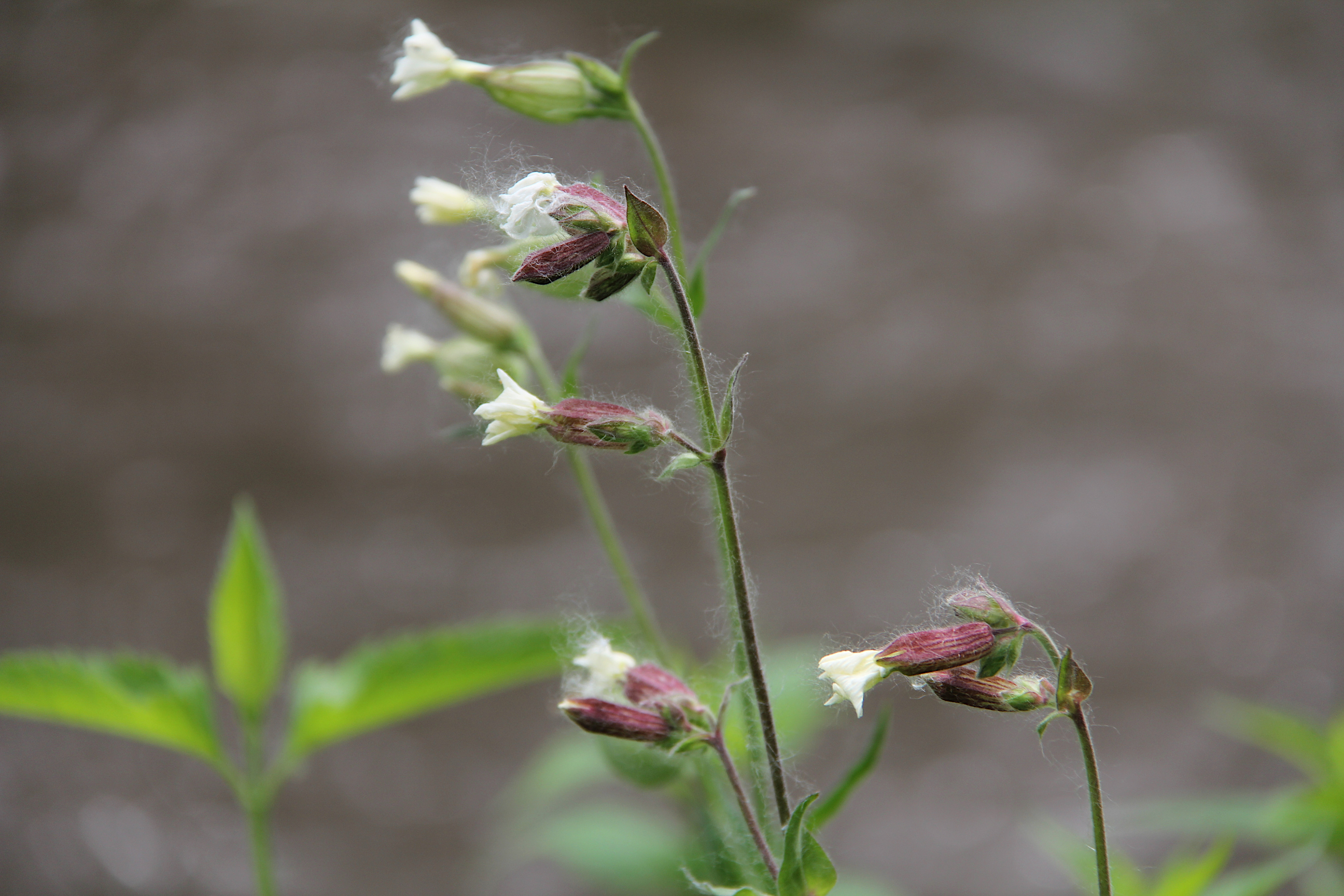
Wildflowers grow along the Straight River bank. (Minnesota Prairie Roots copyrighted photo June 2024)
Nature paints her own art in reflections and ripples upon water’s surface, in a canopy of trees draping a trail, in a clump of wildflowers or weeds, depending on perspective.
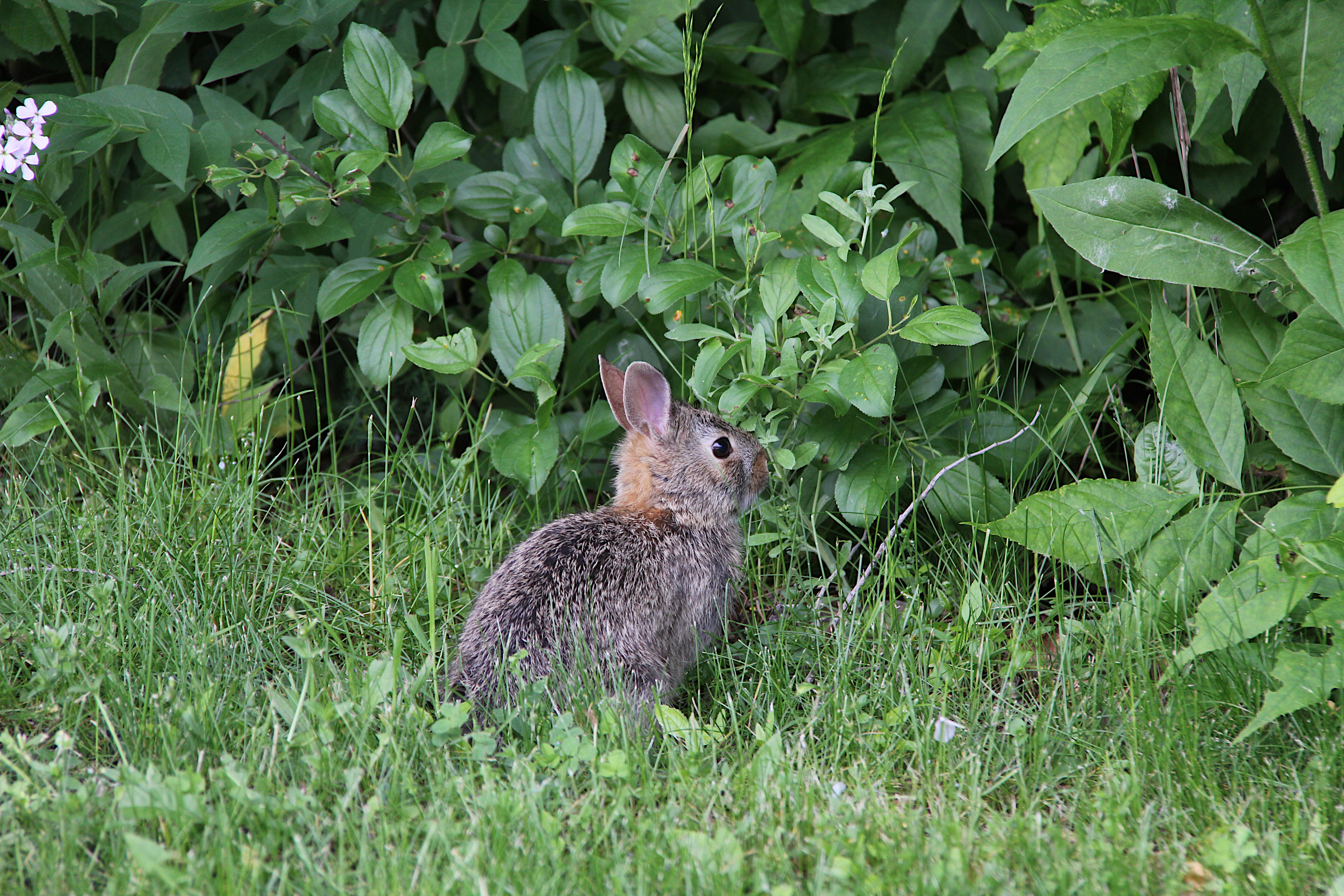
I got mighty close to this rabbit before it hopped away. (Minnesota Prairie Roots copyrighted photo June 2024)
I noticed all of this and a juvenile bunny hunkered at woods’ edge, attempting to appear unseen in a statue still pose. I crept nearer and nearer, clicking my camera until the rabbit eventually decided inaction was likely not the safest option. I posed no threat. But a young creature of the wild doesn’t understand that.
I’m thankful for city parks and trails that give me access to the river and nature in general. (Minnesota Prairie Roots copyrighted photo June 2024)
And so this is what I noticed, along the river. Floral and fauna. Noise of tree frog and nearby traffic. Scared rabbit. Duck upon muddy waters. Paint upon boxcars. Me, trying to find my place in the all of it, here beside the river.
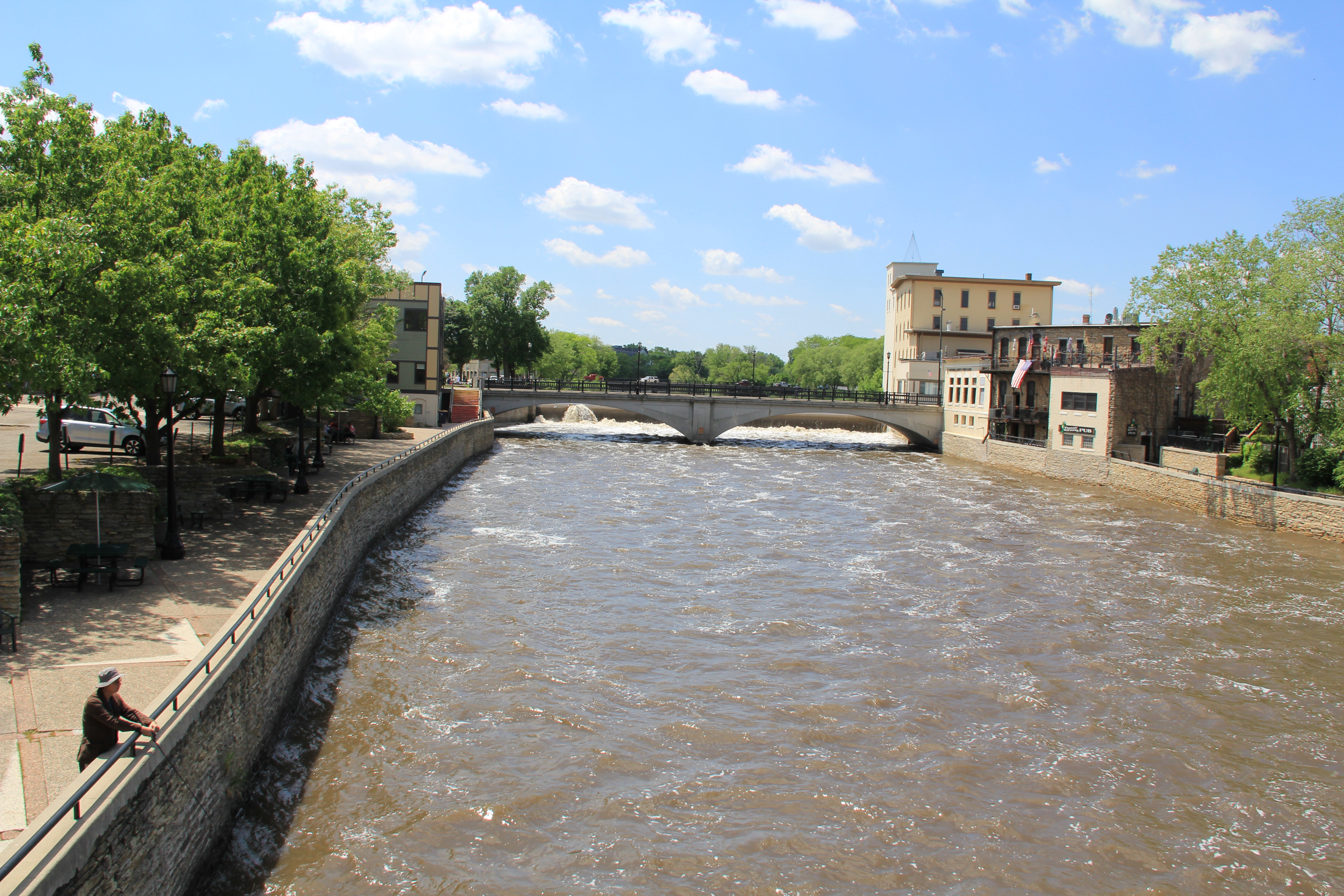
Looking down on the Cannon River from the pedestrian bridge, historic Ames Mill (and dam) in the distance, Riverwalk on each side of the river, where a man fishes, lower left. (Minnesota Prairie Roots copyrighted photo May 2024)
TO WALK ALONGSIDE a river, to watch a river, to hear a river is to experience the arts. A river, with its movement, is like a poetic dance. A river, when roaring over rocks or a dam, is like music. A river, too, is like watercolor flowing fluid and free.
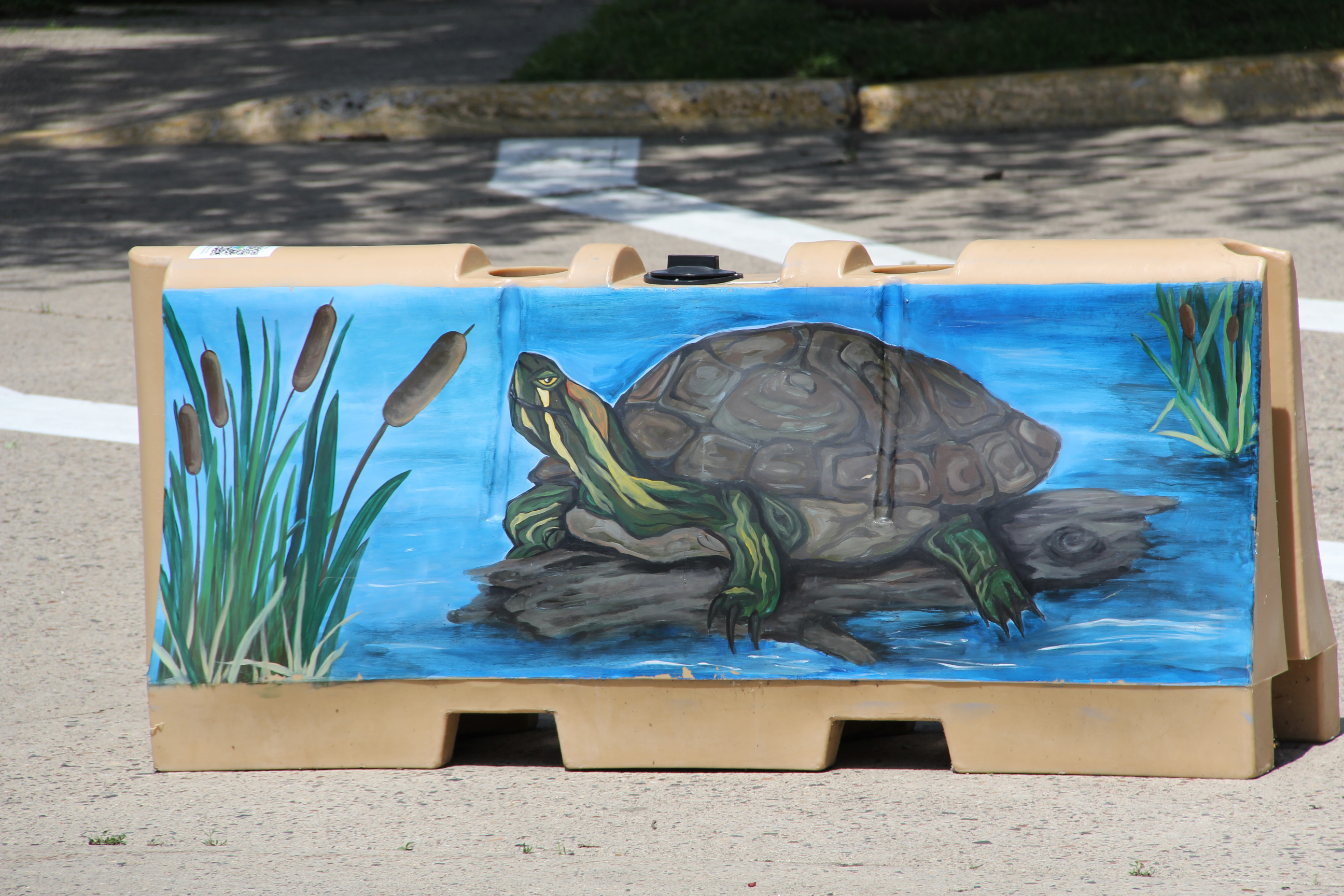
Part of the “Creatures & Features of the Cannon River” art project by Kate Woodstrup and Kathy Larson Ness. (Minnesota Prairie Roots copyrighted photo May 2024)
In Northfield, the Cannon River and art flow one into the other along the Riverwalk in the heart of an historic downtown. This southern Minnesota community, in 2023, highlighted the river and the arts through the Artists on Main Street program. Eight art projects were chosen for these latest public art installments.
Part of the “Meet Me at the River” art. (Minnesota Prairie Roots copyrighted photo May 2024)
Recently I followed the Riverwalk to see the work of several creative placemaking artists. A $25,000 grant from the Minnesota State Arts Board and $10,000 from the City of Northfield 1% for the Arts Program funded last year’s “Meet Me at the River” artwork.
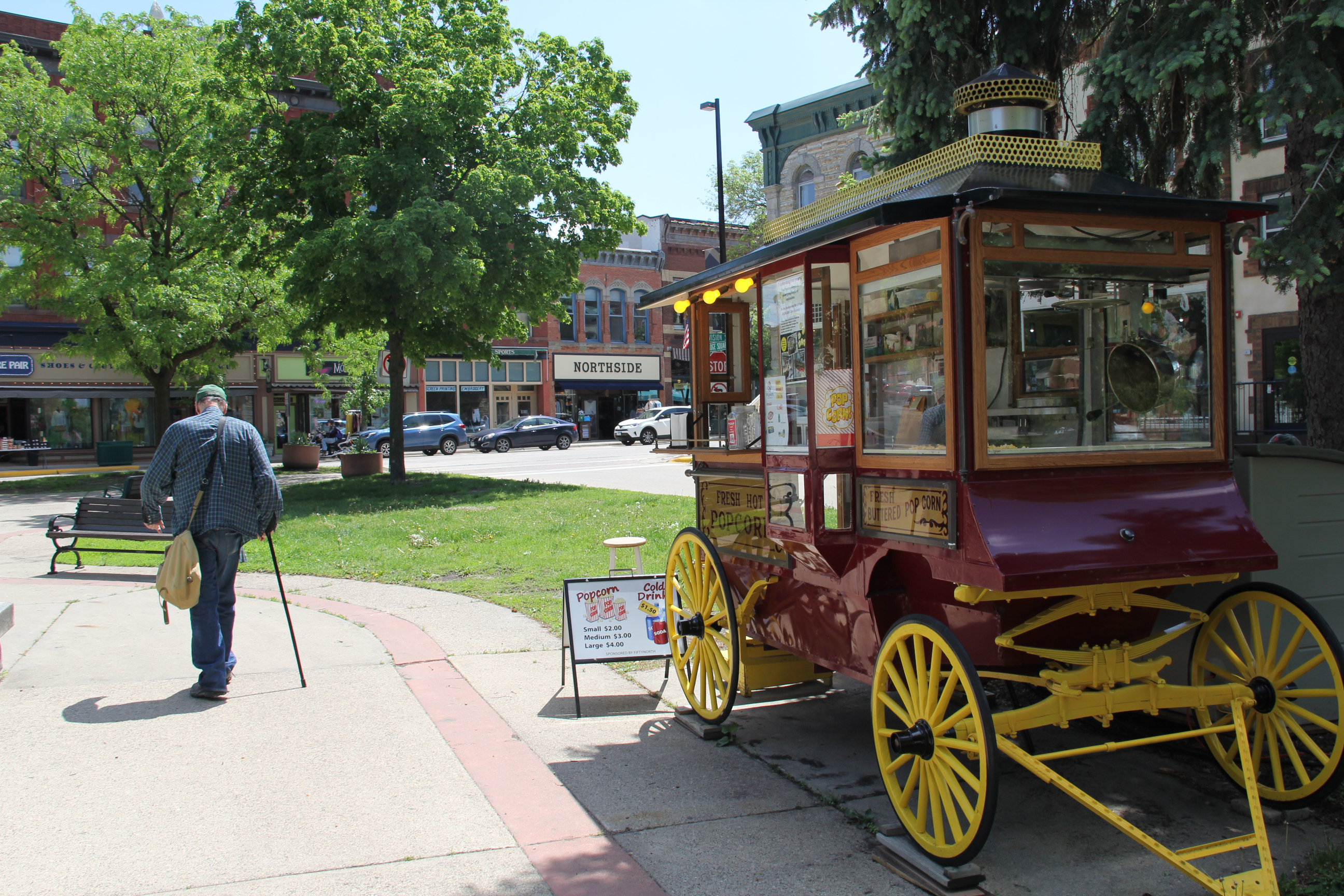
The popcorn wagon, operated by volunteers from FiftyNorth. (Minnesota Prairie Roots copyrighted photo May 2024)
I started at Bridge Square, a community gathering spot along the Cannon. The park centers the downtown business district. It’s a place to picnick, to meet, to buy popcorn from the popcorn wagon, to listen to music or to simply enjoy the outdoors next to the river.
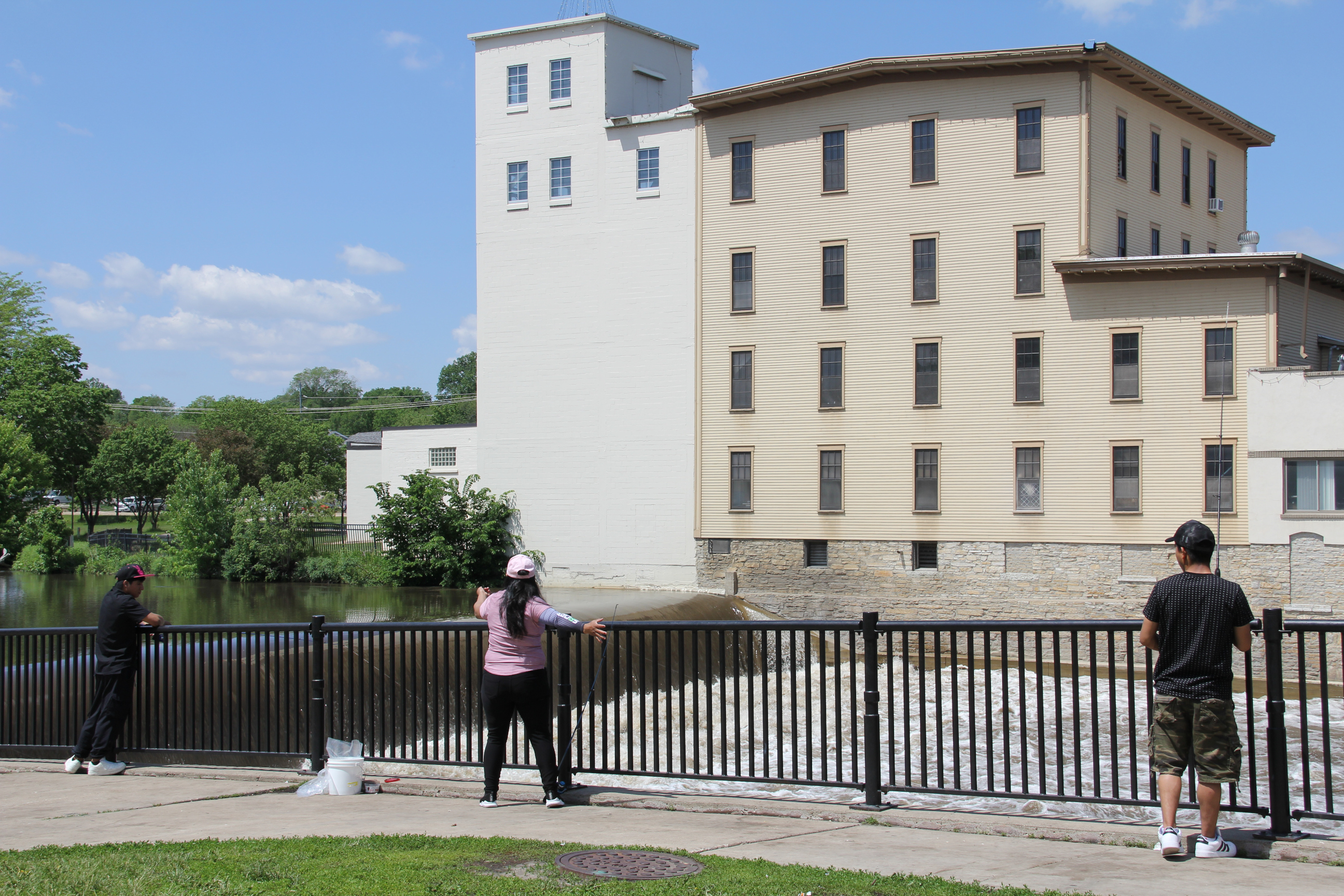
Fishing the Cannon River at the Ames Mill Dam. (Minnesota Prairie Roots copyrighted photo May 2024)
Here water rushes over a dam next to the historic Ames Mill. Anglers dangle lines in the water from the Riverwalk. It’s a popular fishing spot. Definitely a “Meet Me at the River” site.
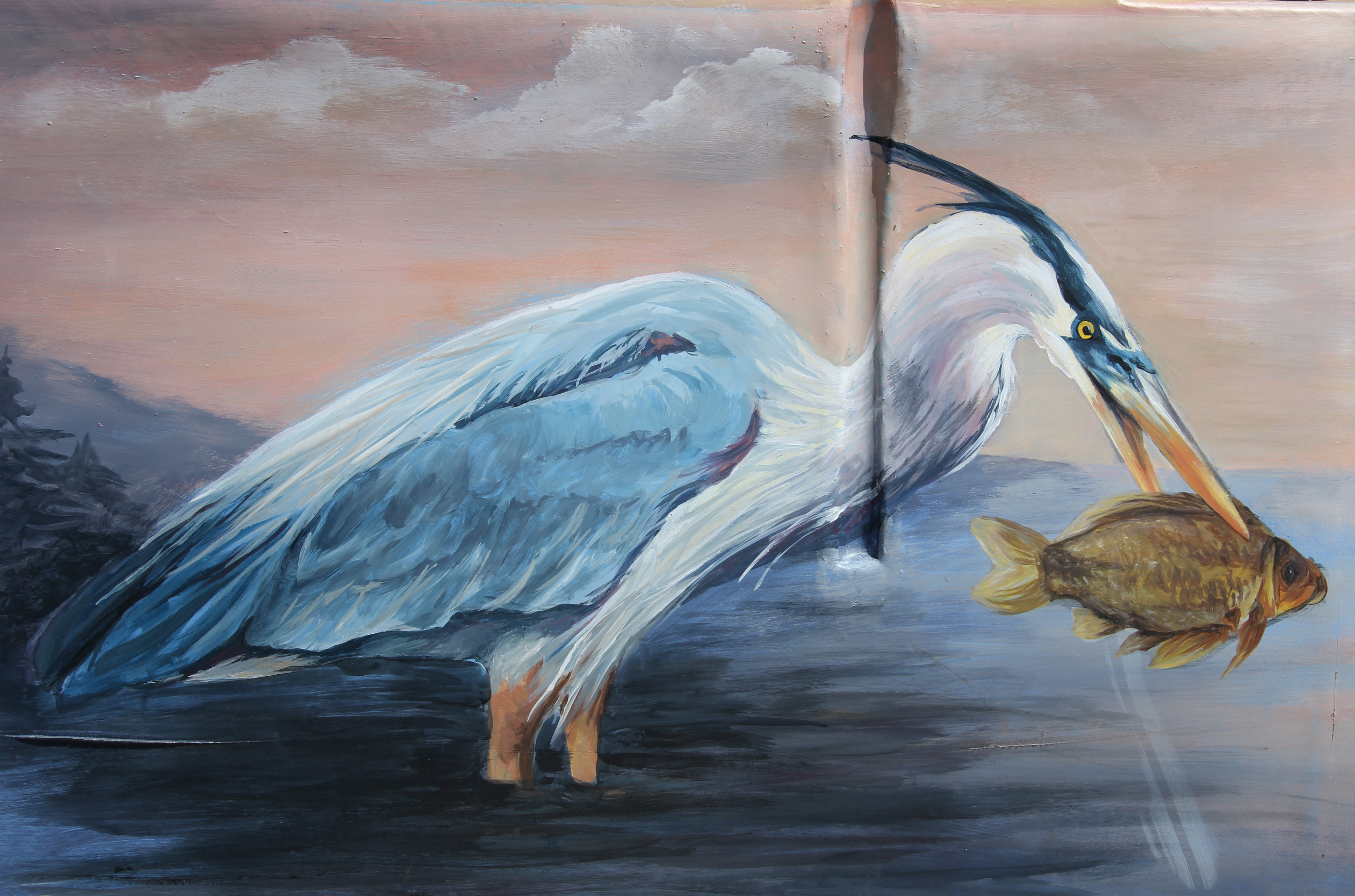
Blue heron art for “Creatures & Features.” (Minnesota Prairie Roots copyrighted photo May 2024)
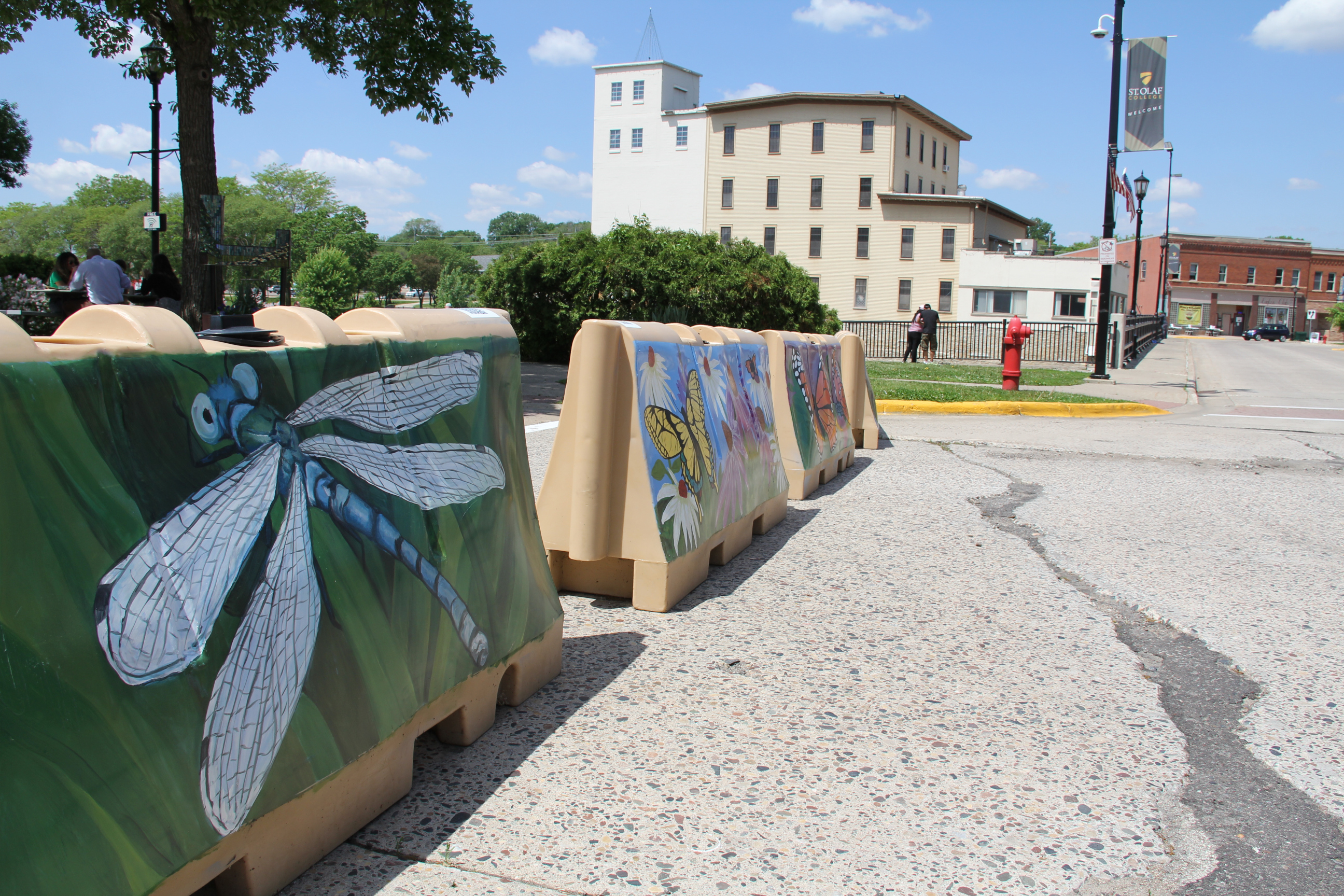
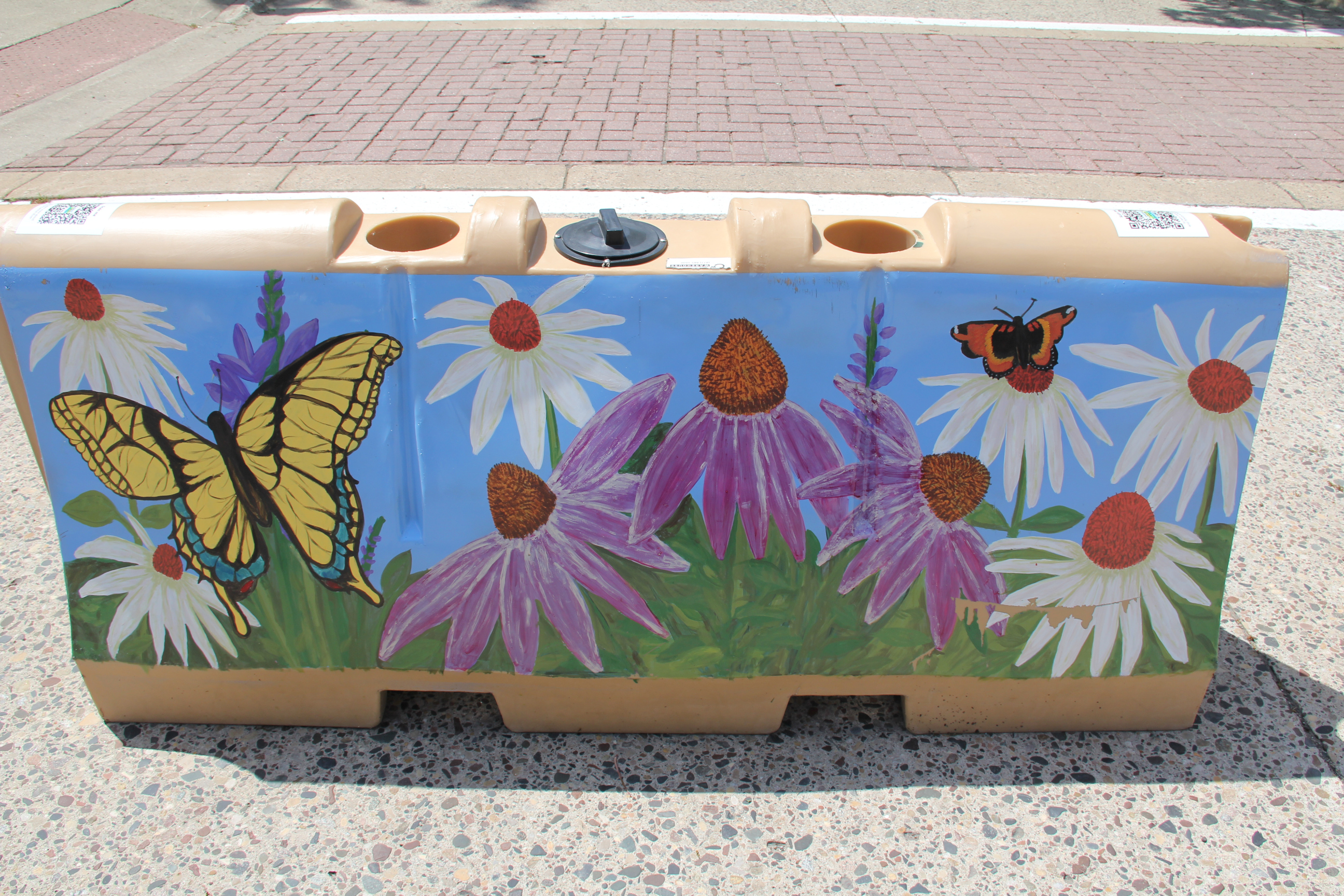
Butterflies and plants native to the Cannon River area. (Minnesota Prairie Roots copyrighted photo May 2024)
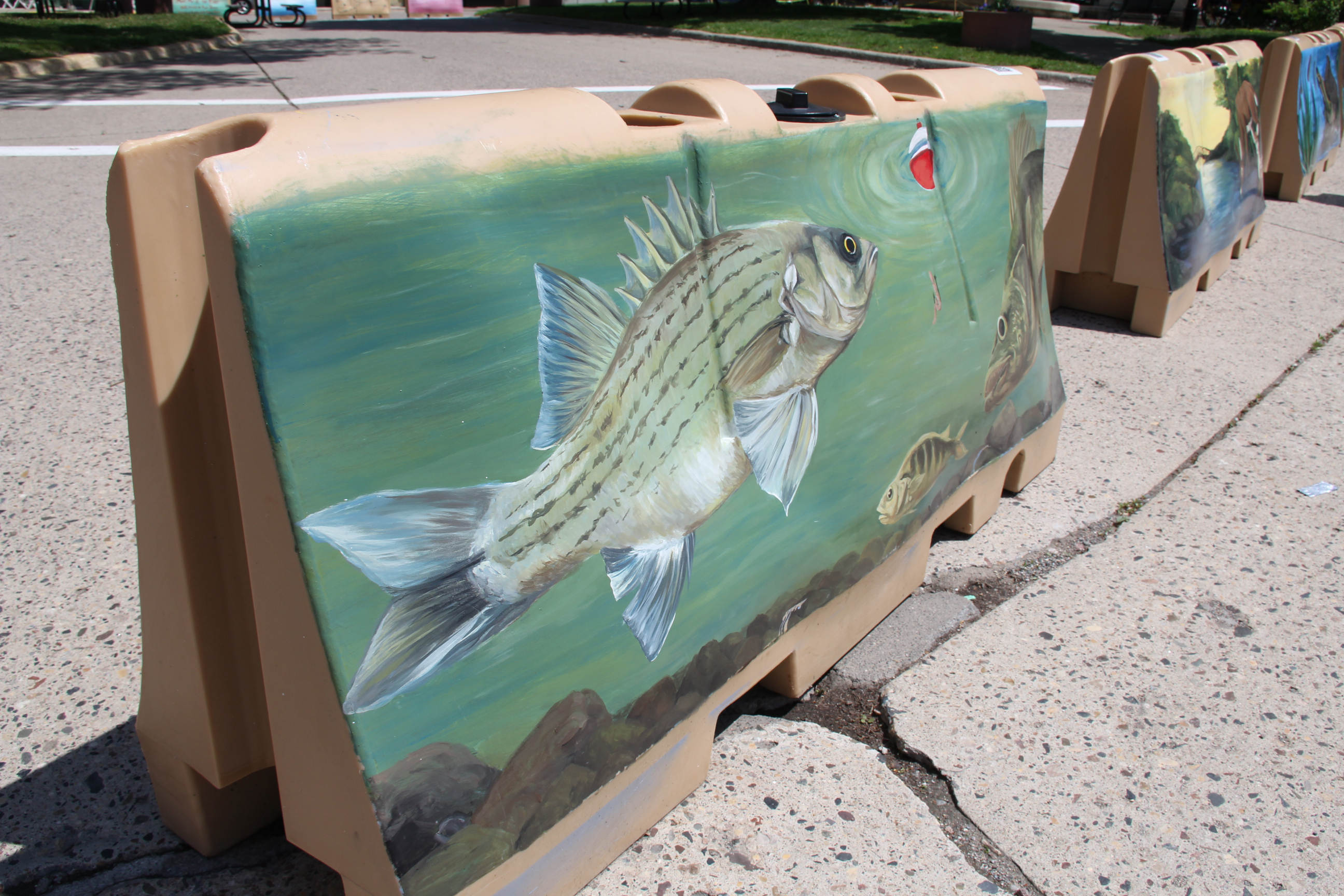
Among fish found in the Cannon, striped bass. (Minnesota Prairie Roots copyrighted photo May 2024)
Artists Kate Woodstrup and Kathy Larson Ness added their art to Bridge Square via “Creatures & Features of the Cannon River” painted onto 11 plastic barriers that block traffic, keeping the square safe for pedestrians. A striped bass, blue heron, turtle, beavers, deer, frogs, butterflies, a dragonfly, native flowers and grasses, and more showcase life in and along the river. It’s a visual, nature-themed delight appealing to all ages. Part science. Part ecology. Part environmental awareness. Part art.
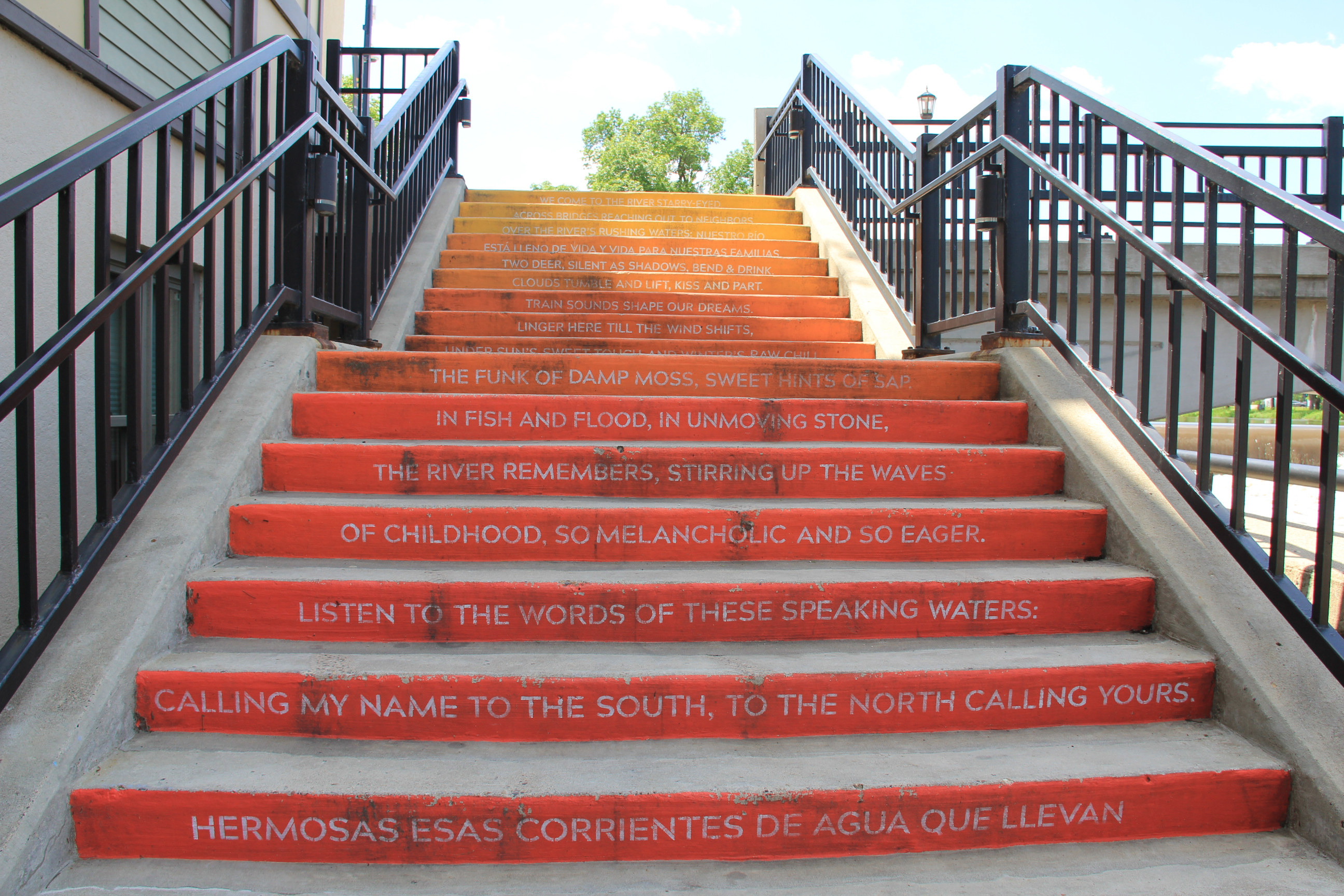
These “Poem Steps” lead up to Bridge Square, down to the Riverwalk. (Minnesota Prairie Roots copyrighted photo May 2024)
From Bridge Square, I aimed north, down the “Poem Steps,” a river poem collaboratively crafted by 17 Northfield poets during a past public arts project. Northfield has a strong community of poets. The city also stamps poetry into concrete as part of the Sidewalk Poetry initiative. The literary arts thrive in this college city.
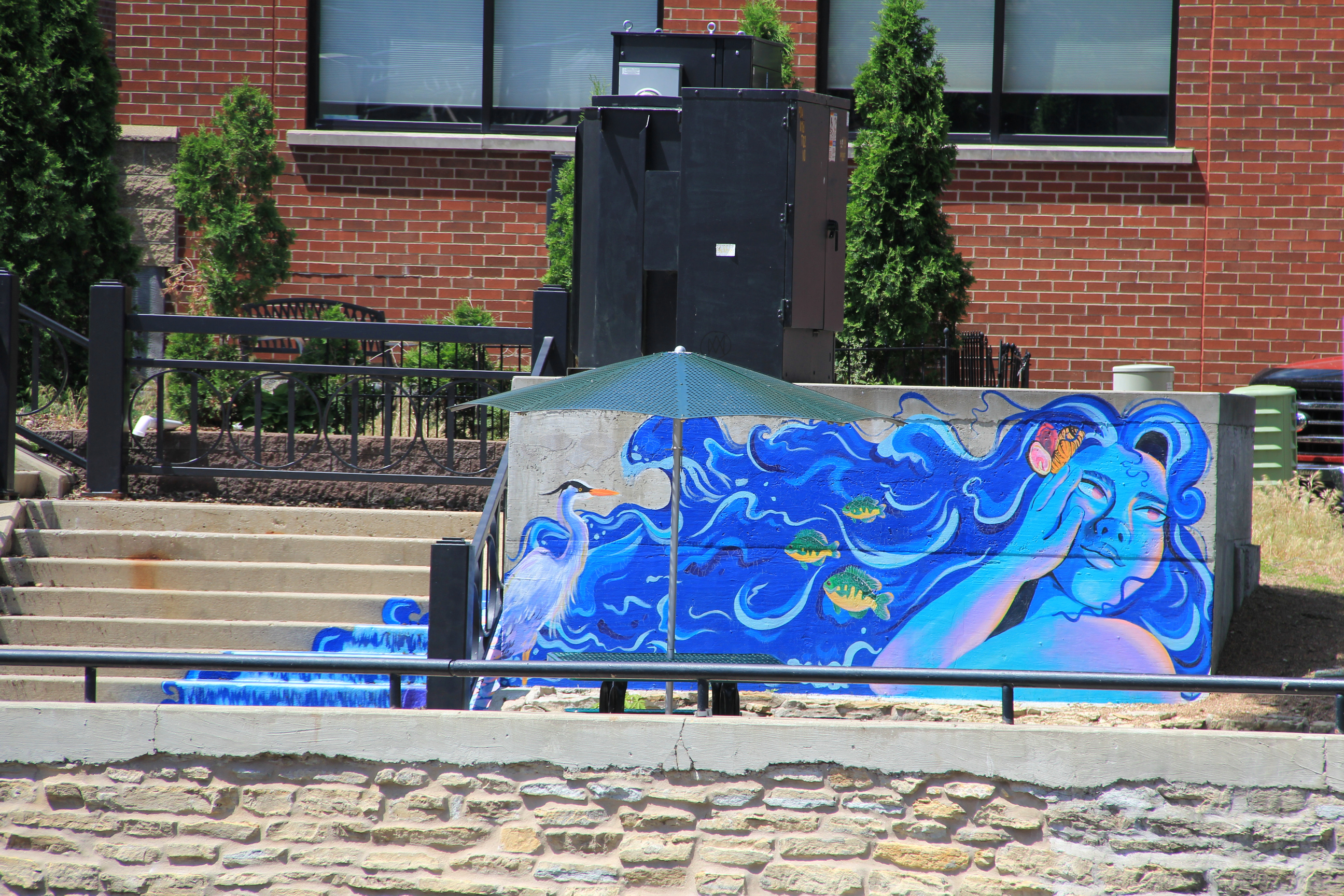
“Lady Cannon” mural on the west side of the river along the Riverwalk. (Minnesota Prairie Roots copyrighted photo May 2024)
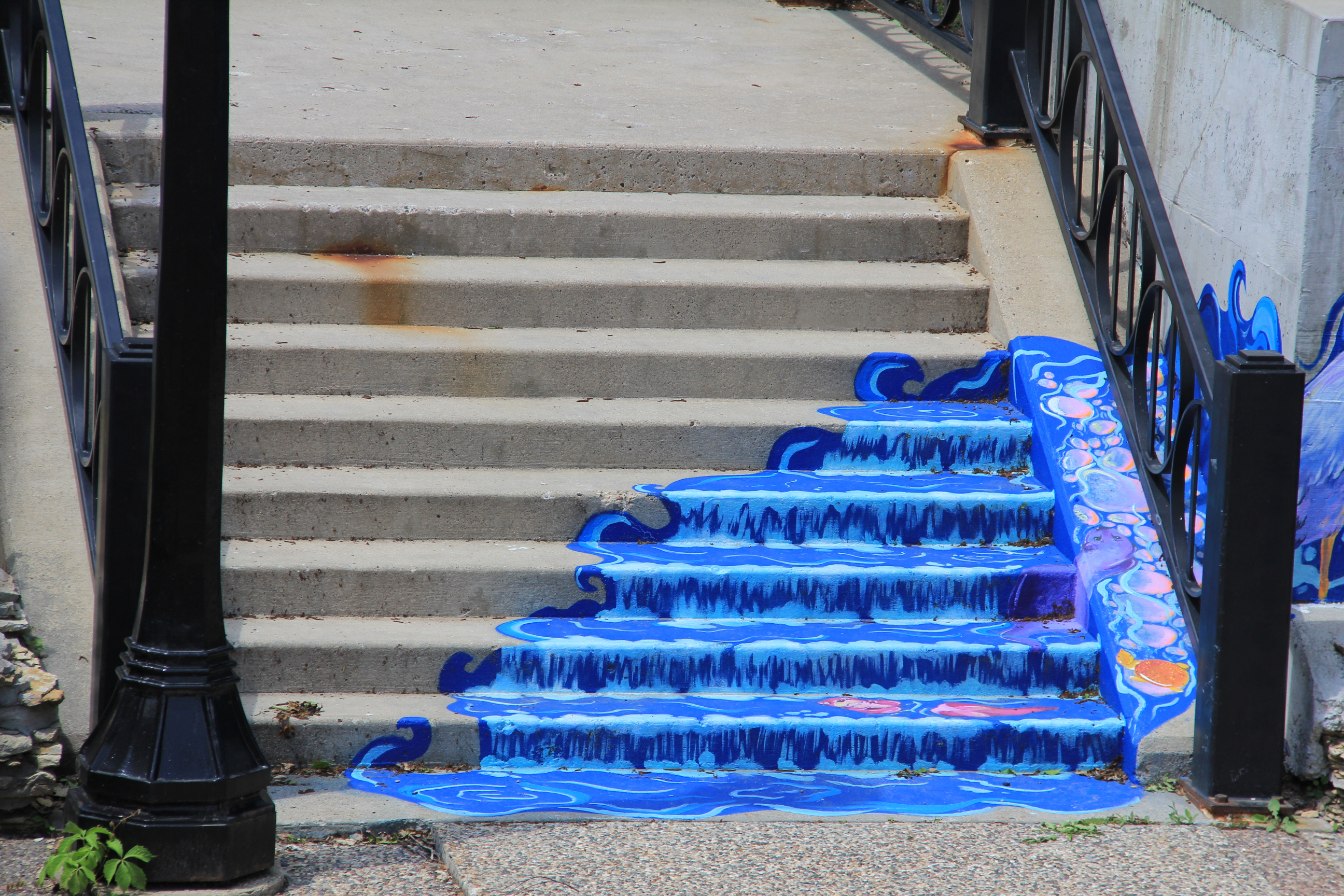
The goddess’ hair, like water, spills down steps. (Minnesota Prairie Roots copyrighted photo May 2024)
Next up, I spotted a colorful mural across the river. Maya Kenney and Raquel Santamaria created “Lady Cannon,” a water goddess whose flowing blue hair depicts the river. Fish weave into her locks and a heron stands riverside. This personification of the river connects people to the Cannon on a personal level. I crossed the pedestrian bridge for a closer look.
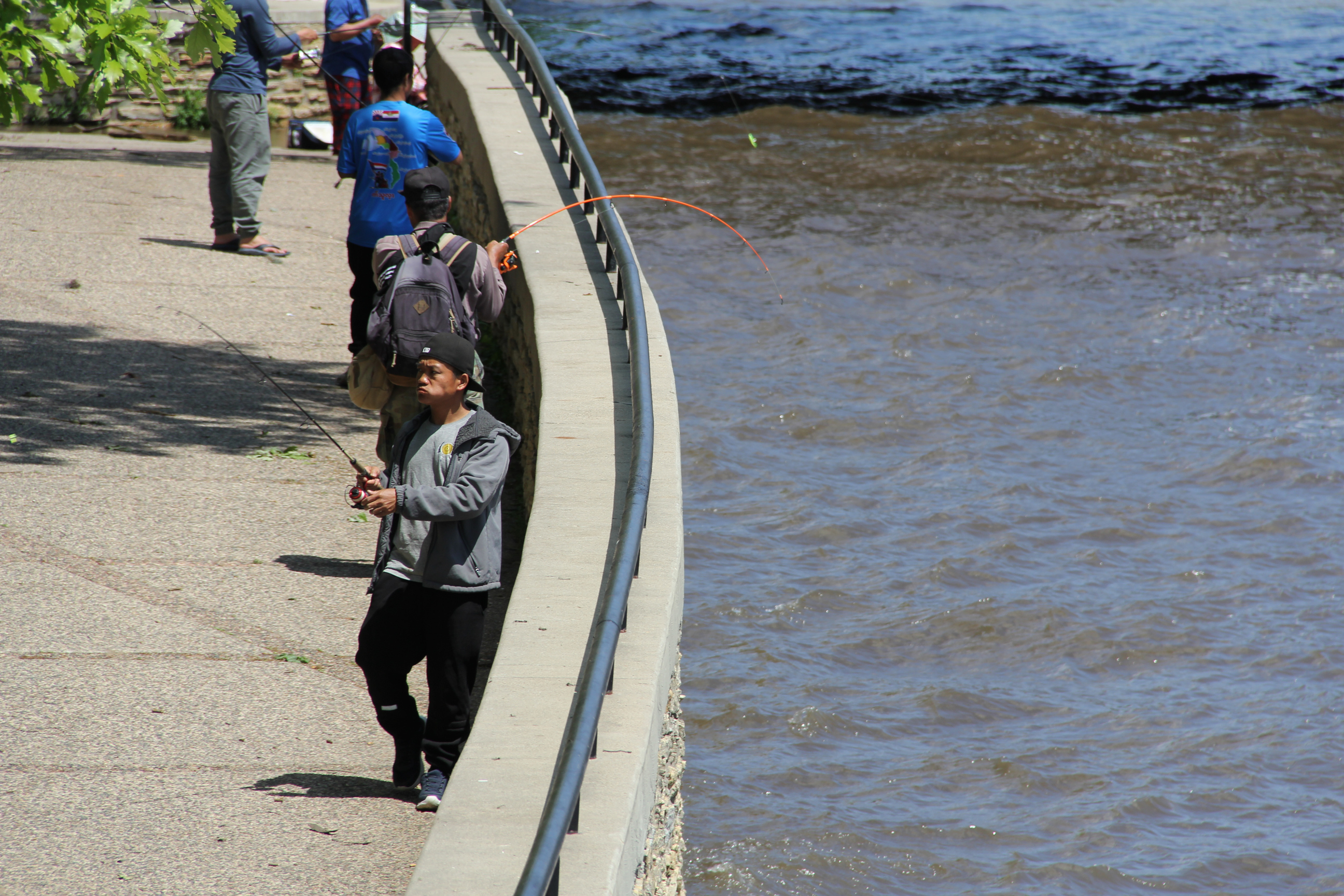
Fishermen line the Riverwalk on a May afternoon to fish the Cannon. (Minnesota Prairie Roots copyrighted photo May 2024)
A short distance from “Lady Cannon,” anglers stood nearly shoulder-to-shoulder fishing the river.
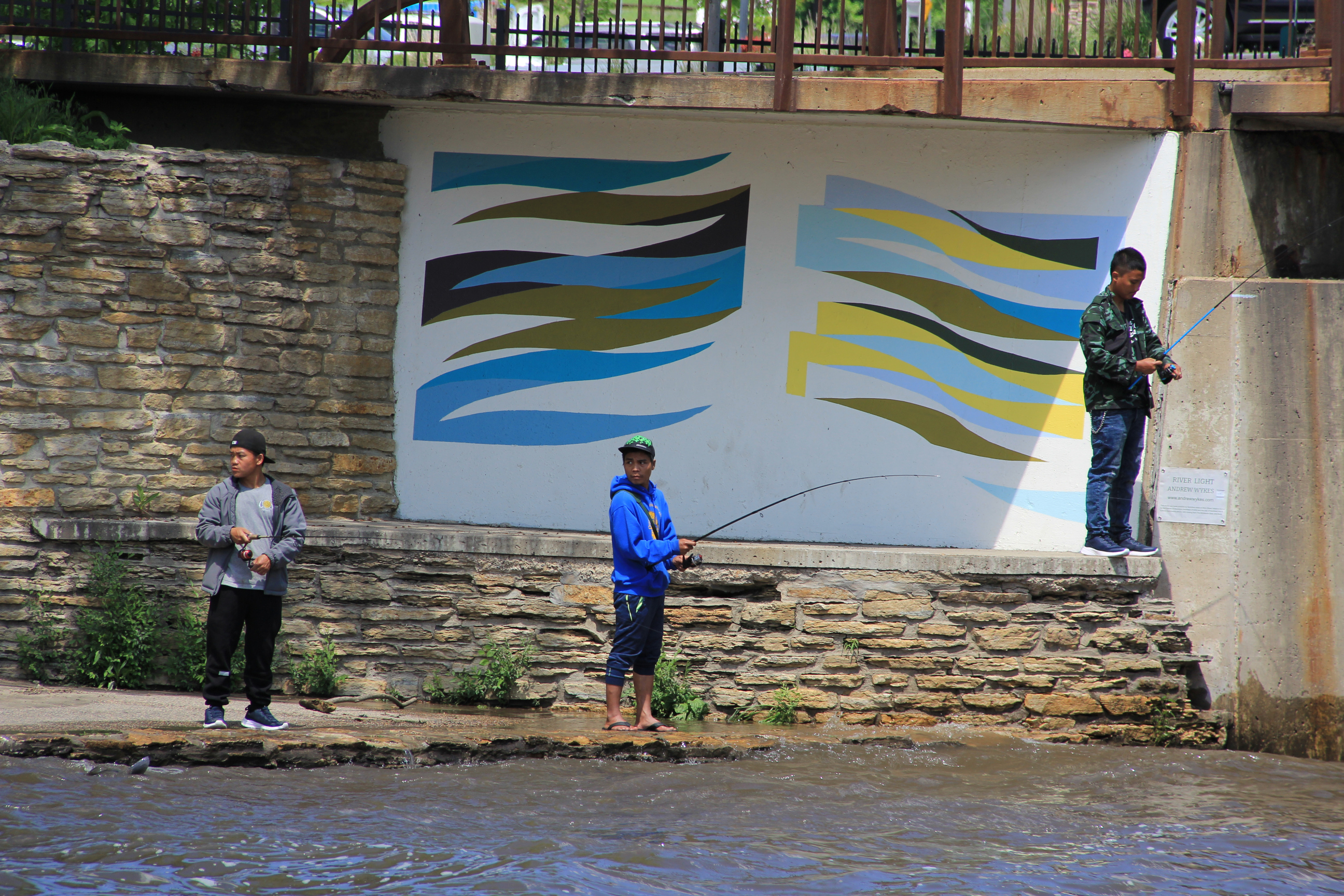
Fishing next to “River Light,” a mural by Andrew Wykes. (Minnesota Prairie Roots copyrighted photo May 2024)
Farther down, under the Second Street bridge, a trio of young men dropped lines in the water against backdrop art created by Andrew Wykes. His simplistic abstract mural, “River Light,” captures the movement, color and beauty of the Cannon River.
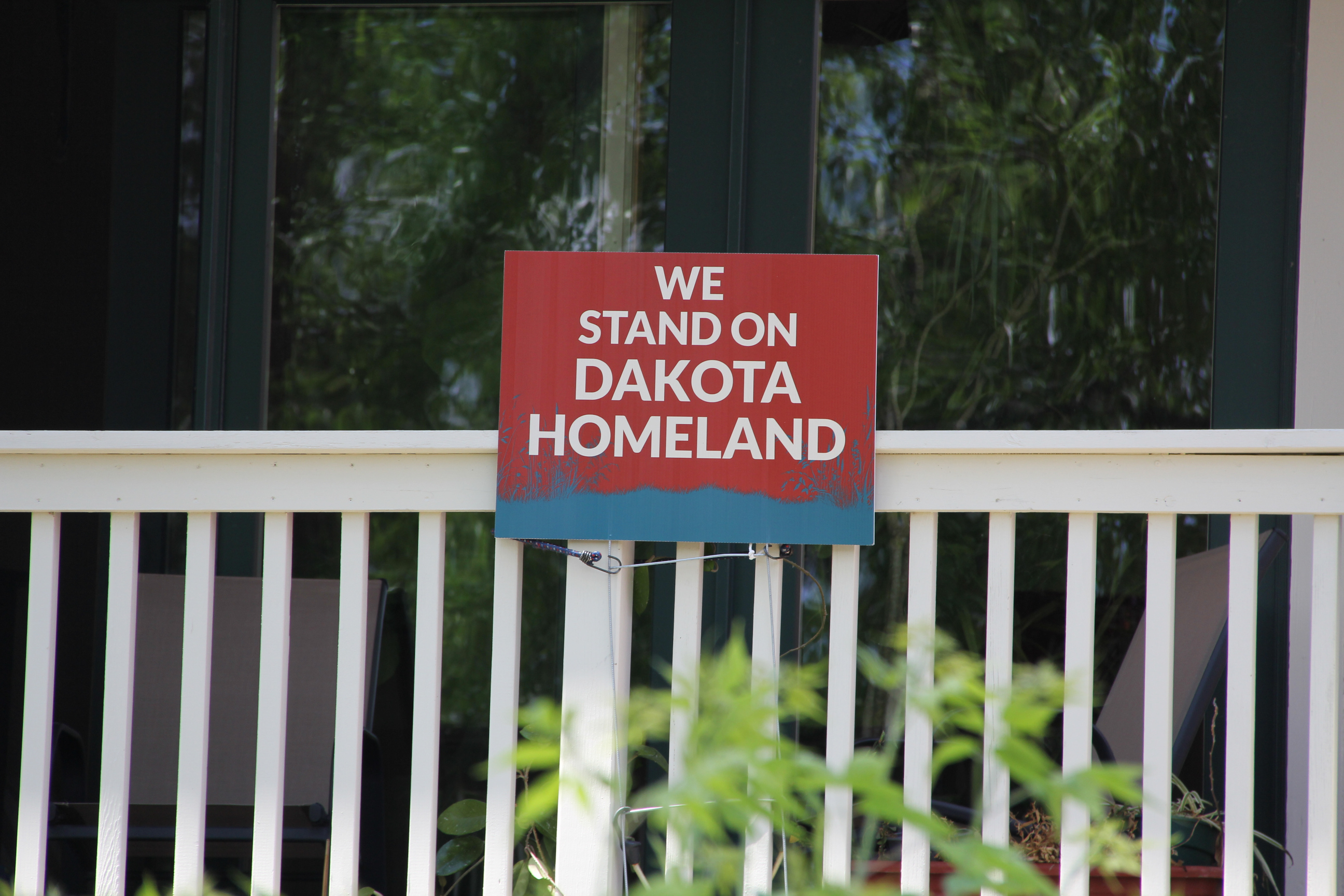
A sign spotted along the Riverwalk recognizes the Dakota’s homeland. (Minnesota Prairie Roots copyrighted photo May 2024)
The relationship between the river and people stretches back to a time long before these artists added their creative interpretations of the river and river life. A bold sign posted on a second story balcony high above the Cannon reads: WE STAND ON DAKOTA HOMELAND. Long before we became “Meet Me at the River,” the Dakota found, followed, fished this river. I appreciate the reminder that Indigenous Peoples were the original inhabitants of this land along the Cannon. They wrote the poetry, heard the music, watched the water dance, experienced the art of the river long before me, long before “Meet Me at the River.”
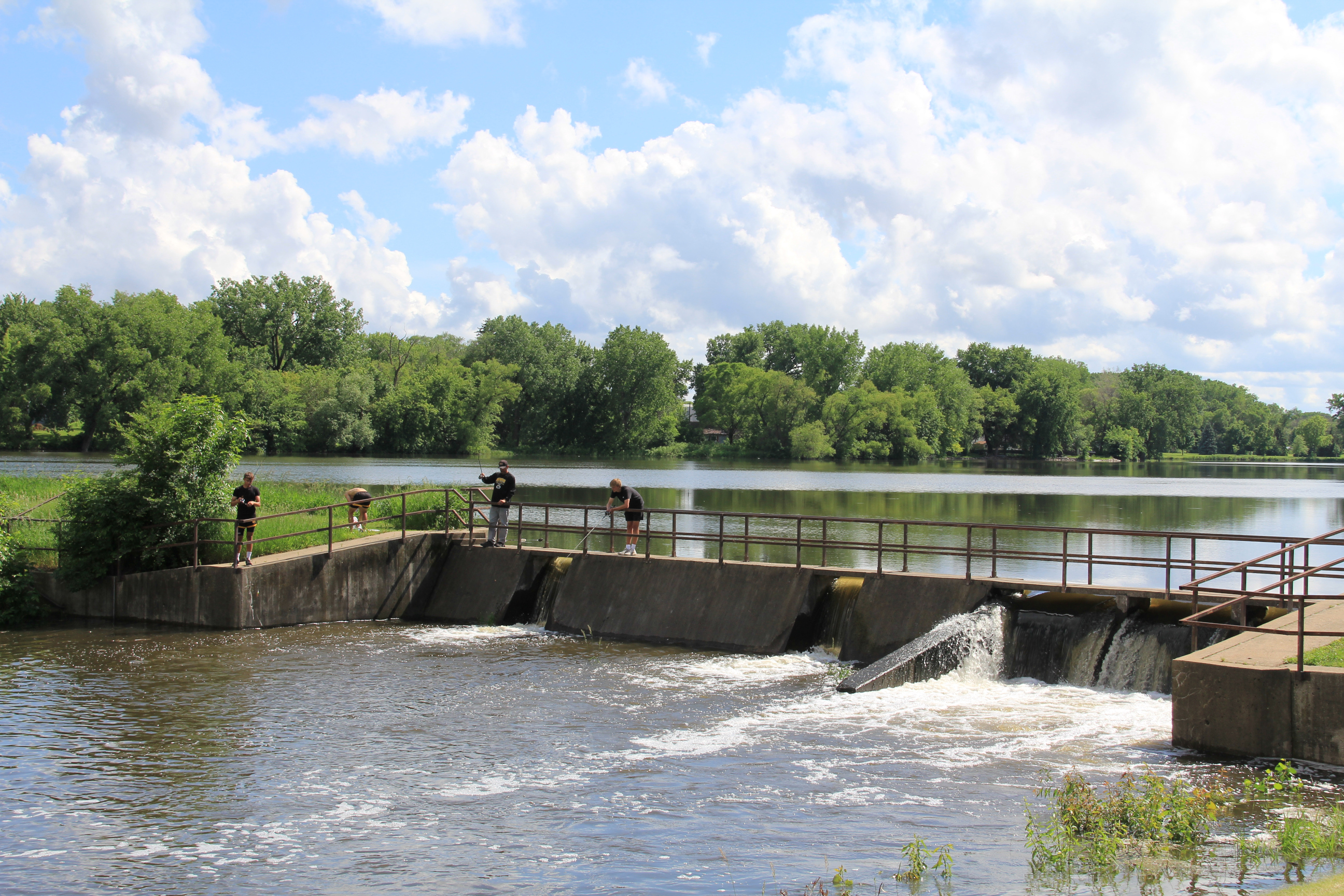
Fishing at the dam by Father Slevin Park in Faribault. (Minnesota Prairie Roots copyrighted photo June 2024)
RIVERS REEL US IN, like fish to bait. There’s something about water, especially a river. It’s mesmerizing, soothing, poetic and, right now, rather dangerous.
The rushing Straight River, photographed just off the Straight River Trail near Fleckenstein Bluffs Park. (Minnesota Prairie Roots copyrighted photo June 2024)
Recent days found me watching the two rivers—the Cannon and the Straight—which flow through Faribault. They are full to overflowing, muddied and rushing after significant rainfall dropped an unofficial 3.5 inches into my rain gauge over the weekend. That followed weeks of heavy rain.
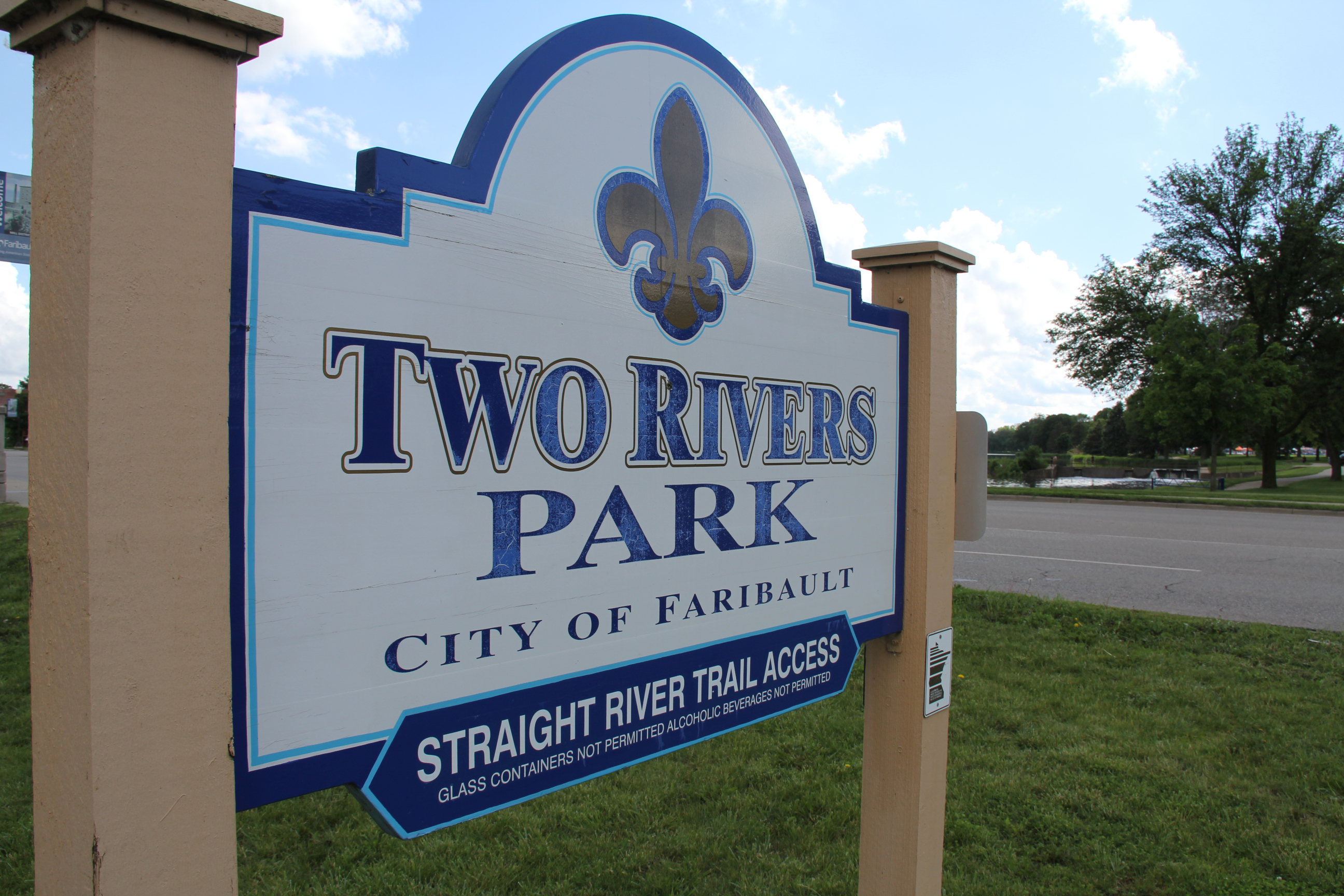
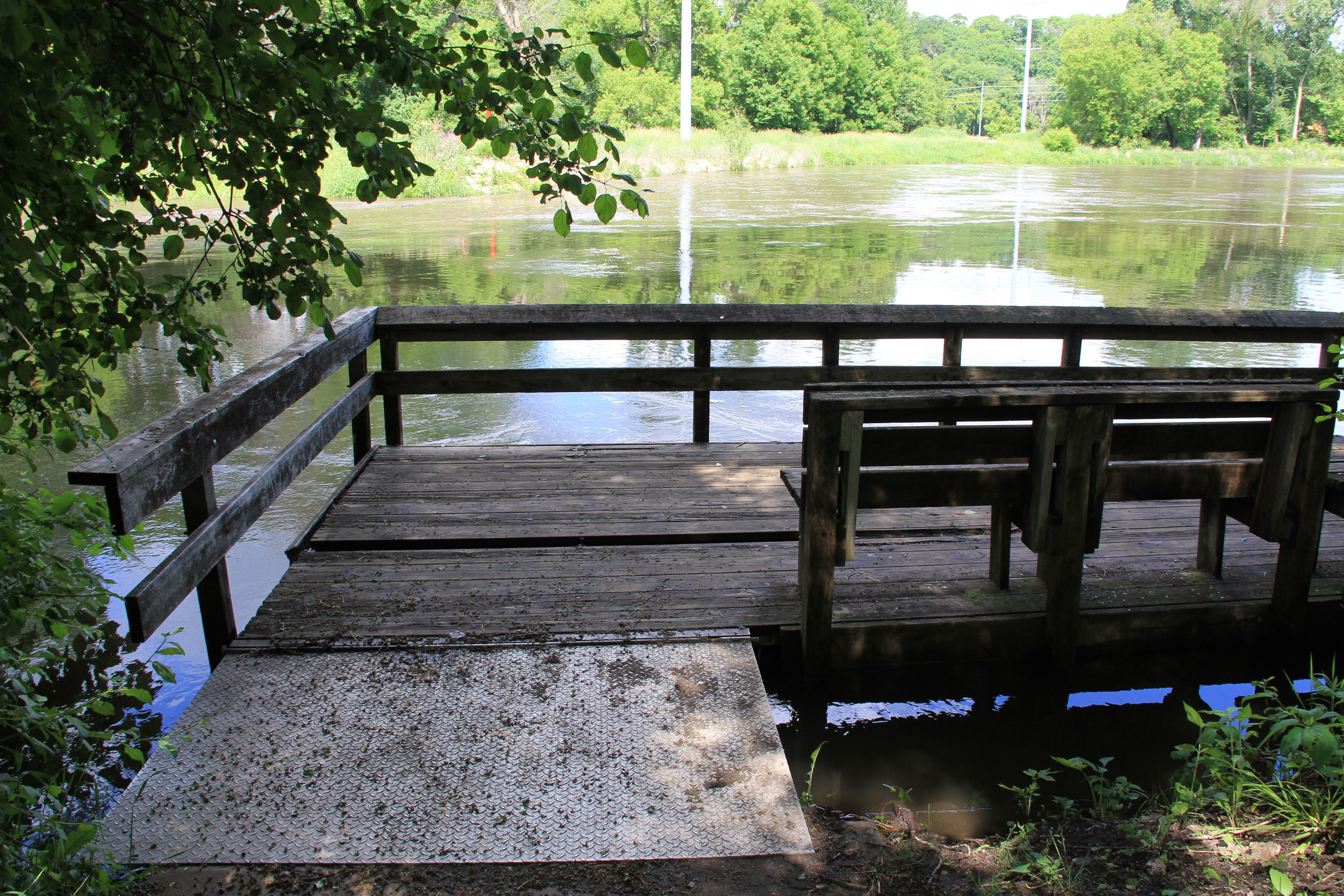
On the day I photographed this dock at Two Rivers Park, it was nearly submerged by the Straight and Cannon Rivers, which meet here. The dock typically sits high above the water. In retrospect, I should have stayed off this dock, which doesn’t seem all that safe. (Minnesota Prairie Roots copyrighted photo June 2024.
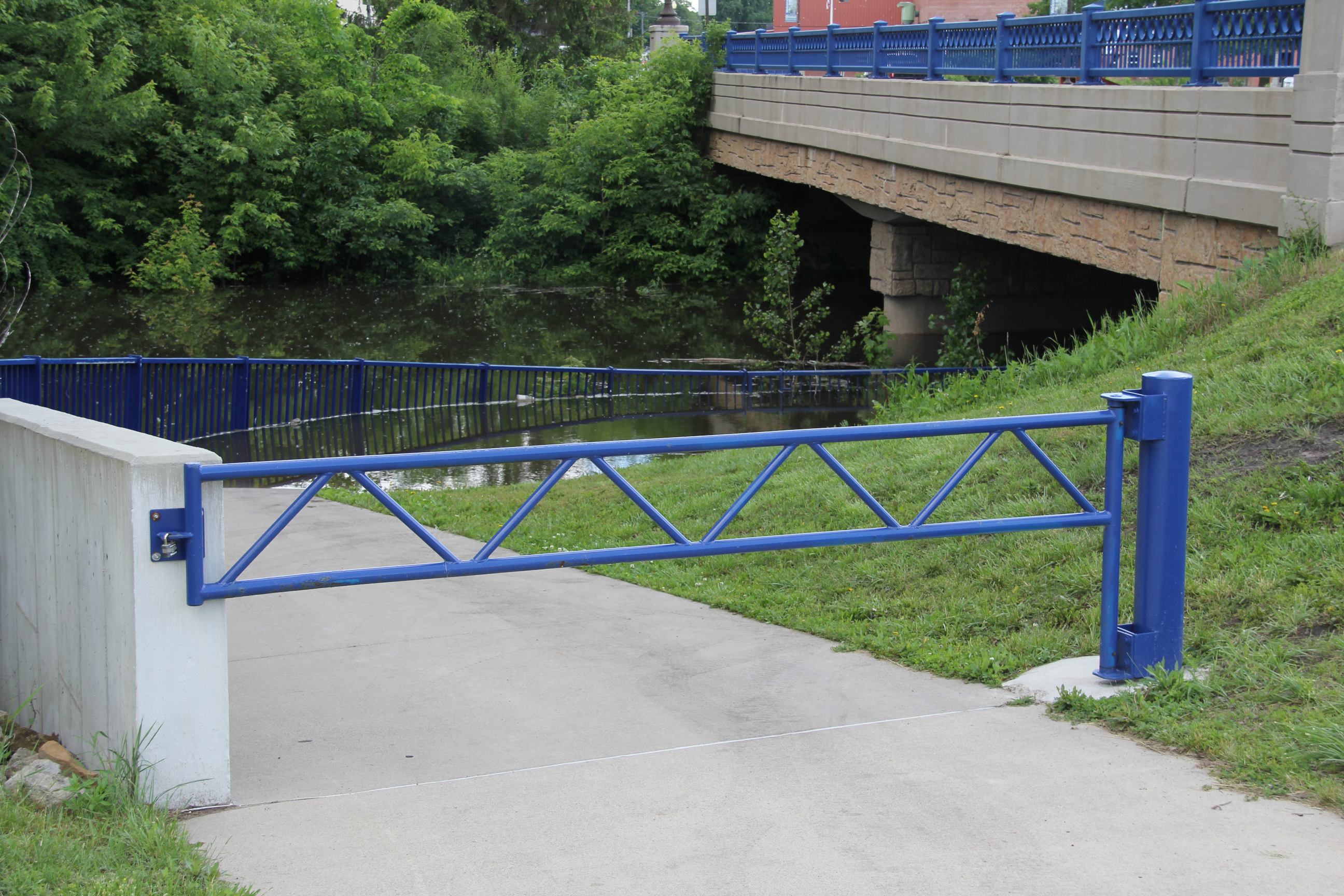
The City of Faribault has closed a section of a recreational trail running under the Second Avenue bridge due to flooding from the Cannon River. (Minnesota Prairie Roots copyrighted photo June 2024)
River levels are high, replenished after a near snow-less winter and the drought of 2023. But enough is enough. We need consistent sunshine and for the rain to stop. And for people to take extra care around fast-moving rivers.
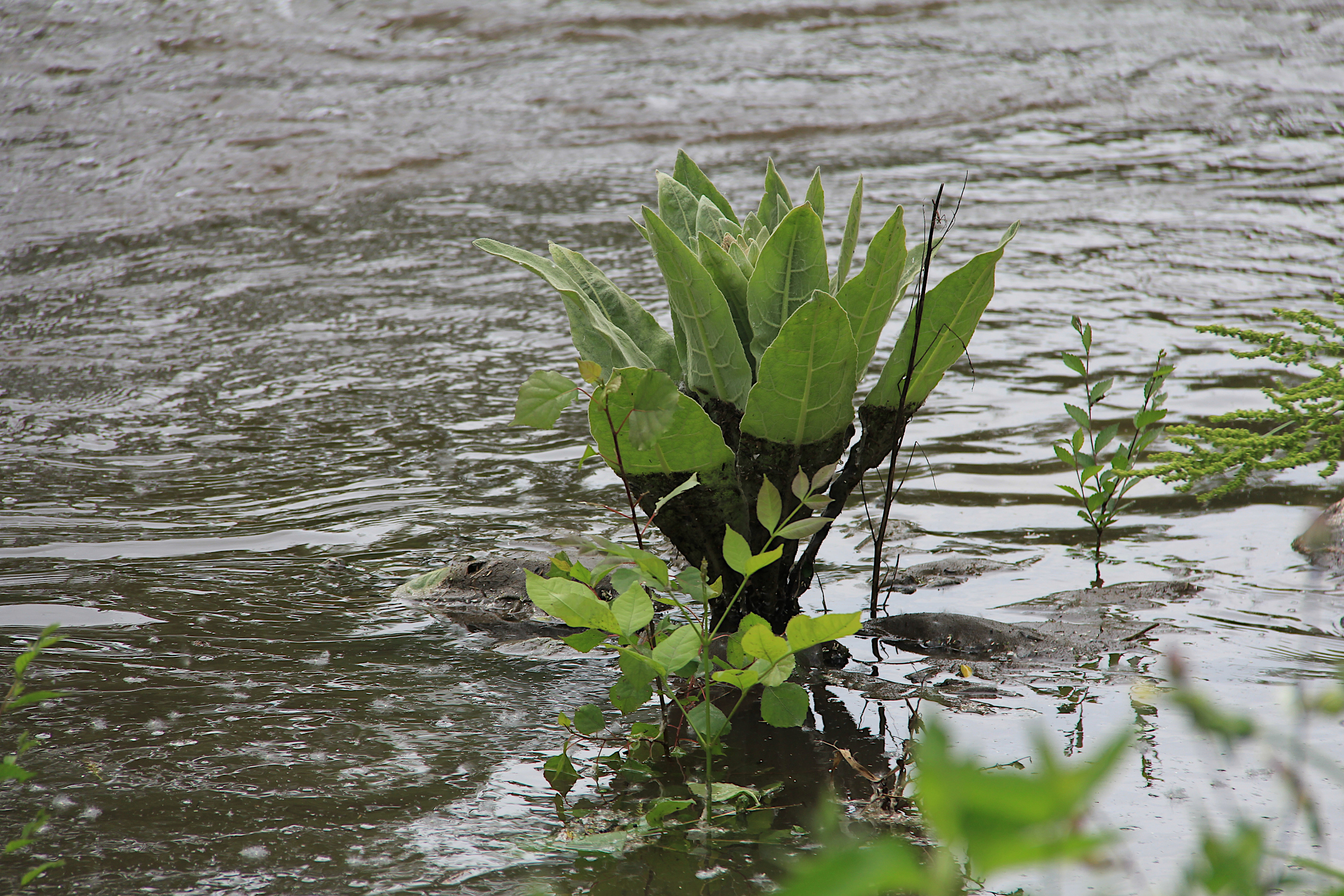
Muddy marks on this plant show how high the roiling Straight River rose, just off the Straight River Trail near Fleckenstein Bluffs Park. (Minnesota Prairie Roots copyrighted photo June 2024)
The Rice County Sheriff’s Department has advised people to be cautious on local waterways and to stay off the Cannon River. Six young people and three adults were recently rescued from the Cannon after their canoes and kayaks overturned. I saw drone footage of rescuers plucking people from the river. They were wearing life jackets, clinging to fallen trees. They got out alive. They were fortunate.
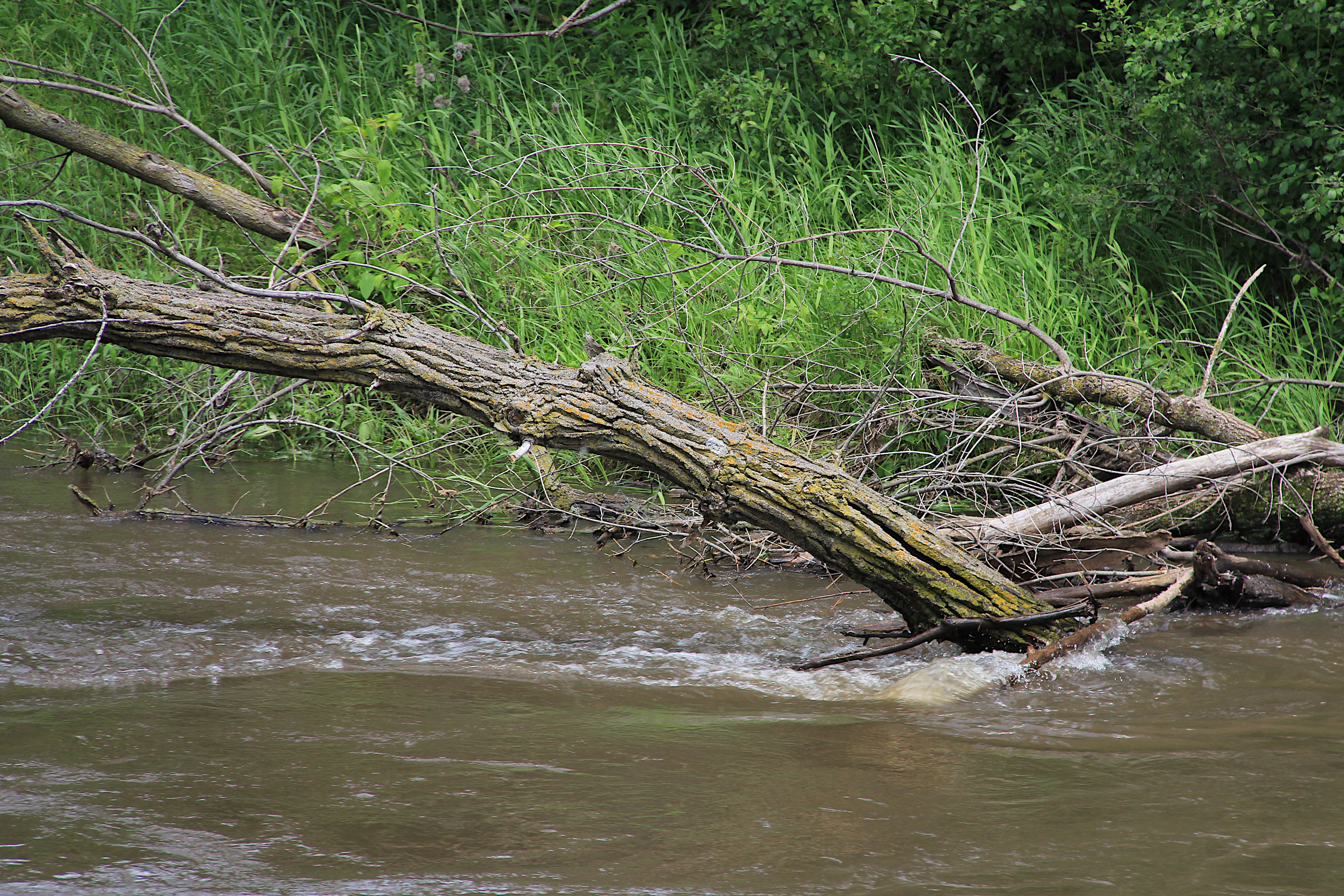
Fallen trees and limbs like these in the Straight River near Fleckenstein Bluffs Park present a hazard to anyone on the water. (Minnesota Prairie Roots copyrighted photo June 2024)
Local rivers are snagged with obstacles, especially trees downed by a 2018 tornado. The current is fast, the water swift-moving, dangers hidden below the surface. Watercraft can easily capsize, turning an outing into tragedy or near tragedy.
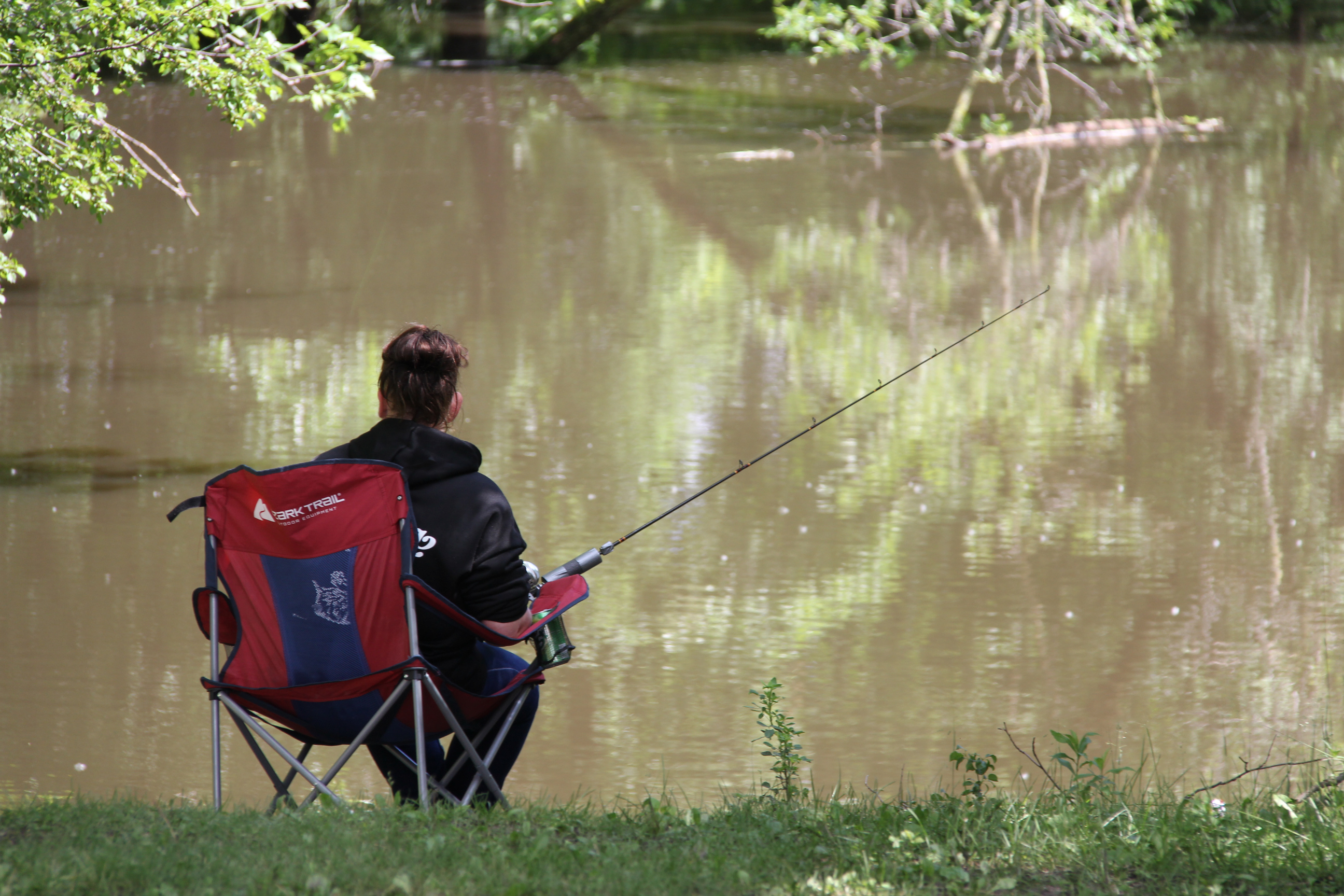
Fishing the muddy Cannon River at Two Rivers Park. (Minnesota Prairie Roots copyrighted photo June 2024)
I observed anglers safely fishing along the river bank at Two Rivers Park, above the dam by North Alexander Park and by the Woolen Mill Dam. These have always been popular fishing spots in town, although at Two Rivers most people fish from the dock. That was nearly under water when I stopped by. I didn’t visit the King Mill Dam, but I anticipate anglers were lining the shoreline there also.
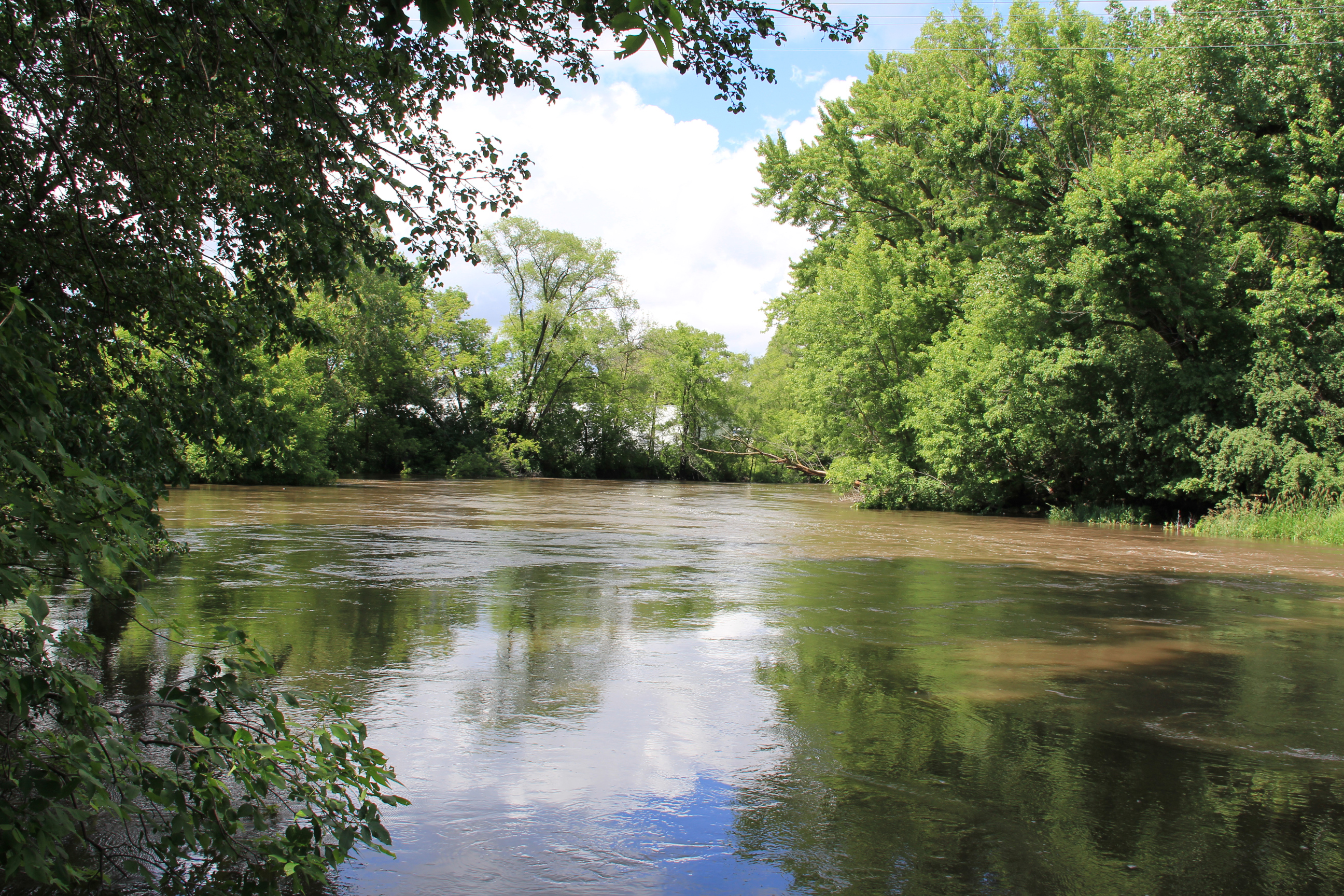
The Cannon River is high and swift-moving at Two Rivers Park. The park was the staging scene for a recent water rescue. (Minnesota Prairie Roots copyrighted photo June 2024)
An abandoned bobber tossed into the water where the Cannon and Straight rivers converge showed just how swift the current. I have no doubt the river could quickly pull a person under who’d fallen from a canoe or kayak.
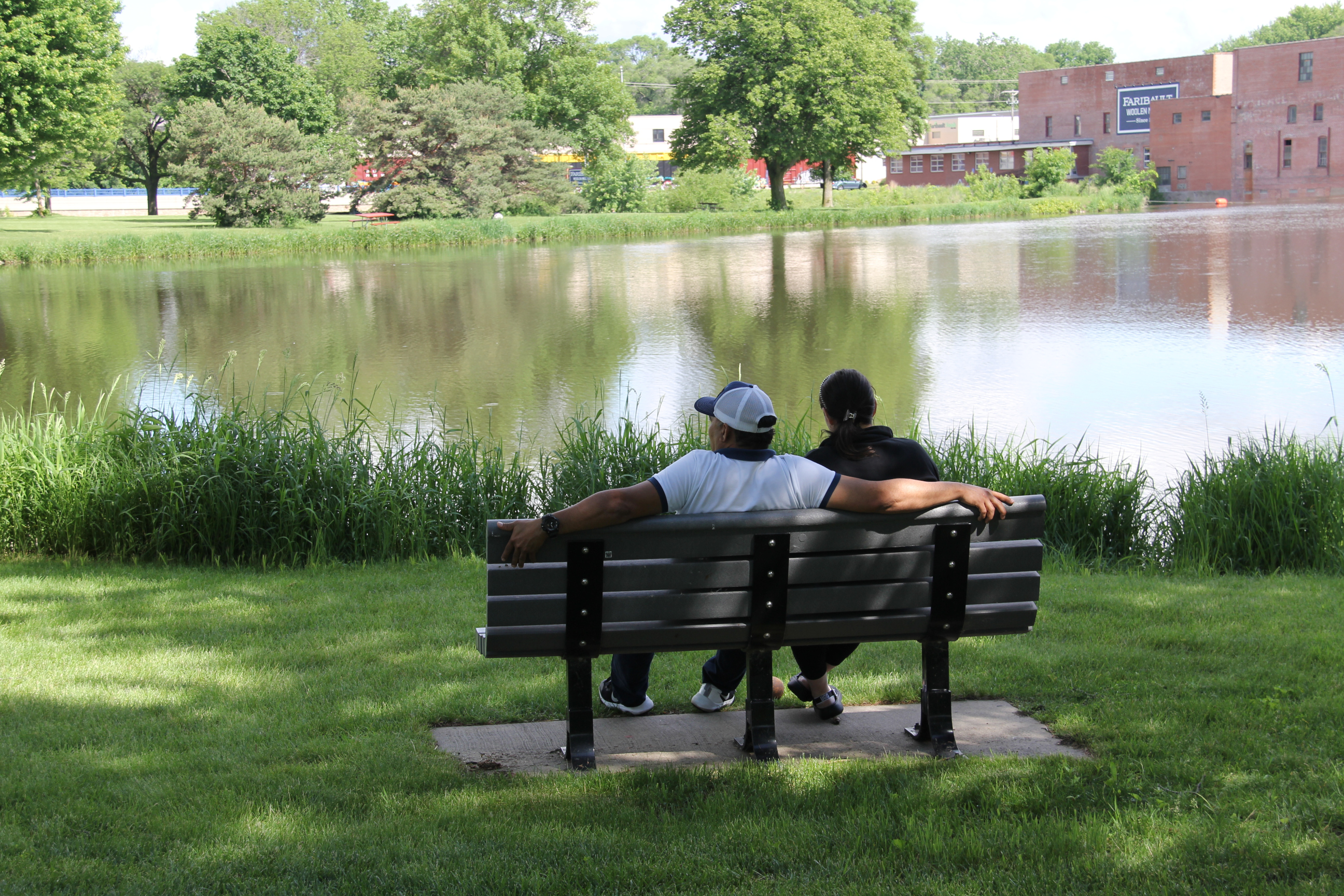
Relaxing along the Cannon River in North Alexander Park, the Faribault Woolen Mill on the opposite shoreline. (Minnesota Prairie Roots copyrighted photo June 2024)
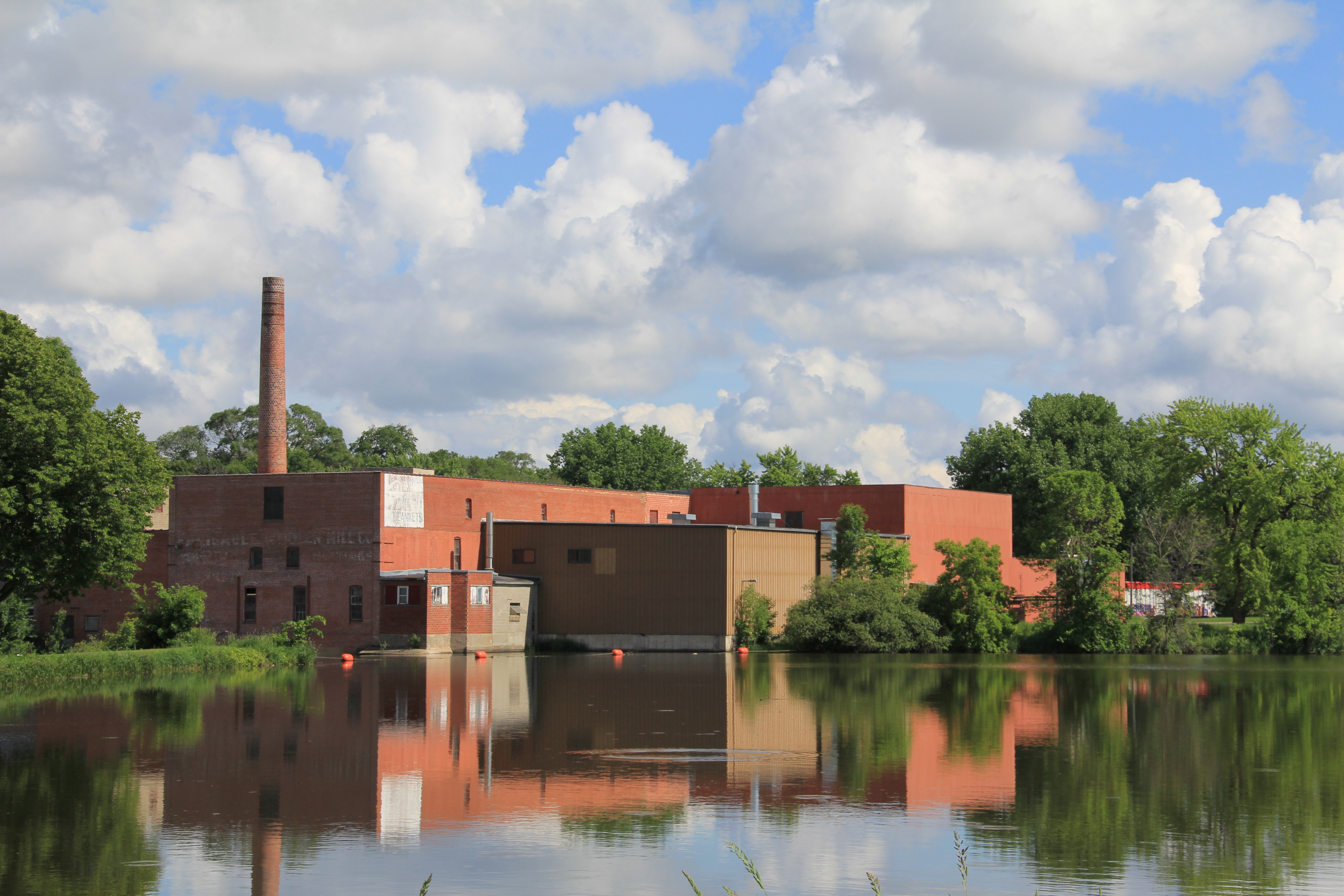
The iconic, historic Faribault Mill sits aside the Cannon River. (Minnesota Prairie Roots copyrighted photo June 2024)
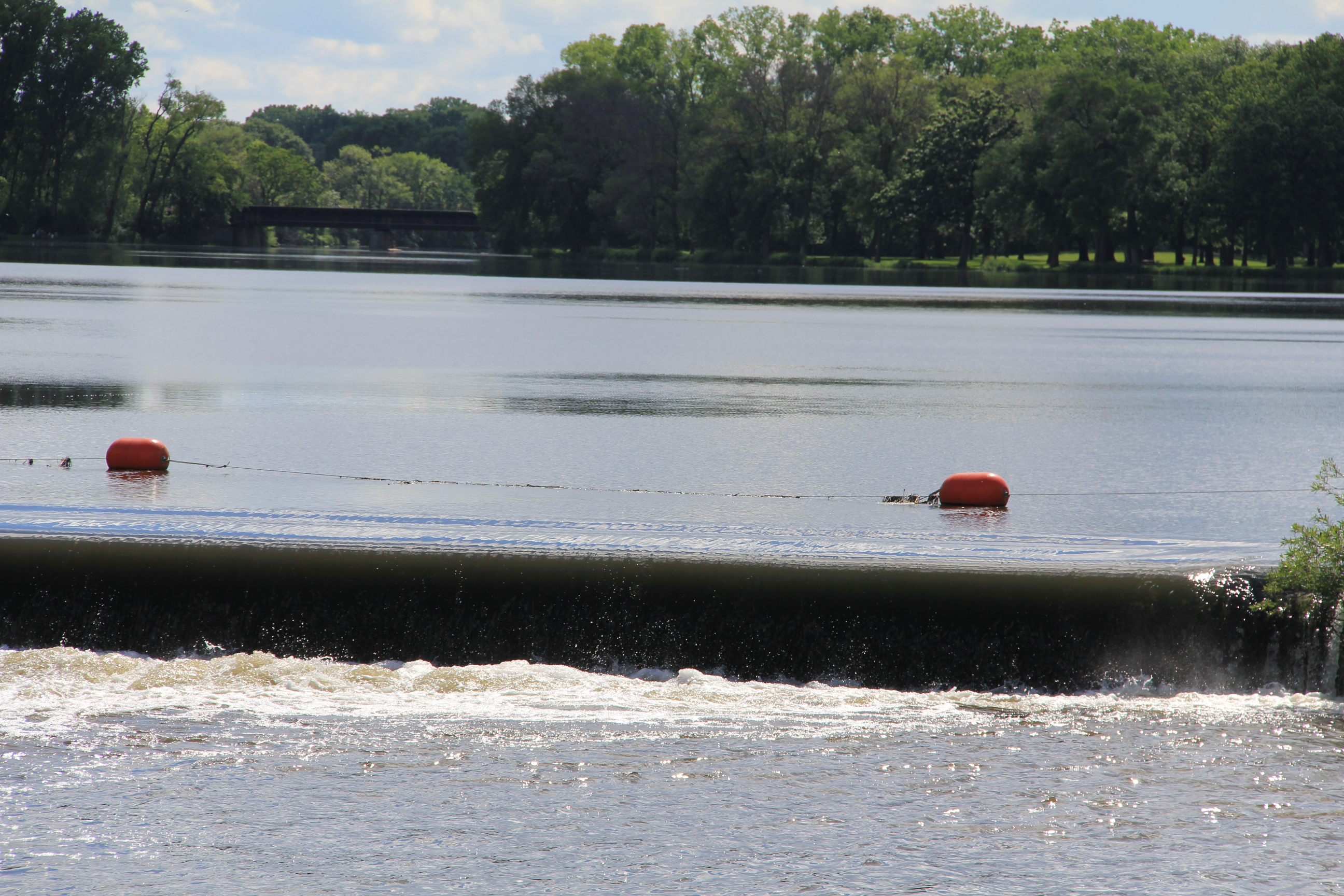
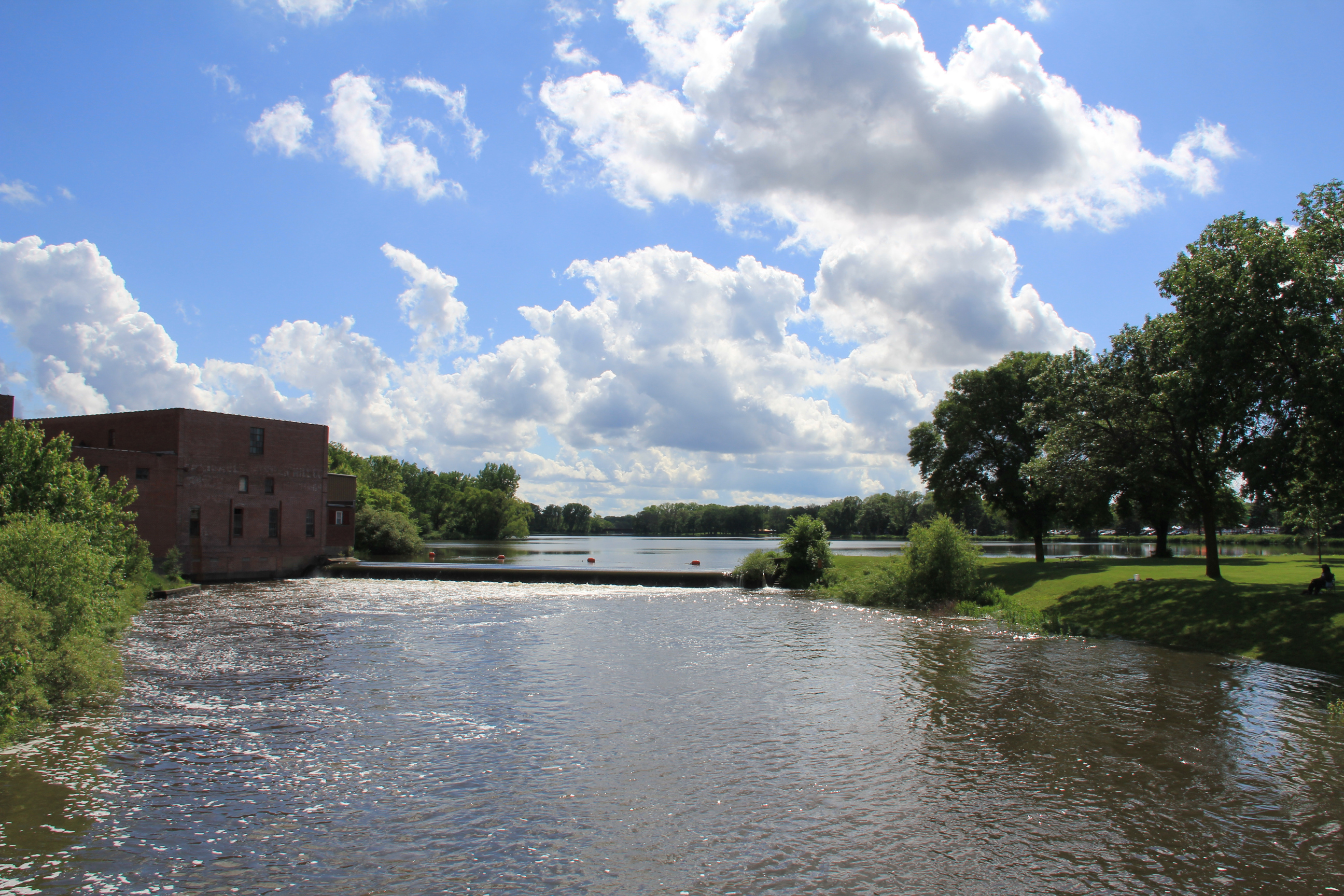
This photo taken several days ago shows the minimal drop over the Woolen Mill dam, with raging river below.(Minnesota Prairie Roots copyrighted photo June 2024)
It’s easy enough to get misled by the water. Sit aside the wide stretch of the Cannon before it spills over two dams and the scene looks tranquil. The water’s surface is smooth, reflecting sky and trees and the historic woolen mill. But when the water spills over the dams, it transforms into something muddy and menacing, not to be messed with.
The scenic Cannon River and dam near the Faribault Mill. (Minnesota Prairie Roots copyrighted photo June 2024)
Respect the rivers, I say, even if it is tempting to launch a canoe or ease into a kayak. River levels will drop in due time as summer unfolds. There will be ample opportunity to get on the water, to enjoy the river scenery, to delight in the natural beauty of Mni Sóta, Dakota for “land of sky tinted waters.”
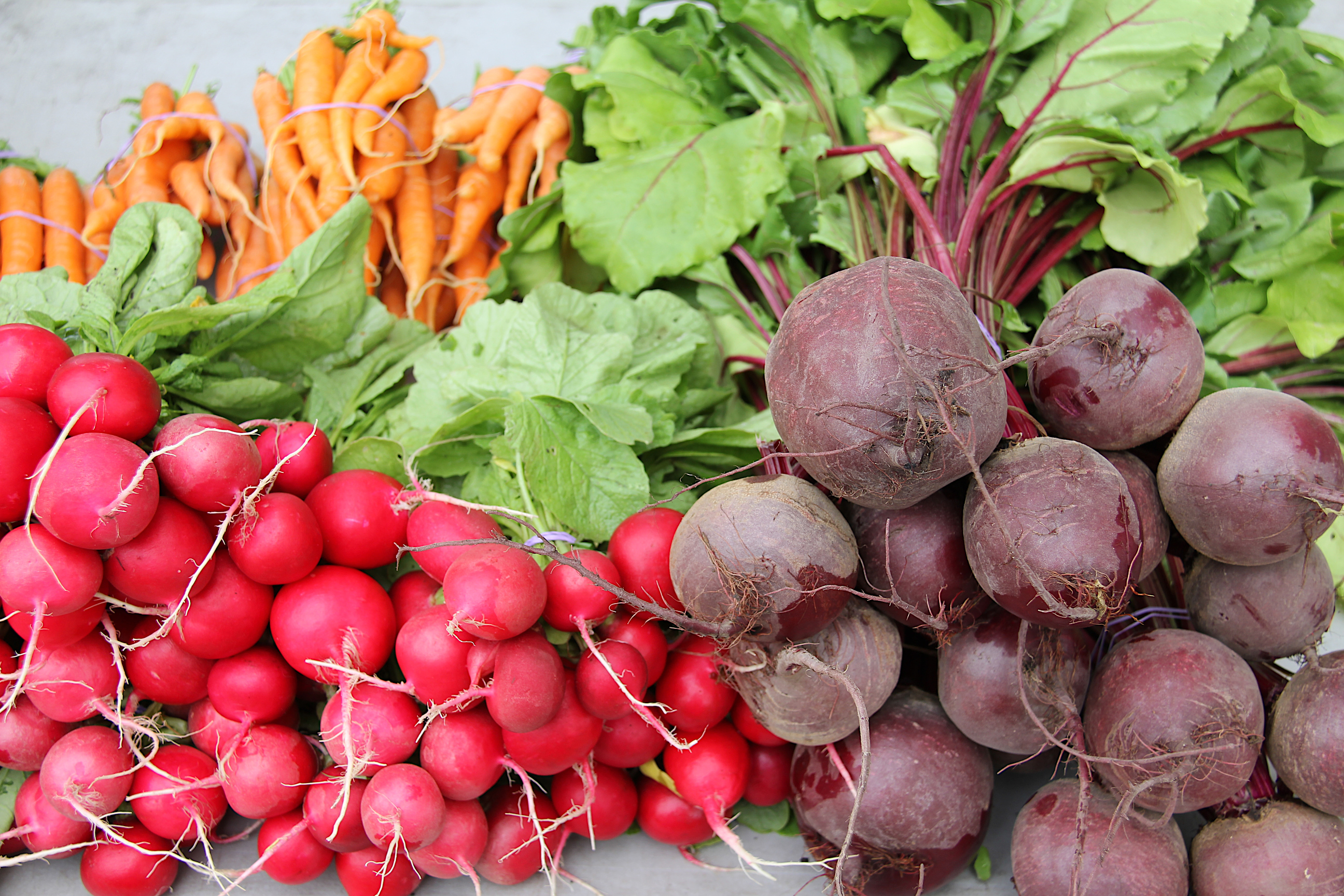
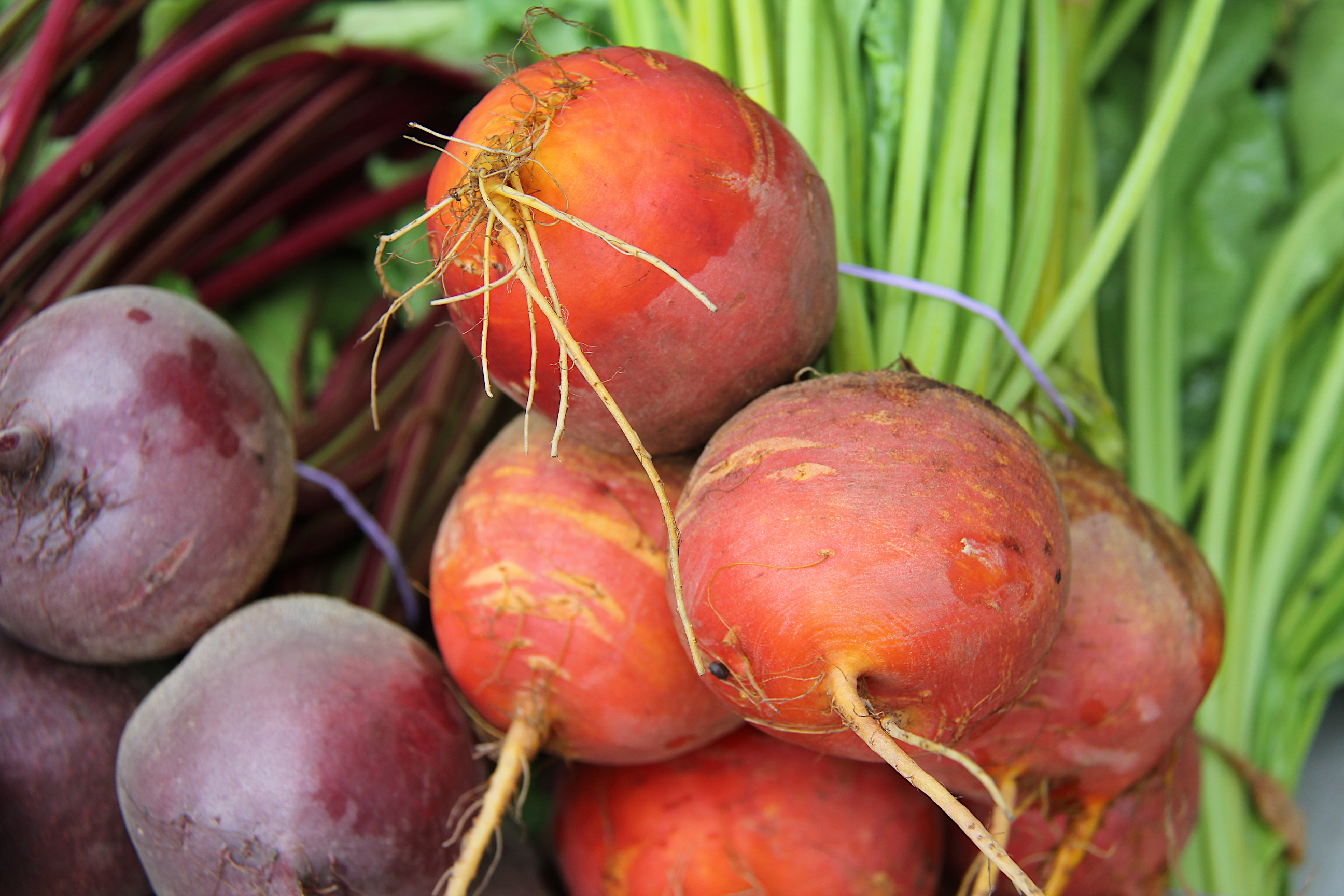
PLUMP PEA PODS PILED. Juicy red and golden tomatoes gathered. Leafy lettuce layered. Bulky orange beets positioned beside purple ones. Bundles of radishes, beets and carrots bursting brilliant hues on a vendor’s table.
Peas. (Minnesota Prairie Roots copyrighted photo)
This is the bounty of summer in southern Minnesota.
A recent mid-morning Friday walk at Northfield’s Riverside Lions Park took me past Northfield Farmers Market vendors pulling vegetables, baked and canned goods, and more from their vehicles. As they set up shop, I lingered, admiring the fresh vegetables that appeared so visually pleasing and, I’m sure, are equally as tasty.
I was early. The market starts at 11:45 am, runs til 1 pm, Tuesdays and Fridays, and from 9-11 am Saturdays through October.
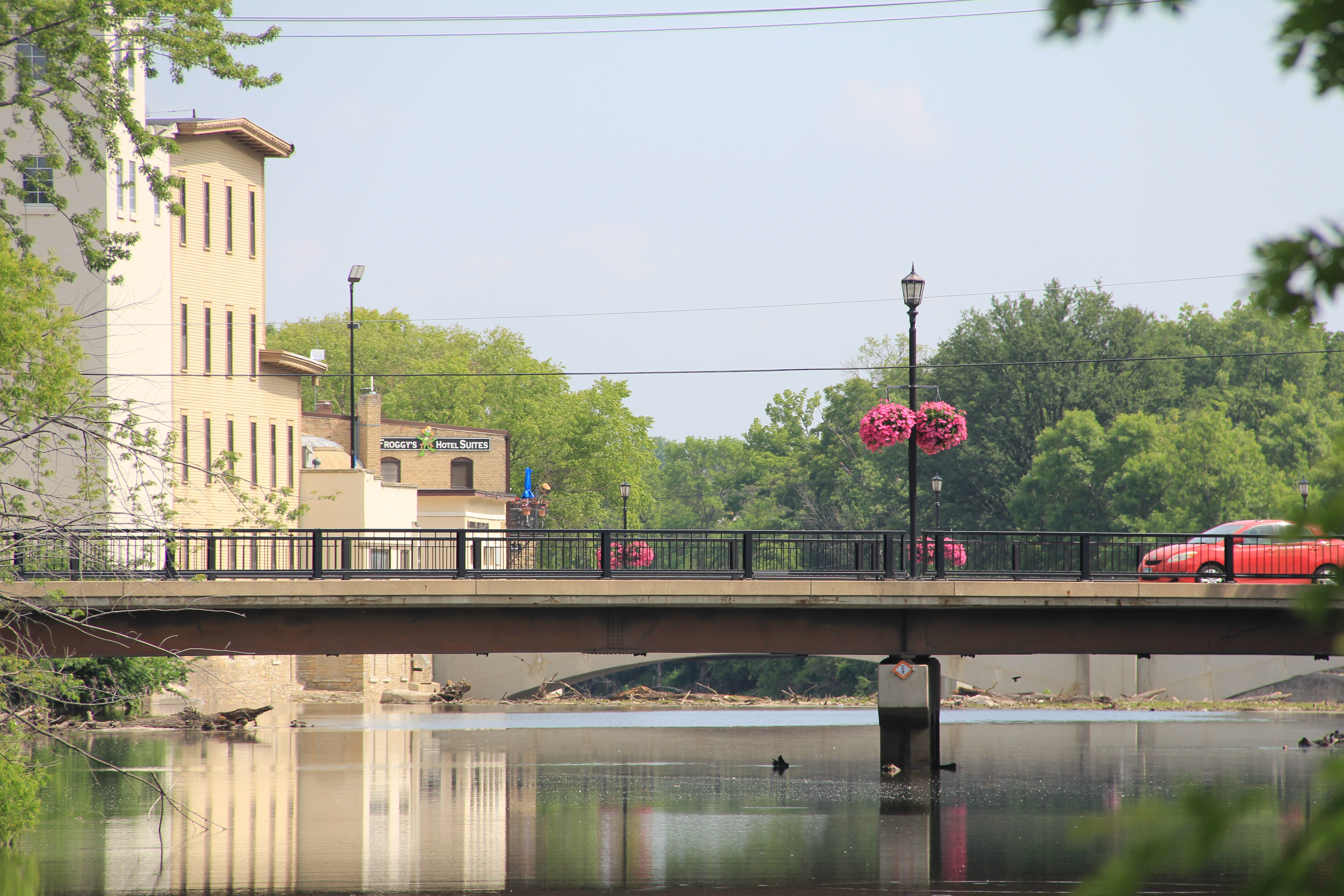
One of multiple bridges crossing the Cannon River in downtown Northfield. (Minnesota Prairie Roots copyrighted photo)
I left the local marketers to their display work, continuing into the park, which hugs the Cannon River. Water draws me. I paused along river’s edge to frame the distant 5th Street West bridge with my Canon camera. Lush baskets of petunias splashed pink into the greenery and the brown hardscape of buildings. Below ducks swam in the placid river while a red car crossed the bridge.
Orange and red beets. (Minnesota Prairie Roots copyrighted photo)
If not for the constant thrum of traffic on busy Minnesota State Highway 3, this would prove a peaceful setting. Yet I still enjoy this park, appreciating the flower gardens, florals spilling from balconies on the apartment building across the street, the ping of balls and the hum of conversation from the nearby pickleball courts.
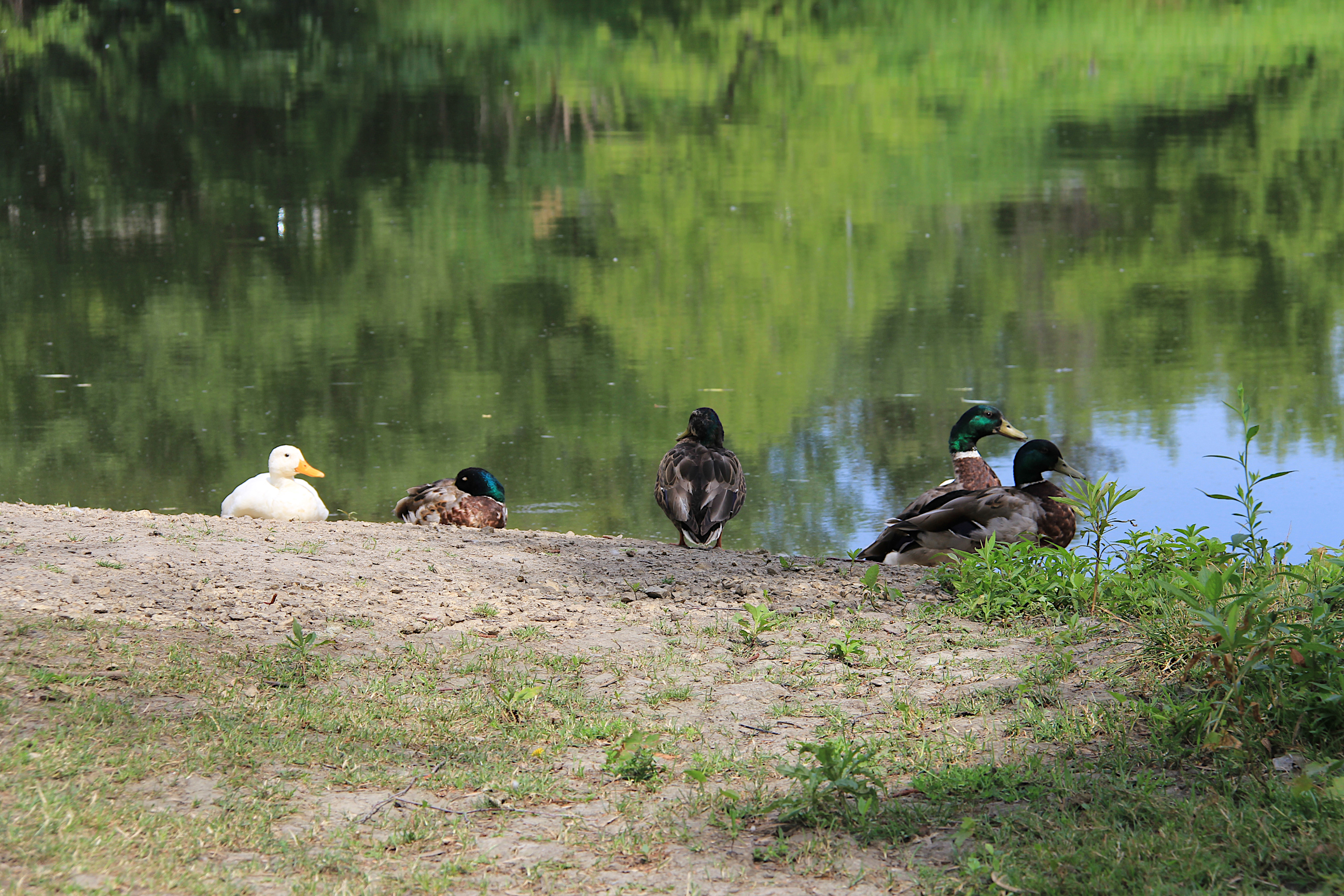
There were two white ducks among the others. (Minnesota Prairie Roots copyrighted photo)
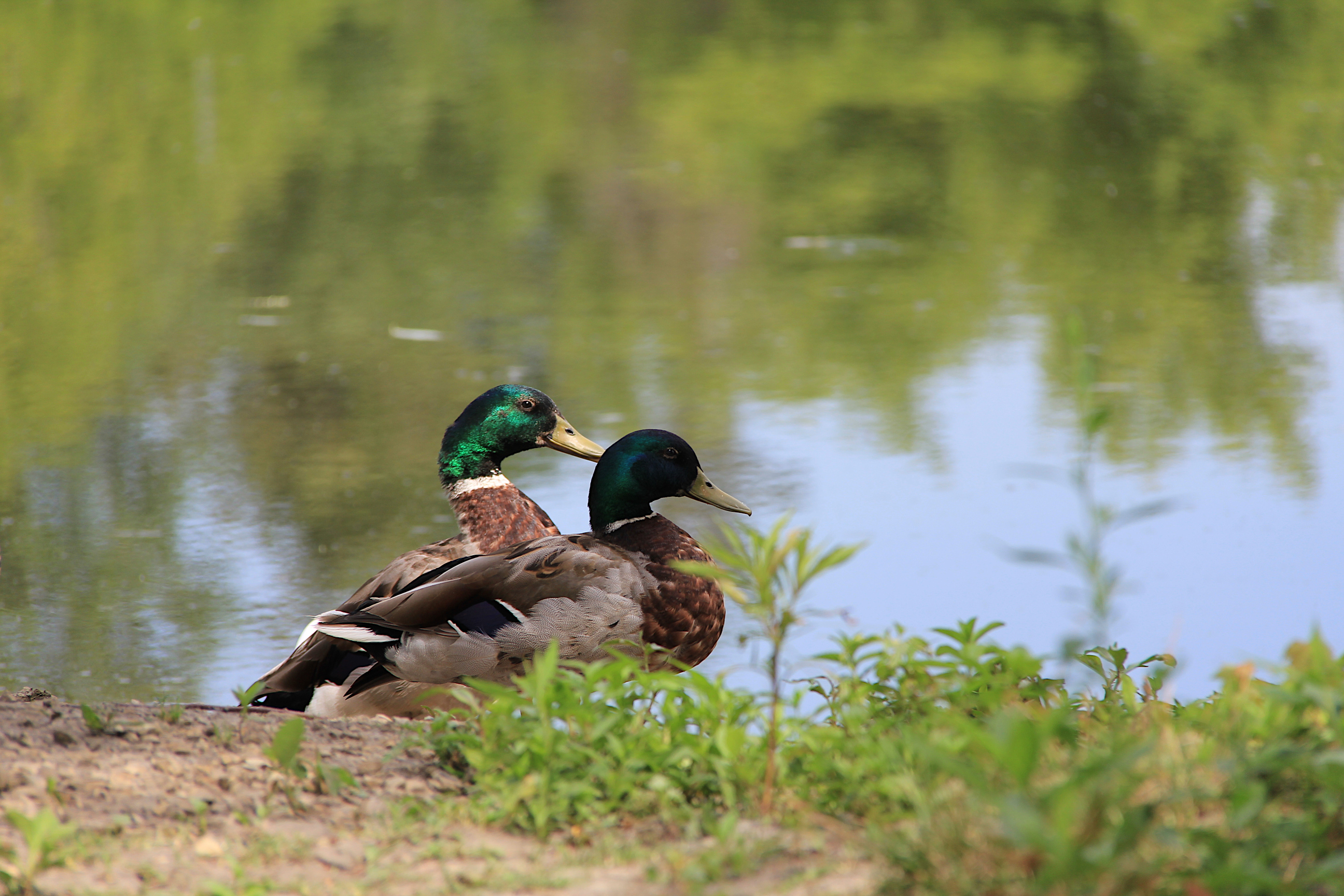
I still had one more place to stop—the spot along the riverbank where the ducks hang out. I was hoping to see the pure white ducks I’ve previously seen here. They were there along with the mallards, the iridescent green of the drakes’ heads shimmering in the late morning light.
With time to spare while waiting for Randy, I joined a man sitting at a picnic table. Either he would welcome conversation or he wouldn’t. He did. We talked about the market—he awaited its opening with cloth bags at the ready—and health and the care he gave his wife before she passed and family and the model railroad spread over eight sheets of plywood in his basement. And he told me about the new museum opening in Randolph across from the fire hall. The Randolph Area Historical Society is constructing a building that will cover the history of six Dakota and Goodhue County townships, house a family history research library and serve as a community gathering spot.
Randolph is a town rich in railroad history. I’d been there many years ago for Randolph Railroad Days, I shared with my new friend. Given his interest in trains, he has, too, and gave me the dates, October 21 and 22, for the 2023 event. I promptly added the celebration, which includes model railroad and railroad displays, a swap meet and more, to my smartphone calendar.
Rich red sauces. (Minnesota Prairie Roots copyrighted photo)
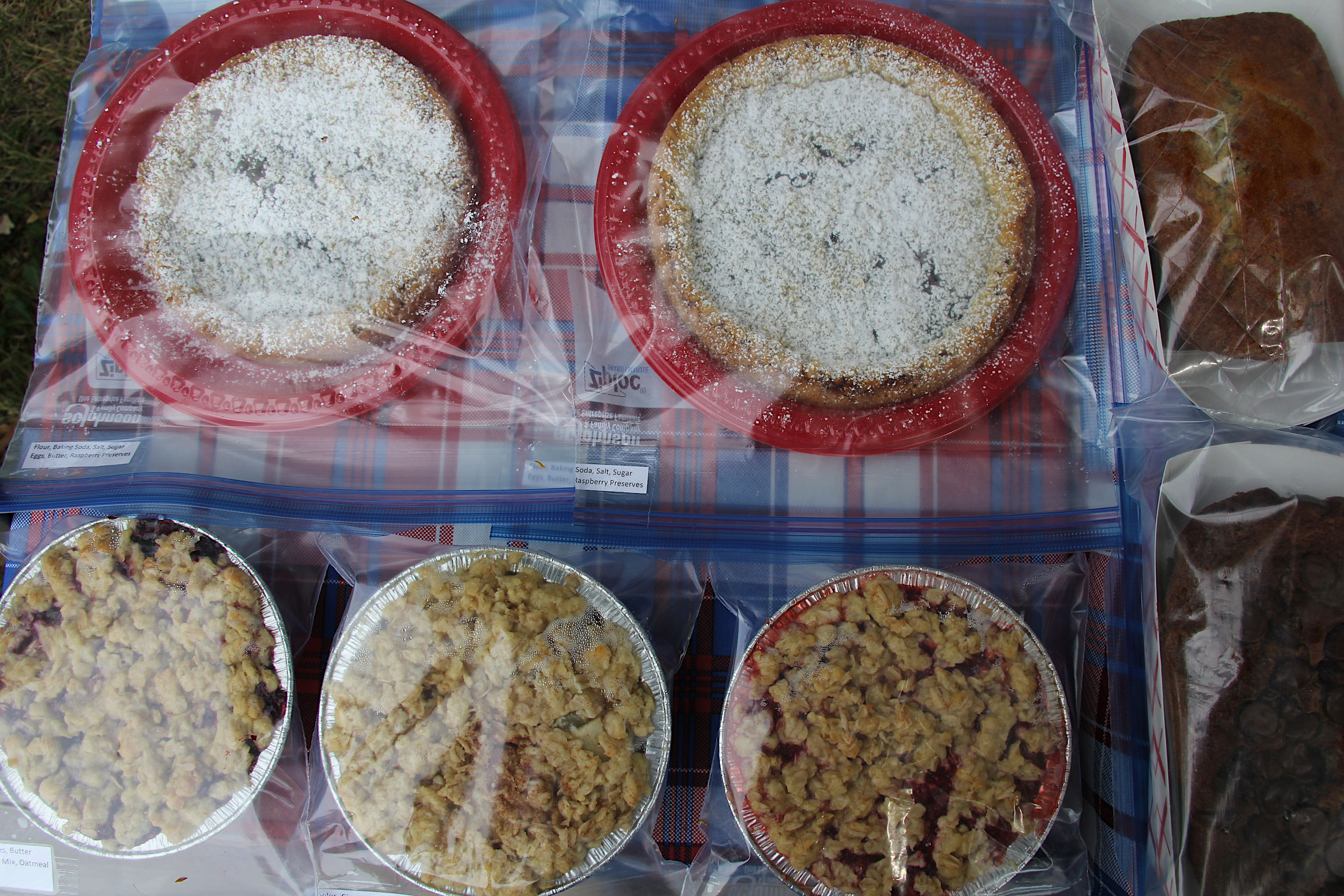
Soon my phone beeped with a text from Randy that he was nearly done with his appointment. I thanked the guy at the picnic table for the conversation, then aimed back toward the farmers market. I stopped to photograph the colorful produce and the goodies at McKenna’s Sweet Treats stand, my eyes focusing on the cookies, the mini fruit crisps, the sweet breads… And at the end of the table, quart and pint jars brimmed with spaghetti sauce and salsa in the loveliest shade of rich red, seasonings and onions floating in all that homemade goodness.
While I felt tempted to buy a treat made from raspberry preserves, I didn’t. But I left feeling appreciative for the gardeners and bakers and cooks who share their produce and goods at farmers’ markets like the one in Northfield. I felt appreciative, too, for conversation with a stranger and ducks along the river and the Cannon which winds through southern Minnesota on a lovely summer day.
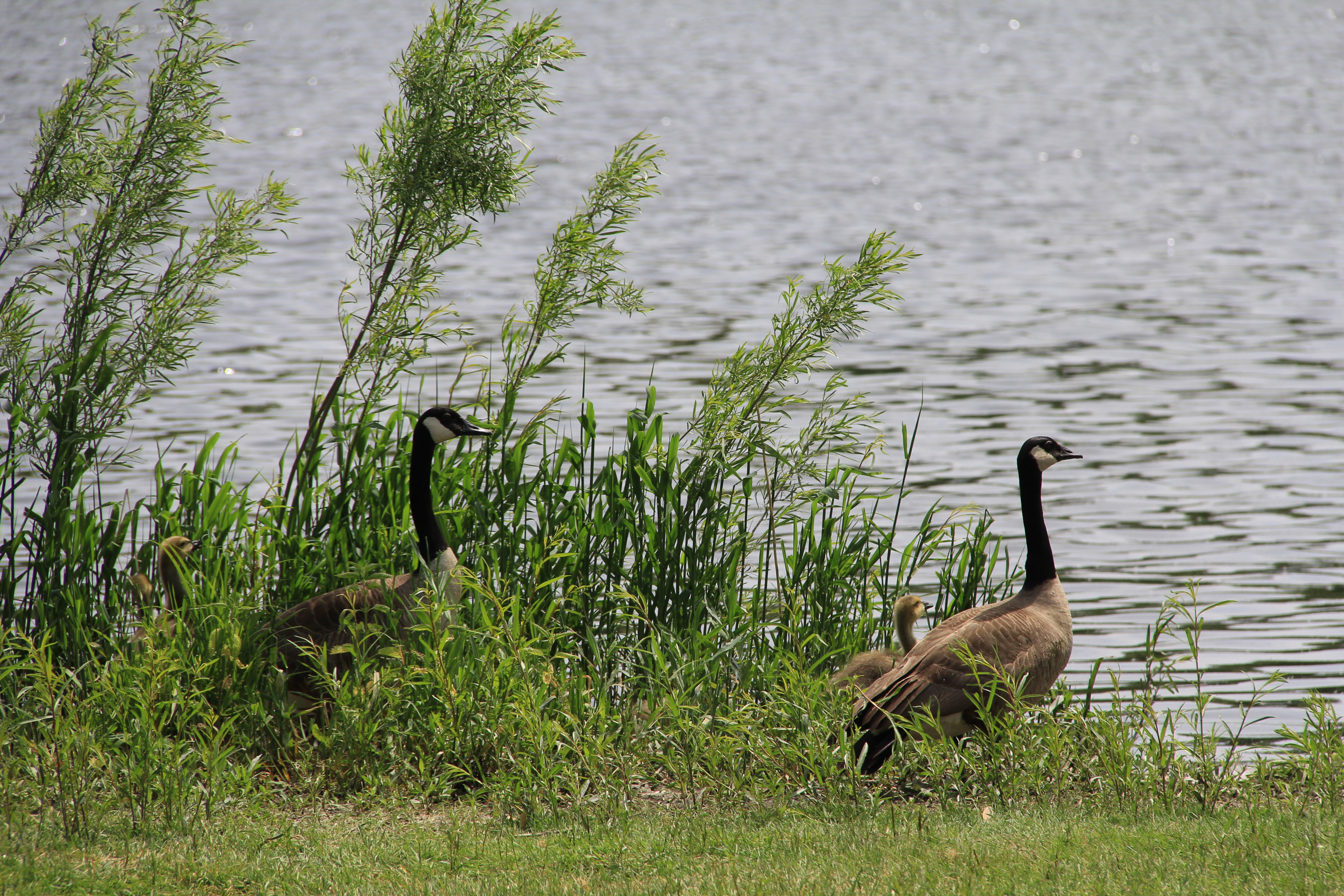
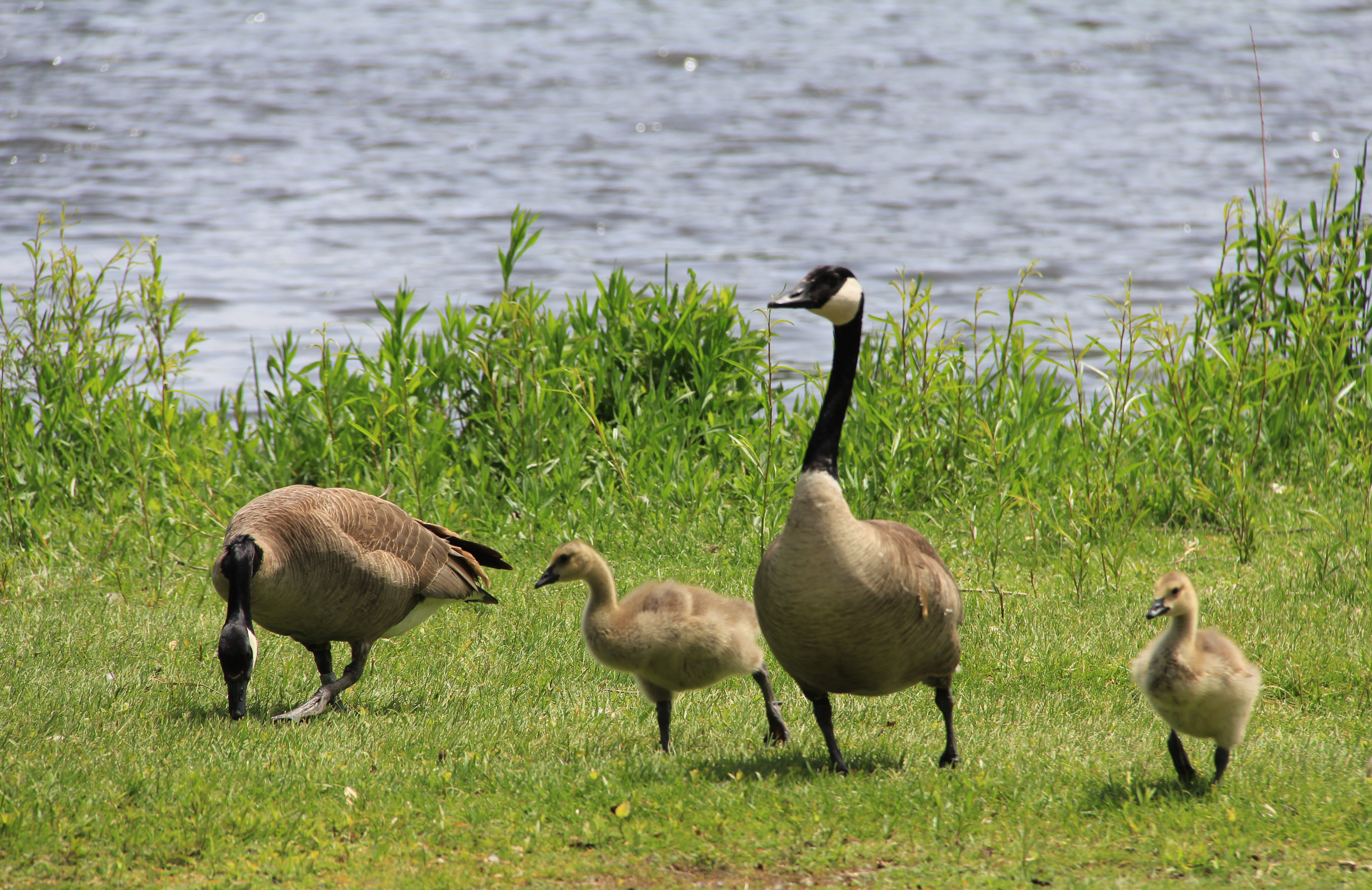
A family of Canada geese emerge from the grass growing along the Cannon River in Faribault. (Minnesota Prairie Roots copyrighted photo May 2023)
EACH SPRING I ANTICIPATE the appearance of newborn ducks and geese in the wild. There’s something about these waterfowl that appeals to me. Perhaps it’s the cuteness factor. Or maybe it’s the reassurance that, despite the ever-changing chaotic world, some things remain constant. Eggs hatch. Ducklings and goslings emerge. And the cycle of life continues.
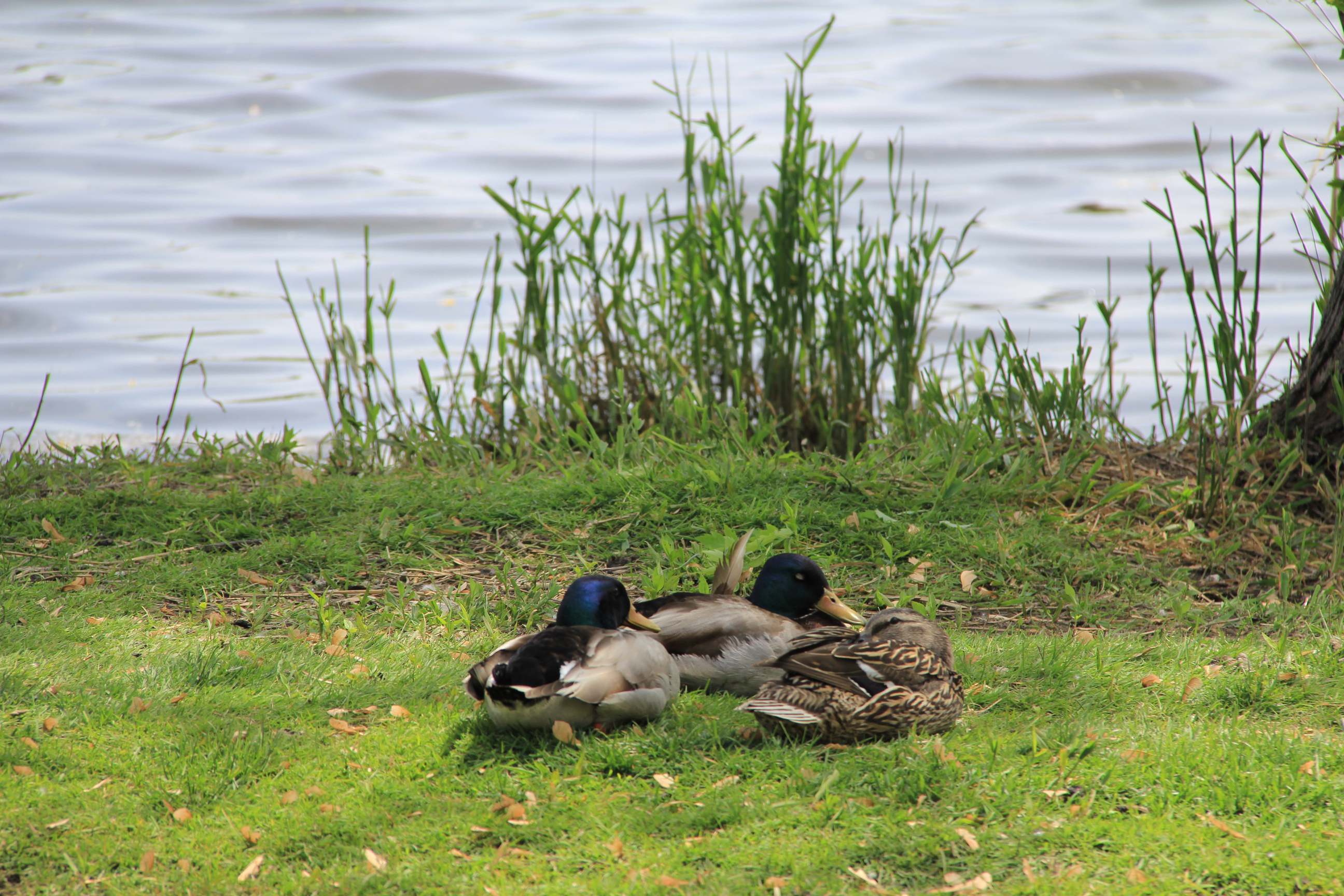
I spotted adult mallard ducks, including these drakes and hen, but no ducklings. (Minnesota Prairie Roots copyrighted photo May 2023)
This year I was a bit late getting down to North Alexander Park in Faribault, a prime viewing spot along the Cannon River for an adaptation of Robert McCloskey’s children’s picture book, Make Way for Ducklings. The book won the Caldecott Medal in 1941 and is a beloved classic about a duck family in Boston.
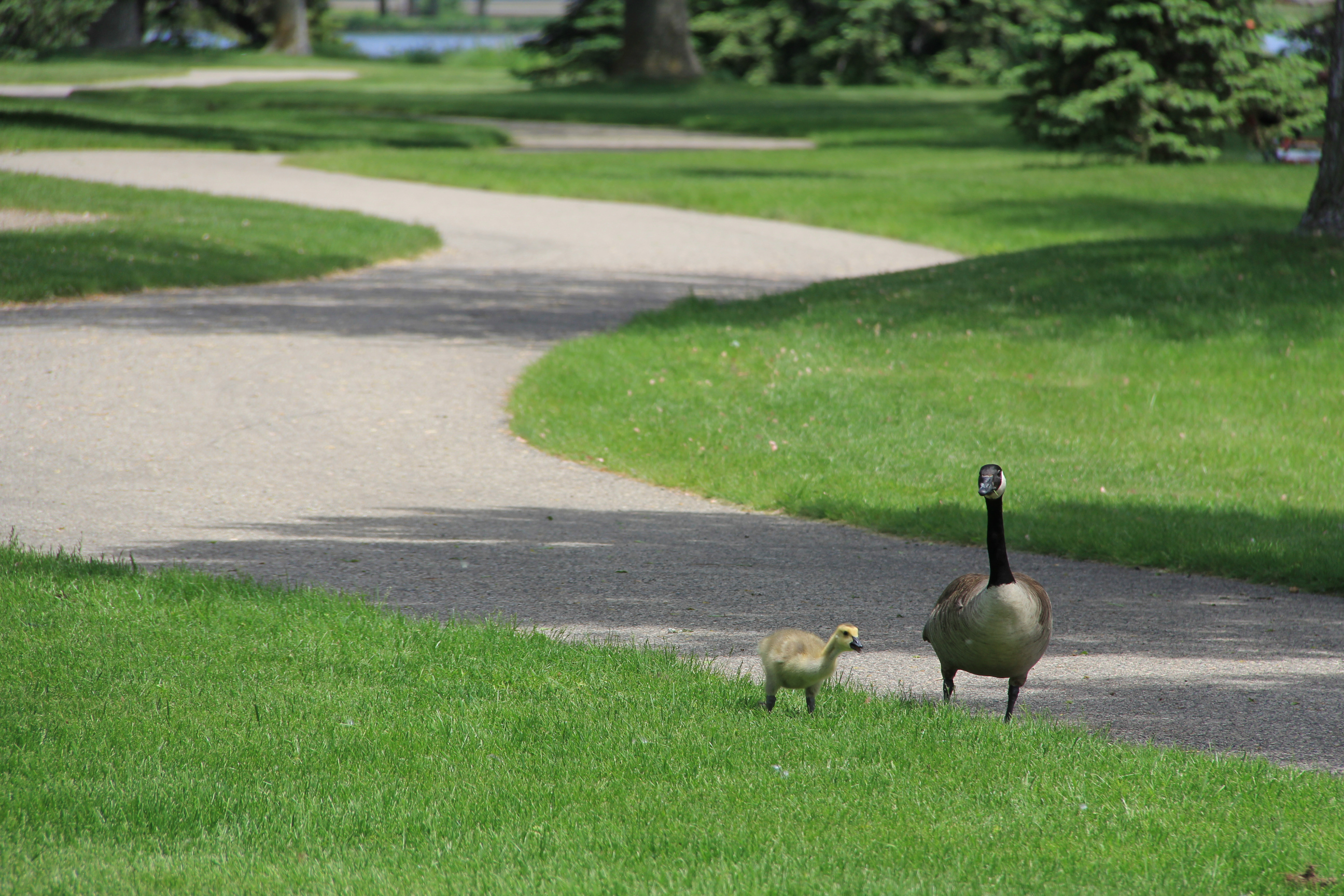
Parent and baby gosling along the recreational trail in Faribault’s North Alexander Park. (Minnesota Prairie Roots copyrighted photo May 2023)
On the recent day I went duck and goose hunting with my camera here in Minnesota, far from Boston, I found only goslings. No ducklings. I approached with caution. I’ve learned from experience that Canada geese are aggressively protective of their young. I already hold childhood trauma from enduring vicious rooster attacks. I don’t need to add to that.
I kept my distance from the goose family, relying on my telephoto lens to take me closer. (Minnesota Prairie Roots copyrighted photo May 2023)
And so I watched and focused, thankful for my zoom lens which allowed getting close to the geese without getting close. The young ones appeared to be at teenage stage, rather than vulnerable baby stage. Thus my trust of even the youngest rated zero.
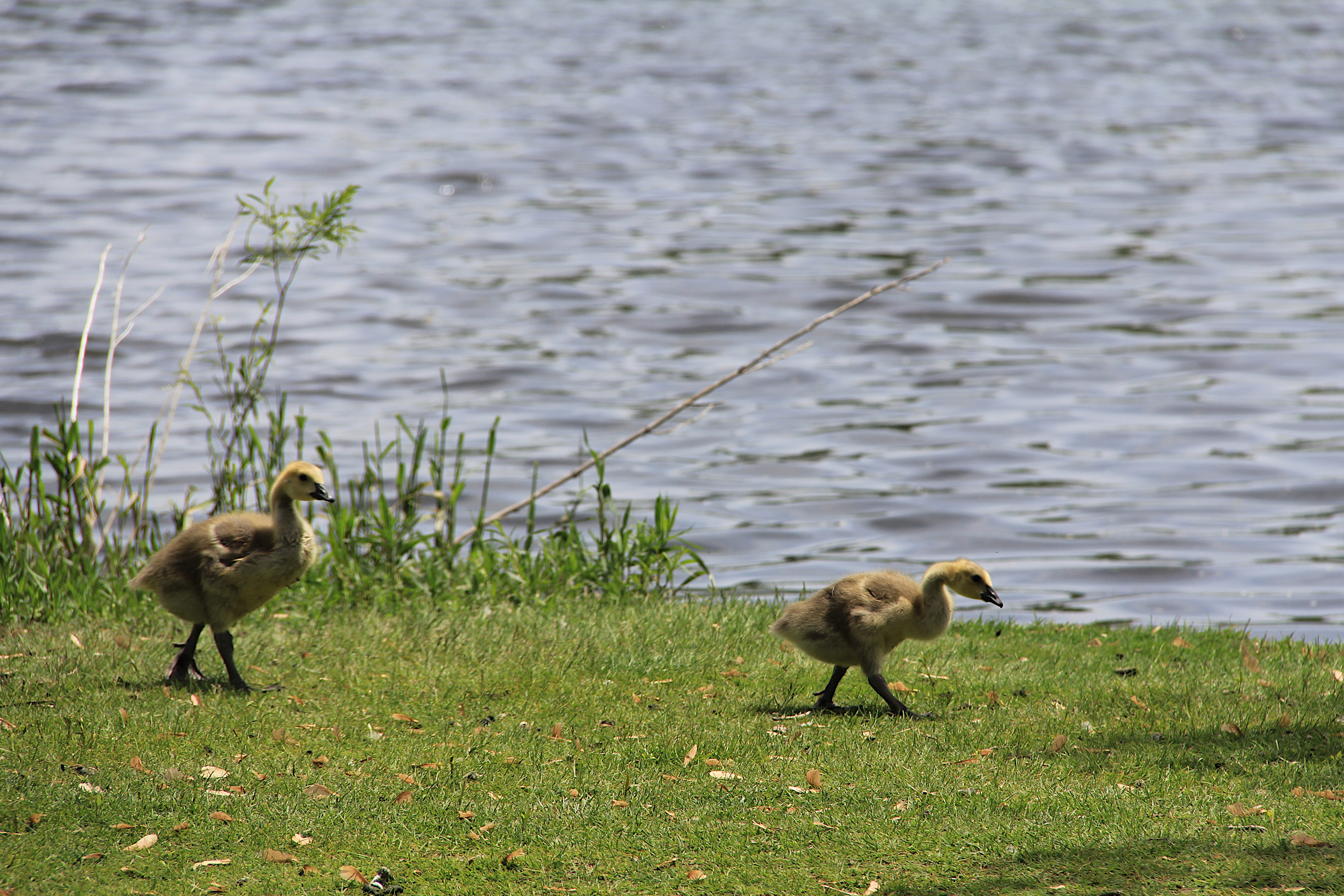
Determined goslings assert their independence. (Minnesota Prairie Roots copyrighted photo May 2023)
I was fully aware that the geese were aware of my presence. People occasionally toss bread to waterfowl here (something I wish they wouldn’t do), so they may have expected a hand-out. Not from me. I was simply there to observe and document while dodging excrement, one of the hazards of stepping into a Robert McCloskey scene.
Despite the caution, despite the need to watch my step, I will continue to delight in this annual rite of spring which draws me to the banks of the Cannon River in southern Minnesota. Far from Boston.
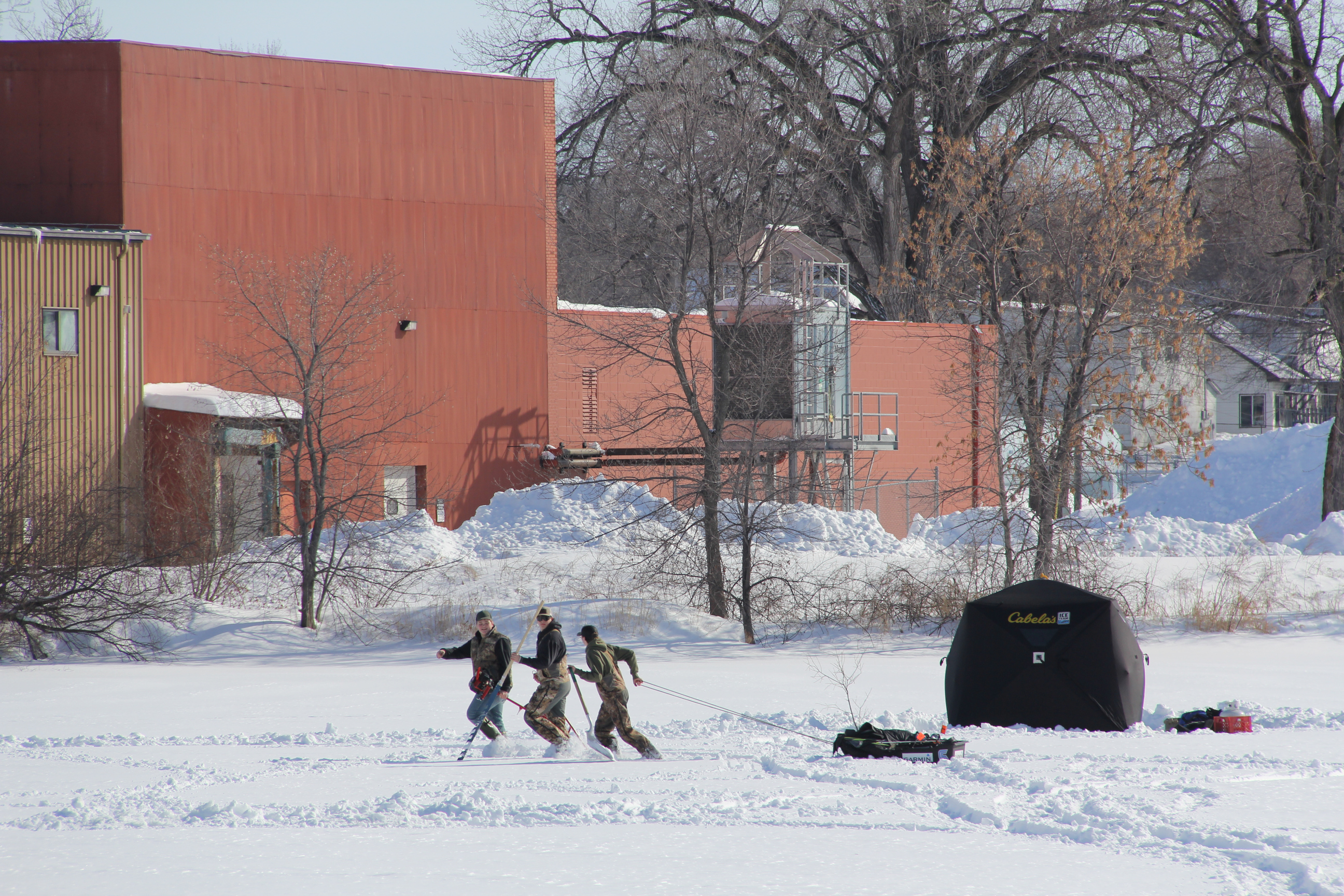
Carting ice fishing gear across the snow-covered Cannon River by the Faribault Mill. (Minnesota Prairie Roots copyrighted photo February 2023)
ICE FISHING RATES AS A SPORT that must seem absurd to anyone living in a warm weather climate.
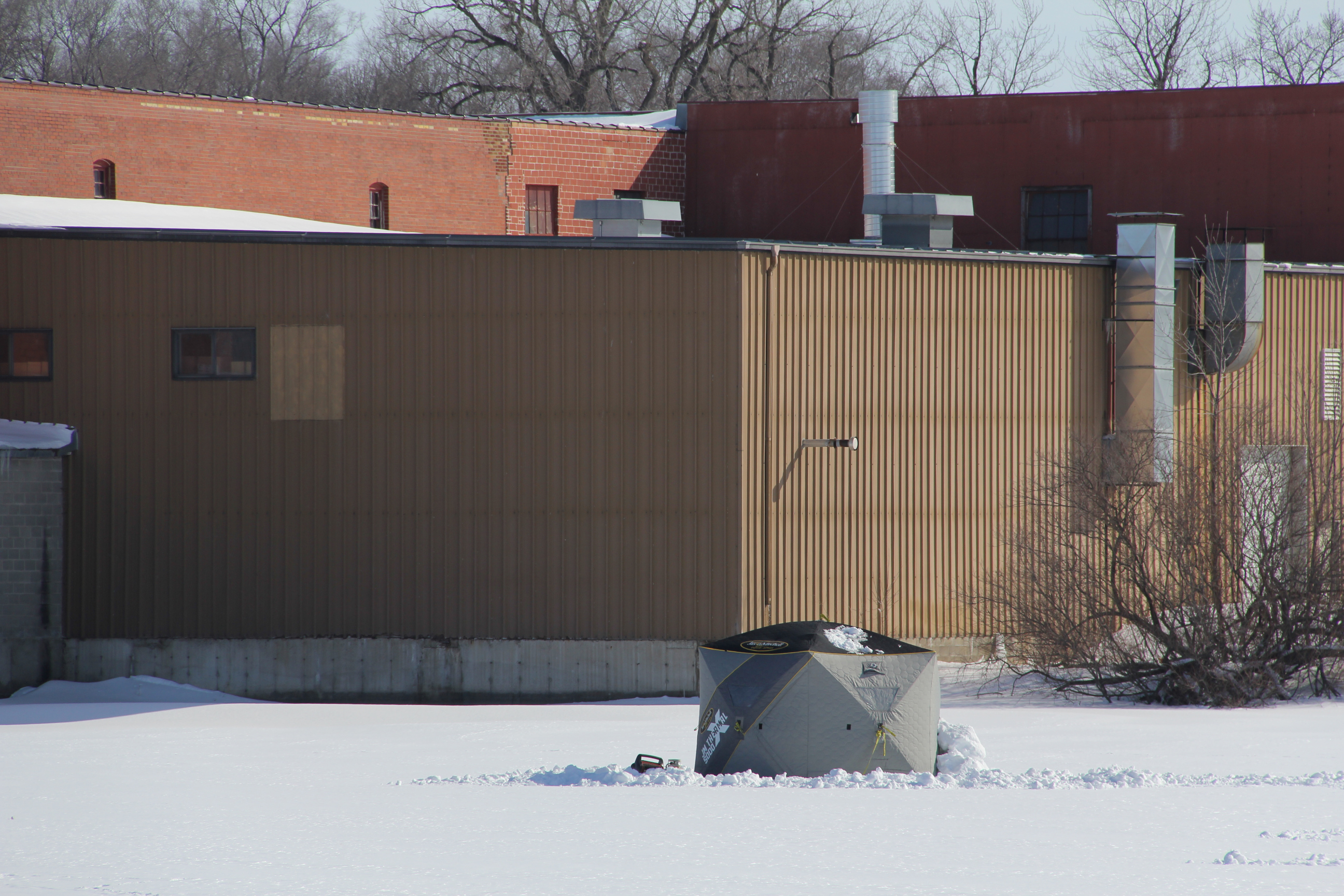
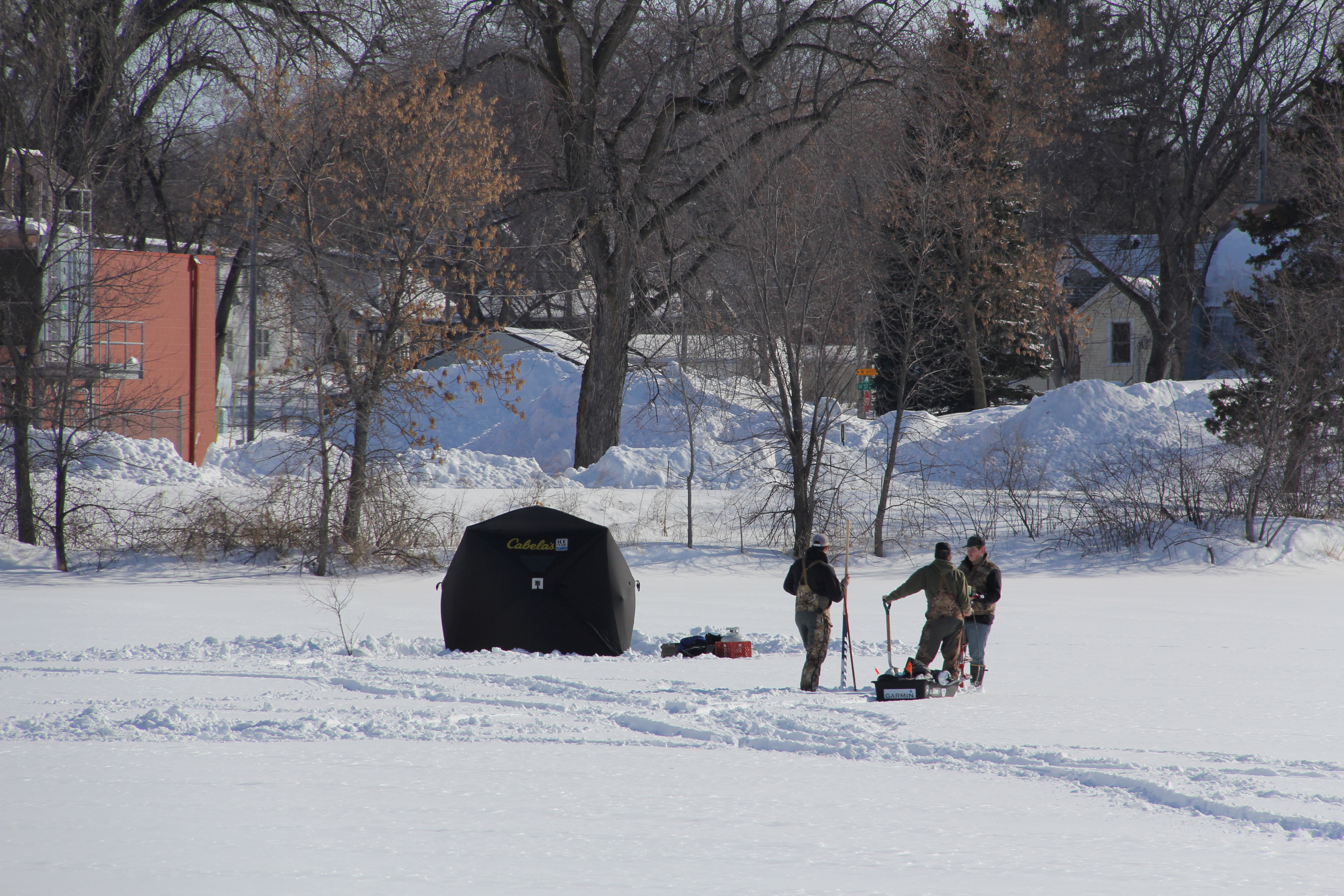
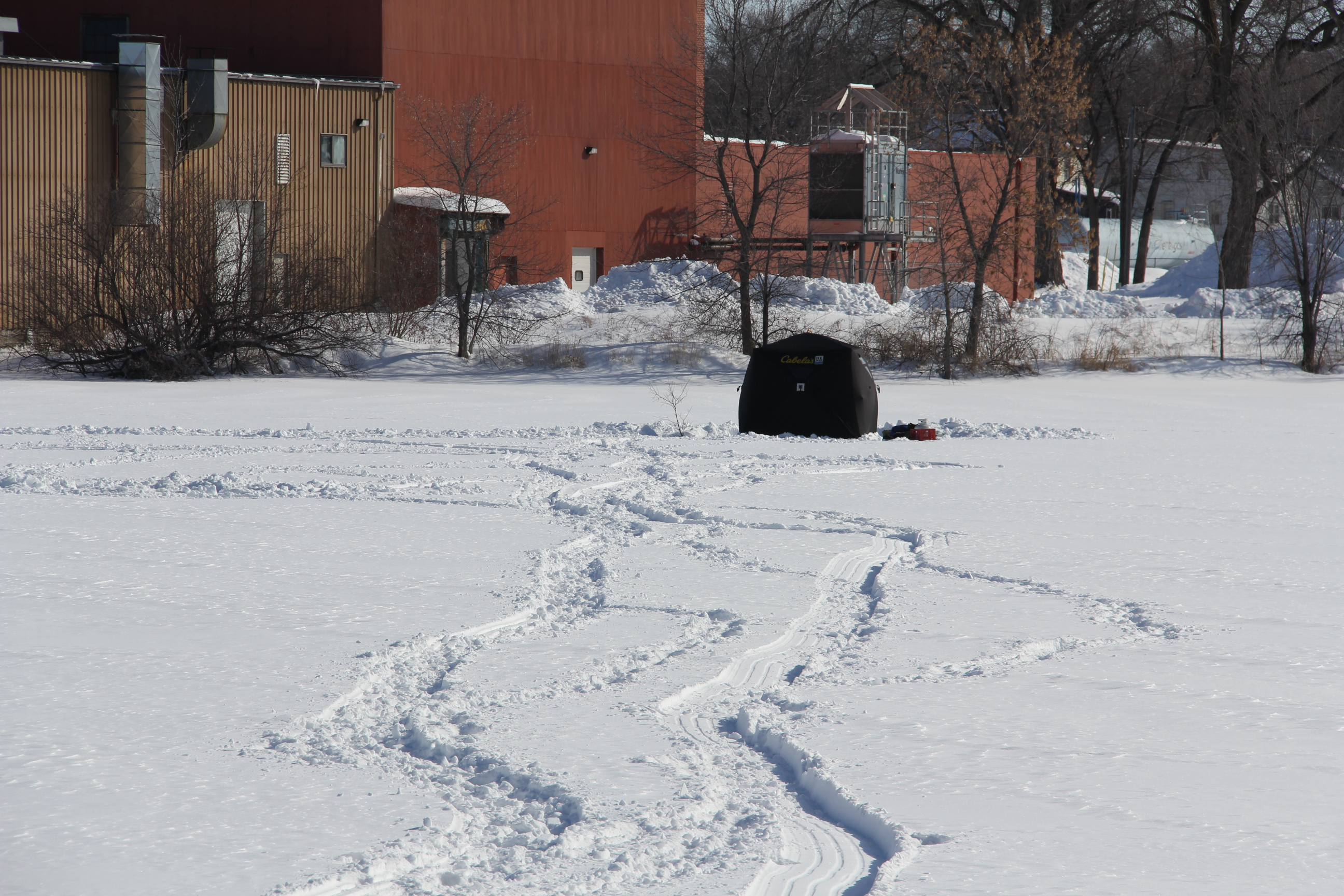
The second portable fish house the anglers set up on the Cannon River near the mill. (Minnesota Prairie Roots copyrighted photo February 2023)
I mean, if you aren’t from a place like Minnesota or Wisconsin, how would you react to anglers driving their vehicles onto a frozen lake, fish houses in tow? That seems reckless and unsafe and dangerous, and it can be. No ice is ever considered 100 percent safe. But, take precautions like knowing your lake (or river) and its ice thickness, driving with windows rolled down and carrying safety equipment, and the sport can be relatively safe.
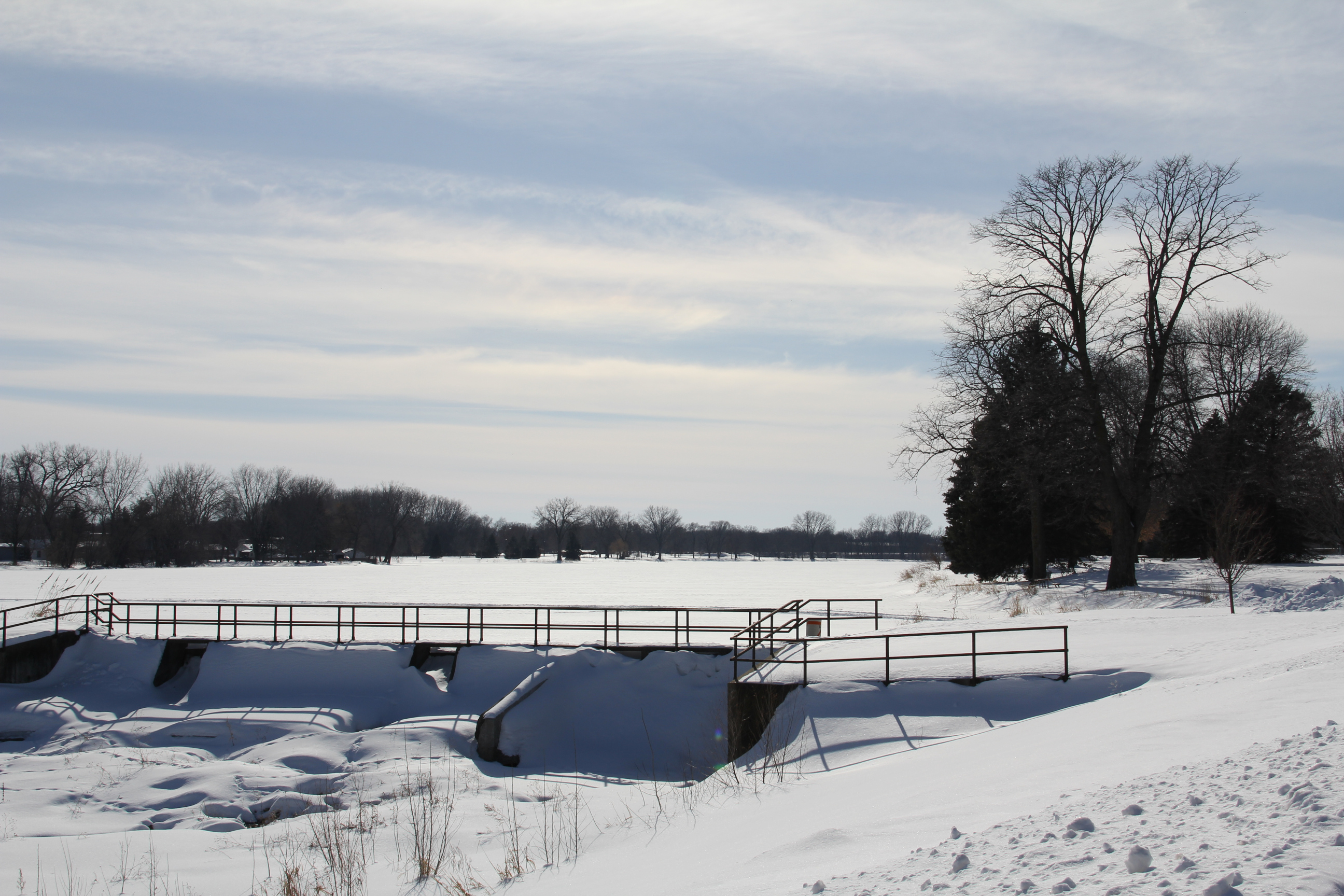
A view of the dam and frozen Cannon River from the recreational trail in North Alexander Park. There are two dams in this location, one next to the woolen mill and then this one. (Minnesota Prairie Roots copyrighted photo February 2023)
Still, this time of year and with the particularly snowy winter we’ve had in Minnesota, ice fishing right now doesn’t seem all that safe to me. Snow acts like a blanket, insulating the ice, resulting in thinner, inconsistent and weaker ice. Decades have passed since I engaged in the sport so I am not writing from current day experience, only from basic knowledge.
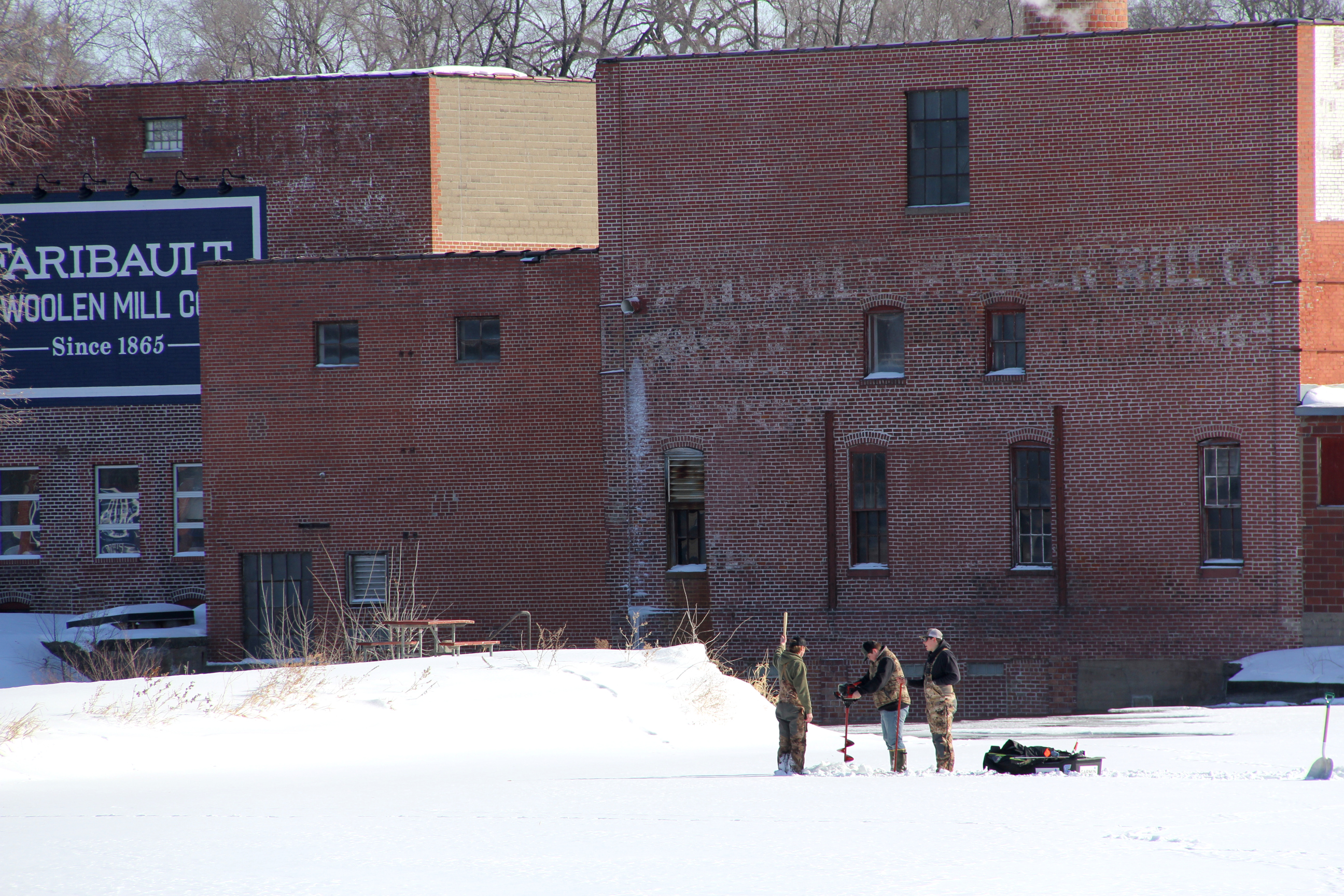
Drilling a hole in the frozen river near the top of the Woolen Mill Dam. (Minnesota Prairie Roots copyrighted photo February 2023)
Sunday afternoon while out and about in Faribault, I came upon three guys with ice fishing equipment on the frozen Cannon River Reservoir by the Woolen Mill Dam. As I watched, I hoped they knew what they were doing because I didn’t feel all that confident in the strength of the river ice with water flowing below.
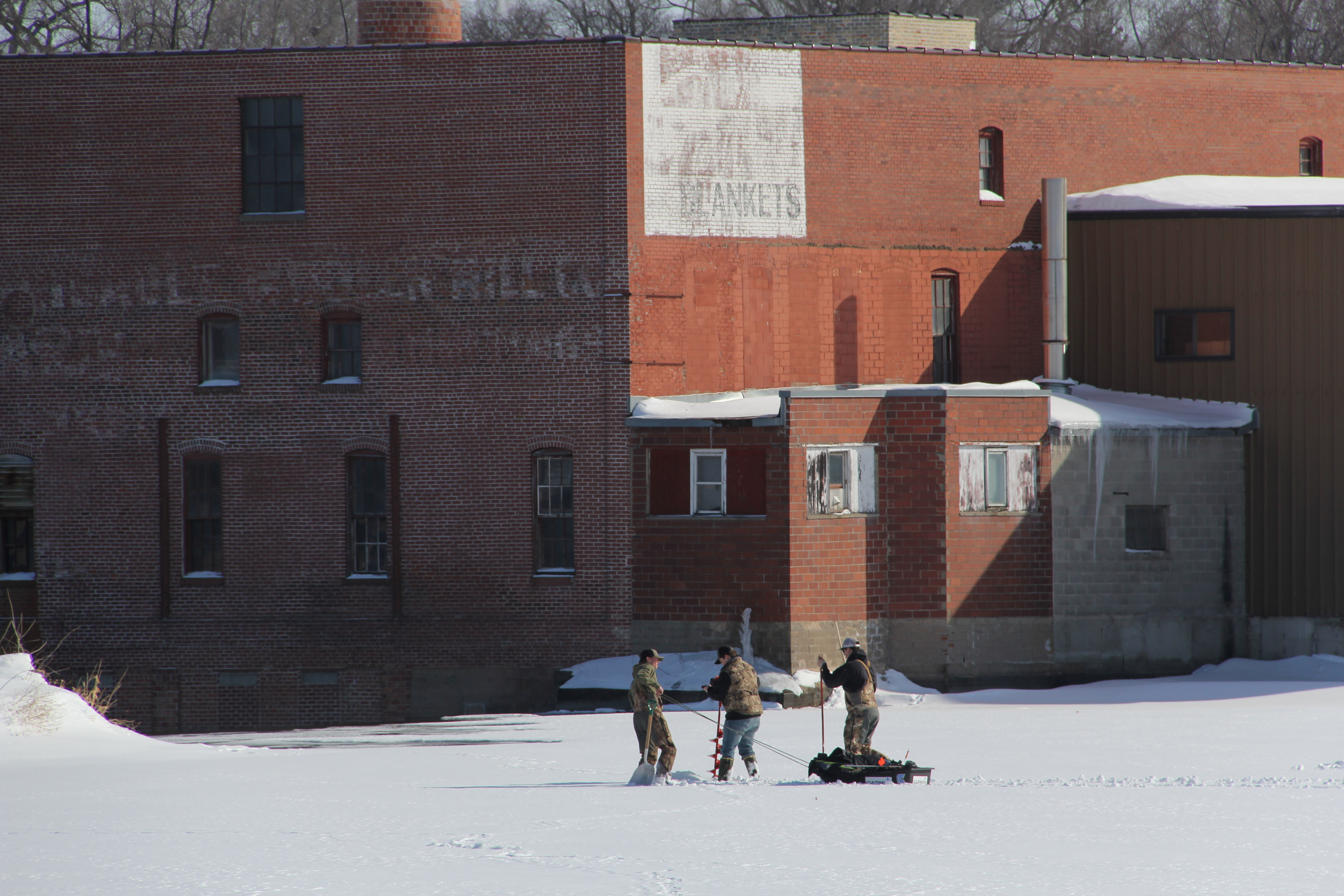
I can almost hear the discussion about where to drill holes in the ice. (Minnesota Prairie Roots copyrighted photo February 2023)
But I appreciated that they were out enjoying the 30-degree sunny afternoon, warm enough even to shed their gloves and heavy coats. They’d already set up two portable fish houses by the time I arrived at North Alexander Park. I stood there and observed as the trio carried ice auger, ice saw, and scoop shovel and towed a sled with fishing gear across the snow-covered river. I was uncertain whether they were spearing for or simply angling for fish. Turns out neither.
Local avid outdoorsman and columnist Larry Gavin clarified: Those guys were actually netting carp. The net is stretched from one tent to the other using a hook and a series of holes. They were checking to see if the location was a good one. Every year they net Wells Lake and get a semi tanker full of carp that are shipped overnight to Chicago. There is a high demand for carp as a food source in some ethnic dining.
Turning the ice auger into the ice to create a hole. (Minnesota Prairie Roots copyrighted photo February 2023)
It was such an iconic Minnesota winter scene, the fishermen in their camouflage attire, a visual clue that they are year-round sportsmen. I can only imagine the camaraderie, the BS, the anticipation of these friends as they searched for fish.
A sled trail across the river to the portable fish house. (Minnesota Prairie Roots copyrighted photo February 2023)
I loved the way their sled left a snaking trail across the Cannon, almost like a line of poetry winding through the snow, writing of winter outdoors, of fish tales, of ice fishing in Minnesota.
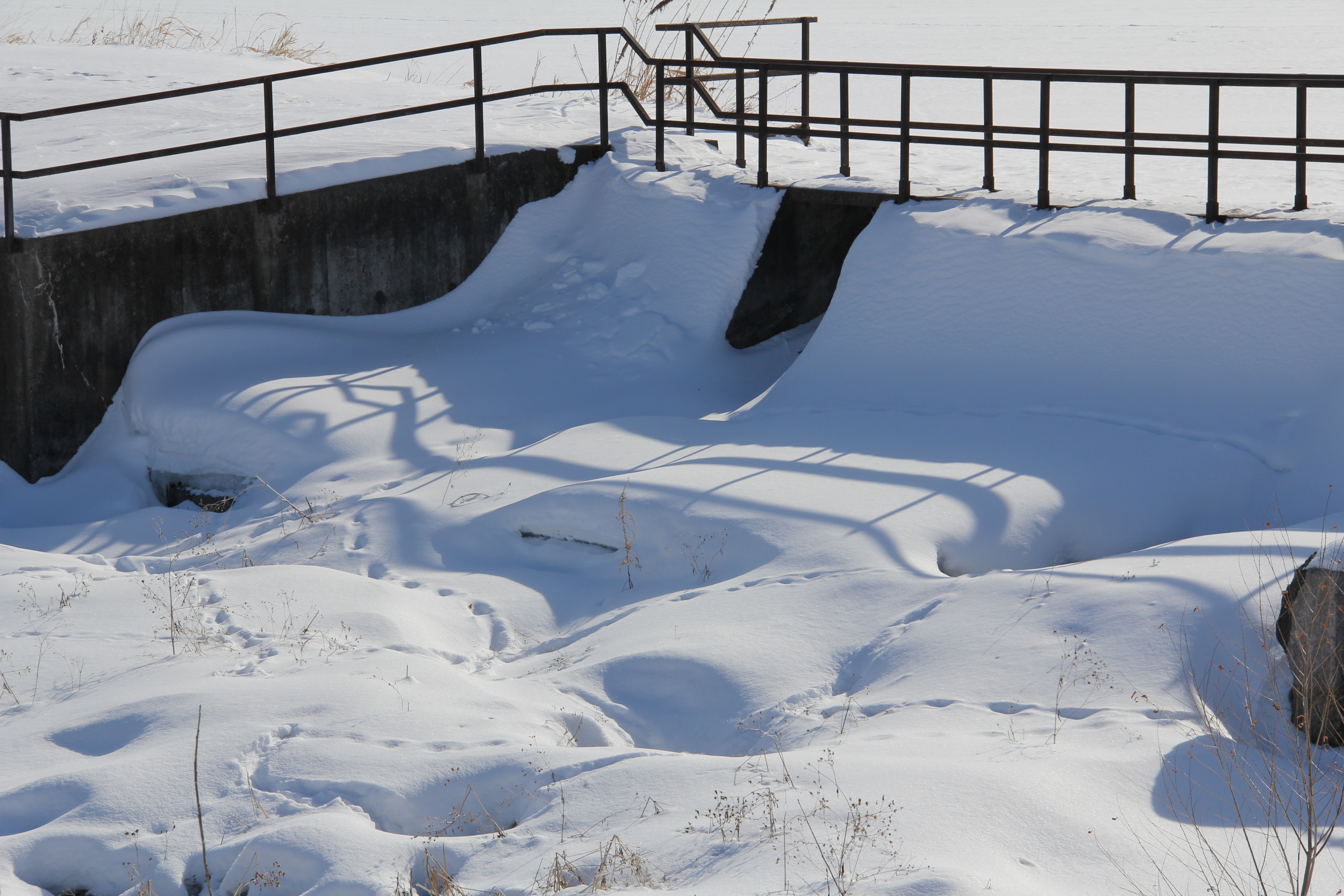
Animal tracks through the snow below the Cannon River dam nearest the recreational trail. (Minnesota Prairie Roots copyrighted photo February 2023)
FYI:The ice fishing season is winding down in Minnesota. All dark houses, fish houses and portables must be off inland lakes by the end of the day beginning on March 6 in the southern two-thirds of the state and by March 20 in the northern third. You can still ice fish, just can’t leave houses unattended. Local officials can set different restrictions if unsafe conditions call for such action.
Randy follows the winding trail along the Cannon River through North Alexander Park in Faribault. (Minnesota Prairie Roots copyrighted photo January 2023)
ON THE FIRST DAY of the new year, before Minnesota’s first big winter storm of 2023, Randy and I followed the paved trail along the Cannon River in North Alexander Park. It’s one of my favorite walking paths, if the wind isn’t blowing biting cold off the frozen river.
I appreciate that the City of Faribault keeps the trail free of snow and ice. That’s always a concern for me. I don’t want to risk falling and breaking a bone.
On this first afternoon in January, I pulled my Canon EOS 60D from the camera bag with hopes of getting some interesting shots. Photographing in winter always proves challenging in a landscape mostly devoid of color. But on this day, blue skies accented with puffs of white clouds provided a backdrop contrast.
Dried milkweed pods rise from the riverbank. (Minnesota Prairie Roots copyrighted photo January 2023)
Still, finding scenes to photograph takes effort and an eye for detail. I zoomed in on dried weeds along the shoreline, where the riverbank is nearly indistinguishable from the snow-layered Cannon.
Person-made sculpture or random chunk of icy snow? (Minnesota Prairie Roots copyrighted photo January 2023)
And then I noticed, on a riverside picnic table, an icy sculpture. It appeared intentionally placed there, although it could have been thrown onto the tabletop by a snowblower and simply have been a chunk of snow that happened to resemble an animal. Whatever, I found the art interesting, worthy of my pause.
Oak leaves cling to branches. (Minnesota Prairie Roots copyrighted photo January 2023)
Pausing seems a necessity of January photography in Minnesota. I stopped to study trees, noting stubborn oak leaves clinging to branches as if defying winter.
Treetops against a textured sky. (Minnesota Prairie Roots copyrighted photo January 2023)
I saw, too, how barren branches curve in graceful bends unseen in the fullness of other seasons. Trees possess a certain sculptural beauty when posed in winter nakedness.
I’ve always loved this “BLANKETS” ghost sign on the Faribault Mill. (Minnesota Prairie Roots copyrighted photo January 2023)
Across the river, the iconic 1892 Faribault Mill (formerly the Faribault Woolen Mill; it recently acquired a cotton mill in Maine) stands as a symbol of endurance and history. Inside the mill, craftspeople create quality woolen blankets and more that are acclaimed world-wide. I never tire of focusing on this local landmark which merges with the Cannon.
Walking the dogs before the Vikings-Packers game. (Minnesota Prairie Roots copyrighted photo January 2023)
My walk with Randy, who was well ahead of me given all my photographic lagging, proved a much-needed break to stretch my muscles, to breathe in the crisp air of January. As we aimed back toward the van, my fingers numbing from the cold exposure, we met a Green Bay Packers fan walking his dogs. His green and gold attire tipped me to his football allegiance. I greeted him, but, with head phones clamped on, he didn’t reply. Maybe that was for the best given the Packers 41-17 win over the Minnesota Vikings hours later.
The snow-chunked river bank meets frozen Cannon River meets Faribault Mill in the distance. (Minnesota Prairie Roots copyrighted photo January 2023)
I missed the game kick-off, not that I care given my general lack of interest in football. But occasionally I pause to take in the scene, to see the fans in their Vikings attire, to listen to their rising SKOL chant, to appreciate the details, just as I do with my Canon along the Cannon.
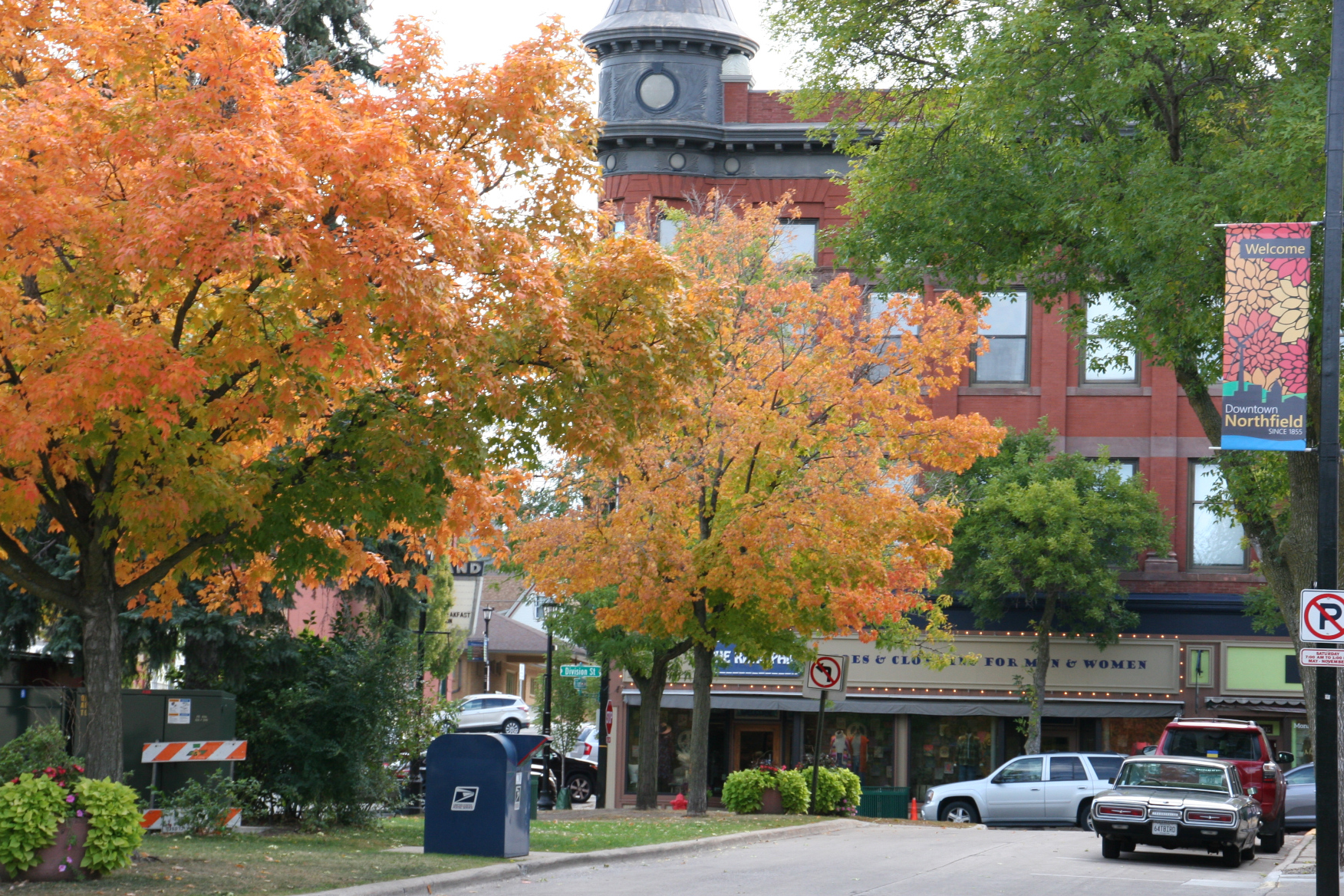
Trees were ablaze at the end of September in Northfield’s Bridge Square. (Minnesota Prairie Roots copyrighted photo September 2022)
FRIDAY MORNING BROUGHT the first snow flurries of the season to southern Minnesota. Not enough snow to stick to the ground here in Faribault, but in other parts of the state flakes accumulated.
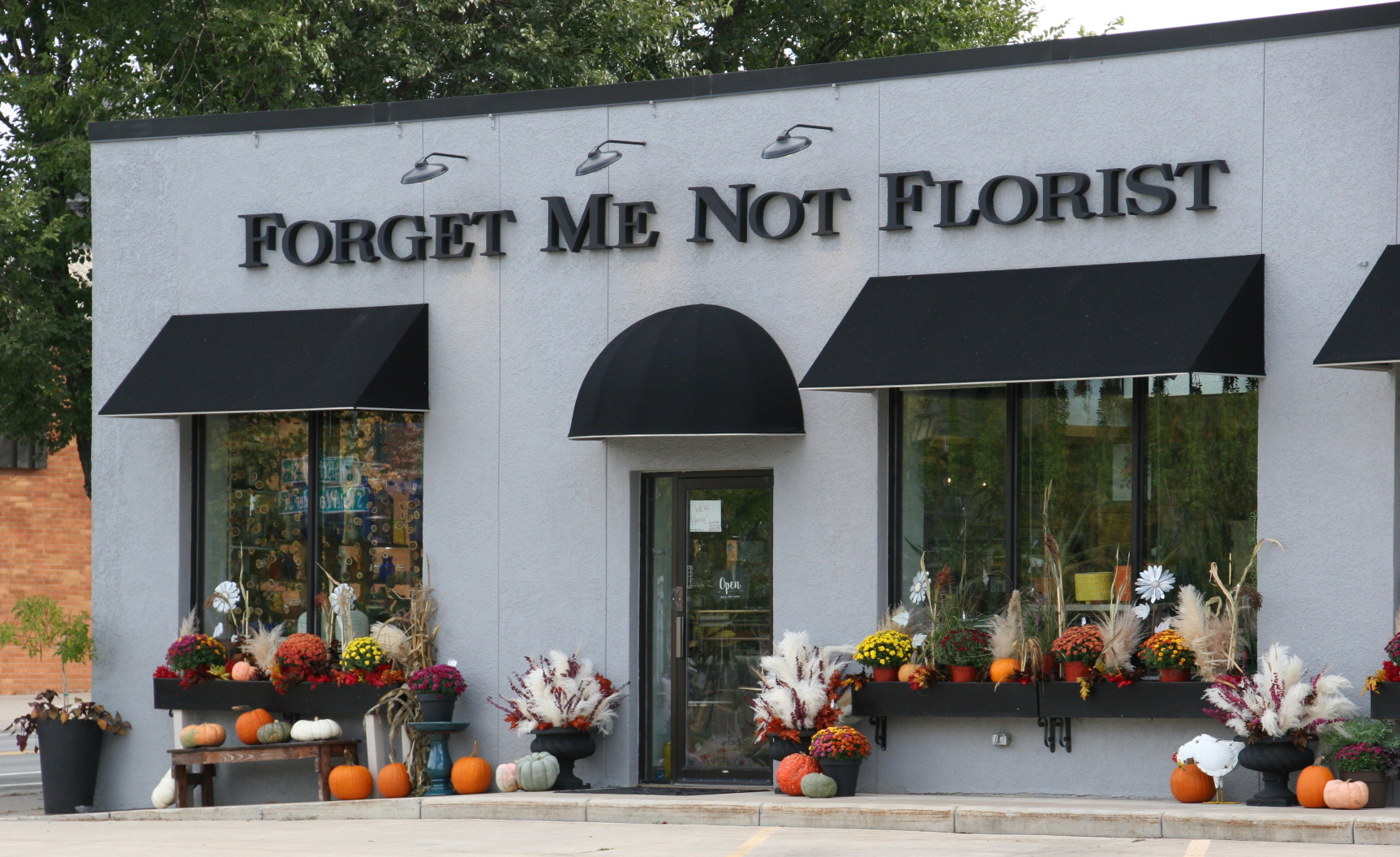
Seasonal displays drew my eye to this floral shop on a corner in downtown Northfield. (Minnesota Prairie Roots copyrighted photo September 2022)
We are in the time of transition, shifting from autumn toward winter. One day the sun shines bright on trees still ablaze in color and temps feel comfortable. Other days, grey clouds blanket the sky, blocking the sun, with winter attire needed outdoors.
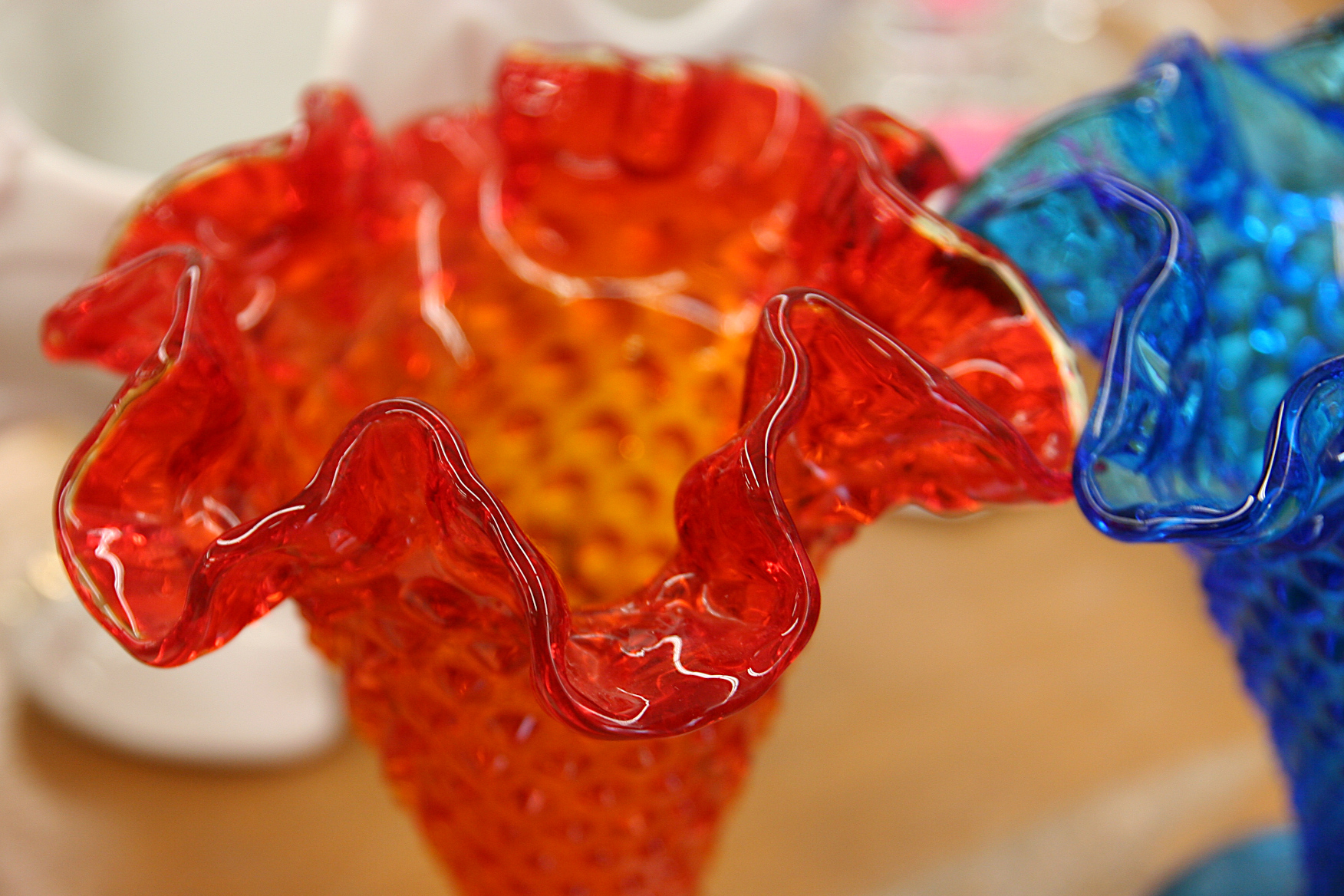
Inside Used-A-Bit Shoppe, glassware in a seasonal hue. (Minnesota Prairie Roots copyrighted photo September 2022)
In these waning days of autumn, I am reminded of how much I love this season—for the colors, the mostly moderate temps, the scent, the feel, the gathering in. It’s as if we Minnesotans recognize that every single gloriously sunny day needs to be celebrated, to be photographed in our memories, to be pulled out when winter days draw us in.
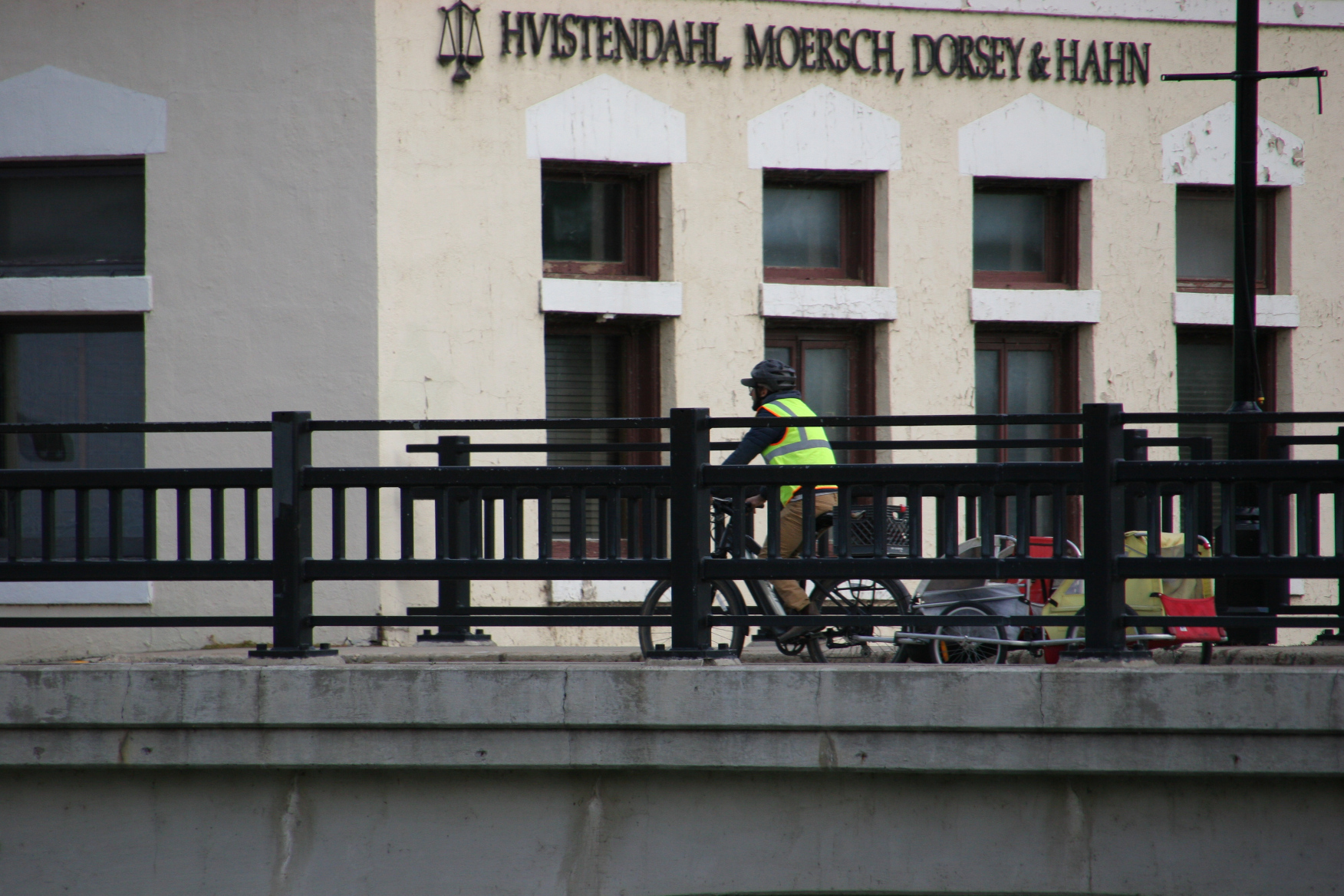
Biking across a bridge over the Cannon by Bridge Square. (Minnesota Prairie Roots copyrighted photo September 2022)
A few weeks ago I was in neighboring Northfield, about a 20-minute drive away. This art-strong historic college town along the Cannon River presented scenes that hold the essence of the season. From colorful trees to blooming flowers to seasonal displays, the visuals of autumn unfolded before me.
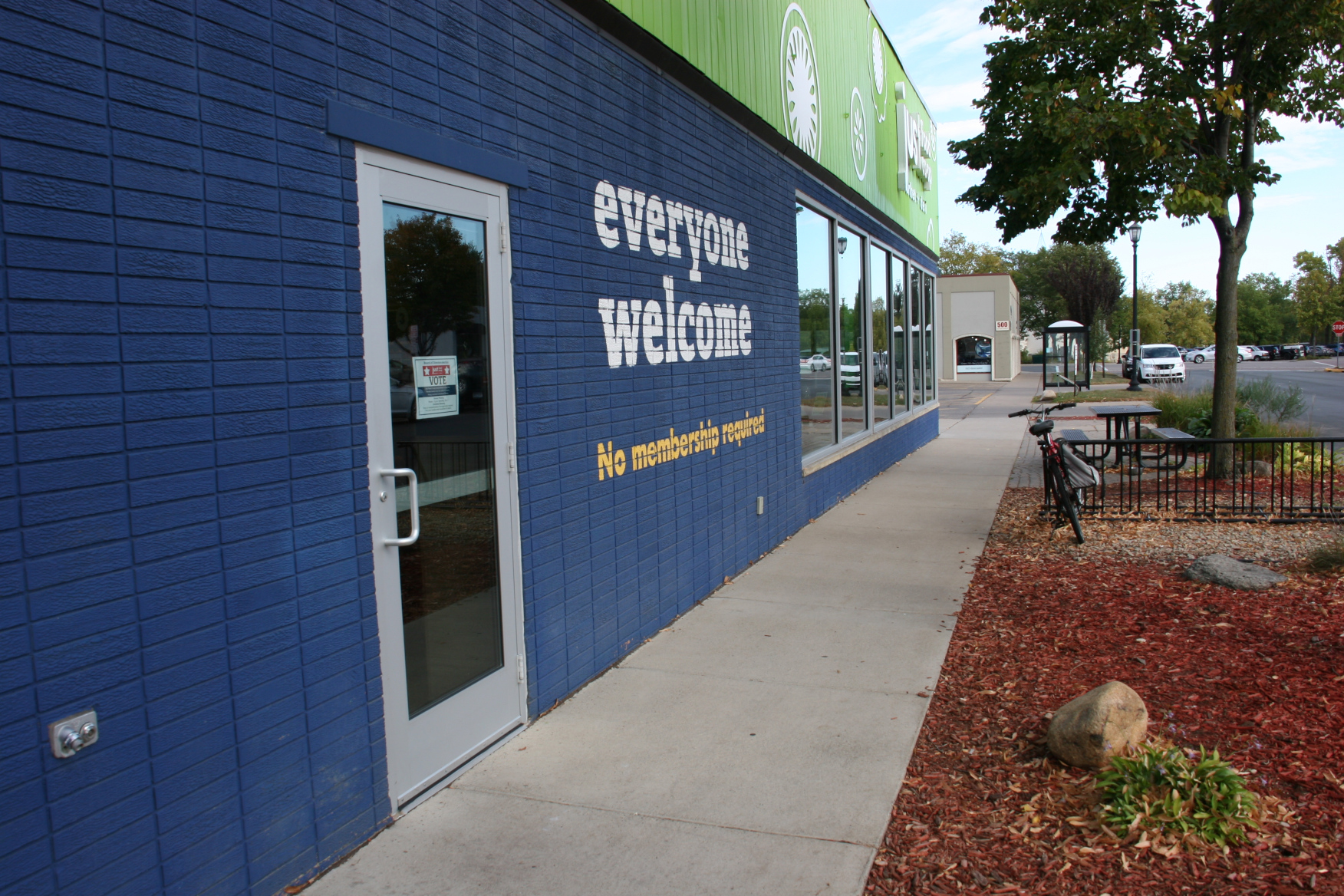
Outside Just Food Co-op. (Minnesota Prairie Roots copyrighted photo September 2022)
People were out and about. Dipping into Just Food Co-op. Shopping at the thrift store. Sitting on a park bench waiting to share a faith message. Walking a dog. Biking across a bridge spanning the river.
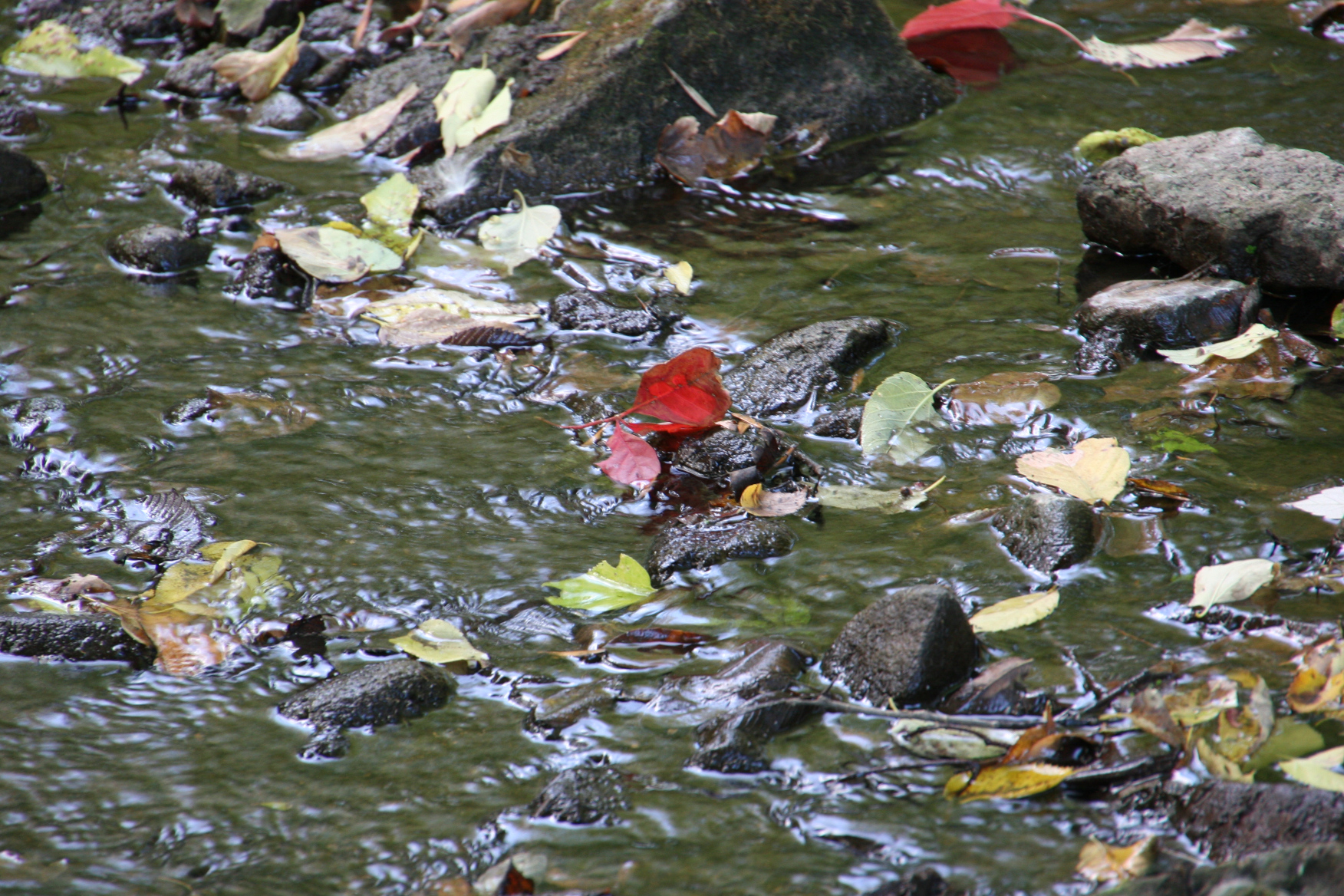
Fallen leaves add interest to the Arb creek. (Minnesota Prairie Roots copyrighted photo September 2022)
I felt no hurry, only an appreciation for the day, time to meander while waiting for Randy to complete an appointment. Afterwards we headed to Cowling Arboretum for a short walk and an engaging conversation with another hiker. It was one of those chance encounters that left me feeling uplifted, encouraged, blessed.
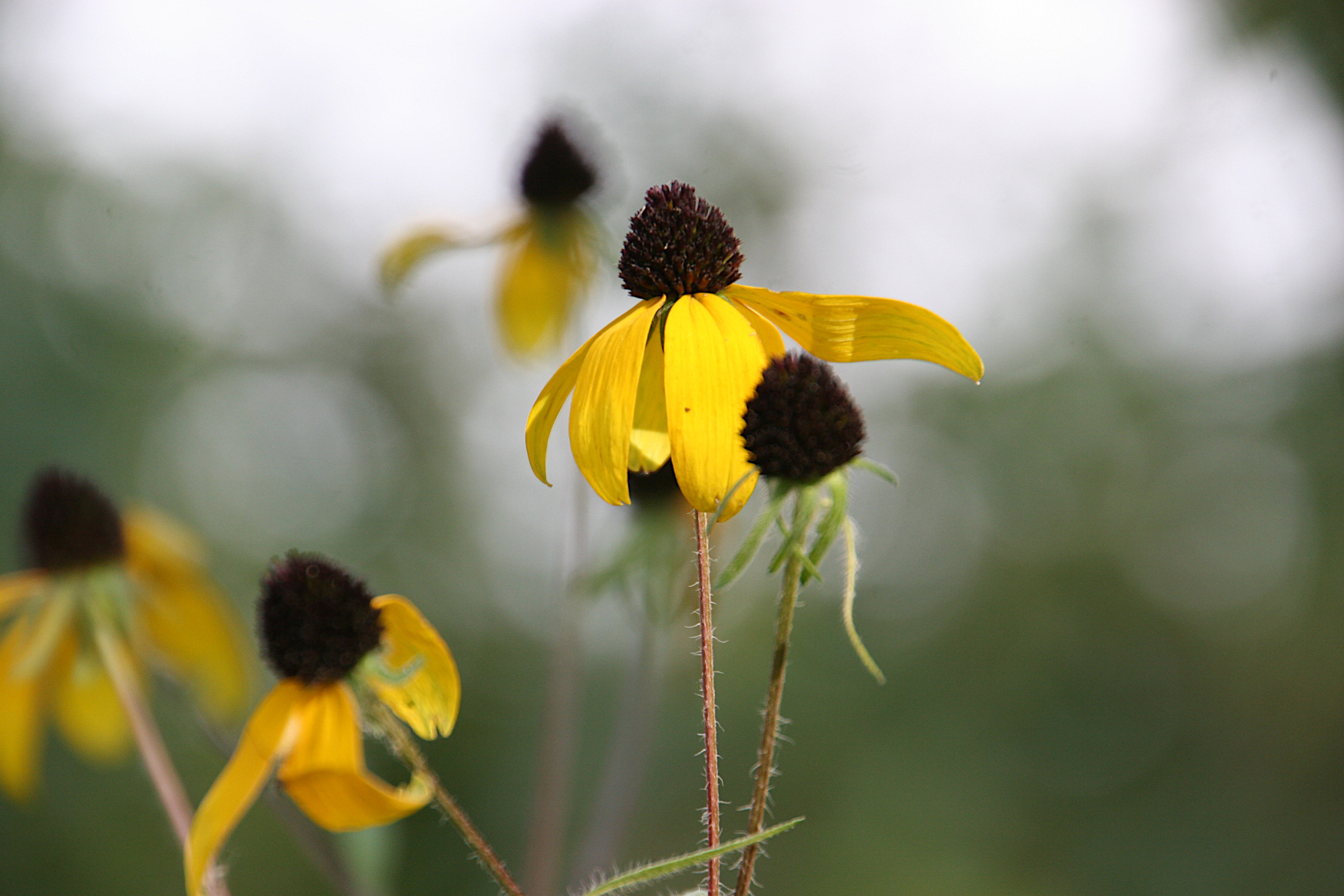
Coneflowers flourish at Cowling Arboretum. (Minnesota Prairie Roots copyrighted photo September 2022)
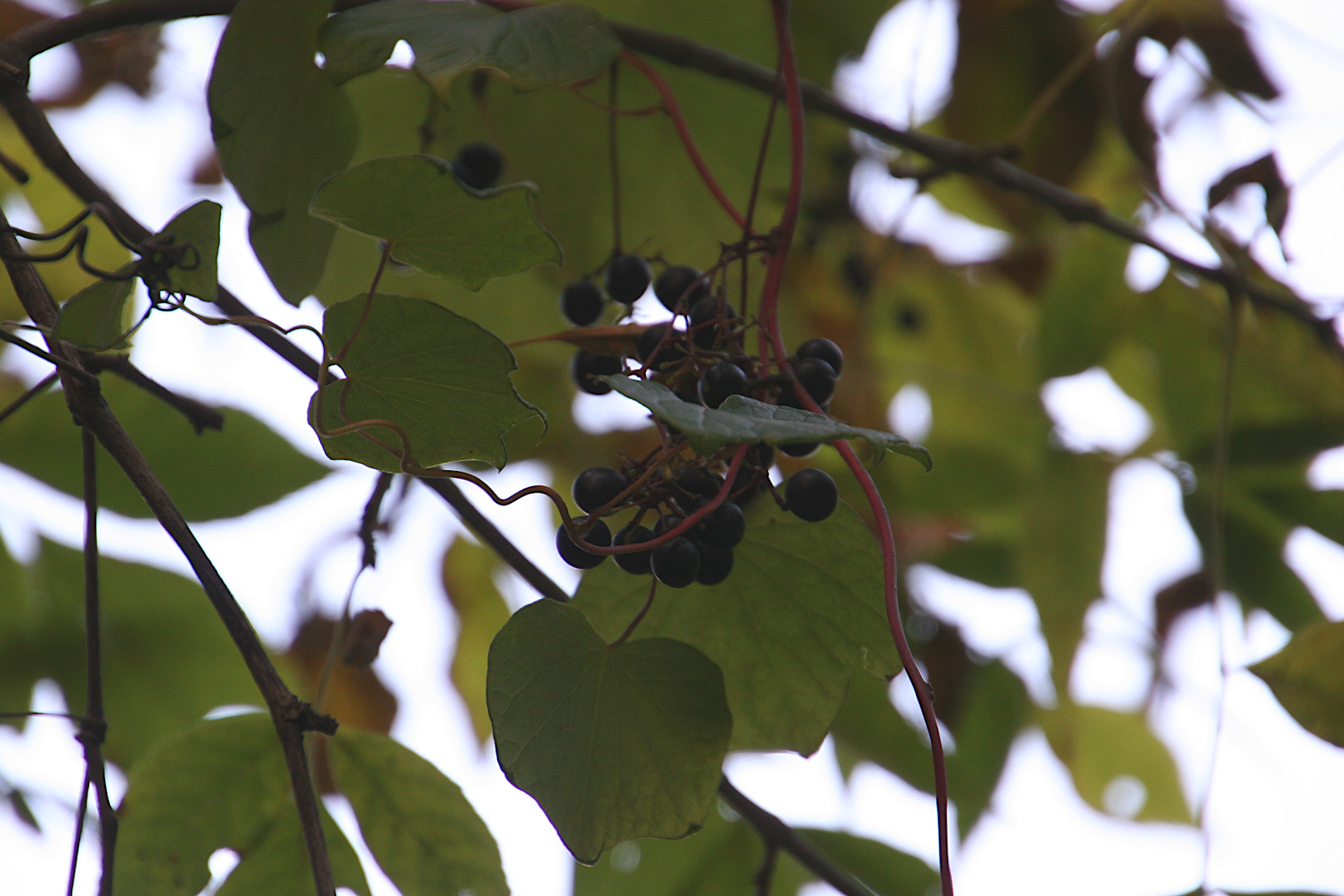
Wild grapes. (Minnesota Prairie Roots copyrighted photo September 2022)
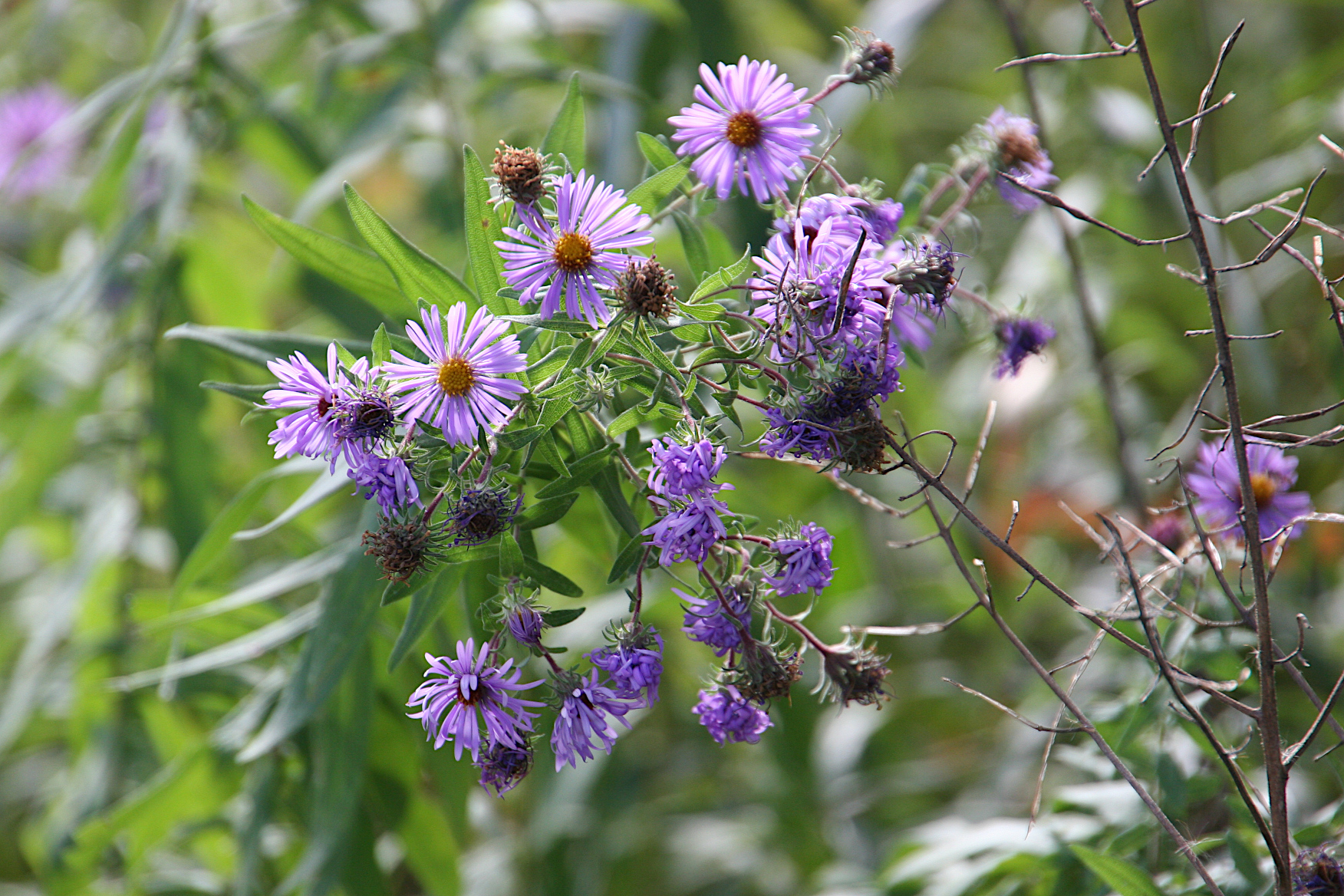
Wildflowers thrive in the sunshine along the Cannon River at Cowling Arboretum. (Minnesota Prairie Roots copyrighted photo September 2022)
As I immersed myself in nature on that final day of September, I noticed wildflowers in bloom, leaves floating in the creek, the curve of grapevines, the hint of color in a few trees. If I was to revisit the Arb today, I would surely view a different scene. Each day moves us nearer, oh, so much closer, to winter.
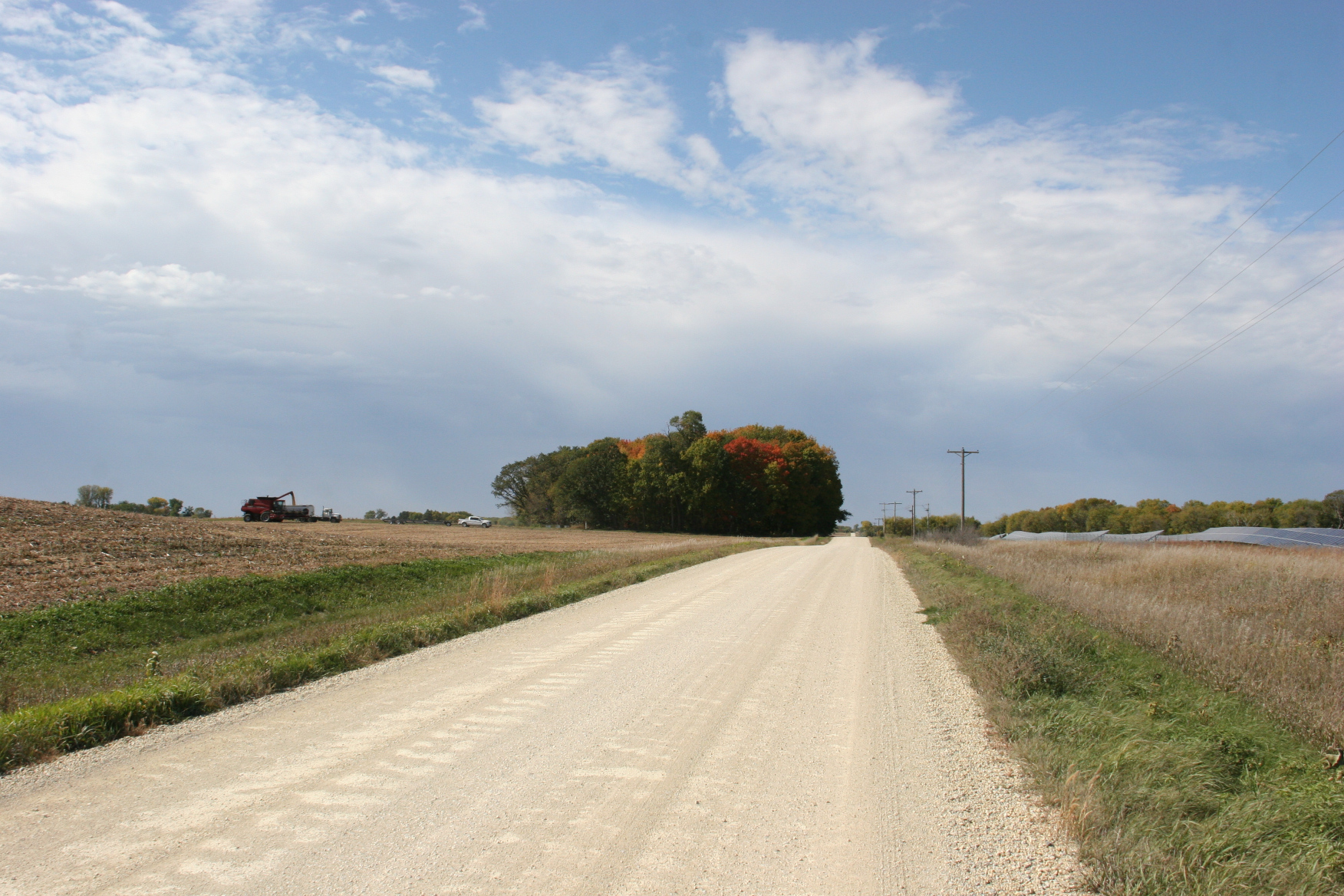
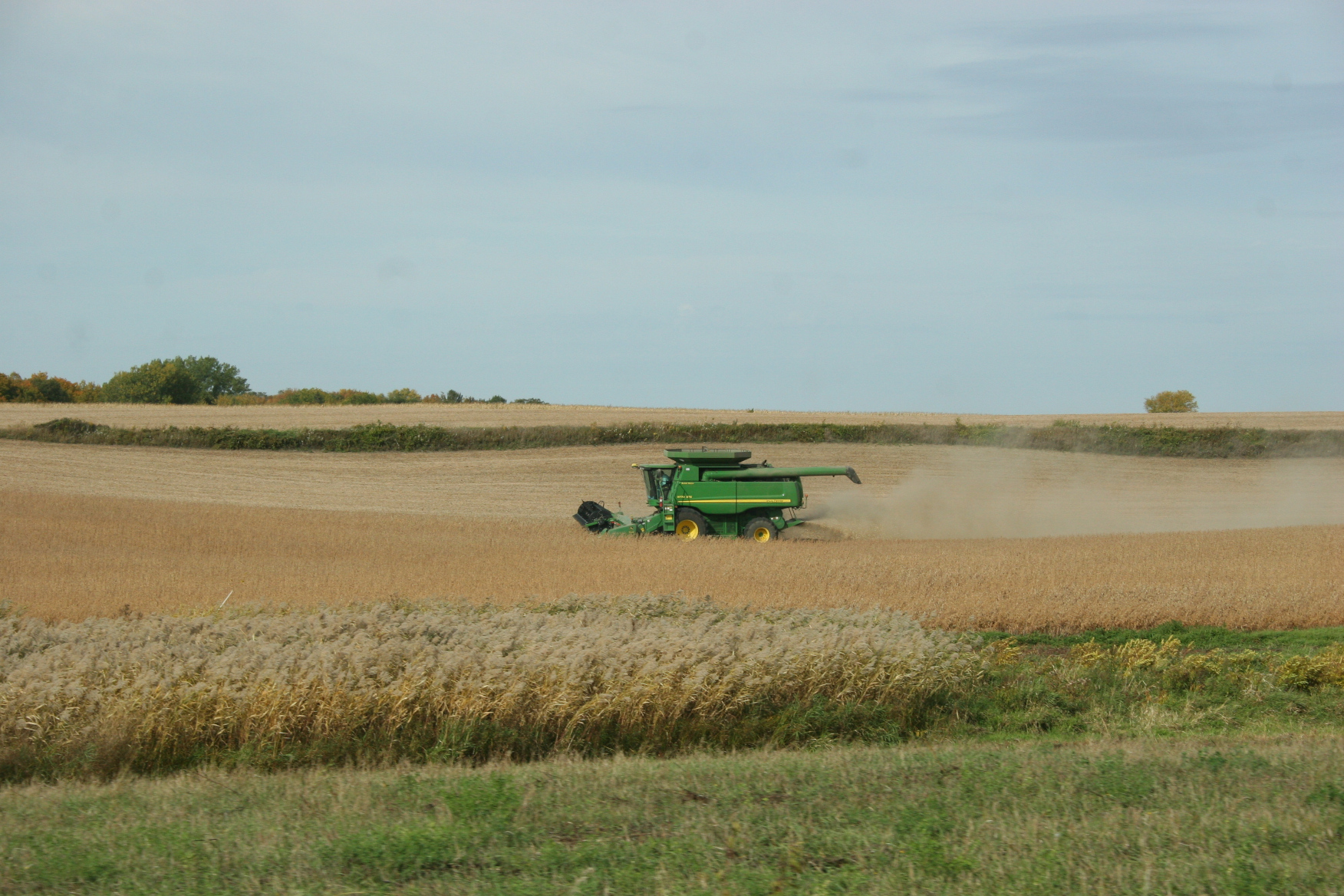
Harvesting, left, in a field along a gravel road near Dundas. (Minnesota Prairie Roots copyrighted photo October 2022)
DUST HANGS OVER THE LANDSCAPE like smoke. Hazy. The air dirty with debris kicked up by combines sweeping across corn and soybean fields in southern Minnesota. Harvest is well underway here as farmers bring in the season’s crops.
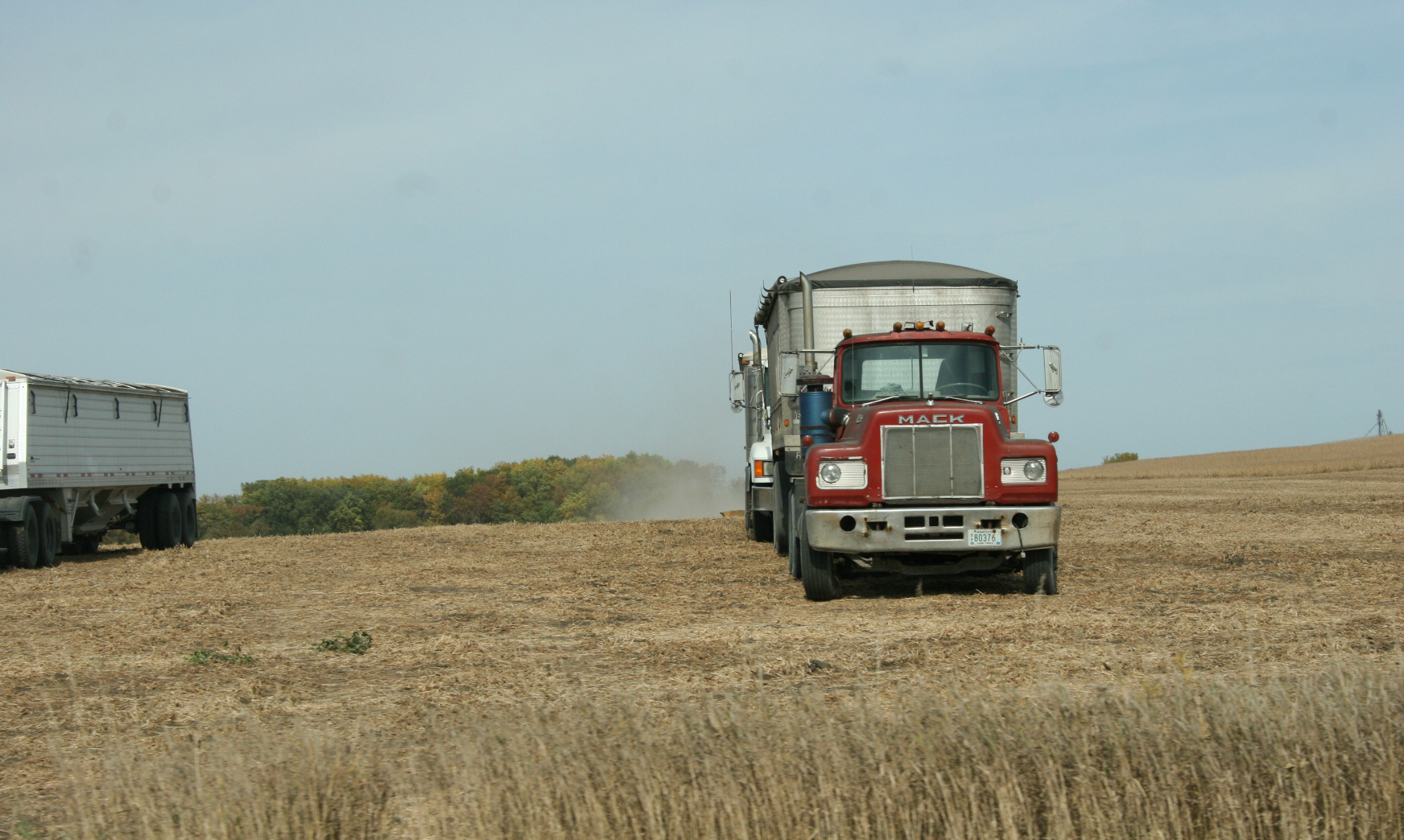
Trucks haul harvested crops from fields to bins and/or grain elevators. (Minnesota Prairie Roots copyrighted photo October 2022)
From back country gravel roads to the interstate, I’ve witnessed this scene unfolding before me in recent weeks. Combines chomping. Harvested corn and beans spilling into grain trucks.
Harvesting beans. (Minnesota Prairie Roots copyrighted file photo October 2022)
Farmers work all hours of the day and night in the rush to finish gathering crops before winter arrives. In the dark of night, bright headlights spotlight fields. In daylight, sunlight filters through clouds of dust.
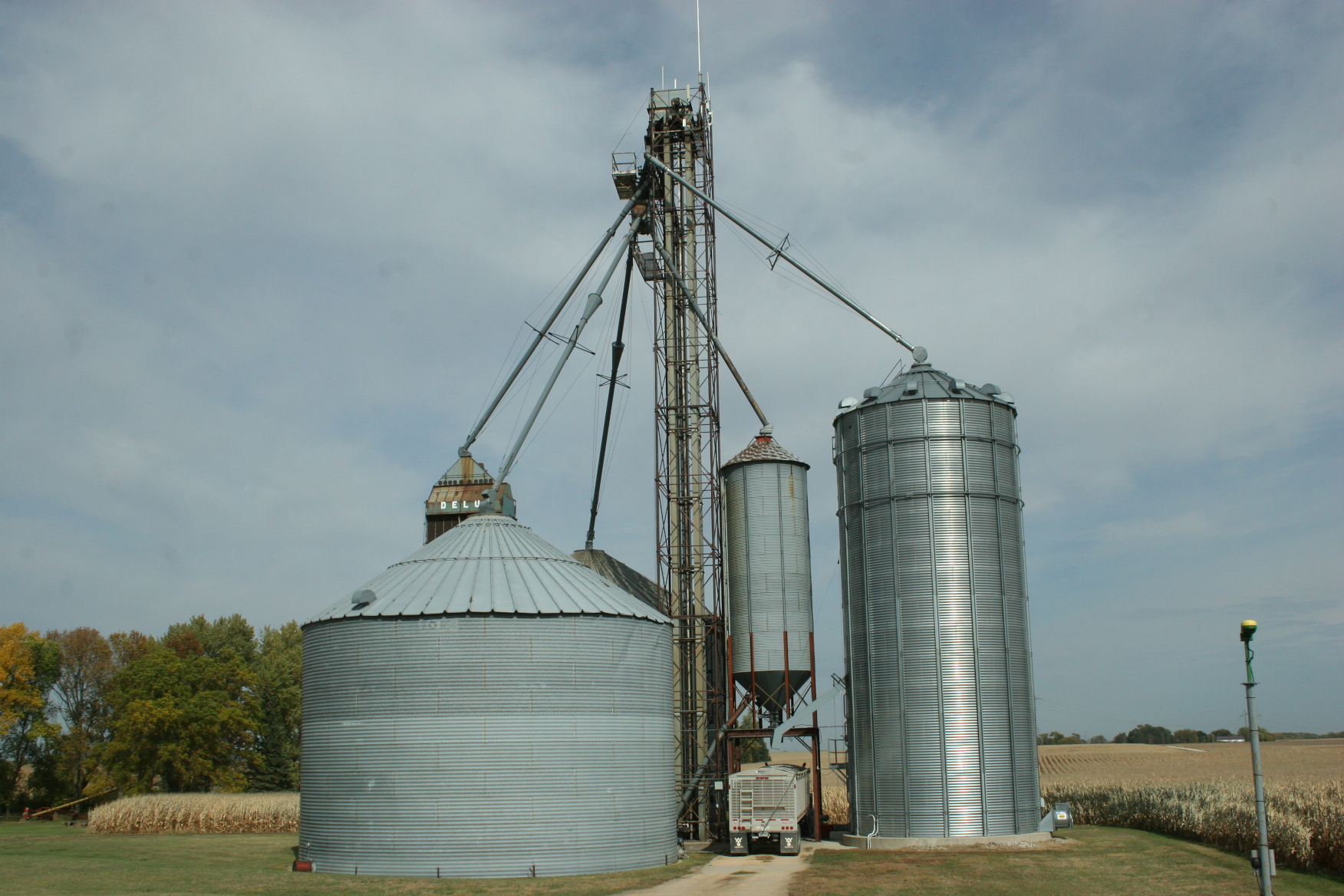
A grain truck pulls into a farmer’s grain drying and storage complex. (Minnesota Prairie Roots copyrighted photo October 2022)
Harvest is part of my DNA by having been raised on a southwestern Minnesota crop and dairy farm. Decades removed from the land, I still take notice of the harvest. The smell. The hues. The hurry. I understand this season in rural Minnesota.
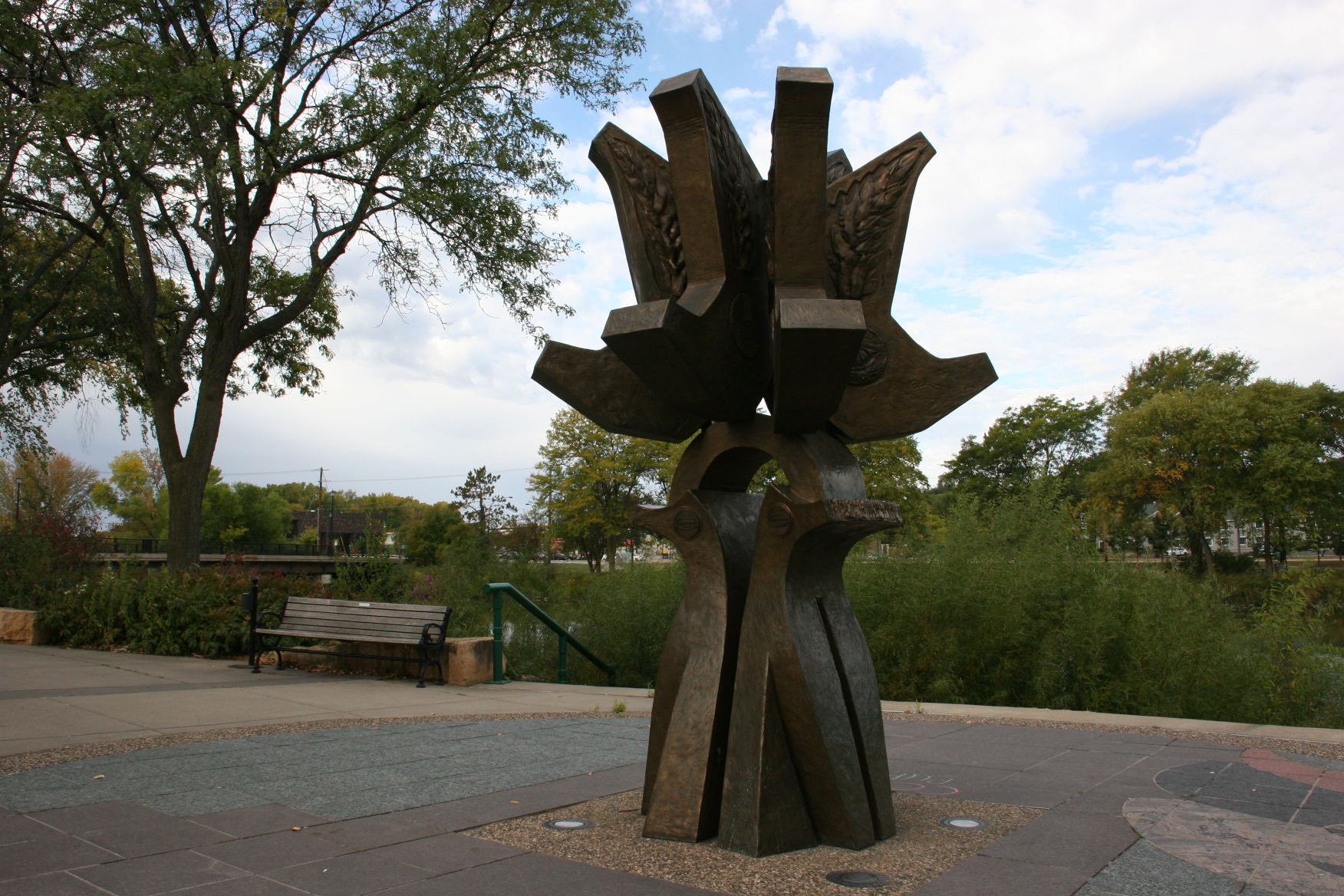
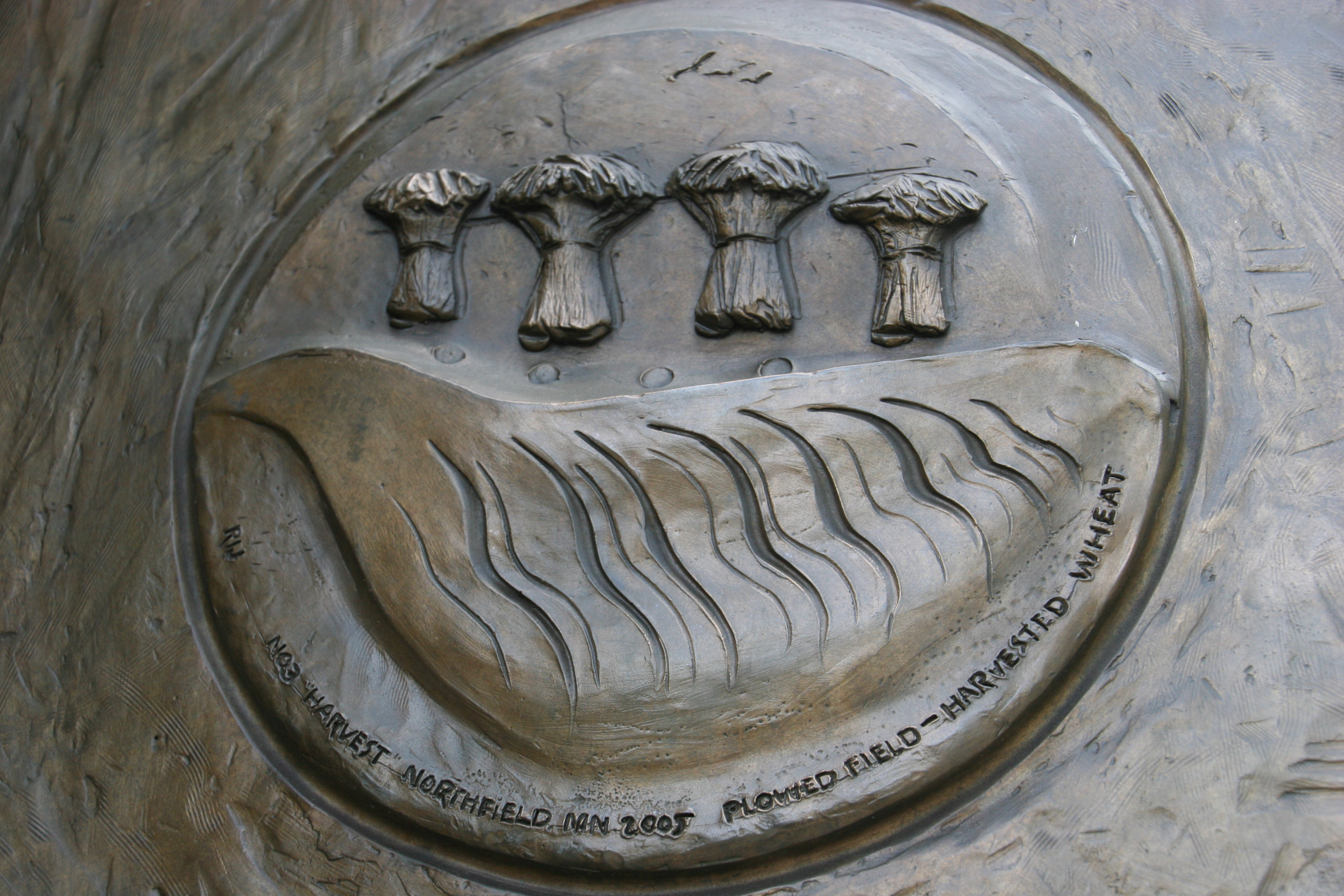
“Harvest” by Raymond Jacobson. (Minnesota Prairie Roots copyrighted photo October 2022)
In nearby Northfield, I recently happened upon a bronze sculpture, “Harvest,” which had gone unnoticed by me. It’s been there since 2008 at Sesquicentennial Legacy Plaza along the Cannon River, near the post office, near Bridge Square. In all my visits to Northfield, to the Riverwalk area, I missed this public art created by Raymond Jacobson.
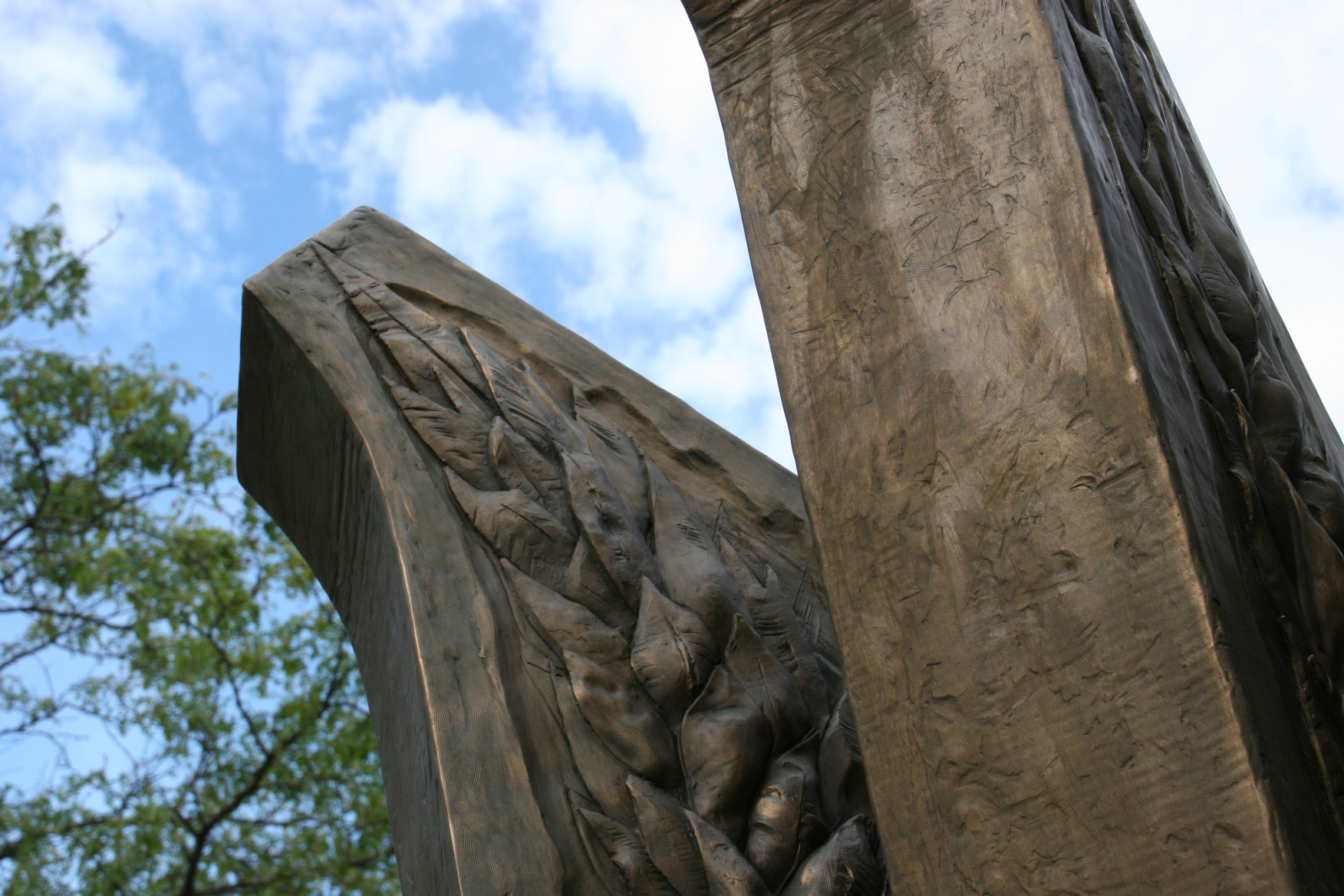
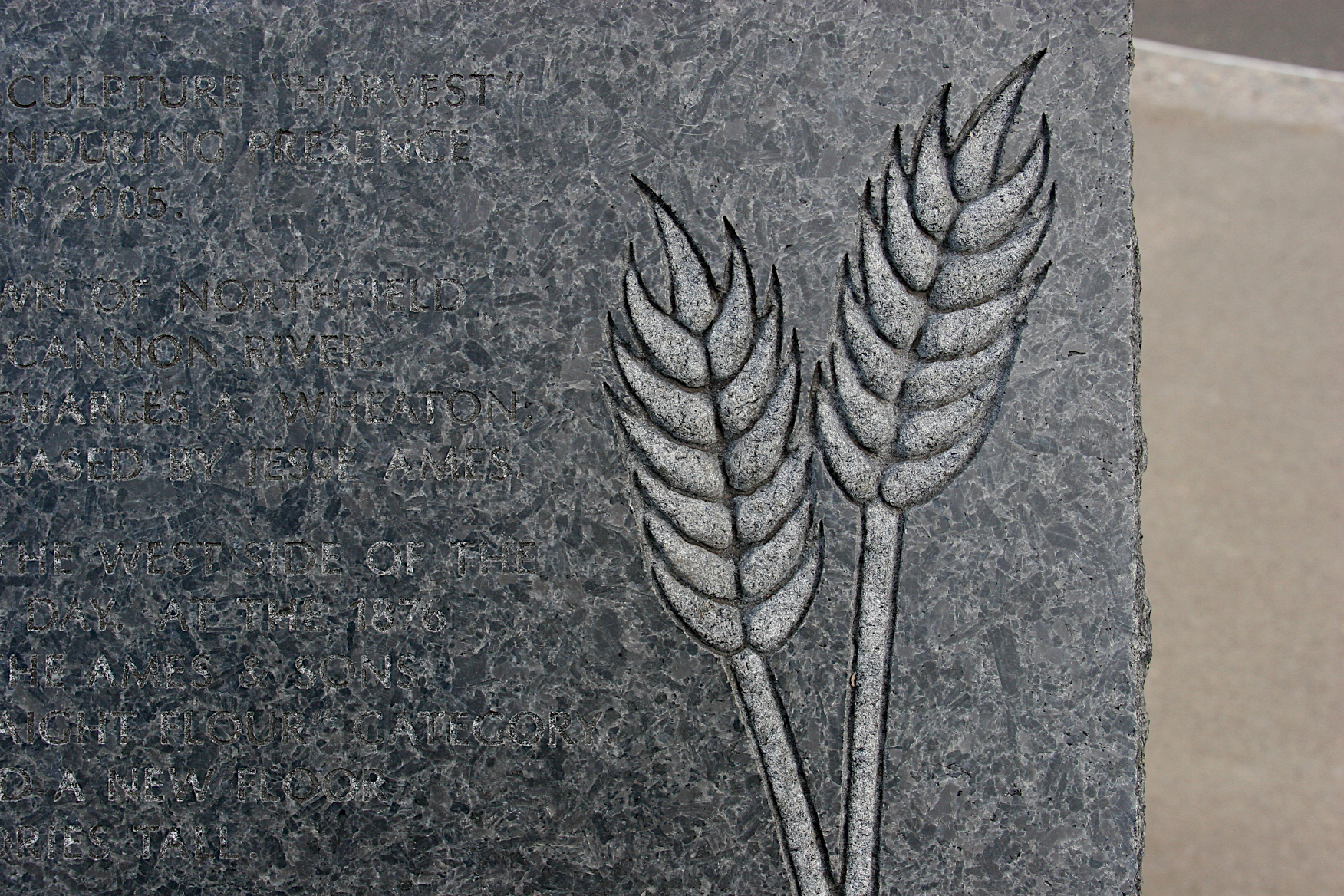
Close-up details of the wheat incorporated into “Harvest.” (Minnesota Prairie Roots copyrighted photo October 2022)
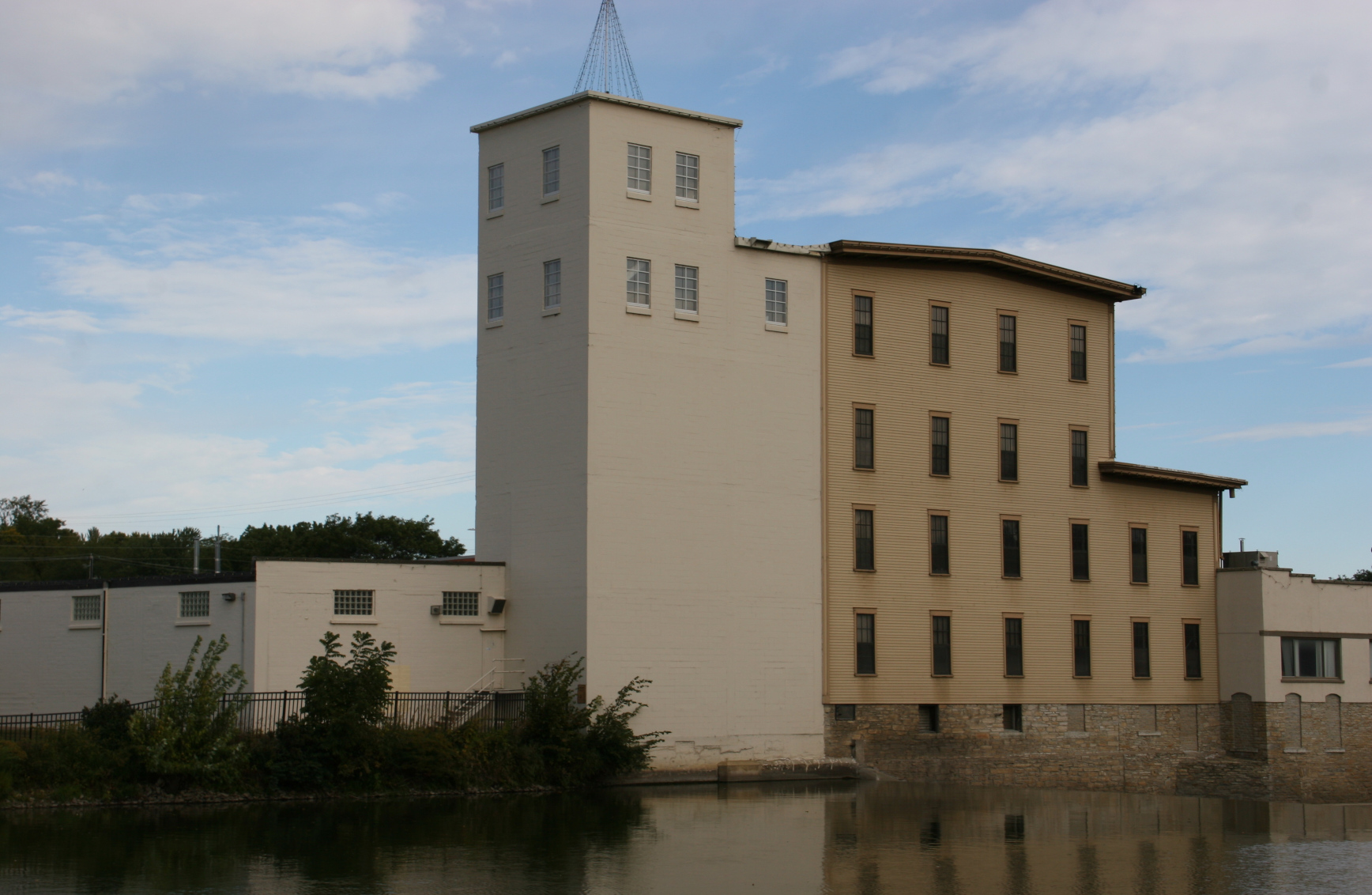
The historic Ames Mill along the Cannon River. (Minnesota Prairie Roots copyrighted photo October 2022)
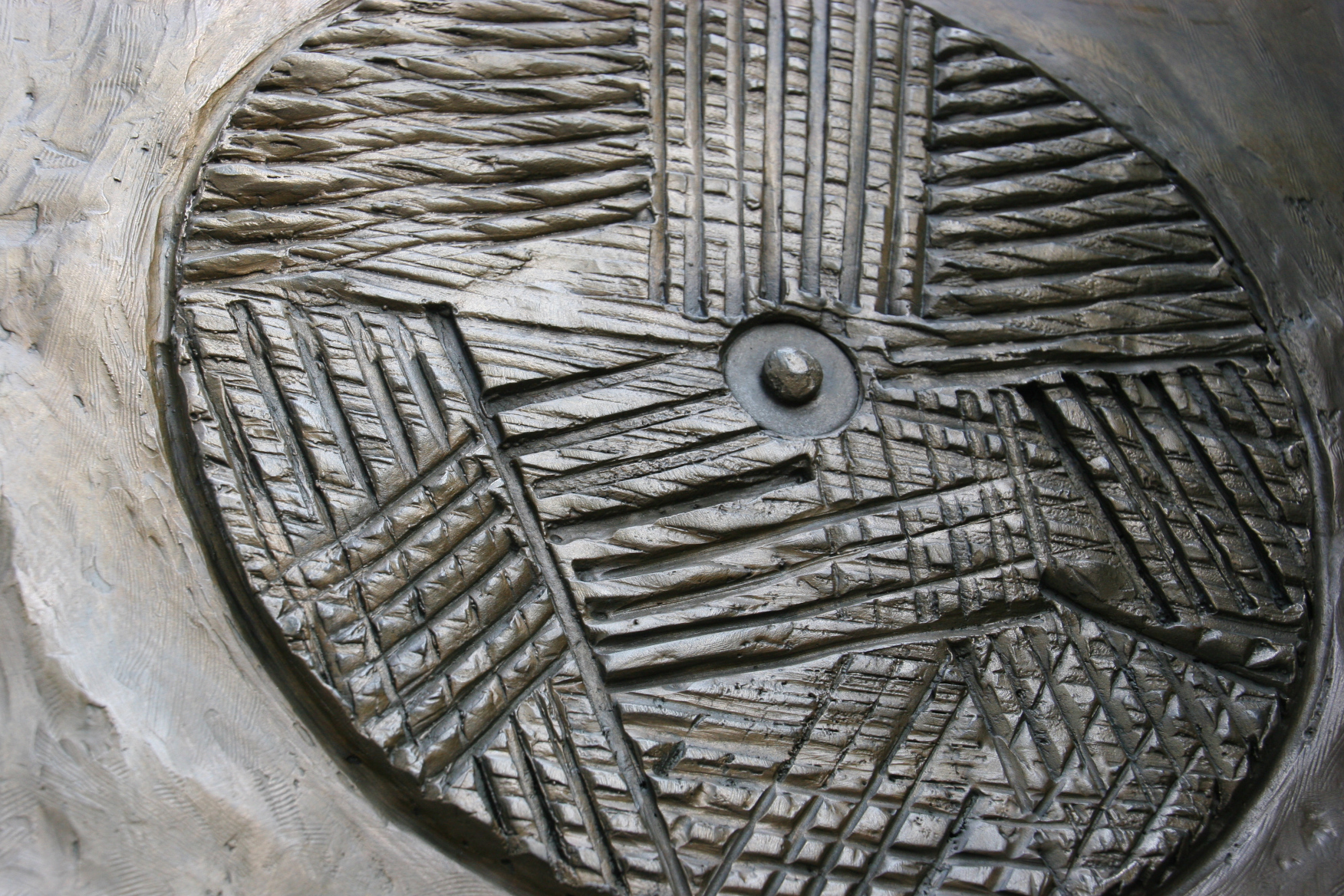
An interpretation of a stone grist mill for grinding wheat into flour is included in the sculpture.(Minnesota Prairie Roots copyrighted photo October 2022)
It’s beautiful, fitting for a community rooted in agriculture. The 3,000-pound sculpture symbolizes Northfield’s heritage of wheat farming and milling. Just across the river sits the Ames Mill, where the gristmill in the late 1860s produced 150 barrels of wheat daily.
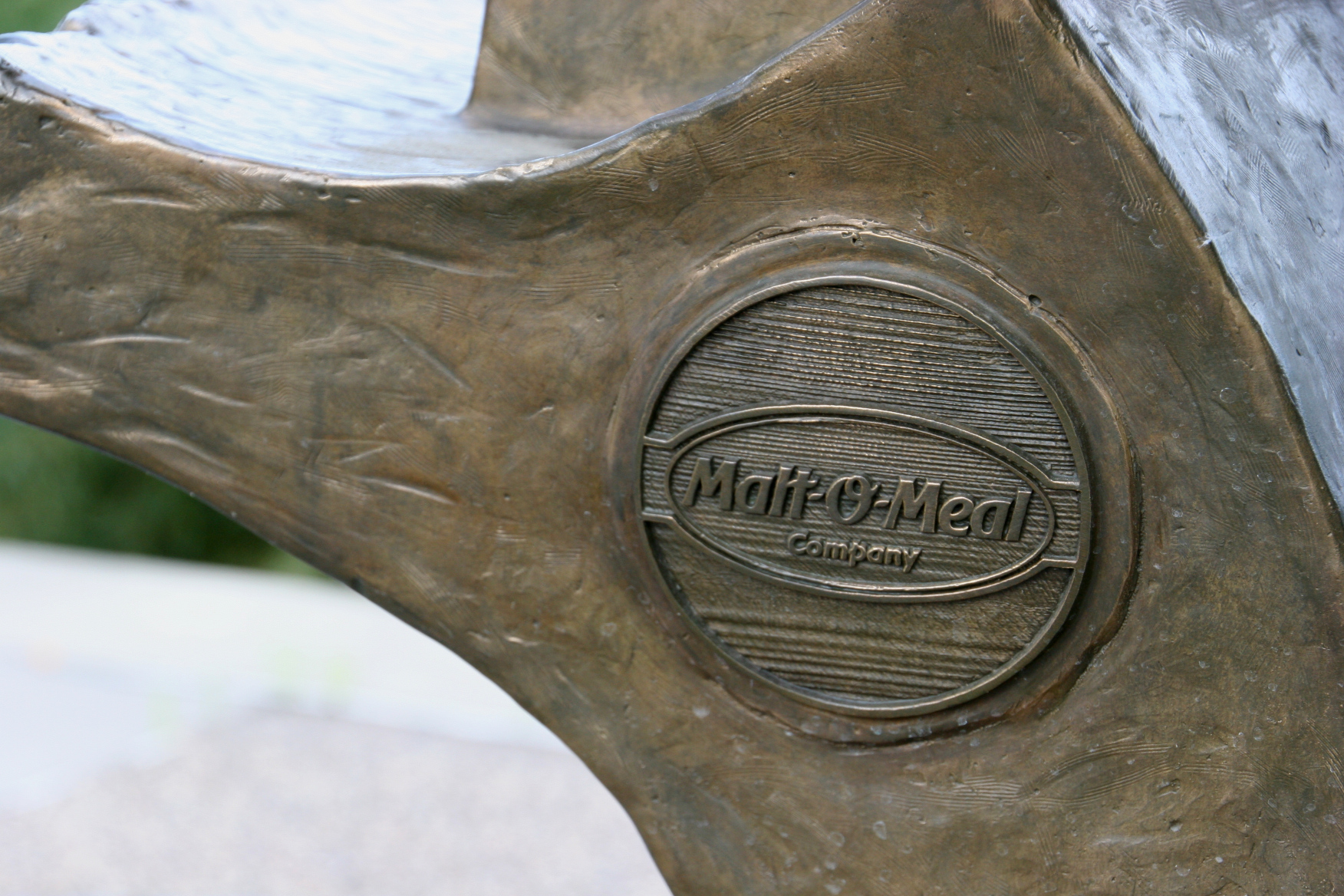
Malt-O-Meal was a major funder for the sculpture. (Minnesota Prairie Roots copyrighted photo October 2022)
In 1927, John Campbell of the Campbell Cereal Company took over the mill and began producing Malt-O-Meal hot cereal. Today Post Consumer Brands owns the mill and still makes that hot cereal. Dry cereal is manufactured at a nearby production facility. Many days the scent of cereal wafts over Northfield.
Harvested wheat and a plowed field cast into bronze. (Minnesota Prairie Roots copyrighted photo October 2022)
All of this—the smell of cereal, the “Harvest” sculpture, the historic Ames Mill—reminds me of the importance of agriculture in our region. It reminds me, too, of my rural roots. I am grateful for my farm upbringing. I am grateful, too, for those who today plant, tend and harvest crops. They are essential to our economy, feeding the world, providing raw product.
Wheat stalk details on an informational plaque which is nearly impossible to read due to weathering of the writing. (Minnesota Prairie Roots copyrighted photo October 2022)
That this season of harvest is honored in a “Harvest” sculpture shows a deep appreciation for history, heritage and agriculture in Northfield. The public art gives me pause to reflect on inspiration in creativity. Today I celebrate the artistic interpretation of harvest displayed along the banks of the Cannon River.
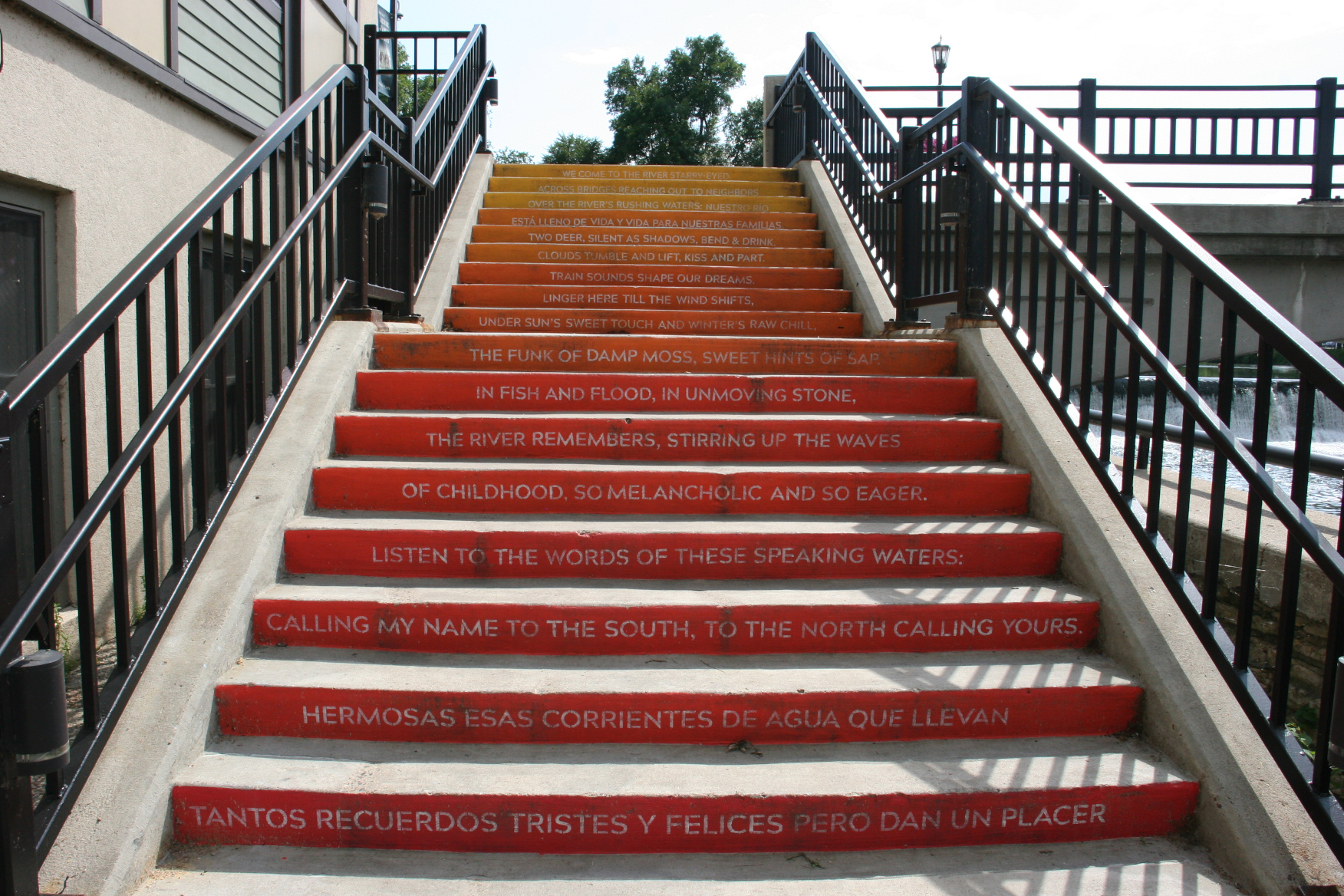
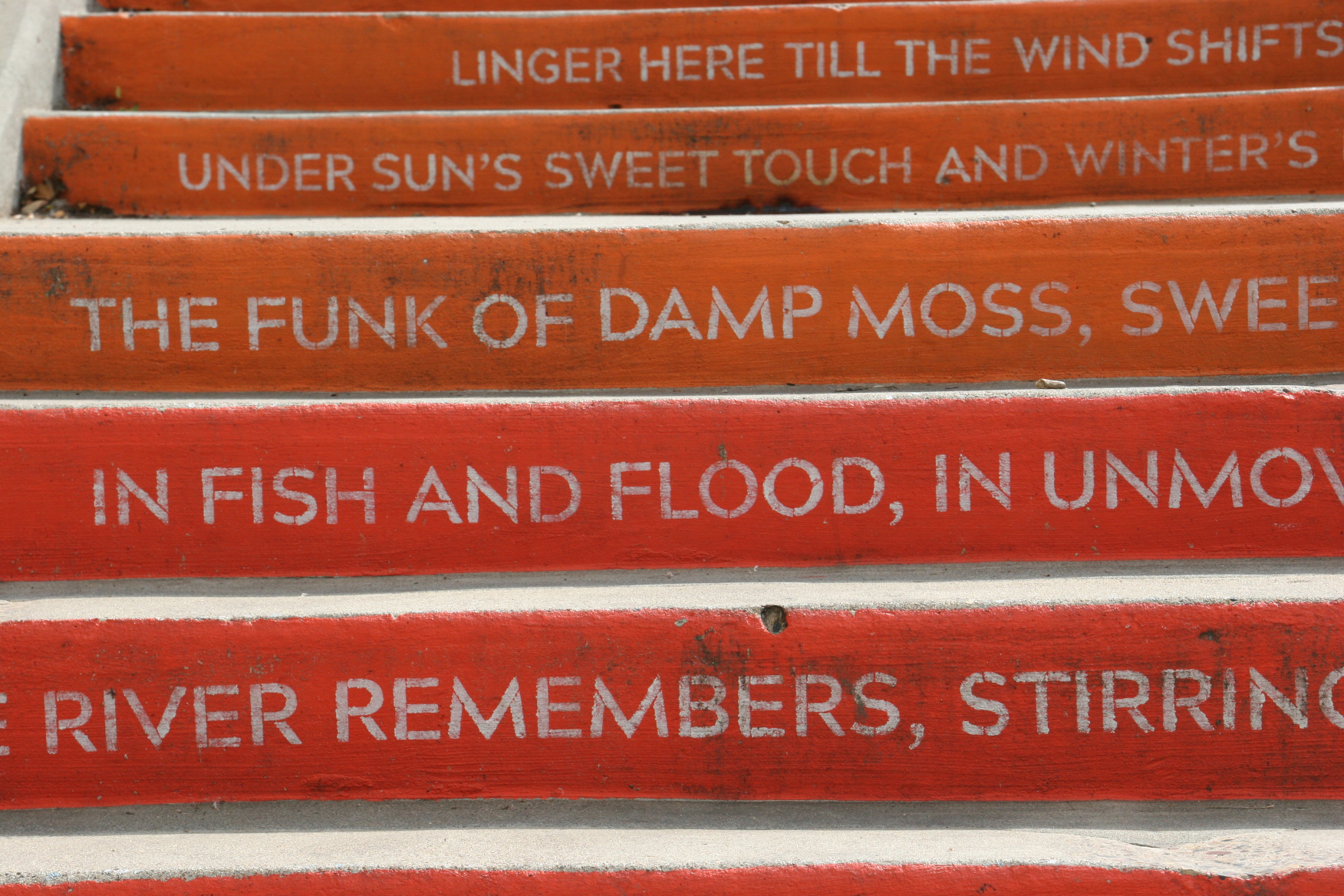
A portion of the Poem Steps descending to the River Walk in Northfield, Minnesota. (Minnesota Prairie Roots copyrighted photo 2022)
WELCOME TO THE RIVER starry-eyed…
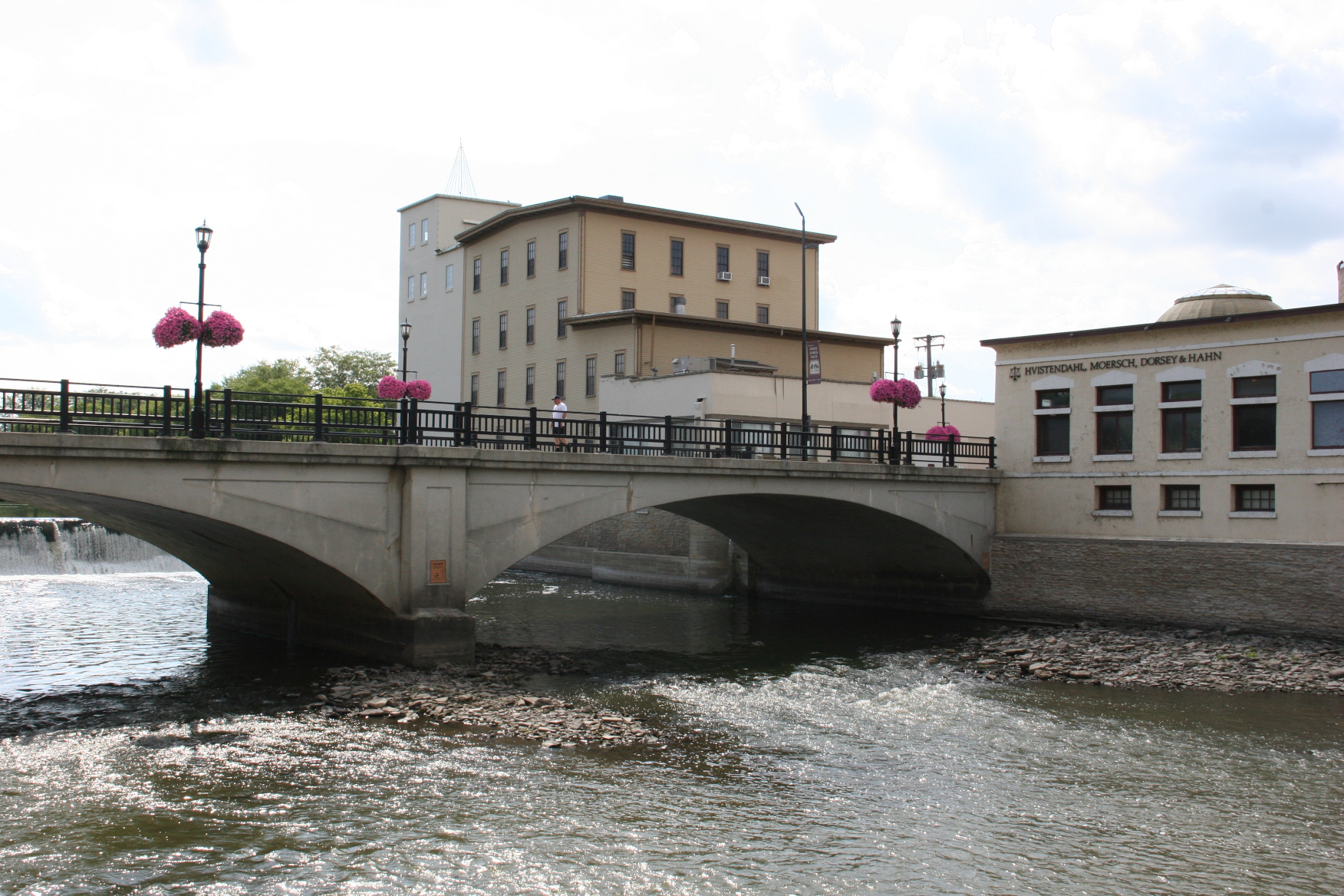
The historic Ames Mill, on the far side of the bridge, hugs the Cannon River. (Minnesota Prairie Roots copyrighted photo 2022)
Thus begins a poem authored by 17 Northfield area poets and gracing steps leading to the River Walk in the heart of this historic southeastern Minnesota community.
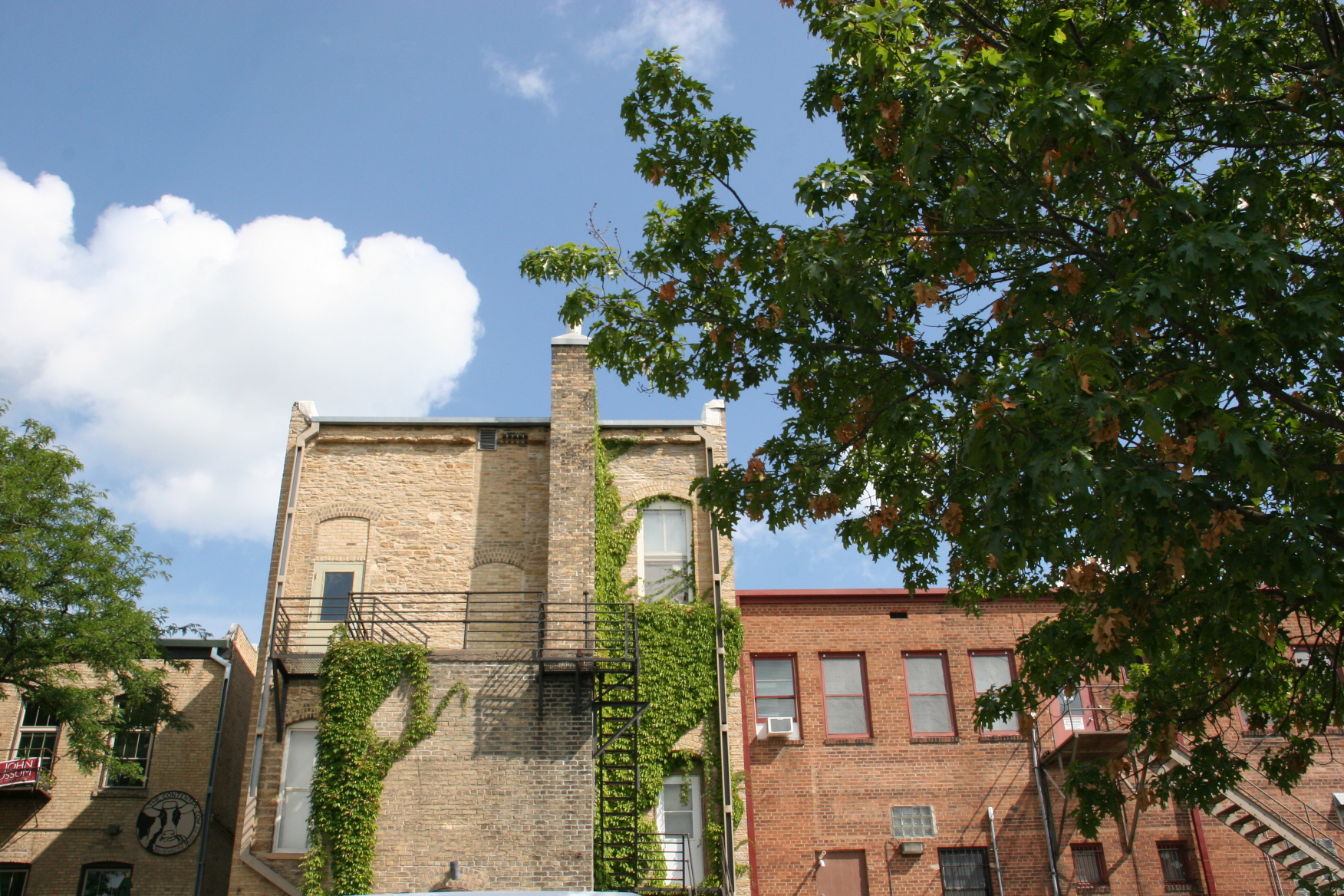
The backs of buildings along the river. (Minnesota Prairie Roots copyrighted photo 2022)
Like the poets drawn to the river to create these inspirational Poem Steps, I, too, feel drawn to the river that runs through Northfield. Every time I’m downtown, I aim first for the path that traces the Cannon River behind the mostly aged buildings lining Division Street.
A section of the river-themed poem up close. (Minnesota Prairie Roots copyrighted photo 2022)
There’s something simply magnetic about a river. Listen to the words of these speaking waters. I can almost hear the stories—of the Indigenous Peoples, here first, of the settlers who followed and harnessed the water to mill flour, of the poets and others who today listen to these speaking waters.
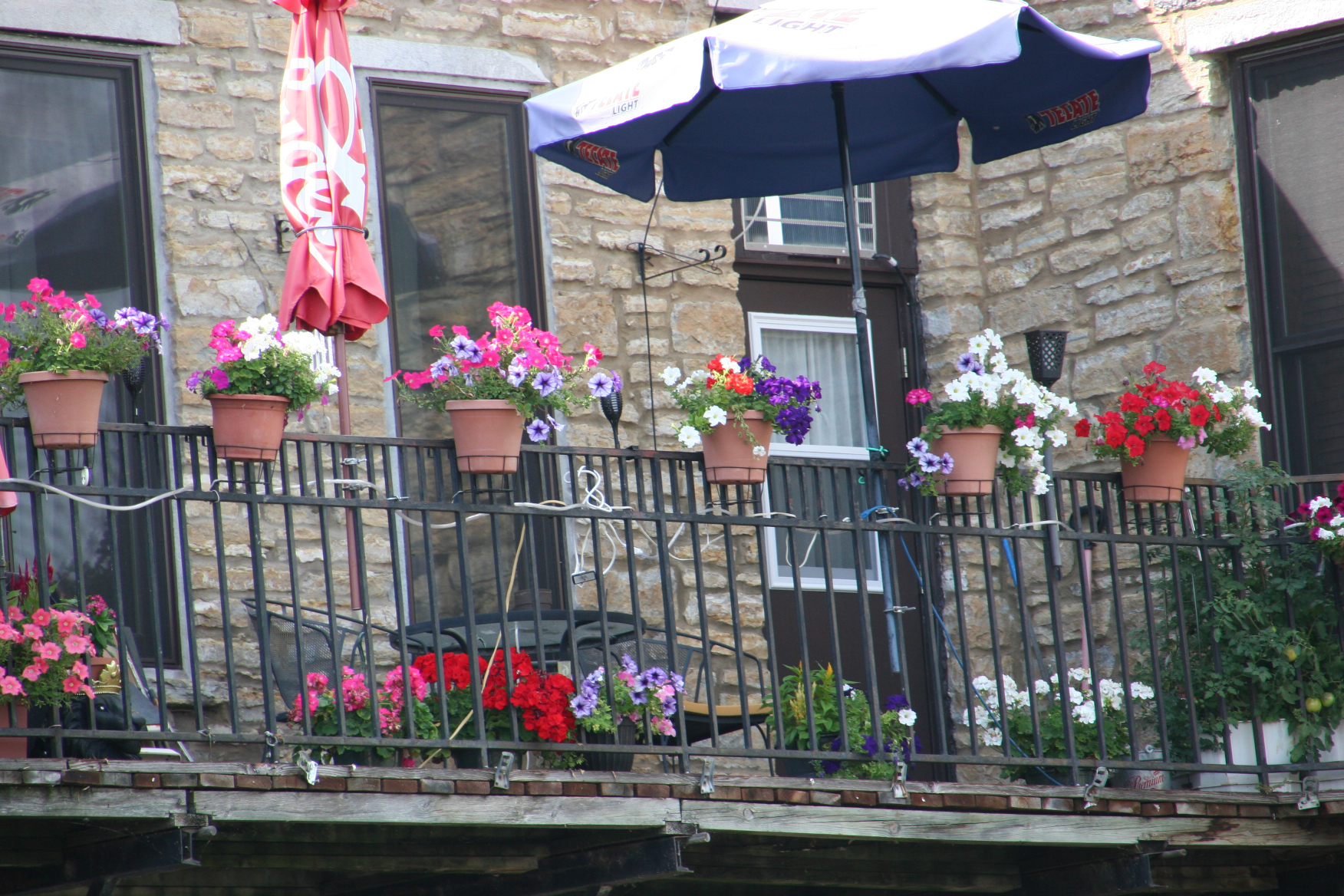
Flowers fill planters on a riverside balcony. (Minnesota Prairie Roots copyrighted photo)
The Cannon in Northfield, as it has for generations, brings people to water’s edge. To angle for fish, to dine, to gather as community, to celebrate the arts, to simply be in the river’s presence.
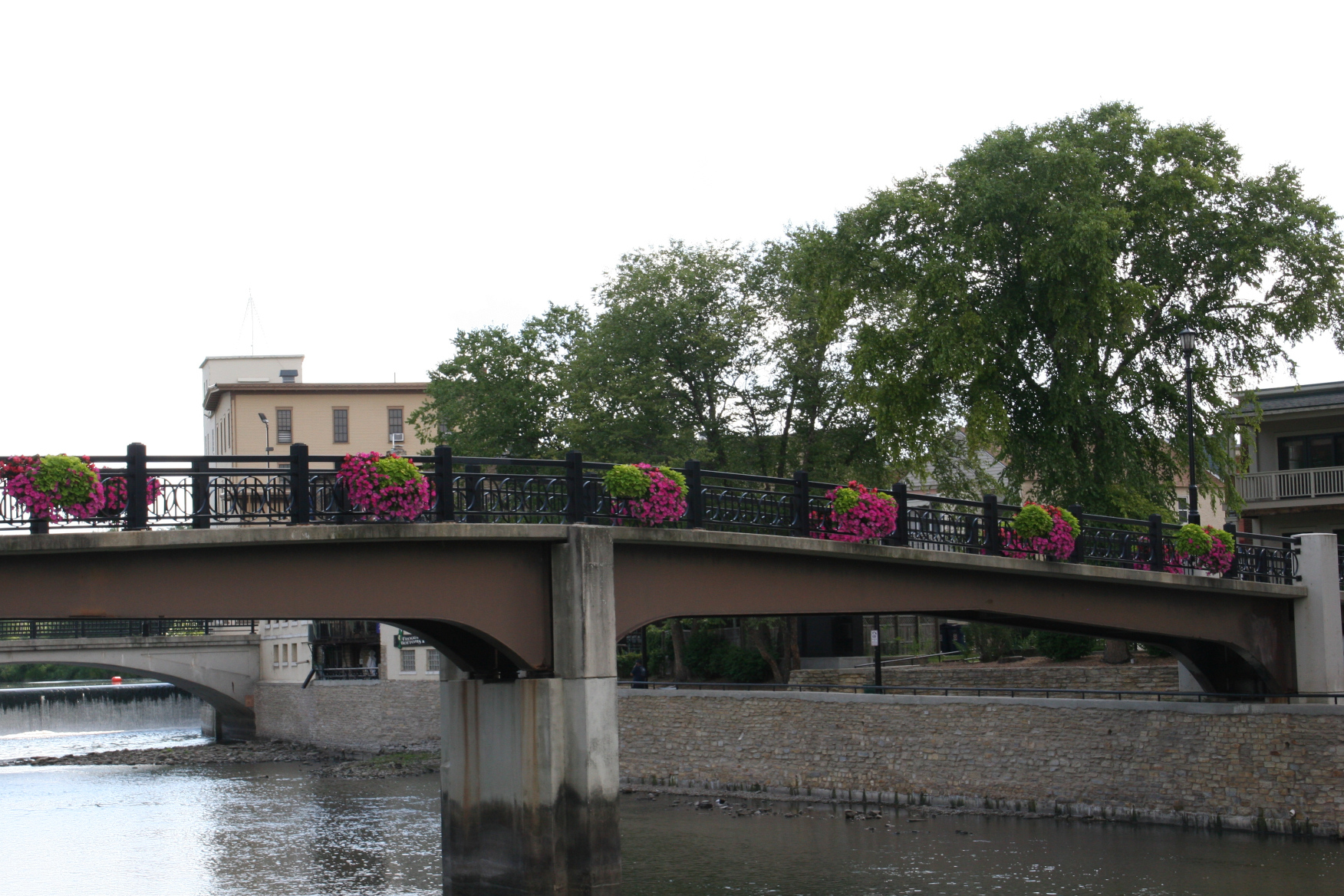
A flower-edged pedestrian bridge spans the Cannon River. (Minnesota Prairie Roots copyrighted photo 2022)
I appreciate how this community recognizes the historic, poetic and natural beauty of the river and shares that via the River Walk. It’s such a beautiful walk, beauty enhanced by potted flowers and hanging baskets that jolt vibrant hues into the landscape. A pedestrian bridge provides a middle-of-the-river perspective.
Lush flowers spill from a planter on the River Walk. (Minnesota Prairie Roots copyrighted photo 2022)
And so I follow the river path, then loop up to the fronts of businesses along Division Street. Yet, the essence of the river remains, her poetry inspiring me.













Recent Comments