Minnesota Prairie Roots

Writing and photography by Audrey Kletscher Helbling

The power of hair among Native Peoples September 19, 2023

“My Powerful Hair,” published in 2023 by Abrams Books for Young Readers. (Book cover source: Abrams Books)

SOME OF THE MOST MEANINGFUL, enlightening and powerful books I’ve read, I’ve found in the children’s picture book section of my local public library. That includes My Powerful Hair written by Carole Lindstrom and illustrated by Steph Littlebird.

I happened upon this book while searching for recently-published astronaut and geography books for my 4-year-old grandson. I never did find those sought-after titles. Not that it mattered. What I discovered instead were three must-read books: My Powerful Hair, Boycott Blues—How Rosa Parks Inspired a Nation and We Are Better Together.

Parks is certainly familiar to me as the Black seamstress who in 1955 refused to give up her seat to a white man on a city bus in Montgomery, Alabama. That sparked a bus boycott and the Civil Rights Movement. Likewise, working together to effect change, to improve our world, to help one another is a familiar theme.

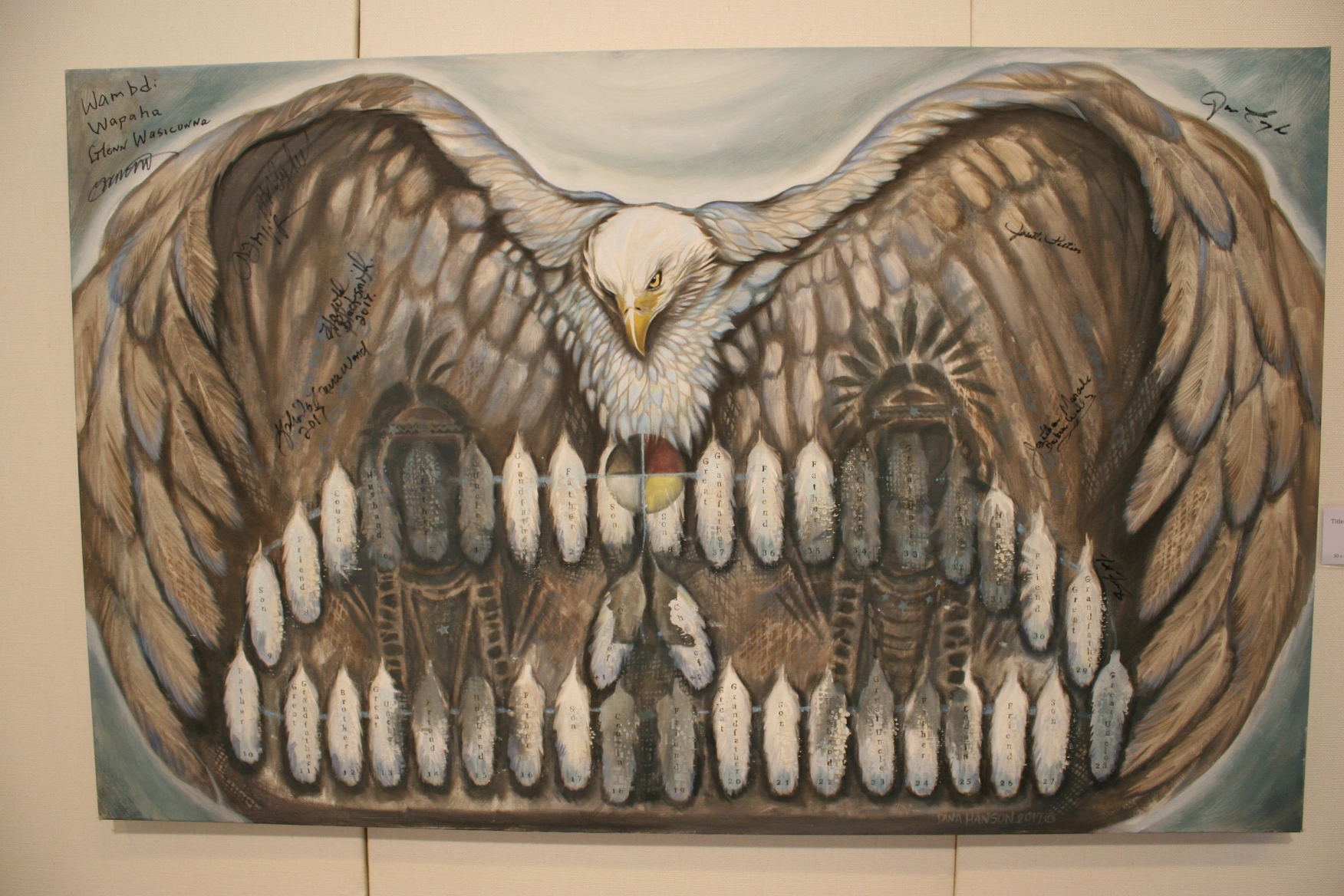
“The Native Man, His Eagle & His Chanupa,” an oil painting by Dana Hanson and part of her 2018 “Healing the Land” exhibit at the Owatonna Arts Center. (Minnesota Prairie Roots copyrighted file photo 2018, used for illustration only. Art copyrighted by Dana Hanson.)

THE IMPORTANCE OF HAIR REVEALED

It is the story on hair, though, which proved a particularly teachable read. My Powerful Hair focuses on Native Peoples’ hair and its importance in their culture, their history, their lives. Through the writing of New York Times bestselling and award-winning author Lindstrom, who is Anishinaabe/Metis (and an enrolled citizen of the Turtle Mountain Band of Ojibwe), and Indigenous artist Littlebird of Oregon’s Confederated Tribes of Grand Ronde, I learned the symbolism and power of hair in Native American culture. Admittedly, this is something I should have known, having grown up on the southwestern Minnesota prairie between the Upper Sioux and Lower Sioux Indian Reservations (today termed “communities”). I thought I was informed. But I wasn’t, not about hair.

Told from the perspective of a young Native girl, My Powerful Hair explains the reasons Native Peoples grow their hair long. And keep it long. Hair holds stories, memories, strength, sorrow, connections to each other and to Mother Earth. And more. Page after page, the narrator shares events in her life that weave into her hair. When Nimishoomis (her grandfather) taught her to fish, her hair reached her ears. When her cousins taught her to make moccasins, her hair flowed past her shoulders. In the sharing of these moments, I began to understand the power of hair in Native American culture.
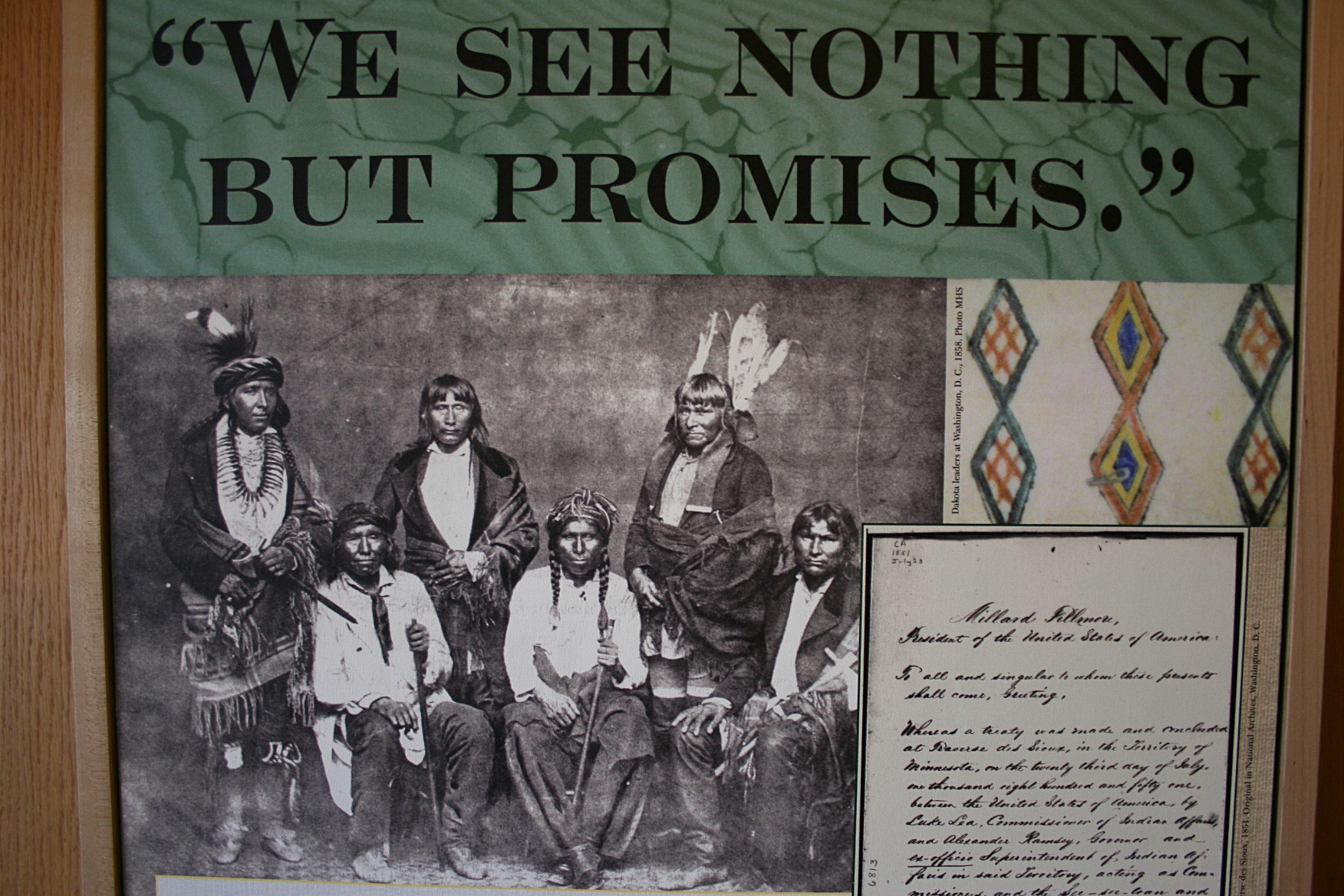
A photo panel at the Traverse des Sioux Treaty Center in St. Peter shows Dakota leaders photographed in Washington D.C. in 1858. The photo is from the Minnesota Historical Society and is used here for illustration only.

FORCED HAIRCUTS

I also understood fully, for the first time, the trauma inflicted upon Indigenous individuals forced long ago by white people to cut their hair. The writer and illustrator don’t hold back. In the first few pages, a young Nokomis (grandmother) is in tears as the hands of a Catholic nun grasp, then cut, her braids. It’s an emotionally impactful visual.

But this was reality at Indian boarding schools, within faith communities and elsewhere back in the day, in a time period when efforts focused on erasing Indigenous culture, on conforming Native Peoples to European ways. It was wrong.

Displayed at Bridge Square during Northfield’s Earth Day celebration in 2022. (Minnesota Prairie Roots copyrighted file photo April 2022, used for illustration only)

A TERRIBLE INJUSTICE”

A blogger friend from the central Minnesota lakes region recently shared a bit of her family’s experience per my request. Of unverified (records were often destroyed) Cherokee ancestry, Rose speaks of her mother’s trauma after being sent to a Catholic girls’ school in Crookston. “Mom didn’t tell us much about her experience there,” Rose says, “only that they made her cut her long black hair. My mom never cut her hair again for the rest of her life. She saw the forced haircut as a terrible injustice.” Injustice seems a fitting word.

In an author’s note, Carole Lindstrom shares the same trauma, documented, she writes, in a photo of her grandmother and two great aunts with their black hair shorn above their ears. They were forced into an Indian boarding school in the early 1900s.
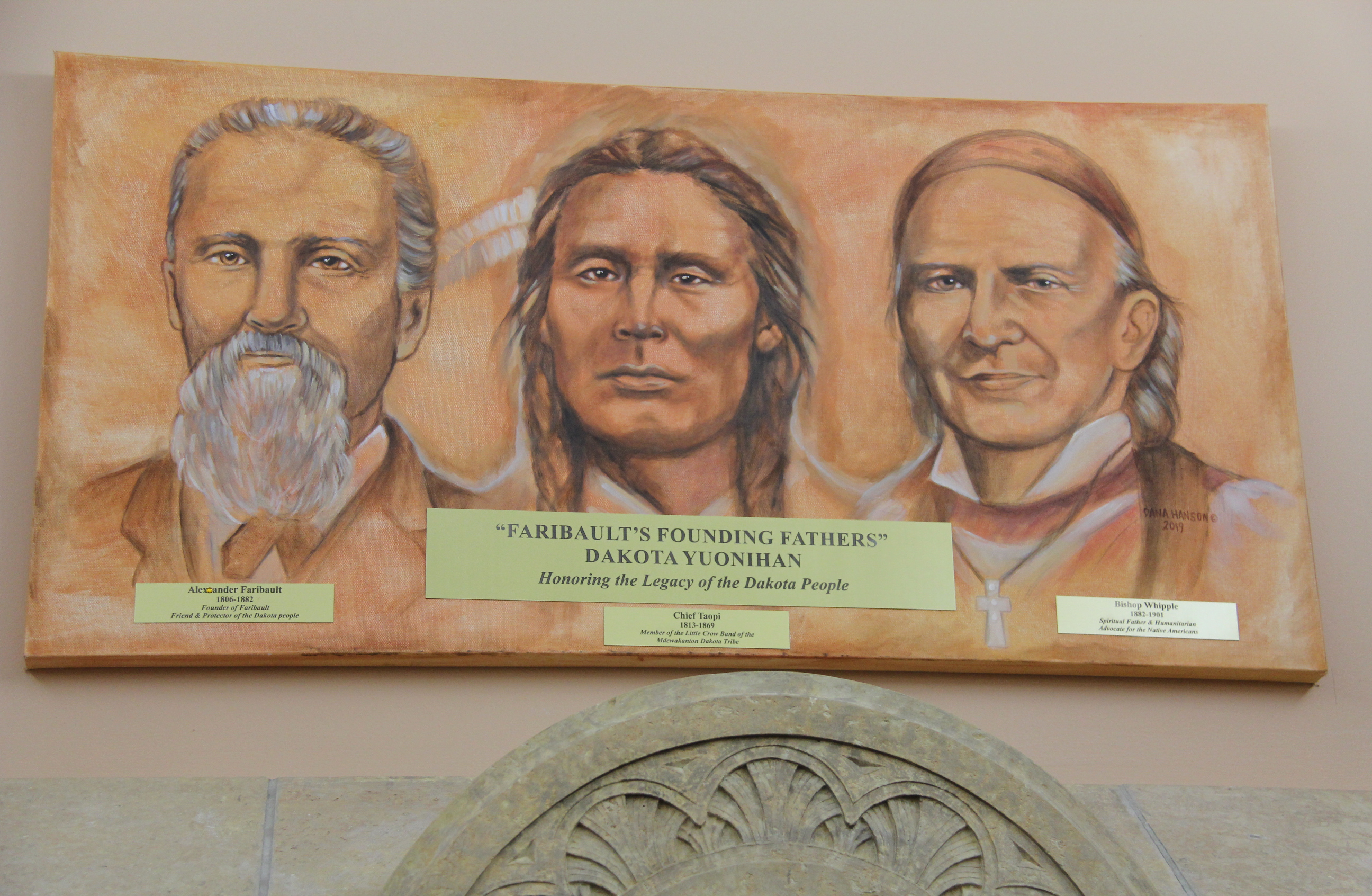
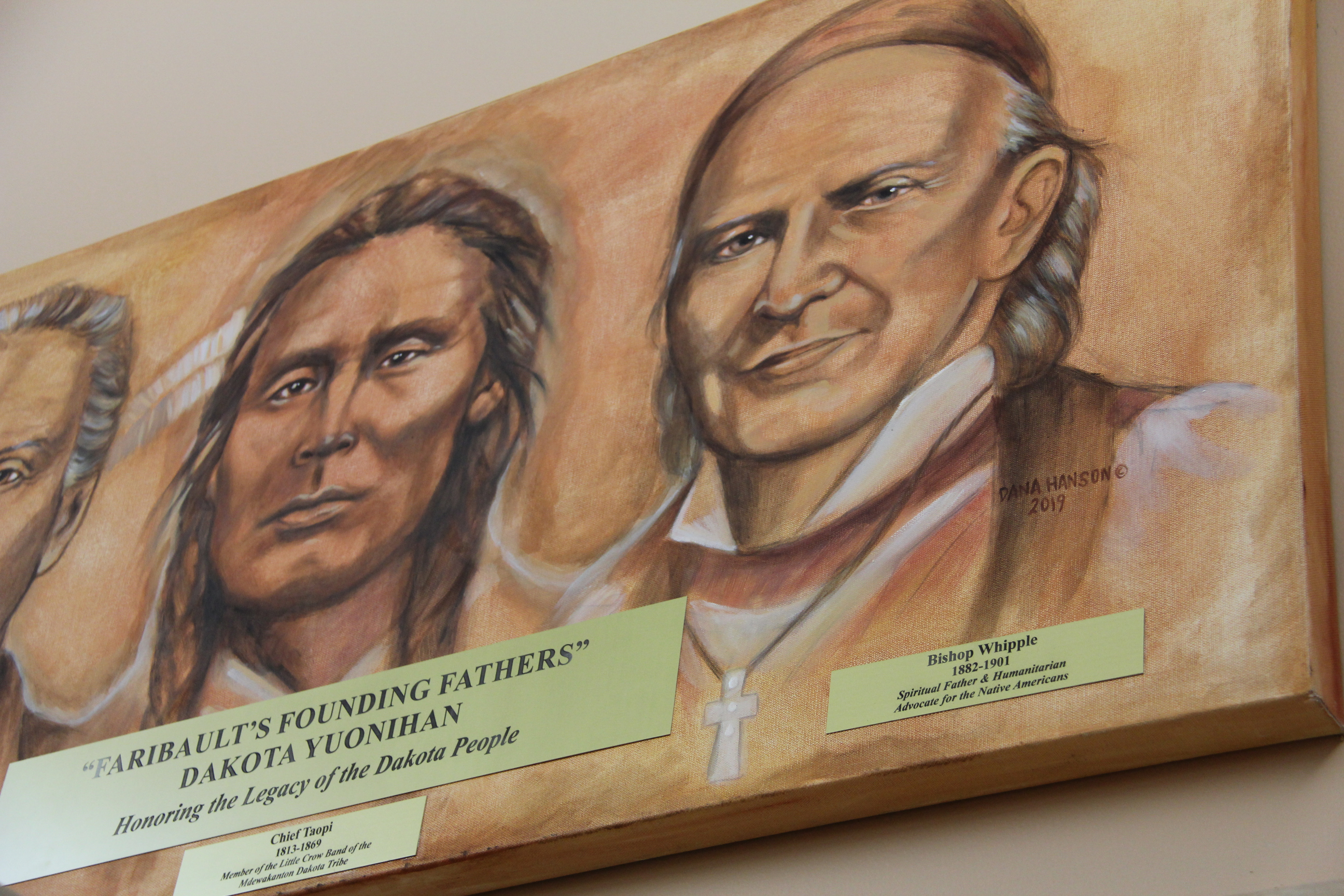
“Honoring the Legacy of the Dakota People” focuses this artwork by Dana Hanson. Chief Taopi centers the painting with Alexander Faribault to the left and Bishop Henry Whipple on the right. The word “Yuonihan” means honor or respect. This art hangs inside Buckham Memorial Library. (Minnesota Prairie Roots copyrighted file photo November 2022. Art copyrighted by Dana Hanson.)

POWER IN STORIES, IN HERITAGE, IN RESPECT

Rose is thankful for books like My Powerful Hair. “I am glad that stories like this are being told,” she says. “Much First Nations history nearly disappeared. And many First Nations keep their ceremonies and other information ‘secret’ so it won’t be distorted or misused by people who don’t understand, or who seek to harm them.” Based on history, that seems warranted.

This Minnesota woman has one more reason to feel grateful for children’s picture books by Indigenous Peoples. Her grandchildren are of Ojibwe heritage; their other grandmother lives on the White Earth Nation in northwestern Minnesota. “My hopes for my grandchildren are that they learn all they can about their Ojibwe ancestors and customs and values,” Rose says. “I hope they can choose what lessons they want to carry forward in their own life. I hope they are fantastic examples of how people from different backgrounds can get along and respect and love one another.”

And so I learned, not only from Rose, but from reading My Powerful Hair. Stories woven into our hair matter. For they are powerful.

© Copyright 2023 Audrey Kletscher Helbling


At Buckham Library: Portraits honor Faribault’s founding fathers November 21, 2022

“Faribault’s Founding Fathers,” Alexander Faribault (left to right), Chief Taopi and Bishop Henry Whipple, painted by Dana Hanson. “Yuonihan” means honor or respect. (Minnesota Prairie Roots copyrighted photo November 2022. Art copyrighted by Dana Hanson.)

MY LIBRARY, BUCKHAM MEMORIAL in Faribault, features dozens of art pieces by local artists scattered throughout the building. I’ll admit that I really don’t even notice the art any more in my frequent visits to the library. Like anything, after time, familiarity begets overlooking.

But that all changed recently when I looked across the library to the west by the adult fiction and saw a work of art I hadn’t previously noticed. It’s been there for about a year. Yet, just now, I happened to see Dana Hanson’s original art piece, “Faribault’s Founding Fathers.” I strode across the library toward the high-hanging portrait piece and took pause.

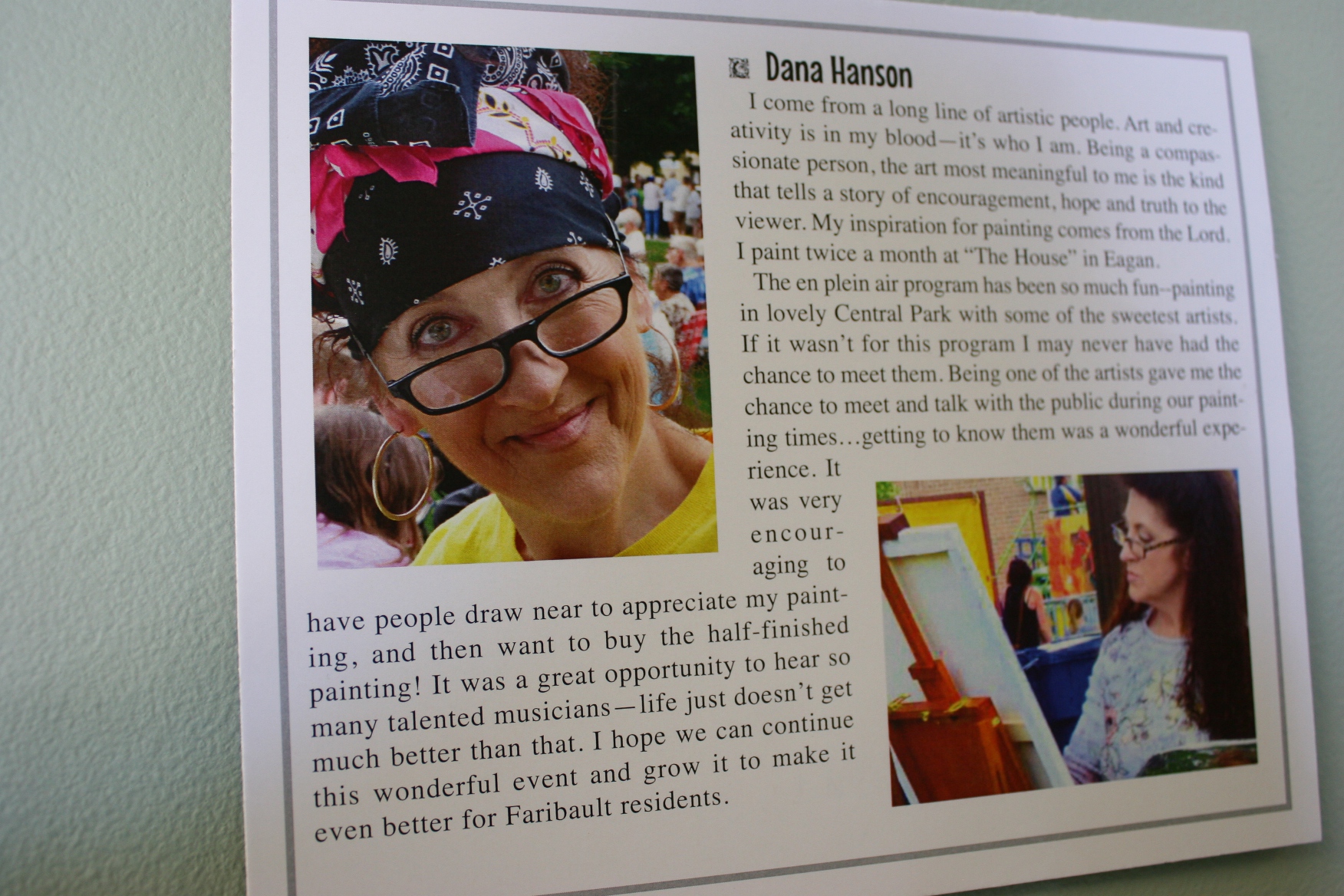
Dana Hanson’s artist statement posted at the 2016 Artgo! art show at Buckham Center. (Minnesota Prairie Roots copyrighted file photo October 2016)

I first met Dana, who specializes in portraits, in 2015 during Faribault’s summer Concerts in the Park weekly outdoor music series at Central Park. Local artists were invited to paint on-site and Dana was among them. She has since moved away from Faribault.

A close-up of Dana’s “The Native Man, His Eagle & His Chanupa,” an oil painting exhibited in Owatonna in 2018. (Minnesota Prairie Roots copyrighted file photo April 2018)

Eventually, her art started showing up in exhibits—at Buckham Center, at the Paradise Center for the Arts and at the Owatonna Arts Center. Her work ranged from faith-inspired to celebrity (like Bob Dylan, Prince and Judy Garland) and Native American portraits and more. In Owatonna, her “Healing the Land” exhibit several years ago focused on the Dakota people.

Up close with Chief Taopi, center, and Bishop Henry Whipple, right. (Minnesota Prairie Roots copyrighted photo November 2022)

So when I saw the recently-donated 2019 painting of Faribault’s founding fathers, I was not at all surprised. Dana holds a heart full of gratitude, love and compassion for Indigenous peoples. That shows in her art, including in these portraits of Chief Taopi, a member of the Little Crow Band of the Mdewakanton Dakota Tribe; town founder Alexander Faribault, “friend and protector” of the Dakota; and Bishop Henry Whipple, “Spiritual Father and Humanitarian” and “Advocate for the Native Americans.”

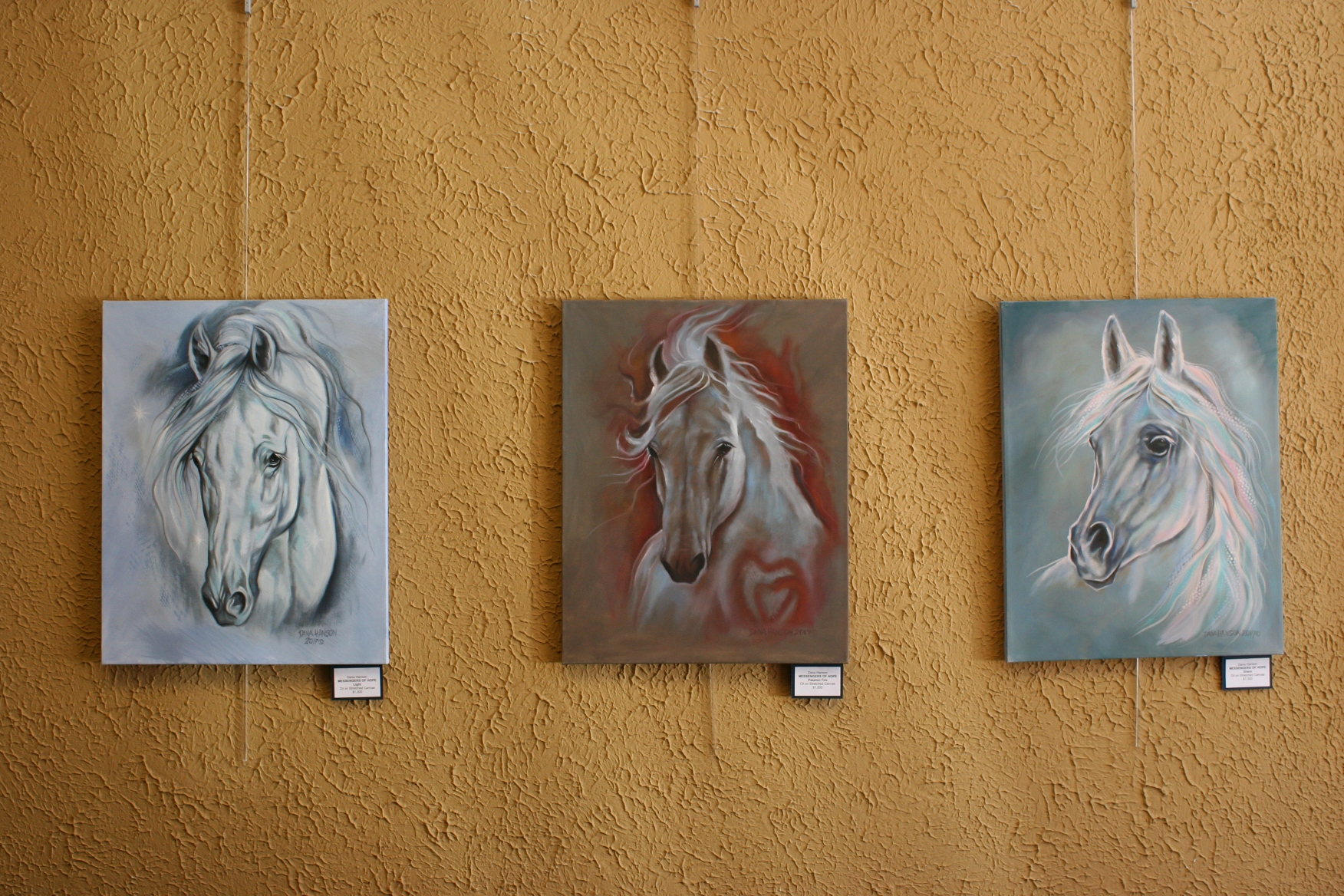
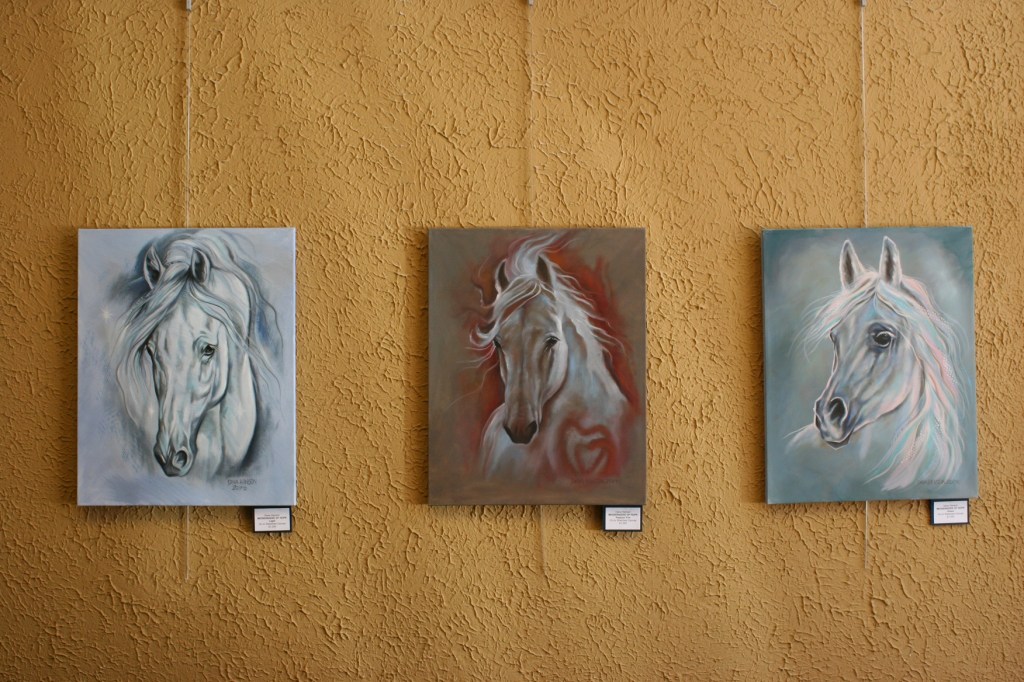
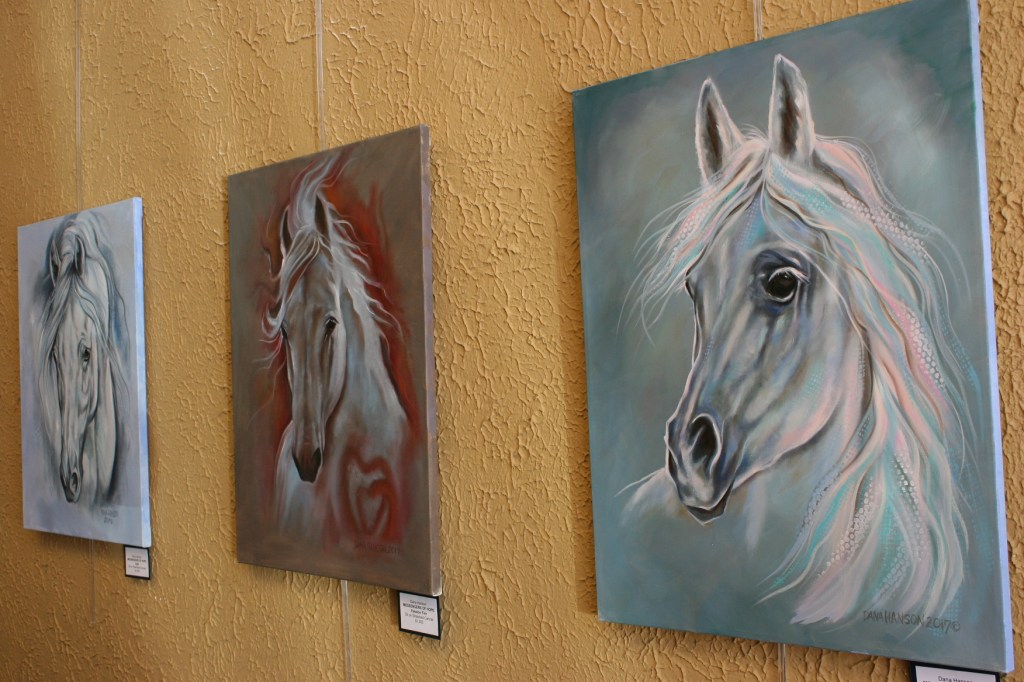
Another example of Dana’s art, MESSENGERS OF HOPE with the horses subtitled, from left to right, “Light,” “Passion Fire” and “Grace.” These were exhibited at the Paradise Center for the Arts in 2017. (Minnesota Prairie Roots copyrighted file photo March 2017.

Indigenous peoples were the original inhabitants of Faribault, of Rice County, a fact now only beginning to be widely-acknowledged and honored. The Wakpekute, part of the Dakota Nation, placed their dead on scaffolding on the hill just up from my house in today’s current-day Wapacuta (sic) Park, a fact I only learned this fall at an historical presentation. Eventually, they were buried in Peace Park, a triangle of land near the library. There’s so much rich local history I am beginning to learn.

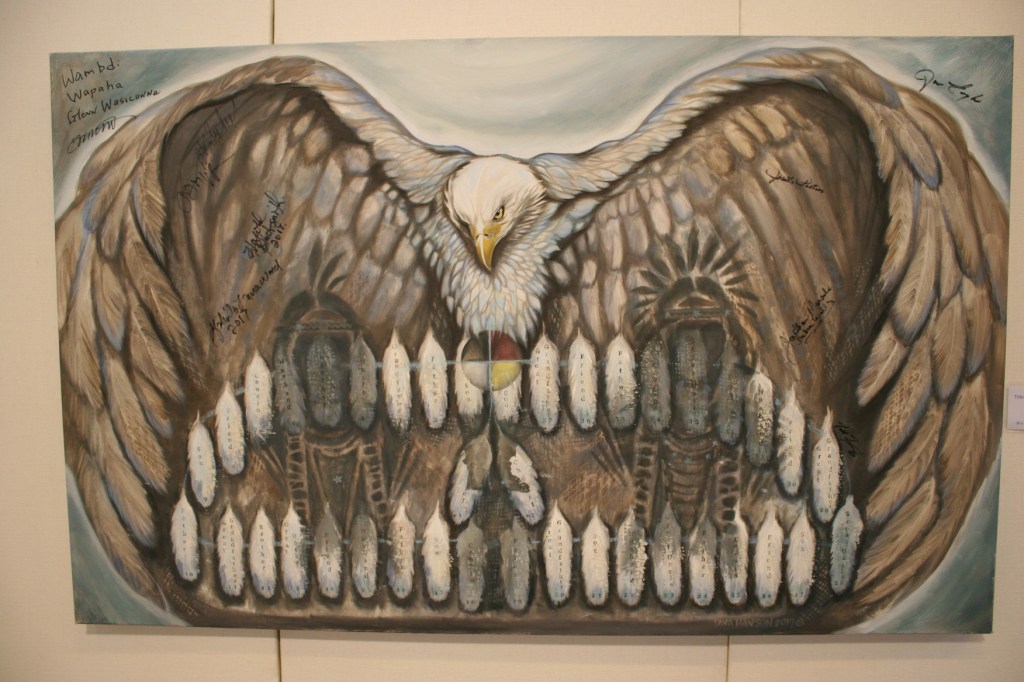
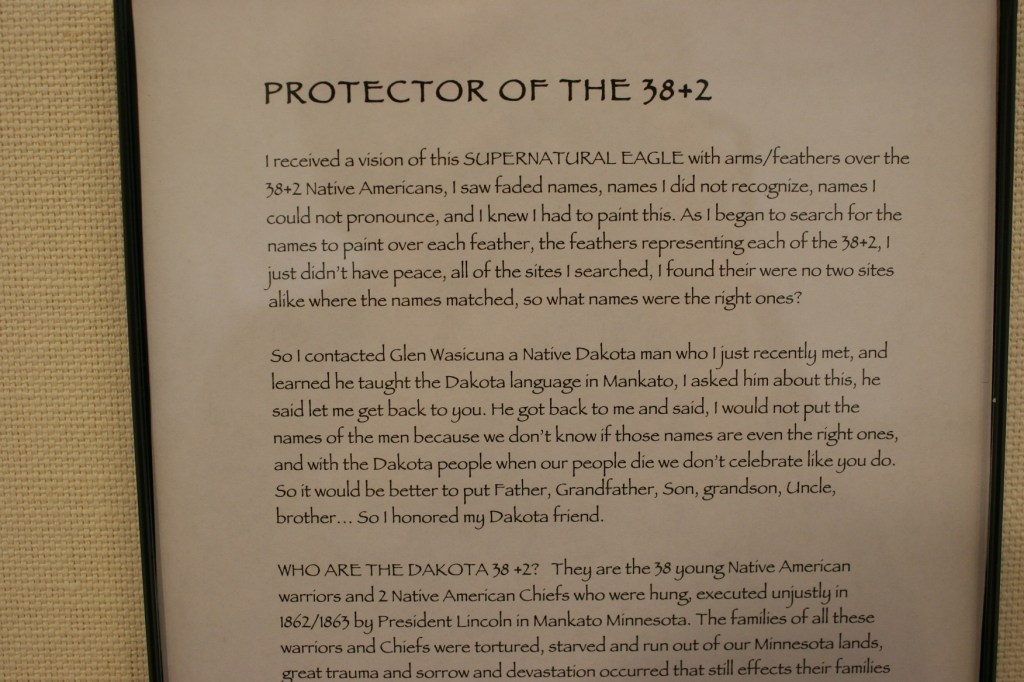
“Protector of the 38 + 2,” an oil on canvas by Dana Hanson and previously displayed in Owatonna. Her art honors the 38 Dakota men who were hung in Mankato following the US-Dakota War of 1862. (Minnesota Prairie Roots copyrighted file photo April 2018)

Chief Taopi, who centers Dana’s portrait trio, was a leader among his people and a member of a Peace Party during the US-Dakota War of 1862. Eventually he landed in Faribault, living on land owned by founder and fur trader Alexander Faribault. Taopi and the Bishop forged a strong friendship also. The Dakota chief died in 1869 and is buried at Maple Lawn Cemetery in Faribault.

Now, to see these three men honored via a painting in a place of learning, a place of connection, a place where history writes onto pages, reminds me of their importance in my community. In the familiarity of the library and during this, Native American Heritage Month, I need to pause, appreciate and respect those who shaped this place I’ve called home for 40 years.

© Copyright 2022 Audrey Kletscher Helbling
 

Varied art by a trio of artists showcased in Owatonna April 25, 2018

A sculpture inside the Owatonna Arts Center Library. The library is a must-see. It also features a vibrant ceiling mural.


SEVERAL DAYS REMAIN—until April 29—to view the work of three artists at the Owatonna Arts Center. Their art is notably distinct.


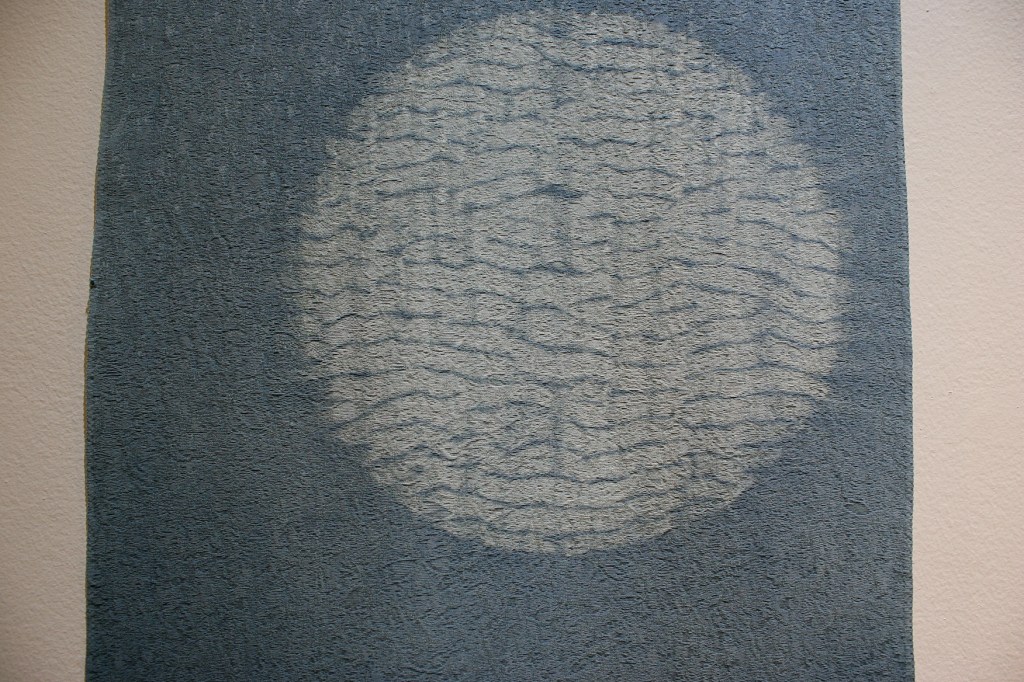
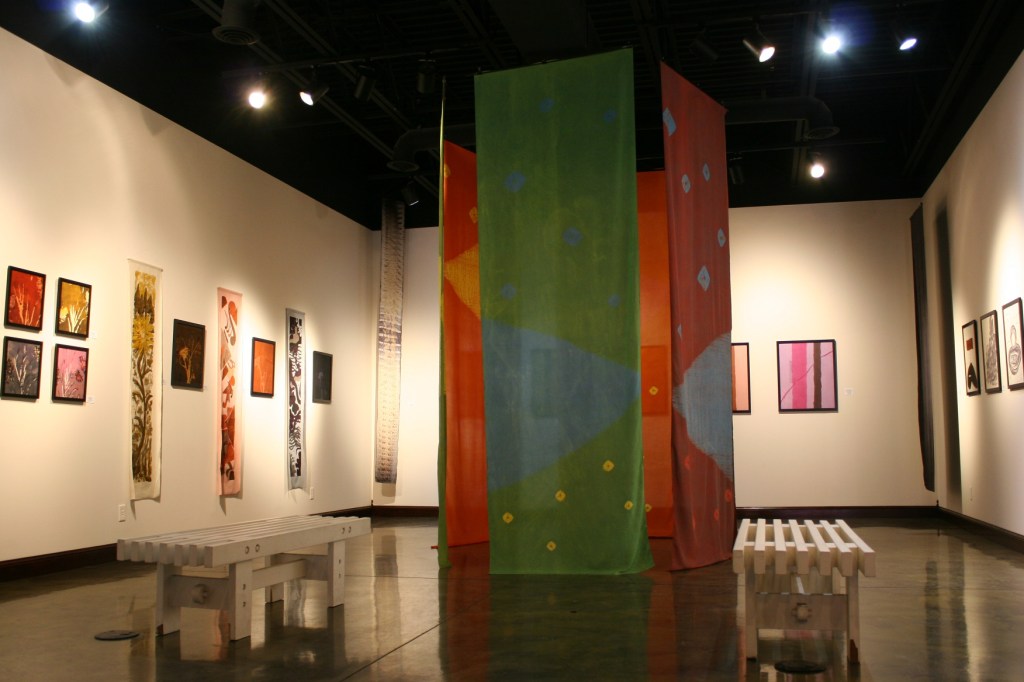
A section of “Winter Dreams of Spring.”


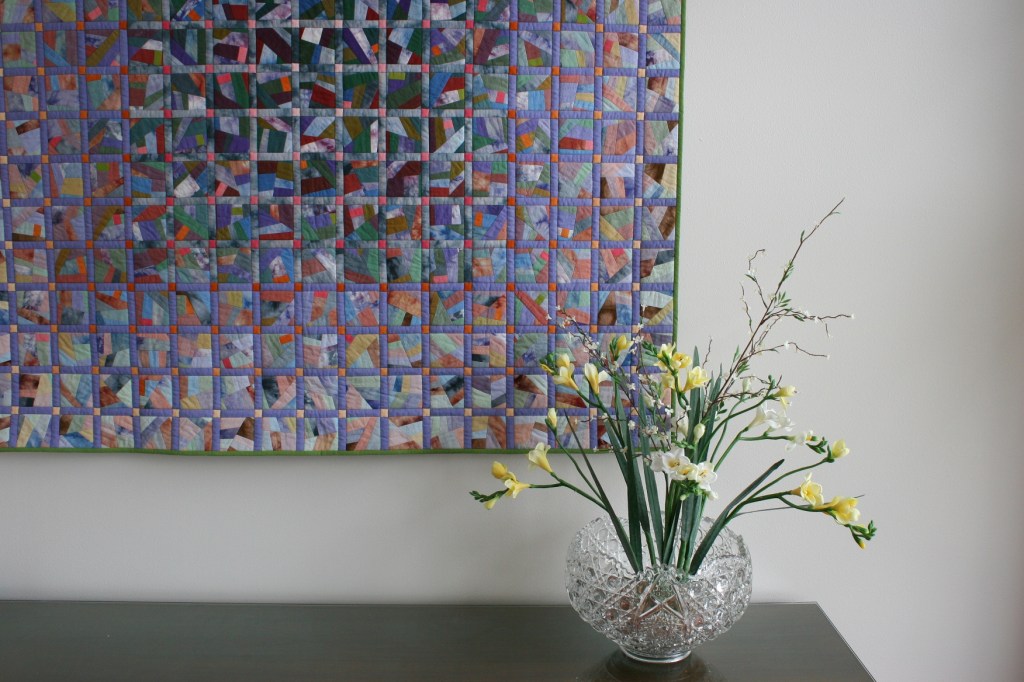
A solo piece of textile art showcases the work of Jan Myers-Newbury in the open space leading into the art center complex. “Winter Dreams of Spring” is a stunning quilted piece by this Pennsylvania artist with a Minnesota connection. She graduated from St. Olaf College in Northfield.


A close-up of Dana Hanson’s oil painting, “The Native Man, His Eagle & His Chanupa.”


Featured gallery artist Dana Hanson of Faribault focuses on “Healing the Land” in her powerful exhibit on the Dakota people. Through visions and dreams this Christian artist was inspired to create oil paintings that honor the memory and heritage of this Native people.


“Protector of the 38 + 2,” an oil on canvas by Dana Hanson.


She narrows her subject to the Dakota who were hung in the largest mass execution in US history following the US-Dakota Conflict of 1862. She also highlights an annual memorial ride honoring those 38 men.


I suggest you visit this exhibit, study the paintings and read Dana’s words about this important, and too often forgotten, difficult chapter in Minnesota history.


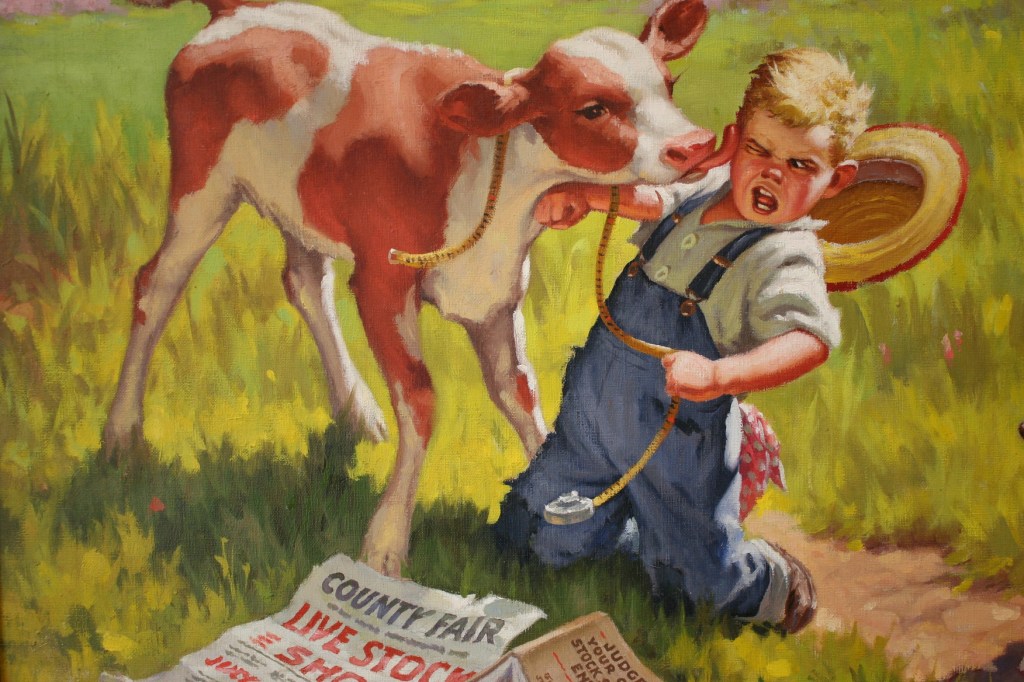
A portion of the painting “Taking His Licks,” done by Raymond Stuart in 1958.


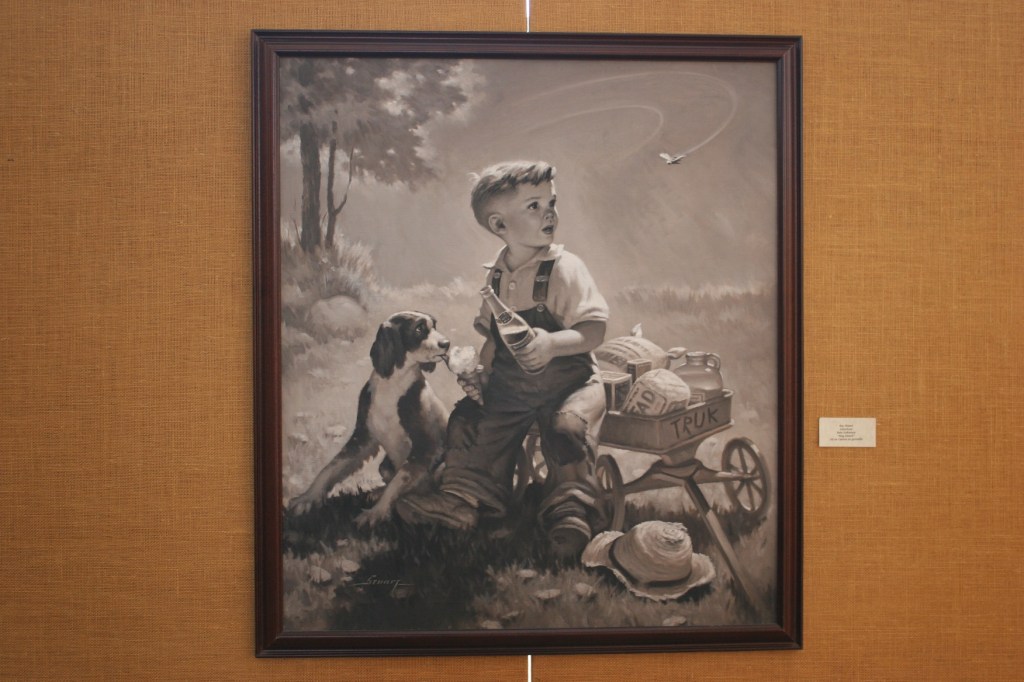
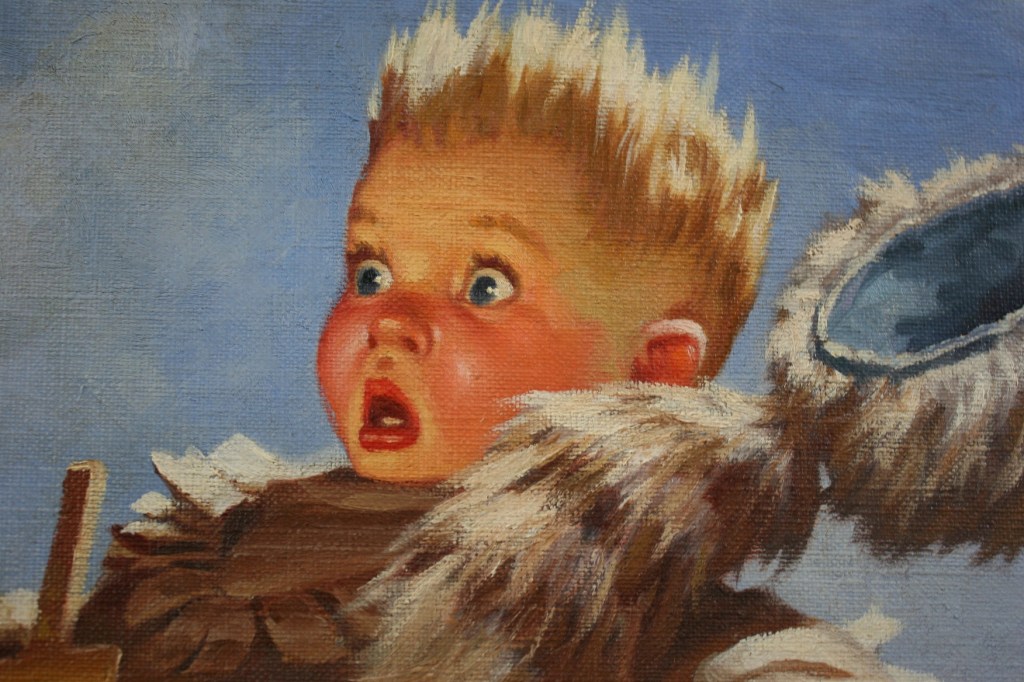
Once you’ve finished that, skirt into the art center hallways to view the whimsical and delightful work of Raymond Stuart, who years ago created calendar art. A native of Illinois, he eventually settled near his wife’s native Meriden (near Owatonna) to set up his home and art studio in a barn. His work seems Midwest Normal Rockwell-type to me. It’s rural, humorous and everyday. Delightful.


“Bug Attack” by Raymond Stuart, date of painting unknown.


I’m always amazed at the variety of art I can see right here in southeastern Minnesota. How fortunate we are to have places like the Owatonna Arts Center to share and celebrate the arts.


I love the expressions in Raymond Stuart’s’ art, like this of the boy in his 1954 painting “Surprised.”


FYI: The Owatonna Arts Center is open from 1 – 5 p.m. Tuesday – Sunday and is located at 435 Garden View Lane.


UPDATED: 7:30 a.m. Friday, April 27, to correct the last name of the Meriden artist.

© Copyright 2018 Audrey Kletscher Helbling
All artwork was photographed with permission. Copyrights for art belong to the artist or rightful owner of those copyrights.


The art of Dana & Judy in the Paradise March 13, 2017

An overview of Judy Saye-Willis’ exhibit, “From Garden to Gallery: Natures Gentle Colors.”


EVERY ARTIST, whether a sculptor, painter, wordsmith, photographer or anything in between, brings values and background into his/her work.


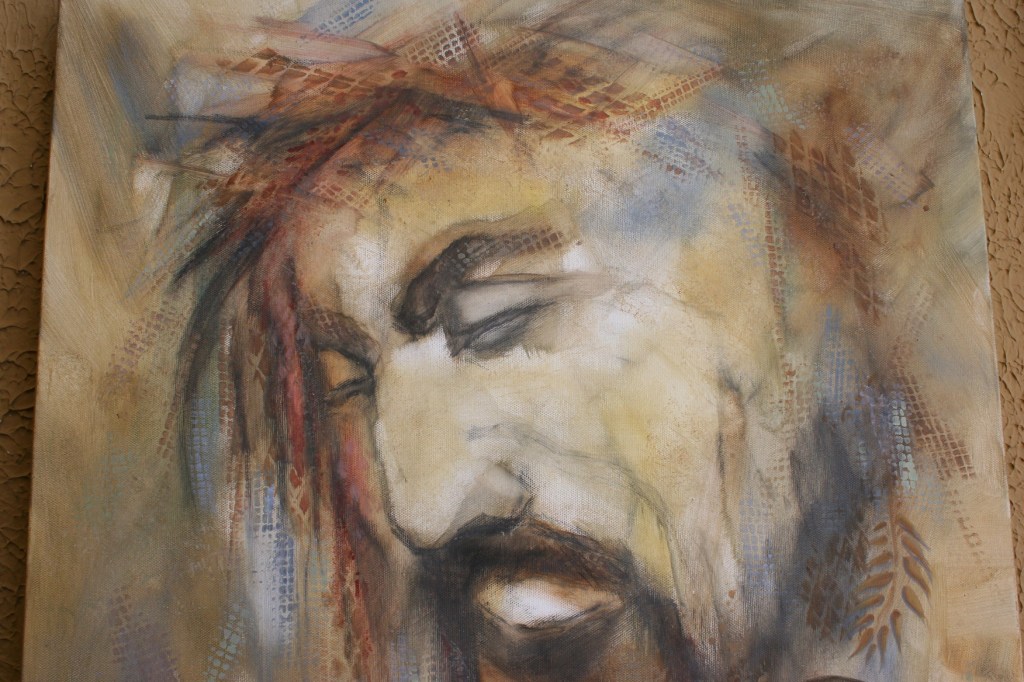
A section of Dana Hanson’s portrait of Christ, titled “All For You.”


For Faribault artist Dana Hanson, faith clearly inspires her art.


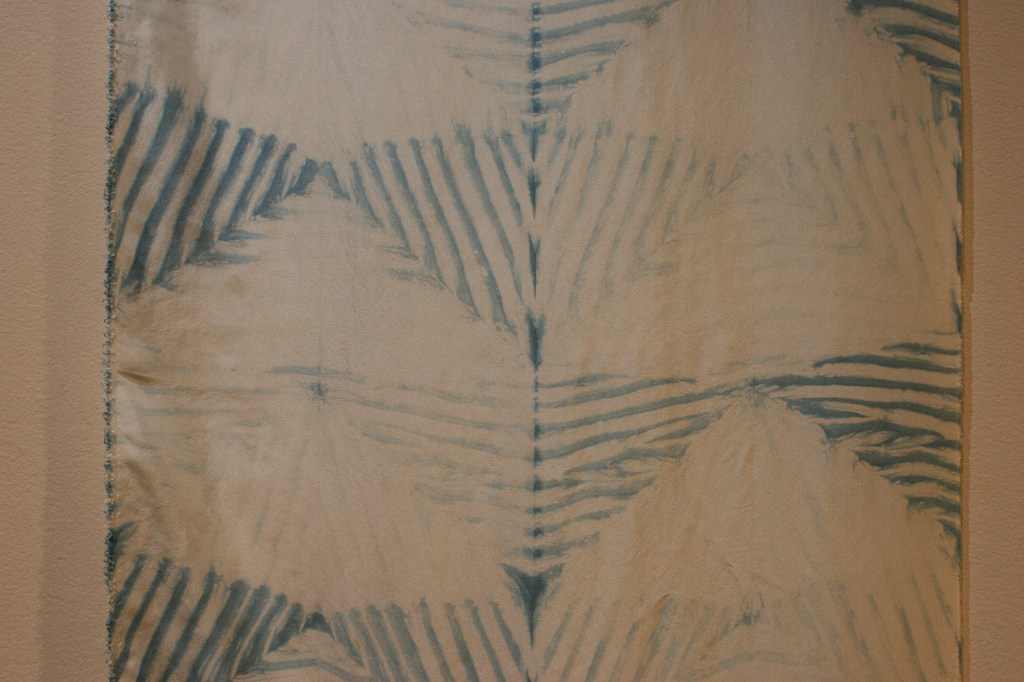
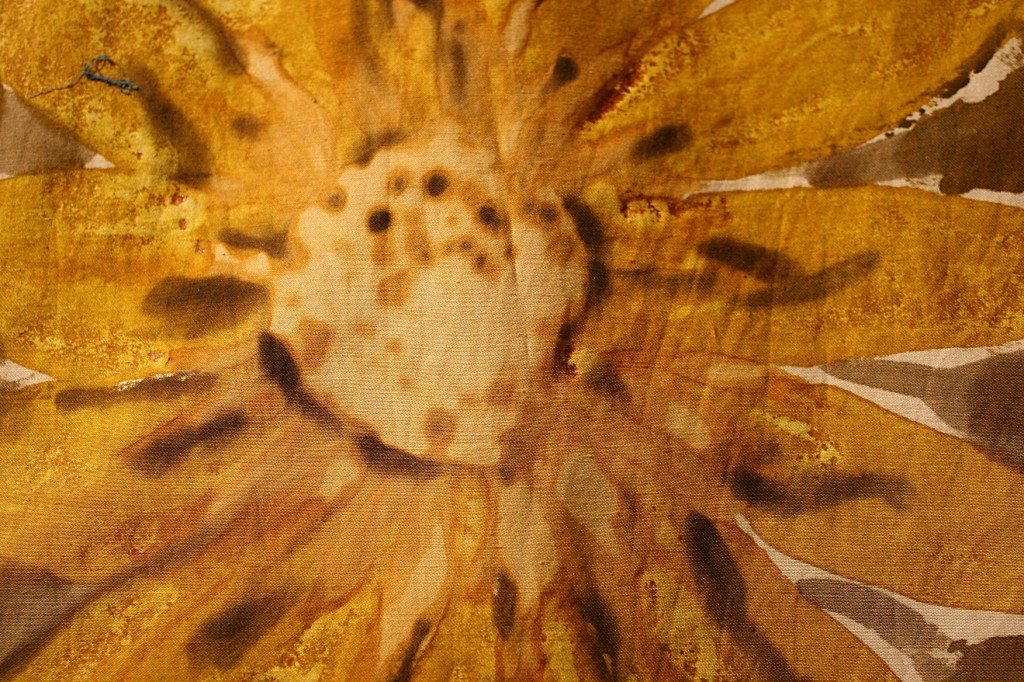
Nature’s influence is seen both in the subject and in the weld (a plant) dye used in this art by Judy.


For Northfield artist Judy Saye-Willis, the natural world seems the most influential.


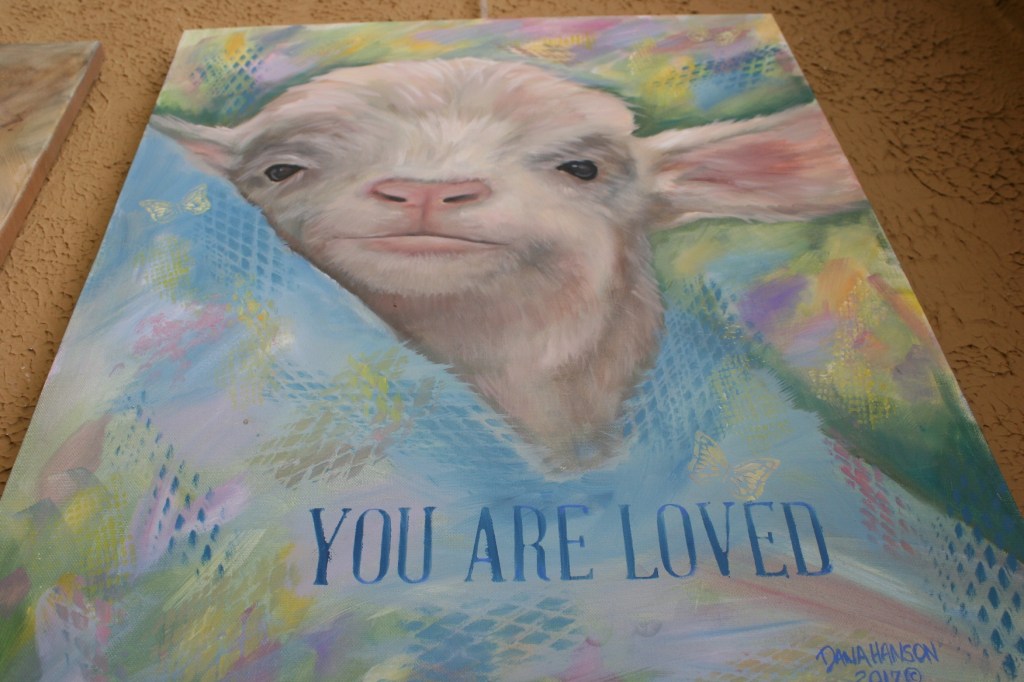
Dana’s “You Are Loved” faith-based painting.


They are two diverse artists currently exhibiting at the Paradise Center for the Arts in Faribault. Dana paints with a brush, oil on canvas. Judy works with fabric and dyes as a fiber artist in this particular From Garden to Gallery—Natures Gentle Colors collection.


In her One Color Series, Judy dyed each piece in a single color dye bath.


Both infuse passion and devotion into their work. Judy uses natural dyes to color fabric. Rhubarb root, black walnut, sumac, goldenrod, prairie wildflowers and more are dye sources for this artist who, like me, grew up on a southwestern Minnesota farm. Judy played in the fields and pastures of the prairie and I can see that in her art. She holds a closeness to the land.


This trio of paintings is titled MESSENGERS OF HOPE with the horses subtitled, from left to right, “Light,” “Passion Fire” and “Grace.”


Dana’s art sometimes comes to her, she says, in visions—her faith-based horse paintings inspired during worship. There is symbolism in her work, threads of light and hope. Her art is her visual ministry, Dana writes on her website.


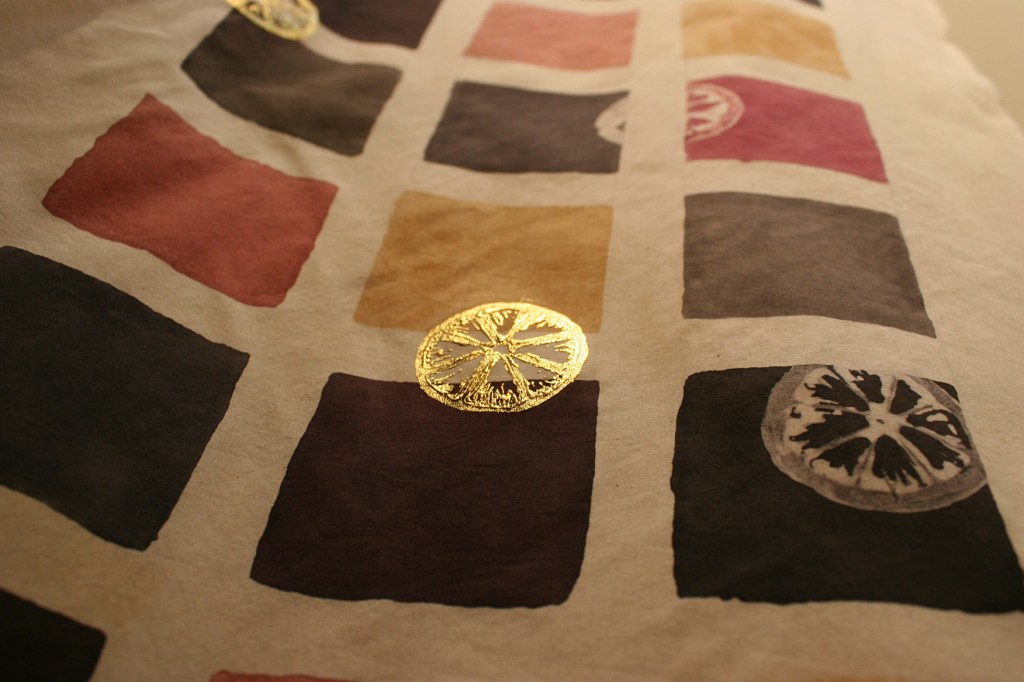
A close-up of Judy’s panel tagged as “When Life Gives you Lemons make Art.” She used lemon juice for a discharge and dyed in cochineal. The repetition in the art is in the style of Andy Warhol.


I appreciate the artistic talents of both artists. I appreciate also their dedication to the craft. I appreciate the strength of their work.


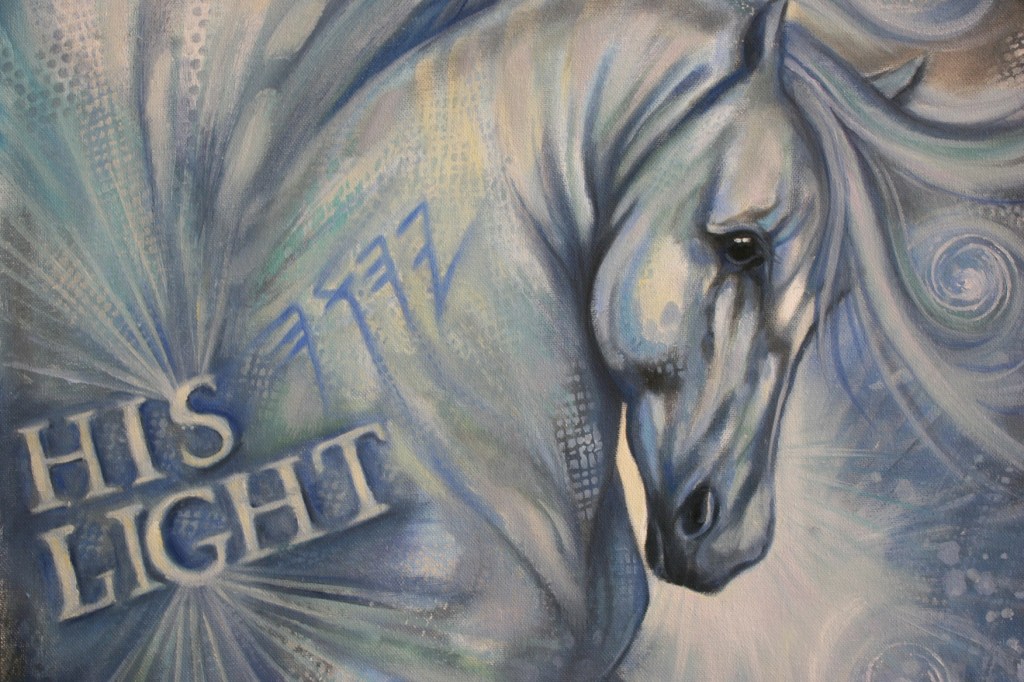
“His Light” by Dana.


How I interpret their artwork may or may not match their intentions. But that’s the thing about art. We each bring to art our values, our backgrounds, our experiences. When our eyes lock on a piece of art, we react as only we can, with introspection that is uniquely and individually ours.


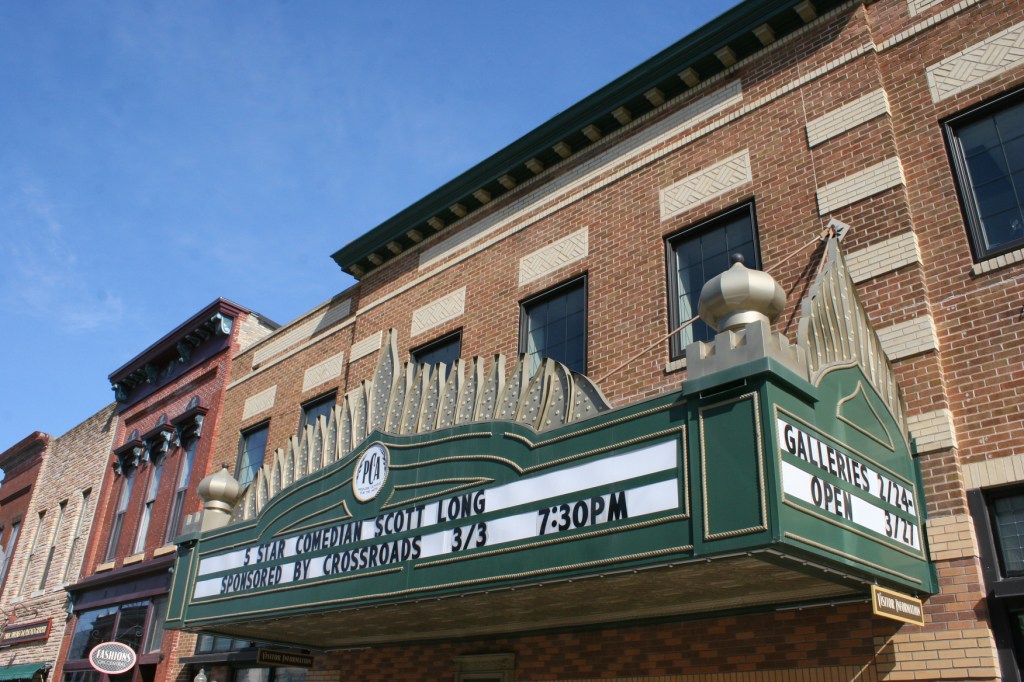
The Paradise Center for the Arts is housed in an historic former theater in downtown Faribault.


FYI: Dana and Judy’s exhibits will continue through March 27 in the main floor galleries at the Paradise Center for the Arts, 321 Central Avenue, Faribault. These photos are only a sampling of the artwork in their exhibits.

© Text copyright 2017 Audrey Kletscher Helbling
Artwork copyrighted by the artists and photographed with permission.


Beyond violence, two artists show that hope rises March 7, 2017

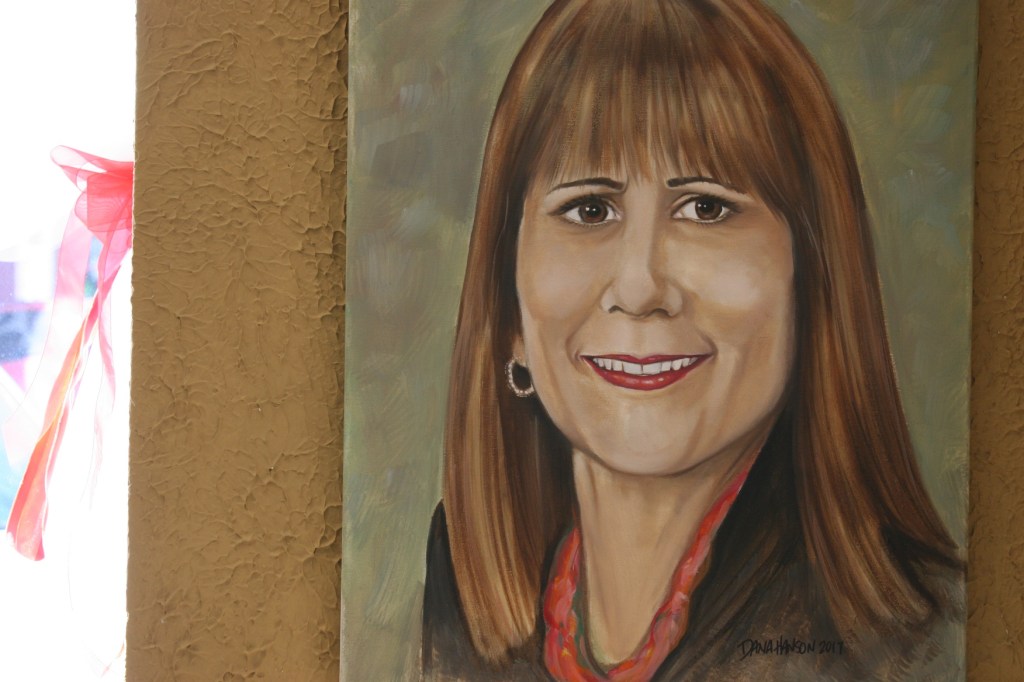
A portrait of Barb Larson by Faribault artist Dana Hanson.

A portrait of Barb Larson by Faribault artist Dana Hanson.

TUCKED INTO TWO CORNERS in two galleries are two tributes by two artists.

Both honor Barb Larson, murdered on December 23, 2016, in an act of domestic violence. She was a long-time friend to artist Judy Saye-Willis and an acquaintance to artist Dana Hanson. Both chose to remember Barb in their exhibits currently showing at the Paradise Center for the Arts in historic downtown Faribault.

Dana painted an oil on canvas portrait of Barb, the Faribault Area Chamber of Commerce & Tourism employee who stopped occasionally to place orders at the bakery where Dana works. “I just wanted to do something positive to remember…she was genuine and very nice,” Dana said. The result is her “In Memory of Barb Larson” painting, based on a photo.

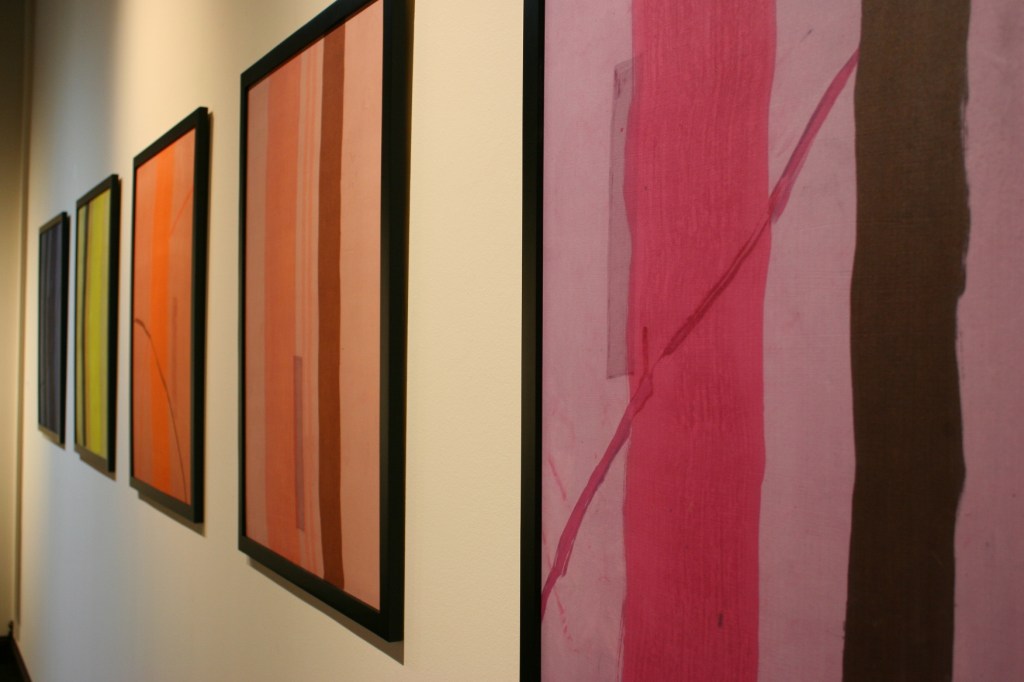
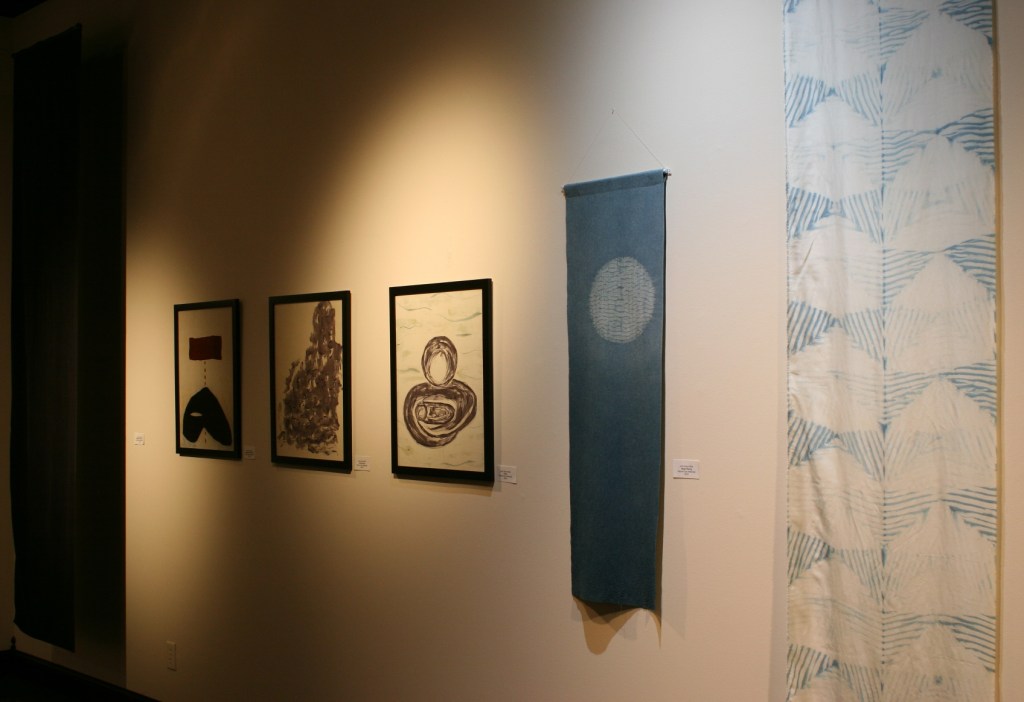
This series of fiber art pieces by Northfield artist Judy Saye-Willis also honors Barb Larson. The pieces, from left to right, are titled "Darkness of Death 1", "Darkness of Death 2", "Destruction", "Hope", "Hope Rising" and "The Light of Hope".

This series of fiber art pieces by Northfield artist Judy Saye-Willis focuses on death and hope. The pieces, from left to right, are titled “Darkness of Death 1,” “Darkness of Death 2,” “Destruction,” “Hope,” “Hope Rising” and “The Light of Hope.”

Judy’s artwork themed on death and hope spans half a wall and includes six pieces. Three framed works were already completed prior to Barb’s murder. They are an expression of “what’s happening in our culture today,” she said, specifically citing ISIS and the violence in Aleppo, Syria, as inspiring the art. But, once the events of December 23 unfolded locally, Judy created three more related fiber art pieces using natural dye materials. The result is a compelling series of framed art and panels focusing on death and hope.

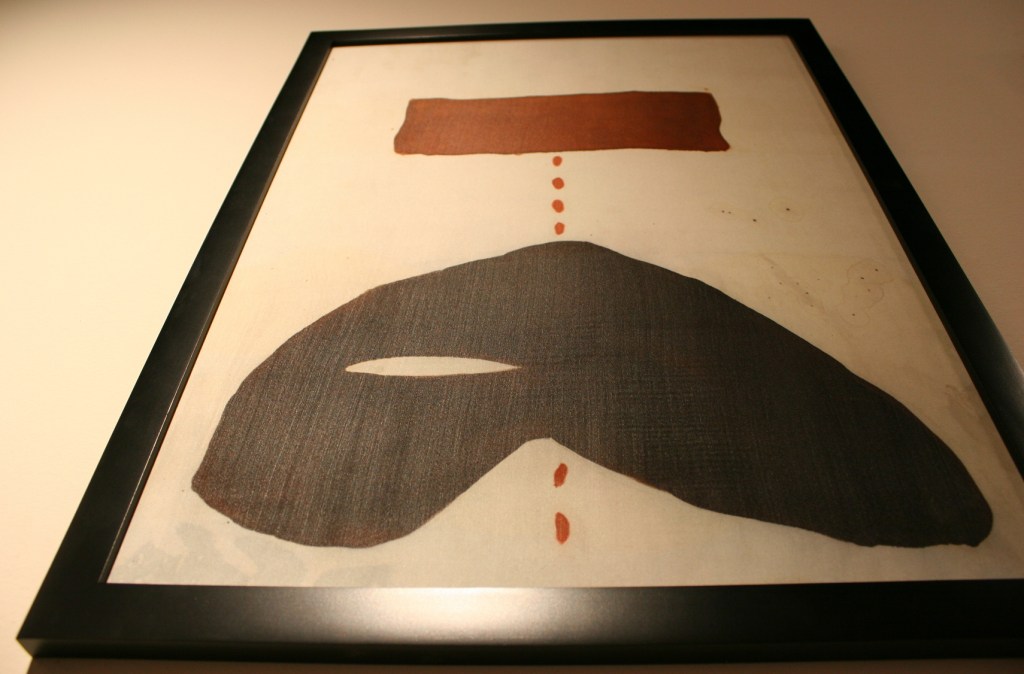
I angled my camera up to photograph "Darkness of Death 2."

I angled my camera up to photograph “Darkness of Death 2.” When Judy created this scene with blood dripping and an executioner’s mask, she was thinking of ISIS and the violence/situation in Aleppo.

“…I was feeling raw, emotional with nowhere to go with it,” Judy said. “It (Barb’s murder) was senseless. I went to my studio and started the first piece. I tried three times to dye the piece black, unsuccessfully. I called it “The Darkness of Death 1.”

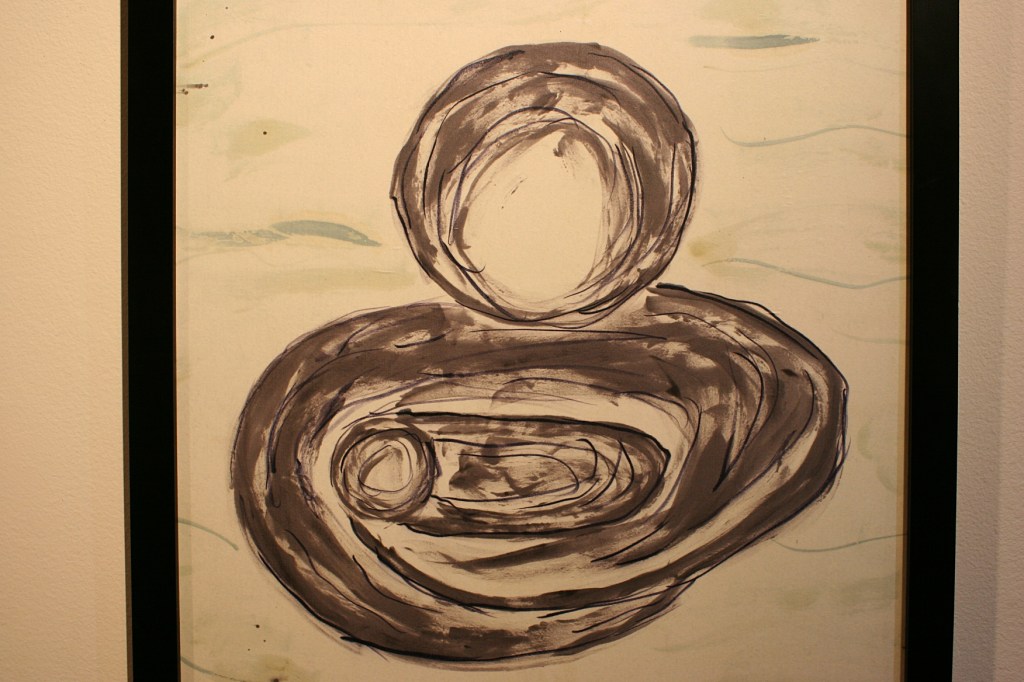
Simply titled: "Hope."

Madonna and child, simply titled: “Hope.”

Once she finished the black panel, Judy transitioned into the theme of hope. That was prompted by a Catholic church official she heard talking about faith and hope on the morning of December 23 (the day of Barb’s murder) on CBS This Morning. The result is two more hope-inspired fiber art panels.

As I viewed both artists’ tributes to Barb Larson, I could see the emotion within the artwork. Dana succeeds, through the strokes of her brush and the paint colors she chose, to portray the woman described as vivacious and friendly by those who knew her. Genuine warmth glows in Dana’s painting of Barb. I can see Barb’s personality in that portrait.

Judy’s art differs significantly, leaving more open to interpretation, more room for the viewer to insert his/her experiences, emotions and reactions. In the first three darker pieces, beginning with the length of black-dyed cloth, there is no ignoring the darkness of a violent death. That Judy chose to confront and share that in her work makes a powerful visual public statement whether considering the violence in Aleppo or the violence in Faribault.

"Hope Rising," says Judy Saye-Willis, "is about moving forward from tragedy."

“Hope Rising,” says Judy Saye-Willis, “is about moving forward from tragedy.”

Equally as important are the three hope-inspired pieces that follow. Those, too, make a powerful visual public statement.

A close-up of "The Light of Hope," which Judy calls her strongest piece.

A close-up of “The Light of Hope,” which Judy calls the strongest piece in this series.

Through their art, Judy and Dana have opened the conversation about domestic and other violence in a deeply personal, emotional and introspective way.

Dana’s exhibit includes a trio of horse paintings titled MESSENGERS OF HOPE. They are, left to right, subtitled “Light,” “Passion Fire” and “Grace”

And any time we begin to think and talk about these difficult issues, hope rises.

FYI: At noon today, HOPE Center and the Faribault Chamber are rallying at the Chamber office (where Barb Larson was murdered) as part of a statewide effort, “It Happens Here: A Statewide Day to End Domestic Violence.”

© Copyright 2017 Audrey Kletscher Helbling
Artwork photographed with permission of the artists.