Minnesota Prairie Roots

Writing and photography by Audrey Kletscher Helbling

In which I meet Adolfo, Jose & little Milan October 17, 2024

Filed under: Uncategorized — Audrey Kletscher Helbling @ 5:00 AM
Tags: , , , , , , , , , ,
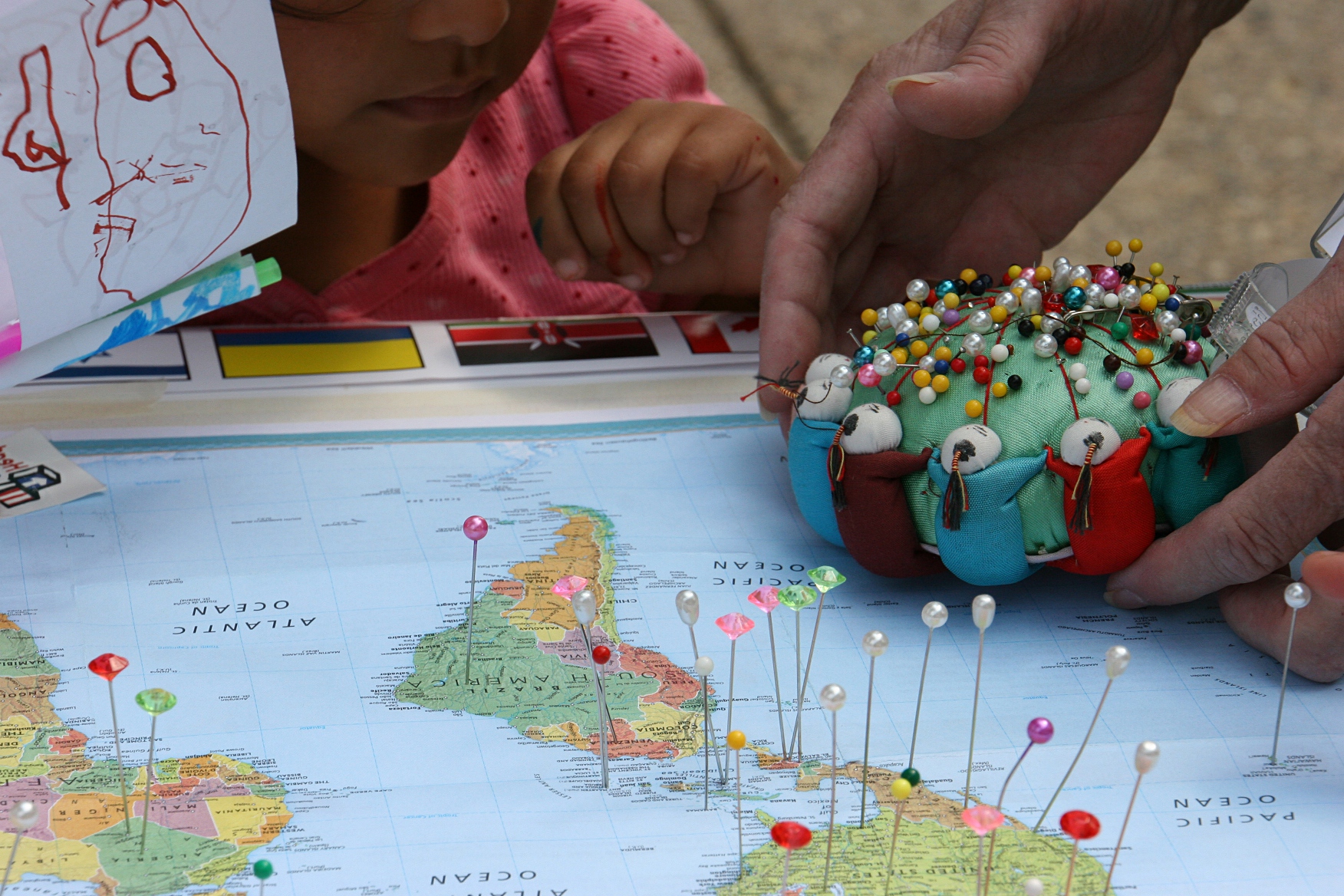
Faribault is home to people from many countries as noted on this interactive map at a past International Festival in Faribault. (Minnesota Prairie Roots copyrighted file photo)

TWO DAYS. TWO CONVERSATIONS. And I am the richer for meeting Adolfo and Jose and hearing their stories.

I should backtrack a bit and state that for me to strike up conversations with people I don’t know is not unusual. Such interactions widen my world, broaden my understanding and simply help me learn more about others.

It was little Milan, Adolfo’s one-year-old grandson, who initially drew me to pause during a morning walk through Faribault’s Central Park. Adolfo was pushing Milan in an umbrella stroller when Randy and I crossed paths with them. Milan, with his big brown eyes, black hair and radiant smile, is the essence of cuteness. Cute babies and kids are always a reason to stop and chat.

The pair walk through the park every morning as Adolfo cares for Milan while his mom is at work. I don’t recall whether Mom is Adolfo’s daughter or daughter-in-law. Doesn’t matter. What matters is the deep love Adolfo has for family and his willingness to care for his grandson before heading to work in the afternoon.

Kids used markers to create flags from their native countries while attending the local International Festival. (Minnesota Prairie Roots copyrighted file photo)

ESCAPING COMMUNIST VENEZUELA

I asked Adolfo about his background, what brought him to Faribault. He moved here from Orlando to be with family. But he’s originally from Venezuela. His home country, he said, is not a good place to live. The reason: Communism and violence. He left family behind and desperately wants them here, safe in America.

By that time, little Milan was out of his stroller, pushing it, then dropping to the ground, his pants covered in bits of dried leaves, his tiny hands clasping two Matchbox cars. He is close to walking alone. Milan proved a distraction from the deep pain Adolfo obviously feels separated from his family still in Venezuela.

“We’re so happy to have you here,” I told my new friend. And I genuinely meant that as my heart hurt for this man who has endured so much already.

“God bless you,” Adolfo said, as he made the sign of the cross, held his hands to his heart.

Adolfo repeated our names several times, clearly an effort on his part to remember them. I repeated his, too, and Milan’s, and wished I knew Spanish. Adolfo spoke Spanish to Milan, who is being raised bilingual. What a gift to that little boy with the big brown eyes, with the loving family, with the Grandpa whom I consider kind, caring, loving and brave.

Children gather at Faribault’s Central Park to break a pinata during an International Festival. This photo placed first in a local photo contest and remains one of my favorite. I love that it reflects the diversity of Faribault and shows kids simply being kids with no thought of ethnicity. (Minnesota Prairie Roots copyrighted file photo)

FINDING A WELCOMING NEW HOME IN RURAL MINNESOTA

A day later I met Jose, a young man taking his lunch break at a park near Montgomery. He was working there for the Le Sueur County park system. Jose moved to nearby Le Center 15 years ago, having lived in California, Texas and Mexico. Like Adolfo, Jose is grateful to be here, with family. I told him how happy I am to have him living in Minnesota.

It didn’t take long before he opened up about how much he feels welcomed here, how he’s learned to love our four seasons, even winter. Jose shared about learning to drive in winter. And then he recounted being “baptized by black ice.” He walked onto the unseen ice and found himself flailing backwards. This part of Jose’s story included theatrical actions that left all of us laughing.

What a delightful young man. He’s hardworking, loves his family and likes living in a rural area. To hear that he’s found Minnesotans to be friendly pleases me. The reality is that not everyone welcomes individuals like Jose and Adolfo. I do.

I am the richer for having met these two men, whose life experiences and stories are vastly different than mine. Yet, we are the same. We have families and heartaches and hopes and dreams. That commonality connects us. And so does our humanity.

© Copyright 2024 Audrey Kletscher Helbling


White Cane Day & more focus Faribault Lions as they serve October 15, 2024

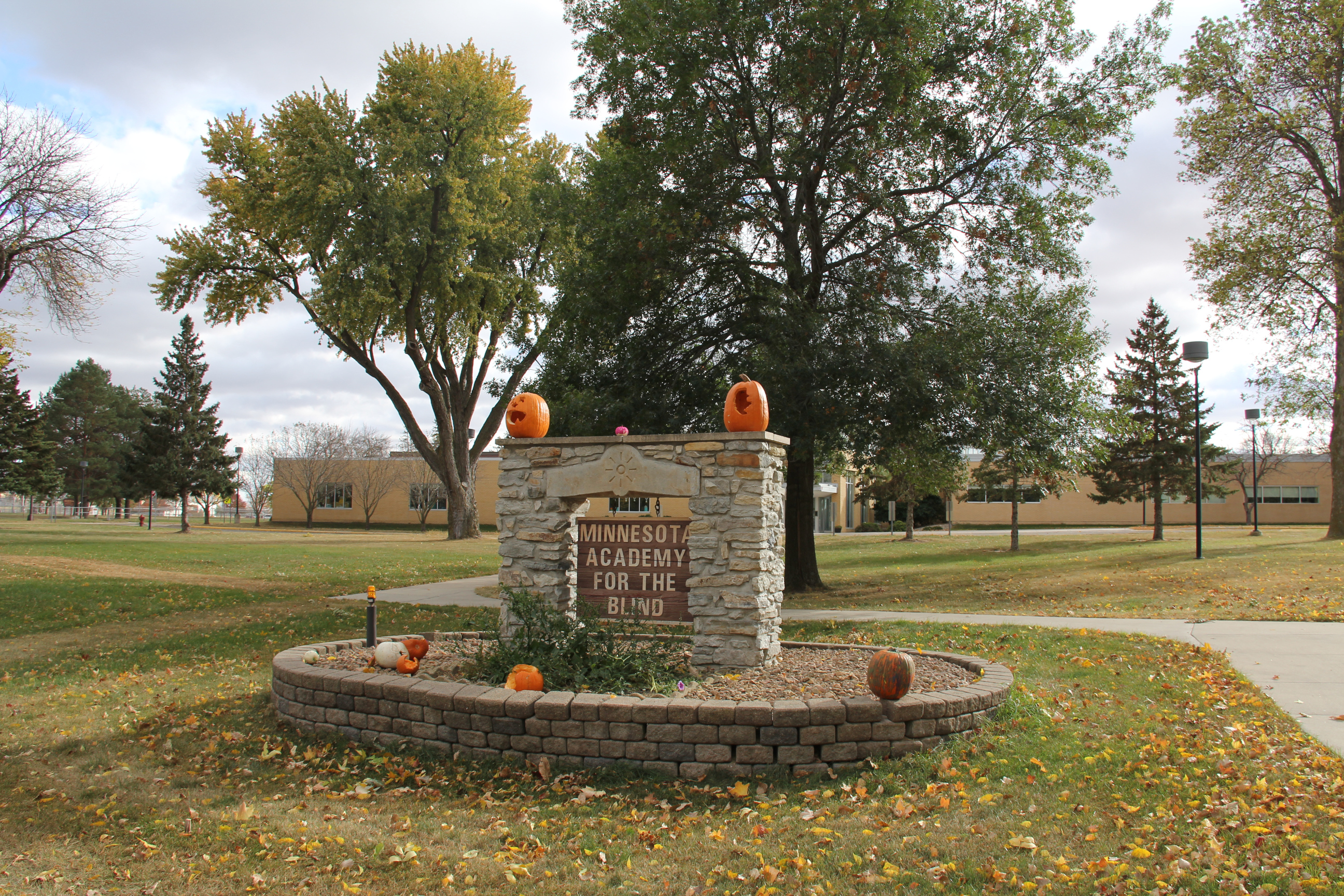
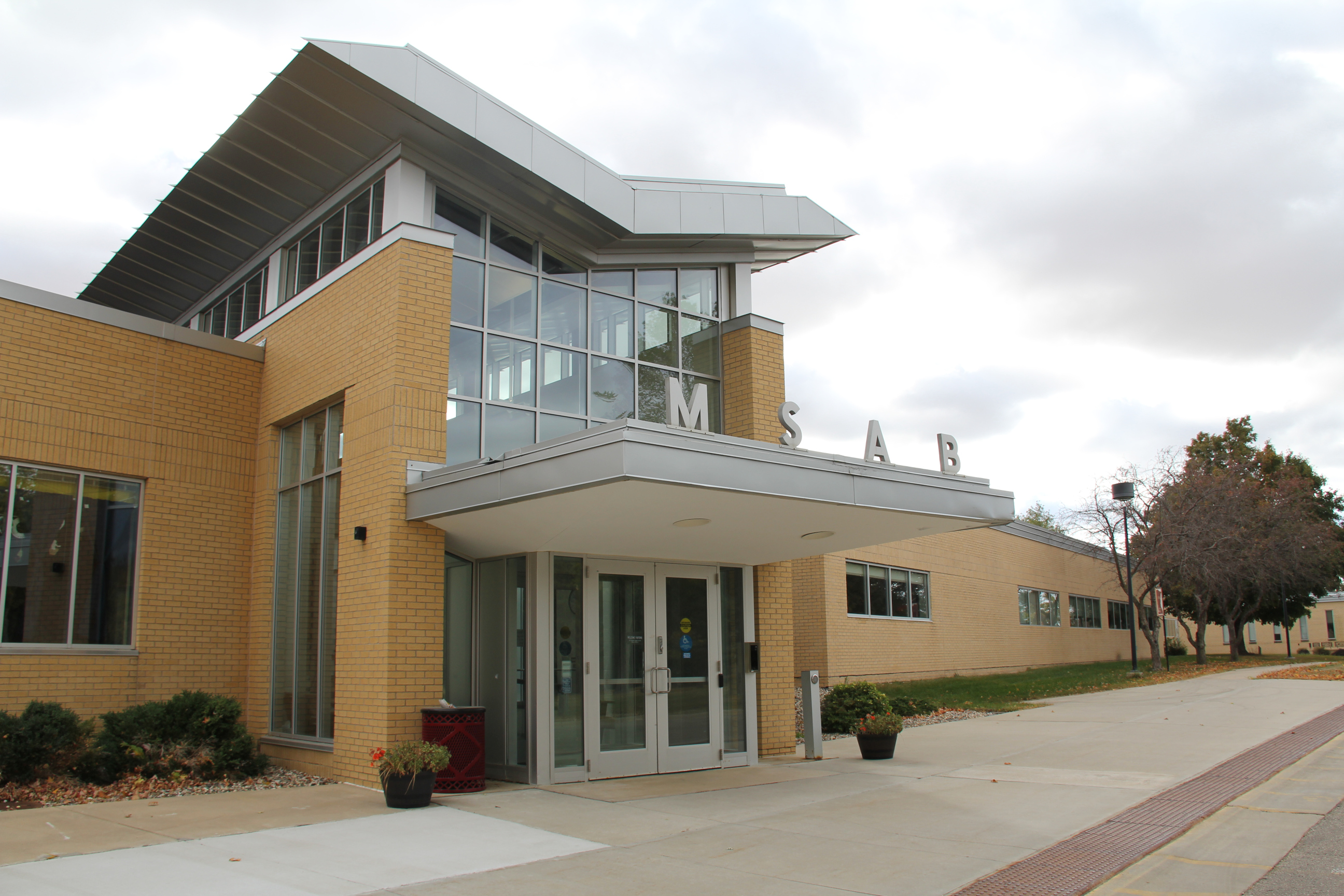
The entrance to the Minnesota State Academy for the Blind, located on Faribault’s east side. (Minnesota Prairie Roots copyrighted photo October 2024)

AS SOMEONE WHO DEALS with vision and hearing impairments, I feel fortunate to live in a community with a heightened awareness of those issues. Faribault is home to the Minnesota State Academies for the Deaf and Blind. Medical professionals offer local care in vision and hearing. And the Faribault Lions Club, focused on both, is especially active.

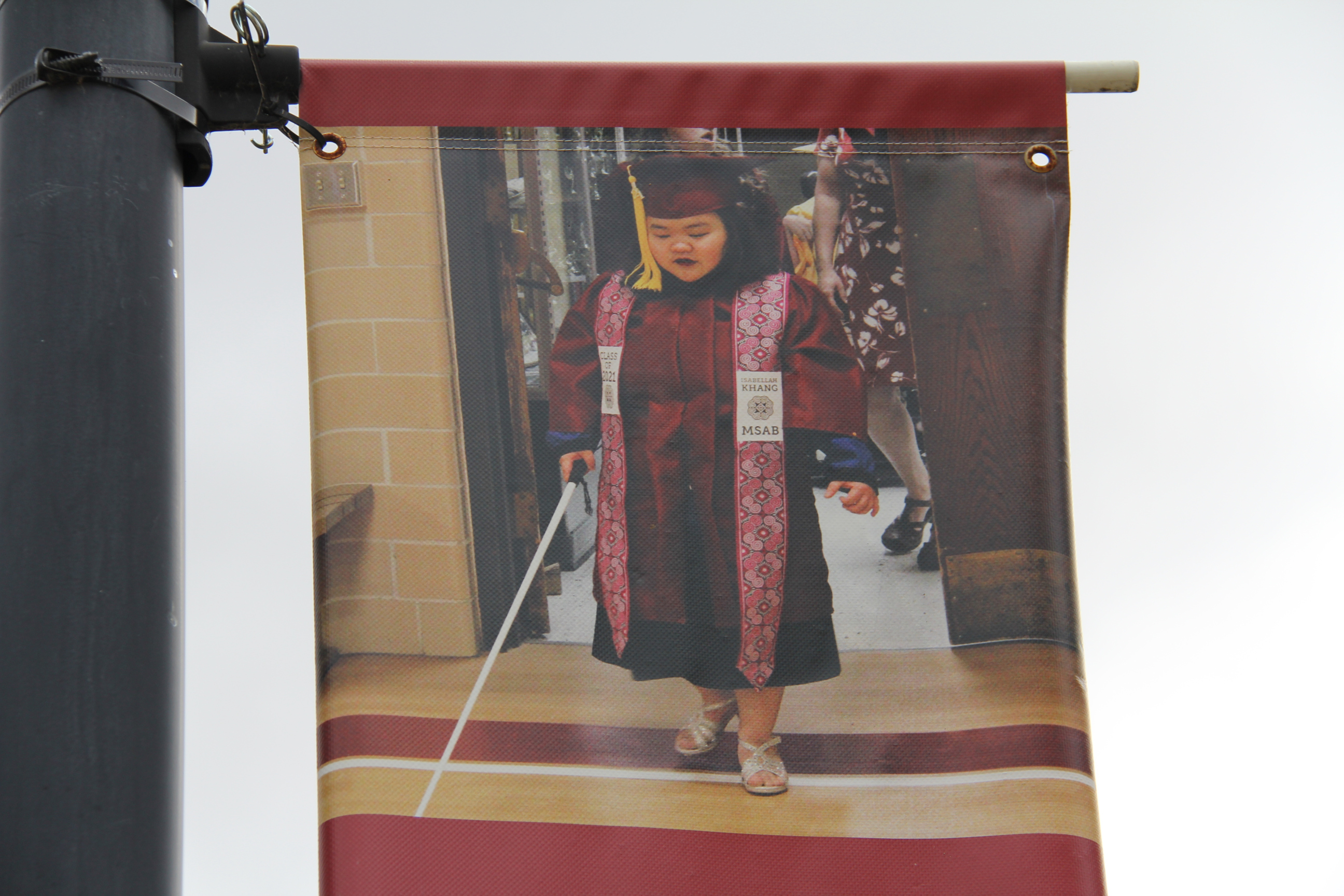
Pictures of MSAB students are featured on banners scattered around the campus. This one highlights a graduate. (Minnesota Prairie Roots copyrighted photo October 2024)

And that is why I met local Lion John Battles and learned about White Cane Awareness Day, celebrated annually on October 15. Battles was standing inside the exit area of Fareway Foods handing out information about white canes and collecting donations. Those monies will help blind and visually impaired individuals deal with mobility issues. For example, past gifts have been used to purchase canes and/or replacement tips for students at MSAB.

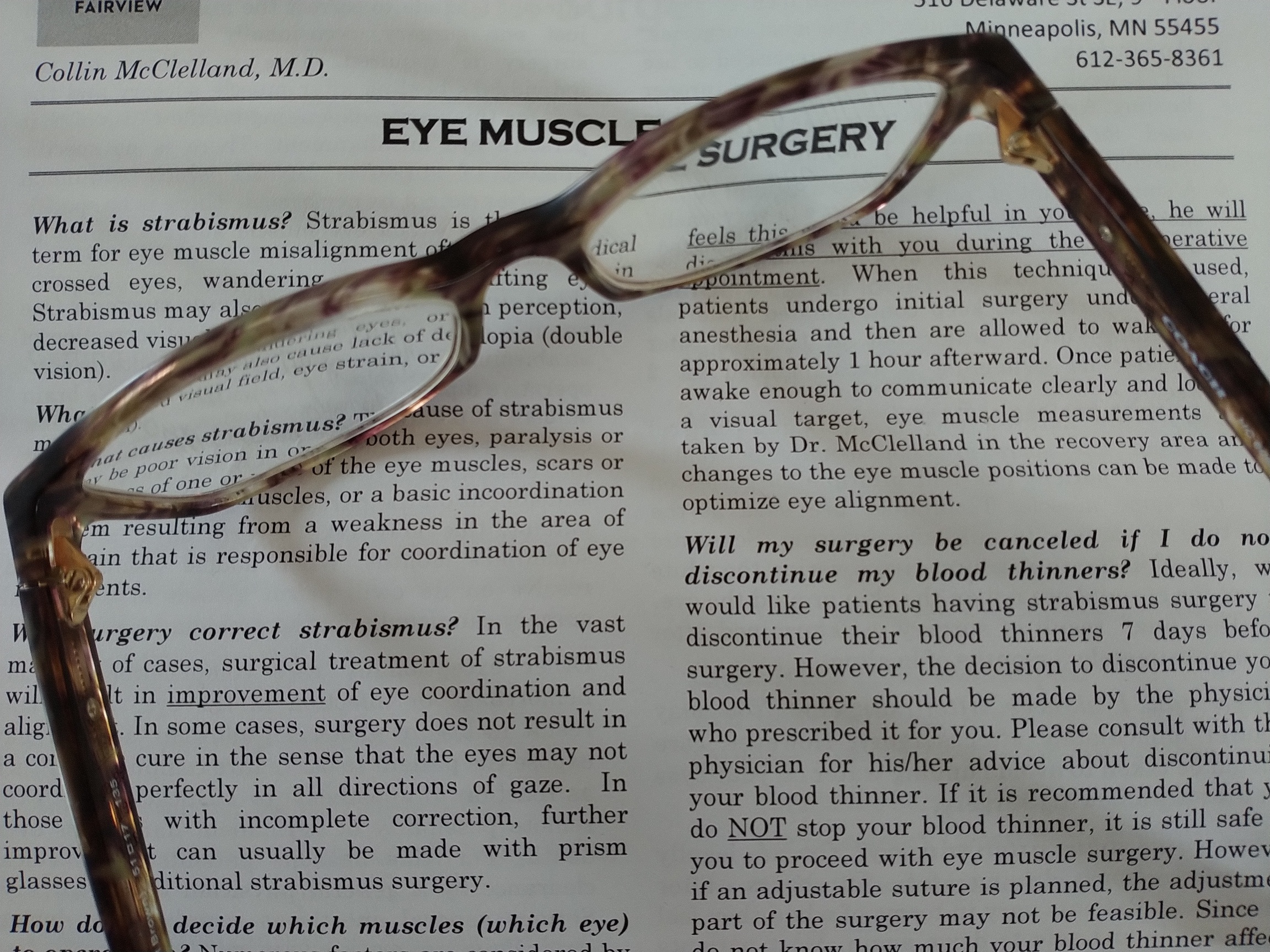
I underwent eye muscle surgery as a child and then again 64 years later, this time using an adjustable suture in my left eye. (Minnesota Prairie Roots copyrighted file photo 2023)

I paused to drop money into John’s bucket and also to chat a bit about the Lions’ work and my own struggles with vision. I’ve been diagnosed with bilateral strabismus and in January underwent surgery to realign my eyes with the goal of eliminating my double vision. Unfortunately, the corrective surgery did not work long-term. That’s true in 10-20 percent of surgical outcomes. Rather than attempt another surgery, I opted to try prisms in my prescription eyeglasses. Adjusting to the high number of prisms took time and they are not perfect. I struggle with depth perception and sometimes still see double. But, as I told John, at least I can see.

This photo of me (far left in group picture) with family on a vacation to northern Minnesota in 1960 shows me wearing a patch over my left eye. This was an attempt to correct my vision without surgery. (Minnesota Prairie Roots copyrighted file photo by Elvern Kletscher)

My vision issues are not something which suddenly developed. Rather, I was born with misaligned eyes, requiring strabismus surgery at age four. I am forever grateful to my parents for understanding the importance of corrective surgery. Although I never asked, I expect it was a huge financial burden for them. Had I not undergone this operation at the hospital in New Ulm, I likely would have gone blind in my less dominant eye.

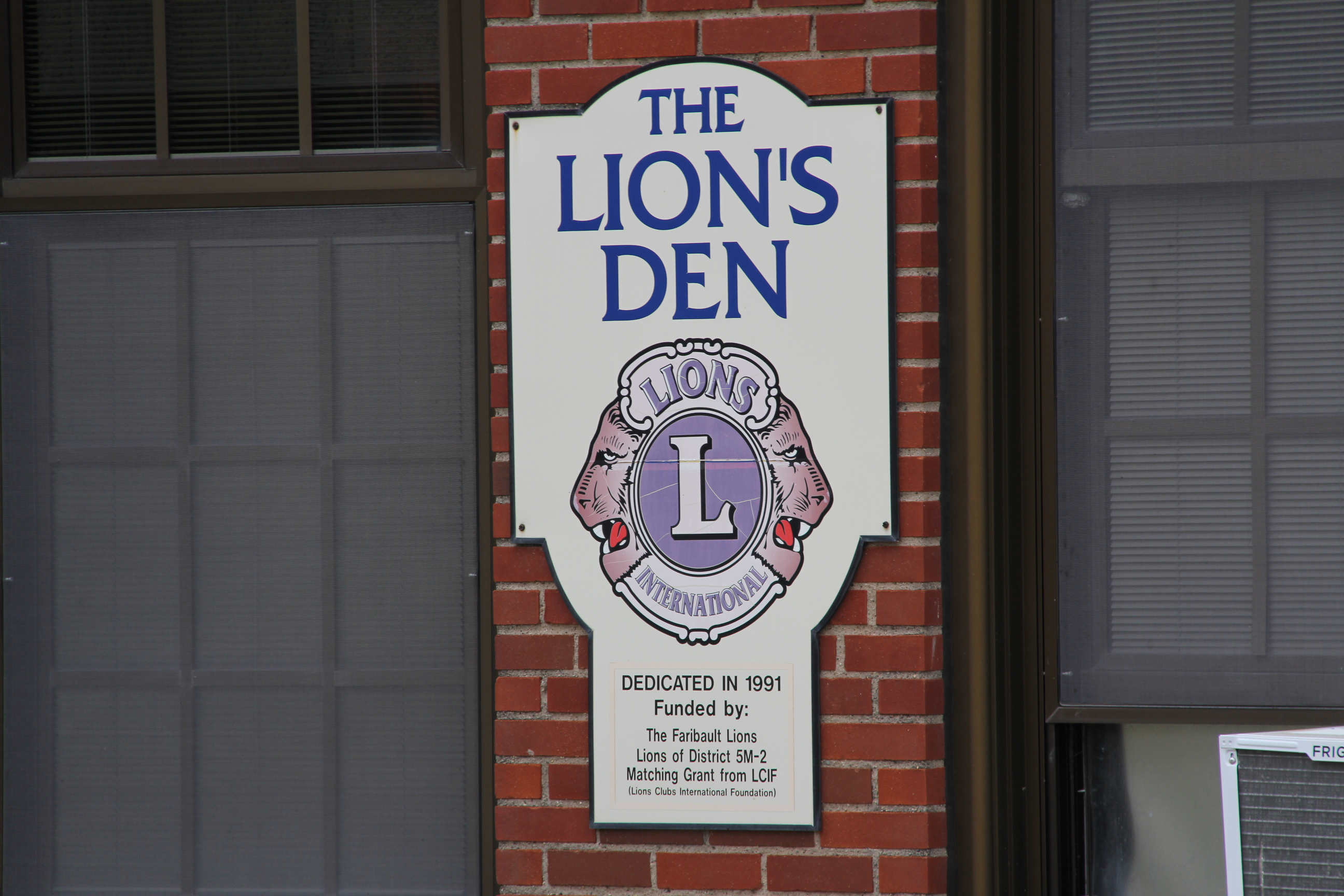
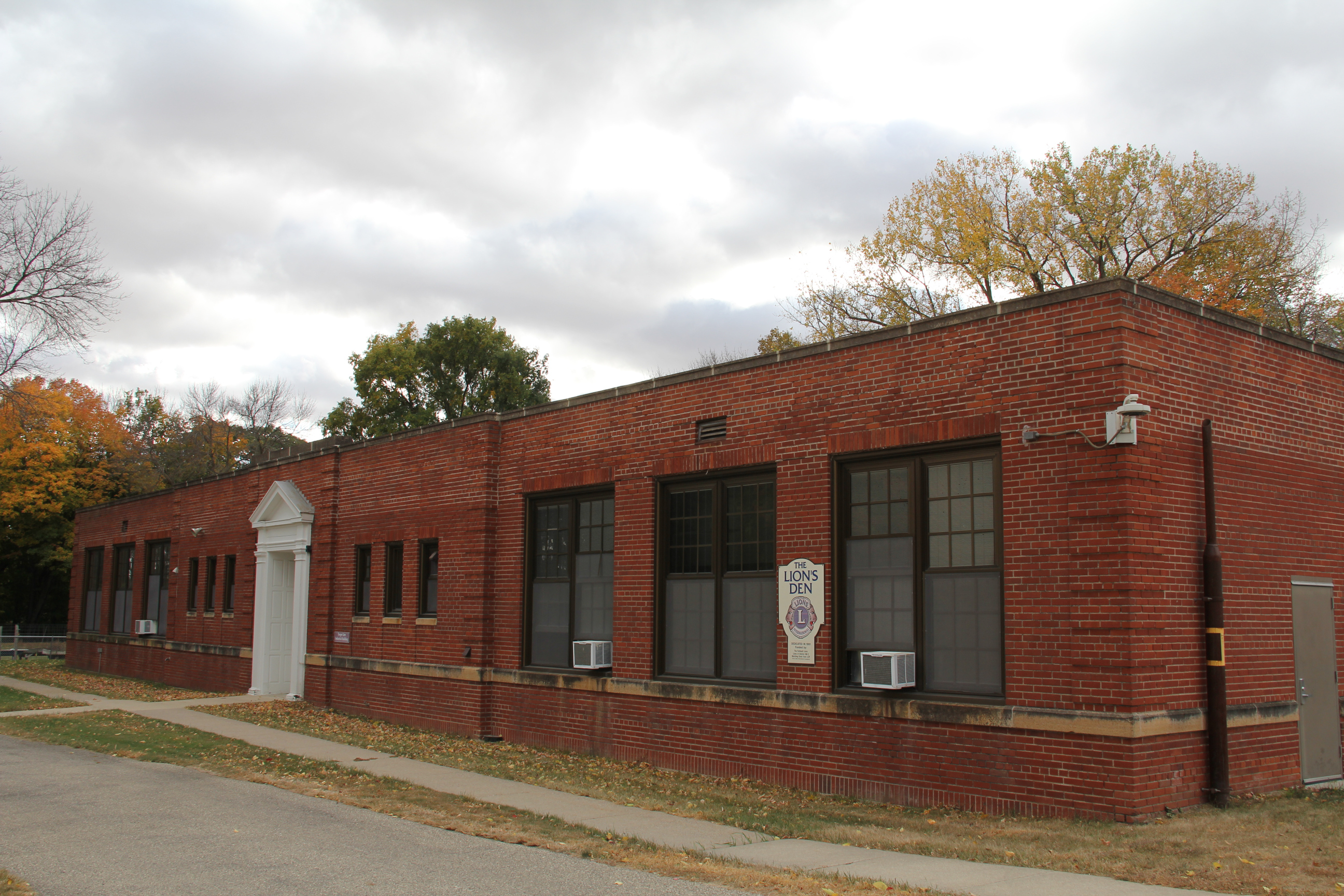
This building on the MSAB campus houses the Lion’s Den, an apartment setting to help students learning to navigate independent living. (Minnesota Prairie Roots copyrighted photo October 2024)
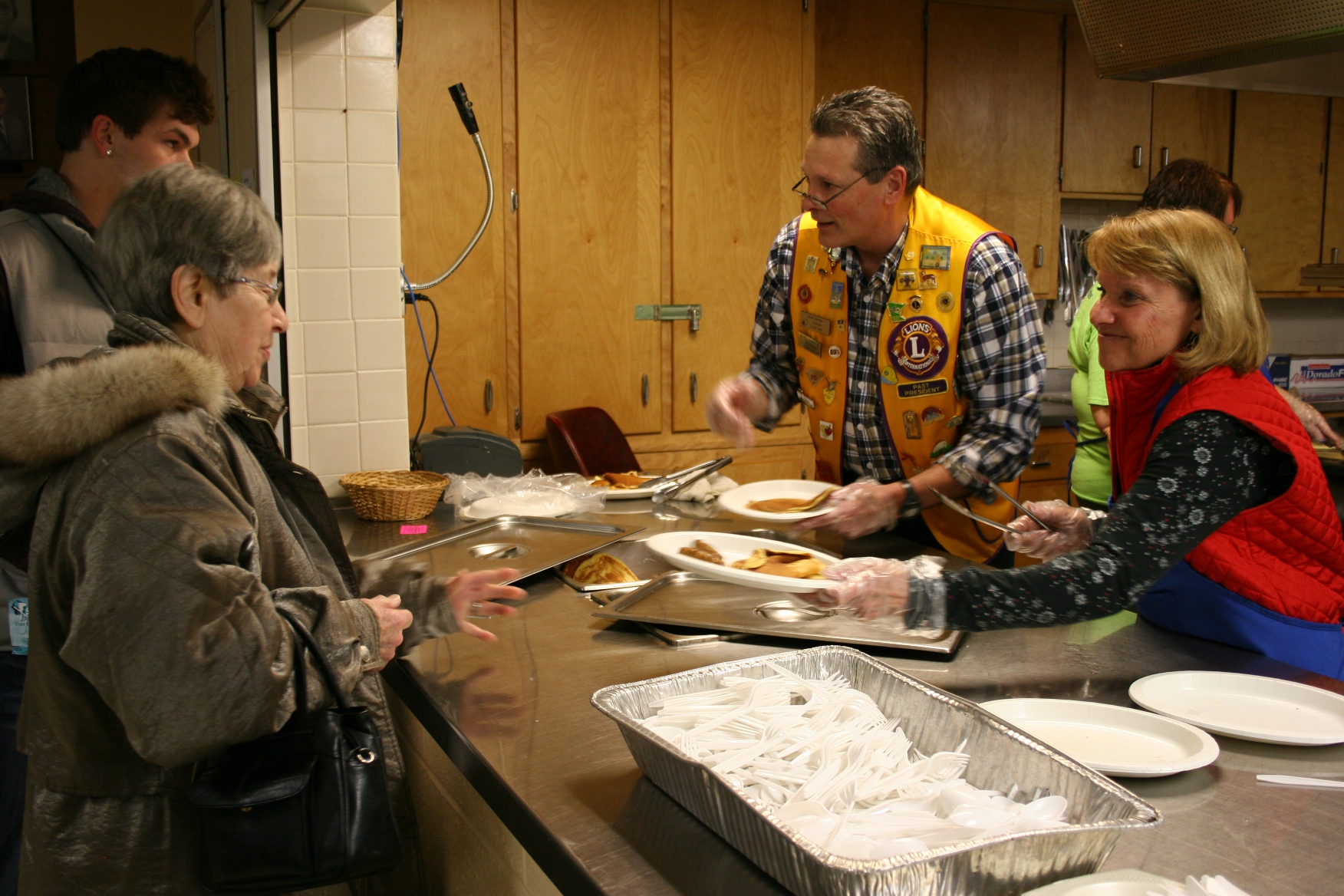
Serving up pancakes and sausage at the annual Lions Club pancake breakfast, a major fundraiser for the Faribault service organization. (Minnesota Prairie Roots copyrighted file photo 2015)
The main entry to the Minnesota State Academy for the Blind. The local Lions Club supports students and programs at MSAB. (Minnesota Prairie Roots copyrighted photo October 2024)

As I shared parts of my story with John, I felt his empathy and his strong desire to help others. The Faribault Lions clearly practice their motto of “We serve.” They collect used eyeglasses and hearing aids, offer vision screenings for kids, support Can Do Canines (which trains service dogs), funded the Lion’s Den apartment at the school for the blind (helping students adjust/learn in an apartment setting) and much more. Their service projects are not solely focused on vision and hearing.

This sign on the Lion’s Den acknowledges this as a project of the Faribault Lions Club with a grant from the Lions Club International Foundation. (Minnesota Prairie Roots copyrighted photo October 2024)

But on this day, I want to highlight the efforts of John and his fellow Lions to educate the public about white canes. In the printed information John distributed at the grocery store, I learned that the idea of white canes originated in 1930 with the Lions Club of Peoria, Illinois. The club president suggested white canes with red tips as a tool to help those with visual impairments. The idea caught on as a way to grow their independence and also as a way to create awareness among the public.

The Foley Lions Club in central Minnesota is raising awareness about vision via this bench in Lion’s Park. There’s also a lion’s head drinking fountain in the park. (Minnesota Prairie Roots copyrighted photo September 2024)

Awareness is assuredly a goal of the Lions. The informational sheet from John quotes two subdivisions of Minnesota state law #169.202 regarding white cane usage and how those operating motor vehicles must stop and yield to those carrying white or metallic canes. That seems common sense. But sometimes common sense is elusive.

A banner on the MSAB campus shows pride in the school mascot. (Minnesota Prairie Roots copyrighted photo October 2024)

I appreciate the efforts of the Faribault Lions, especially when it comes to vision and hearing. They are determined to raise awareness, offer financial and other support, and make a difference for those of us who have vision and hearing impairments. Mine are manageable. I can see. And I can hear, even though I have profound hearing loss in my right ear (due to sudden sensory hearing loss from a virus).

Outside the M Health Fairview Eye Clinic. Inside the clinic, donors names are listed on a wall, including some I recognized as from Faribault. (Minnesota Prairie Roots copyrighted file photo 2023)

It’s humbling to sit in the packed waiting room of a specialty clinic like M Health Fairview Eye Clinic on the campus of the University of Minnesota and see young children with white canes. That puts my vision issues in perspective. In every situation, opportunities exist to learn and to grow empathy. I did and I have. And now, thanks to Faribault Lion John Battles, I have grown my understanding of White Cane Awareness Day and how much my community cares.

© Copyright 2024 Audrey Kletscher Helbling
 

Celebrating my birthday with history & art September 27, 2024

(Minnesota Prairie Roots copyrighted file photo)

NOT EVERYONE WOULD CELEBRATE a birthday by exploring historic ruins and then capping the day by creating art within an historic context. But then I am not everyone.

This week, on my closing-in-on-seventy birthday, I took a day trip to Wasioja and neighboring Mantorville. Randy and I packed our picnic lunches and then hit the road east in late morning. No need to rush and get going too early at our ages.

After a brief stop at a Kenyon thrift shop, which smelled strongly of natural gas, we made a quick exit. But not before warning the shopkeeper that he needed to check on the odor immediately. And don’t turn on a light switch, although the lights were already on, we advised. (The shop was still standing on our return route home.)

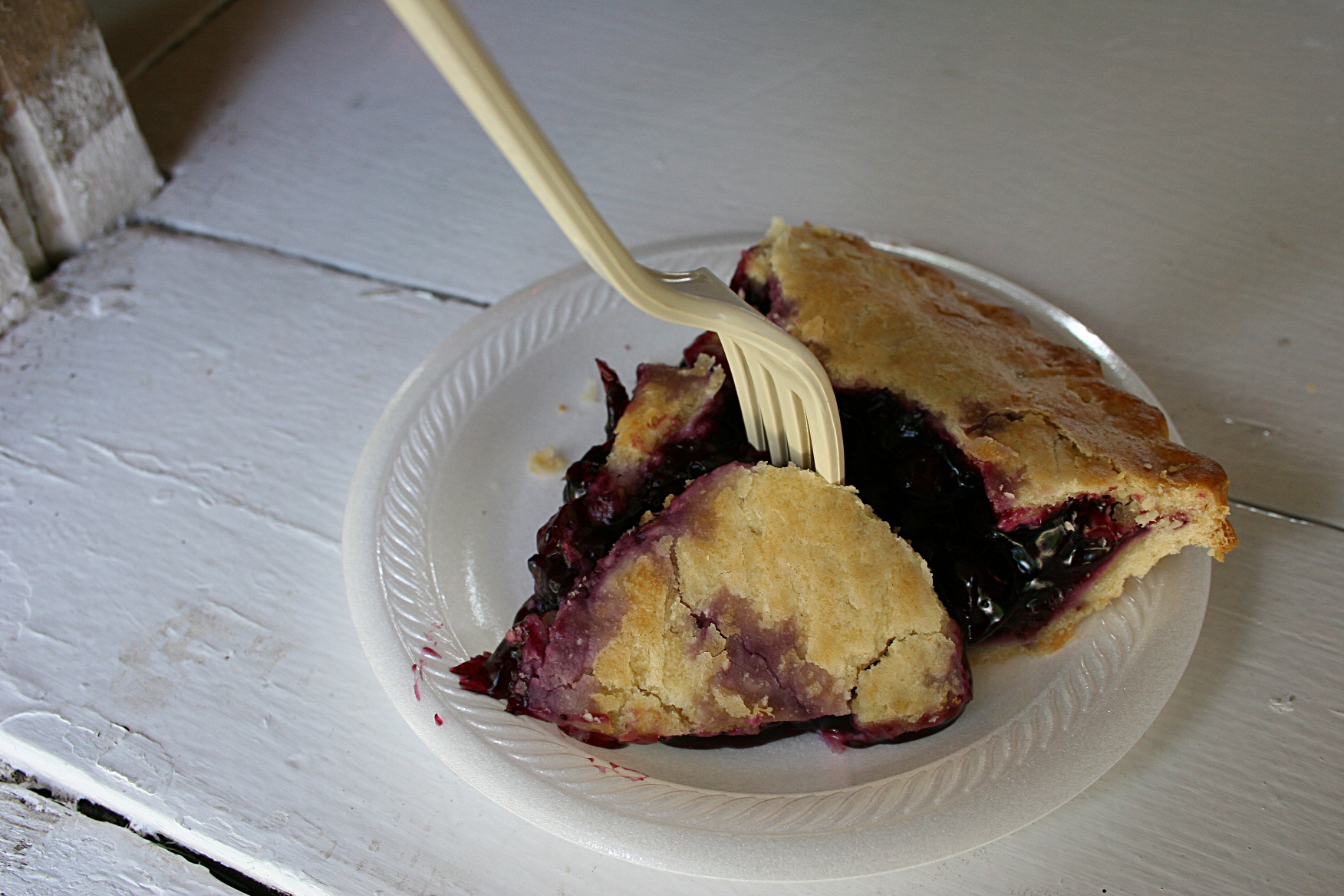
Blueberry pie. not from County Seat Coffee Shop. I didn’t photograph that pie piece. (Minnesota Prairie Roots copyrighted file photo)

GOING BACK IN TIME

I digress. In Wasioja, we discovered aged ruins and historic buildings, many connected to Minnesota’s involvement in the Civil War. I was aware of the Civil War recruiting station, but not some of the other sites. I’ll write more on our visits to Wasioja and Mantorville in future posts.

However, I should note now that Randy and I enjoyed slices of homemade blueberry and strawberry/rhubarb pie at County Seat Coffeehouse in Mantorville. It was, after all, my birthday. No sweet treat awaited me at home.

Back home by late afternoon with me feeling a bit tired after being on my feet all day (remember that broken right toe, which makes walking a tad more challenging), I put my feet up. Randy napped.

A promo for a 2022 talk by Mica Anders at the RCHS. (Promo credit of RCHS)

STEPPING BACK IN TIME WITH MICA ANDERS

And then, less than two hours later, we were off to the Rice County Historical Society for an interactive historical presentation by St. Paul genealogist and artist Mica Lee Anders. She was presenting on early (1850-1900) African American residents of Rice County. I’m always up to learning more about the history of this place I’ve called home for 42 years.

Anders made the entire event hands-on engaging by asking attendees to create flower mosaics that will honor the legacies of early African Americans. The flowers will be installed as public art at gravesites in Faribault and Northfield.

Not being especially artistic beyond creating with a camera and with words, I felt initially tentative about the whole idea. But Anders quickly put me at ease, explaining how to go about the process of creating mosaic flowers from glass tiles. We grabbed cupcake tins then scooped tiles in assorted shapes (mostly round) and colors (blues, greens, oranges and yellows) into individual holders. From there, we designed within a donut shape printed on paper. Later, we would transfer our designs onto sticky mesh.

As a perfectionist, I sorted my tiles by size and color before beginning to create. Part of me wanted to pause and take notes on everything Anders was sharing. But art won over being a journalist for the evening. I created. I listened. I asked questions. But I didn’t jot down a single word.

I heard about the success of those early African Americans who lived here. The barber. The young man who would become a doctor. The college grad. But I learned, too, of efforts to hide racial identity. Yet, races intermarried. And, said, Anders, Faribault was a welcoming place to those African Americans who settled here early on. To hear that pleased me greatly. Faribault has not always been a welcoming place for people of color.

The flower mosaic I created. Anders will finish the work. (Minnesota Prairie Roots copyrighted photo September 2024)

CONNECTING HISTORY & ART

Anders’ passion for history, genealogy and honoring the legacies of African Americans in southeastern Minnesota via her research and now her public art project coursed through the meeting room where a small group of us created colorful mosaics. It felt good to be part of something like this, a tangible way to honor those who came before us, who likely faced more struggles than I will ever know.

My mosaic was well thought out. I don’t usually randomly do anything. I used orange and yellow tiles in the outer two rings of my flower to represent the sun. The next ring featured blue round tiles representing the sky—dark blue for stormy days, lighter shiny blue for happier days. I finished my flower with an inner ring of green tiles representing the earth, growth, place.

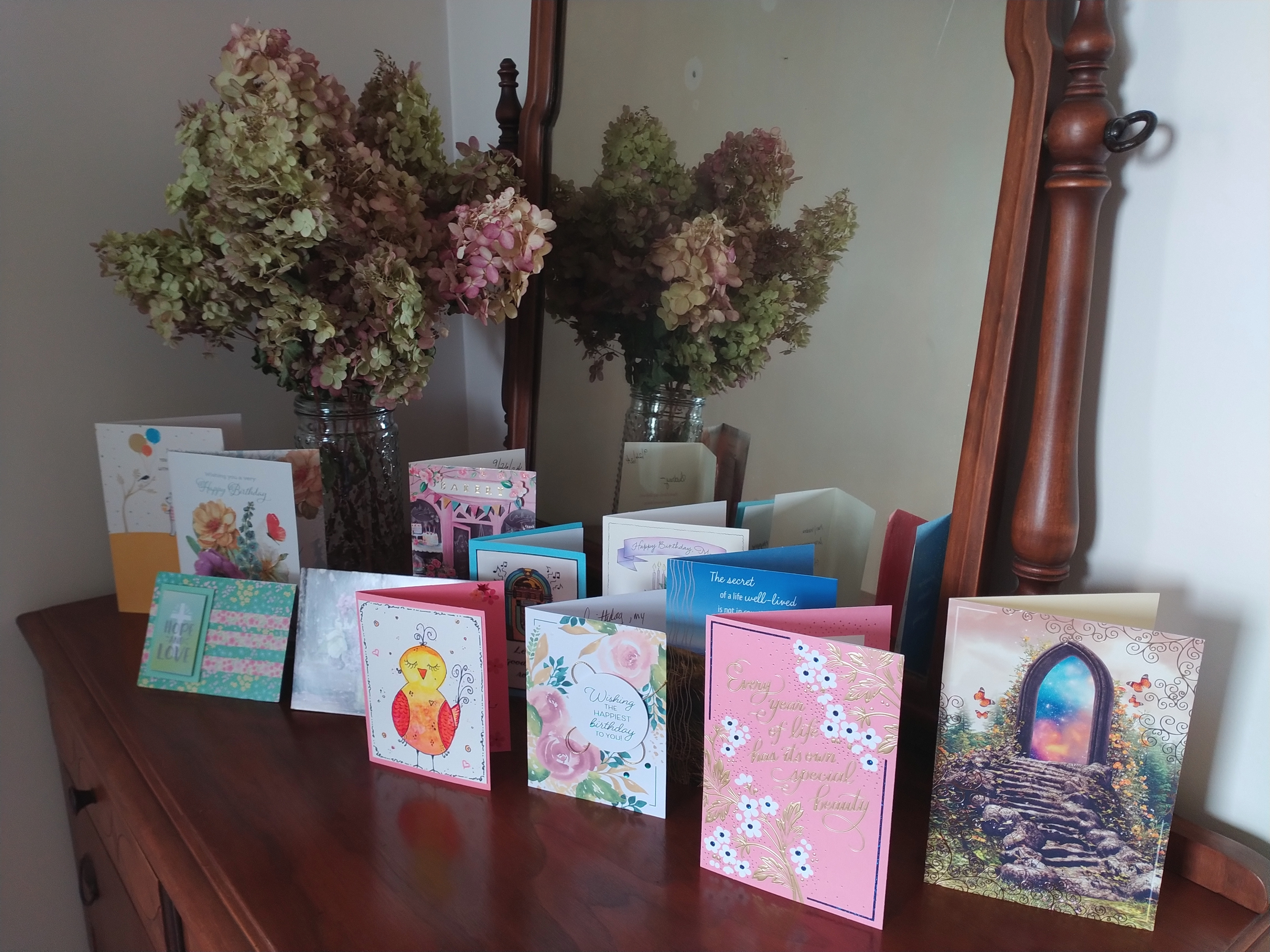
The birthday cards I received, displayed on a vintage family dresser in my dining room. (Minnesota Prairie Roots copyrighted photo September 2024)

THANKFUL

Thus I began another year of life. Learning. Creating art. Honoring. Celebrating. And feeling incredibly thankful for all the people who care about me. From greeting cards to an audio message, from texts to emails to calls (including a singing of “happy birthday”), I feel cherished and loved.

#

FYI: Mica Anders will host more workshops in Rice County (including in Northfield) to talk about early African Americans in southeastern Minnesota and to create flower mosaics. I encourage you to participate. Her project was made possible in part by Springboard for the Arts’ Rural-Urban Solidarity Initiative.

© Copyright 2024 Audrey Kletscher Helbling
 

Train art or graffiti, depending… September 18, 2024

Filed under: Uncategorized — Audrey Kletscher Helbling @ 10:40 AM
Tags: , , , , , , , ,
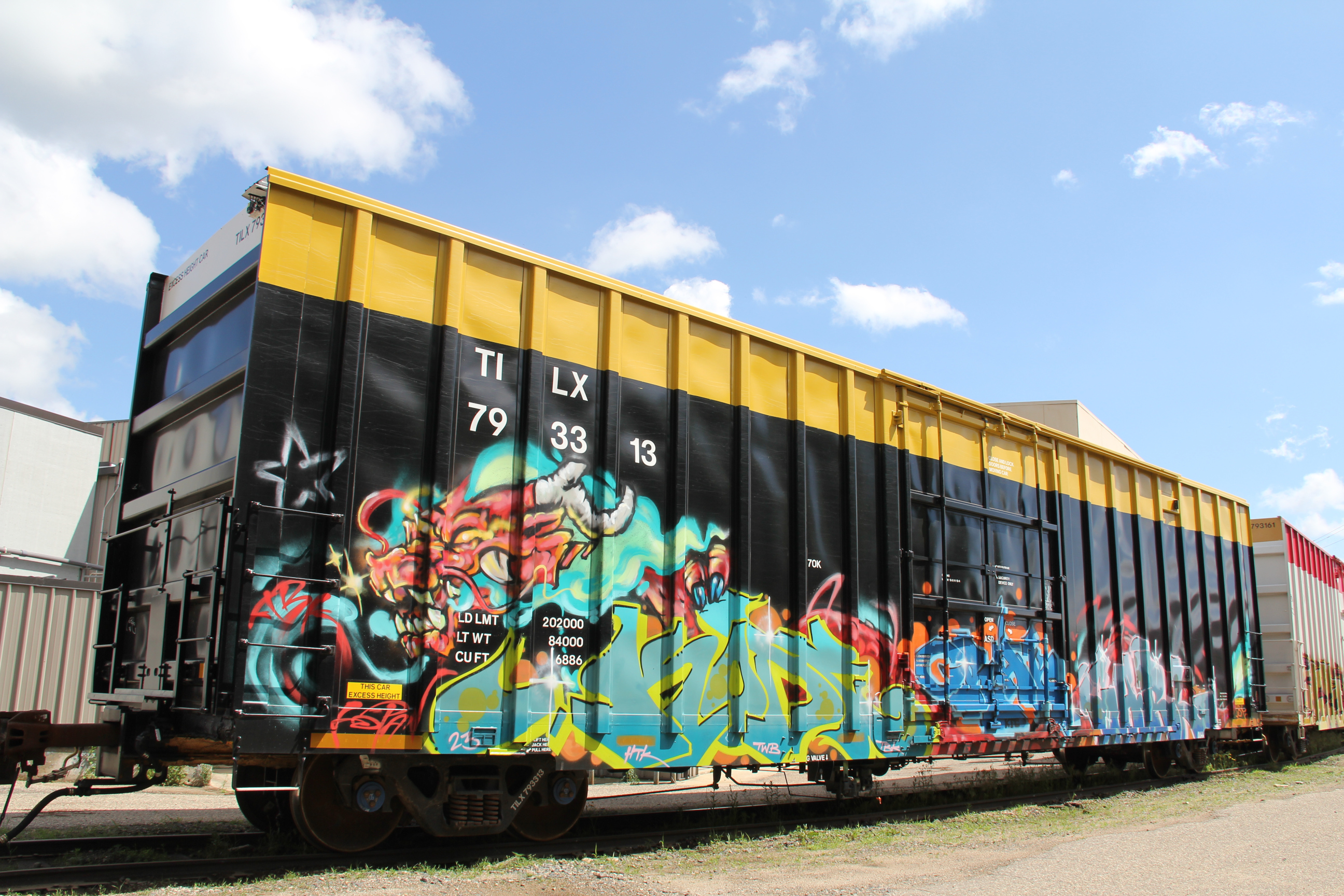
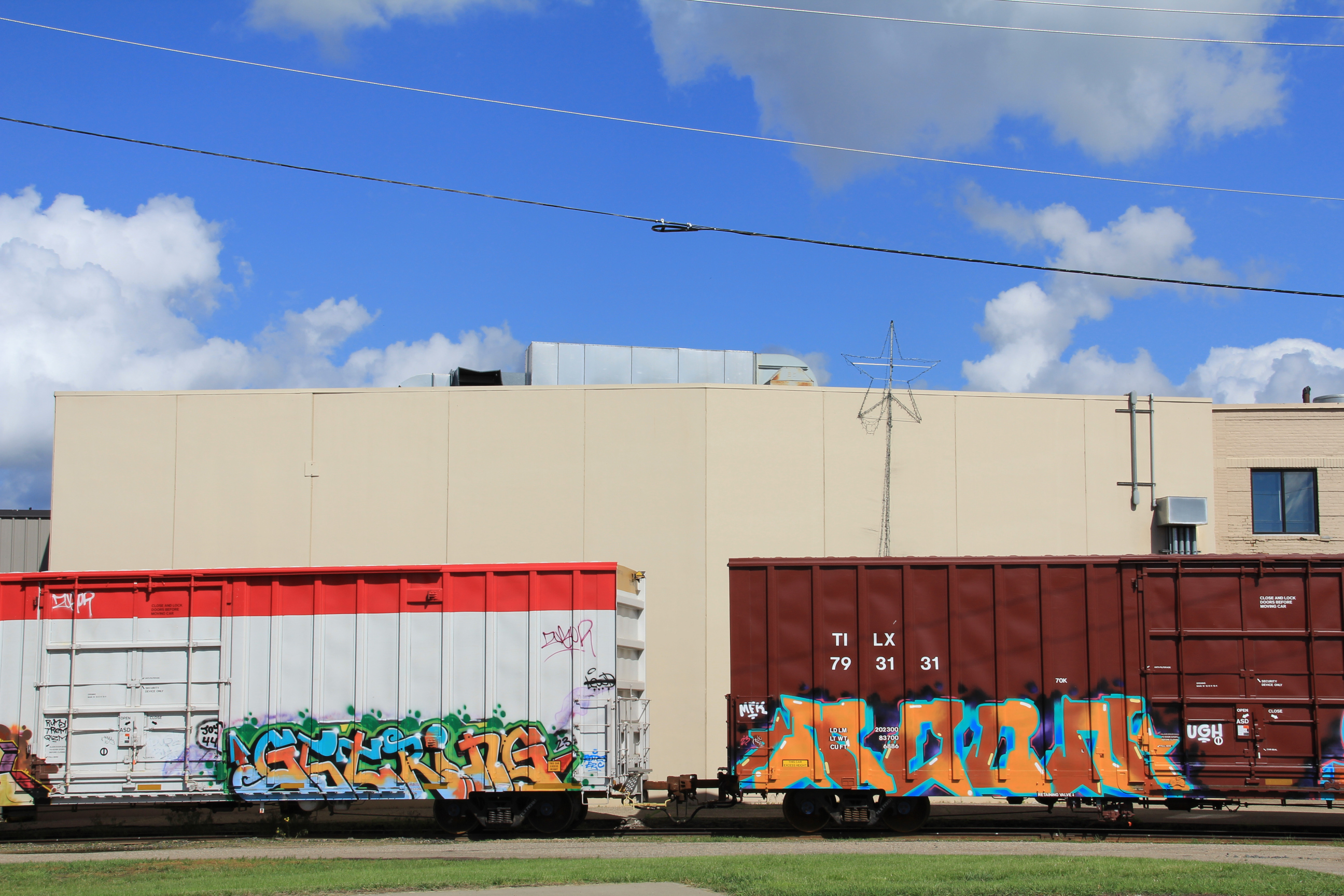
A dragon (at least that’s what I see) covers an entire boxcar. (Minnesota Prairie Roots copyrighted photo 2024)

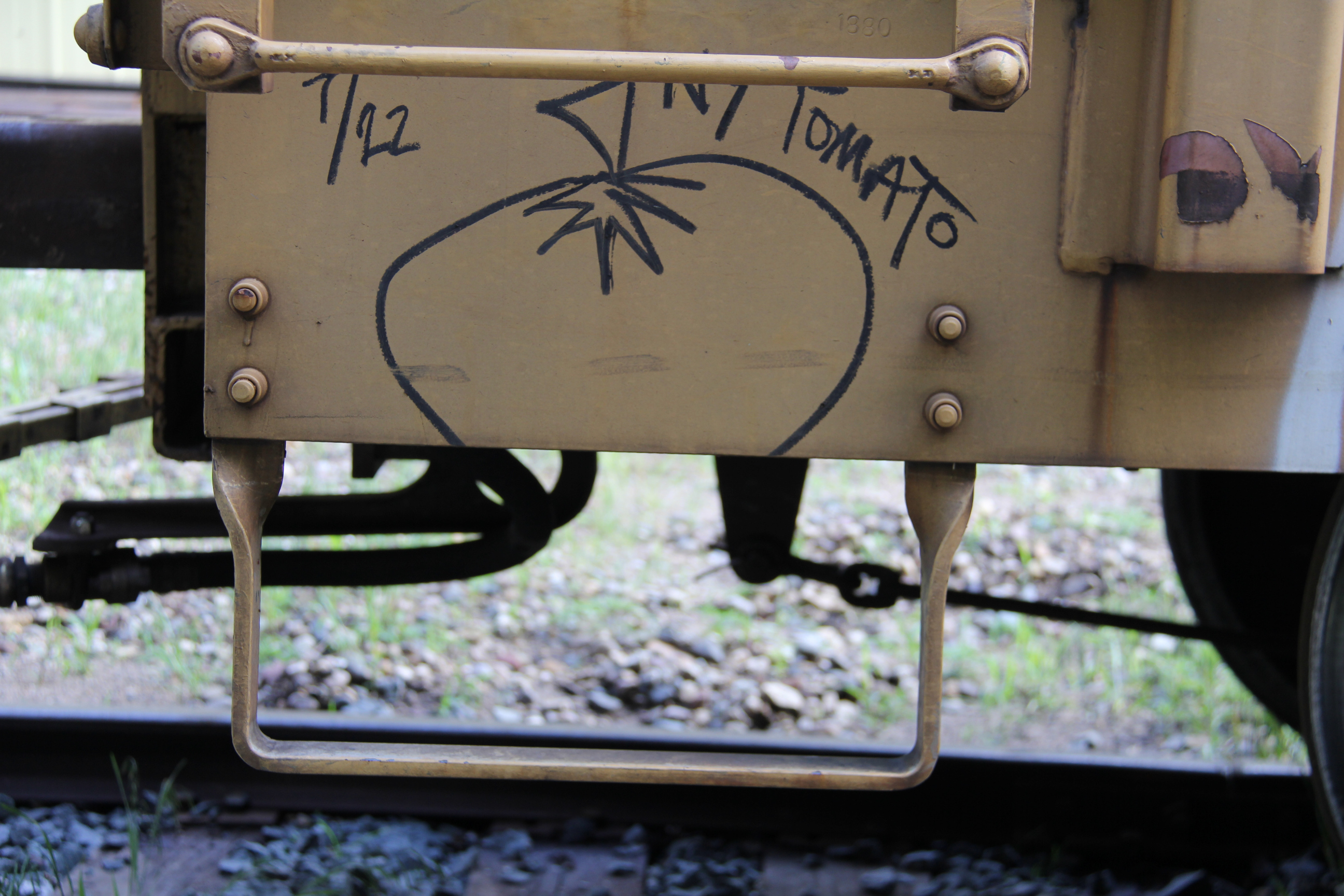
ADMITTEDLY, I POSSESS no understanding of train art. Yet, I appreciate it. Not as the graffiti it is by definition, but rather because I see the images and words as art. A traveling art gallery. I doubt railroad companies would agree.

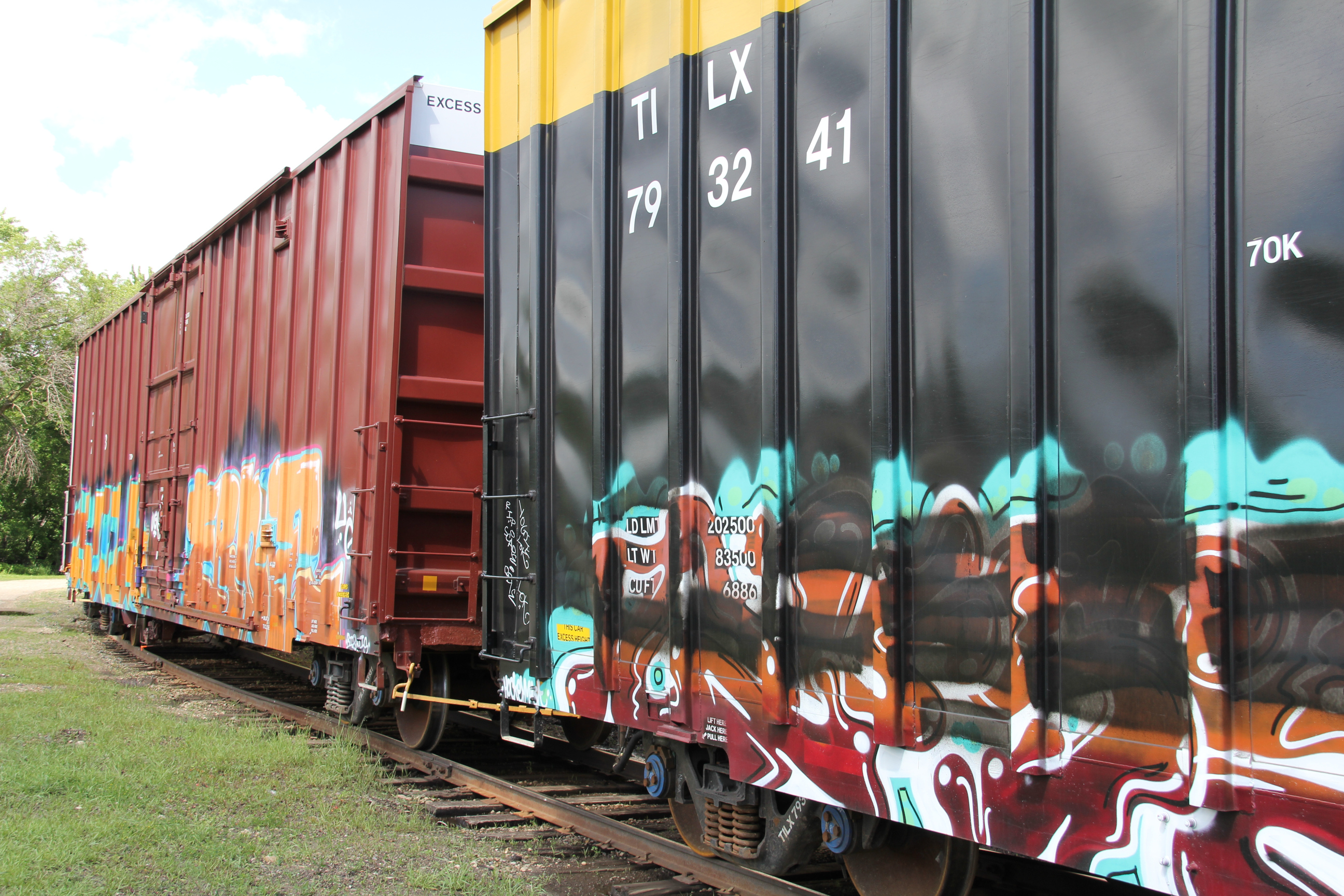
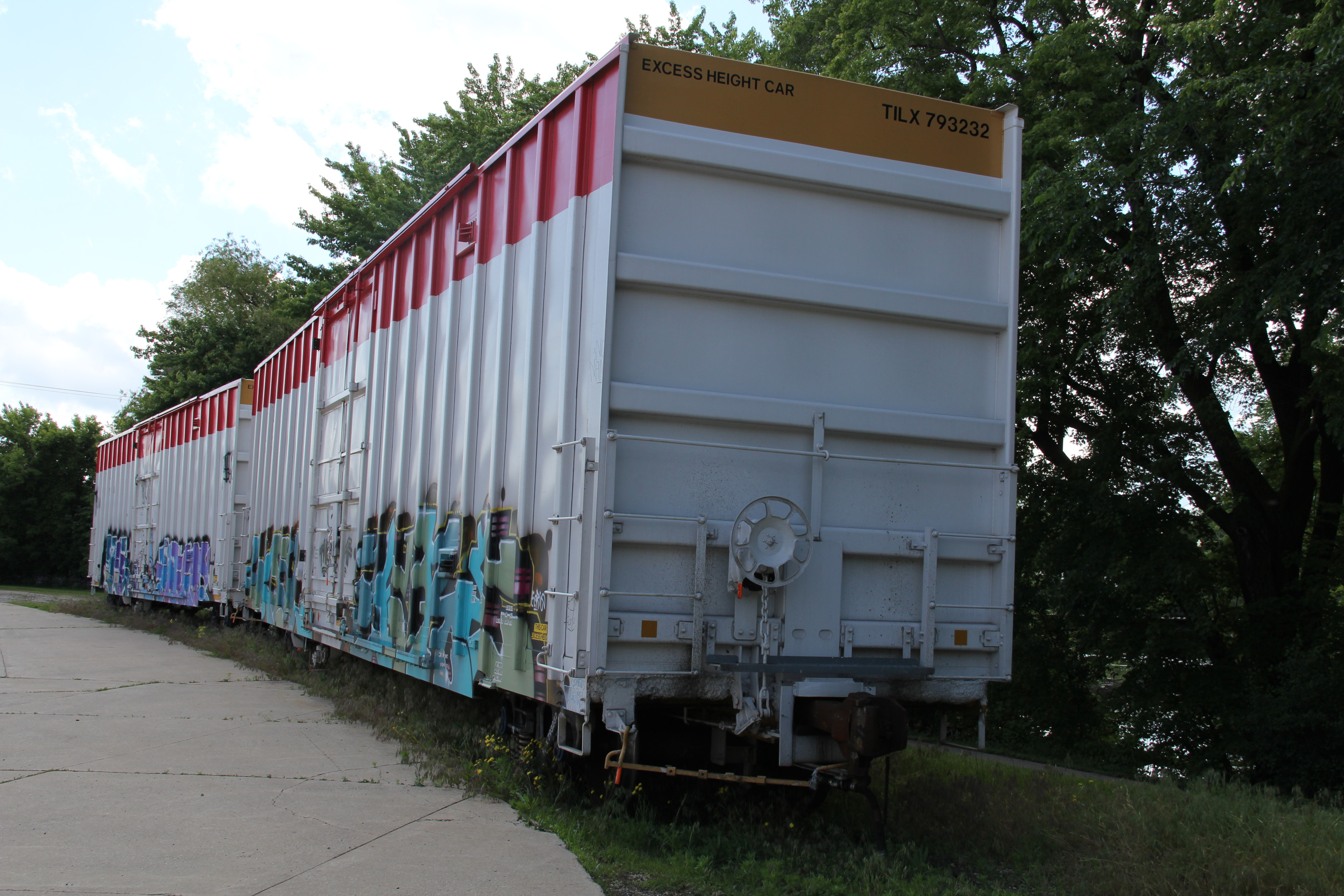
The traveling gallery parked in Faribault earlier this year. (Minnesota Prairie Roots copyrighted photo 2024)

Watch any train pass by or view a line of parked box or tanker cars and you likely will see this art form. Whenever I spot this art, I wonder, “How and when do these artists manage to paint these sprawling words and images without getting caught?”

More art/graffiti I don’t understand. (Minnesota Prairie Roots copyrighted photo 2024)

Then I try to decipher the words, which are mostly indecipherable to me. My eyes can’t separate the often over-sized uppercase letters that jam together. Even standing back to read from a distance usually doesn’t help.

Another look at the dragon from a distance and the words I can’t read. (Minnesota Prairie Roots copyrighted photo 2024)

But occasionally I figure something out and then it’s like a moment of confused clarity. Why this word? Why this art? Why this fiery orange dragon (if that’s really what it is) stretching the length of a boxcar?

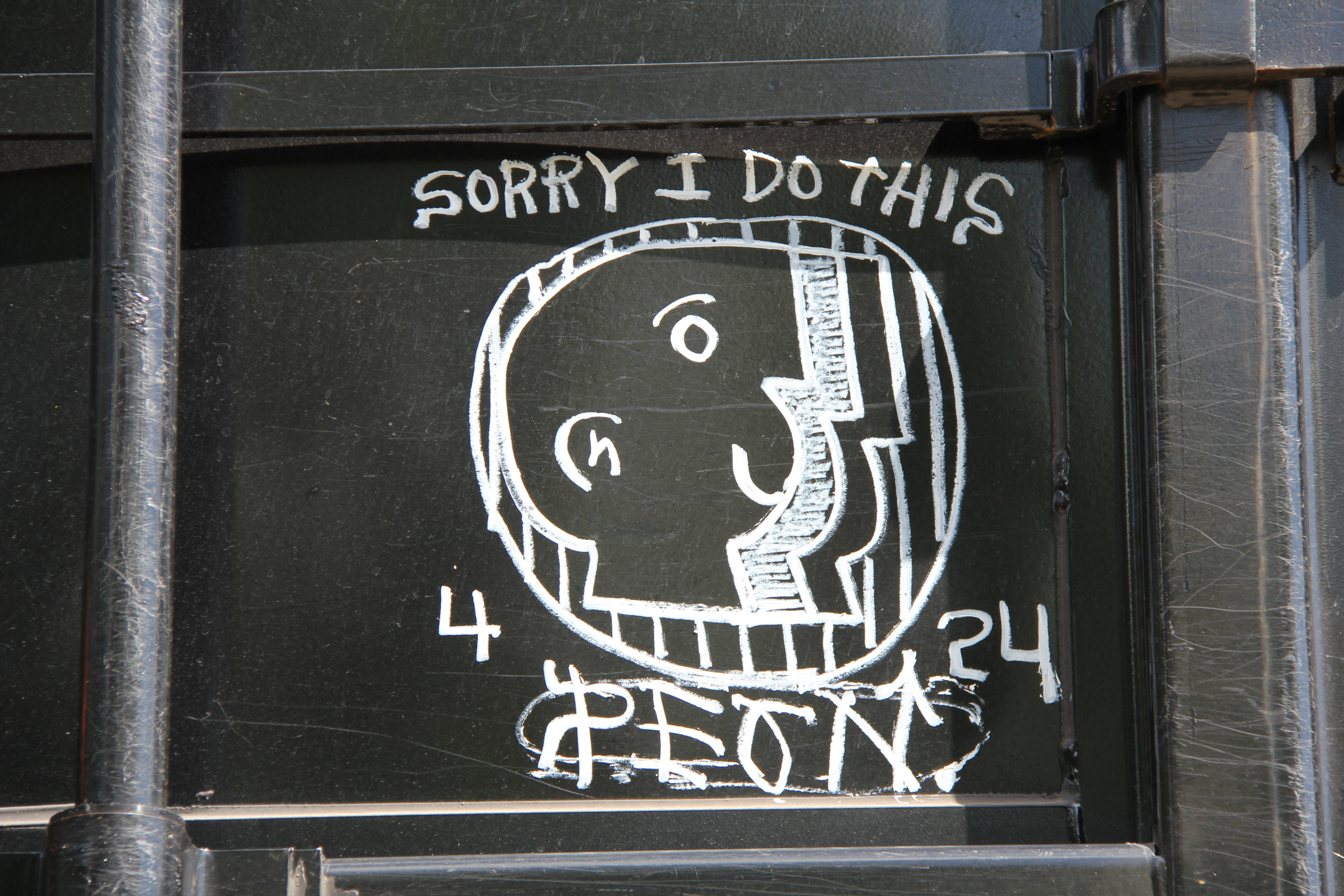
An apology. (Minnesota Prairie Roots copyrighted photo 2024)

For the artist, like any visual artist, there is meaning behind the art. I’m just not privy to the backstory. Sure, some of what I’m seeing could be gang graffiti. But mostly, I expect it is not. And if I view the train art in Faribault, for example, that doesn’t mean the work originated locally. Likely it did not. Trains travel all over the country.

The freshly-painted signature of DOLLFACE. (Minnesota Prairie Roots copyrighted photo 2024)

There are exceptions, though. While looking at art on short rows of parked boxcars a few months back in Faribault, a young couple was doing likewise. I asked whether they were the artists. The response from one: “I can neither confirm nor deny.” Later, as I rounded the row of boxcars and the pair were heading for two vehicles parked nearby, I got my answer. There, along the bottom edge of a boxcar, block letters dripped baby blue paint. DOLLFACE had left her signature.

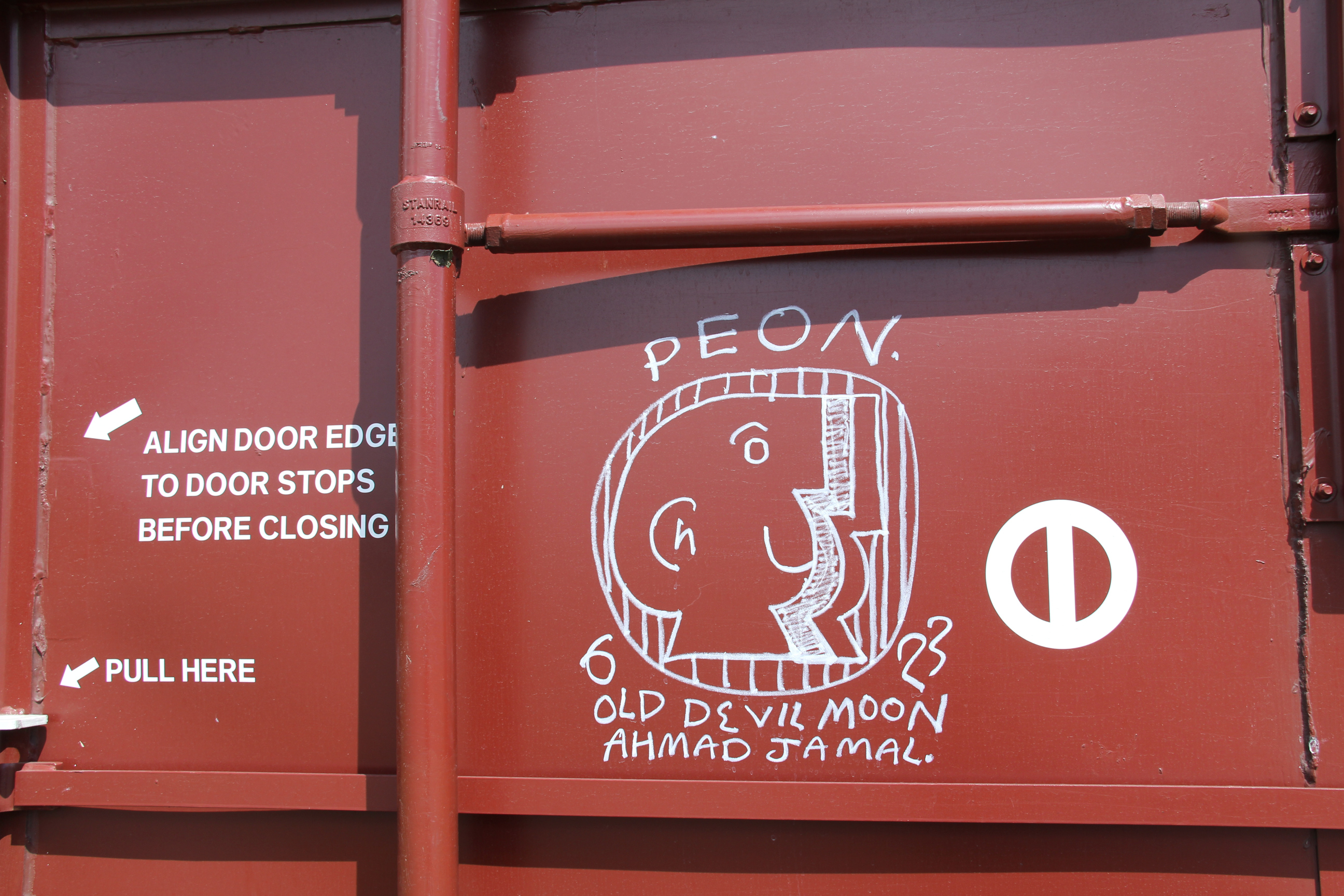
More art by the apologetic artist. (Minnesota Prairie Roots copyrighted photo 2024)
Signature or art, I’m unsure. (Minnesota Prairie Roots copyrighted photo 2024)
An artist’s tag…I think. (Minnesota Prairie Roots copyrighted photo 2024)

Other artists left their signatures, too, or what I can only assume are their signatures, along with dates, messages and social commentary. It’s all a bit of a mystery to me.

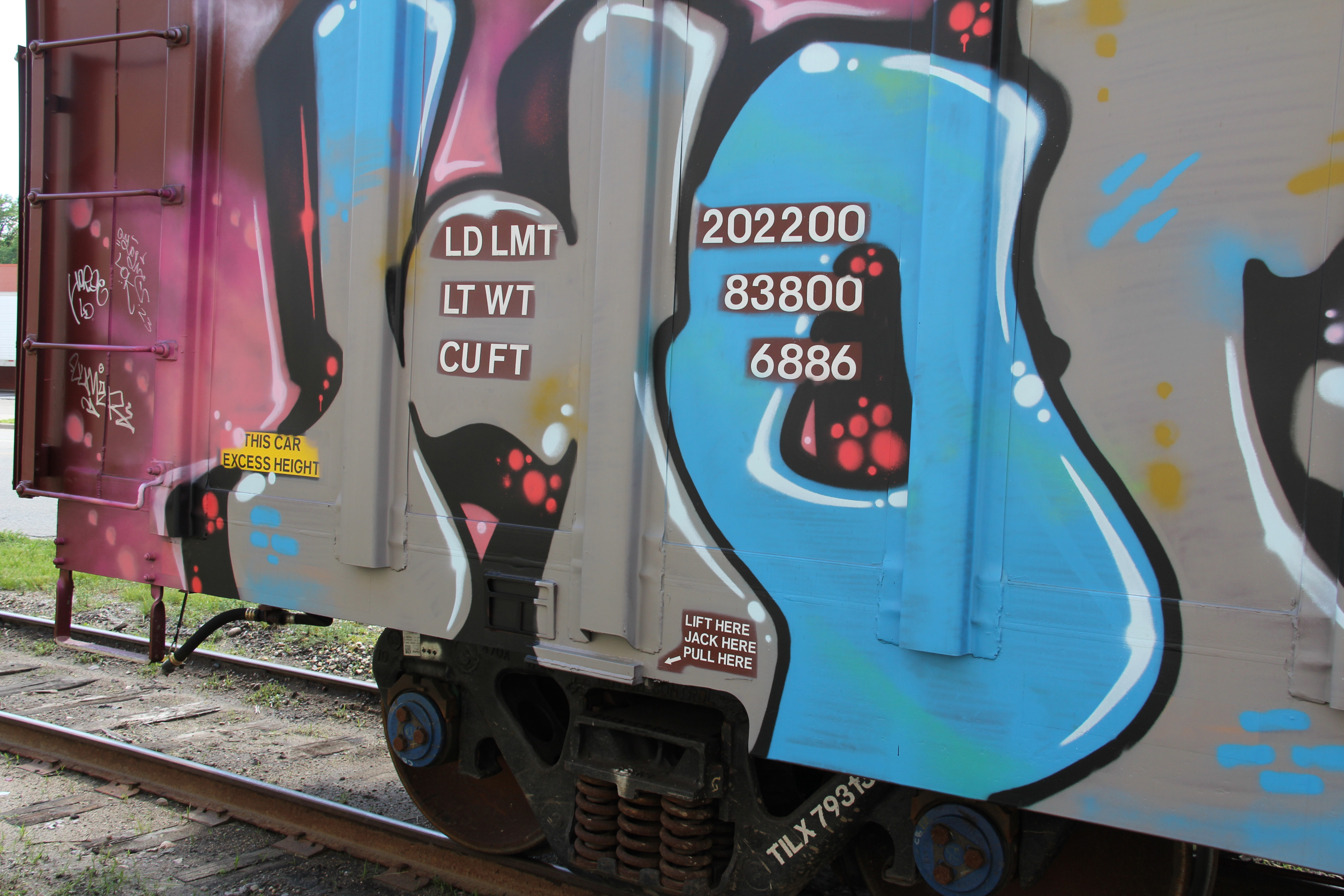
Some artists respectfully paint around official markings on rail cars. (Minnesota Prairie Roots copyrighted photo 2024)
An understandable commentary. (Minnesota Prairie Roots copyrighted photo 2024)
More art on boxcars. (Minnesota Prairie Roots copyrighted photo 2024)

But I appreciate the skill, the effort, the creativity, the vibrant hues that go into creating this art form. Long ago, hobos—who today would be termed as “homeless”—rode the rails and left their art upon boxcars primarily as a way to communicate. Train art has a longstanding history in this country.

I found this humorous, painting around the word “PAINTED.” (Minnesota Prairie Roots copyrighted photo 2024)

And that continues today. Perhaps not in the same way. But assuredly as an art form. Or as graffiti, depending on perspective.

© Copyright 2024 Audrey Kletscher Helbling
 

A walk in a garden as autumn approaches September 4, 2024

Sunflowers are drooping, like this one in the Rice County Master Gardeners’ Teaching Gardens, Faribault. (Minnesota Prairie Roots copyrighted photo August 2024)

I’M BEGINNING TO FEEL this sense of urgency, as if I need to spend more time outdoors taking in the natural world. It’s not a new feeling, but rather one which rolls into my thoughts at August’s end. When the calendar flips to September, everything shifts. I see it, hear it, smell it, feel it.

A dried oak leaf floats in a pond at the teaching gardens. (Minnesota Prairie Roots copyrighted photo August 2024)

Outside my front door, massive mophead hydrangeas are drying, morphing from green to brown. Once lush phlox are less full. Maple leaves, in hues of orange and yellow, litter the lawn. All over town, trees are beginning to change color.

Golden grasses sway in the gentle wind of early evening. (Minnesota Prairie Roots copyrighted photo August 2024)
Jolts of color still fill the garden. (Minnesota Prairie Roots copyrighted photo August 2024)
Prolific black-eyed susans. (Minnesota Prairie Roots copyrighted photo August 2024)

Crickets chirp. Cicadas buzz. School buses roll past my house. Everything is shifting. And nowhere is that more noticeable than in a garden.

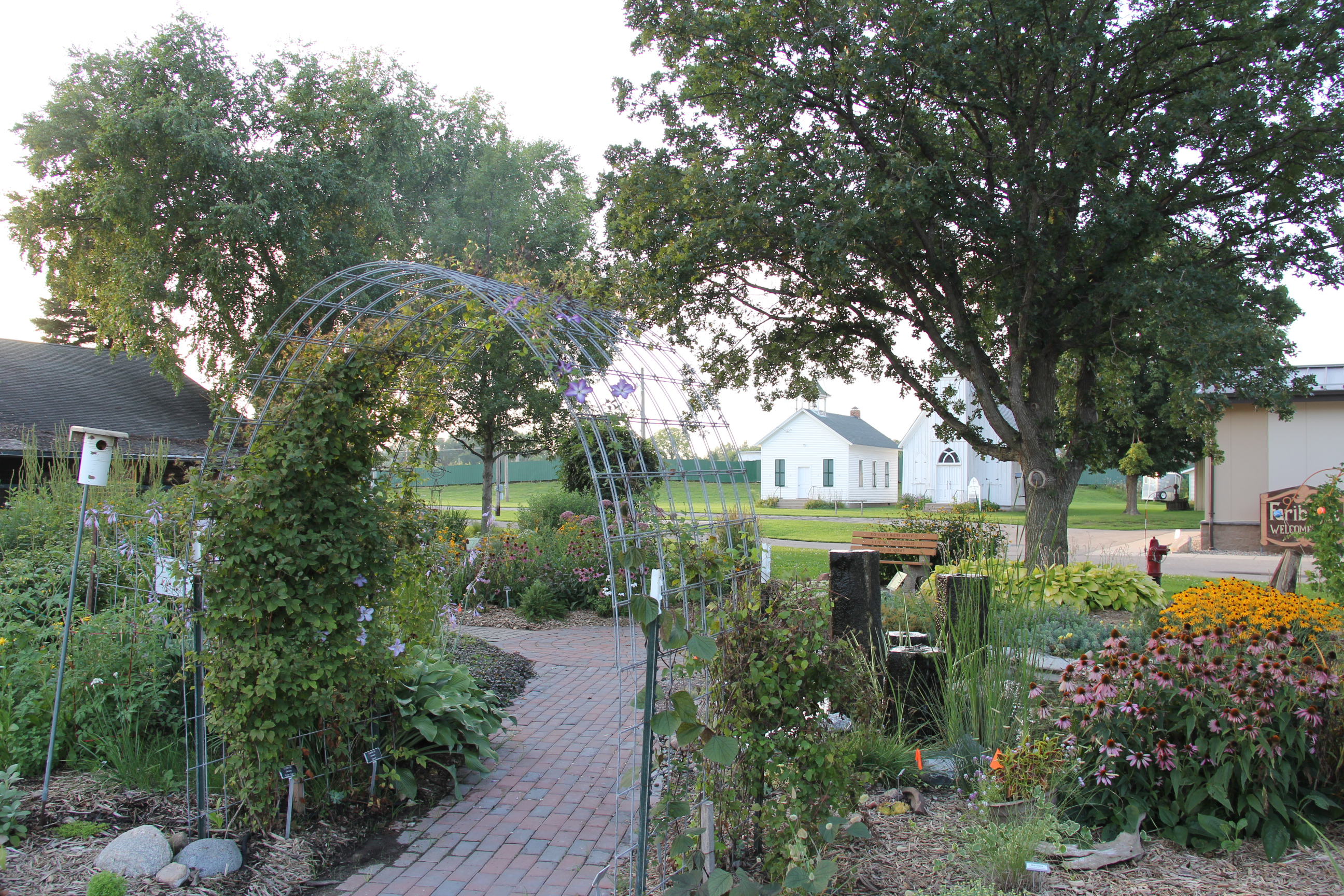
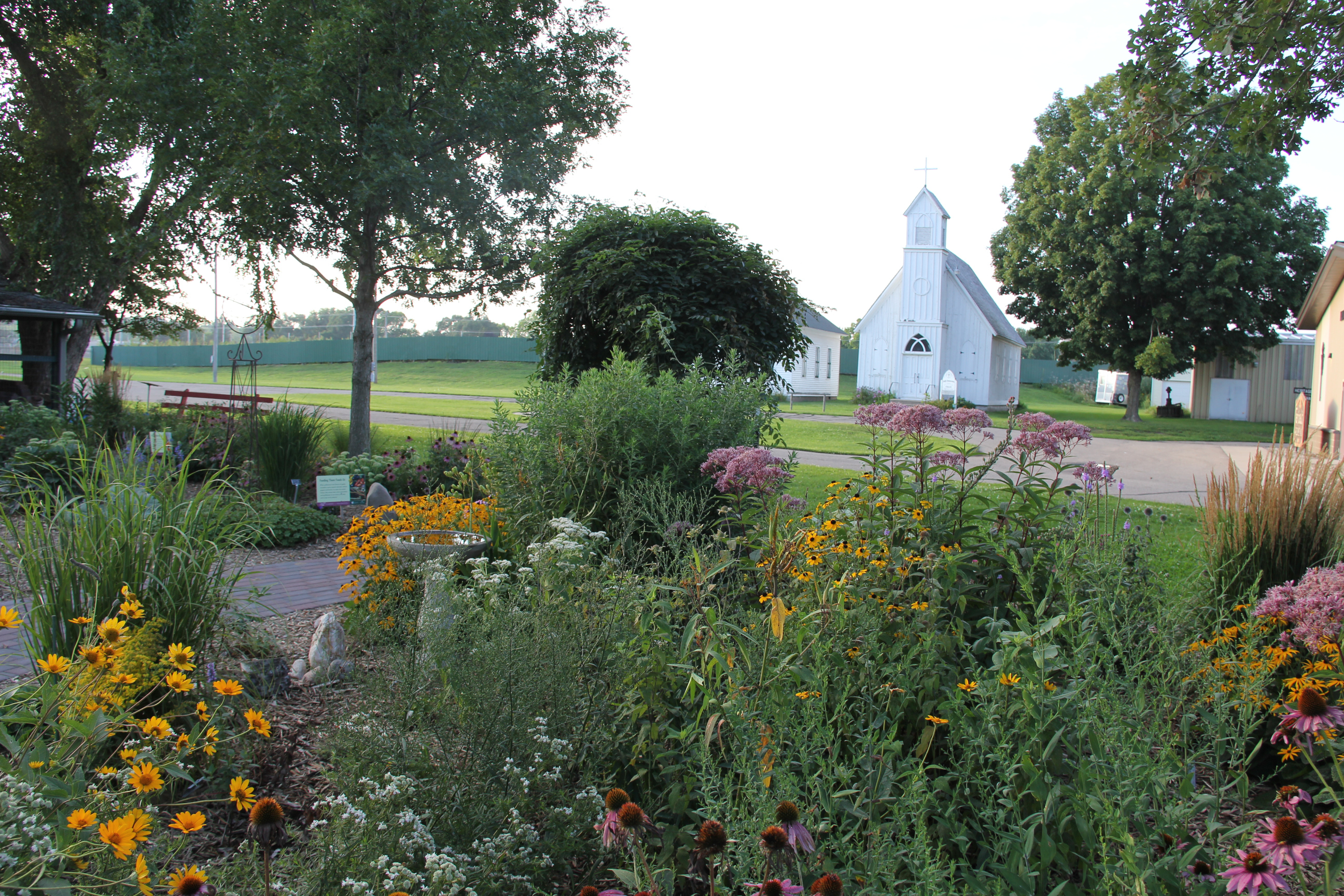
This shows only a section of the teaching gardens. That’s an historic church, on the grounds of the Rice County Historical Society, in the background. The gardens are next to the RCHS museum. (Minnesota Prairie Roots copyrighted photo August 2024)

And so I encourage you, if you live in a place that will soon change to cold and colorless, to enjoy the flowers while they are still blooming, as I did recently at the Rice County Master Gardeners Teaching Gardens.

A mass of coneflowers. (Minnesota Prairie Roots copyrighted photo August 2024)
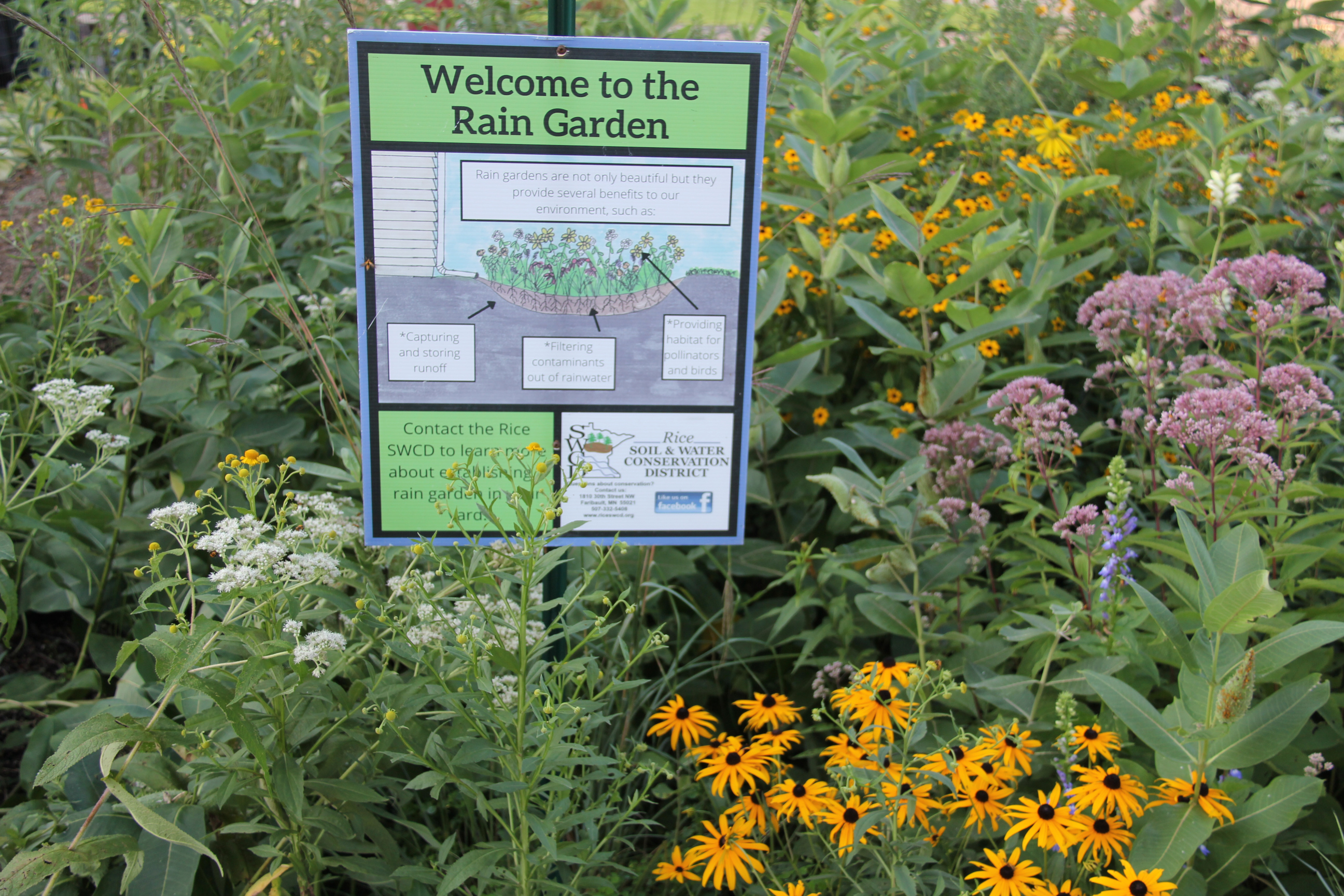
A rain garden flourishes here. (Minnesota Prairie Roots copyrighted photo August 2024)
A few clematis were still blooming when I walked the gardens. (Minnesota Prairie Roots copyrighted photo August 2024)

Come, walk with me through this space with its beds of blooms, its textured perennials, its overall loveliness.

An array of flowers fill the gardens. (Minnesota Prairie Roots copyrighted photo August 2024)
A muted hue that leans into autumn. (Minnesota Prairie Roots copyrighted photo August 2024)
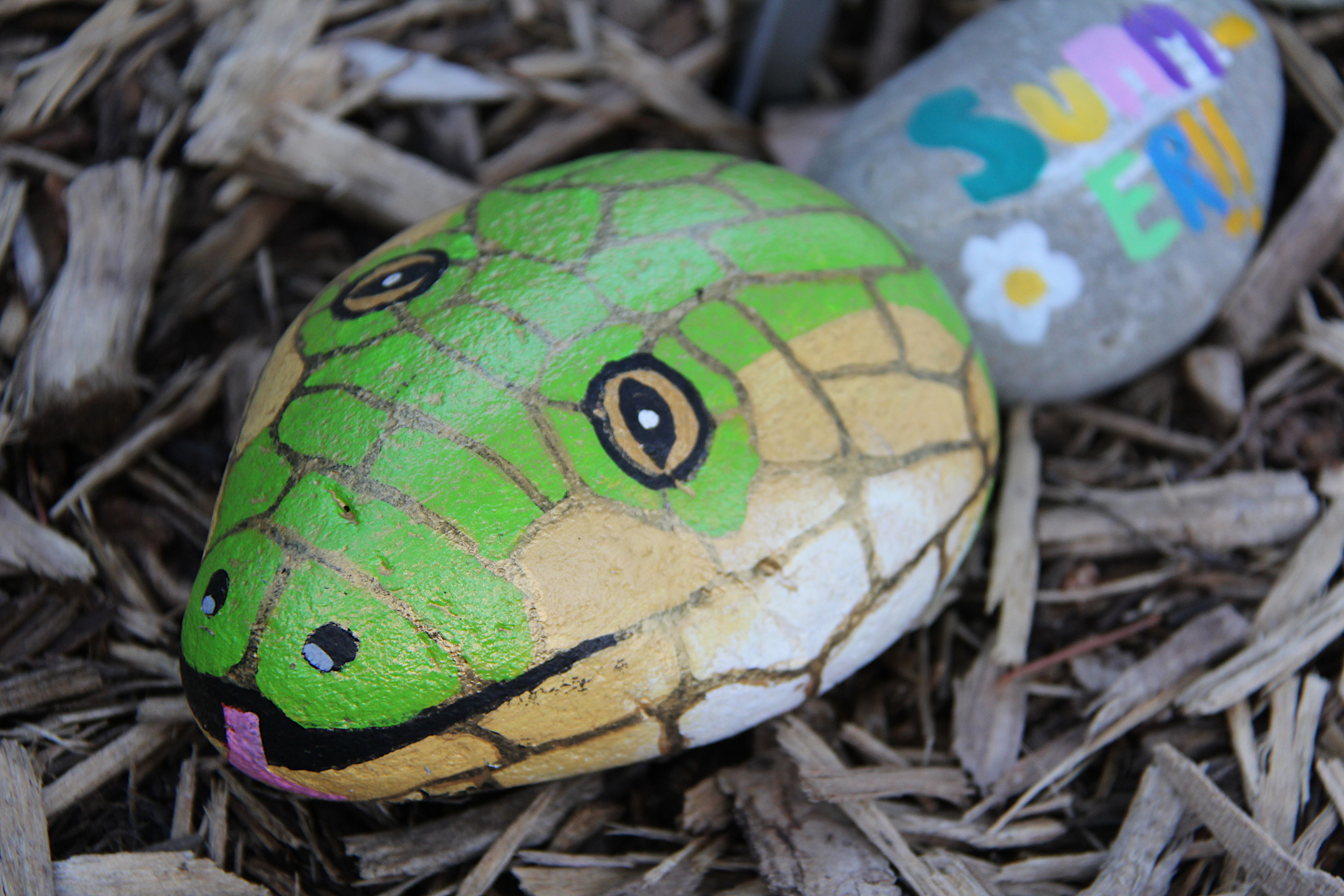
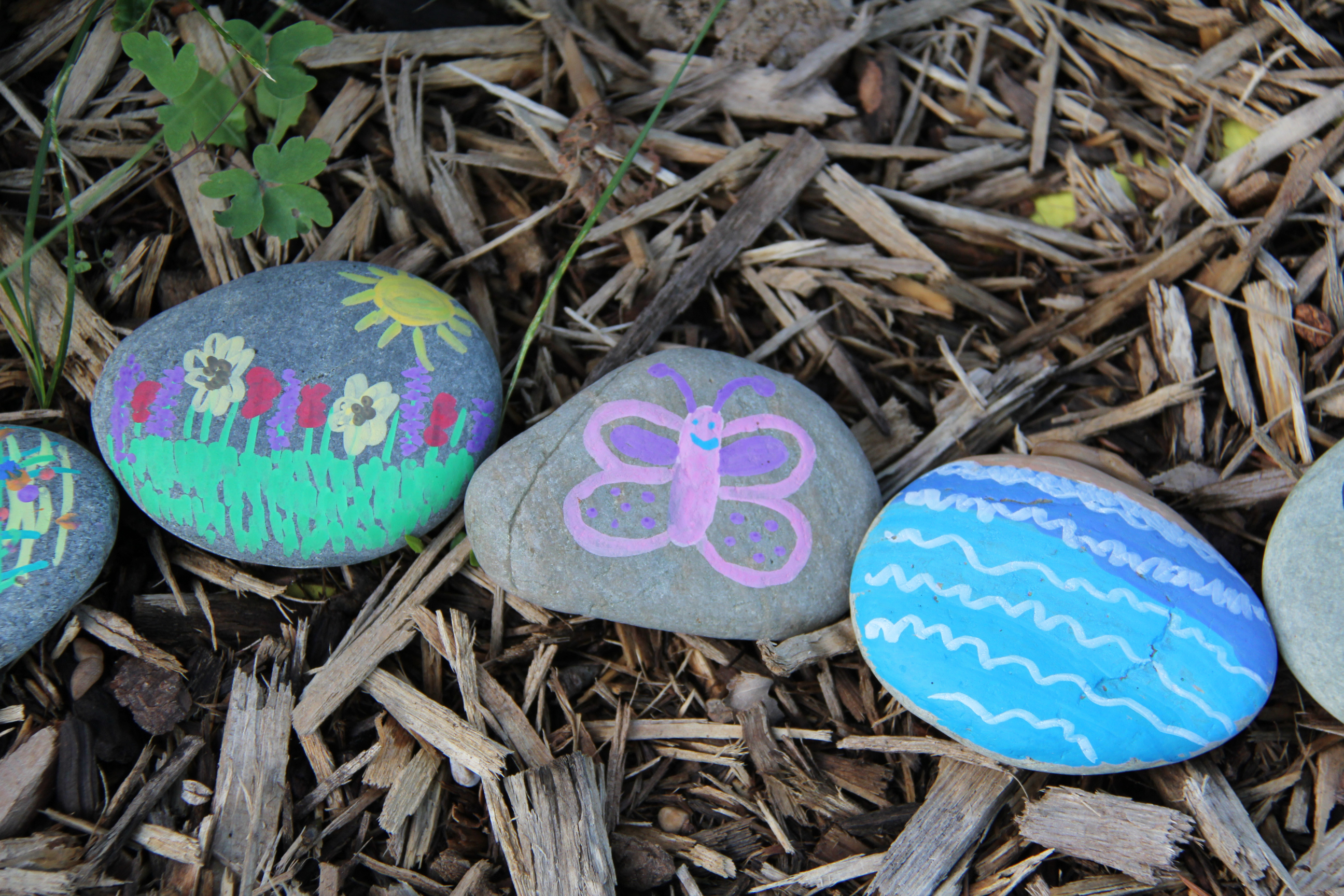
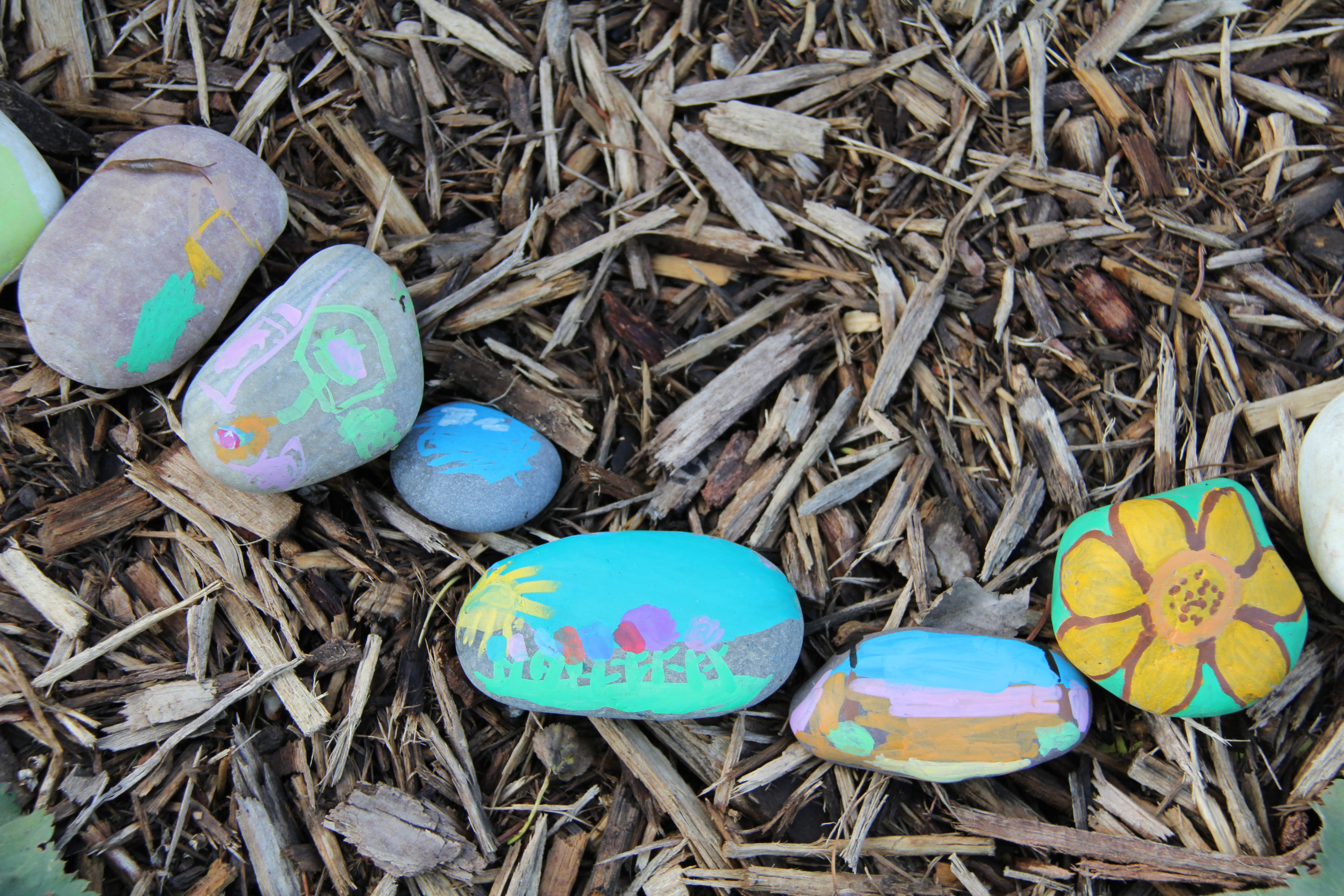
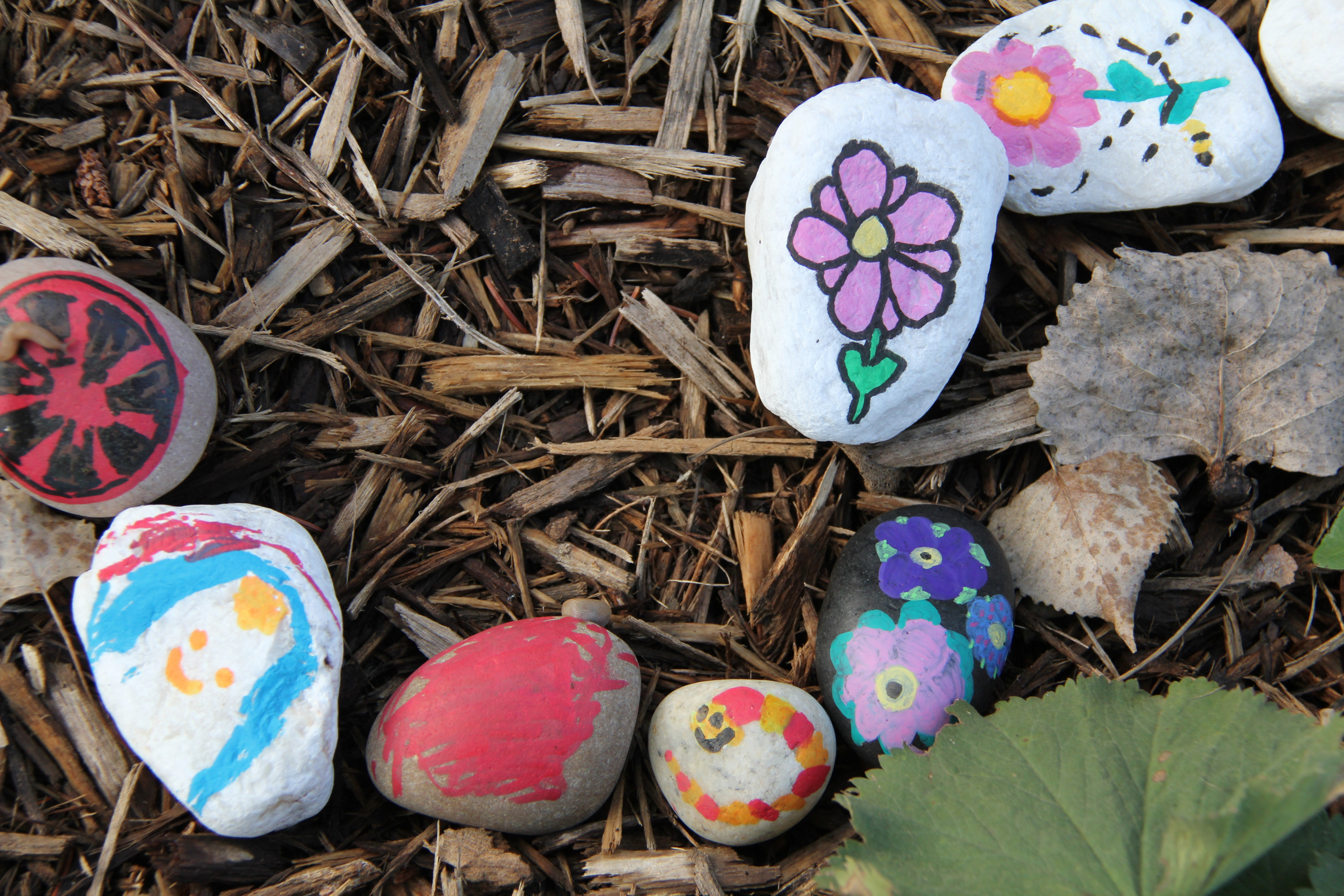
The gardens include rock art, this one in the Rock Art Snake. (Minnesota Prairie Roots copyrighted photo August 2024)

Or find your own garden in your place. Walk. Sit. Take it all in. And when the season shifts, when the flowers are long gone, when the trees have dropped their leaves, then remember this time, these days. Remember the beauty of it all. Remind yourself in the depths of winter how you paused to appreciate these days of summer transitioning into autumn.

© Copyright 2024 Audrey Kletscher Helbling


Look to Books on Central as “We Look West” September 3, 2024

(Minnesota Prairie Roots copyrighted file photo 2024)

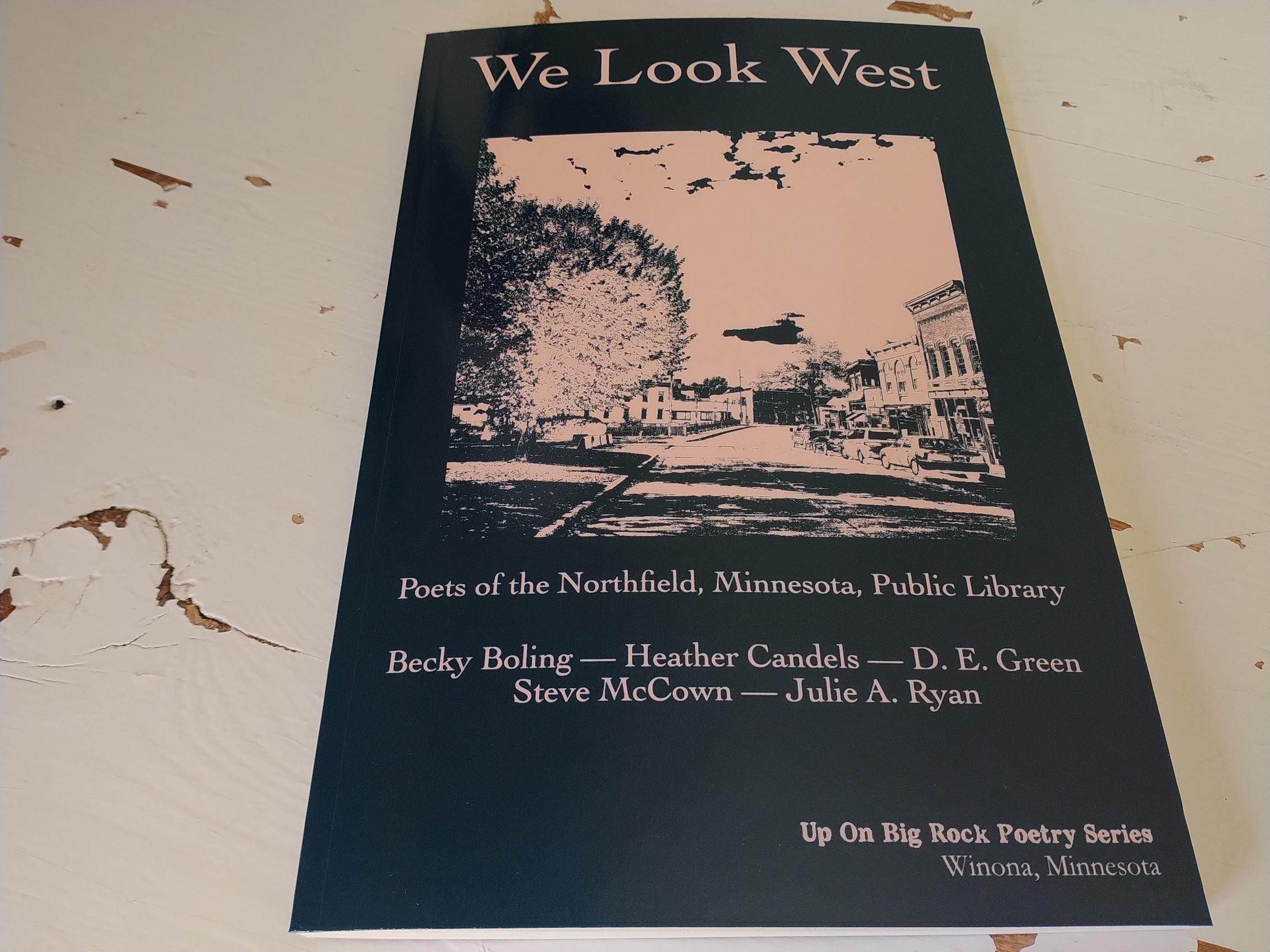
THEY ARE SEASONED WRITERS, also well-seasoned in life. They are Becky Boling, Heather Candels, D.E. Green, Steve McCown and Julie A. Ryan, collectively The Poets of the Northfield Public Library. And at 6 p.m. Thursday, September 5, they will gather at Books on Central, 227 Central Avenue North, Faribault for a poetry reading followed by a Q & A.

If you happen to be one of those people who claim a dislike of poetry, I encourage you to reconsider and come to this literary event. The poetry this group will read comes from their recently-published anthology, We Look West. Their poems are down-to-earth relatable. Trust me. I’ve read this 116-page book, loved it and reviewed it. (Click here to read my review.)

The writing within the pages of this volume are stories of life, in poetry form. Poems that transition from east to west, from the sunrise to the sunset of our lives.

They’re written by poets with extensive publishing credentials. Four have taught at the high school or college level. The fifth comes from a strong literary and visual arts background. Two are Pushcart nominees.

I’ve met Boling and Green and read poetry with them at an event at Mercado Local in Northfield. They are a wonderful married couple, comfortable and friendly. No stuffy poets here. And no stuffy poems. Just plain good writing that moves the spirit, fills the soul, imprints upon the heart.

I look forward to hearing The Poets of the Northfield Public Library read selected poems and then share the stories behind their poetry. As a poet, I’m always interested in learning what inspired a particular poem.

And if you have questions, ask away. Writers welcome engagement as they share their passion for poetry, the craft of writing.

FYI: Books on Central is a second-hand book shop run by the Rice County Area United Way and staffed by volunteers. Proceeds from the bookstore benefit organizations and nonprofits throughout the county.


Reflecting on bee lawns, invertebrate inns, learning & the future August 29, 2024

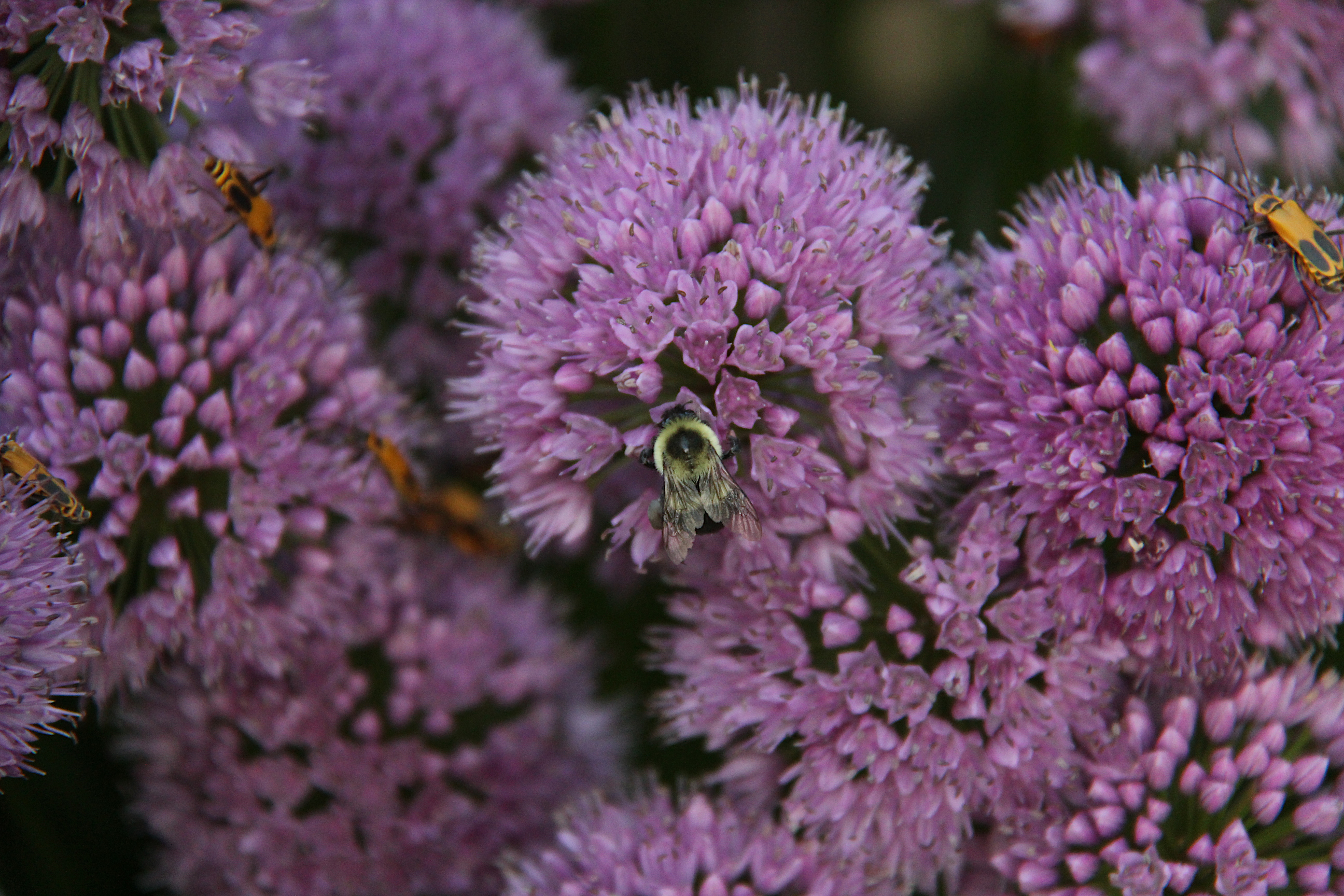
I spotted this bee and other bugs on flowers in the Rice County Master Gardeners’ Teaching Gardens. (Minnesota Prairie Roots copyrighted photo August 2024)

ADMITTEDLY, I NEVER EXCELLED in science. I sort of just got by, learning what I needed to learn to get reasonably good grades in science class. But if I was to go back to the classroom, I’d listen more intently, ask more questions, figure out how the information I was taught actually related to me and my world. In other words, I wouldn’t simply absorb, regurgitate and then move on, which seemed to be the way subjects were taught when I was a student.

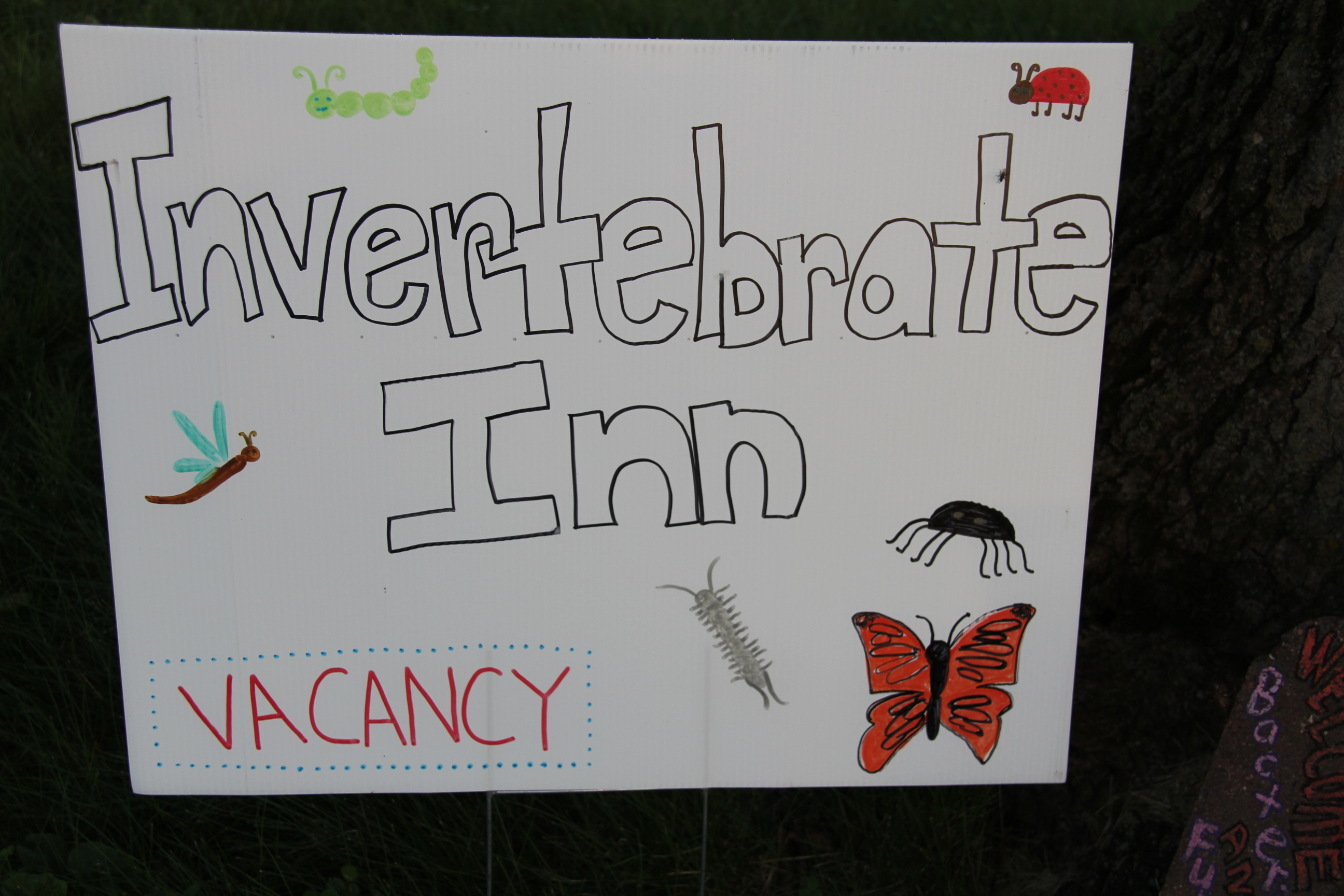
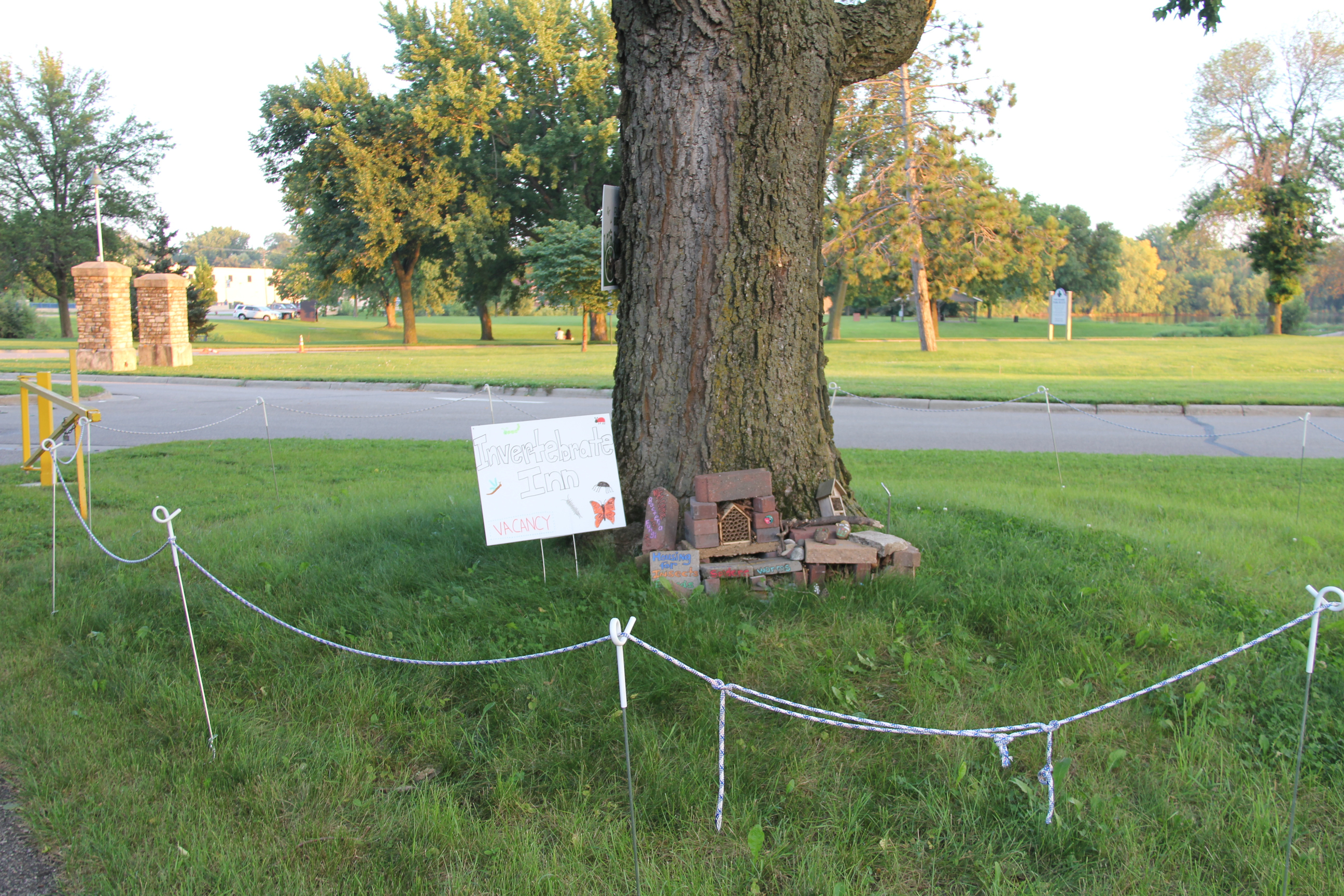
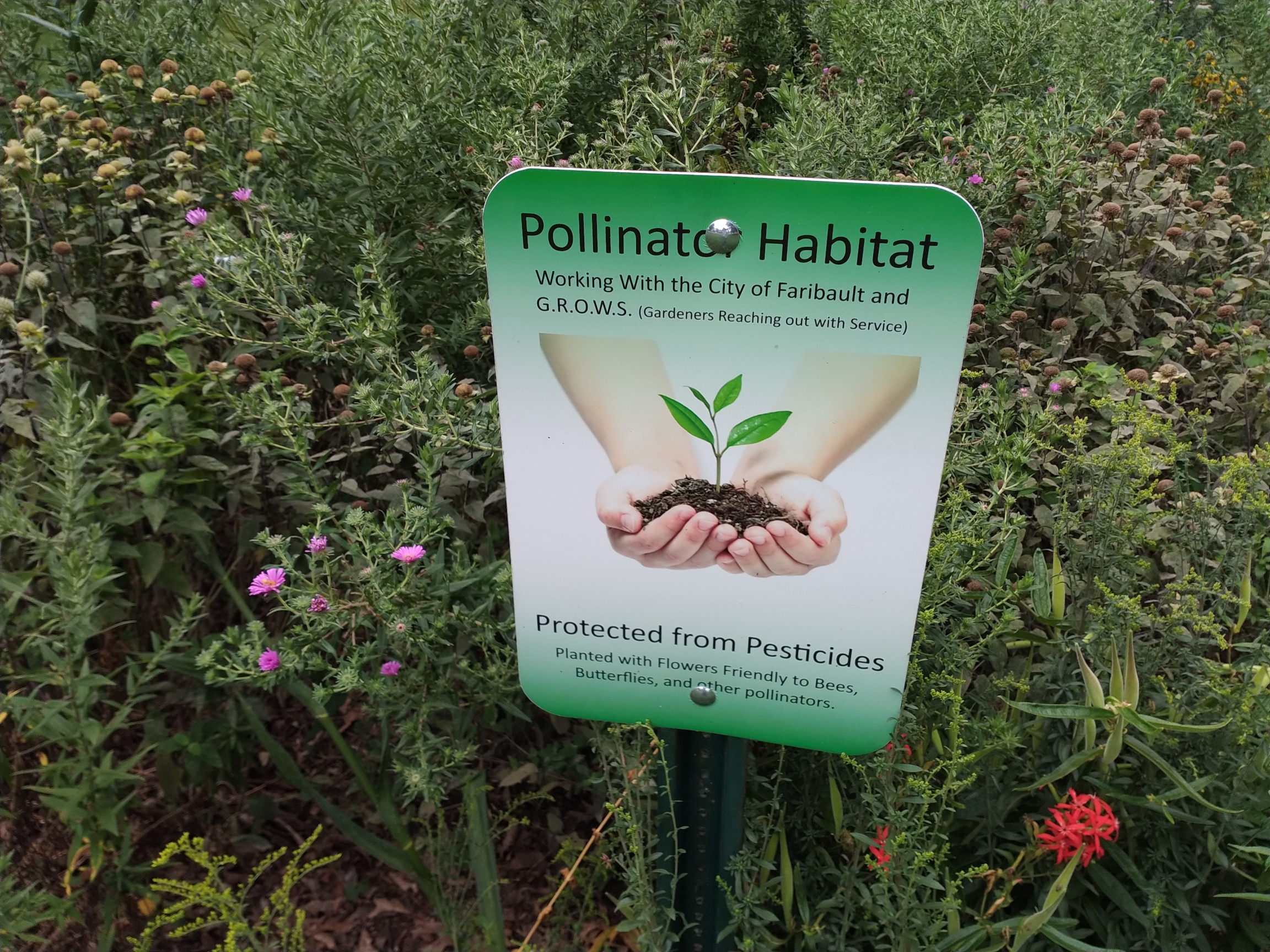
This sign drew me to the base of a tree, where I found an inn and a bee lawn. (Minnesota Prairie Roots copyrighted photo August 2024)
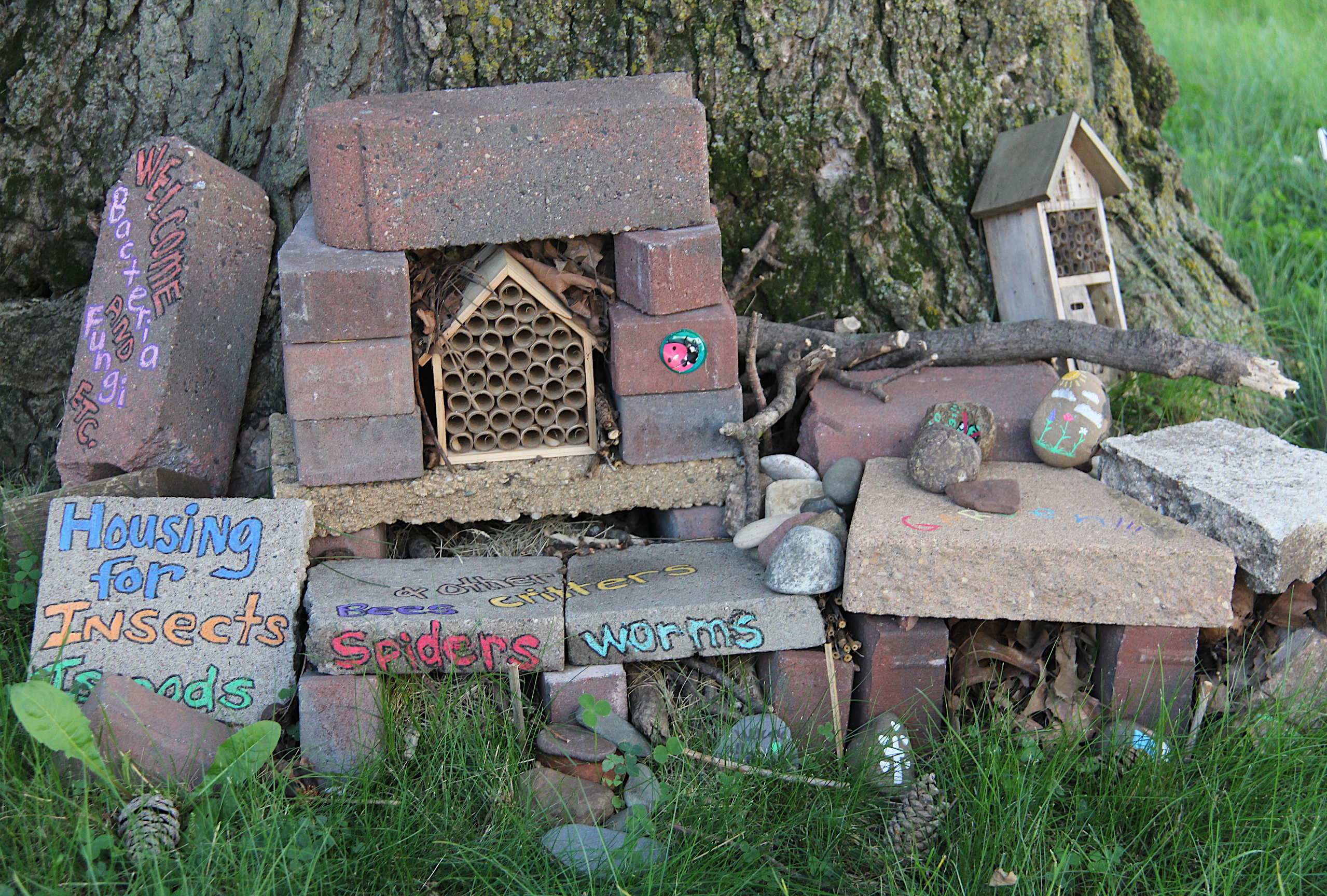
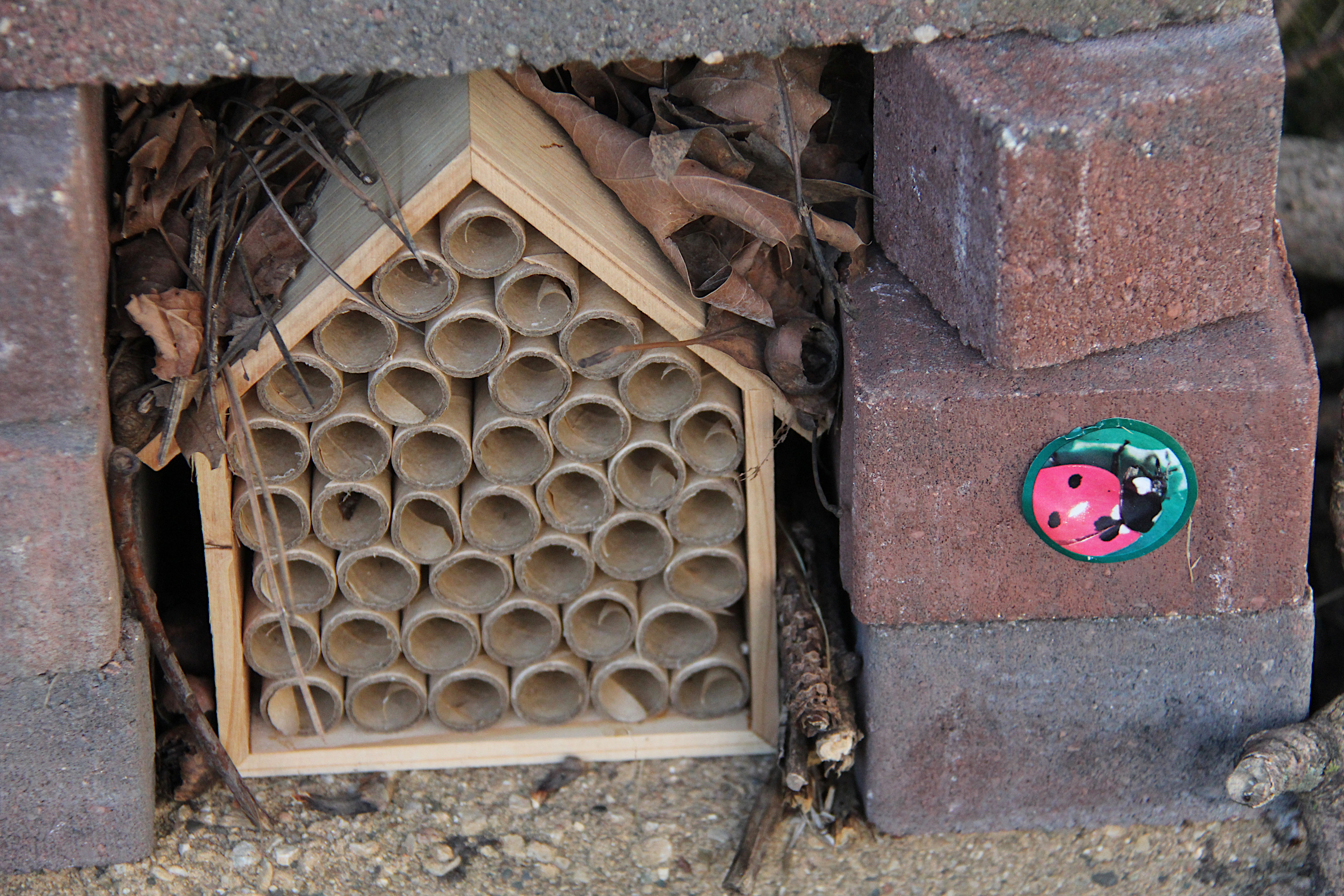
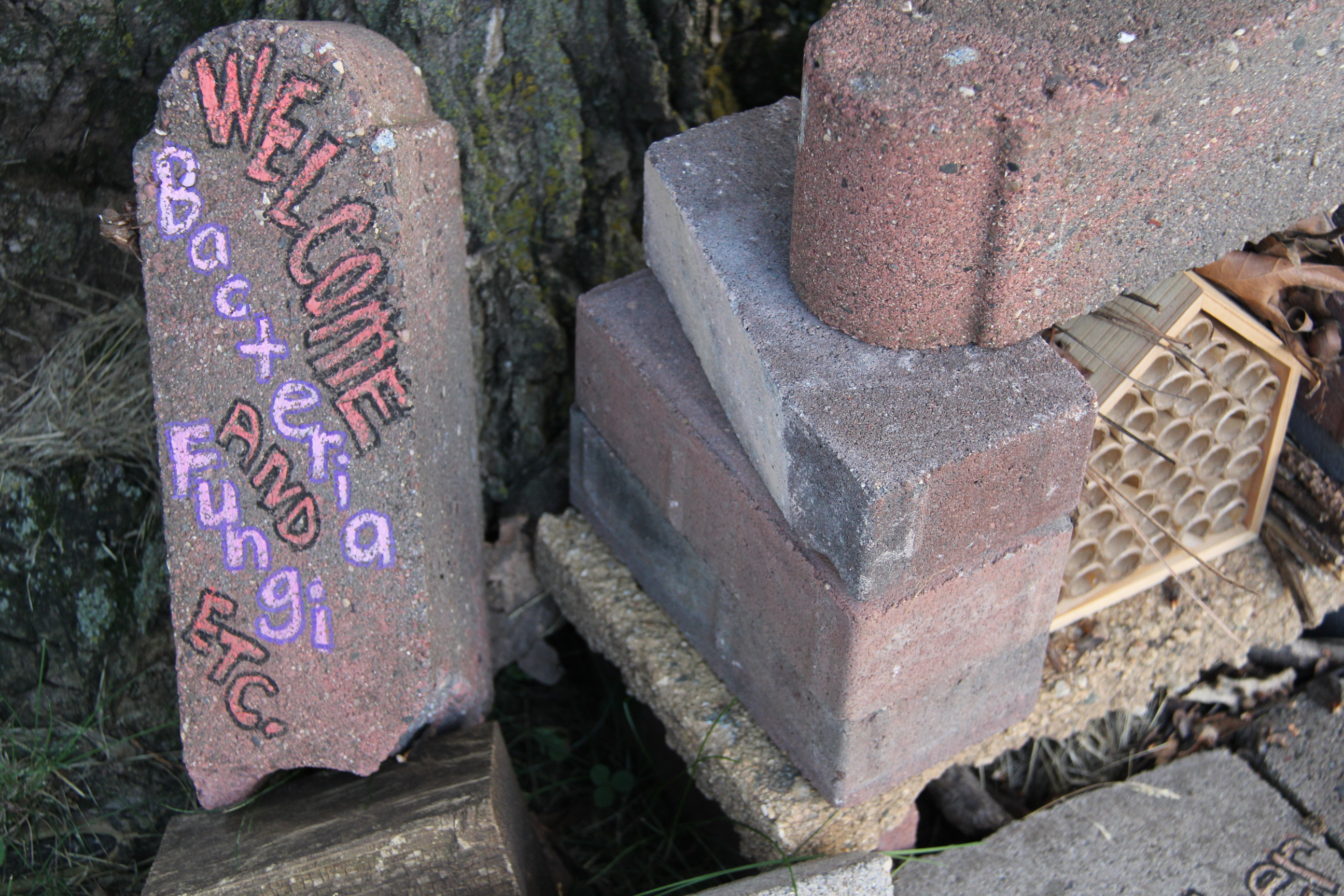
Bricks, stones, sticks and more comprise this haphazard housing unit. (Minnesota Prairie Roots copyrighted photo August 2024)
Identifying signage on the Invertebrate Inn. (Minnesota Prairie Roots copyrighted photo August 2024)

Now, as an adult, and an aged one at that, I realize that the core of learning is not memorization. It is rather taking in information that sparks interest, raises questions, causes independent thinking. I am still learning well into my sixties, this year marking 50 years since I graduated from high school.

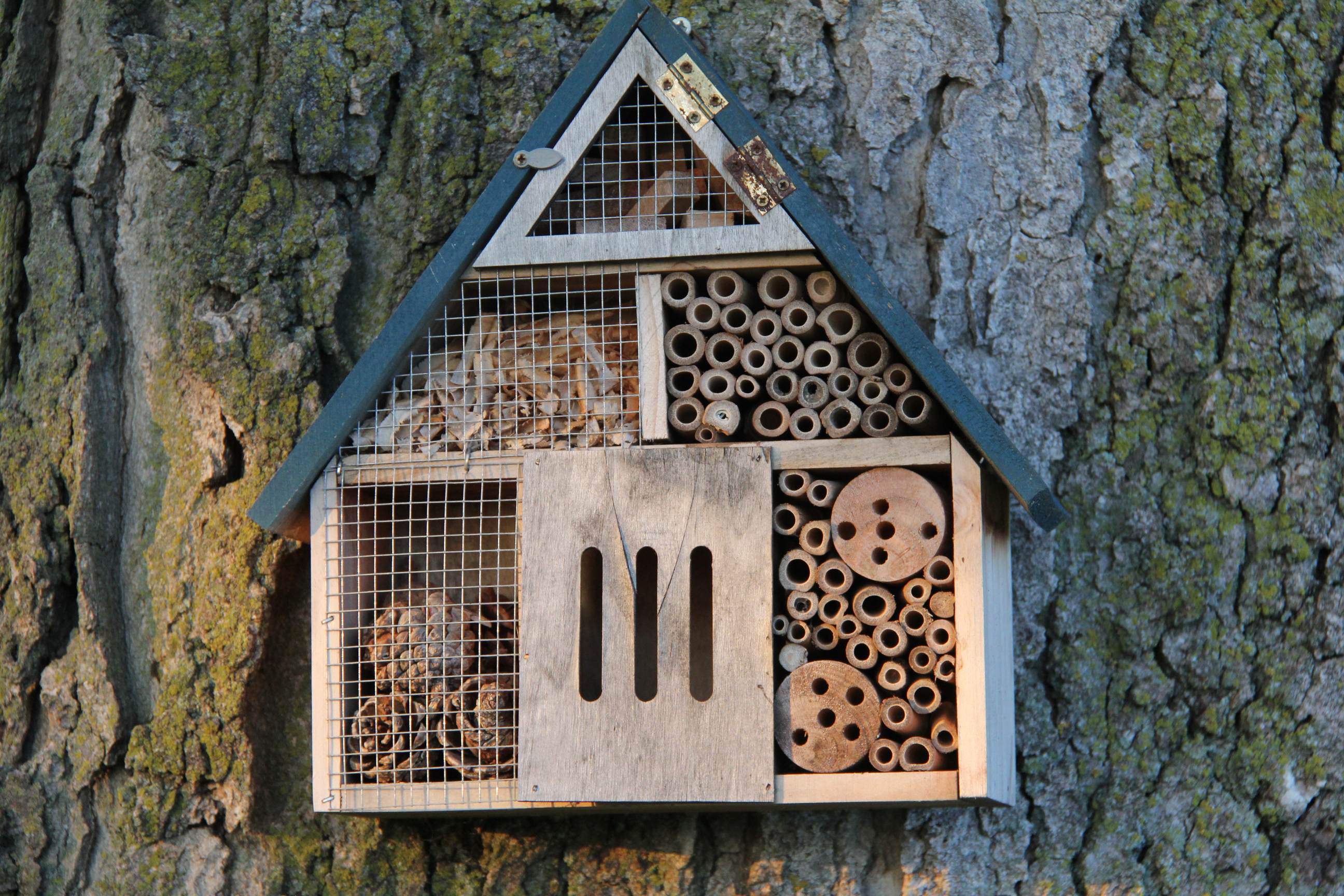
I trust this structure would be a good home for a bug. (Minnesota Prairie Roots copyrighted photo August 2024)

Today I learn because I want to, not because I need to take some class for credits or to earn a degree.

The bee lawn was roped off when I visited. (Minnesota Prairie Roots copyrighted photo August 2024)
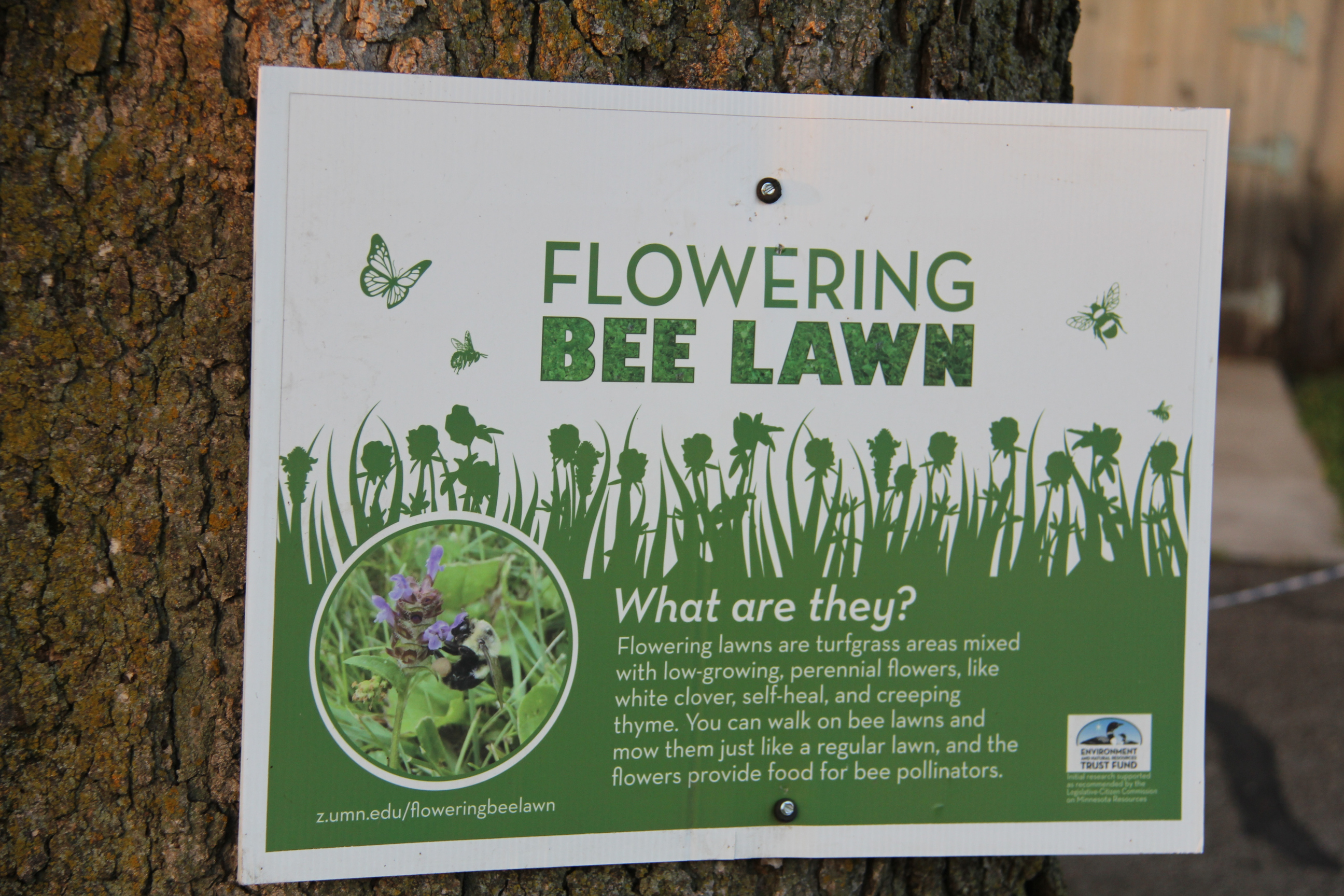
Signage on the tree explains a flowering bee lawn. (Minnesota Prairie Roots copyrighted photo August 2024)
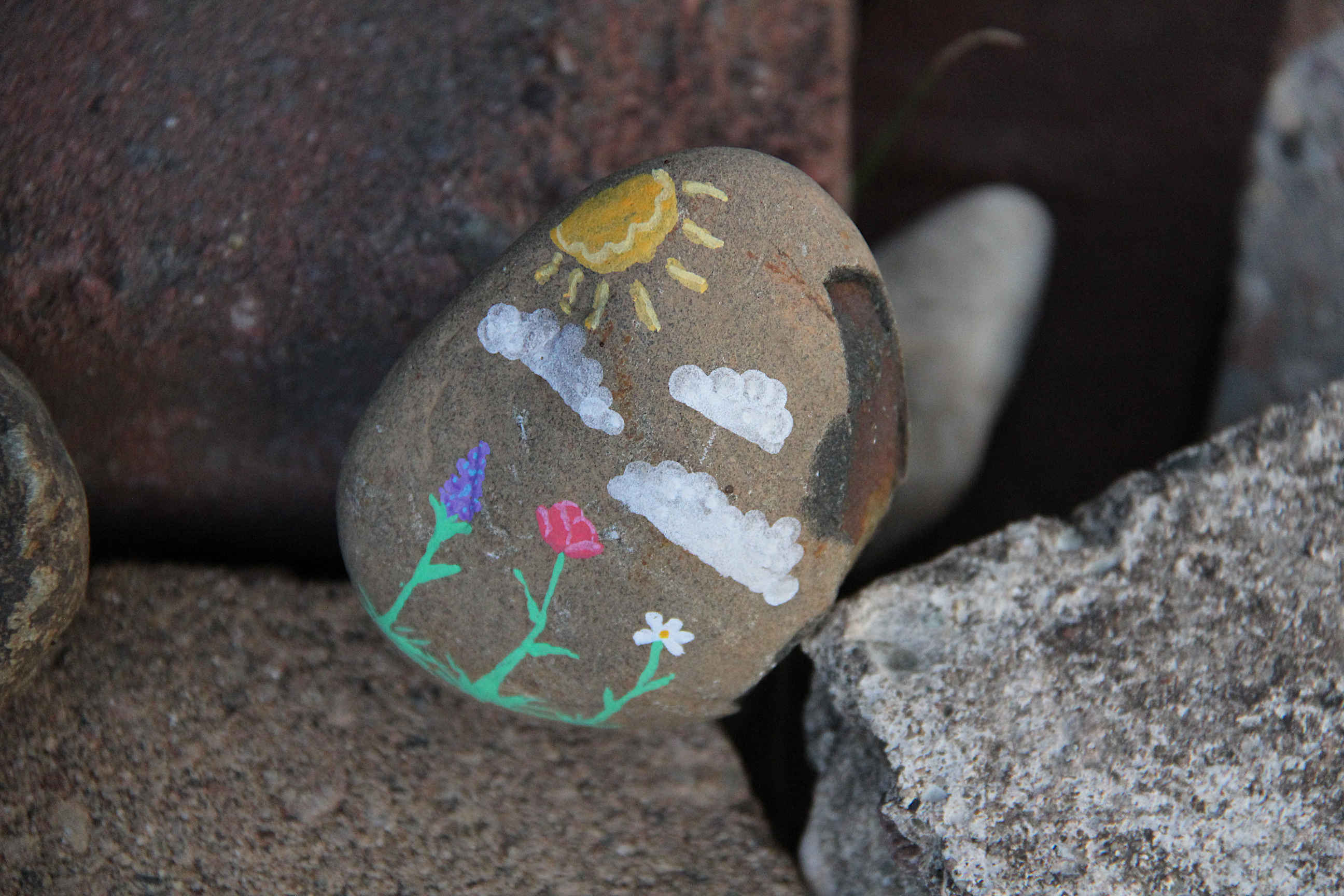
Fitting floral rock art in the inn. (Minnesota Prairie Roots copyrighted photo August 2024)

My latest delve into science was prompted by a visit to the Rice County Master Gardeners Teaching Gardens in Faribault. There I spotted an Invertebrate Inn and a bee lawn, recent additions to the beautiful gardens located at the Rice County Fairgrounds. These are not exactly novel ideas. But I’d not previously considered them much and how they benefit the natural world. Low-lying bee lawns, with their clover and other flowers like creeping thyme, provide nectar and pollen for pollinators.

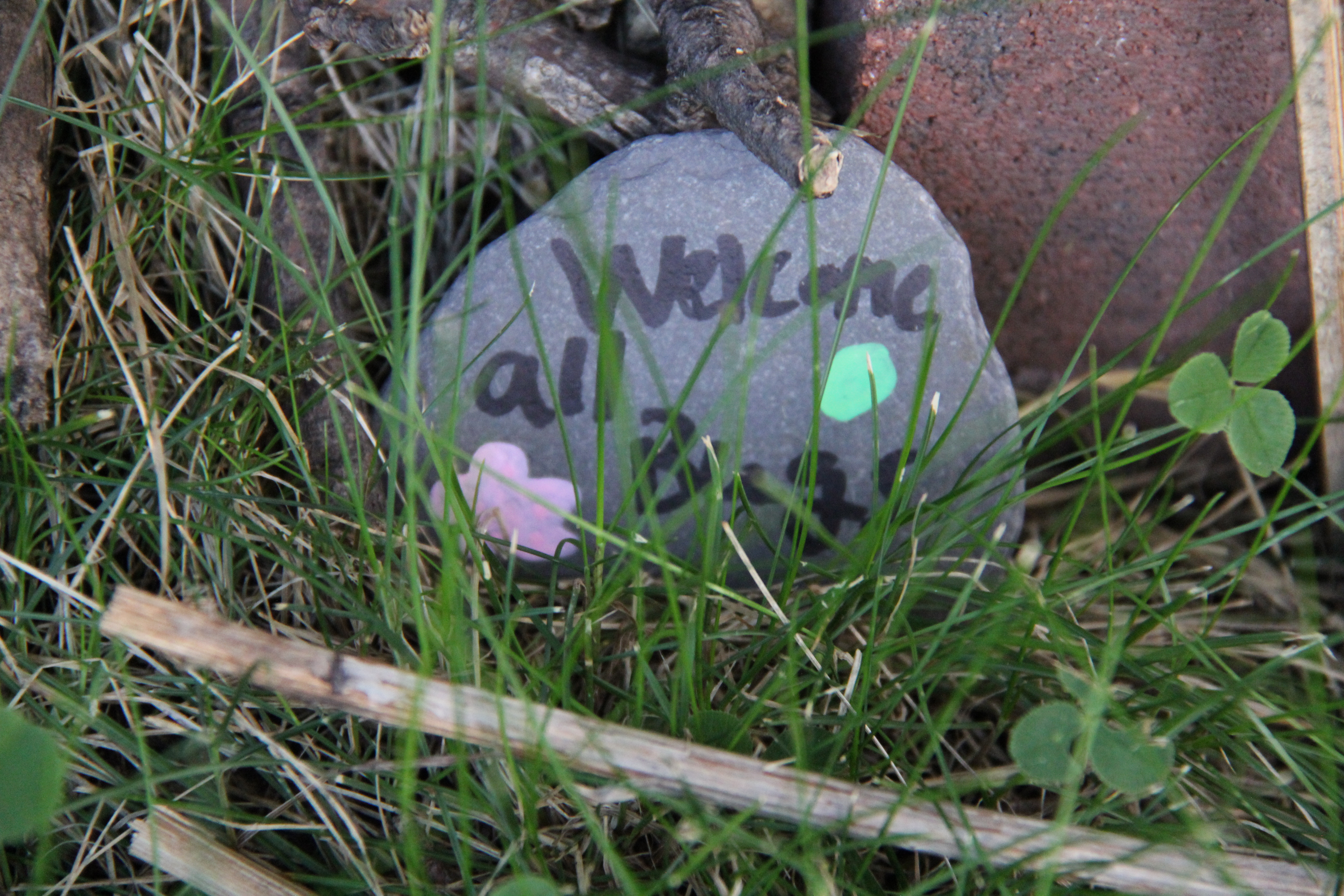
At the inn, a welcome sign for guests. (Minnesota Prairie Roots copyrighted photo August 2024)

In some ways, the inn and the bee lawn remind me of childhood days on the farm with our grass anything but weed-free and manicured. Dandelions and clover were prolific. No weedkiller or insecticides were used except on crops. No nothing applied to the grass, because who cared and who had time to nurture a lawn when there were crops to plant and cultivate and animals to tend?

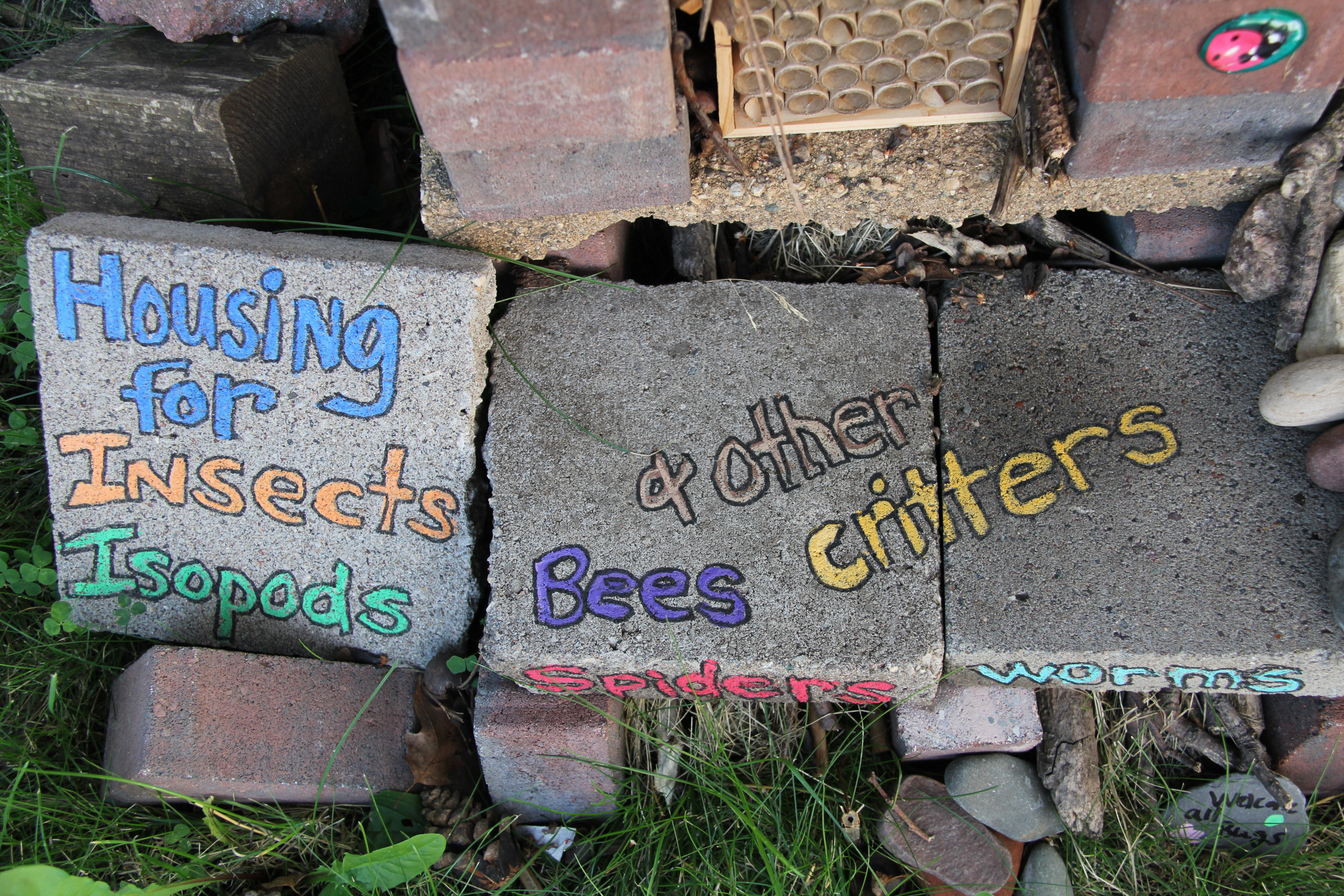
Housing for more than just insects, isopods, bees, spiders, worms and other critters. (Minnesota Prairie Roots copyrighted photo August 2024)

Times have changed as farming and yard care have evolved. Insecticide and herbicide usage is prevalent. We would be naive to think this has not affected pollinators like butterflies and bees. And so when I discover something like a bee lawn and an Invertebrate Inn, I feel a spark of joy, a sense of gratitude for those who create them.

High rise housing. (Minnesota Prairie Roots copyrighted photo August 2024)

I want my grandchildren to understand that this world they’ve been given is one that needs to be nurtured and appreciated, taken care of in a way that perhaps my generation did not. Sure I celebrated Earth Day, wore Earth Shoes and spouted environmental platitudes of the 1970s. But did that really mean anything, make any long-lasting impact? It was a beginning, I suppose.

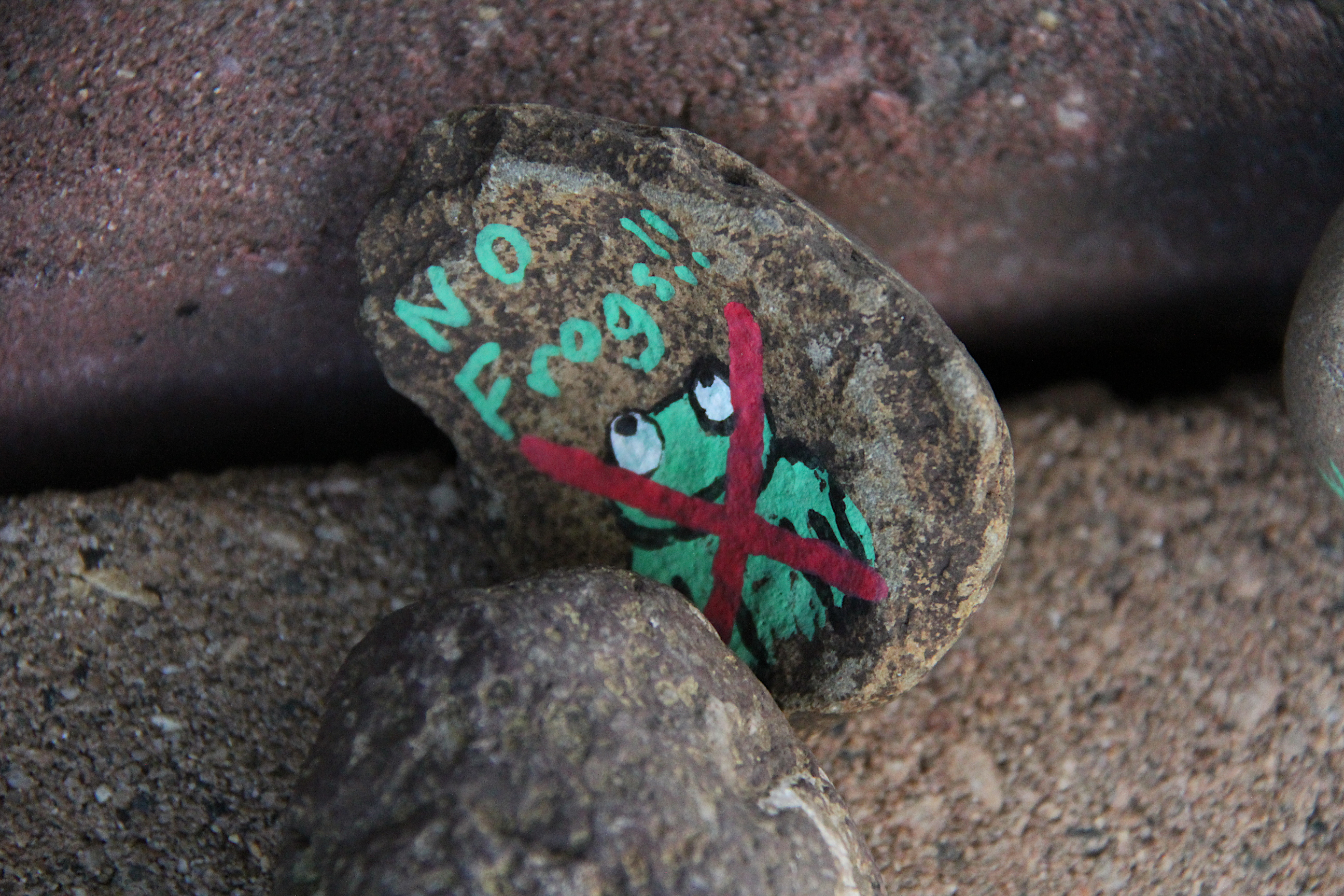
Frogs are banned from the inn. (Minnesota Prairie Roots copyrighted photo August 2024)

I want my grandchildren to ask questions in class, seek out information, learn in a way that is focused on curiosity rather than feeding back facts. I want them to care about the bees and the butterflies and the bugs.

There are other bee lawns, pollinator gardens, etc., in my community, including this one in Central Park. (Minnesota Prairie Roots copyrighted photo August 2024)

I want them to connect with nature, to understand that what they do, or don’t do, to the earth matters. I want them to get their hands dirty in the soil, overturn rocks, hold bugs, pick up worms, plant flowers and, most of all, appreciate this natural world of ours. The science of it. The beauty of it. The peace it brings to the soul. The joy it brings to the spirit. And I want them to care. Always.

FYI: Click here to watch an informative video about creating a bee lawn by Faribault master gardener Jayne Spooner.

© Copyright 2024 Audrey Kletscher Helbling
 

A rock snake in Faribault’s Garden of Eden August 27, 2024

The snake I found in a Faribault garden. (Minnesota Prairie Roots copyrighted photo August 2024)

AS THE BIBLICAL STORY GOES, a cunning snake tempted Eve, convincing her that she could eat fruit from a tree growing in the middle of the Garden of Eden. She believed the snake’s claim of knowledge and immortality. Turns our he manipulated her. Things did not go so well after Eve ate the forbidden fruit and shared it with Adam.

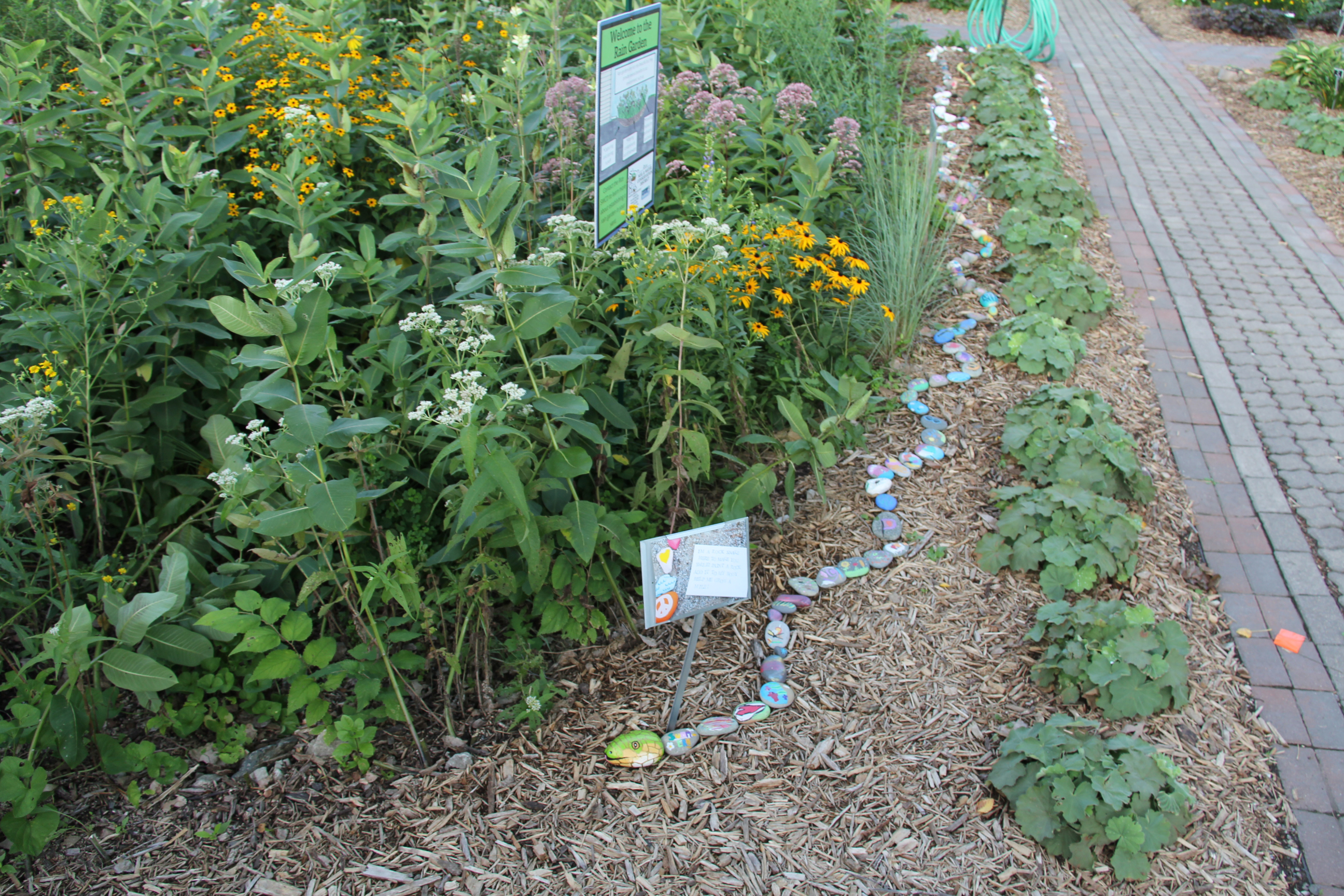
I stood atop a bench to get this photo of the long and winding Rock Snake. (Minnesota Prairie Roots copyrighted photo August 2024)

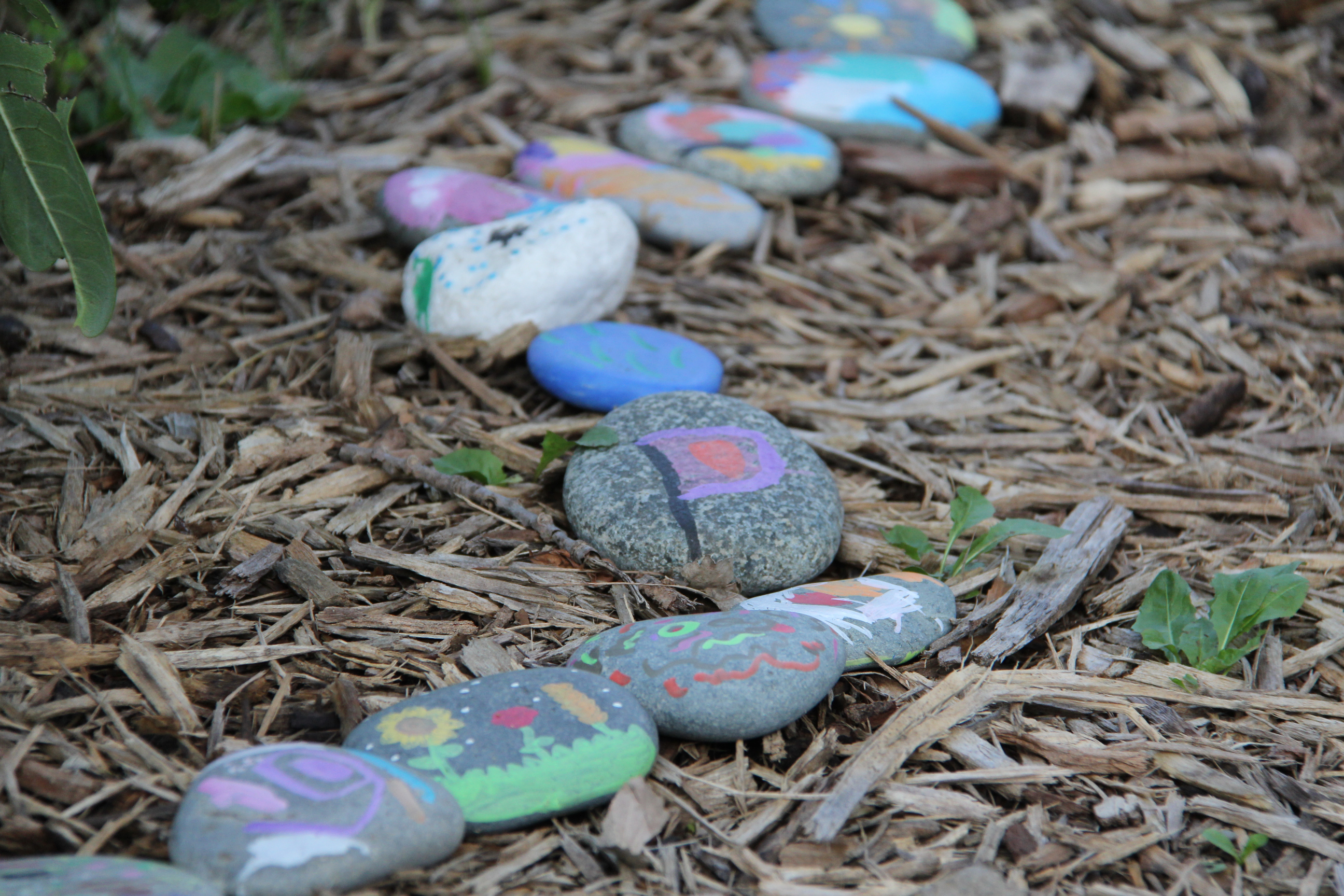
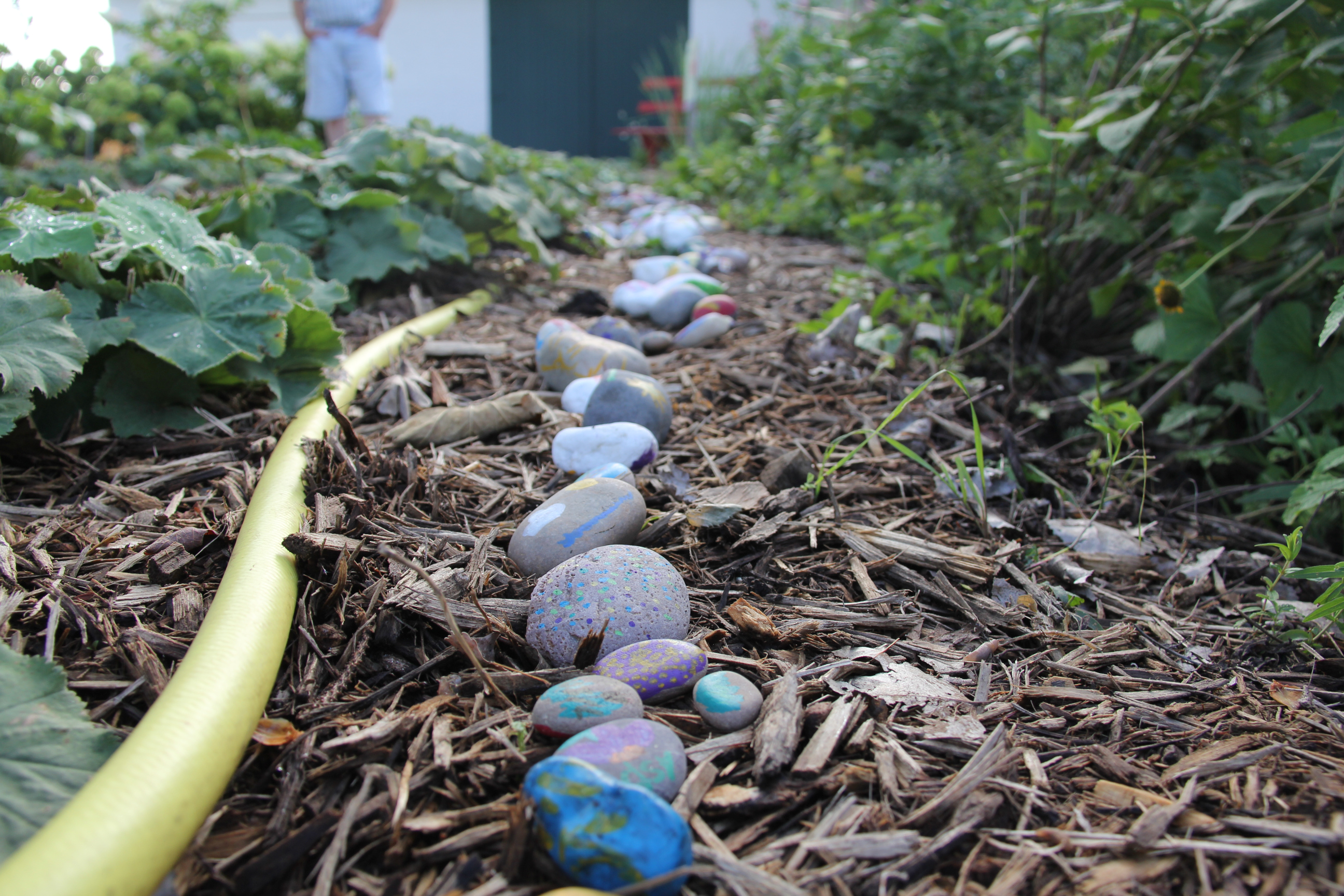
Not all snakes are liars and evildoers. Some, like the one I found recently in a Faribault garden, are quite the opposite. The Rock Snake that stretches an estimated 40 feet across wood chips between a brick pathway and a rain garden in the Rice County Master Gardeners’ Teaching Gardens exudes only goodness.

The Rock Snake slithers (well, not really) past the rain garden. (Minnesota Prairie Roots copyrighted photo August 2024)

I resisted the temptation to snatch away a segment—a painted rock—of the snake. Some 220 painted stones comprise the serpent. I learned a lesson from Eve. Be strong. Don’t give in to those who would mislead you.

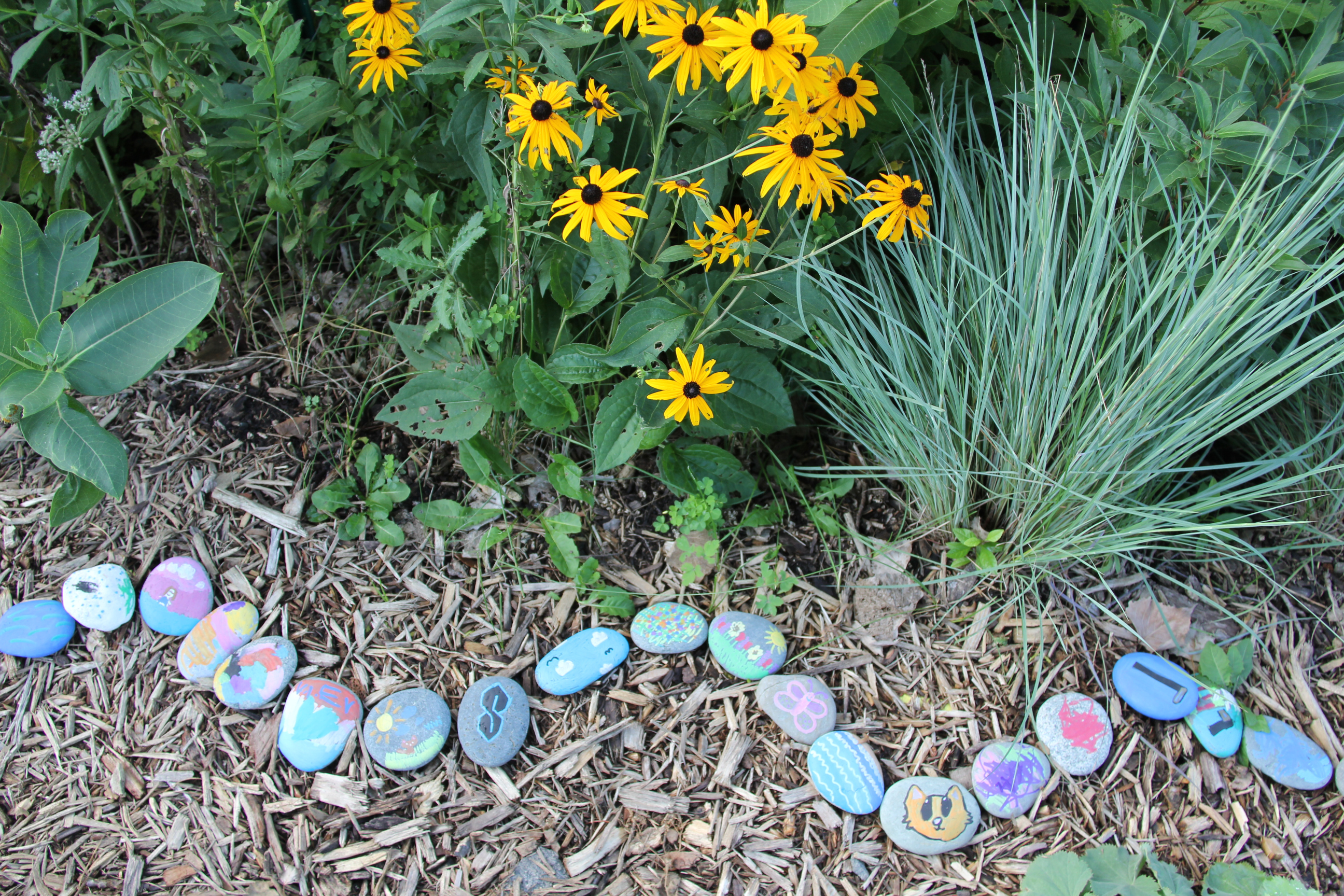
These painted rocks are themed to summer. (Minnesota Prairie Roots copyrighted photo August 2024)
More sunshine and flowers on the snake’s body. (Minnesota Prairie Roots copyrighted photo August 2024)
And yet more flowers bloom on the Rock Snake. (Minnesota Prairie Roots copyrighted photo August 2024)

Rather, I opted to photograph and enjoy the Rock Snake with its inspiring, joyful messages, its colorful art. A posted sign invites people to add their own painted rocks, lengthening the snake designed to bring a smile.

(Minnesota Prairie Roots copyrighted photo August 2024)

And smile I did as I followed the snake’s winding body, bending low to study the art, the words. Many of the stones were painted at the Master Gardeners’ booth during the recent Rice County Fair.

An overview of a small section of the gardens. (Minnesota Prairie Roots copyrighted photo August 2024)
Water features include a bird bath, pond and fountains. (Minnesota Prairie Roots copyrighted photo August 2024)
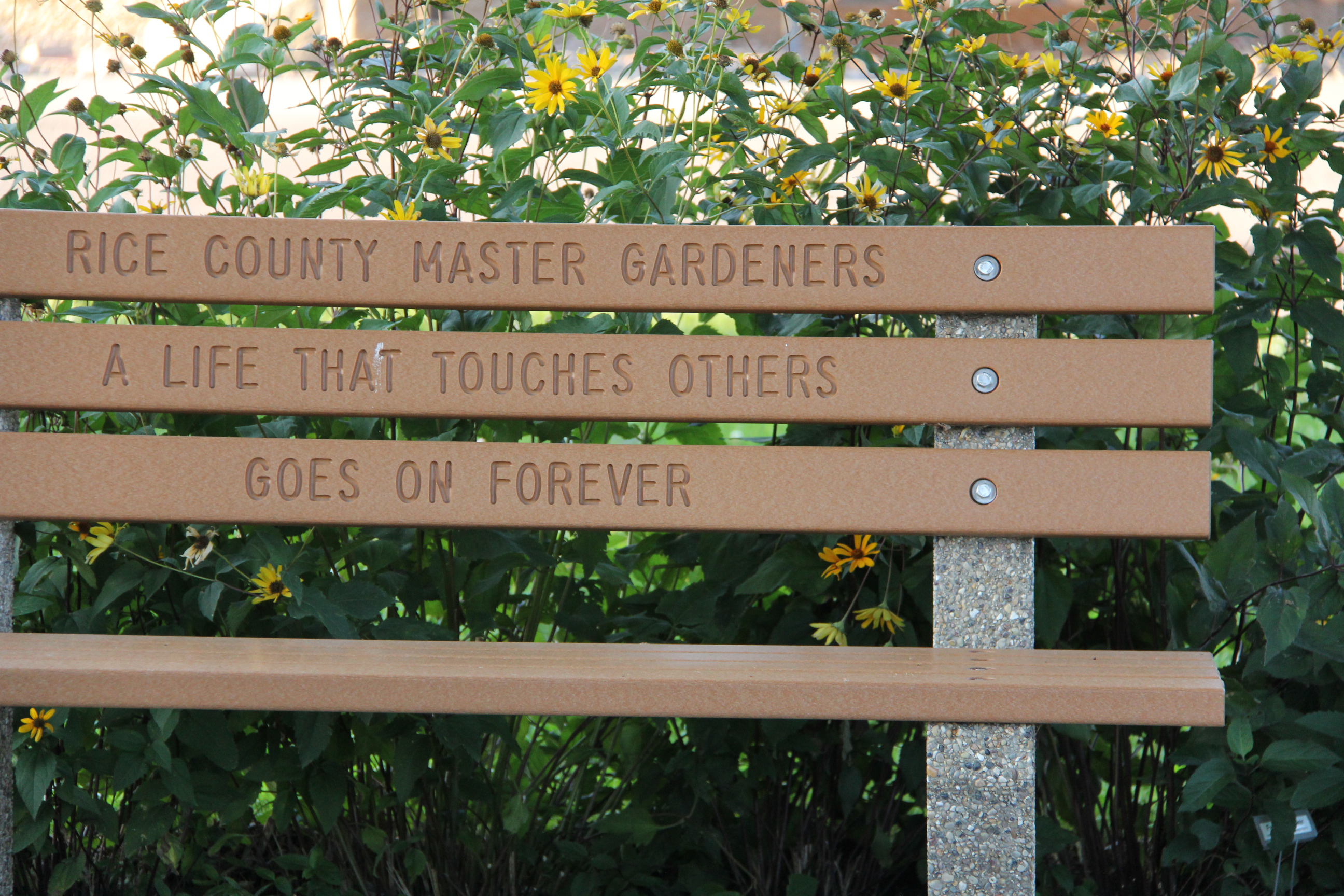
Several benches offer a place to rest, contemplate and enjoy the gardens. (Minnesota Prairie Roots copyrighted photo August 2024)

These gardeners, through their volunteer efforts, have created Faribault’s own Garden of Eden in a spacious area next to the conservation building and the Rice County Historical Society on the city’s north side. It’s taken years to get the garden to this lush, well-kept, welcoming space.

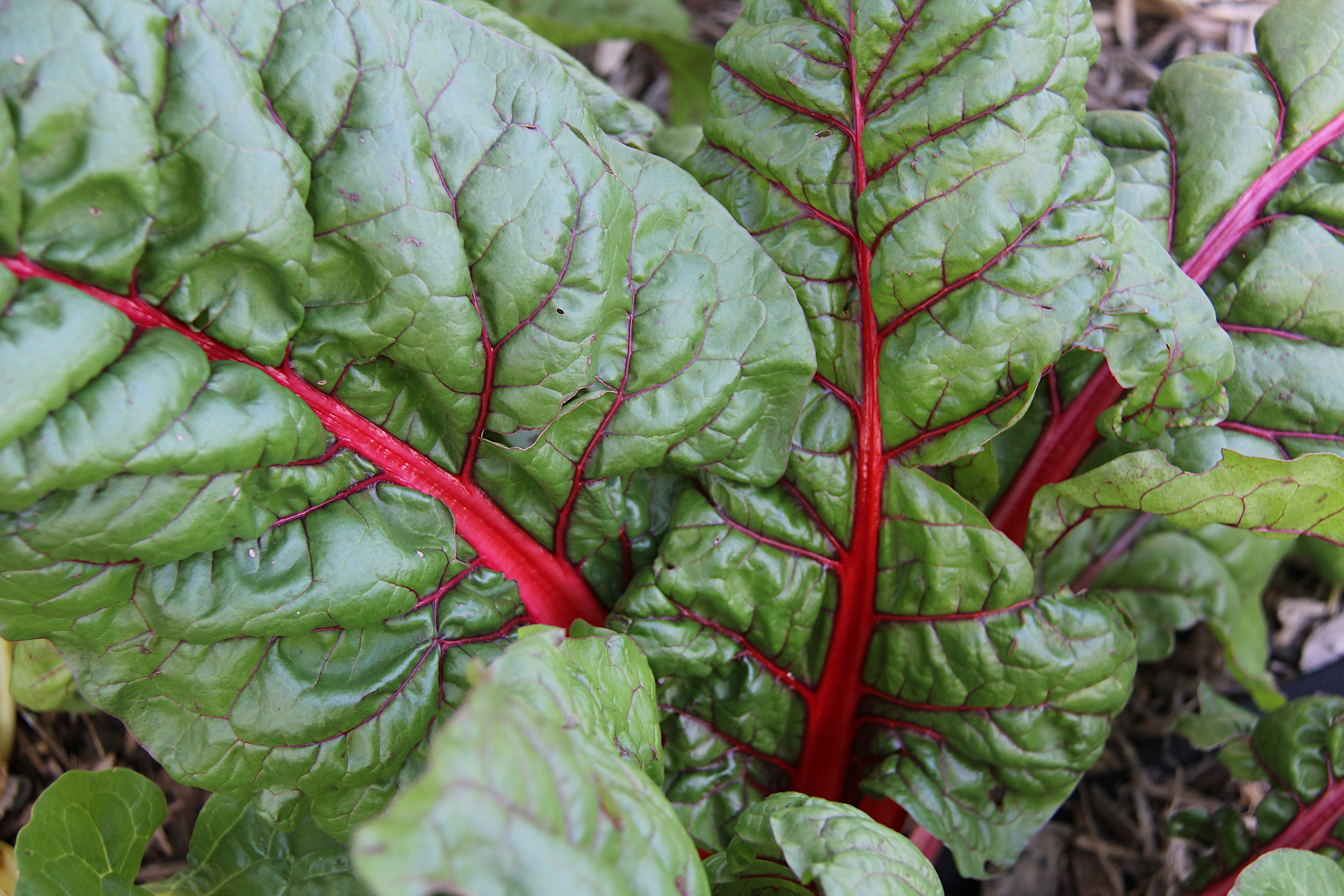
Swiss chard grows in the trial garden. (Minnesota Prairie Roots copyrighted photo August 2024)

I enjoy coming here, meandering among blooming flowers and plants, past the water features, pausing to examine the fairy garden. And now there’s more to see in the Rock Snake and a new bee lawn with habitat. There are trial gardens here and free seeds for the taking and benches for sitting. It is, indeed, a bit of paradise, a respite, a place to rest and contemplate and envelope one’s self in nature.

Flowers are always blooming. (Minnesota Prairie Roots copyrighted photo August 2024)
A garden hose runs alongside the Rock Snake. (Minnesota Prairie Roots copyrighted photo August 2024)
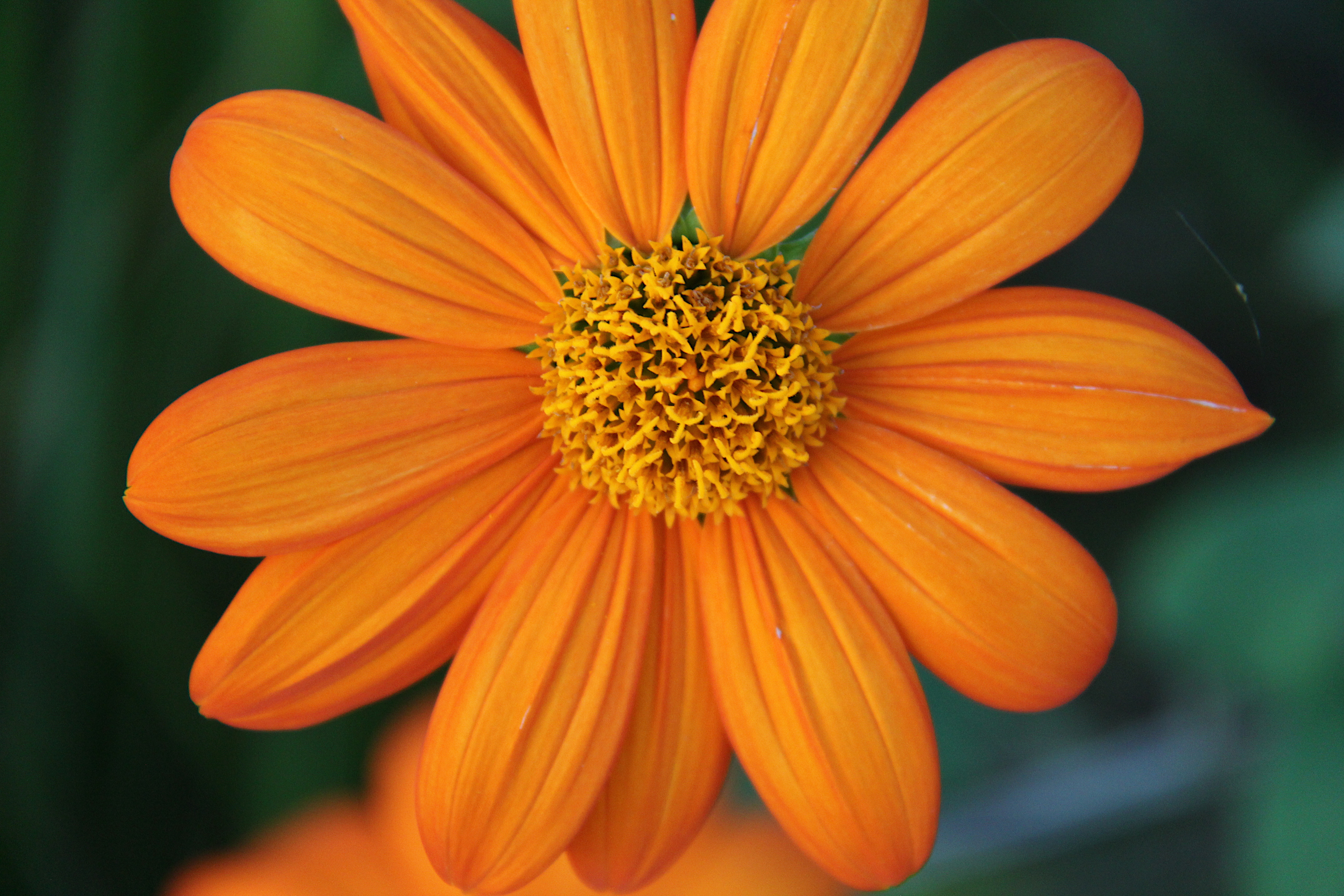
A sturdy dahlia blooms. (Minnesota Prairie Roots copyrighted photo August 2024)

Goodness thrives here. I experience it with my senses. My eyes take in the birds, blooms, bees, butterflies, the colorful Rock Snake. I smell the scent of blossoms. I hear water burbling in fountains, birds chirping. And if I could pluck vegetables from the trial gardens, I would assuredly taste goodness. But I won’t. I will not be tempted. Rather I will look and not touch. Leave and not take. I will leave this bit of Eden as I found it, beautiful and wondrous, a place of peace for anyone who visits.

© Copyright 2024 Audrey Kletscher Helbling
 

Give me a daisy a day, or maybe a zinnia August 22, 2024

Filed under: Uncategorized — Audrey Kletscher Helbling @ 5:00 AM
Tags: , , , , , , ,
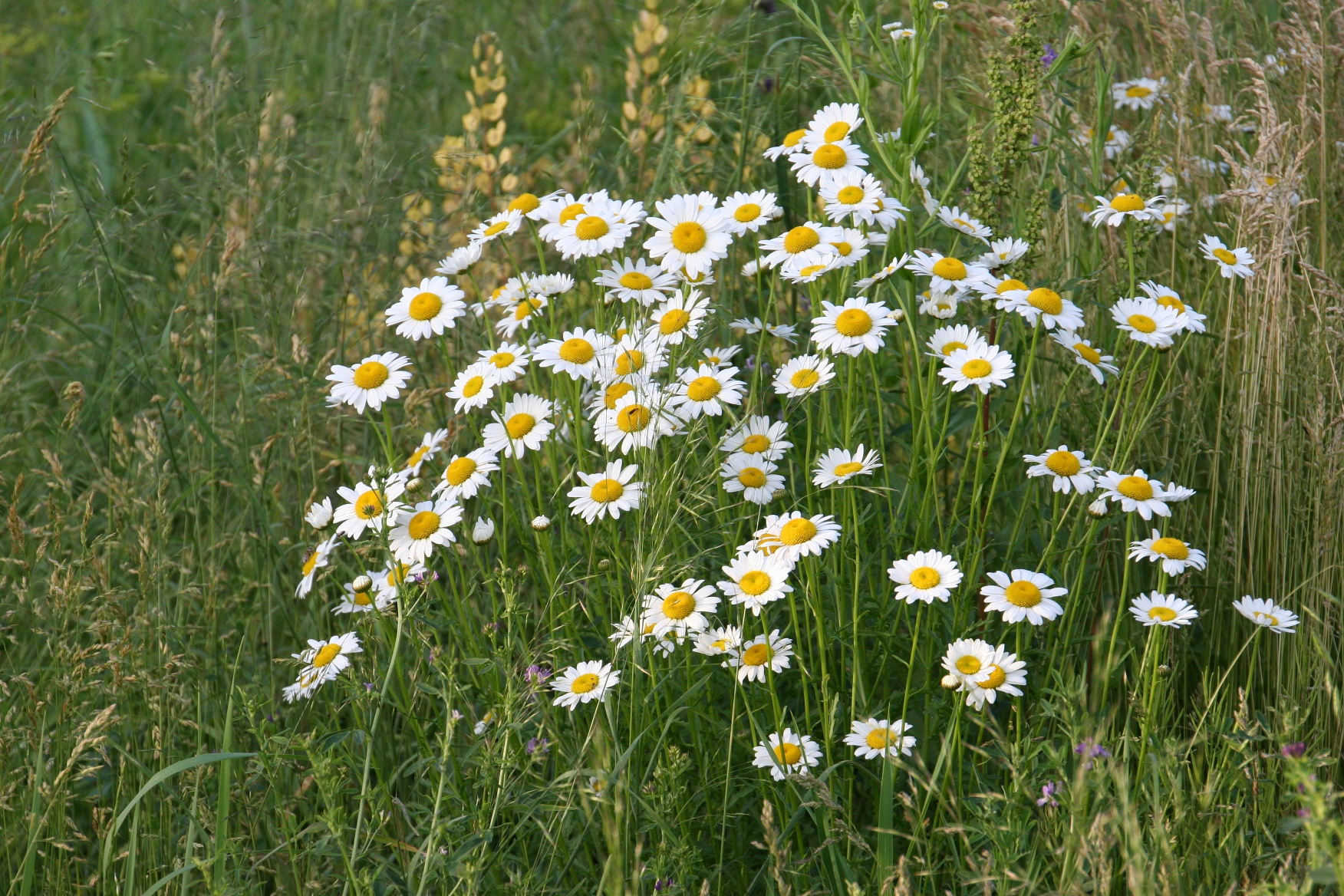
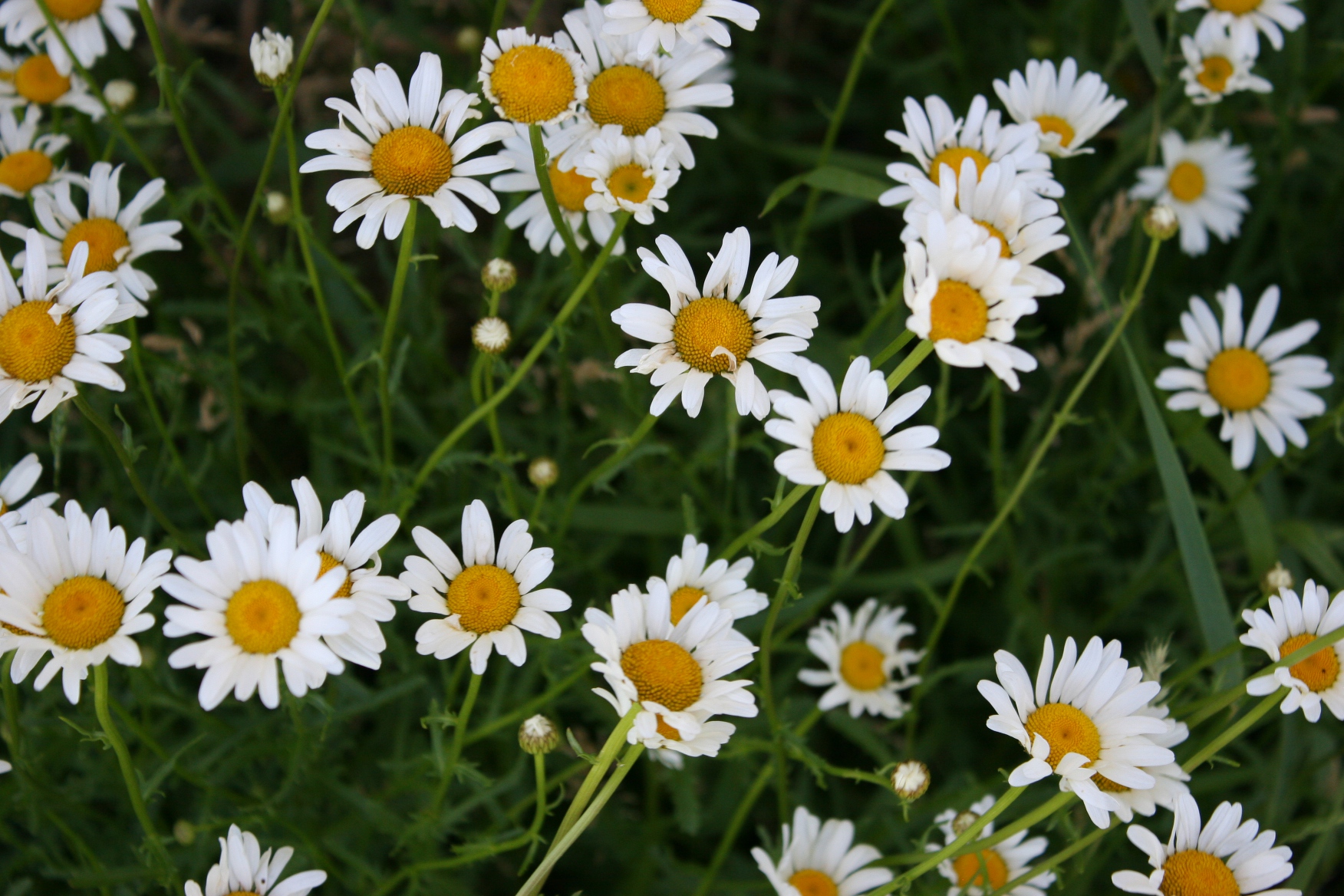
A patch of daisies. (Minnesota Prairie Roots copyrighted file photo)

RECENTLY, MY SISTER-IN-LAW Rena asked me to name my favorite flower. I immediately responded, “Daisy.” But that’s not really true, I realized the more I considered the flowers I especially like.

A time existed when my response to Rena was accurate. For a long time, daisies assuredly were my personal pick for most beloved floral. Daisies, like me, are simple, uncomplicated, down-to-earth. There’s nothing pretentious about a daisy with its circle of white petals and yellow center.

Daisies, too, were the flower of my teen years. The age of flower children and peace symbols and rebellion. Daisies, prolific, strong, reseeding on their own, spreading and blanketing the landscape.

At my 1982 wedding, daisies graced bouquets and corsages. “I’ll give you a daisy a day,” wrote songwriter Jud Strunk in the 1973 hit, “Daisy a Day.” A love story in lyrics if I’ve ever heard one.

I still like daisies a lot. The way they bend in the wind. The way they remind me of my youth. And young love.

Zinnias sourced at the Faribault Farmers’ Market. (Minnesota Prairie Roots copyrighted photo August 2024)

But, after pondering Rena’s question, I would answer differently. Zinnias. Yes, vivid, bold zinnias are my favorite flower today. Like daisies, they trace to my youth. Mom seeded rows of zinnias in her vegetable garden. They jolted color into the greenery, later adding color to our farmhouse in bouquets gathered.

Zinnias and cosmos can be easily grown by direct seeding into the soil. (Minnesota Prairie Roots copyrighted file photo)

Zinnias grow easily from seed. They are hardy and prolific and colorful, coming in varying sizes from small to “giant.” They make excellent, long-lasting cut flowers.

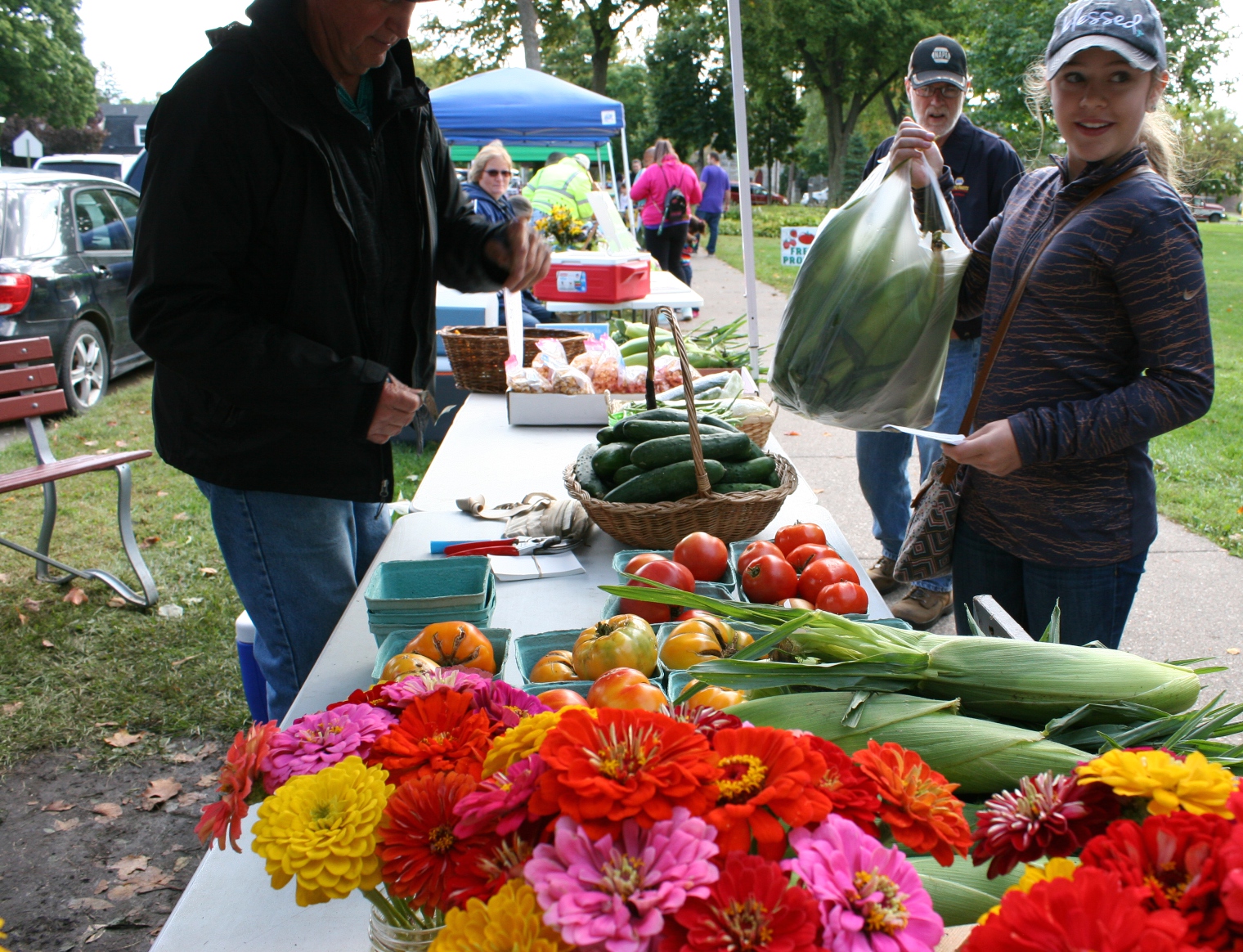
My friend Al, left, sells flowers and produce at the farmers’ market. (Minnesota Prairie Roots copyrighted file photo)
I transferred the zinnia bouquet from Solo cup to vase at home. (Minnesota Prairie Roots copyrighted photo August 2024)
Al and Char’s zinnias up close. (Minnesota Prairie Roots copyrighted photo August 2024)

As I write, a bouquet of zinnias purchased at the Faribault Farmers’ Market graces a vintage chest of drawers in my living room. My friend Al grew them. His wife, Char, artistically arranged the stems of red, pink, orange and yellow with one green-tinted flower tossed in the colorful mix.

Daisies thrive. (Minnesota Prairie Roots copyrighted file photo)

Randy bought them for me. For no reason. I love when he does that—spur of the moment gives me flowers. Just because. I was chatting with our friend Duane while Randy paid for sweetcorn purchased from Al along with those unexpected zinnias arranged in a red Solo cup. It was a moment when I felt loved, so loved, as if Randy had given me my daisy a day.

TELL ME: What’s your favorite flower and why?

© Copyright 2024 Audrey Kletscher Helbling
 

Learn about local history & more at Oak Ridge Cemetery talk August 21, 2024

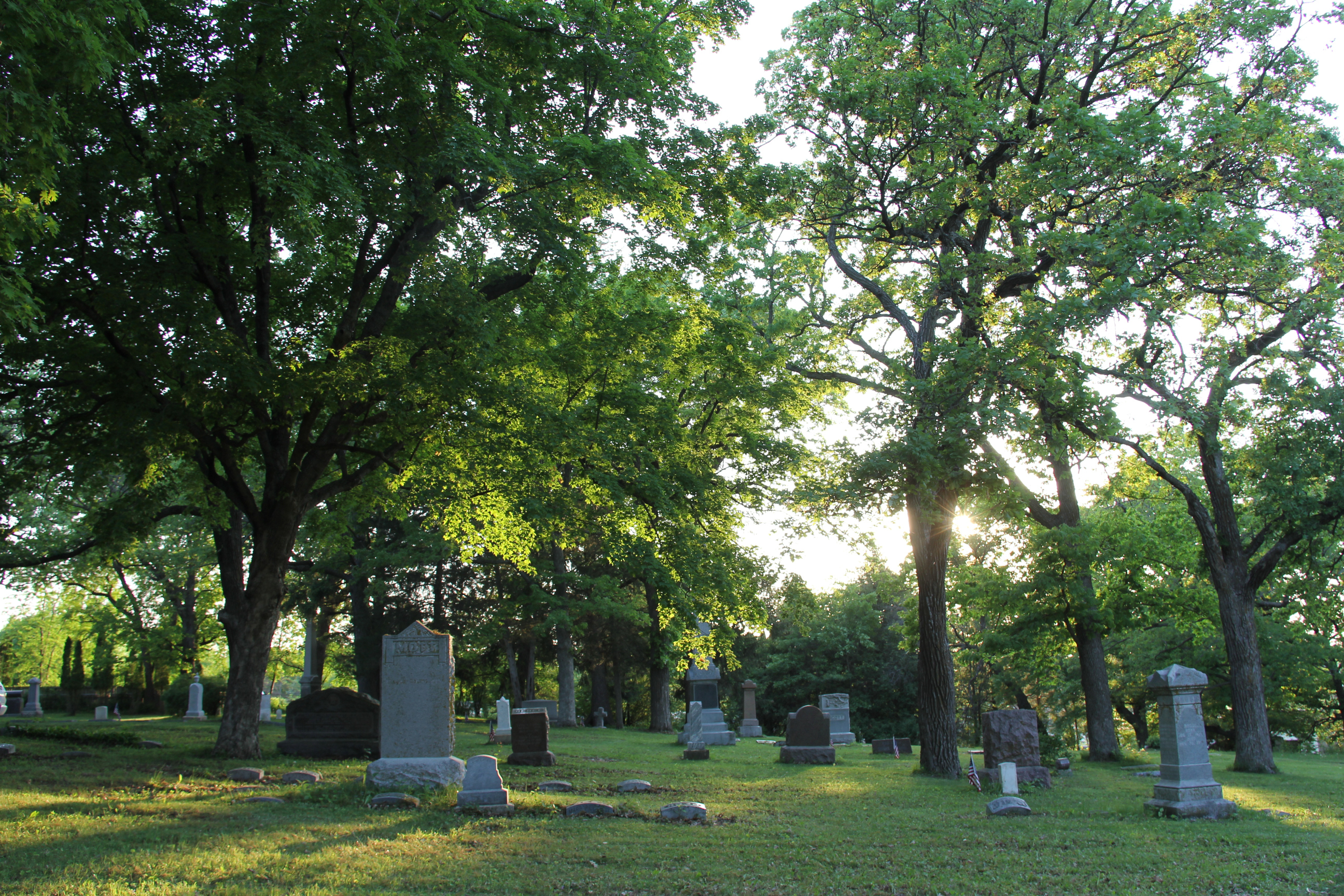
Oak Ridge Cemetery, Faribault. (Minnesota Prairie Roots copyrighted file photo)

FOR ANYONE WHO APPRECIATES local history, especially cemeteries, the Rice County History Museum in Faribault is the place to be at 7 pm Thursday, August 22. Tom Rent, an Oak Ridge Cemetery volunteer, will present “Preserving Faribault’s Oldest Cemetery, Oak Ridge.”

It’s sure to be an informative talk focusing on the cemetery’s history, operation and preservation. Rent will also share photos, stories, headstone symbology, preservation methods and future plans to maintain Oak Ridge Cemetery. Plus, he’ll talk about some of the people who helped shape Faribault and Rice County.

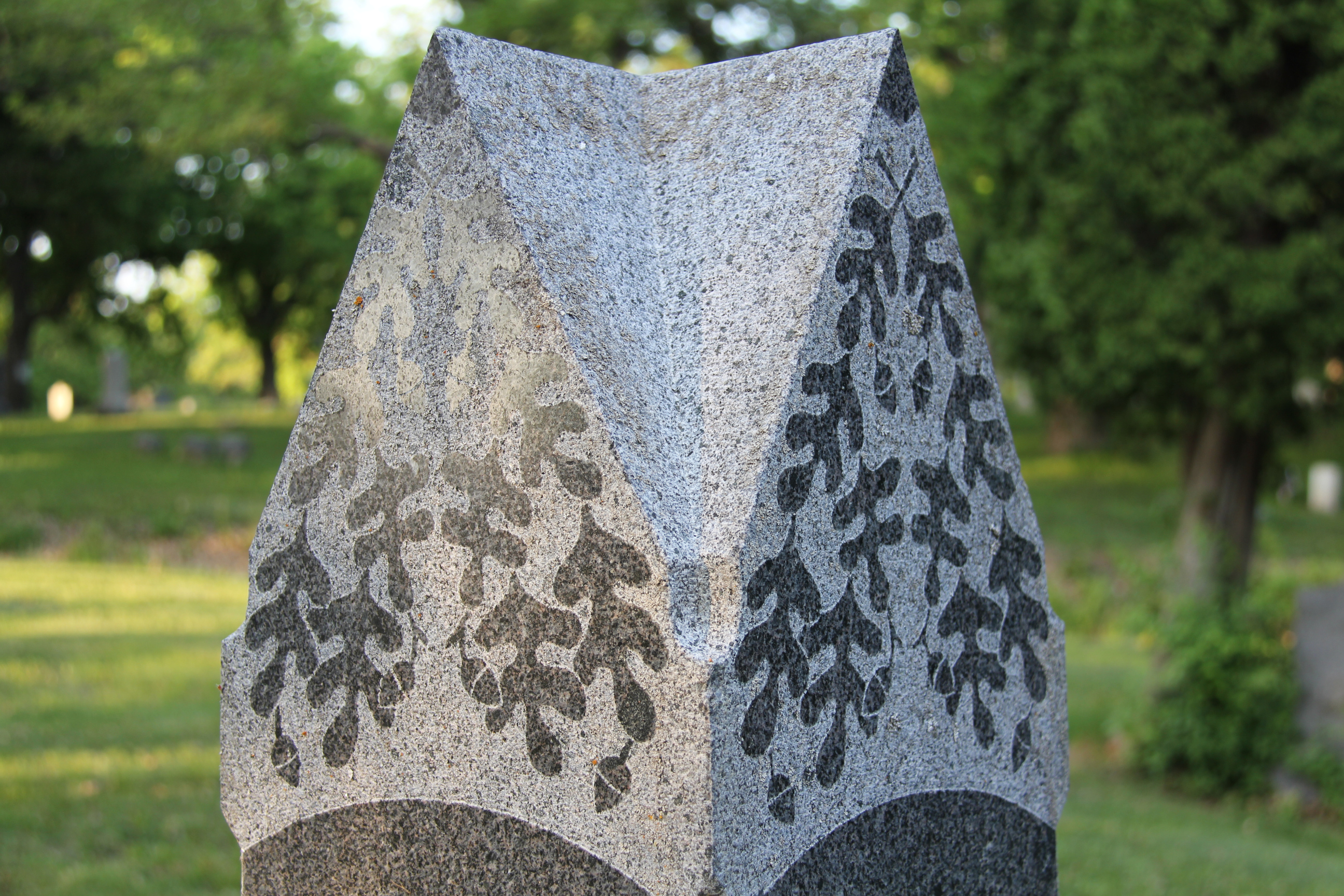
Oak leaves fittingly grace the top of a grave marker at Oak Ridge Cemetery. (Minnesota Prairie Roots copyrighted file photo)

As someone who did not grow up in this region of Minnesota, I’m always interested in learning more about this place I’ve called home for 42 years now. I’ve explored a lot of cemeteries, including Oak Ridge. Cemeteries fascinate me with their history, art, stories, natural beauty, peacefulness and aura of reverence.

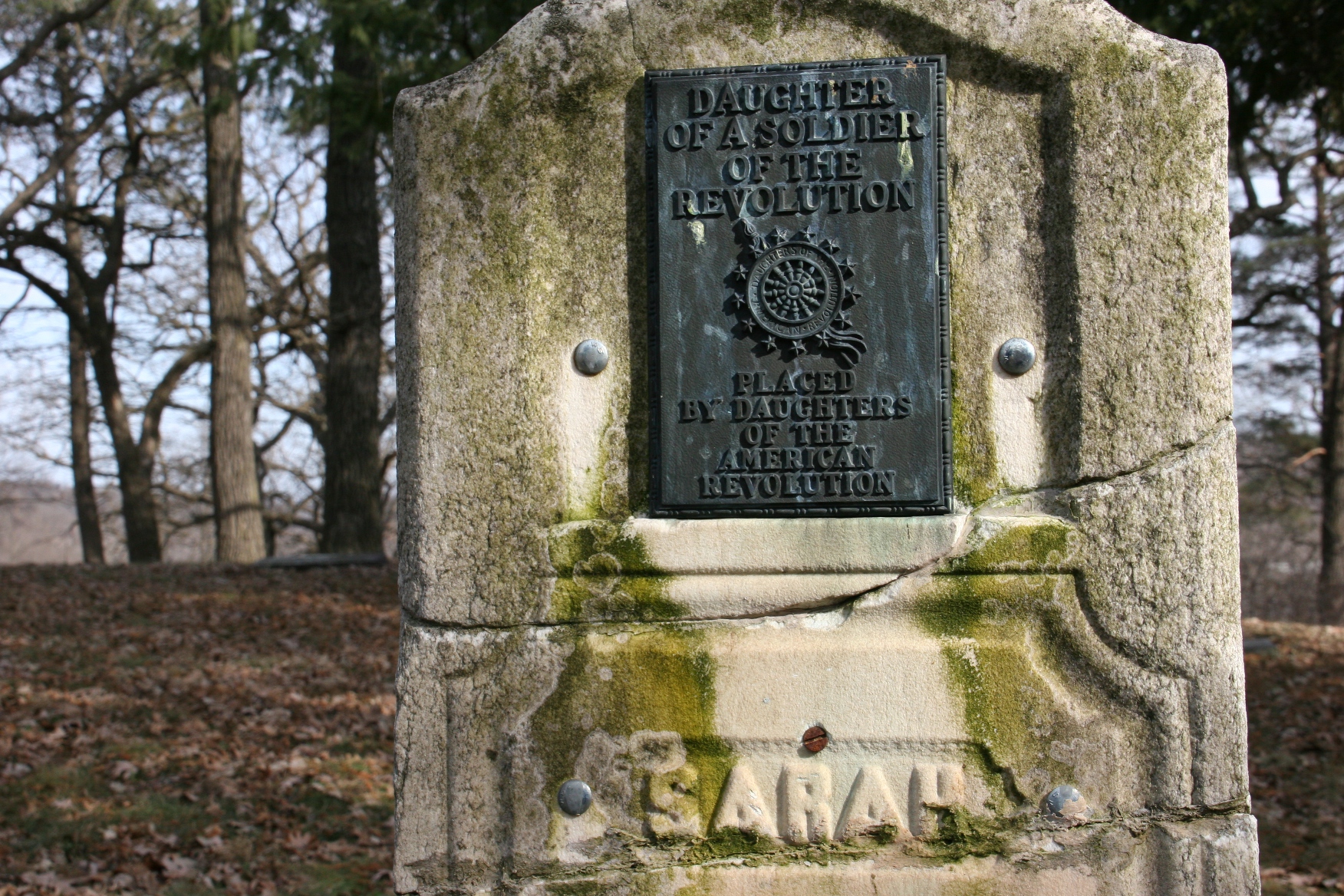
Sarah, daughter of a Revolutionary War soldier, lies buried here. (Minnesota Prairie Roots copyrighted file photo)

Oak Ridge Cemetery, founded in 1857, sits high atop a hill on Faribault’s north side just off Minnesota State Highway 3. It’s a beautiful, wooded location filled with oak, maple and spruce trees, and many aged headstones. There are names—like Nutting and Buckham—recognizable as key figures in local history. There are Civil War and Spanish American War veterans and a daughter of an American Revolutionary War soldier buried here. Senators and representatives, too. Local leaders and farmers. Immigrants and paupers and people from all walks of life. People with stories. So. Much. History.

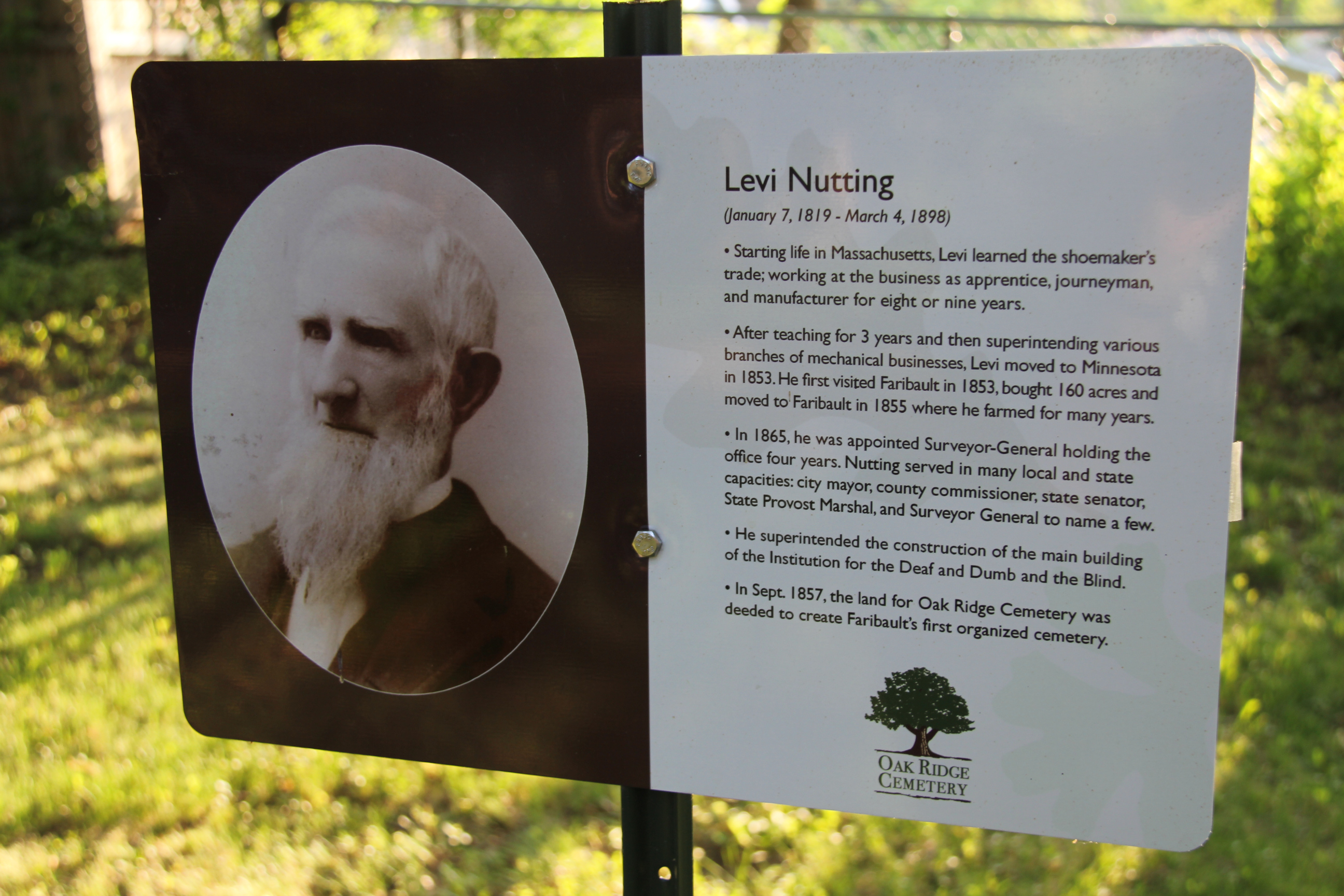
Levi Nutting was important in early Faribault history, as noted in this cemetery signage. (Minnesota Prairie Roots copyrighted file photo)

I especially like that the caretakers/volunteers of Oak Ridge have installed signage profiling some of the people buried in the cemetery. For those like me who are curious about the stories behind the deceased, this is valuable information. I always want to know more beyond names and dates of birth and death. The Oak Ridge Cemetery Facebook page offers lots of historical info, too.
Efforts have also been underway to restore aged tombstones in the cemetery.

Identifying signage on the limestone crypt at Oak Ridge. (Minnesota Prairie Roots copyrighted file photo)

I expect Tom Rent will cover much of this in Thursday’s talk. He, like so many others, cares deeply about those who lie buried beneath the canopies of trees at Oak Ridge Cemetery.

FYI: To reserve a seat at Thursday’s presentation, call 507-332-2121, email rchs at rchistory.org or stop at the history museum. The program is free to Rice County Historical Society members and $5 for non-members.