
THE VISUAL AND PERFORMING ARTS come together under one roof this Friday evening, January 9, at the Paradise Center for the Arts in historic downtown Faribault during an opening gallery reception from 5-7 pm followed by an improv comedy show at 7:30 pm. I’m excited about both. I love art. And I like entertainment that makes me laugh.
First up is the reception celebrating the work of artists showcased in four galleries. That includes “Homegrown Art: The Local Artist Collection of the Rice County Historical Society,” individual artists Barbara Schwenk and Leo Bird, pottery from the Paradise Center for the Arts pottery department and art by Bethlehem Academy students.
The RCHS exhibit in the main gallery kicks off a year-long celebration of the county historical society’s 100th birthday. “From a fantastical creature made of tin to bright, creative pottery and beautiful paintings, this gallery highlights items normally tucked away in storage and spotlights the talents of the Rice County community,” according to a media release from the RCHS.
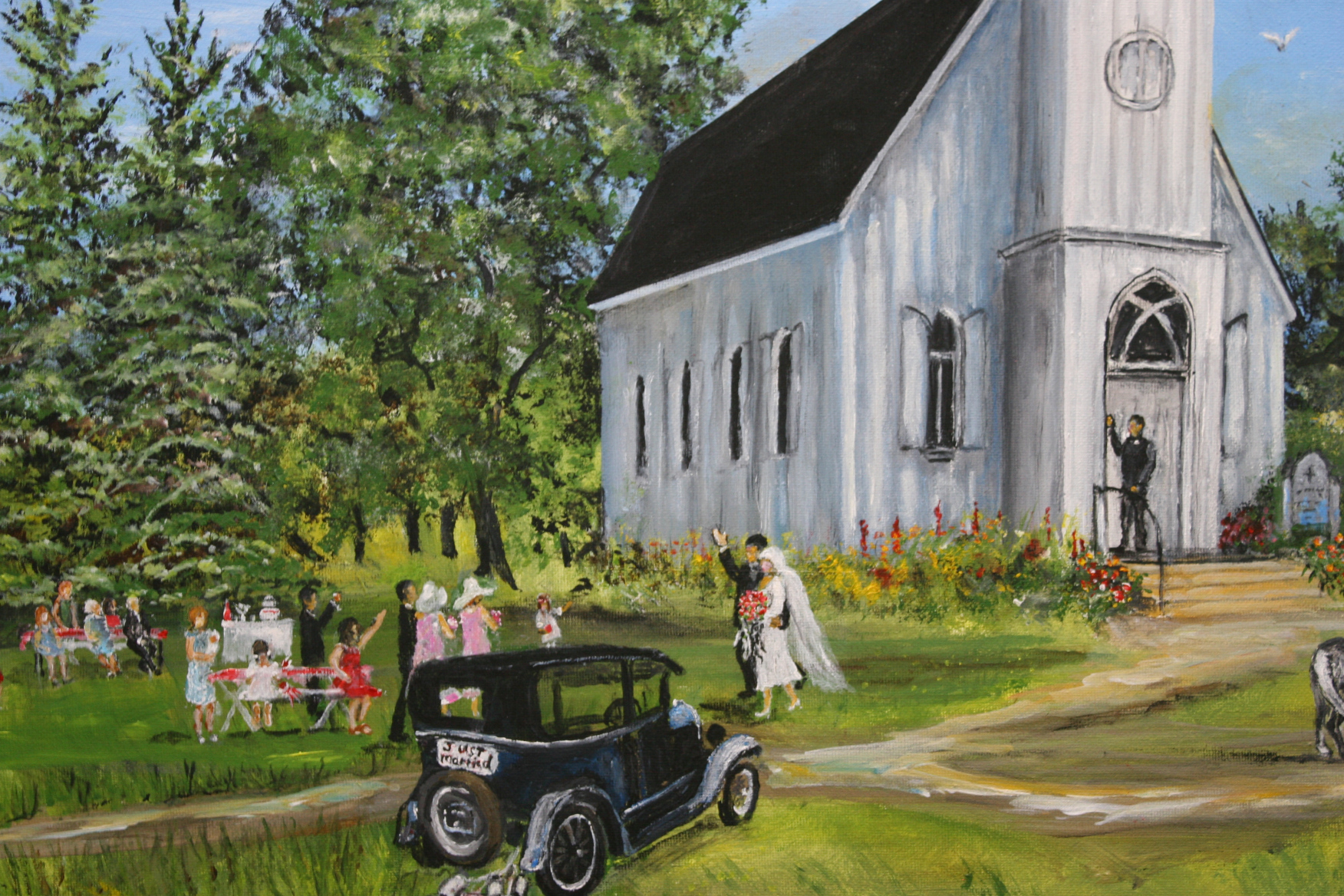
Naturally, I wondered about the artists to be featured in the 20 pieces chosen for the Paradise show. They include, among others, Grace McKinstry, Linda Van Lear, Ivan Whillock, Maybelle Stark and Frieda Lord. I’m familiar with all of them except Lord, although I have seen and photographed the art of her granddaughter, Dana Warmington Hanson. Lord and Stark were among the founding members of the Faribault Art Center, which evolved into the Paradise Center for the Arts.
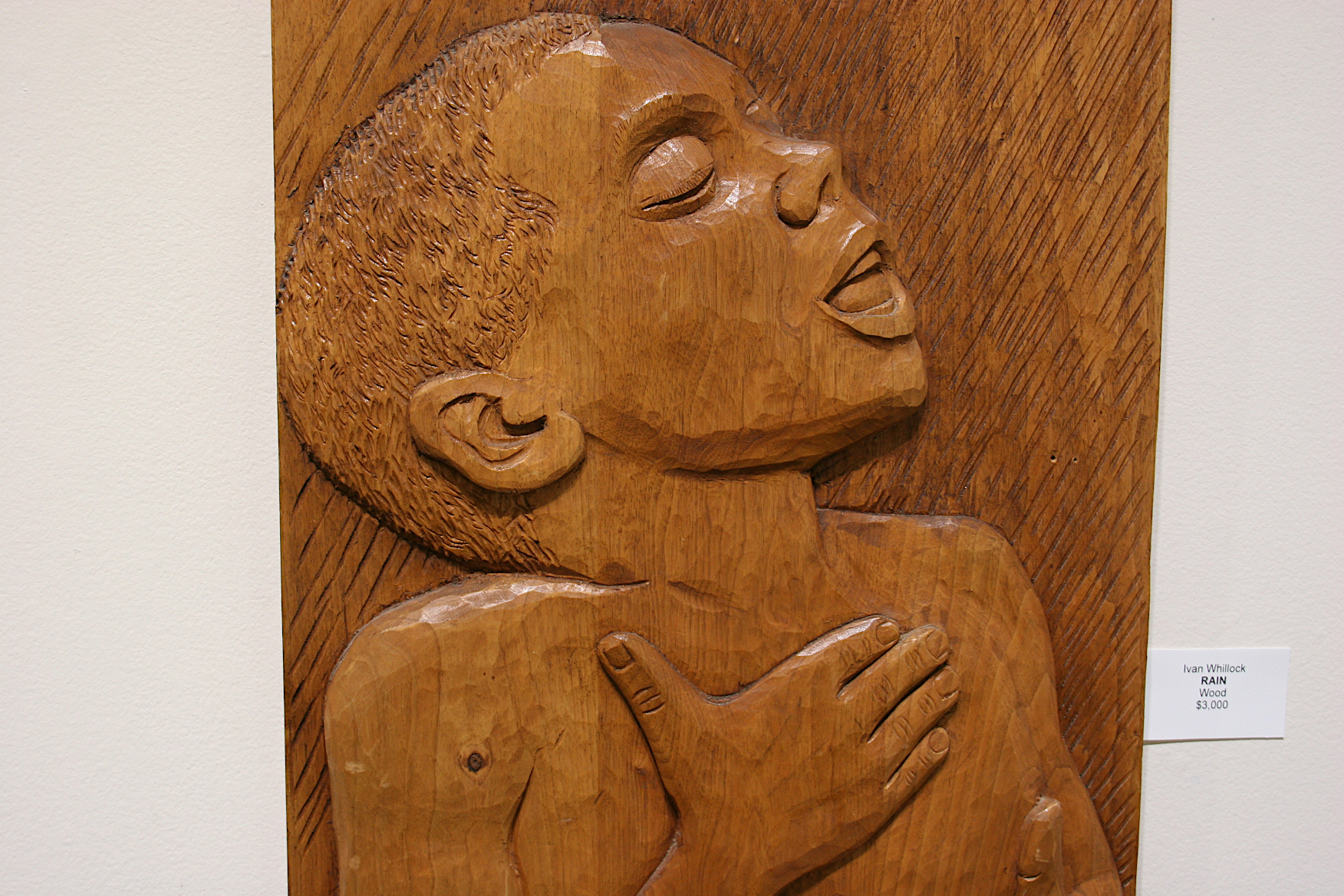
McKinstry and Whillock are perhaps the best-known in that short list shared with me by the RCHS. Whillock, who has a studio in Faribault, is an internationally-renowned woodcarver and also a painter. McKinstry (she died in 1936) traveled the world in pursuit of creating portraits and landscapes. Her art is featured in the Smithsonian, the Minnesota Historical Society, the Minnesota State Capital and elsewhere worldwide. Locally, the county historical society owns more than 40 pieces of her artwork, the largest collection of McKinstry’s art anywhere.
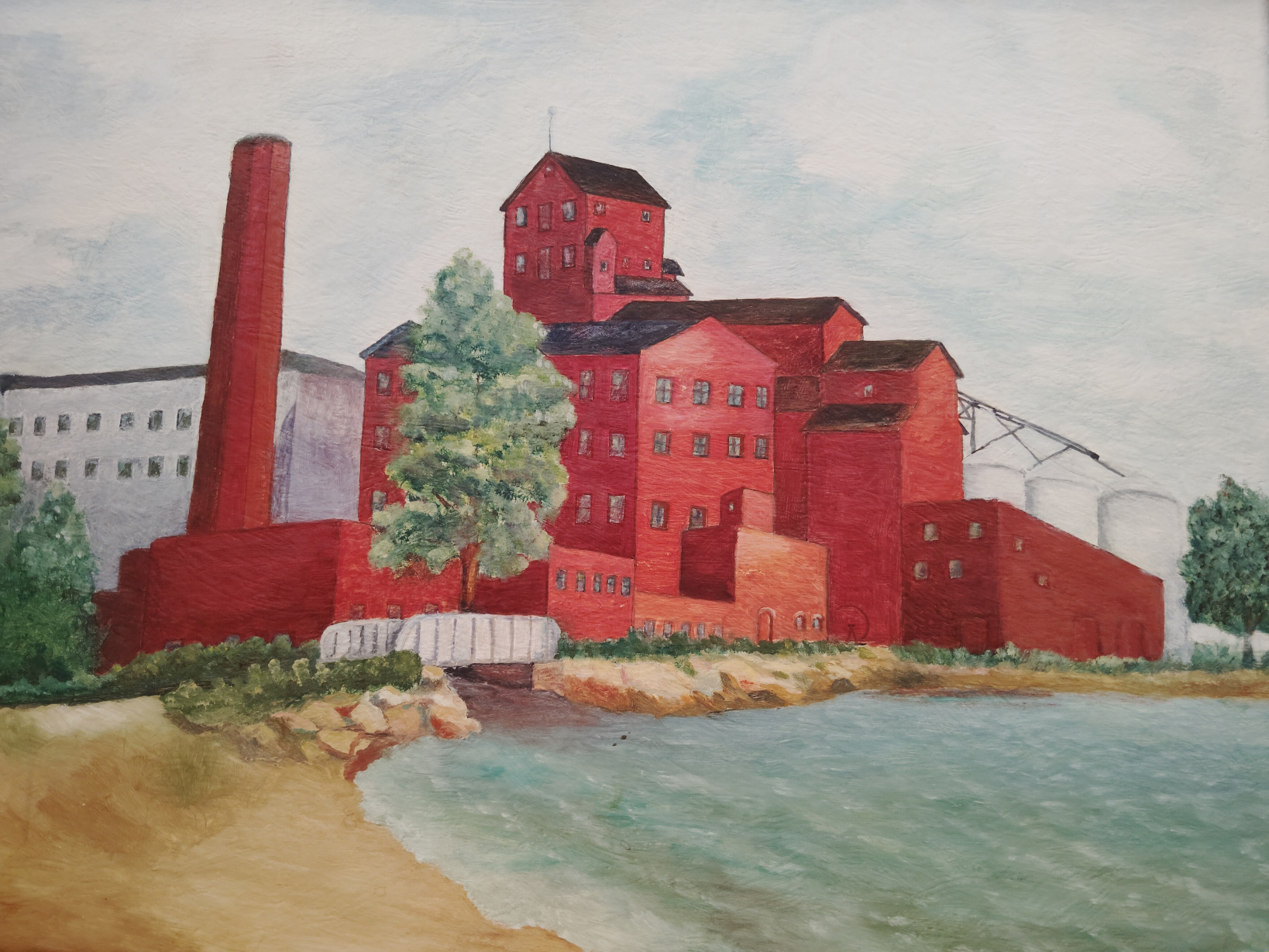
I own art by one of the artists, Maybelle Stark, whose work is included in the RCHS gallery exhibit. That’s a print of the H.H. King Flour Mill, once located along the Cannon River on Faribault’s west side and destroyed by fire in 1975. Stark painted the scene in 1959 and exhibited it locally the same year. Now that painting is back on public display nearly 70 years later.
All of the art showcased in the Paradise galleries from now through February 21 is sure to draw plenty of interest among those who value creativity. And local history.
And for anyone who also values the performing arts, Little Fish Improv presents improv comedy beginning at 7:30 pm Friday. I’ve seen this group of area comedians perform several times on the Paradise stage. They are a talented bunch who think quickly on their feet (thus the word “improv”) and get their audience engaged and laughing. It seems to me a really challenging art form.
Bonus, this comedy show is a fundraiser with all proceeds benefiting the Paradise Center for the Arts. I feel incredibly fortunate to live in a community with an outstanding arts center and with a deep appreciation for the arts.
FYI: Click here to purchase tickets for Little Fish Improv.
At 1 pm Saturday, January 17, Diane Lockerby, pottery instructor at the Paradise, will lead a “Historic Pottery Workshop at the Paradise.” Following her brief talk about pottery and local history, attendees will make a piece of pottery to take home. There is a fee. Space is limited. Click here to register.
© Copyright 2026 Audrey Kletscher Helbling










 Minnesota Prairie Roots
Thoughts as we begin 2026 during these challenging times in the U.S. January 1, 2026
Tags: 2026, commentary, compassion, faith, Faribault, gravestones, ICE presence, kindness, life, Minnesota, New Year, opinion, thoughts, tombstones, United States, Valley Grove Cemetery
AS THE NEW YEAR begins, I enter it with a whole lot of trepidation, uncertainty and concern. Feeling optimistic right now does not come easily. I fear for our country. I fear for my community. I fear for my Latino and Somali neighbors, targeted by the federal government. Yes, ICE agents are visible and active in Faribault. Though I have not seen them myself, this information comes from reliable sources.
I fear that we are becoming desensitized to the ICE snatchings. I fear we are becoming desensitized to the lies, the rhetoric, the hatred, the awfulness spewing from, well, way too many leaders and even everyday people.
What happened to common decency and goodness and kindness? And due process? Why is anyone accepting suppression, oppression, racism, discrimination and more as OK, especially those who claim Christianity as their belief system? None of what’s happening is Christian, not according to my Christian beliefs anyway. Not according to the Bible I read.
It’s hard, really hard, to remain hopeful in the light of all this. But I try. My mom raised me to be caring, kind and compassionate. She lived that way, helping others through volunteerism and monetary gifts, but mostly through her kind, quiet, gentle and caring spirit. She treated everyone with love and compassion. I wish Mom was still alive so I could talk to her about all of this.
But sometimes the dead still speak to us. I don’t mean that in a literal sense, but rather in the legacies and words the once-living leave behind. It is one of the reasons I meander through cemeteries. Valley Grove Cemetery, rural Nerstrand, is one of those final resting places that offers an abundance of wisdom upon gravestones.
One particular tombstone stands out for the many positive affirmations it lists under the banner, BLESSED ARE THE PEACEMAKERS. (And this means authentic peacemakers, not those who pretend or claim to practice/bring peace.) Under that gravestone header is this broader message: EVERYONE HAS SOME GIFTS THAT CAN MAKE OUR WORLD A LITTLE BETTER. I absolutely agree.
Then, on the massive slab of stone, are written specific ways in which we can make the world better and live as peacemakers. I especially appreciate these two messages: TREAT OTHERS THE WAY YOU WANT TO BE TREATED. And BE KIND TO ALL AS YOU NEVER KNOW THEIR BURDENS.
Those are simple, uncomplicated directives that seem easy enough to follow. In 2026, it is my hope that we can shift back to being a caring country, where we treat others as we would like to be treated. And that is with kindness, compassion, care and love.
TELL ME: What are your hopes for 2026 in the U.S., your community? What are your concerns for the new year?
© Copyright 2026 Audrey Kletscher Helbling