Budding branches on the maple tree in my backyard during a recent sunset of pink sky. (Minnesota Prairie Roots copyrighted photo April 2026)
HERE IN SOUTHERN MINNESOTA, the greening of the land indicates the beginning of spring’s full-on arrival.
April showers, more like recent deluges of rain, and warmer temperatures have reawakened the earth. Once dormant brown grass now colors lawns greens.
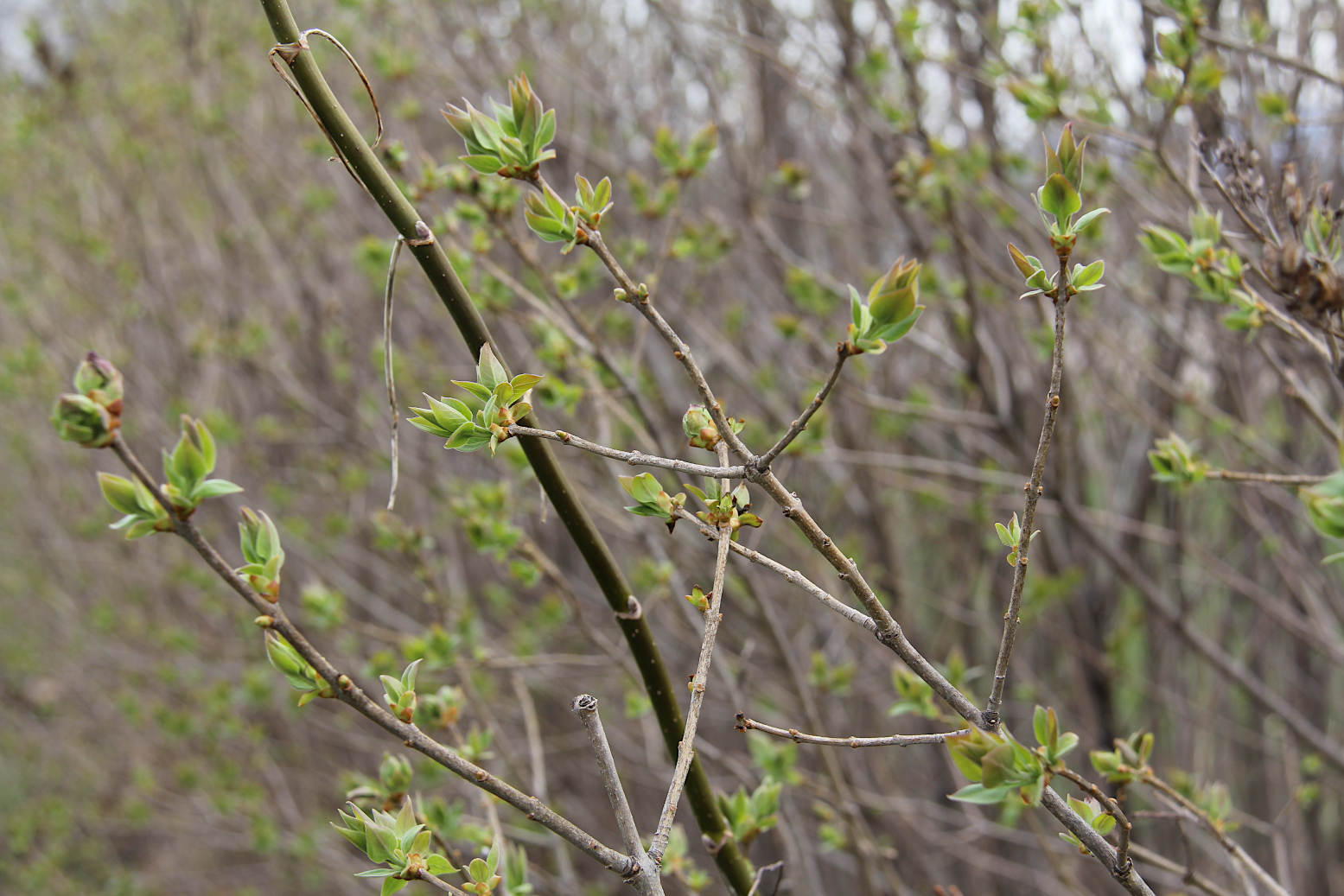
Buds begin to open on lilac bushes at North Alexander Park, Faribault. (Minnesota Prairie Roots copyrighted photo April 2026)
Buds tip tree branches and bushes, promising canopies of leaves and masses of flowers. I’m waiting for the lilacs to bloom in early May, their heady scent a gift to all of us upon winter’s departure.
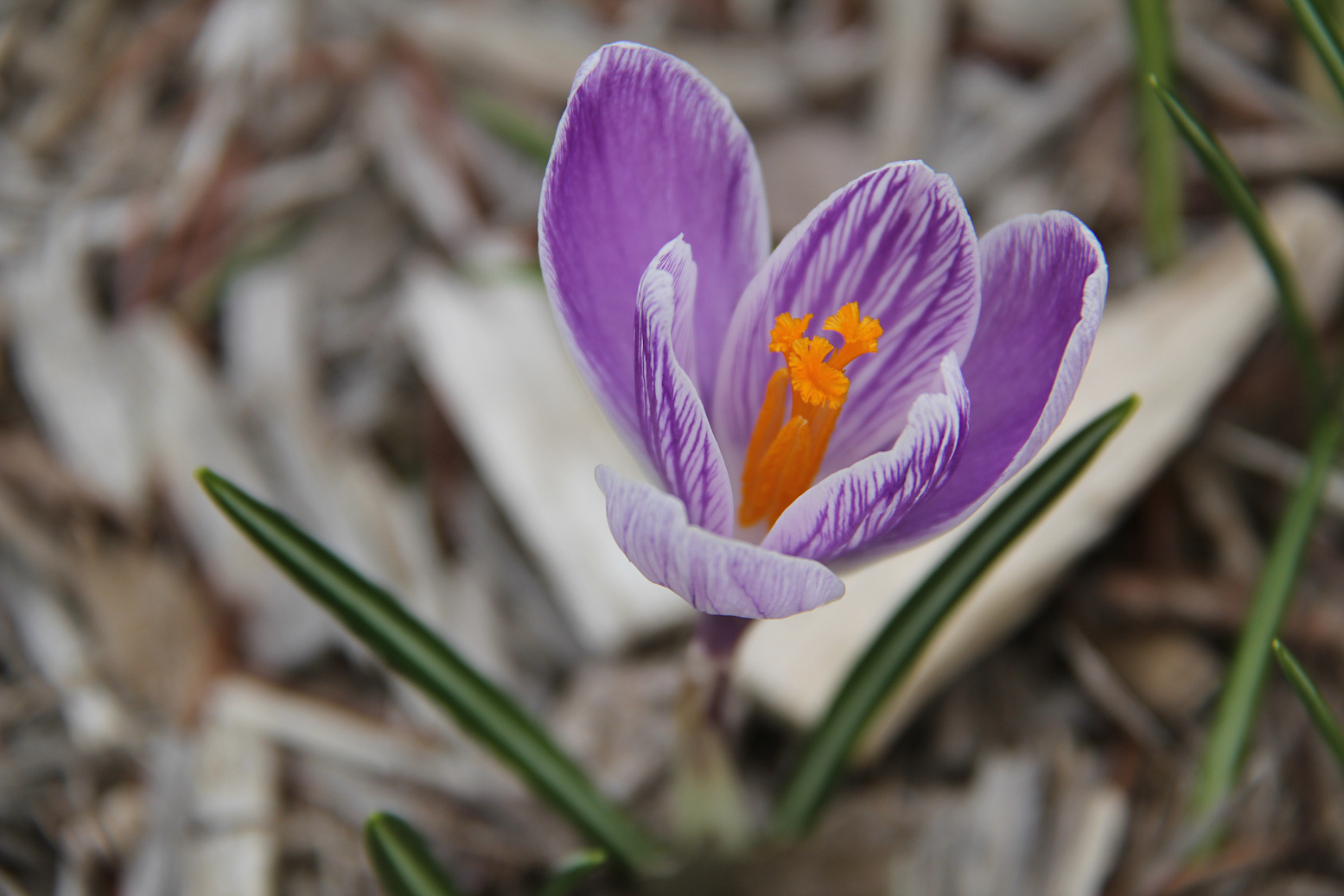
A crocus blooms at the Rice County Master Gardeners’ Teaching Garden on the Rice County Fairgrounds, Faribault. (Minnesota Prairie Roots copyrighted photo April 2026)
Crocuses, daffodils and other spring flowers burst through the soil, opening to the sun in a visual splash of color. A jubilant and celebratory scene that shouts happiness.
A Canadian goose swims in the Cannon River at North Alexander Park. (Minnesota Prairie Roots copyrighted photo April 2026)
Down by the river, geese and ducks share company, prepare for nesting and the arrival of little ones. I wait each spring for the goslings and ducklings. They fill my spirit with the promise of new beginnings. Hope in a world desperately in need of hope.
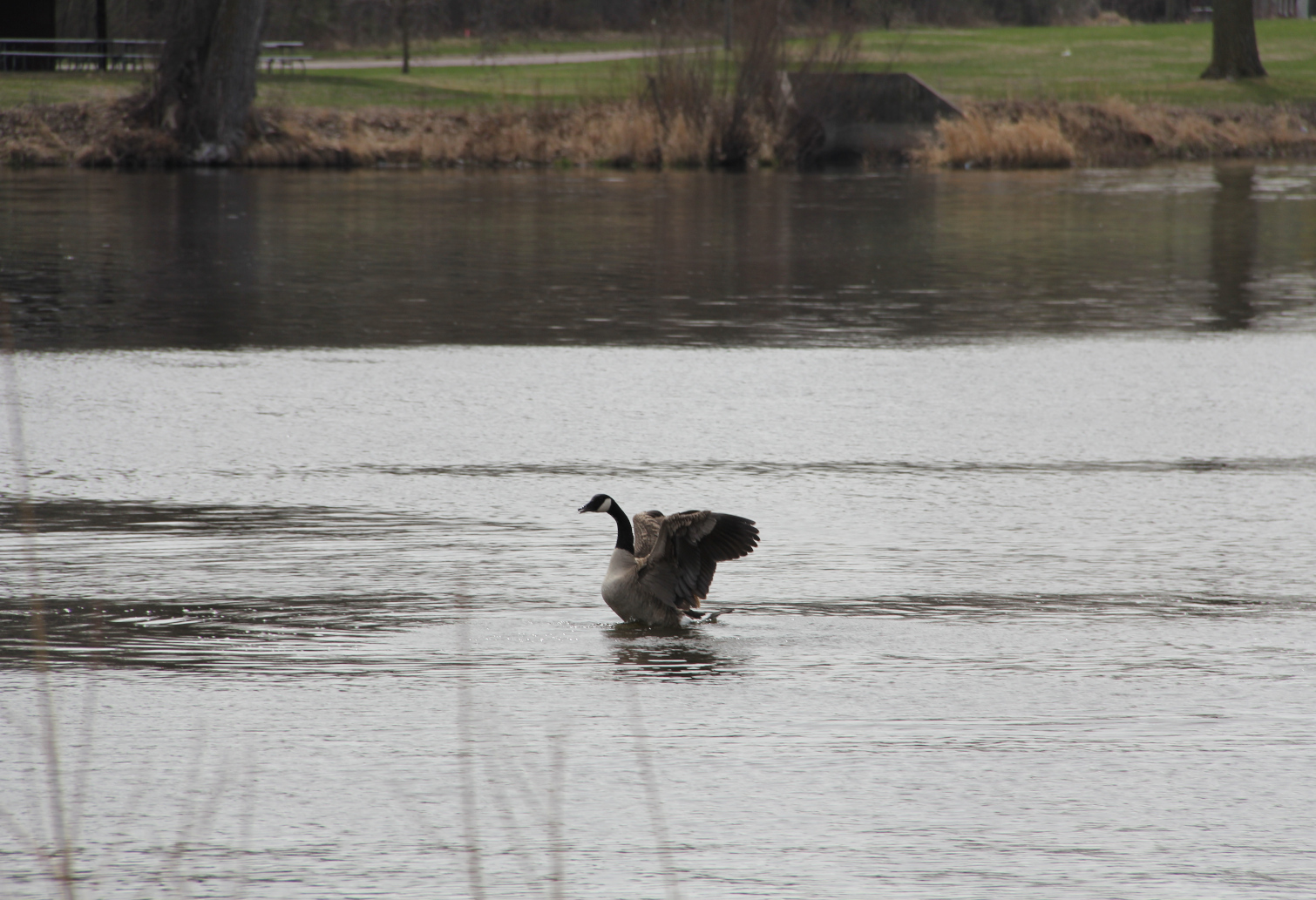
In the Cannon River, a Canadian goose spreads its wings. (Minnesota Prairie Roots copyrighted photo April 2026)
Along water’s edge, I simply stand and observe. Waves rippling, wings rising, water flowing under a gray April sky.
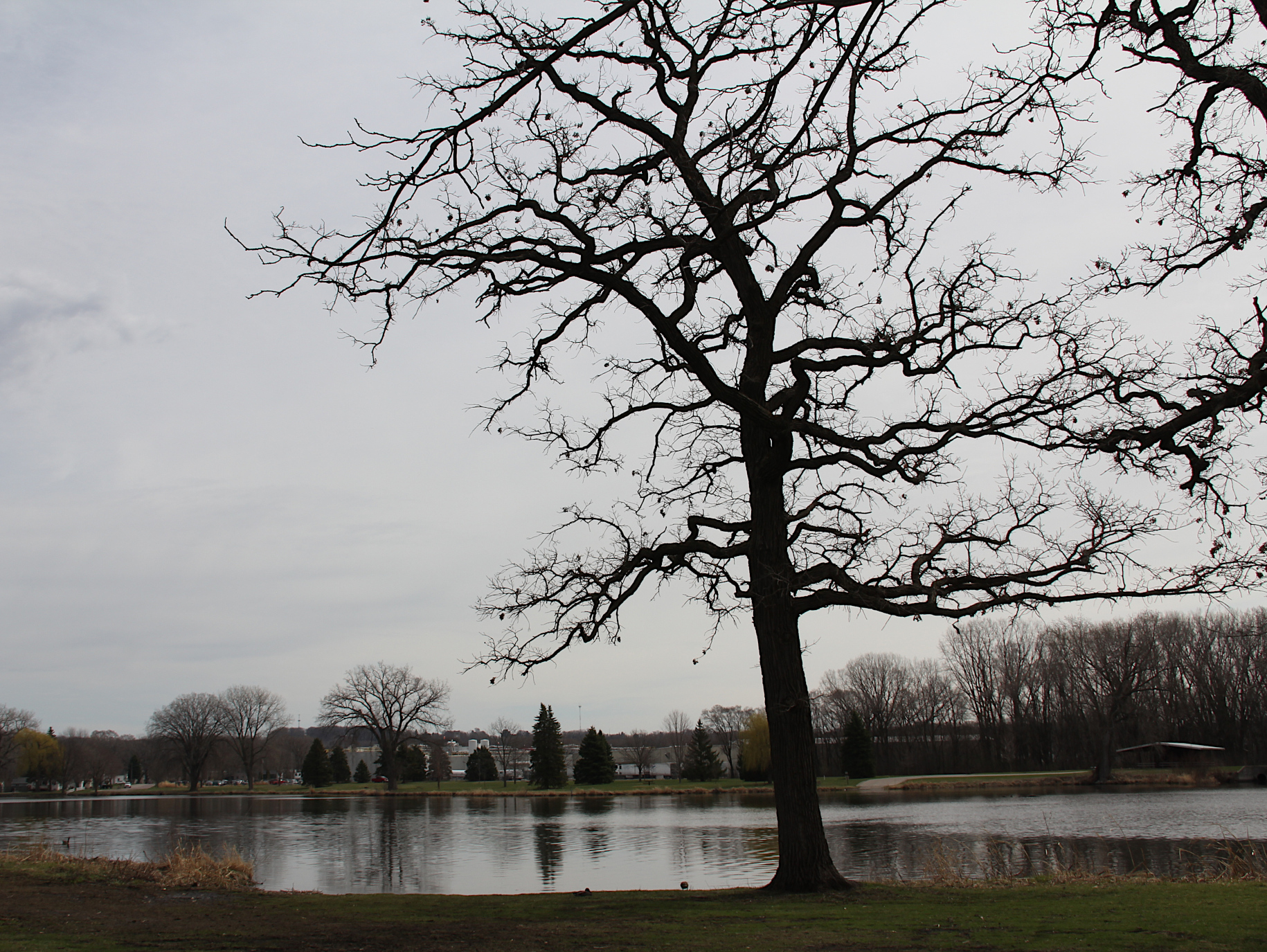
Branches on a riverside tree twist and turn. (Minnesota Prairie Roots copyrighted photo April 2026)
The day feels unsettled in its unseasonable warmth and humidity as I follow a paved path in Faribault’s North Alexander Park. Past the Cannon River, through the trees, then back to the river, I walk with my husband.
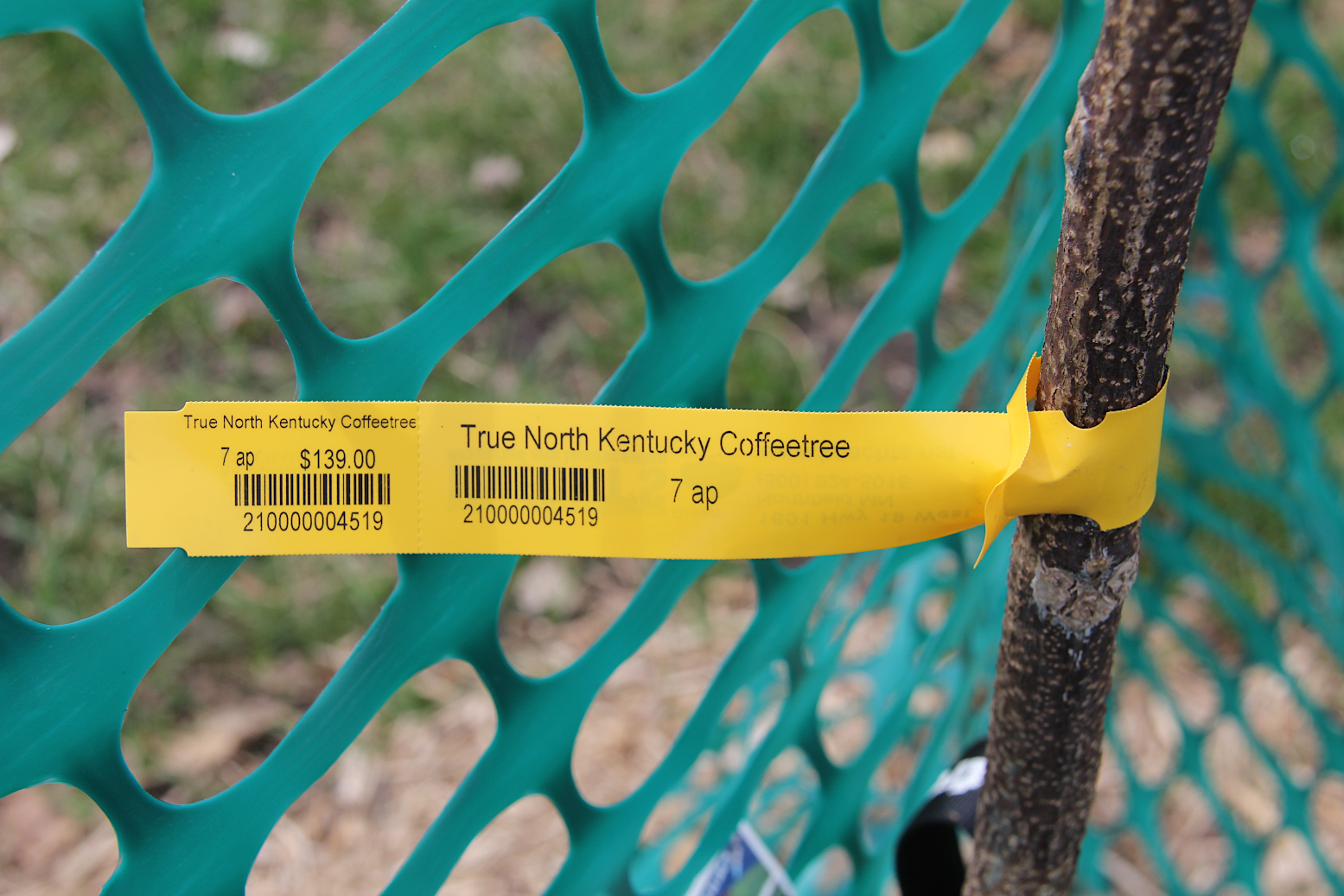
Tagged and planted at North Alexander Park, the True North Kentucky Coffeetree. A flag in the park reads “Tree City USA.” (Minnesota Prairie Roots copyrighted photo April 2026)
We pause to look at several newly-planted trees, including a True North Kentucky Coffeetree, developed, I later learn, through the University of Minnesota woody landscape breeding program. We both wondered about the viability of a coffee tree growing in this northern climate.
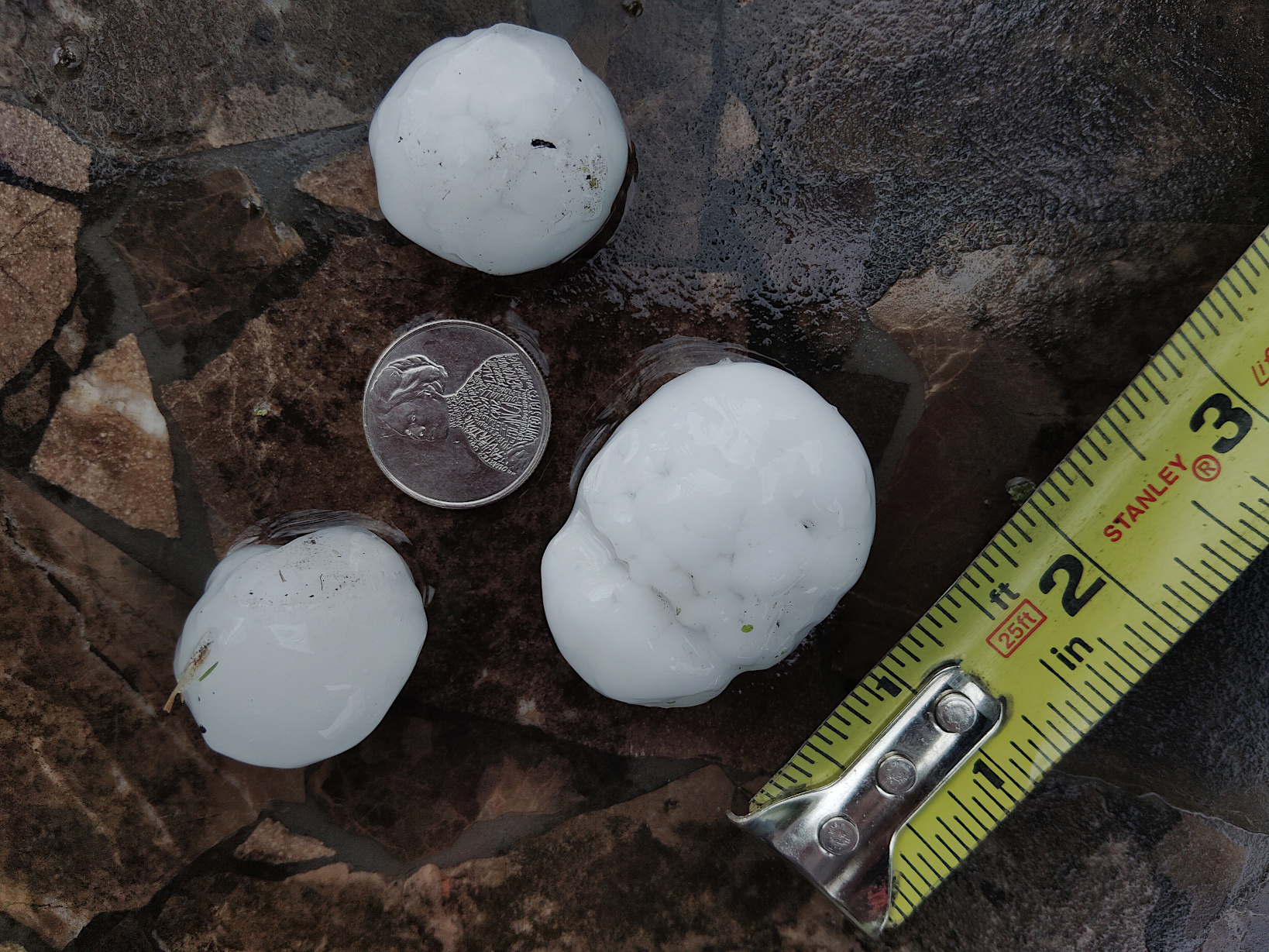
Measured and compared to a quarter, some of the larger hail that fell at our home on Monday afternoon. (Minnesota Prairie Roots copyrighted photo April 2026)
Hours later, the rain comes. And then the hail. First small, then some larger hailstones, pelt the lawn, the patio, the driveway, the street, the old rusty van. The house. Stones hit the aluminum awning over the back door with an unnerving shot-like bang. Randy and I stand and watch, moving from window to window, hoping the hail doesn’t damage our roof.
Afterwards I head outside to gather a few hailstones in baggies for freezing and measuring. We have yet to inspect for damage. The day after, out-of-town roofing companies are descending on Faribault like birds returning in the spring. There is no birdsong, though, only a circling around.
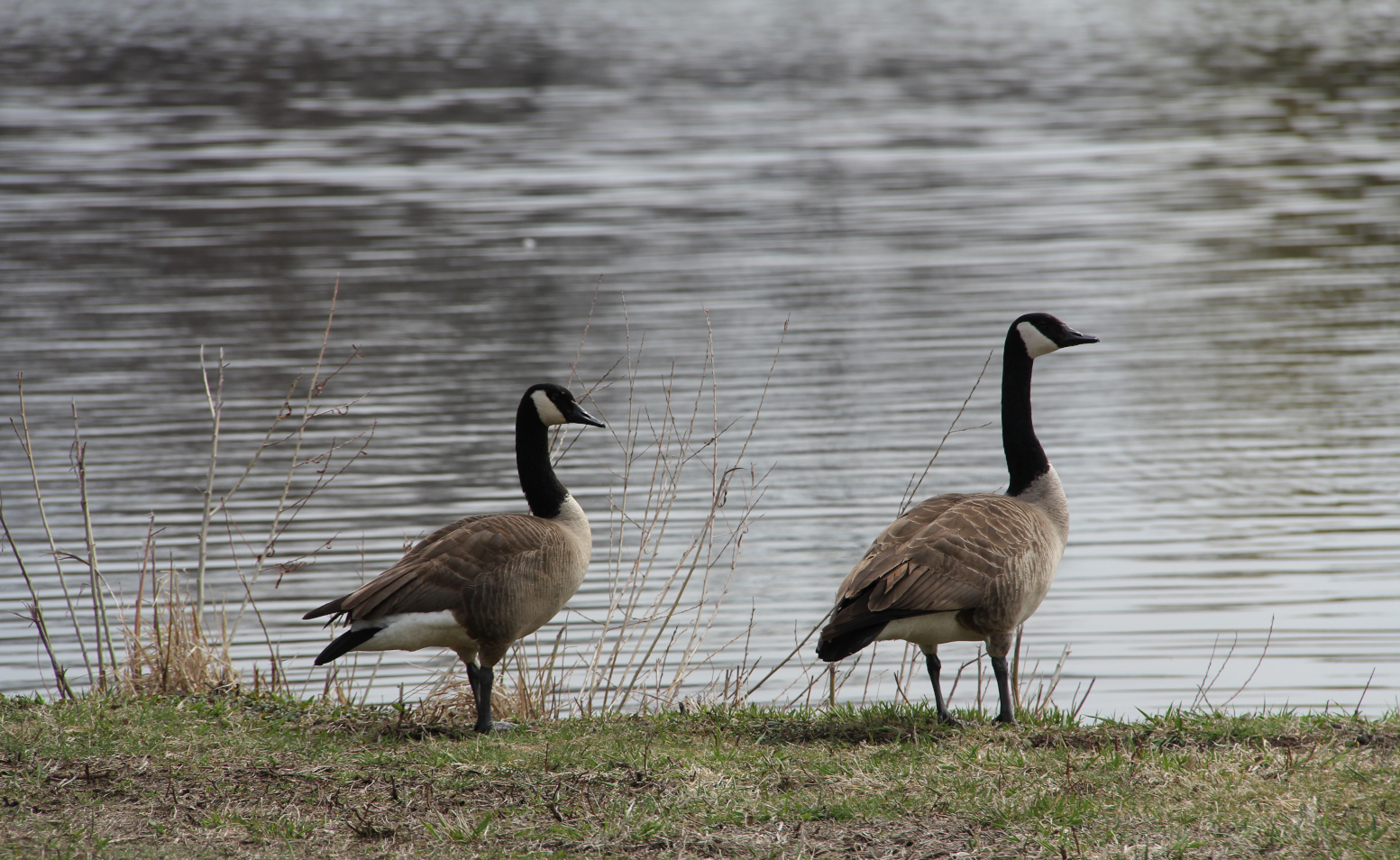
These Canadian geese stand guard on the bank of the Cannon River in North Alexander Park. (Minnesota Prairie Roots copyrighted photo April 2026)
With spring comes the greening of grass, the blooming of flowers, the budding of trees, the gathering of waterfowl and the occasional severe storm that moves across the land. Unwelcome, but not unexpected in this season of change.
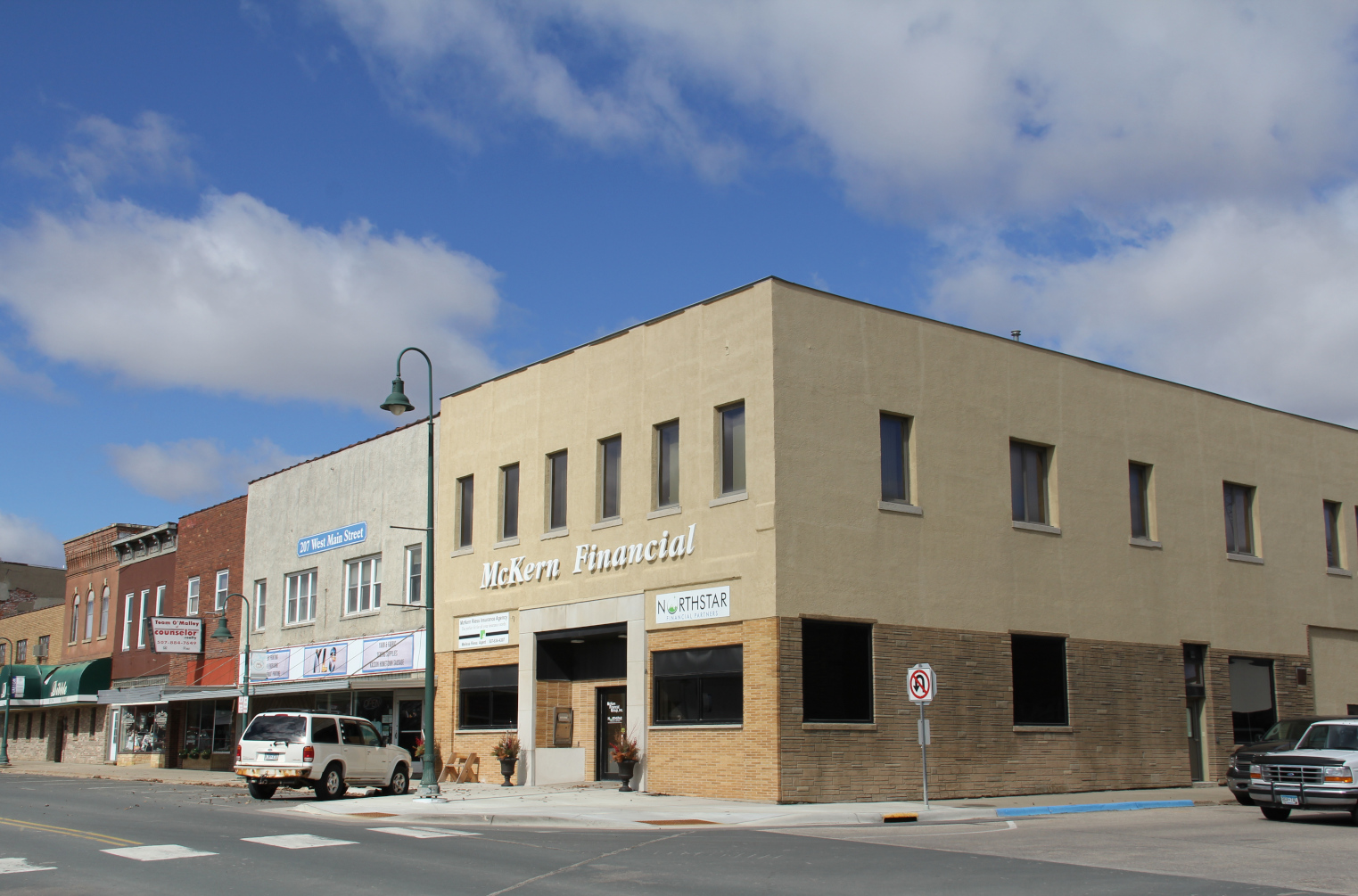
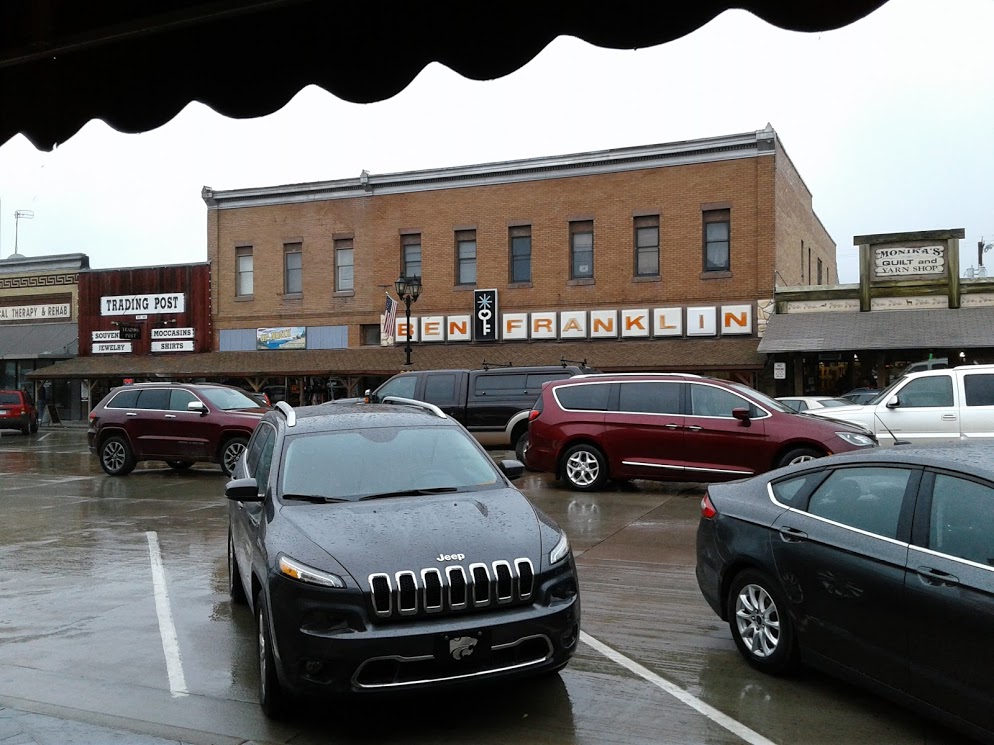
A section of Main Street in Kasson where I discovered a variety store of sorts in the second building from the corner. (Minnesota Prairie Roots copyrighted photo March 2026)
ONCE UPON A TIME, long before shopping online became a thing, long before malls and long before the prevalence of big box stores, small town Main Street centered retail commerce.
A Ben Franklin store in downtown Park Rapids, which I popped into and photographed in 2017. The store has since closed. (Minnesota Prairie Roots copyrighted file photo 2017)
Mom and pop shops prevailed, mostly meeting a community’s basics needs. But even back in the day, a few chain stores existed. I’m talking five-and-dime variety stores like Ben Franklin and Woolworths.
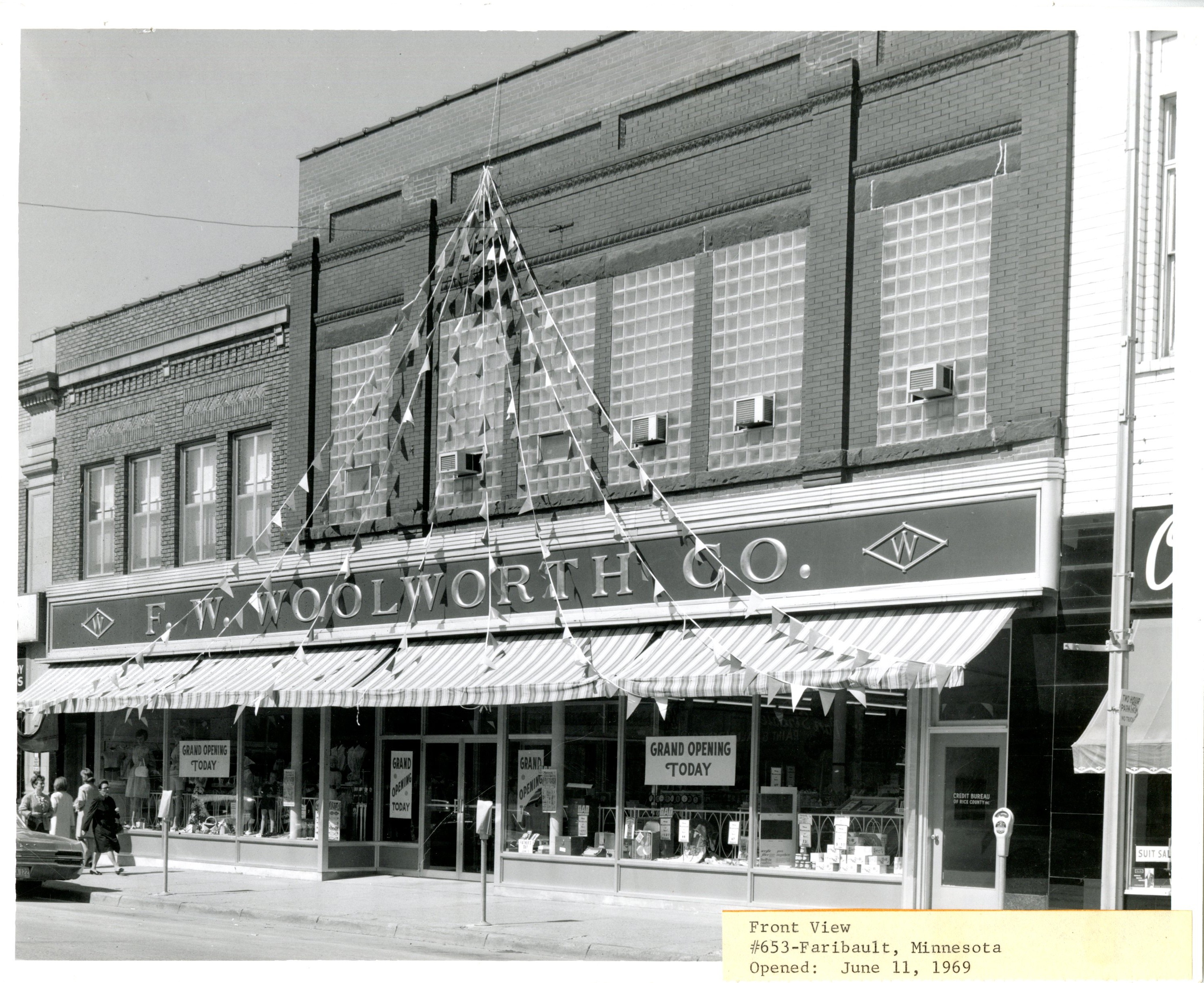
The Woolworths store along Central Avenue in downtown Faribault, photographed during its grand opening on June 11, 1969, and closed years ago. (Photo courtesy of the Rice County Historical Society)
As a Baby Boomer, I hold fond youthful memories of these two stores. Of buying 45 rpm vinyl singles, nail polish, embroidery patterns, fabric… But even into adulthood I shopped at both, including at Woolworths along Central Avenue in downtown Faribault. Here I bought goldfish (for my kids) scooped from tanks in the back of the store. Here our family bought basics and other goods.
That variety store closed long ago, along with many other businesses that once claimed space in my community. Today Faribault’s downtown looks much different than when I moved here 44 years ago. That’s to be expected. Businesses close. New businesses open. A few endure for generations. As a place and times change, so do its businesses.
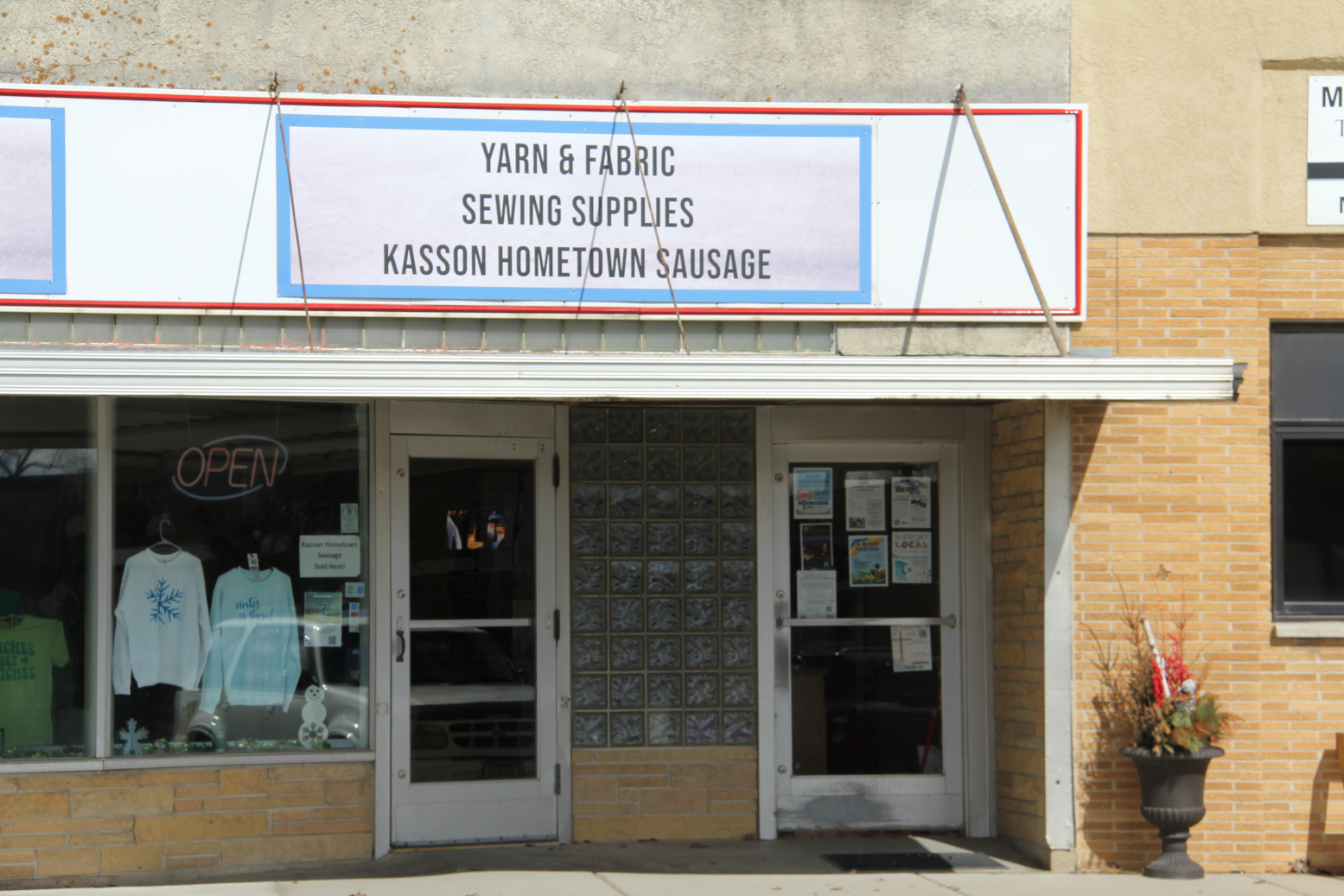
I didn’t notice the sign on the building, but rather a small hometown sausage sign on the window to the left of the door at KLG. That drew me inside. (Minnesota Prairie Roots copyrighted photo March 2026)
But occasionally I discover a place that takes me back to yesteryear in a flashback of memories. That happened recently in the small town of Kasson, just west of Rochester along U.S. Highway 14. While walking through the downtown, I found KLG Store. The name itself told me nothing about the business. But a printed sign in the front window advertising “Kasson Hometown Sausage Sold Here!” drew me inside. Not that I like sausage. I don’t. But I appreciate quirky no-frills signs.
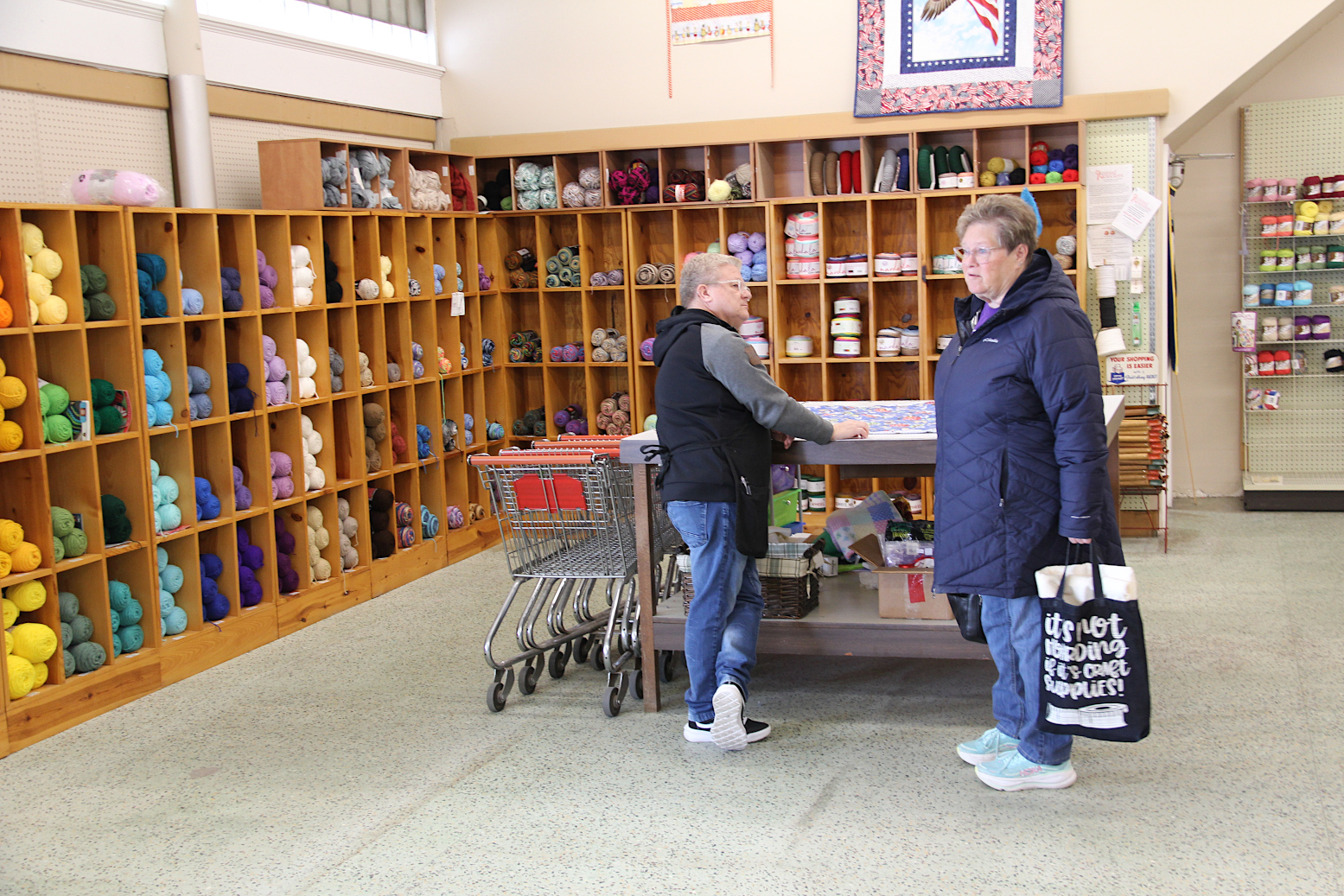
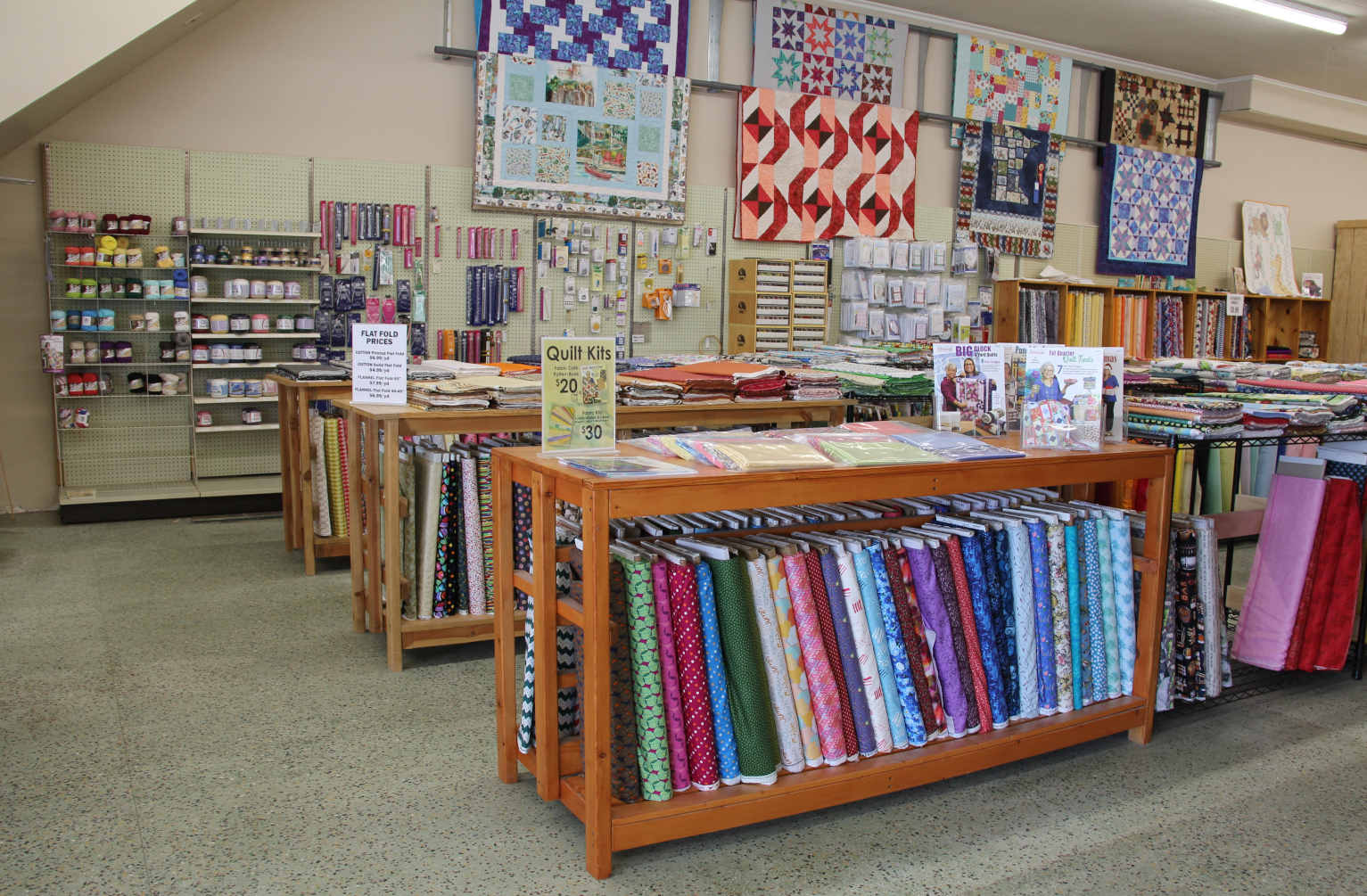
Clerk and customer confer about fabric next to cubbies of yarn. (Minnesota Prairie Roots copyrighted photo March 2026)
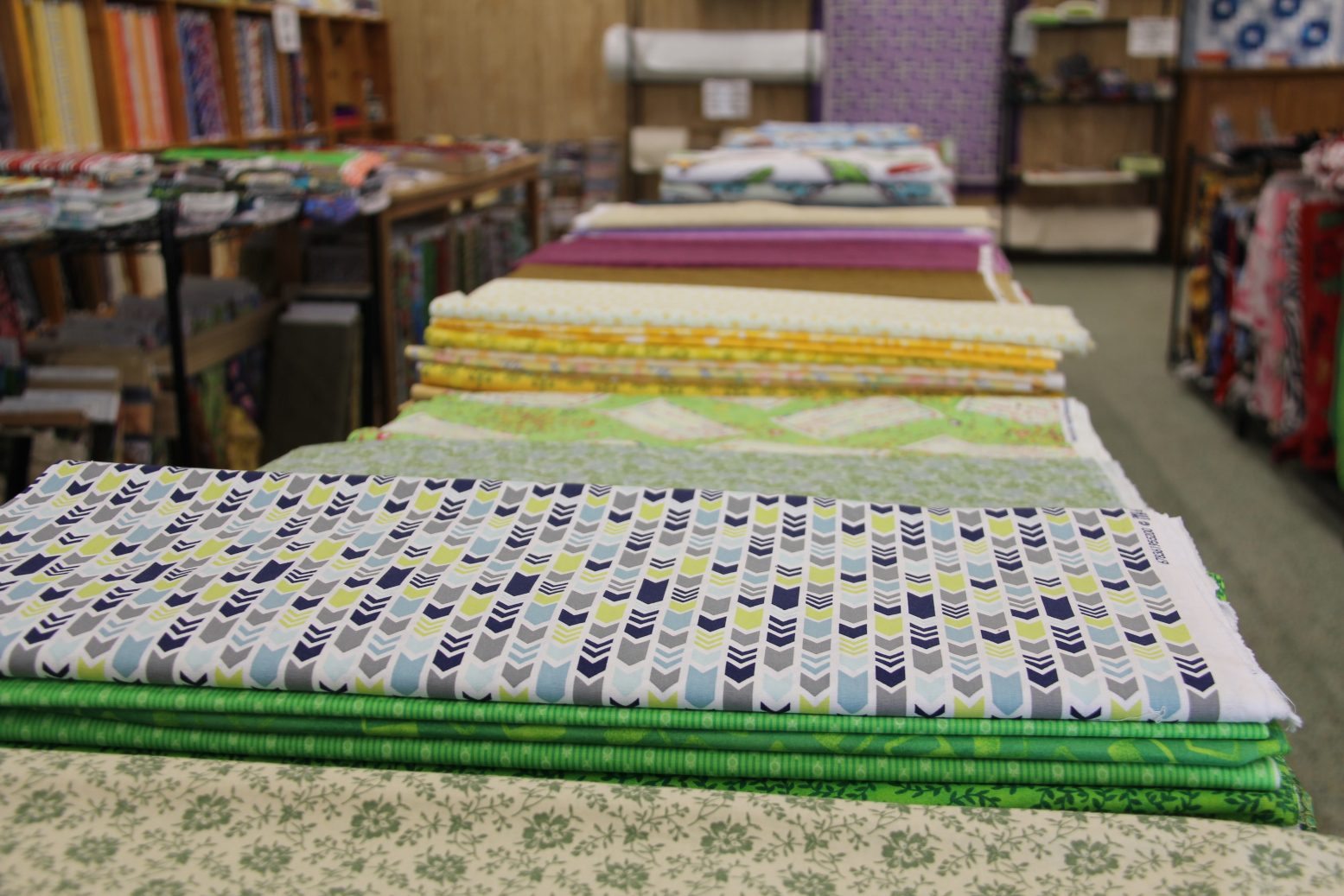
Piles of fabric cover tables. (Minnesota Prairie Roots copyrighted photo March 2026)
Bolts of fabric are stashed under the tables. (Minnesota Prairie Roots copyrighted photo March 2026)
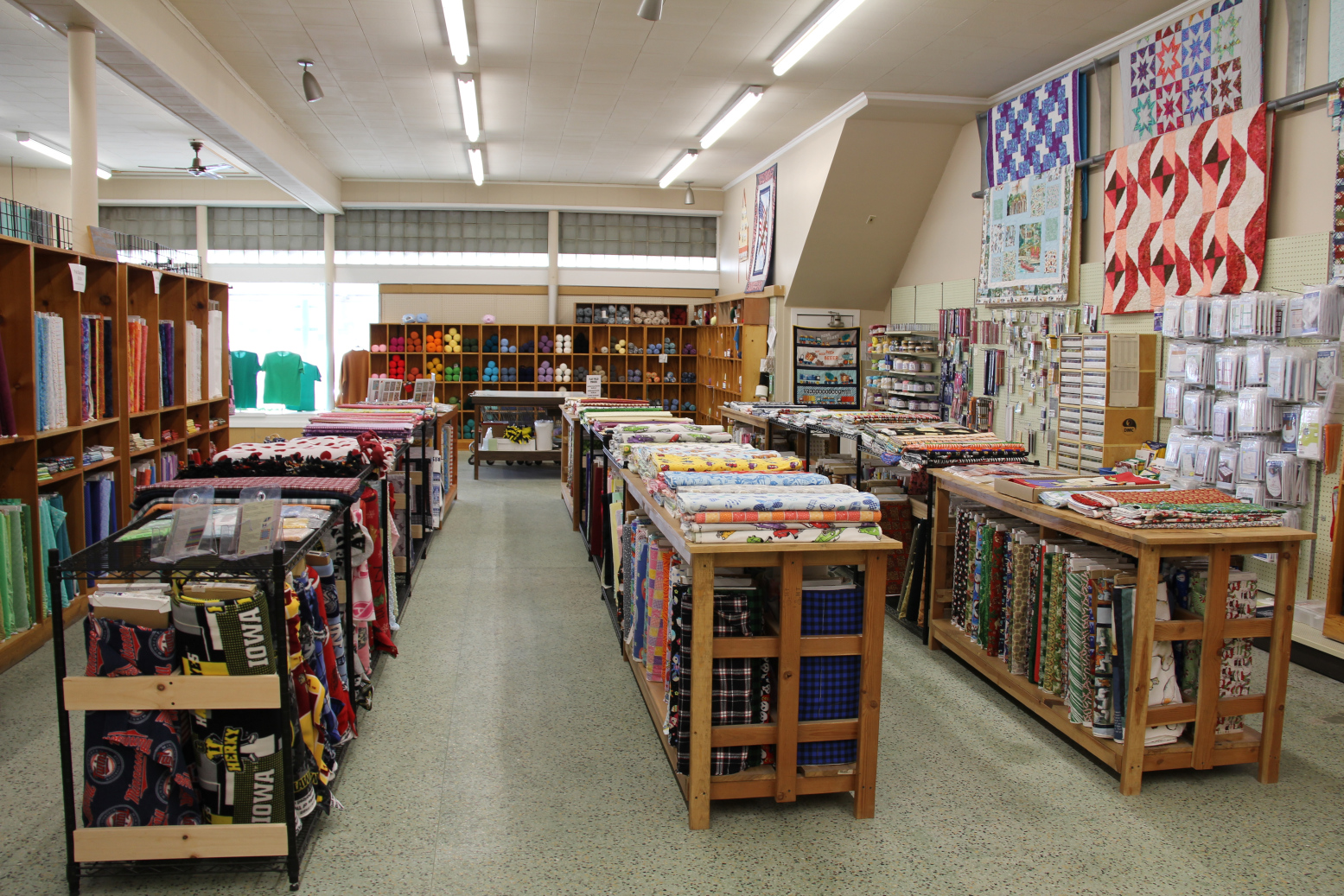
Yet, once inside KLG, I was immediately drawn to cubbies of yarn, then tables and shelves packed with bolts of fabric. I forgot all about the sausage. Instead, I ran my hands across cloth, eyed the colorful prints, remembered my teen years when I stitched nearly all of my clothing.
Rows of spooled thread to match with fabric. (Minnesota Prairie Roots copyrighted photo March 2026)
So many colorful patterns. (Minnesota Prairie Roots copyrighted photo March 2026)
Lots of choices for quilters, crafters, seamstresses… (Minnesota Prairie Roots copyrighted photo March 2026)
I haven’t touched my sewing machine in years. For a moment I thought perhaps I should pull it out of storage and resume a creative activity I once loved. Spools of colorful Coats & Clark thread had me visually pairing thread with fabric. Psychedelic prints had me visually pinning and cutting patterns for a seventies fashion statement. Oh, the memories.
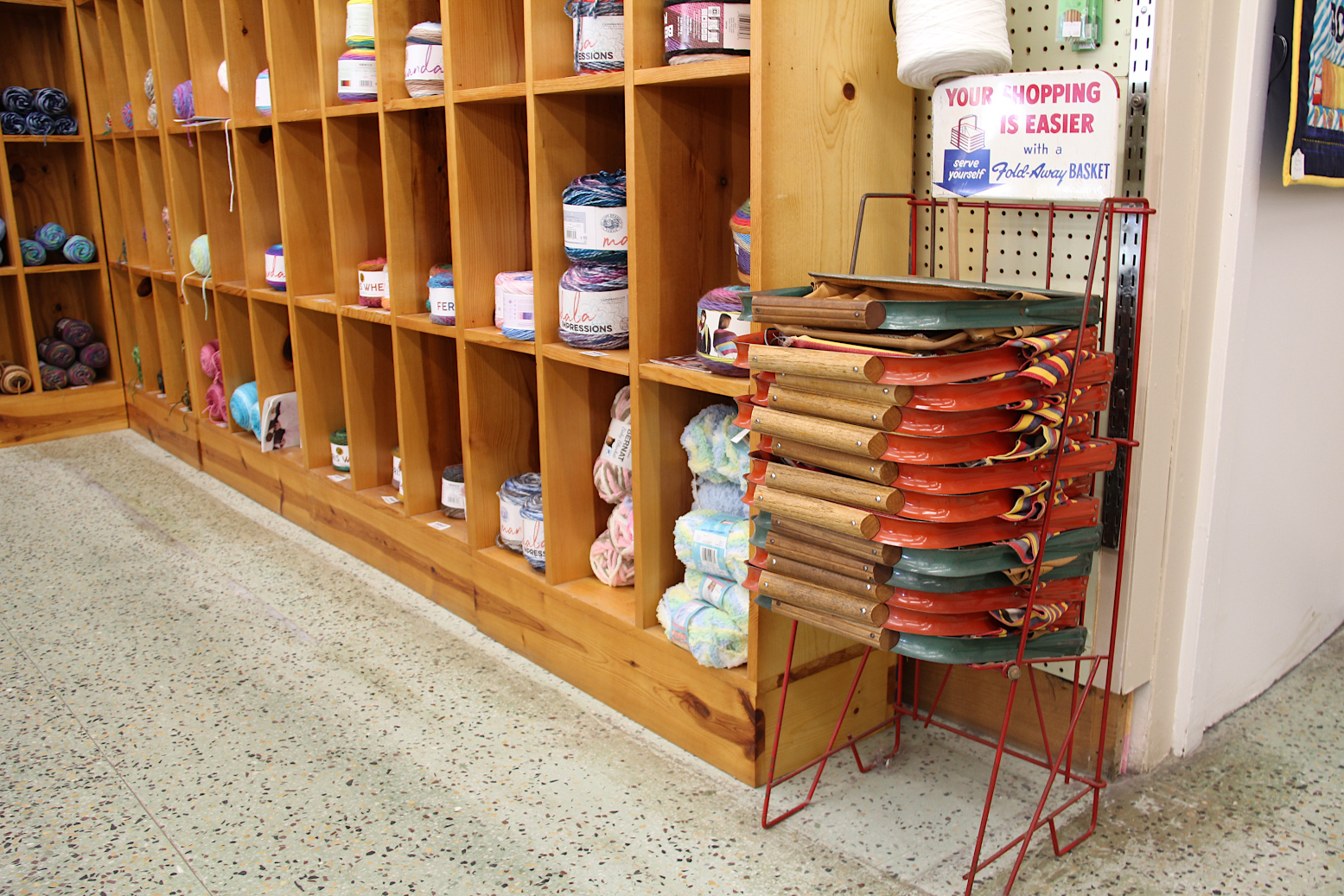
The vintage fold-away baskets, right, prompted me to ask if this had once been a dime store. (Minnesota Prairie Roots copyrighted photo March 2026)
Then a stash of vintage collapsible fold-away baskets distracted me, temporarily pausing my fawning over fabric, yarn and embroidery patterns. The red, green and gold fabric and metal baskets with wooden handles are signature five-and-dime store staples.
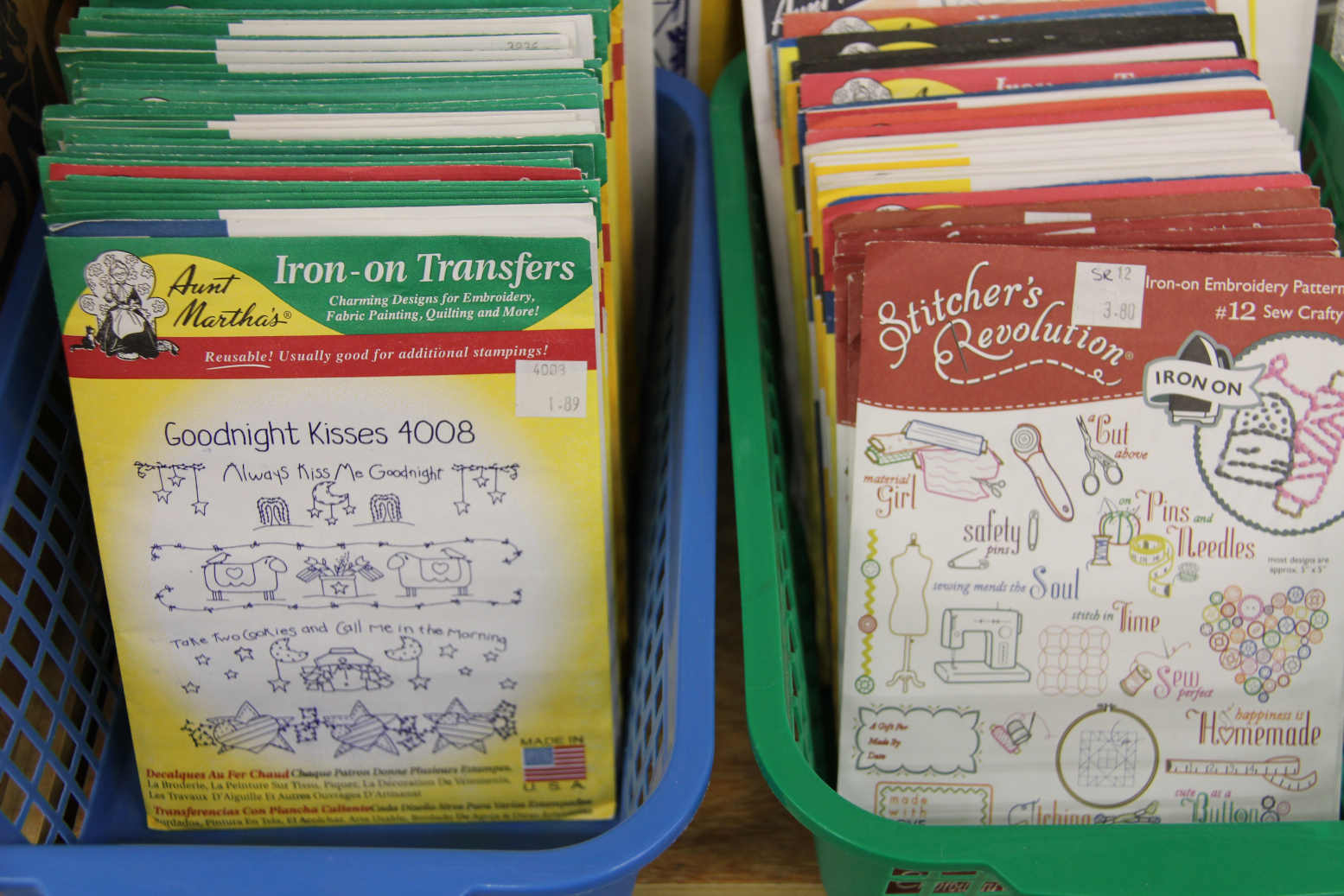
These embroidery transfer patterns brought back lots of memories. I used such patterns to embroider clothes and more in the 1970s. (Minnesota Prairie Roots copyrighted photo March 2026)
Turns out KLG once housed a Ben Frankin store. I felt giddy upon learning that, but also a tad melancholy. The fold-away baskets reminded me of the passage of time, of how quickly the decades fly.
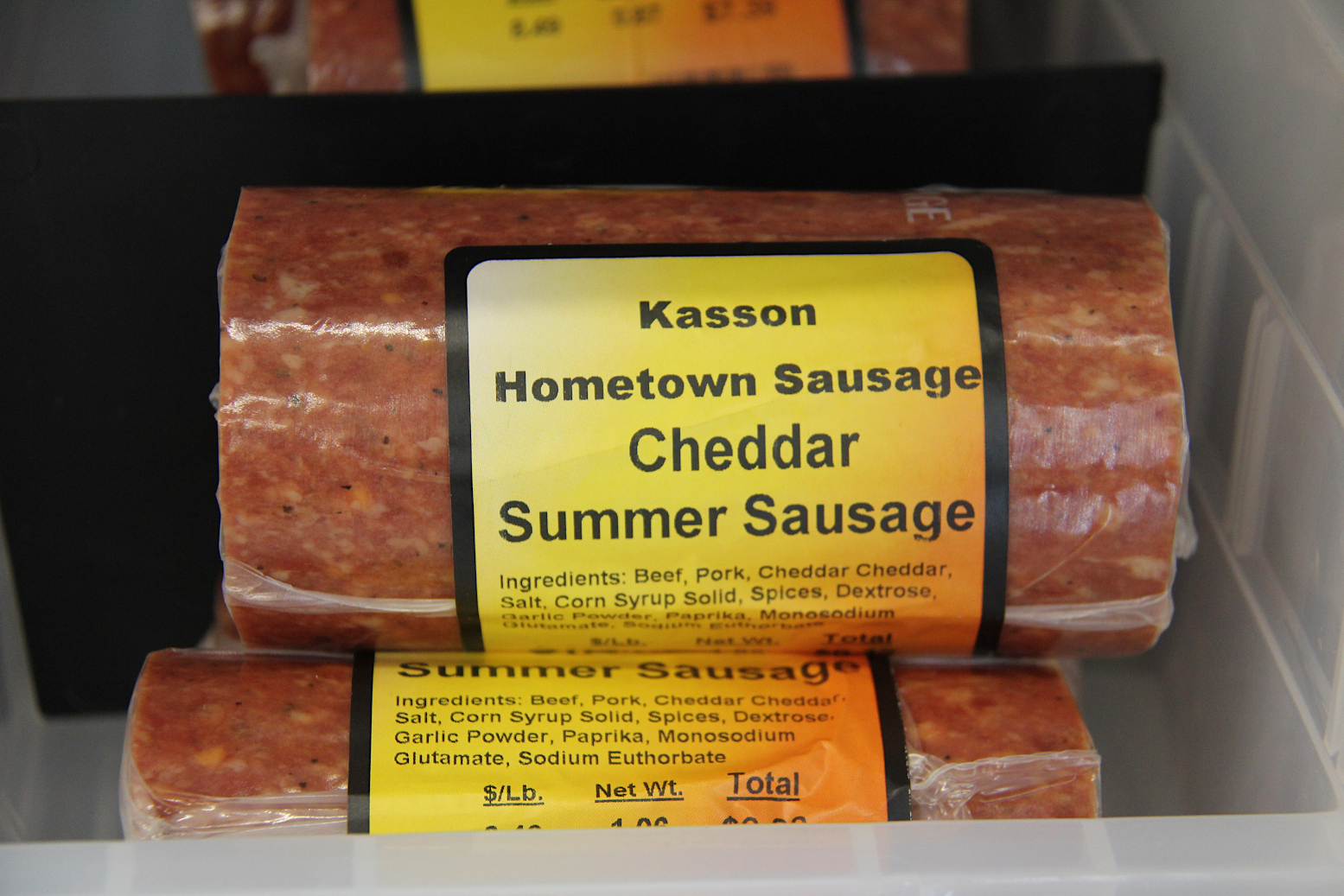
This sausage originated in Kasson, but is now made in Waseca. (Minnesota Prairie Roots copyrighted photo March 2026)
This building in some ways still houses a variety store with fabric, yarn and notions; products produced via laser engraving, digital and screen printing; and Kasson Hometown sausage, brats and other meats filling coolers. The hometown sausage, though, is no longer made in Kasson, but rather at Morgan’s Meat Market in Waseca.
Looking from the back of the fabric and notions section to the yarn at the front of the store. (Minnesota Prairie Roots copyrighted photo March 2026)
Times change. Businesses change. But sometimes remnants of the past remain, like those fold away shopping baskets inside KLG. Durable baskets that took me back in time to Ben Franklin and Woolworths along yesterday’s Main Street.
Shelved fabric bolts are sorted by color and seasonal design. (Minnesota Prairie Roots copyrighted photo March 2026)
TELL ME: If you have any special memories of dime stores, I’d like to hear them.
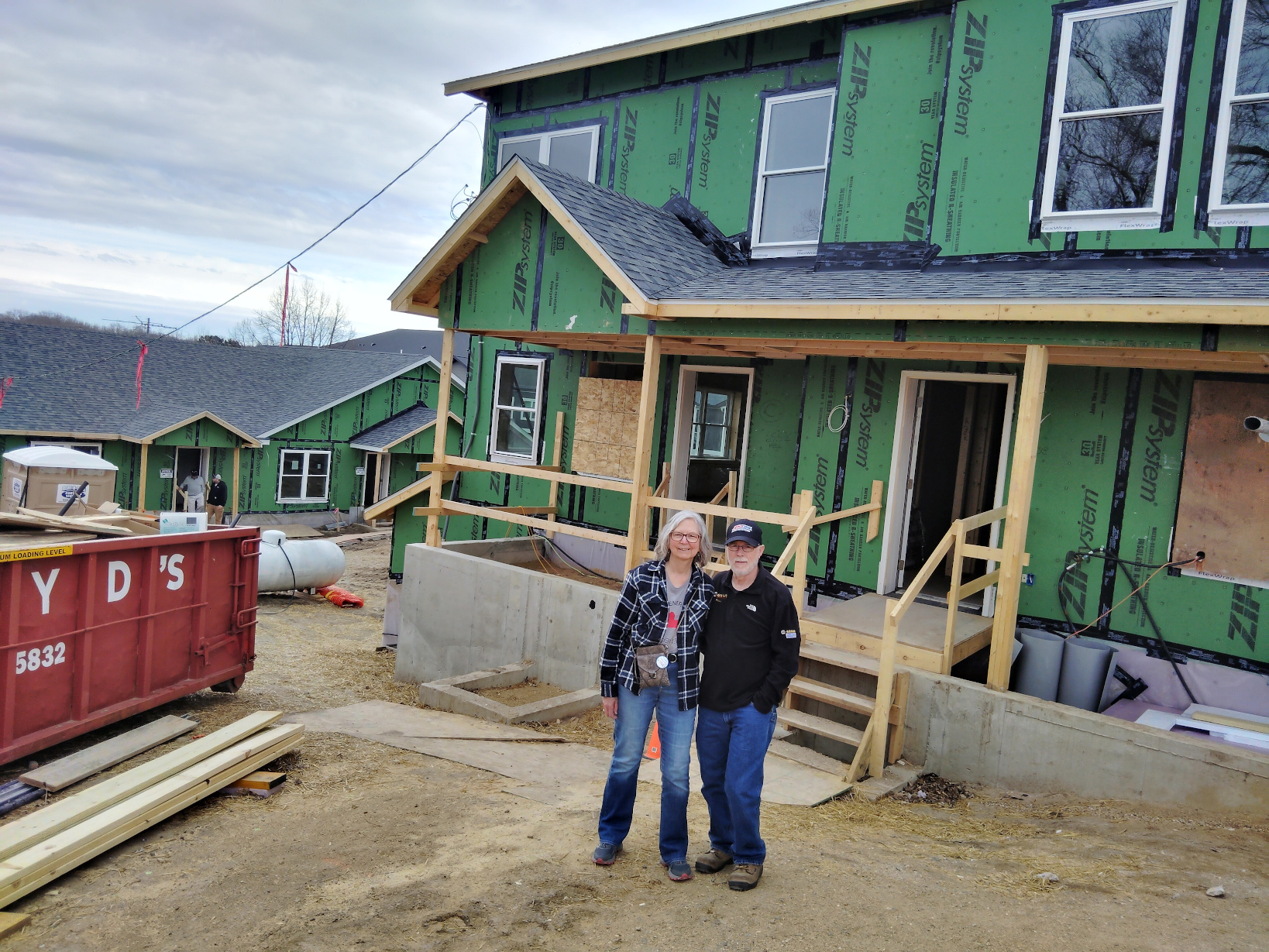
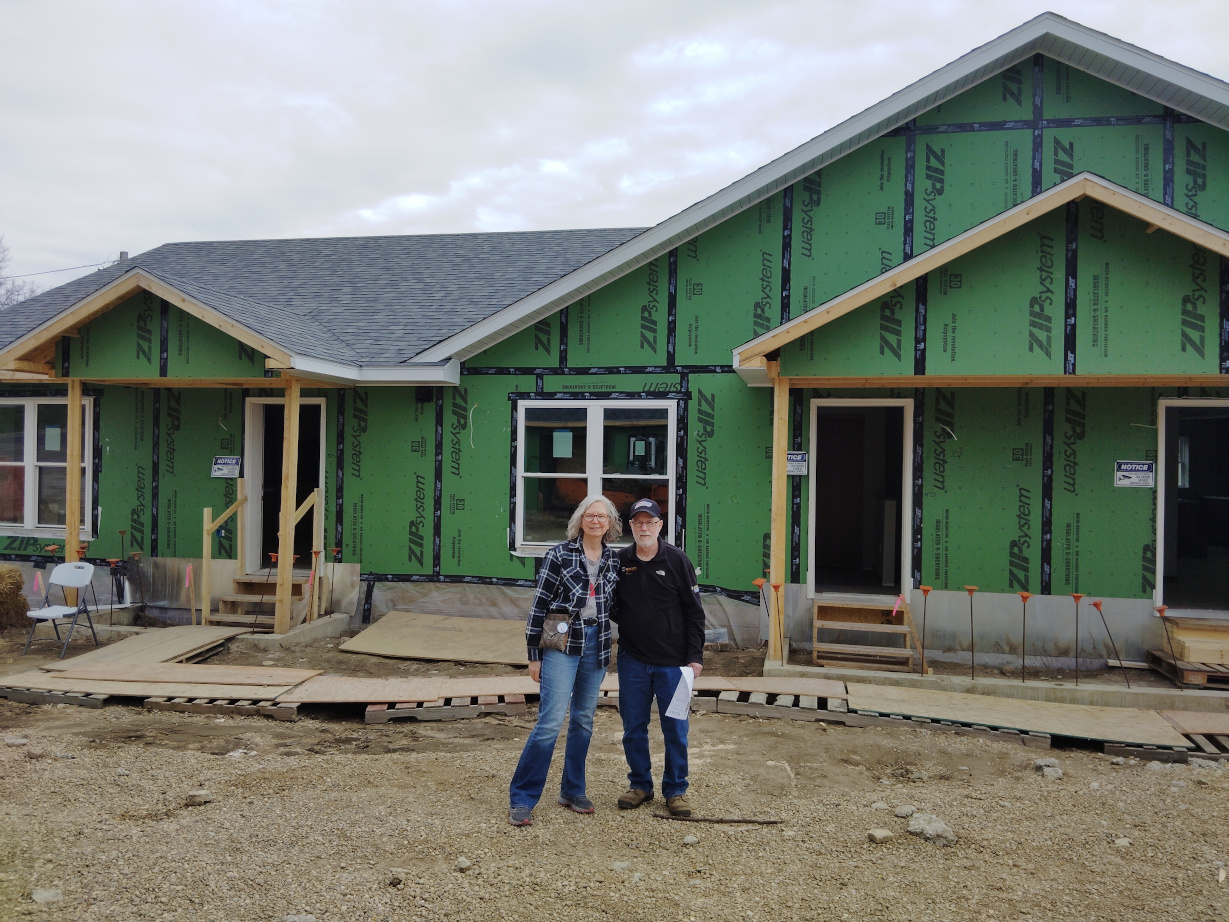
Randy and I stand in front of the larger of two Ridgeview Heights apartments under construction in Faribault. The east apartment building is in the background. (Minnesota Prairie Roots copyrighted photo by Anika Rychner, April 2026)
SCENT OF NEW WOOD, of a new build, holds the promise of new beginnings.
And that’s exactly what’s possible with the construction of two mixed use housing units under construction a block off Central Avenue in downtown Faribault.
Inside the first floor of a two-level apartment in the larger west side building, much work remains to be done. (Minnesota Prairie Roots copyrighted photo April 2026)
Wednesday afternoon Randy and I toured the complexes, which will offer two emergency rent-free furnished apartments and six market rate workforce apartments to local families in need of shelter. This aims to be temporary as families transition to more stable and permanent housing.
The Faribault Community Action Center is the lead on the $2.5 million Ridgeview Heights project funded by grants, an in-kind land donation from the City of Faribault, financing and donations. I’m proud to say that the extended Helbling family collected and gifted monies to the project at our annual reunion last summer. For that reason, especially, I wanted to walk through the apartments, grab a few quick photos with my smartphone and text them to my in-laws.
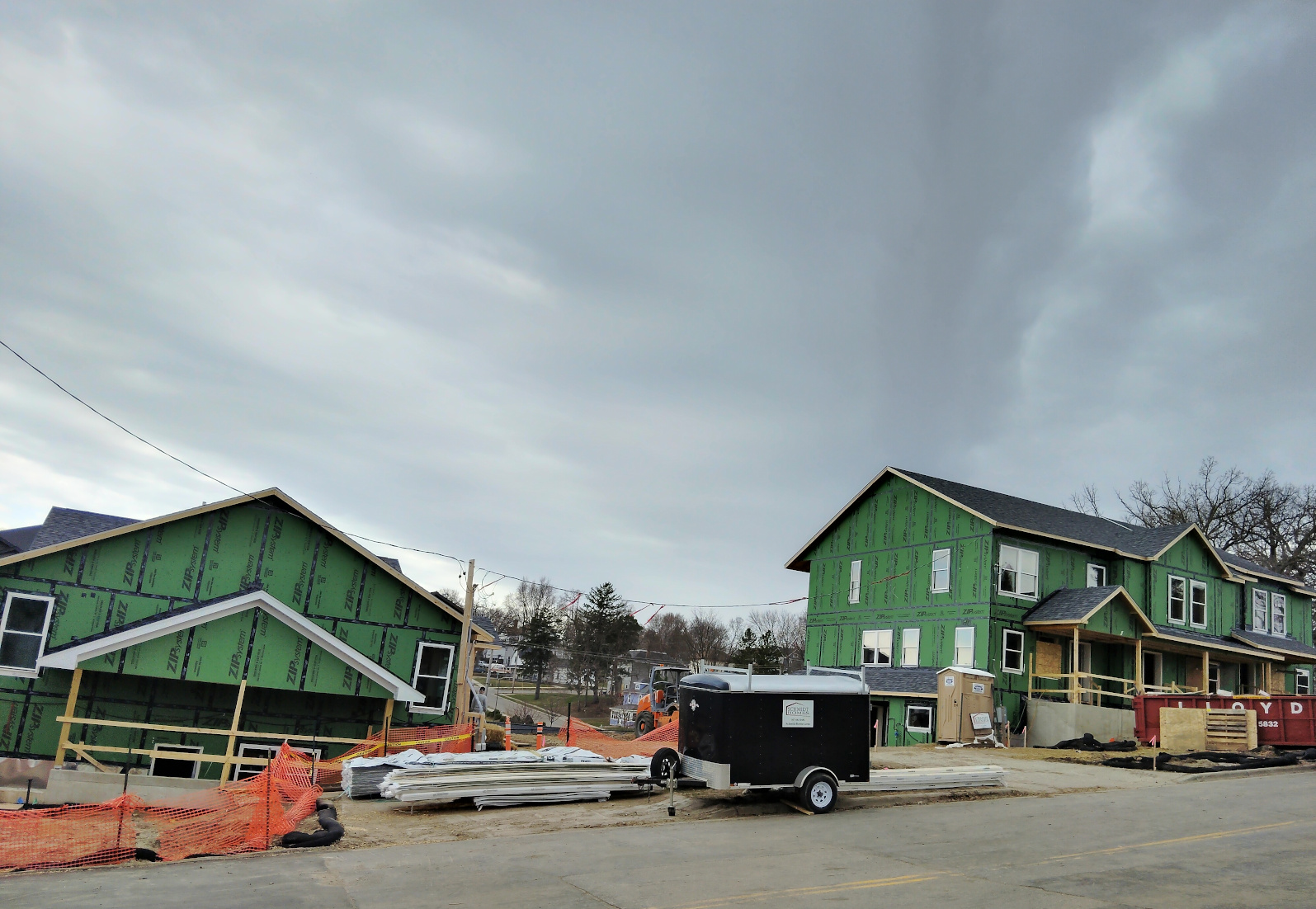
A view of the Ridgeview Heights apartments under a wide April sky. (Minnesota Prairie Roots copyrighted photo April 2026)
As I walked across the dirt, followed makeshift board sidewalks and climbed temporary wooden stairs into several units, I considered the hope each apartment represents. I thought, too, of the excitement these families will feel upon stepping into their new homes.
I remember the thrill of moving into a new house as a child. My parents, with the help of extended family and a local carpenter, built a new house to replace the aging farmhouse that our family of eight outgrew. Not only did we gain much-needed space, but we also got a bathroom. No more trips to the outhouse.
That memory flashed through my mind while touring Ridgeview Heights during the invitation-only event. The scent of new construction, exposed framing, unfinished floors, a space awaiting a family, felt comfortably familiar.
Inside an apartment in the east building, which is nearing completion. (Minnesota Prairie Roots copyrighted photo April 2026)
I visualized bunk beds stacked in a small bedroom. I visualized a small kitchen table snugged against a wall. I visualized family photos displayed on the extra thick window sills crafted into this net-zero energy build with multi-layered walls.
I heard children laughing, the murmur of a television, the quiet voice of a mother soothing a child. I saw towels hanging in the bathroom, shoes nested in the closet, dishes sitting on the kitchen counter. I smelled coffee brewing, dinner cooking.
Construction is further along on the smaller east apartment complex where Randy and I posed for a photo. (Minnesota Prairie Roots copyrighted photo by Anika Rychner, April 2026)
It was easy to imagine all of this as I followed CAC Community Resource Manager Becky Ford, then CAC Interim Executive Director Anika Rychner, on tours of several apartments. Carefully climbing unfinished wooden stairs to the second floor of one apartment, I thought of the feet that will eventually ascend and descend these stairs. And when we paused to look out a wide window to a view of the city, I stood in awe of the inspiring scene, of the viaduct bridging the river to the other side of town.
The name Ridgeview Heights fits. Those who will call this hilltop place their home can rise to new heights here on the ridge. Ridgeview Heights inspires hope, possibilities and new beginnings.
Colorful, eye-catching art decorates a collection box for donations to the Faribault Community Action Center. This box is located just inside the entry to the Shattuck-St. Mary’s School athletic complex. (Minnesota Prairie Roots copyrighted photo April 2026)
While I’ve not read Clinton’s book, I understand the importance of a village, of community, in the lives of children. Kids learn, not only from their parents, teachers and each other, but also from being out and about in their communities.
They learn, and teach us adults, about care and compassion, about service and giving back, of lifting up community. In these days of innumerable challenges in America, such lessons are truly more important than ever.
Some of the items collected at St. John’s Lutheran Church, Lakeville, during a special food shelf drive earlier this year. (Minnesota Prairie Roots copyrighted file photo)
I need only look within my own core family to see this. In mid-February, my two elementary-aged grandchildren helped their mom, my eldest, transport items from their Lakeville church to a food shelf in nearby Farmington. The kids sorted donated items. And my first grade grandson wrote about the experience for a school assignment complete with illustrations. “I helped at church (beacus (sic) of ICE),” Isaac wrote.
He knew. His mom has been working tirelessly soliciting cash donations, buying and delivering groceries to a south metro food shelf, and sorting and bagging donations during and after Operation Metro Surge. Not only has she assisted those sheltering in their homes, but she has also taught her children an important lesson in helping others.
Kids are never too young to learn about generosity, about loving their neighbors. About giving of themselves in service to community.
This shows the entry to the Shattuck-St. Mary’s athletic complex, a gym on the left, the soccer dome (where I sometimes walk) to the right and the ice arenas straight ahead. (Minnesota Prairie Roots copyrighted photo April 2026)
That brings me to Shattuck-St. Mary’s, a private college prep school in Faribault. While heading to walk at the Shattuck dome on a recent morning, I noticed several cardboard collection boxes in the public gathering space/hallway of the athletic complex. I stopped to investigate.
Promotional photos of Shattuck are posted on a wall behind a collection box set outside an ice arena and the hallway leading to the soccer dome. (Minnesota Prairie Roots copyrighted photo April 2026)
While the boxes were empty, I read about their purpose. Students, calling themselves “Sabre Storm,” “The Breakfast Club” and “Team Cheese,” are collecting non-perishable food and household and personal care items for the Faribault Community Action Center.
Signage details the project. (Minnesota Prairie Roots copyrighted photo April 2026)
Most needed are: dry beans, canned soups, ramen noodles, canned chicken/tuna, size 7 diapers and pull-ups. I expect those attending hockey and soccer games, and other activities inside the sports complex will drop donations into the collection boxes.
A dozen Shattuck students signed their names on a collection box outside an ice arena. Sabre is the school name and symbol. (Minnesota Prairie Roots copyrighted photo April 2026)
I love that students like Jorge, Lara, Max, Miranda, Yujin, Rhys, Gael and 38 others, who signed the boxes, are connecting with the Faribault community via this drive. There’s not only a “heightened need” for food, household and personal care items at the Community Action Center, but also for cash donations.
Loving this “Sabre Storm” collection box art showing diverse hands reaching out and encircling a state of Minnesota map. (Minnesota Prairie Roots copyrighted photo April 2026)
I read that on the CAC website. But I’ve also heard this from a friend who volunteers at the CAC. The increased need all circles back to my grandson’s words, “beacus (sic) of ICE.” Many people in Faribault were sheltering in place, unable to work, during the height of federal immigration enforcement. And just because that operation has scaled back, the crisis has not ended.
A group of students calling themselves “The Breakfast Club” have signed on to collect donations for the Community Action Center in Faribault. (Minnesota Prairie Roots copyrighted photo April 2026)
The CAC has established a Community Response Fund “to meet urgent and evolving community needs” for food, rental assistance, etc. Every donation helps, my friend says. Even $10.
Growing generosity and kindness at Shattuck-St. Mary’s School via collecting donations. (Minnesota Prairie Roots copyrighted photo April 2026)
It takes a village. It takes a village to raise children. And it takes a village to help our neighbors through a crisis, a crisis created by the federal government. A crisis that has left too many Minnesota families facing overwhelming financial challenges, trauma, personal struggles and an uncertain future.
Fifteen Shattuck students signed this donation box as “Team Cheese.” (Minnesota Prairie Roots copyrighted photo April 2026)
FYI: Please consider making a financial gift to the Faribault Community Action Center Community Response Fund. Click here to learn more. To those of you who have already donated, thank you. I appreciate your generosity during these challenging times in my community. It takes a village.
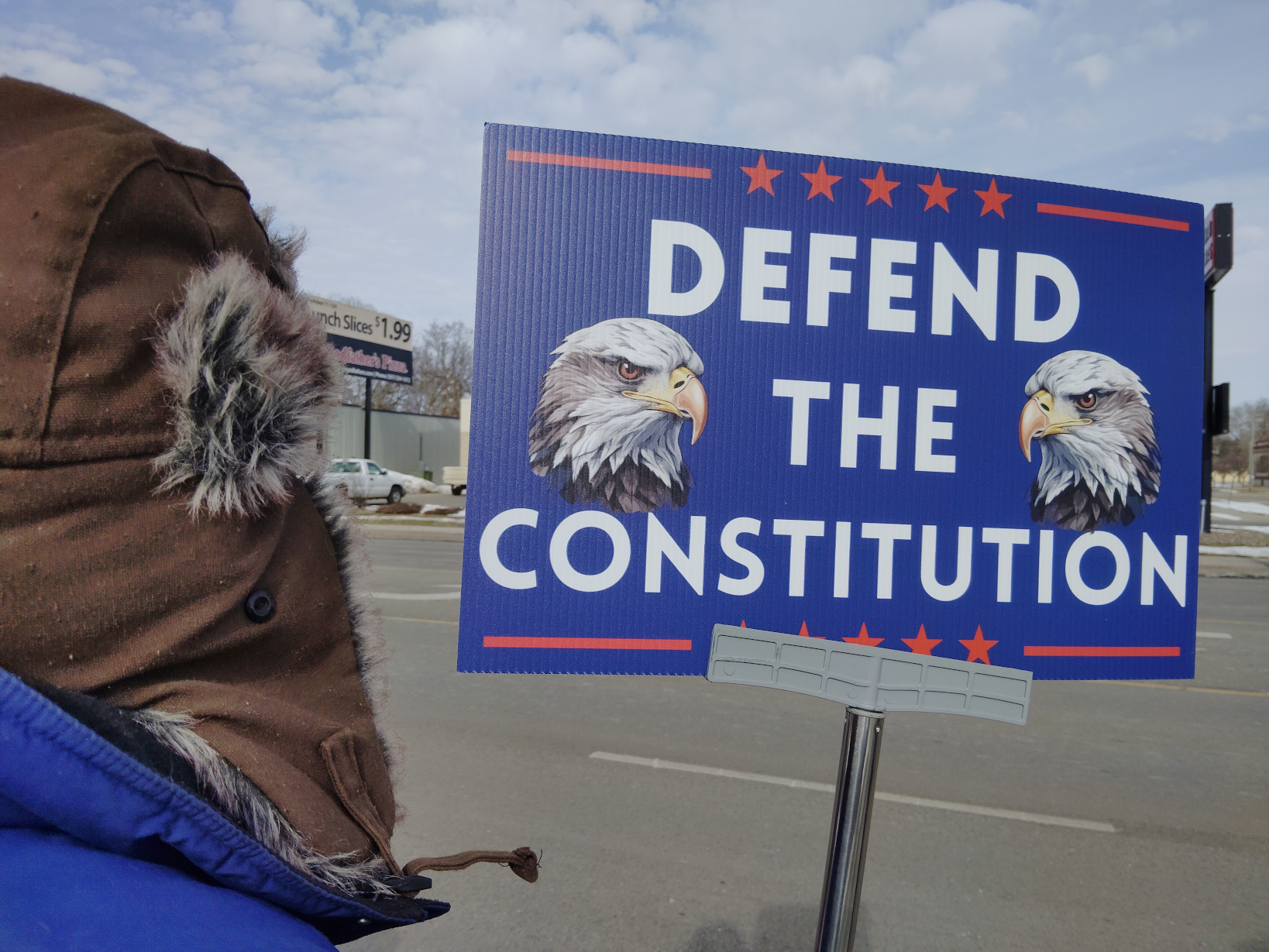
A sign held during a February protest in Faribault. (Minnesota Prairie Roots copyrighted file photo February 2026)
STANDING ON THE PROTEST LINE in Faribault nearly every Saturday morning for three months, I’ve felt uplifted and loved by other protesters. And I’ve felt tremendous support, too, from the majority of passing motorists who wave, give us the thumbs up and honk their horns.
But I’ve also witnessed outrage, raging anger, dangerous behavior and hostility directed at those of us who are peacefully protesting against the current regime, etc., in this country. Everyone, under the First Amendment, is entitled to their opinion. It’s OK to disagree with us. But, the level of animosity I see and hear is truly disheartening.
BULLYING BEHAVIOR
We, as protesters, expect some negativity to be directed at us. But when it becomes dangerous, such as guys in mammoth pick-up trucks driving dangerously close at a high rate of speed and rolling coal, that crosses the line. We all understand that they are trying to intimidate us, to silence our voices. It’s a tactic that comes down from the top. Bullying is as old as time itself. We won’t be bullied into silence.
DISTURBING BEHAVIOR
That brings me to one particular driver whose behavior on Saturday had two of my new protest friends and me asking, “Did you see that?” That was a dad who had rolled down his window to give us the middle finger and shout profanities at us, with his young child strapped in a car seat behind him. This proved the most disturbing behavior I’ve witnessed while protesting. Children mimic what they see and hear. And this dad was teaching his child hatred and disrespect toward others.
UNSUITABLE WORDS
That brings me to the president’s profanity-laced social media post on Easter Sunday. I won’t type his warning to Iran about the Strait of Hormuz because his message is not suited for a general audience. But suffice to say that his language is unsuitable for the office he holds. I often wonder how anyone can be OK with what he writes, says and does.
From my private collection, a peace dove painting on burlap by Jose Maria de Servin This shows only a portion of the artwork, which I purchased at a recycled art sale many years ago. (Minnesota Prairie Roots copyrighted file photo)
WORDS OF PEACE
Then there’s Pope Leo XIV, who delivered a message of peace on Easter, as one would expect of a world faith leader. “Let those who have the power to unleash wars choose peace,” the pontiff said. Amen to that. I am thankful for leaders like him who stand publicly strong for what is right and good and moral. Now if only Pope Leo could have a one-on-one with the president or that dad driving past our protest line, flipping the bird and shouting profanities at us as his child watched and listened.
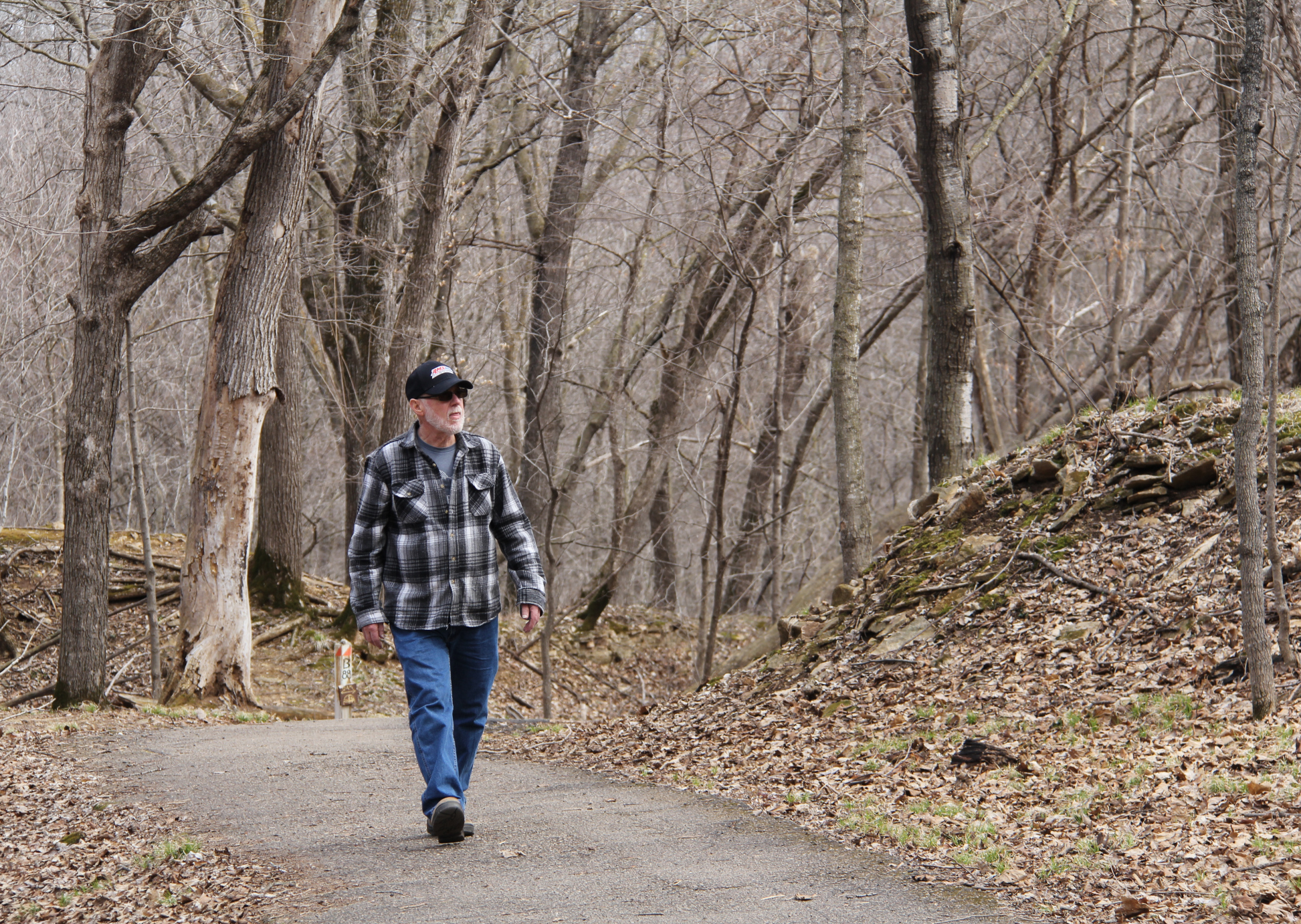
My husband, Randy, follows a paved trail through the woods at River Bend. (Minnesota Prairie Roots copyrighted photo March 2026)
A WALK INTO THE WOODS of River Bend Nature Center on a near 70-degree late March Sunday afternoon in Faribault yielded glimpses of spring unfolding, ever so slowly.
Patches of greenery emerged among dried and decaying leaves layering the earth. Tightly-clenched red buds tipped some branches. Subtle signs of early spring existed, if I looked closely. And listened.
A cardinal whistled. A woodpecker hammered. Both deep in the woods, unseen, but heard.
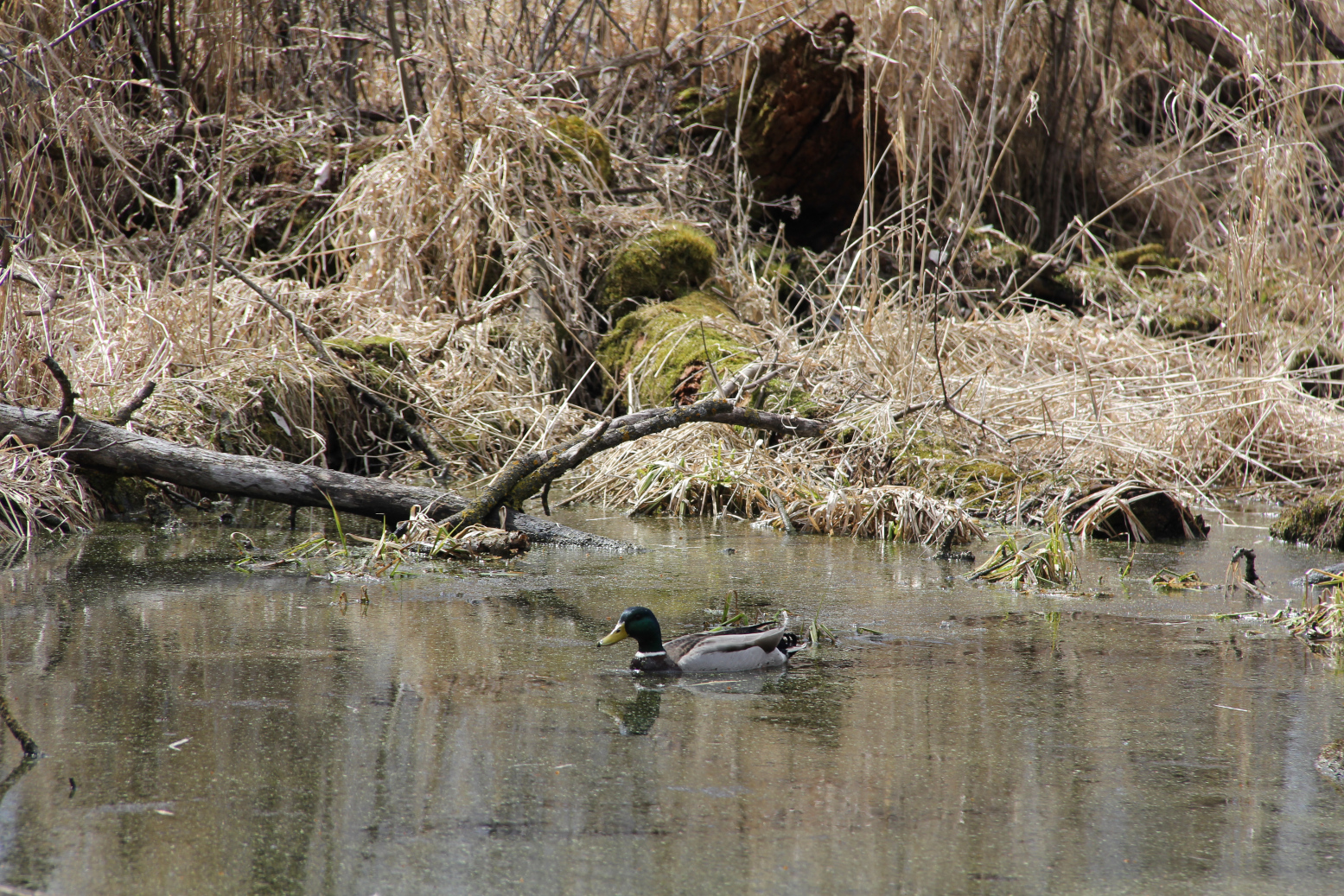
A mallard duck swims in the Turtle Pond. (Minnesota Prairie Roots copyrighted photo March 2026)
At the Turtle Pond, I expected turtles lining logs, basking in the afternoon sunshine. But I spotted only one, slipping into the slimy water before I could even lift my camera to focus a shot. Yet, the pond did not disappoint as a lone mallard duck glided across the shallow water, stopped and stood before swimming again, on toward the floating pedestrian bridge.
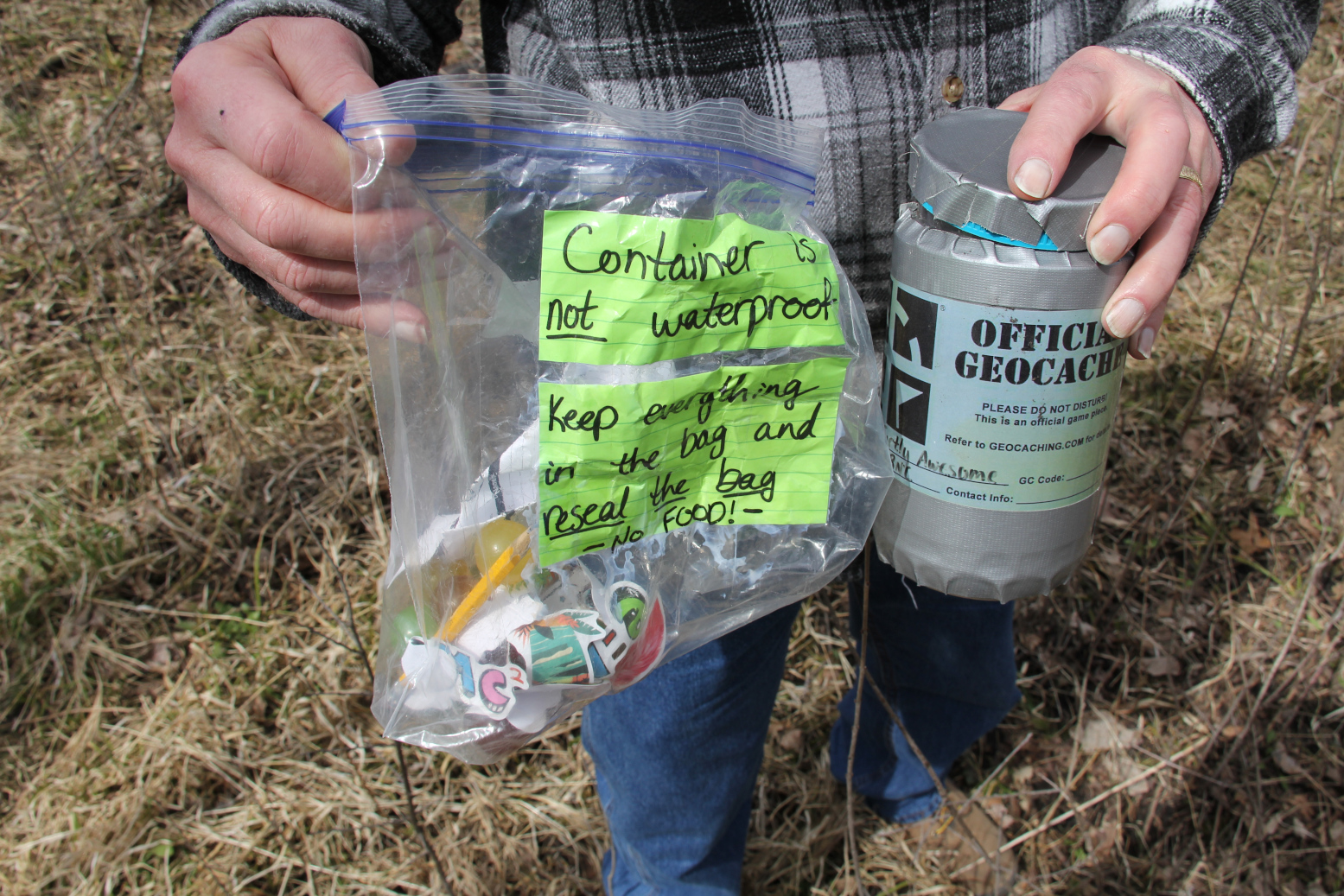
A geocache, found without geocaching. (Minnesota Prairie Roots copyrighted photo March 2026)
Randy and I paused in the brush near pond’s edge to examine a canister seemingly tossed on the ground. A geocache, perhaps in its proper place, perhaps not. We looked inside, then left it where found.
Lovely aspens cluster in the woods. (Minnesota Prairie Roots copyrighted photo March 2026)
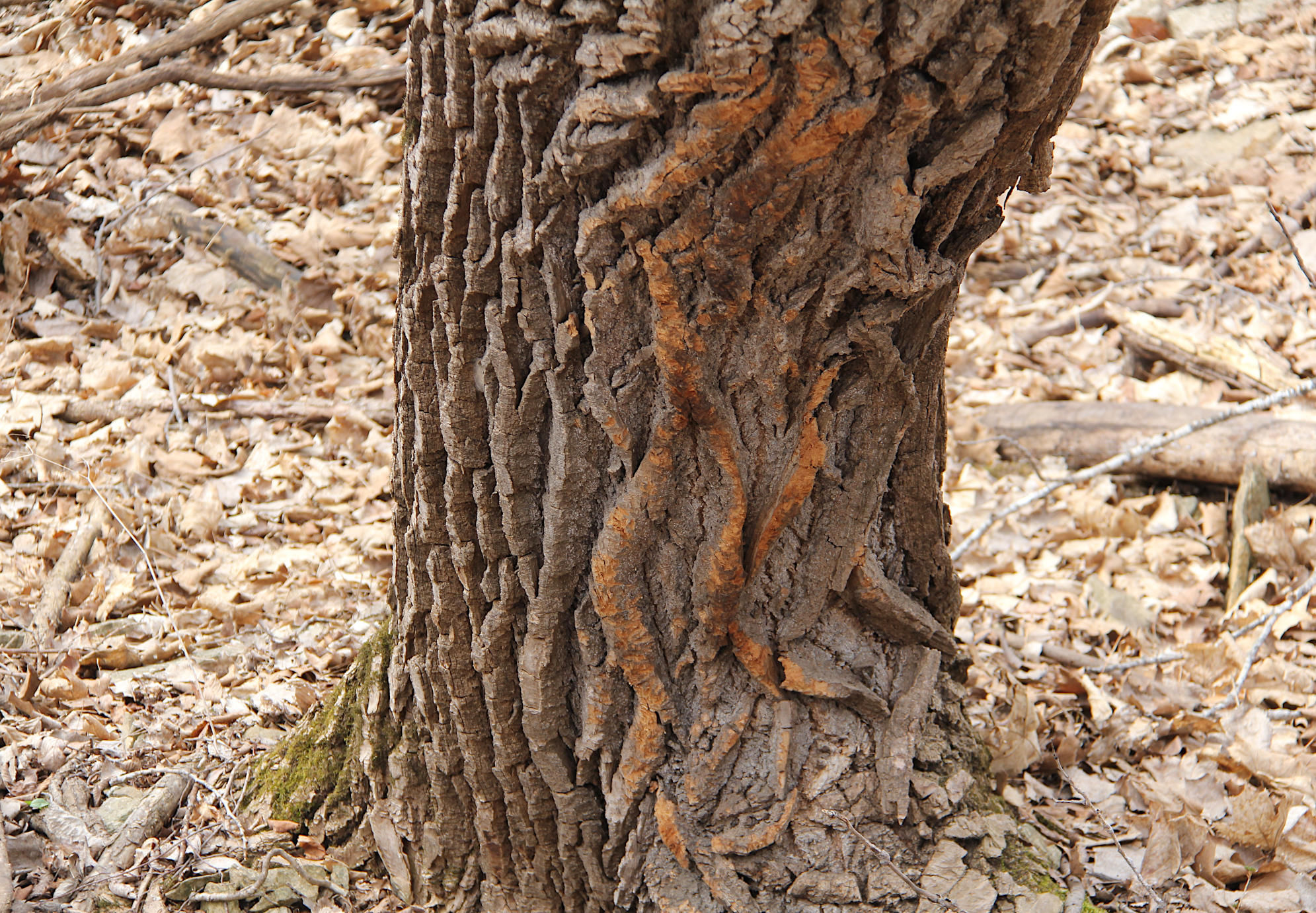
I kept scanning the woods for wildflowers (too early), anything that would visually cue me to this season of spring. Finding little, I concentrated on the trees. The texture of bark, which I always find artistically fascinating. A cluster of aspens, a splash of white in the gray woods. Piles and slices of wood from trees cut down.
Signage on the interpretative center door. (Minnesota Prairie Roots copyrighted photo March 2026)
I observed a scattering of plastic bags attached to trees, collection vessels for sap that will be cooked into maple syrup. The bags proved a conversation starter with a young family who moved here from Iowa a year ago and was on their first hike at River Bend. I love meeting new people. I explained the sap collecting, welcomed them to Faribault. And then the attention quickly turned to the four-year-old, who showed me the gray stone she found, then the faded temporary tattoos laddering her left leg and then her sparkly shoes. She bubbled with joy, only frowning when her mom mentioned her cousins back in Iowa. Cousins she misses and will see at Easter.
I found the bark on the base of this tree visually interesting. (Minnesota Prairie Roots copyrighted photo March 2026)
Other families and couples and singles hiked here, too, on this loveliest of March days in Minnesota. Others biked. My friend Lisa and her husband, Tom, avid bird watchers who tend bluebird houses at the nature center, warned us about deer ticks after we exchanged personal updates.
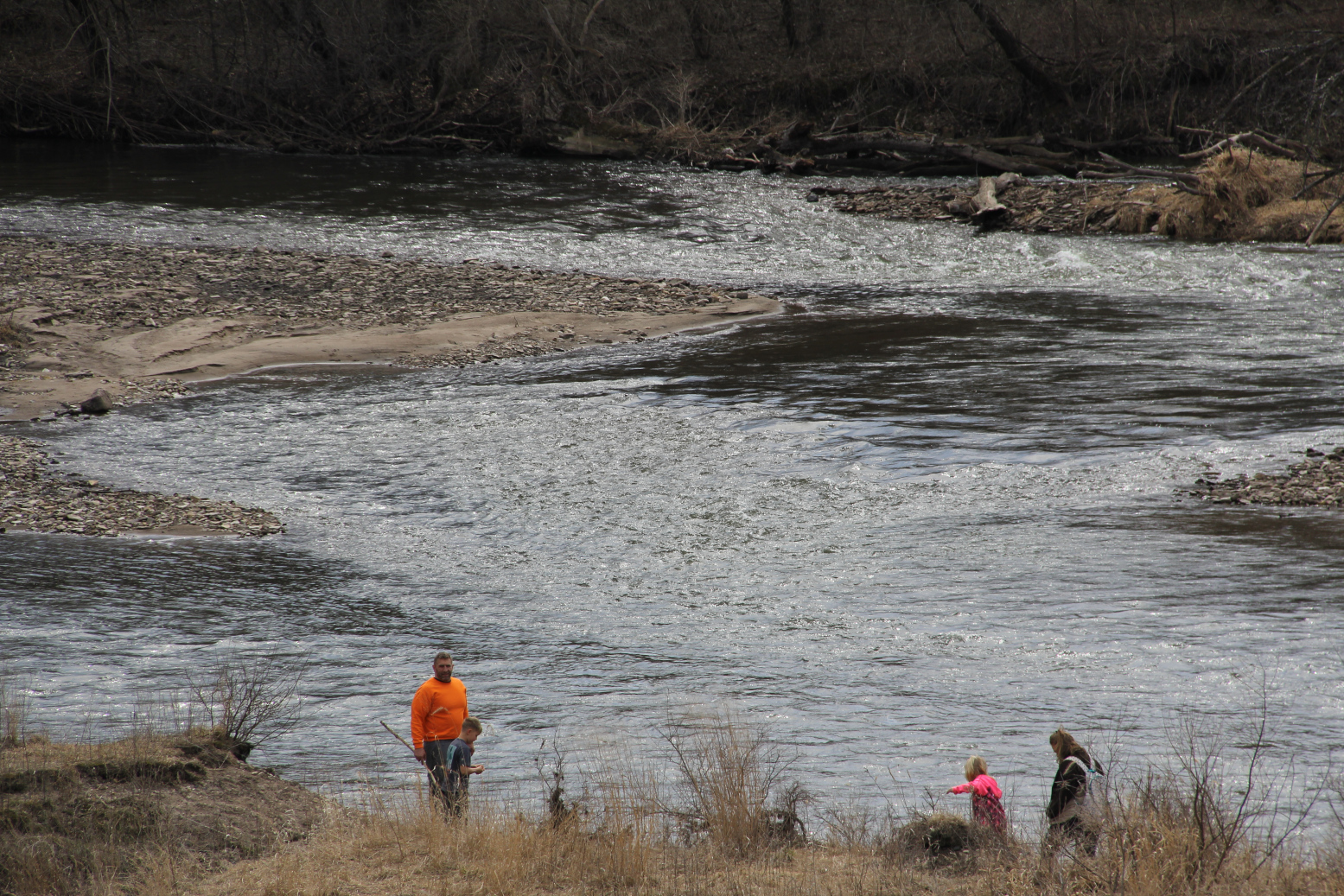
The Straight River winds through River Bend, drawing people to its banks. (Minnesota Prairie Roots copyrighted photo March 2026)
Down by the Straight River, a family played along the shoreline, sunshine sparkling on water. It was so good to see all these families outside, connecting with each other and with nature, away from technology and other distractions of life.
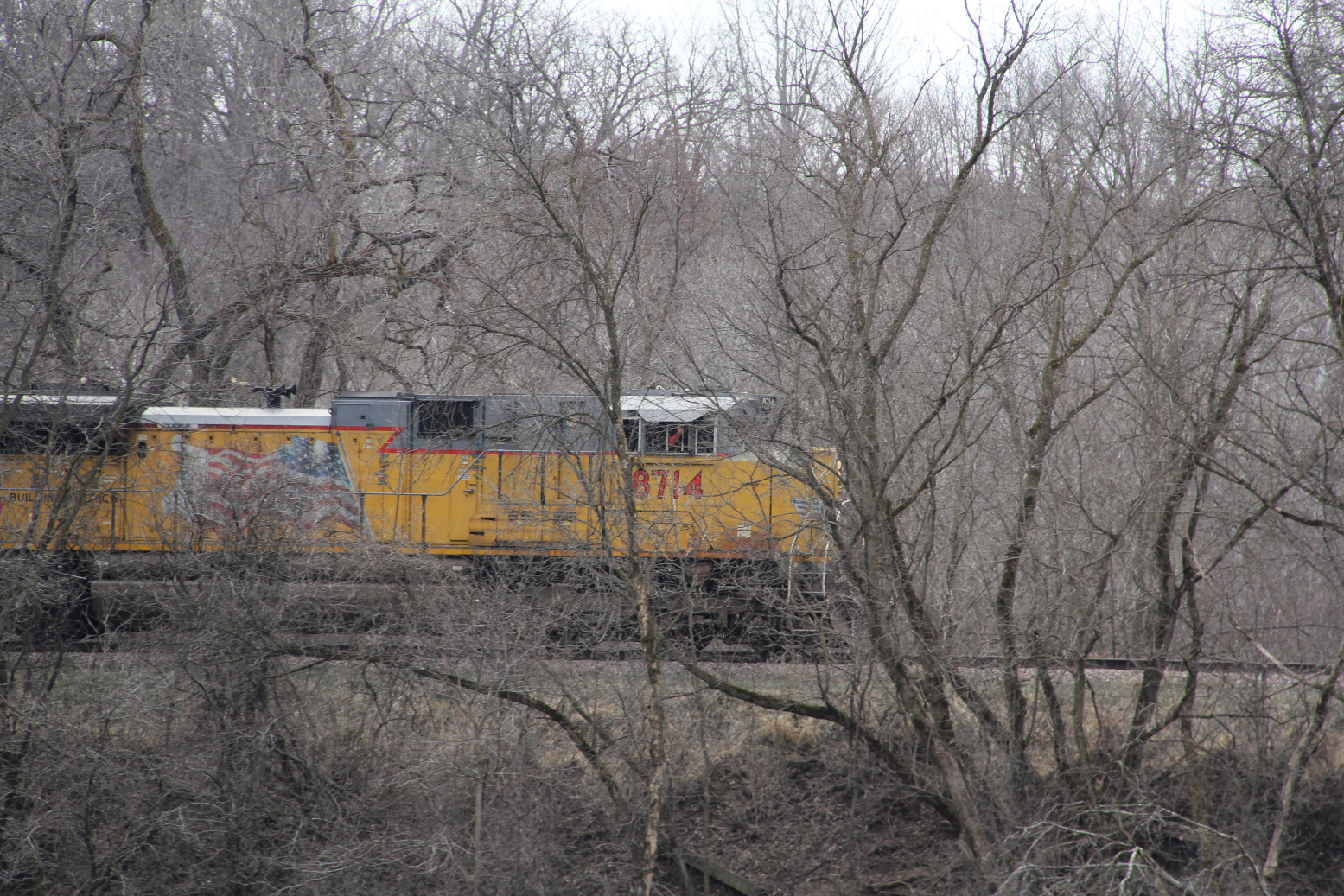
Occasionally a train roars along the tracks that run through River Bend. (Minnesota Prairie Roots copyrighted photo March 2026)
A short train roared by across the river, a flash of yellow in the monotone woods.
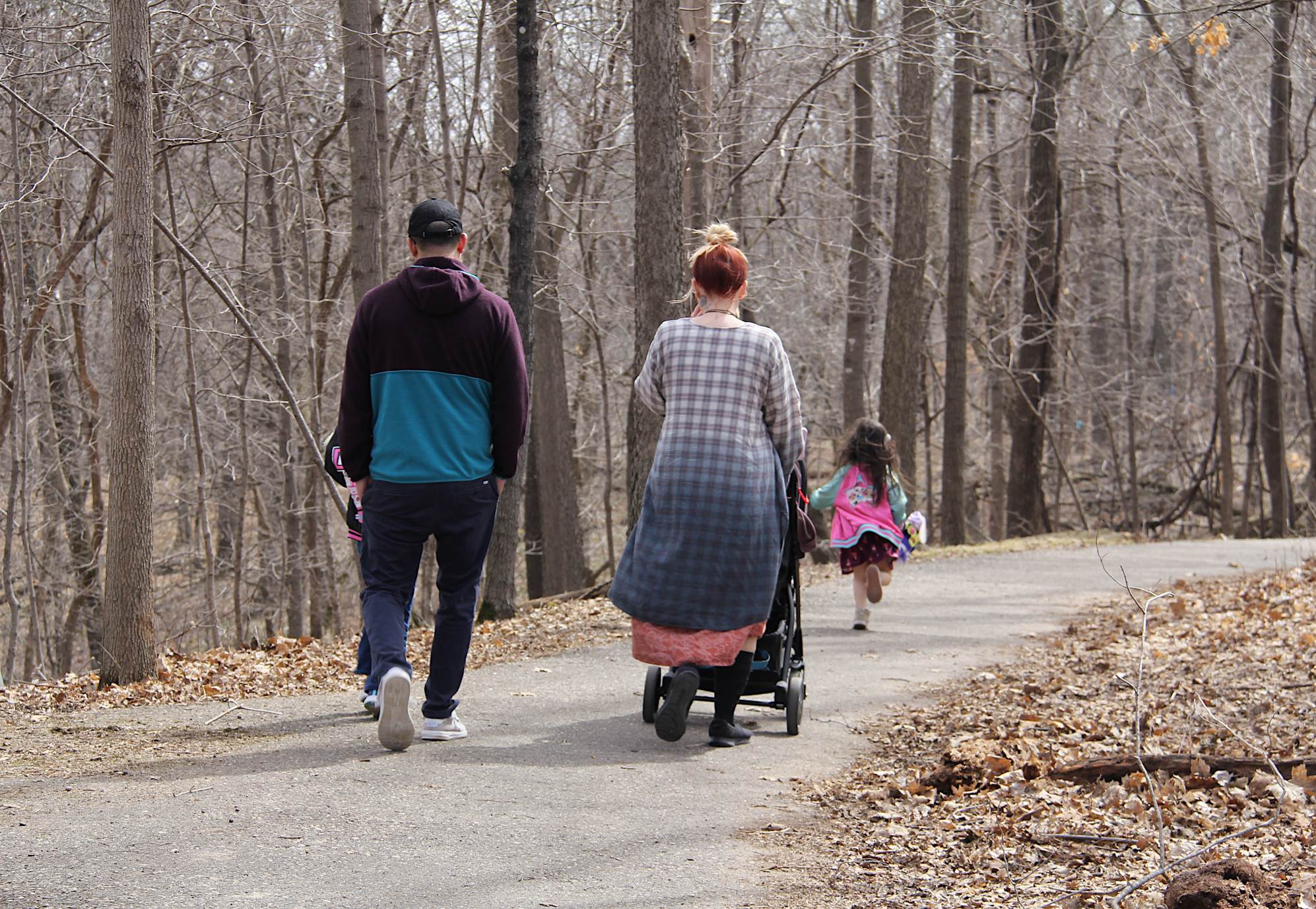
Lots of people, including this family, were hiking on Sunday afternoon. (Minnesota Prairie Roots copyrighted photo March 2026)
Randy and I passed another young family, two little girls clutching stuffies, a child in a stroller. The eldest ran ahead, her long hair flying. And I remembered the times we came here with our preschool grandchildren who also ran like the wind. Free. Immersed in nature.
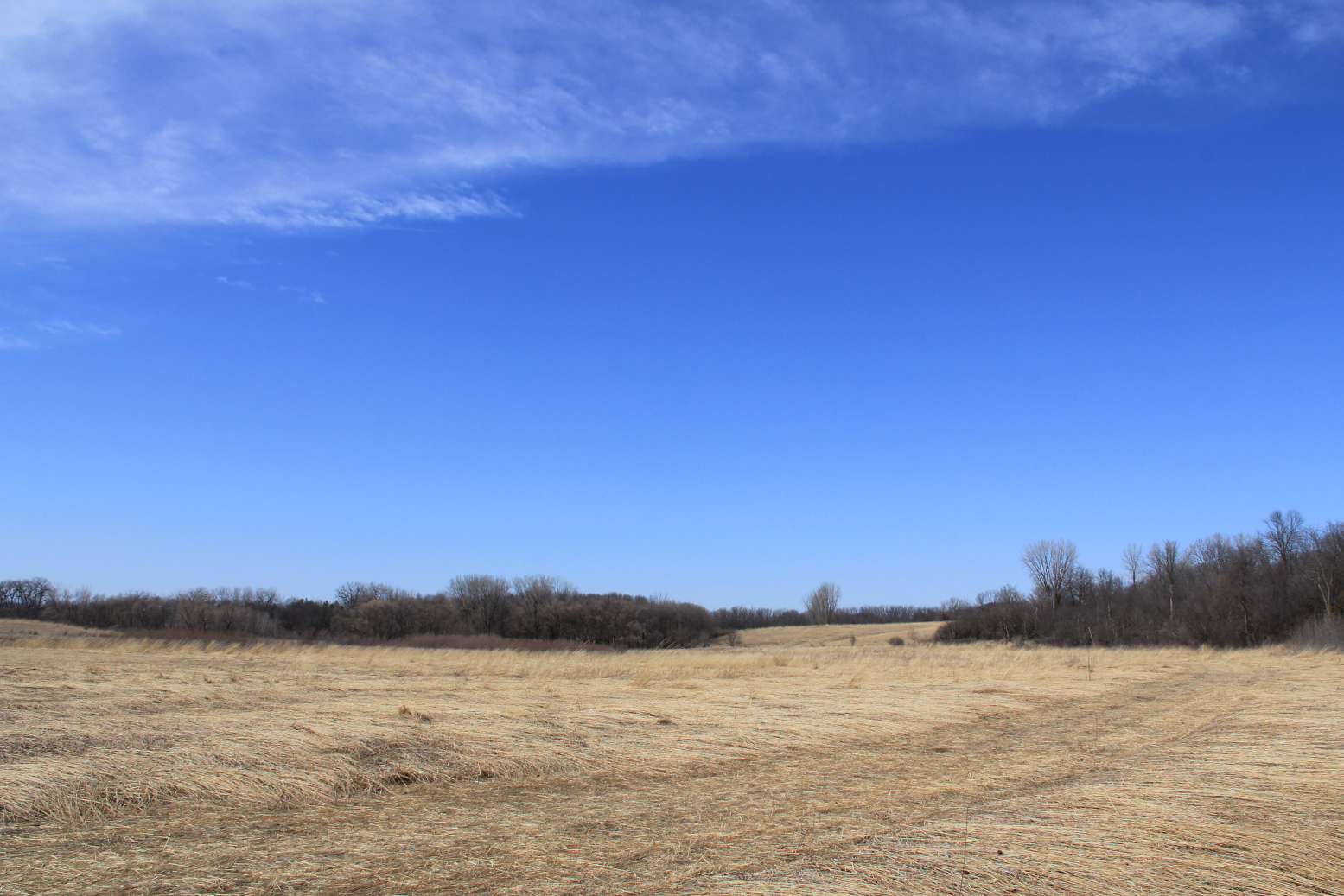
Prairie meets sky at River Bend. (Minnesota Prairie Roots copyrighted photo March 2026)
Exiting the woods, we crossed the prairie, its expanse stretching, meeting the sky.
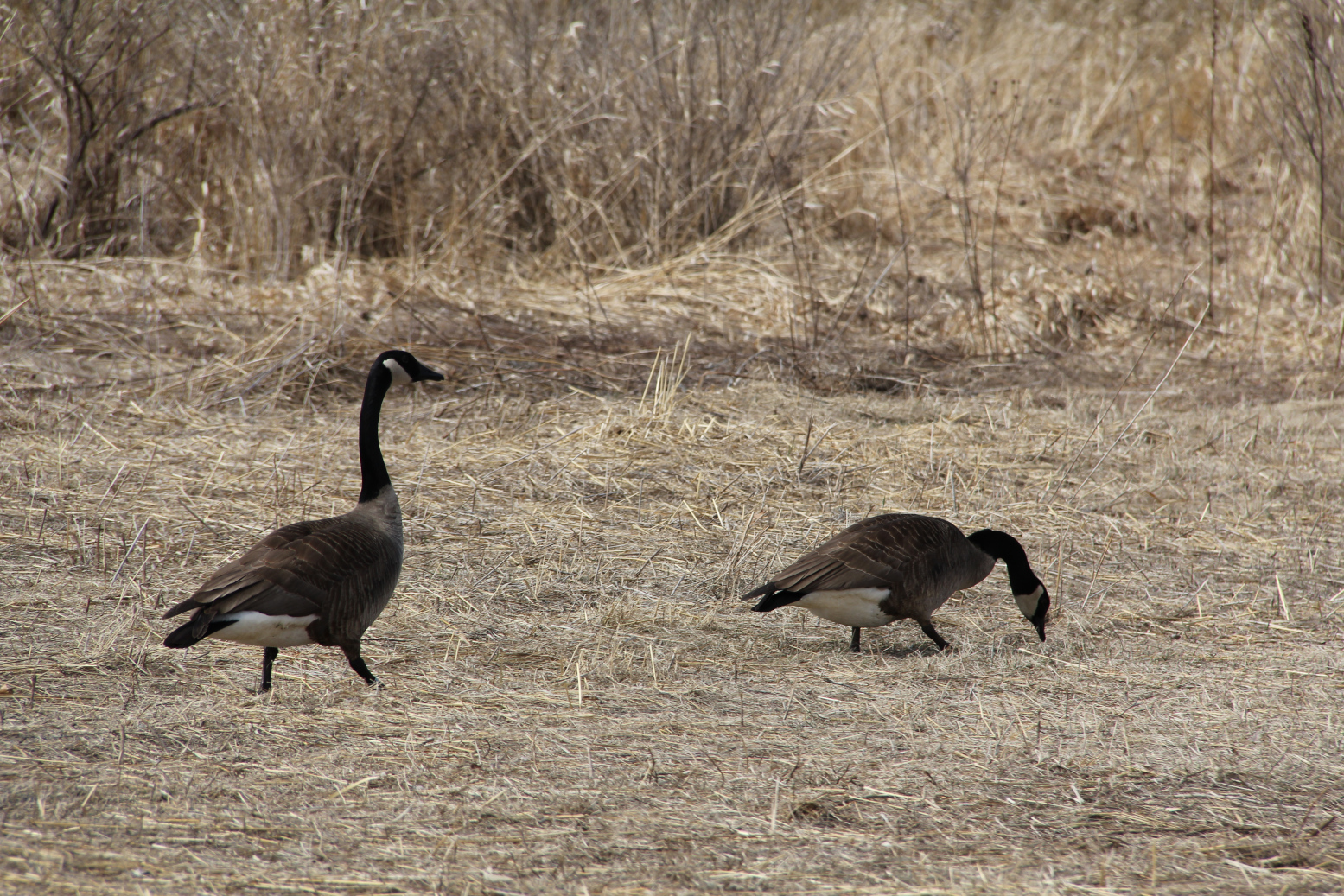
Canadian geese on the prairie. (Minnesota Prairie Roots copyrighted photo March 2026)
At prairie’s edge, a pair of geese strode across the dried grasses matted by winter’s snow and wind. Occasionally the two would stop, peck at the grass, searching for food.
I arrived at River Bend wanting to photograph signs of spring. Rather, I mostly heard spring—in a din of spring peepers, in the honk of geese, in other unidentified birds singing. And in the voice of a four-year-old, excited to be out with her parents in the woods. Playing. Searching for stones to take home.
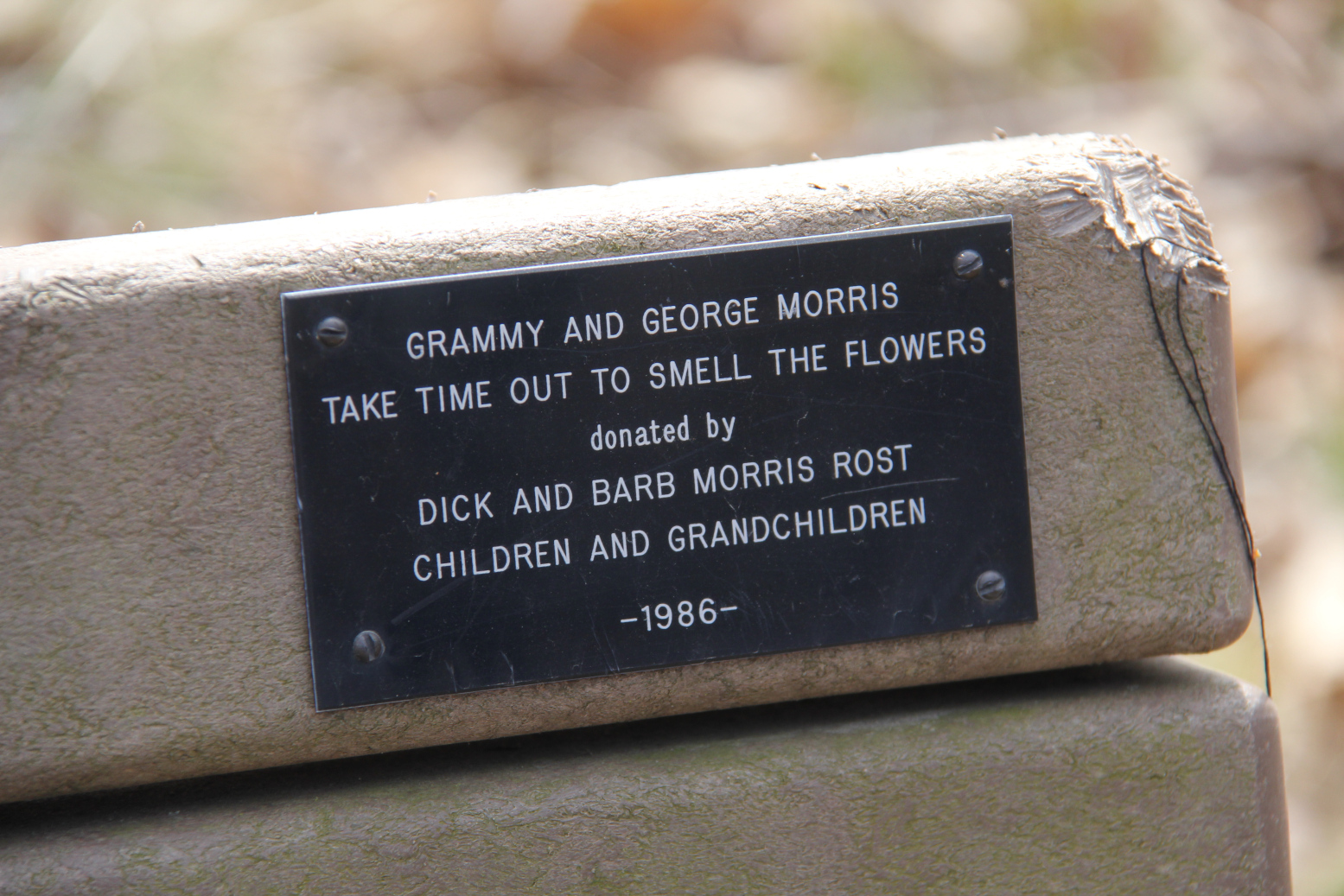
A fitting plaque on a memorial bench. (Minnesota Prairie Roots copyrighted photo March 2026)
Sometimes it takes a child to remind us of the smallest joys in life. To appreciate that which is before us rather than wishing for more.
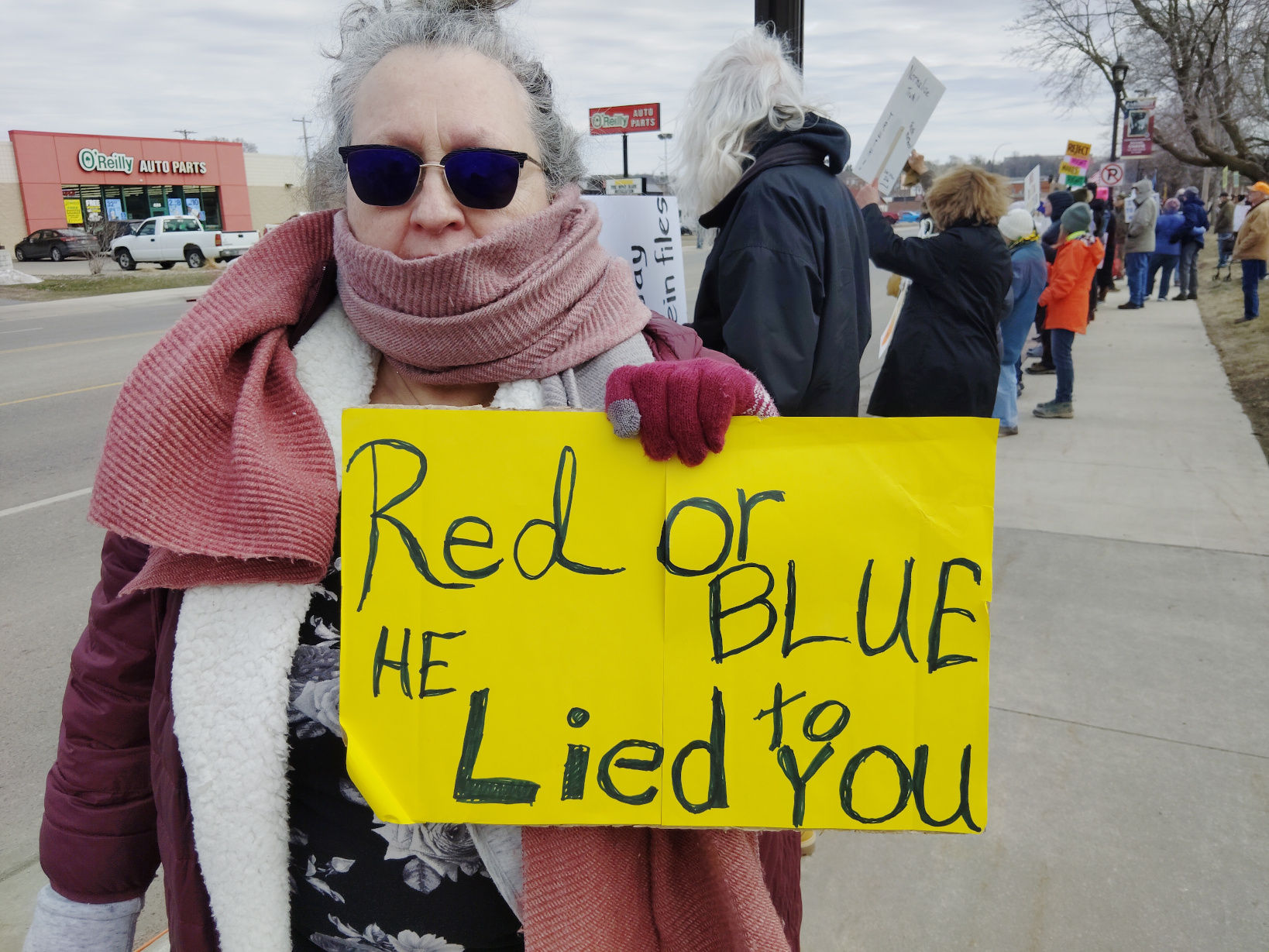
One of my favorite signs, expressing truth no matter your political affiliation. (Minnesota Prairie Roots copyrighted photo March 2026)
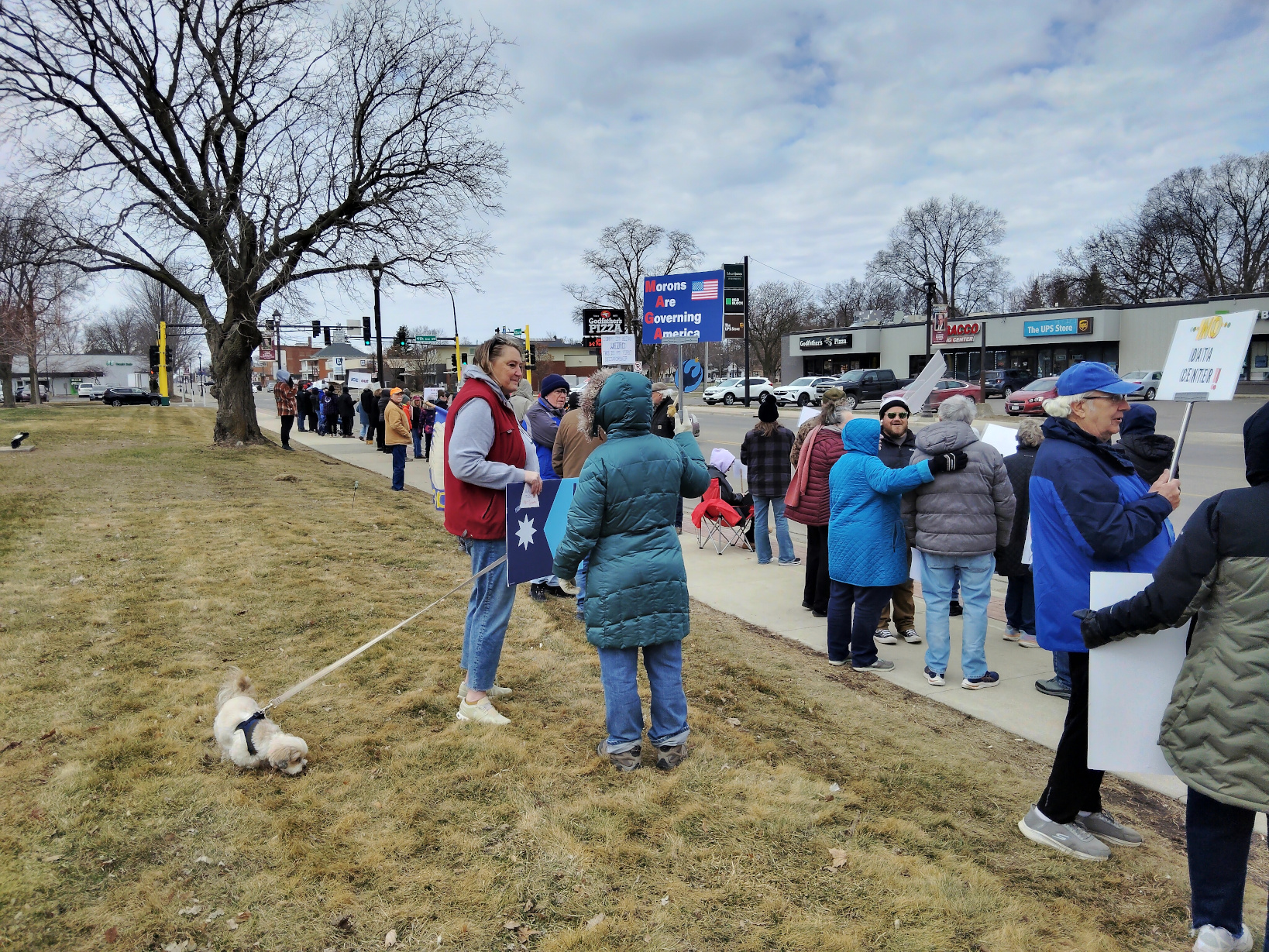
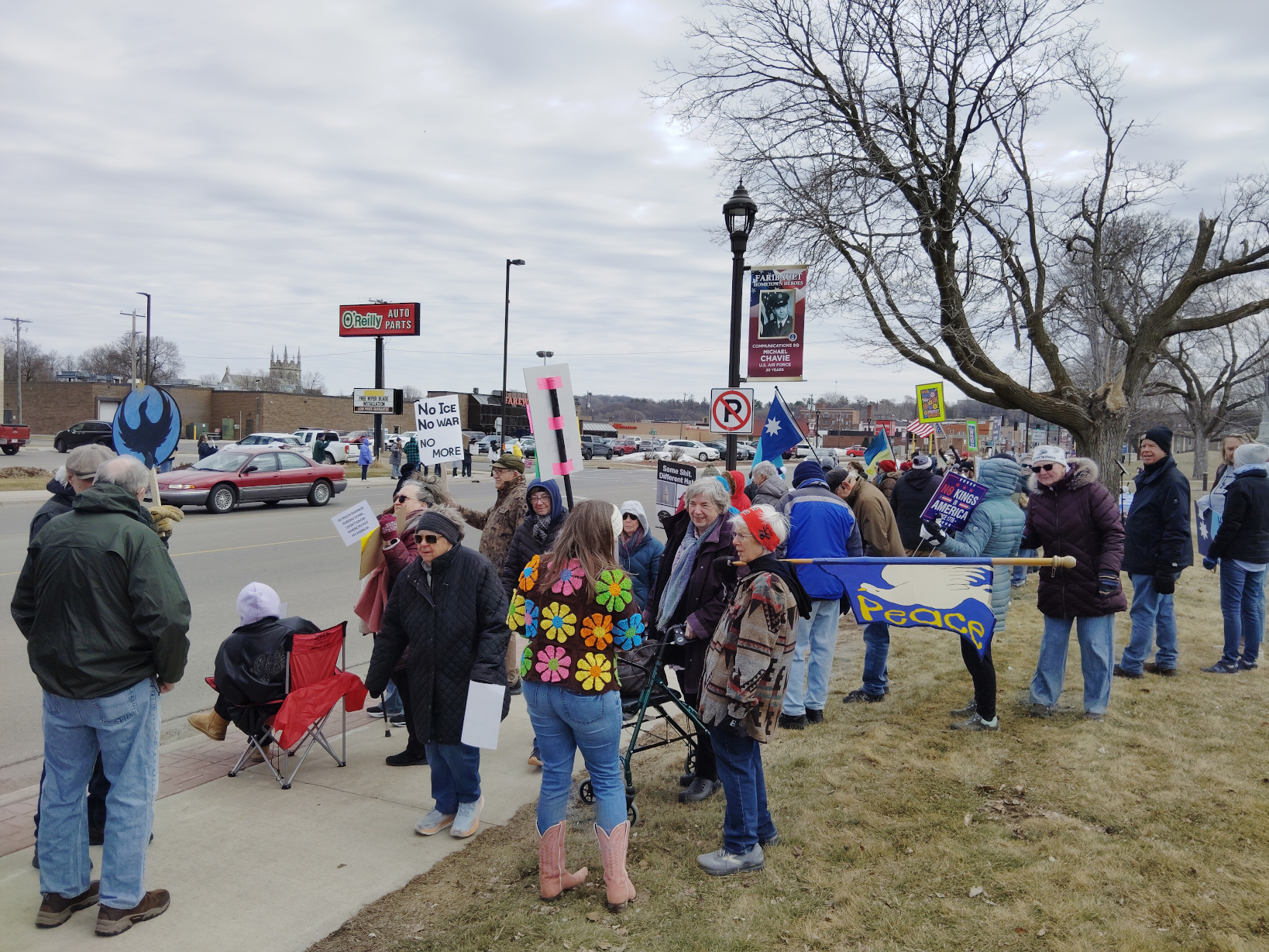
WE GATHERED, 175 STRONG, in Faribault on Saturday morning for the third nationwide No Kings Day protest. In a city which is decidedly red, this number impresses. This marked a record turn-out, far surpassing our top participation of eighty. I saw many new faces. And a few new dogs.
This shows only a small portion of the line of protesters, some of whom brought their dogs. (Minnesota Prairie Roots copyrighted photo March 2026)
From a preschooler, who plastered stickers onto a cardboard sign and held his mom’s hand, to a first-time protester in her eighties, and all ages in between, we came.
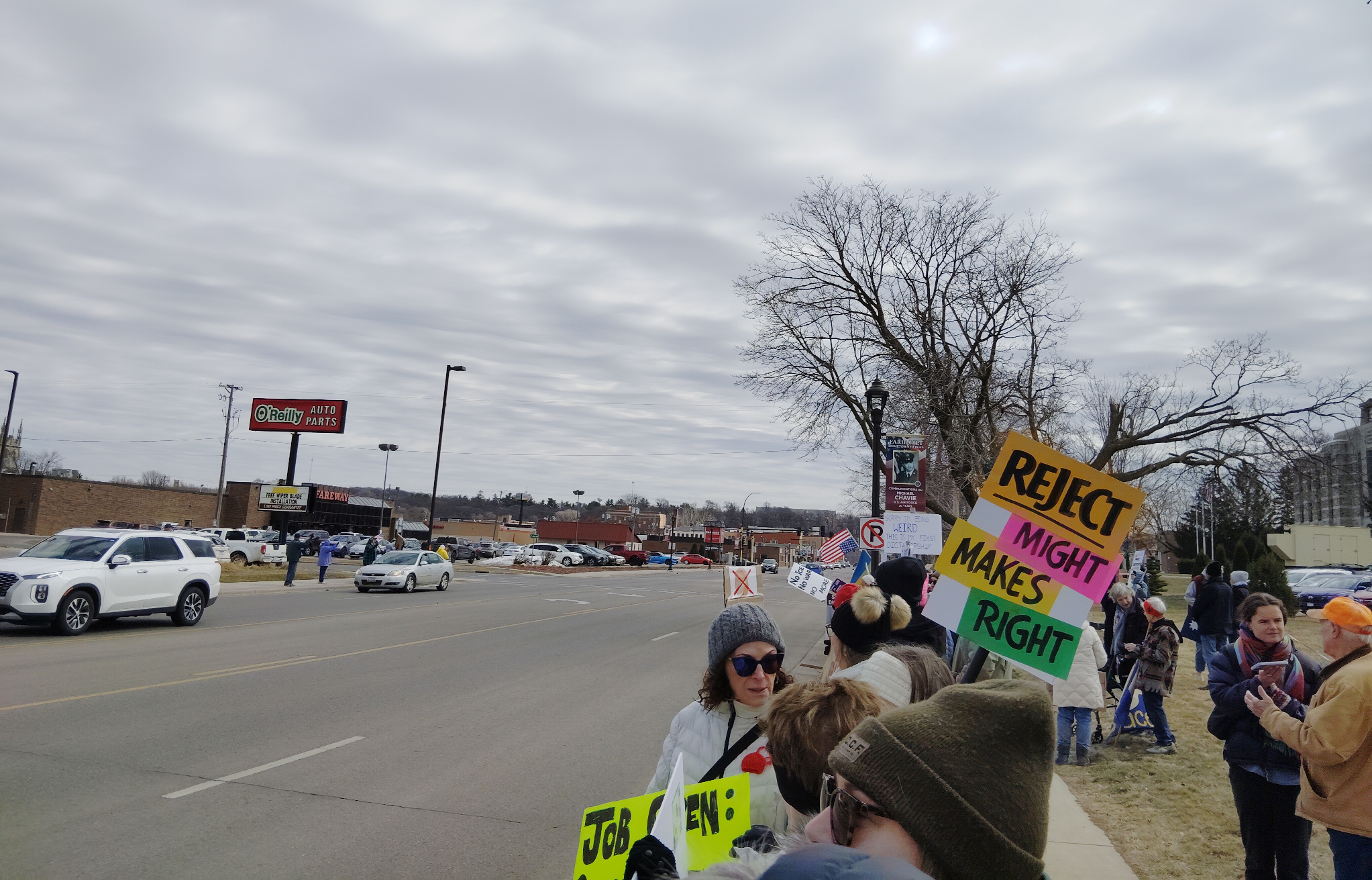
The Faribault protest site is along Minnesota State Highway 60 outside the Rice County government services building. (Minnesota Prairie Roots copyrighted photo March 2026)
We stood along Minnesota State Highway 60 in this city of 25,000 an hour south of the Twin Cities to raise our voices. We care about this country enough to step up and speak out. And not a single one of us was paid to protest, as some erroneously claim.
We came with hope and energy and enthusiasm.
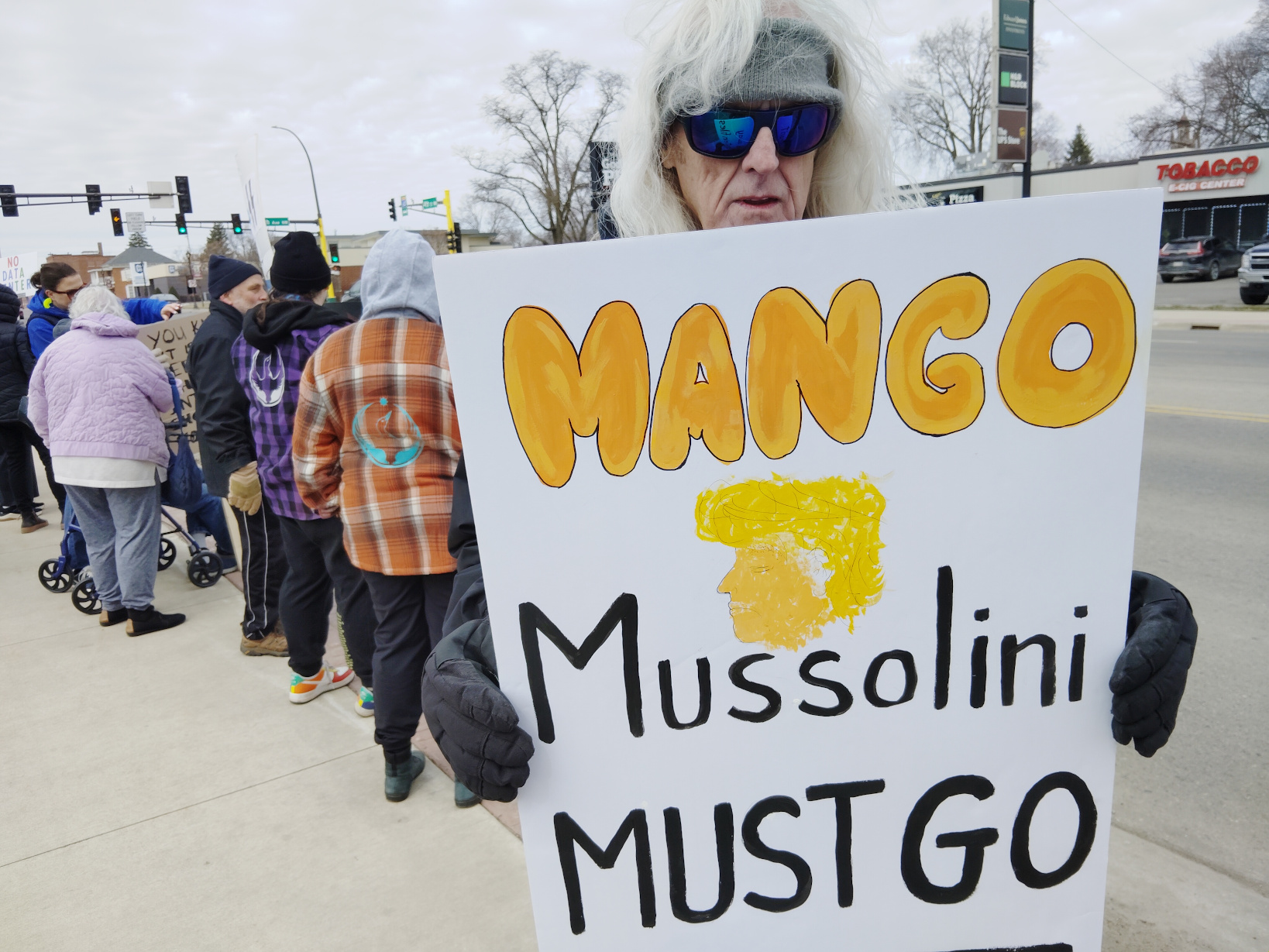
Another favorite sign, for its message, creativity and humor. (Minnesota Prairie Roots copyrighted photo March 2026)
We came, too, with our signs. Grievances. Concerns. Demands. Strong statements in support of freedom, democracy, voting rights, immigrants… Strong statements against the leadership in this country, immigration enforcement, the war in Iran. Strong statements about the state of the nation, the economy, whatever worries us.
When I saw several protesters without signs, I offered extras I brought. Pulling the signs from the back of the van, I asked them to put the signs back before they left. They did.
My friend Ann, center, came in a flower power sweater she handcrafted. I absolutely love this vintage 70s look, which fits protesting. (Minnesota Prairie Roots copyrighted photo March 2026)
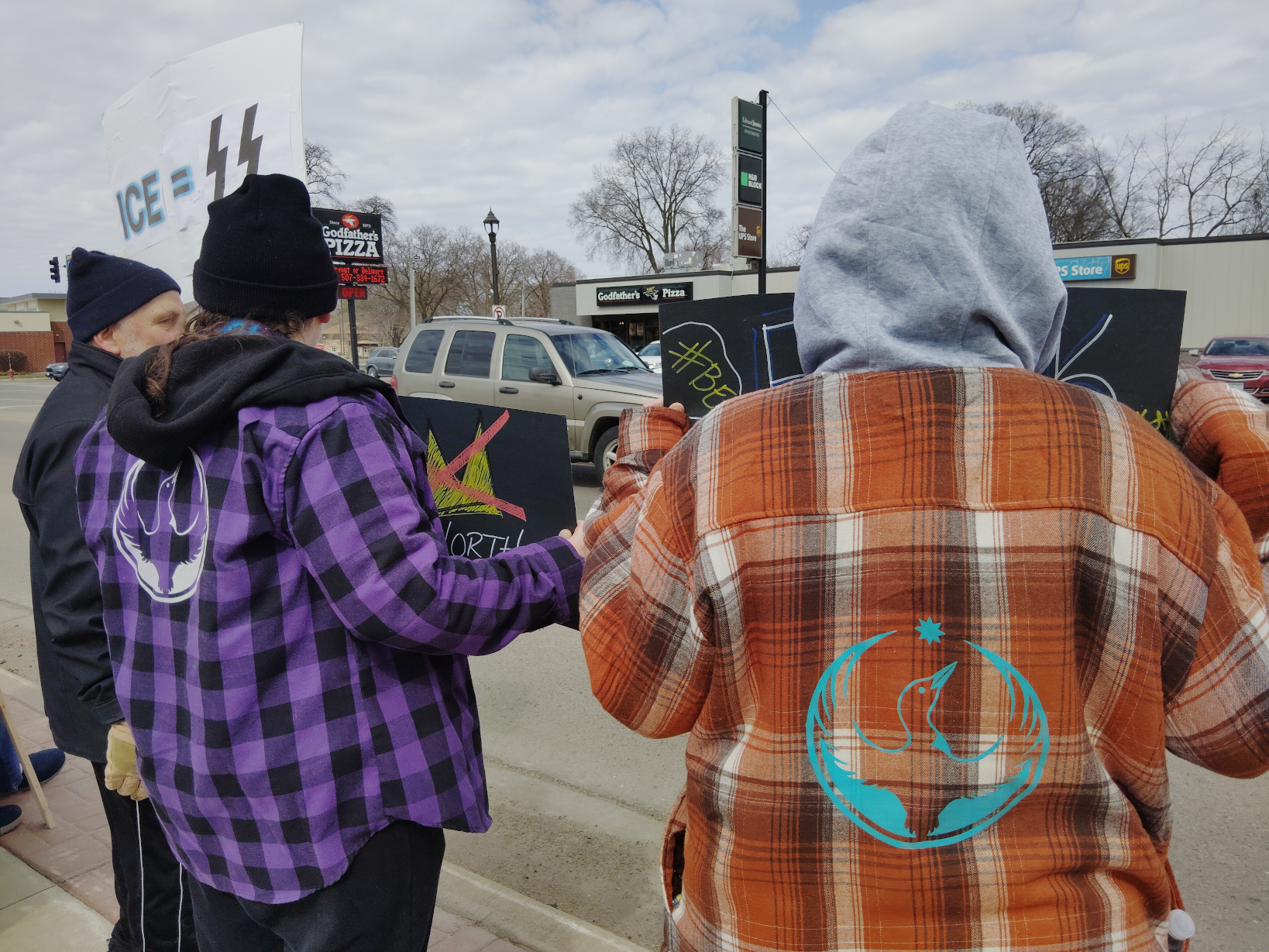
We came in our red Norwegian resistance hats and our handcrafted flower power sweaters and our Rebel Loon shirts.
A sign, with a humorous twist, that shows deep concern about Trump’s presidency. (Minnesota Prairie Roots copyrighted photo March 2026)
We came, too, with our music, a guitarist and a bagpipe player adding a celebratory tone to the event. This was, after all, also a rally for like-minded folks who care about each other, their neighbors, this community, this state and America.
The Rebel Loon, on the backs of these shirts, has become a symbol of resistance in Minnesota. The loon is our state bird. (Minnesota Prairie Roots copyrighted photo March 2026)
It felt good to stand in solidarity, to talk and smile and lift each other up. To not feel so alone in one’s beliefs in a mostly Republican town.
My husband, Randy, made and carried this humorous sign, which garnered lots of laughs. And compliments. (Minnesota Prairie Roots copyrighted photo March 2026)
It felt good also to laugh at humorous signs. To compliment those who made especially creative signs. To recognize that every person lining the sidewalk on both sides of the highway had a vested interest in publicly standing up for what is right and good and decent.
I walked the protest line, welcoming protesters, looking at their signs, thanking them for coming, encouraging them to return next Saturday from 11 a.m. to noon.
This is not done. This resistance.
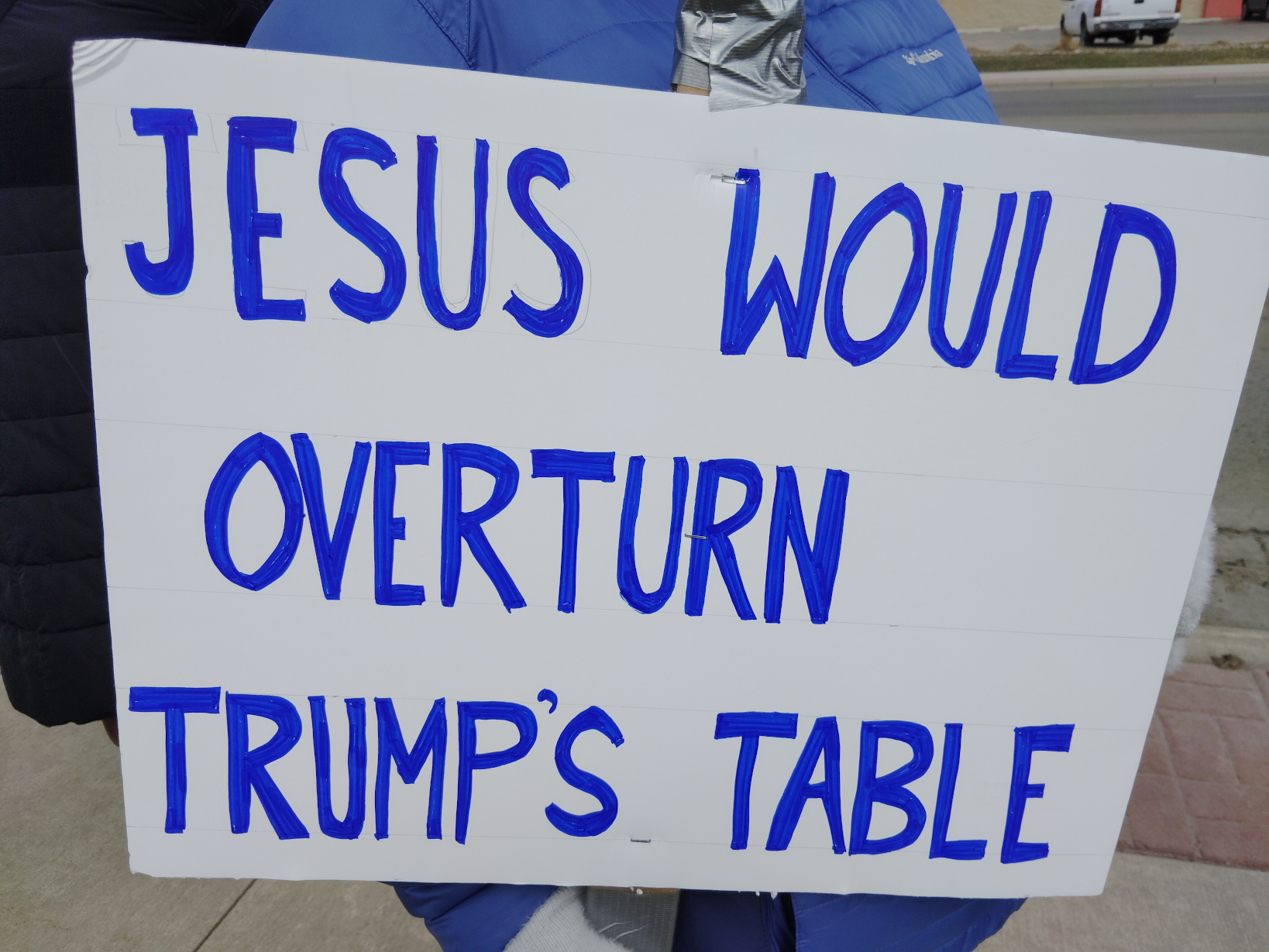
As a Christian, this sign really resonates with me. (Minnesota Prairie Roots copyrighted photo March 2026)
We will continue to come with our signs. We will come with our peace and Minnesota state and American flags. We will come with our stories and our words and our voices.
We will come in the spirit of peaceful resistance. In the spirit of resilience and strength and compassion. We are, and remain, Minnesota Strong.
#
THANK YOU to everyone who participated in the No Kings Day protests at 3,100 sites across this nation today. A special thanks to those who showed up in Faribault. To those I invited, those I met, those I knew from past protests, know how much I value you and your voice. To the estimated 100,000 who attended the flagship event at the Minnesota state capitol in St. Paul, thank you for showing the world the strength of Minnesotans. To protesters who gathered in other countries, this American is grateful for your support. Continue to stand strong in solidarity for freedom. We must. We will.
Sunrise on Horseshoe Lake in the central Minnesota lakes region. (Minnesota Prairie Roots copyrighted file photo)
I ATTENDED A CONCERT at my church, Trinity Lutheran, Friday evening. Students from Concordia Academy in Roseville kicked off their spring break “Walk in the Light Tour” to Nashville with their first stop here in Faribault.
What a talented group of high school musicians who sang with joy, energy and depth. From spirituals to traditional worship to blessing songs and more, they performed in the light of faith.
One song in particular, “Thither Will I Go” by composer Tom Trenney, resonated with me. It’s based on a poem, “Light Looked Down,” by Laurence Housman (1865-1959). Although this poem was written long ago, the words are timeless.
The short three-line poem centers on light and darkness, war and peace, and hatred and love.
As I sat listening to these young people, my mind wandered to the No Kings Day protests today. “Thither Will I Go” would be a great protest song. As protesters, we shine light, peace and love.
I’d like those who criticize us, who question our reasons for protesting, who claim we are paid (we are not), who shout profanities at us, call us stupid and more, to consider the words written long ago by Laurence Housman. As protesters, we choose light over darkness, peace over war, love over hatred.
Thither will we go.
Where there is darkness, let there be light. Where there is war, let there be peace. Where there is hatred, let there be love.
FAITH COMMUNITIES are especially busy this time of year as they prepare for the celebration of Christ’s resurrection. Mid-week Lenten services, Friday night fish fries, Palm Sunday and the beginning of Holy Week all usher in Easter morning.
Locally, you’ll find not only the usual, but also a few unique happenings at several area churches. First up, Little Prairie United Methodist Church, rural Dundas, hosts its annual Fish Dinner from 3-8 p.m. Friday, March 27. The meal features fried or baked fish, baked potatoes, salad bar and pie. Tickets must be purchased in advance. Take-out is available. Click here for details.
Also on Friday evening, the Concordia Academy Choir, based at the Christian high school in Roseville, presents an hour-long concert of inspiring music for all ages beginning at 7 p.m. at Trinity Lutheran Church in Faribault. A free will offering will be taken.
Saturday, March 28, brings more activity to Trinity with the Trinity Radio Rumble beginning at 2 p.m. in the Faribault Lutheran School gym, connected to the church. The event, a fundraiser for the congregation’s radio ministry, features family-friendly, live professional wrestling. Click here for more info and to purchase discounted tickets in advance.
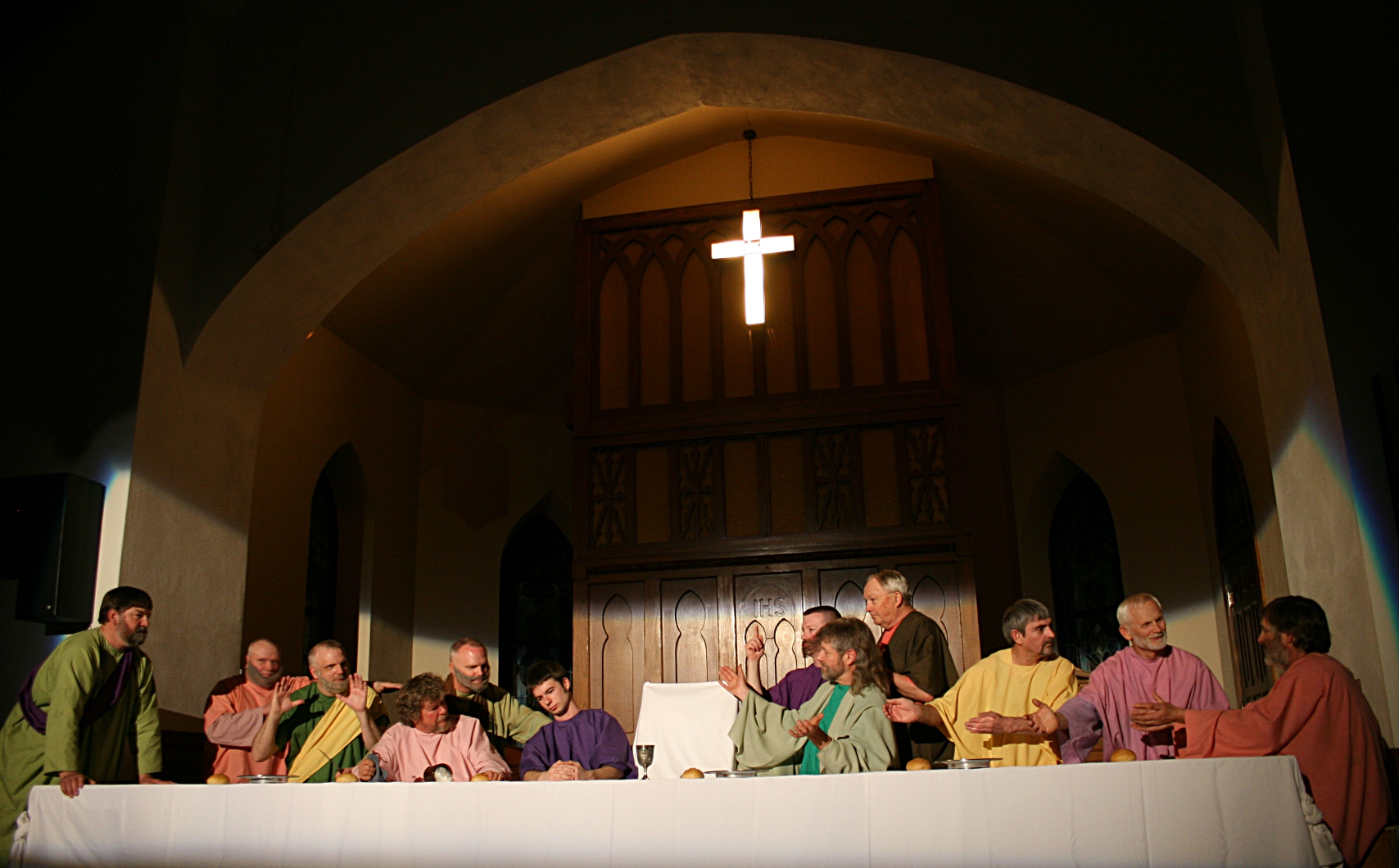
St. John’s 50th presentation of The Last Supper Drama in the sanctuary. (Minnesota Prairie Roots copyrighted file photo)
On Sunday, March 29, The Last Supper Drama comes to St. John’s United Church of Christ, Wheeling Township. The drama in the rural Faribault church has been a Palm Sunday tradition for more than 60 years. Performed in the darkness of the sanctuary by 12 actors role-playing the disciples, the drama begins at 8 p.m. Each disciple speaks individually, explaining his relationship to Christ. Refreshments follow the free performance, which will also be live-streamed on Facebook and YouTube.
So whether you like fish, music, wrestling and/or drama, you’ll find all four in faith communities in the Faribault area this coming weekend.
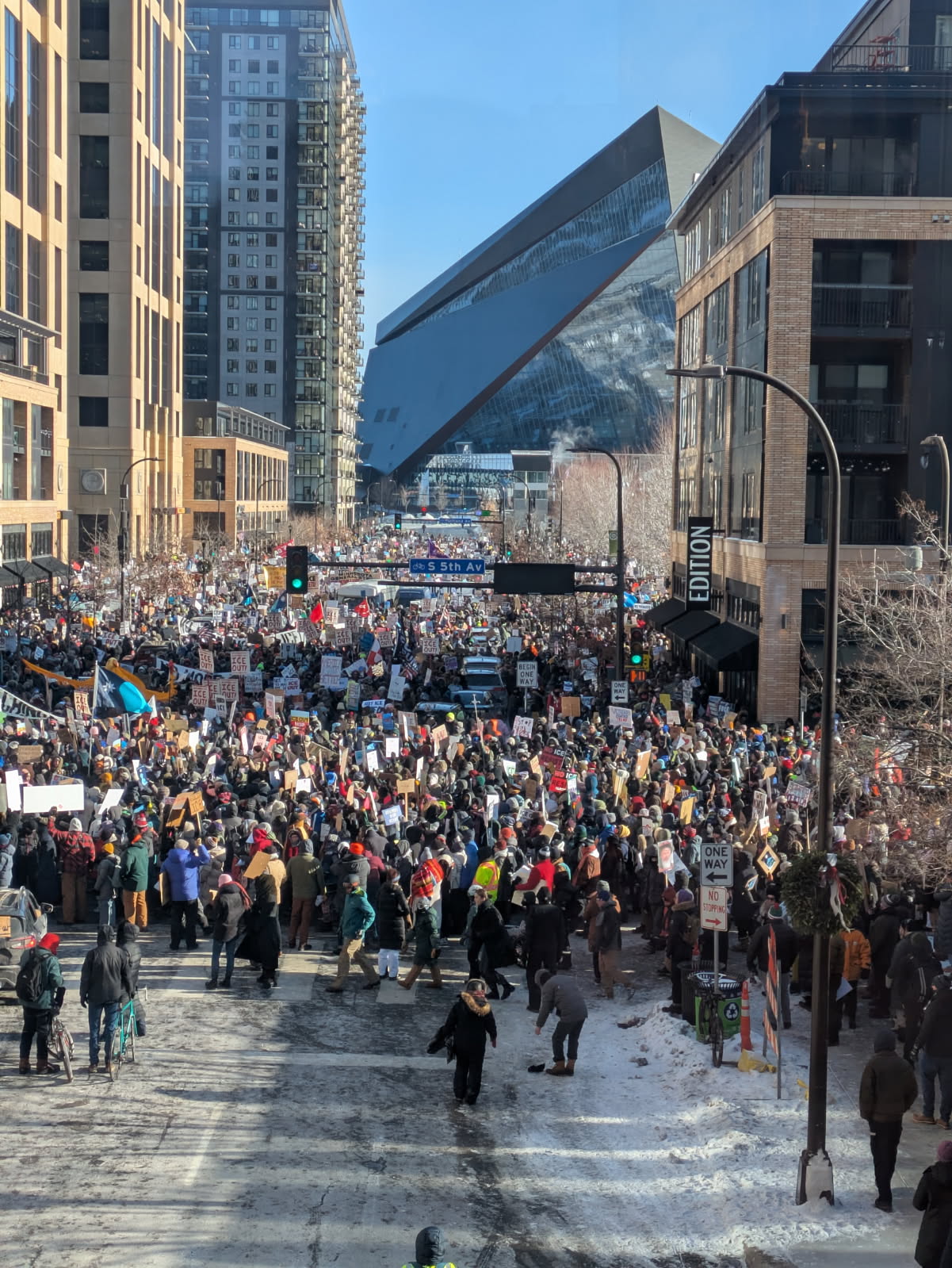
A protest in downtown Minneapolis in January, at the height of Operation Metro Surge. (Photo credit: A cousin who lives in south Minneapolis.)
THIS MARKS A BIG WEEK for anyone concerned about the future of this country under the leadership of President Donald Trump and his administration. That includes me. This is a week of unified nationwide protests.
I’ve protested so many times already—in Faribault, Northfield and Owatonna—against what’s unfolding in America that I’ve lost count. And lest anyone thinks peaceful public protests don’t matter, they do. This is one way to raise our voices, to stand up for democracy, to protect our voting rights, to support our immigrant neighbors, to oppose that which is morally and ethically wrong. To resist and publicly stand for freedom, justice, peace, and much more.
This Thursday and then again on Saturday, concerned Americans will rise up, not in a violent insurrection, but in peaceful protest. Using our voices and our signs, we will make our statements. And, living in a primarily “red” community like I do, it’s especially important for me and others to take a visible public stand.
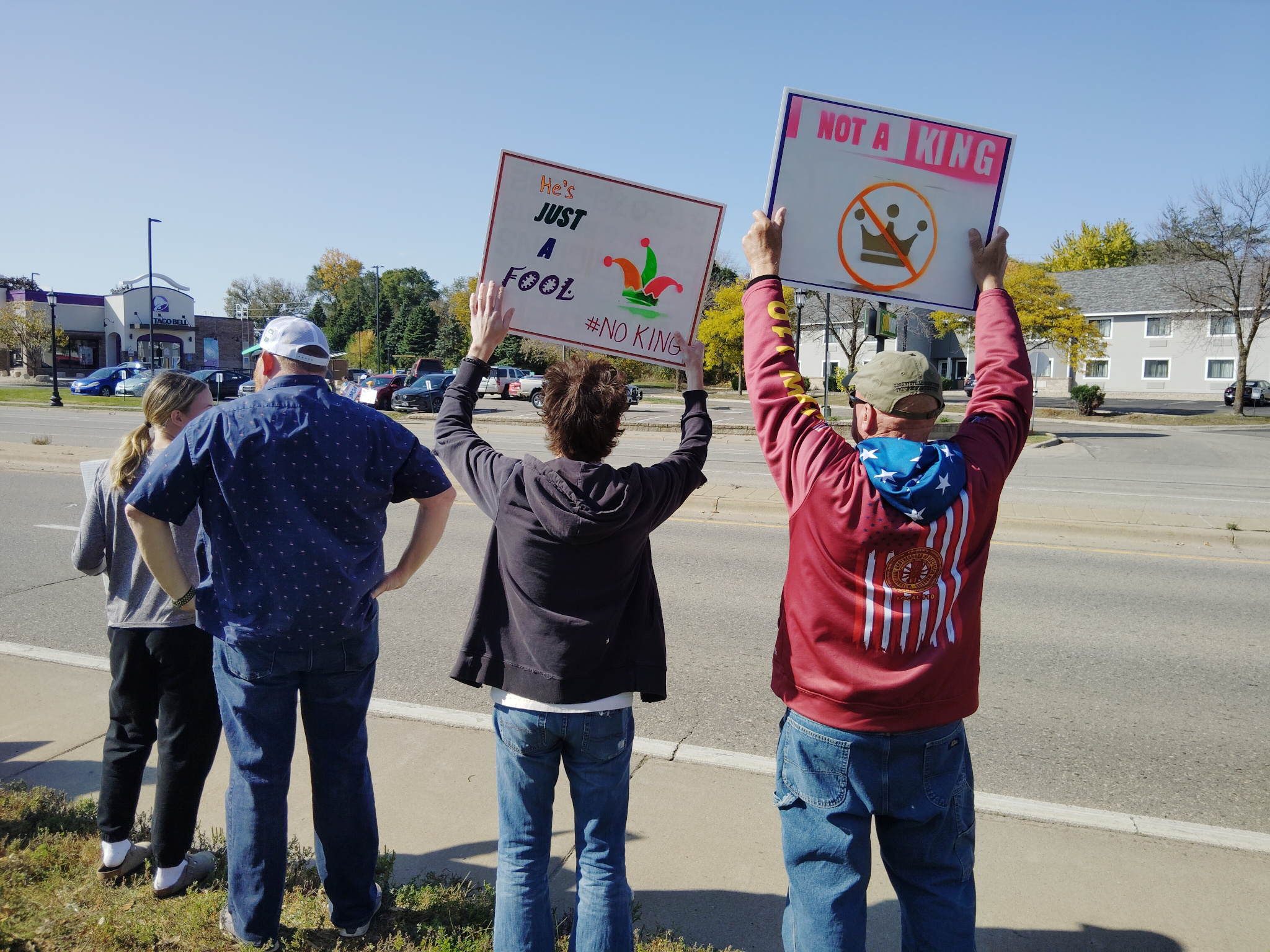
At a NO KINGS protest in Northfield in October, protesters stand along busy Minnesota State Highway 3. (Minnesota Prairie Roots copyrighted file photo October 2025)
BRIDGE PROTEST ALONG I-35
The week’s protests begin on Thursday with a No Kings Democracy Bridge Protest along the Interstate 35 corridor from Minnesota to Texas. If Faribault had a bridge over the interstate, we’d be out there. We don’t. But only a short drive to the south in Owatonna and Medford, organized protests on bridges are planned from 4-5:50 p.m. on Thursday. Protesters gathering on 46 bridges over and along I-35 will hold letter signs (rather than individual signs), spelling out messages, making the words highly-visible to the millions traveling this corridor. Messages like: NO WAR NO KINGS and YES DEMOCRACY—NO KINGS 3/28!
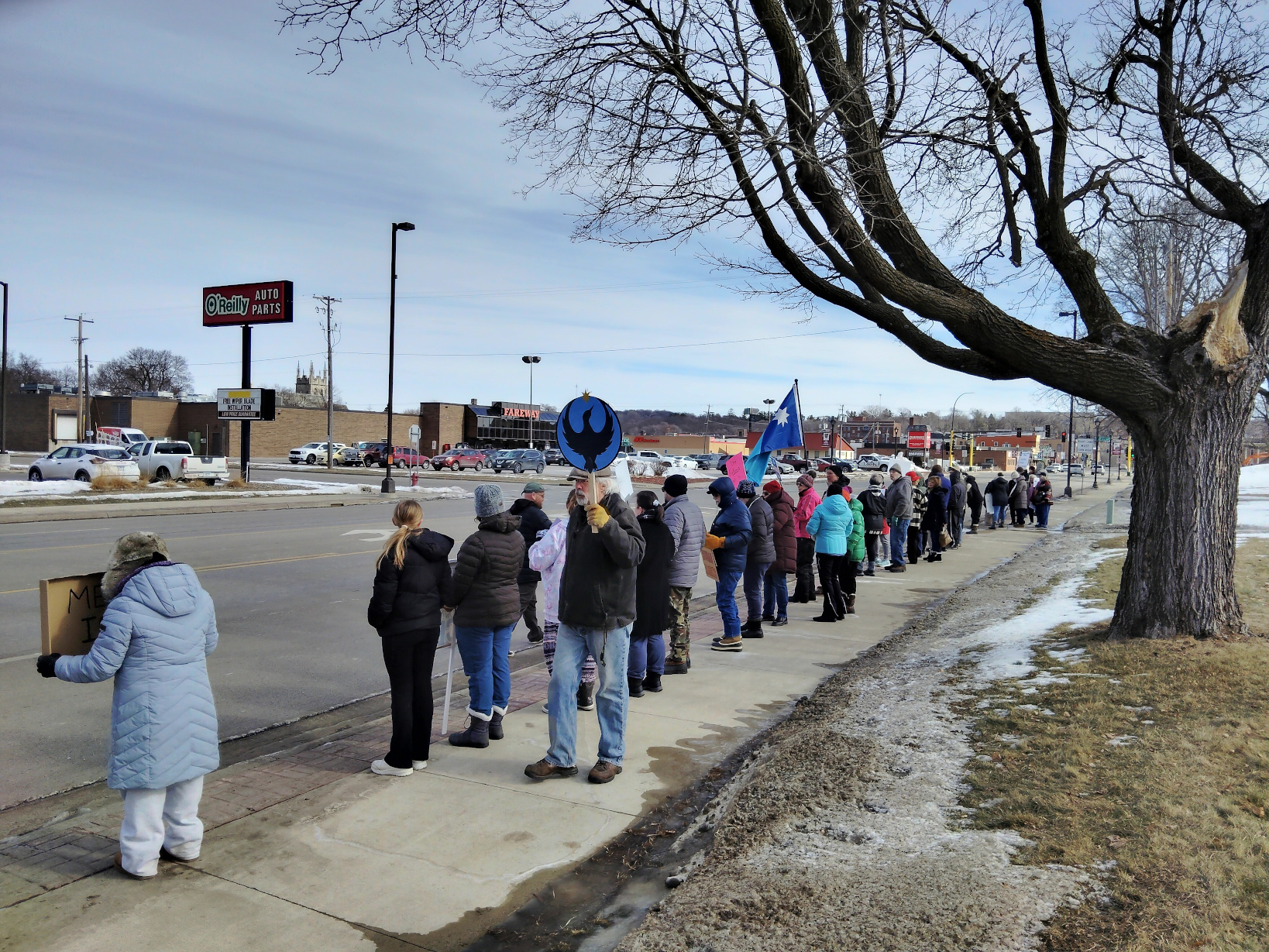
This shows a portion of the people protesting in Faribault on a frigid February morning. (Minnesota Prairie Roots copyrighted file photo February 2026)
NO KINGS DAY PROTEST
Thursday’s border-to-border bridge protests are a lead-up to the main event, the third nationwide NO KINGS protest on Saturday, March 28. Here in Faribault, we will gather outside the Rice County government services building along Minnesota State Highway 60 from 11 a.m.-noon as we have every Saturday for almost three months.
I’ve stood there in frigid cold, in a snowstorm, in near 80-degree temps. And I’ve met the most wonderful people. Individuals who care deeply about this country. People who value freedom, democracy, justice, peace, their neighbors… We bring our signs, sharing whatever concerns us, whatever we want the public to read. Some bring American, Minnesota state and peace flags. And this past Saturday, a man wore an inflatable frog costume. A passing motorist brought us doughnuts.
We stand united, overwhelmingly supported by those who drive by, waving, giving us the thumbs up, honking their horns. But, of course, we are also flipped off, have profanities shouted at us, and are threatened by drivers of over-sized pickup trucks who drive dangerously close and fast, rolling coal. They are attempting to intimidate us into silence.
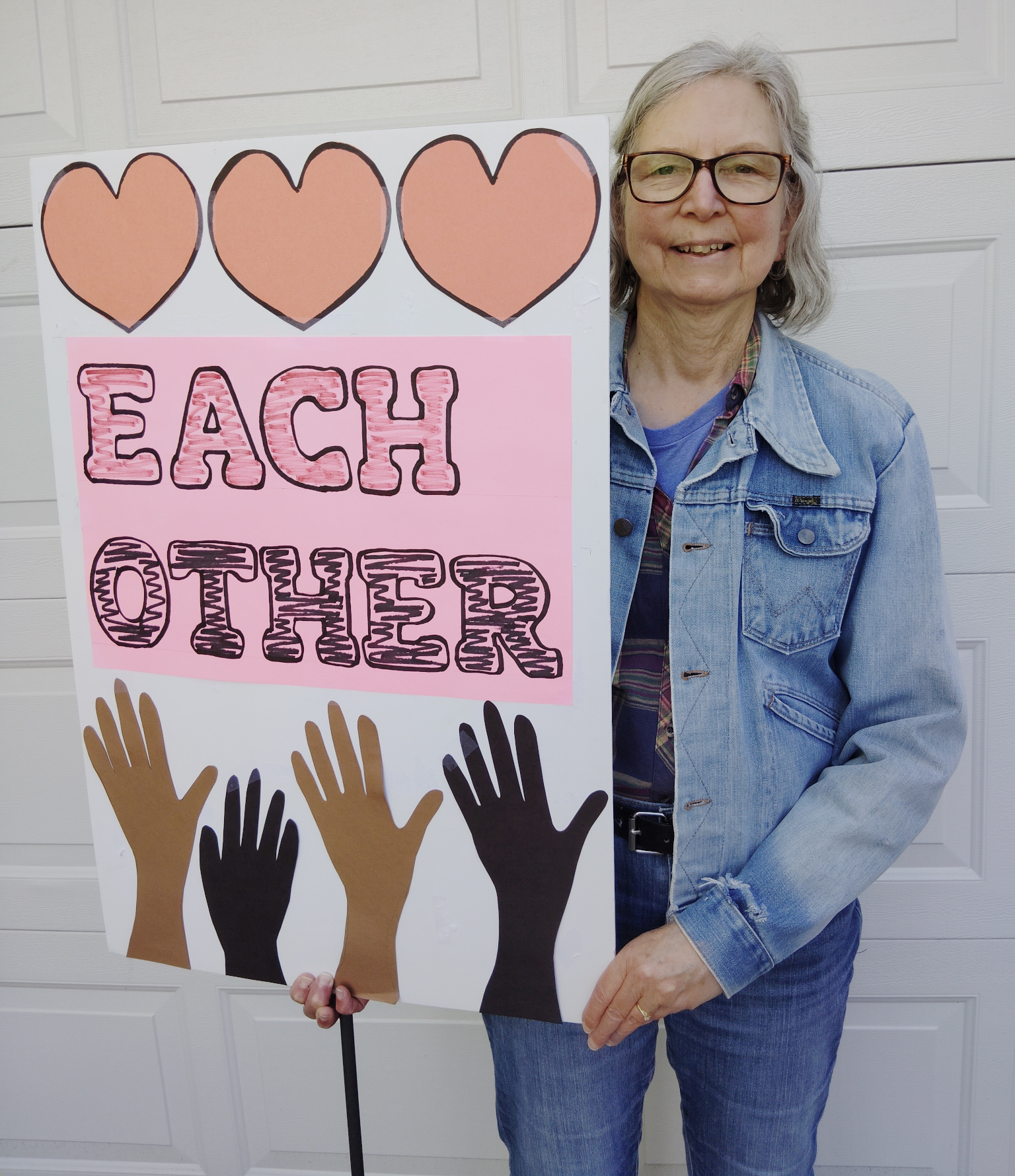
I was holding this sign when a driver told me to “find Jesus.” (Minnesota Prairie Roots copyrighted file photo by Randy Helbling)
And then there was the driver who last week slowed and shouted, “You need to find Jesus!” I held a sign with a message to love each other. A young man next to me held a “peace, not war” sign. I believe Jesus would have approved of our signs.
My friend Larry, in his eighties, told me he hadn’t protested since the Vietnam War. But he’s joined us in Faribault for many of our Saturday morning protests. People of all ages partcipate. (Minnesota Prairie Roots copyrighted file photo February 2026)
FLAGSHIP PROTEST IN THE TWIN CITIES
This Saturday we will hold our signs again in Faribault. To the north in the Twin Cities, protesters will gather at noon to march from three sites in St. Paul to the Minnesota State Capitol. The Twin Cities is the flagship location for the March 28 NO KINGS Day protest. At 2 p.m., an impressive line-up will lead a rally. Those include Senator Bernie Sanders, Jane Fonda, Joan Baez, Maggie Rogers, Minnesota Attorney General Keith Ellison, Lt. Governor Peggy Flanagan, and the boss himself, Bruce Springsteen. The musician will perform his anti-ICE song, “Streets of Minneapolis.”
In the words of Springsteen, “We will take our stand for this land.” We will raise our voices. From the small towns and cities of the Heartland, from rural and urban areas coast-to-coast, Americans will rise up and peacefully protest. Unified in purpose. Determined. Standing strong.
ADDITIONALLY, the people of the Twin Cities have been awarded the 2026 John F. Kennedy Profile in Courage Award for their actions during the massive federal immigration enforcement in Minnesota. Click here to learn more about that award, which will be presented at the John F. Kennedy Presidential Library and Museum in Boston on May 31. So proud of you, Twin Cities, and all other Minnesotans who stepped up, helped, protested, etc. during Operation Metro Surge. That includes right here in my community of Faribault.


















 Minnesota Prairie Roots
The value of village, especially now April 7, 2026
Tags: African proverb, art, charity, collection boxes, commentary, community, donations, Faribault, Faribault Community Action Center, food insecurity, food shelf, giving, Minnesota, Operation Metro Surge, Shattuck-St. Mary's School, village
“IT TAKES A VILLAGE to raise a child,” according to an African proverb turned catchphrase by First Lady Hillary Rodham Clinton in her 1996 book, It Takes a Village: And Other Lessons Children Teach Us.
While I’ve not read Clinton’s book, I understand the importance of a village, of community, in the lives of children. Kids learn, not only from their parents, teachers and each other, but also from being out and about in their communities.
They learn, and teach us adults, about care and compassion, about service and giving back, of lifting up community. In these days of innumerable challenges in America, such lessons are truly more important than ever.
I need only look within my own core family to see this. In mid-February, my two elementary-aged grandchildren helped their mom, my eldest, transport items from their Lakeville church to a food shelf in nearby Farmington. The kids sorted donated items. And my first grade grandson wrote about the experience for a school assignment complete with illustrations. “I helped at church (beacus (sic) of ICE),” Isaac wrote.
He knew. His mom has been working tirelessly soliciting cash donations, buying and delivering groceries to a south metro food shelf, and sorting and bagging donations during and after Operation Metro Surge. Not only has she assisted those sheltering in their homes, but she has also taught her children an important lesson in helping others.
Kids are never too young to learn about generosity, about loving their neighbors. About giving of themselves in service to community.
That brings me to Shattuck-St. Mary’s, a private college prep school in Faribault. While heading to walk at the Shattuck dome on a recent morning, I noticed several cardboard collection boxes in the public gathering space/hallway of the athletic complex. I stopped to investigate.
While the boxes were empty, I read about their purpose. Students, calling themselves “Sabre Storm,” “The Breakfast Club” and “Team Cheese,” are collecting non-perishable food and household and personal care items for the Faribault Community Action Center.
Most needed are: dry beans, canned soups, ramen noodles, canned chicken/tuna, size 7 diapers and pull-ups. I expect those attending hockey and soccer games, and other activities inside the sports complex will drop donations into the collection boxes.
I love that students like Jorge, Lara, Max, Miranda, Yujin, Rhys, Gael and 38 others, who signed the boxes, are connecting with the Faribault community via this drive. There’s not only a “heightened need” for food, household and personal care items at the Community Action Center, but also for cash donations.
I read that on the CAC website. But I’ve also heard this from a friend who volunteers at the CAC. The increased need all circles back to my grandson’s words, “beacus (sic) of ICE.” Many people in Faribault were sheltering in place, unable to work, during the height of federal immigration enforcement. And just because that operation has scaled back, the crisis has not ended.
The CAC has established a Community Response Fund “to meet urgent and evolving community needs” for food, rental assistance, etc. Every donation helps, my friend says. Even $10.
It takes a village. It takes a village to raise children. And it takes a village to help our neighbors through a crisis, a crisis created by the federal government. A crisis that has left too many Minnesota families facing overwhelming financial challenges, trauma, personal struggles and an uncertain future.
FYI: Please consider making a financial gift to the Faribault Community Action Center Community Response Fund. Click here to learn more. To those of you who have already donated, thank you. I appreciate your generosity during these challenging times in my community. It takes a village.
© Copyright 2026 Audrey Kletscher Helbling