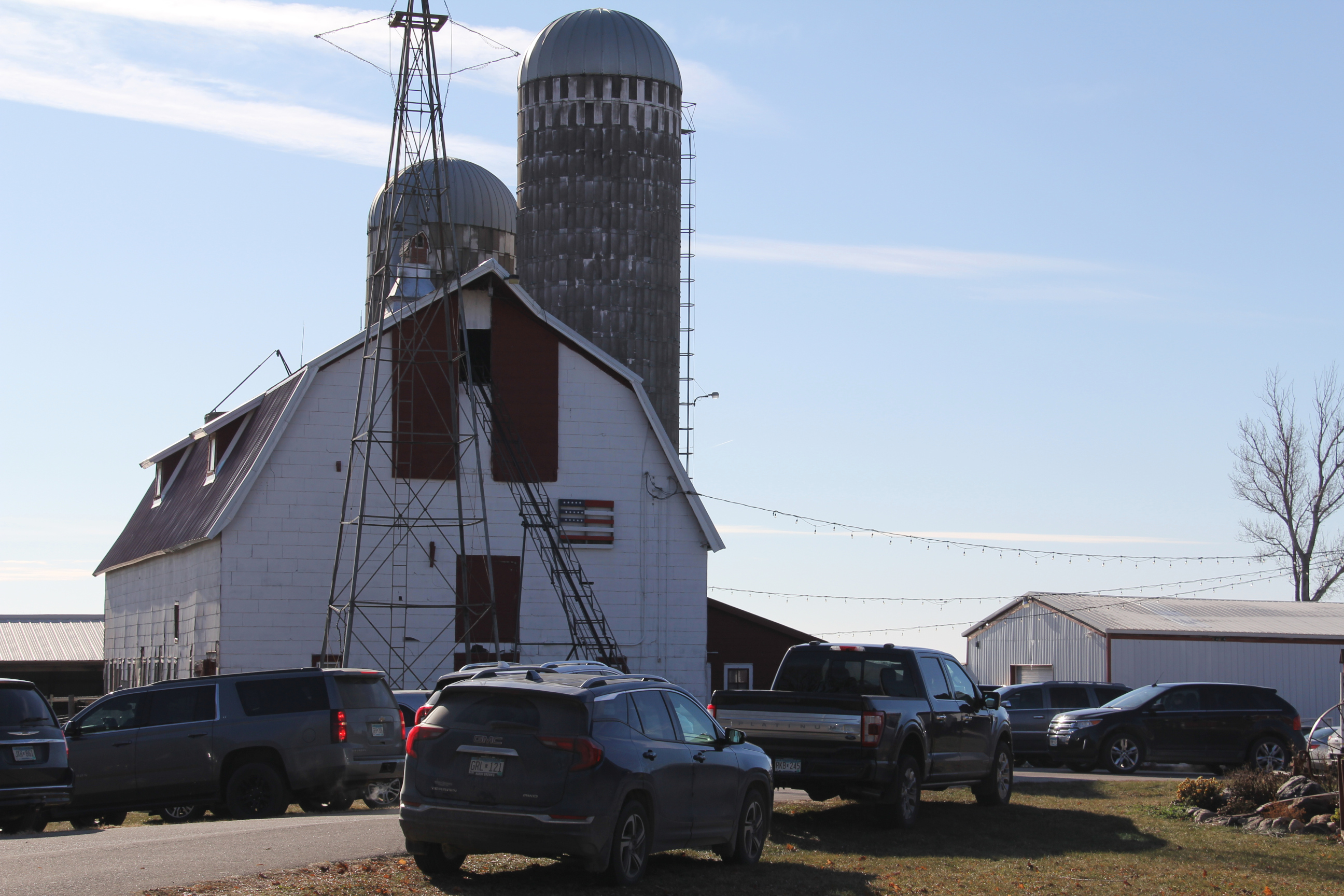
Walking up the driveway to Souba Greenhouse for “Christmas on the Farm” last Saturday. (Minnesota Prairie Roots copyrighted photo November 2024)
IT WAS, IN SOME WAYS, like going back to my childhood family farm in southwestern Minnesota. But rather than traveling 120 miles, I arrived from neighboring Faribault at Souba Greenhouse, a farm site and business on the western edge of Owatonna, for “Christmas on the Farm.”
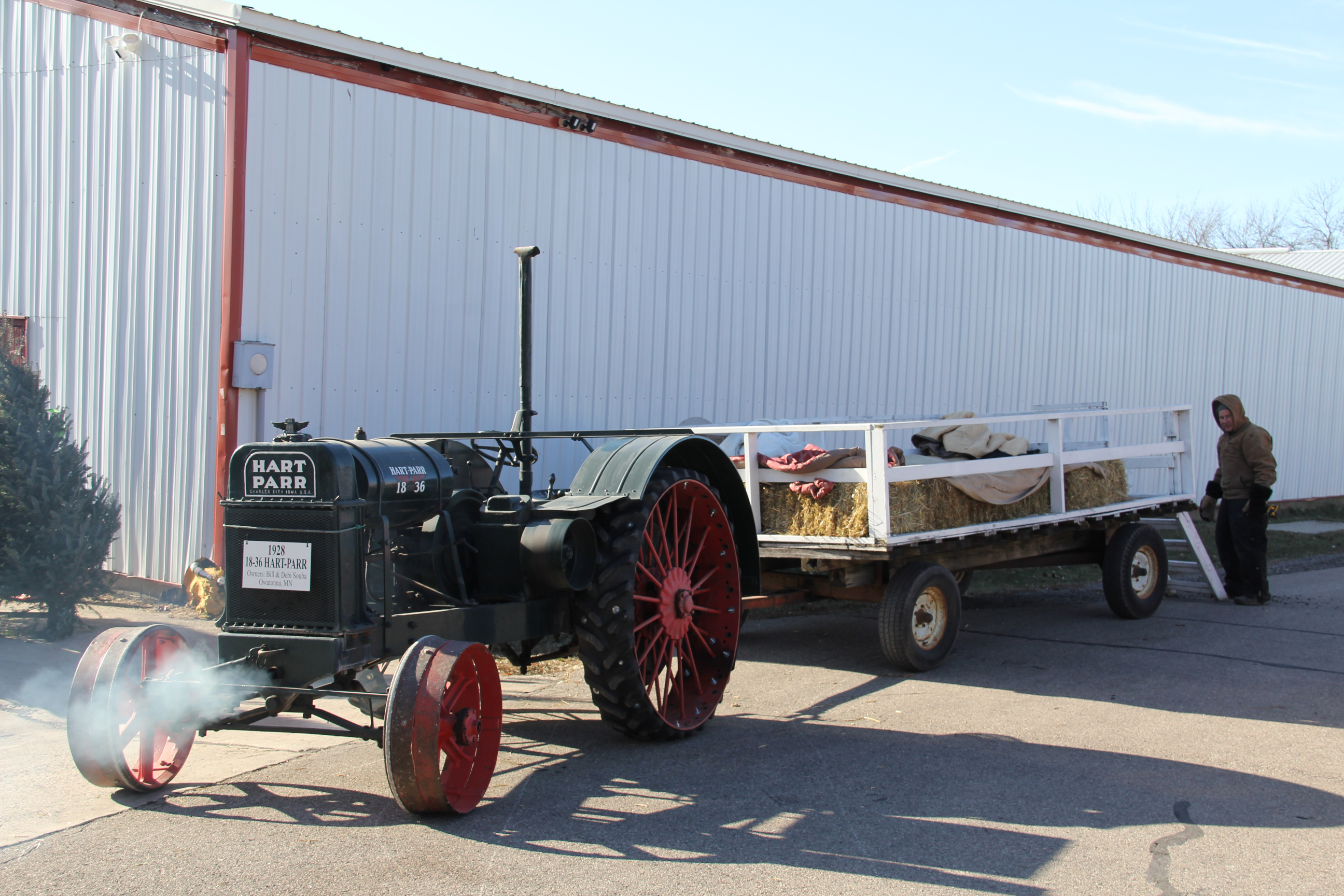
A 1928 Hart-Parr tractor owned by Bill and Debi Souba idles between wagon rides. (Minnesota Prairie Roots copyrighted photo November 2024)
Walking up the paved driveway edged with vehicles, I felt the cold, biting wind sweeping across the land. That, too, was familiar as prairie winds are seemingly ceaseless. A massive white barn snugged by two towering silos lent more familiarity.
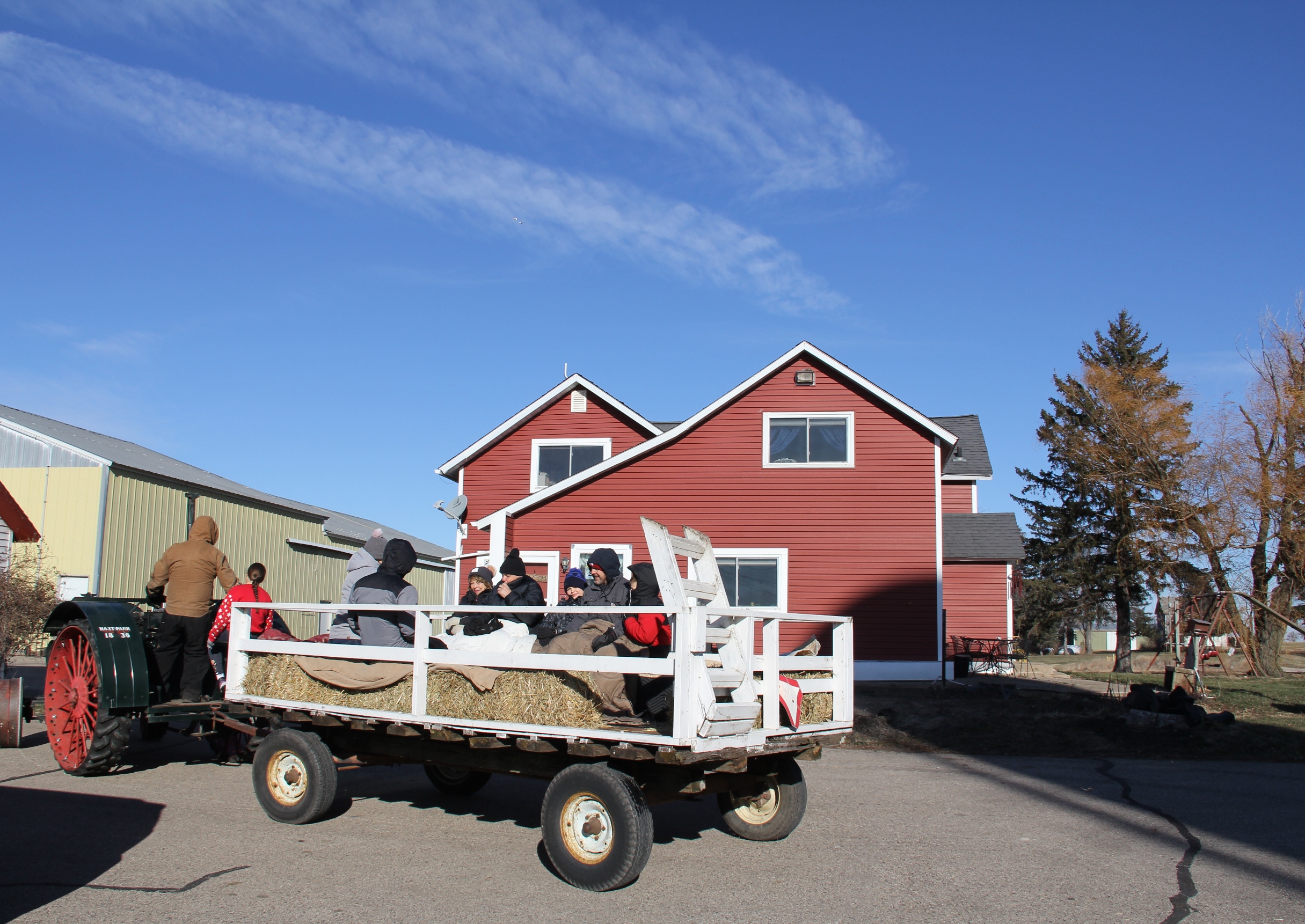
Bundled up for a wagon ride on a cold and windy Saturday morning. (Minnesota Prairie Roots copyrighted photo November 2024)
And then I heard the tractor, the deafening snap snap of a 1928 Hart-Parr 18-36. It sounded a bit like the putt putt of my dad’s old John Deere, only much louder. Guests had already settled onto blanket-draped straw bales atop a wagon for a short ride around the farm yard. They were, I noted, warmly dressed with hoods and stocking caps topping heads. The bright sunshine fooled no one on this cold and windy Saturday morning. I skipped the wagon ride, something I’d typically enjoy.
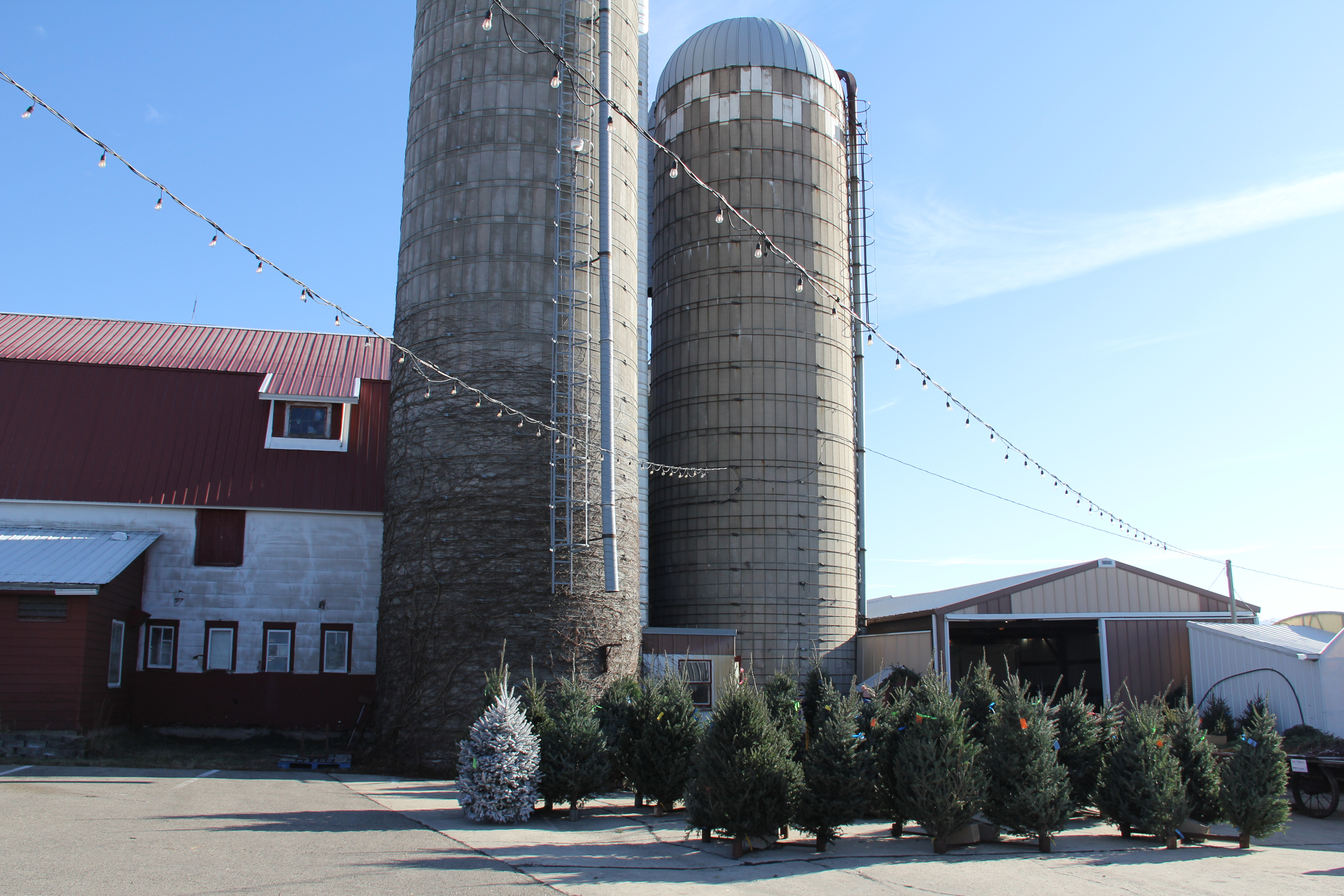
I passed the barn, silos, a pole shed and Christmas trees on my way to the greenhouses. (Minnesota Prairie Roots copyrighted photo November 2024)
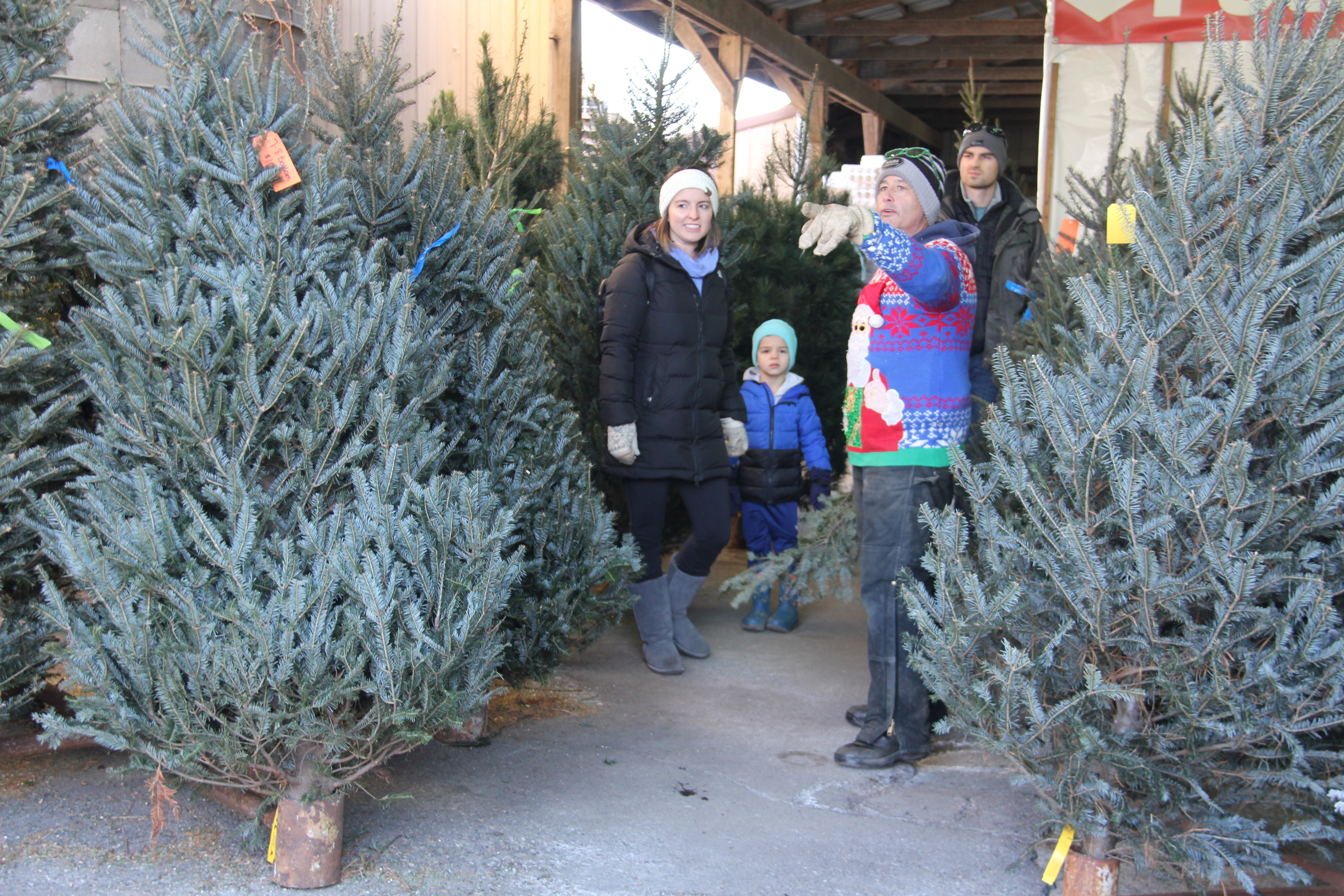
A family searches for a Christmas tree inside the pole shed. (Minnesota Prairie Roots copyrighted photo November 2024)
Instead, I aimed for the warmth of the greenhouses, passing stands of Christmas trees displayed outdoors with more for sale inside an adjacent pole shed. Already I felt the warmth of the holiday season in this rural setting.
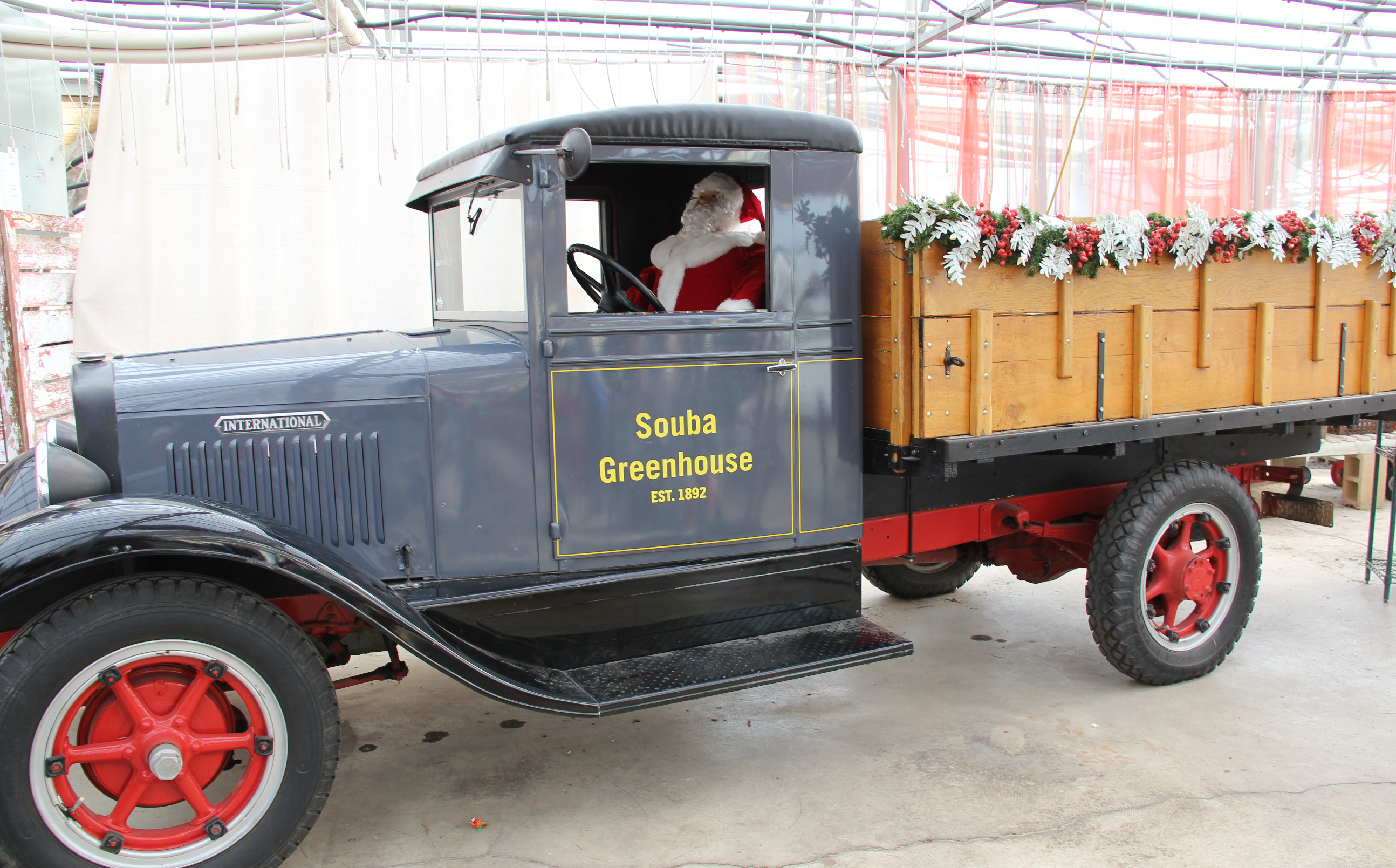
Parked inside the greenhouse was this vintage truck. (Minnesota Prairie Roots copyrighted photo November 2024)
Stepping into the greenhouse, I was immediately drawn to a vintage International truck festooned with garland, a fake Santa propped inside the cab. “Vintage” fits Souba Greenhouse, established in 1892 as a Truck Farm. Today this wholesale and retail greenhouse is fifth-generation family owned by two cousins. The business grows annual flowers and vegetables.
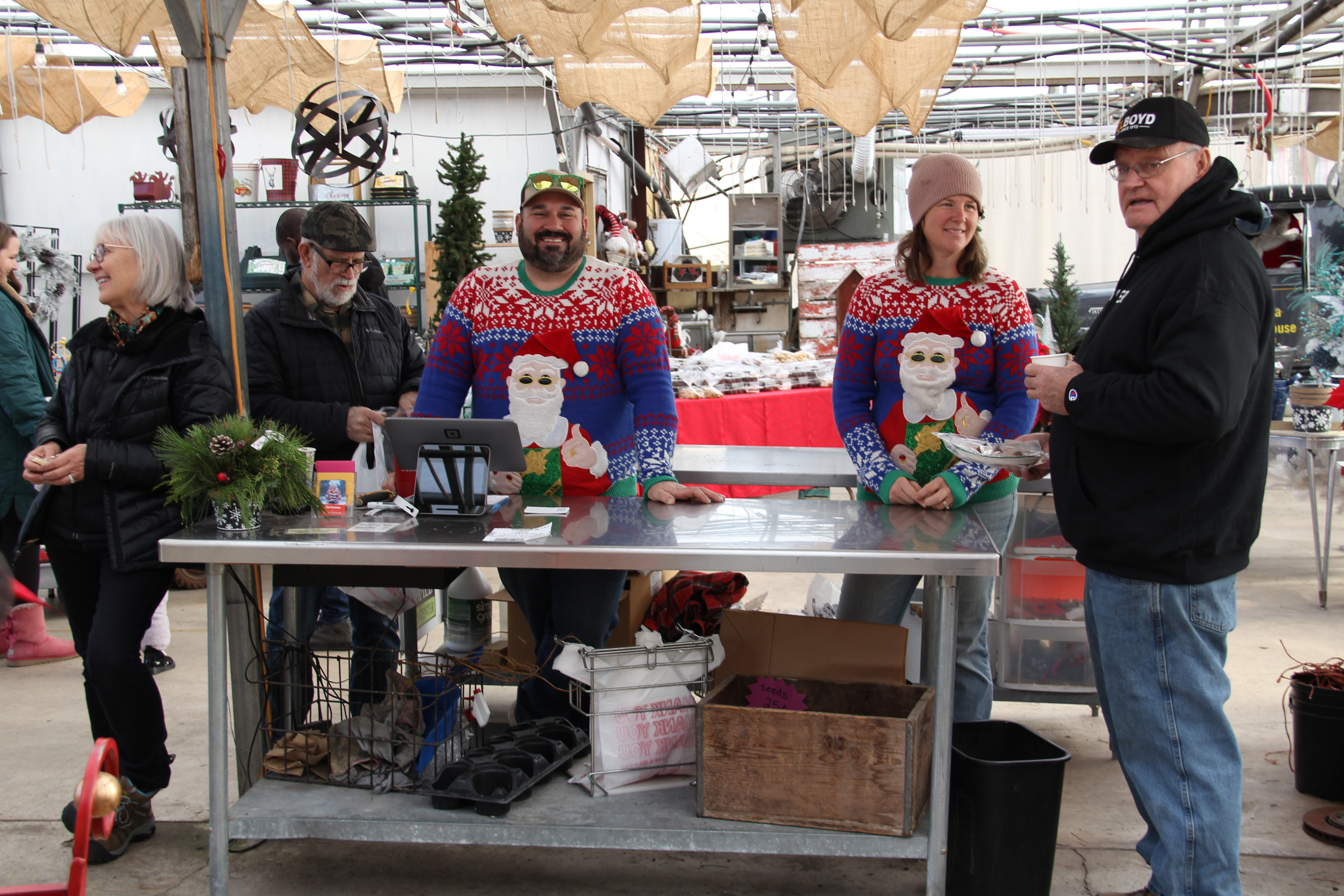
Staff sported colorful matching Santa holiday sweaters, just the right festive fashion flair for the event.
Lots of holiday ornaments for sale. (Minnesota Prairie Roots copyrighted photo November 2024)
The second-hand books inside these brown wrappers are, except for genre, a surprise to the buyer and the gift recipient. (Minnesota Prairie Roots copyrighted photo November 2024)
Vendors ringed the greenhouse, peddling sweet treats, holiday décor, cleverly-packaged books and more.
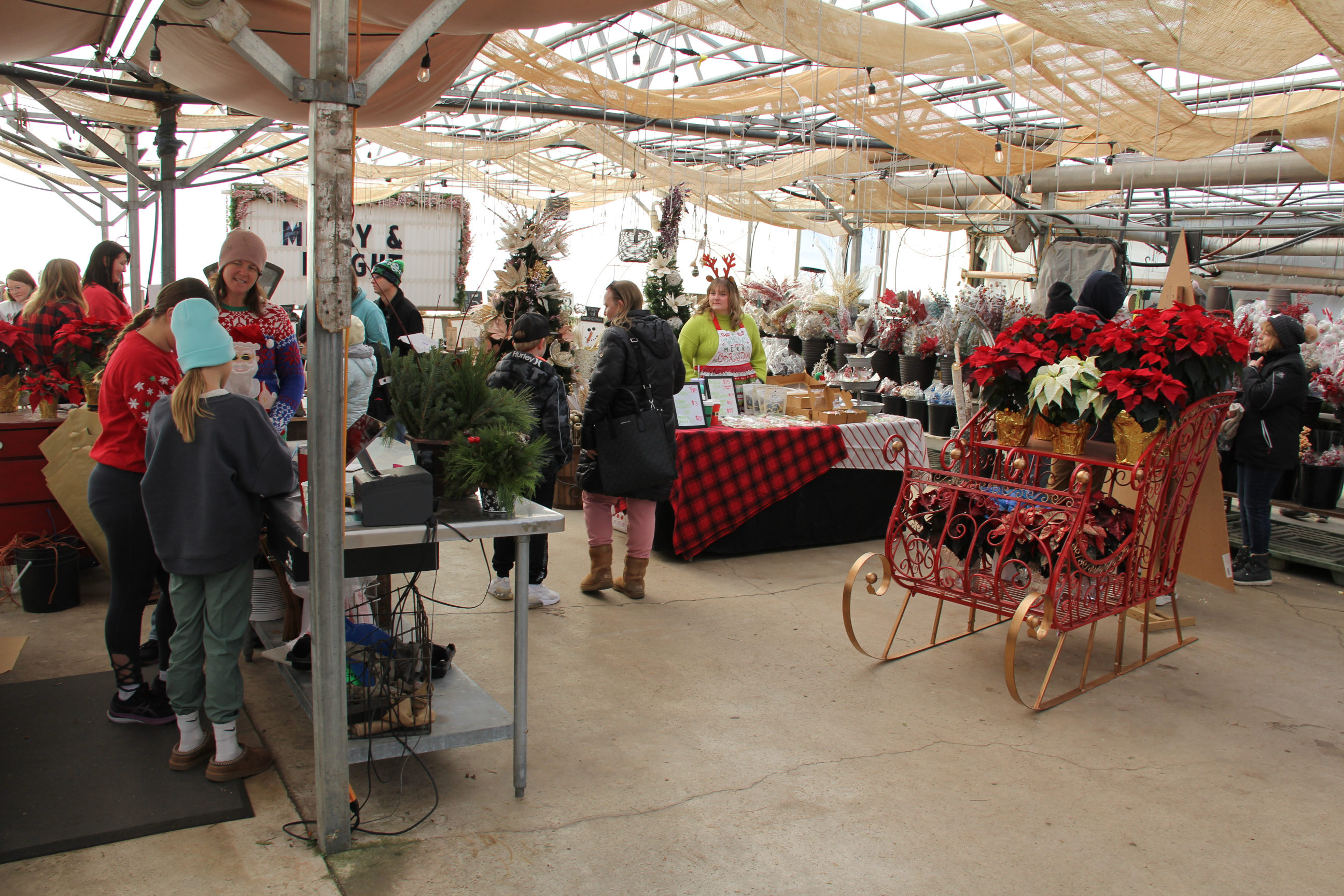
Everything inside the greenhouses was decidedly festive. (Minnesota Prairie Roots copyrighted photo November 2024)
And while I could have enjoyed complimentary popcorn and a hot drink as I wandered among the goods, poinsettias and more, I opted not to given I had my camera in hand. Folks shopped and chatted and smiled. Lots of smiles.
Santa, between family photo shoots. (Minnesota Prairie Roots copyrighted photo November 2024)
I waited inside a second greenhouse as families climbed into a sleigh for photos with Santa. I wanted a photo of Santa only. No need for me to pose with him.
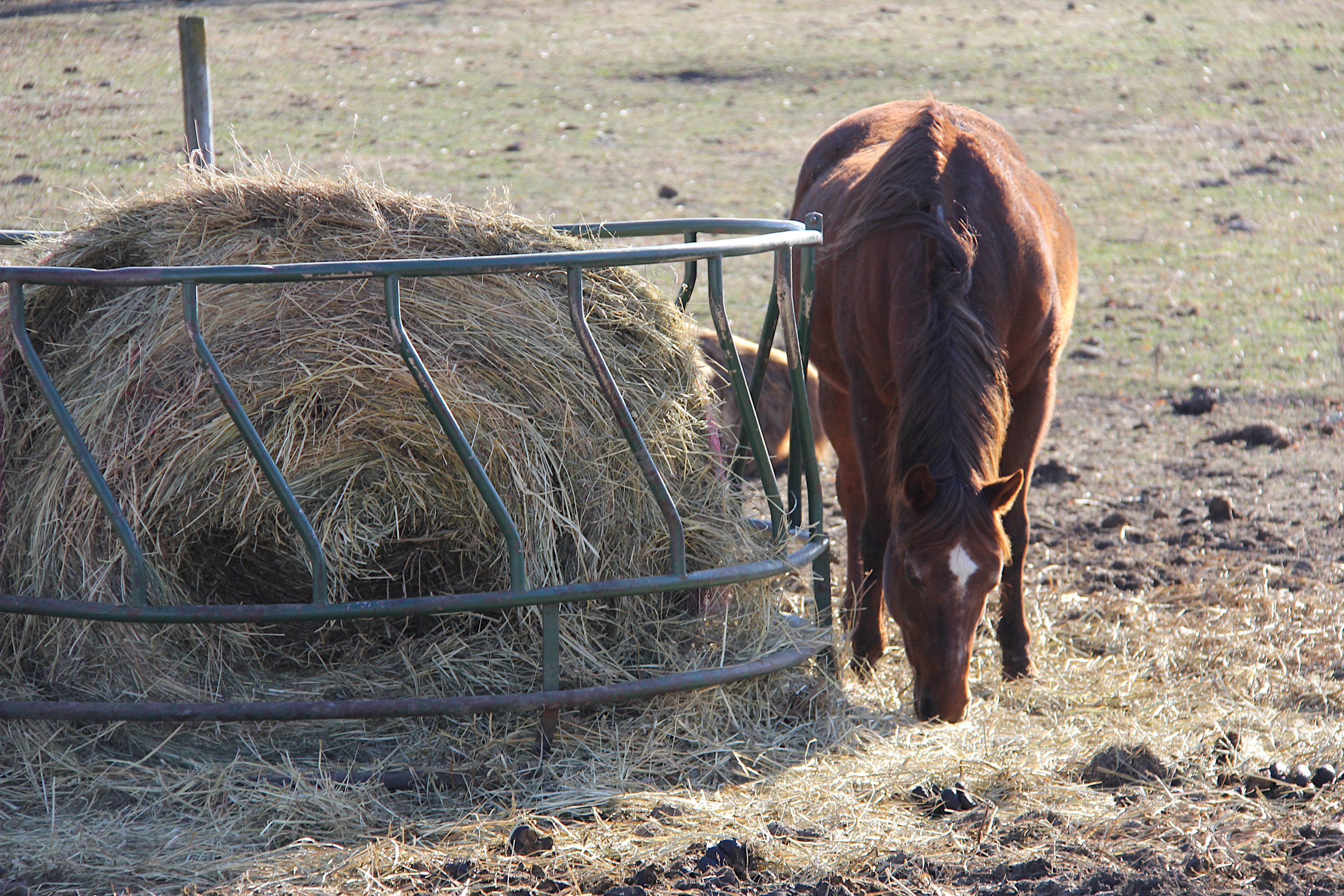
I delighted in seeing this horse and a few cattle at the farm. (Minnesota Prairie Roots copyrighted photo November 2024)
And then it was back outside for a look at the Christmas tree selection. I prefer a scraggly Charlie Brown tree to perfectly-shaped. But I didn’t find that at Souba Greenhouse. What I discovered instead was the spirit of the holiday on a piece of land that took me back in time to the farm. There’s comfort in that, in stepping onto a farm yard complete with barn, silos and pole sheds, a noisy tractor, lounging cattle and a horse munching hay. This felt very much like “Christmas on the Farm” to this farm-rooted girl.
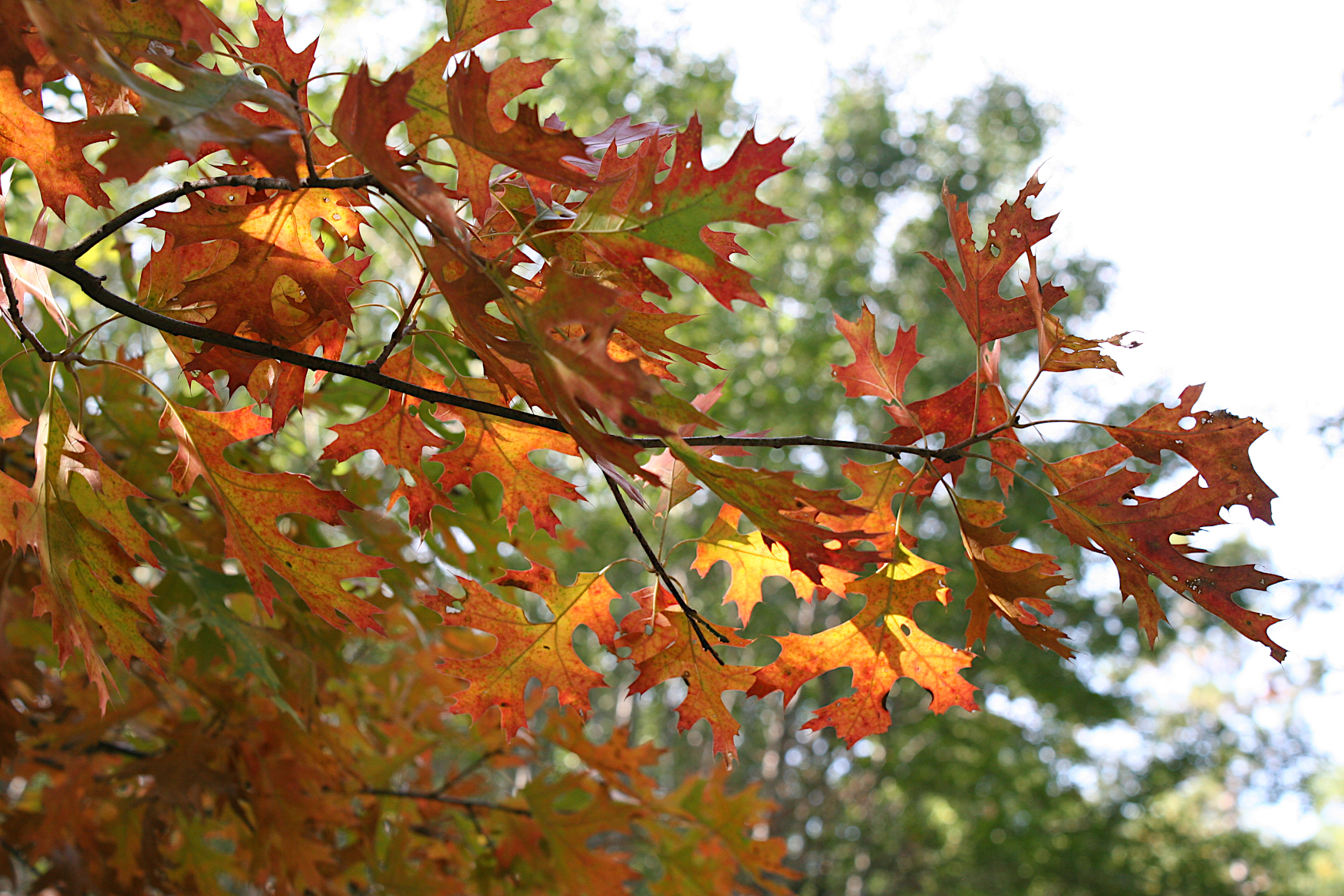
Minnesota is known for its beautiful fall colors, although 2023 colors were not as brilliant as previous autumns due to drought and temps. (Minnesota Prairie Roots copyrighted photo September 2021)
DURING THESE FINAL DAYS of October, when the sun blazes warmth into crisp days and leaves fall and pumpkins lie exposed in fields, vines withered, there’s a rush to pack in final autumn fun. And I did just that Sunday afternoon at Larson’s Bridgewater Farm on the northwest edge of Northfield.
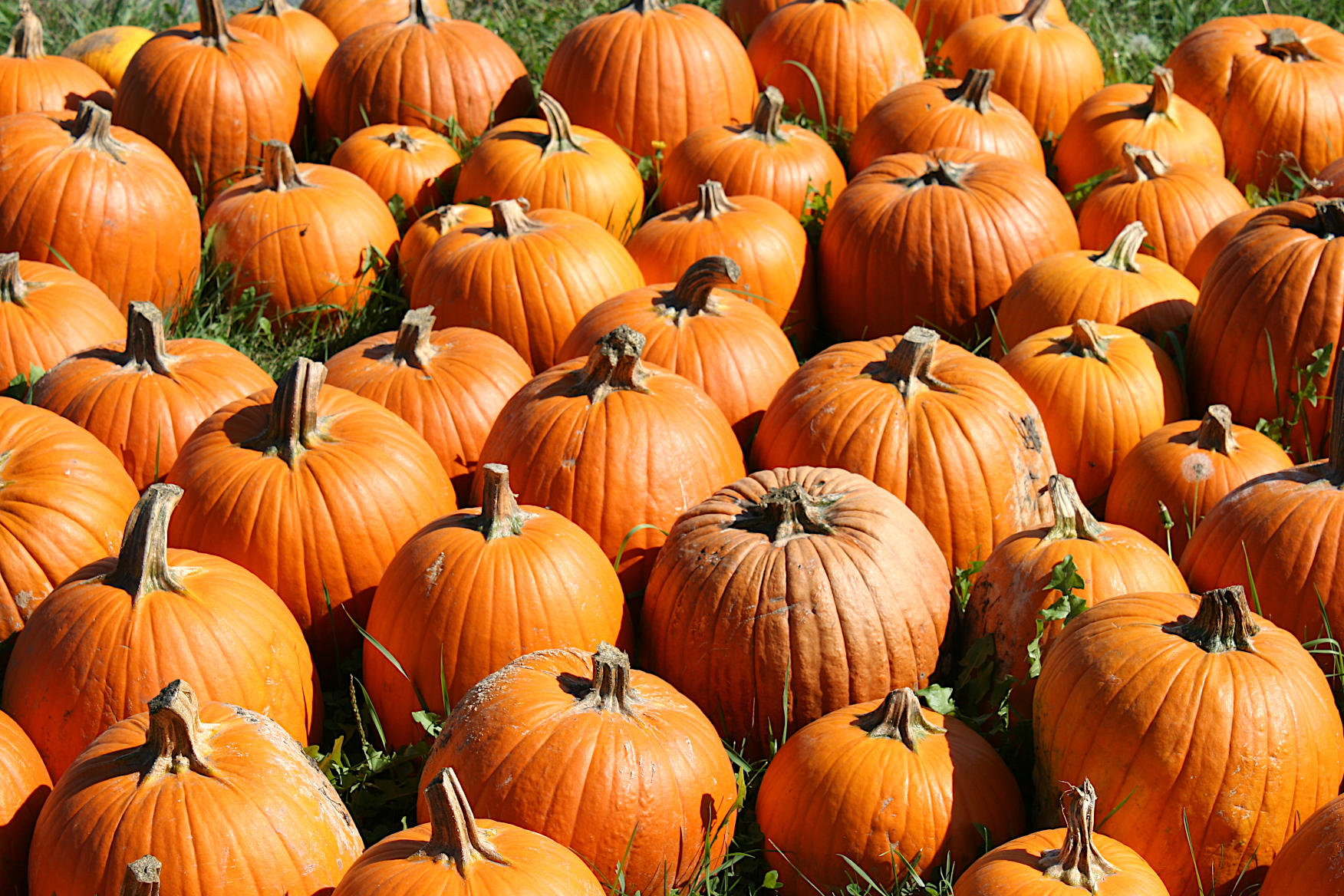
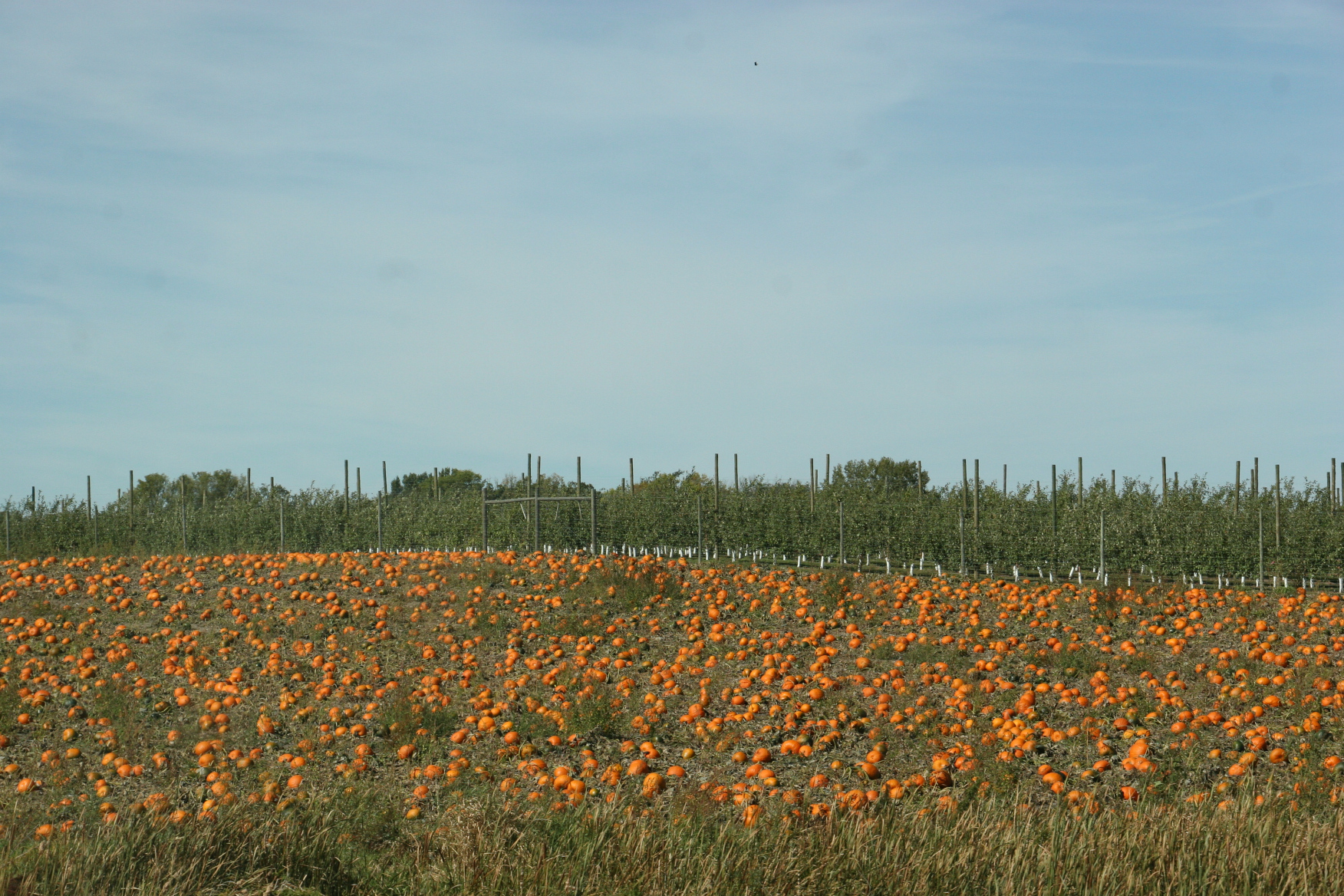
Pumpkins galore, not at Bridgewater farm, but at a southern Minnesota apple orchard. (Minnesota Prairie Roots copyrighted file photo October 2021)
Here, on this working farm turned pumpkin patch destination, Randy and I joined our eldest and her family, among many multi-generational families focused on an experience that certainly beats picking pumpkins from a retail store display. This is all about connecting to each other and to the land. And this is all about building memories that remain long after the last pumpkin has gone into the compost pile.
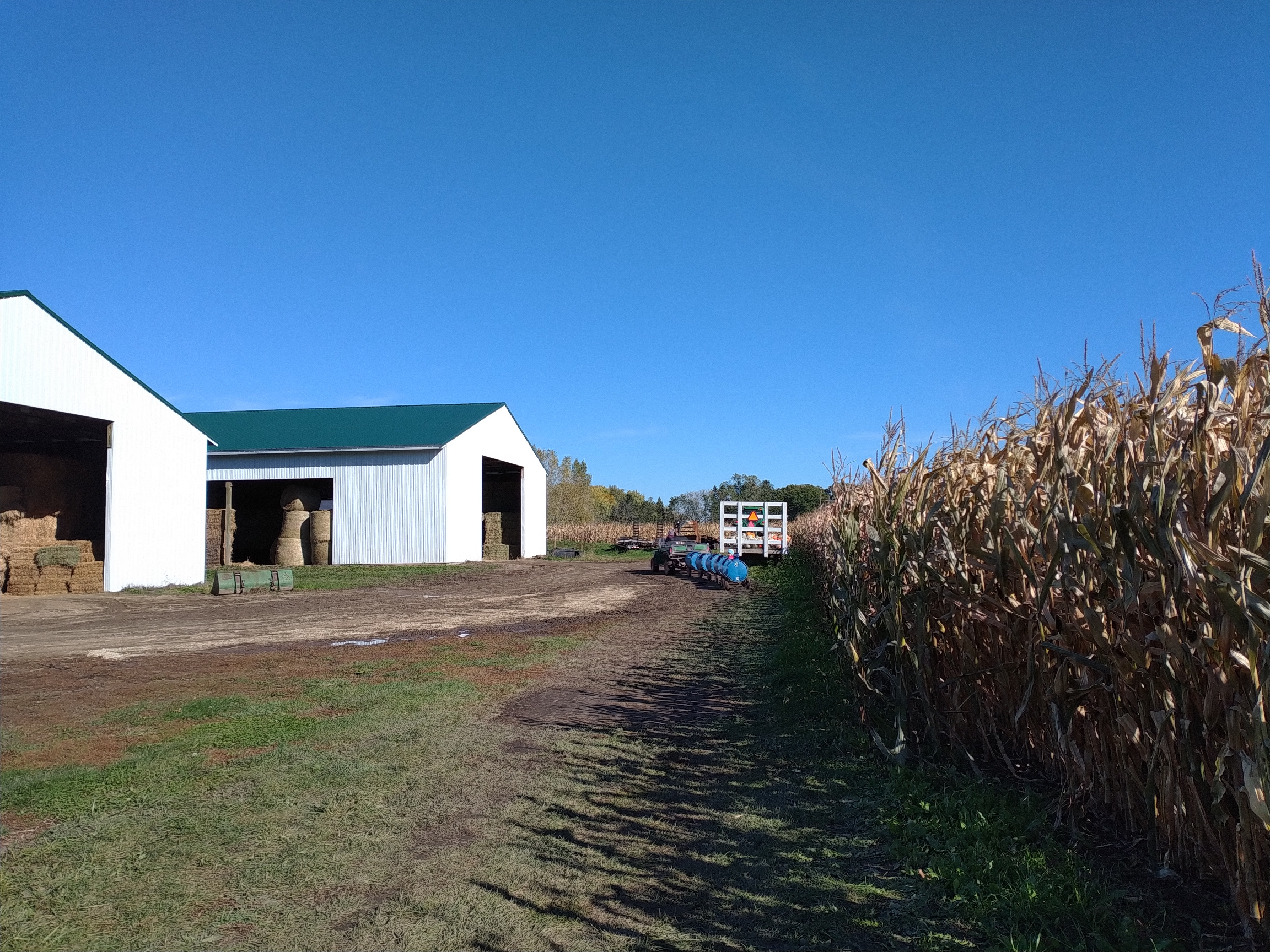
A barrel train heads toward the pole shed, aside the corn maze at Bridgewater Farm. (Minnesota Prairie Roots copyrighted photo October 2023)
I observed so many smiles, so much joy, so much exuberance. I remember thinking, as I cozied next to my daughter Amber at the back of a flatbed wagon pulled by a John Deere tractor, that life doesn’t get much better than this. Here we were, strangers crammed onto wagon benches, bumping around the farm, past the cattle and pole sheds and cornfields under a clear, sunny October sky. It was as if nothing existed beyond this acreage. I felt overwhelming peace, a surge of serenity in the simplicity of the moment.
Randy and I pose next to the old John Deere tractor. (Photo credit: Amber Schmidt)
Perhaps my farm background factored into my personal reaction. The sight of dried cornfields, the scent of manure, the fenced beef cattle and calves (especially the calves), the stacked hay bales, the tread of tractor tires embedded in mud, the old John Deere tractor (a photo op backdrop), all proved nostalgically uplifting.
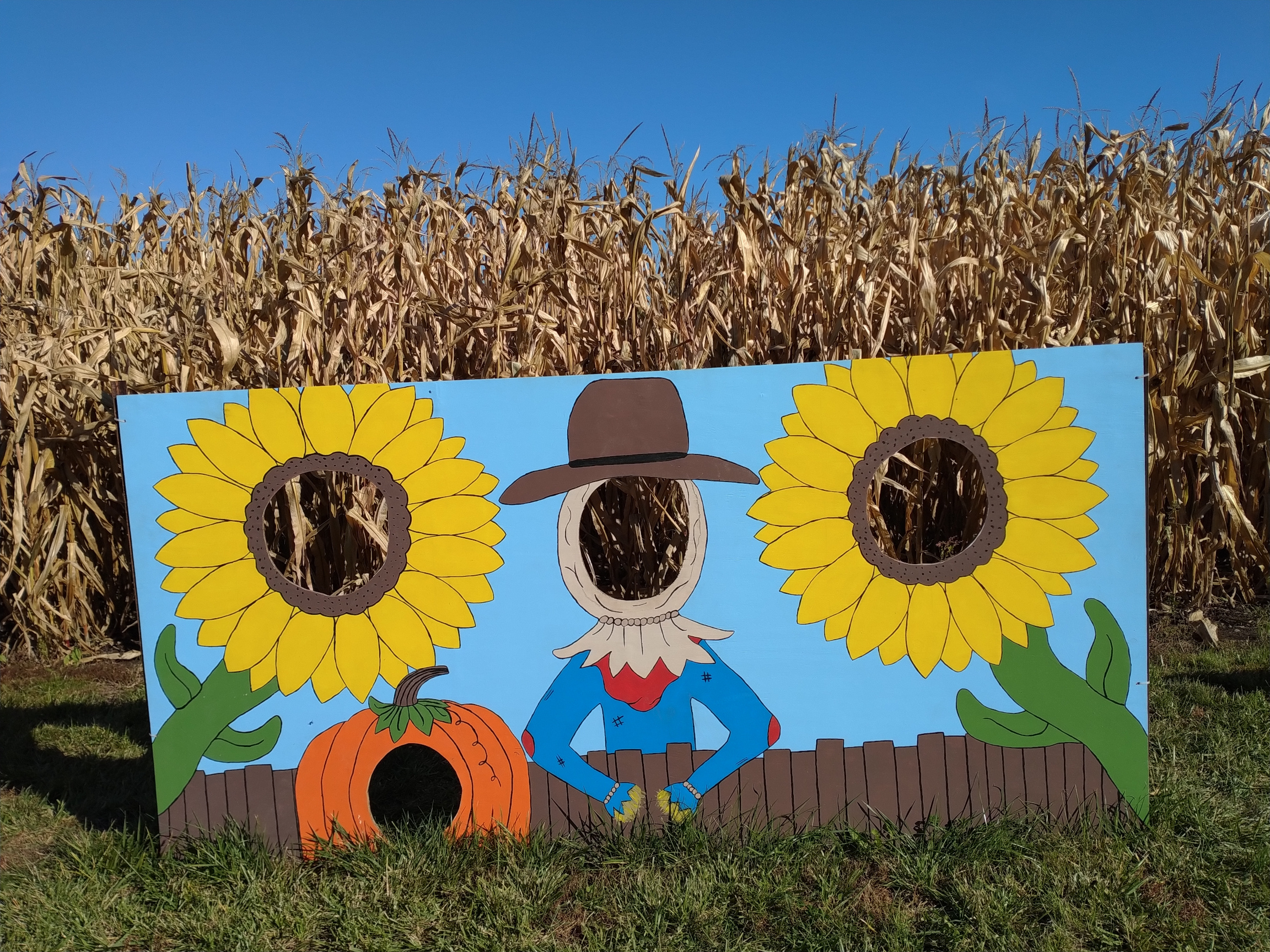
Among several fun photo cut-outs in Bridgewater Farm’s Photo Alley. (Minnesota Prairie Roots copyrighted photo October 2023)
I doubt my grandchildren noticed any of this, except perhaps the barnyard smell. Izzy, 7, and Isaac, 4, were too busy enjoying the many kid-based activities offered at Bridgewater Farm. Twice they rode the barrel train that looped through a machine shed holding hay, past the livestock and then back. They climbed weathered bales stacked high, slides zooming them back to ground level. They twisted through the kids’ corn maze with us, their parents later following the more challenging adult version, which the grandparents opted out of to oversee the kids as they climbed the haystacks once again and then moved on to the corn box.
The kids’ hands-down favorite seemed to be the corn pit, where they shoveled kernels, filled pails, covered themselves in corn. Again, memories rushed back. Not of playing in shelled corn. But of decades ago farm work, of pushing wheelbarrows full of ground corn down the barn aisle to feed the cows. My grandchildren will never know that rural life, only the stories I share with them of yesteryear, of when Grandma was growing up on the farm.
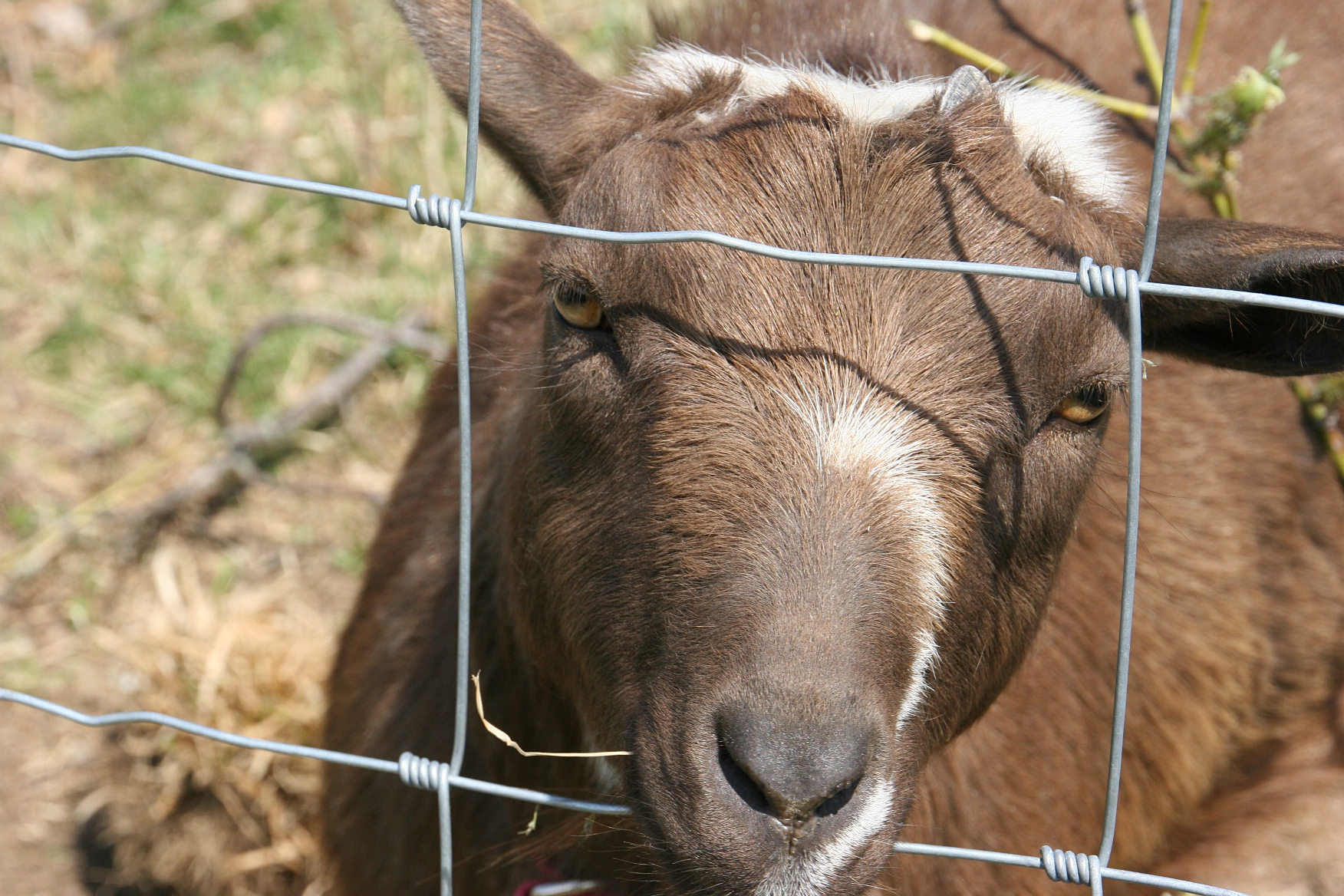
A goat on a family member’s farm, similar to one at Bridgewater Farm. (Minnesota Prairie Roots copyrighted file photo 2018)
I enticed them to pet the silky ear of a goat before we headed away from the fenced goats and sheep to take posed photos at the seasonally-themed photo cut-outs. I didn’t take many photos during our afternoon outing, choosing to enjoy being in the moment without the distraction of photography. I left my 35mm camera at home. Intentionally. The daughter snapped plenty of images with her cellphone.
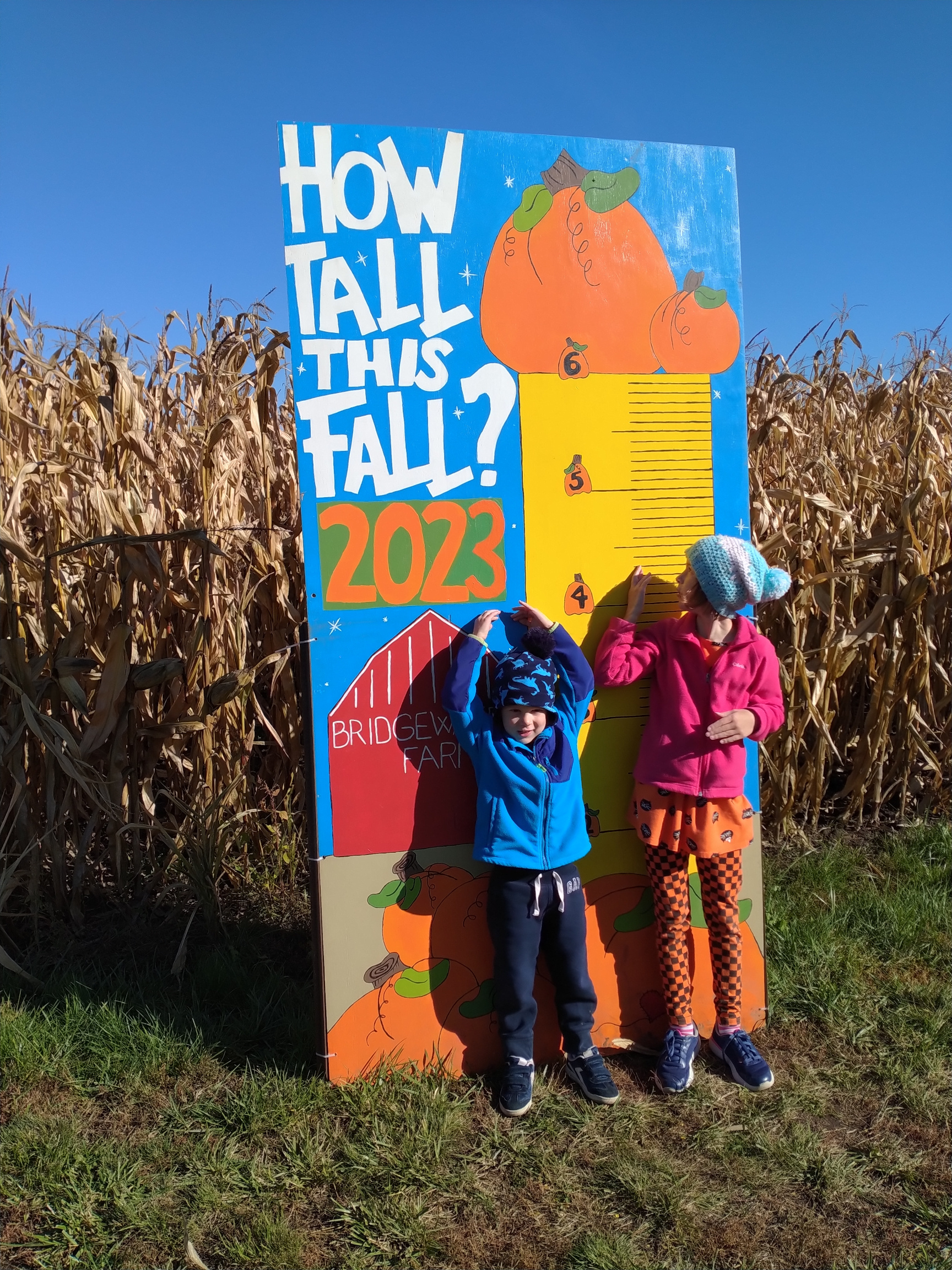
Izzy, especially tall for her age, and her brother check their height at Bridgewater Farm. (Minnesota Prairie Roots copyrighted photo October 2023)
When we pedaled kid-sized and adult-sized tricycles (yes, me and the other adults, too, except for the too-tall son-in-law) around the trike race track, I remembered a black-and-white photo taken of me as a teen riding my youngest brother’s trike on my childhood farm, long legs bent awkwardly to the side, broad smile across my face. I smiled just as wide at Bridgewater Farm, my long legs bent awkwardly as I raced after my granddaughter peddling with her long legs bent awkwardly.
A field of pumpkins photographed in southern Minnesota in 2022. (Minnesota Prairie Roots copyrighted file photo September 2022)
Soon the grandkids were pulling a wagon to the pumpkin patch. And when they weren’t looking, Grandpa scooted on and the pulling halted and they turned to see us all laughing. Eventually we found just the right pumpkins hefted from the pumpkin patch, weighed and then loaded into the car.
What a fun-filled afternoon on the farm—one of nostalgia for me, but more importantly of experiencing simple joys with my family. And it all started with the kids wanting to go to a pumpkin patch.
#
FYI: Pumpkin patch season is winding down in Minnesota. Bridgewater Farm is offering special MEA hours this Thursday and Friday from noon to 5 pm. Otherwise the farm is open only on weekends, October 28-29 being the final weekend with hours from 11 am – 6 pm. Admission to the pumpkin patch is free with a $10/person cost for all activities, excluding apple cannon shooting. That costs an additional fee. Pumpkins are sold both pick-your-own or pre-picked.
TELL ME: Do you have a favorite pumpkin patch in Minnesota or elsewhere. Let’s hear where and why it’s a favorite.
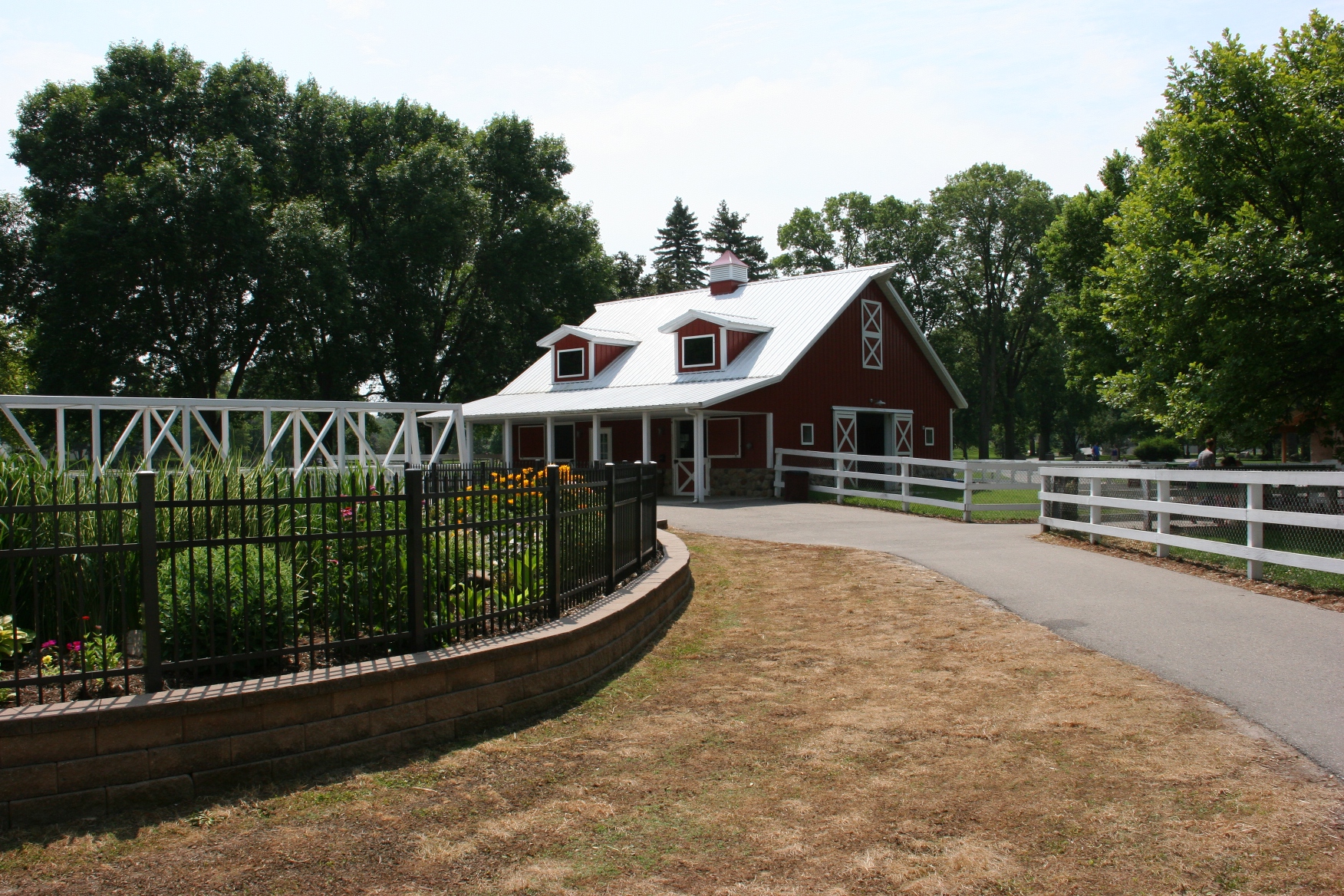
The barn style stable at Sibley Farm in Mankato, Minnesota.
GROWING UP, MY DAUGHTERS had a Fisher Price barn that, when the doors opened, “mooed.” For hours they would play with this toy farm. Being a rather unwise mom who determined that everything from their childhood could not be kept, I gave the barn, silo, Little People, tractor and animals to friends with little ones. My eldest once reminded me that was a mistake. I agree.
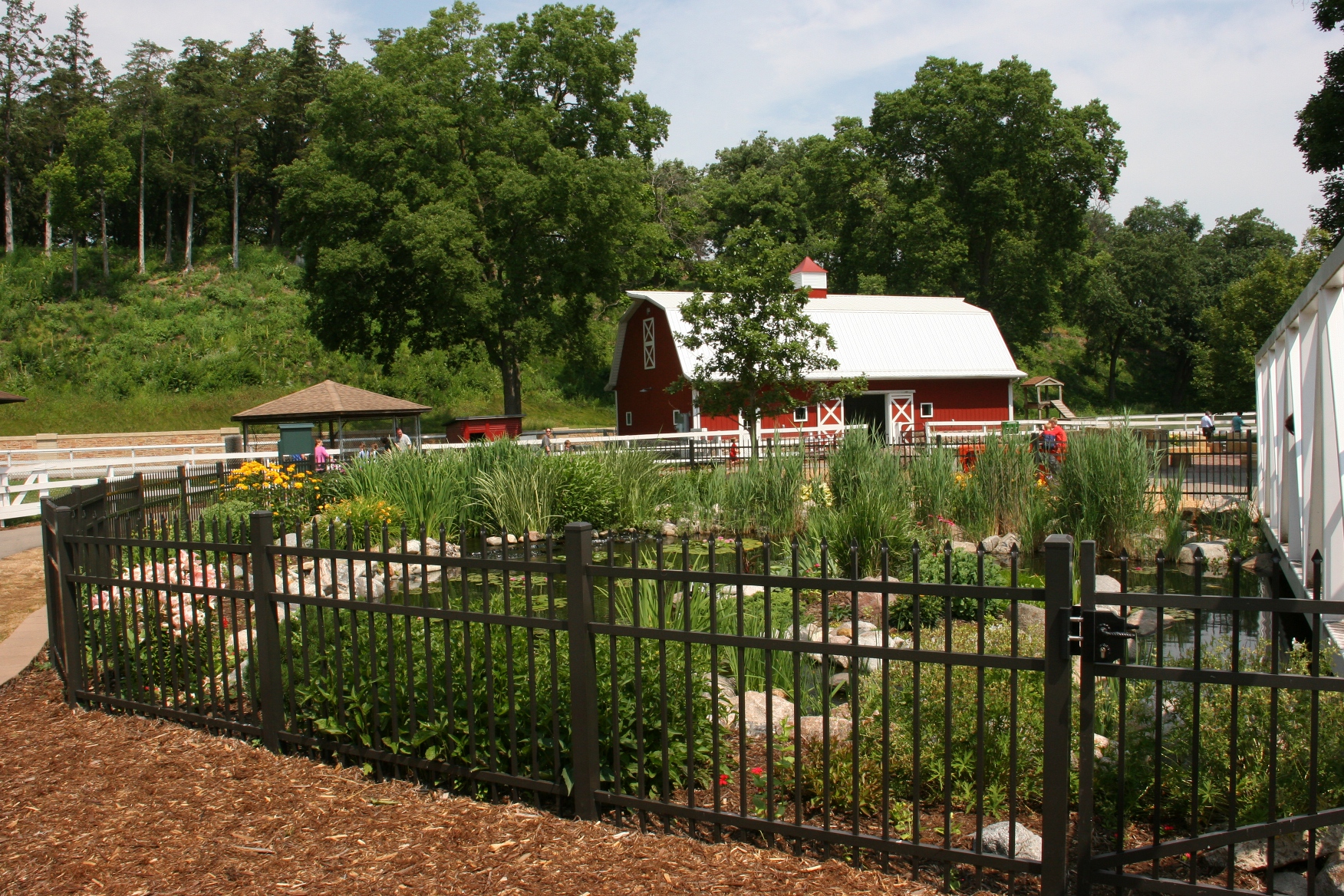
A fenced pond is in the foreground and the farm’s barn in the background.
But now she, and other twenty-somethings who hold fond memories of the Fischer Price barn, can see a similar real-life barn at Sibley Farm in Mankato’s sprawling Sibley Park.
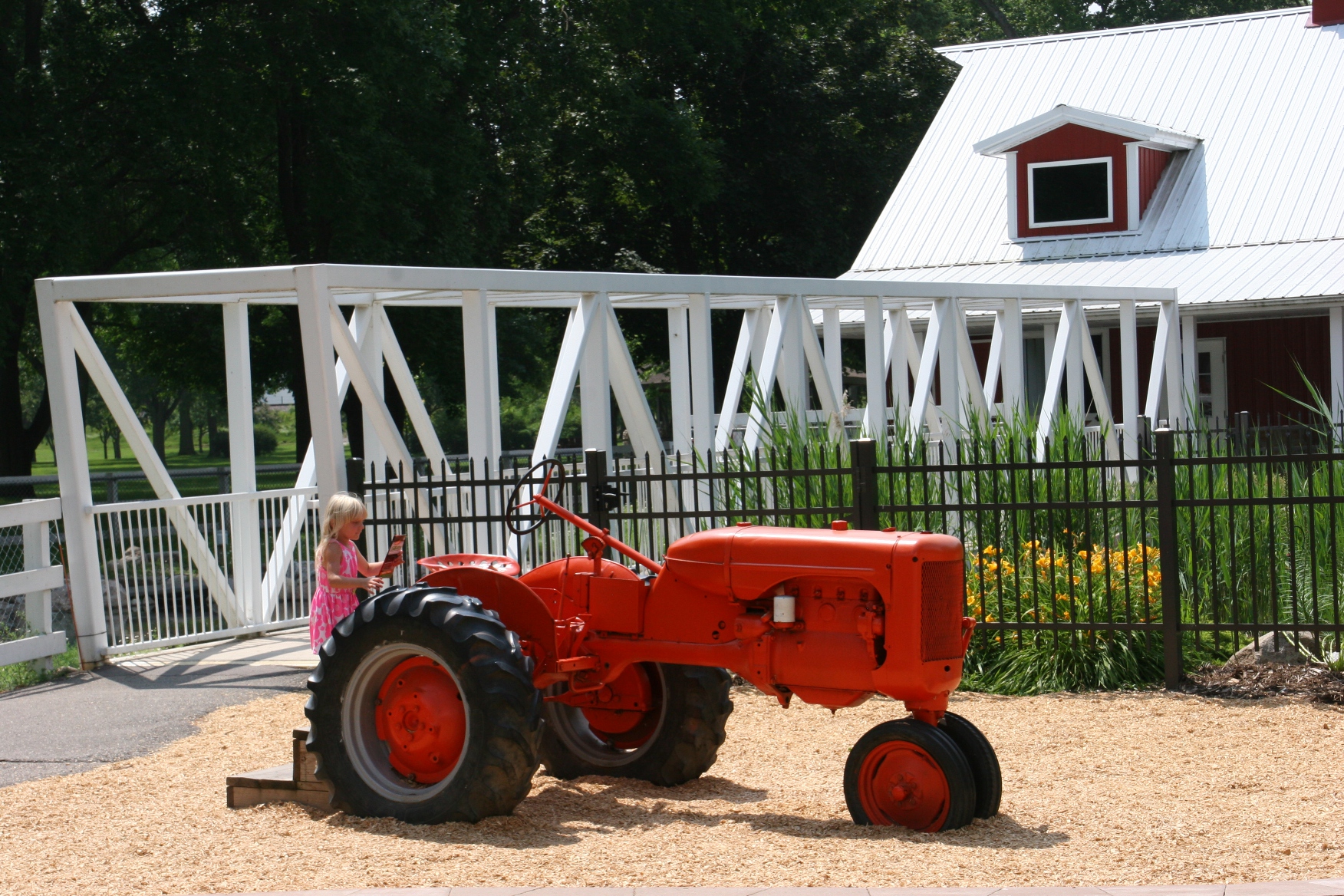
Kids love the tractors, this one located next to the bridge spanning the pond stocked with koi and dotted with water lilies.
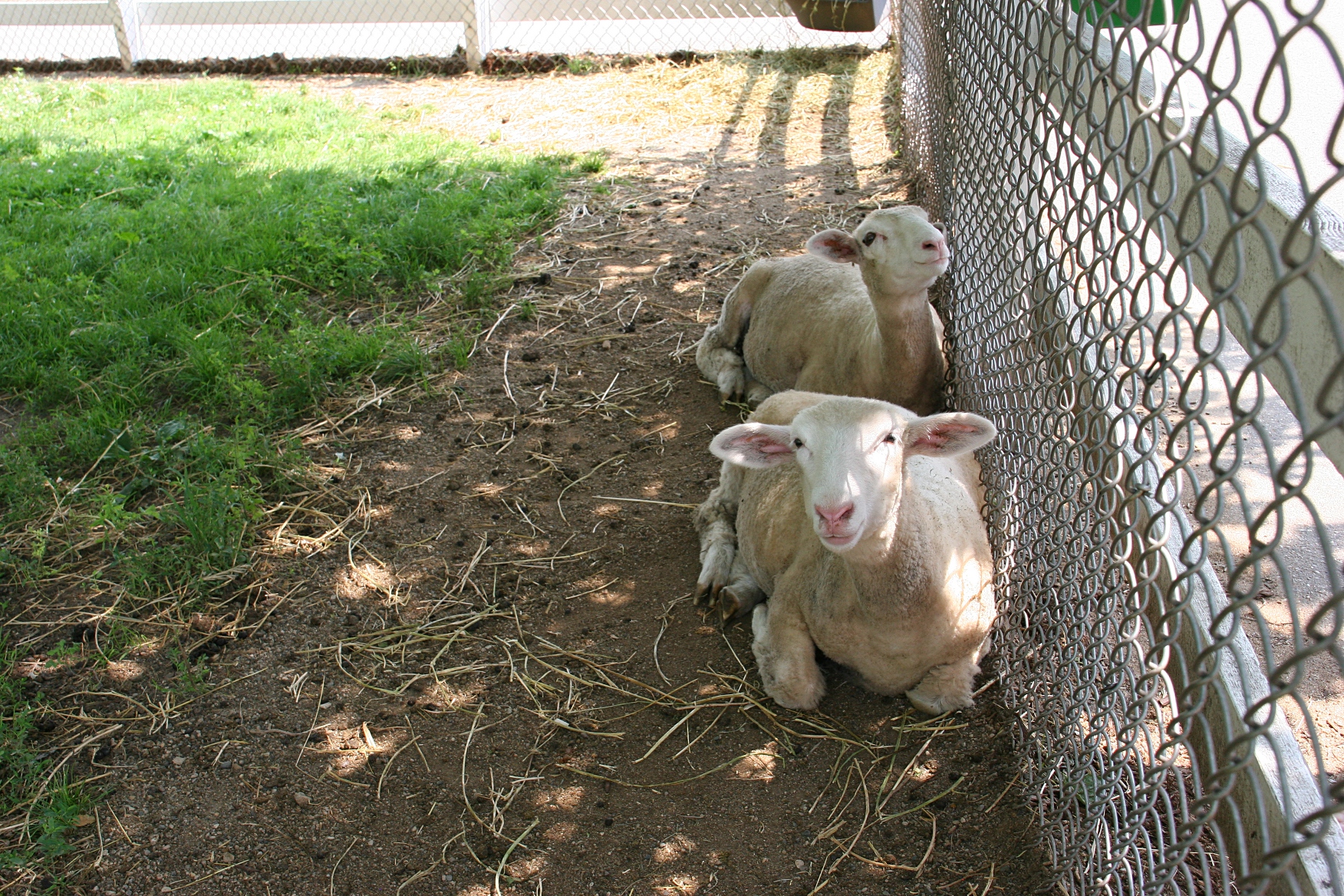
Friendly sheep are a favorite.
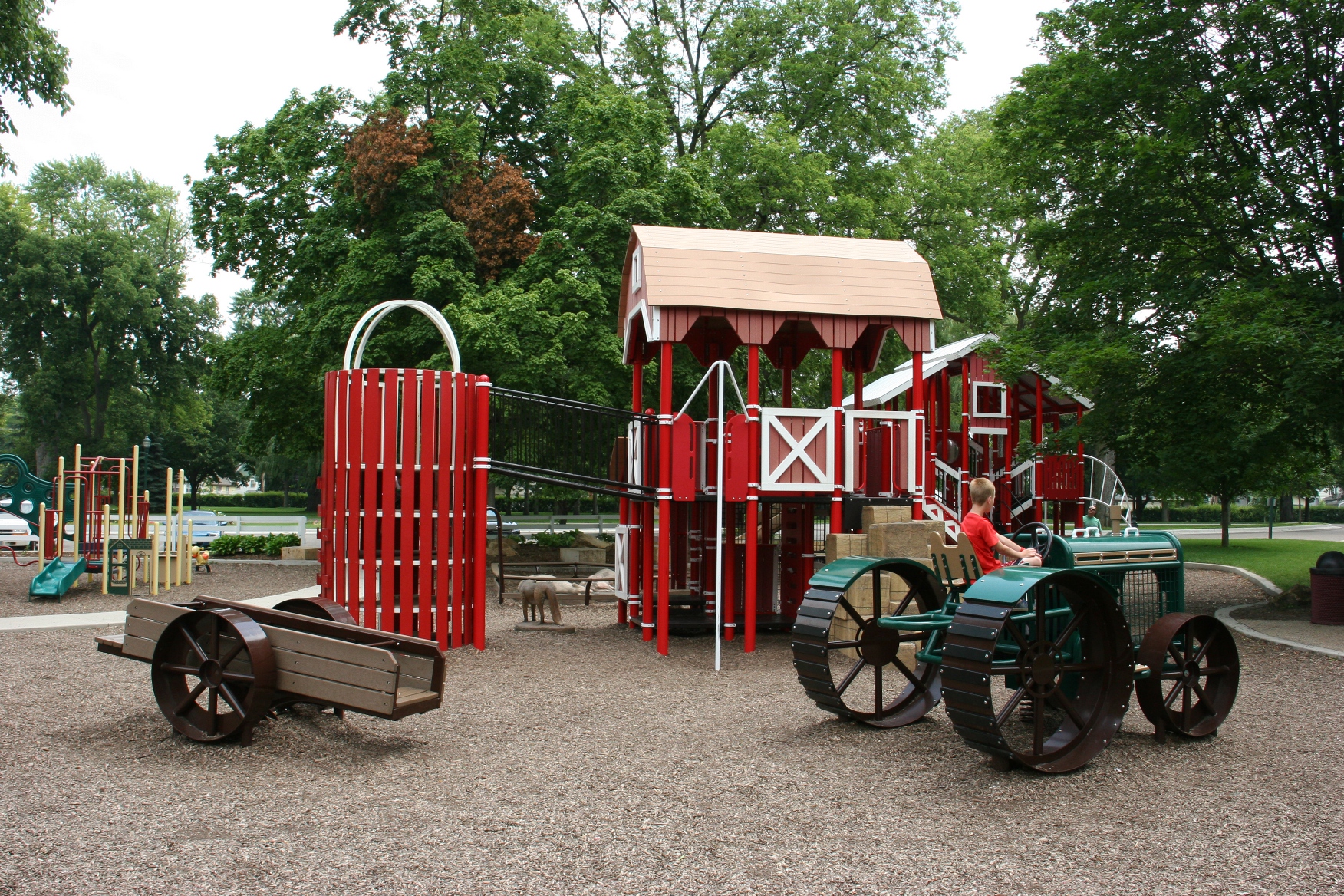
The fabulous farm-themed playground. There’s also a traditional playground, shown in the background.
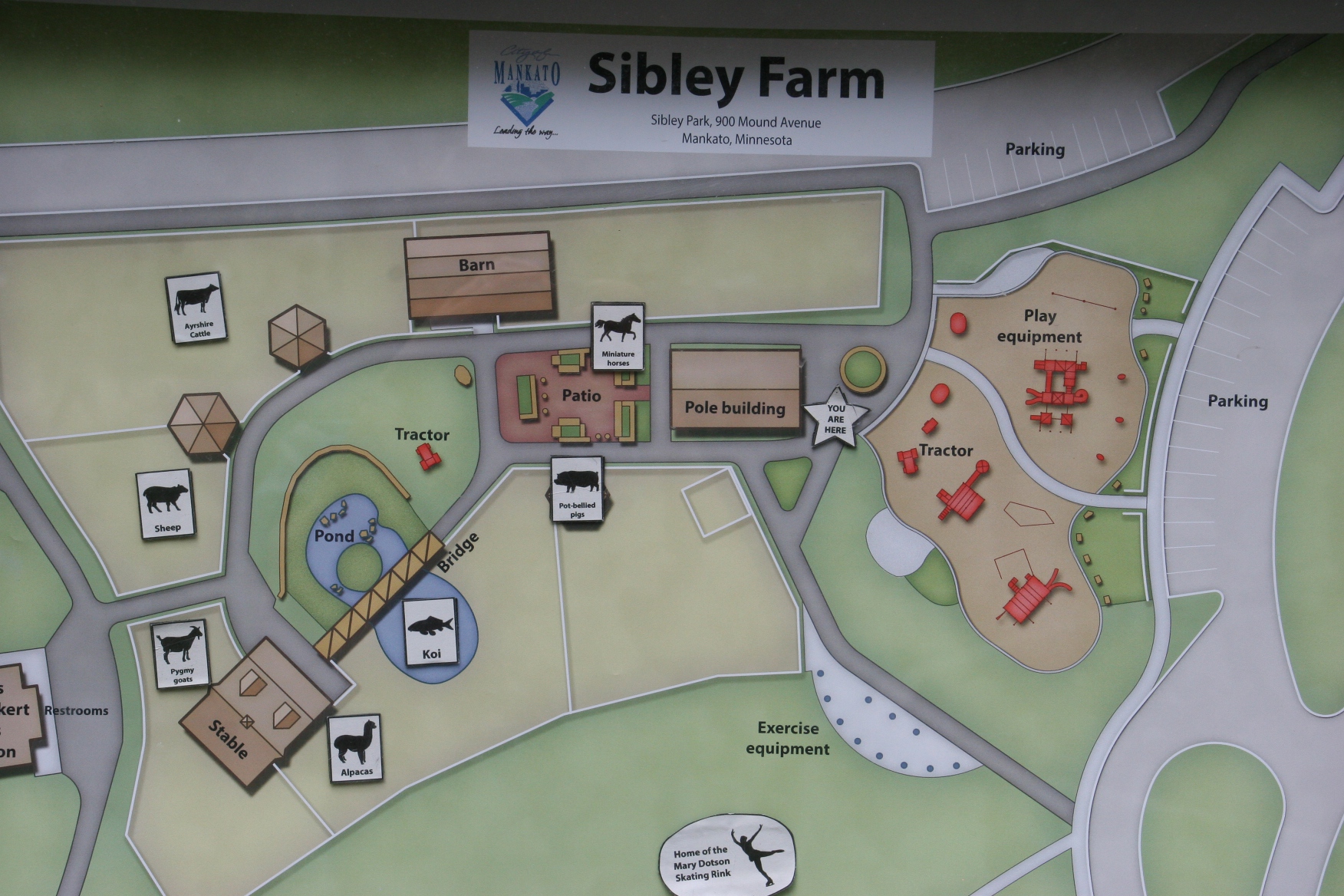
I explored the farm on a recent Sunday afternoon, delighting in the animals, the pond, and the agricultural-themed playground. What a brilliant idea, to create this educational and engaging tribute to the region’s rural roots in the heart of southern Minnesota farm country. The farm park opened in 2008 and was partially funded by a $200,000 gift from the Al and Erla Fallenstein fund through the Mankato Area Foundation.
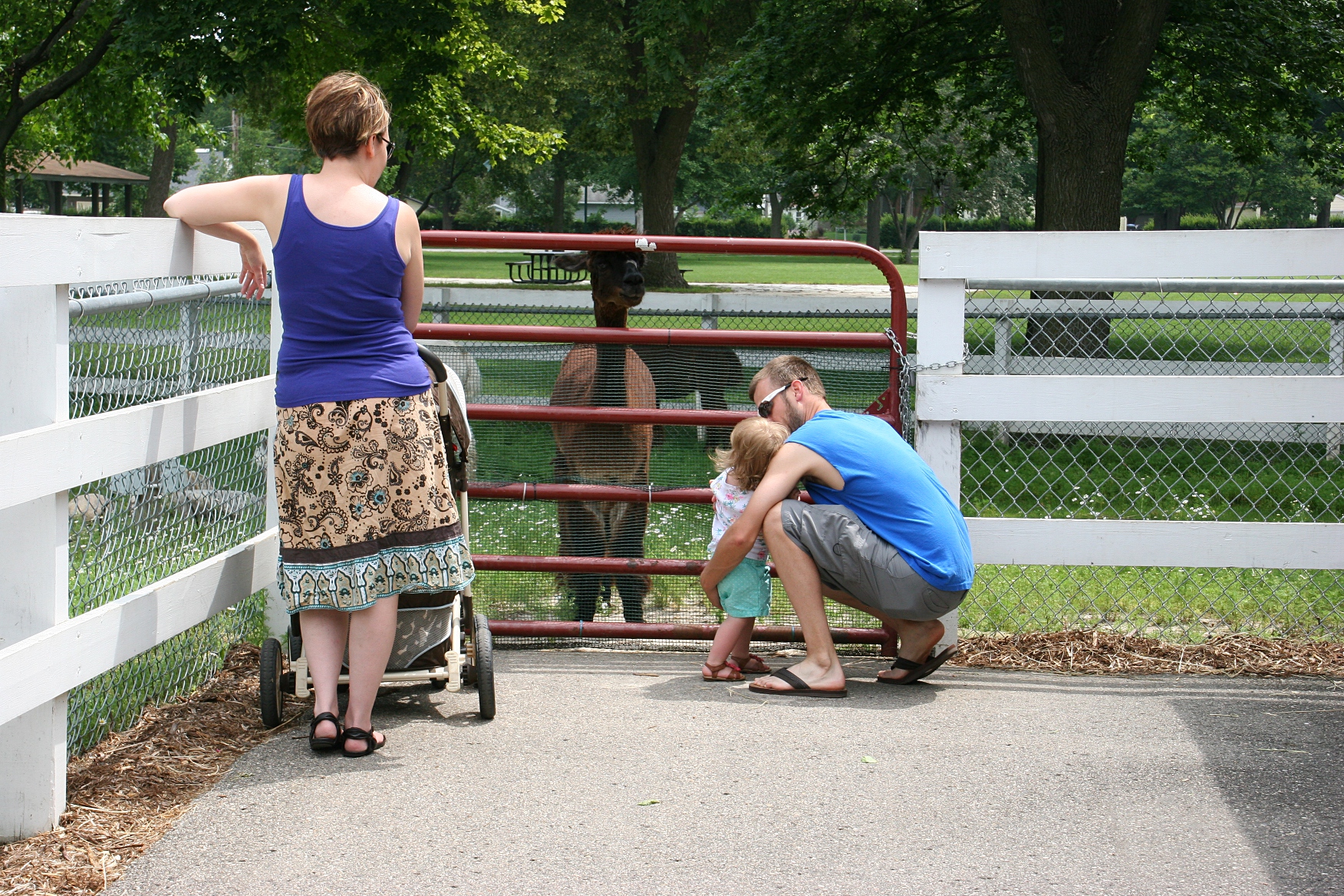
A young family checks out the alpacas.
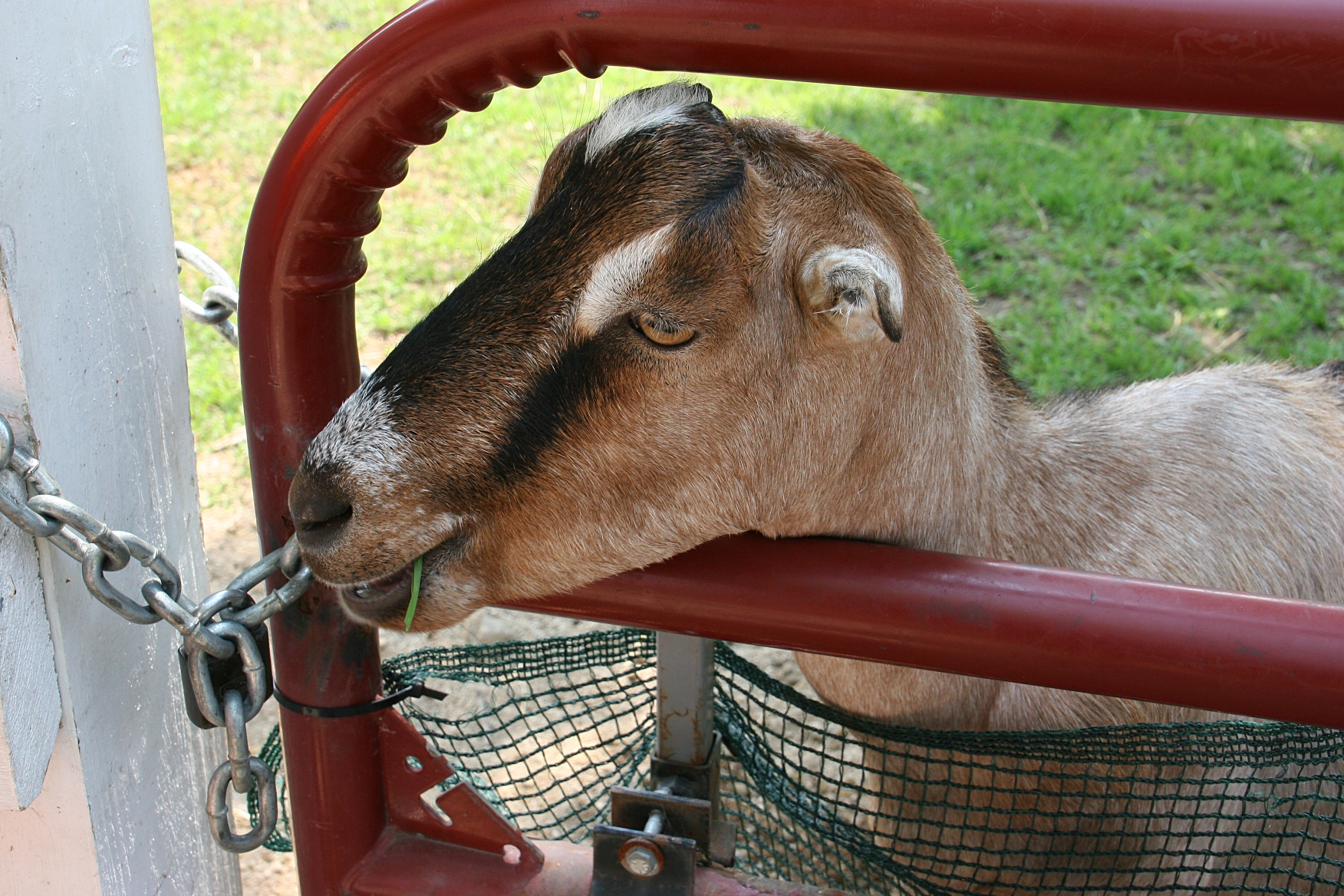
When I got to the pygmy goats, a young boy was feeding them grass.
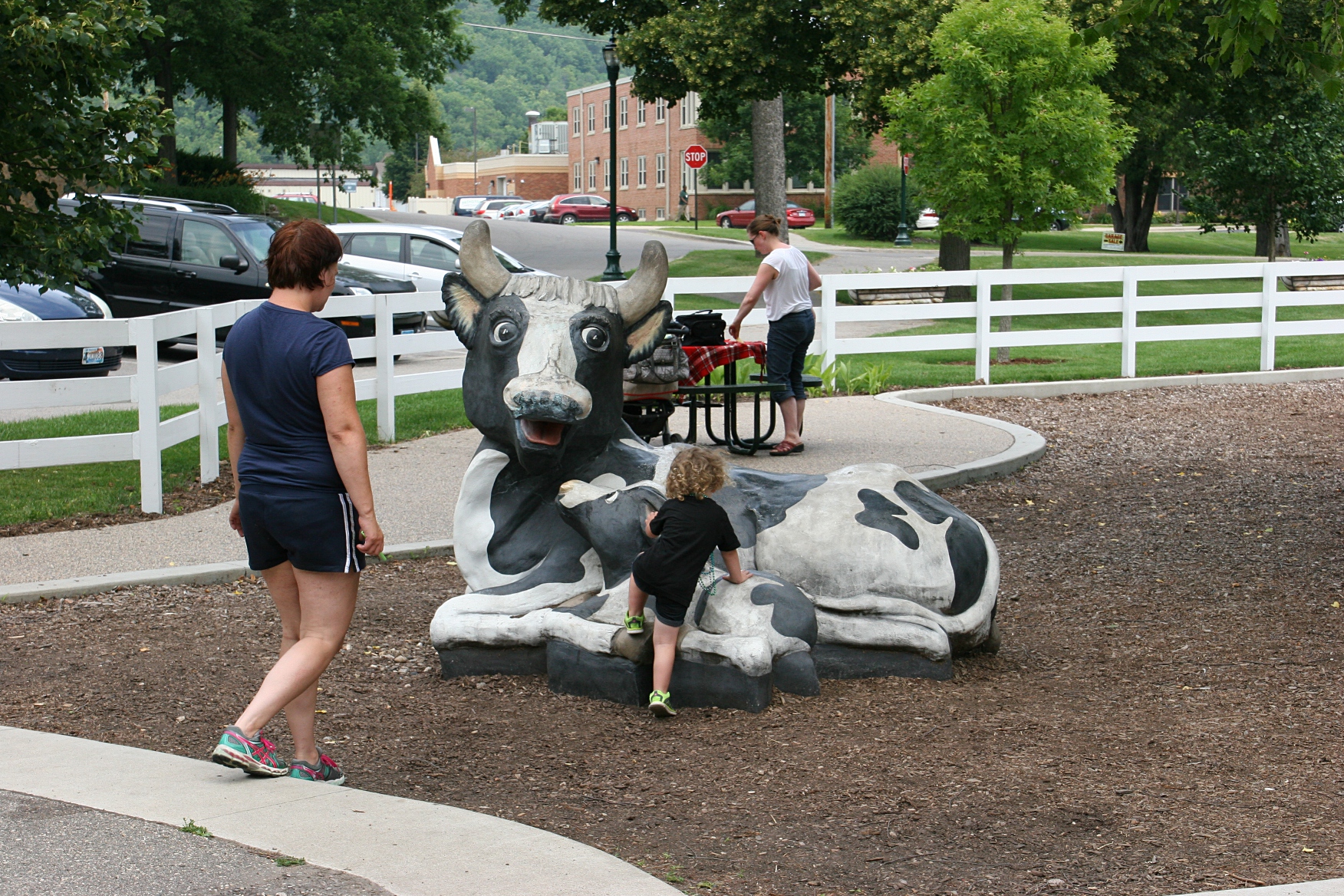
The farm animal sculptures provide perfect photo opportunities.
This agricultural-themed park makes my farm girl heart happy—to see kids petting farm critters, posing with farm animal statues, racing to tractors, and clamoring onto barn, silo, straw bale and even cornstalk playground equipment. This is a place for families, for anyone who grew up on a farm, and for those who didn’t.
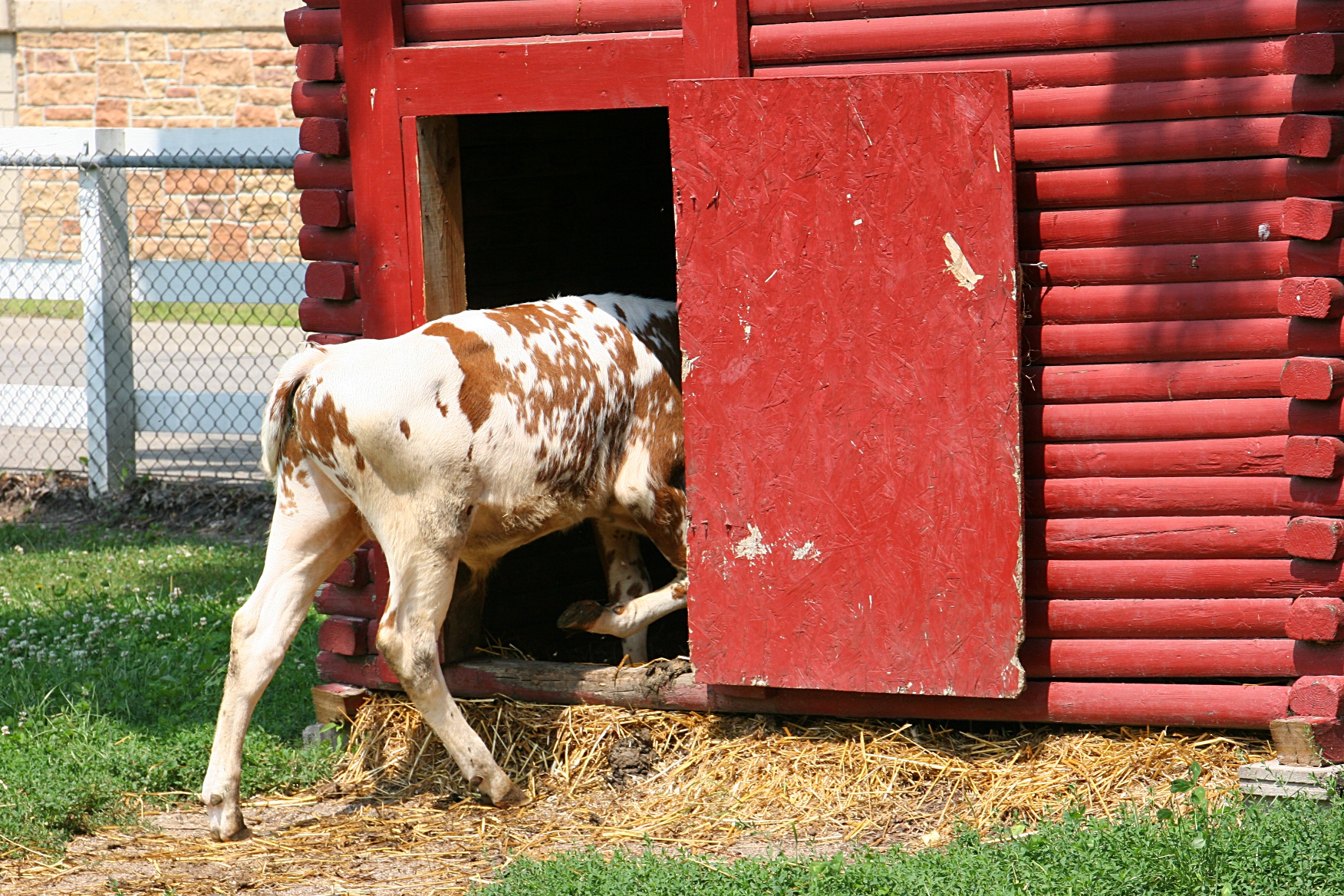
The farm features Ayrshire cattle like this one seeking shelter in the heat of a summer afternoon.
We need to hold onto our rural heritage. And one way to do that is through parks like Sibley Farm.
ON THE NORTHERN EDGE of Appleton or maybe its the southern edge of Grand Chute, Wisconsin (I examined maps and cannot determine which), lies a farm place with two vintage silos, a barn, a collection of aging outbuildings and even an old windmill.
The place, a rural oasis separated from busy commercial Northland Avenue by a cornfield, has intrigued me since I first spotted it three years ago.
What I hadn’t noticed, though, until my last trip to Appleton, were the cows grazing in a pasture just across the street from a residential area.
This is the thing I love about Wisconsin. This state appreciates rural. You’ll find barns and silos, corn and cows seamlessly blending into urban settings. And the mix doesn’t feel awkward or patronizing or out of place.
It feels, oh, so right in this state tagged America’s Dairyland.
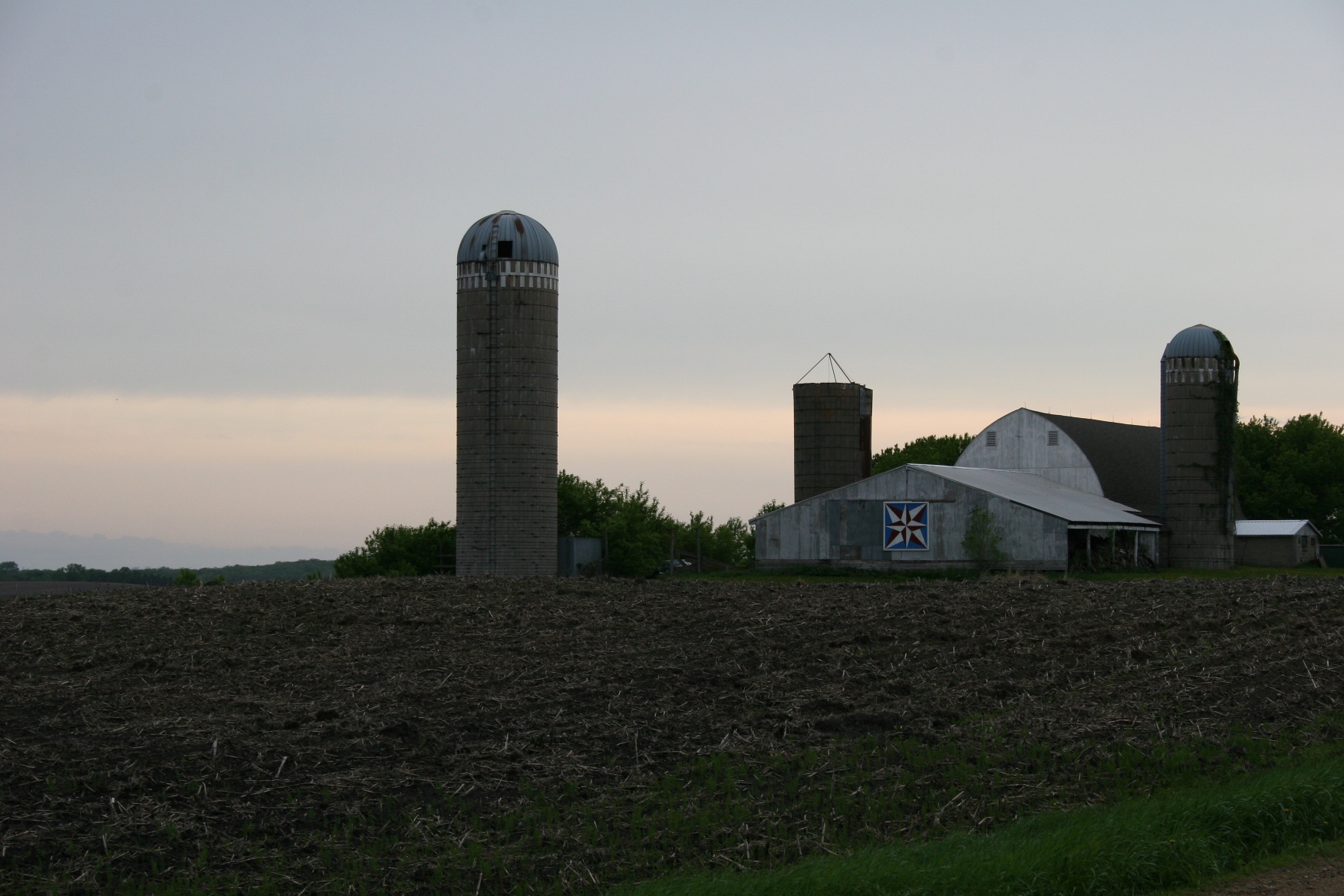
The sun sets as I approach Barb and Bob’s farm east of Faribault.
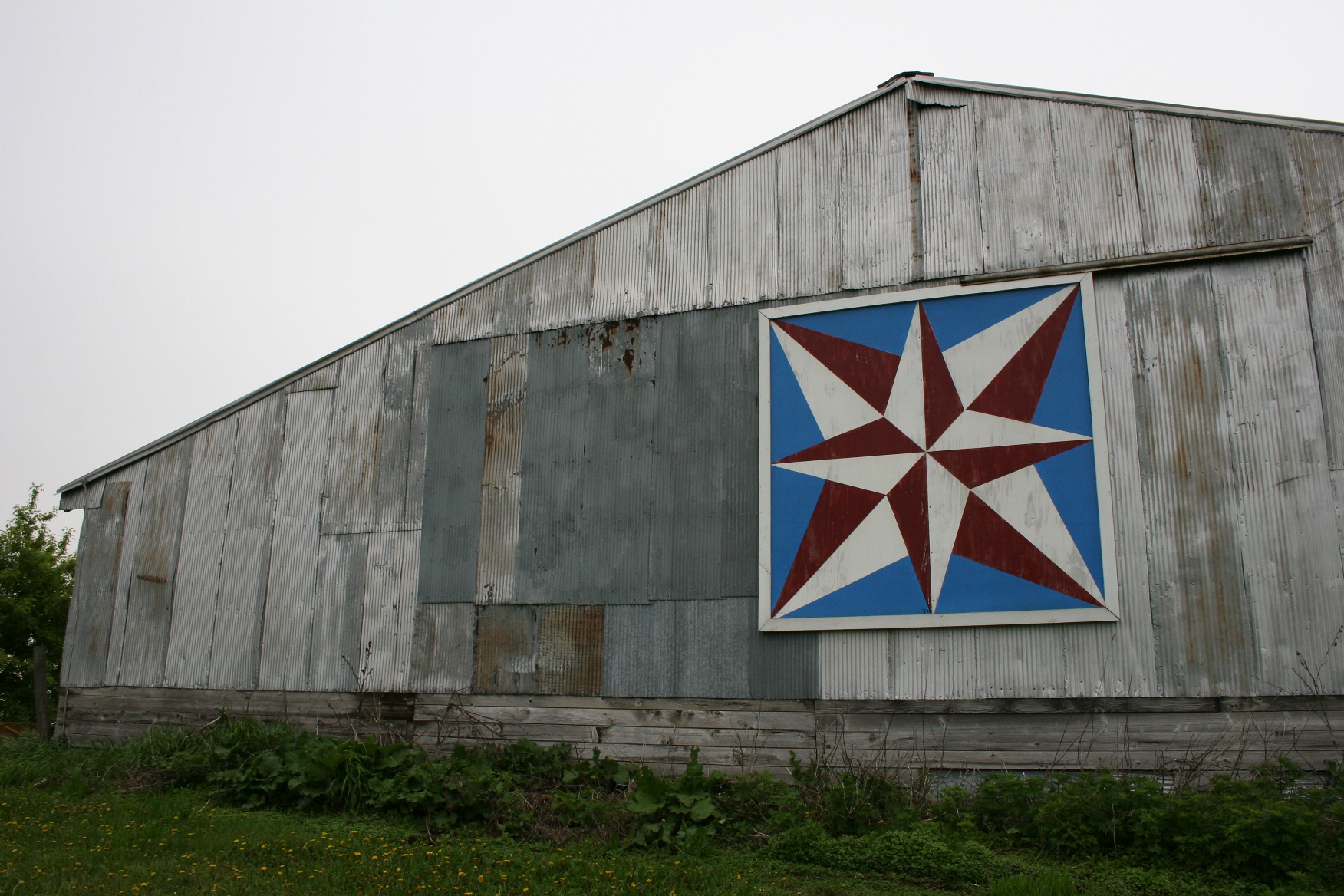
ON A RECENT RURAL OUTING to forage rhubarb from my friend Barb’s abundant patch, I noticed a work of art I hadn’t previously seen displayed on her farm east of Faribault.
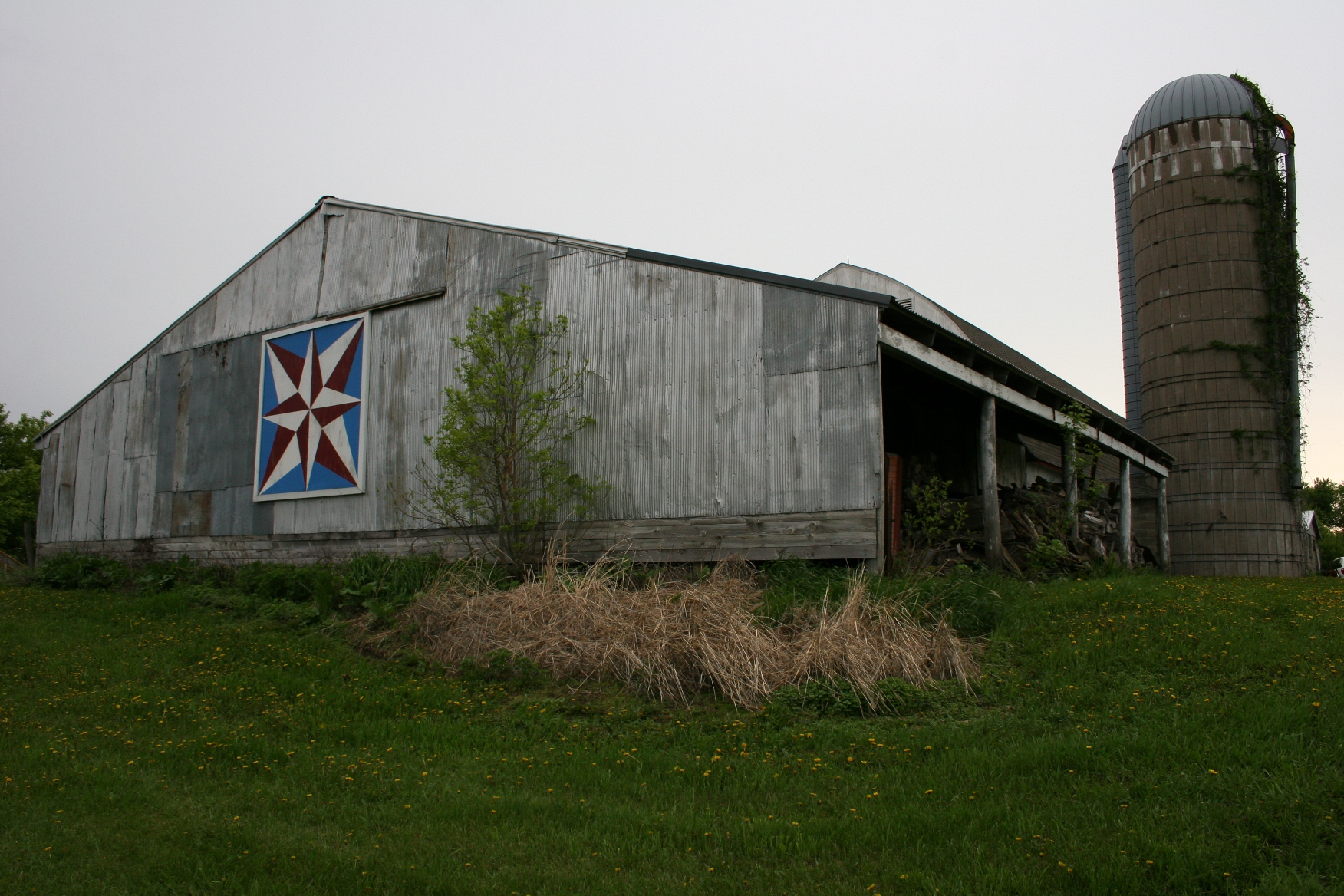
A display of Americana art.
Attached to weathered tin on the end of a pole shed hangs a red, white and blue “Star Shadow” quilt block painted on an eight-foot square of plywood.
The barn quilt is tied to Barb’s passion for quilting, something she’d do all day if only she didn’t have to cook or clean or…
“Star Shadow.”
She’d seen similar painted quilts on barns, always wanted one and a few years ago, along with husband Bob, chose the Star Shadow design for their quilt art. No particular reason for the design—just one they both liked, although they knew the paint hues would be in the trio of patriotic colors.
Barb’s a long-time seamstress who once sewed her own clothes, embroidered and then began making simple block quilts before attempting a tulip quilt. She struggled with the tulip quilt, finishing it in the early 1990s, some 40 years after beginning the project.
Since that quilting success, Barb’s emerged as an avid quilter, stitching countless bed-sized quilts, wall hangings, placemats, table runners and more. She keeps her work or gives it away, including to charities. As a member of the Blue Chicks, a local quilting group that meets monthly, Barb has sewn quilts for the Ronald McDonald House. She also quilts with her sisters once a month and recently joined the quilting circle at her church, Trinity Lutheran in Faribault. That church group donates most of its quilts to charity.
“I’m infected with the pox,” Barb says of her quilting passion. She collects fabric, goes on fabric-shopping road trips with fellow quilters…
Although my friend doesn’t design her own quilt patterns, she enjoys the creative aspect that comes in selecting designs and colors, pulling it all together in a work of art—whether stitched or painted.
BONUS FARM PHOTOS:
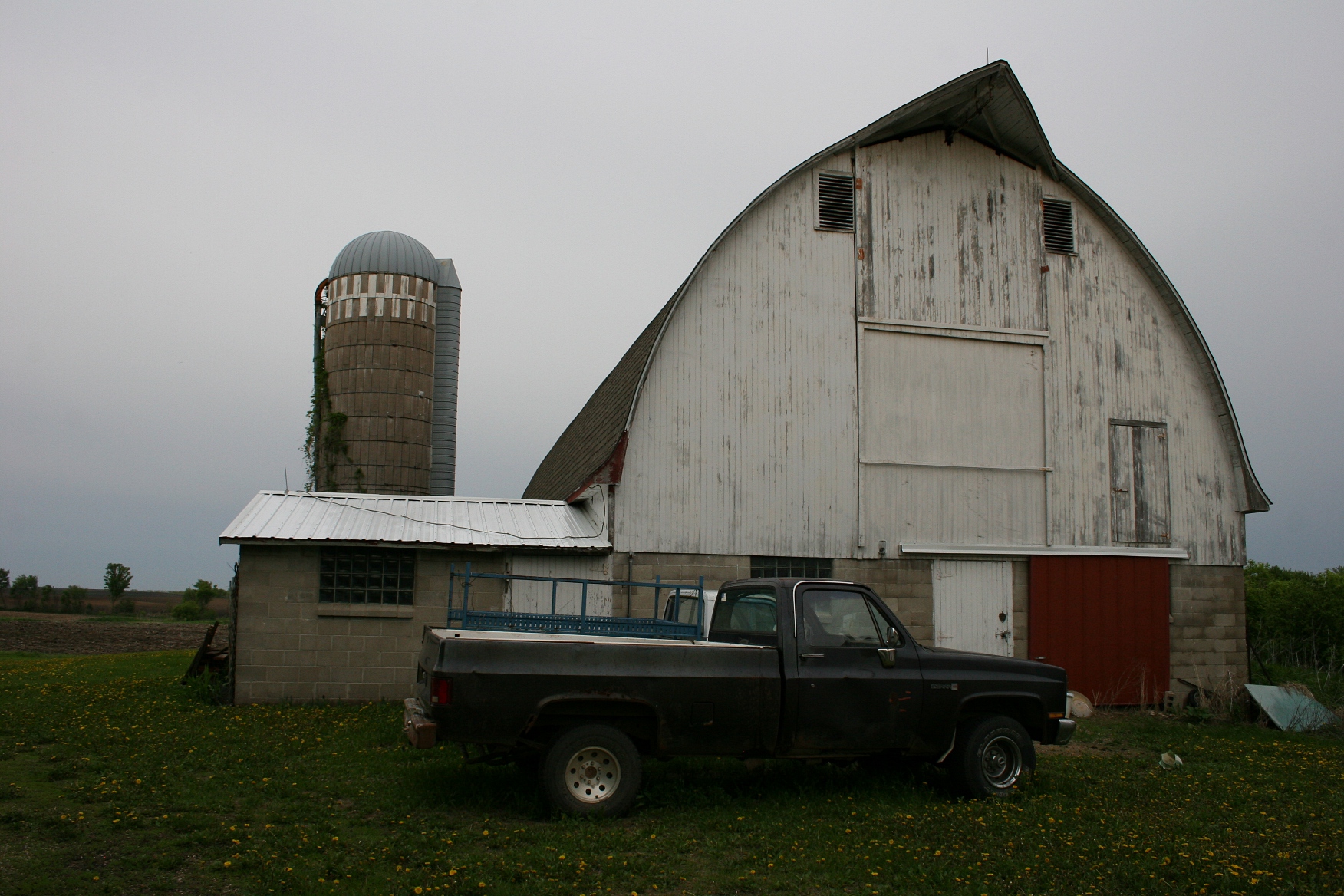
The beautiful barn on Barb and Bob’s 100-year-old plus family farm.
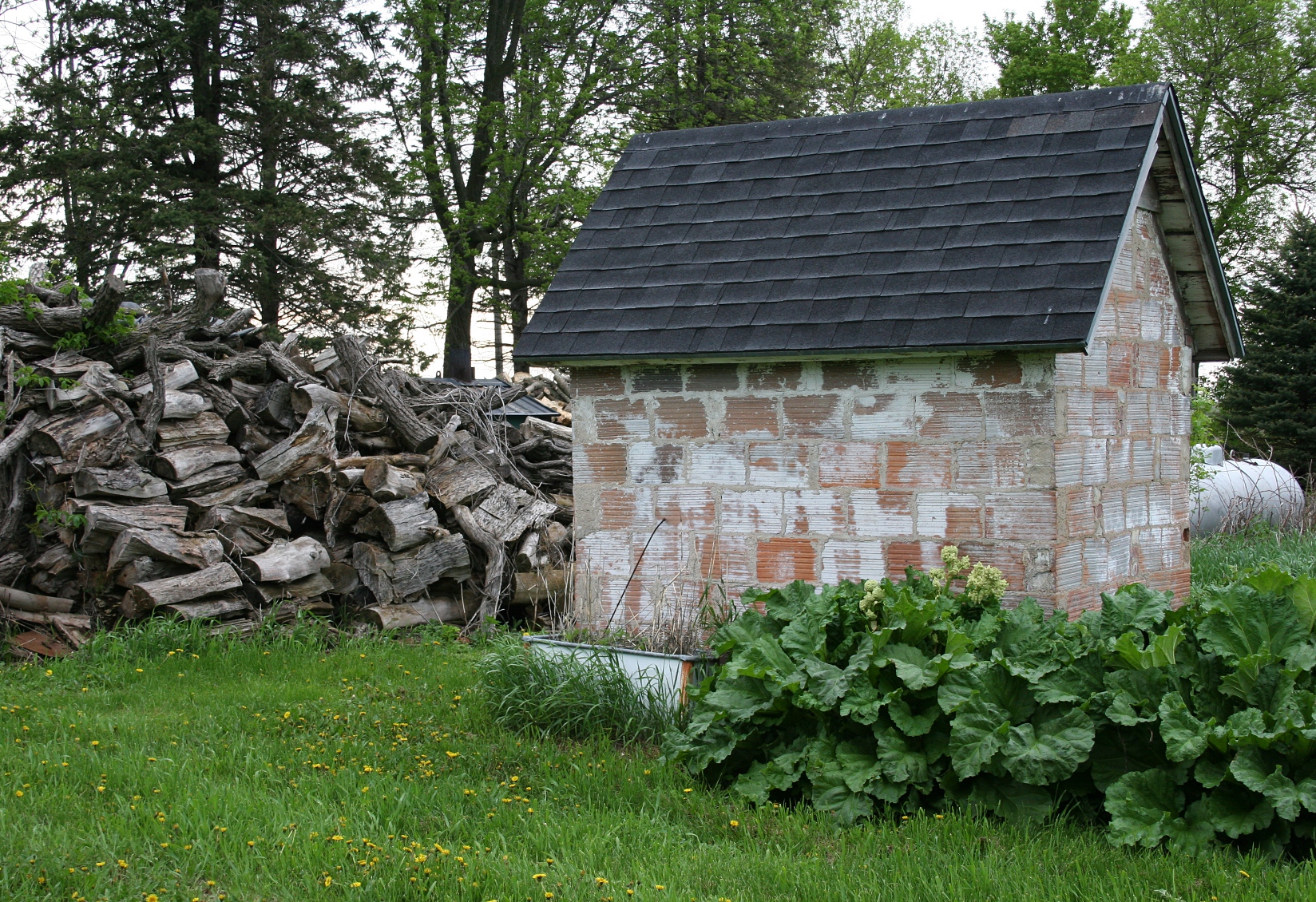
Rhubarb nudges the old smokehouse, which now houses garden tools.
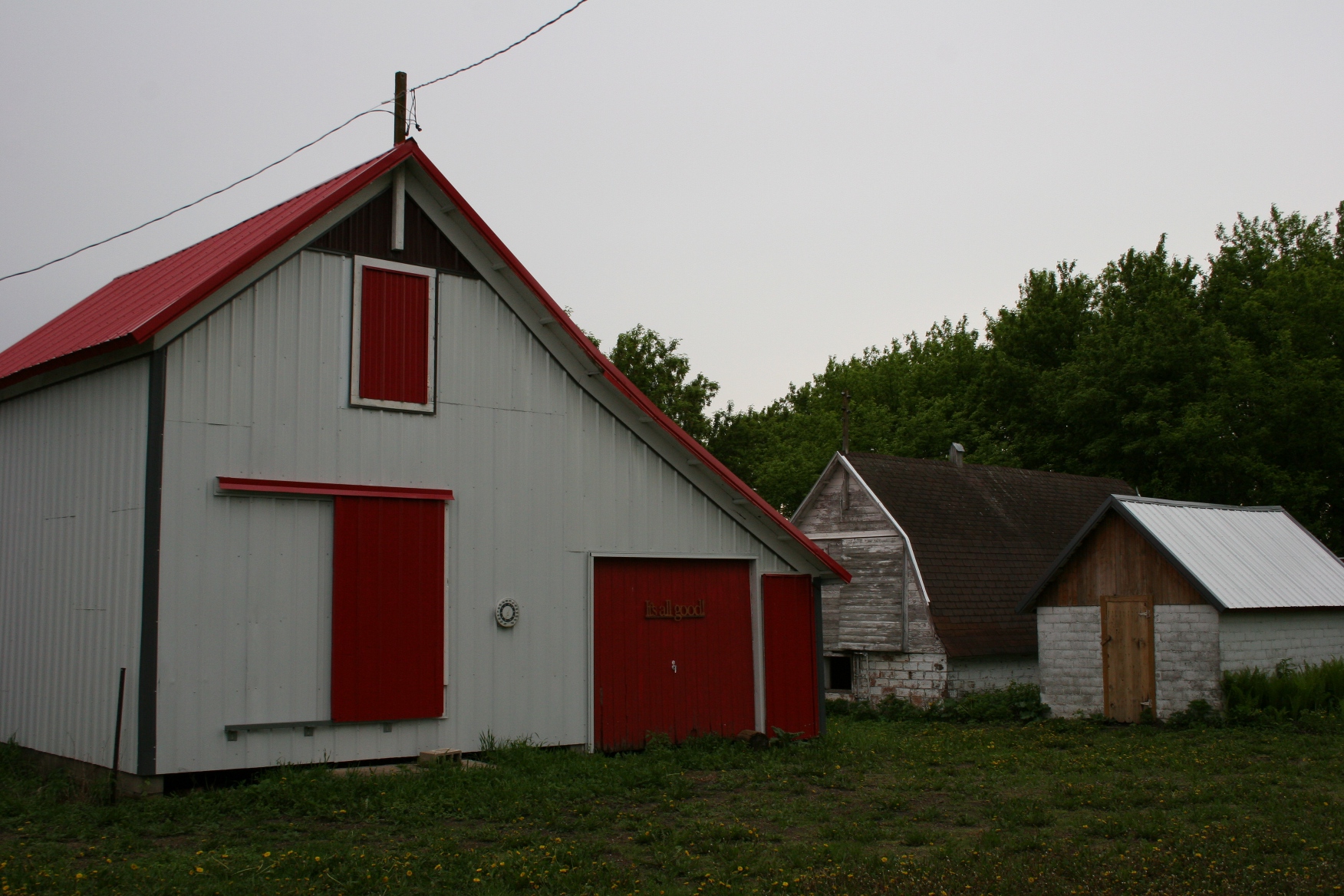
This farm is typical old style farm place with lots of outbuildings, including the updated granery on the left, one of the oldest structures on the farm.
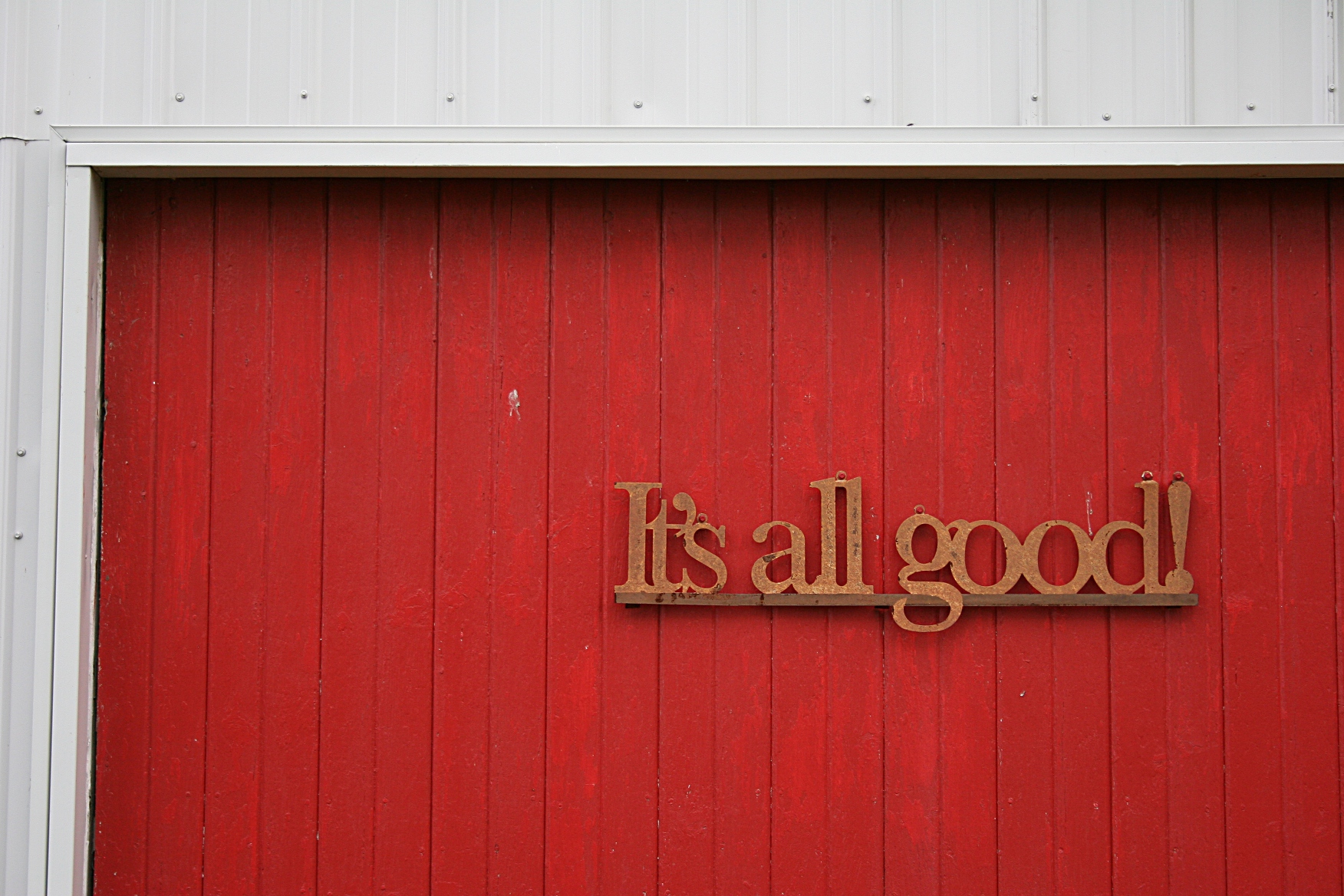
The message on the granery door reflects Barb’s attitude: “The sheds are full of stuff and it’s all good.”
NEARLY FORTY YEARS AGO I left the family farm in southwestern Minnesota bound for college in Mankato.
All these decades later I still miss the farm, yearn for those days of country quiet, the soothing pulse of the milking machine, the bellow of a cow, the nudge of a calf, the unmistakable scent of freshly-baled alfalfa.
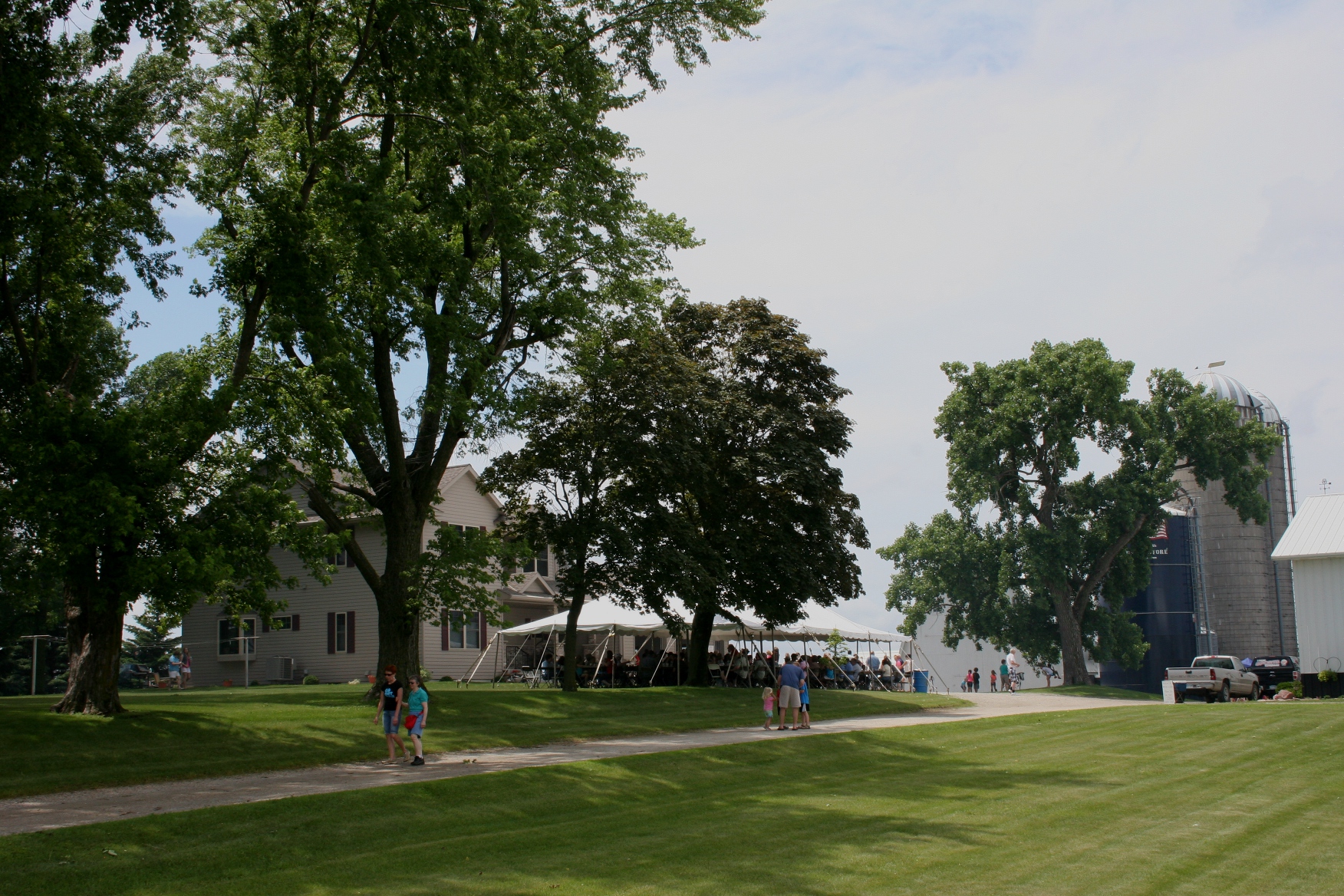
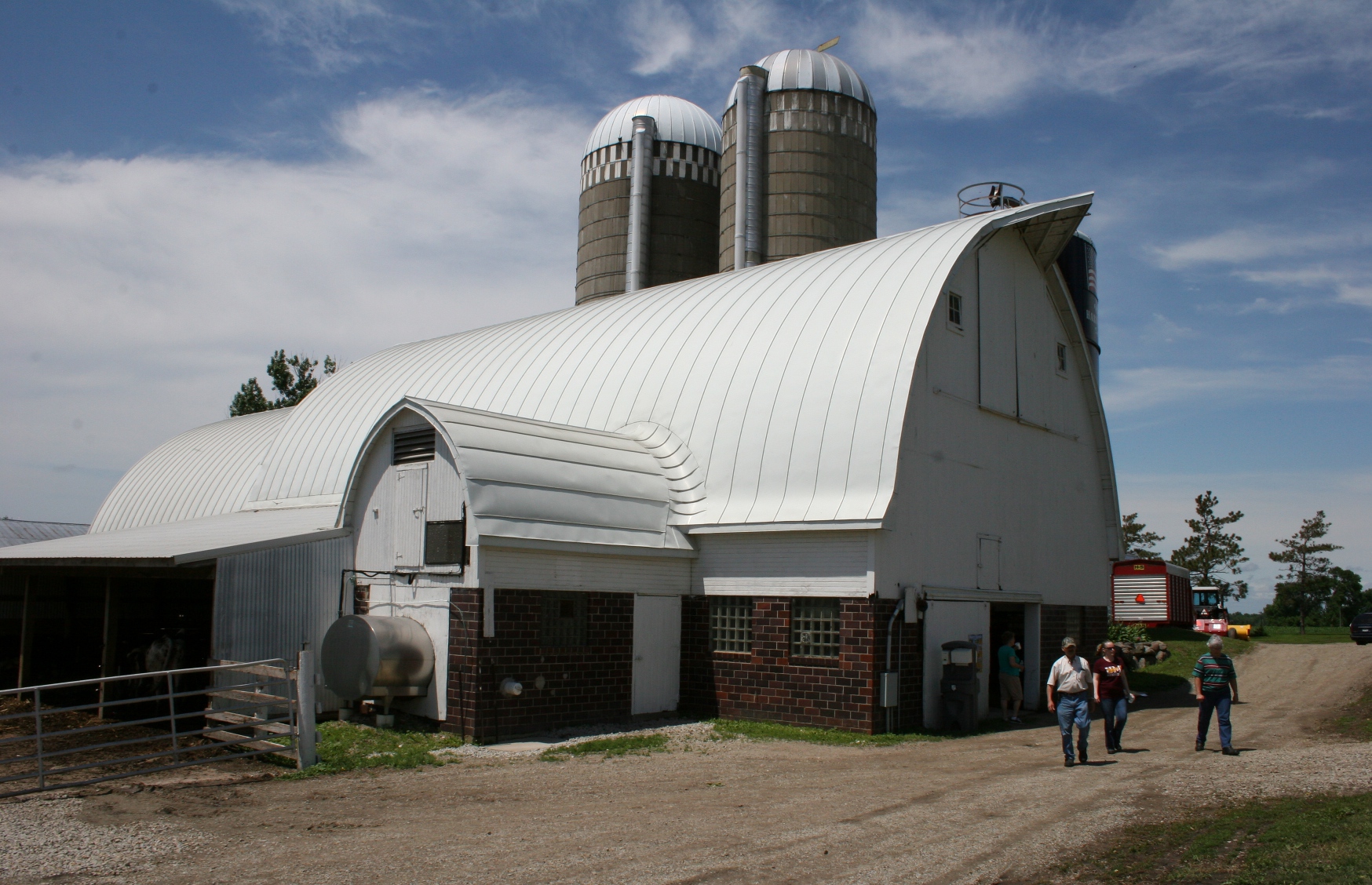
My first glimpse of the Wegners’ farm south of Faribault.
Saturday afternoon I reconnected with my rural roots at “A Day on the Farm” hosted by Ron and Diane Wegner and their daughters, Brianna and Kaylee, and sponsored by the Rice County American Dairy Association and the Minnesota Beef Council.
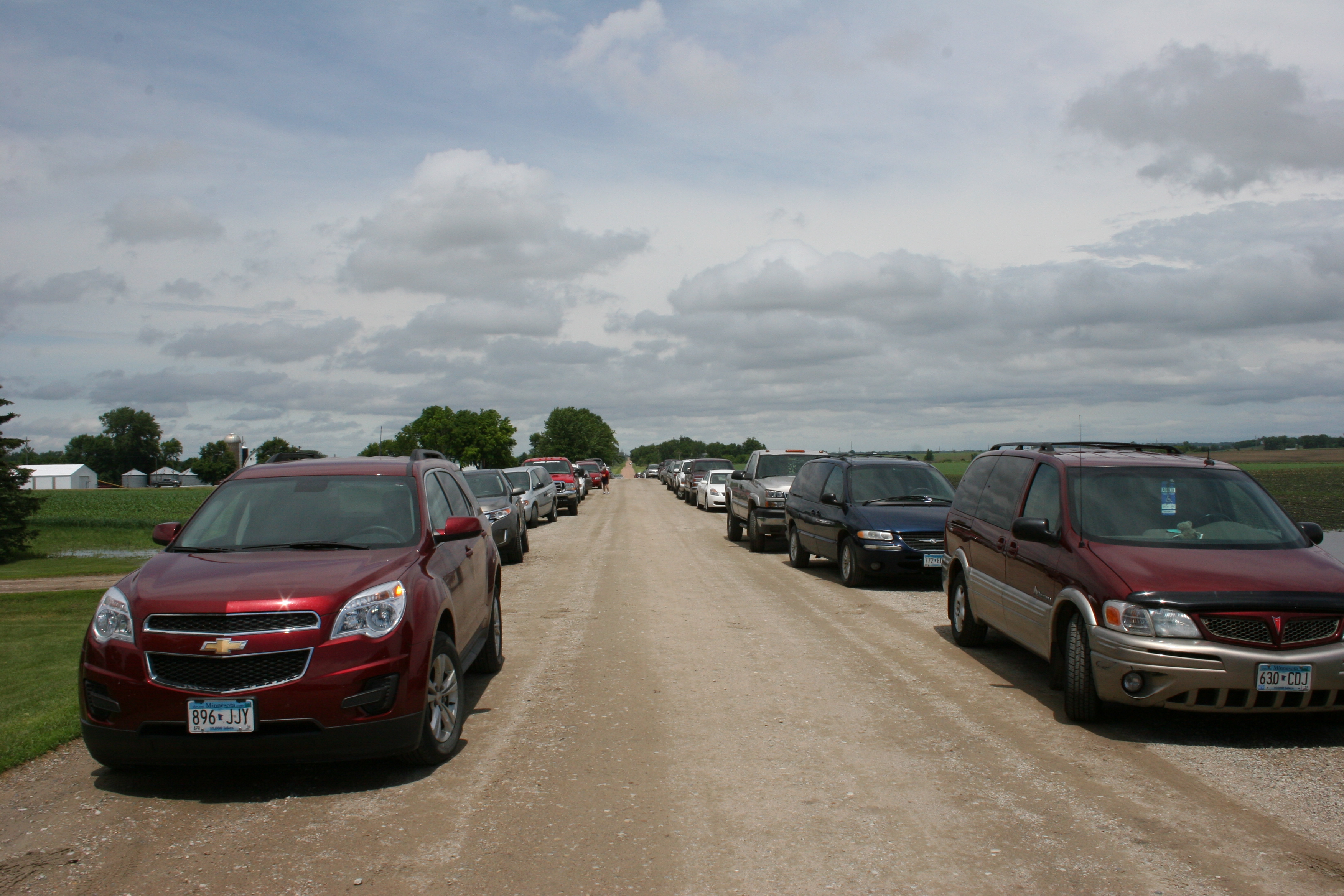
Vehicles lined both sides of Appleton Avenue near the Wegners’ farm.
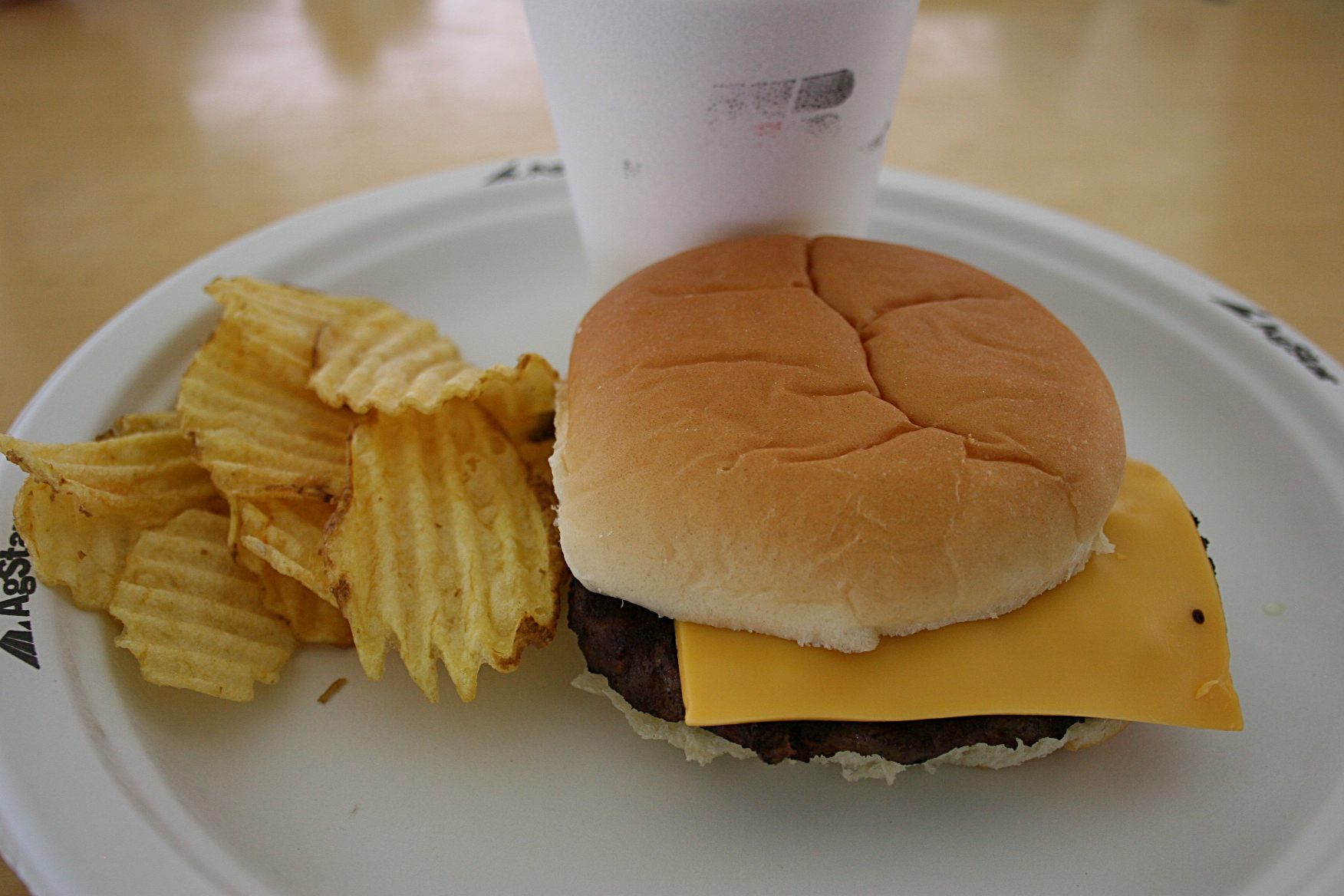
The free meal was provided by the Minnesota Beef Council, the Rice County American Dairy Association and Hastings Co-op Creamery (to which the Wegners sell their milk).
Vehicles lined the gravel road leading to the Wegners’ dairy and crop farm south of Faribault as skies cleared and almost 600 visitors lined up for free cheeseburgers, malts and milk and then wandered the farm site.
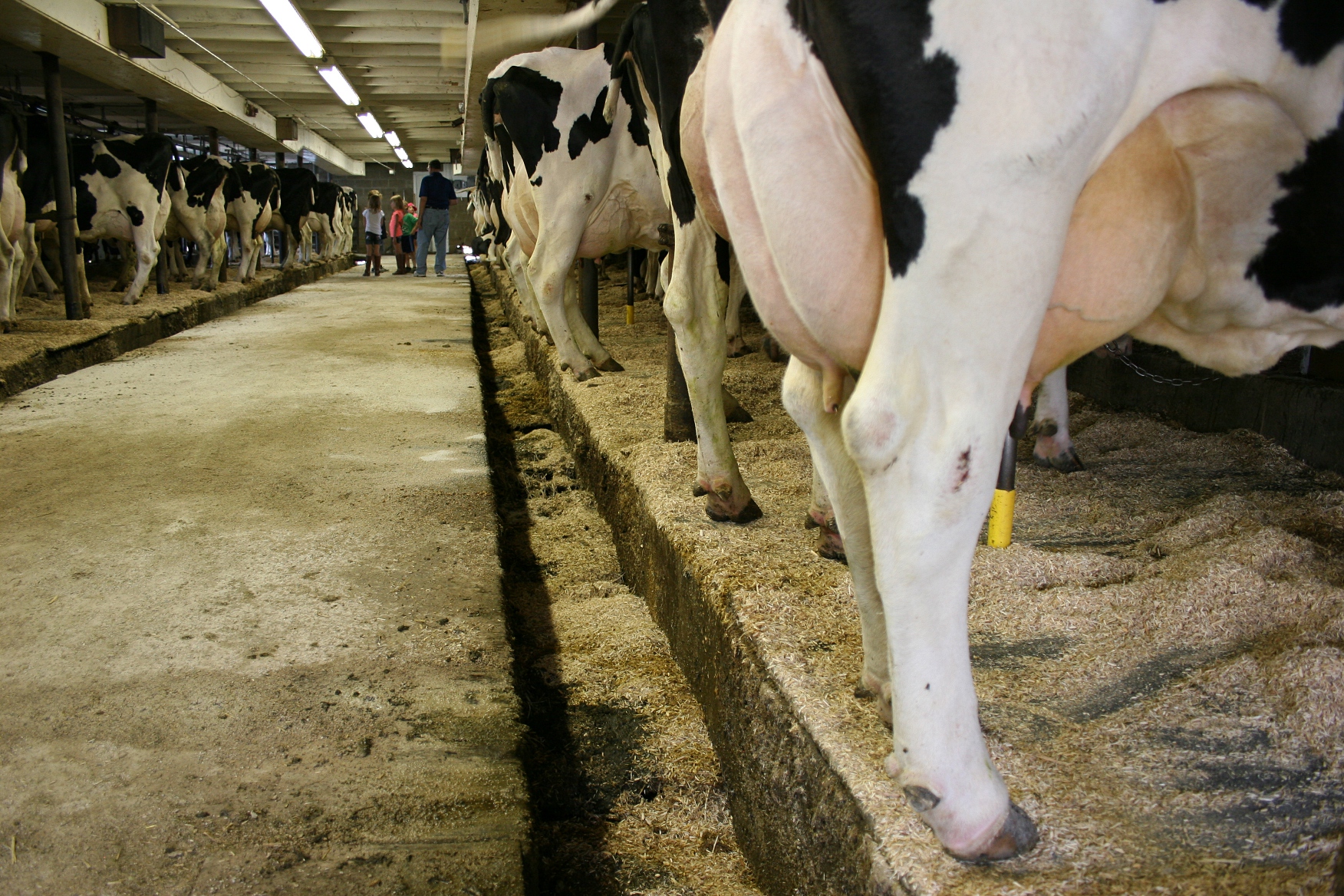
Visitors toured the barn to see the cows and calves.
It was a near perfect day—albeit a bit sultry—to check out this dairy operation, which, with 50 registered Holstein milk cows, 50 head of young stock and 15 springing heifers, still fits the definition of a family farm.
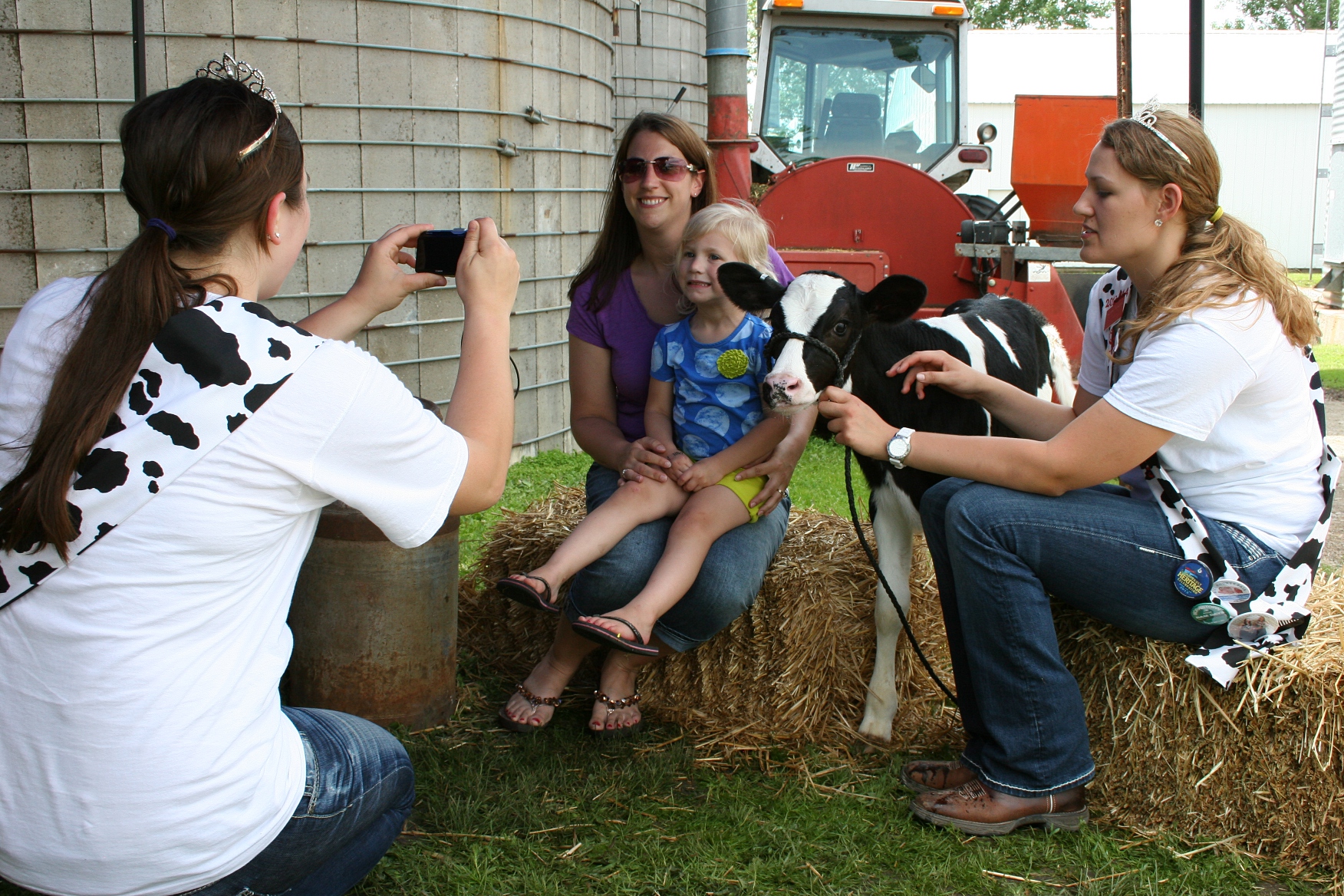
Rice County Dairy Princess Tracie Korbel takes photos while Dairy Princess Kaylee Wegner tends the calf.
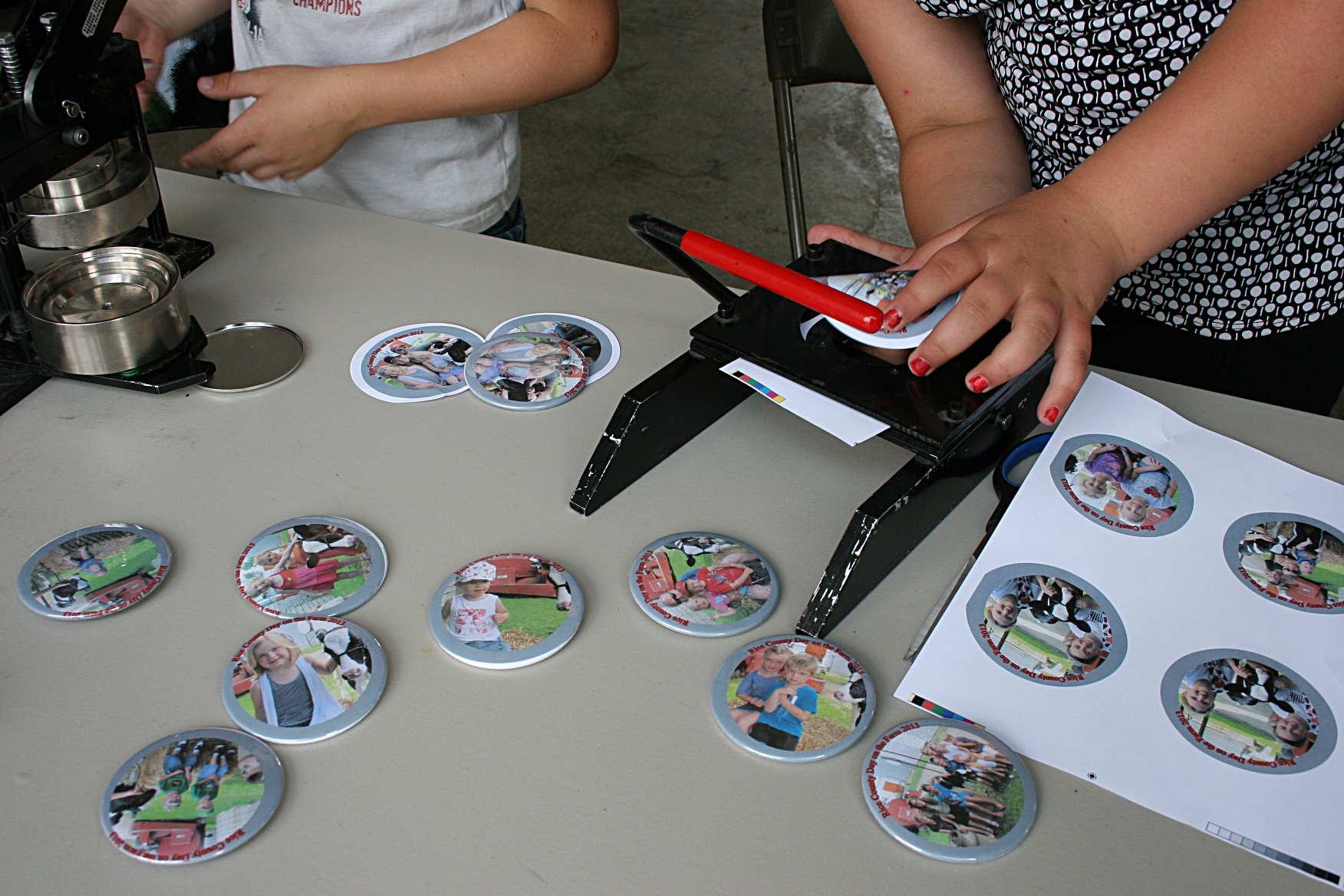
Turning the calf/kid photos into buttons.
I felt comfortably at home here, remembering my years of feeding calves as I watched Rice County Dairy Princess Kaylee Wegner tend a calf while Princess Tracie Korbel photographed youngsters with the baby animal. The photos were then adhered to buttons.
Two-year-old Benjamin points out his “Got milk?” tattoo.
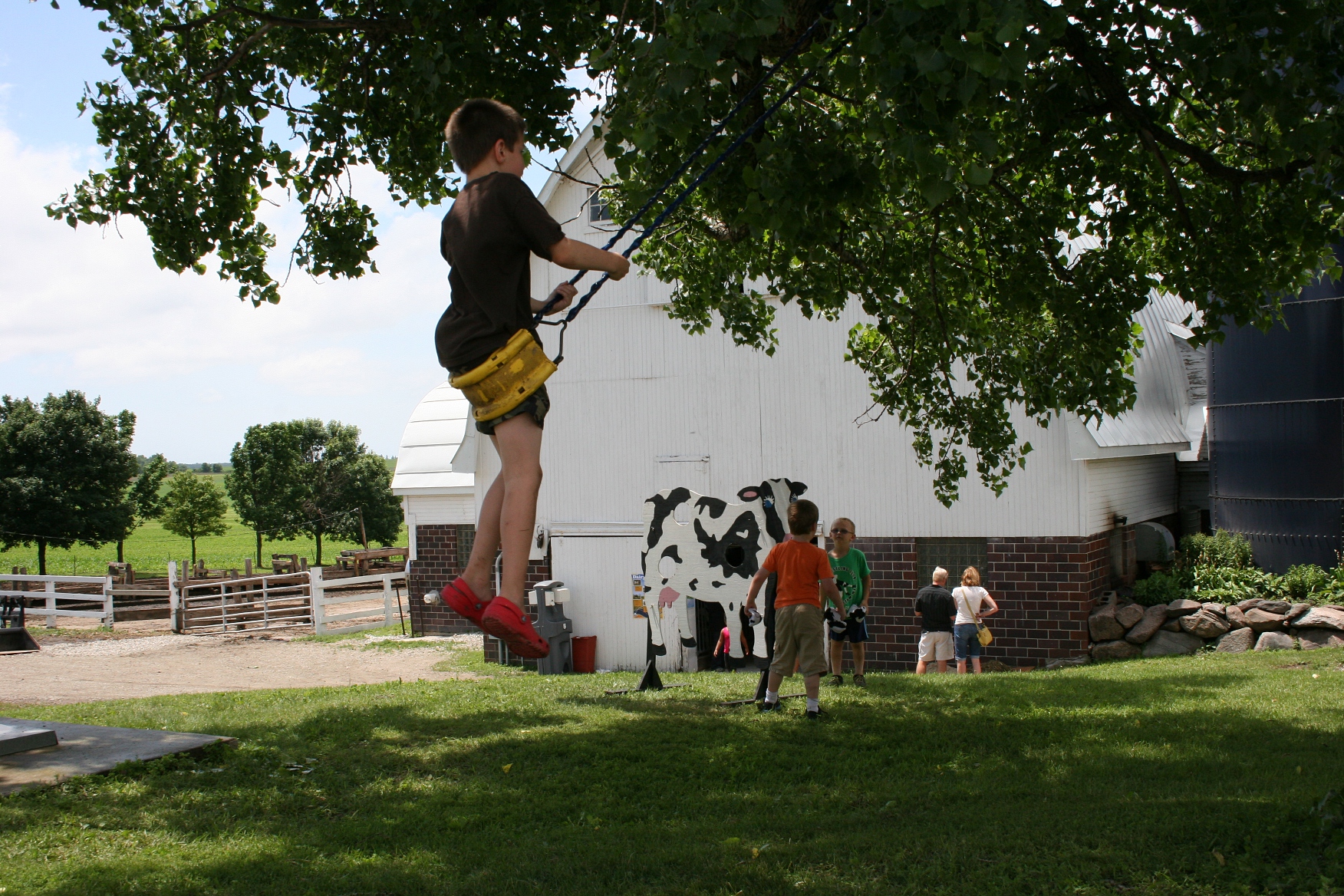
Simple country pleasures: swinging and playing cow bean bag toss.
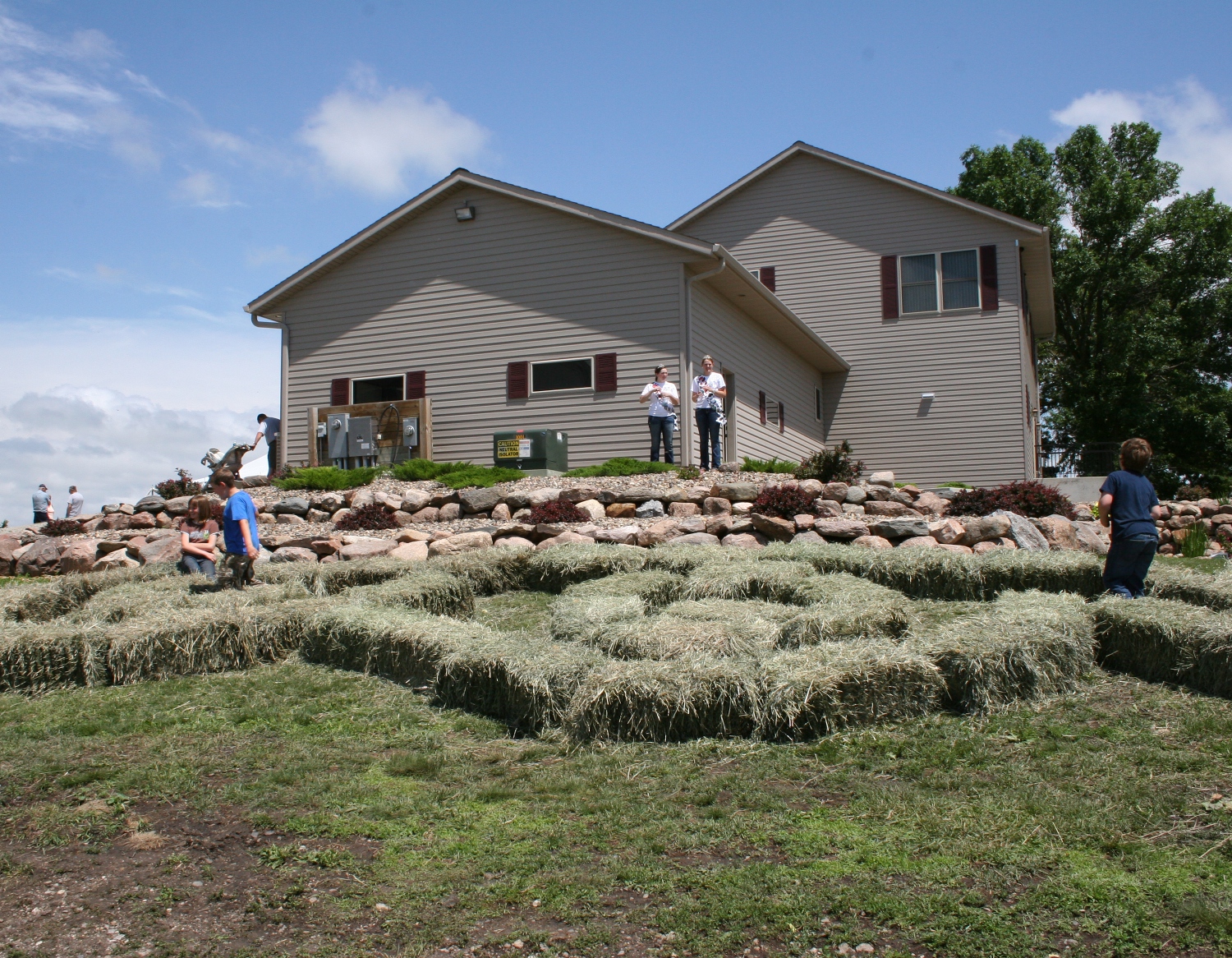
The hay bale maze between the barn and the house. The scent of freshly baled alfalfa caused me to linger here for awhile.
Other kids’ activities included a hay bale maze, cow bean bag toss, temporary tattoo applications and a ride on a swing tied to a tree. Fun stuff on a rare stunning summer afternoon.
Ava, 2 1/2, lives in the Twin Cities. Her grandparents, who live near Dundas, brought her to the farm because she loves animals. My husband and I dined with Ava and her grandparents.
Familiarizing kids with a farm seemed a common thread among many for coming to the farm, according to host Ron Wegner. He heard on Saturday from many grandparents who grew up on farms and brought their grandkids because “they don’t know what a cow is.”
Inside the Wegners’ dairy barn.
But Ron was hoping to educate more than the younger generation. When I asked why he agreed to open his farm to strangers for three hours, he explained that he wanted “the town people to come to a dairy farm and see where milk products come from.”
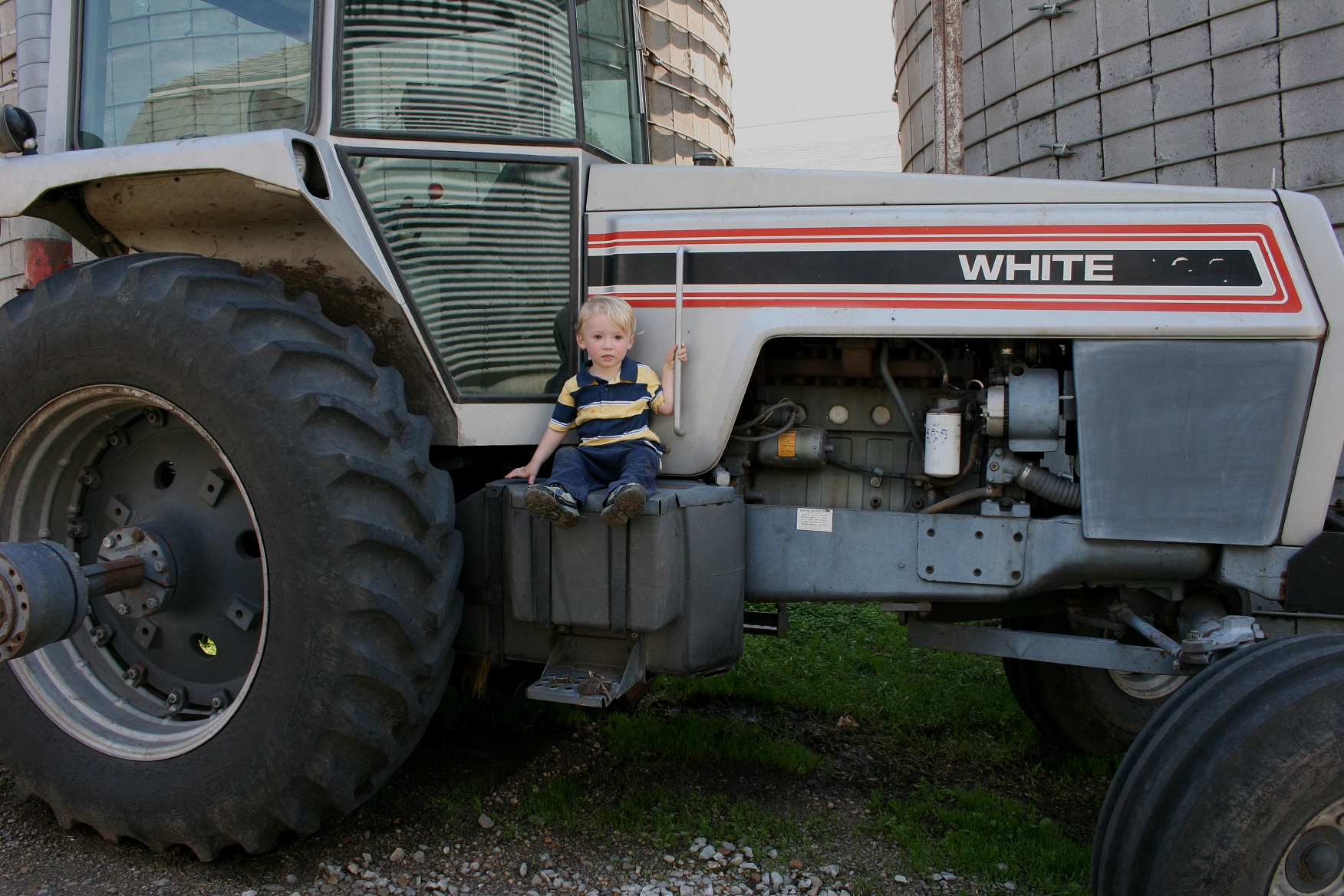
Benjamin, 2, lives on a buffalo farm near Lonsdale. His mom brought him to see a dairy farm. She was posing him for a photo on the tractor when I happened by.
And that seemed as good a reason as any to someone like me, who grew up on a Minnesota dairy farm.
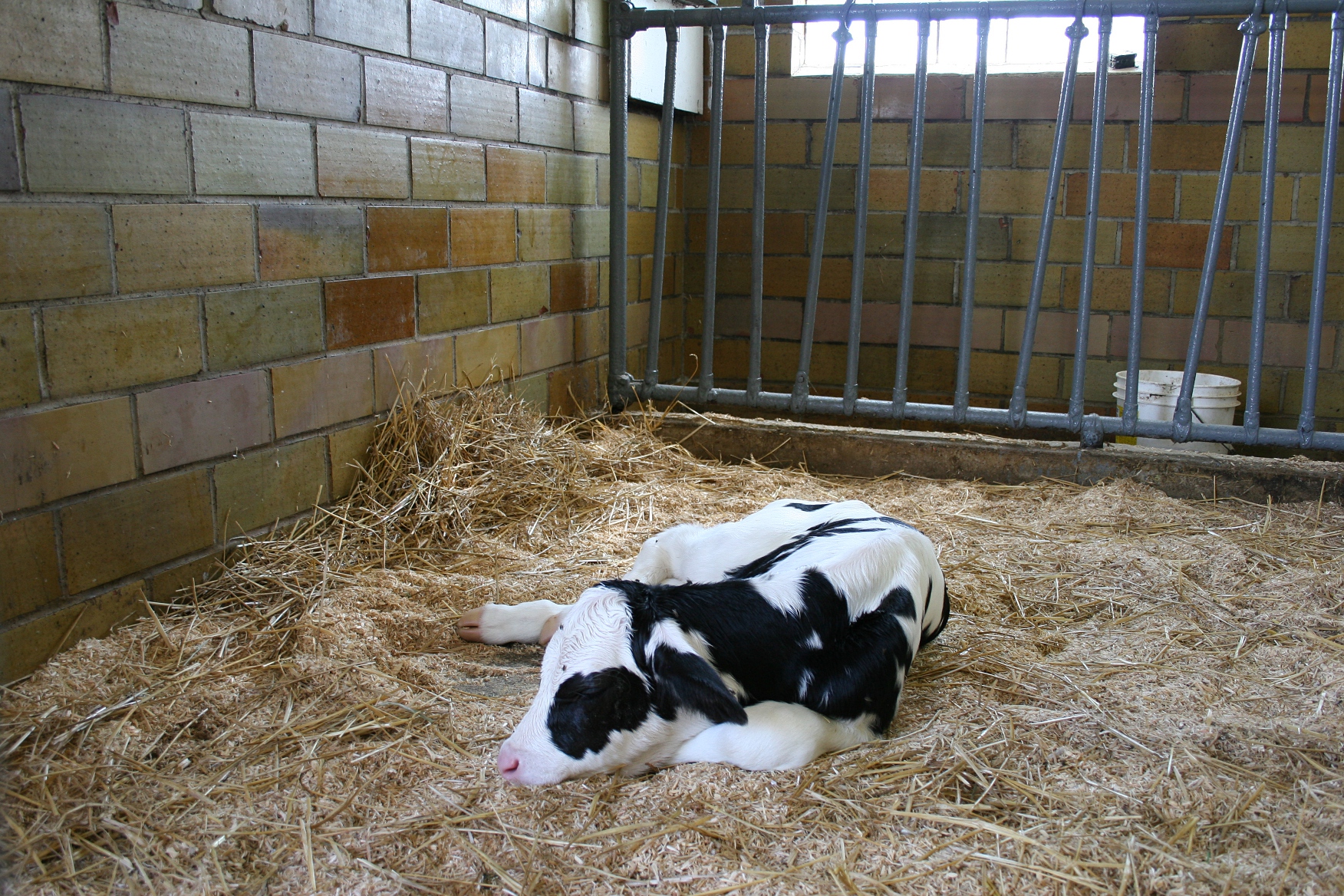
Several calves inside the barn were a hit among visitors.
CHECK BACK for more photos from “A Day on the Farm” in rural Faribault.
VENTURE INTO RURAL MINNESOTA—and we’re talking the small farming communities here, not what metro folks call “Greater Minnesota” or “outstate Minnesota”—and you’ll connect to our state’s agrarian roots in some interesting ways.
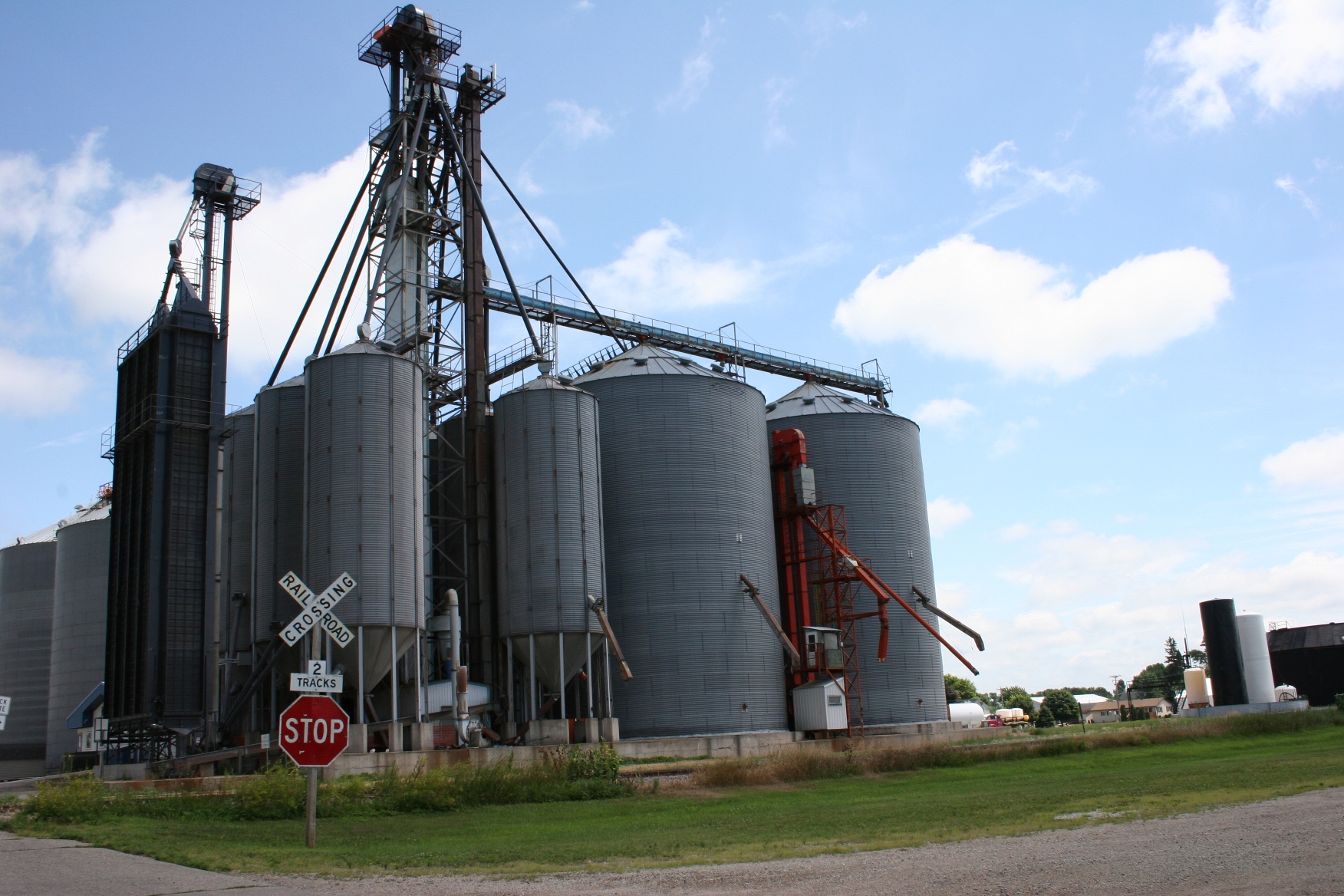
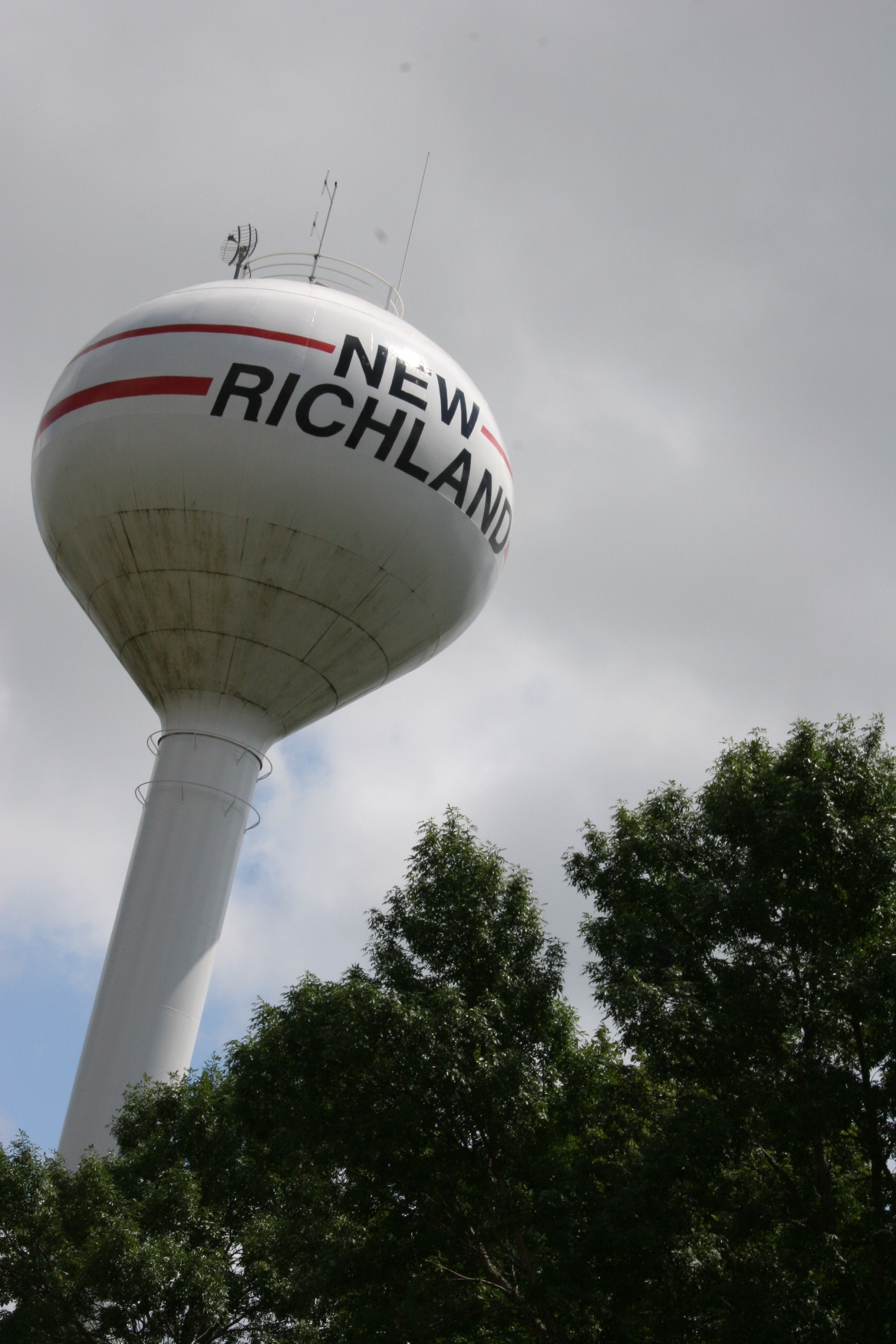
Take New Richland, for example, a town of 1,200 in southeastern Waseca County. Drive into town and you’ll see the usual grain bins and elevator and other farm-related businesses you would expect in an agricultural community.
A cluster of grain bins in the heart of New Richland.
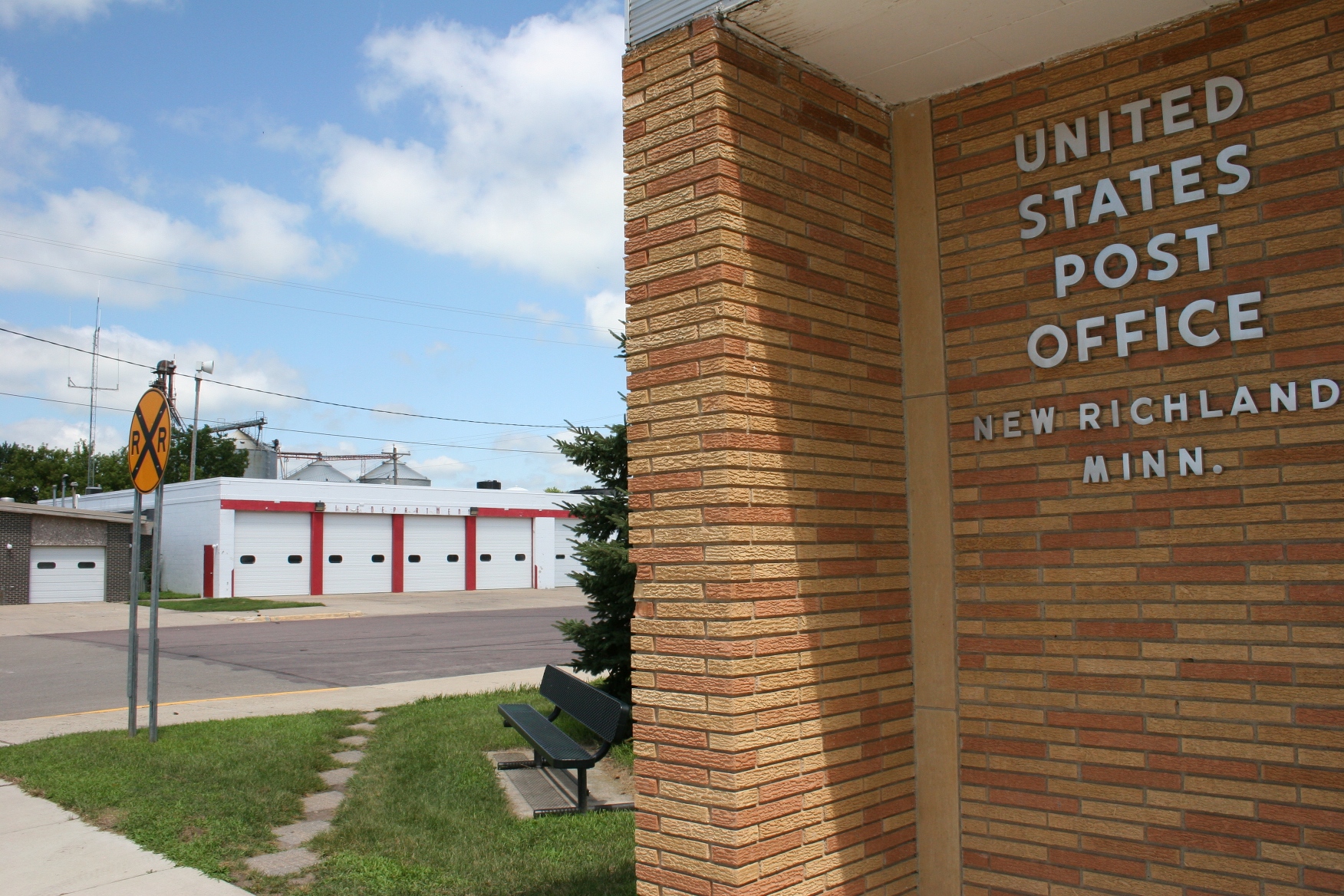
But then explore a little more and you’ll discover just how much this town values its agricultural heritage. Take the post office. Peek around the corner…
A corner of the New Richland Post Office. Note the grain bins a few blocks away.
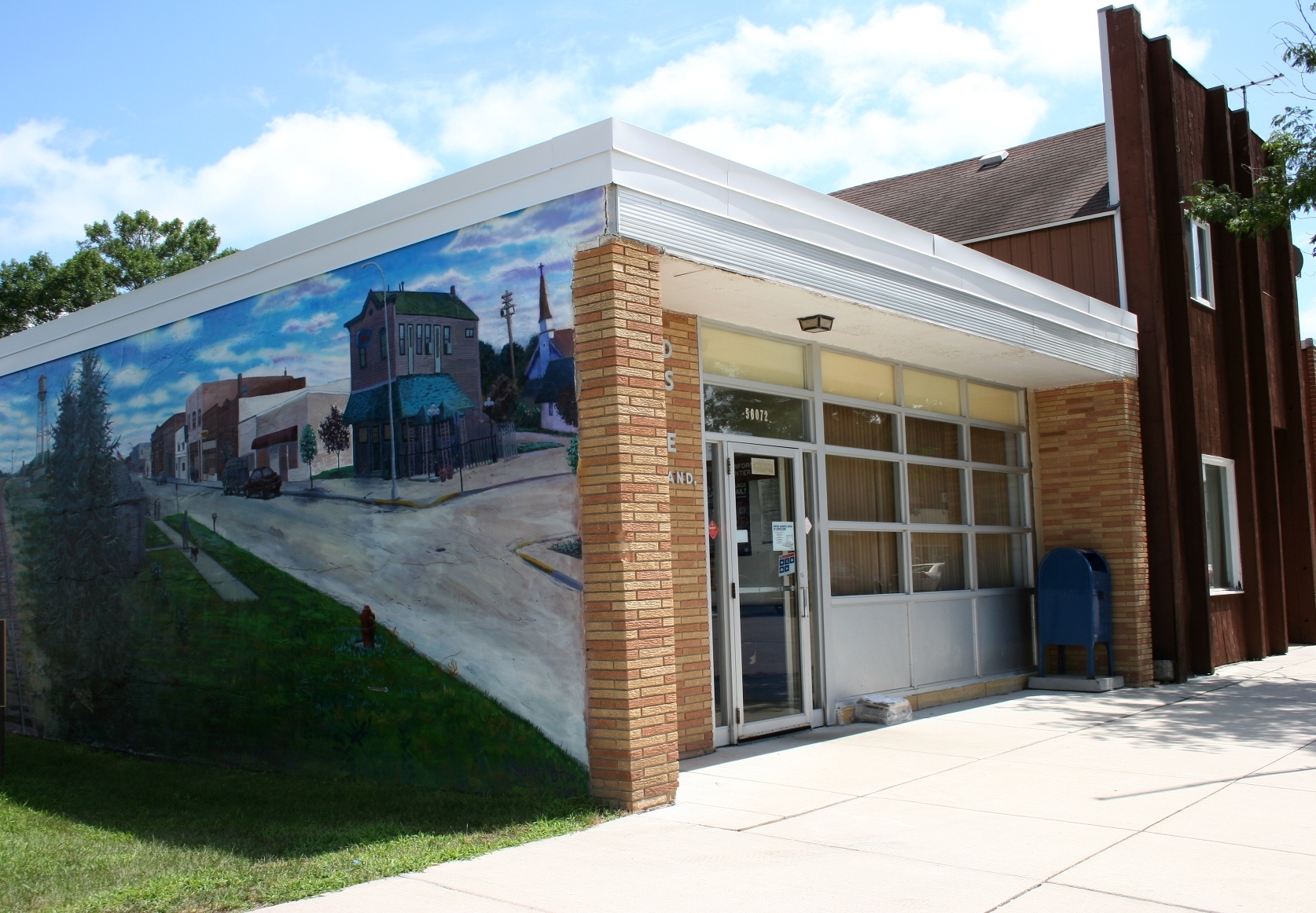
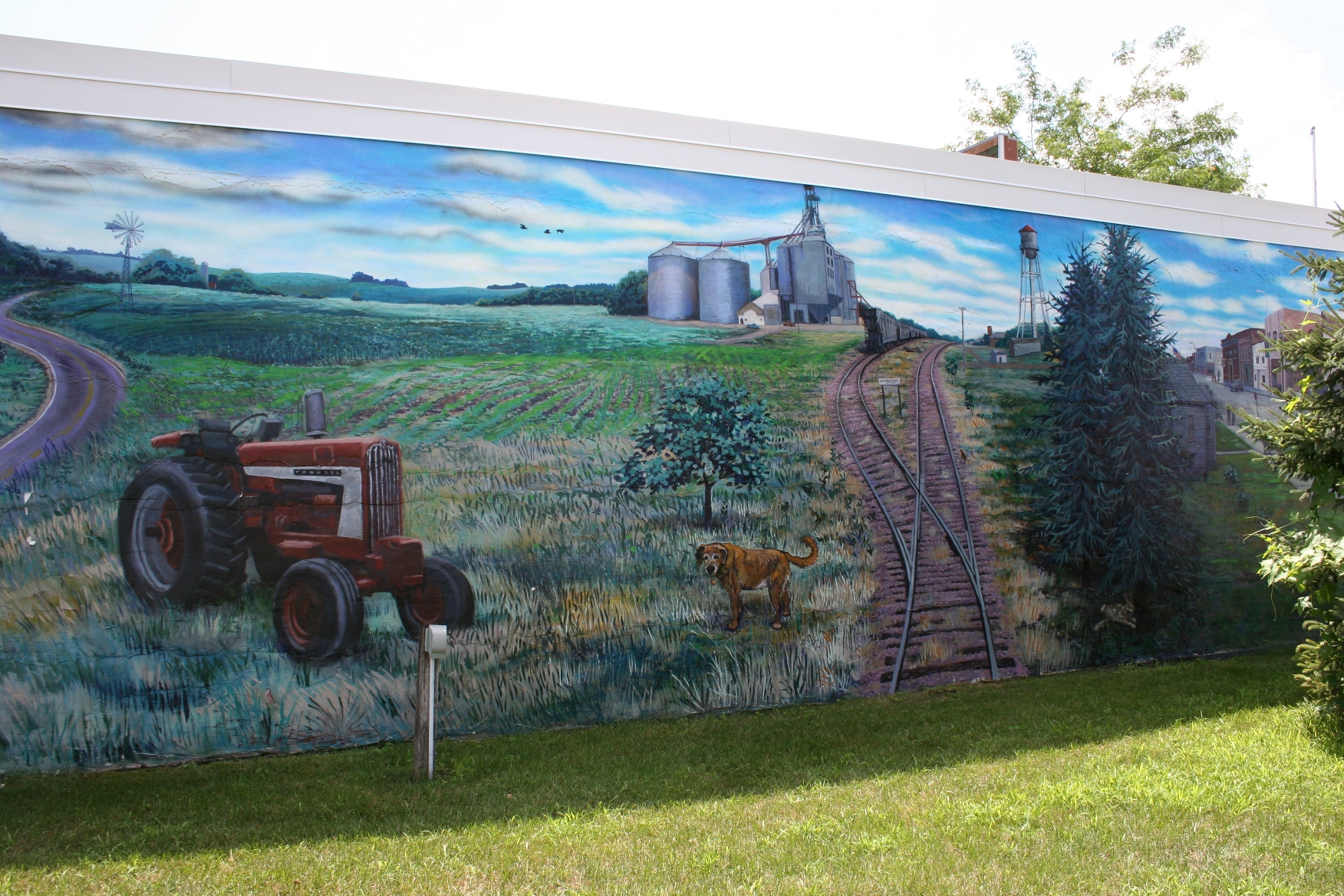
Around the post office corner you'll find this mural which reflects the connection between city and country.
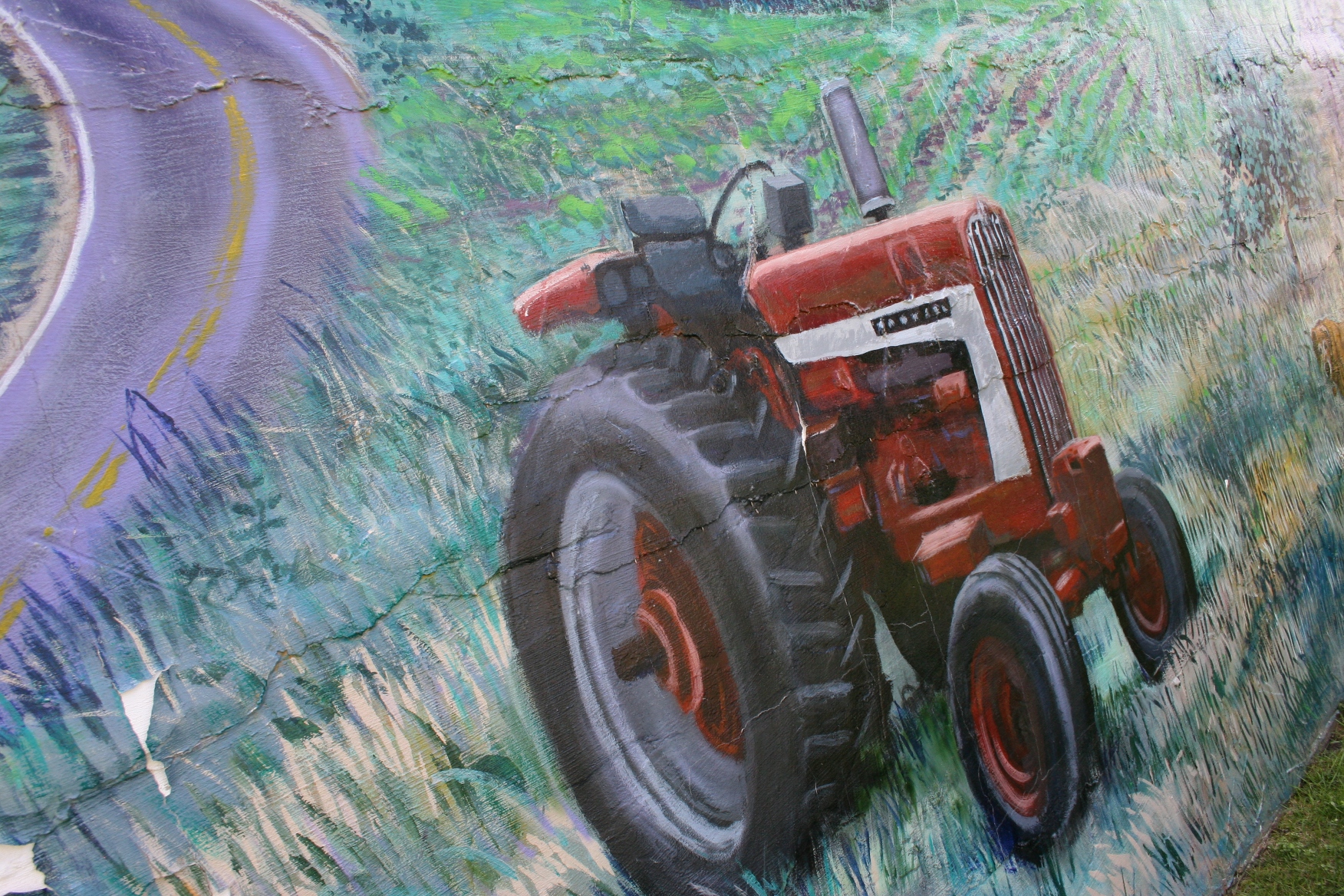
A snippet of the country portion of the mural. I wonder how the artist decided what type of tractor to feature?
Country connects to city in this detailed mural.
and you’ll find a mural depicting farm and city.
Now I’ve seen many a mural in my day, and I’d rate this as among the best. I wish I knew who to credit for this detailed artwork that draws the eye along the winding country road, down the train tracks to the grain elevator or along city streets to downtown. But I couldn’t find any information about the mural in a quick online search.
However, I did learn more about New Richland and the pride this community takes in its agricultural roots. Just a few weeks ago the town celebrated its 28th annual Farm & City Days. Events included the usual parade, street dance, bingo, antique car show, medallion hunt and such.
But I found a few activities that definitely say country through and through.
Teams of two competed in the second annual Chore Boy Race. (Just for the record, girls can participate, too; the winners were Molly Flor and Brandon Mullenbach). Anyway, it’s a contest that involves eggs, milk, hay, grain and wheelbarrows. You can learn more about the competition by clicking here and reading this story in the local newspaper, The Star Eagle.
I found a Chore Boy Race contestant application online and one Farm & City Days Facebook page photo and these rules (some in boldface): “You must wear all your chore clothes at all times. This includes but is not limited to Boots, Hat, Bibs & Gloves.”
OK then, got that?
If you’d rather use your brain than your brawn, Farm & City Days offers a “Guess the weight of the pig” contest at $1 a guess. The person with the closest guess wins the pig and processing at Morgan’s Meat Market. This year two entrants correctly guessed the exact weight of 208 pounds and agreed to split the hog, according to the Farm & City Days Facebook page.
If you didn’t win the pig, you could still eat pork by buying a pork sandwich meal from the Waseca County Pork Producers at the city park.
Two other agricultural-themed activities included a kids’ tractor pull and a Farm vs. City 3-person Scramble at a golf course.
I’m disappointed I missed Farm & City Days because it sounds like one heckuva good time, as small-town celebrations typically are. But I wouldn’t even have known about this annual farm-city event if I hadn’t been poking around New Richland last Sunday, spotted that mural on the side of the post office and then gone online to learn more about it, which I didn’t, but I did.
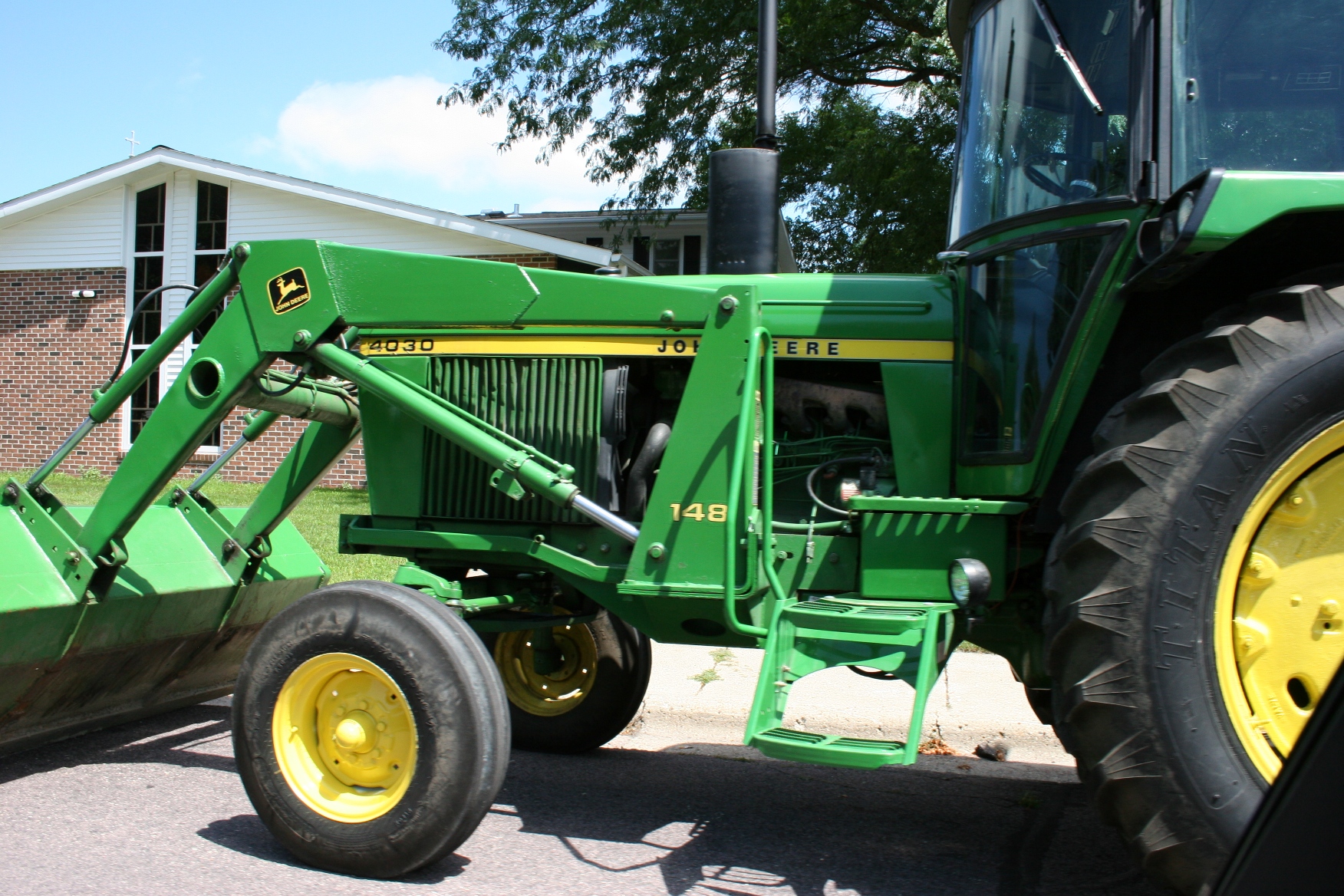
This John Deere tractor was parked outside the funeral home in New Richland on Sunday afternoon.
My husband and I stopped in New Richland while on a recent Sunday afternoon drive. Check out my July 24 blog post from this community and watch for future stories and photos from New Richland.
If you look closely, you will see the farm dog in front of the 1915 farmhouse to which a machine shed was added.
WIDE SWATHS OF SHADOWS sliced across the farmyard as the sun edged toward the horizon on a whisper of a summer night.
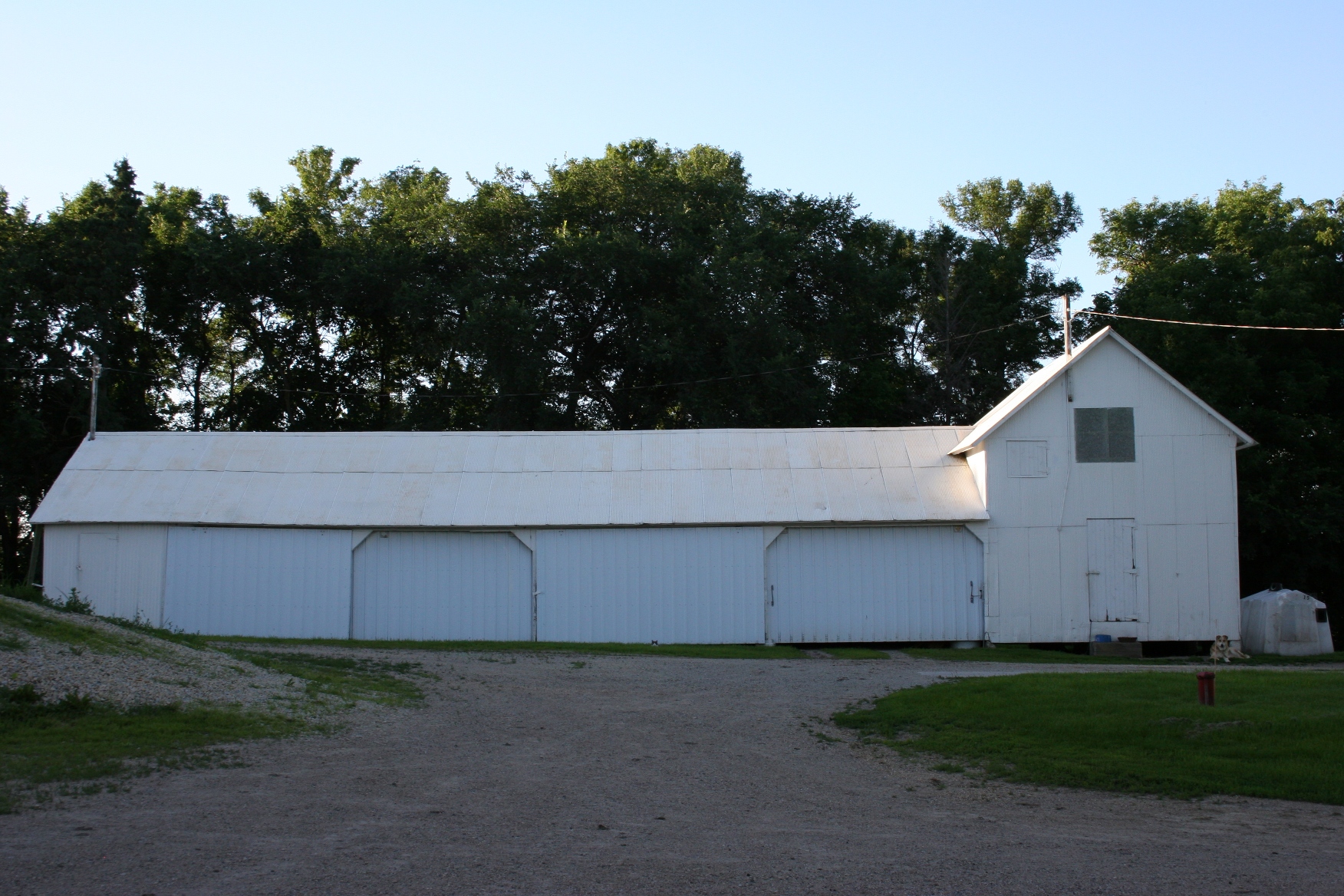
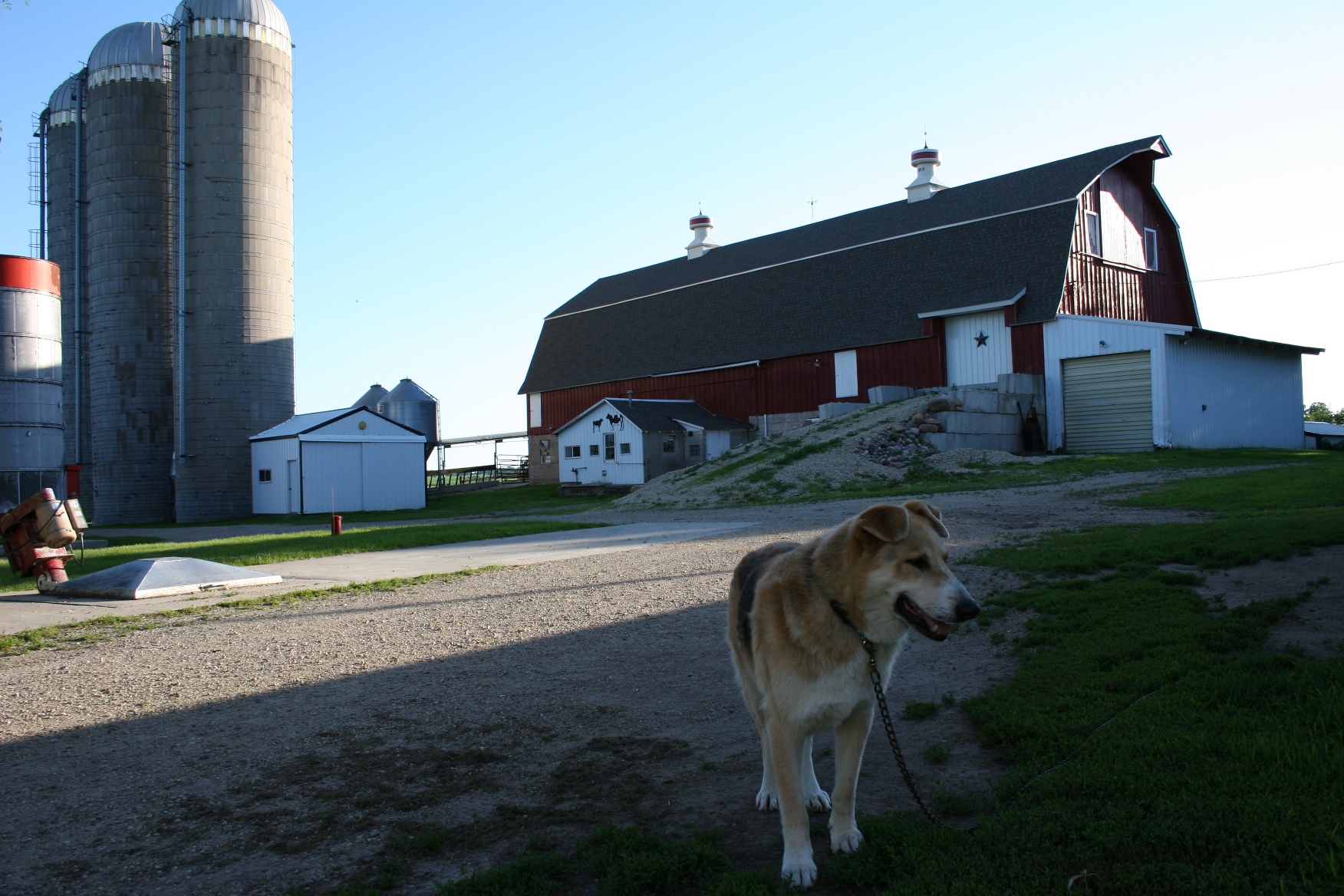
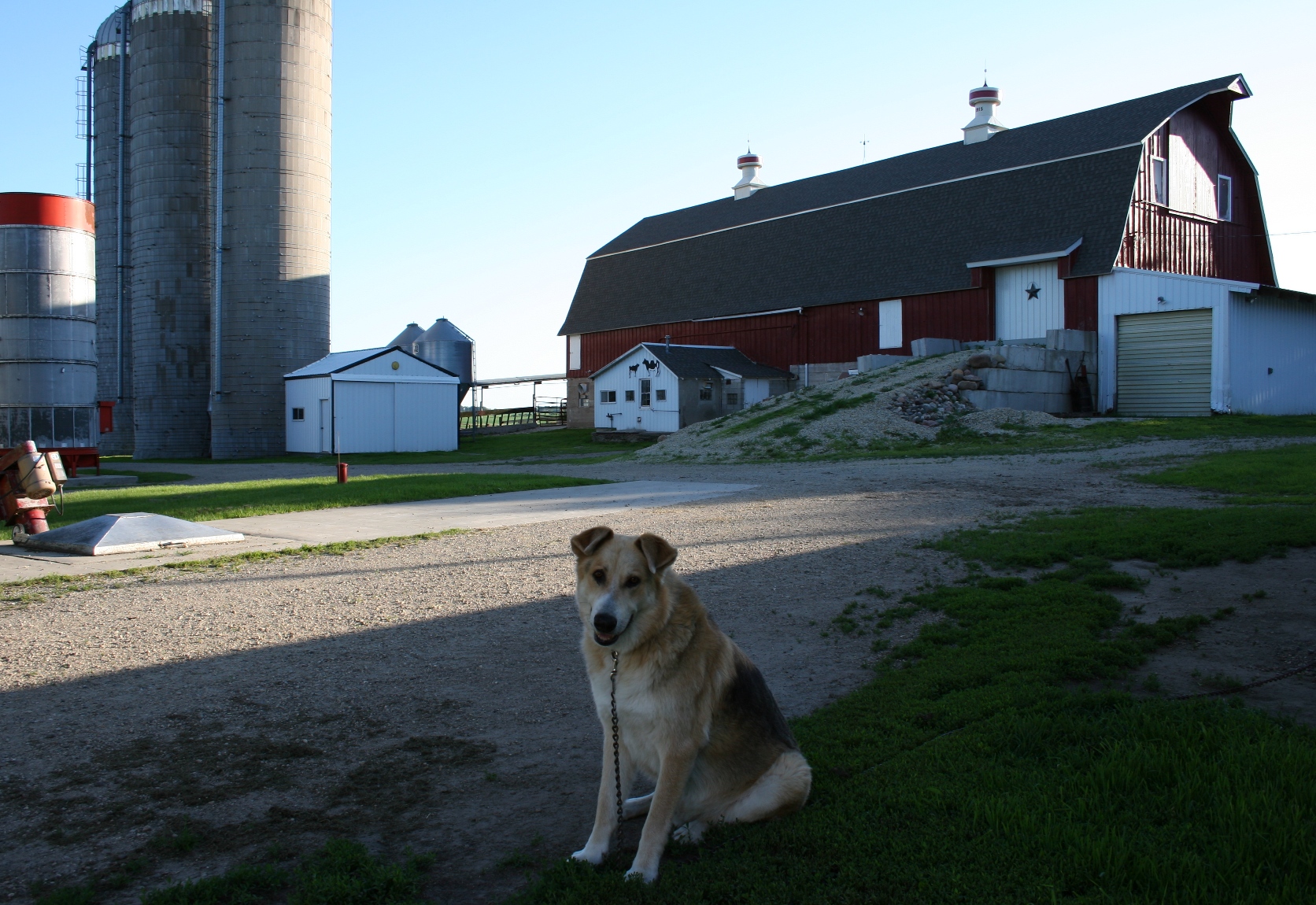
The old farm dog, tethered to a chain next to the 1915 farmhouse-turned-granary-turned storage shed, rose from his resting place on a paw-worn patch of grass. Water and food bowls rested on the single cement step nearby, within his reach.
The dog didn’t bark, didn’t lunge, just let me be as I moved into his territory. He stood, paced and then eased onto his haunches, acknowledging my non-threatening presence as I dropped to one knee to view the world from his perspective.
I wanted only to photograph this guardian of the farm on a summer evening as absolutely picture-perfect as any day you’ll get in Minnesota. Still. Serene. Colors sharp like new crayons. Sunlight, eye-blinding bright to the west, on the other side of the barn, outside the dogs’ reach.
This June evening, for these few hours, this watchdog could not roam the farmyard. He could only eye the visitors seated across the gravel drive at a picnic table. Friends gathered for pizza and lemonade sweetened with fresh strawberries and then more berries atop angel food cake and ice cream topped off with whipped cream.
Laughter punctuated conversation. Then bibles flipped open to words written upon pages thin as butterfly wings. The shrill call of a cardinal pierced the silence between ideas shared and scripture read.
Then, as the farm dog watched, the friends bowed their heads in a prayer of thanksgiving—gratitude to God for protecting the owners of this farm from serious injury in a motor vehicle accident the previous day. A rear-end collision. Truck spinning, tipping onto its side along a Minnesota highway. Glass in teeth and waistbands and hair.
None of this the guard dog knew on this most blessed of summer evenings on a Minnesota farm.
TODAY, JUNE 30, has been designated as “Maroon Day” in Minnesota, historically the deadliest day on our state’s roadways. Since 2000, more fatal crashes have occurred on this final day of June, leading into the July Fourth holiday, than on any other day of the year. Statistics show 30 fatal crashes resulting in 35 deaths.
All of Minnesota’s nearly 600 state troopers, in their signature maroon vehicles, will be patrolling today.
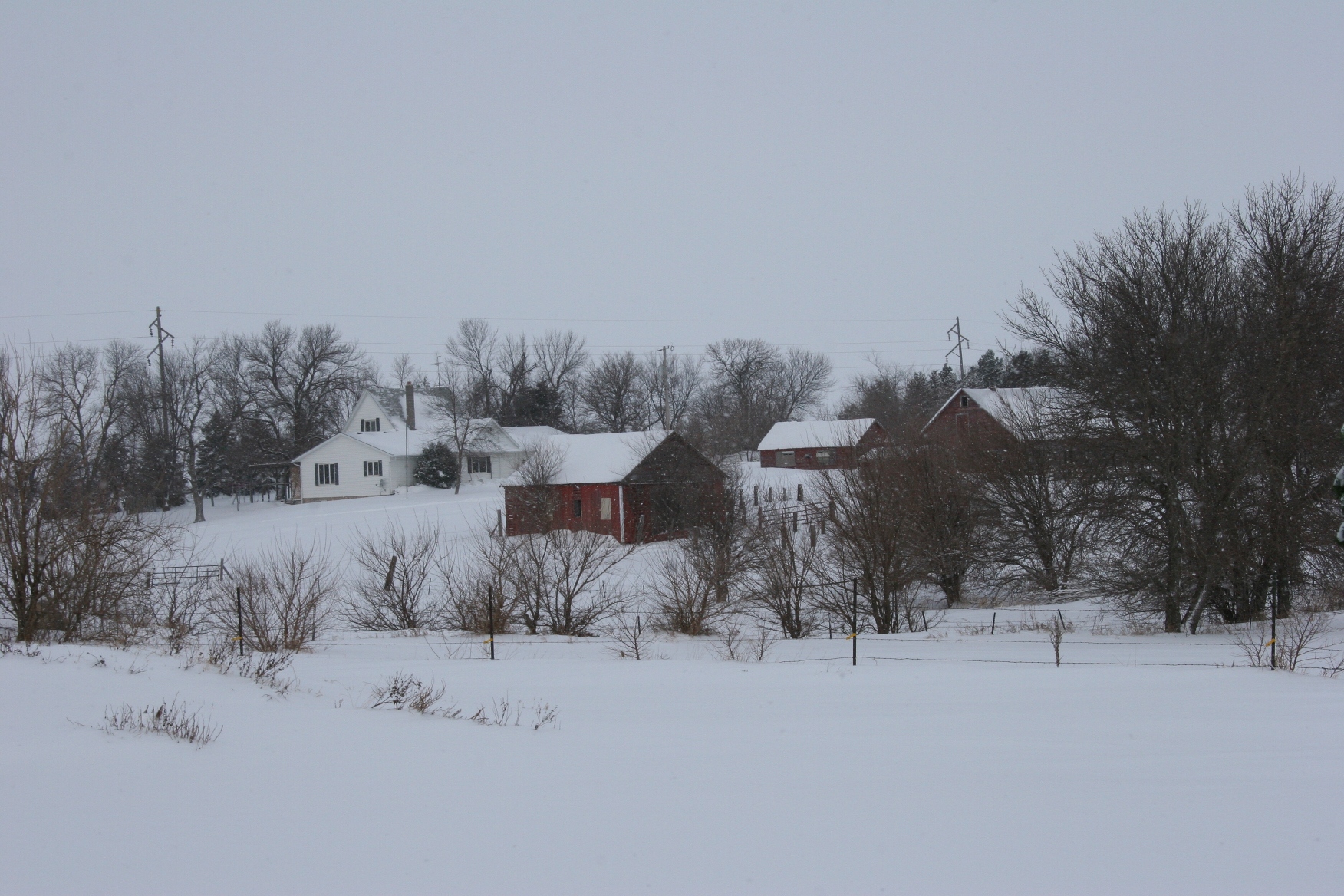
WHEN I LOOKED through the patio doors of my middle brother’s rural Redwood County home on Christmas morning, I saw this picture-perfect postcard scene.
A farm place near Lamberton on Christmas Day morning.
The quaint farm place sits along Redwood County Road 6 near Lamberton, just north of the county park I call the “gypsy park” because my paternal grandma told me gypsies once camped there.
From the park, the farm site lies only a short distance from an electrical substation which, during my growing up years, my siblings and I dubbed “the chicken pox factory.” It was a name we gave to all such substations, I suspect around the time chicken pox plagued the area. Ironically, the brother who now lives near the chicken pox factory never had the disease.
But I am getting sidetracked here. I wanted to share this photo with you for several reasons. First, this winter in Minnesota is quickly becoming long and wearisome with all of the snow we’ve gotten recently.
That’s why it’s more important than ever to search for the positive (which I have not been too good at lately) in winter. For me, that means viewing the landscape as a photo opportunity. Photography forces you to really see, not simply look at, the details in your environment.
While composing this image, I noticed the contrast of the red buildings against the pristine white snow, the defined fencelines, the old farmhouse that surely has many stories to tell, the slight rise of the land, the shelter belt of trees protecting the farm from the fierce prairie winds. With a gentle snow falling, the scene possessed a dreamy, peaceful, surreal quality.
So, yes, when you make a conscious effort, you truly will find beauty in this winter of overwhelming snow.










 Minnesota Prairie Roots
Recent Comments