Minnesota Prairie Roots

Writing and photography by Audrey Kletscher Helbling

Dairyland, an old-fashioned drive-in in Fergus Falls June 13, 2013

Filed under: Uncategorized — Audrey Kletscher Helbling @ 7:12 AM
Tags: , , , , , , , , , ,

I’VE SEEN THIS PLACE BEFORE. I just know I have. On my vintage Candy Land board game. Or in a fairy tale perhaps.

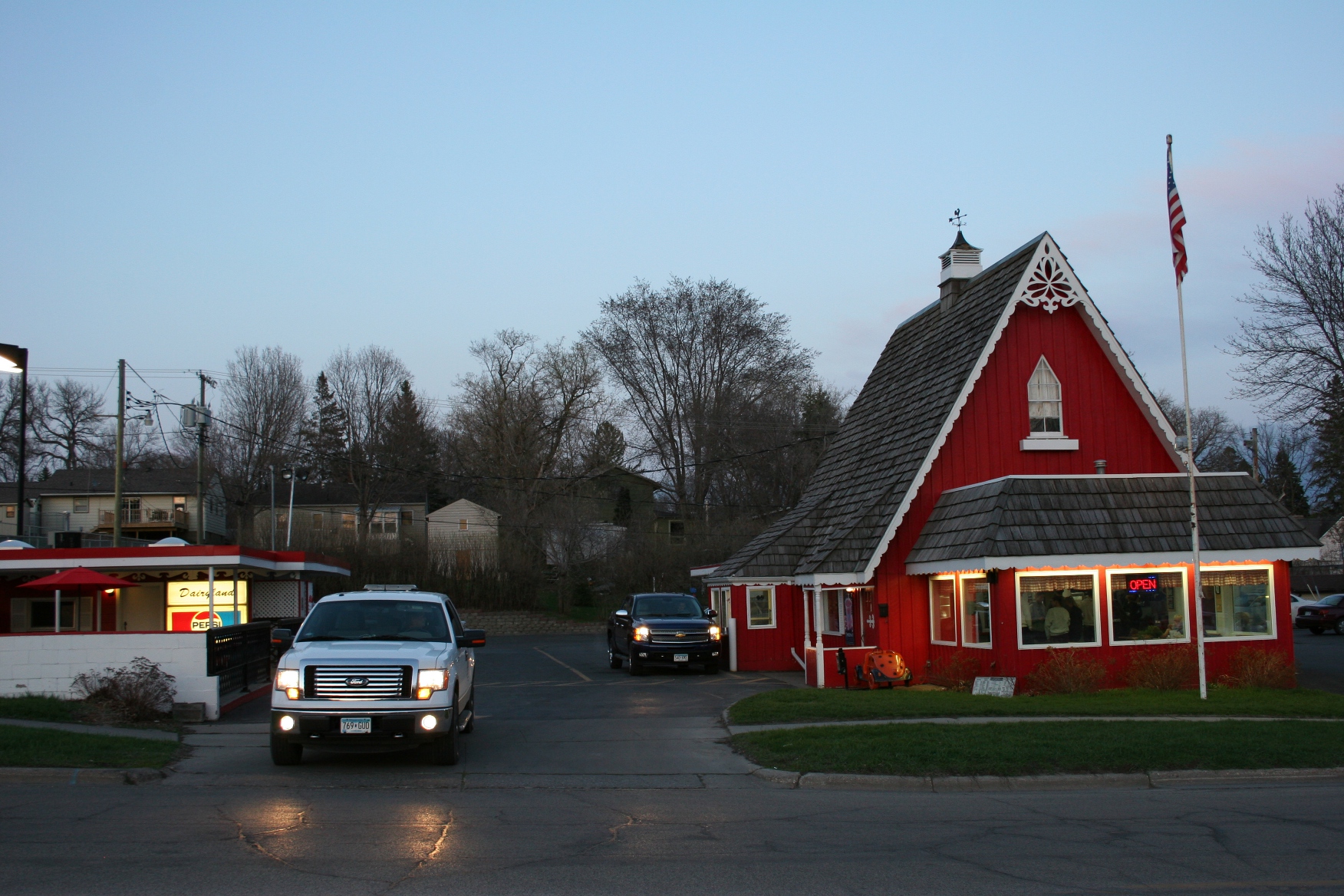
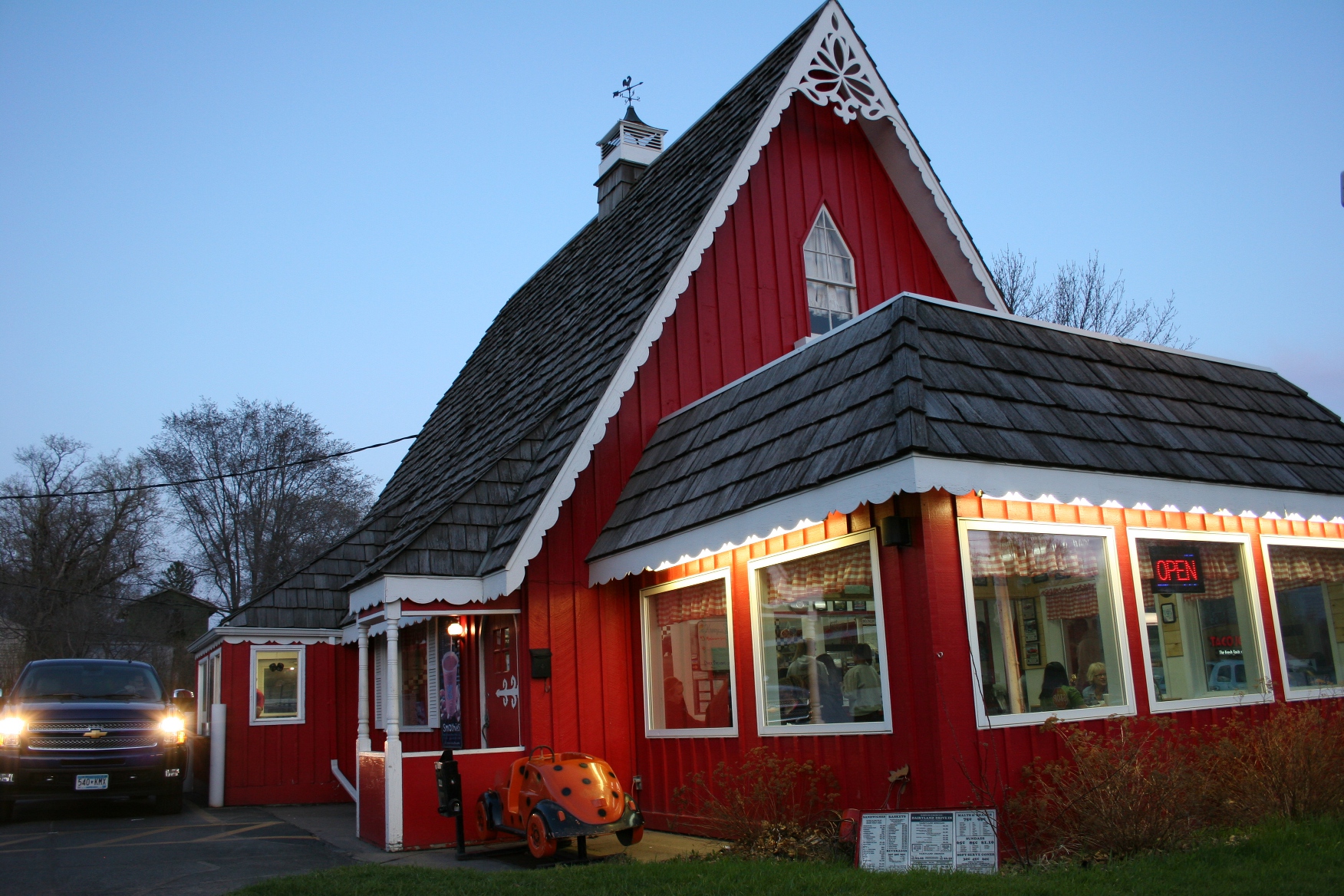
The seasonal Dairyland Drive In opened in 1955.

The seasonal Dairyland Drive In opened in 1955. Although I did not ask, I believe the area to the left is the original drive-in, now used for storage and patio dining.

But I haven’t really. Not until this glorious spring evening have I laid eyes on the Dairyland Drive In in Fergus Falls. Now, here I am, photographing this longtime fast food place in the photographer’s golden hour, thrilling in the pop of red against pink-tinged sky, the flash of headlights signaling the end of a Thursday in this west central Minnesota community.

As close as I got to going inside the drive in. I should have gone inside anyway, just to photograph the interior. Photographer's regrets...

This is as close as I got to going inside the drive in. I should have gone inside anyway, just to photograph the interior. Photographer’s regrets…

If I had even a smidgen of space in my tummy for an ice cream treat, I’d be waiting in line at Dairyland for a hot fudge sundae. But my husband and I have just finished a filling meal of sandwiches and fries at Mabel Murphy’s, across Interstate 94, before touring the town. We are not one bit hungry. Too bad.

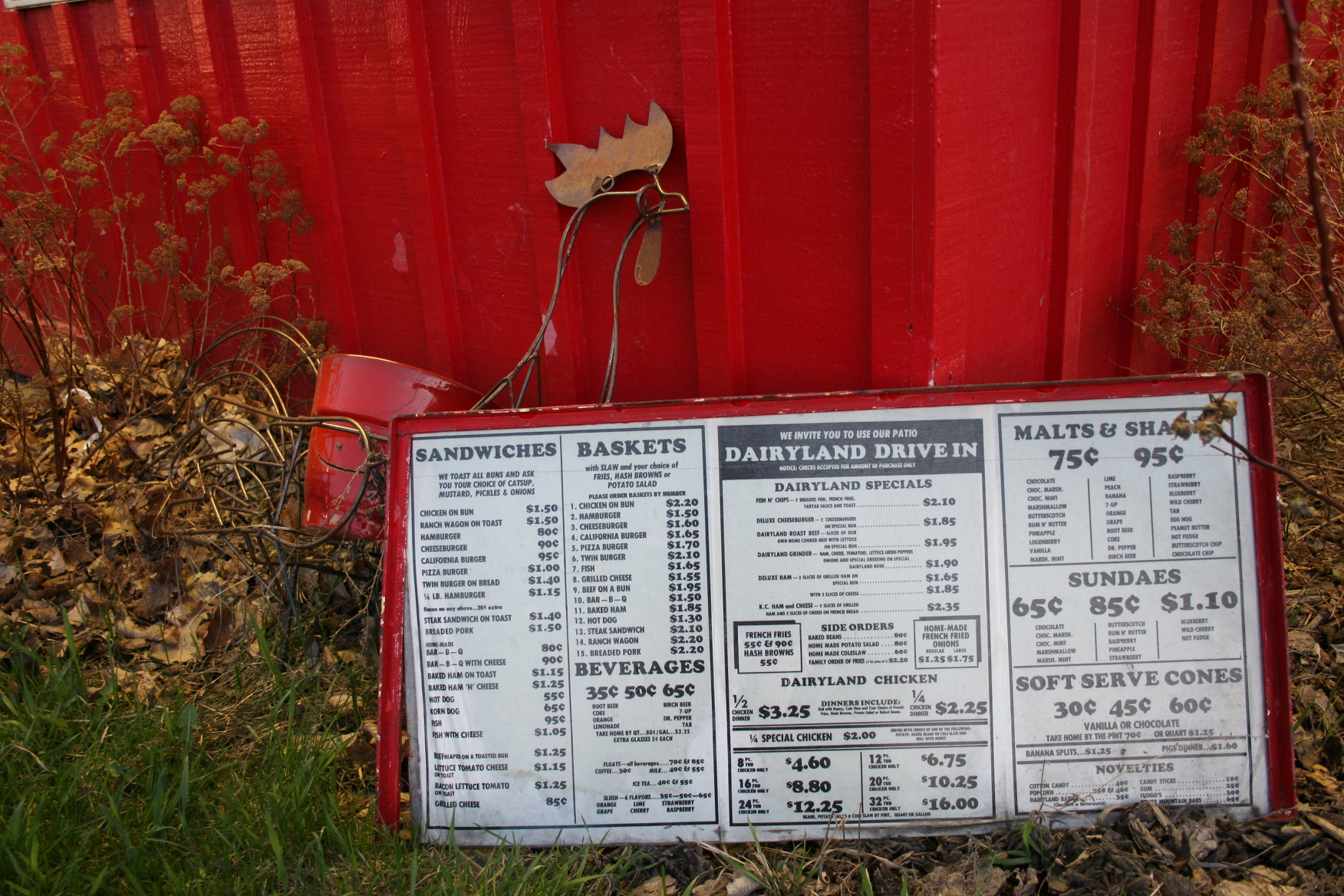
A vintage menu is propped outside the restaurant.

A vintage menu is propped outside the restaurant.

So on this visit to Fergus Falls, I must content myself with photographing that sweet gingerbread style building which houses Dairyland, established here in 1955 and now in its 58th year of business.

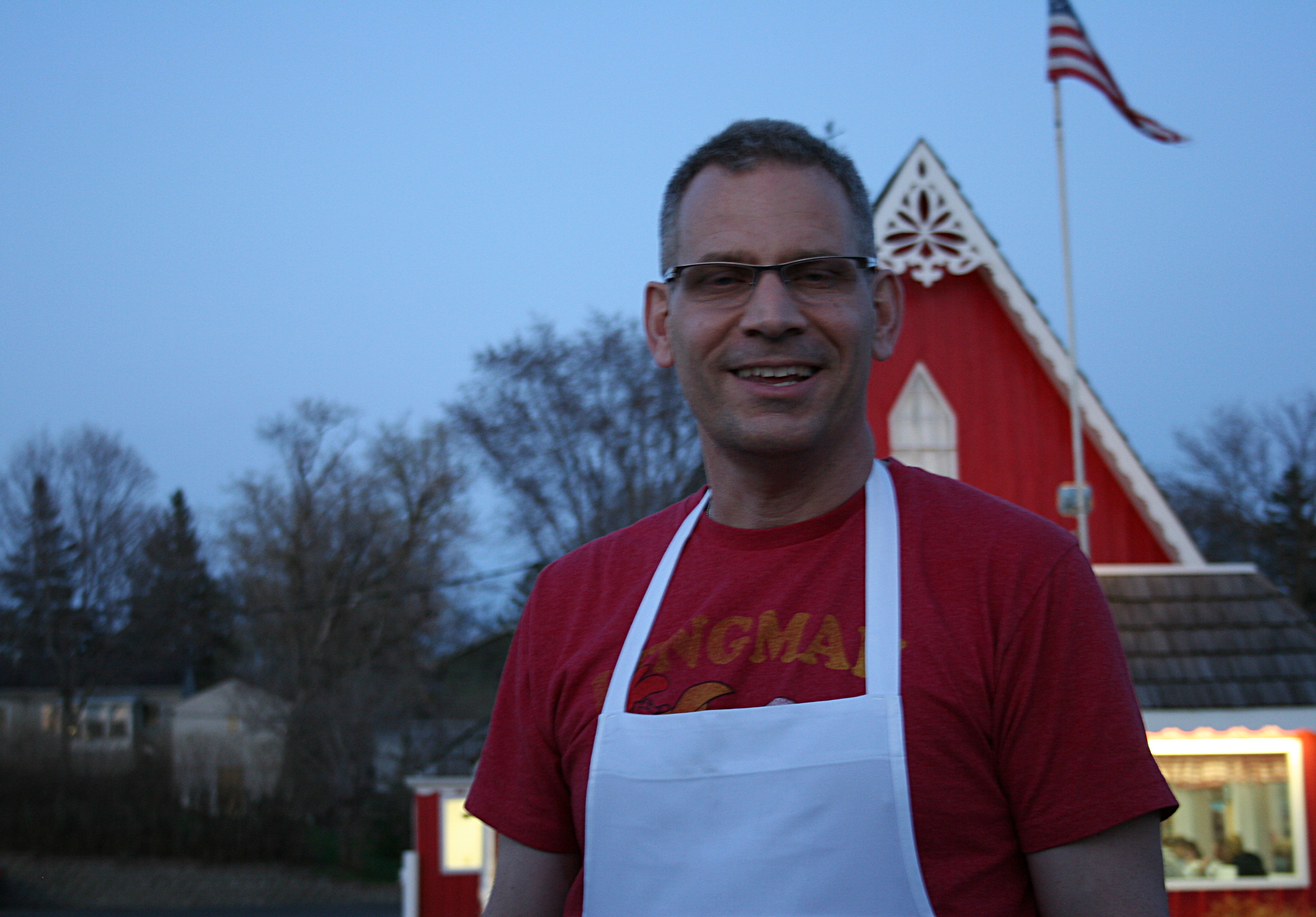
Pat Connelly

Pat Connelly

Soon co-owner Pat Connelly notices me and walks across the street. He first worked at Dairyland at age fourteen, when he started with slicing onions. He and his wife, Jean, bought the place in 1997 from his brother, Chuck, who bought the business in 1982 from Bert Skogmo.

Up until 2001, Dairyland still had car hops. Now it’s drive-through or dining inside or on the patio.

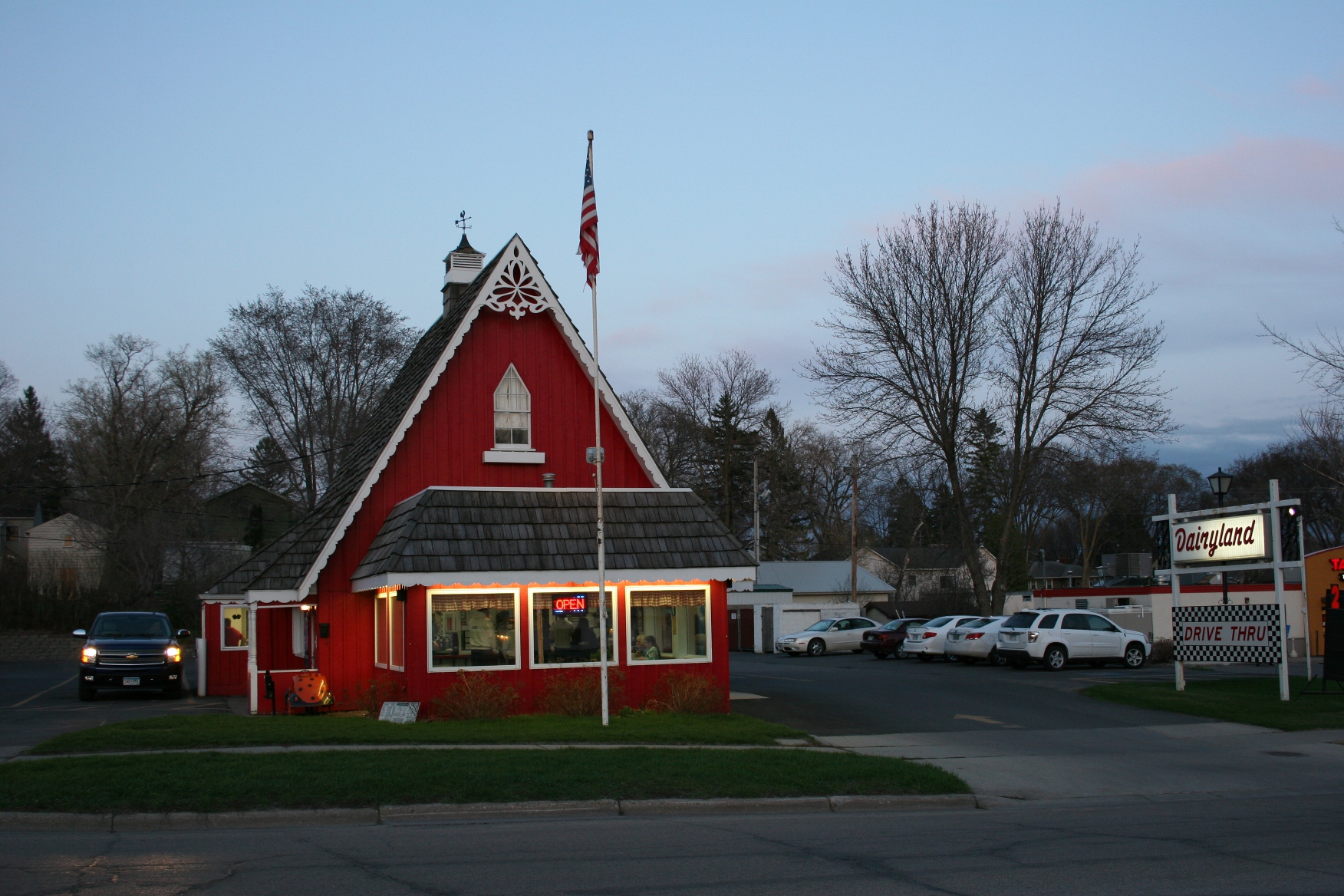
Just another view of Dairyland, with the parking lot to the right.

Just another view of Dairyland, with the parking lot to the right.

The eatery is still known for its homemade onion rings and for broasted chicken, Pat tells me.

Sandwiches are named after locals and those who worked here. Like the K.C. Ham & Cheese after Kelly Chandler. Or the Borstad Burger.

Pat seems especially proud of all the local teens he’s employed—500-plus through the years. When an elementary-aged girl walks by Dairyland, he greets her, tells me she will be coming with Mrs. Johnson’s class on an end-of-the-year class outing for treats. That’s tradition for most Fergus Falls students.

I can’t help but wonder at the memories they’ll cherish of Dairyland… and pass along someday to the next generation.

HAVE YOU EATEN at Dairyland Drive In in Fergus Falls? If so, let’s hear your thoughts. If not, tell us about a similar old-fashioned drive-in you’d recommend. Note that my husband and I were in Fergus Falls in mid May, when these photos were taken and I met Pat Connelly.

© Copyright 2103 Audrey Kletscher Helbling


Sweet finds in Montgomery, Part V: Pizza and Big Honza April 15, 2013

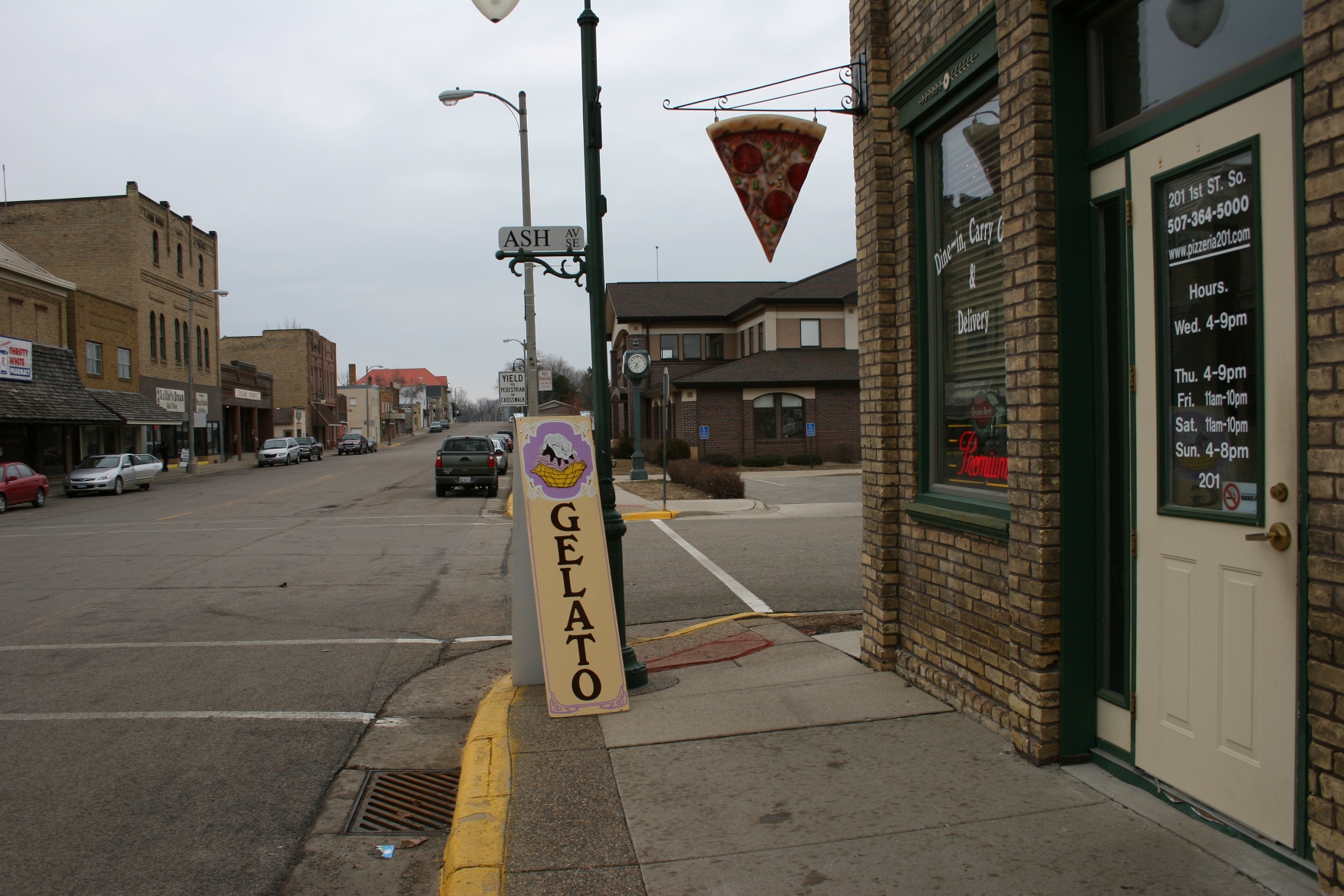
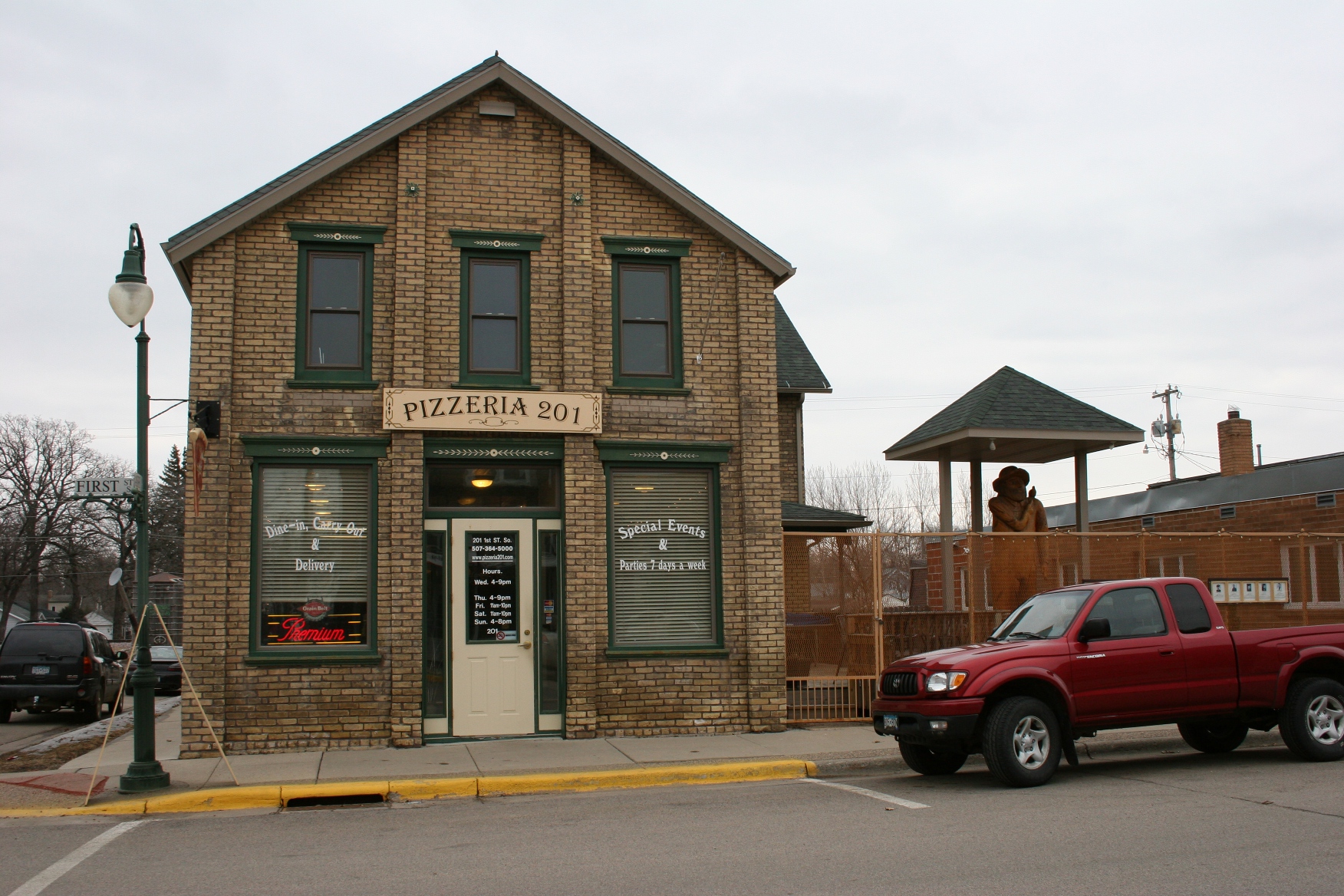
Pizzeria 201 is located at 201 First Street South in downtown Montgomery.

Pizzeria 201, right, is located at 201 First Street South in downtown Montgomery.

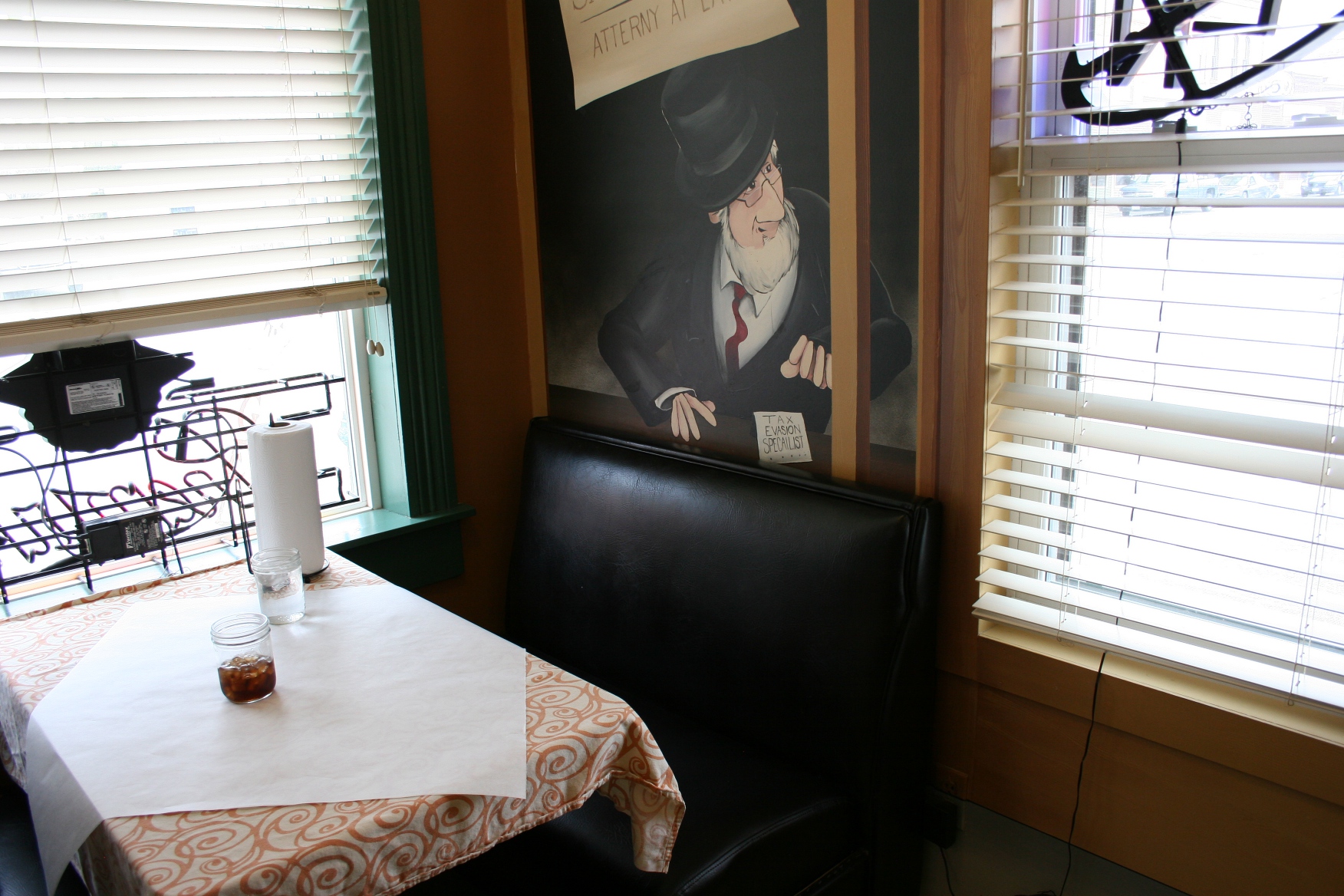
SETTLED INTO A FRONT corner booth at Pizzeria 201 in downtown Montgomery, my husband and I watch the comings and goings at Franke’s Bakery as we wait for our Flamin’ Bleu pizza.

Our corner booth.

Our corner booth.

The popular Czech bakery is one busy place on a Saturday afternoon, as is the Pizzeria, 201 First Street South. After a few hours of perusing downtown shops, with an earlier stop at the bakery, we are hungry and ready to try out this recommended eatery.

Although I would have selected a pizza loaded with vegetables, I agree to the Flamin’ Bleu suggested by my not-so-veggie-lovin’ spouse.

“You do know it has celery and onions on it, don’t you?” I ask.

Although tasty, Flamin' Bleu was not quite what Randy expected. He expected chunks of bleu cheese topping the pizza. But then we are bleu cheese fanatics with award-winning bleu cheeses produced in our home community of Faribault.

Although tasty, Flamin’ Bleu was not quite what Randy expected. He envisioned chunks of bleu cheese topping the pizza. But then we are bleu cheese fanatics with award-winning bleu cheeses produced in our home community of Faribault. We have high expectations with bleu cheese.

He does, but orders anyway, drawn in by the Gorgonzola, hot buffalo sauce, buffalo chicken and bleu cheese crumble toppings. Pizzeria offers a wide variety of pizzas from the classic pepperoni to Hog Heaven, German (topped with sauerkraut) and more, plus several dessert selections. The beef and pork toppings come from a Le Sueur County family farm.

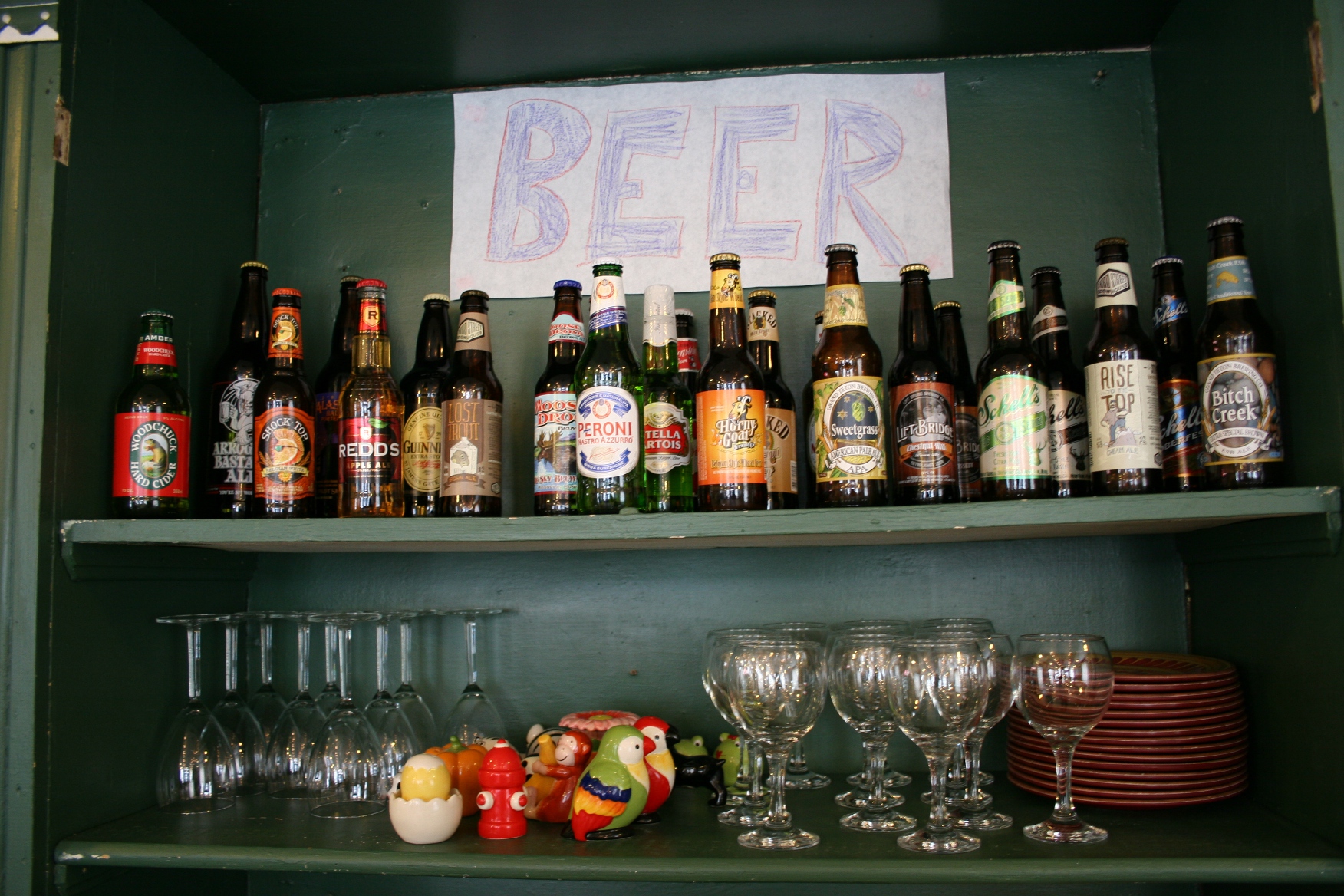
Pizzeria 201 also has occasional wine tour and beer tastings.

Pizzeria 201 also has occasional wine tour and beer tastings.

Not hungry for pizza? The restaurant also offers sandwiches, calzones, soups and salads and pasta dishes.

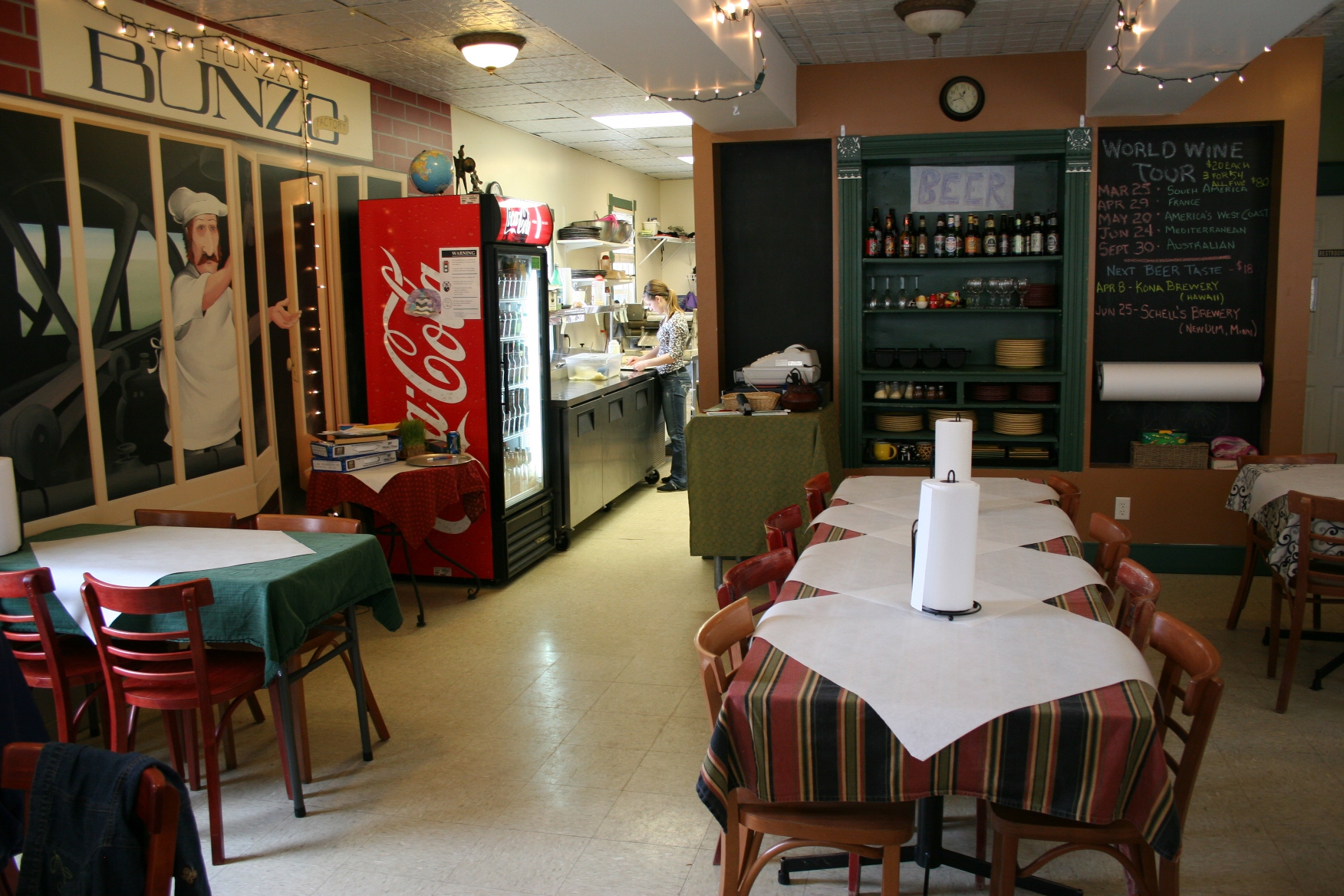
Pizzeria's inviting space.

Pizzeria’s inviting space.

While I snap photos, Randy orders, afterward sharing that the waitress asked whether he wanted our pizza sliced in squares or triangles. Neither of us can ever remember being asked that at a pizza place. Quite thoughtful, really.

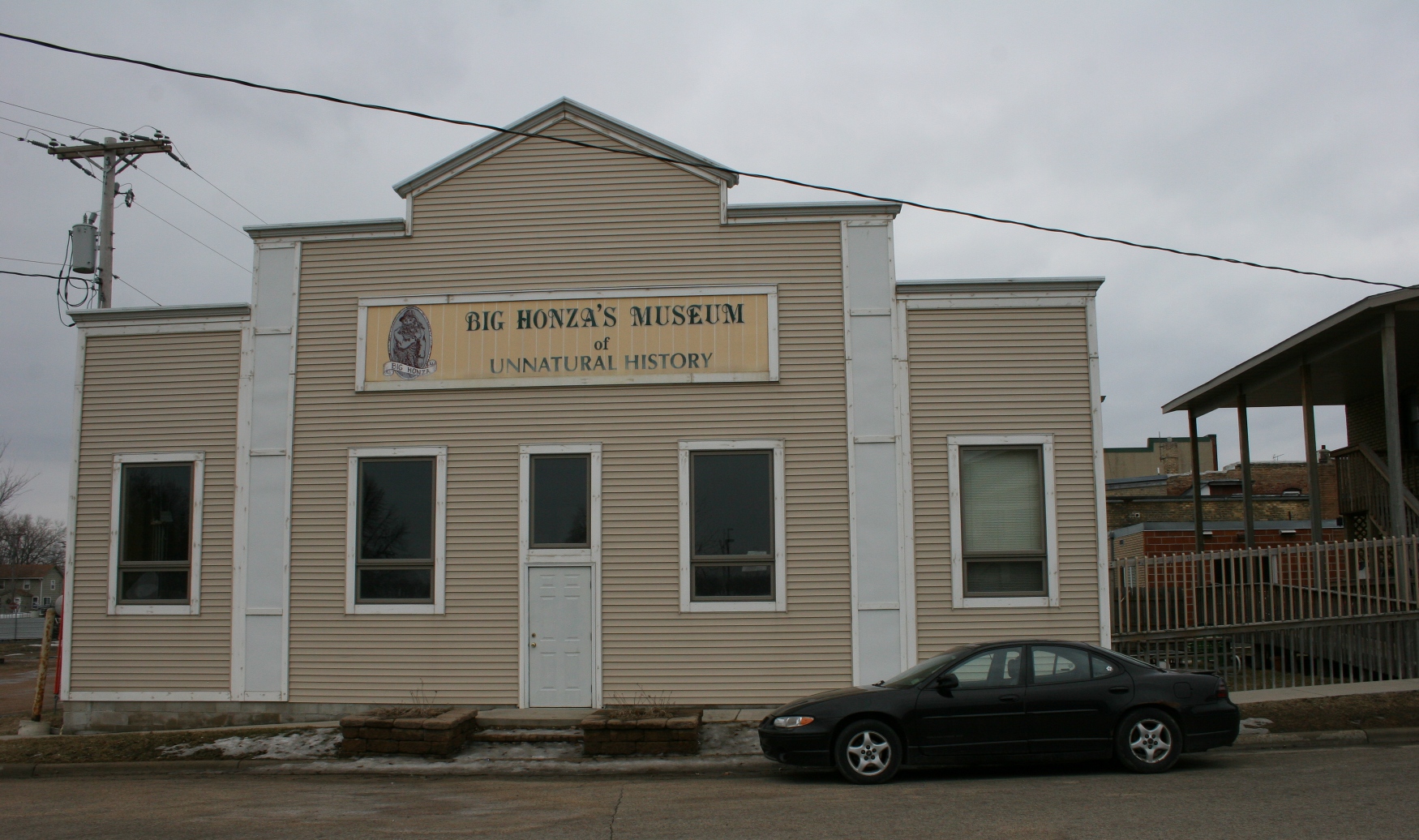
Big Honza's Museum of Unnatural History, right behind Pizzeria 201.

Big Honza’s Museum of Unnatural History, right behind Pizzeria 201.

Also, when I inquire whether we can get into Big Honza’s Museum of Unnatural History, right next door, the waitress agrees to open up for us when we finish our pizza.

That's the carving of Big Honza Giganticzech, to the right of Pizzeria 201.

That’s the carving of Big Honza Giganticzech, to the right of Pizzeria 201.

So after eating a portion of our Flamin’ Bleu sliced in triangles and served with beverages poured in pint jars, we exit the Pizzeria and walk around the corner to view Montgomery’s version of Paul Bunyan Land. An over-sized wood carving of Big Honza Giganticzech stands next to the pizzeria.

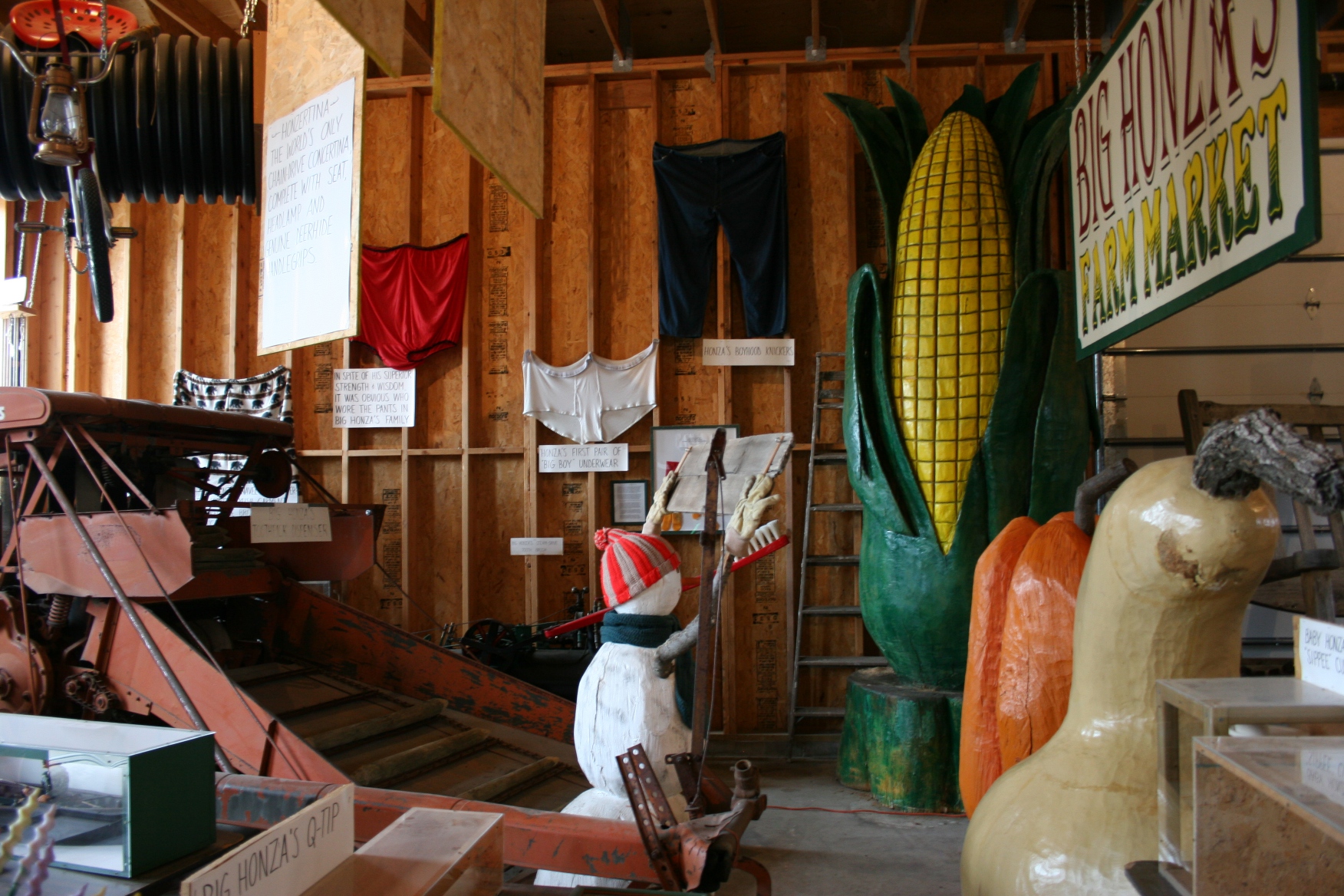
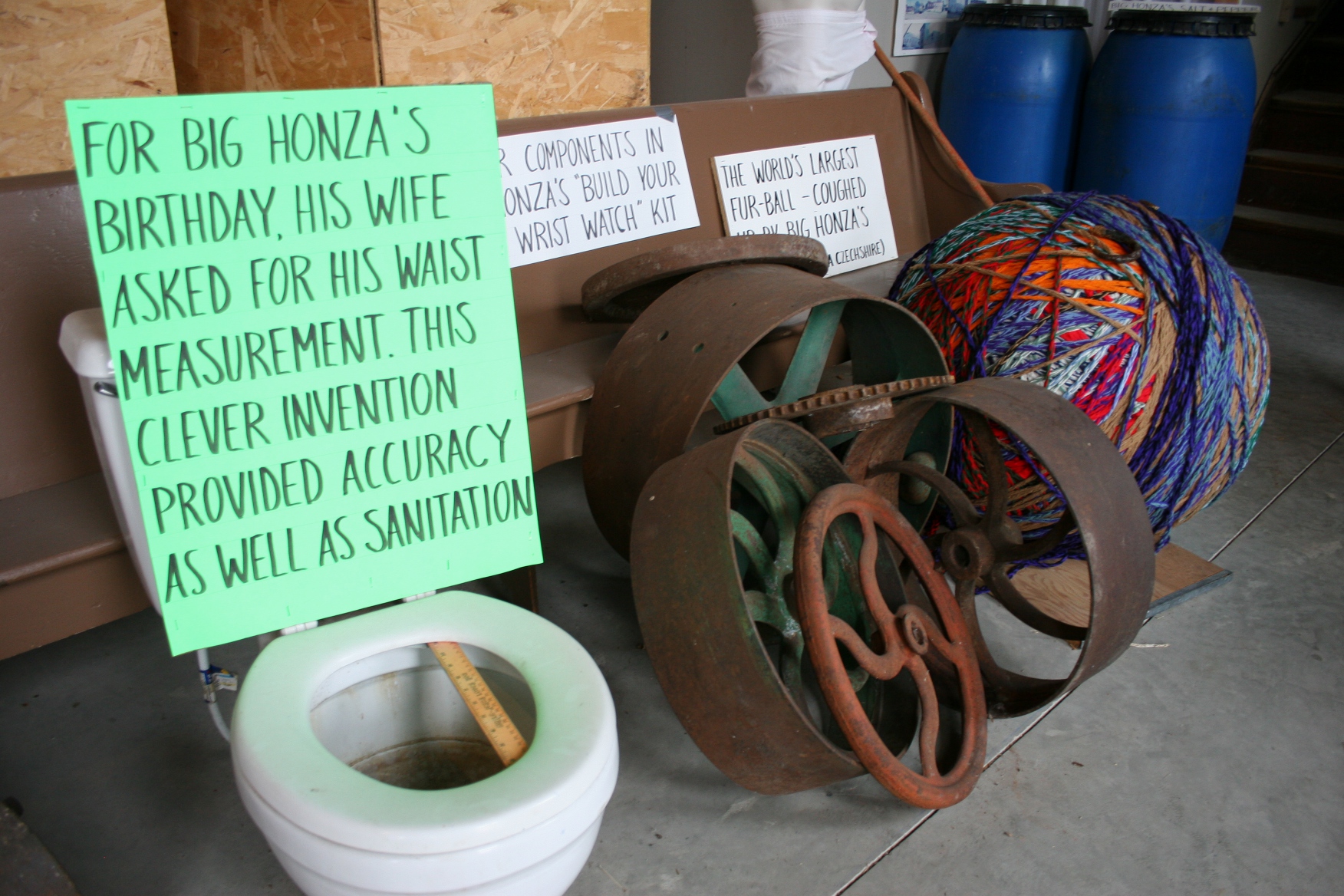
During our self-guided tour in the unheated museum, we meander past an assortment of Big Honza oddities assembled by area resident John Grimm, owner of Hilltop Hall, Montgomery’s arts and cultural heritage center. You just have to laugh at this humorous collection of weird stuff.

A snippet of what you will see in the museum, including Big Honza's Farm Market, a nod to the local canning company.

A snippet of what you will see in the museum, including Big Honza’s Farm Market, a nod to the local canning company.

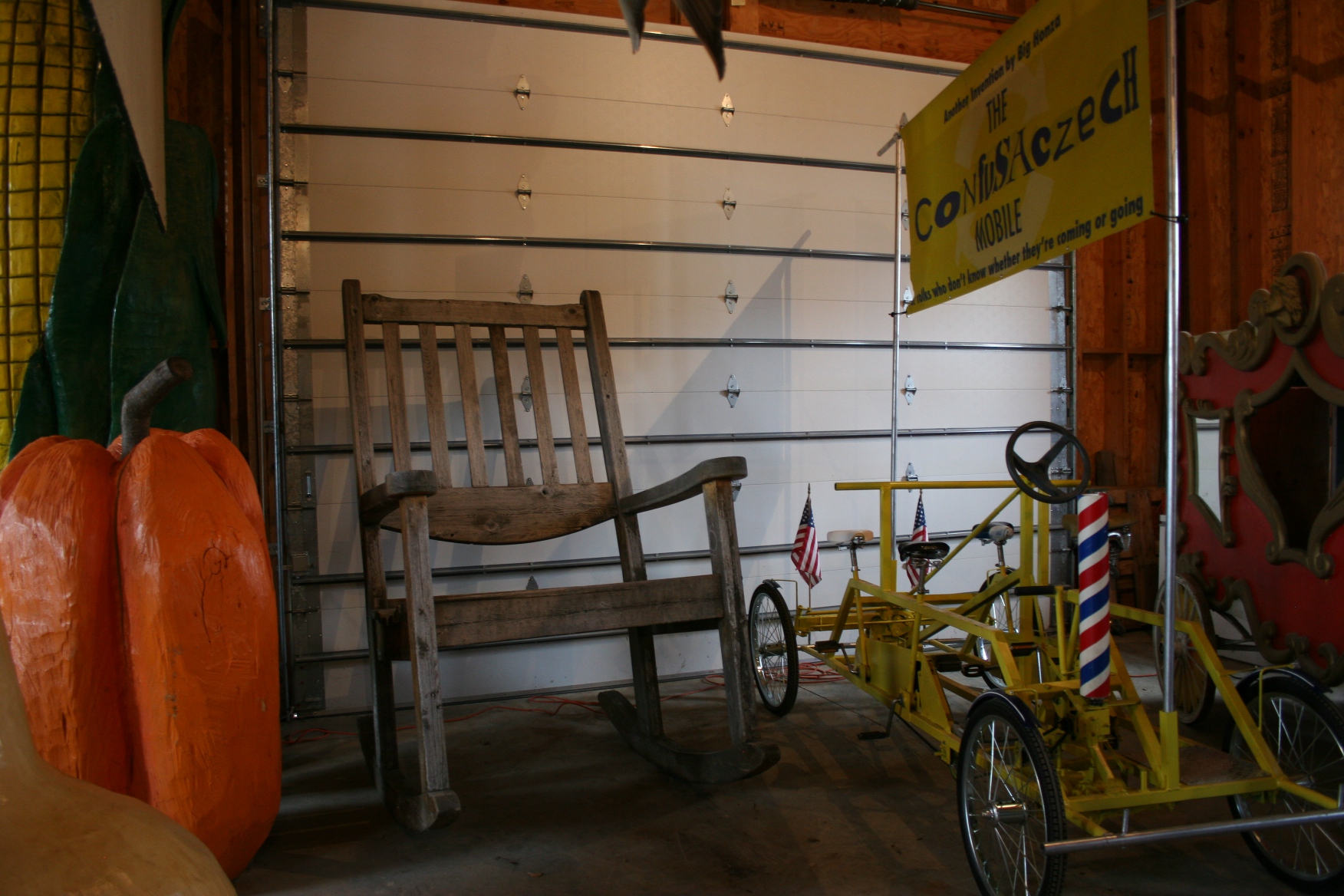
Big Honza's chair and more.

Big Honza’s chair and more.

Potty humor.

Potty humor.

On that note, this ends our tour of Montgomery. I’d encourage you, if you haven’t already done so, to read my entire series of stories (April 7 to today) from this south-central Minnesota Czech community of some 3,000 known as The Kolacky Capital of the World. Also check out my archives of March 4 – 8 for previous posts from Montgomery.

The whole point of this series has been not just to showcase Montgomery. It is about highlighting small towns—anywhere. All too often we dismiss small towns or overlook them with the misconception they have nothing to offer. That is so far from the truth. Every town has businesses, venues, people and events which define it as some place special.

I challenge you to look in your backyard for those places. If you live in the big city, venture out to a rural area. If you live in a small town or medium-sized city, drive to a nearby small town you’ve never explored.

If you’ve already done this sort of thing, shoot me a comment and share those small-town gems you’ve discovered. I’d love to hear from you.

© Copyright 2013 Audrey Kletscher Helbling


Sweet finds in Montgomery, Part III: Inside the bakery & the drugstore April 12, 2013

Franke's Bakery opened in 1914.

Franke’s Bakery opened in 1914.

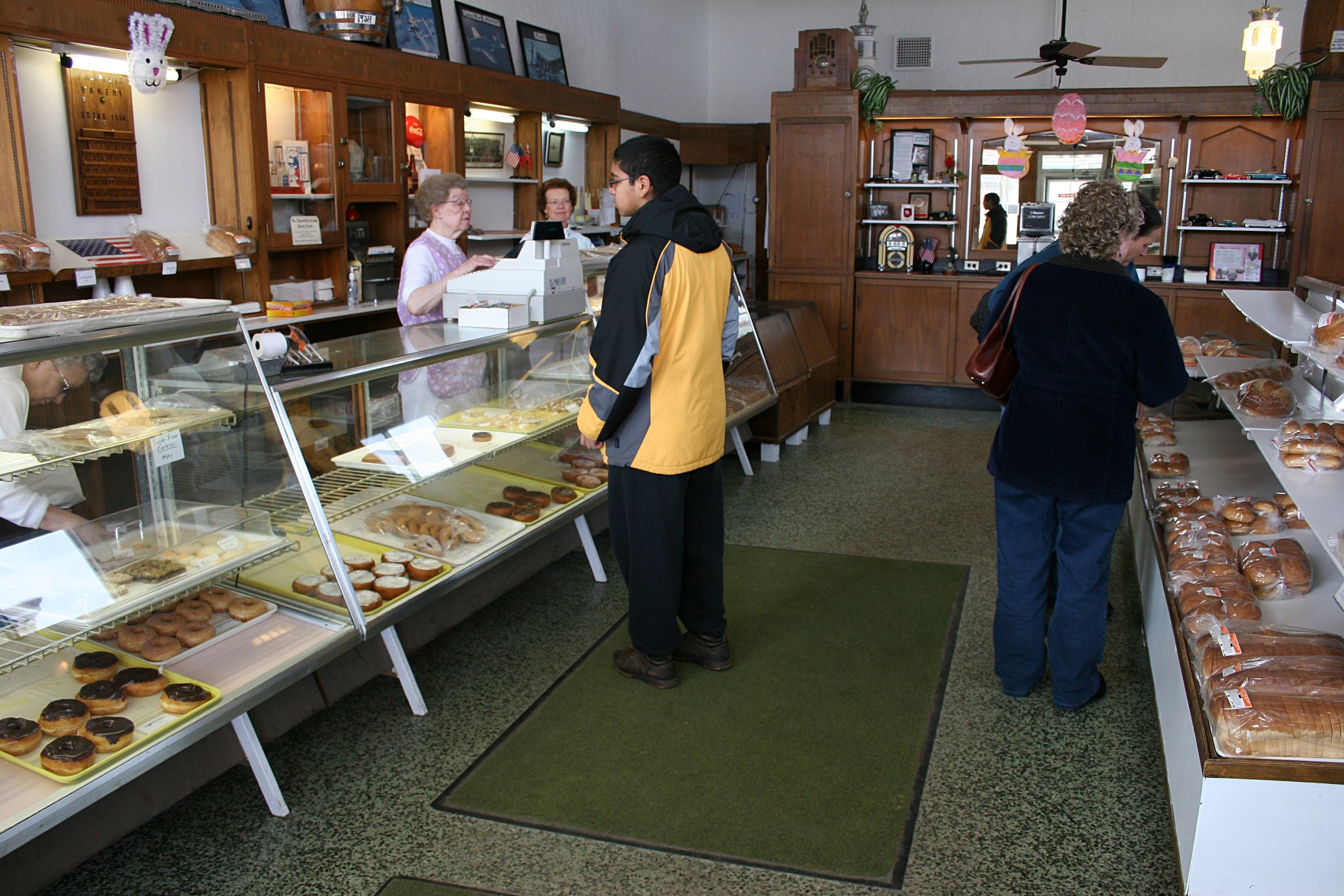
NO VISIT TO MONTGOMERY would be complete without a stop at Franke’s Bakery, noted for kolacky, a fruit-filled (or poppy seed-filled) pastry beloved by this community of mostly Czech descendants.

One busy place on a Saturday.

One busy place on a Saturday. To the left, Jule Franke and Mary Ann Kaisersatt work the counter.

In business for 99 years, this bakery bustles with customers dropping in for sweet treats, breads and coffee room chat.

This 18-month-old Montgomery resident stopped in with her dad, grandma and sister for a treat Saturday morning.

This 18-month-old Montgomery resident stopped in with her dad, grandma and sister for a treat Saturday morning.

“You just missed your dad,” noted a baker parceling out sweets to a customer on a recent Saturday morning. “I saw him on the street.”

The tiled exterior entry to Franke's with a sign on the lower part of the door reading: "Kolacky Days Celebration  Czechoslovakian American Heritage.

The beautiful exterior entry to Franke’s with a sign on the lower part of the door that reads: “Kolacky Days Celebration Czechoslovakian-American Heritage.” Montgomery celebrates Kolacky Days each July. You can bet this bakery is especially busy then preparing the ethnic pastry for the celebration.

Yes, this bakery, this south-central Minnesota community, is that kind of place, where everybody seemingly knows everybody and their whereabouts. And I mean that in the kindest of ways.

My Bavarian bismarck. FYI, Franke's ships its baked goods, so feel free to order. The bakery makes this promise: "We bake our breads and rolls fresh everyday the old fashioned way without all those preservatives.

My Bavarian bismarck. FYI, Franke’s ships its baked goods, so feel free to order. The bakery makes this promise: “We bake our breads and rolls fresh everyday the old fashioned way without all those preservatives.”

Randy and I bopped in for 75-cent bismarcks, mine Bavarian (custard-filled), his raspberry, before continuing our perusal of Montgomery’s downtown business district.

Posted on businesses throughout downtown Montgomery, you will find photos and military biios of veterans. This is the Montgomery Veteran's Project, a way of honor the town's veterans.

Posted on businesses throughout downtown Montgomery, you will find photos and military biios of veterans. This is the Montgomery Veteran’s Project, a way of honor the town’s veterans.

When I noticed the lovely floral sign marking Herrmann (how non-Czech is that name?) Drug, Cards & Gifts, I just had to stop at this local pharmacy and general merchandise store marketing everything from shampoo to kitchenware to gifts and Titans school apparel.

The drugstore sells Titans apparel for the local school.

The drugstore sells Titans apparel for the Montgomery-Lonsdale-Le Center school, Tri-City United.

My husband insisted I photograph these "made in China" towels from American Mills. He wants me to submit this to Jay Leno.

My husband insisted I photograph these “Made in China” towels from American Mills and sold at Herrmann Drug. He wants me to submit this to Jay Leno.

I was impressed with the selection; no need to run to some Big Box store when you have Herrmann Drug. And how lucky this town of nearly 3,000 is to have a pharmacy…and so much more.

Herrmann Drug's pharmacy is located at the rear of the store.

Herrmann Drug’s pharmacy is located at the rear of the store.

READERS: We’re not finished yet with our tour of Montgomery. Check back for two more posts. And if you missed my Montgomery stories from earlier this week, backtrack to Sunday and start reading.

To read a previous post on Franke’s Bakery, click here.

And to read about the Montgomery Veteran’s Project, click here.

© Copyright 2013 Audrey Kletscher Helbling
 

Raising monies for Jaws of Life at a small town pork chop feed March 28, 2013

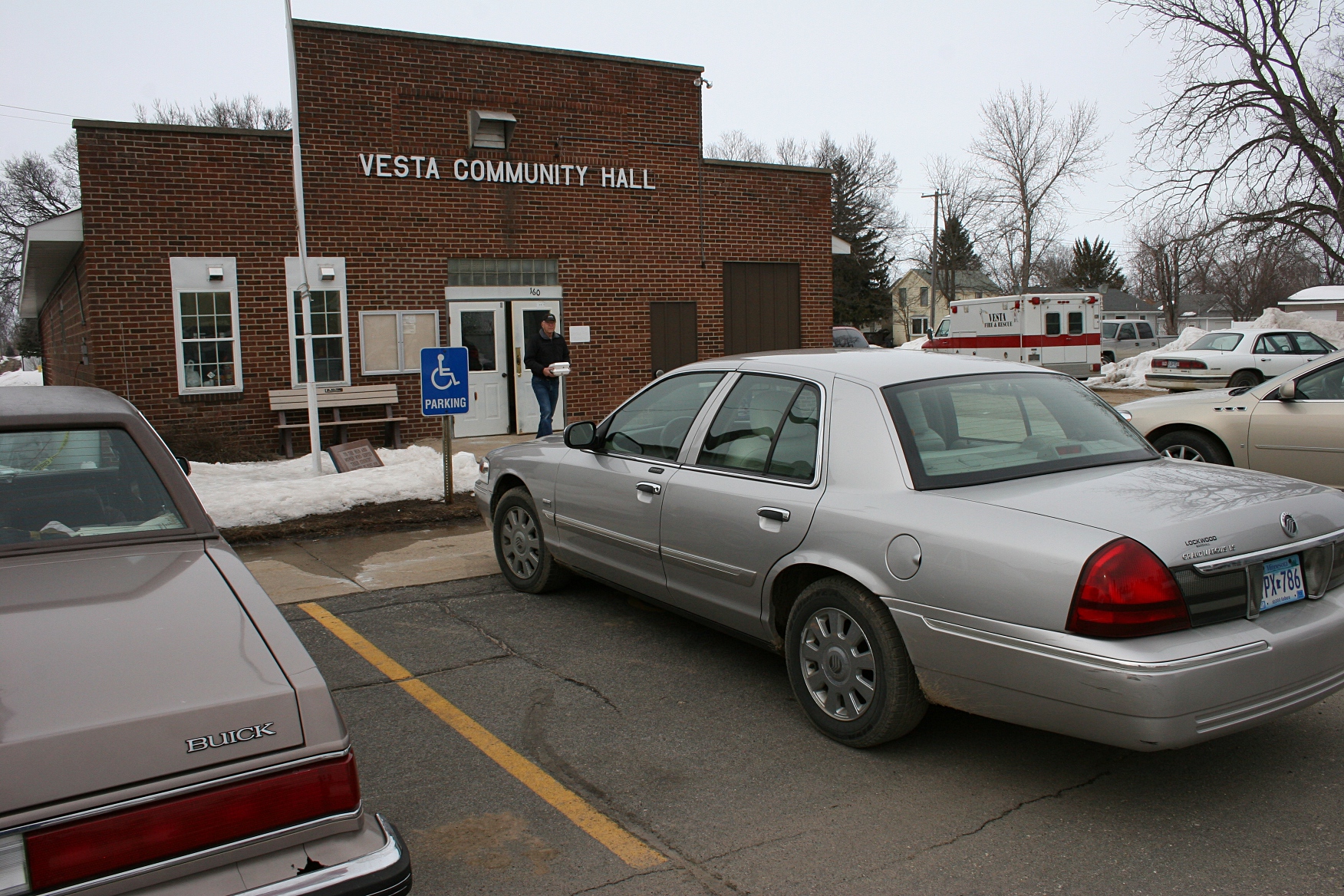
Pork chop dinner take-out at the Vesta Community Hall.

Pork chop supper take-out at the Vesta Community Hall.

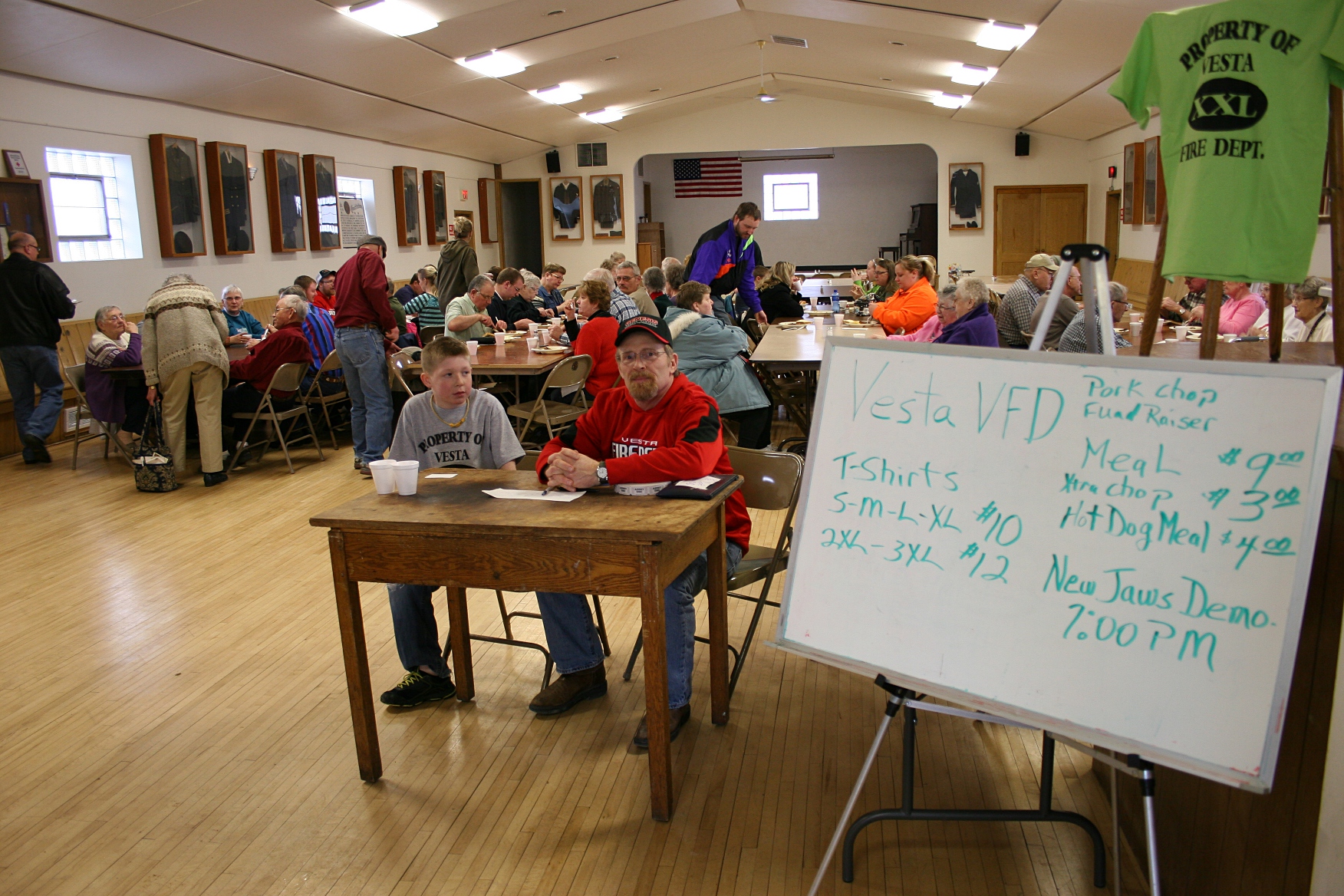
SMALL TOWN, MINNESOTA, on a Saturday night, and I am snapping pictures at a pork chop supper in the community hall.

This could be Any Town, rural Minnesota. But this is my hometown of Vesta, population around 330, situated half way between Redwood Falls and Marshall along State Highway 19 on the southwestern Minnesota prairie.

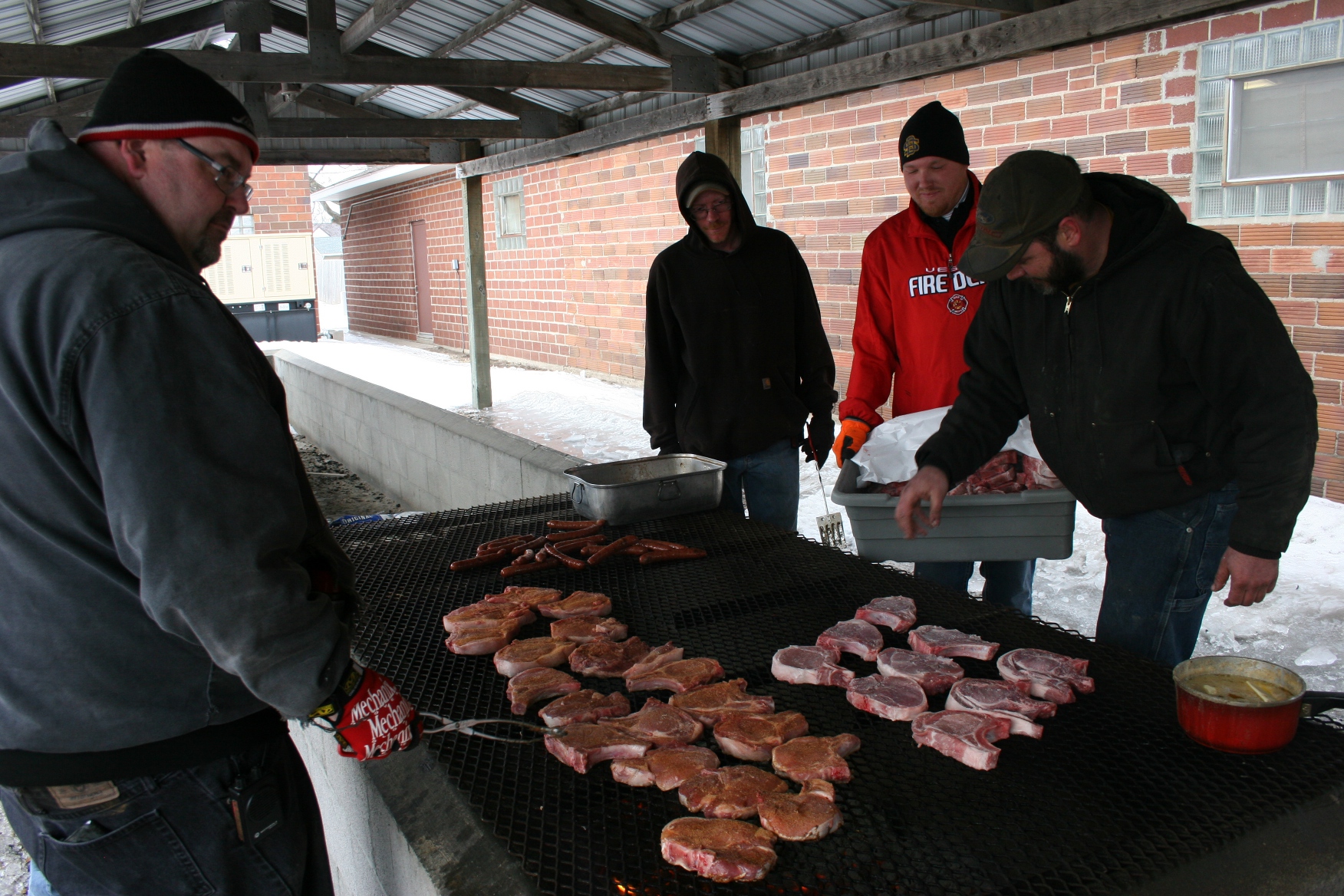
Volunteer firefighters, including my cousin Randy, left, grill pork chops outside the hall.

Volunteer firefighters, including my cousin Randy, left, grill pork chops outside the hall. The firemen served about 250 meals.

Outside the hall, several volunteer firemen, including my cousin Randy, are grilling chops over an open charcoal pit for the annual Vesta Firemen’s Relief Association Pork Chop Supper.

David Widman sells tickets.

David Widman sells tickets.

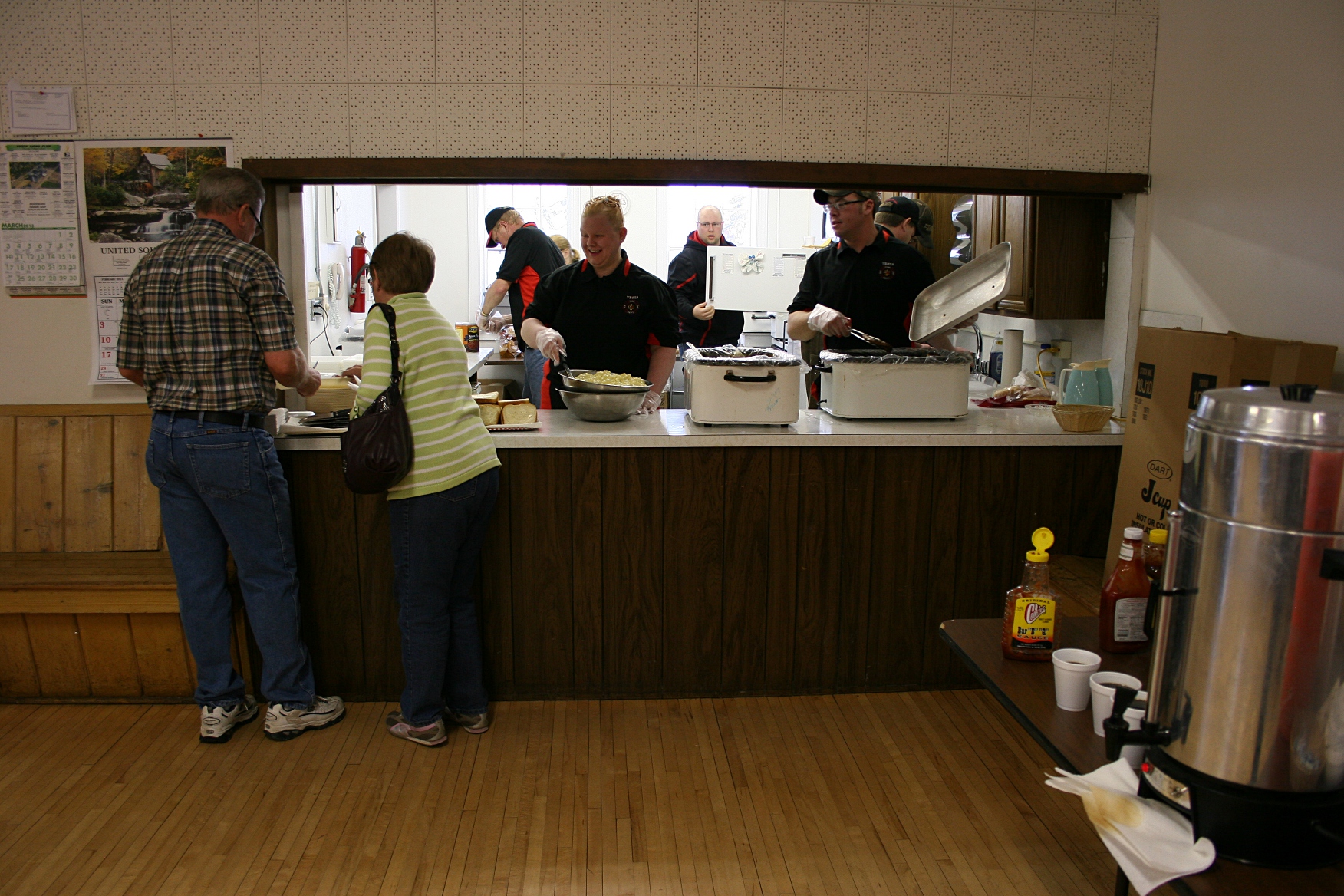
Harlan and Karen step up to the serving window, where Erin, center, and other volunteers dish up food.

Harlan and Karen step up to the serving window, where Erin, center, and other volunteers dish up food.

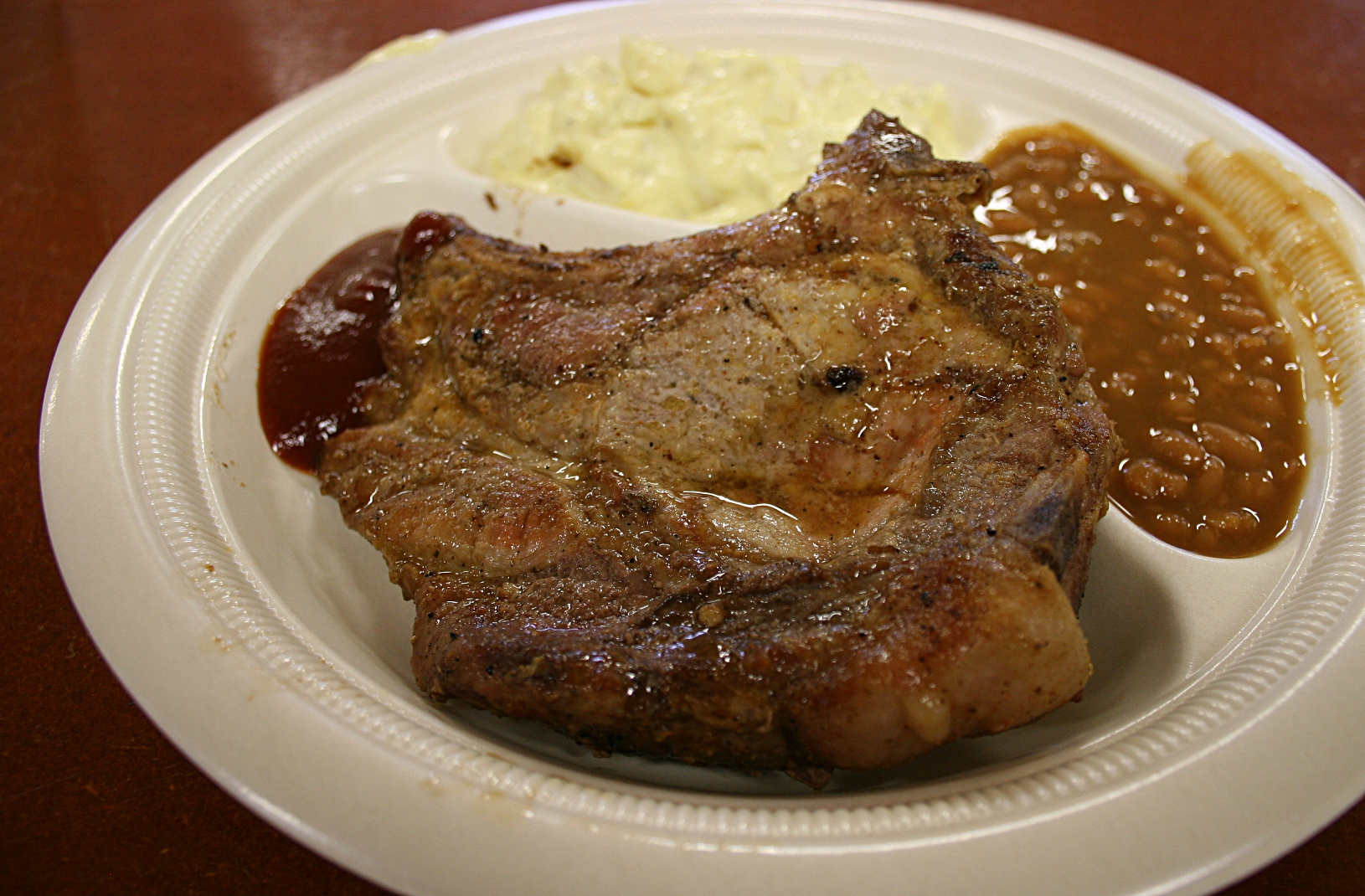
The grilled pork chop meal.

The grilled pork chop meal.

Inside, Randy’s wife, Erin, and others are scooping up baked beans and potato salad and parceling out chops while other volunteers sell tickets and pour beverages. My nearly 81-year-old mom, whom we are visiting for the weekend, is treating my husband and me to supper.

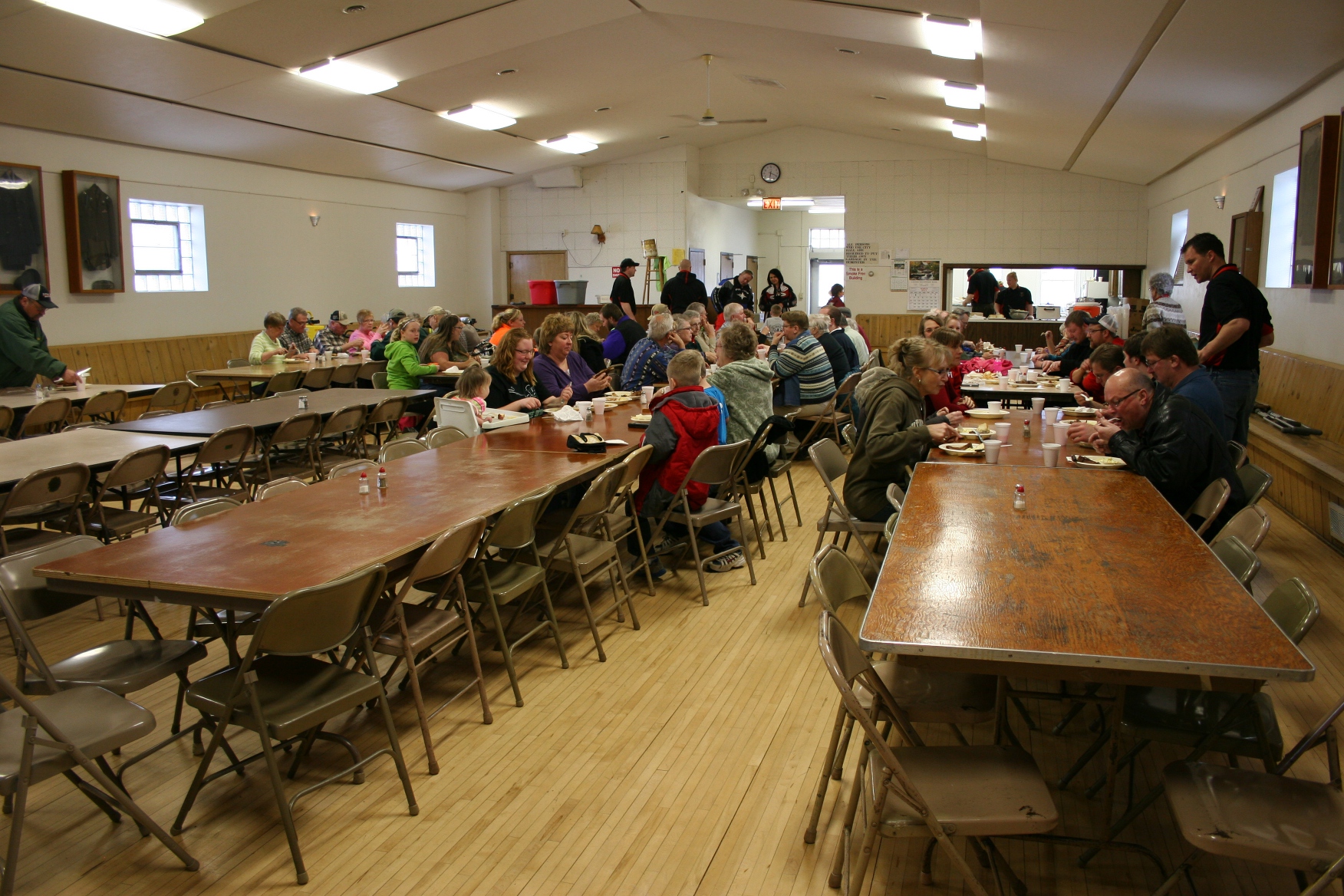
I knew most of the diners.

I knew most of the diners.

As I mingle among diners, chatting with aunts, an uncle, cousins, and locals I haven’t seen in awhile, I’m cognizant of the importance of this event to raise funds for the Vesta Volunteer Fire Department. Proceeds will go toward a new $25,000 Jaws of Life device, already purchased with a $5,000 grant, past Pork Chop feed dollars and a loan.

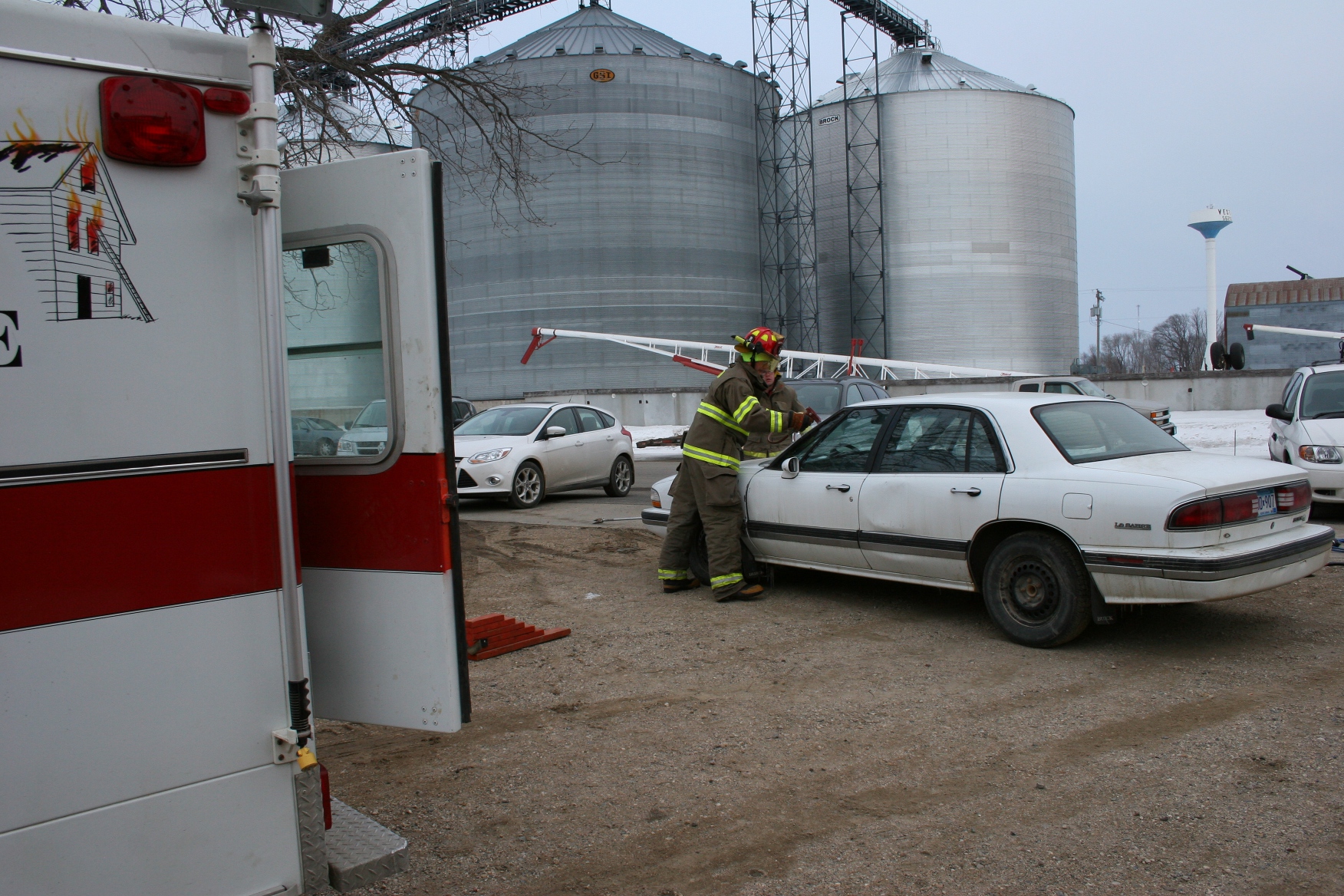
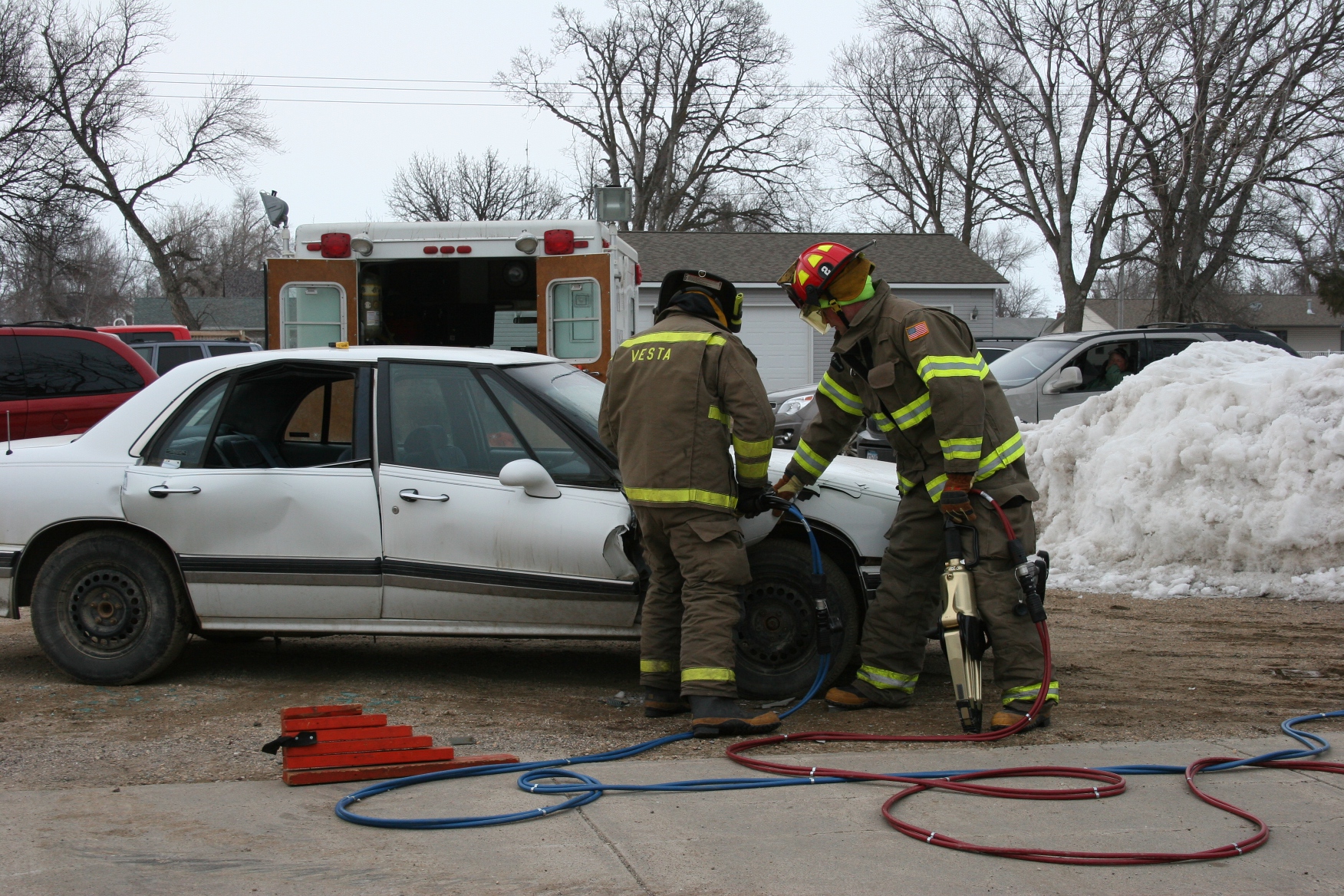
Volunteer firemen remove the windshield from a junk car.

Volunteer firemen remove the windshield from a junk car.

After finishing my meal, at 7 p.m,, I step outside the Vesta Community Hall to observe several volunteer firemen remove a windshield and peel open the doors of a junk car using that new Jaws of Life.

About 30 onlookers gathered outside the hall to watch the Jaws of Life demonstration.

About 30 onlookers gathered outside the hall to watch the Jaws of Life demonstration.

Bracing myself against the stiff wind in a “feels more like 15 than 30 degrees,” I question my judgment in roving around the “accident scene” taking photos. Why would this crowd of about 30 stand outside in this raw weather watching this demonstration?

Because they care. Because they support their local volunteer firemen and First Responders. Because they know this could be them or their next-door-neighbor or their sibling or some stranger off the highway in need of rescue and emergency care.

Peeling away doors with the new Jaws of Life.

Peeling away doors with the new Jaws of Life.

The fire department typically responds to 12 – 15 fire calls annually in a 61 square mile area covering the City of Vesta, Vesta Township and part of Underwood Township, according to Fire Chief Travis Welch. In 2012, firefighters fought a major shop fire. They also responded to two head-on crashes which left three dead. Eight of the volunteer firemen serve as Vesta First Responders.

To the 18 volunteer firefighters—Travis, Jeremy D., Dallas, George, Randy, Tony, Aaron, Jeff, Jeremy K., Jon, David, Brian, Jason, Andrew, Neal, Jordan, Ryan B. and Ryan E.—thank you for being there for my hometown of Vesta.

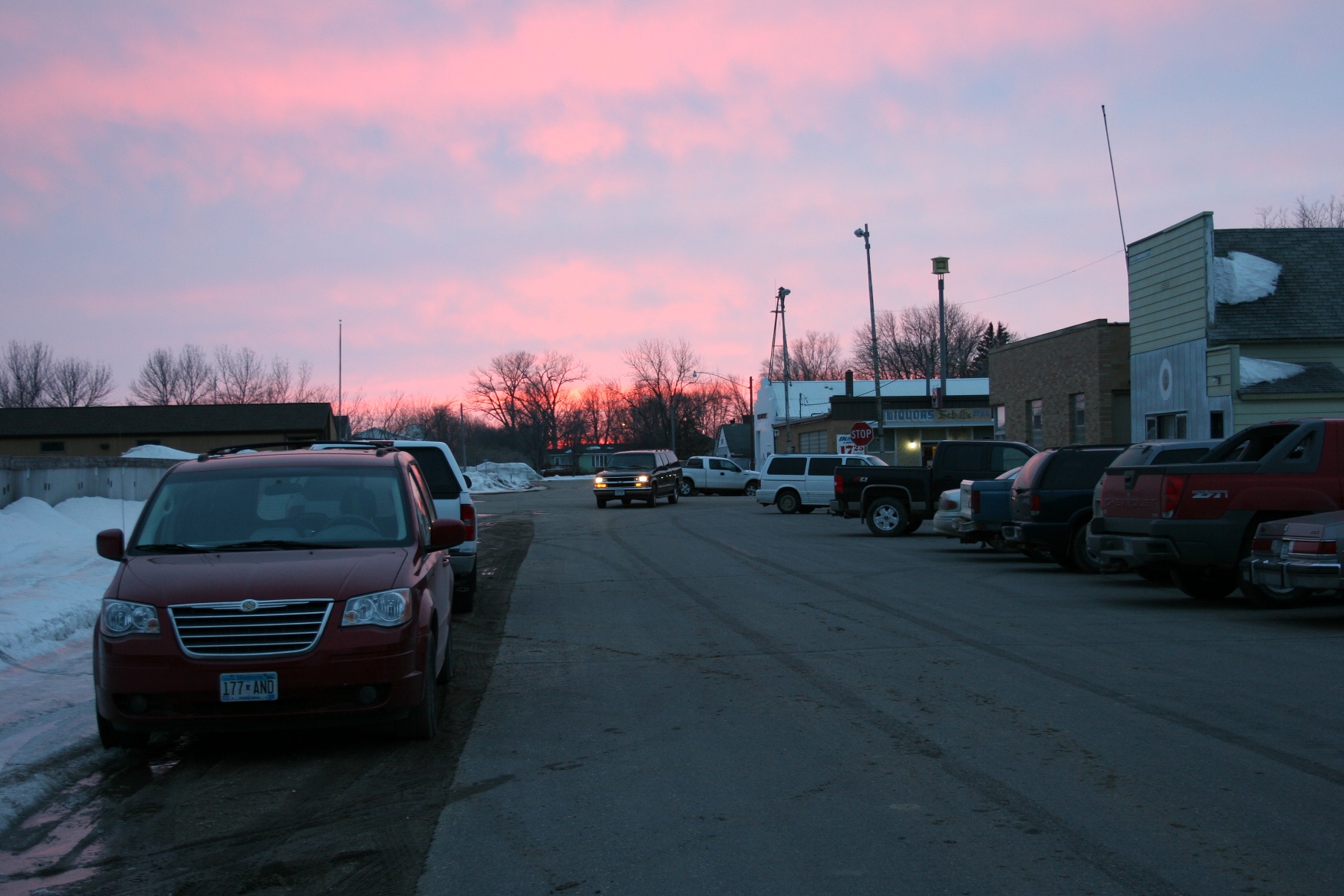
Standing in front of the community hall, I watch the sun set in my hometown.

Standing in front of the community hall, I turn and watch the sun set in my hometown.

FYI: If you wish to donate monies toward the $5,000 balance owed for the Jaws of Life, mail your donation to:

Vesta Fire Relief
c/o David Widman
Box 104
Vesta, MN. 56292

The new Jaws of Life replaces jaws more than 20 years old and “unable to cut some of the new high tensile steel in today’s cars,” according to a letter from the Vesta Firemen’s Relief Association.

© Copyright 2013 Audrey Kletscher Helbling
 

Montgomery, Part III: Franke’s Bakery, a sweet spot in the “Kolacky Capital of the World” March 6, 2013

Filed under: Uncategorized — Audrey Kletscher Helbling @ 8:10 AM
Tags: , , , , , , ,

EDITOR’S NOTE: In the spring of 2010, I visited Franke’s Bakery in Montgomery, a now 99-year-old business which truly embraces the community’s Czech heritage. This feature published in Minnesota Moments magazine and I’m reprinting it here as written three years ago, with the addition of many more photos. This is the third in a five-part series of stories from Montgomery. Enjoy.

Mary Ann Kaisersatt, left, and Jule Franke make prune-filled kolacky.

Mary Ann Kaisersatt, left, and Jule Franke make prune-filled kolacky.

JULE FRANKE AND MARY ANN KAISERSATT work side-by-side in the bakery kitchen, their fingers swiftly and expertly stretching, folding and tucking corners of dough squares across dollops of prune filling.

In an hour, they will have made 50 dozen kolacky, the trademark Czech pastry of 96-year-old Franke’s Bakery in downtown Montgomery, self-proclaimed “Kolacky Capital of the World.”

Unbaked prune kolacky.

Unbaked prune-filled kolacky.

As Franke shapes the neat little dough packages upon the lightly-floured wooden countertop in this room that smells of yeast and baking bread, she describes the Czech treat. It’s “like a sweet dough with a filling,” she says. And at Franke’s, those fillings are the popular prune and poppy seed, plus apricot, apple and raspberry.

For 50 years now, this woman, who confesses that she is not Czech but German, has been making kolacky. “I’m not from here and I’m not Czech, until I married the baker,” she says, smiling.

“The baker” would be Alvin “Butch” Franke, her husband of 52 years who died last December. His father, Emil, a German with a little Czech heritage, grew up in Czechoslovakia, immigrated to America in the early 1900s and opened the bakery in 1914. Butch followed in his baker father’s footsteps. And then Butch and Jule’s son, Bob, became involved in the family business 25 years ago.

Franke's Bakery anchors a corner of downtown Montgomery.

Franke’s Bakery anchors a corner of downtown Montgomery.

Today this bakery, located in the heart of Minnesota Czech country, is nationally-known for its ethnic pastry. Franke’s ships packages of kolacky via priority mail all over the U.S., especially before holidays like Easter. Those customers often grew up in the area, Franke says, and will simply mail a check and a request for kolacky.

Customers orders hang in the kitchen.

Customers orders hang in the kitchen.

The bakery also has a loyal customer base locally and in the Twin Cities area.

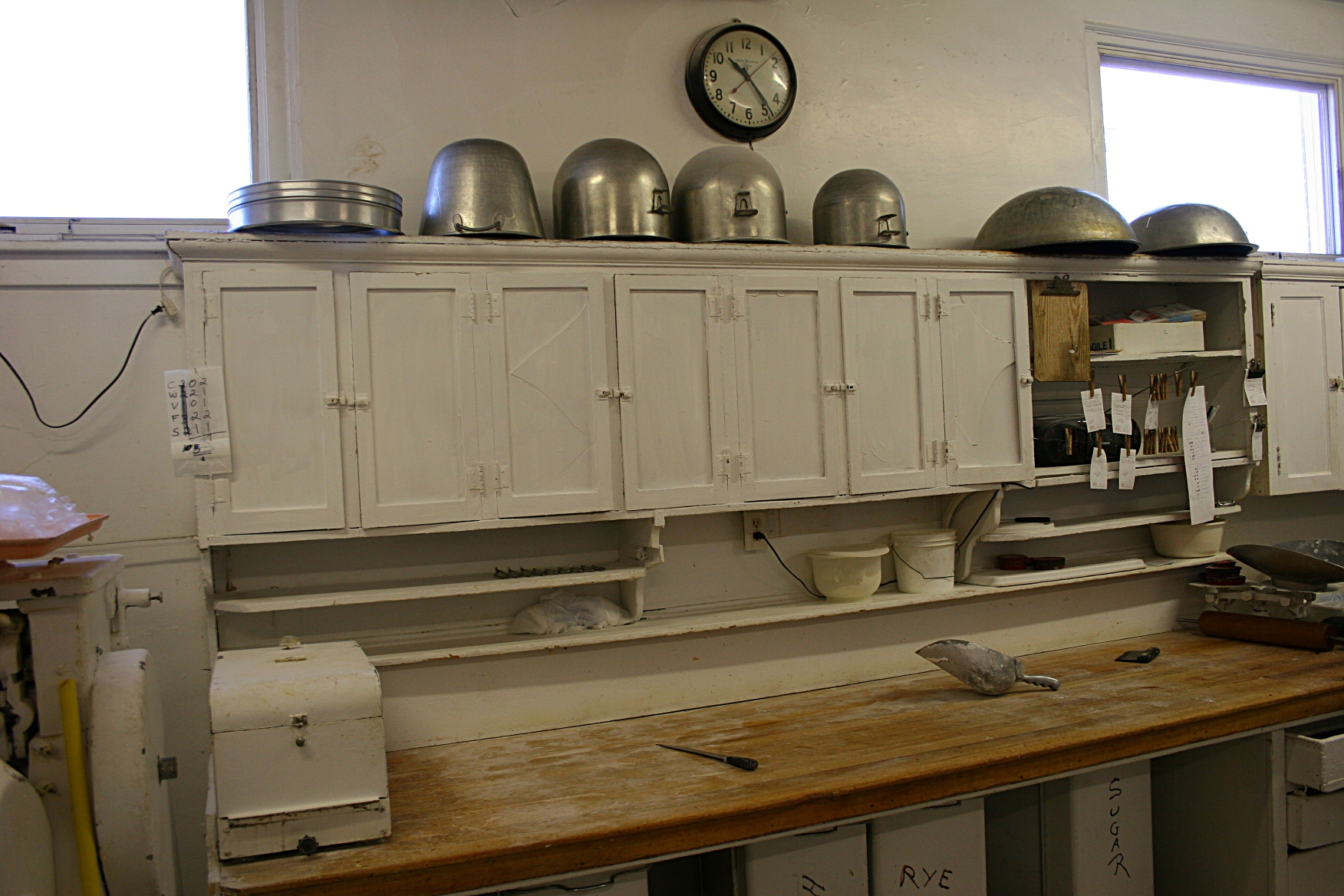
The bakery retains the charm of yesteryear.

The bakery retains the charm of yesteryear.

But at no time is the demand for Franke’s kolacky higher than during Montgomery’s annual celebration of its Czech heritage, Kolacky Days, set this summer for July 23 – 25. Franke enlists her children and their families to make 2,000 dozen kolacky for the weekend event that includes a home-baked kolacky contest and a kolacky eating competition. During the celebration, Franke’s kolacky are sold at the bakery and in Memorial Park.

A selection of Franke's Bakery bread.

A selection of Franke’s Bakery bread, made without preservatives.

Yet, day-to-day, this Czech treat remains a mainstay at this bakery, also known for its rye bread.

Czech, Slovakian and American flags grace the bakery counter.

Czech, Slovakian and American flags grace the bakery counter.

“Vitáme Vás!” (“We welcome you”) imprinted on a window placard, miniature Czech and Slovakian flags set upon the countertop and humorous signs like “PARKING FOR CZECHS ONLY—ALL OTHERS WILL BE TOWED” embrace the area’s rich Czech heritage.

Among the sweet treats.

Among the sweet treats.

Here locals gather for a cup of coffee and a sweet treat, sliding into wooden booths in this 1931 building—the original bakery burned—that retains the charm of yesteryear.

Behind the scenes in the bakery's kitchen.

Behind the scenes in the bakery’s kitchen.

Five days a week Franke arrives here at 5:30 a.m. to help prepare baked goods, following family recipes that have been passed down through the generations. Soon fresh-baked doughnuts, Bismarcks, cookies, breads, turnovers, bars, buns, kolacky and more fill display shelves.

She has no plans to retire.

“This is in her blood,” says employee Kaisersatt.

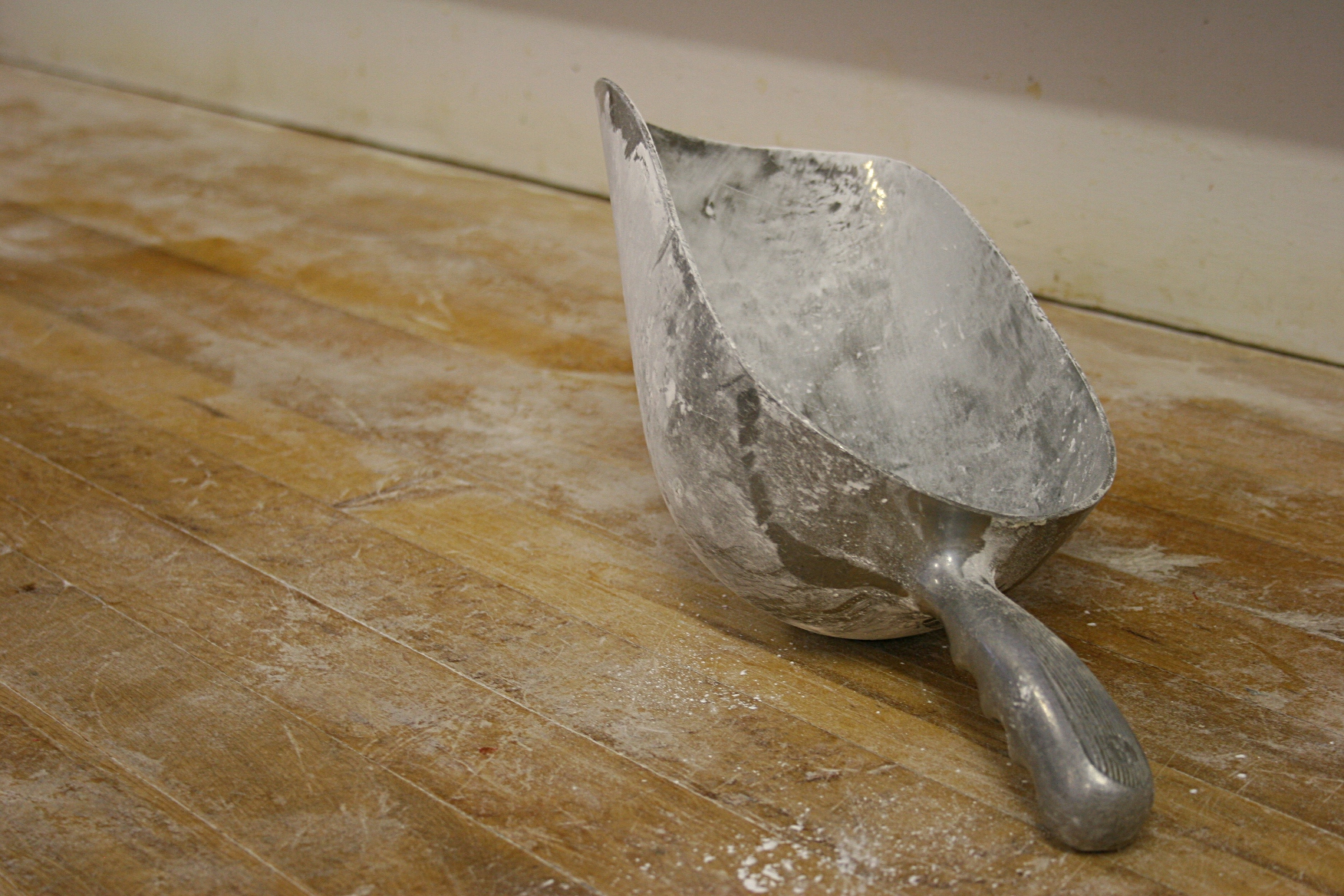
Flour scoop...

Flour scoop…

The women laugh as they continue to fold dough, lifting and gently placing the square treats onto parchment paper-lined trays that hold five dozen kolacky. Kaisersatt scoots around to the other side of the work station across the slippery, flour-dusted floor to grab a kettle of milk wash. She dips her wide brush into the liquid and sweeps the bristles across the unbaked mounds of dough.

This, Franke says, helps to brown and keep the kolacky moist. The dough will rest overnight, then go into a steambox for an hour to rise before baking in the morning.

As appealing as the ethnic treat is to customers, the slender Franke admits, “I don’t eat too many (kolacky). I don’t care too much for sweets.”

But, obviously, customers do, as they’ve supported this family-owned business through three generations, for nearly 100 years.

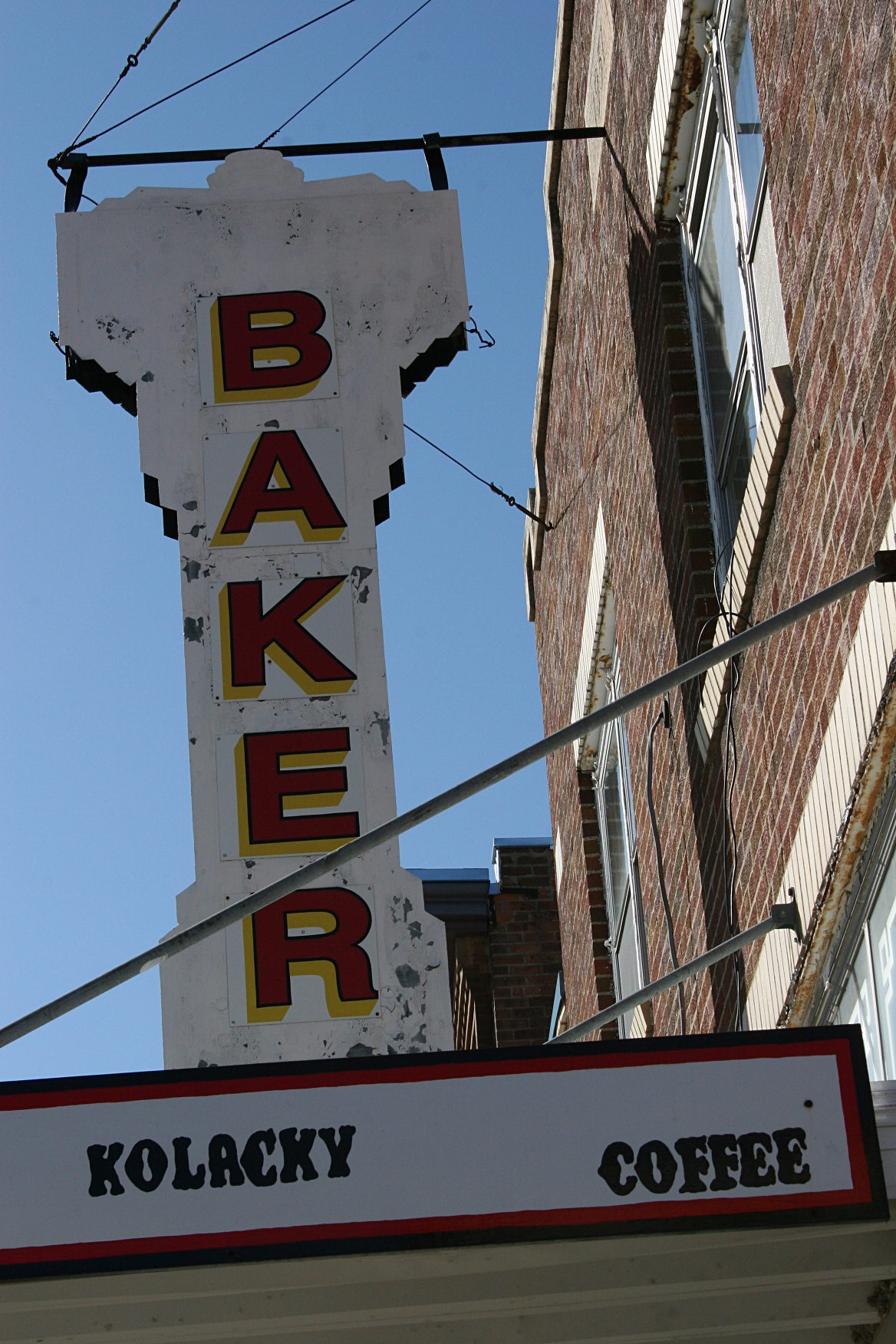
You can't miss the sign marking Franke's Bakery, a family-owned business in Montgomery for 99 years.

You can’t miss the sign marking Franke’s Bakery, a family-owned business in Montgomery for 99 years.

FYI: Franke’s Bakery is open from 6:15 a.m. – 5 p.m. Tuesday – Friday and from 6:15 a.m. – 3 p.m. on Saturday. The bakery is closed on Sunday and Monday. Call Franke’s at (507) 364-5025 for more information. Visit the bakery website by clicking here.


Saint Peter’s version of the Super Bowl January 29, 2013

IN THIS WEEK of Super Bowl XLVII, at least one Minnesota community has already tapped into the super sporting event hype to benefit the local arts community. And that happened in a way you likely would not expect, via Souper Bowl VII.

The hand-thrown pottery bowl I chose at the Souper Bowl for my chicken wild rice soup.

The hand-thrown pottery bowl I chose at the Souper Bowl for my chicken wild rice soup.

Saturday afternoon, my husband and I joined arts-loving diners at the St. Peter Community Center for soup served in hand-thrown pottery bowls. And the bowls were ours to keep at a cost of $12 each (or $8 per kid) for the art and the meal.

Six local potters gave of their time and talents to create 240 soup bowls for the luncheon of donated breads and soups—tomato basil, chicken wild rice and chili—cookies and beverages.

Joel Moline and Thalia Taylor kneading clay during a visit to the Clay Center in March 2012..

Joel Moline and Thalia Taylor kneading clay during a visit to the Clay Center in March 2012..

While I really do like soup, a lot, I appreciate even more the whole Souper Bowl concept. What a creative way to expose the arts to the general public while raising monies for the Arts Center of Saint Peter Clay Center programming. (Read a previous post about the Clay Center by clicking here.) The goal is to keep arts center activities “accessible, affordable and vibrant to the St. Peter community and surrounding region,” according to promotional information.

The selection of bowls remaining when we arrived at noon, an hour after doors opened.

The selection of bowls remaining when we arrived at noon, an hour after doors opened.

Choosing a bowl added a fun  element to the event. Here’s how the process worked for me: I narrowed my selection to my favorite color, green. But with only a few green bowls on the table and the hue I liked best in the hands of a debating diner, I faced a dilemma. Should I pick my second favorite green bowl or wait for this woman to decide between the two bowls she balanced in her hands?

A few green bowls sat among the mostly brown and blue ones.

A few green bowls sat among the mostly brown and blue ones.

I opted to wait, to hover, but not so close as to call attention to my interest in the green bowl. My game plan paid off when the woman finally set the green bowl down and walked away. I moved in for the fumble, snatching up the coveted prize. Touchdown.

Diners line up for soup or chili. Seconds could be had for a freewill donation.

Diners line up for soup or chili. Seconds could be had for a freewill donation.

My ever patient spouse waited nearby as I took a few photos before we entered the dining area and washed our bowls which were then filled, his with chili, mine with chicken wild rice. A volunteer behind the serving counter even heated my soup in the microwave when I told her it wasn’t hot enough. How’s that for Saint Peter nice? And Randy was invited to return for more soup since his bowl was somewhat small; he tried tasty tomato basil in the second quarter.

A soup server heated my soup in the microwave and then placed the hot bowl on a plate.

A soup server heated my soup in the microwave and then placed the hot bowl on a plate.

A few more photos later and we were dining, in the fine company of arts center board member Harry Hunt and his wife, Bonnie. Harry, who works in financial services, shared that he isn’t an artist, seeming even a bit apologetic about his lack of artistic talent. But I was quick to tell him he could certainly contribute to the arts board with his financial expertise.

The Arts Center of Saint Peter, 315 South Minnesota Avenue, St. Peter, Minnesota.

The arts center in downtown St. Peter, photographed on a visit there in March 2012.

Eventually, I turned our table talk to the March 1998 tornado in St. Peter which caused an estimated $300 million in property damage and claimed one life. I wanted to know if the Hunts had been affected by the tornado.

Bonnie recalled how they had been visiting family in the metro when they learned of the bad weather in southern Minnesota. “Well, let’s see if we have a home left,” she joked as the couple drove back toward St. Peter, unaware that a tornado had ravaged their community. They arrived to find their home on the edge of town destroyed. The Hunts rebuilt.

Today they laugh at an incident shortly after the disaster. Harry was working in the basement of their destroyed home when someone called down to announce the arrival of then Minnesota Governor Arne Carlson. Harry emerged from the basement and greeted the Governor: “Welcome to our open house.”

You can bet Randy and I appreciated the winning company and humor of the Hunts as much as the soup and the hand-thrown pottery bowls we took home from Saint Peter’s Souper Bowl.

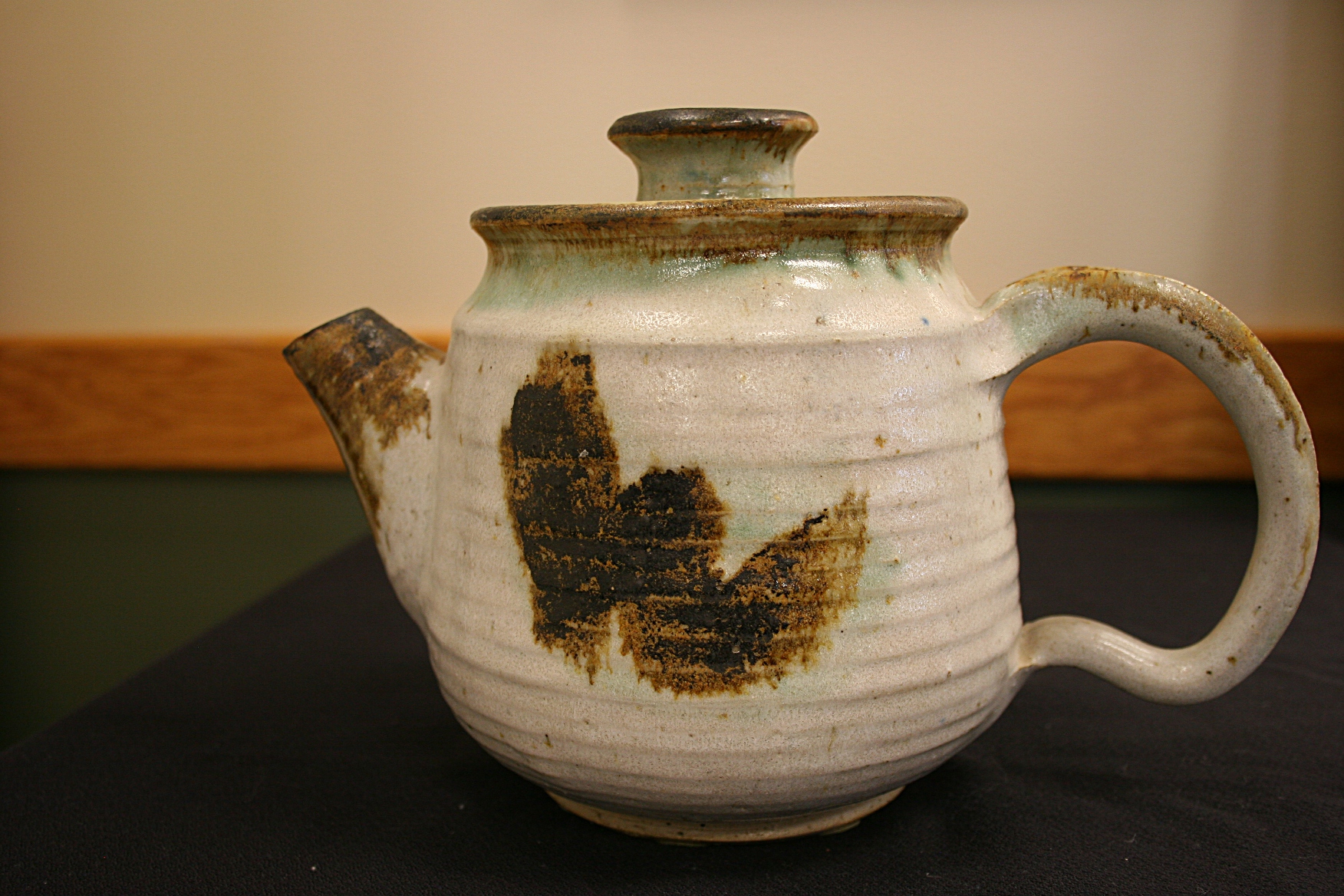
Potter Missy Wood created this teapot for the Souper Bowl silent auction.

Potter Missy Wood created this teapot for the Souper Bowl silent auction.

HAVE YOU ATTENDED a fundraiser like this? Please share your experiences, thoughts and ideas. We can all learn from one another.

© Copyright 2013 Audrey Kletscher Helbling
 

Pizza & beer on a Saturday night in Kilkenny January 26, 2013

Filed under: Uncategorized — Audrey Kletscher Helbling @ 9:52 PM
Tags: , , , , , , , , , ,

I SUGGESTED WE STOP for directions at the corner gas station.

“How hard can it be to find this place in Kilkenny?” my husband responded.

He was right. Kilkenny, population around 150, in Le Sueur County, runs only a few blocks in all directions. Surely we could find “the bar on top of the hill with the really good pizza,” per our friend LeAnn’s recommendation.

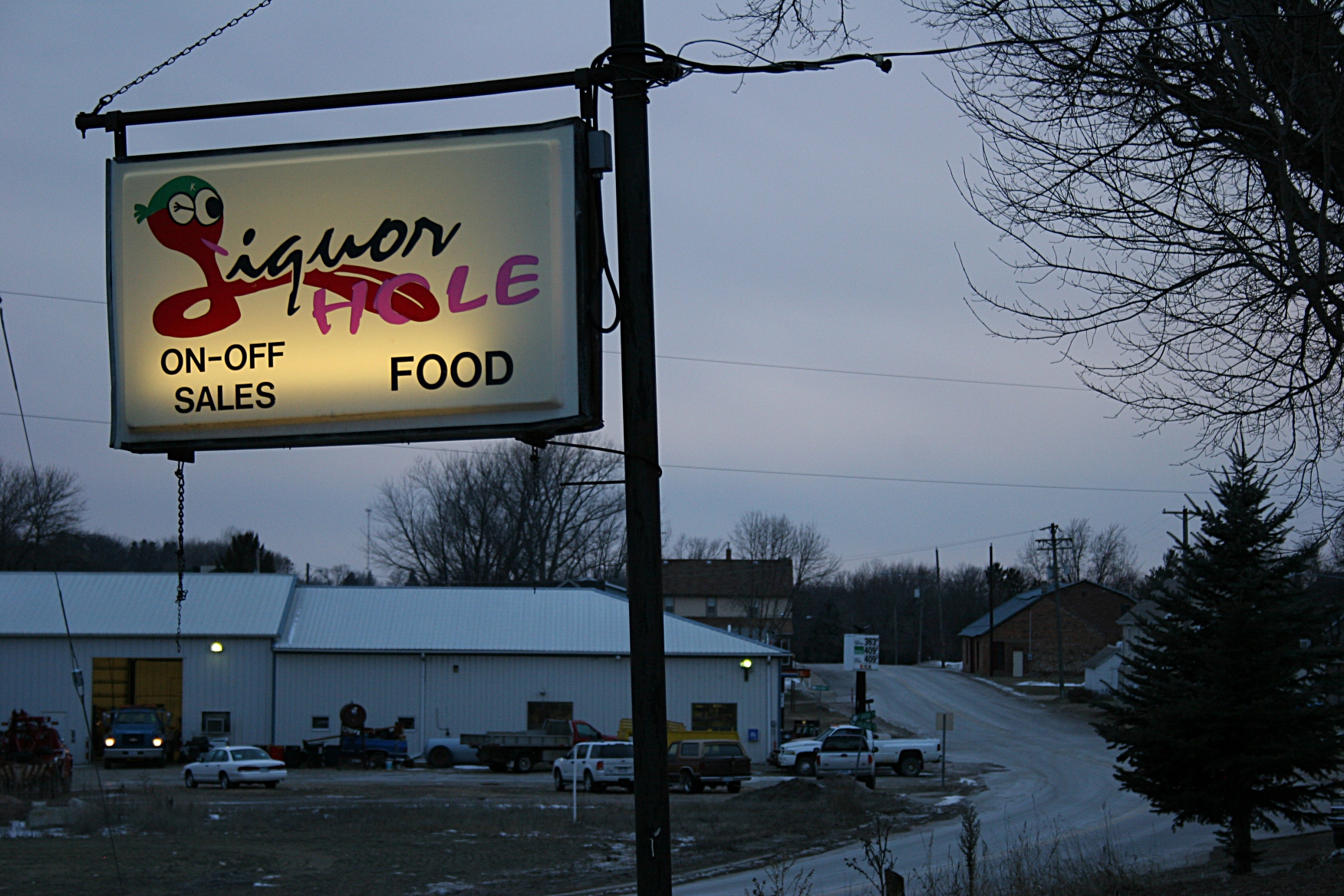
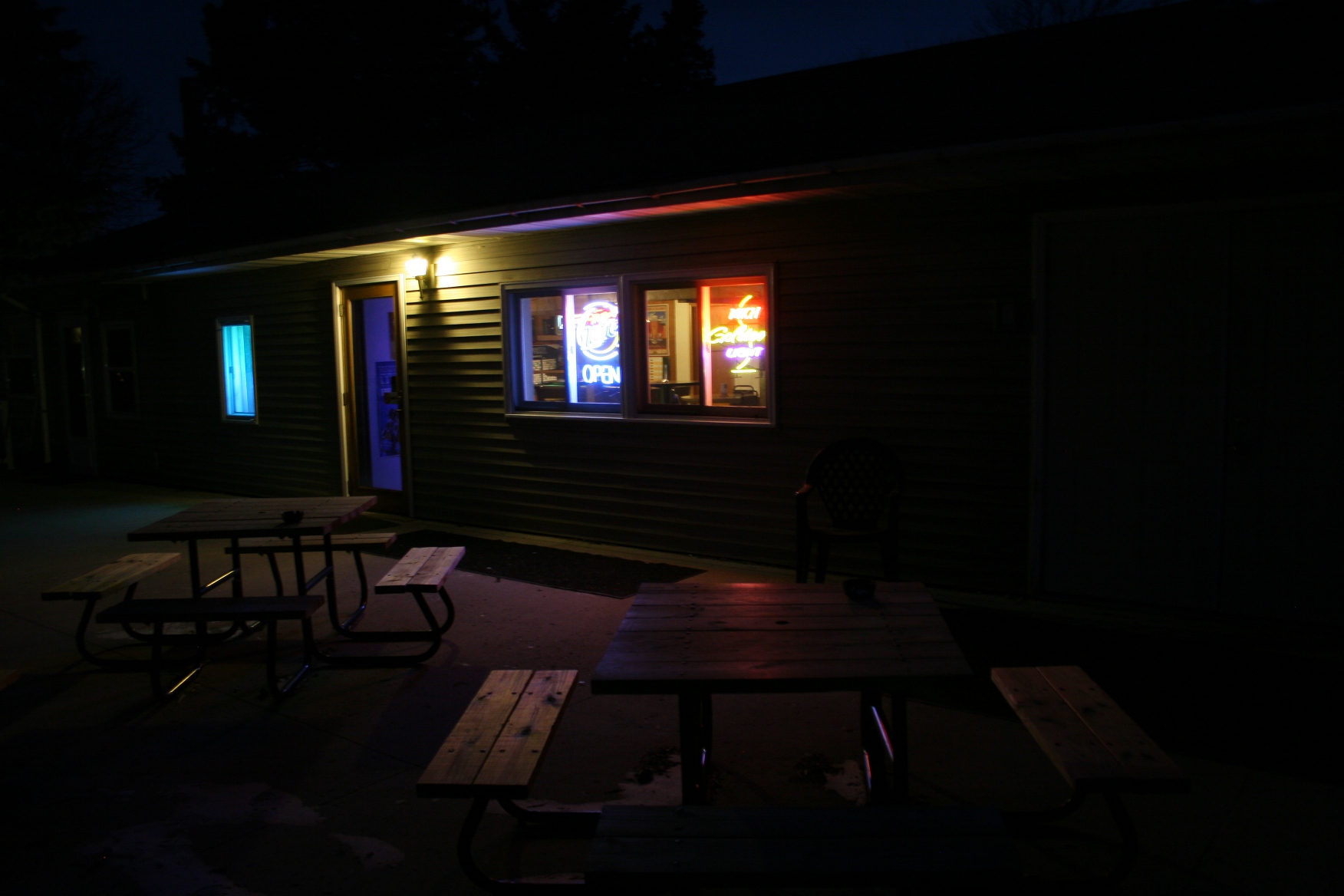
Atop the hill in Kilkenny by the water tower, we found the Liquor Hole.

Atop the hill in Kilkenny by the water tower, we found the Liquor Hole.

Just up the road from Bud’s Service, we found the Liquor Hole.

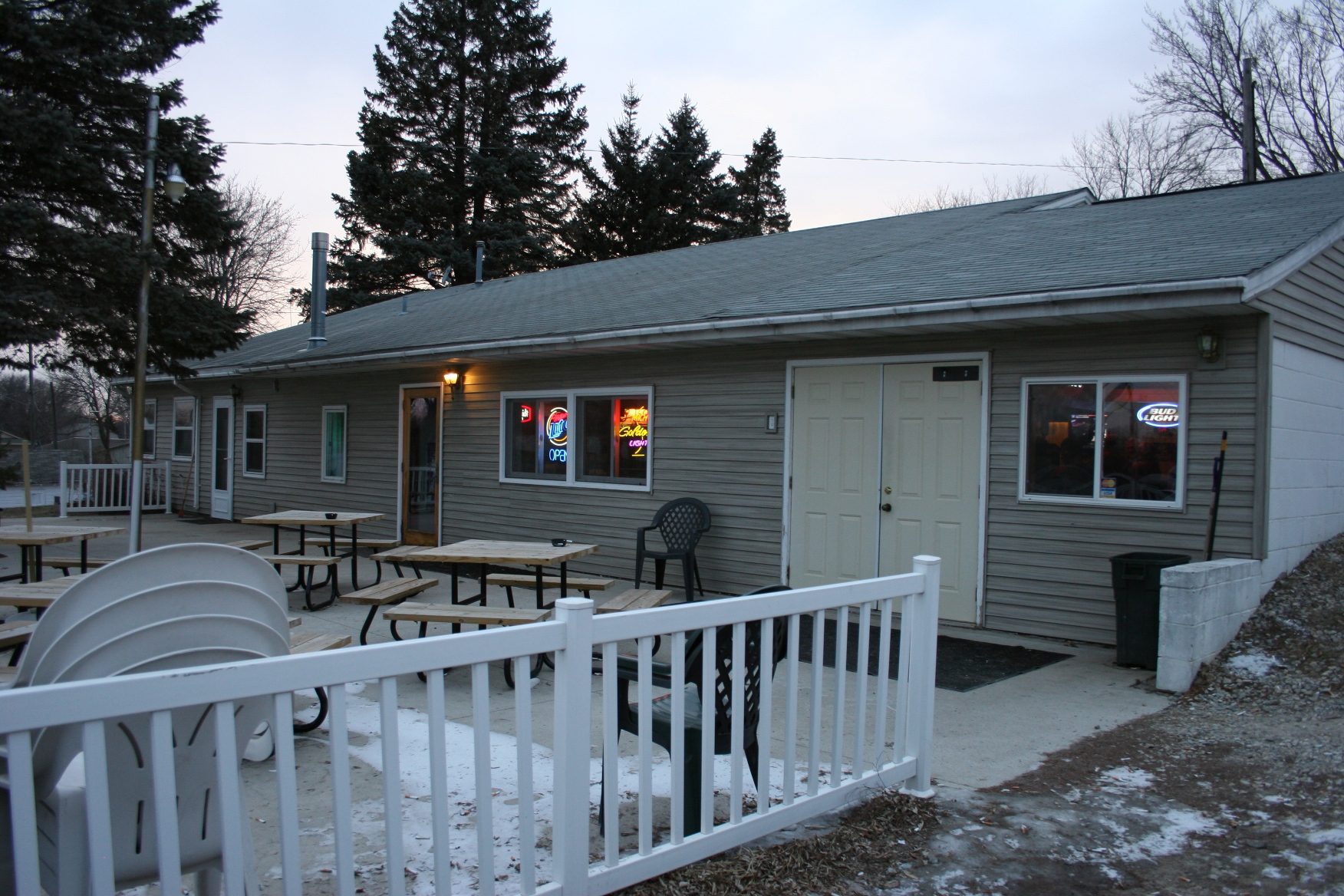
I expect in warm weather, the front patio is a popular dining and drinking spot at the Hole.

I expect in warm weather, the front patio is a popular dining and drinking spot at the Hole.

We arrived Saturday evening as the last wisps of daylight faded, enough time for me to snap a few outdoor shots before entering the Hole.

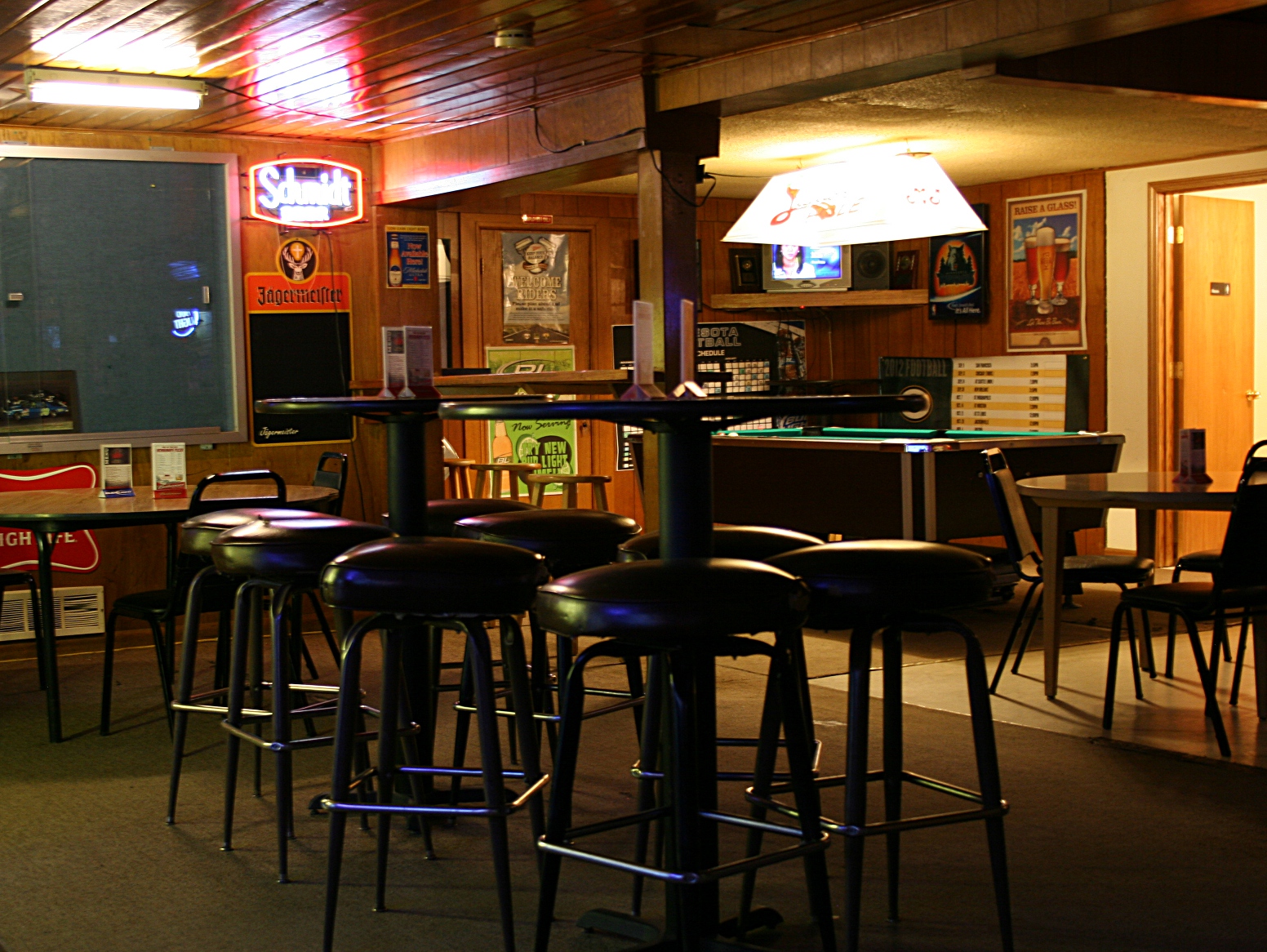
Inside we found your typical small town restaurant/bar—pool table in the corner, stools ringing a horseshoe bar, neon beer lights blazing, televisions blaring, opened pull tabs littering the bar top, smokers stepping out to light up a smoke…

A section of the dining area.

A section of the Liquor Hole.

No pool players yet early on a Saturday evening.

No pool players yet early on a Saturday evening.

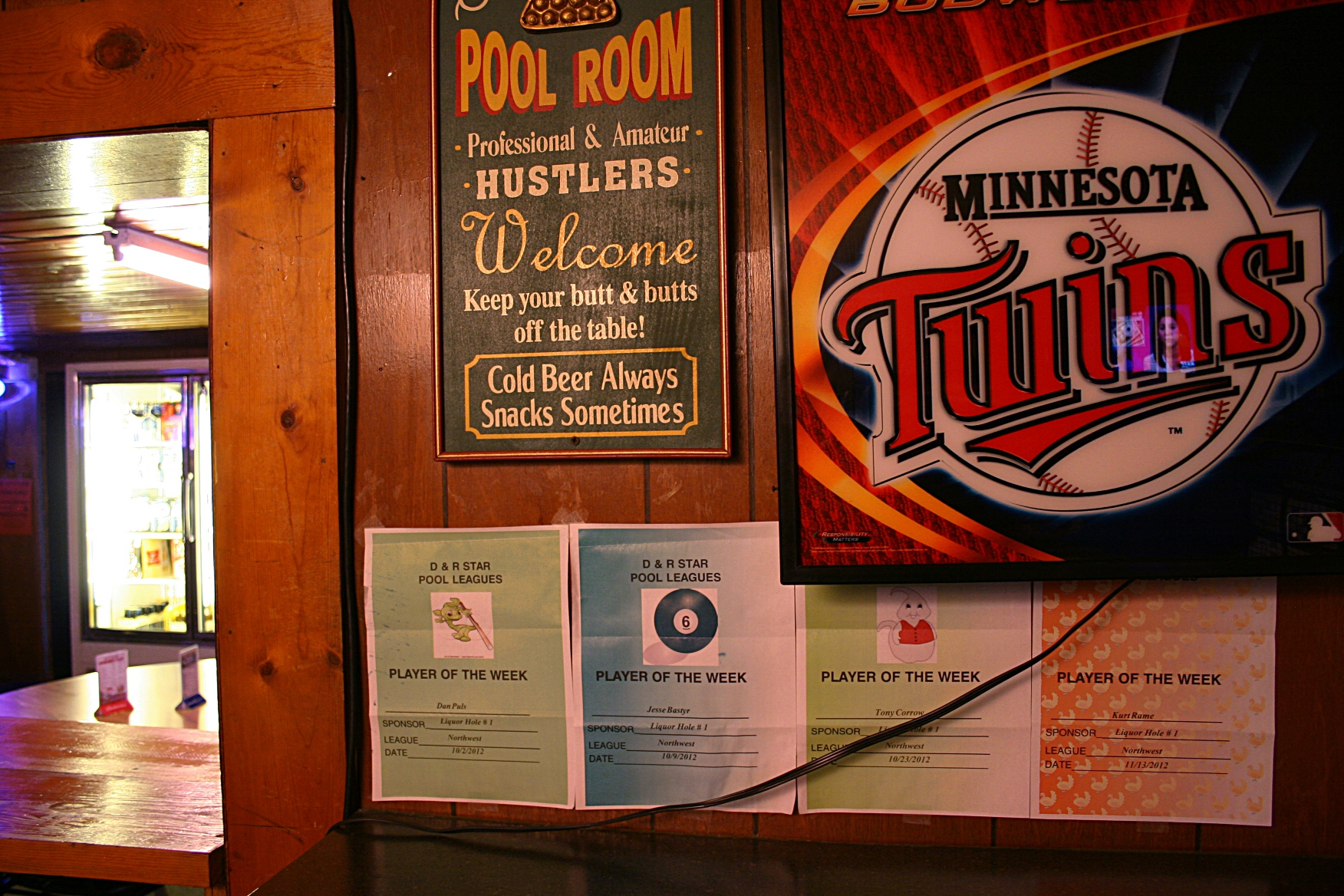
Be sure to follow the bar's pool rules.

Be sure to follow the bar’s pool rules.

Lots of neon beer signs.

Lots of neon beer signs.

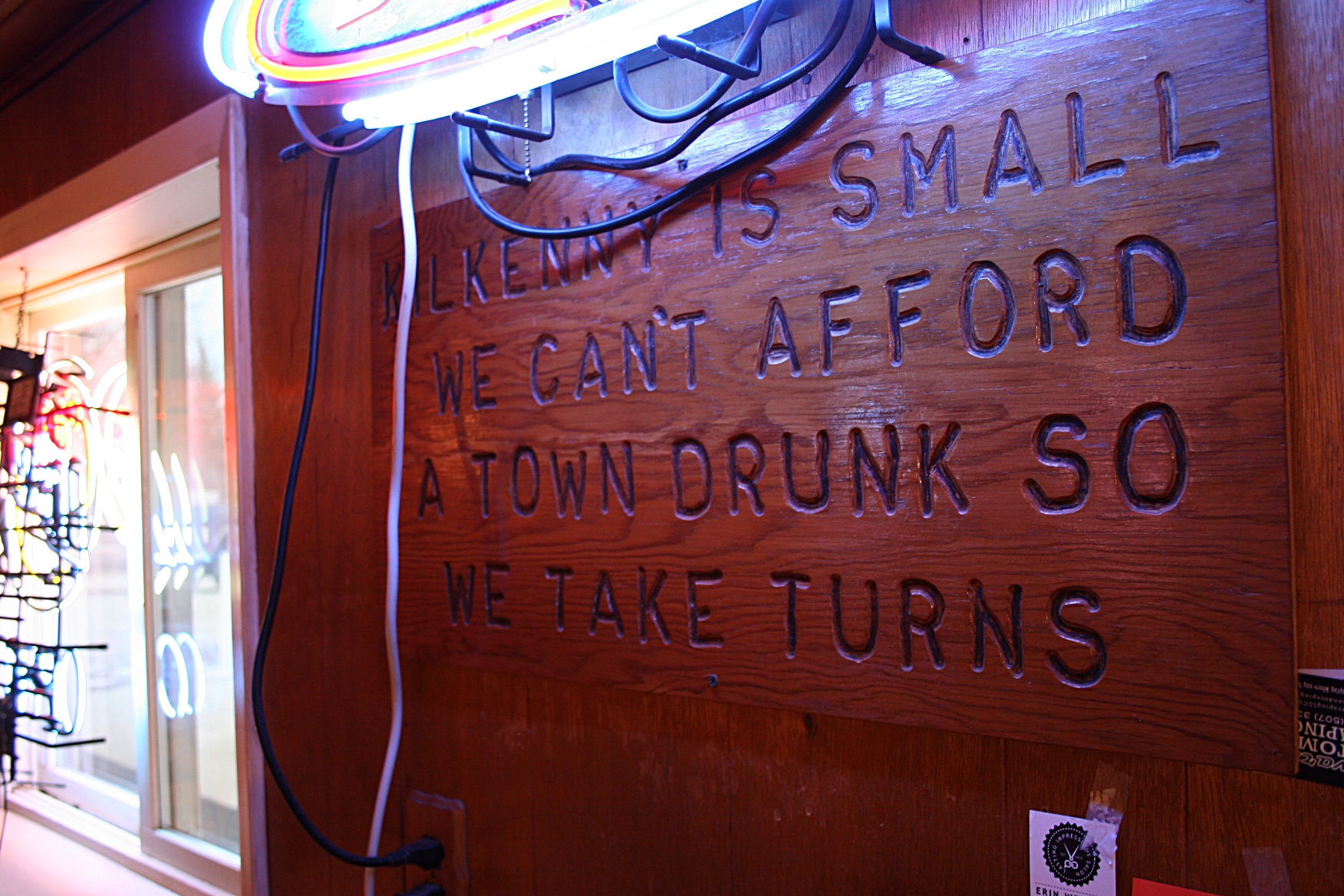
But there were a few surprises, like the homemade wood sign announcing Kilkenny’s inability to afford a town drunk and a fat-bottomed girl print I refused to photograph.

Kilkenny bar humor posted below the Bud Light sign.

Kilkenny bar humor posted below the Bud Light sign.

And when Randy asked for a Schell’s FireBrick beer, the bartender/owner looked at him and said, “Come on, this is Kilkenny.”

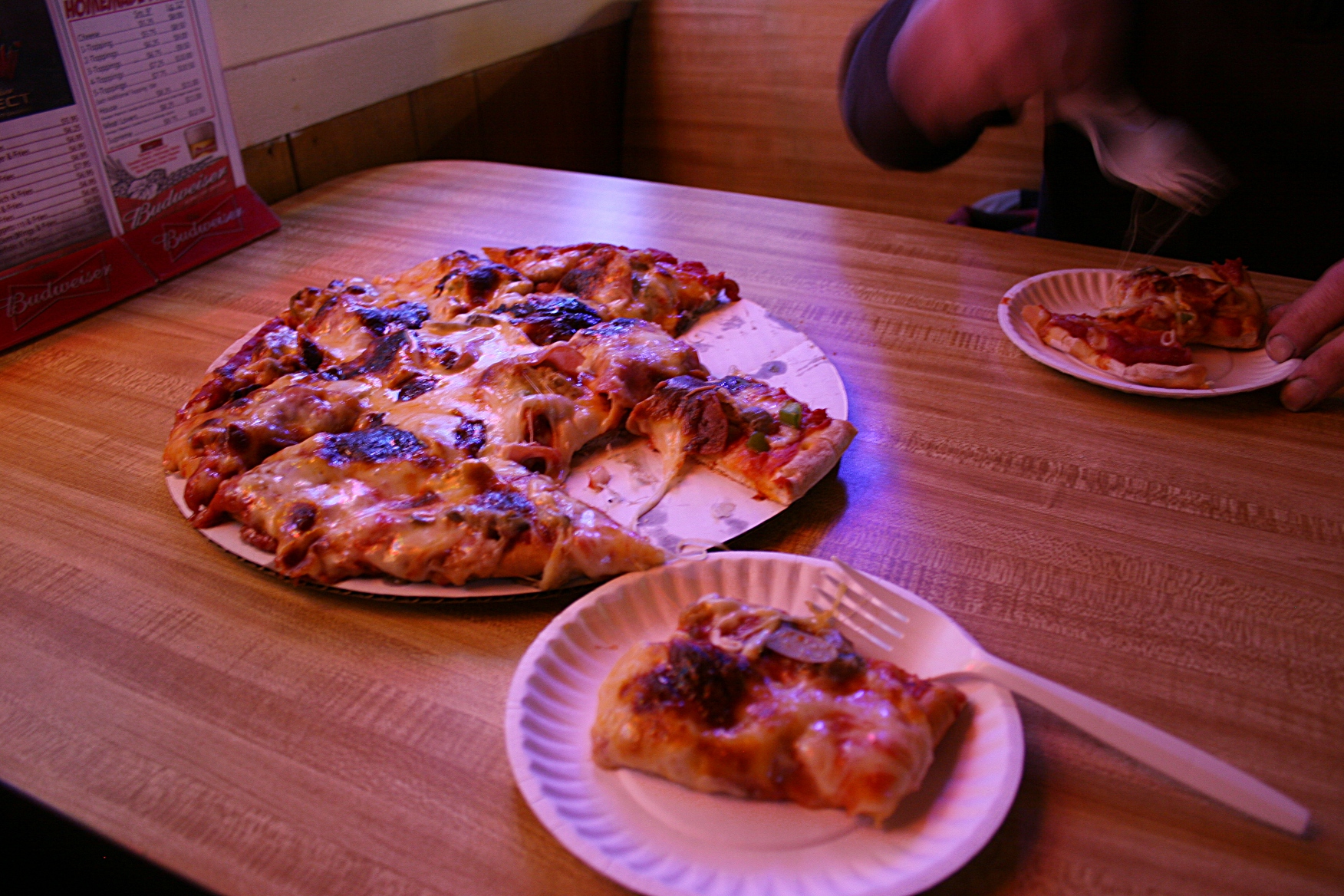
Alright then. We both ordered a Nordeast to go with our $11 House pizza topped with sausage, pepperoni, Canadian bacon, onion, mushrooms, green pepper and green olives. And just for the record, the pizza is not entirely homemade. The crust is pre-made. I asked.

The Liquor Hole's House pizza.

The Liquor Hole’s House pizza.

None-the-less, the pizza was thick and tasty, loaded with cheese and was delivered on a cardboard round with several small paper plates, plastic forks and a half-inch thick stack of napkins, most of which we used.

“Cuts down on the dishes,” Randy joked as he observed the disposable tableware.

But we didn’t mind. After all, in the bartender’s words, “This is Kilkenny.”

A last shot of the Liquor Hole before we got into the car and drove 15 miles back east to Faribault.

A last shot of the Liquor Hole before we got into the car and drove 15 miles back east to Faribault.

© Copyright 2013 Audrey Kletscher Helbling
 

Cheers to the Stone Cellar Brewpub in Appleton, Wisconsin January 18, 2013

I DIDN’T REALLY WANT pizza for lunch. But our daughter insisted that this place—the Stone Cellar Brewpub in Appleton, Wisconsin—served the best pizza. Or so she’d heard.

Turns out that evaluation was spot-on correct.

I’m no food connoisseur. But when a pizza can match, even surpass, the savory goodness of the thin crust pizzas from Basilleo’s, a 45-year pizza restaurant in my community of Faribault, Minnesota, I’m sold.

The Stone Cellar did not disappoint and, in fact, left my husband, Appleton resident daughter and me raving over the spicy New Orleans pizza topped with andouille sausage, chicken, shrimp, red onion, red peppers and Cajun spices.

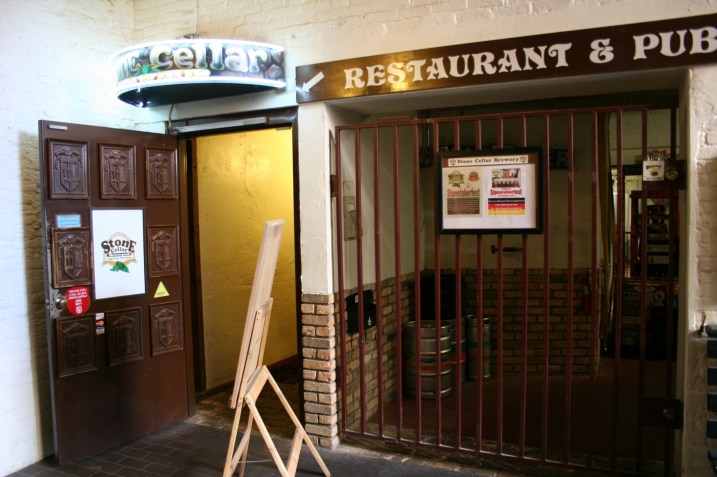
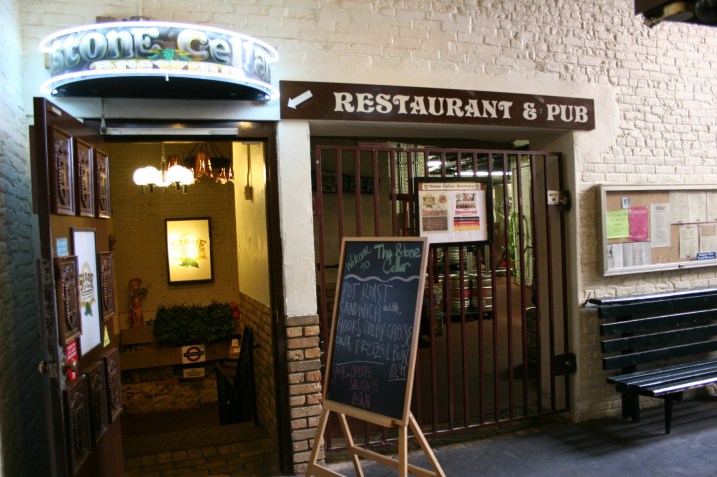
The beer part of the business is on the right, the restaurant part through the door on the left.

The beer part of the business is on the right, the restaurant part through the door on the left.

We complemented our lunch time pizza with glasses of seasonal pumpkin spice and Stonetoberfest beer brewed on the premises in the Stone Arch Brew House. This is the site of Wisconsin’s oldest continually running brewpub established in 1858 by German immigrant Anton Fischer.

I’m no beer connoisseur either. But I’m always up to trying specialty craft beers. While I wasn’t crazy about the taste of pumpkin in beer, it seemed the perfect choice for an October lunch, early October being the time my husband and I were in Appleton visiting our daughter.

Had I been aware of Stone Arch’s Houdini Honey Wheat beer, made with pure Wisconsin honey, I may have sampled that instead. The beer is named after magician Harry Houdini, who wrongly claimed Appleton as his birthplace. Houdini was born in Budapest, Hungary, and, in his early youth, lived for four years with his family in Appleton. (Click here to read my earlier post about the Houdini exhibit at The History Museum at the Castle.)

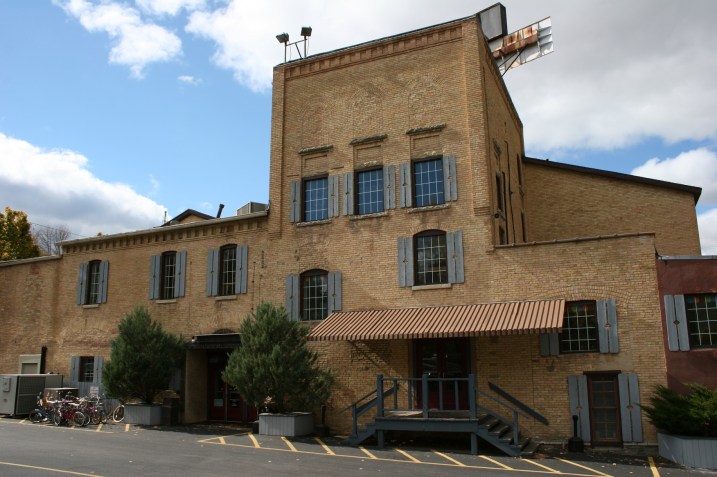
The exterior of the Between the Locks Mall, where the Stone Cellar Brewpub and Stone Arch are located along with other businesses.

The exterior of the Between the Locks Mall, where the Stone Cellar Brewpub and Stone Arch Brew House are located along with other businesses.

Beer and pizza aside, I love the location of the Stone Cellar Brewpub along the Fox River canal system (which that first brewer, Anton Fischer, helped construct) and the old stone building itself.

Go through the doorway on the left and follow the steps down into the Stone Cellar Brewpub.

Go through the doorway on the left and follow the steps down into the Stone Cellar Brewpub.

To reach the restaurant, you descend into the deep darkness of what is appropriately termed the “Stone Cellar.” I prefer windows and natural light while dining. But this closed-in space with thick stone walls presents the right comfortable feel for a brew pub with a long-standing history in the Fox River region.

A bonus to this whole dining experience comes with the restaurant’s efforts to offer locally-grown, seasonal, gluten-free and (sometimes) organic foods, aiming to offer healthier menu choices. You’ll find much more than pizza here, including the usual salads, burgers and sandwich offerings for lunch and a more extensive dinner menu.

There you go. If you’re ever in Appleton, I’d recommend dining at the Stone Cellar Brewpub.

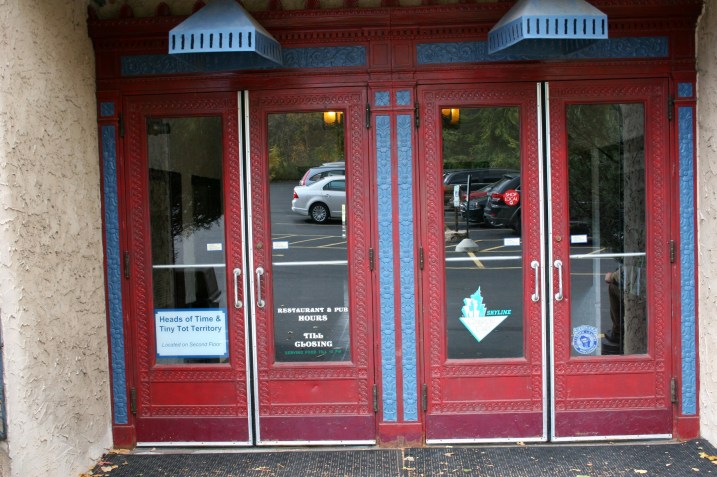
Walk through these colorful front doors...

Walk through these colorful and detailed front doors…

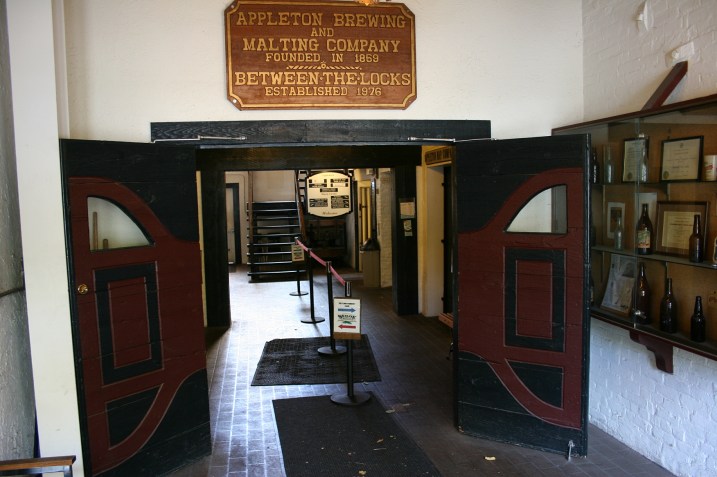
...into the entry of the Between the Locks Mall.

…into the entry of the Between the Locks Mall.

FYI: To learn more about the Stone Cellar Brewpub, 1004 S. Olde Oneida St., Appleton, Wisconsin, click here. 

© Copyright 2012 Audrey Kletscher Helbling


I finally learn to cook with Minnesota wild rice January 9, 2013

Filed under: Uncategorized — Audrey Kletscher Helbling @ 8:32 AM
Tags: , , , , , , , ,

TO CONFESS THAT I am a native Minnesotan who’s never cooked with wild rice may equate a sin. I’m not sure. If anything, such a confession is akin to a Norwegian admitting he/she has never tasted lutefisk.

Minnesota blogger Sue Ready, when she learned that I’d never cooked with wild rice, remedied that. She gifted me with a pound of 100 percent wild rice from Quality Rice Products, Inc., Garrison. How kind was that? I’ve never met Sue, who blogs at Ever Ready. But she encompasses what I’ve come to expect in the bloggers I follow—a deep-rooted goodness.

If you check out Sue’s blog (click here), you will soon discover an abundance of recipes woven into her posts. She clearly enjoys time in the kitchen. I do not.

But I was up to the challenge Sue presented in that bag of wild rice. I chose one of her recipes, Artichoke Turkey Casserole, which includes 1 ½ cups of wild rice, for my debut attempt at cooking with northern Minnesota’s beloved grain.

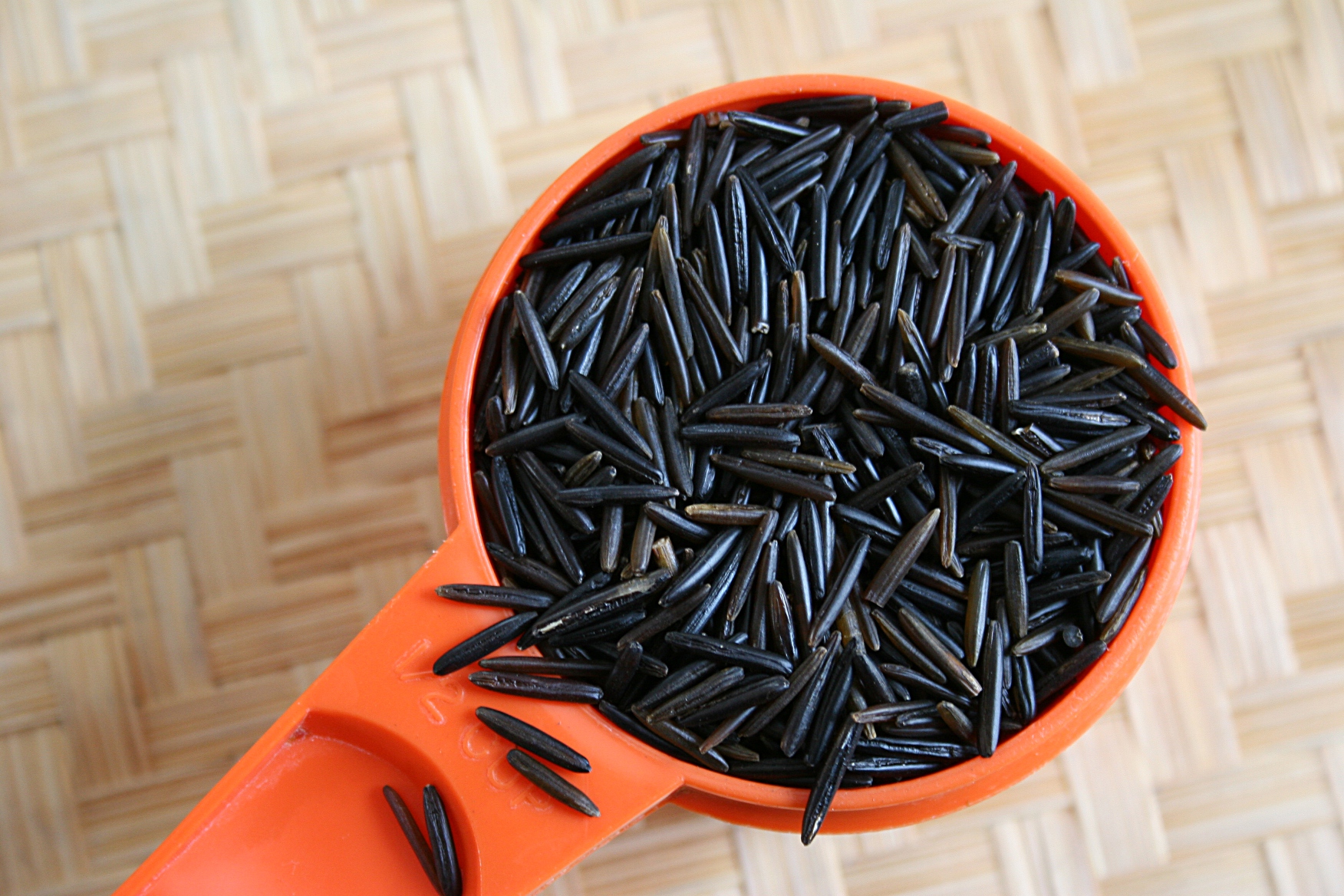
Measuring the uncooked Minnesota wild rice before rinsing.

Measuring the uncooked Minnesota wild rice before rinsing.

The first problem: How do I even make wild rice?

I found instructions tucked inside the bag, but then faced my first obstacle. How do you rinse and drain wild rice without the kernels filtering through the colander? Do not use a colander apparently.

Next, after cooking the rice for the specified 45 minutes, the grain still crunched beneath my teeth. So I added another seven minutes to the simmer time and called it good, not really knowing whether I’d cooked the rice long enough or too long.

I just want to note here that the nutty aroma of the wild rice intrigues me. It smells of earth, although not precisely of earth. Perhaps rather the scent combines earth, water, fire, sky, even the history and traditions of the Ojibwe, early harvesters of this manoomin, the “good berry.”

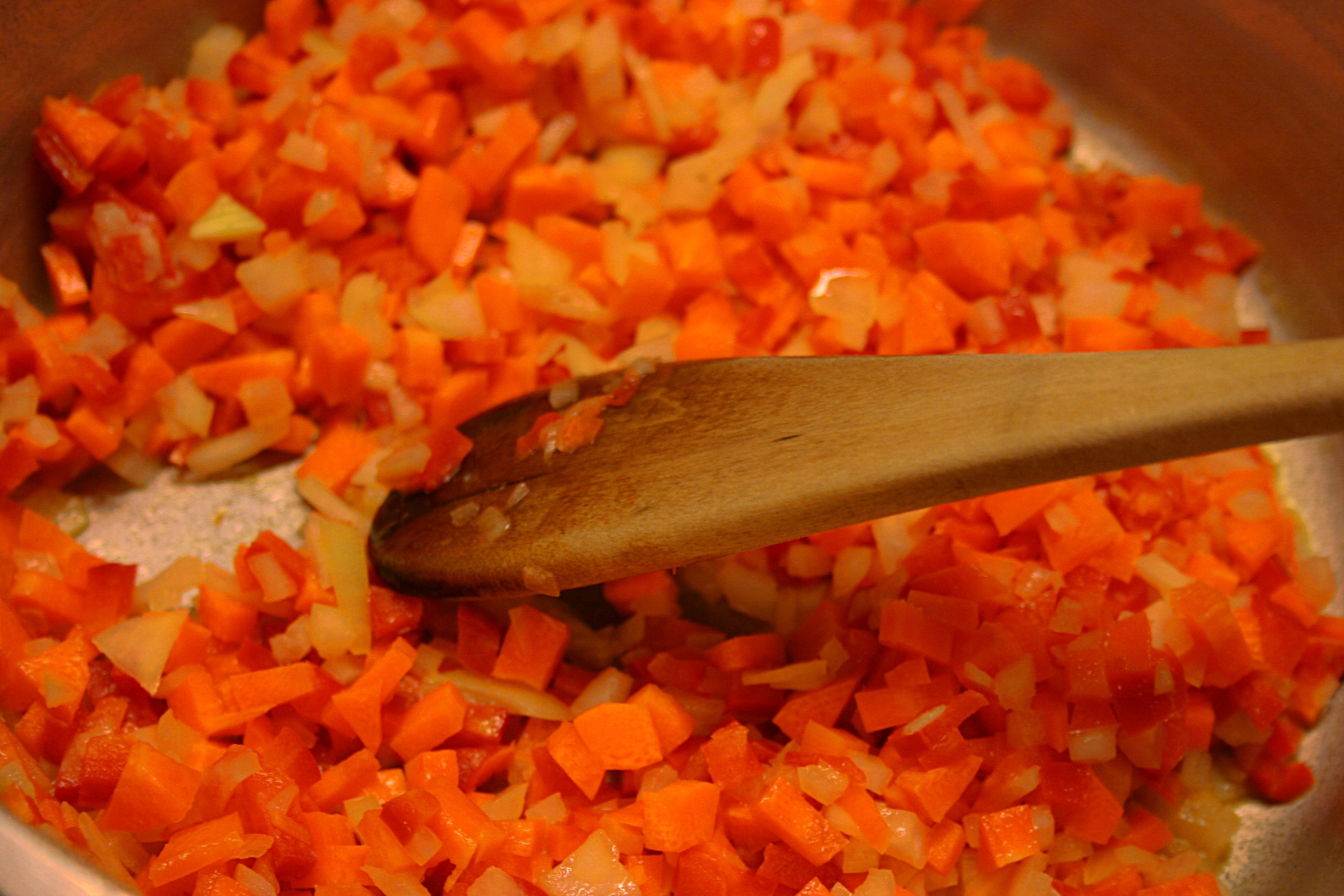
Sauteeing diced carrots, onion and red pepper.

Sauteeing diced carrots, onion and red pepper.

Because I’d cooked the rice earlier in the day, I resumed making the hotdish with the dicing of vegetables—carrots, onion and red pepper—and the boiling of noodles. I already had the two cups of chicken (substituted for the turkey) which my husband grilled the previous evening.

About 45 minutes later, I had the dish pulled together with the assistance of the husband who sliced artichokes, stirred together cream of chicken soup and milk, and measured cheese while I chopped and sauteed the veggies and tended the noodles. Typically I can multi-task in the kitchen, but preparing this hotdish took way more time than I anticipated and I was getting hungry. And, as everyone in my family knows, I get crabby when I can’t eat at my usual time.

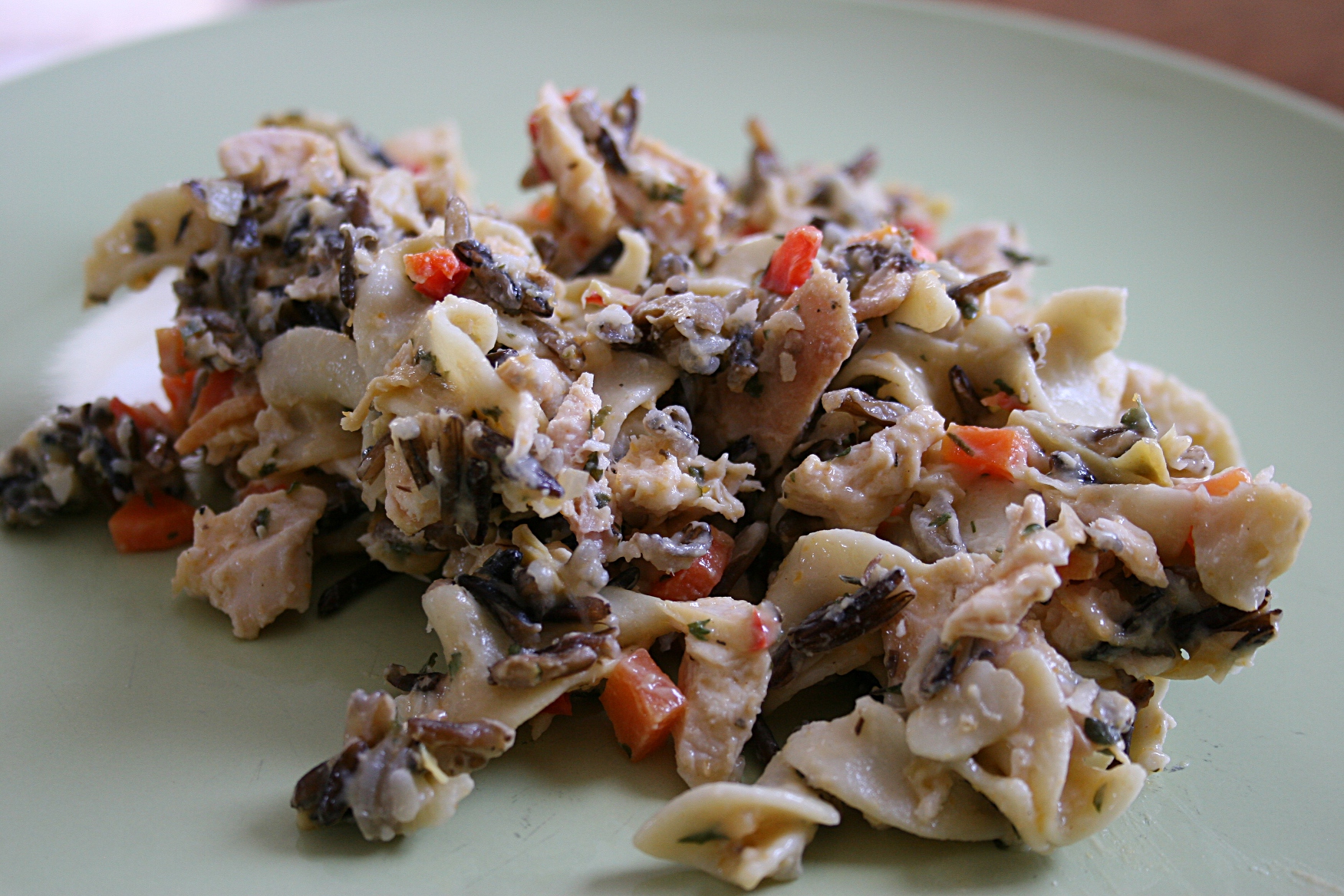
A wonderful blend of textures is presented in this hotdish.

A wonderful blend of textures is presented in this hotdish.

When I eventually pulled the hotdish from the oven, I couldn’t wait to dig my fork into this truly Minnesotan dish. I suppose an explanation is due here to those of you unfamiliar with Minnesota’s version of casseroles, known in our state as hotdish. Most hotdishes include a cream soup and noodles, this one no exception.

I wondered, though, about that combination of noodles and wild rice. But it works. The crunchy texture of the rice kernels pairs well with the creamy consistency of the noodle mixture.

Even though this hotdish includes a teaspoon of dried thyme and a tablespoon of parsley flakes, I found the flavor a bit too bland for my taste.

Yet, with a sprinkling of salt and fresh ground pepper added,  it’s a tasty and filling comfort food for a cold Minnesota winter evening.

Now that I’ve assured myself I can cook with wild rice—a food which always intimidated me—I’m ready to try preparing wild rice soup. After all, a cup of raw rice equals five cups of cooked rice, meaning I have plenty of manoomin for additional dishes.

Thanks, Sue, for expanding my cooking skills via your gift of Minnesota wild rice.

HAVE YOU COOKED with wild rice and, if so, what’s your favorite dish to prepare?

FYI: To try Sue’s Artichoke Turkey Casserole, an adaptation of a Better Homes and Gardens Comfort Foods recipe, click here.

© Copyright 2013 Audrey Kletscher Helbling
 

All about caring & community at the church basement Christmas dinner December 17, 2012

We hung up our coats and headed to that doorway into the basement dining room.

Guests hung up their coats before heading for the dining room.

WE SHRUGGED OFF our winter coats, my husband and I, and secured them onto hooks before following the tantalizing aroma of turkey and meatballs into the church basement dining area.

My meal, minus the cranberries, bread and cake which were also served.

My meal, minus the cranberries, bread and cake which were also served.

I grabbed a plate and the volunteers passed it down the line, spooning on mashed potatoes and gravy, green beans, turkey and two Swedish meatballs.

Then I heard the clatter, the sound of a cane falling upon tile and saw the elderly man directly behind me lying face down, motionless, on the floor between the serving line and the table for take-outs.

Volunteers expected to serve around 225 diners at the free Community Christmas Dinner. A free will offering could be given.

Volunteers expected to serve around 225 diners at the free Community Christmas Dinner. A free will offering could be given.

“Call 911,” I ordered my husband. I knew, given my hearing loss, that I wouldn’t be able to hear above the drone of conversation filling the basement at the Fourth Avenue United Methodist Church Community Christmas Dinner.

A sampling of the volunteer crew it takes to put on the Christmas dinner.

A sampling of the volunteer crew it takes to put on the Christmas dinner.

At some point, a server took the plate from my hand. “Give it to someone else,” I said.

“Is there a nurse here?” I asked as a cluster gathered around the fallen man. I mostly wanted someone to be with him, down there on the floor, comforting him until the paramedics arrived. And there was and that relieved me although I was still very much worried.

I felt helpless standing there, camera bag slung over one shoulder, camera on the other. I couldn’t simply take back my plate, sit down like nothing had happened and enjoy my Christmas meal.

Eventually, the man was eased off the floor and onto a chair and I sought out my husband who stood outside the glass doors in the bitter cold talking on the phone with the emergency dispatcher. I relayed that the man was now sitting and alert. And I wondered why the rescue squad had not yet arrived from two blocks away, knowing full well from personal experience that time seems to stand still when you are in need of emergency services.

And so the story ended. No broken bones. No heart attack. Not even shattered eyeglasses as the unsteady aged man tripped on a table leg and plunged forward, his fall broken only by the shoe of the woman scooping mashed potatoes at the beginning of the serving line.

If not for that shoe, he would have smashed face first onto the tile.

It seemed a Christmas miracle.

And so I stepped back into the serving line, the crew filling my plate for the second time. I pondered how grateful I am to live in a community where volunteers cook and serve savory meals in church basements and, when in a time of need, are there to comfort and assist.

Friends gave friends rides to and from the church dinner.

Friends gave friends rides to and from the church dinner.

The beautiful Fourth Avenue United Methodist Church in Faribault. I'll take you inside the sanctuary in a follow-up post.

The beautiful Fourth Avenue United Methodist Church in Faribault. I’ll take you inside the sanctuary in a follow-up post.

Coffee maker Dan Tersteeg mans the coffee corner. The coffee makers always use Folgers coffee, he says, because it works best with Faribault's water.

Coffee maker Dan Tersteeg mans the coffee corner. The coffee makers always use Folgers, he says, because it works best with Faribault’s water.

I noticed this full coffee cup setting on a cupboard lined with holiday decorations. During the congregation's Lenten soup luncheons, desserts fill the shelves.

I noticed this full coffee cup sitting on a cupboard lined with holiday decorations. During the congregation’s Lenten soup luncheons, desserts fill the shelves.

Inside a room labeled "Fourth Avenue Room," where women were slicing Christmas cake, among other tasks, I found this sign posted.

Inside a room labeled “Fourth Avenue Room,” where women were slicing Christmas cake, among other tasks, I found this humorous sign posted.

And then these directions, too, posted, perhaps, by the boss?

And then these directions, too, posted, perhaps, by the boss?

In the kitchen, a team of workers tended the food and washed the dishes, etc.

In the kitchen, a team of workers tended the food and washed the dishes, etc.

And another worker handed out Christmas cake.

Another worker handed out slices of festive and delicious Christmas cake.

Diners enjoyed each other's company and observed the goings-on.

Diners enjoyed each other’s company and observed the goings-on.

Some of the guests took home gifts of poinsettias which served as table centerpieces.

Some of the guests took home gifts of poinsettias which served as table centerpieces.

A street-side sign welcomes diners to the free Community Christmas dinner.

A street-side sign welcomes diners to the free Community Christmas dinner.

© Copyright 2012 Audrey Kletscher Helbling