Minnesota Prairie Roots

Writing and photography by Audrey Kletscher Helbling

Giving bikes to kids November 13, 2013

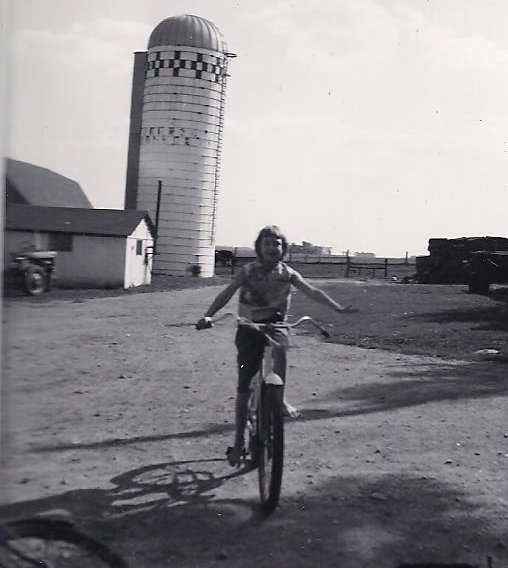
Me, riding Sky Blue at age 10 on the farm where I grew up in southwestern Minnesota.

Me, riding Sky Blue at age 10 on the Redwood County farm where I grew up in southwestern Minnesota. Photo taken in 1966.

LOOKING BACK ON MY CHILDHOOD, I cannot imagine life without a bicycle. My bike was my imaginary horse, my daredevil stunt car launched off makeshift ramps, my mode of transportation down county and township roads.

If not for my maternal grandfather, though, I never would have owned a bike. My parents could not afford bikes for their kids. So Grandpa would scavenge the local dump for bikes he could repair, repaint and deliver to me and my five siblings.

It mattered not that my bike, which I named Sky Blue, wasn’t new. I owned a bike. I was a happy kid.

That childhood memory bubbled to the surface Monday morning when Dee Bjork at The Crafty Maven in downtown Faribault handed me a flier about the Free Bikes 4 Kidz program. I wanted, no, needed, to learn more about this partnered local give-away by So How Are the Children and Allina Health (presenting sponsor for the non-profit Free Bikes 4 Kidz). So I phoned SHAC Director Carolyn Treadway.

The give-away “targets kids whose families couldn’t otherwise afford bikes,” says Treadway. Kids just like me and my siblings decades ago.

As Treadway and I concur, a child’s desire to own a bike is universal, transcending time.

On December 7, Treadway expects SHAC and Allina to give away 65 – 75 bikes to pre-registered Faribault youth. She’s actively searched for kids—handing out fliers to teachers, drawing on her connections through SHAC and dropping in at places like St. Vincent de Paul, a childcare center and a laundromat to find families needing bikes. She’s currently placing names on a waiting list.

Kids from Northfield and Steele County will also get new or gently-used and refurbished bikes at the Faribault Middle School pick-up site. All told, Treadway anticipates 150-175 bicycles to be distributed along with new bike helmets, compliments of Allina Health.

Among those expected to show up are an east-side Faribault woman who will claim seven bikes, Treadway says. The bicycles are for her neighbor children whose father, in a state of inebriation, destroyed their bikes. The woman will store the bikes in her garage until spring.

Treadway enthuses about such a neighborly caring spirit and about the volunteers who repair the used bikes and assist with the give-away. She’s also grateful for those who donate bikes, some of which were collected at the Faribault Bike Rodeo in October. Allina Health coordinates numerous collections of bikes to be distributed in Minnesota and western Wisconsin.

Another local recipient is a Faribault father who signed his 12-year-old and 14-year-old up for Free Bikes 4 Kidz. When the dad asked if he could also get a bike for his 18-year-old, Treadway assured him he could. The older teen attends the Faribault Area Learning Center and a bike will enable him to stay in school because he will now have a way to get there.

Stories like that truly show the humanity of this program aimed at getting bikes to kids so they will have, as Treadway says, “access to safe and healthy physical activity.” Or, in the case of the 18-year-old, access to education.

The program also builds connections and a sense of community care.

Yet, the bare bones basics benefit of Free Bikes 4 Kidz is to get bikes into the hands of children who otherwise would not have a bike of their own. The program has grown significantly in Faribault, where only a dozen free bikes were distributed two years ago.

“Owning a bike,” Treadway says, “is very near and dear to a child’s heart.”

It is the universal childhood desire which transcends time. Just ask me. I’ve never forgotten Sky Blue or the grandpa who scavenged the dump so I could have a bike.
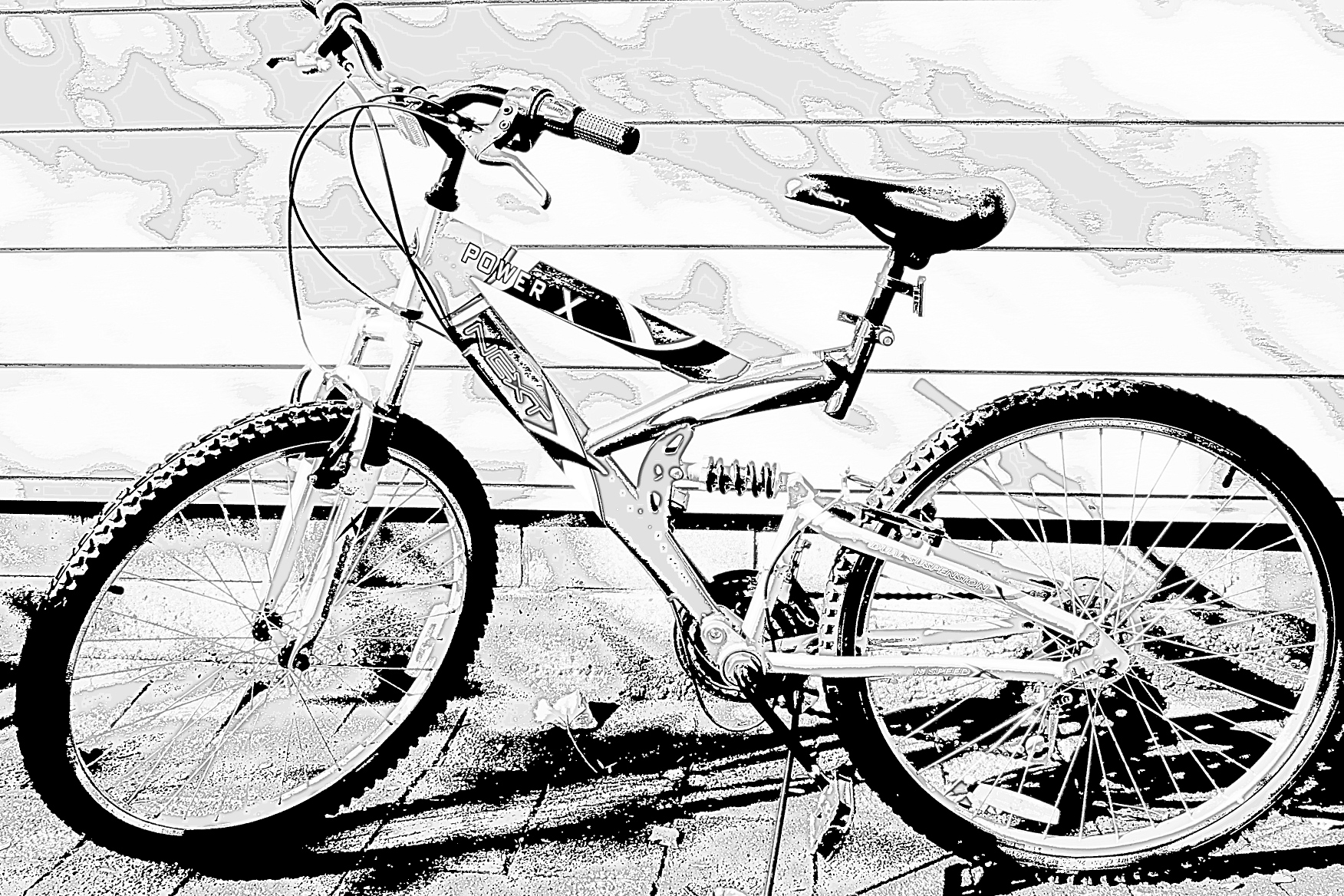
 A bike pulled from my garage.

A bike pulled from my garage and photographed. I then edited the image to illustrate this story.

FYI: To learn more about the non-profit Free Bikes for Kidz, click here.

For more information on Allina Health’s partnership in the program, click here.

To learn more about So How Are the Children, click here.

© Copyright 2013 Audrey Kletscher Helbling


Oh, the irony August 30, 2013

Fitness and smoking

ON A RECENT STOP for a treat at the Dairy Queen in downtown Hutchinson, I noticed this impressive new Cornerstone Commons retail and professional office center. Beautiful building.

But I was struck by the irony of two businesses located here, SMOKES4LESS and Snap Fitness. Say again. Yes, polar opposites housed in the same complex at 114 Main Street North.

Then there’s that Dairy Queen directly across the street. I suppose if you work out first, you needn’t feel all that guilty about indulging in a Blizzard afterward. Or if you indulge in a Blizzard before working out at Snap Fitness, you needn’t feel guilty either.

But if you’re like me and you’re passing through town and you get out of your vehicle, consume a Blizzard and then hop back in your vehicle, then the guilt factor may kick in.

Hey, but at least I don’t smoke or chew.

Copyright 2013 Audrey Kletscher Helbling

 

Why NDSU research into growing human bones interests me June 28, 2013

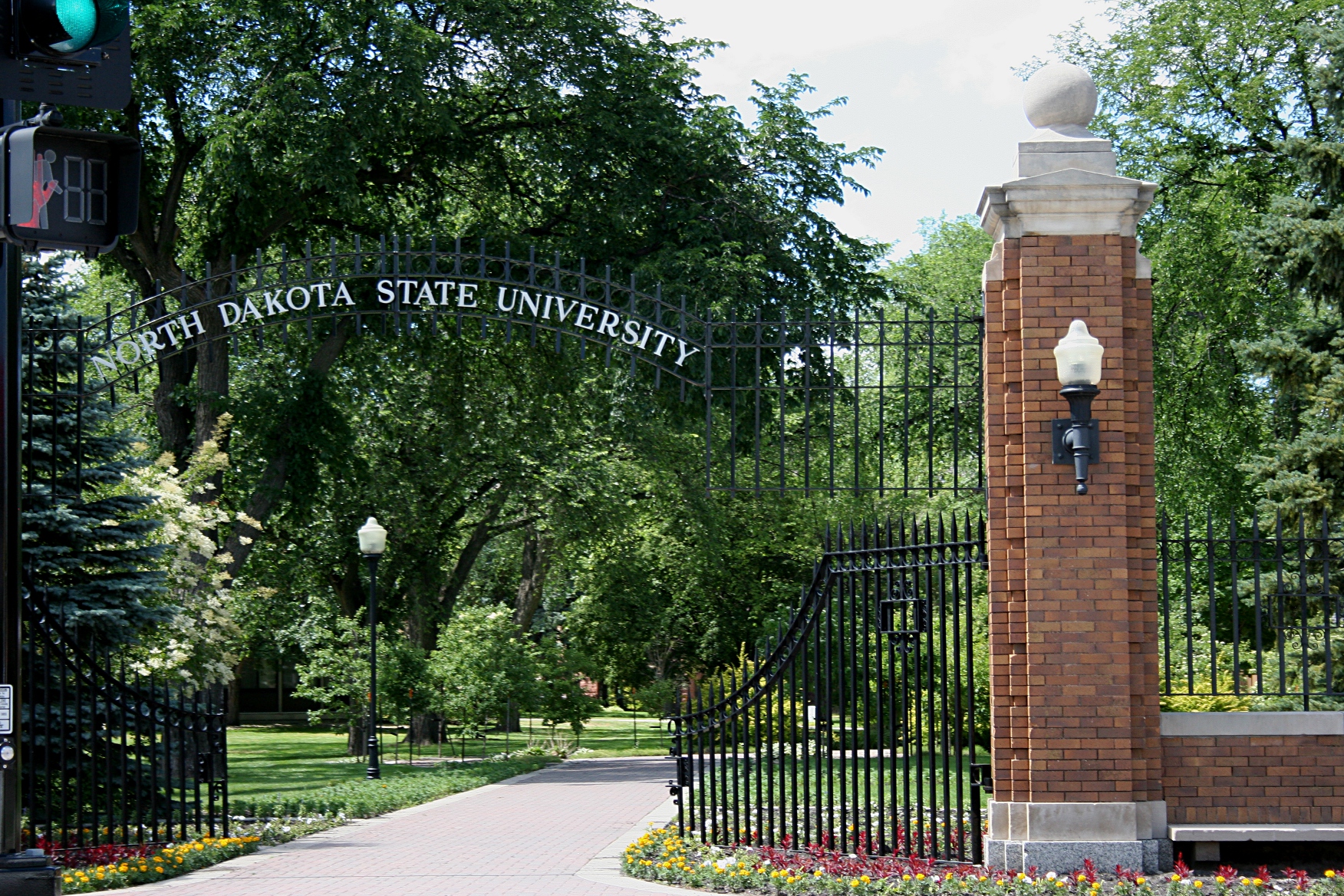
File photo from June of the main entrance to North Dakota State University in Fargo.

File photo from June 2012 shows the main entrance to North Dakota State University in Fargo.

FOR THE MOST PART, I ignore the mass emails sent by whomever, including North Dakota State University, where my son attended his first year of college. He’s transferring to Tufts University in Medford, MA., outside of Boston, this fall.

But this head in a recent NDSU Alumni (I’m not an NDSU alumni) mailing caught my attention:

Researchers Coax Clays to Make Human Bone: Weak bones, broken bones, damaged bones, arthritic bones. Researchers at North Dakota State University, Fargo, are making strides in tissue engineering, designing scaffolds that may lead to ways to regenerate bone.

Arthritic bone.

Up until some seven years ago, I’d never considered arthritic bone, not even thought about arthritis or its debilitating impact on the body and spirit and on mobility.

But then, at age 48 ½, I developed back and hip pain which, initially diagnosed as a pinched sciatic nerve, was eventually correctly diagnosed as arthritis in my right hip. For 2 ½ years I lived with the constant pain until near immobility and an inability to tolerate the pain led me to undergo total right hip replacement five years ago. Given my age, 51, I wanted to put off the surgery as long as possible.

I likely will outlive my hip, which has a life expectancy of 15 – 20 years. That means hip surgery. Again. And that scares the heck out of me because I will be much older, the recovery more challenging.

When I read news about research like that being conducted at NDSU, I am encouraged—hopeful for a better alternative to the current implant system. There have been too many recalls on hip implants. Thus far, mine has not been among them. But pity those people who need to have their defective implants removed and replaced.

To the NDSU researchers who created the system of “3-D mesh scaffold composed of degradable materials compatible to human tissue” in which “cells generate bone and the scaffold deteriorates,” thank you for working on this project.

Do you think you could perfect the process and have it on the market in 10 years?

FYI: Learn more about this NDSU research project by clicking here.

© Copyright 2013 Audrey Kletscher Helbling
 

Tom comes home & how you can help a young family in need February 20, 2013

There’s something about home. The creak of the porch floor as you walk to the front door, the glow of the yellow kitchen walls in the evening light, the whiz of the furnace. It’s so familiar. Comforting.

As Tom sat in the living room for the first time in six weeks, taking it all in again, he said he could feel his stress and tension begin to ease.

It’s good to be home.  — Nina Hedin’s February 15 Caring Bridge entry

Nina and Tom Hedin with Jack and June. Photo courtesy of Nina Hedin.

Nina and Tom Hedin with Jack and June, before Tom’s accident. Photo courtesy of Nina Hedin.

I CAN ONLY IMAGINE the relief Nina Hedin, a young mother and blogger (The Adventures of Artsy Nina) from Glencoe experienced in the arrival home last week of her husband, Tom, after he was seriously injured in a January 5 snowmobile accident.

It’s been a challenging journey for Tom and Nina and their children, 4-year-old Jack and 8-month-old June.

Certainly, there have been the physical and emotional challenges involved in Tom’s recovery from a long list of injuries: brain hemorrhage and complications, fractured orbital socket, facial lacerations, fractured T6 vertebrae, broken and dislocated right wrist, broken left elbow and fractured upper arm, broken left knee cap with severed tendon and puncture wound, and a right knee ligament injury.

But the family has faced the added stresses of physical separation while Tom was hospitalized at Hennepin County Medical Center and later rehabbing, first in Glencoe, and then at Courage Center in Golden Valley.

Factor in lost wages and mounting medical bills and the family’s stress level has to be incredibly high. I cannot imagine. Nina, though, has managed to maintain a mostly positive attitude, at least publicly, on Tom’s Caring Bridge website.

I am especially proud of how the community of bloggers shared her family’s story and how folks have rallied—praying, providing words of encouragement and contributing to the GiveForward “Help for Tom Hedin” fund to help fund his recovery. Thus far 67 donors have contributed nearly $5,000 toward the $40,000 goal. You can contribute by clicking here.

Additionally, at least one blogger, Beth Ann Chiles of Iowa, has pledged to donate 50 cents for every comment made on her “It’s Just Life” blog posts to the Hedin family for two months. During January, she and husband, Chris, gave $176 to the Hedins through her “Comments for a Cause” program.

Wouldn't you like to win these goodies from Beth Ann?

Wouldn’t you like to win these goodies from Beth Ann?

To encourage even more comments during February, Beth Ann is giving away a package of goodies like tea, handmade greeting cards and coasters, a Monkey Farts lotion bar (yes, you read that right) and more. You will need to click here to read the entire list. To qualify for the prize package, you must specifically comment on Beth Ann’s “Giveaway with an Ulterior Motive” post.

But, don’t stop there, comment on any of her February posts and Beth Ann will donate 50 cents per comment toward GiveForward “Help for Tom Hedin.” How easy is that to donate and help a family in need?

Now, as long as I am writing about recovery, I want you to check back tomorrow for a review of Garrett Ebling’s book, Collapsed, A Survivor’s Climb from the Wreckage of the 35W Bridge. I promise, you will learn a thing or 20 about survival, courage, challenges, love, the power of prayer and more.

© Copyright 2013 Audrey Kletscher Helbling
 

The art of healing at a Minnesota hospital January 28, 2013

TWO YEARS AGO this month, my then 92-year-old artist friend, Rhody Yule, opened his first-ever gallery exhibit at the Paradise Center for the Arts in Faribault.

Six months later, he died.

But Rhody, and his art, live on, this time in a Paradise Center Healing Arts Program Exhibit at District One Hospital in Faribault. The arts center and hospital are partnering on the program.

Thursday evening I attended a reception for that show which features 70 pieces of art created by eight outstanding artists, each of them definitively different: Faribault artists Jody Hanscom, Jorge Ponticas, Pearl Tait and Rhody Yule; Marcus Moller of Morristown; Faribault native Tom Fakler, now living in Basel, Switzerland; Jane Strauss of Minneapolis; and Cynthia Ali of St. Paul.

As Healing Arts Coordinator Elizabeth Jacobs led my husband and me through the maze of hallways and centers that comprise the hospital complex, I thought how Rhody would have felt honored to be part of an exhibit designed to comfort patients and make their hospital experiences more pleasant.

The art selected by a committee of hospital staff fits the program’s criteria as “healing art,” meaning it must be calming, happy and a positive piece of work, Jacobs says.

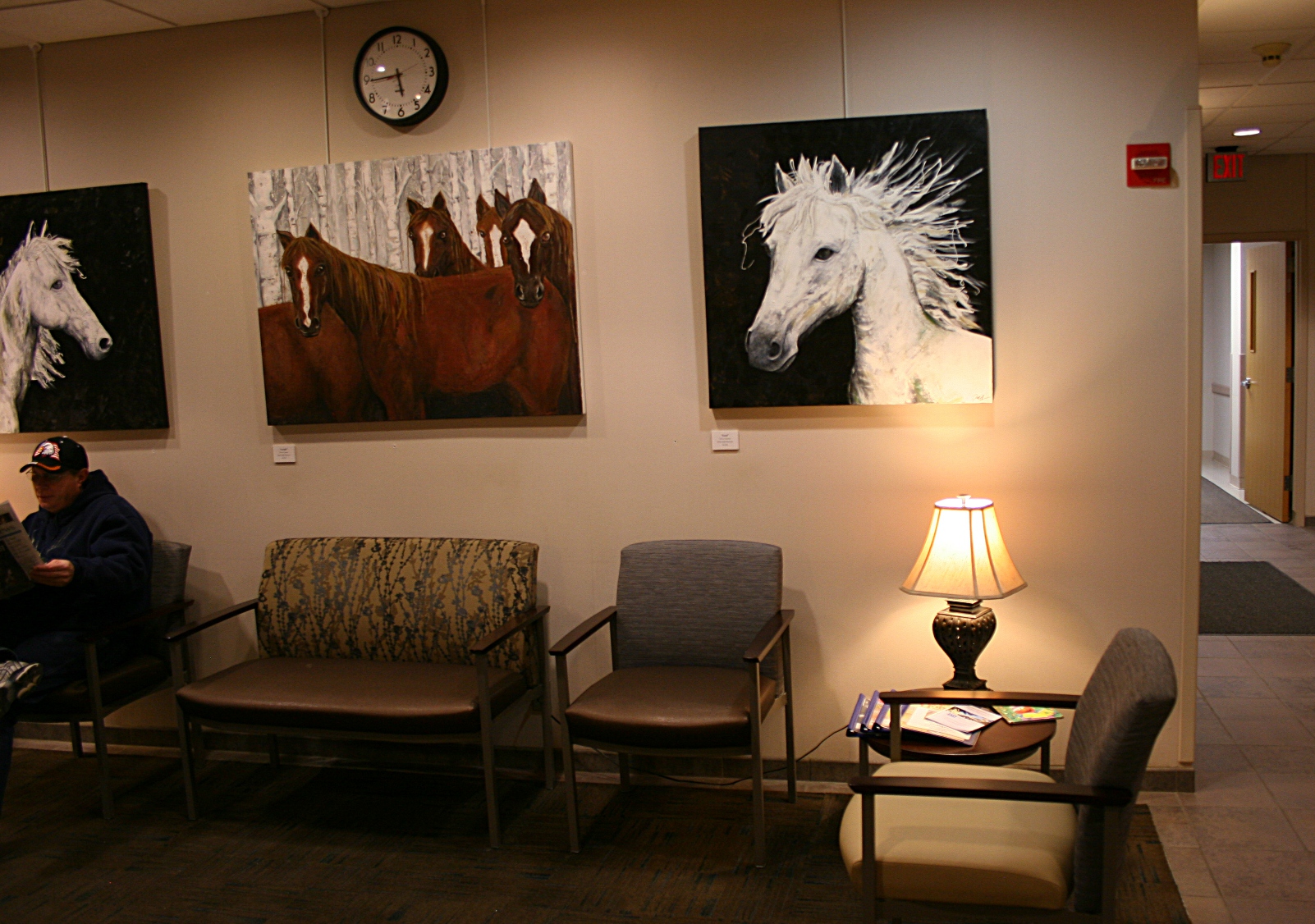
Three of Jody Hanscom's horse portraits.

Three of Jody Hanscom’s horse portraits.

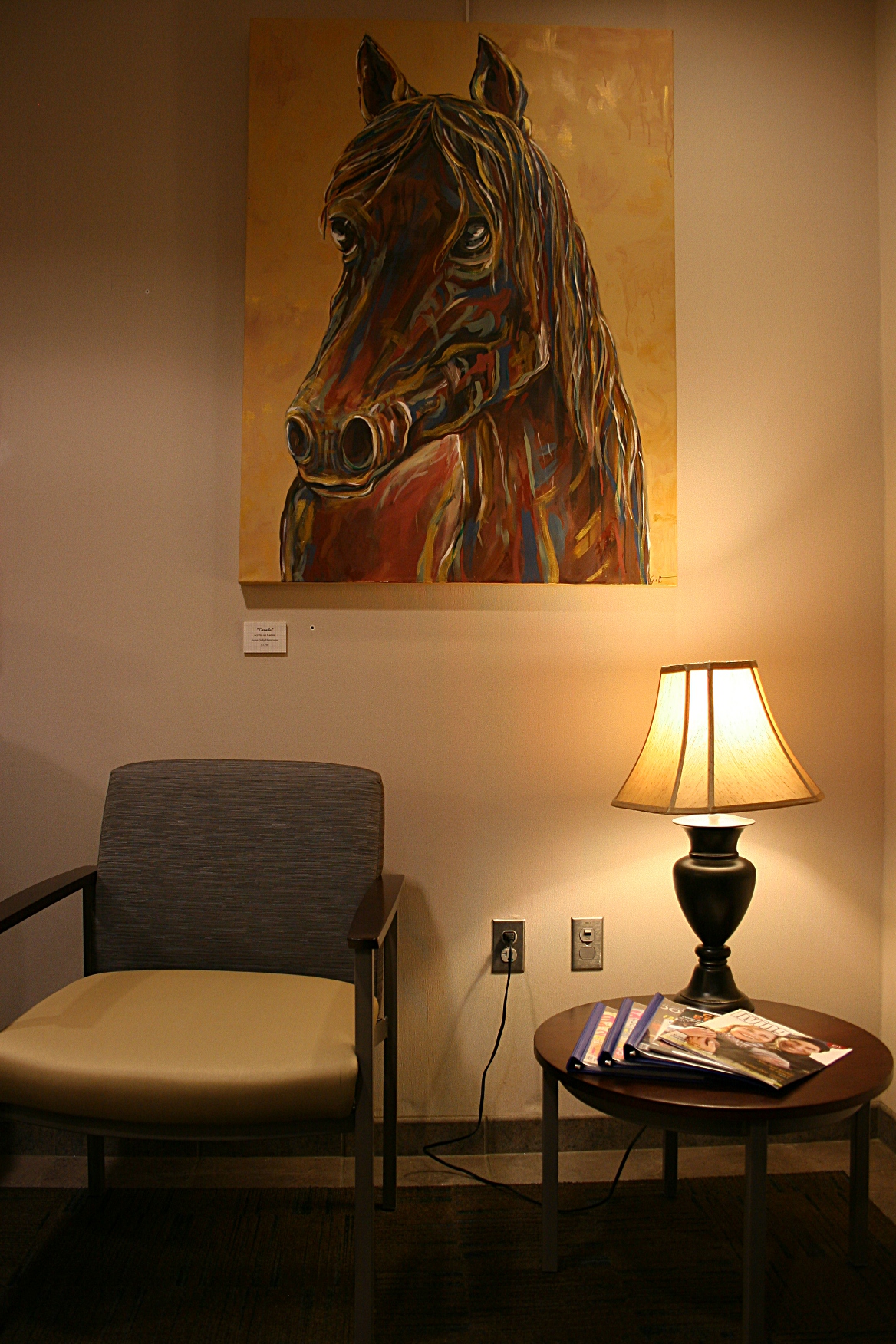
And you’ll see that, almost experience that positivity, from the minute you walk in the front doors of the hospital to view Jody Hanscom’s sizable horse portraits in the lobby waiting areas. Jody’s oil paintings capture both the gentleness and free spirit of horses, a combination that simultaneously calms and uplifts.

Tucked into a corner by the elevators, the fourth of Hanscom's horse oil paintings.

Tucked into a corner by the elevators, the fourth of Hanscom’s horses.

Just down the hallway, five oil paintings by Jorge Ponticas brighten the walls with vivid scenes from his native Chile and elsewhere. His art evokes happy thoughts. What can I say? I can’t resist the sweet face of a llama.

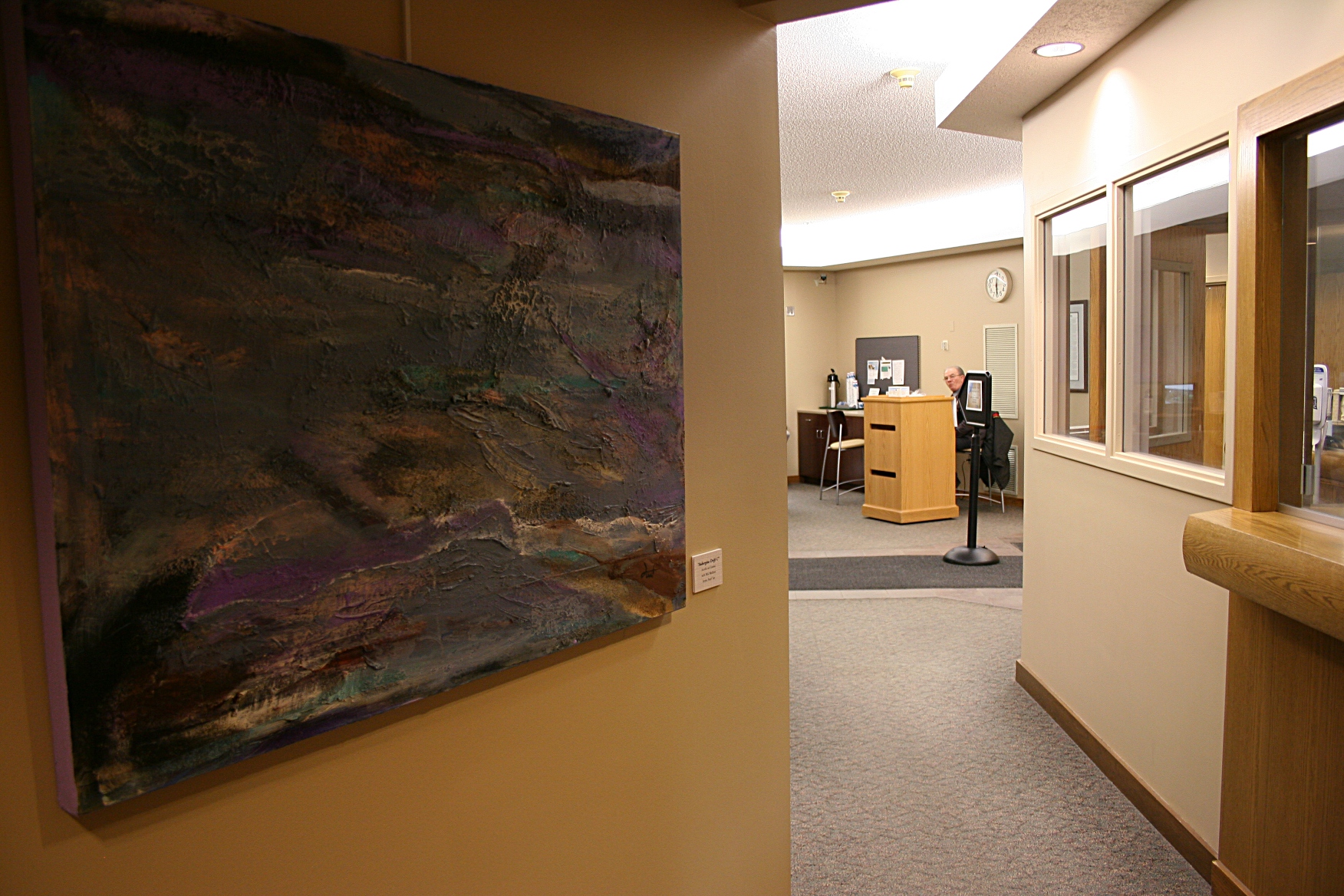
Pearl Tait's "Aubergine Drift I."

Pearl Tait’s “Aubergine Drift I.”

Moving along to the emergency room lobby, I find Pearl Tait’s moody mixed medium art the ideal choice for a setting often filled with emotion and uncertainty. Her work, which features textures like sand and tape incorporated into a painting, reflects, in my opinion, the intense layers of feelings that come with any visit to the ER.

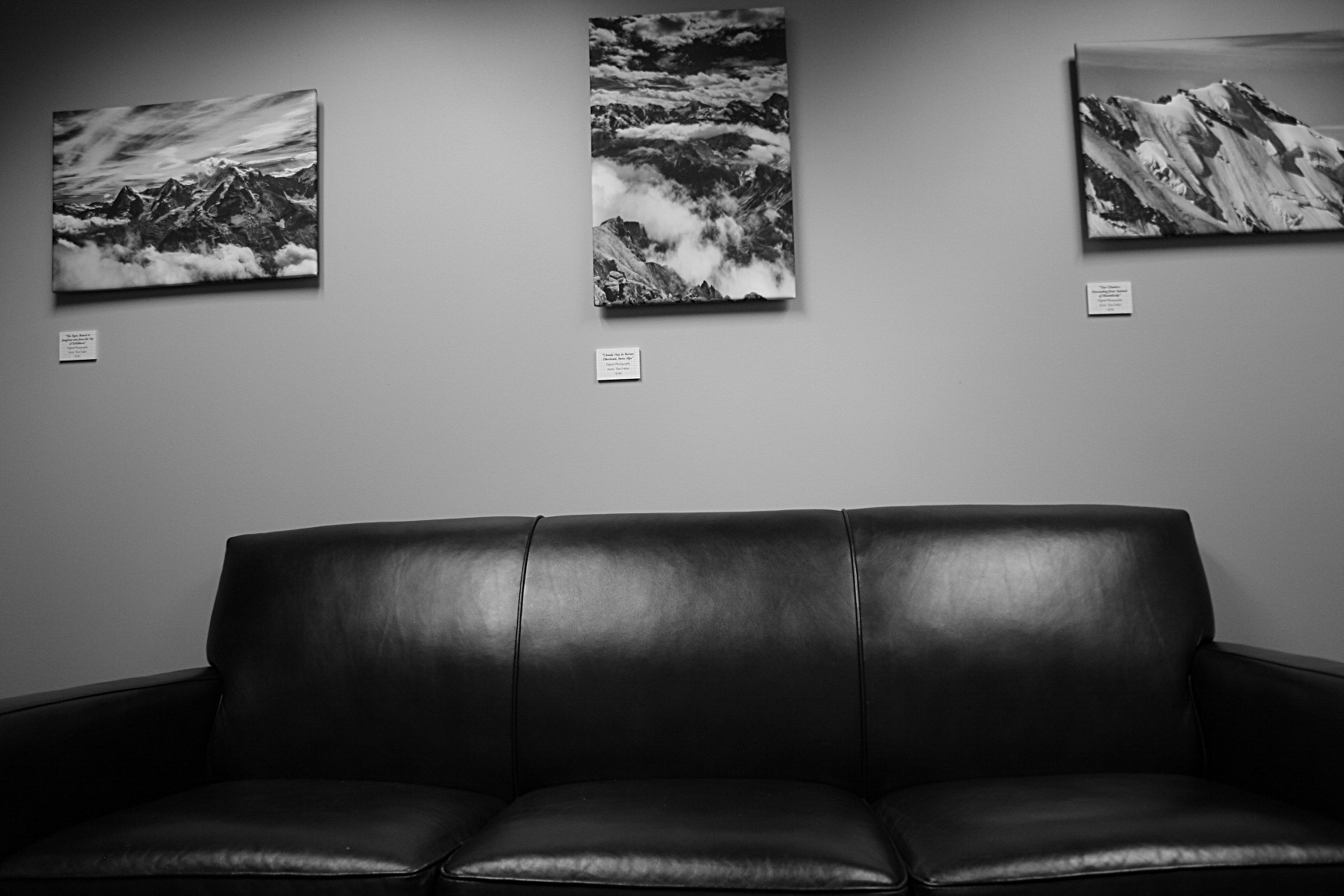
A photo in a cozy private waiting room fronts Tom Fakler's Swiss Alps photos.

A sofa in a cozy private waiting room fronts Tom Fakler’s trio of Swiss Alps photos.

Around the corner inside a cozy ER room where families are taken to hear bad news (so says Jacobs), the mood totally changes with the soothing photography of Tom Fakler. His black-and-white canvas prints of the Swiss Alps offer a natural world escape during a particularly difficult time for patients’ families.

Likewise, the photography of Jane Strauss in the surgery center reflects that same sort of escapism, especially in panoramic landscape scenes. Jacobs notes that Strauss is autistic, meaning her approach to photography focuses on qualities like texture and detail, aspects others might not consider in photographing a scene.

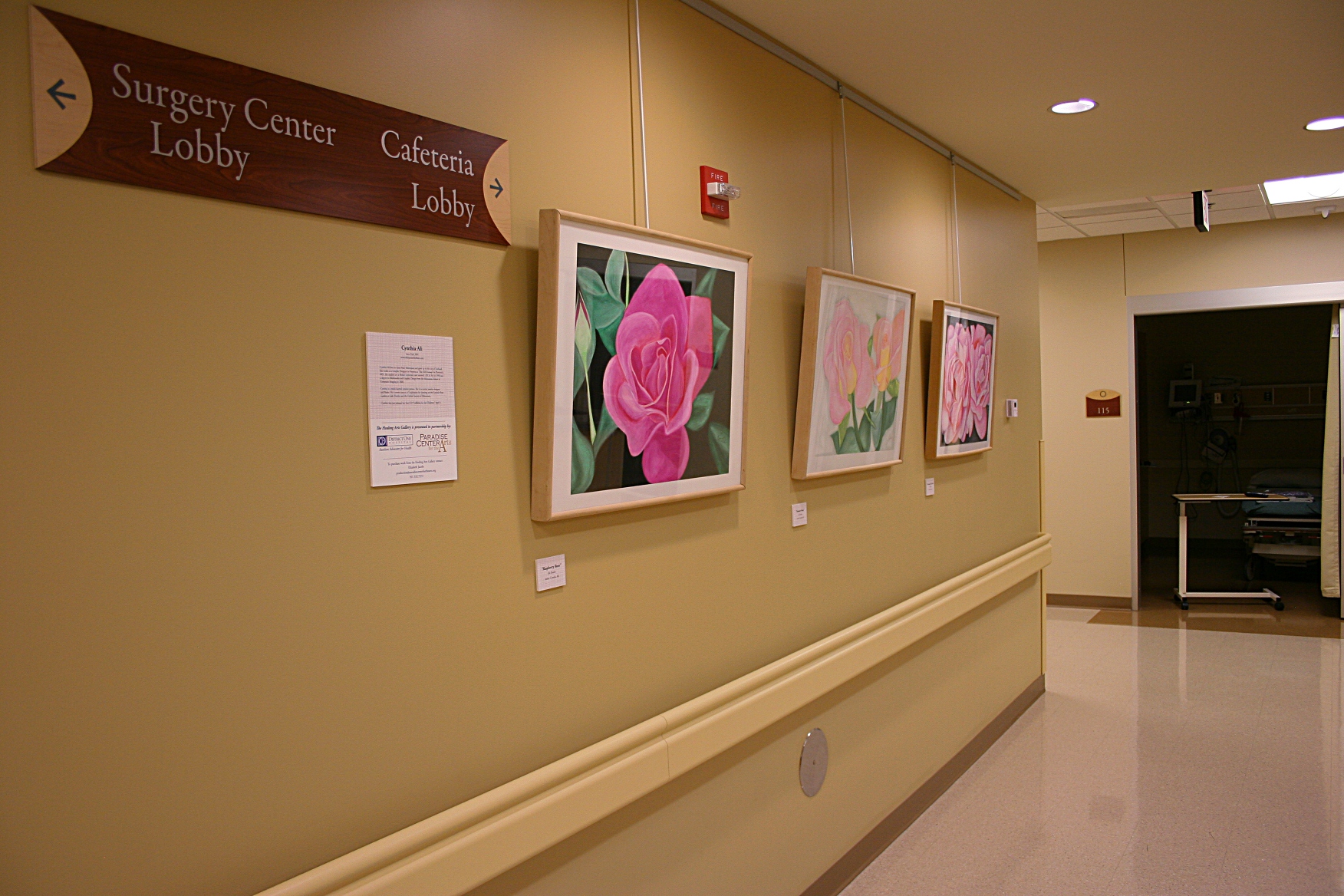
Faribault native Cynthia Ali's floral pastels are not for sale. Ali, of St. Paul, is primarily a jewelry artist.

Faribault native Cynthia Ali’s floral pastels are not for sale. Ali, of St. Paul, is primarily a jewelry artist.

Also in the surgery center, Cynthia Ali infuses a soft natural beauty with her floral pastels. You can almost smell the heady perfume of her beautiful roses.

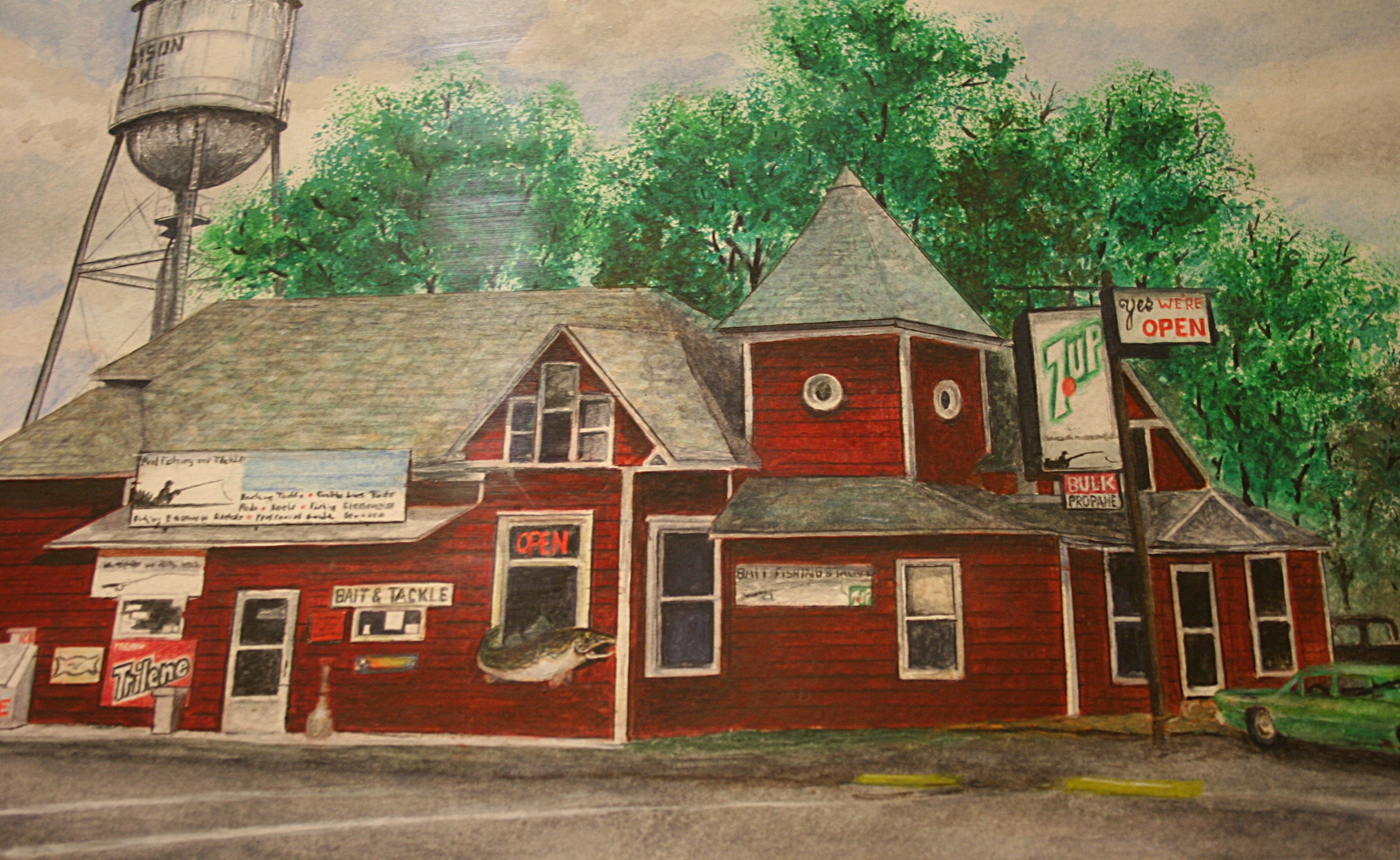
Marcus Moller's "Madison Lake Bait Shop" in watercolor.

Marcus Moller’s “Madison Lake Bait Shop” in watercolor. Moller’s art (mostly pastels) hangs in the surgery center waiting area, a place frequented by children. Thus his art is hung quite high, which made photographing it difficult.

Marcus Moller works in pastels, too, and watercolors, covering a variety of subjects from autumn landscapes to a bold rooster to my favorite, “Madison Lake Bait Shop.” Those of you who’ve traveled Minnesota Highway 60 will recognize the kitschy red building backed by the Madison Lake water tower. I cannot even begin to count how many times I’ve considered photographing that building. Moller’s bait shop painting is nudging me to actually stop and take that photo.

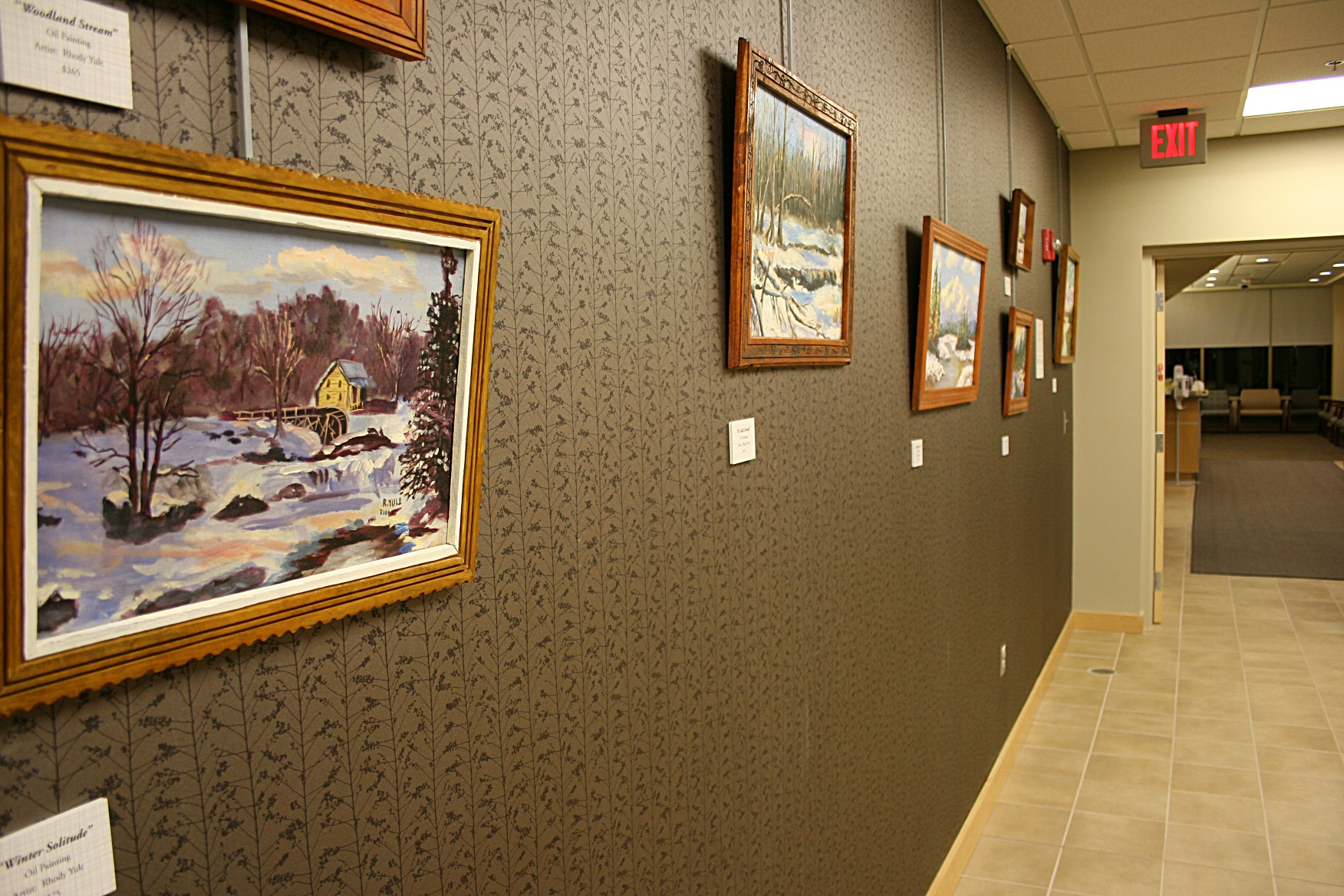
Twenty-five of Rhody Yule's oils grace the hall and patient rooms in the cancer center.

Twenty-five of Rhody Yule’s oils grace the hall and patient rooms in the cancer center.

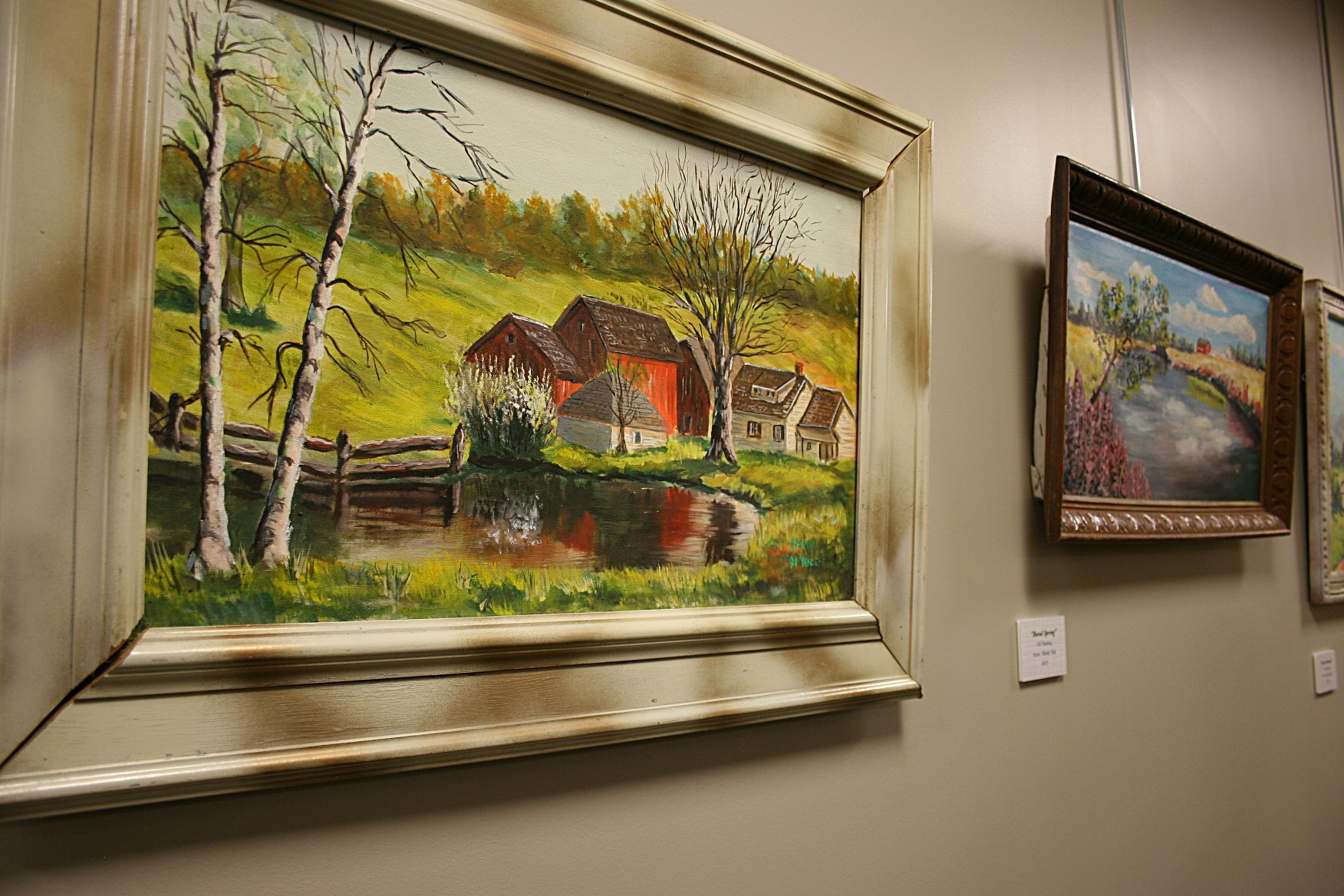
Finally, my open house tour ended in a hallway outside the District One Cancer Center with the oil paintings of my friend, Rhody Yule. I’d seen nearly every one of Rhody’s hundreds of paintings when I worked with his family and friends on the 2011 Paradise exhibit. But, still, it was as if I was viewing his pieces for the first time, appreciating the landscapes, many of them winter scenes in this show, and the other art he created through decades of painting. Rhody was a kind, gentle man with a heart full of goodness, and I remembered that, too.

Examples of Rhody Yules art close-up.

Examples of Rhody Yule’s art close-up.

Most of the artwork in the Healing Arts Exhibit, but not all, is available for sale. (Artwork not featured in photos here is because I did not have permission to photograph it.)  A portion of any proceeds from the sale of Yule’s work will go to the local hospice, per the family’s request.

If you wish to tour the winter installment of the Healing Arts Exhibit, check in at the main desk, 200 State Avenue, during hospital business hours. All areas of the exhibit may not be accessible for viewing at all times. The current show runs through February 28.

If you are an artist interested in being featured in a Healing Arts Exhibit, contact Jacobs at the Paradise Center for the Arts. You will find details and contact information by clicking here.

The Healing Arts program is sponsored by the District One Hospital Auxiliary, which initially proposed the concept.

To view information on the artists with an online presence, click on their highlighted names.

WHAT ARE YOUR THOUGHTS on art as a “healing” tool? Have you seen similar exhibits? Please share.

© Copyright 2013 Audrey Kletscher Helbling
 

“Life can change in an instant”: A Minnesota family in need January 10, 2013

IT IS THE MOMENT we all fear—the late night phone call, the unexpected knock on the door.

For Nina Hedin, a young mother from Glencoe whom I highlighted in a magazine feature about 10 Minnesota bloggers, fear became reality on Saturday afternoon. Her husband, Tom, was seriously injured in a snowmobile accident.

Photo of Nina Hedin published in Minnesota Moments, winter 2012 issue.

I got to know Nina about a year ago, when she was among 10 Minnesota bloggers highlighted in a feature I wrote for Minnesota Moments magazine. This photo of Nina published in that winter 2012 story.

Here then, in Nina’s words, is the beginning of her family’s new reality:

I’ve told this story so many times over the last two days that the words are flying out of my fingers and onto this computer faster than I am thinking them.

Saturday, January 5, Tom left after lunch to ride snowmobile a little bit; he was going to visit a friend just outside of town. Around 3 pm he had still not returned and he had not sent any messages or called. This was VERY unusual for Tom and I was worried. Normally he’ll be out for 30-45 minutes and always, ALWAYS sends me random text messages.

I called friends that Tom sometimes rides with to ask if he had been by.

I hopped online to see if he used our check card anywhere; maybe he stopped for something to eat or there would be another clue.

At 4:30 pm there was a loud knock at the door. My stomach dropped. I knew it would not be good. I knew it. The county sheriff told me that Tom was in an accident and was to be airlifted to HCMC.

Fear, panic, adrenaline…

Nina and Tom Hedin with Jack and June.

Nina and Tom Hedin with Jack and June.

This, dear readers, breaks my heart. Even though I’ve never met Nina or her family, I remained connected to Nina after writing that initial magazine feature (which you can read by clicking here). I continued reading her The Adventures of Artsy Nina blog and we exchanged occasional emails. She is a vivacious, creative (she also runs two Etsy shops, Camp Honeybelle and Nina Baran Upcycled Vintage Jewelry)  and caring individual with a delightful sense of humor.

So when the call went out to Nina’s circle of blogging friends to share the Hedins’ story, I didn’t even have to consider. Helping someone in need, especially a friend, is the right thing to do. And the family needs assistance, both financially and in prayer.

Blogging about an evening out with her husband in early December, Nina wrote:  "We held hands and ran the short block home through the first snow fall of the season, laughing and enjoying the end of a good night."

Blogging about an evening out with her husband in early December, Nina wrote: “We held hands and ran the short block home through the first snow fall of the season, laughing and enjoying the end of a good night.”

Here again, in Nina’s words, are the injuries her beloved Tom suffered:

Injuries listed from top to bottom; brain hemorrhage and complications, fractured orbital (eye) socket, facial lacerations, fractured T6 vertebrae, broken and dislocated right wrist, broken left elbow and fractured upper arm, left knee cap broken with severed tendon and puncture wound, right knee ligament injury.

He faces a long, hard road to recovery. As of yet we are unsure of the extent of damage to the brain, and the recovery time/therapy needed for his limbs and back will take months.

A recent photo of Tom with Jack and June.

A recent photo of Tom with Jack and June.

You can only imagine the insurmountable medical bills this couple in their early 30s, with two children, Jack, 3, and seven-month-old June, will face. An online “Help for Tom Hedin” account has been set up at GiveForward to assist the family with mounting medical and day-to-day expenses. The goal is to raise $100,000 by March 9.

Please consider offering your financial support by clicking here. Together we can make a difference and ease some of this family’s financial worries. Perhaps your friends, church group, family, co-workers, card club, coffee group, etc., can join efforts to collect monies for the Hedins. Every dollar, whether ten or 500, helps.

Because Tom has been with his current employer for only six months, he does not qualify for benefits under the Family and Medical Leave Act. He has been his family’s main source of financial support.

Please also pray for the Hedin family and their medical team. I am a firm believer in the power of prayer.

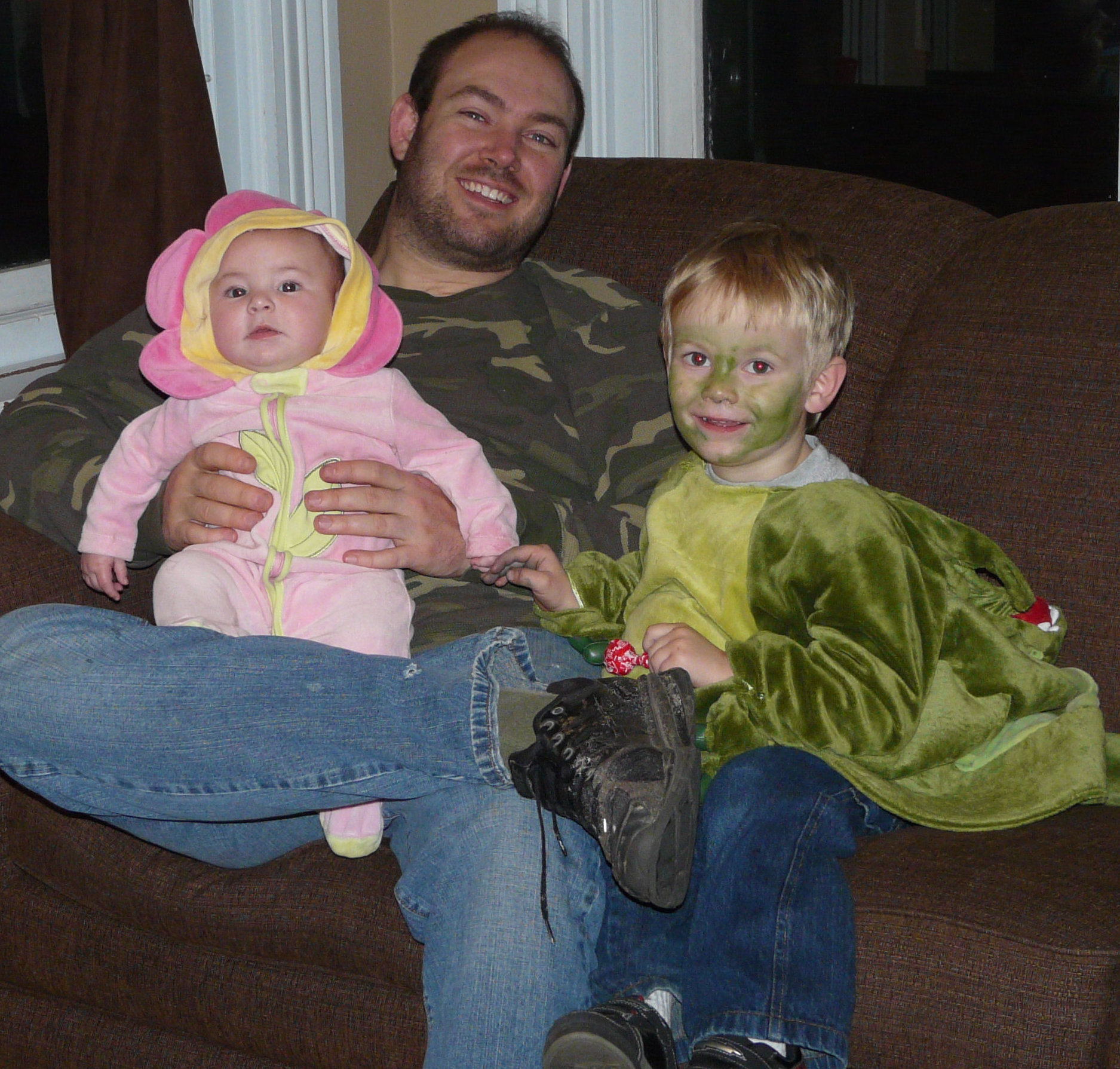
Tom with Jack and June at Halloween.

Tom with Jack and June at Halloween.

In closing, let’s listen to Nina one last time with this excerpt from her January 8 blog post, “Life Can Change in an Instant”:

It’s a cliche. You hear it all the time, think it some of the time, but you don’t really get it until something happens to you and yours.

Life as you know it can change in an instant.

Hug your kids, your husband, your mom, your dad, your neighbor, your friend. You never, ever know what that next moment might bring.

TO OFFER WORDS of encouragement and support and/or to read the latest updates on Tom’s condition, visit his CaringBridge website by clicking here.

NINA’S BLOGGER CIRCLE of friends is already posting her family’s story. Click here to read a post by Montana resident and former Minnesotan Bernie at One Mixed Bag.

Then click here to read a post by Beth Ann from Iowa at It’s Just Life. For every comment posted to her blog during January and February, Beth Ann is donating 50 cents to the Hedin family for medical expenses. This is part of Beth Ann’s ongoing “Comments for a Cause” campaign. So simply by commenting on any of Beth Ann’s posts during the next two months, you will be helping Tom, Nina, Jack and June.

© Text and photos copyright of Audrey Kletscher Helbling and Nina Hedin
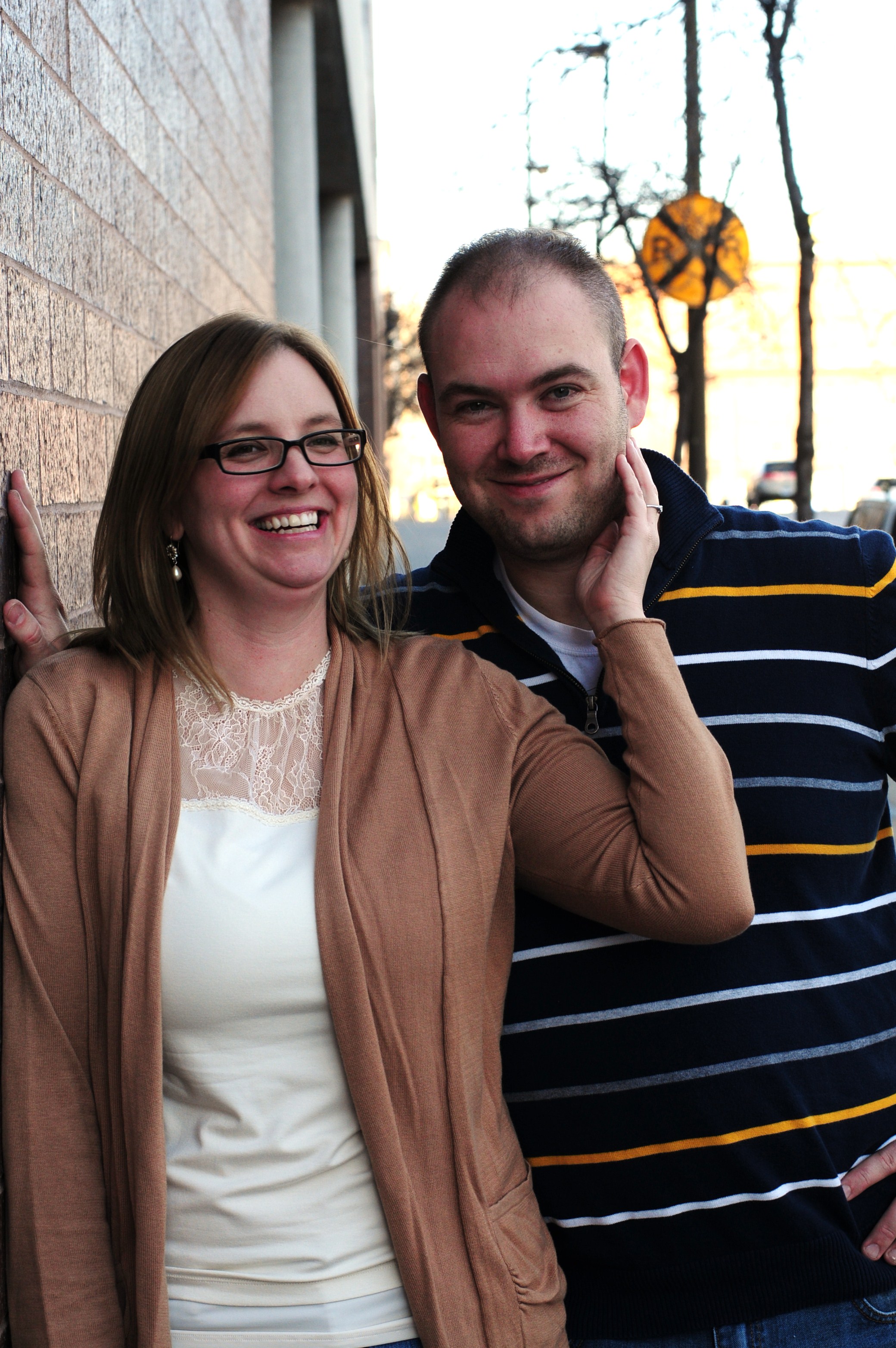
Photos courtesy of Nina Hedin


Believe me, you do not want to contract whooping cough December 5, 2012

ABOUT A YEAR AGO my second daughter, who works as a Spanish medical interpreter in northeastern Wisconsin, reported warning signs about whooping cough posted at local clinics.

I figured it wouldn’t be long before the disease, also known as pertussis, spread to Minnesota.

According to the national Center for Disease Control and Prevention, Wisconsin and Minnesota currently are experiencing the highest year-to-date incidents of pertussis in the nation with 93.4 incidents per 100,000 people in Wisconsin and 78.1 per 100,000 in Minnesota. The national average is 11.6.

That translates into 4,174 confirmed, probable and suspect cases in Minnesota (as of November 29), according to the Minnesota Department of Health.

In Wisconsin, 5,163 cases were reported through October 31 by the Department of Health Services.

As of November 16, the CDC has received reports of 35,000 cases across the country, including 16 deaths.

Statistics are one thing, something most of us approach with the attitude of “that doesn’t affect me.”

Reality, getting the disease, is quite another.

I speak from experience.

In the summer of 2005, when I was 48, I came down with what I initially thought was a bad cold. Turns out the horrific sore throat, followed by the equally horrific cough, was actually whooping cough. After three doctor’s visits and a misdiagnosis of bronchitis, I was correctly diagnosed with pertussis, the first case my physician had ever seen in his longtime career.

When he informed me that pertussis is also known as the 100-day cough, he was not joking. I was racked by uncontrollable fits of coughing from around July Fourth until well after Labor Day.

For me, the summer of 2005 was spent languishing on the couch, feeling like absolute crap, exhausted from lack of sleep (ever try sleeping when you are constantly coughing), utterly worn down, unable to barely function.

The worst, and I mean absolute worst, moment came when I awoke one night gasping for air, my windpipe narrowed. In retrospect, that asthmatic type attack warranted a 911 call and I now consider myself fortunate to have survived. Yes, it was that bad and necessitated another visit to the doctor for a regiment of the inflammation reducing steroid prednisone and an inhaler.

I don’t know why I experienced a particularly bad case of whooping cough. Typically the young and elderly are most harshly affected. Unvaccinated infants can even die.

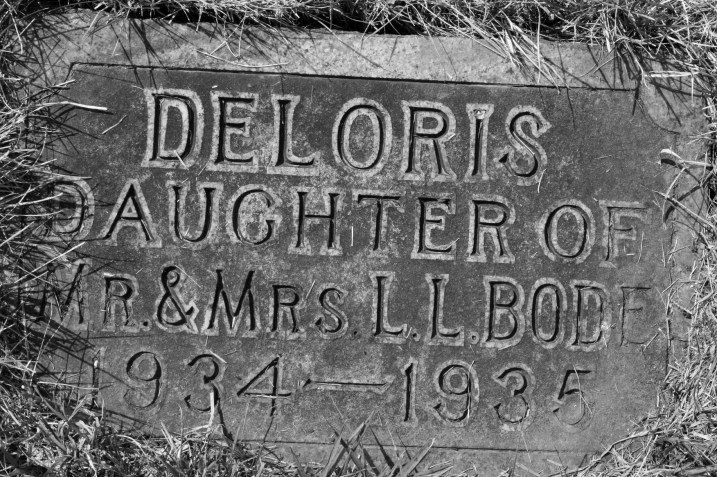
The gravestone of Deloris Edna Emilie Bode in Immanuel Lutheran Church, rural Courtland.

The gravestone of Deloris Edna Emilie Bode in the Immanuel Lutheran Church cemetery, rural Courtland.

Nor do I know how I got a disease I thought had vanished decades ago and which claimed the life of my Aunt Deloris in 1935 at nine months old. My doctor speculated that I could have been exposed waiting in the check-out line at the grocery store. I’ll never know.

According to the Minnesota Department of Health, here’s how pertussis is spread:

The bacteria is found in fluids from the mouth and nose of someone with pertussis. The bacteria is spread when fluid containing the bacteria gets in your nose or mouth. This can happen when a person with pertussis coughs or sneezes on you, or by touching the fluid and then touching your eyes, nose, or mouth. In general, a person is at greater risk of getting pertussis if they are within three feet of someone with pertussis for at least 10 hours a week, this is considered close contact.

My physician immediately put me and my entire family on antibiotics, which can reduce the severity of whooping cough. My husband and one daughter also eventually contracted minor cases of pertussis.

I learned a lot during my summer as a whooping crane. (One has to find humor in an experience like this.) I learned that the vaccine most of us get as babies wears off about the time we reach middle school age. Ironically, in the same year I was ill, new pertussis vaccines were approved for adolescents and adults.

If you’re not up-to-date on your pertussis vaccine, I’d suggest you get vaccinated.

There. I’ll get off my soapbox now.

FYI: The Mayo Clinic in Rochester on Monday released this report on whooping cough.

Click here to learn all about pertussis from the CDC.

If you live in Minnesota, click here to a link showing a map of year-to-date pertussis cases in Minnesota, including 10 right here in my county of Rice.

© Copyright 2012 Audrey Kletscher Helbling
 

You will never believe what I saw in the grocery store today December 2, 2012

Filed under: Uncategorized — Audrey Kletscher Helbling @ 6:56 PM
Tags: , , , , , , ,

SO…I’M STROLLING down the produce aisle at HyVee in Faribault this afternoon, romaine lettuce dropped in my shopping cart, aiming for the tofu, when I spot the dogs. Two smallish white dogs nestled on a plaid bed inside a white-haired woman’s shopping cart.

I may have stood there for a moment with my mouth agape. I wanted to say something like, “Lady, what are you doing with your dogs in a grocery store?”

But, to be honest, I was so stunned that I weaved around her and continued on my way, all the while wondering why anyone, except those who have service dogs, would think it alright to bring these obviously pampered pets into a grocery store.

I saw dogs similar to this one (except white fur) in the grocery store today. Minnesota Prairie Roots file photo.

I saw dogs similar to this one, except with white fur, in the grocery store today. Minnesota Prairie Roots file photo.

Is this even legal in Minnesota? I would think not for a variety of reasons, the first being health concerns.

I would not want to be the next customer placing my food in that cart.

I suppose, in hindsight, I should have tracked down a manager and registered my concern.

But I didn’t.

Am I wrong? Is it OK to bring a non-service dog into a grocery store?

I once saw a woman shopping in a women’s clothing store with a dog tucked in the crook of her arm. I was appalled then. But this, this grocery store sighting tops even that.

© Copyright 2012 Audrey Kletscher Helbling
 

If the holiday season is already stressing you, then… November 28, 2012

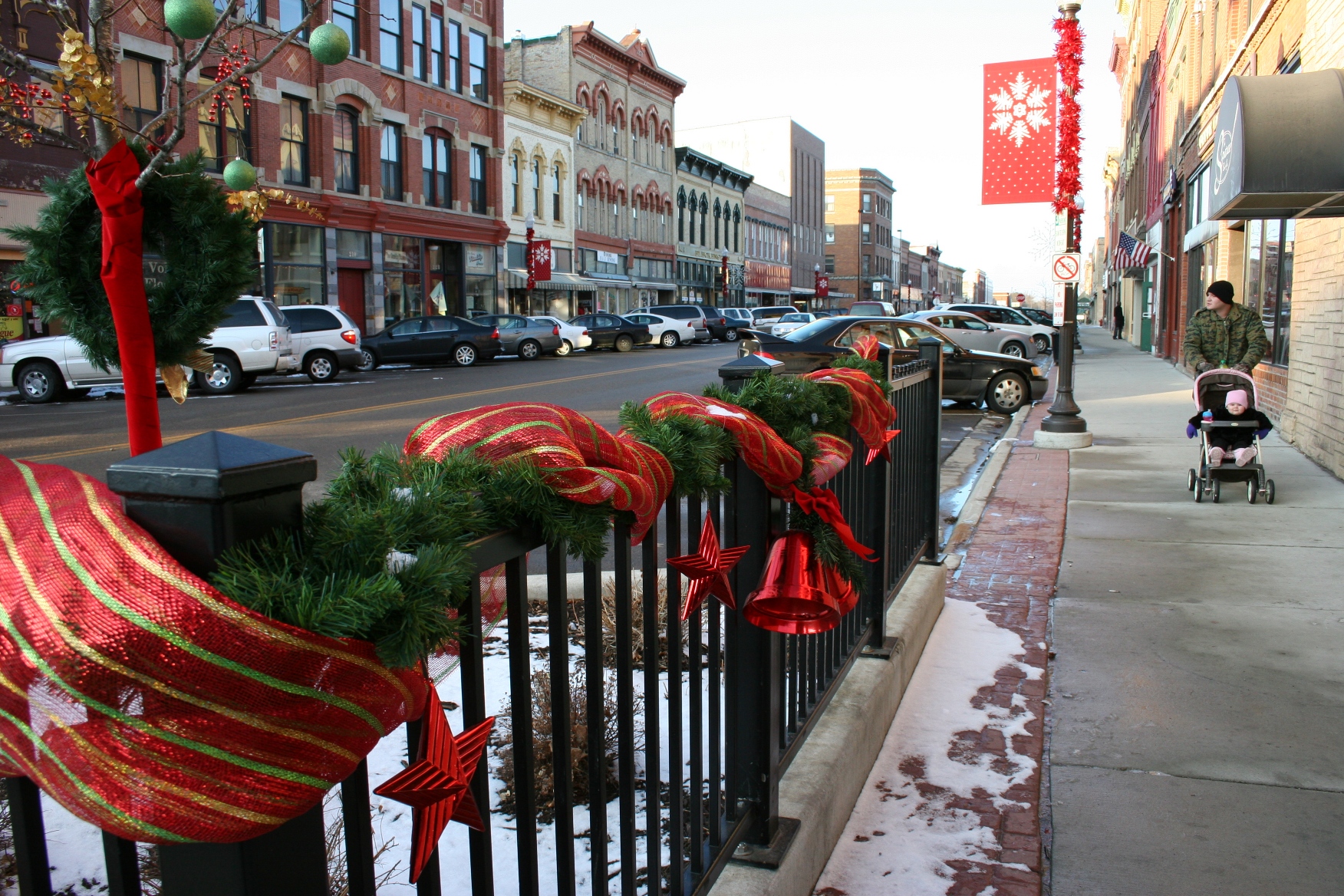
Strolling along Central Avenue in historic downtown Faribault late on a Saturday afternoon in December 2011.

ALREADY I CAN FEEL the stress. Only four weeks until Christmas and so much to do:

I created a Christmas family photo card online yesterday (gold star for me) and will soon work on the holiday letter.

Greeting cards to write and send.

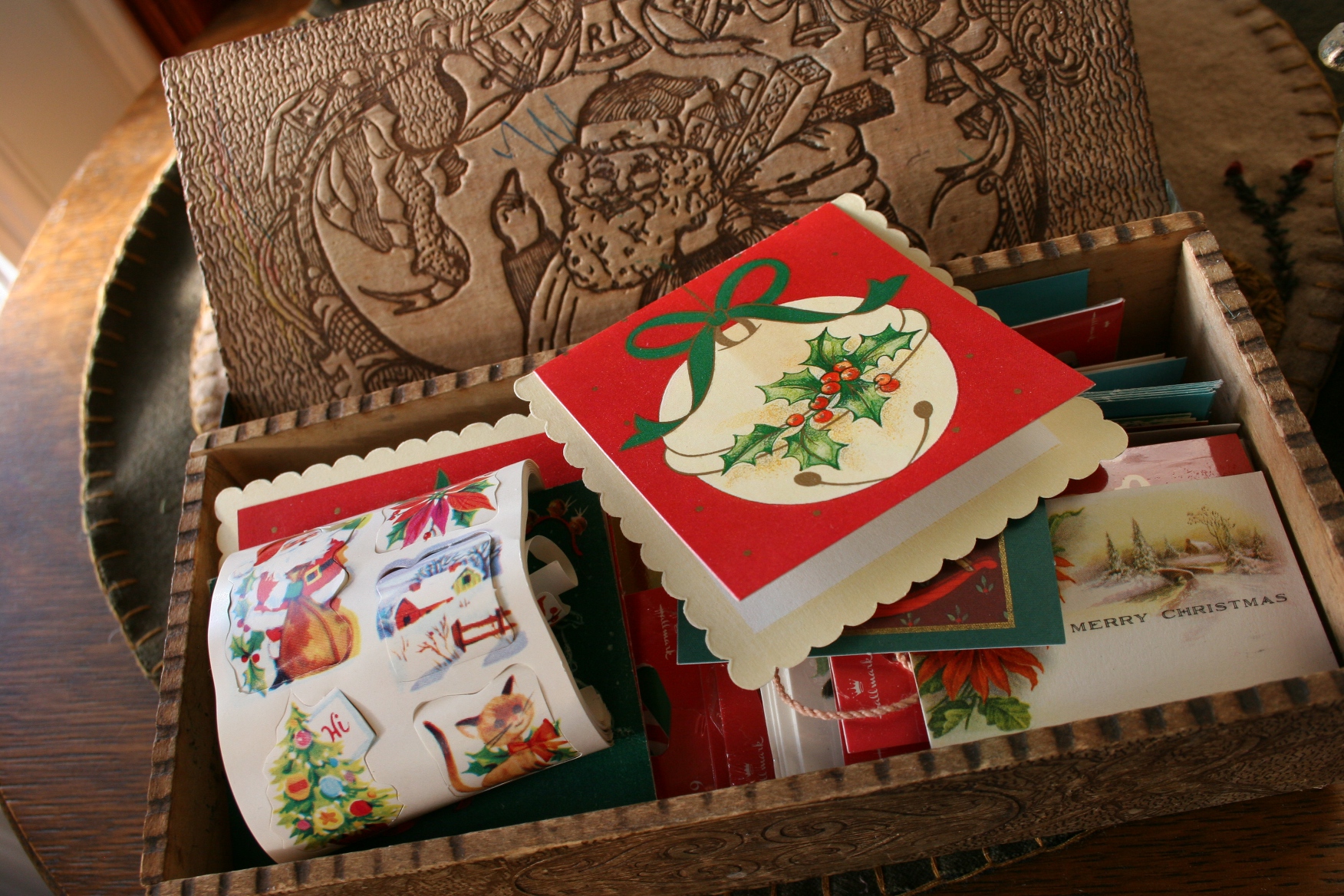
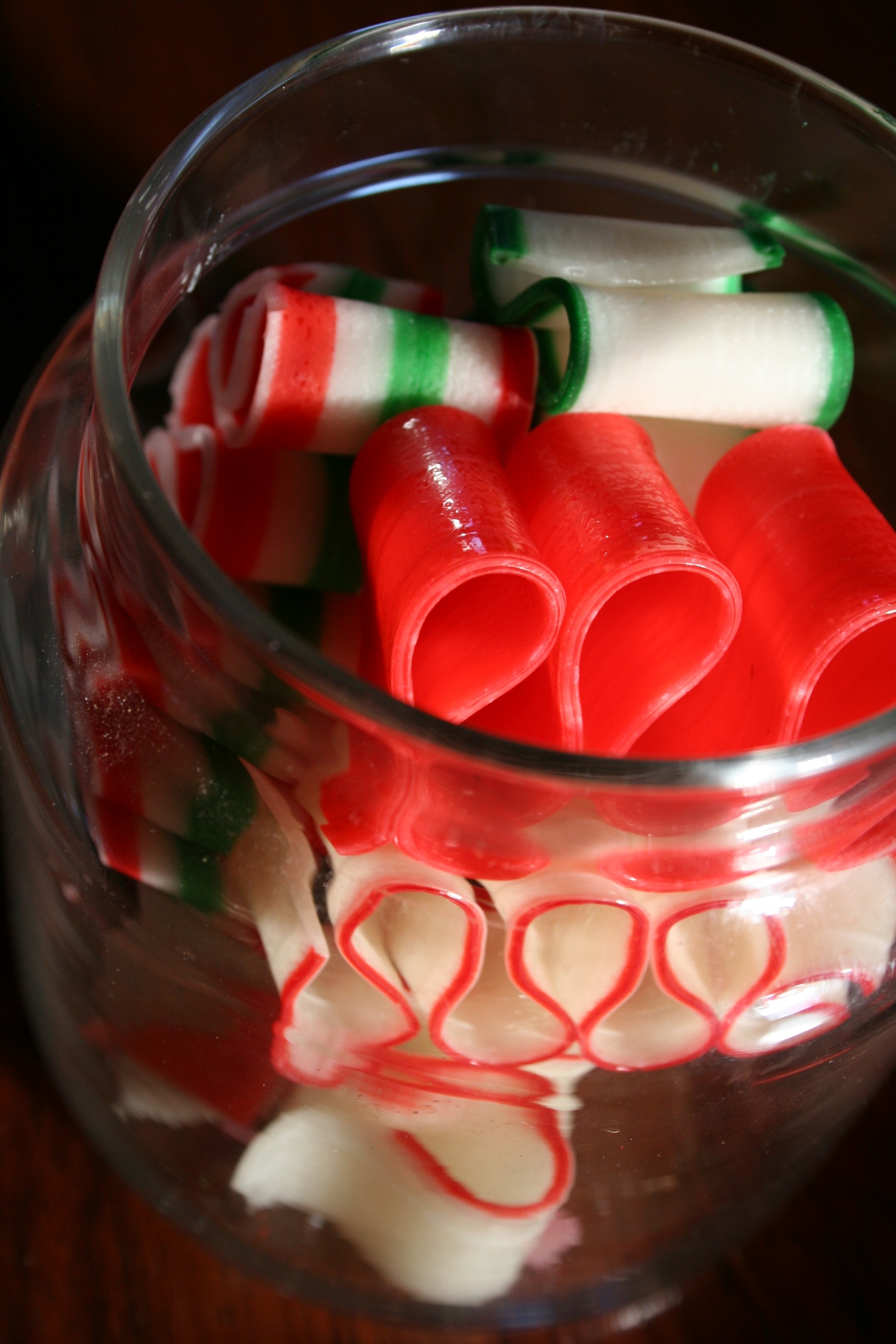
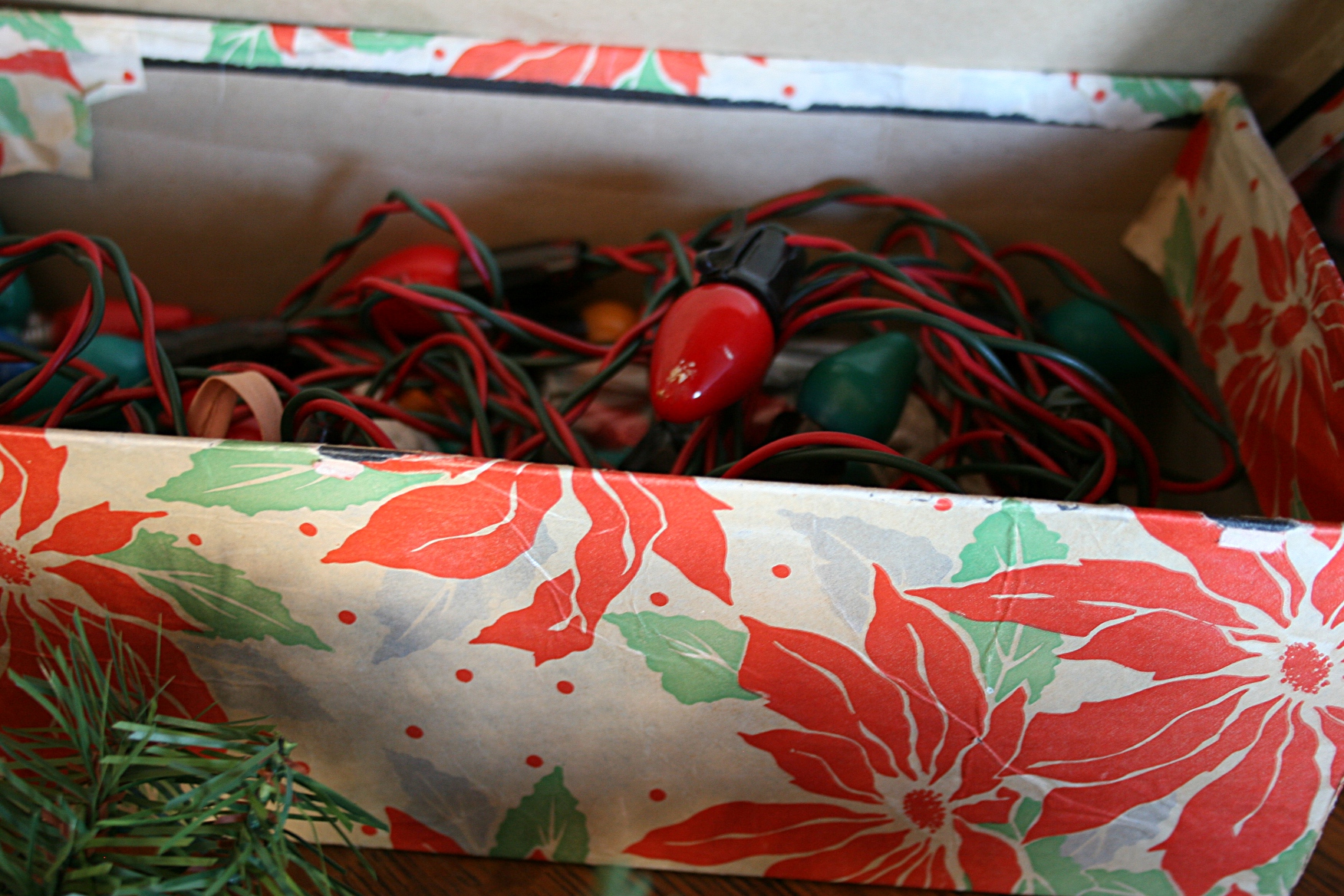
I’ll bake cookies, but probably not candy. How well I remember this ribbon candy of my youth, dropped into goodie bags parceled out after Christmas Eve worship services. This candy is artfully displayed by Vicki, a family member who has a real talent for decorating. The candy, card and lights images were all taken in her home.

Gifts to purchase and wrap. Cookies to bake.

The only lights at our home will be on the Christmas tree, although we really should decorate outdoors given we live along a busy street. But because our house was scheduled to be shingled (work started Tuesday), we could not hang lights in the balmy weather. And who wants to freeze their fingers now?

Decorating to do. Holiday events to attend. Travel.

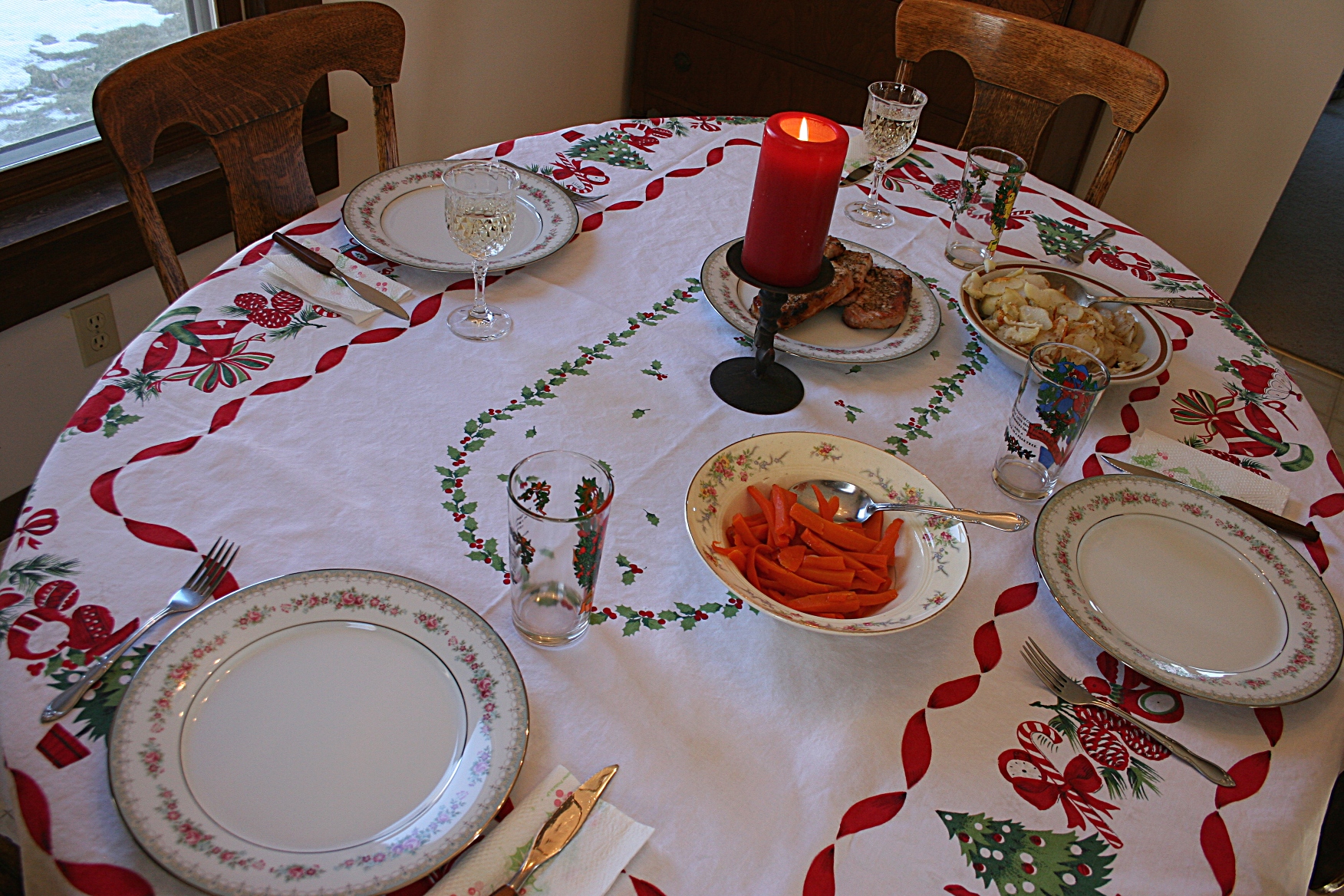
My dear husband grilled this 2011 Christmas Day dinner.

Menus to plan. Food to buy and prepare.

It all can seem a bit overwhelming, throwing me into a rather Grinch-like state of mind. What’s a woman to do?

Short of acting like a Grinch and eliminating some items from that list, which I’m not going to do, I have one choice. That’s to cope. But how?

My friend Mandy Blume, who’s a nurse practitioner and the parish nurse at Trinity Lutheran Church in Faribault, my home congregation, is coordinating a Stress Relief Workshop set for 2 p.m. Sunday, December 2, in the Trinity Fellowship Hall.

If you can squeeze this into your pre-holiday schedule, do. Susan Knutson, a registered nurse and certified healing touch practitioner from Rochester, will speak on “Stress in the holidays & healing touch.”

Workshop attendees will participate in stress relief activities such as guided imagery, progressive muscle relaxation and deep breathing.

Mandy even promises massages. Can you feel your muscles loosening already, the tension easing from your body?

The majority of the workshop—and Mandy emphasizes the word “workshop” over “presentation”—will be hands-on participating in and learning stress-reducing skills. In other words, do not expect simply to sit and take notes or read hand-outs. Oh, no.

Additionally, delicious snacks (and knowing Mandy, also healthy) and beverages will be available and door prizes awarded.

Cost is only $10. Register today by contacting the Trinity church office at 507-331-6579.

Or, you can just show up at 2 p.m. this Sunday in the Trinity Fellowship Hall, 530 Fourth Street N.W., Faribault, with your payment, although Mandy would appreciate preregistration.

(If you cannot afford the $10 registration fee, talk to Mandy.)

HOW DO YOU DEAL with stress during the holidays?

© Copyright 2012 Audrey Kletscher Helbling

 

Finally, a woman on the Steele County Board April 4, 2012

CONGRATULATIONS, STEELE COUNTY, Minnesota. You’ve finally elected a woman to serve on the County Board of Commissioners. It’s about time.

I could hardly believe the news when I heard it this morning on an Owatonna radio station. It wasn’t the election of a female that surprised me. It was the fact that it’s taken this long.

For the first time in its history, this southeastern Minnesota county will have a woman serving on its county governing board. She is Nina Huntington, a dental hygienist from Owatonna, who beat out opponent Doug Hughes in a special election on Tuesday to represent the Fifth Commissioner District.

Huntington won with 250 votes, or 60 percent, compared to Hughes’ 164 votes, according to an article in the Owatonna People’s Press. Only 10.25 percent of the district’s registered voters cast ballots.

Interestingly enough, Steele County also made headlines on Tuesday as Minnesota’s healthiest county in ratings released by the Robert Wood Johnson Foundation and the University of Wisconsin Population Health Institute. That study considers mortality, morbidity, health behaviors, clinical care, social and economic factors, and physical environment. Click here to read those study results.

So there you have it—Minnesota’s healthiest county now has a woman helping to govern it.

Huntington’s election in Steele County leads me to wonder this:

How many other Minnesota counties have never had a female serve on the county board of commissioners? If you have the answer or can direct me to that information, I’d like to hear. I would guess that number to be quite high.

Also, what do you think a woman can bring to county government that a man may not?

CLICK HERE to read an interview with Huntington published in the Owatonna People’s Press after she filed for office.

CLICK HERE to read the election results story in the OPP.

© Copyright 2012 Audrey Kletscher Helbling