Minnesota Prairie Roots

Writing and photography by Audrey Kletscher Helbling

Believe me, you do not want to contract whooping cough December 5, 2012

ABOUT A YEAR AGO my second daughter, who works as a Spanish medical interpreter in northeastern Wisconsin, reported warning signs about whooping cough posted at local clinics.

I figured it wouldn’t be long before the disease, also known as pertussis, spread to Minnesota.

According to the national Center for Disease Control and Prevention, Wisconsin and Minnesota currently are experiencing the highest year-to-date incidents of pertussis in the nation with 93.4 incidents per 100,000 people in Wisconsin and 78.1 per 100,000 in Minnesota. The national average is 11.6.

That translates into 4,174 confirmed, probable and suspect cases in Minnesota (as of November 29), according to the Minnesota Department of Health.

In Wisconsin, 5,163 cases were reported through October 31 by the Department of Health Services.

As of November 16, the CDC has received reports of 35,000 cases across the country, including 16 deaths.

Statistics are one thing, something most of us approach with the attitude of “that doesn’t affect me.”

Reality, getting the disease, is quite another.

I speak from experience.

In the summer of 2005, when I was 48, I came down with what I initially thought was a bad cold. Turns out the horrific sore throat, followed by the equally horrific cough, was actually whooping cough. After three doctor’s visits and a misdiagnosis of bronchitis, I was correctly diagnosed with pertussis, the first case my physician had ever seen in his longtime career.

When he informed me that pertussis is also known as the 100-day cough, he was not joking. I was racked by uncontrollable fits of coughing from around July Fourth until well after Labor Day.

For me, the summer of 2005 was spent languishing on the couch, feeling like absolute crap, exhausted from lack of sleep (ever try sleeping when you are constantly coughing), utterly worn down, unable to barely function.

The worst, and I mean absolute worst, moment came when I awoke one night gasping for air, my windpipe narrowed. In retrospect, that asthmatic type attack warranted a 911 call and I now consider myself fortunate to have survived. Yes, it was that bad and necessitated another visit to the doctor for a regiment of the inflammation reducing steroid prednisone and an inhaler.

I don’t know why I experienced a particularly bad case of whooping cough. Typically the young and elderly are most harshly affected. Unvaccinated infants can even die.
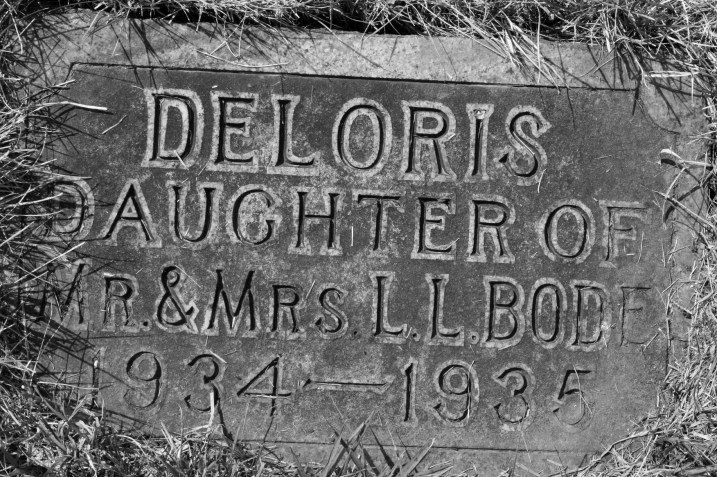
The gravestone of Deloris Edna Emilie Bode in Immanuel Lutheran Church, rural Courtland.

The gravestone of Deloris Edna Emilie Bode in the Immanuel Lutheran Church cemetery, rural Courtland.

Nor do I know how I got a disease I thought had vanished decades ago and which claimed the life of my Aunt Deloris in 1935 at nine months old. My doctor speculated that I could have been exposed waiting in the check-out line at the grocery store. I’ll never know.

According to the Minnesota Department of Health, here’s how pertussis is spread:

The bacteria is found in fluids from the mouth and nose of someone with pertussis. The bacteria is spread when fluid containing the bacteria gets in your nose or mouth. This can happen when a person with pertussis coughs or sneezes on you, or by touching the fluid and then touching your eyes, nose, or mouth. In general, a person is at greater risk of getting pertussis if they are within three feet of someone with pertussis for at least 10 hours a week, this is considered close contact.

My physician immediately put me and my entire family on antibiotics, which can reduce the severity of whooping cough. My husband and one daughter also eventually contracted minor cases of pertussis.

I learned a lot during my summer as a whooping crane. (One has to find humor in an experience like this.) I learned that the vaccine most of us get as babies wears off about the time we reach middle school age. Ironically, in the same year I was ill, new pertussis vaccines were approved for adolescents and adults.

If you’re not up-to-date on your pertussis vaccine, I’d suggest you get vaccinated.

There. I’ll get off my soapbox now.

FYI: The Mayo Clinic in Rochester on Monday released this report on whooping cough.

Click here to learn all about pertussis from the CDC.

If you live in Minnesota, click here to a link showing a map of year-to-date pertussis cases in Minnesota, including 10 right here in my county of Rice.

© Copyright 2012 Audrey Kletscher Helbling


You will never believe what I saw in the grocery store today December 2, 2012

Filed under: Uncategorized — Audrey Kletscher Helbling @ 6:56 PM
Tags: , , , , , , ,

SO…I’M STROLLING down the produce aisle at HyVee in Faribault this afternoon, romaine lettuce dropped in my shopping cart, aiming for the tofu, when I spot the dogs. Two smallish white dogs nestled on a plaid bed inside a white-haired woman’s shopping cart.

I may have stood there for a moment with my mouth agape. I wanted to say something like, “Lady, what are you doing with your dogs in a grocery store?”

But, to be honest, I was so stunned that I weaved around her and continued on my way, all the while wondering why anyone, except those who have service dogs, would think it alright to bring these obviously pampered pets into a grocery store.

I saw dogs similar to this one (except white fur) in the grocery store today. Minnesota Prairie Roots file photo.

I saw dogs similar to this one, except with white fur, in the grocery store today. Minnesota Prairie Roots file photo.

Is this even legal in Minnesota? I would think not for a variety of reasons, the first being health concerns.

I would not want to be the next customer placing my food in that cart.

I suppose, in hindsight, I should have tracked down a manager and registered my concern.

But I didn’t.

Am I wrong? Is it OK to bring a non-service dog into a grocery store?

I once saw a woman shopping in a women’s clothing store with a dog tucked in the crook of her arm. I was appalled then. But this, this grocery store sighting tops even that.

© Copyright 2012 Audrey Kletscher Helbling

 

If the holiday season is already stressing you, then… November 28, 2012

Strolling along Central Avenue in historic downtown Faribault late on a Saturday afternoon in December 2011.

ALREADY I CAN FEEL the stress. Only four weeks until Christmas and so much to do:

I created a Christmas family photo card online yesterday (gold star for me) and will soon work on the holiday letter.

Greeting cards to write and send.

I’ll bake cookies, but probably not candy. How well I remember this ribbon candy of my youth, dropped into goodie bags parceled out after Christmas Eve worship services. This candy is artfully displayed by Vicki, a family member who has a real talent for decorating. The candy, card and lights images were all taken in her home.

Gifts to purchase and wrap. Cookies to bake.

The only lights at our home will be on the Christmas tree, although we really should decorate outdoors given we live along a busy street. But because our house was scheduled to be shingled (work started Tuesday), we could not hang lights in the balmy weather. And who wants to freeze their fingers now?

Decorating to do. Holiday events to attend. Travel.

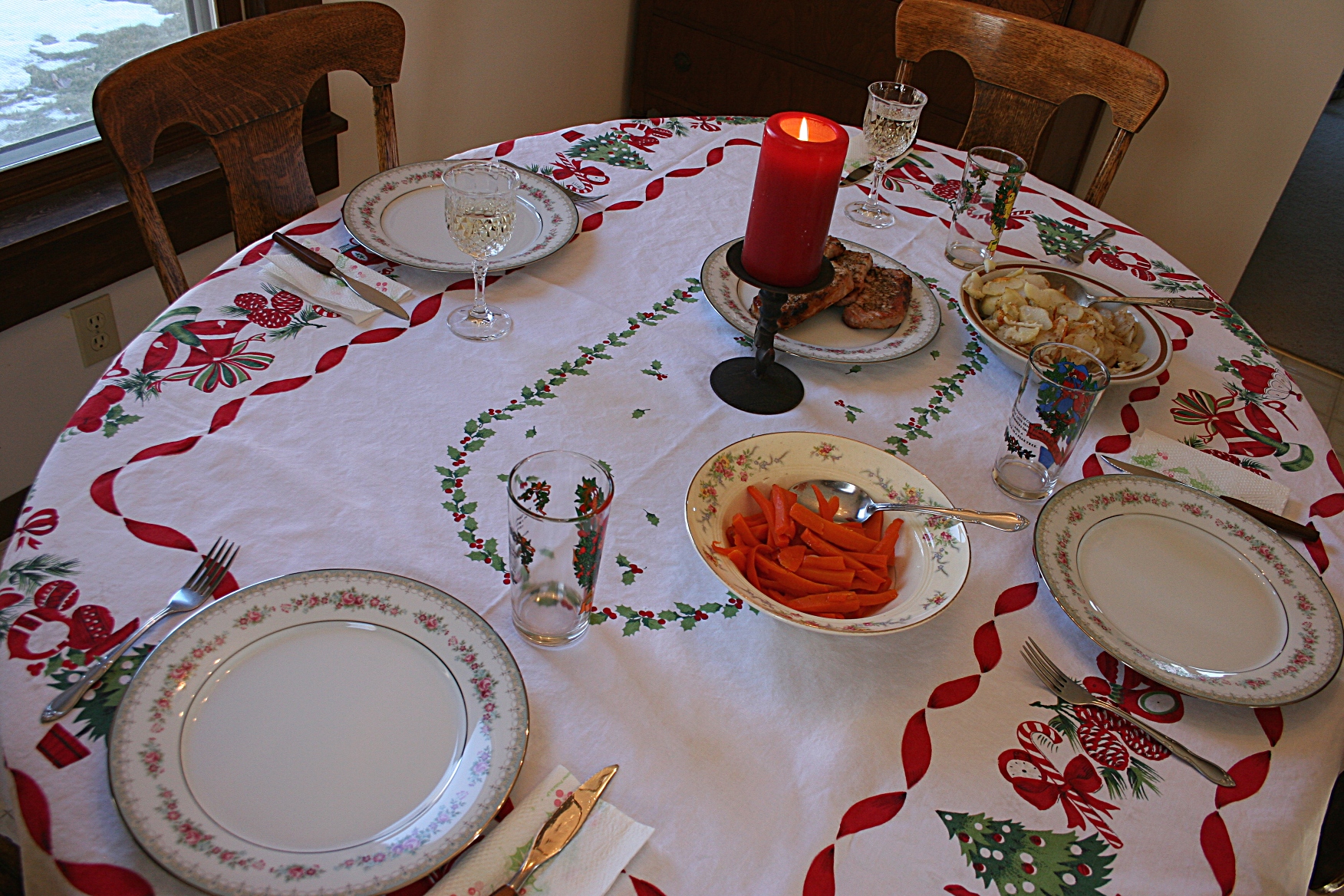
My dear husband grilled this 2011 Christmas Day dinner.

Menus to plan. Food to buy and prepare.

It all can seem a bit overwhelming, throwing me into a rather Grinch-like state of mind. What’s a woman to do?

Short of acting like a Grinch and eliminating some items from that list, which I’m not going to do, I have one choice. That’s to cope. But how?

My friend Mandy Blume, who’s a nurse practitioner and the parish nurse at Trinity Lutheran Church in Faribault, my home congregation, is coordinating a Stress Relief Workshop set for 2 p.m. Sunday, December 2, in the Trinity Fellowship Hall.

If you can squeeze this into your pre-holiday schedule, do. Susan Knutson, a registered nurse and certified healing touch practitioner from Rochester, will speak on “Stress in the holidays & healing touch.”

Workshop attendees will participate in stress relief activities such as guided imagery, progressive muscle relaxation and deep breathing.

Mandy even promises massages. Can you feel your muscles loosening already, the tension easing from your body?

The majority of the workshop—and Mandy emphasizes the word “workshop” over “presentation”—will be hands-on participating in and learning stress-reducing skills. In other words, do not expect simply to sit and take notes or read hand-outs. Oh, no.

Additionally, delicious snacks (and knowing Mandy, also healthy) and beverages will be available and door prizes awarded.

Cost is only $10. Register today by contacting the Trinity church office at 507-331-6579.

Or, you can just show up at 2 p.m. this Sunday in the Trinity Fellowship Hall, 530 Fourth Street N.W., Faribault, with your payment, although Mandy would appreciate preregistration.

(If you cannot afford the $10 registration fee, talk to Mandy.)

HOW DO YOU DEAL with stress during the holidays?

© Copyright 2012 Audrey Kletscher Helbling

 

Finally, a woman on the Steele County Board April 4, 2012

CONGRATULATIONS, STEELE COUNTY, Minnesota. You’ve finally elected a woman to serve on the County Board of Commissioners. It’s about time.

I could hardly believe the news when I heard it this morning on an Owatonna radio station. It wasn’t the election of a female that surprised me. It was the fact that it’s taken this long.

For the first time in its history, this southeastern Minnesota county will have a woman serving on its county governing board. She is Nina Huntington, a dental hygienist from Owatonna, who beat out opponent Doug Hughes in a special election on Tuesday to represent the Fifth Commissioner District.

Huntington won with 250 votes, or 60 percent, compared to Hughes’ 164 votes, according to an article in the Owatonna People’s Press. Only 10.25 percent of the district’s registered voters cast ballots.

Interestingly enough, Steele County also made headlines on Tuesday as Minnesota’s healthiest county in ratings released by the Robert Wood Johnson Foundation and the University of Wisconsin Population Health Institute. That study considers mortality, morbidity, health behaviors, clinical care, social and economic factors, and physical environment. Click here to read those study results.

So there you have it—Minnesota’s healthiest county now has a woman helping to govern it.

Huntington’s election in Steele County leads me to wonder this:

How many other Minnesota counties have never had a female serve on the county board of commissioners? If you have the answer or can direct me to that information, I’d like to hear. I would guess that number to be quite high.

Also, what do you think a woman can bring to county government that a man may not?

CLICK HERE to read an interview with Huntington published in the Owatonna People’s Press after she filed for office.

CLICK HERE to read the election results story in the OPP.

© Copyright 2012 Audrey Kletscher Helbling
 

Living with a hearing loss March 24, 2012

Filed under: Uncategorized — Audrey Kletscher Helbling @ 8:37 AM
Tags: , ,

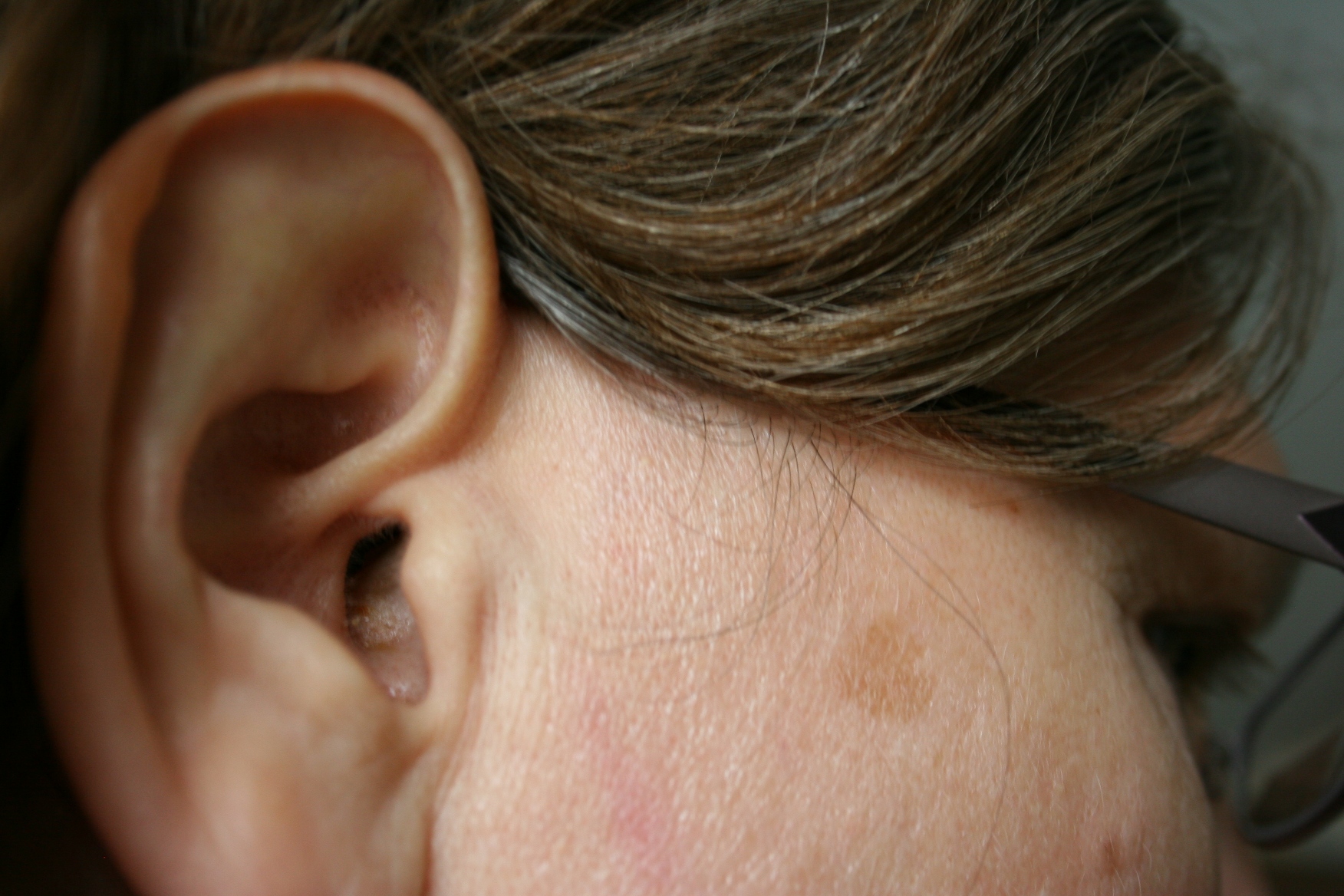
I hear only static and ringing in my right ear after a sudden hearing loss a year ago.

MOST OF THE TIME simply stating I am deaf in my right ear is easier than trying to explain how, a year ago, I lost 70 percent of the hearing in my right ear in an unexplained episode of sudden sensory hearing loss.

Hundreds of times since last March, I’ve repeated, “I am deaf in my right ear,” then turned my left ear toward whomever is speaking to me and asked them to repeat what they’ve just said.

This is not easy, this missing out on conversations, this always conscious effort to remember to sit or walk on the right side of a person. It is exhausting and frustrating and sometimes I just give up.

If I’m in a roomful of people, I may as well sit by myself in a corner. Hearing any snippet of conversation unless I move in close and concentrate is nearly impossible.

About now, you’re likely thinking, “Oh, Audrey, don’t be so vain, just get a darned hearing aid.”

Oh, believe me, if a hearing aid would improve my hearing, I would have one. I cried when an audiologist told me a hearing aid will not work with my type of hearing loss. Yes, I’ve been to specialists, done the MRI, the whole nine yards.

Nothing will change the fact that the door to hearing in my right ear slammed shut in an instant on a Friday afternoon in March of 2011.

In the grand scheme of health issues, hearing loss ranks rather low. Sure it’s inconvenient and annoying and bothersome. But it is not deadly or painful or totally life-altering. I can live with this disability.

And there’s at least one benefit. I live along a busy street, meaning traffic can sometimes keep me awake. Now I need only sleep with my right ear up, left ear pressed against the pillow. And, come morning if I’m still sleeping in that position, I won’t hear the alarm.

CLICK HERE to read my first post last March about this hearing loss.

© Copyright 2012 Audrey Kletscher Helbling

 

46 years of serving pancakes for a cause on Super Bowl Sunday February 2, 2012

Filed under: Uncategorized — Audrey Kletscher Helbling @ 8:10 AM
Tags: , , , , , , , , ,

THEY’RE SYNONYMOUS in Faribault—the Super Bowl and pancakes.

For 46 years, the Faribault Lions Club has sponsored a pancake and sausage breakfast on Super Bowl Sunday, raising funds to support projects that adhere to the club motto: “We serve.”

Let me repeat that. Forty-six years. Wow. You have to admire an organization so committed to helping others. The Faribault Lions expect to feed 1,200 – 1,500 and raise $5,000 at their Super Bowl Pancake Breakfast.

Now I’m no fan of pancakes (ranking them right alongside liver) or of football, but I may have to eat pancakes this Sunday simply to support a worthy cause. I’ll skip the football except for the commercials.

The Faribault Lions provide funding for college scholarships, dictionaries for third graders, food for children in need, and assistance for the visual and hearing impaired, among other projects.

While all are worthy causes, the club’s effort on Sunday to collect used prescription eyeglasses and hearing aids and to raise dollars to assist those with visual and hearing impairments resonates with me.

I’ve worn glasses since age four, after undergoing surgery to correct crossed eyes. Without that surgery, I would have gone blind in my “lazy eye.” I value my vision and know that without corrective lenses, I would struggle to see.

Lions Club International’s commitment to helping those with vision issues stretches back to 1925 when Helen Keller presented this challenge during a speech to the Lions:

Will you not help me hasten the day when there shall be no preventable blindness; no little deaf, blind child untaught; no blind man or woman unaided? I appeal to you Lions, you who have your sight, your hearing, you who are strong and brave and kind. Will you not constitute yourselves Knights of the Blind in this crusade against darkness?

And so with that challenge, the Lions became “Knights of the Blind,” collecting and distributing prescription eyeglasses through clinics world-wide. Can you imagine the joy of giving someone the gift of sight?

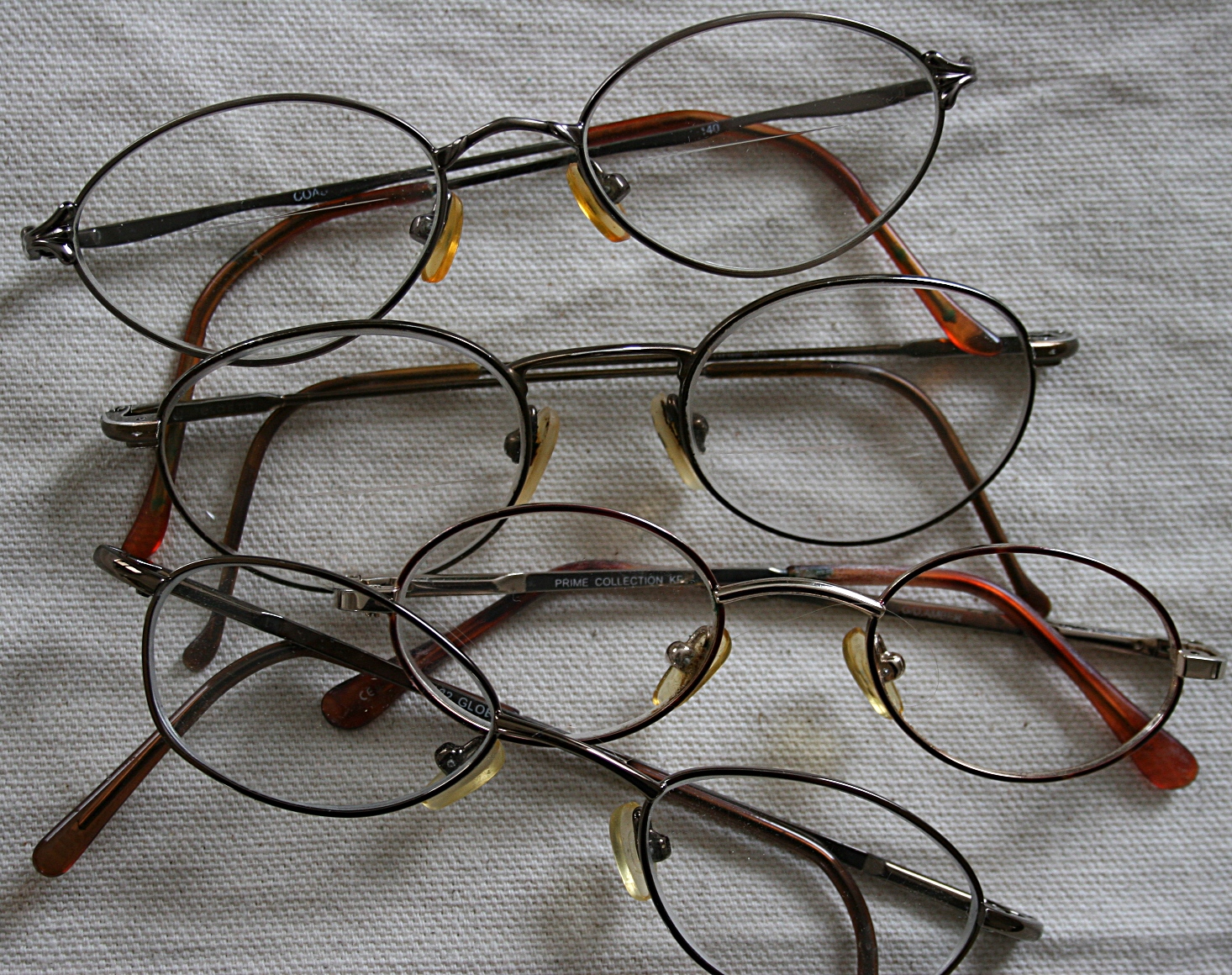
I just rummaged through a dresser drawer and found four eyeglasses that I can donate to the Faribault Lions Club on Sunday.

The prescription eyeglasses I'm donating.

Faribault Lions have also connected with the Minnesota State Academy for the Blind in Faribault, supporting numerous projects there, including an apartment to teach independent living skills.

My community is home to the Minnesota State Academy for the Deaf, perhaps another reason local Lions take such a strong interest in helping those who are hearing impaired.

I am among those with a hearing impairment having lost 70 percent of the hearing in my right ear last March in an episode defined as “sudden sensory hearing loss.” (Click here to read about that.) Unfortunately, a hearing aid will not help with this type of near-deafness.

But for most who suffer from a hearing impairment, a hearing aid will help. The Lions are committed to collecting used hearing aids for distribution to those in need. Can you imagine the joy of giving the gift of hearing?

It’s impressive, isn’t it, how so many worthy causes have evolved from two powerful words: “We serve.”

FYI: The Faribault Lions Club Super Bowl Pancake Breakfast will be held from 7:30 a.m. – 1:15 p.m. on Sunday, February 5, at the Eagles Club, 2027 Grant Street Northwest. Cost is $6 for adults and $4 for those 12 and under.

The Lions are also selling Super Bowl snacks—8-ounce packages of nuts for $5 – $6—to raise monies for their Backpack Blessings Program which provides local children in need with food for the weekends.

It should not go without stating here that many local businesses and volunteers (within and outside of the Faribault Lions Club) contribute to the annual Super Bowl breakfast.

Bring your used prescription eyeglasses and hearing aids, your money and your appetite on Sunday to participate in the “We serve” endeavor.

Click here to learn more about the Faribault Lions Club.

© Copyright 2012 Audrey Kletscher Helbling

 

Say “no” to cheese? September 28, 2011

“Did u hear about the anti-cheese billboard up by green bay?” my Wisconsin-resident daughter texted.

Since I discovered her message seven hours after she sent it, I was on my own to investigate. You don’t dangle a tidbit of information like that in front of my eyes and expect me to let it go.

So here’s the deal, according to information I gleaned in a quick online search.

The Washington D.C.-based nonprofit Physicians Committee for Responsible Medicine has sponsored a billboard along Highway 41 near Lambeau Field with this message:

Warning:

Cheese Can

Sack Your Health

Fat. Cholesterol. Sodium.

I don’t need to explain. If you want details on the Physicians Committee’s stand, click here.

Originally, the billboard featured an image of the Grim Reaper wearing a cheesehead hat. Now he’s hatless, reportedly due to a threatened lawsuit by the company that makes those signature hats.

So, that all said, I wonder if the D.C. folks understand, really understand, the importance of cheese in Wisconsin.

I’ll take you on a little photographic tour through Wisconsin, showing you images taken within the past 10 months.

I expect this isn’t the last we’ll hear of this billboard controversy.

And, just for the record, I love cheese.

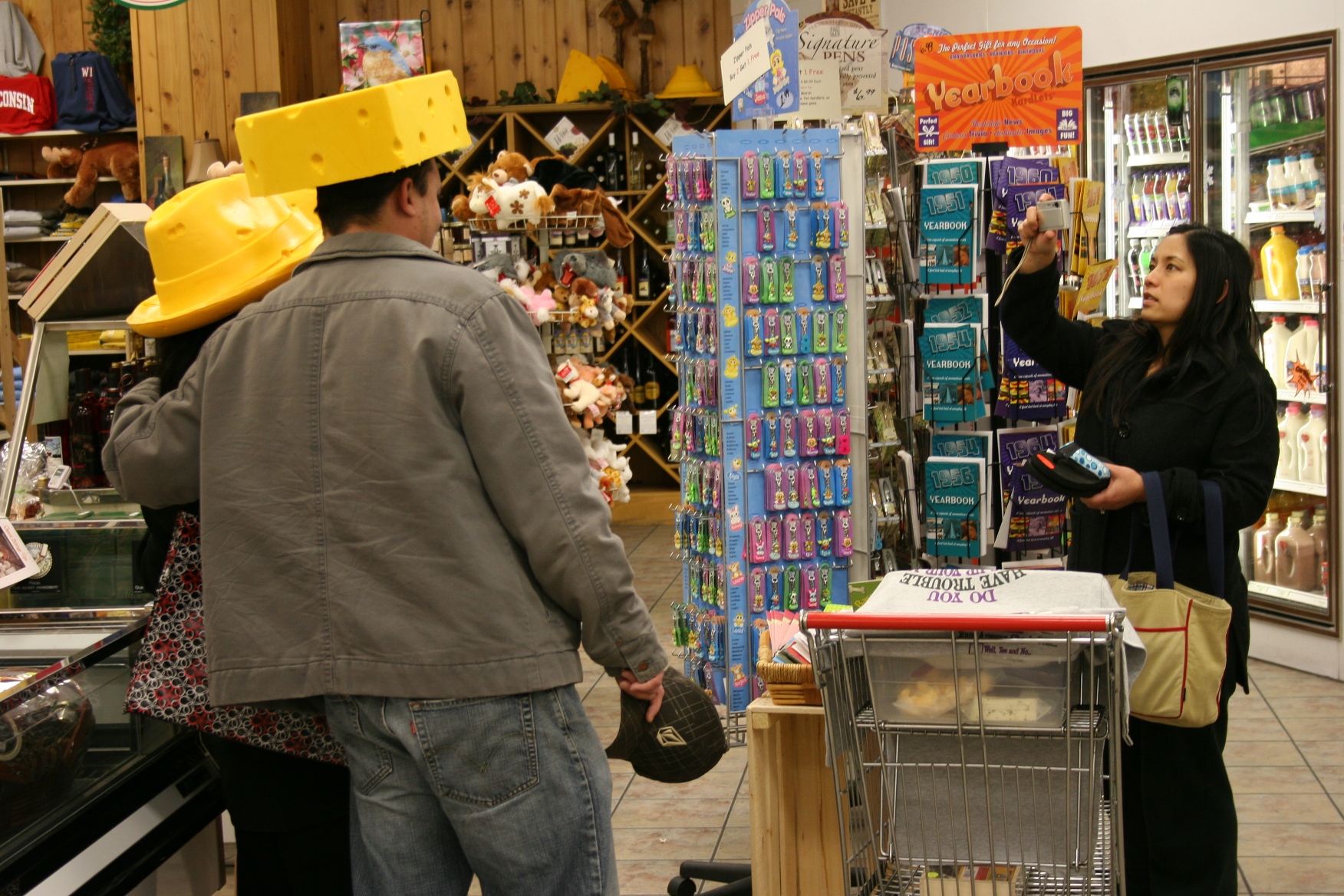
Cheese is a big part of the tourism industry in Wisconsin as evidenced by this photo taken at Simons Specialty Cheese in Little Chute. Yes, those would be the famous cheesehead hats.

Simons Specialty Cheese is one of the retail outlets for Trega Foods, Ltd., which produces natural curds and mozzarella sticks right next door at its Little Chute plant.

Kitschy cheddar cheese shapes sold in Wisconsin.

You can't miss these cows and cheese sign along a Wisconsin roadway.

A small sampling of the cheeses available at Simon's Specialty Cheese.

Humbird Cheese, a popular tourist stop at Tomah.

Promoting cheese on a billboard along a central Wisconsin highway.

SO, WHAT’S YOUR take on the Physicians Committee for Responsible Medicine billboard and/or its stand on cheese?


The trend toward healthier foods in schools and the chocolate milk debate May 7, 2011

SHOULD PUBLIC SCHOOLS offer chocolate milk with school lunches?

That’s an issue being discussed right now in the Fergus Falls Public School system, according to an article published in the Fergus Falls Journal.

The head of the Parent Teacher Organization appeared before the school board recently requesting that chocolate milk no longer be offered to students, except on Fridays as a “special treat.” She’s concerned about the sugar in chocolate milk and about serving healthier food. You can read the entire story by clicking here.

Based on the volume of responses to the Journal article, I quickly concluded that chocolate milk in school is certainly a hot button topic.

Opinions range from “let the kids have their chocolate milk because then at least they are drinking milk” to school lunches need an overhaul to this is a political issue.

Personally, I’ll pick white milk over chocolate any day. I grew up on a dairy farm, meaning I can’t really give an unbiased opinion here. Cows don’t produce chocolate milk. To my taste buds, chocolate milk compares to chugging chocolate syrup and I prefer my chocolate syrup on ice cream.

Here’s my take on banning chocolate milk from school lunchrooms:  Kids will eventually learn to drink white milk if they don’t have the chocolate option.

I think the PTO president erred with her compromise offer to allow chocolate milk as a “special treat” on Fridays. That would send a mixed message to students. Labeling a food as a “treat” only makes it more appealing.

This chocolate milk discussion reminds me of a controversy over soda pop vending machines in schools several years ago. I don’t recall the details, but it was a point of much debate in my community of Faribault. I don’t know how the issue was eventually resolved. And, honestly, because my kids are big milk, and not big soda, drinkers, I really did not pay that much attention to the issue. I should have.

Whether milk or soda is at the center of discussion, it’s good that parents, food service employees, school administrators and others are finally taking a good look at school lunches and working toward serving healthier foods and beverages to our kids.

In Fergus Falls, a Wellness Committee is tackling the topic of improving school lunches. Click here and here for the May school lunch menus in Fergus Falls. You’ll find main menu items like chicken nuggets, hot dogs, corn dogs and super nachos along with baked (not fried) fries, sunflower nuts, fresh fruit and fresh veggies. I can see progress in that list, but still some of those food choices don’t seem all that healthy to me.

And just to be clear here, I’m neither a food purist nor a perfect parent. I’ve served chicken nuggets to my family and I would label my 17-year-old son, my youngest, as a “picky eater.” It’s not that I haven’t tried to get him to eat his fruits and vegetables…

Fergus Falls certainly isn’t alone in moving toward healthier school lunches that feature fewer processed foods and more fresh veggies and fruit.

Throughout Minnesota, students, staff and volunteers are planting gardens, a win-win way to engage and teach students about healthier eating. The gardens will also provide fresh vegetables for school lunchrooms. The Statewide Health Improvement Program (SHIP) is helping lead the way. You can click here to see what’s happening in your county through SHIP.

In my county, Rice, for example, a “Growing Healthy Foods” workshop is slated for 6:30 p.m. Wednesday, May 11, in the 4-H building at the Rice County Fairgrounds. Master gardeners will present information about gardening in this program funded through a SHIP grant.

While individuals and students are planting gardens, Minnesota schools are also working with local growers to incorporate fresh produce into school lunches.

Check out the Minnesota Farm to School Program to see how some schools are embracing the trend toward eating local. It’s inspiring to read about apple orchards and tomatoes and school gardens and efforts to educate and reconnect students to the land.

I expect, though, that despite efforts to improve the quality of food in school lunchrooms, cost will determine whether healthy, permanent changes can be made. School districts don’t exactly have extra money in their budgets. And parents, in a time of already stretched family finances, won’t appreciate/can’t afford hikes in school lunch prices.

Getting kids to change their eating habits presents a major challenge also.

What’s your opinion on the current trend toward serving healthier foods in schools? Are changes needed? Will kids embrace such changes? Can school districts afford to offer healthier foods (which will likely cost more to buy and to prepare)? Will parents pay higher prices for school lunches?

And, finally, how do you feel about pulling chocolate milk from school lunchrooms?

© Copyright 2011 Audrey Kletscher Helbling

 

WARNING: Proposal would erode Minnesota’s Freedom to Breathe Act April 11, 2011

WARNING: Cigarettes are addictive.

WARNING: Tobacco smoke can harm your children.

WARNING: Cigarettes cause fatal lung disease.

WARNING: Cigarettes cause cancer.

WARNING: Cigarettes cause strokes and heart disease.

WARNING: Smoking during pregnancy can harm your baby.

WARNING: Smoking can kill you.

WARNING: Tobacco smoke causes fatal lung disease in nonsmokers.

WARNING: Quitting smoking now greatly reduces serious risks to your health.


I didn't need to search long or hard to find these cigarette butts. Two were tossed into one of my flowerbeds by a neighbor. I found the third in the street by my house.

Just as Minnesota legislators are considering proposed changes to the state’s Freedom to Breathe law, the U.S. Food and Drug Administration is finalizing plans to modify warnings on cigarette packaging and advertising.

Following requirements of The Family Smoking Prevention and Tobacco Control Act, the FDA has proposed that cigarette packaging and ads bear one of the above nine warnings along with a matching colorful graphic.

The shock value of the proposed graphics—like a toe-tagged corpse and a mother blowing smoke into her baby’s face—are an effort to make a powerful impact on the smoking public. Enough to make a smoker stop smoking.

The final graphics will be selected by June 22 and the warnings must be in place on all cigarette packages sold in the U.S. and in cigarette ads by October 2012.

As a nonsmoker, I’m all for this move to prevent, reduce or stop smoking.

However, I don’t support proposed legislation in Minnesota that would once again allow smoking in bars under specific conditions. Not that I frequent bars, but bars and restaurants are often interconnected, so this matters to me.

The plan basically would allow smoking in bars if a ventilation system is installed to remove the smoke. In bars connected to restaurants, the bar must be walled off with a door separating the bar and restaurant.

Come on. A door will not keep smoke from filtering into a restaurant. And I don’t know about you, but I don’t need smoke served with my meal.

I make no apologies for my strong stand against smoking and my intense dislike of cigarette smoke.

I’m also honest enough to admit that, in my youth, I tried tobacco products on several occasions, enough to realize smoking wasn’t for me.

My dad became addicted to cigarettes when he was in the military, serving on the front lines during the Korean Conflict. He preferred Camel cigarettes. Sometimes he also rolled his own.

My dad, a smoker for many years, first exposed me to cigarettes. Once he even let me puff on his Camel. Now before you start calling him an irresponsible parent, consider this.  He knew I’d cough and sputter and spit and never want to touch a cigarette again. He was right. Eventually he gave up smoking but never quit chewing snuff.

Although I never took up smoking, I was addicted to candy cigarettes as a kid. But candy cigarettes were as popular as Bazooka bubble gum back in the 1960s and no one thought anything of subtly encouraging kids to smoke via those chalky white sticks with the red tips.

As for the few Swisher cigars I smoked in my mid-20s, I offer no excuse except my ignorant, youthful stupidity. I bet many smokers who are now habitual tobacco users wish they’d never started.

If you’re a smoker and want to smoke in the privacy of your home, then go ahead. Just don’t invite me over because, physically, I can’t tolerate cigarette smoke.  I’ve had numerous bad experiences with cigarette smoke.

Back in the early 1980s, I worked for a southern Minnesota daily newspaper that allowed smoking in the office. I came home every night smelling like I’d been in a bar all day. My clothes reeked. My skin reeked. My hair reeked. I remember complaining, with several other nonsmokers in the office, about the smoking. Nothing changed, because the news editor smoked. She didn’t care. So what if the copy editor sat outside the conference room during the weekly staff meeting because he couldn’t tolerate the smoke? I wish I had joined him instead of breathing the toxic air. So what if the news editor should have been more considerate given the Minnesota Clean Indoor Air Act passed in 1975? None of that mattered.

My second worst experience with smoking occurred several years ago at a Winona hotel. The manager tried to pass off a smoking room as a nonsmoking room. The instant I walked into the room, I smelled cigarette smoke. The mobile air purifier that was running on high and the lack of a sign on the door stating that this was a nonsmoking room confirmed my suspicions. When I went to the front desk and demanded a nonsmoking room, the manager denied that he had given me a smoking room. I didn’t believe him. My nose and lungs don’t lie.

My other notable smoke experience also involves a hotel, this one at a southwestern Minnesota casino. I was there attending a cousin’s wedding reception. Although the hotel room my family booked was supposedly smoke-free, the odor of cigarette smoke filtered from the smoke-filled hotel lobby, halls and casino into our room. I barely slept that night because of the tightness in my chest caused by the smoke.

So, Minnesota legislators, listen up. Listen to representatives of The American Cancer Society, the American Heart Association, the American Lung Association and Clearway Minnesota, all of whom have been at the State Capitol opposing the proposed changes to Minnesota’s Freedom to Breathe Act.

Consider the 83.9 percent of adult Minnesotans (according to results of the 2010 Minnesota Adult Tobacco Survey) who do not smoke. Please keep our Freedom to Breathe Act intact and smoke-free.

© Copyright 2011 Audrey Kletscher Helbling

 

I’d rather not be in Vegas April 6, 2011

I've lost 70 percent of the hearing in my right ear due to a sudden sensory hearing loss.

I AM NOT A RISK TAKER.

I’ve walked through a Minnesota casino twice and failed to pull a single lever on a slot machine or drop a single coin.

I prefer to play it safe, to not risk losing for the slim possibility of winning. It is the reason I don’t buy lottery tickets. I feel like I’m throwing away my money.

That is partially why a decision I am currently facing is so incredibly difficult.

Do I have surgery or not?

Will I be among the 25 in 100 who benefit from a sac round window graft? Even the name of the surgery is daunting. I don’t know enough right now about the outpatient ear surgery to decide.

But I have the statistics. For only one in four patients, the surgery successfully restores some hearing. But the percentage of hearing regained is perhaps only 20 percent. The slim possibility exists—about two percent—that the surgery could cause me to lose all of my hearing in my right ear. That really doesn’t matter given I’m basically deaf in my right ear anyway due to a sudden sensory hearing loss that occurred a month ago.

I currently have only 30 percent hearing in that ear. I hear only “noise,” nothing as distinguishable as a word. I also suffer from tinnitus, ringing in my right ear.

On Tuesday when I met with a renowned ear specialist in Minneapolis, I was presented with the surgery option. I was not expecting this, was not prepared with a list of questions. My immediate thought was this: “I don’t want to have more surgery.”

Already in my life, I’ve had seven surgeries, the first at age four to correct my vision. Since then, I’ve had oral surgery to remove my wisdom teeth, three Caesarean sections, inguinal hernia surgery and my last, total right hip joint replacement, not quite three years ago.

I am not anxious to rush into another surgery.

But time is of the essence. Apparently the sooner the surgery is done after the hearing loss, the better. I don’t understand why and I didn’t think to ask.

My doctor offered no recommendation on the surgery. I asked. He says he doesn’t recommend, only presents the options and information and allows the patient to decide.

I am at the point now of researching, pondering, praying, considering a second opinion, losing sleep over this decision.

What should I do?

Should I risk throwing away $3,000—my health insurance deductible? Should I risk not having the surgery if it could restore even a small percentage of my hearing? (A hearing aid will not help with the type of hearing loss I have.) Should I risk the risks that are always there whenever you have surgery?

I’m not a gambler. But right now I feel like I’m in Vegas.

© Copyright 2011 Audrey Kletscher Helbling