Minnesota Prairie Roots

Writing and photography by Audrey Kletscher Helbling

Patriot’s Brewing Company opening in Faribault with a nod to the past February 16, 2013

SEVERAL MONTHS AGO I overheard several antique dealers discussing a brewery in Faribault. I lingered nearby, feigning interest in merchandise so I could eavesdrop. With tidbits of information filed in my memory, I meandered farther into the Peterson Art Furniture Company complex.

There I spotted Northfield attorney, historic preservationist, and Peterson building and architectural salvage business owner David Hvistendahl eating lunch. Perfect timing. “What’s this about a brewery coming to Faribault?” I asked.
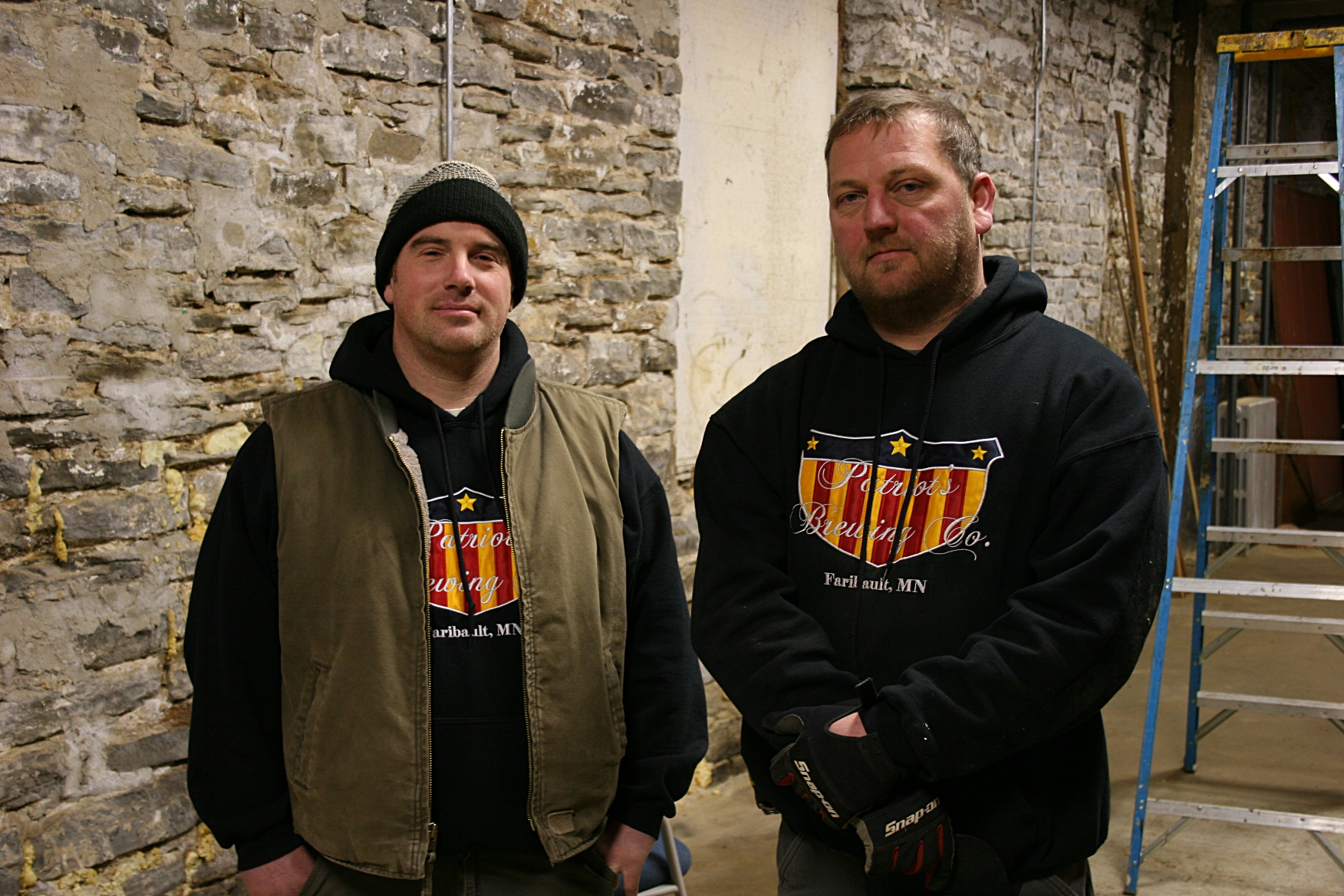
Chris Voegele , left, and Noah Strouth, owners of Patriot's Brewing Company

Chris Voegele , left, and Noah Strouth, owners of Patriot’s Brewing Company.

And thus I was introduced to Patriot’s Brewing Company, a Faribault-based regional brewery slated to open this fall, according to owners Noah Strouth, 40, and Chris Voegele, 41. Saturday morning I met with these longtime friends and 1990 Faribault High School graduates to learn more about their craft beer business. Up until then, I’d been asked not to publicly divulge news about the brewery.
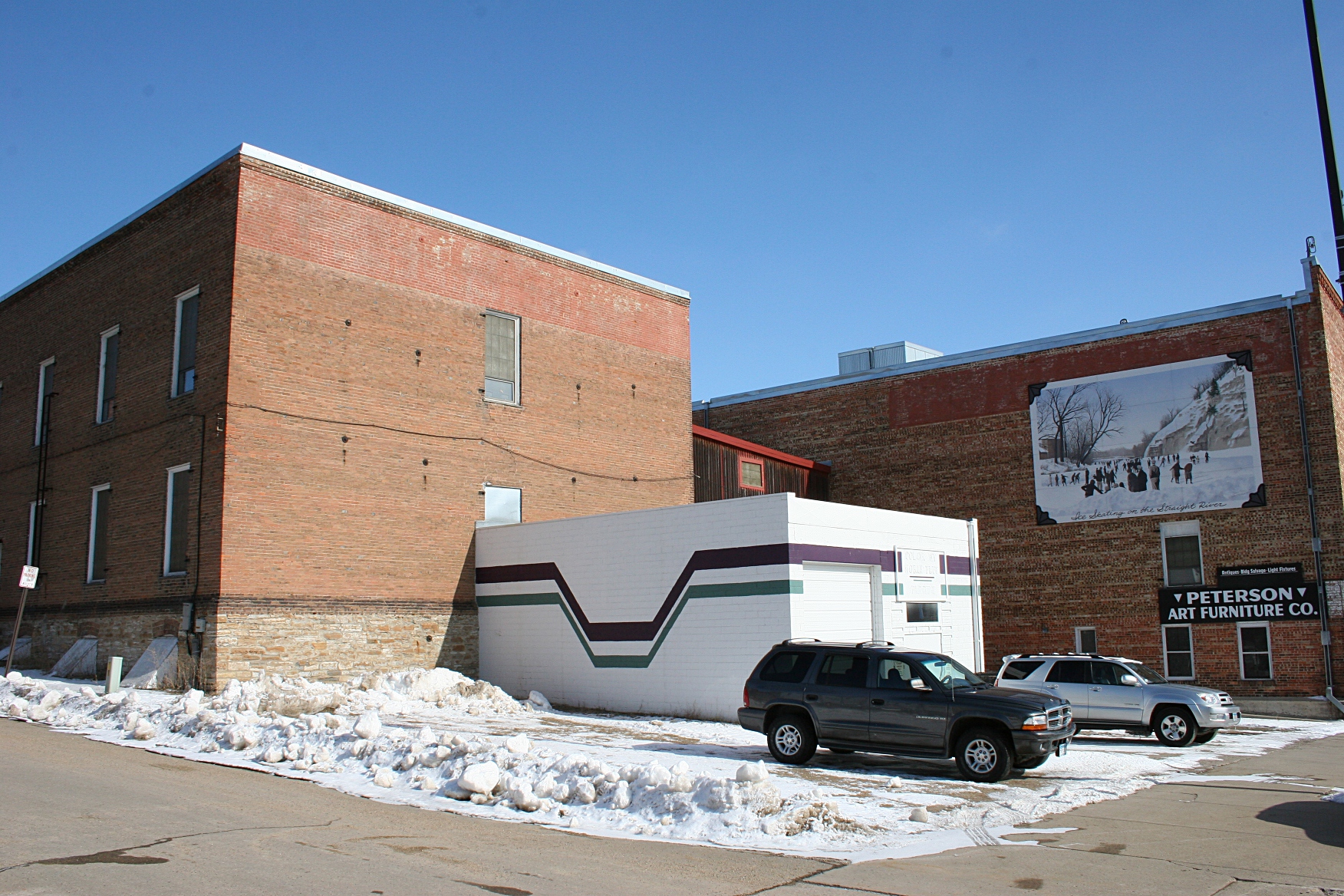
The brewery will be housed in the lower level of the brick building on the left with a tap room opening later in the small white building in the center of the Peterson Art Furniture complex.

The brewery will be housed in the lower level of the brick building on the left with a tap room opening later in the small white building in the front of the Peterson Art Furniture complex.

But word had gotten around town and the time seemed right to share their plans for the brewery which will be housed in a 3,250 square foot basement section in the southwest corner of the former Peterson Art Furniture Company (before that home to the Faribault Furniture Company) building along Fourth Street in the heart of historic downtown Faribault.
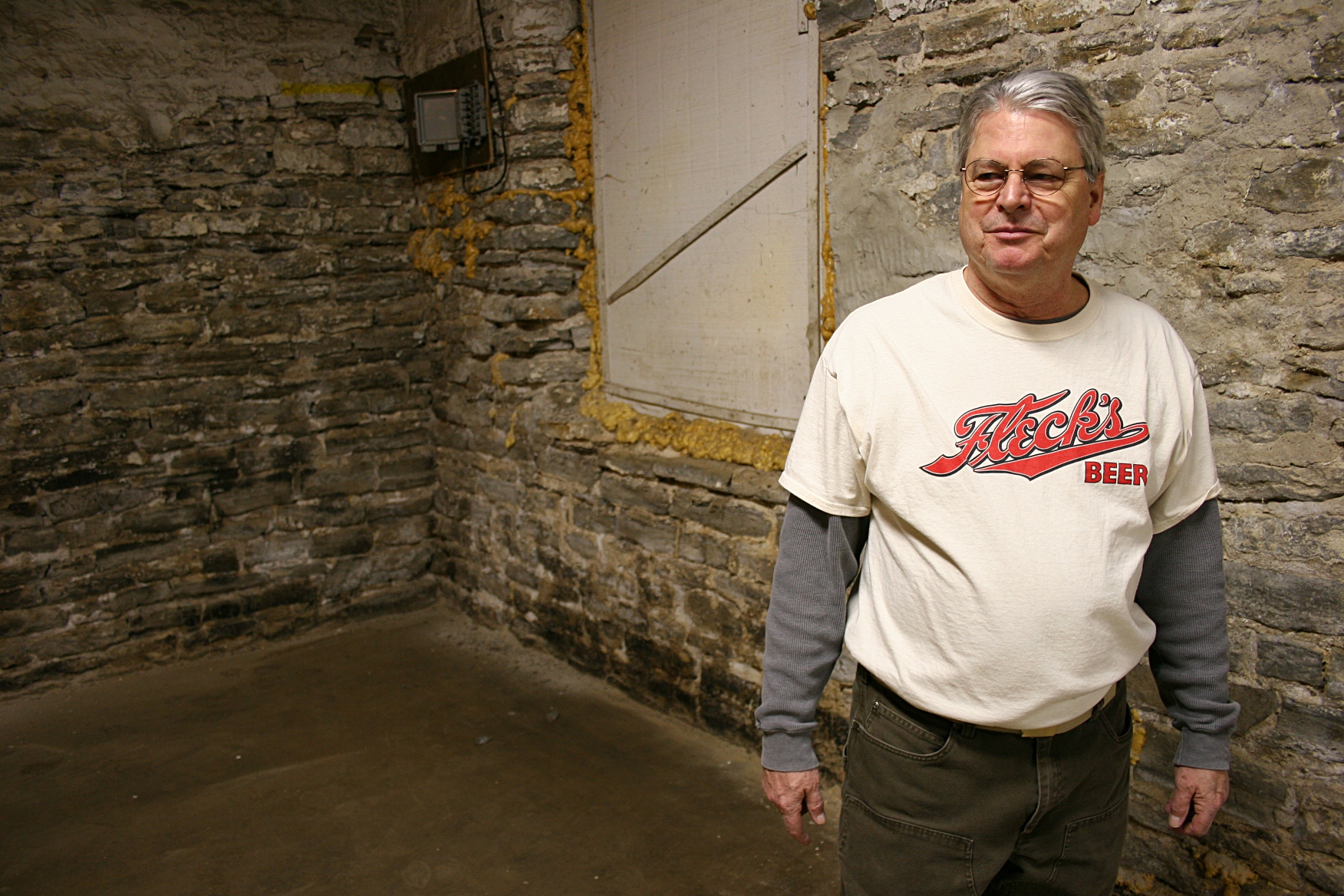
David Hvistendahl, from whom Patriot's is renting space for the brewery, sports a Fleck's beer t-shirt. A line of Fleck's Hvistendahl and a partner plan to eventually open an event center int he space above the brewery.

David Hvistendahl, from whom Patriot’s is renting space for the brewery, sports a Fleck’s beer t-shirt. Fleck’s branded clothing will soon be available for purchase through Patriot’s Brewing. Hvistendahl and a partner plan to eventually open an event center in the space above the brewery.

For the first time since 1964, when Fleckenstein Brewery closed, Faribault will have its own brewery, and one which will brew Fleck’s labeled bock and lagers. Patriot’s Brewing has trademarked the Fleck’s name, which had been left in the public domain, Voegele said.

“People in Faribault seem to like their history,” Voegele said, both he and Strouth emphasizing the name recognition and importance of Fleck’s beer in Faribault history.

They’ve even talked to locals who drank Fleck’s beer to learn more about the taste, something they hope to re-create in a Fleck’s lager. The recipes died with Ernst “Boots” Fleckenstein, the last brewmaster, Voegele said. The pair has also considered the historic grains and the water at the time (the brewery drew its water from an artesian well) the popular Faribault beer was produced. They’ll never exactly replicate Fleck’s, especially since they cannot re-create the yeast strain (of major importance in the brewing process), but they will try, the two say.
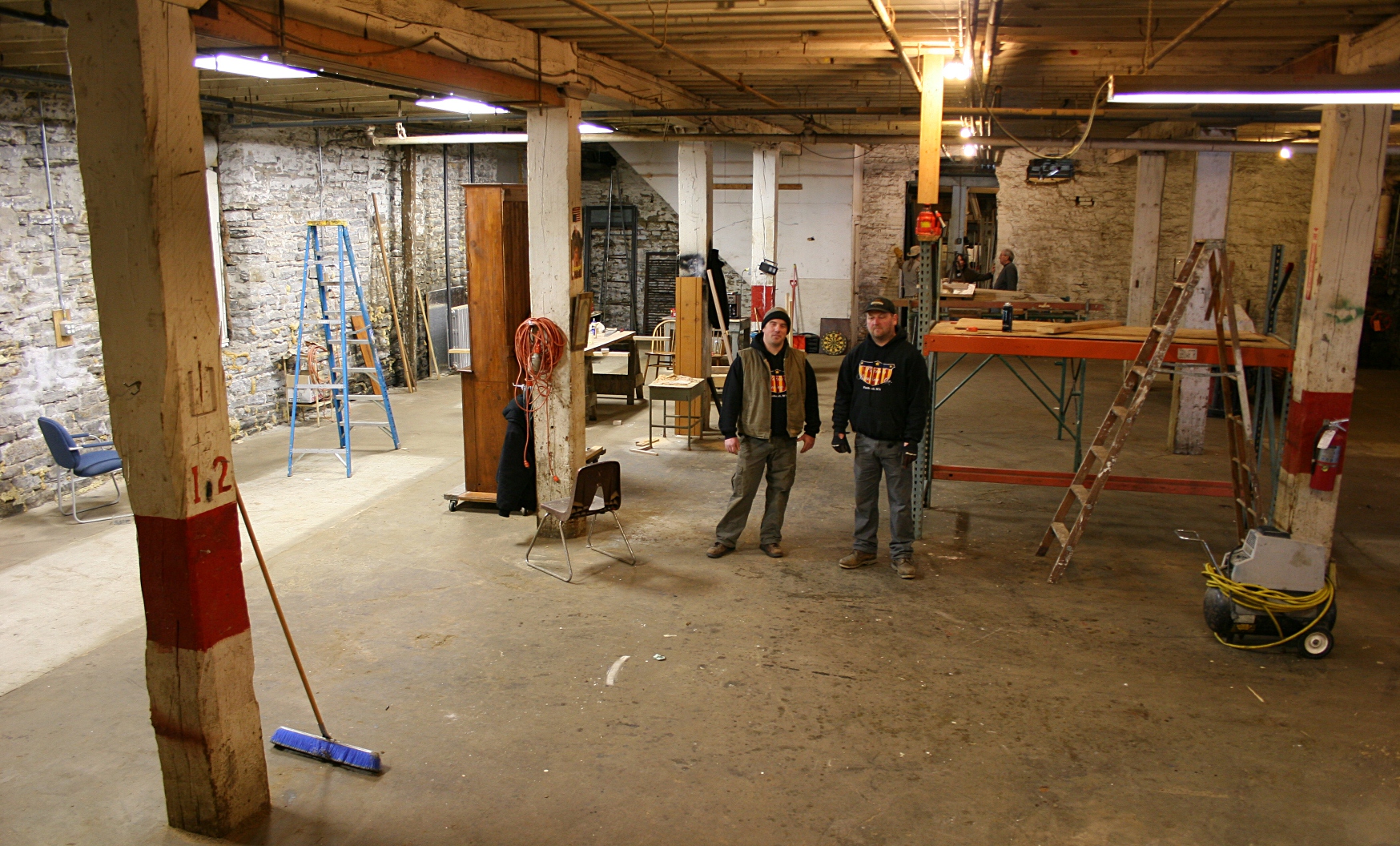
The brewery space.

The brewery space.

“Everything is in motion,” said Voegele as he and Strouth stood in the sprawling brewery space defined by rugged stone walls of local gray quarry stone and by thick support posts. The former storage area has been cleared and the two are working on the infrastructure with projects like tuckpointing and reinstalling the original windows in the 1886 building. Additional water and sewer lines are set for June installation during a street reconstruction project.
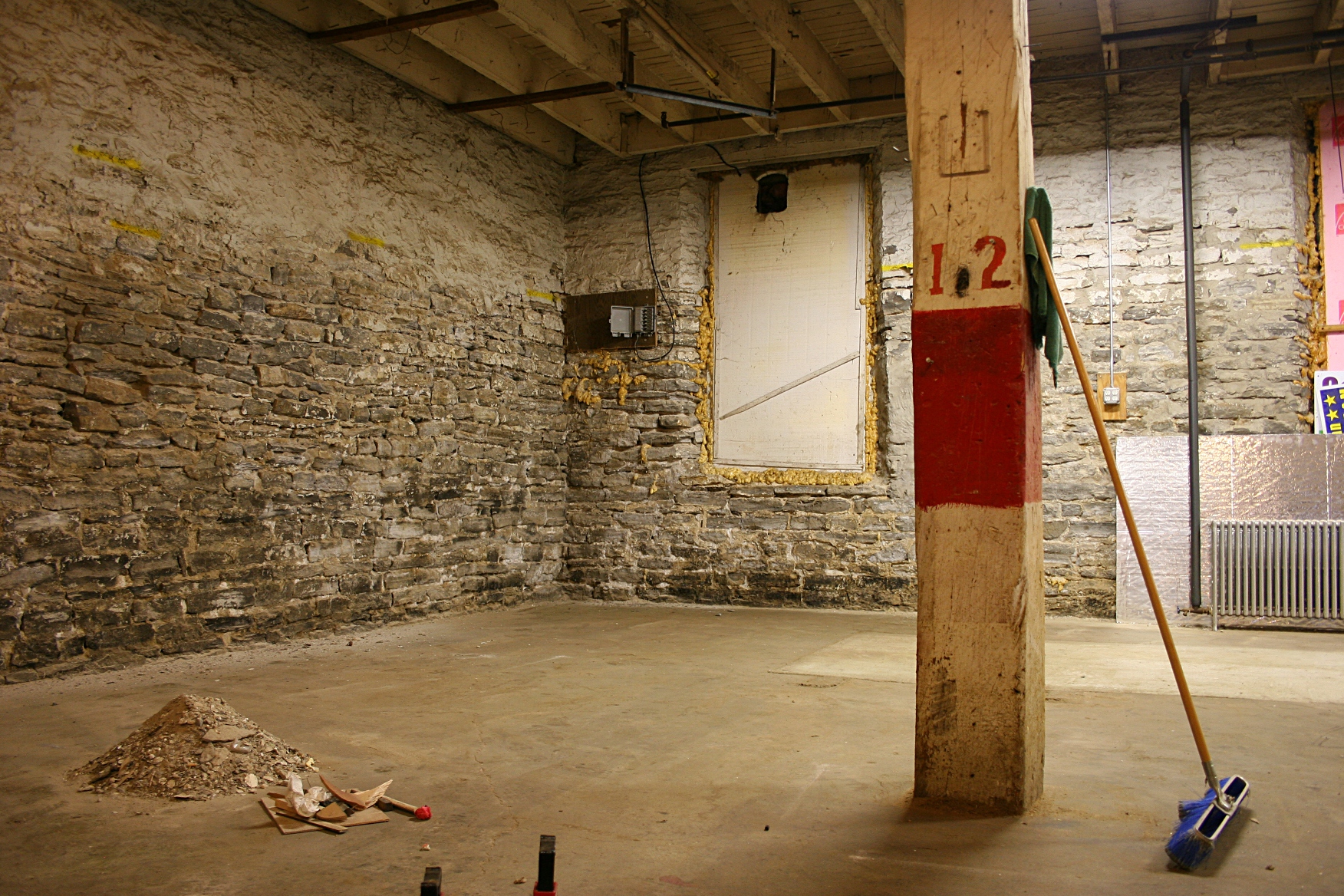
The walls are constructed from locally quarried stone.

The walls, constructed from locally quarried stone, will be tuckpointed.

They hope to begin brewing in the fall, starting with 80-100 barrels a month, producing one or two beers initially in their 25-barrel brewhouse. Each barrel holds 31 gallons. A Fleck’s branded lager will be among their first beers.

Strouth and Voegele are no novices at beer brewing, For five years already they’ve brewed beer in a small scale mini brewery in the basement of Strouth’s rural Faribault home. They can produce about 16 gallons and will use the same operating system in the brewery, only on a much larger scale.

They are, they agree, passionate about brewing beer, bringing their home-brewed beers to taste testers at local beer clubs and to area craft beer competitions. In 2012, their beer earned four first place ribbons at the Rice County Fair.

“We make beer that we like to drink,” Strouth said. “And people seem to like our beer.”

Patriot’s Brewing already has created recipes for five beers: #1 American Pale Ale, IPA Olicious (an India Pale Ale), Nutso (a nut brown ale), Stouty McStouterton (an oatmeal stout) and Fleck’s bock (a helles bock). The brewers are also working on lagers.

“We have a high appreciation for fine beer,” Voegele said, admitting it took awhile, though, for his beer palate to develop.
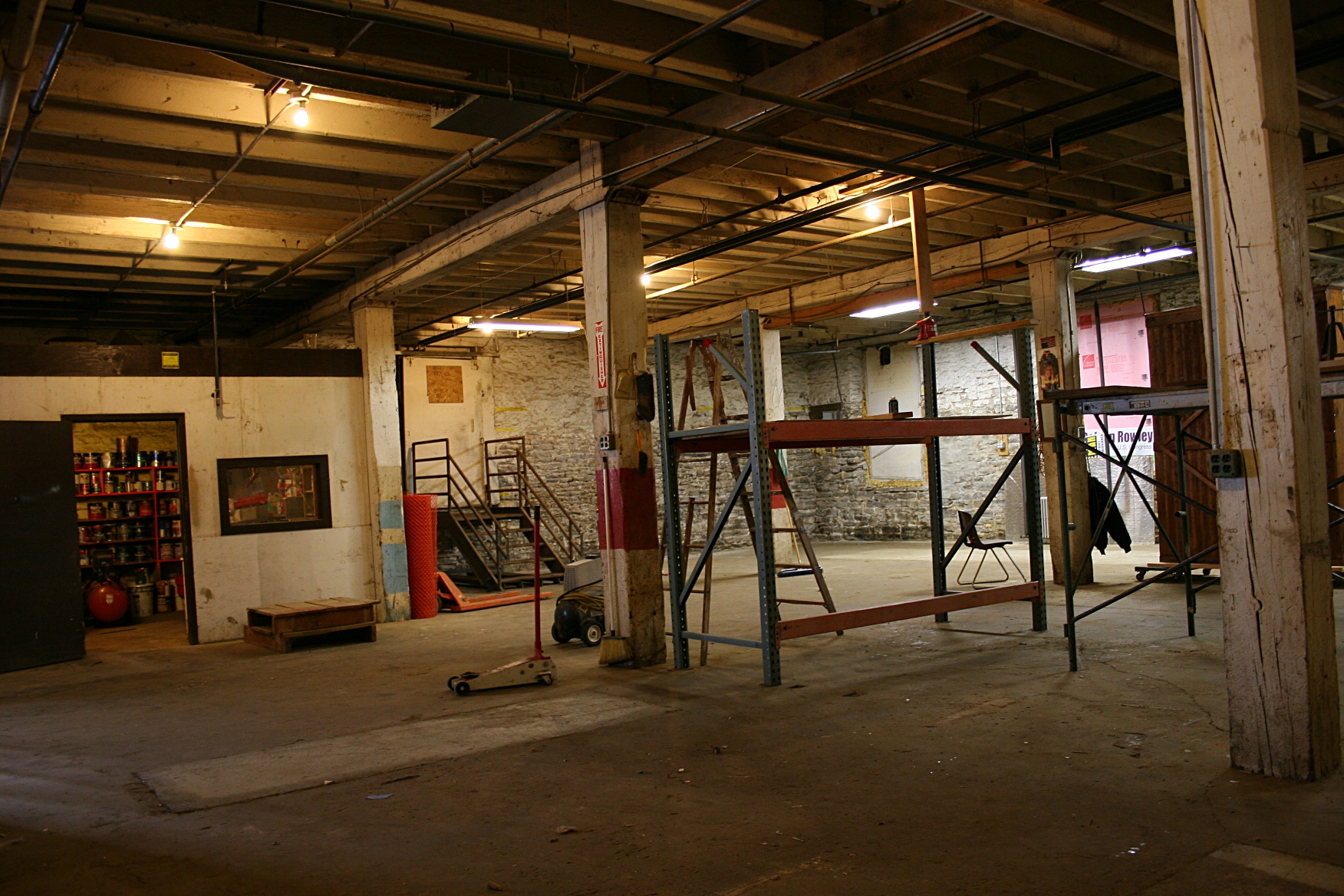
This view looks toward the  steps leading to the future tap room.

This view looks toward the steps leading to the future tap room. Only beer, and not food, will be served here.

While Patriot’s Brewing aims for regional distribution of its beer within a 60-mile radius of Faribault, the brewery is also relying on strong community support. As the business grows, plans call for opening of a tap room just up a set of steps from the brewery in a garage space occupied by Color My World. Voegele envisions a little bar with tables and chairs in an old style atmosphere in the cement-walled space. The pair plan to incorporate Fleckenstein Brewery/Fleck’s beer memorabilia into the tap room.

And then, as the business grows even more, the two hope to move the tap room elsewhere and use that vacated space for a grain room.
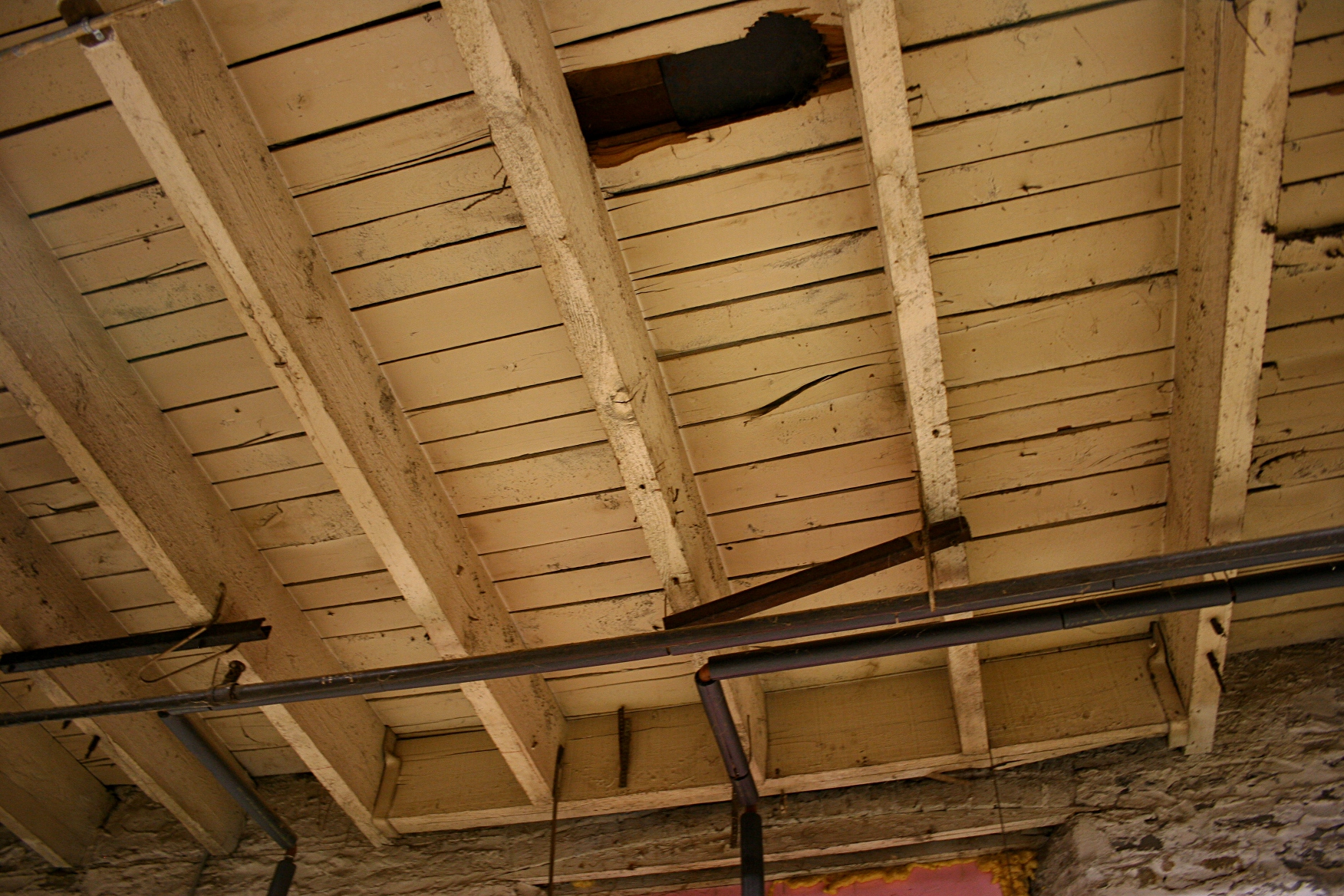
The ceiling of the historic building in the brewery area.

The ceiling of the historic building in the brewery area.

Eventually, they hope to offer brewery tours.

But that’s all in the future, after the brewery is established and sales are going strong. For now, Strouth and Voegele are concentrating on getting the brewery up and running while keeping their day jobs. Strouth works as a welder and fabricator at Lockerby Sheet Metal. Voegele teaches biology 105 at Minnesota State University, Mankato, works as an emergency medical technician in St. Peter and farms part-time in rural Morristown.

As they grow their regional brewery, they also plan to add employees.
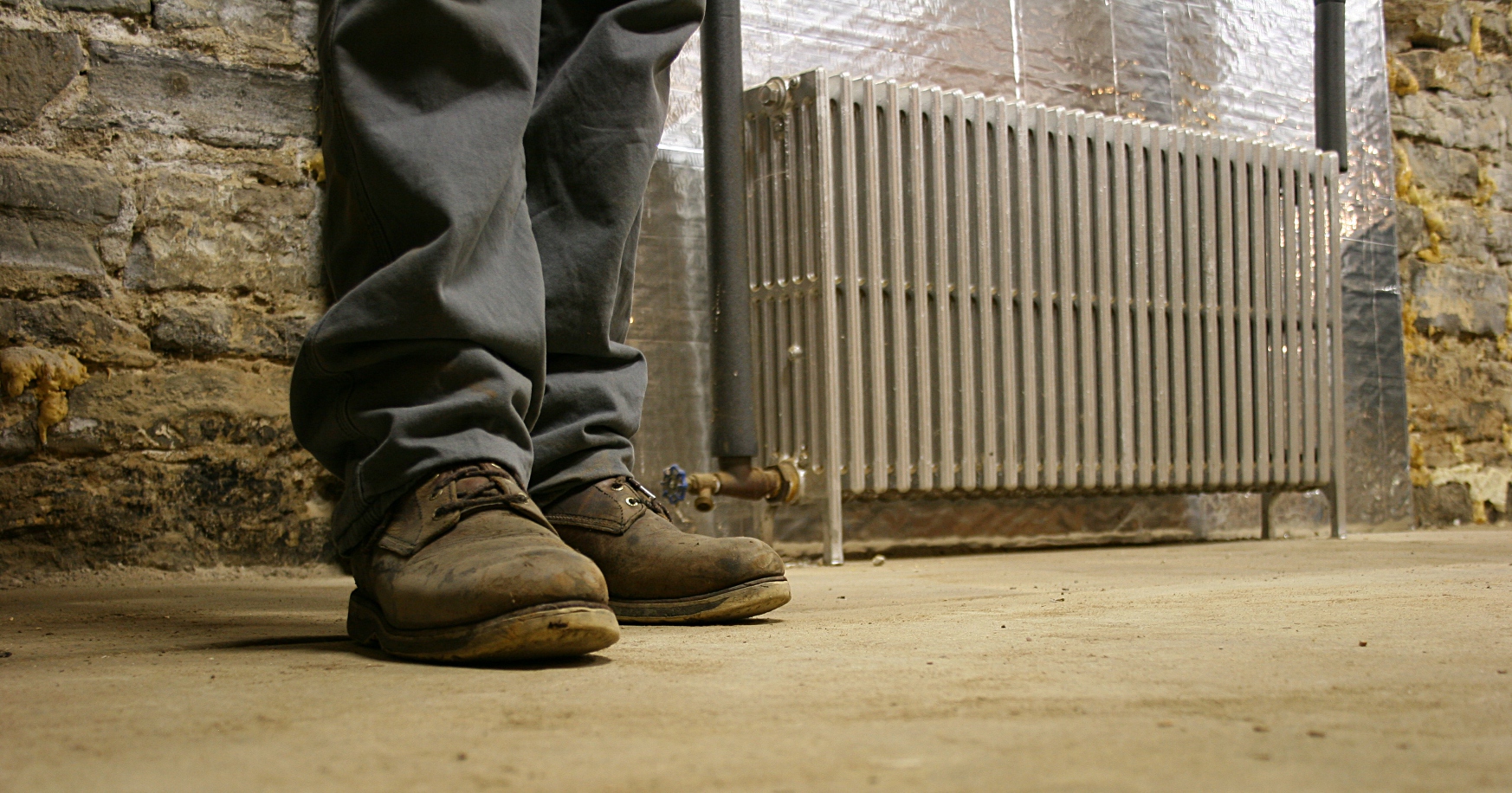
Chris Voegele and Noah Strouth are grounded in Faribault, their hometown.

Chris Voegele and Noah Strouth are grounded in Faribault, their hometown.

They are committed to Faribault, to its rich history. “Our roots are in Faribault,” Voegele said.

They are also committed to using American made/grown products—from equipment to hops to bottles—whenever possible in their business.
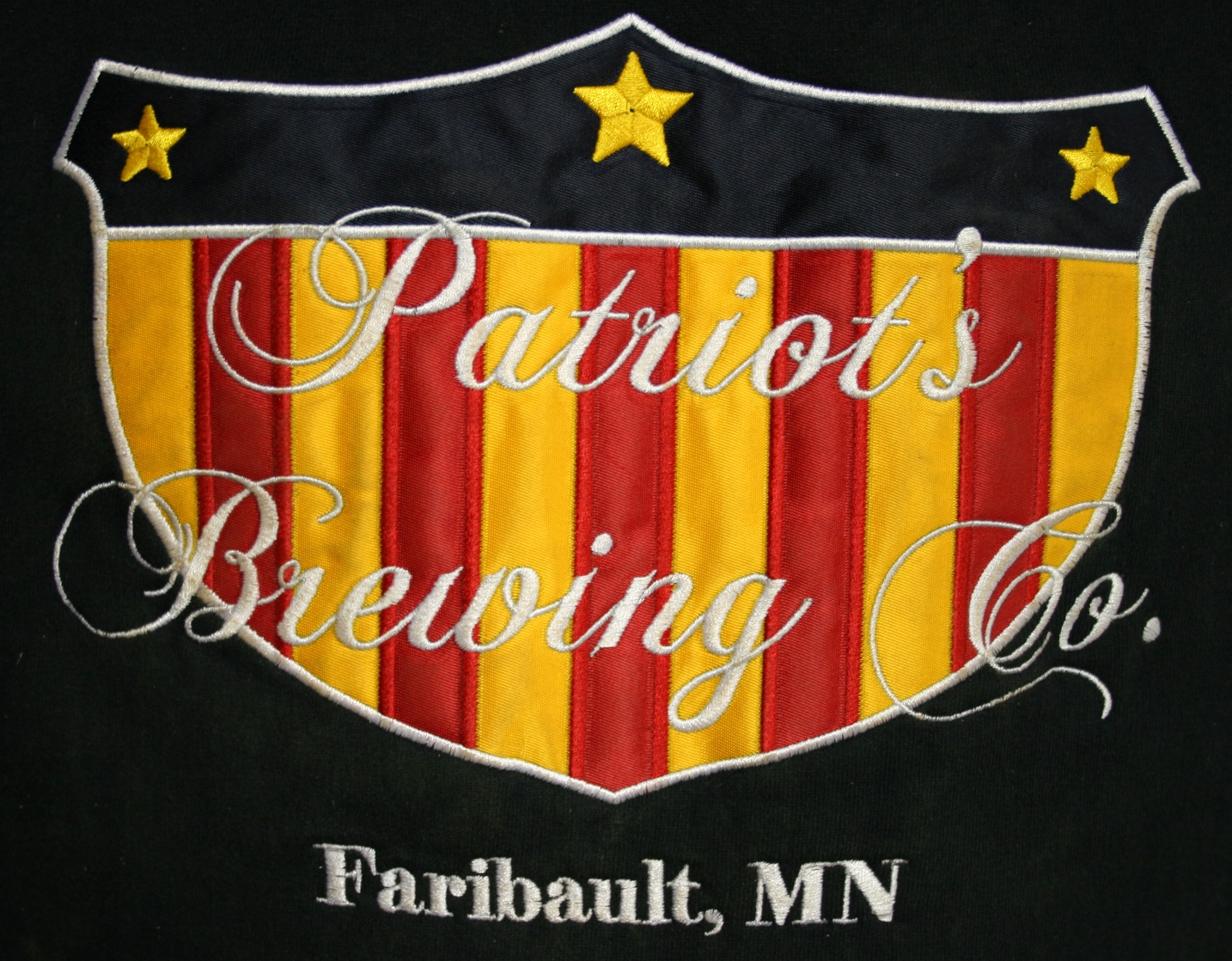
Noah Strouth's nephew, Alex Strouth, a senior at Northfield High School, created the patriotic themed company logo.

Noah Strouth’s nephew, Alex Strouth, a senior at Northfield High School, created the patriotic themed company logo.

That sense of American pride explains the company name—Patriot’s Brewing Company. “We believe in America…promoting American businesses, the feeling of Americanism, pride in country,” Voegele said.

And although Voegele did not specifically state it, he and Strouth are now living the American dream in starting their own business, Patriot’s Brewing Company.

© Copyright 2013 Audrey Kletscher Helbling


Cheers to the Stone Cellar Brewpub in Appleton, Wisconsin January 18, 2013

I DIDN’T REALLY WANT pizza for lunch. But our daughter insisted that this place—the Stone Cellar Brewpub in Appleton, Wisconsin—served the best pizza. Or so she’d heard.

Turns out that evaluation was spot-on correct.

I’m no food connoisseur. But when a pizza can match, even surpass, the savory goodness of the thin crust pizzas from Basilleo’s, a 45-year pizza restaurant in my community of Faribault, Minnesota, I’m sold.

The Stone Cellar did not disappoint and, in fact, left my husband, Appleton resident daughter and me raving over the spicy New Orleans pizza topped with andouille sausage, chicken, shrimp, red onion, red peppers and Cajun spices.

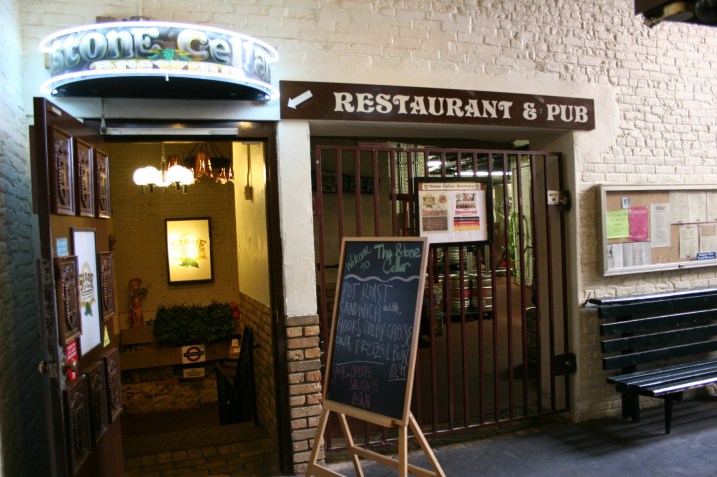
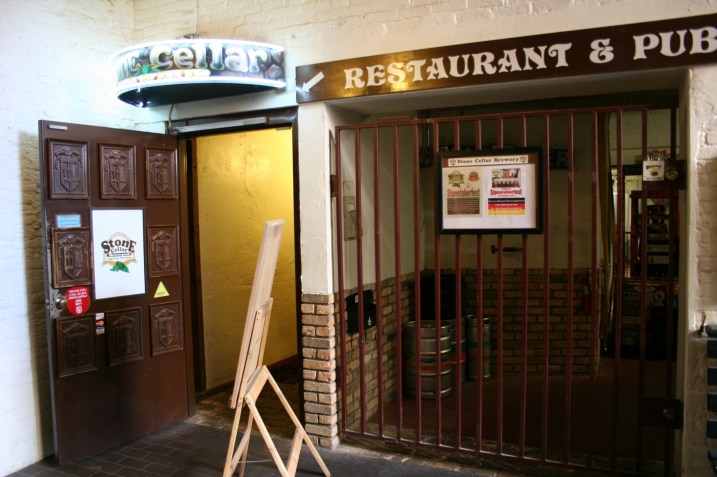
The beer part of the business is on the right, the restaurant part through the door on the left.

The beer part of the business is on the right, the restaurant part through the door on the left.

We complemented our lunch time pizza with glasses of seasonal pumpkin spice and Stonetoberfest beer brewed on the premises in the Stone Arch Brew House. This is the site of Wisconsin’s oldest continually running brewpub established in 1858 by German immigrant Anton Fischer.

I’m no beer connoisseur either. But I’m always up to trying specialty craft beers. While I wasn’t crazy about the taste of pumpkin in beer, it seemed the perfect choice for an October lunch, early October being the time my husband and I were in Appleton visiting our daughter.

Had I been aware of Stone Arch’s Houdini Honey Wheat beer, made with pure Wisconsin honey, I may have sampled that instead. The beer is named after magician Harry Houdini, who wrongly claimed Appleton as his birthplace. Houdini was born in Budapest, Hungary, and, in his early youth, lived for four years with his family in Appleton. (Click here to read my earlier post about the Houdini exhibit at The History Museum at the Castle.)

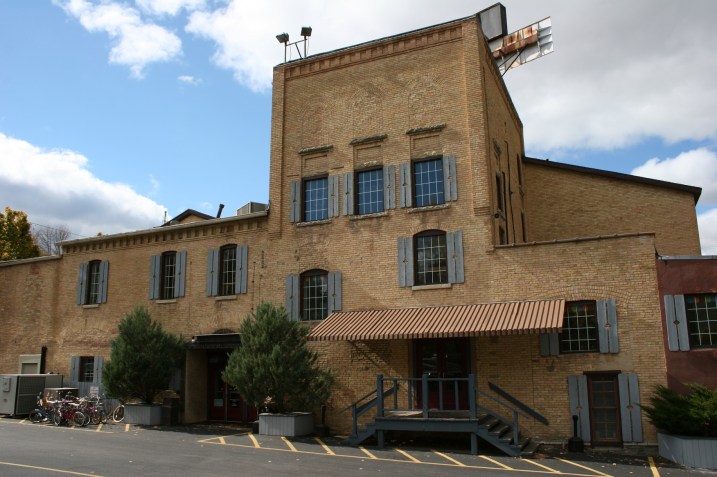
The exterior of the Between the Locks Mall, where the Stone Cellar Brewpub and Stone Arch are located along with other businesses.

The exterior of the Between the Locks Mall, where the Stone Cellar Brewpub and Stone Arch Brew House are located along with other businesses.

Beer and pizza aside, I love the location of the Stone Cellar Brewpub along the Fox River canal system (which that first brewer, Anton Fischer, helped construct) and the old stone building itself.

Go through the doorway on the left and follow the steps down into the Stone Cellar Brewpub.

Go through the doorway on the left and follow the steps down into the Stone Cellar Brewpub.

To reach the restaurant, you descend into the deep darkness of what is appropriately termed the “Stone Cellar.” I prefer windows and natural light while dining. But this closed-in space with thick stone walls presents the right comfortable feel for a brew pub with a long-standing history in the Fox River region.

A bonus to this whole dining experience comes with the restaurant’s efforts to offer locally-grown, seasonal, gluten-free and (sometimes) organic foods, aiming to offer healthier menu choices. You’ll find much more than pizza here, including the usual salads, burgers and sandwich offerings for lunch and a more extensive dinner menu.

There you go. If you’re ever in Appleton, I’d recommend dining at the Stone Cellar Brewpub.

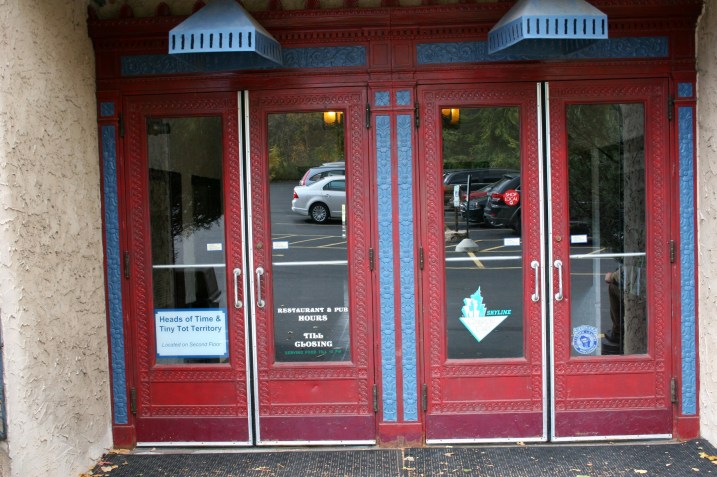
Walk through these colorful front doors...

Walk through these colorful and detailed front doors…

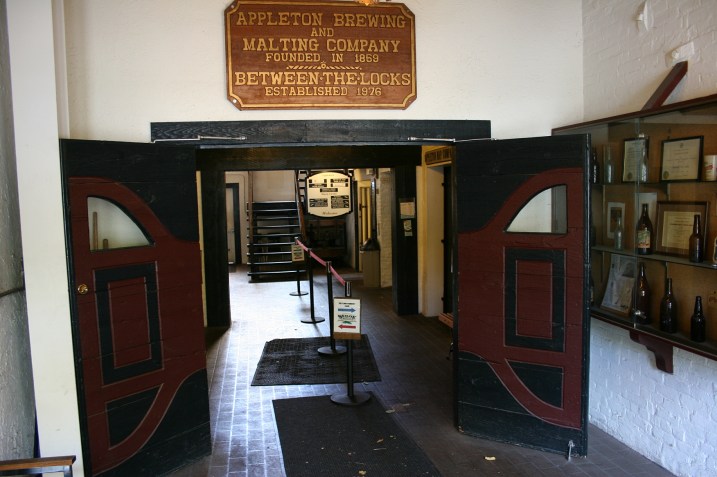
...into the entry of the Between the Locks Mall.

…into the entry of the Between the Locks Mall.

FYI: To learn more about the Stone Cellar Brewpub, 1004 S. Olde Oneida St., Appleton, Wisconsin, click here. 

© Copyright 2012 Audrey Kletscher Helbling


Appreciating the history of, and in, Appleton, Wisconsin’s “castle” January 16, 2013

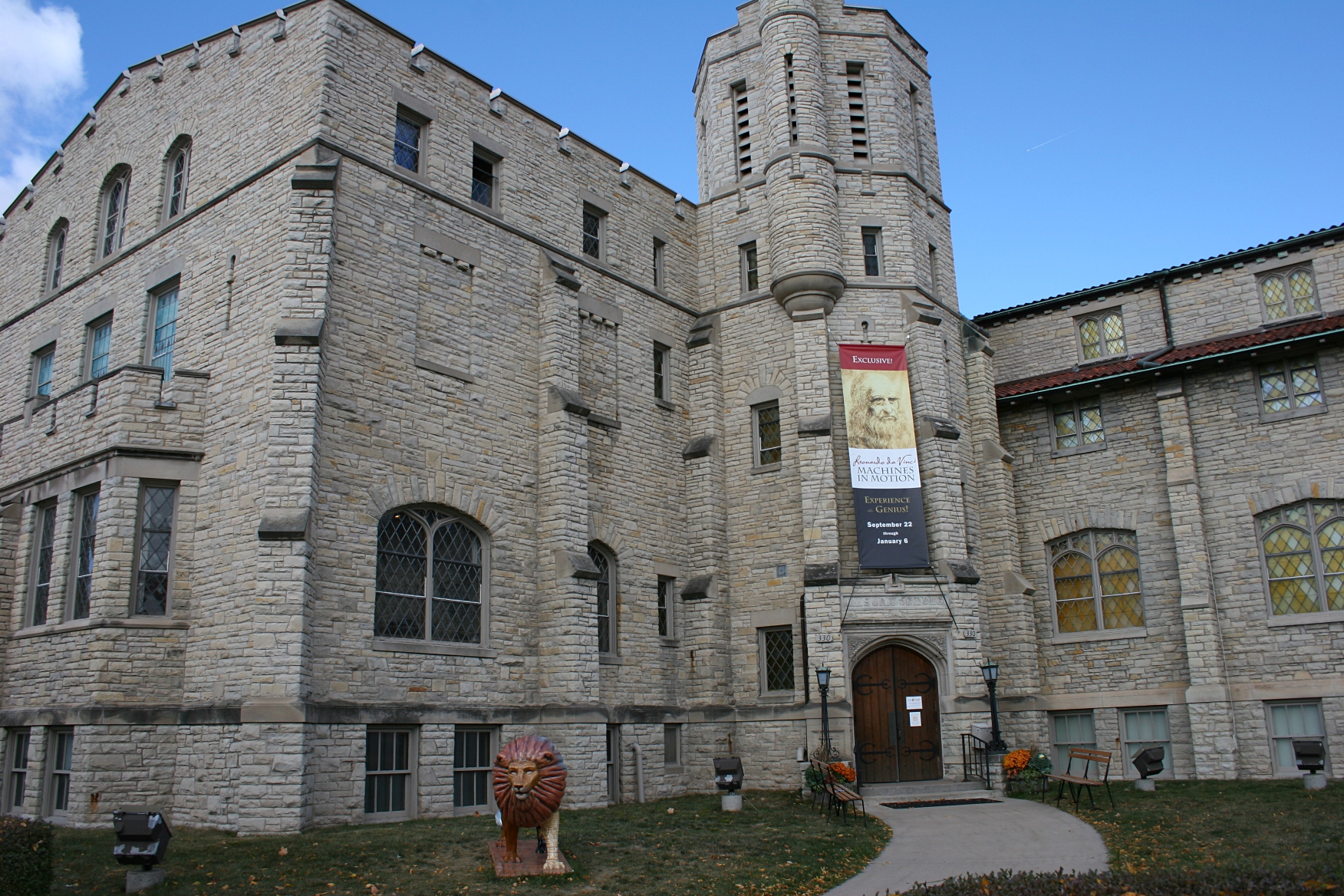
The History Museum at the Castle, 330 E. College Ave., Appleton, Wisconsin.

The History Museum at the Castle, 330 E. College Ave., Appleton, Wisconsin.

CONSTRUCTED OF STONE and anchored by a center tower, the impressive multi-story structure commanding the corner of College Avenue and Drew Street in downtown Appleton, Wisconsin, presents an almost formidable exterior presence.

Aptly named The History Museum at the Castle, this sprawling castle-like fortress embodies the essence of history from the outside in. History seems meant to be showcased here. And it is, in this, the home of The Outagamie Historical Society.

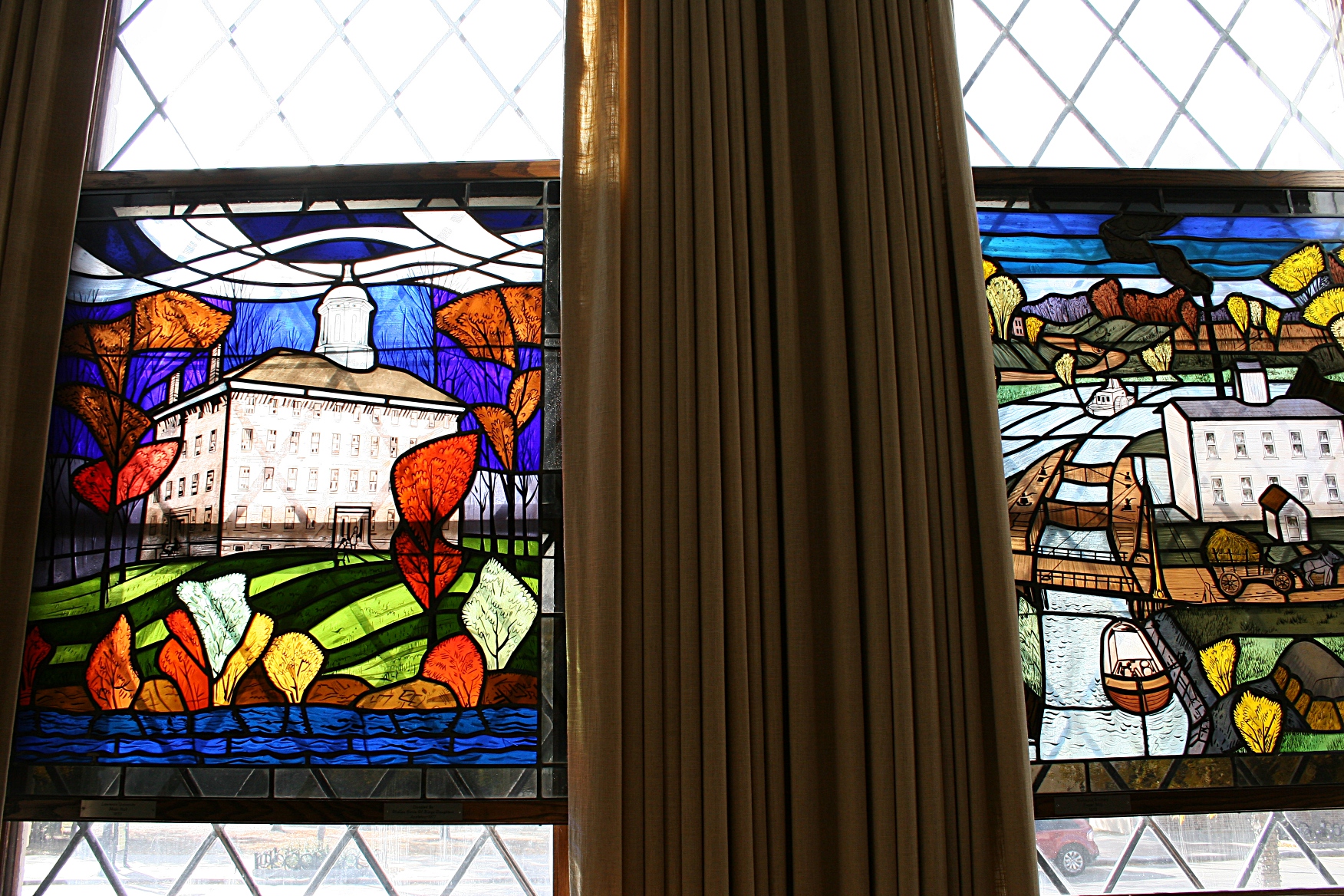
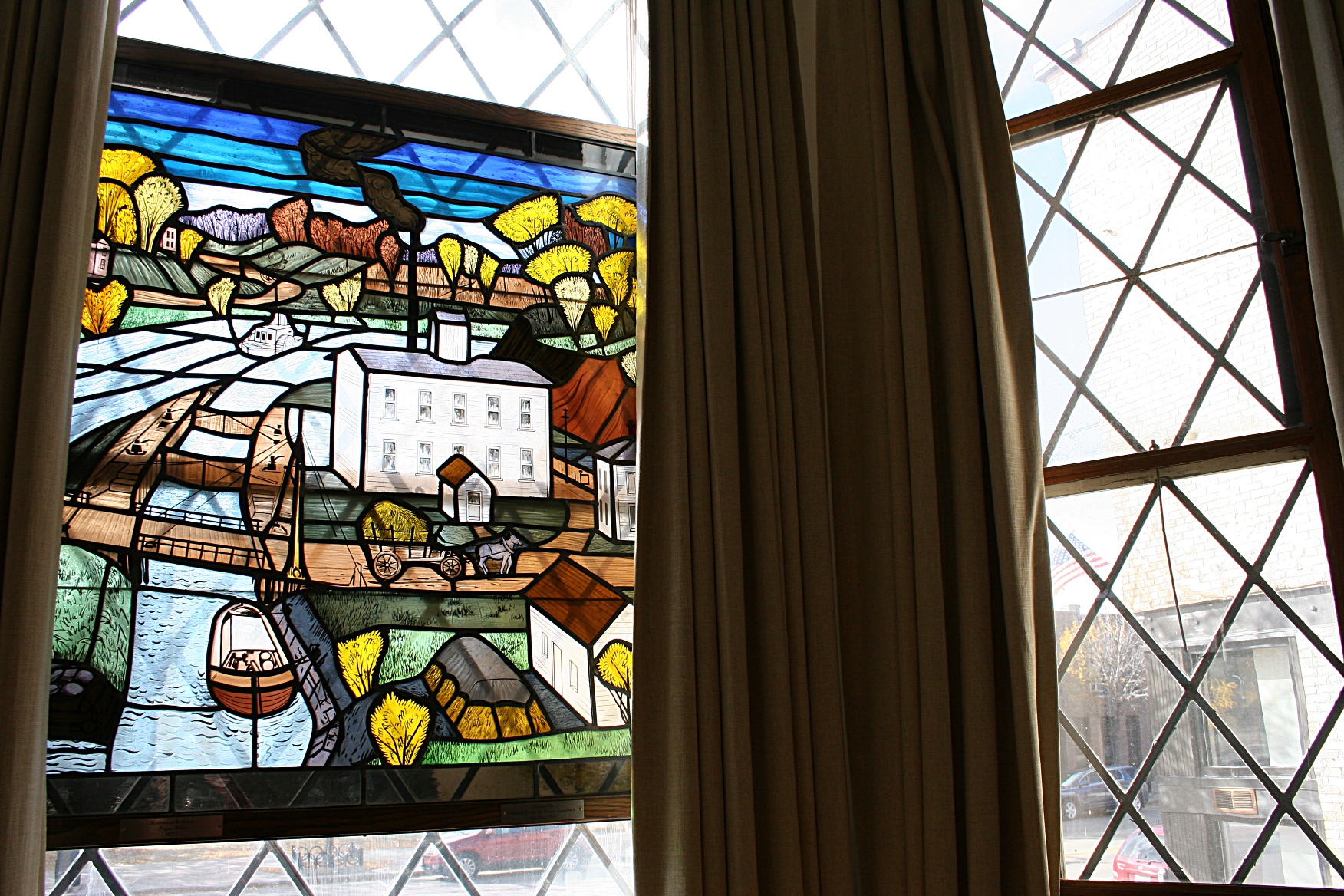
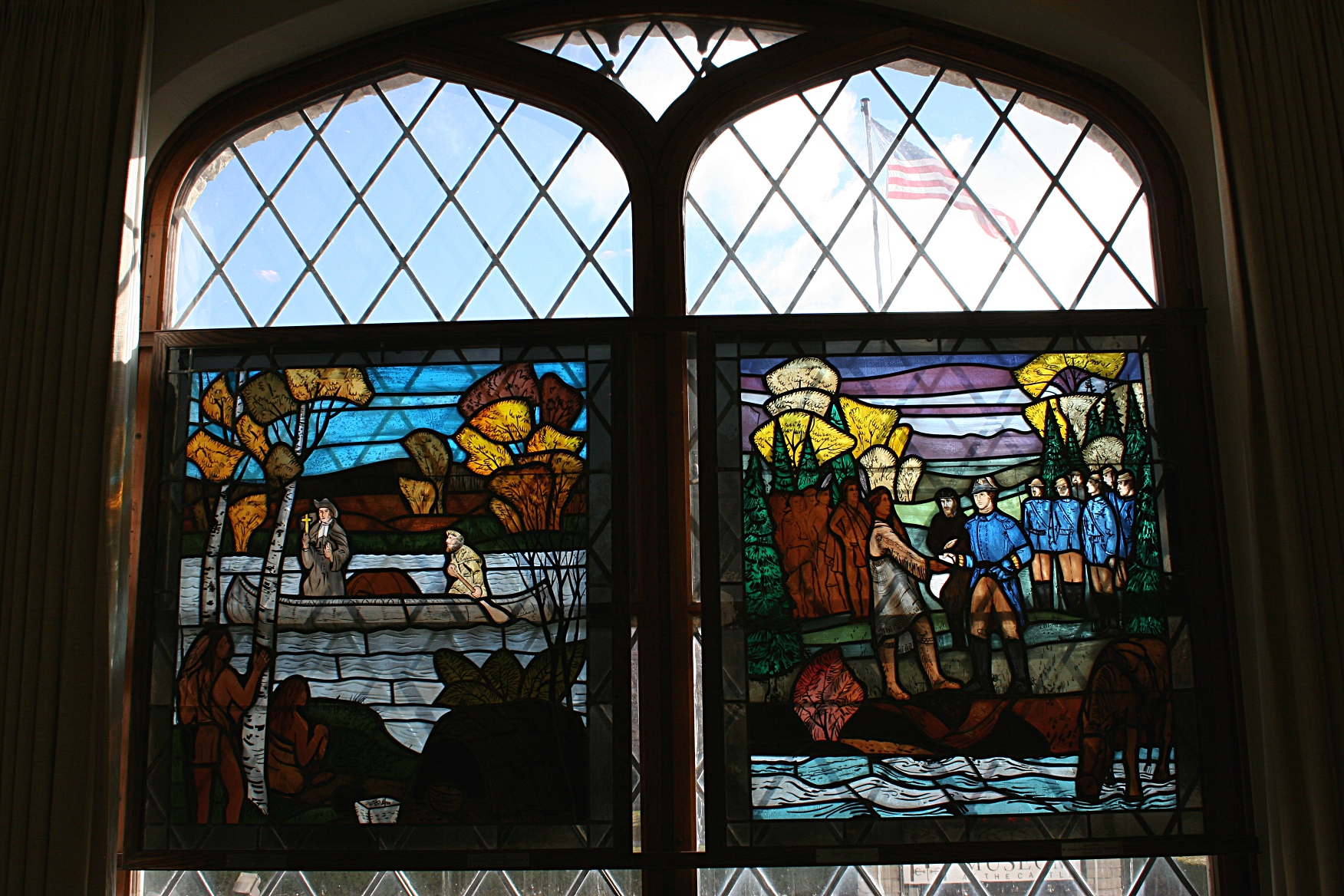
Windows in the Siekman Room depict the history of the Fox Cities from the days of the early explorers until modern times.

Windows in the Siekman Room depict the history of the Fox Cities from the days of the early explorers until modern times.

Perhaps it is a matter of personal taste. But I prefer to learn about history within the walls of a place aged by time rather than in a sterile, modern facility. From the heavy wooden double front entry doors strapped with metal to the woodwork woven throughout the interior to the detailed wall scones, fireplace, paintings and stained glass windows, this museum exudes yesteryear.

More Fox Valley history in art.

More Fox Valley history in stained glass art.

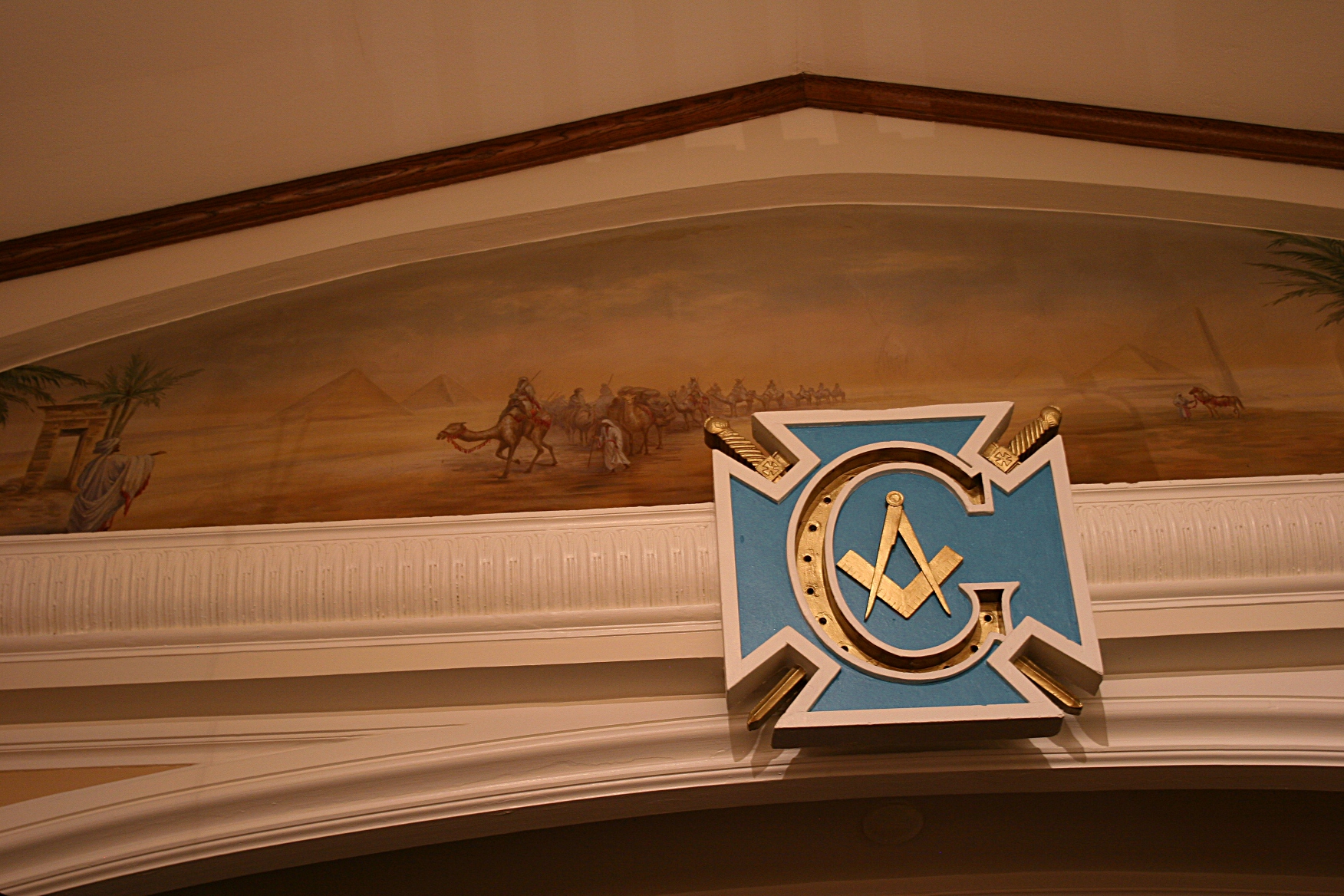
Its history dates back to 1923-1924 when Waverly Lodge No. 51 constructed the complex for use as a Masonic Temple, according to Kathy Voigt, community engagement manager for the museum. Says Voigt:

Now on the National Register of Historic Places, the building is constructed in the Norman Revival style, characterized by the use of rough-hewn stone and other features reminiscent of medieval castles and churches, such as vaulted ceilings, heavy beams and leaded windows.

Artwork above an auditorium stage hints at the building's past as a Masonic Temple.

Artwork above an auditorium stage hints at the building’s past as a Masonic Temple.

In the mid-1980s, after the Masons could no longer afford to maintain the temple, the building was sold to the local historical society.

Windows depicting the region's early fur trading history.

Windows depicting the region’s early fur trading history.

Today this building houses, among other exhibits, rotating and permanent, the history of the Fox River Valley, a region stretching from Green Bay on the north to Neenah on the south. The area was once home to the Fox River Valley Indians, AKA the Meskwaki/Mesquakie, who relocated to Wisconsin from the East around 1650.  “Tools of Change” highlights the Fox Valley’s tools, people, work and everyday life between 1840-1950.

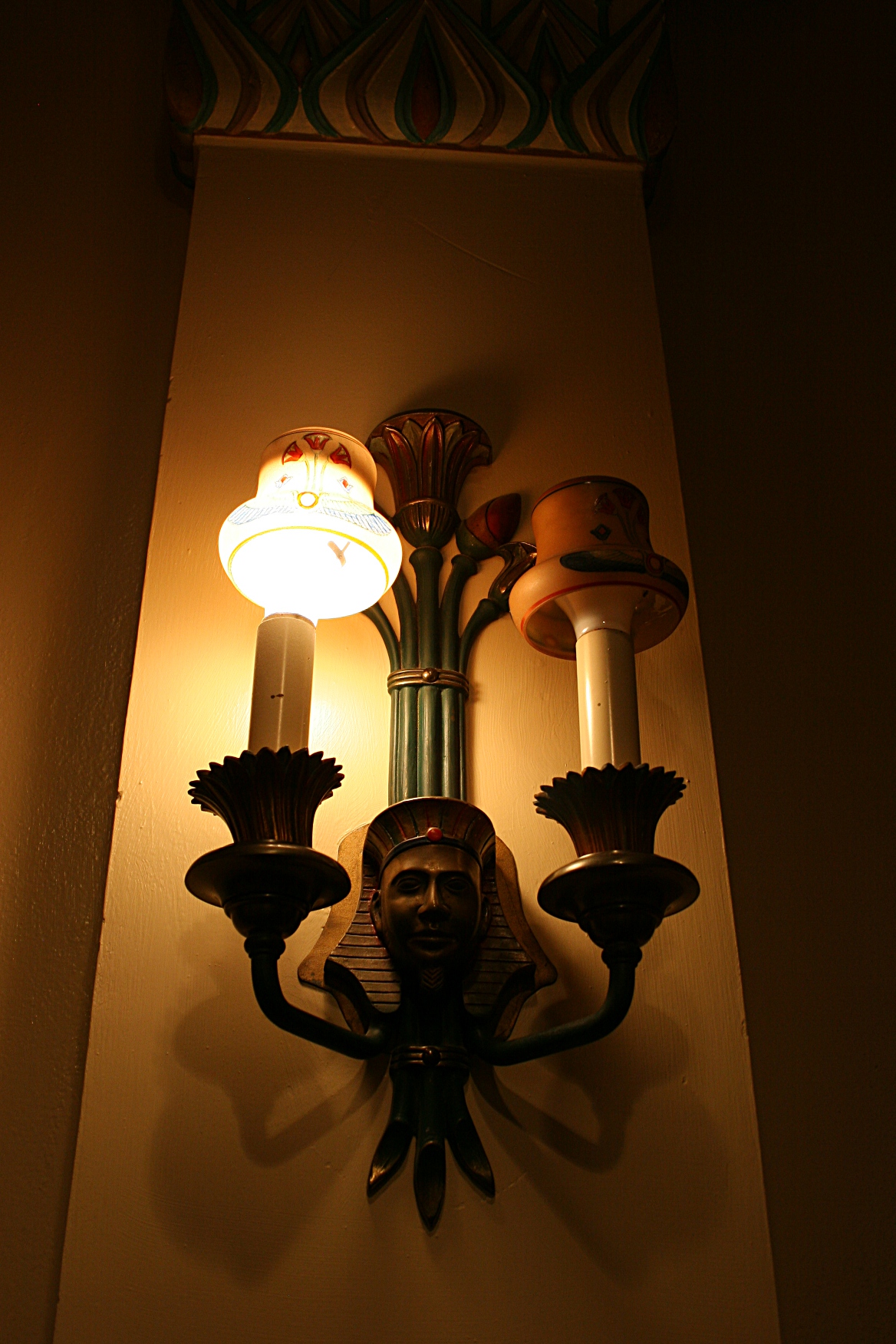
And because I notice details, be sure to look for these incredible light fixtures in the main Houdini exhibit room.

I noticed these incredible wall sconces in a Houdini exhibit room.

Other exhibits feature Senator Joseph McCarthy, born and raised in Appleton; Nobel Prize winning writer Edna Ferber; the work of local noted photographer Andrew J. Mueller; and, upstairs, a more extensive exhibit on illusionist and escape artist Harry Houdini, who lived in Appleton as a child. I’ll post about the “AKA Houdini” exhibit tomorrow.

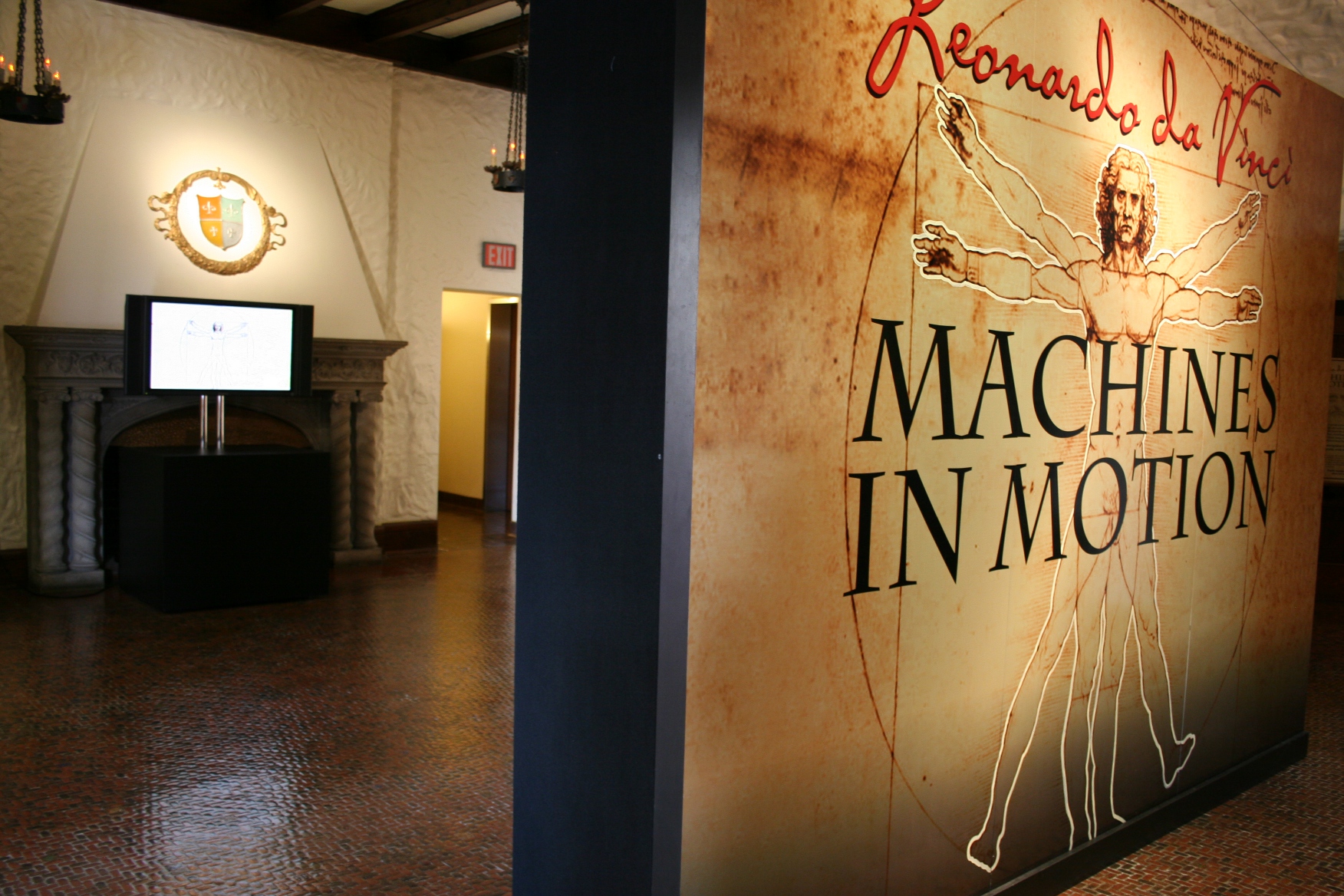
While the Leonardo da Vinci signage likely catches your eye first in this photo, look to the left and notice the fireplace.

While the Leonardo da Vinci signage likely catches your eye first, look to the left and notice the fireplace, the lights, the floor.

But currently drawing the most interest is the museum’s temporary “Leonardo da Vinci: Machines in Motion” exhibit which opened late last year and has now been extended through February 3. You can read about “Machines in Motion” in a previous post by clicking here. This show was my primary reason for touring the museum in early October when my husband and I were in Appleton visiting our second daughter.

Another view of the historic museum.

Another view of the museum, from early October.

The historic Masonic Temple housing the museum rates as a bonus to the history inside. I wonder how many visitors, when they tug at those heavy front entry doors and then enter the castle, pause to appreciate the building they are standing within.

BONUS IMAGES:

Given my love of photography, the "From My View: The Photographs of Andrew J. Mueller" exhibit especially interested me. Mueller worked for the local newspaper.

Given my love of photography, the “From My View: The Photographs of Andrew J. Mueller” exhibit especially interested me. Mueller worked for the local newspaper, beginning as an artist there and becoming the paper’s full-time photographer in 1950. He approached photography from both artistic and journalistic perspectives.

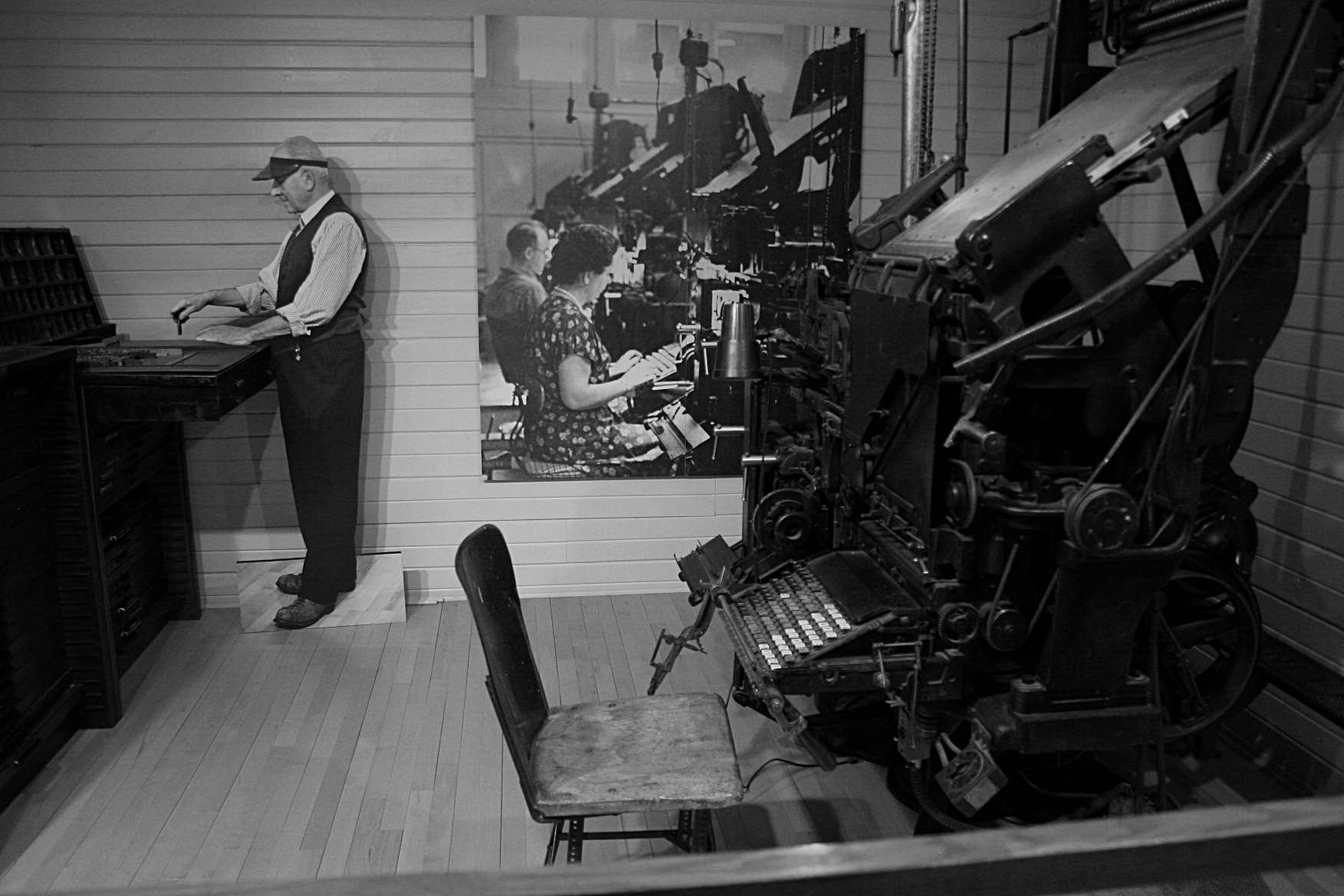
Given my journalism background, an old printing press also caught my eye.

Because of my journalism background, an old printing press also caught my eye.

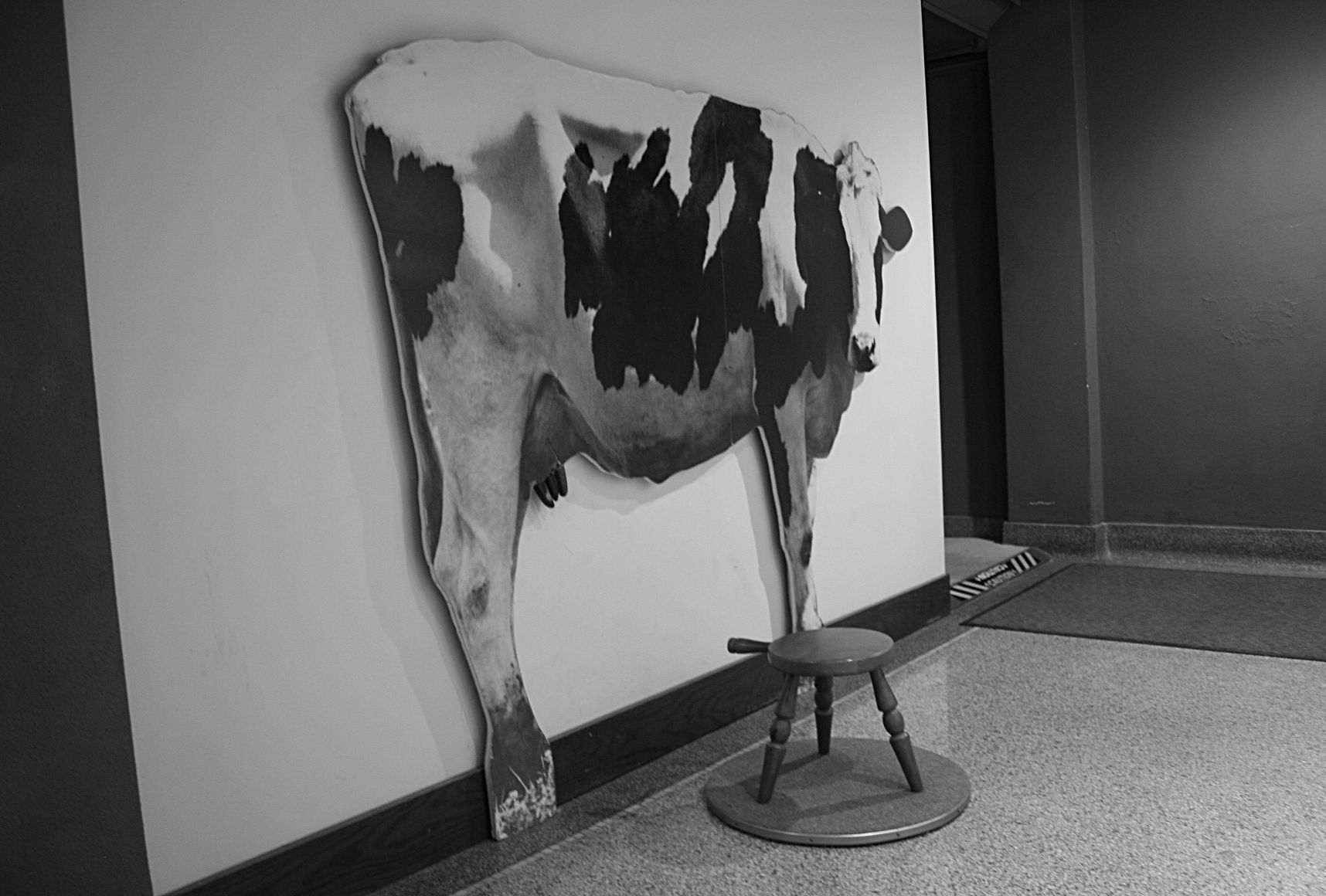
Would any Wisconsin museum exhibit be complete without a cow? Here you can perch on the stool and pretend to milk this Holstein.

Would any Wisconsin museum exhibit be complete without a cow? Here you can perch on the stool and pretend to milk this Holstein.

FYI: For more information about The History Museum at the Castle, click here.

© Copyright 2013 Audrey Kletscher Helbling
 

In Hastings: The comfortable familiarity of an old-fashioned grocery store November 1, 2012

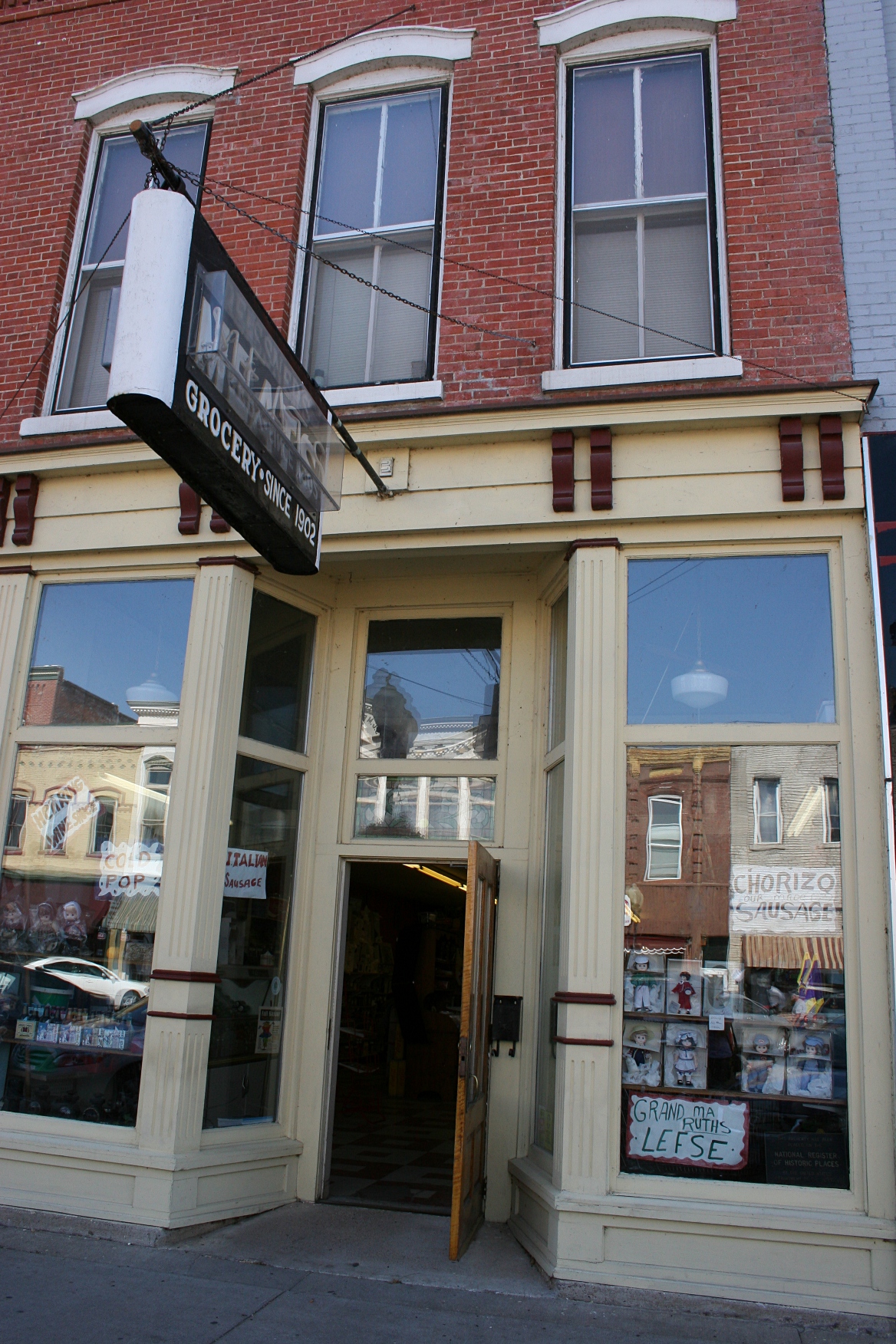
Reissner’s Meats & Grocery in historic downtown Hastings, Minnesota.

YOU KNOW HOW SOMETIMES, when you step into a place, you feel like you’ve been there before, but you haven’t.

That would be Reissner’s Meats and Grocery in historic downtown Hastings.

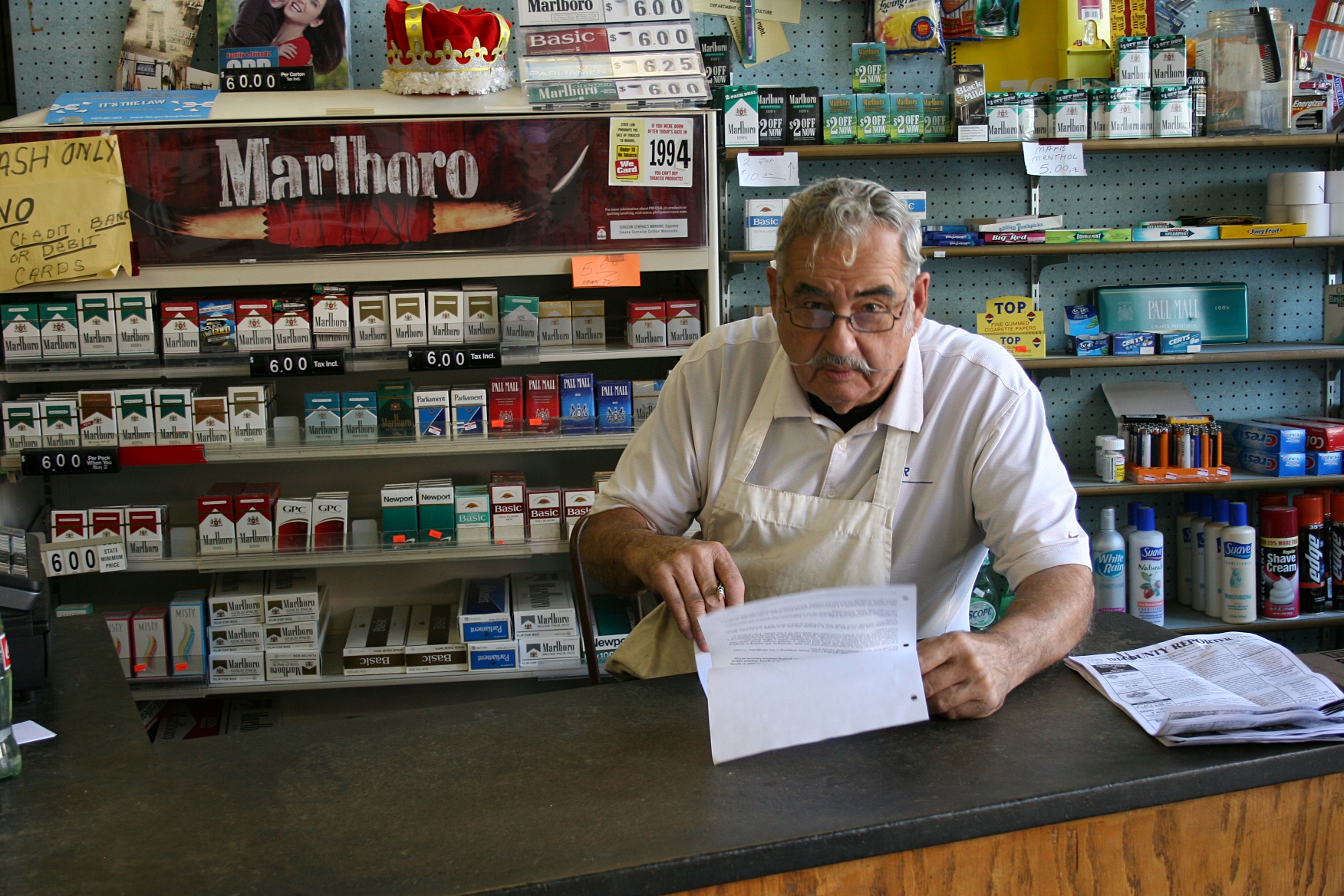
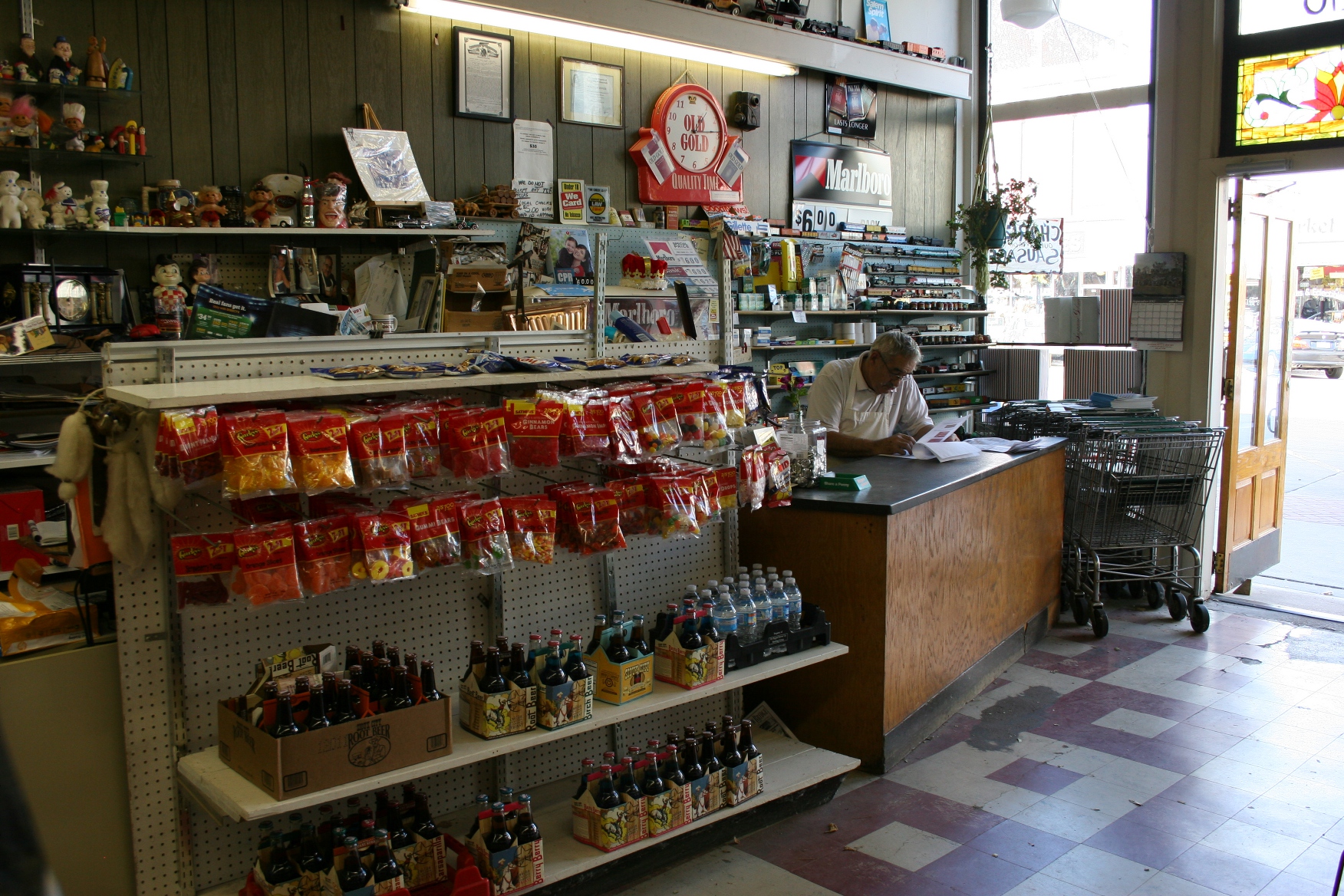
Third-generation owner Dick Reissner.

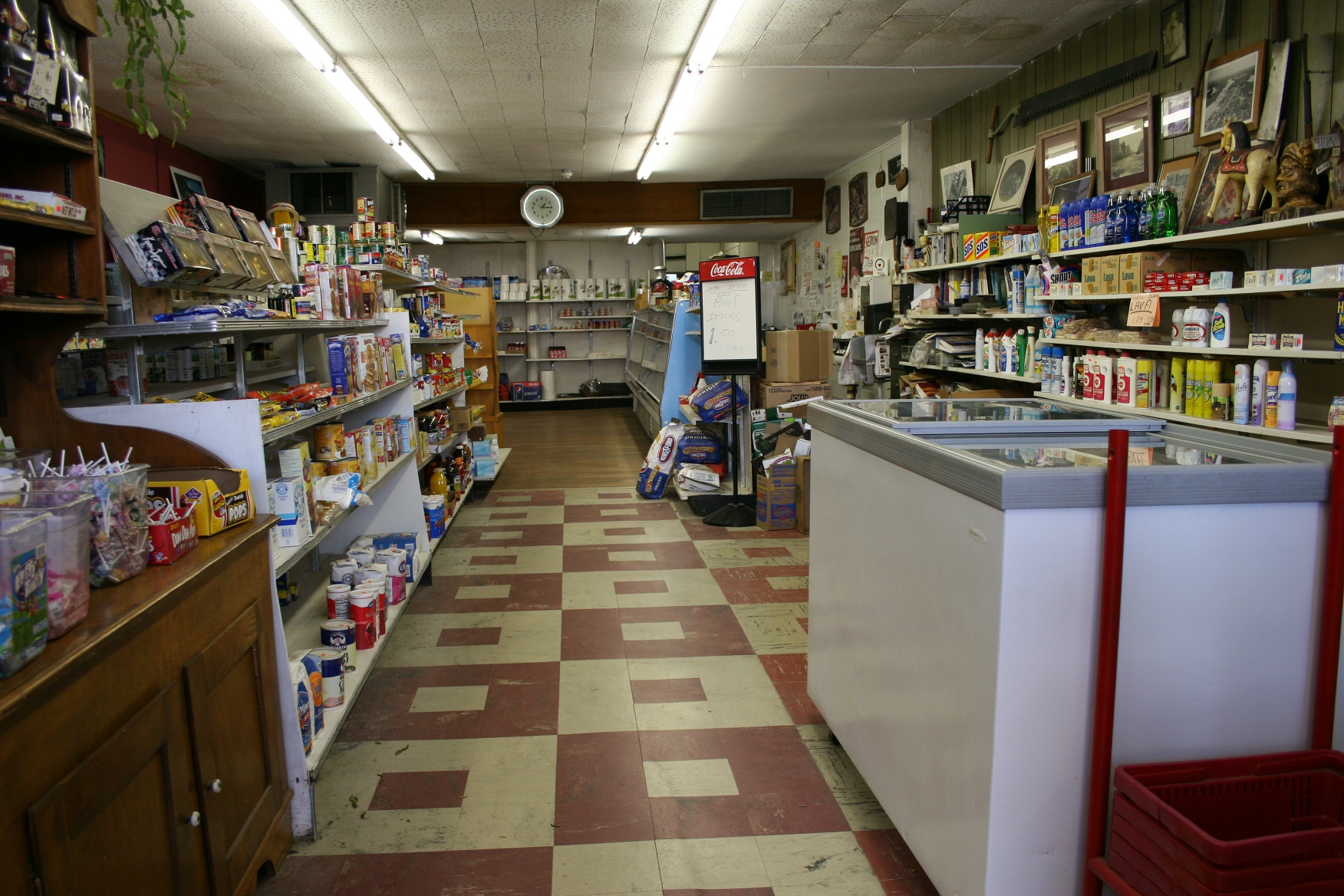
Entering this narrow two-aisle store with a mustachioed, gray-haired shopkeeper in a butcher’s apron leaning on the front counter, I experienced a sense of familiarity tracing back to my childhood. Reissner’s reminds me of the corner grocery in my hometown of Vesta where I purchased my favorite Tootsie Pop suckers, Bazooka bubble gum and yellow packs of Juicy Fruit gum from the candy counter on many a trip to town with Mom.

Honestly, I cannot remember much else about Rasmussen’s Grocery except the candy and the wood floors and the big old screen door that banged shut behind me.

Aisle one with the candy counter to the left.

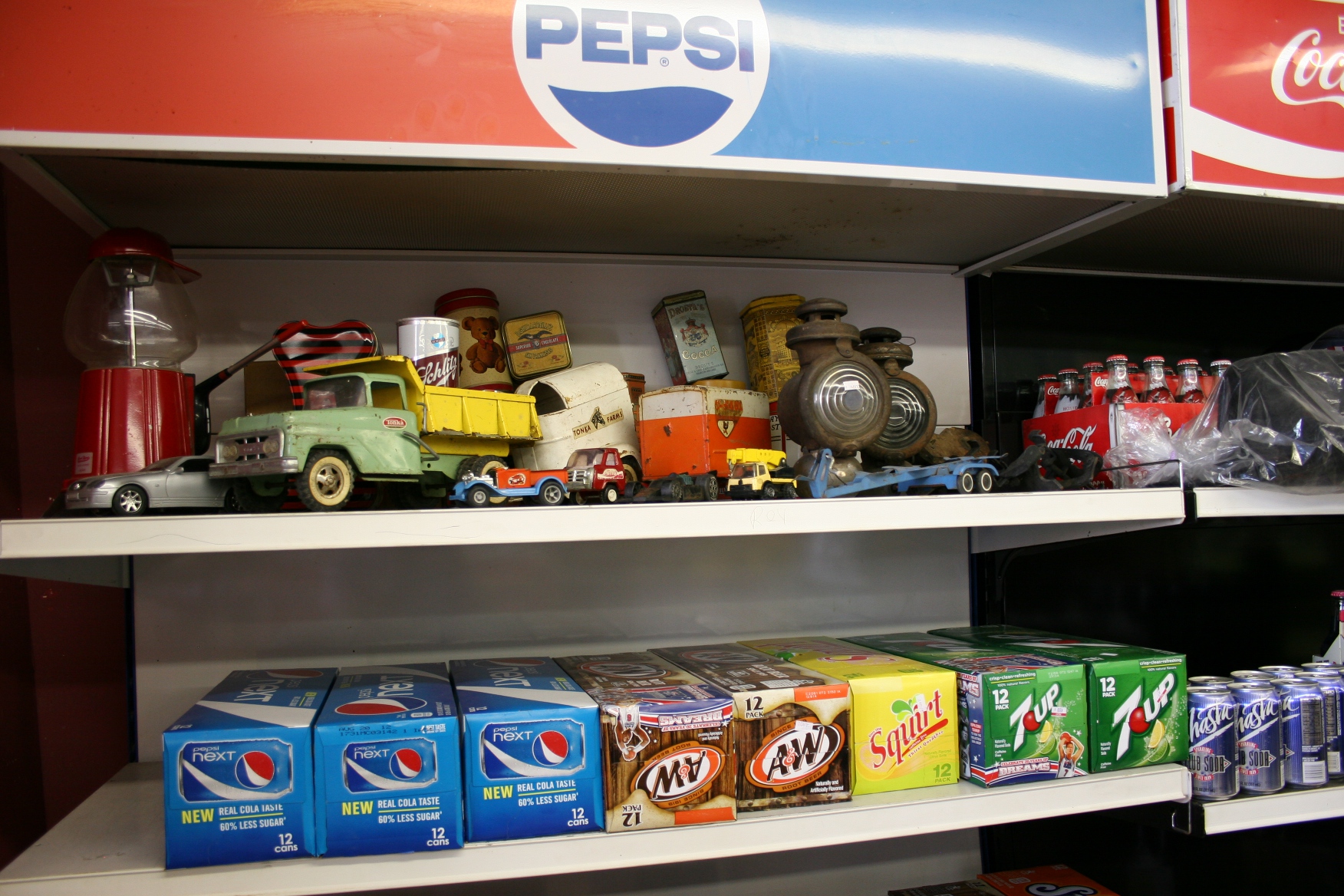
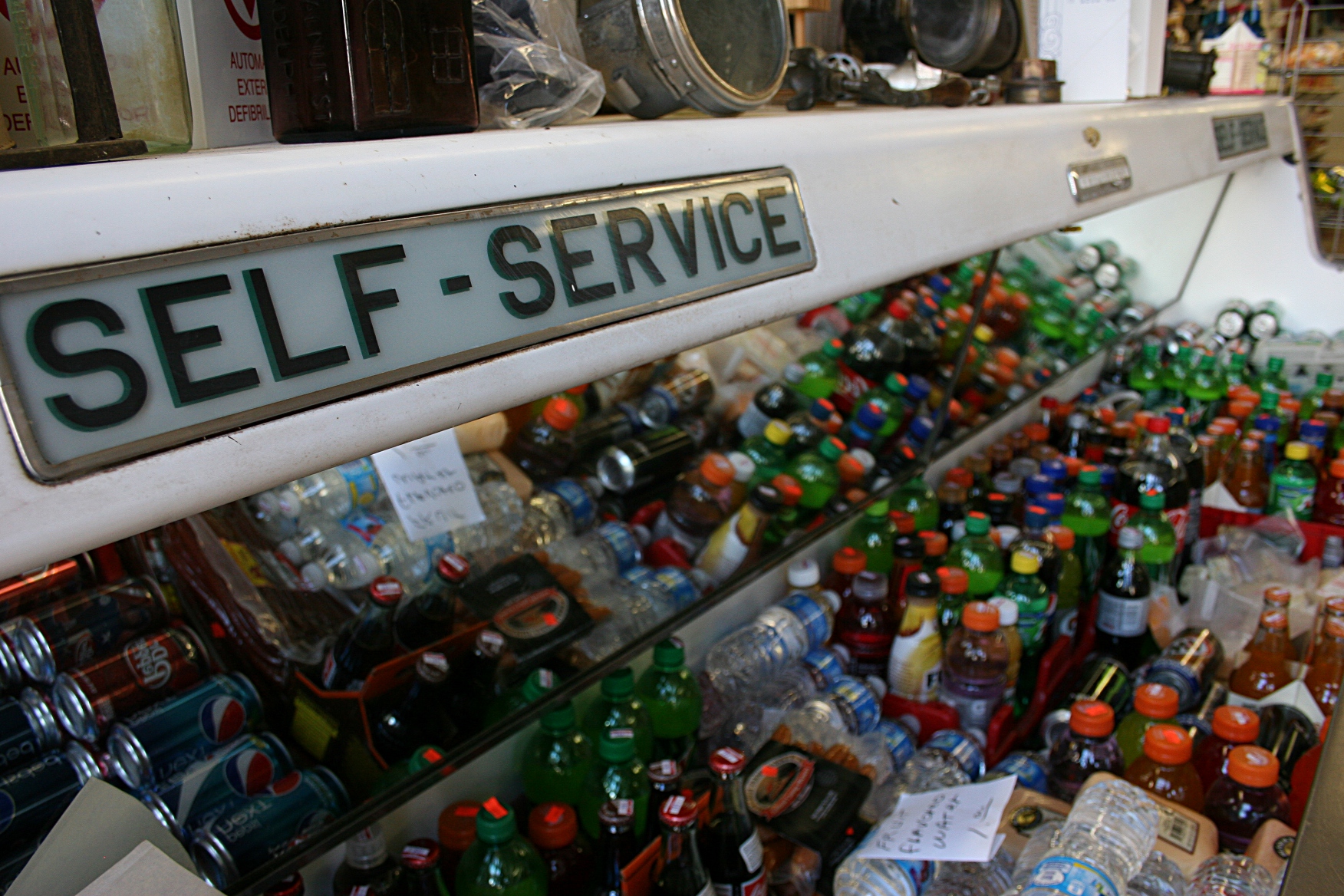
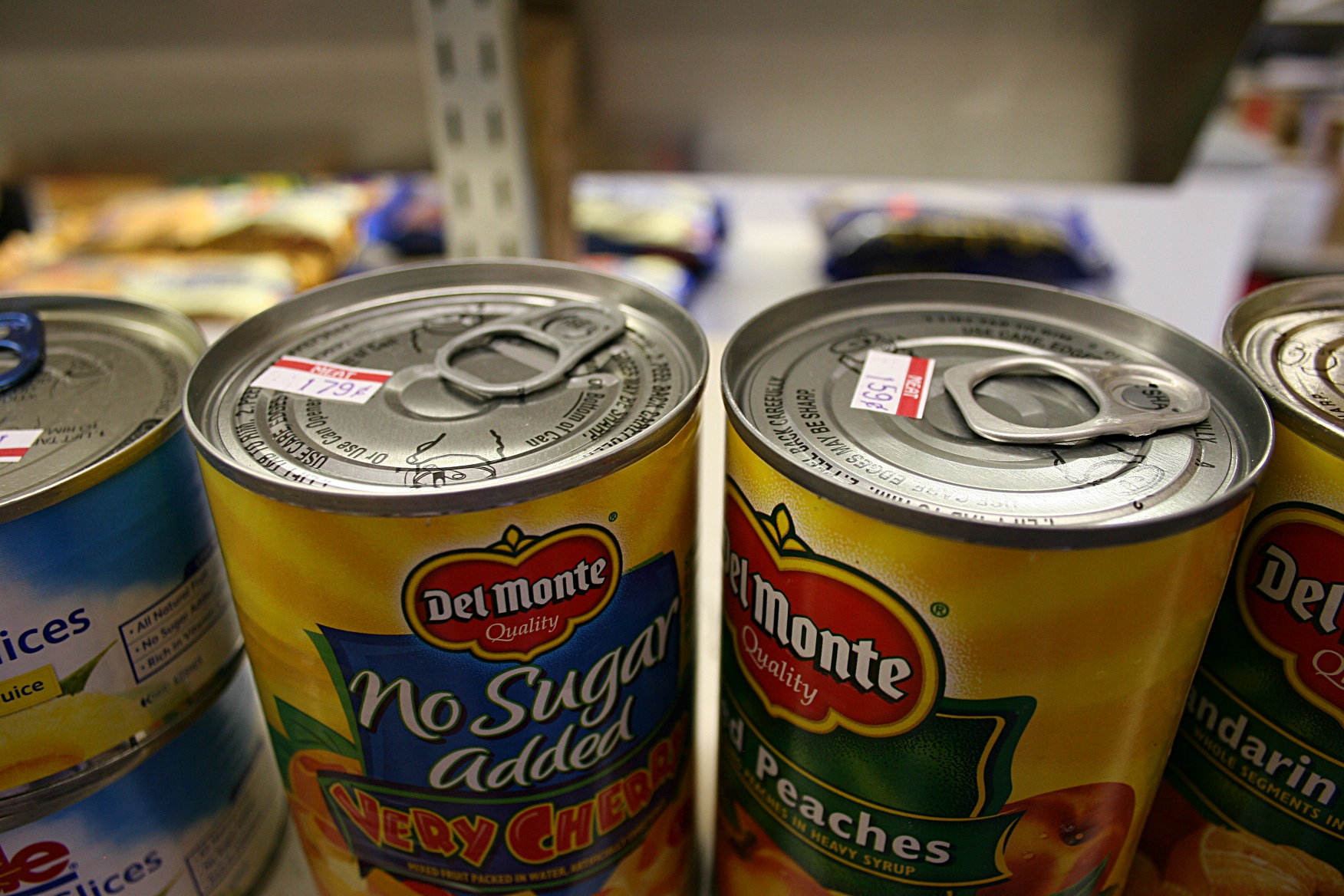
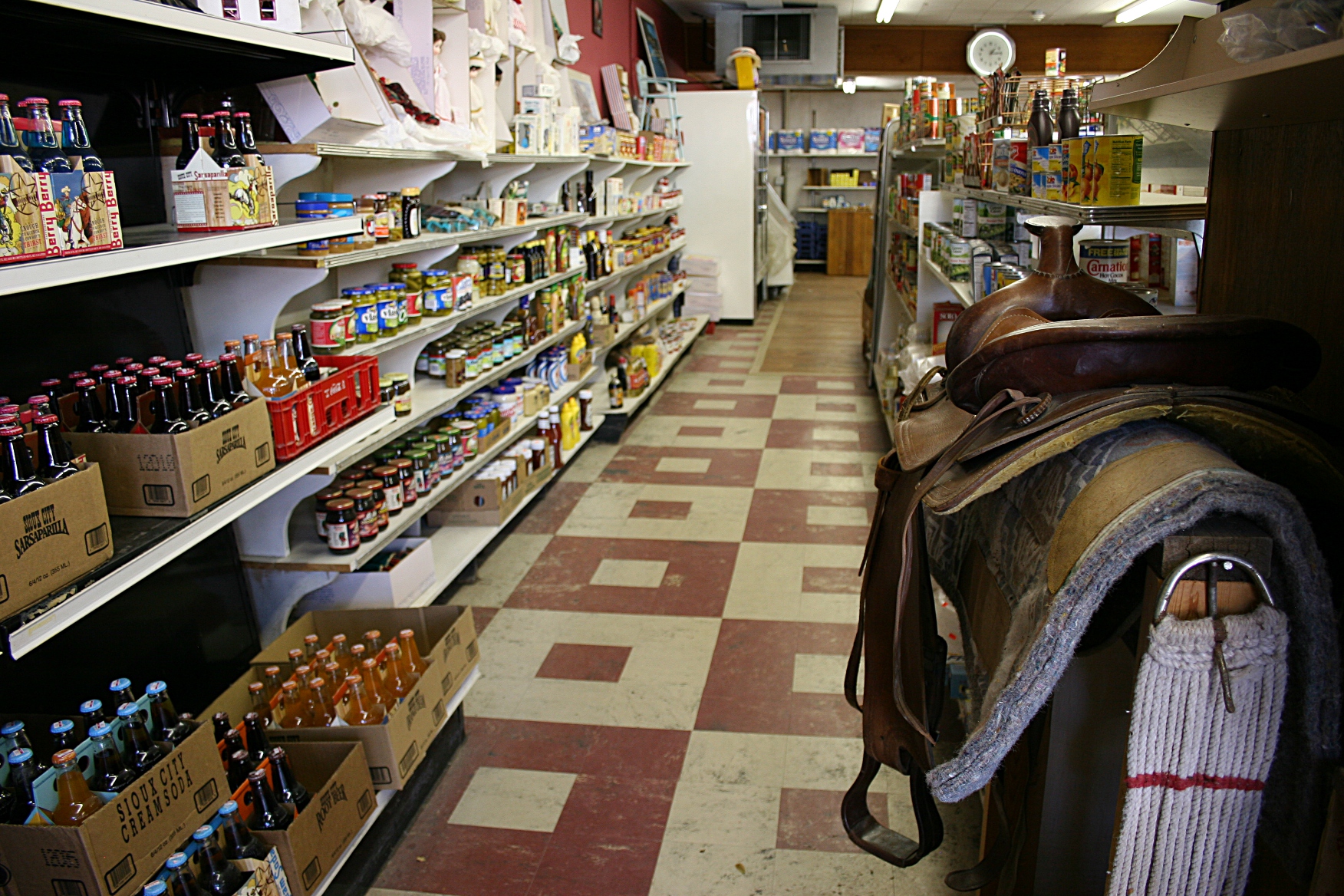
Reissner’s in Hastings possesses that same nostalgic feel, even a vintage look in the red-and-white tile floors, the mishmash of merchandise, the hulking and energy-sucking open cooler that holds pop, and the price stickers adhered to canned foods and more.

Dick Reissner reads at the front counter while I explore his store.

Richard (Dick) Otto Reissner was preoccupied with reading when I walked in on a recent Saturday afternoon and didn’t seem to want to be bothered. So I didn’t query him with the list of questions formulating in my mind as I perused the aisles.

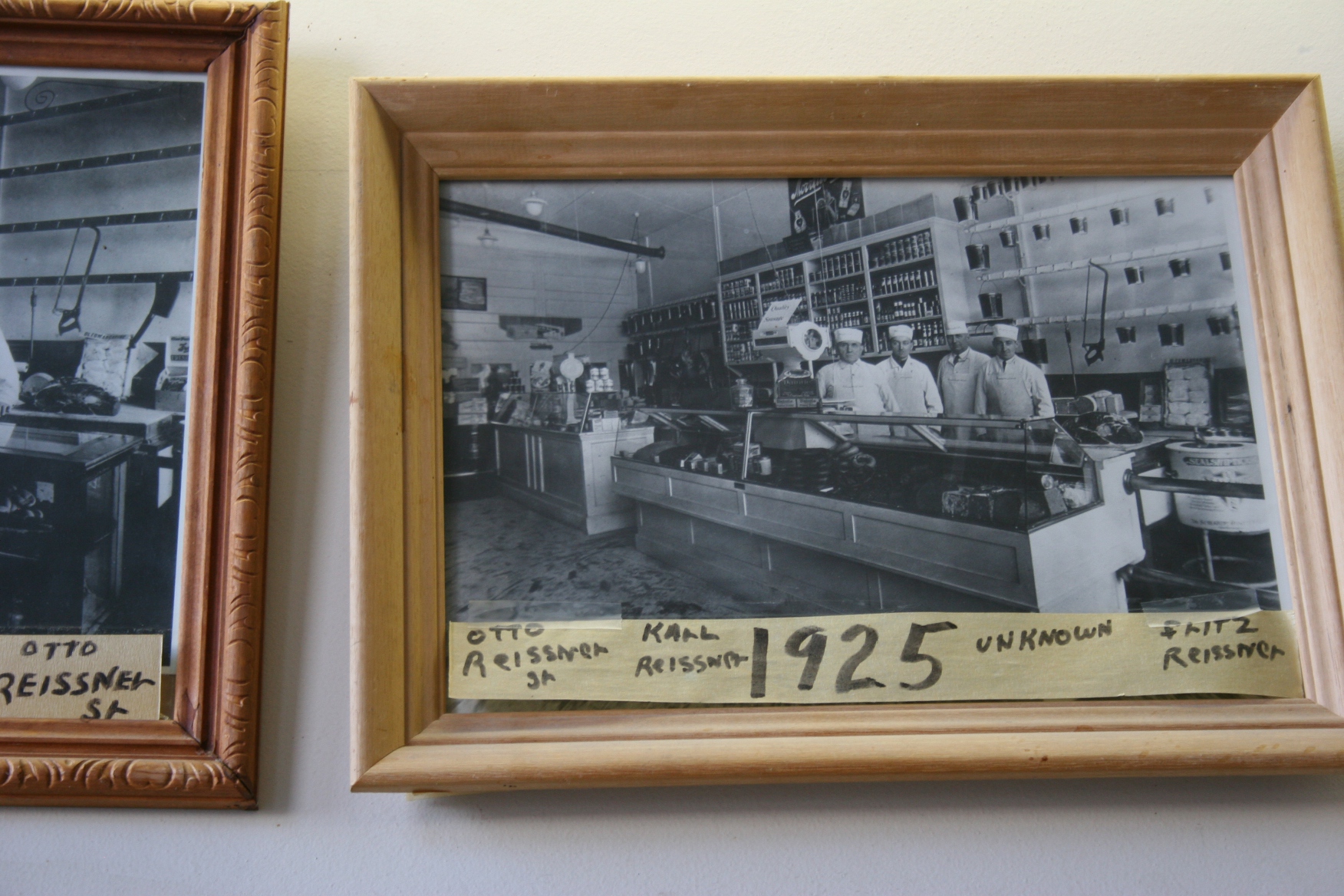
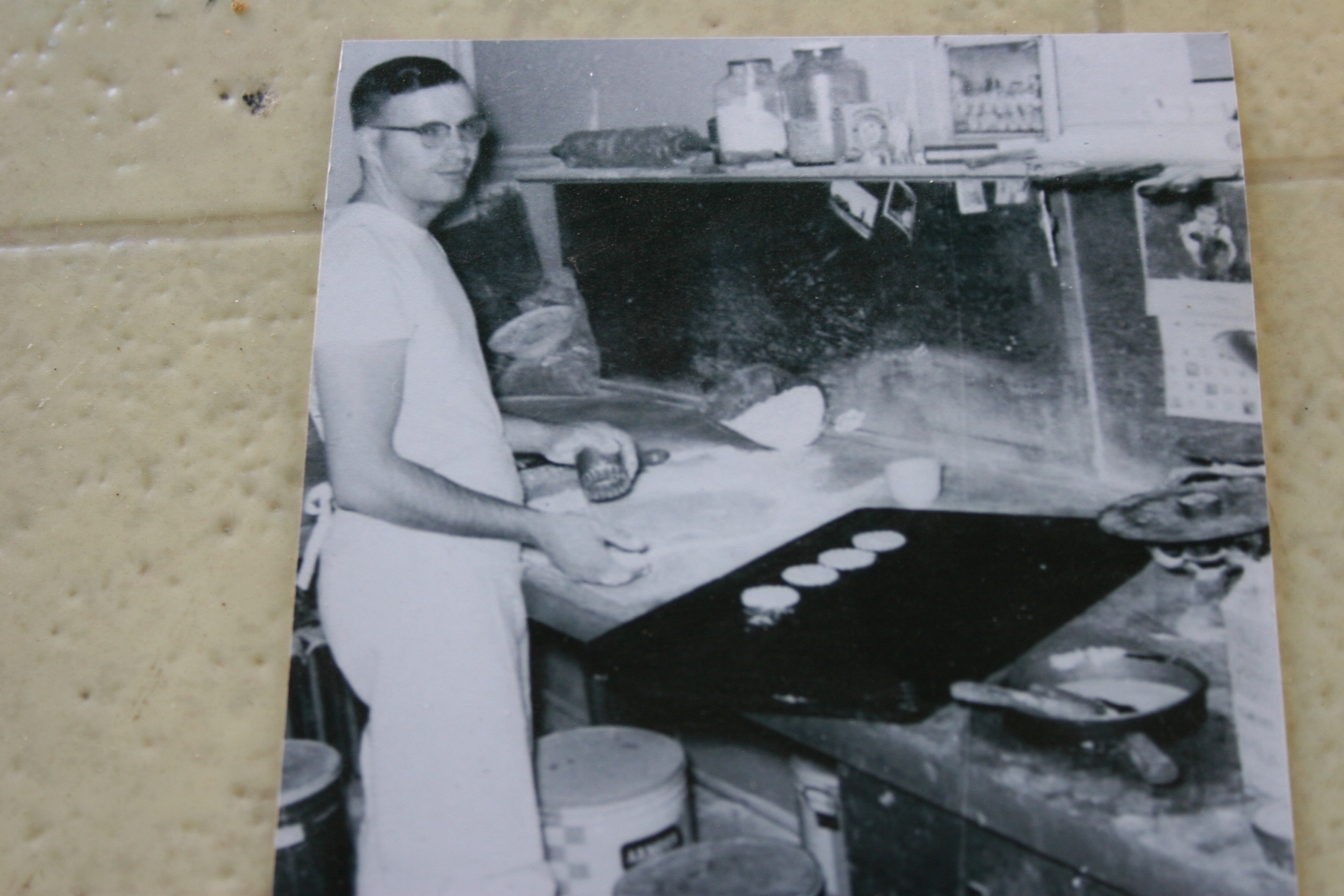
Vintage photos which clued me in as to the history of this place.

Therefore I have no stories to share with you about this third-generation family business. Only photos.

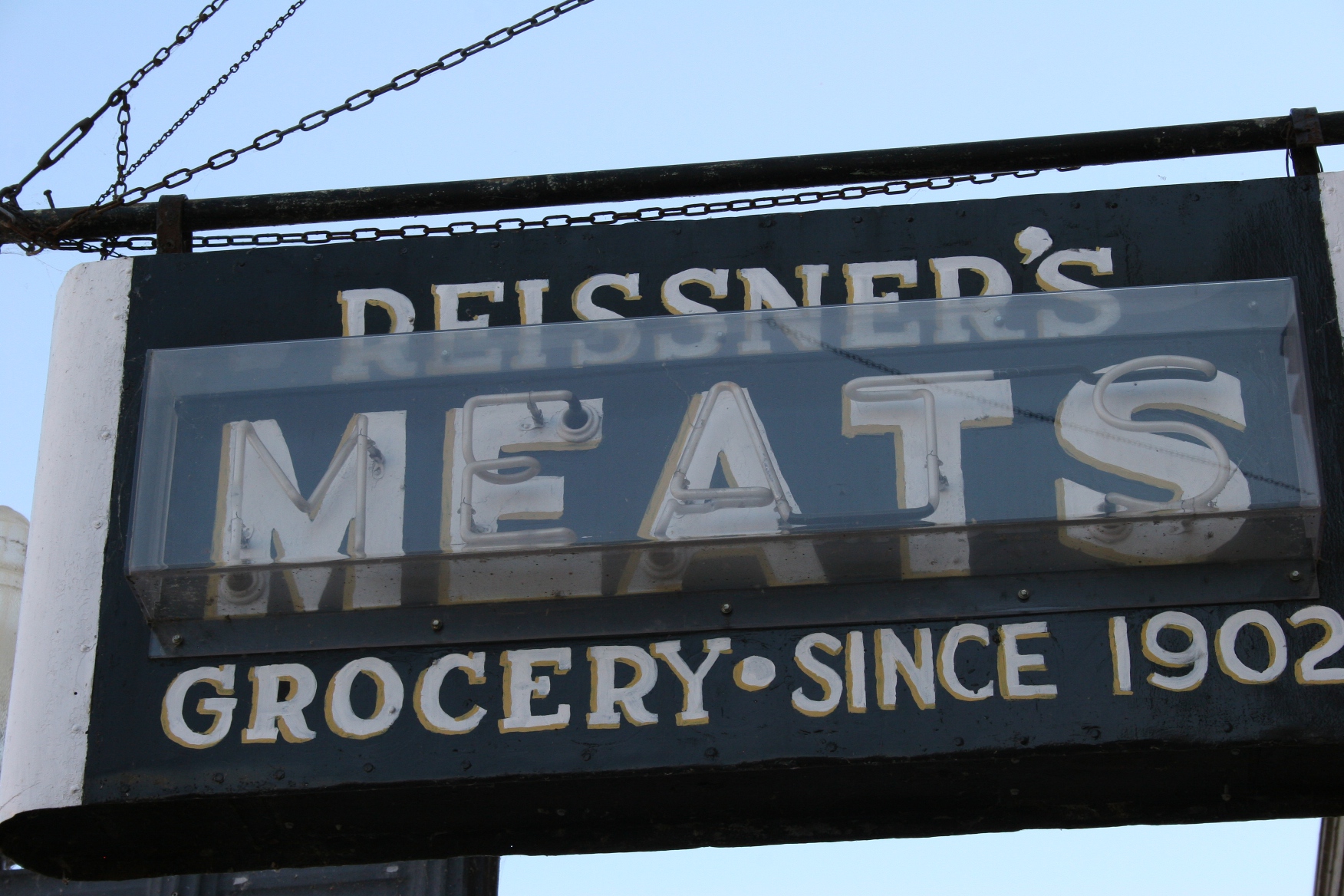
The exterior sign, which dates the business to 1902.

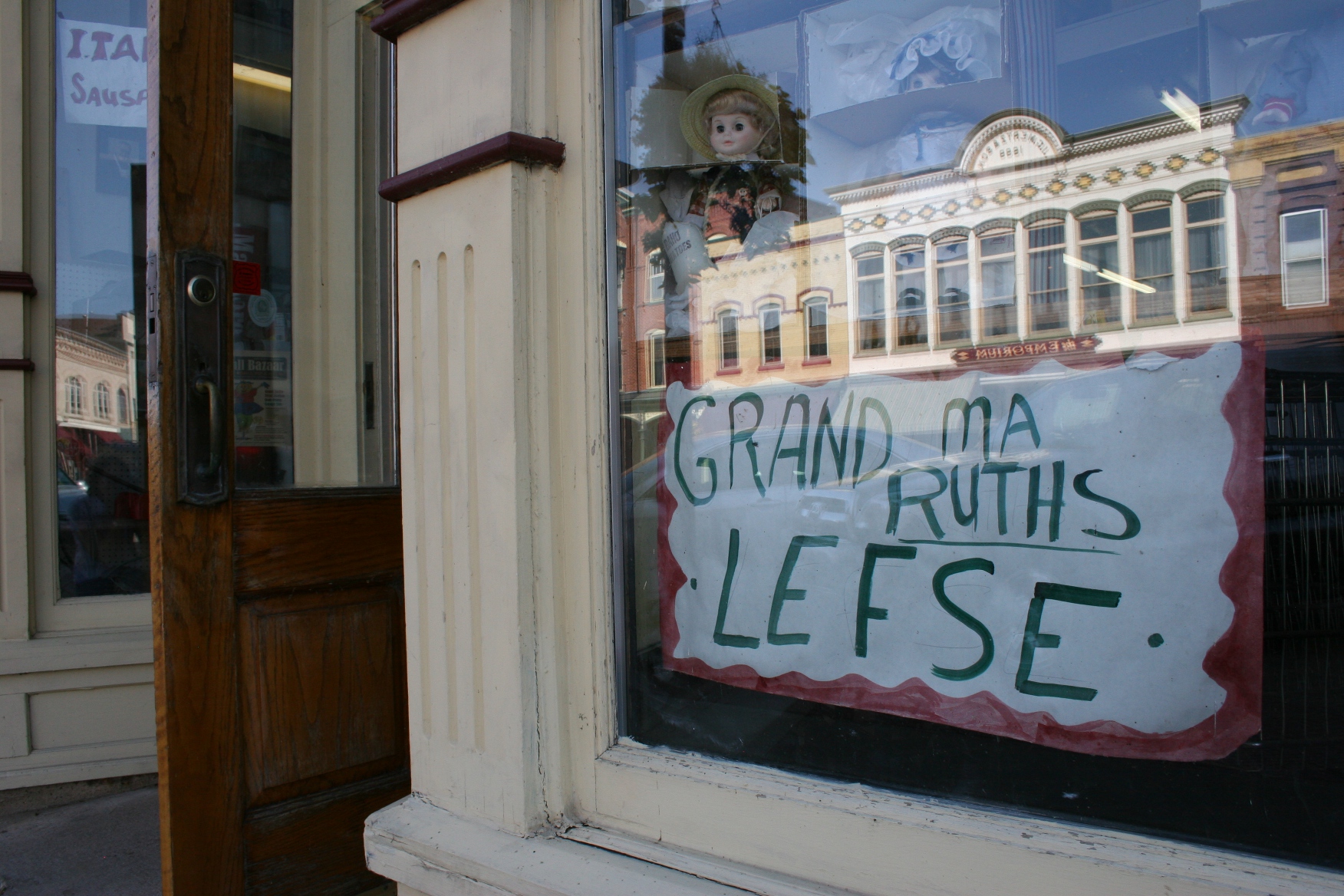
I totally forgot to search for the lefse or ask about  Grandma Ruth.

The vintage toys, etc., are not for sale.

An old, old cooler…

How often do you see price stickers on food anymore?

I have no clue, none, why there’s a saddle, right, in the grocery store.

© Copyright 2012 Audrey Kletscher Helbling


Transforming an historic building into Seven Sisters Coffee, a community gathering spot & more in rural Minnesota October 23, 2012

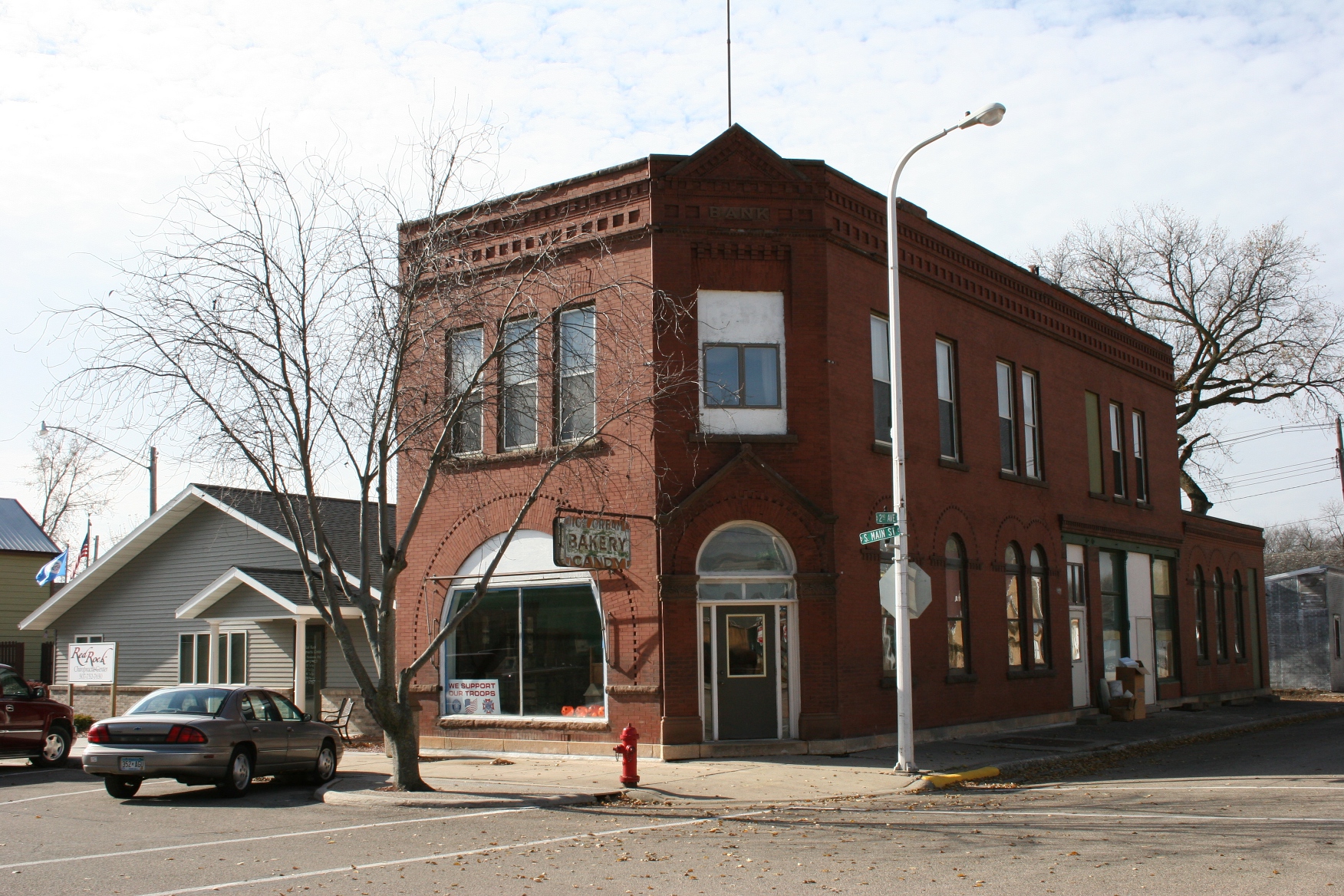
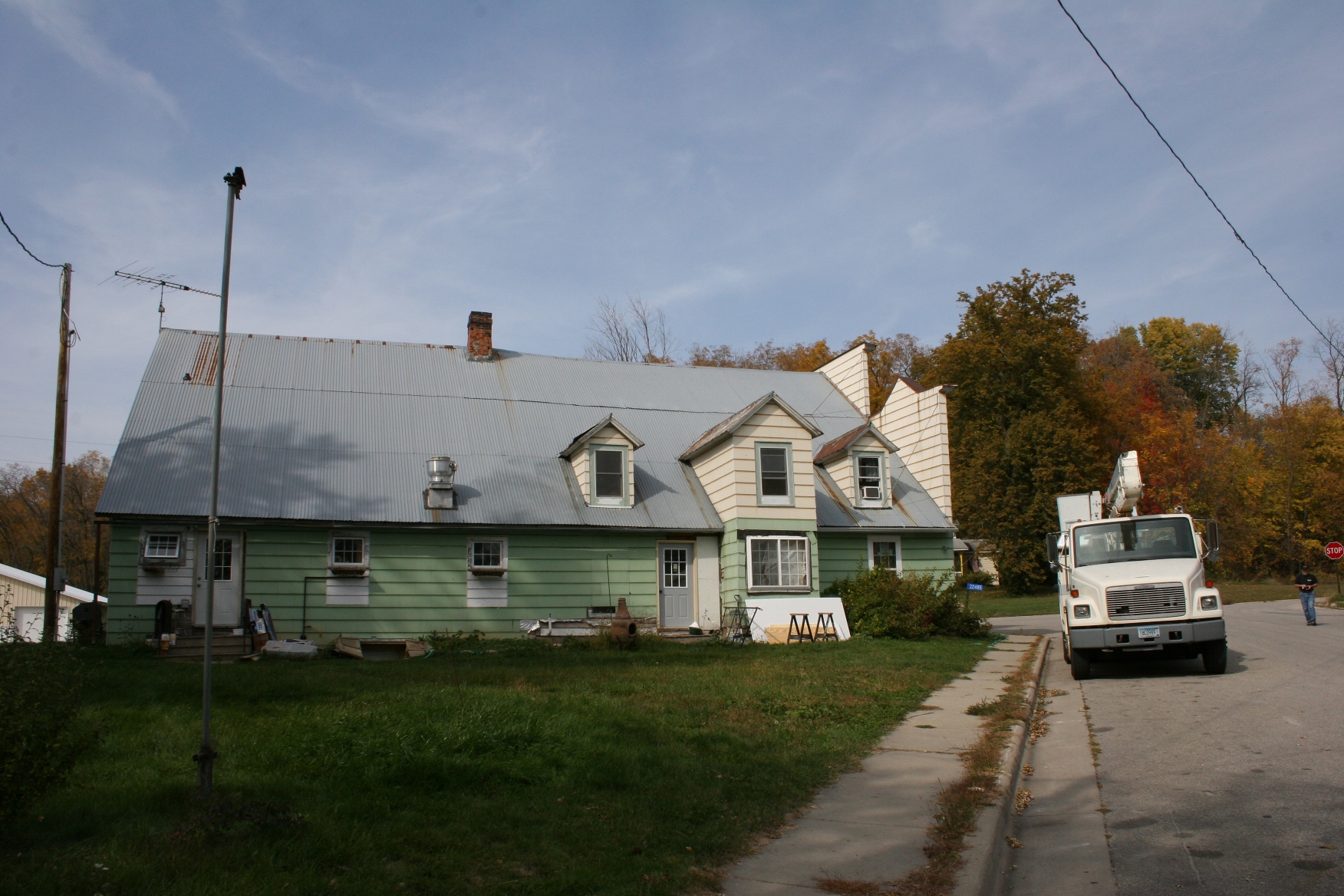
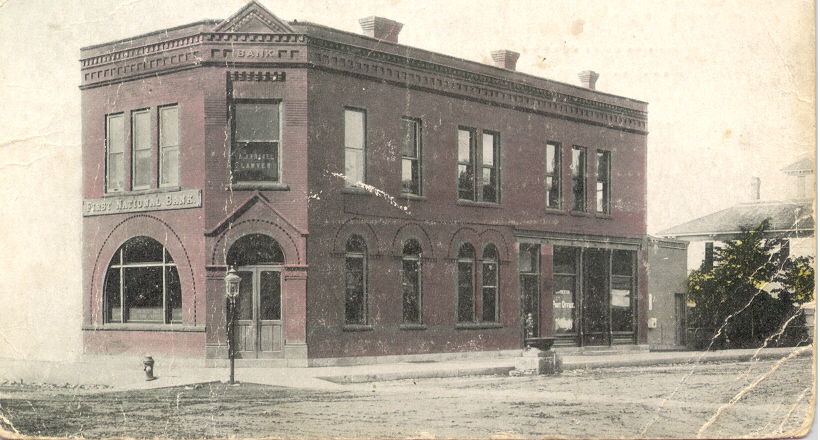
This 1892 former bank building and 95-year bakery anchoring a corner of Lamberton’s Main Street is being renovated into Seven Sisters Coffee by a young couple with connections to this area of southwestern Minnesota. After the business opens, the upstairs will be renovated into loft style apartments.

DAVID AND MICHELLE can see beyond the crumbling mortar, the moisture damage, the buckling floor boards, the teal paint.

Just barely into major renovation of an historic 1892 bank building and former long-time bakery in downtown Lamberton, this couple is thoughtfully and methodically working toward their summer 2013 goal of opening Seven Sisters Coffee.

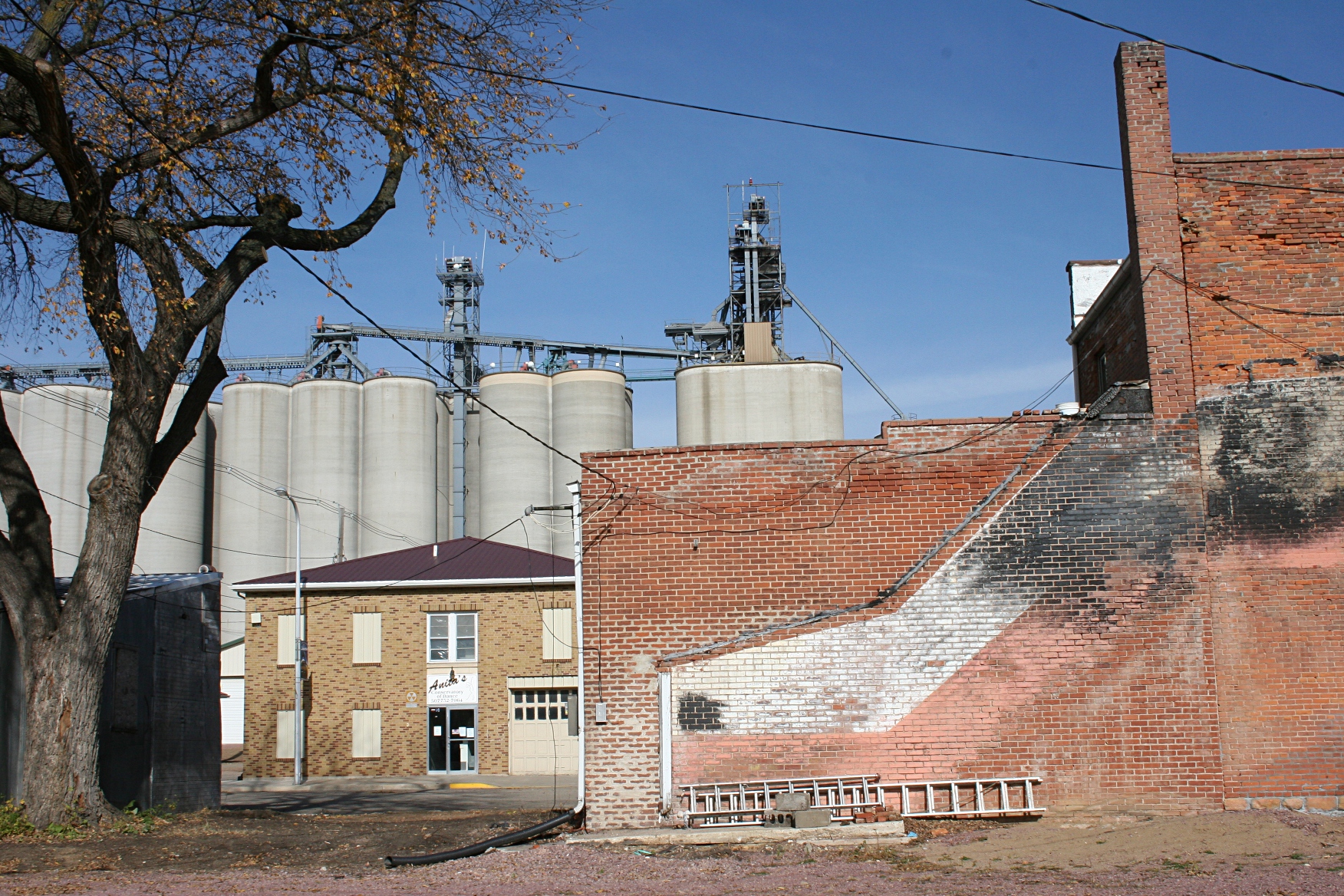
This shows the side and back view of the building, with the rear part added on to the original. Soot from a 2005 fire, which destroyed Plum Creek Crafts next door, mars the brick. Behind the building, a tree was removed and plans are to install a patio area for outdoor dining. They saved a slice of the tree to build a table.

Even the name, Seven Sisters, holds special significance for the pair as Michelle is one of seven sisters and three brothers who grew up in Lamberton, a strong agricultural community of 822 in Redwood County on the southwestern Minnesota prairie. Additionally, Michelle notes that Seven Sisters possesses multiple meanings—in Greek mythology, astronomy and even as a mountain range.

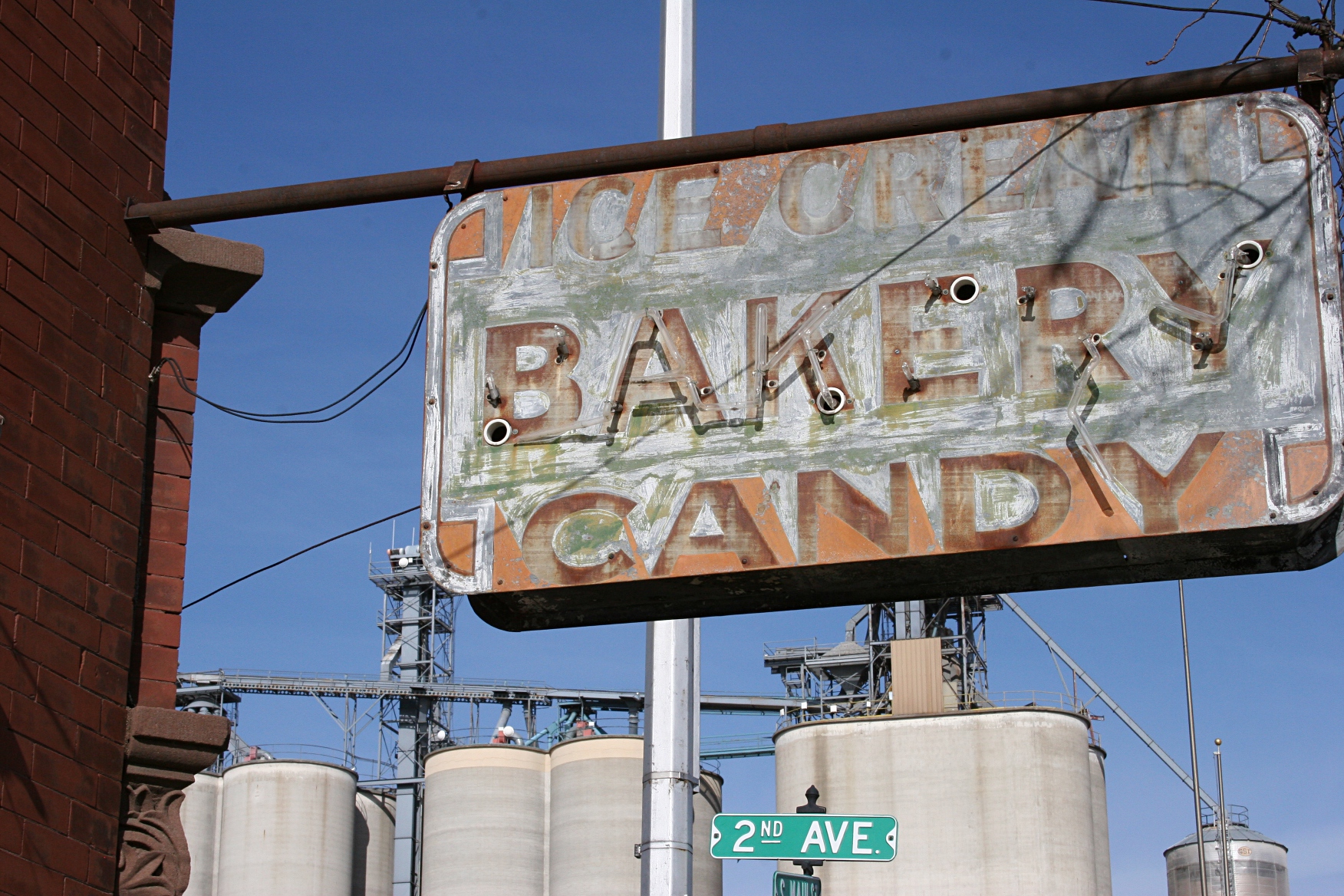
The old sign for the former Sanger’s Bakery still graces the building.

The couple may, perhaps, feel at times as if they are scaling a mountain to reach their goal of establishing a combination cafe, coffee shop and entertainment venue in the 1,900 square foot first floor of the 8,000 square foot brick building. But they are purposeful and focused and driven every week to travel 2 ½ hours from their home to proceed with their project on the prairie.

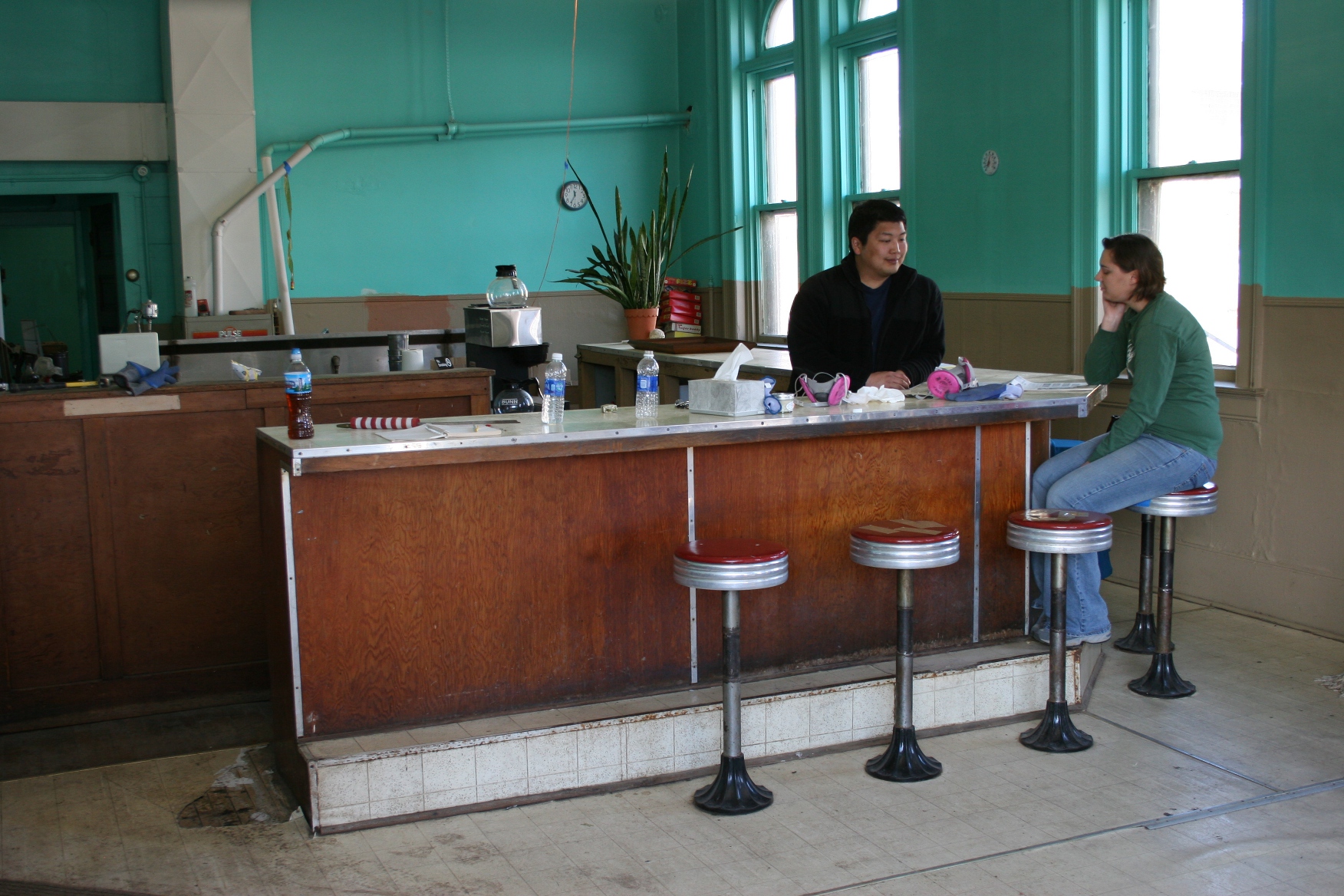
Michelle and David  are keeping the original candy and bakery goods counters and the vintage cabinet, photographed here in the front part of the building. This area of the former bank and bakery will house the cafe and soda fountain. The couple discovered a dumb waiter hidden in the area behind them in the corner.

David envisions Seven Sisters as “an artistic haven as well as a community space.” He expects “townies,” he says, to frequent the front Main Street side of the building, the bright and cheery cafe section offering a full breakfast and lunch menu and ice cream treats from a soda fountain.

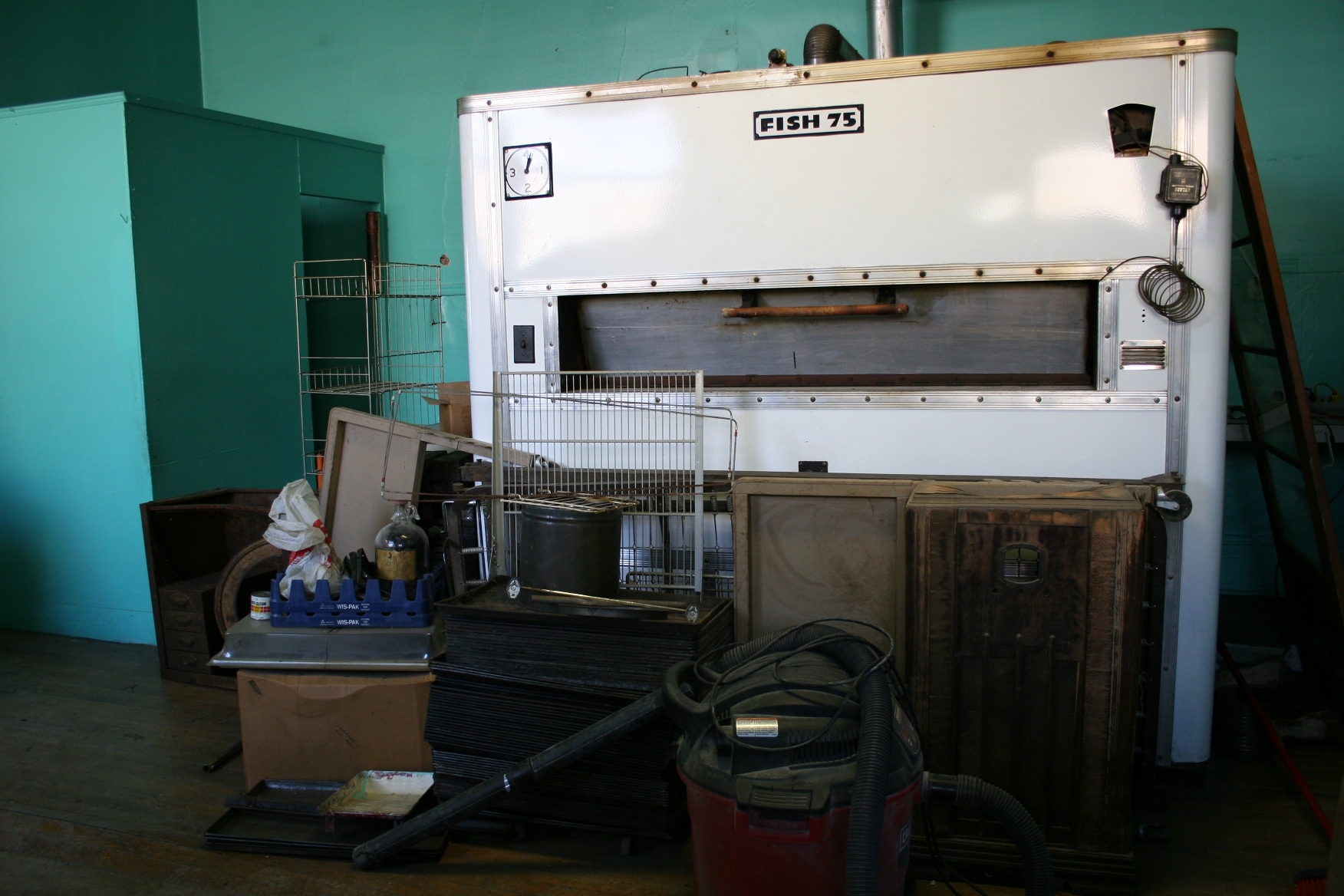
Fifty loaves of bread could be baked in this 1960s vintage two-ton rotary oven. It occupies much of the space in the middle room which will become a cozy coffee shop. This room and the front former bakery/soda fountain area were painted teal after Bob’s niece first chose that hue for the bathroom. Bob loved the color so much that he painted the rest of the place teal. The color has been on the walls for 50 years. No, they are not keeping the teal color.

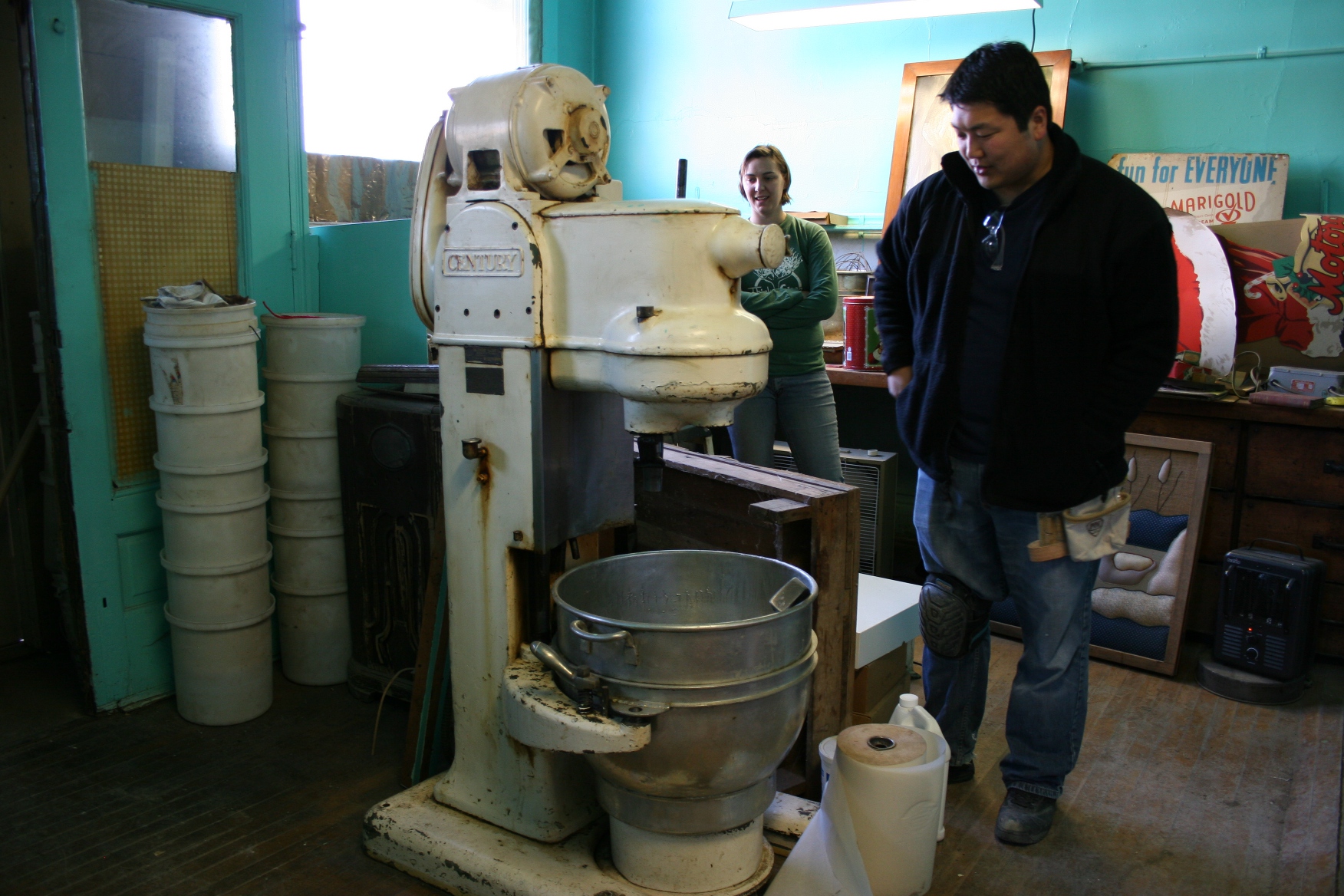
An oversized mixer also occupies space in the middle room.

The smaller middle section, once a post office entry, baking area and even home to the Sanger family, will be transformed into a warm and intimate coffee shop.

The back room, with focal point brick walls, will become an entertainment venue and artists’ haven.

And in the rear area of exposed brick walls, David expects artists and others to hang out in a more energetic and modern New York loft style space devoted to music and art and private event rental.

Tour this building, inside and out, with David and Michelle and you can see the overwhelming amount of work, inside and out, that needs to be done before Seven Sisters becomes a reality in a community already embracing the business venture.

Locals as well as those living in neighboring towns such as Revere, Jeffers and Tracy and even farther away in the regional hub city of Marshall are ecstatic about Seven Sisters, David says.

Original coffee cups and Bob Sanger’s special cup are stacked under the lunch counter.

The older gas burners Bob Sanger apparently used to make coffee, etc.

When locals George and Vern, for example, stop by to check on the renovation, David invites them inside for coffee. The two were coffee klatsch buddies of Bob Sanger, long-time bakery owner who died in March. Sanger purchased the bakery from his father, Nick, in 1961. Between Bob, Nick and previous owner, Martin Kuhar, the building has housed a bakery in the First National Bank building for 95 years.

A vintage photo of bakery owner Bob Sanger who died in March at the age of 80.

A vintage photo of the First National Bank.

Says David of his and Michelle’s decision to purchase the former bakery after Bob Sanger’s death:

The building is positively gorgeous and has a fascinating history. We had admired it for some time. The quality of the construction is superior to similar buildings of that era. We’ve always talked about opening our own business and the location and timing were right.

Our review of the local economy and the needs of the surrounding area indicates a very strong potential for growth and a serious need for a business of this kind. By offering excellence in service in three different approaches (cafe, coffee shop, event space) we will offset some of the inherent risk of this type of business. In short, it was a perfect confluence of events. We got lucky.

The pair is determined also to buy local as much as possible. Dry goods will come from Griffith’s Grocery across the street. They plan to work with Brau Brothers Brewing and Fieldstone Vineyards, located in the region. They’ll grow their own herbs.

It is clear in talking to David and Michelle that they appreciate the historic gem they’ve purchased.

A section of this original lunch counter built by Bob Sanger will be refurbished and topped with granite.

They’re attempting, they say, to retain as much of the natural charm as possible. For example, they plan to refurbish the soda fountain built by Bob; relocate an original bank fireplace facade and tile into the coffee shop and install an electric fireplace; refinish the wood floors; keep the tin ceiling; reuse the candy and bakery counters; restore an old player piano; and more.

Wooden floors, like this behind the lunch counter, run throughout the building. In one section, however, where the bank vault once stood, the floor is made of pipestone granite.

This shows a section of the original tin ceiling in the front part of the building. Ceilings are a lofty 12 and one-half feet high.

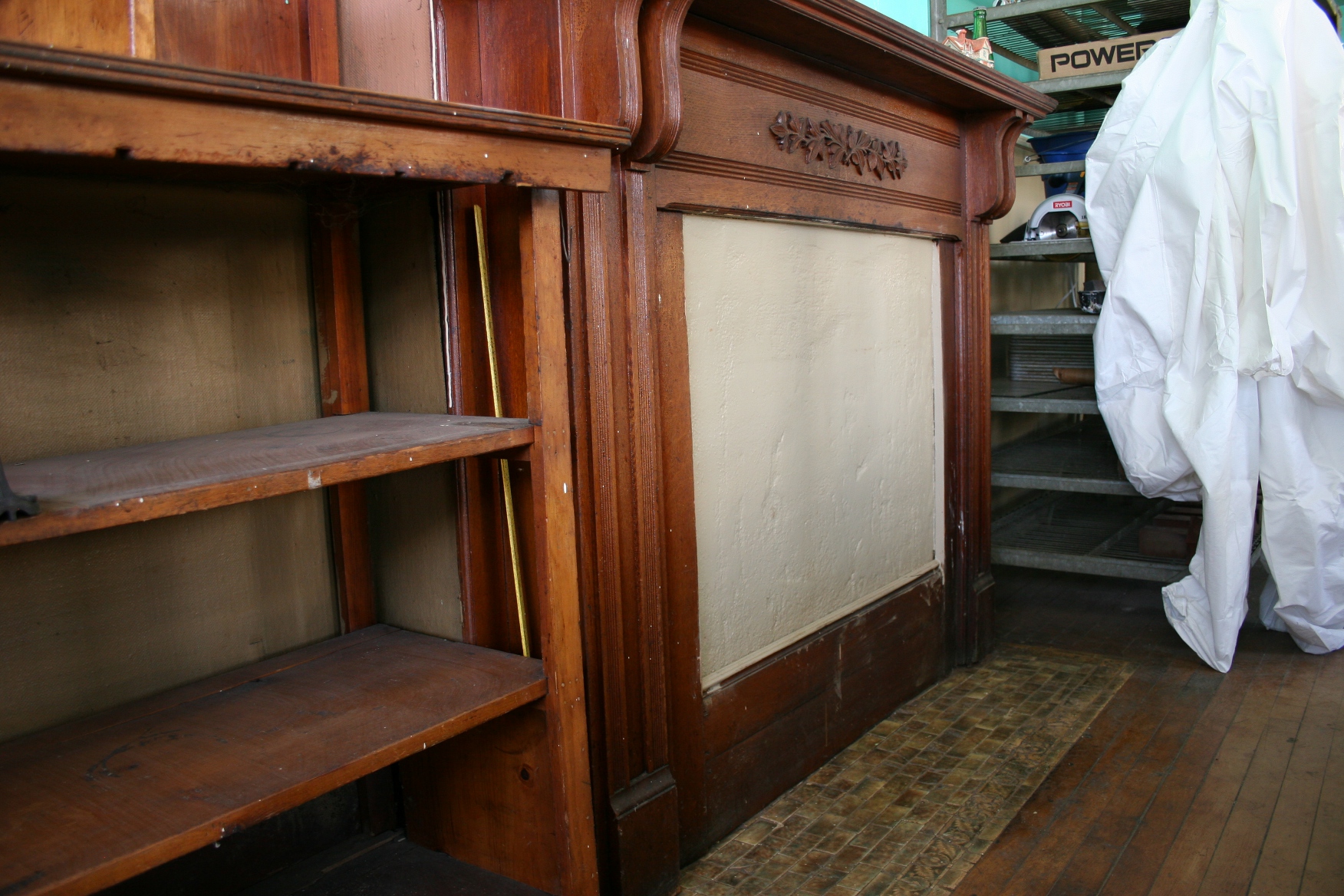
Plans are to move the facade and tile from the this original First National Bank fireplace into the coffee shop, which David will manage. 

The couple is also uncovering and sifting through collectible treasures like WW I and WW II artifacts, signage, rocks, and more accumulated by Bob. So much was damaged though, beyond saving, by moisture problems in the building, David says. But they are saving what they can, possibly incorporating some of their treasures into Seven Sisters.

A pile of recently found treasures.

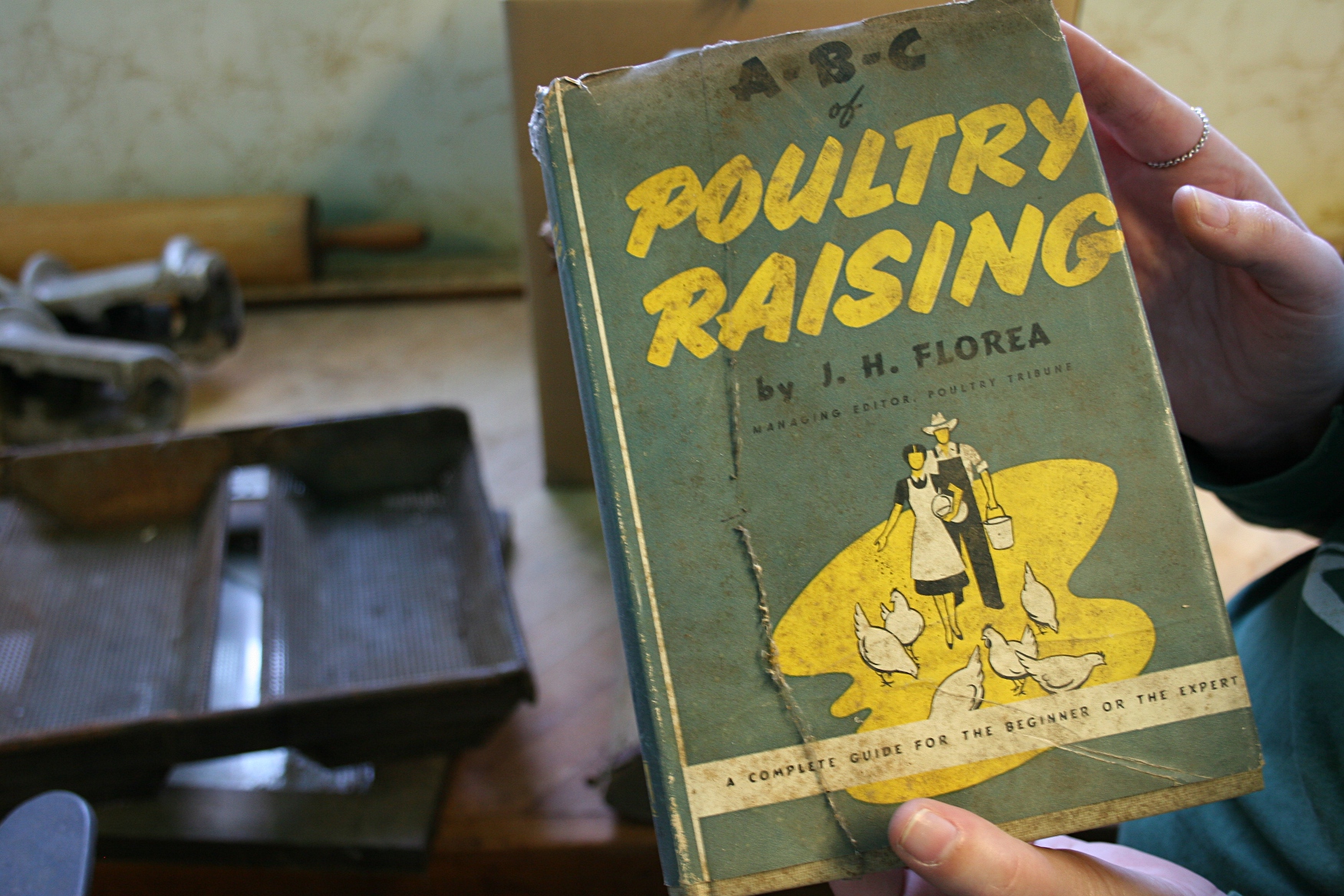
Among the old books uncovered was this one on poultry. Bob Sanger kept a flock of 100 chickens at his house, Michelle says. He used the eggs at his bakery and also sold eggs.

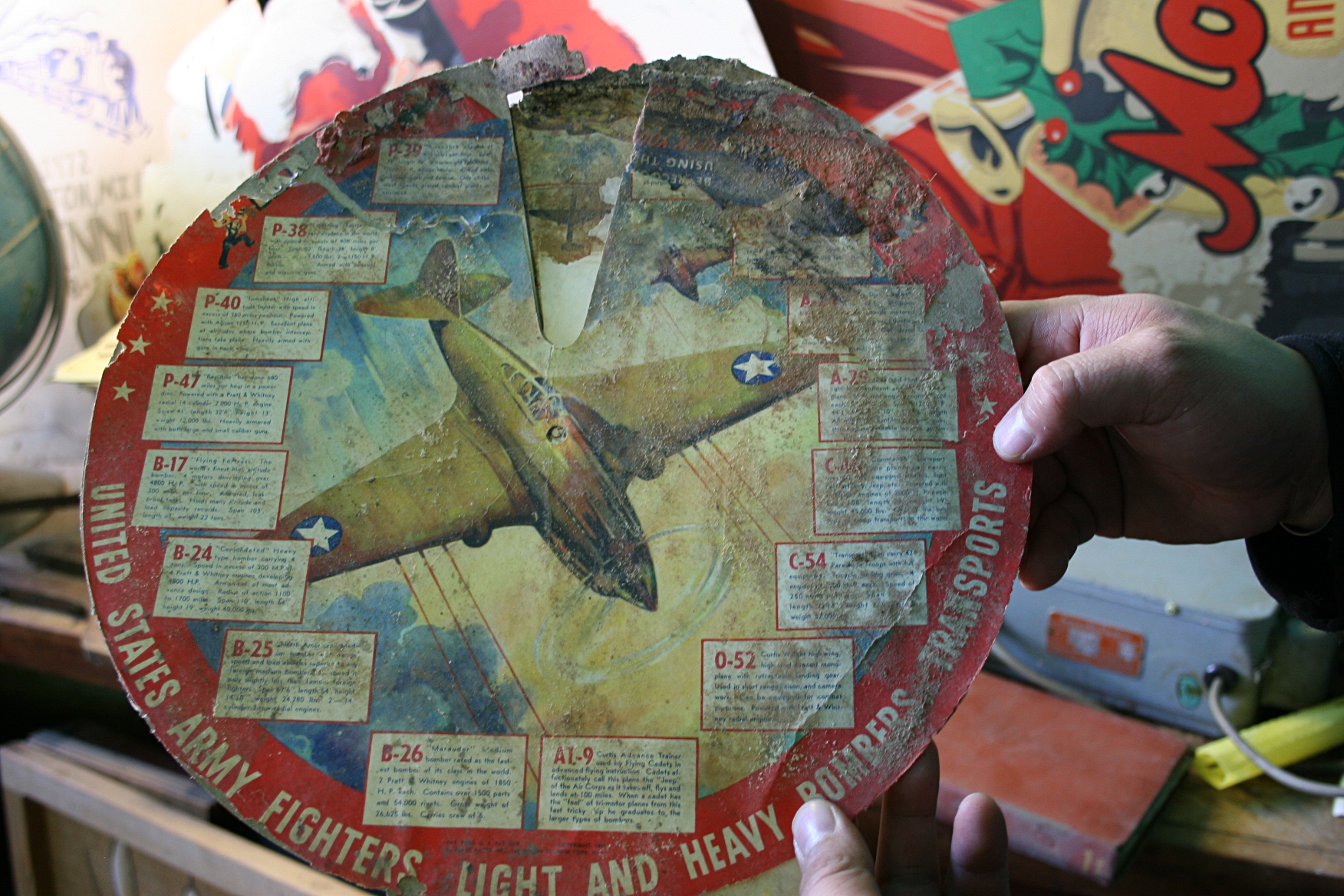
Another find, a vintage bomber transport chart damaged by water, like many of the old items found in the building.

Inedible silver cake decorating balls remain from Bob’s days of baking wedding cakes.

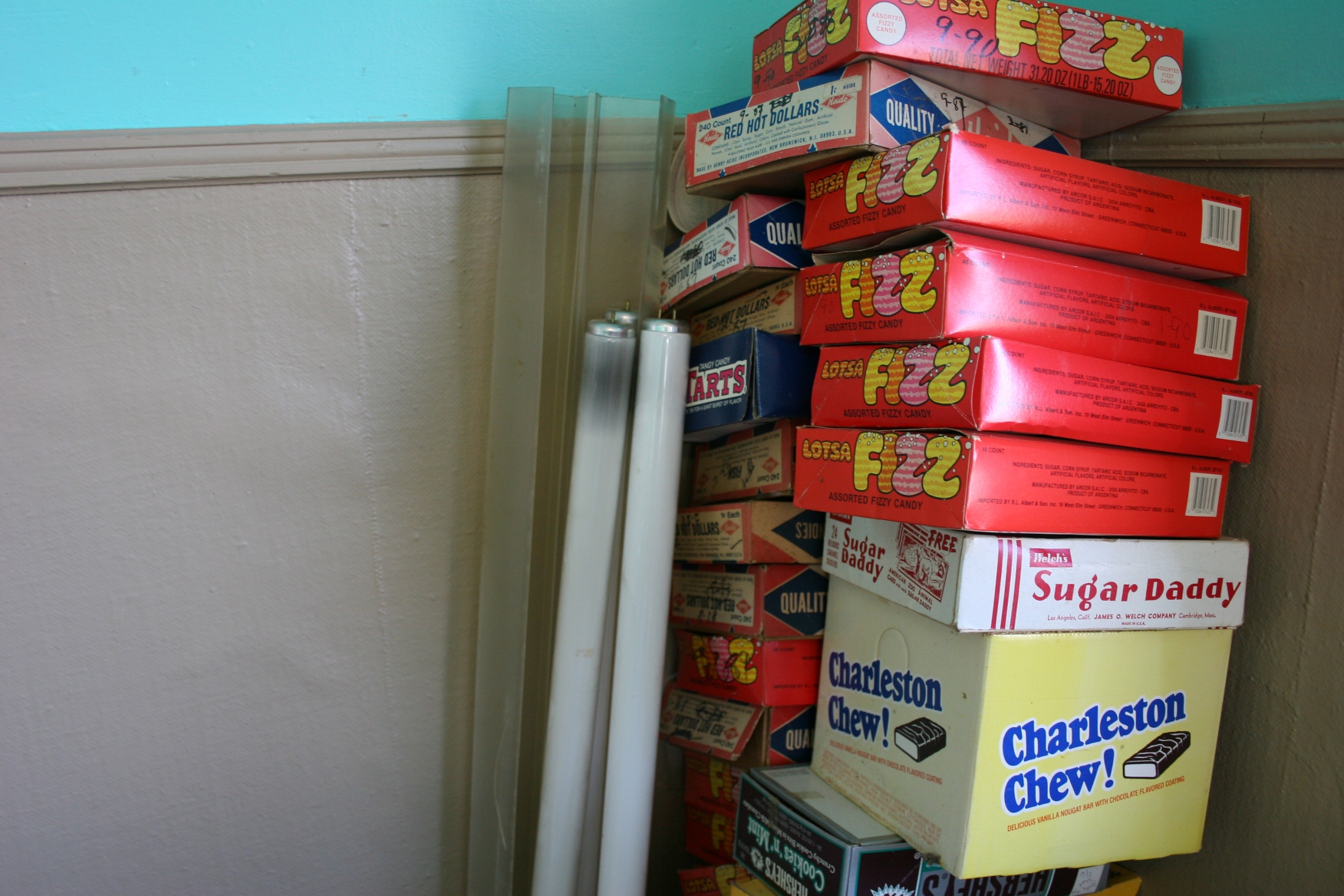
The couple found empty candy boxes (pictured here) and candy still in boxes inside the former bakery.

Michelle has fond memories of coming to Sanger’s for sweet treats. She remembers penny Tootsie Rolls and gumballs and candy cigarettes sold at the candy counter:

Thinking about the hundreds of people who have memories of this building, I really hope we can fill that same role for the next generations.

FYI: Lamberton is located along U.S. Highway 14 about 10 miles east of Walnut Grove, childhood home of Laura Ingalls Wilder, author of the Little House children’s book series. The area is a strong draw for summer tourists interested in Wilder’s books and the Little House on the Prairie television series set in Walnut Grove.

© Copyright 2012 Audrey Kletscher Helbling
 

Healthy & hearty dining at the retro Highland Cafe in southeastern Minnesota October 22, 2012

A side view of the Historic Highland Store and Cafe.

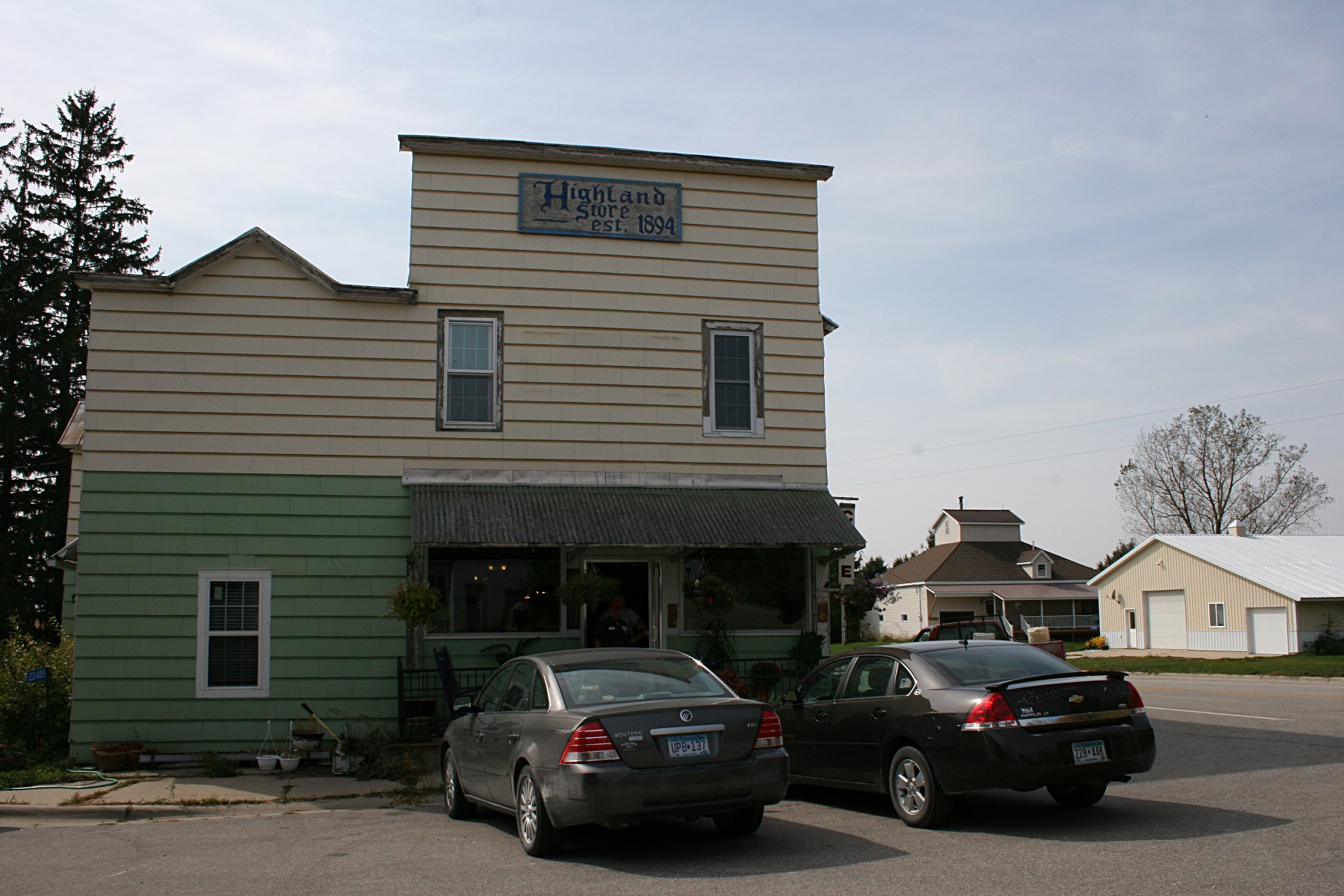
FROM THE EXTERIOR, a side view of the Historic Highland Store and Cafe in unincorporated Highland in rural Fillmore County, Minnesota, presents a mishmash of angles, work in progress and a corrugated metal roof that seems more fitting for a machine shed than a restaurant.

Face on, the front facade is rather plain and unassuming, until you aim your focus upward to the weathered wooden sign: “Highland Store est. 1894.”

The unassuming front of the Highland Cafe.

That single simple sign hints at the treasure you’ll discover once you step inside this combination cafe, mini-store and Seventh Day Adventist mission outreach next to County Road 10.

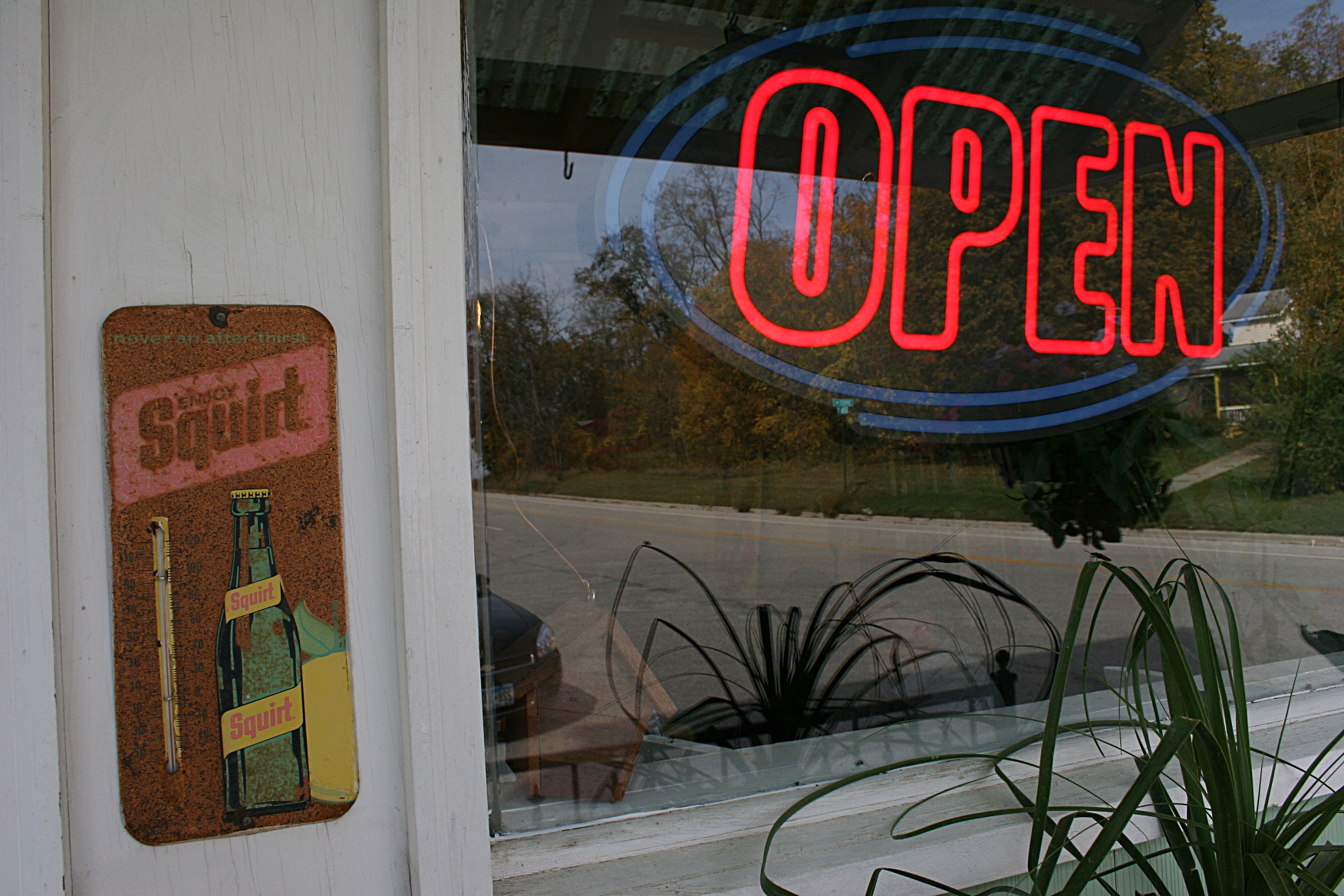
A vintage pop sign and a neon OPEN sign next to and on a front window.

Enter this historic building in Highland and you just have to stop and take in the novelty of this place which once served as a general store in this strong agricultural and tourism region of southeastern Minnesota.

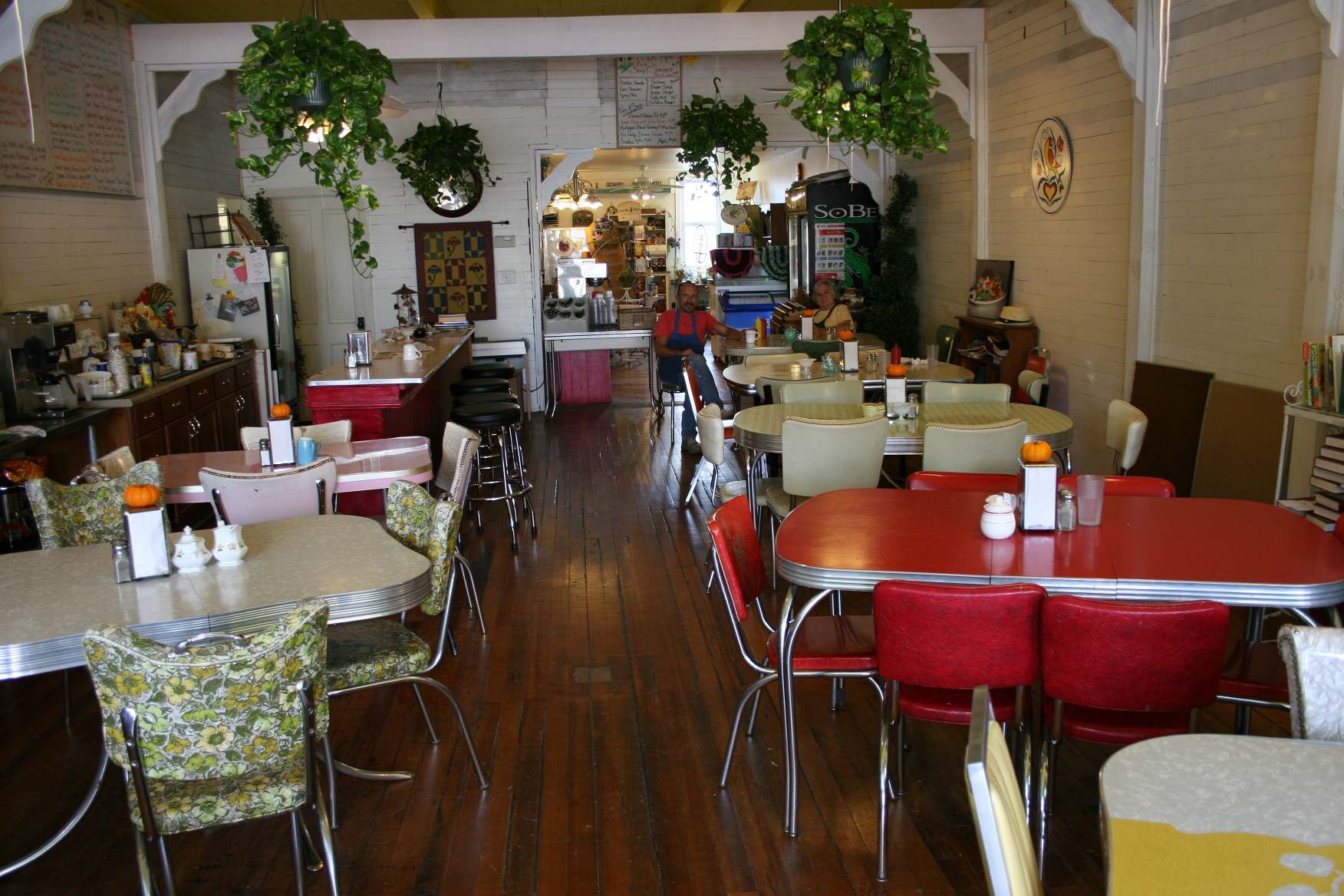
A dining room overview with a mini gift shop tucked in the back.

The cafe’s charm and good, home-cooked and healthy food draw not only locals, but tourists/users of the area’s state recreational trails and regional diners from Rochester some 50 miles to the north and west.

My husband and I have come here for lunch early on a Monday afternoon in early October while on a day trip to view the fall colors. We prefer one-of-a-kind small-town cafes to chain restaurants and are thrilled with the unique, down-home atmosphere we discover at the Highland Cafe. It’s as if we’ve walked into the kitchens of our childhood, minus the red-and-white checked linoleum floor.

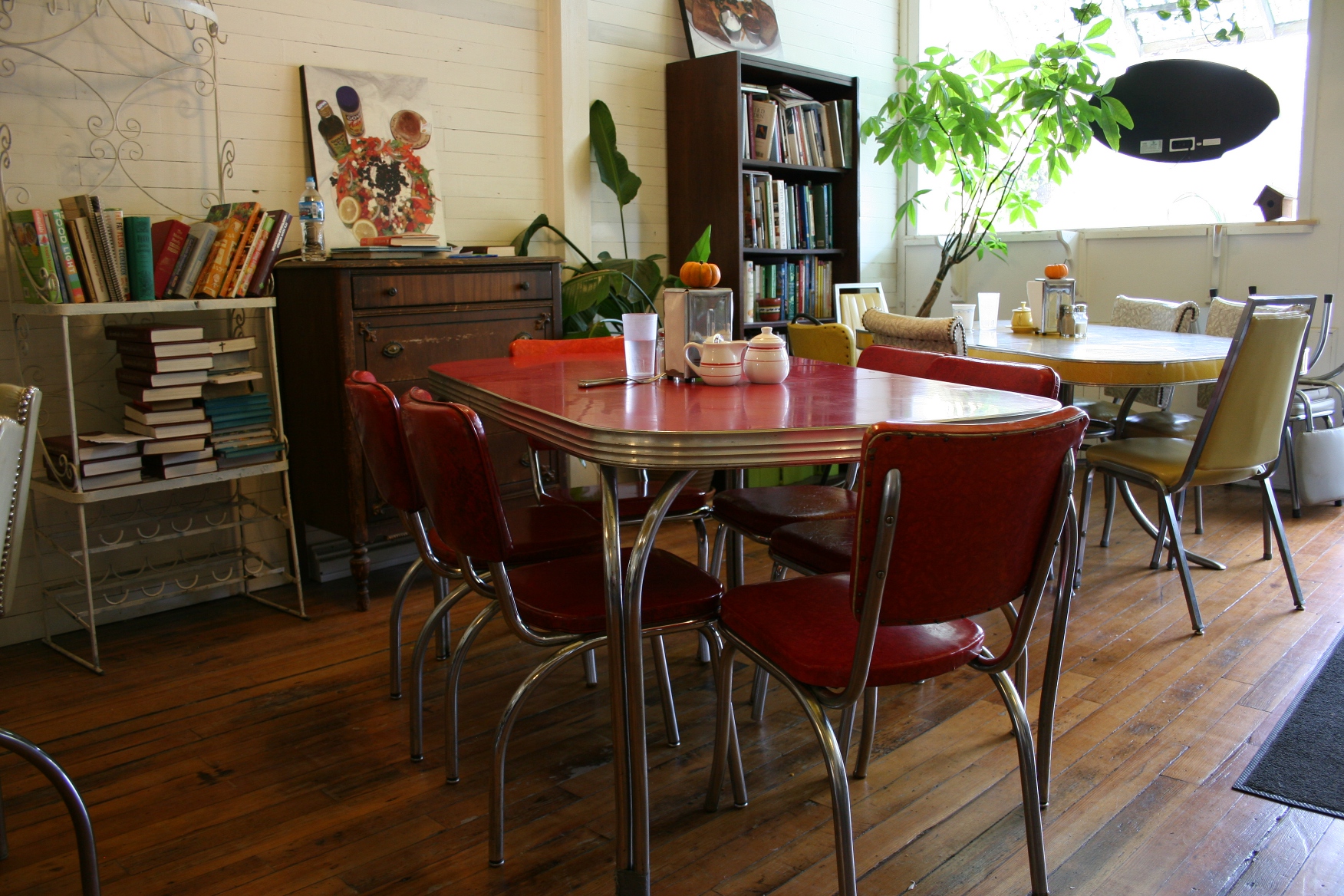
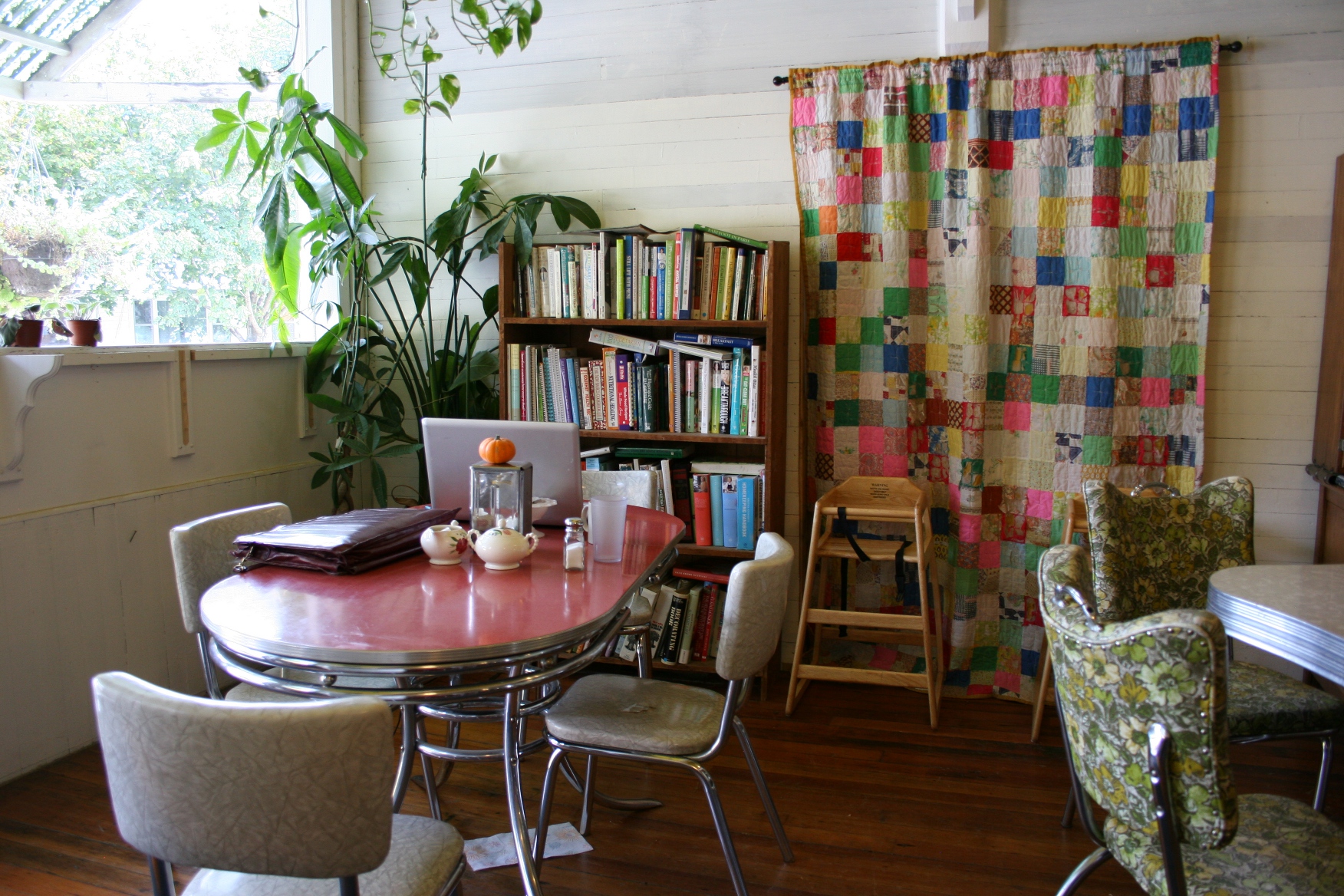
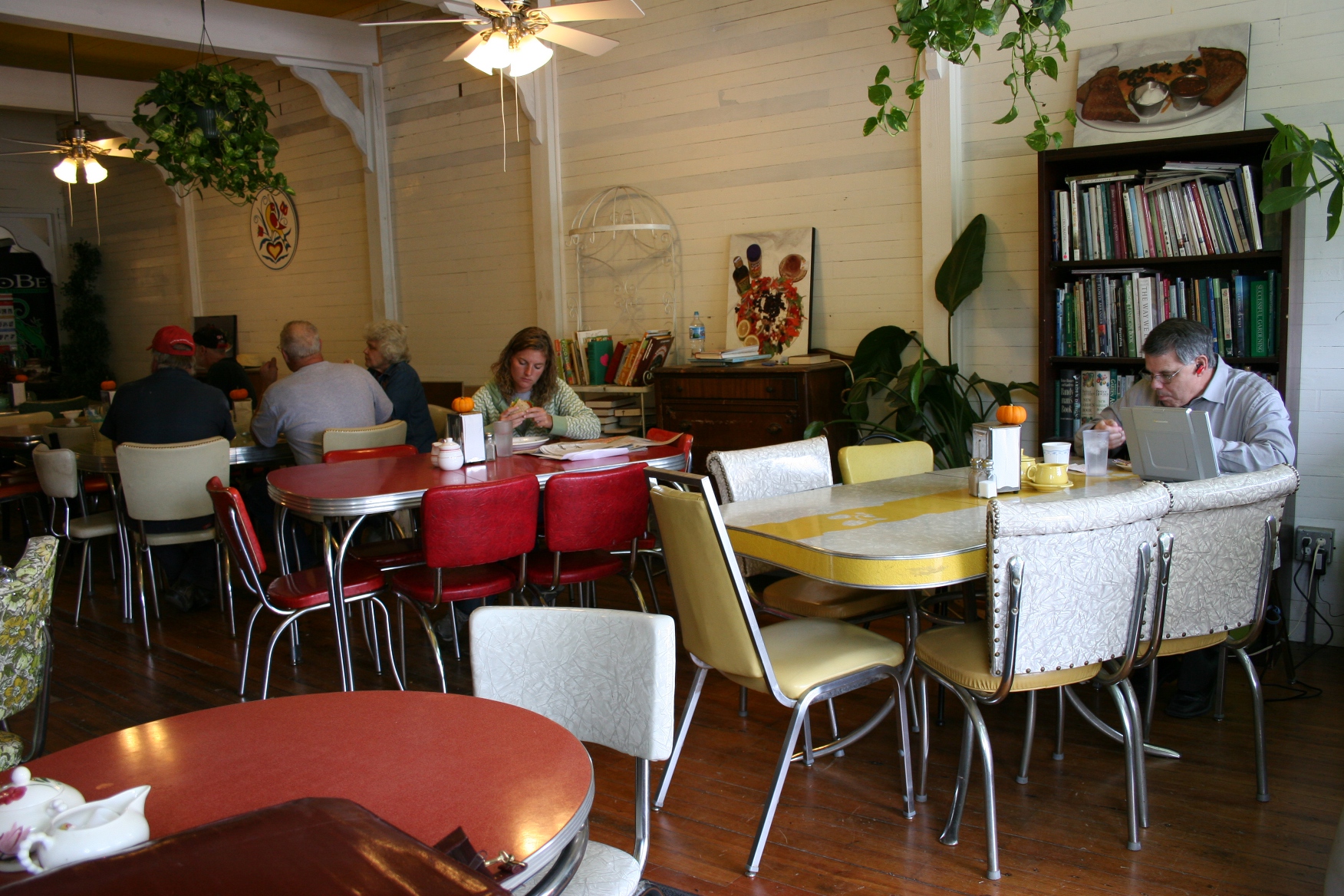
This is the scene near the front of the dining room where vintage tables and chairs are drenched in sunlight on an October afternoon. This is the kind of spot where you can read a book, work on your laptop or chat it up with the locals or others.

This eatery features the original wood floor topped by a mix of 1940s and 1950s vintage laminate chrome-legged/edged tables and chairs that set the mood for casual dining. There’s nothing matchy, matchy perfect about the décor here and that unpretentiousness suits me perfectly.

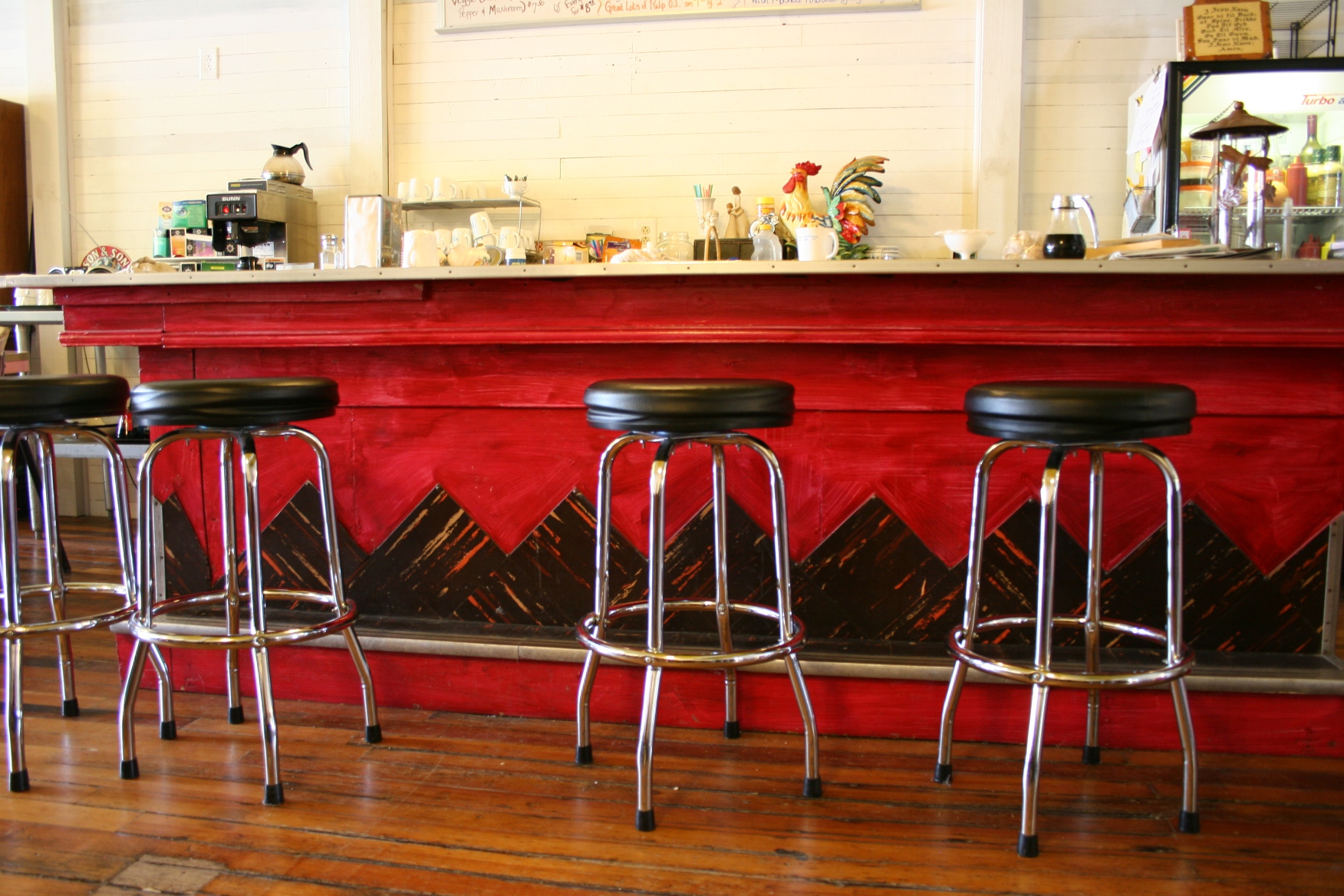
The absolutely fabulous lunch counter.

If you prefer to dine at a lunch counter, you’ll find one of those, too, painted in the most unexpected eye-jolting red that contrasts with the dark wood floor and cream-hued wood plank walls.

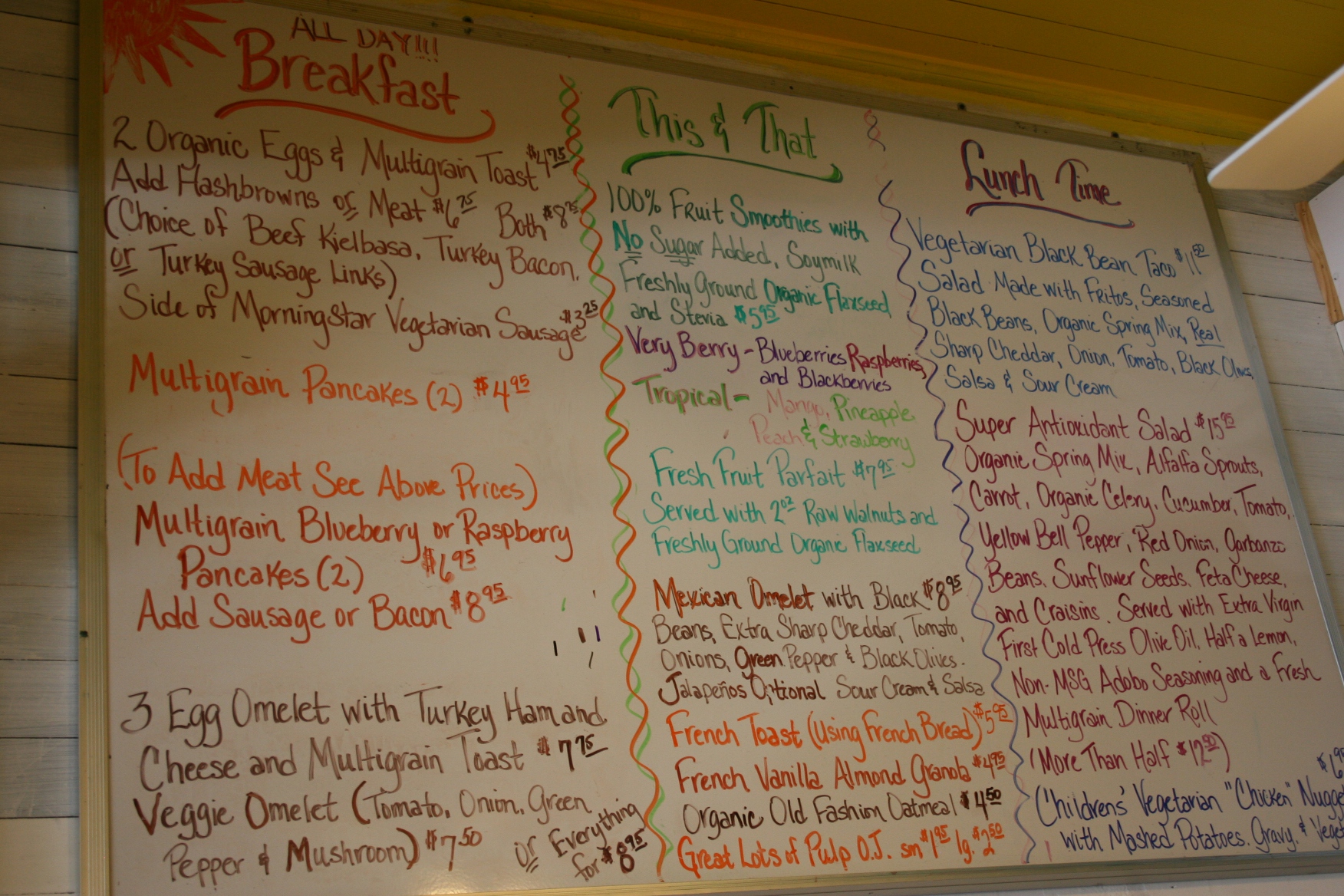
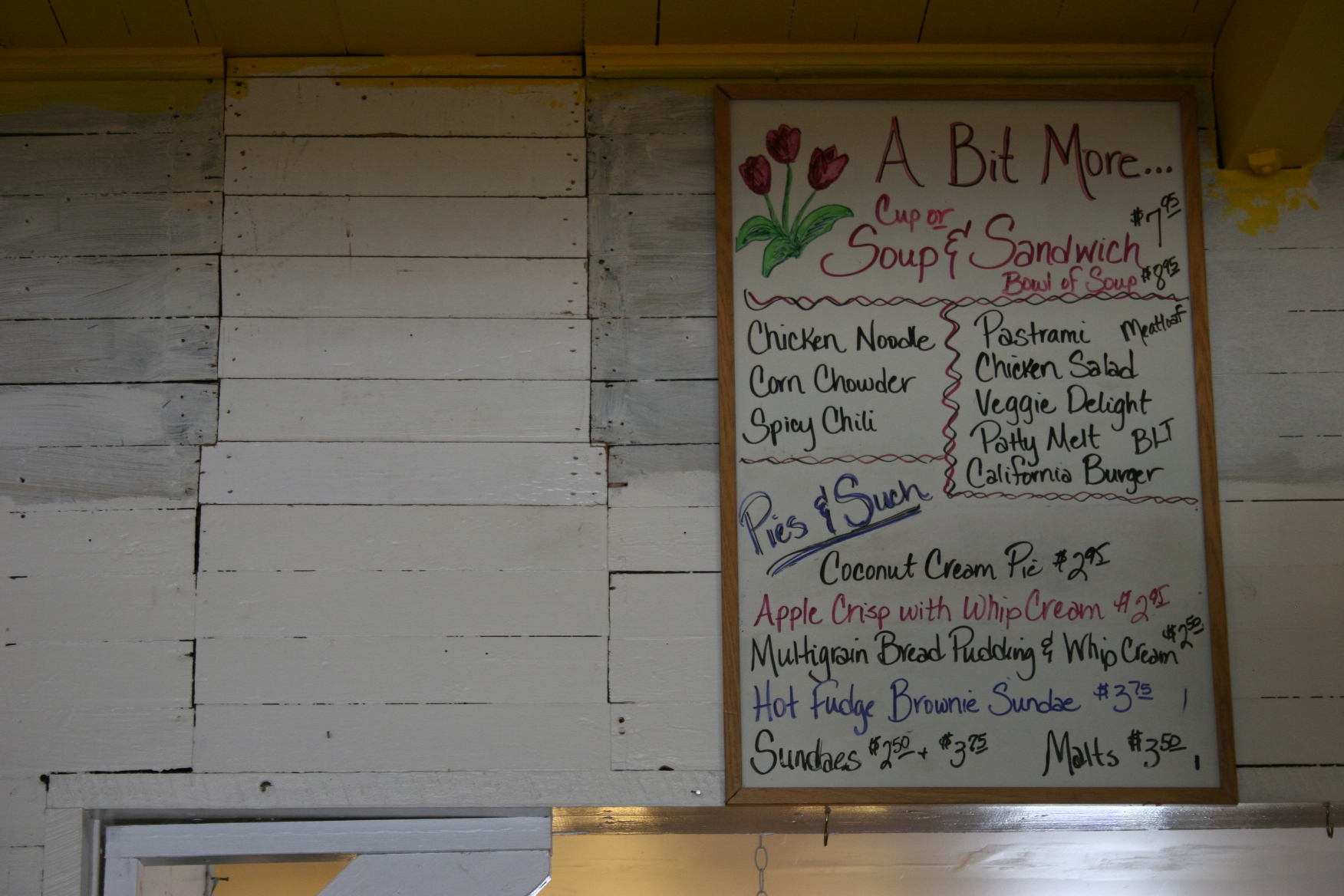
The main menu offers plenty of healthy choices.

The Highland Cafe, you’ll discover, is as much about the casual country atmosphere as about the food. You’ll read words like organic, multigrain, no sugar, soymilk, super antioxidant and fresh on the whiteboard main menu. You’ll also find comfort foods, like real mashed potatoes and gravy, along with fresh vegetables harvested from the cafe garden out back.

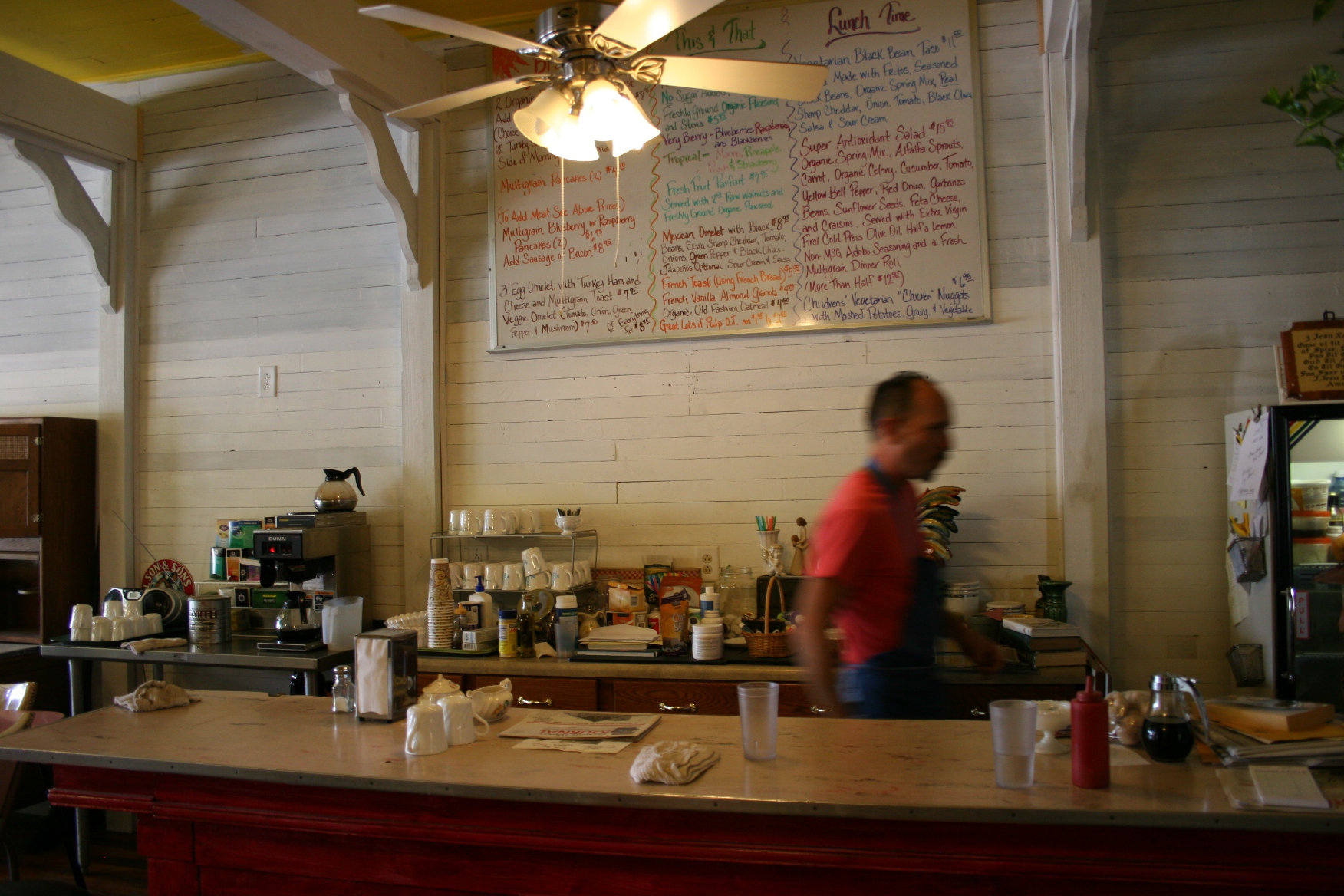
Troy Starks hustles behind the lunch counter toward the kitchen.

Even once mostly meat-and-potato eating local farmers have come around to eating healthier, says Troy Starks who on this Monday is waiting tables while his sister, cafe owner Vicki Hudson, is shopping for groceries. It took some time and convincing, but those stolid farmers are now sometimes ordering the cafe’s super oxidant salads.

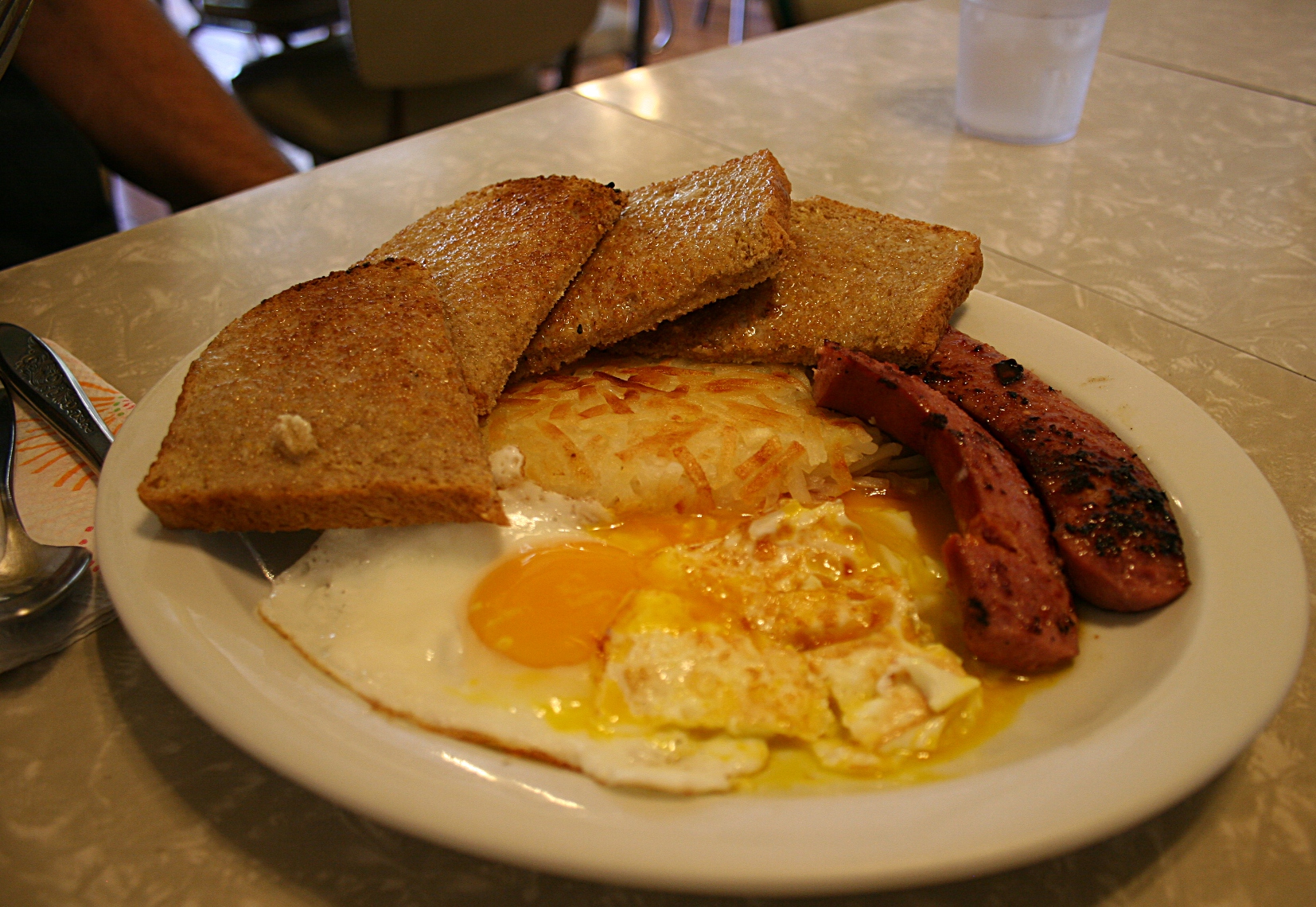
The hearty breakfast my husband ordered, even though the hour was well past breakfast: two organic eggs, multigrain toast, hashbrowns and kielbasa. He broke the egg yolks before I photographed his meal.

While my husband and I await our orders—his a plate of breakfast foods and mine a chicken salad sandwich and a bowl of corn chowder—I strike up a conversation with R.J., dining alone at the table next to us. He’s eating a burger. Turns out young R.J. farms just up the road and sells his grass-fed, antibiotic-free beef to the cafe.

When I point out to R.J. that he’s paying to eat the beef he sold to the cafe, he shoots back with a quick-witted, “Well, at least I know it’s (the beef) good.”

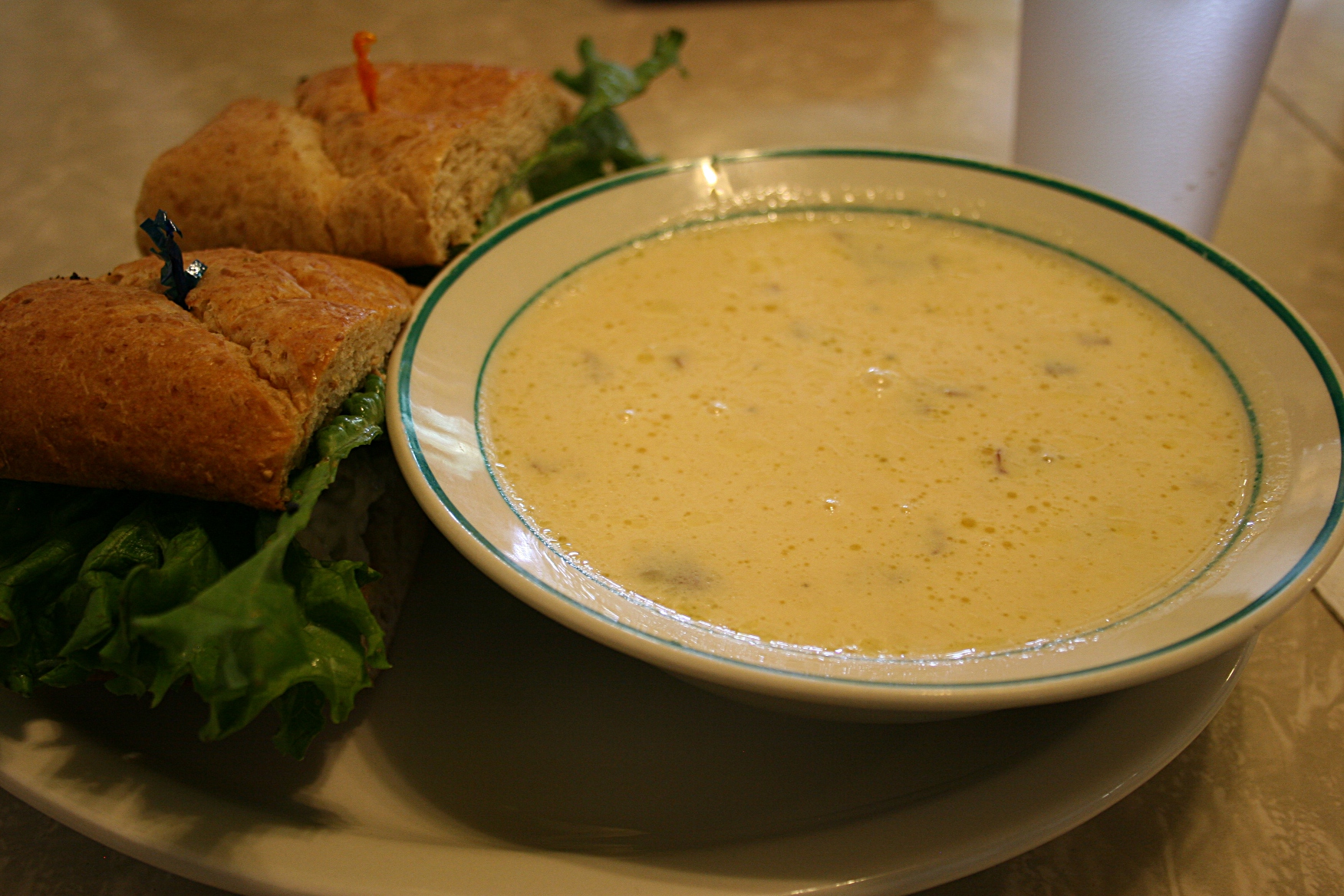
My meal: a chicken salad sandwich and tasty corn chowder.

Good and filling most assuredly define the food here. I wished I wasn’t too full to order a slice of pie or bread pudding or a piece of apple crisp for dessert. But I am. Next time…

And this, dear readers, is where I originally ended this post, which has been sitting in my draft box. Now I must add to this story because cafe owner Vicki Hudson announced to me in an email on Friday that the cafe she purchased five years ago will be closing just before Thanksgiving.

Her mother Sharyn Taylor, the cafe’s chief cook, is “getting tired and will not be up to working another year, so we are closing our doors,” Vicki writes. “…we are going to turn the upstairs into a bed and breakfast and then sell it as a combination bed and breakfast and cafe. It would not be the same without my mom and I feel she has done a tremendous job the past five years.”

Vicki continues: “Maybe there will be someone out there interested in carrying on.”

There. If you are interested in carrying on the fine tradition of the Historic Highland Store and Cafe, preserving a piece of southeastern Minnesota history and more, contact Vicki. Honestly, don’t you just love this unique small town dining spot? I do.

The dessert menu on this particular Monday in October.

FYI: The Historic Highland Store and Cafe is located along Fillmore County Road 10 southeast of Lanesboro in unicorporated Highland. Hours are from 7 a.m. – 3 p.m. Monday-Friday, closed Saturdays and open from 8 a.m. – 3 p.m. Sunday, until just before Thanksgiving.

Yes, the cafe is closed on Saturdays because the building also serves as a ministry for the Seventh Day Adventist Highland Chapel with Sabbath school beginning at 9:30 a.m. followed by an 11 a.m. church service and vegetarian potluck. Bible study is also held at 7 p.m. on Wednesdays and is open to all.

For more information about the Historic Highland Store and Cafe, click here to reach the cafe’s website.

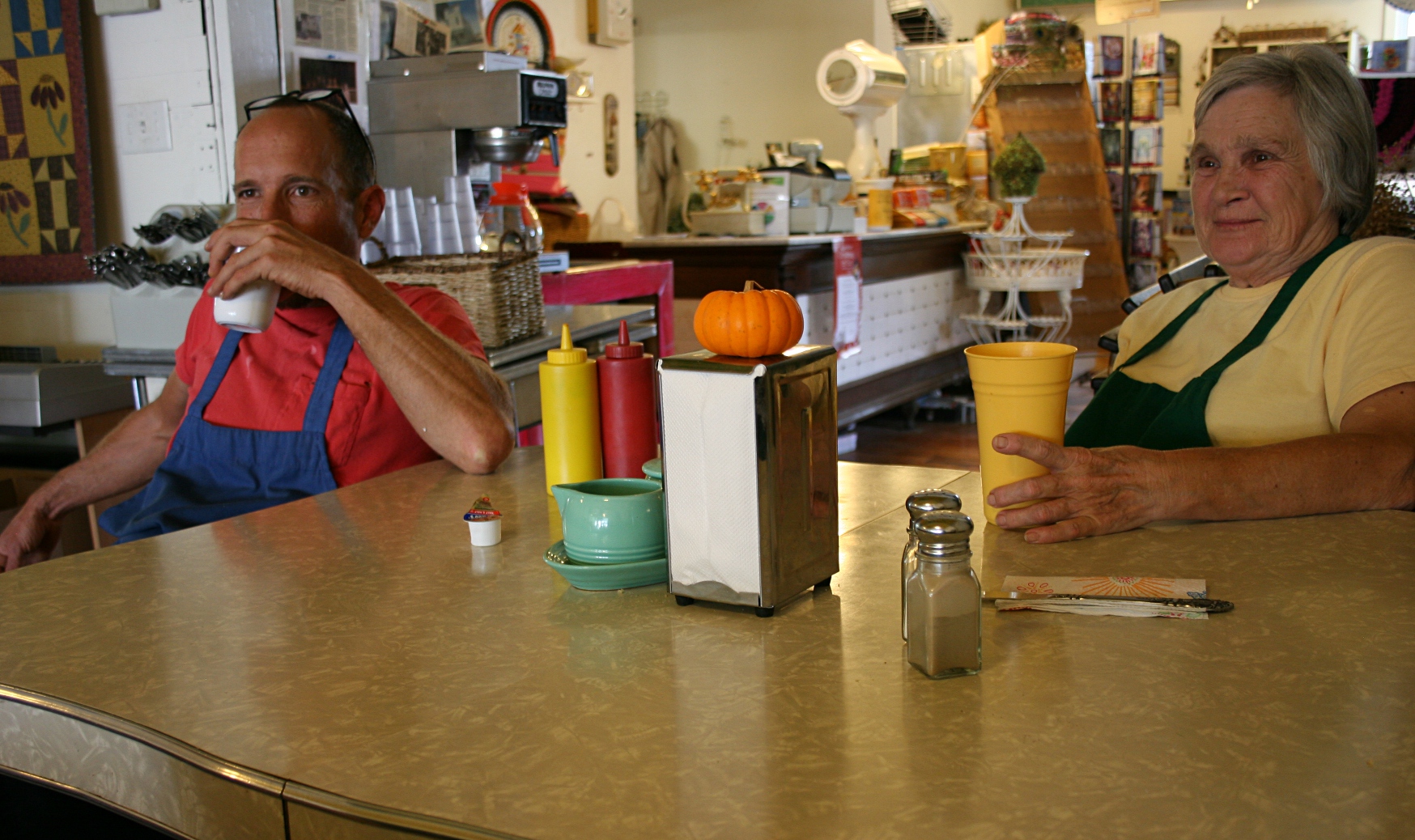
After the lunch rush, Troy Starks and his mom, Sharyn Taylor, sit down to relax and chat. Sharyn is the cafe’s cook.

A comfy and cozy front corner of the cafe.

Even early on a Monday afternoon, the cafe is fairly busy. Occasionally local Amish dine here, intriguing tourists who come to this region of Minnesota. None were here on the Monday we visited. We were told that young Amish women have also worked here on occasion in the kitchen. And at least one  did not show up for work one day, having left the Amish order to “go Englisch.”

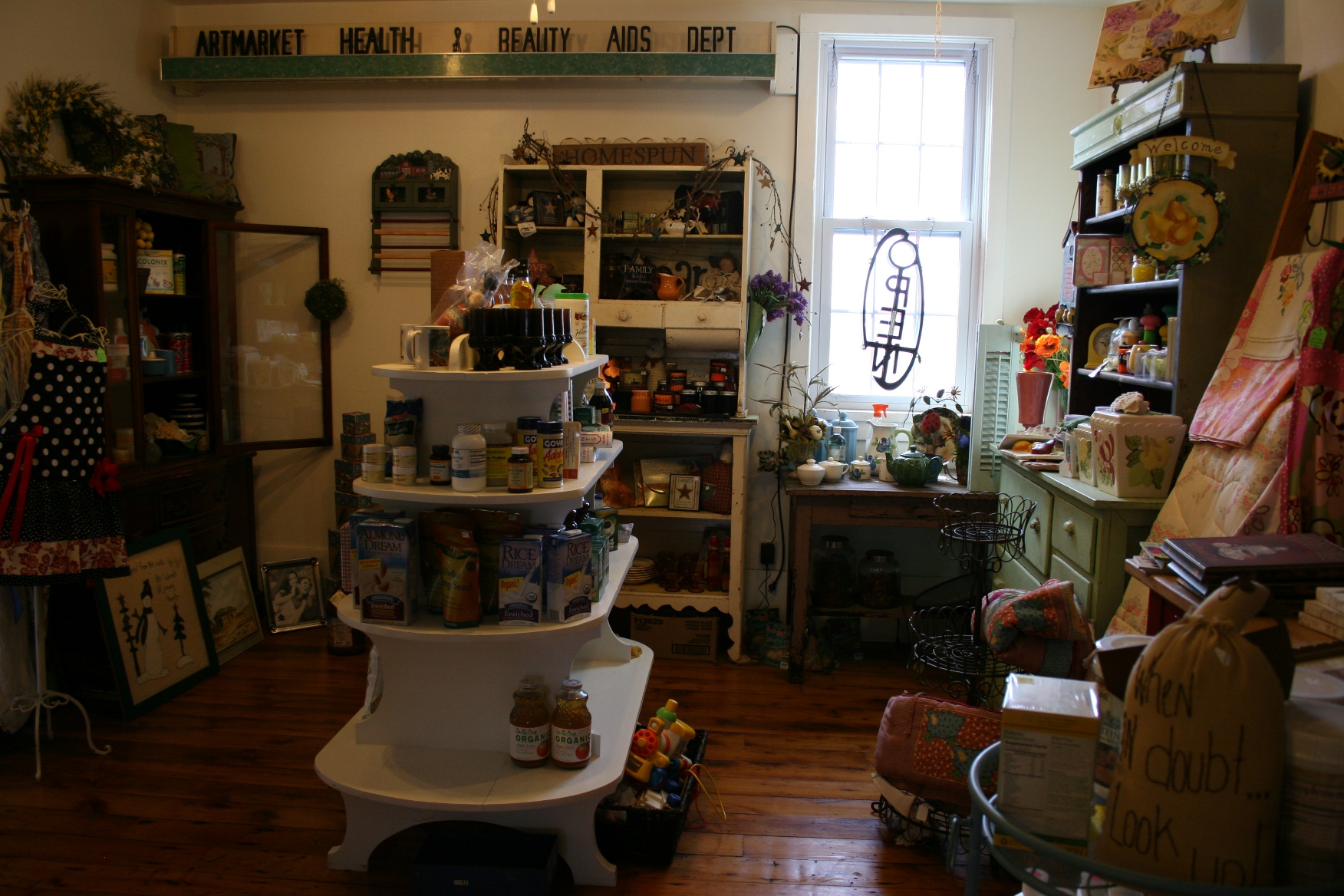
The art market and health and beauty aids department behind the dining room offers an eclectic mix of merchandise.

© Copyright 2012 Audrey Kletscher Helbling
 

Historic Faribault Woolen Mill opens retail store with an artsy vibe June 12, 2012

Perusing merchandise at the recently reopened Faribault Woolen Mill retail store.

RUSTIC. SIMPLISTIC. MINIMALIST.

Those words wash over me as I step into the Faribault Woolen Mill Company’s recently re-opened retail store.

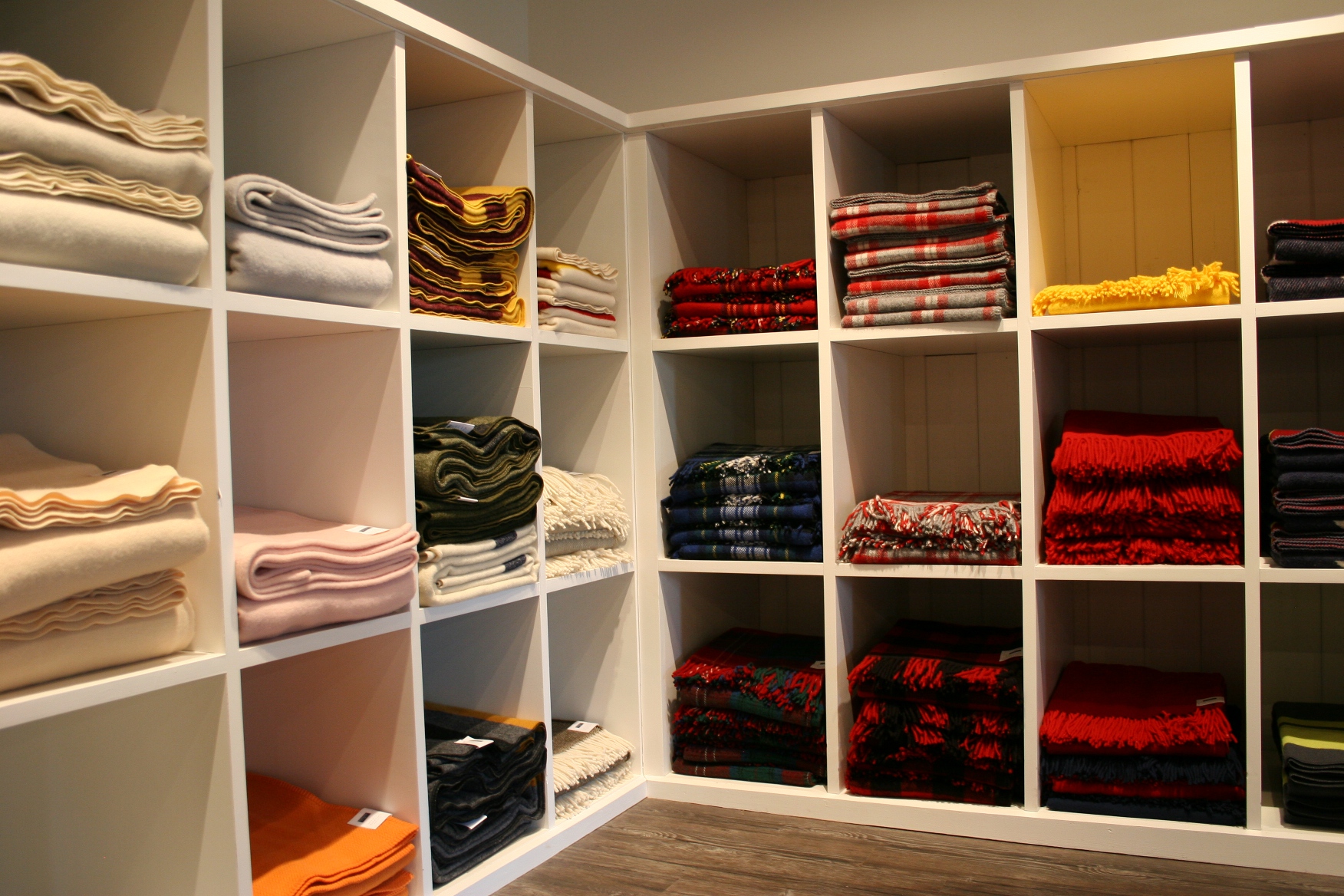
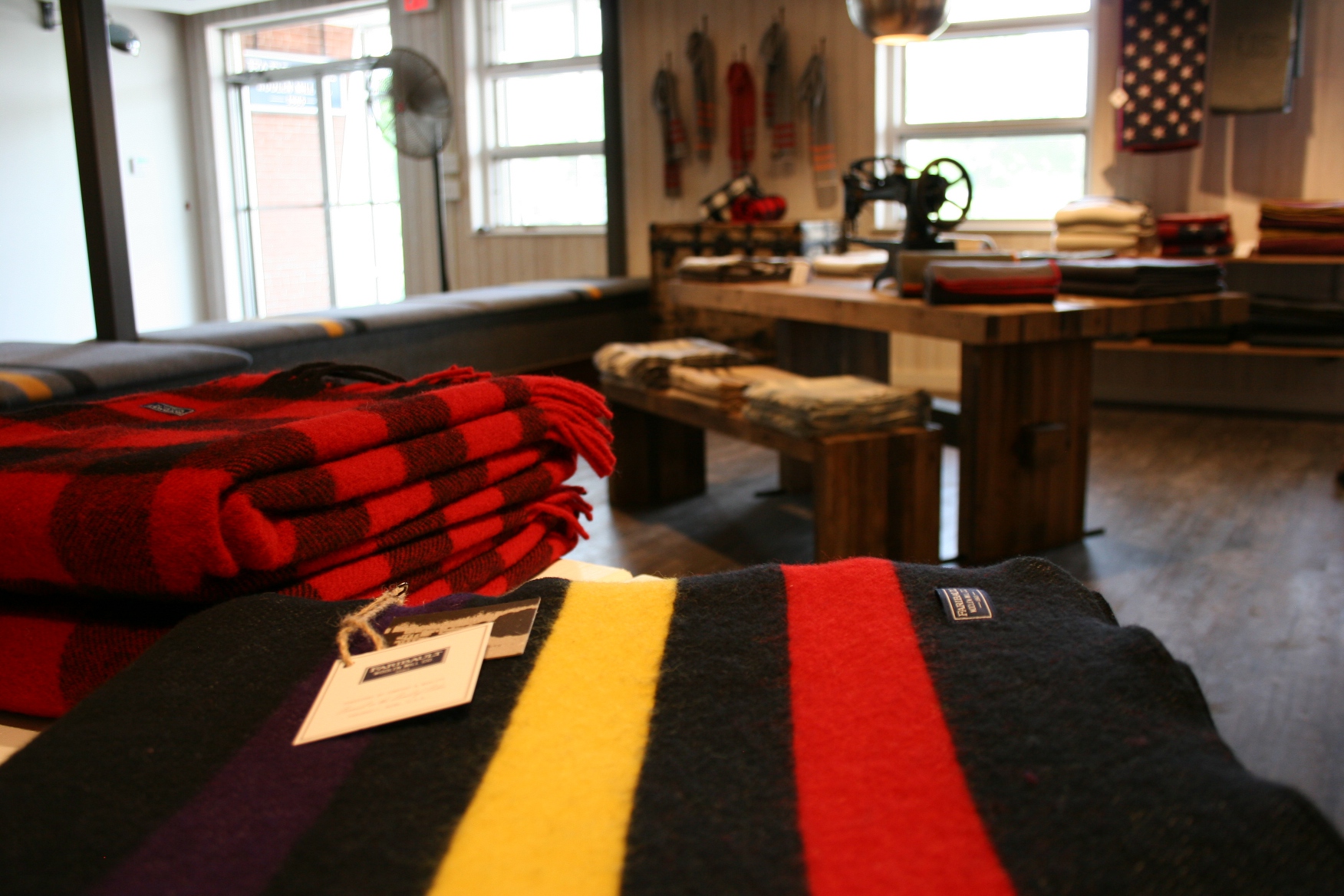
I could have strolled into an art gallery for the artsy vibe of this place. It has that feel, that sense of style and creative energy, which tells you this is no cookie-cutter retail outlet but someplace special.

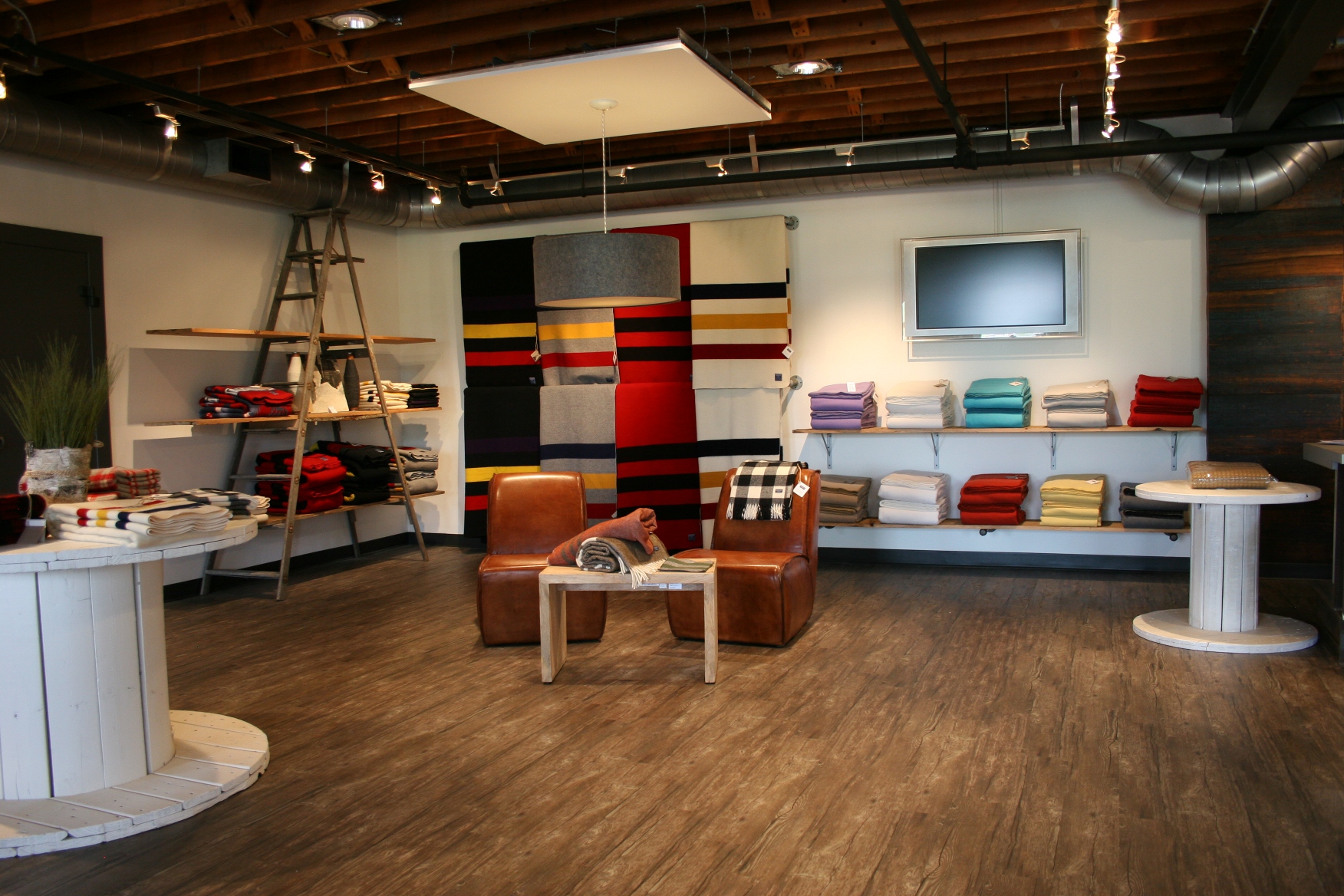
The retail store has a comfy, relaxed and trendy feel.

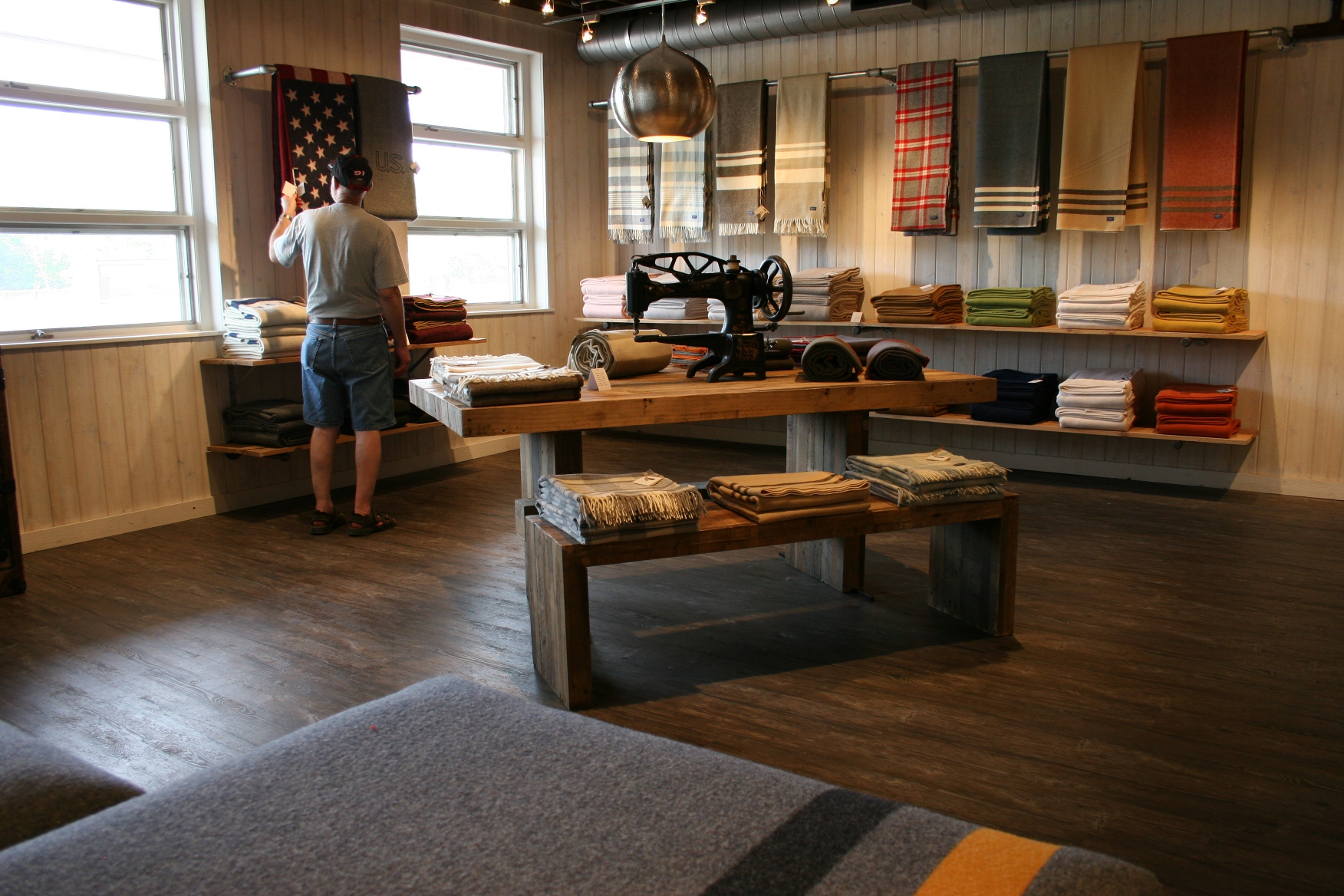
From the white-washed paneled walls to the utility spools brushed in crisp white paint to the shelves leveled upon a ladder to the uniform white cubbies, the décor here is bare bones basic. It’s perfect for showing off the woolen blankets hung and folded ever so precisely in this historic woolen mill along the banks of the Cannon River in Faribault.

Faribault Woolen Mill blankets/throws are artfully hung on a simple pipe.

Crisp white cubbies, ever so perfect for showing off blankets/throws.

Jean Moody is tending the store on this recent hot and humid Saturday afternoon in May when the thought of purchasing a wool blanket seems not even a remote possibility. My curiosity draws me inside the store, into this building where I’ve never set foot even though I’ve lived in Faribault for nearly 30 years.

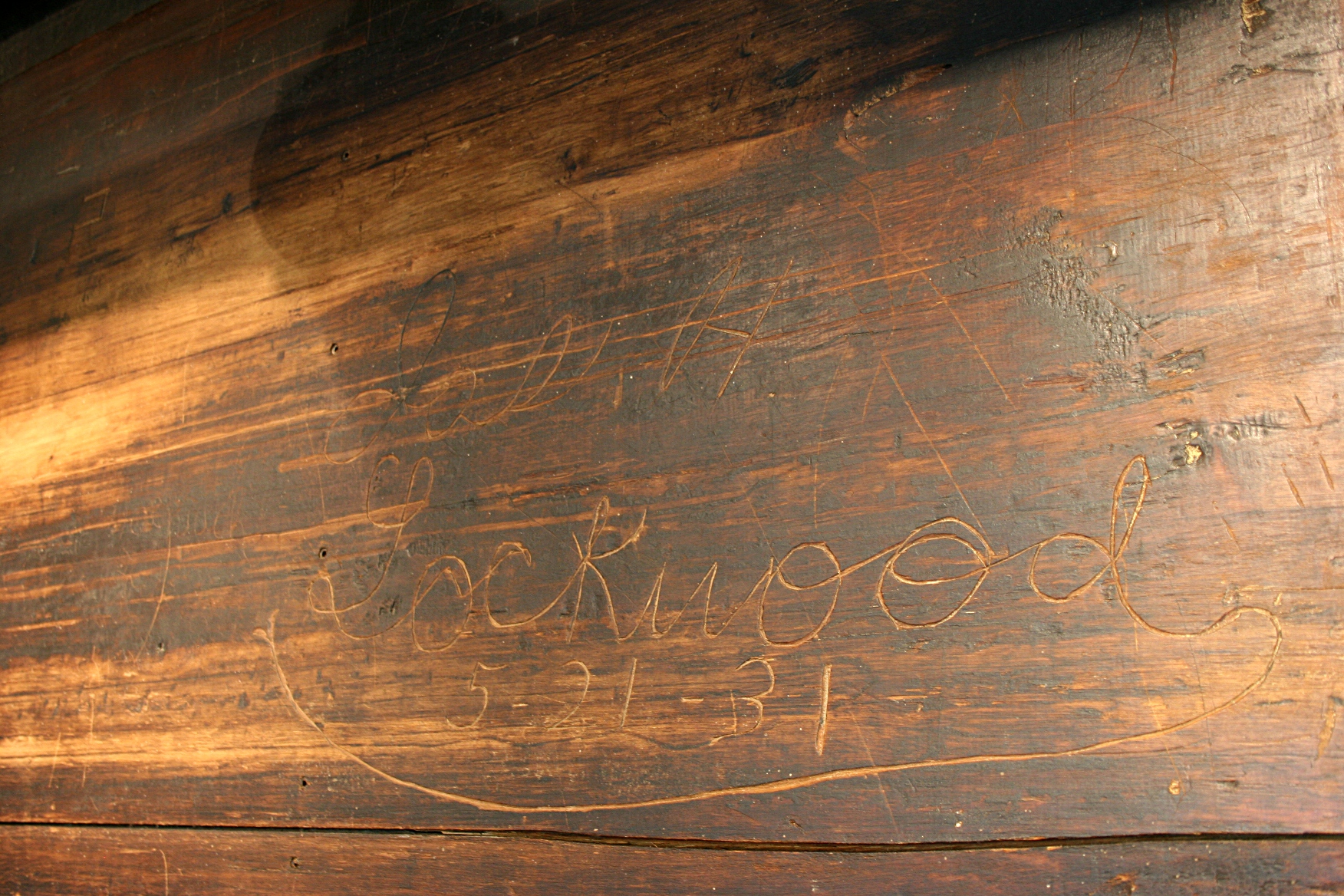
A wall once located near bathrooms has been incorporated into the retail store, behind the check-out counter, to showcase a name etched in wood in 1931.

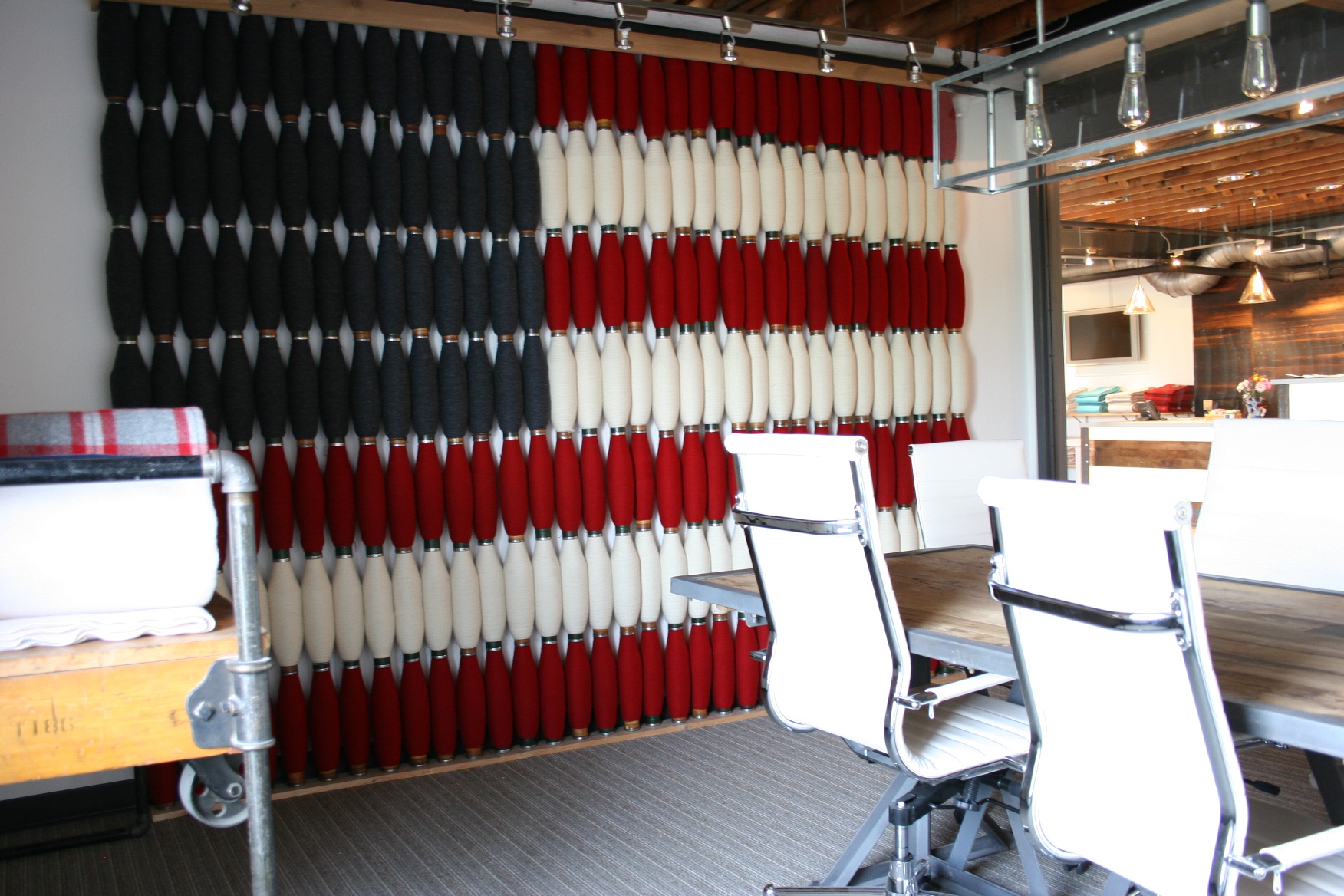
An American flag on a wall in a meeting room, visible through floor to ceiling glass in the retail store, emphasizes the Woolen Mill’s dedication to “American made” products.

On this afternoon, Jean welcomes me, obliging my request to photograph a meeting room and also a wall behind the retail counter. I have no idea she is the wife of Paul Mooty, who purchased the foreclosed mill and reopened it in 2011 with his cousin, Chuck Mooty, until she introduces herself later.

She’s friendly and engaging and genuinely interested in connecting with Faribault residents and grateful for the warm welcome given to her family.

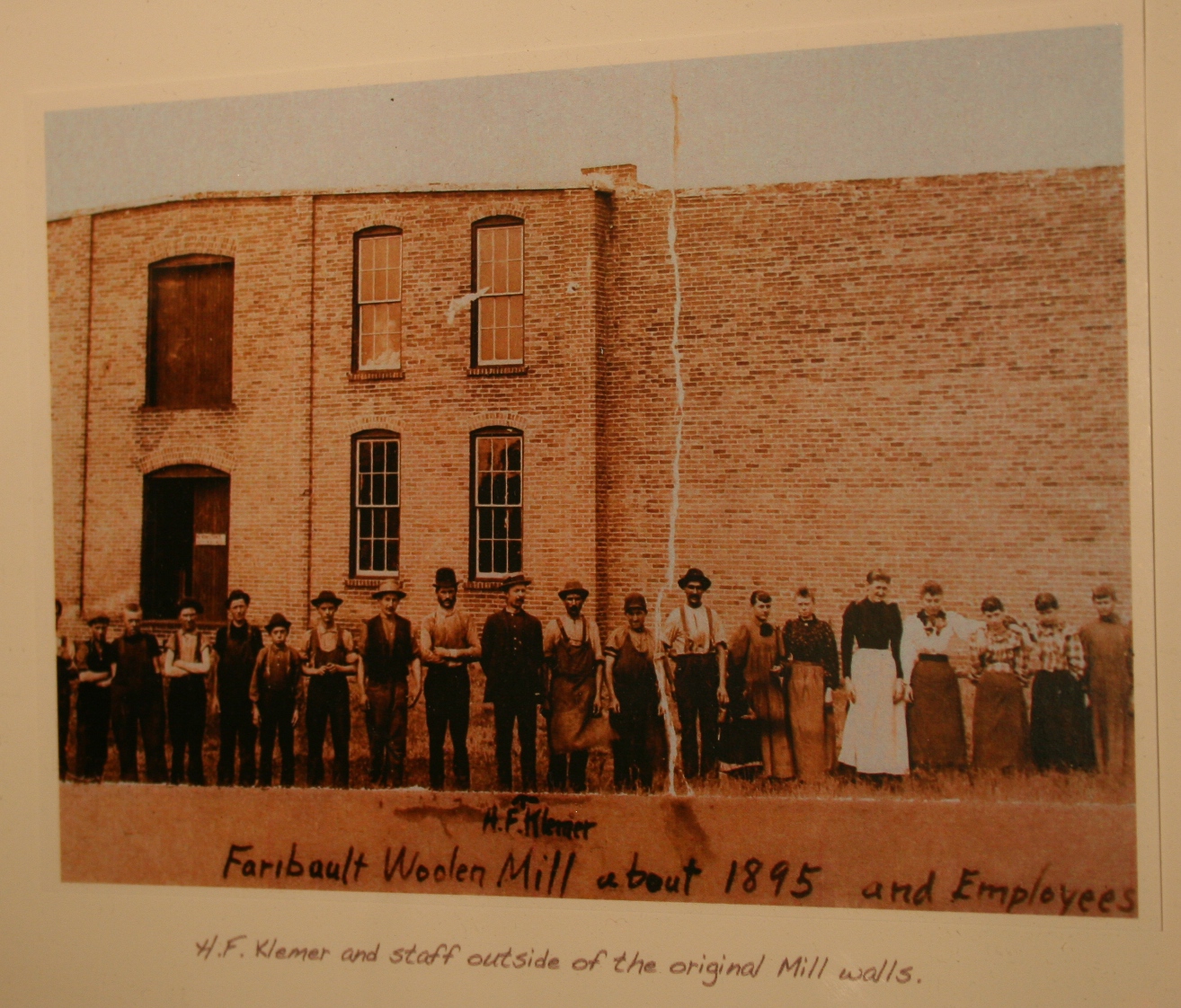
An historic 1895 circa photo from the mill, among those featured in a mini wall of Woolen Mill history.

After the sudden closure of the mill in 2009, locals seem delighted with the Mooty cousins’ revival of the mill which dates back to 1865.

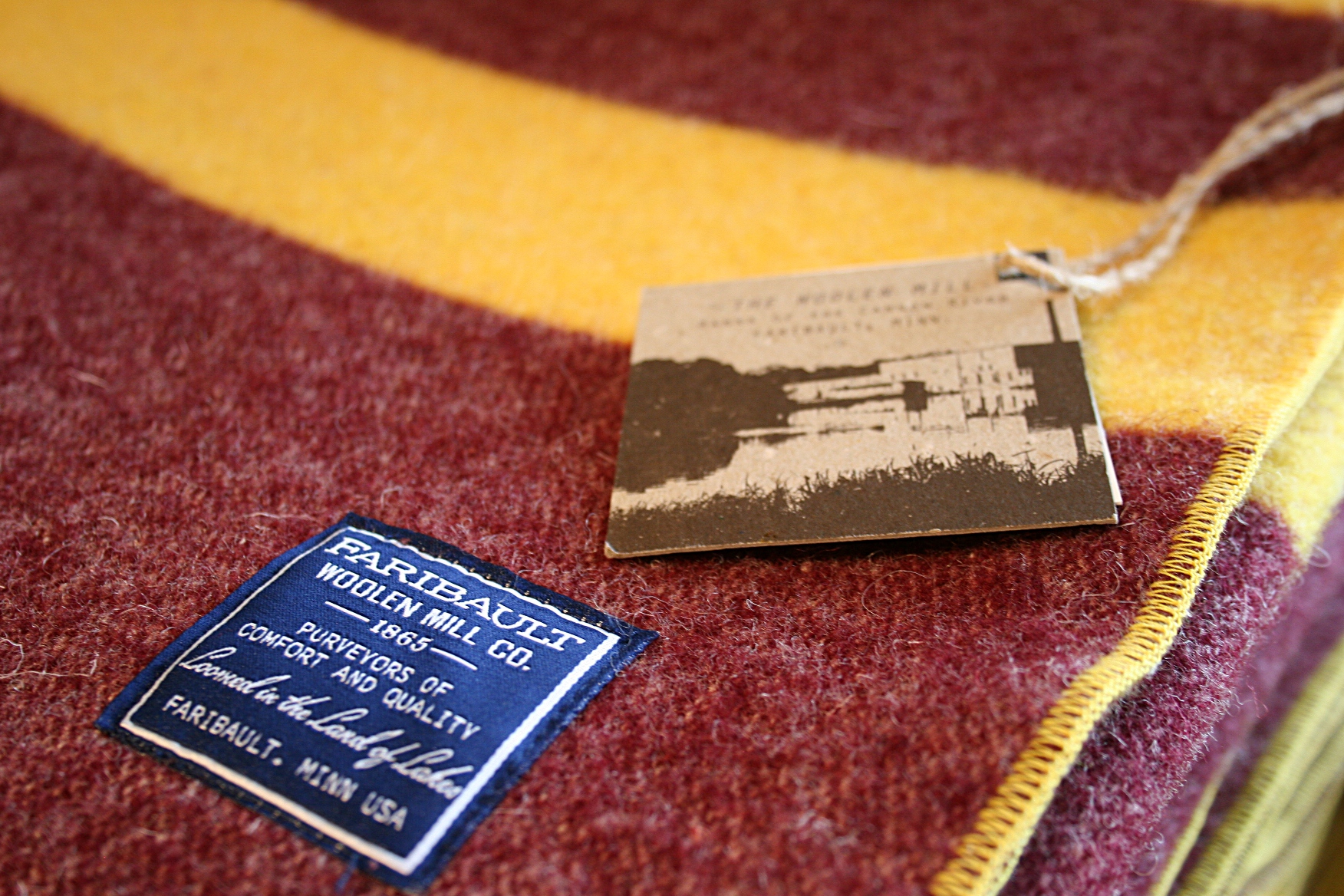
In its labeling, the mill promotes itself as “Purveyors of Comfort and Quality” with its products “Loomed in the Land of Lakes.”

The Faribault Woolen Mill’s mission, according to the company website is “to provide the finest quality goods made only by American craftsmen here in Faribault, Minnesota.”

Wool blankets with a definite Northwoods feel are sold in the retail store.

Fine examples of that craftsmanship are presented to the public in the woolen blankets and throws so artfully displayed in the store which, according to Jean, has a Ralph Lauren/Northwoods look.

I’d agree. Comfort. Simplicity.  Americana. All qualities in Ralph Lauren’s signature fashion style exist in this mill store which seems destined to once again become a must-see destination for visitors to Faribault, one of Minnesota’s oldest and most historic cities.

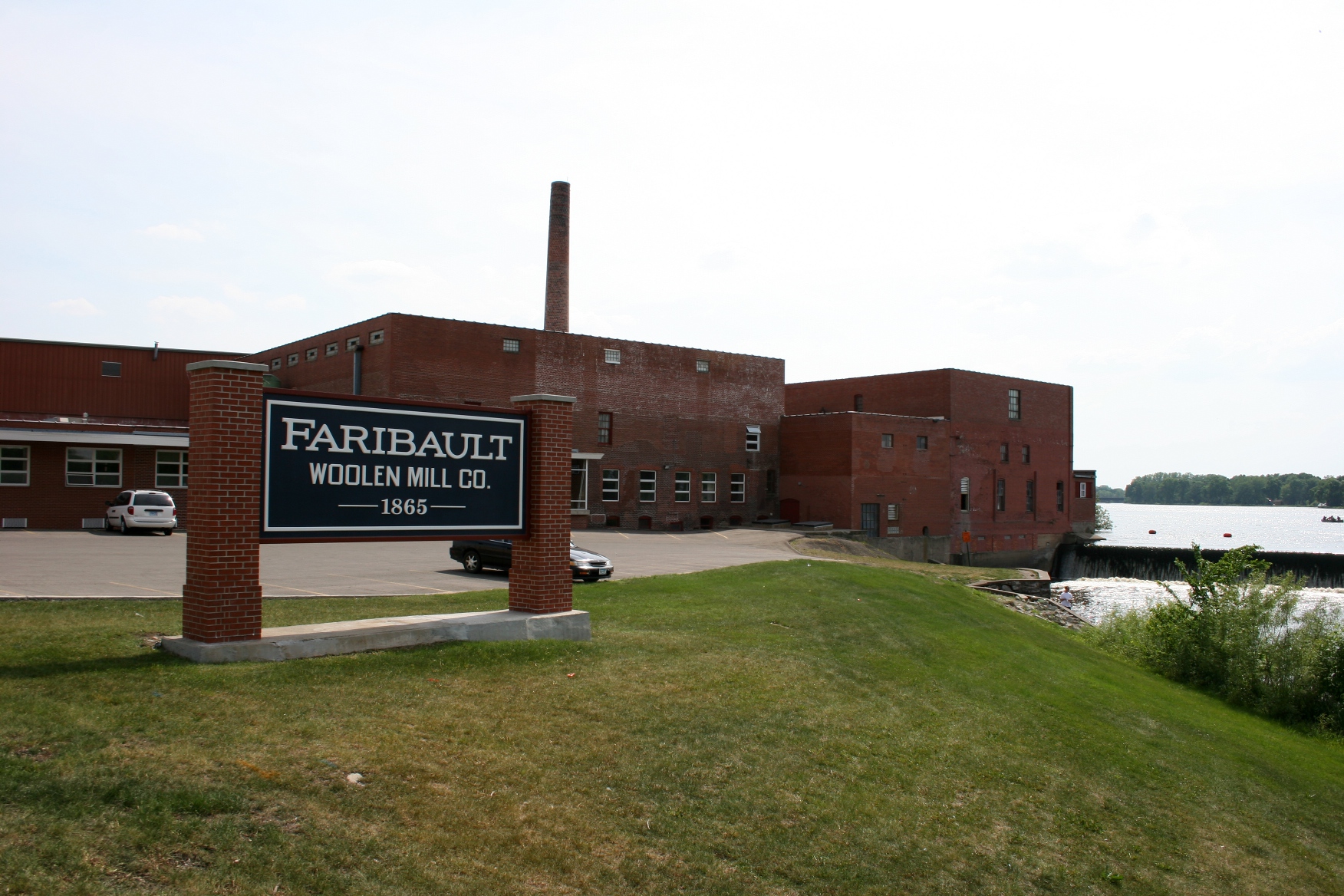
The historic Faribault Woolen Mill sits along the banks of the Cannon River.

FYI: The Faribault Woolen Mill retail store holds its grand opening from 4:30 p.m. – 7 p.m. on Thursday, June 14. A ribbon-cutting is scheduled in conjunction with the Faribault Heritage Days Mayor’s Reception.

Tours of the Woolen Mill, located on the banks of the Cannon River at 1500 Second Avenue Northwest near the Rice County Fairgrounds, will be offered as part of the Heritage Days celebration at 2 p.m. and 2:30 p.m. on Wednesday, June 13, and again on Friday, June 15. Preregister by calling (507) 334-2064.

For more info about the Faribault Woolen Mill, click here to link to the company website.

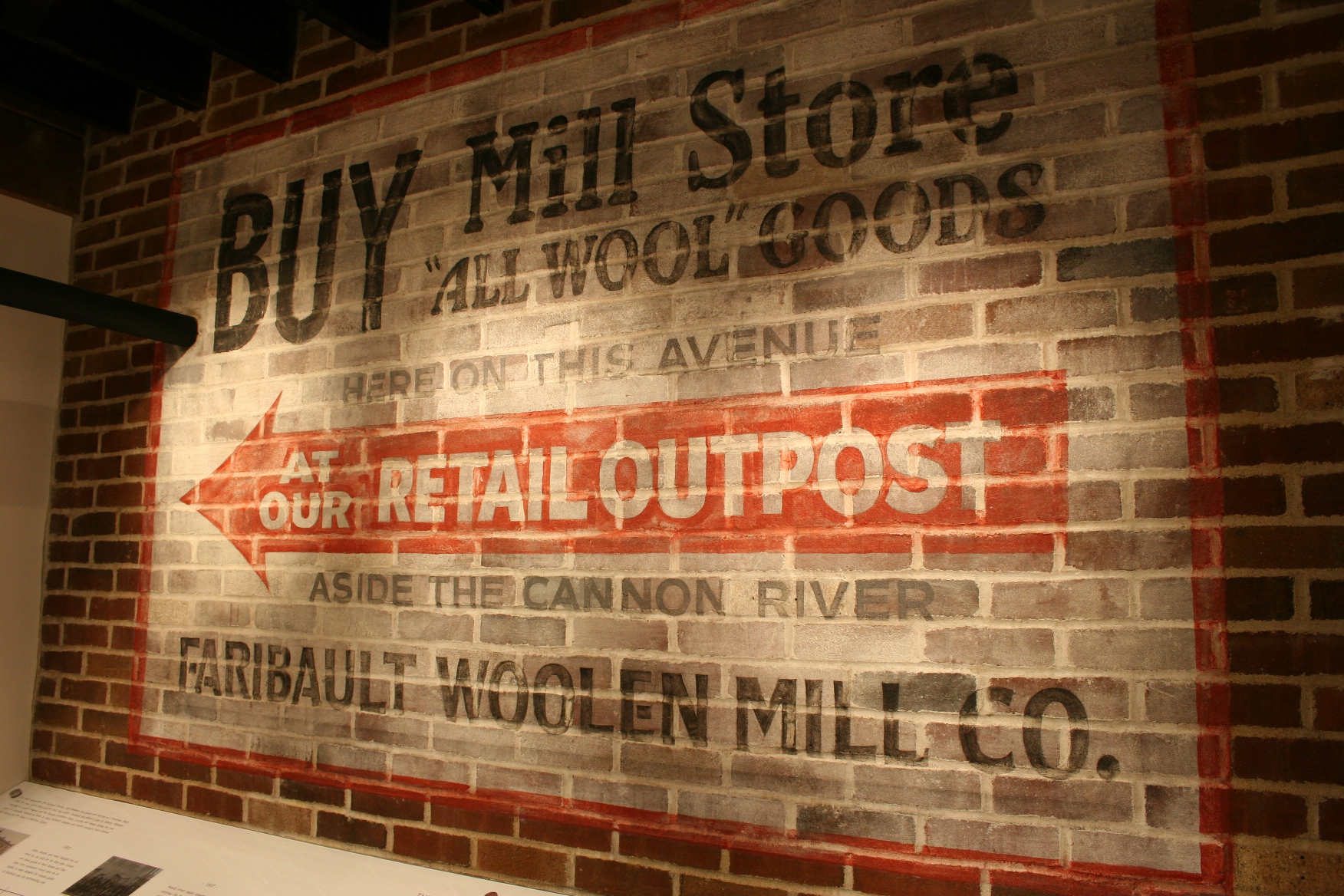
A replica of an original sign is now in the Woolen Mill’s historic display area.

Even this Woolen Mill conference/meeting room possesses an inviting, rustic appeal.

© Copyright 2012 Audrey Kletscher Helbling
Note: These photographs were shot one month ago.


Appreciating the corner gas station March 14, 2012

THERE’S NOTHING PARTICULARLY appealing about filling up with gas these days. Pull up to a generic convenience store/gas station, pump your own gas and then kiss a sizable wad of your money goodbye.

It wasn’t always that way, though, either in gas prices or service or the cookie-cutter service stations.

Maybe because my Uncle Harold once owned a gas station/garage in my hometown of Vesta, I am drawn to former full-service gas stations, specifically those angled into a street corner. My uncle’s station was neither angled nor on a street—his sat along Minnesota State Highway 19.

Most old-style corner service stations have long closed, although the buildings still exist, either vacant or re-purposed. They possess a nostalgic and architectural charm that spells magic.

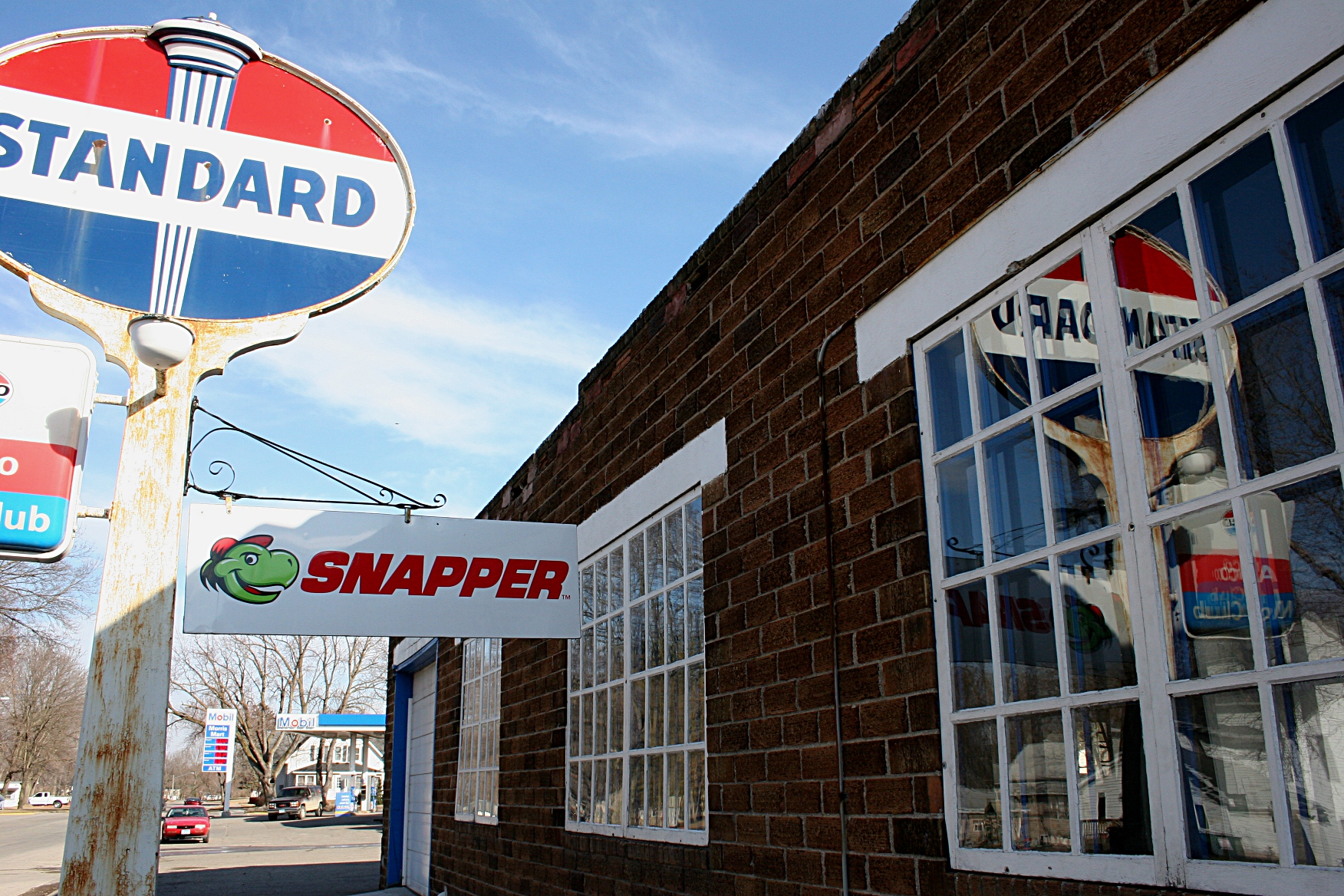
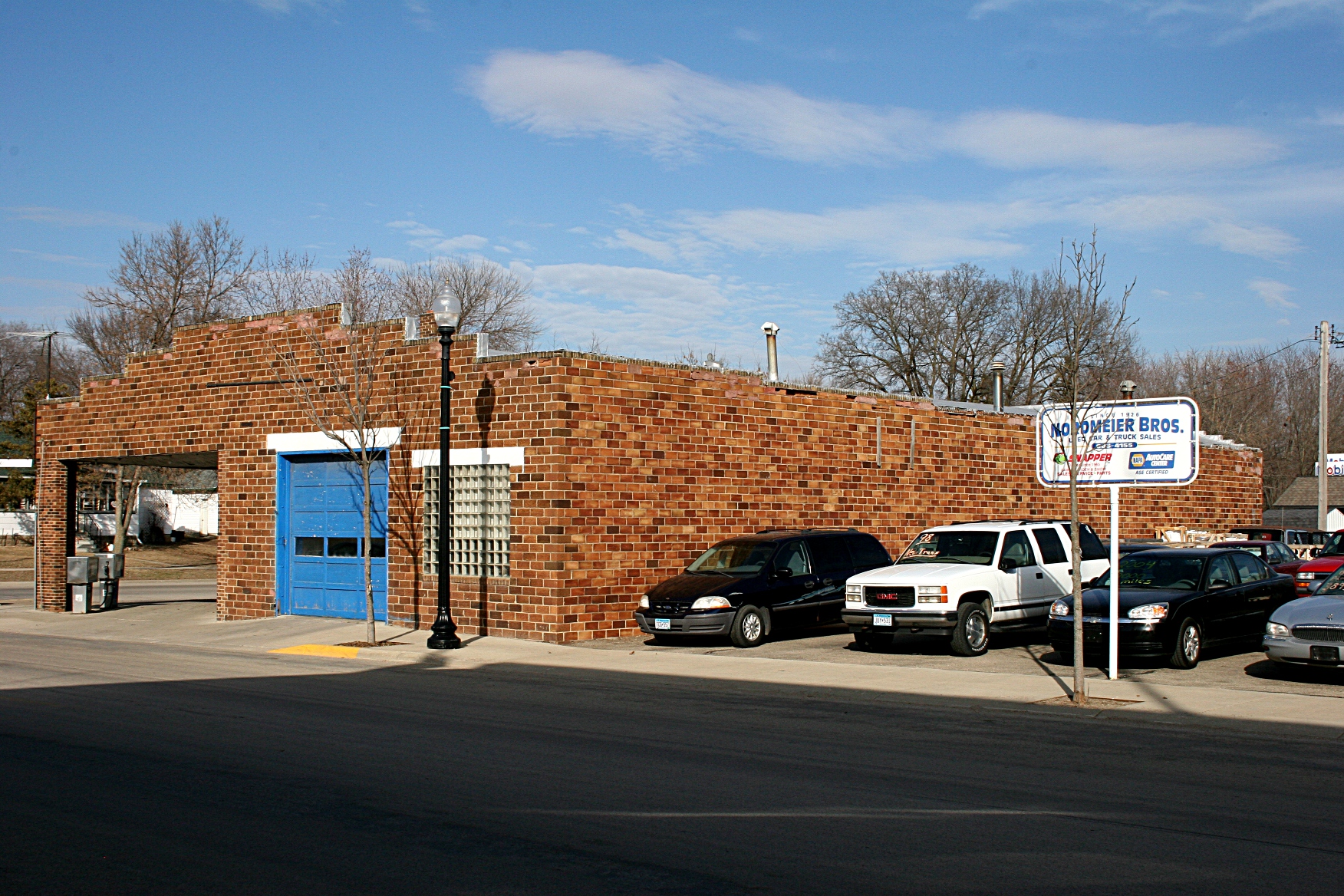
Just look at this fine example in Morristown, a town of about 1,000 residents in Rice County, Minnesota, within 10 miles of my Faribault home.

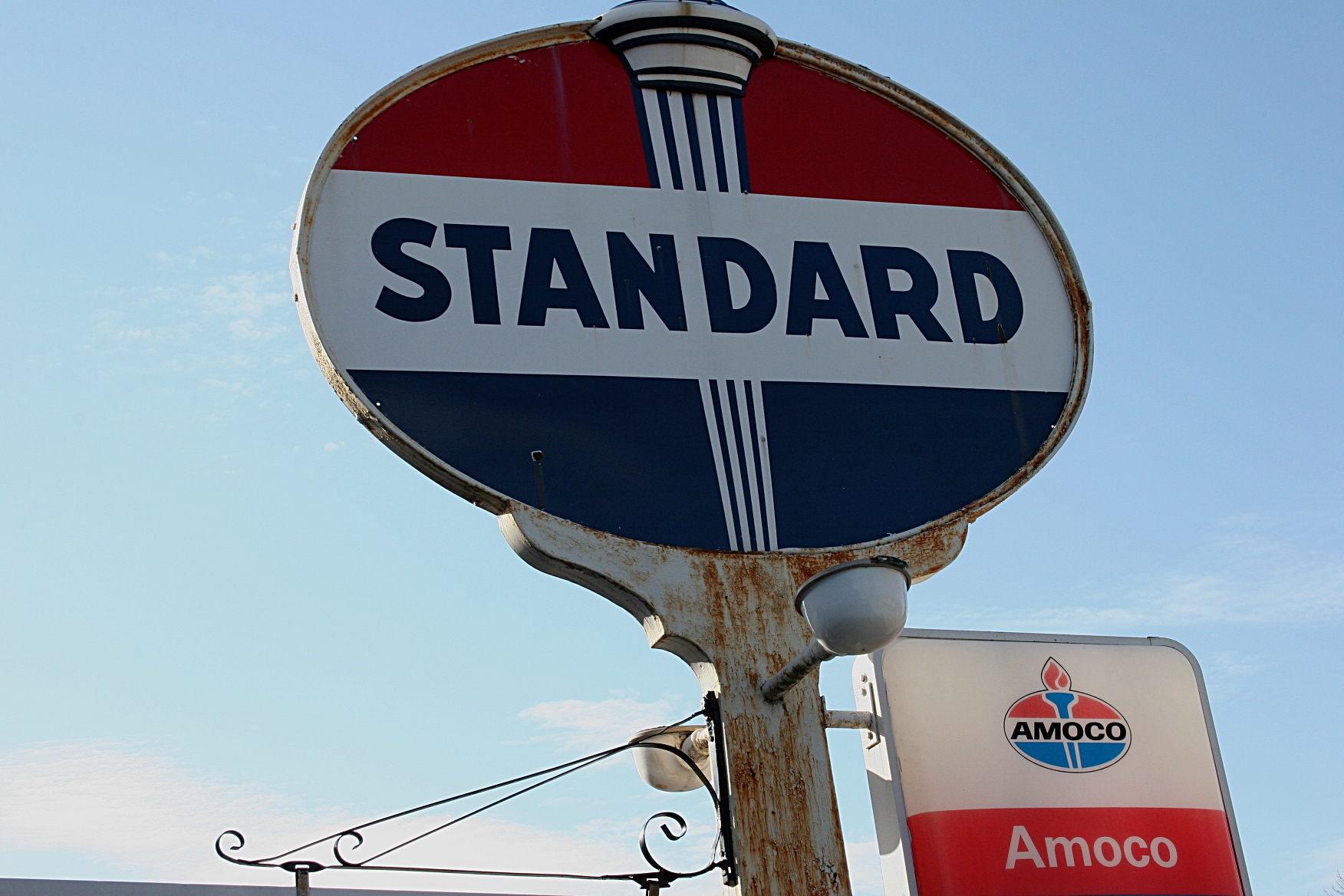
The old corner style gas station and vintage Standard Oil sign on Morristown's main street.

For years I’ve passed by this building, but never once stopped to photograph it. I have recently come to realize that such a plan of inaction, of thinking I’ll photograph a scene when I have more time, is unwise. Waiting equals only regret when a structure is torn down or falls into a rotting heap.

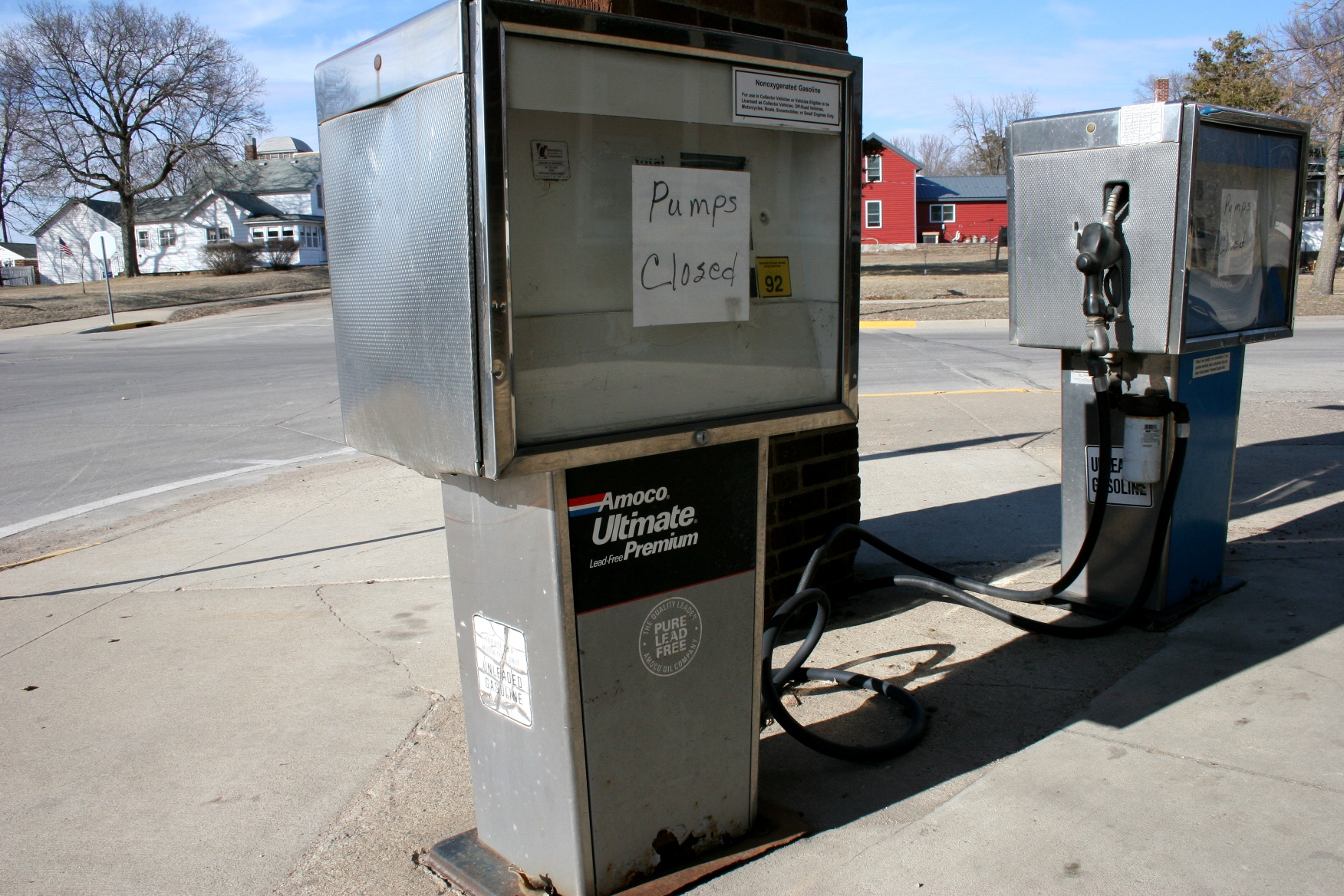
That’s not likely to happen anytime soon at Nordmeier Brothers, in business since 1926. The sturdy brick building with the brilliant blue doors appears, from the exterior, to be structurally-stable. And although the old gas pumps have long been abandoned, Nordmeier still operates a garage and sells used vehicles.

I love how the vintage Standard Oil sign reflects on the windows of the garage late on a sunny afternoon in March. There's a modern Mobil station/convenience store next door.

Old, abandoned gas pumps at Nordmeier.

There’s much to be said for long-standing family businesses like Nordmeier Brothers that have anchored small-town Main Streets and stuck it out through economic difficulties. Not that Morristown is devoid of vacant buildings—it certainly isn’t.

But at least it has this lovely corner gem of a building, a place that hearkens to years past and the memories of full service gas stations and lower, much lower, gas prices.

I'm an appreciator of vintage signs, too. I hope the folks of Morristown value this sign.

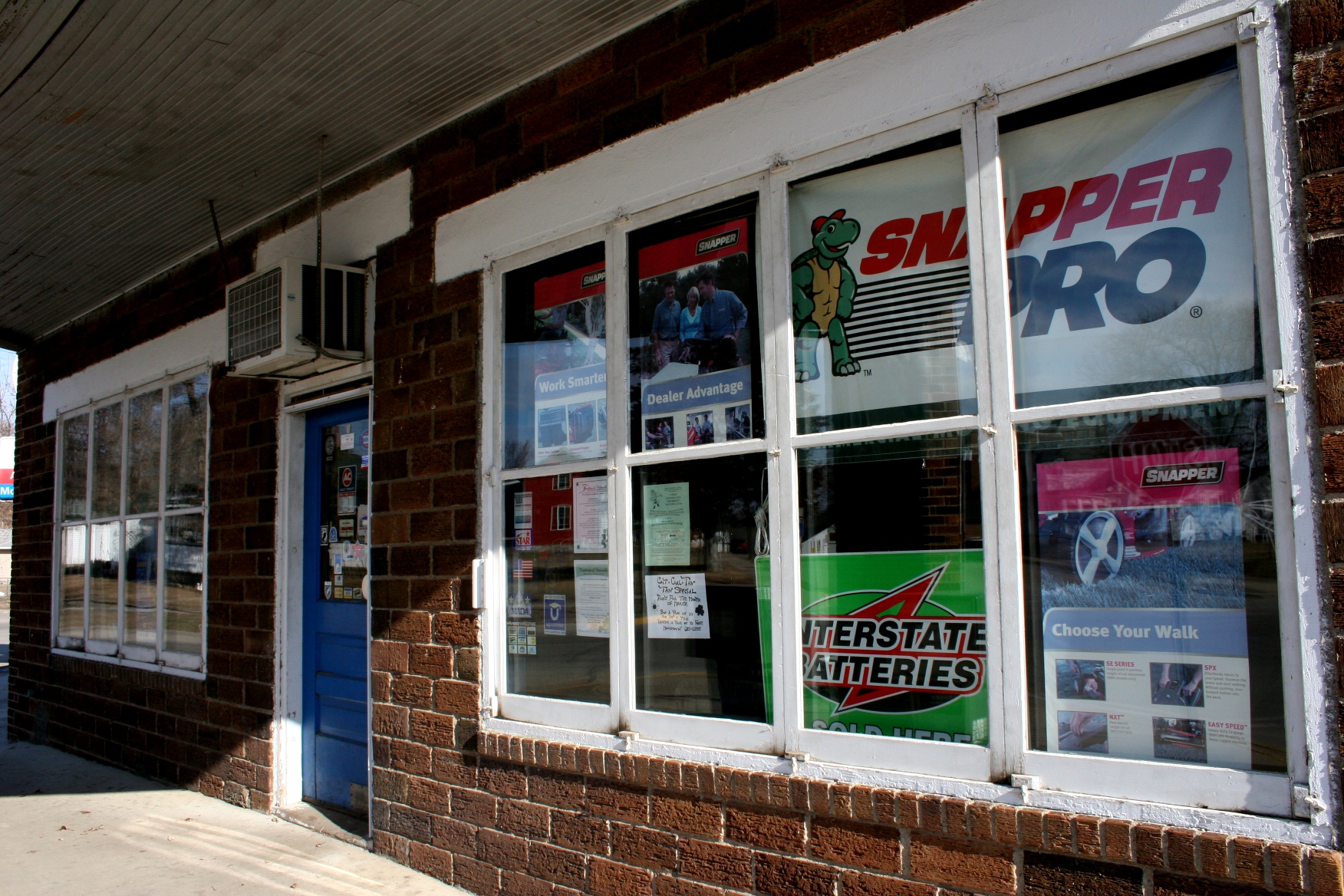
It takes awhile to read all the window and door signage, a small-town art form of its own.

You can pick out a vehicle right here at Nordmeier Brothers in downtown Morristown. The business once was a Chevrolet dealer until GM began pulling franchises several years ago.

© Copyright 2012 Audrey Kletscher Helbling
 

Farewell to the Swany White Flour Mill of Freeport December 28, 2011

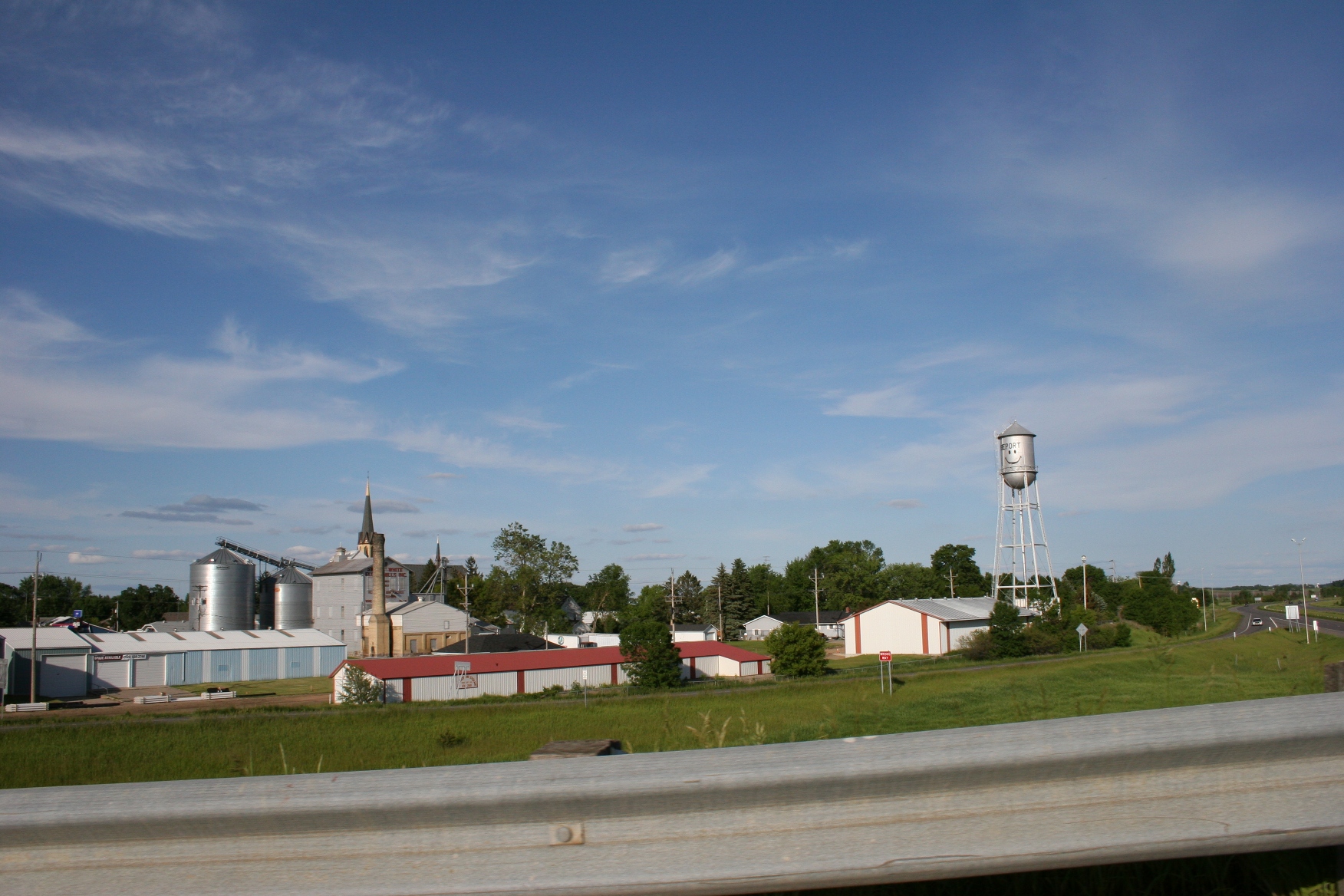
Freeport promotes itself as "The city with a smile!" That's the smiling water tower to the right and the Swany White Flour Mill to the left in front of the church steeple in this June 2011 image. Freeport is among the communities after which Garrison Keillor's fictional Lake Wobegon is fashioned.

CROSSING THE OVERPASS into Freeport last June, I snapped a quick landscape photo with the town’s charming water tower smiling at travelers along Interstate 94 in central Minnesota.
I should have focused, though, on the old-fashioned grain elevator-style flour mill to the left in my framed image.

Late Tuesday afternoon this historic icon, the Swany White Four Mill, built in 1897 and owned by the Thelen family since 1903, burned. Minnesota has lost an important part of her history, a still-functioning mill of yesteryear that specialized in producing commercial grade and organic flour and was known for its famous Swany White Buttercake Pancake and Waffle Mix.

That I never realized the importance of this towering, aged building on that June afternoon saddens me for I am typically drawn to small-town elevators. But when my husband and I swung into Freeport late on that Saturday afternoon 6 ½ months ago, we were more interested in finding Charlie’s Café, a popular dining spot in this town of 450. We were hungry. Charlie’s was packed, so we left town without eating there, but not until I snapped photos of the café and Sacred Heart Church and School.

Popular Charlie's Cafe is noted for its tasty homemade food including caramel rolls, meringue pies and hot beef commercials. To the right is the Pioneer Inn, after which Garrison Keillor modeled The Sidetrack Tap in his fictional Lake Wobegon. Keillor and his family lived near Freeport in the early 1970s.

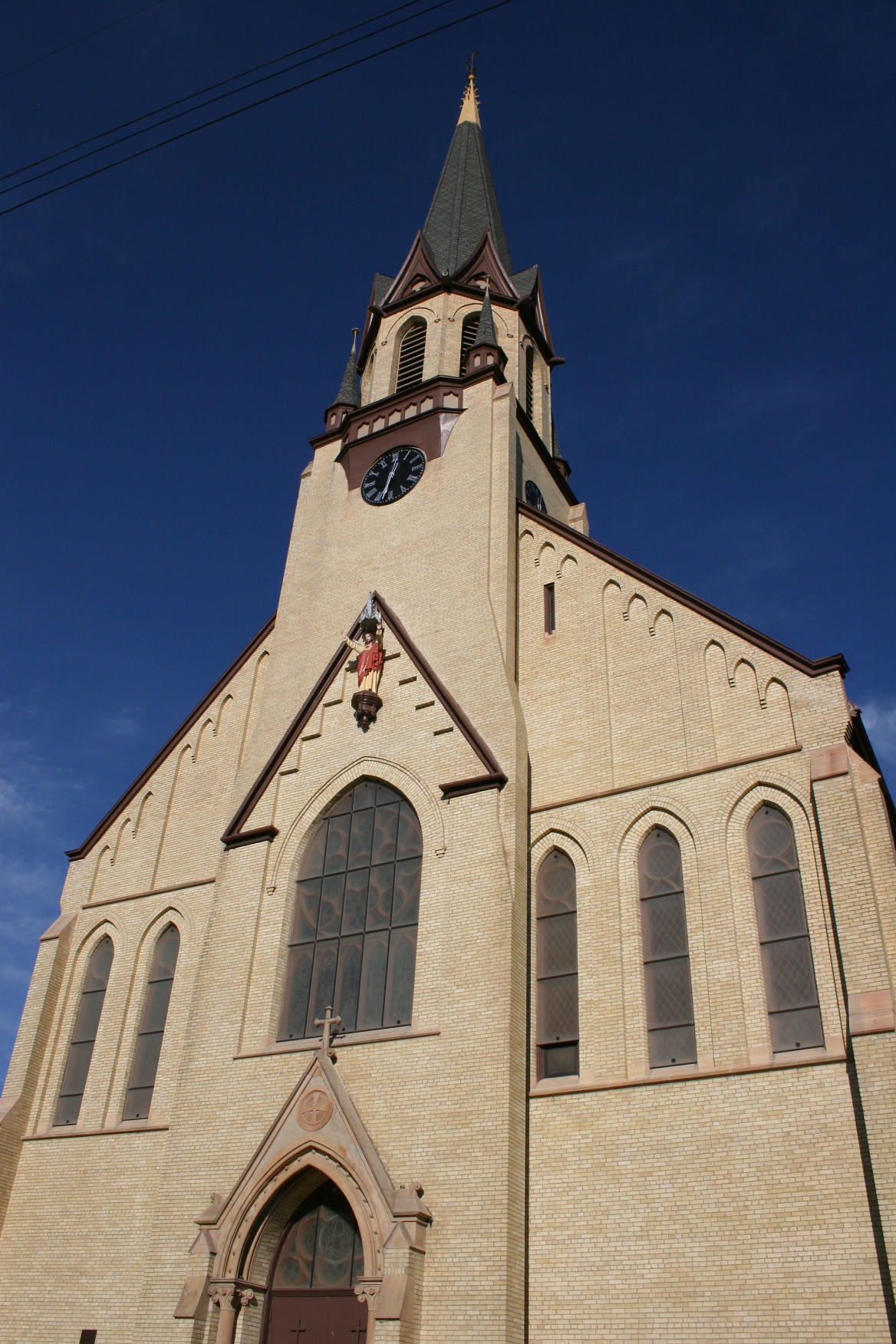
Sacred Heart Church, Freeport, described by Garrison Keillor as "a fine tall yellow-brick edifice with a high steep roof."

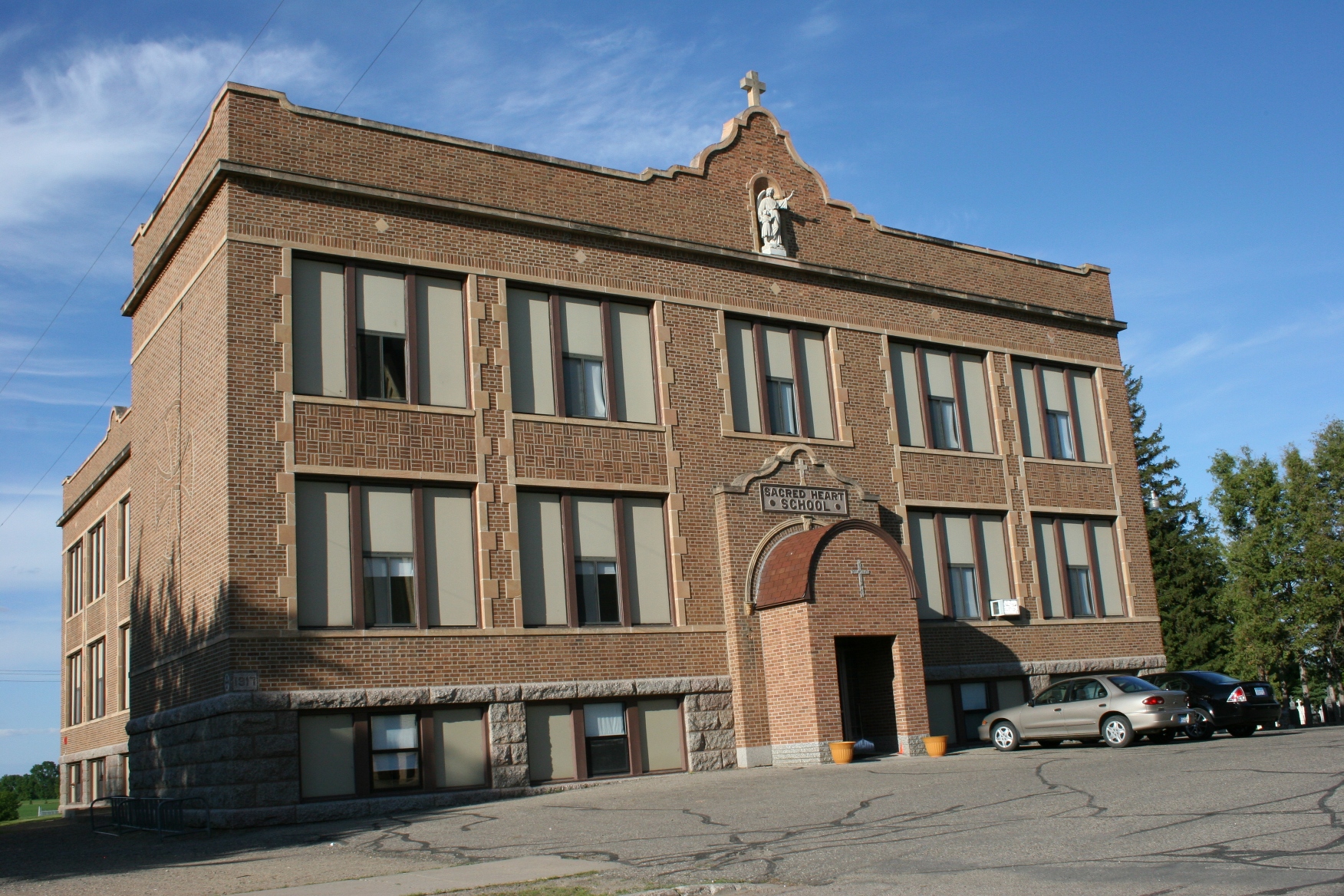
Sacred Heart School in Freeport, a lovely old building that caught my eye.

I totally missed out on the Swany White Flour Mill, simply because I was unaware of its important existence.

Eleven years ago, though, the historic mill, Charlie’s and other central Minnesota scenes were photographed by National Geographic photographer Richard Olsenius, illustrating a story, “In Search of Lake Wobegon,” by Garrison Keillor, expanded in 2001 as a book. A sister-in-law gave me her copy of the December 2000 National Geographic recently, knowing how much I would appreciate Keillor’s writing and the black-and-white images by Olsenius. I do.

Keillor rented a farmhouse south of Freeport some 40 years ago. He and his family weren’t exactly embraced by the community during the three years they lived there. Keillor writes about his experiences in the magazine piece, where he reveals that his fictional Lake Wobegon is based on life in central Minnesota, including Freeport.

I wonder if Keillor is reflecting on those years in Freeport as news of the Swany White Flour Mill’s demise reaches him. A eulogy or a tribute to this historic mill would seem fitting for Keillor’s radio show, “A Prairie Home Companion,” broadcasting from Honolulu, Hawaii, on New Year’s Eve, far from Lake Wobegon “where all the women are strong, all the men are good-looking, and all the children are above average.”

It hasn’t exactly been a quiet week in Lake Wobegon.


A historic bank and White Buffalo Calf Woman June 23, 2011

SET ME IN FRONT of an architecturally-stunning historic building and I’m in history heaven.

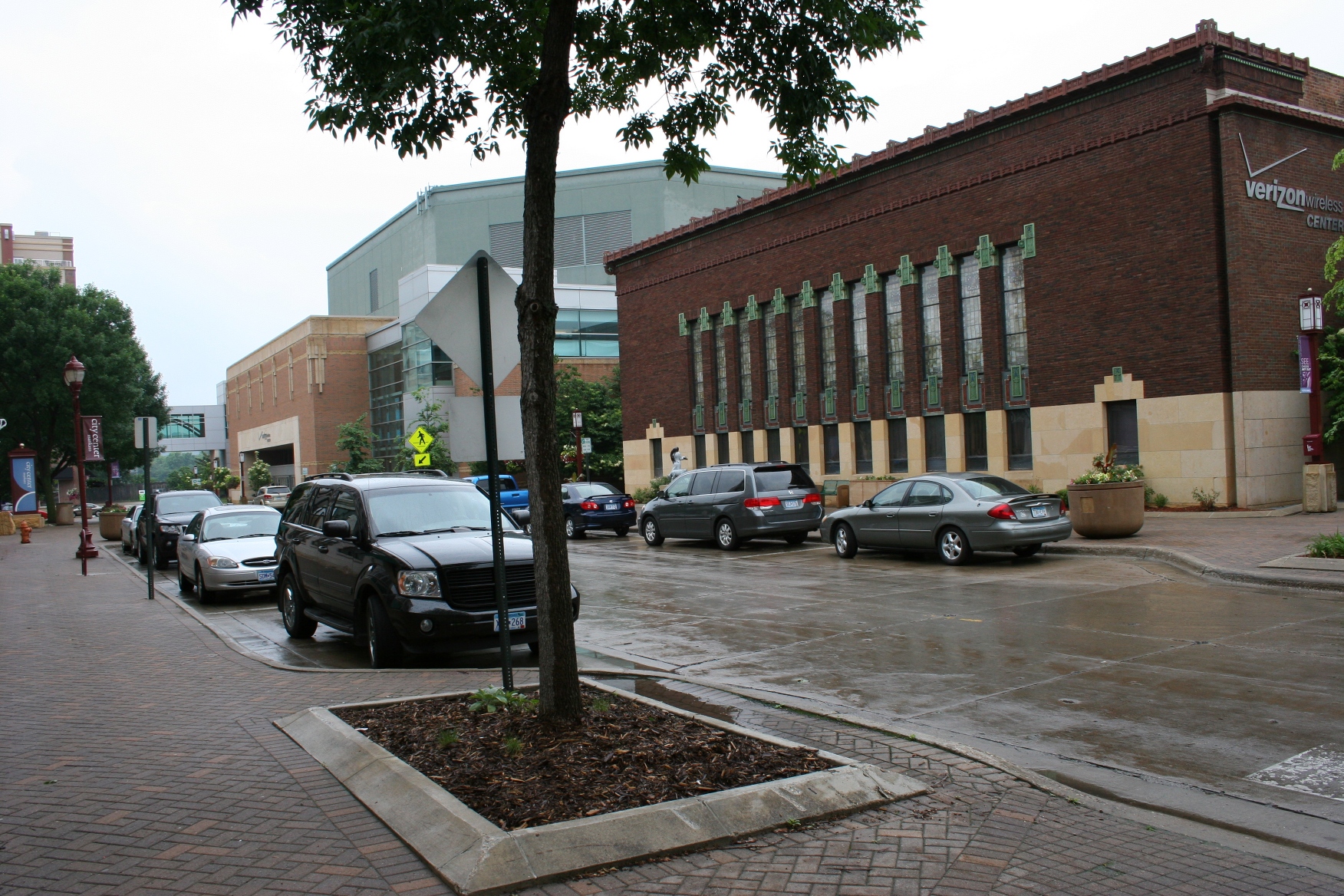
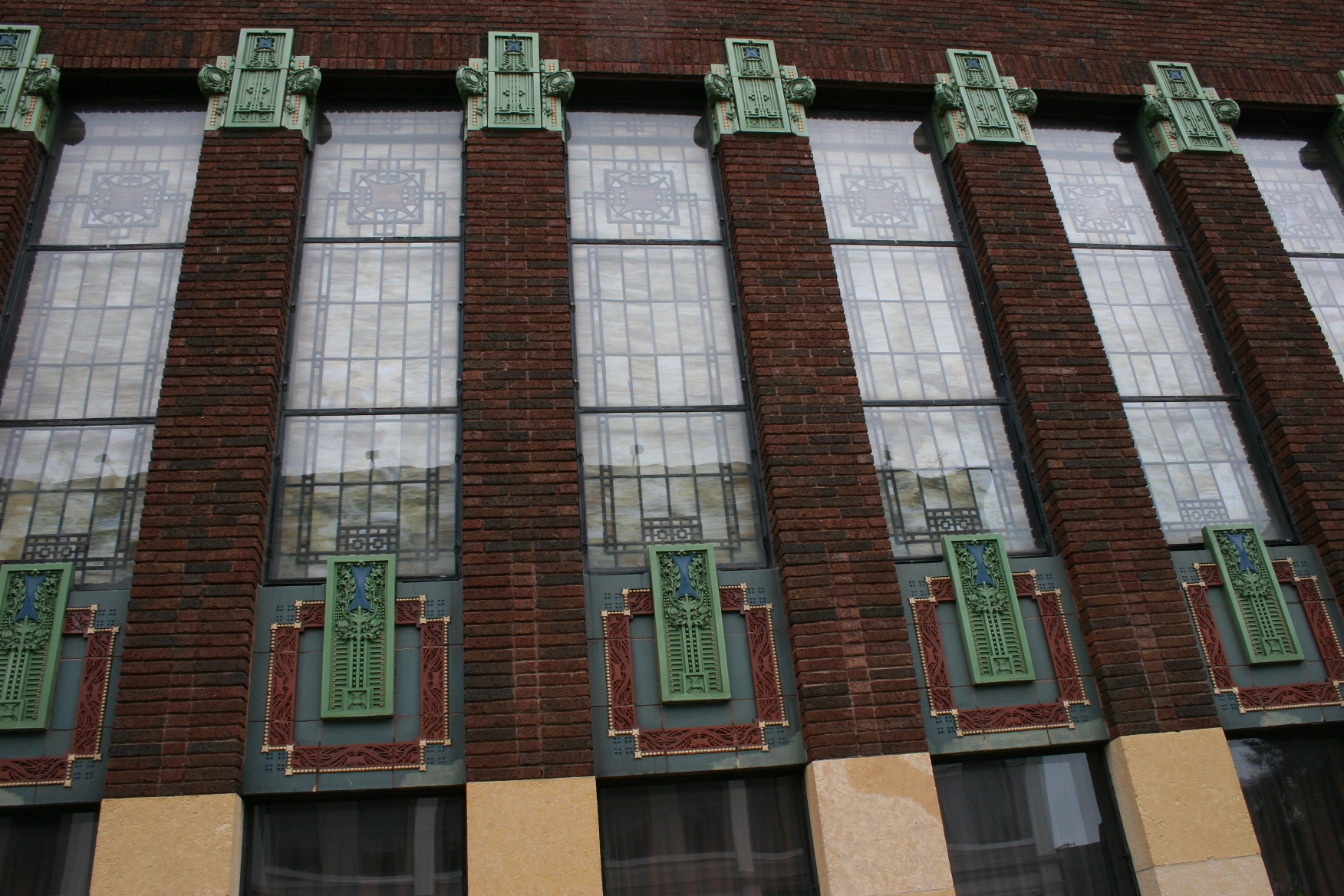
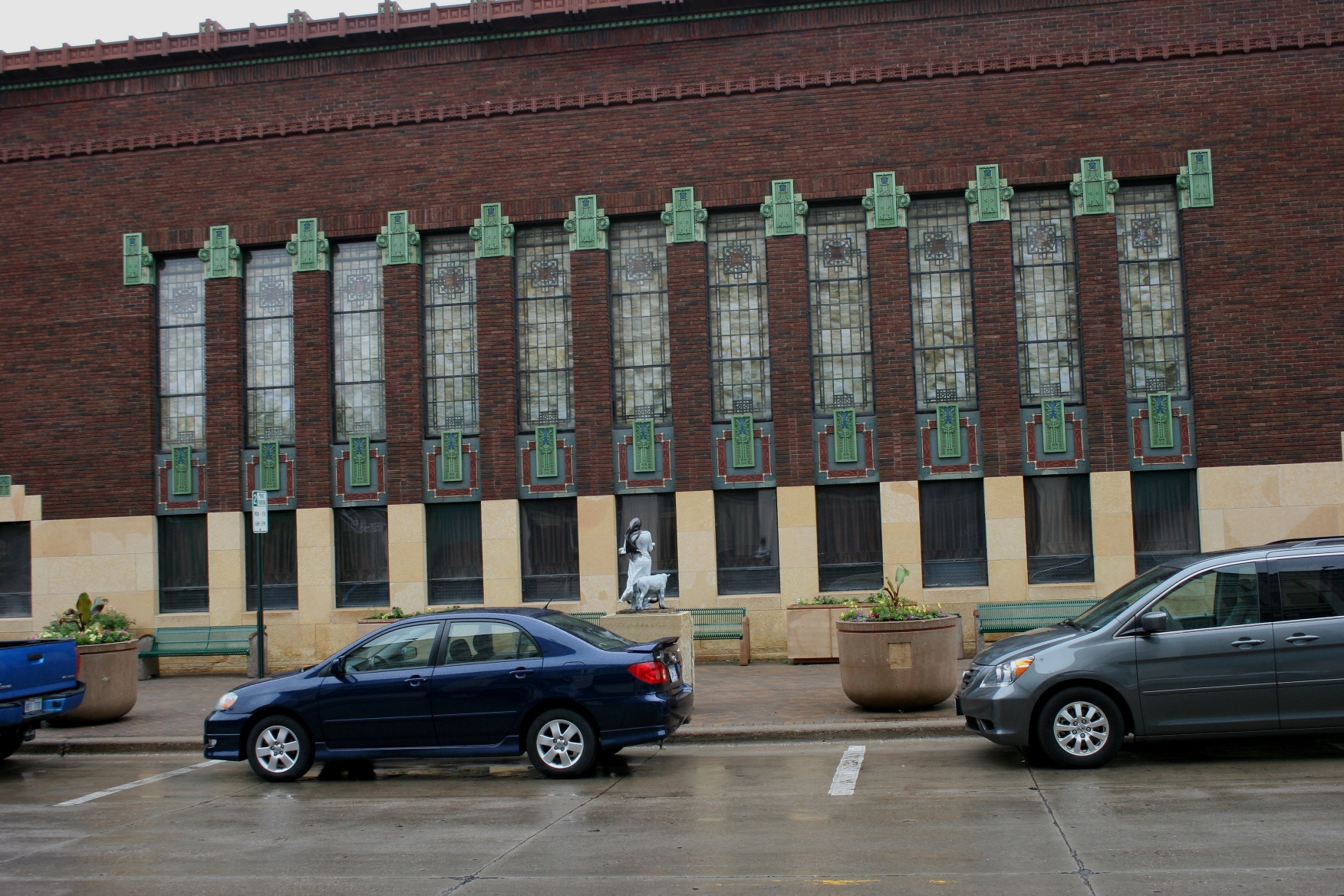
Just look at the lines, the colors, the window leading, the carvings…of the Old First National Bank of Mankato building, now a Verizon Wireless Center reception hall.

I didn’t step inside the former bank, didn’t even try a door. I was content last Saturday afternoon to view the exterior with its Prairie School style architecture.

“It’s like that bank in Owatonna,” my husband said as we gawked at the building built of brick, Mankato limestone and terra cotta along Civic Center Plaza in downtown Mankato.

He was, of course, referring to Chicago architect Louis Sullivan’s “jewel box,” National Farmer’s Bank in Owatonna, a brick building with terra cotta accents, splendid for its stained glass windows, arches and other architectural details.

The Mankato building features Frank Lloyd Wright-inspired stained glass and detailed ornamentation along the roof line.

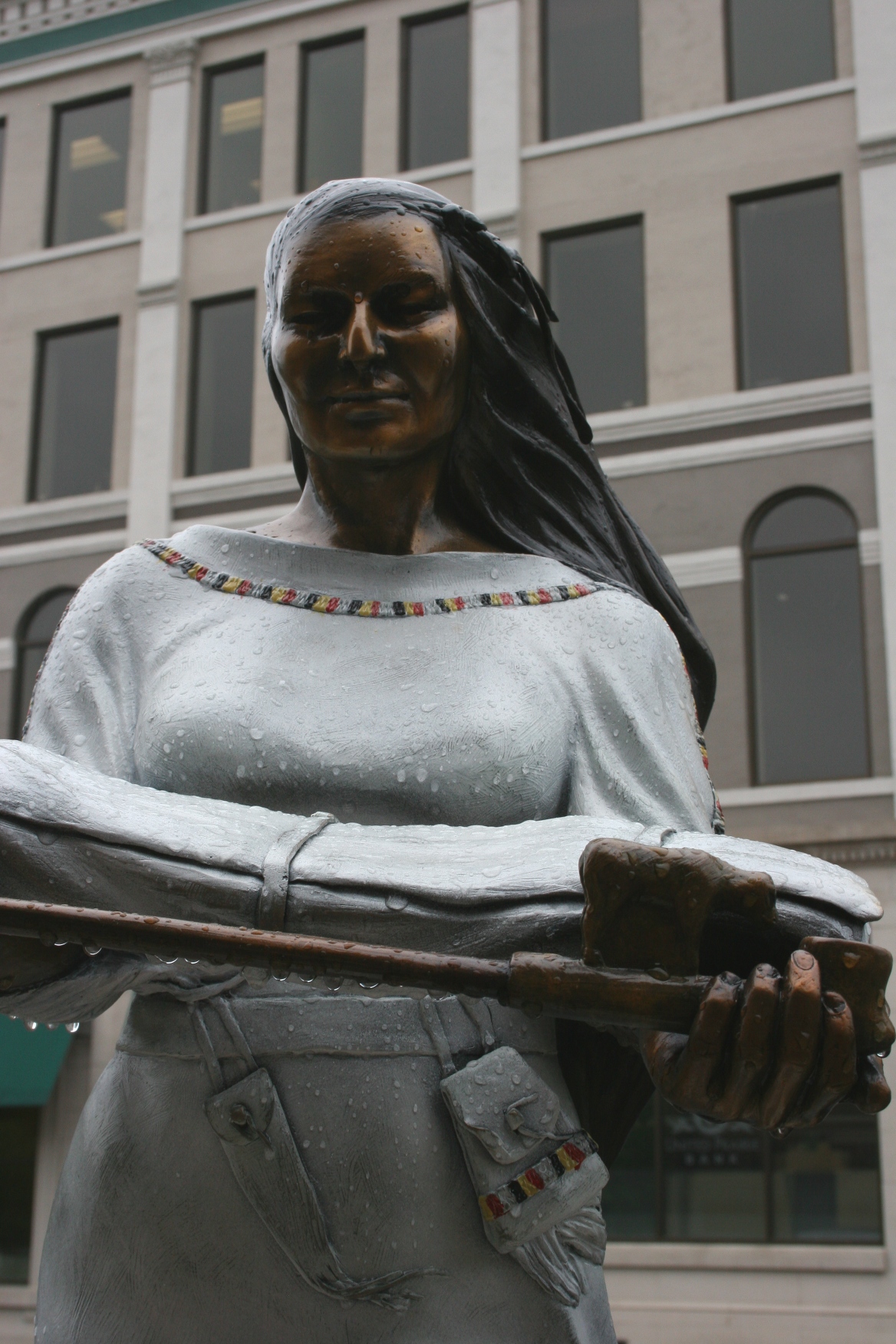
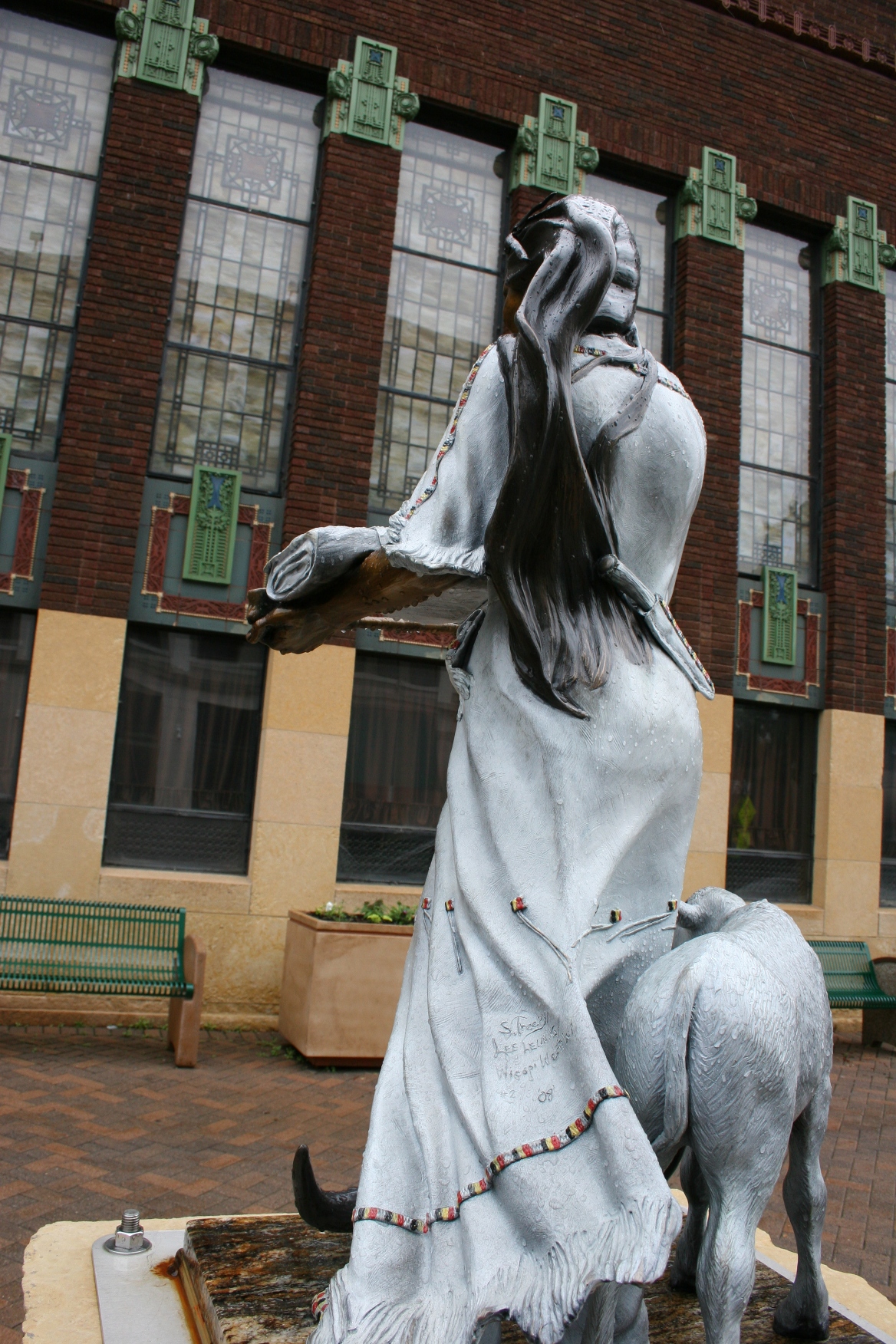
And now it also showcases a bronze sculpture of White Buffalo Calf Woman by South Dakota artists Lee Leuning and Sherri Treeby as part of Mankato’s City Art Walking Sculpture Tour.


If you peer at the woman’s face, examine her beaded moccasins and the trim on her buckskin dress and pouch, you’ll notice how the colors mimic those of the historic bank building. Whether this Native American sculpture’s placement was planned or accidental, I don’t know, but it fits seamlessly with the historical vibe of the locale, enhancing the whole art viewing experience.

The city of Mankato, apparently named after a varied translation of the Dakota word Mahkato, meaning “blue earth,” owns a place in Minnesota and national history for the mass hanging of 38 Dakota here on December 26, 1862. Three hundred warriors were accused of killing civilians and soldiers and of other crimes during the U.S.-Dakota Conflict. After a public outcry, President Abraham Lincoln commuted the sentences of all but 38. Certainly, Mankato is not proud of this moment in history. But efforts have been made to honor the Dakota at monuments in the city.

And now sculptures like White Buffalo Calf Woman also help heal and educate the public about the Native American culture. According to information on the sculpture placard, this prophetess is the only religious icon accepted by all Native American tribes. She “brings a message of healing, hope and peace among the races to all the people.”

More than just art, I also got a history lesson along a Mankato city street on a Saturday afternoon in June.

PLEASE VIEW MY JUNE 20 post for more photos and information about the Walking Sculpture Tour. Additional images will be forthcoming.

© Copyright 2011 Audrey Kletscher Helbling