Minnesota Prairie Roots

Writing and photography by Audrey Kletscher Helbling

From Wisconsin: A book about food, friendship, family, love, trauma & place April 2, 2025

(Book cover sourced online)

I FOUND THE BOOK in the new fiction section of my local public library, the place where I discover reading materials that grow me, stretch me, teach me, and, yes, entertain me. The Funeral Ladies of Ellerie County by Claire Swinarski fits all four of those categories. I love this book. Underline love.

I did not expect this reaction when I randomly pulled the novel from the shelf, drawn by its catchy title printed in a colorful font, drawn by the simple cover art of a lakeside Northwoods cabin. I do, indeed, judge a book by its covers, front and then back synopsis. These covers hit all the marks for me, someone who appreciates stories rooted in rural. Stories that are simple, yet complex. Stories that make me think, that tap into my empathy, that move me. Stories that are strong in place.

(Book cover sourced online)

In some ways, this book reminds me of the writing of Minnesotan Lorna Landvik, author of the popular Patty Jane’s House of Curls, The Tall Pine Polka, Once in a Blue Moon Lodge and more, most of which I have read. But the author of The Funeral Ladies of Ellerie County hails from neighboring Wisconsin, which is similar to Minnesota, but different.

These are what we call bars (the kind you eat) in Minnesota and Wisconsin. Maybe elsewhere. (Minnesota Prairie Roots copyrighted file photo)

At the heart of this story are the funeral ladies, a group of long-time friends who prepare meals for mourners at St. Anne’s Catholic Church. Casseroles—not hotdish as we call casseroles in Minnesota—concocted with canned cream soups. Shredded beef. Peanut butter bars. Pies made with Door County cherries. Food for the body and soul. This reminded me of the Reception Committee in my childhood home church on the southwestern Minnesota prairie. That group of Lutheran women prepared funeral hotdishes comprised of hamburger, pasta, a vegetable and assorted canned cream soups with salt and pepper for seasoning. The recipes are published in the 1985 St. John’s Anniversary Cookbook. The covers of that cookbook have fallen off my tattered copy. A cookbook is central to Swinarski’s novel.

The point here is that The Funeral Ladies of Ellerie County is absolutely relatable for me. I felt comfortably at home with the story initially, even when I learned of a heartbreaking scam involving main character Esther Larson. That shapes the story. Then the story-line focus shifts from friendship, faith and family to tough topics after a Food Network star and his children arrive to bury his estranged wife in her hometown.

Mental health gets attention in this book. (Minnesota Prairie Roots copyrighted file photo)

Without revealing too much of the plot, know that family relationships, love and trauma weave into this novel. That trauma is post traumatic stress disorder, experienced by paramedic Cooper Welsh after participating in a holiday parade interrupted by a deadly shooting. In real-life, six people died in November 2021 when a driver plowed his SUV into a Christmas parade in Waukesha, Wisconsin, killing six and injuring many others. I expect Swinarski patterned her fictional tragedy loosely after this event or the many other mass shootings this country experiences.

I appreciate that the author, even in this fictional account of such violence and its personal aftermath, writes with authenticity. As a reader, I felt emotionally invested. I was rooting for Cooper and for those who love him. Swinarski doesn’t just touch on PTSD. She dives into it head on, writing in her acknowledgments that she talked to individuals dealing with PTSD to craft Cooper’s life story. That research shows.

A sign along the interstate advertises Ishnala Supper Club in Lake Delton near the Wisconsin Dells. (Minnesota Prairie Roots copyrighted file photo)

She writes, too, in an authentic Wisconsin voice with a strong sense of place. Noodles in chili (yes, it’s a thing in Wisconsin). Beer not wine. Brandy old-fashioneds, Wisconsin’s signature drink. Supper clubs. And eating at the popular Wisconsin-based fast food chain, Culver’s.

There are so many reasons to love The Funeral Ladies of Ellerie County. Even if you’re a Lutheran from Minnesota who eats hotdishes, not casseroles.

© Copyright 2025 Audrey Kletscher Helbling


A wordsmith cites wrong (in her opinion) word usage June 6, 2023

Filed under: Uncategorized — Audrey Kletscher Helbling @ 5:00 AM
Tags: , , , ,
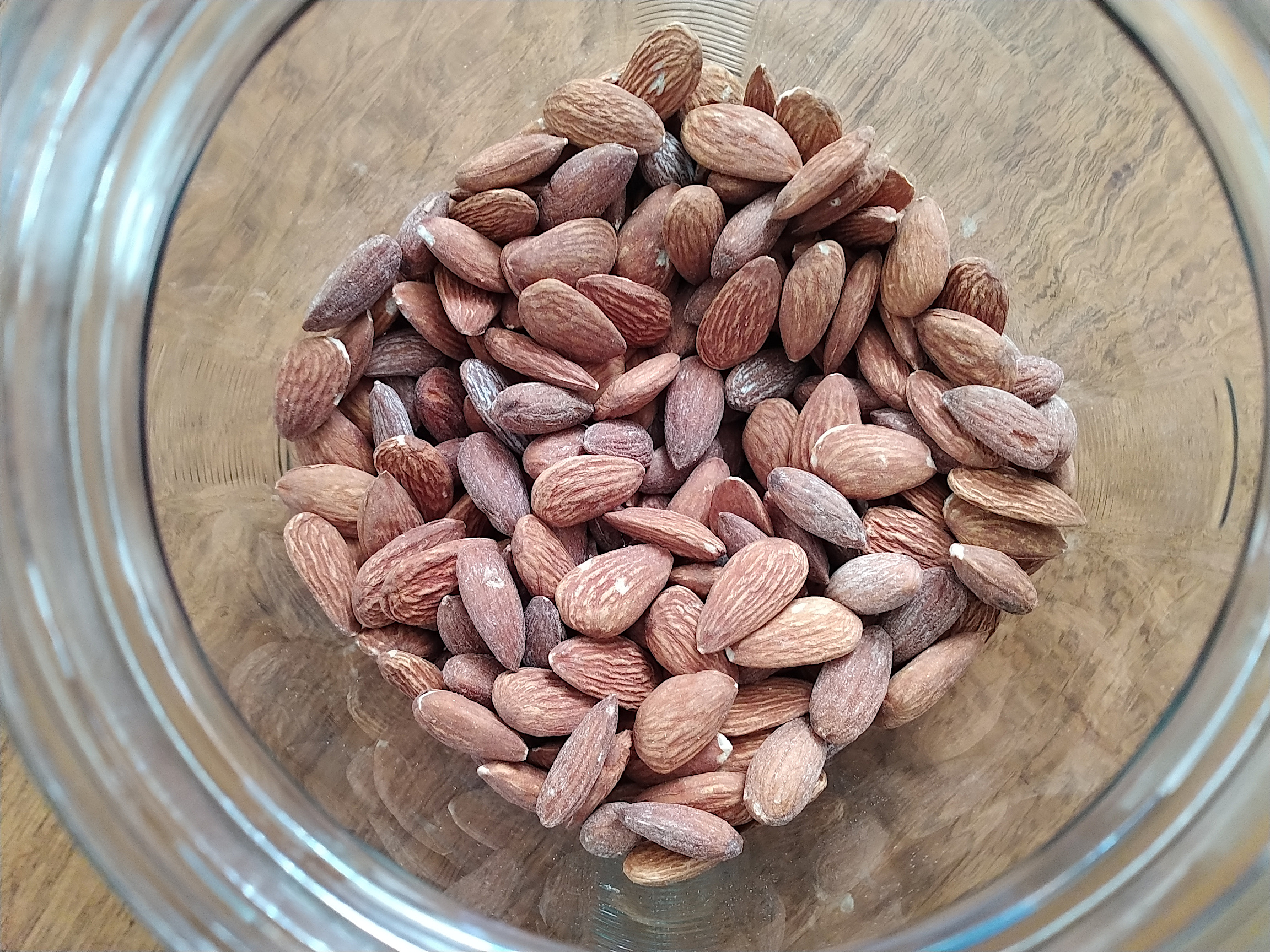
Almonds in a jar, our healthy snack food. (Minnesota Prairie Roots copyrighted photo June 2023)

I AM A SENSITIVE SOUL. I am also a wordsmith. Combine the two and you get someone who responds with sensitivity to words. That’s me. Use inappropriate words in certain contexts and my emotions flare.

For example, I don’t like the words crazy, insane and nuts when applied in general to how someone is acting. If you’re talking about actual nuts, like peanuts, walnuts or almonds, nuts is appropriate. Apply it to human behavior and you have overstepped the boundaries of fitting word usage in my opinion.

You can be crazy with joy, meaning excessively joyful. I’m good with that. But if someone terms another person crazy, I recognize that for what it is, a hurtful label. Ditto for insane.

For anyone with a mental illness, especially, and for others, words like crazy and nuts sound offensive. I can’t think of any other illness with such associated disrespectful words that are loosely used in everyday life.

And then there’s the intentional use of hurtful words. A southern Minnesota craft brewery, whose name and location I choose not to share here (but which I feel needs some education by the National Alliance on Mental Illness), claims “Crazy Good Beer” with names that are spin-offs of mental illnesses. Hopzophrenia IPA. Catatonic Cream Ale. Manic Black Lager. Clever marketing or humorous, you might say. Me? Nope. This sensitive soul finds these names degrading/mean/offensive/insensitive to anyone diagnosed with and managing a mental illness.

What if, for example, the beers were spin-offs tied to cancer? Chemo Juice. Black Lung Lager. Radiated Raspberry Sour. And so on. I expect the response would be loud, and not in a good way. But it’s alright to name beers after schizophrenia, depression, bi-polar…? Nope. Not OK.

I’m not picking on this small town brewery. I expect these are fine, hardworking folks dedicated to the craft of brewing beer. Rather, it’s one public example of inappropriate word usage and the importance of recognizing the power of words.

Words matter, sensitive wordsmith or not.

THOUGHTS? Any words that spark a negative reaction in you?

© Copyright 2023 Audrey Kletscher Helbling


Some encouraging mental health news & then… March 21, 2023

This message refers to the struggles associated with mental illness. (Minnesota Prairie Roots copyrighted file photo)

WE’VE ALL SEEN THEM—fundraisers and GoFundMe campaigns to help individuals and families who are struggling. Perhaps you’ve even been in that spot of needing financial help following a devastating event or a major health crisis. You’ve likely attended many fundraisers and/or donated online. I am thankful for such generosity.

Typically, these pancake breakfasts, spaghetti dinners, silent auctions,…crowdfunding efforts follow a diagnosis like cancer, a car accident or a major event like a house fire. Missed work and overwhelming medical and other bills all too often deplete finances. And if not for the assistance of caring family, friends and even strangers, many could not get through the challenges.

Yet, in the all of this, I’ve often wondered why individuals who’ve experienced a mental health crisis are not fundraising also. When they’ve been hospitalized and/or found themselves unable to work, the financial fall-out is no less.

I photographed these mental health themed buttons several years ago on a bulletin board at the Northfield Public Library. (Minnesota Prairie Roots copyrighted file photo)

ASKING FOR FINANCIAL HELP

But I hold hope that is changing. I read an encouraging article, “Out from under: Crowdfunding is an option for people in mental health crisis,” by freelancer Andy Steiner. In her MinnPost article, Steiner shares the story of a 42-year-old artist and educator diagnosed with bipolar disorder and post traumatic stress disorder linked to childhood abuse and who suffers from debilitating migraines as a result. Unable to work sometimes for months at a time, the woman faced financial struggles. She was behind on her rent. A friend suggested she start a GoFundMe. Eventually, she reluctantly did so, getting enough donations to pay overdue bills and then some. It was just the boost she needed. Financially and mentally/emotionally.

Steiner’s article includes interviews with Mental Health Minnesota and with GoFundMe. I encourage you to read her story by clicking here. I feel such hope in reading that more people facing mental health crises are beginning to seek the outside financial support often elusive to them.

I recognize this doesn’t fix everything. We have a long ways to go in ending the stigma which continues to surround mental illness. I see improvements. But I don’t think we’re to the point where family and friends are delivering hotdishes (the Minnesota term for “casseroles”) to individuals and families in the throes of a mental health crisis. Financial and emotional support, encouragement and, yes, even compassionate greeting cards/calls/notes are needed just as much in these situations.

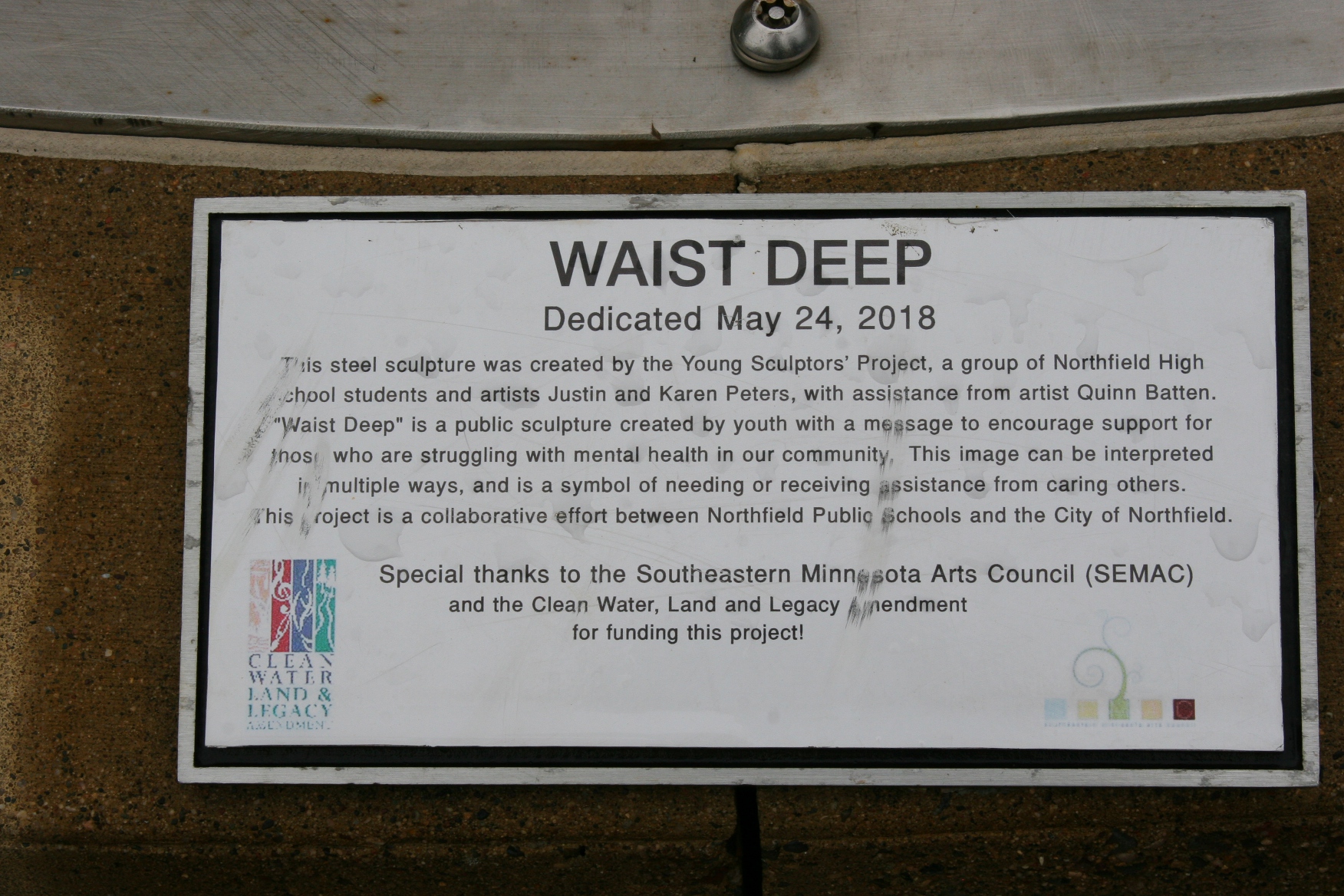
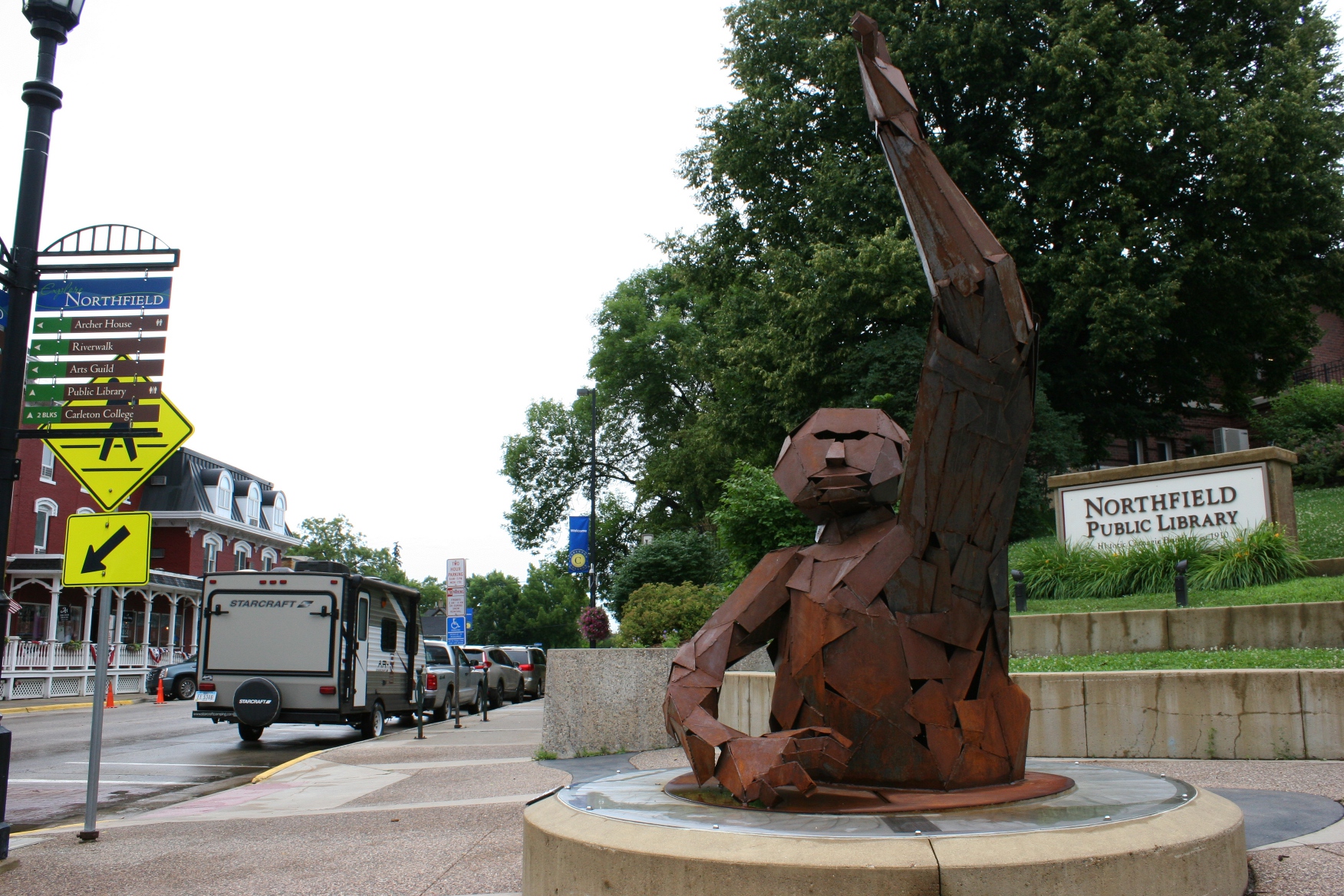
Reaching for help, this hand was part of a mental health-themed sculpture, “Waist Deep,” which once stood outside the Northfield Public Library as part of a changing art installation. (Minnesota Prairie Roots copyrighted file photo 2019)

CRISIS RESPONSE EXPANDING IN MY COUNTY

And we definitely need more mental healthcare professionals. That brings me to another recent bit of encouraging news. My county of Rice has been selected as the site for a new satellite office of the South Central Mobile Crisis Team, a team which responds (to homes, etc. and virtually) 24/7 in mental health crises in a 10-county area. Currently, it can take some 2 ½ hours for that team to arrive here from its home base 40 miles away. That’s too long. If you were experiencing a heart attack, for example, you wouldn’t be expected to wait two hours.

Yes, I hold hope. I hold hope for the many individuals and families who will benefit from additional, immediate mental healthcare resources. I hold hope that Crowdfunding and fundraising dinners and breakfasts will become more common for individuals experiencing a mental health crisis and the financial fall-out. I hold hope that they will find, too, a more understanding community of emotional support. All of this is so long overdue. We each have the power within us to show compassion and care and thus help reduce the stigma of mental illness. Let’s do it.

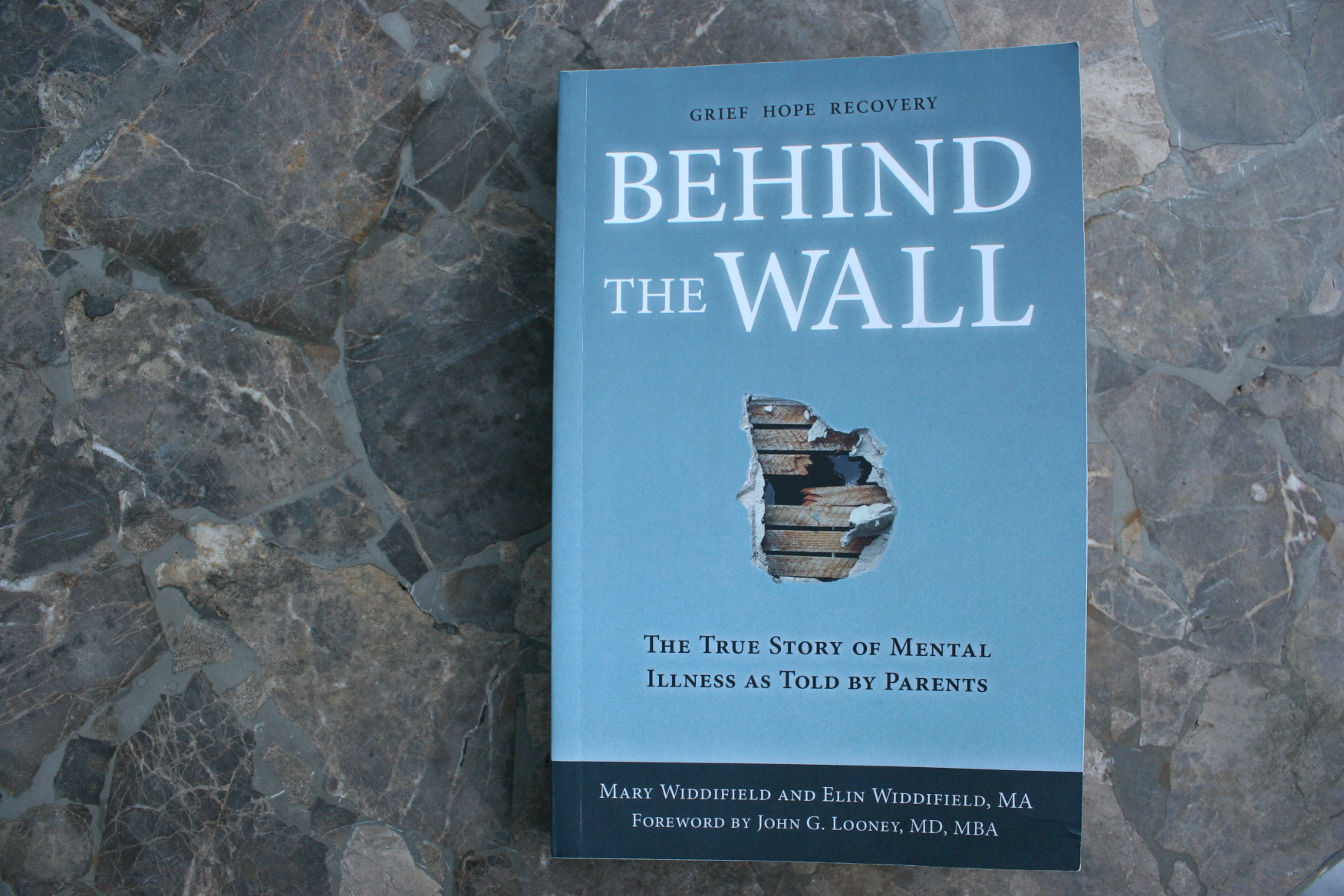
I highly-recommend this book to learn more about mental illness from the perspective of parents. (Minnesota Prairie Roots copyrighted file photo)

WE HAVE TO DO BETTER

And then this happens: Irvo Otieno, 28, died March 6 in a Virginia psychiatric hospital days after initially experiencing mental health distress. Seven deputies have now been charged with second-degree murder in his death.

In a powerful statement to the media, Caroline Ouko said, “Mental illness should not be your ticket to death. There was a chance to rescue him. We have to do better.” The words of this grieving mother should cause every single one of us to pause and consider, what if this had been my loved one in a mental health crisis? Could this happen to someone I love? To any of us? Sadly, it could.

We can do better. We have to do better. Mental illness should not be a ticket to death.

Photographed along a recreational trail in the Atwood Neighbor of Madison, Wisconsin. (Minnesota Prairie Roots copyrighted file photo)

A FEW RESOURCES

FYI: If you or someone you love is experiencing a mental health crisis and/or is in need of mental health support, please seek help.

The American Foundation for Suicide Prevention Minnesota Chapter and Operation: 23 to Zero (aims to prevent suicide among veterans and those in the military) are co-hosting a safeTALK Training from 8 a.m.- noon Saturday, March 25, at the Faribault American Legion. This event provides training in suicide alertness skills, connections to life-saving resources and more. To learn more and/or to register for this free-will donation half-day program, click here.

South Central Minnesota Crisis Line: 877-399-3040

National Suicide and Crisis Line: 988

National Alliance on Mental Illness, with state chapters, is a great resource for information and support, including virtual and in-person support groups. Click here to reach the national NAMI website.

© Copyright 2023 Audrey Kletscher Helbling
 

An obituary that needs to be shared January 18, 2023

This is a partial photo of Mark DeWitte’s obit published in The Gaylord Hub. I intentionally focused on the information in column two, middle paragraph. (Minnesota Prairie Roots edited photo January 2023)

HE LIVED THE BEST LIFE POSSIBLE.

That statement in the obituary of a 52-year-old Gaylord man may not seem extraordinary. He died on December 21, 2022, of cancer. But nowhere in Mark DeWitte’s obit does it state that he died after a courageous battle with cancer as is commonly seen in death notices. The only references are to a recent diagnosis and a move home to be with his family while in hospice.

Rather, the health diagnosis which led to that living the best life possible assessment is schizophrenia. Mark was diagnosed at the age of 16, which means he lived with this awful, debilitating brain disorder for 36 years.

DISPELLING THE MYTHS

That Mark’s loving family chose to publicly reveal his schizophrenia in print speaks to the depth of their love, their support and their courage. The misunderstandings attached to this disease all too often create fear and stigma, adding to the challenges of what is already an overwhelming health condition. Visions of violence, split personalities and other negative behaviors too often color schizophrenia with untruths. The National Alliance on Mental Illness defines schizophrenia as “a serious mental illness that interferes with a person’s ability to think clearly, manage emotions, make decisions and relate to others. It is a complex and long-term medical illness.” (I encourage you to read more details about schizophrenia on the NAMI website by clicking here.)

It should be noted that schizophrenia manifests differently in individuals and, although incurable, can often be managed with medication, therapy and more. Managed. Not cured. It’s not easy, but it’s possible to live the best life possible. Mark clearly did that within the confines of his symptoms. But he didn’t do it alone. He had a family who loved him, a community that cared and professionals who supported him. For the past eight years, Mark lived at Aveyron Homes.

Mark’s obituary offers glimpses of what brought him joy: Music. Going out with his brother Mike for beer twice a week. But, most of all, his family brought him joy.

RIPPLING INTO THE FAMILY

Schizophrenia, like any other long-term health issue, affects the entire family. The DeWitte family acknowledges that, not in any specific statement but rather in their willingness to write about their loved one’s life-long disease. Too often, we fail to recognize or even acknowledge the challenges of a serious mental illness and how it affects those dealing with and touched by it. Generally, there are no meals delivered during a mental health crisis. No “how are you doing?” questions or offers of help. Minimal, if any, compassion. Rather, the reaction is often one of silence, as if not speaking about “it” negates the need to show care or attempt to understand. There are exceptions, of course, and we as a society are slowly shifting towards understanding and acknowledgment and reducing stigmas about mental illness. Still, mental illness remains mostly hidden.

BREAKING THE SILENCE

Mark’s family is breaking the silence via their openness about his schizophrenia. It’s clear from a follow-up public thank you published in their weekly newspaper, The Gaylord Hub, that the community supported them. Linda DeWitte (Mark’s mom) and Michael DeWitte thanked the community for food, cards, flowers, memorials and even for snow removal. I can only assume the community also supported them when Mark was alive.

That Mark lived the best life possible while living with a horrible horrible disease comforts me. His family may not have stated that he died after a courageous battle with schizophrenia. But in my eyes he did.

#

FYI: I encourage you to visit the National Alliance on Mental Illness website (click here) to learn more about mental health issues like schizophrenia, bipolar, depression, anxiety, post traumatic stress disorder and more. NAMI offers information, support and help, including online and in-person support groups. Check your state’s NAMI organization for specifics. NAMI is a valuable resource that can grow knowledge, compassion and understanding.

© Copyright 2023 Audrey Kletscher Helbling
 

Mental illness: Learn. Listen. Link. November 15, 2022

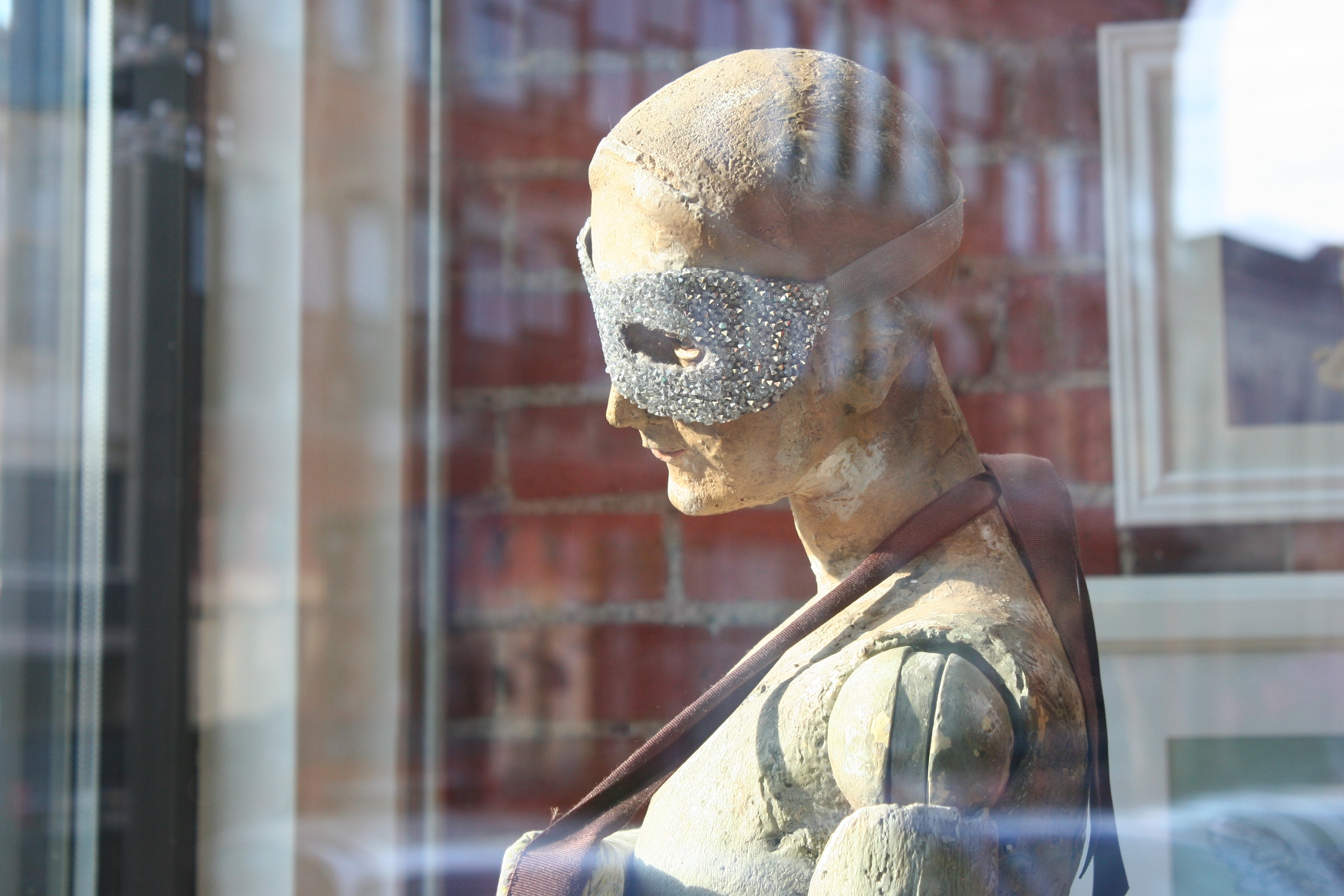
Slowly we are beginning to unmask mental illness. (Minnesota Prairie Roots copyrighted file photo 2018)

HER VOICE RISES. Strong. Compassionate. Without hesitation.

She is Penny Wilson, published poet, blogger, fiction writer, advocate. Penny, who blogs at Penny Wilson Writes, advocates for those diagnosed with mental illnesses. She is open about her struggles with depression. And it is that honesty which impresses upon me how much, how deeply, Penny cares.

From her fixer-up home in a small Texas town, Penny pens pieces that inform, educate, advocate about mental health. Recently she spent hours researching and compiling a list of resources in a post titled “Affordable Mental Health Counseling.” A friend’s need for affordable therapy (when her benefits were running out) prompted the piece. What Penny found was nothing. No low cost or no cost counseling services for mental health issues. I’m not surprised.

Yet, Penny published that list of 14 possible places to find some sort of help. It’s a start, a good resource list. I encourage you to read that compilation by clicking here.

A particularly powerful book that shows how mental illness ripples, affecting the entire family. (Minnesota Prairie Roots copyrighted file photo)

All of this got me thinking given I, too, write occasionally on the subject of mental illnesses. My goal, like my friend Penny’s, is to increase awareness, educate, advocate. I want to use my writing skills to make a difference. Penny and I recognize that we have this gift, this ability to communicate information in a way that connects and perhaps challenges our readers to learn more, to grow in their compassion and care.

Yes, it starts with each of us, individually. Learning. Listening. Acknowledging that depression, anxiety, bi-polar, post traumatic stress disorder, schizophrenia and any host of mental illnesses are hard and challenging and sometimes/often debilitating. Recognition, understanding and support are vital. Not just in words of encouragement, but in action. Individuals and their families need compassionate care.

This book should be in every church library.

I learned recently that Hosanna Church, just up Interstate 35 north of Faribault in Lakeville (and with campuses also in Northfield, Rosemount and Shakopee), won NAMI Minnesota’s 2022 Faith Community of the Year Award for demonstrating extraordinary work and advocacy on behalf of the National Alliance on Mental Illness Minnesota’s mission. In part, that mission is to champion justice, dignity and respect for all people affected by mental illnesses. To read the full mission statement, click here.

Justice. Dignity. Respect. Pretty basic, yet often overlooked by society, where mental illness still carries stigma.

That a faith community like Hosanna reaches out to individuals with mental illnesses and their families and aims to change public attitudes towards those with mental illnesses shows they care. They get it and they want others to get it, too. They love, listen, act. I appreciate those efforts and I’d like to see more faith communities do the same.

We each hold within us the capacity to learn, listen, link. Learn about mental illnesses. Education goes a long way in reducing stigmas and in understanding. Listen to those who live with mental illnesses (and their families). Ask how they are doing, how you can help and genuinely mean it. Link to them in meaningful ways. Offer help. Connect with professional resources. Be there. It’s that simple. Learn. Listen. Link.

FYI: I encourage you to visit the NAMI website for additional information by clicking here. I also encourage you to visit the “mental health help” page of Penny’s blog at Penny Wilson Writes by clicking here. Also read her recently-posted fictional short story, “Dragons in the Dark,” which offers powerful insights into depression.

© Copyright 2022 Audrey Kletscher Helbling
 

Sort of like a broken bone, but not really November 3, 2022

Filed under: Uncategorized — Audrey Kletscher Helbling @ 5:00 AM
Tags: , , , , ,
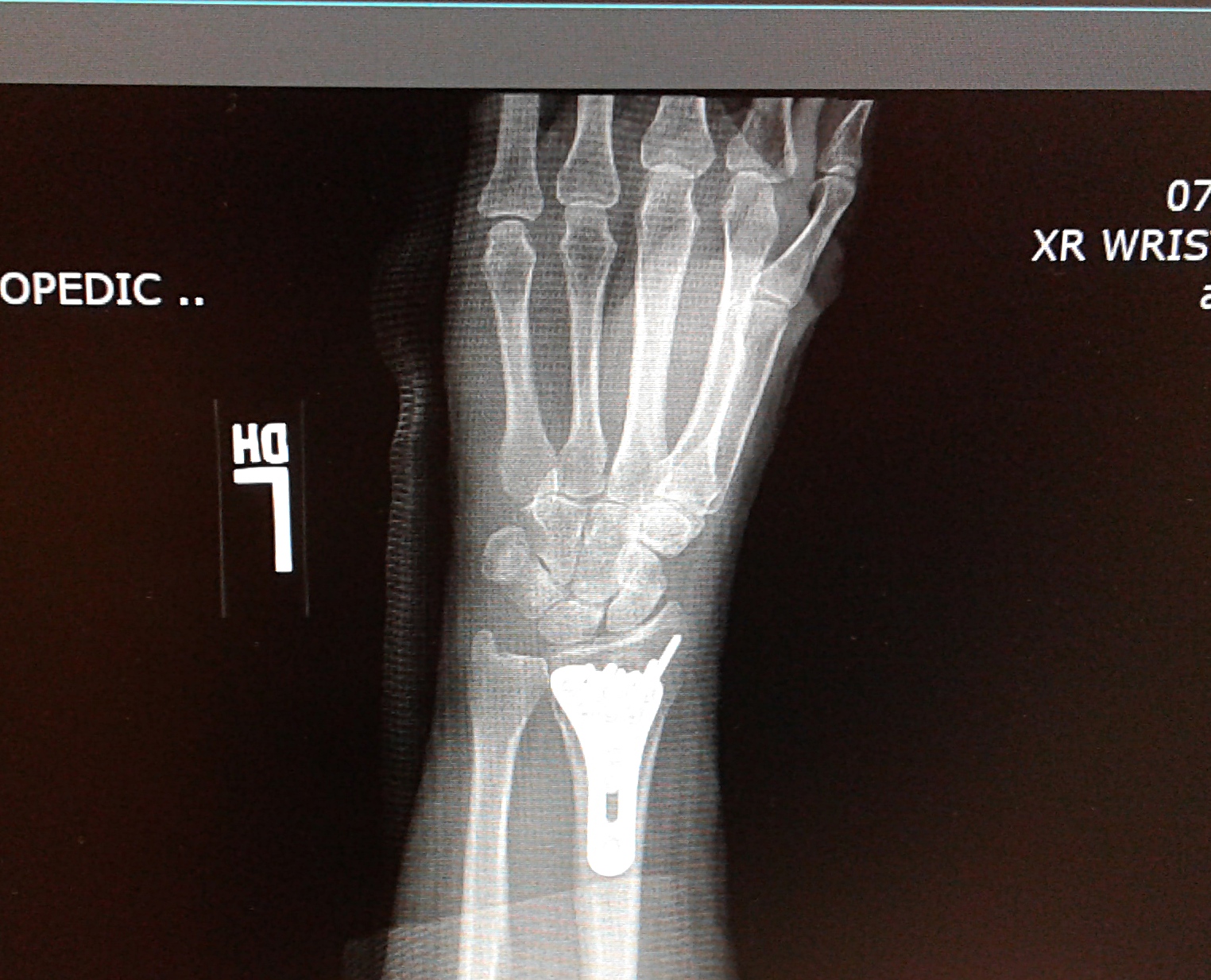
Look on the lower right side of my wrist to see the surgically-implanted plate, shaped like an ice scraper, and held in place by 10 screws. (Minnesota Prairie Roots copyrighted file photo 2018)

WHEN I BROKE my right shoulder one summer and then a year later shattered my left wrist, I needed physical and occupational therapy. Muscles quickly weakened with my shoulder clamped immobile in a sling and my wrist secured in a splint. After months of in-person therapy and at-home exercises, I regained my strength and use of my shoulder and wrist. I felt grateful for the therapy, which was easily accessible and covered under my insurance (although I ended up paying because of my high deductibles).

I also got lots of encouragement following those bone breaks. Cards. Texts. Emails. Calls. Even some meals delivered. When you’re experiencing a health issue, it’s reassuring to feel the support of others.

Buttons photographed at the Northfield Public Library. (Minnesota Prairie Roots copyrighted file photo)

But what if your health issue is a mental health issue? Do you have the same access to healthcare? Does your insurance plan offer sufficient coverage? How do friends and family respond?

A post, “Help needed—therapy information please” published a few days ago by Texas blogger Penny Wilson, and my personal interest prompted me to write on this topic. Penny is seeking information on affordable mental health therapy for her friend whose benefits are soon ending. She understands. Penny, too, faced the same problem when she needed therapy and her insurance would cover only three sessions. Three. Sessions. Penny writes, “3 sessions didn’t even begin to scratch the surface. After that, I was on my own to figure out how to pay for it.”

I’d like to think the experiences of Penny and her friend are the exception. But I don’t believe that, not for a second. First, unlike my easy access to therapy for my broken bones, accessing mental healthcare is difficult at best. At least in Minnesota. Waits are long, if psychiatrists and psychologists are even taking new patients. That often leaves individuals in a mental health crisis seeking care in an emergency room. Unless the hospital has an on-call mental health professional, this is not necessarily the best treatment option. But when you can’t access care any other way…

Whether insurance adequately covers mental health treatment and therapy seems debatable. For Penny and her friend, obviously not.

This message refers to the struggles with mental illness. (Minnesota Prairie Roots copyrighted file photo)

And then there’s the topic of personal support. Mostly, it’s lacking. Although we’ve made strides in reducing the stigma of mental illness, we have a long ways to go. Ask anyone who’s experienced a mental health crisis, whether directly or indirectly as a family member, and you will likely not hear stories of tangible support. No meals delivered. No cards sent. No texts. No emails. Primarily silence. There are, of course, exceptions.

Beyond the emotional toll, a mental health crisis can devastate individuals and families financially. Yet, there are no public fundraisers. Again, this traces to the stigma, the lack of understanding, not necessarily a lack of compassion.

Mental illness, in my opinion, is not viewed on the same level as say diabetes or cancer or other debilitating diseases. I’m not taking away from anyone who has dealt with those because they are horrible and awful. But so is a serious mental illness. There are no cures, no single plans of treatment that work for everyone. A med may ease symptoms and then it doesn’t and then it’s start over with a different med. The same for therapy. Imagine the exhaustion and frustration that can set in as individuals struggle to manage anxiety, depression, bipolar and more. It’s a lot.

A mental health-themed sculpture, “Waist Deep,” once stood outside the Northfield Library. This is such a strong visual of reaching for help. (Minnesota Prairie Roots file photo 2019)

So what’s the point of this post? The point is to educate and raise awareness. The point is to reduce the stigma of mental illness. The point is to encourage you—if you know someone struggling with mental health—to reach out, acknowledge, support. Act. Support their families, too. Offer words of encouragement. Offer financial support if needed. This is their broken bone.

FYI: The National Alliance on Mental Illness (NAMI) is a great resource for information and support. Click here for more information.

© Copyright 2022 Audrey Kletscher Helbling
 

Strength & hope October 14, 2022

The Straight River roils by at the dam in Owatonna. I see struggles. I see strength. (Minnesota Prairie Roots copyrighted file photo)

WHAT’S YOUR DEFINITION of strength? Whom do you consider strong? Have you faced a challenge, or multiple challenges, in life that required strength? While our answers vary, especially on the third question, I expect threads of commonality in responses.

Strength, from my perspective, is about fortitude and endurance. It’s about somehow finding the ability to face a challenge, to persevere, to come out on the other side with a renewed sense of personal power. Not power in the sense of control, but power that reaffirms one’s ability to deal with whatever life throws at us.

We all have something, right? Financial hardships. Health issues. Loss. Pain. Family members who are struggling. But, admittedly, when we are in the middle of a lot, it can sometimes feel like we are alone, that others live perfect lives unencumbered by issues that drain, stress and, yes, sometimes overwhelm. Nothing could be further from the truth. I repeat: We all have something, whether individually or within our families. We are not alone.

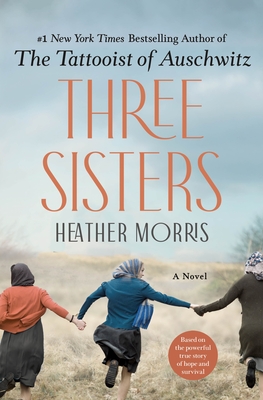
(Cover image from Goodreads)

The novel, Three Sisters by Heather Morris, prompted me to write on the topic of strength. Although fictional, the book is based on a true story about three sisters held in a concentration camp. This is a story of indescribable atrocities witnessed and experienced. This is also a story of irrepressible strength and hope. I encourage you to read this novel and also watch Ken Burns’ newest documentary, “The U.S. and the Holocaust,” which happened to air at the same time I was reading the book. Together, the two were almost too much for me to emotionally take in. It’s a lot to comprehend the inhumanity and cruelty of mankind. Those sent to concentration camps certainly exhibited strength, whether they survived or not.

The iris symbolizes hope. (Minnesota Prairie Roots copyrighted file photo 2021)

In reading Three Sisters, I learned that gladiolus (the flower) signify strength. And the iris, which is part of the glad family, denotes hope. The iris was my mom’s favorite flower. “Hope” is a word I’ve held, and continue to hold, close. “Hope” is not simply a wish. By my definition, it is an active verb that focuses on light shining through darkness. It is a word, too, that envelopes gratitude and believing that things will get better.

I keep this stone on my office desk. (Minnesota Prairie Roots copyrighted file photo)

My name, Audrey, means noble and strong. I wish I’d asked my mom why she chose that name for me, her first-born daughter. I never did, and now she’s gone, but the name fits. I’ve had to be strong many times throughout my life. We all have something, right? Challenges can make us better, more empathetic and compassionate people. That is the good that arises from struggles.

This message refers to struggles with mental illness. (Minnesota Prairie Roots copyrighted file photo)

This week, especially, with World Mental Health Day on October 10, I consider mental health. From anxiety to depression to brain disorders like bi-polar and schizophrenia, these are undeniably hard diagnoses which require incredible strength to face. Simply getting up in the morning, functioning, can prove difficult. There are no cures. No quick fixes. Medication can manage, therapy can help. And even though we are getting better at recognizing and understanding, stigma remains. We can do better at supporting, encouraging, helping. We need more mental health professionals to meet the growing demand for mental health care.

Strength. Hope. Those two words inspire and uplift. Gladiolus and iris. Those two flowers represent the same. From the pages of a novel about three Holocaust survivors to my name to life experiences, I understand what it means to be strong, to feel hope.

TELL ME: I’d like to hear your thoughts on strength and hope.

© Copyright 2022 Audrey Kletscher Helbling
 

A crisis: In memory of all the Jordyns & Kobes August 12, 2022

A rural Rice County, Minnesota, cemetery. (Minnesota Prairie Roots copyrighted file photo used for illustration only)

NOT AGAIN. My reaction zipped in a flashpoint of disbelief over yet another young Minnesota man shot and killed by police while experiencing a mental health crisis.

The latest to die is Jordyn Hansen, 21, formerly of Faribault. He recently moved to Otsego in the northwest metro to live with an aunt and uncle. There, according to his aunt who was interviewed by a reporter from the Minneapolis Star Tribune, they hoped Jordyn could recover away from a previous lifestyle that amplified his mental health challenges. He had a history of mental illness and substance abuse and had been in treatment.

When Jordyn experienced another crisis early Sunday morning, his family members called police. Narratives of what happened after law enforcement arrived are vastly different. The police say one thing, the family another. In the end, the family seeking help for their loved one is now attending a funeral, which will be held this morning at my church in Faribault.

I didn’t know Jordyn or his family. Nor do I know the family of Kobe Dimock-Heisler, a 21-year-old man on the autism spectrum who was shot and killed by Brooklyn Center police in 2019.

Both cases involved families seeking help in a crisis. Both involved police response. Both involved knives and tasers and six gunshots that killed two young men. Each only 21 years old, with families and friends who loved them.

I could cite many similar cases, but I’ll leave it at that as I process how upset I feel about the deaths of Jordyn and of Kobe. I can’t put myself inside the heads of responding police officers. Nor was I there to witness what unfolded during each emergency. But I can, as a mother and community member, express my deep concern for this ongoing loss of life among those experiencing a mental health or other crisis. Why does this keep happening? And how can we “fix” this so no family member has to worry about their loved one being shot and killed when they call for help?

Jordyn’s family has started a gofundme fundraiser to help cover his funeral expenses. The goal is $10,000. Jason Heisler, Kobe’s father, donated $21 to the cause. I assume he chose that amount because both his son and Jordyn were 21 at the times of their deaths. It should be noted here that the National Alliance on Mental Illness defines autism as the following: Autism spectrum disorder is a developmental condition that affects a person’s ability to socialize and communicate with others. Consider that when you think of Kobe, who was on the autism spectrum.

Jason Heisler left (in part) this powerful comment on Jordyn’s gofundme site: …preventable should of never happened to this beautiful boy and his family. A mental crisis is not a crime.

Let me repeat that: A mental crisis is not a crime.

#

I am grateful to the many professionals, individuals and organizations (like the National Alliance on Mental Illness) that are working hard to improve mental healthcare and the response to those in a mental health crisis. Through education, training, advocacy, understanding, awareness, compassionate response and intervention, change is happening. Yet, the pace of change feels too slow. A key component in all of this is listening and communication. The approach to individuals in a mental health crisis needs to be thoughtful. A shift in attitudes to recognize that mental health is health should be the standard, not the exception.

I encourage you to help cover Jordyn’s funeral expenses by donating via his gofundme page or giving directly to his family. Thank you.

© Copyright 2022 Audrey Kletscher Helbling


Doing my part to raise awareness about mental health August 3, 2022

A hand reaches skyward in a mental health themed sculpture that once graced a street corner outside the Northfield, Minnesota, Public Library. (Minnesota Prairie Roots copyrighted file photo 2019)

WHEN HE HEARD ME rant for the umpteenth time about “people just don’t get it, they don’t understand,” he advised, “Then you need to educate them.”

He, my husband of 40 years, is right. Venting to Randy about offensive terminology and uninformed/misinformed comments and attitudes about mental illness does nothing other than temporarily ease my frustrations. Speaking out, writing, based on my observations and experiences, can make a difference. So write about my concerns I will, with the disclaimer that I am not a medical professional.

I photographed this shirt at an event at the Northfield Public Library. This message refers to the struggles with mental illness. (Minnesota Prairie Roots copyrighted file photo September 2019)

WORDS MATTER

Today—on the heels of recent offensive lyrics by Beyonce’—seems the right time to share what’s bothered me for way too long. The pop singer used the derogatory term, “spaz/spazzin,” in her new release, “Heated.” Although she was referencing spastic diplegia, a form of cerebral palsy causing motor impairments in limbs, and not mental health, the analogy fits. Her word choice proved offensive to people who are disabled. And rightly so. To her credit, Beyonce’ acknowledged her unintentional slur and is changing the lyrics. Just like Lizzo, who used the same wordage not all that long ago.

For the millions who each day bravely face mental health challenges and for those who love them, everyday careless language can hurt. Words like crazy, insane, nuts, it’s all in their head, off their rocker, out of his/her mind…are hurtful. As hurtful as the lyrics sung by Beyonce’ and Lizzo.

Recently, while reading a Good Morning America Book Club selection published in 2021, I came across this phrase: “the usual terrible but addictive schizophrenic medley.” In the context of this fictional story, the character was not talking about anything mental health related, but rather about what she was seeing on Instagram. I stopped reading and considered how insulting those words, especially to someone diagnosed with schizophrenia. I doubt the author intended to offend. But she did.

Buttons previously available for the taking at the Northfield library. (Minnesota Prairie Roots copyrighted file photo)

IF YOU HAD…

Now you might say I’m being overly-sensitive. But consider if you, or someone you loved, was diagnosed with cancer, diabetes, whatever, and uncaring words (which I can’t even think of) were tossed out there. It’s no different for those diagnosed with bi-polar, schizophrenia, depression, anxiety, post traumatic stress disorder…

I’m thankful individuals undergoing cancer treatment and/or who have survived cancer, for example, are not subjected to negative/offending words and behavior, but rather are supported with encouragement, fundraisers, even hot dishes delivered to their homes. That type of care and attitude should be a model for how all of us treat individuals dealing with a mental health crisis and their families. We should respond with equal love, compassion, care and understanding. And tangible support.

A sign explains the story behind the “Waist Deep” sculpture in Northfield. (Minnesota Prairie Roots file photo September 2019)

CHANGING ATTITUDES, BUT MORE IS NEEDED

I recognize attitudes toward mental health are changing, that, as a whole, we are growing more informed, finally beginning to reduce the stigma of brain disorders. But much work remains. Individuals in a mental health crisis should have immediate access to care. Busy, understaffed emergency rooms are often the first-line treatment option. I don’t know of a single doctor who would send a person experiencing a heart attack home. Individuals in a mental health crisis, the equivalent of a heart attack, deserve the same immediate life-saving care. Yet the wait to see a psychiatrist often exceeds six weeks, at least here in greater Minnesota. That’s unacceptable.

There’s a need for more mental healthcare professionals and in-patient treatment and recovery centers. There’s a need for more funding, more research. Insurance companies should not determine care/medications or refuse to fully cover mental healthcare expenses.

This sculpture, once located outside the Northfield library, is called “Waist Deep” and addresses mental illness. (Minnesota Prairie Roots copyrighted file photo 2019)

IT STARTS WITH EACH OF US

At a grassroots level—that’s each of us individually—more compassion, support, understanding are needed. A few years ago I walked into a southwestern Minnesota brewery and spotted a man sporting a jacket advertising a neighboring brewery. Imprinted on the back was an image of a straitjacket. I could not believe what I was seeing, especially after also reading the offensive name of the brewery. Later I looked online to read the brewery’s list of “Crazy Good Beer” with words like manic, catatonic, lobotomy, kookaloo… in the craft beer names. Simply writing this makes my blood pressure rise. I wanted to rip that jacket right off that beer drinker, so strong was my anger in that moment. Imagine the uproar, for example, if a brewery used words like chemo or radiation in its beer names or used an IV drip as its logo. Somehow a straitjacket is OK? Not from my perspective.

Imagine, too, if you have gone through cancer treatment and someone said you will be fine now that you’ve completed treatment. In the back of your mind, you recognize that the cancer could return despite the treatment. It’s no different for someone with a serious mental illness. Drugs work for awhile and then they don’t. Medications and therapy help manage symptoms, but there is no cure. Symptoms can return. Relapses, crises, happen.

I highly recommend this book, among many I’ve read on the topic of mental illness. (Minnesota Prairie Roots copyrighted file photo)

GRATITUDE & RESOURCES

I appreciate every single person who has made a concerted effort to understand mental health, mental illness specifically. I appreciate organizations like the National Alliance on Mental Illness, which works tirelessly to support individuals and their families who face mental health challenges. I appreciate NAMI’s advocacy work and education. I appreciate mental healthcare professionals. And, most of all, I admire those individuals who deal with mental illness—whether depression, anxiety, post traumatic stress disorder, schizophrenia, bi-polar… They are among the strongest people I know and they deserve, yes, deserve, our love, compassion, understanding, support and respect.

THOUGHTS?

RESOURCES: If you or a loved one are experiencing a mental health crisis, seek immediate help. Call 911. Call 988, the National Suicide and Crisis Lifeline. Connect with NAMI. You are not alone.

Click here to read previous posts I’ve penned on mental health.

© Copyright 2022 Audrey Kletscher Helbling


Focus on mental health after Naomi Judd’s death May 3, 2022

This message refers to the struggles with mental illness. (Minnesota Prairie Roots file photo September 2019)

A DAY BEFORE Mental Health Awareness Month began on May 1, the Judd family lost their beloved Naomi “to the disease of mental illness.” She was a wife, a mother and a country western superstar singer. That the family chose to publicly attribute Naomi’s cause of death to mental illness shows strength and honesty. And a desire to increase awareness.

On my reading list…

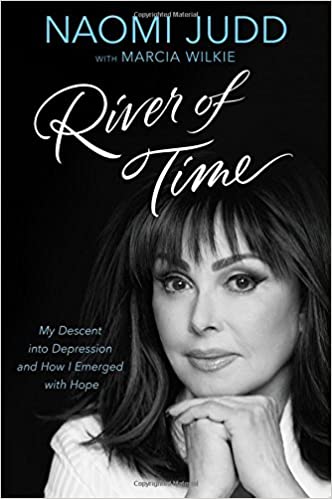
Naomi was open about her severe, treatment resistant depression. She wrote about her mental illness in a book, River of Time: My Descent into Depression and How I Emerged with Hope, in 2016. I have yet to read this book, but I will. Soon.

Reflecting on Naomi’s death focused my thoughts on the many books I’ve read in recent years about mental health related topics. I’ve reviewed numerous books on my blog and written on the topic often. Why? Because I care. I care that people understand depression, bipolar, schizophrenia, anxiety… I care that we show compassion, support, encouragement and more to those dealing with these often overwhelmingly challenging and debilitating diseases. I care that stigmas vanish, that treatment options improve, that access to mental health care is easily and readily available to anyone anywhere anytime.

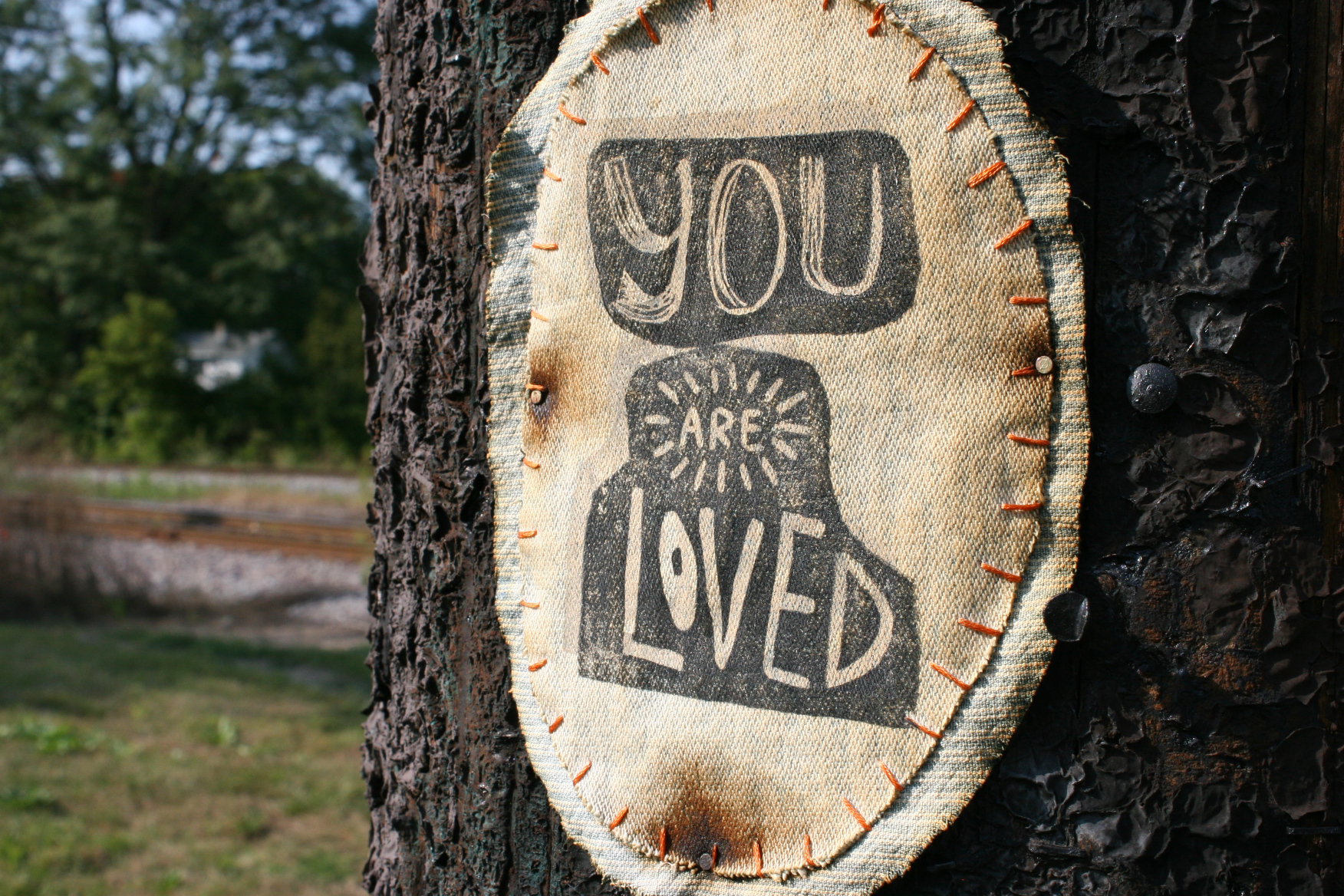
Love this message posted along a recreational trail in the Atwood Neighborhood of Madison, Wisconsin. (Minnesota Prairie Roots copyrighted file photo)

I care, too, that no one feels alone. That anyone dealing with a mental health issue understands they are loved, valued and cherished. That families, too, feel supported.

Much progress has been made in recent years to shine the light on mental health. I appreciate that. And I appreciate the efforts of groups like the National Alliance on Mental Illness. But, still, it is up to each of us individually to do what we can to educate ourselves and increase awareness, to offer love and support… To be there. To listen. To recognize the value of professional help.

Clinical depression like Naomi Judd experienced is deep and dark and debilitating. She couldn’t talk herself/smile herself/lift herself out of the depths of such depression. Not alone. That’s what we all need to understand. Hers wasn’t situational depression. Hers was persistent, powerful, all-encompassing. And, in the end, it killed her.

I find that reading or hearing personal stories is often the best way to understand anything. That includes mental health. For that reason, I recommend you read one or more of the following books, which I’ve previously reviewed on this blog (click on the title to read my review):

I highly-recommend this book, which is why it tops my list. (Minnesota Prairie Roots copyrighted file photo)

Behind the Wall—The True Story of Mental Illness as Told by Parents by Mary Widdifield and Elin Widdifield

Written by a former Minnesota state representative, now an advocate on mental health issues.

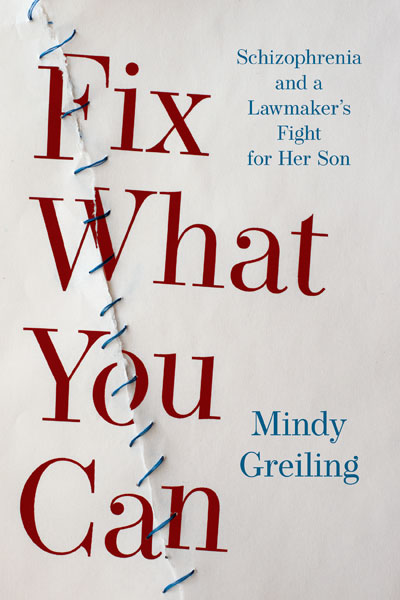
Fix What You Can—Schizophrenia and a Lawmaker’s Fight for Her Son by Mindy Greiling

The author writes about her clinical depression.

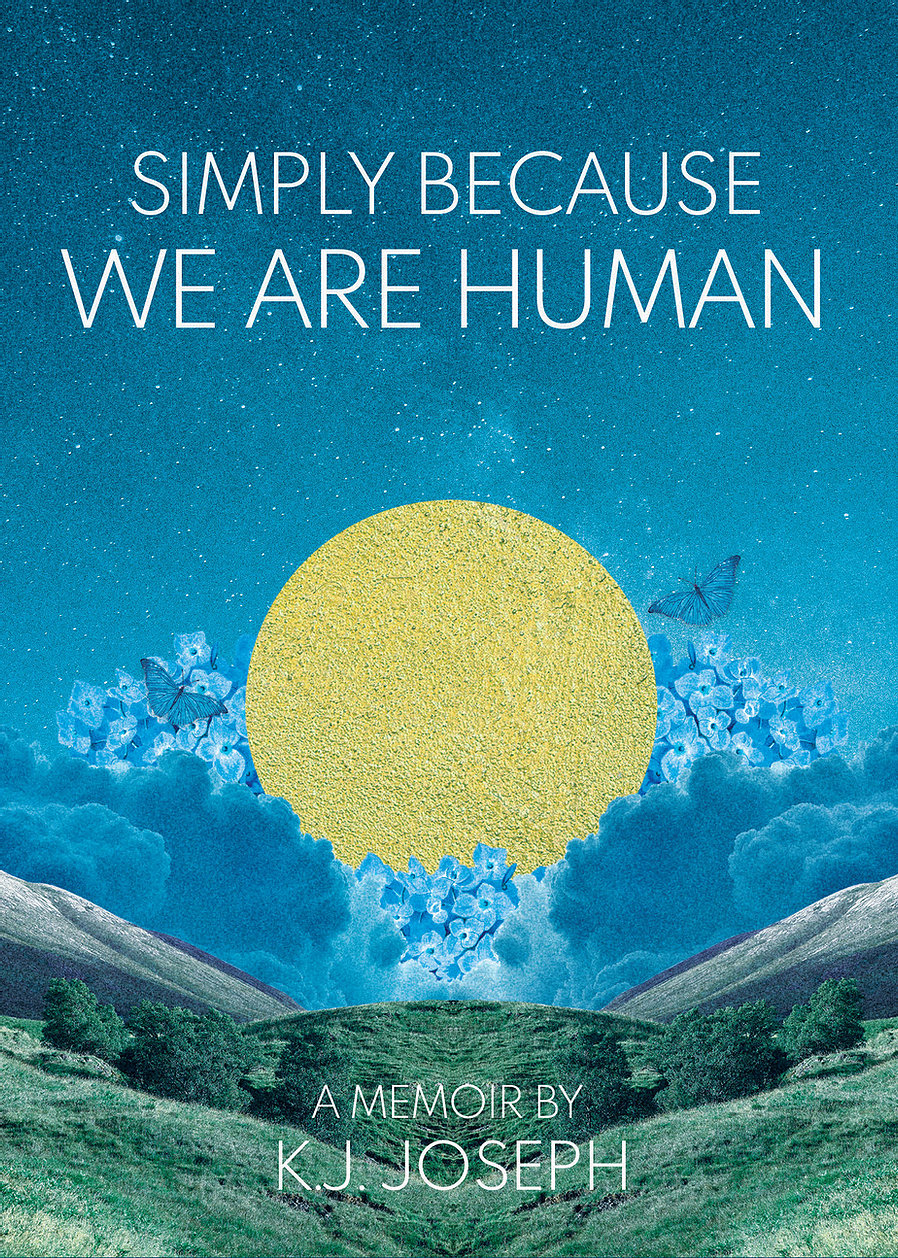
Simply Because We are Human by K.J. Joseph

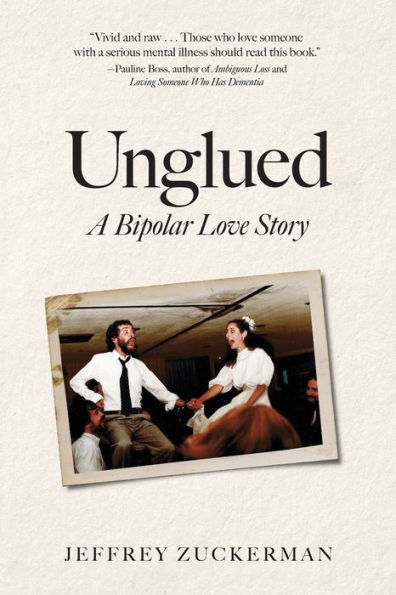
The author writes about his wife’s bipolar and the affect on their family.

Unglued—A Bipolar Love Story by Jeffrey Zuckerman

A must-read for connecting and ministering within faith communities.

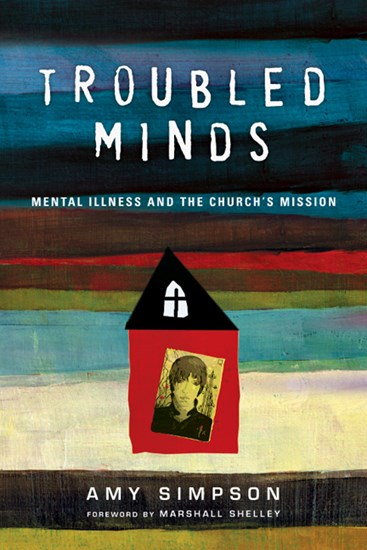
One other book, which I’ve read and highly-recommend (but have not reviewed) is Troubled Minds—Mental Illness and the Church’s Mission by Amy Simpson. A friend referred me to this book and it’s a must-read. I’ve marked the pages with about a dozen Post-It notes. It’s that good, that invaluable for faith communities. Anyone really.

Thank you for reading this post. Thank you for caring about mental health. Thank you for doing your part to shine the light. To be the light.

#

TELL ME: Are there any books about mental health that you recommend? Or, if you have other thoughts to share on the topic, please do. We can all learn from one another.

RESOURCES:

The National Alliance on Mental Illness offers online, telephone and in-person support (through local chapters). Call the HelpLine at 800-950-6264.

Reach the National Suicide Prevention Lifeline at 800-273-8255.

© Copyright 2022 Audrey Kletscher Helbling