Minnesota Prairie Roots

Writing and photography by Audrey Kletscher Helbling

Reflecting on pre-surgery anxiety & ways I coped February 20, 2024

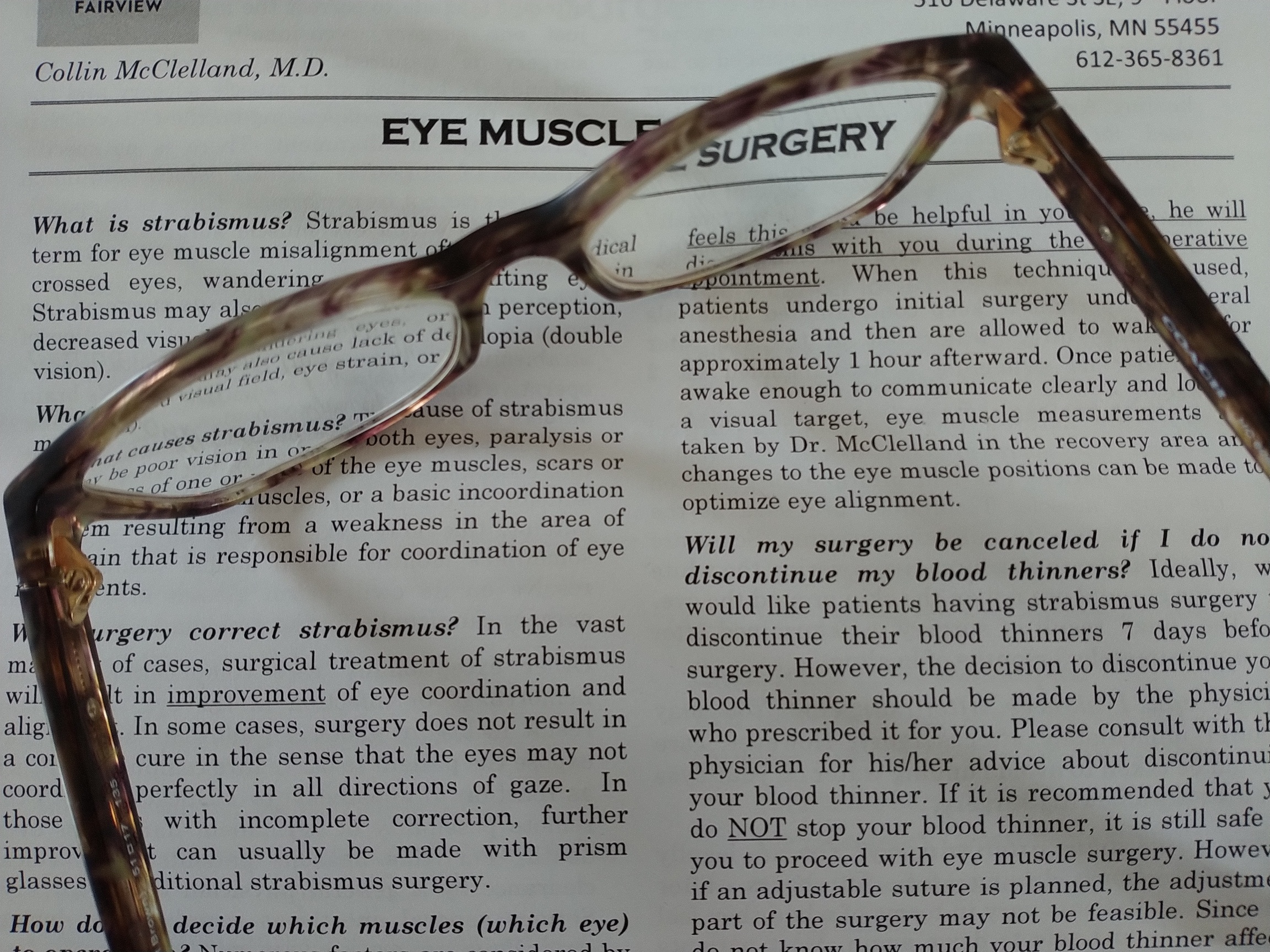
Information about my eye muscle surgery. (Minnesota Prairie Roots copyrighted file photo 2023)

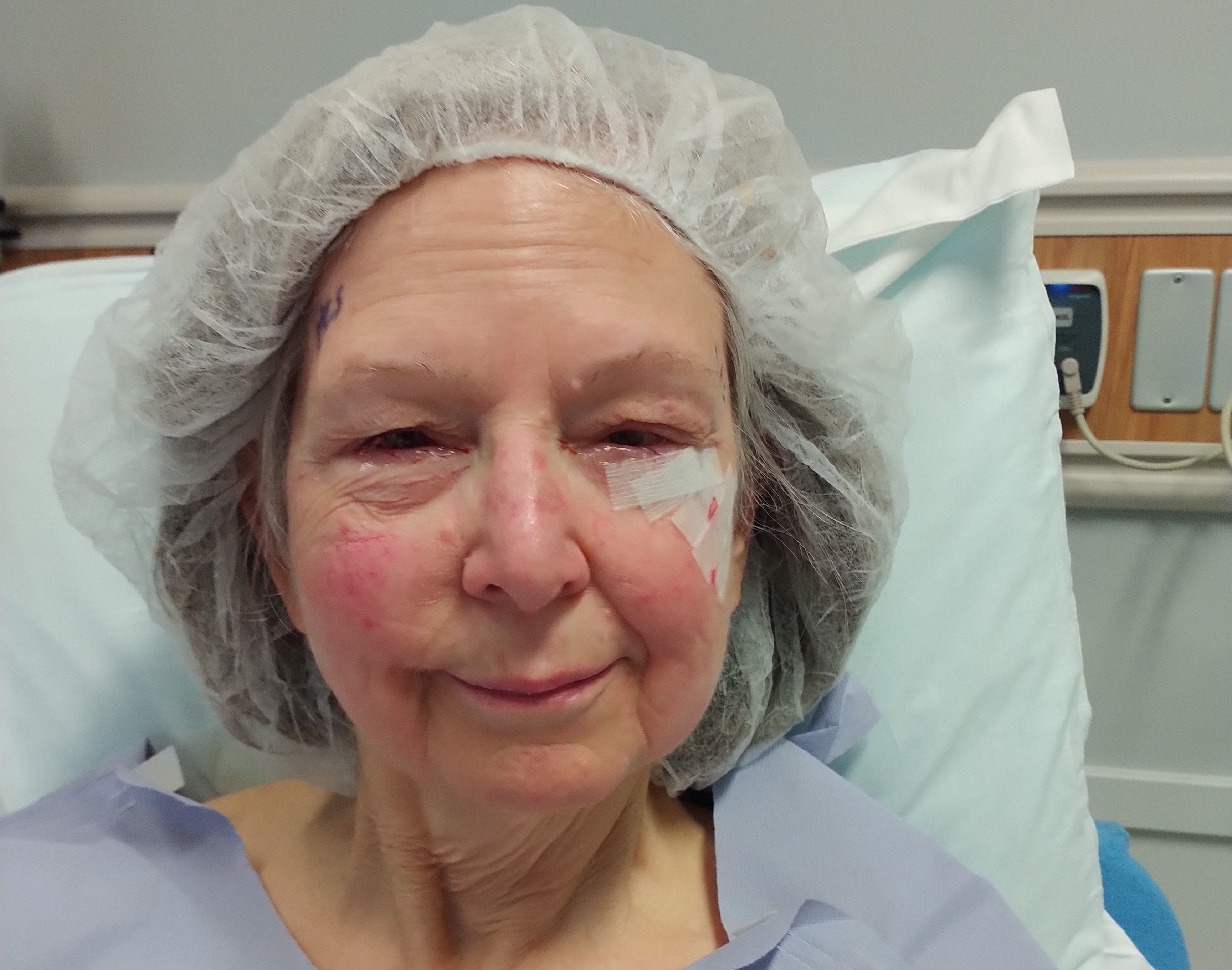
SURGERY. Most of us would rather not hear that word when it comes to our health. But sometimes surgery is necessary. I’ve had surgery nine times in my lifetime. I’m currently four weeks out from my second bilateral strabismus eye surgery (the first was at age four) to realign my misaligned eyes. Healing and recovery are progressing.

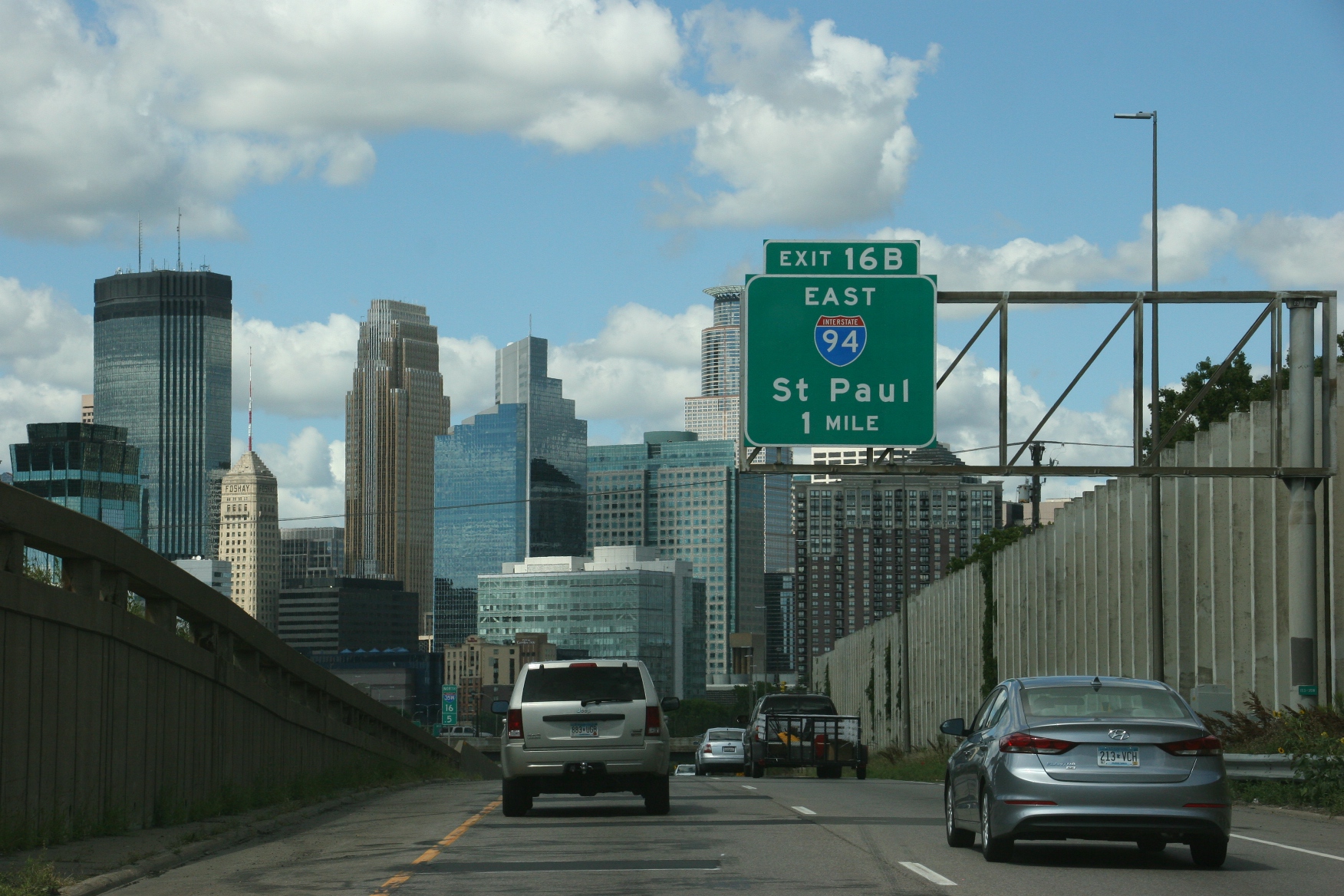
Nearing downtown Minneapolis, the route to M Health Fairview Surgery Center and Clinics. (Minnesota Prairie Roots copyrighted file photo)

Today’s post, though, is not about recovery, but rather about my January 22 surgery day. As a creative, I have stories to tell about my experiences at M Health Fairview Clinics and Surgery Center. Admittedly, I felt anxious as Randy and I aimed north along Interstate 35 to the surgery center about an hour away on the campus of the University of Minnesota in Minneapolis. I detest metro traffic, which added to my pre-surgery anxiety. But on this morning, traffic was not horrible.

Waiting is always the hard part. I waited at check-in behind an angry patient. We’d ridden the same elevator to the fifth level, but she got ahead of me because she knew where she was going. I did not. And so I had to stand there listening to her spew about how she’s never been called about whatever. Her voice volume increased. I felt increasingly frustrated by this hostile woman who should have taken her complaints elsewhere, not to the surgery check-in desk. She was not there for surgery. Finally, I bypassed her to another check-in station, wondering if the first employee would need to call security. This was not off to a good start.

I settled onto a green upholstered chair in a spacious room filled with people, most on their phones, waiting. A bank of tall windows revealed a sunny day. I heard persistent coughing on the other side of a waiting room half-wall, somewhat worrisome to me. I’d been screened for COVID symptoms, but Randy and other caregivers weren’t. That is typical of clinic screenings, it seems. But I digress.

Eventually, after I’d people-watched, tried to work a crossword puzzle, studied abstract fabric artwork, Tatenda called me to begin the process of preparing for surgery. That started with basic questions followed by depression screening. I am thankful this screening is now routine in healthcare and I told Tatenda that. And then I added, “But you didn’t ask about anxiety.” Anyone who says they aren’t anxious about surgery is, in my opinion, not being truthful. Thankfully, Tatenda and others who cared for me understand pre-surgery anxiety and helped ease mine.

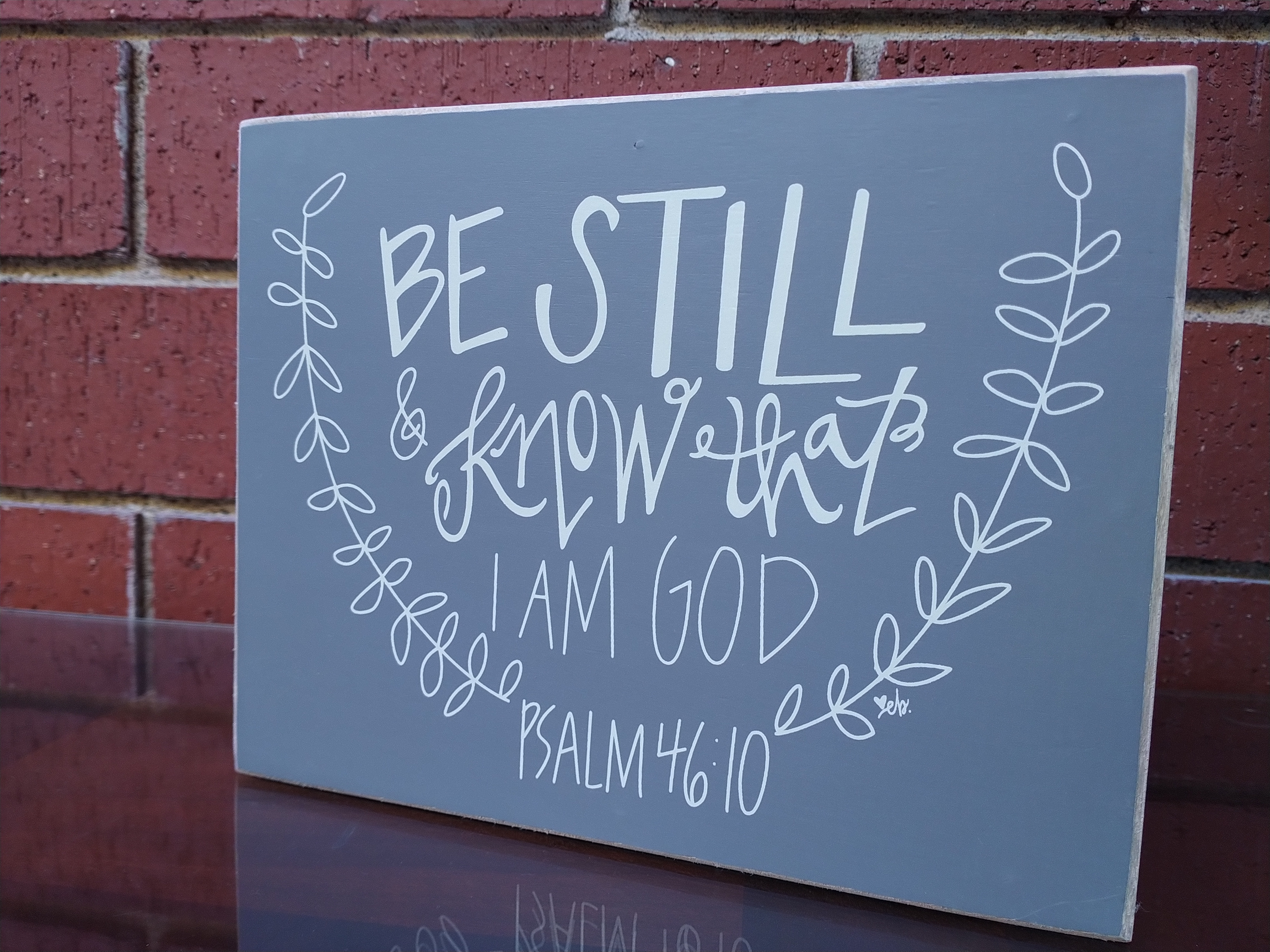
One of my go-to Bible verses when I’m worried or anxious. This is displayed at my church, Trinity Lutheran in Faribault. (Minnesota Prairie Roots copyrighted photo February 2024)

There was one point, though, when I had to dig deep mentally to stop myself from fleeing a small room where I waited alone for the next step in surgery prep. Tatenda handed me a lavender paper gown, instructing me to change into that and pull on a pair of purple socks. Then she left. Do. Not. Leave. Me. Alone. I expected her back quickly. As the minutes ticked by, I felt my anxiety rising. I was cold, shivering almost, hugging my folded legs to my body for warmth. The over-sized, one-size-fits-all paper gown that smelled to me of antiseptic provided zero warmth. Maybe I should have wrapped it around my slim body twice. I attempted to calm myself by repeating the words of Psalm 46:10: Be still…be still…be still…

Eventually nurse Amanda arrived and connected a hose to my lovely lavender gown, a hose that blew air inside to either warm or cool me. She explained how I could turn a switch to adjust the temperature. It was a game-changer not only for my comfort level, but also in giving me control. Of. Something.

Signage on The Pearl, a popular ice cream spot in downtown La Crosse. (Minnesota Prairie Roots copyrighted file photo 2015)

As Amanda searched and poked twice for an adequate vein to start an IV, we talked. Conversation distracts me. This nurse, the same age as my eldest daughter, and I chatted about her hometown of Potosi, Wisconsin, where I’ve been to the brewery; our love of La Crosse (and The Pearl ice cream shop); motorcycles; and then how I met Randy and where we went on our first date. “Stir Crazy,” I replied. The movie starring Richard Pryor and Gene Wilder. Amanda said she would ask Randy the same when she brought him to see me shortly before surgery. When he answered “Blazing Saddles” to the first date question, I told Amanda that he was an imposter, that she needed to find my real husband. We laughed. Humor helps.

Once Amanda left, the anesthesiologist and neuro ophthalmologist surgeon arrived for last-minute briefings and questions. I was ready. Soon I was being wheeled down a hallway toward the operating room. I remember nothing until I awoke 1 ½ hours later in recovery. That is another story…please check back for more storytelling.

TELL ME: If you’ve had surgery, how did you cope with pre-surgery anxiety? How did others help ease your anxiety right before surgery?

© Copyright 2024 Audrey Kletscher Helbling


Discovering the greeting cards of Artists to Watch December 29, 2023

The thrift shop holiday card that led me to a Minnesota greeting card company. (Minnesota Prairie Roots copyrighted photo December 2023)

IF NOT FOR MY APPRECIATION of thrift shops, I would have missed out on some incredible art. Not art in the usual sense of either original art or a print. Rather, I am referencing greeting card art.

On the second floor of Something For All, a thrift and consignment store in small town Lonsdale, I found several boxes of holiday cards featuring the hand-colored woodcut art of Mary Azarian. Since my high school days of hand-carving a linoleum block into a long forgotten design for a two-week shop class, I’ve loved block print art. And I immediately loved Azarian’s “Moon Gazing” winter scene which reminded me not of her home state of Vermont, but of mine, Minnesota.

That I even spotted the brand new cards among all the merchandise crammed into nooks and crannies of the many-roomed, two-story thrift shop was exceptional in itself. There’s a whole lot to see here. I found the cards on a second pass through, and then only because I looked toward the floor. I snapped up the boxed cards for a few dollars. The 12-pack retails for $19.95.

Found at a garage sale, this card was among boxed holiday cards illustrated by Mia Saine. (Photo by Miranda Boyd)

I bought the cards in October and stashed them with other Christmas cards I’d found at bargain prices. I mail nearly 100 cards, meaning I’m always on the search for deals. I also bought three boxes of African American-themed cards on a hot autumn day at a garage sale blocks from my house. Again, I paid just several dollars. This was a great find not only because of the low cost but mostly because I was excited to find culturally-diverse Christmas cards, these illustrated by Memphis artist Mia Saine. The woman selling the cards shared that she buys pallets of close-out merchandise from Target to resell. I don’t understand how that works. But I didn’t care. I was simply happy to find these and other cards.

Granted, sourcing new Christmas cards from a garage sale and from a thrift shop is rather unusual. But for someone who is budget conscious like me and who also appreciates art, this proved a win-win.

Also a win was flipping the thrift shop-found holiday card to the back to learn the name of the artist—Mary Azarian—and the type and name of the art. I also learned the cards were published by Artists to Watch, a Minneapolis-based greeting card company that collaborates with independent fine artists to create beautiful greeting cards. The company uses recycled content paper, soy-based inks, and prints and packages its cards in Minneapolis. I love the feel of the paper, everything about this product, including the plain Kraft colored packaging.

An example of Adam Turman’s art, featured here on a tunnel mural in Northfield. (Minnesota Prairie Roots copyrighted file photo October 2021)

Scrolling through the Artists to Watch website led me to a whole lot of other artists, many from Minnesota: Duluthians Nick Wroblewski, a printmaker of hand-cut woodblocks, and Ricky Allen and Marian Lansky of The Kenspeckle Letterpress; Minneapolis artists Jennifer Davis and Adam Turman; Betsy Bowen of Grand Marais with her woodcut prints; and Jim Brandenburg, a gifted photographer from my native southwestern Minnesota now living in Ely. The list of creatives is lengthy and I expect other Minnesotans are among Artists to Watch artists.

So this is the story of how a stop at a small town thrift shop in southern Minnesota led me to discover an eco-friendly Minnesota greeting card company which supports independent artists by printing their art. I love everything about this concept.

Plus, I loved “Moon Gazing” by 1999 Caldecott Medal winner Mary Azarian (illustrator of Snowflake Bentley) so much that I kept one holiday card for myself to display as art in my home office. (If only the 11×14 Fine Art Print wasn’t out of stock…)

FYI: Artists to Watch publishes boxed and individual greeting cards, not just for Christmas, but also for other celebrations and occasions. Additional products include notecards, vinyl stickers, stationery, journal sets and more.

© Copyright 2023 Audrey Kletscher Helbling


Looking for Lucy July 11, 2023

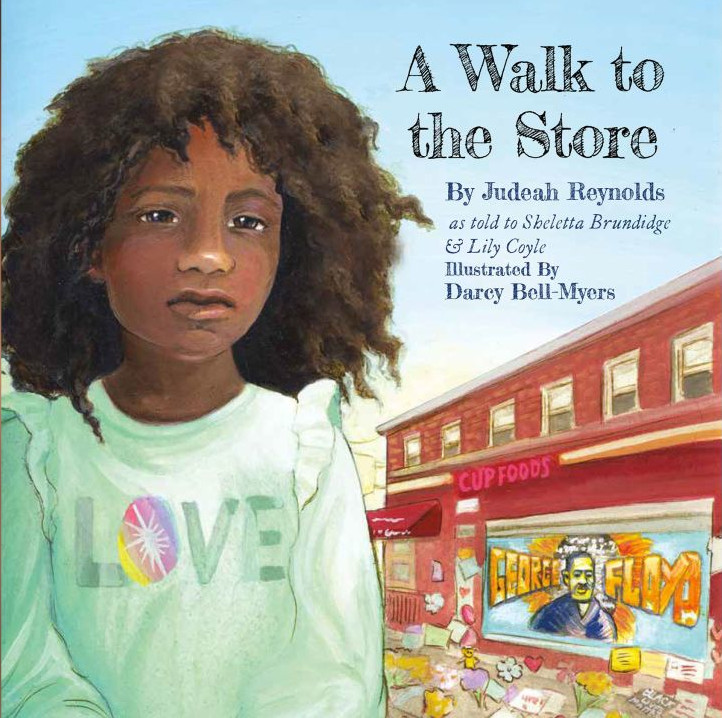
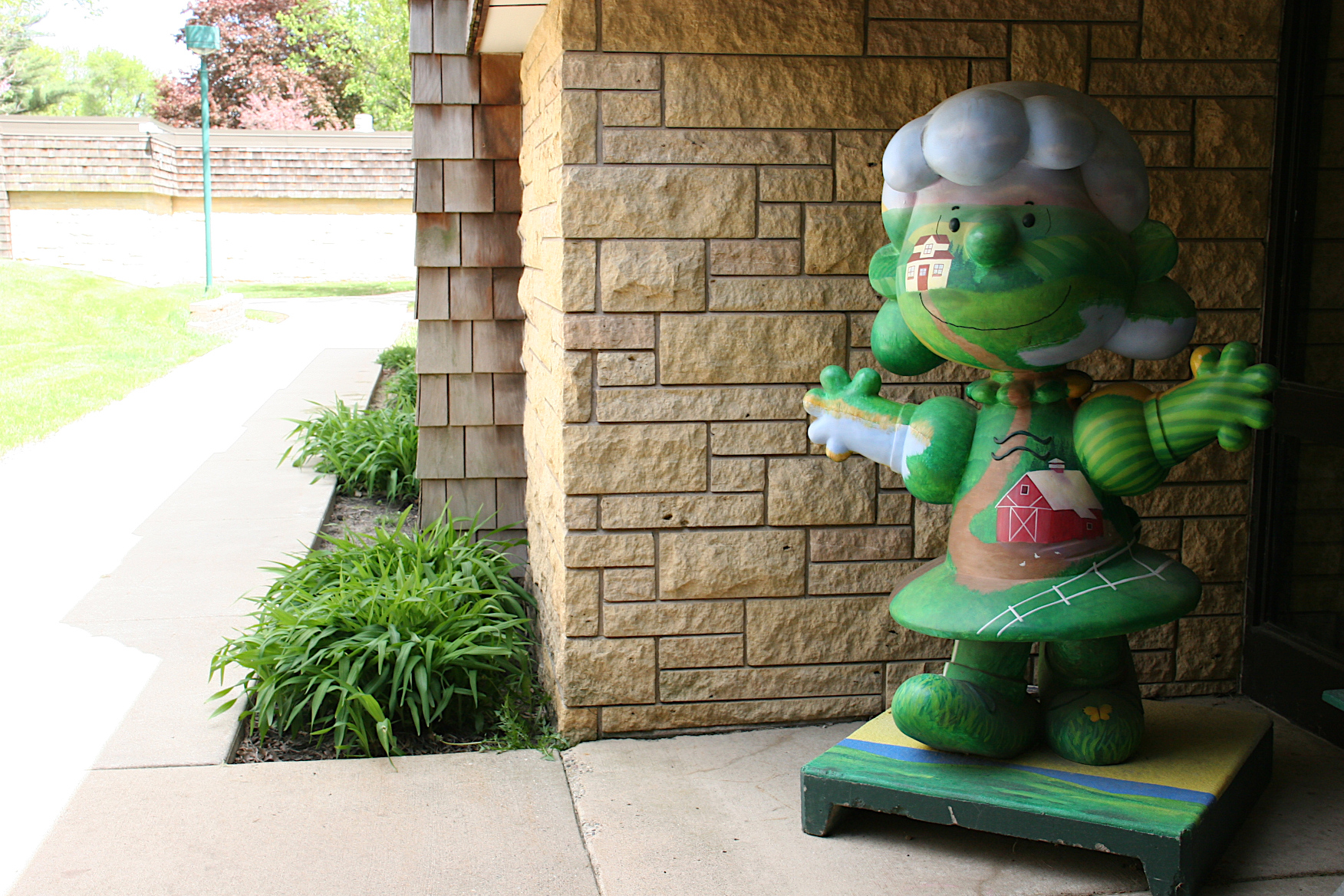
This sculpture of Lucy Van Pelt in Faribault is titled “Land O’Lucy.” (Minnesota Prairie Roots copyrighted photo June 2023)

SHE’S OUTSPOKEN. Loud. Sometimes bossy. Opinionated. Strong. And, in her own unique way, lovable. She is Lucy Van Pelt of the Peanuts cartoon strip.

Lucy stands outside the east wing entry to Noyes Hall at MSAD. (Minnesota Prairie Roots copyrighted photo June 2023)

Lucy and the other characters created by Charles Schulz represent diverse personalities. They are some of us. They are all of us. And that is perhaps what makes this comic strip so endearing, so relatable.

Agricultural-themed “Land O’Lucy” features a farm site. (Minnesota Prairie Roots copyrighted photo June 2023)

In Minnesota, especially, we hold a deep fondness for the Peanuts’ characters. Cartoonist Schulz was born in Minneapolis, raised in St. Paul, moved to Colorado, back to Minnesota, and then eventually to California in 1958 with his wife and their five children. As a high school student, he studied art through a correspondence course at the Art Instruction Schools in Minneapolis and later taught there. His Peanuts cartoon debuted in October 1950 and would eventually include some 70 characters, their stories, trials, triumphs.

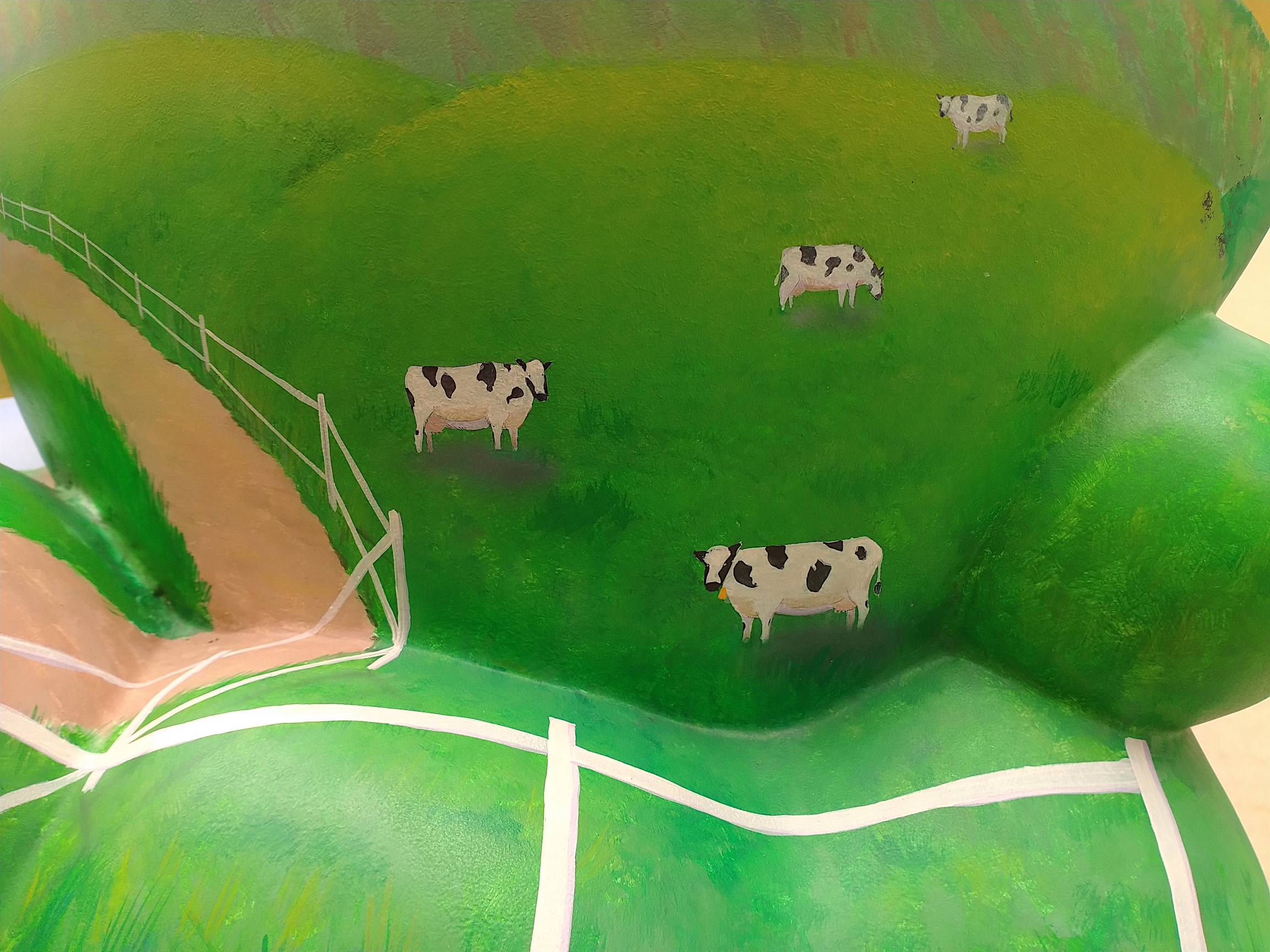
Pastured Holsteins detail the rural theme. (Minnesota Prairie Roots copyrighted photo June 2023)

St. Paul honors their native son with bronze sculptures of Peanuts at Landmark Plaza in the heart of the capital city. While I’ve never seen that art, I’ve seen art from an earlier endeavor, “Peanuts on Parade.” After Schulz died in 2000, St. Paul undertook the five-year parade project beginning with Snoopy fiberglass statues painted by artists and then auctioned to fund scholarships for artists and cartoonists and to finance the bronze statues. In subsequent years, “Peanuts on Parade” featured Charlie Brown, Lucy, Linus, and, finally, Snoopy and Woodstock.

“Land O’Lucy” stands outside the east wing of Noyes Hall. (Minnesota Prairie Roots copyrighted photo June 2023)

It is a statue of Lucy which found its way into my community, landing at the Minnesota State Academy for the Deaf. “Land O’Lucy” now stands in a visible spot on campus, moved during a recent construction project from an obscure location outside Quinn Hall to the front of Noyes Hall East Wing. She’s become my silent, if Lucy can be silent, cheerleader as I walk the deaf school campus doing my vestibular rehab therapy exercises. I like to think that Lucy is encouraging me, just as she is encouraging the young deaf and hard of hearing students who attend this specialized residential school. Lucy symbolizes strength with her nothing’s-going-to-stop-me attitude. We can all use a bit of that empowering approach to life’s challenges.

Informational signage at the base of Lucy. (Minnesota Prairie Roots copyrighted photo June 2023)

This particular statue from the 2002 “Looking for Lucy, Peanuts on Parade” project was painted by Dubuque, Iowa, artist Adam Eikamp with Land O’Lakes Inc. the sponsoring company. The dairy plant in Faribault has since closed. But its support of this public art remains forever imprinted in informational signage at the fiberglass statue’s base.

Artwork shows disking the field in preparation for spring planting. (Minnesota Prairie Roots copyrighted photo June 2023)

The agricultural theme of the MSAD Lucy is fitting. Our area of southern Minnesota is a strong agricultural region. The paintings on the statue reflect that with fields, barn, farmhouse, cows and chickens. Lucy banners rural. She is among 105 five-foot tall Lucys painted as part of “Looking for Lucy.”

Extroverted “Land O’Lucy” outside Noyes Hall east wing. (Minnesota Prairie Roots copyrighted photo June 2023)

If you’re looking for this Lucy, travel to MSAD on Faribault’s east side. You can’t miss the domed Noyes Hall, on the National Register of Historic Places and among many beautiful historic limestone buildings on campus. She stands outside Noyes’ east wing, welcoming students and others, arms flung wide. Typical Lucy with body language that reveals her extroverted personality, her loud, strong and encouraging voice.

© Copyright 2023 Audrey Kletscher Helbling
 

George Floyd’s aunt lifts her voice in an impactful book February 3, 2023

IT’S NOT ENOUGH. I recognize that. It’s not enough to simply read books about black history and racism in America and call it good. But reading is a step toward widening my knowledge and understanding and then my compassion. So I will continue to read, and learn.

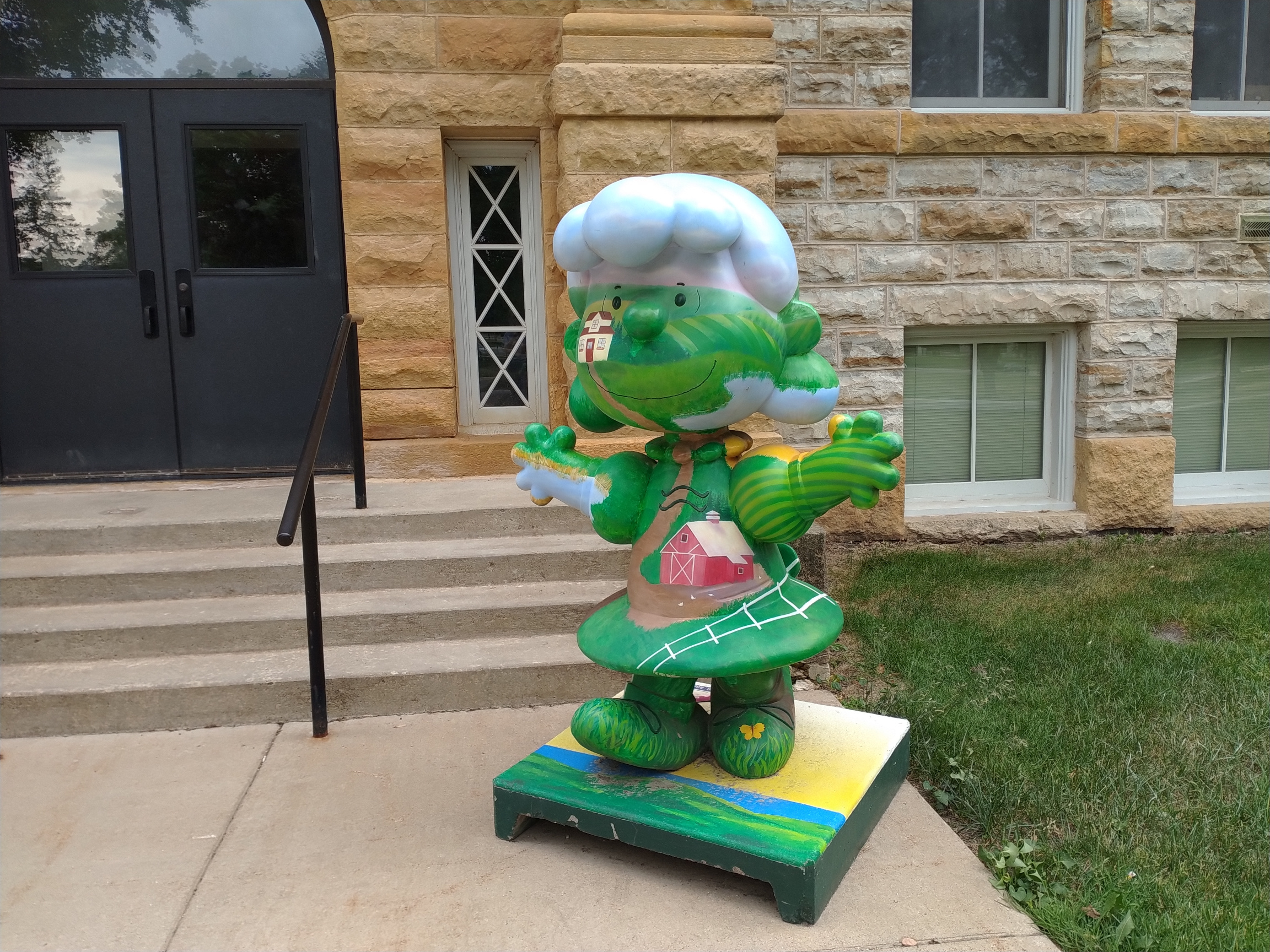
I recently finished Lift Your Voice—How My Nephew George Floyd’s Murder Changed the World. Angela Harrelson—who is Floyd’s aunt, lives in Minneapolis and works as a registered nurse—wrote this book with Michael Levin. Floyd, known as “Perry” to his family, died on May 25, 2020, at the hands of Minneapolis police officers, three now serving prison time in Floyd’s death, the fourth awaiting a judge’s decision on charges.

On the day I turned the last pages of Lift Your Voice, family, friends and activists were raising their voices at the funeral of Tyre Nichols, who was brutally beaten by police during a traffic stop in Memphis and died three days later. Listening to a portion of that service, a speaker called the young black man a “son, father, brother, friend and human being.” Human being. Those two words emerge in Harrelson’s book when she writes of (those) white people who don’t see black people as human beings. She traces that back to slavery (when slaves were viewed as property), sharing her own family history of slavery and lynchings.

Harrelson specifically cites Minneapolis Police Officer Derek Chauvin as failing to view her nephew as a human being. Chauvin kneeled/pressed on Floyd’s neck for more than nine minutes as the young man lay handcuffed and face down on the street pleading for his life, “I can’t breathe.”

It’s a lot, this book. To read about Floyd’s tragic death and the deeply personal stories of Harrelson and her family and all they’ve endured simply because of the color of their skin is difficult. But stories resonate and make an impact. When she writes of “white privilege” as something held simply because of white skin color and unrelated to wealth and status, that clicked for me. Unlike Harrelson, I don’t have to think about being watched in public, suspected of something, anything, because of my skin color. Harrelson does and she shares specifics.

Her book covers topics of systemic racism, a police culture that needs to change (she’s not anti-police), the emotional exhaustion and trauma she feels, the importance of faith in her life, her role as an activist. But she doesn’t stop there. Harrelson calls for each of us, individually, to call out racism, to speak up when we see injustices, to treat each other with respect.

In my own community, I’ve, on more than one occasion, found myself responding to racist comments related to housing, employment, even the way people dress or their scent. It’s hard to hear this stereotyping, this obvious disrespect and racism. So I speak up, or as George “Perry” Floyd’s aunt encourages, I lift my voice. Lifting voices and being heard is how, Harrelson writes, the world will heal.

© Copyright 2023 Audrey Kletscher Helbling
 

No ordinary walk to the store, a book review January 17, 2023

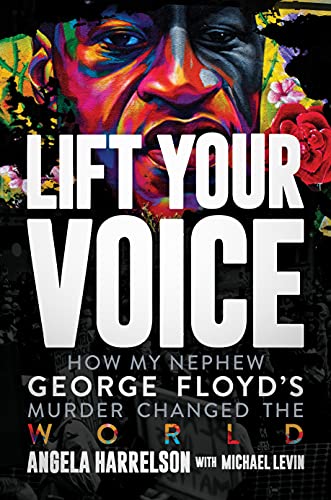
Book cover credit: Beaver’s Pond Press

SHE WAS ONLY NINE YEARS OLD, too young to walk alone to the store to buy candy with the $3 clutched in her hand. Eventually, her 17-year-old cousin, Darnella Frazier, agreed to accompany Judeah Reynolds to Cup Foods. That decision on May 25, 2020, would forever change their lives. And the world.

What happened in Minneapolis that evening—the murder of George Floyd at the hands of four Minneapolis police officers—is the subject of a powerful new children’s picture book, A Walk to the Store by Judeah Reynolds as told to Sheletta Brundidge and Lily Coyle.

When I learned of the book’s September 2022 release by St. Paul-based Beaver’s Pond Press, I knew immediately that I needed to read this recounting of Judeah’s witness to Floyd’s death. The cousins arrived on an unfolding scene outside Cup Foods where Floyd lay on the ground next to a squad car, a police officer pressing his knee into the 46-year-old’s neck. Judeah, Darnella and other bystanders pleaded with the police to stop while Darnella recorded the scene on her cellphone and then shared that video online. She won a 2021 Pulitzer Prize for that documentation.

While this book recounts the death of George Floyd from a child’s perspective, it is much more than a basic retelling. The story also reveals the trauma Judeah experienced. The sadness. The difficulty sleeping. The bad dreams. The replaying of Floyd’s killing in her mind.

But this is also a story of strength and hope and about being brave enough to speak up. To say something. To let your voice be heard. To effect change.

Messages like this are included in the book. I photographed this two years ago in small town Kenyon, MN. (Minnesota Prairie Roots copyrighted file photo 2020)

I heard Judeah’s determined voice in her words. I saw it, too, in Darcy Bell-Myers’ art, which reinforces the story with strong, message-filled illustrations. This book is empowering for children who read or hear this story. And it’s equally as impactful for adults.

At the end of the book is a list—How to Help Children Process a Traumatic Event. I appreciate the inclusion of those 10 suggestions given Judeah did, indeed, experience trauma. Her family even moved out of Minnesota.

This LOVE mural by Minneapolis artist Jordyn Brennan graces a building in the heart of historic downtown Faribault. The hands are signing LOVE. (Minnesota Prairie Roots copyrighted file photo June 2021)

As I finished reading A Walk to the Store, I considered how ironic that young Judeah wore a colorful shirt emblazoned with the word LOVE as she stood on the sidewalk outside Cup Foods, witness to George Floyd’s murder.

© Copyright 2023 Audrey Kletscher Helbling
 

Celebrating the birthday of Charles M. Schulz November 26, 2022

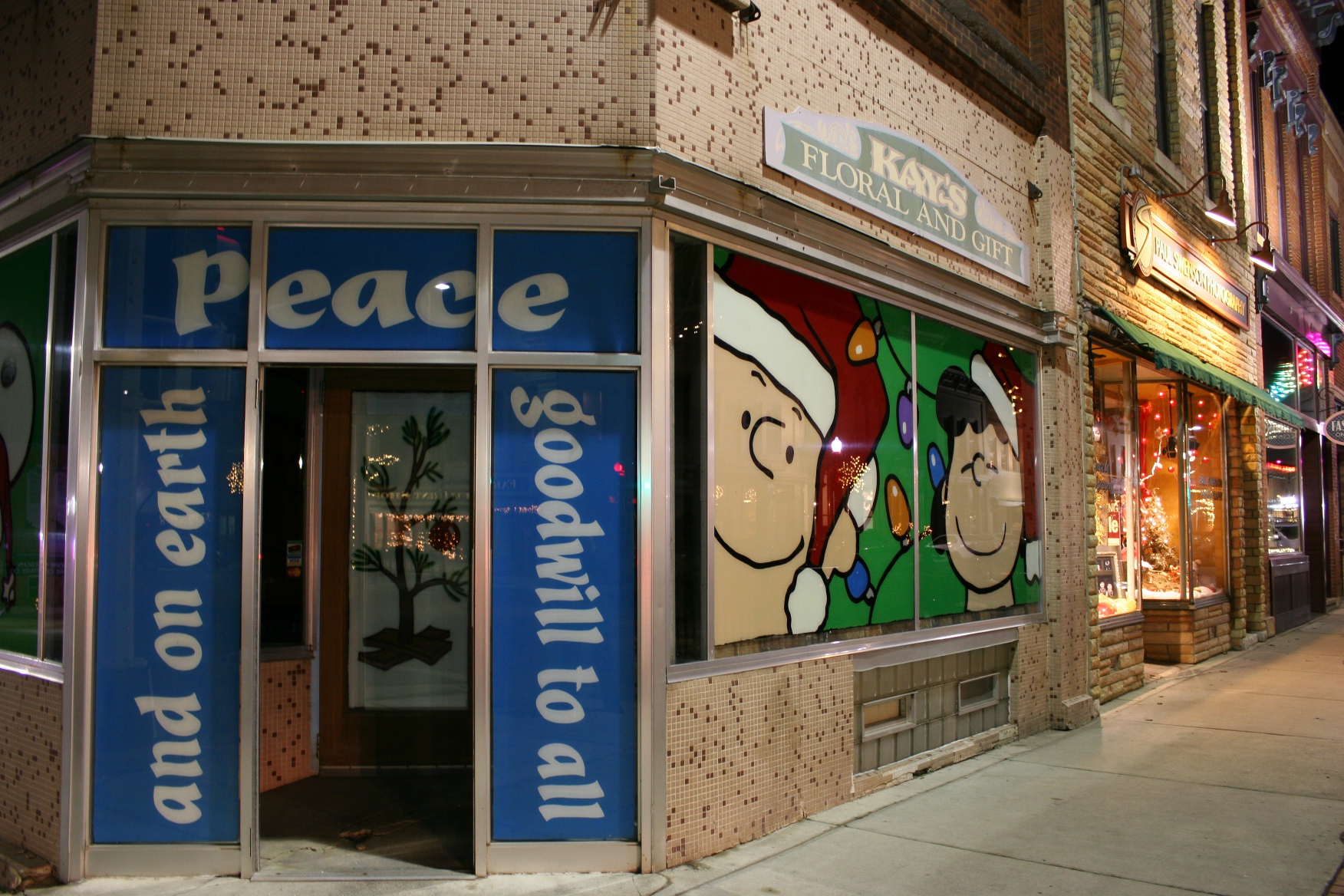
Peanuts characters adorn the former Kay’s Floral building in downtown Faribault during a 2015 holiday decorating contest. (Minnesota Prairie Roots copyrighted file photo December 2015)

IF YOU READ A COMIC STRIP TODAY, November 26, you may notice something different. Something that honors Minneapolis-born cartoonist Charles M. Schulz. Cartoonists are celebrating what would have been Schulz’s 100th birthday by incorporating tributes into their comics today. I love this idea. It seems fitting for the Peanuts’ creator who died in 2000.

Generations have followed the antics, trials and stories of the Peanuts characters, 70 strong, since the comic strip debuted in October 1950. The beloved Charlie Brown. Vocal Lucy. Security blanket carrying Linus. Inquisitive Sally. Piano pounding Schroeder. The imaginative Snoopy. The list goes on and on.

When our kids were little, they sprawled across the living room floor on Sunday afternoons aside Randy as he read the funnies to them. I would watch from a corner of the couch, content and smiling as they progressed through the Sunday comics, Peanuts a favorite.

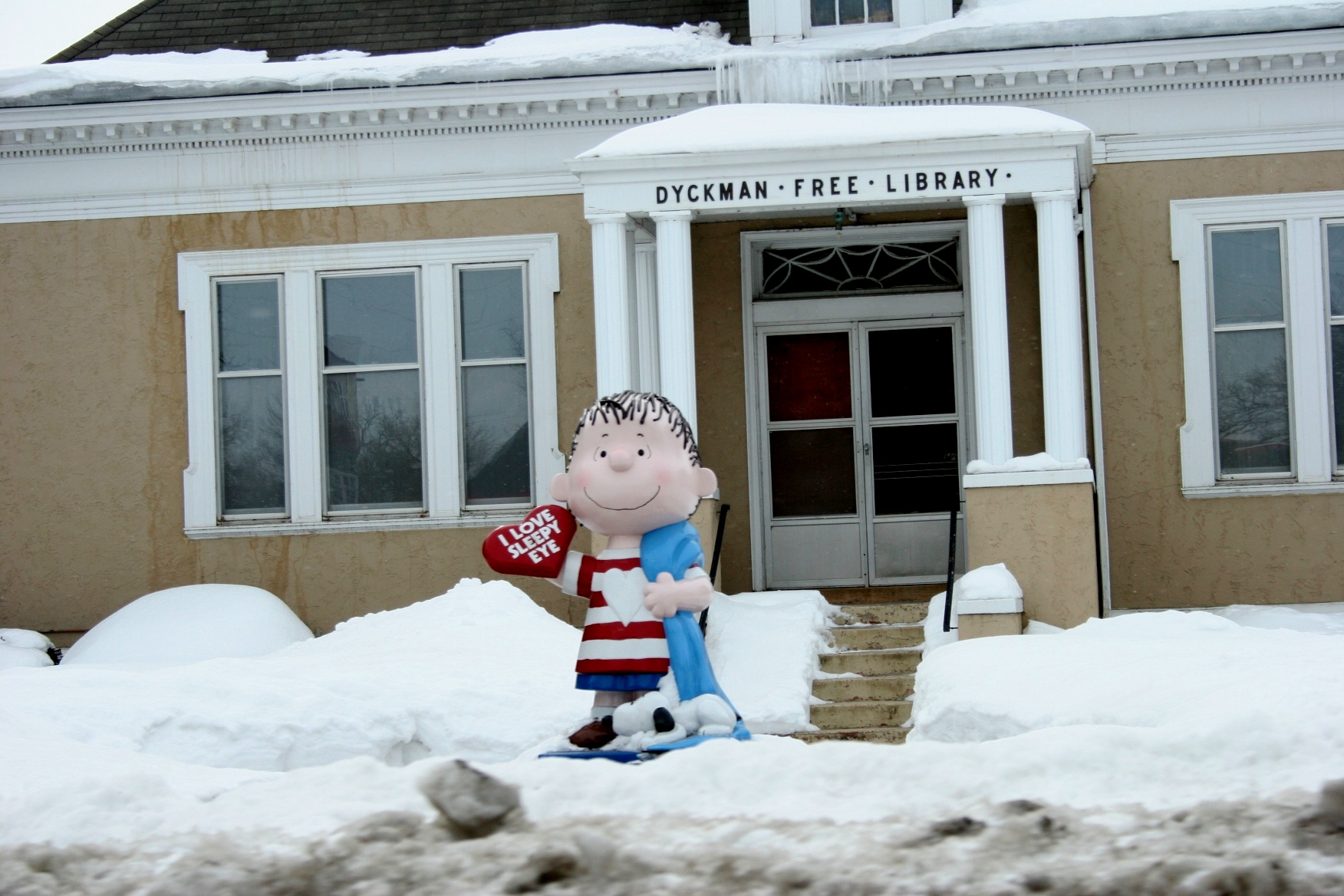
Linus greets visitors to the Dyckman Free Library in Sleepy Eye. (Minnesota Prairie Roots copyrighted file photo February 2015)

Schulz and his cast of characters will always hold a special place in the hearts of Minnesotans. Minneapolis-born, Schulz grew up in neighboring St. Paul. Eventually, he taught at Art Instruction Schools in Minneapolis, where he initially studied art through a correspondence course. There he met Linus Maurer, a native of Sleepy Eye in southwestern Minnesota. Maurer also taught at the school and was a successful syndicated cartoonist, magazine illustrator and painter. And, yes, Schulz honored his friend by naming one of his characters Linus van Pelt, brother of Lucy and best friend of Charlie Brown.

I lived and worked in Sleepy Eye for six months in 1980 as a journalist. Whenever I return to my home region, I typically go through Sleepy Eye, passing by Dyckman Free Library. A statue of Linus clutching his blue blankie and a red heart proclaiming love for Sleepy Eye sits on the library lawn bordering the Laura Ingalls Wilder Historic Highway/US Highway 14. Next time I need to stop, see Linus up close, step inside the library if it’s open.

Lucy van Pelt at MSAD. (Minnesota Prairie Roots copyrighted photo May 2022)

Here in Faribault, I discovered a statue of Lucy van Pelt while wandering the Minnesota State Academy for the Deaf campus earlier this year. There an over-sized rural-themed Lucy stood outside the entrance to Quinn Hall. It has since been relocated during a renovation and construction project. I don’t know the backstory on how Lucy came to be at MSAD. But I believe she is part of the 2002 “Peanuts on Parade, Looking for Lucy” artistic endeavor.

When I last stopped by the post office for stamps, I picked up a sheet of Peanuts stamps, not realizing at the time why Schulz and his characters were selected for postage stamp publication. I overlooked the “CHARLES M. SCHULZ CENTENNIAL 2022” wordage. But today I’m not overlooking this Minnesota-born creative who brought so much joy, so much insight (yes, insight), so much happiness into the world. Yesterday. And still today, 100 years after his birth.

TELL ME: Who’s your favorite Peanuts character and why?

© Copyright 2022 Audrey Kletscher Helbling
 

Remembering the 35W bridge collapse 15 years later August 1, 2022

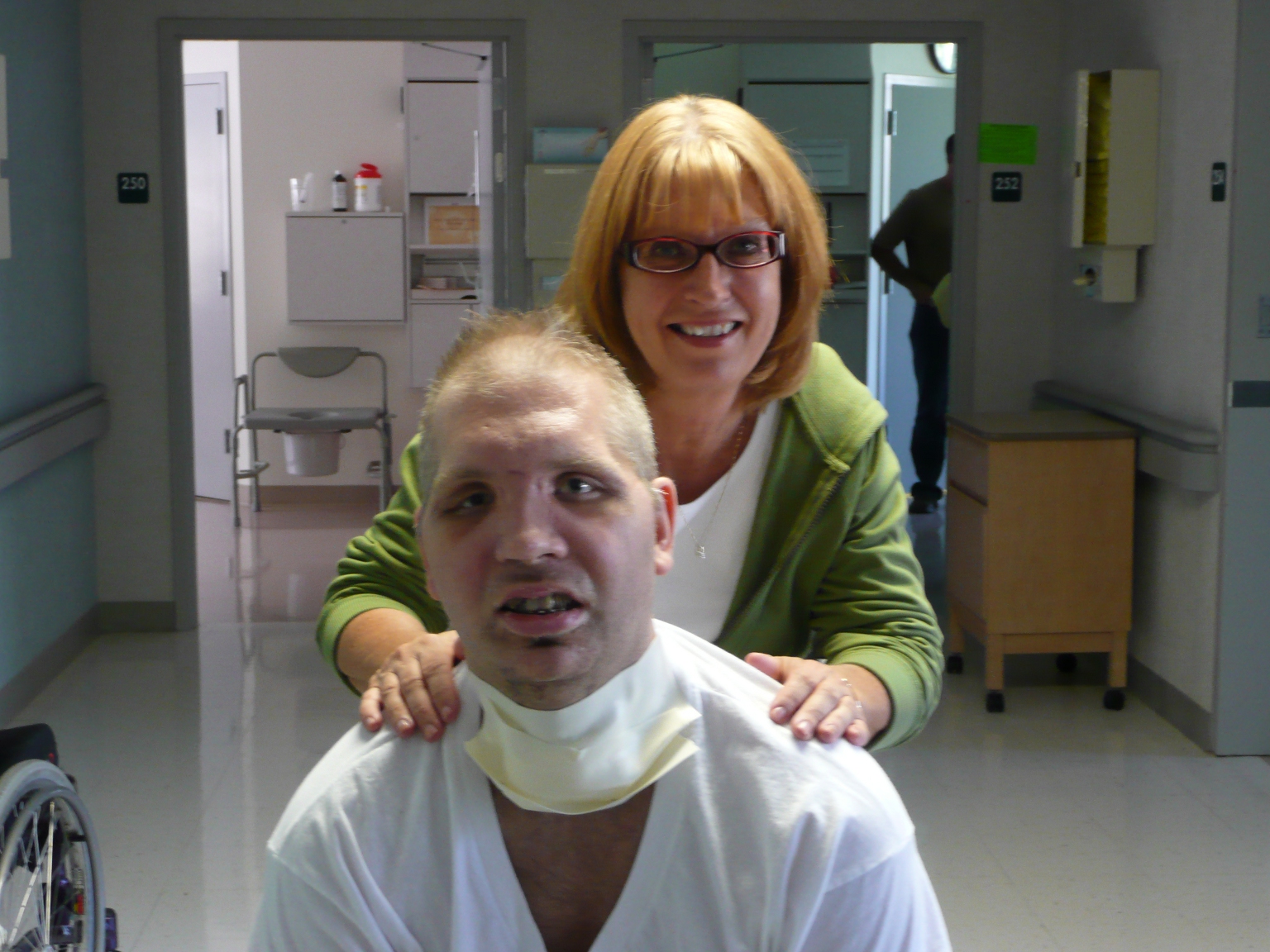
This photo shows the opening spread of the feature article published in the November/December 2007 issue of Minnesota Moments. Casey McGovern of Minneapolis shot the bridge collapse scene. To the far left is Garrett before the collapse, to the right, his rescuer. The next photo shows his Ford Focus which plummeted into the Mississippi River. And to the right are newly-engaged Garrett and Sonja, before the collapse.

FIFTEEN YEARS AGO THIS EVENING, 13 people died and 145 were injured when the 35W bridge collapsed during rush hour in downtown Minneapolis. Vehicles plunged into the Mississippi River. Others clung to the tilted, broken span of roadway. Lives were forever changed at 6:05 pm on August 1, 2007, when faulty gusset plates gave way and the bridge broke.

Garrett with his mom, Joyce Resoft, about a month after the bridge collapse. (Minnesota Prairie Roots file photo 2007. Photo courtesy of Garrett’s family)

Among those most seriously injured was then 32-year-old Garrett Ebling, former managing editor of The Faribault Daily News. He suffered a traumatic brain injury, severed colon, broken left arm and ankles, a spinal injury and more after his Ford Focus nosedived 110 feet, the equivalent of an 11-story building, into the river. That he survived seems miraculous. He spent weeks in the hospital, where he underwent multiple surgeries. A lengthy rehab followed. His life, physically, mentally and emotionally, was forever changed.

Within months of the collapse, I penned a feature story about Garrett for Minnesota Moments, a now-defunct magazine. Mine was one of the few initial interviews Garrett granted and I was both humbled and honored to share his story as a freelance writer. Prior to his departure from the editorial job in Faribault, we had connected. I remember Garrett’s kindness and compassion toward me after my son was struck by a hit-and-run driver in May 2006. I took great care in writing his story, recognizing that another journalist was trusting me to get it right.

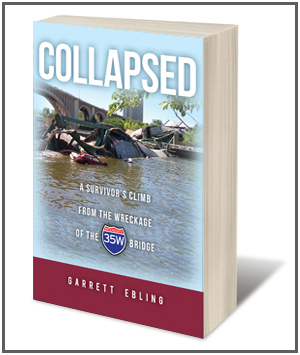
Garrett Ebling’s book.

In 2012, Garrett wrote about his experiences and life thereafter in a book, Collapsed—A Survivor’s Climb From the Wreckage of the 35W Bridge. I reviewed that revealing and emotional book in which this survivor held nothing back.

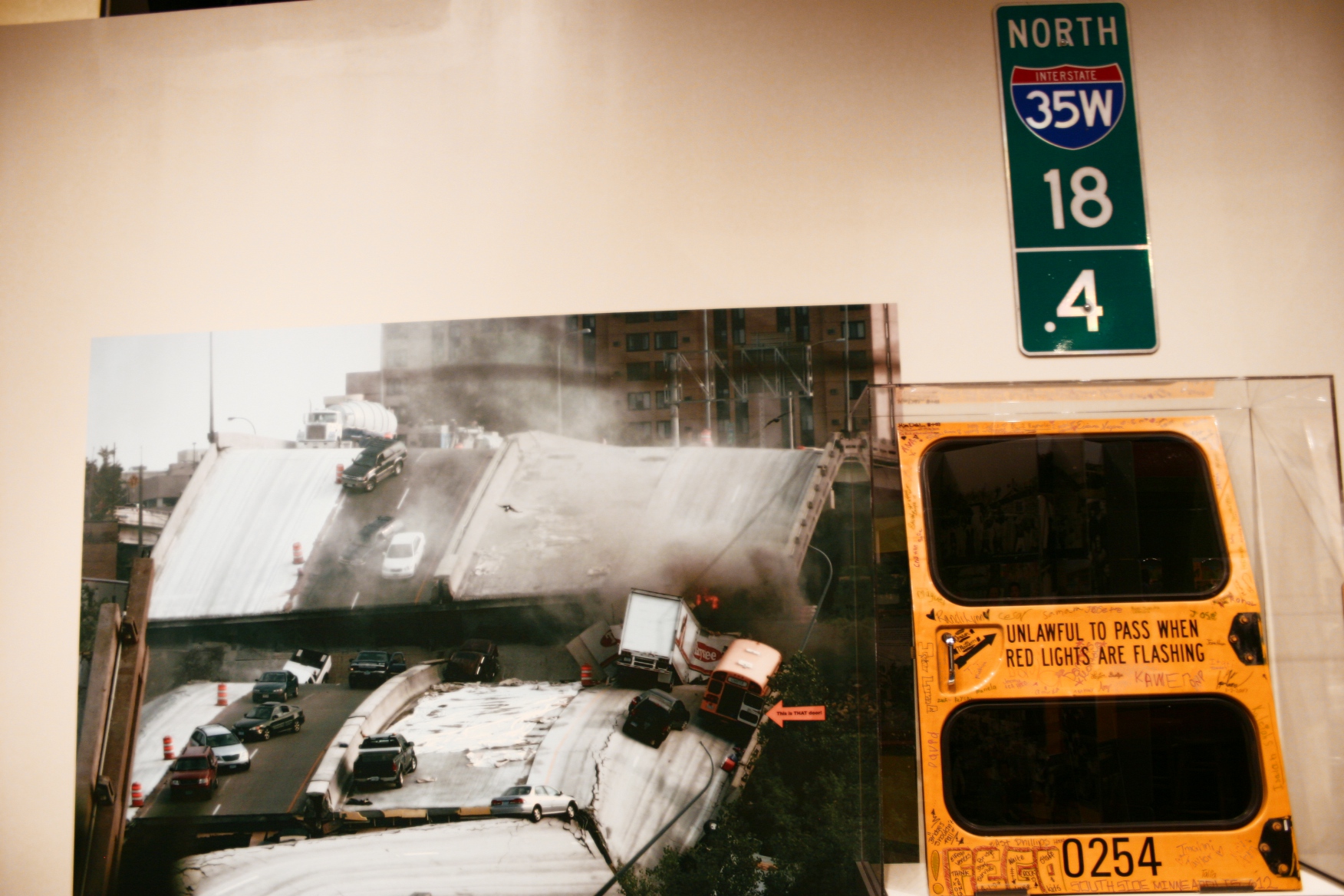
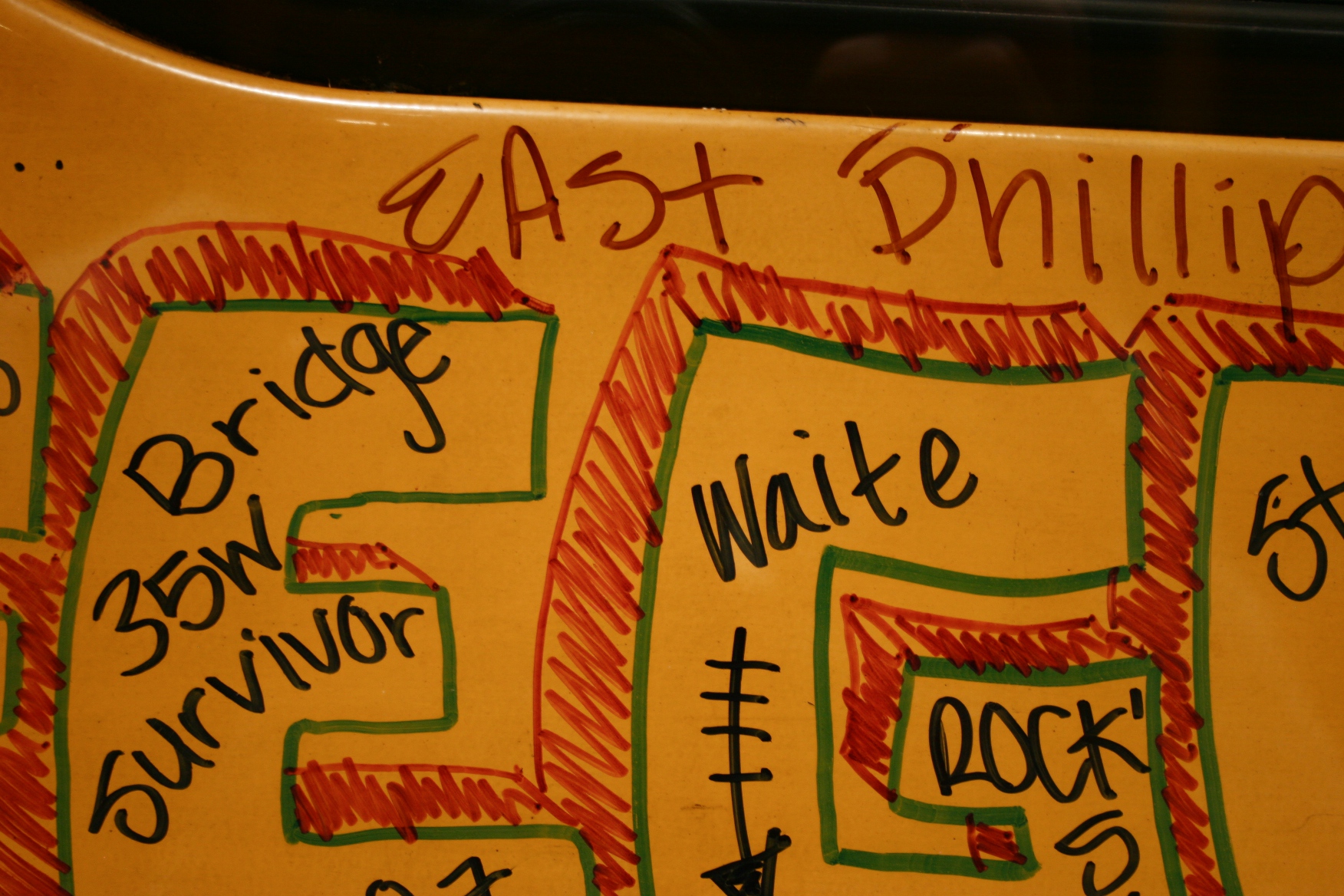
A section of the then now wow exhibit at the Minnesota History Center in St. Paul features the 35W bridge collapse. This image shows the collapsed bridge and the emergency exit door from a school bus that was on the bridge when it collapsed. All made it safely off the bus (Minnesota Prairie Roots file photo)

Since then, I’ve lost track of the “author, father and 35W bridge collapse survivor,” as Garrett labels himself on his Twitter account. But I expect today, the anniversary of the bridge collapse, is difficult for him as it is every survivor and every single person who lost a loved one 15 years ago in downtown Minneapolis when the unthinkable happened. When a bridge fell.

All the children and adults on the bus signed the door on display at the Minnesota History Center. (Minnesota Prairie Roots copyrighted file photo)

There are moments in history that we never forget and, for me a Minnesotan, August 1, 2007, is one of those dates. When I heard the breaking news of the bridge collapse, I worried first about extended family who live in the metro. They were not on the bridge. While that diminished my personal angst, it does not diminish the tragedy of that day for those who were on that bridge. Like Garrett Ebling, the 144 others injured and the 13 who died. It is a tragedy, too, for those who loved them and for us, collectively, as Minnesotans.

© Copyright 2022 Audrey Kletscher Helbling


Able to breathe again April 21, 2021

Filed under: Uncategorized — Audrey Kletscher Helbling @ 2:02 PM
Tags: , , , , , , , , , ,

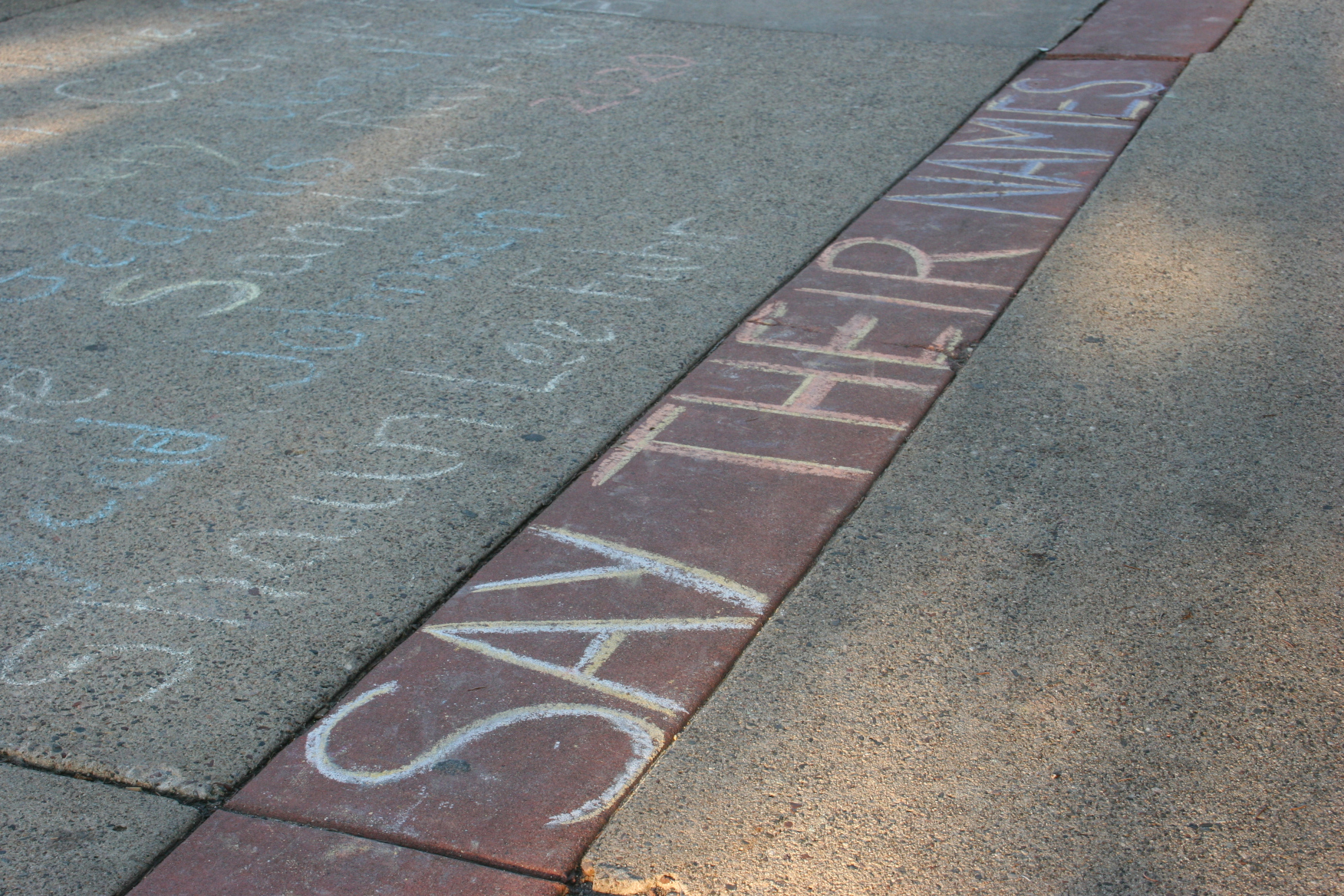
A message chalked in Bridge Square in Northfield carries a repeated phrase as young Black people continue to die at the hands of police. Minnesota Prairie Roots file photo August 2020.

WHEN MY ELDEST DAUGHTER texted at 2:31 pm Tuesday that a verdict had been reached in the Derek Chauvin trial, I replied with one simple word. What?

That the jury could reach a verdict in such a short time—about 10 hours—following weeks of testimony likely meant that the former Minneapolis police officer would be found guilty of killing George Floyd on May 25, 2020, in Minneapolis by pressing his knee on Floyd’s neck for 9 minutes and 29 seconds.

I immediately switched on the TV to await reading of the verdict by Judge Peter Cahill. As I waited and watched news coverage, I felt a sense of hope. Hope that this would end in a conviction. Hope that, finally, there would be accountability in the death of a Black man at the hands of police.

I’d watched the Chauvin trial off-and-on. I heard the words of the bystanders who witnessed Floyd’s death, who pleaded with police officers to give him medical attention. Who asked Chauvin to remove his knee from Floyd’s neck. Who chose to pause and care and document and attempt to save another human being’s life. They felt hopeless, helpless, traumatized, according to their sworn testimony. I listened, too, to police officers testify against one of their own. And I heard Floyd’s loved ones and medical experts speak. Listening to testimony left me at times feeling exhausted and heart-broken.

So when the guilty of all three counts—second-degree murder, third-degree murder and second-degree manslaughter—came down yesterday, I felt relief. Finally.

I watched Chauvin as the verdict was read. His eyes darted from side-to-side. I wondered what he was thinking in that moment and the moments following—when his bail was revoked, he was handcuffed and led away to wait in a Minnesota prison for his sentencing in eight weeks.

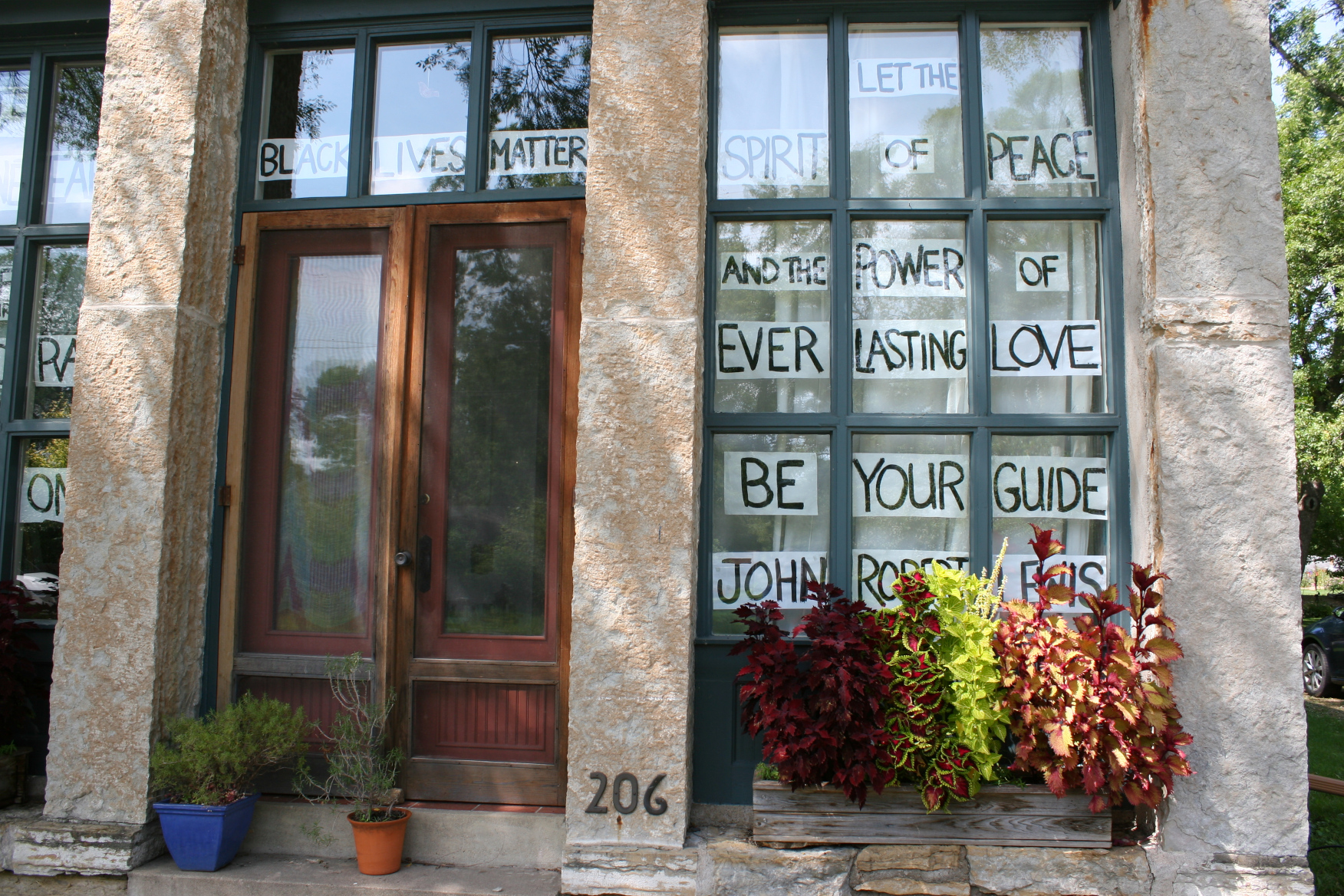
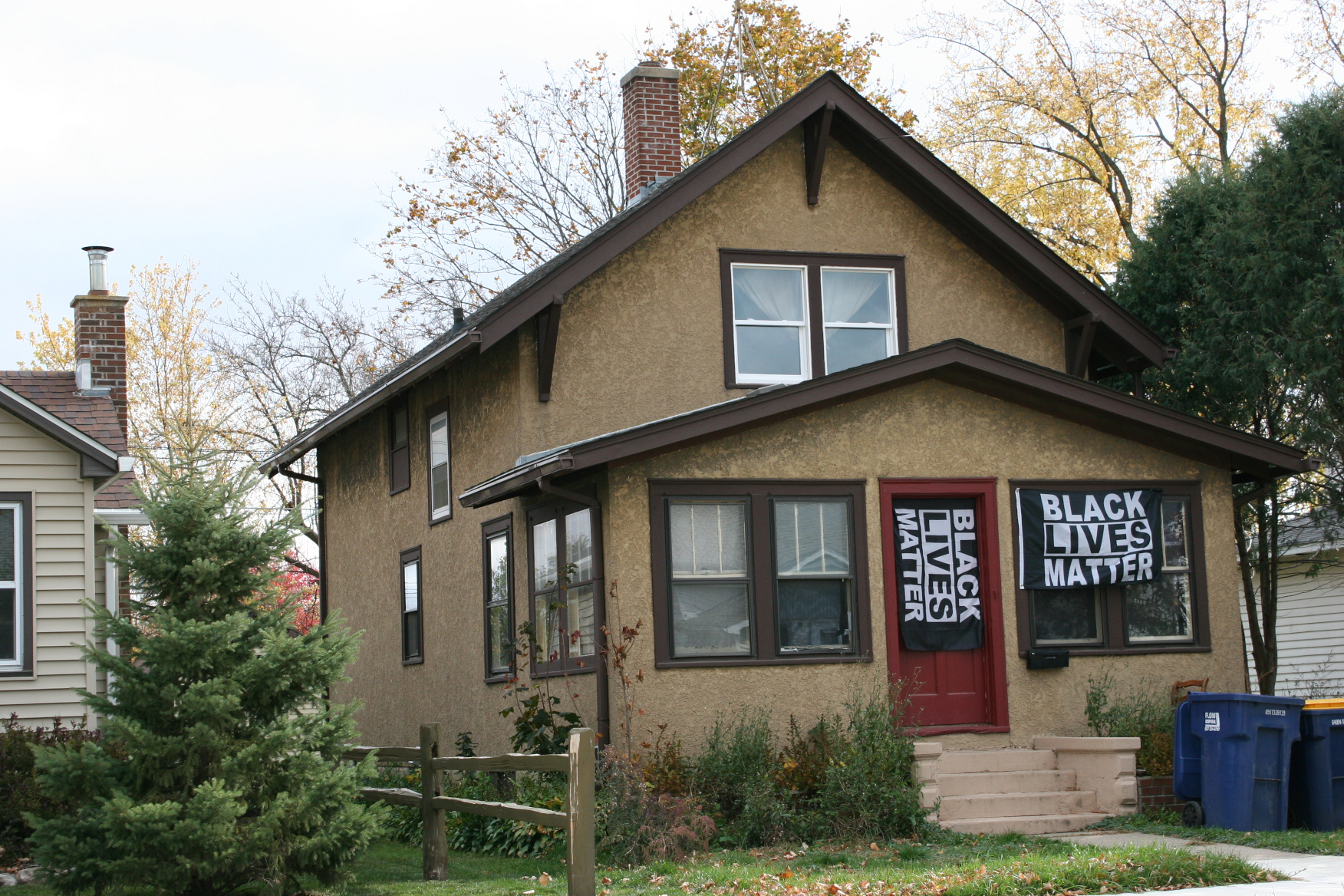
Messages on a house in small town Dundas, Minnesota. Minnesota Prairie Roots file photo August 2020.

But mostly, I wondered how the Floyd family felt. Later they would speak at a news conference led by Civil Rights activist Al Sharpton and Civil Rights attorney Ben Crump. Said Sharpton: “This gives us the energy to fight on.” And Crump: “America, let’s frame this moment as a moment where we are finally getting close to living up to our Declaration of Independence…that all men are created equally…with certain unalienable rights like life and liberty and the pursuit of happiness.”

My mind focused on this single word: life. George Floyd needlessly lost his life on May 25 at the corner of 38th Street and Chicago Avenue in south Minneapolis, a place now known as George Floyd Square.

In the 11 months since, his family has focused on attaining justice in the death of their brother/cousin/uncle/father and on effecting change. They have done that with grace, poise, eloquence, prayer and passion. George’s brother, Philonise Floyd, has stepped up as the family spokesman. At Tuesday’s news conference, these words, especially, resonated with me: “Today we are able to breathe again.” That comment by Philonise linked directly to George Floyd’s plea to police officers as he lay face down on the pavement dying. “I can’t breathe.”

A photo and comment posted at the “Selma to Montgomery: Marching Along the Voting Rights Trail” exhibit at St. Olaf College in Northfield in 2015. Minnesota Prairie Roots file photo 2015.

Much work remains to be done. Tuesday’s verdict marks an important step in accountability and a move toward justice and equality. It’s easy to type that. It’s harder to live it. To speak up. To take action. To care. And we need to care, whether we live along a rural gravel road, in a small town, in the heart of a big city or anywhere in between.

FYI: I’d encourage you to read posts by two Minnesota bloggers whom I respect and follow and who share their thoughts on the Derek Chauvin verdict. Click here to read Margit Johnson’s post, “Endings and Beginnings,” and Kathleen Cassen Mickelson’s “Guilty. Guilty. Guilty.”

© Copyright 2021 Audrey Kletscher Helbling
 

8 minutes and 46 seconds June 5, 2020

Filed under: Uncategorized — Audrey Kletscher Helbling @ 5:00 AM
Tags: , , , , ,

Minnesota Prairie Roots file photo.


TIME. For two hours Thursday afternoon, I watched the memorial service for George Floyd in Minneapolis broadcast on TV. Singing. Praying. Sharing of memories. Laughing. Crying. Calls for justice. And in the end, at the end, it was the 8 minutes and 46 seconds that mourners stood in silence which felt the most intensely and emotionally powerful. The length of time a former Minneapolis police officer, now charged with second-degree murder, third-degree murder and second-degree manslaughter, was shown in a video kneeling on Floyd’s neck. It seemed an interminably long time.


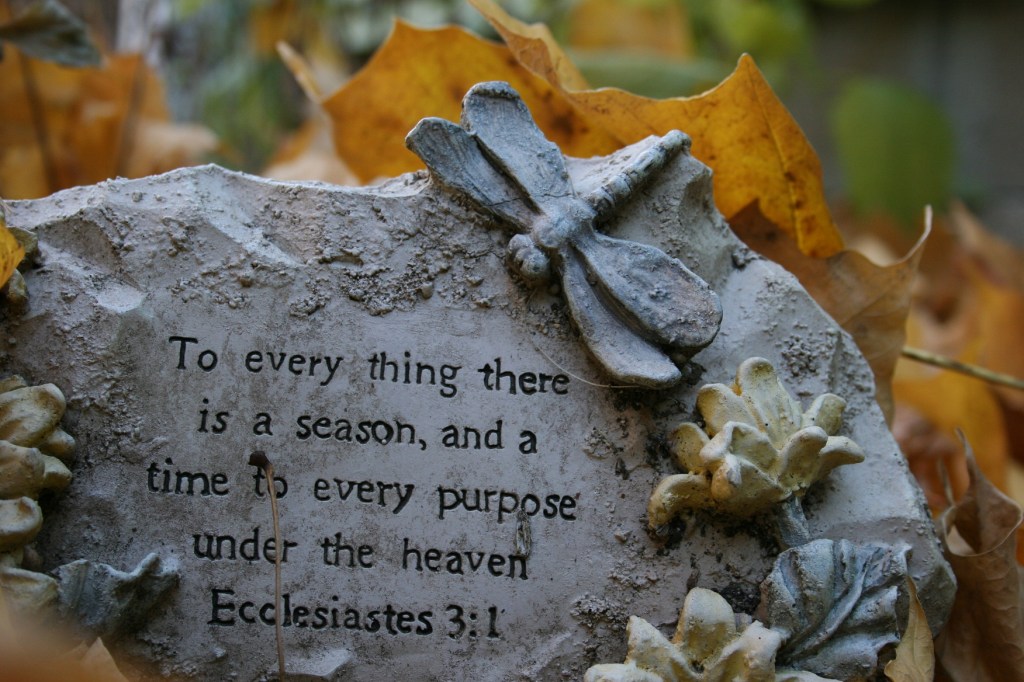
Garden art given to me by my mom many years ago. Minnesota Prairie Roots file photo.


TIME. The Rev. Al Sharpton, who spoke at the service, quoted Ecclesiastes 3, which references time. “Time is out for empty words and empty promises,” the reverend said, as he called for lasting change. For equality. For justice. The time is now.


Minnesota Prairie Roots file photo.


TIME. Hope is rising. Not as a wish, but as an action, as a movement toward lasting change.


Remembering the day a bridge collapsed in Minneapolis August 1, 2018

This photo shows the opening spread of a feature article published in the November/December 2007 issue of Minnesota Moments. Casey McGovern of Minneapolis shot the 35W bridge collapse scene. To the far left is Garrett Ebling before the collapse, to the right, his rescuer. The next photo shows his Ford Focus which plummeted into the Mississippi River. And to the right are Garrett and and his then fiancee, before the collapse.


ELEVEN YEARS AGO TODAY, the unthinkable happened in Minnesota. The I-35W bridge in Minneapolis collapsed at 6:05 p.m., killing 13 and injuring 145.

At the time I was a freelance writer for the now-defunct Minnesota Moments magazine. Just months after the collapse, I interviewed survivor Garrett Ebling and his then fiancee and a passerby who rushed in to help. I wrote a feature spread that included shared images of Garrett and of the devastation.


Garrett Ebling’s book.


All these years later, I remain impressed by Garrett’s strength and determination as he recovered from serious injuries. He would go on to pen a book about his experience. Garrett is a former Faribault Daily News editor, the reason I originally connected with him post bridge collapse.


This image shows the collapsed bridge and the emergency exit door from a school bus that was on the bridge when it collapsed. I shot this image several years ago at the Minnesota History Center. Minnesota Prairie Roots file photo.


Today I remember this catastrophe that profoundly impacted Minnesotans and how we view bridges. I remember, too, those who died while simply traveling across a bridge over the Mississippi River. And I remember those who survived, their lives forever changed.


Crossing the “new” 35W bridge near downtown Minneapolis. Minnesota Prairie Roots file photo.


August 1, 2007, remains forever a heartbreaking day in the history of our state.

© Copyright 2018 Audrey Kletscher Helbling