Minnesota Prairie Roots

Writing and photography by Audrey Kletscher Helbling

Words that resonate from Northfield poet Becky Boling April 24, 2025

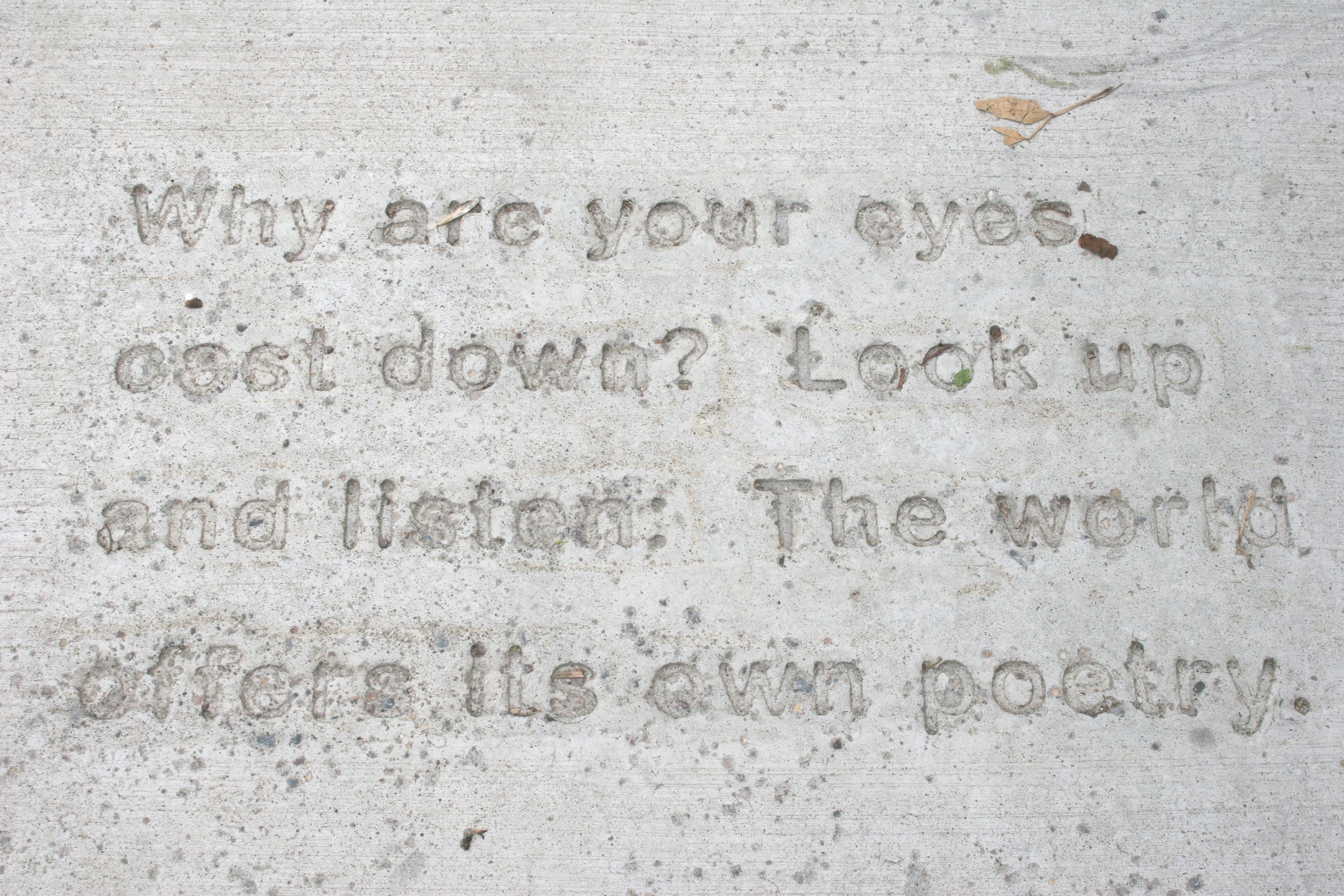
Sidewalk poetry in downtown Northfield, Minnesota, carries a powerful message. (Minnesota Prairie Roots copyrighted file photo)

I DON’T READ MUCH POETRY. I probably shouldn’t admit that given I’m a published poet. But I suspect most of you also are not big poetry readers. Yet, we all should be, especially me.
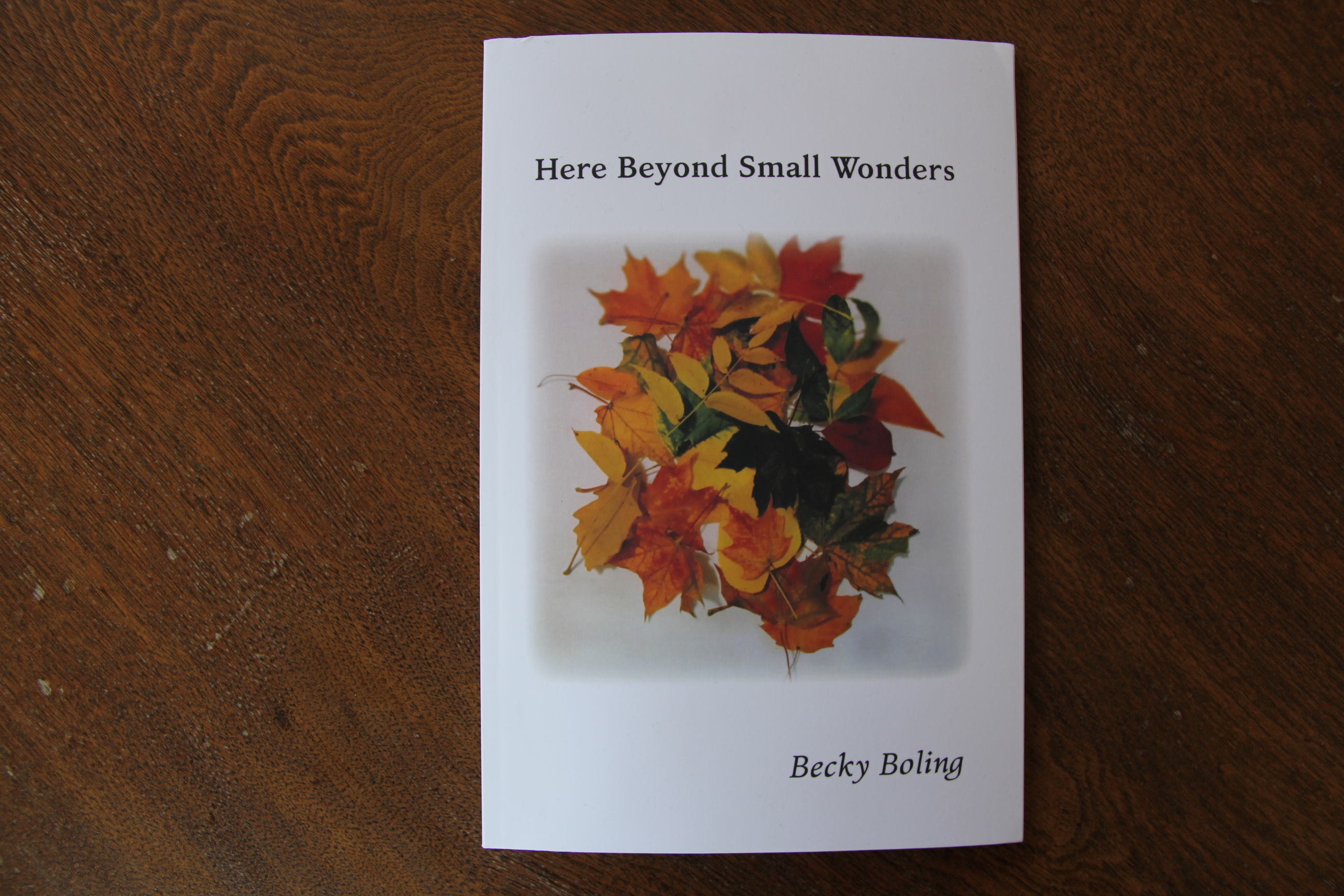
Becky Boling’s recently-released first collection of published poetry. The cover features the poet’s artwork. (Minnesota Prairie Roots copyrighted photo April 2025)

Poetry offers a creative way to view the world, to experience life, eliciting a whole range of emotional responses that connect us to each other, to the earth, to the past and present, and much more. I get excited when I discover a poet whose work truly resonates with me. And that would be the poetry of Northfielder Becky Boling.
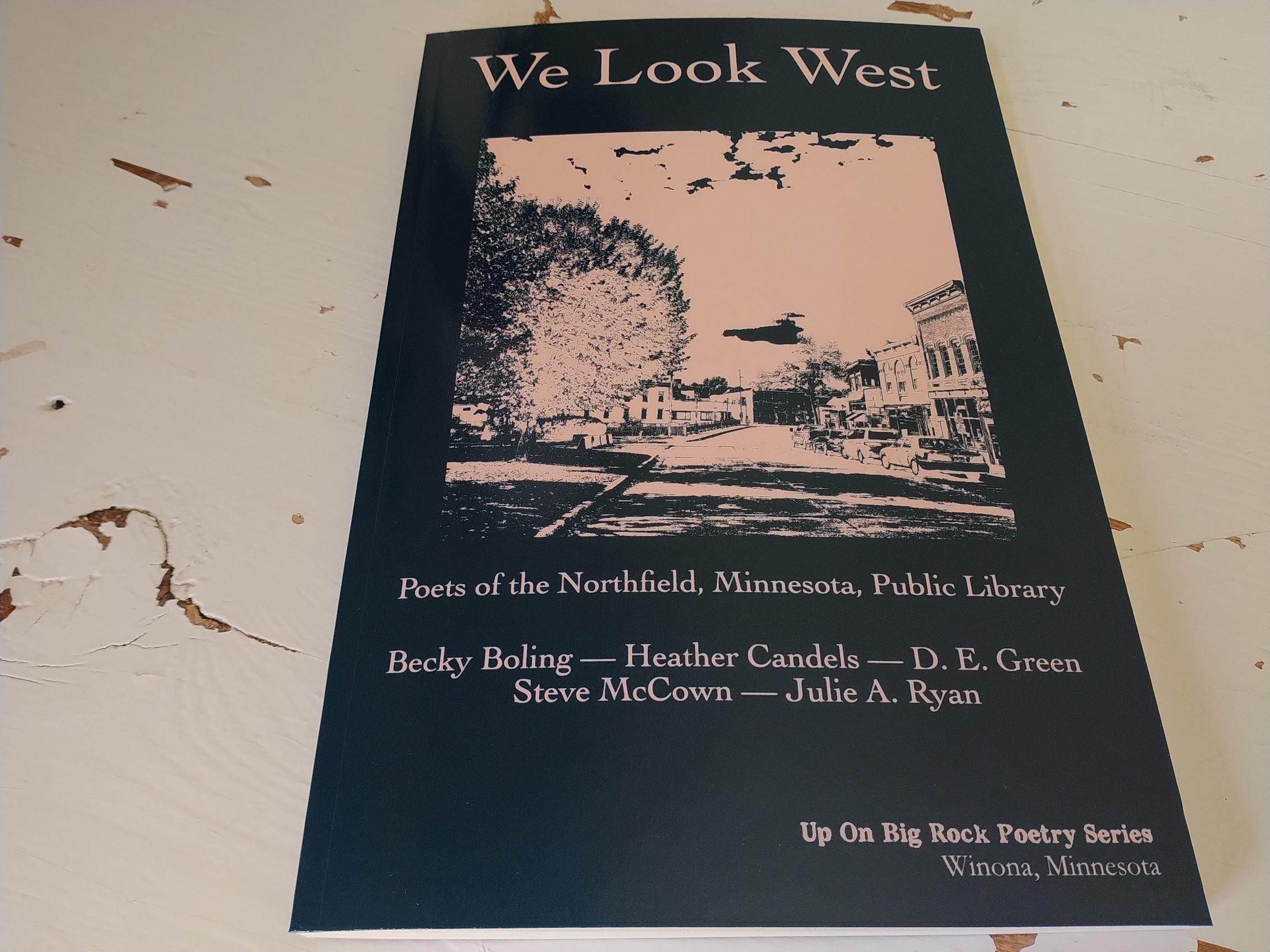
We Look West was published in early 2024 by Shipwreckt Book Publishing Company. (Minnesota Prairie Roots copyrighted file photo 2024)

A year ago, I met Boling when she dropped off a copy of the anthology, We Look West, a collaboration of the Poets of the Northfield Public Library. It includes her work and that of four other talented poets. I love the collection which takes the reader from the sunrise to the sunset of life. The poetry therein is so understandable and relatable.

A box holds bagged poems included in the “Poetry in a Bag” project. (Minnesota Prairie Roots copyrighted file photo 2024)

In May 2024, Boling, I and several other poets participated in a community poetry reading for the “Poetry in a Bag” project coordinated by Mercado Local, a Northfield marketplace for immigrants. Our poems were printed, rolled and bagged before distribution within our communities.

I would see Boling again in September 2024, when she and the other Northfield poets read from We Look West at Books on Central, a Rice County Area United Way used bookshop in Faribault.
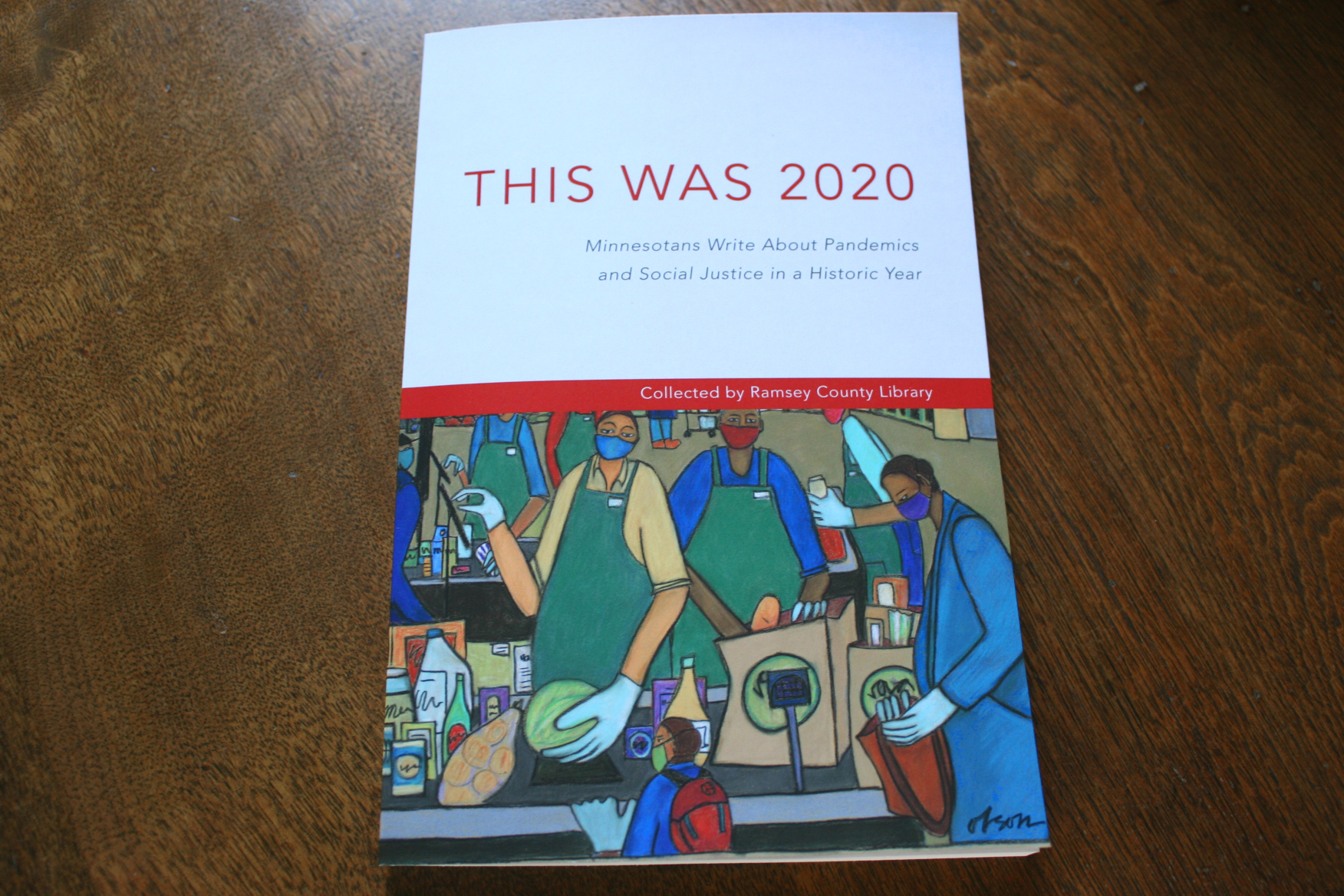
Selected prose and poetry about the pandemic and social justice issues were published by the Ramsey County Public Library in this anthology. (Minnesota Prairie Roots copyrighted file photo)

Somewhere along the line, I discovered that Boling’s “Pandemic Haiku” had published in This Was 2020—Minnesotans Write About Pandemics and Social Justice in a Historic Year. My poem, “Funeral During a Pandemic,” was chosen for publication in that same anthology during a competitive process. That book would go on to win the 2021 Minnesota Author Project Award in the Communities Create category.
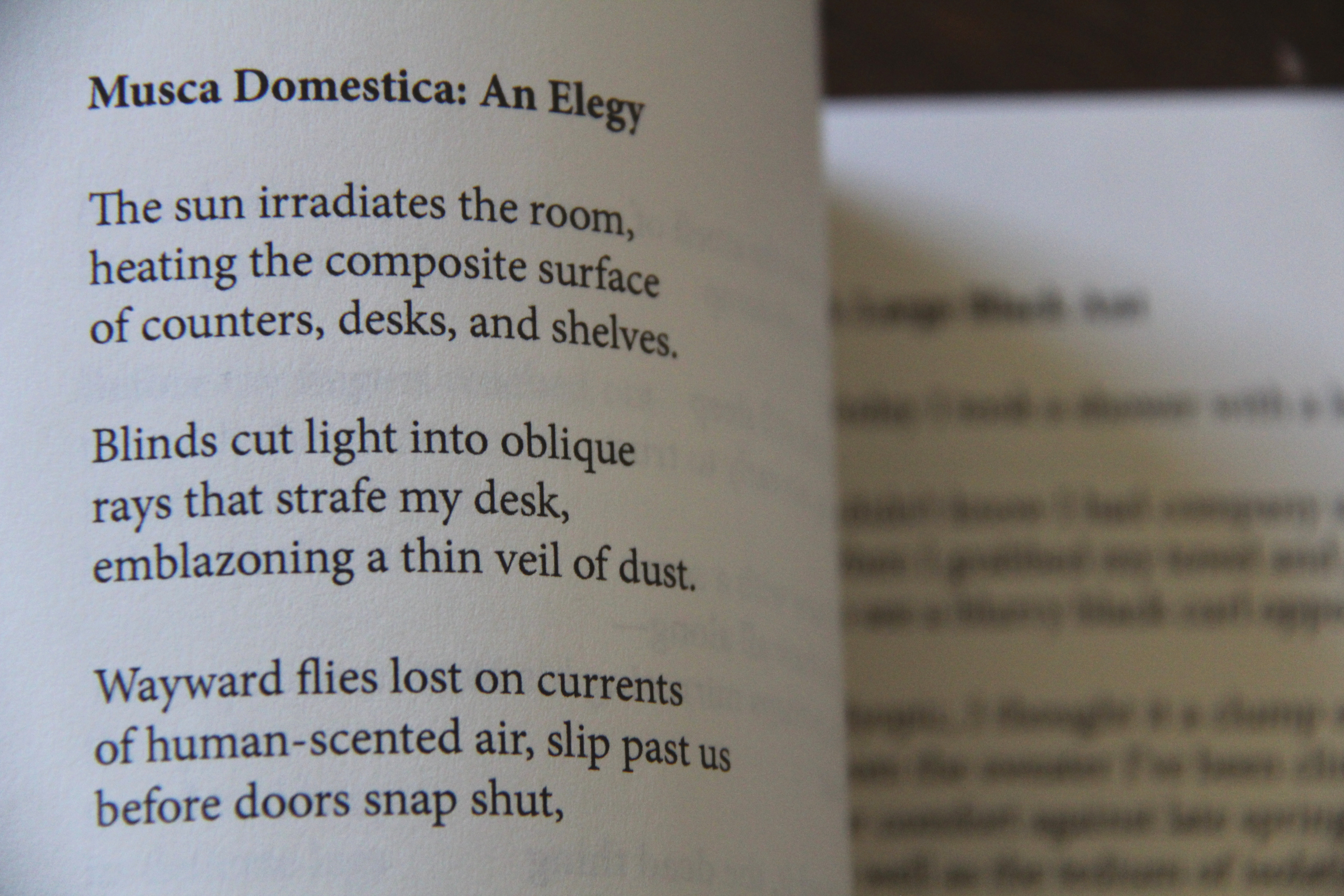
The poetry of Becky Boling in her first published collection featuring 37 of her poems. (Minnesota Prairie Roots copyrighted photo April 2025)

Because of those shared experiences, shared publications and shared love of words, I feel a sisterhood with Boling. So when she asked if I wanted a copy of her first solo poetry collection, I responded with an enthusiastic, “Yes!” Within the pages of Here Beyond Small Wonders, I found what I’ve come to expect from Boling—detailed writing, often about the most ordinary subjects—a dead mouse, a fly, walnuts… Topics you may not even consider poetry-worthy. But Boling has this ability to observe and engage all of her senses to craft words into connective, meaningful poetry.
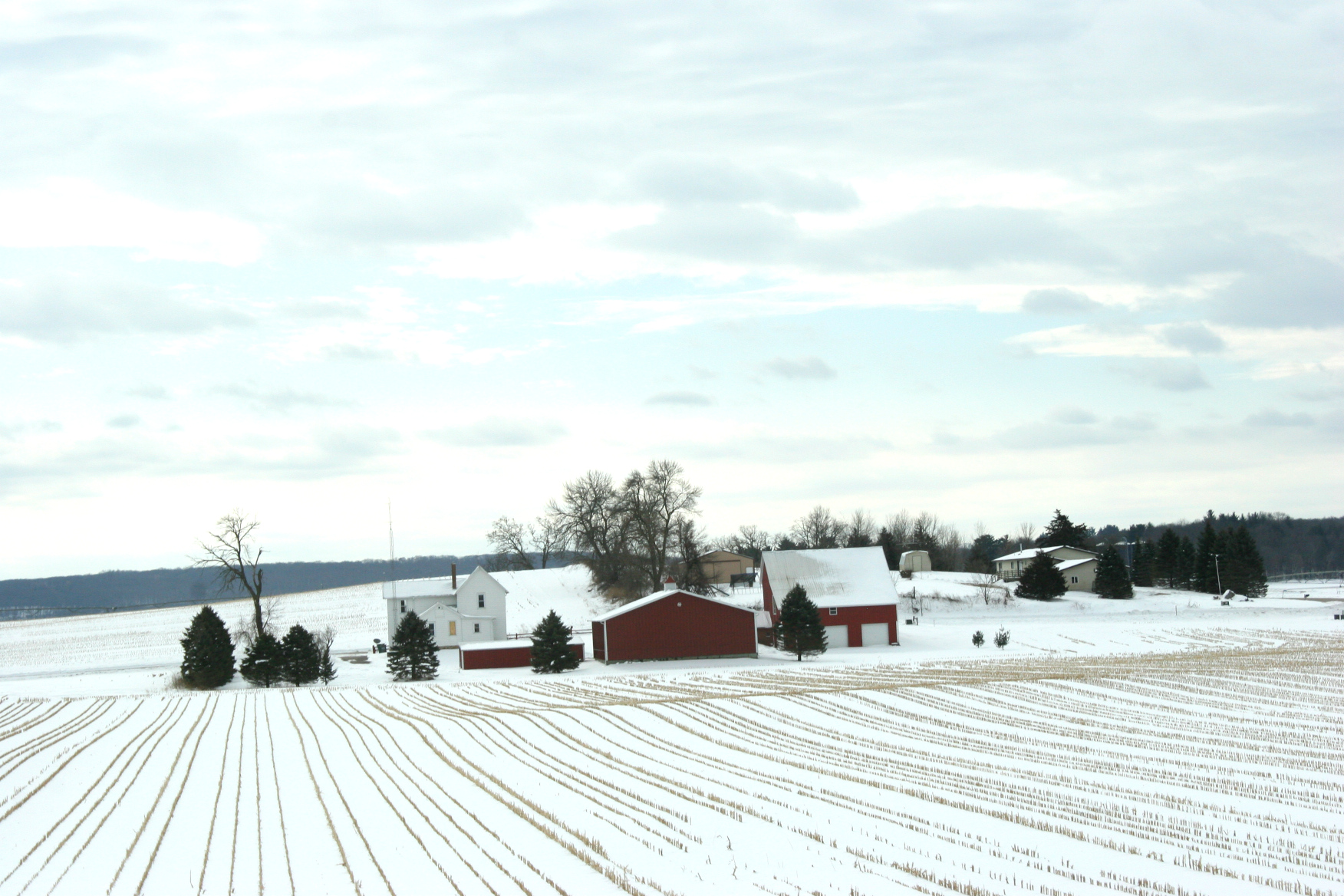
A Wisconsin farm site photographed from Interstate 90 could be a poetry prompt. (Minnesota Prairie Roots copyrighted file photo)

In her poem “Snow Pond,” she defines poetry: Poetry, like freezing temps, seizes the moment, recasts it—through the physics of sight, memory, language—resurrects it anew into patterns, sound and light, marks on a snowy page that glisten and melt on tongue, alight on the inner eye. That definition of poetry is among the best I’ve read, because it is poetry.

Clothespins on my clothesline clip clothing, not beach towels. (Minnesota Prairie Roots copyrighted file photo)

Anyone who writes poetry recognizes the challenges of finding just the right word, of stringing words together in a new, creative and succinct way, of connecting on an emotional level. But Boling makes the process look easy, taking the reader along with her, whether into her yard or onto the sandy shores of Lake Michigan. In her poem “Clothesline,” she writes of beach towels dancing in the wind. She takes the reader to the beach, to the sights, scents and sounds along the inland sea. I feel her fingertips unclipping the dried towels at end of day as she gathers them like weary babes into my open arms. I did not see that end coming. That element of surprise is, too, a mark of a gifted poet.

Kid-sized Adirondack chairs on a Minnesota beach. (Minnesota Prairie Roots copyrighted file photo)

Her “Adirondack Chair in Snow” is another favorite of mine in Boling’s collection of 37 poems published by Finishing Line Press. She writes of the typically-lakefront chair wedged into a snowbank outside her mother’s apartment building. But this poem is about so much more than an out-of-place chair buried in snow. Boling uses personification to write about her mother. In those six verses, I found myself missing my own mom, who died during the pandemic in January 2022. Boling’s emotions, my emotions, weave together in her writing and in my reaction.
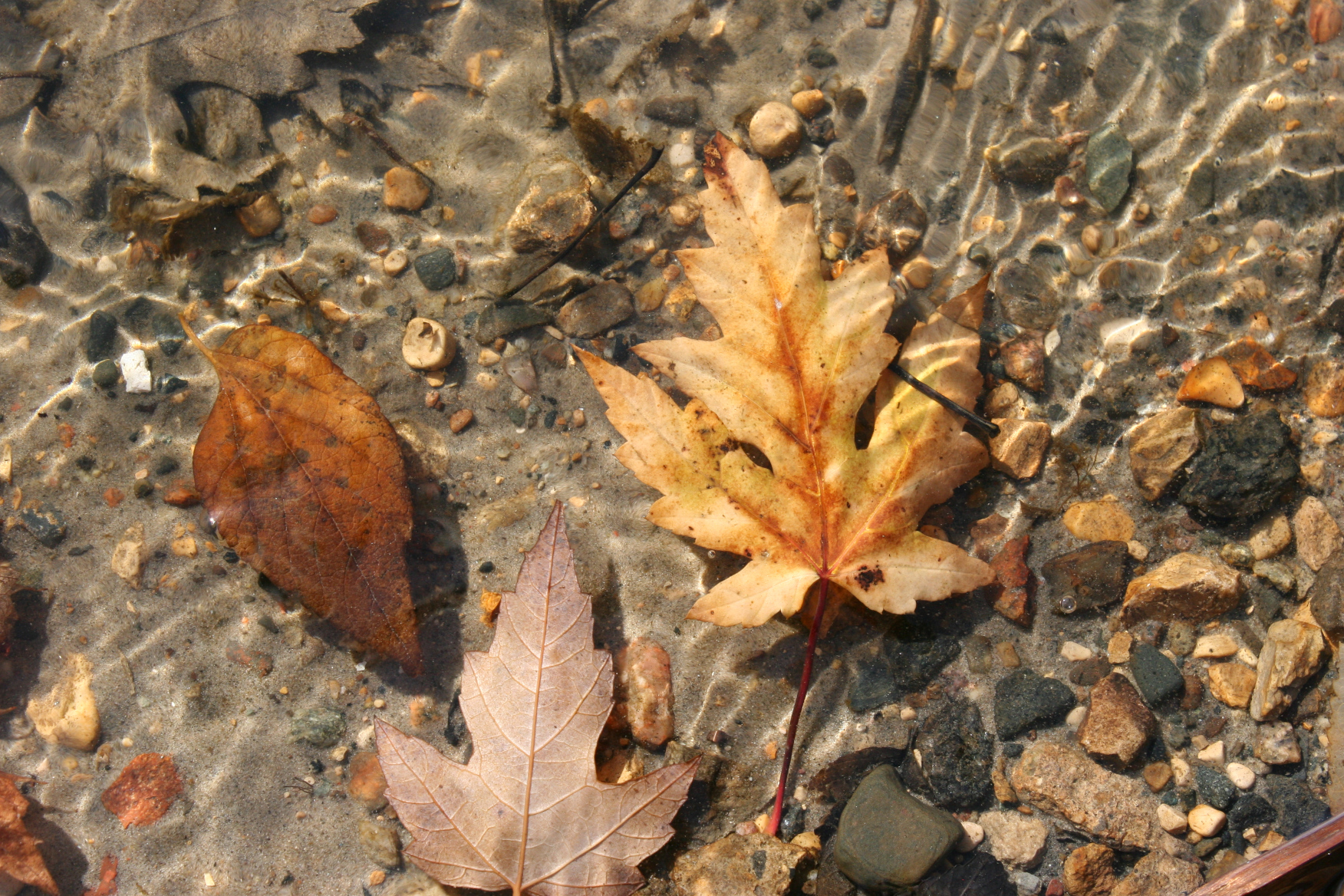
My own artsy autumn leaf image, of leaves in the Cannon River. (Minnesota Prairie Roots copyrighted file photo)

In one of her longest poems, Boling writes about the transition to autumn in “Persephone’s Bouquet.” Unfamiliar with this Greek goddess, I learned that Persephone’s descent into the underworld is associated with the start of winter. Autumn themes Boling’s poem as the author gathers hot-pepper reds, creamy yellows…brazen scarlet…leaves, something I also enjoy doing in fall. But this is a poem about life, too, not just about a change in seasons. Plus, the poem connects to the cover of Here Beyond Small Wonders, Boling’s own autumn leaf art.

Her first collection of poems is about nature and place and seasons and life. Moments experienced. Details noticed right down to a tar-dark county roadhorse flies, green heads glistening in the sunreedy breath trembling into song. Boling, in her words, opens herself to a pool of words. And I, for one, embrace her poetic writing.

#

FYI: Becky Boling is a retired professor of Spanish and Latin American literature at Carleton College in Northfield. Her poetry and prose have been widely-published in literary journals and anthologies. She also served as a Co-Poet Laureate of Northfield. Click here to find Here Beyond Small Wonders on the Finishing Line Press website.

© Copyright 2025 Audrey Kletscher Helbling


Autumn searches for water, at least in Minnesota September 30, 2024

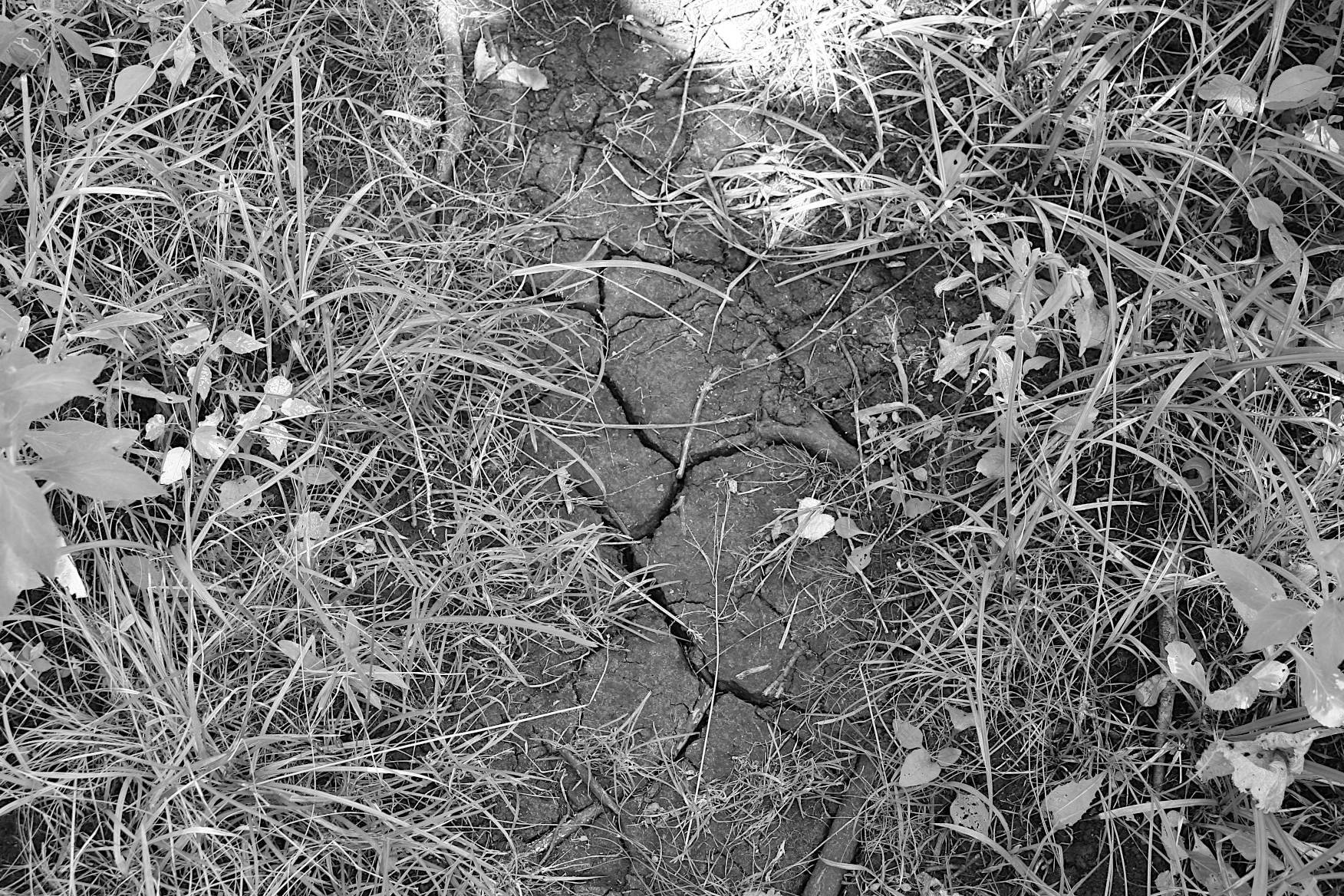
Parched, cracked earth by the Turtle Pond, River Bend Nature Center. (Minnesota Prairie Roots copyrighted file photo August 2021, used for illustration only)

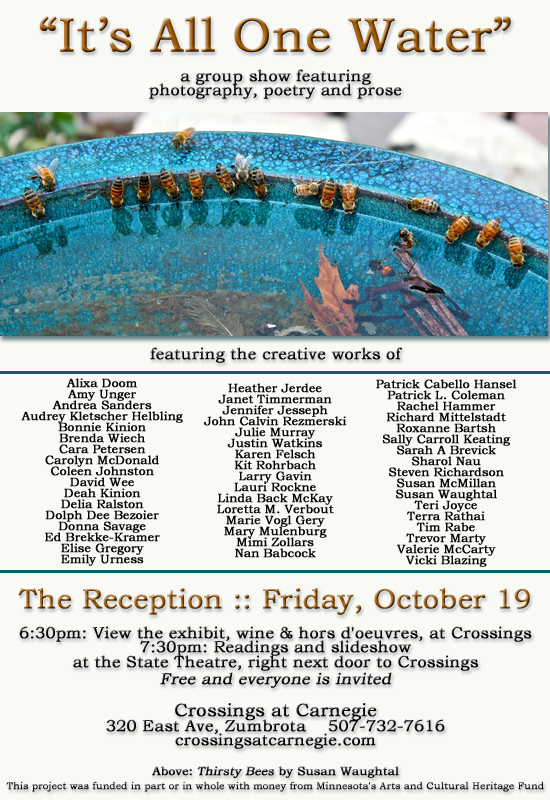
IN AN AUTUMN WHEN RAIN REMAINS elusive and drought once again settles upon Minnesota, I am reminded of a poem I penned 14 years ago for a competition. “In which Autumn searches for Water” was among 28 pieces of prose and poetry published in “It’s All One Water,” a collaboration between the Zumbro Watershed Partnership and Crossings at Carnegie in Zumbrota.

The invitation to the 2012 “It’s All One Water” reception and group show in Zumbrota.

The winning entries were printed in a beautiful 55-page booklet that paired the writing with submitted photos, all themed to water. I opted to pen a poem personifying Autumn as a woman searching for water upon the parched land. To this day I still love that strong visual, inspired by my long ago observations at River Bend Nature Center in Faribault.

And if I were to tap further into my visual memory, I would also see a semi trailer full of hay parked in a southwestern Minnesota farmyard in the summer of 1976. That was a year of severe drought, when my dad bought a boxcar full of hay from Montana so he could feed his cows and livestock. It was the year that nearly broke him as a farmer.

A REALLY DRY & WARM SEPTEMBER IN MINNESOTA

Here we are, 48 years later, settling once again into drought/abnormally dry weather conditions in Minnesota after a winter of minimal snow followed by an excessively wet spring, a dry-ish summer and now a record warm and dry September. This September, the Twin Cities recorded only 0.06 inches of rain and the most days of 80-degree or warmer high temps in any September. It doesn’t feel like fall in Minnesota, more like summer. But at least temperatures cool overnight.

Areas of western and central Minnesota are under a Red Flag Warning today, code words for a high fire danger, due to dry, windy conditions and dropping relative humidity. We are experiencing “near critical fire weather conditions” here in the southern part of the state.

AND THEN THERE’S TOO MUCH WATER

Contrast this with the weather my friends in western North Carolina and other areas affected by Hurricane Helene are experiencing. One is OK (as is her house). But she expects to be without power for a week and is relying on limited cell service at the local firehall. Another friend, a native Minnesotan, lost his car and may lose his home in Hendersonville after a creek swelled, flooding his garage (with four feet of water) and house (30 inches of floodwaters). A foundation wall “blew out” of his home. He is currently staying with family in Florida.

So, yes, even though the lack of rain and abnormally warm weather in Minnesota concern me, I feel a deeper concern for the folks dealing with loss of homes, businesses, infrastructures and, especially, deaths of loved ones. The devastation is horrific. It will take months, if not years, to recover.

RESPECT FOR WATER & MY POEM

In 2012, the following statement published in the intro to “It’s All One Water”: It is our hope to inspire respect, protection, preservation and awe in honor of water, our most precious of Natural Resources. How one views water right now depends on where they live. But I think we can all agree that water is “our most precious of Natural Resources.”

Autumn leaves in the Cannon River, Cannon River Wilderness Park. (Minnesota Prairie Roots copyrighted file photo 2021)

In which Autumn searches for Water

Water. The wayward word rises in a faint rasp,

barely a whisper above the drone of buzzing bees

weaving among glorious goldenrods.

I strain to hear as Autumn swishes through tall swaying grass,

strides toward the pond, yearning to quench her thirst

in this season when Sky has remained mostly silent.

But she finds there, at the pond site, the absence of Water,

only thin reeds of cattails and defiant weeds in cracked soil,

deep varicose veins crisscrossing Earth.

She pauses, squats low to the parched ground and murmurs

of an incessant chorus of frogs in the spring,

of Water which once nourished this marshland.

Autumn heaves herself up, considers her options

in a brittle landscape too early withered by lack of rain.

Defeat marks her face. Her shoulders slump. She trudges away, in search of Water.

© Copyright 2024 Audrey Kletscher Helbling

© Copyright 2012 “In which Autumn searches for Water” by Audrey Kletscher Helbling
 

My prize-winning poem: “Sunday Afternoon at the Auction Barn” May 31, 2024

Turek’s Auction Service, 303 Montgomery Ave. S.E. (Highway 21), Montgomery, has been “serving Minnesota since 1958.” (Minnesota Prairie Roots edited and copyrighted file photo February 2014)

AUCTIONS ARE PART of my rural DNA. As such, a photo I took ten years ago of an auction barn on the edge of Montgomery, Minnesota, inspired me to write a poem. I entered “Sunday Afternoon at the Auction Barn” in the 2014 The Talking Stick writing competition. It earned second place in poetry and publication in The Talking Stick 23, Symmetry, a literary journal published by the northern Minnesota-based Jackpine Writers’ Bloc. It also earned the praise of noted Minnesota poet and poetry judge Margaret Hasse. She’s authored six full-length collections of poetry.

First, my poem:

Sunday Afternoon at the Auction Barn

Shoulder brushes shoulder as bidders settle onto plank benches

in the tightness of the arched roof auction barn,

oil stains shadowing the cement beneath their soles,

where a farmer once greased wheel bearings on his Case tractor.

The auctioneer chants in a steady cadence

that mesmerizes, sways the faithful fellowship

to raise hands, nod heads, tip bidding cards

in reverent respect of an aged rural liturgy.

Red Wing crock, cane back rocker, a Jacob’s ladder quilt,

Aunt Mary’s treasured steamer trunk, weathered oars—

goods of yesteryear coveted by those who commune here,

sipping steaming black coffee from Styrofoam cups.

In her critique of my poem, Hasse wrote:

I loved how you turned a humdrum occasion of bidding on antiques in an old barn into a closely observed and luminous occasion. The writer John Ciiardi once wrote that close and careful observation can “leak a ghost.” The surprise of your poem was the elevation of a commercial or material enterprise into a spiritual gathering—with a fellowship, liturgy, reverent respect, and people who commune. The ending—visual and concrete—was just right. The poet Franklin Brainerd wrote a poem something to the effect, “in a world of crystal goblets, I come with my paper cup.” There’s something both unpretentious and appealing about “sipping steaming black coffee from Styrofoam cups.”

Hasse’s comment reflects that she understands the spirit and spirituality of my poem. It was a joy to write. As I recall, the words flowed easily from my brain to keyboard to screen as I visualized bidders inside that auction barn, like congregants in a church. When poetry works like that, it’s magical and fulfilling and beyond beautiful.

© Copyright 2024 Audrey Kletscher Helbling
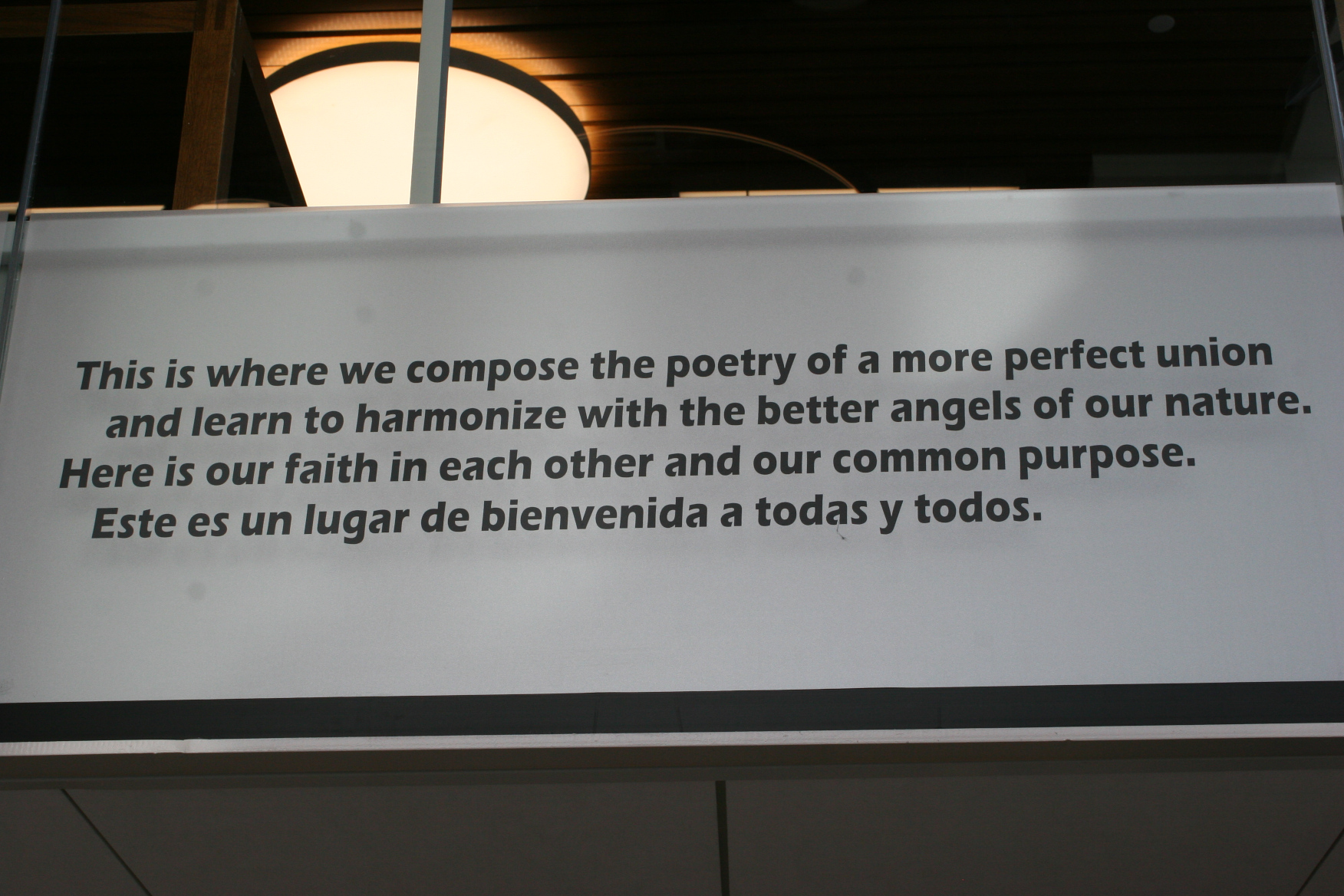
Poem copyrighted in 2014


In celebration of National Poetry Month, a selected poem April 5, 2023

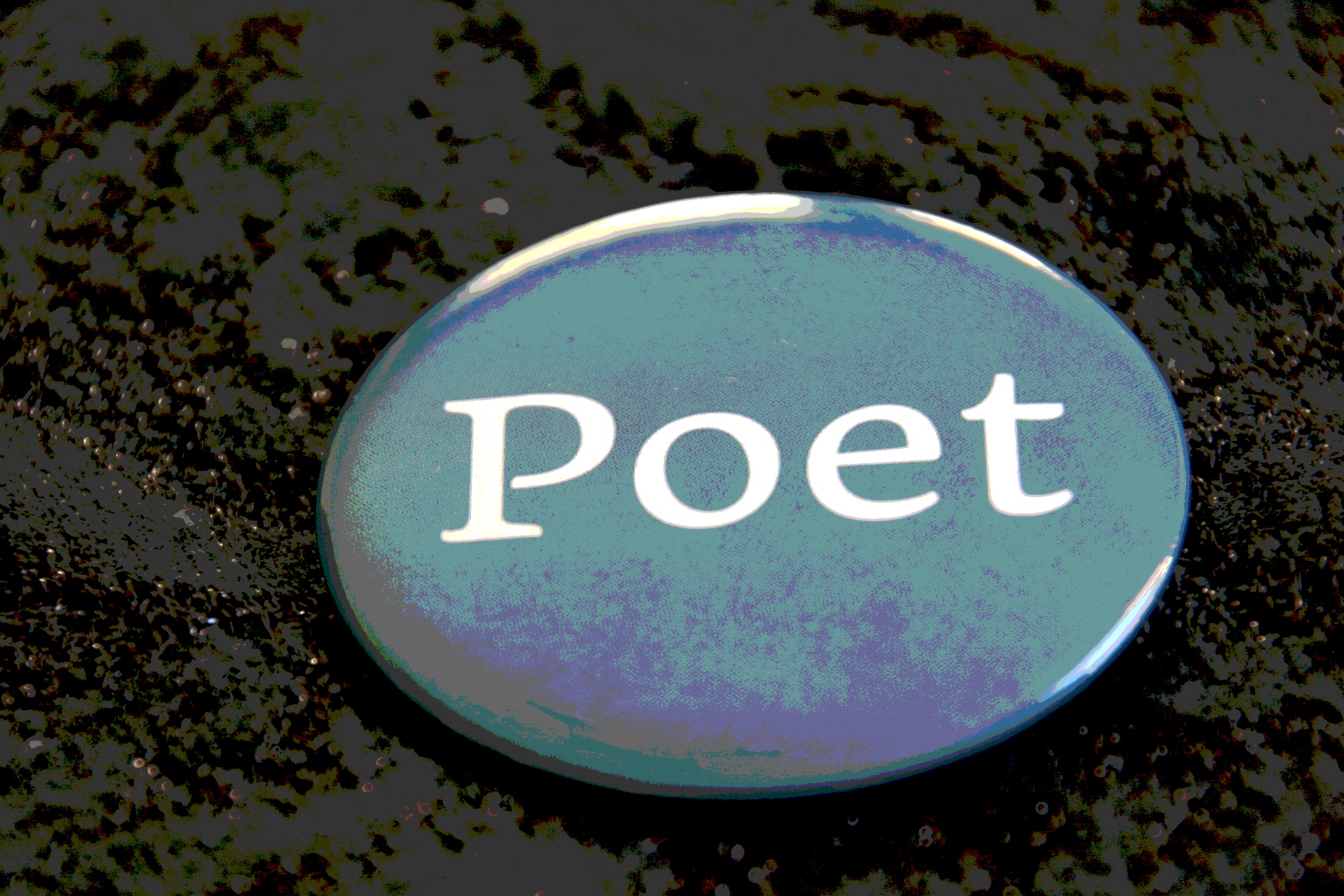
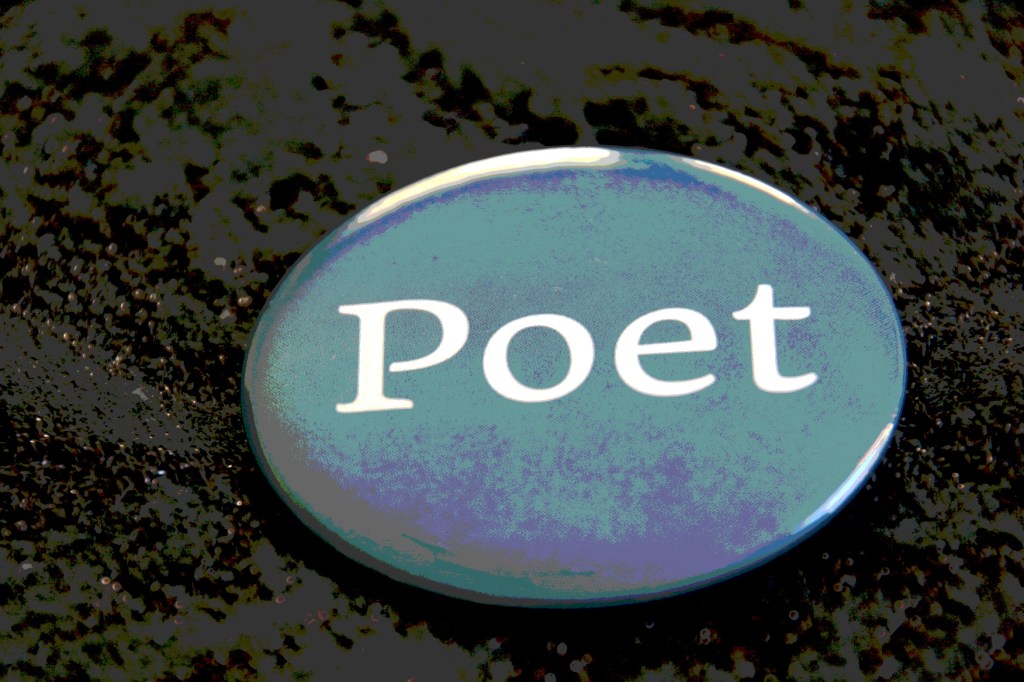
I took poetic license and photoshopped this image of the button I wore identifying me as a poet at a poetry reading. (Minnesota Prairie Roots copyrighted file photo April 2015)

APRIL MARKS National Poetry Month, a time to celebrate poetic verse and poets. As a long-time writer, I unequivocally state that penning poetry is challenging. Why? Every. Single. Word. Counts.

That makes sense given the structure of poems.

I’ve written poetry off and on since high school. All those decades ago, I wrote angst-filled poems reflective of teenage moods, emotions and life. Recently a high school friend returned a poem I wrote for her nearly 50 years ago, a poem handwritten on lined notebook paper. The folded page, yellowed with age, holds words focusing on my future and the ultimate question at life’s end: What good have I done?

The poem dedicated to Janette is not particularly well-written. Yet, it has value in reflecting my thoughts, in opening myself up, in showing vulnerability to a trusted friend. Will I share it with you? No.

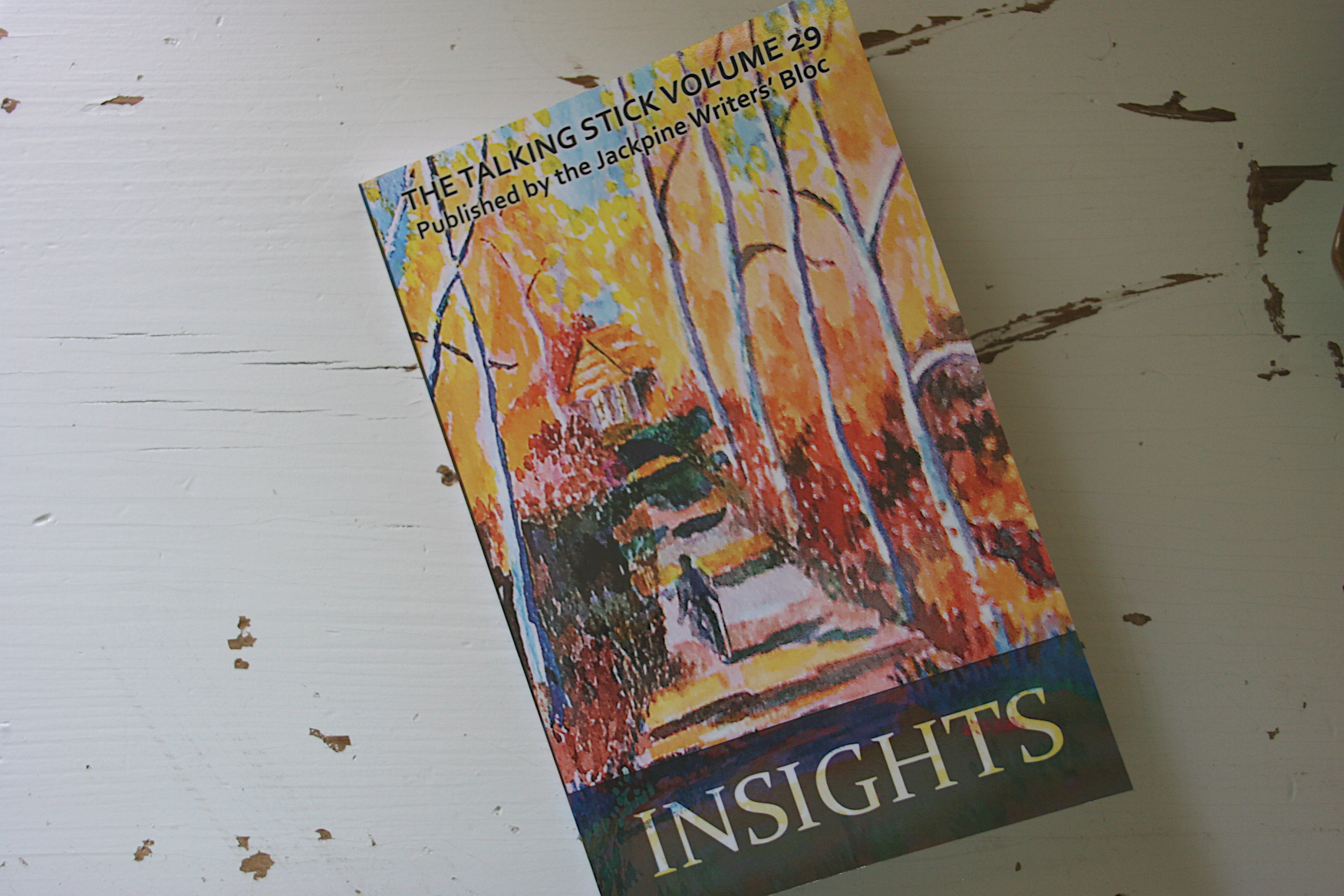
My poem, “Final Harvest,” and two pieces of creative nonfiction were selected for publication in this anthology in 2020. (Minnesota Prairie Roots copyrighted file photo 2020)

But I will share my poem, “Final Harvest,” which published in Insights, Talking Stick 29. It was chosen by the editorial team of Menahga-based Jackpine Writers’ Bloc for the 2020 edition of TS, a selected collection of poetry, fiction and creative nonfiction by Minnesotans or those with a Minnesota connection.

This scene at Parkview Senior Living in Belview, Minnesota, inspired a poem. (Minnesota Prairie Roots copyrighted file photo July 2019)

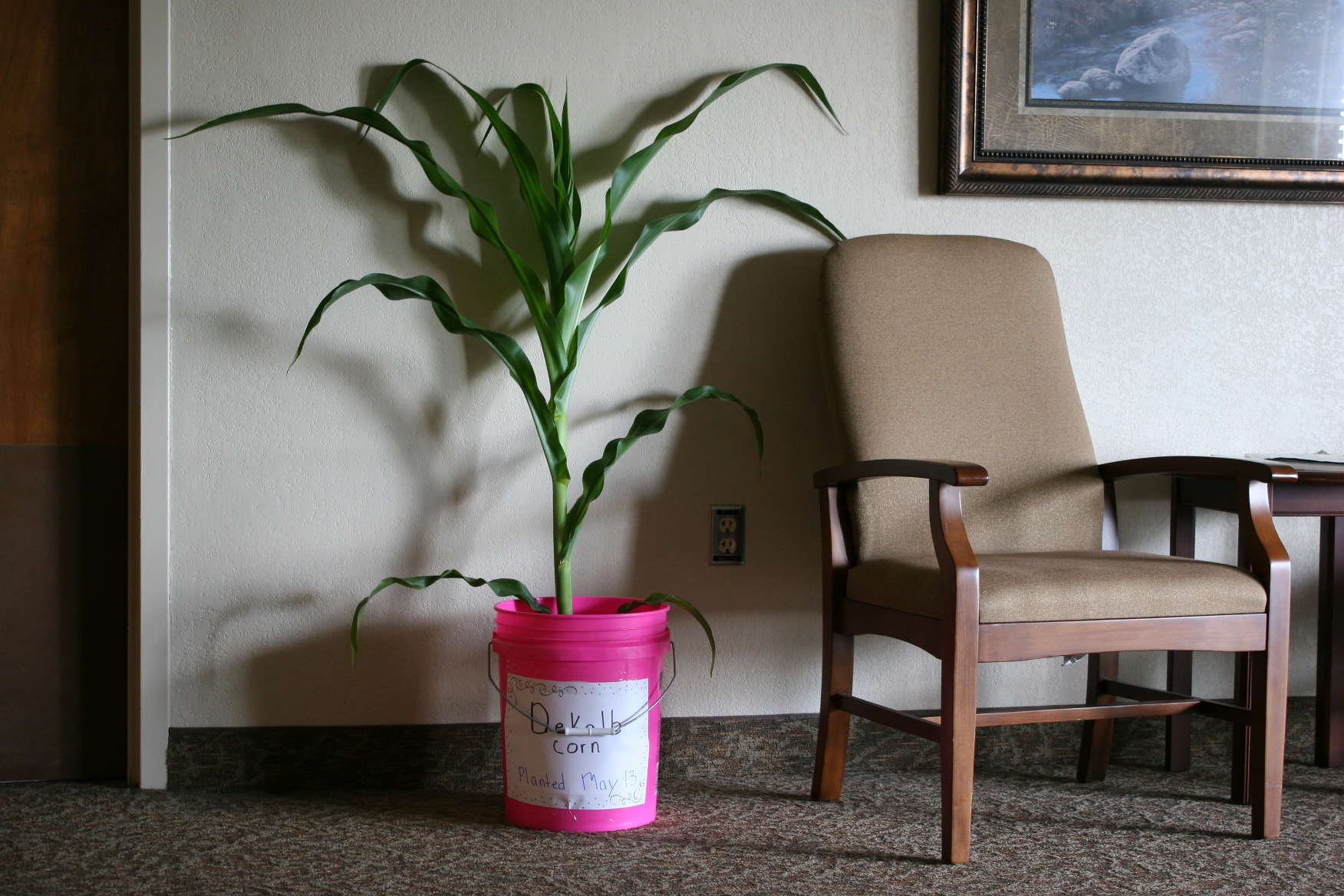
The poetry I write, like nearly all of my writing, carries a strong sense of place, often rooted in my agrarian roots. And, like nearly all of my creative writing, my poetry is rooted in truth. A cornstalk growing in a pink bucket in the community room at Parkview Senior Living, where my mom lived before her 2022 death, inspired “Final Harvest.” It is not at all angst-filled. But, in a round about way, it asks the same question: What good have I done?

Final Harvest

The cornstalk rises tall, straight

from the pink five-gallon bucket

set next to an uncomfortable tan chair

on carpet the color of dirt.

If the retired farmer in the wheelchair

looks long enough, he imagines rows of corn

rooted in a field of rich black soil,

leaves unfurling under a wide blue sky.

Staff stops to check the corn plant

seeded on May 13, not too late,

says the old farmer as he pours water

into the bucket, soaking the soil.

I focus my camera lens on the cornstalk,

pleased and amused by its placement here

like a still life shadowing beige walls

in the community room of my mom’s care center.

© Copyright 2023 Audrey Kletscher Helbling
 

Alright, winter, time to leave Minnesota as spring arrives March 20, 2023

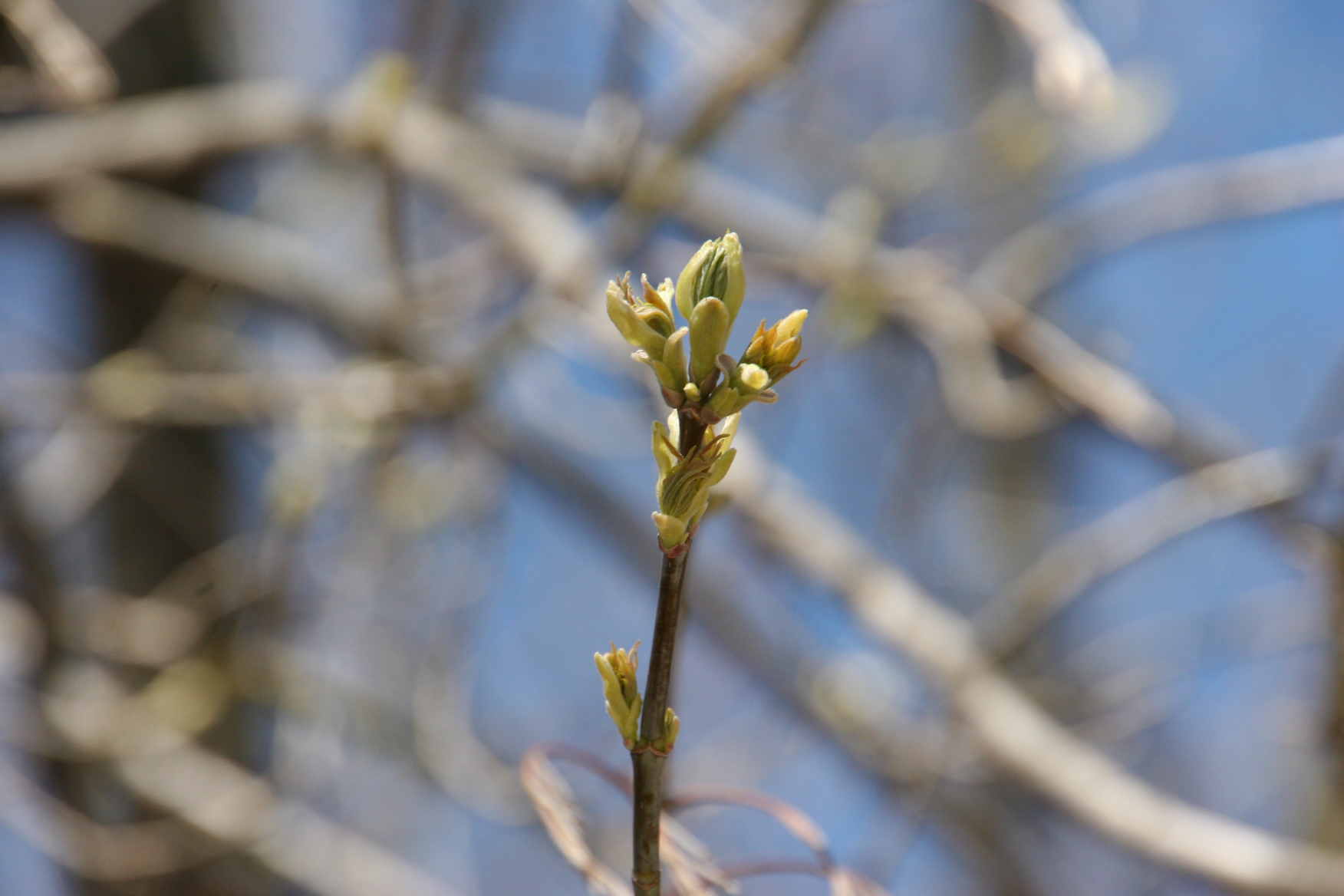
Trees bud at Falls Creek Park, rural Faribault, in late May 2022. (Minnesota Prairie Roots copyrighted file photo May 2022)

TODAY, THE FIRST DAY of spring, hope springs that this long winter of too much snow will soon exit Minnesota. Most Minnesotans, including me, are weary of days marked by new snowfall that has accumulated, pushing this 2022-2023 winter season into top 10 records in our state.

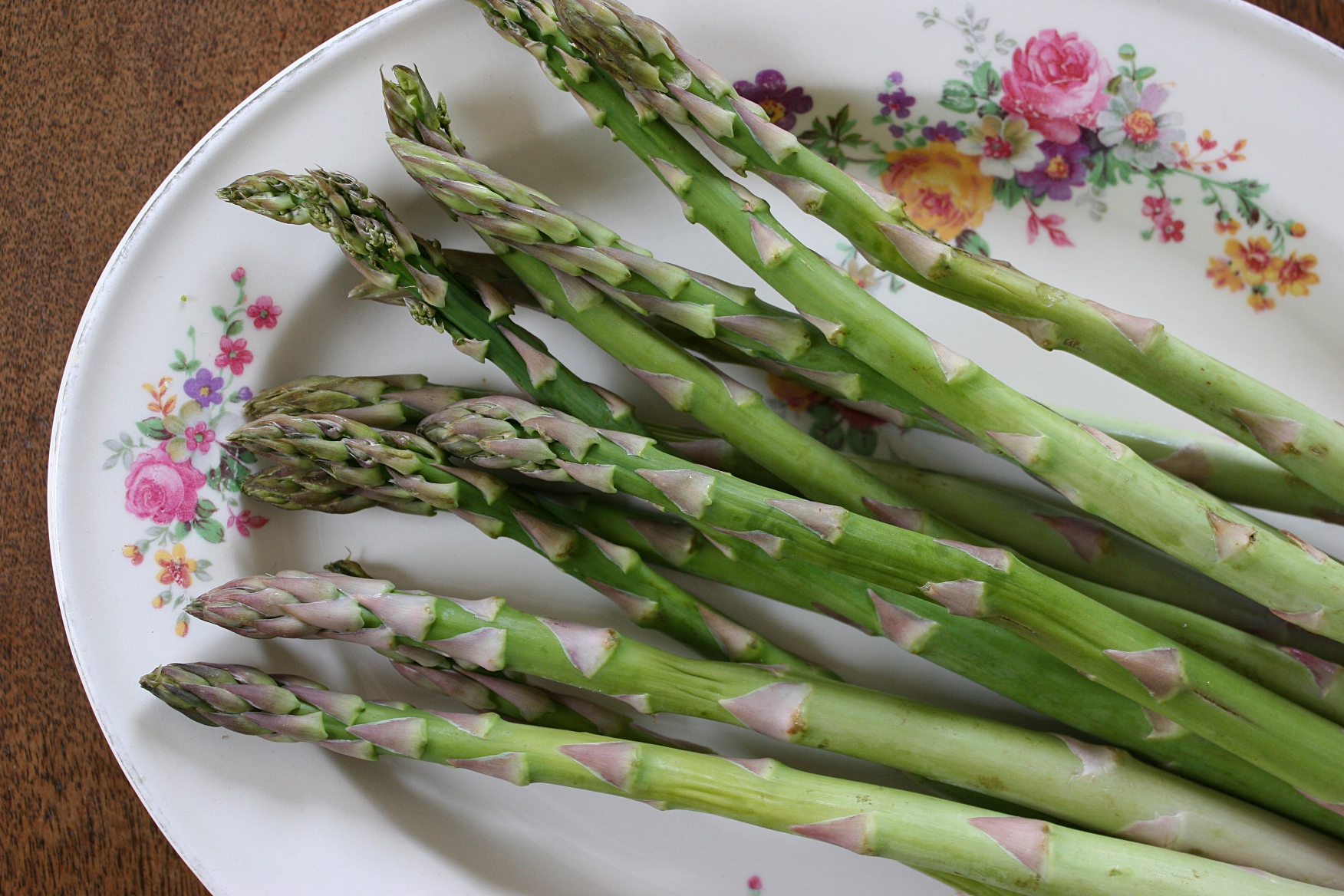
Asparagus, one of my favorite spring vegetables. (Minnesota Prairie Roots copyrighted file photo)

But now, with the official start of a new season on March 20—the season of new life, the season of planting and budding and greening—I feel a mental shift. Psychologically, my mind can envision a landscape shifting from colorless monochrome to vivid greens. I can feel the warmth of warmer days yet to come. I can smell the scent of dirt released, breaking from winter’s grip. I can hear the singsong chatter of returning birds. I can taste asparagus spears snapped from the soil.

A bud beginning to open in late April 2020. (Minnesota Prairie Roots copyrighted file photo April 2020)

All of this is yet to come. I understand that. A date on a calendar doesn’t mean spring in Minnesota. That season is realistically weeks away. April can still bring inches of snow.

Crocuses, always the first flower of spring in my flowerbeds. (Minnesota Prairie Roots copyrighted file photo March 2021)

But we are edging toward spring. I feel that in temps sometimes reaching just past 40 degrees. I feel it in the warmth of the sun, shining brighter, bolder, longer. I see dwindling snow packs and exposed patches of grass. I hear spring in vehicles splashing through puddles rather than crunching across snow. I see spring, too, in the endless potholes pocking roadways.

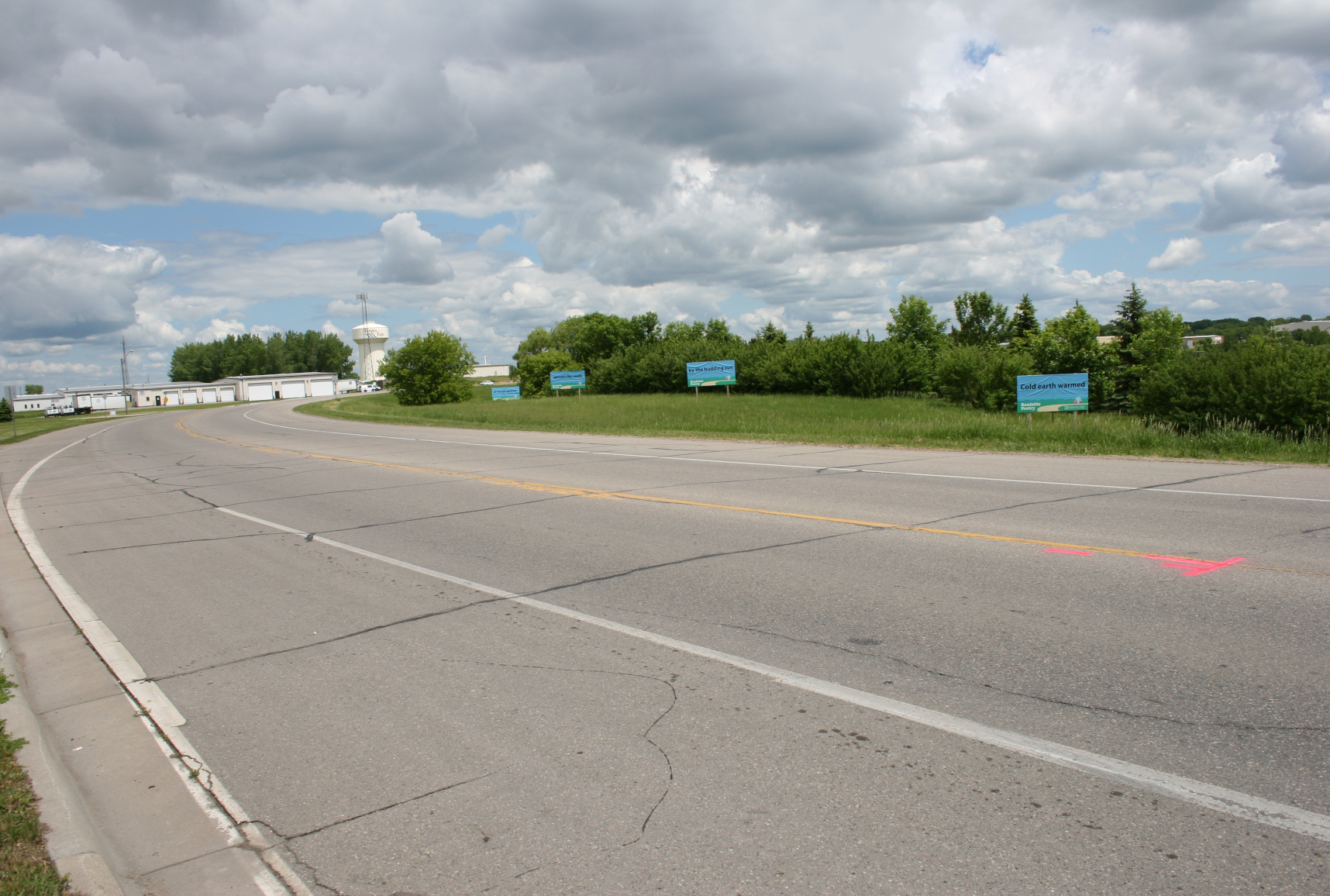
The first line in my winning poem, posted roadside in 2011. (Minnesota Prairie Roots copyrighted file photo 2011)

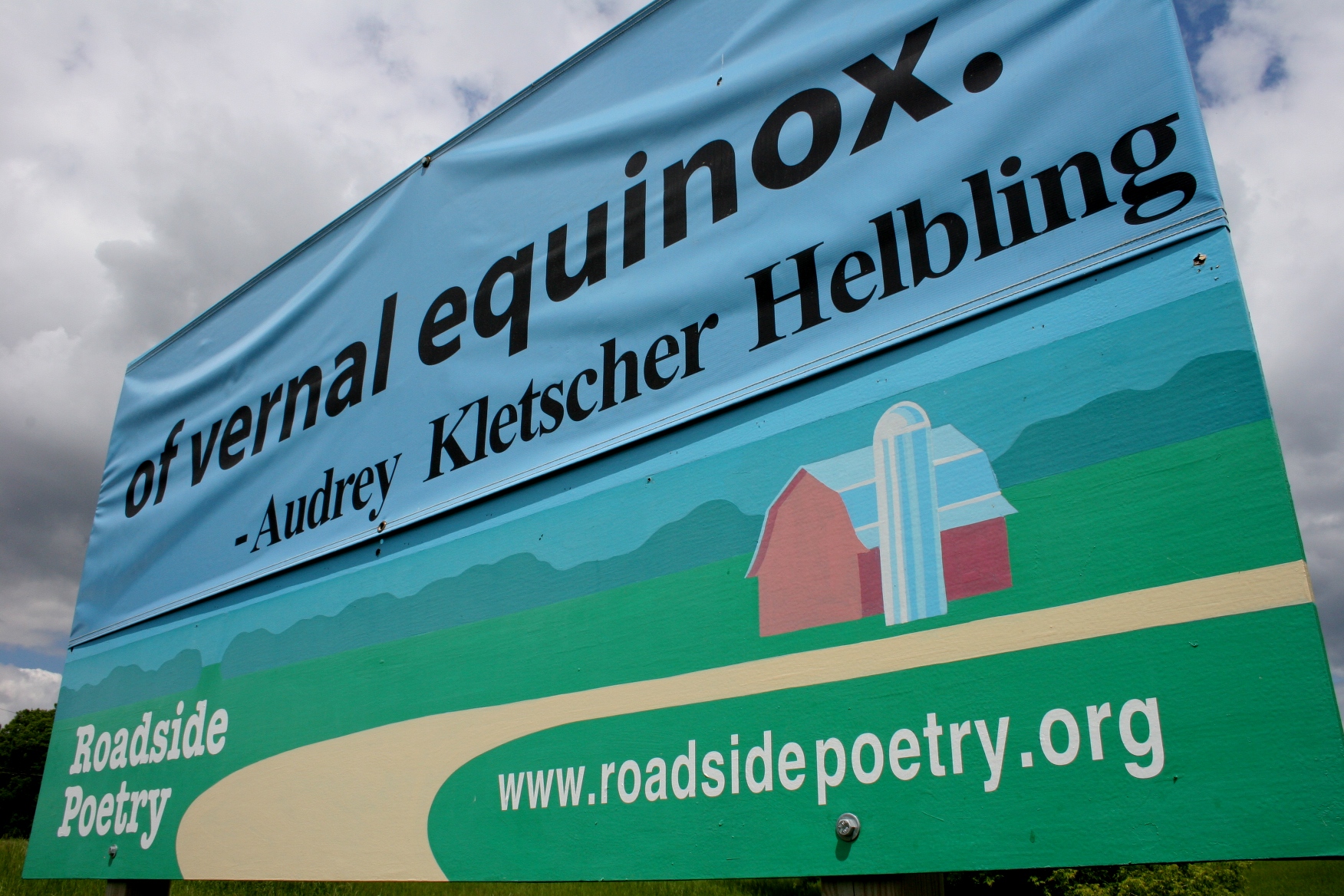
On this first day of spring, I am reminded of a poem I penned in 2011, a poem which splashed across four billboards along a road just off Interstate 94 in Fergus Falls in west central Minnesota. To this day, publication of that poem remains an especially rewarding experience for me as a poet.

Billboard number two of my spring-themed poem. (Minnesota Prairie Roots copyrighted file photo June 2011)

I submitted the poem to the now-defunct Roadside Poetry Project’s spring competition. Poems changed out seasonally in this Fergus Falls Area College Foundation funded contest. It was a bit of a challenge writing a spring-themed poem, as I recall. Not because of the theme, but rather the rules—four lines only with a 20-character-per-line limit. But, as a writer, it’s good to be challenged.

Line three of my Roadside Poetry Project spring poem. (Minnesota Prairie Roots copyrighted file photo June 2011)

I suppose you could say the same about Minnesota weather. It’s good to be challenged by an especially snowy winter so we appreciate spring’s arrival even more. Yes, that’s a positive perspective—a way to mentally and psychologically talk myself into enduring perhaps six more weeks of winter in this official season of spring.

The last of four billboards featuring my Roadside Poetry spring poem. (Minnesota Prairie Roots copyrighted file photo June 2011)

NOTE: I intentionally omitted any pictures showing snow/winter.

© Copyright 2023 Audrey Kletscher Helbling
 

The poetry of Rob Hardy, Northfield poet laureate April 20, 2022

A portion of Rob Hardy’s poem displayed at the Northfield Public Library. (Minnesota Prairie Roots file photo)

ROB HARDY, poet laureate of Northfield, is the kind of laid back guy who appreciates a good craft beer. I know. Back in September 2017, I met him at Imminent Brewing, where we shared a table while enjoying a beer, listened to other beer lovers read poems about beer and then read our own beer poems. He organized that Beer Poetry Contest. Poetry at a brewery, how creative and fun is that?

In January 2019, I again found myself in the company of Hardy, and other gifted area poets, for a poetry reading at Content Bookstore in Northfield.

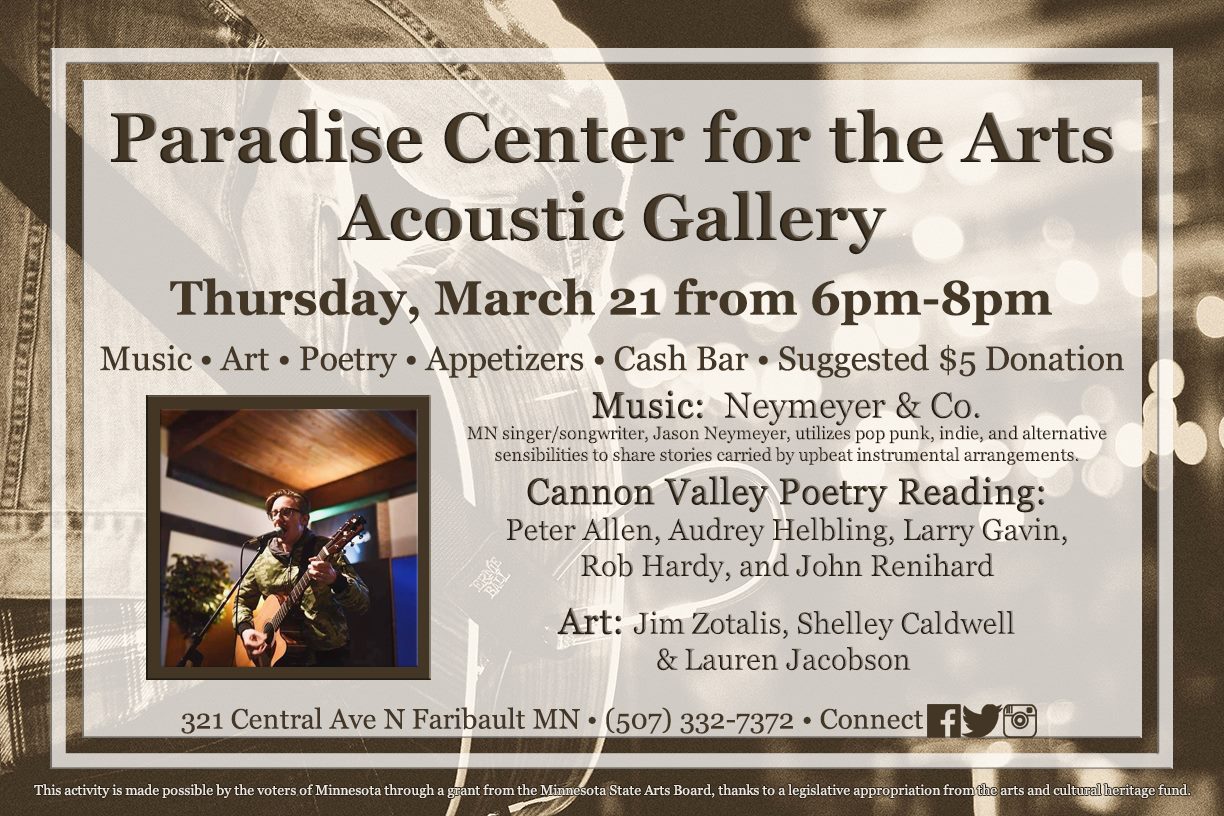
Promo courtesy of the Paradise Center for the Arts for a past event that included a poetry reading.

And then several months later, we gathered at the Paradise Center for the Arts in Faribault for more public poetry reading.

Hardy is a champion of poetry. He tirelessly promotes poetry in Northfield, where poems, including his, imprint sidewalks. He organizes poetry events and publishes a poetry-focused newsletter and even has a poem permanently posted at the public library.

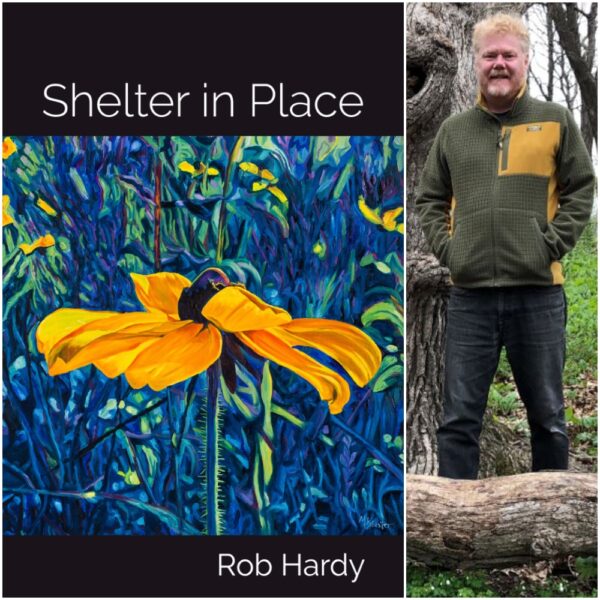
Rob Hardy, right, and his new poetry collection. (Photo source: Finishing Line Press)

And he just released a new collection of poetry, Shelter in Place, published by Finishing Line Press. The slim volume of 20 poems is a quick read with many of the poems therein inspired by his daily walks in the Carleton College Cowling Arboretum during the pandemic year of 2020.

The influence of the pandemic upon this poet’s life and writing is easy to see. In “Lyrical Dresses,” for example, he writes about looking at ordinary life through the wrong end of a telescope and sometimes crying for no reason. In “Today’s Headlines” the fourth line reads: Rice County has the highest rate of new cases in the country. That would be our county.

But these COVID-19 themed poems are not necessarily doom, gloom and darkness. They are an honest, reflective historical record of life during a global pandemic from the creative perspective of a wordsmith. Just as important as a news story in telling the story of this world health crisis. In “Grounded” he writes of pulling a shoe box from the closet to relive travel memories while unable to travel. While grounded.

He did, however, put his feet to the ground, immersing himself in nature through daily walks. He writes of birds and prairie and sky and river and wind…in poems inspired by his deepening connection to the natural world.

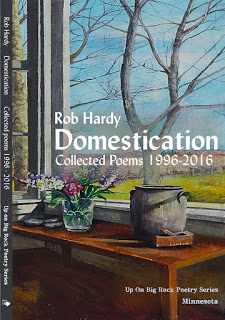
Shipwreckt Books Publishing published Northfield Poet Laureate Rob Hardy’s previous poetry collection.

I encourage you to read Hardy’s Shelter in Place and/or attend a reading at Content Bookstore featuring Hardy and Greta Hardy-Mittell, a Carleton College student and writer. That event begins at 7 pm on Thursday, April 21. Click here for details. Rob Hardy is also the author of two other poetry collections, Domestication: Collected Poems, 1996-2016 and The Collecting Jar.

#

TELL ME: Have you attended any poetry events or read/written poems in April, National Poetry Month.

© Copyright 2022 Audrey Kletscher Helbling
 

Celebrating poetry: Reflections from a Minnesota poet April 4, 2022

Roses from my husband, Randy. (Minnesota Prairie Roots file photo 2012)

Roses are red,

violets are blue.

Sugar is sweet

and so are you.

RAISE YOUR HAND if that’s the first poem you ever read or heard. My right hand is wildly waving. See it, right there next to a mass of many many hands?

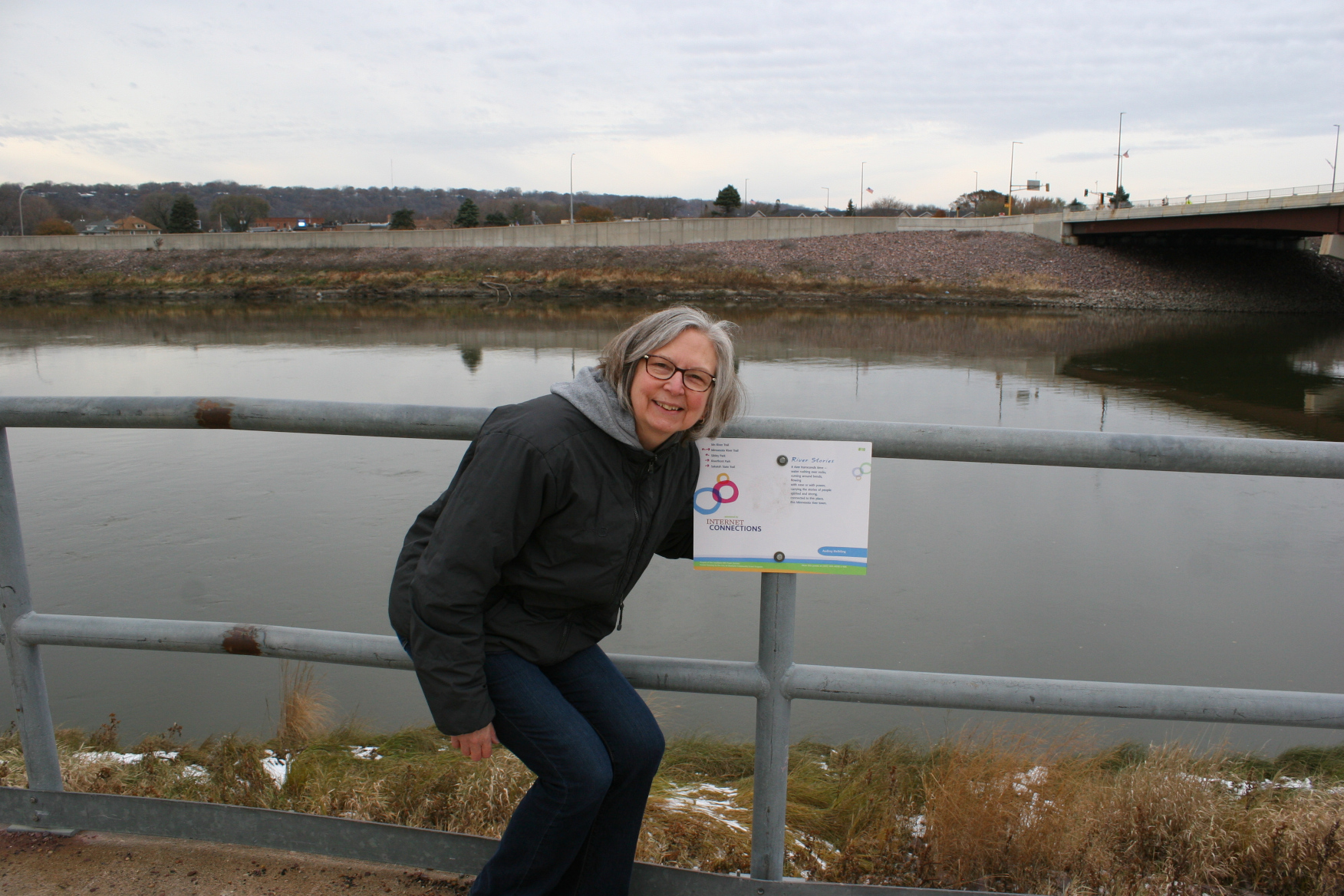
Me, next to my posted poem, “River Stories,” selected for the 2019 Mankato Poetry Walk & Ride. (Minnesota Prairie Roots November 2019 file photo by Randy Helbling)

Today, April 4, marks day four of National Poetry Month, which celebrates the importance of poetry in our culture and lives. Whether you like or dislike poetry, it holds value as a form of artistic expression, communication, storytelling, endearment…

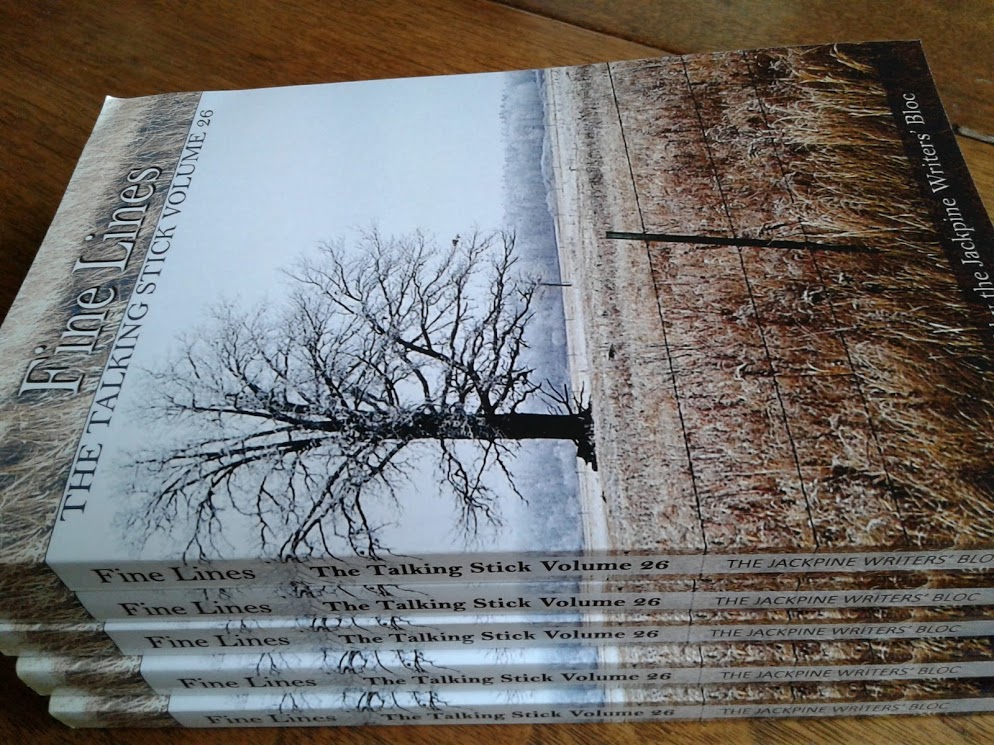
Many of my poems (plus short stories and creative nonfiction) have been selected for publication in The Talking Stick, an annual anthology published by the Jackpine Writers’ Bloc. (Minnesota Prairie Roots copyrighted file photo)

I am proud to call myself a poet. A published poet. How did I get there? I’ve always loved words, the song of language. Poetry is, I think, a lot like music. It carries a rhythm. A beat. A cadence. That comparison comes from a poet who can’t carry a tune, can’t read a musical note, can’t play an instrument.

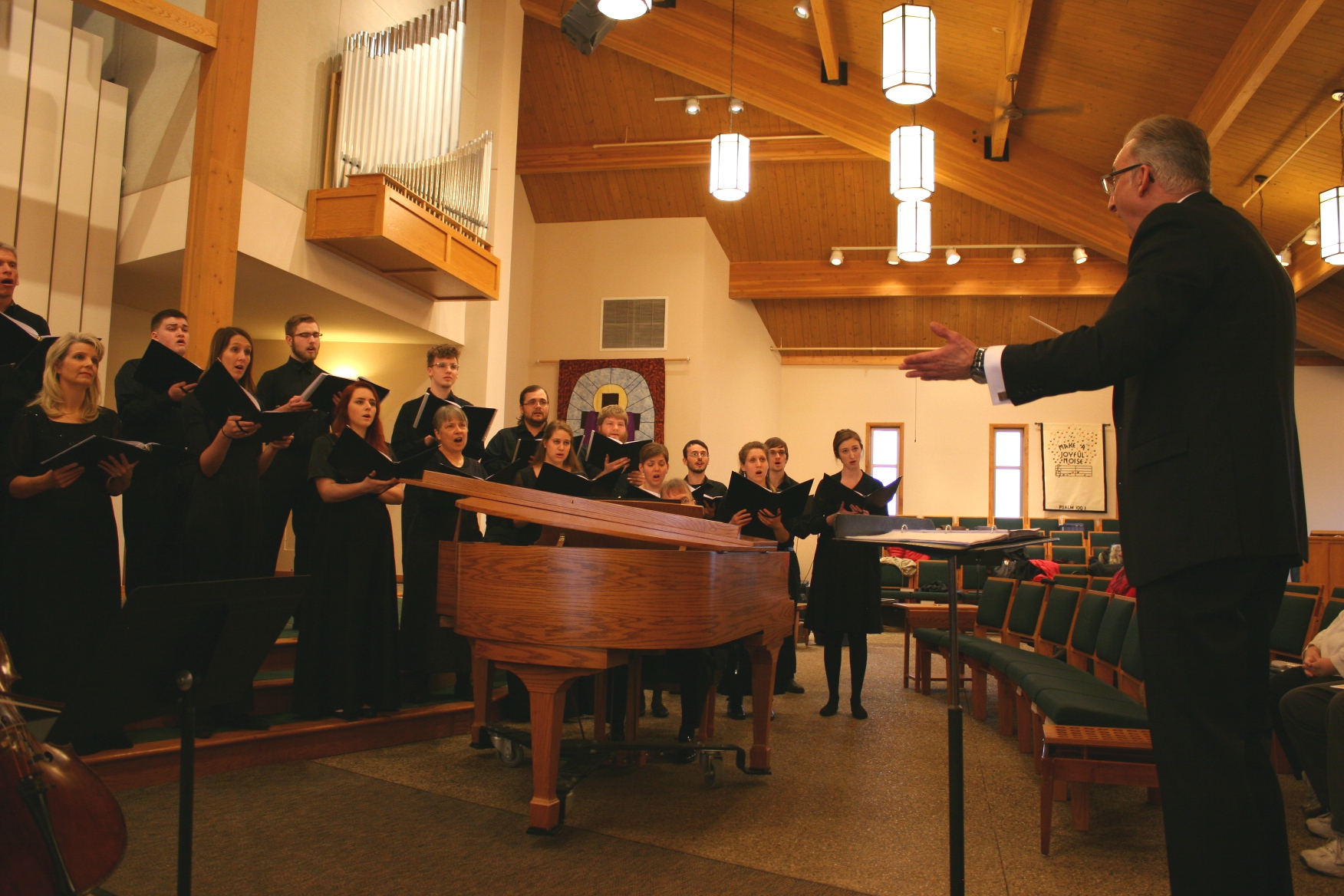
A Chamber Choir performs artsongs written from poems, directed by David Kassler. (Minnesota Prairie Roots file photo April 2017)

But in 2017, a chamber choir performed my poem, “The Farmer’s Song,” at two concerts in Rochester. David Kassler composed the music for my poem and six others as part of an artsong project. To sit in that audience and hear those vocalists sing my poem was overwhelmingly humbling. And validating.

I took poetic license and photoshopped this image of the button I wore identifying me as a poet at a Poetry Bash. (Minnesota Prairie Roots copyrighted file photo)

I am a poet.

The last of four billboards featuring my Roadside Poetry spring poem. (Minnesota Prairie Roots file photo 2011)

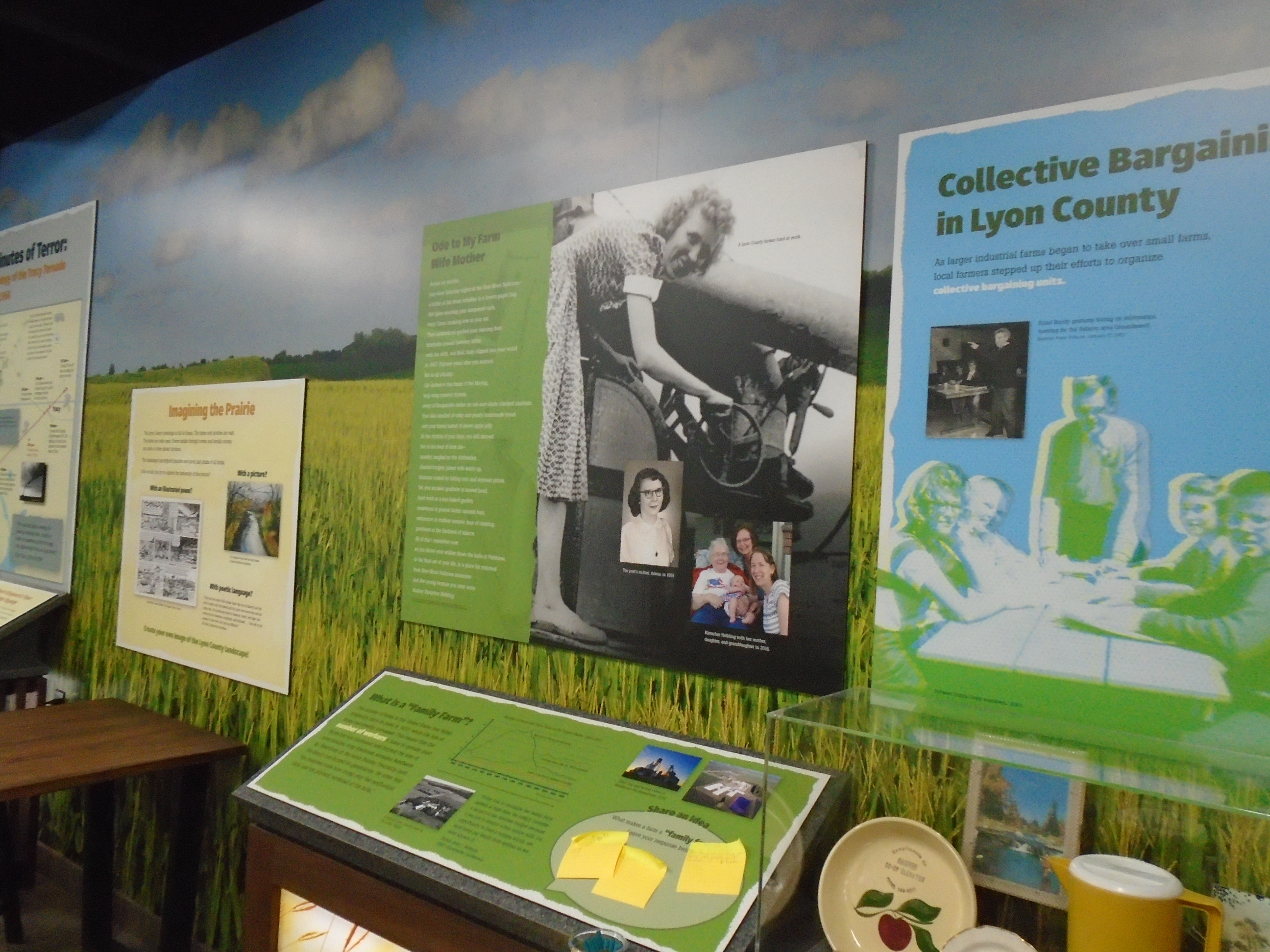
My poetry has been published in newspapers, magazines, literary journals, anthologies… And in unexpected places. In 2011, my spring-themed poem bannered four billboards in Fergus Falls as part of the Roadside Poetry Project. Other poems have been posted on signs along trails as part of the Mankato Poetry Walk and Ride. “Ode to My Farm Wife Mother” is currently showcased in an exhibit at the Lyon County Historical Society Museum in Marshall, Minnesota, in my hometown area.

Jeanne Licari’s absolutely stunning interpretation of my “Lilacs” poem. Her “Lilacs on the Table” is oil on mounted linen. (Minnesota Prairie Roots copyrighted file photo May 2014)

Some of my poems have inspired art in Poet-Artist Collaborations, been aired on the radio and read by me at poetry readings.

I read poetry at this event at my local arts center in March 2019. I was honored to read with other talented area poets. (Promo courtesy of the Paradise Center for the Arts)

Even I’m surprising myself at the volume of poetry I’ve crafted through the decades. I never set out to be a poet. It simply happened as an extension of my love of words, of language. And that undeniable need to express myself creatively. Unlike that “Roses are red…” introductory poetry of old, my poems do not rhyme.

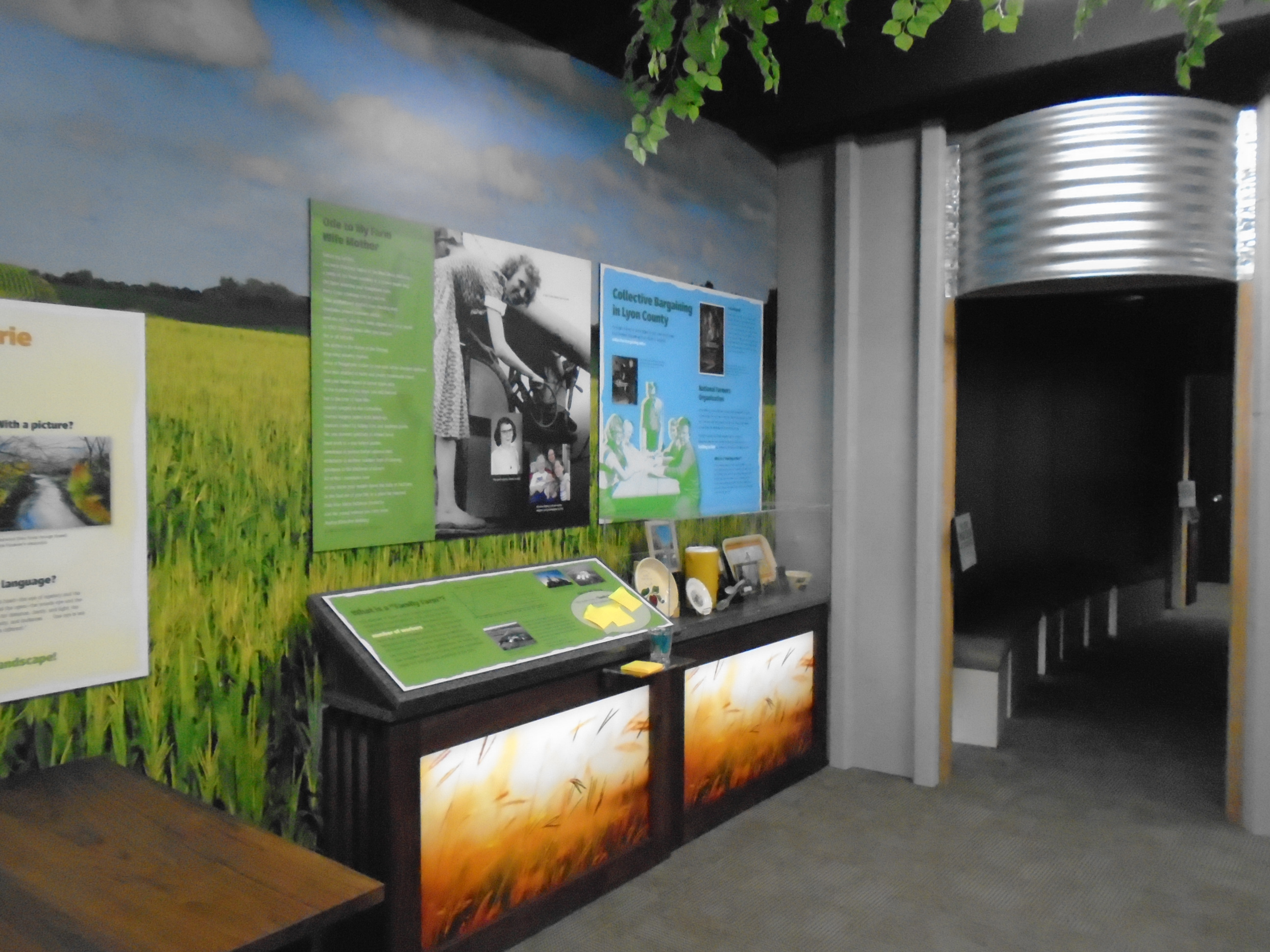
My poem, “Ode to My Farm Wife Mother,” with accompanying photos (center of this photo) in the Lyon County exhibit. (Photo courtesy of the LCHS)

My poetry is like me. Unpretentious. Down-to-earth understandable. Flannel shirt and blue jeans. Honest. Detail-oriented. Rooted in the land with a strong sense of place and a story to be told.

TELL ME: What’s your opinion of poetry? Do you read it, like it, write it? I’d like to hear.

Please click on links in this post to read some of the poems I’ve written.

FYI: Content Bookstore, 314 Division St. S., Northfield, is hosting two Poetry Nights, both beginning at 7 pm. On Thursday, April 7, Northfield poet Diane LeBlanc will read from her latest works. That includes her new poetry book, The Feast Delayed. Northfield Poet Laureate Rob Hardy and poet Greta Hardy-Mittell will read from their latest works also. Hardy’s newest poetry collection, Shelter in Place, just released.

© Copyright 2022 Audrey Kletscher Helbling

 

Honoring farm women via my poetry in a Minnesota museum April 27, 2021

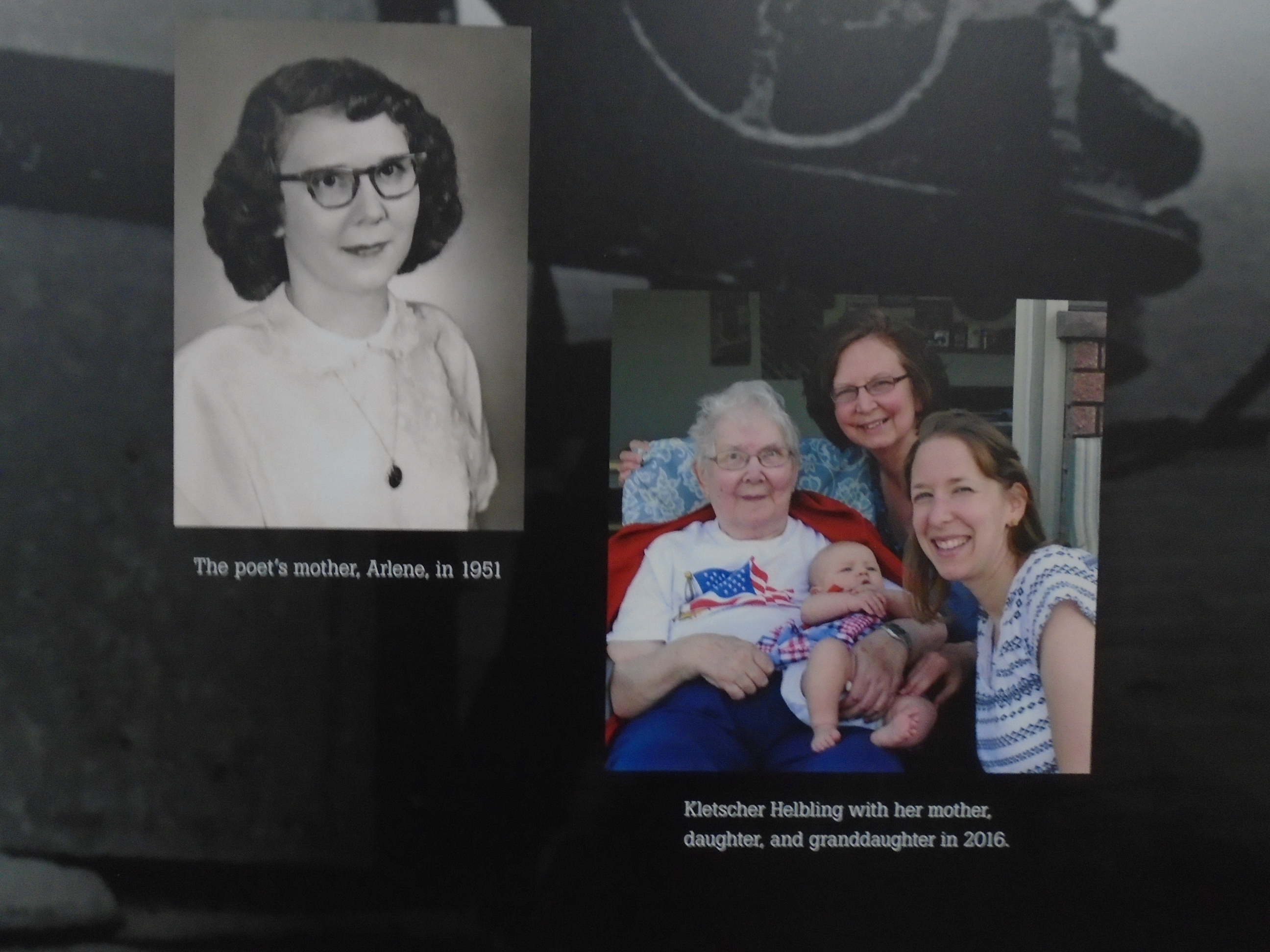
My poem (to the left of the woman in the dress), my mom’s high school graduation photo and a four-generation family photo of me, my mom, eldest daughter and granddaughter are included in a museum exhibit in southwestern Minnesota. Photo courtesy of the Lyon County Historical Society Museum.

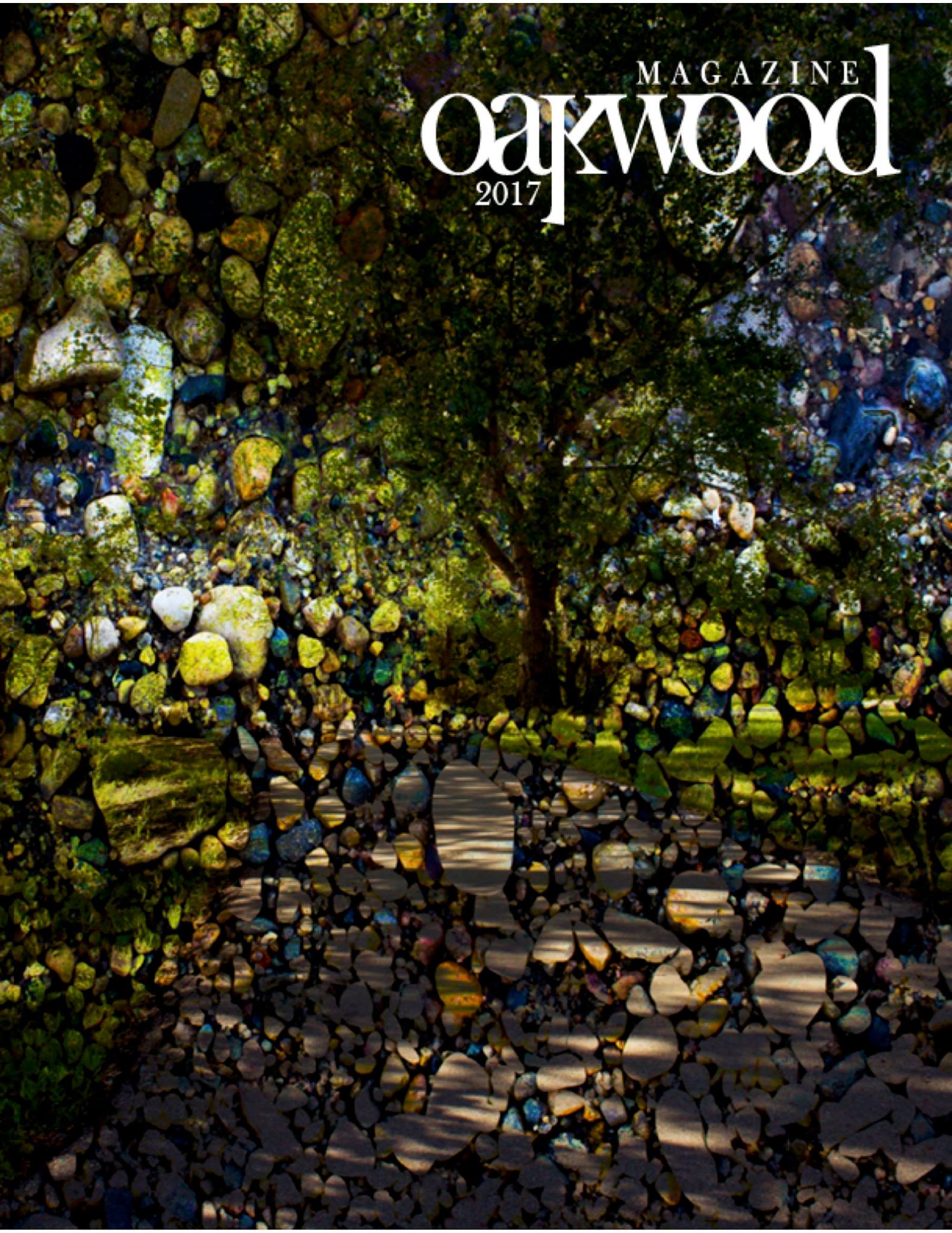
AS NATIONAL POETRY MONTH ends this week, I want to share exciting news about a rural-themed poem I wrote. The poem, “Ode to My Farm Wife Mother,” originally published in South Dakota State University’s literary journal, Oakwood, in 2017. Today that poem is part of a museum exhibit in Marshall, Minnesota, 60 miles to the northeast of Brookings, South Dakota.

My poem first published in South Dakota State’s Oakwood literary magazine.

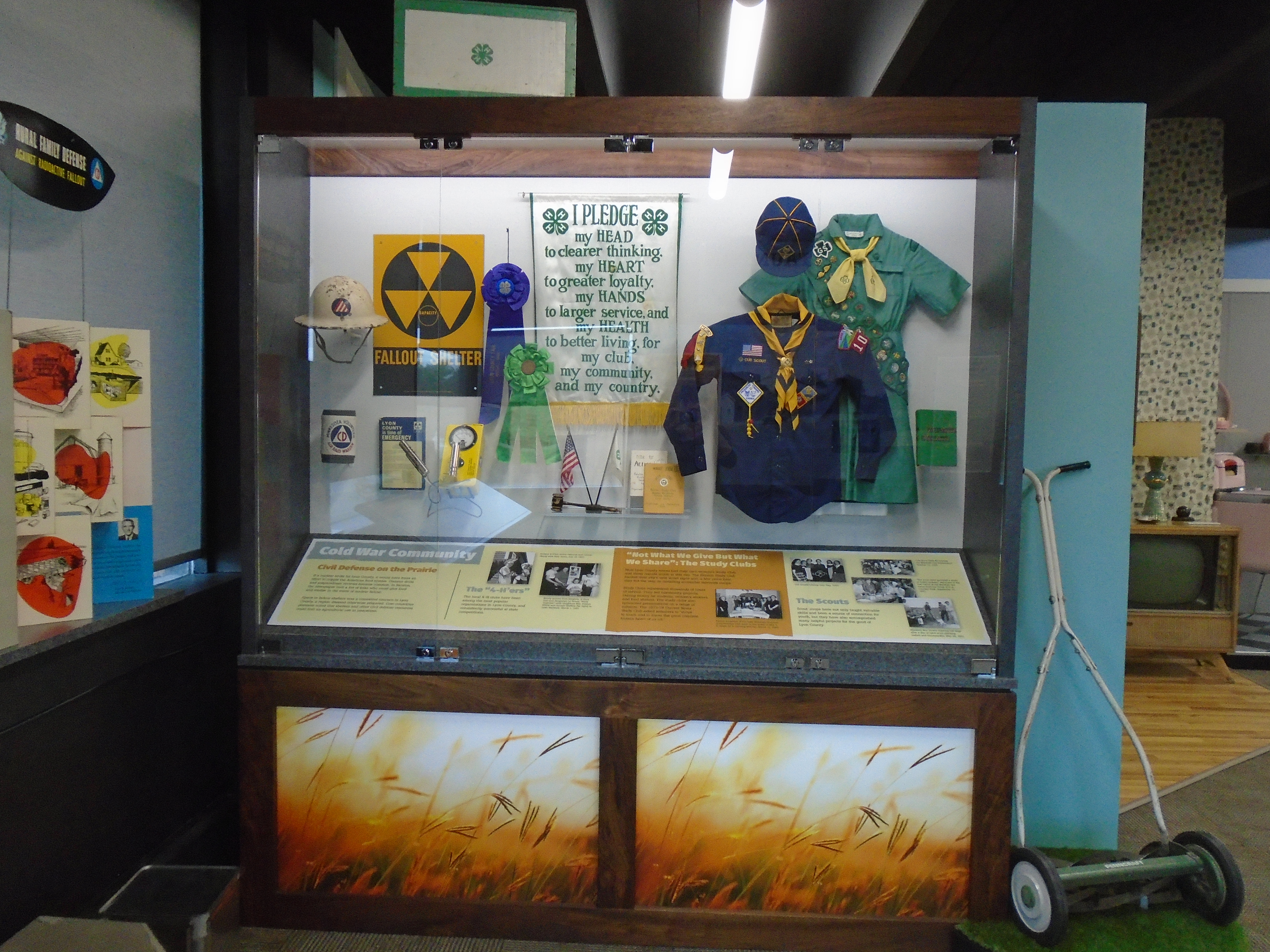
I feel humbled and honored to have my poem, inspired by memories of my hardworking farm wife mother, in the Lyon County Historical Society Museum’s newest semi-permanent exhibit, “Making Lyon County Home.” The exhibit opened in January. Its purpose, according to Executive Director Jennifer Andries, is “to share stories, artifacts, and photographs from Lyon County after World War II and to inspire residents and visitors to share their memories and experiences of growing up and living in Lyon County and the region.”

4-H and more are featured in this section of “Making Lyon County Home.” Photo courtesy of the Lyon County Historical Society Museum.

I grew up in this prime agricultural region, some 20 miles to the west on a dairy and crop farm near Vesta in Redwood County. I knew Marshall well back then as a shopping destination. A place to buy clothes, shoes and other essentials. But even more, I understood rural life decades ago because I lived it. I witnessed, too, how my mom worked hard to raise six children on our family farm. Before marriage, she attended Mankato Commercial College and then returned to her home area to work an office job in Marshall. Like most women of the 1950s, once she married, she stopped working off the farm.

These family photos complement my poem. Photo courtesy of the Lyon County Historical Society Museum.

My poem honors her in a poetic snapshot timeline of life beginning shortly before she married my farmer father. Saturday evening dances. Then rocking babies. Everyday life on the farm. Challenges. And finally, the final verse of Mom shoving her walker down the hallways of Parkview.

Whenever I write poetry, especially about life in rural Minnesota, I find myself deep within memory. Visualizing, tasting, smelling, hearing, even feeling. Although I took some creative license in penning “Ode to My Farm Wife Mother” (I don’t know that Mom ever drank whiskey or danced at the Blue Moon Ballroom in Marshall), it is primarily true. She met my dad at a dance in southwestern Minnesota. She washed laundry in a Maytag, baked bread every week, made the best peanut butter oatmeal bars…

An overview of the exhibit space featuring my poem and family photos. Photo courtesy of Lyon County Historical Society Museum.

I expect many who lived in this rural region in the 1950s-1970s can relate. Says LCHS Director Andries of my poem: “It is a good fit for the exhibit and fits with the agriculture section and the role of farm wives and mothers. The poem itself goes beyond just the agriculture area. I feel many people can resonate with the poem with the sense of being carefree while we are young but at some point we all have responsibilities but that doesn’t mean we lose our carefree spirit.”

Exactly.

Those sentiments were echoed by Tom Church, former managing director of Minneapolis-based Museology Museum Services, lead contractor for the “Making Lyon County Home” exhibit. Church first contacted me more than a year ago about using my poem. He said then that the poem “offers a nice snapshot of the era and setting we’re trying to evoke in several places within the exhibit and will fit well with our story.”

A 1950s era kitchen, left, is part of the “Making Lyon County Home” exhibit. Photo courtesy of the Lyon County Historical Society Museum.

I appreciate stories rooted in a strong sense of place. The new exhibit features themes of natural landscape, agriculture, education, industry and community. For example, the devastating and deadly June 13, 1968, F5 tornado in Tracy centers a display with information and oral histories. How well I remember that disaster. The 1980s farm crisis focuses another section. A late 1950s era kitchen fits the beginning time period of my poem.

Although I have yet to view the exhibit, I hope to do so this summer. And even more, I want my mom to know how she, and other farm women of the era, are honored via my poem. I want them to see themselves in my words, to understand the depth to which I value them. My mom, through her selflessness, her hard work, her kindness, her love, her faith, helped shape me. Today, as Mom lives out her final days in hospice, her memory and cognition diminished, I feel a deep sense of loss, of grief. But I hold onto the memories of a mother who read nursery rhymes, gardened, and, before I was born, enjoyed carefree Saturday evenings out with friends. Dancing. Laughing, Delighting in life.

FYI: The Lyon County Historical Society Museum, 301 West Lyon Street, Marshall, is open from 11 am – 4 pm Monday – Friday and from noon – 4 pm Saturdays. The “Making Lyon County Home” exhibit was partially funded by a Minnesota Historical and Cultural Heritage grant. The exhibit is semi-permanent, meaning artifacts and stories can be rotated to fit within the themes.

Ode to My Farm Wife Mother

Before my brother,

you were Saturday nights at the Blue Moon Ballroom—

a bottle of Jim Beam whiskey in a brown paper bag,

Old Spice scenting your dampened curls,

Perry Como crooning love in your ear.

Then motherhood quelled your dancing duet.

Interludes passed between births

until the sixth, and final, baby slipped into your world

in 1967. Thirteen years after you married.

Not at all unlucky.

Life shifted to the thrum of the Maytag,

sing-song nursery rhymes,

sway of Naugahyde rocker on red-and-white checked linoleum.

Your skin smelled of baby and yeasty homemade bread

and your kisses tasted of sweet apple jelly.

In the rhythm of your days, you still danced,

but to the beat of farm life—

laundry tangled on the clothesline,

charred burgers jazzed with ketch-up,

finances rocked by falling corn and soybean prices.

Yet, you showed gratitude in bowed head,

hard work in a sun-baked garden,

sweetness in peanut butter oatmeal bars,

endurance in endless summer days of canning,

goodness in the kindness of silence.

All of this I remember now

as you shove your walker down the halls of Parkview.

in the final set of your life, in a place far removed

from Blue Moon Ballroom memories

and the young woman you once were.

#

Poem copyright 2017 Audrey Kletscher Helbling
Blog post © Copyright 2021 Audrey Kletscher Helbling
 

Poetry flashback as we welcome spring March 20, 2021

Billboards in my Roadside Poetry Project poem posted in Fergus Falls 10 years ago. Minnesota Prairie Roots file photo June 2011.

THE OFFICIAL ARRIVAL OF SPRING today seems reason to celebrate, especially here in Minnesota, the land of long winters. Or, as my California-raised son-in-law once thought, Almost Canada.

Billboard #2 in my poem. Minnesota Prairie Roots file photo June 2011.

From here on, daylight lengthens. And, after this past pandemic year, I’m thankful for the seasonal transition into more sunlight and resulting warmth and melting of snow. That said, this is still March and in Minnesota that likely means more cold and snowy days.

But, as we ease into spring, I feel a sense of renewal. Warm days with temps in the 50s and near 60, like those predicted for this weekend, are freeing, uplifting and promising.

Billboards #3 and 4. Minnesota Prairie Roots file photo June 2011.

Farmers, I expect, are itching to get into the fields, although it’s way too early for that. I still think like the farm-raised woman I am, connecting seasons to the cycle of planting, growing and harvesting. That will always remain an important part of my identity and continues to influence my writing and photography.

The last of four billboards featuring my Roadside Poetry spring poem. Minnesota Prairie Roots file photo June 2011.

Flash back to 10 years ago and you can read that influence in a poem I penned and submitted to the Roadside Poetry Project. In four lines, each with a 20 character limit, I wrote a spring-themed poem that bannered on four billboards in Fergus Falls. It’s the most unusual spot my poetry has ever published.

The billboards posted along a road on the edge of Fergus Falls in 2011. Minnesota Prairie Roots file photo June 2011.

Designed “to celebrate the personal pulse of poetry in the landscape,” according to then Project Coordinator Paul Carney, my poem truly fit that mission. I wrote from experience, from a closeness to the land, from a landscape of understanding.

While the Roadside Poetry Project, funded by the Fergus Falls College Foundation, no longer exists, my poem endures in the legacy of my writing. To have written about spring from the perspective of a farmer’s daughter celebrates my rural Minnesota prairie roots. And spring.

© Copyright 2021 Audrey Kletscher Helbling
 

Featuring Faribault poet Larry Gavin March 11, 2020

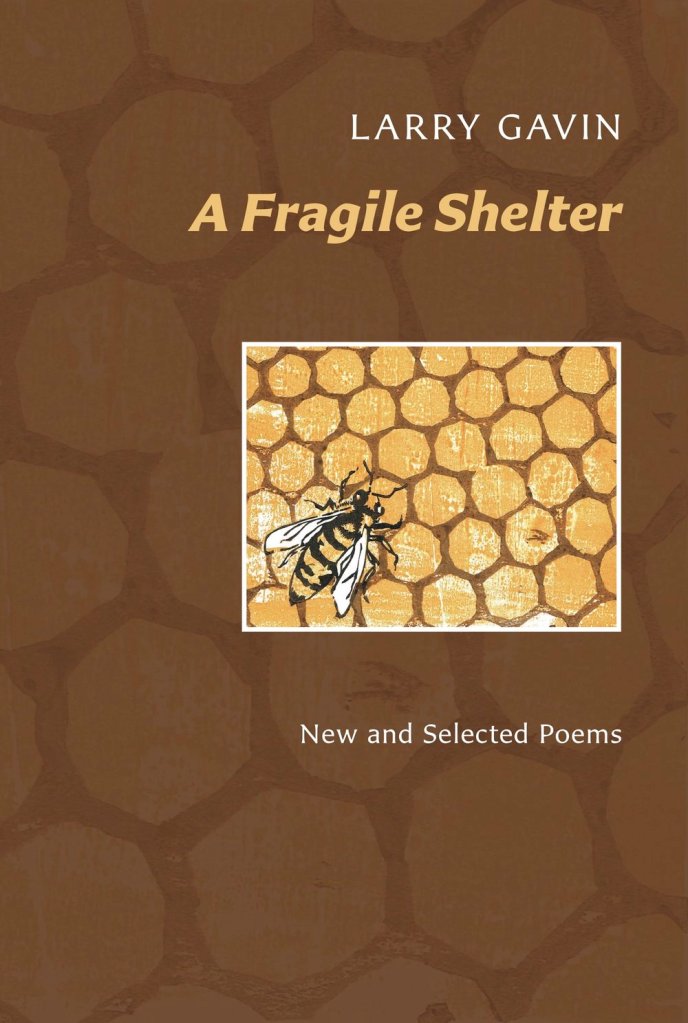
Cover art courtesy of Red Dragonfly Press.


FARIBAULT RESIDENT AND FELLOW poet Larry Gavin reads at 7 pm Thursday, March 12, from his latest poetry collection, A Fragile Shelter—New and Selected Poems, at the Northfield Public Library. This marks his fifth volume of poetry published by Northfield-based Red Dragonfly Press.

I’ve known Larry since he taught English to my eldest daughter at Faribault High School. And then to my second daughter and son. It was during parent-teacher conferences that I learned more about this gifted poet and writer and the connections we share.


An abandoned farmhouse along Minnesota State Highway 19 east of Vesta on the southwestern Minnesota prairie. The house is no longer standing. Minnesota Prairie Roots file photo.


Like me, Larry writes with a strong sense of place. His poems are down-to-earth, descriptive. I see his love of the outdoors, the natural world, imprinted upon his writing. He grew up in Austin, in a decidedly rural region of southeastern Minnesota. And he lived for 15 years, decades ago, in rural southwestern Minnesota to study writing with some remarkable writers like Robert Bly, Bill Holm, Leo Dangel and others. The prairie influence of place and details is there, in Larry’s poetry. Just as it is in mine as a native of the Minnesota prairie.

I’d encourage you to read a post I published in 2011 featuring a Q & A with this poet. Click here.


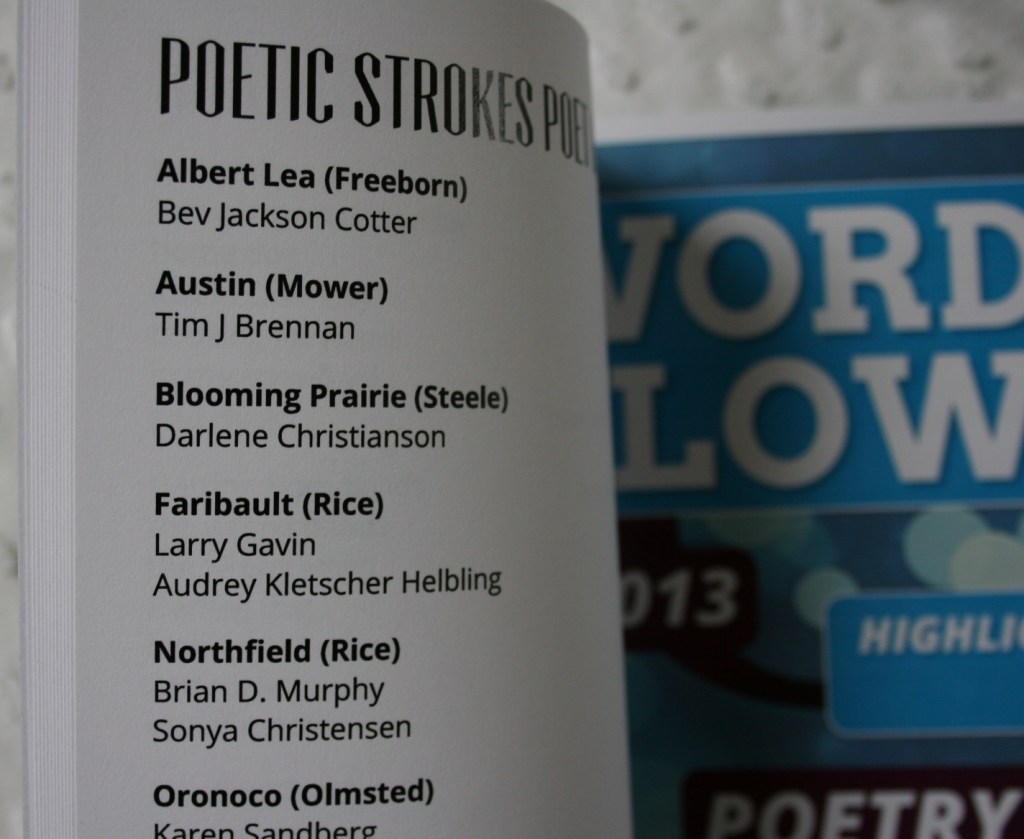
Larry and I both had poems published in the 2013 volume of Poetic Strokes. Minnesota Prairie Roots file photo 2013.


Over the years, Larry and I have sometimes found ourselves crossing as poets—work published in the same places, reading together with other area poets at events, our poems selected for poet-artist collaborations, our poems published on billboards…

It’s always been an honor and a joy to read with Larry, especially to hear him read. His voice is a radio voice—flawless, dipping and rising with the rhythm of his poem, each word flowing into the next in a way that mesmerizes. He taught me that poetry is meant to be read aloud. I find myself now, whenever I write a poem, reading it aloud to hear if a word/line works or it doesn’t.


I took poetic license and photoshopped this image of the button I wore identifying me as a poet at a poetry event. Minnesota Prairie Roots file photo.


Poetry today is not your grandmother’s poetry of rhyming verses and flowery, fancied up writing. At least not the poems I write nor those written by Larry. At a poetry reading last year, he talked about “found poems,” poetry inspired, for example, by a note posted in a public place. His humorous poem about a would-be babysitter, who cited experience picking rock, prompted an outburst of laughter. I like that, too, about Larry’s writing. His poems aren’t all stuffy and serious.

To my friend, fellow poet and recently-retired English teacher, Larry Gavin, I extend my congratulations on publishing another collection of poetry. To read or hear his poetry is to recognize his talent as a wordsmith, for he crafts with a love of language, of the land, of life.

© Copyright 2020 Audrey Kletscher Helbling