WHEN I WRITE about music, it’s not with any expertise. I can’t read a single musical note. I can’t carry a tune. But I do know when I like a song. And most of my “likes” hearken to my youth, when music boomed from the radio. Or, in the case of Simon & Garfunkel, flowed.
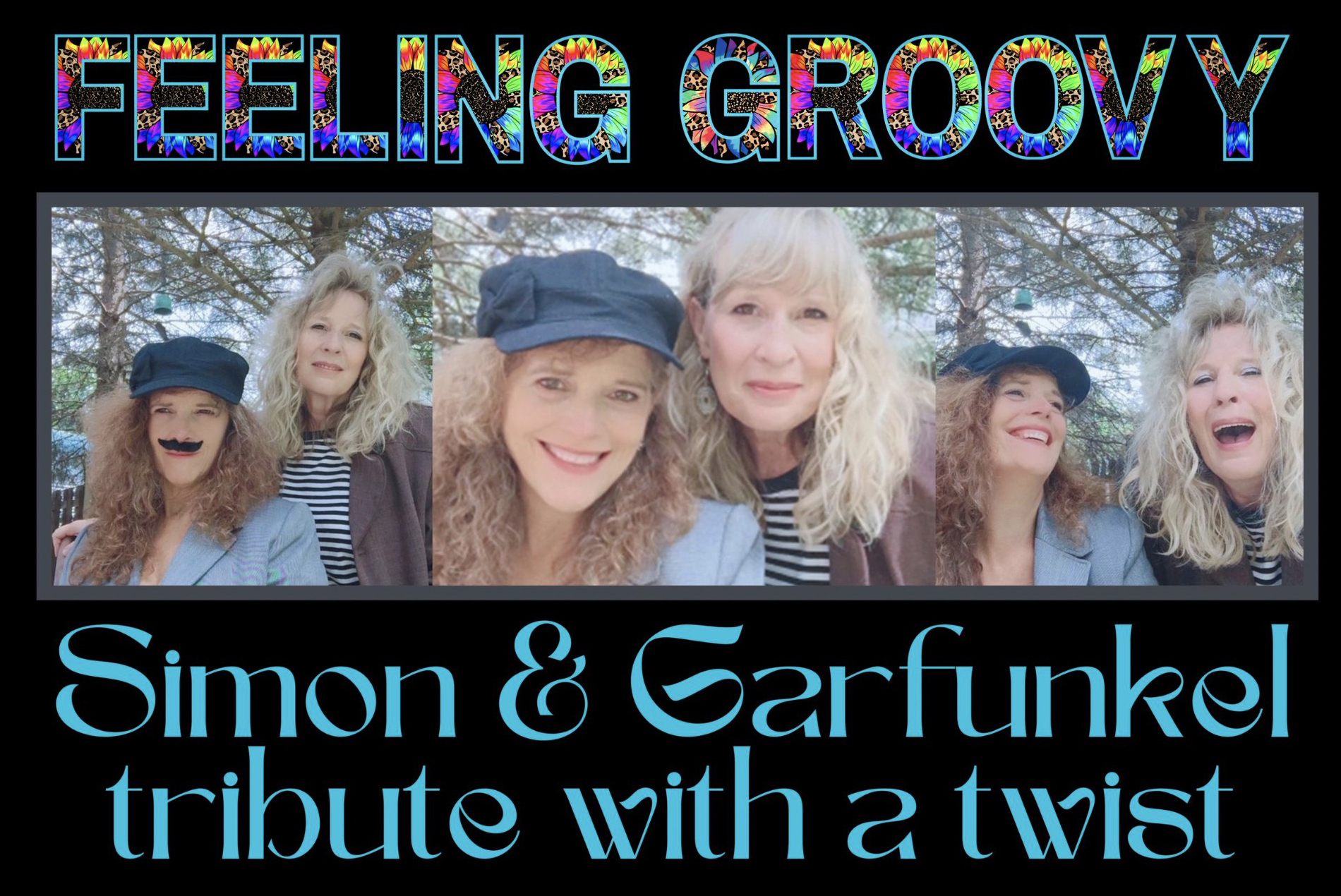
From my favorites “The Sound of Silence” and “Bridge over Troubled Water” to many more, this group performs a lengthy list of Simon & Garfunkel songs in addition to some Paul Simon favorites. I’ve never heard this tribute band, but I’ve been told, and read, that they are outstanding. Or, in 1960s and early 1970s lingo, I might say they are cool, groovy, far out.
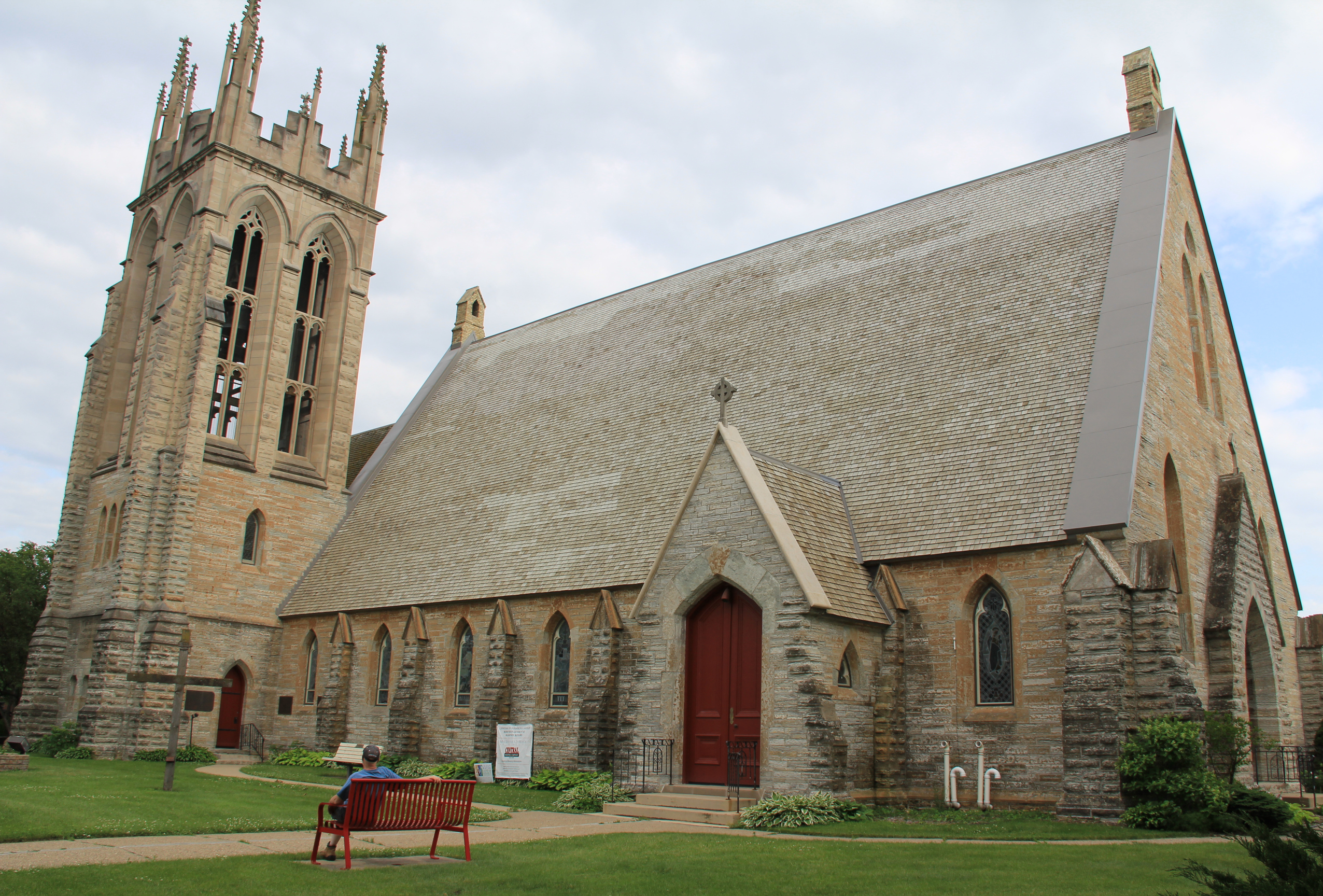
The Cathedral of Our Merciful Saviour. (Minnesota Prairie Roots copyrighted photo 2024)
The Feeling Groovy tribute to Paul Simon & Art Garfunkel is part of the Cathedral Concert Series. While the concerts are free, donations are welcomed for the Cathedral Preservation Fund. The massive stone cathedral, built between 1862 and 1869, is on the National Register of Historic Places. Bishop Henry Whipple, prominent in local and state history for his outreach to Indigenous Peoples, led the church at the time.
It’s a beautiful structure. And the acoustics inside the massive sanctuary are perfect for a concert that also features audience participation. I expect when Barb Piper and Pauline Jennings step up to sing, the audience will feel immersed in the lyrics and in the groovy sound of music, not of silence.
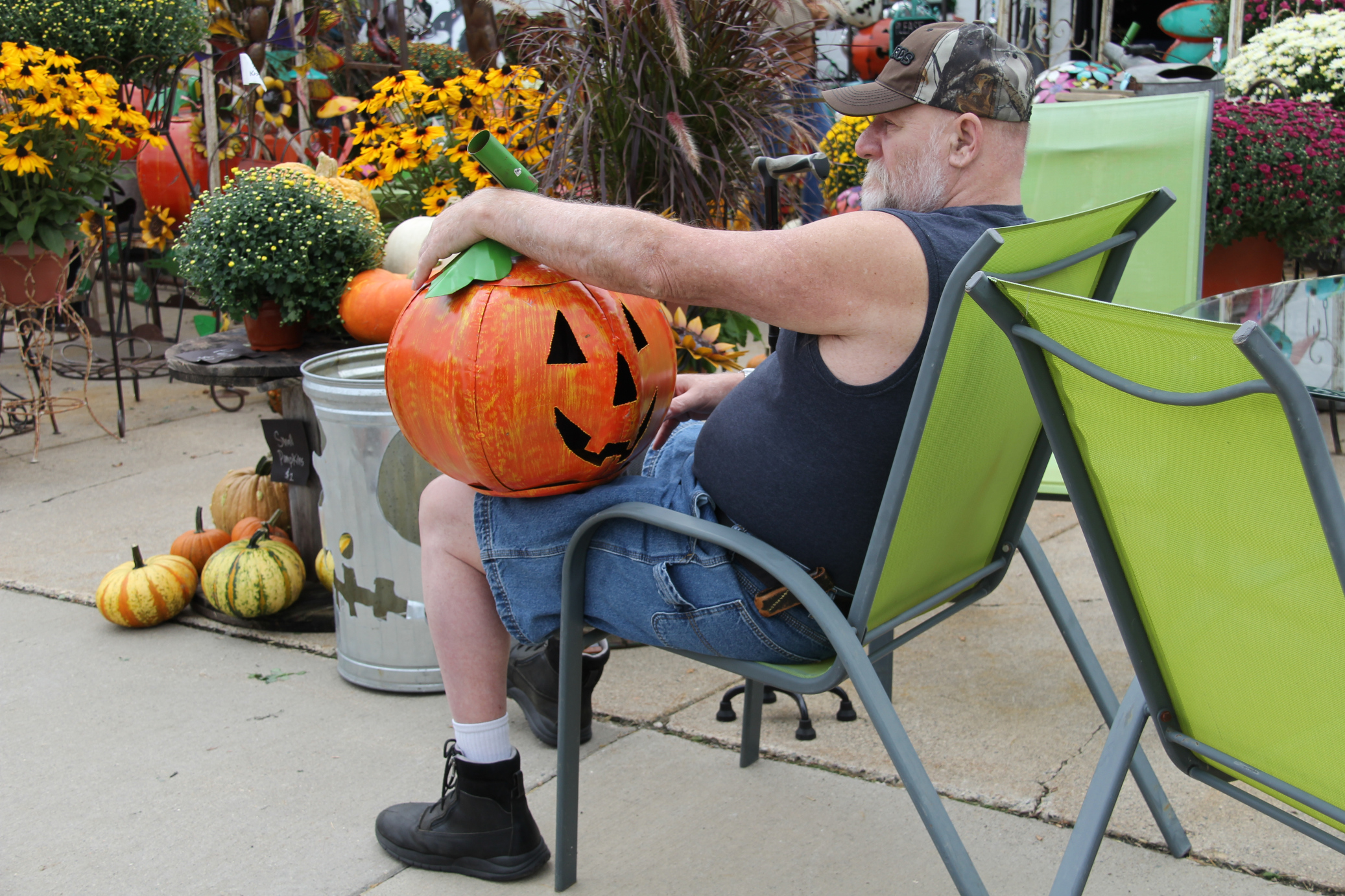
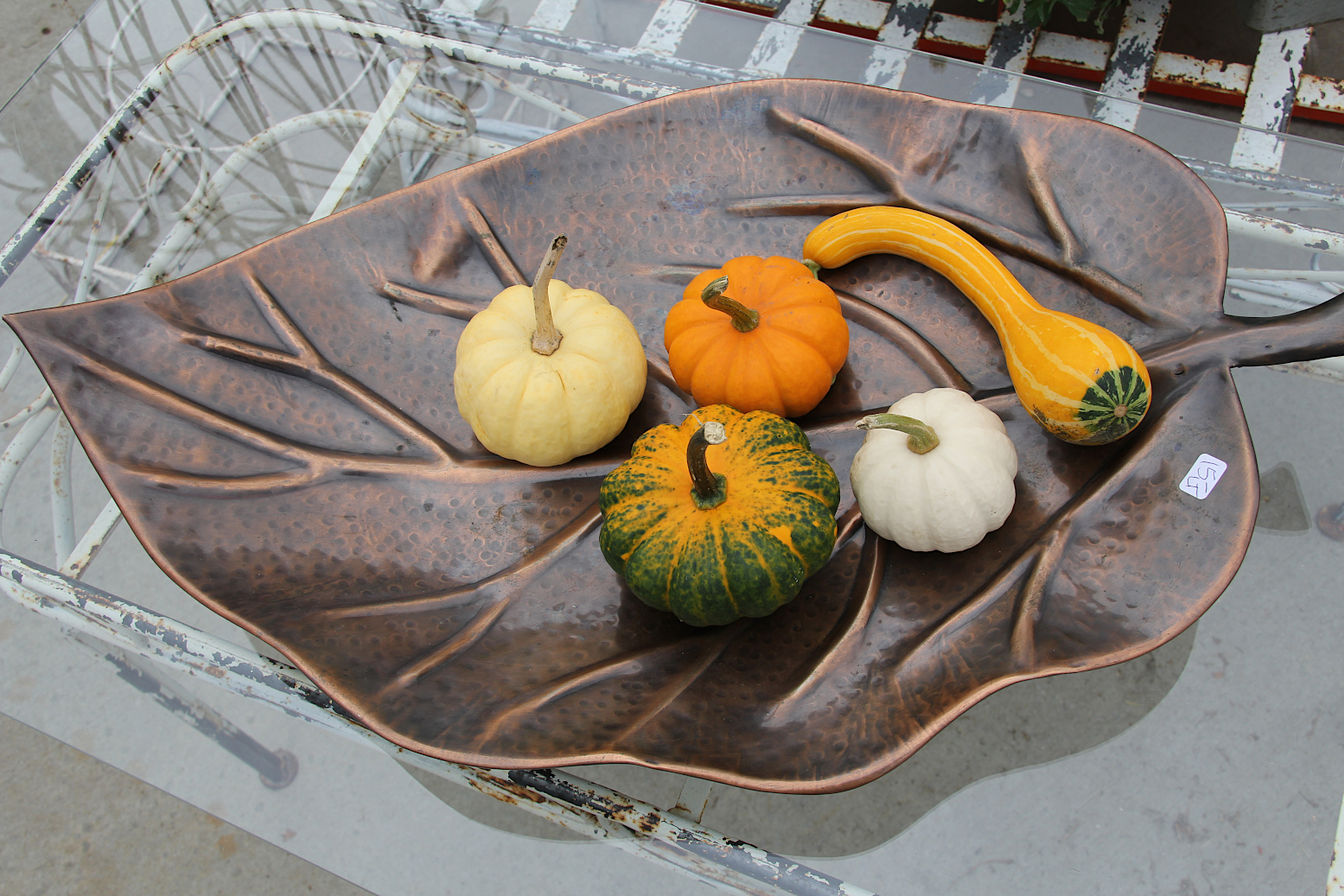
Outside RR Revival/Rusty Rabbitiques in Lonsdale, this guy waits with a decorative metal pumpkinin my favorite market photo. (Minnesota Prairie Roots copyrighted photo September 2025)
DAYS BEFORE THE AUTUMN EQUINOX, I found myself in small town Lonsdale at a craft and flea market. Located in northwestern Rice County, this community of just under 5,000 with easy access to Interstate 35 to the east, is experiencing both residential and business growth.
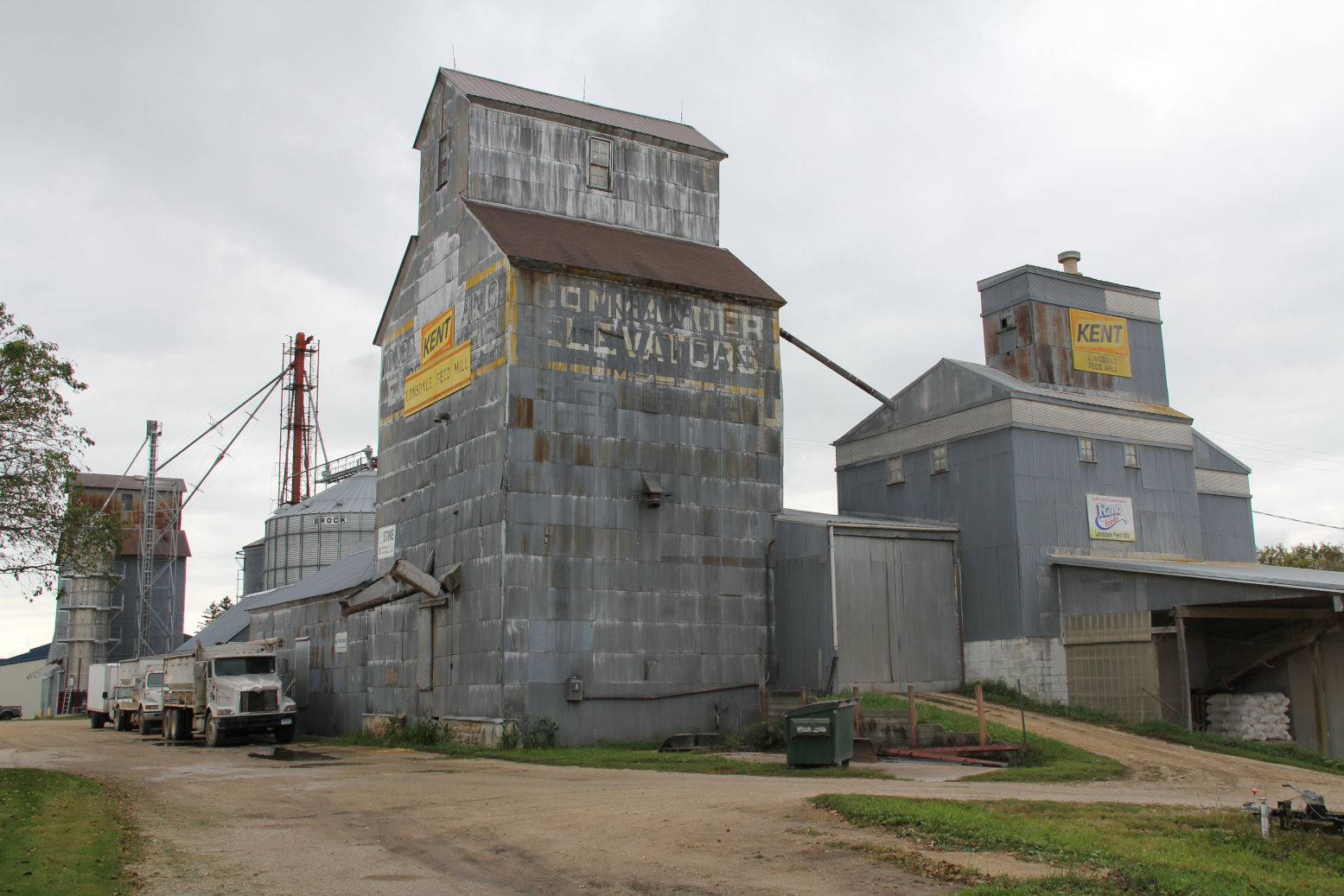
The aged grain elevators of Lonsdale near the market site. (Minnesota Prairie Roots copyrighted photo September 2025)
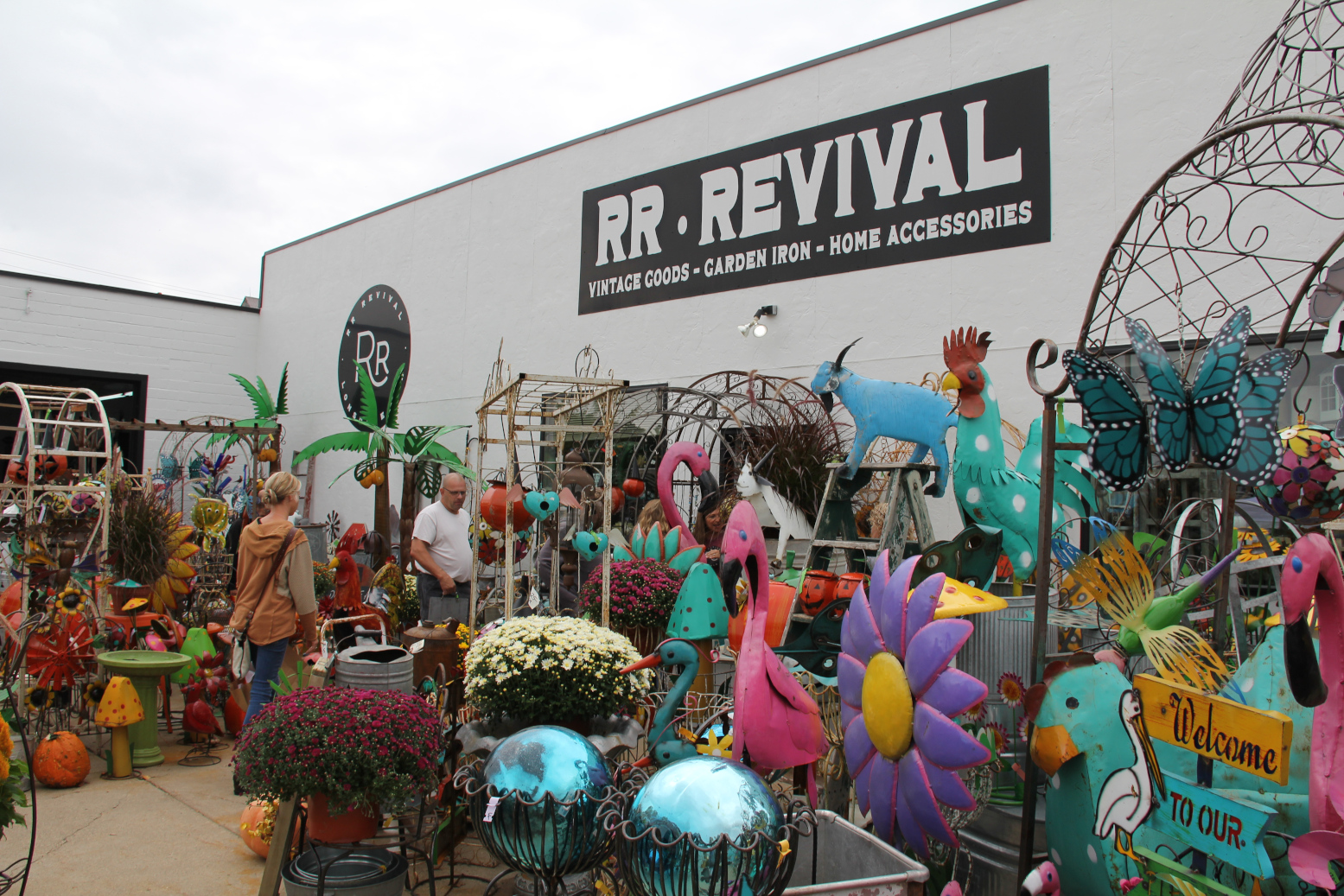
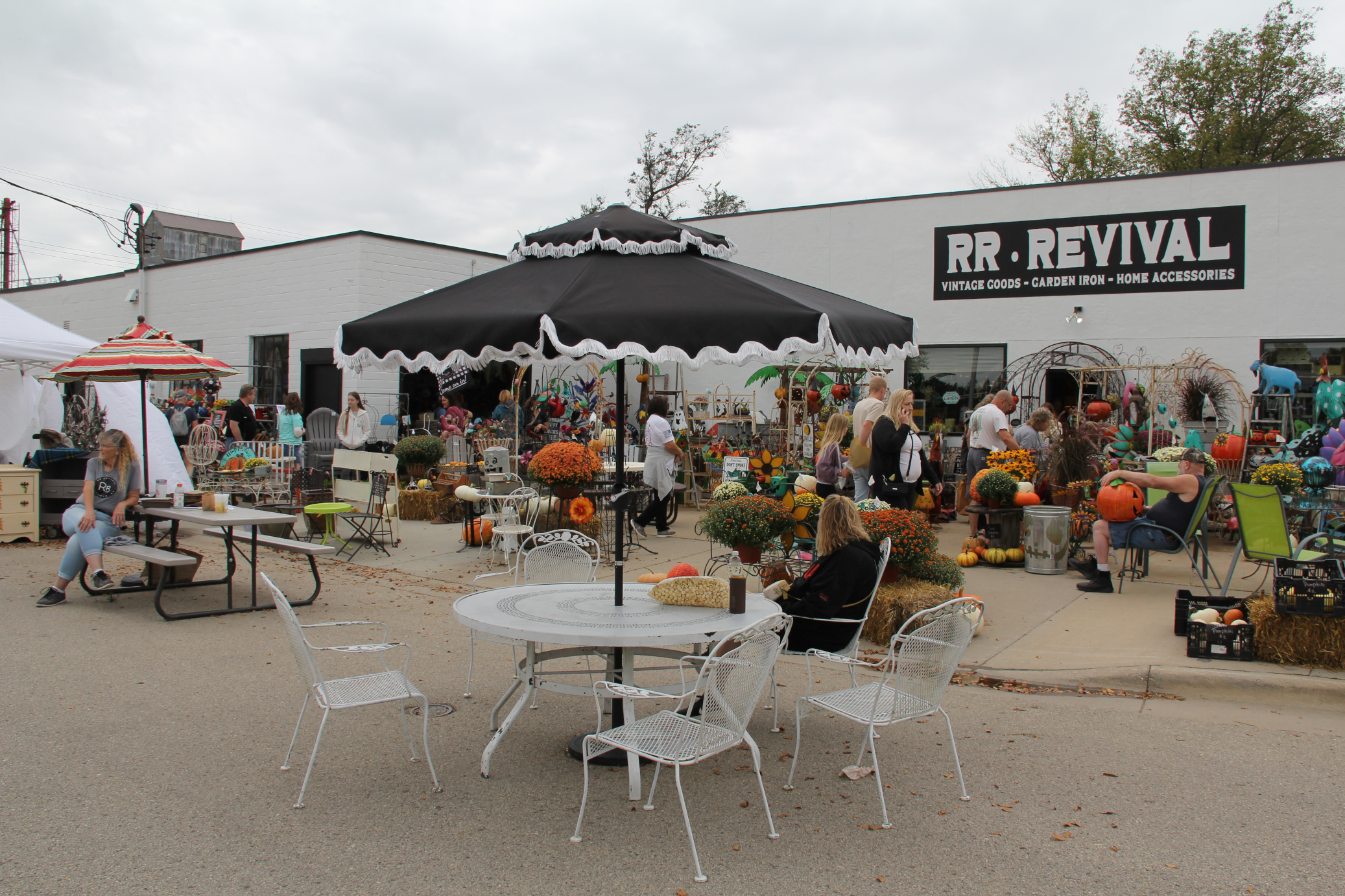
Yet, it retains its rural character, most notable in the aged grain elevator complex rising high above the town. Those grain elevators provided the backdrop for the recent weekend sale centered around RR Revival/Rusty Rabbitiques, a spacious vintage goods, garden iron and home accessories business.
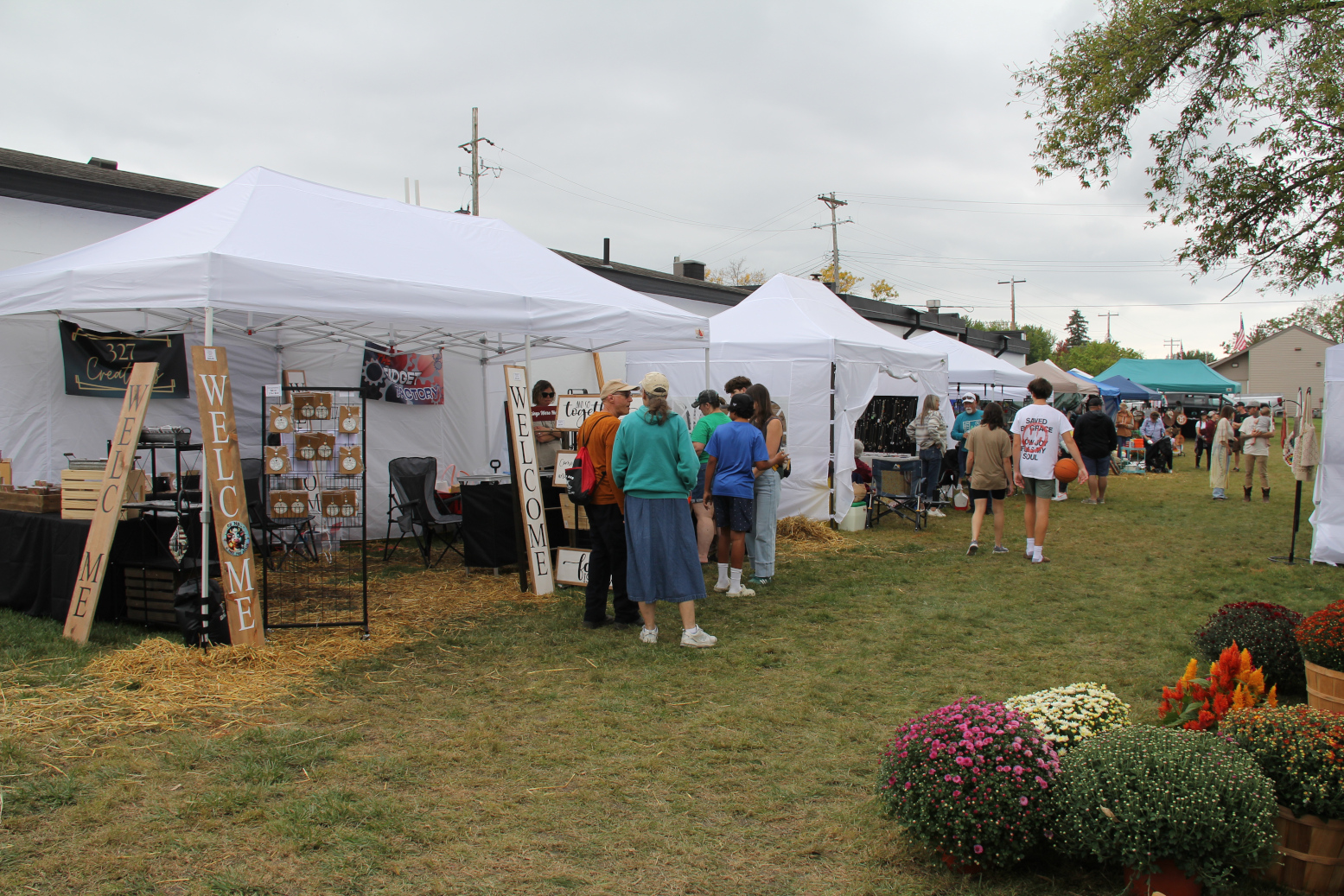
Vendors set up shop outside RR Revival. (Minnesota Prairie Roots copyrighted photo September 2025)
Vendors set up shop near RR Revival to sell food, crafts, flea market and other goods. That included mushrooms, floral bouquets, jewelry, upcycled clothing, hand-painted seasonal décor and much more. If you weren’t in a fall mood when you arrived, you would be upon departure.
An artful display of seasonal merchandise for sale at RR Revival. (Minnesota Prairie Roots copyrighted photo September 2025)
Flowers for sale burst in autumn hues. (Minnesota Prairie Roots copyrighted photo September 2025)
RR Revival is packed inside and out with goods. (Minnesota Prairie Roots copyrighted photo September 2025)
Pumpkins and mums, ghosts and scarecrows, flowers and gourds in autumn hues, all set the stage to welcome the change in seasons. I even saw a young girl trying out her “Wizard of Oz” Dorothy costume, complete with red shoes, for Halloween.
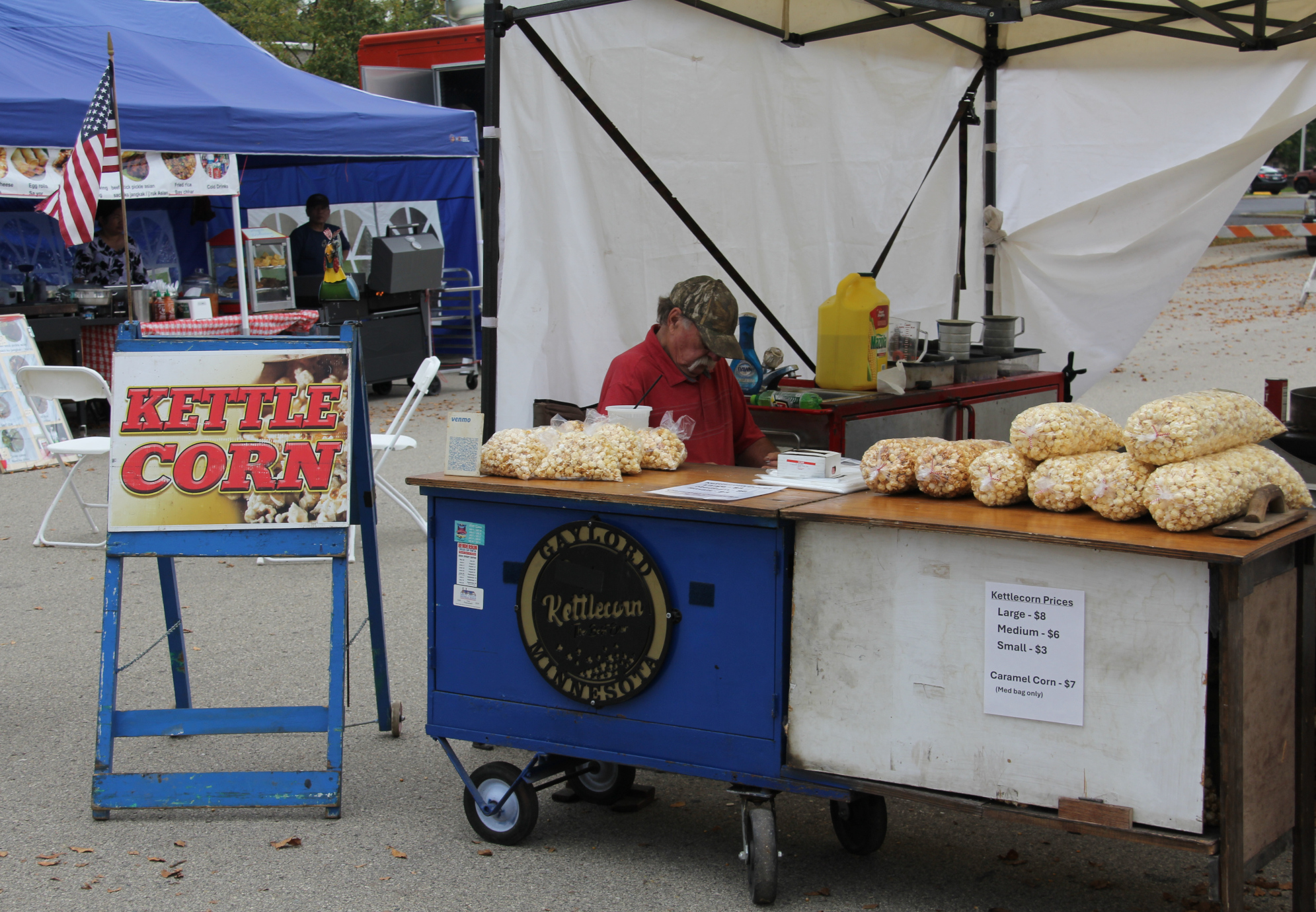
Among the numerous food vendors set up in the street, this one from Gaylord and selling kettle corn. (Minnesota Prairie Roots copyrighted photo September 2025)
As I wandered, the caramel scent of kettle corn wafted through the air.
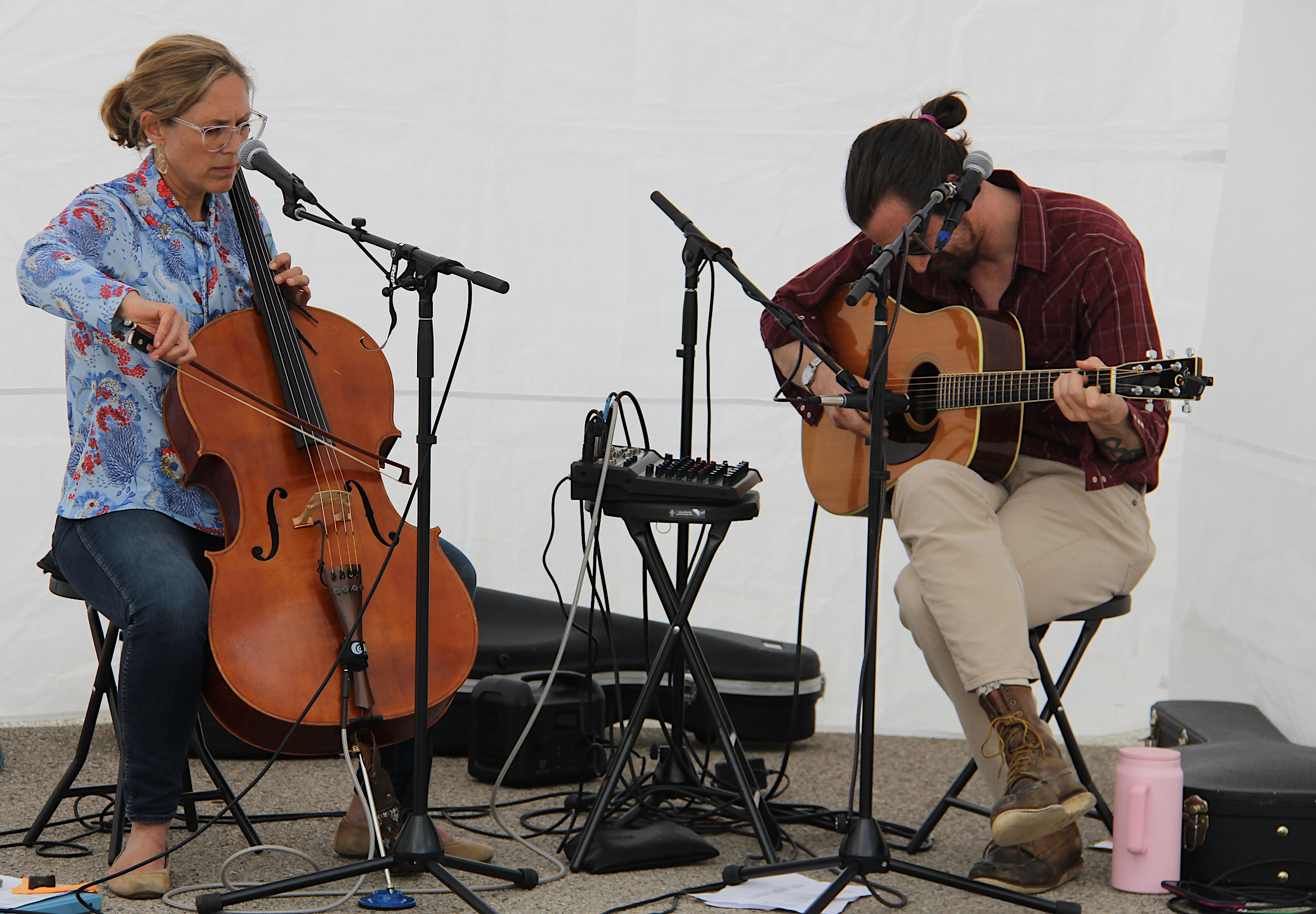
This duo added to the market with their music. (Minnesota Prairie Roots copyrighted photo September 2025)
Musicians played in the shelter of a small tent pitched on the street near RR Revival.
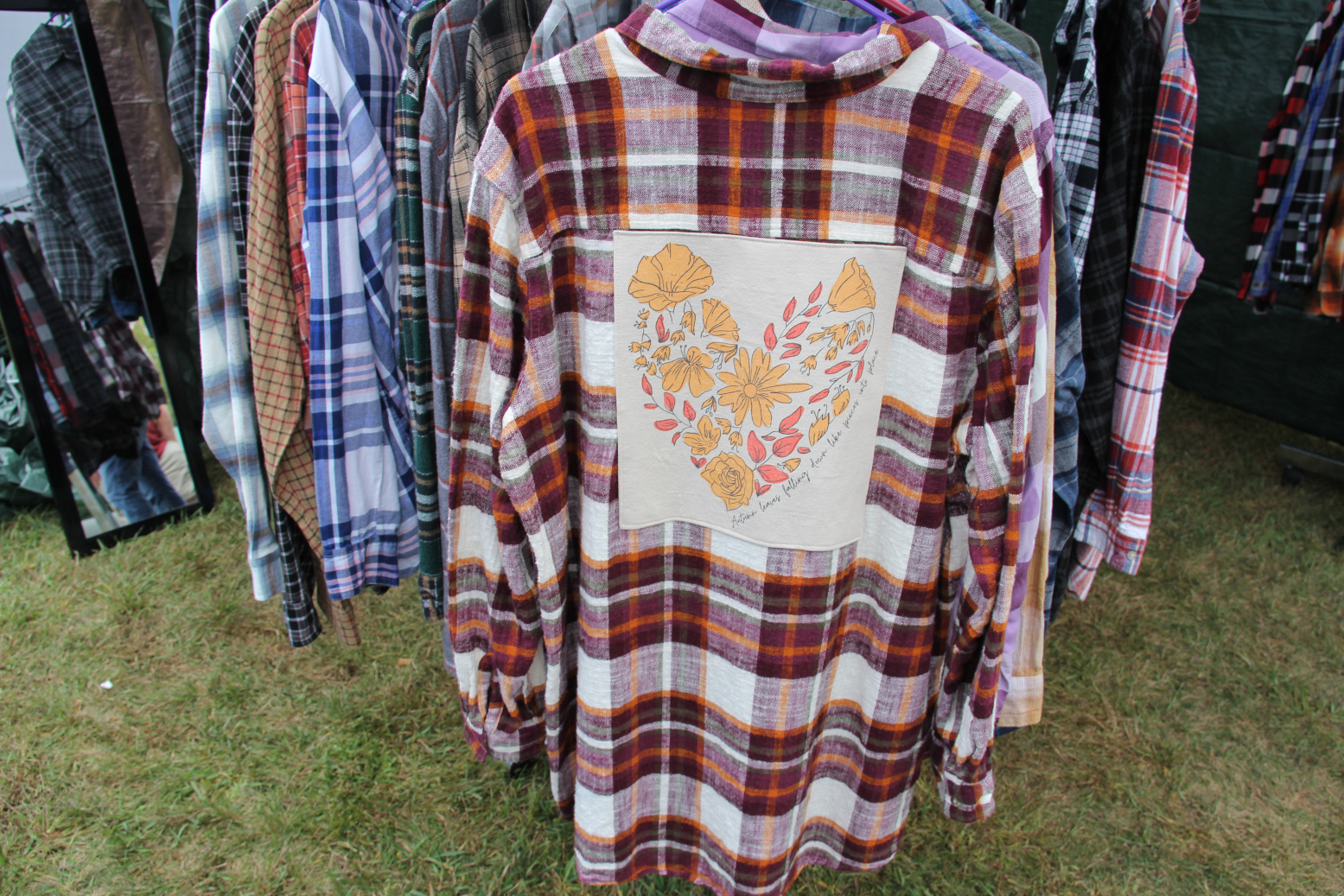
Upcycled shirts from The Thrifty Toad Shop included this autumn-themed one and others themed to sports, music, movies and much more. Ellorie is based in Cottage Grove and also sells on etsy. (Minnesota Prairie Roots copyrighted photo September 2025)
I appreciated the smallness of this craft and flea market and the ease with which I could meander and chat with sellers. The creativity and ingenuity of artisans always amazes me. Take Ellorie at The Thrifty Toad Shop. An avid thrifter, she turned her love of thrifting into a business. She buys second-hand shirts (mostly flannel) and graphic tees then upcycles them by cutting and sewing the t-shirt designs onto the backs of flannel shirts. I love this idea of reusing second-hand clothes, of creating something visually interesting and different. I’m no fashionista. But for someone like me who wears a lot of t-shirts and flannel (come autumn), Ellorie’s shirts are the perfect fit.
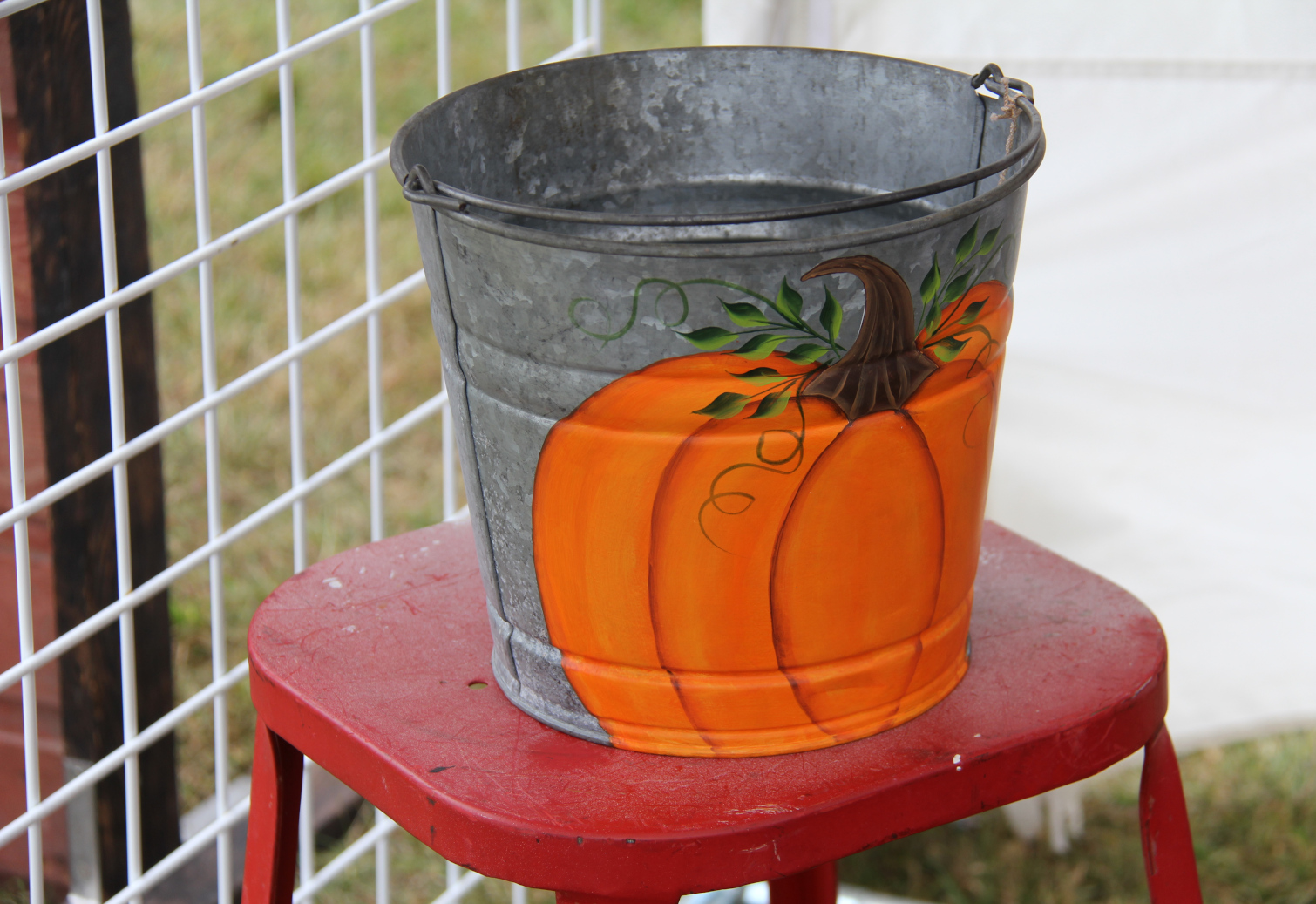
An example of the art created by Patti of A Touch from the Heart Creations based in Chaska. Patti brought mostly autumn and Christmas art to the market. (Minnesota Prairie Roots copyrighted photo September 2025)
Under another tent, Patti of A Touch from the Heart Creations also upcycles, painting seasonal designs onto old shovels, spades, pails, gas cans and more.
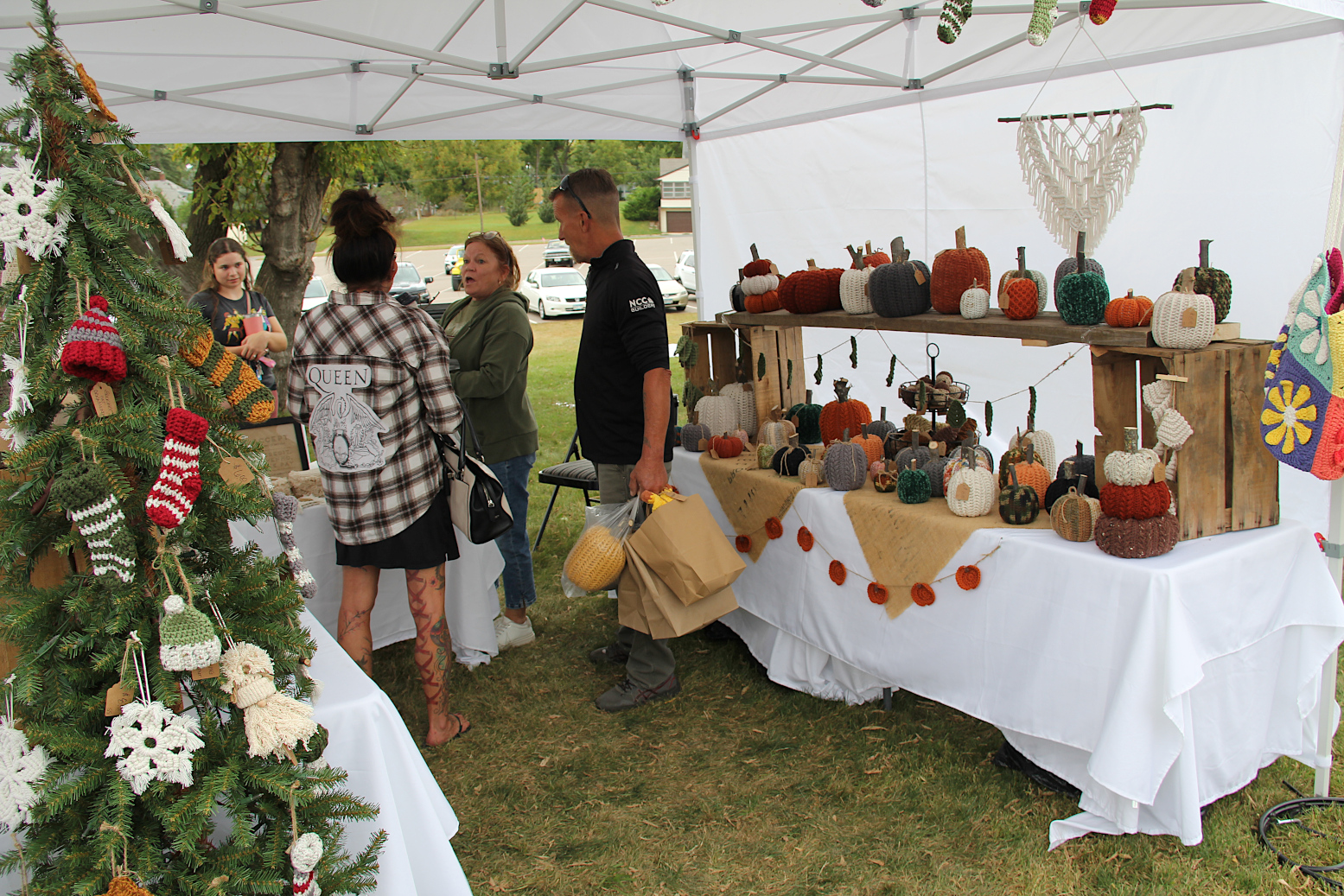
Shellie, from nearby Webster, chats with customers inside the tent displaying her mostly autumn and Christmas-themed crocheted creations. (Minnesota Prairie Roots copyrighted photo September 2025)
At Shellie’s Stitches Everything Crochet, it’s all about crocheting—Christmas trees, snowmen, pumpkins and, well, whatever this crafter wants to make and vend.
A representative from Dispatch Dogs of Lonsdale was on hand to talk about supporting dogs in need through fostering, transporting and fundraising. (Minnesota Prairie Roots copyrighted photo September 2025)
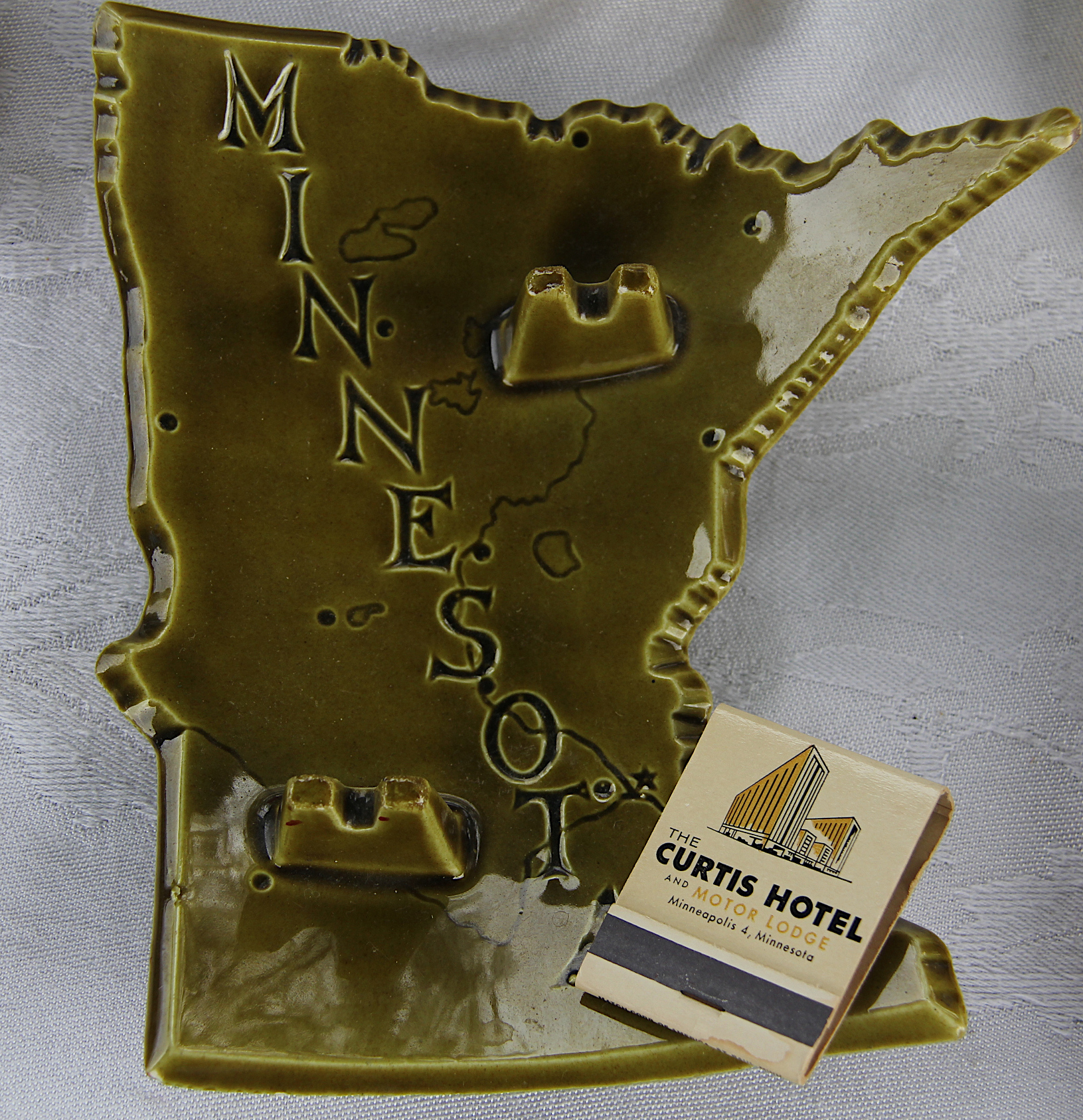
Loved this Minnesota shaped vintage ashtray with key town names and locations on the back and for sale from a flea market vendor. (Minnesota Prairie Roots copyrighted photo September 2025)
RR Revival organized the market. (Minnesota Prairie Roots copyrighted photo September 2025)
This event, along Railway Street near the grain elevators in Lonsdale and billed as the RR Revival Flea Market, proved a wonderful way to welcome autumn.
This thrift shop is packed with goods and is one I’ve shopped before. A small ice cream shop has been added to the space. (Minnesota Prairie Roots copyrighted photo September 2025)
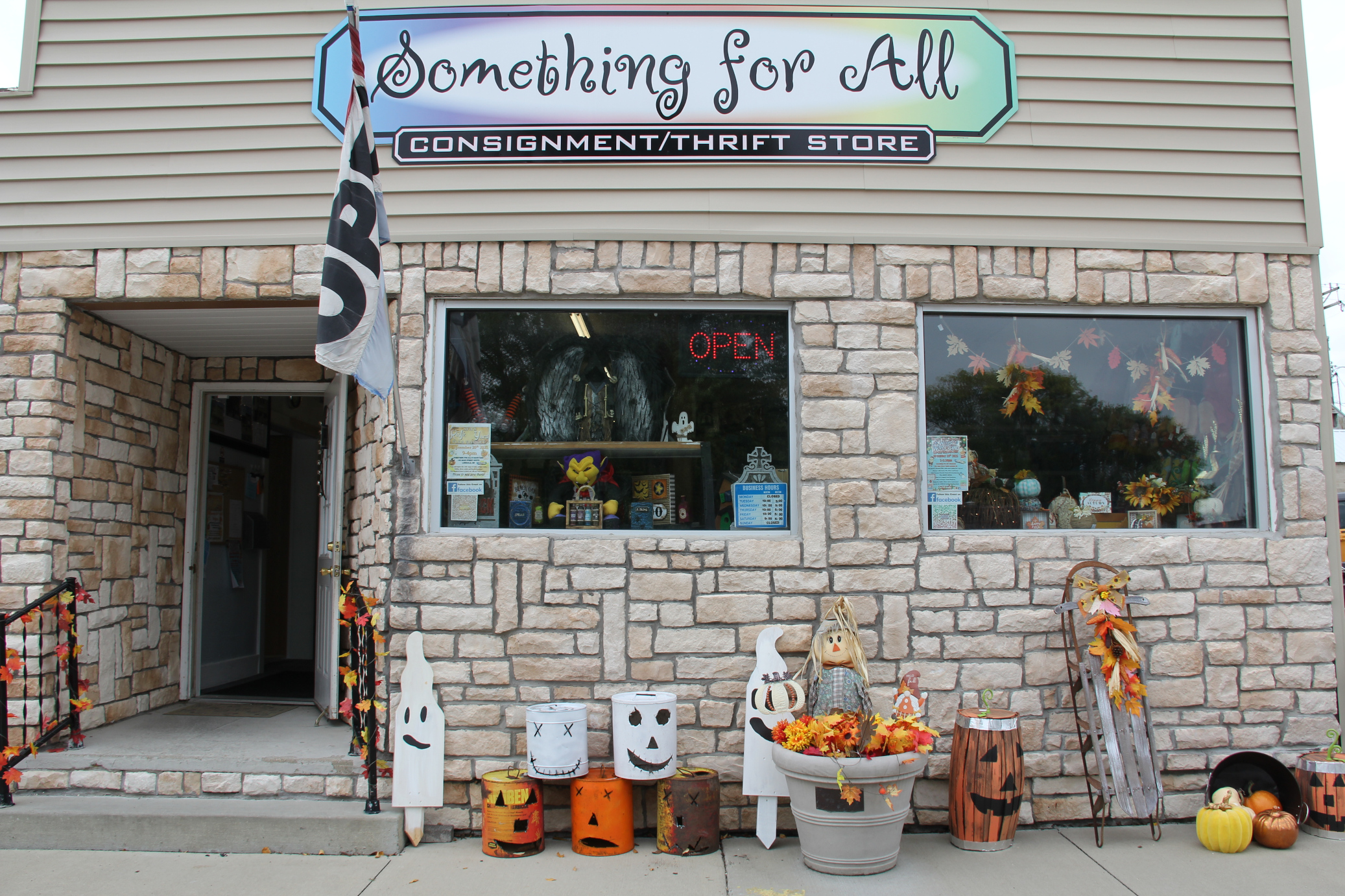
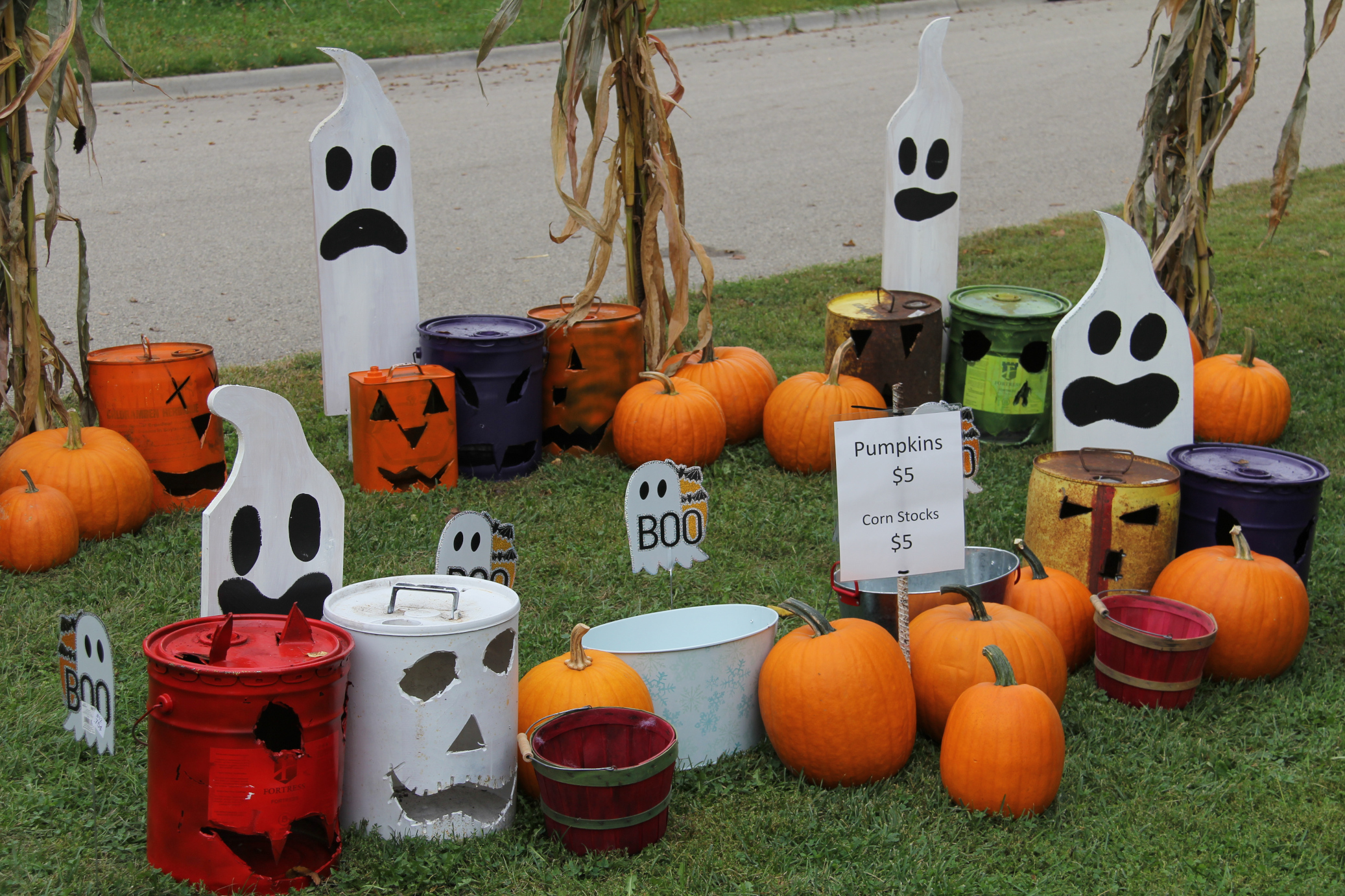
Two blocks away, the Something for All Consignment/Thrift Store also drew me inside to shop in the building’s nooks and crannies. Outside the shop, kids (mostly) could pose behind seasonal photo cut-outs, decorate a mini pumpkin, play with an oversized Jenga. There were wooden ghosts, jack-o-lanterns crafted from gas can, fiery salsa and more for sale, too.
Halloween decor and pumpkins for sale outside Something for All. (Minnesota Prairie Roots copyrighted photo September 2025)
I left Lonsdale without a single purchase. But what I bought was a few hours of contentment and enjoyment in a small town with a grain elevator, a familiar rural landmark that will always claim a piece of my heart.
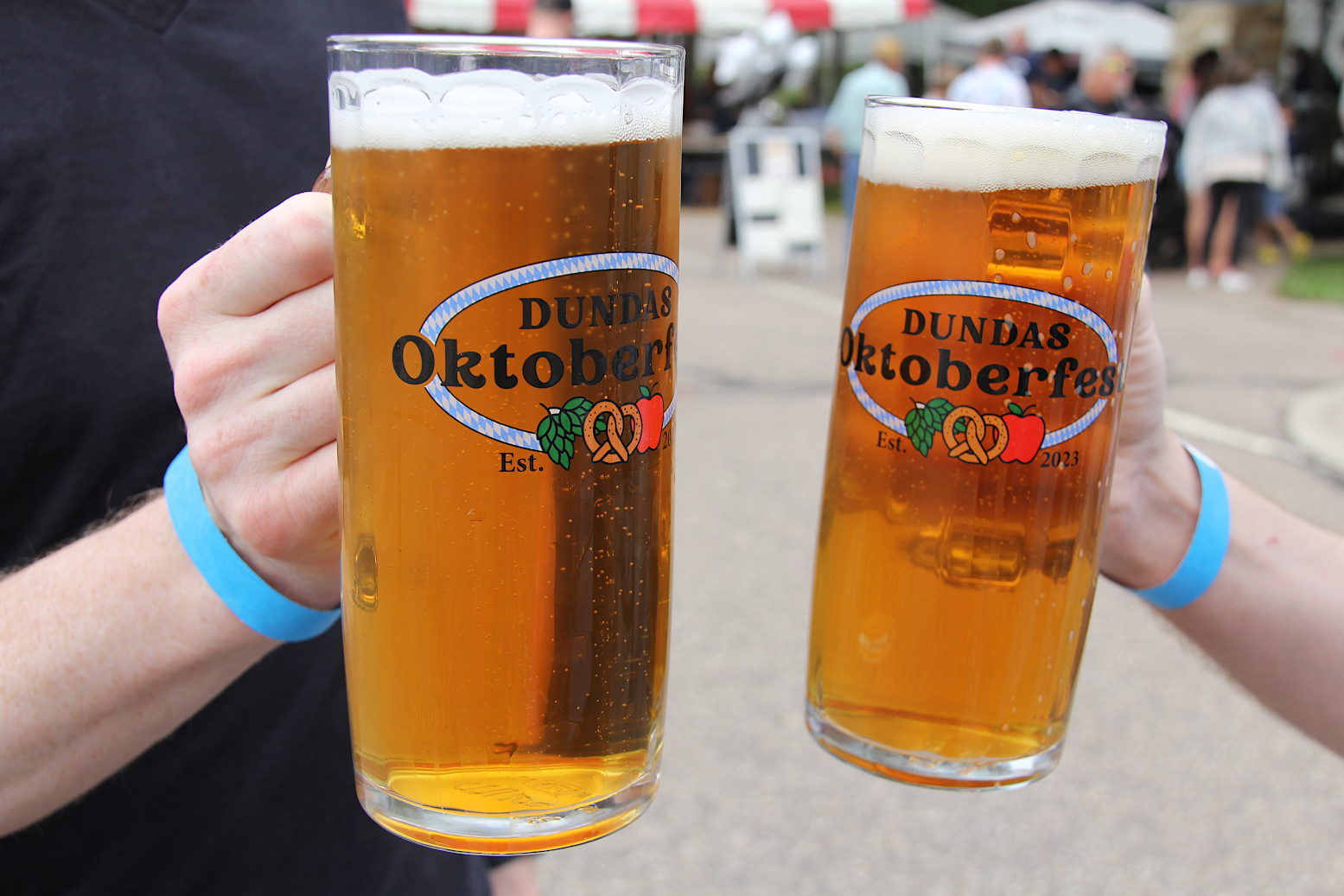
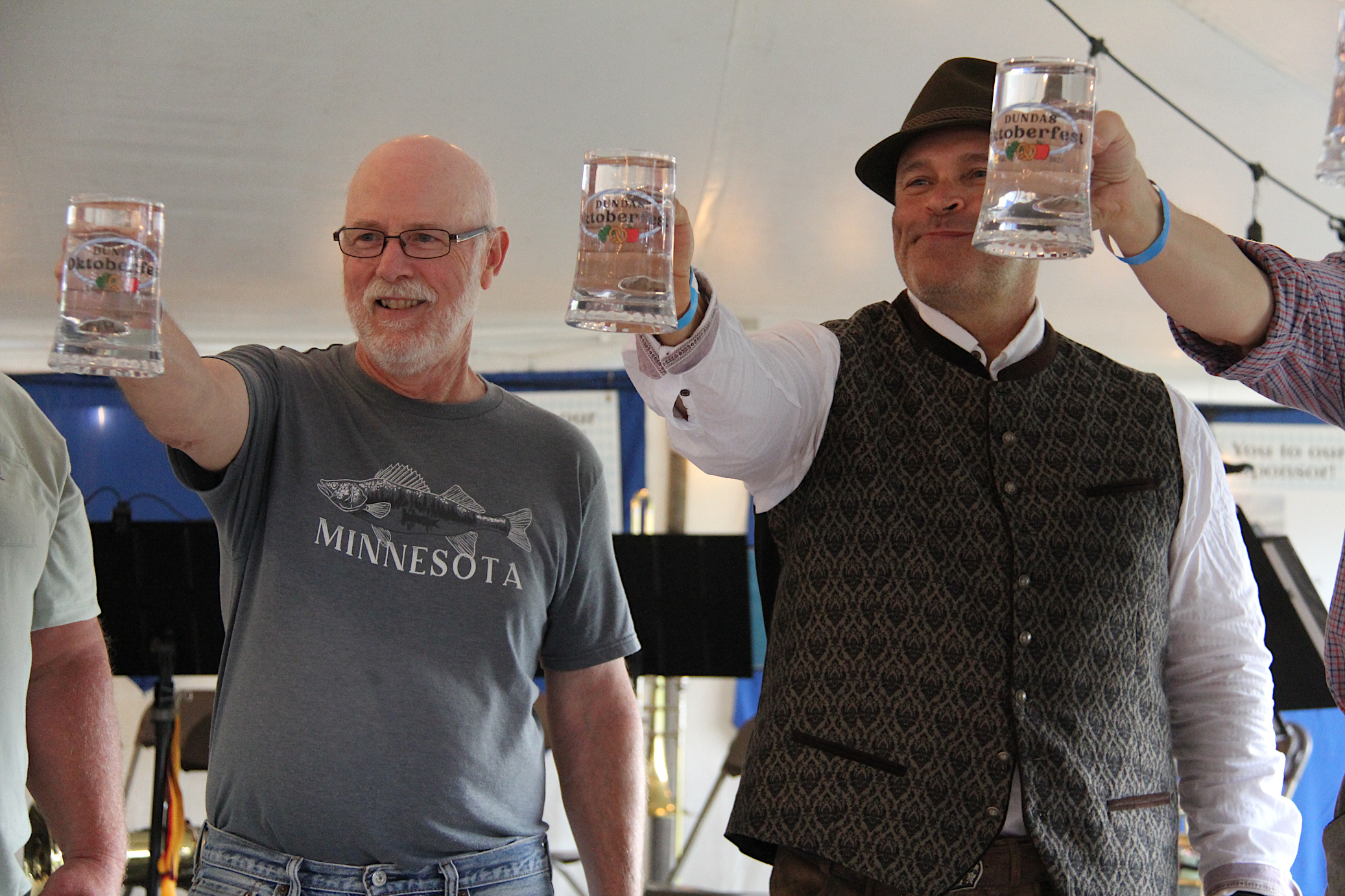
Raising their commemorative bier mugs at Oktoberfest in Dundas. (Minnesota Prairie Roots copyrighted photo September 2025)
BIER FLOWED.Musik pulsed. People of all ages danced and sang and visited and ate and drank, simply having a wunderbar time in the small town of Dundas. Randy and I were among the fest-goers, celebrating our first ever Oktoberfest Saturday afternoon. Why did we wait so long?
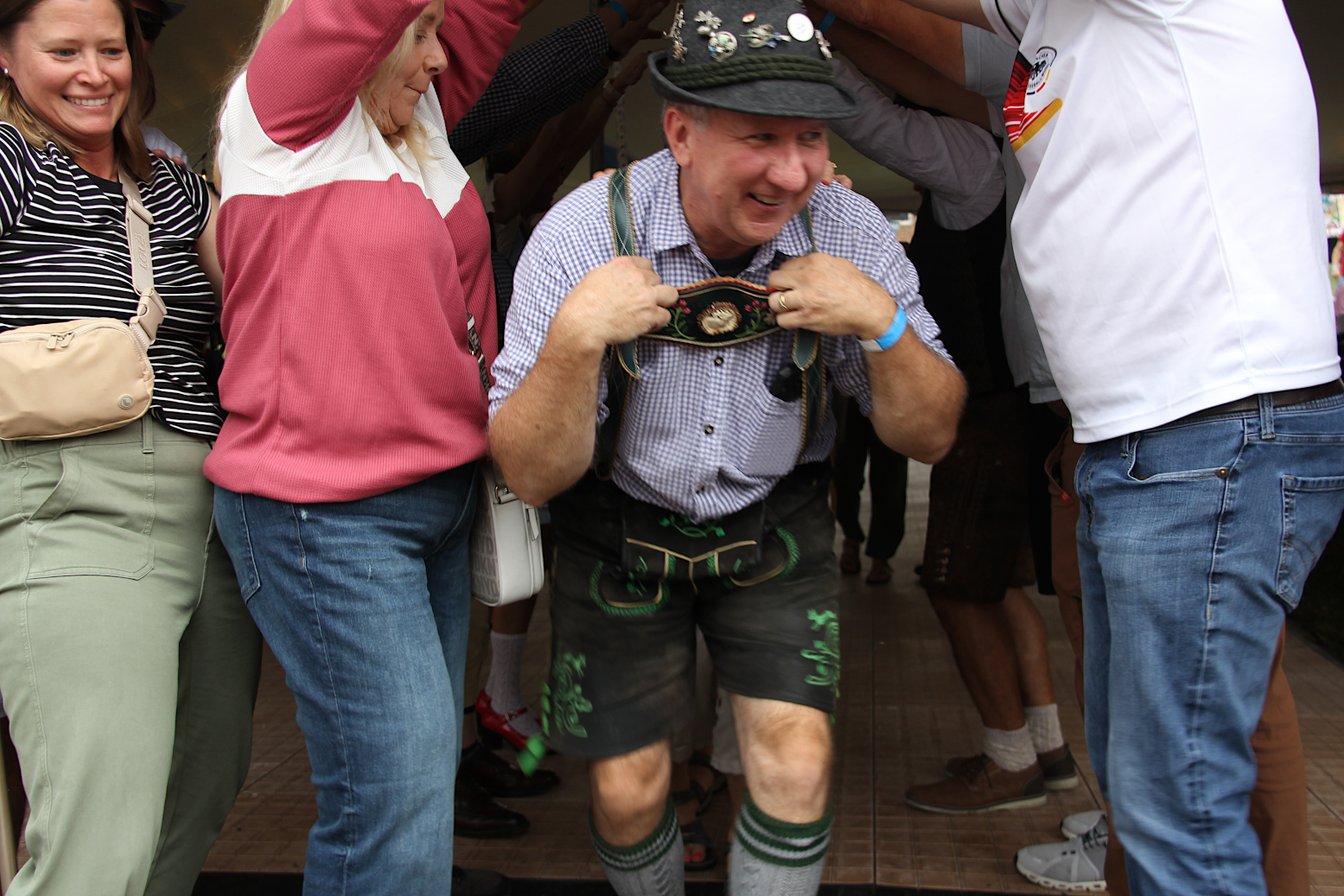
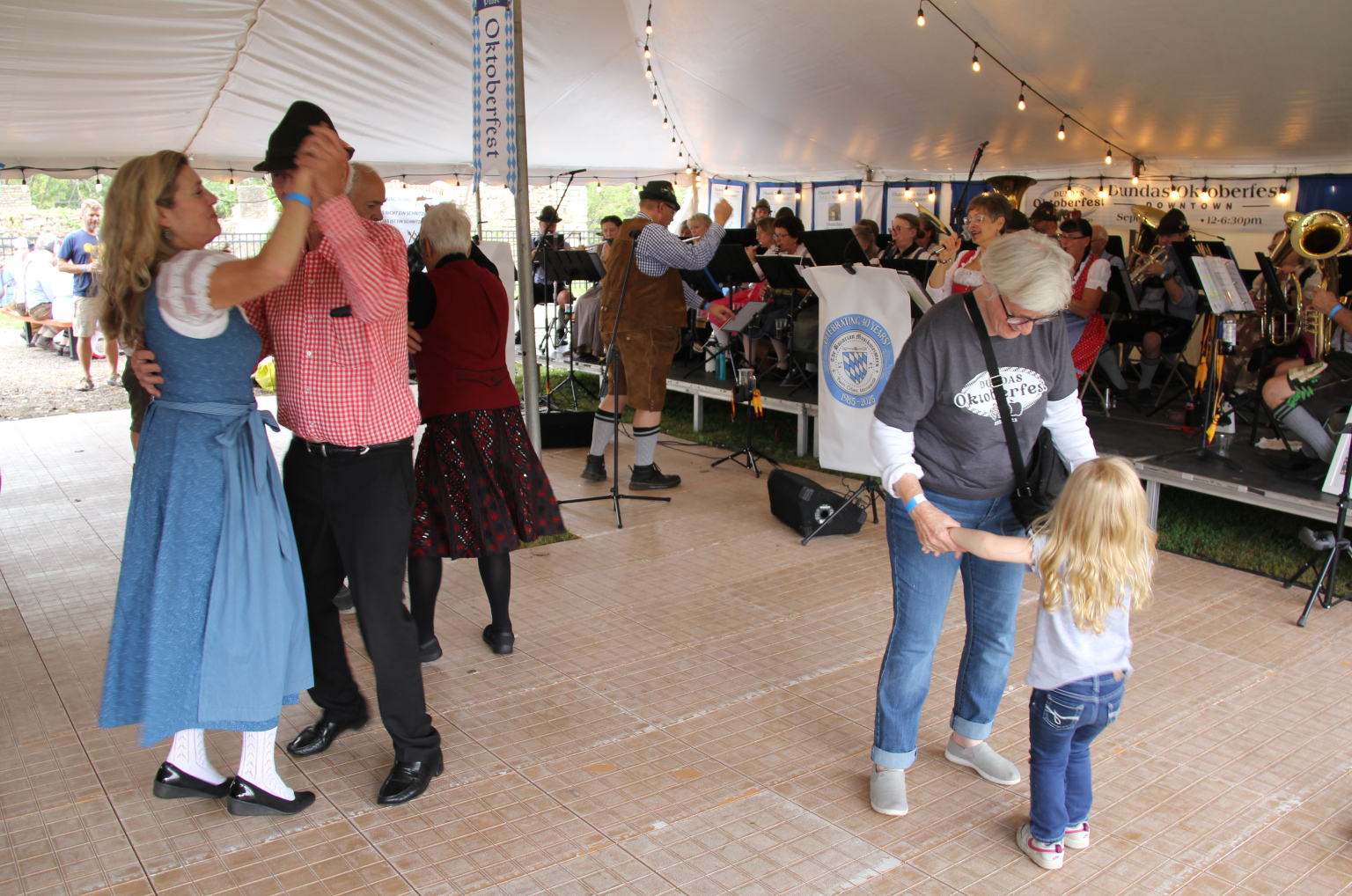
Dancing to the musik of The Bavarian Musikmeisters. (Minnesota Prairie Roots copyrighted photo September 2025)
This, for lack of a better phrase, was a whole lot of fun.
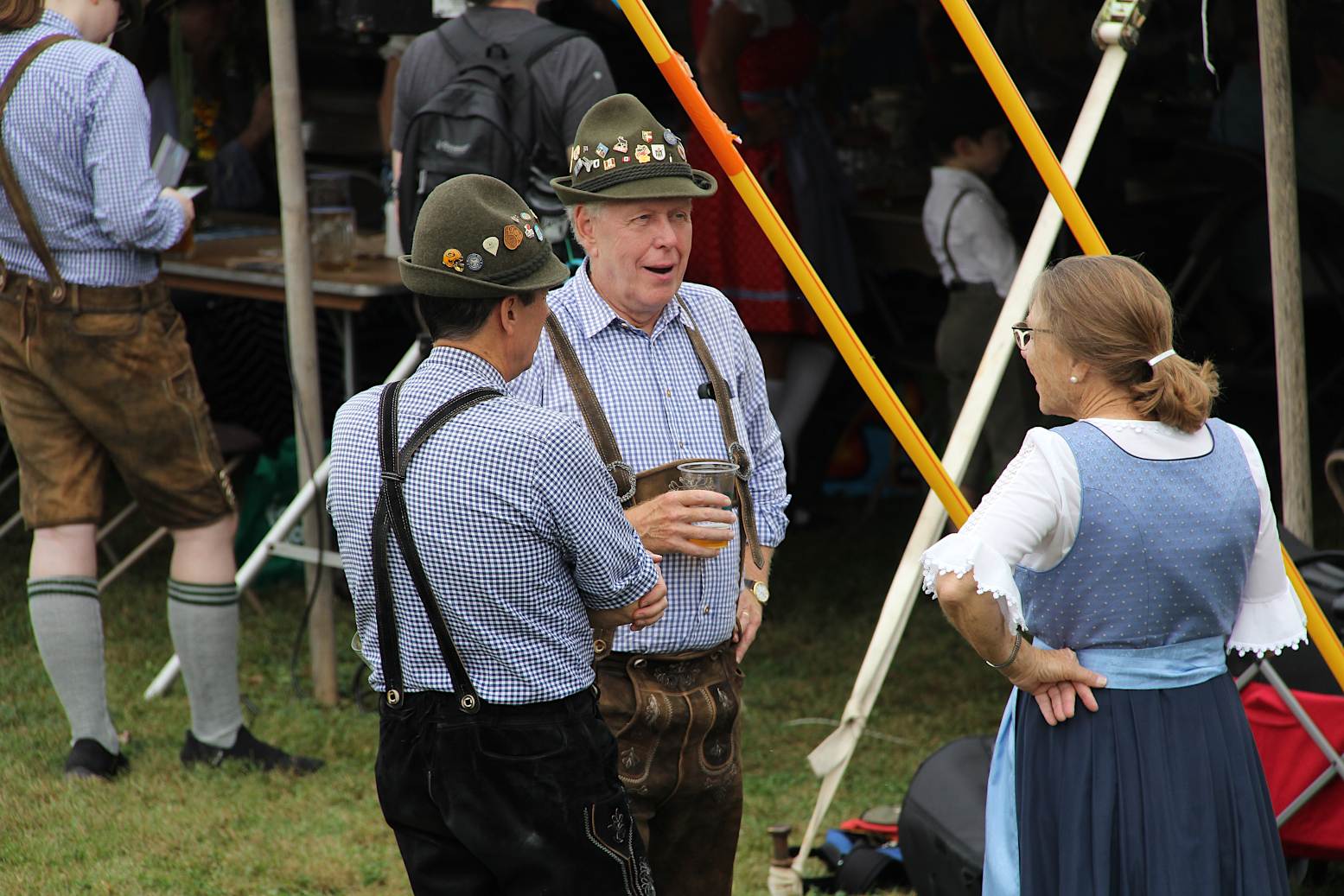
Deutsche costumes were prevalent. (Minnesota Prairie Roots copyrighted photo September 2025)
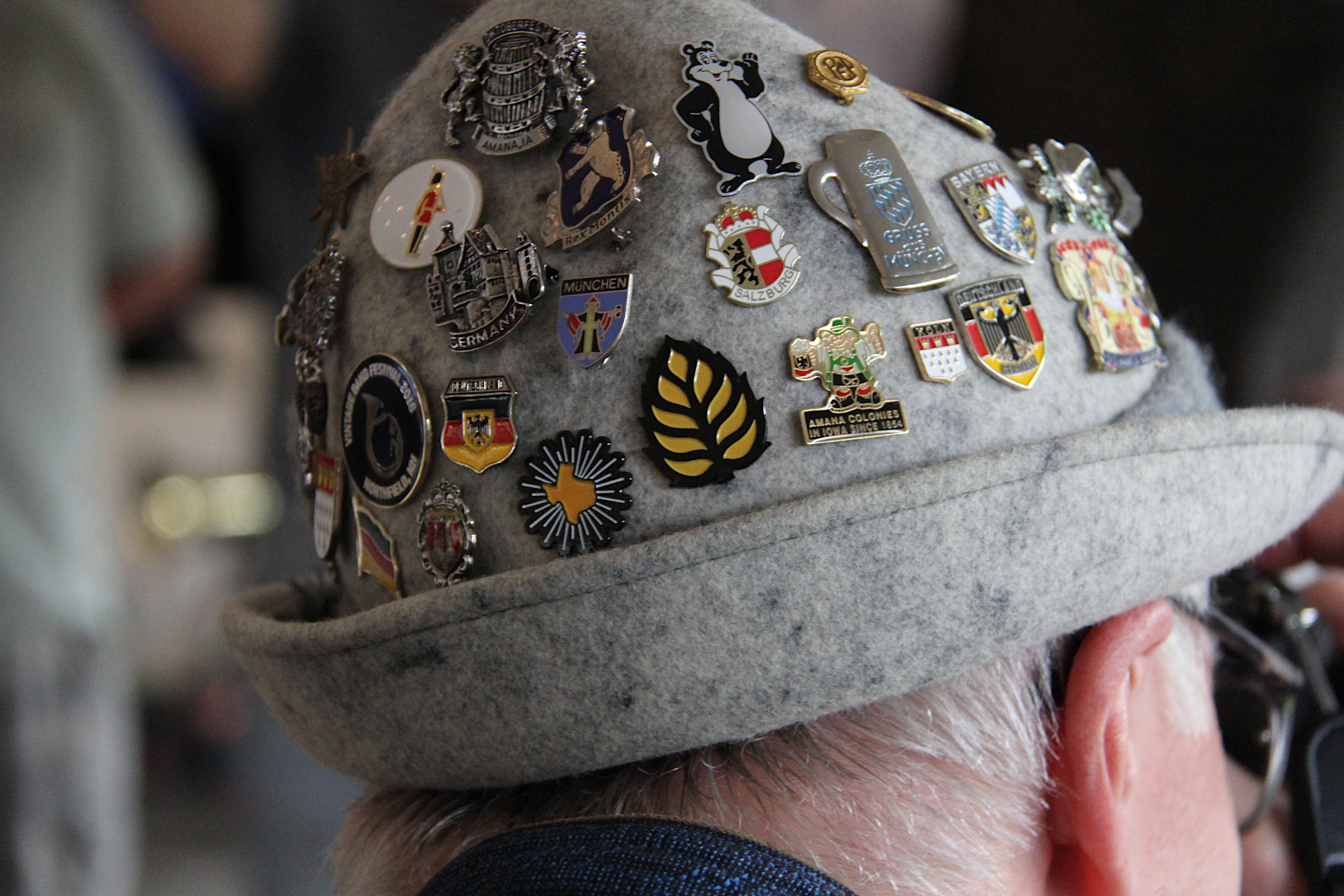
Lots of hats decorated with pins. (Minnesota Prairie Roots copyrighted photo September 2025)
Dancing in Deutsche costumes and street clothes. (Minnesota Prairie Roots copyrighted photo September 2025)
The mood proved jovial, festive and cheerful. Attendees really got in the spirit of the day, arriving in costume—lederhosen and dirndls and hats adorned with pins.
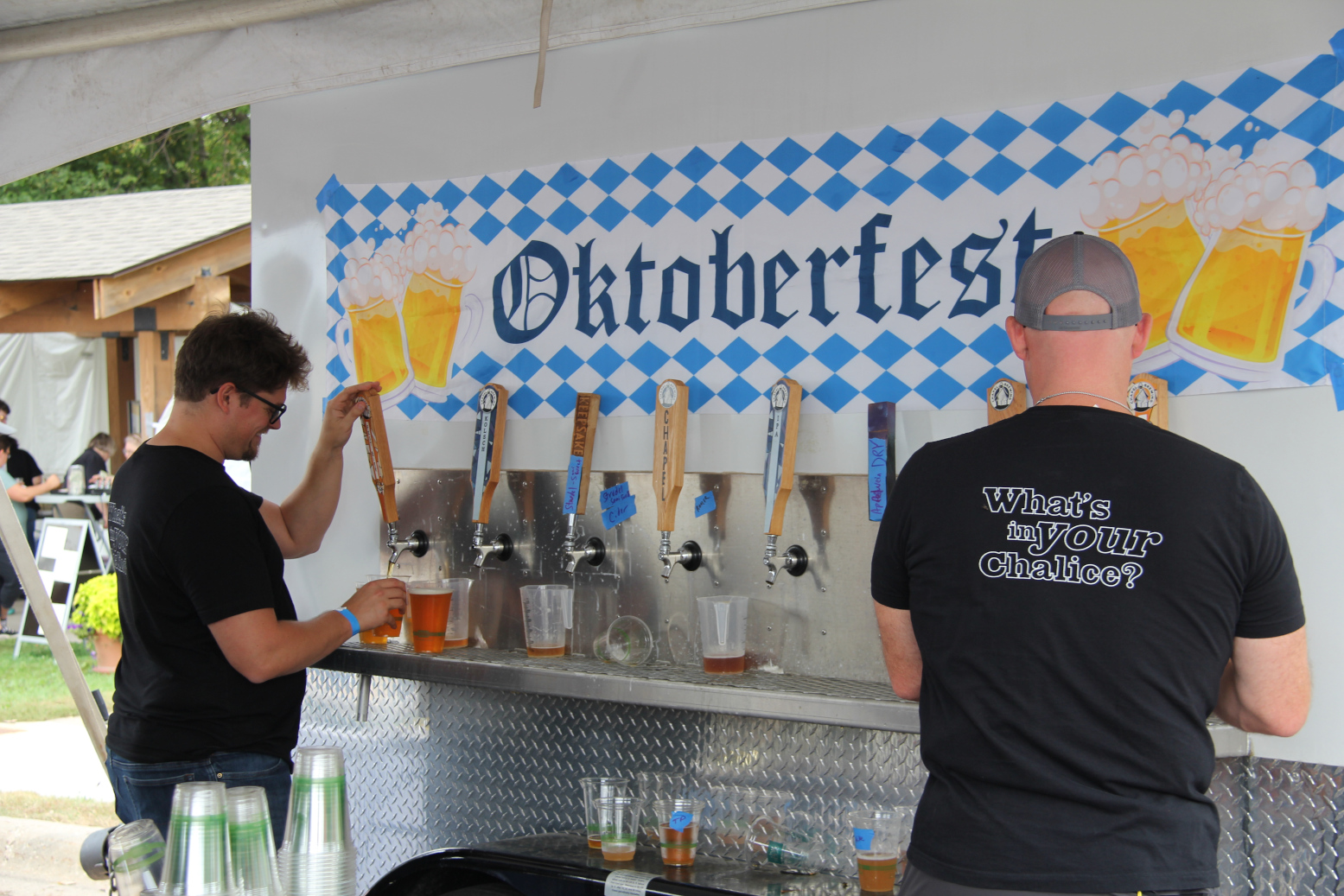
Chapel Brewing in Dundas served bier, cider and non-alcoholic drinks. (Minnesota Prairie Roots copyrighted photo September 2025)
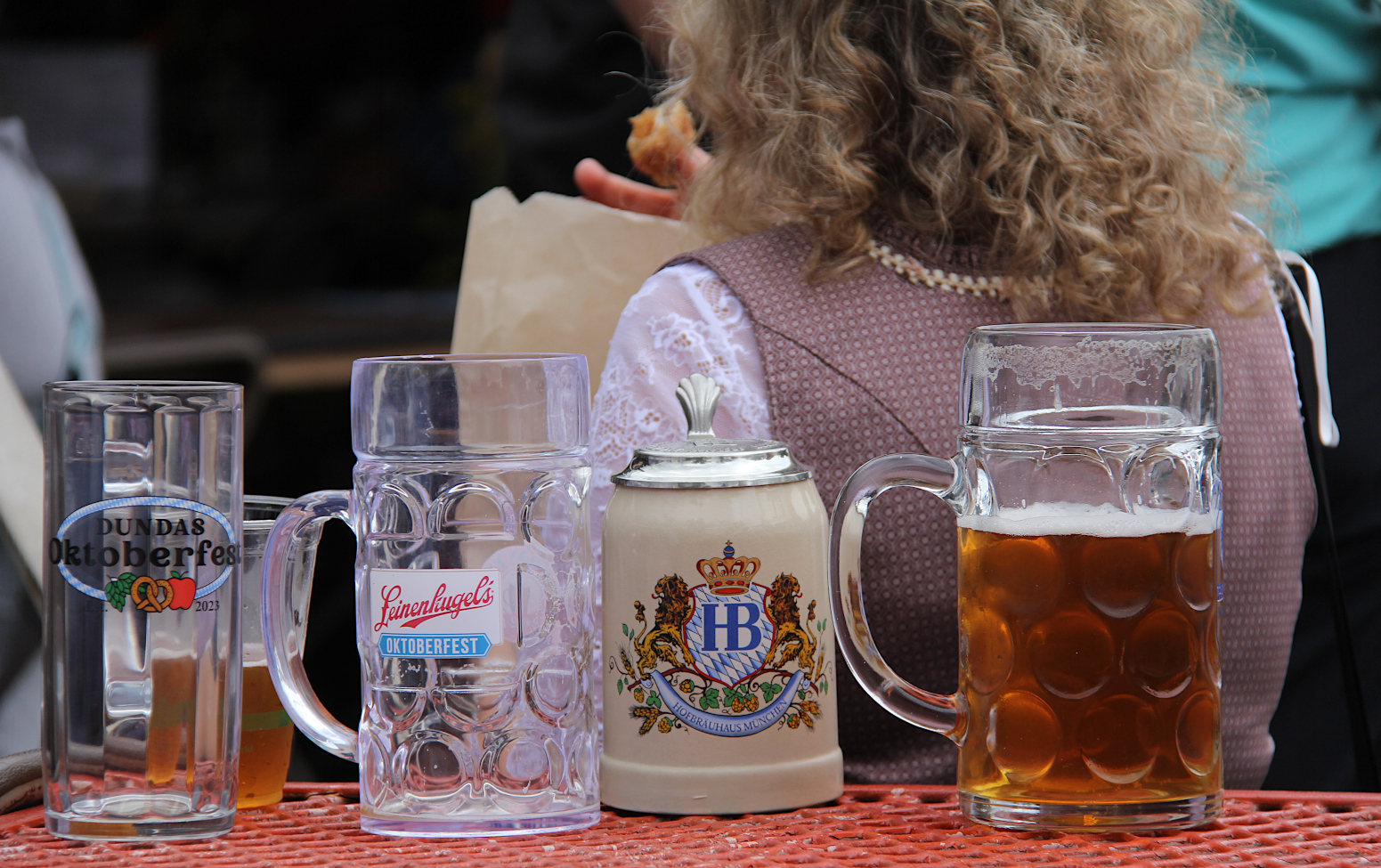
An assortment of mugs and steins sit on a picnic table. (Minnesota Prairie Roots copyrighted photo September 2025)
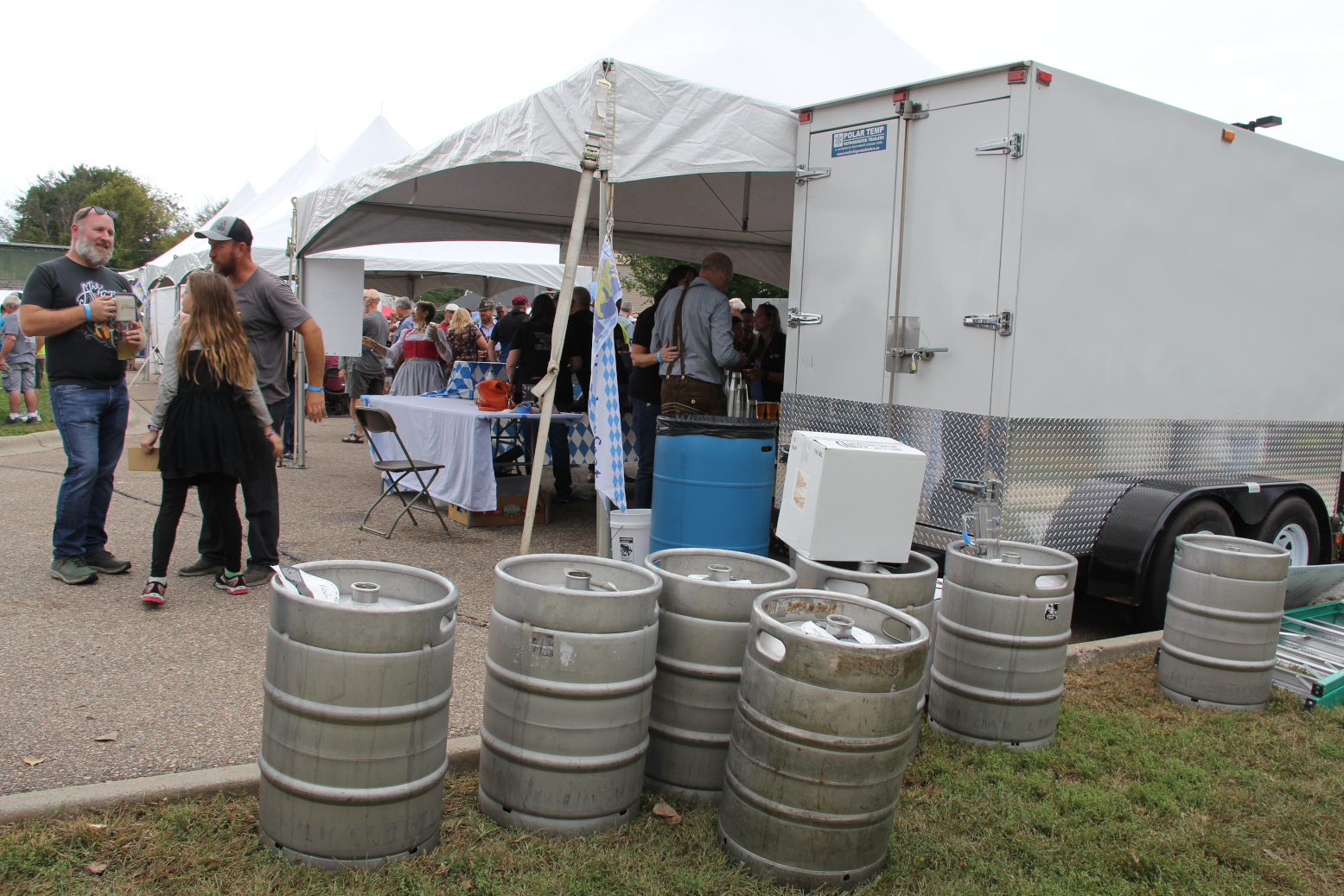
A stash of bier kegs at the Chapel Brewing tap tent. (Minnesota Prairie Roots copyrighted photo September 2025)
I arrived not quite knowing what to expect. Clearly many were seasoned in Oktoberfest, carrying their own massive steins and mugs to Chapel Brewing’sbier tap wagon. Lines formed outside the local craft brewer’s bier dispensing site.
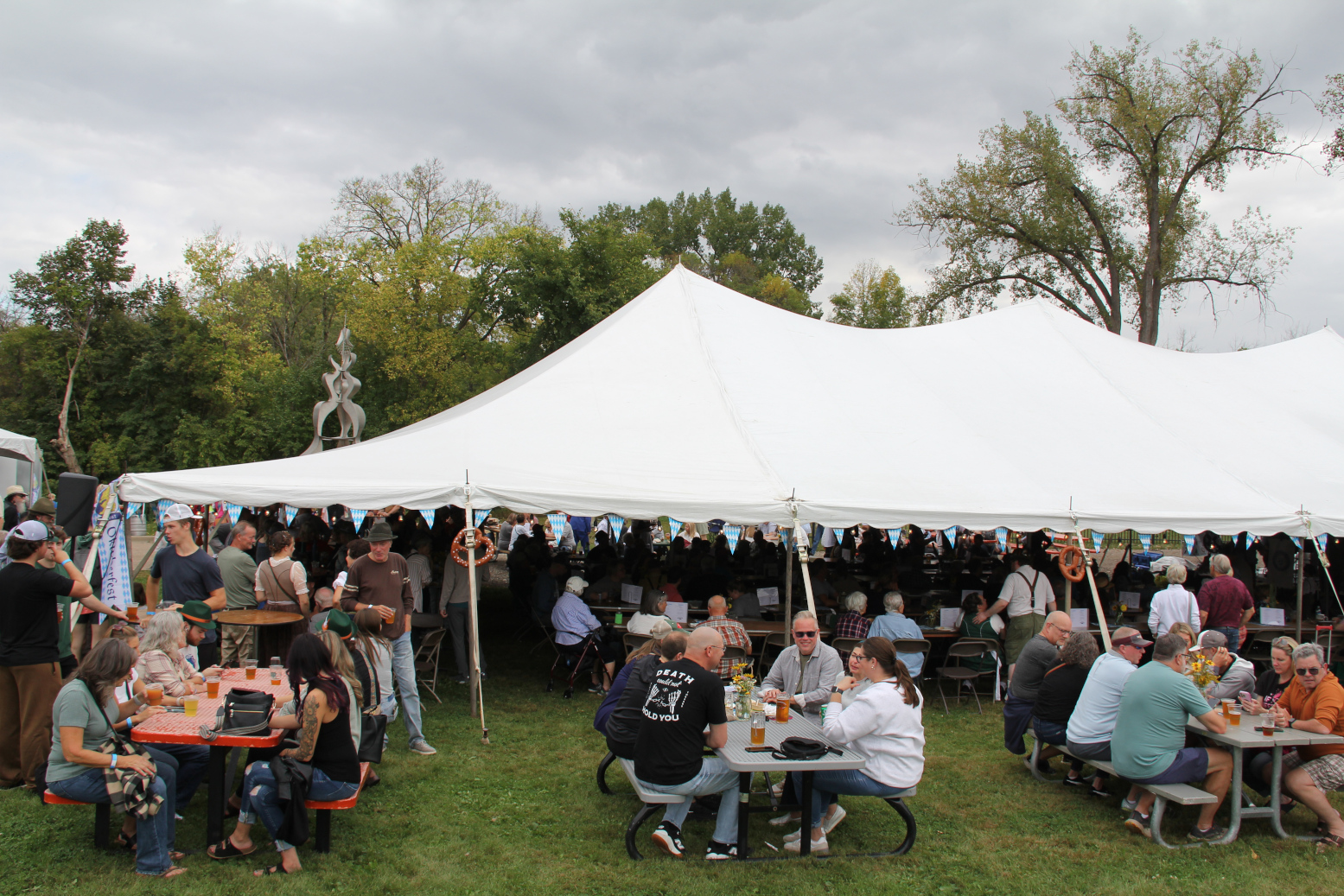
Attendees celebrated inside and outside tents on the festival grounds in downtown Dundas. (Minnesota Prairie Roots copyrighted photo September 2025)
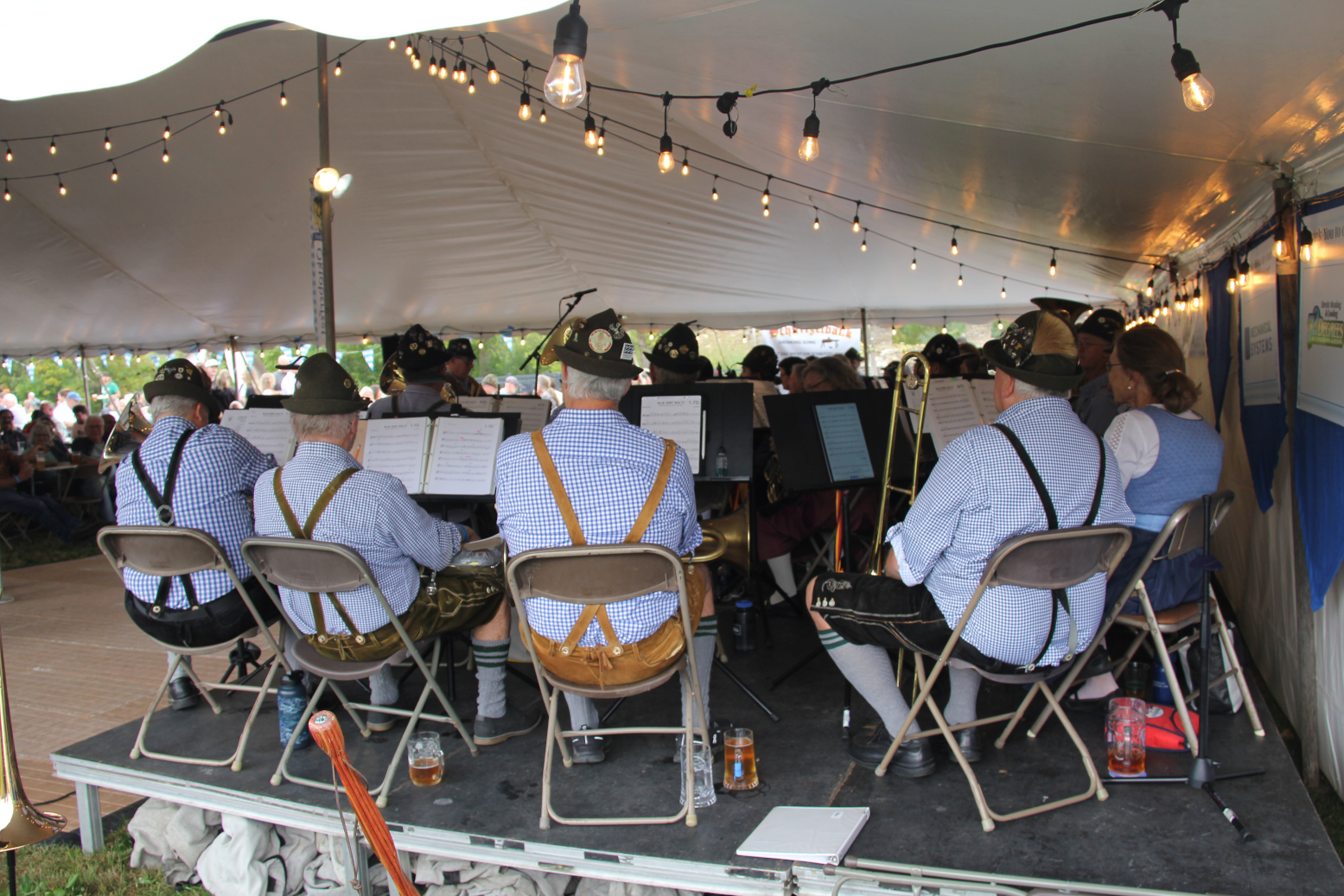
The Bavarian Musikmeisters perform under the big tent. (Minnesota Prairie Roots copyrighted photo September 2025)
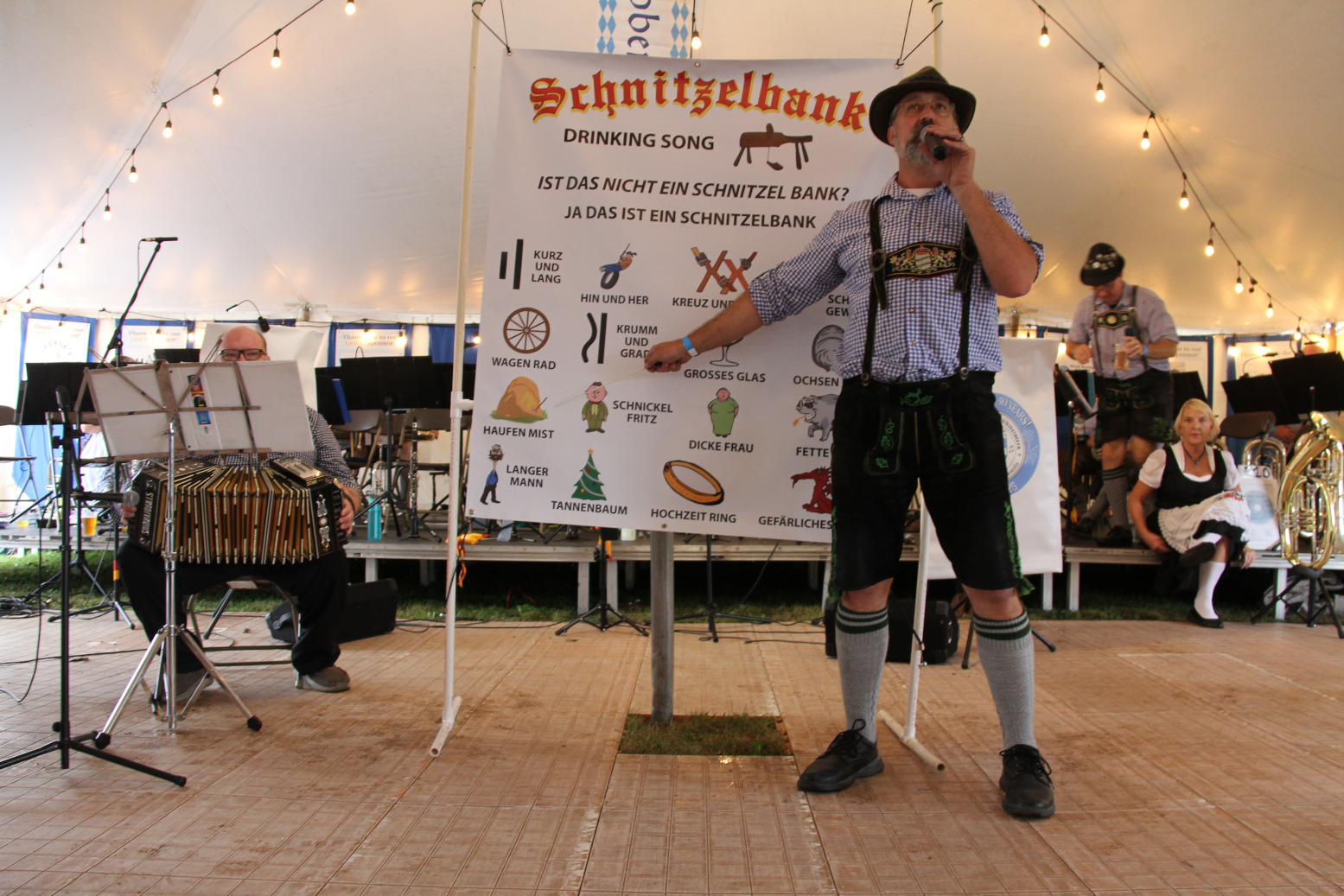
The song leader first taught attendees how to pronounce the Deutsche words before leading them in a boisterous drinking song. (Minnesota Prairie Roots copyrighted photo September 2025)
Under the big tent, crowds packed the space to overflowing. Here the 35-member Twin Cities-based band, The Bavarian Musikmesiters, performed Deutsche songs while fest-goers listened, danced and even sang in Deutsch.
Randy, left, and other contestants compete in the mug holding competition. (Minnesota Prairie Roots copyrighted photo September 2025)
When a mug holding contest was announced, Randy stepped up to join a group of guys competing to see who could hold a water-filled mug the longest. One-handed. Straight out in front, even with your shoulder. No elbow bending. Randy finished third out of eight. Not bad for the oldest among the competitors. The winner works an office job and lifts 15-pound hand weights at work. But the women, competing with each other at the same time, outlasted the men. Winners kept their mugs and got a free bier.
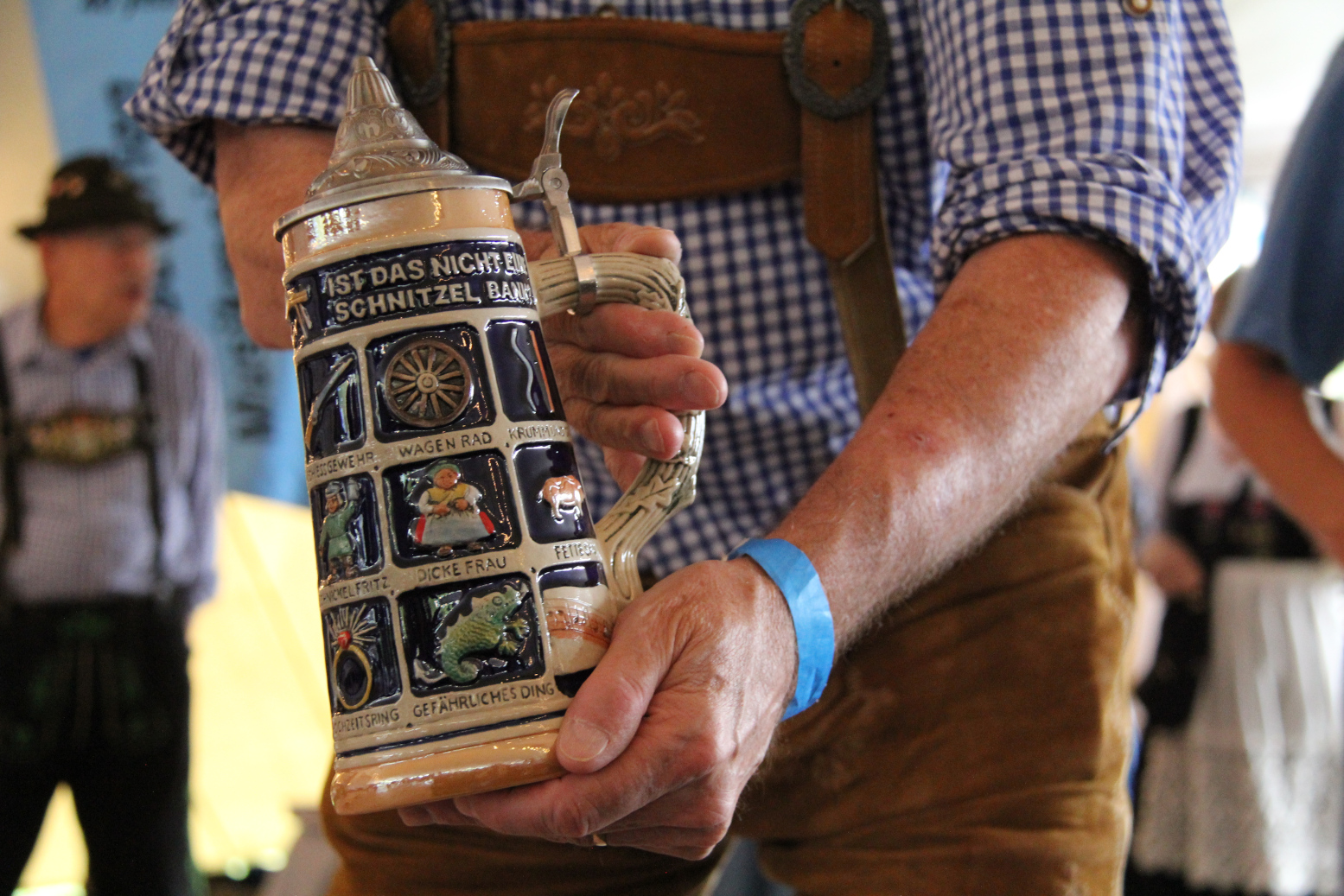
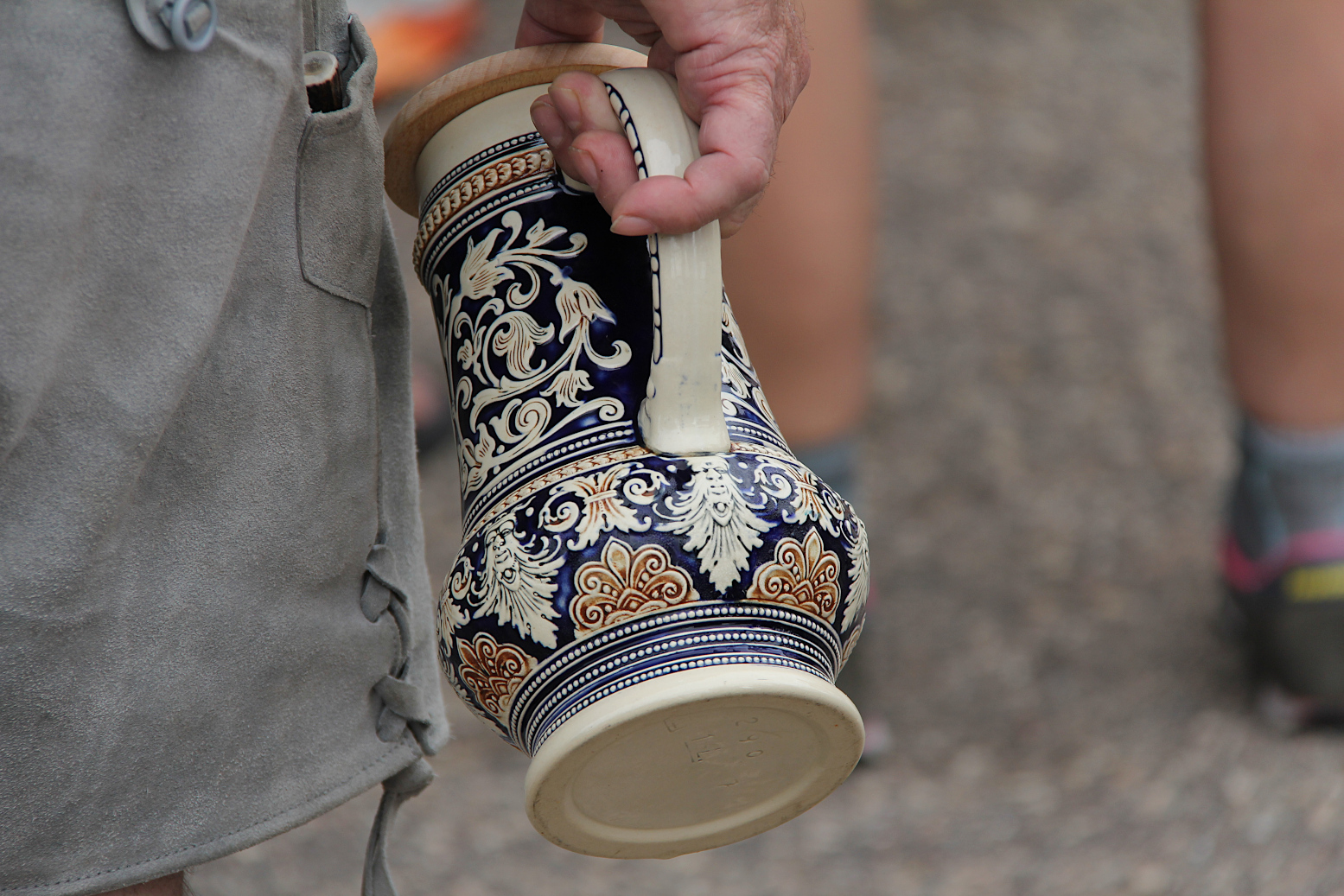
One of the largest and most detailed bier steins I saw at Oktoberfest. (Minnesota Prairie Roots copyrighted photo September 2025)
Many times people lifted their bier-filled mugs, steins and plastic cups in Prost! Cheers.
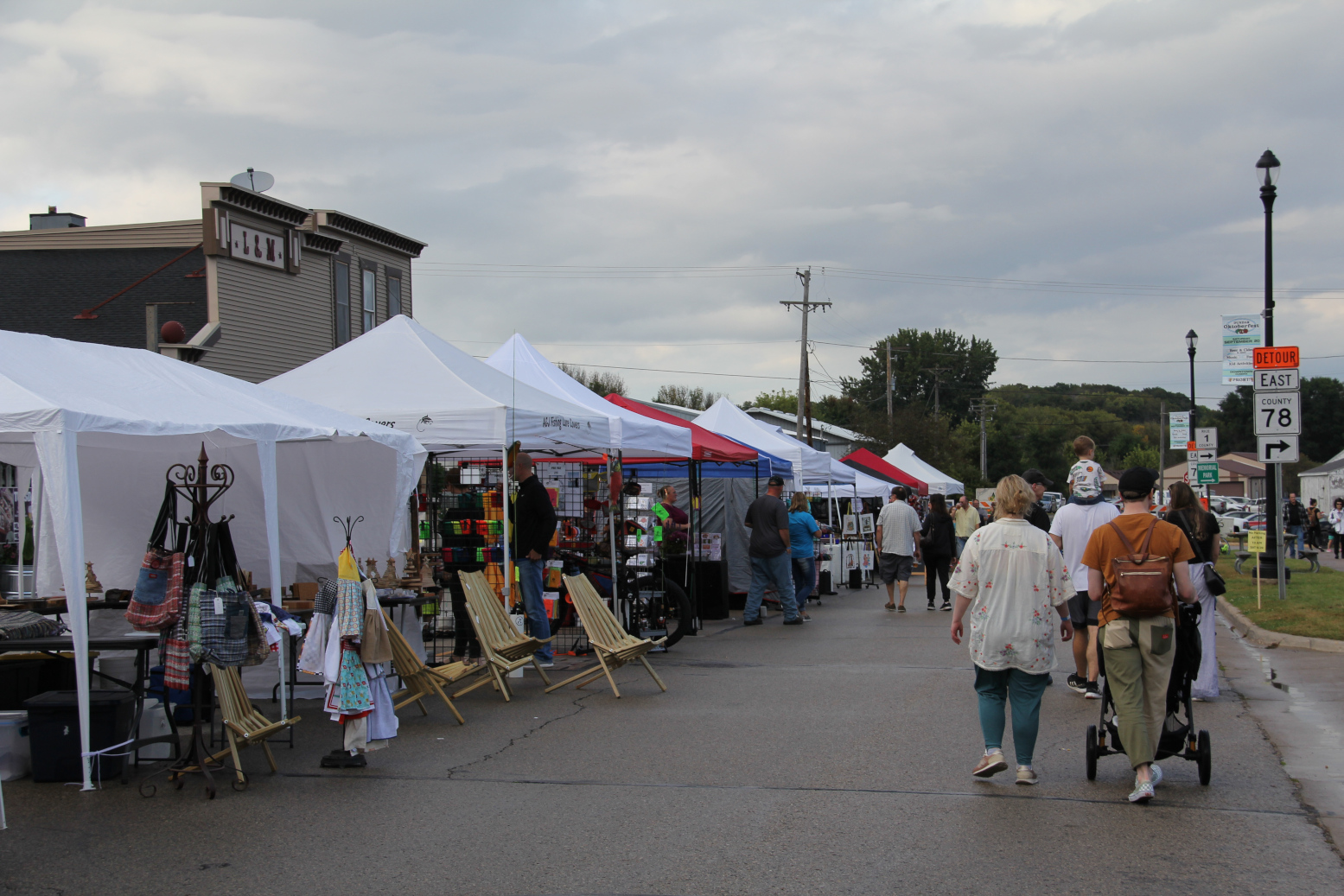
Vendors set up shop along the street next to the Oktoberfest grounds. (Minnesota Prairie Roots copyrighted photo September 2025)
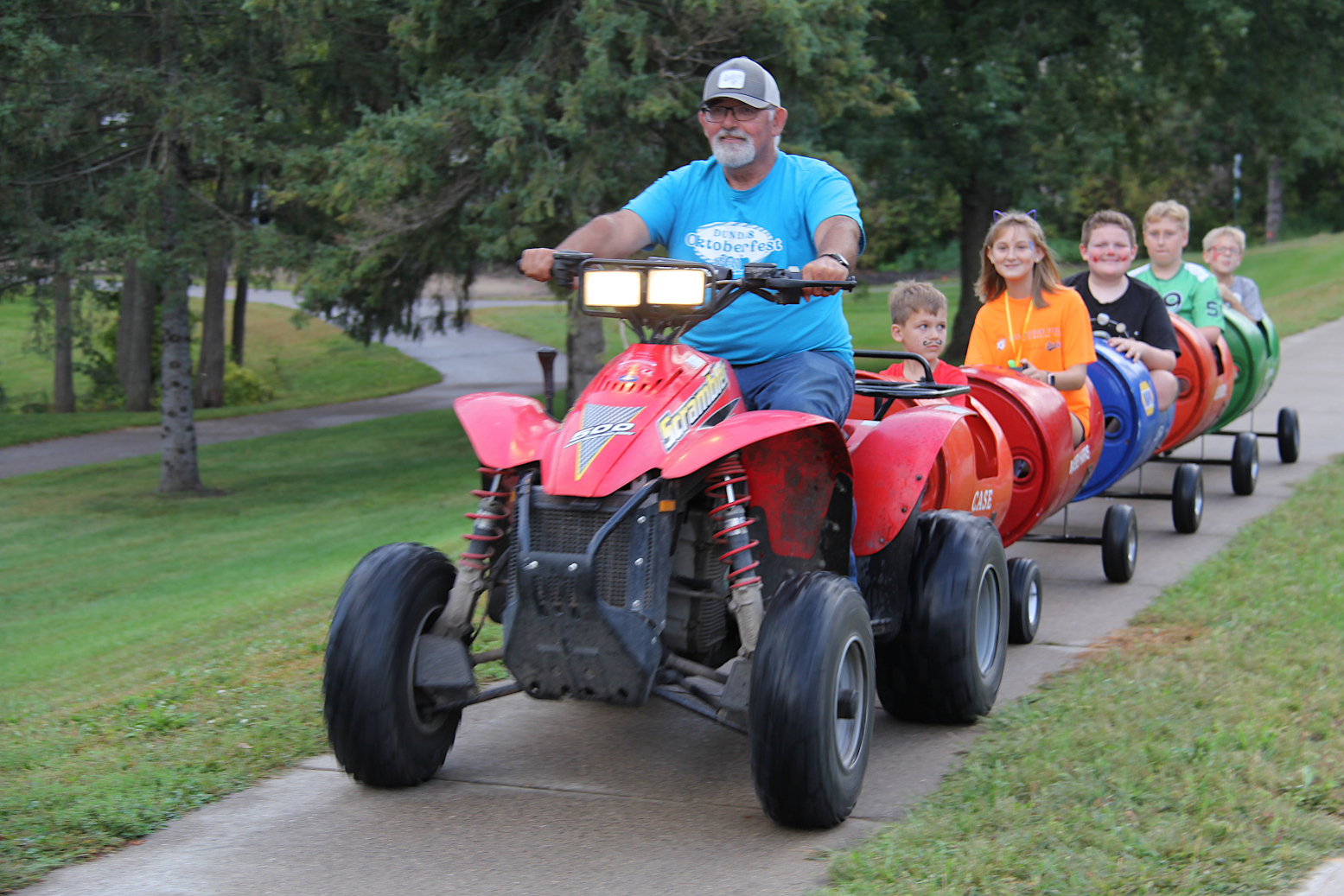
A barrel train barrels along the sidewalk, returning from Memorial Park to the fest site. (Minnesota Prairie Roots copyrighted photo September 2025)
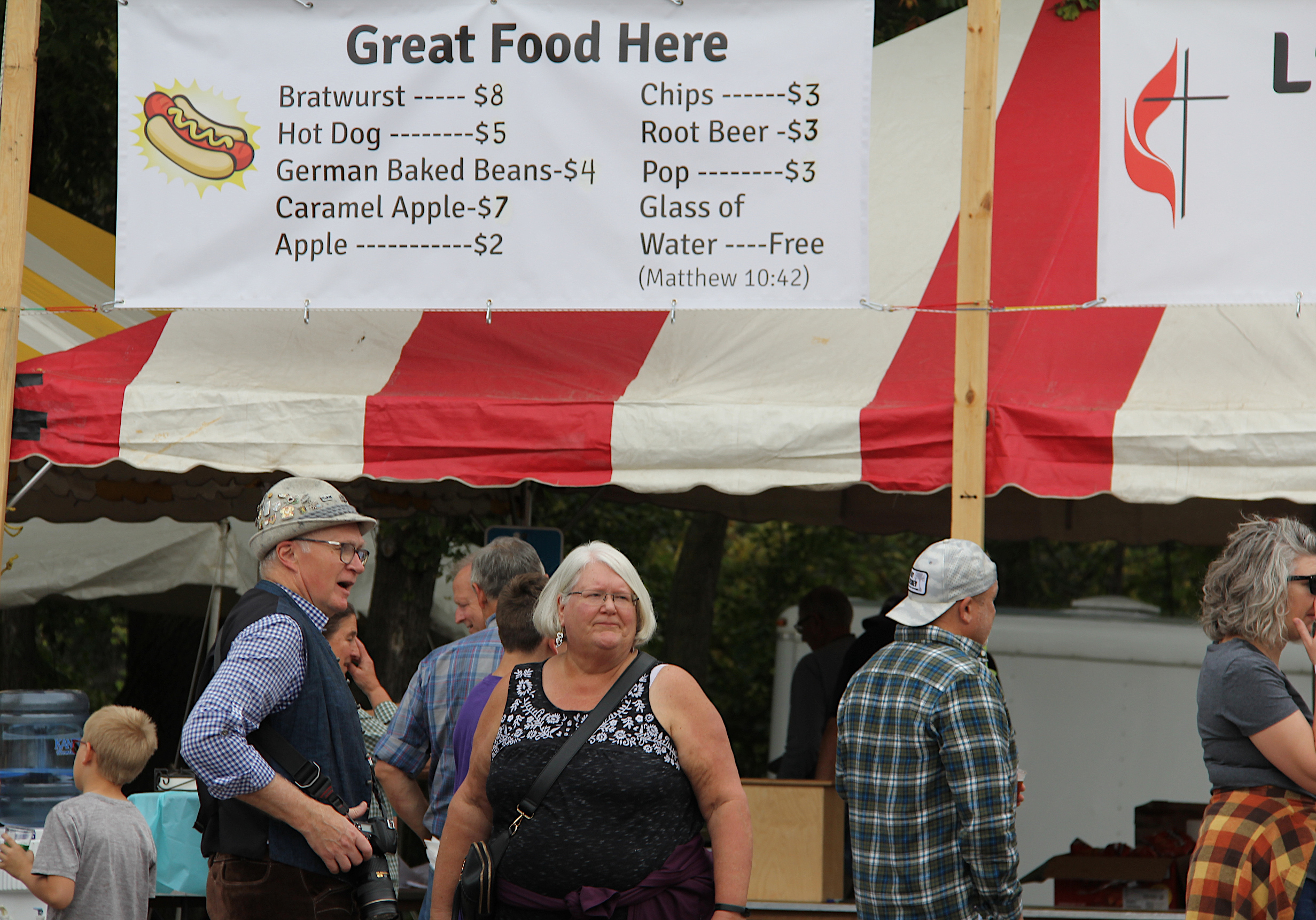
Little Prairie United Methodist Church served up Deutsche foods and more. (Minnesota Prairie Roots copyrighted photo September 2025)
There was lots to cheer about here from entertainment to food and drink, a craft fair, a collector’s car and motorcycle show, and activities for kids.
A fest-goer carries his stein to the bier wagon. (Minnesota Prairie Roots copyrighted photo September 2025)
I took it all in, celebrating my Deutsche heritage, trying to remember the Deutsch I learned in high school and then in college. I’ve forgotten most of the Mother tongue. No one much cared. Rather, the focus was on fun, Deutsche style fun. Prost!
#
NOTE: Please check back for more photos from Dundas’ Oktoberfest.
A look through a garden kaleidoscope at The Paine Art Center & Gardens in Oshkosh, WI. (Photo courtesy of Miranda Boyd)
IN SOME WAYS, kindness resembles a kaleidoscope. It’s ever-changing, surprising and delightfully-beautiful. So is music. Combine the two, and you have a harmony of kindness.
A harmonica and instructions given away recently following at a concert in Faribault. (Minnesota Prairie Roots copyrighted photo July 2025)
Attendees at a recent blues concert in Faribault’s Central Park were extended a kindness by the Minnesota Blues Society via the gift of a free harmonica and a short lesson in playing techniques. The Everett Smithson Band had just completed its performance when folks gathered in the park’s center for the give-away. I grabbed two harps (a synonym for harmonica) for my elementary-aged grandchildren, but didn’t stick around for the lesson. An interested group of concert-goers, though, circled Smithson, a Minnesota Blues Society Hall of Fame inductee, for instructions.
Decades ago as a child, I had a metal toy harmonica, with not a clue how to play it. My attempts at music were more noise than anything. Yet here I was, many years later in the presence of a professional harmonica player and vocalist willing to teach a bunch of strangers harmonica basics through the Blues Society’s “Harmonica Lessons for All Ages” program. The group, with a mission in part of promoting blues music in Minnesota, has given away more than 500 harmonicas. That’s a whole lot of kindness spread to music lovers across the state, including right here in Faribault.
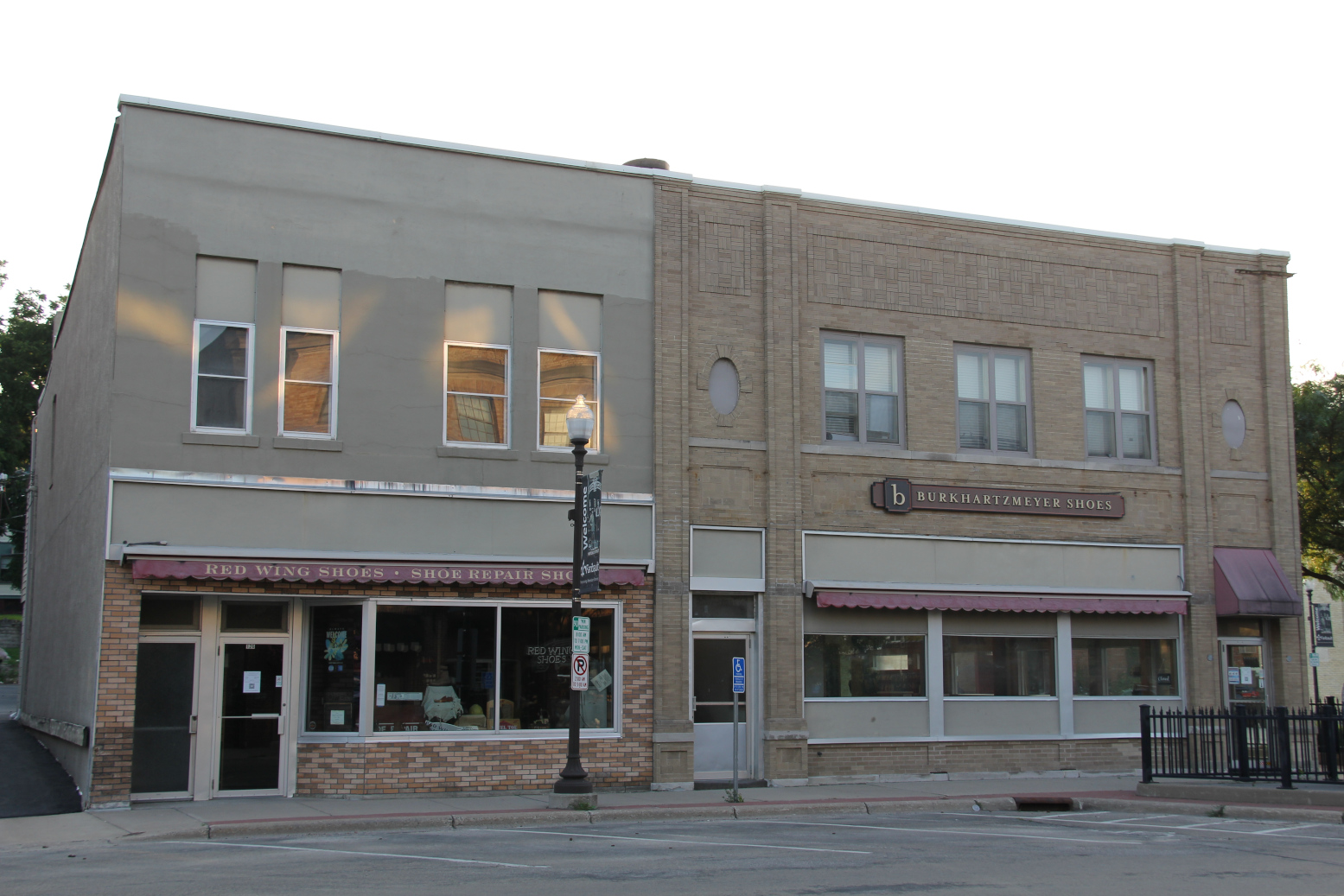
Burkhartzmeyer Shoes, in business since 1949. (Minnesota Prairie Roots copyrighted photo July 2025)
KINDNESS IN A SHOE STORE
It was during a previous concert in the same Faribault park that I once again witnessed kindness, this time in the words of a 10-year-old, the daughter of a friend. I don’t recall how the subject turned to shoes. But this young girl, who’d been cartwheeling across the grass and playing Frisbee and kick ball with her sister and friends, declared that her favorite store is Burkhartzmeyer Shoes. That’s a third-generation family-owned shoe store and repair shop in Faribault.
Now when a kid tells you they like a shoe store better than a certain Big Box retailer (which shall remain unnamed), you take notice. Turns out Bruce at Burkhartzmeyer Shoes allowed my young friend entry to the shoe storage space behind the curtains. She was impressed by all the shoes in the back room and by the free sucker you get whenever you buy a pair of shoes. Oh, and by the fact the Burkhartzmeyers know your shoe size just by looking at your feet.
So here I was in the park listening to a story about a kind shop owner who left such an impression on a 10-year-old that she was now promoting “Shop Local” without even realizing it. Kindness in action repaid with kind words.
Books on Central is located along Central Avenue in downtown Faribault. (Minnesota Prairie Roots copyrighted photo 2024)
KINDNESS IN A BOOKSHOP
Another shop in Faribault, this one open not even two years, also excels in exceptional customer service and kindness. Last week, when the grandkids were staying with us, we popped into Books on Central, a used bookstore run by Rice County Area United Way. All proceeds benefit non-profits which the local United Way supports. My granddaughter, who is very much in to dragons, was looking for a dragon book she hadn’t yet read. There were none to be found despite the best efforts of the volunteer staff and myself to locate one.
The next day, though, I received an email from volunteer Dave Campbell that the graphic novel, The Dragonet Prophecy, was just donated. Did I want it for my granddaughter? Izzy, who previously wanted nothing to do with graphic novels, quickly said, “Yes.” Did I mention she loves dragons?
Dave said he would hold the book for me. If not for his wife, Jeanne, who was volunteering on the day we shopped at Books on Central, the Wings of Fire graphic novel would have been processed, shelved and quickly sold. It’s a popular series. But Jeanne remembered Izzy’s dragon interest and, in this act of kindness, a girl who loves to read now has one more dragon book in her collection.
Kindness exists everywhere. I saw it in a harmonica give-away. I heard it in the story of a 10-year-old praising a local shoe shop. And I received it in a book held for the granddaughter I love, the girl I want to live and grow and thrive in a world of kindness.
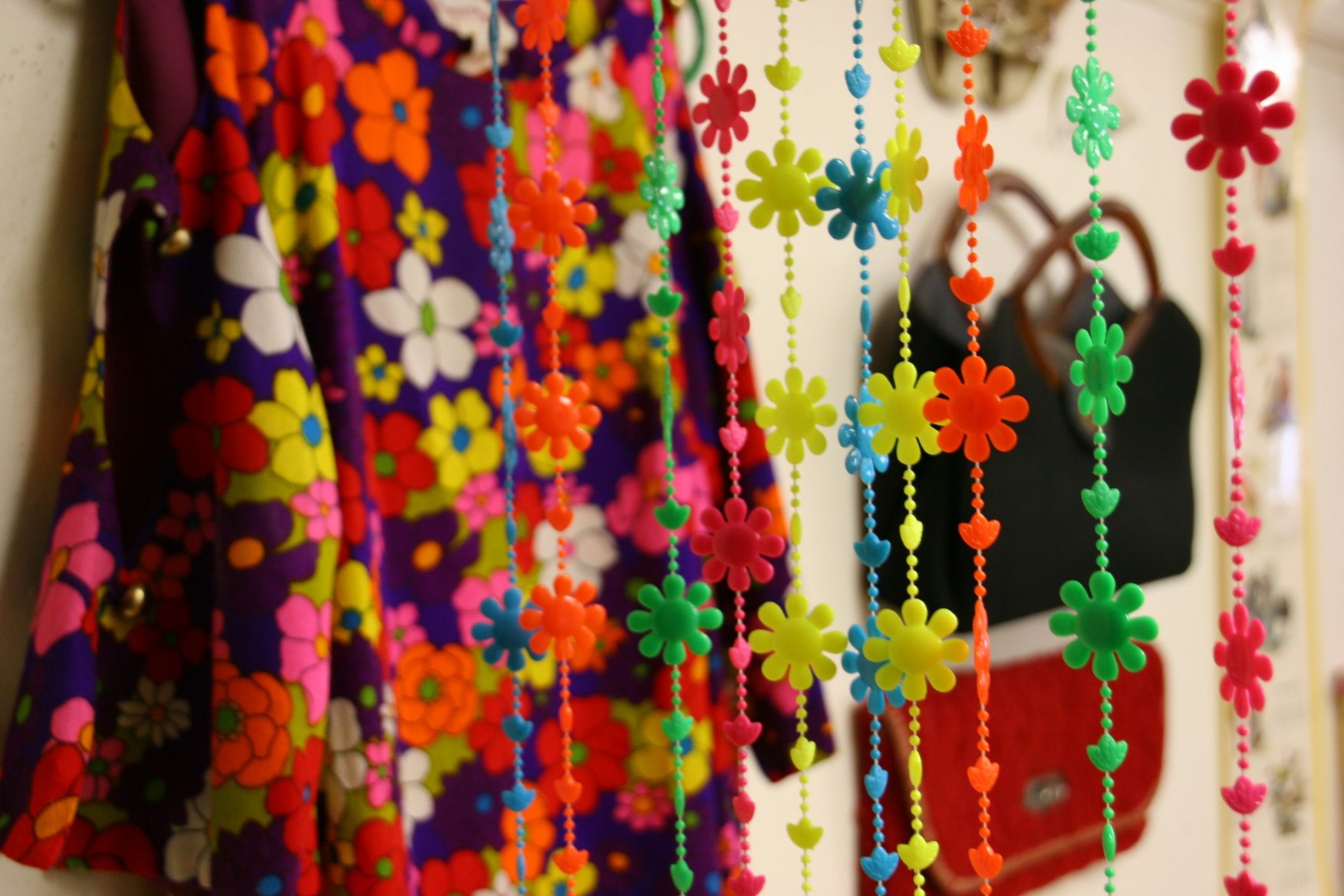
Dangling beads inside the doorway to “The 50’s and 60’s Room” at the West Concord Historical Society hearken to the era of Bobby Sherman.(Minnesota Prairie Roots copyrighted file photo 2015)
“JULIE, JULIE, DO YA love me?” Oh, how I wished it was, “Audrey, Audrey, do ya love me?” Such were my thoughts when Bobby Sherman sang that Billboard Hot 100 hit in 1970.
Sherman died this week at age 81, leaving behind a generation of Baby Boomers like me who were hopelessly, madly in love with the teen idol. He was charismatic, good-looking with his shaggy long hair, simply everything a smitten girl could want in a crush.
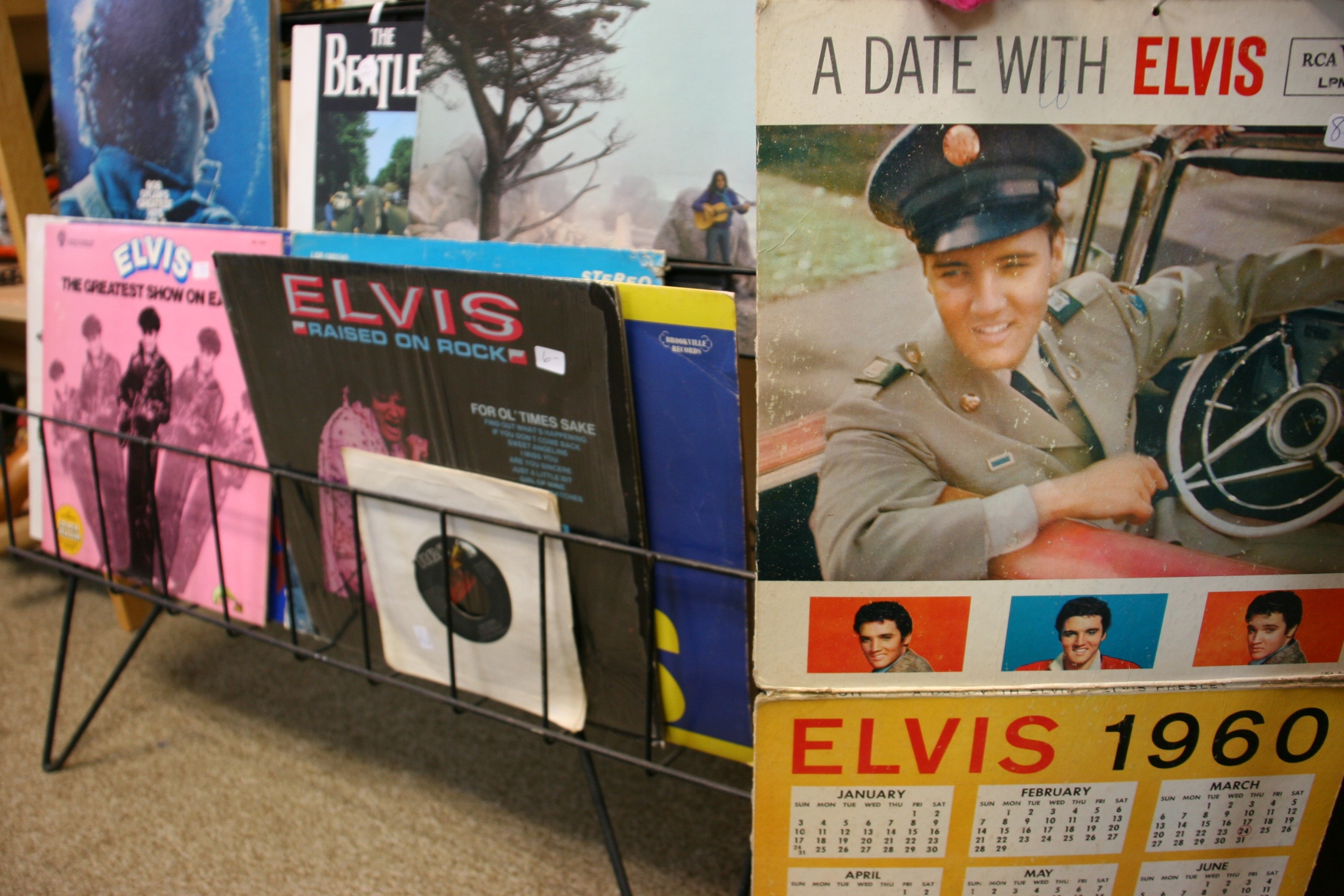
An Elvis display at a St. Charles antique shop, which I visited years ago. (Minnesota Prairie Roots copyrighted file photo)
And that’s exactly what our relationship was—puppy love. Like generations of teen girls before and after me, I fell in love with handsome heart throb singers. Others fell for Elvis, Donny Osmond, Justin Bieber… Ditto for boy bands.
But back in my day, in the 1960s and 1970s, the likes, looks and lyrics of Bobby Sherman and David Cassidy captured my heart. Sherman even made a guest appearance on Cassidy’s “The Partridge Family” TV show. Both were actors and musicians. And both often sang about unrequited love, as in Sherman’s performance of “Julie, Do Ya Love Me” by songwriter Tom Bahler.
Tiger Beat magazine,photographed many years ago in a St. Peter antique shop. The magazine was in print publication from 1965-2018. (Minnesota Prairie Roots copyrighted file photo)
It’s interesting that, upon Sherman’s death, I could not think of a single song he sang. But when prompted with playbacks, I remembered. Mostly, though, I remember how my cousin Joyce and I paged through her copies of Tiger Beat magazine whenever my family visited hers. She would pull out her copies of this American teen fan publication and we would swoon over photos of our much-loved celebrities like Bobby Sherman. I don’t recall reading the stories, but we probably did. Photos, though, left a lasting impression. Sherman graced the cover of Tiger Beat and Sixteen magazines countless times. I can picture him still all feathered or shaggy hair, big smile and a choker around his neck.
Beyond Tiger Beat, my cousin also plastered her bedroom walls with teen idol posters. Joyce was much more tuned in to celebrity life than me. She had older sisters. I didn’t. Regardless, we shared a love of Bobby Sherman, who sang about Julie. Not about Audrey or Joyce, just two teenagers hanging out in a southwestern Minnesota farmhouse bedroom, dreaming of love while thumbing through Tiger Beat magazine.
TELL ME: Did you have a favorite heart throb singer or band? Maybe Bobby Sherman. Let’s hear. I also really like/liked Rod Stewart, Chicago, Bread, Lobo, The Carpenters, John Denver…
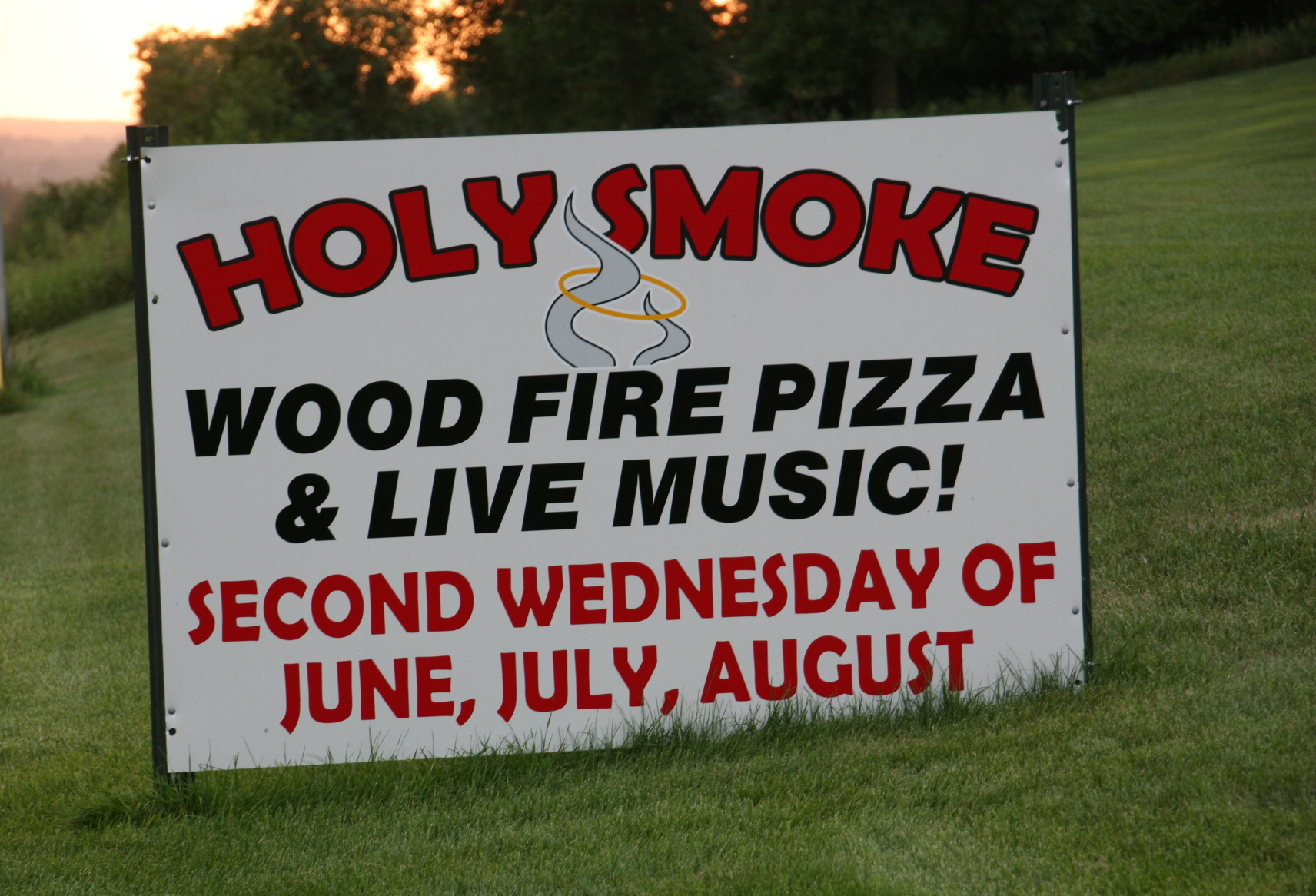
You can’t miss the Holy Smoke signage at the bottom of the hill along Minnesota State Highway 60 on Faribault’s east side. Christ Lutheran sits atop the hill, offering a sweeping view of the valley. (Minnesota Prairie Roots copyrighted file photo)
SUMMER IN SOUTHERN MINNESOTA is about the outdoors, about gatherings, about food and music and all those things we’ve craved during the long months of winter now come to fruition. As long, sunny days stretch into long evenings, we come together, delighting in all June, July and August offer.
On Faribault’s east side, high atop a hill at Christ Lutheran Church, the seasonal Holy Smoke Pizza Ministry resumes for another summer on June 11. This second Wednesday of the month event isn’t just about the savory and delicious smoked pizzas volunteers prepare and then bake in an outdoor wood-fired oven. But it’s also about community, outreach, music and charities.
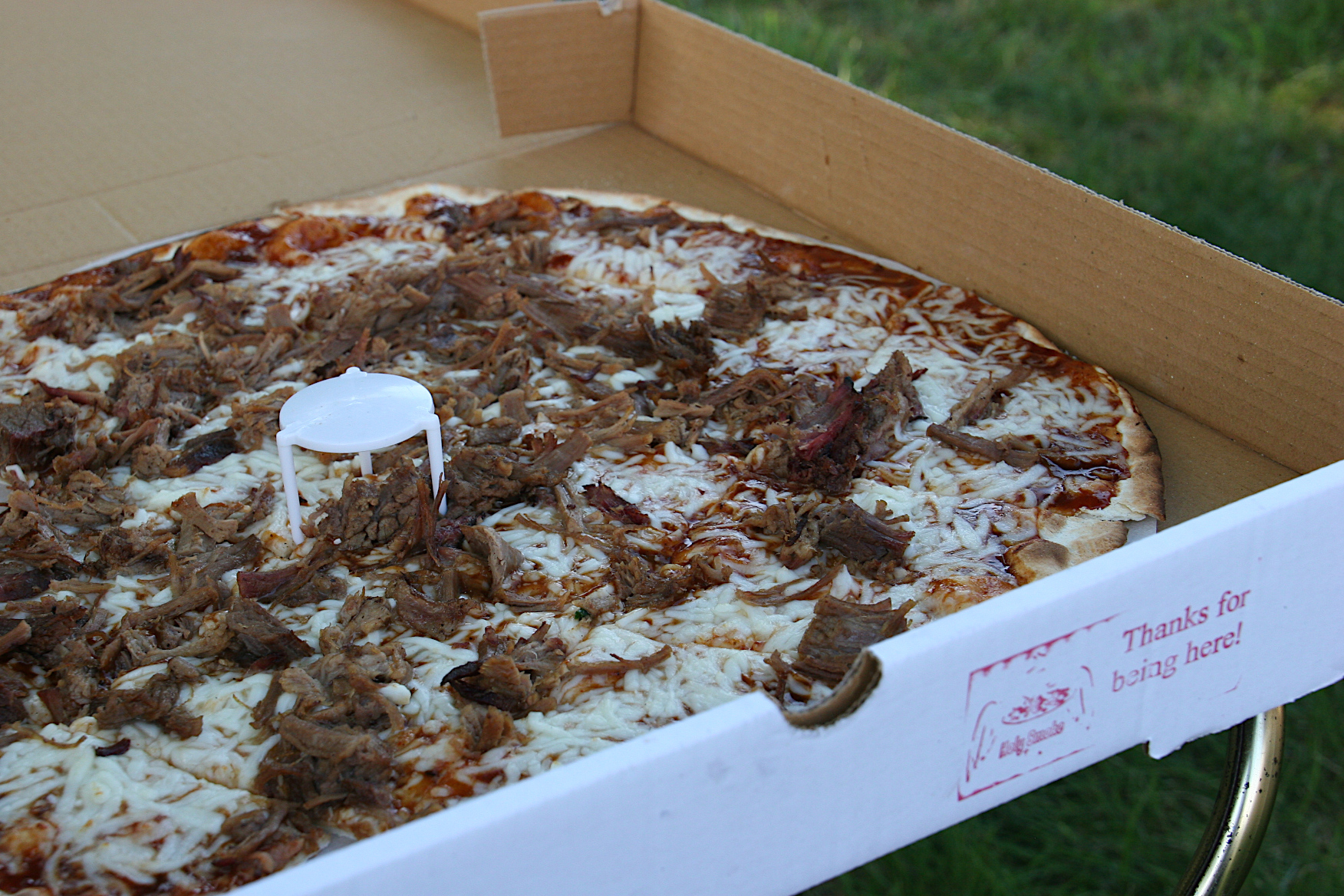
Smoked brisket pizza, probably my favorite at Holy Smoke. (Minnesota Prairie Roots copyrighted file photo)
Holy Smoke rates as one of my favorite local summer events. First, I love the pizza. This year’s offerings include smoked brisket, smoked chicken with bacon ranch, Greek/Tzatziki (or vegetable without the chicken), pepperoni, cheese, smoked chicken with artichoke, and margherita.
St. Vincent de Paul in Faribault. (Minnesota Prairie Roots copyrighted file photo)
Second, I love the reason Holy Smoke even exists. As a community outreach, the goal is to raise monies for charitable causes. This season’s beneficiaries are Believet, which provides service dogs to qualifying veterans at no cost; Habitat for Humanity, building homes with and for families; St. Vincent de Paul, providing food, clothing and more to those in need; and the Paradise Center for the Arts, bringing the arts to Faribault. All are worthy causes supported with funds from Holy Smoke pizza sales.
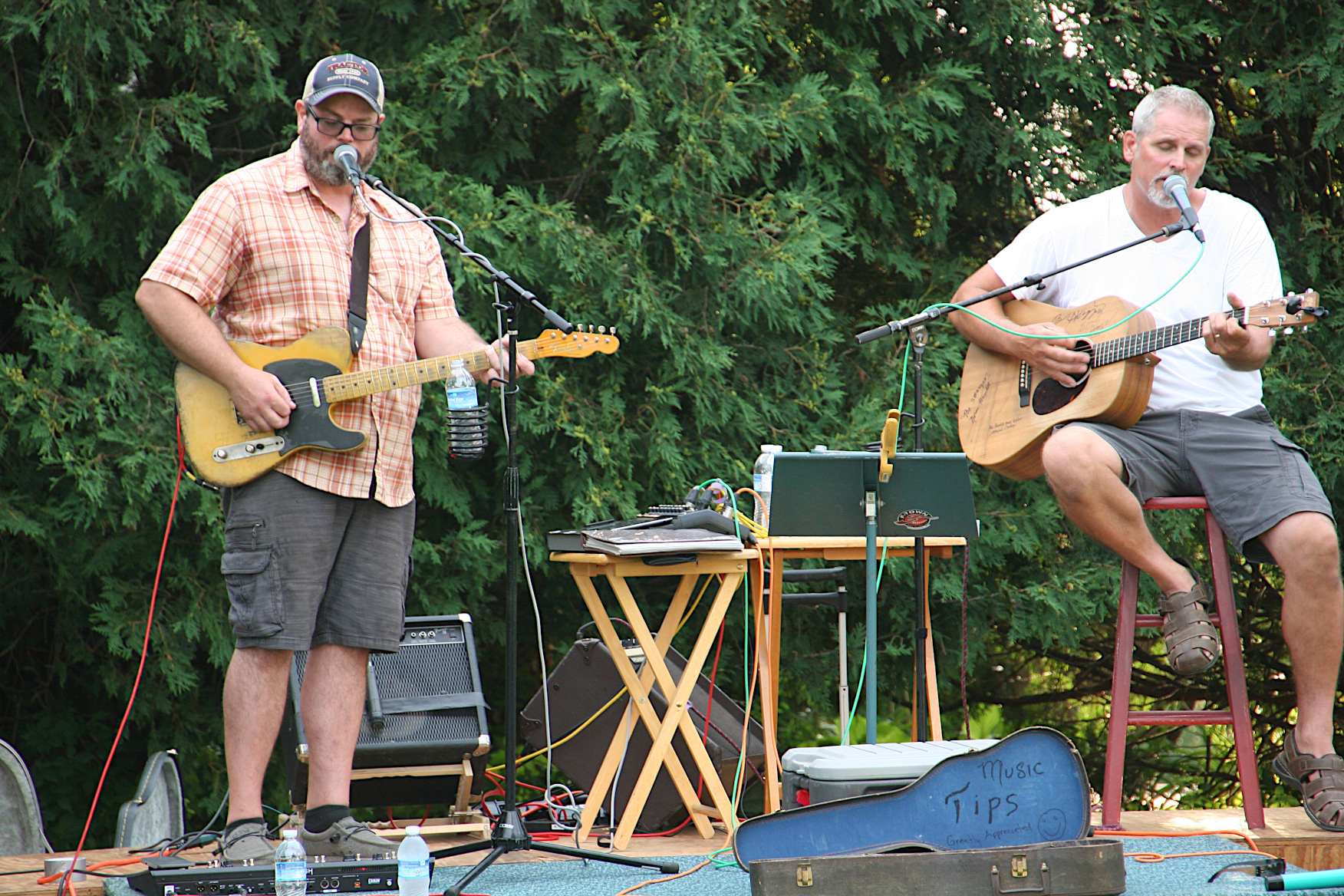
The Old Country Brothers, Gregg, left, and Jeff Sartor, perform at a past Holy Smoke. (Minnesota Prairie Roots copyrighted file photo August 2022)
And then there’s the music, a third reason to appreciate this summertime ministry of Christ Lutheran. The Old Country Brothers will perform old country—the likes of Johnny Cash, Waylon Jennings, Kenny Rogers and more—during the June 11 Holy Smoke. Sawyer’s Dream offers a modern take on classic rock of the 60s and 70s on July 9. And, on August 13, Pop Prohibition performs re-imagined pop songs into assorted vintage styles like jazz, the blues, ragtime and more.
The backyard setting of Holy Smoke is casual and relaxed. (Minnesota Prairie Roots copyrighted file photo)
Not to be forgotten is the fourth reason I enjoy Holy Smoke. And that is the sense of community which comes in connecting with friends and meeting new people. Conversations flow. Kids run across the yard, blow bubbles, climb playground equipment and more at this family-friendly event. There’s definitely a relaxed vibe that all is well with the world, even if it isn’t.
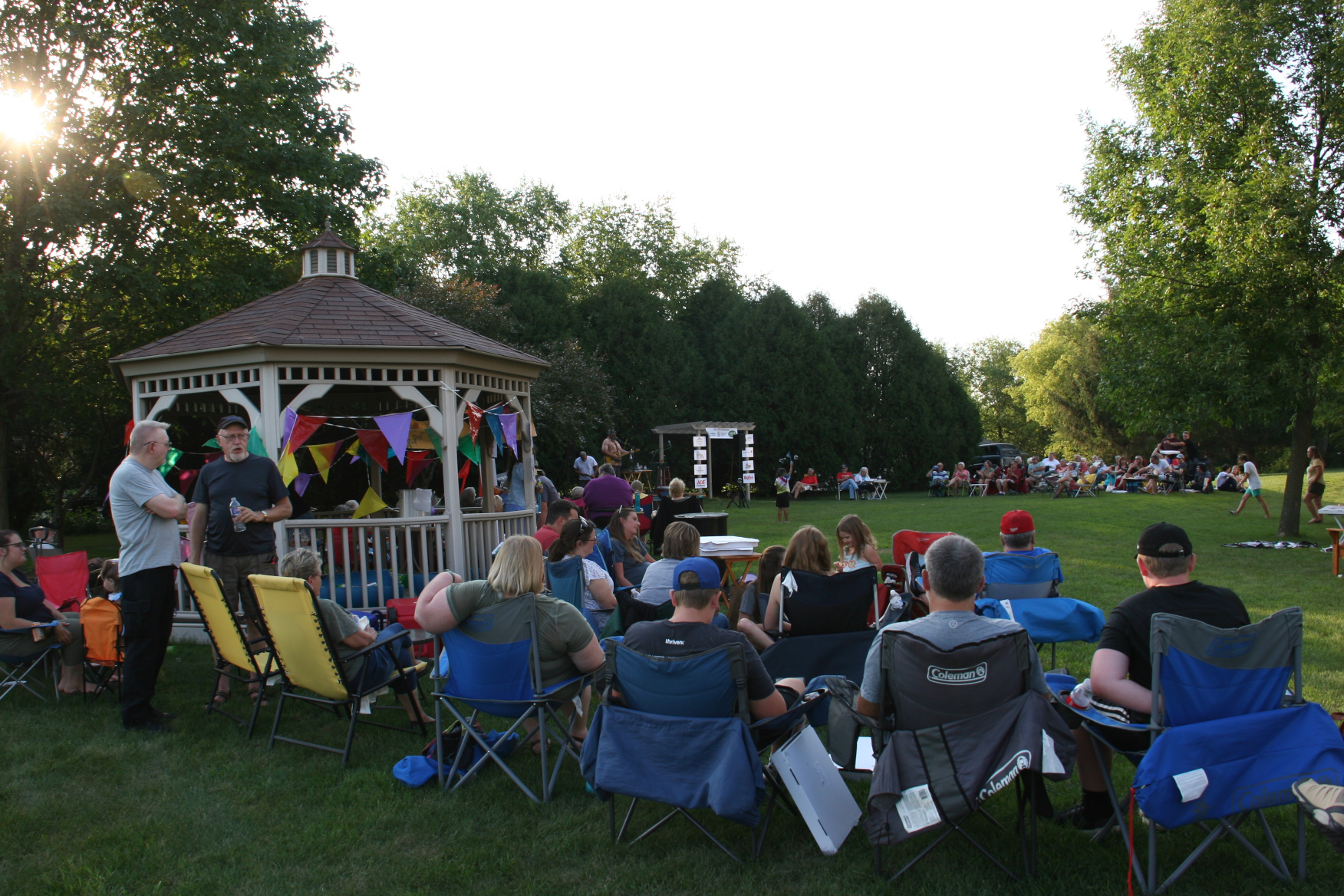
But for these three summer evenings, from 5 p.m.-8:30 p.m., all truly is good and wonderful in the world, atop the hill. We gather in our bring-your-own lawn chairs, kick back with our tasty smoked pizzas and beverages (available for purchase on site), listen to music and commune with one another under a wide Minnesota summer sky.
TELL ME: Have you attended an event similar to this in your community or nearby? I’d like to hear.
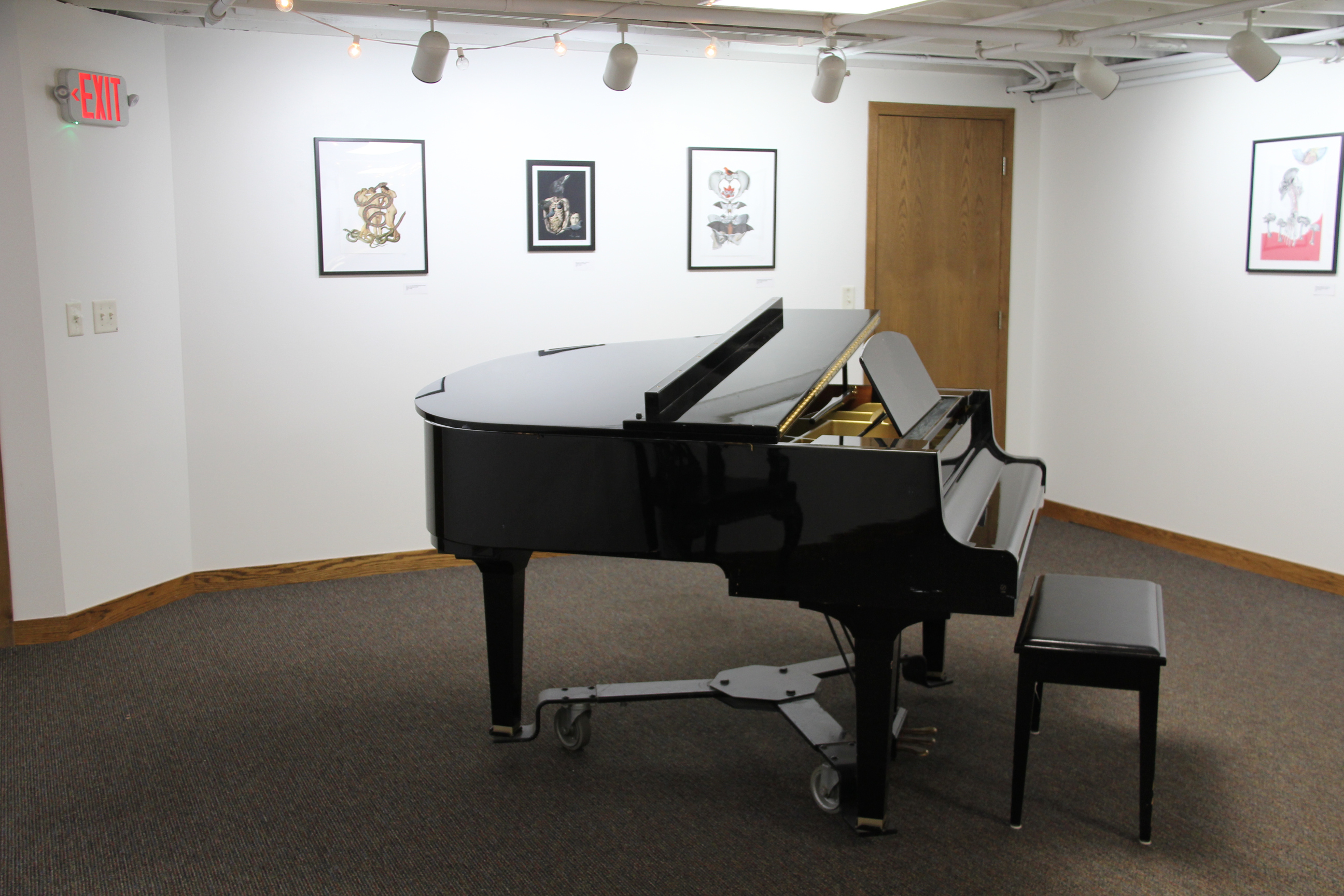
A piano at the Arts Center of Saint Peter. Photo used for illustration only. (Minnesota Prairie Roots copyrighted file photo October 2024)
MOMENTS IN LIFE EXIST that imprint upon the spirit a deep sense of contentment, peace and joy. That happened Sunday afternoon as I sat inside St. John’s Lutheran Church, Lakeville, for a piano recital. As the 11 pianists, including my 9-year-old granddaughter, Izzy, played selections on the grand piano rolled to the front of the sanctuary, I thought, life is good.
And it was good in the 45 minutes when family and friends gathered to hear these young musicians, and one mom, also a piano student, play. Love filled the space. I could feel it. I could hear it in the music, in resounding applause, in congratulatory words. I could see it in broad smiles, practiced bows, photos snapped, hugs shared, and flowers and other gifts given.
Life at its basic is about loving and supporting and encouraging and celebrating.
A SANCTUARY
The recital inside the sanctuary felt, too, like a sanctuary from all the hard stuff happening in the world today. We all need a break from that. These pianists provided that escape as they played tunes like Whispering Wind, Lemonade Stand, Spanish Dancer and the more familiar Linus & Lucy and Star Wars. I swayed to the music, smiling the entire time.
JOY IN CREATIVITY
When young Scarlett and her teacher, Roxanne, played Ode to Joy together, I was whisked away to a wedding. More joy.
The students’ playing was flawless, practiced, disciplined and filled with a creative spirit. I admired the players’ skills, from novice to more advanced, as their fingers landed upon piano keys.
When a young mom stepped up to play two selections, I spotted her husband across the pews. He was beaming, so proud of this woman who studied piano as a child and decided to resume lessons as an adult. She wants a grand piano, she shared in a brief conversation with me after the recital. But that meant convincing her husband. I’d say she’s convinced him.
LIFE IS GOOD
Likewise, Audra, Brysen, Ellie, Evan, Evie, Grayson, Izzy, Jessica, Oscar, Scarlett and Viva convinced me that a piano recital is about much more than just playing and listening to music. It is about family and friends and love. It’s about creativity and celebrating and delighting in one of life’s basic joys—music. Life is good, oh, so good when listening to Trampoline Tumble, Banana Split, Twilight Reverie and 18 other songs played on a grand piano on a Sunday afternoon in May in southern Minnesota.
An1849 map of Minnesota Territory and more as seen through a magnifying lens inside the Rice County Historical Society Museum. Minnesota became a state in 1858. (Minnesota Prairie Roots copyrighted file photo)
HISTORY COME TO LIFE appeals to me because of the immersive experience. I learn better, retain more, when I can engage. This weekend offers ample opportunity to get into history at the Rice County Historical Society’s first-ever Riverside Rendezvous and History Festival along the banks of the Cannon River in Faribault’s North Alexander Park.
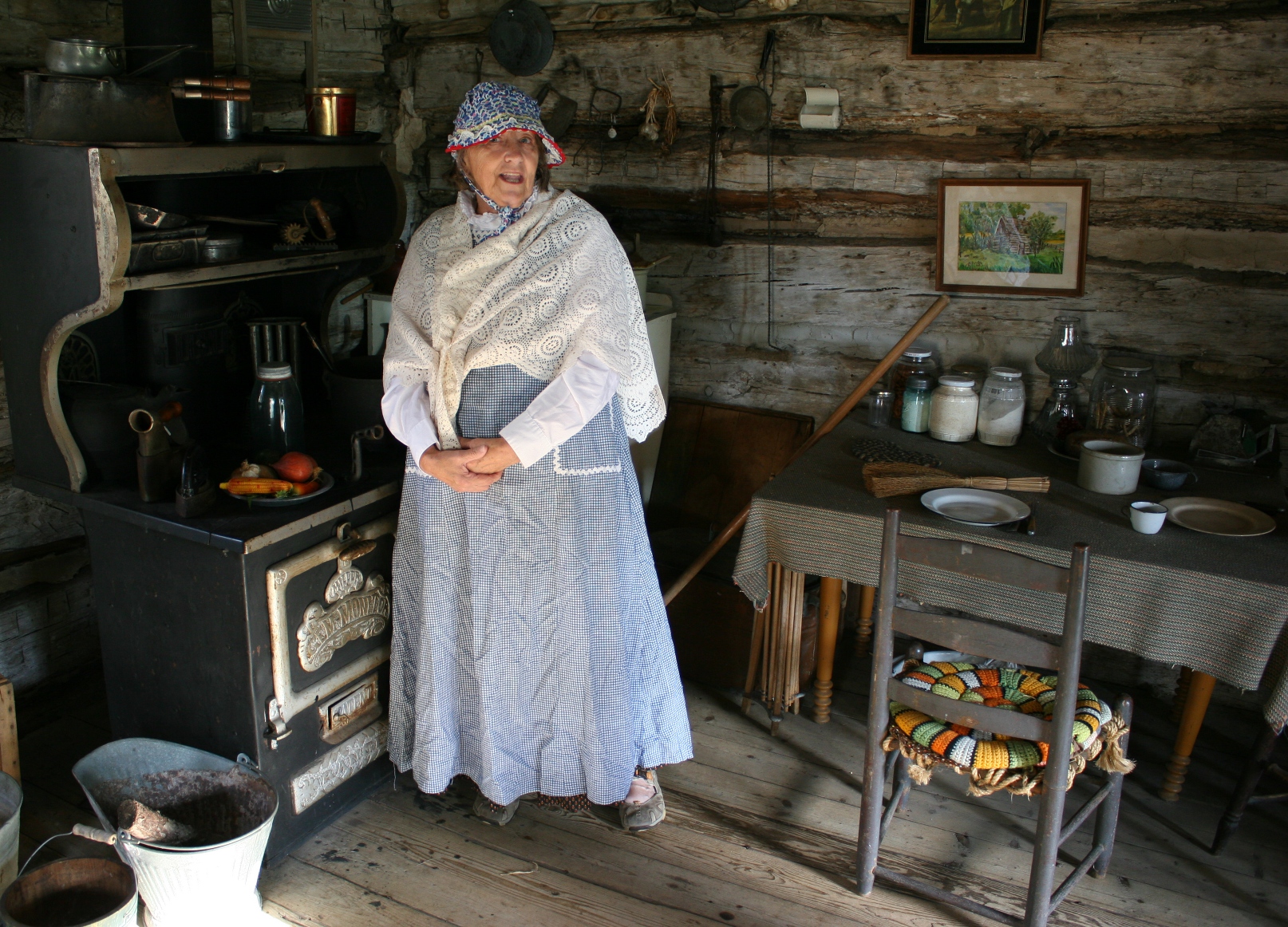
A scene inside an 1856 log cabin during a past living history event at the Rice County Historical Society. This weekend’s festival will be outdoors in a park in an encampment type setting. (Minnesota Prairie Roots copyrighted file photo)
Organizers promise that the trades, traditions and history of the 18th and 19th centuries (1701-1900) will come alive via hands-on activities, demonstrations, workshops, storytelling, music and special events. Hours are 9 a.m.-5 p.m. Saturday, May 10, and Sunday, May 11. Mothers get in free on Mother’s Day. Otherwise ticket prices are $10 for adults, $5 for children 6+ and $30 for a family pass.
Admittance buys you a whole lot of history-based entertainment, knowledge and fun. For example, the hands-on history happening all day both days includes candle making, rope making, tomahawk throwing, historic toys and games, quill making, log cutting and shops at which to shop, not trade.
This sculpture of Alexander Faribault and a Dakota trading partner stands in Faribault’s Heritage Park near the Straight River and site of Faribault’s trading post.(Minnesota Prairie Roots copyrighted file photo)
But you can learn about the fur trade at noon either day as local historian and documentary filmmaker Sam Temple talks about town founder Alexander Faribault and the fur trade. Todd Finney, a descendant of the Wahpekute band of the Dakota (original inhabitants of the land which is now Rice County), will speak at 3 p.m. Saturday and again at 11 a.m. Sunday about the Wahpekute Dakota.
You can learn about hat making, pirates (yes, pirates with MN Jack Sparrow), historic clothing and weapons, things that do and don’t go boom, Civil War medical care and more during workshops and demos.
And then there are four special events, the first a Cane Pole Fishing Tournament starting at 10 a.m. Saturday. Bring your cane pole, not your rod and reel. Some cane poles will be available for participants. Saturday also brings Voyageur Games at 1 p.m. On Sunday, there’s a Tomahawk Throwing Competition at 1 p.m. followed by a Log Cutting Contest at 3 p.m.
I’ve never attended a rendezvous, so I have nothing with which to compare this event. But just reading through the schedule, I’m excited to take in this history festival with my two elementary-aged grandchildren, their parents and my husband. I expect we will all learn a lot and make some great memories.
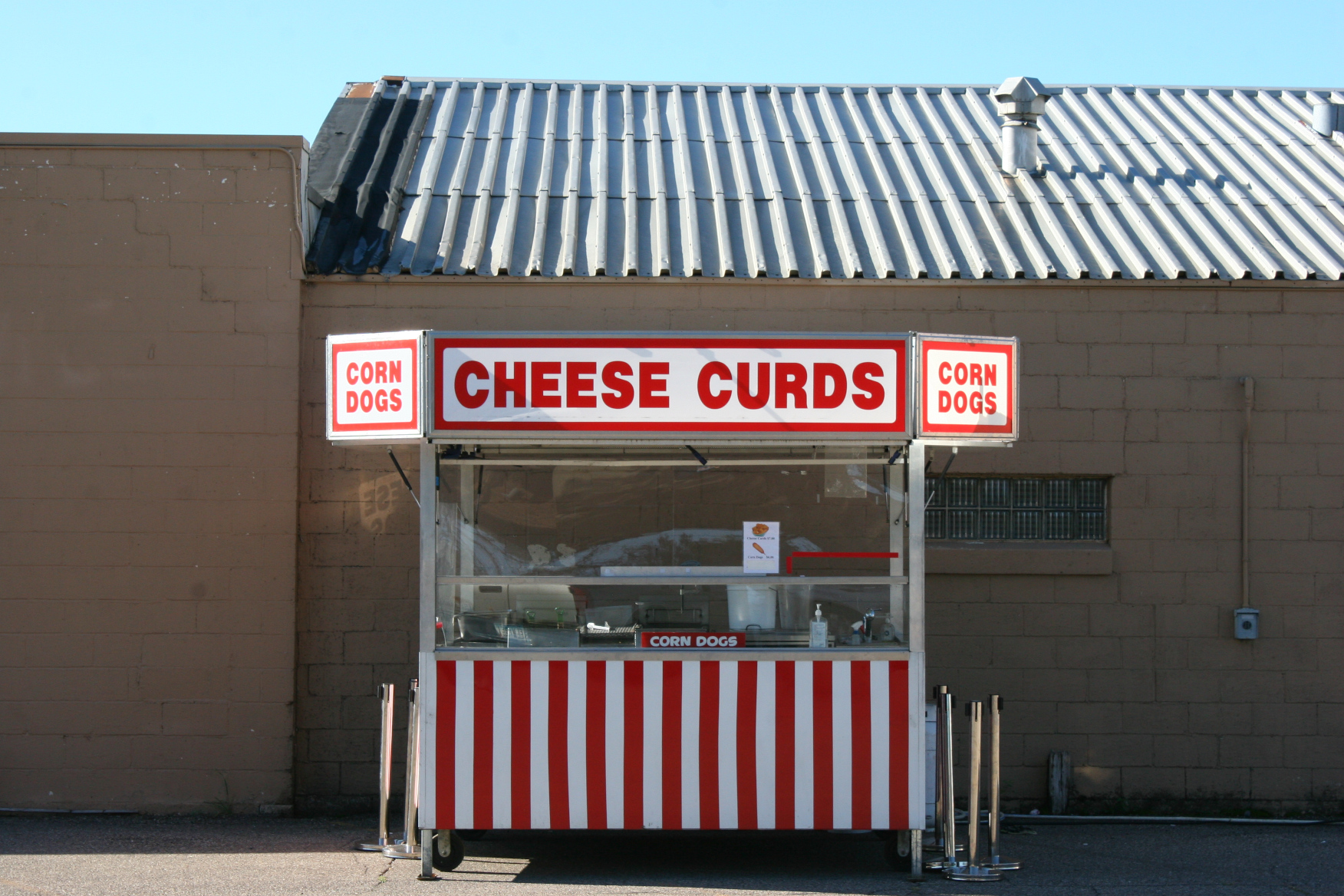
Vendors will be selling food and beverages. (Minnesota Prairie Roots copyrighted file photo used for illustration only)
One more thing, food and beverages will be available for purchase, the food being cheese curds (no festival is complete without that deep fat fried fair food), hot dogs, corn dogs, assorted frybreads, and candy and fudge.
All in all, the Riverside Rendezvous and History Festival looks to be an interesting, informative and enjoyable event for history lovers, families and anyone who’s looking for something different to do on a beautiful spring weekend in southern Minnesota.
A section of Montgomery’s Main Street with Franke’s Bakery (known for its kolacky) on the far left and Pizzeria 201 on the right. In the distance to the right is Heritage Park, site of the Czech May Day celebration. (Minnesota Prairie Roots copyrighted photo May 2025)
MONTGOMERY, MINNESOTA HAS CZECHED the box on one more reason to love this Le Sueur County community of 3,200 some 20 miles west of Faribault. That’s Czech May Day.
Czech royalty wait in line at the KCHK Radio tent to introduce themselves to the crowd. (Minnesota Prairie Roots copyrighted photo May 2025)
Sunday afternoon, on a sunshine-filled spring day as perfect as they come in southern Minnesota, Randy and I headed to Montgomery to Czech out this annual event. What we found at appropriately-named Heritage Park were a community, a region, a whole lot of people proud of their Bohemian roots.
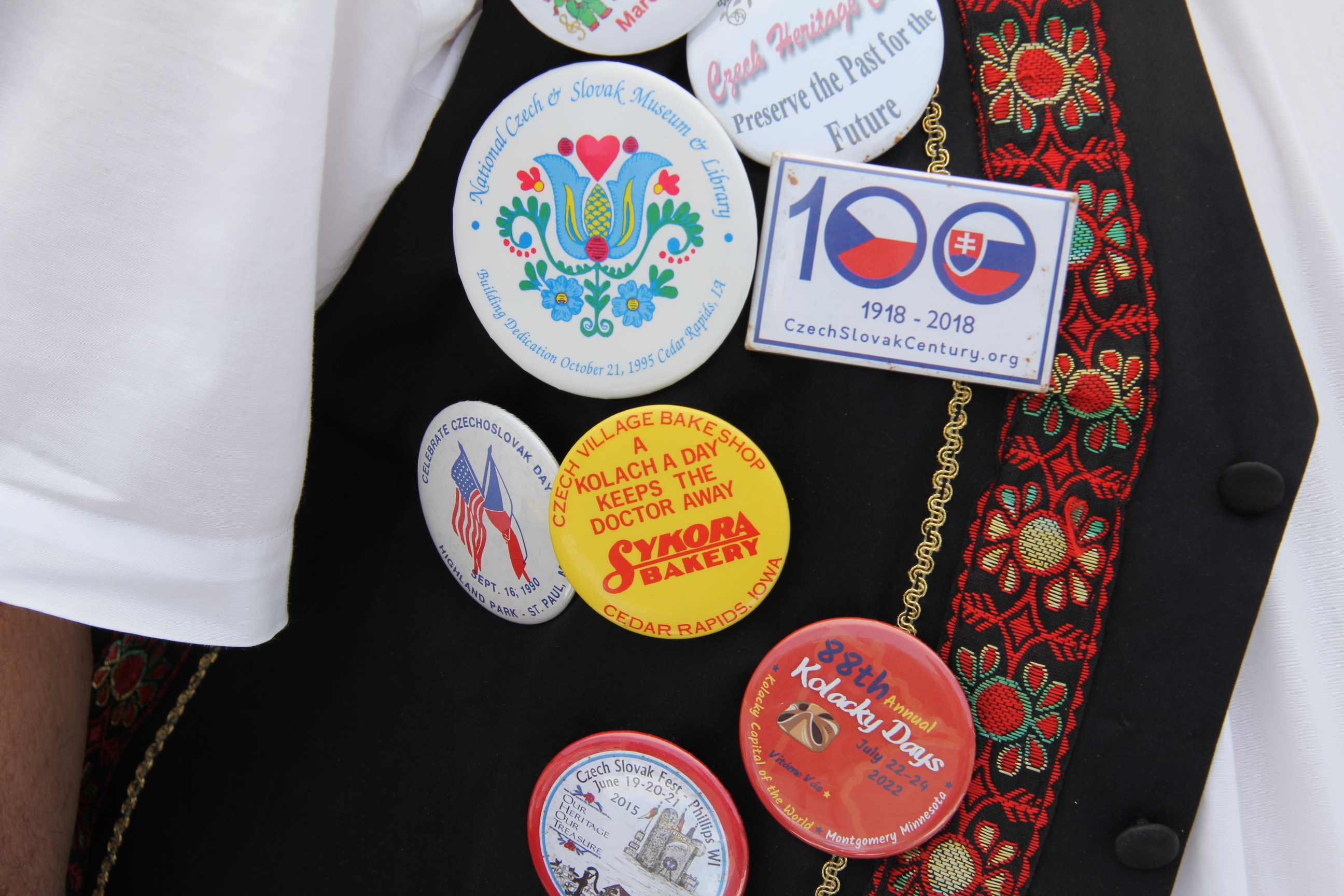
A member of the Czech Heritage Club sports celebration buttons on his vest. Some he’s been to, some he hasn’t. (MInnesota Prairie Roots copyrighted photo May 2025)
A member of the Czech Heritage Club even tried to convince Randy and me that we might have some Czech blood given our German ethnicity. I suppose it’s possible, but unlikely based on knowledge of our family ancestries. But who are we to disagree with a man wearing a traditional Czech vest plastered with buttons like BOHEMIAN POWER and A KOLACH (kolache/kolacky) A DAY KEEPS THE DOCTOR AWAY? He even schooled us about “Minnesota’s Czech Triangle,” which includes Montgomery and the neighboring communities of Lonsdale, New Prague and Veseli.
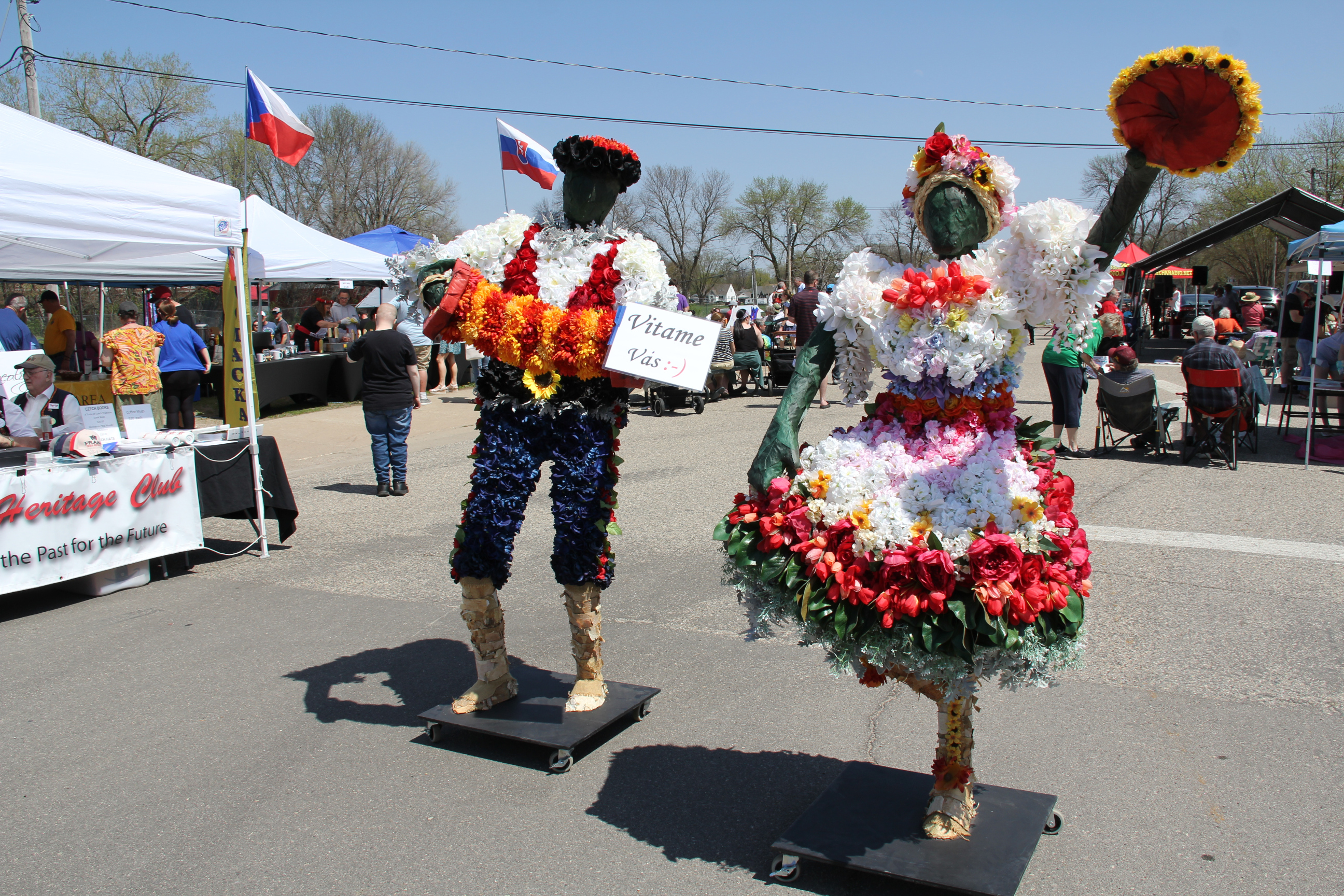
Czech dancer topiaries, Alenka and Vlada, created by Meghan Petricka, a former Miss Kolacky Days queen, welcome attendees to the Czech May Day celebration. Czech and Slovak flags fly in the background. (Minnesota Prairie Roots copyrighted photo May 2025)
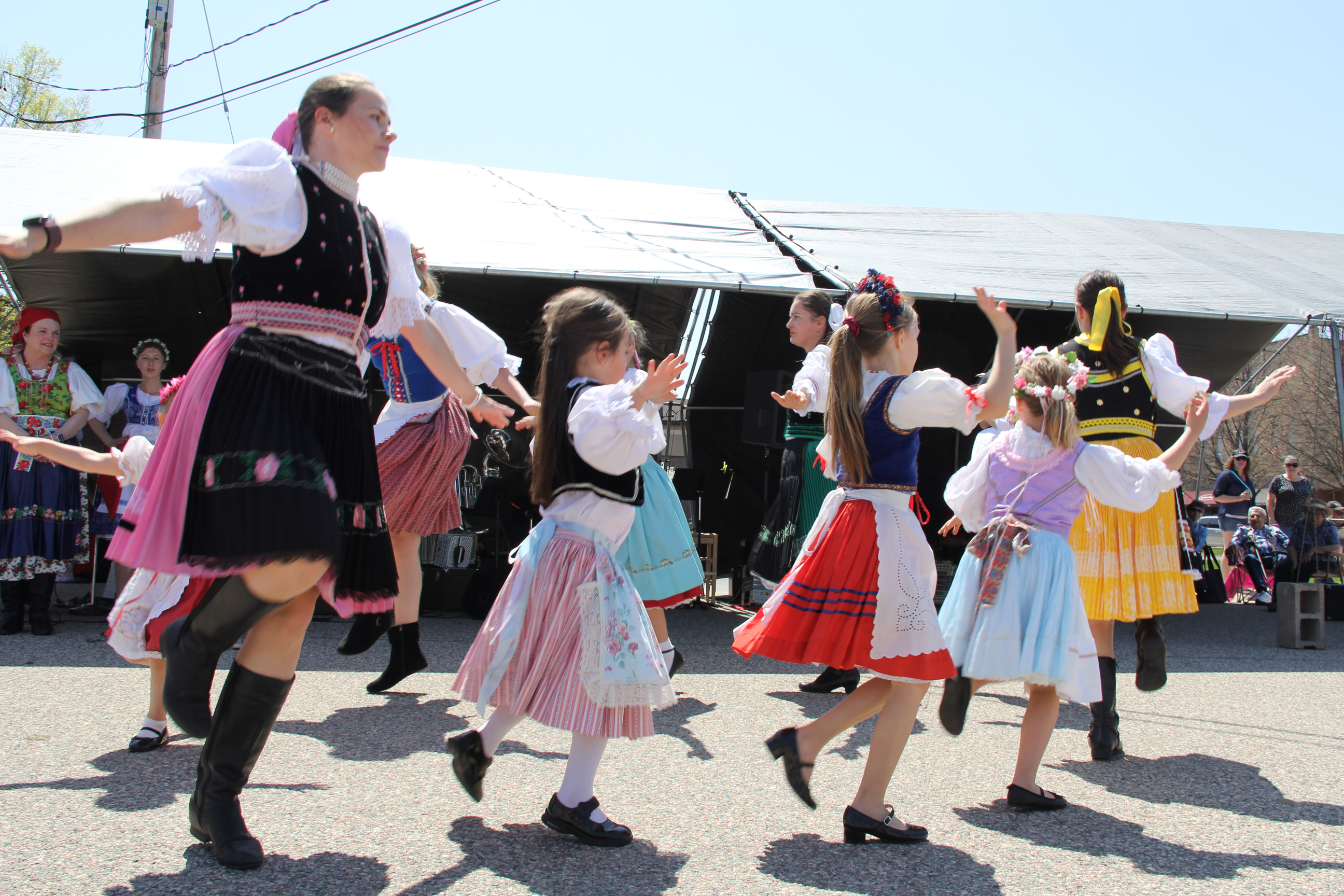
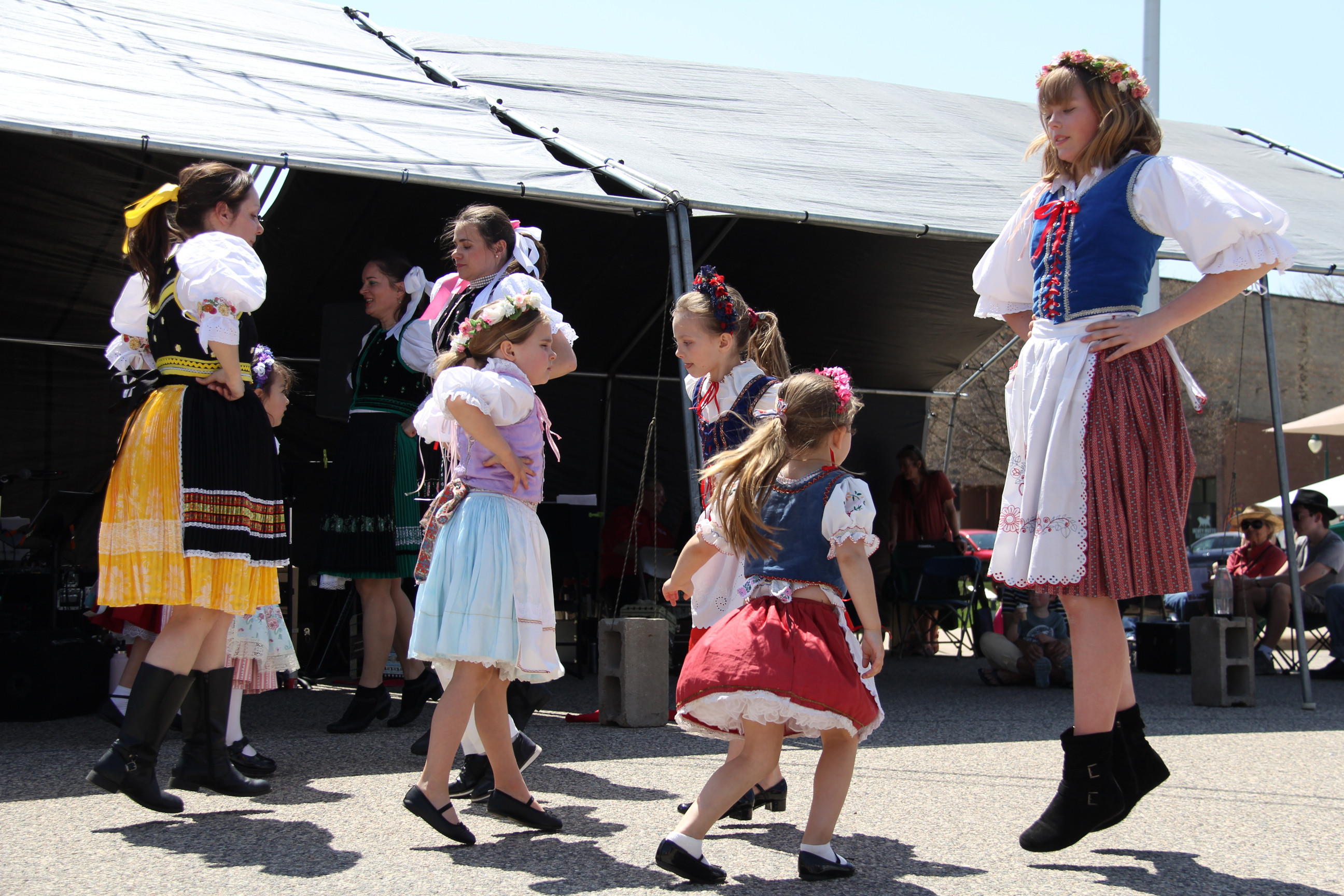
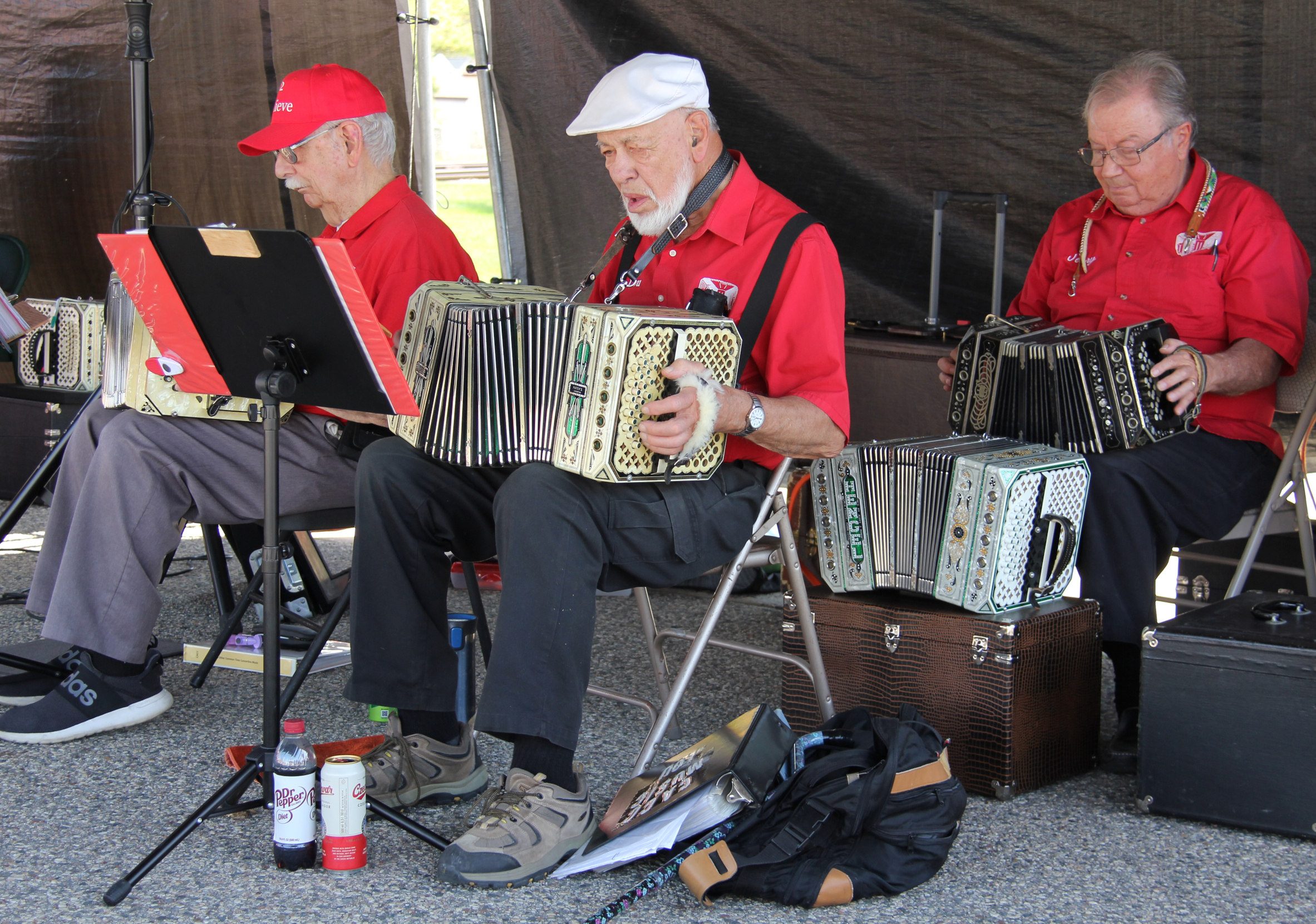
Mostly, though, this event was about music and dance with entertainment by the Czech Area Concertina Club,St. Paul Czech and Slovak Folk Dancers, and Sokol Children Dancers. I was mesmerized by the mostly women and girls spinning and circling and stepping, their colorful skirts twirling as they moved to the steady rhythm of Czech music that sounded a whole lot like a German polka to me. But I am no music expert and, I suppose if I asked my new Heritage Club friend, he would be quick to explain the difference.
Dancing in traditional dress. (Minnesota Prairie Roots copyrighted photo May 2025)
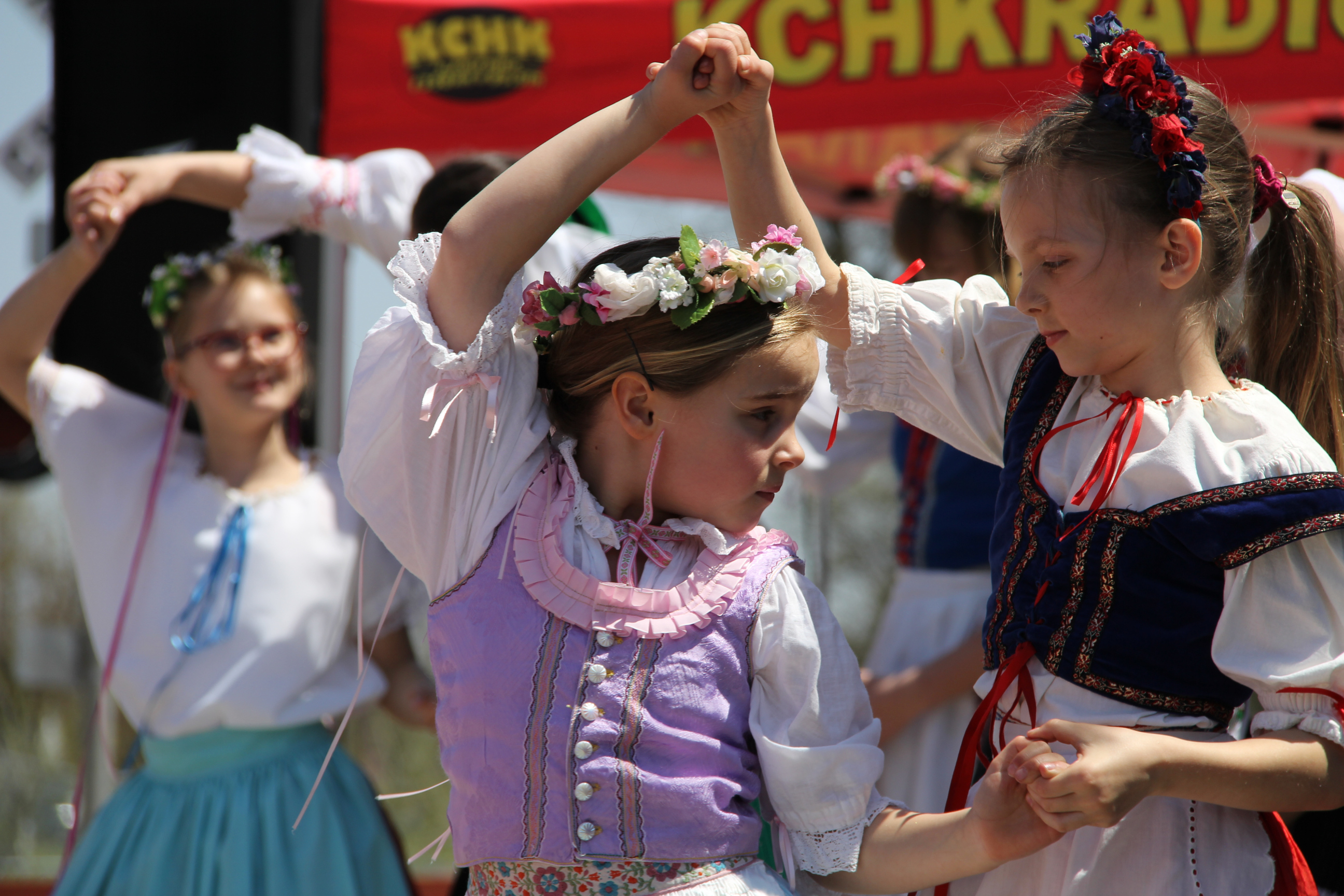
Dancers wore flowers and ribbons on their heads. (Minnesota Prairie Roots copyrighted photo May 2025)
The dancing included jumping. (Minnesota Prairie Roots copyrighted photo May 2025)
On this day it was not as much about learning as observing and enjoying. I watched and photographed, weaving in and out of the crowd, pausing, too, to take it all in, to be in the moment. I saw precision and concentration in well-rehearsed dances. I especially liked the mixing of ages, how women and elementary-aged girls paired, seasoned performers mentoring the young, passing along heritage to the next generation. Their joy was palpable as they clasped hands, leapt, spun. I found myself tapping my foot.
Members of the Czech Area Concertina Club make music. (Minnesota Prairie Roots copyrighted photo May 2025)
Likewise, the Concertina Club set my foot bouncing and my mind wondering. How can these musicians possibly manage to press the right buttons while also moving their squeezeboxes in and out? But they did and created pulsing music in the process.
Raising the May Pole. (Minnesota Prairie Roots copyrighted photo May 2025)
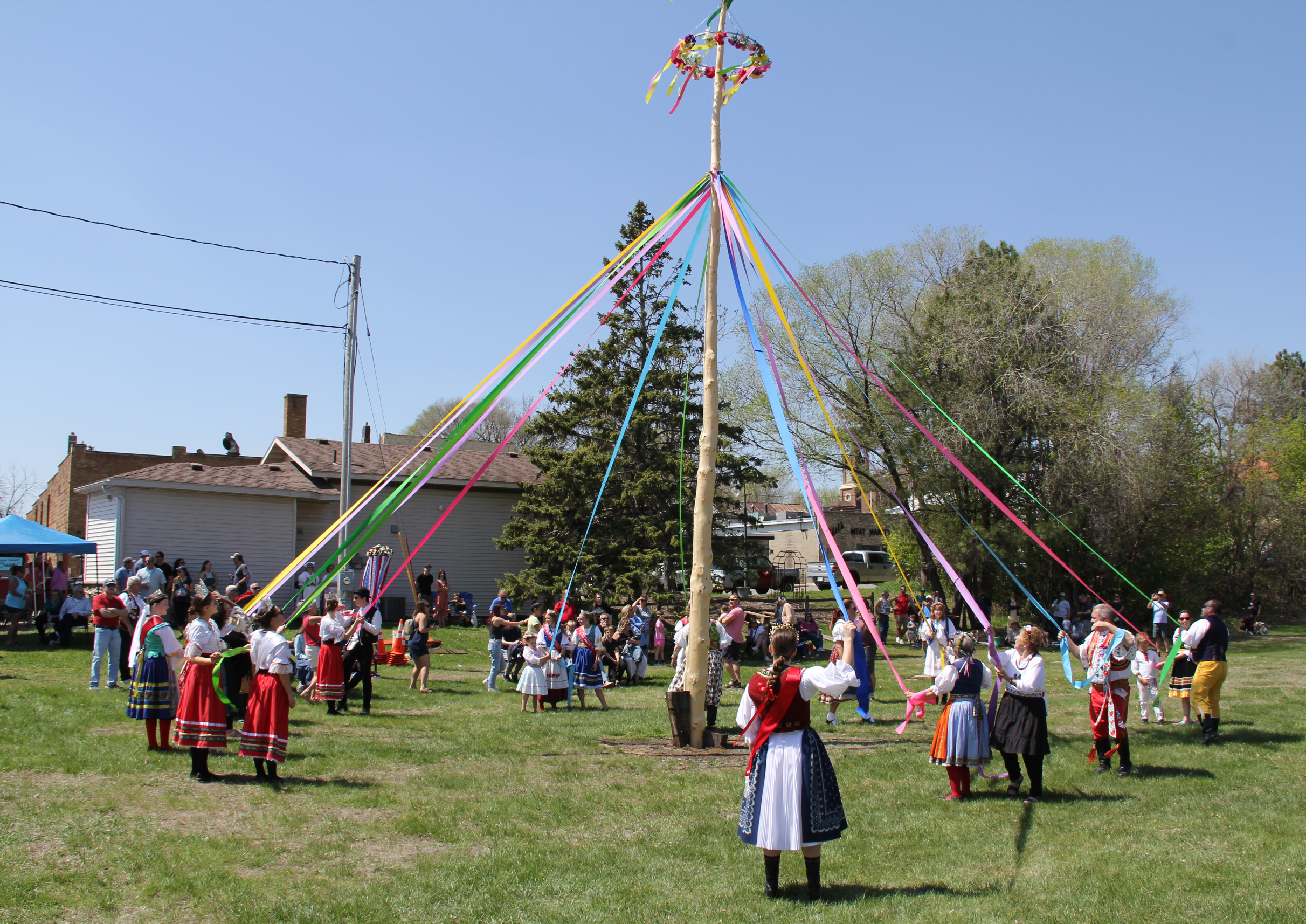
It was the May Pole, though, and subsequent dancing which centered the celebration. The raising of the Majka by a team of men was, in itself, impressive to watch. Randy suggested I sit in a “safe” location lest the towering conifer, stripped of its bark and topped with a ring of flowers and spruce top, topple. He needn’t have worried about my chosen photographic position. These guys, using thick poles, ropes, sawhorses and brawn, easily guided the Majka up and then into a pre-dug hole before stabilizing and securing it. They made the process look easy.
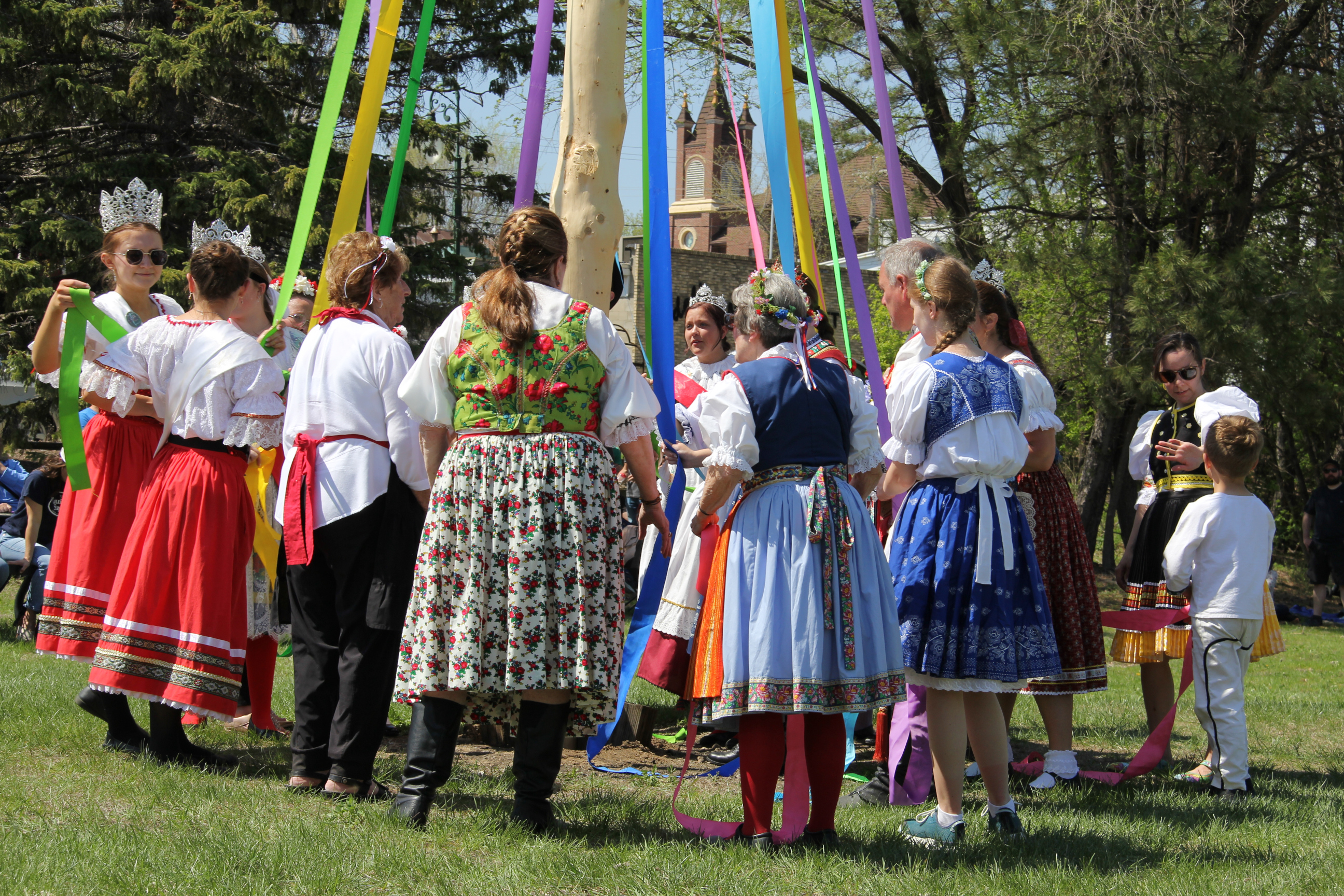
Grabbing ribbons on the May Pole. Two circles circled the pole. (Minnesota Prairie Roots copyrighted photo May 2025)
The floral wreath near the top of the May Pole. (Minnesota Prairie Roots copyrighted photo May 2025)
Ready to circle the May Pole. (Minnesota Prairie Roots copyrighted photo May 2025)
Montgomery Kolacky Days and Miss Czech Slovak Minnesota royalty mostly comprised the first group to circle the May Pole. I will say, though, as I sat baking in the hot sun, it seemed to take an interminably long time to separate the 16 wide ribbons streaming from the May Pole and to get everyone into place. Yet, once the walk, not really a dance, began around the tree, it appeared to go seemingly flawlessly, at least to me.
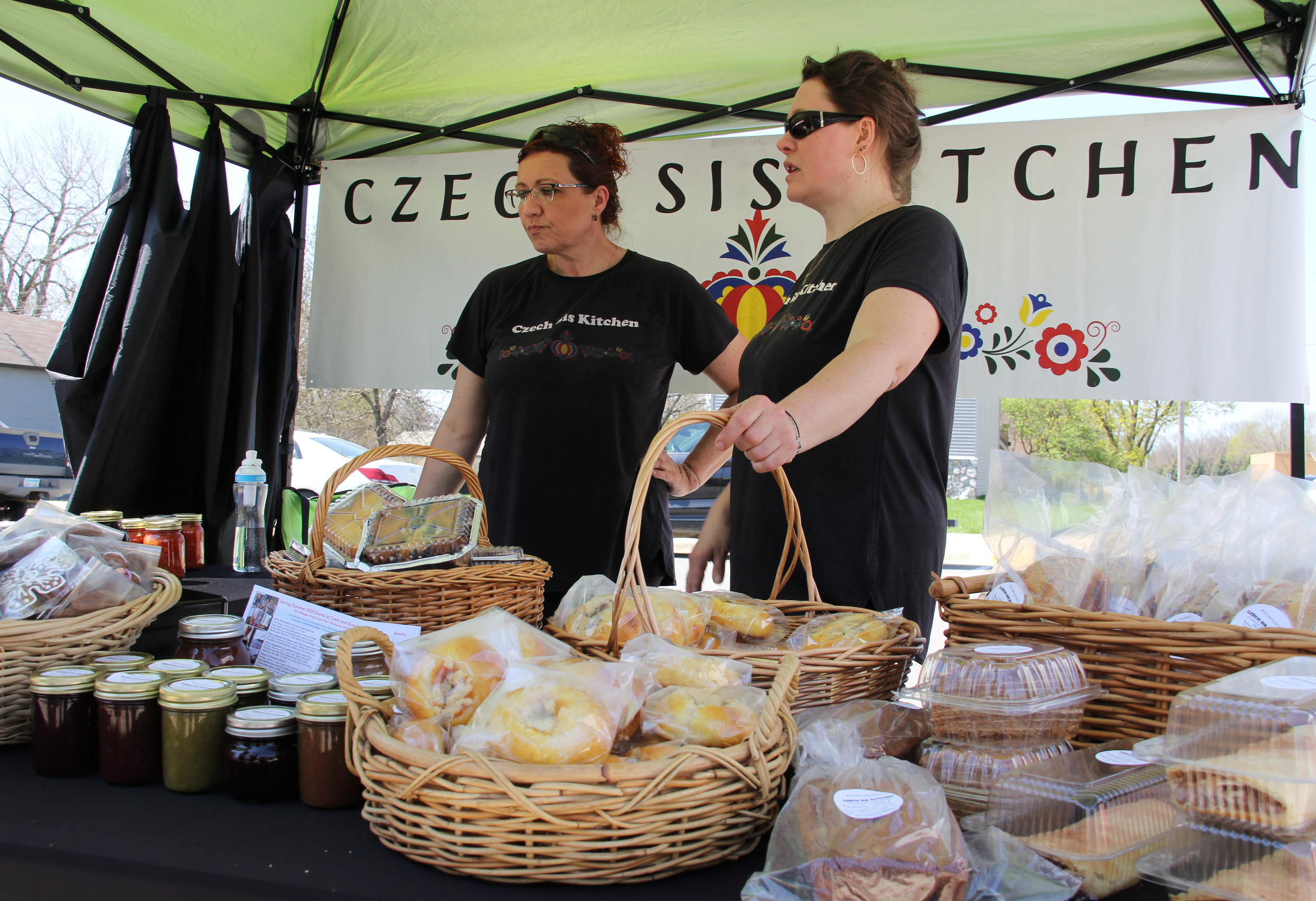
Czech treats and other baked and canned goods were available from Czech Sis Kitchen. (Minnesota Prairie Roots copyrighted photo May 2025)
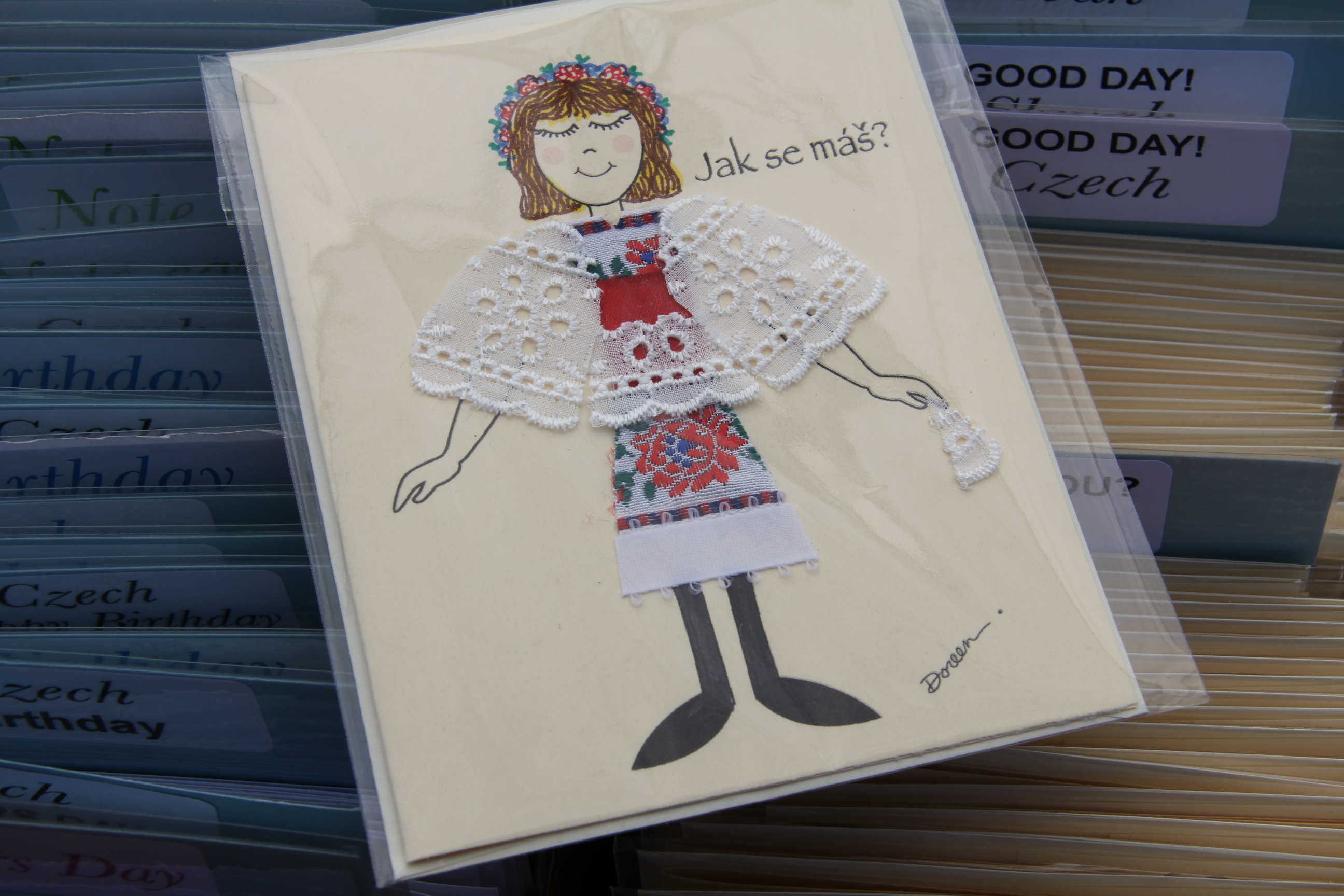
American-Czech folk artist and illustrator Doreen McKenney created and vended greeting cards, coloring books and more. (Minnesota Prairie Roots copyrighted photo May 2025)
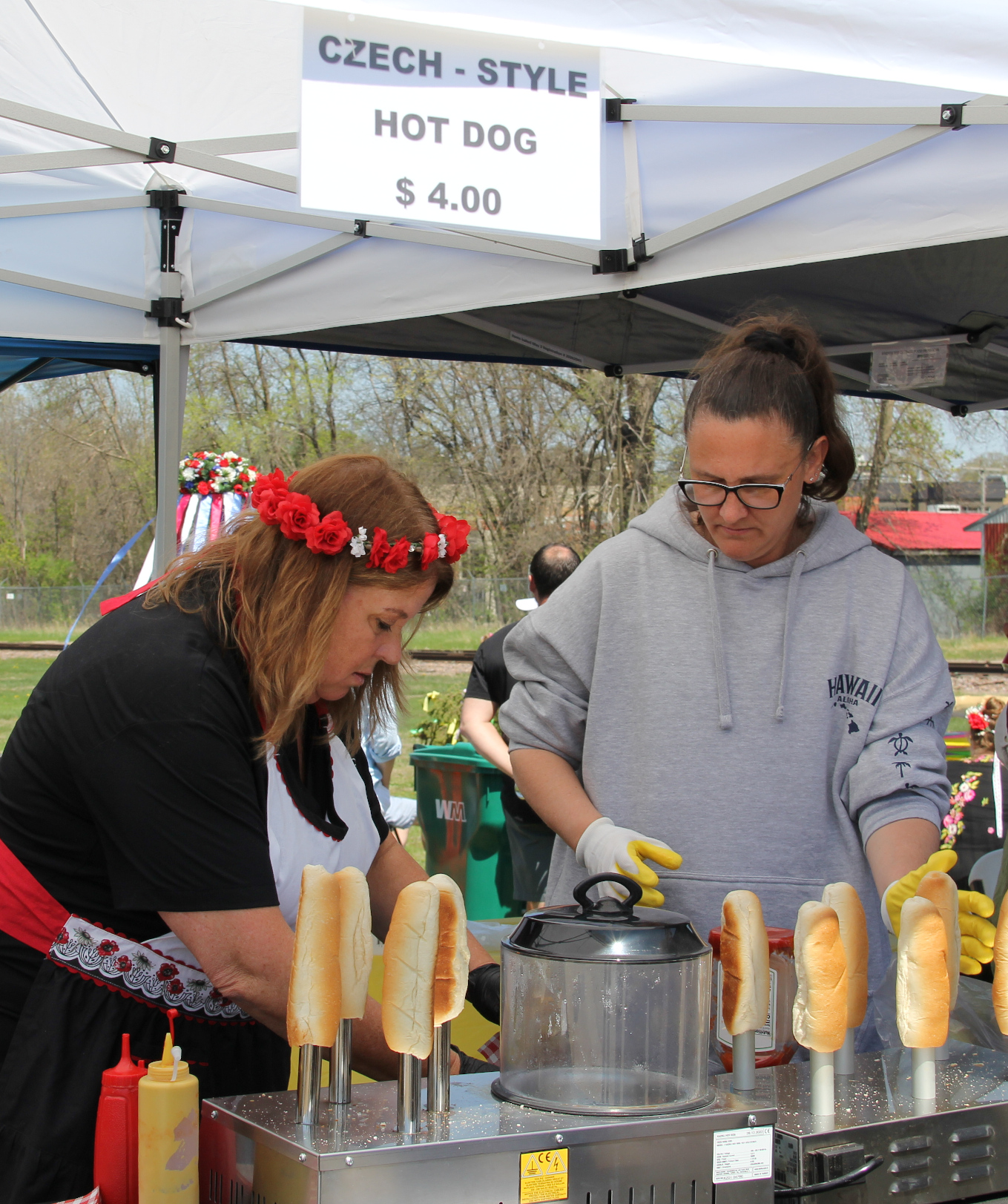
Working at the Czech style hot dog stand. (Minnesota Prairie Roots copyrighted photo May 2025)
By then I was feeling overheated. So Randy and I headed back toward the van, passing food and beverage stands selling Czech hot dogs and beer, vomacka, kolacky and more. Next time we won’t eat before we come…although we did buy an authentic fruit-filled kolache from two Czech immigrants at the Czech Sis Kitchen.
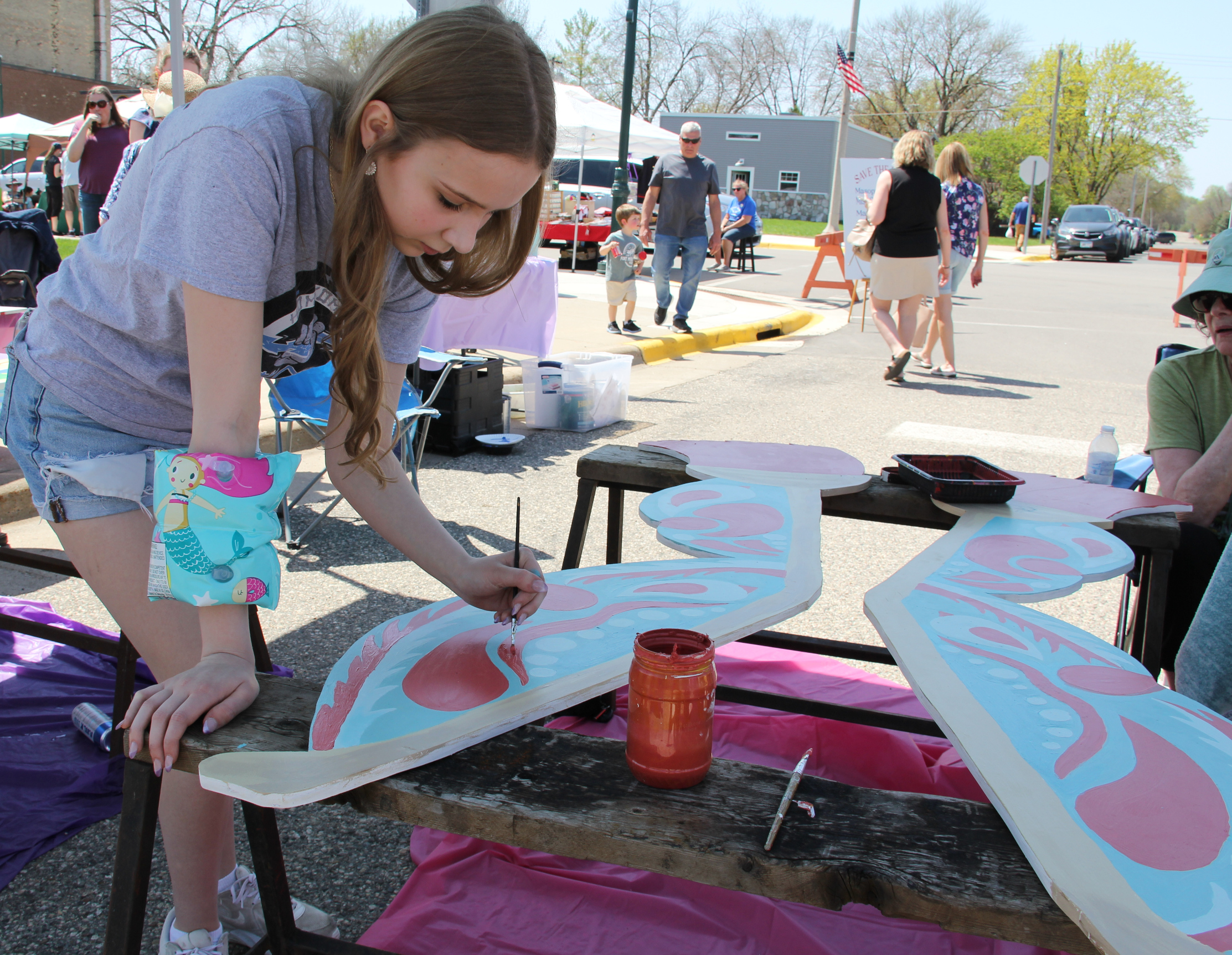
Painting a wing for the Wing Walk. (Minnesota Prairie Roots copyrighted photo May 2025)
We also passed other vendors and a painting station where anyone could dip a brush and work on painting customized wings as part of The Montgomery Wings Mural Walk. That features butterfly wings scattered around town.
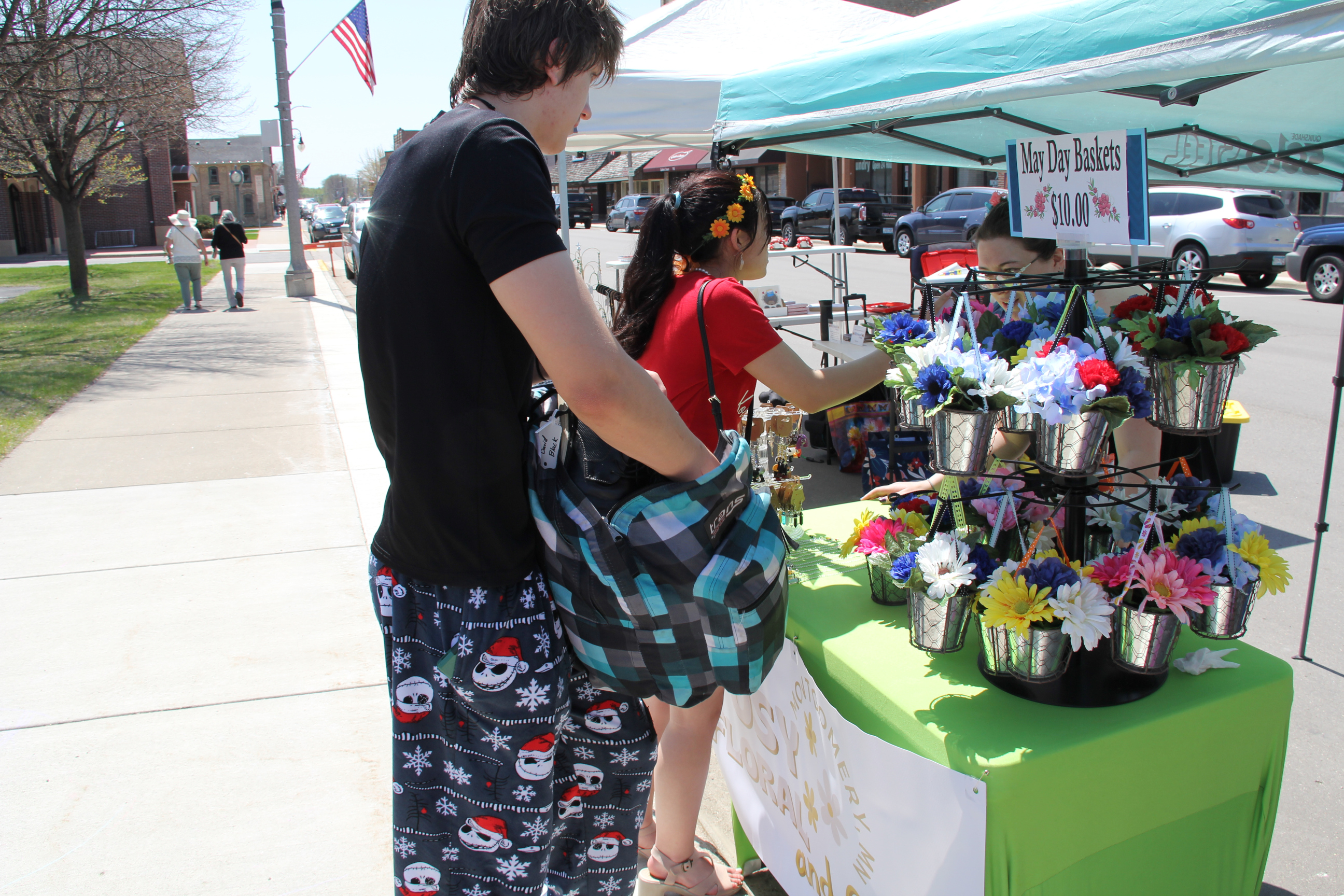
Posy Floral & Gifts vended May Day baskets and more. (Minnesota Prairie Roots copyrighted photo May 2025)
Art, community pride and heritage—even if not of my German ethnicity—draw me to Montgomery. I love this small town with its old-time bakery, meat market and barbershop, its arts and heritage center, its brewery, historic buildings and signage, its homegrown specialty shops and much more. And now that “much more” includes the celebration of May Day, Czech style.
#
FYI: Please check back for more Czech May Day photos. I shot more than 200 images and would like to share a few more of my favorites in follow-up posts.
The Irish national flag flies outside an Irish pub in Wabasha. (Minnesota Prairie Roots copyrighted file photo)
I’VE NEVER ATTENDED a St. Patrick’s Day celebration. I’ve never eaten corned beef and cabbage. But I have eaten Irish stew at The Olde Triangle Pub in Wabasha, although not on St. Patty’s Day.
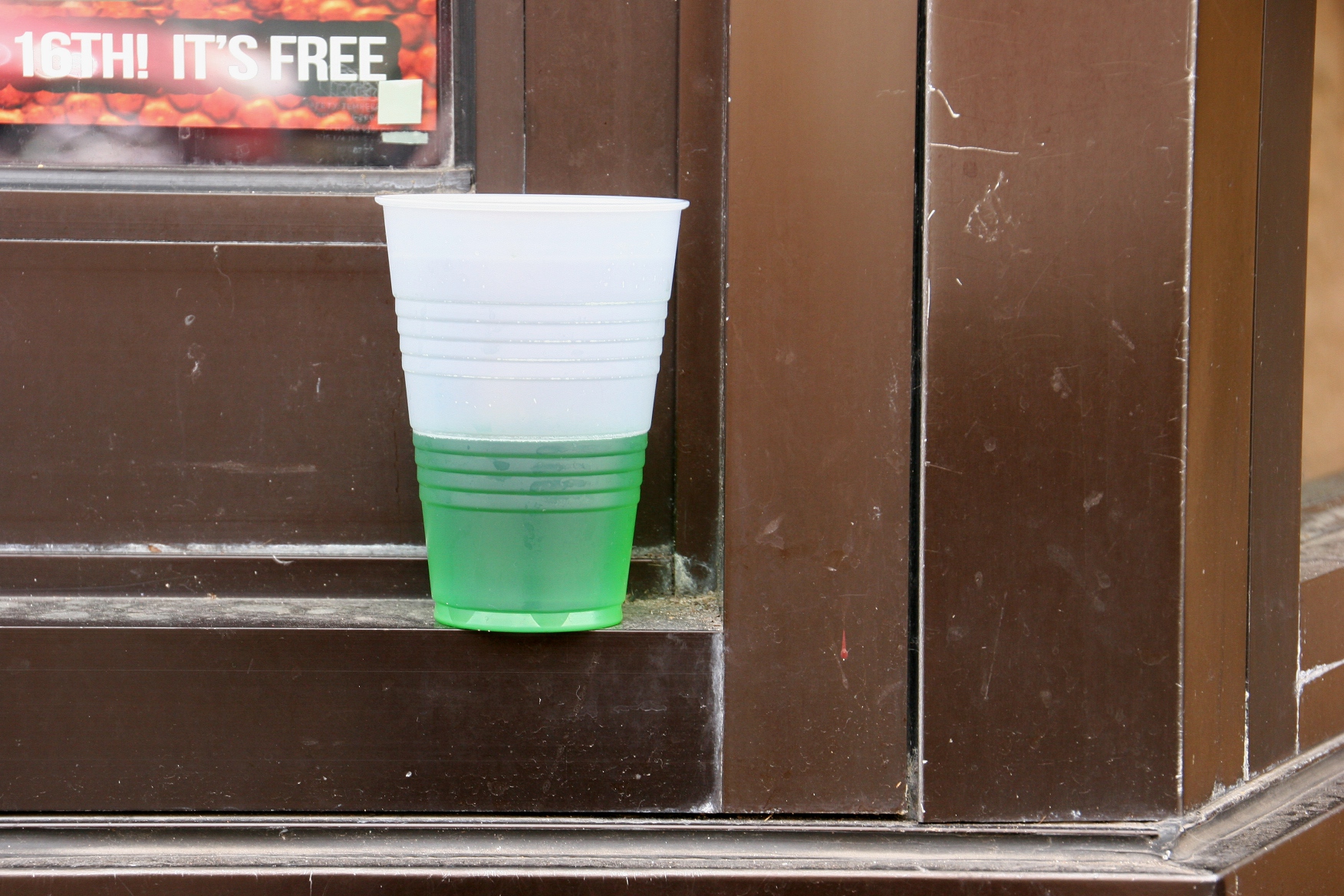
Green beer outside a bar in downtown La Crosse, Wisconsin. (Minnesota Prairie Roots copyrighted file photo)
I once spotted a partially-filled cup of green beer sitting outside a bar in La Crosse, Wisconsin, the day after St Patrick’s Day. I’m quite certain I’ve consumed an Irish lager or ale, although the beer was not colored green.
The Church of St. Patrick in St. Patrick. (Minnesota Prairie Roots copyrighted file photo)
I’ve never attended a St. Patrick’s Day Mass, although I’ve photographed the exterior of the Church of St. Patrick, Cedar Lake Township in the unincorporated village of St. Patrick.
A tombstone in the Church of St. Patrick Cemetery. (Minnesota Prairie Roots copyrighted file photo)
I am 100 percent German, although I had a full-blooded Irishman uncle (he died a year ago) from Belfast. He married into the family.
Now if any of this qualifies me to be an Irishwoman for a day, I will accept the luck of the Irish and don some green on March 17 or thereabouts.
We can all be Irish in mid-March as communities, churches, restaurants and bars, and more celebrate St. Patrick’s Day. In my region of southern Minnesota, you’ll find lots of ways to be Irish. Starting on Saturday, March 15, Sacred Heart Church in Waseca gets festivities underway with Irish music and Mass at 10:30 a.m. A Parade of Clans to The Mill Event Center follows at noon for an Irish rally. I take rally to mean a big party—food, including Mulligan Stew and corned beef and cabbage, served from a food truck; beer; music and entertainment; and more fun. At 7 p.m., Miss St. Patrick and Miss Irish Rose will be crowned. A dance follows. I should note here that Waseca is home to an Irish pub, Katie O’Leary’s Beef & Brew.
Signage on St. Patrick’s Tavern in St. Patrick. (Minnesota Prairie Roots copyrighted file photo)
The tiny, unincorporated Scott County burg of St. Patrick, basically a church, cemetery, baseball field and tavern, is, of course, honoring the patron saint (and its name) via food and music at St. Patrick’s Tavern. The bar and restaurant along Old State Highway 13 northeast of New Prague will serve corned beef, cabbage and red potatoes on March 15 with a green beer on tap. Food and beer specials continue on March 17. There will be music both evenings.
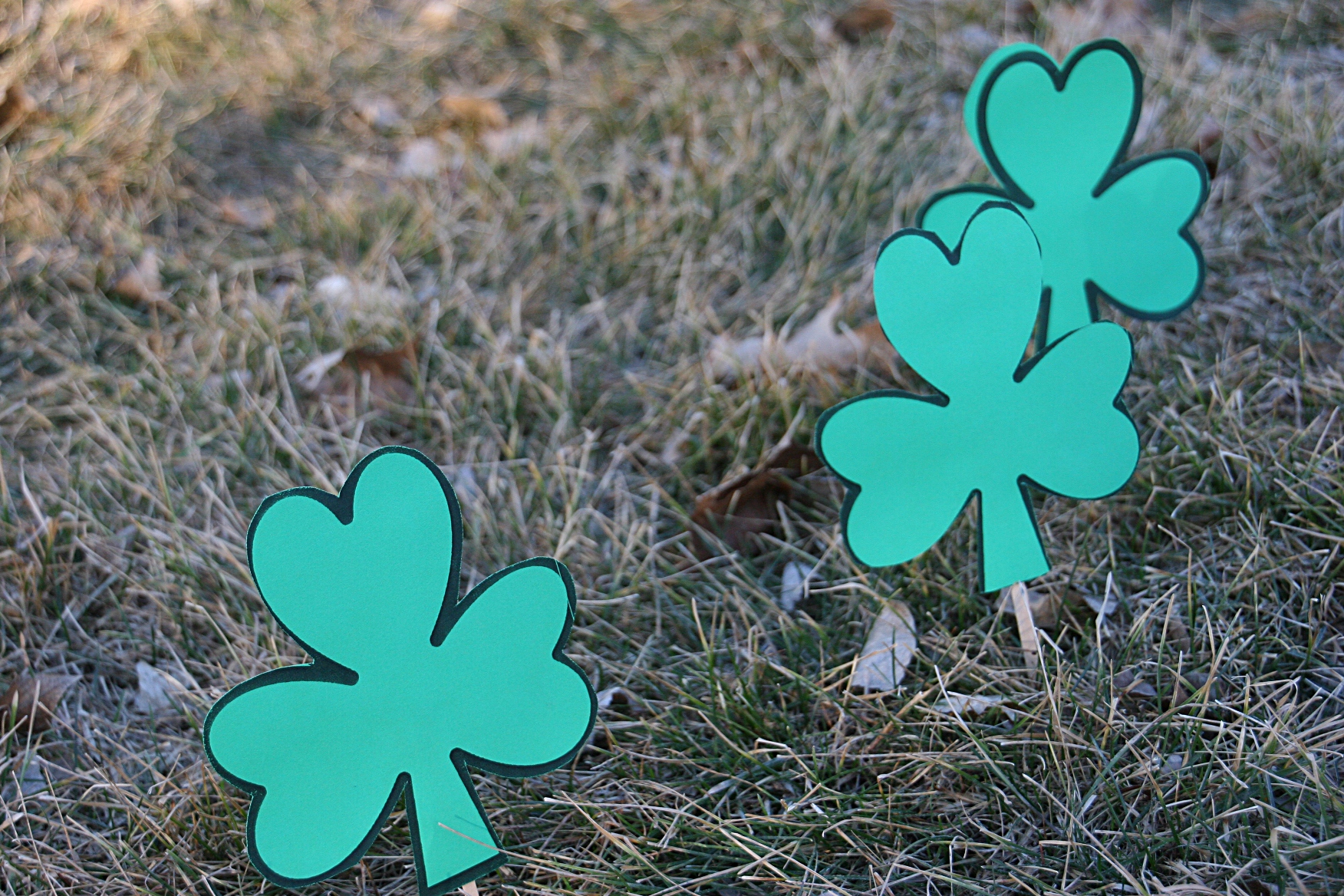
Shamrocks in my yard, planted by friends. (Minnesota Prairie Roots copyrighted file photo)
Over in Le Center, a full day of Irish-themed festivities begins at 11 a.m. March 15 with Mass at St. Mary’s Catholic Church. Over at the American Legion, Mulligan Stew will be served from 11 a.m. – 2 p.m. And then at 2 p.m., the big St. Patrick’s Day parade through downtown Le Center begins. Presiding over everything will be the newly-crowned royalty—Miss Shamrock, Miss Leprechaun and Miss Irish Rose. Dancing in the evening at the Legion wraps up the celebration.
A St. Pat’s Day decoration in a storefront window in Faribault. (Minnesota Prairie Roots copyrighted file photo)
In Owatonna, VFW Post 3723 is hosting a March 15 St. Paddy’s Day Dinner & Trivia party with dinner choices of corned beef and cabbage or Shepherd’s Pie, plus sides and dessert, served from 5-6:30 p.m. Irish Trivia follows at 7 p.m. with a chance to win a Pot of Gold. There will also be leprechaun races and other activities.
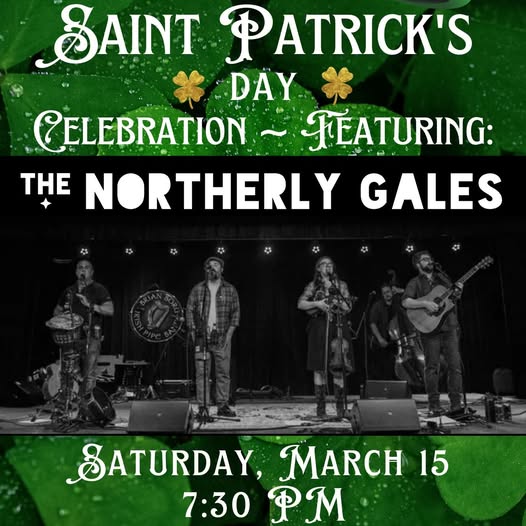
(Promo source: Paradise Center for the Arts Facebook page)
Music centers a high-energy show Saturday, March 15, at the Paradise Center for the Arts in Faribault as Twin Cities-based The Northerly Gales brings its spin on Celtic Folk and Americana to the stage at 7:30 p.m. And, yes, you can enjoy a beer while enjoying the music.
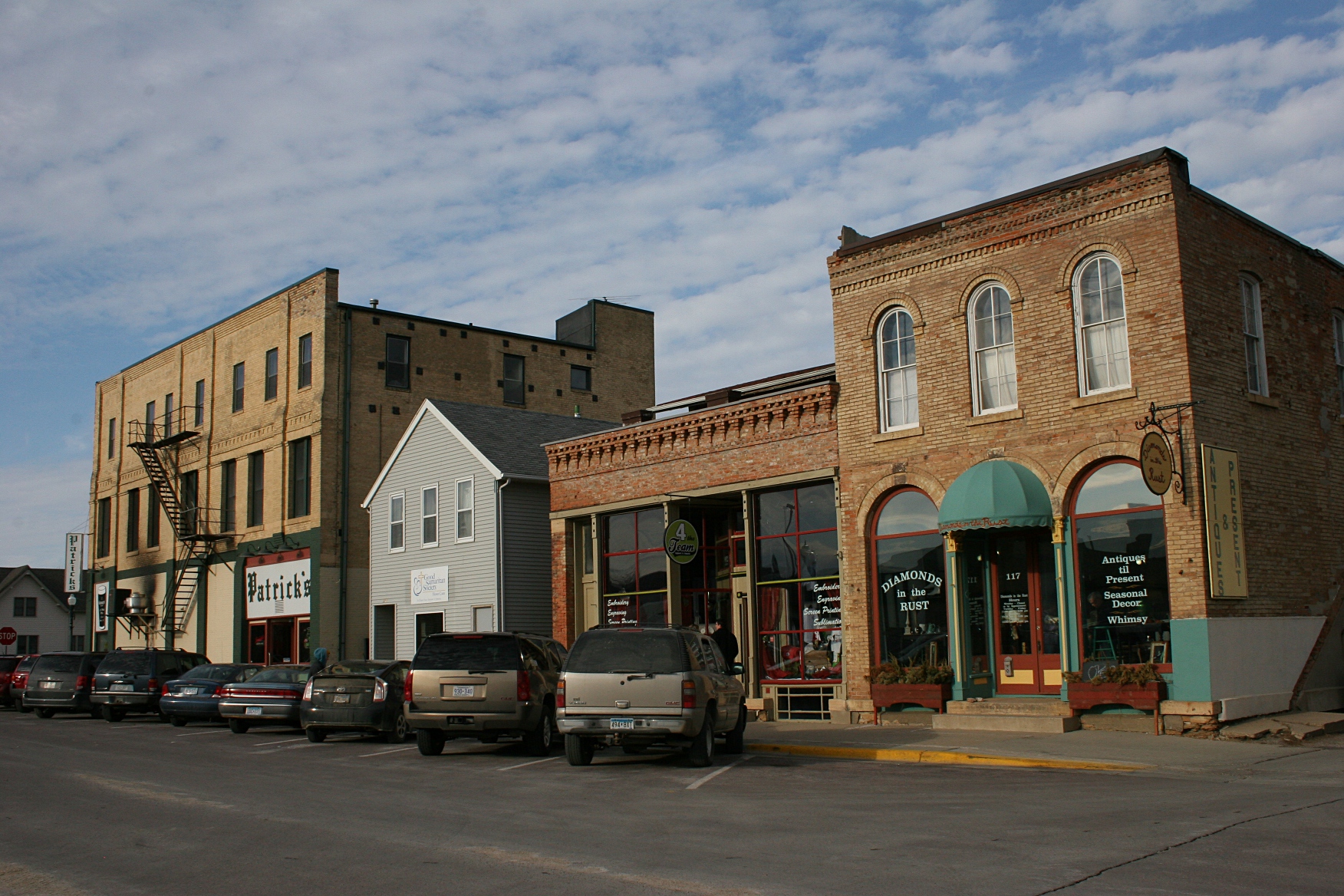
Patrick’s on Third anchors the corner on the left of this block in downtown St. Peter. (Minnesota Prairie Roots copyrighted file photo)
Over in St. Peter, St. Patrick’s Day is celebrated on the actual date, March 17. Paddlefish Brewing offers a special on its Leprechaun Lager. I expect the Irish and not-so-Irish will also gather at Patrick’s on Third for food and drink, including green beer. The Govenaires, the longest, continuously-operating drum and bugle corps in the U.S., performs in the 5:30 p.m. St. Patrick’s Day Parade and then briefly afterwards at Patrick’s on Third. The Governaires are traveling to Ireland in August to participate in the Rose of Tralee International Festival. They are encouraging donations of $17 on March 17 to help fund the trip.
Irish pride shows on the Kilkenny, Minnesota, water tower. (Minnesota Prairie Roots copyrighted file photo)
So there you go, a sampling of St. Patrick’s Day activities happening in my region. But I must mention one more thing. If you want to celebrate St. Patrick’s Day in Kilkenny, Minnesota, you’ll have to wait. The Le Sueur County town of some 150 with the Irish name shifted its annual Irish celebration to September. Halfway to St. Paddy’s Day is set this year for September 13 and 14. Mark your calendars for more Irish fun six months from now.




















 Minnesota Prairie Roots
Recent Comments