Minnesota Prairie Roots

Writing and photography by Audrey Kletscher Helbling

Celebrating community journalism during National Newspaper Week & my backstory October 8, 2024

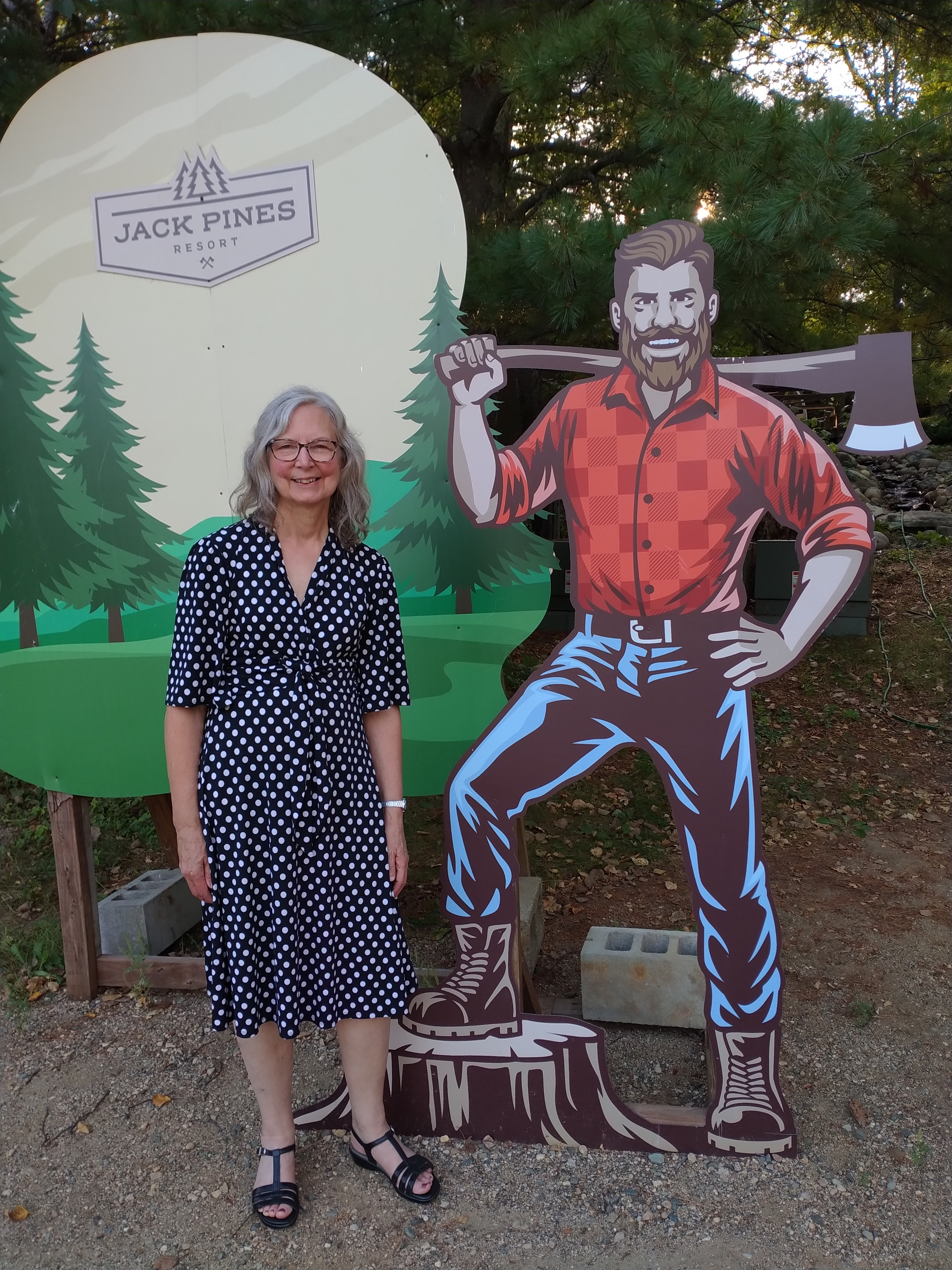
I am a down-to-earth writer who focuses on writing about people, places and events primarily in Minnesota. Here I’m pictured outside Jack Pines Resort, rural Osage. I was there attending a book launch party for an anthology in which my writing published. (Minnesota Prairie Roots copyrighted file photo by Randy Helbling, September 2024)

I’VE ALWAYS LOVED WRITING. From early on, my love of language, of words, of grammar, of, yes, even spelling, defined me. Give me a book to read. Give me a spelling test. Give me a pen and a notebook. And then a computer. Words, words and more words. I will find them, use them, create stories with them.

At one time, I wanted to pursue a degree in German. But, after a year in college, I changed direction because I didn’t want to teach. I decided to study journalism. It was absolutely the right decision for me, my interests and my skills.

With that intro, I join the many writers who are celebrating National Newspaper Week October 6-12. That includes journalists from my local paper, The Faribault Daily News, in which my writing publishes each weekend and sometimes more. I no longer consider myself a full-fledged journalist as much as a writer. These days I write from a personal perspective, more as a columnist, rather than as an objective reporter. I write fiction, creative nonfiction and poetry, too.

MY JOURNALISM EXPERIENCE

But I did work as a full-time newspaper reporter and photographer after graduating with a mass communications degree (news/editorial emphasis) in 1978 from Minnesota State University, Mankato. I worked for newspapers in Gaylord, Sleepy Eye, Mankato, Owatonna and Northfield. Eventually I gave up journalism when I started a family. The long and odd hours are not conducive to family life.

Today my three kids are long grown and gone, and I’ve found my way back to writing with an added focus on photography. What makes a good writer, a good newspaper reporter? Topping my list are the abilities to listen and focus on detail. I’ve always considered myself a good listener, a necessity for any newspaper reporter. I developed the skill of taking notes while actively listening. Organization also factors in. There’s always a bit of homework involved in prepping for an interview. Research the subject. Prepare questions, but be open to asking more as the interview progresses. Focus on details. Tell a story.

I worked in journalism before the days of cellphones, so I filled notebooks with pages of notes. I also studied and worked in the profession before computers and digital cameras. My first job out of college, I typed all of my stories on a manual typewriter, shot all my photos on film. I would never want to go back to either. Give me a computer and a digital camera. It’s much easier to create with those.

FOCUS ON LOCAL STORIES

I love sharing stories and photos of people, places and events that weave into my life, that I discover. I find joy in following a gravel road, in discovering interesting signage, in exploring small towns, in meeting ordinary people following their passions… People often tell me I find the most interesting things. I agree. And then I tell them it’s right here in their own backyard if only they pause to look, and see.

Therein lies the value of community journalism, which I want to highlight and honor during National Newspaper Week. Our local newspapers are all about local. Local reporters cover and write about the people, places and events that are happening locally. They write stories ranging from features to hard news. I covered all of those, too, while working as a full-time reporter. It’s not an easy job. People are quick to criticize, slow to praise. So I want to state right now that I appreciate our local news team. They work long, odd hours, just as I did, to gather and write the news. They care.

Everyone ought to care that freedom of the press thrives, that these journalists are covering our government meetings, writing about our neighbors, highlighting ordinary people who do extraordinary things and much more. We need newspapers as much today as ever before, perhaps even more.

Please, support your local newspaper by subscribing. And thank a newspaper reporter for their dedication to the profession. They deserve to be recognized, especially during National Newspaper Week.

© Copyright 2024 Audrey Kletscher Helbling
 

Update: The Dam Store is gone June 29, 2024

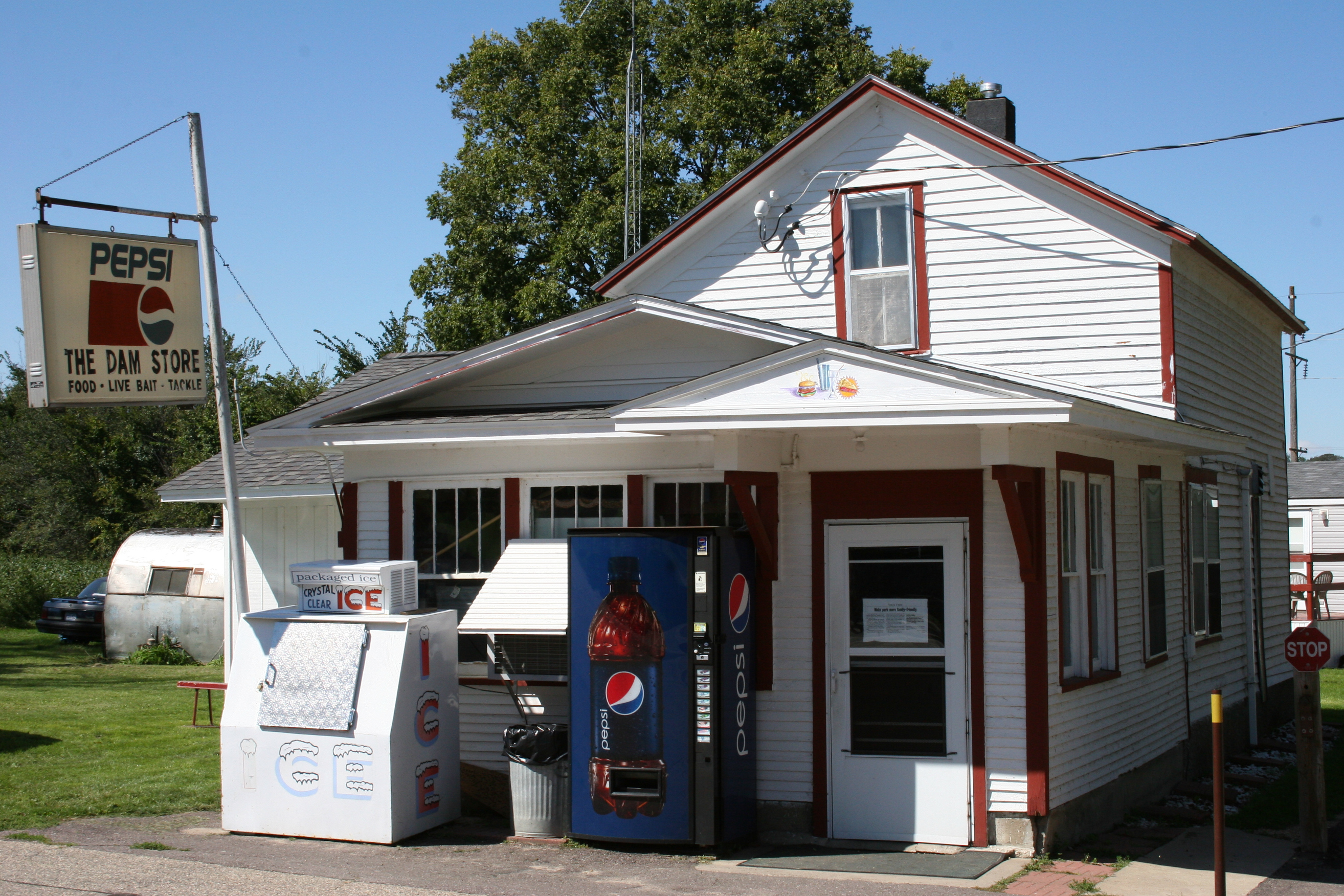
The Dam Store photographed in 2010. (Minnesota Prairie Roots copyrighted file photo 2010)

A FIXTURE NEAR THE RAPIDAN DAM since 1910, The Dam Store is no more. On Friday, crews demolished the historic eatery along the Blue Earth River in southern Minnesota.

Its collapse into the water seemed inevitable after the flooded river carved a path around the west side of the dam, eroding the land, taking down trees, buildings and an electrical substation. The Dam Store appeared next in line.

Officials considered their options, including consulting a professional about moving the store, according to media reports. When that was deemed unsafe, the decision was made to demolish the building. If the river claimed the store, that would add more debris to float downstream, creating additional hazards and safety risks.

Before demolition, the Hruska family, which has owned The Dam Store for some 50 years, and friends removed items from the long-time business. The store opened in 1910 to serve workers constructing the Rapidan Dam.

The loss of The Dam Store is a major loss not only to the Hruska family and locals, but also to the region and to Minnesota. It’s more than a place to grab a burger and a slice of homemade pie. It’s an icon, a destination, one of those genuine slice of Americana spots that stands out for its quaintness, friendliness, uniqueness and great food. Did I mention the pies?

The Hruska family has already stated this is not the end of The Dam Store. I believe them. For now, though, they have much to deal with emotionally and otherwise. The family home, near the store, fell into the river earlier this week. It’s a lot. But the community has rallied to support them financially via donations through GoFundMe and an account at MinnStar banks in Mankato and Lake Crystal. I expect the outpouring of support for this family to continue.

TO READ about my visit to The Dam Store in 2010, click here for a post published on June 26.

© Copyright 2024 Audrey Kletscher Helbling


-30- April 30, 2024

(Minnesota Prairie Roots copyrighted file photo)

THE LOSS IS IMMENSE, TRAGIC—the deaths of eight prominent community members in southern Minnesota last week. I knew none of them personally. Yet I did. We all did.

If you have ever read a community newspaper, then you knew the deceased. For it is eight Minnesota newspapers, not individuals, that died. Ceased publication, only weeks after an announcement of their forthcoming funerals.

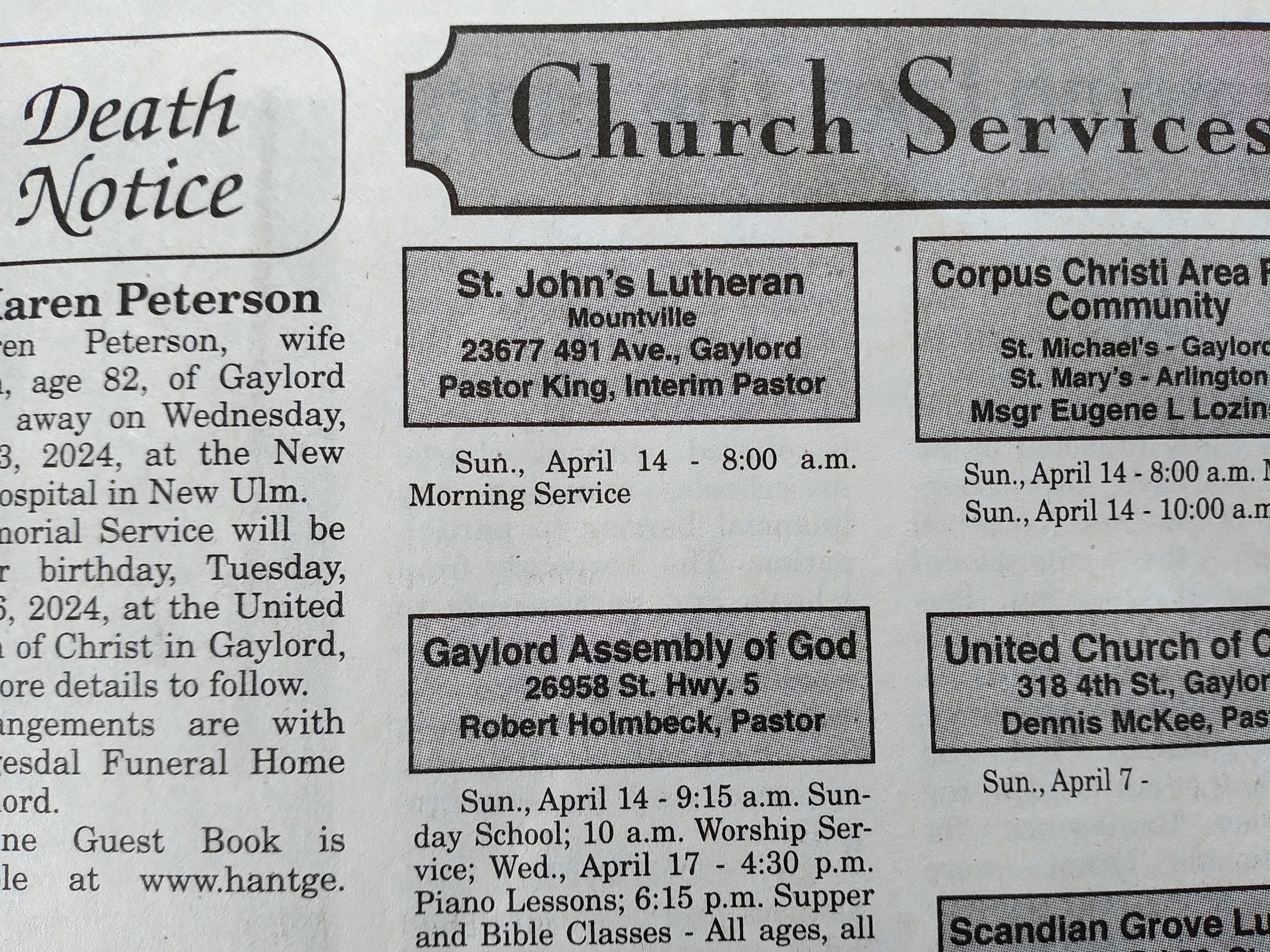
Death notices and church services, printed in The Gaylord Hub.

I am mourning the deaths of the Hutchinson Leader, Litchfield Independent Review, Chaska Herald, Chanhassen Villager, Jordan Independent, Shakopee Valley News, Prior Lake American and Savage Pacer, plus Crow River Press Printing Plant. All are owned by Denver-based MediaNews Group, part of hedge fund Alden Global Capital.

They ranged in age from 30 (Savage Pacer) to 162 (the Chaska and Shakopee papers). Five of the eight began publication between 1862-1880. That’s quite a legacy.

I am undeniably biased in reporting this news. I hold a journalism degree, have worked for community newspapers and write for publications owned by Adams Publishing Group. I believe in community journalism with the fierceness of recognizing its importance, its value, to the people who live and work in the places these papers cover. No one covers local like local.

My local paper, owned by Adams Publishing Group, still prints a special graduation section each spring.

And now that print coverage is lost in all these southern Minnesota towns, cities and rural areas: The watchdog coverage of school board, city council, county board, planning and zoning, and other government bodies. The stories about crime and tragedies. The stories about community events and celebrations. The interesting features that focus on people. Local sports and arts and entertainment stories. Community calendars, school honor rolls and lunch menus. Graduation. Obituaries and much more.

In my first journalism class at Minnesota State University, Mankato, I learned how to craft an obituary. It was our initial writing assignment, I think to impress upon all of us post-Watergate would-be reporters the importance of getting every detail correct in a story. That lesson stuck with me. Get it right.

I took that knowledge with me to The Gaylord Hub, a small town community newspaper printed at Crow River Press in Hutchinson. Each week a co-worker and I aimed north in a vintage Dodge van to deliver the newspaper lay-out sheets to the printing plant. The process of creating a newspaper in 1978 was decidedly different than today. Consider that I typed all my stories on a manual typewriter. A typesetter then typed my work into a typesetting machine. Stories were printed out in columns, then laid out and pasted onto lay-out sheets. No designing by computer. Then it was off to Crow River Press, where a co-worker and I watched the Hub roll off the press, bagged the freshly-inked papers and delivered them to the Gaylord Post Office, where subscribers eagerly waited to get their papers.

A front page story in the April 11 issue of The Gaylord Hub.

Yes, I’m feeling a tad nostalgic and sad thinking of the closure of Crow River Press. The recent shut-down left the publisher of The Gaylord Hub, and other small town newspaper owners, scrambling for a place to print their papers. Many printing plants, like community papers, have met their demise in Minnesota as large media groups acquired papers and plants.

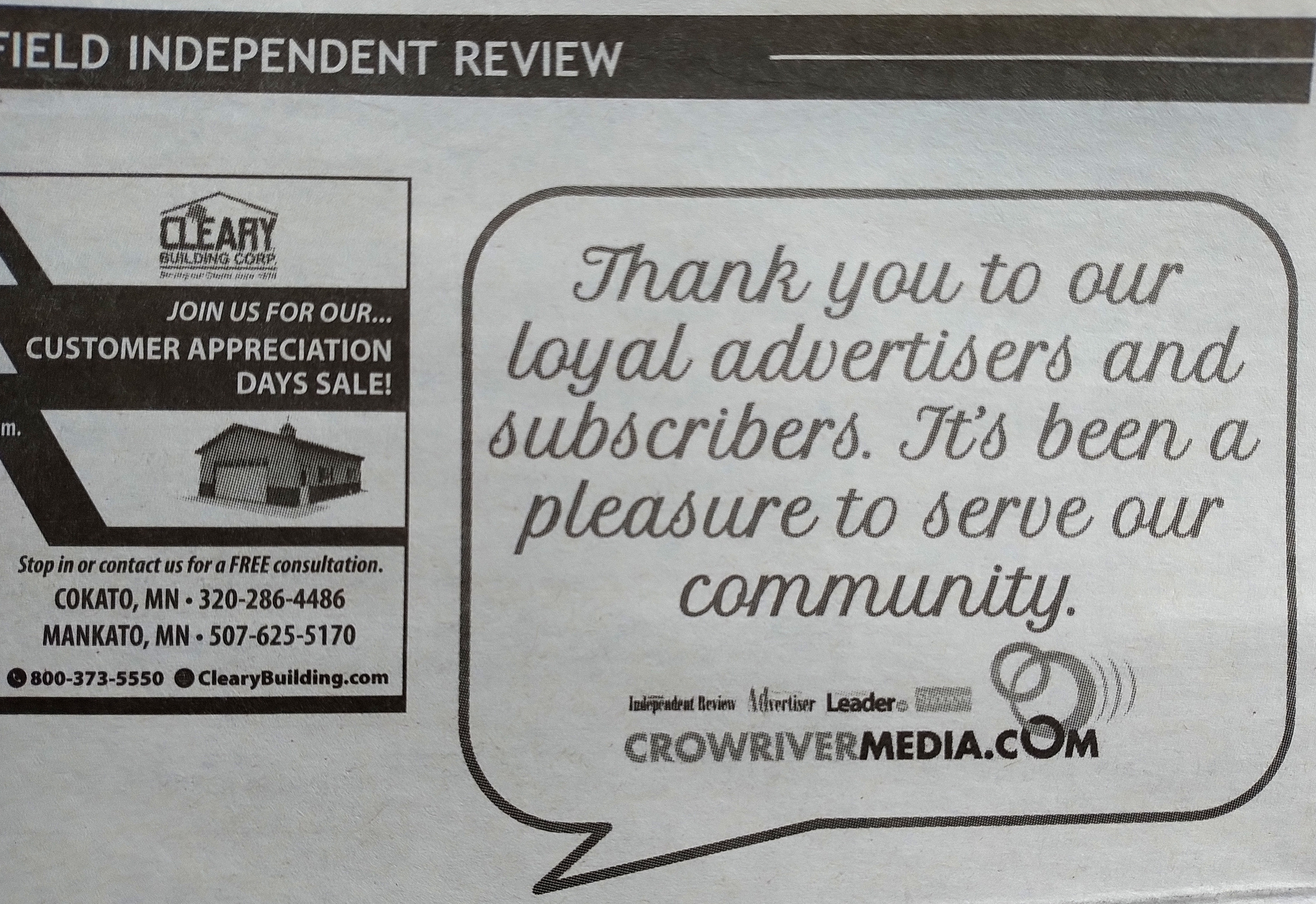
This thank you published in the April 21 final edition of The Galaxy, a supplement to eight community newspapers printed by Crow River Press.

Times change. I understand that. The economy, technology, COVID, acquisitions and much more have factored into the deaths of community newspapers. Readers find their “news” elsewhere. Businesses spend their advertising dollars elsewhere. Far-removed executives make questionable business decisions. The list of reasons and excuses and explanations is extensive.

Community members, too, hold some responsibility in the deaths of newspapers. I can’t speak to the specific papers that closed last week in Minnesota, but I can tell you what I hear locally. And that is criticism, some deserved, much not. People have always criticized the media, failing to remember that reporters are reporting, not creating, the news. But the comments have become more intense, more rabid, more frequent. Freedom of the press feels threatened in our democracy.

The community journalists I know are honest, hardworking, (probably) underpaid and devoted to the craft. Just as I was when I worked as a full-time newspaper reporter.

This full page notice/thank you, an obituary of sorts, published in the April 21 final edition of The Galaxy.

Community newspapers are no longer valued like they once were, resulting in fewer subscribers. When I hear people say they no longer subscribe to the local paper, I suggest they reconsider. Community newspapers are vital to our cities, towns and rural areas. And sometimes we don’t understand that, until it’s too late, until we’re reading their obituaries.

-30-

NOTE: Print journalists have used -30- to signify the end of a story submitted for editing. I use # to indicate the ends of my stories, except today, when the old school -30- seems more appropriate.

© Copyright 2024 Audrey Kletscher Helbling
 

When you can’t get rid of a mattress & box spring because… May 27, 2023

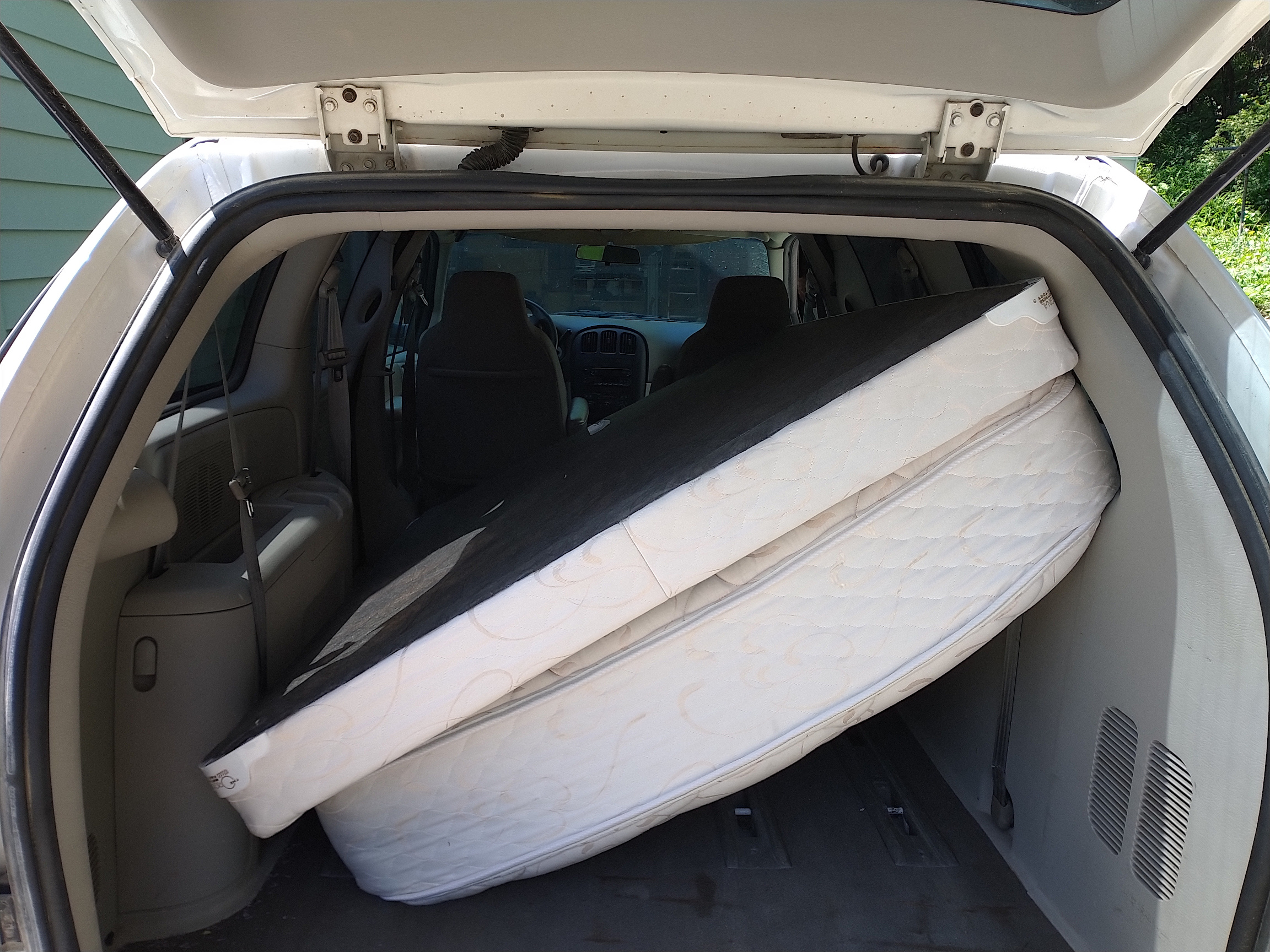
A full-size mattress and box spring fill the back of our van. (Minnesota Prairie Roots copyrighted photo May 2023)

MONDAY EVENING RANDY AND I crammed a full-size used mattress and box spring into the back of our van. It was not an easy task, but we squeezed both inside. We intended to drop the worn out set off at the Rice County Landfill the next day upon our return from a medical appointment in Northfield. Sometimes, though, plans go awry.

En route to Northfield early Tuesday morning, we noticed smoke billowing in the distance. Randy said he’d seen the same smoke on Monday, but much thicker, blacker. Burning tires type of smoke. The closer we got to Northfield, the denser the smoke, enough to warrant turning on the headlights. Smoke settled like fog upon the landscape. The air smelled putrid.

Before we left Northfield, we learned the fire was at the county landfill, a blaze which began Monday evening among all that trash. Still, we were hopeful we could drop off the mattress and box spring. What were we thinking? Randy turned the van off Minnesota State Highway 3 onto the road leading to the landfill. There a portable electronic sign flashed that the landfill was closed to the public and open to licensed haulers only.

So here we are, many days later, driving around with an old mattress and box spring filling the bulk of our van. The latest update from the county states that the landfill will remain closed to non-licensed haulers at least through Monday. There are health and environmental concerns related to the still smoldering (maybe still burning) garbage. I appreciate that local and state officials are monitoring, testing, protecting.

For county residents like us who need to get rid of household items, county officials have now provided a list of local licensed garbage haulers who are accepting things like mattresses and box springs. I called two haulers. One quoted me a price of $65, the other $70 for each piece. So we’re talking $130-$140, a price we don’t want to pay.

I then checked the county landfill website for disposal pricing. There are three options: $25 for each piece if they’re recyclable. What makes a mattress and box spring recyclable? I have no idea. Next, $35/each with prior permission. Finally $55/each without prior permission. Permission from whom? And why is prior permission needed? I appreciate clarity. (And I thought to myself, no wonder people dump mattresses and box springs in ditches if disposals costs range from $50-$110.)

What also remains unclear are how long the fire will burn/smolder, how the environment and air quality have been impacted, and how the health of anyone who’s breathed in that smoke has been affected. Randy and I traveled through that smoke, breathed it in on our drive to and from and during our time in Northfield.

And we live only eight miles from the landfill, which was near enough for that smoke to drift…and we did close the windows in our house Thursday evening because of a putrid odor. Was the smell from the landfill fire? I don’t know. As for that bed set, it’s still stuffed in the back of the van.

© Copyright 2023 Audrey Kletscher Helbling


Some encouraging mental health news & then… March 21, 2023

This message refers to the struggles associated with mental illness. (Minnesota Prairie Roots copyrighted file photo)

WE’VE ALL SEEN THEM—fundraisers and GoFundMe campaigns to help individuals and families who are struggling. Perhaps you’ve even been in that spot of needing financial help following a devastating event or a major health crisis. You’ve likely attended many fundraisers and/or donated online. I am thankful for such generosity.

Typically, these pancake breakfasts, spaghetti dinners, silent auctions,…crowdfunding efforts follow a diagnosis like cancer, a car accident or a major event like a house fire. Missed work and overwhelming medical and other bills all too often deplete finances. And if not for the assistance of caring family, friends and even strangers, many could not get through the challenges.

Yet, in the all of this, I’ve often wondered why individuals who’ve experienced a mental health crisis are not fundraising also. When they’ve been hospitalized and/or found themselves unable to work, the financial fall-out is no less.

I photographed these mental health themed buttons several years ago on a bulletin board at the Northfield Public Library. (Minnesota Prairie Roots copyrighted file photo)

ASKING FOR FINANCIAL HELP

But I hold hope that is changing. I read an encouraging article, “Out from under: Crowdfunding is an option for people in mental health crisis,” by freelancer Andy Steiner. In her MinnPost article, Steiner shares the story of a 42-year-old artist and educator diagnosed with bipolar disorder and post traumatic stress disorder linked to childhood abuse and who suffers from debilitating migraines as a result. Unable to work sometimes for months at a time, the woman faced financial struggles. She was behind on her rent. A friend suggested she start a GoFundMe. Eventually, she reluctantly did so, getting enough donations to pay overdue bills and then some. It was just the boost she needed. Financially and mentally/emotionally.

Steiner’s article includes interviews with Mental Health Minnesota and with GoFundMe. I encourage you to read her story by clicking here. I feel such hope in reading that more people facing mental health crises are beginning to seek the outside financial support often elusive to them.

I recognize this doesn’t fix everything. We have a long ways to go in ending the stigma which continues to surround mental illness. I see improvements. But I don’t think we’re to the point where family and friends are delivering hotdishes (the Minnesota term for “casseroles”) to individuals and families in the throes of a mental health crisis. Financial and emotional support, encouragement and, yes, even compassionate greeting cards/calls/notes are needed just as much in these situations.

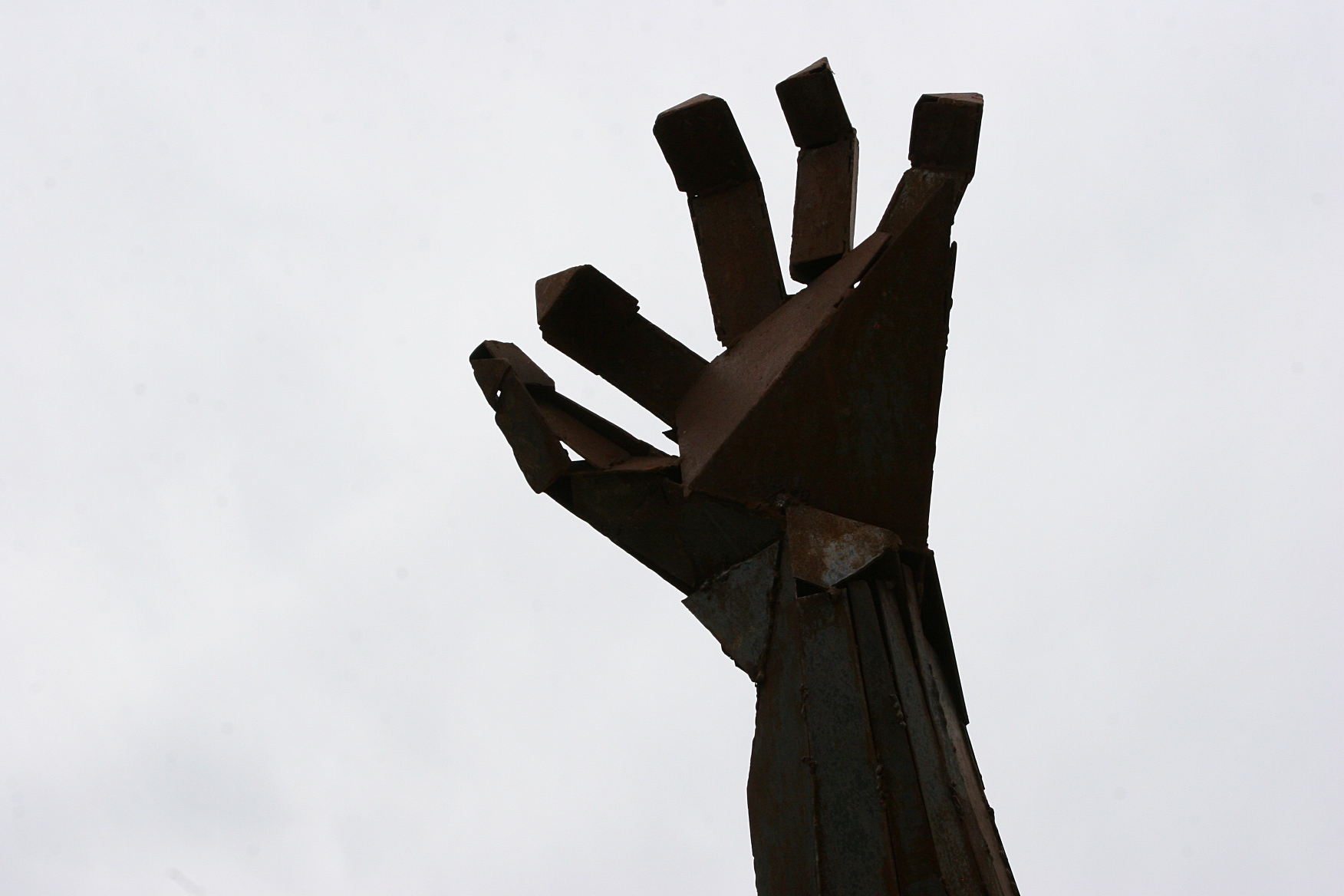
Reaching for help, this hand was part of a mental health-themed sculpture, “Waist Deep,” which once stood outside the Northfield Public Library as part of a changing art installation. (Minnesota Prairie Roots copyrighted file photo 2019)

CRISIS RESPONSE EXPANDING IN MY COUNTY

And we definitely need more mental healthcare professionals. That brings me to another recent bit of encouraging news. My county of Rice has been selected as the site for a new satellite office of the South Central Mobile Crisis Team, a team which responds (to homes, etc. and virtually) 24/7 in mental health crises in a 10-county area. Currently, it can take some 2 ½ hours for that team to arrive here from its home base 40 miles away. That’s too long. If you were experiencing a heart attack, for example, you wouldn’t be expected to wait two hours.

Yes, I hold hope. I hold hope for the many individuals and families who will benefit from additional, immediate mental healthcare resources. I hold hope that Crowdfunding and fundraising dinners and breakfasts will become more common for individuals experiencing a mental health crisis and the financial fall-out. I hold hope that they will find, too, a more understanding community of emotional support. All of this is so long overdue. We each have the power within us to show compassion and care and thus help reduce the stigma of mental illness. Let’s do it.

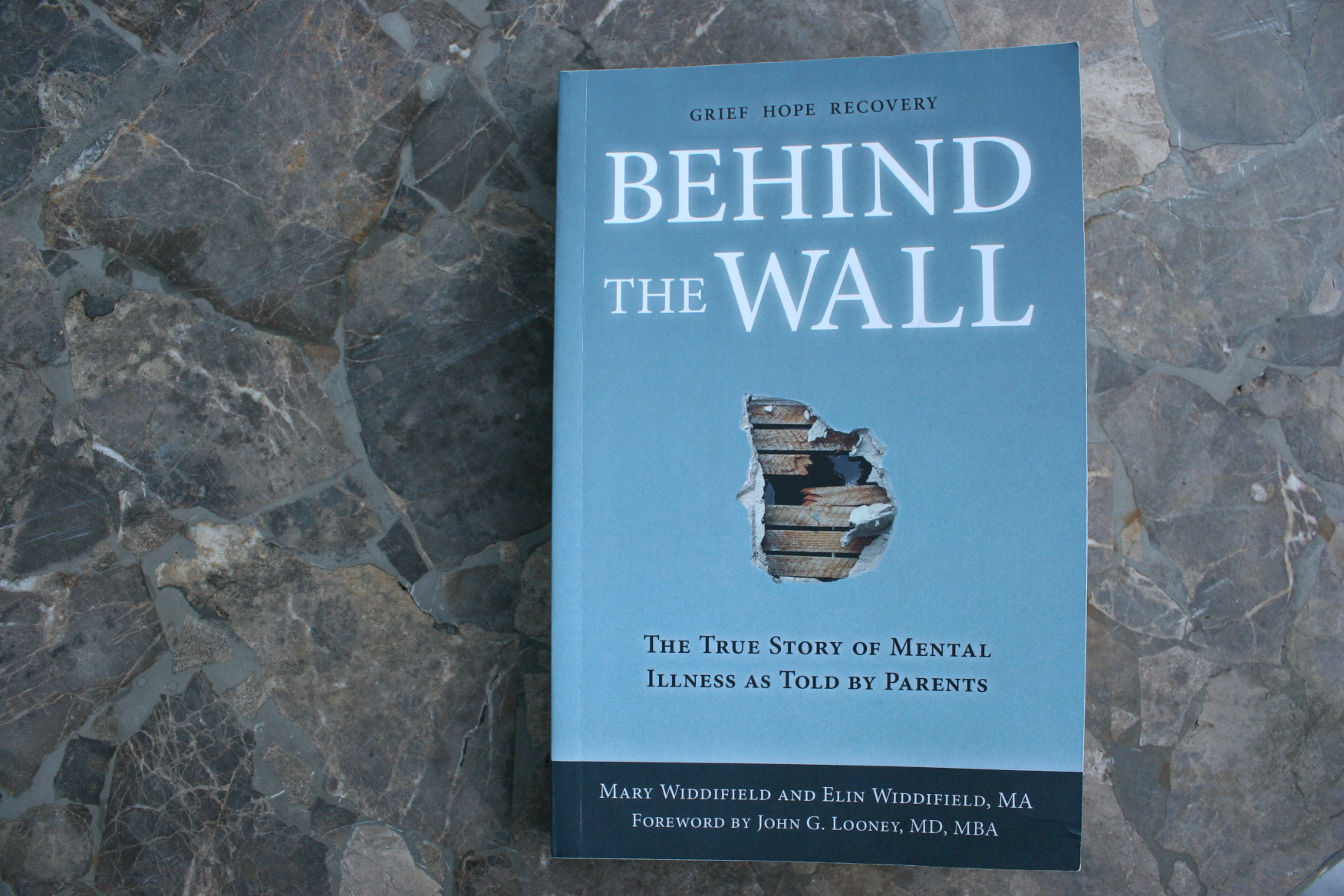
I highly-recommend this book to learn more about mental illness from the perspective of parents. (Minnesota Prairie Roots copyrighted file photo)

WE HAVE TO DO BETTER

And then this happens: Irvo Otieno, 28, died March 6 in a Virginia psychiatric hospital days after initially experiencing mental health distress. Seven deputies have now been charged with second-degree murder in his death.

In a powerful statement to the media, Caroline Ouko said, “Mental illness should not be your ticket to death. There was a chance to rescue him. We have to do better.” The words of this grieving mother should cause every single one of us to pause and consider, what if this had been my loved one in a mental health crisis? Could this happen to someone I love? To any of us? Sadly, it could.

We can do better. We have to do better. Mental illness should not be a ticket to death.

Photographed along a recreational trail in the Atwood Neighbor of Madison, Wisconsin. (Minnesota Prairie Roots copyrighted file photo)

A FEW RESOURCES

FYI: If you or someone you love is experiencing a mental health crisis and/or is in need of mental health support, please seek help.

The American Foundation for Suicide Prevention Minnesota Chapter and Operation: 23 to Zero (aims to prevent suicide among veterans and those in the military) are co-hosting a safeTALK Training from 8 a.m.- noon Saturday, March 25, at the Faribault American Legion. This event provides training in suicide alertness skills, connections to life-saving resources and more. To learn more and/or to register for this free-will donation half-day program, click here.

South Central Minnesota Crisis Line: 877-399-3040

National Suicide and Crisis Line: 988

National Alliance on Mental Illness, with state chapters, is a great resource for information and support, including virtual and in-person support groups. Click here to reach the national NAMI website.

© Copyright 2023 Audrey Kletscher Helbling
 

Remembering the 35W bridge collapse 15 years later August 1, 2022

This photo shows the opening spread of the feature article published in the November/December 2007 issue of Minnesota Moments. Casey McGovern of Minneapolis shot the bridge collapse scene. To the far left is Garrett before the collapse, to the right, his rescuer. The next photo shows his Ford Focus which plummeted into the Mississippi River. And to the right are newly-engaged Garrett and Sonja, before the collapse.

FIFTEEN YEARS AGO THIS EVENING, 13 people died and 145 were injured when the 35W bridge collapsed during rush hour in downtown Minneapolis. Vehicles plunged into the Mississippi River. Others clung to the tilted, broken span of roadway. Lives were forever changed at 6:05 pm on August 1, 2007, when faulty gusset plates gave way and the bridge broke.

Garrett with his mom, Joyce Resoft, about a month after the bridge collapse. (Minnesota Prairie Roots file photo 2007. Photo courtesy of Garrett’s family)

Among those most seriously injured was then 32-year-old Garrett Ebling, former managing editor of The Faribault Daily News. He suffered a traumatic brain injury, severed colon, broken left arm and ankles, a spinal injury and more after his Ford Focus nosedived 110 feet, the equivalent of an 11-story building, into the river. That he survived seems miraculous. He spent weeks in the hospital, where he underwent multiple surgeries. A lengthy rehab followed. His life, physically, mentally and emotionally, was forever changed.

Within months of the collapse, I penned a feature story about Garrett for Minnesota Moments, a now-defunct magazine. Mine was one of the few initial interviews Garrett granted and I was both humbled and honored to share his story as a freelance writer. Prior to his departure from the editorial job in Faribault, we had connected. I remember Garrett’s kindness and compassion toward me after my son was struck by a hit-and-run driver in May 2006. I took great care in writing his story, recognizing that another journalist was trusting me to get it right.

Garrett Ebling’s book.

In 2012, Garrett wrote about his experiences and life thereafter in a book, Collapsed—A Survivor’s Climb From the Wreckage of the 35W Bridge. I reviewed that revealing and emotional book in which this survivor held nothing back.

A section of the then now wow exhibit at the Minnesota History Center in St. Paul features the 35W bridge collapse. This image shows the collapsed bridge and the emergency exit door from a school bus that was on the bridge when it collapsed. All made it safely off the bus (Minnesota Prairie Roots file photo)

Since then, I’ve lost track of the “author, father and 35W bridge collapse survivor,” as Garrett labels himself on his Twitter account. But I expect today, the anniversary of the bridge collapse, is difficult for him as it is every survivor and every single person who lost a loved one 15 years ago in downtown Minneapolis when the unthinkable happened. When a bridge fell.

All the children and adults on the bus signed the door on display at the Minnesota History Center. (Minnesota Prairie Roots copyrighted file photo)

There are moments in history that we never forget and, for me a Minnesotan, August 1, 2007, is one of those dates. When I heard the breaking news of the bridge collapse, I worried first about extended family who live in the metro. They were not on the bridge. While that diminished my personal angst, it does not diminish the tragedy of that day for those who were on that bridge. Like Garrett Ebling, the 144 others injured and the 13 who died. It is a tragedy, too, for those who loved them and for us, collectively, as Minnesotans.

© Copyright 2022 Audrey Kletscher Helbling
 

As words fly, The Great Invader presses on September 30, 2021

COVID-19 virus. Photo source CDC/Alissa Edkert, MSMI; Dan Higgins MAMS, 2020

ONCE UPON A TIME in The Land of Plenty, the villagers determined they’d had enough of the restrictions, recommendations and mandates imposed during a far-reaching health emergency. The Great Invader be damned, they would live life like it was 2018, pre-intrusion into their quiet village lives.

And so they did. They gathered in the arenas. They gathered in the squares. They gathered in the taverns and around the hearth. They packed the marketplace. They crammed into wagons and traveled hither-and-yon without worry. They cared only about their own happiness. No one, not even the Ministry of Health or the rulers of the kingdom, would tell them what they could and could not do.

DENIAL

Despite their best efforts, there was no denying The Great Invader’s presence in the land, even in the smallest of villages. But the villagers would never publicly acknowledge that. Such validation would only undermine their integrity and cast them as supporters of the kingdom leadership. They would not defect or risk becoming outcasts among their own. So, if worry or doubt entered their minds, they dared not share their concerns.

Even in that state of outcry or denial, depending on perspective, the Ministry of Health continued to post documents from the Office of Truthfulness in the village square. Oftentimes The Village Know-It-All would rip down the official scrolls, especially those listing deaths caused by The Great Invader. He didn’t need The Counters in the village adding numbers and circulating the results.

FACT & FICTION

Stopping the flow of information from respected wordsmiths, though, proved much more difficult. The writers were relentless in penning pieces about The Great Invader and his effect upon the people of the kingdom. To counter their efforts, The Village Know-It-All began posting his own carefully crafted stories for all to see. He was especially skilled in the art of manipulation. Whatever he wrote would be quickly repeated as the truth. He held that type of power.

OPPORTUNITY GALORE

The Great Invader, who could be everywhere and anywhere simultaneously, recognized opportunity when he saw it. He would up his efforts to invade the villages, to sicken the villagers, to cause pain and suffering. And even death. His job would be so much easier among those who refused to believe the Office of Truthfulness, who spread false information and who refused to take a life-saving potion available throughout the kingdom. He felt giddy with anticipation as he continued his invasion. This was proving much easier than he ever hoped, ever dreamed, ever thought possible in The Land of Plenty.

Minnesota Prairie Roots copyrighted file photo.

AS COVID-19 CASES continue to surge, here are some recent headlines from Minnesota media sources, plus one from Minnesota-North Dakota. Please, if you are unvaccinated, get vaccinated. Please wear a mask in public or in close proximity indoors to those outside your immediate circle, regardless of vaccination status. Be safe. Be well. Care about others. We need to stop The Great Invader/COVID-19.

Local hospitals see record patient volume in emergency departments—Faribault Daily News

The number of schools in Minnesota with confirmed COVID-19 cases has tripled twice in the last two weeks. What’s going on?—MinnPost

“How will we keep going like this?” School nurses, staff worry about burnout—Minnesota Public Radio

Hundreds of U of M faculty want stronger vaccine policies—Minnesota Public Radio

Protestors Demonstrate Against Vaccination Mandates Thursday in Redwood Falls—KLGR radio

Carris Health—Redwood Hospital and Clinic Reinstates COVID Visitor Restrictions—KLGR radio (posted on the same date as the protest story)

Avera Marshall reopens drive-up COVID testing as need grows—The Marshall Independent

Latest surge wears on Carris Health—Rice Memorial Hospital staff 18 months into the pandemic—West Central Tribune (Willmar)

Trending rise of COVID-19 continues in Morrison County—Morrison County Record

As hospitals struggle amid delta surge, North Dakota puts extra ambulances on stand-by—The Forum of Fargo-Moorhead

North Dakota baby’s nearly fatal fight with COVID-19 signals new risk to children—The Forum of Fargo-Moorhead

#

Click here to read my previous posts in this series about The Great Invader. Note that I moderate all comments on this, my personal blog.

© Copyright 2021 Audrey Kletscher Helbling


Able to breathe again April 21, 2021

Filed under: Uncategorized — Audrey Kletscher Helbling @ 2:02 PM
Tags: , , , , , , , , , ,

A message chalked in Bridge Square in Northfield carries a repeated phrase as young Black people continue to die at the hands of police. Minnesota Prairie Roots file photo August 2020.

WHEN MY ELDEST DAUGHTER texted at 2:31 pm Tuesday that a verdict had been reached in the Derek Chauvin trial, I replied with one simple word. What?

That the jury could reach a verdict in such a short time—about 10 hours—following weeks of testimony likely meant that the former Minneapolis police officer would be found guilty of killing George Floyd on May 25, 2020, in Minneapolis by pressing his knee on Floyd’s neck for 9 minutes and 29 seconds.

I immediately switched on the TV to await reading of the verdict by Judge Peter Cahill. As I waited and watched news coverage, I felt a sense of hope. Hope that this would end in a conviction. Hope that, finally, there would be accountability in the death of a Black man at the hands of police.

I’d watched the Chauvin trial off-and-on. I heard the words of the bystanders who witnessed Floyd’s death, who pleaded with police officers to give him medical attention. Who asked Chauvin to remove his knee from Floyd’s neck. Who chose to pause and care and document and attempt to save another human being’s life. They felt hopeless, helpless, traumatized, according to their sworn testimony. I listened, too, to police officers testify against one of their own. And I heard Floyd’s loved ones and medical experts speak. Listening to testimony left me at times feeling exhausted and heart-broken.

So when the guilty of all three counts—second-degree murder, third-degree murder and second-degree manslaughter—came down yesterday, I felt relief. Finally.

I watched Chauvin as the verdict was read. His eyes darted from side-to-side. I wondered what he was thinking in that moment and the moments following—when his bail was revoked, he was handcuffed and led away to wait in a Minnesota prison for his sentencing in eight weeks.

Messages on a house in small town Dundas, Minnesota. Minnesota Prairie Roots file photo August 2020.

But mostly, I wondered how the Floyd family felt. Later they would speak at a news conference led by Civil Rights activist Al Sharpton and Civil Rights attorney Ben Crump. Said Sharpton: “This gives us the energy to fight on.” And Crump: “America, let’s frame this moment as a moment where we are finally getting close to living up to our Declaration of Independence…that all men are created equally…with certain unalienable rights like life and liberty and the pursuit of happiness.”

My mind focused on this single word: life. George Floyd needlessly lost his life on May 25 at the corner of 38th Street and Chicago Avenue in south Minneapolis, a place now known as George Floyd Square.

In the 11 months since, his family has focused on attaining justice in the death of their brother/cousin/uncle/father and on effecting change. They have done that with grace, poise, eloquence, prayer and passion. George’s brother, Philonise Floyd, has stepped up as the family spokesman. At Tuesday’s news conference, these words, especially, resonated with me: “Today we are able to breathe again.” That comment by Philonise linked directly to George Floyd’s plea to police officers as he lay face down on the pavement dying. “I can’t breathe.”

A photo and comment posted at the “Selma to Montgomery: Marching Along the Voting Rights Trail” exhibit at St. Olaf College in Northfield in 2015. Minnesota Prairie Roots file photo 2015.

Much work remains to be done. Tuesday’s verdict marks an important step in accountability and a move toward justice and equality. It’s easy to type that. It’s harder to live it. To speak up. To take action. To care. And we need to care, whether we live along a rural gravel road, in a small town, in the heart of a big city or anywhere in between.

FYI: I’d encourage you to read posts by two Minnesota bloggers whom I respect and follow and who share their thoughts on the Derek Chauvin verdict. Click here to read Margit Johnson’s post, “Endings and Beginnings,” and Kathleen Cassen Mickelson’s “Guilty. Guilty. Guilty.”

© Copyright 2021 Audrey Kletscher Helbling


COVID-19 stories from Minnesota November 18, 2020

Filed under: Uncategorized — Audrey Kletscher Helbling @ 2:25 PM
Tags: , , , , , , , ,
Minnesota Prairie Roots photo taken in downtown Faribault, MN on May 15, 2020.

AT 6 PM TODAY, Minnesota Governor Tim Walz is expected to announce more restrictions related to COVID-19 during an address to our state. With cases, hospitalizations and deaths exploding, additional measures seem wise and necessary. Minnesota recorded 67 COVID deaths today, a new record.

On Tuesday afternoon, the governor led a press conference that focused on stories, what he termed “the basic human part of what COVID is.” If you read my MN Prairie Roots post yesterday, you understand the value I place on stories. Last Friday I emailed the governor’s office and suggested stories as a way to personalize COVID. Whether my email helped shape the approach taken at yesterday’s briefing, I don’t know. It doesn’t matter. What matters are the powerful stories shared. I feel it’s important to pass along these stories, using notes I took during Tuesday’s press conference.

“IF WE DON’T ACT NOW…”

Former State Representative Nick Zerwas from Elk River began the storytelling with his COVID experience, one which landed him in the hospital for five days. Only 39 years old but with an underlying heart defect, he required supplemental oxygen. “I was stunned that I was so overwhelmed and ill from this virus,” he said.

At times throughout the tele-conference, I heard Zerwas coughing and wondered if he would make it through the briefing.

Zerwas, a Republican, has done an about face on the virus, now advocating mask wearing and coming together to stop rampant community spread. He spoke candidly about his change in attitude, noting, though, that the virus situation (community spread) now is much different than this summer.

I’ve seen the same attitude changes recently in other Republican leaders who, just last week, became infected with COVID. It’s a welcome shift that I hope ripples to the public and ends the politics of COVID-19.

In his lengthy storytelling, followed by a media question, I found this statement by Zerwas to be particularly powerful: “The virus is here. If we don’t act now, God help us.”

IN THE ICU WITH HEART AND KIDNEY FAILURE

The second speaker, Sarah Winston, the mother of a 17-year-old daughter infected with COVID-19, spoke next. Hers is a story that needed to be told and to be heard by anyone who thinks they are “safe” from the ravages of the virus just because they are young and healthy.

Sarah described her daughter as a healthy student athlete who contracted COVID from an asymptomatic friend. Ella ended up in the hospital for 10 days with heart and kidney failure and more and deals now with inflammation of her heart.

This mother urged Minnesotans to stay home, to quarantine even if they test negative after exposure, to wear masks, to be safe, to be smart.

I was surprised to hear her say, though, that she wants sports to continue (for the mental health of young people).

“AN AWFUL EXPERIENCE”

Dr. Jon B. Cole, a doctor in Hennepin Healthcare emergency medicine, termed COVID-19 “an awful experience.” He spoke from both a personal and professional perspective. In March, when COVID was just breaking in this country, he canceled a trip to Florida with his wife and four children. Five days later, he developed the virus and was among the first in Minnesota to test positive for COVID. Cole emphasized how thankful he was for his decision to cancel the Florida trip.

On a professional level, he spoke of the “substantial number” of nurses and doctors now sick with the virus or in quarantine. He warned of a shortage in healthcare workers.

GRIEVING

“I don’t want anyone else to endure what my family has had to endure,” Lt. Gov. Peggy Flanagan said after sharing the story of losing her brother to COVID-19 in March. She described her brother as “a Marine, tough as nails.” He cared for their father, who died in January. Not long after, he was diagnosed with aggressive cancer and then COVID.

Flanagan noted that she never got to say goodbye to her brother, that she hadn’t processed her grief. It wasn’t until October that her family buried his ashes. Grief threaded through her narrative. As did strength and a determination that her experiences will make a difference.

She emphasized that every life has value, no matter an individual’s age in obvious reference to many elderly in care centers who have died as a result of COVID.

Flanagan said it’s “killing” her not to have Thanksgiving with her mom, asking Minnesota families to do the same so the chairs around their holiday tables are full next year. She encouraged people to drop the “magical thinking” that one Thanksgiving dinner won’t count in stopping the spread of COVID. Those were hard words to hear.

“COVID will continue to spread as long as we allow it to,” she concluded, urging everyone to take care of themselves and each other.

SOME WORDS FROM THE GOVERNOR

When the press conference ended, the media asked questions, mostly of the governor. He noted there will be a pause in sports and other restrictions announced today.

He also expressed gratitude to those who shared their stories Tuesday afternoon. I am grateful, too, for those stories which, as the governor stated in his opening remarks, add the human element to this virus.

Walz offered one final observation: “This is as bad as it was in New York in the spring.” If only he was wrong.

#

Take care, dear readers. Make good choices for yourself and others. Follow health and safety guidelines/mandates. Be safe. Be well.

NOTE: I welcome comments and sharing of stories. However, I moderate all comments and will not publish those which are inflammatory or which spread misinformation and/or false narratives.

© Copyright 2020 Audrey Kletscher Helbling


My take-aways from a COVID-19 situation press conference in Minnesota November 17, 2020

Minnesota Prairie Roots file photo June 2020.

STORIES. THEY MATTER. And, during a Monday afternoon press conference addressing COVID-19 in Minnesota, the powerful stories shared by Abbot Northwestern Hospital ICU nurse Kelly Anaas took this crisis down to a personal level.

I—we—needed to hear this. Stats, data and information, while important, can only go so far before we numb to the numbers. Stories translate into real people, real situations. They hit home.

As Anaas stood at the podium and talked of patients from Stacy, Brainerd, Bemidji waiting for hours for helicopters and/or ambulances to transfer them, of the ICU filling, of overwhelmed healthcare workers, I could see the stress on her face, the worry, the strong desire to convince Minnesotans to follow health and safety guidelines and take this virus seriously. If her plea doesn’t convince people, I don’t know what will.

“So, Minnesota, lawmakers, mask wearers and COVID deniers, I’m here today to say that you need to believe nurses when we tell you that these things are happening,” she said.

Just moments earlier Anaas dismissed the term frontline workers, instead shifting that to say, “Minnesota, we are your only line.”

One of her most memorable statements: “Please, Minnesota, stay home this Thanksgiving so you don’t have to ring in the new year with me.”

WE’RE IN THIS TOGETHER

Repeatedly throughout the news conference, our governor, public health officials and other healthcare workers (including another nurse and a doctor) called for Minnesotans to do their part, to work together, to be kind, to stay home, to mask up, to social distance, to limit their Thanksgiving celebration to their immediate household. That’s a change from just days ago when we were advised it was OK to gather with no more than 10 people from three households.

How quickly things evolve with this pandemic. Reported record high daily infections of nearly 9,000 with deaths breaking records also prompted Minnesota Commissioner of Health Jan Malcolm to term the numbers “terrifying.” And she warned the situation will worsen as the high infection rate translates to increasing hospitalizations and deaths in the upcoming weeks.

Mixed with that bad news, though, seemed a concerted effort by those speaking to set a positive tone. A pep fest, if you will, praising Minnesotans for their efforts thus far and inspiring them to work together as “One Minnesota” (Governor Tim Walz’ unifying theme). Walz also noted the light at the end of the tunnel in promising vaccines. But we’re not there yet. He repeatedly called upon Minnesotans to do their part to stop the spread of COVID-19.

A LIGHT-HEARTED MOMENT

In the midst of all the dire news, Dr. Cuong Pham of M Health Fairview delivered a light-hearted moment when he shared how he learned to cut his hair via YouTube. I appreciated the humor mixed into his observations of hospitals at near-capacity, his concern about “the little hospitals in greater Minnesota,” his worry, too, about patients with healthcare needs beyond COVID. Heart attacks, strokes, car accidents and other emergencies continue. He stressed wearing masks, with the added words “over your nose.” I appreciated that. Over, not under, your nose.

These are difficult days. There’s no questioning that. I’d like to believe that we as Minnesotans have the ability to live up to our Minnesota Nice moniker, to believe healthcare workers like Kelly Anaas who need us to listen, and, as the governor said, “fight the virus and not each other.”

NOTE: I moderate all comments and will not publish inflammatory comments or those which spread misinformation and/or false narratives.

© Copyright 2020 Audrey Kletscher Helbling