Minnesota Prairie Roots

Writing and photography by Audrey Kletscher Helbling

Left behind November 23, 2020

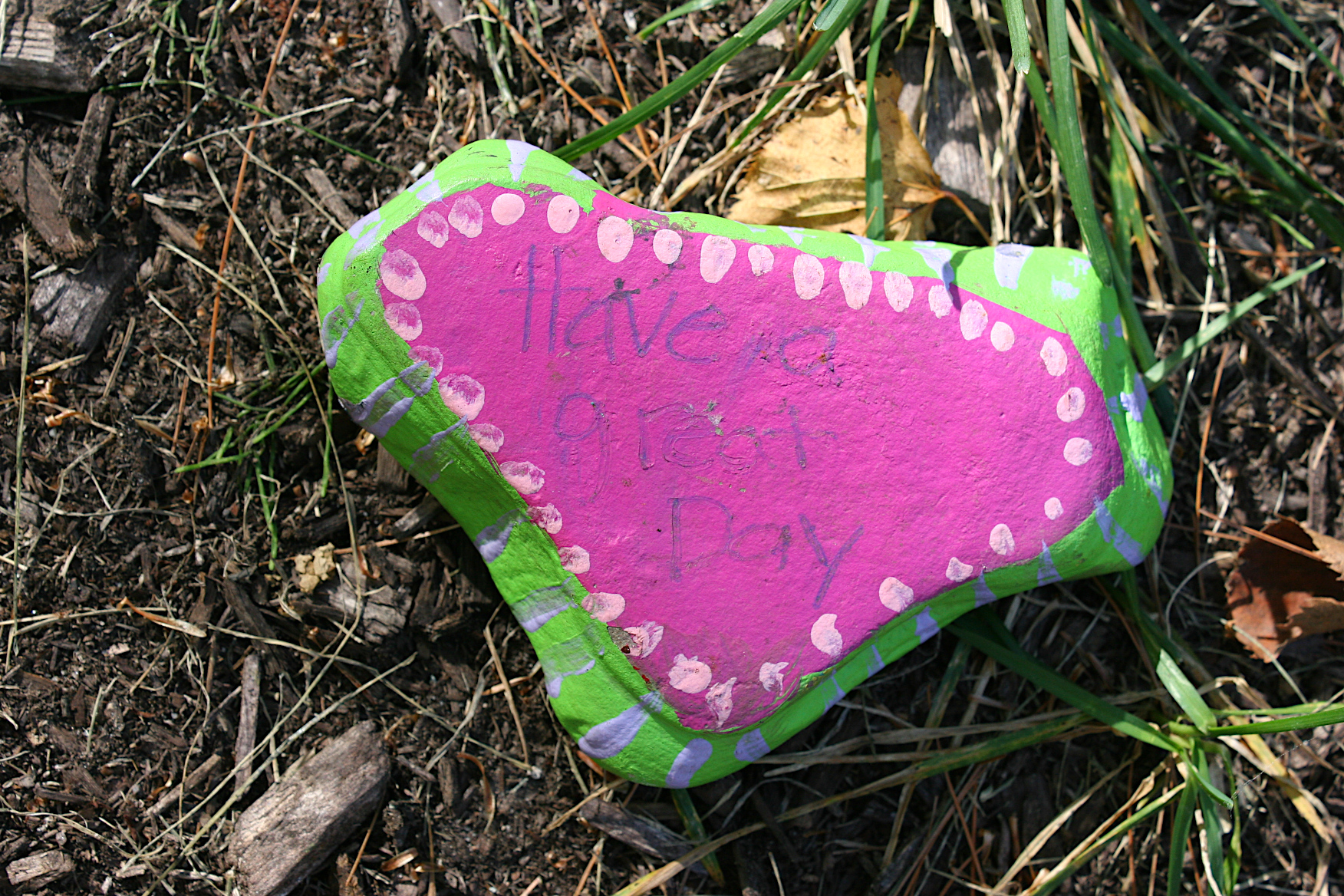
I found this kindness rock lying on the ground in Nisswa Lake Park. Minnesota Prairie Roots file photo September 2020.

I LOVE FINDING KINDNESS STONES. I appreciate the effort an artist or wordsmith takes to craft a message, add some art and then drop the stone in a public place. Each time I discover these sweet surprises, I feel uplifted. And I wonder about the individual inspired to show such kindness.

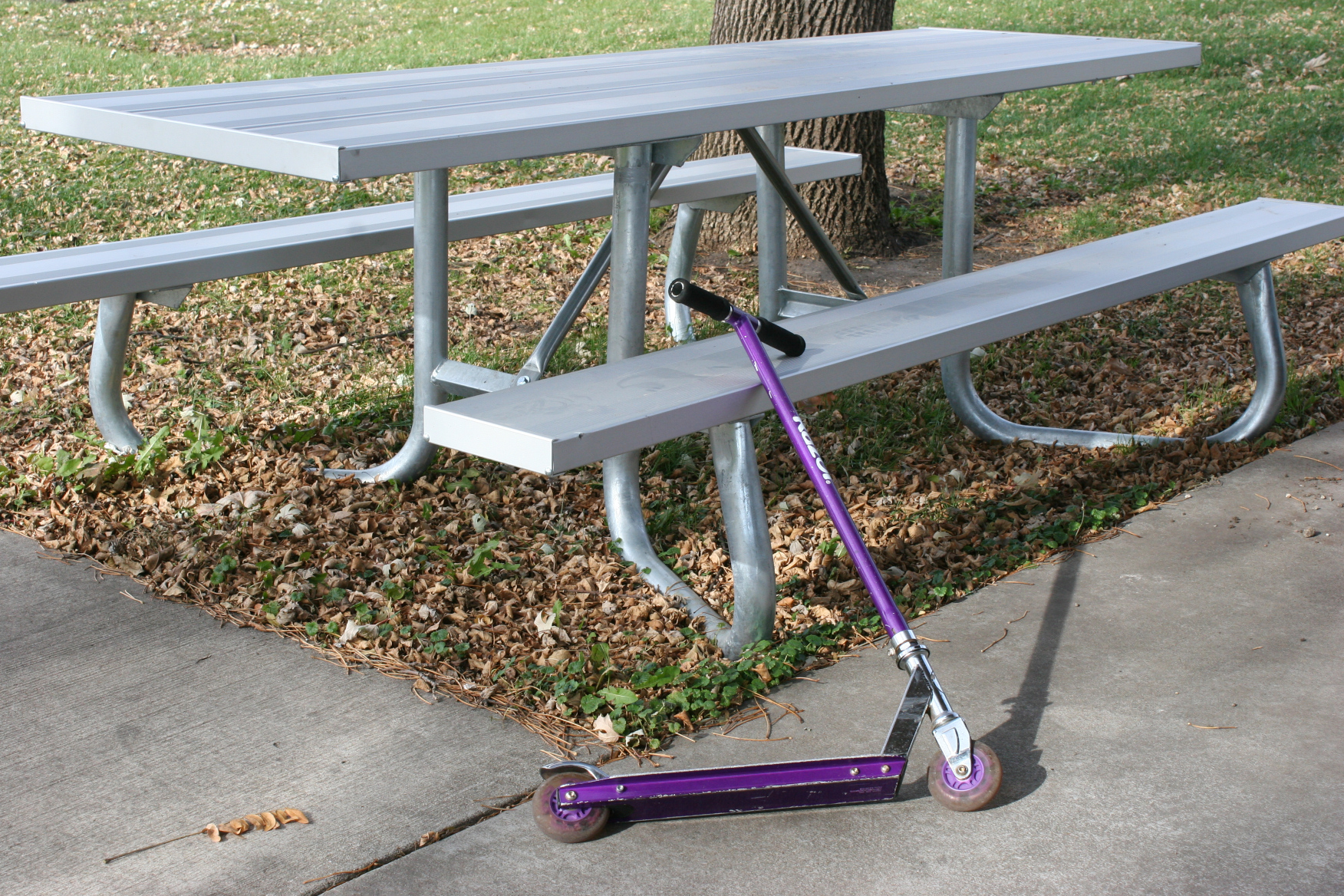
On a recent weekend, while out and about, I didn’t discover any inspirational stones. Rather I found several items left behind, the first at Medford Straight River Park. An abandoned purple scooter leaned against a picnic table in the shelterhouse near the playground with no kid in sight. As Randy and I ate our picnic lunch, a Grandma showed up with her 5-year-old granddaughter to reclaim the well-used scooter, forgotten the previous evening. How small town, I thought.

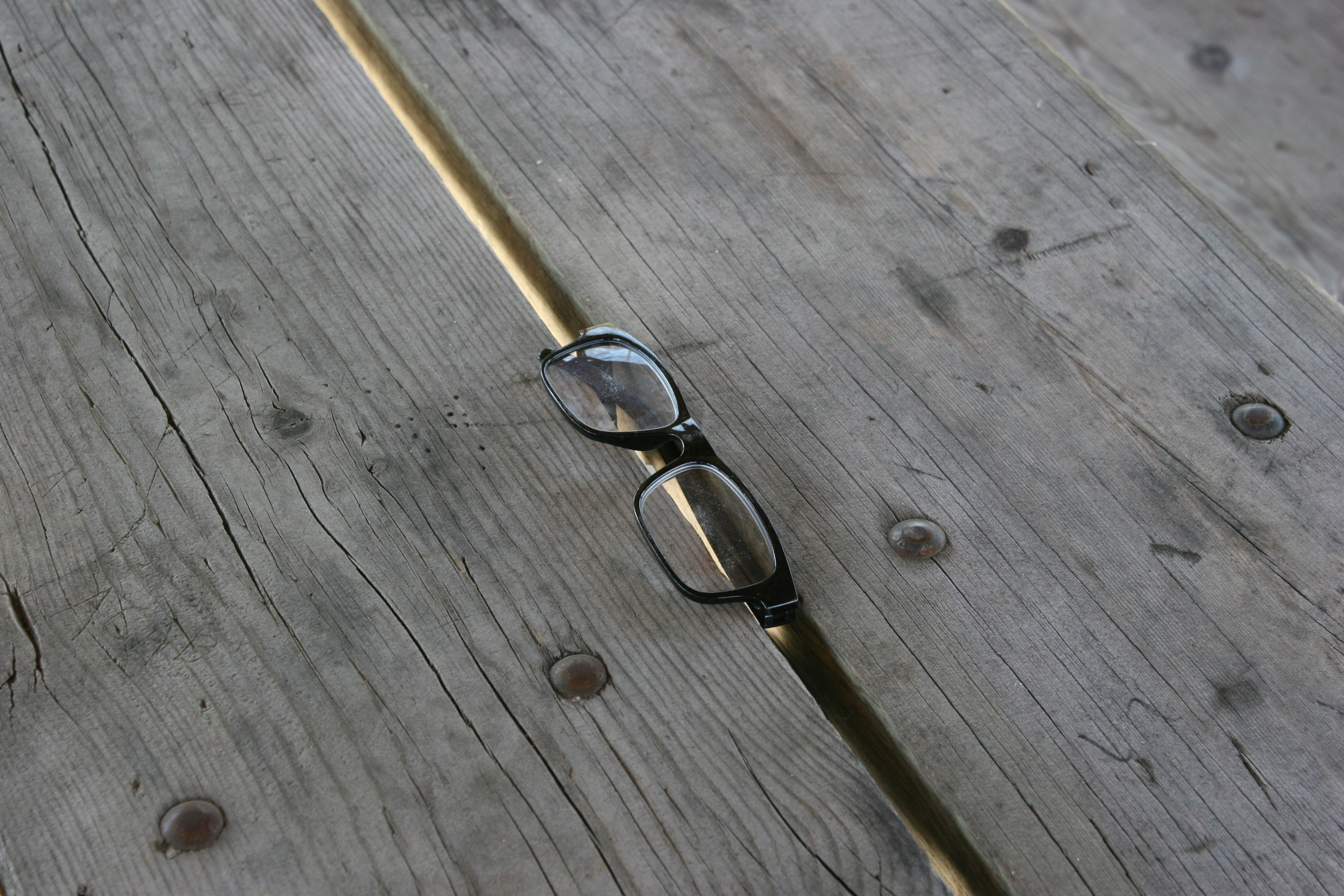
The next day, while picnicking again, this time at Mill Park in Dundas, I noted black-frame glasses stuck in the crack of a picnic table. What is it about picnic tables and stuff left behind? Now, if I’d left my glasses behind, I would struggle to see, such is the state of my vision. Randy checked and confirmed the lost glasses were cheaters. Whew.

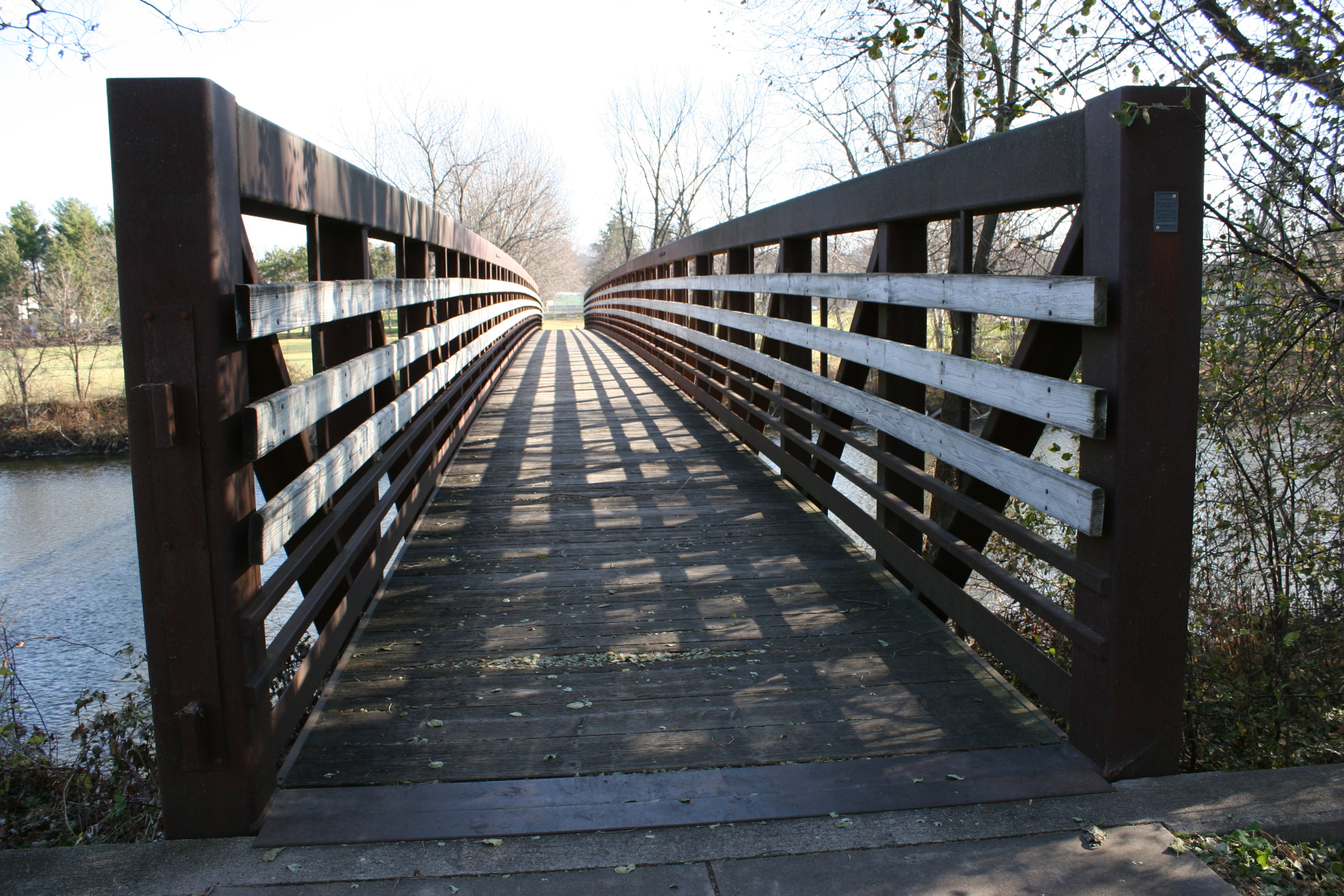
From Mill Park, we crossed the Cannon River pedestrian bridge to Memorial Park by the ball field.

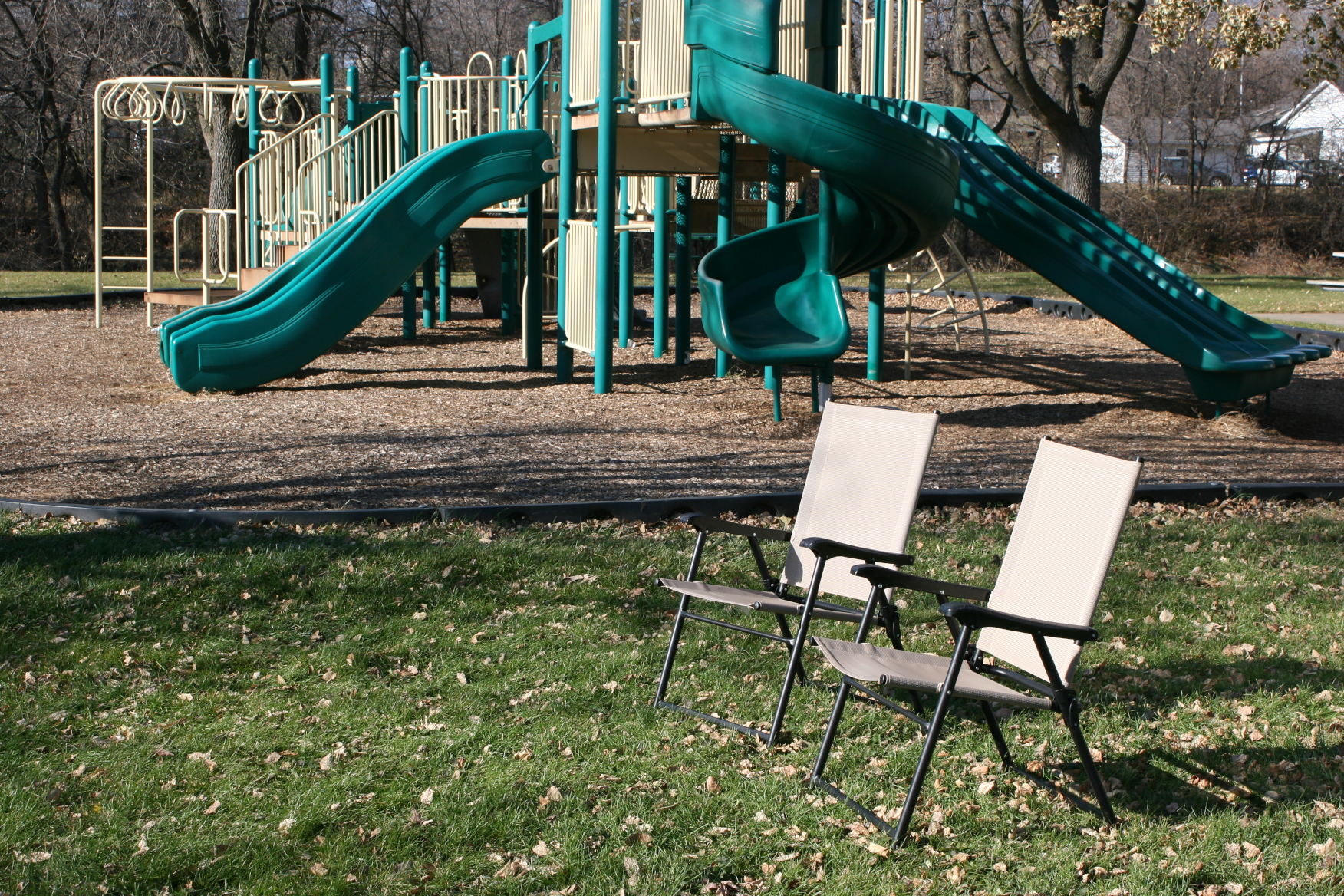
There, by the playground, sat two perfectly fine lawn chairs. Opened, as if someone had recently occupied the two spots. But there were no adults, no kids, anywhere, except a couple picnicking by the ball diamond, bikes parked nearby. Obviously not their chairs.

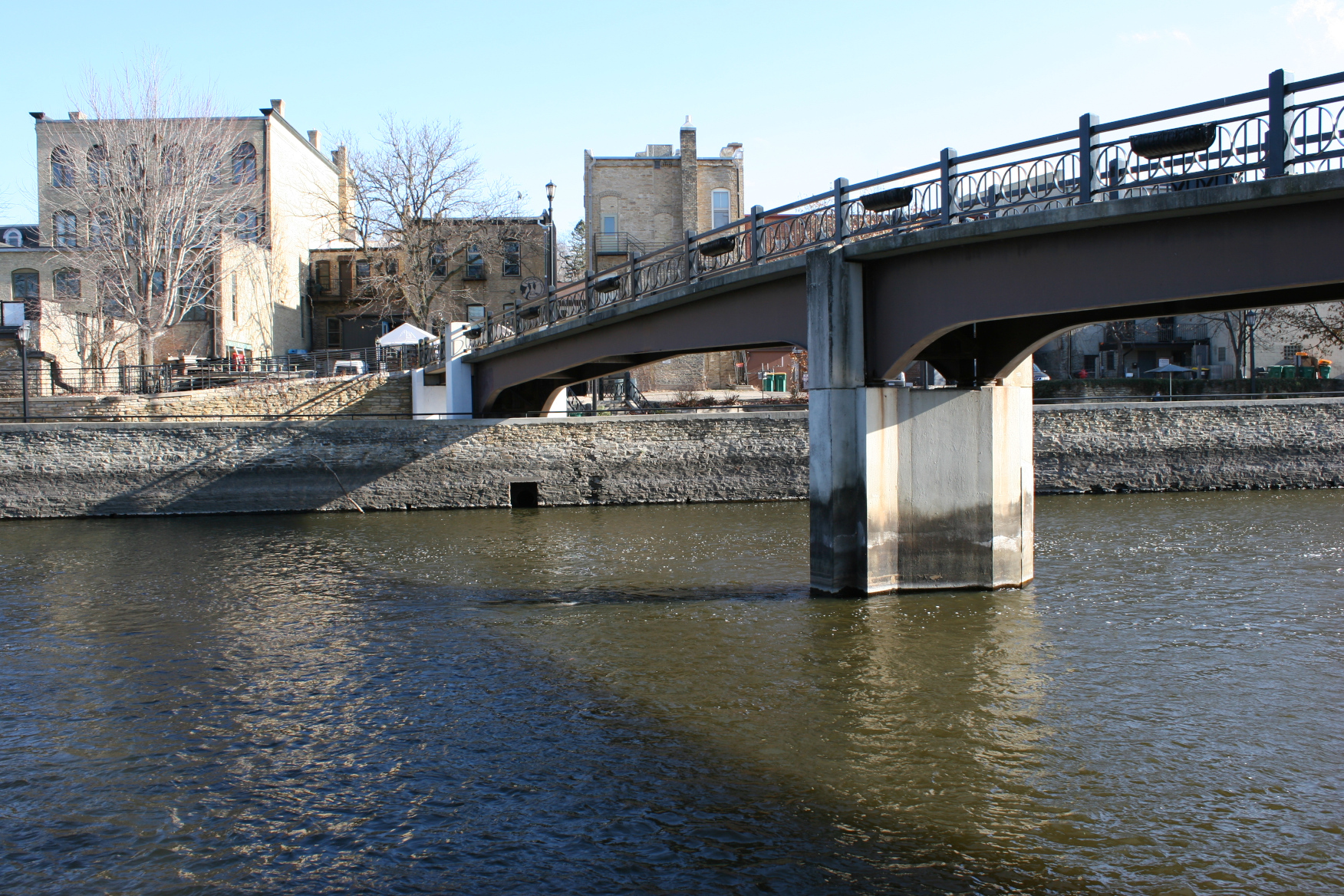
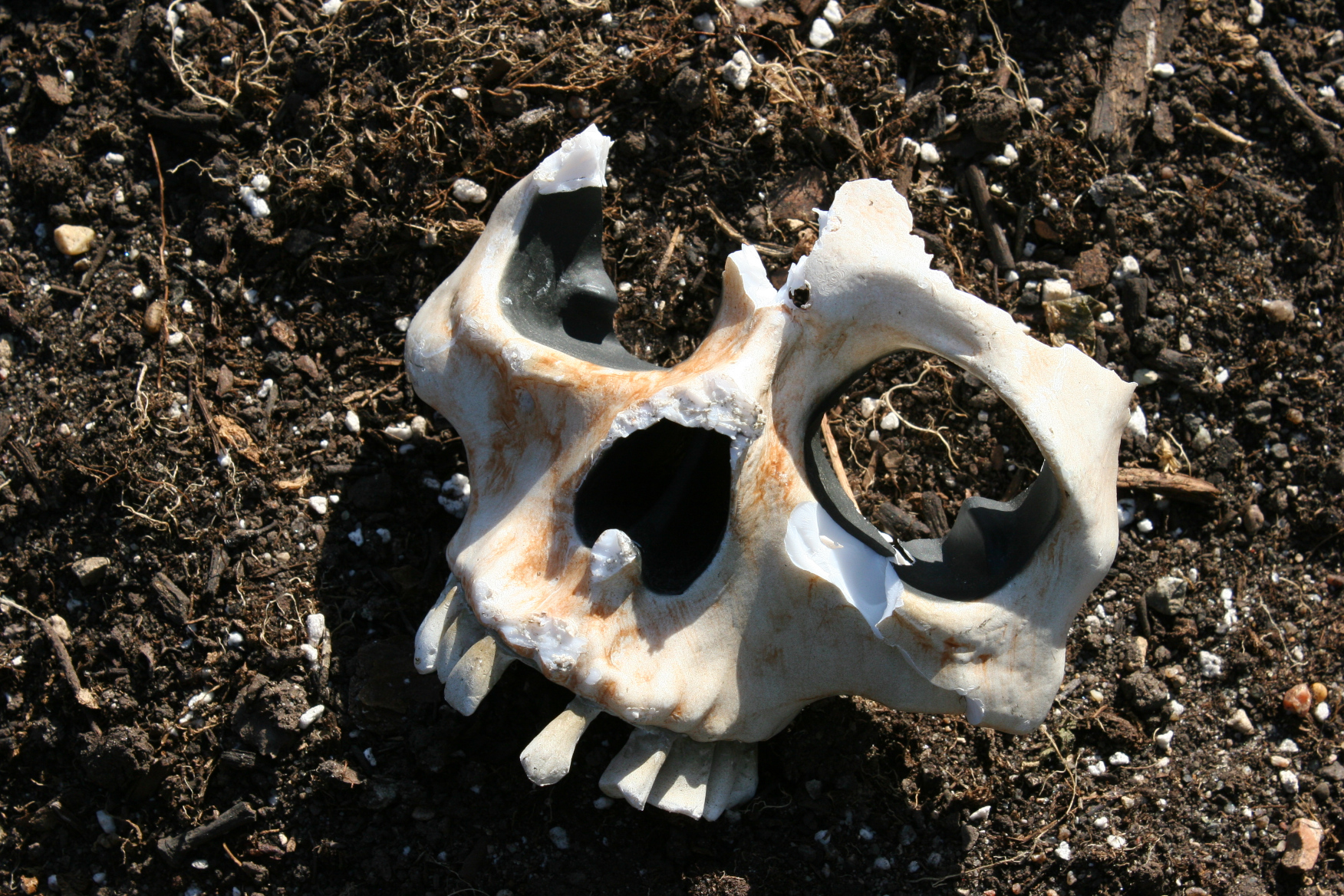
Next, we drove to Northfield, parked downtown and walked around. While crossing the pedestrian bridge over the Cannon River, I discovered a mini skull atop dirt in an otherwise empty flower box hanging on the bridge. The skull looked pretty darned real to me. But then I remembered that just days earlier it was Halloween and I figured that was the reason someone left a skull behind.

TELL ME: Have you ever found something particularly interesting left in a public place? I’d like to hear about your odd discoveries.

© 2020 Audrey Kletscher Helbling


From Northfield: When fire damages an historic river inn November 17, 2020

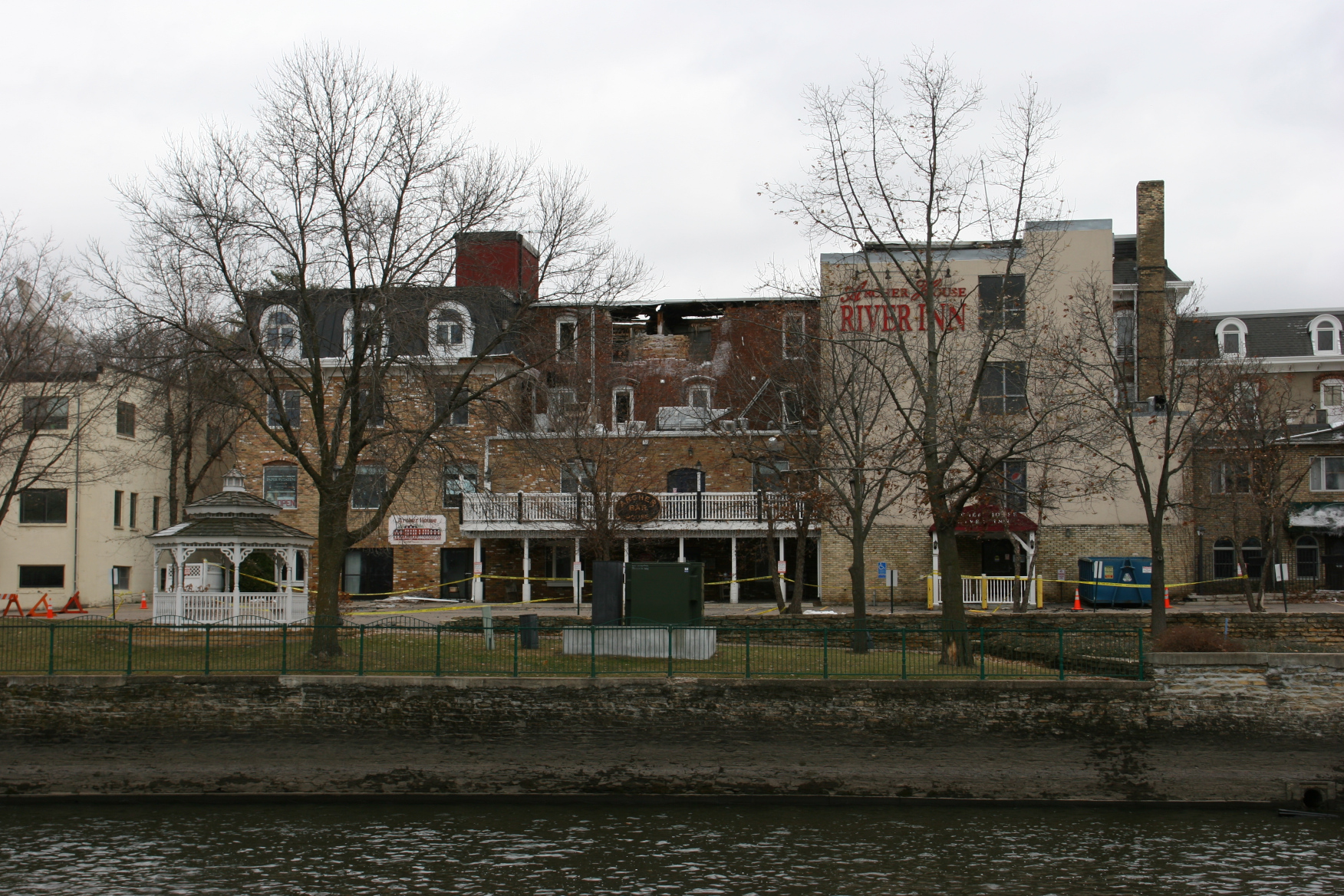
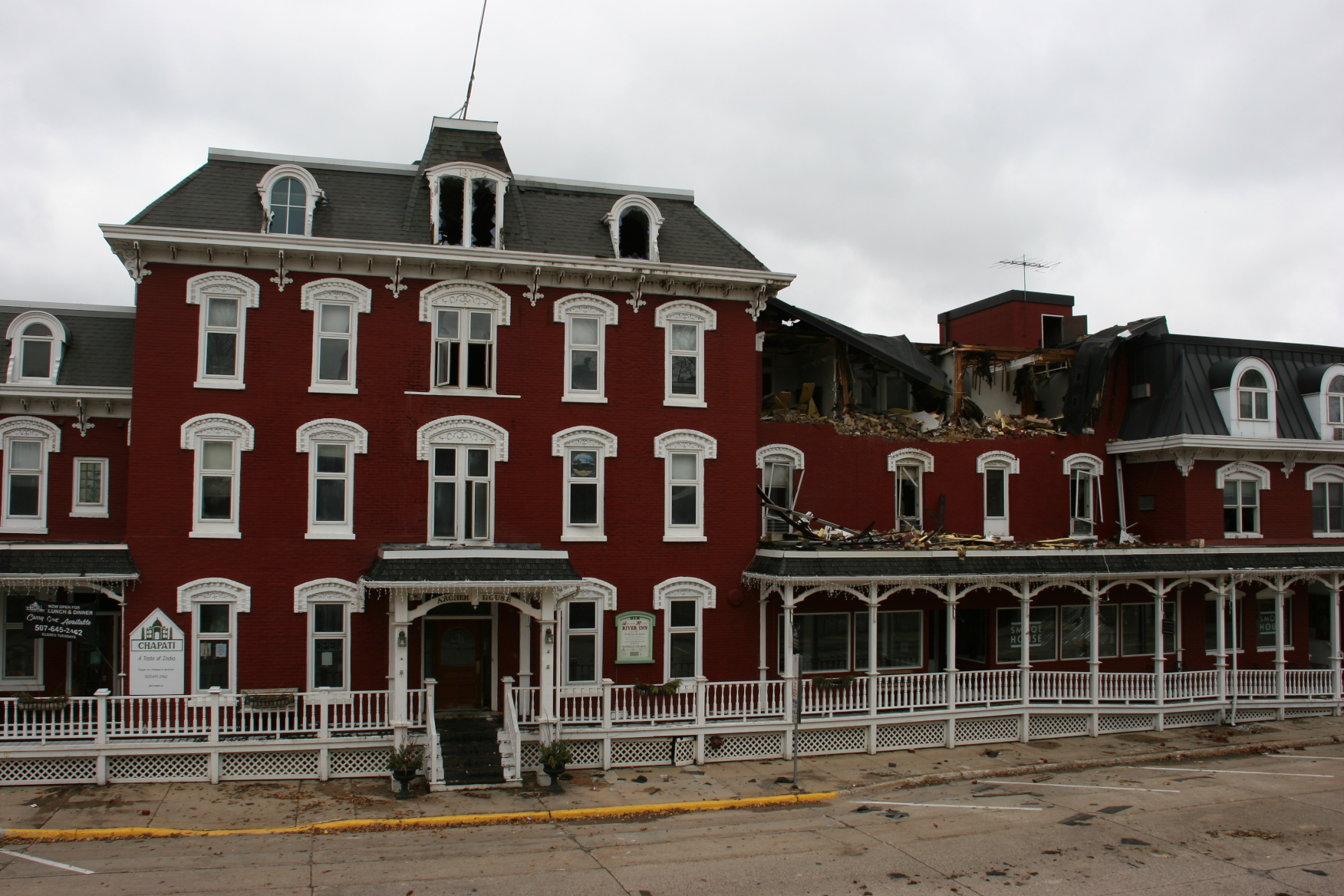
In the center of this photo, you can see the burned back section of the Archer House, west side. Photo take on Sunday afternoon, November 15.

I STOOD NEXT TO THE RIVER, camera aimed across the dark waters of the Cannon River to the historic building on the east bank. To the building with the gaping hole on the top floor. I struggled to hold my zoom lens still in the fierce wind of the bitterly cold Sunday afternoon. Viewing the devastating scene before me, I felt a deep sense of loss. No image I framed can fully capture the depths of loss for this southeastern Minnesota community. Material. Financial. Historic. Emotional.

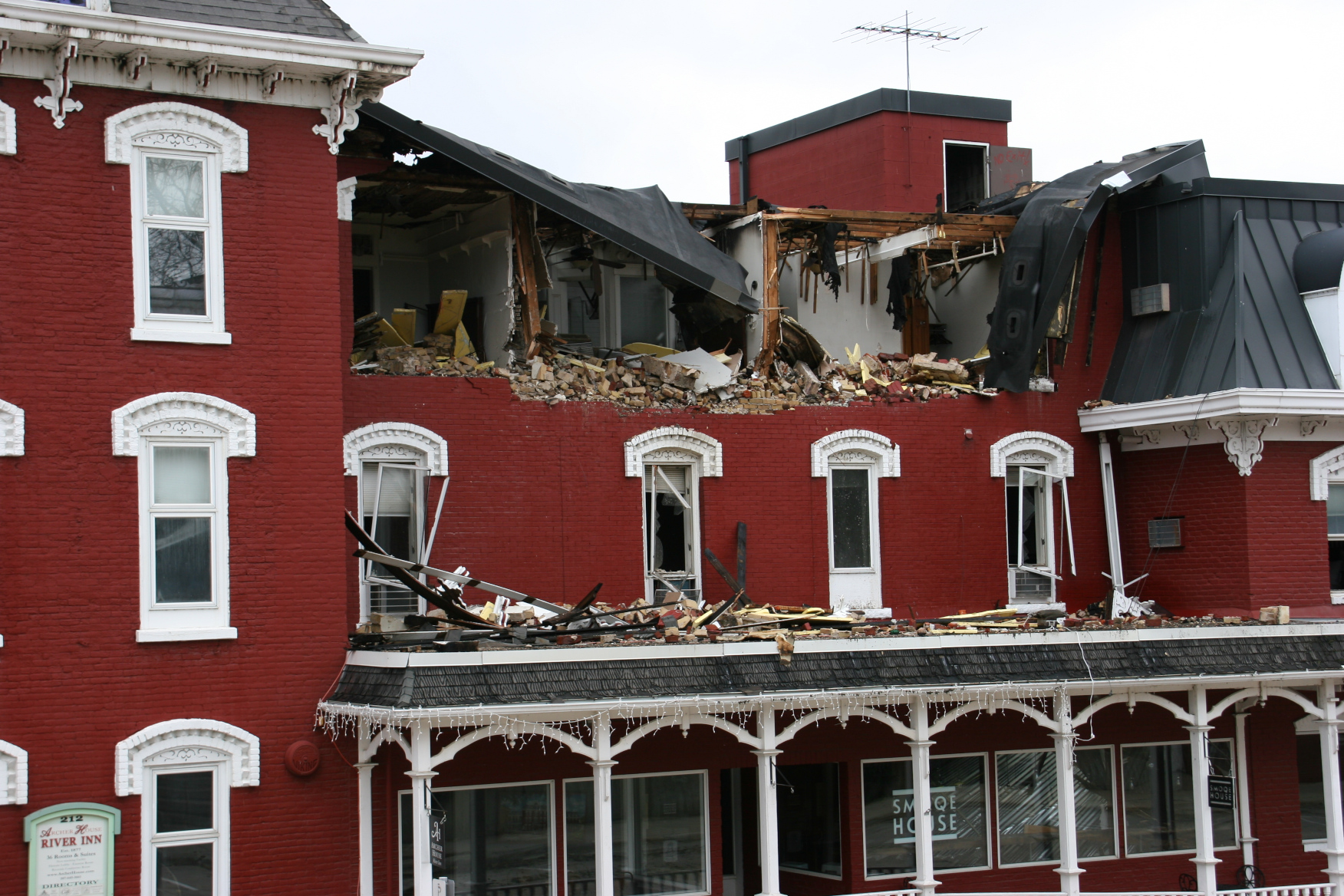
The section of the sprawling building where the fire began in a smoker, then raced up walls from the lower level restaurant.

Last Thursday, November 12, at around 3:30 pm, fire broke out in a restaurant’s meat smoker inside the historic Archer House in downtown Northfield and quickly spread. The 1877 sprawling inn anchors the historic downtown on the north end. It’s perhaps the most recognizable of this community’s landmarks and much-loved.

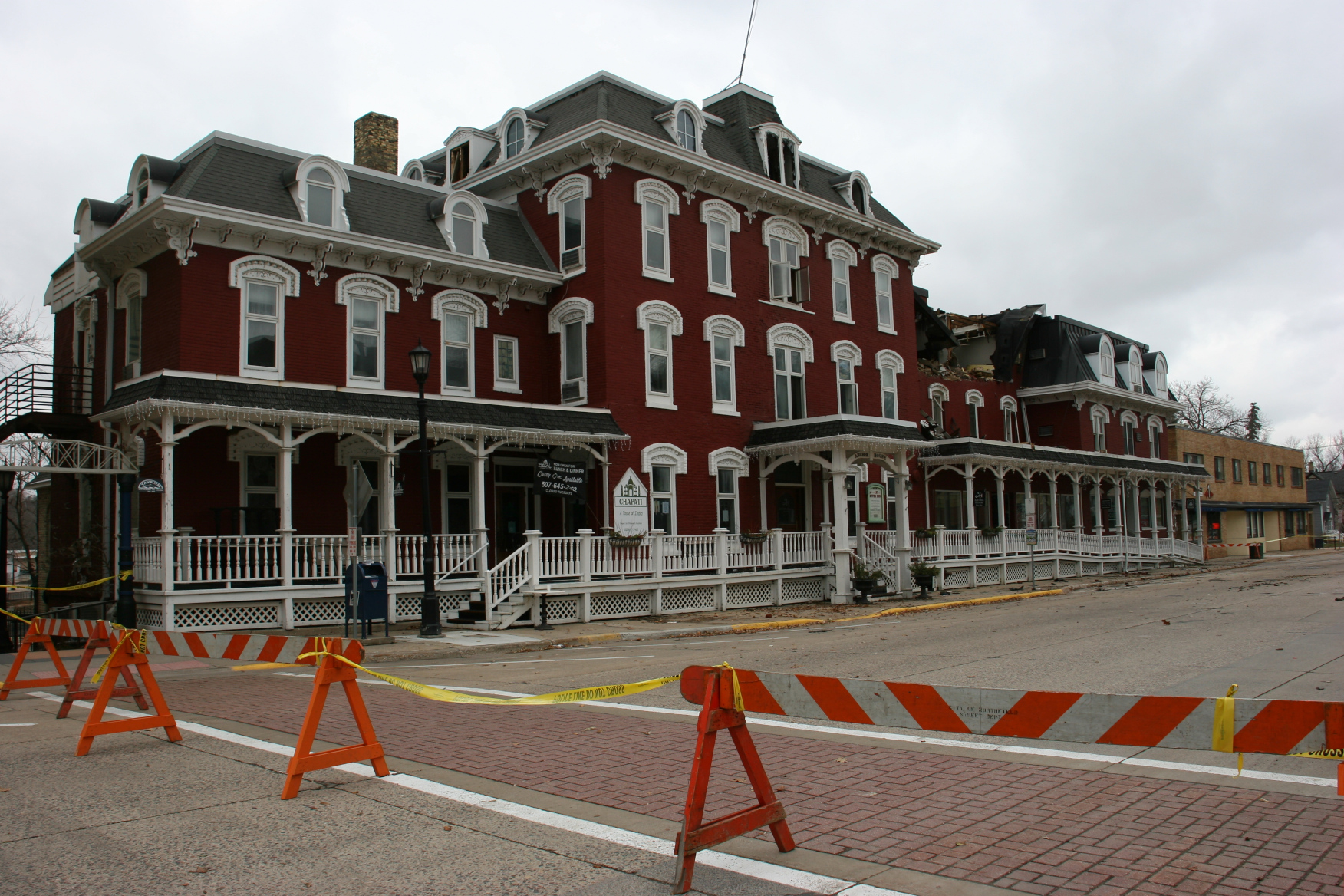
Sunday afternoon, barricades blocked access to the burned Archer House River Inn and tenant businesses.

Today, the future of the aged building, which housed three restaurants—including Smoqe House, where the fire began, the 40-room inn and a gift shop—remains uncertain.

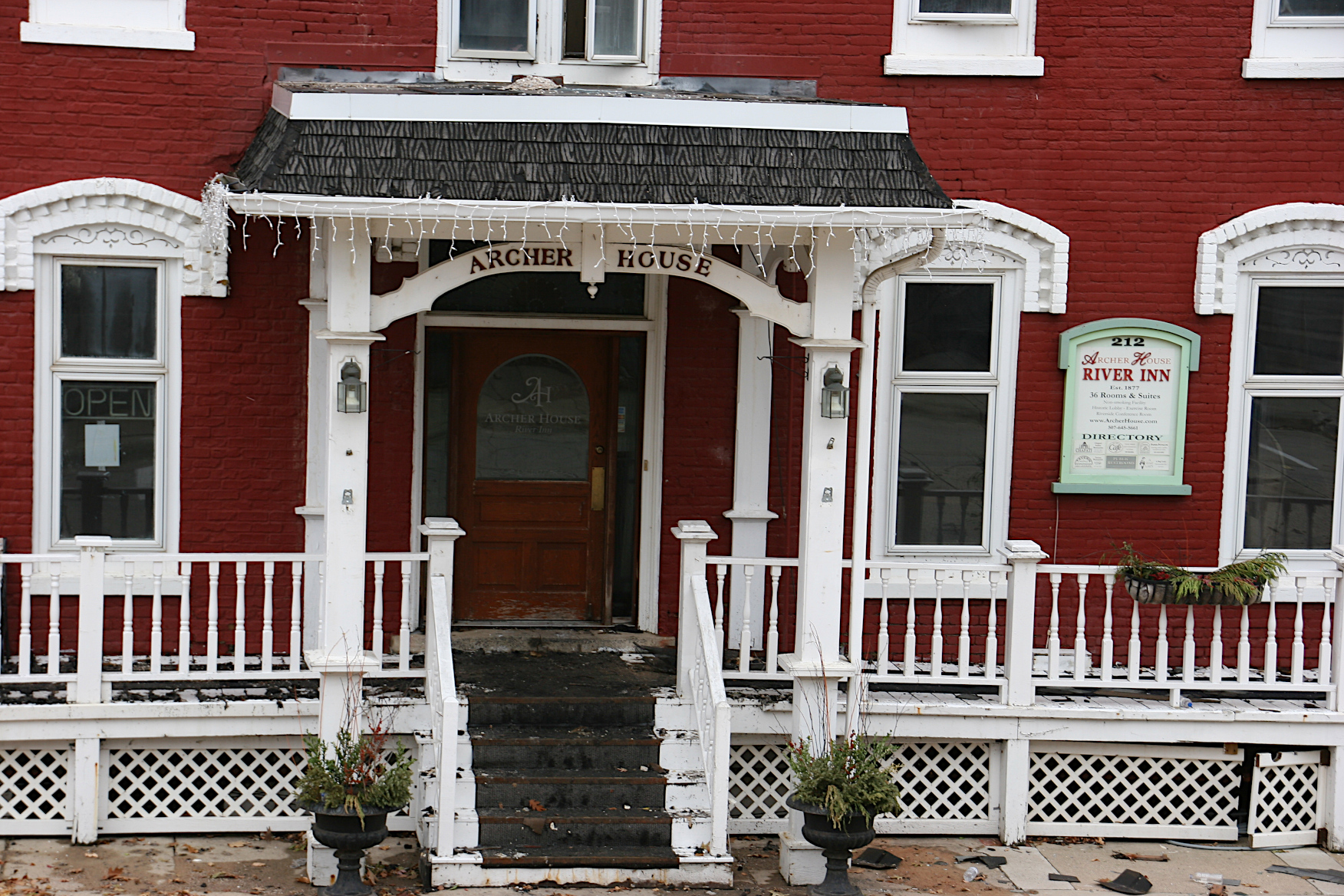
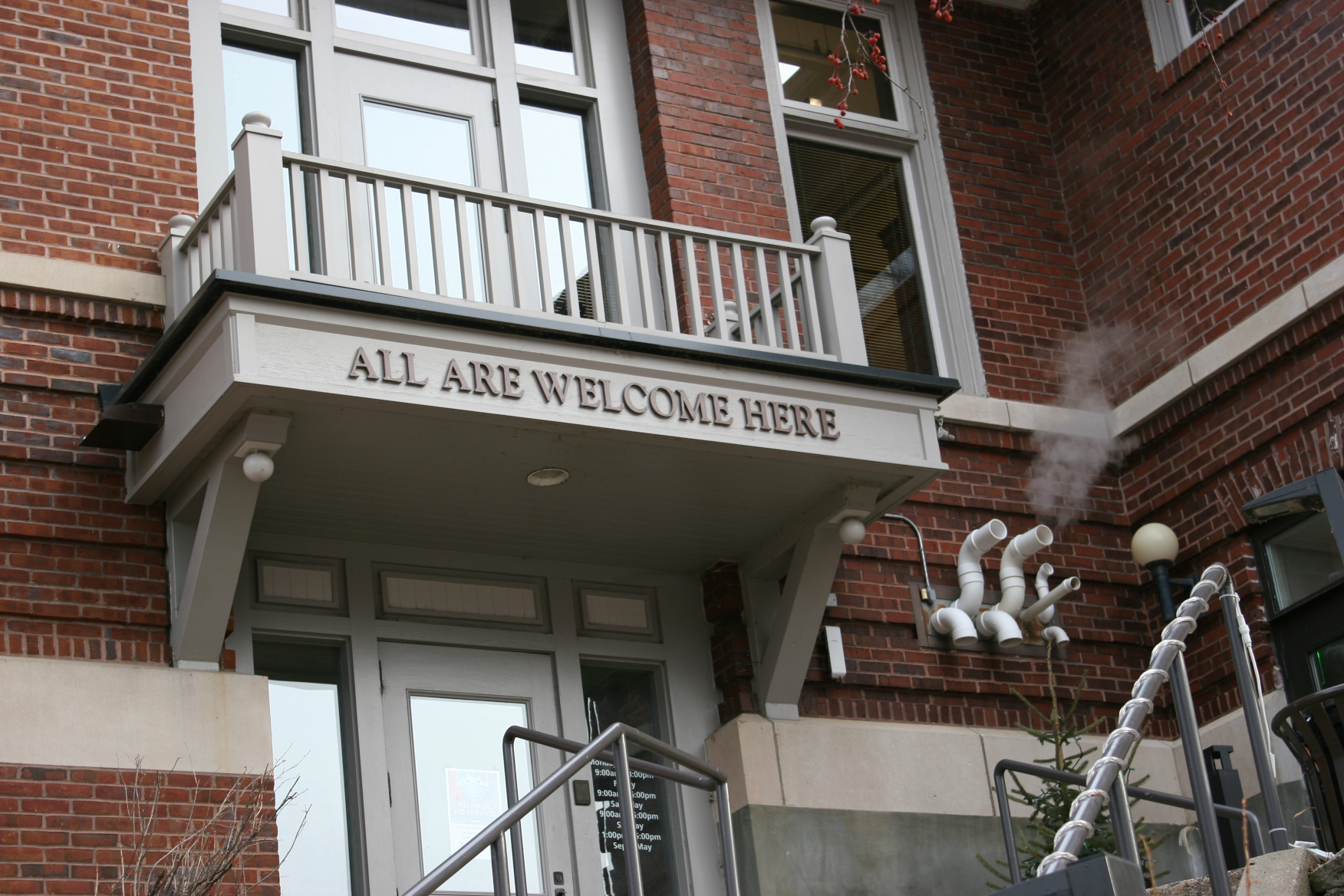
The welcoming front entry to the historic Archer House River Inn.

But of one thing I’m certain, if this historic river inn can be saved, it will be.

This is a beautifully-detailed building.

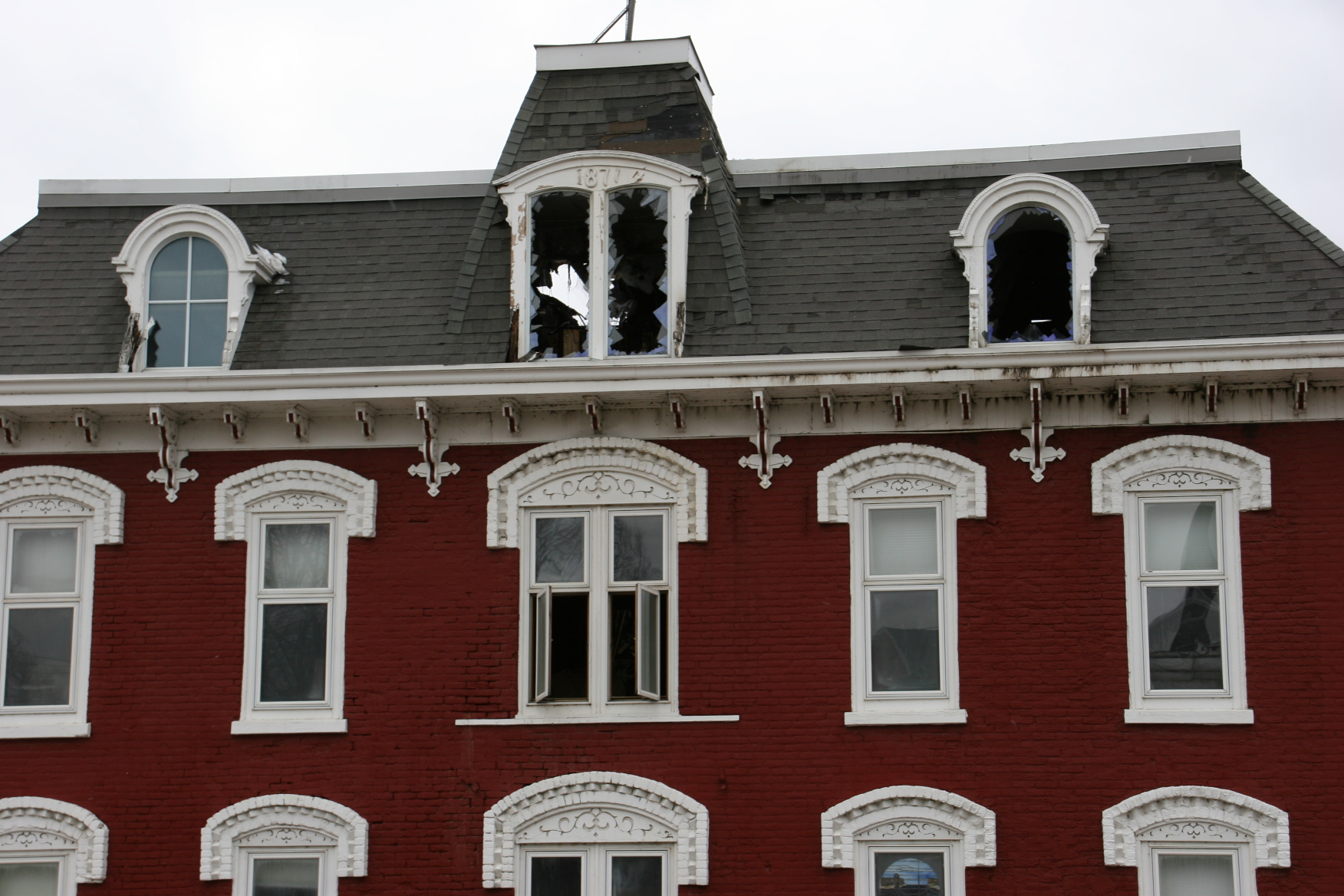
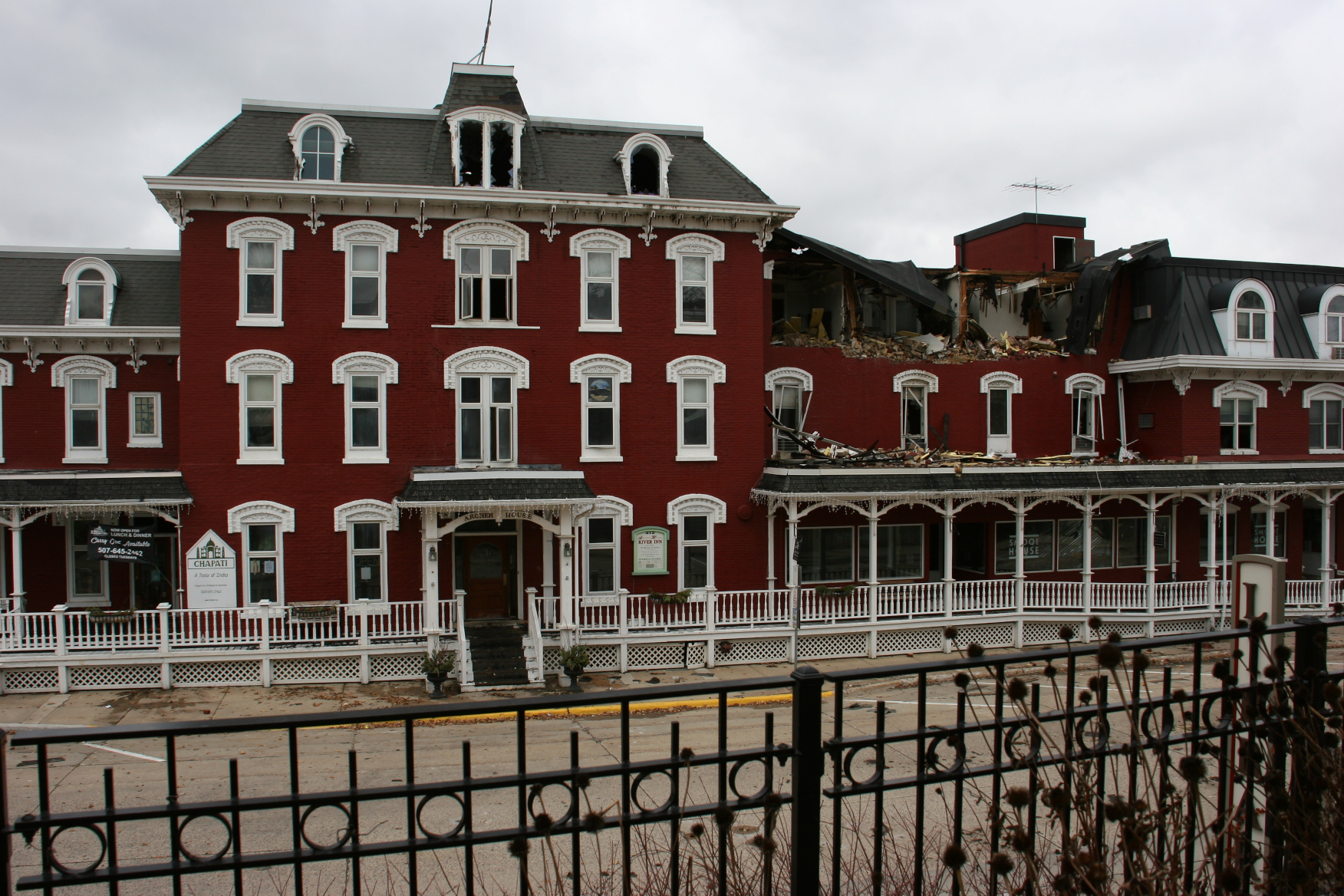
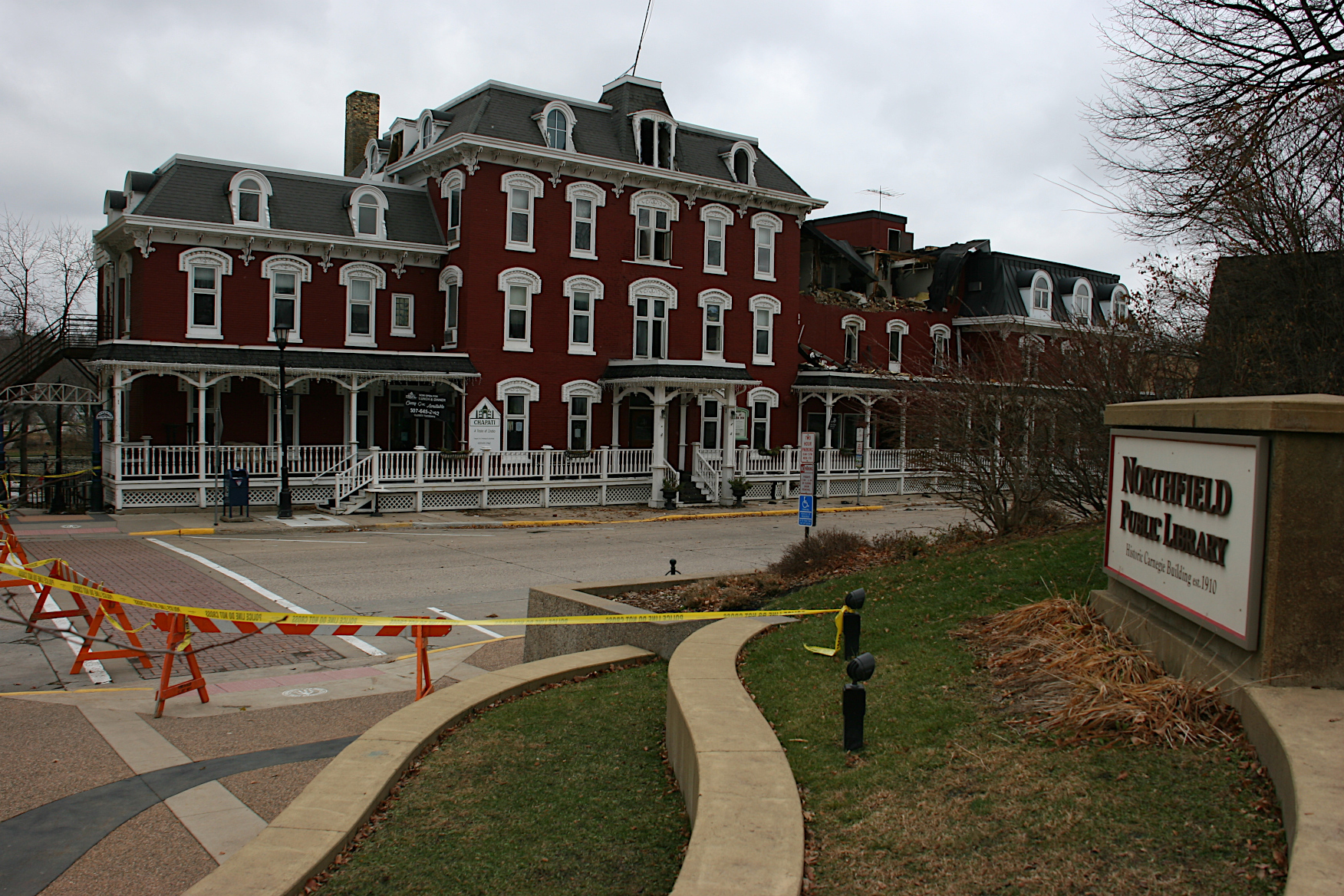
When I photographed the fire, water and smoke-damaged structure days after the fire, many others were doing the same. After viewing the inn from the west side of the Cannon, I moved to the east side, along Division Street, to get a full front view. This “landmark for hospitality and elegance” built in the French Second Empire Style stood tall and stately still, yet marred now by shattered windows, missing roof, fallen brick, and other debris.

From atop the library hill, I photographed the Archer House.

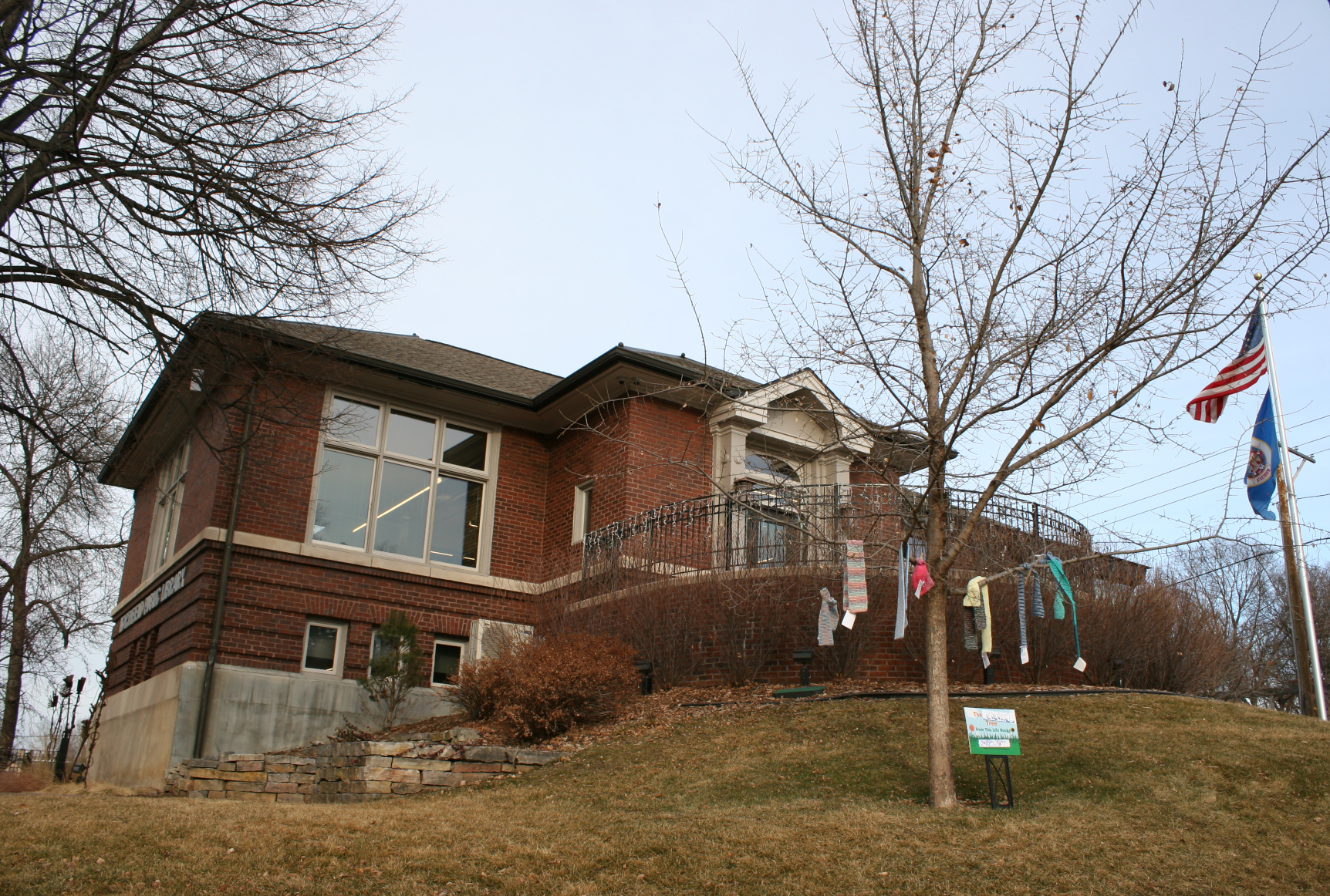
First I photographed from across the street, atop the hill by the Northfield Public Library, stepping across a dormant flowerbed next to a wrought iron railing. Later I descended to street level to also include the street barriers and yellow tape that keep onlookers away from the scene.

The Archer House sits across Division Street from the Northfield Public Library.

No matter the photographic perspective, the view looked the same. Devastating.

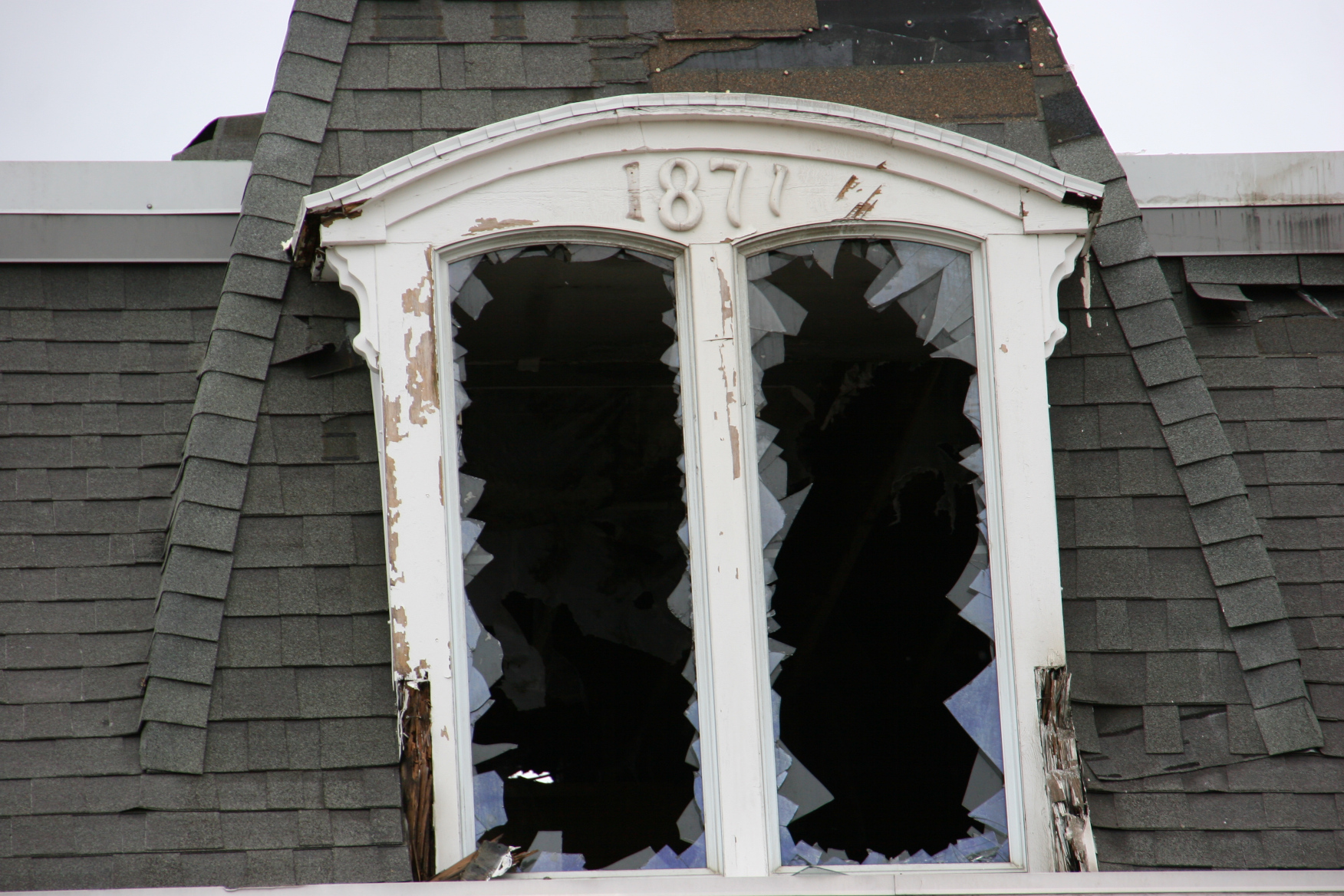
The highest window with the construction year noted, 1877 (part of the number is missing).

But as the good people of Northfield do—just as they did in 1876 to defeat the James-Younger Gang during a raid at the First National Bank—they’ve rallied. The Northfield Downtown Development Corporation has established an Archer House Relief Fund to assist and provide economic relief for the river inn and its tenants. The goal is $25,000. If you are able and inclined to contribute, please do so by clicking here.

The Archer House truly anchors downtown Northfield.

I don’t need to tell you these are challenging days in general. But then, to throw a fire into the mix of difficult times, well, it can all feel overwhelming.

© Copyright 2020 Audrey Kletscher Helbling


The choice is ours November 10, 2020

Filed under: Uncategorized — Audrey Kletscher Helbling @ 5:00 AM
Tags: , , , , , , , , , ,
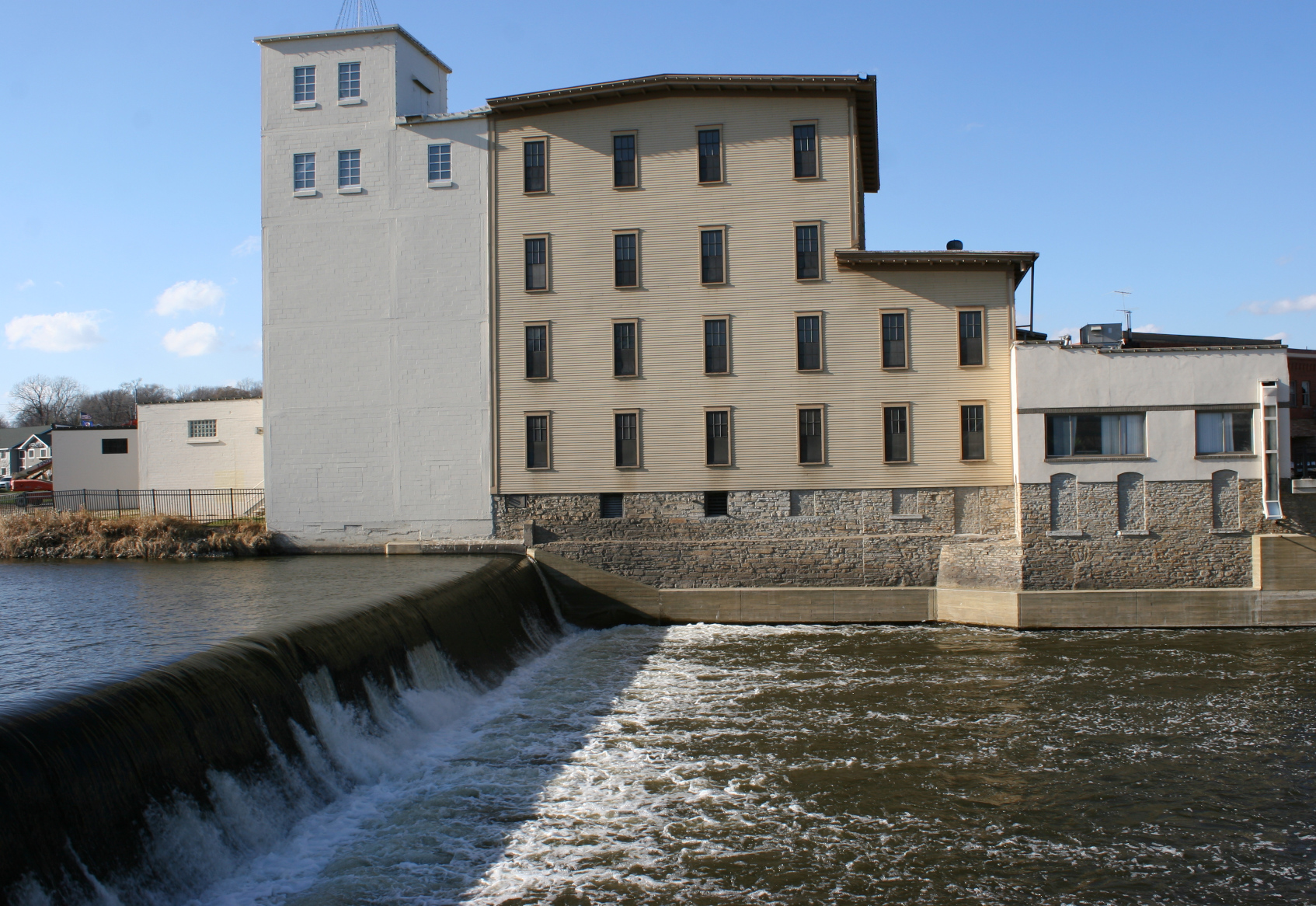
The historic Ames Mill sits along the banks of the Cannon River in downtown Northfield. Malt-O-Meal hot cereals are made in the mill. You can often smell the scent of cereal wafting through this southern Minnesota community.

THE CITY OF NORTHFIELD, about a 20-minute drive northeast of my Faribault home, has long-rated as one of my favorite Minnesota communities. For many reasons.

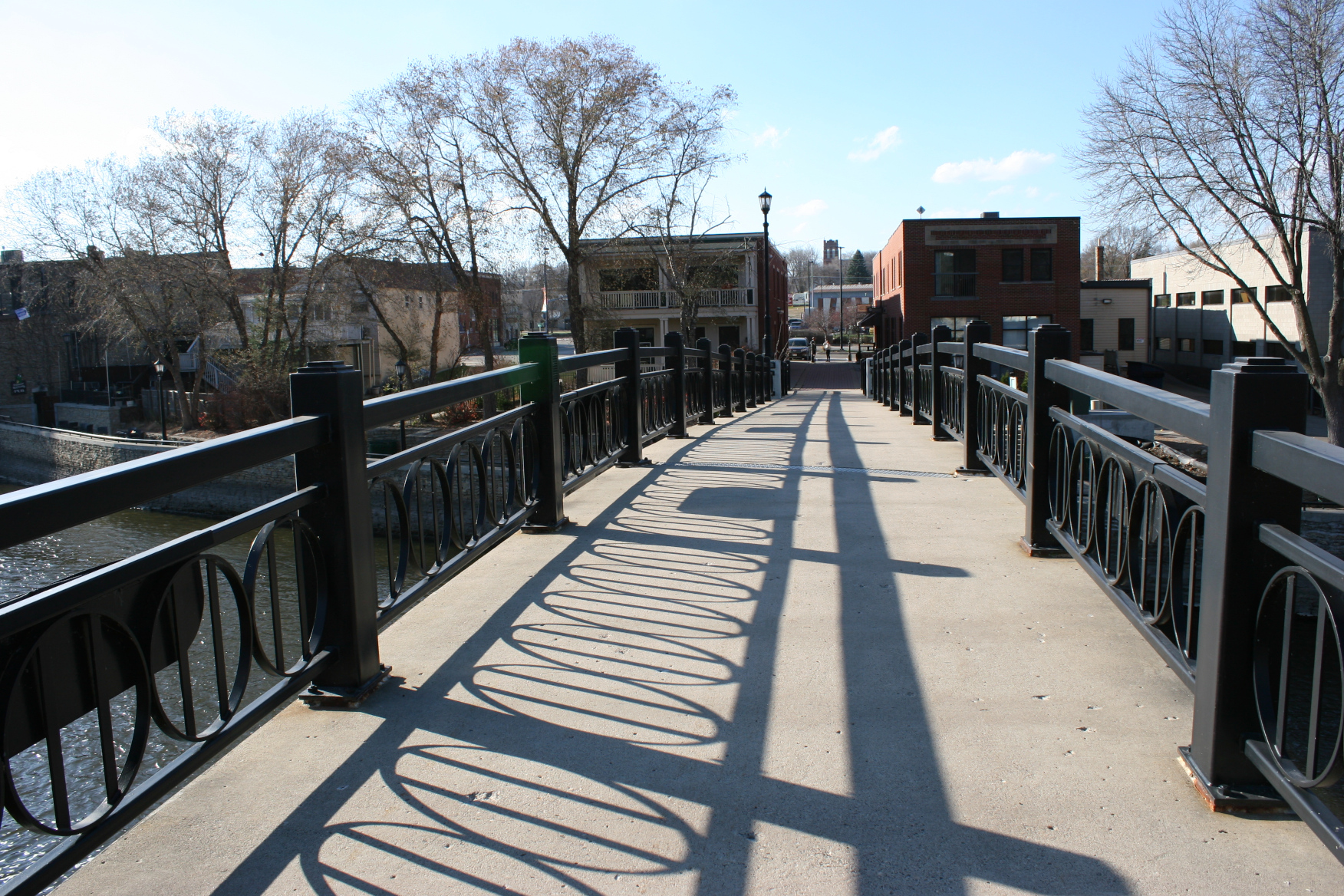
Crossing the pedestrian bridge over the Cannon River in downtown Northfield.

It’s situated along the banks of the Cannon River, making for a picturesque setting.

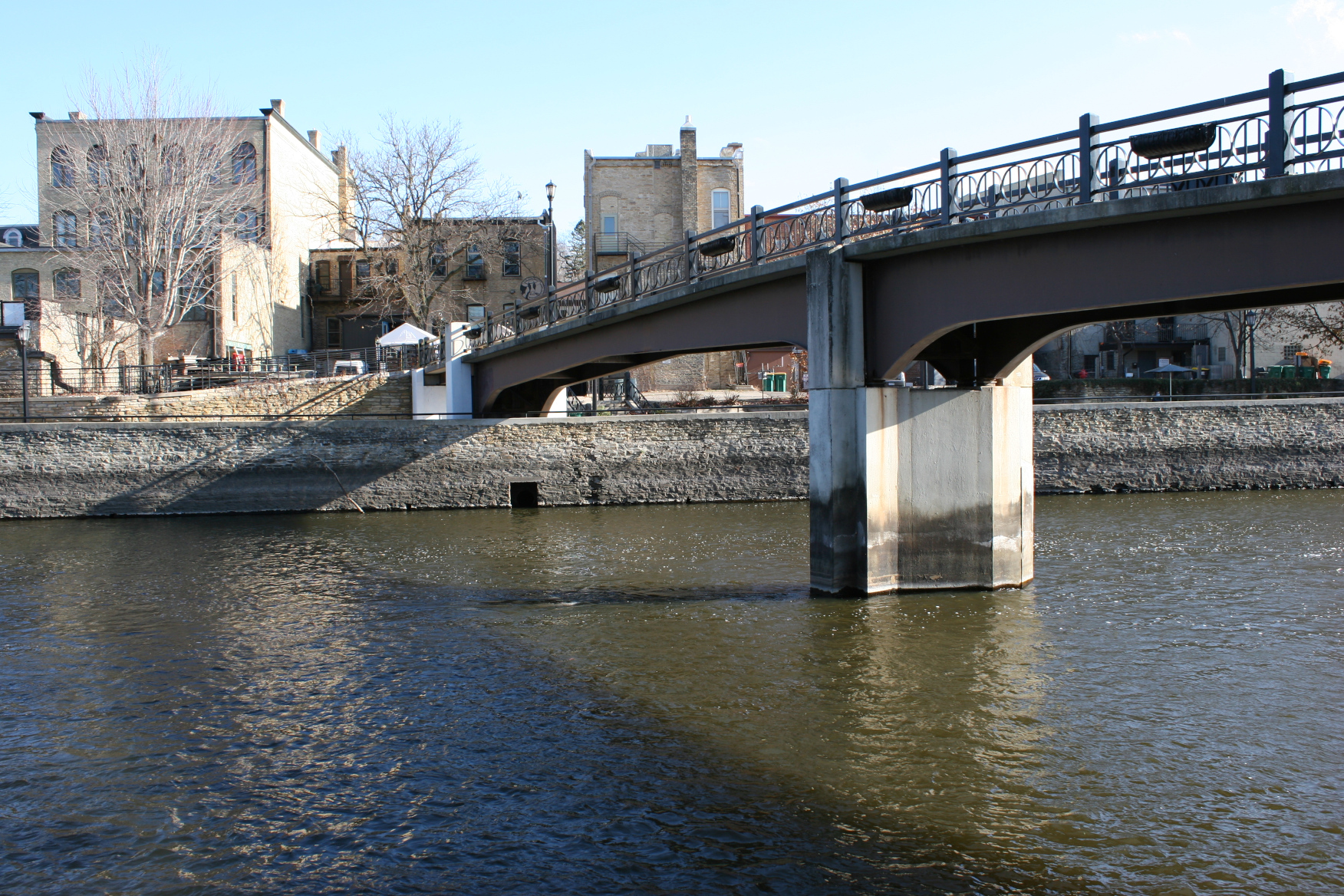
Standing along a river walk, I photographed the pedestrian bridge in downtown Northfield.
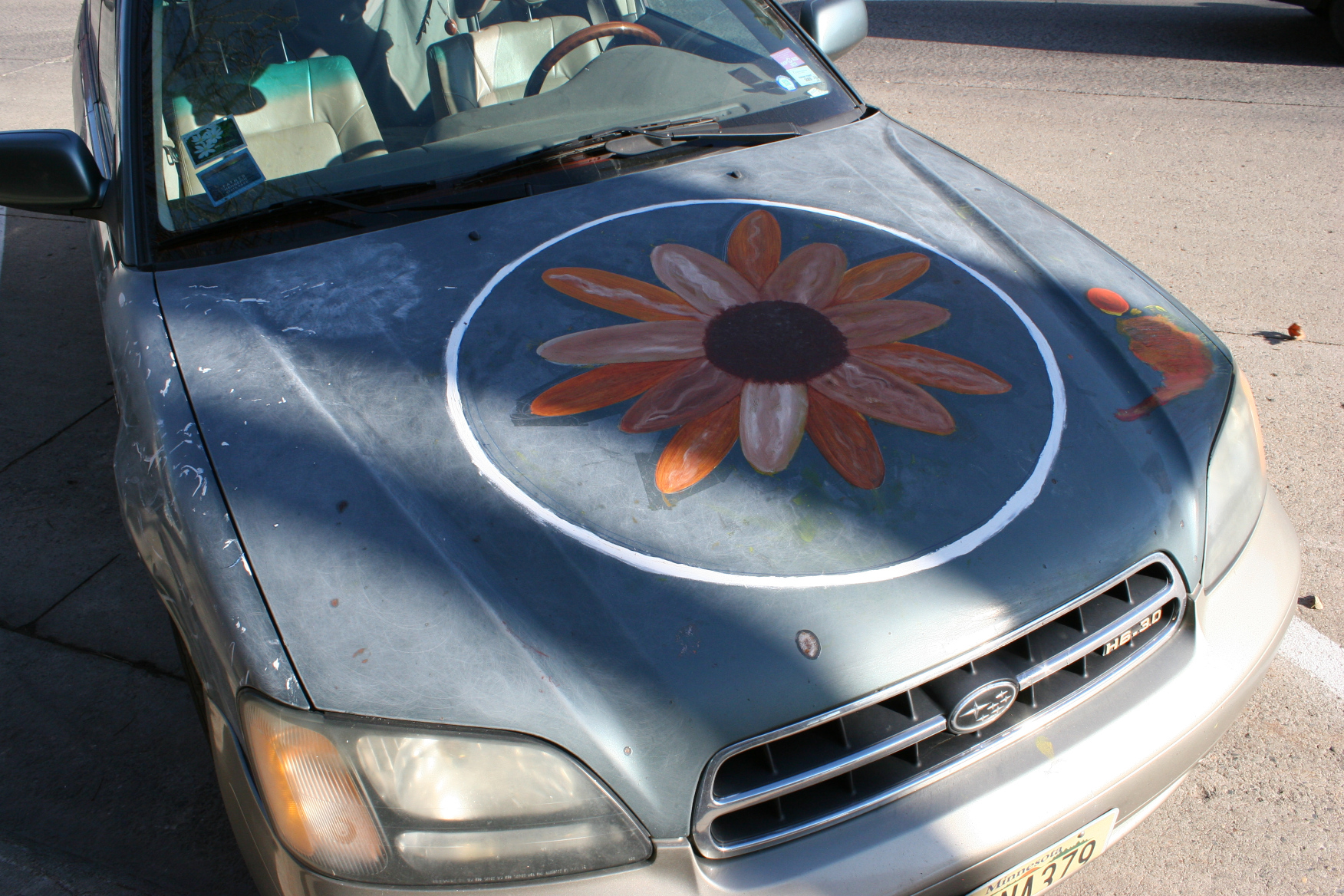
I spotted this art on the hood of a car parked along Division Street near Bridge Square.
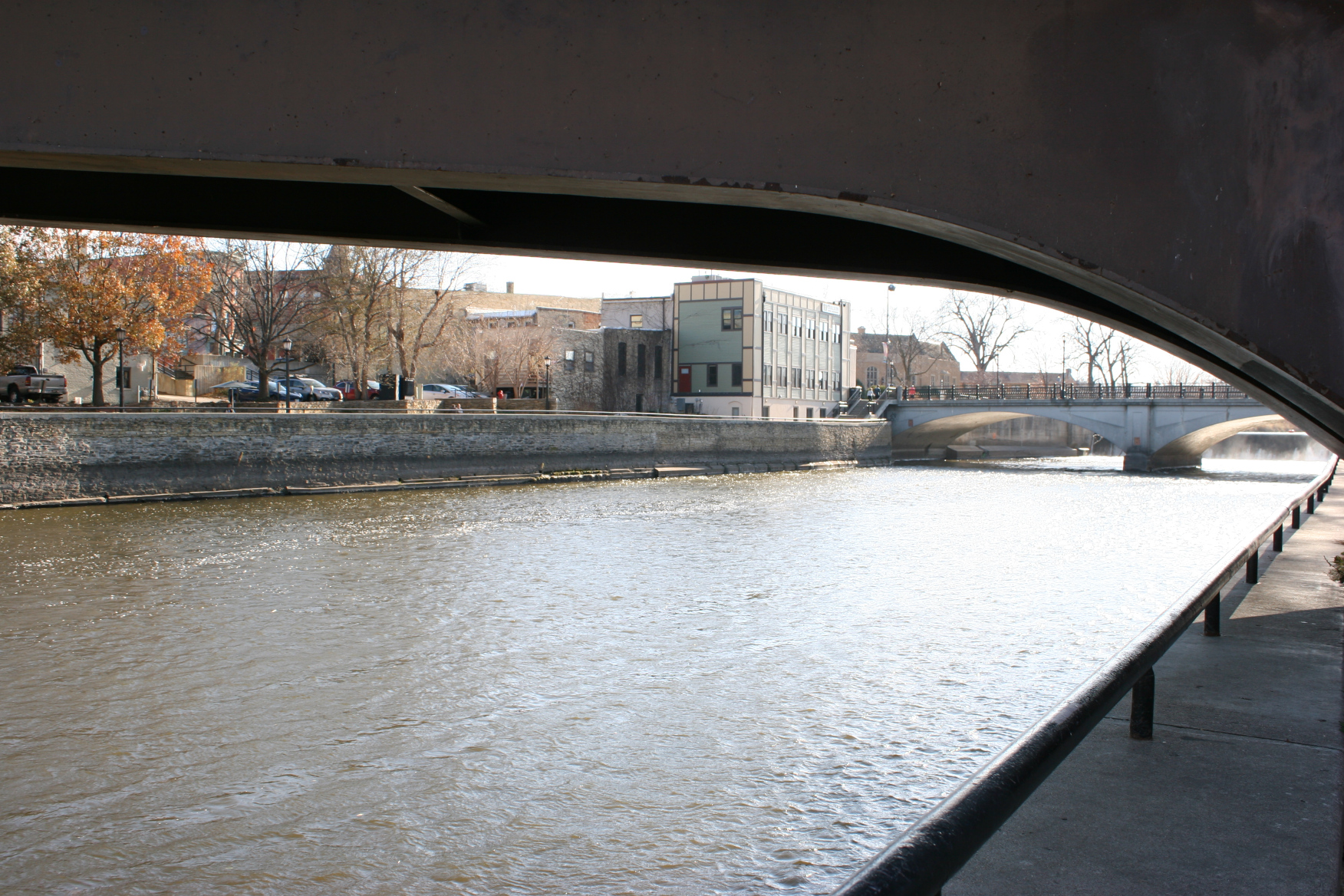
From the river walk, nearly under the pedestrian bridge, I photographed the Cannon River and distant buildings.

Homegrown businesses fill the historic downtown, which edges the river. Here you’ll still find an independent bookstore plus antique shops, boutiques, restaurants, an arts center, the public library and much more.

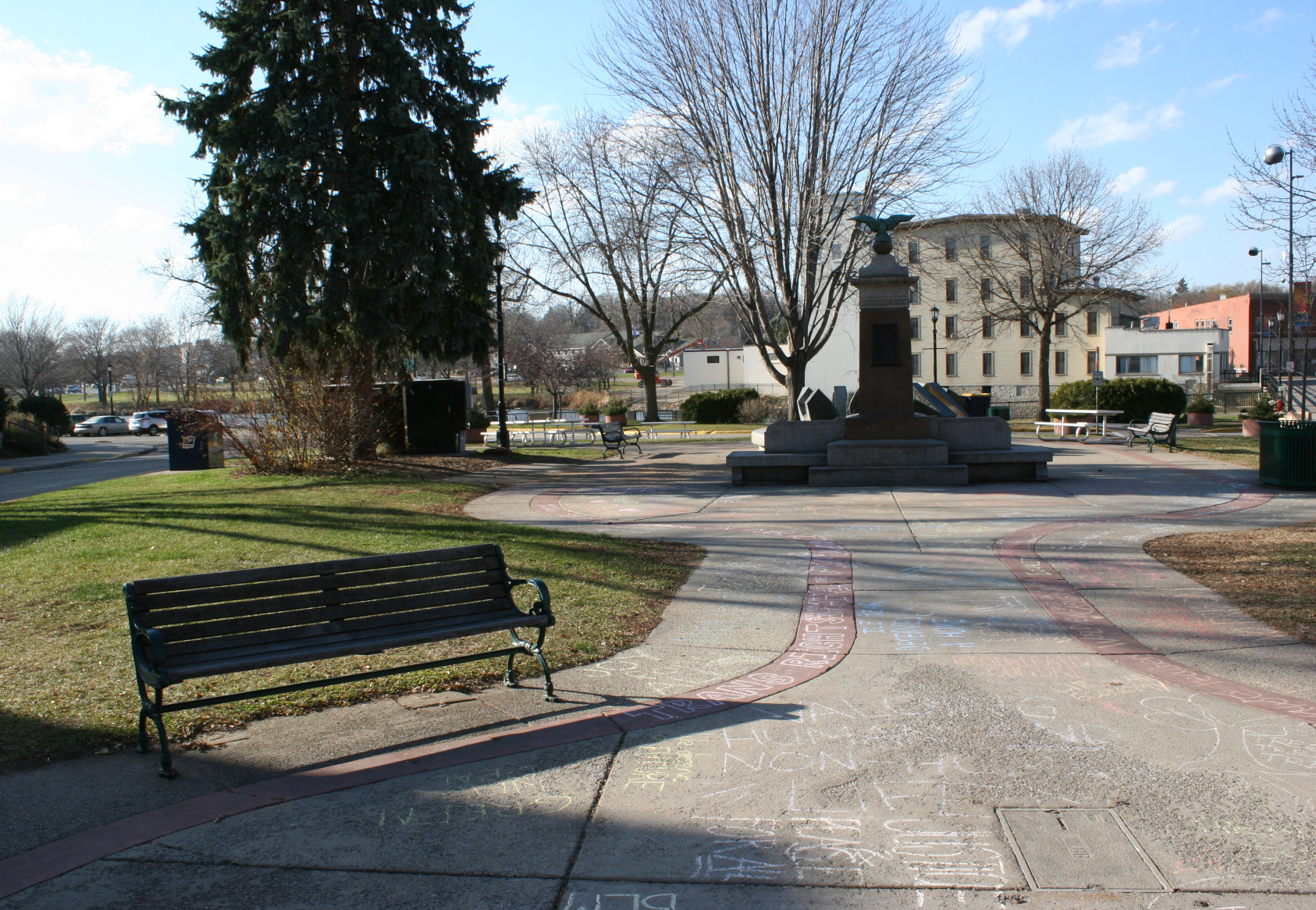
Bridge Square, Northfield’s downtown community gathering spot often chalked with messages.

And, in the heart of Northfield’s business district you’ll also find a community gathering spot. Bridge Square. Here you can buy popcorn from a vintage wagon in the summer, take the kids or grandkids to visit Santa during the holiday season. You can rest here on a bench and engage in conversation. Watch the river flow by or the water fall over the fountain sculpture or the nearby dam.

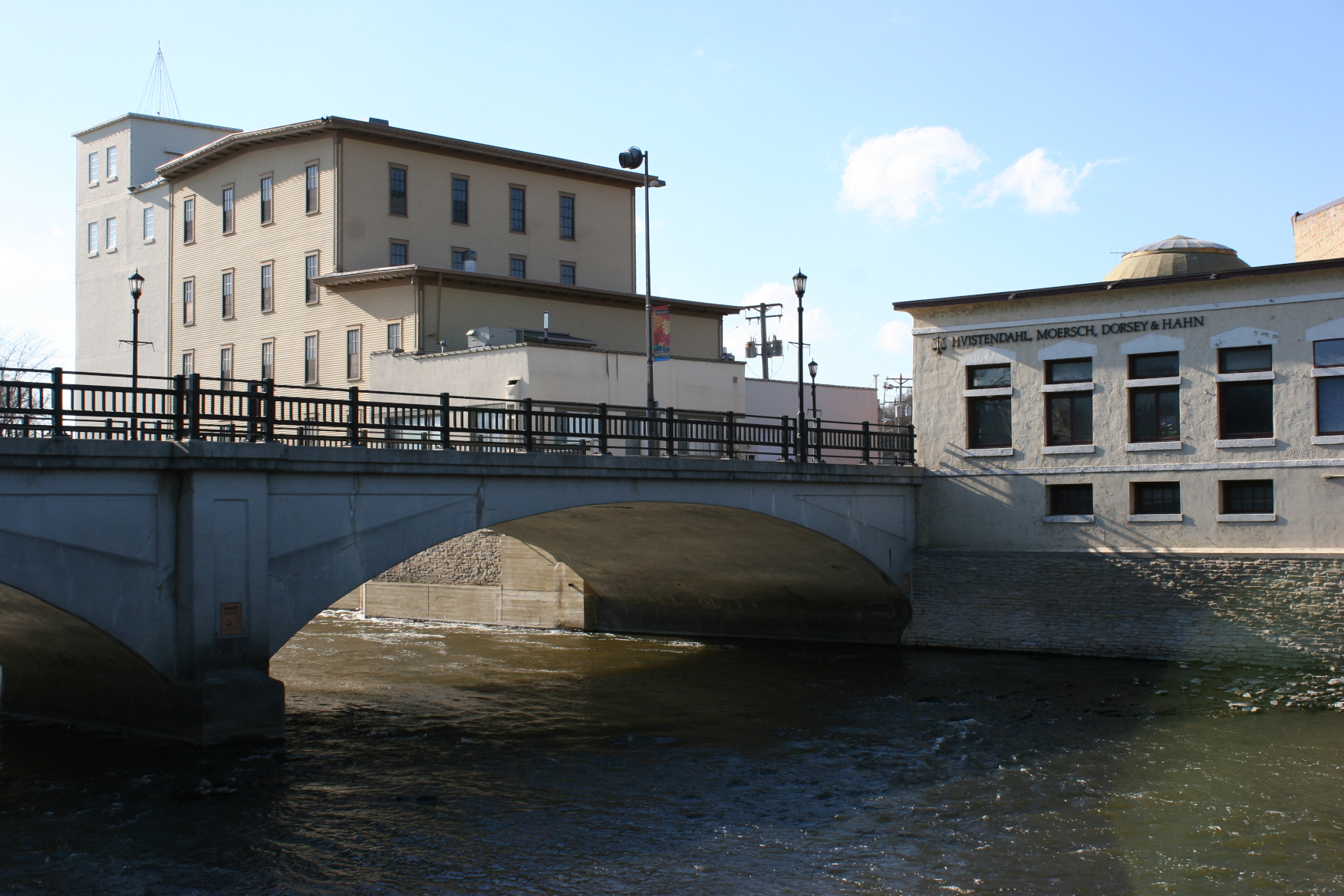
This motor vehicle bridge lies next to the Ames Mill, across the river from Bridge Square.

But Bridge Square is so much more than a Norman Rockwell-like place to meet, gather and relax. It’s also a spot where opinions are expressed. Students from St. Olaf and Carleton, two noted private liberal arts colleges based in Northfield, use this space to gather and voice their concerns. And, even though I may not always agree with their views, I appreciate that they share them. To see young people concerned enough about an issue to publicly express their thoughts gives me hope.

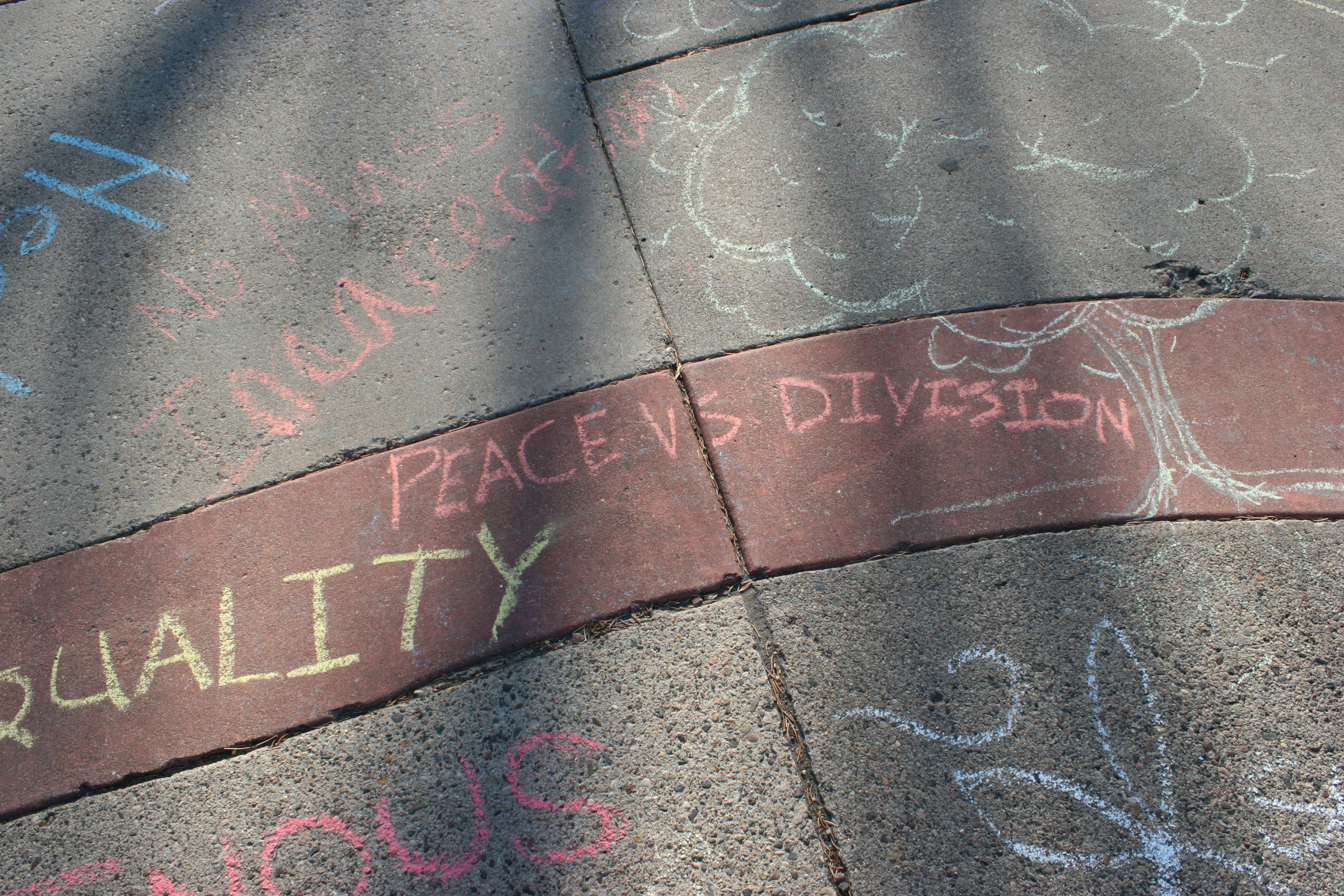
Among the many messages, peace vs division.

For the first time in a long time, I feel hope. Out of all the chalked messages I read on Sunday while at Bridge Square, I found one that really spoke to me. Peace vs division. Oh, how we need that. Peace. Not division.

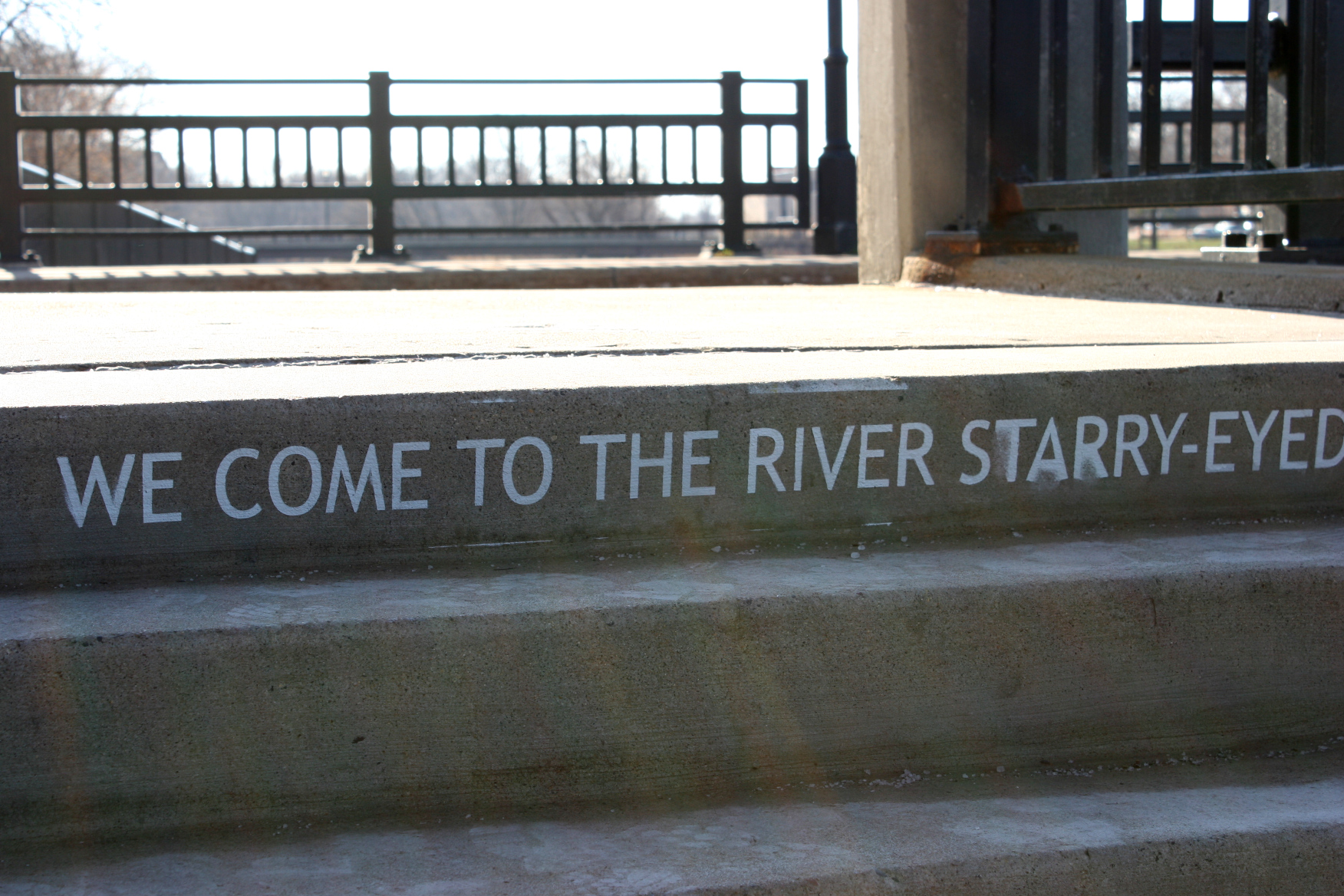
A message printed on a step leading to the river walk. You’ll also find poems imprinted into sidewalks in downtown Northfield.

That stop at Northfield’s town square, with so many issues printed in chalk on cement, could easily have overwhelmed me. I could have despaired at all the problems that need fixing. But rather, I choose to see this as an acknowledgment of concerns. Of the possibilities. Of the solutions. Of choices which can bring peace rather than division.

© Copyright 2020 Audrey Kletscher Helbling
 

An architecturally historic bridge in Waterford Township November 9, 2020

NOTE: This post features photos from a mid-August stop at the historic Waterford bridge near Northfield, Minnesota.

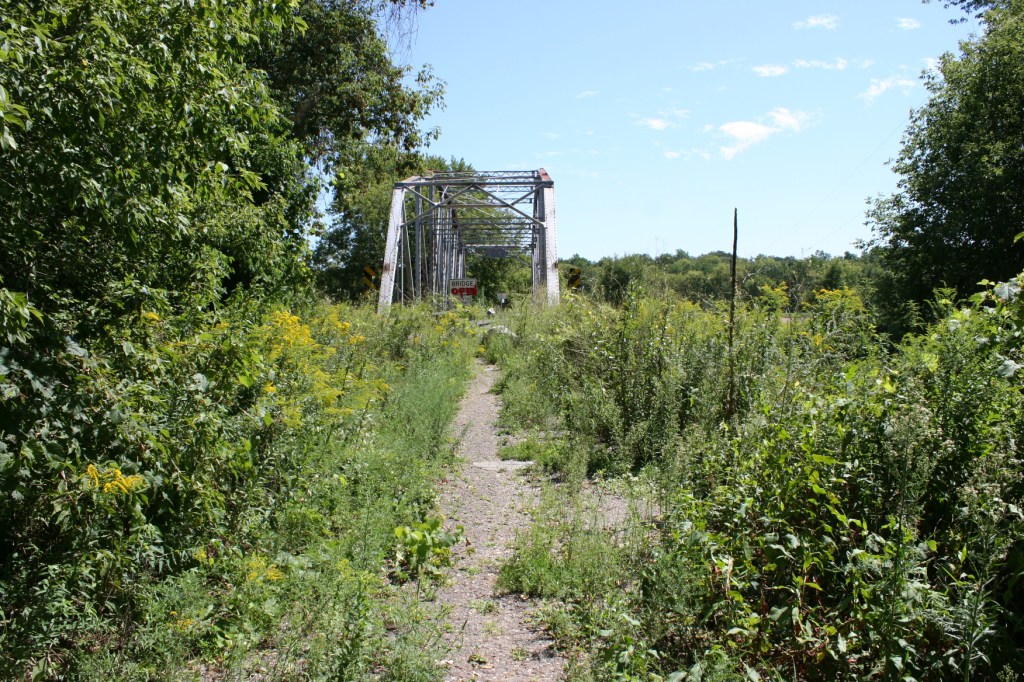
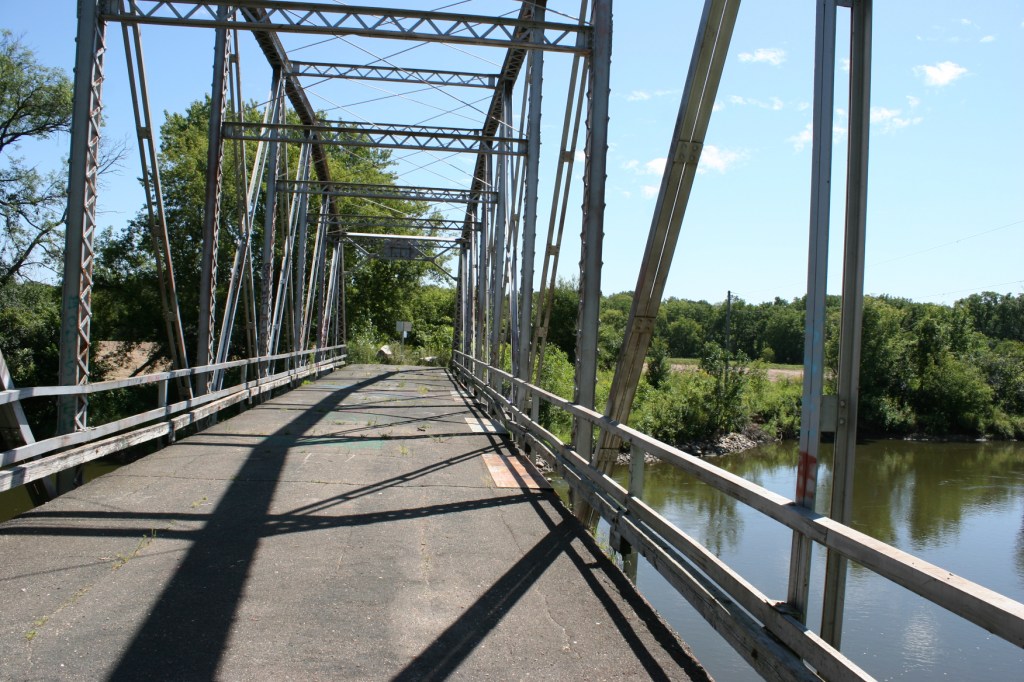
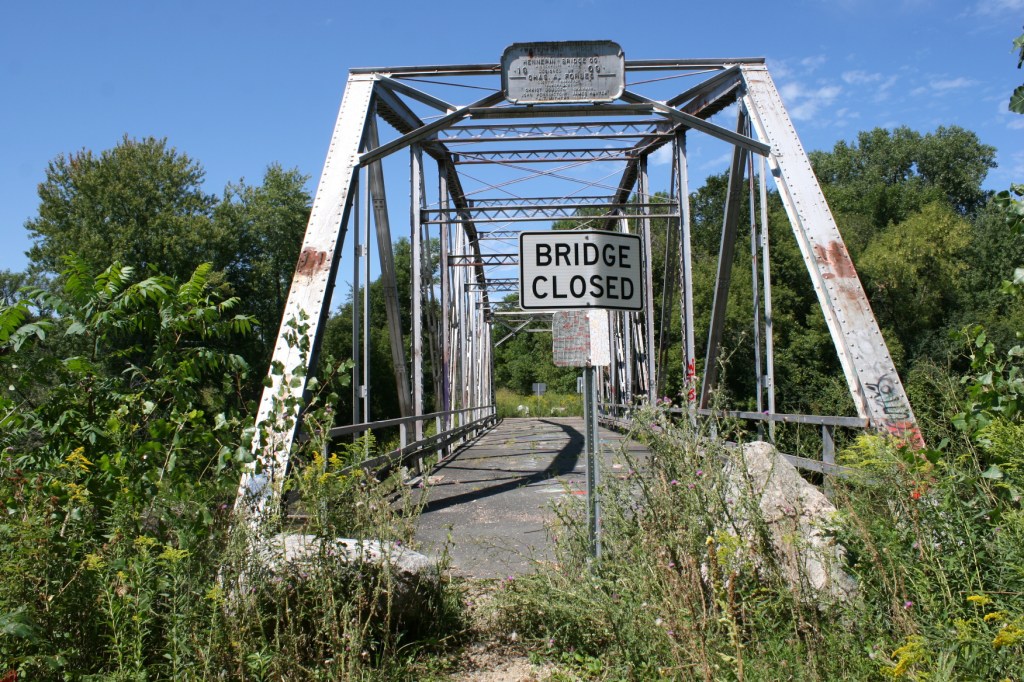
The historic Waterford Bridge, located in Waterford Township in Dakota County, Minnesota.


TO THE MINNESOTA DEPARTMENT of Transportation, the historic Waterford Bridge some two miles northeast of Northfield is tagged as bridge number L3275. I suppose bridges, like roads, require such numerical identifiers.


This is truly an artful and unique bridge in southern Minnesota.


Much more than a name or number, this “140-foot, steel, riveted and bolted, Camelback through truss on concrete abutments” bridge, according to MnDOT, stands as an historic bridge spanning the Cannon River.


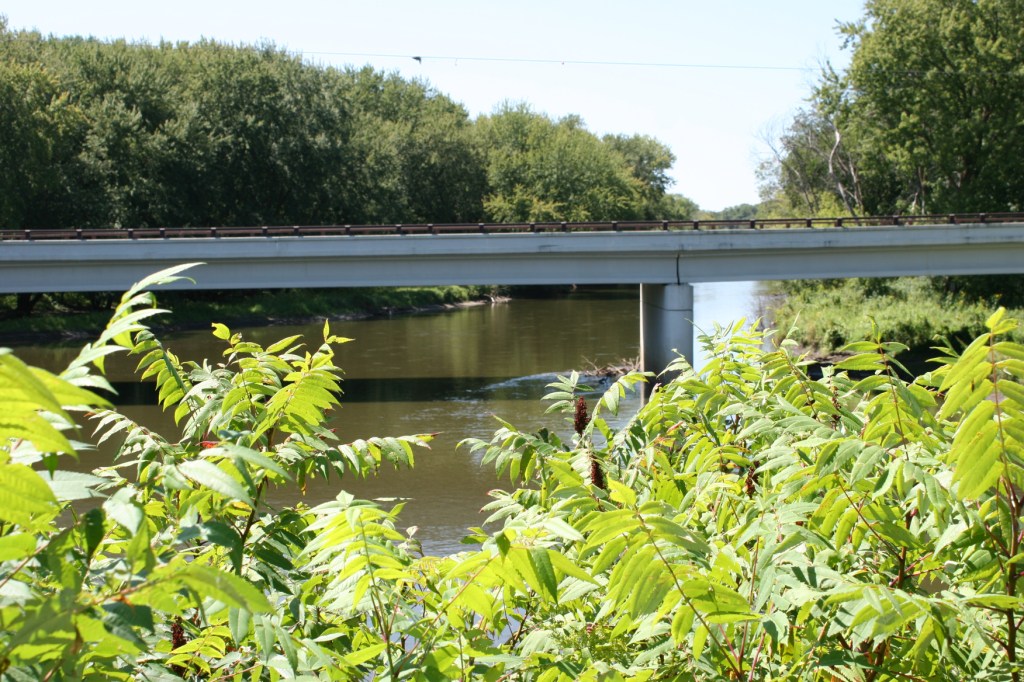
The new plain-looking bridge.


Rare in design here in Minnesota, the 1909 bridge closed to vehicle traffic in 2009 and was rehabilitated in 2014. A new, non-descript modern bridge replaced it.


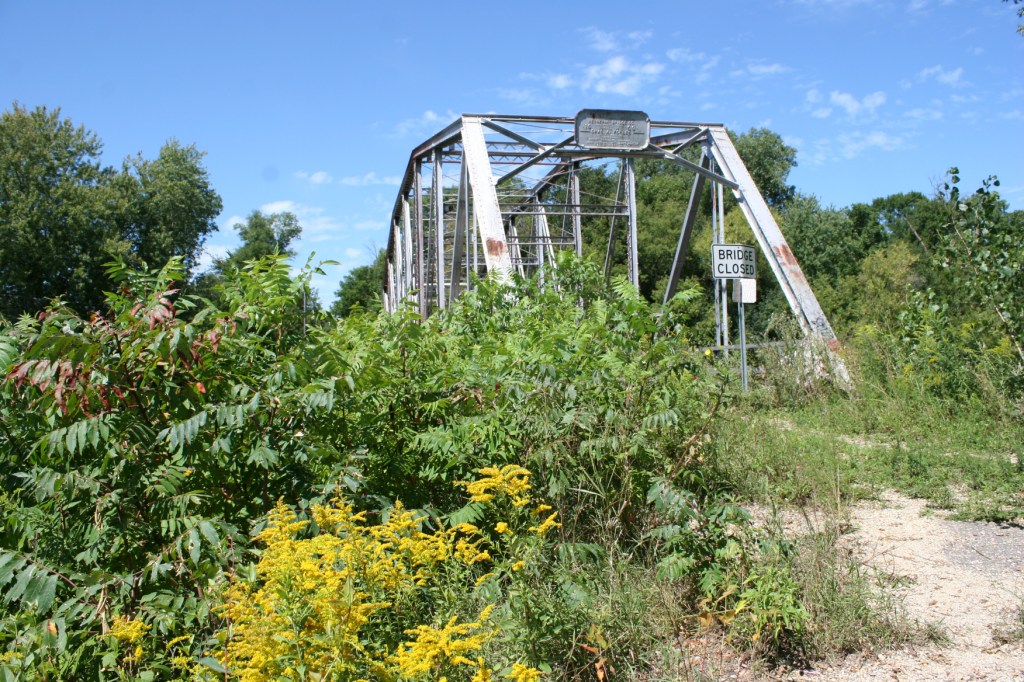
Weeds, wildflowers and other plant growth surround the bridge.


I’ve long wanted to see the old bridge in Waterford Township as it reminds me of a similar truss bridge from my childhood. That bridge took US Highway 71/Minnesota State Highway 19 traffic across the Minnesota River near Morton. When my dad drove our family Chevy across the bridge en route to Minneapolis once a year to visit relatives, my siblings and I pounded on the interior roof to scare any trolls lurking underneath at water’s edge. That all seems silly now, reflecting as an adult. But, back then, it was great fun.


The narrow path to the bridge.


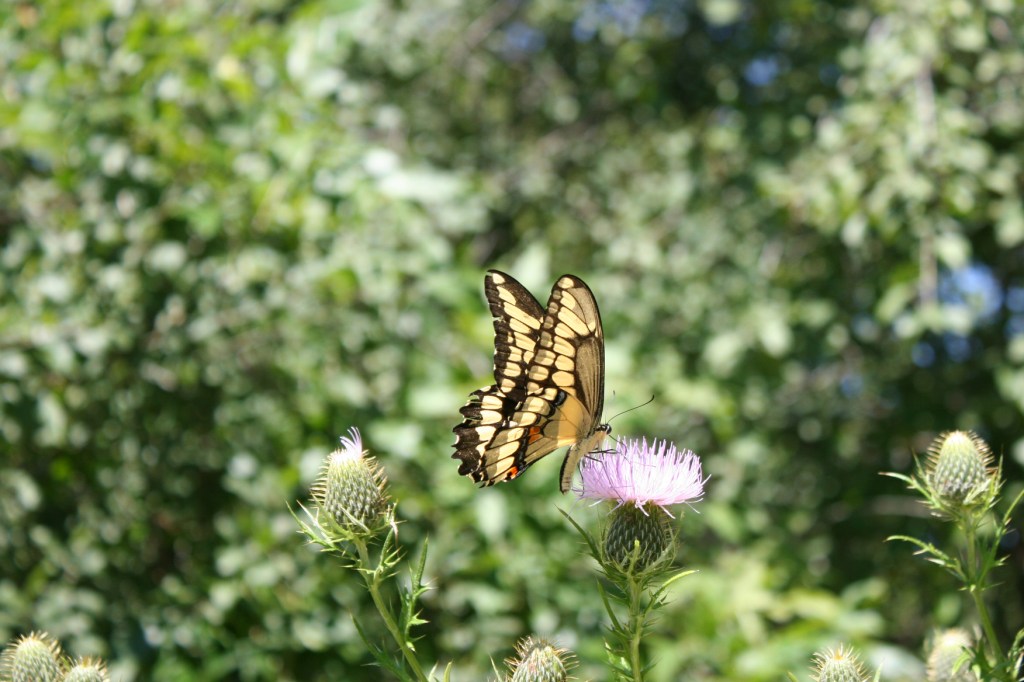
I stopped along the path to photograph a butterfly atop a thistle. I saw multiple butterflies.


Fast forward to today and my desire to see a similar-in-design bridge. Randy had actually driven across the Waterford Bridge at one time while doing some automotive repair work for a farmer in the area. So he easily found it. After parking, we set out to reach the bridge, weaving through a narrow pathway bordered by trees, thistles, goldenrod, wildflowers and other plants. Boulders blocked the deteriorating paved trail to motor vehicle traffic.


I hesitated, but only for a moment.


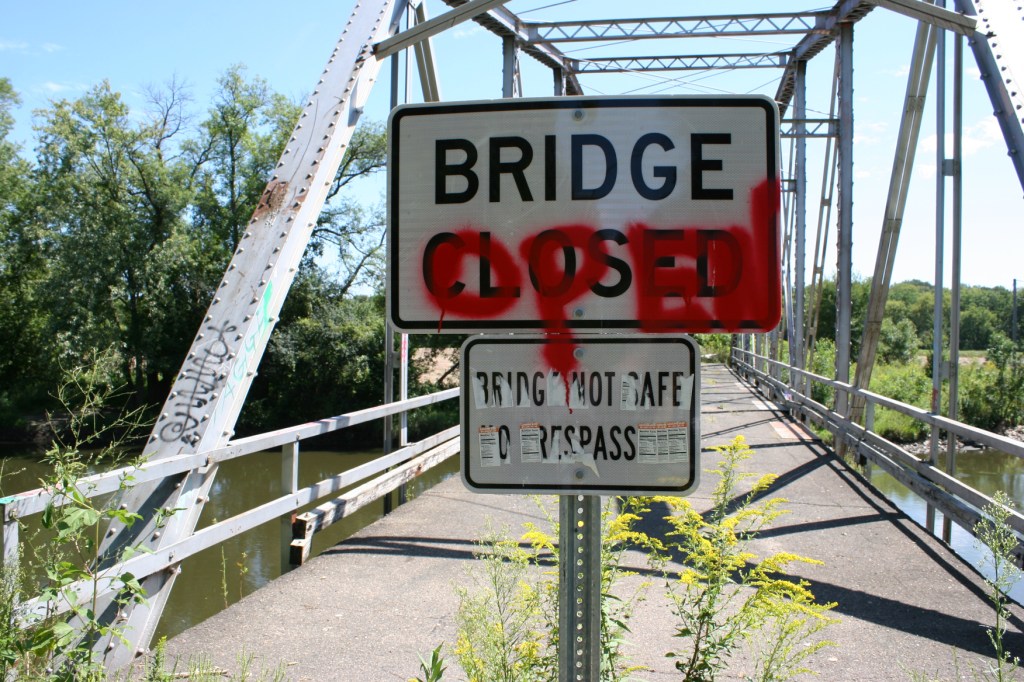
Upon reaching the bridge, I wondered if we should even venture onto it given the BRIDGE CLOSED—BRIDGE NOT SAFE NO TRESPASSING signage. But the deck looked safe…and many others had obviously been here before us.


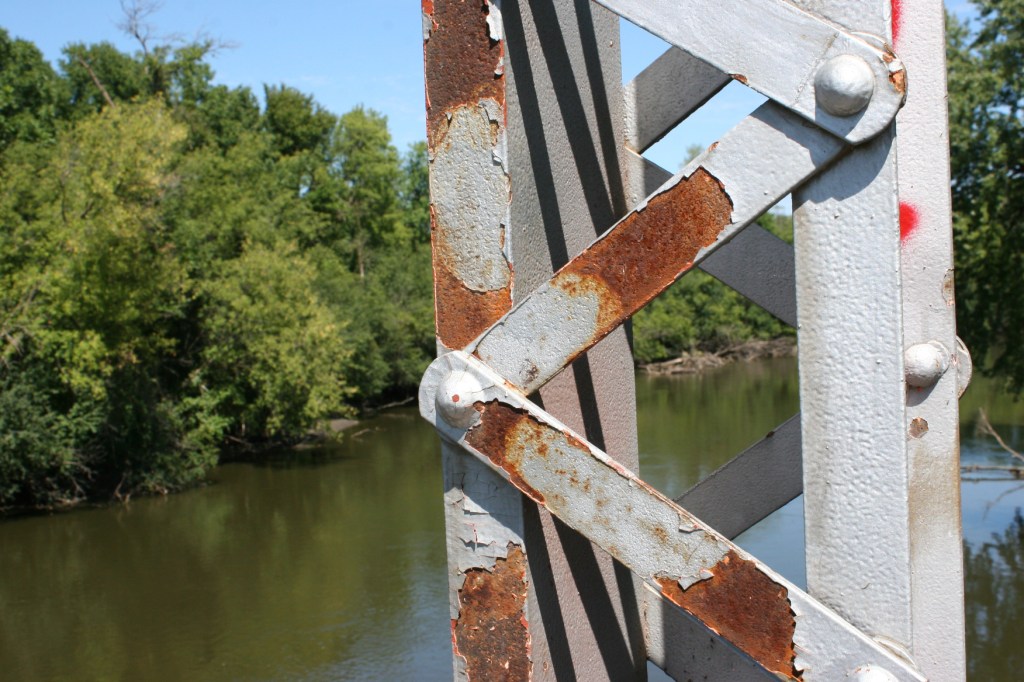
In need of paint, or perhaps replacement.


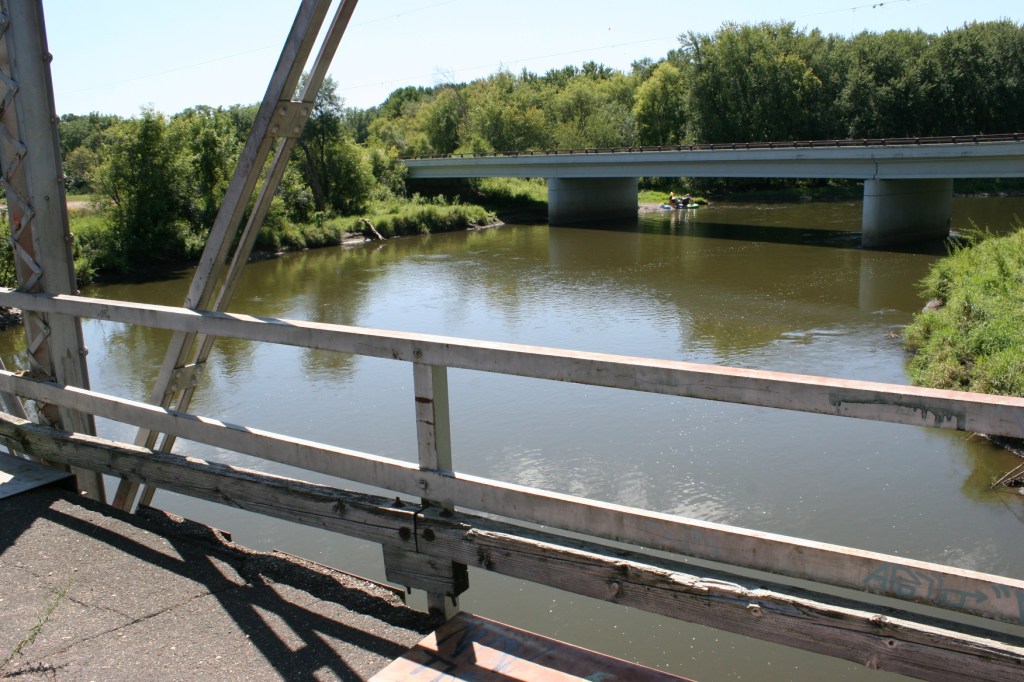
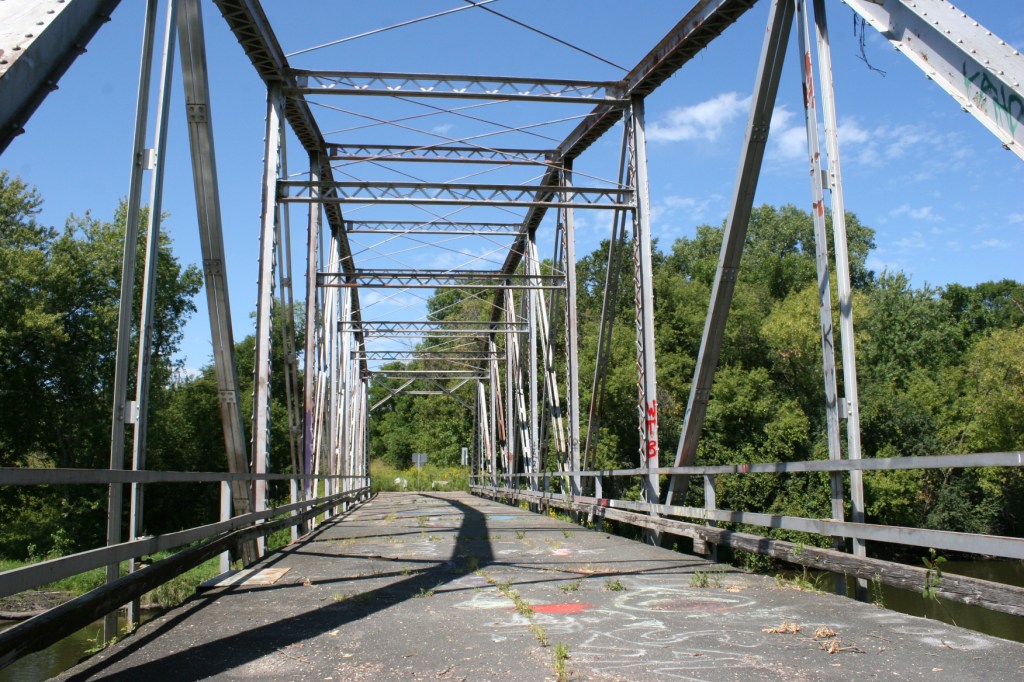
The Waterford Bridge spans the Cannon River.


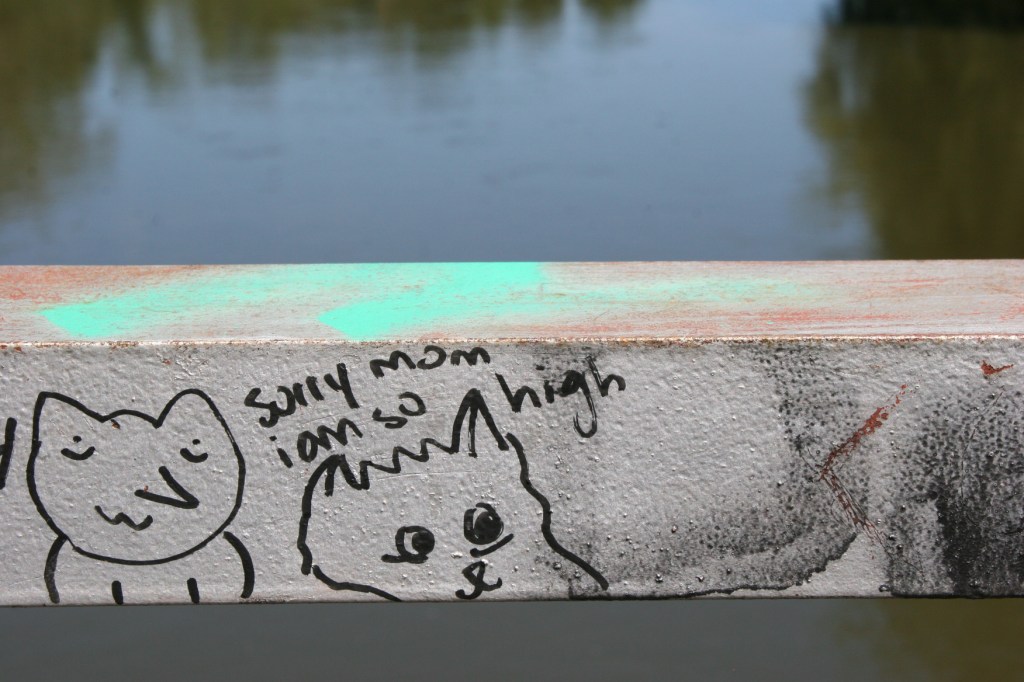
There’s lots of graffiti on the bridge.


Once on the bridge, I was surprised at its condition. Rusting metal. Flaking paint. Weathered boards. Graffiti. Vandalized signage. Cracked pavement.


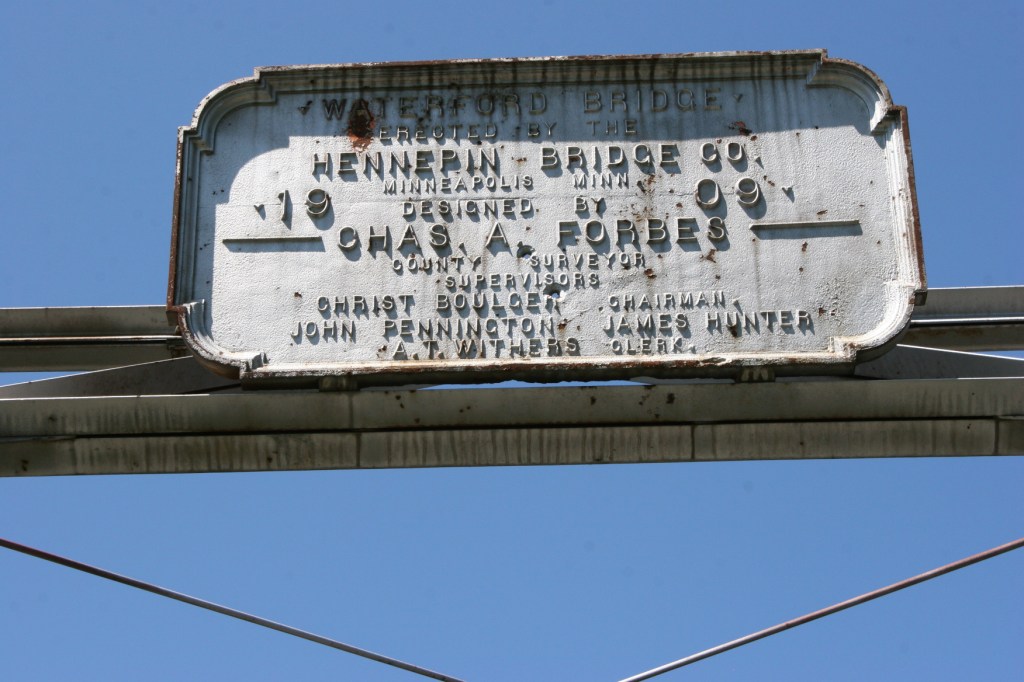
Historical details on a sign posted high above the bridge deck.


As I walked, dodging dog poop, I considered the condition of the bridge built by the Hennepin Bridge Company with Dakota County Surveyor Charles A. Forbes leading the project design. His name and that of other government officials are listed on a plaque atop one end of the bridge which now appears abandoned to the elements. The bridge is also on the National Register of Historic Places.


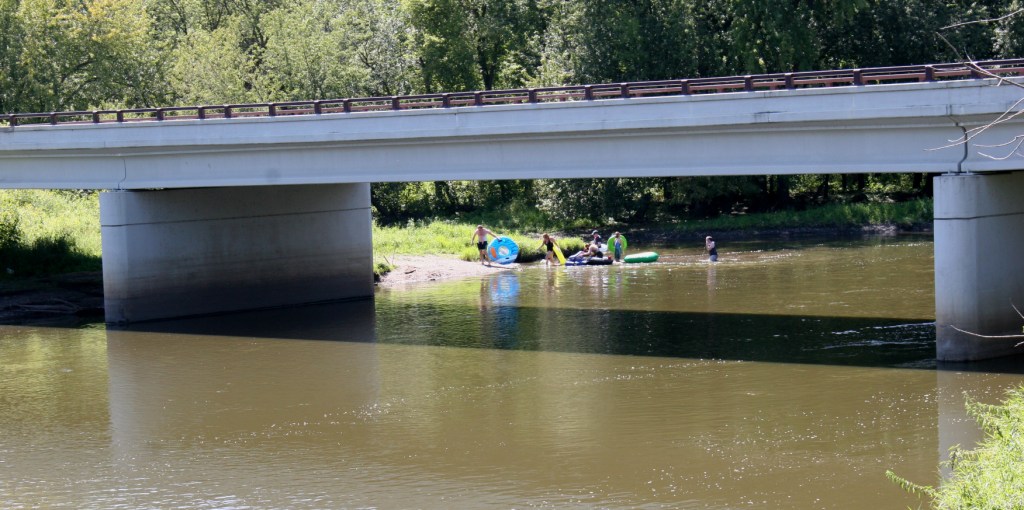
Tubers exit the Cannon River near the new Waterford Bridge.


The new Waterford Bridge photographed from the old bridge with tubers in the distance at river’s edge.


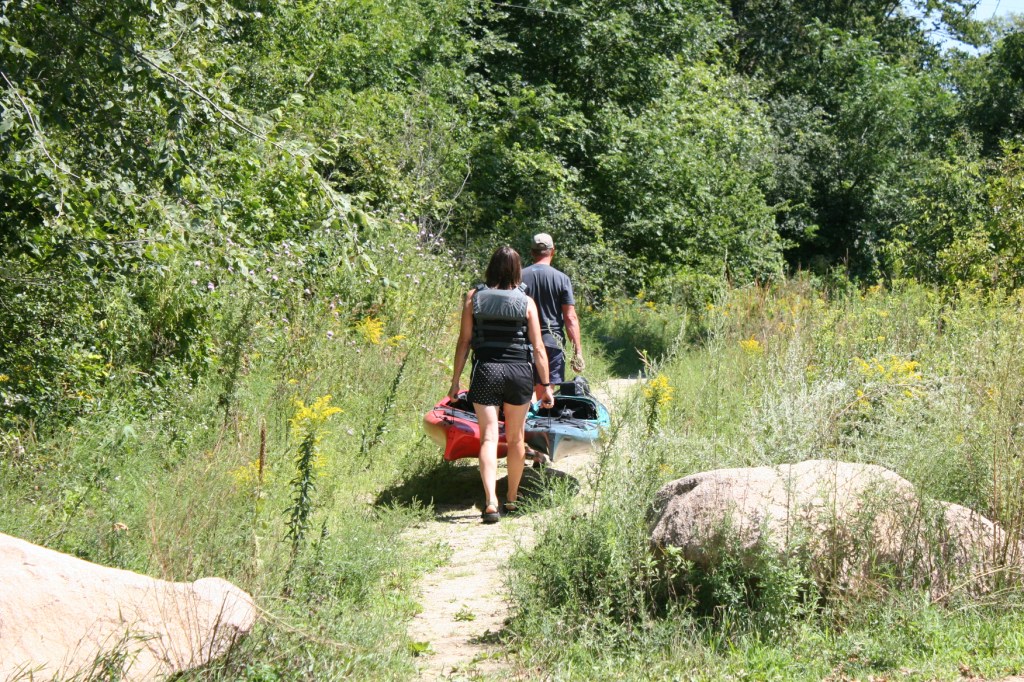
A couple carries their kayaks along the narrow path leading to the historic Waterford Bridge.


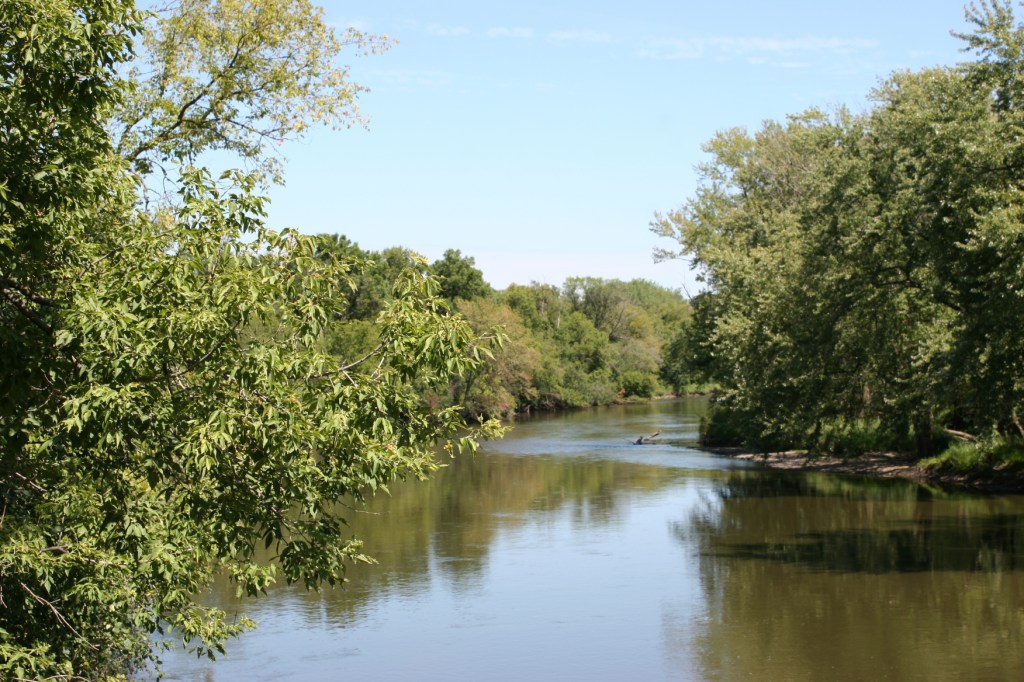
Under that bridge, the Cannon River flows, muddy and brown, carrying tubers, canoeists and kayakers—we met two of them, saw others—to places eastward. We watched as one couple carried their kayaks along the narrow path to the bridge with plans to travel eight miles to Randolph, a journey they expected to take three hours.


The muddy Cannon River, a popular waterway for water sport enthusiasts.


It was a lovely summer day to be on the water. Or, like us, to walk across an historic bridge that, for me, bridges past to present via childhood memories.

© Copyright 2020 Audrey Kletscher Helbling
 

My poem included in collection vying for Minnesota writing award September 23, 2020


Minnesota Prairie Roots file photo.


WE ARE SIXTEEN STRONG, 16 area poets whose collected poetry, Legacies: Poetic Living Wills, is now a finalist in the 2020 Minnesota Authors Project: Communities Create contest.

I learned of this honor only recently via Northfield Poet Laureate Rob Hardy. A gifted poet and tireless promoter of poets and poetry, he submitted the collection to the debut contest sponsored by the Minnesota Library Foundation, Minnesota libraries and Bibliolabs.

According to the MN Reads MN Writes website, the new contest is designed “to recognize community-created writing and to highlight the central role that libraries play in providing support for local authors and the communities they serve.”

I crafted my poem, “Life at Forty Degrees,” in response to Hardy’s 2018 call for submissions to an anthology of “poetic living wills.”

The content of the poetry collections is summarized as “poems (that) deal with death and dying, with the things that make life meaningful in the face of death, and with the legacies that the poets hope to leave behind or have received from others before them.” My poem, about hanging laundry on the clothesline, focuses on the legacy passed on to me by my grandmothers.

You can read the collection by clicking here.

The winner of the first-ever Minnesota Authors Project: Communities Create contest will be announced later this month at the annual Minnesota Library Association’s annual conference. No matter the outcome, I feel honored to stand in the “finalist” category with 15 other gifted poets from Northfield and nearby (like me from Faribault).

© Copyright 2020 Audrey Kletscher Helbling
 

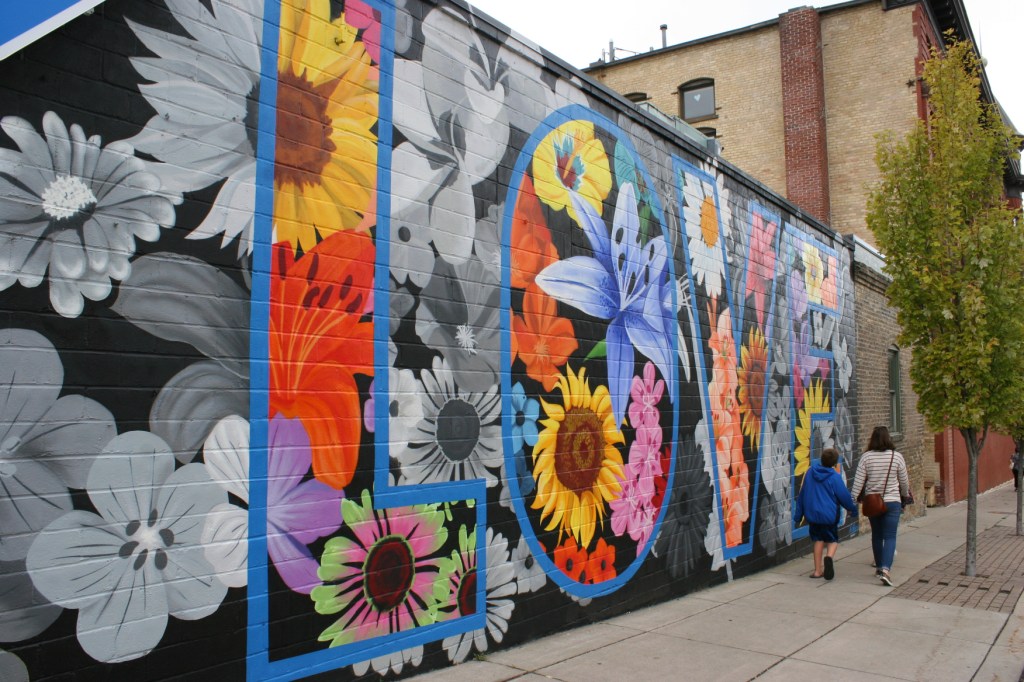
LOVE blooms in Northfield mural September 18, 2020

The Northfield Arts and Culture Commission awarded $3,000 toward this mural project.


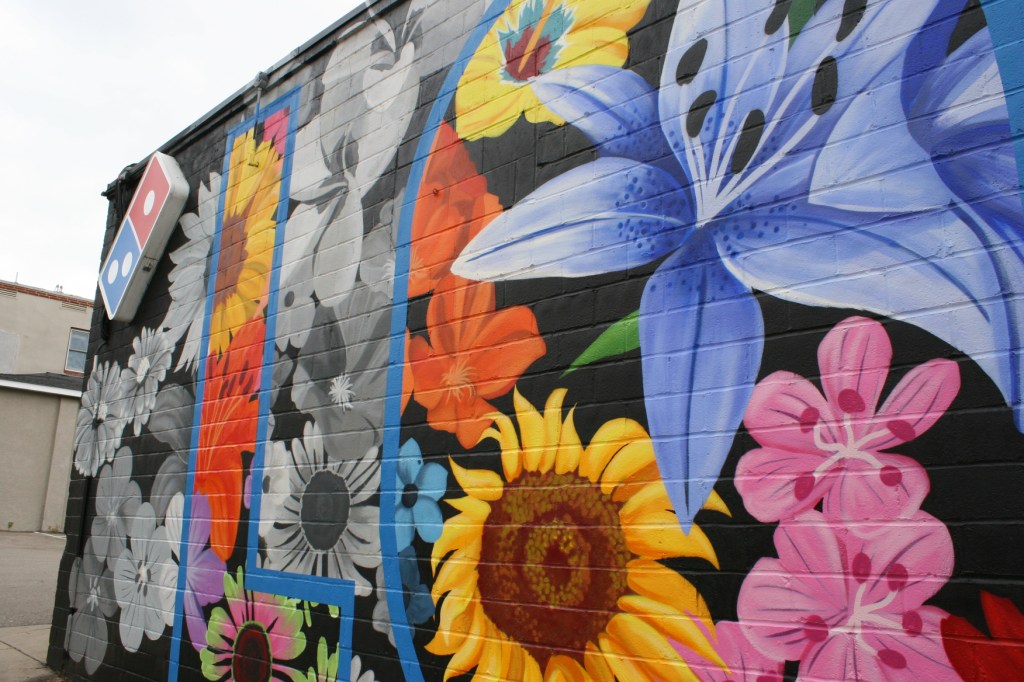
SUNFLOWERS. LILIES. DAISIES.


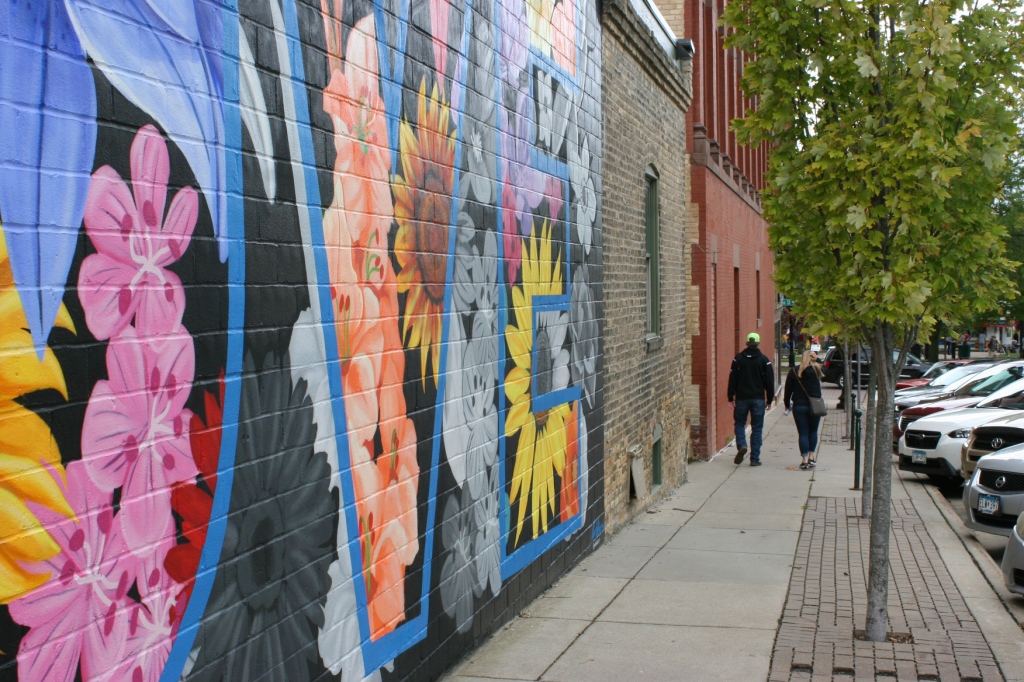
I love the bold hues of this mural mixed with grey and black.


Flowers bloom in bold colors painted onto an exterior block wall in the heart of downtown Northfield.


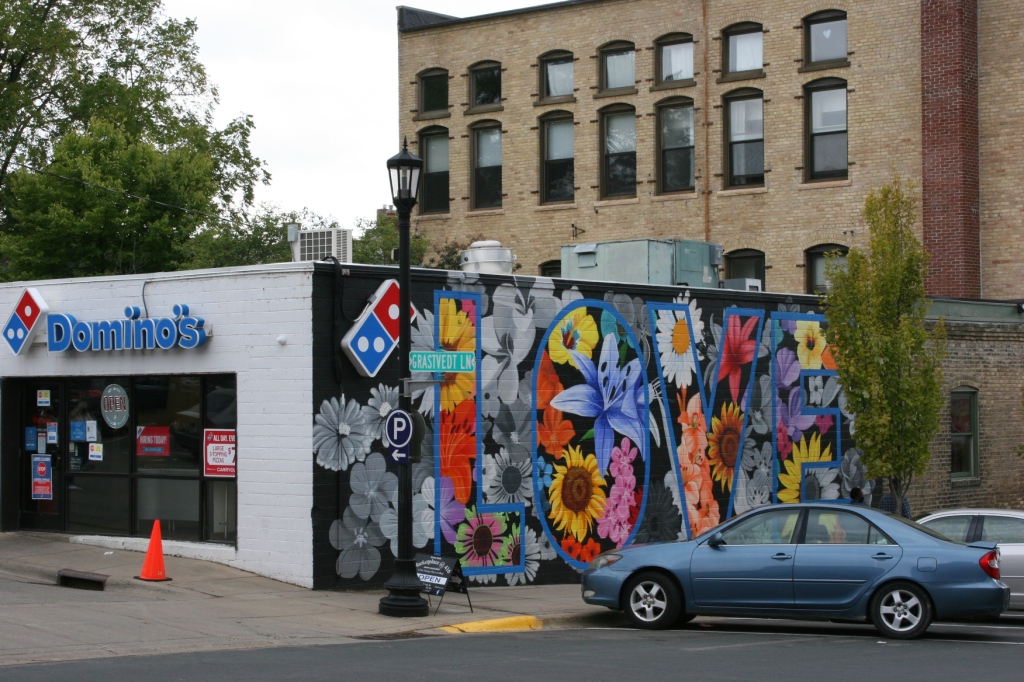
Mural on the Domino’s building.


Just a half block off Division Street, up the hill from Bridge Square, on the building housing Domino’s Pizza, a colorful mural stretches, drawing appreciative onlookers. Including me. During Northfield’s The Defeat of Jesse James Days celebration last Saturday, many a passerby posed for photos against the colorful and inspiring backdrop.


Outlined in blue, the word LOVE.


This mural commissioned by the owner of the building and created by Illinois artist Brett Whitacre features more than vibrant flowers. It highlights a single word: LOVE.


The signature of mural artist Brett Whitacre on a corner of the mural.


And perhaps that is the unconscious draw. We all need LOVE. More than ever right now. These are difficult days of dealing with a relentless and deadly virus, social unrest and injustices, and a country in turmoil.


I expect the LOVE mural will continue to be a popular photo backdrop, especially for couples holding their wedding receptions at The Grand Event Center just across the street.


To pause for a moment in the chaos and appreciate this beautiful example of uplifting public art is to take a respite. To choose for a moment to embrace LOVE. That one emotion we all need. That connects us. If we allow it to do so.

THOUGHTS?

© Copyright 2020 Audrey Kletscher Helbling
 

From Northfield: Snapshots of an abbreviated Defeat of Jesse James Days September 17, 2020

The site of the 1876 attempted bank robbery, now the Northfield Historical Society.


TYPICALLY, THE DEFEAT OF JESSE JAMES DAYS in Northfield finds Randy and me avoiding this college town only 20 minutes from Faribault. Crowds and congestion keep us away as thousands converge on this southeastern Minnesota community to celebrate the defeat of the James-Younger Gang in a September 7, 1876, attempted robbery of the First National Bank.


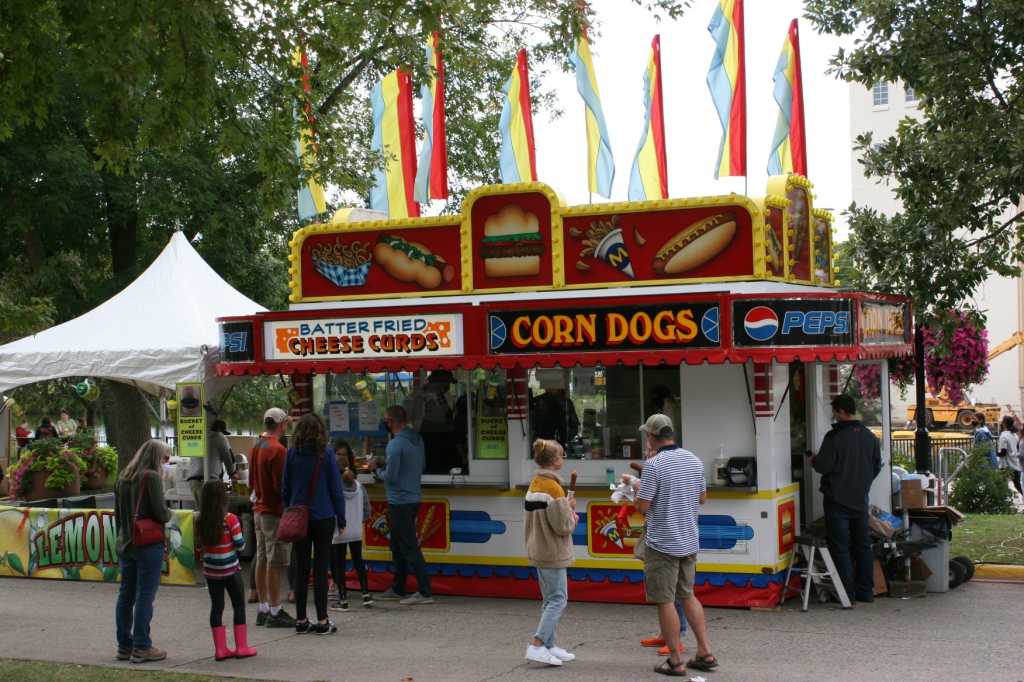
Waiting for fair food at one of several stands.


But this year, because of COVID-19, the mega celebration scaled back, leaving Northfield busy, but not packed. And so we walked around downtown for a bit on Saturday afternoon, after we replenished our book supply at the local public library—our original reason for being in Northfield.


The LOVE mural painted on a pizza place in Northfield drew lots of fans taking photos, including me.


On our way to Bridge Square, a riverside community gathering spot in the heart of this historic downtown, I paused to photograph the latest public art project here—a floral mural painted on the side of the Domino’s Pizza building by Illinois artist Brett Whitacre. (More info and photos on that tomorrow.)


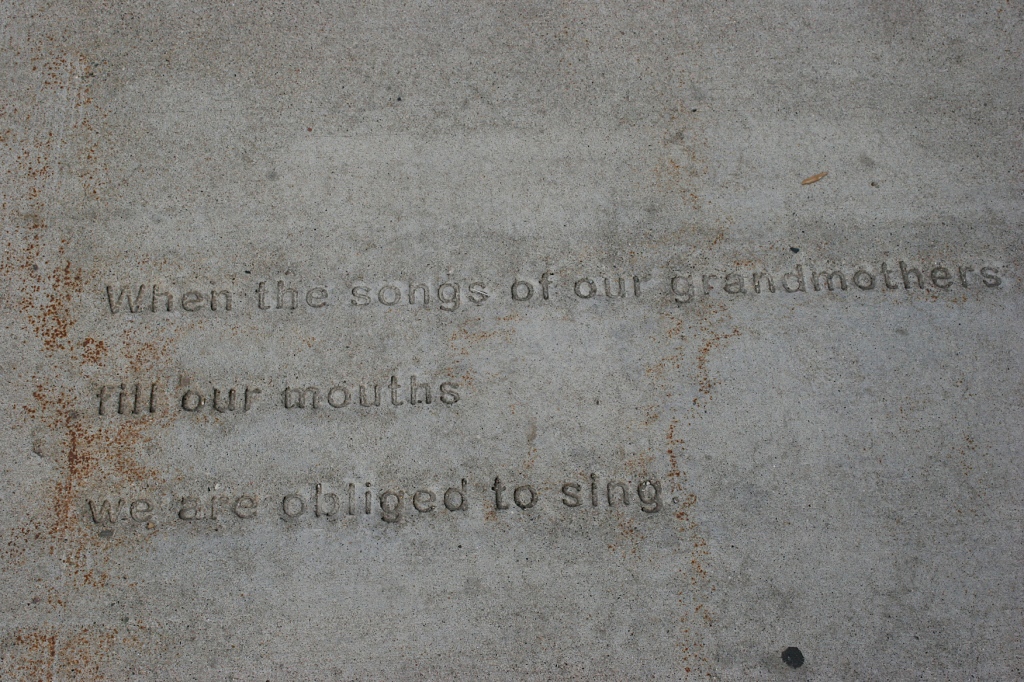
One of the many Sidewalk Poetry poems imprinted into cement in downtown Northfield.


Northfield’s appreciation of the arts—from visual to literary to performing—is one of the qualities I most value about this community. As a poet, I especially enjoy the poetry imprinted upon sidewalks.


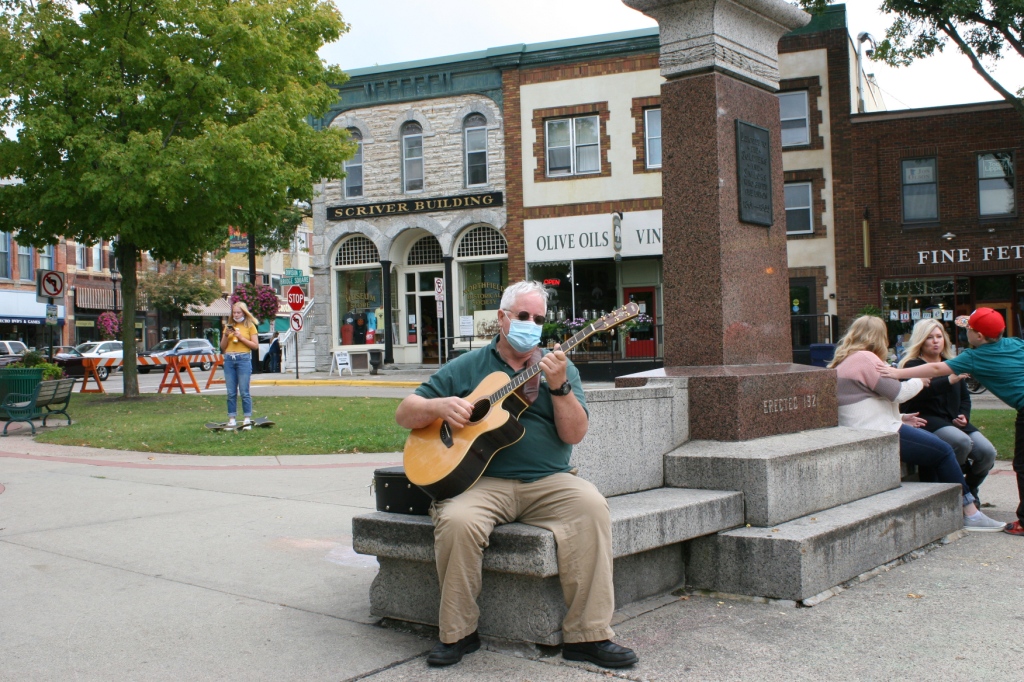
An impromptu concert in Bridge Square.


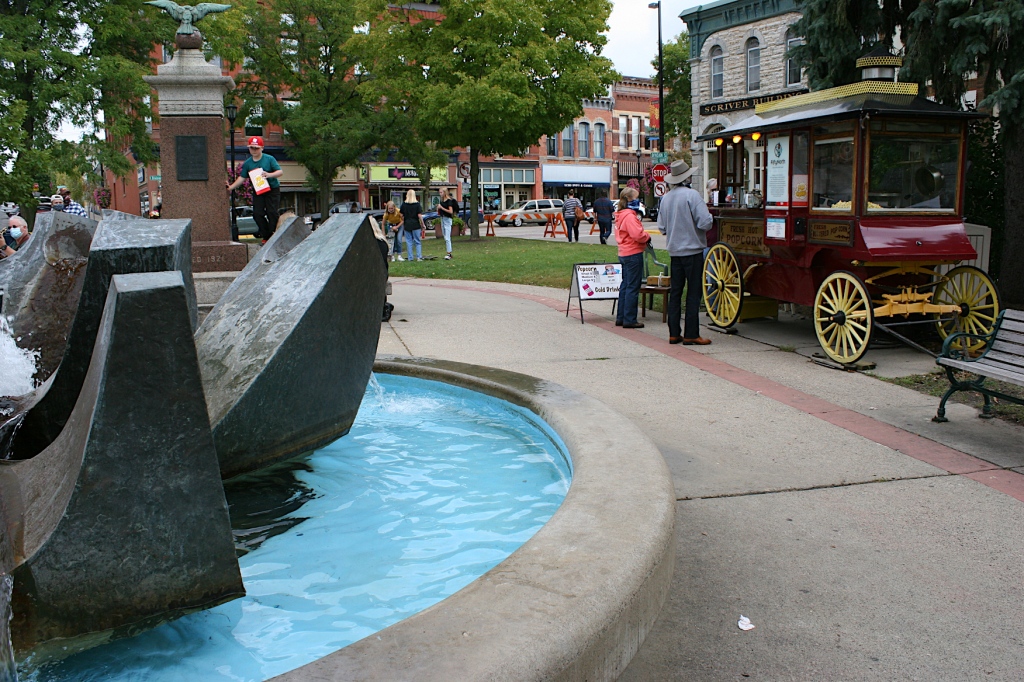
A fountain, monument and the iconic popcorn wagon define Bridge Square in the warmer weather season.


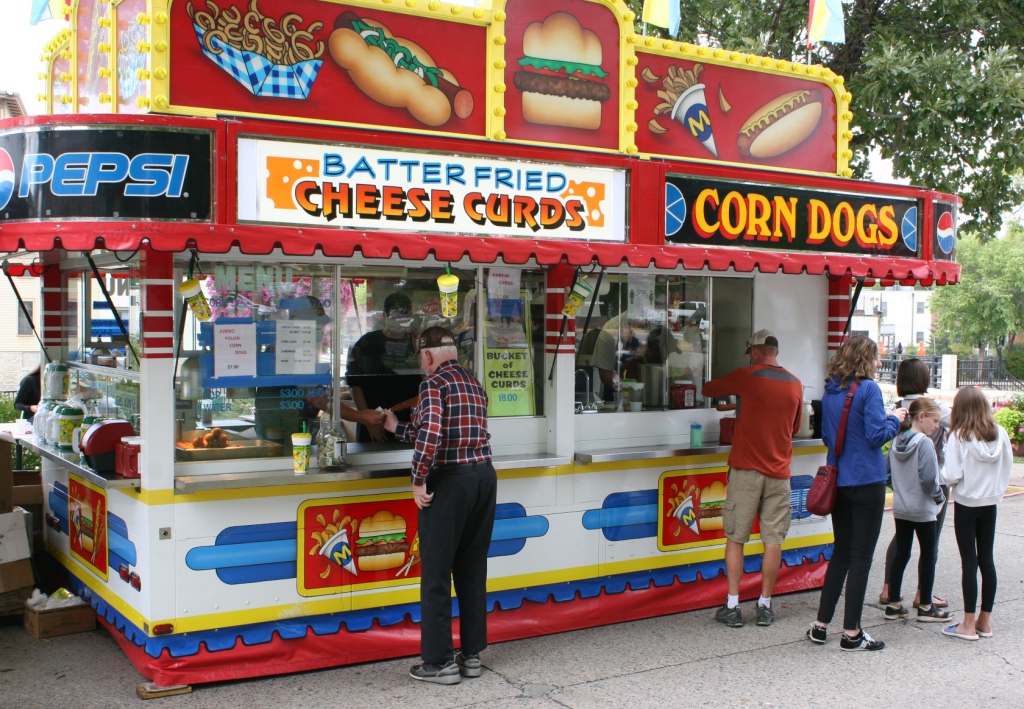
Buying a corn dog…


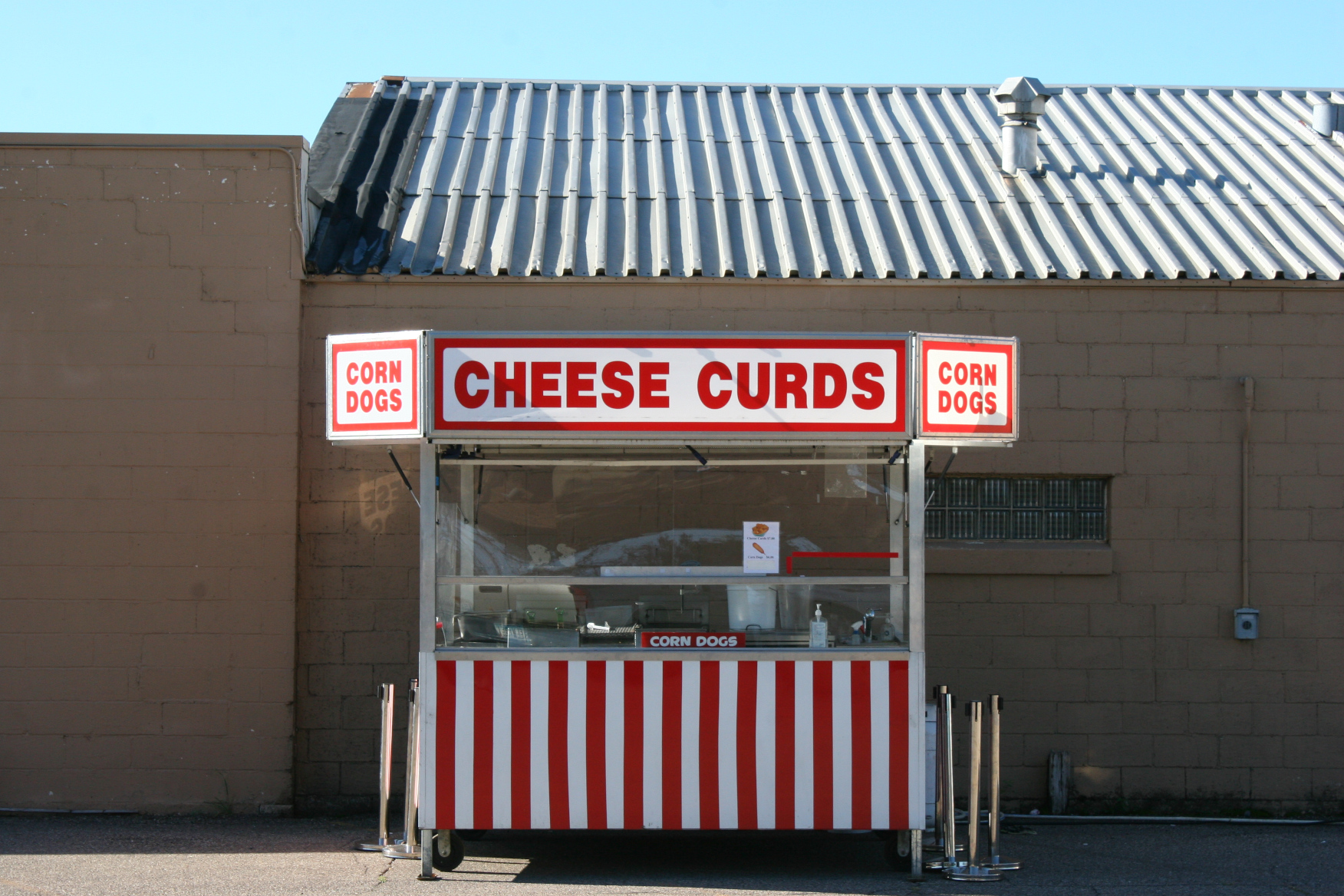
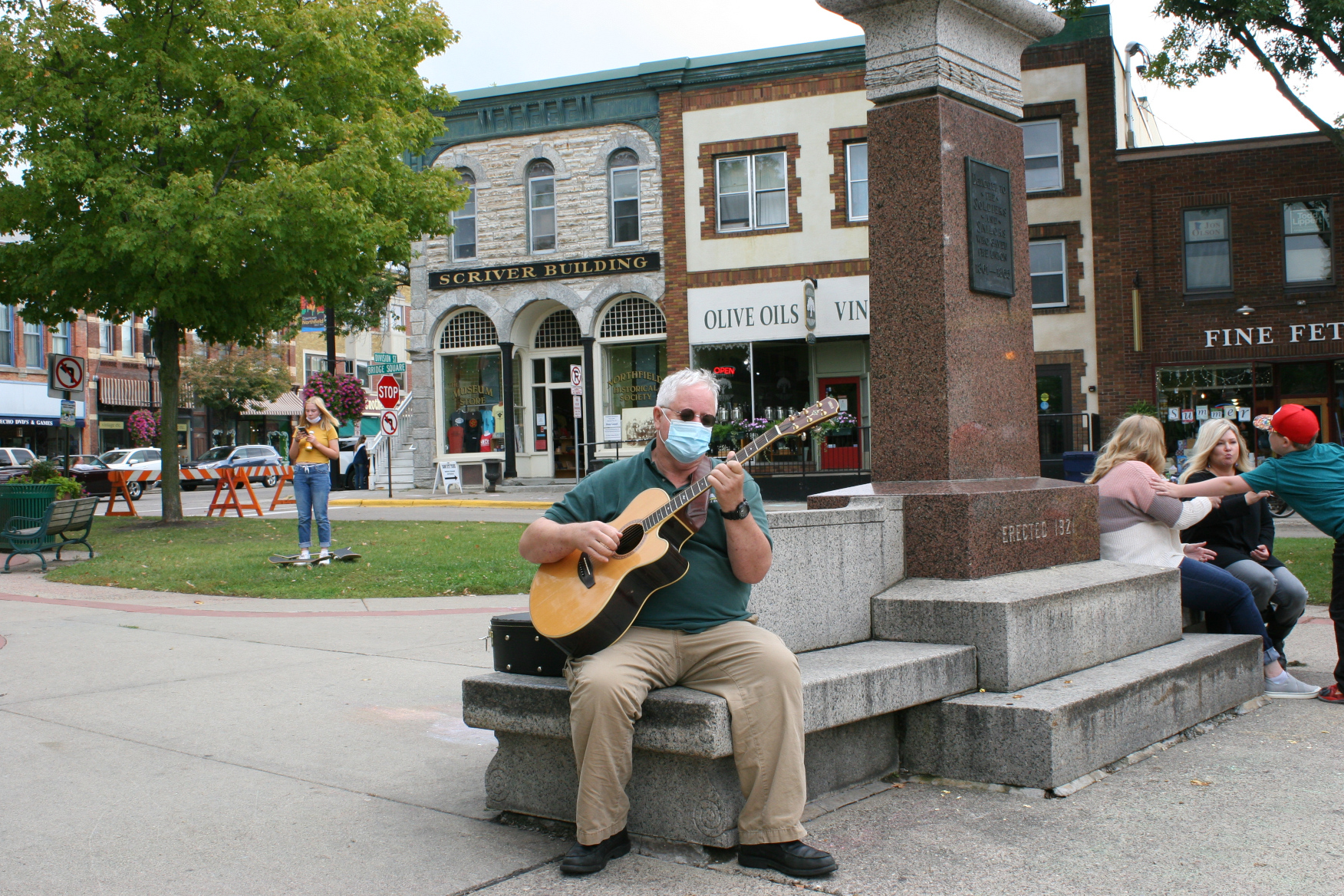
I was delighted also to see and hear a guitarist quietly strumming music in the town square while people walked by, stopped at the iconic popcorn wagon or waited in line for corn dogs and cheese curds. Several food vendors lined a street by the park.


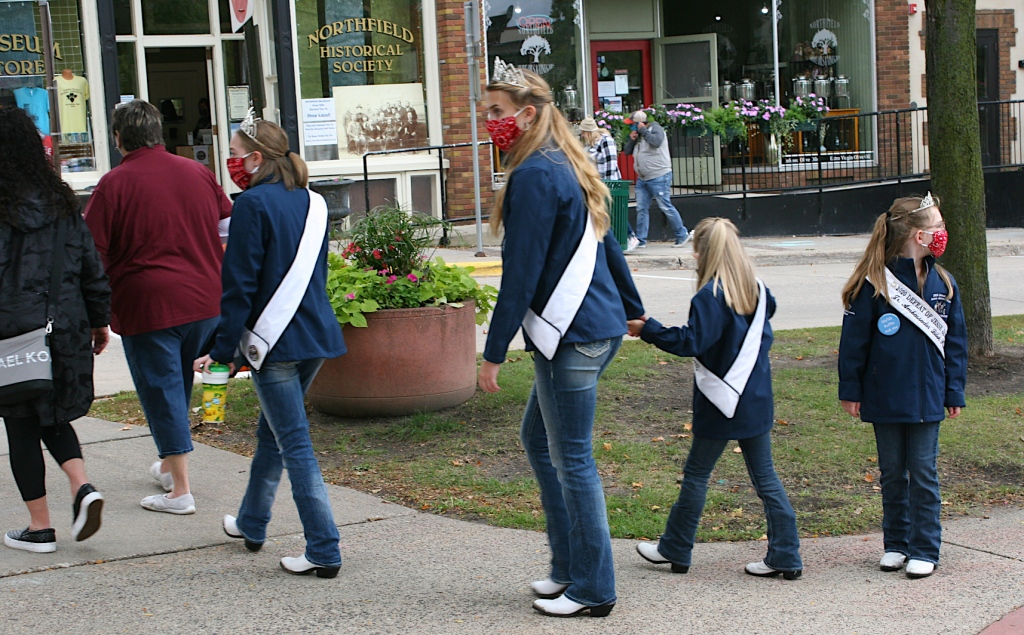
The Defeat of Jesse James Days royalty out and about.


Among fest-goers I spotted Defeat of Jesse James royalty in their denim attire, red bandanna masks, crowns and boots, the masks a reminder not of outlaws but of COVID-19.


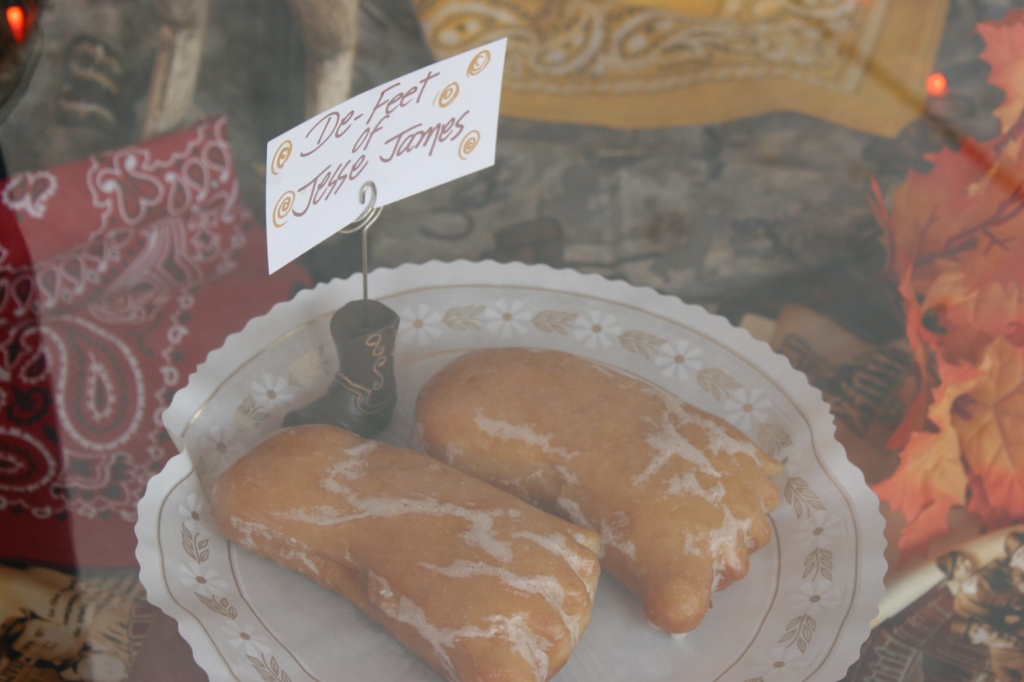
Photographed through the bakery’s front window, the feet-shaped pastries.


Yet, in the throes of a global pandemic, some aspects of the celebration remained unchanged. At Quality Bakery a half a block away from Bridge Square, the western-themed window displays featured the bakery’s signature celebration pastry—De-Feet of Jesse James.


A sign outside a Division Street business fits the theme of the celebration.


For a bit of this Saturday, it felt good to embrace this long-running event, to experience a sense of community, to celebrate the defeat of the bad guys.


© Copyright 2020 Audrey Kletscher Helbling
 

More than free pears August 20, 2020

Filed under: Uncategorized — Audrey Kletscher Helbling @ 5:00 AM
Tags: , , , , , , ,

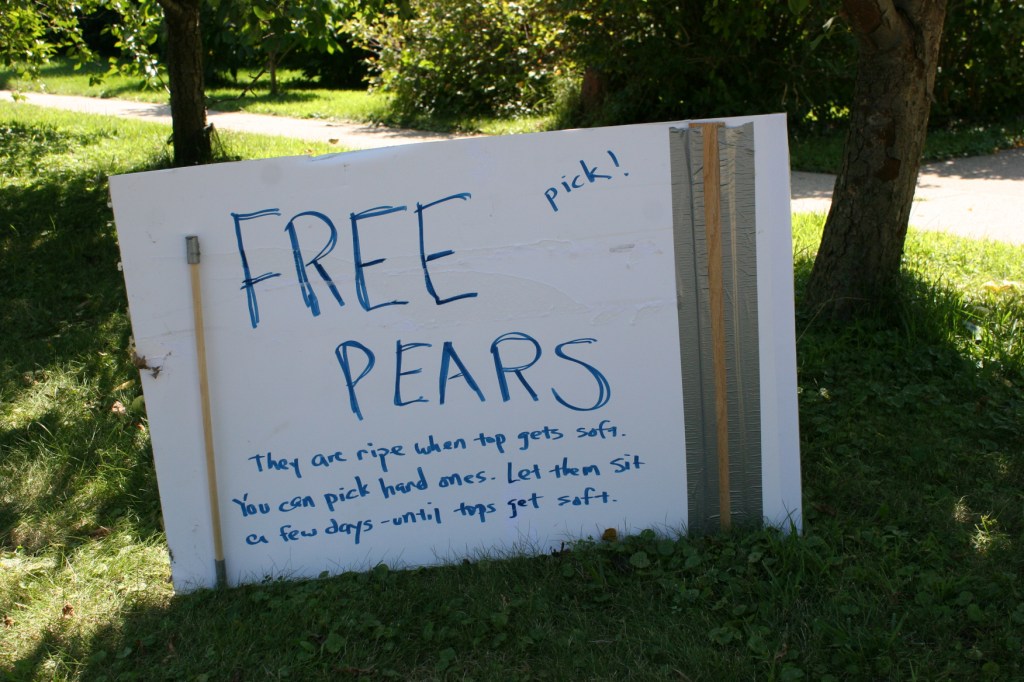
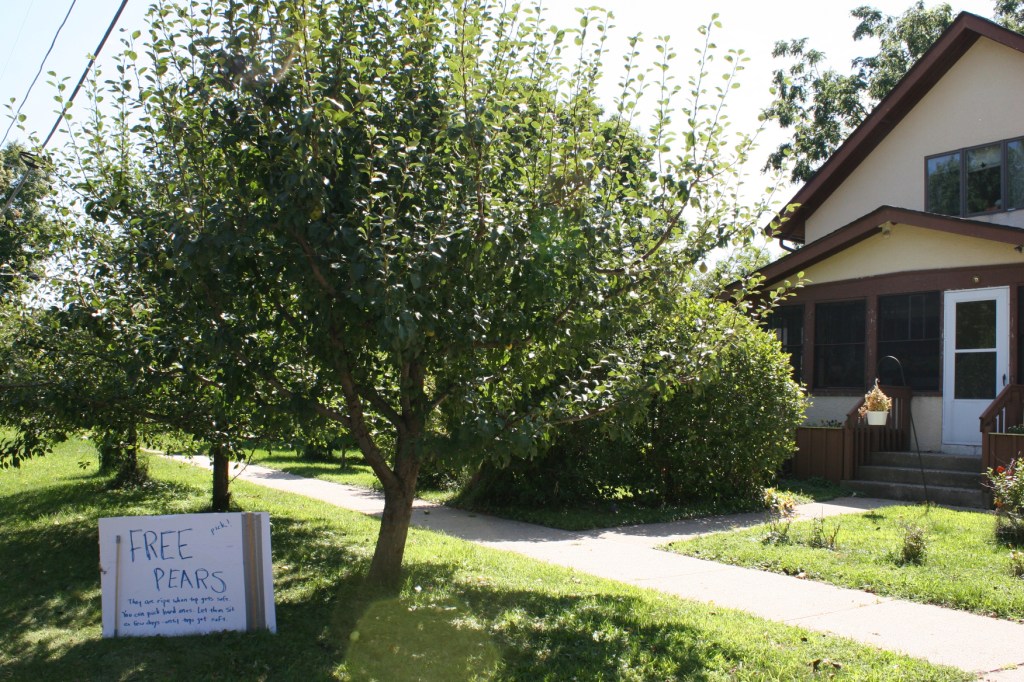
I photographed this roadside sign in Northfield on Sunday.


PICK A PEAR. Or two. Or three.

The roadside invitation to pluck pears from two trees at 203 West Woodley Street, Northfield, proved a first for me.

First, I’ve never seen such an offer. And second, I’ve never seen a pear tree.

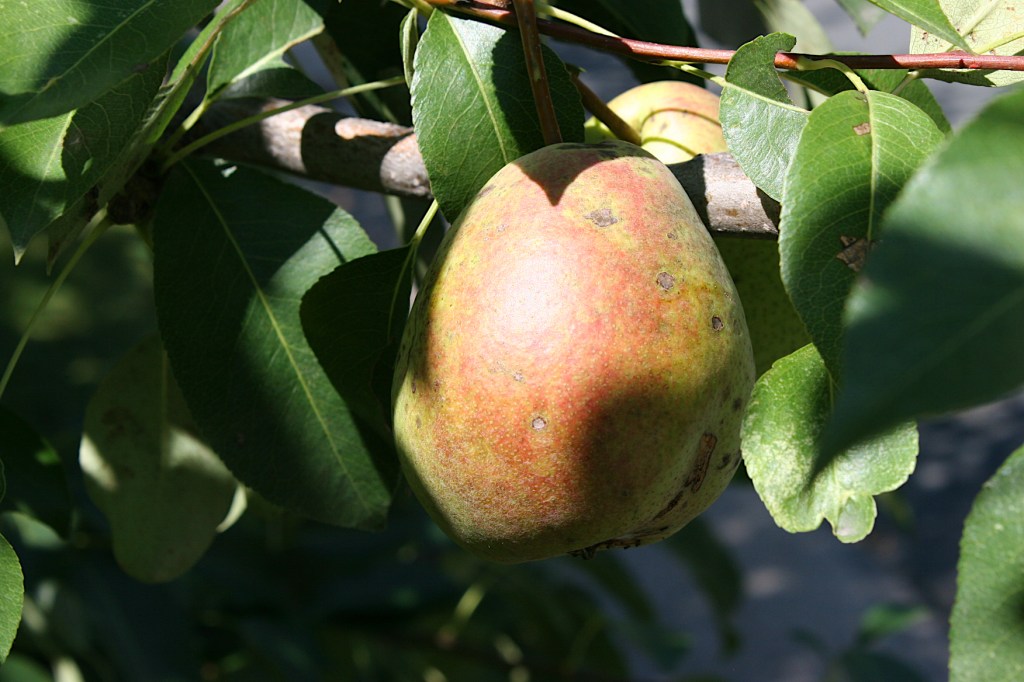
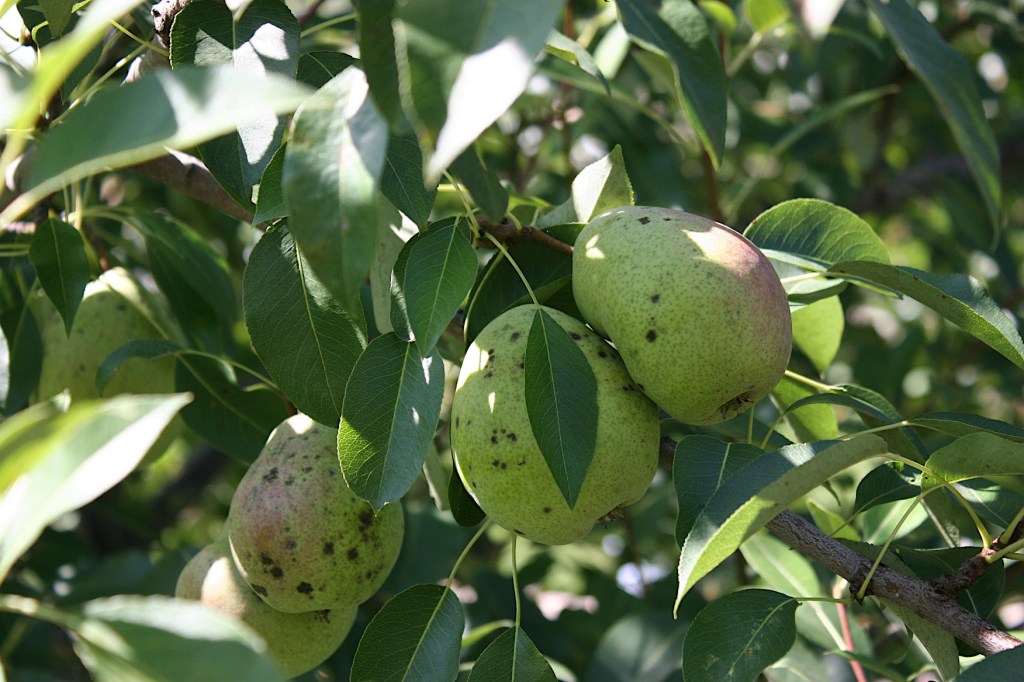
The pears I’ve eaten come from the grocery store. They are much larger, more golden and decidedly more perfect.


But there’s something about picking fruit directly from the tree that appeals to me. And I wasn’t about to pass on the opportunity.

So when Randy and I drove past the sign, we did a quick swing back around the block to check out the pears. Neither of us knows anything about home-grown pears. So the note about pushing on the top or picking hard ones and waiting a few days for them to ripen was particularly helpful.


Randy grabbed four pears—one yellow, the others green—while I grabbed my camera and took photos.

I ate the mini yellow pear for lunch the next day; it was too small to share. I found it dry, not at all juicy. Had there not been a browning blemish, I may have waited longer. The three remaining green pears are now inside a brown paper bag on the kitchen counter, hopefully ripening and not rotting.


This is the place, 203 West Woodley Street.


Whatever the outcome, I find the FREE PEARS offer such a fine example of kindness and generosity, something we all need right now. More than ever.


© Copyright 2020 Audrey Kletscher Helbling


Finally, well into COVID-19, I go to the library August 11, 2020

Buckham Memorial Library, Faribault. Minnesota Prairie Roots file photo.


I’VE PREVIOUSLY POSTED about my deep love of libraries tracing back to my childhood. As a child, I had limited access to books. My small rural Minnesota community had no library. Nor did my elementary school, which sourced books from the county library 20 miles away in Redwood Falls. On occasion, I would be among students selected to board a school bus to travel to that library and return with books temporarily borrowed for our school. I loved those opportunities to browse and choose.


The LFL installed outside the community owned Vesta Cafe in July 2012. Minnesota Prairie Roots file photo 2012.


Today my hometown of Vesta still does not have a public library. County bookmobile service ended long ago with budget cuts. But, thanks to my efforts and those of locals and the generosity of Little Free Library co-founder Todd Bol, a LFL sits outside the Vesta Cafe with additional materials inside. Bol gifted the mini library to my hometown in July 2012.


A LFL in downtown Decorah, Iowa. Minnesota Prairie Roots file photo.


Fast forward eight years and these mini libraries are seemingly everywhere. And during a global pandemic, especially when public libraries closed for a period (some still with restricted hours), the LFLs proved invaluable to book lovers like me. I found a few good books to read, but still longed to step inside a public library with an abundance of reading materials. That happened three weeks ago.


This photograph was taken last September (pre pandemic) outside the Northfield Public Library during a cultural event there.


Randy and I headed up to neighboring Northfield on a recent Saturday afternoon to look for and check out items at the library. Unlike Buckham Memorial Library in Faribault, the Northfield Public Library reopened months ago (May 26) for regular hours that include evenings and weekends. That makes it accessible to everyone. Masking, social distancing and other protocols are in place and required to protect patrons and staff.


The books and magazines I checked out from the Northfield library.


I arrived at the NPL with a list of books I wanted. I wasn’t sure computers would be available to access the card catalog. Because I am unfamiliar with the lay-out of the library, I needed help to find some titles and staff generously assisted. I left with a bag full of seven books and two magazines.


Since then, I’ve been happily reading my stash of Minnesota-authored books. Only one—Love Thy Neighbor, A Muslim Doctor’s Struggle for Home in Rural America by Ayaz Virji with Alan Eisenstock—was not on my list. I spotted the book on a shelf of library staff picks, this one recommended by Sue. I read the book in a single day. One day. That’s how good this book is and how necessary to read. Especially today when headlines daily reveal instances of hatred, racism and so much more dividing our country. Insensitive, inflammatory, just plain horrible words and actions, including in southern Minnesota.

In summary, Love Thy Neighbor is the story of a medical doctor who relocates his family from a busy eastern urban setting to rural southwestern Minnesota to practice medicine as he desires, with a deeper personal connection to patients. Initially, all goes well and Dr. Virji and his family find themselves settling in, accepted, enjoying their new life in rural Minnesota. But then the November 2016 election happens and things begin to change. And that is the focus of this book—the shift in attitudes toward Muslims, how that negativity affected this small town family doctor and his family, and what he did about it.

I’d encourage you to read this enlightening book that recaps Virji’s struggles and the community talks he gave to help those in his small Minnesota community (and elsewhere) to understand his faith and the challenges he faces in a more toxic national environment.


Once I finished that book, I moved onto another environment—into the Boundary Waters Canoe Area Wilderness of northern Minnesota in A Year in the Wilderness, Bearing Witness in the Boundary Waters by Amy and Dave Freeman. It’s been an enjoyable escape into the remote wild, to a place I’ve only ever visited through others. The Freemans, like Dr. Virji, wrote their book with a purpose. To educate, to enlighten and to protect the BWCAW from sulfide-ore copper mining. Incredible photos enhance this detailed documentation of living for a year in the wild. I’d highly recommend this title also.


I especially enjoy reading books by Minnesotans and appreciate the Northfield library tagging these books with Minnesota-shaped art.


The remaining books in my library book stash are mysteries/mystery thrillers, my preferred genre. I quickly read Desolation Mountain by one of my favorite Minnesota authors, William Kent Krueger. Interestingly enough, that fictional story in the Cork O’Connor series also references potential mining near the BWCAW.

New-to-me author Chris Norbury’s books, Castle Danger and Straight River, also connect to the northeastern Minnesota wilderness. And southern Minnesota, where the main character returns to the family farm in Straight River. I always enjoy reading books that include familiar places. Norbury lives in Owatonna and references area communities. And those of you who grew up in this region recognize that the book titles are actually an unincorporated community in northeastern Minnesota and a river here in southern Minnesota.

I’m determined to stretch my reading beyond the seed mystery love planted decades ago through Nancy Drew books. To that end, I appreciate when library staff pull and showcase books they recommend. Like Dr. Virji’s book.

And I appreciate libraries. I look forward to the day when Faribault’s library opens again for regular hours. Currently, it’s open by appointment only, for 30-minute Browse-and-Go Visits between 10 am – 5 pm weekdays or for No-Contact Curbside Pickup. Because Randy is gone to work between those hours, he has no opportunity to get books locally. And so we will continue our trips to Northfield.

Now, you may wonder why these two communities within 20 minutes of each other and in the same county differ in library reopening. I expect it has much to do with numbers, usage and demographics as it relates to COVID-19. My county of Rice, according to information posted by Rice County Public Health on August 7, has had 1,020 lab confirmed cases* of COVID since March. That breaks down to 830 cases in Faribault. Northfield has had far fewer at 141. The balance of 49 cases are spread throughout other communities in Rice County.

I can only speculate that numbers factor into local library decisions about operations. But who knows? I am a word person, not a numbers person.

#

FYI: My friend Sue Ready, a book lover and writer who lives in the Minnesota northwoods, is a good source of info about Minnesota-authored books. She reviews books on her Ever Ready blog, Click here. Sue also heads up the Northwoods Art & Book Festival in Hackensack, MN., which brings together Minnesota artists and authors. This year’s event was canceled due to COVID-19.

* The number of COVID-19 cases in Rice County as of Monday, August 10, were 1,038.

© Copyright 2020 Audrey Kletscher Helbling
 

The nuances of Northfield keep me returning August 5, 2020

Beautiful historic buildings grace downtown Northfield, Minnesota.


NORTHFIELD. There’s so much to appreciate about this southern Minnesota community with the slogan of Cows, Colleges and Contentment. Cows honor the area’s rich agricultural heritage. Colleges reference the two resident colleges, Carleton and St. Olaf. And contentment frames the feeling in this riverside town rich in natural beauty, history, and a thriving business community and arts scene.
 

A view of the Cannon River in downtown Northfield from the flower-edged pedestrian bridge connecting riverside walkways.
 

Every time I walk along the River Walk aside the Cannon River or meander through the downtown on Division Street, I am struck by the sense of artistic vibrancy. The sense of care in this community. Pride. Hometown loyalty.
 

The display windows of Content Bookstore grab attention in vivid hues. I once participated in a poetry reading here.


I see this in shop windows with displays that are creative and eye-catching.


Poetry is stamped into sidewalks throughout the downtown district.


I read this in words imprinted in cement as part of Northfield’s Sidewalk Poetry Project.


One of several musicians performing last Friday evening at The Contented Cow Pub & Wine Bar.


I hear this in music performed outdoors at eateries.


Art showcased in the exterior lower streetside window of the Northfield Arts Guild.


I view this in colorful art.


At the Northfield Public Library, this sculpture is changed up to promote the U.S. Census.


Bold art.


You’ll find plenty of coffee shops in Northfield.


And a hometown bakery, Quality Bakery and Coffee Shop.


In neon lights marking businesses.


A personal note posted in a business that has closed.


In publicly posted gratitude.


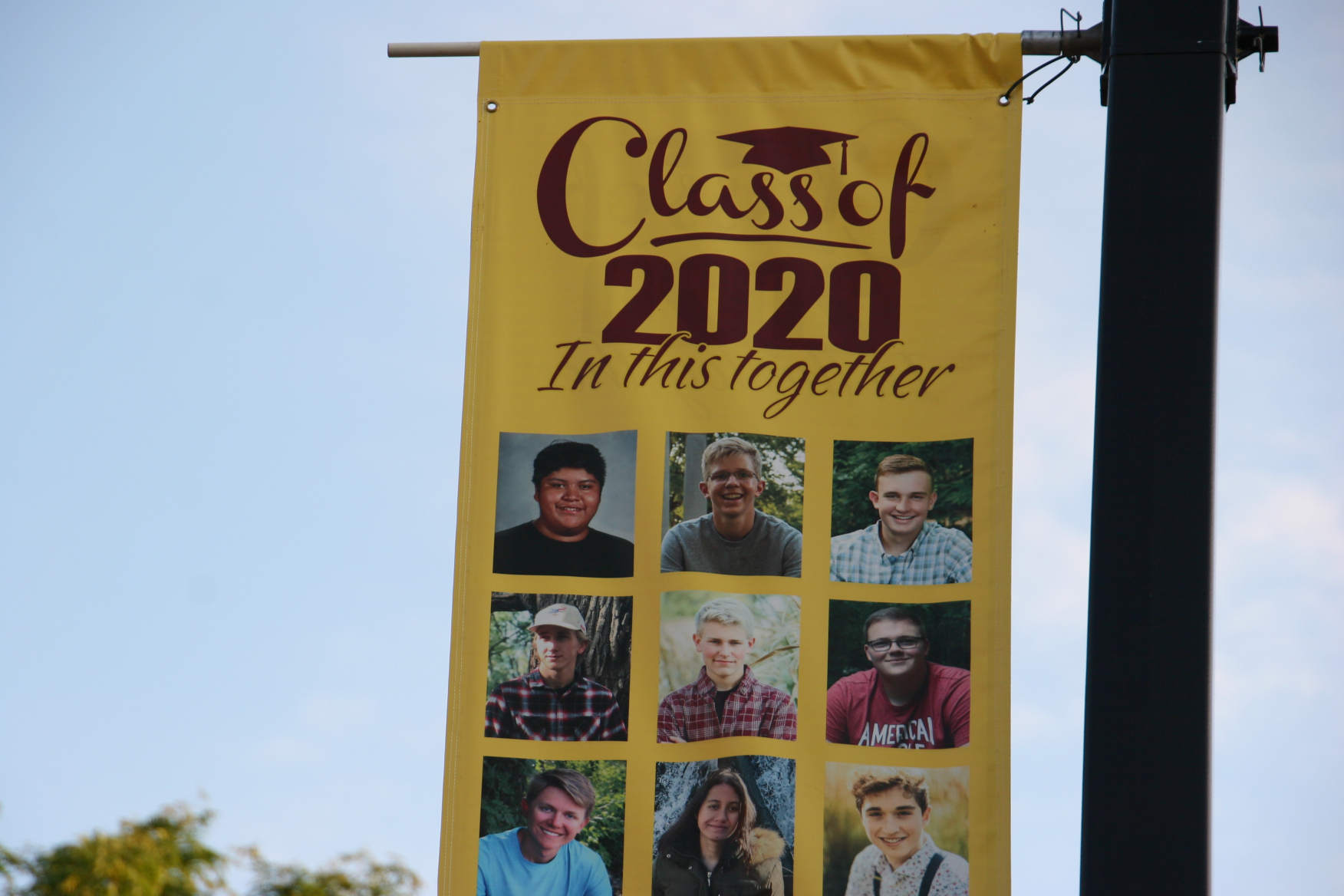
Banners honor the Northfield High School graduates of 2020.


And banners that show each individual matters.


Novelty tees displayed in the front window of the Northfield Historical Society reference the 1876 bank robbery by the James-Younger Gang.


Photographed through the front window of MakeShift Accessories, a handcrafted bracelet.


Temporarily closed because of COVID-19, Antiques of Northfield is one of my favorite stops.


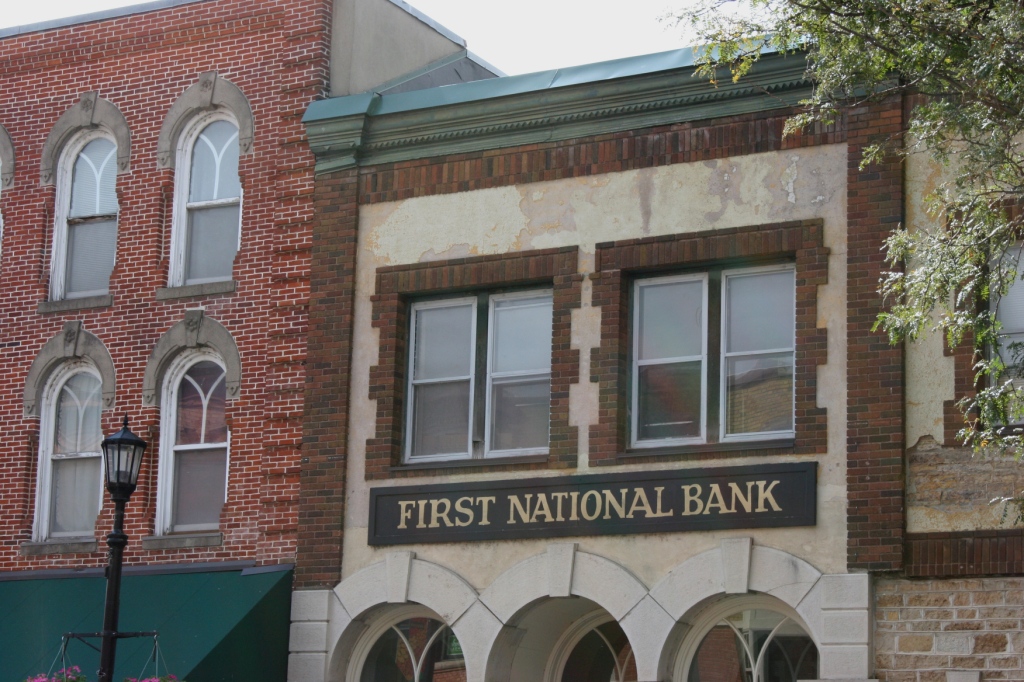
Northfield draws me back, as a writer and a photographer, to notice nuances of place. The rushing water. The home-grown art. The aged buildings in this community where locals, in 1876, defeated the James-Younger Gang during a raid at the First National Bank.


No longer the First National Bank, this historic building houses Merchants Bank. The original First National (site of the bank raid) sits across the street and houses the Northfield Historical Society and Museum.


Northfield is simply one of those towns when, each time I visit, I leave feeling better for having spent time there.

© Copyright 2020 Audrey Kletscher Helbling