Minnesota Prairie Roots

Writing and photography by Audrey Kletscher Helbling

The patriotic traditions of Memorial Day in Minnesota May 31, 2011

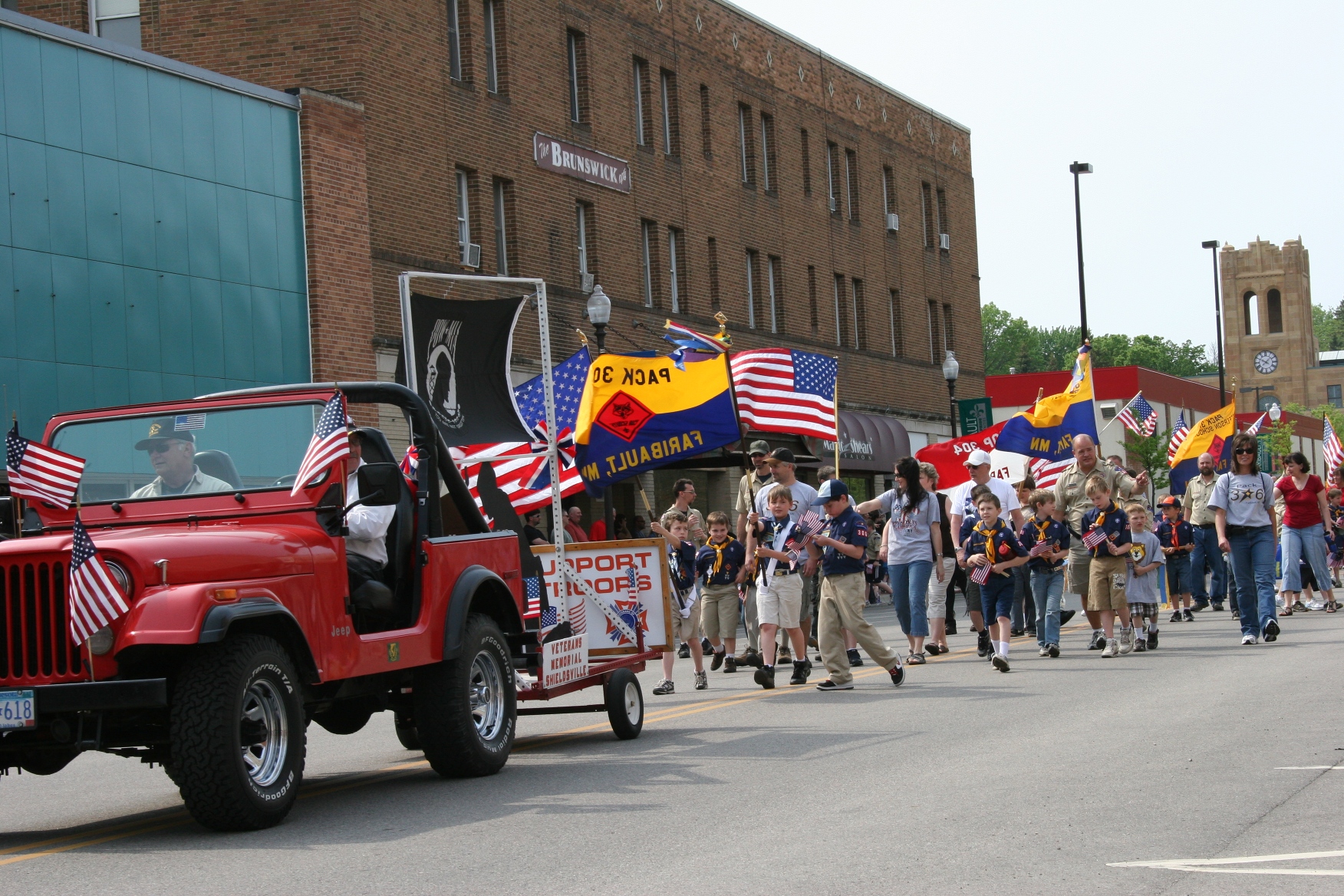
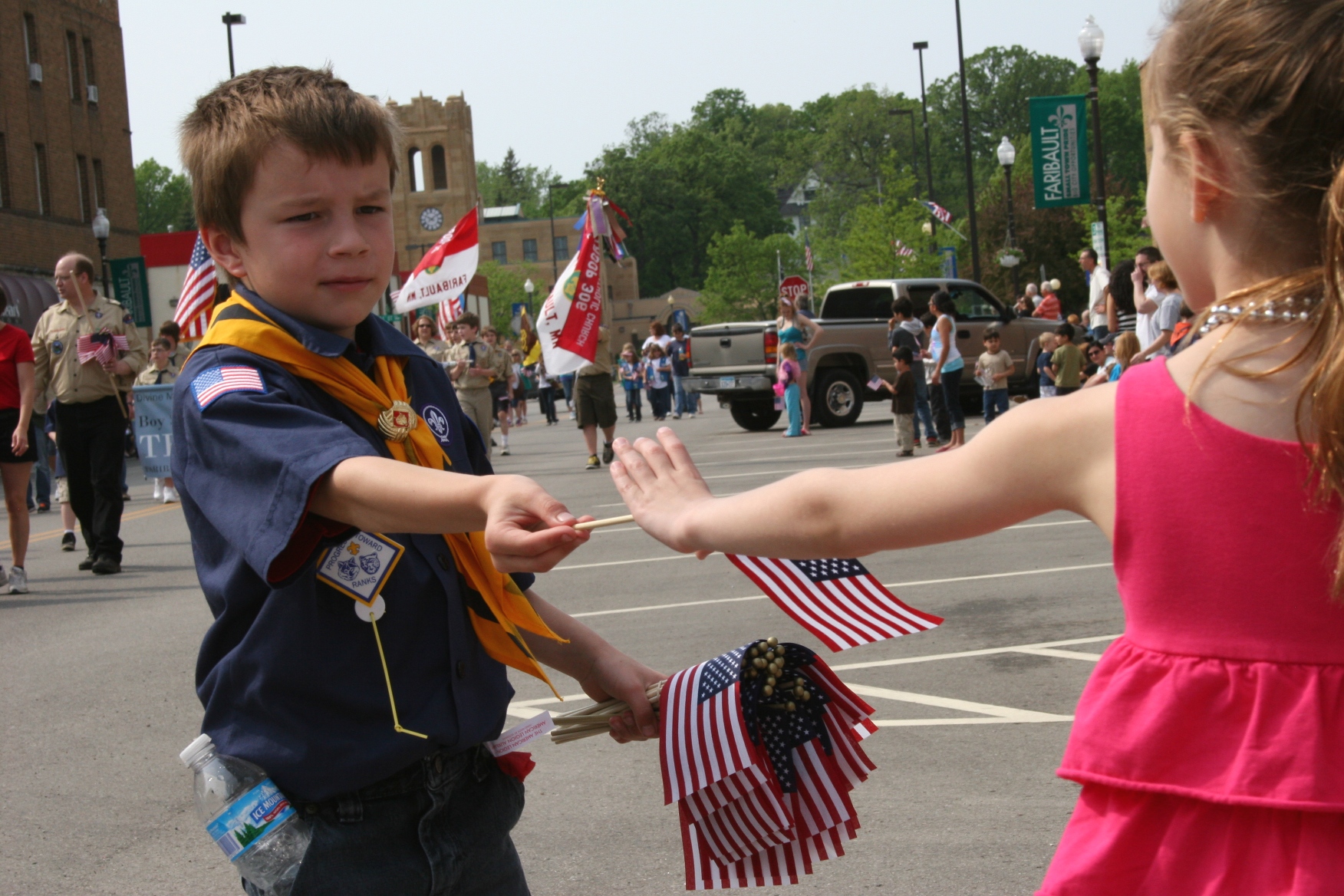
Boy Scouts march down Faribault's Central Avenue, giving away small American flags, on Memorial Day.

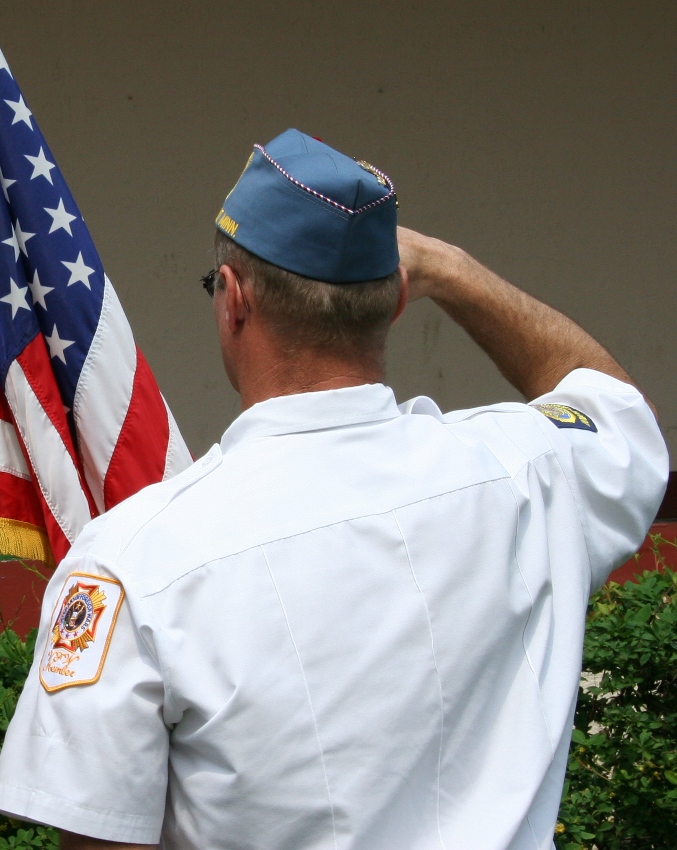
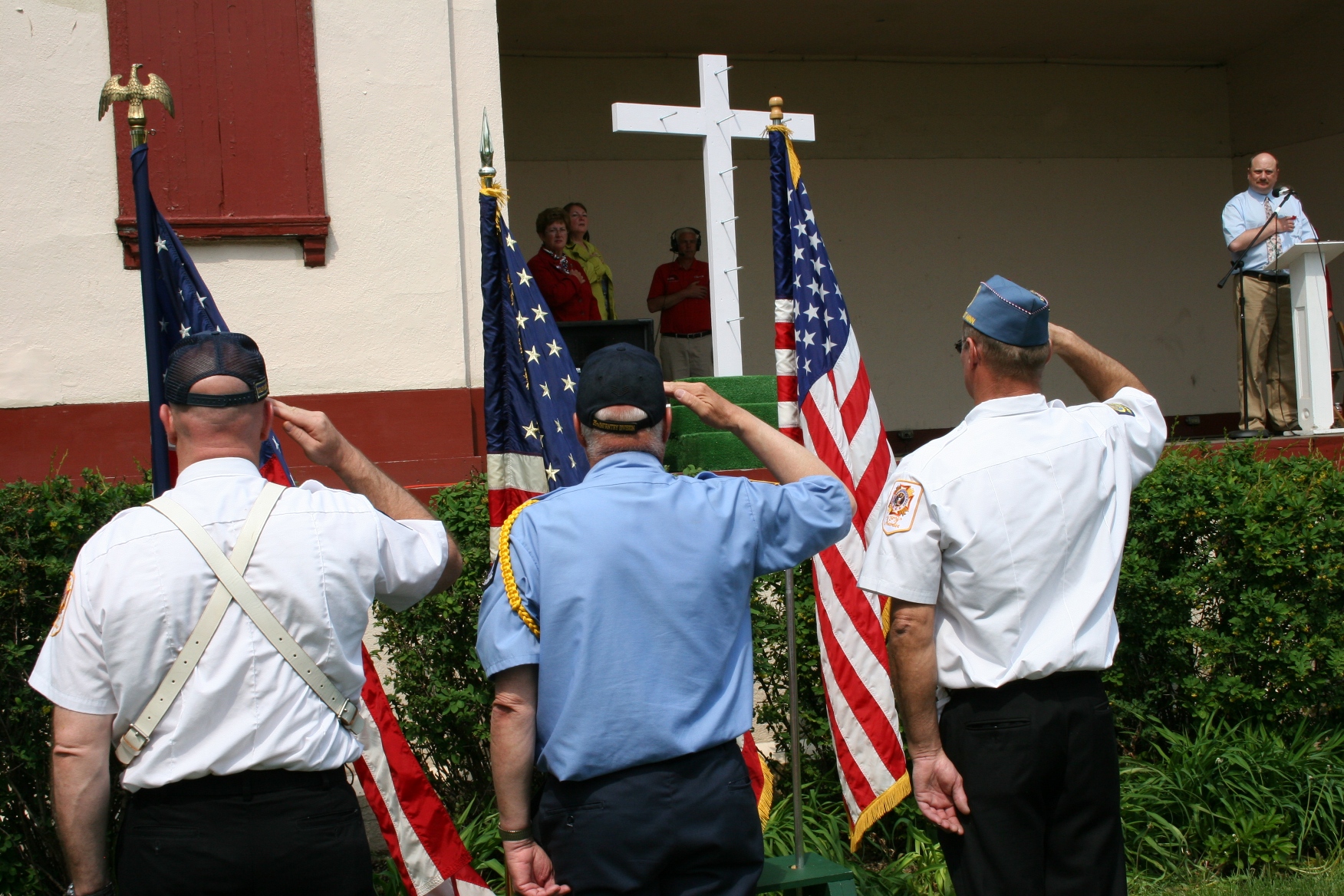
A member of the Color Guard salutes at the Memorial Day program in Central Park.

YES, DEAR READERS, I have yet another Memorial Day post to share with you. But I cannot help myself. My parents reared me to respect this day as a time to honor our war dead.

Every year of my childhood, we attended the Memorial Day program in my hometown of Vesta on the southwestern Minnesota prairie. I continued that tradition with my children by taking them each year to the Memorial Day parade in Faribault.

It is a tradition my husband and I continue, minus the kids—two of whom are grown and gone and the third a teen that cannot be roused from bed for the 10 a.m. parade.

Now I smile at the young families who gather along the curb in downtown Faribault to watch the veterans and Boy Scouts, the old cars and horses, the Girl Scouts and the Shattuck-St. Mary’s crack squad, the police cars and fire truck and marching bands.

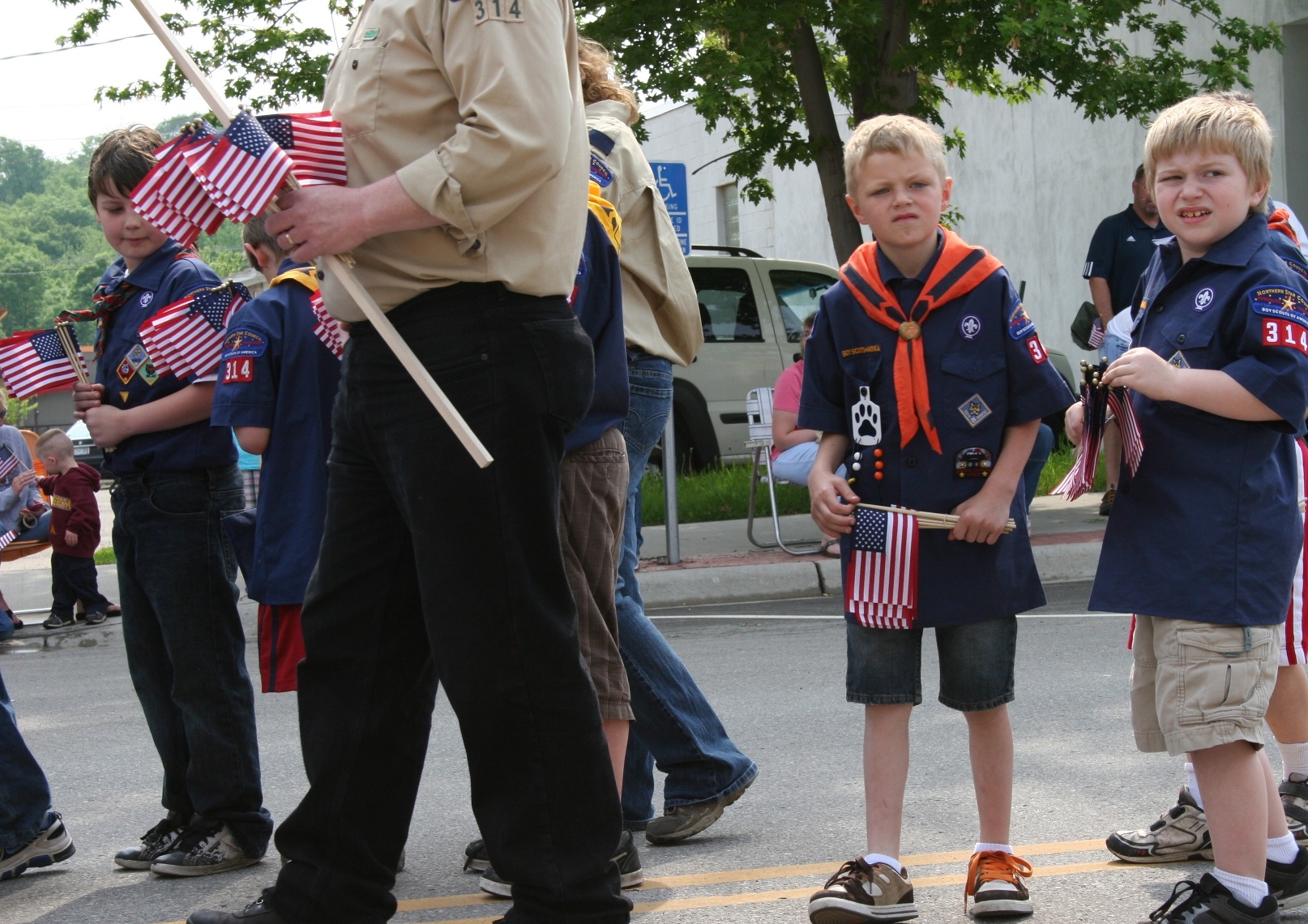
Little hands reach for American flags distributed by the walking, sometimes running, Boy Scouts.

Clutched fists wave American flags.

It’s all so patriotic.

After the parade, the crowd gathers at nearby Central Park for more patriotism and I am reminded of my dad, a Korean War vet, who marched so many times with his Color Guard in parades and programs.

In the park bandshell, the guests of honor sit, rise and tell us they have little to say before offering these words:

“Your wars aren’t all won on the battlefield. They’re also won at home.”

“If you know a veteran, just say, ‘thank you.’ It means so much to them—something Vietnam vets were short of.”

“I salute all veterans here.”

“God bless everybody.”

“God bless America.”

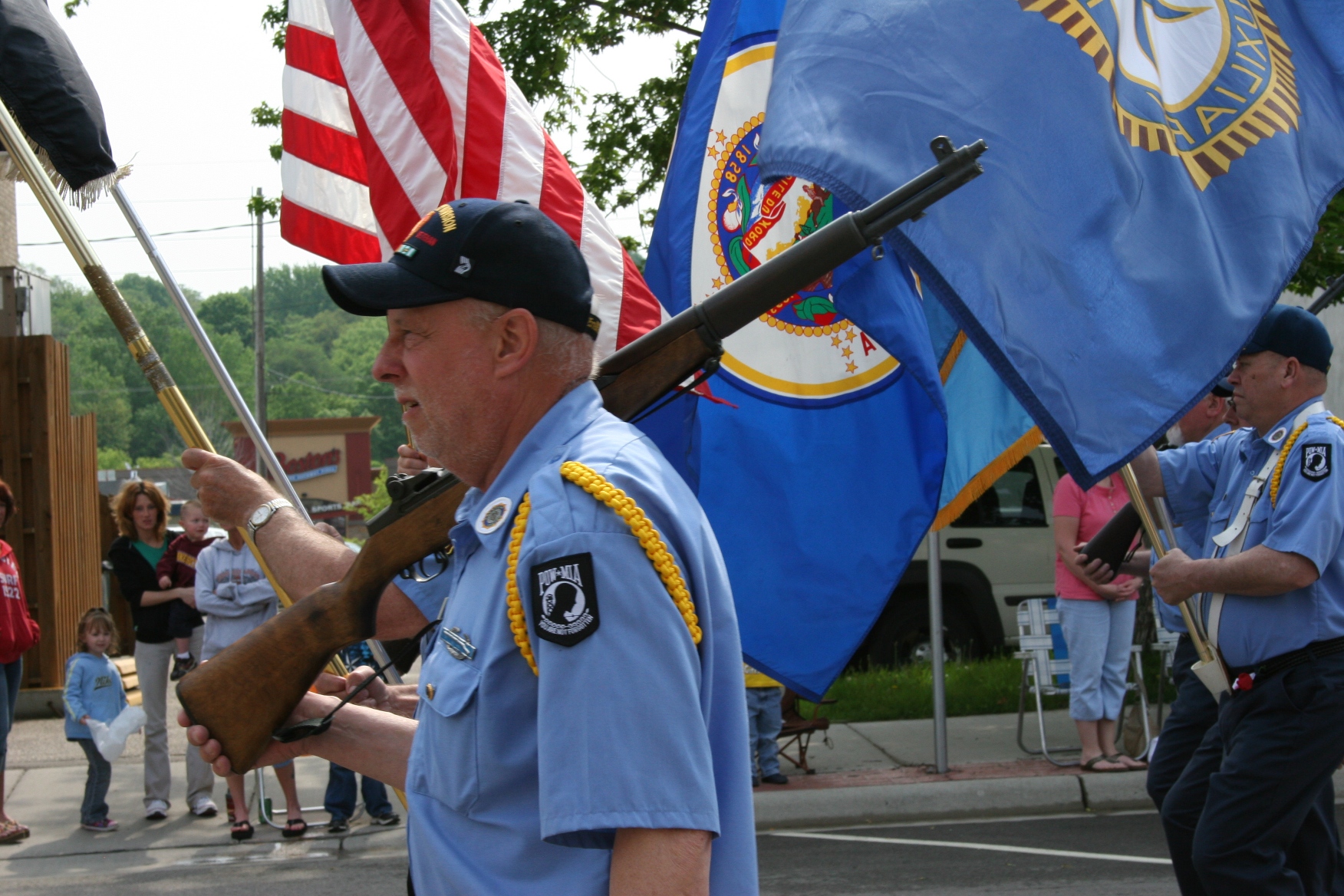
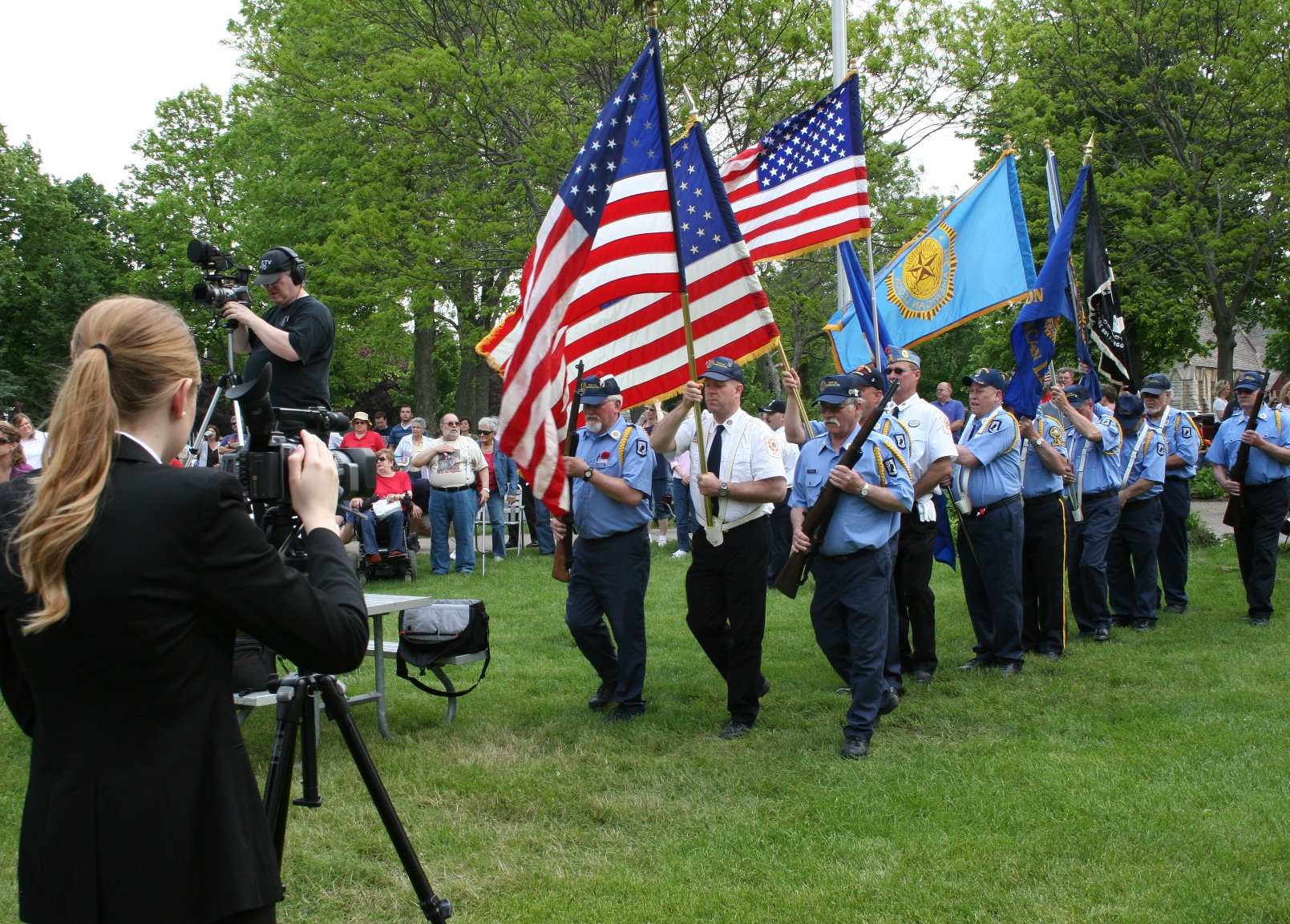
The Color Guard leads the way in the Faribault Memorial Day parade.

These Boy Scouts seem a bit indecisive, while other Boy Scouts race toward the crowd to hand out American flags.

Every year the Boy Scouts give away flags during the parade.

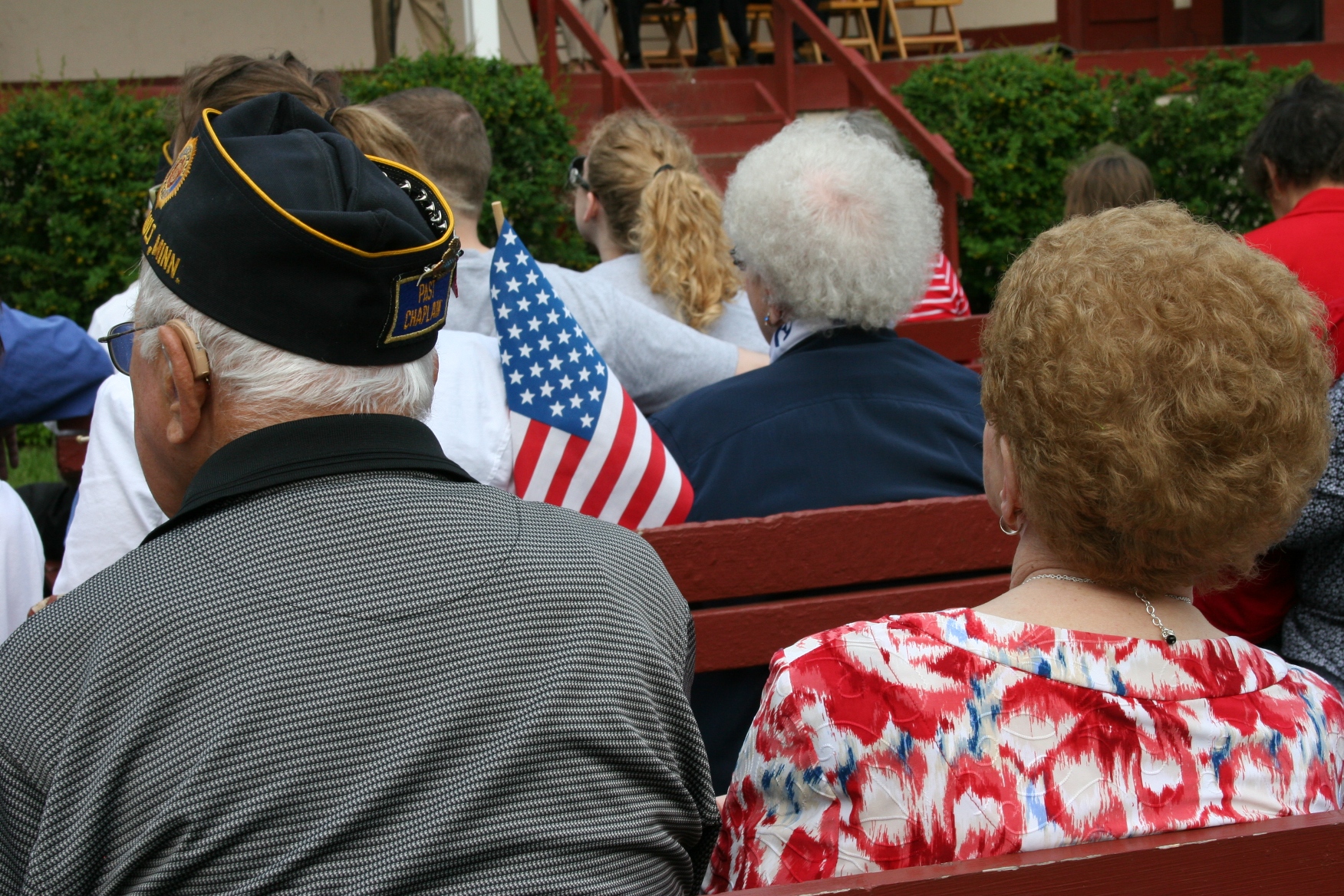
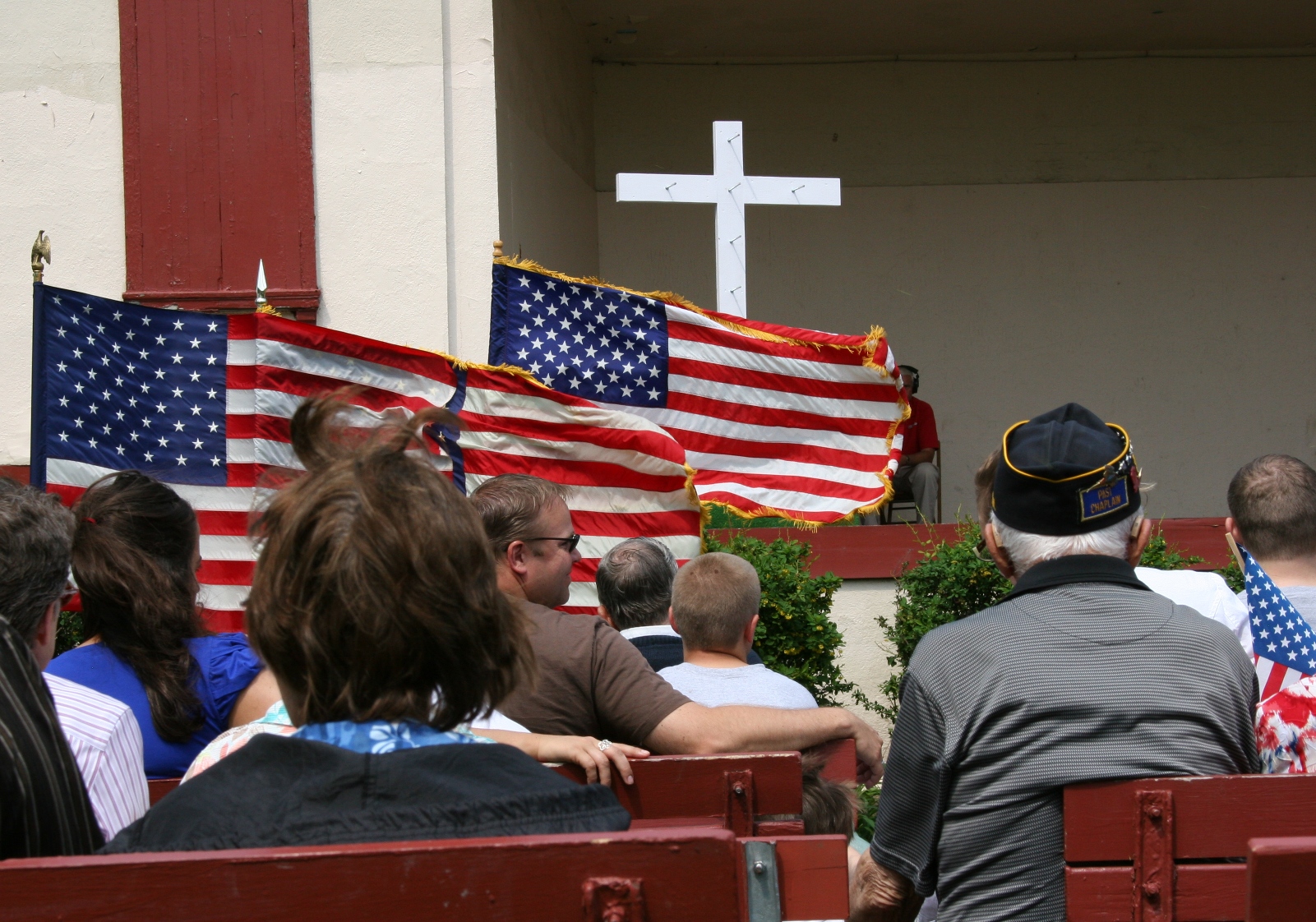
A veteran and others wait for the Memorial Day program to start at Central Park.

The Color Guard advances and the Memorial Day observance begins in Central Park.

The Color Guard soldiers salute. Emcee and radio announcer Gordy Kosfeld, on stage at the podium, will later tell us: "Memorial Day should be a time of reflection, not a holiday."

A strong wind blew the Color Guard flags set next to the bandshell stage at Central Park.

© Copyright 2011 Audrey Kletscher Helbling


Memorial Day at Cannon City May 30, 2011

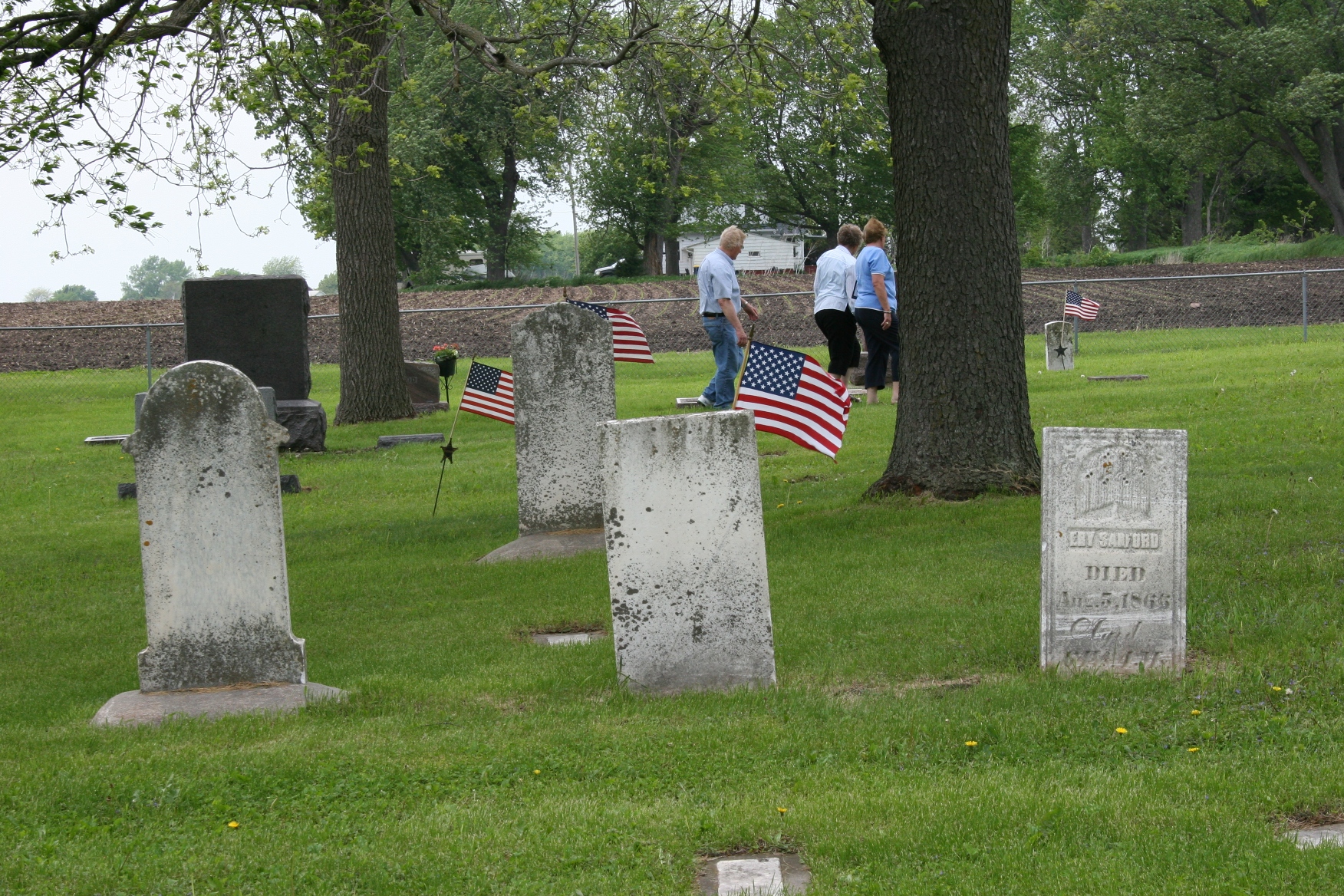
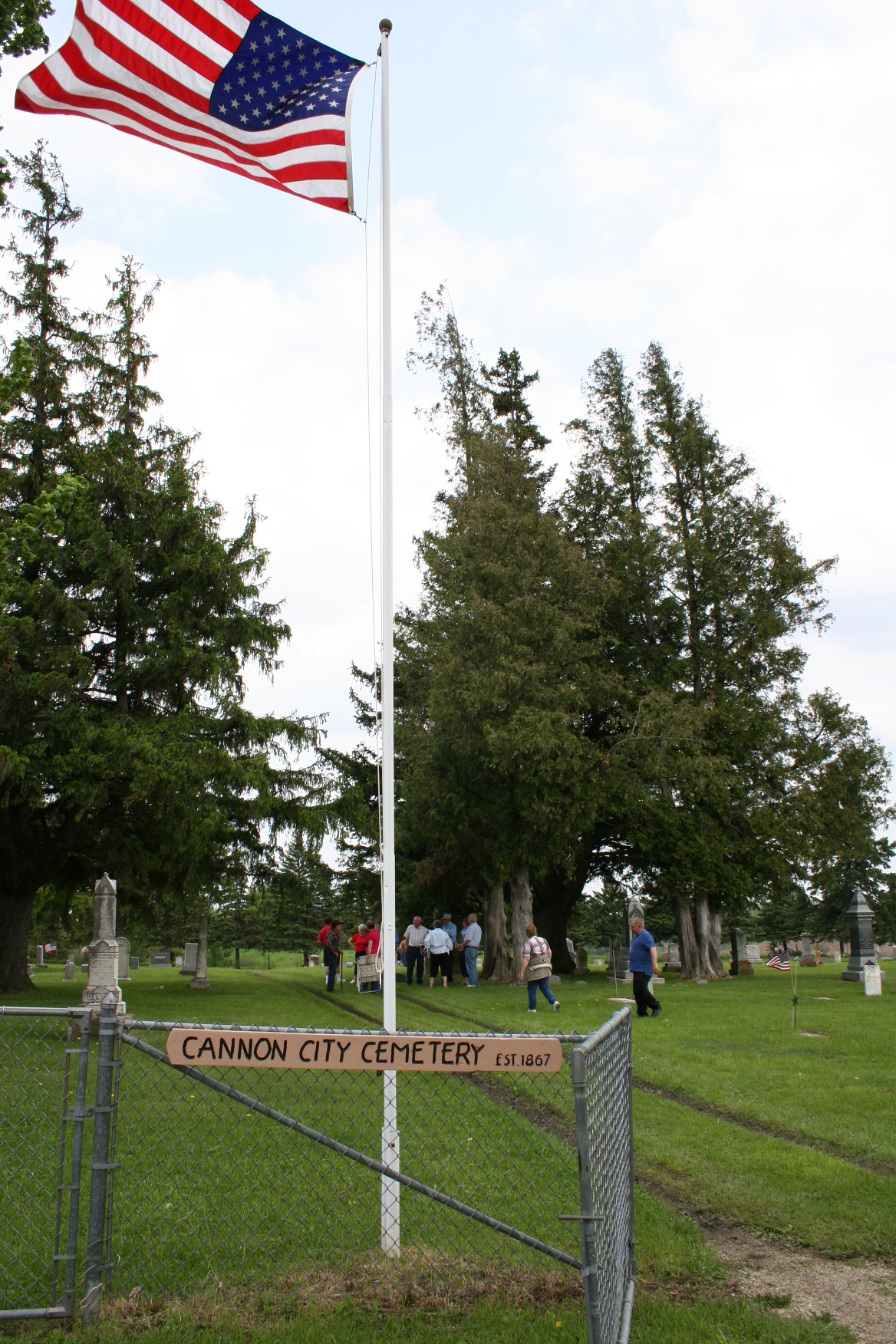
About 30 people gather at the Cannon City Cemetery for an afternoon Memorial Day observance.

IN THE SHELTER of the spruce, of the pines, we formed a semi circle, clustered together in this small country cemetery to honor the veterans buried here, 22 of them from the Civil War.

Ezekiel and Samuel. Spencer and Charles. Henry and Theodore. Emcee Mel Sanborn read the list of names as the wind whipped his words into sometimes inaudible, unintelligible syllables at the Cannon City Cemetery.

Since the late teens or early 1920s, folks have gathered in this Rice County cemetery every Memorial Day, initially called “Decoration Day,” to honor the war dead. Civil War veteran Elijah Walrod was quoted as saying that his son Luther “would strike up the Death March and lead the procession” from the nearby Cannon City School, along the country road to the cemetery.

School children—some of them in attendance at the 2011 Memorial Day observance—once marched with flags and flower bouquets and lilac wreaths and then, afterward, celebrated at the school picnic.

When the school closed in the 1960s, the Cannon City Cemetery Board took over the annual Memorial Day observance, a tradition that continues today, minus the Death March from the country school. It is an unpretentious, informal program that is touching and moving and heartfelt. Americana through and through.

My husband and I came here on this muggy afternoon to experience a small-town Memorial Day observance. We were the strangers among those who had grown up here and had loved ones buried in this ground butted against the rich black soil of farm fields.

Yet, we were welcomed like family and I felt as if I had stepped back in time to the Memorial Day observances of my youth—the days of patriotic songs and playing of taps and reading of “In Flanders Fields.” I mouthed the words silently: “In Flanders Fields the poppies grow between the crosses row on row…” These poetic lines I knew nearly from heart, having recited them as a young girl on the stage of the Vesta Community Hall some 125 miles from this cemetery.

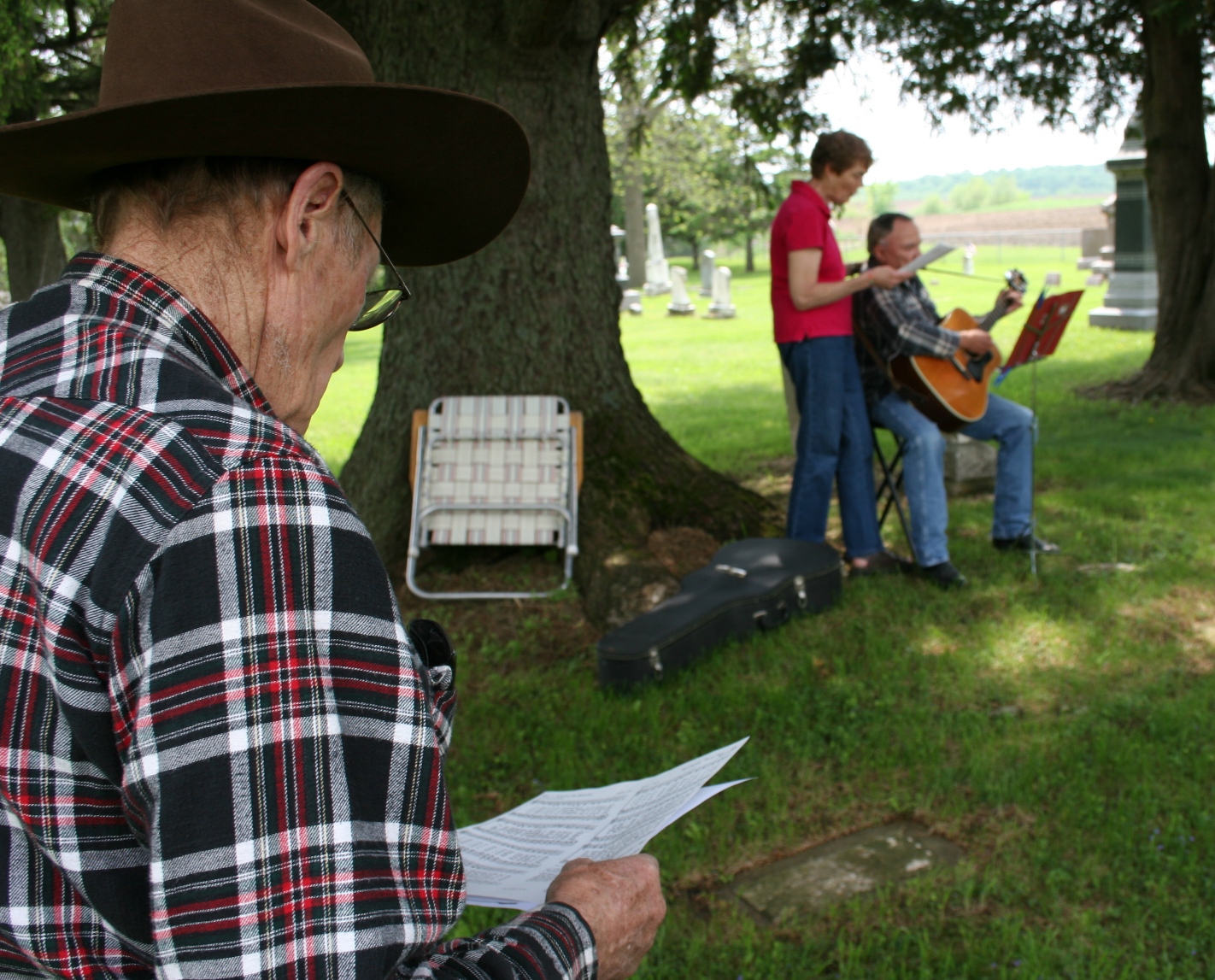
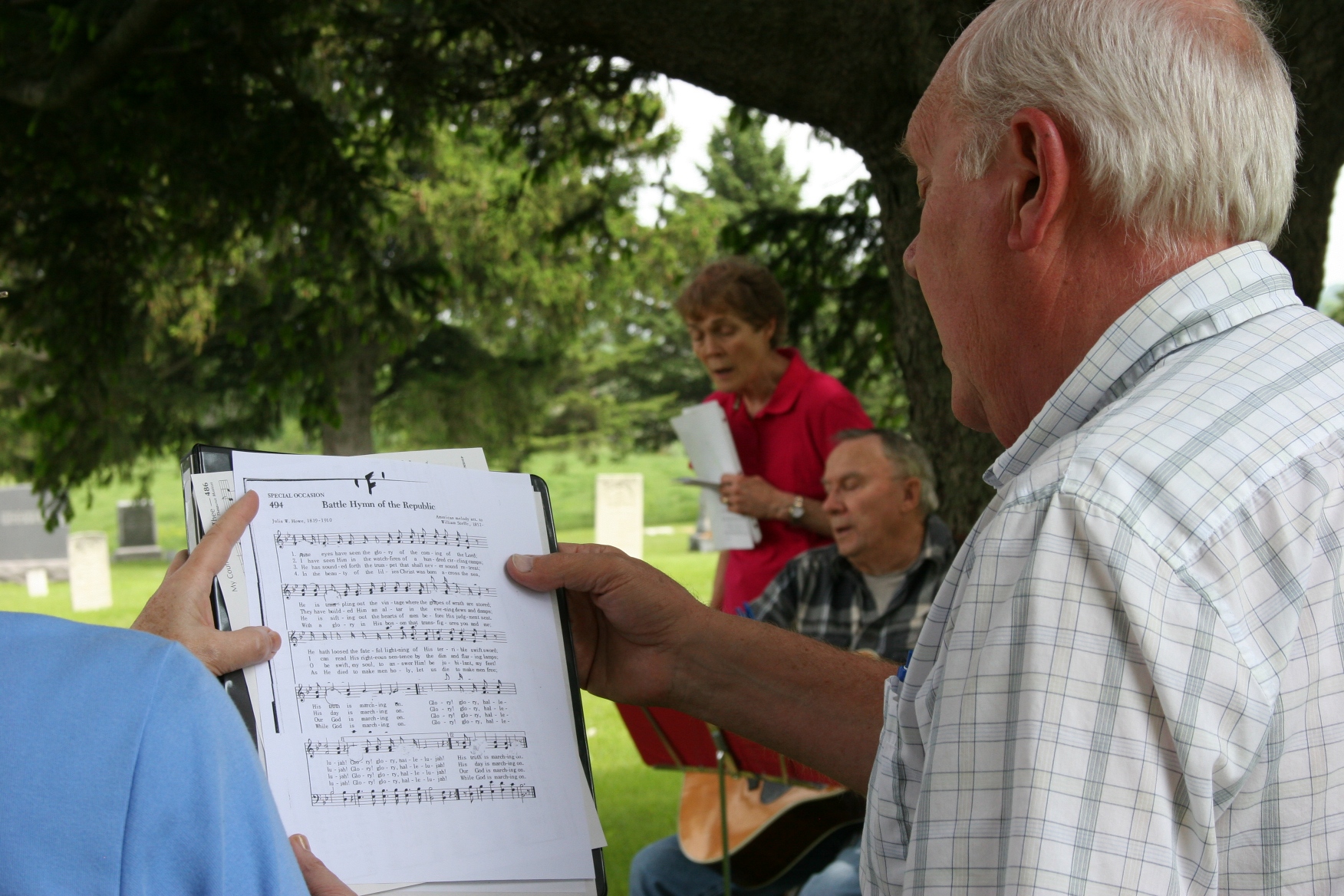
As Don Chester strummed his guitar and clamped his harmonica, we sang “My country, ‘Tis of Thee” “The Battle Hymn of the Republic” and other patriotic songs.

Bob (didn't get his last name) sings as Don and Judy Chester lead the group in song. Bob attended Cannon City School and participated in Memorial Day programs here as a student.

Song sheets were handed out to attendees. Here Mel Sanborn sings "The Battle Hymn of the Republic."

When Steve Bonde blasted “The Star Spangled Banner” on his trumpet, we sang along, turned toward the flag at the cemetery entrance, the brass quelling voices that drifted away with the word-flogging wind.

It mattered not how well or how loudly the 30 or so of us sang. It mattered not that a young girl darted inside the semi circle to pluck a dandelion from the grass. It mattered not that the occasional airplane droned out our voices. We were focused on the songs, “The Gettysburg Address” read by Audrey Sanborn Johnson, and, finally, Bonde’s mournful playing of taps.

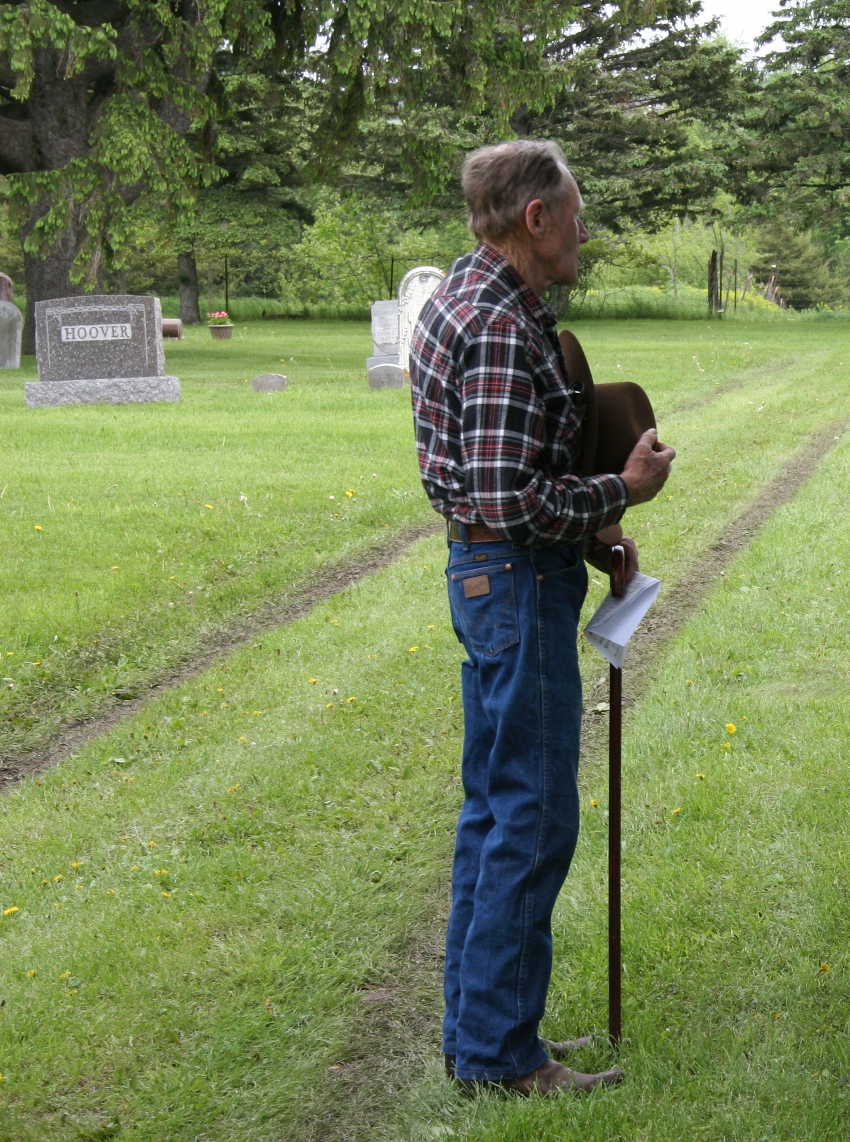
Long-time Cannon City resident Bob respectfully removes his cowboy hat during the playing of taps, a tribute that moves me to tears.

When the final note ended, the small group drifted, scattering across the cemetery to visit the graves of loved ones. I wandered, drawn by American flags to the final resting places of veterans. Names I did not know in an unfamiliar cemetery I was walking for the first time.

After the program, attendees visited gravesites.

Yet, despite the unfamiliarity with this place or these people, I felt connected to them by the reason I was here—to reflect upon the sacrifices made by so many American men and women in defense of our freedom. America. Land of the free and home of the brave.

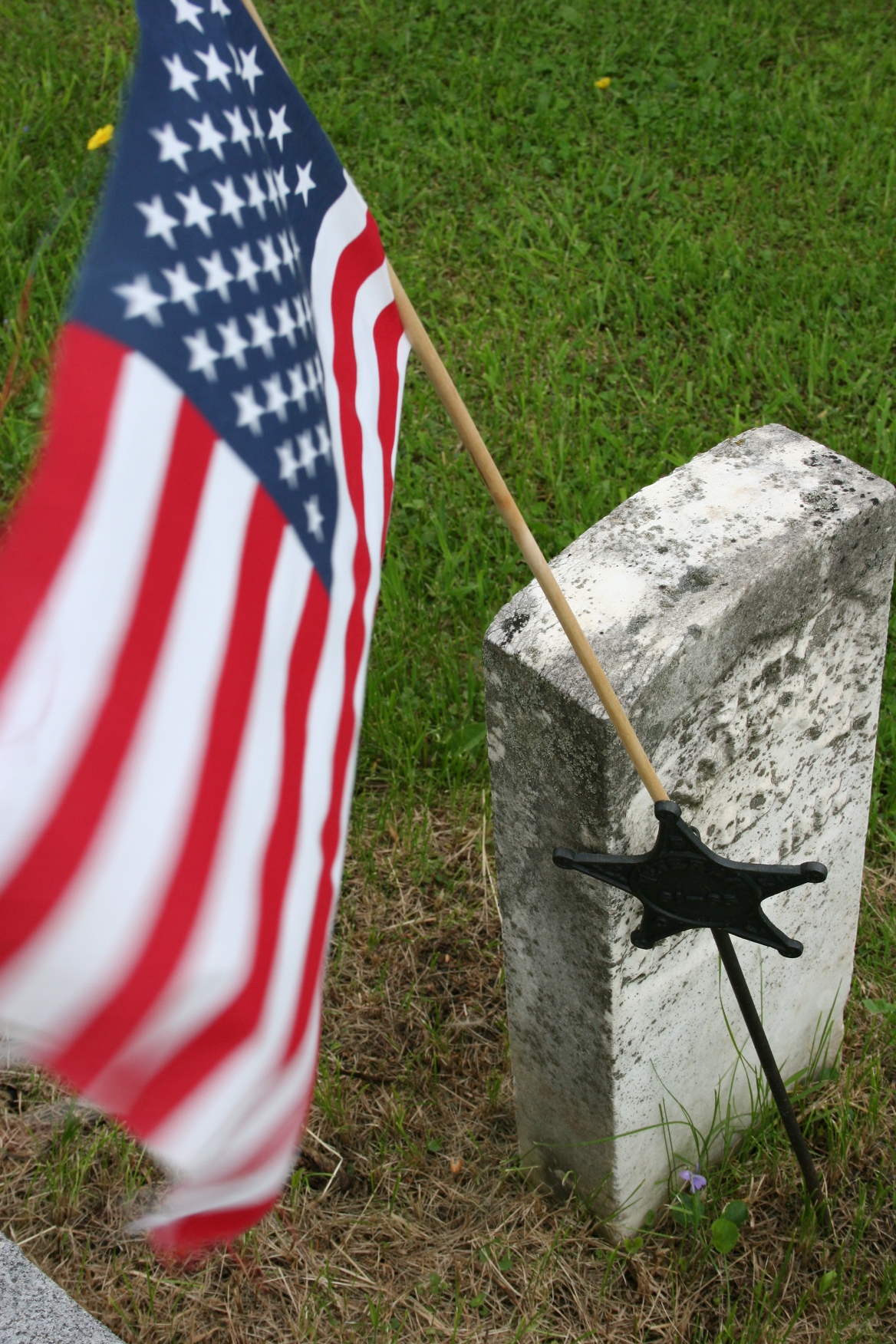
A flag waves in the wind on a soldier's grave.

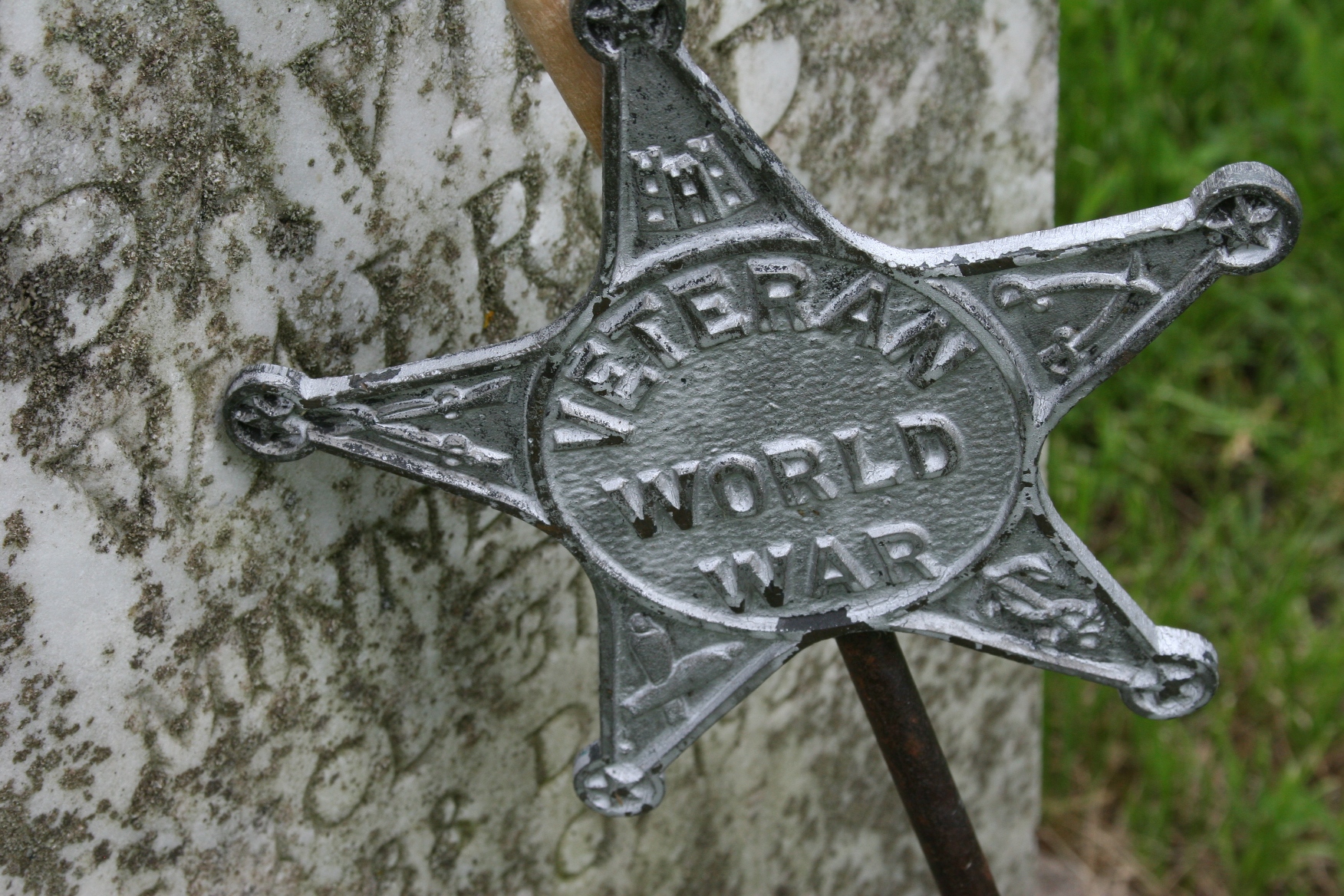
A star marks a veteran's tombstone.

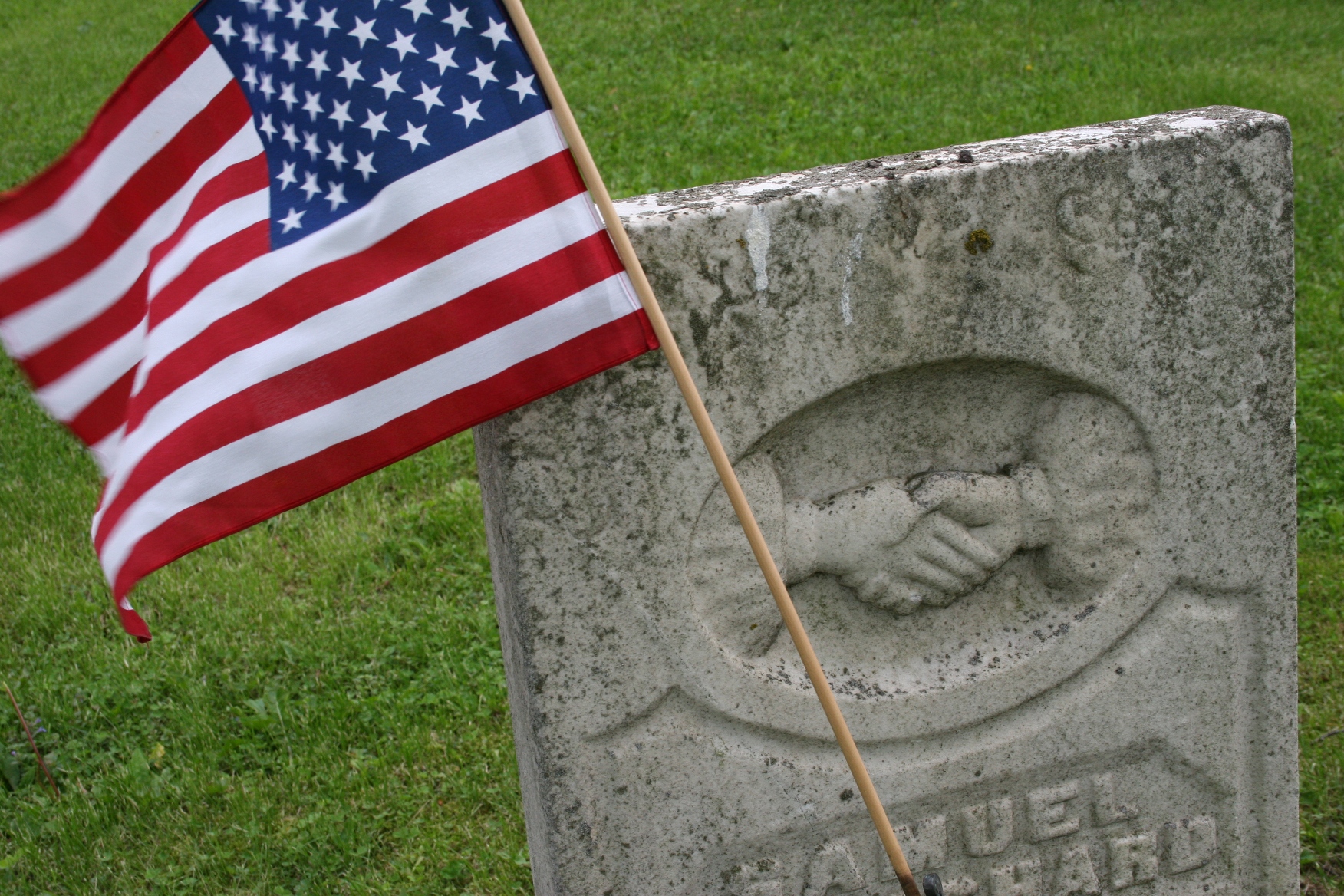
Can anyone explain the symbolism of these clasped hands on a veteran's grave?

A flag marks the entrance to the Cannon City Cemetery.

© Copyright 2011 Audrey Kletscher Helbling


Reflecting on graduation speeches by three generations of Minnesota women May 27, 2011

Wabasso High School, where my niece will give a speech tonight as class valedictorian. My mom and I also graduated from WHS, although the building looks much different than when we graduated in 1951 and 1974.

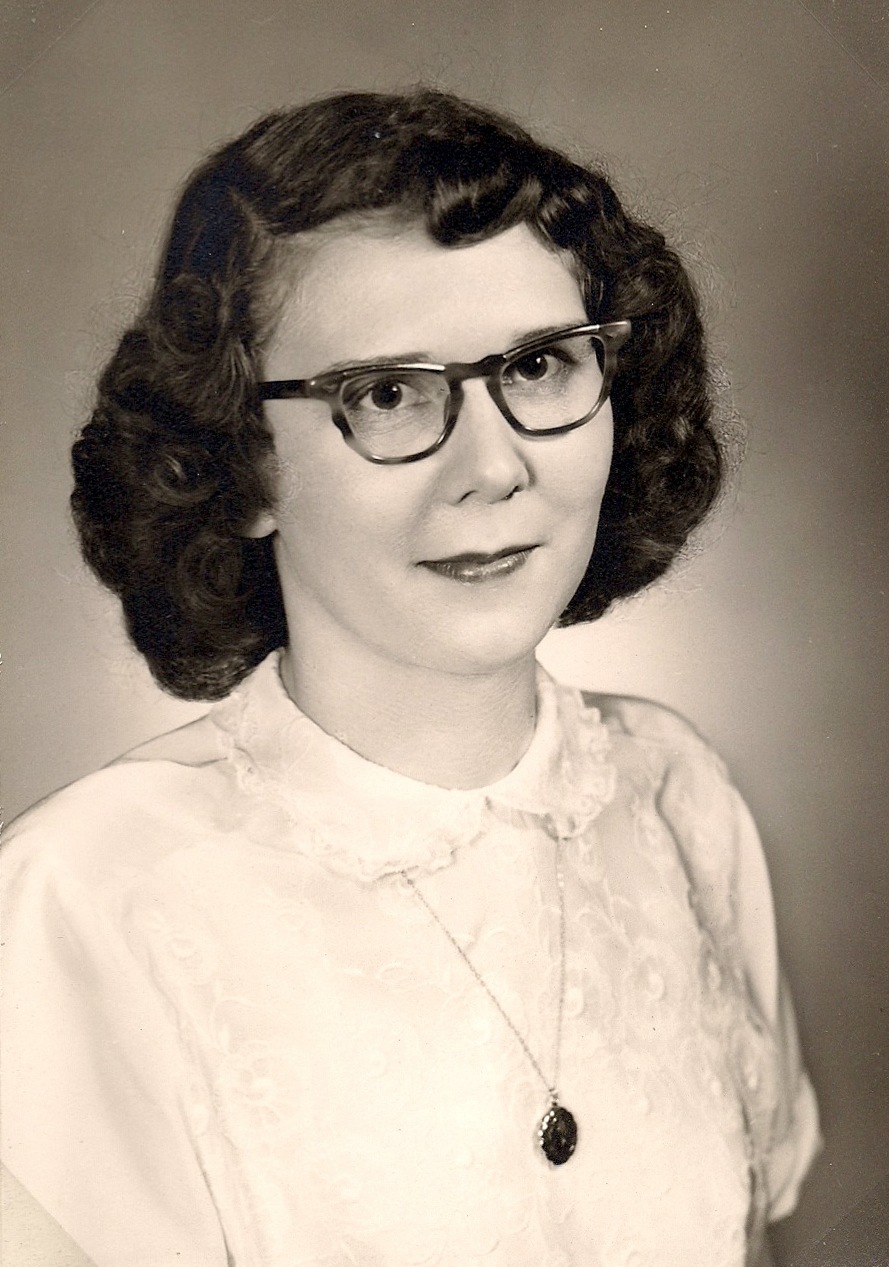
Arlene Bode Kletscher's 1951 graduation portrait.

SIXTY YEARS AGO 18-year-old Arlene Bode stepped onto the stage at Wabasso High School and gave a commencement speech, “Our Part in the Fight Against Communism.”

While that seems an unlikely, unsuitable, topic for an address by the class valedictorian, my mom says you need to remember the time period in which she wrote and gave that speech.

This was 1951, at the height of the Cold War, the era of bomb shelters and fear of the Soviet Union.

My mom espoused patriotism, encouraging her southwestern Minnesota classmates “to be patriotic and vote…so we can keep our freedom,” she recalls. She has a copy of that speech tucked inside her WHS diploma.

She found the speech recently when pulling out her diploma to show her granddaughter, Hillary Kletscher, who graduates tonight, also from Wabasso High.

Hillary, like her 79-year-old grandmother, is the class valedictorian and will speak at commencement. When I texted Hillary early Thursday afternoon, she hadn’t yet titled her speech. But, she said, the “main subject is change and how it’s good but we have to hold onto what we learn from the past.”

I won’t be there to hear my niece’s address. But I intend to ask her for a copy, just like I plan to get a copy of my mom’s speech, which I’ve never seen. These are parts of our family history, words reflecting the time periods in which they were written, words of hope and wisdom and patriotism (at least in my mom’s case).

Hillary will step onto the WHS stage tonight and speak on change, yet remembering the past.

Audrey Kletscher Helbling, 1974 WHS graduate.

That my mom kept her speech through six decades impresses me. I say that specifically because I have no idea where to find the speech I gave at my graduation from Wabasso High School in 1974. It’s packed in a box somewhere in a closet in my home, but I possess neither the time nor energy to dig it out.

I remember only that, as class salutatorian, my farewell address included a poem. What poem and by whom, I do not recall.

In 2006, my daughter Miranda graduated as valedictorian of Faribault High School and gave a commencement speech. Given that occurred only five years ago, I should remember the content. I don’t. I recall only that she held up a test tube to make a point.

I am also making a point here. Thankfully much has changed in the 60 years since my mom spoke on “Our Part in the Fight Against Communism.” While the world today remains in turmoil, at least the intense fear, felt by the Class of 1951 during the Cold War, no longer exists.

We have also moved beyond the turbulent 60s and 70s, a time of rebellion, anti-establishment, and anti-war sentiments and discontent over the Vietnam War experienced by my class, the Class of 1974.

By 2006, when my second daughter graduated, we as a nation were beginning to recover from 9/11, yet we lived in an increasingly security-focused society.

Today my niece graduates in a day of continuing economic uncertainty, when young people are struggling to find jobs and when Baby Boomers like myself worry about our jobs and retirement.

Yet, through it all—the Cold War, Vietnam, September 11 and a challenging economy—we remain four strong women living in a free country where we, individually, spoke freely, representing the classes of 1951, 1974, 2006 and 2011.

© Copyright 2011 Audrey Kletscher Helbling


Thoughts upon the death of Osama bin Laden May 2, 2011

AS I CLIPPED freshly-washed laundry onto the clothesline with 35-degree temperatures nipping my fingers under a heavy sky this morning, I contemplated what I would write here about Osama bin Laden. I could not not write something.

But what could I, an average American in a mid-sized Minnesota community, write about the death of this al-Qaida leader, this terrorist, this murderer, this most-wanted fugitive, one of the most-hated men in the world?

What profound words could I pull together that would express my gratitude to the U.S. intelligence community and military?

What could I say to those who lost loved ones in the bombings of two U.S. embassies in Africa in 1998, in the attack on the USS Cole in 2000, during the September 11, 2001, terrorist attacks?

I could write nothing that hasn’t been spoken, written or thought.

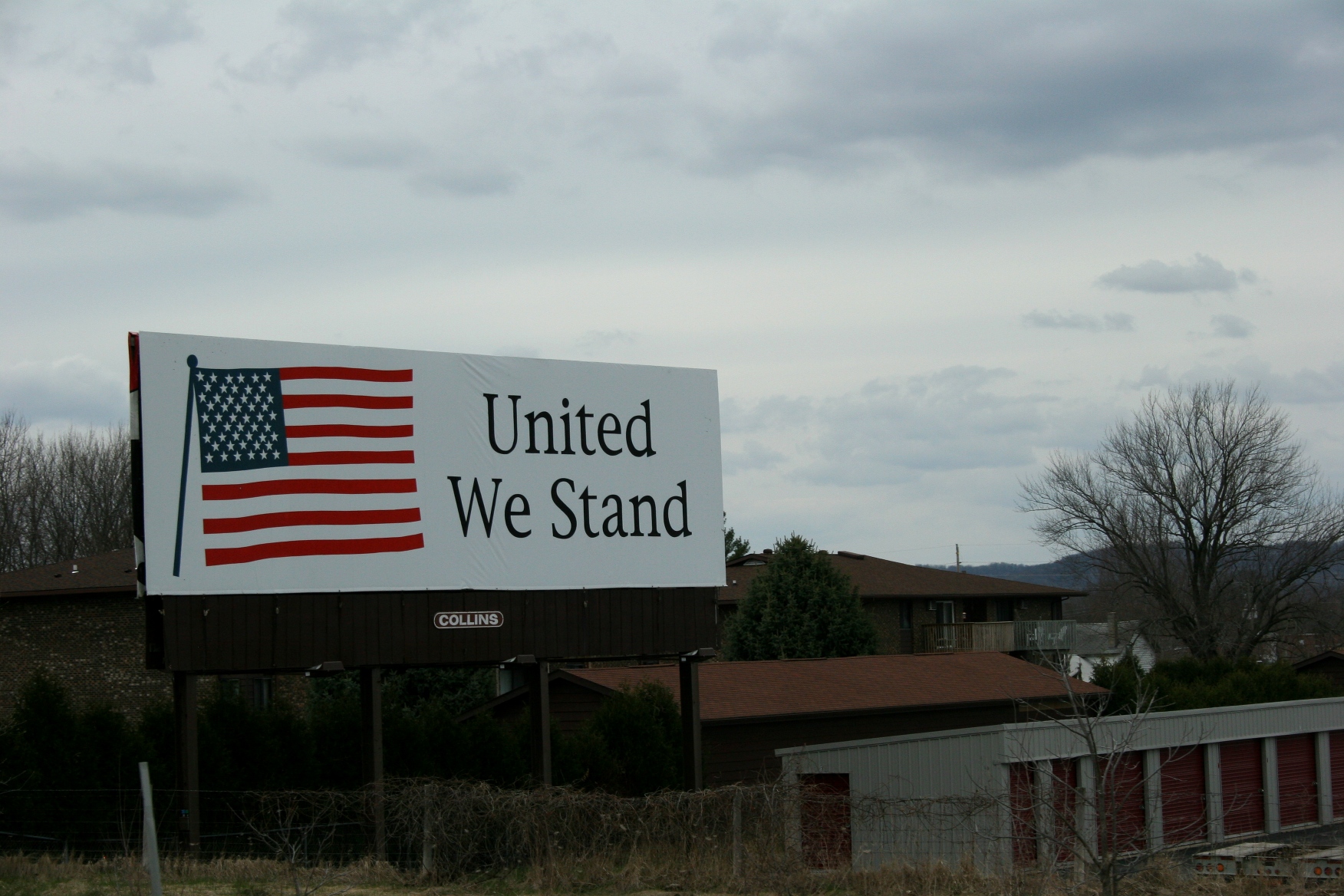
And then I remembered a photo I took about a week ago of a billboard while traveling along Interstate 90 east of La Crosse, Wisconsin. I have no idea who posted the patriotic message.

But today, for me, this image summarizes how I feel as an American, as my country, the United States of America, stands, united and free.

© Copyright 2011 Audrey Kletscher Helbling


Reflections from Iraq, and America, on the Fourth of July July 3, 2010

Filed under: Uncategorized — Audrey Kletscher Helbling @ 8:54 PM
Tags: , , , ,

WHEN YOU’RE GATHERED with family or friends at a Fourth of July barbecue, just kicking back at home with a beer or taking in a fireworks display, I want you to think of guys like my brother-in-law Neil. He’s on his second tour of duty in Iraq, serving with the United States Air Force.

Back here in the States, unless you’re a veteran or an immediate family member of a military man or woman, it’s all too easy to take this day—and freedom—for granted.

Take me. I’ve been more concerned about the potatoes I’m bringing to my sister’s picnic than considering how I might show my patriotism. And then, just this morning as I thought about the Fourth and its meaning, I couldn’t remember the words to The Star Spangled Banner. Repeatedly in my head, I sang, like a stuck record, “Oh, say can you see, by the dawn’s early light.” Shame on me for forgetting the words to our national anthem.

It’s not that I don’t care about freedom and independence and patriotism. But because I’ve always been free, I likely don’t care with the depth that I should.

To those like Neil, stationed at Joint Base Balad, the central logistical hub for American forces in Iraq, the Fourth seems more meaningful. (I’ve e-mailed asking him to share his thoughts on patriotism.) “I think that the military folks have a better appreciation for our freedoms than most Americans as we’ve faced the possibility of laying down our lives for it,” Neil says.

And then he includes some information that surprises me, even though it really shouldn’t given he’s now living in a war zone. He sends me photos of the base and tells me about the mortar-mitigating roofs that cover sections of the Air Force Theater Hospital (he’s a lab manager), the gym, the dining facilities and the theater.

Whoa, wait a minute. I never really thought much about mortars hitting his base, which lies near the center of Iraq about 40 miles north of Baghdad. But why wouldn’t the Iraqis target this key military base with some 24,000 residents?

Neil writes: “You’re probably wondering, do we get a lot of attacks from outside the fence? They used to be quite frequent. These days, only occasionally. Most of the mortars fall harmlessly near the fence line, because the enemy (wisely) doesn’t want to get too close to our defenses. They seldom fall anywhere near the housing areas. I do not know of anyone getting wounded by a mortar attack when I was here last time, and so far, it hasn’t happened yet since I arrived here this time. When an attack comes, there’s usually a warning that goes off so that you have at least a few seconds to react appropriately.”

OK, then. I naively thought that since Neil isn’t on a truck convoy or a foot soldier, he is safe. But as the daughter of a Korean War veteran, I should know better. Whenever you’re in a war-torn country, you’re always in danger.

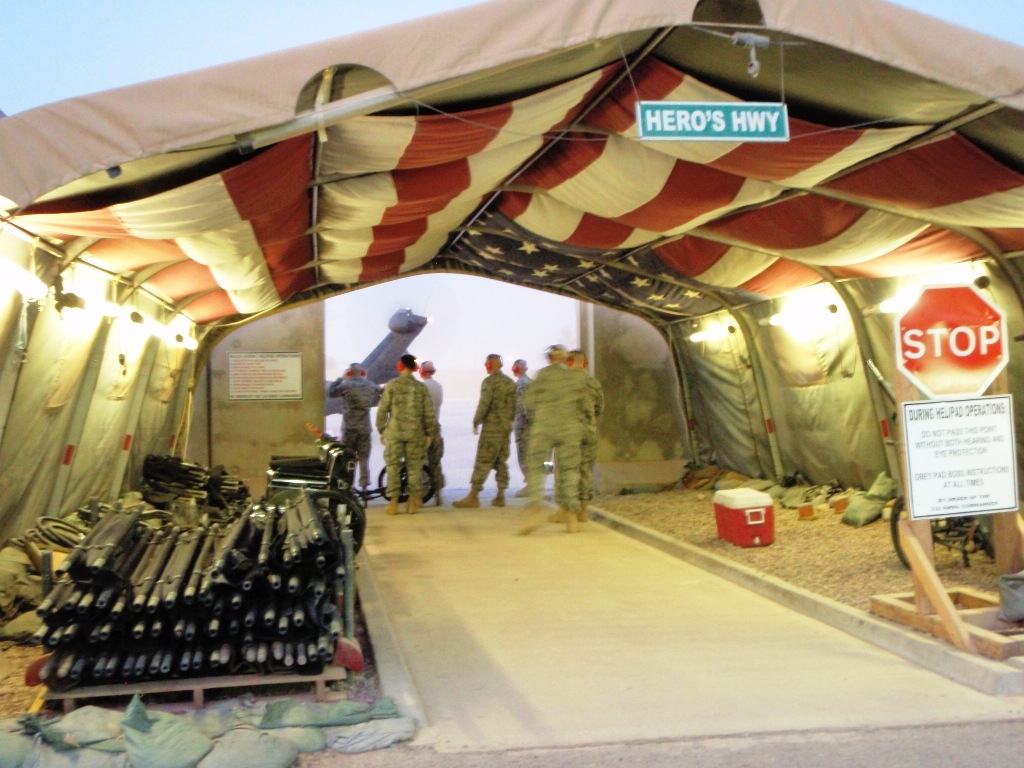
Of all the photos and information Neil e-mails, I am especially moved by the images of Hero’s Highway. The highway is not really a roadway, but rather a tented structure through which wounded soldiers enter the Air Force Theater Hospital trauma bay. A huge American flag forms the “ceiling” of this tent. You can only imagine the psychological impact this has upon those arriving here.
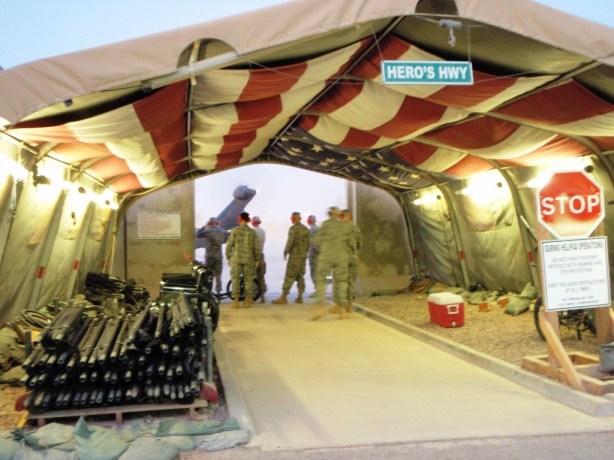
A large American flag decorates the tent structure, known as Hero's Highway, at Joint Base Balad, Iraq.

“The flag allows the patients to know that they’ve arrived at a US hospital,” my brother-in-law writes. “We have a record of saving lives – 98% of the patients who have arrived here alive have also left here alive. A statistic like that provides reassurance to those that are out on the battlefield.” Indeed.

Wanting to lighten the mood a bit, I ask Neil how he’ll celebrate the Fourth. Mostly he will work, pulling the 7 p.m. to 7 a.m. shift. But he’ll also have barbequed ribs and chicken. The USO is putting on a concert featuring Uncle Kracker. There’s a 5K run, which is part of every holiday at the base.

Finally, my brother-in-law wanted to assure I didn’t overlook the sacrifices made by those back home—like the spouses fulfilling duo parenting roles, the kids without a parent. I knew he was missing his wife, Jamie, and their son, Christian.

“Even after the deployment, the families often have to deal with a lot of aftermath, as you yourself can attest to,” Neil explains. (He’s referring to the challenges my dad faced upon returning from Korea and how that affected my immediate family.) “In many ways, they’re the unsung heroes in all of this.”

Yes, Neil gives us much to ponder.

And tomorrow, as we celebrate our freedom, consider these words from my brother-in-law, written shortly after he arrived in Balad: “Every time I travel outside our borders, I gain a renewed appreciation for just how wonderful life is in the US! With the exception of Canada, I haven’t been anywhere where the living standards are so good. The things we take for granted are not available to people in other nations. Living in the US is like living in paradise! It’s no wonder so many people in the world want to live there! Well, enough of that… I’m feeling a bit more passionate than usual about my homeland right now since I’m not there.”

Did you notice all of the exclamation marks in Neil’s e-mail? I did.

Text © Copyright 2010 Audrey Kletscher Helbling

Photo e-mailed by my brother-in-law Neil as sourced from a shared drive at his military base.


American pride shines at the Stars & Stripes Garage in small-town Minnesota July 2, 2010

Filed under: Uncategorized — Audrey Kletscher Helbling @ 7:08 AM
Tags: , , , , ,

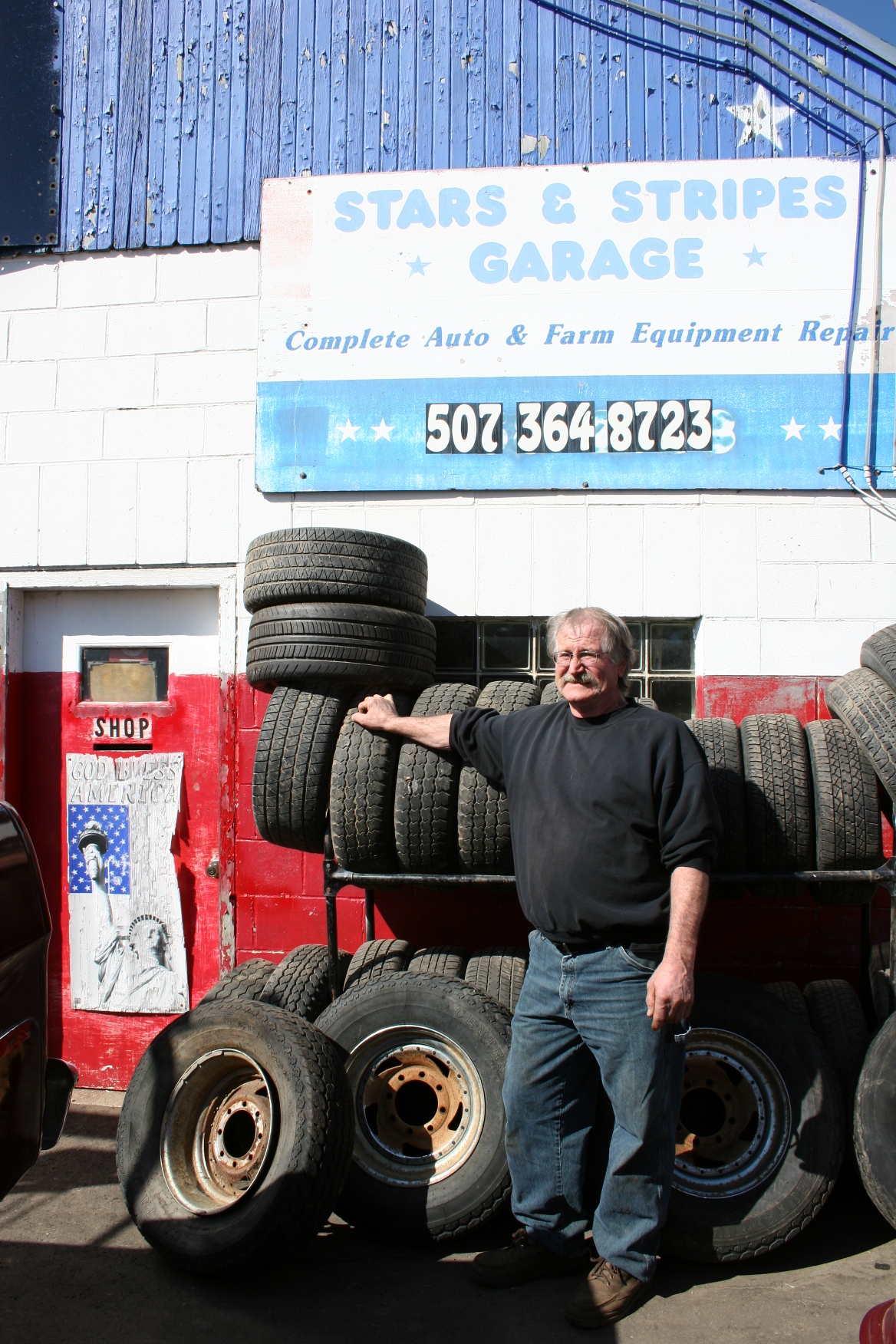
YOU DON’T RUN ACROSS MEN like Joel and Louie Kukacka every day. These guys—father and son—are darned proud to be Americans, proud enough to publicly parade their patriotism.

Drive through the tiny Le Sueur County burg of Heidelberg and you’ll find a smattering of houses, St. Scholastica Catholic Church and a bar. And next to that bar, you can’t miss the Stars & Stripes Garage owned by Joel Kukacka.

Painted red, white and blue and adorned with stars and a front-and-center American flag from the Harvestore silo company, this garage shouts American pride.

There’s nothing artificial about this outward display of patriotism. Joel and Louie really are as true-blue patriotic American as they come.

Several months ago I met the pair while working on a magazine feature article. They immediately impress me as men who possess a strong, independent spirit. If the word “redneck” didn’t have such negative connotations, I might even label them as such. Or I may even tag them as “mavericks,” but then I’ve got that whole Sarah Palin connection going and I’m not sure they would appreciate the tie.

So let’s just call Joel and Louie independent and patriotic small-town American businessmen.

Joel Kukacka outside his Stars & Stripes Garage in tiny Heidelberg.

Joel, who is 59 and a Vietnam War era veteran (he served in Germany and not Nam) opened his auto and farm equipment repair shop in 1980. The “Stars & Stripes” moniker seems a good fit given his military service, his affinity for eagles (including the $18 eagle tattoo he got in Germany) and his preference for American-made products.

As Louie, 33, tells it, for awhile his dad refused to buy anything that wasn’t made in the U.S.A. You simply have to admire someone with that level of American loyalty. But, Louie concedes, eventually Joel had no choice but to buy foreign-made goods.

Get Louie going, and his feisty attitude emerges. It’s clear to me that Joel, who is pretty quiet, has raised a strong boy not afraid to speak his mind. About those eagles his dad loves, well, “they represent independence and freedom, what this country used to be,” the younger Kukacka says.

Not wanting to get into a heated political discussion, I don’t ask Louie to expand on “what this country used to be,” although I’m certain he would give me an earful about government programs and subsidies and a whole list of other issues.

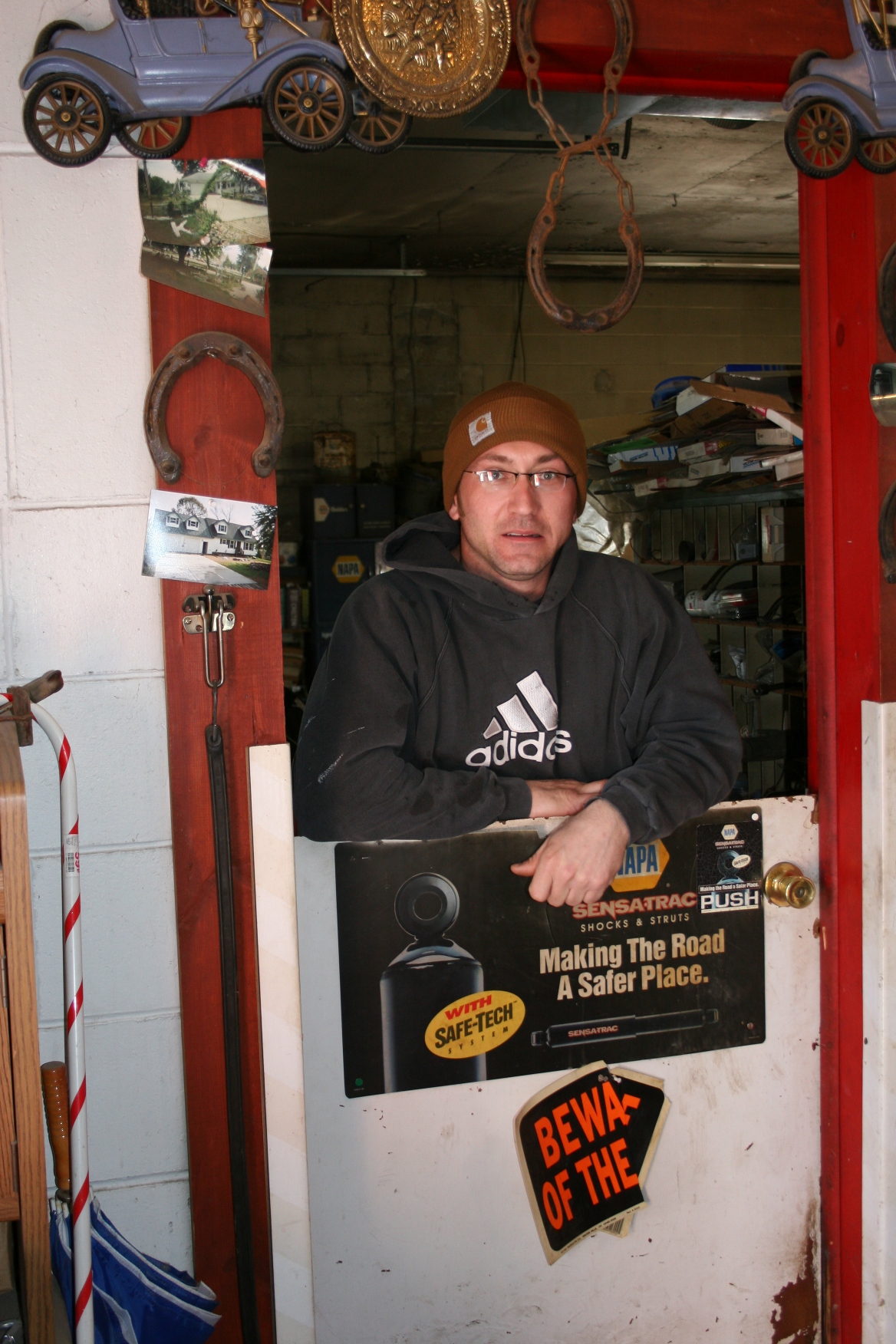
Louie Kukacka, leaning on the half-door between the garage bay and the office, speaks his mind about America and independent businessmen.

“He’s somebody that takes pride in their work,” Louie says of his dad. “That’s America, what we’re here for.”

Louie praises the independent businessmen (versus the big companies) who work long, hard hours to make a living. Joel and Louie openly admit, though, that surviving in rural Minnesota, and in the current depressed economy, isn’t always easy. During slow times, they supplement their income by collecting and selling scrap metal. These are, indeed, self-sustaining men who don’t mind getting a little dirt under their fingernails.

I admire their entrepreneurial spirits and their positive attitudes. They seem entirely content to live and work in Heidelberg, which, according to the 2000 U.S. census, has a population of only 72. Most Minnesotans likely never have driven through this off-the-beaten path town. But anyone who has traveled this section of Le Sueur County Road 30 will remember that patriotically-painted garage.

Louie is especially proud that his nearly 3–year-old daughter, Brigid, spends time in the garage and is already learning to work a wrench, getting covered head-to-toe, he says, in garage grime.

Already, I can imagine Brigid as a strong, independent woman, influenced by her outspoken father and by her Vietnam War era grandfather—a man who loves eagles, displays a photo of former Minnesota Governor Jesse Venture in his office and operates the red, white and blue Stars & Stripes Garage in the American burg with the German name.

© Copyright 2010 Audrey Kletscher Helbling