Minnesota Prairie Roots

Writing and photography by Audrey Kletscher Helbling
Discovering historic & vibrant downtown Fargo November 12, 2012

Filed under: Uncategorized — Audrey Kletscher Helbling @ 8:29 AM
Tags: , , , , , , , ,

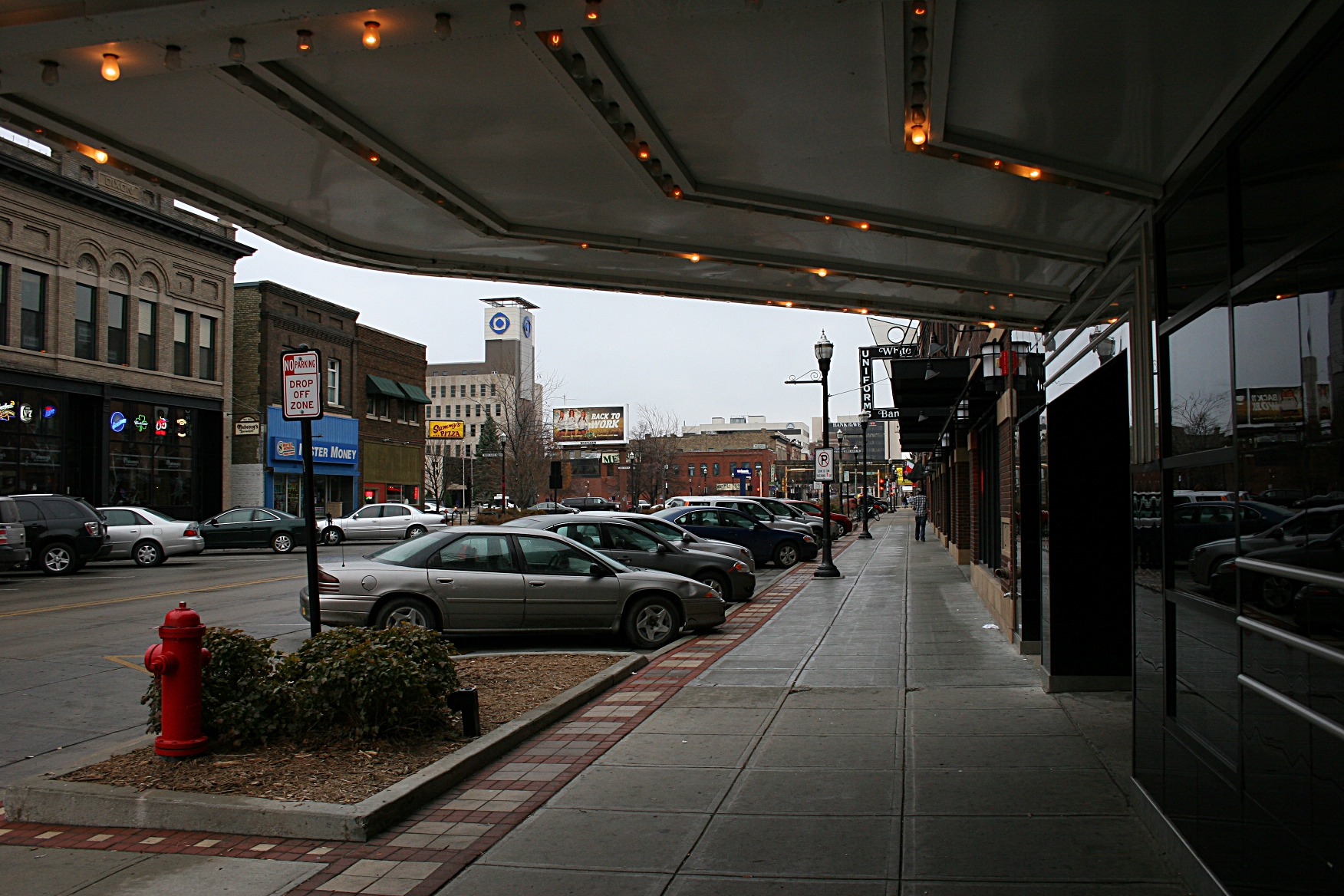
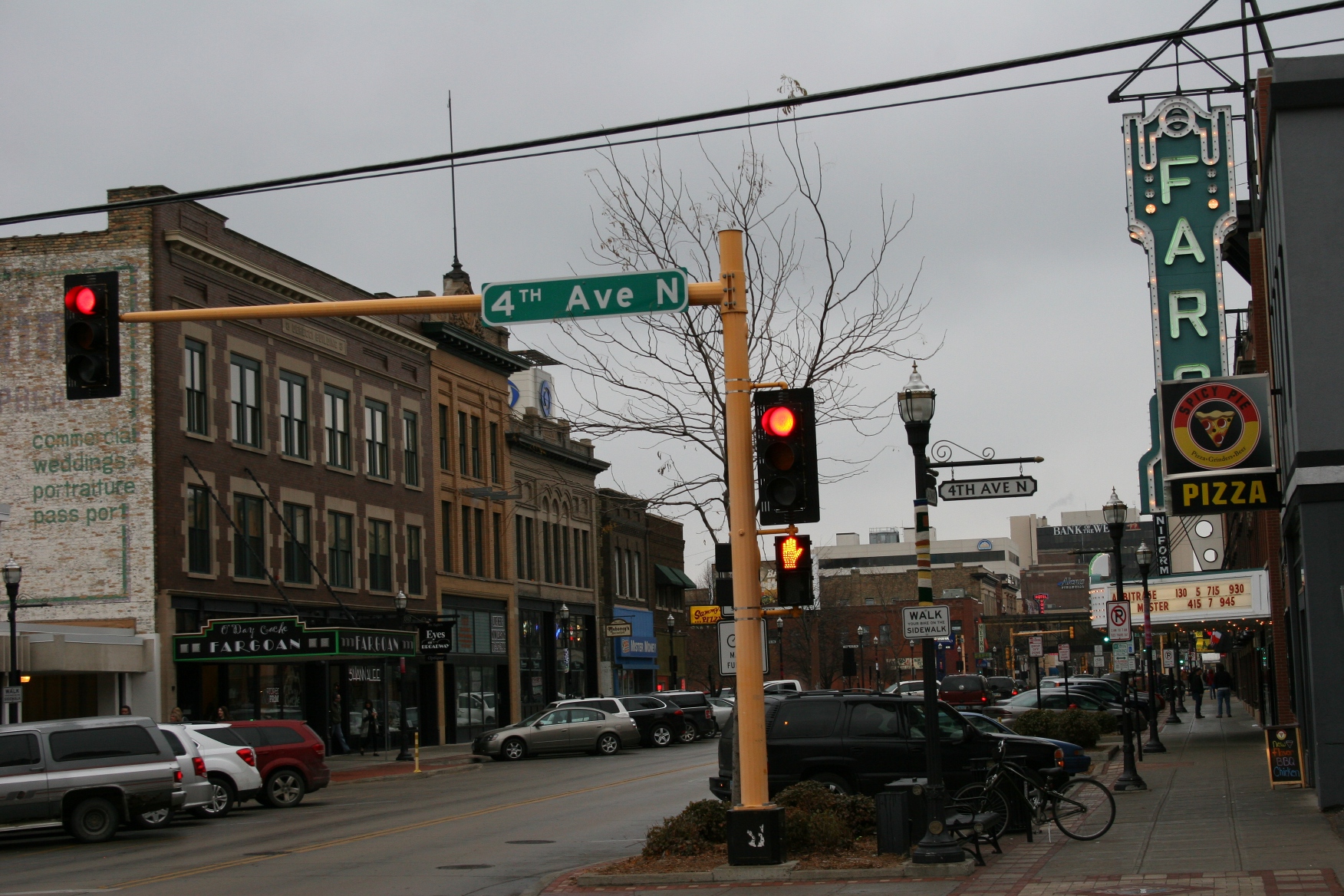
A view of the 300 block on North Broadway, including signage for the Fargo Theatre, built in 1926 as a cinema and vaudeville theatre. The restored theatre is on the National Register of Historic Places and serves as a venue for independent and foreign films, concerts, plays and more.

NOT EVEN THE SHROUD of gray mist and gloom which wrapped around Fargo in the late afternoon of a bone-chilling Saturday in early November could quell my enthusiasm for this historic downtown in a city I’ve only begun to explore.

This is my kind of downtown with historic buildings and a vibe that is both vibrant and subdued. I’d feel as comfortable here glammed for an evening on the town as I would kicking about in my jeans and buffalo plaid flannel shirt.

Under the protective canopy of the Fargo Theatre, I shot this street scene.

In a brief walk of not quite two blocks—shortened by the drizzle and my desire to keep my camera out of the rain—I realized that I need to revisit this downtown when time and weather allow for a more intimate look.

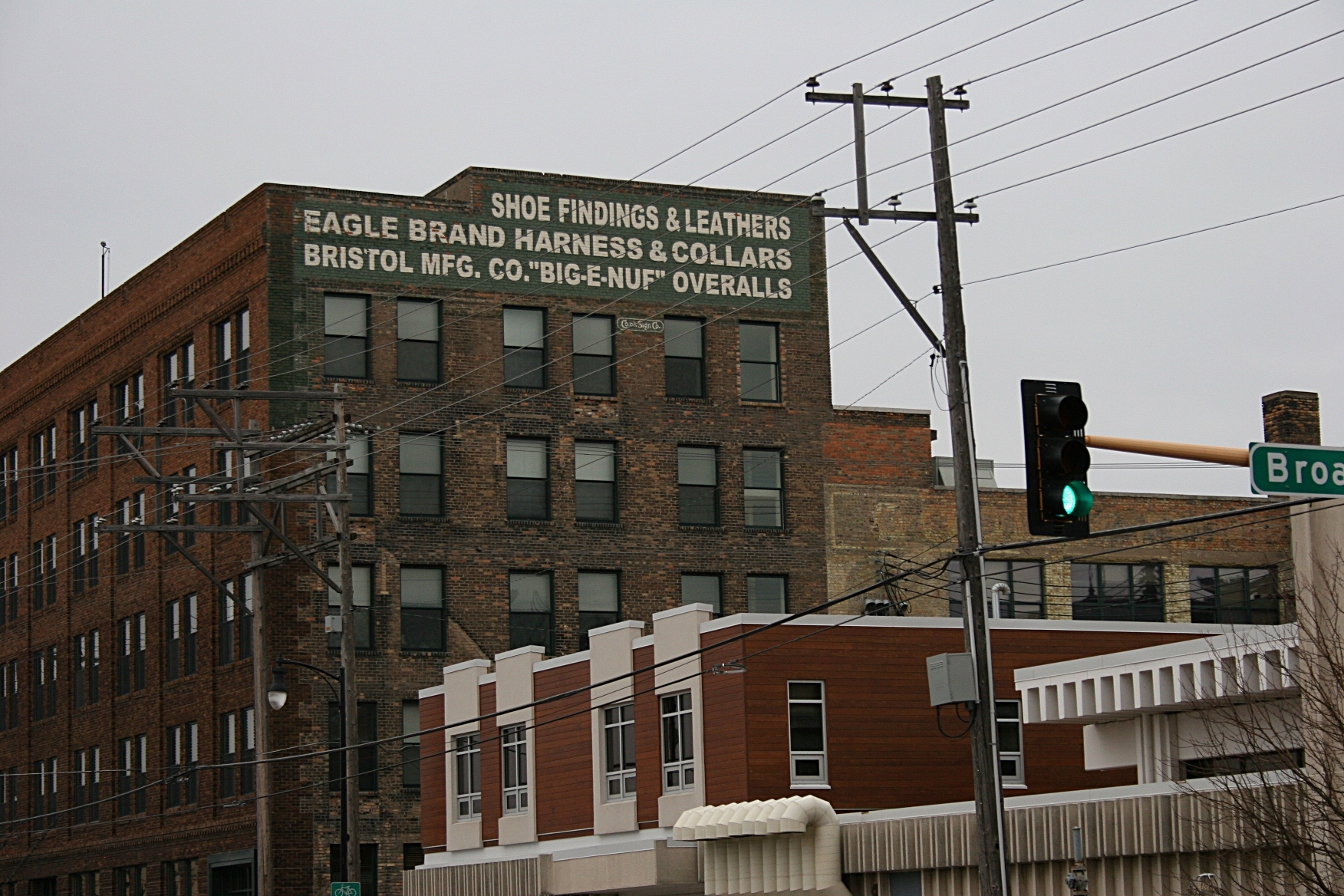
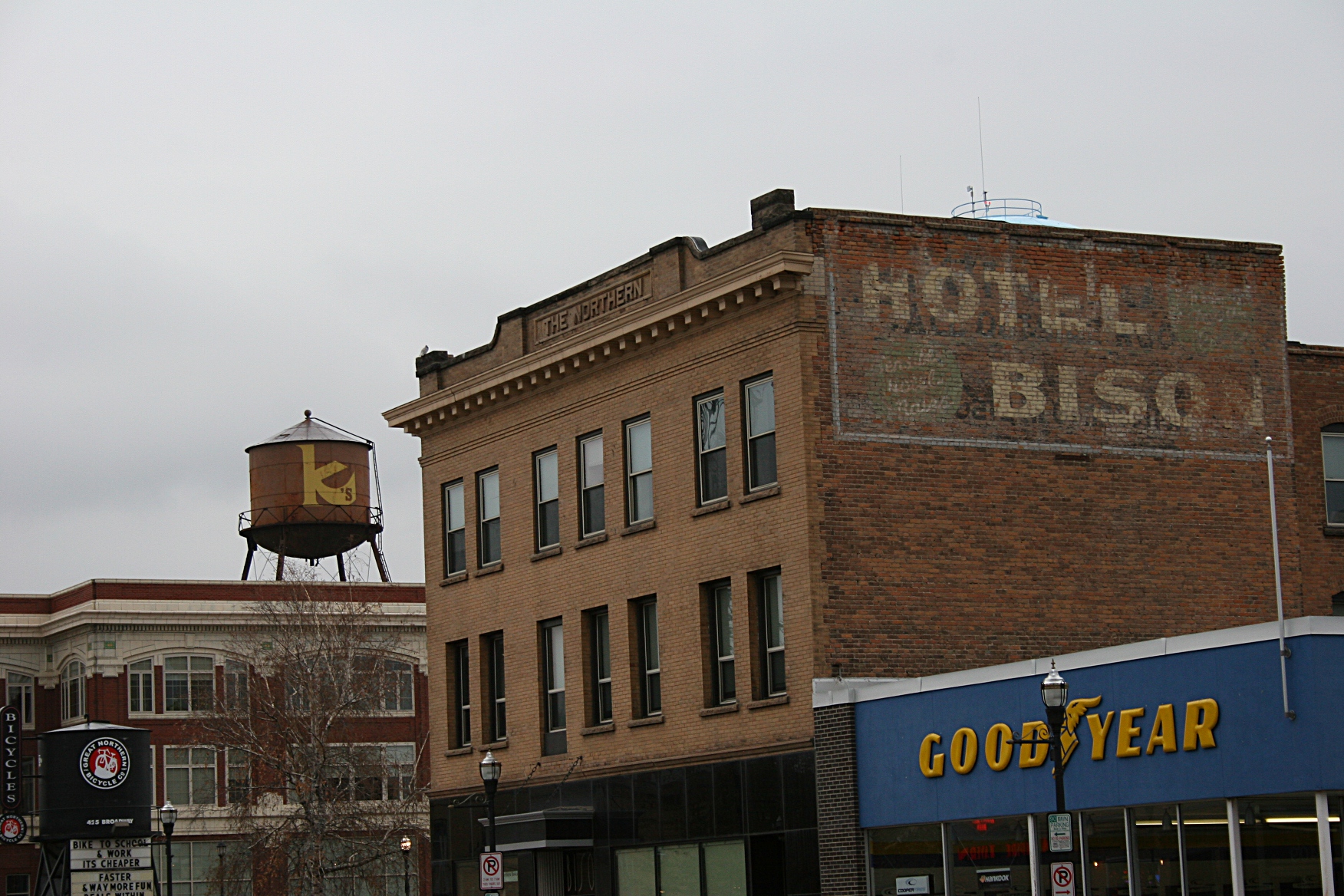
I swung my camera around to focus on the advertising on this stately brick building just off Broadway.

A quick visual tour revealed well-kept brick buildings with great architectural detail, vintage neon signs, advertising painted on brick walls, art in the sidewalk and a general impression that those who live and work here care about this place.

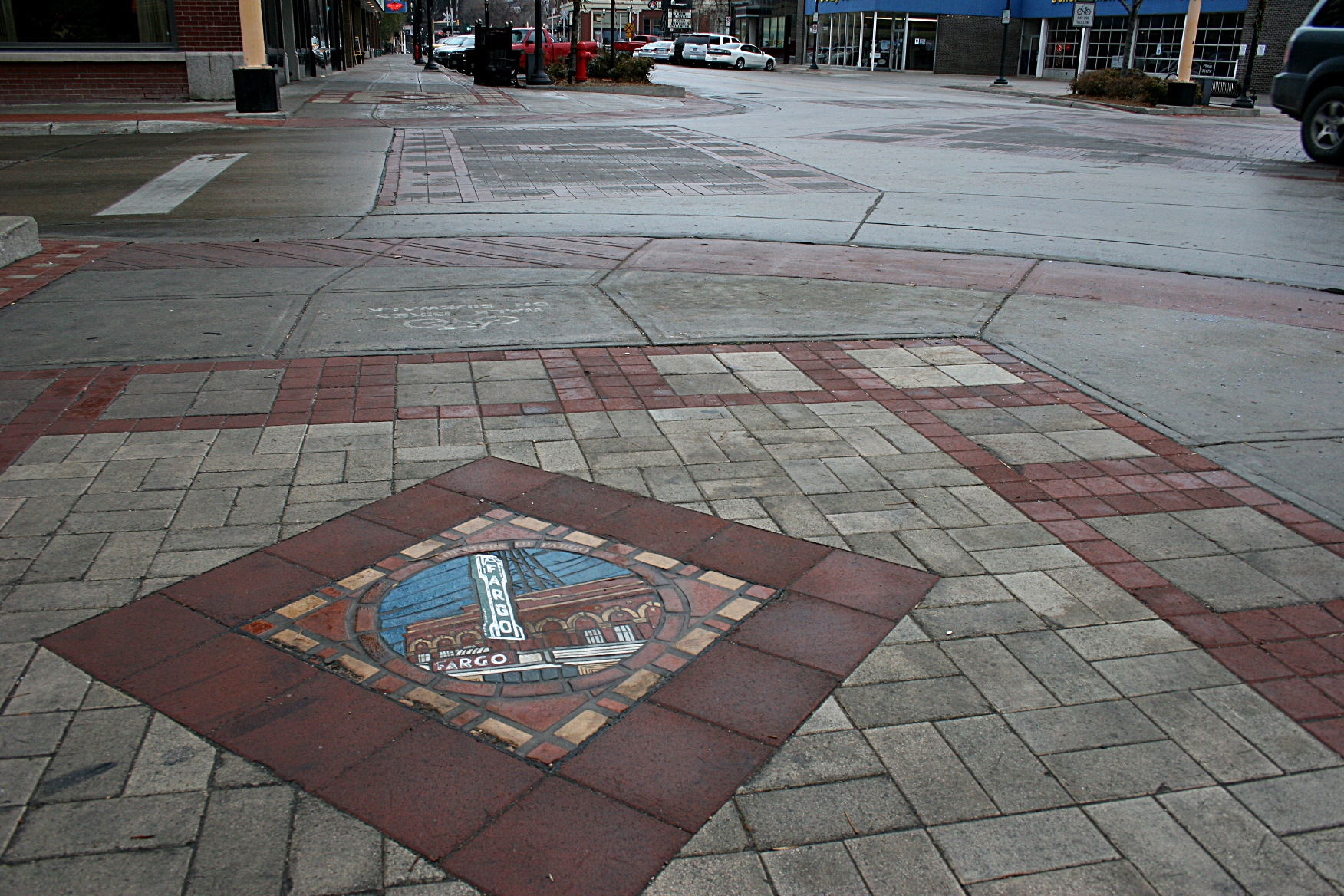
Sidewalk art featuring the Fargo Theatre.

It’s no wonder that in 2011, Forbes magazine recognized downtown Fargo as one of the nation’s top 10 most transformed neighborhoods.

If you want big box retailers and miles of cement and malls, all of which you could find in Anytown, U.S.A., Fargo has that too, over in West Fargo.

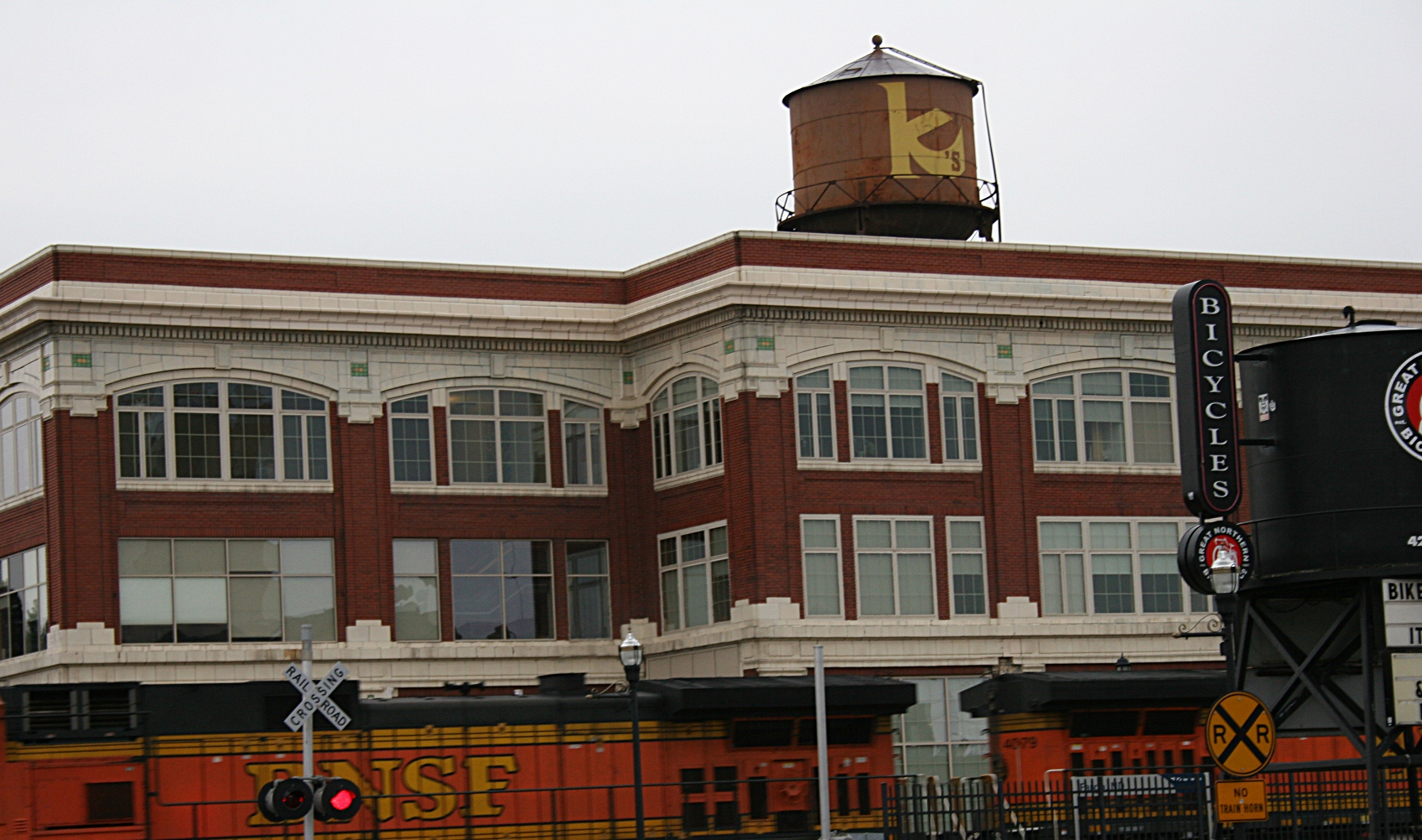
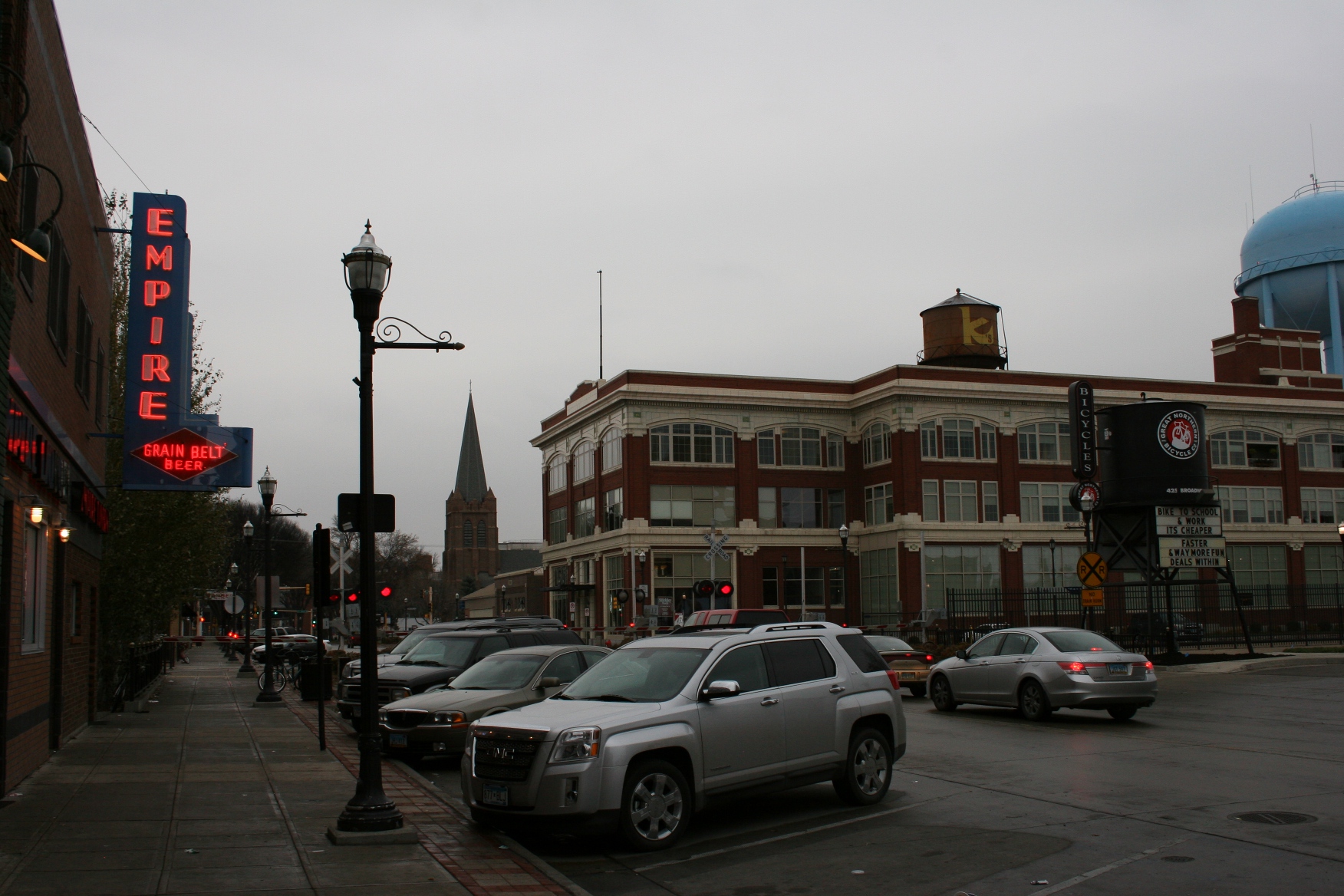
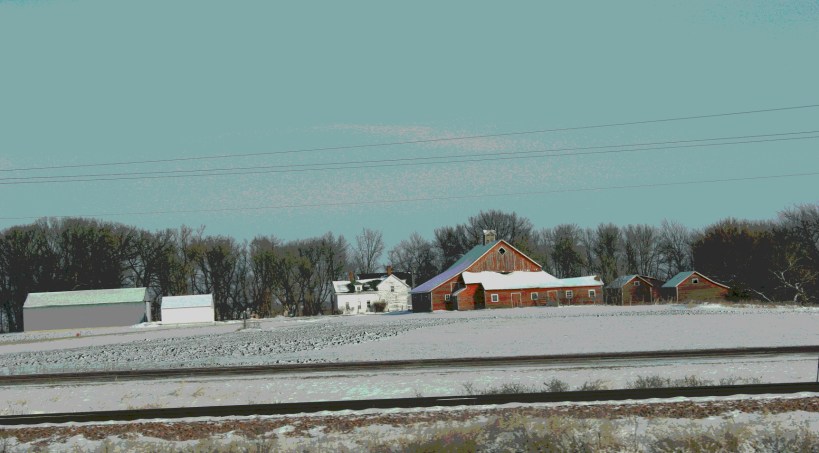
Almost anywhere you go in Fargo, you will encounter railroad tracks, even in the heart of downtown, here in the 400 block of North Broadway.

But the downtown, oh, the downtown, that to me holds the personality of Fargo as an historic river and railroad and farming community, appreciative of its past, adapting to the present and aware of its future.

Looking toward the 400 block of North Broadway, a broader view of the image above.

Signage details on buildings in the 400 block of North Broadway.

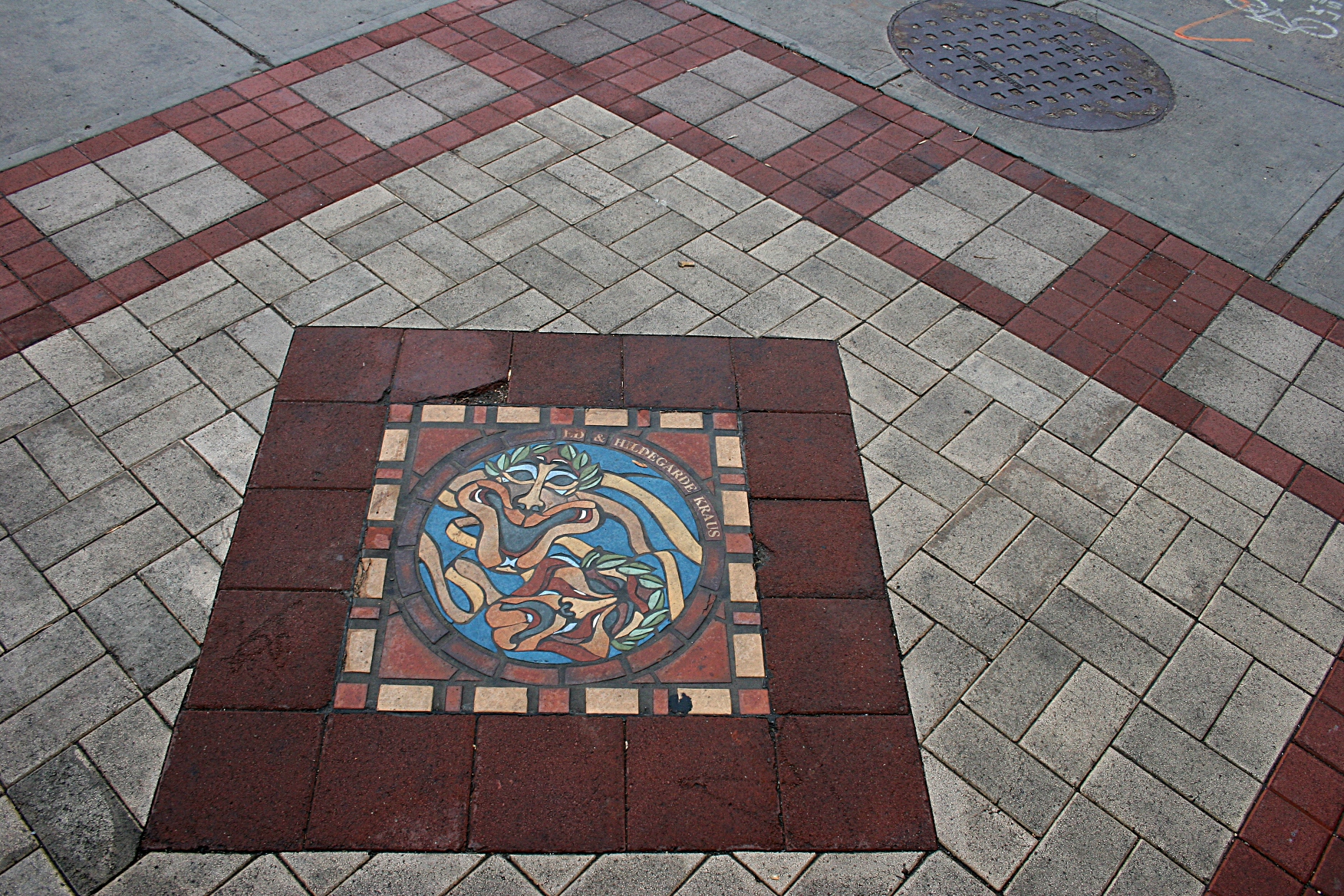
More sidewalk art, with the names Ed & Hildegarde Kraus embedded.

Across from the Fargo Theatre, O’Day Cache’ , located in the building labeled Fargoan.

Another shot of downtown, from the corner of Fourth and Broadway.

© Copyright 2012 Audrey Kletscher Helbling
 

Prairie prose & photos during the season of harvest October 29, 2012

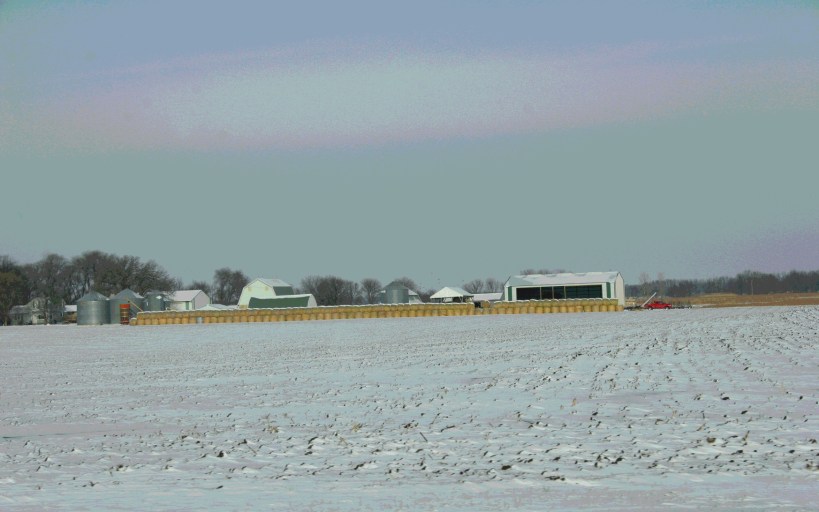
Just west of Shieldsville, not far from our Faribault home in southeastern Minnesota, my husband and I began our 120-mile journey to southwestern Minnesota on a foggy Saturday morning.

I NEVER TIRE of the big sky and infinite land that stretch far before me as I travel back to my native southwestern Minnesota. I wonder sometimes how I ever could have left this place that brings such solace to my soul, such respite to my heart, such peace to my mind.

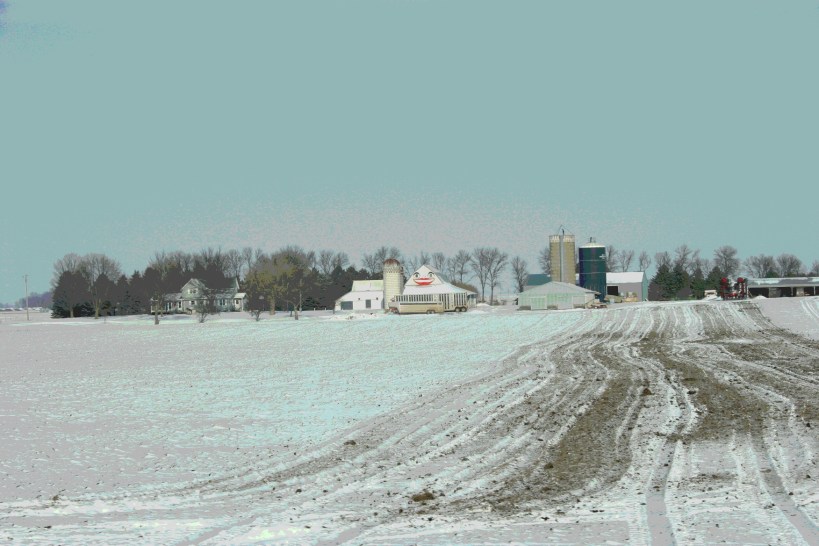
A farm site somewhere along the route which took us through or past Shieldsville, LeCenter, Cleveland, St. Peter, Nicollet, Courtland, New Ulm, Essig, Sleepy Eye, Cobden, Springfield and Sanborn corners, ending in rural Lamberton.

When I see this land, walk this land, the longing to be back here, permanently rooted again, tugs at my very core. I miss the prairie that much and the older I get, the more I appreciate this rural place from whence I came.

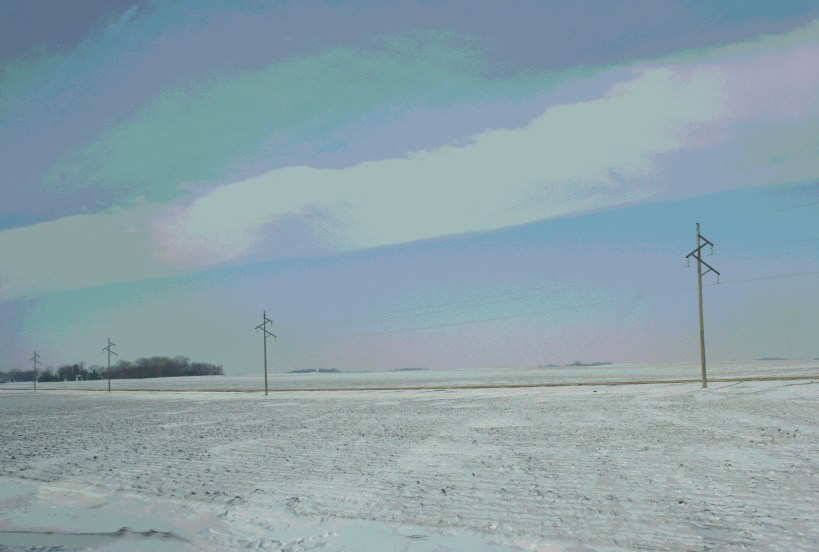
This image, among all those I took, emphasizes the expanse of sky and land which define the prairie.

It is that early-life connection, that growing up as a child of the prairie, that intimate familiarity with the land and the seasons and life cycles, the dirt under fingernails, the rocks lifted from fields, the cockleburs yanked from bean rows, the roar of the combine and the distinct putt-putt of the John Deere tractor, the calf shit clinging to buckle overshoes, the fireball of a sunset, the sights and sounds and smell and feel of this prairie place that shaped who I became as a person, a writer, a photographer.

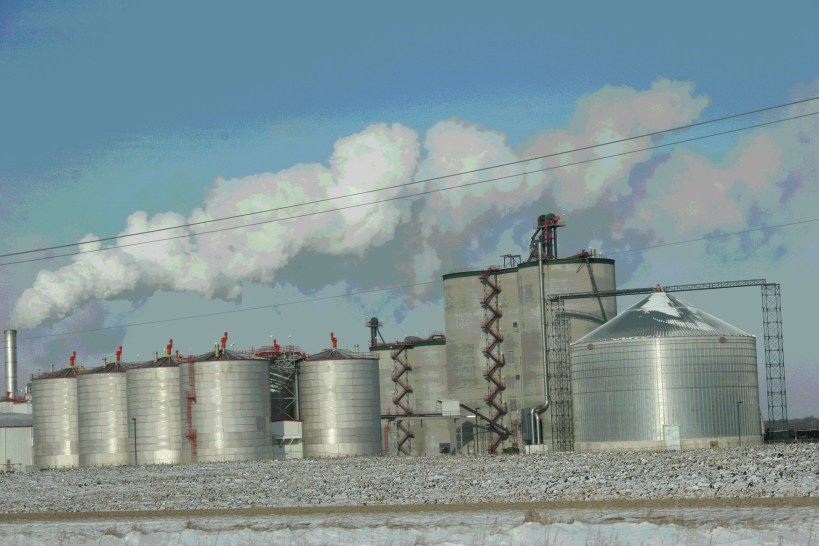
These towering elevators and corn pile at Christensen Farms near Sleepy Eye break up the flat landscape.

In this season, as the earth shifts from growth to harvest to dormancy, I notice even more the details etched into the prairie. The sky seems bigger, the land wider and all of us, in comparison, but mere specks upon the earth.

MORE PHOTOS from that road trip to the prairie:

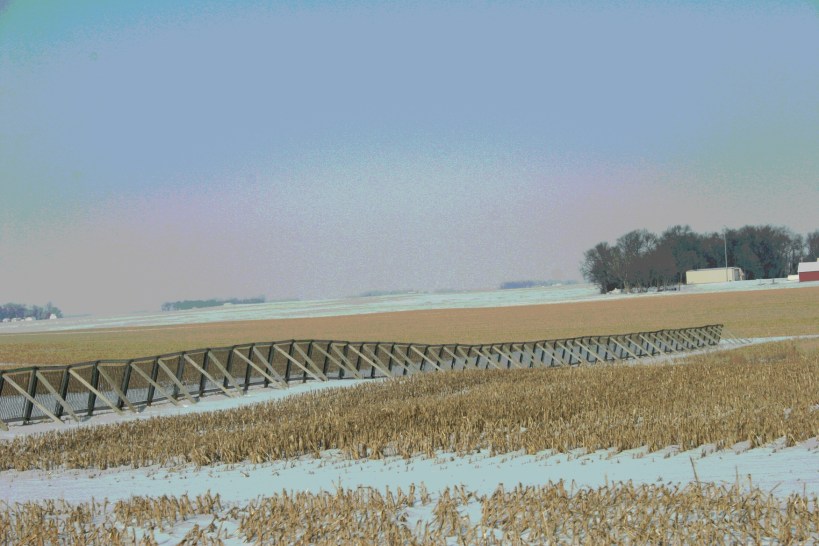
This is not a prairie scene because the prairie has no hills. Rather, I shot this near the beginning of our journey, west of Shieldsville.

Another scene from just west of Shieldsville. It is the muted colors of the landscape that I so appreciate in this photo.

Driving through Sleepy Eye, a strong agricultural community where I lived and worked briefly, decades ago, as a reporter and photographer for The Sleepy Eye Herald-Dispatch. Sleepy Eye is most definitely on the prairie.

Hills of corn at a grain complex east of Lamberton.

Fields are in all stages of harvest and tillage on the southwestern Minnesota prairie.

A grain truck parked at an elevator in Lamberton.

An important sign when trucks and tractors are lined up at the elevator in Lamberton.

I ended my Saturday by walking my middle brother’s acreage north of Lamberton as the sun set, my favorite time of day on my native southwestern Minnesota prairie. I grew up about 25 miles northwest of here near Vesta.

© Copyright 2012 Audrey Kletscher Helbling
 

Poets, photographers & penny pinchers connect in Zumbrota October 21, 2012

FRIDAY EVENING I SUCCESSFULLY read a poem about water before an audience of other poets and photographers and guests in an historic Zumbrota, Minnesota, theatre as part of the “It’s All One Water” exhibit.

I tell you this because I prefer to quietly write and read poetry (to myself) as opposed to standing before an ocean of seats in a darkened theatre with my lips pressed close to a microphone. But practice, practice, practice made all the difference in my feeling fairly confident and comfortable this go around.

(Yes, I’ve read in the State Theatre previously and you can read about that poet-artist collaboration by clicking here.)

My poem,  left, was one of 28 selected and hung in a juried writing competition. Photos themed to water were also part of the “It’s All One Water” show which continues through the end of October at Crossings at Carnegie, 320 East Avenue, Zumbrota.

You’ll just have to imagine me reading my poem:

In which Autumn searches for Water

Water. The wayward word rises in a faint rasp,
barely a whisper above the drone of buzzing bees
weaving among the glorious goldenrods.

I strain to hear as Autumn swishes through the tall swaying grass,
striding toward the pond, yearning to quench her thirst
in this season when Sky has remained mostly silent.

But she finds there, at the pond site, the absence of Water,
only thin reeds of cattails and defiant weeds in the cracked soil,
deep varicose veins crisscrossing Earth.

She pauses, squats low to the parched ground and murmurs
of the incessant chorus of frogs in the spring,
of Water which once nourished this marshland.

Autumn heaves herself up, considers her options
in this brittle landscape too early withered by lack of rain.
Defeat marks her face. Her shoulders slump. She trudges away, in search of Water.

The “It’s All One Water” event included so much more than reading and listening to poetry and viewing photos on the subject of water. It was about mingling with other writers and artists, about connecting, or reconnecting.

Poets, photographers and others mingle over wine and snacks at Crossings prior to the readings a block away at the State Theatre.

I chatted briefly with poet Patrick L. Colemen of Minneapolis, whom I met at Crossings at Carnegie, (the arts venue supporting the show) last spring, and caught up with him on the mystery book he is writing.

I talked with John Calvin Rezmerski of Mankato, a poet who is eons ahead of me, having published several books of poetry and having taught writing at the college level. I met him last year at a poetry-photography show/reading in Mankato. More connecting there and encouragement from other poets.

That is, I have found, the true benefit of attending events like the Friday evening reception and reading in Zumbrota. Connecting. Encouragement for me personally in my writing.

More mingling at Crossings, this time after the poetry readings. To the right is the photo “Tiffany” by Tim Rabe of Rochester. All of the “It’s All One Water” photos are for sale.

Among all the unfamiliar faces was the familiar face of Peter Allen, a gifted Faribault poet who lives several blocks away and a street over from me. Peter and I will be presenting on poetry at Buckham Memorial Library in Faribault in early December. Peter gave me two thumbs up for my poetry reading Friday evening.

I don’t know how Faribault High School English teacher Larry Gavin (he’s taught all three of my children) would have graded my reading. But he was in Zumbrota, too, on Friday evening reading his two poems. He, like Rezmerski, has published several volumes of poetry and reads with the confidence of a seasoned poet who truly has mastered the craft of entertaining an audience.

Likewise Susan Waughtal of Oronoco entertained the audience with her “Farm Water Cycle” poem which resonated with me, a former farm girl. Afterward I chatted with Susan and her husband. They are, she says midlife crisis farmers (farming since 2008) who live and farm on a 10-acre sustainable farmstead, raising chickens (and more), tending bees, operating community supported agriculture, and supporting music and the arts… Susan recently quit her off-farm job to work full-time on the farm.

When Susan told me about the old granary converted into an antique/thrift/arts shop on Squash Blossom Farm and how much she thrills in thrifting, I connected even more for I, too, am a thrifter.

Poets and photographers and penny pinchers. Wonderful company to keep on a Friday evening in October.

The festive exterior of Crossings at Carnegie, a privately-owned art center housed in a former Carnegie library.

FYI: For more information about Crossings at Carnegie, which collaborated with the Zumbro Watershed Partnership on “It’s All One Water,” click here.

© Copyright 2012 Audrey Kletscher Helbling
 

Zumbrota exhibit explores water during this year of extreme drought October 19, 2012

I LOVE THE ARTS.

And I expect part of that passion comes from the lack of arts in my life when I was growing up on the southwestern Minnesota prairie. Back in the 1960s and 1970s, out there in “the middle of nowhere,” as some would say, life focused more on survival than anything.

By survival I mean my father earning enough money to support his wife and six children on a modest crop and dairy farm.

So much depended on the weather, on the rain or lack thereof. Enough rain meant a bountiful crop to feed the cattle and/or sell grain on the market. Too little rain meant scrimping on feed and less money to pay the bills, buy the groceries, clothe the family.

But let’s circle back to my original statement about loving the arts and connect that to water.

Recently I entered, and successfully competed in, an “It’s All One Water” poetry competition sponsored by the Zumbro Watershed Partnership and Crossings at Carnegie, a privately-owned art center in Zumbrota.

This evening a public reception will be held at Crossings, 320 East Avenue, beginning at 6:30 p.m. It is an opportunity to view works by 56 writers and photographers who “explored the aspects of water which fascinate them and created their own artistic expression of this most basic foundation for life,” according to promo info for the event.

At 7:30 p.m., writers, photographers and guests will move down the block to the historic Zumbrota State Theatre where writers will read their works while the water-themed photographs are projected onto a screen.

I will read my “In which Autumn searches for Water.”

My poetic expression about water traces back to my farm roots, to that constant and undeniable link between the land and the sky.

That connection is so much a part of my fiber that I cannot think about water in recreational terms—I can’t swim, don’t like being on the water and grew up in a Minnesota county without a natural lake. Rather, for me, water has always been about sustaining life, about growing a crop, about watering the cows or watering plants or measuring rainfall.

So when I learned of the “It’s All One Water” poetry competition shortly after an autumn walk at the River Bend Nature Center in Faribault, where I found dry ponds, I knew exactly what I would write. I personified Autumn, creating a thirsty woman in search of an also personified Water. It works and I think well, especially given the current historic drought conditions throughout our country.

About a third of Minnesota is suffering from extreme drought. On Thursday the Minnesota Department of Natural Resources issued a news release urging Minnesotans to adopt water conservation measures (no washing vehicles, watering lawns and trees, etc.) as drought conditions are straining our state’s water resources.

Here’s a snippet of my drought-related water poem, verse three of five:

But she finds there, at the pond site, the absence of Water,
only thin reeds of cattails and defiant weeds in the cracked soil,
deep varicose veins crisscrossing Earth.

You can hear me read “In which Autumn searches for Water” this evening or view the entire exhibit from now until the end of October at Crossings. Hours are 10 a.m. – 5 p.m. Monday, Tuesday, Wednesday and Friday; 10 a.m. – 8 p.m. Thursdays; or from 10 a.m. – 4 p.m. Saturdays. A limited number of chapbooks are available. Monies from Minnesota’s Arts & Cultural Heritage Fund helped to fund the “It’s All One Water” exhibit.

CLICK HERE to reach the Crossings at Carnegie website.

CLICK HERE to link to the Zumbro Watershed Partnership website.

CLICK HERE TO VIEW drought conditions in the U.S.


Food and (some) photos October 14, 2012

Filed under: Uncategorized — Audrey Kletscher Helbling @ 2:42 PM
Tags: , , , , , , ,

DURING THE PAST 24 HOURS, I have eaten perhaps more food than I would consume in two days.

But three delicious food events fell on the same weekend and I was not about to skip any in the trio.

What I did skip, however, was photographing two of the three, forcing myself to leave my camera at home for one and in the van for the third, just in case. Anyone who knows me understands just how challenging camera abandonment is for me. But I did it, people, I did it.

Four of the 13 chilis/soups served at Lanae and Dale’s annual soup party.

So, instead of seeing photos from Saturday’s Fall Festival in downtown Faribault, which included a buffet of chili along Central Avenue, you will see photos only from my sister Lanae and her husband Dale’s ninth annual soup party Saturday evening.

You also will not see photos from the fall dinner I attended today at Trinity Lutheran Church, North Morristown. I hadn’t even entered the sanctuary when I was asked, “Do you have your camera?” Yesterday I heard the same question several times while strolling Central.

People have come to expect that I will always have my camera around my neck. It was time for me to break free of the camera. Besides, I’ve photographed both the Chili Contest and the Trinity dinner in the past and felt uninspired and maybe a bit lazy. (If you want to see photos from the 2011 church dinner, click here. For past images of the Fall Festival, click here.)

My floral designer sister always has her yard and house seasonally and beautifully decorated.

But, prior to scooping up soup in my sister’s garage, I shot a few photos inside and out and then put away my camera.

I hope you will be inspired by these photos to host an autumn soup party. Guests brought 13 soups/chilis like split pea, potato, Gunflint chili, white chili, minestrone, tomato and more in crockpots. Paired with homemade breads and sweetened with sweet treats, the soups and chilis presented a perfect meal for a fun-filled fall evening with family and friends.

The soup party started and ended with a backyard campfire. Here a few guests and host Dale gathered before we ate.

I was distracted from the food by this gigantic toad in my sister’s backyard.

Then 7-month-old Mychel and her mom arrived and I invited them for a quick photo shoot on the front steps because, well, how could I resist that sweet baby face?

And then I noticed the sweet baby shoes and how could I resist photographing the feet of mom and daughter?

The sweet baby shoot continued as Mychel walked with her mom toward the garage.

In the garage Mychel’s grandpa, Scott, left, and other guests eventually started filing through the soup line.

My niece Cortney and guest Sheila scoop up soup. Casual and warm attire are necessary for this event which is staged in the garage, driveway and backyard. Layers are added as the evening progresses and cold settles in.

© Copyright 2012 Audrey Kletscher Helbling
 

Photographing Webster, Minnesota, Part II October 8, 2012

Filed under: Uncategorized — Audrey Kletscher Helbling @ 7:29 AM
Tags: , , , , , , ,

Main Street/Rice County Road 3 in Webster, Minnesota. One of the best known businesses in Webster is the Ranchero Supper Club, near middle in photo, to the left of the white car.

WHENEVER I SNOOP around a small town, I wonder when someone is going to step outside of their home or business and ask why I’m taking pictures. Only once has that happened in my many Main Street visits. That was in Otisco, south of Waseca. When I explained who I was, the local relaxed.

If I lived in one of these rural towns and saw a stranger wandering with a camera, I’d question him/her, too.  But that’s me.

My traveling companion, my husband, is used to my curious ways, my quest for interesting photos. He even tips me off occasionally to photo possibilities. Yes, he’s a quick study.

One of the more unusual finds in Webster was this graffiti etched into brick on a downtown building. Names covered several separate sections of wall. I photographed this particular section because of the name Randy (my husband’s name) and “FUZZY,” which was the nickname for one of his sisters. No, they did no etch their names here. Anyone know the story behind all of this downtown graffiti?

Sometimes he probably thinks my photo ideas are crazy. But if he does, my spouse has the good sense not to tell me.

Here are the remainder of the interesting (at least from my perspective) photos I shot in Webster in northern Rice County several weeks ago.

More brick at the Webster Town Hall, a former school, I presume. I love that the old playground equipment has not been removed due to safety concerns. That’s the edge of an old merry-go-round you’re seeing to the left in the frame.

And just how often do you see a pay phone anymore? Well, in Webster you’ll find this one.

Interesting signage atop what I think is a former bank building.

One of Webster’s most interesting businesses: Sight on Survival, “a defensive products and law enforcement gear retail store.”

A snowplow blade awaits winter’s arrival.

To the west of Webster lies one of the most beautiful multi-purpose parks I’ve seen, the Webster Township Park. the park includes this ball diamond, basketball court, horseshoe pits, playground, picnic shelter and grills, nature trail and more.

TO SEE ADDITIONAL images, click here to link to my previous post, “Webster, Minnesota, on a Sunday morning in September.”

Copyright 2012 Audrey Kletscher Helbling
 

Scenic southeastern Minnesota on a Sunday afternoon in autumn September 30, 2012

West of Faribault on Sunday afternoon.

I NEVER TIRE OF IT. Never. Autumn in Minnesota is stunningly beautiful. Stunning.

A Sunday afternoon drive took my husband and me west of our Faribault home along Cedar Lake Boulevard and then on Old Dodd Road, all the way to Kilkenny.

Lake Francis, Elysian

From the Irish settlement, we continued west and then south and west and south and, well, I don’t navigate, until we entered Elysian from the north.

Tetonka Lake, Waterville

We then aimed back east and north along a dusty gravel road and then a tar road to Waterville.

Northeast of Waterville.

We traveled through the North Morristown area and, nearing Faribault, skirted Cannon Lake on the north and east.

It was, for us, a leisurely horseshoe drive to view lovely Autumn, dressed in her Sunday best.

North and east of Waterville somewhere, maybe closer to North Morristown.

A lovely treeline somewhere on the eastern end of our route.

Along Seventh Street in Faribault….my community has stunning autumn colors along many, many residential streets.

A block away up the hill from my house are some of the most blazing gorgeous trees in town lining Second Avenue Southwest by Bethlehem Academy.

© Copyright 2012 Audrey Kletscher Helbling
 

Photo pops of pink & orange September 21, 2012

Filed under: Uncategorized — Audrey Kletscher Helbling @ 7:22 AM
Tags: , , , , , , , , , ,

Zinnias

PINK AND ORANGE. Not until recent years would I have mixed those colors or considered them an appropriate combination.

Cosmos

Are you kidding? Pink and orange. Together.

Zinnia

But now I revel in the unleashing of creativity in color pairings, a loosening of the choking tie of conservatism and matchy-match this and that.

Zinnia

It’s freeing, isn’t it, to realize everything—from our homes to our gardens, from our paintings to our photos—doesn’t need to be Martha Stewart-like perfect.

© Copyright 2012 Audrey Kletscher Helbling
 

A short photo essay of a tractor parade, rural Dundas, Minnesota September 7, 2012

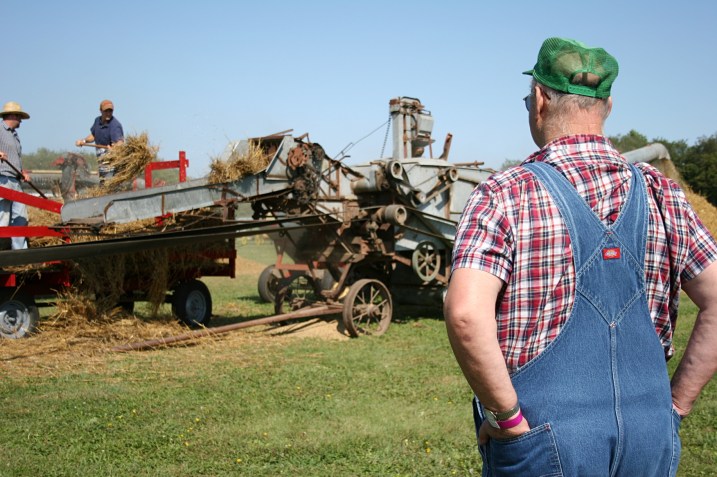
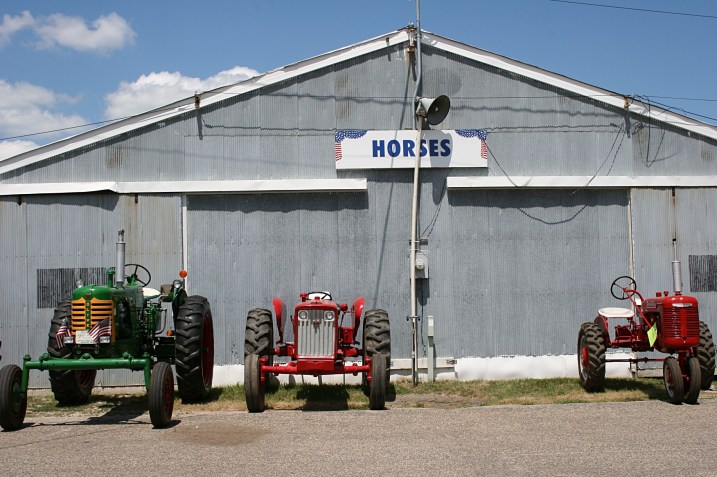
The Oliver was the featured tractor in this year’s Rice County Steam and Gas Engines Show, rural Dundas, Minnesota.

They start ’em driving tractors young. Not to worry; an adult was on the tractor, too.

And younger…

And as young as six weeks old. Doesn’t baby Kelly/Kelli (not sure on the spelling) look just like her dad?

Tractor buffs of all ages, and with all types of tractors, join the parade.

The parade of tractors and other vehicles just goes on and on.

Copyright 2012 Audrey Kletscher Helbling
 

Connecting, conversing and celebrating cultural diversity at Faribault festival August 28, 2012

This woman represents El Salvador during the International Festival Faribault on a drizzly Saturday. Flags suspended from the Central Park band shell in the background show the countries participating in the event.

DESCRIBING AN EVENT like International Festival Faribault within the confines of a blog post or two seems daunting. How do I adequately convey the essence of this fest celebrating the cultural diversity of my community?

You can view my first effort by clicking here and reading “Yearning for respect & equality, ‘no matter what color you are.’”

Now, as I scroll again through the many photos I took during the fest (when rain wasn’t drizzling upon my camera), I ponder which images to share, what words to pen.
Cultures connecting on the band shell stage between musical acts.

And “c” words—like color, connecting, communicating, conversation, coloring, candy, culture, care, colorful clothing—pop out at me as I view my photos.

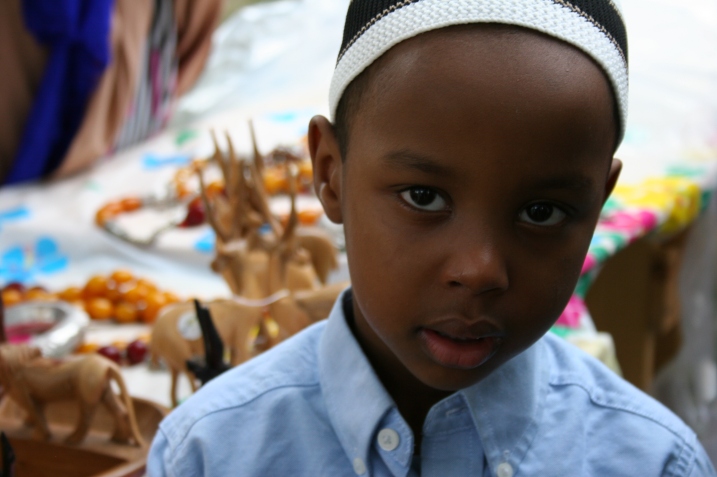
I should perhaps add “confusing” to that list because I felt overwhelmed when trying to photograph the wood carvings from Somalia and Kenya peddled by Bashir Omar and Asher Ali.
A woman, without prompting, took this mask from the table manned by Bashir Omar and Asher Ali and asked me to photograph her.

Suddenly, it seemed, everyone wanted to pose for a picture. And I much prefer candid to set up shots. I obliged, though, because it seemed the easiest thing to do.
Lul Abdi shows off beautiful wood crafts from Kenya and Somalia.

Then Lul Abdi, who had grabbed a wooden platter and giraffe, and held them up for me to photograph, asked me to write in my blog that an election is coming up in Somalia and I should tell everyone to vote for whomever it is she supports. Bashir Omar translated my answer—I don’t write about international political issues.

While this back-and-forth translation was occurring, I felt befuddled because, when too much noise (in this instance lots of conversation going on around me and music in the background), is coming my way, my brain doesn’t process anything. That issue is related to the 70 percent hearing loss in my right ear.

Despite the difficulties, this muddle served as an aha moment. Imagine if I was Lul, struggling on a daily basis to understand those around me. Life would be challenging.

Busy artists at the kids’ activity table.

But sometimes we all speak the same language. And I saw, rather than heard, that on Saturday, at the festival, especially among the children. They sat side-by-side painting at the kids’ activity table, bounced side-by-side in the bouncy tent, stood side-by-side in line to take turns swinging at pinatas.

A little girl stands on the opposite side of the group of children waiting to swing at the pinata.

Differences in color and culture and language mattered not to these children. They shouldn’t matter to any of us. Therein lies the message I most want to communicate to you today and which was communicated so well via International Festival Faribault.

Happy children all focused on the same goal: breaking the pinata.

All around me, children and adults of all colors mingled.

The boy on the right was biking past Central Park and stopped to watch the activities at a distance.

The scramble for candy once one of three pinatas is broken.

AND HERE ARE SOME ADDITIONAL BONUS PHOTOS:

Masks displayed at the food vendor representing El Salvador.

Waiting at the bouncy tent.

A Mexican dish (help me out if you know, but I think tortillas) was wrapped in banana leaves. My husband and I tried this.

Conversation and connecting…, no other words necessary.

Necklaces and other jewelry from Kenya and/or Somalia and for sale at the festival.

Kids painted and colored, etc., elbow to elbow at the always busy kids’ activity table.

Some mischievous face painting was also part of the fun.

© Copyright 2012 Audrey Kletscher Helbling