Minnesota Prairie Roots

Writing and photography by Audrey Kletscher Helbling

Perspectives on life presented in Saint Peter galleries March 6, 2012

Filed under: Uncategorized — Audrey Kletscher Helbling @ 7:53 AM
Tags: , , , , , , ,
The Arts Center of Saint Peter, 315 South Minnesota Avenue, St. Peter, Minnesota.

The Arts Center of Saint Peter, 315 South Minnesota Avenue, St. Peter, Minnesota.

LIKE BLACK AND WHITE, night and day, the artwork of Pamela Bidelman and Kay Herbst Helms, at first glance, holds no comparison.

Pam, of St. Peter, is a painter, working in the more abstract in her current exhibit, “lamina,” installed at the Arts Center of Saint Peter Moline Gallery.

Kay, of Mankato, is a photographer, grounded in the earth with her black-and-white, rural-themed images in “What Sustains Us: considering the hands and the land of rural south central Minnesota.” Her art is showcased in the Lower Level Gallery of the Arts Center.

Both artists distinguish themselves in their individual approaches to art. Therein lies the essence of art—the ability to create and express one’s self in a truly personal style that emerges from the heart and soul of the artist.

I am more of a down-to-earth appreciator of art, meaning abstracts puzzle and challenge my mind to consider what the artist is attempting to convey.  I don’t have to think so hard to understand real-life art.

Yet, it’s good for me to view more abstract art like that created by Pam and to talk with her and learn that she is trying to show, in her exhibit, “the quality of skin as a container…deconstructing the body parts…the fragility of life.”
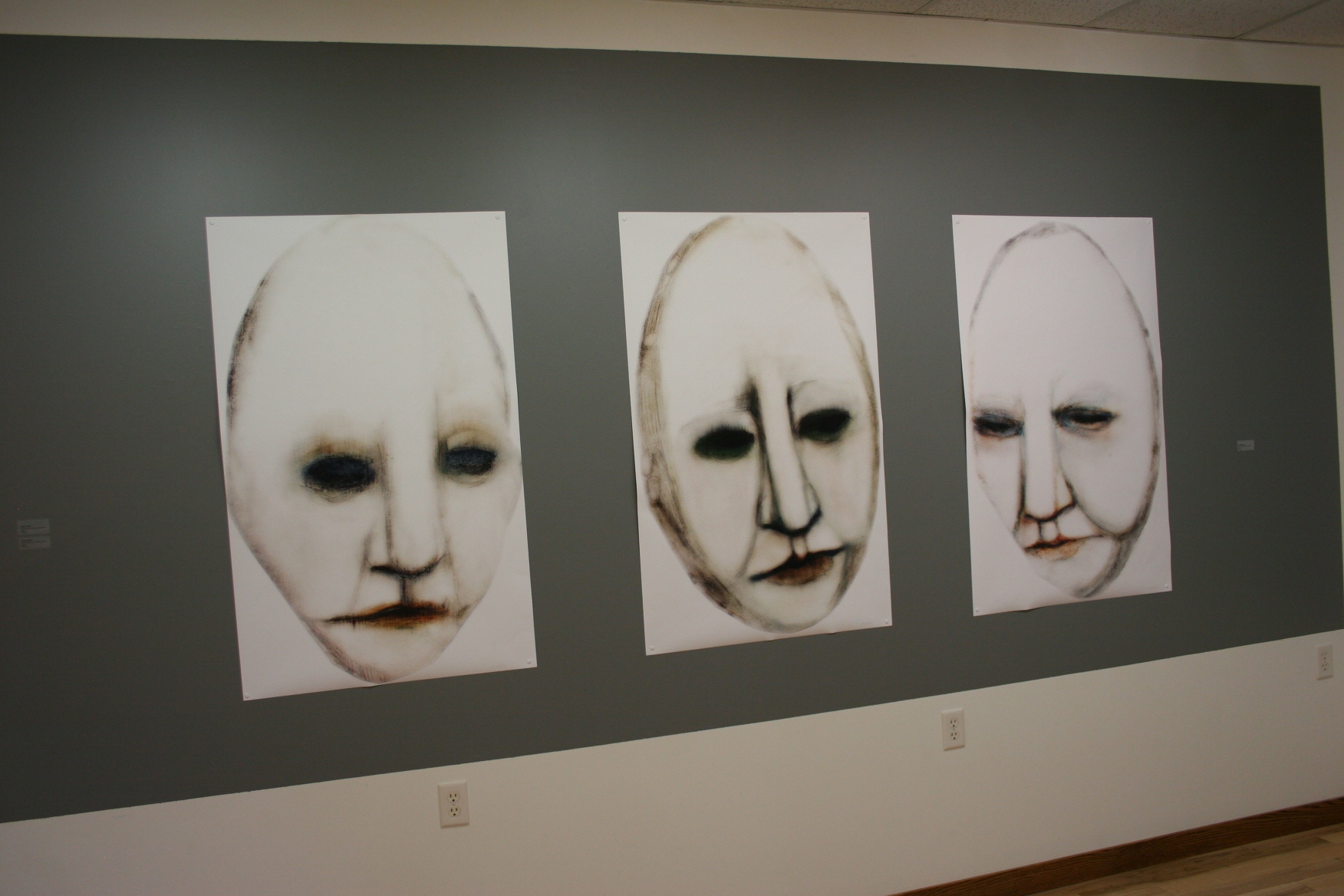
Three almost ghost-like faces, with undefined, haunting eyes, created by Pam Bidelman.

I expect that her artistic expression connects to her former profession as a clinical social worker. One can only imagine the experiences she drew on while creating her current exhibit.

There’s a certain translucency to Pam’s pieces that I interpret as a sense of vulnerability.
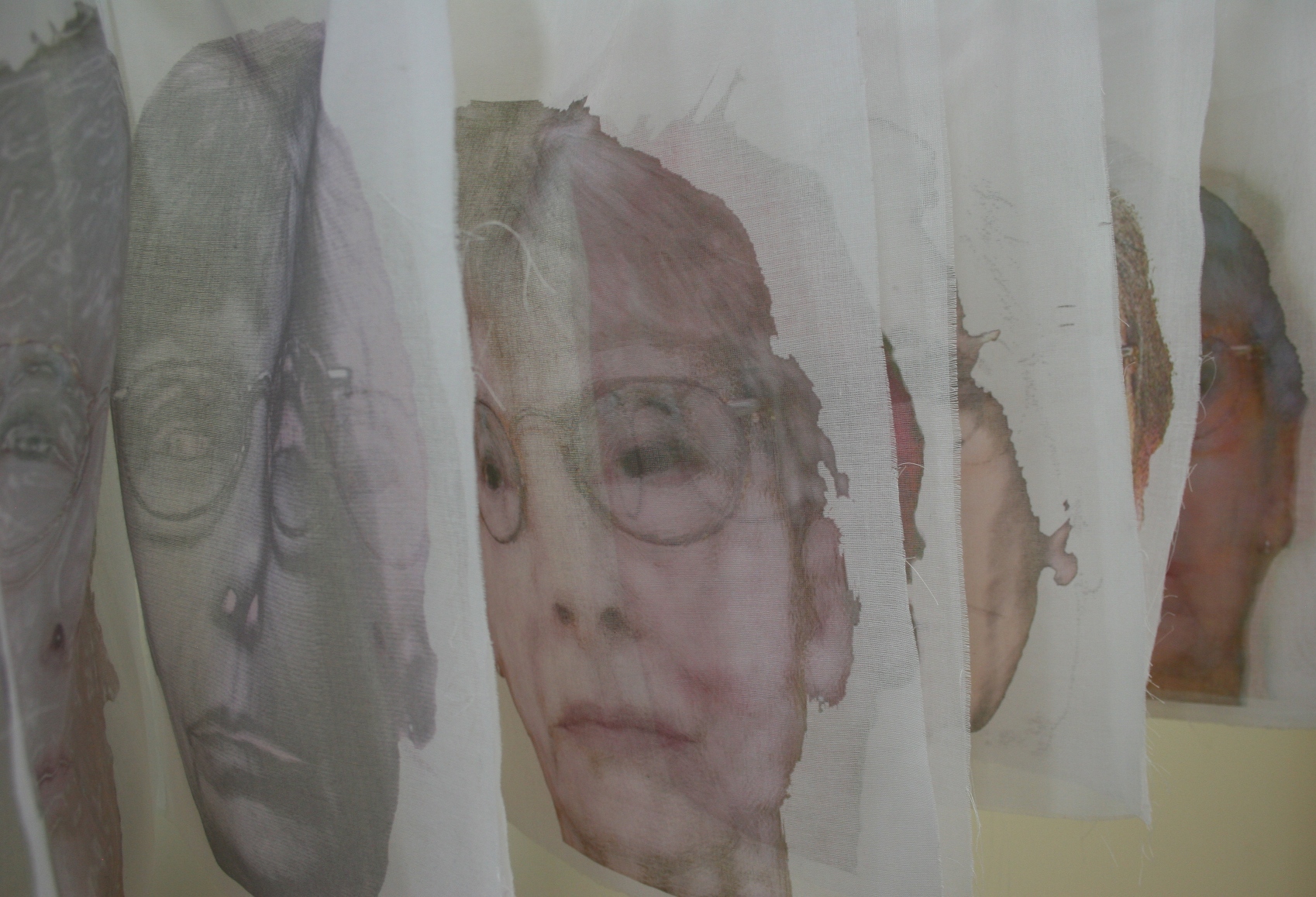
A series of suspended faces, again with that vulnerable quality.

In Kay’s work, vulnerability also exists, in the primarily close-up black-and-white images she’s shot, mostly of hands, and in the accompanying short stories she writes about her subjects. I know rural people. It is not always easy for them to open up, to allow introspective photos and insights into their lives.

Kay gained their trust and shares her discoveries in art that is as honest as a hard day’s work on the farm.

For example, she writes in her interview with Sharon Osborne:

Sharon tells the story of her uncle, a retired farmer. Her aunt has answered the phone and the caller asked, “What’s your husband doing on this cold, blustery, snowy day?”

Her aunt replied, “What else do farmers do on a cold winter’s day other than crack walnuts down the basement?”
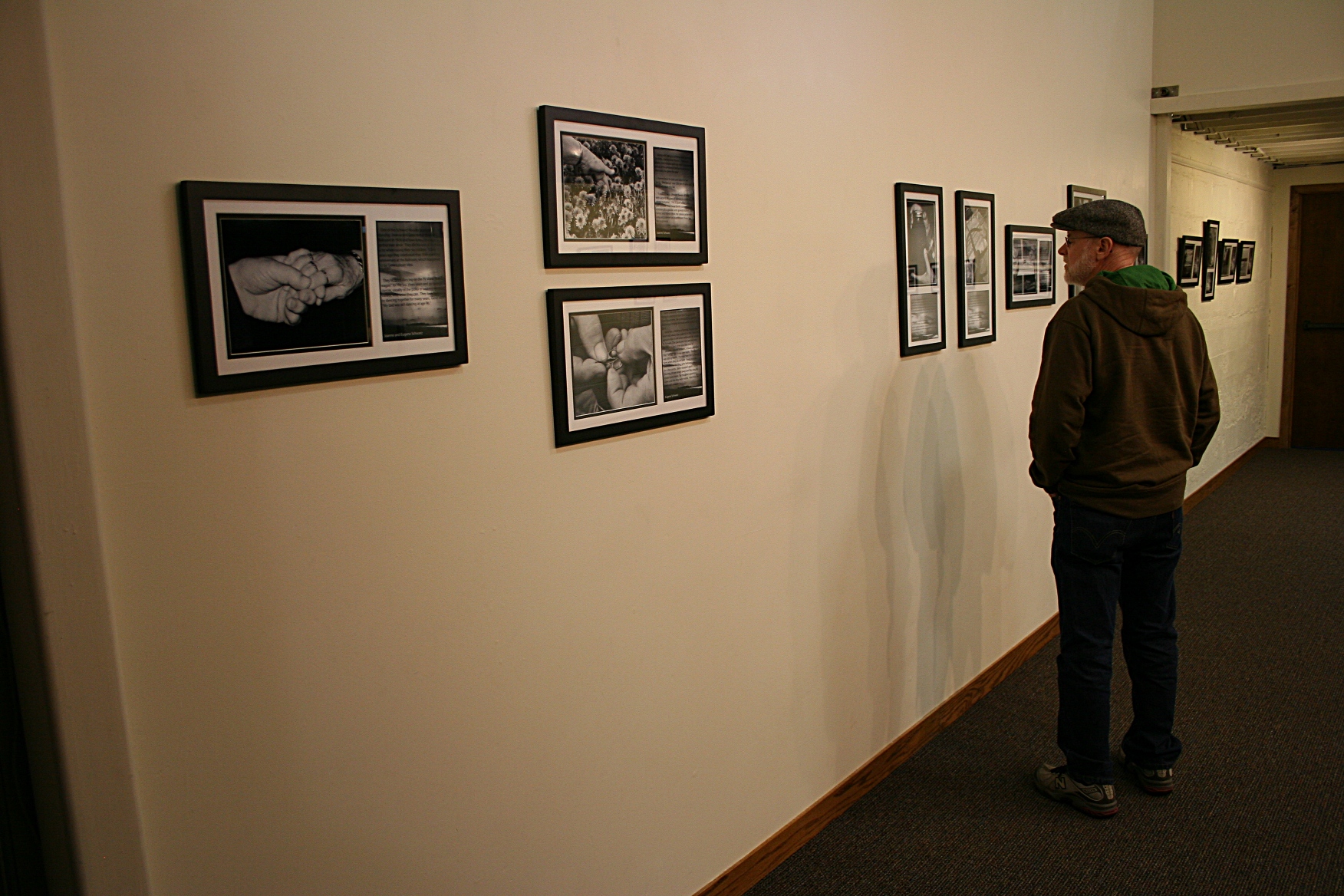
Viewing Kay Herbst Helms' photos in "What Sustains Us." She focuses primarily on hands in her images.

With other photos, Kay pairs poetry by Paul Gruchow and the poetic words of additional writers.

She is, says Kay, connecting the elements of hands, land, photographs and words in her exhibit.

Kay accomplishes that with the spirit of an artist rooted deep in her appreciation of rural life and the rural landscape.

Both exhibits are distinctly different. Yet each can be appreciated for the unique perspectives they offer on life.
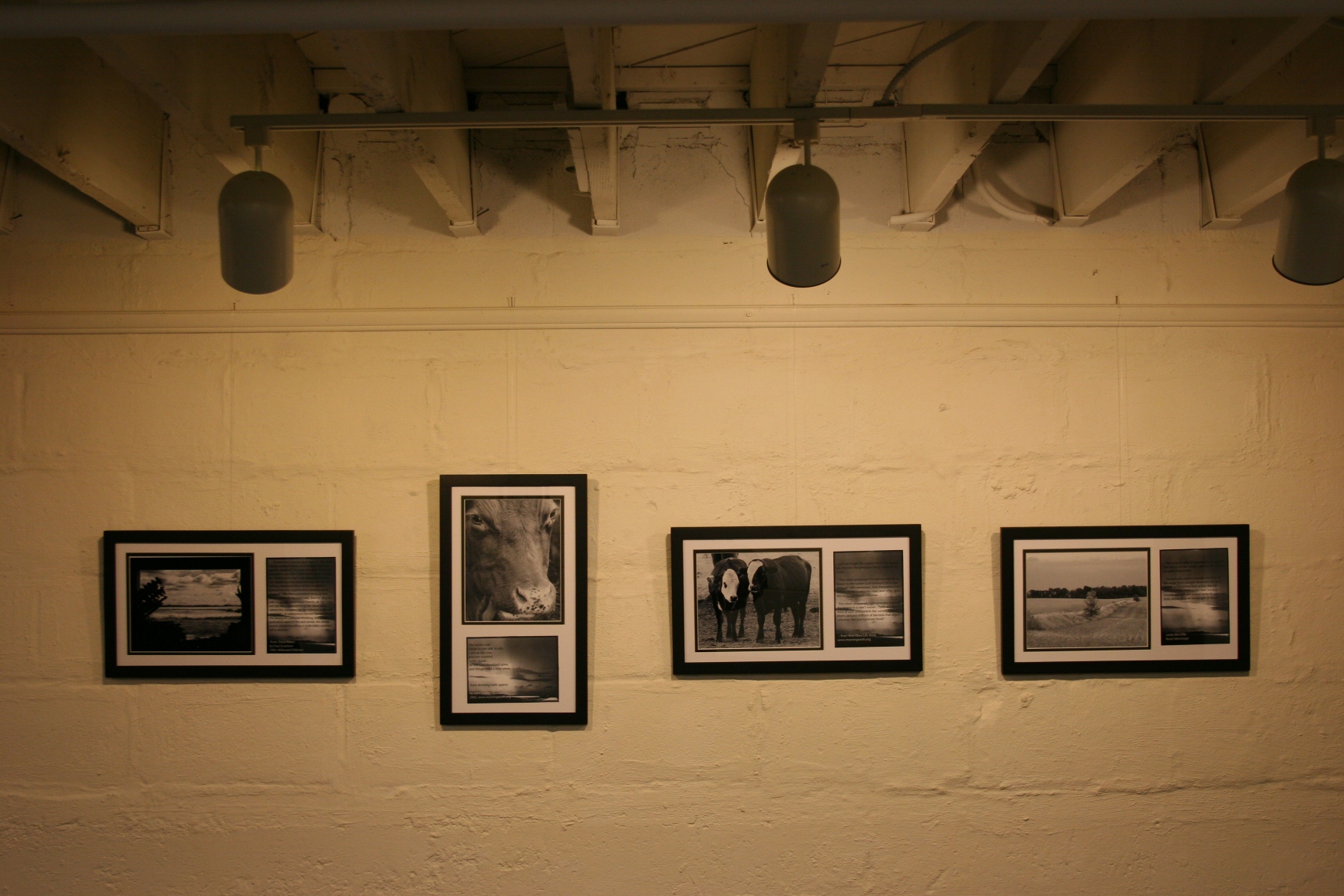
Several of Kay's images include cattle, following the exhibit's rural theme.

FYI: Both artists’ projects were supported by grants from the Prairie Lakes Regional Arts Council with funding provided by the McKnight Foundation. Their exhibits run through March 18.

Kay created a previous, similar project, “Blessed Are the Hands That Have Served,” focusing on photos of 13 retired School Sisters of Notre Dame.

Click here for more information about the Arts Center of Saint Peter.

Check back for another post from the art center wherein you will meet two more artists.

© Copyright 2012 Audrey Kletscher Helbling


Preserving central Wisconsin’s rural heritage via on-the-road photography January 5, 2012

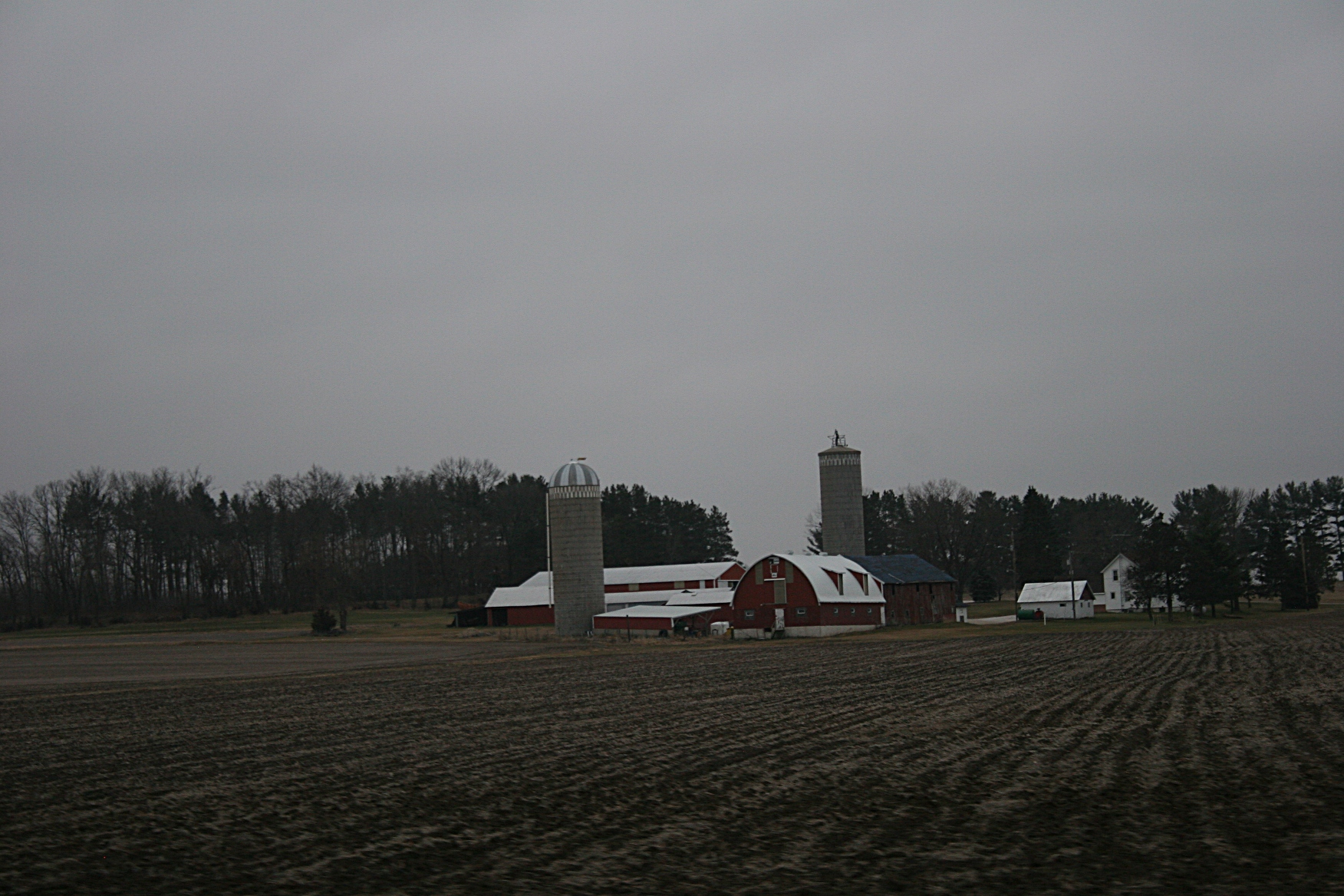
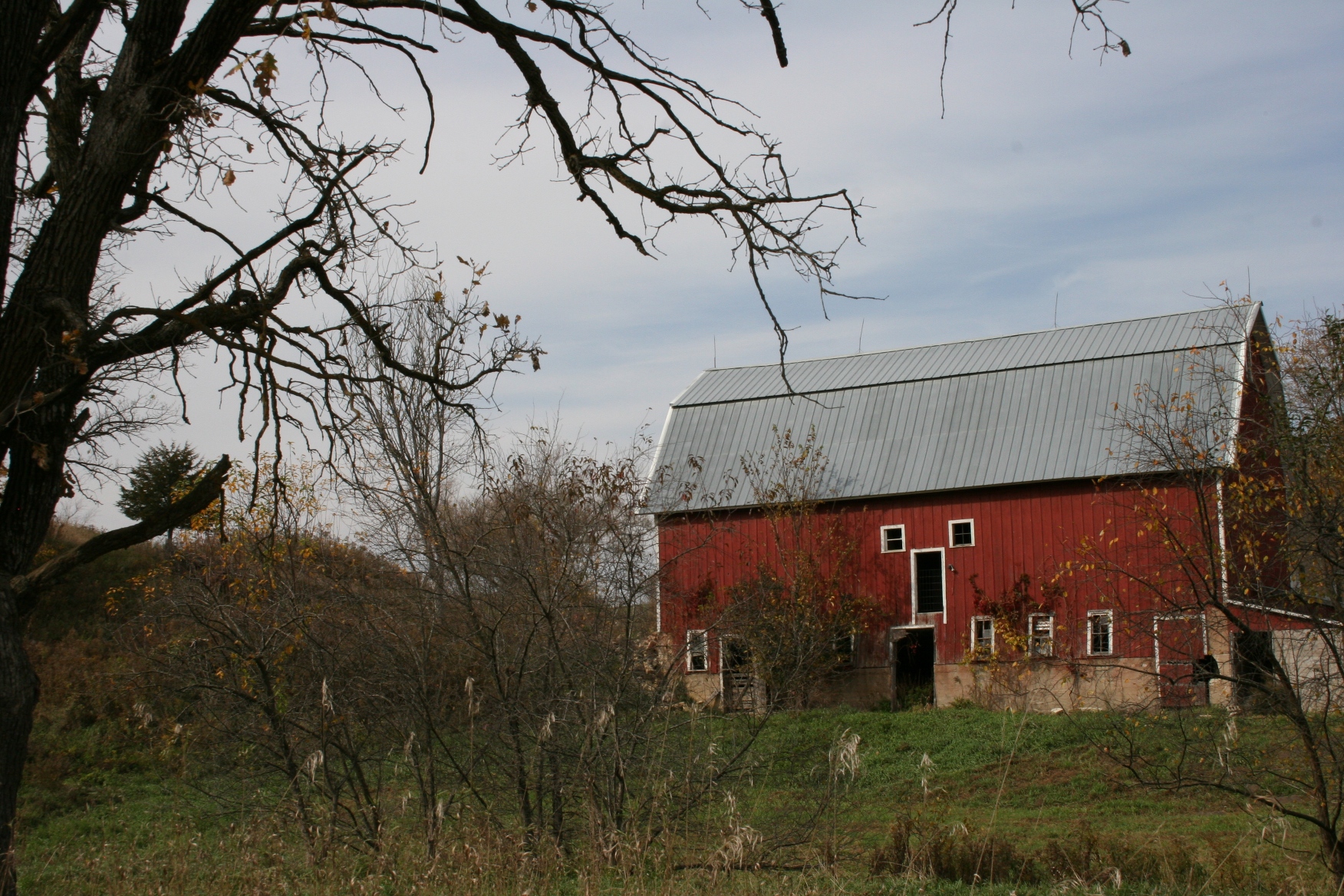
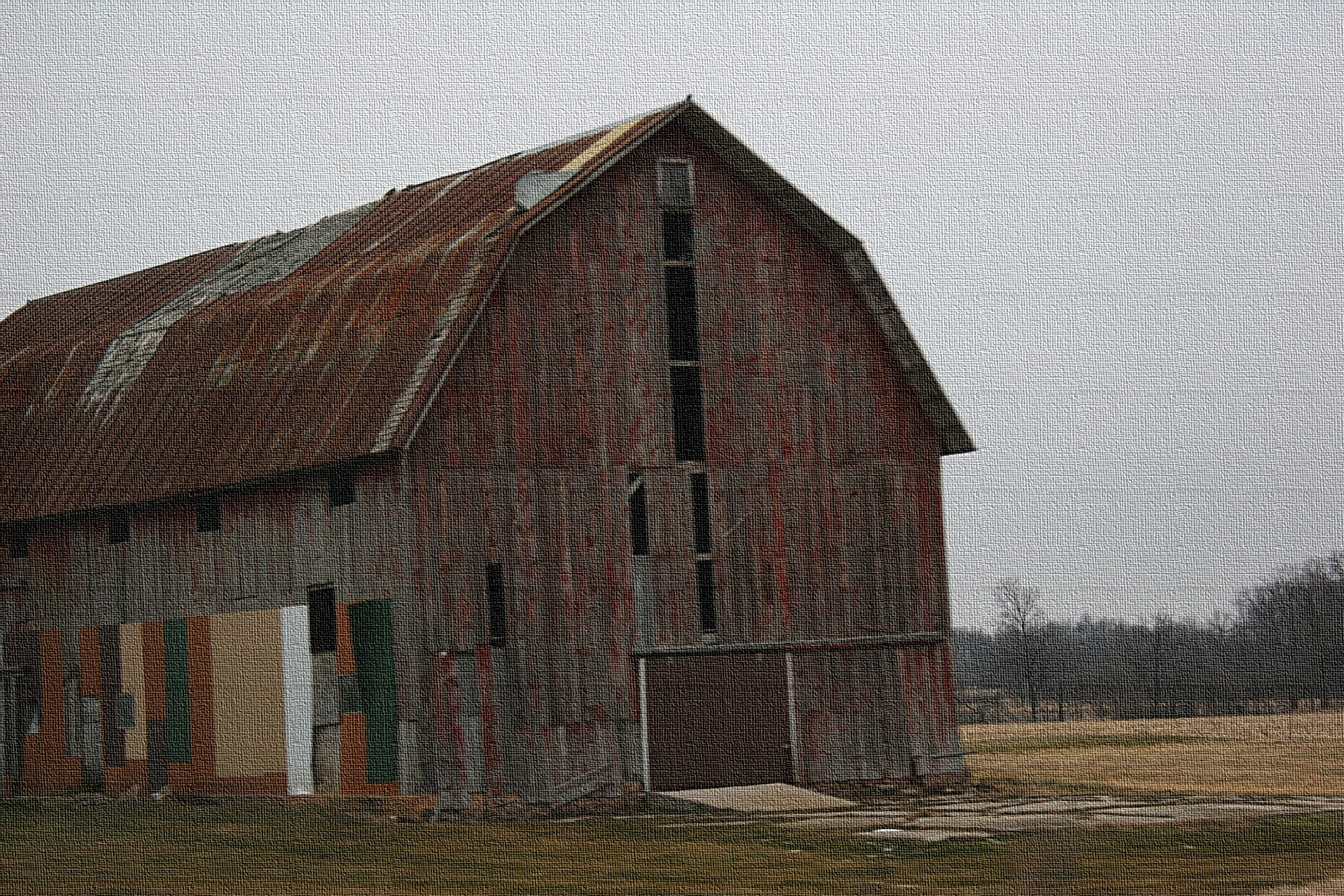
Each time I see this Wisconsin barn, I think of the biblical story of Joseph's coat of many colors.

ON OUR FOURTH TRIP through central Wisconsin in a year along the same route—Interstate 90 to Interstate 94 in Tomah then on Wisconsin Highway 21 to Oshkosh, up U.S. Highway 41 to Appleton—I’m getting to know the Dairyland state from her western to near eastern borders.

She’s a beautiful state of rolling hills, flat marsh land, stands of packed pencil-thin pines, too many towns whose names end in “ville,” infinite piles of stacked firewood, cranberry bogs and potato patches, muskrat mounds, cheese stores, Packers fans, small-town bars and barns—oh, the barns that I love to photograph.

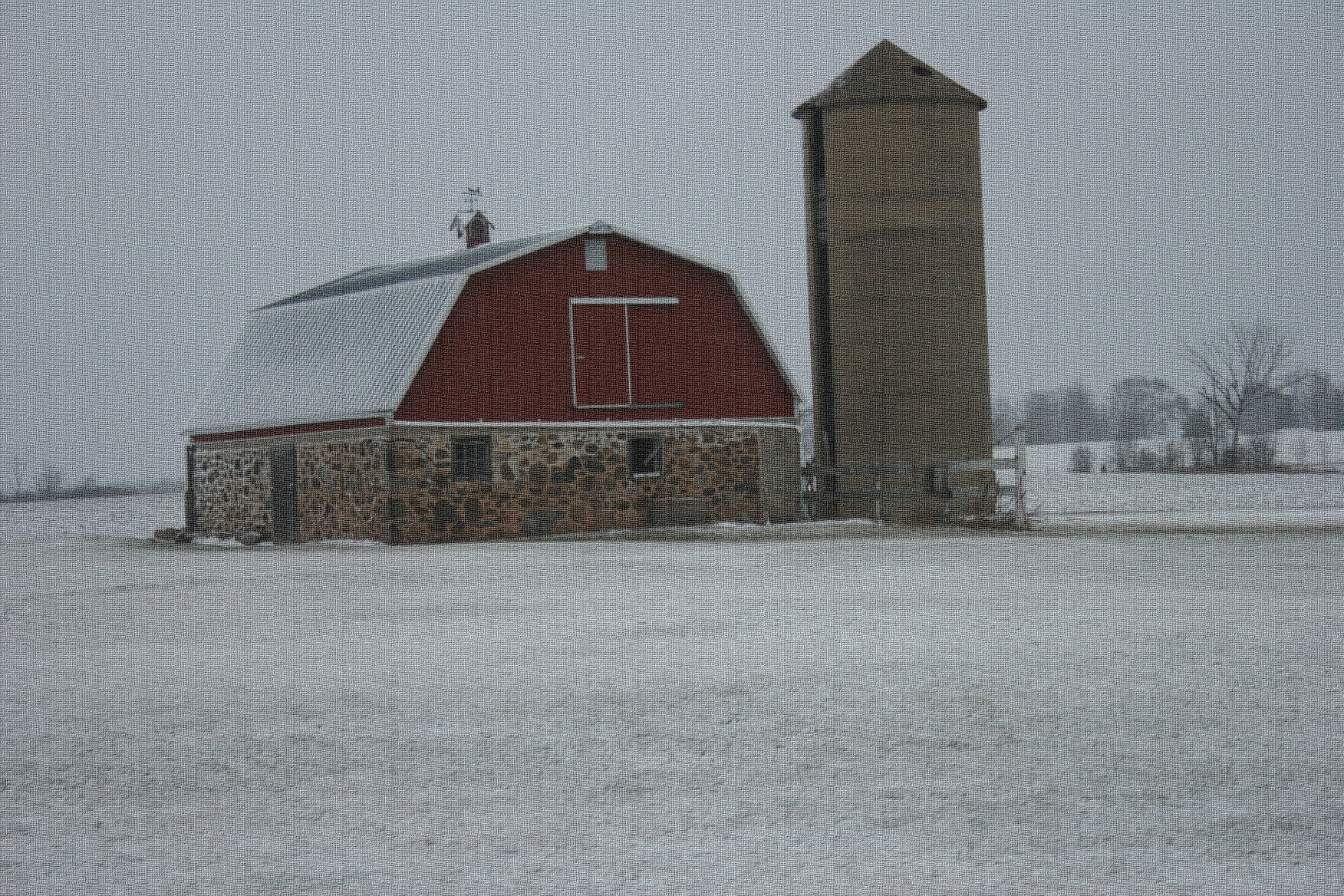
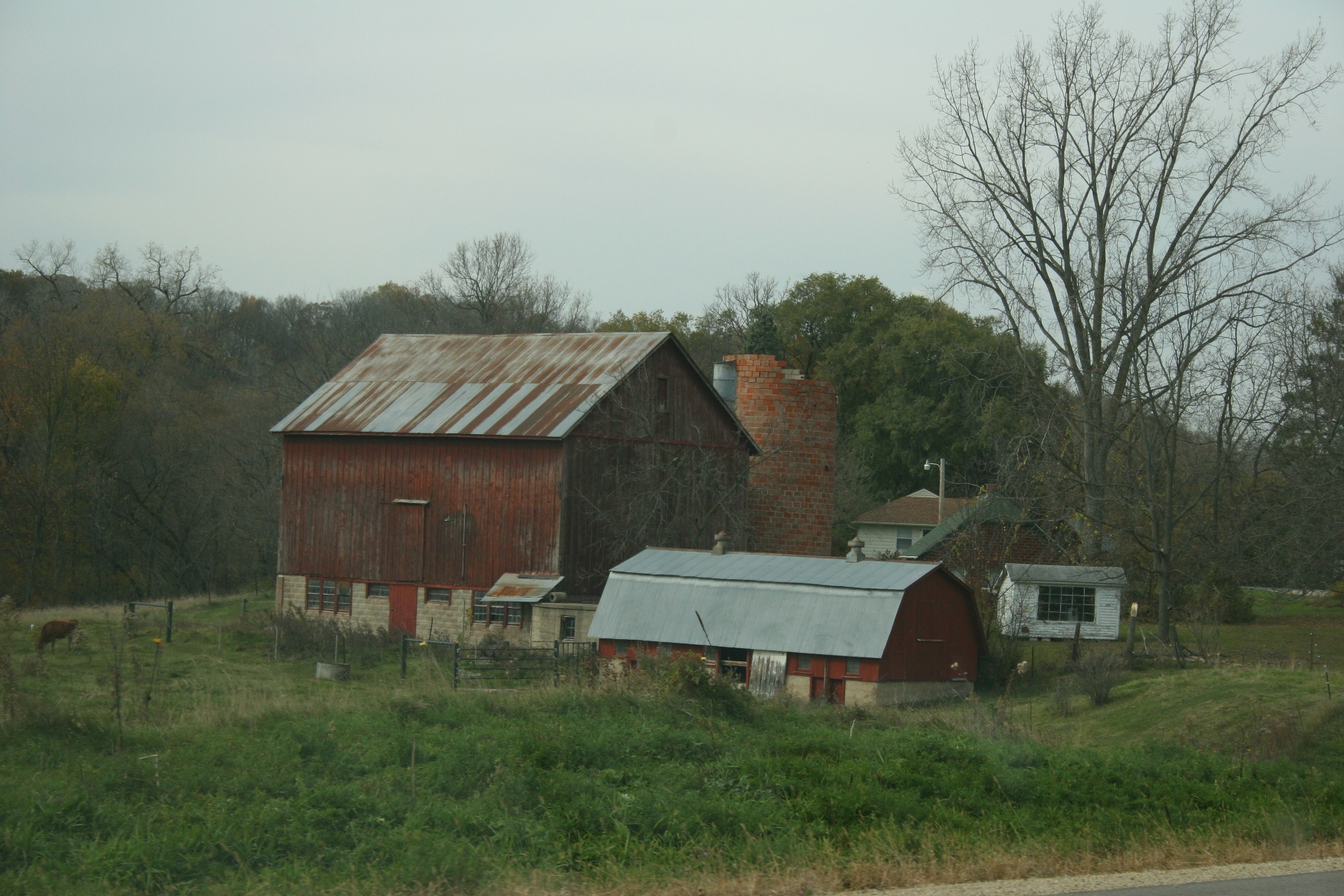
One of my favorite barns along Wisconsin Highway 21 because of the stone walls.

As I’ve done on every 600-mile round trip to and from our second daughter’s Appleton home, I capture the scenery via on-the-road photography, meaning I photograph through the passenger side window or windshield of our vehicle at highway speeds. Sometimes I manage to snap a well-composed image. Other times I fail to lift my camera, compose and click in time and miss the photo op.

Journey after journey, I find my eyes drawn to the many old barns that are so much a part of Wisconsin’s landscape and heritage. And mine. Only in Minnesota.

I’ve seen every type of barn, from the well-preserved to the crumbling, pieced-together-with-tin structure. I know that any barn, once left to fall into a rotting pile of boards, will never be replaced by an equally grand structure.

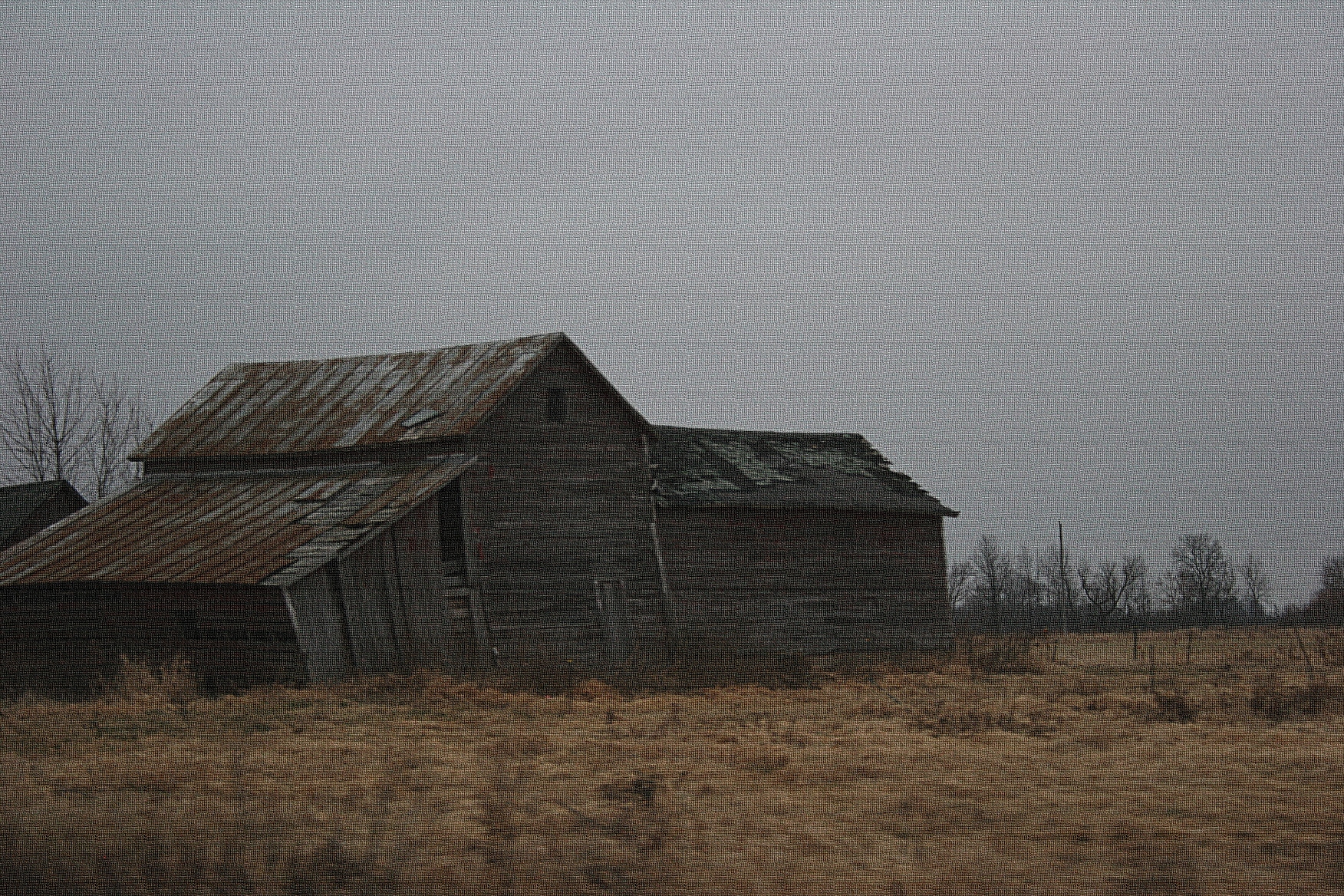
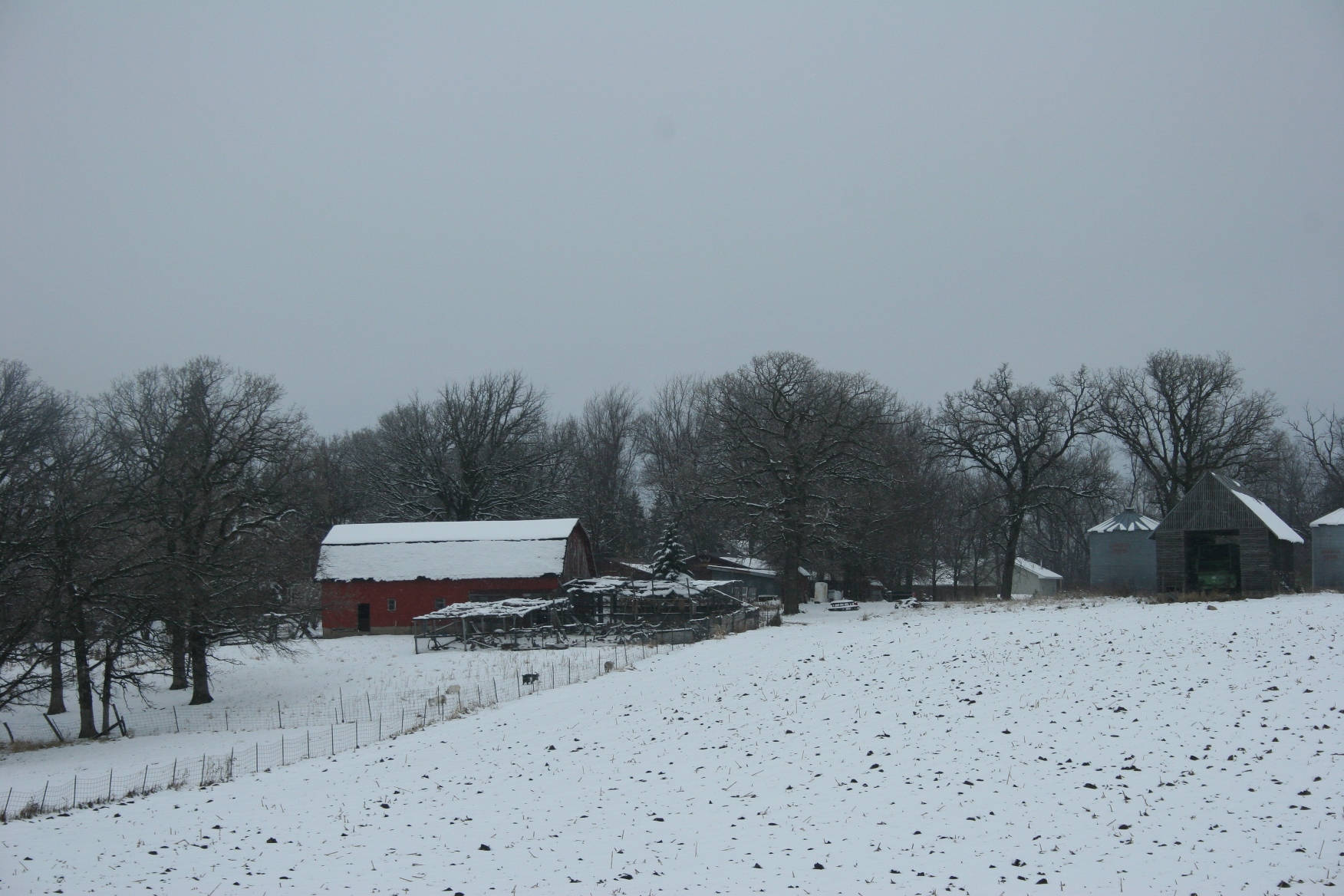
A pieced together weathered barn blends into the gray landscape on a dreary winter afternoon.

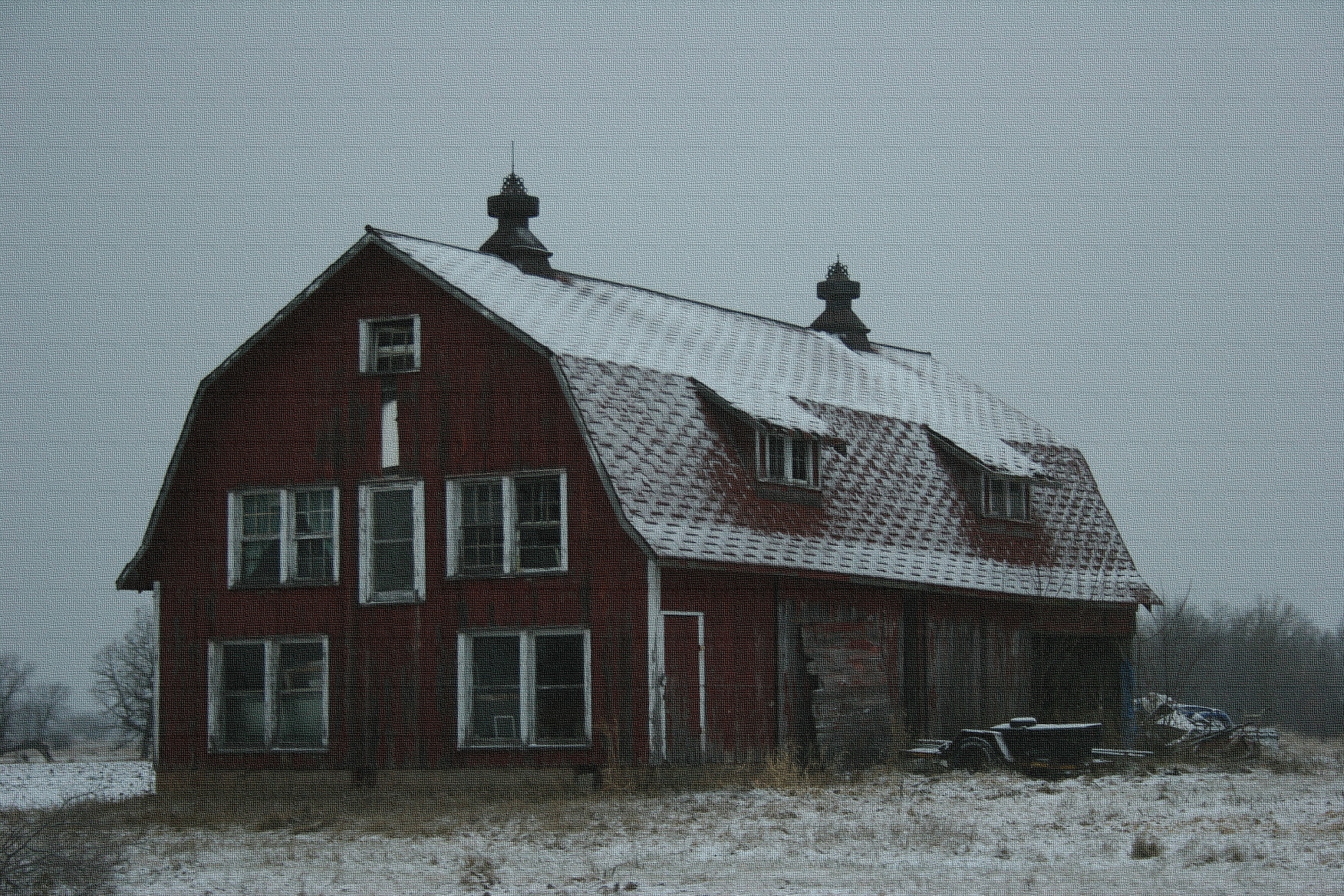
A once grand barn shows the first signs of falling into disrepair.

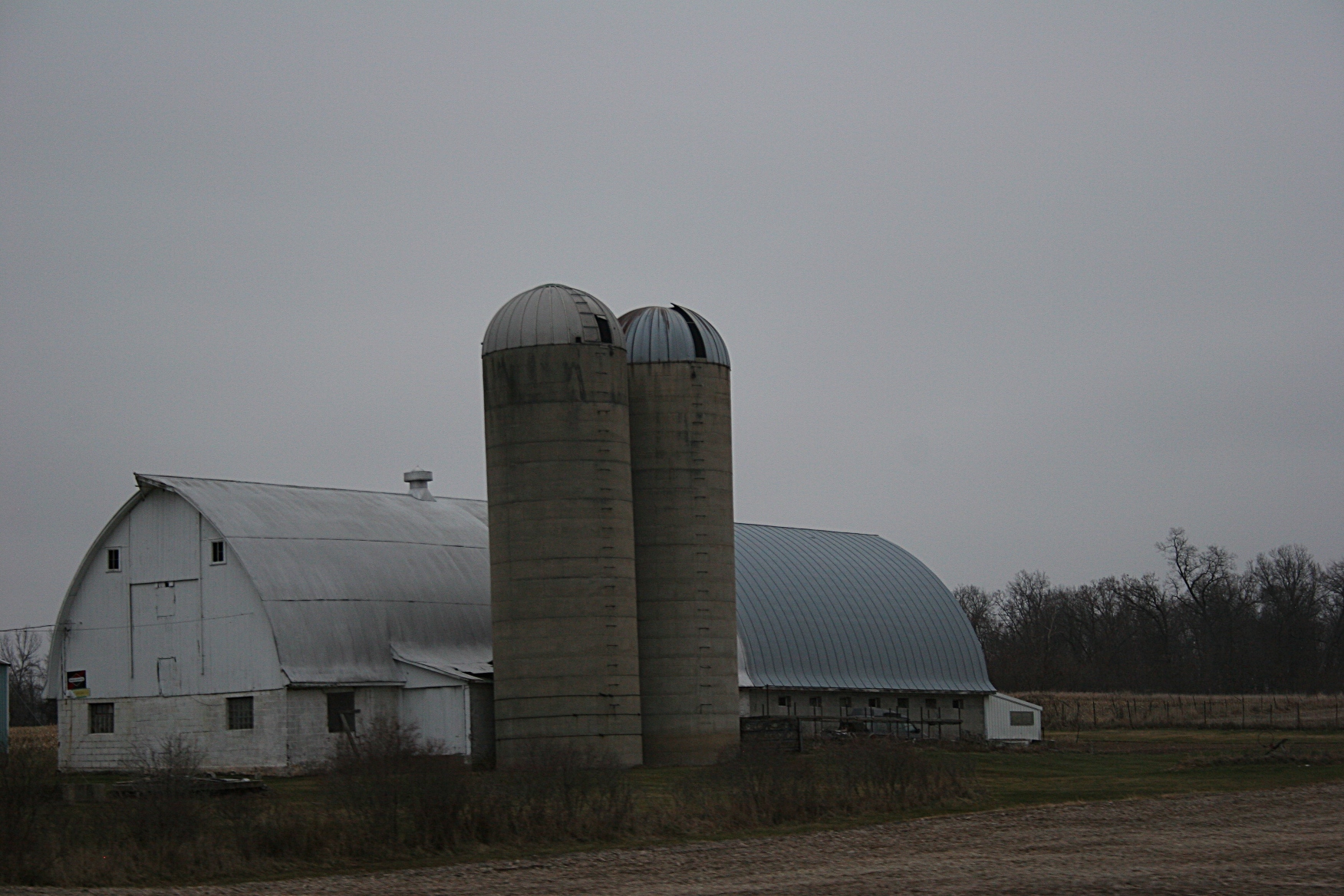
The occasional white barn pops up among the characteristically red barns.

Majestic barns, rising sturdy and proud above the land, are seldom crafted anymore. Instead, mundane metal rectangles sprawl, without any character or beauty, across the landscape. Such structures hold no artistic, but only practical, value on the farm.

Via my barn photography, I am documenting for future generations a way of life—the family farm—which, in many places, has already vanished.

If my photos inspire you to appreciate barns and rural life and the land and our agricultural heritage and the men and women who work the soil and their importance in this great country of ours, then I will have passed along to you something of great worth.

An especially picturesque farm site along Wisconsin Highway 21.

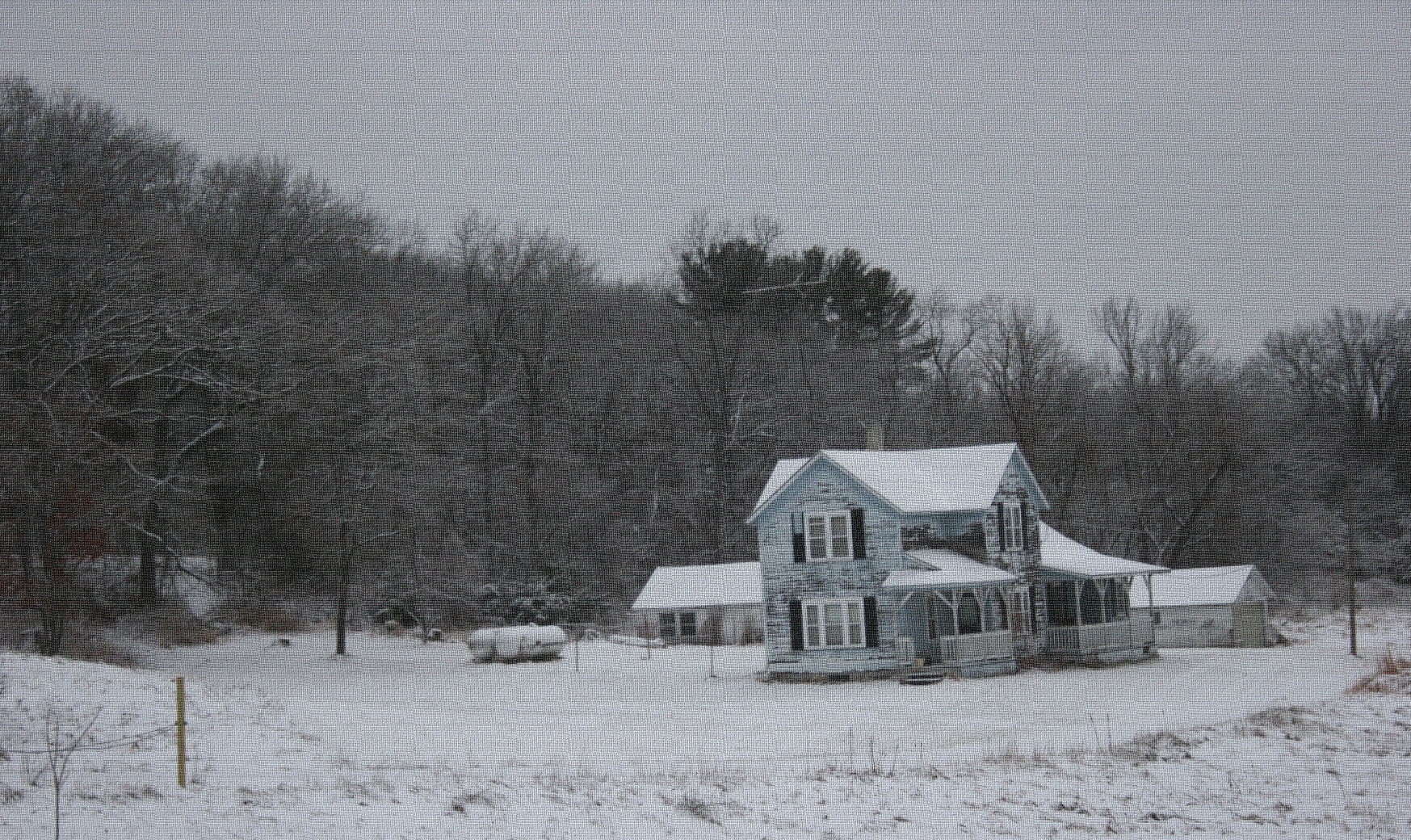
The muted blue-grey of this old farmhouse blends seamlessly with the dreamy landscape on a snowy New Year's Day afternoon in central Wisconsin.

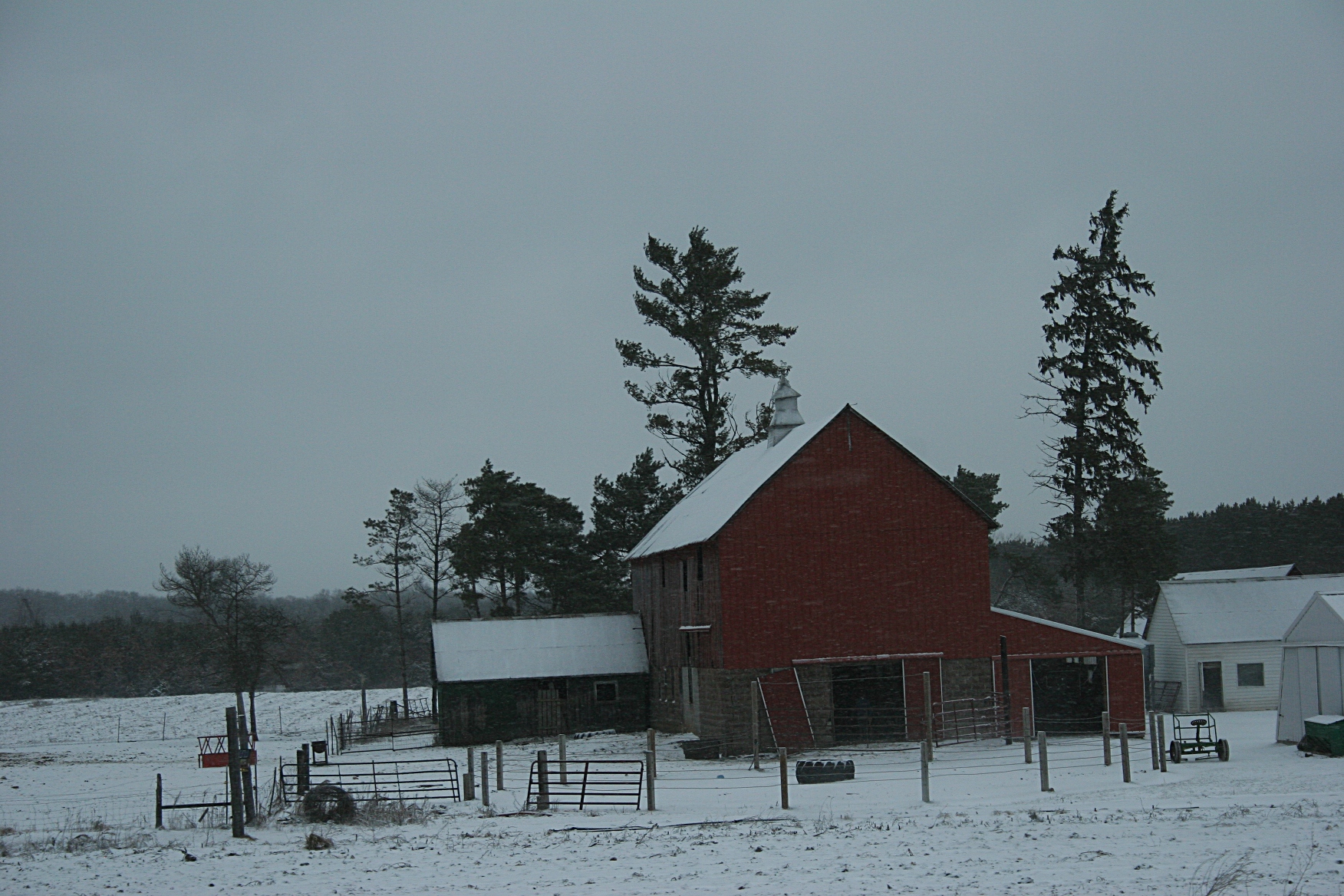
Contrasted against snow, red barns are particularly visually appealing.

NOTE: The above photos were taken on December 30, 2011, and January 1, 2012, along Wisconsin Highway 21 in the central part of the state primarily between Wautoma and Oshkosh.

I have applied a canvas style editing technique to most of the images, creating a quality that is more painting than photo.

© Copyright 2012 Audrey Kletscher Helbling
 

Reflections on harvest time in southern Minnesota September 27, 2011

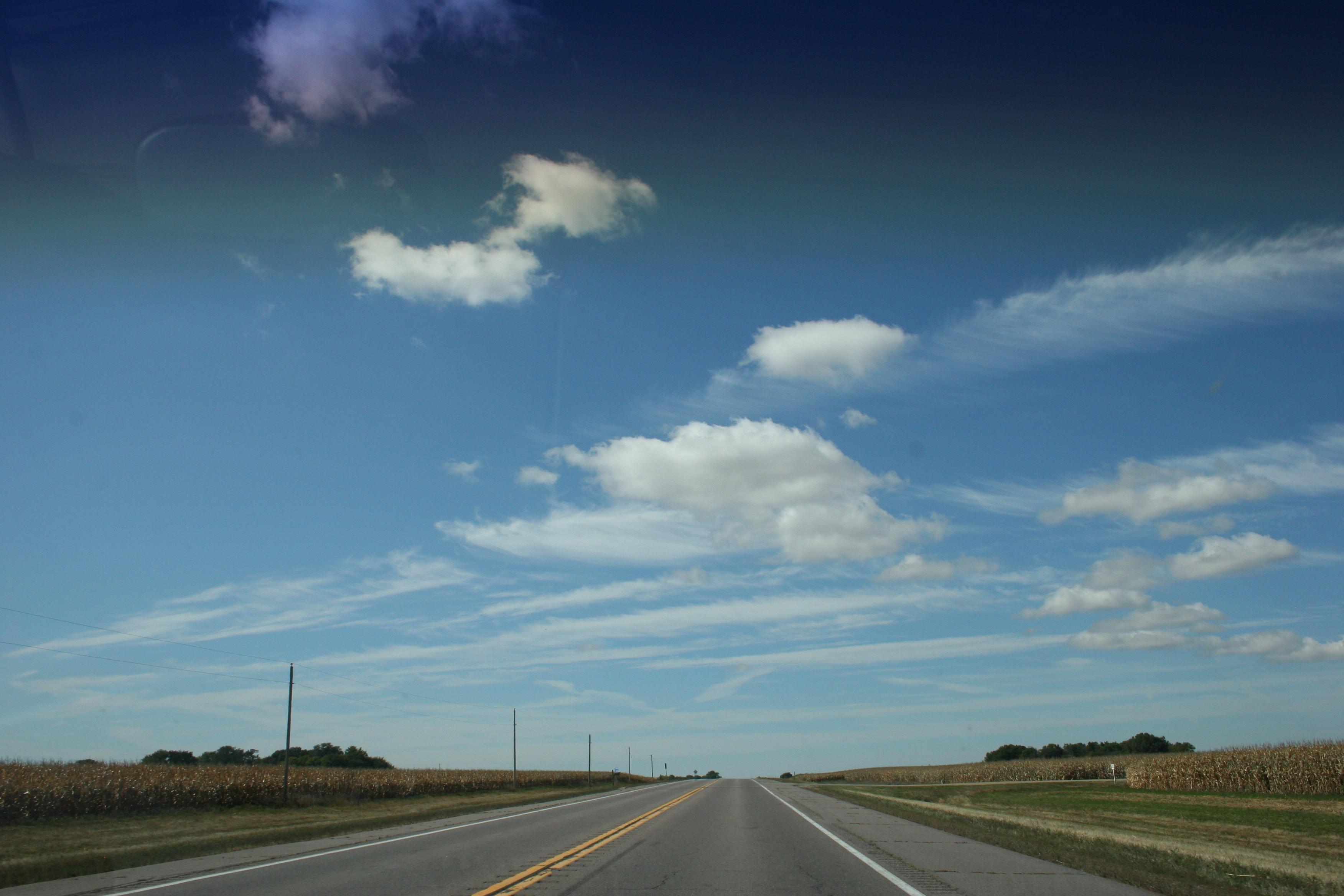
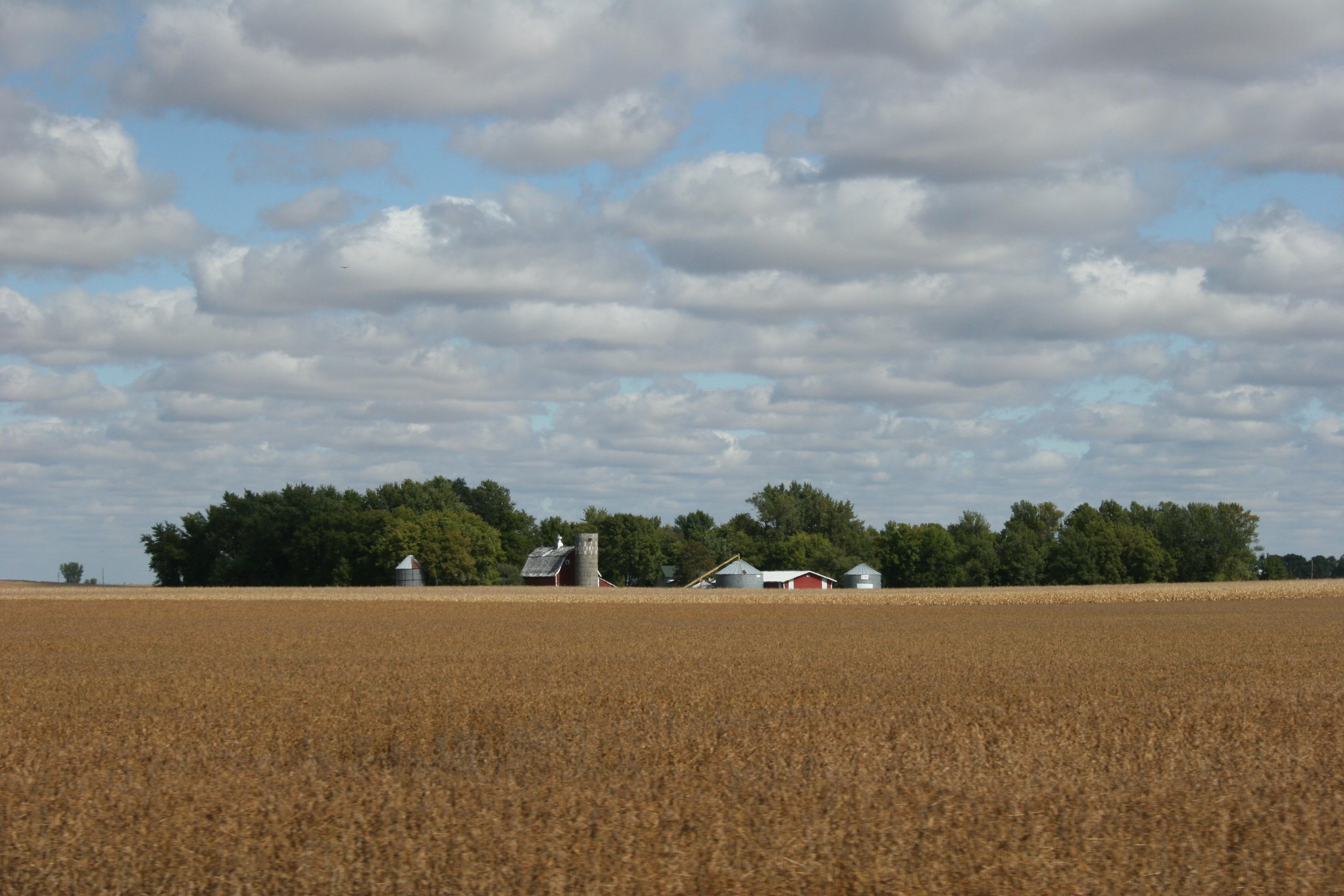
Westbound on U.S. Highway 14 between Nicollet and Courtland in southern Minnesota Friday afternoon.

I LOVE THIS LAND, this rural southern Minnesota.

You can take your woods and your lakes and your boats or your big city freeways and skyscrapers and traffic jams.

I will take sky and a land that stretches flat into forever.

I like my space open, not hemmed in by trees packed tight in a forest. I want to see into forever and beyond, the horizon broken only by the occasional grove hugging a building site.

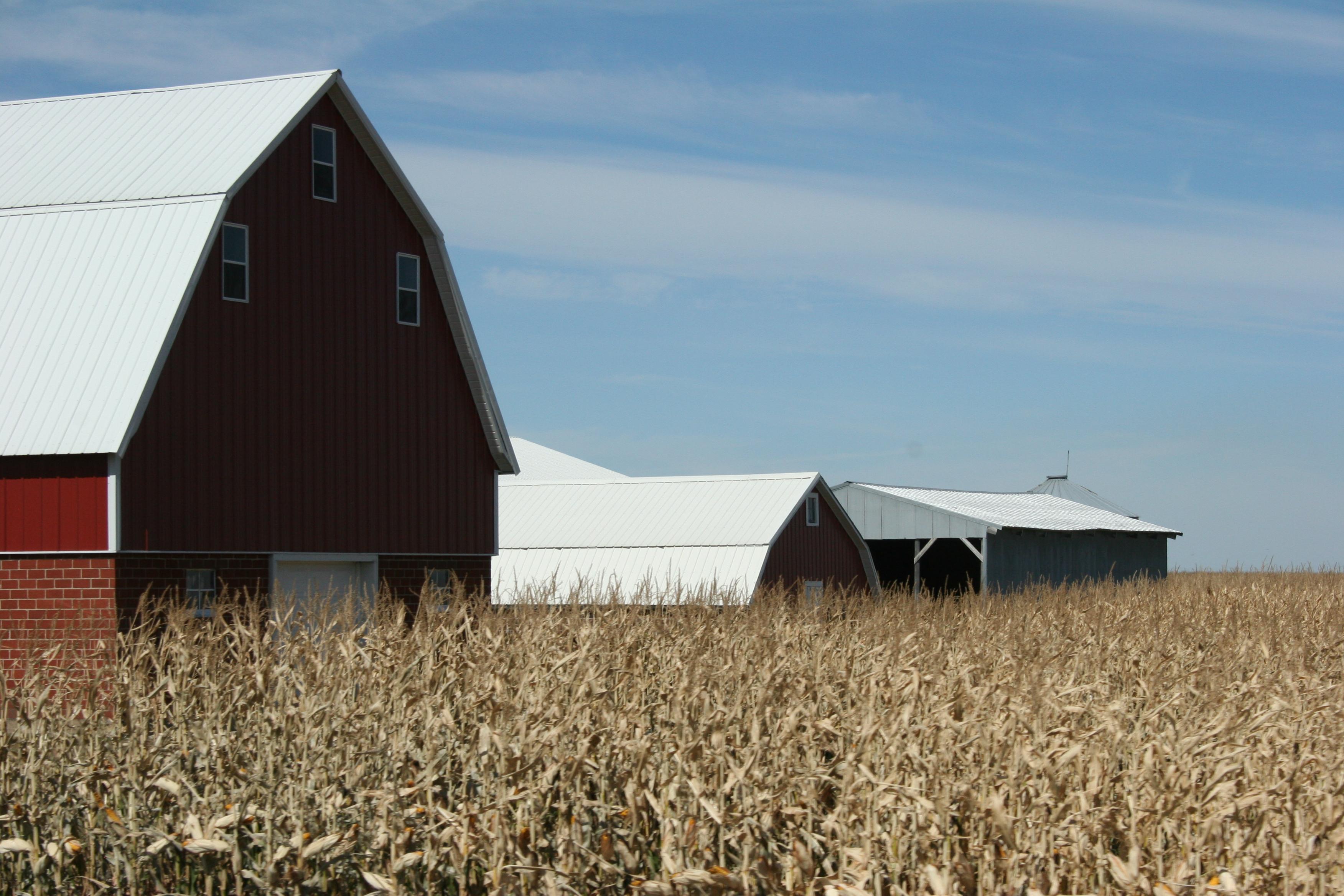
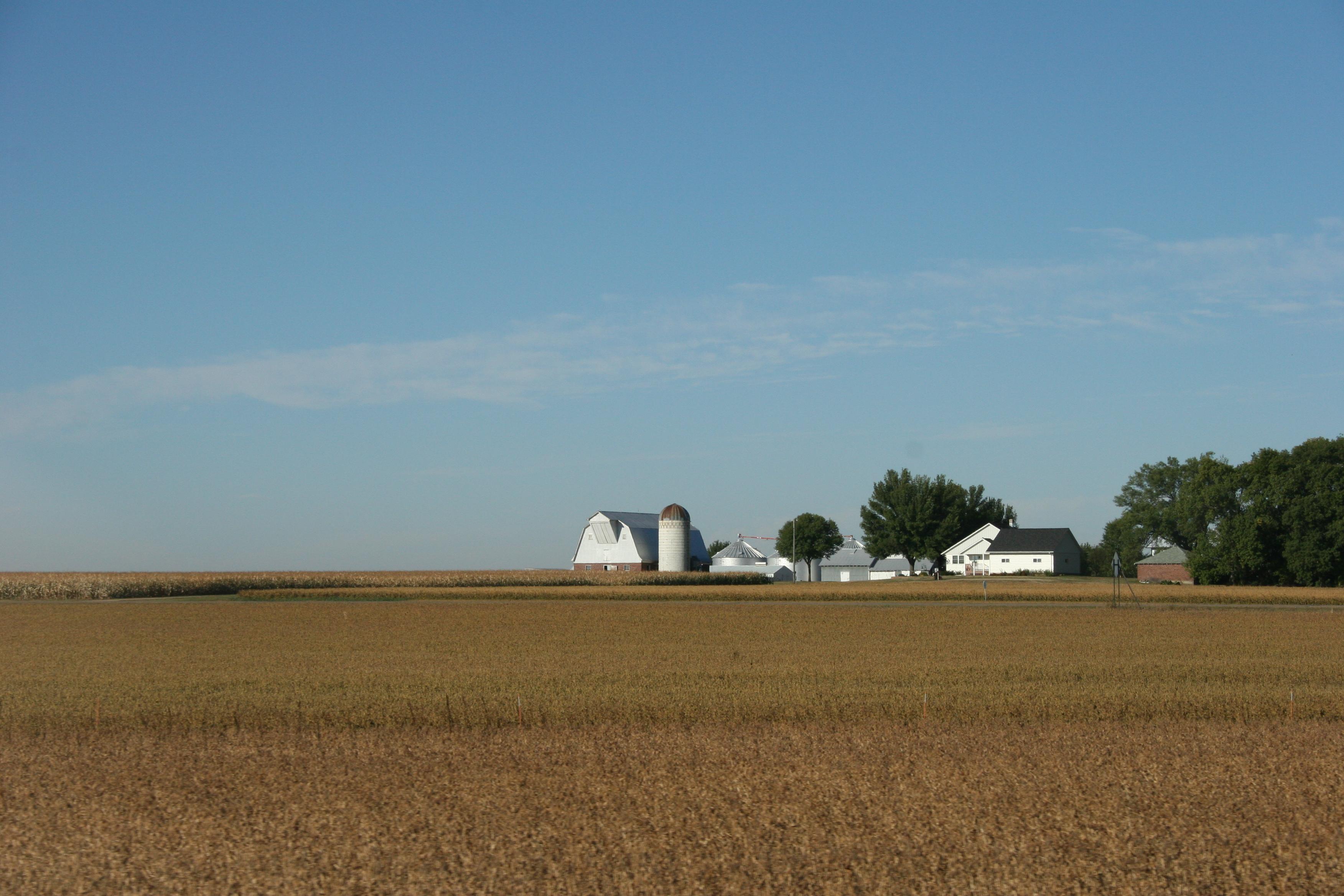
A farm site between Mankato and Nicollet, as seen from U.S. Highway 14.

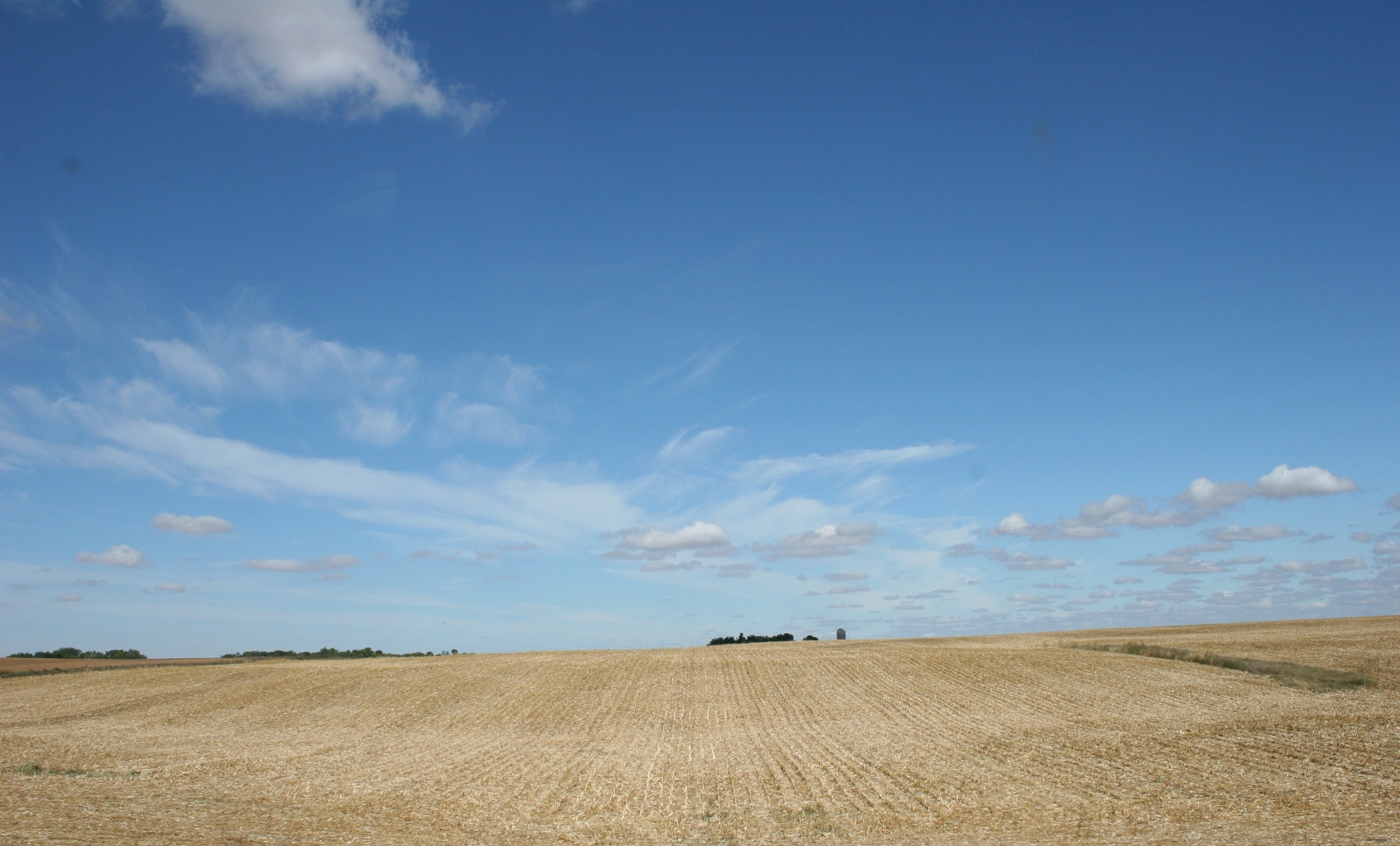
A harvested corn field between Nicollet and Courtland.

I want corn and soybean fields ripening to the earthy hues of harvest. Not gray cement or dark woods.

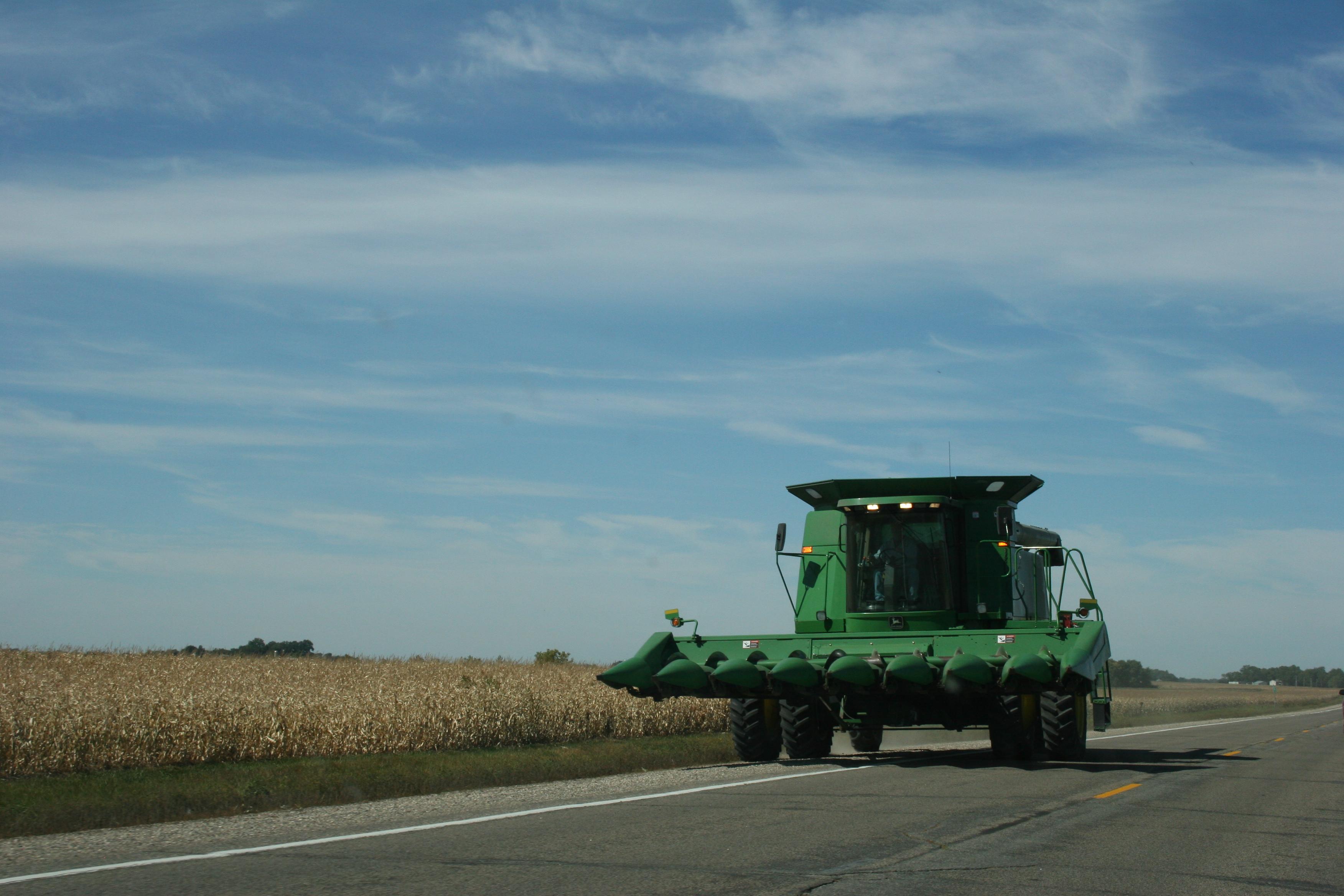
Give me small-town grain elevators and red barns and tractors, and combines sweeping across the earth.

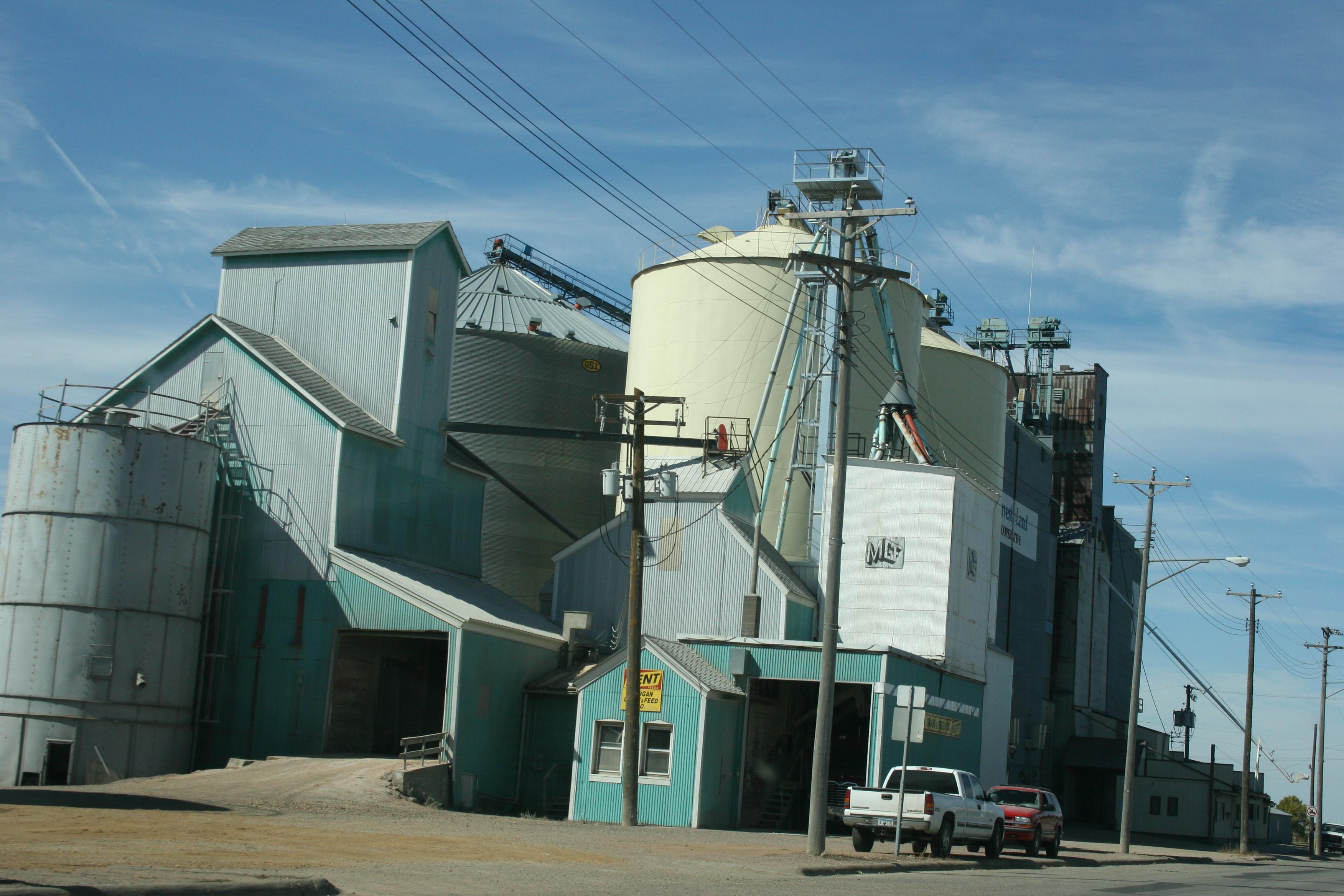
The elevator complex in Morgan in Redwood County.

A farm site along the twisting back county road between New Ulm and Morgan.

A John Deere combine spotted on the highway just outside of Morgan.

This is my land, the place of my heart.

Although I left the farm decades ago, I still yearn, during autumn, to return there—to immerse myself in the sights and smells and sounds of harvest. The scent of drying corn husks. The roar of combines and tractors. The walk across the farm yard on a crisp autumn night under a moon that casts ghost shadows. Wagons brimming with golden kernels of corn. Stubble and black earth, turned by the blades of a plow.

Today I only glimpse the harvest from afar, as a passerby. Remembering.

A farm site between Morgan and Redwood Falls in southwestern Minnesota.

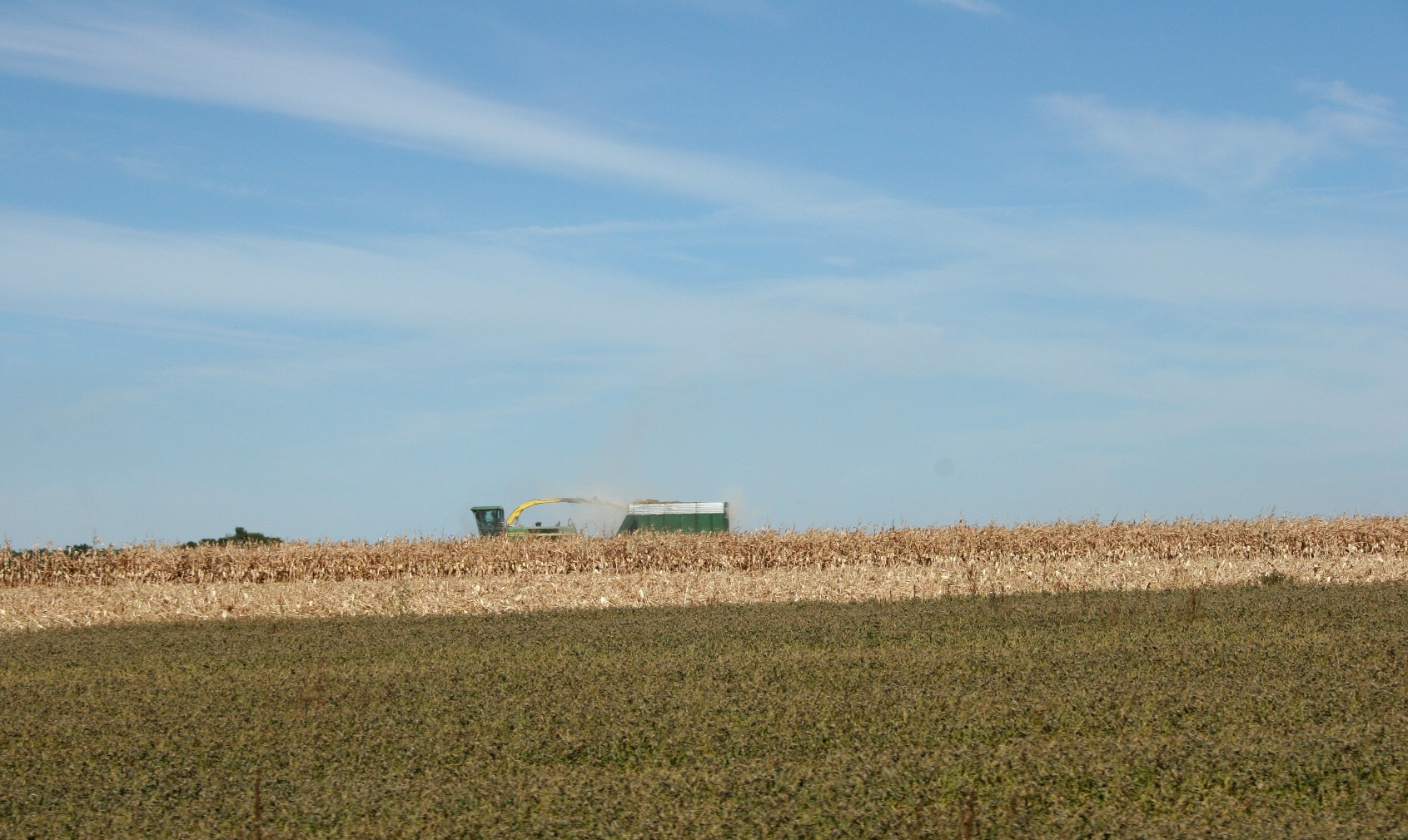
Harvesting corn on Saturday just outside of Courtland.

Chopping corn into silage between New Ulm and Morgan.

ALL OF THESE IMAGES (except the elevator) were taken at highway speed from the passenger side of our family car while traveling through southern Minnesota on Friday and Saturday.

© Copyright 2011 Audrey Kletscher Helbling
 

A geography quiz & an award-winning tech program September 2, 2011

OK, readers, it’s time for a little geography quiz.

Where are these towns located?

  • Bellingham
  • Nassau
  • Madison
  • Marietta
  • Dawson
  • Boyd

If you know/guessed, or cheated and googled, you likely would have answered as follows:

  • Bellingham,Washington
  • Nassau in The Bahamas
  • Madison, Wisconsin
  • Marietta, Georgia or Marietta, Ohio
  • Dawson, Georgia
  • Boyd, Texas

However I would award you extra credit and move you to the head of the class if you gave these answers:

  • Bellingham, Minnesota
  • Nassau, Minnesota
  • Madison, Minnesota
  • Marietta, Minnesota
  • Dawson, Minnesota
  • Boyd, Minnesota

See, you can learn a lot by going online and reading information on sites like Minnesota Prairie Roots.

But not everyone has easy access to computers, or the technical skills to use one, especially in rural areas like those six small Minnesota towns in the list above.

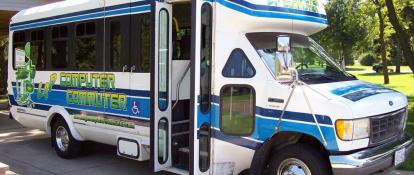
The folks in Lac qui Parle County understand that. And they’ve done something about the problem by bringing computers to the people via a mobile computer lab, LqP Computer Commuter.

The LqP Computer Commuter (Photo from online Minnesota Community Pride Showcase application)

How’s that for an innovative idea, selected as one of 30 Minnesota Community Pride Showcase winners that will be recognized on Saturday at the Minnesota State Fair?

Back in Lac qui Parle County, the computer commuter (a converted small handicapped accessible commuter bus) hit the road last summer and now travels three days a week, parking for four hours in each town—Bellingham on Monday morning, then to Nassau in the afternoon; to Madison and Marietta on Tuesday; and to Dawson and Boyd on Friday.

According to information submitted in the Minnesota Community Pride Showcase application, the mobile program has been well-received and continues to grow. You can read details about LqP Computer Commuter by clicking here.

The Lac qui Parle Economic Development Authority website, where you'll find basic info about the LqP Computer Commuter.

Aiming to increase digital literacy in a county with less than 8,000 residents, many of them over age 60, the mobile computer lab provides the public with free access to seven laptops and a lab coordinator and trainer.

Twelve local partners from the public and private sector support the project.

To the team who brainstormed and hatched this idea and to those who back the program, I applaud you. You are meeting a need in rural Minnesota.

I understand. I grew up in southwestern Minnesota and am aware how isolation, lack of funding, and more, often mean fewer opportunities.

When I was a child living on a farm outside of Vesta, I wanted nothing more than a library in town. Decades later my hometown of around 300 still doesn’t have a library, but at least the Plum Creek Bookmobile rolls onto Main Street once a month.

I expect residents and business people in Lac qui Parle County are thrilled to see the LqP Computer Commuter roll onto their Main Streets once a week.

I hope this idea catches on in other areas of rural Minnesota, and through-out the country. Rural residents should have as much access to technology, and the skills to use that technology, as those of us who live in more heavily-populated areas.

FYI: To read the list of winners in the Minnesota Community Pride Showcase, click here. The 30 winners will be recognized on Saturday at the Minnesota State Fair, where they also have an exhibit space. The fair has also awarded $500 to each winner.

Three programs in my county of residence, Rice County, are among those to be honored for their community efforts: Faribault Summer Youth Programs, Rice County Olympic Day and Northfield LINK Center.

© Copyright 2011 Audrey Kletscher Helbling
 

Guess the pig’s weight and other farm stories from New Richland July 29, 2011

VENTURE INTO RURAL MINNESOTA—and we’re talking the small farming communities here, not what metro folks call “Greater Minnesota” or “outstate Minnesota”—and you’ll connect to our state’s agrarian roots in some interesting ways.

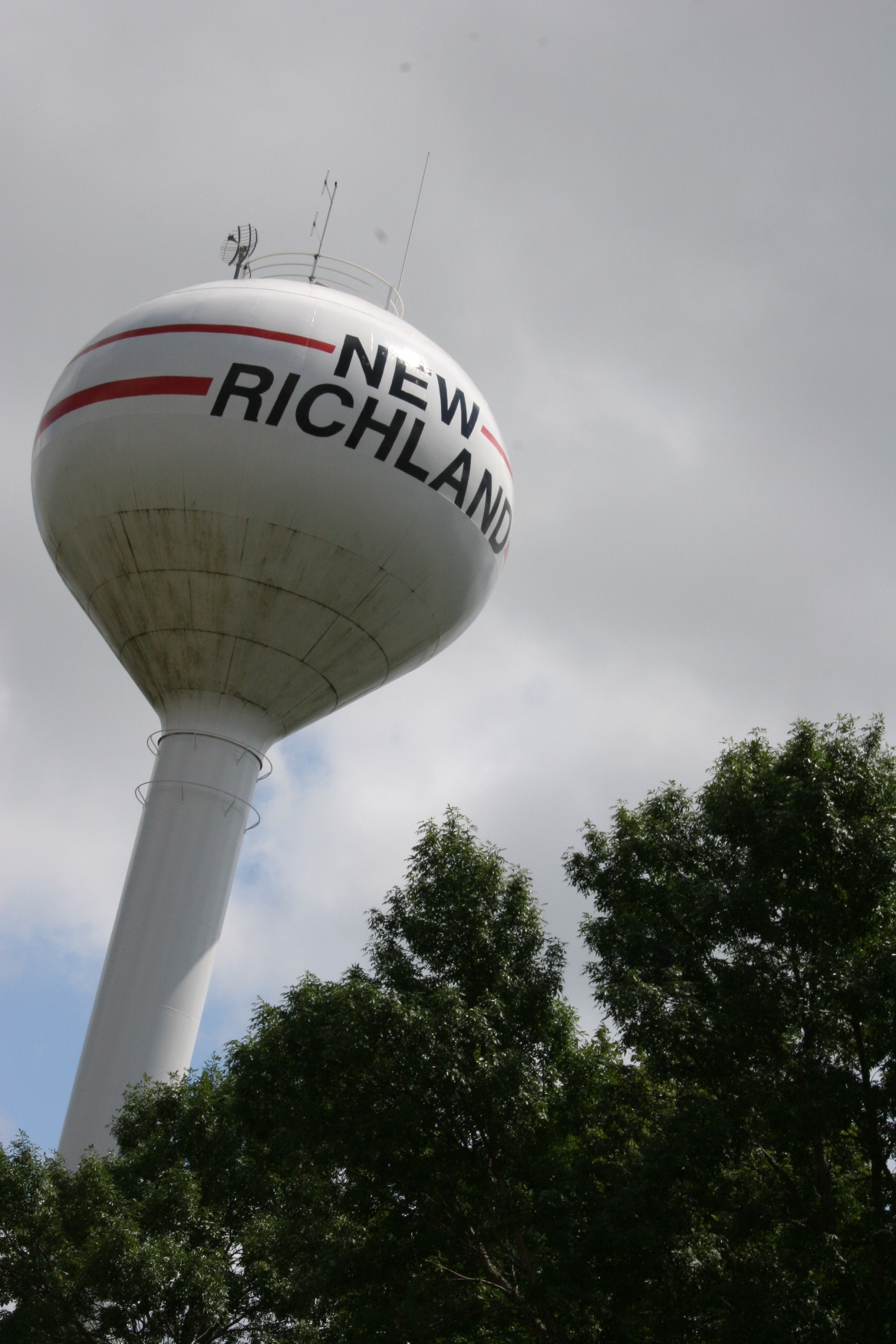
Take New Richland, for example, a town of 1,200 in southeastern Waseca County. Drive into town and you’ll see the usual grain bins and elevator and other farm-related businesses you would expect in an agricultural community.

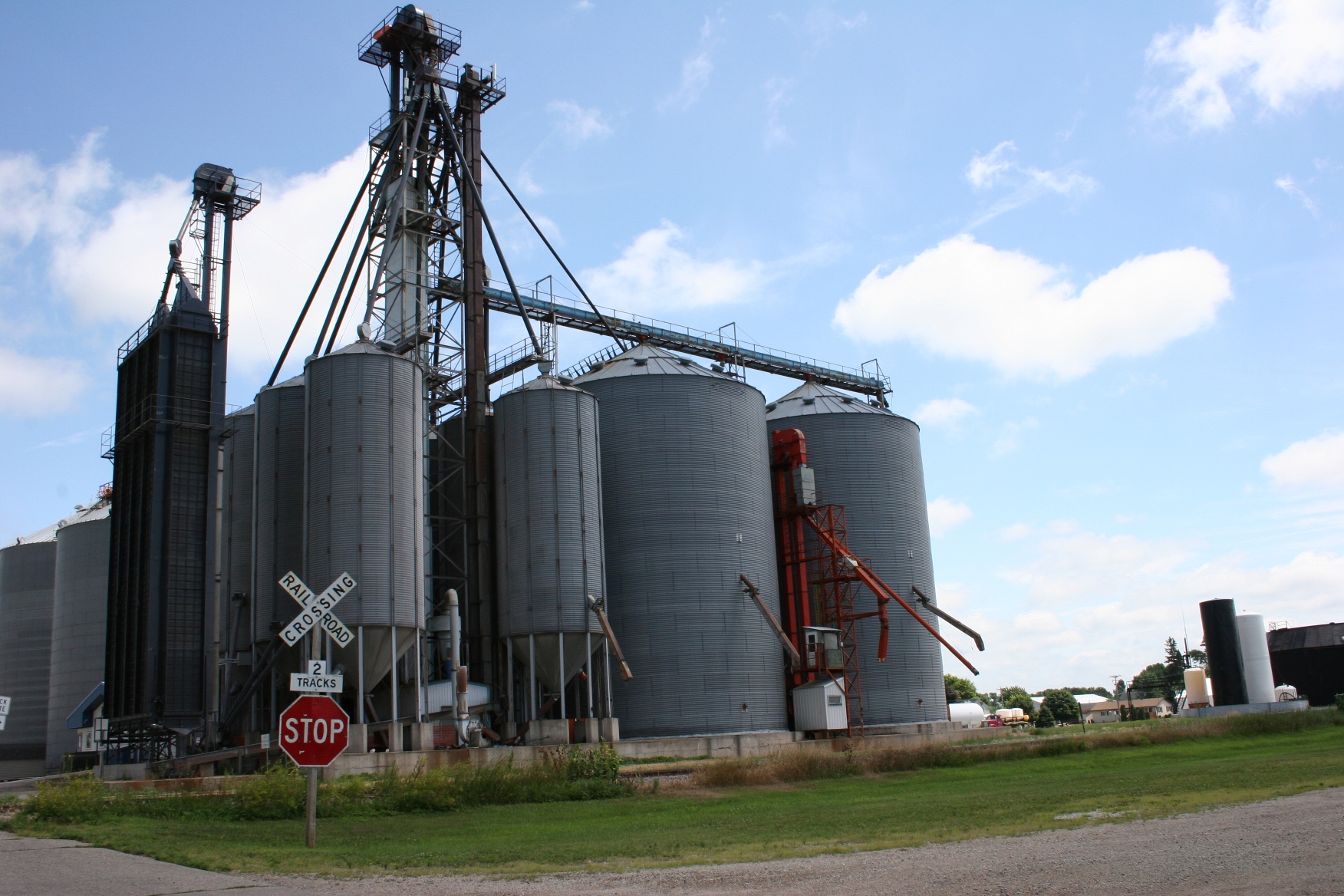
A cluster of grain bins in the heart of New Richland.

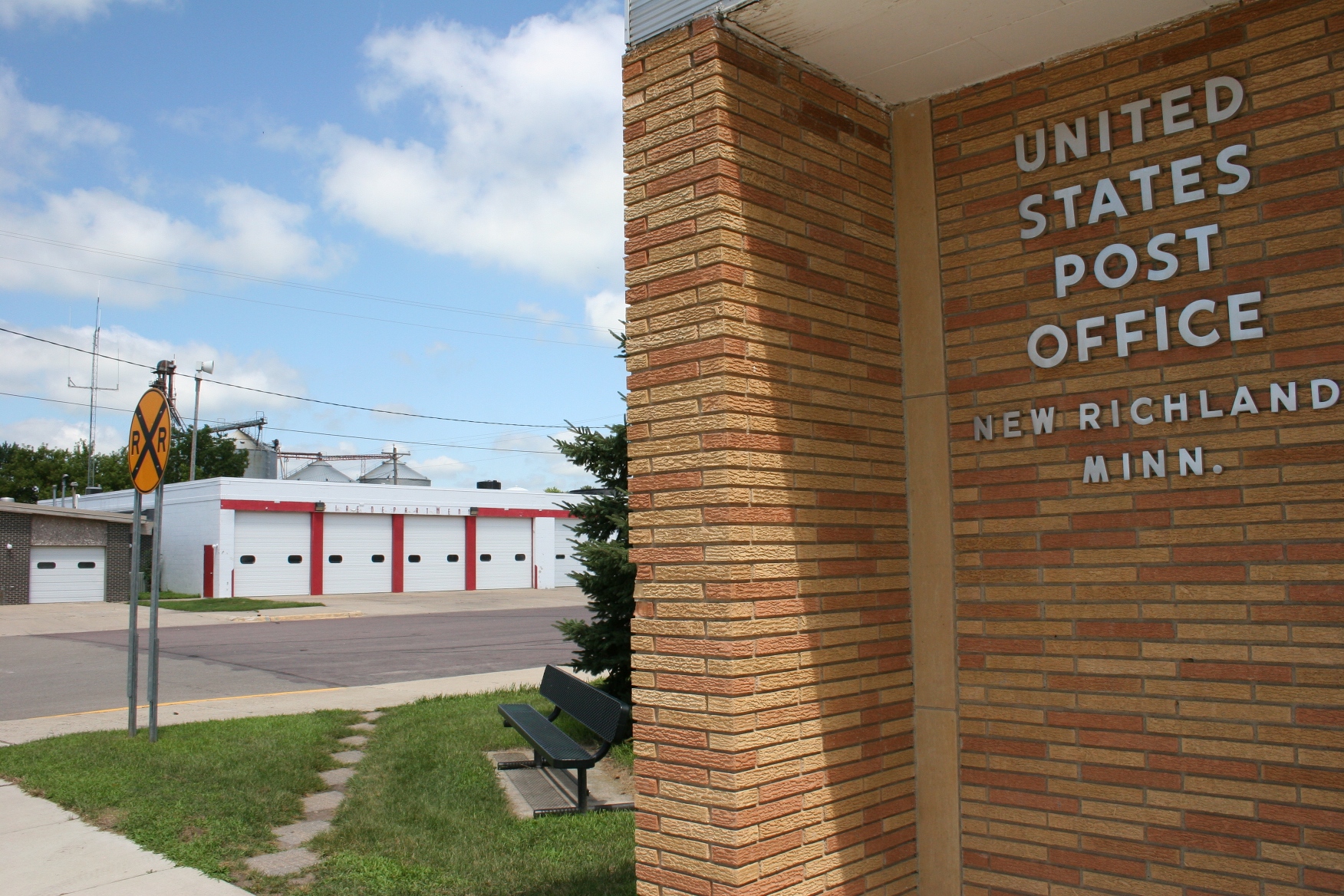
But then explore a little more and you’ll discover just how much this town values its agricultural heritage. Take the post office. Peek around the corner…

A corner of the New Richland Post Office. Note the grain bins a few blocks away.

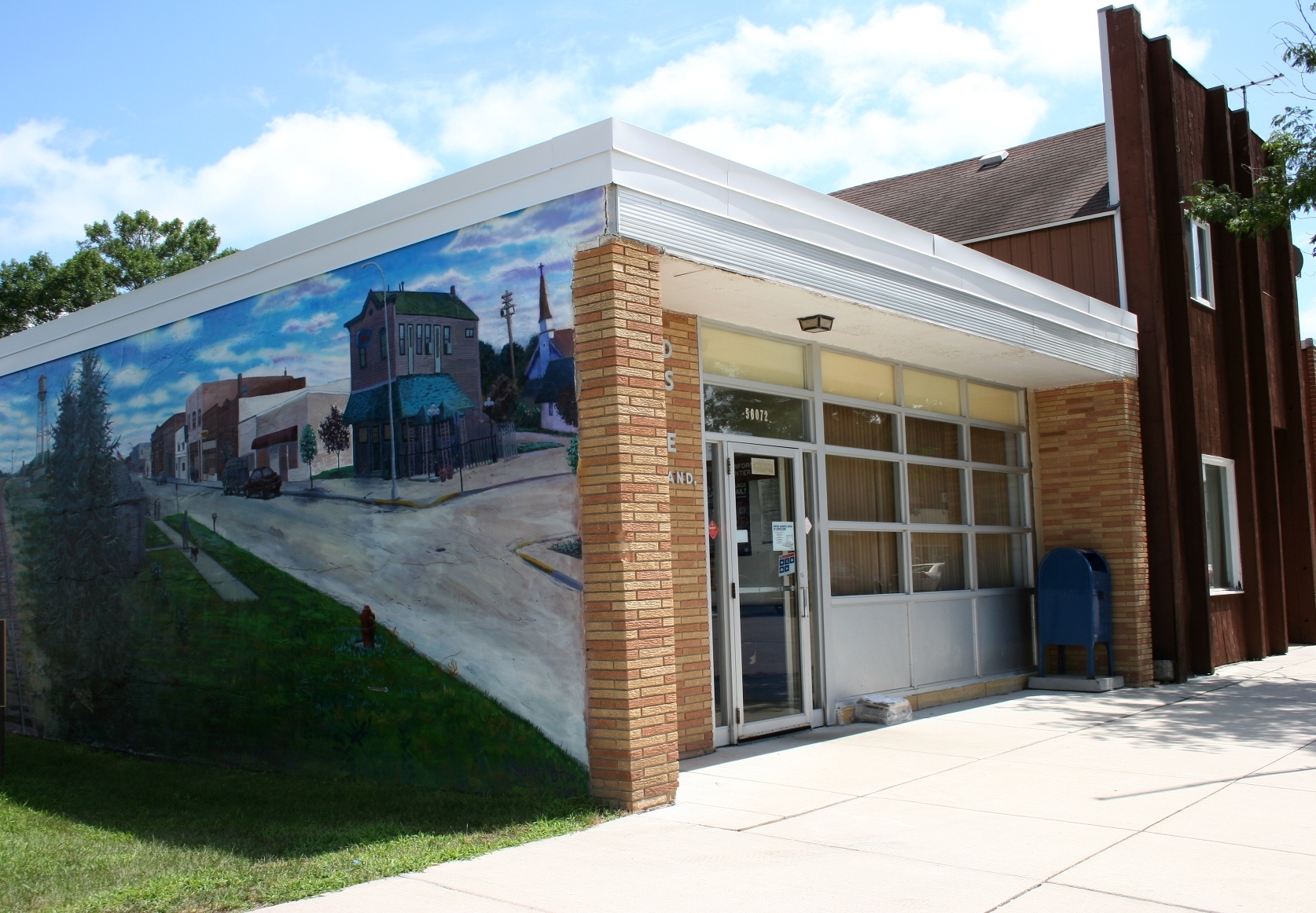
Around the post office corner you'll find this mural which reflects the connection between city and country.

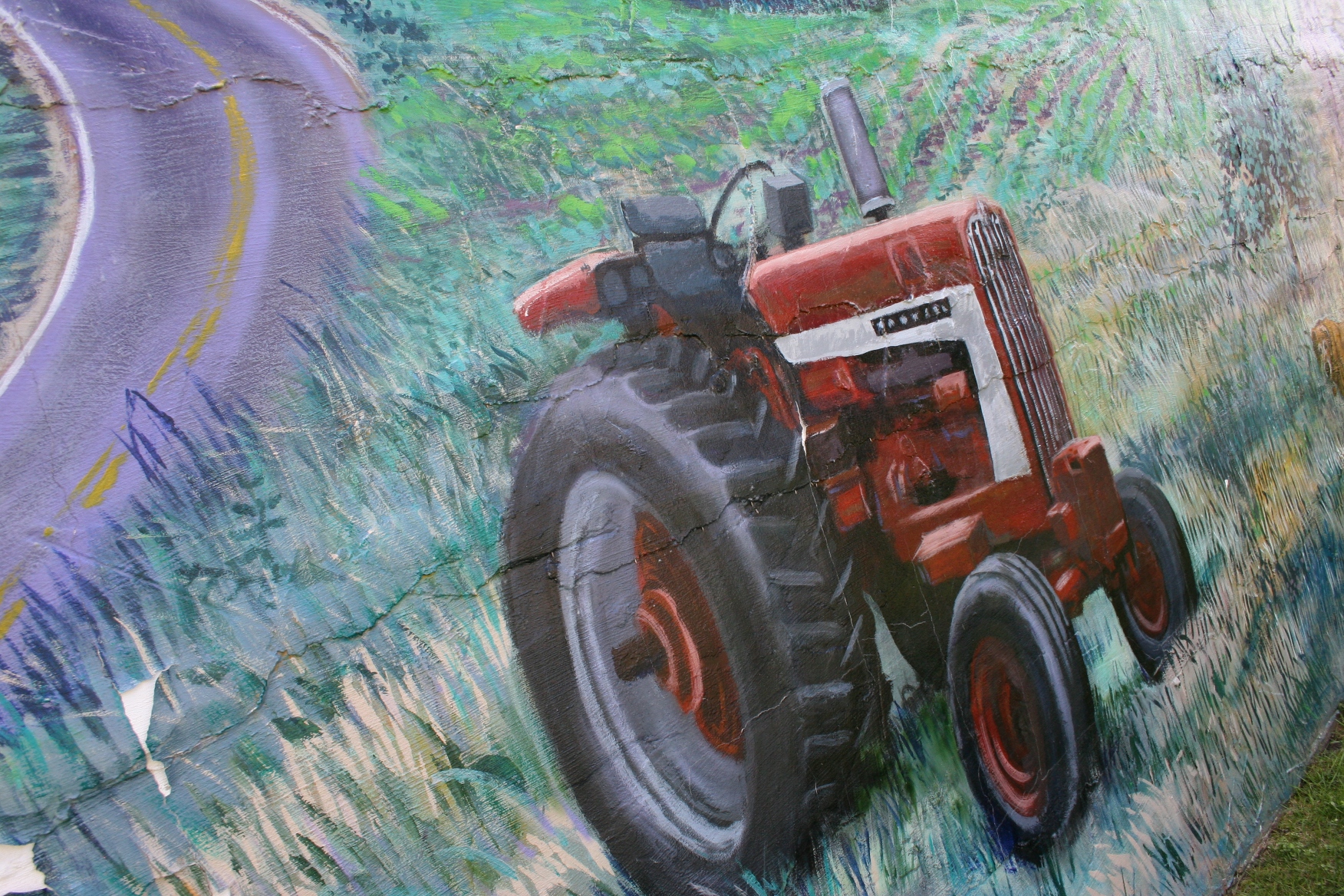
A snippet of the country portion of the mural. I wonder how the artist decided what type of tractor to feature?

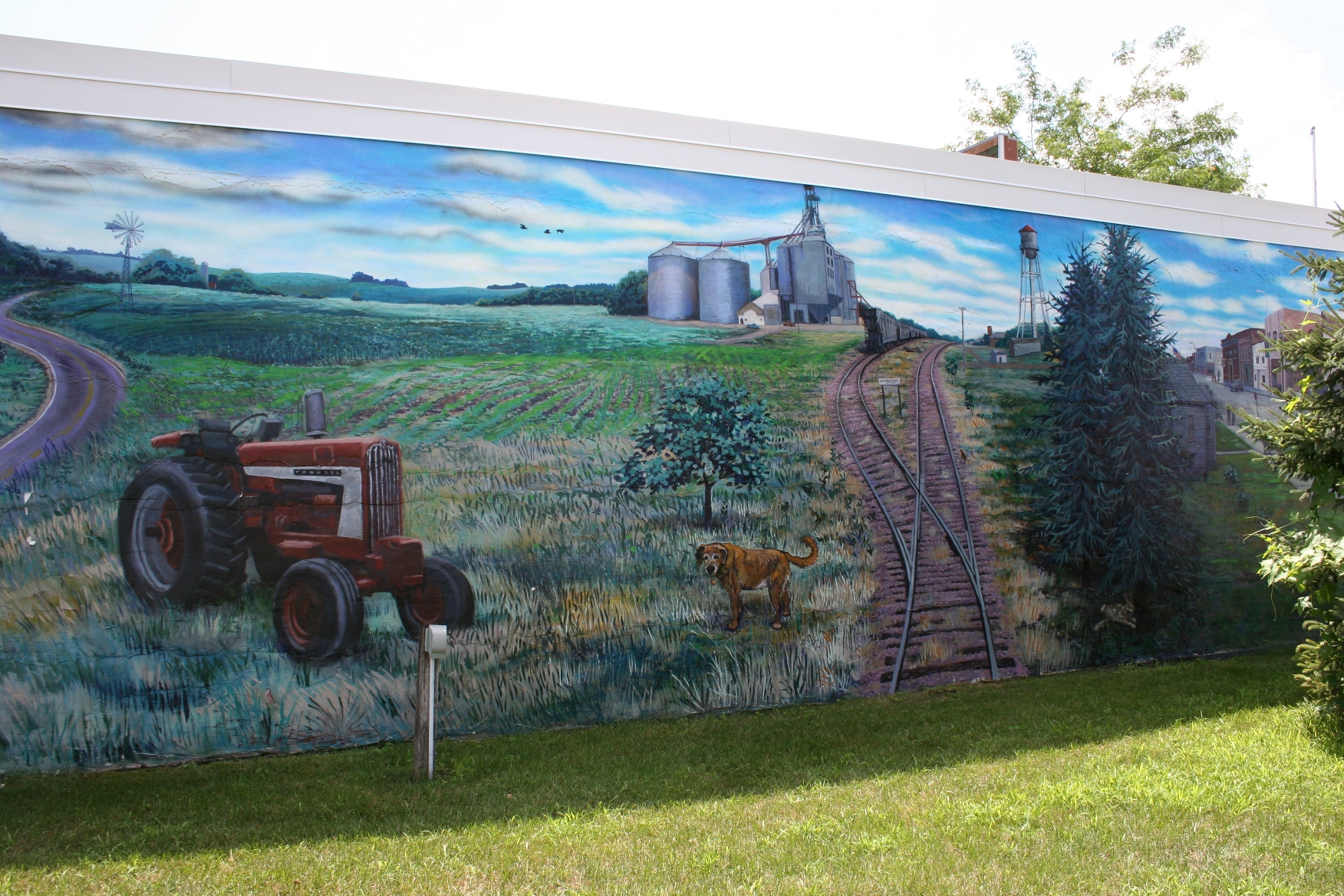
Country connects to city in this detailed mural.

and you’ll find a mural depicting farm and city.

Now I’ve seen many a mural in my day, and I’d rate this as among the best. I wish I knew who to credit for this detailed artwork that draws the eye along the winding country road, down the train tracks to the grain elevator or along city streets to downtown. But I couldn’t find any information about the mural in a quick online search.

However, I did learn more about New Richland and the pride this community takes in its agricultural roots. Just a few weeks ago the town celebrated its 28th annual Farm & City Days. Events included the usual parade, street dance, bingo, antique car show, medallion hunt and such.

But I found a few activities that definitely say country through and through.

Teams of two competed in the  second annual Chore Boy Race. (Just for the record, girls can participate, too; the winners were Molly Flor and Brandon Mullenbach). Anyway, it’s a contest that involves eggs, milk, hay, grain and wheelbarrows. You can learn more about the competition by clicking here and reading this story in the local newspaper, The Star Eagle.

I found a Chore Boy Race contestant application online and one Farm & City Days Facebook page photo and these rules (some in boldface):  “You must wear all your chore clothes at all times. This includes but is not limited to Boots, Hat, Bibs & Gloves.”

OK then, got that?

If you’d rather use your brain than your brawn, Farm & City Days offers a “Guess the weight of the pig” contest at $1 a guess. The person with the closest guess wins the pig and processing at Morgan’s Meat Market. This year two entrants correctly guessed the exact weight of 208 pounds and agreed to split the hog, according to the Farm & City Days Facebook page.

If you didn’t win the pig, you could still eat pork by buying a pork sandwich meal from the Waseca County Pork Producers at the city park.

Two other agricultural-themed activities included a kids’ tractor pull and a Farm vs. City 3-person Scramble at a golf course.

I’m disappointed I missed Farm & City Days because it sounds like one heckuva good time, as small-town celebrations typically are. But I wouldn’t even have known about this annual farm-city event if I hadn’t been poking around New Richland last Sunday, spotted that mural on the side of the post office and then gone online to learn more about it, which I didn’t, but I did.

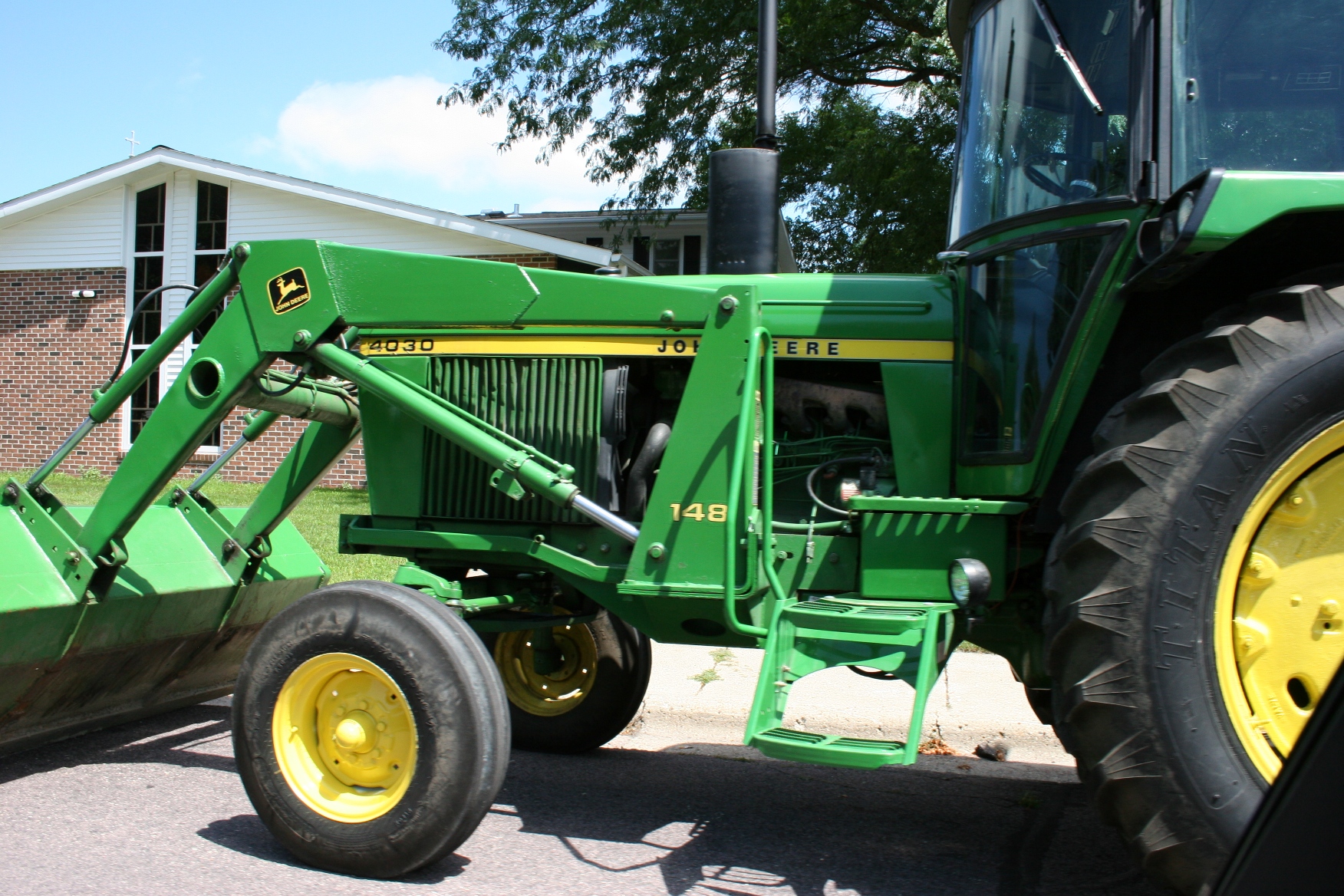
This John Deere tractor was parked outside the funeral home in New Richland on Sunday afternoon.

My husband and I stopped in New Richland while on a recent Sunday afternoon drive. Check out my July 24 blog post from this community and watch for future stories and photos from New Richland.

© Copyright 2011 Audrey Kletscher Helbling
 

Why some of us appreciate abandoned buildings February 25, 2011


Harriet Traxler photographed this abandoned building along U.S. Highway 14 near Waseca several years ago. She's a hobbyist photographer specializing in nature and rural photography. This photo placed in a photo contest Harriet entered. "It is one of my favorites because of what it doesn't tell you," Harriet says.

SOMETIMES I’M SURPRISED by readers’ reactions to my posts. Usually, the stories and photos I least expect will interest readers, do.

Take my post on abandoned buildings. Last fall, I photographed a dilapidated building in the middle of nowhere along a gravel road near Kasota. I can’t give you the exact location because I don’t know quite where I was on that autumn day.

When I published that photo and wrote about my fascination with abandoned buildings in rural landscapes earlier this week, readers from Oregon, Arkansas and Minnesota responded. Seems I’m not alone in my appreciation of abandoned buildings and the history, memories and stories they hold.

Harriet Traxler, a hobbyist photographer from rural Belle Plaine and the publisher of a book series featuring photos of Sibley County, Minnesota, barns, emailed two photos of abandoned buildings. She is graciously allowing me to share her images and thoughts.

“I, too, am drawn to photographing old, abandoned buildings and then find myself staring at the pictures and trying to imagine who the people were that built and lived in these homes or worked in these barns that now stand empty,” Harriet says. “And the memories of the hard work, the laughter, the troubles; everything that went towards making it a home or farm are now gone forever.

Oftentimes when I would be out photographing the barns in Sibley County or even on a cross country trip, I would see a windmill or a silo or a small grove of trees standing alone in the middle of a field and wonder about the farm that stood there too.

What happened to the family that lived there once not too long ago? Were they happy? Were there children who played and worked alongside their family? Was there a tragedy that occurred that drove the family from the farm?

We often romanticize farm life, but that life was one of the hardest to live. If it was a dairy farm, like most were in rural Minnesota, then it was long days, seven days a week, and children after growing up on this type of farm, learning good work ethics, seldom wanted to spend the rest of their lives doing the work their parents had done for years and years. When they left the farms for those good ‘city jobs,’ that is when farm life began to disappear and those abandoned buildings really began to appear.”

I COULDN’T HAVE said it any better, Harriet. I am one of those kids who left the (dairy) farm.

Harriet, too, grew up on a farm, in Sibley County, on her uncle’s place, that looks nothing like the home of her youth.


The old granary on the farm where Harriet grew up.

“All that remains standing is this old granary that also always smelled of rats and dusty bins of oats,” Harriet says. “It had a lean-to attached to it that was used as a garage for my uncle’s car. I remember every inch of that farm because I loved to explore every inch of it.

I didn’t have to work nearly as hard on that farm as most children had to on the farms they grew up on so maybe that is why I loved it so much.

The freedom to be me was always there and I have often gone back to my ‘roots’ and those memories…the better memories seem to always remain pushing other memories that were not so much fun to the far corners of the mind.”

© Text copyright 2011 by Audrey Kletscher Helbling

© Photo copyright by Harriet Traxler


An auction at the Clear Lake Farmer’s Elevator December 23, 2010


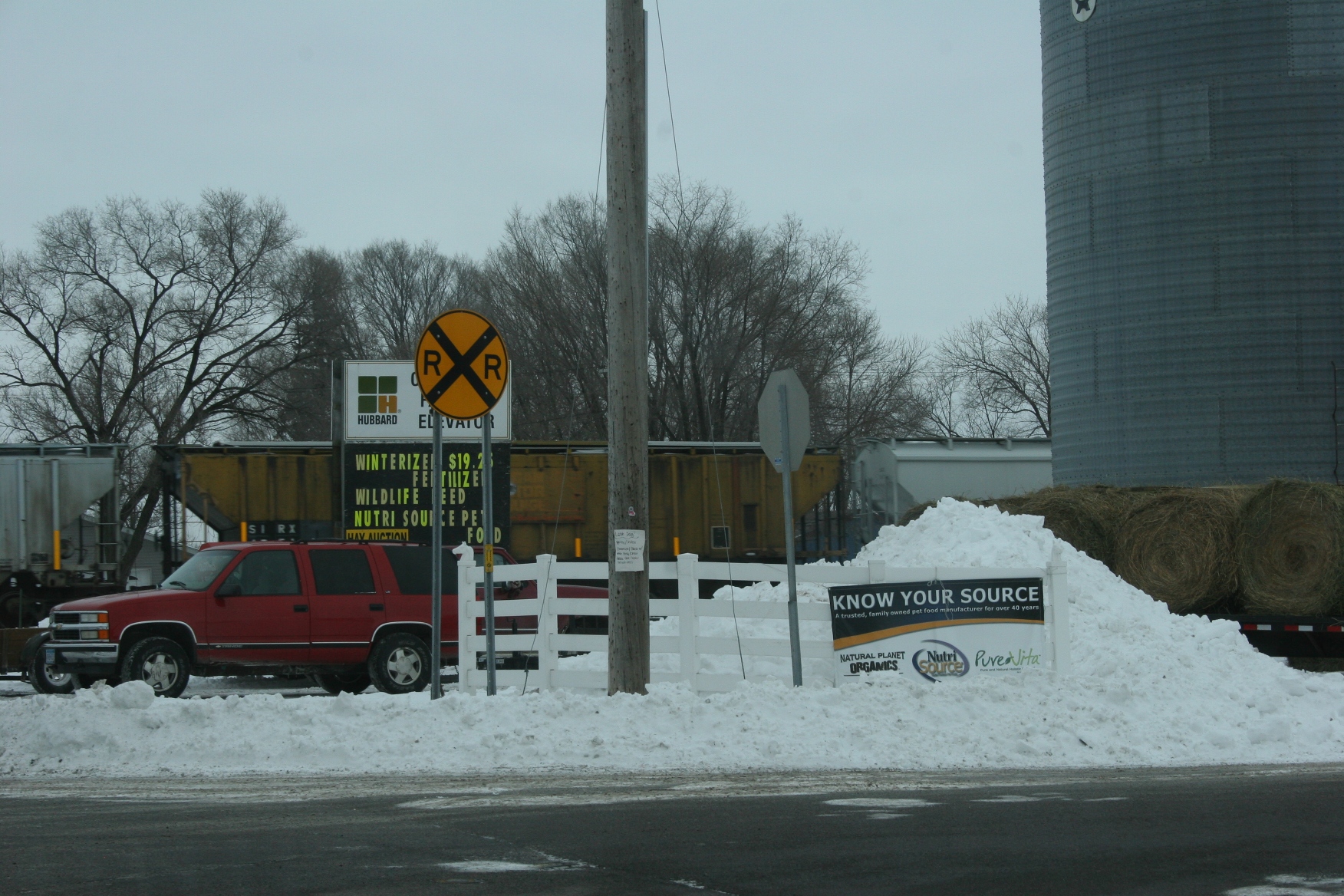
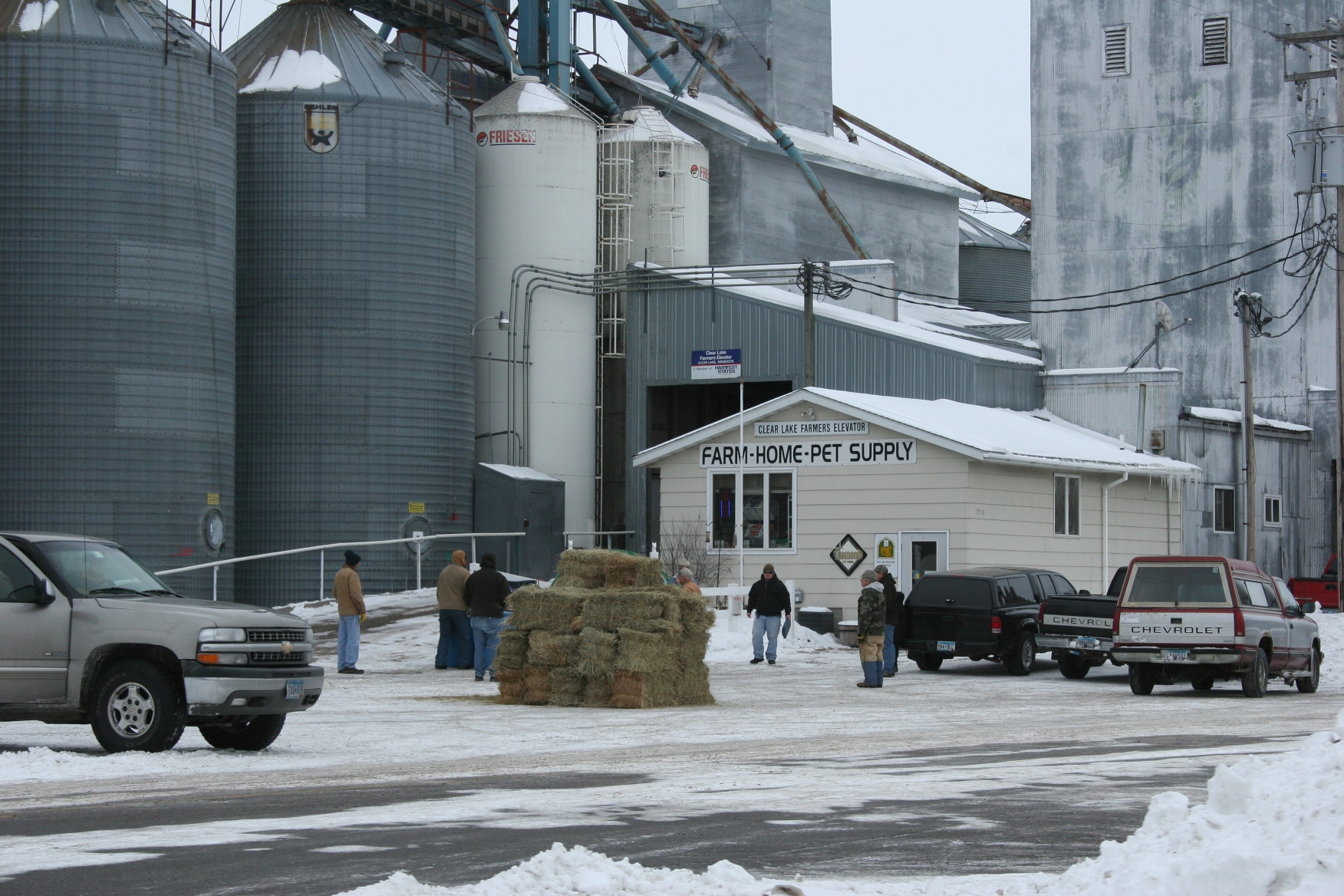
I shot this image while waiting for a train by the Clear Lake Farmer's Elevator.

HEY, DO YOU ENJOY attending auctions? Ever heard of a consignment hay auction? I hadn’t either, until Saturday morning when my family drove through Clear Lake en route to St. Cloud.

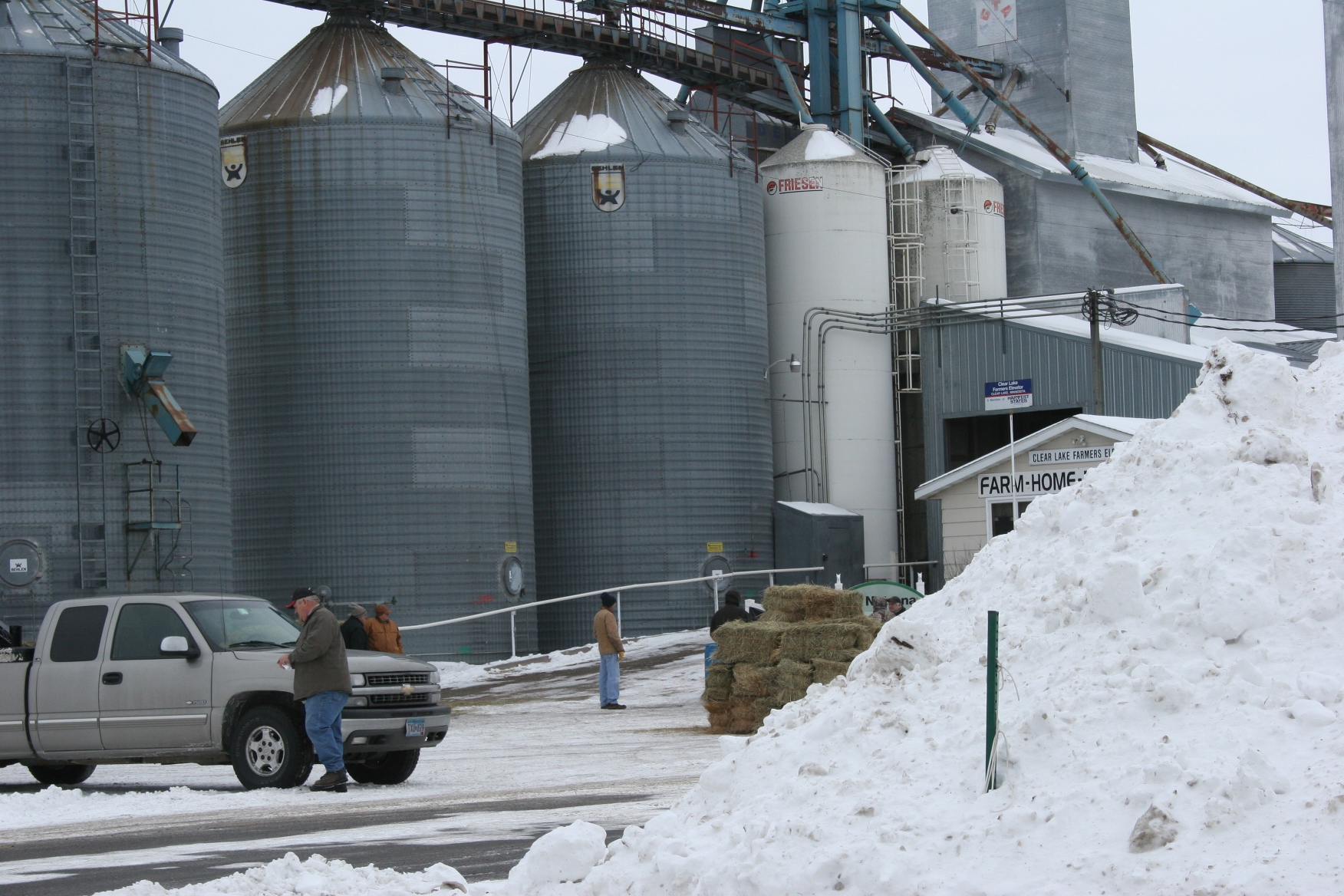
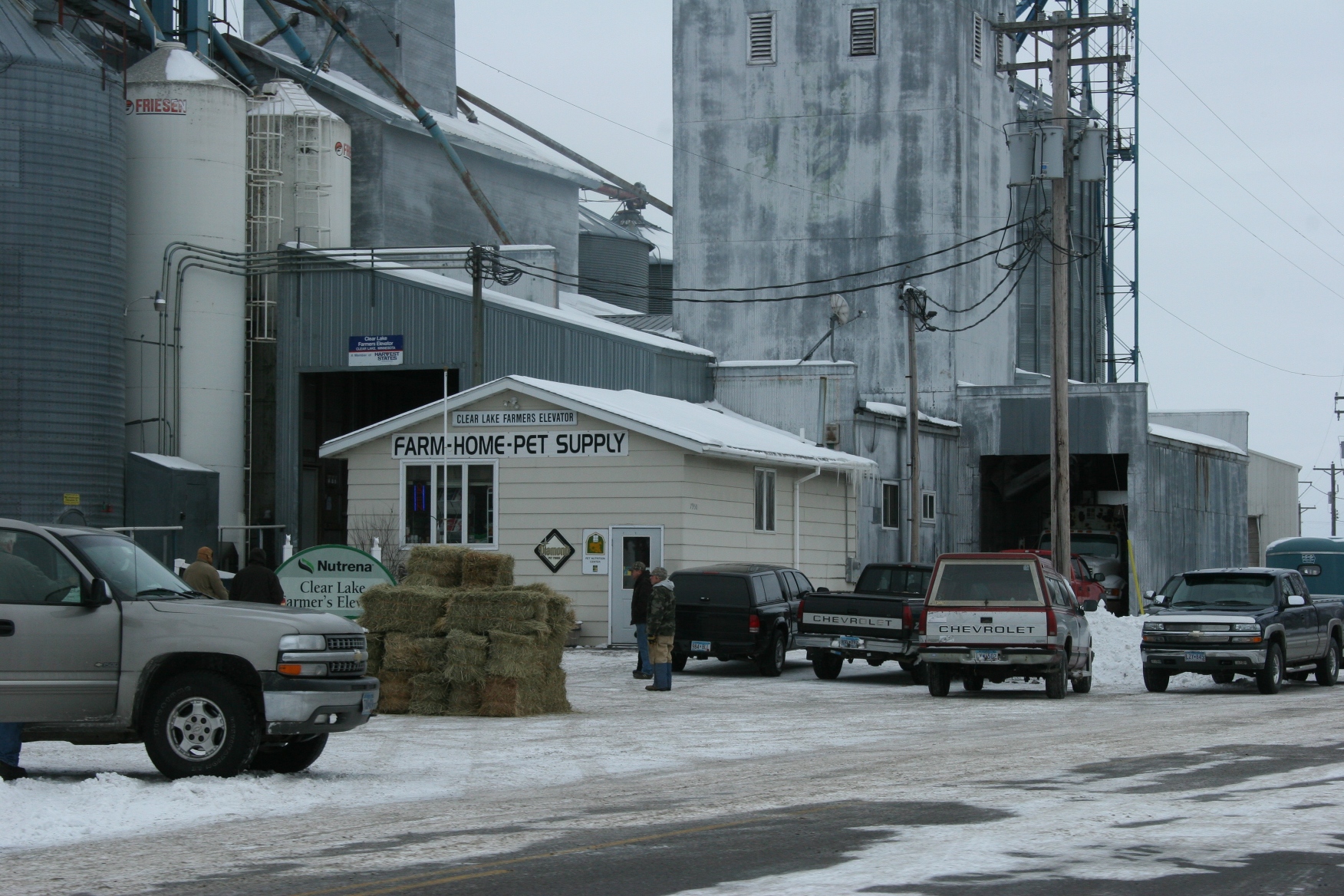
We were waiting for a train to pass through town when I noticed pick-up trucks parked near the Clear Lake Farmer’s Elevator and some guys loitering next to a stack of hay. My husband quickly spied the hay auction sign to his left.

I quickly pulled out my camera because I recognized this small-town occurrence as something worth photographing, but which likely never has been photographed.

The whole scene had a Garrison Keillor quality about it, almost like we’d driven up to the Lake Wobegon Farmer’s Elevator.

It was something about the starkness and grayness of the setting, the way the men stood, the rural feel of the whole place that drew me in and kept me clicking the camera shutter.


A snow pile blocked my view of the hay auction until we inched forward.

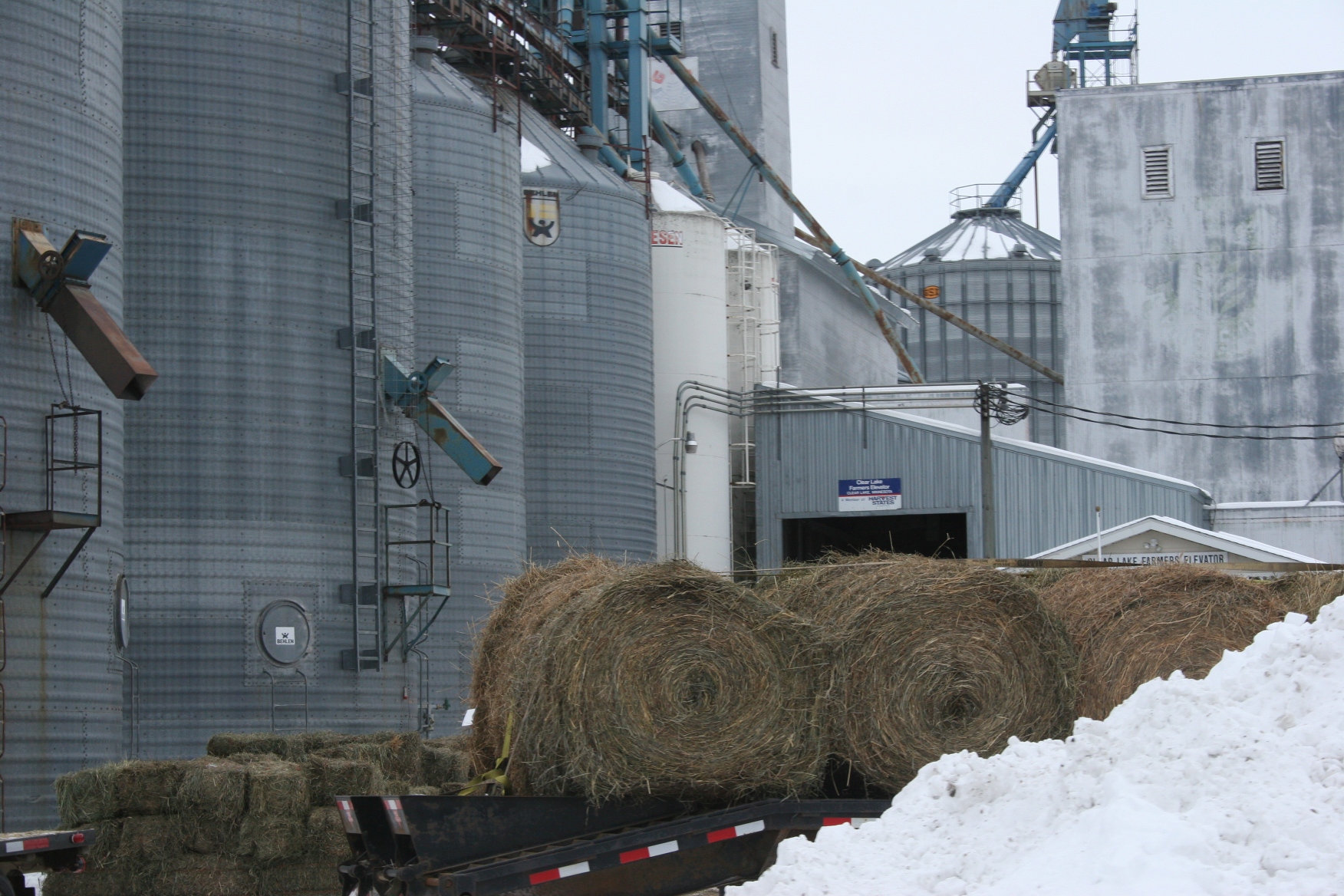
On the third Saturday of each month, October - April, the Clear Lake Farmer's Elevator holds a consignment hay auction beginning at 10:30 a.m. The elevator is just off U.S. Highway 10 in Clear Lake southeast of St. Cloud.

When I saw the photos, I was pleased as punch with the results. Capturing snippets of small-town Minnesota life like this reconnects me to my rural roots and, in some small way, preserves an important part of our agricultural history.


Small square grass bales sold for $2.25 - $3.20 bale at Saturday's auction, according to online auction results.

Round grass mix bales sold for $39 each. "We still have people asking for straw and bags of ear corn to feed birds, etc.," the online auction info reads.

© Copyright 2010 Audrey Kletscher Helbling
 

Photographing barns November 19, 2010


A barn between Morristown and Waseca in a photo I shot last Sunday.


HARRIET TRAXLER OF CARVER has done exactly what I would someday like to accomplish. She has photographed a county full of barns and self-published 19 books, including two versions of Barns of Sibley County and books for each of the county’s 17 townships. She’s also created a 2011 barn calendar.

Traxler photographed 1,100-plus barns.

I’ll write more about Traxler’s barn project in a future post because I’ve only skimmed two of her books. The pair just arrived in my mailbox yesterday.

But I’m so giddy about what I’ve seen that I couldn’t wait to tell you. Anyone who loves old barns will absolutely appreciate Traxler’s books and her efforts to preserve barns through photography.

Now that I’ve shared my excitement over those barn books, I’ll show you a few more barn photos that I shot last Sunday along Rice County Highway 16 and Waseca County Highway 7 between Morristown and Waseca. These were taken through car windows—no waiting for the right lighting, no stopping to compose them. They are what they are and I think worthy of sharing with you. Enjoy.


Barn along Waseca County Highway 7


The driver's side rear car window frames this barn scene in a quick shot.


A machine shed with a barn-like appearance. Love the roof line.


Near the intersection of Waseca County Highway 7 and Minnesota Highway 13.


© Copyright 2010 Audrey Kletscher Helbling
 

Saving barns November 9, 2010

EVEN THOUGH I HAVE NOT lived in the country since I was 17, I still define myself by my rural roots, my Minnesota prairie roots.

Those formative years of connecting to the land shaped and defined me as a person and as a writer.

Picking rocks, walking beans, doing chores, tending the garden—all taught me the value of good, honest labor. I will always appreciate my rural upbringing.

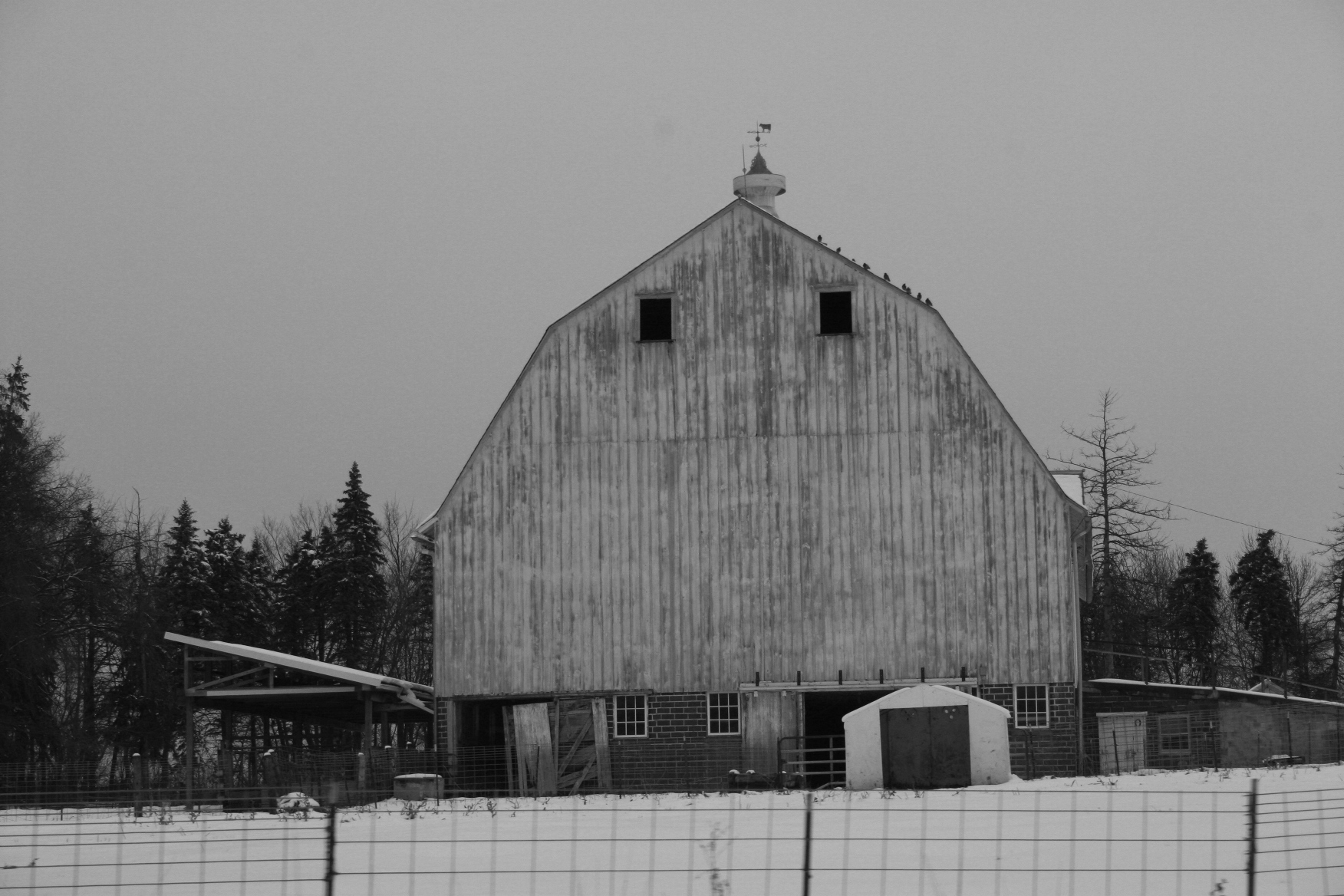
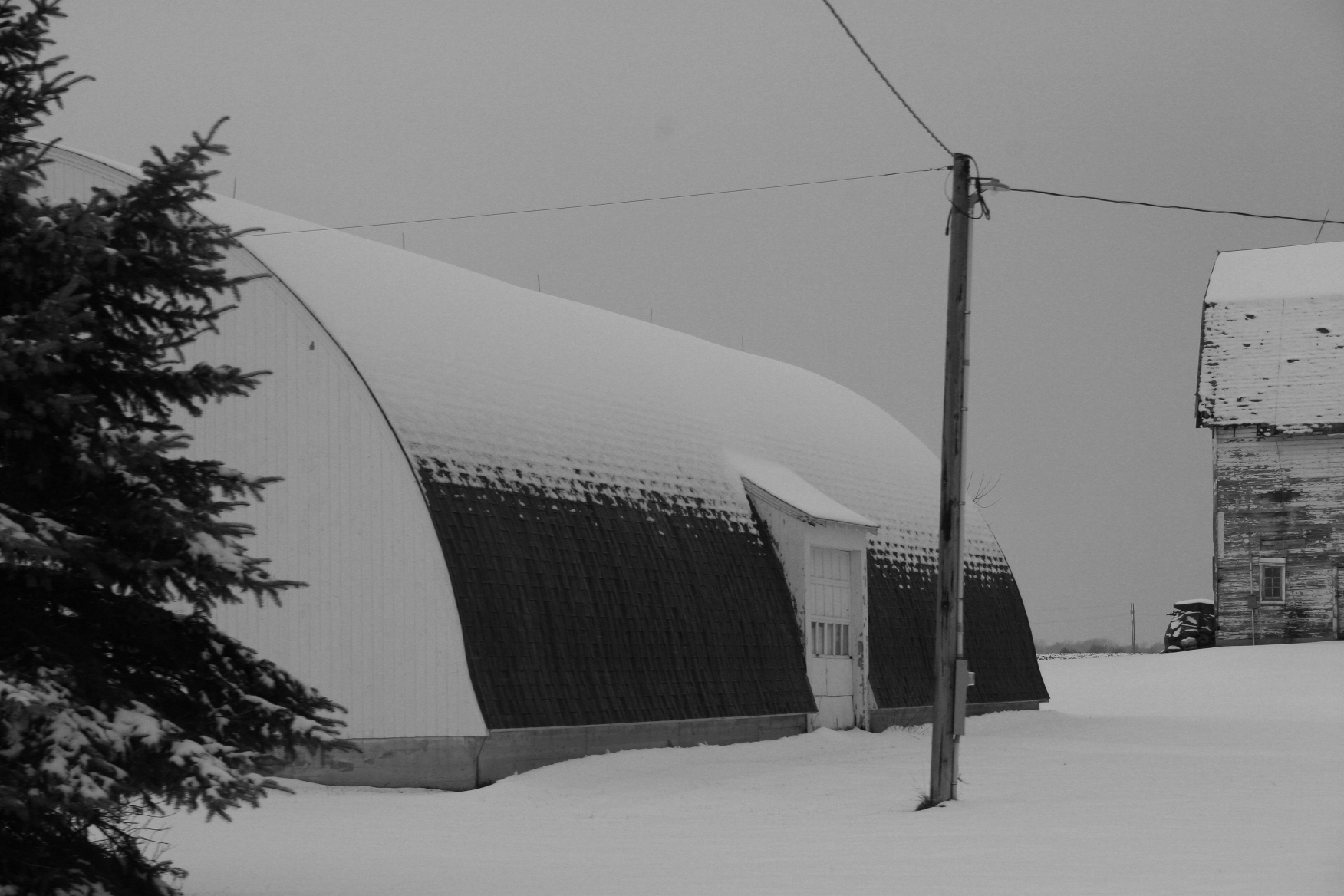
Clearly, I value the family farm. I also value barns, which possess a nostalgic hold on me. I love to photograph them, even if only in passing from a car window.


I photographed this barn in the Hammond/Zumbro Falls area along Wabasha County Road 70 in October.


Another Wabasha County barn.


A quick shot of a barn along Minnesota Highway 60 somewhere between Faribault and Wanamingo.


Unfortunately, many barns today are falling into piles of rotting lumber. Landowners cannot always afford to maintain them or choose not to maintain them.
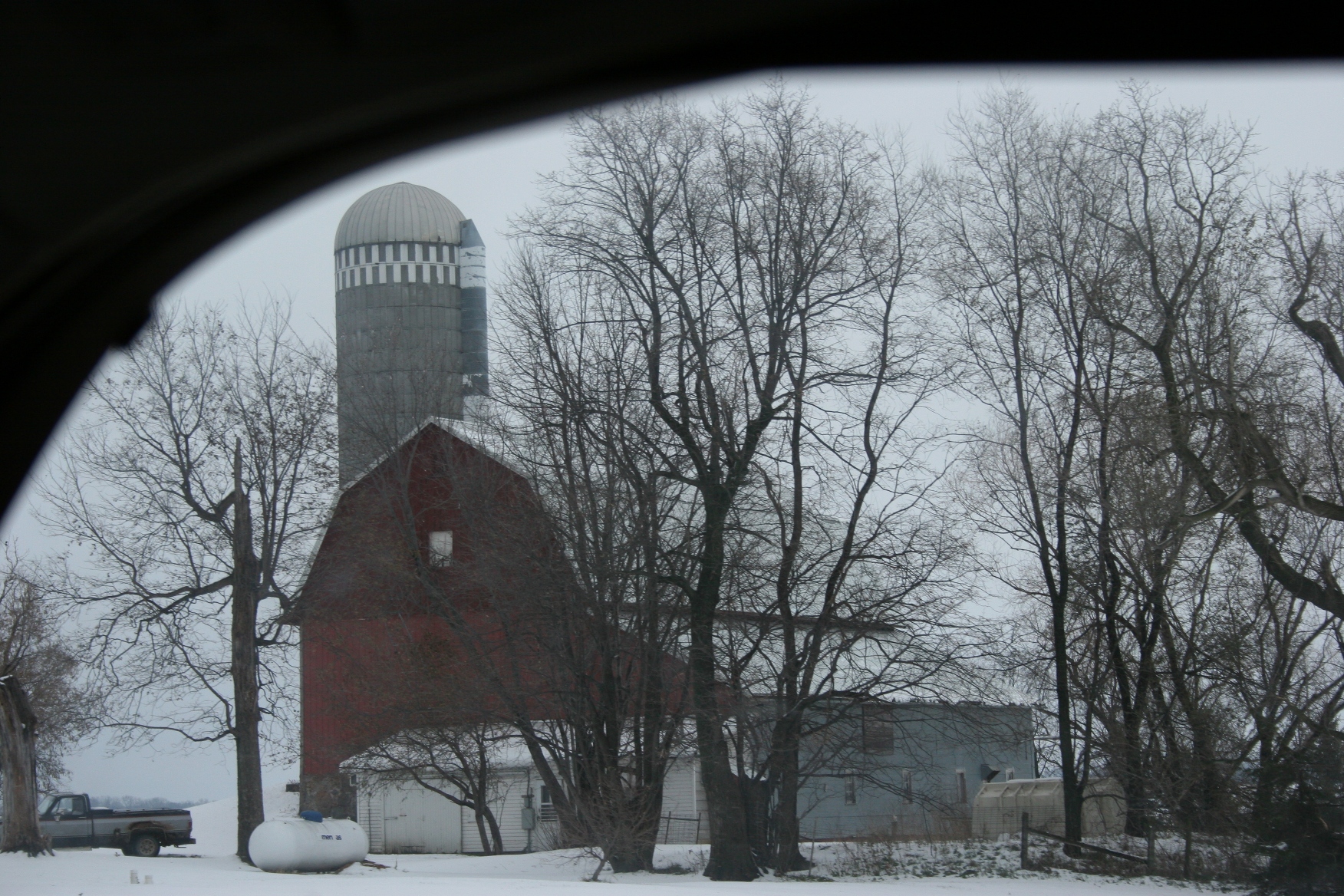
But many barns have been beautifully-restored, sometimes converted to new uses. Organizations like Friends of Minnesota Barns support efforts to save barns as part of our rural heritage.

This Saturday the FoMB will hold its annual Barn of the Year Awards Reception from 1 p.m. – 4 p.m. at the historic Brandtjen Farm Barn, 16965 Brandtjen Farm Drive, Lakeville. The 80-year-old dairy barn has been renovated as a clubhouse and community and recreation center for the Spirit of Brandtjen Farm housing development.
Barns contending for the 2010 award are owned by Paul Anderson of Pope County, John Lavander and Nan Owen of Isanti County, Eric and Shelly Liljequist of Wright County, and Lyle and Ann Meldahl of Fillmore County.
If you’re interested in attending this event, which includes a social hour, a tour of the Brandtjen barn, a talk by Minnesota Secretary of State and FoMB member Mark Ritchie and presentation of the Barn of the Year Awards, visit the FoMB website. Reservation deadline is November 10.

© Copyright 2010 Audrey Kletscher Helbling