Minnesota Prairie Roots

Writing and photography by Audrey Kletscher Helbling
Rice County Steam & Gas Engines fall show honors farming of yesteryear September 3, 2025

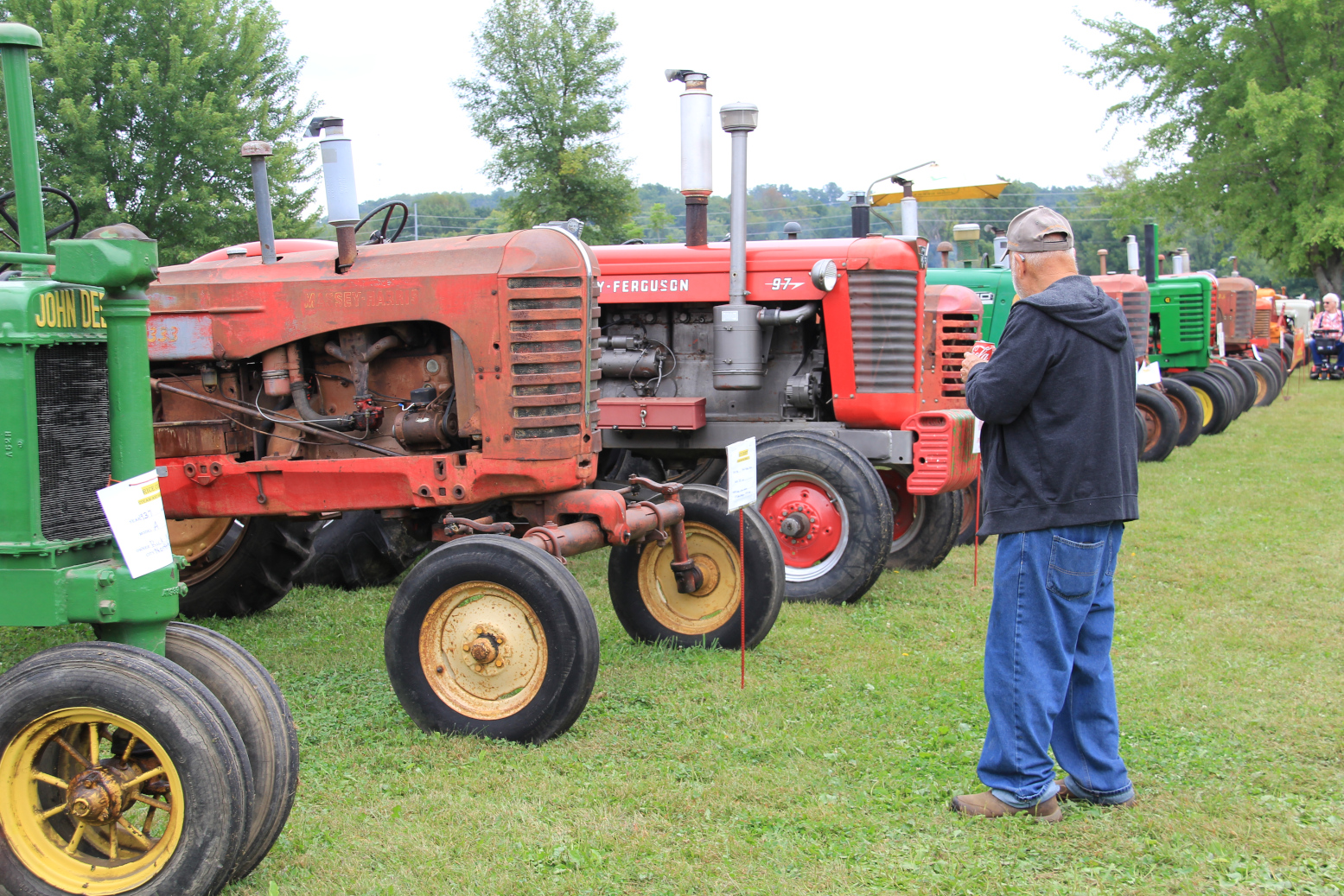
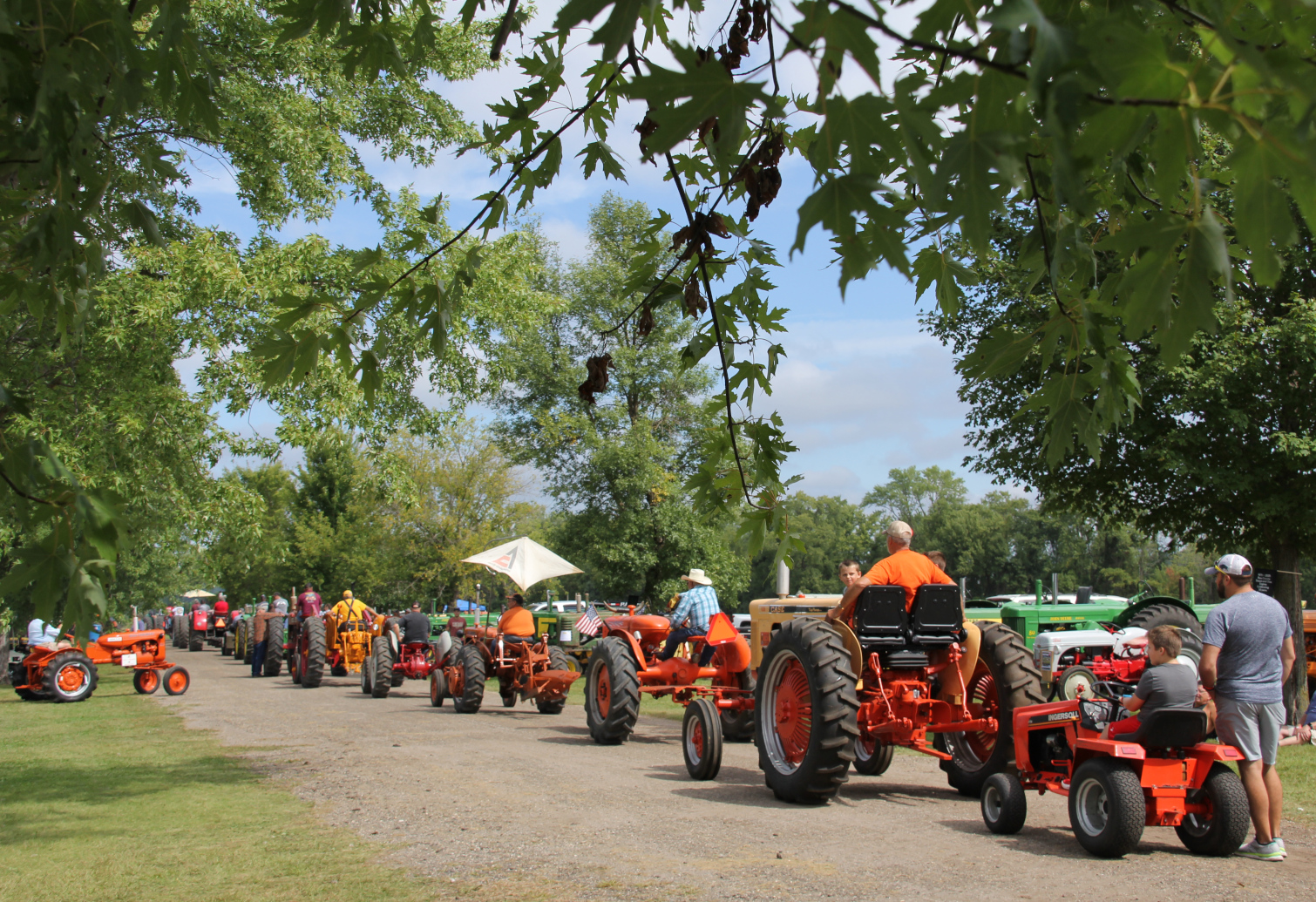
Hundreds of tractors in all makes and models lined the showgrounds. (Minnesota Prairie Roots copyrighted photo August 2025)

SIX HOURS OF ENDLESS WALKING, many conversations, one shared handheld peach pastry, a small taco, several bites of a burger and fries, one molasses cookie, a couple swallows of soda, one shared dish of Amish-made ice cream and hundreds of photos later, I left the Rice County Steam & Gas Engines Fall Show on August 30 exhausted. In a good way.

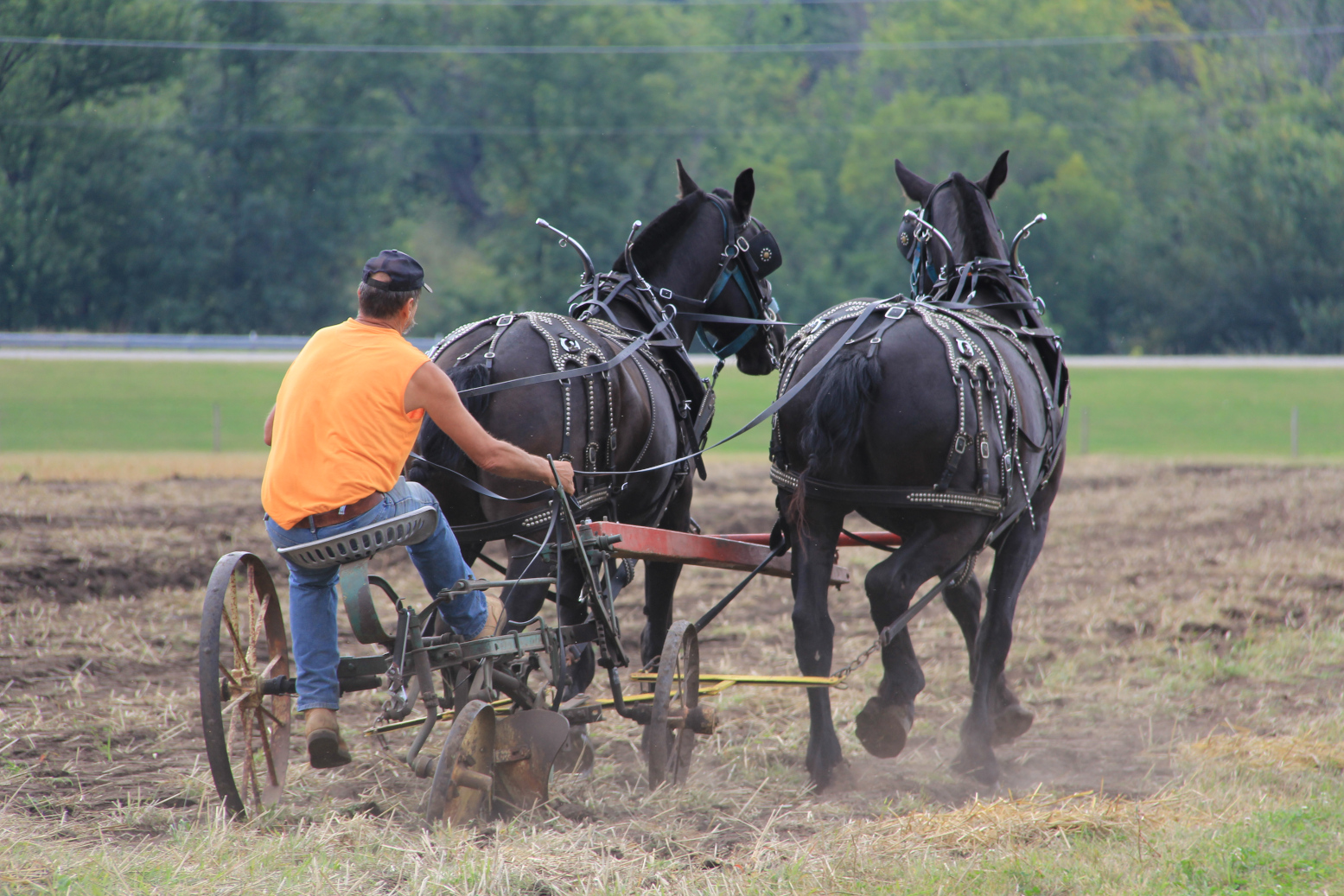
Plowing with horses. (Minnesota Prairie Roots copyrighted photo August 2025)
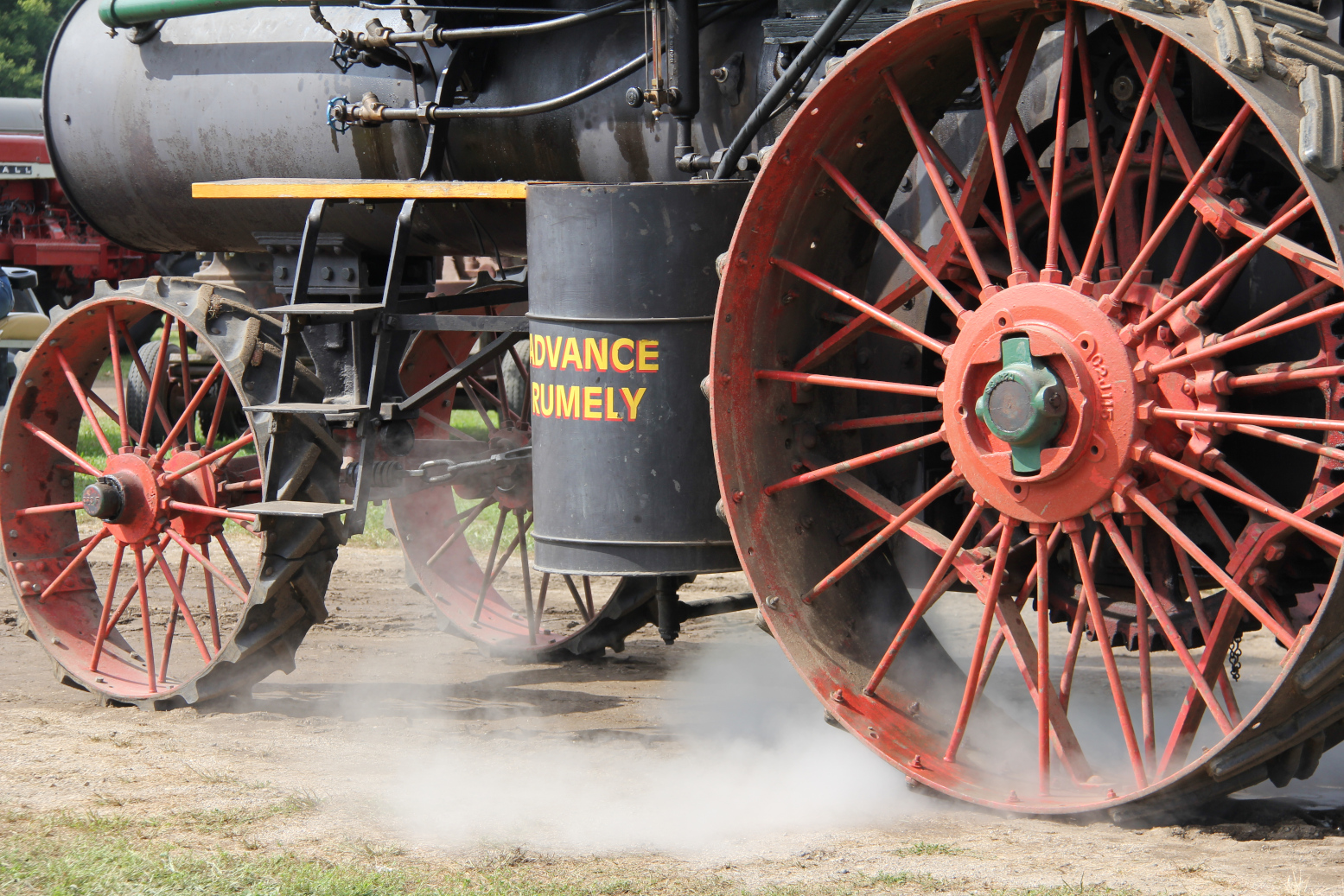
There were lots of steam engines at this year’s show. (Minnesota Prairie Roots copyrighted photo August 2025)
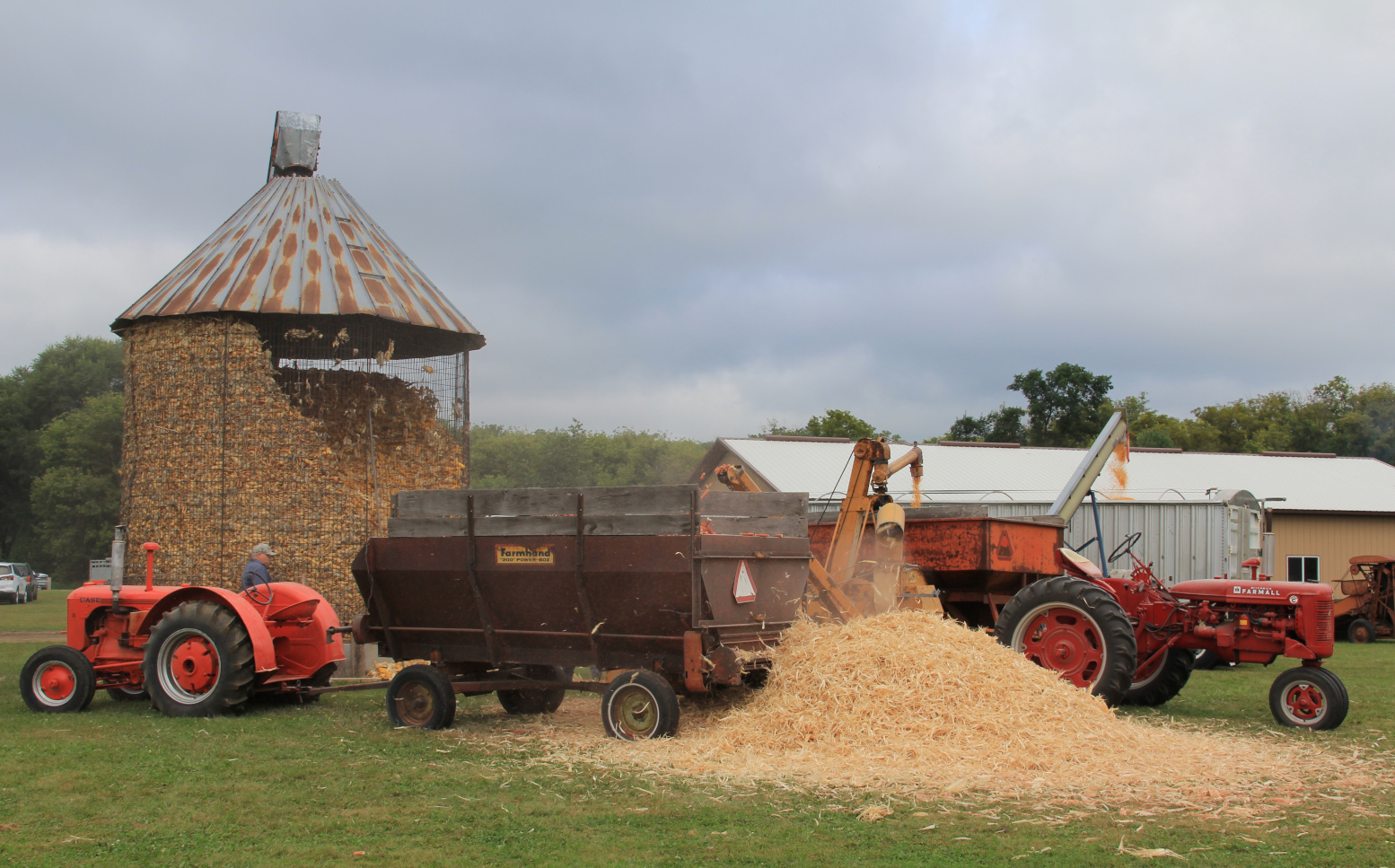
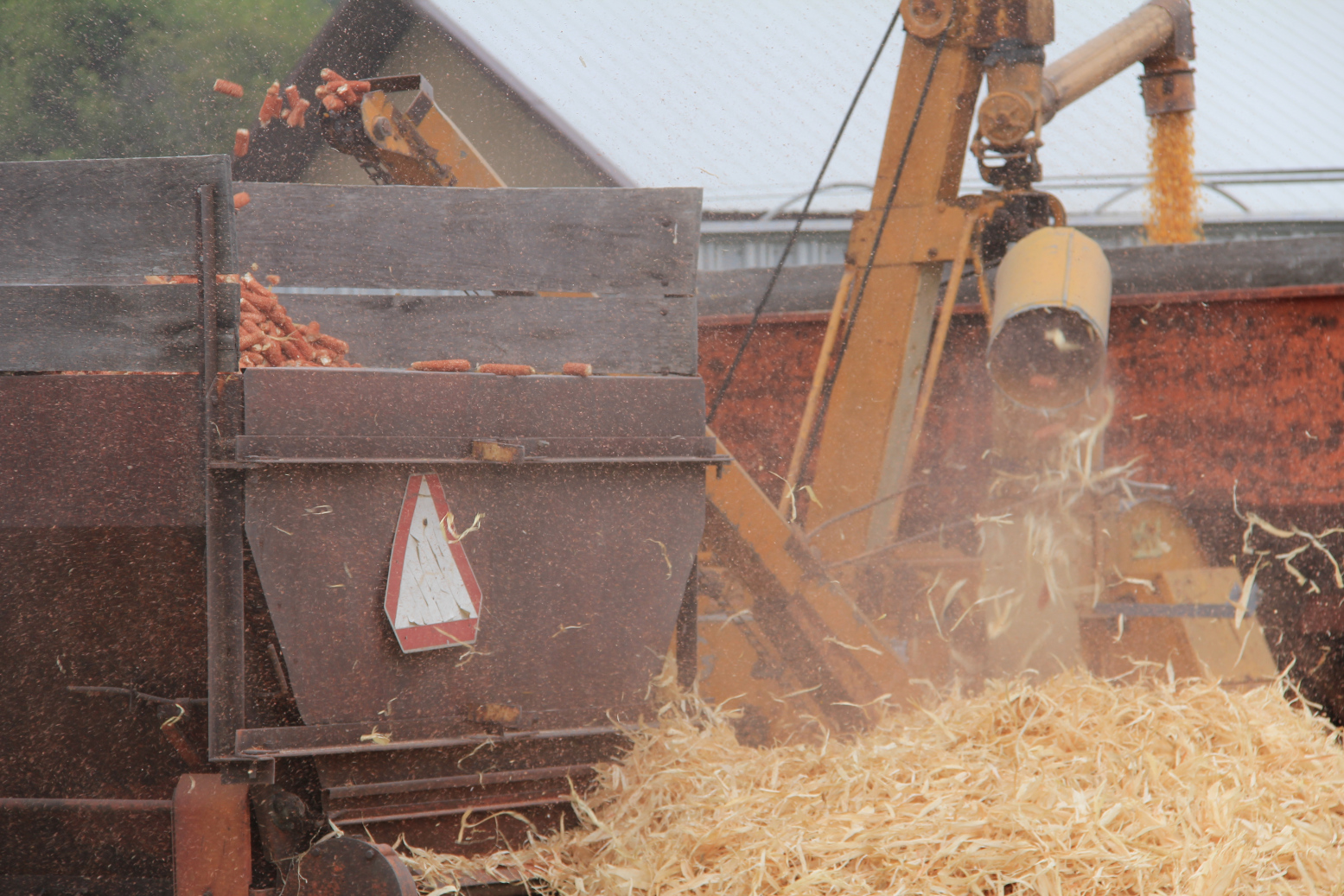
Tractors provide the power to shell corn. (Minnesota Prairie Roots copyrighted photo August 2025)

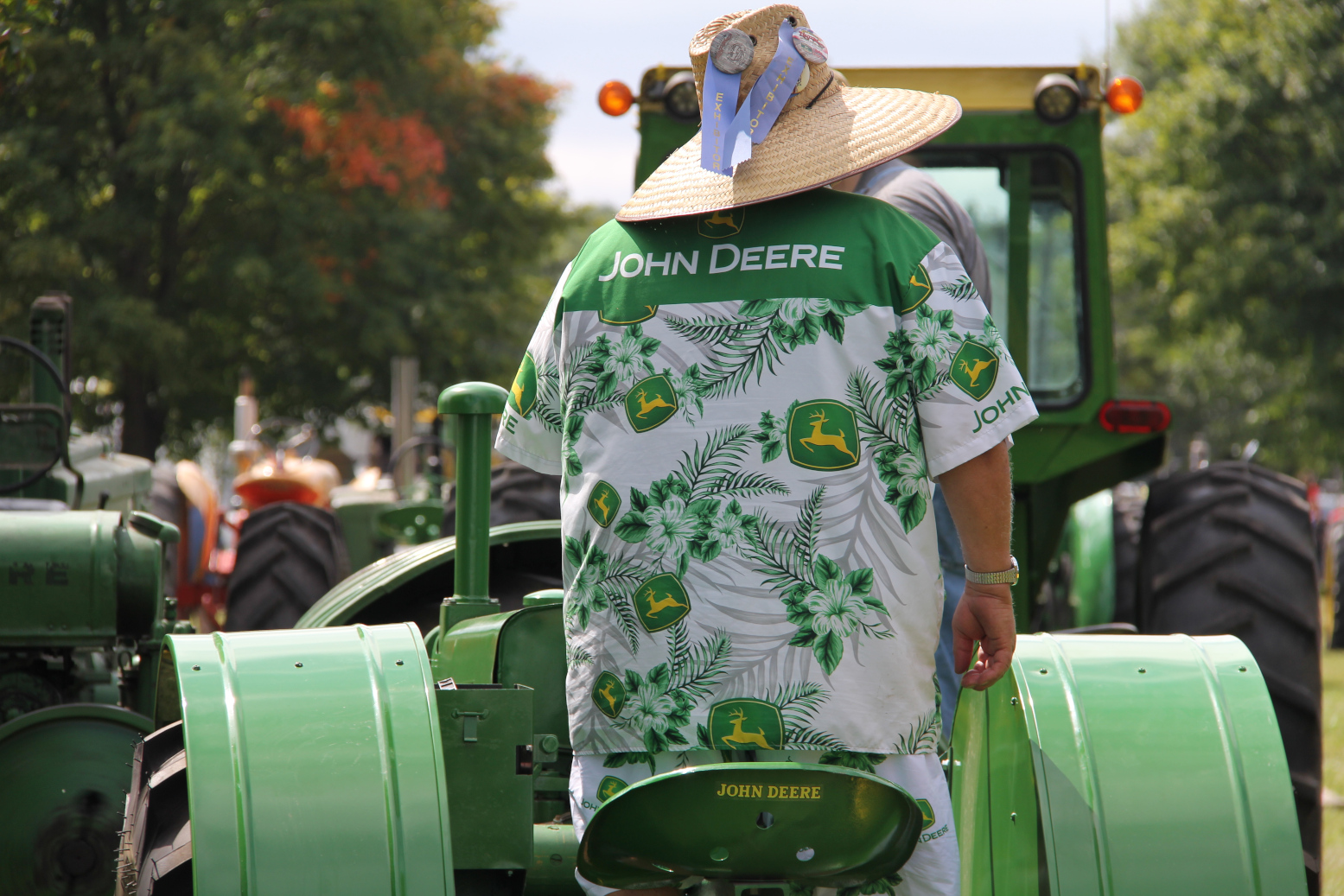
This event held at the showgrounds in rural Dundas over Labor Day weekend saw ideal weather and record crowds during the 50th anniversary celebration focused on “preserving a bit of yesterday for tomorrow.” That’s exactly what this organization accomplishes. From horse power to steam power to gas power, the early days and evolution of farming are on display in living history demonstrations. Rows and rows of vintage tractors and other agricultural equipment and on-site old buildings also showcase history.

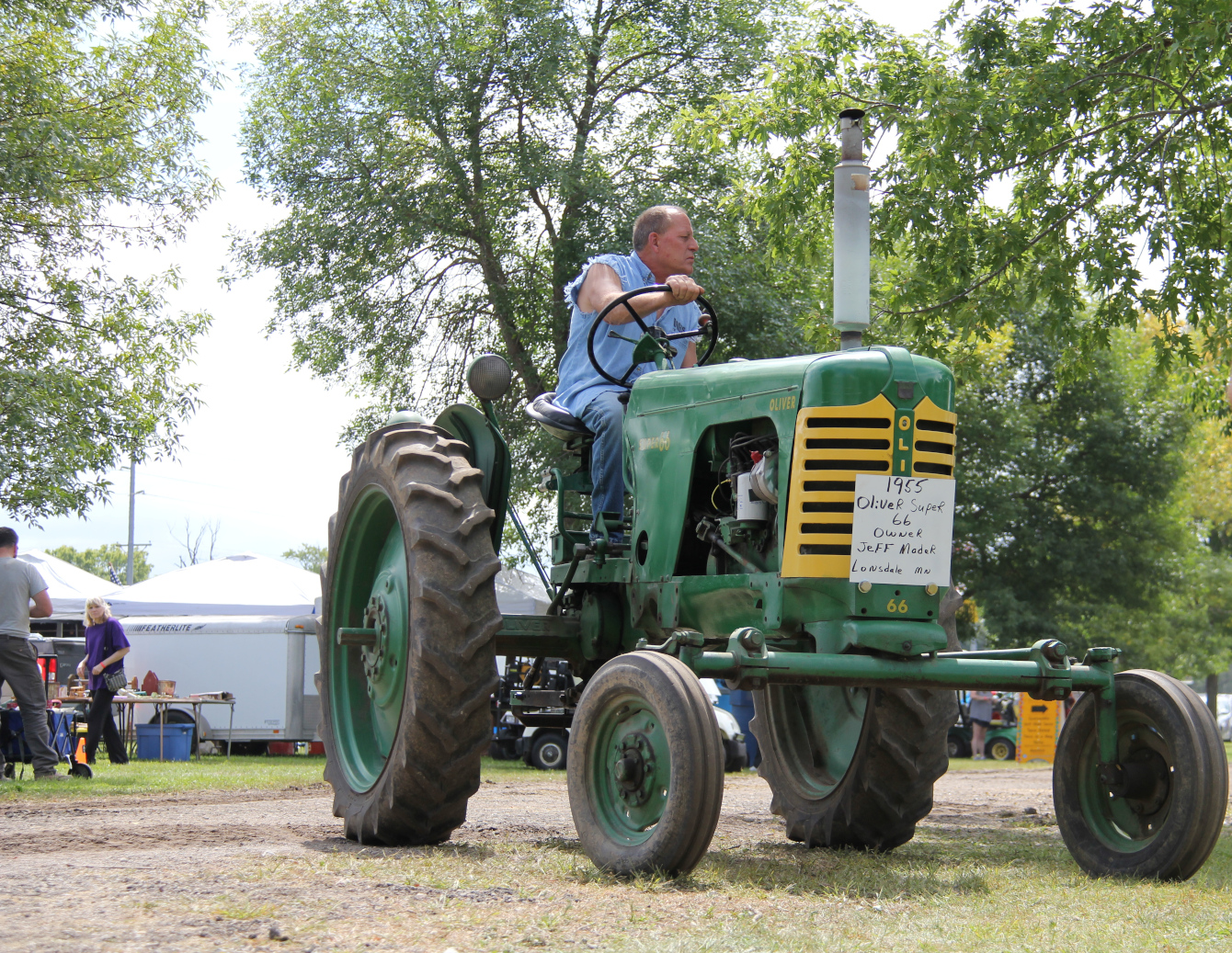
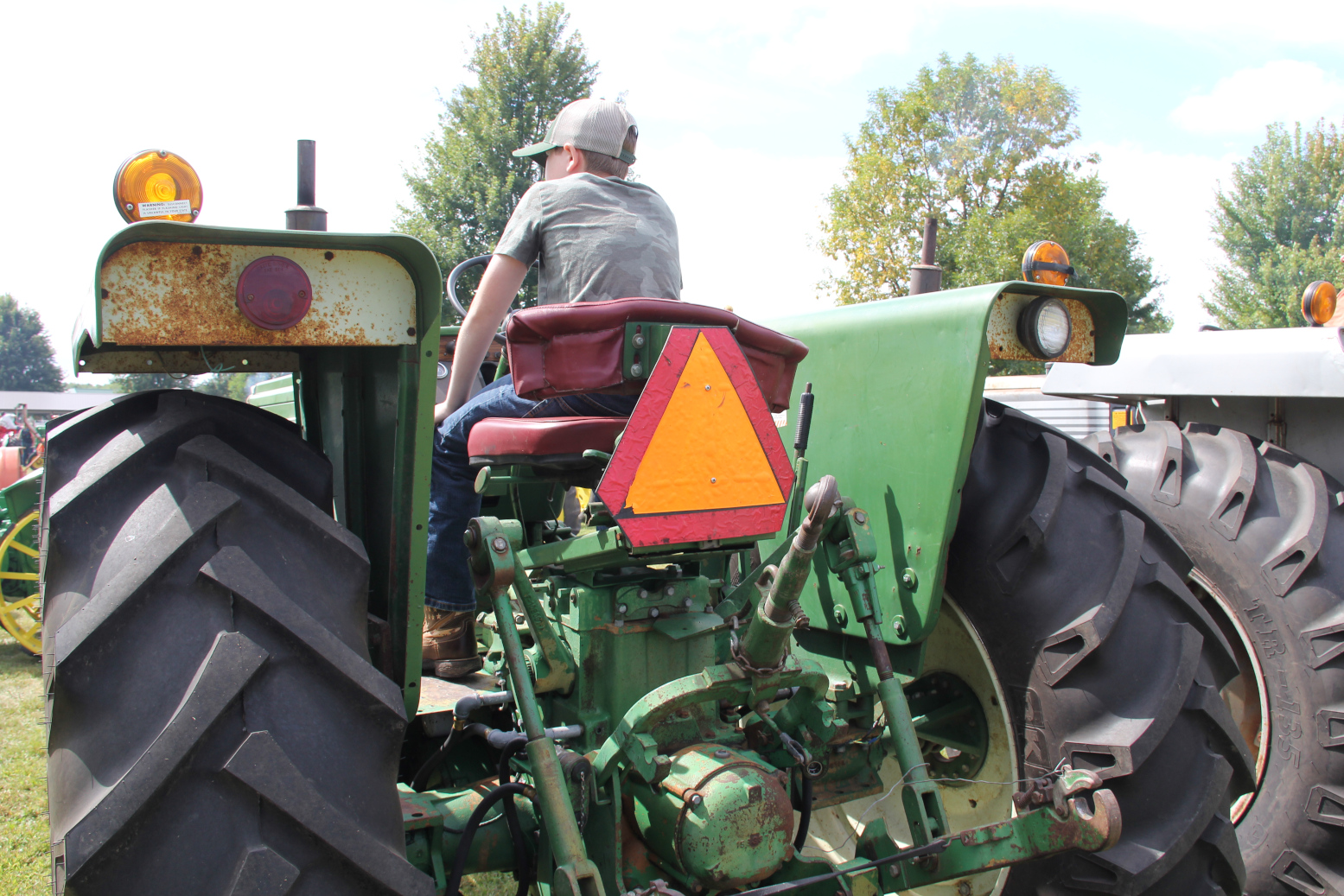
This could be one of my brothers back in the day driving tractor. (Minnesota Prairie Roots copyrighted photo August 2025)

I love everything about this show as it takes me back to my rural roots, reconnects me with the land and reminds me of the importance farming had, and still has, in Minnesota.

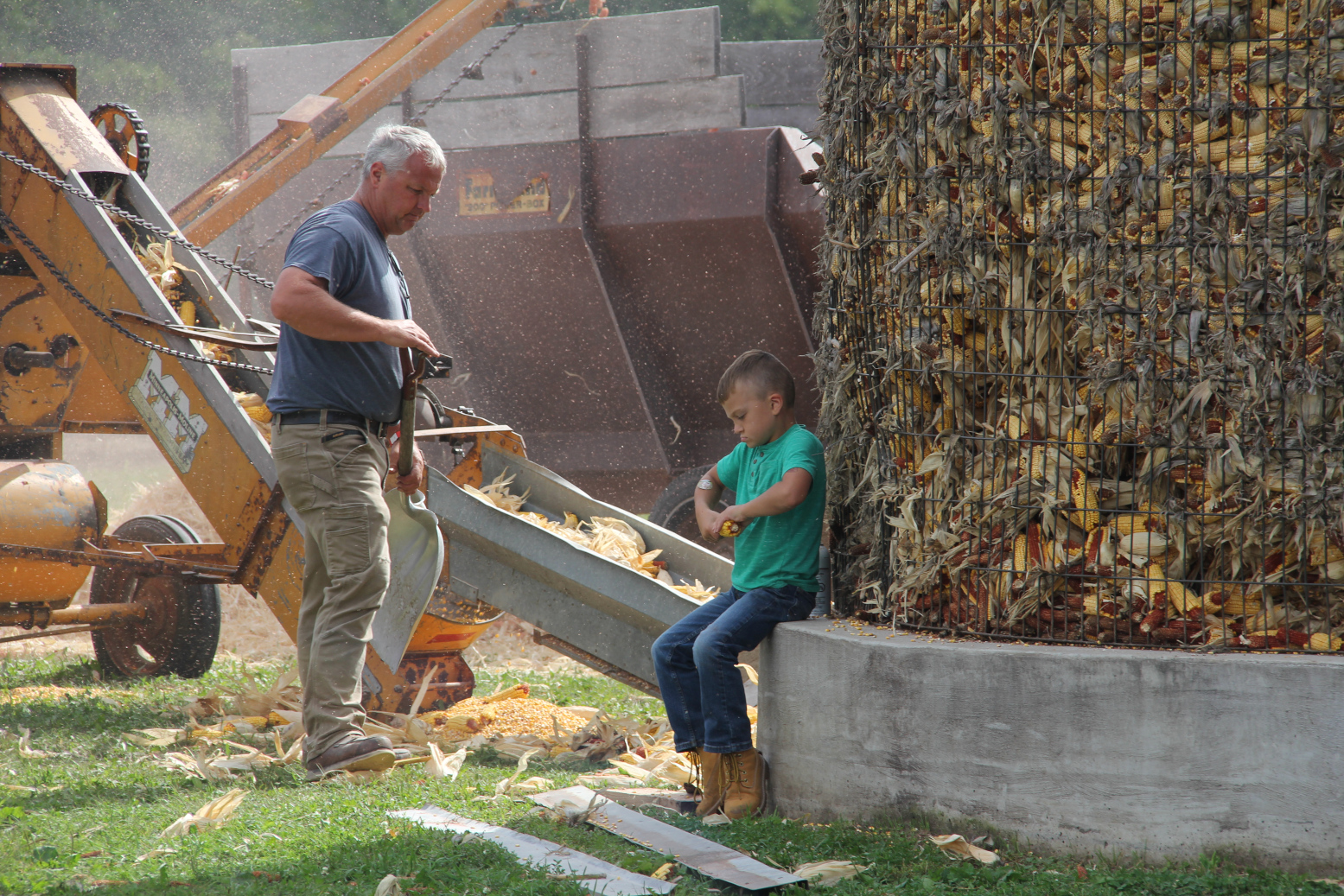
Two generations work at shelling corn, one by machine, the other by hand. (Minnesota Prairie Roots copyrighted photo August 2025)
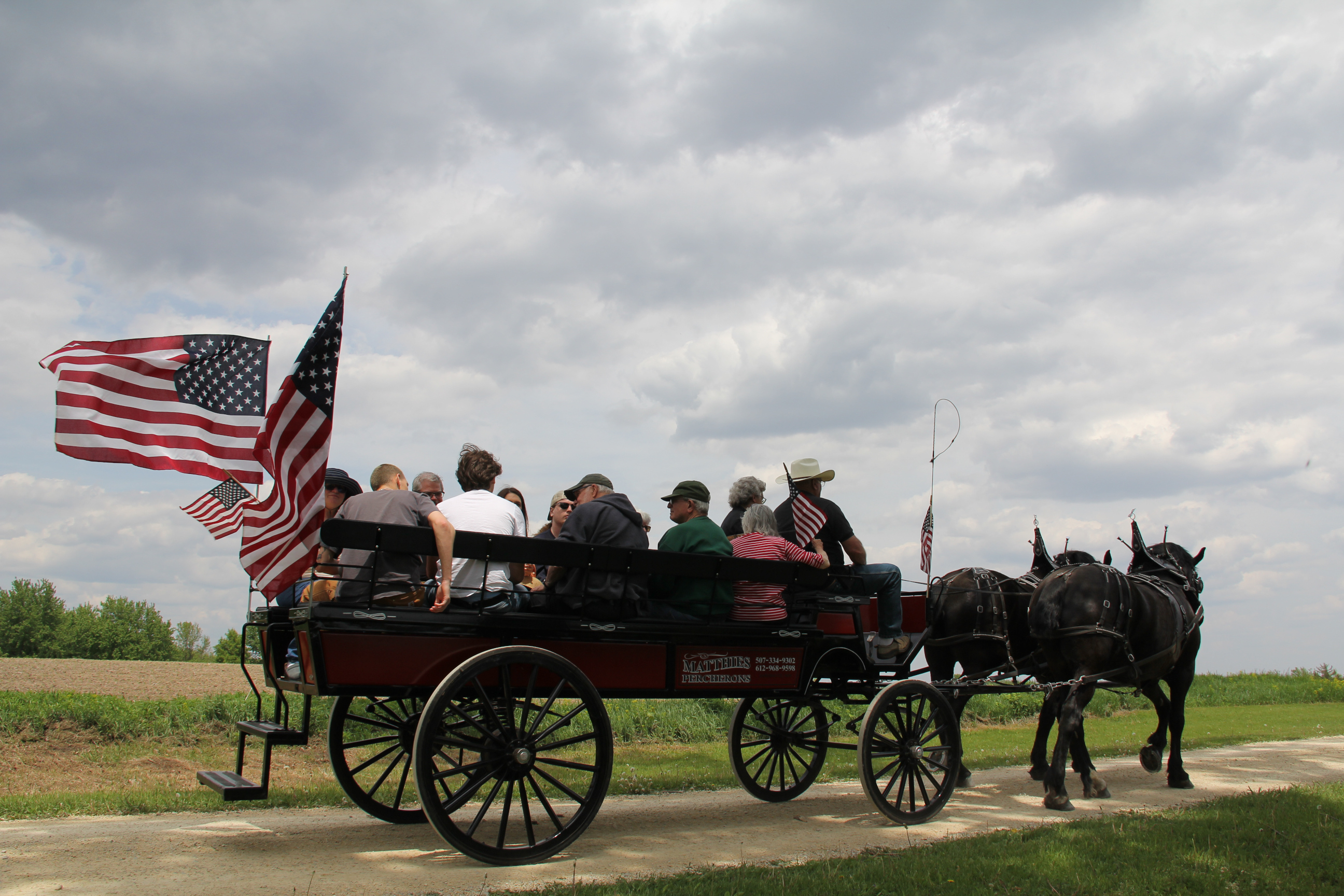
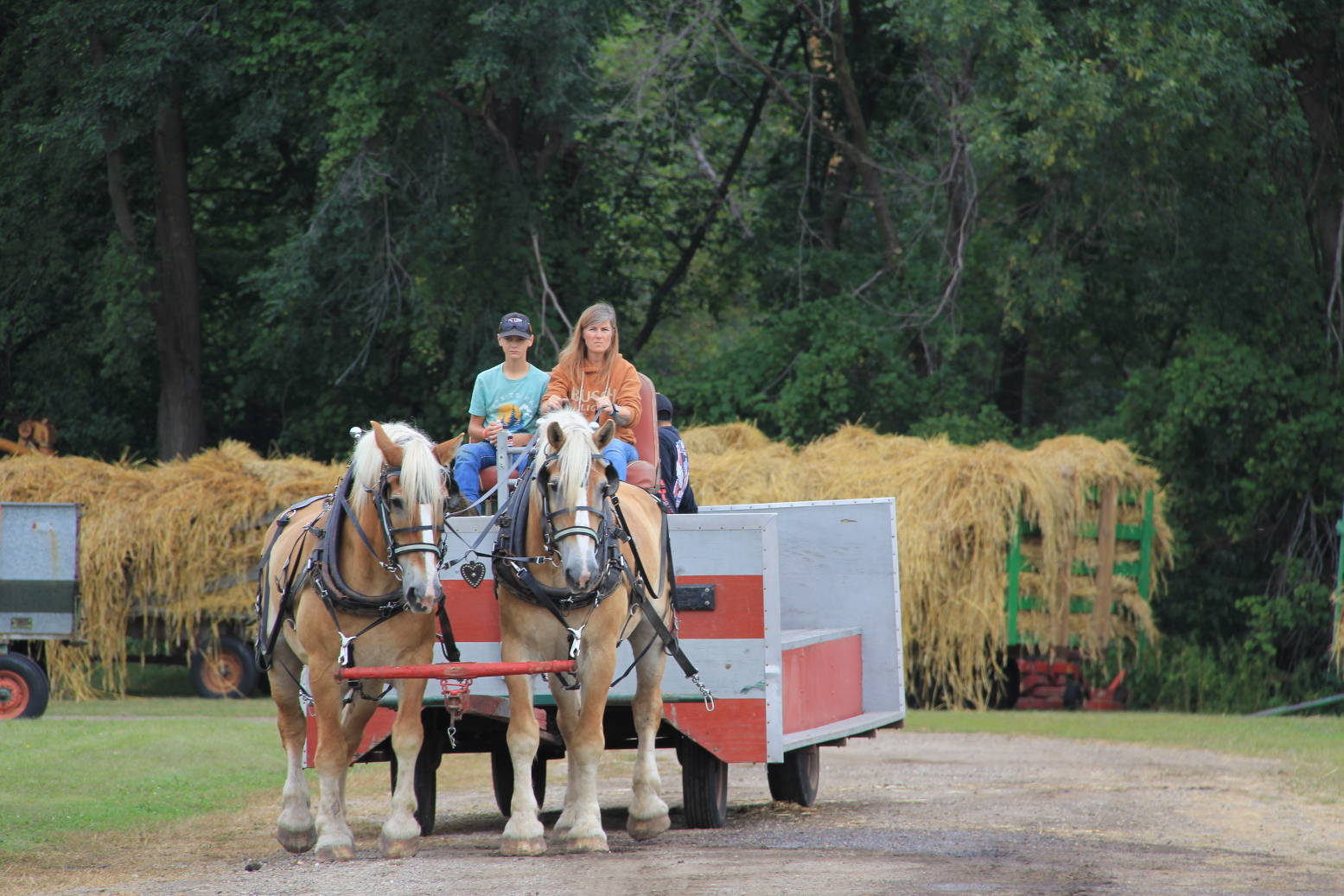
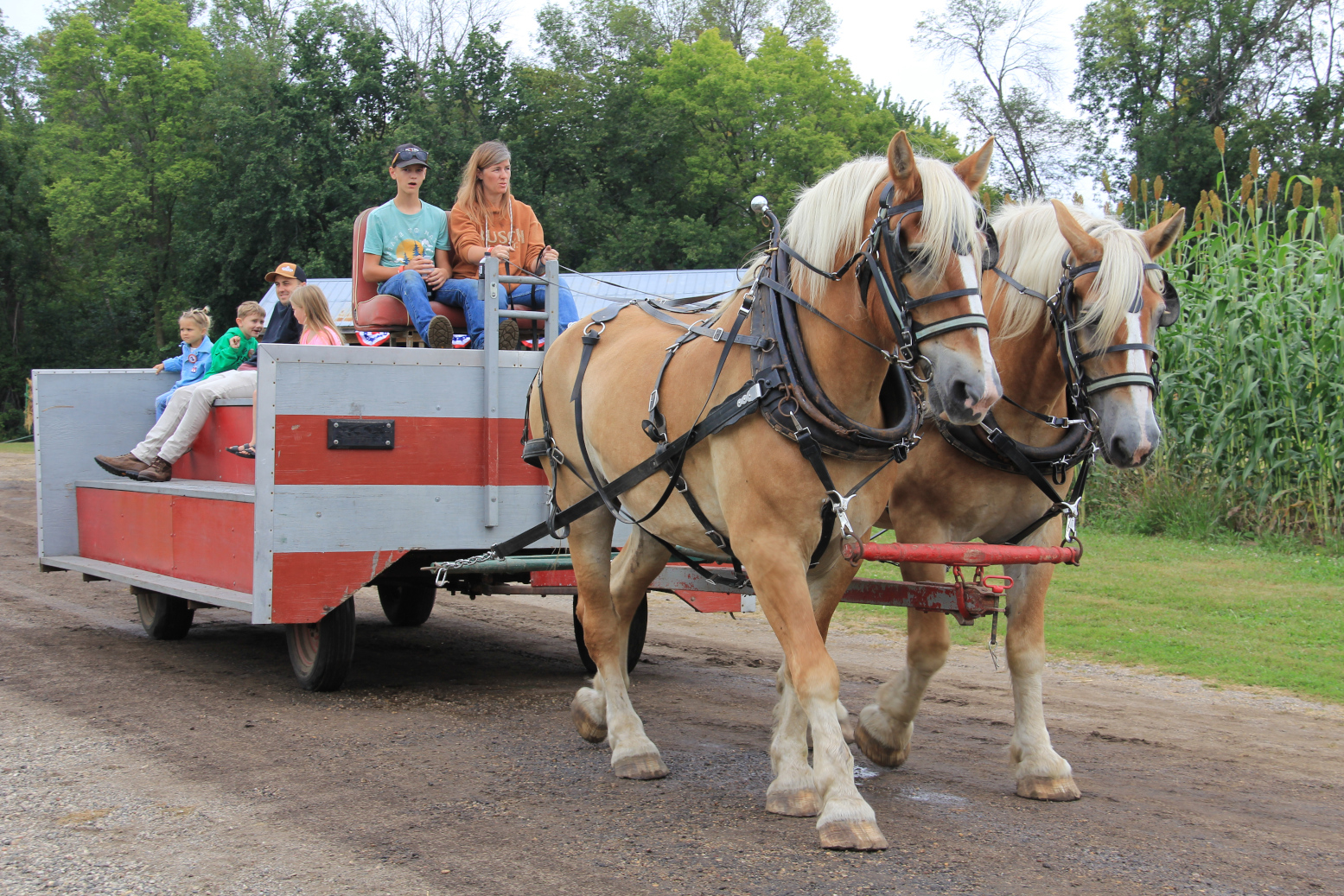
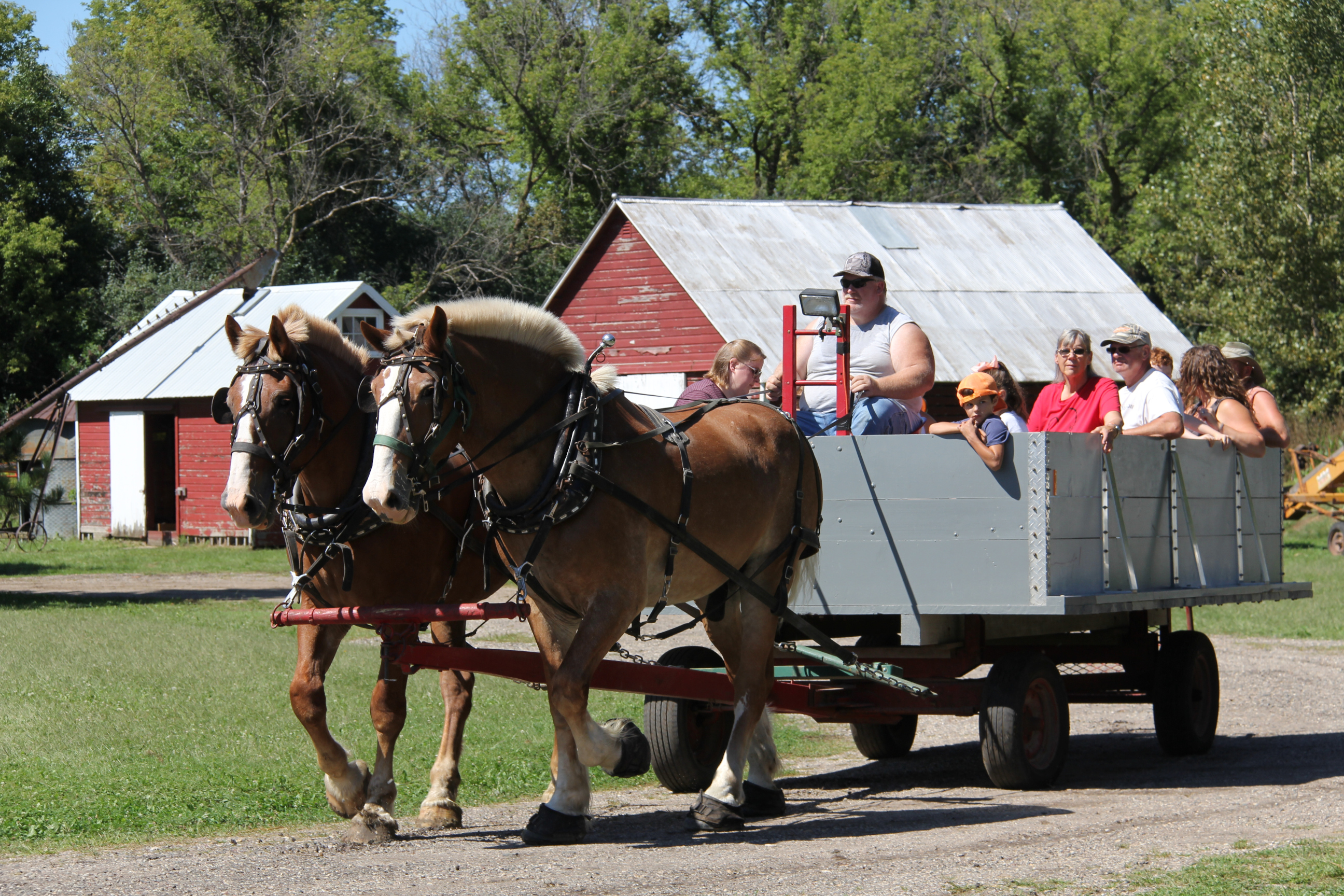
Horse-drawn wagon rides by Tom Duban, rural Faribault, transport attendees around the showgrounds. (Minnesota Prairie Roots copyrighted photo August 2025)
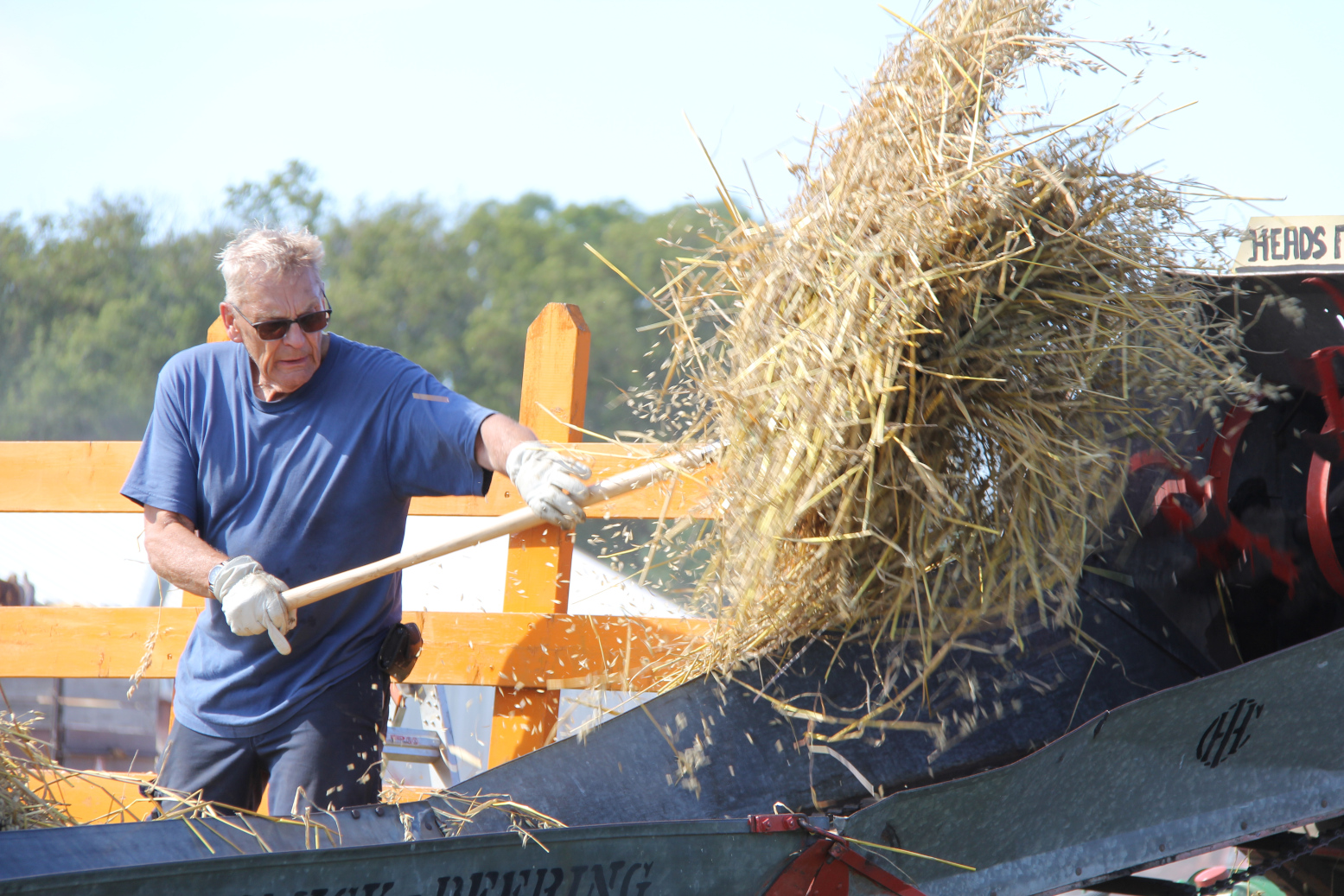
Tossing oats into the thresher is labor intensive. (Minnesota Prairie Roots copyrighted photo August 2025)

I love, too, the passion I see here in tractor collectors and in those operating massive steam engines, guiding horses, shoveling and shelling corn, pitching and threshing oats, sawing wood, making ropes, creating commemorative wooden shingles, stitching leather, pounding hot metal, and much much more.

The barrel train passes the threshing area as it winds through the showgrounds. (Minnesota Prairie Roots copyrighted photo August 2025)
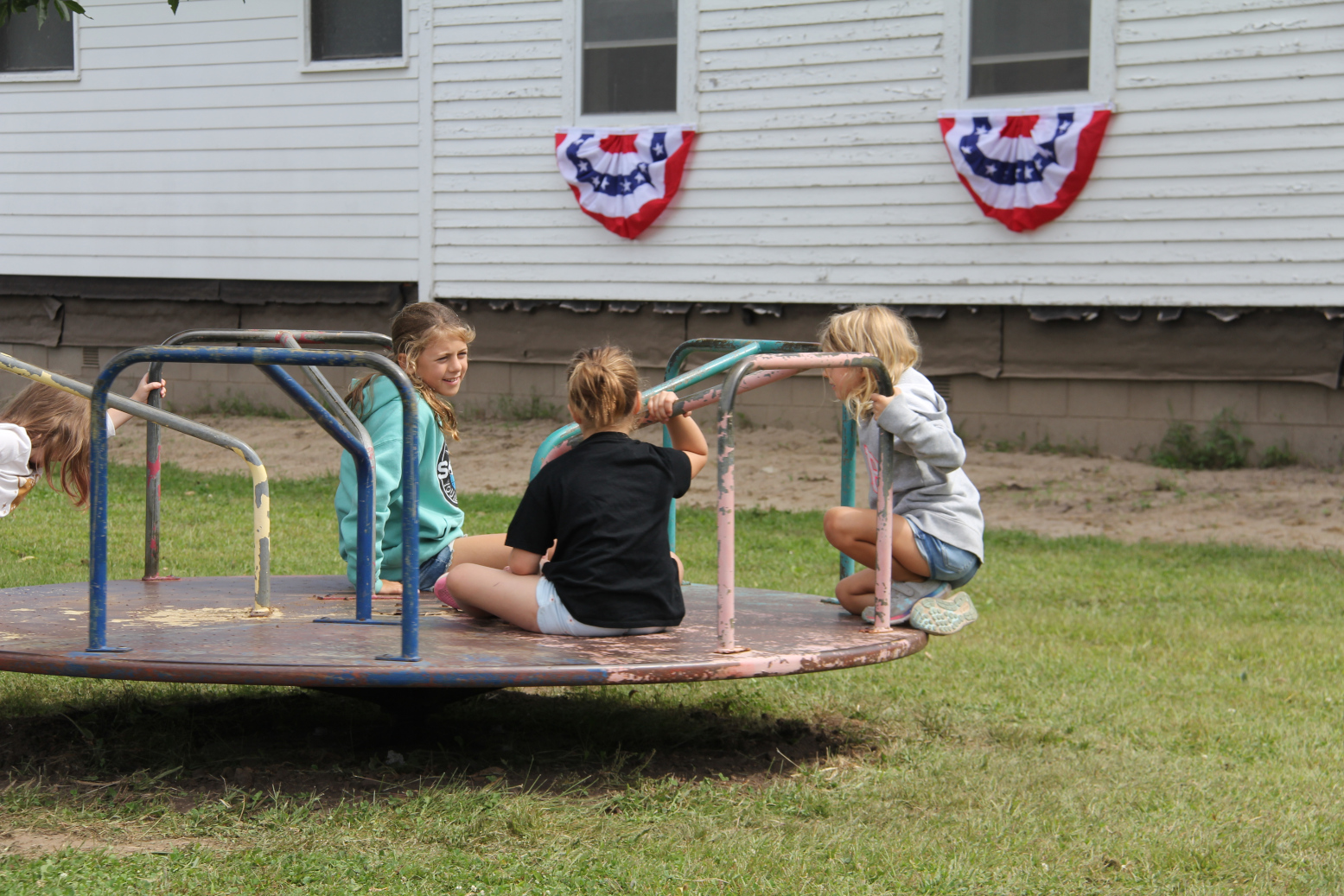
There are several vintage merry-go-rounds at the site and kids love them. (Minnesota Prairie Roots copyrighted photo August 2025)
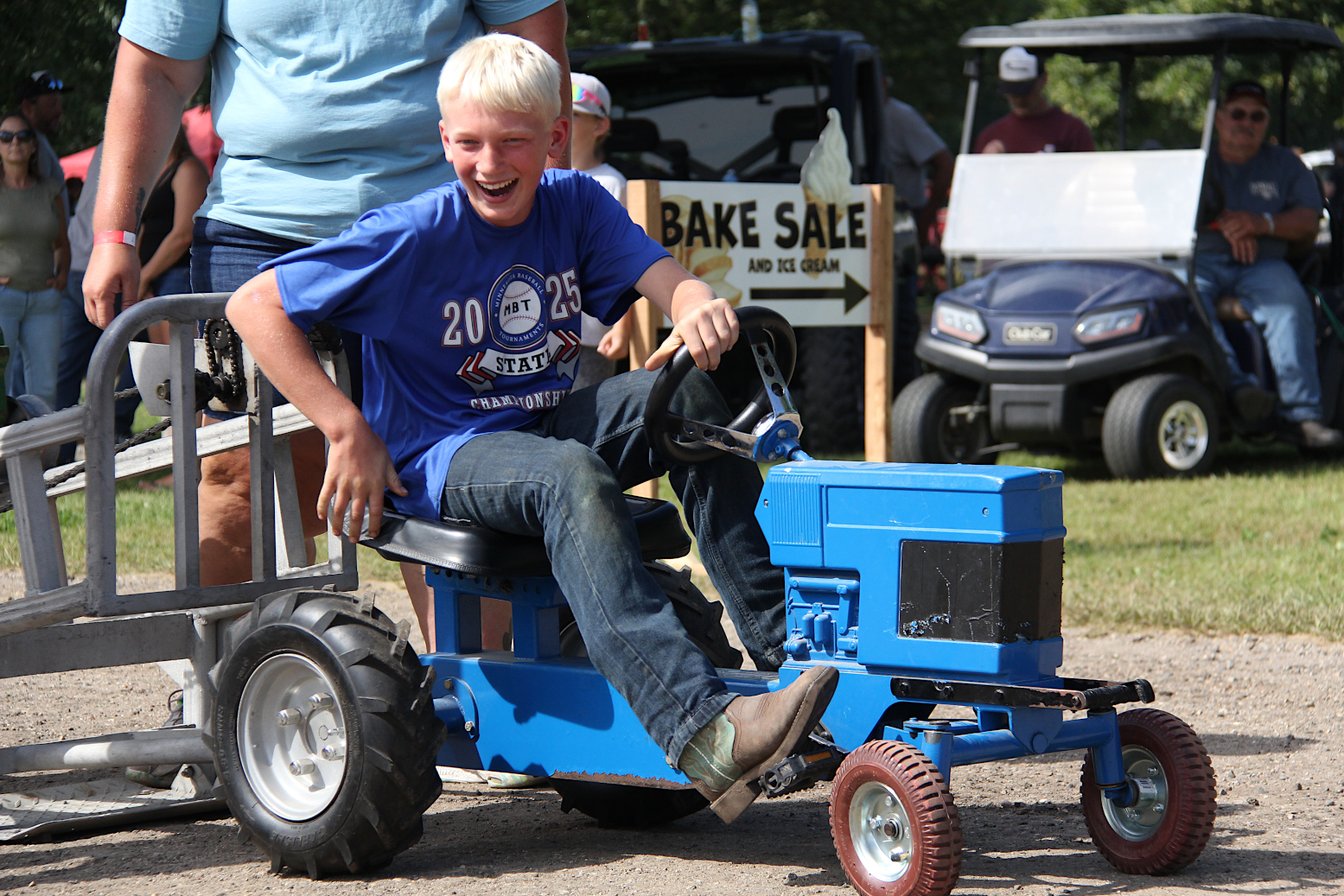
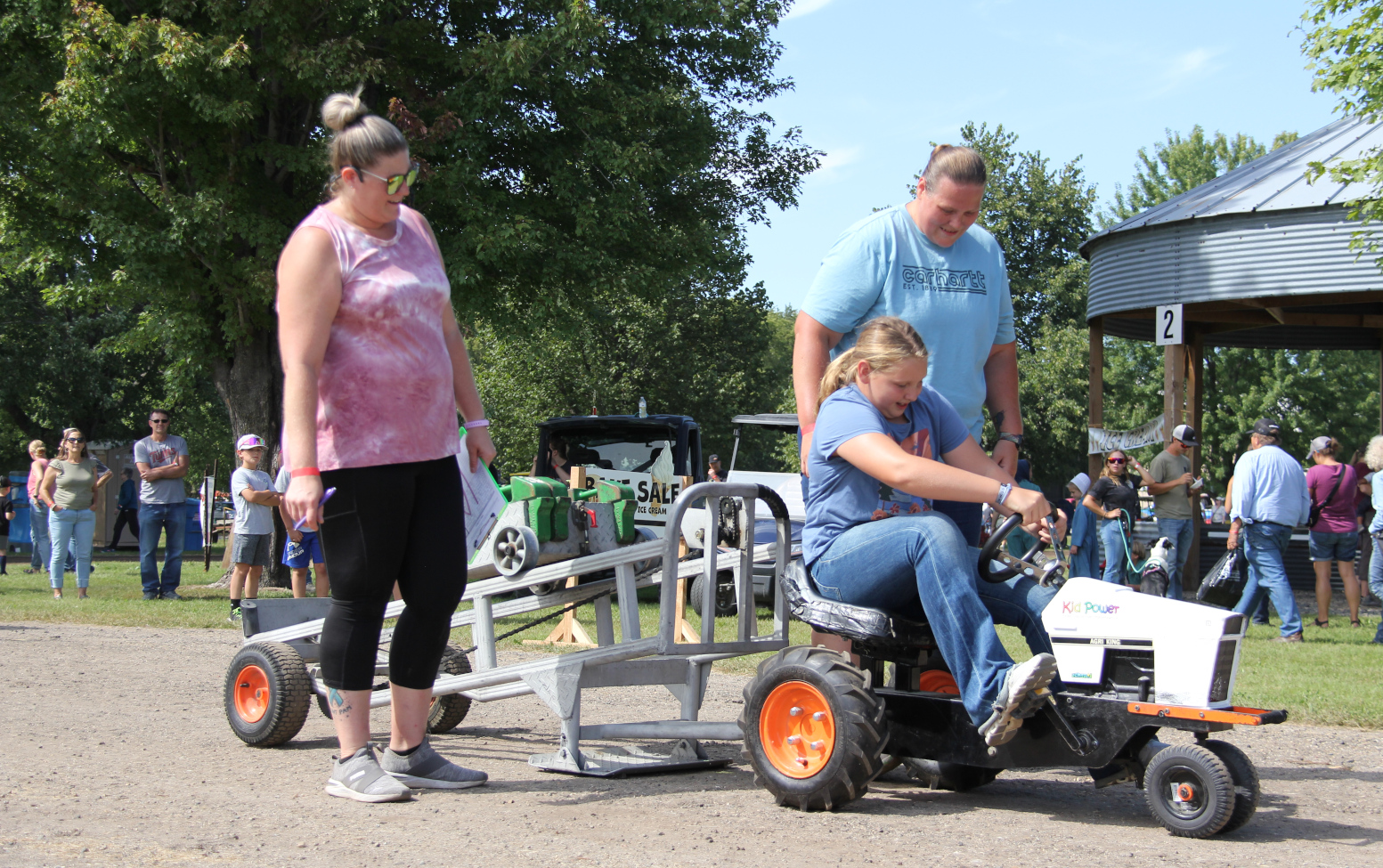
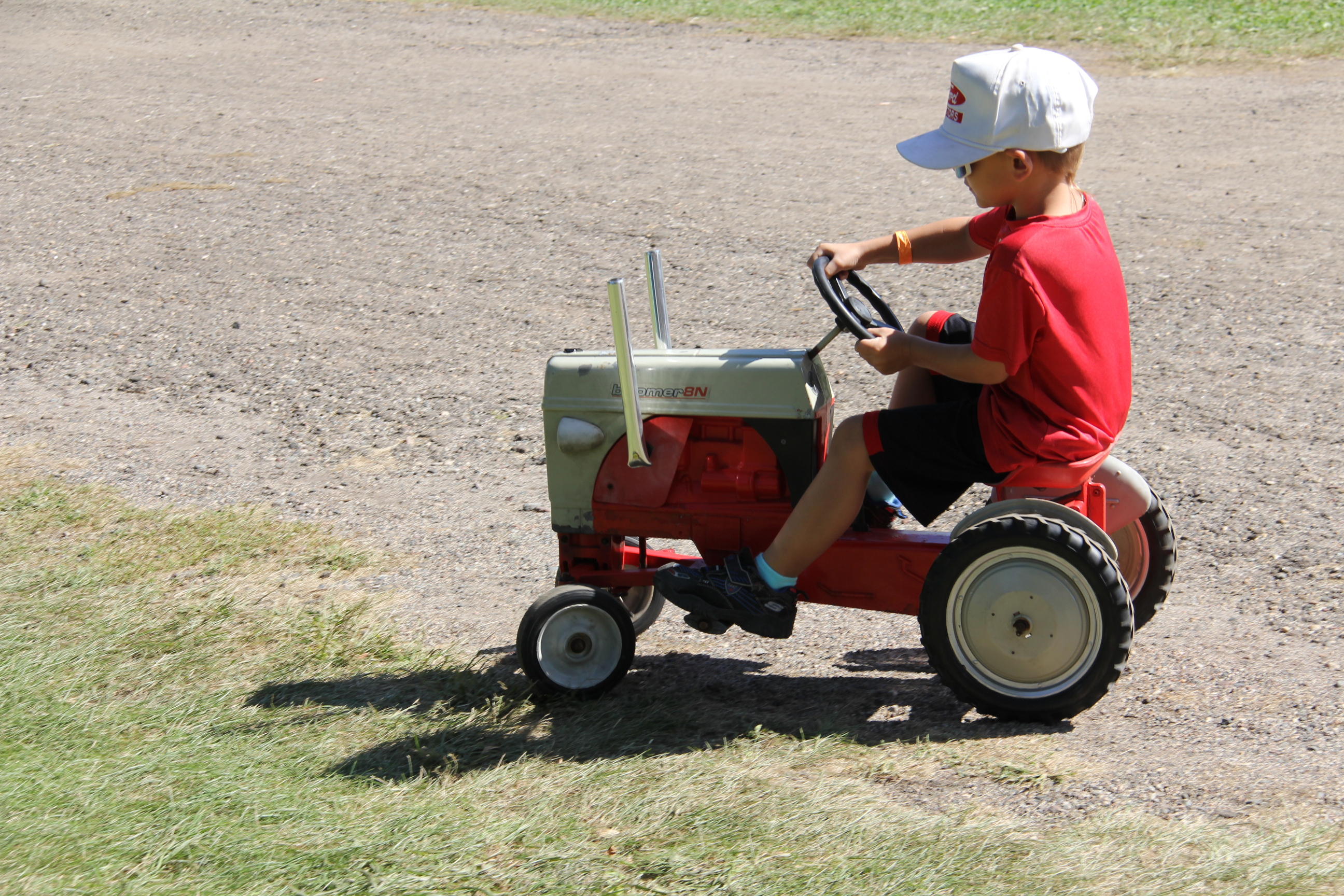
One of several contestants I watched at the kids’ pedal tractor pull. (Minnesota Prairie Roots copyrighted photo August 2025)

I also love people-watching, seeing young and old alike immerse themselves in the past. This truly is a family event for all ages with hands-on activities for the kids and lots of reminiscing for those of us who grew up on farms. I watched kids spin on old-fashioned merry-go-rounds, grind corn, toss basketballs into hoops inside a grain wagon, pedal with all their might in a competitive kids’ pedal tractor pull, ride in an old-fashioned barrel train and on a mini train, steer tractors…

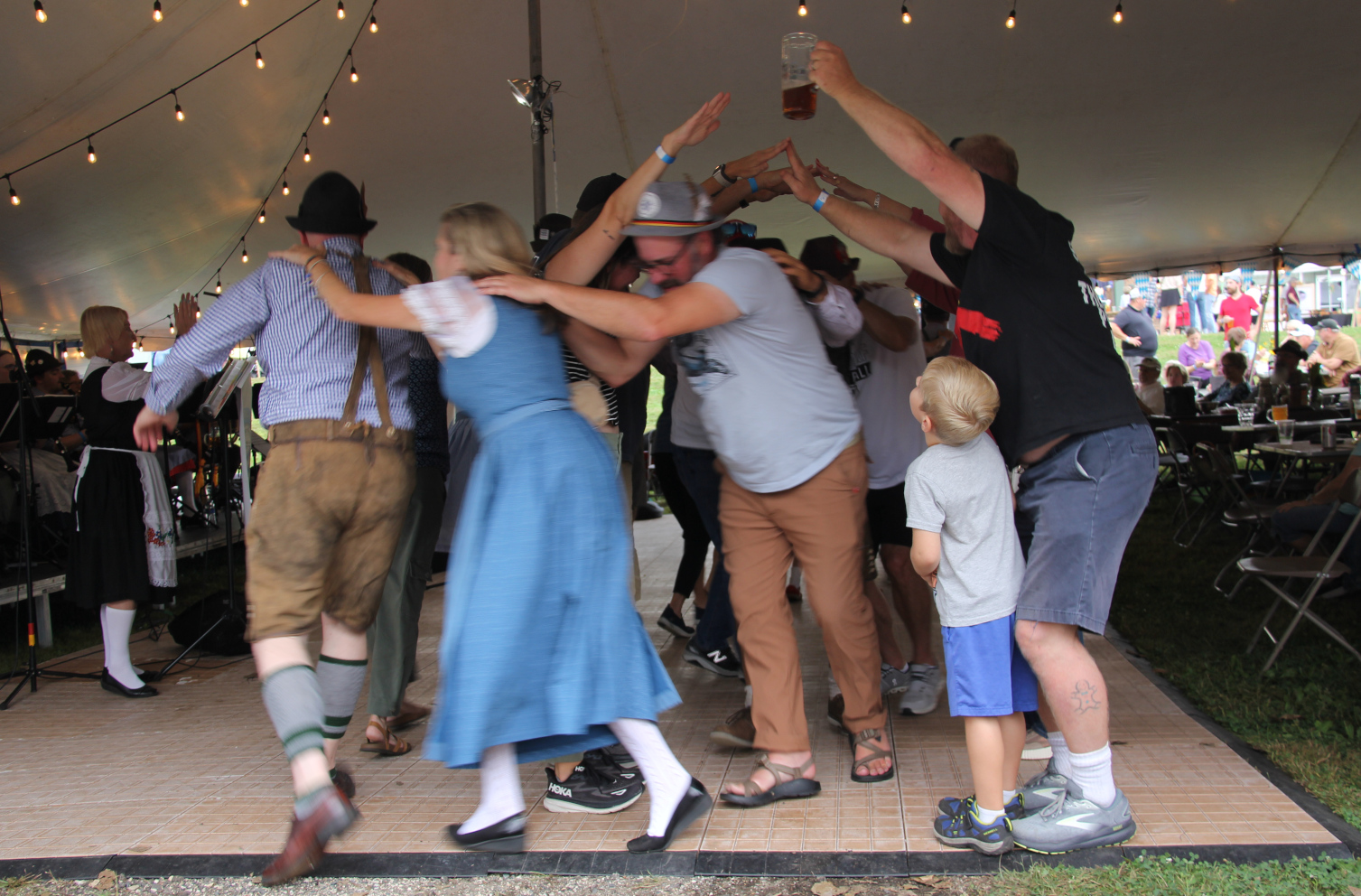
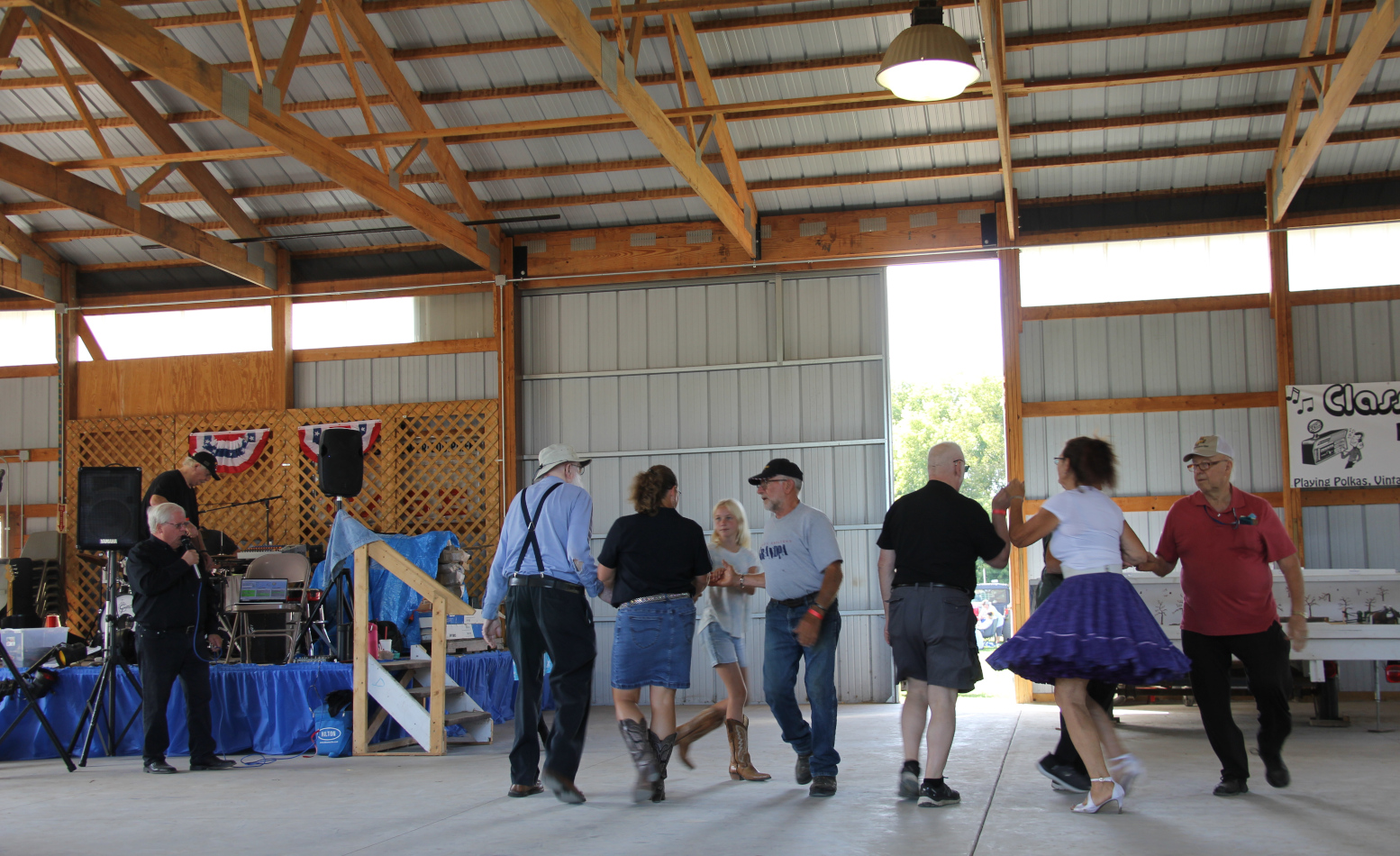
The event included music and dancing in the music hall, where a beer garden is also located. (Minnesota Prairie Roots copyrighted photo August 2025)

A flea market, music, food…they, too, are part of this well-organized show. It takes a lot of volunteers, a lot of work and dedication, a lot of time and commitment to pull this off.

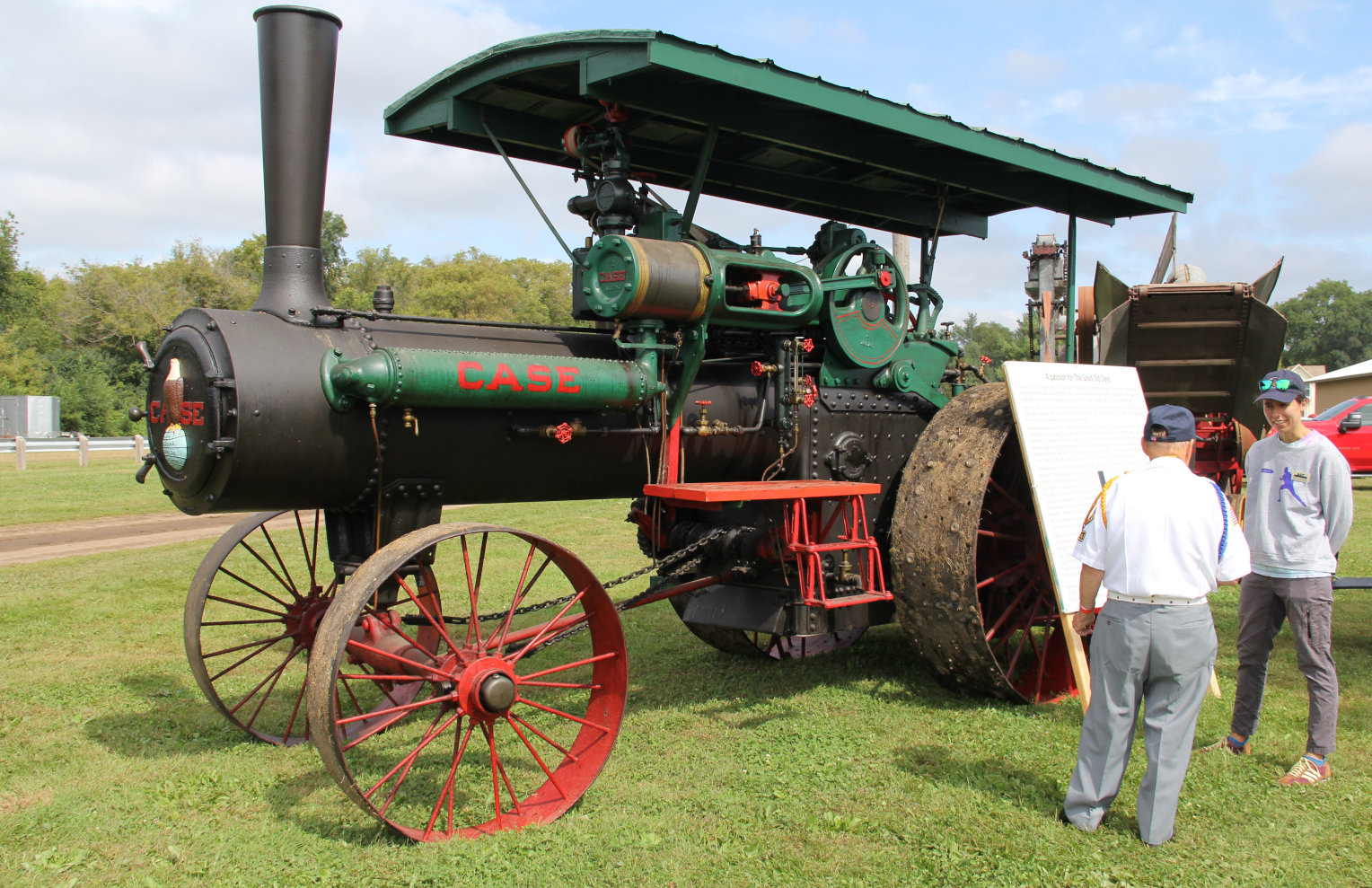
Transported from the Rice County Historical Society in Faribault, this 1916 Case steam engine sparked the interest leading to the first show. (Minnesota Prairie Roots copyrighted photo August 2025)

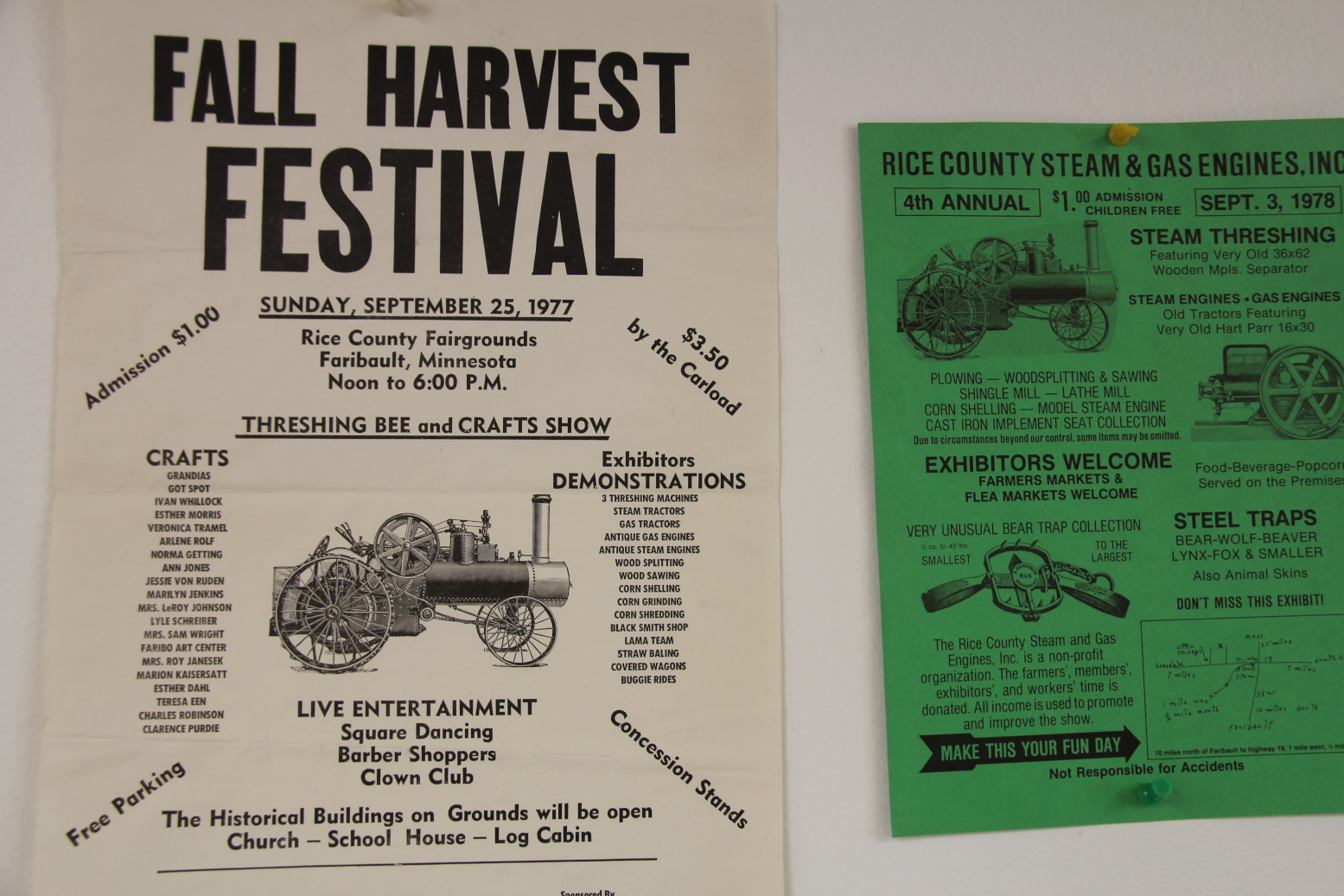
This organization has grown this event, which began with a threshing demonstration in Faribault in 1974, sparking formation of the Rice County Steam Association and the first show near Warsaw in 1975. The 1916 50 hp Case steam engine that started it all 50 years ago was pulled out of storage at the Rice County Historical Society Museum for display at the 2025 show.

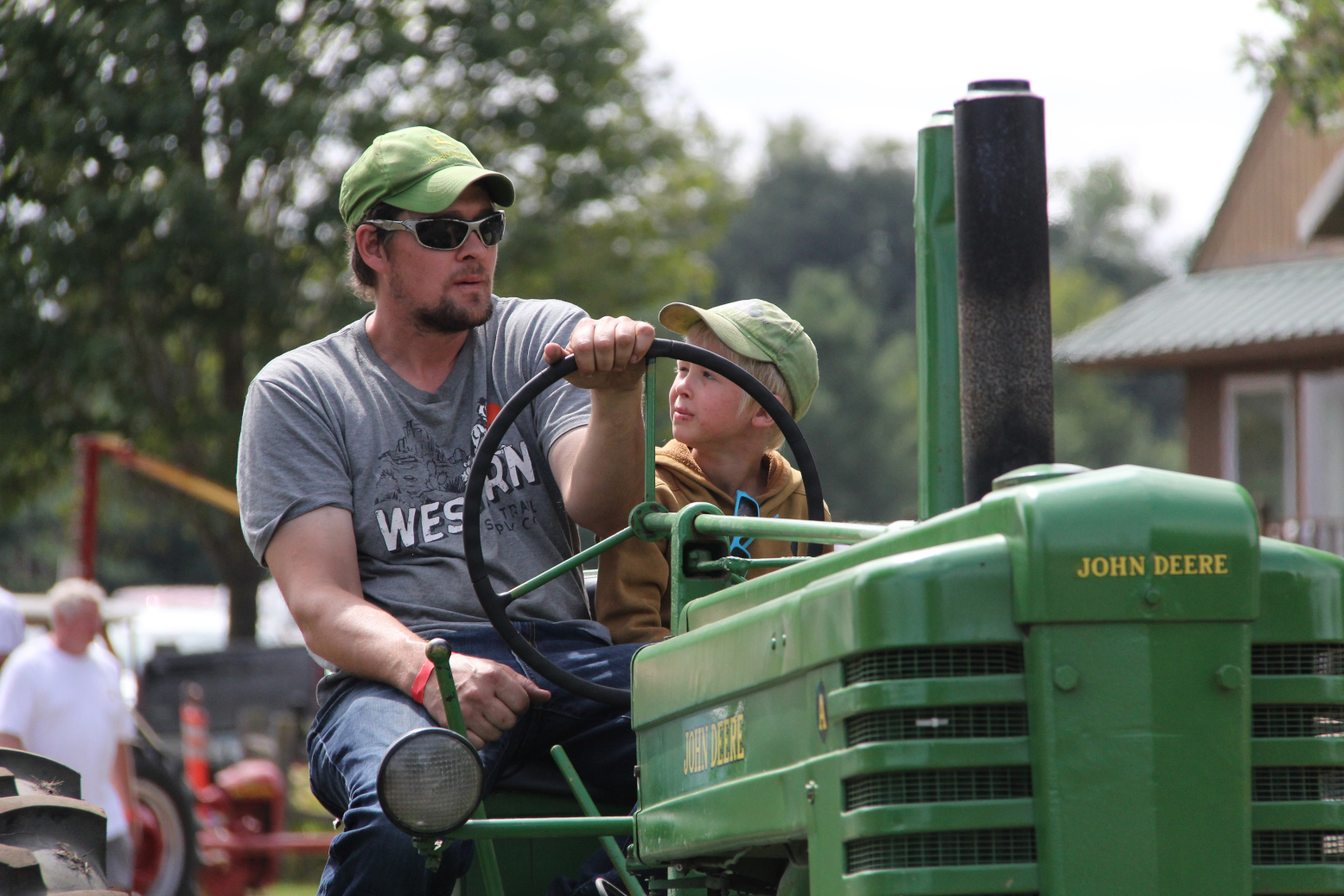
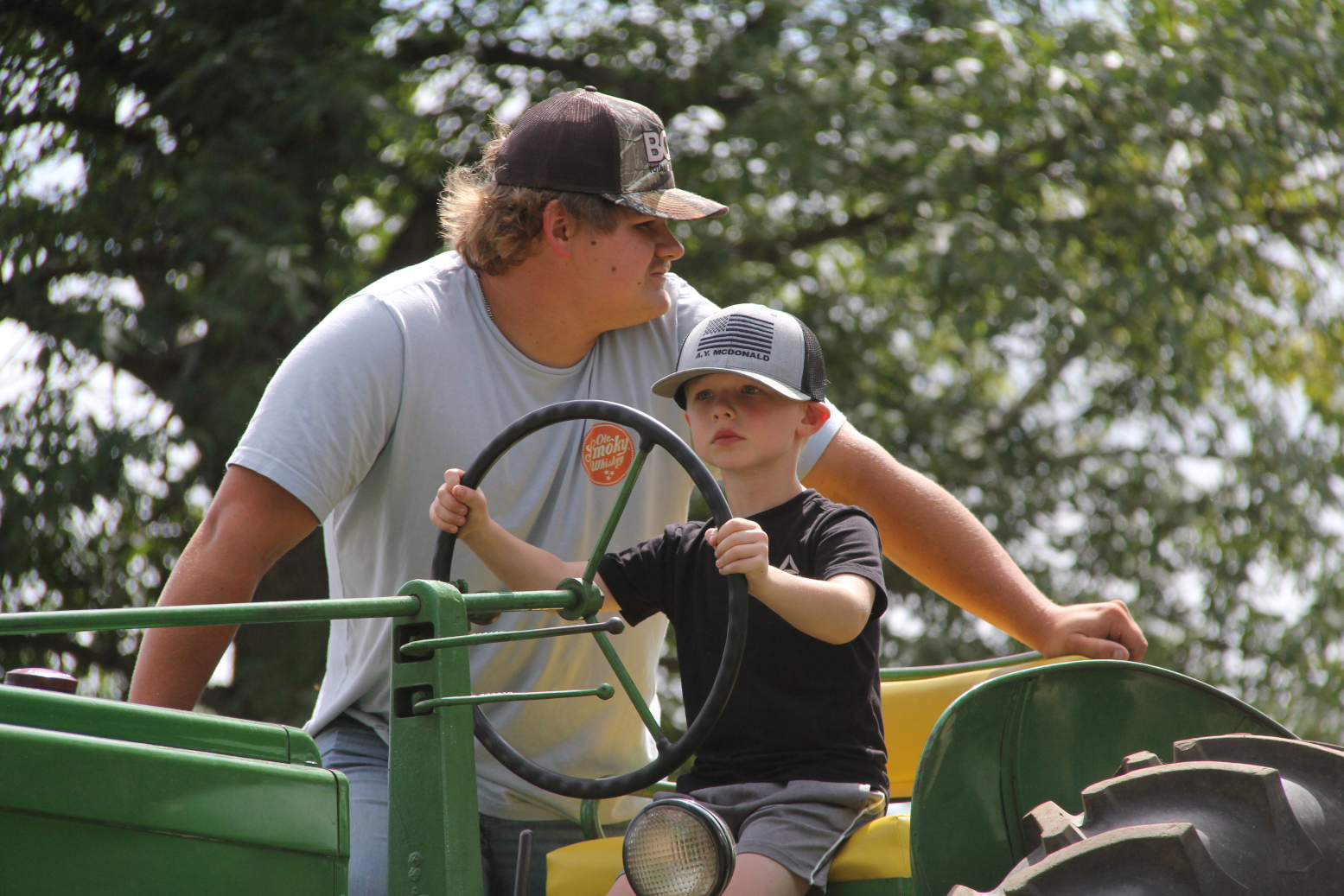
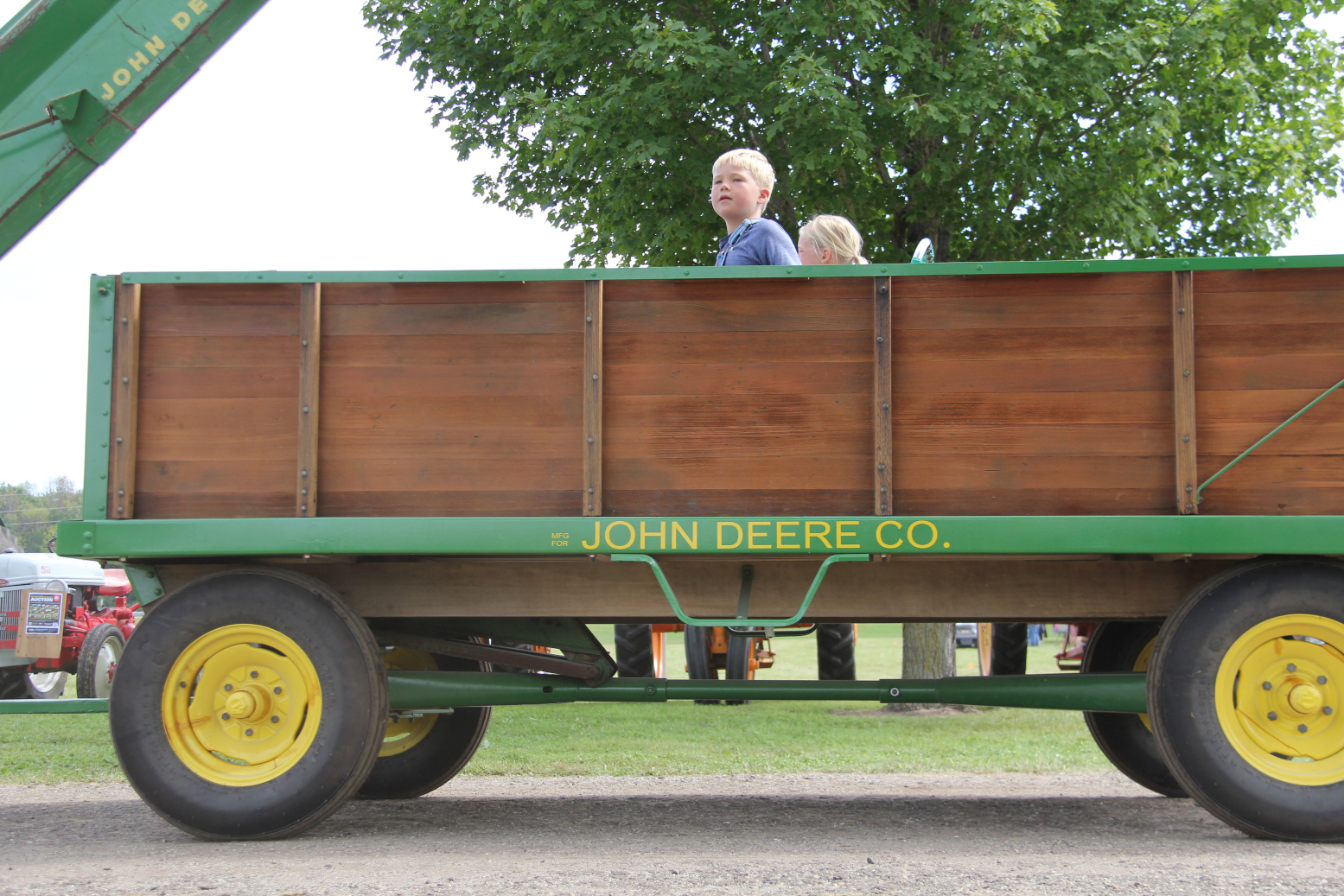
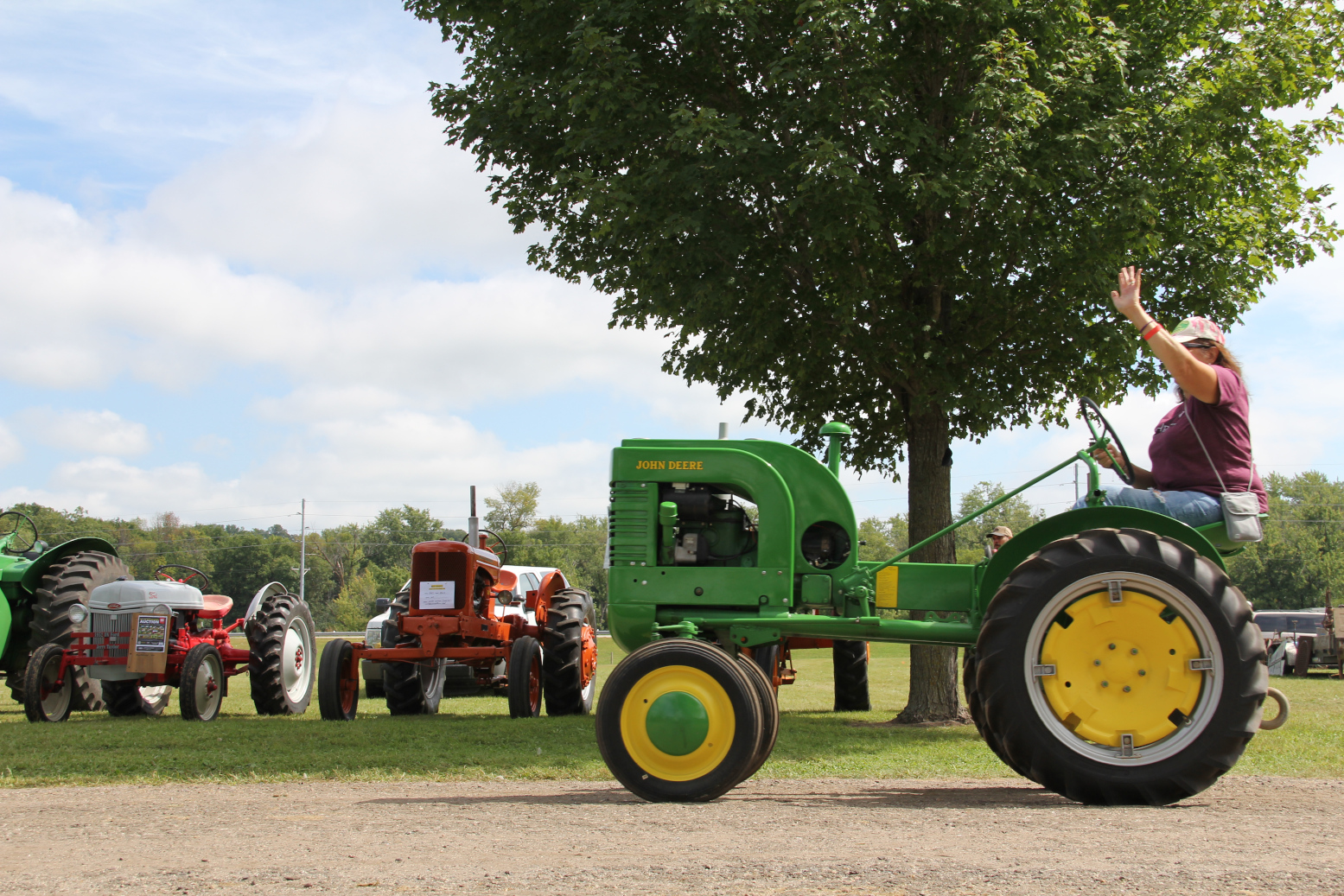
This young boy is focused and determined as he drives a John Deere during the tractor parade. (Minnesota Prairie Roots copyrighted photo August 2025)
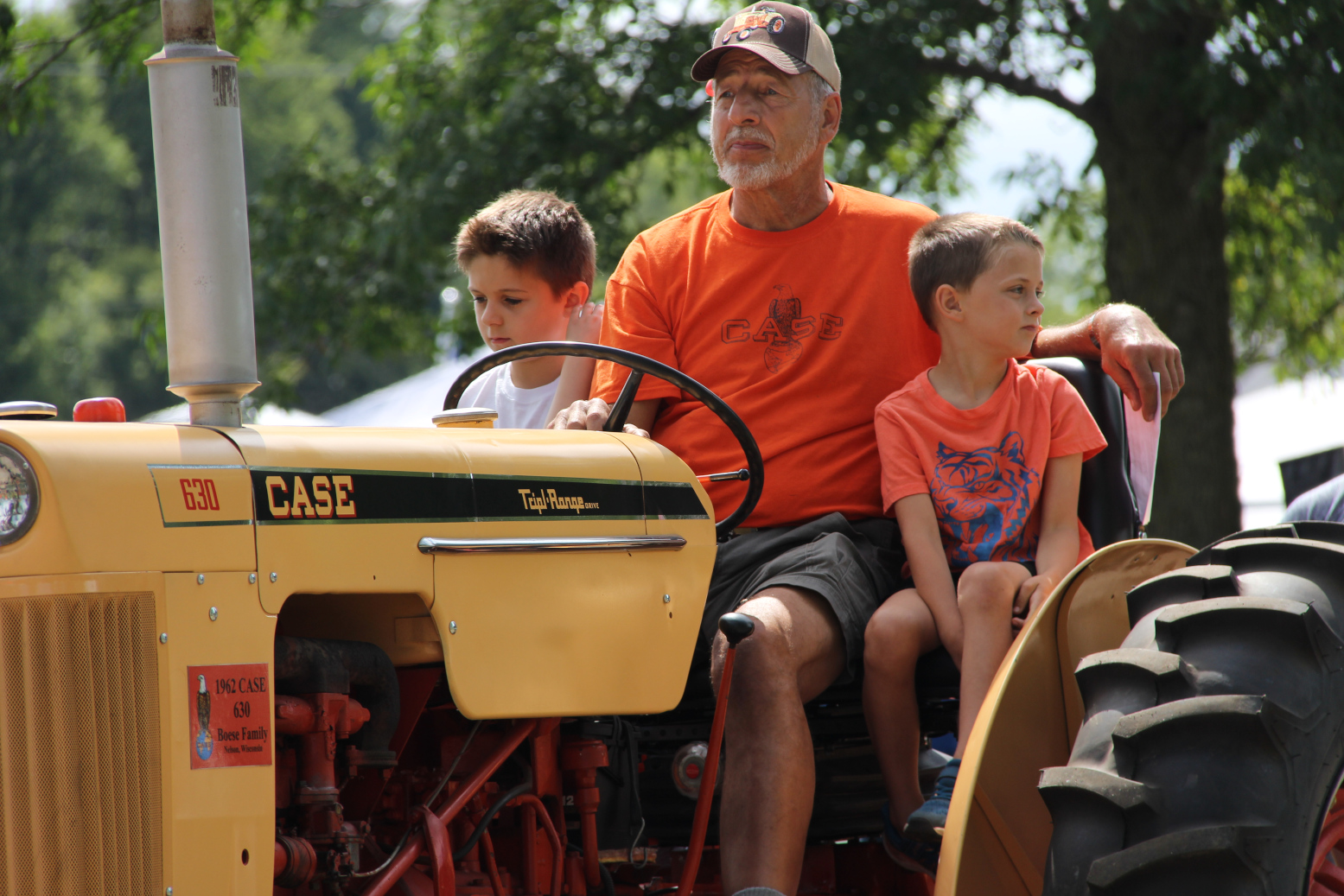
Three on board a Case for the tractor parade. (Minnesota Prairie Roots copyrighted photo August 2025)
I love the look of joy, admiration and contentment on this young boy’s face as he rides a John Deere in the parade. (Minnesota Prairie Roots copyrighted photo August 2025)

Everywhere I walked, everywhere I looked, I saw smiles. I saw, too, an inter-generational connection over a shared love of tractors, farming of yesteryear, the rural way of life.

The lengthy parade of hundreds of tractors began at noon daily. (Minnesota Prairie Roots copyrighted photo August 2025)

In the noise of roaring farm machinery, in the belch of steam from massive steam engines, in the dust flying from shelling corn and threshing oats, in the clop of horses’ hooves, even in the scent of horse manure, I observed and experienced rural life as it once existed. Labor intensive. Dangerous. Family-centered. But at it’s core still the same. Valued. Honored. Truly a way of life rooted in the land and cherished by those who live upon and tend it.

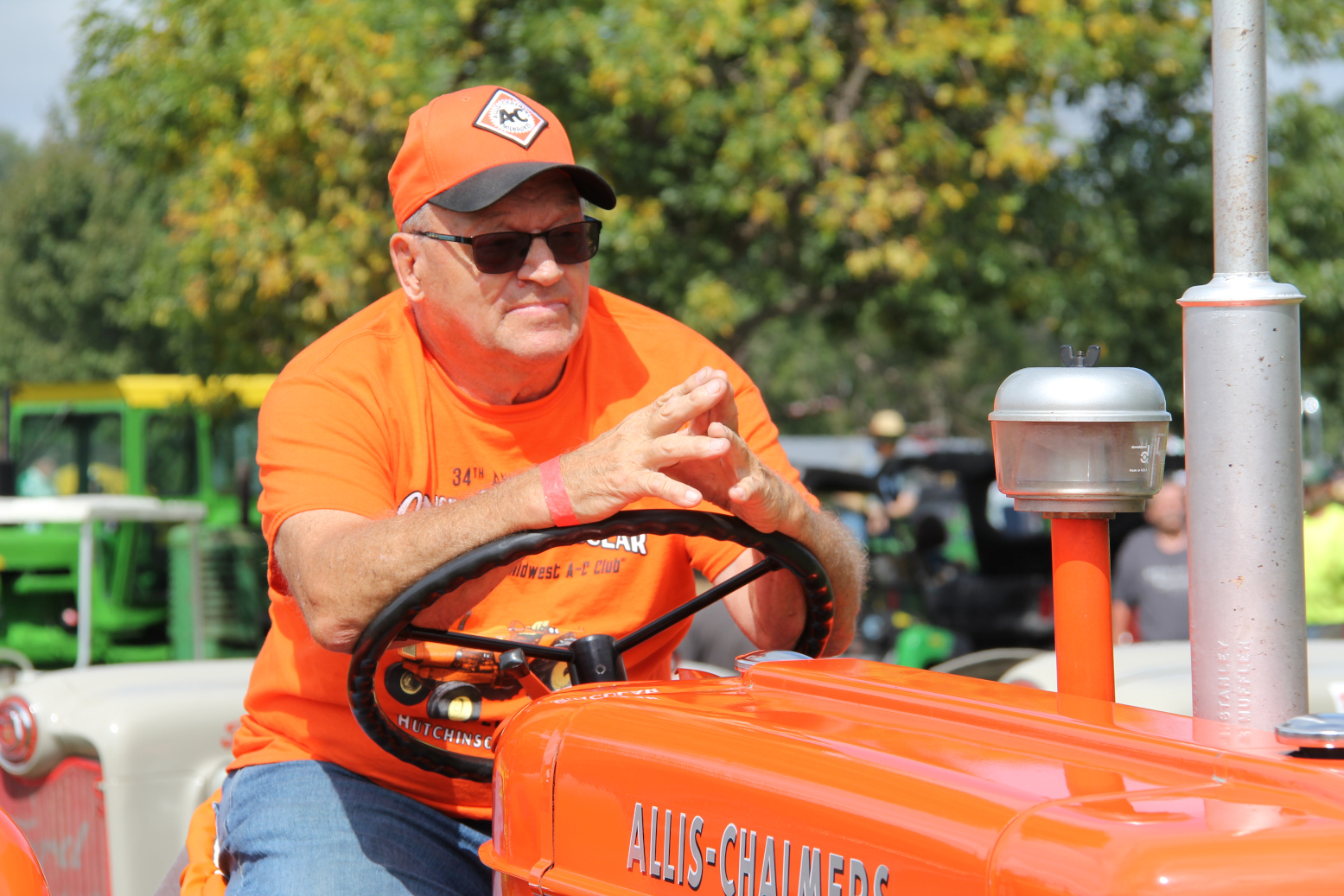
Allis Chalmers guy. (Minnesota Prairie Roots copyrighted photo August 2025)

PLEASE CHECK BACK for more posts about this show.

© Copyright 2025 Audrey Kletscher Helbling
 

In praise of monarchs, milkweeds & fireflies July 16, 2025

A monarch butterfly feeds on a milkweed flower. (Minnesota Prairie Roots copyrighted file photo)

ON A RECENT AFTERNOON, I looked up from washing dishes and out the kitchen window to see a solitary monarch butterfly flitting among milkweeds. Something as common as a butterfly remains, for me, one of summer’s simplest delights. Along with milkweeds and fireflies.

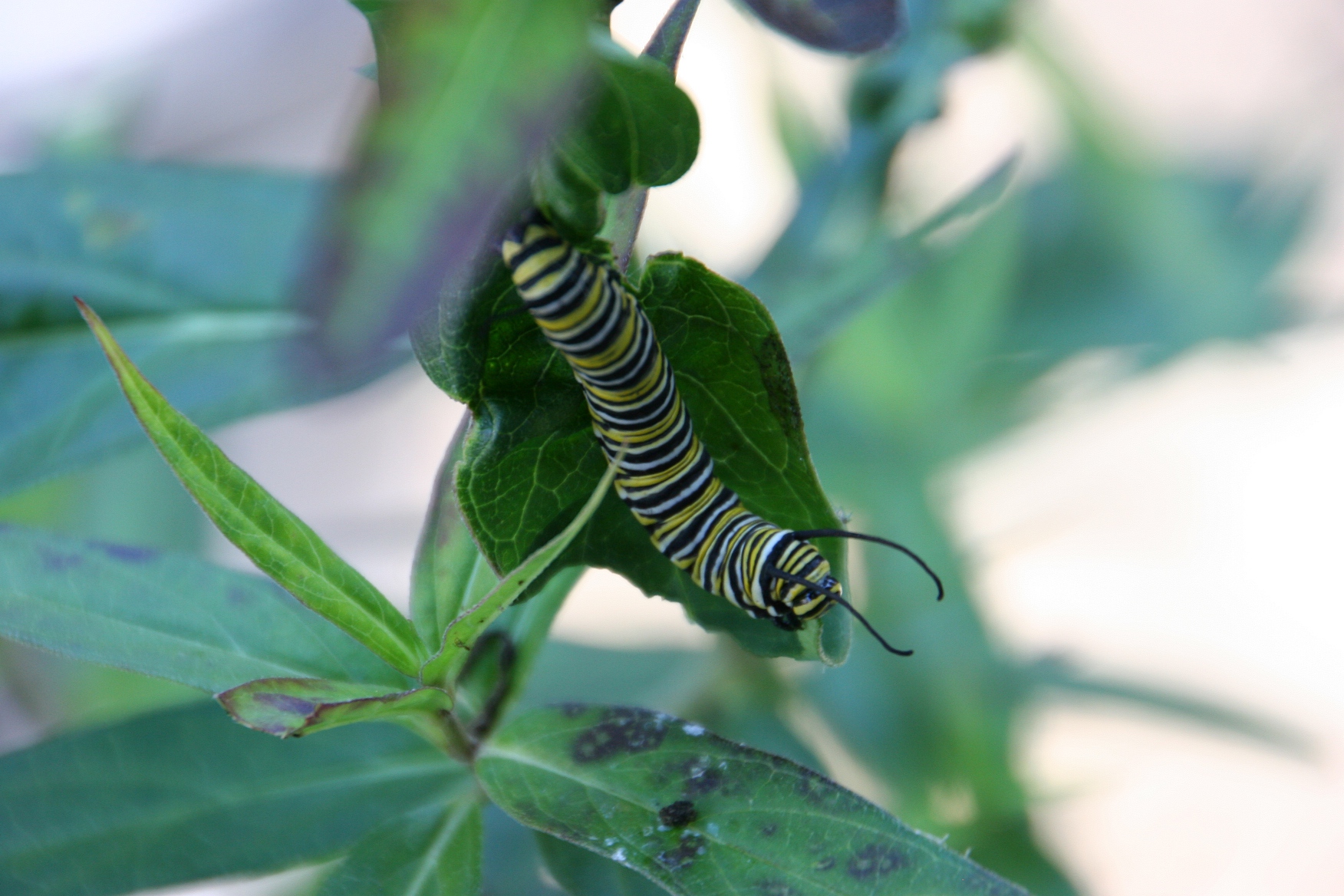
A monarch caterpillar on milkweed. (Minnesota Prairie Roots copyrighted file photo)

This year I have a bumper crop of milkweed plants growing in and along flowerbeds and retaining walls. I stopped counting at 24 plants. I have no idea why the surge in milkweeds. But I am happy about their abundance given monarchs need milkweed. It is the only plant upon which the monarch lays eggs and the sole source of food for monarch caterpillars.

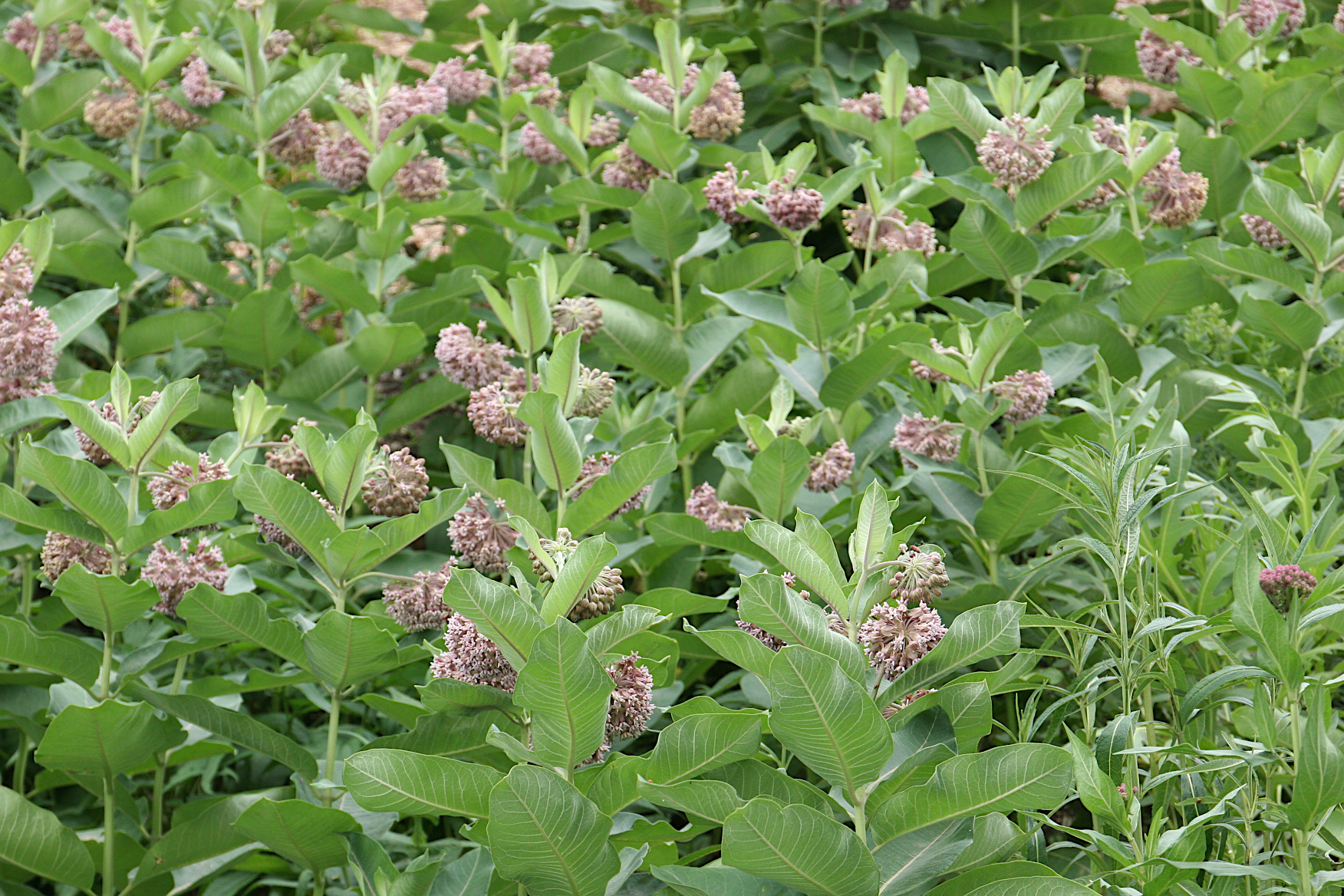
A crop of milkweeds in a public garden. (Minnesota Prairie Roots copyrighted file photo)

My farmer dad, if he was still alive, would likely offer a different opinion about milkweeds. As children, my siblings and I walked rows of soybean fields eradicating milkweeds, thistles and the notorious cocklebur. This was called “walking beans,” a job that we hated, but was necessary to keep fields mostly weed-free without the use of chemicals.

I never considered then that I might some day appreciate milkweeds, the “weed” I pulled from the rich dark soil of southwestern Minnesota. On many a hot and humid afternoon, sweat rolled off my forehead and dirt filtered through the holes of my canvas tennis shoes while hoeing and yanking unwanted plants from Dad’s soybean fields and on my cousin John’s farm.

Today I instruct my husband not to pull or mow any milkweed plants in our Faribault yard. Randy understands their value, even if he didn’t walk beans on his childhood farm. He more than made up for that lack of field work by picking way more rocks than I ever did. Morrison County in central Minnesota sprouts a bumper crop of rocks compared to my native Redwood County, where I also picked rocks.

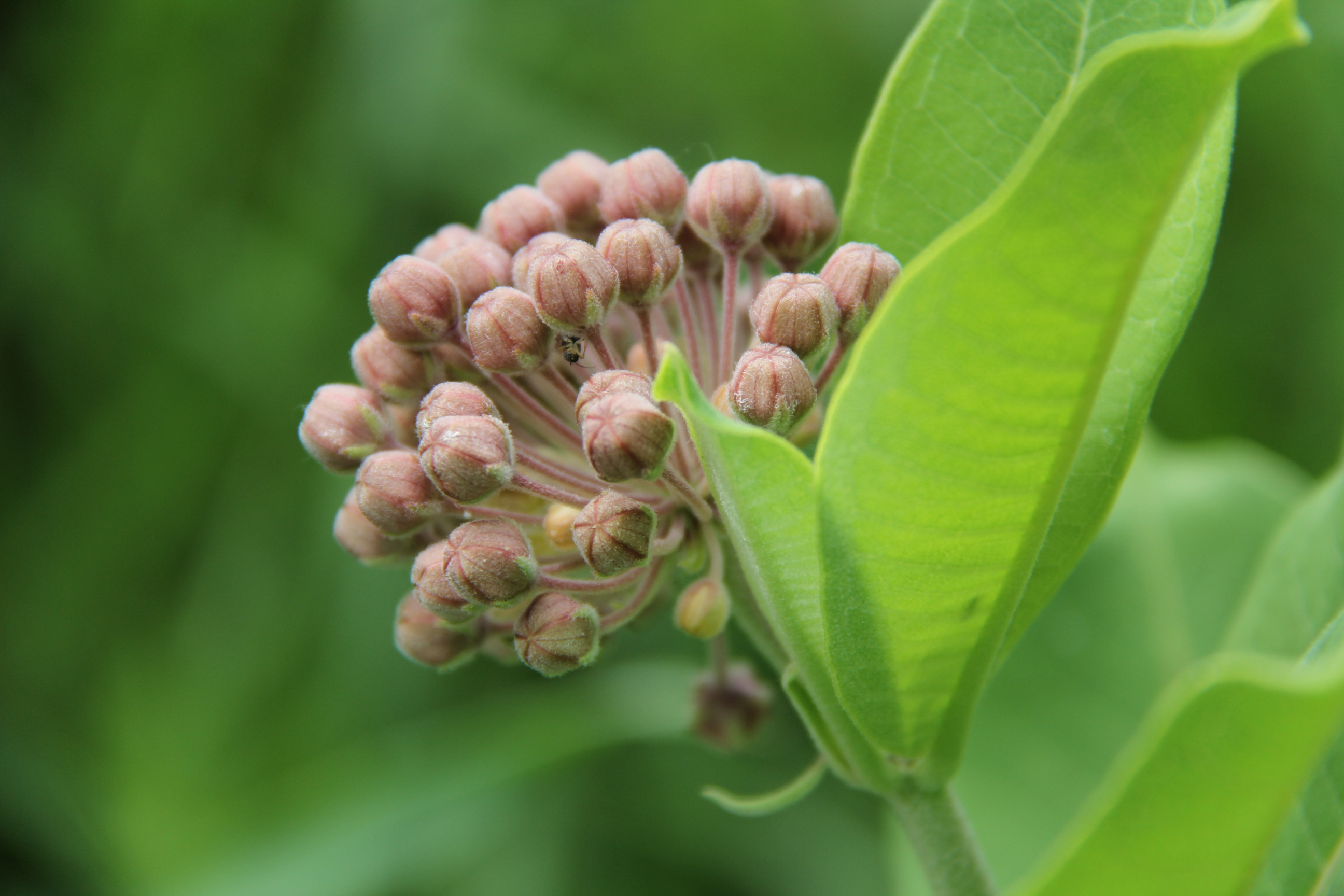
A milkweed about to open. (Minnesota Prairie Roots copyrighted file photo)

But back to milkweeds. I love the scent of the dusty rose-colored common milkweed. So if you drive by my Faribault home or walk through River Bend Nature Center or Central Park or past Buckham Memorial Library and see me dipping my nose into a cluster of milkweed flowers, that’s why.

As summer progresses, I’m curious to see how many monarchs soar among the milkweeds in the tangled messes of plants that define my untamed flowerbeds. Thankfully our next door neighbor appreciates milkweeds also and is OK if the wind carries seeds onto his property.

Fireflies glow in the garden art honoring my nephew Justin. (Minnesota Prairie Roots copyrighted file photo)

I’ve already seen fireflies aplenty in our backyard, which abuts a wooded hillside. And recently, while driving home in the early dark of a summer evening, Randy and I saw hundreds of fireflies lighting up grassy road ditches. It was truly magical, reminding me of childhood sightings and of Eric Carle’s children’s picture book, The Very Lonely Firefly. I had a copy for my kids, battery included to light up firefly illustrations. And, until it stopped working, I had a solar-powered firefly garden sculpture honoring my nephew Justin, who loved light and fireflies and died at age 19 in 2001 of Hodgkins disease.

Often what we love is about much more than simply whatever we love. I see, in writing this story, that my love of milkweeds, monarchs and fireflies connects to memories. Summer memories. Farm memories. Family memories. These are the stories we carry within us, that help define who we are, whether we consider a milkweed to be a weed, or a flower.

TELL ME: What simple summer things delight you and why?

© Copyright 2025 Audrey Kletscher Helbling
 

Growing up with 21 siblings in rural Minnesota, a memoir June 10, 2025

This book is also packed with candid and posed photos of the Miller family, adding to the text. (Book cover sourced online)

THIS COULD BE MY STORY or that of any other Baby Boomer who grew up in rural southern Minnesota. With one primary exception. None of us had 21 siblings. Yes, twenty-one. I had only five—three brothers and two sisters.

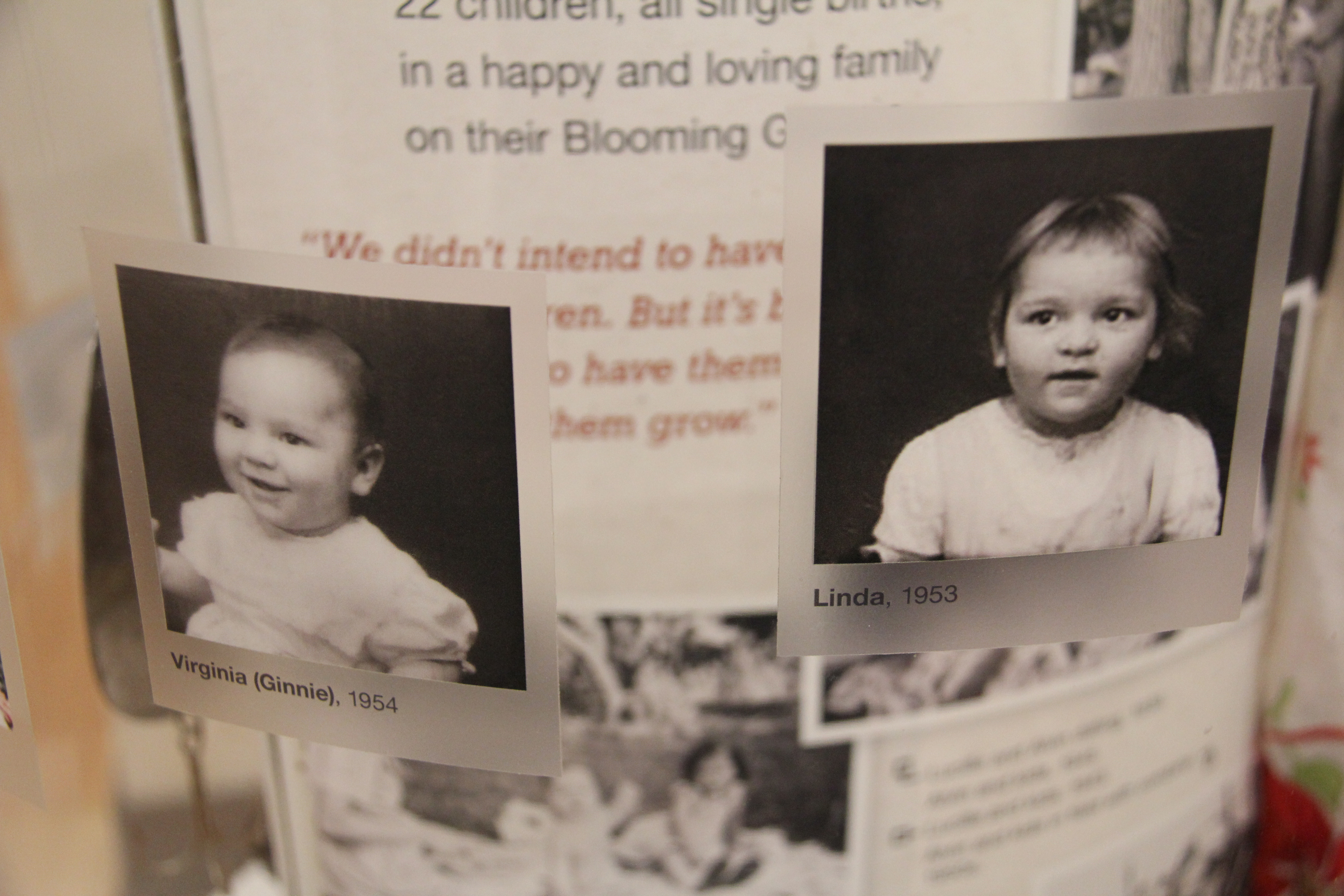
But Helen Miller had seven brothers and 14 sisters, all single births, all born to the same parents, Lucille and Alvin Miller of rural Waseca, over a span on 26 years. She’s chronicled the family’s life in a self-published memoir, 21 Siblings—Cheaper by the Two Dozen.

I happened upon this book, printed in 2018, after visiting the Waseca County History Center and seeing an exhibit about this unusually large family. I knew then that I needed to read this story by Helen, 13th in line. She’s just a bit older than me. I expected my farm upbringing during the late 50s through the 60s and into the early 70s would be similar in many ways. I was right.

WHITE RICE & PANCAKES

This book proved a stroll down memory lane. I remember meals of mostly meat and potatoes with a side vegetable given that was the preferred meal of my farmer father. He, like Alvin Miller, was quite content to eat those basics and didn’t care for any deviations. Large gardens were the norm, no matter family size. Lucille Miller canned fruits and vegetables, just like my mom, except a whole lot more. And, when food supplies ran low, both our mothers cooked a meal of white rice and cinnamon. I detested that and to this day still don’t like plain white rice.

I also do not much like pancakes, although I have no particular reason to explain that dislike. Helen Miller should. She writes of the family receiving boxes and boxes of pancake mix following a railroad accident. Except they didn’t get the pancake mix until months later…when weevils had infested the food. The Millers simply sifted out the bugs, prepared and ate the pancakes. They weren’t about to turn down free food.

Specific stories like these point to the challenges of feeding a mega family, even with their own garden produce, chicken, pork and eggs. With that many people to feed and to shelter, you can only imagine the logistics of running the household. Older siblings were responsible for younger siblings. Everyone pitched in with chores. They shared a lot—clothes, shoes, a singular cup for drinking water (same as my family), rooms, a love of music and a strong faith.

This shows part of the Miller family exhibit at the Waseca County History Center. (Minnesota Prairie Roots copyrighted file photo May 2025)

THE IMPORTANCE OF FAITH

The Millers’ Catholic faith centered their lives. Lutheranism centered mine. Faith carried the Millers through an especially tragic event—the deaths of their aunt, Irene Miller Zimmerman, and her six young children in 1959. An unseen train broadsided their station wagon just blocks from Sacred Heart School, the same school Helen and her siblings attended. She writes: It was under this veil of grief that I grew up a rather serious child. She was only four years old.

Amid the difficult moments, Helen documents light-hearted moments, too. One in particular caused me to burst into laughter. As a seven-year-old, Helen went to Confession for the first time, thinking she had not broken any of the Ten Commandments. But she had to confess something to the priest. Helen admitted to disobeying her parents twice, having false gods twice and then, and here’s the kicker, committing adultery three or four times. Now there’s nothing funny about that sin. But when an elementary-aged girl confesses to something she clearly doesn’t understand, well, I wonder how that priest kept from laughing aloud. He didn’t laugh, or correct her, according to Helen, who twice confessed to breaking the Sixth Commandment.

SEWING, FISHING & A WHOLE LOT OF PATIENCE

Story after story reveals a childhood upbringing that many times mimicked my own. Like Helen, I learned to sew because, if I wanted new clothes as a teen, I needed to stitch them. I babysat children for fifty cents an hour, just like Helen. I fished, occasionally, with my family. But the Millers fished often, usually at their rustic cabin along Reeds Lake a short drive from their farm. Vacations and dining out were not part of our youthful experiences. The list of similarities goes on and on among the many differences.

I can never fully relate to having 21 siblings. But this rural Waseca family managed and, by all accounts, well. With a whole lot of organization, love, strength and patience. And, Helen notes, with an eternally optimistic and patient mother. Just like my mom.

© Copyright 2025 Audrey Kletscher Helbling
 

History & tradition meld at Cannon City Memorial Day observance May 28, 2025

A horse-drawn wagon leads the parade along the gravel road to the Cannon City Cemetery. (Minnesota Prairie Roots copyrighted photo May 2025)

MEMORIAL DAY IN CANNON CITY is decidedly simple and old-fashioned, marking a 100-year-plus tradition of gathering in the 1867 cemetery to remember and honor veterans. This observation also embraces community with a mixture of mostly locals and those born here returning home for the 2 p.m. program followed by visiting, lots of visiting.

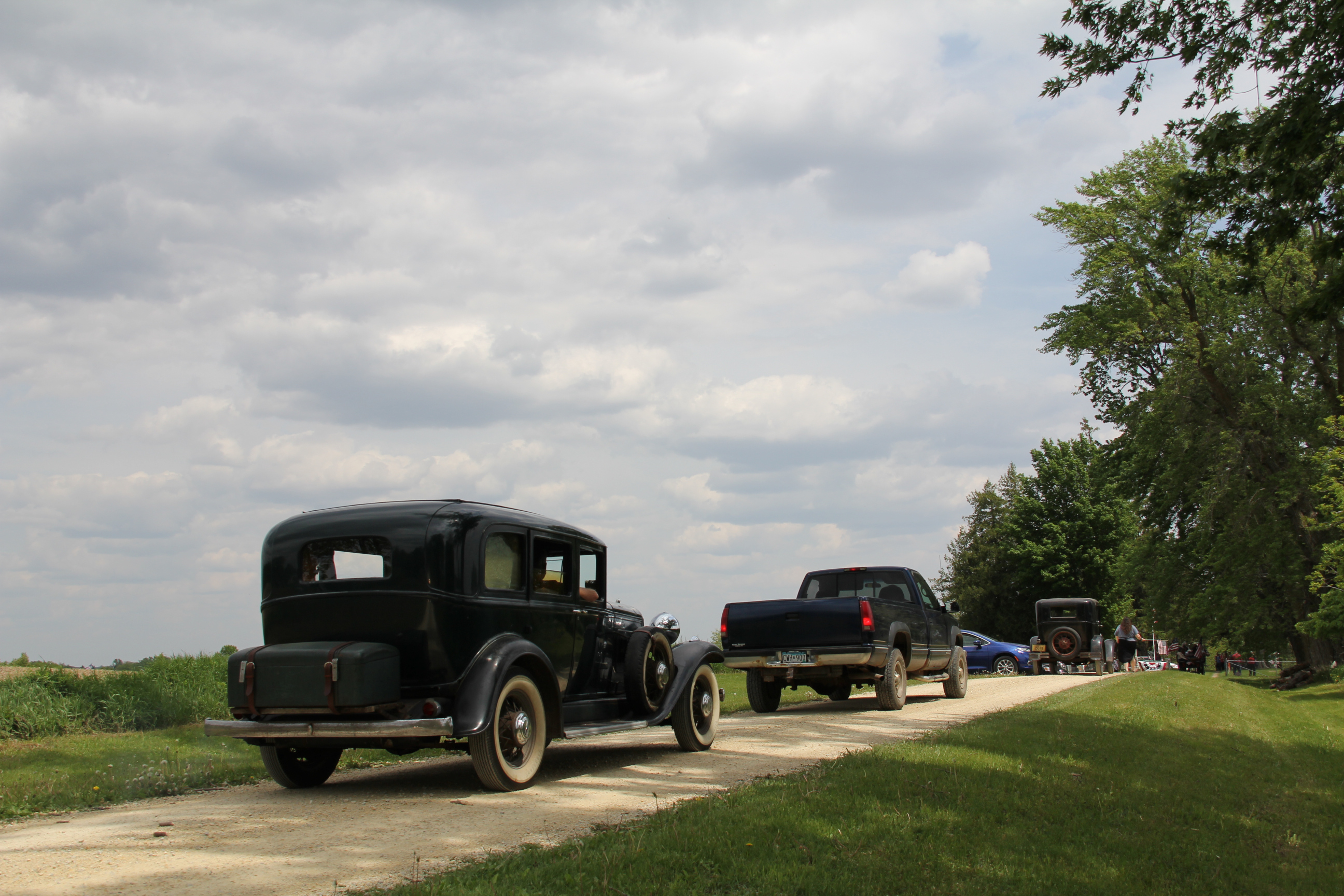
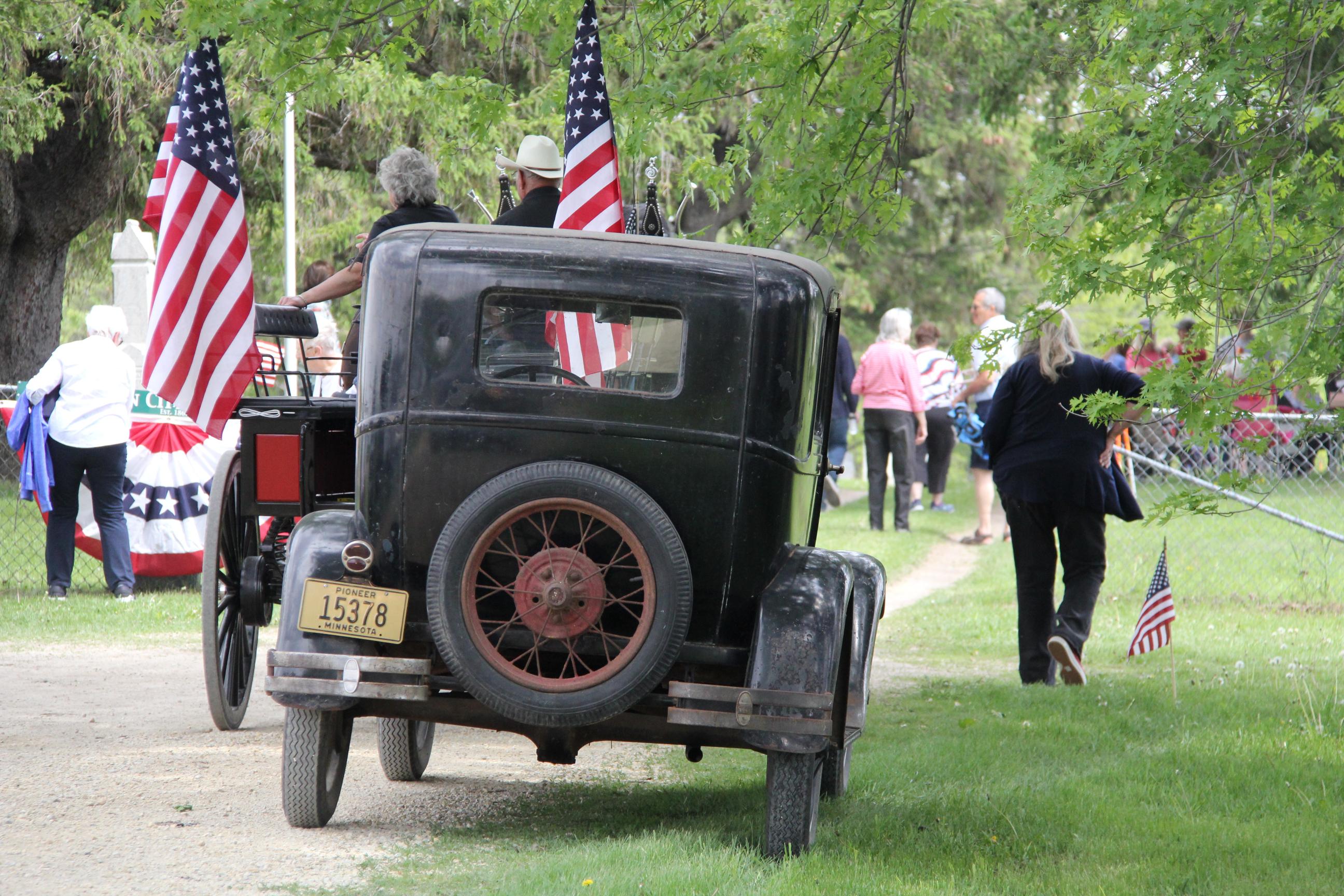
Several vintage vehicles and a pickup follow. (Minnesota Prairie Roots copyrighted photo May 2025)

Although I have no connection to this unincorporated village a few miles northeast of Faribault, I’ve found myself often drawn here on Memorial Day. The countryside setting and the way in which the day is celebrated appeal to my rural roots and upbringing 130 miles away on the southwestern Minnesota prairie.

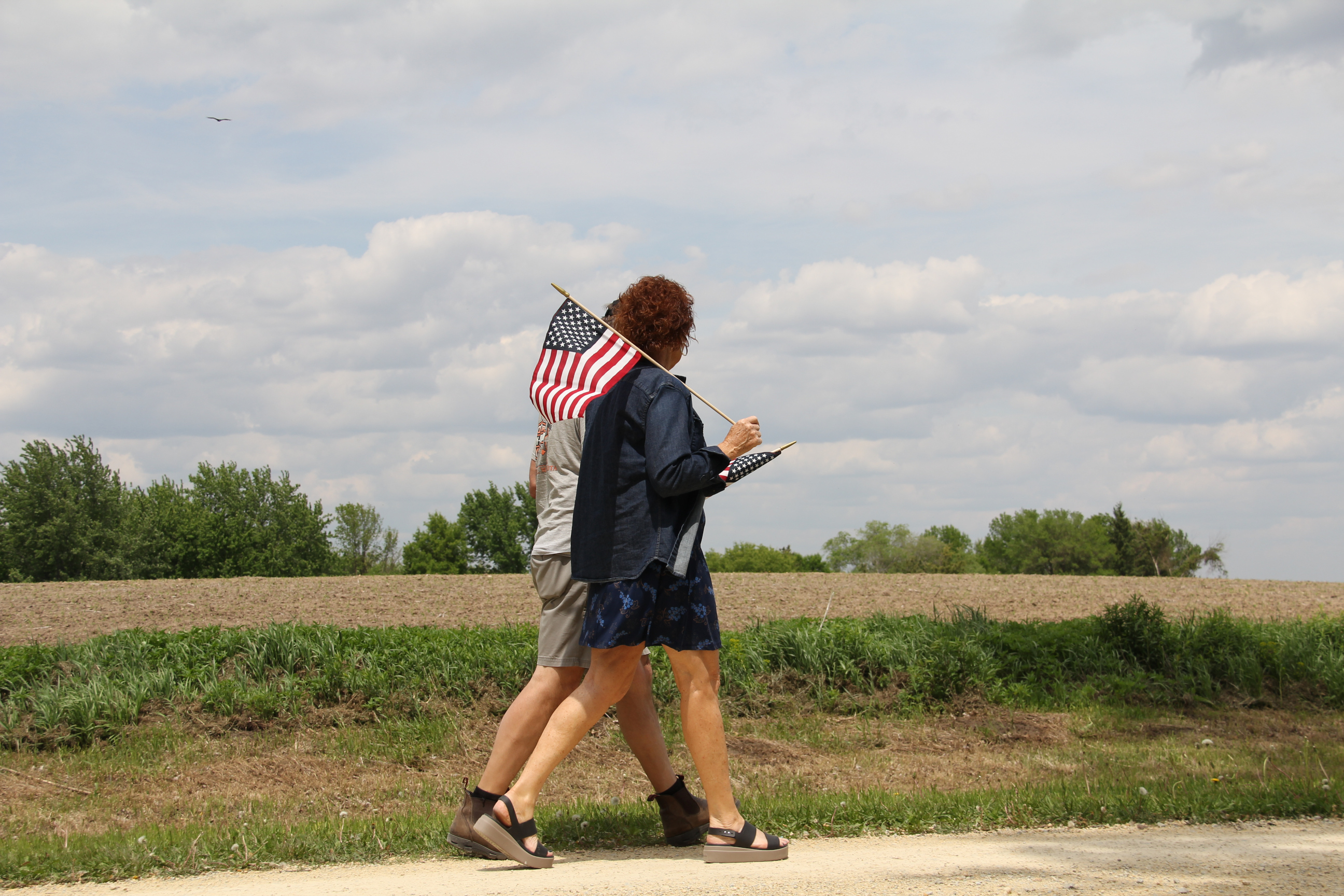
A few people walked the parade route, here past farm land. (Minnesota Prairie Roots copyrighted photo May 2025)

Monday’s event at Cannon City began with a parade from the nearby former country school to the cemetery. A small contingent of horse-drawn wagon, vintage vehicles and several walkers followed the gravel road past homes and farm fields to the fenced cemetery. I walked alongside the group in the road ditch, photographing the scene as they neared the graveyard.

Vintage vehicles set an historic scene outside the cemetery gates. (Minnesota Prairie Roots copyrighted photo May 2025)

It was not difficult in that moment to imagine the long ago school children proceeding to the cemetery, carrying homemade floral wreaths of lilacs and other flowers in bloom. Several years ago that original Decoration Day parade tradition was revived. It’s a lovely nod to history.

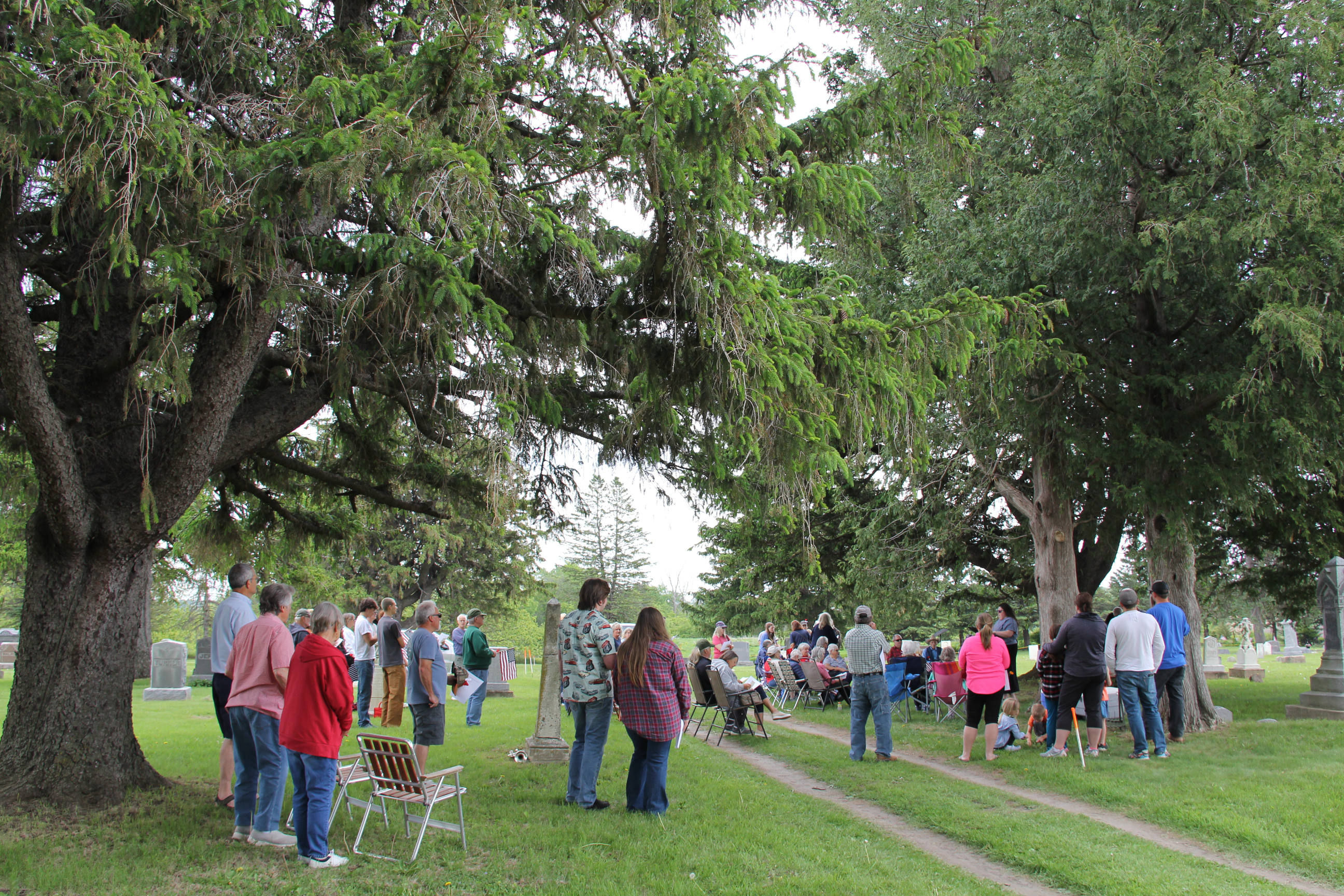
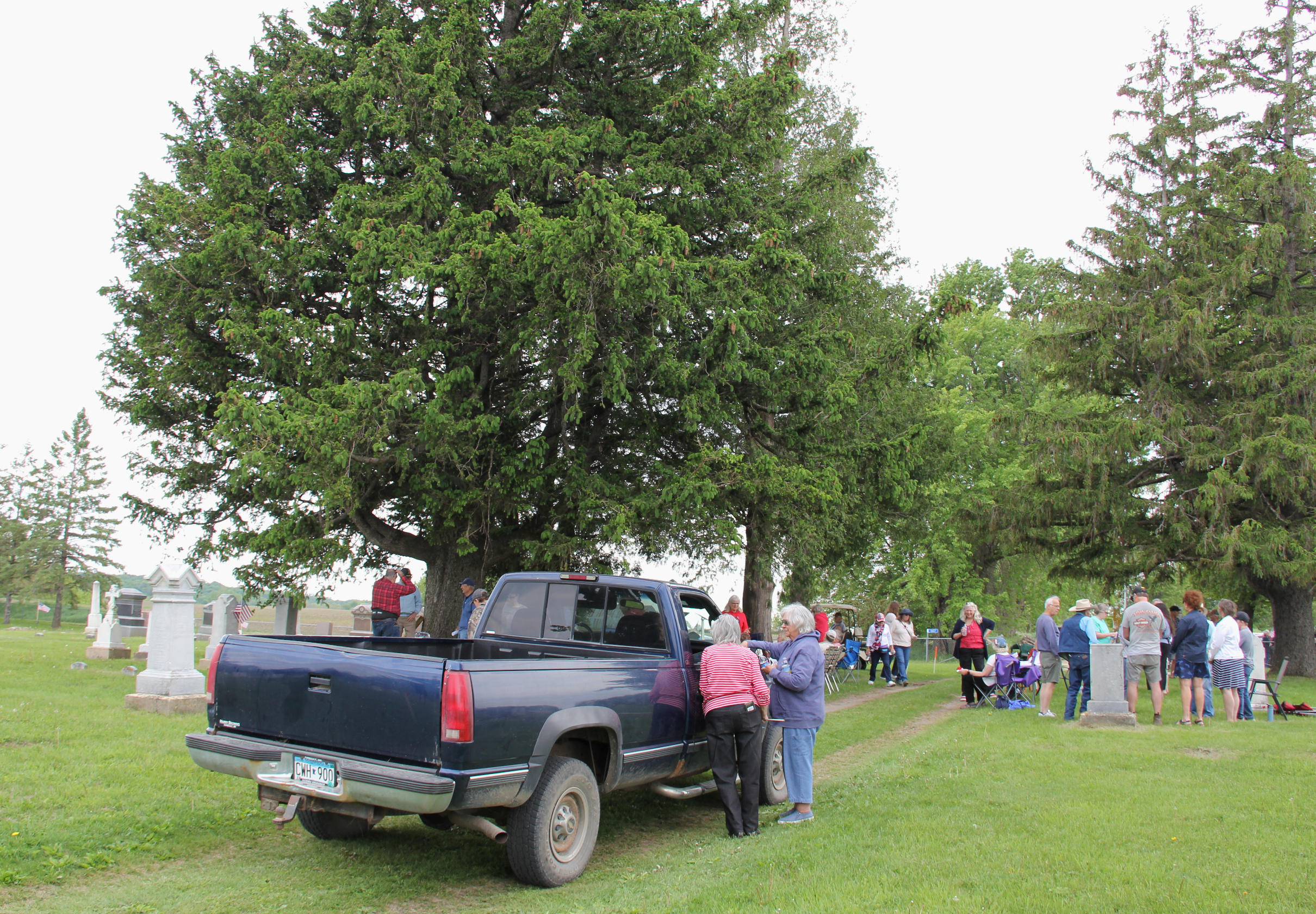
A crowd gathers for the Memorial Day program centered under the trees. (Minnesota Prairie Roots copyrighted photo May 2025)
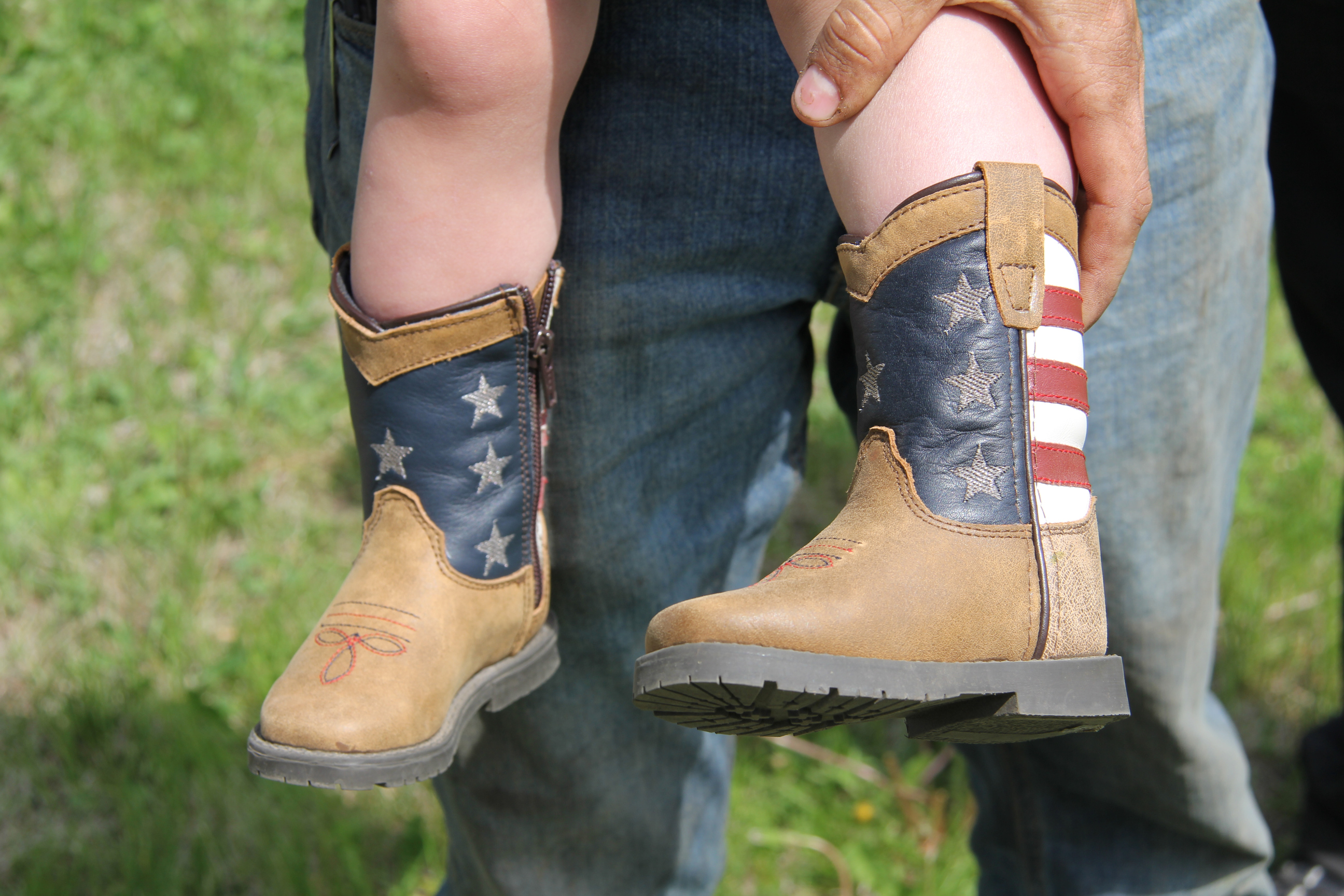
All ages attended, including Levi, almost two, who wore these patriotic boots. His grandpa is the cemetery caretaker. Levi helps him and his dad by picking up sticks before mowing. (Minnesota Prairie Roots copyrighted photo May 2025)
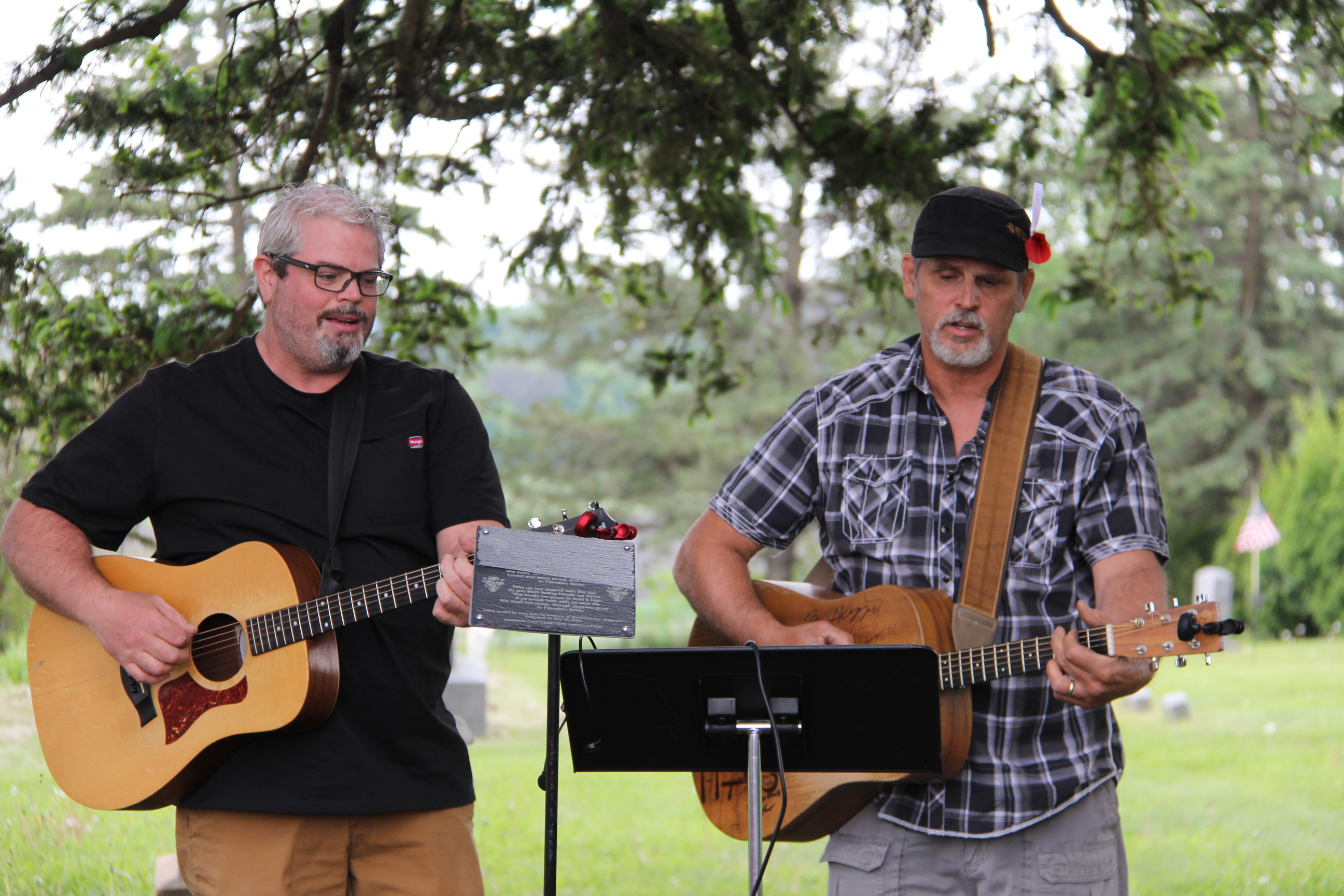
The Sartor Brothers lead musical selections. (Minnesota Prairie Roots copyrighted photo May 2025)

Inside the cemetery gate, folks gathered in the shelter of cedars and pines to listen to inspirational readings and poetry; to sing; to hear the names of 52 veterans buried here read aloud; and more.

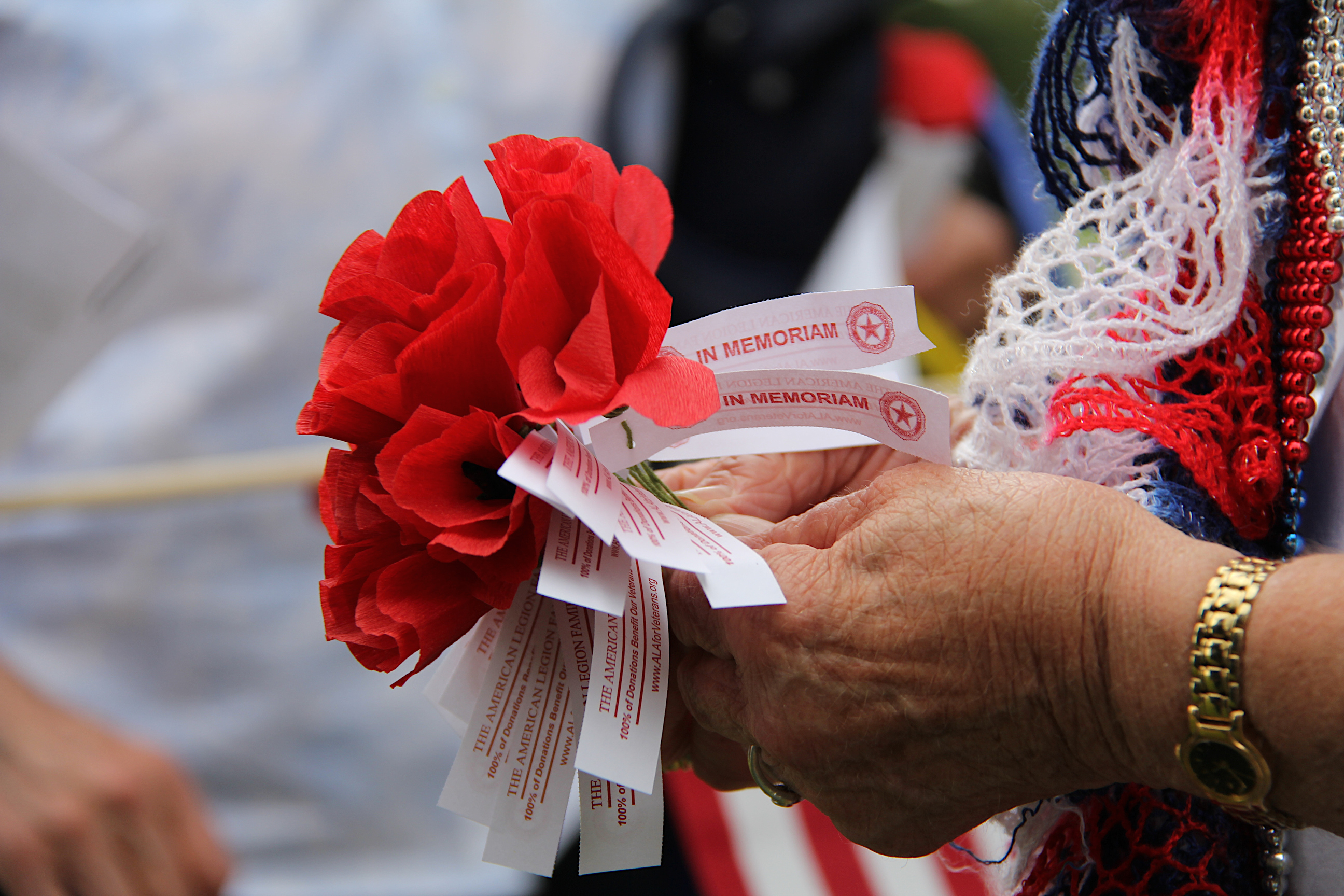
Handing out poppies to attendees. Members of the Faribault American Legion Auxiliary and other volunteers crafted the paper flowers. (Minnesota Prairie Roots copyrighted photo May 2025)
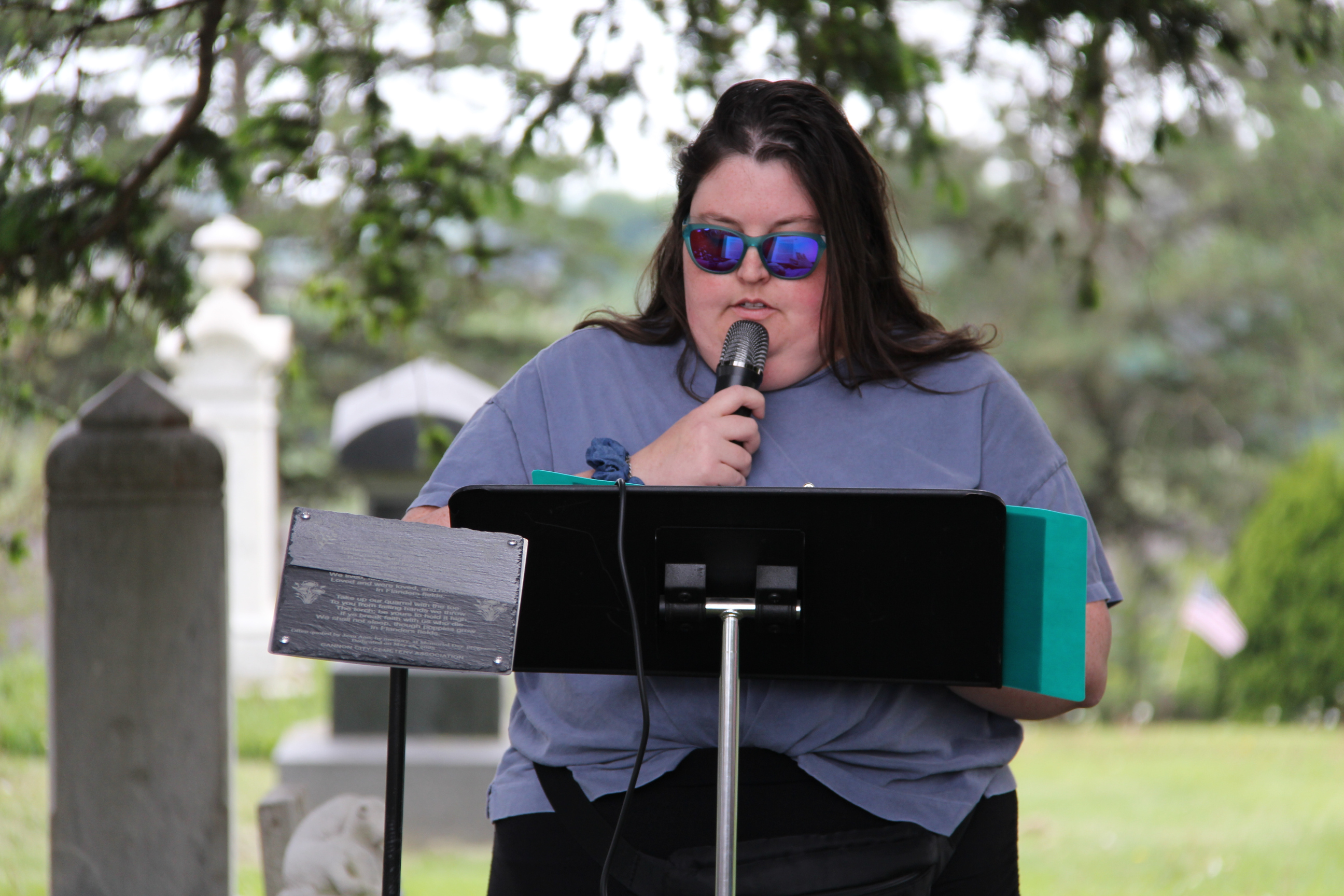
Organizer Kathleen Kanne led the program and talked about Jean Ann Pederson. The plaque in front of Kanne was given in honor of Jean Ann. (Minnesota Prairie Roots copyrighted photo May 2025)
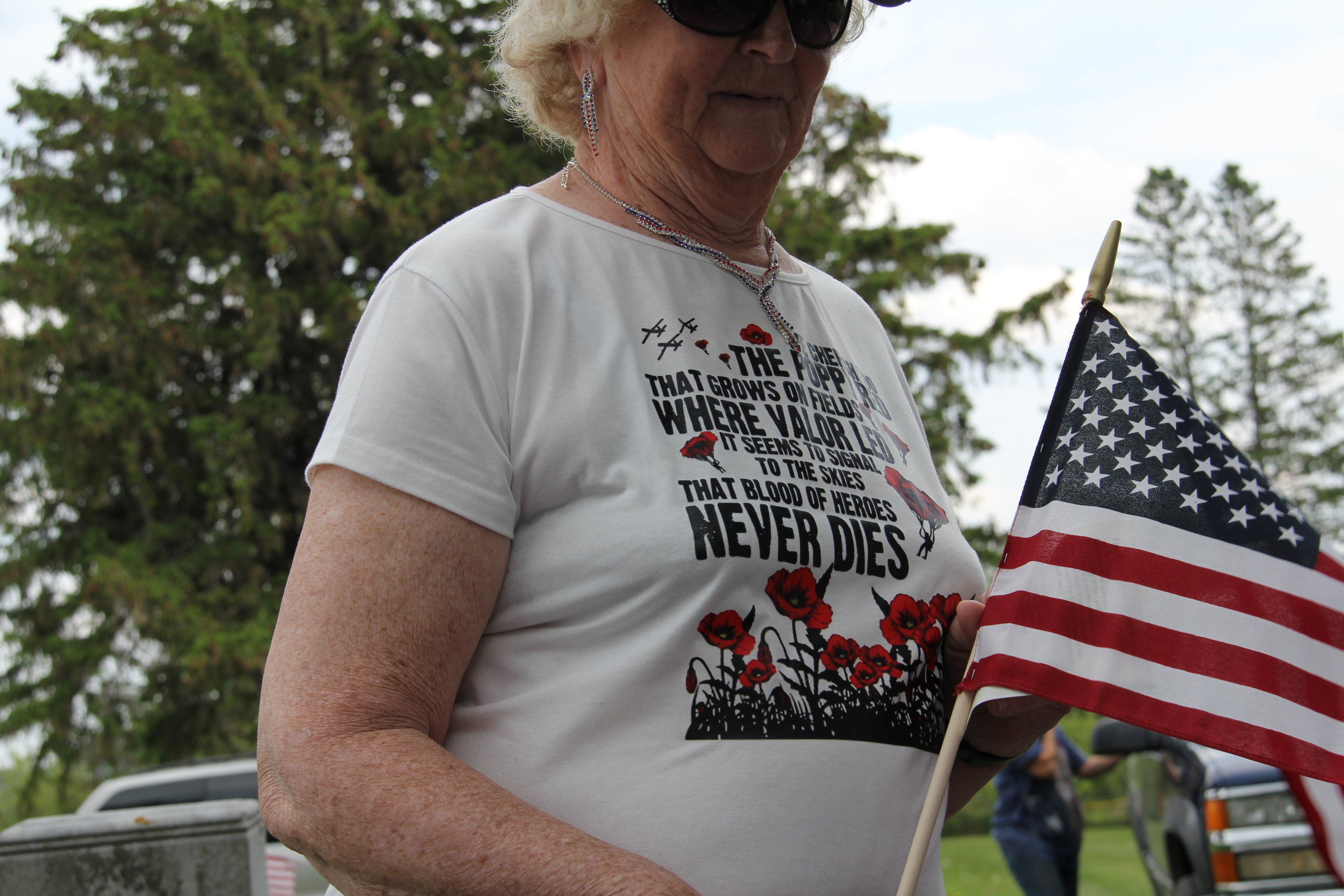
A woman’s t-shirt focuses on poppies, representing the blood of heroes who died in war. (Minnesota Prairie Roots copyrighted photo May 2025)

This year the “more” included excerpts from an interview with Jean Ann Greenville Pederson, a Cannon City native interviewed by Kathleen Kanne and Mel Sanborn. She died in February, shortly after her 93rd birthday. Each May, Jean Ann shared a bit of local Memorial Day history and read “In Flanders Fields” to attendees. Kanne, program organizer, announced the placement of a small “In Flanders Fields” graveside plaque honoring Jean Ann. She then invited us to read the poem together. I recited it, having memorized “In Flanders Fields” as a child tasked with sharing the poem several times during my hometown Memorial Day program. In Flanders fields the poppies blow/Between the crosses, row on row…

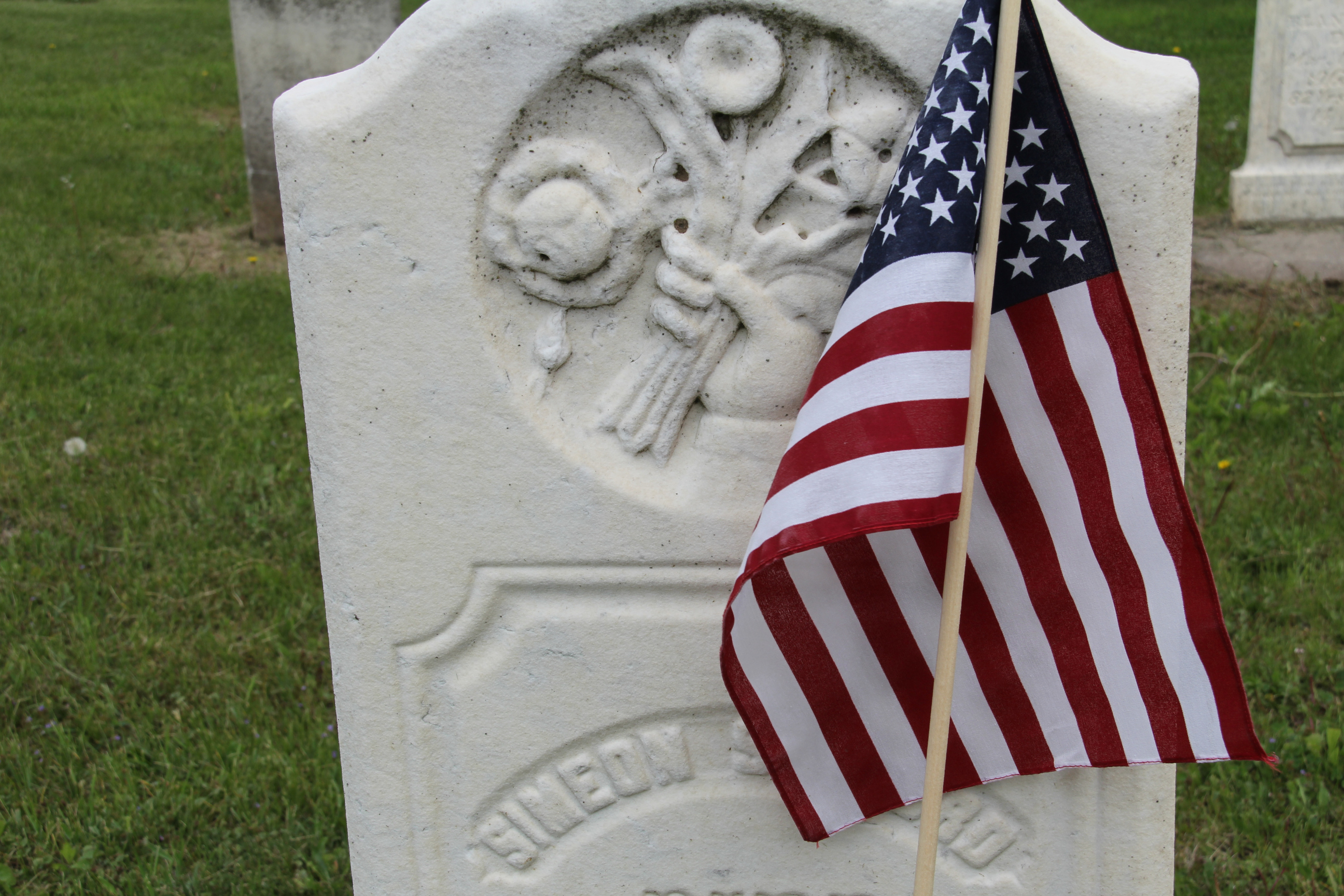
American flags marked the graves of veterans in the Cannon City Cemetery. (Minnesota Prairie Roots copyrighted photo May 2025)

Throughout this commemorative event in the Cannon City Cemetery, I was intimately aware of my surroundings. Under the trees. Next to farm fields. The wind sweeping across the hill. Birds chirping. It felt reverent, almost holy—this place like a sanctuary. For the living and the dead.

Visiting after the program. (Minnesota Prairie Roots copyrighted photo May 2025)

After the program concluded, families meandered among the gravestones. Stopping. Gathering. Others remained under the cedars and pines, connecting and reconnecting. I grabbed a chocolate chip cookie and went in search of my friend’s, veteran Rhody Yule’s, grave. I found it, flat against the ground, hidden by a bush.

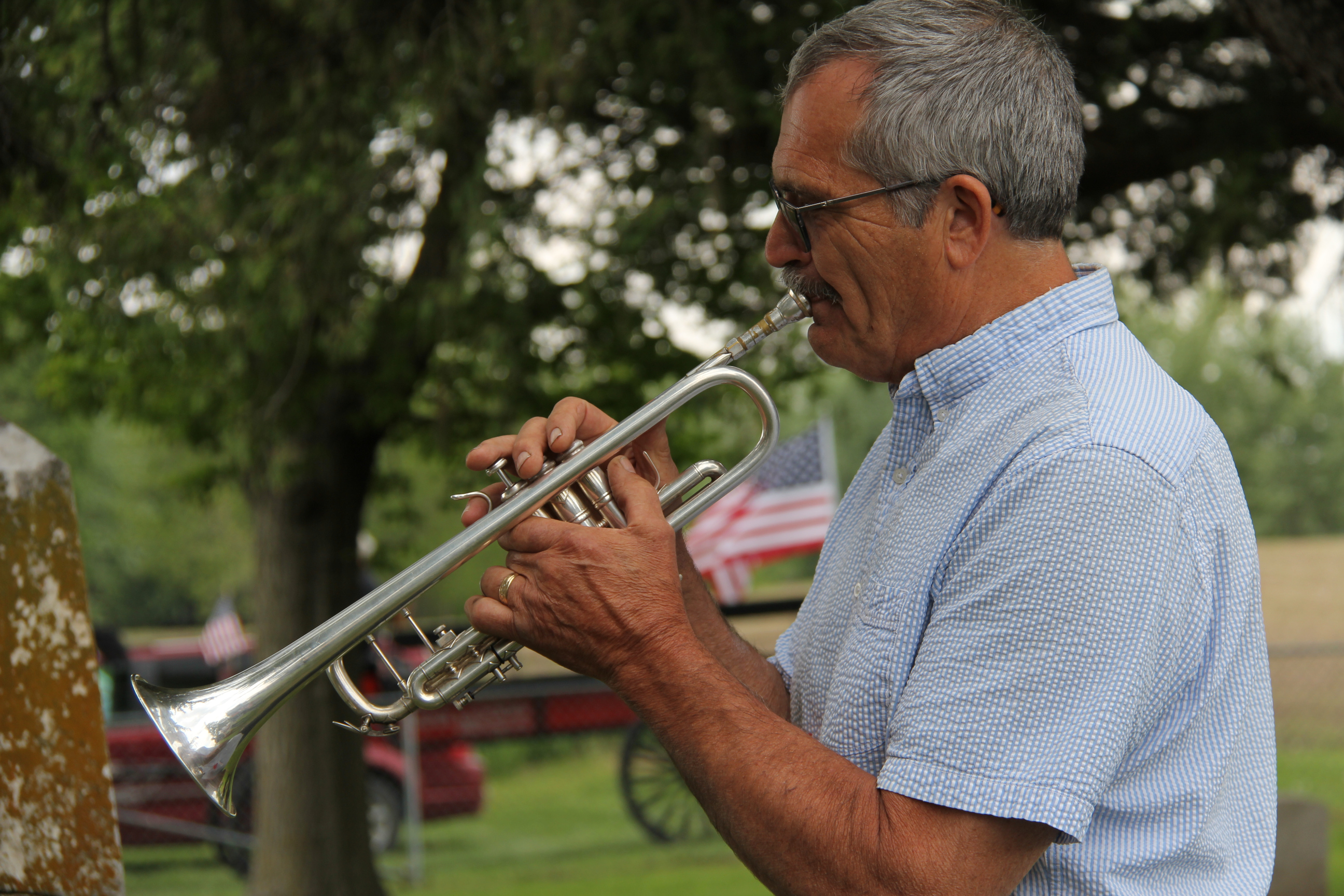
I heard Steve Bonde play taps at the Memorial Day service in Faribault in the morning and then again at Cannon City in the afternoon. (Minnesota Prairie Roots copyrighted photo May 2025)

Later, as I headed toward the van to leave, I heard Steve Bonde, who earlier played patriotic music, playing more tunes. It was the perfect way to end my time here, where respect for veterans, for community and for tradition carries through generations of those rooted in Cannon City.

© Copyright 2025 Audrey Kletscher Helbling
 

Old-fashioned fun for the kids at vintage farm show September 9, 2024

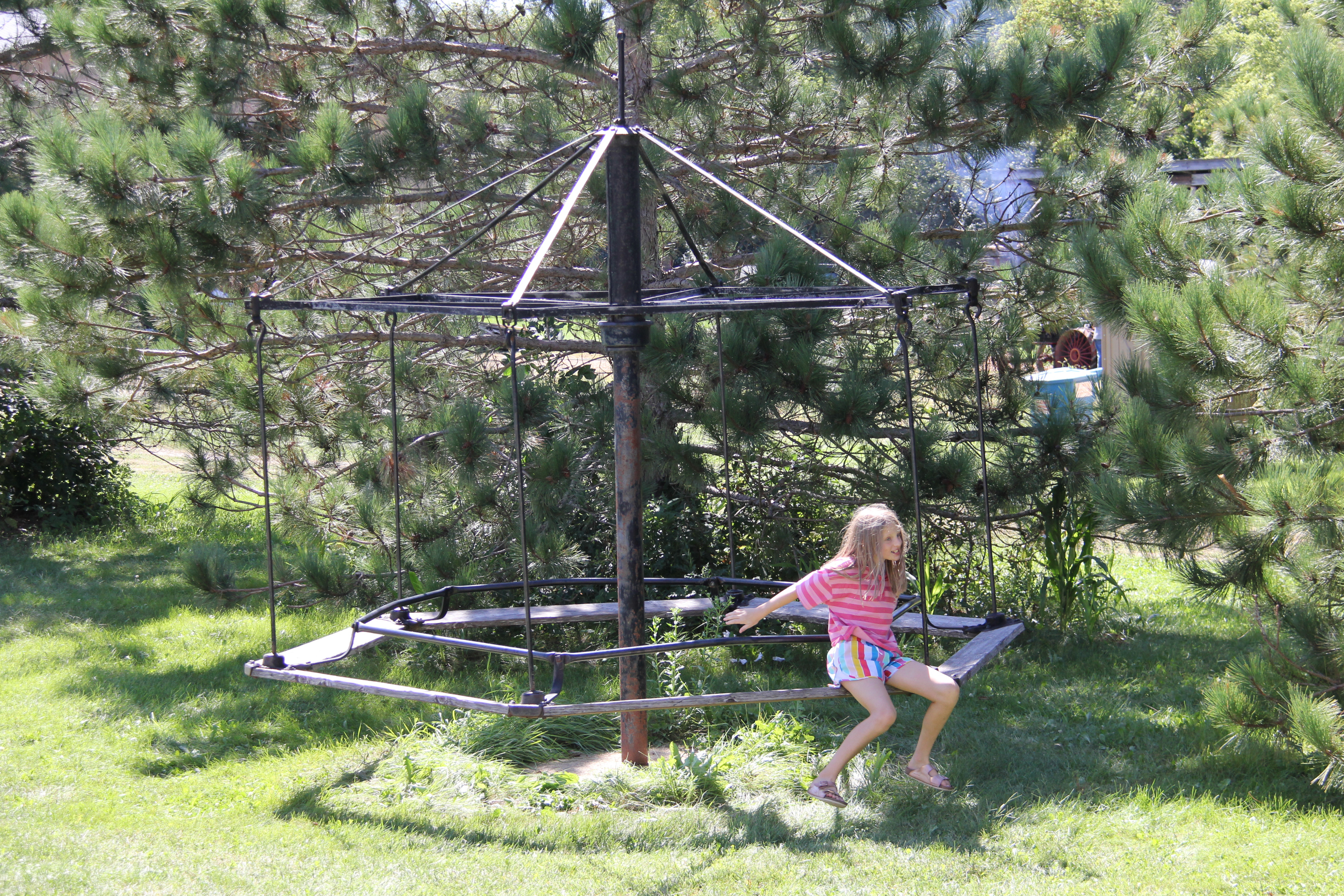
Taking a spin on the merry-go-round at the Rice County Steam & Gas Engines Fall Show. (Minnesota Prairie Roots copyrighted photo September 2024)

I LOVE WATCHING KIDS engage in activities from “the olden days.” Like circling on a vintage merry-go-round which, in today’s world, would fail all safety standards. But at the Rice County Steam & Gas Engines showgrounds in rural Dundas, playground and farm equipment of yesteryear, with all its inherently “dangerous” aspects, takes center stage. Common sense and caution are required at the bi-annual event which draws people of all ages. I observed a lot of young families at the recent Labor Day weekend farm show.

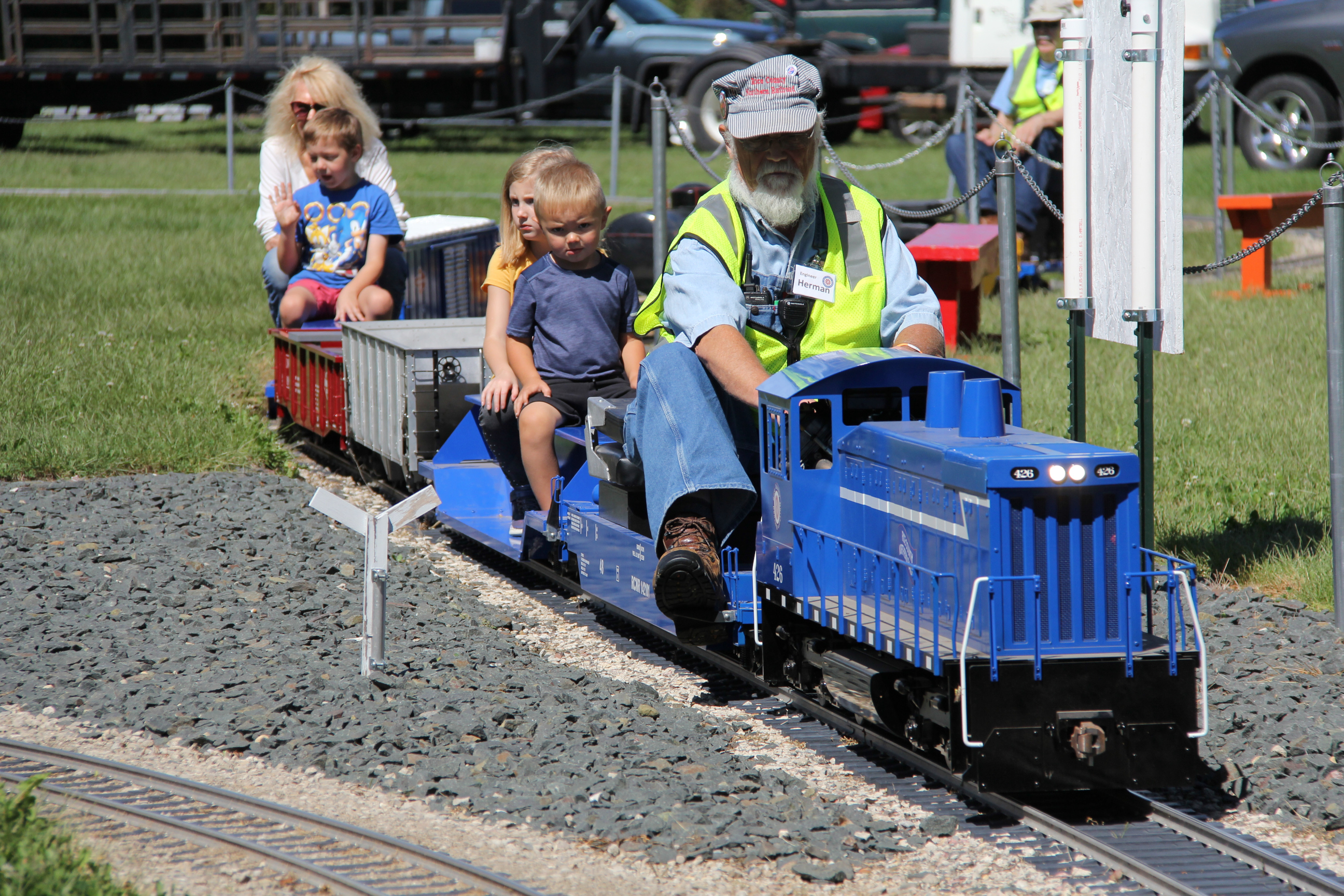
Train rides were a popular attraction with kids waiting in line to climb aboard. (Minnesota Prairie Roots copyrighted photo September 2024)
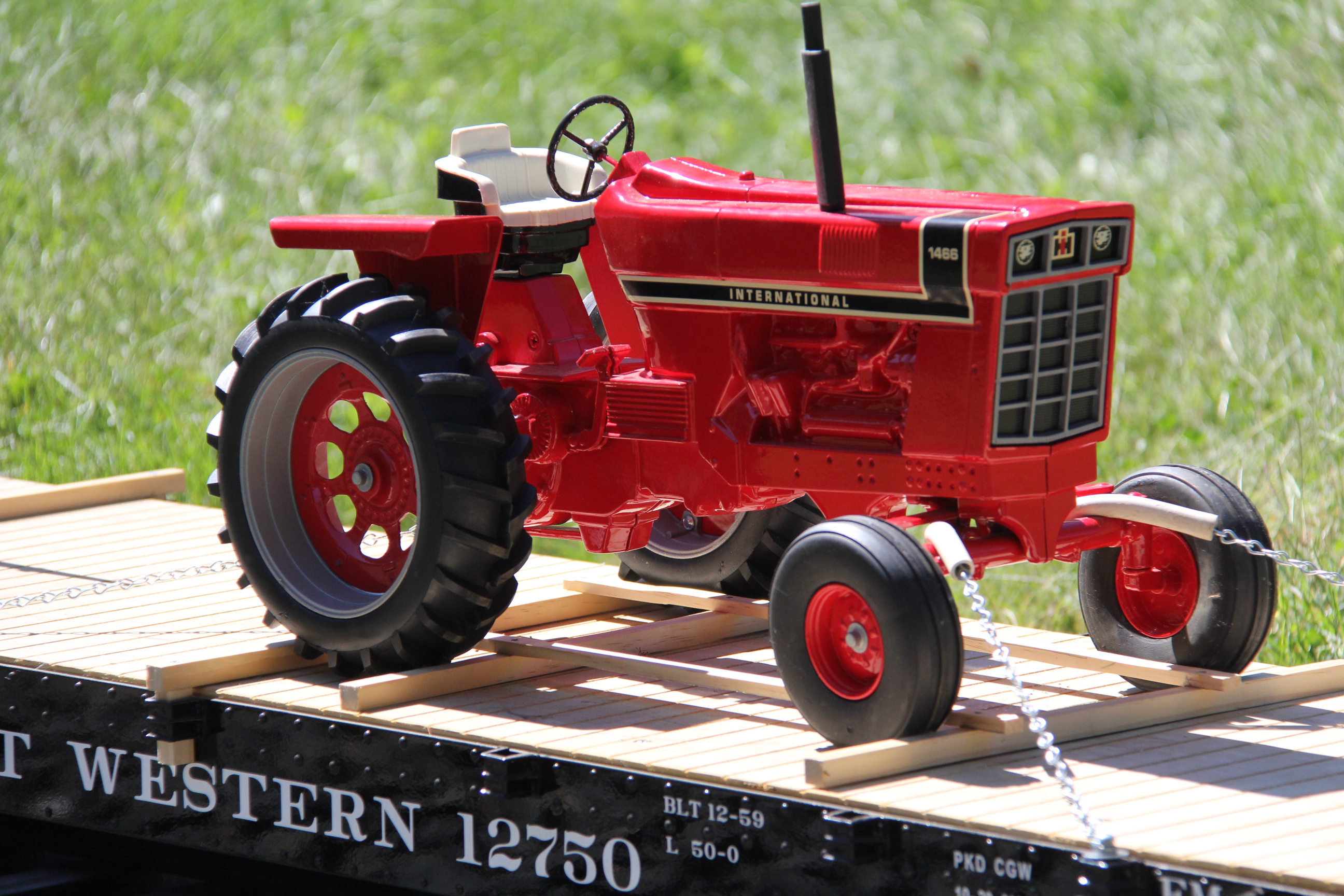
Tractors truly are a focal point of the farm show. This mini International sits on a train car. (Minnesota Prairie Roots copyrighted photo September 2024)
Horse-drawn wagon rides, too, drew lots of riders of all ages. (Minnesota Prairie Roots copyrighted photo September 2024)

From a ride on a mini replica train, to rides on tractors, in horse-drawn wagons, and in a barrel train, kids have plenty to do here.

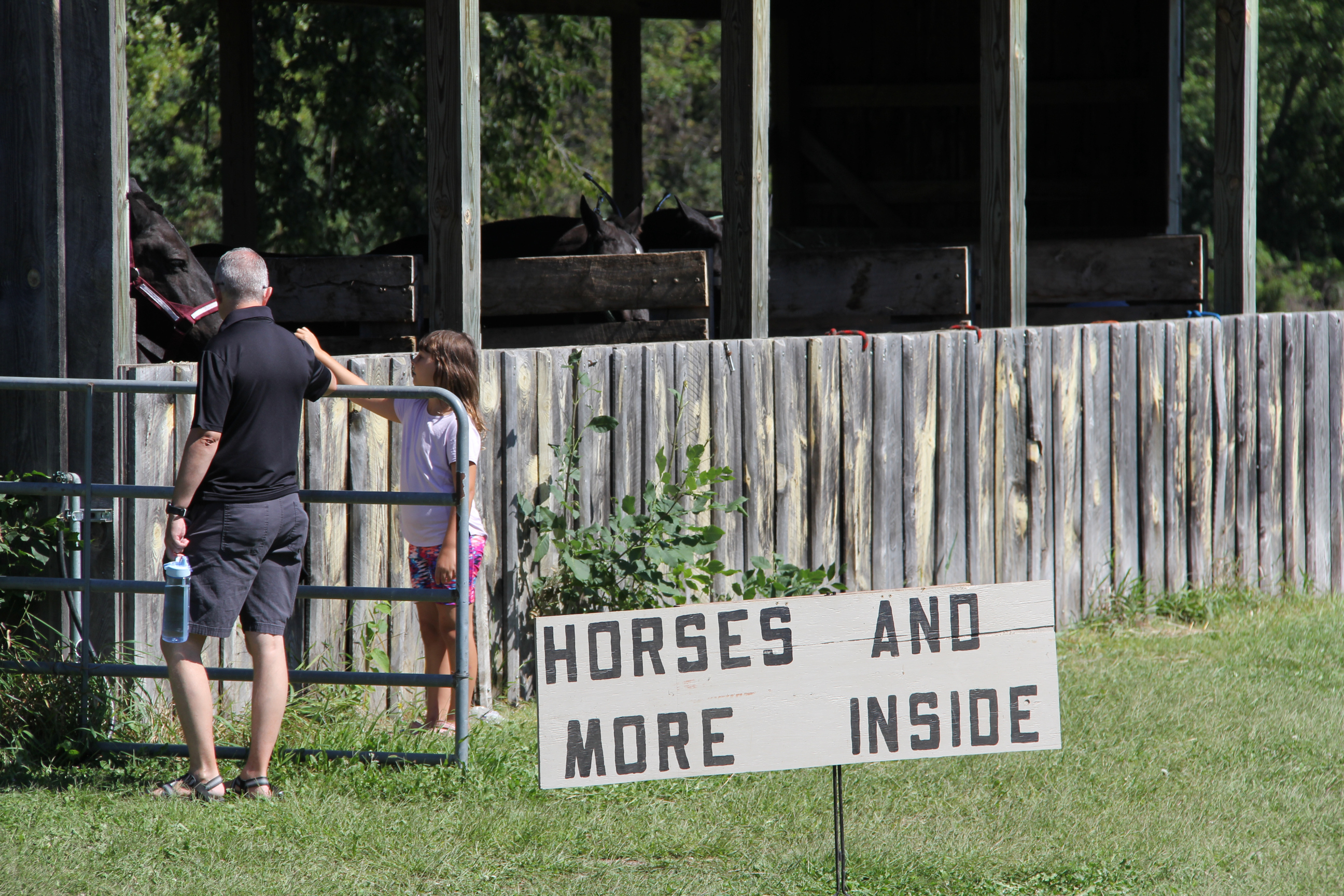
Windy Willow Farm Adventure, rural Northfield, provided animals housed in this shed. There were sheep, goats, rabbits, geese and chickens from the farm, plus horses. (Minnesota Prairie Roots copyrighted photo September 2024)
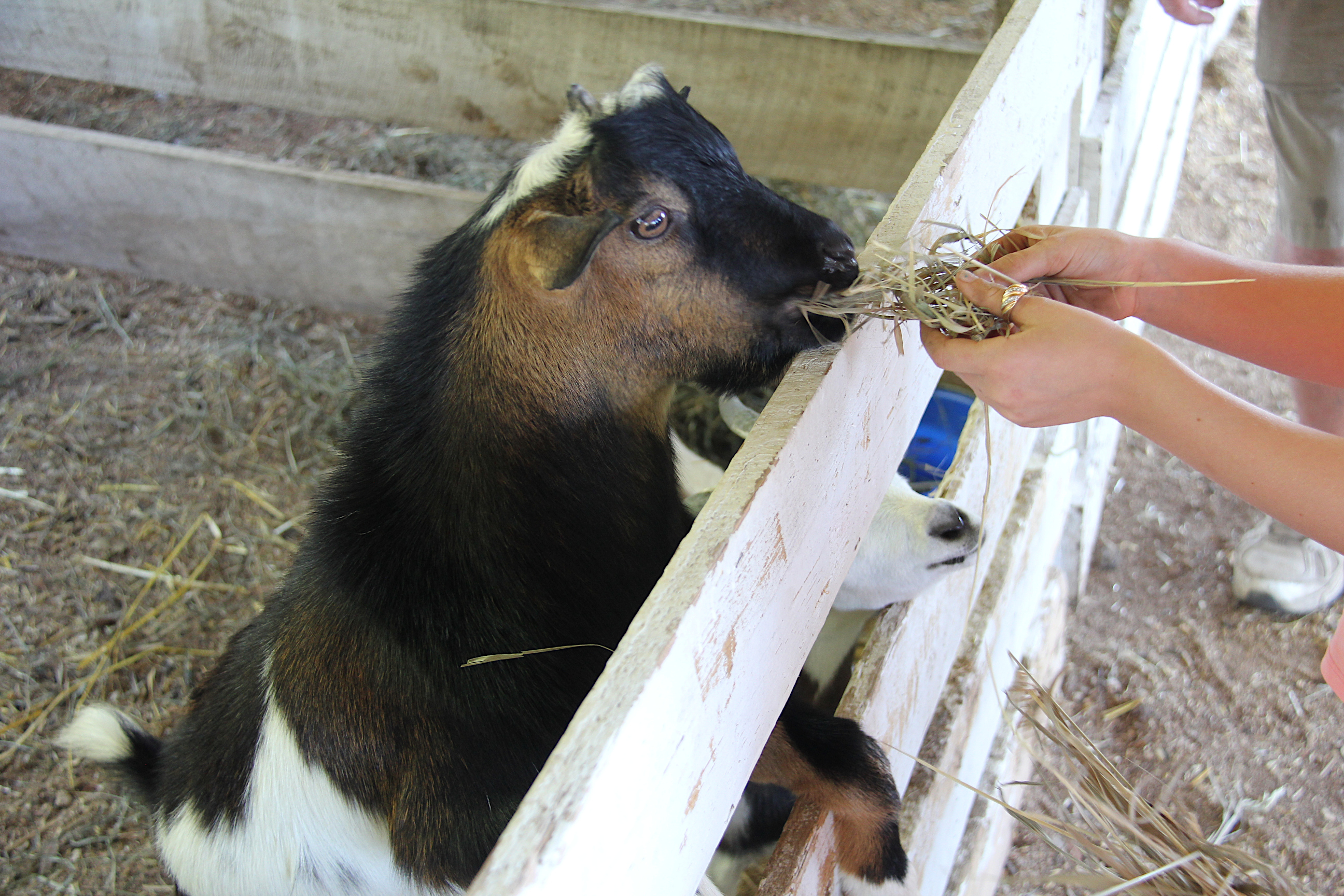
Two friendly goats vie for attention. (Minnesota Prairie Roots copyrighted photo September 2024)
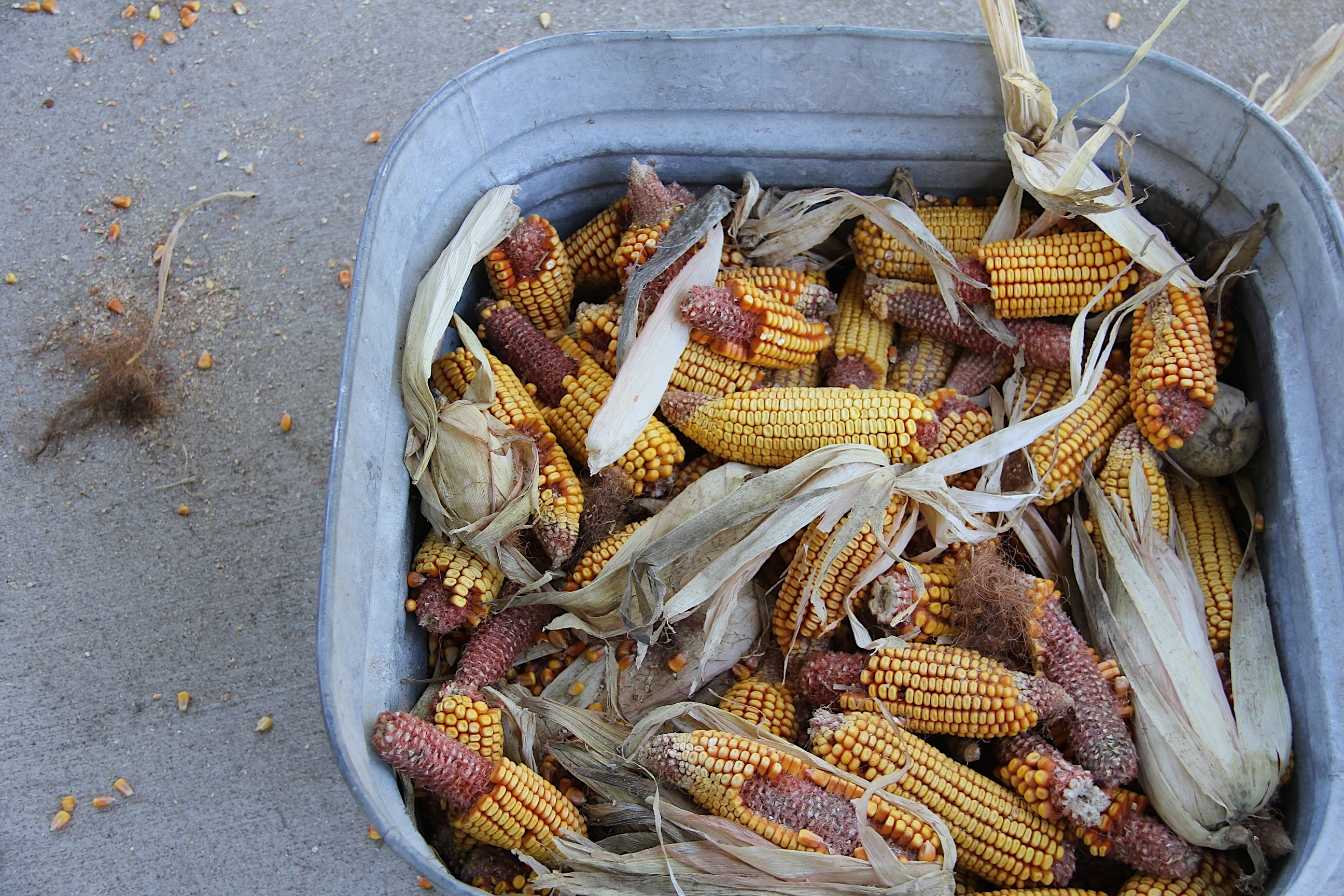
Tubs and buckets of corn await shelling. (Minnesota Prairie Roots copyrighted photo September 2024)

There are also clothes to feed through a ringer washer, corn to shell, animals to pet, a reel lawnmower to push and more.

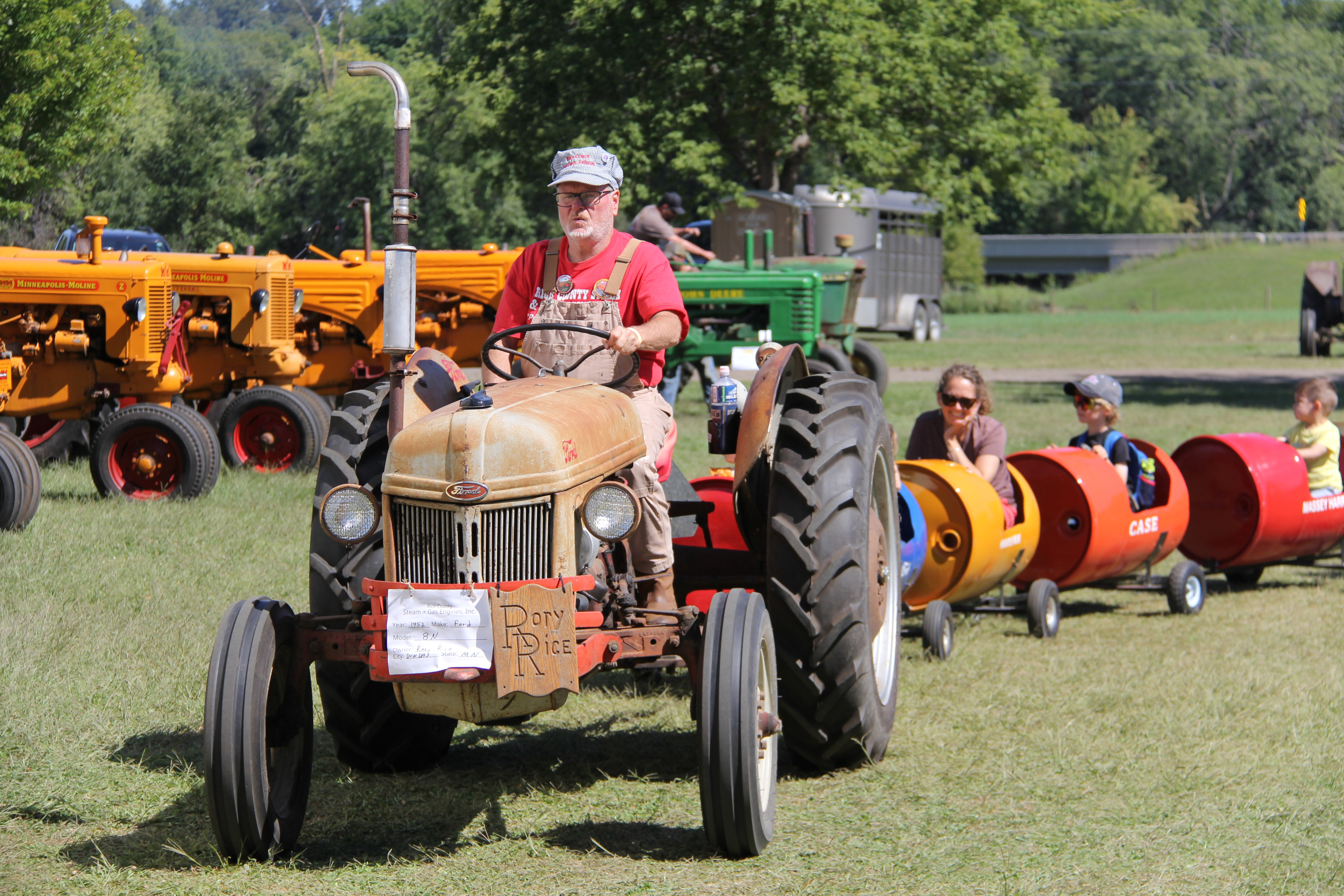
The “engineer” of the barrel train steers a 1950s era Ford tractor around the showgrounds. (Minnesota Prairie Roots copyrighted photo September 2024)
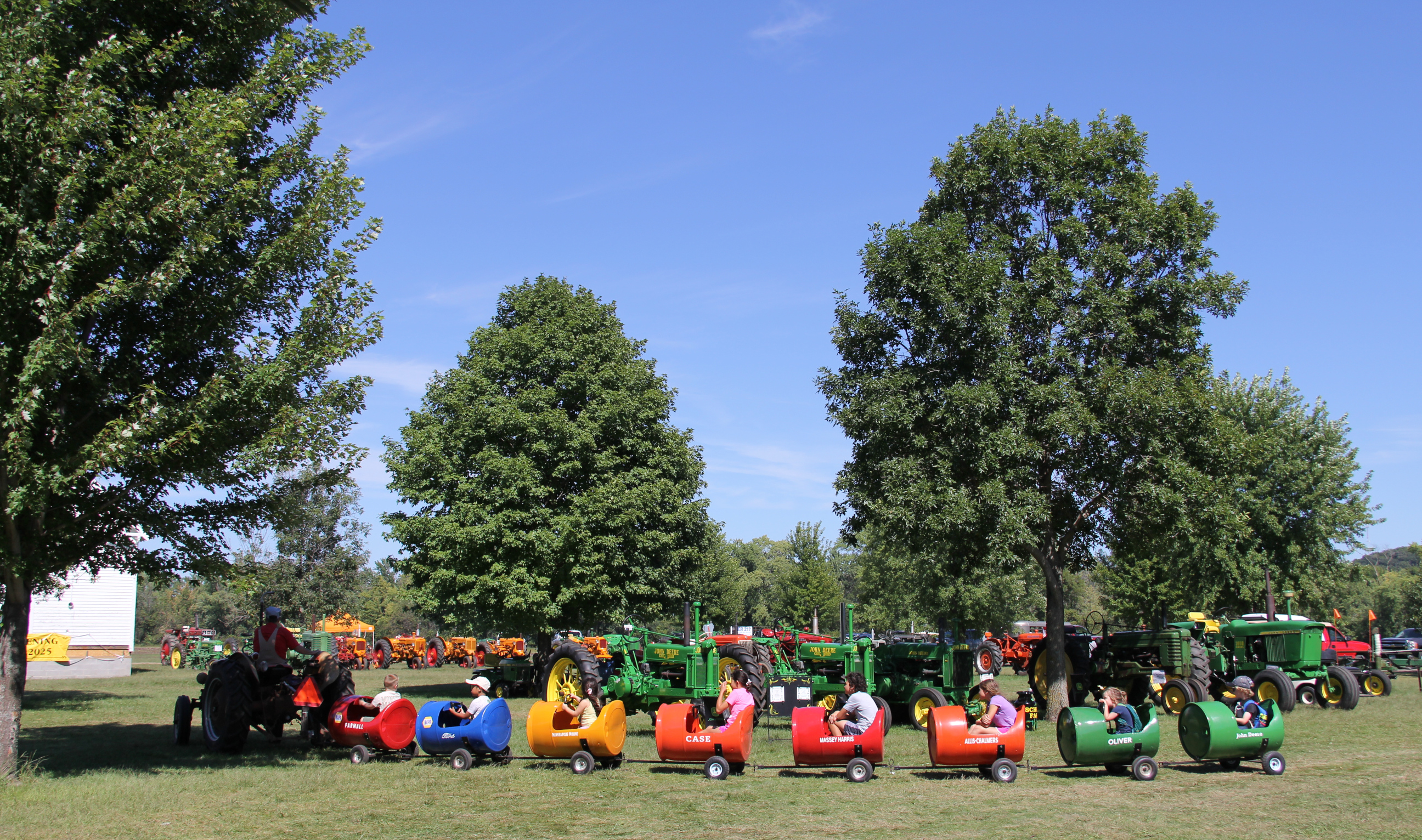
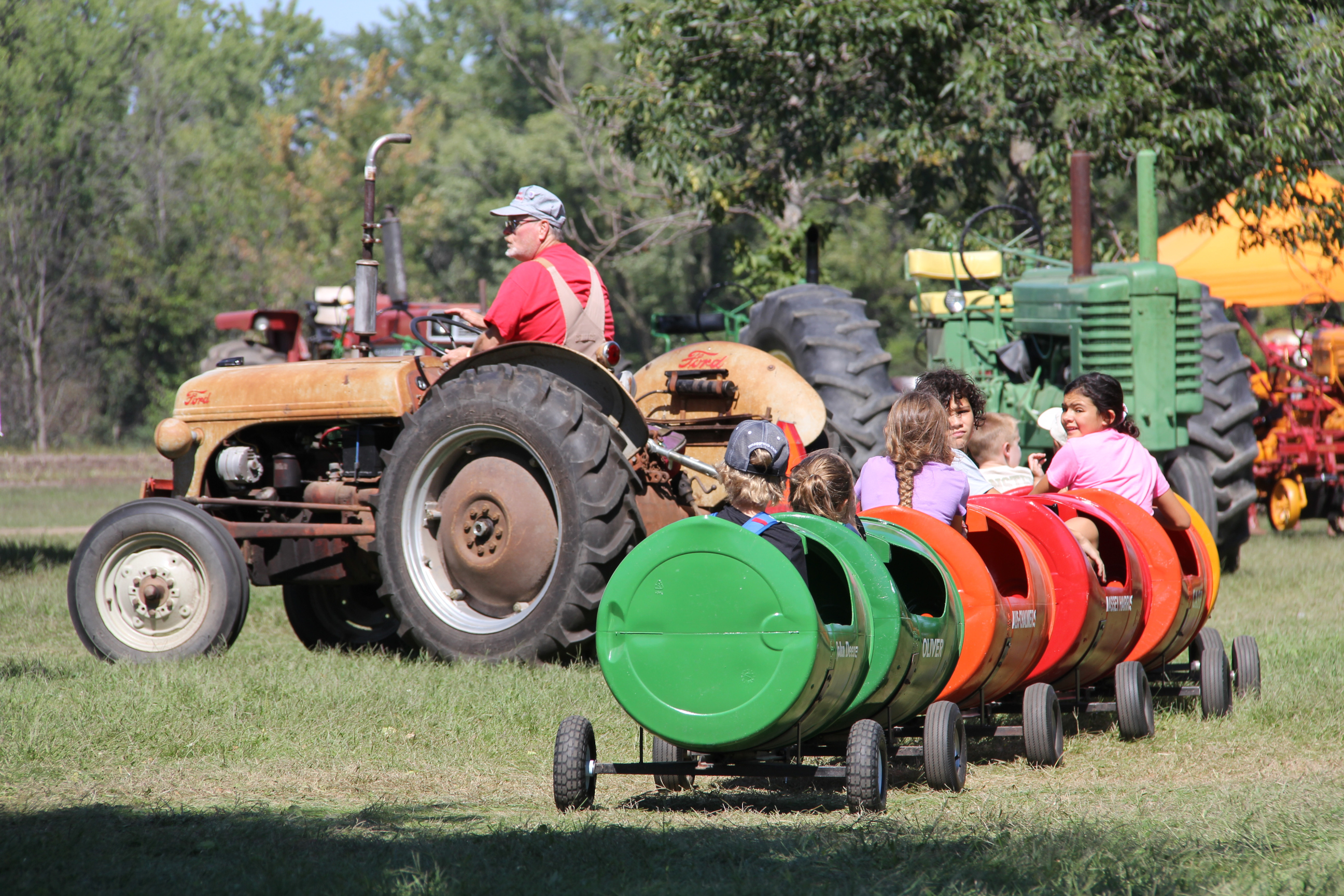
Without rails, the barrel train weaves among the vintage tractors at the farm show. (Minnesota Prairie Roots copyrighted photo September 2024)
Colorful, curving, quaint…barrel train. (Minnesota Prairie Roots copyrighted photo September 2024)

Anytime anyone can get kids outdoors, off their electronic devices and learning rural history, it’s a good thing. Organizers of the steam & gas engines show clearly understand the importance of activities that keep kids busy and happy while adults watch the tractor pull, listen to music, mill around the vintage tractors and more as they connect in this rural community gathering.

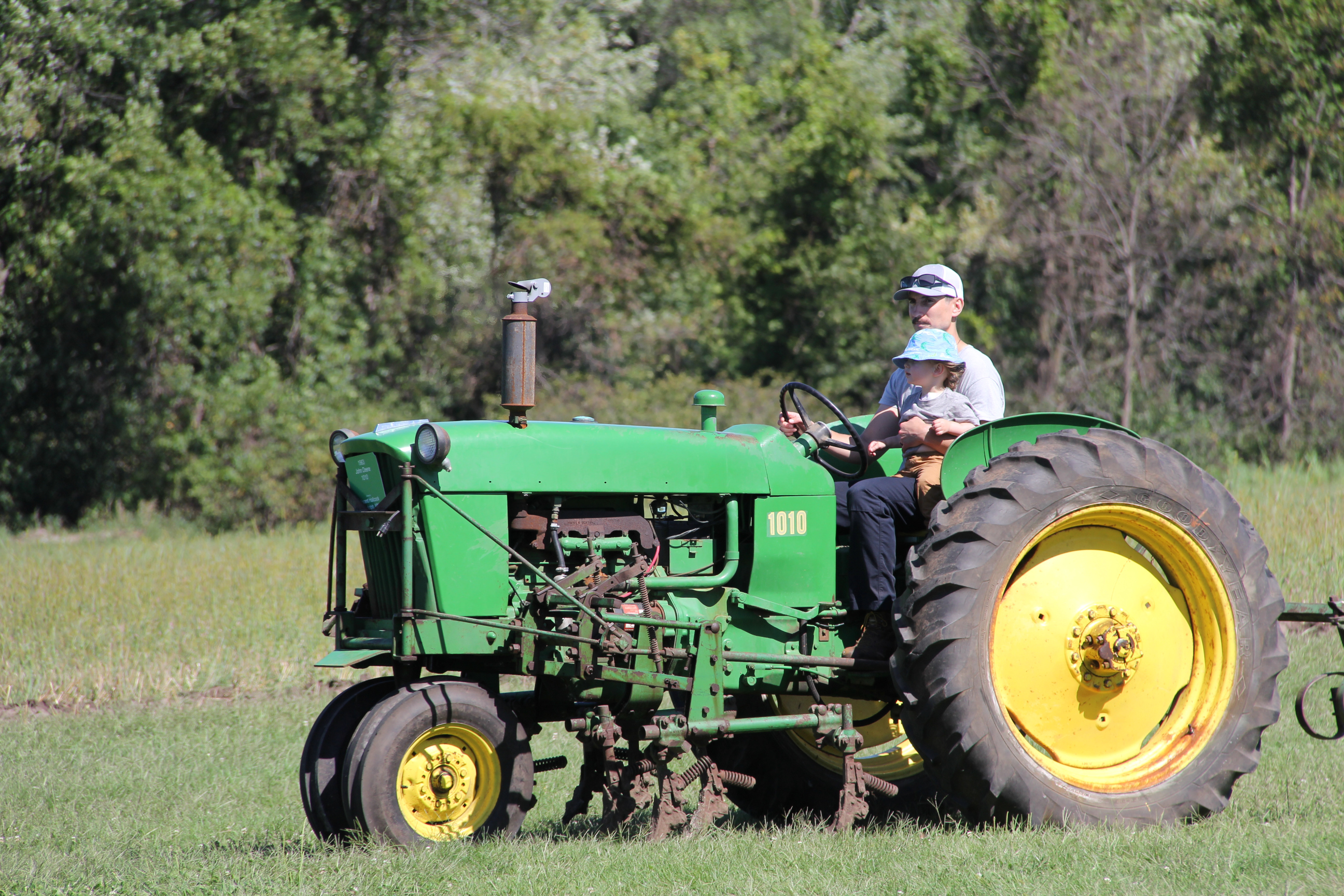
Father and son circle on a 1010 Model early 1960s John Deere pulling a cultivator. (Minnesota Prairie Roots copyrighted photo September 2024)

Most kids, even those from greater Minnesota, aren’t growing up “rural” anymore. Even if they live in the country, they’re not necessarily farm kids. So it’s important to expose them to the area’s agricultural heritage. The old tractors. The old farm machinery. The way clothes were washed and lawns were cut and how kids played back in the day.

The day after he competed in the pedal tractor pull and earned second place, this little guy was back pedaling. (Minnesota Prairie Roots copyrighted photo September 2024)

A kids’ pedal tractor pull contest engages youth, allows them to compete, show off their strength. It’s also a way to build memories so that years from now perhaps they will bring their own kids to the Rice County Steam & Gas Engines Show. They’ll remember those merry-go-round rides and how they climbed into a horse-drawn wagon and how they pedaled with all their leg power to get a mini tractor across a finish line. In the end, we all cross the finish line. And sometimes getting there requires experiencing a little danger mixed with a whole lot of fun.

© Copyright 2024 Audrey Kletscher Helbling
 

Rural living history & threshing memories September 3, 2024

A wagonload of oats awaits threshing at the Rice County Steam & Gas Engines Fall Show. (Minnesota Prairie Roots copyrighted photo August 2024)

MEMORIES. A HISTORY LESSON. A step back in time. The Rice County Steam & Gas Engines Fall Show is that and more. It’s also entertainment, a coming together of friends and families and neighbors. A reason to focus on farming of yesteryear.

Oats drape over the edge of the wagon. (Minnesota Prairie Roots copyrighted photo August 2024)

I was among the crowds gathered over the Labor Day weekend at the showgrounds south of Dundas. This show features demos, rows and rows and rows of vintage tractors and aged farm machinery, a tractor pull, flea market, music, petting zoo, mini train rides and a whole lot more.

The scene is set to resume threshing with thresher, tractor, baler and manpower. (Minnesota Prairie Roots copyrighted photo August 2024)

For me, a highlight was watching a crew of men threshing oats. The work is hard, labor intensive, even dangerous with exposed belts and pullies. It’s no wonder farmers lost digits and limbs back in the day.

This part of the threshing crew pitches oats bundles into the threshing machine. (Minnesota Prairie Roots copyrighted photo August 2024)

While my observations are not connected to memories, my husband’s are as he recalls threshing on his childhood farm in rural Buckman, Morrison County, Minnesota. After Randy moved with his family from rural St. Anthony, North Dakota (southwest of Mandan), his dad returned to threshing oats. In North Dakota, he used a combine. But his father before him, Randy’s grandfather Alfred, threshed small grains.

Hard at work forking bundles into the thresher. (Minnesota Prairie Roots copyrighted photo August 2024)
Lots of exposed pullies and belts line the threshing machine. (Minnesota Prairie Roots copyrighted photo August 2024)
The workhorse of the operation, the threshing machine. (Minnesota Prairie Roots copyrighted photo August 2024)

As I watched in Dundas, men forked bundles of oats into a McCormick-Deering thresher. The threshing machine separated the grain from the stalk, the oats shooting one direction into a wagon, the straw the other way into a growing pile. I stood mostly clear of the threshing operation with dust and chafe thick in the air.

Feeding the loose straw into the baler. (Minnesota Prairie Roots copyrighted photo August 2024)

From the straw pile, a volunteer stuffed the stalks into the shoot of an aged baler. An arm tamped the straw, feeding it into the baler. Another guy stood nearby, feeding wire into the baler to wrap the rectangular bales. A slow, tedious process that requires attentiveness and caution.

Watching and waiting for the straw to compact in the baler. (Minnesota Prairie Roots copyrighted photo August 2024)

The entire time I watched, I thought how easy it would be to lose focus, to look away for a moment, to get distracted and then, in an instant, to experience the unthinkable. Farming is, and always has been, a dangerous occupation.

Carefully guiding wire into the baler to wrap each bale. (Minnesota Prairie Roots copyrighted photo August 2024)

Randy understands that firsthand as he witnessed his father get his hand caught in a corn chopper. Tom lost his left hand and part of his forearm. But Randy saved his life, running across fields and pasture to summon help. It is a traumatic memory he still carries with him 57 years later.

Threshing at Sunnybrook Farm, St. Anthony, North Dakota, as painted by Tom Helbling. (Minnesota Prairie Roots copyrighted file photo)

But memories of threshing are good memories, preserved today in an oil painting from the farm in North Dakota, Sunnybrook Farm. My father-in-law took up painting later in life. Among the art he created was a circa 1920s threshing scene. We have that painting, currently displayed in our living room. I treasure it not only for the hands that painted it, but also for the history held in each brush stroke.

Threshing grain, living history in 2024. (Minnesota Prairie Roots copyrighted photo August 2024)

The painted scene differs some from the threshing scene I saw in Dundas. In North Dakota, horses were part of the work team, the tractor steam powered. In Dundas, there were no horses, no steam engine at the threshing site. Still, the threshing machine is the star, performing the same work. And men are still there, laboring under the sun on a late summer afternoon.

© Copyright 2024 Audrey Kletscher Helbling
 

Looking for farm work & remembering my work on the farm August 1, 2024

A farm site west of New Ulm. (Minnesota Prairie Roots copyrighted file photo)

WOULD YOU PICK rock, walk beans, clean up pig or cow muck? Joe and his crew will.

I can, too, as I’m experienced. But I have no desire to return to those farm tasks that are now only long ago youthful memories.

The sign I spotted in a Redwood Falls convenience store. (Minnesota Prairie Roots copyrighted photo July 2024)

Recently, I saw a sign, more like a note, posted by Joe on a convenience store bulletin board in Redwood Falls, deep in the heart of southwestern Minnesota farm country. I grew up in that area, on a crop and dairy farm.

Rocks picked and piled at field’s edge. (Minnesota Prairie Roots copyrighted file photo June 2014)

Like Joe, I worked the land and labored in the barn. I picked rock, which is exactly as it sounds—walking fields to pick rocks from the soil and toss them onto a wagon or loader. Rock removal is necessary so farm equipment isn’t damaged during crop prep, planting and harvesting. It’s hard, dirty work when done by hand.

Likewise, walking beans is hard, dirty, hot work. That job involves walking down rows of soybeans to remove weeds and stray corn plants, either by hand or by hoe. At least that’s how I walked beans back in the day. Today that may involve spot spraying herbicides.

A tasseling Rice County corn field. (Minnesota Prairie Roots copyrighted file photo)

And when I worked corn fields, it was to detassel corn for the Dekalb seed company. I arose early, boarded a school bus with a bunch of other teens, arrived at a corn field and proceeded to walk the corn rows pulling tassels from corn plants. Dew ran down my arms, corn leaves sliced my skin, sweat poured off my body as the day progressed under a hot July sun. Of all the jobs I’ve had, detasseling corn rates as the most miserable, awful, horrible, labor intense work I’ve ever done.

Inside a Rice County dairy barn. (Minnesota Prairie Roots copyrighted file photo)

I’d rather shovel cow manure. And I did plenty of that along with other animal-related farm chores.

If Joe and his team are willing to take on tasks that are labor intensive, hot and smelly, then I applaud them. We need hands-on folks who are not afraid to get their hands dirty, to break a sweat, to do those jobs that place them close to the land. Jobs many other people would not do.

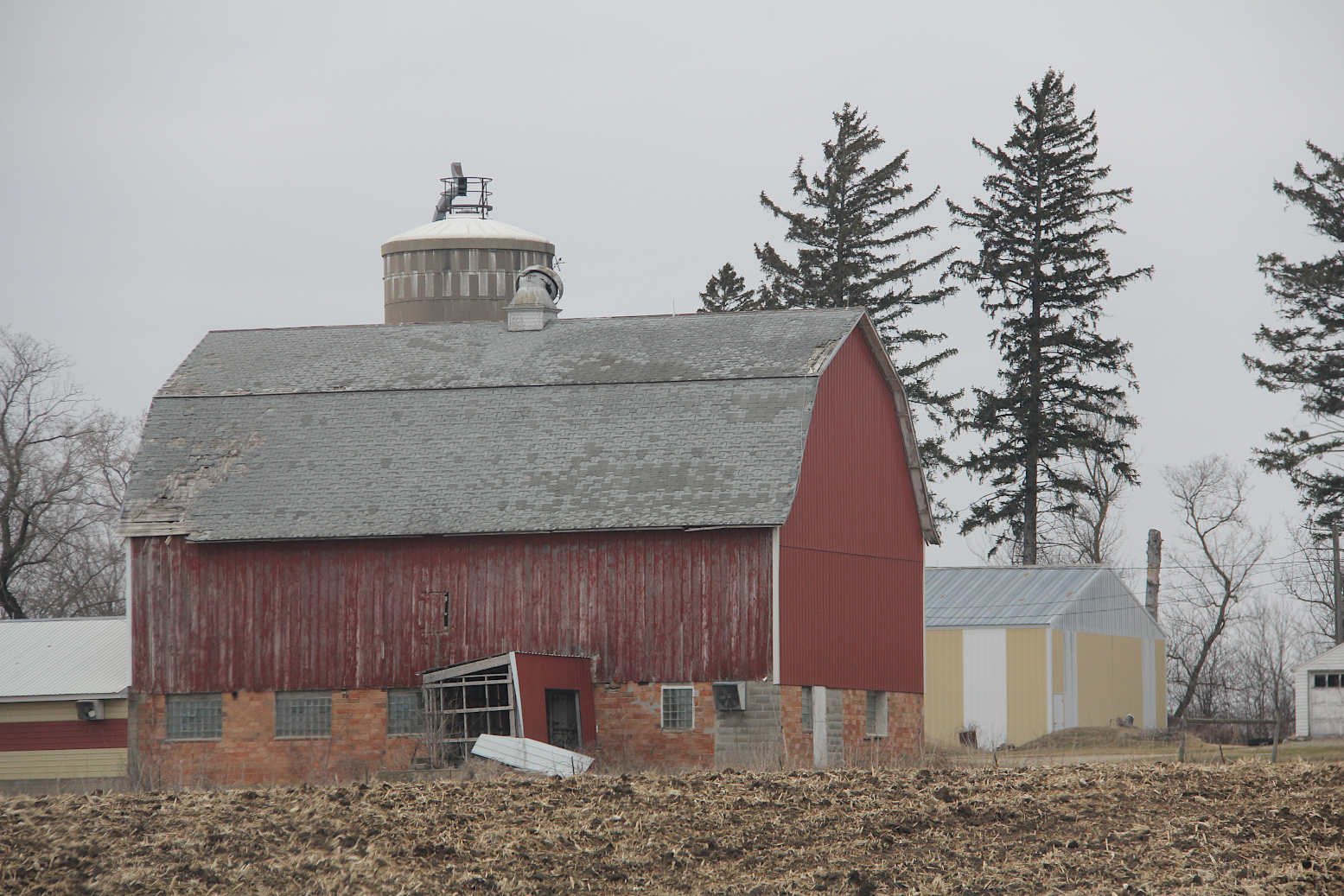
An abandoned barn and silo along a backroad in the Sogn Valley of southeastern Minnesota. (Minnesota Prairie Roots copyrighted file photo 2021)

I don’t regret my farm work experiences. I learned the value of hard physical labor, of working together, of understanding that what I did was necessary. Certainly farming has changed, modernized in the 50 years since I left the land. Machines and computers make life easier.

But sometimes it still takes people like Joe and his crew to plant their soles on the earth, their feet in the barn, to make a farming operation work, even in 2024.

© Copyright 2024 Audrey Kletscher Helbling
 

At a southern Minnesota flea market June 3, 2024

This particular vendor sold farm-themed toys. (Minnesota Prairie Roots copyrighted photo May 2024)

THEY PULL UP in their campers, pick-up trucks, converted buses and vans, often hauling trailers crammed with merchandise. They are traveling merchants, making the flea market circuit to pedal their goods.

A vendor with a patriotic flare. (Minnesota Prairie Roots copyrighted photo May 2024)

Recently I attended the Rice County Steam & Gas Engines Spring Flea Market at the club showgrounds south of Dundas. A second market, along with a tractor show, threshing demo and more, is held Labor Day weekend. Occasionally, I purchase something. But mostly, I look and photograph. There’s a lot to see.

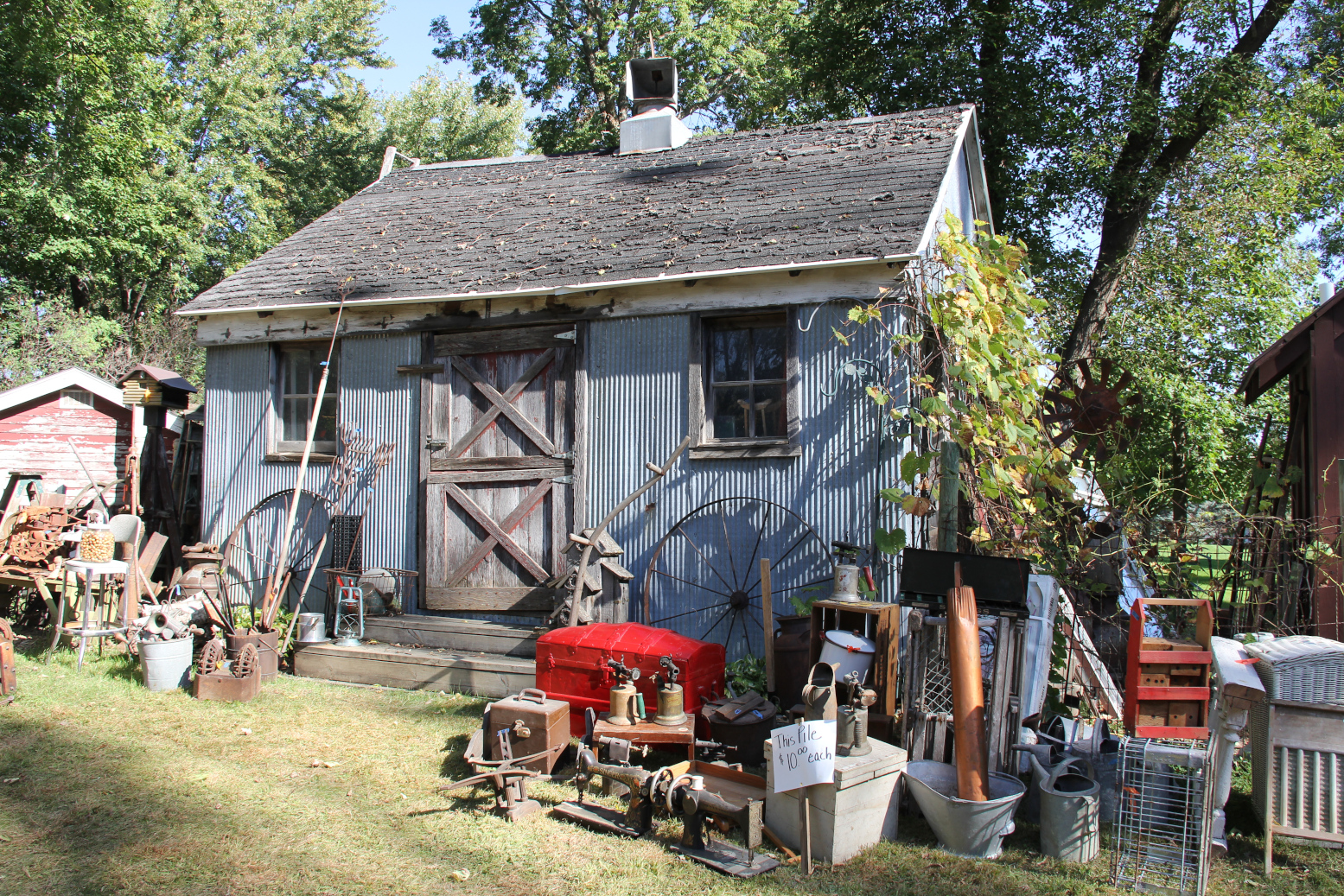
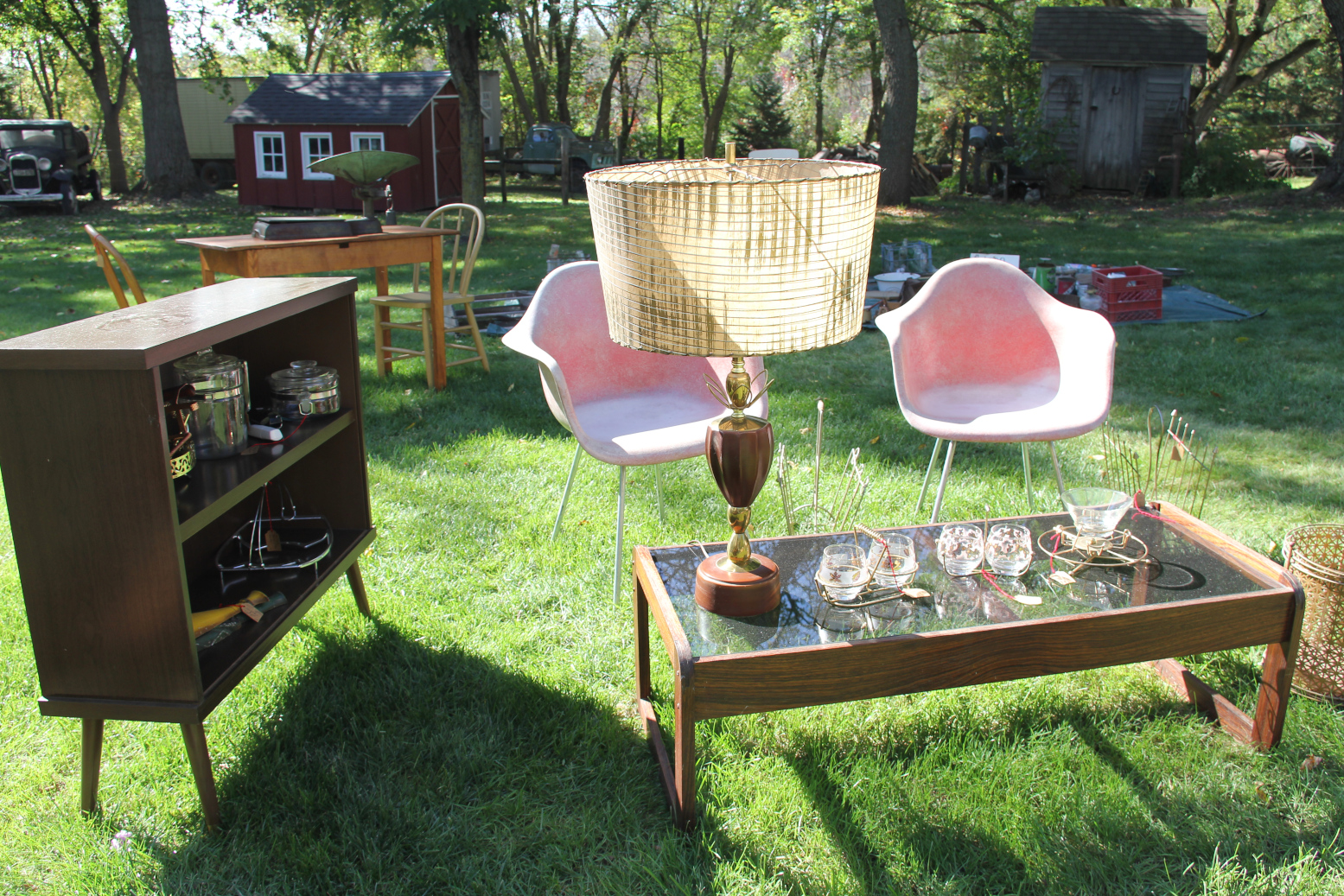
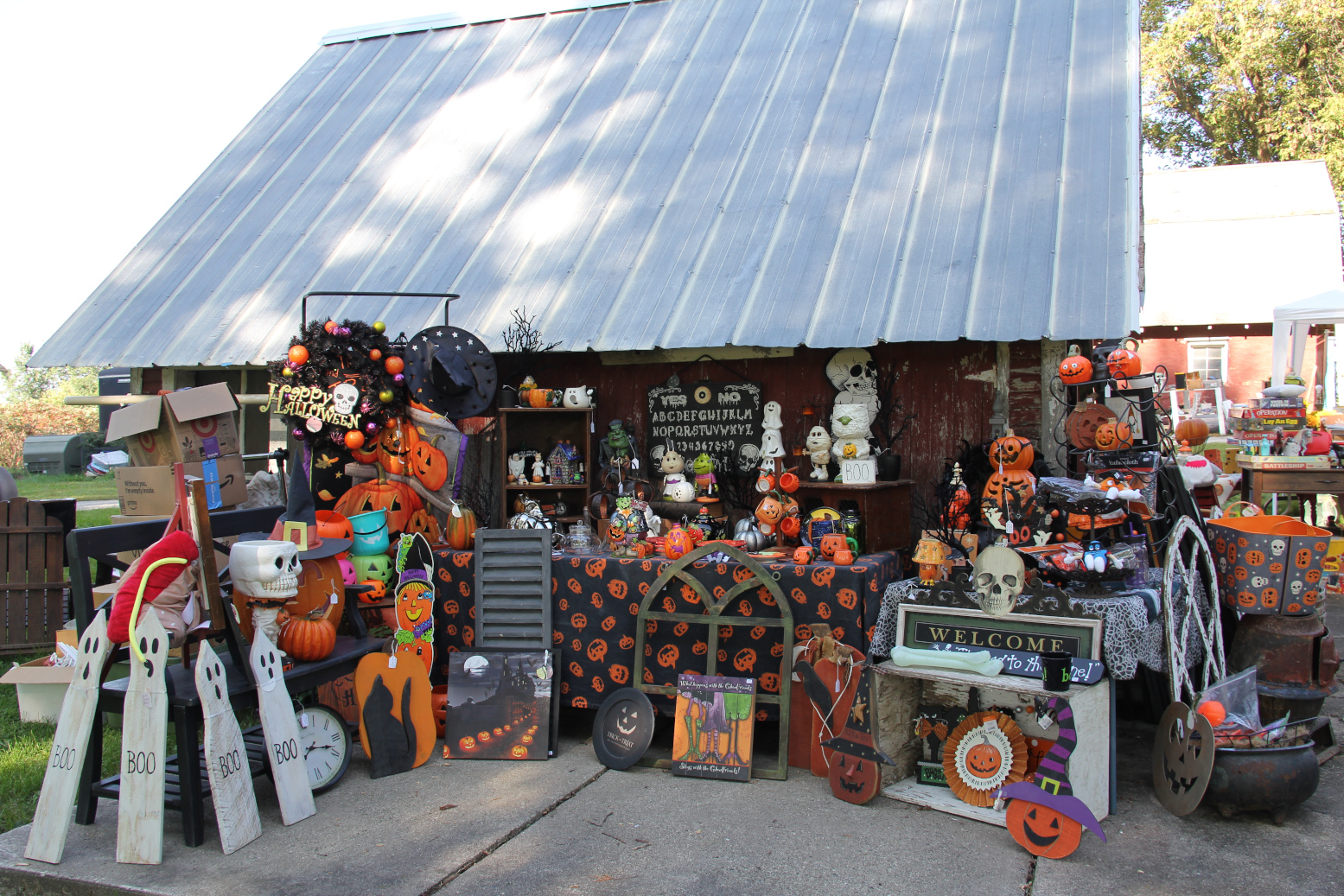
Between the flea market and a consignment auction, there was lots to see and buy at the Rice County Steam & Gas Engines showgrounds. (Minnesota Prairie Roots copyrighted photo May 2024)

From people-watching to shopping to searching for unusual finds to photograph, I find myself drawn to this open air market of second-hand, handcrafted and new merchandise. There are characters and stuff you’ve never seen before and may or may not need, and a vibe that feels of yesteryear.

A vendor’s penned dog. (Minnesota Prairie Roots copyrighted photo May 2024)

Vendors bring their dogs, their finds and even bacon. As I wound among the booths, I smelled the scent of meat. A merchant stood next to his vintage camper frying bacon on a tabletop propane camper stove. I wanted to settle into his fold-up lawn chair and help myself to a slice or three, plus a cup of coffee and perhaps scrambled eggs. I settled instead for a bag of mini-donuts purchased from a food stand.

Mini tractors drew kids and collectors. (Minnesota Prairie Roots copyrighted photo May 2024)

I mostly meander. And watch. I saw a preschool boy beeline straight for a table of toy tractors. Grandma followed. Plenty of farm toys are available in sizes from matchbox to larger. A farm kid’s dream store, for sure.

I seldom drink pop, but I do like this Pepsi sign. (Minnesota Prairie Roots copyrighted photo May 2024)

Me? I don’t shop for anything specific. But I’m drawn to old, not replica (of which there are plenty) signs. This time a vintage Pepsi sign caught my eye. For $130, and perhaps it’s worth that much, it wouldn’t be mine.

Not the safest toy, but one I loved as a child of the 1960s. (Minnesota Prairie Roots copyrighted photo May 2024)

Nor would the Tinkertoys…because I probably have a cylinder of those stashed under the attic eaves. I loved those “let’s see if you can poke your siblings’ eyes out” with the wooden sticks toy.

I appreciated the box cover art more than the ice skates. (Minnesota Prairie Roots copyrighted photo May 2024)

If I still skated, I could have purchased matching skates for myself and Randy. But, nope, not gonna risk falling at my age. I’ve already broken two bones while wearing flip flops and shoes.

Beautiful hand embroidery. (Minnesota Prairie Roots copyrighted photo May 2024)
Eagle sculpture. (Minnesota Prairie Roots copyrighted photo May 2024)
I see car emblems as art. (Minnesota Prairie Roots copyrighted photo May 2024)

I really liked the eagle sculpture and the car emblems and the embroidered dish towel. They’re art to me and I do love art.

Head inside the town hall for more treasures. (Minnesota Prairie Roots copyrighted photo May 2024)

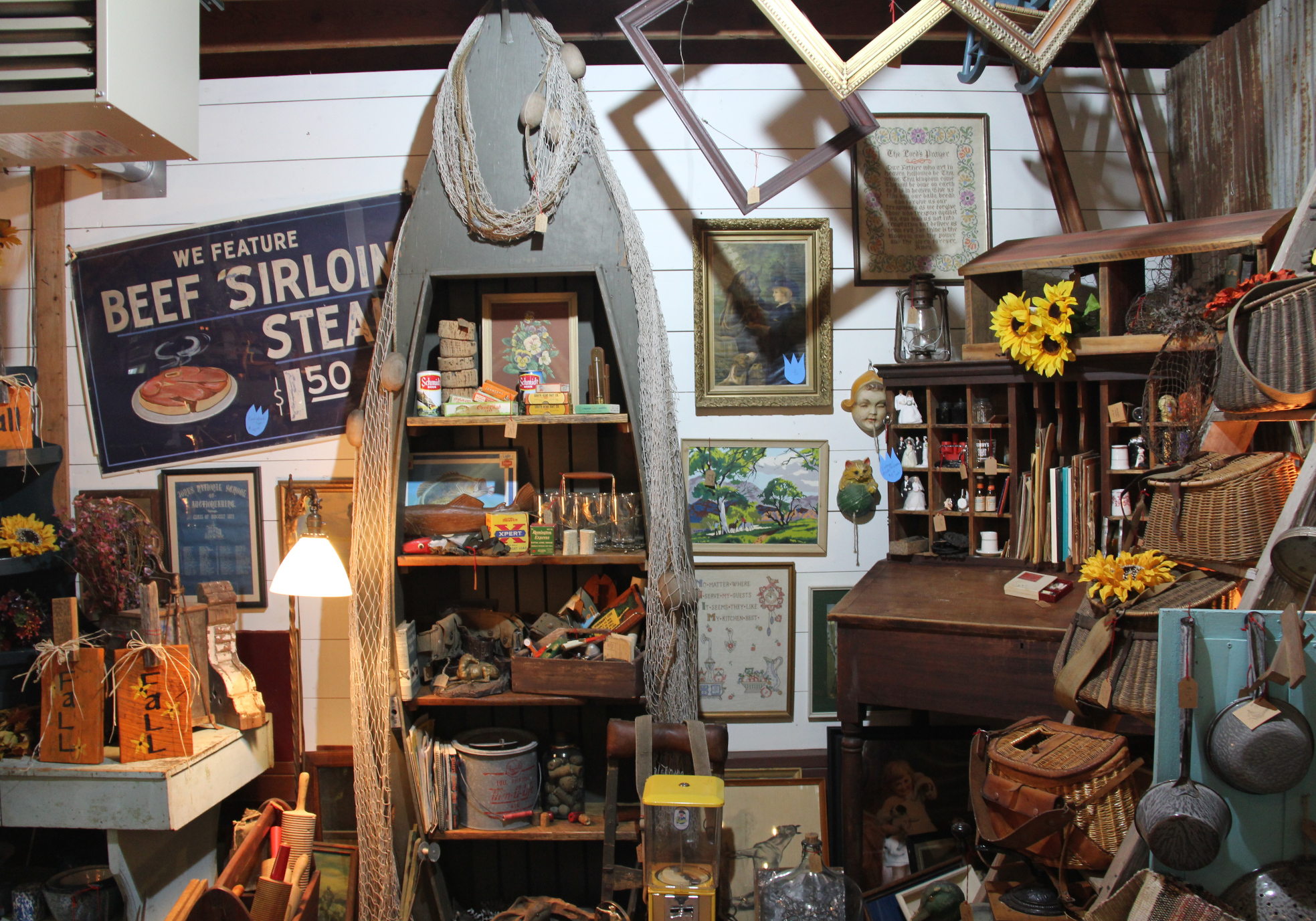
The most interesting finds of the morning came at my last stop, where a handmade painted sign posted outside the old Northfield Township Hall promised ANTIQUES, TOOLS, TOYS INSIDE. There I met Gary Kowalski, labeled “PICKER” on his business card. He’s from Montgomery, lives in a former funeral home and picks for goods from Minnesota to Michigan to Texas and in between.

This photo of soldiers sparked a conversation between me and picker Gary Kowalski. (Minnesota Prairie Roots copyrighted photo May 2024)

A singular framed black-and-white photo of three soldiers in full formal military uniform grabbed my attention. Their smiles, the way they leaned into each other, told me they were not only in service together, but also friends. That’s when Gary stepped in to say he found the photo, along with other WW II items, in Texas. He’s a veteran himself and guesses the three were on leave for some rest and relaxation, thus the happy pose.

The Legion jacket that prompted a conversation about my home area. (Minnesota Prairie Roots copyrighted photo May 2024)

Gary had one more item that really made my day. An American Legion Post 38 jacket from Redwood Falls. It came from my home county. Yes, he’s been picking 20 miles to the east of my hometown. I’m always thrilled when someone, anyone, is familiar with a prairie place. Few people around this area hold any knowledge of communities in the southwestern corner of Minnesota. It’s a good place to pick, but others are better price-wise, Gary shared. He wasn’t sharing, though, specific picking sites. He doesn’t need the likes of me, who thinks picking would be a fun gig, competing for finds.

On a perfect spring morning, folks visit and shop at the flea market. (Minnesota Prairie Roots copyrighted photo May 2024)

He needn’t worry. I’ll stick to attending flea markets, where I’ll watch for characters, shop, and scout for oddities among all that merchandise pulled from campers, pick-up trucks, converted buses, vans and trailers.

#

NOTE: Check back for more photos from the Rice County Steam & Gas Engines showgrounds. And click here to read my first post on the consignment auction.

© Copyright 2024 Audrey Kletscher Helbling
 

The rhythm, reverence & remembrances of a rural Minnesota auction May 30, 2024

Watching the auction from behind the auctioneer’s truck at the Rice County Steam & Gas Engines Consignment Auction on May 25 south of Dundas. (Minnesota Prairie Roots copyrighted photo May 2024)

THERE’S SOMETHING ABOUT AN AUCTION that evokes nostalgic curiosity, drawing people together to peruse second-hand merchandise, perhaps to bid, perhaps only to watch silently from the side. Even to mourn.

The auctioneer and clerk sell and record items sold. (Minnesota Prairie Roots copyrighted photo May 2024)

Recently, I attended the spring auction at the Rice County Steam & Gas Engines showgrounds south of Dundas as an observer. I didn’t need any of the goods sold on consignment with all commissions donated to the nonprofit. But, still, I watched and wove among the items auctioned by Valek Auction Co. of Northfield.

Lining up for bidding numbers. (Minnesota Prairie Roots copyrighted photo May 2024)
A familiar milk bucket, just like the one my dad used when milking his Holsteins. (Minnesota Prairie Roots copyrighted photo May 2024)
Familiar grain wagons, too. (Minnesota Prairie Roots copyrighted photo May 2024)

I felt like I was back on the farm, filling a bushel basket with silage for the cows, scrubbing the milk bucket with a brush, mixing milk replacer in a galvanized pail, watching corn flow into an aged grain wagon…

A grain bin repurposed as a shelter/resting area at the Rice County Steam & Gas Engines showgrounds. (Minnesota Prairie Roots copyrighted photo May 2024)

Rural auctions like this, for those of us who grew up on working farms or still live on them, are like steps back in time. Decades removed from farm life, I would feel out of place on a modern-day farm with all the technological advancements, the oversized equipment. That bushel basket, that milk bucket, that pail, that grain wagon…all are the stuff of yesteryear. Farming today is much less labor intensive, more efficient.

Items are auctioned off a hay rack. (Minnesota Prairie Roots copyrighted photo May 2024)
A vintage hay loader. (Minnesota Prairie Roots copyrighted photo May 2024)
Merchandise lines the gravel road. (Minnesota Prairie Roots copyrighted photo May 2024)

Still, we often hold onto the past, the memories of back-in-the-day, the “way it used to be.” Nostalgia runs strong at auctions. I saw that, felt it, overheard it as folks gathered around the auctioneer’s pick-up truck, leaned on the hay rack piled with auction goods, meandered among the merchandise lining both sides of a gravel road.

A 1950s vintage stroller, exactly like the one used for me and my five siblings. (Minnesota Prairie Roots copyrighted photo May 2024)

Many of the auction items were vintage, likely pulled from the back corners of a dark machine shed or abandoned barn or from weeds along the edge of a grove. The rusted metal baby stroller could have been the one I rode in, the pitchfork the one I used to bed straw, the hand-reel lawnmower my grandma’s.

A vintage grain drill. (Minnesota Prairie Roots copyrighted photo May 2024)
Planting dates written inside the lid of the grain drill. (Minnesota Prairie Roots copyrighted photo May 2024)

This particular auction held so much relatable history. I doubt I was alone in feeling that way. While looking at a vintage grain drill, an implement used to plant small grains, I discovered historic documentation. There, on the underside of a metal lid, a farmer recorded the dates he planted oats, barley and wheat, beginning in 1951 until 1969 with a few years missing. Planting and finishing dates are important to farmers as they put seed in the ground, anticipate harvest. I thought of this farmer who 73 years ago wrote that first entry on his grain drill, holding the hope of harvest within him.

Inspecting before bidding starts. (Minnesota Prairie Roots copyrighted photo May 2024)

There’s a certain reverence and respect in rural auctions. An honoring of farmers and farm life and the responsibilities that come with tending the land. This isn’t just stuff being sold to the highest bidder, but rather something of value, of importance, that once belonged to another. I remember standing at my father-in-law’s farm auction decades ago and feeling a certain sadness in the sale of items gathered from shed, house, barn and elsewhere.

Lil Fox Wagon, one of several on-site food and beverage vendors. (Minnesota Prairie Roots copyrighted photo May 2024)

Farm auctions represent the final verse in a hymn, the congregation gathered, the auctioneer chanting the liturgy. Comfort and community and closure come. At the hay rack. Among the rows of numbered auction items. At the lunch wagon. All until the last item is sold.

Resting during the morning auction. (Minnesota Prairie Roots copyrighted photo May 2024)

Hallelujah. And amen.

#

NOTE: Check back tomorrow to read my prize-winning poem, “Sunday Afternoon at the Auction Barn,” published in 2014 in a Minnesota literary anthology.

© Copyright 2024 Audrey Kletscher Helbling
 

Crafting an obituary: Emmett “breathed John Deere” March 5, 2024

A row of John Deere tractors at the 2022 Rice County Steam & Gas Engines Show, rural Dundas. (Minnesota Prairie Roots copyrighted file photo September 2022)

AS A WRITER, a storyteller, I read obituaries. Doesn’t matter if the deceased is known to me or not. I find obits interesting for the stories therein.

Stories weren’t always part of obituary writing. Obit style has evolved since I graduated in 1978 with a journalism degree from Minnesota State University, Mankato. And that is a good thing. Today’s death notices are not just summaries of facts, but rather personalized in a way that helps the reader understand the person as a person. That holds value to those who are grieving and to those of us who hold no connection to the individual.

I need to backtrack for a moment and share that writing an obituary was my first writing assignment in Reporting 101. Although I’ve forgotten details about that long ago college course, I remember the professor stressing the importance of spelling names correctly. That carried through to all types of newspaper reporting. First reporting job out of college, I learned a source was Dayle, not Dale.
Emmett Haala (Photo source: Sturm Funeral Home)

That MSU instructor also imprinted upon me the importance of obituaries. As I age, I find myself drawn more and more to reading obits. Too often now, I know the deceased. Recently, I found a gem in the obituary of Emmett Haala, 87, of Springfield (that would be Springfield, Minnesota), who died on February 28. His funeral is today.
Hanging out by a John Deere tractor at the Rice County Steam & Gas Engines Show. (Minnesota Prairie Roots copyrighted file photo September 2022)
It wasn’t the basic facts about Emmett that captivated me, but rather his interest in John Deere tractors. He, according to his obit, “lived and breathed John Deere.” Now to anyone with a rural connection, the idea of fierce tractor brand loyalty is familiar. This retired mechanic began his career at age 14 at Runck Hardware and Implement in Springfield, eventually opening Emmett’s Shop in 1970. He was a trusted mechanic who serviced all machinery brands, but favored John Deere.

“Nothing runs like a Deere” is the John Deere slogan. (Minnesota Prairie Roots copyrighted file photo September 2017)

That tidbit got me reminiscing and also contemplating the importance of open houses in rural Minnesota. Events that continue today. Emmett, his death notice read, shared many memories of John Deere Days at Runck Hardware and Implement. He “…enjoyed making hot dogs and coffee for the throngs of people attending and showing the newest John Deere movie.”

To this day, I remain a fan of John Deere. Here Randy and I pose aside a vintage John Deere at Bridgewater Farm, rural Northfield in October 2023. (Photo credit: Amber Schmidt)

That was it. I was hooked. I attended John Deere Day at a farm implement dealership while growing up in southwestern Minnesota. While the event was a way for machinery dealers to get farmers inside their shops, the open houses were also a social gathering for rural folks. My siblings and I piled into the Chevy aside Dad and Mom for the 20-mile drive to Redwood Falls and John Deere Day.

Free food—usually BBQs, baked beans, chips and vanilla ice cream packaged in little plastic cups and eaten with a wooden spoon—comprised dinner (not lunch to us farm types). Maybe there were hot dogs, too, like at Emmett’s place of employment. Memories fade over the decades.

A worn vintage John Deere emblem. (Minnesota Prairie Roots copyrighted file photo September 2017)

But I do recall the John Deere movies shown post meal at the theater in Redwood Falls. Sure, they were nothing but advertisements for “the long green line” of farm machinery. But to a kid who seldom set foot in a theater, the promotional films held all the appeal of a box office hit. Plus, there were door prizes like bags of seed corn and silver dollars. I never won anything. A cousin did.

At the Rice County Steam & Gas Engines Show. (Minnesota Prairie Roots copyrighted file photo September 2017)

And so all those John Deere memories and more—including the distinct pop of my dad’s 1950s John Deere tractor—rushed back. Putt, putt, putt. Emmett belonged to the Prairieland Two Cylinder Club. Nostalgia is powerful. So is the art of crafting an obituary. Many of today’s obituaries feature detailed personal stories, not simply superlatives. Stories that reveal something about the individual who lived and breathed and loved. Stories well beyond life-line basics. Stories of life. Stories that resonate, that connect us to each other. Stories like those of Emmett, who “lived and breathed John Deere.”

(Book cover image sourced online)

FYI: I recommend reading this guidebook to obituary writing by retired The Wall Street Journal obit writer James R. Hagerty: Yours Truly: An Obituary Writer’s Guide to Telling Your Story. Hagerty is the son of Marilyn Hagerty, columnist for The Grand Forks Herald. In a March 2012 “Eatbeat” column, Marilyn reviewed her local Olive Garden and gained instant internet fame.