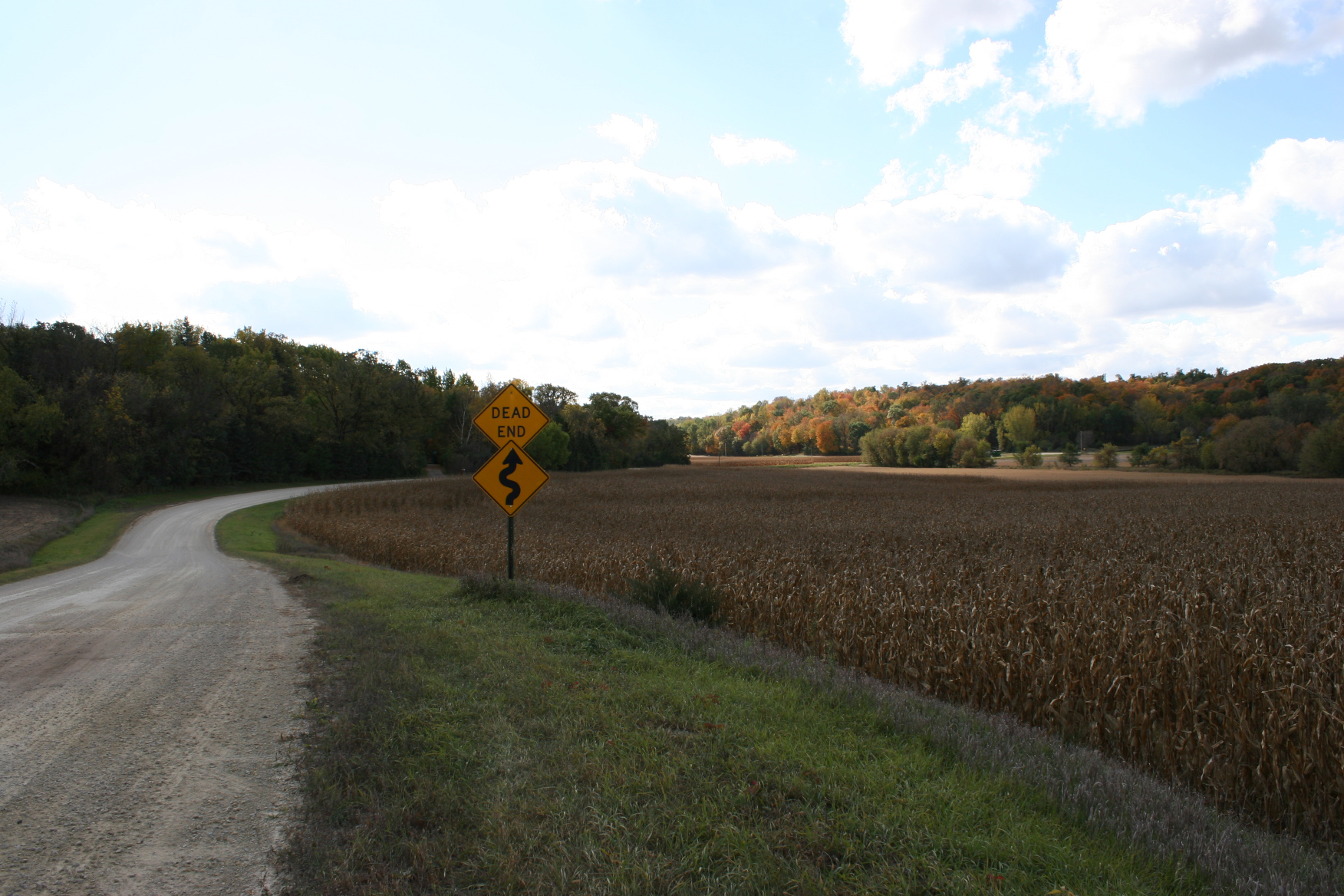
Harvest in Monkey Valley near Kenyon. (Minnesota Prairie Roots file photo October 2021)
NOVEMBER MARKS A MONTH of transition from autumn to winter here in Minnesota.
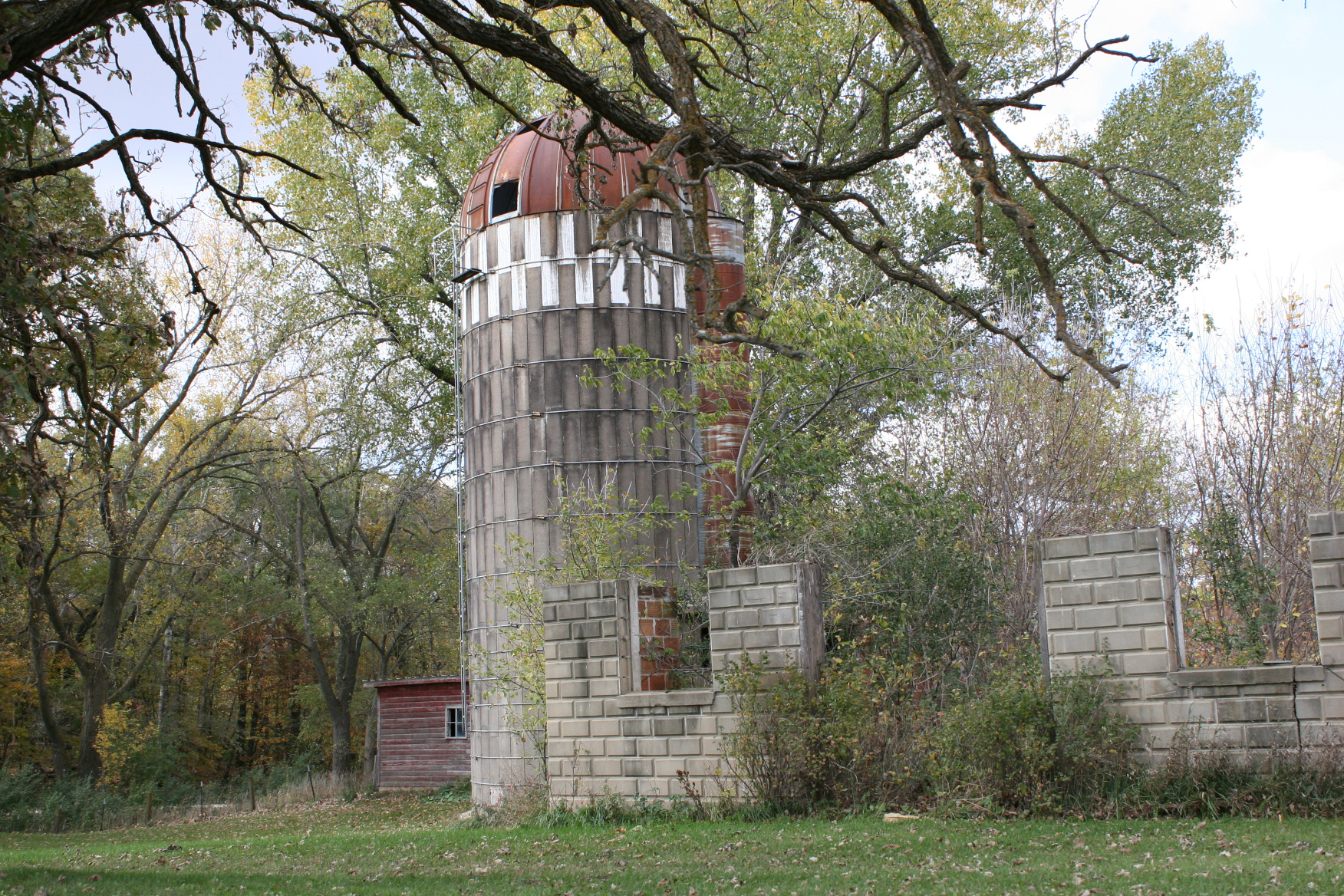
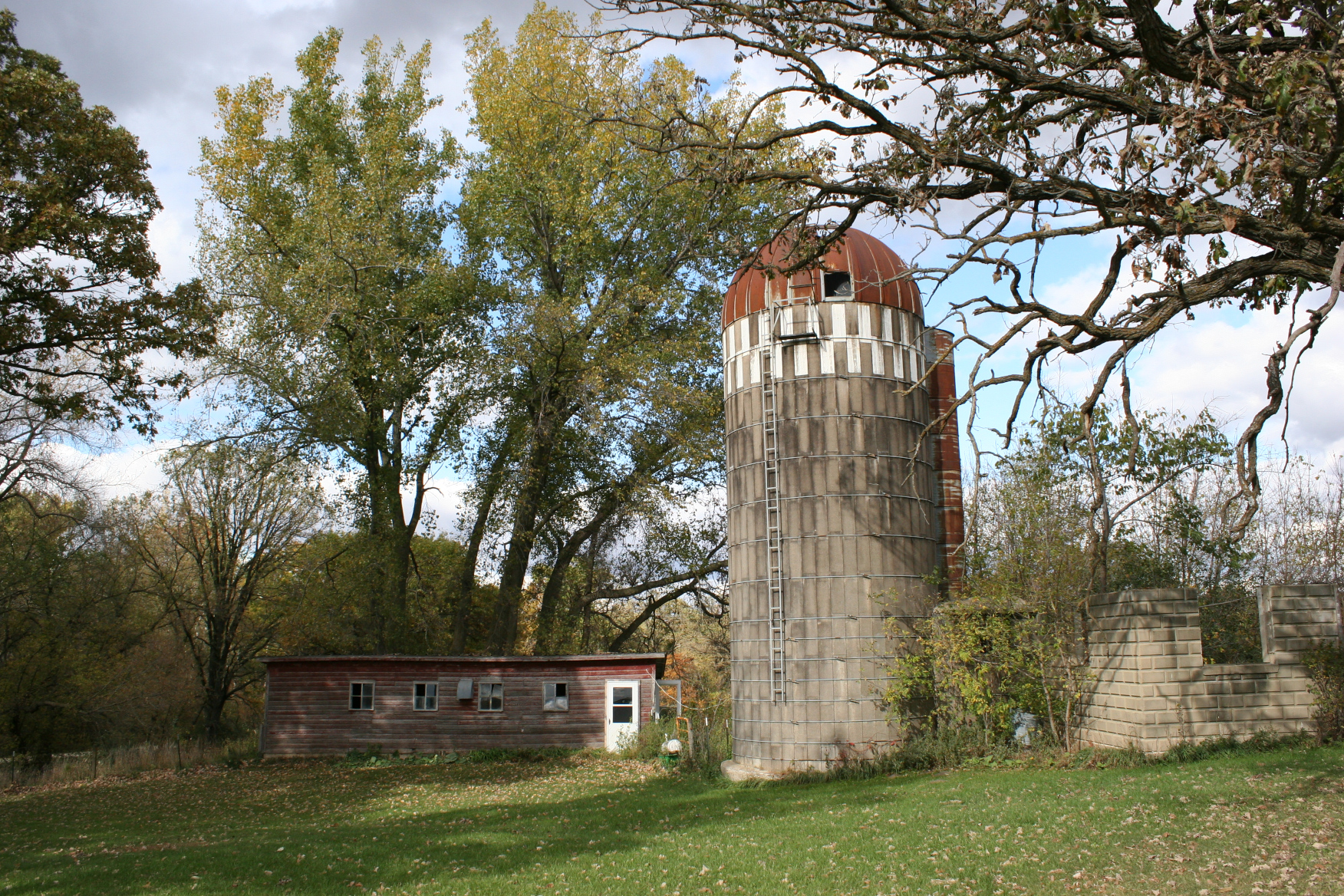
A tree frames an abandoned silo and the remains of a barn in Monkey Valley. (Minnesota Prairie Roots copyrighted photo October 2021)
Trees stand against an often grey sky, brisk winds stripping the last of their leaves to bare branches. Nests crafted by squirrels high in treetops appear vulnerable, unsheltered, exposed to the elements while far below these busy oversized rodents munch on maple seeds, hide walnuts, prepare for winter. Their smaller cousins find their way into our aged house and garage, necessitating a daily check of the trap-line.
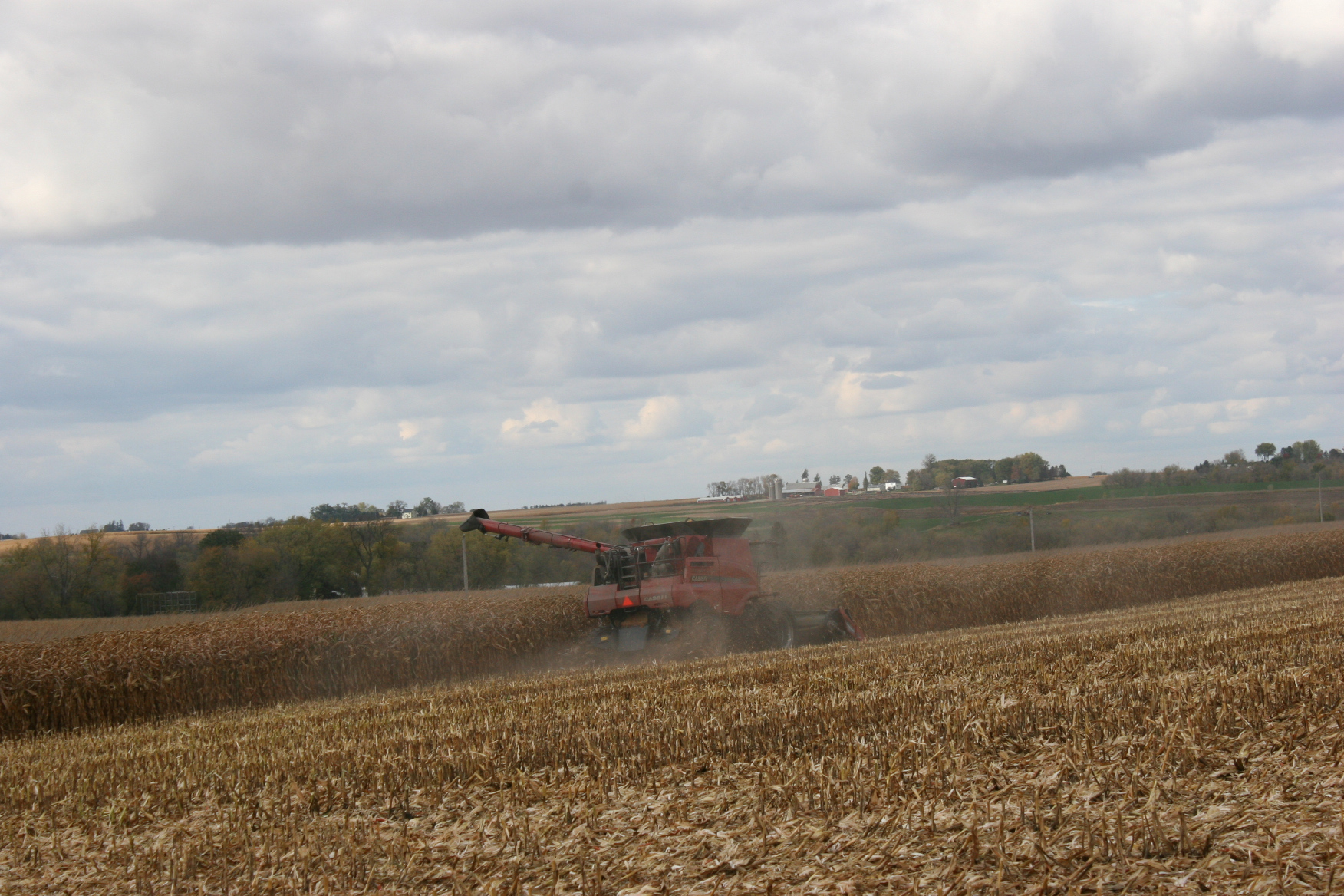
Harvesting corn in Monkey Valley. (Minnesota Prairie Roots copyrighted photo October 2021)
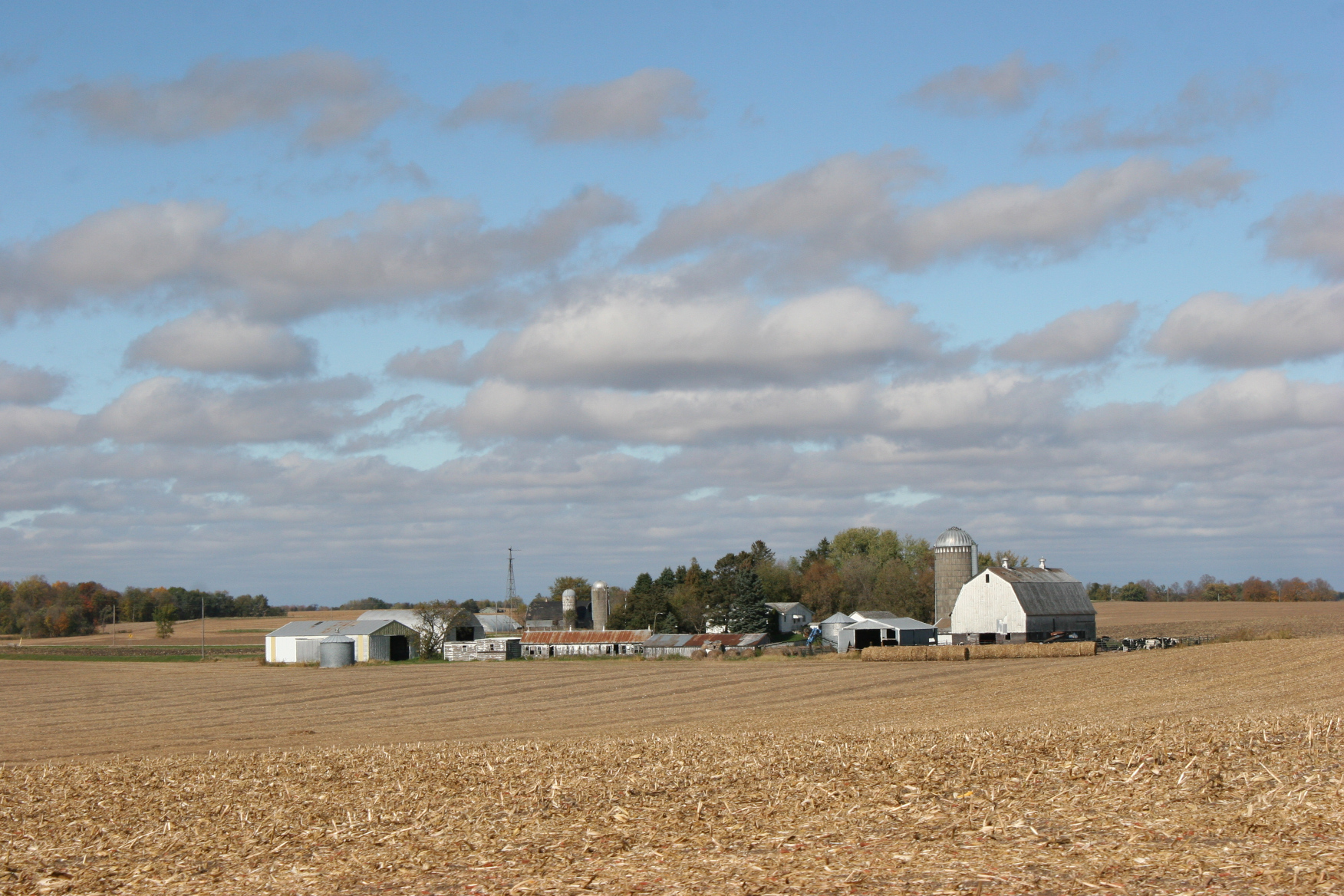
Harvest is done. Corn and soybeans reaped. A once lush rural landscape now looks drab, awash in muted earth-tones.
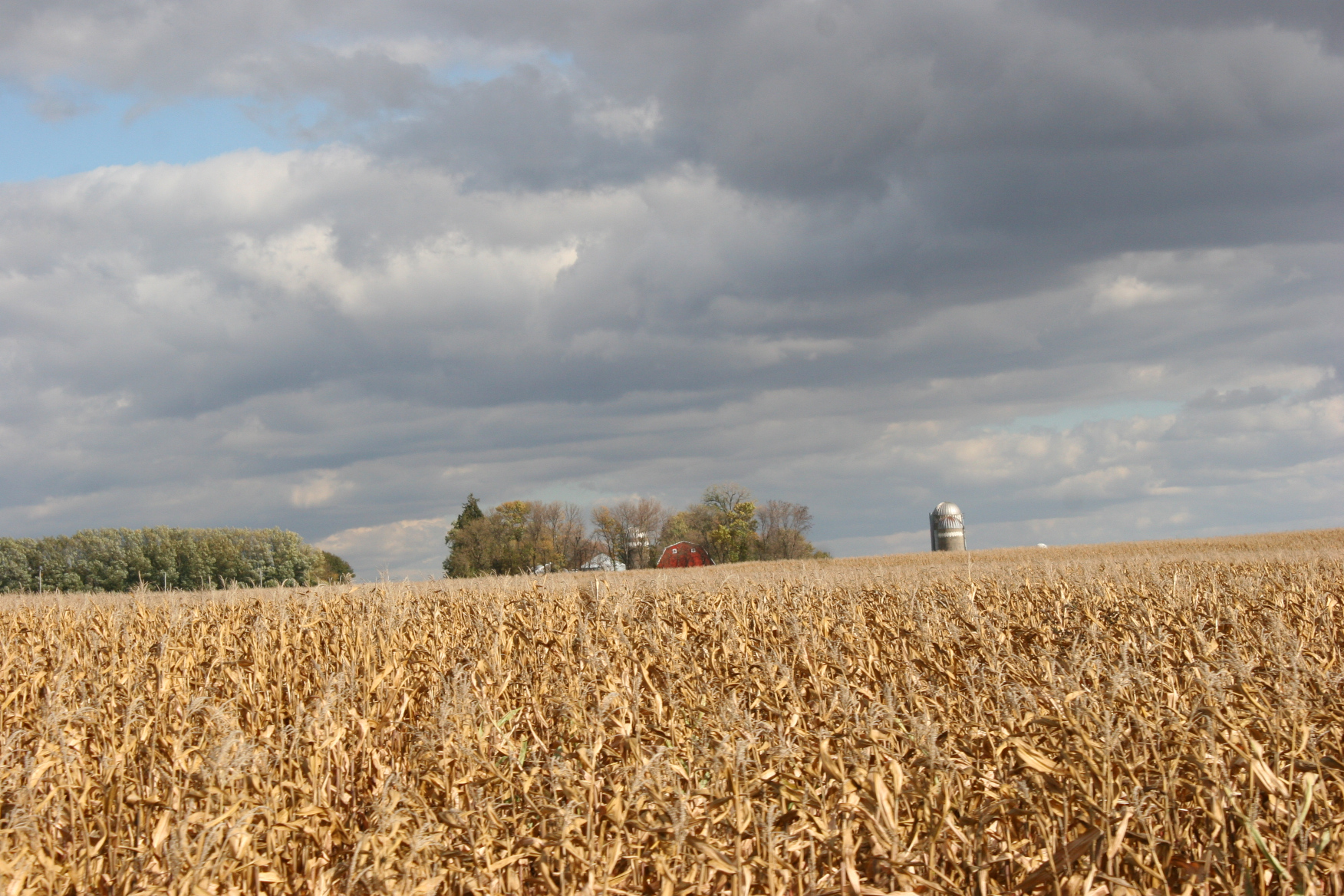
Endless acres of corn defined the landscape near Kenyon pre-harvest. (Minnesota Prairie Roots copyrighted photo October 2021)
For farmers, long days and nights in the field are but a memory. Stress and rush easing into a slower rhythm of life.
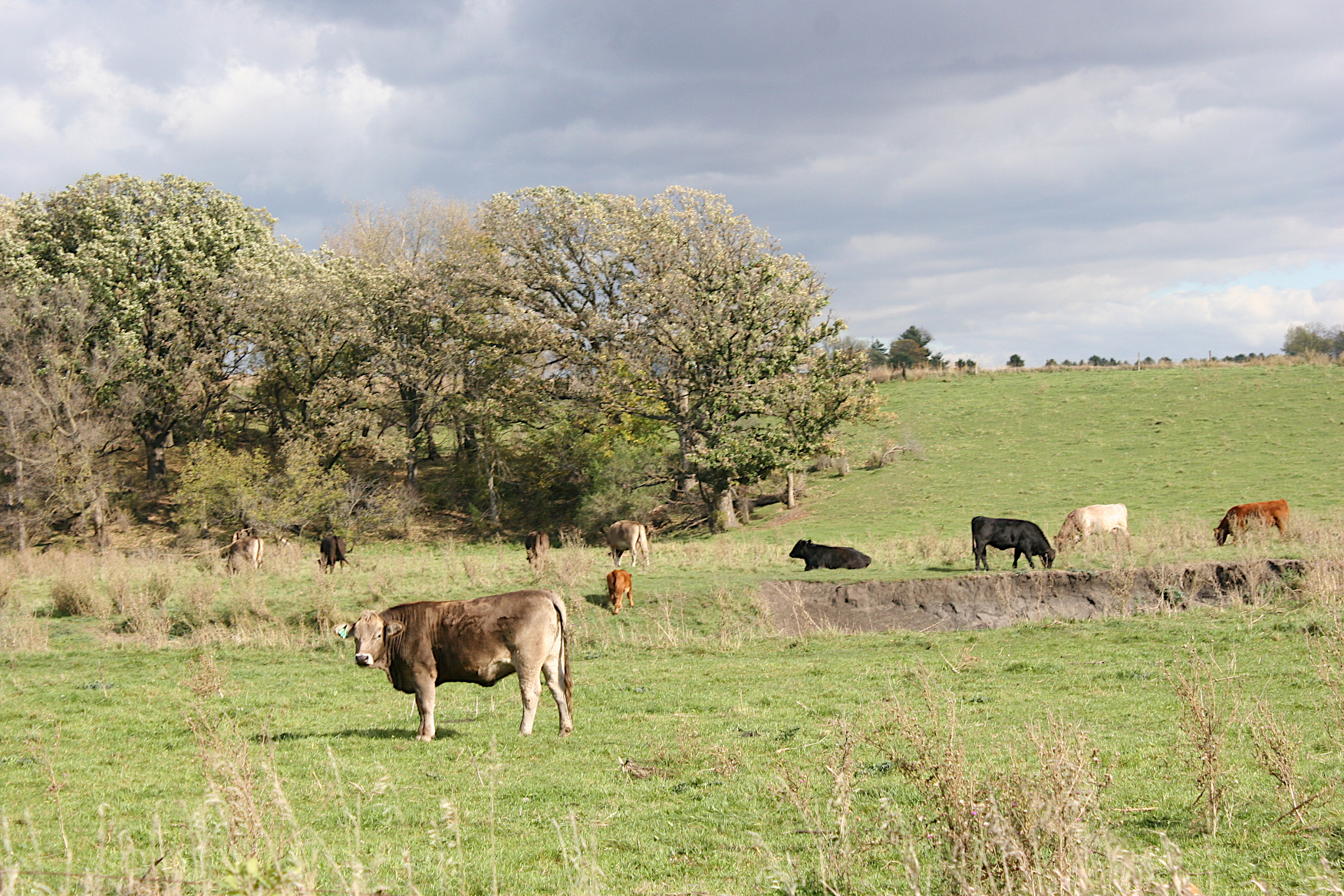
Spotted along a gravel road near Kenyon, grazing cattle. (Minnesota Prairie Roots copyrighted photo October 2021)
The early days of autumn hold such beauty in landscape, such promise in anticipation of harvest. I’ve always loved September and October. This autumn, particularly, in the unchanging season of COVID-19, I’ve needed to reconnect with the earth. To witness the harvest. To view farm sites. To follow back country gravel roads, dust trailing the van. To find peace.
A farm site in the ghost town of Aspelund. (Minnesota Prairie Roots copyrighted photo October 2021)
My appreciation for rural traces to my rural roots. I shall always feel gratitude for my 18 years on the farm. The southwestern Minnesota prairie shaped me as a writer and a photographer in that I noticed, still notice, details. The brutal slice of the winter prairie wind. The remarkable beauty of a flaming sun edging down. The taste of earth in potatoes dug from the garden. The sound of silence in hearing nothing. The unmistakable smell of harvest carried from combine to farmyard.
Just another view of the farm site in Monkey Valley. (Minnesota Prairie Roots copyrighted photo October 2021)
These farm memories I carry with me as autumn wanes, as November days move Minnesota toward winter. Harvest done.
#
NOTE: All of these photos were taken a month ago. The landscape looks much different now. Grey. Stark.
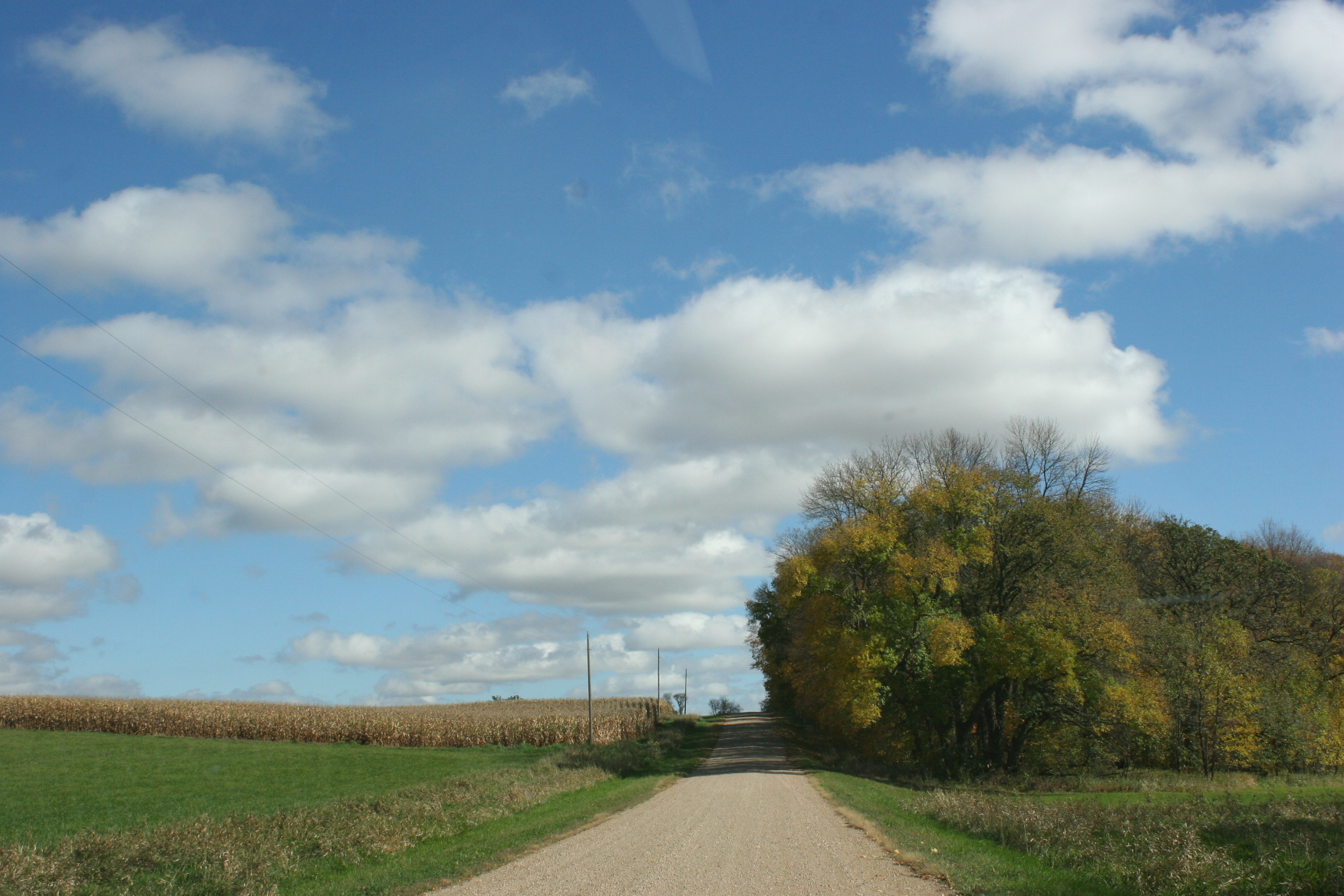
Just outside of Cannon Falls along Goodhue County Road 8, we stopped to admire the treeline and the gravel road winding toward it. (Minnesota Prairie Roots copyrighted photo mid-October 2021)
WHITE ROCK. Belle Creek. Hader. They are among the 60-plus ghost towns of Goodhue County. Places that once thrived, marked now only by signs along a road, a cluster of homes, perhaps a church or abandoned buildings.
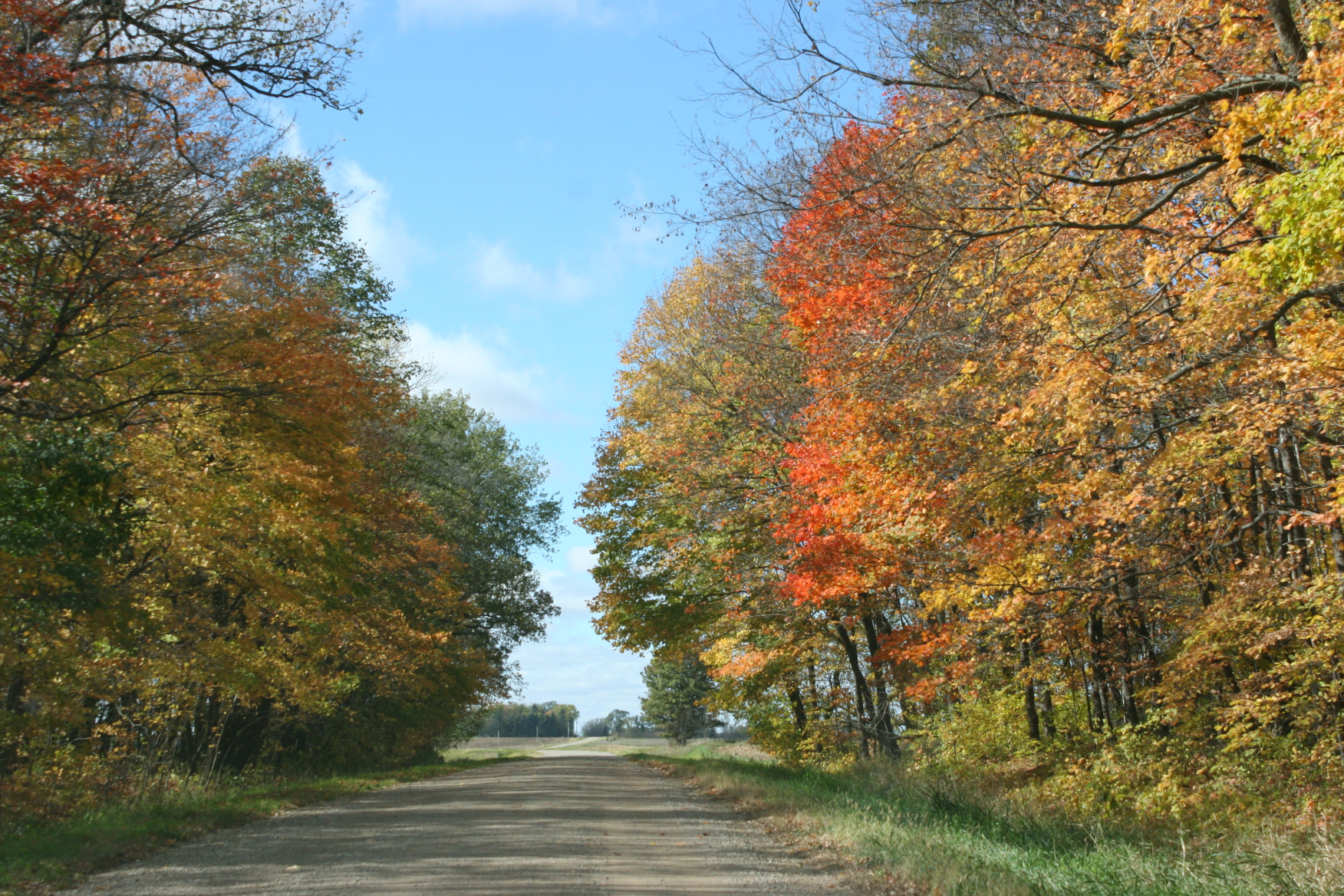
Oh, lovely hues of autumn near Cannon Falls. (Minnesota Prairie Roots copyrighted photo mid-October 2021)
Yet, acknowledging their existence, as the Goodhue County Historical Society does with roadside signs, matters. Because these towns mattered to previous generations and still matter to those with connections to the likes of Aspelund, Burr Oak Springs, Crystal Springs, Eidsvold, Skyberg and so many more with names that hint at heritage and sound poetically beautiful.
On a road trip to Goodhue County a month ago, Randy and I followed County Road 8 east and then south of Cannon Falls back toward Faribault.
Clouds and trees and field along CR 8. (Minnesota Prairie Roots copyrighted photo mid-October 2021)
Our route took us past clusters of woods, some tinged in autumn hues.
Goodhue County Road 8 near Cannon Falls sweeps into the valley. (Minnesota Prairie Roots copyrighted photo mid-October 2021)
Soon the road curved and swept into the valley, rows of corn rolling across the landscape. Only groves of trees surrounding farm sites broke the vista of endless unharvested fields.
Somewhere between White Rock and Belle Creek, this farmyard drew my eye. (Minnesota Prairie Roots copyrighted photo mid-October 2021)
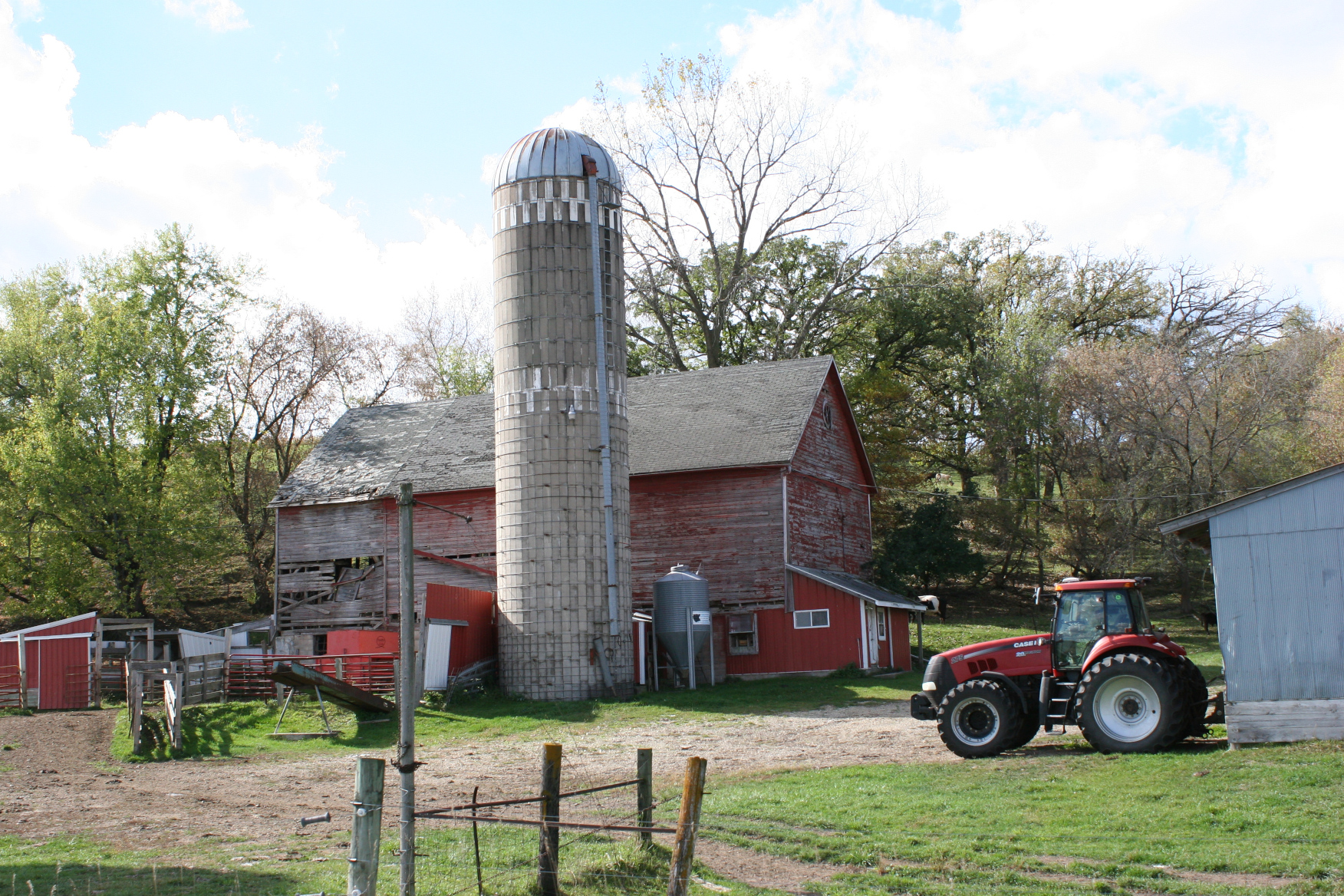
Sometimes those farmyards hugged the paved road and I caught a close-up glimpse of farms, some with aged weathered barns and outbuildings, others updated with modern equipment and structures.
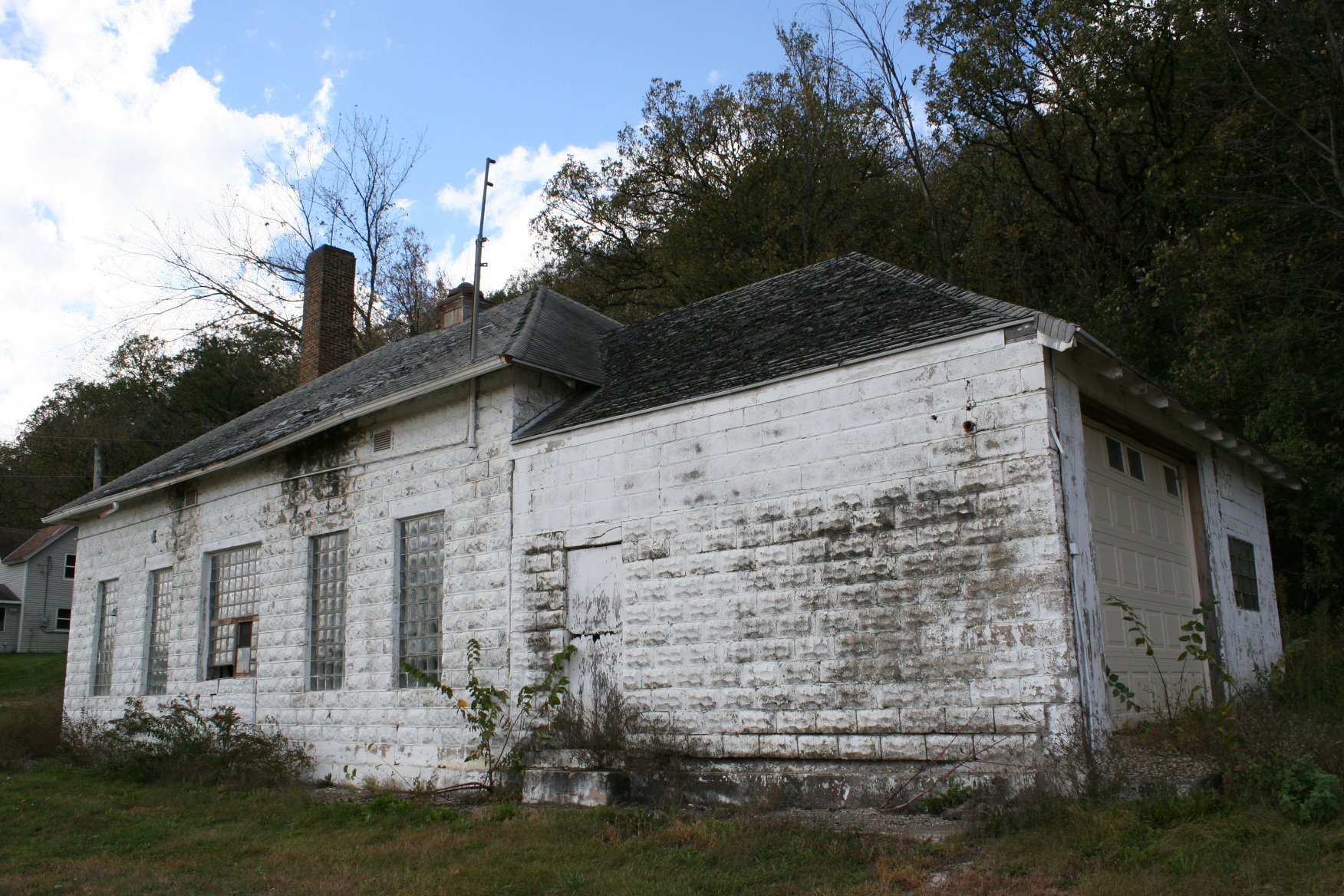
Likely a former creamery in Belle Creek. (Minnesota Prairie Roots copyrighted photo mid-October 2021)
In Belle Creek, Randy and I noticed a white building, likely a former creamery. Creameries often graced these small settlements, a necessity for farmers who sold cream for butter-making.
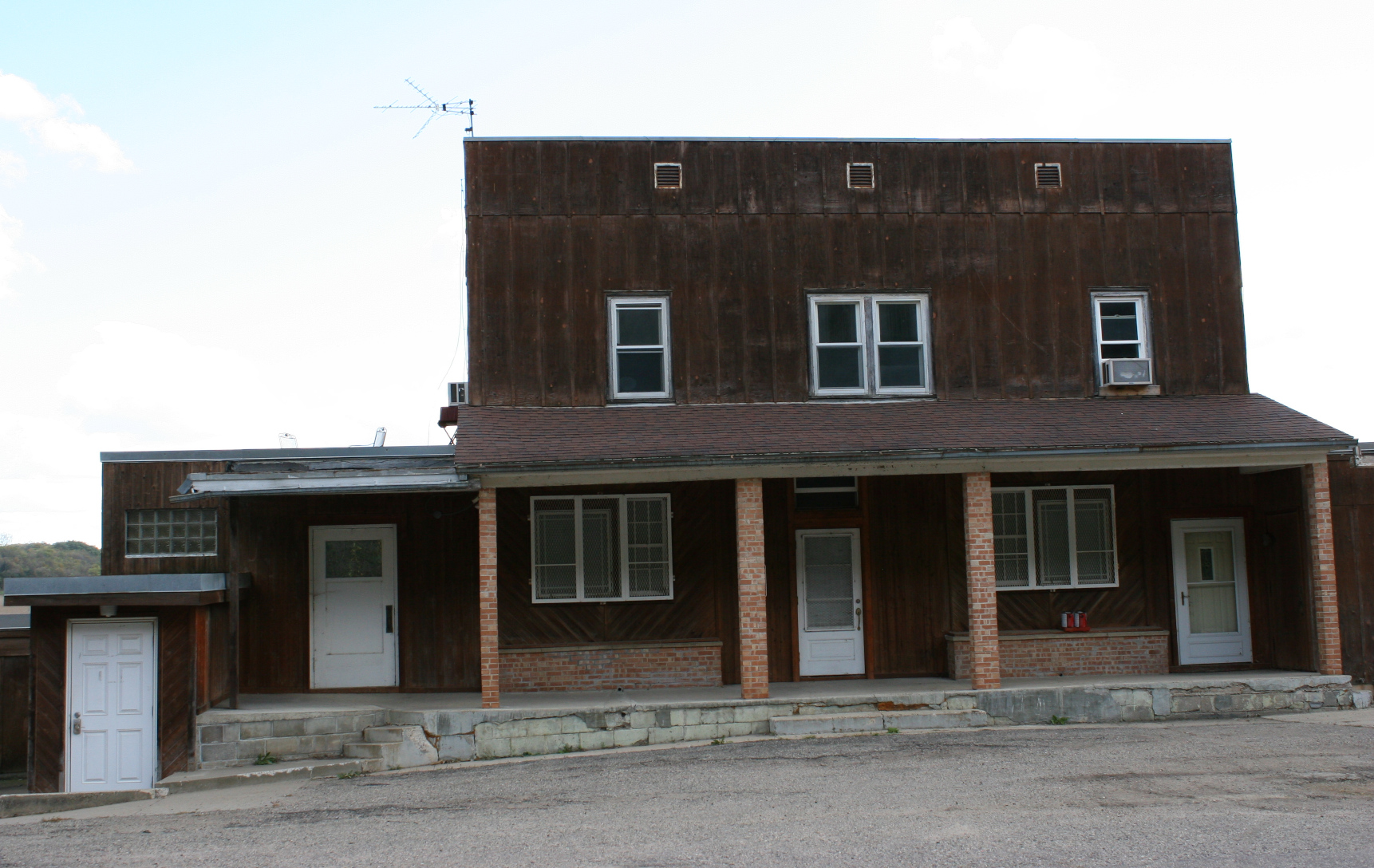
In Belle Creek, a building with an unknown-to-us story. (Minnesota Prairie Roots copyrighted photo mid-October 2021)
Another building in Belle Creek left us guessing at its past life. Perhaps a general store. Then a dance hall. We could be way off…
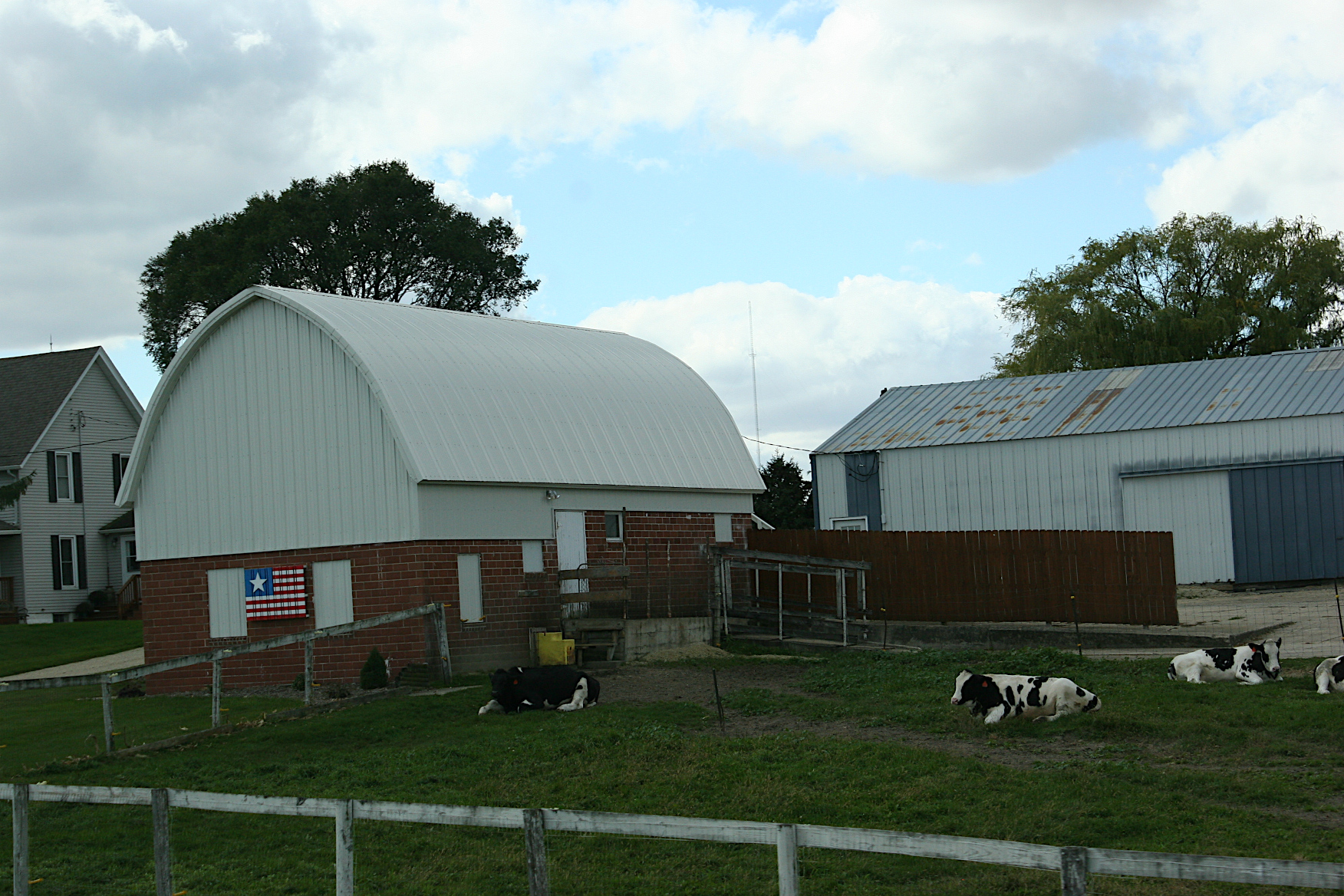
Seeing cows in the countryside takes me back in time. (Minnesota Prairie Roots copyrighted photo mid-October 2021)
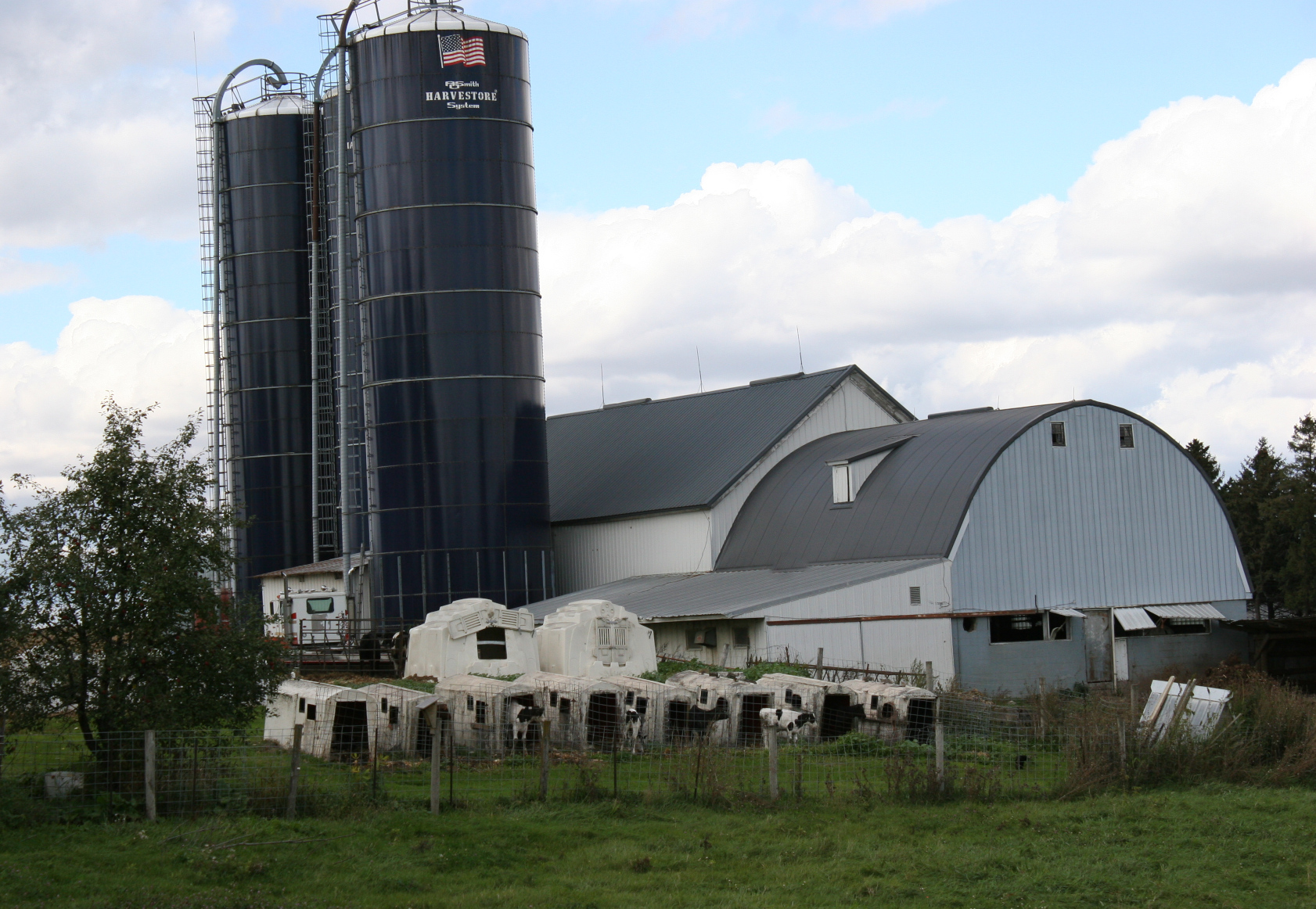
Near Hader, I spotted calves outside their huts. (Minnesota Prairie Roots copyrighted photo mid-October 2021)
Occasionally, we spotted cattle, cows, calves. Growing up on a dairy farm, I delight in seeing bovines, especially Holsteins. But rare are the small family farms today that still raise animals. Corporate and mega farms have mostly replaced that self-sufficient lifestyle. That’s reality.
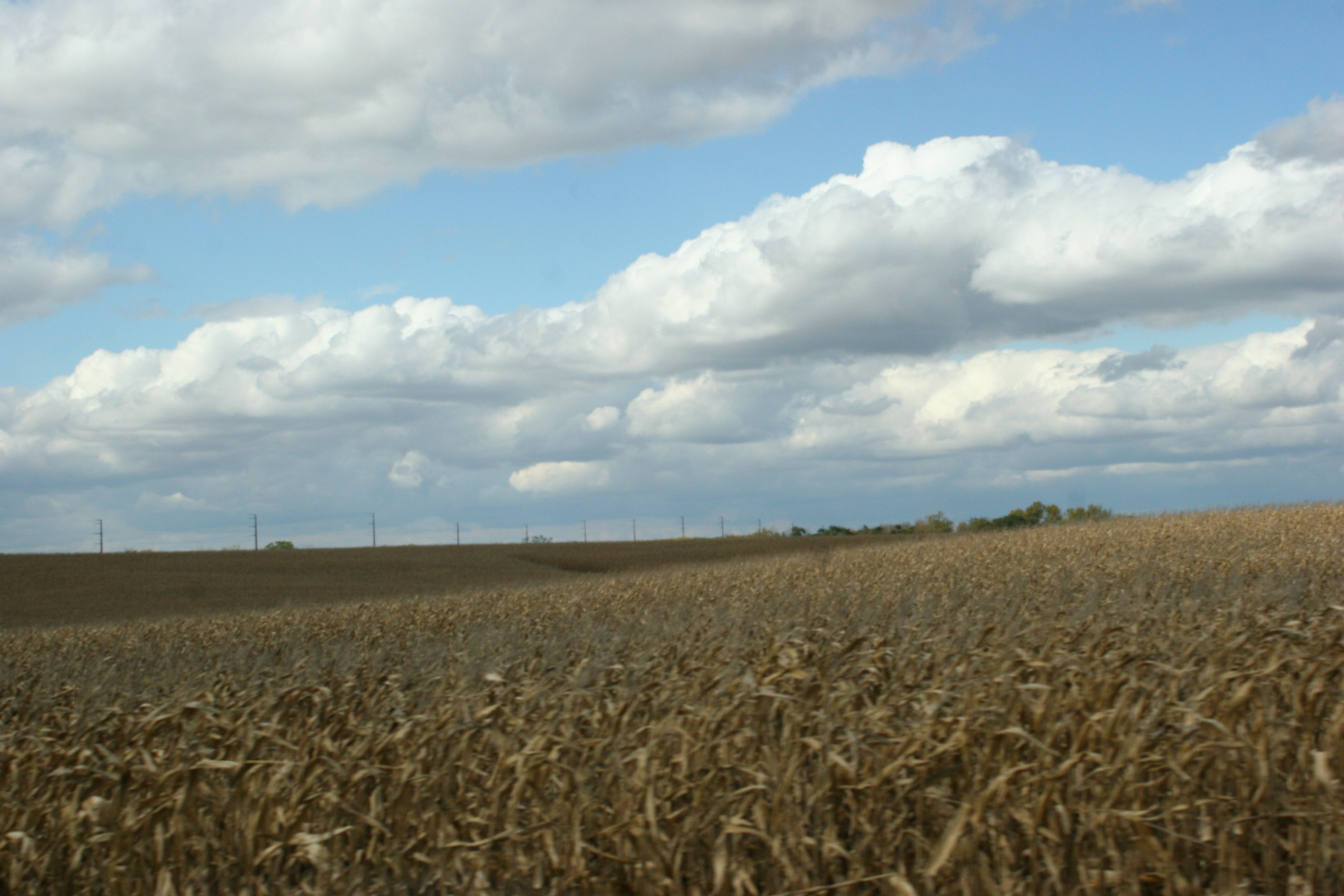
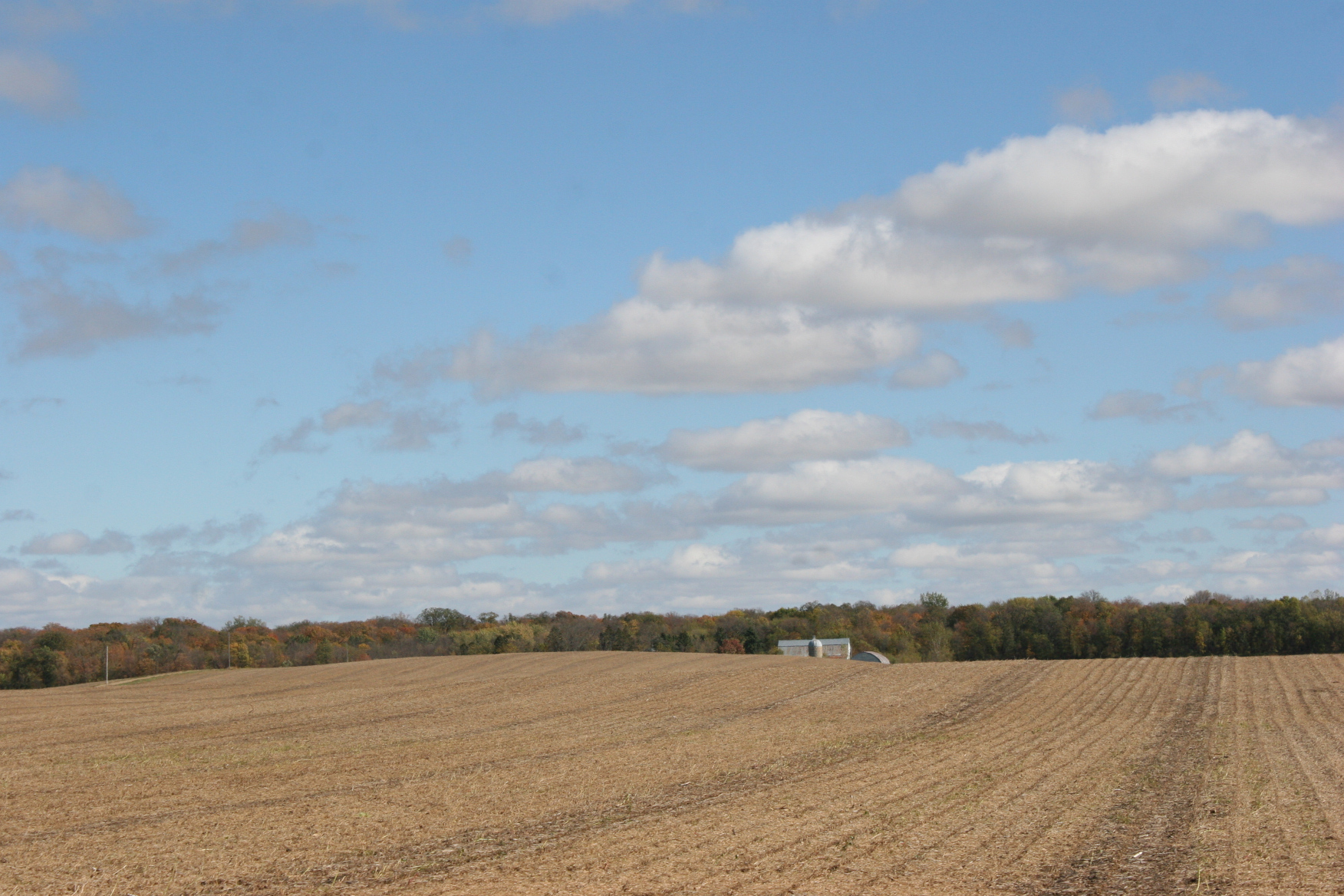
Lots of sky and cornfields along CR 8 in Goodhue County. (Minnesota Prairie Roots copyrighted photo mid-October 2021)
Just like ghost towns, many farms have become, in some ways, ghost farms. They are but ghosts of the past. Ghosts of their former selves and purposes. I see that in decaying, empty buildings, especially barns. I see that in the absence of livestock. I see that in families who can no longer support themselves solely via the farm.
Farm after farm after farm defines this area of Goodhue County. (Minnesota Prairie Roots copyrighted photo mid-October 2021)
All of this is unsettling. But with time comes change. And with change must come acceptance and perhaps also an added historical appreciation for the past.
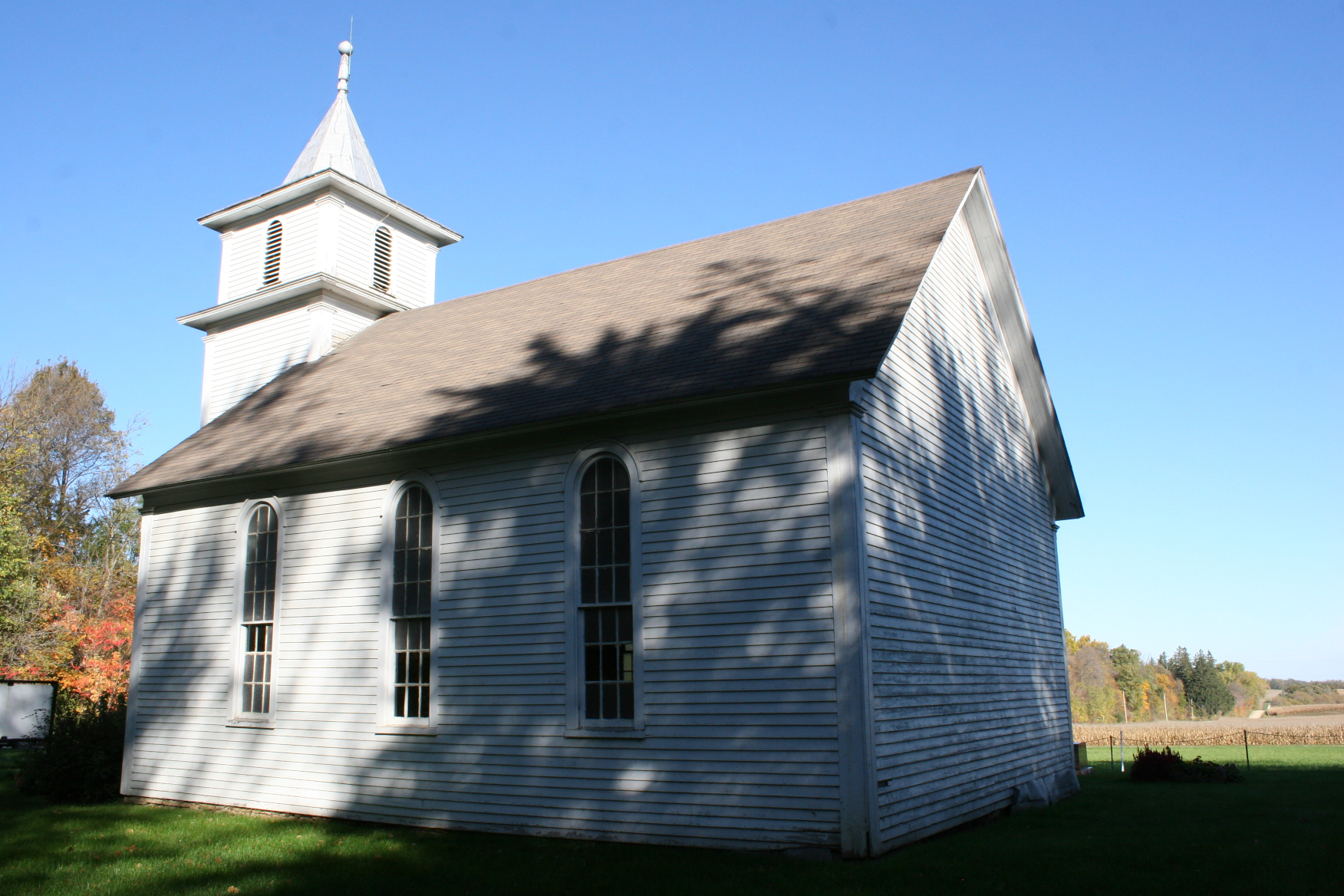
A simple country church, Eidsvold Norwegian Methodist. (Minnesota Prairie Roots copyrighted photo October 2021)
WHENEVER I HAPPEN upon an aged rural Minnesota church, as I did recently in Leon Township south of Cannon Falls, I wonder about the immigrants who founded it. What are their stories? How did they feel living an ocean apart from their beloved homelands and families? I admire their strength. Their ability to board a ship and sail toward The Land of Opportunity.
A Norwegian name in the Eidsvold Church cemetery. (Minnesota Prairie Roots copyrighted photo October 2021)
Oftentimes, the very names of these country churches and the names of those buried in the churchyard cemeteries reveal roots and heritage.
A brief history of the church. (Minnesota Prairie Roots copyrighted photo October 2021)
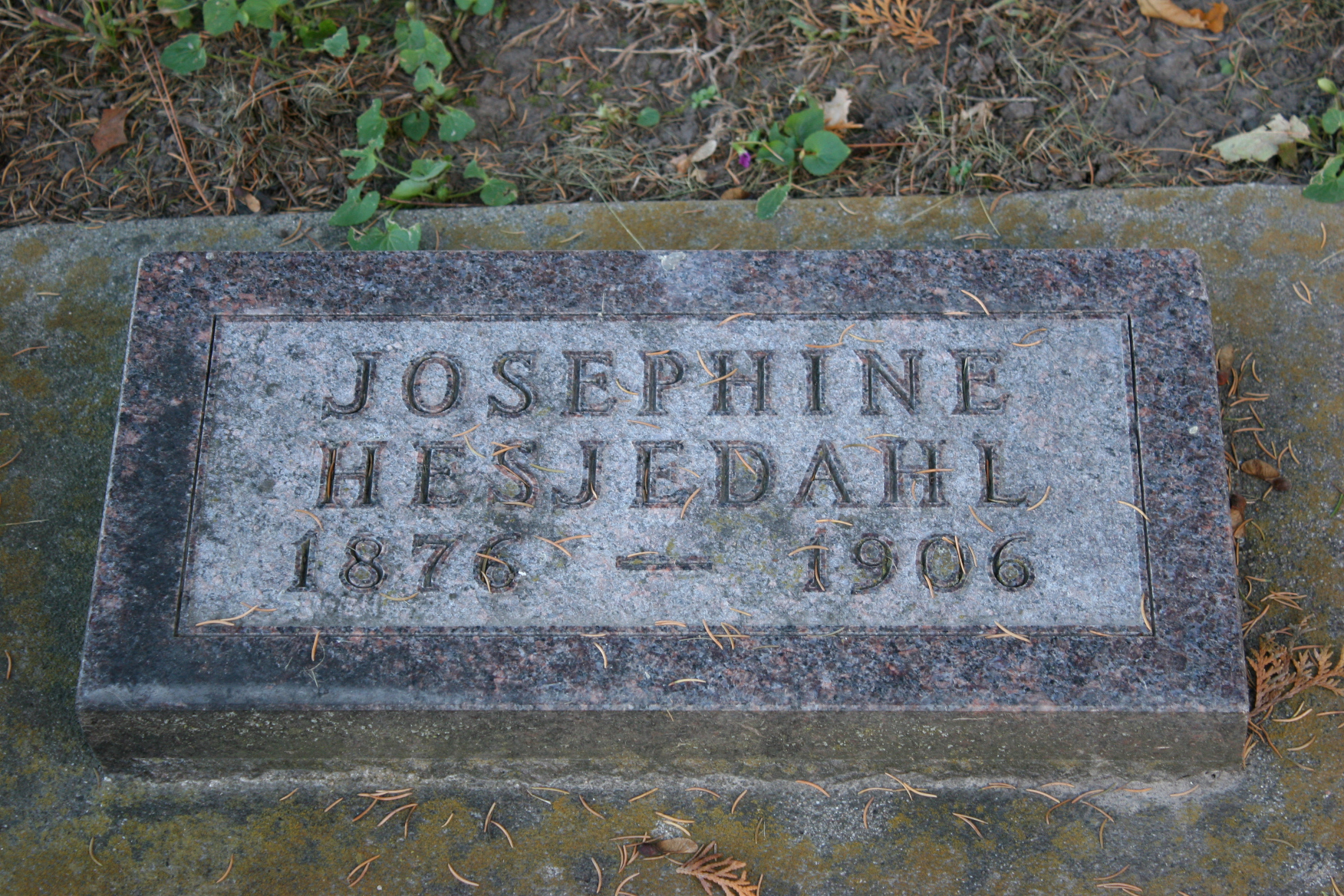
The small white clapboard church Randy and I discovered on 70th Street in the Sogn Valley area was clearly founded by Norwegian immigrants. Eidsvold Norwegian Methodist Church banners a sign with a brief history. Founded in 1893. Also known as “Ring Church.” Built by Gulbrand Nilson. Last service in 1949.
My initial view of the Eidsvold Church. (Minnesota Prairie Roots copyrighted file photo October 2021)
An online search dates the congregation’s organization to 1860. Perhaps the signage date references building construction. I couldn’t find much other information other than parishioners originally meeting for worship in homes, a common practice.
My own great grandfather, Rudolph Kletscher, who immigrated to the US from Germany in 1885, eventually settling on a farm near my hometown of Vesta in southwestern Minnesota, opened his home for worship. A pastor from the Lutheran church in neighboring Echo led services for 8-9 families and in 1900 those German immigrants built St. John’s Lutheran Church in town.
For those brave souls settling in a new land, I expect their faith provided comfort, strength and hope. And a place to gather, to sing and pray in their mother tongue, to support one another, to socialize. To celebrate. Baptisms. Weddings. Confirmations. Christmas and Easter. And to mourn.
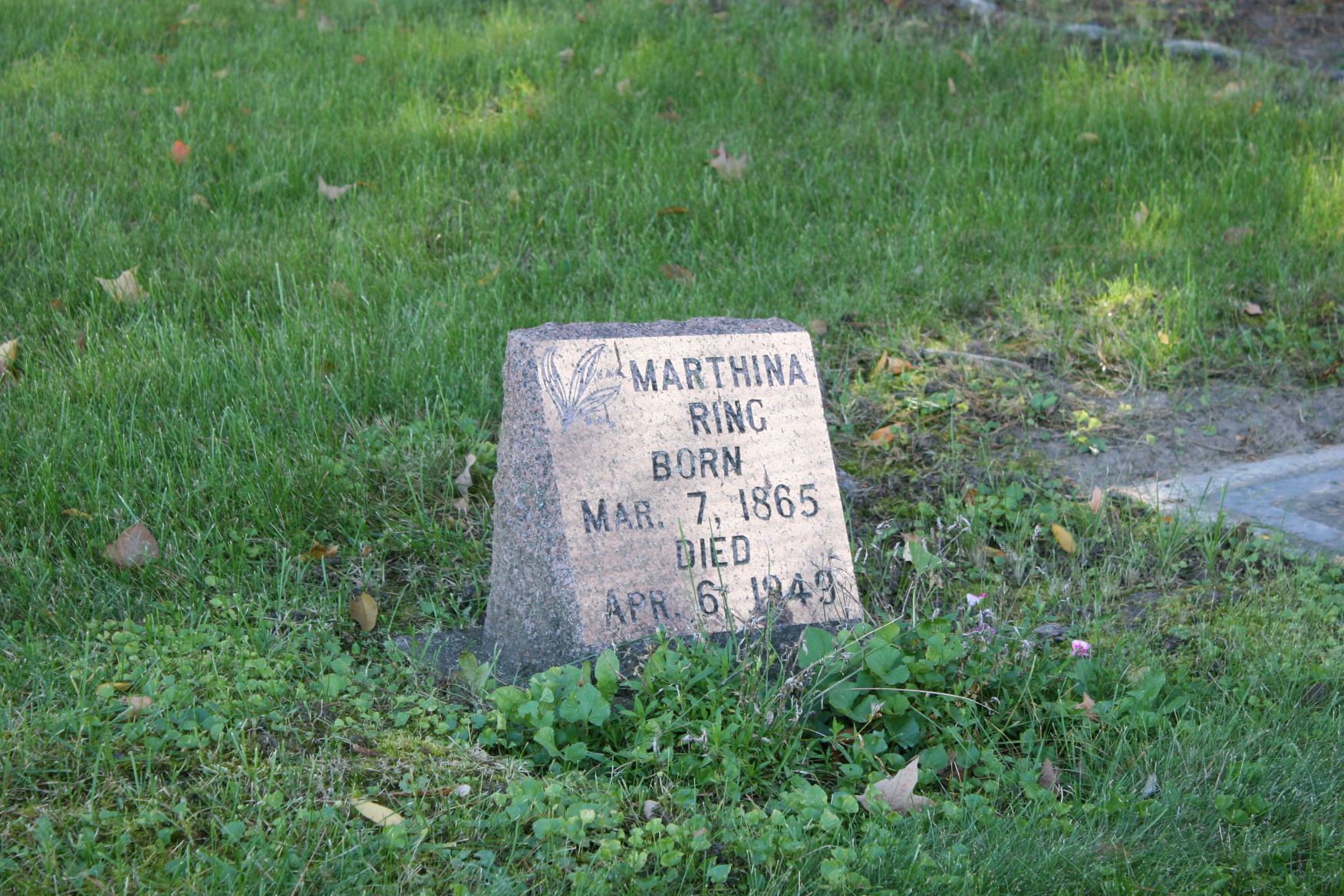
The final service held at Eidsvold, as noted on the church sign, was the funeral of Marthina Ring on April 11, 1949. I determined to find her grave marker and I did. It’s a small, unassuming stone engraved with her birth and death dates. Born March 7, 1865. Died April 6, 1949. Other Ring family stones are larger, more prominent. John Ring, I learned online, was a leading supporter of this church. I have no idea of his connection to Marthina.
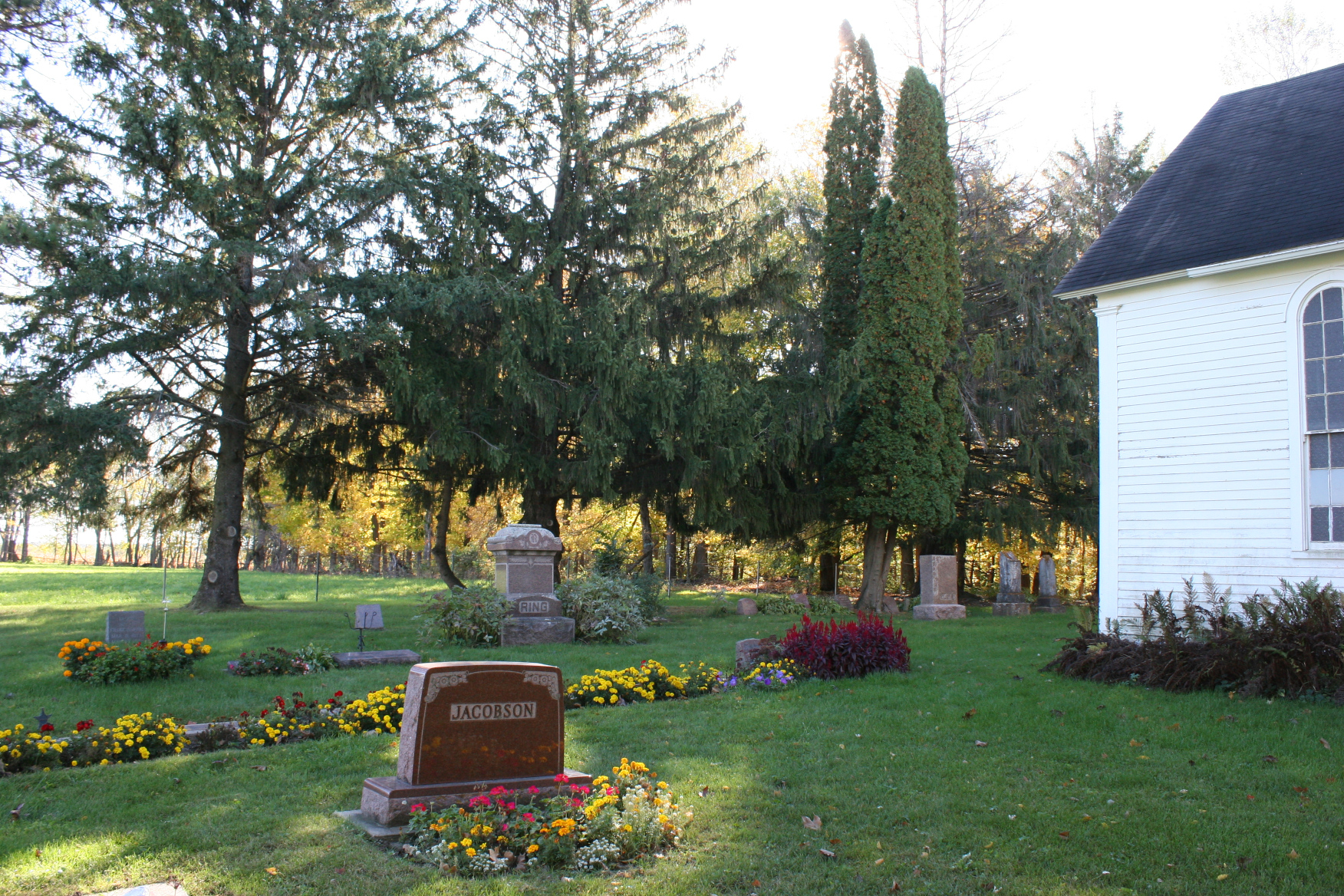
Beautiful flowers grace the cemetery. (Minnesota Prairie Roots copyrighted photo October 2021)
This cemetery appears cared for with golden marigolds, red and pink geraniums and other annuals splashing color among the grey and brown tombstones.
Water at the ready… (Minnesota Prairie Roots copyrighted photo October 2021)
Jugs of water snugged against the church foundation show me that someone comes here regularly to water those plants.
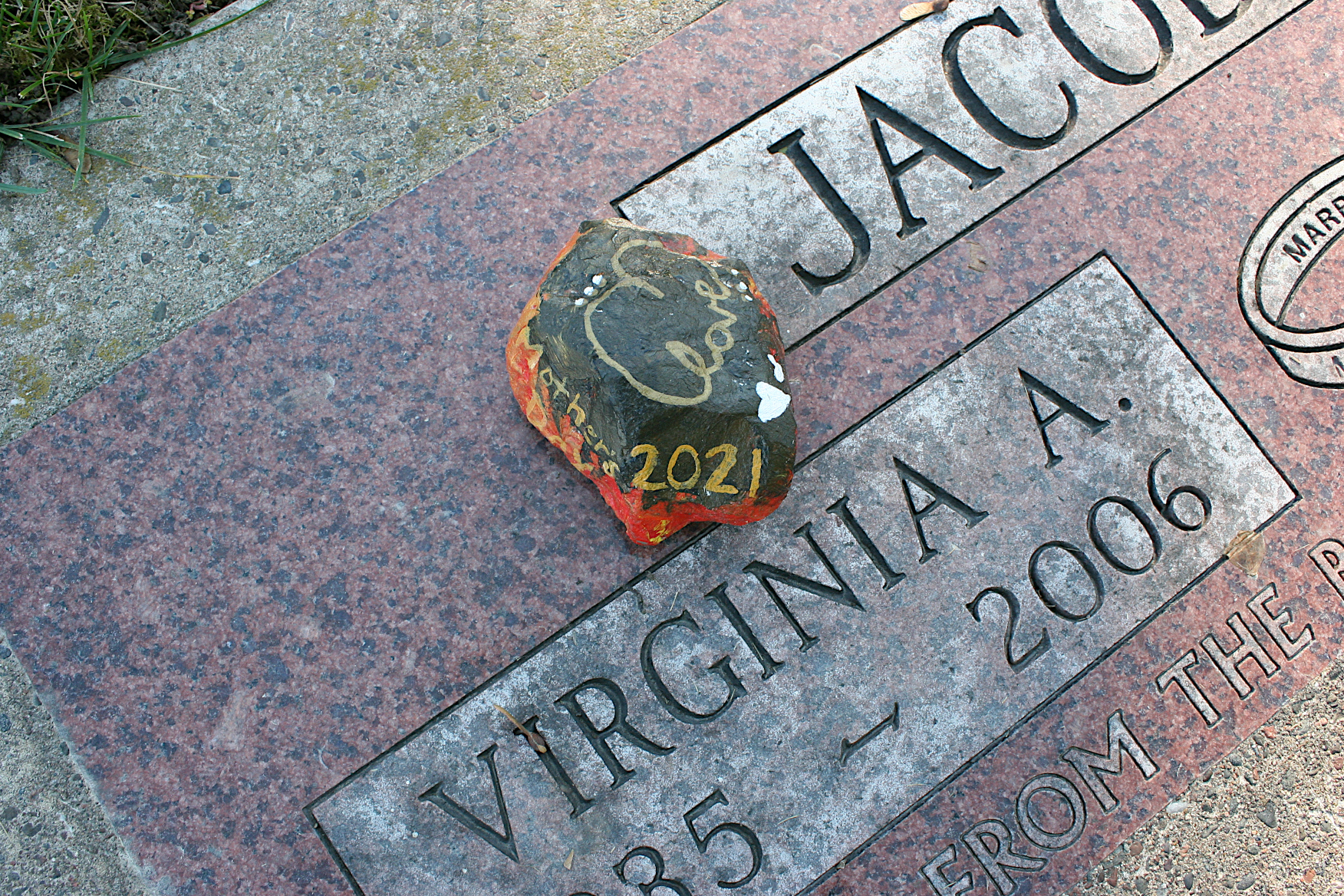
A token of love left for a mother. (Minnesota Prairie Roots copyrighted photo October 2021)
And a painted stone placed atop a marker for Virginia Jacobson reveals how much she is missed. Has been missed since her 2006 passing.
The door into Eidsvold was padlocked. (Minnesota Prairie Roots copyrighted photo October 2021)
That this church and graveyard have not been abandoned here among the fields in the Sogn Valley pleases me. This land, this church building, this cemetery meant something to those long ago Norwegian immigrants. And that is to be valued. Cherished. Honored. Celebrated, even by those of us with no connection to Eidsvoll/Eidsvold, Norway.
#
IF YOU KNOW more about the Ring Church, please share. I welcome additional information. As is often the case at rural churches, I found the front door locked.
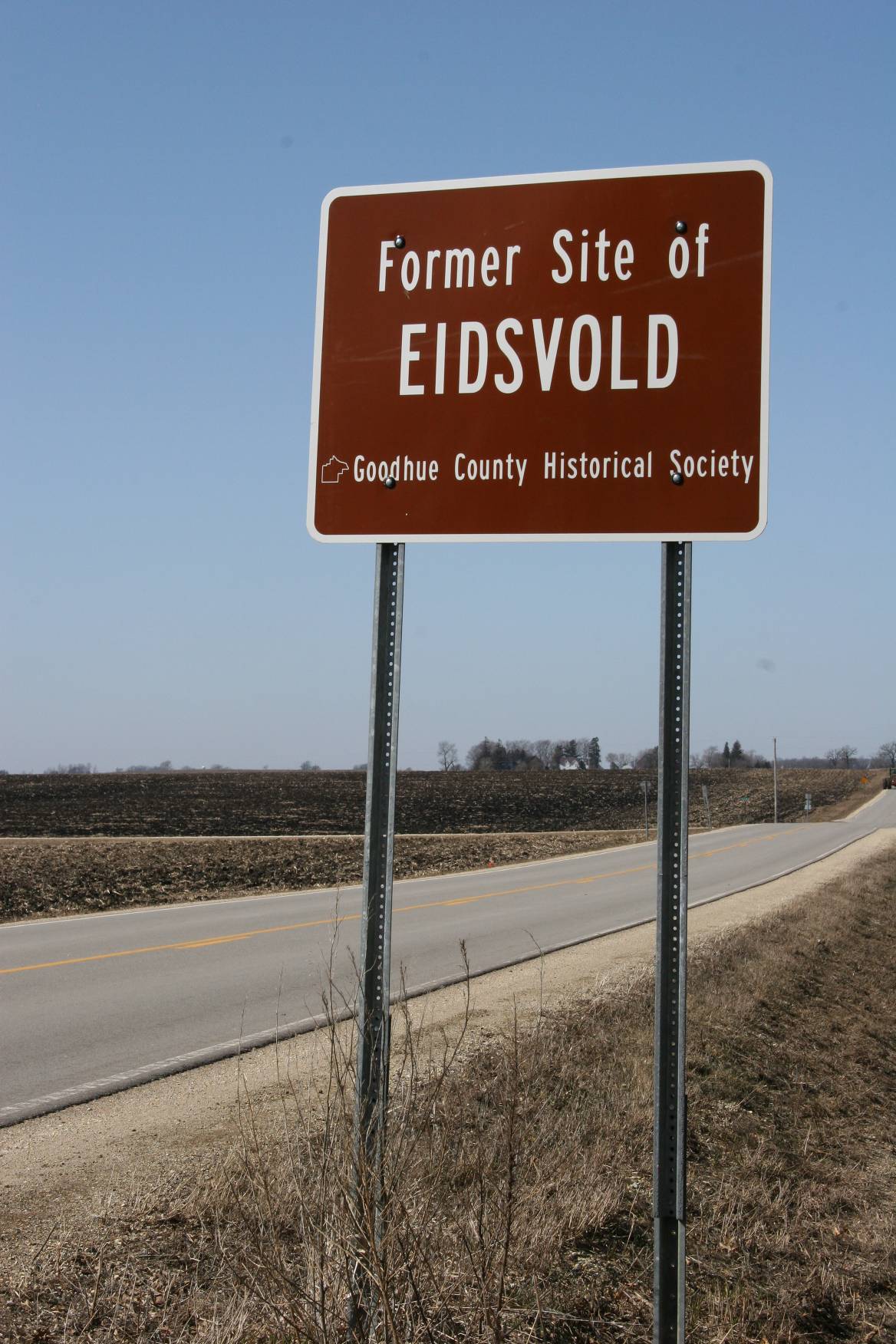
The Goodhue County Historical Society placed this historical interest sign at the ghost town of Eidsvold. The sign was erected to preserve the history of this former post office site and to recognize its historical contribution to the area. (Minnesota Prairie Roots copyrighted file photo 2010)
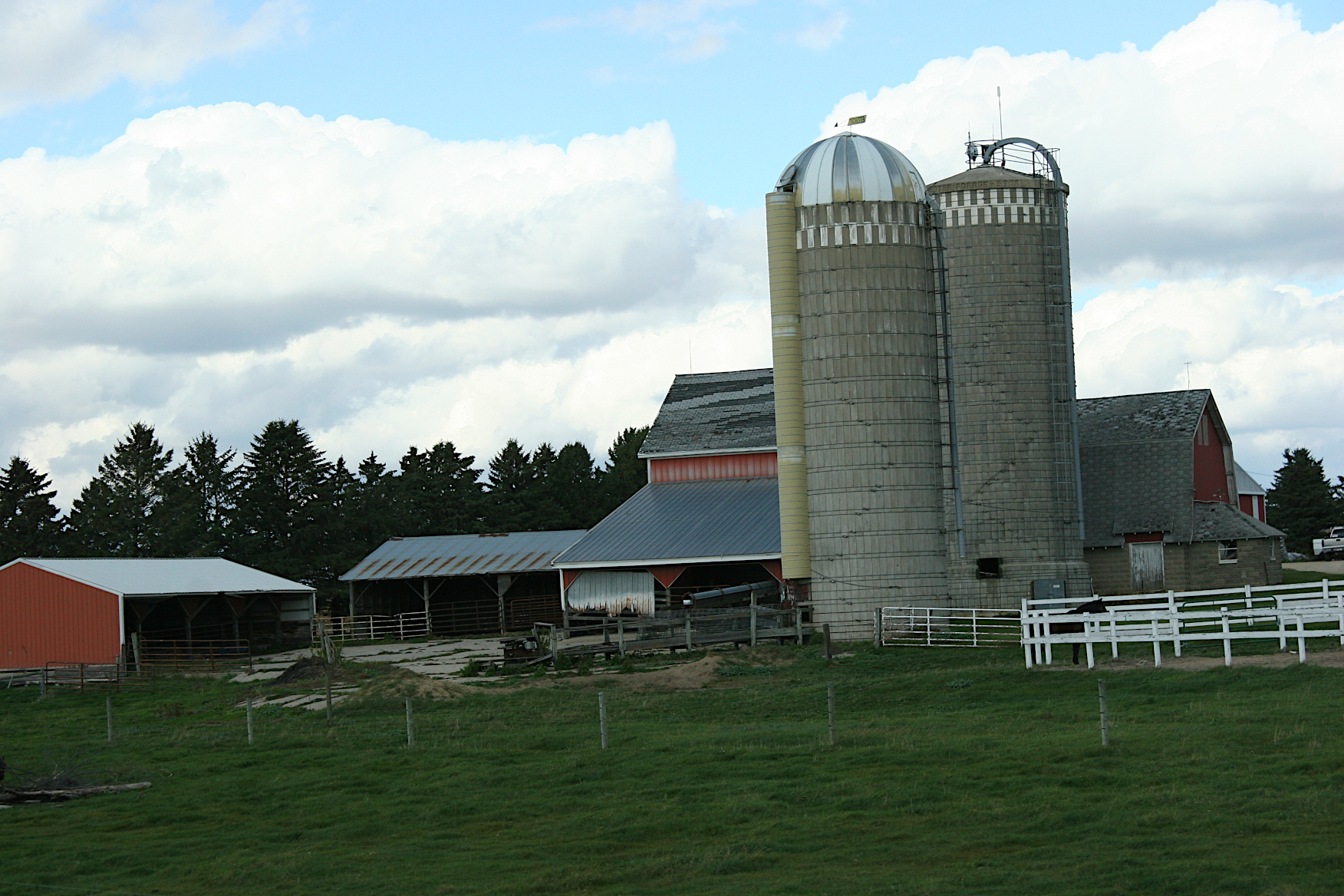
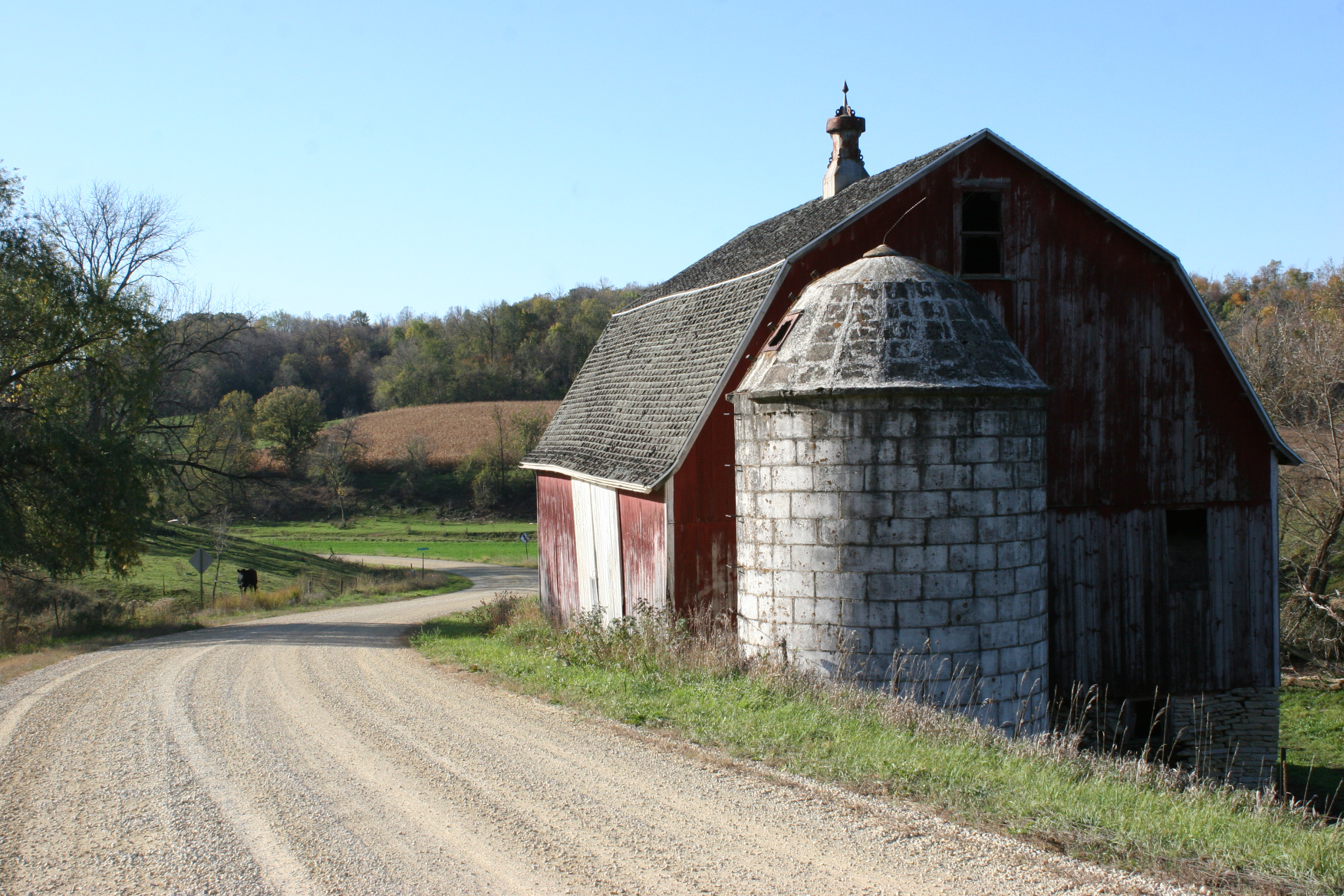
Along a backroad in the Sogn Valley, an aged barn and silo hug a curve on a gravel road. (Minnesota Prairie Roots copyrighted photo October 2021)
MINNESOTA’S DIVERSE LANDSCAPE inspires. From the vast prairie to the northwoods. From lakes to rivers. From hills to valleys. My home state, minus mountain ranges and ocean, is truly a beautiful place. We are so much more than cold and snow, as many non-residents equate with Minnesota.
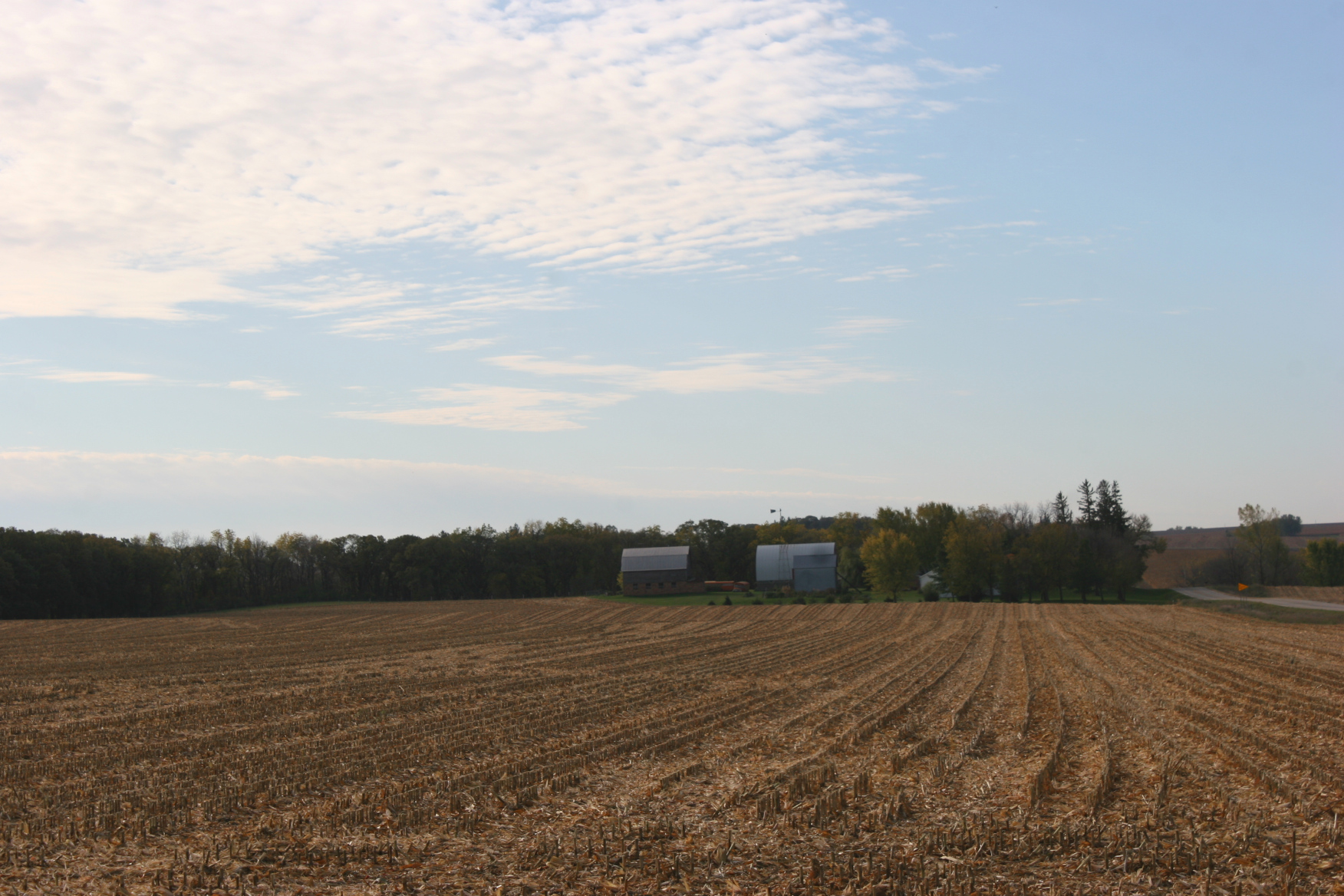
The countryside near Nerstrand, on our way to Sogn Valley. (Minnesota Prairie Roots copyrighted photo October 2021)
Autumn, especially, showcases Minnesota’s natural beauty. This fall, Randy and I took many rural drives to immerse ourselves in the countryside and the season. We chose road trips over staying home and doing chores on the weekends. Our priorities change as we age. The work can wait. We recognize, too, the approach of winter. We felt an urgency, a need, to hit the road before the snow flies.
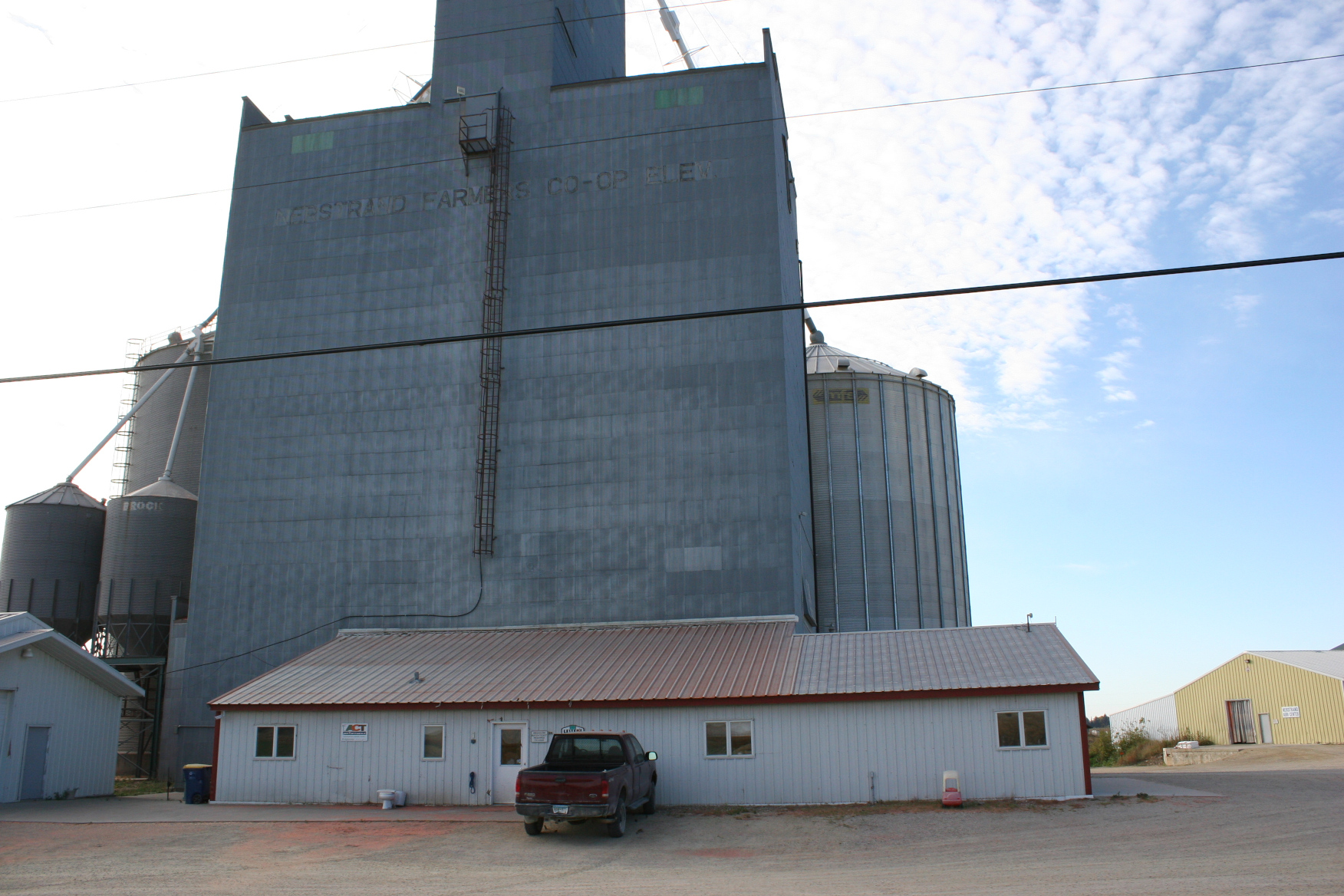
We drove through Nerstrand, past the grain elevator, on our way to the Sogn Valley. (Minnesota Prairie Roots copyrighted photo October 2021)
Often we choose a destination, this time Cannon Falls. But sometimes we simply head in a general direction, oversized Minnesota Atlas & Gazetteer available to guide us. We prefer paper maps to GPS. This trip, we aimed east toward Goodhue County, driving through the picturesque Sogn Valley.
The rolling countryside of the Sogn Valley provides a beautiful backdrop for farms. (Minnesota Prairie Roots copyrighted photo October 2021)
I love this rural region defined by farms and fields and winding gravel roads. Hills and river valleys and prairie intermingle and it’s all like poetry writing upon the land.
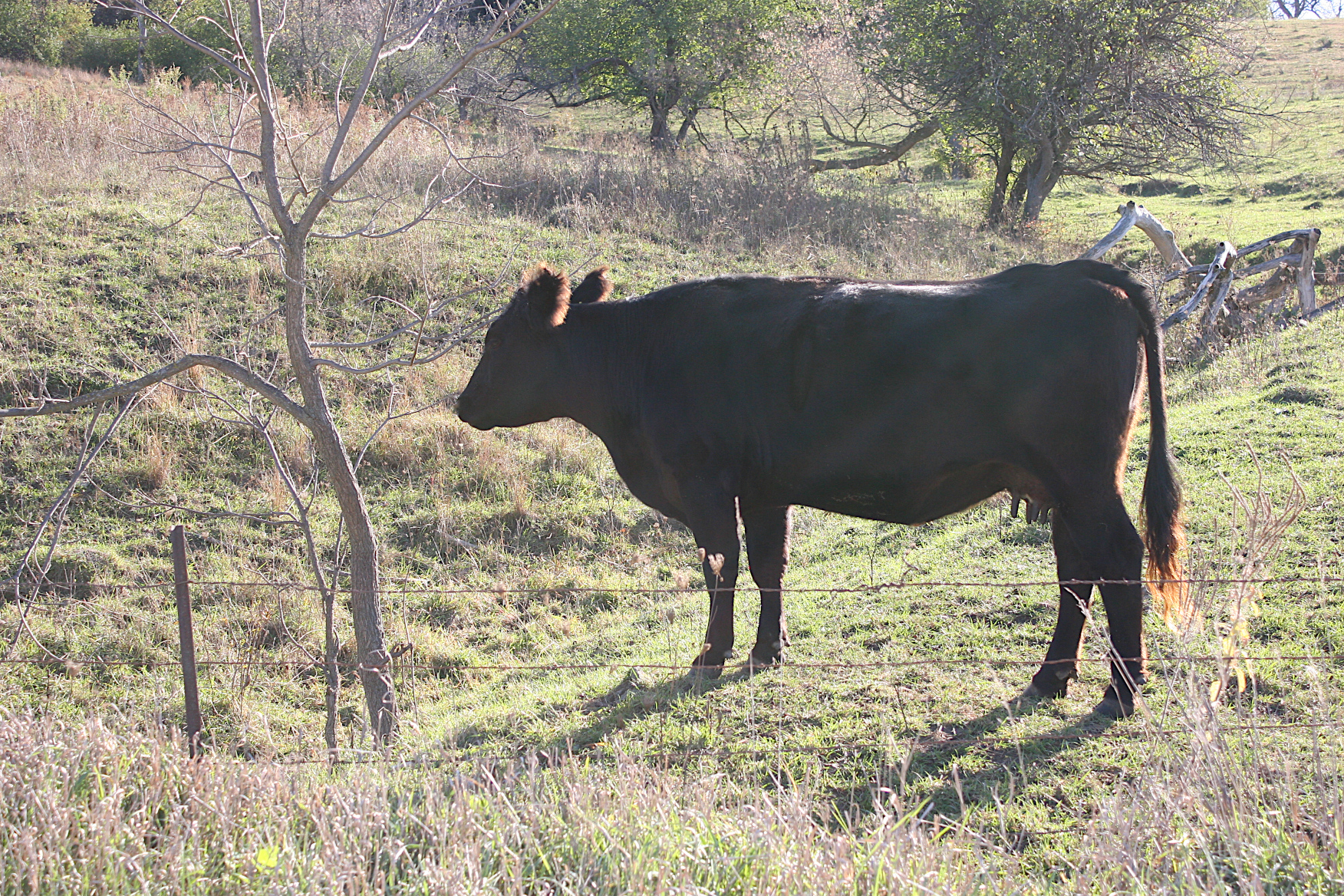
I delight in finding cows grazing deep in Sogn Valley. (Minnesota Prairie Roots copyrighted photo October 2021)
As a farmer’s daughter, I hold a fondness for aged barns, at one time the anchor of an agrarian life. I labored for years on my southwestern Minnesota childhood family dairy and crop farm, most of that time inside the barn. Or the silo.
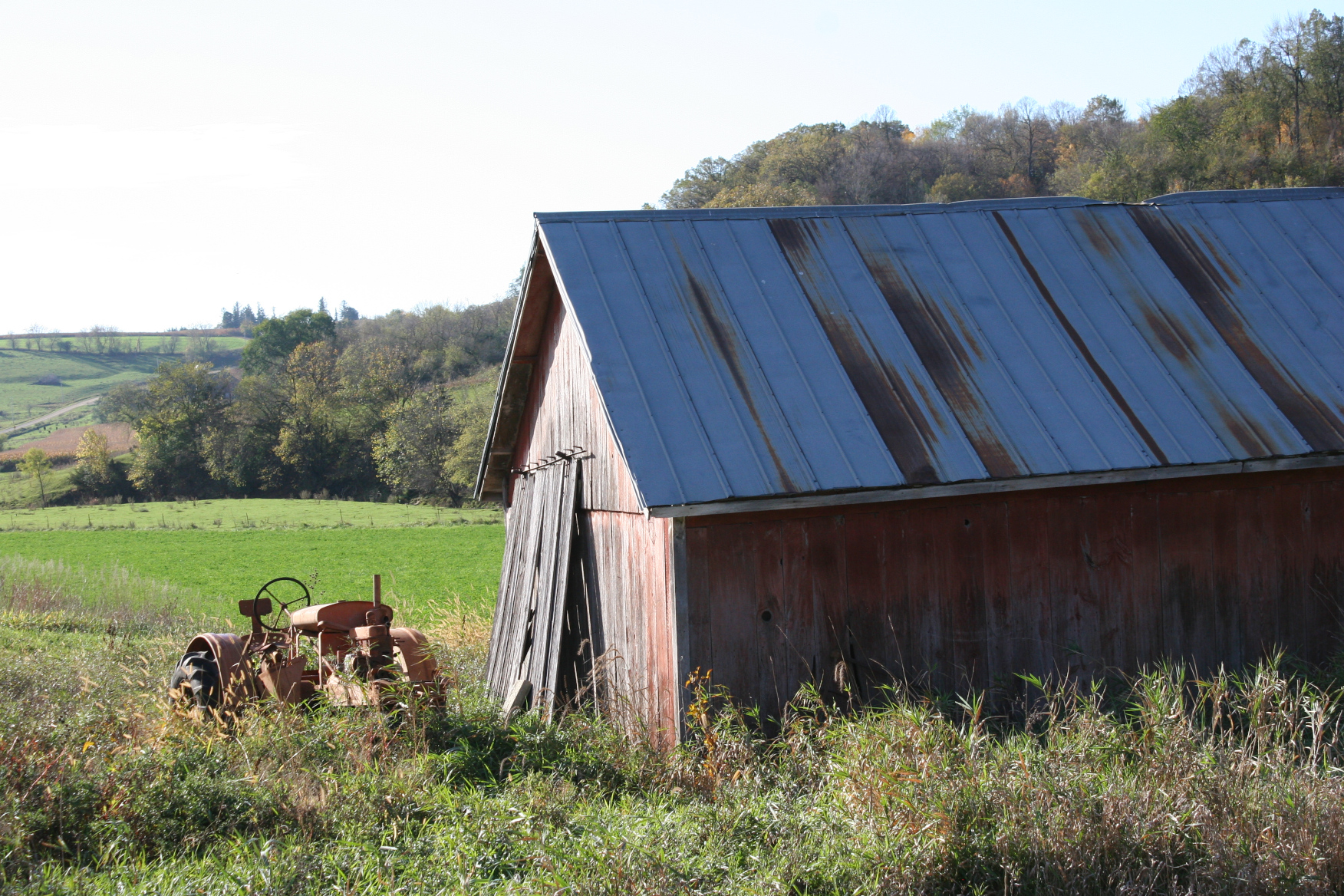
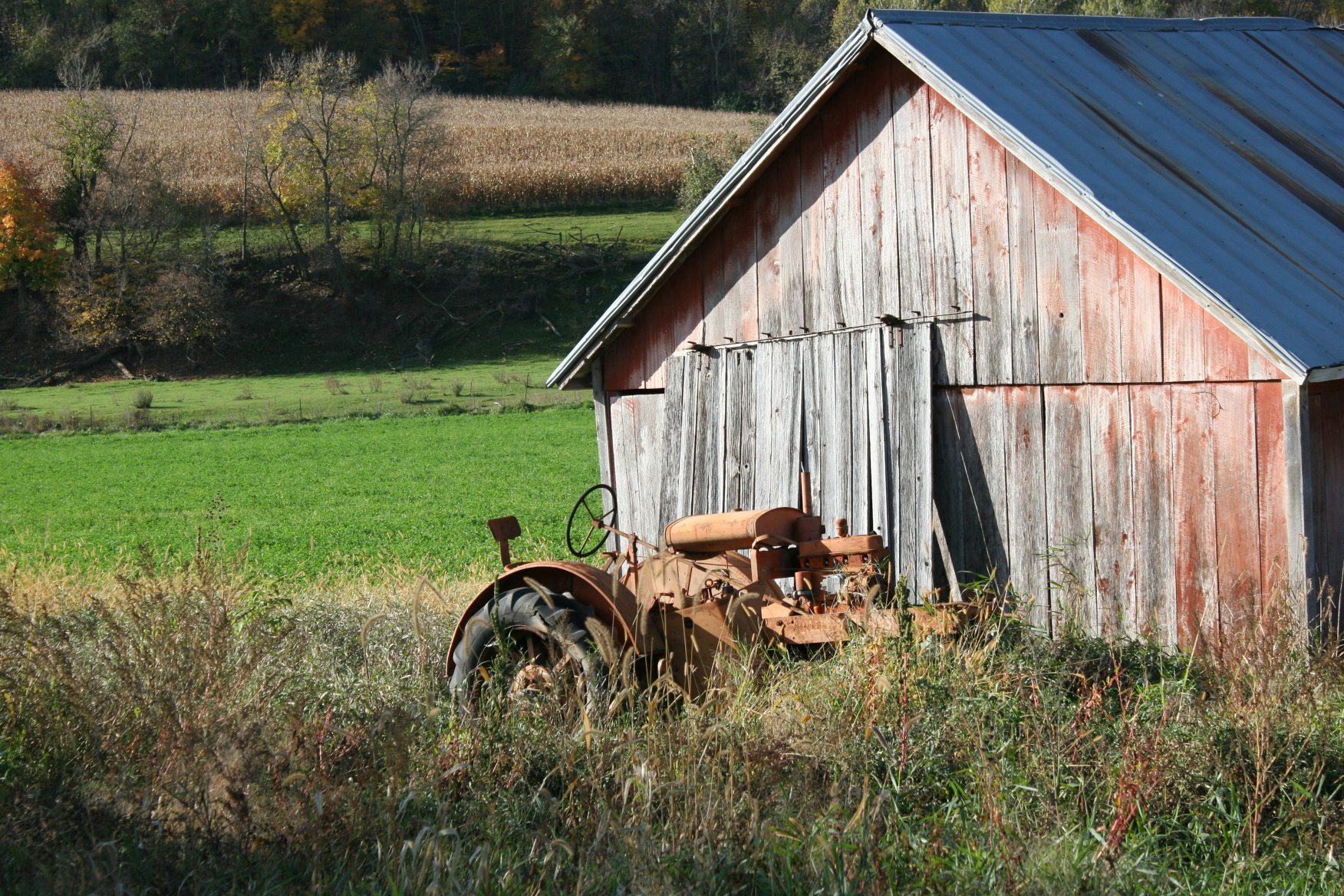
Abandoned building, abandoned tractor in the Sogn Valley. (Minnesota Prairie Roots copyrighted photo October 2021)
Now, when I pass by barns weathering in abandonment, I feel overcome by sadness. I recognize that a way of life is vanishing. I understand and appreciate advances in agriculture while simultaneously grieving the loss of farm life as I knew it.
I worry about all the barns we are losing. They hold history. Stories. Memories. And they are falling in heaps of rotted wood.
But, on this drive through the Sogn Valley, we happened upon a small country church that uplifted my spirits. Country churches and adjoining cemeteries rate as another draw for me deep into rural Minnesota. They are historically, poetically, spiritually and artistically relevant.
Along 70th Street in Goodhue County, on a small plot of land ringed by a row of trees and set among cornfields, Eidsvold Norwegian Methodist Church rises. The last service was held here in 1949. Yet, the aged clapboard structure remains. Important to someone. And on this Friday morning in mid-October, appreciated by me.
PLEASE CHECK BACK tomorrow as I take you on a tour around, but not inside (it was locked), Eidsvold church.
Fall harvest underway near Kenyon in the Monkey Valley area. (Minnesota Prairie Roots copyrighted photo October 2021)
AUTUMN IN MINNESOTA. Ah, what a season.
A welcome sign at a Kenyon craft show. (Minnesota Prairie Roots copyrighted file photo October 2021)
It is the season of harvest, of church dinners, of stunning fall colors. Of football games and simmering soups and visits to the apple orchard and pumpkin patch. September and October are, too, the season of craft shows here in southern Minnesota.
Celebrating the season with a yard full of scarecrows. (Minnesota Prairie Roots copyrighted photo October 2021)
Recently, while returning from a fall color drive into the Sogn Valley and then on to Cannon Falls and back, Randy and I stopped at the 100 Ladies and Gentlemen Craft Sale along Minnesota State Highway 56 on the north edge of Kenyon. This marks the event’s 48th year.
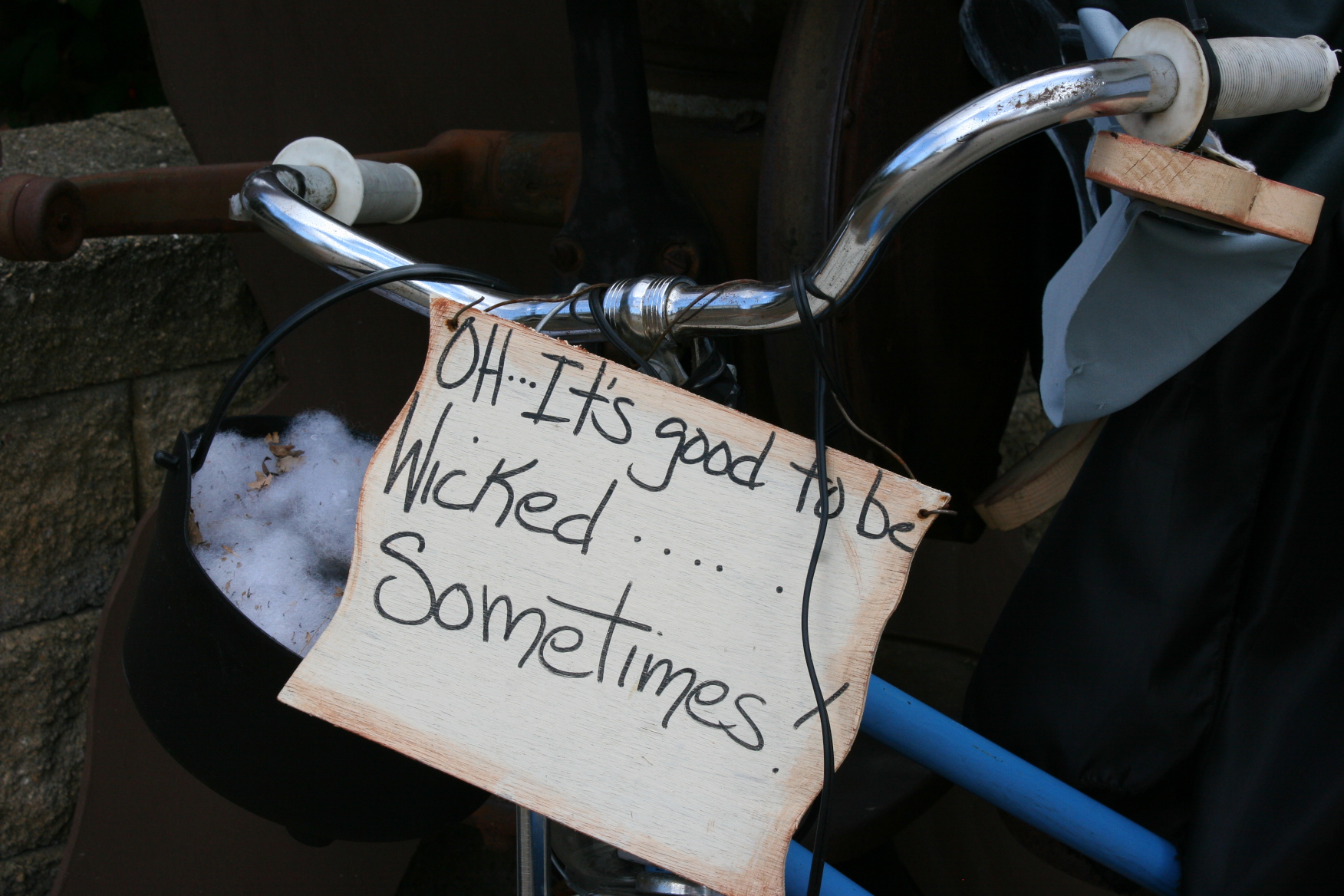
Creative signage outside the craft sale building. (Minnesota Prairie Roots copyrighted photo October 2021)
I’ve shopped here previously, perusing the handcrafted works of regional artists and crafters. From holiday decorations to art to baskets to candles to furniture to coveted homemade caramels and much more, the variety of items showcased inside a poleshed style building are endless. Although I walked in with my camera slung across my shoulder, I didn’t take any photos inside. As I recall, photography isn’t allowed to protect the works of creatives. I get that.
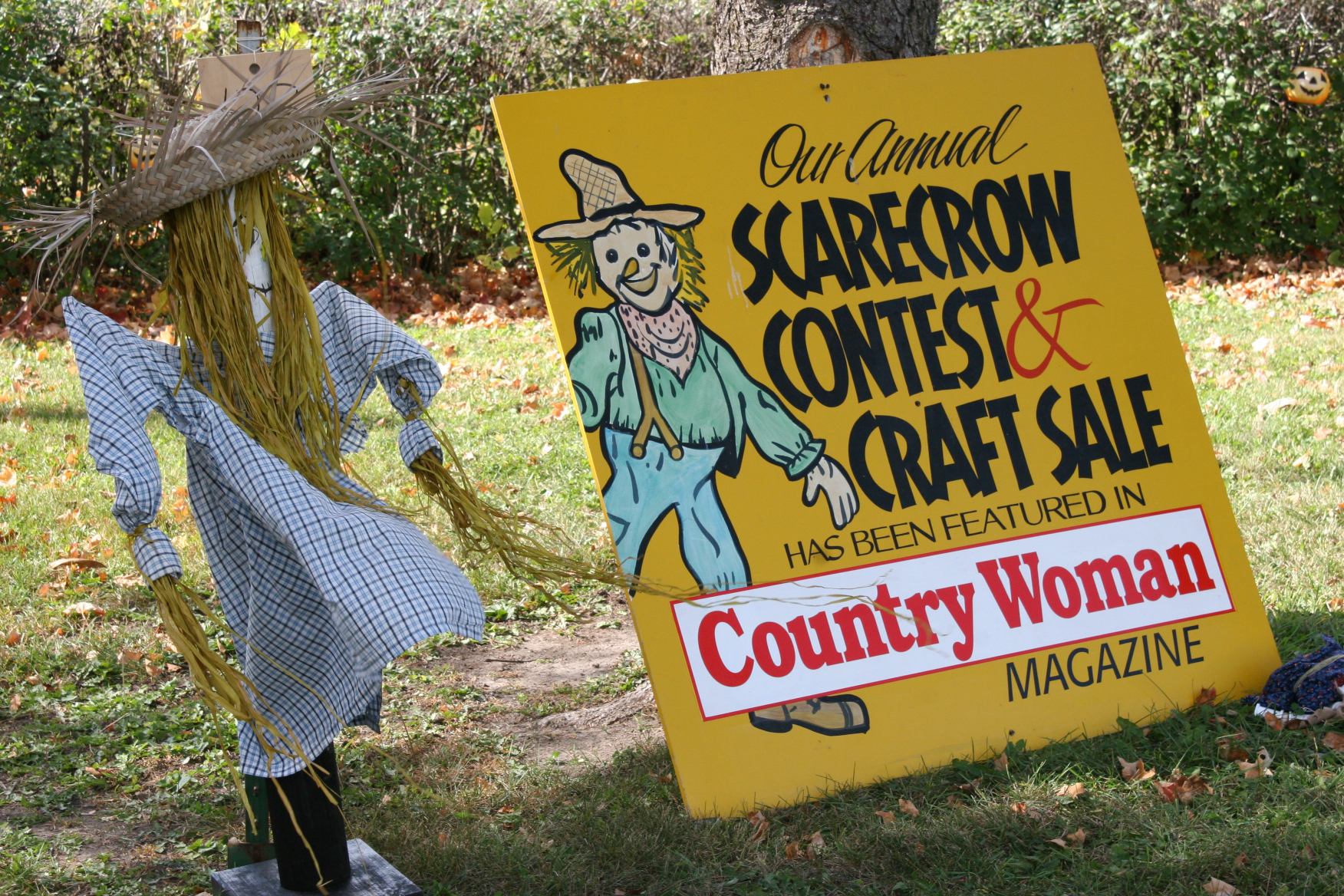
Recognized in a well-known publication. (Minnesota Prairie Roots copyrighted photo October 2021)
A fancy lady scarecrow. (Minnesota Prairie Roots copyrighted photo October 2021)
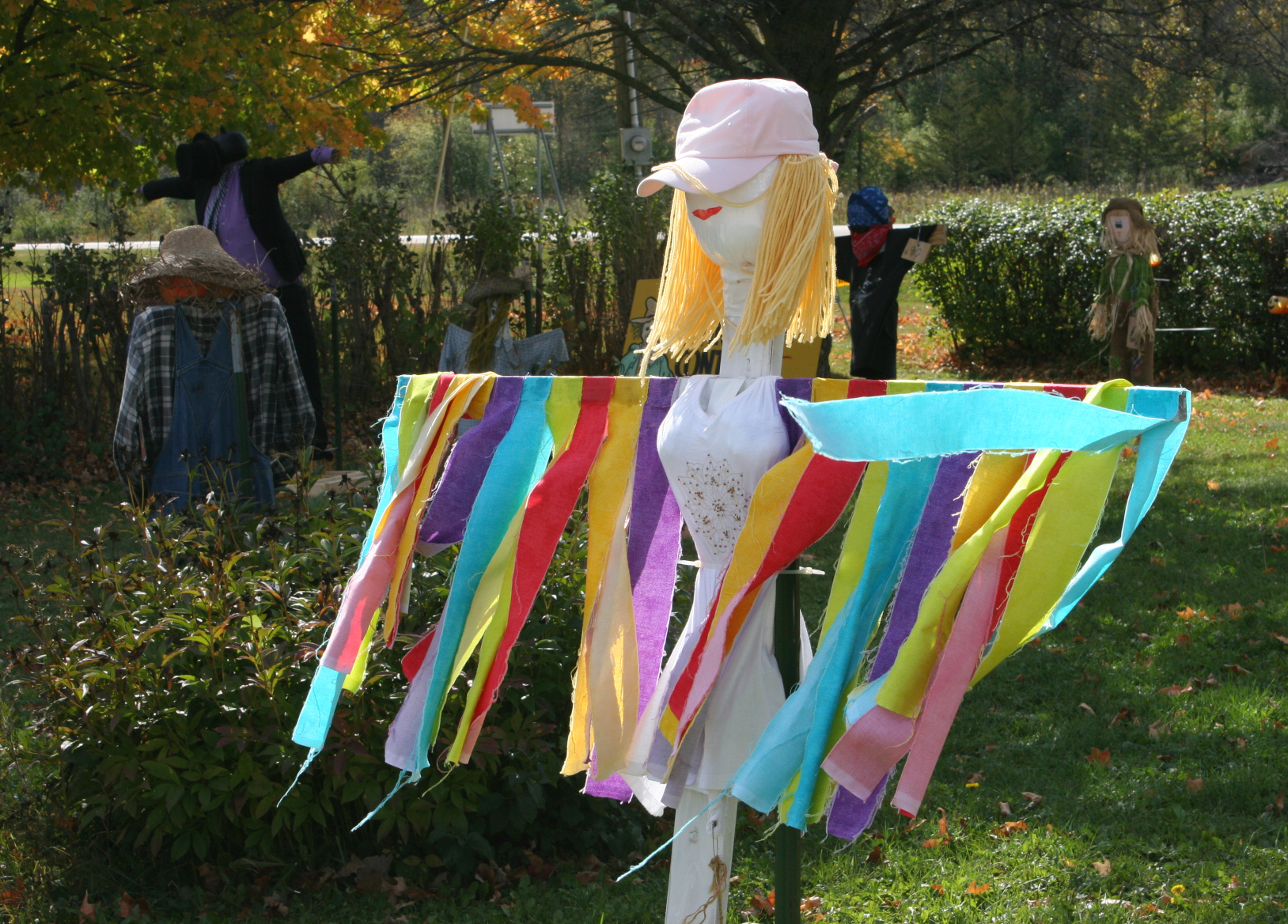
Love the bright hues of this creative scarecrow. (Minnesota Prairie Roots copyrighted photo October 2021)
Instead, I aimed my lens at the scarecrows entered in the outdoor Scarecrow Contest. On a grassy area, scarecrows stake their spots and vie for visitors’ votes.
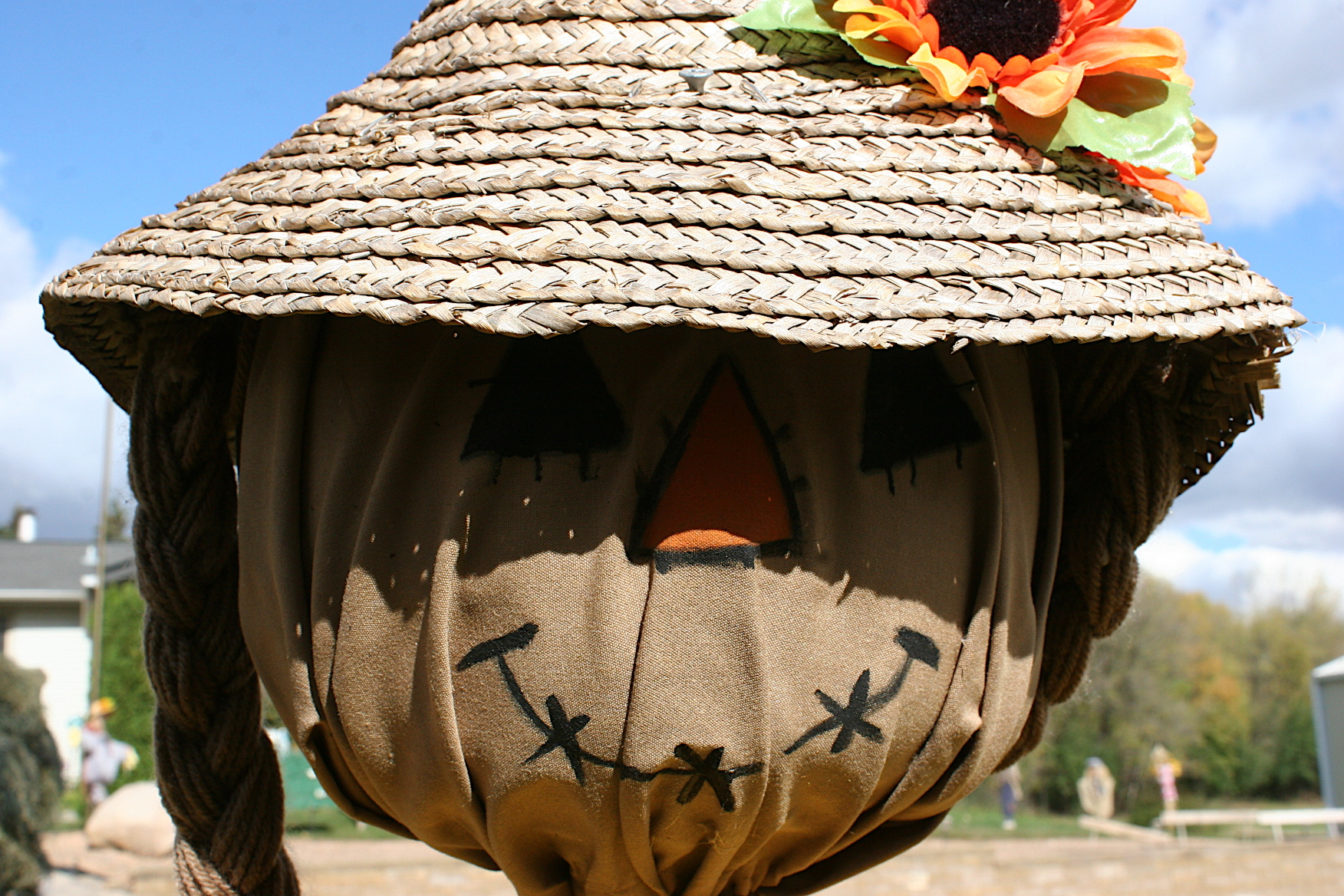
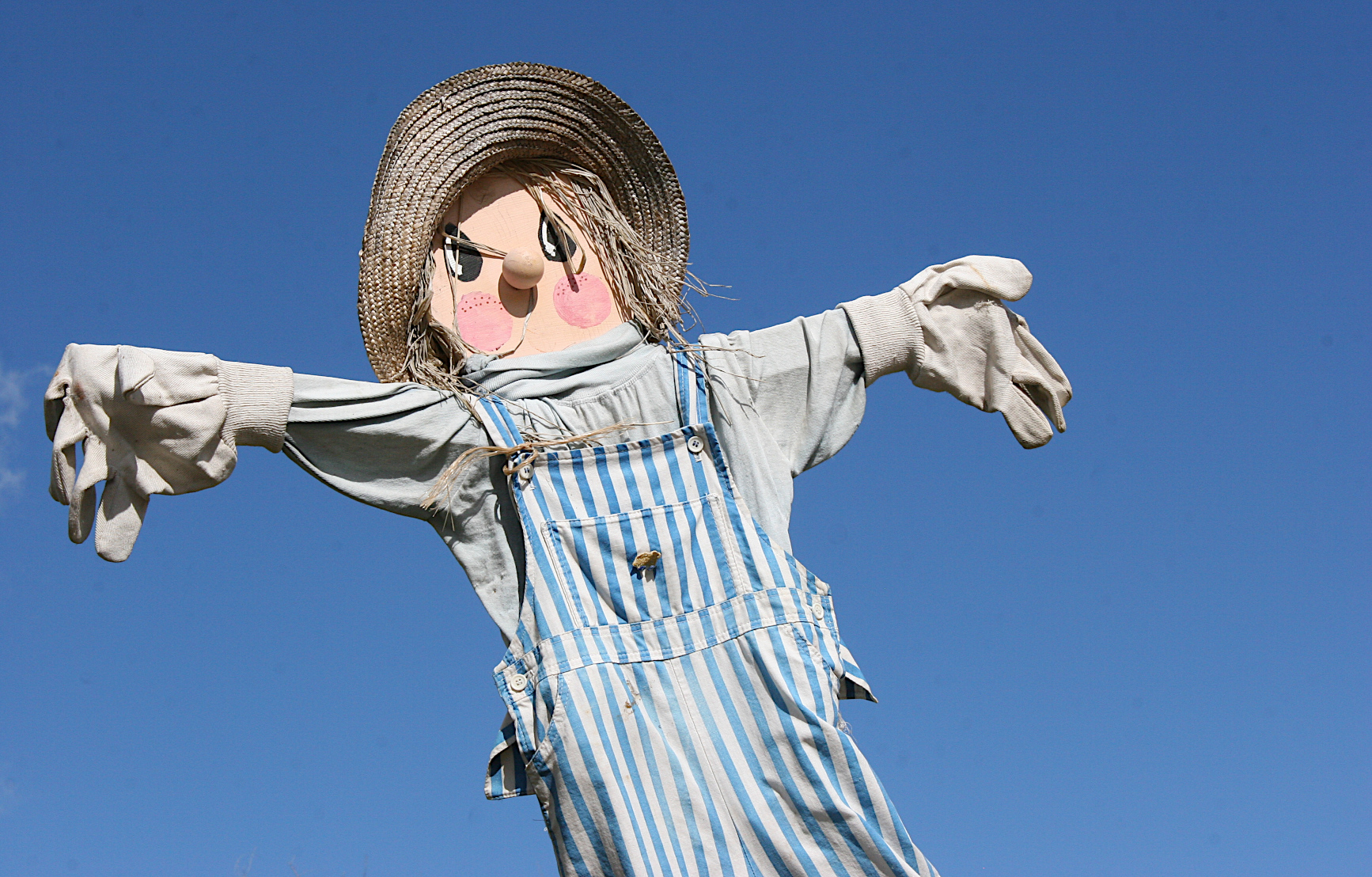
My favorite, which calls for close attention to details. Look at the eyes and mouth. (Minnesota Prairie Roots copyrighted photo October 2021)
The gathering of scarecrows adds a festive, seasonal feel to the autumn event.
Traditional scarecrow. (Minnesota Prairie Roots copyrighted photo October 2021)
The scariest, in my opinion. (Minnesota Prairie Roots copyrighted photo October 2021)
Perhaps the most unusual scarecrow. (Minnesota Prairie Roots copyrighted photo October 2021)
It’s fun to meander among them, to view the traditional, the scary, the unusual.
Humor among the scarecrows. (Minnesota Prairie Roots copyrighted photo October 2021)
These scarecrows, too, define the season. They remind me that Halloween is fast-approaching—an anniversary year here in Minnesota. This October 31 marks 30 years since the Halloween Blizzard of 1991. That four-day weather event dumped 28.4 inches of snow in the Twin Cities, with even more, 36.9 inches, in the Lake Superior port city of Duluth. Strong winds accompanied the overwhelming snowfall. And, yes, I remember.
More than just a tad creepy, another favorite scarecrow. (Minnesota Prairie Roots copyrighted photo October 2021)
But in this moment, at this place defined by the works of creatives, I appreciated the autumn day. Sunshine and blue sky. Scarecrows’ hair and clothing flapping in the October wind. Winter not yet welcome in this season of craft shows.
FYI: The 100 Ladies and Gentlemen Craft Show continues from 10 am – 8 pm October 28-31 and November 4-7 (closes earlier on the final day).
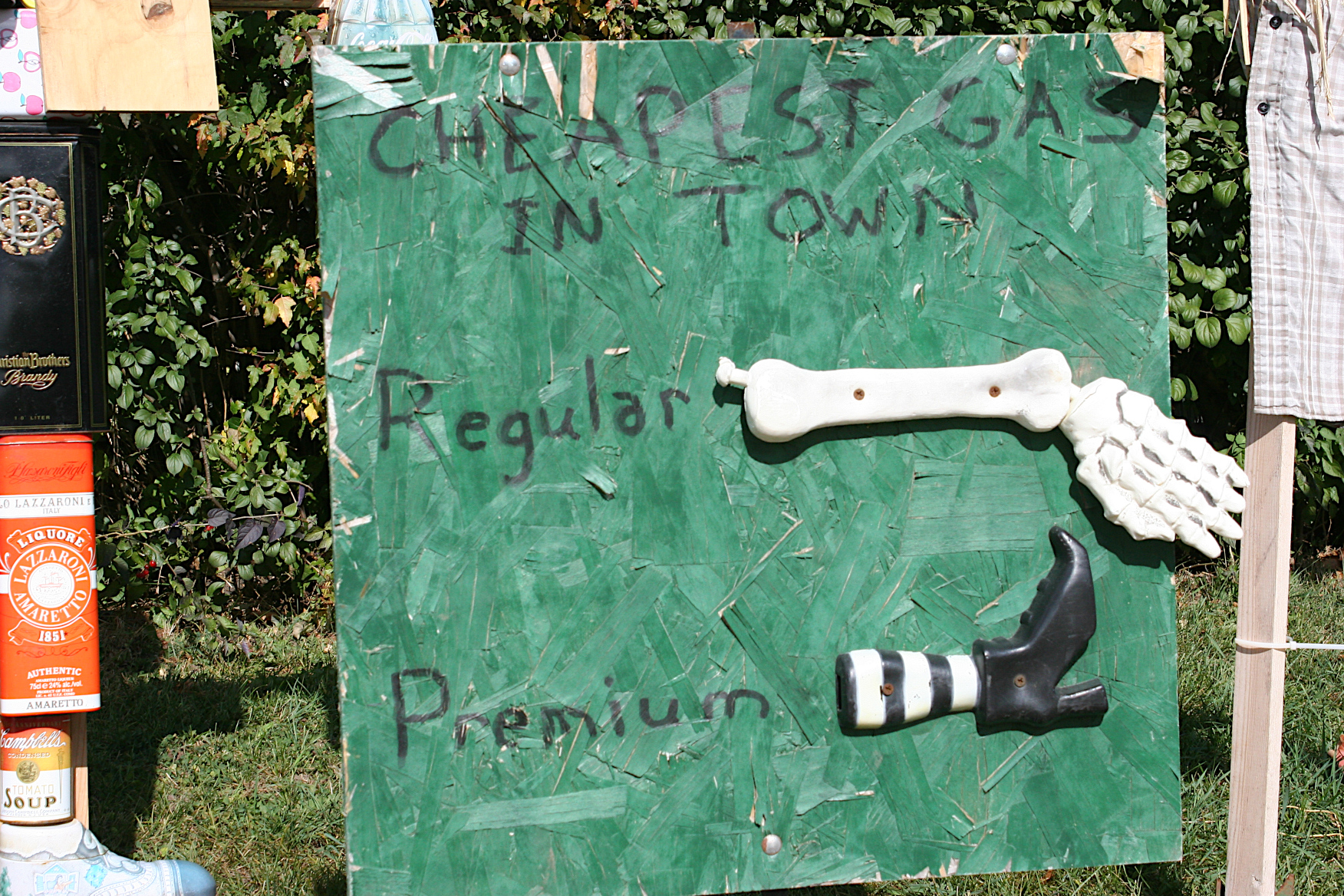
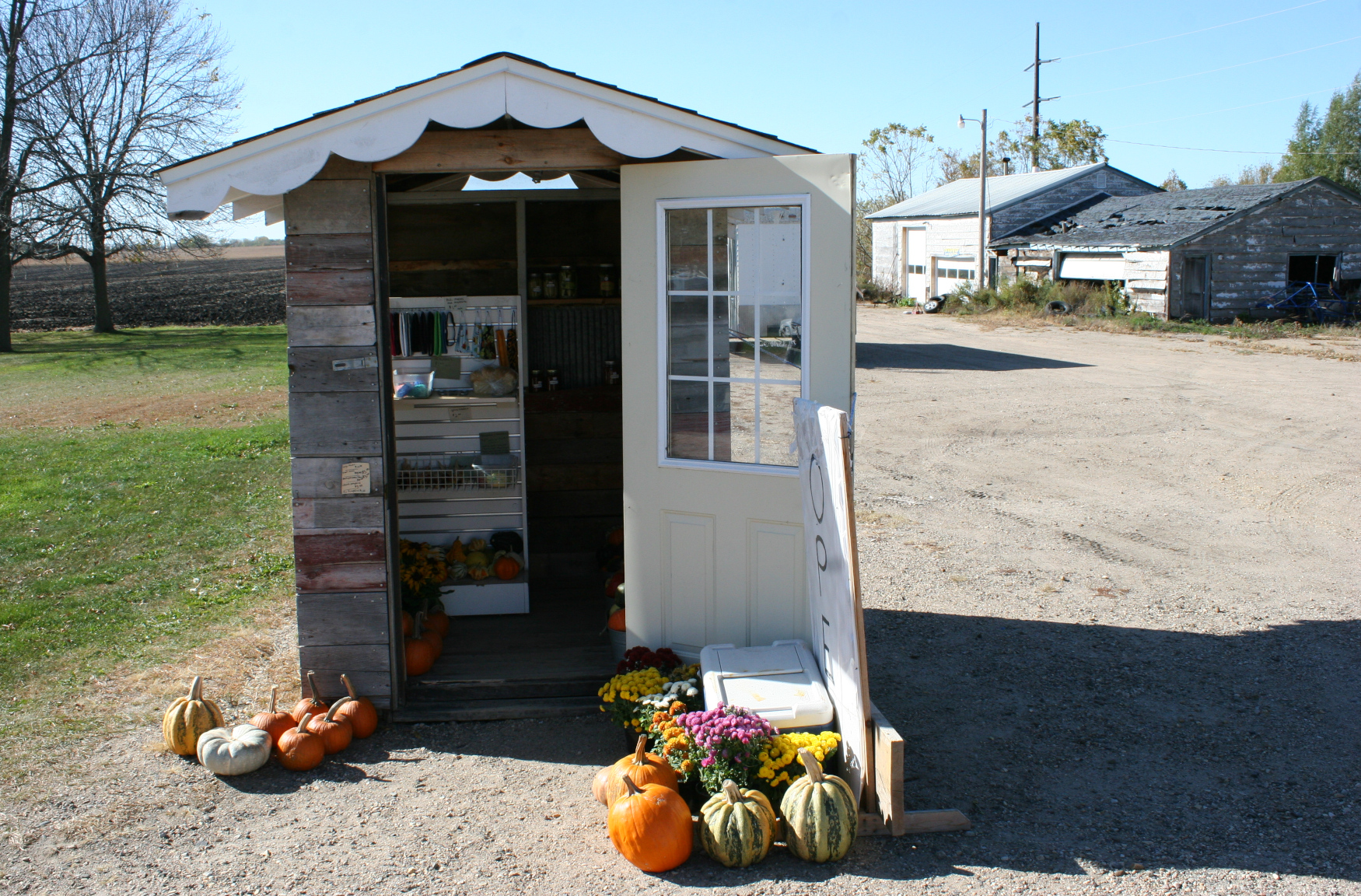
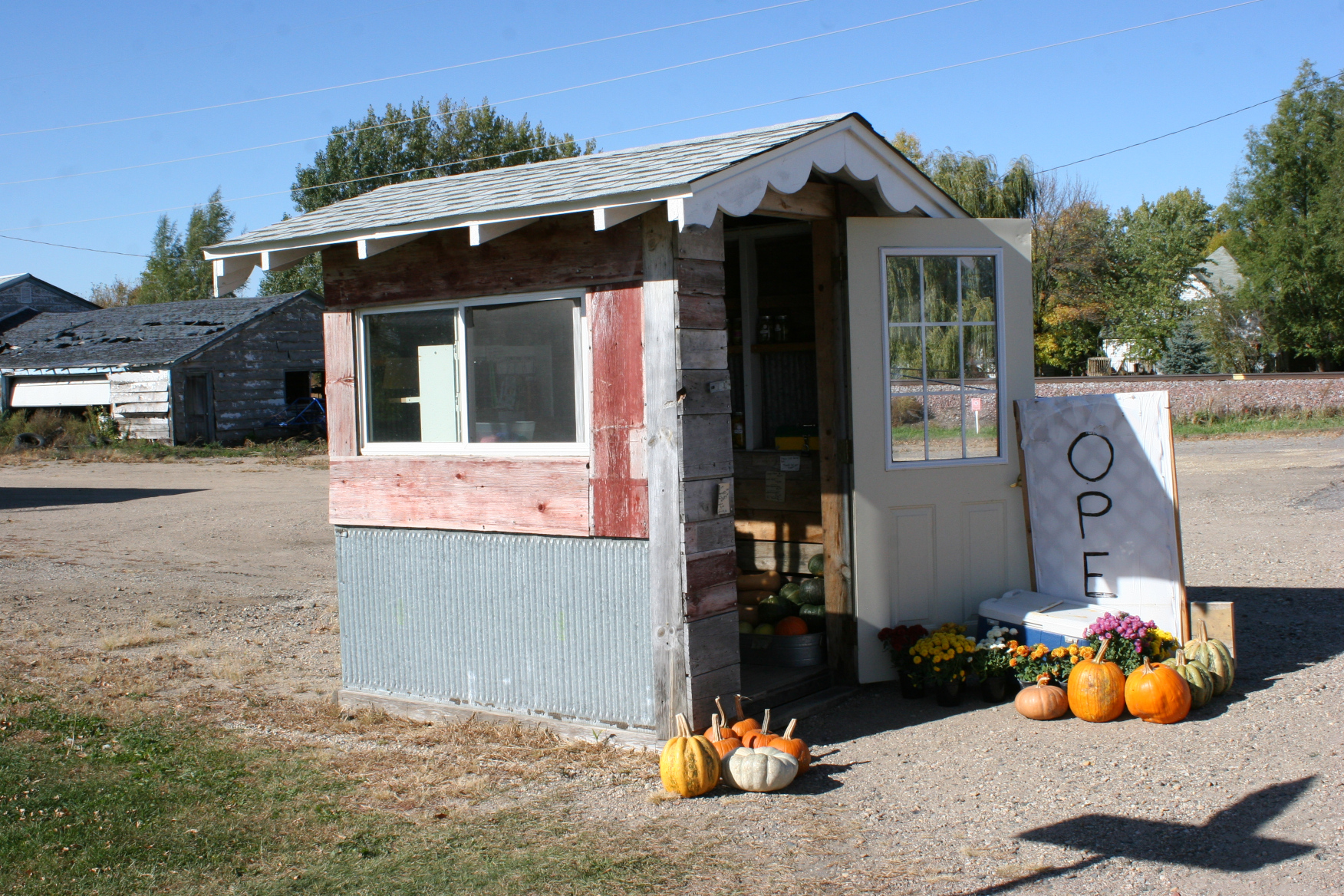
Teb’s Food Stand in Meriden. (Minnesota Prairie Roots copyrighted photo October 2021)
FROM 7 am – 6 pm DAILY, Louise tends a tiny produce stand along a paved road in the unincorporated northwestern Steele County settlement of Meriden.
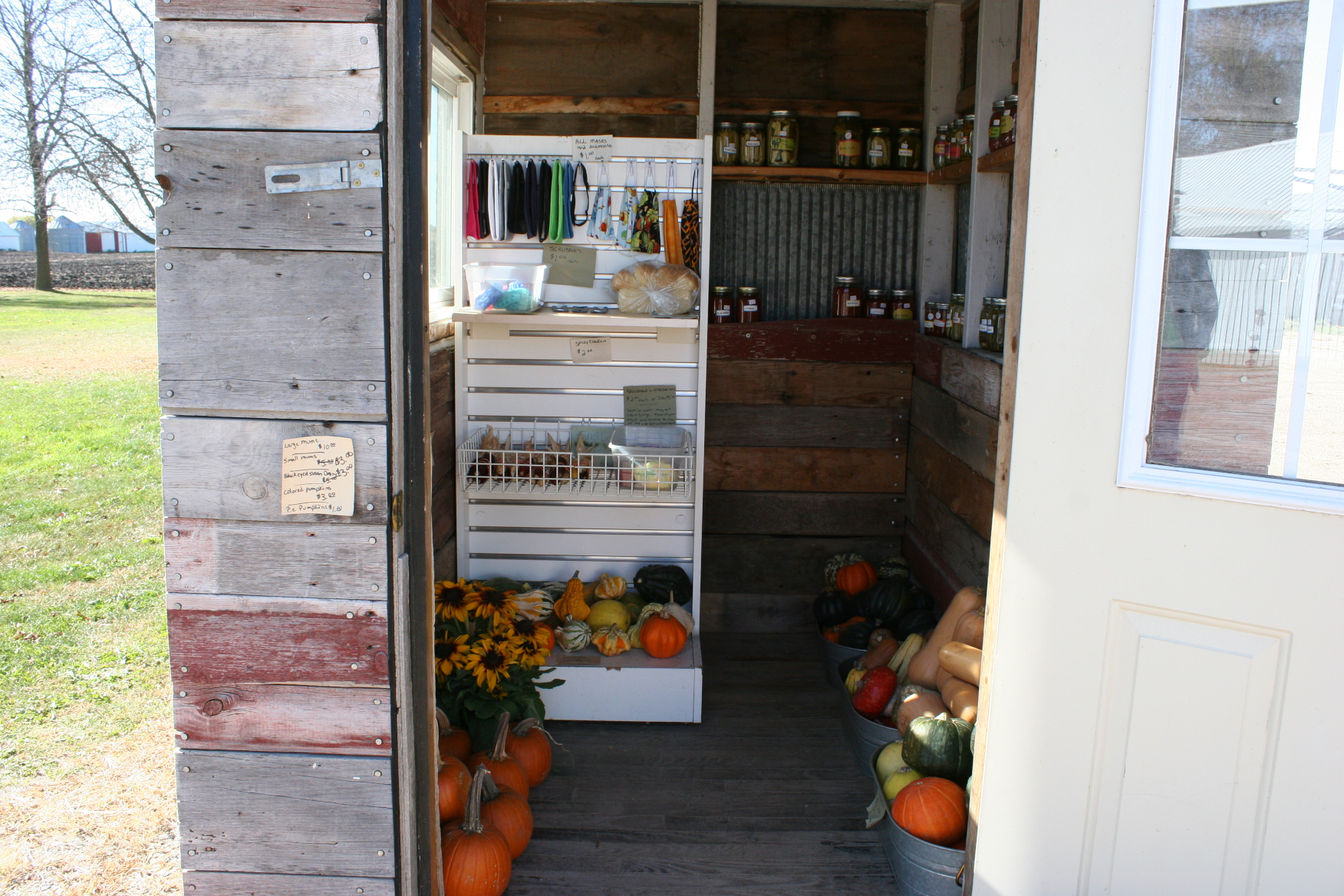
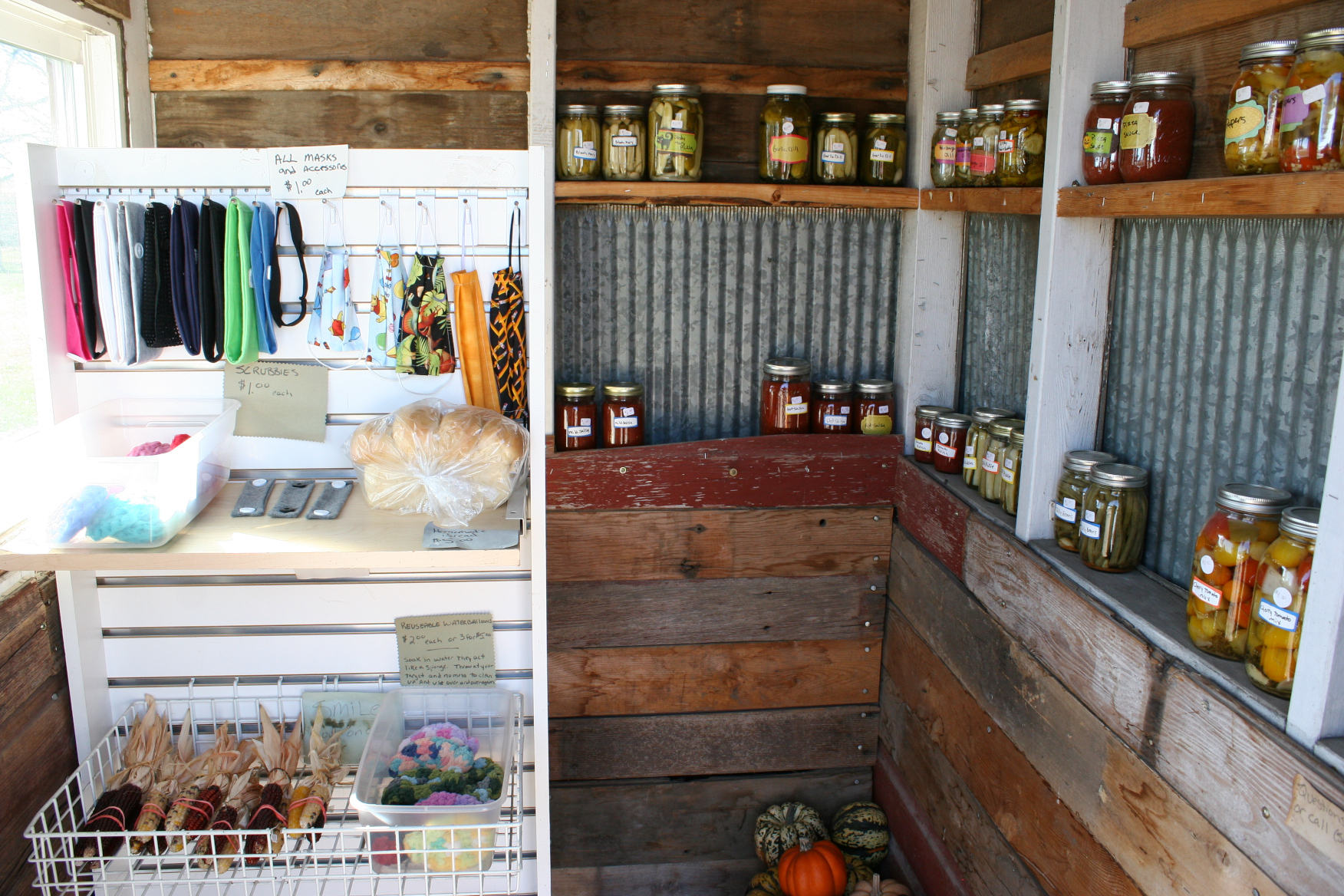
A peek inside Teb’s roadside stand. (Minnesota Prairie Roots copyrighted photo October 2021)
That’s where I met her on a recent mid-October Sunday afternoon—outside a shed the size of an outhouse. Louise lives right next door to Teb’s Food Stand, a seasonal business owned by her friend, Teborah Kath. Teb, she noted, was likely, in that moment, busy canning vegetables at her nearby country home.
Teb’s canned Cherry Tomato Mix is almost like a work of art. Beautiful. (Minnesota Prairie Roots copyrighted photo October 2021)
Garden-fresh and canned vegetables define the bulk of inventory tucked inside this hand-built shed constructed of salvaged wood, galvanized metal and a modern front door.
Teb’s Dilly Beans. (Minnesota Prairie Roots copyrighted photo October 2021)
Another jolt of color in canned peppers. (Minnesota Prairie Roots copyrighted photo October 2021)
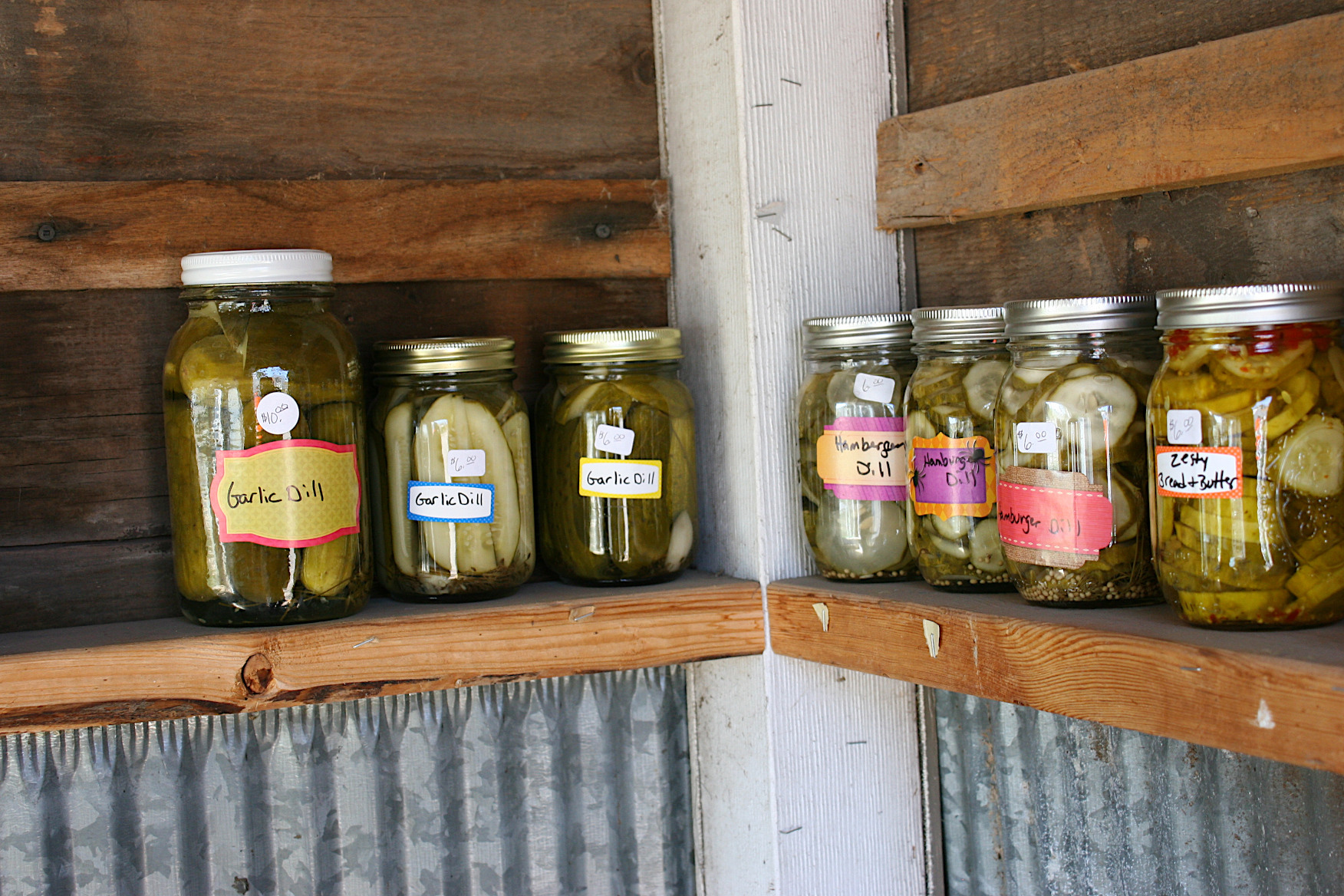
An assortment of Teb’s homemade pickles. (Minnesota Prairie Roots copyrighted photo October 2021)
Here quart and pint jars edge shelves. Green beans pack tightly inside jars labeled Dilly Beans. Rich red tomato sauce colors Teb’s salsa. Oranges and reds and yellows mix inside jars of Cherry Tomato Mix and Peppers, splashing vibrant autumn hues. For pickle lovers, Teb crafts dill and bread & butter pickles.
Teb sells more than canned and fresh produce. (Minnesota Prairie Roots copyrighted photo October 2021)
She also sells baked goods—I spotted a singular package of bread. Next to the face masks, accessories and scrubbies.
Lots of squash options. (Minnesota Prairie Roots copyrighted photo October 2021)
Smallish pumpkins splash color into a corner. (Minnesota Prairie Roots copyrighted photo October 2021)
Bundled corn on a shelf. (Minnesota Prairie Roots copyrighted photo October 2021)
Seasonal fresh produce is sold here, too, and artfully staged. Piles of assorted squash fill metal tubs. Pumpkins hug a corner near the door. Decorative corn and gourds rest on shelves. And outside more pumpkins and a collection of mum plants define this as a seasonal mini marketplace.
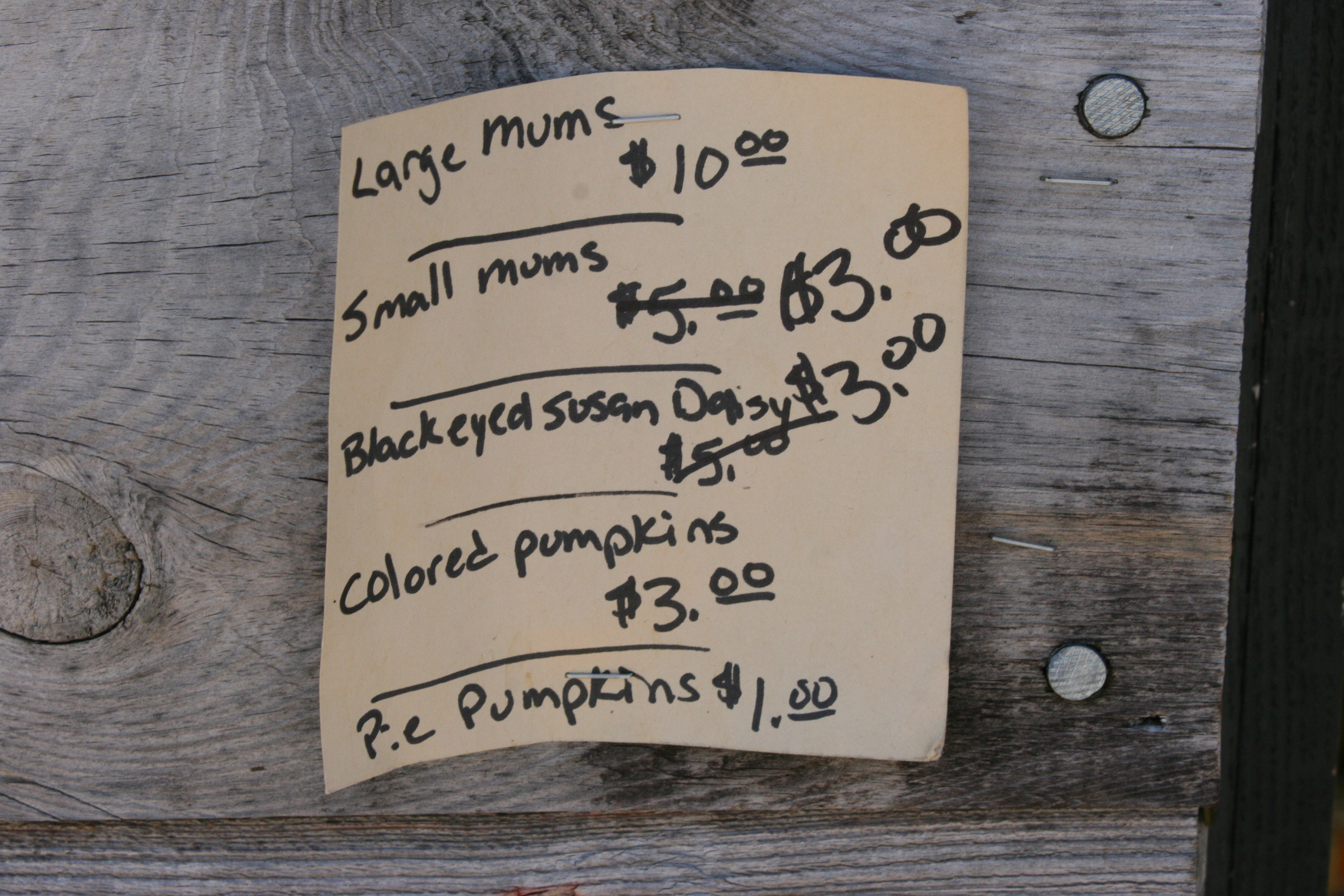
Prices & mark-downs. (Minnesota Prairie Roots copyrighted photo October 2021)
Chatting with Louise, who stepped aside when I started taking photos, proved a delight. Considering her 11-hour days at this less-than-busy location, I asked how she passes the time. Reading? She’s not much of a reader, she said, referencing her farm upbringing and the need to stay physically active. Sometimes she leaves temporarily to do chores at home—like mowing her lawn. Or sometimes she simply has other things going on that take her away from the roadside stand.
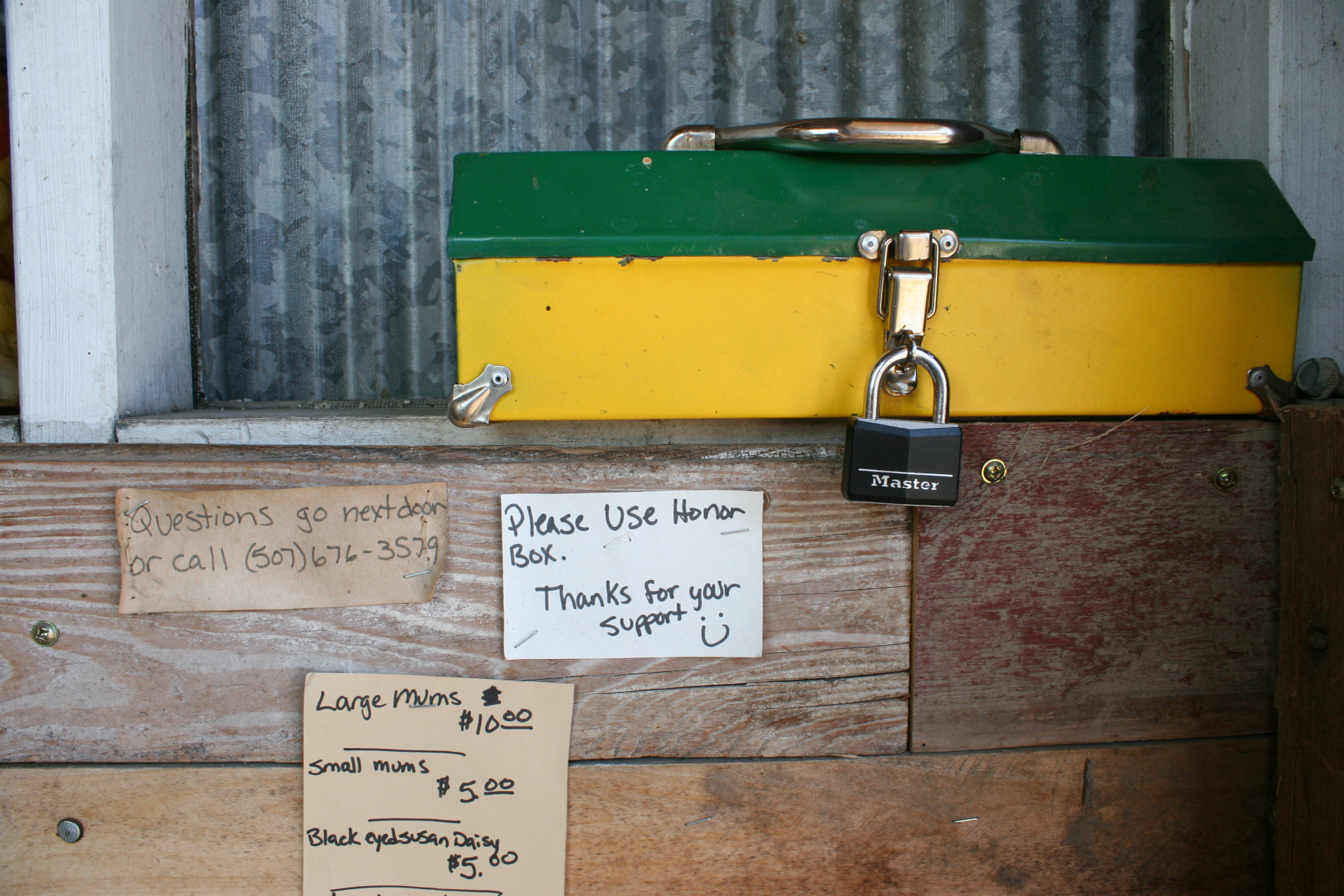
If Louise isn’t there, just leave your payment in the locked box. (Minnesota Prairie Roots copyrighted photo October 2021)
A handwritten sign next to a locked honor system box directs customers to go next door or call Louise with questions. But don’t count on her having change. She doesn’t. I purchased two squash for $4, almost $5.
Gourds for fall decor. (Minnesota Prairie Roots copyrighted photo October 2021)
In addition to this small town produce stand, Teb also sells her garden and craft and baked goods at the Owatonna Farmers’ Market. Sales are good, even at the remote Meriden location, Louise noted.
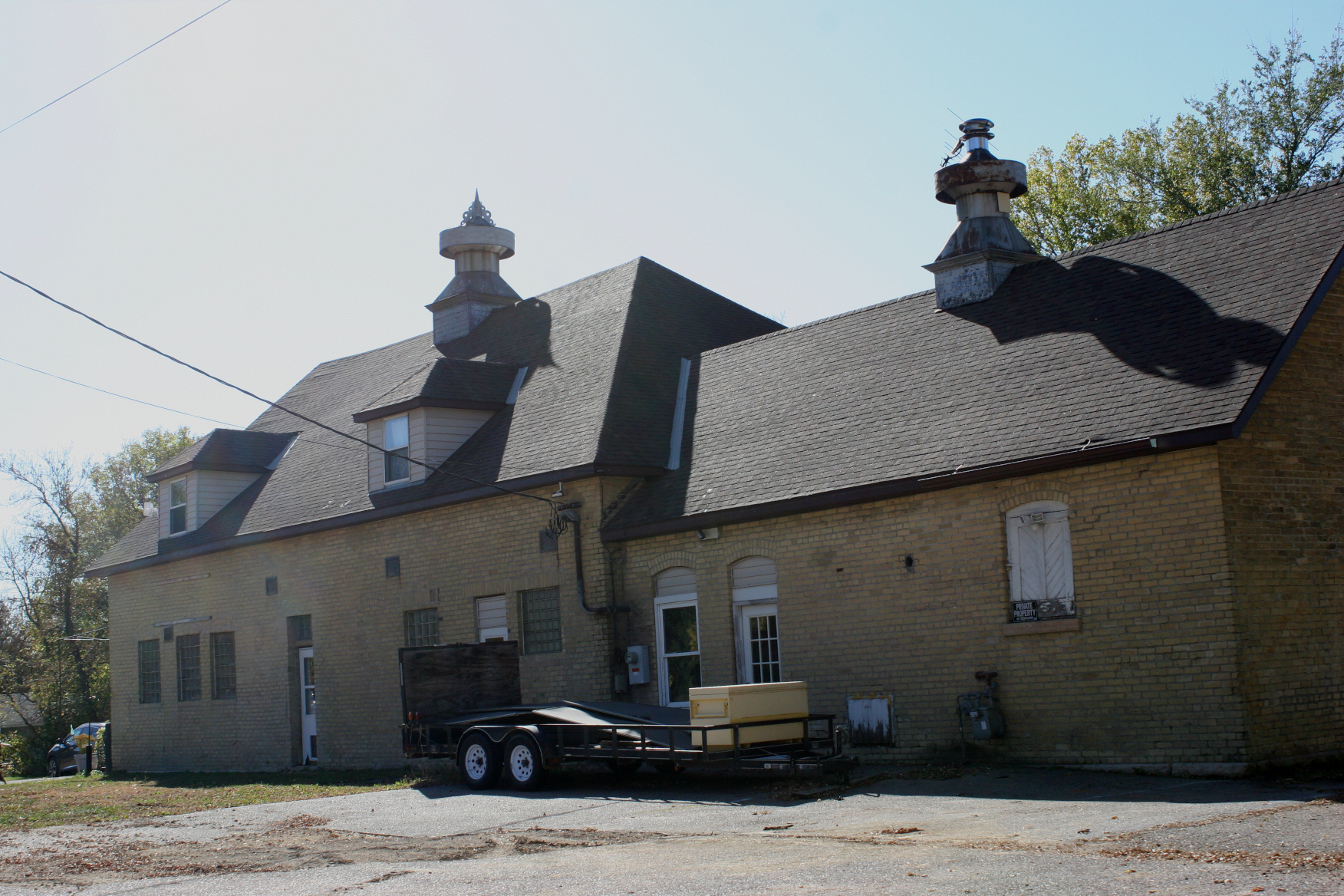
The former creamery in Meriden. (Minnesota Prairie Roots copyrighted photo October 2021)
Meriden is one of those rural places perhaps unknown to many. Driving into town, I noticed a former creamery, the brick building in remarkable condition.
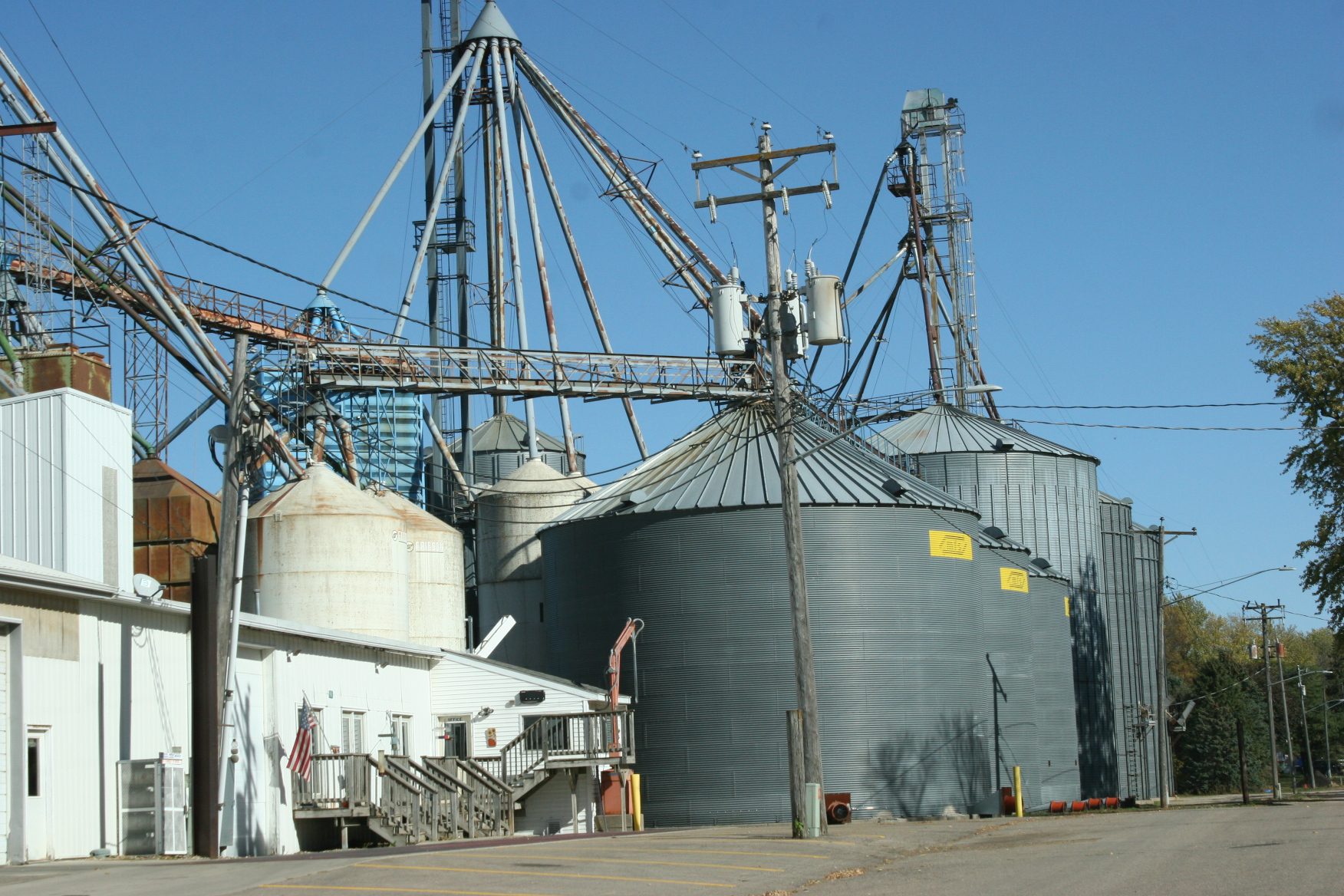
Meriden’s grain complex. (Minnesota Prairie Roots copyrighted photo October 2021)
But it is the cluster of mammoth grain bins which landmark Meriden. Homes line the road past the elevator to a dead end, an unwelcome warning sign marking the end of the street.
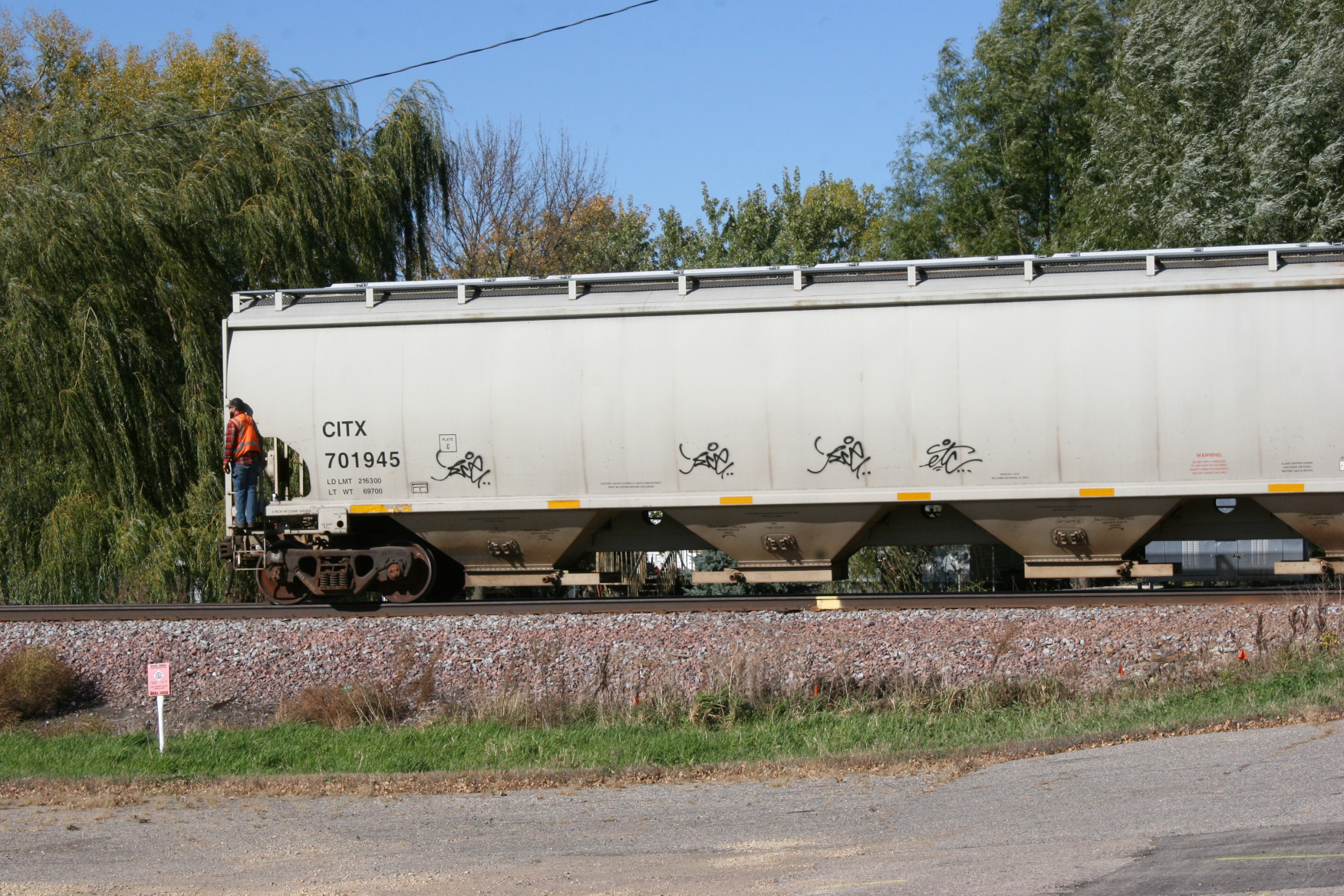
A slow-moving train moves through Meriden. (Minnesota Prairie Roots copyrighted photo October 2021)
Back at Teb’s Food Stand, conversation halted when a train car and locomotive rolled into town, horn blaring. Soon it reversed course, crossing the tracks again, horn blaring.
Teb’s Food Stand in Meriden. (Minnesota Prairie Roots copyrighted photo October 2021)
By then I’d gathered enough photos and information to craft a story. To write about Lousie and Teb and this tiny produce stand edging a paved road next to a harvested bean field in Meriden, Minnesota.
NOTE: Teb’s Food Stand will close soon for the season, if it’s not already closed.
Gravel roads, sky and fields stretch before us in the southern Minnesota countryside. (Minnesota Prairie Roots copyrighted photo October 2021)
Polka music pulsed through the van in a rhythmic beat. It was an unusual station choice given I listen primarily to contemporary Christian music on KTIS and Randy enjoys talk radio. But, occasionally on his 22-minute drive home from work, Randy tunes in to KCHK to listen to late afternoon featured 50s-70s music.
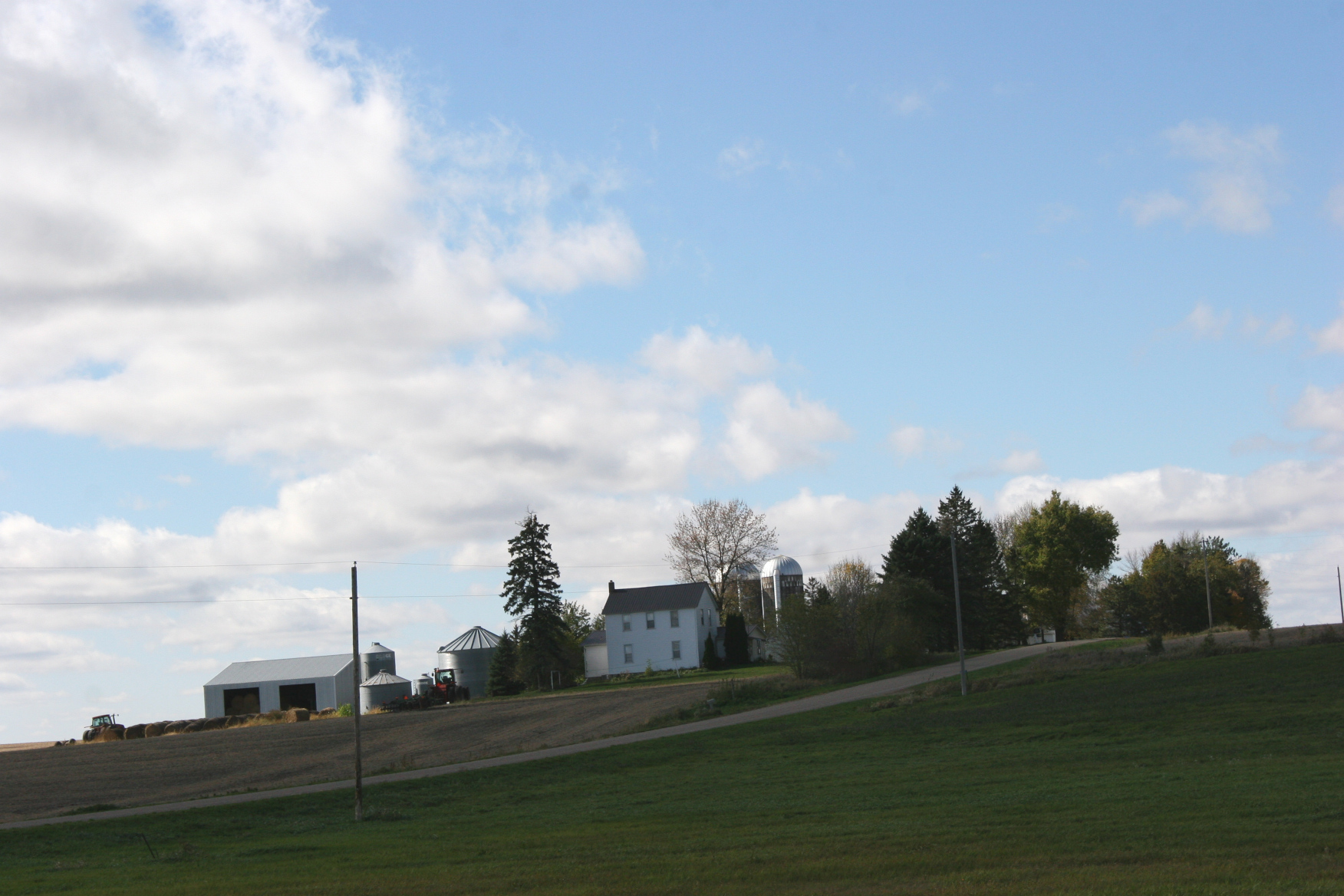
A farm site tucks behind a hillin LeSueur County. (Minnesota Prairie Roots copyrighted photo October 2021)
In the heart of Czech country, though, the radio station is known for its day-time polka programming.
Occasionally we passed between colorful treelines. (Minnesota Prairie Roots copyrighted photo October 2021)
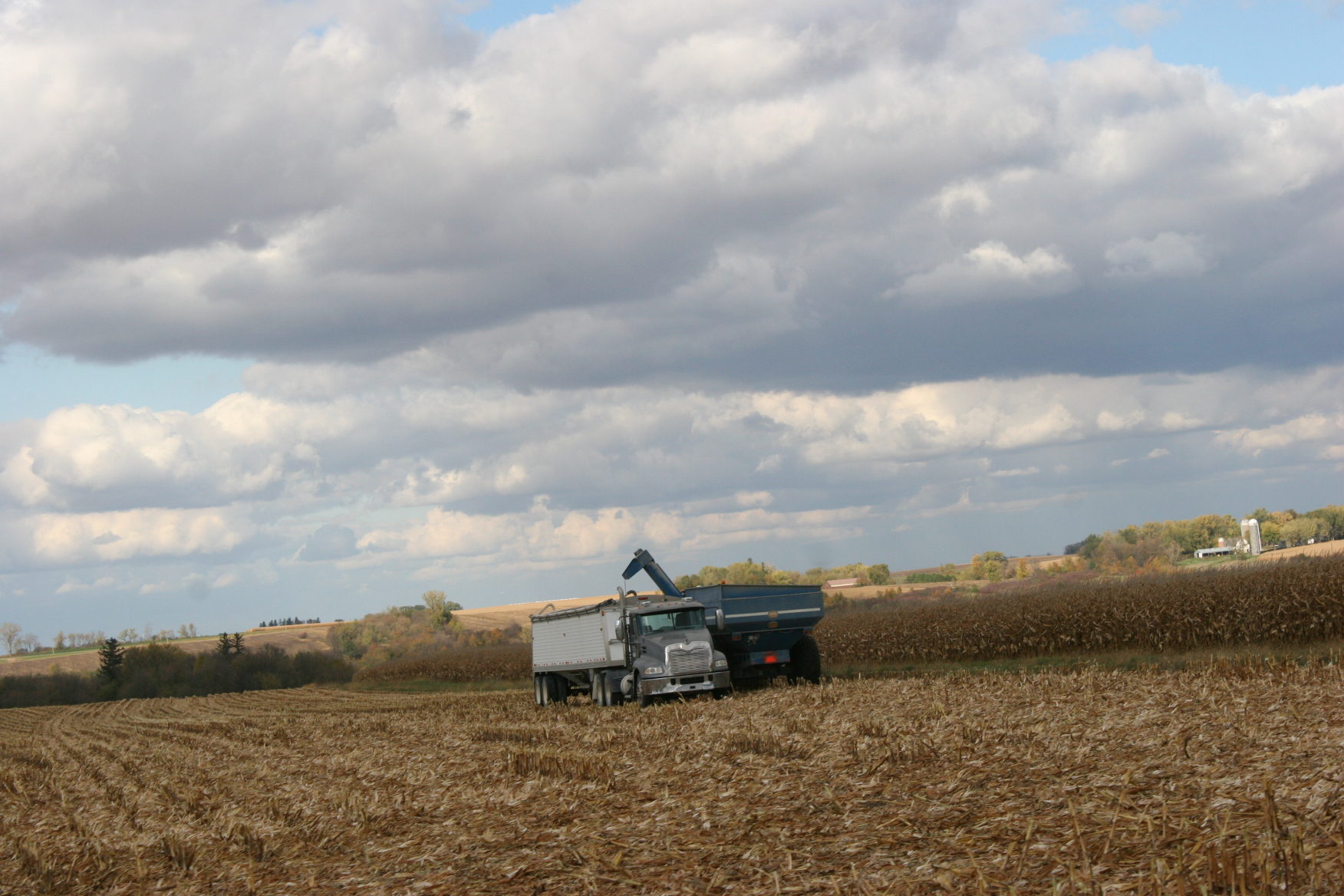
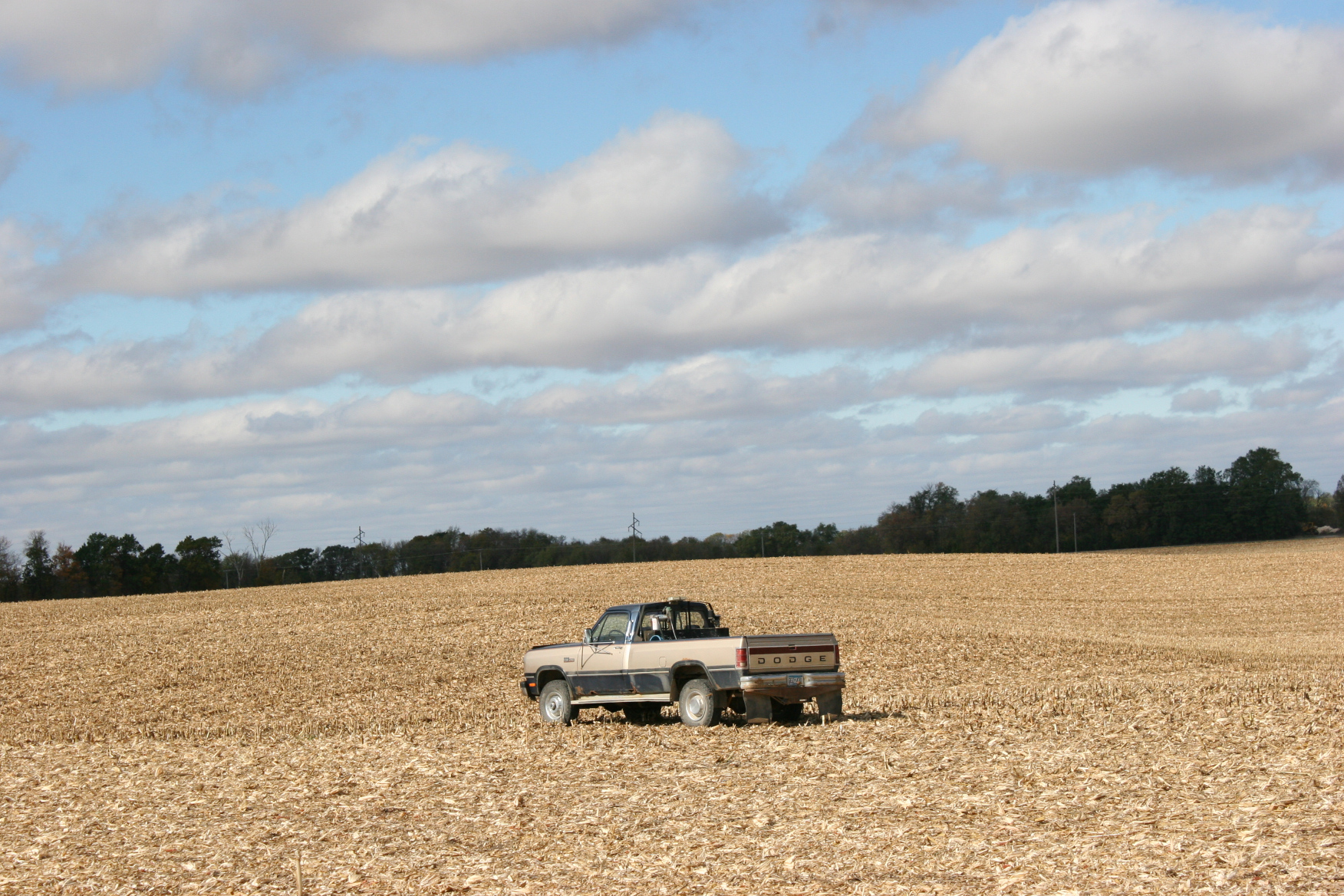
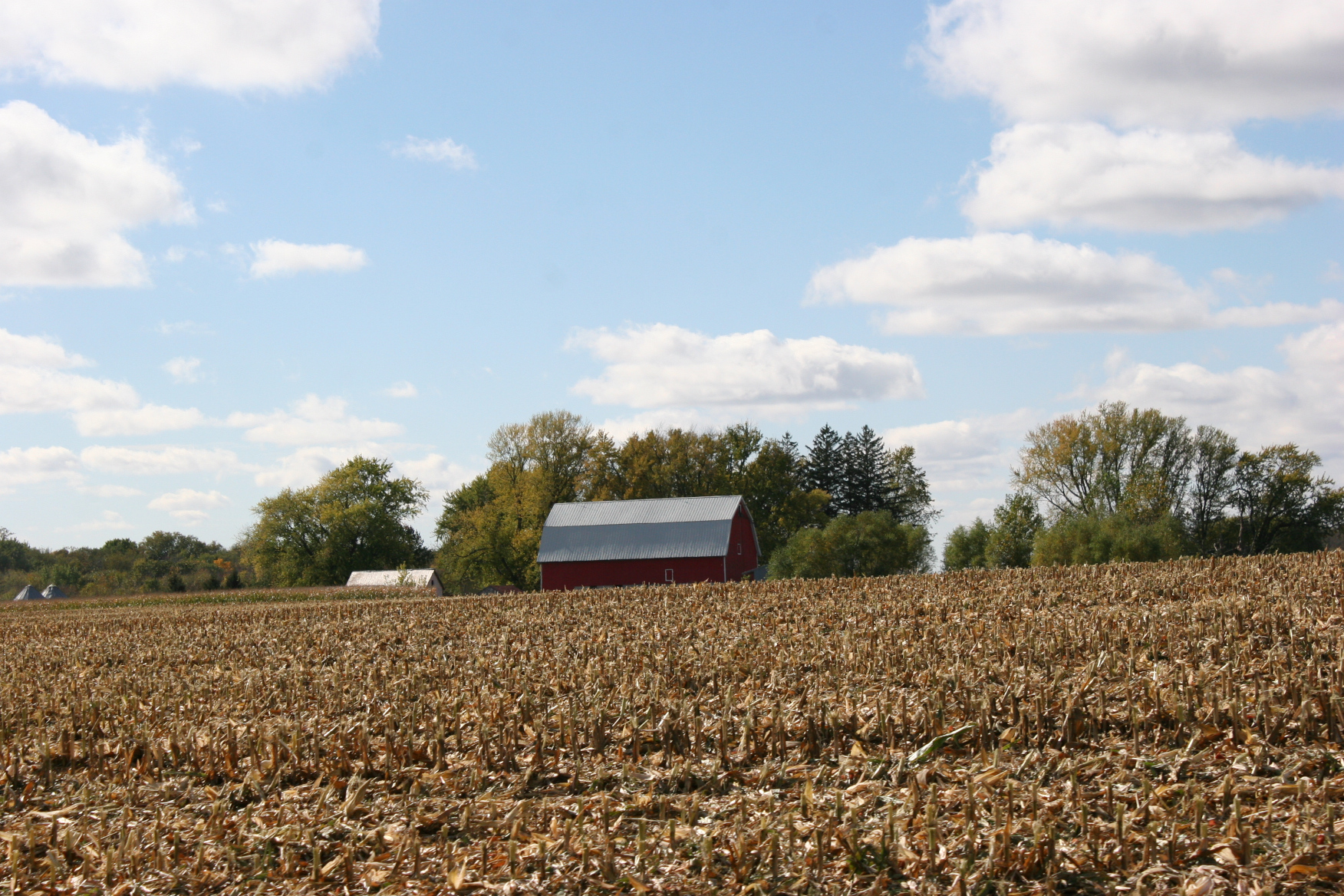
A common Minnesota harvest scene: a farm truck parked in a field. (Minnesota Prairie Roots copyrighted photo October 2021)
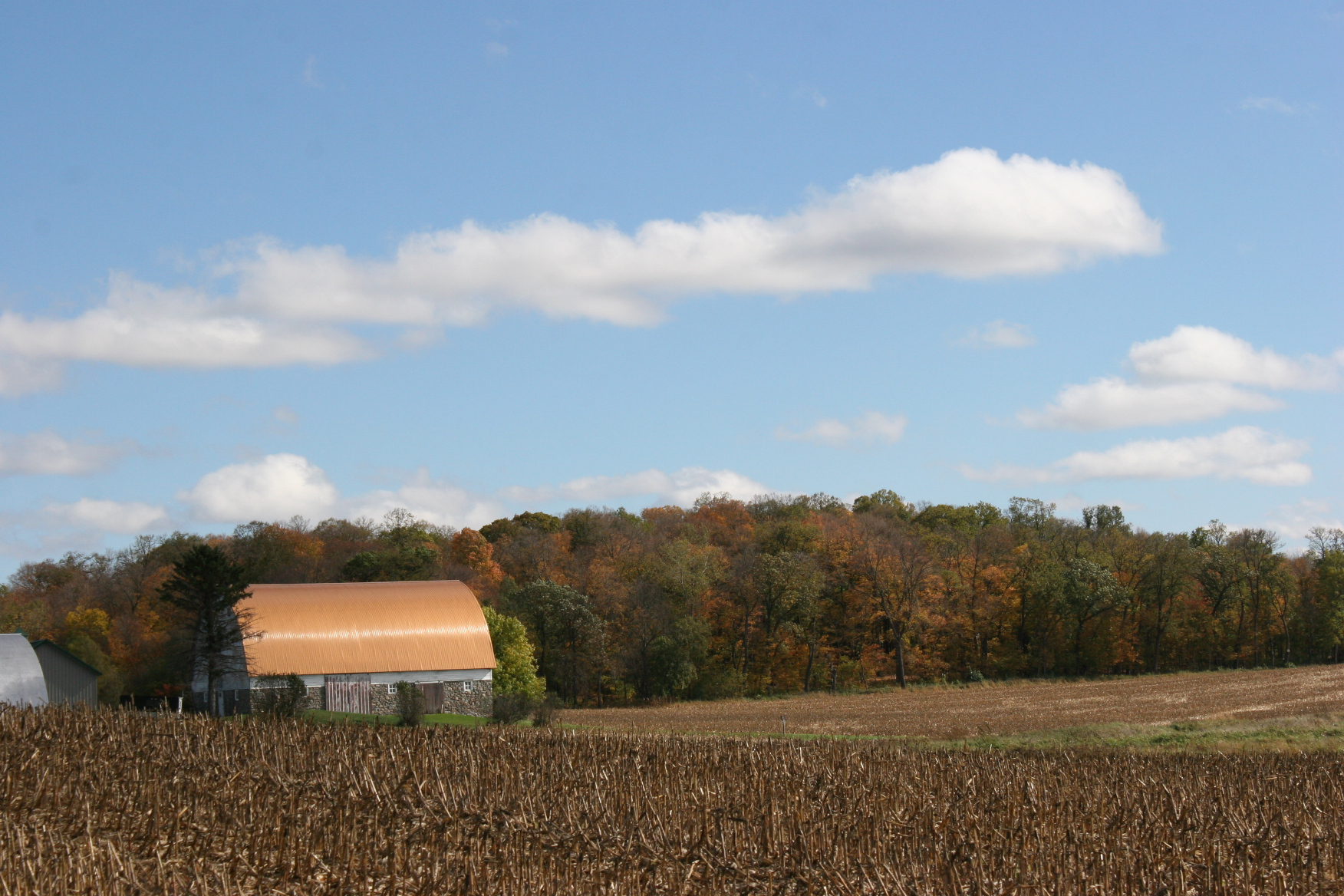
Love the copper hue of this barn roof on a farm just off State Highway 13 between New Prague and Montgomery. (Minnesota Prairie Roots copyrighted photo October 2021)
As we drove along back country gravel roads—past farm sites and harvested fields and farmers working in the fields—the rhythm of polkas, of accordions pushed in and pulled out to create music, set a joyful tone. The music fit the scenes unfolding before us.
The music reminded me, too, of wedding dances back home decades ago in southwestern Minnesota. Of couples twirling across a well-worn wooden dance floor. Of booze bottles wrapped in brown paper bags. Of extended families gathered in a simple town hall to celebrate a marriage. Of The Bunny Hop and The Butterfly and all those dances that brought people together for an evening of fun.
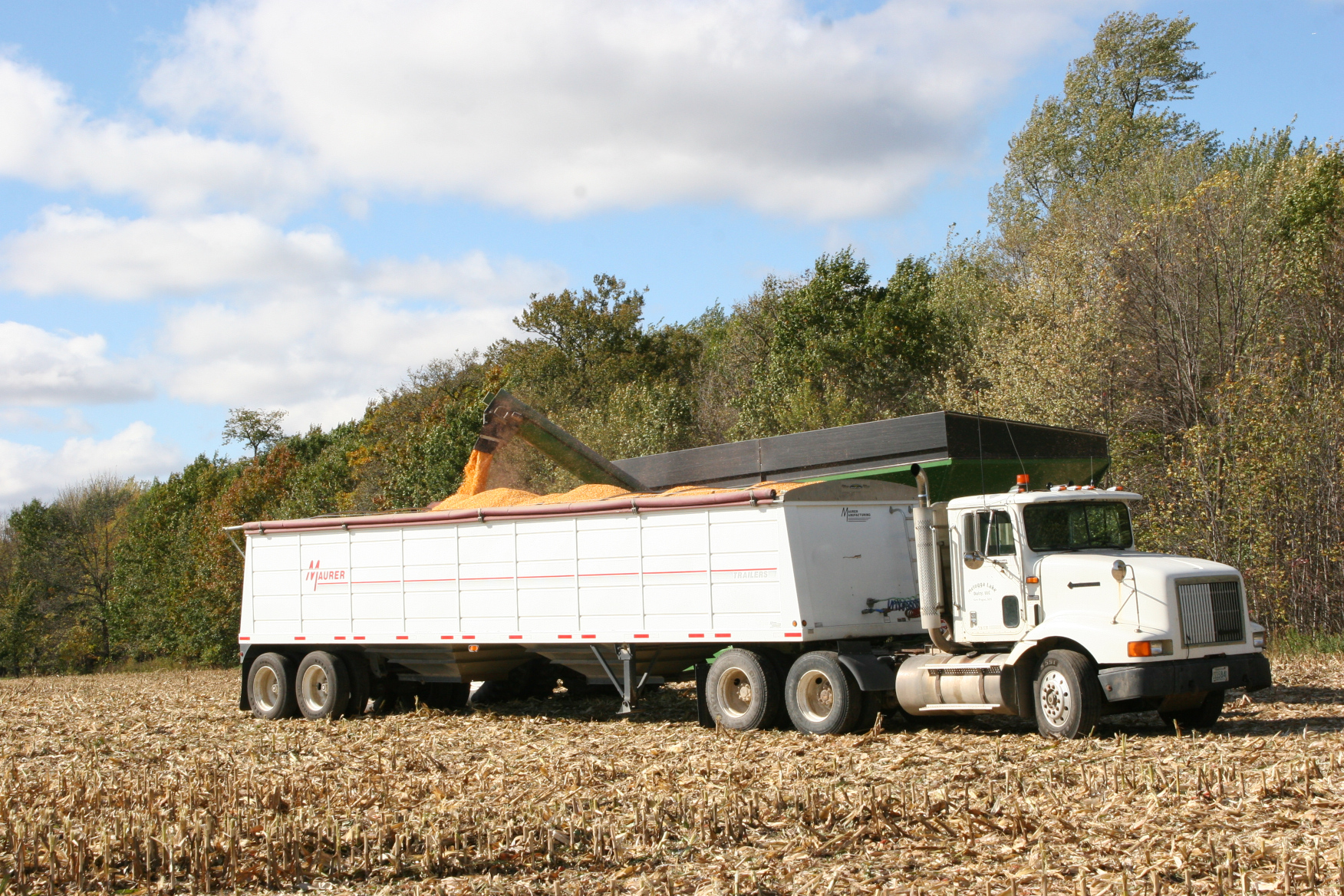
Just harvested corn flows into a grain truck along Lake Avenue west of Lonsdale. (Minnesota Prairie Roots copyrighted photo October 2021)
Those memories lingered as polkas played on KCHK. As just-harvested corn flowed into a grain truck. As we passed a mailbox with the name Skluzacek posted thereon. We were deep in the heart of Czech country near New Prague/Lonsdale/Montgomery.
Near Richter Woods County Park west of Montgomery, a farm site overlooks the countryside. (Minnesota Prairie Roots copyrighted photo October 2021)
There is something incredibly comforting about the mix of memory and music and meandering in rural Minnesota. Moments like this impress upon me the need to simply be. To recognize the value in an afternoon drive in the country. No destination. No haste. No agenda.
A farm site hugs a cornfield along Lake Avenue west of Lonsdale. (Minnesota Prairie Roots copyrighted photo October 2021)
Time to just appreciate. The hard work of the farmer during harvest. The farm sites. Gravel roads.
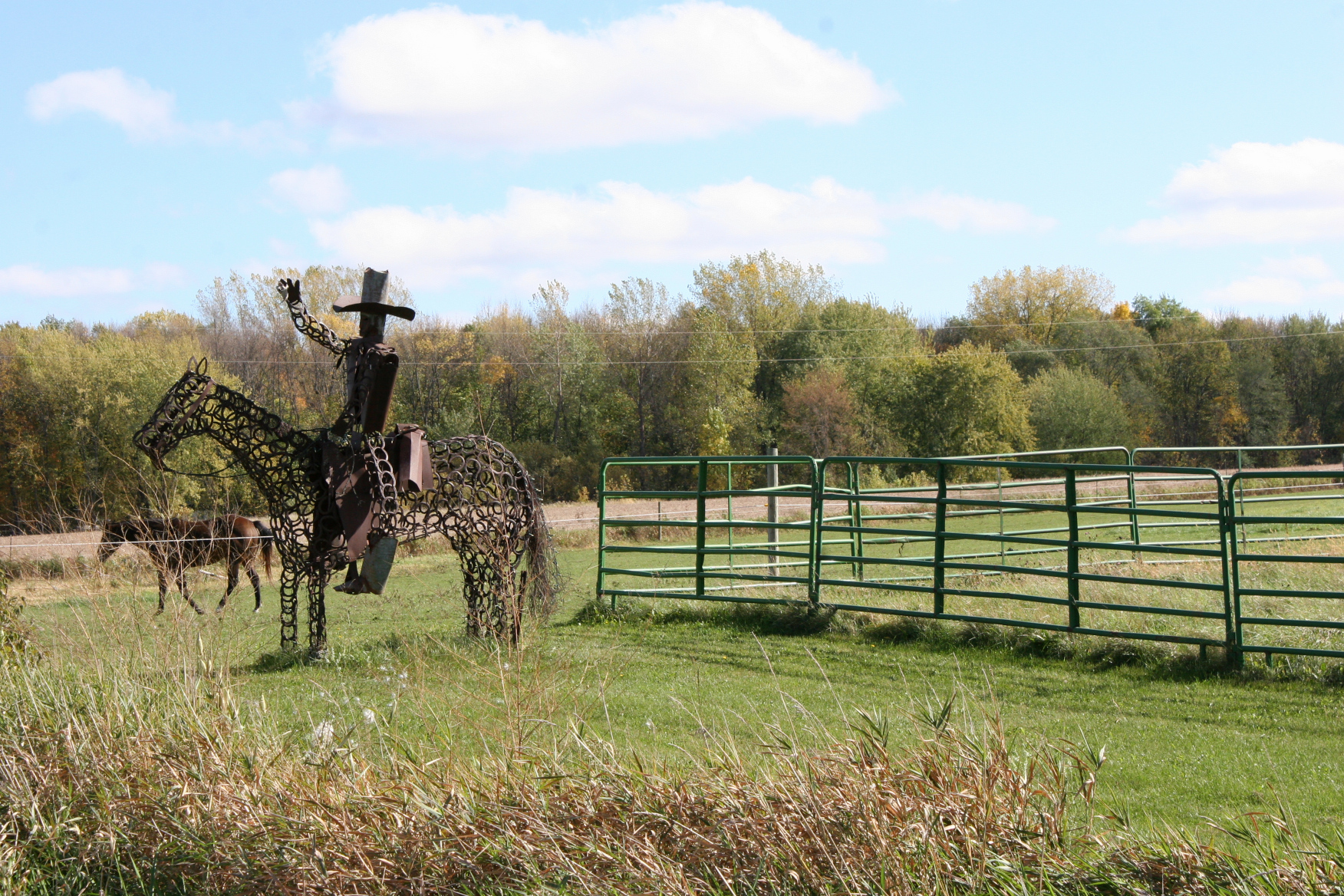
As we passedthis rural property along 60th Street West southeast of New Prague, I photographed this horse sculpture. (Minnesota Prairie Roots copyrighted photo October 2021)
And the unexpected sighting of horseshoe art where horses graze.
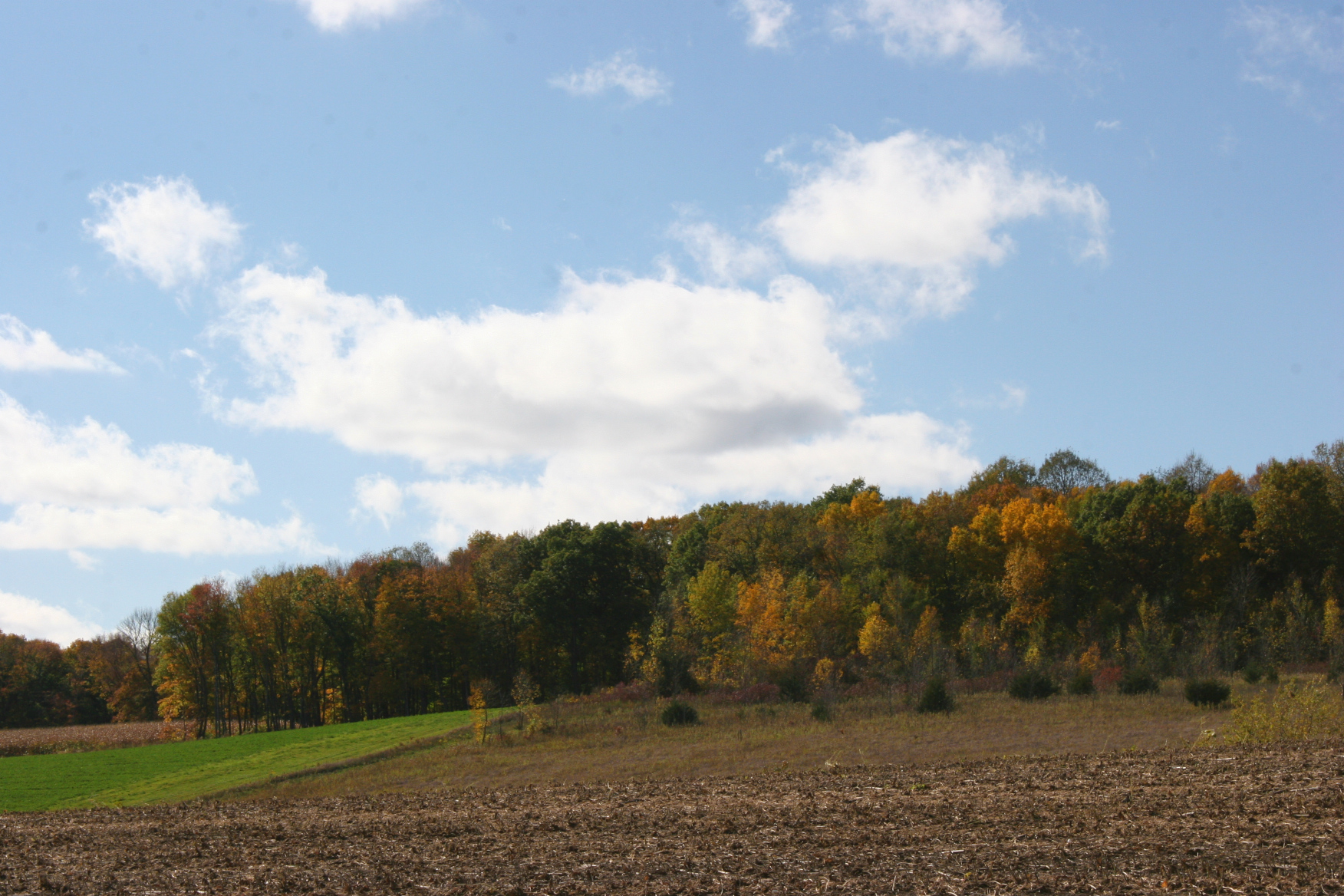
Oh, the glorious hues of autumn in rural southern Minnesota. (Minnesota Prairie Roots copyrighted photo October 2021)
I treasure the memories shared and made with my husband of nearly 40 years as we followed rural routes, polka music thrumming in the background.
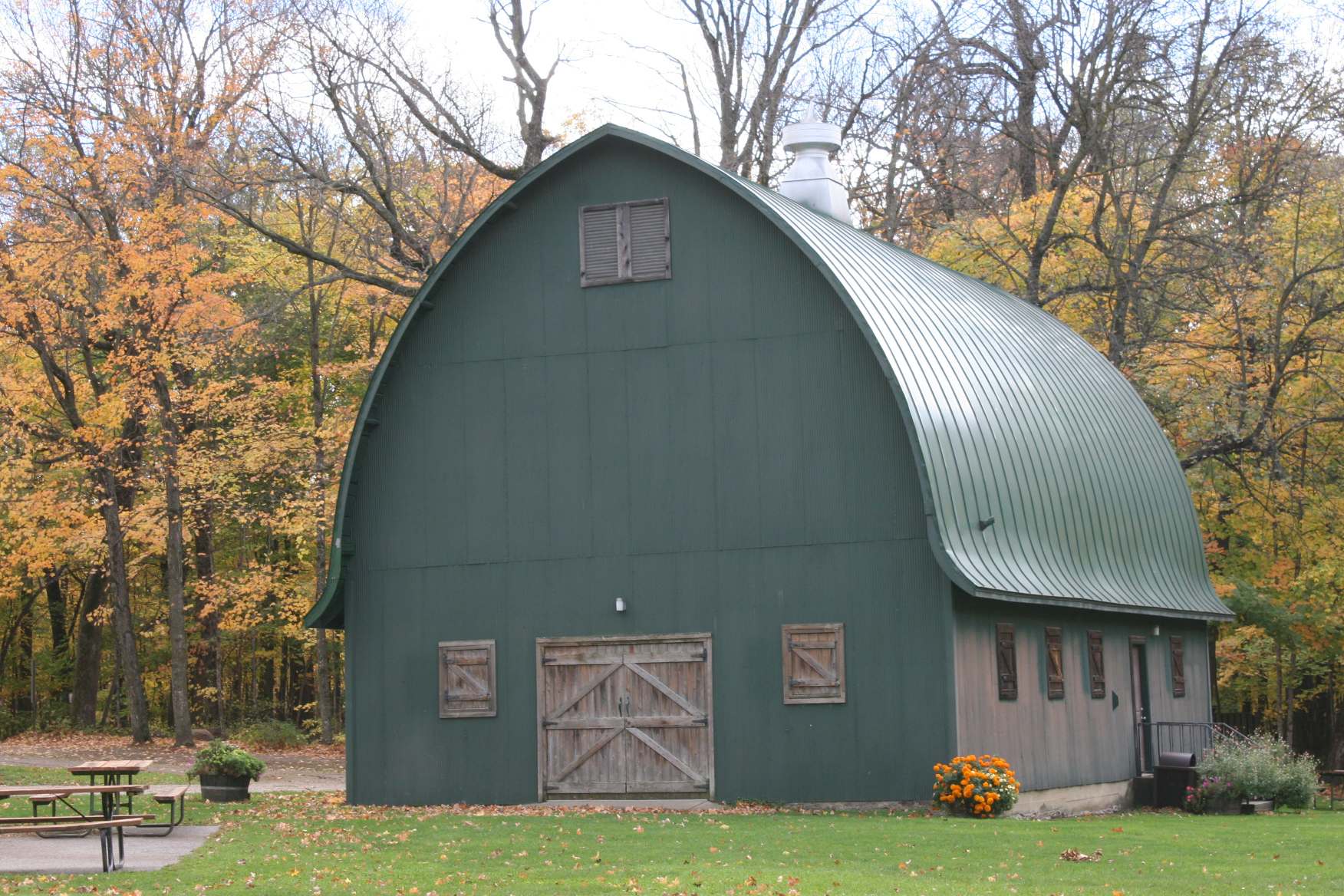
Richter Woods County Park and the on-site barn in LeSueur County. Minnesota Prairie Roots copyrighted photo October 2021.
EACH DAY OF SUNSHINE and warmth this late in October in Minnesota presents as a gift. We long-time Minnesotans understand that and celebrate. One less day of winter. One less day of cold and snow when the season of autumn extends. The recent weather has proven simply glorious.
Richter Woods Barn. Minnesota Prairie Roots copyrighted photo October 2021.
Late last week Randy took two days off work to savor these final days of autumn. And while we didn’t travel far, we delighted in nearby discoveries. We got a late start on Thursday, catching up on some much-needed rest. So we stayed close to home, aiming for western Rice County into LeSueur County.
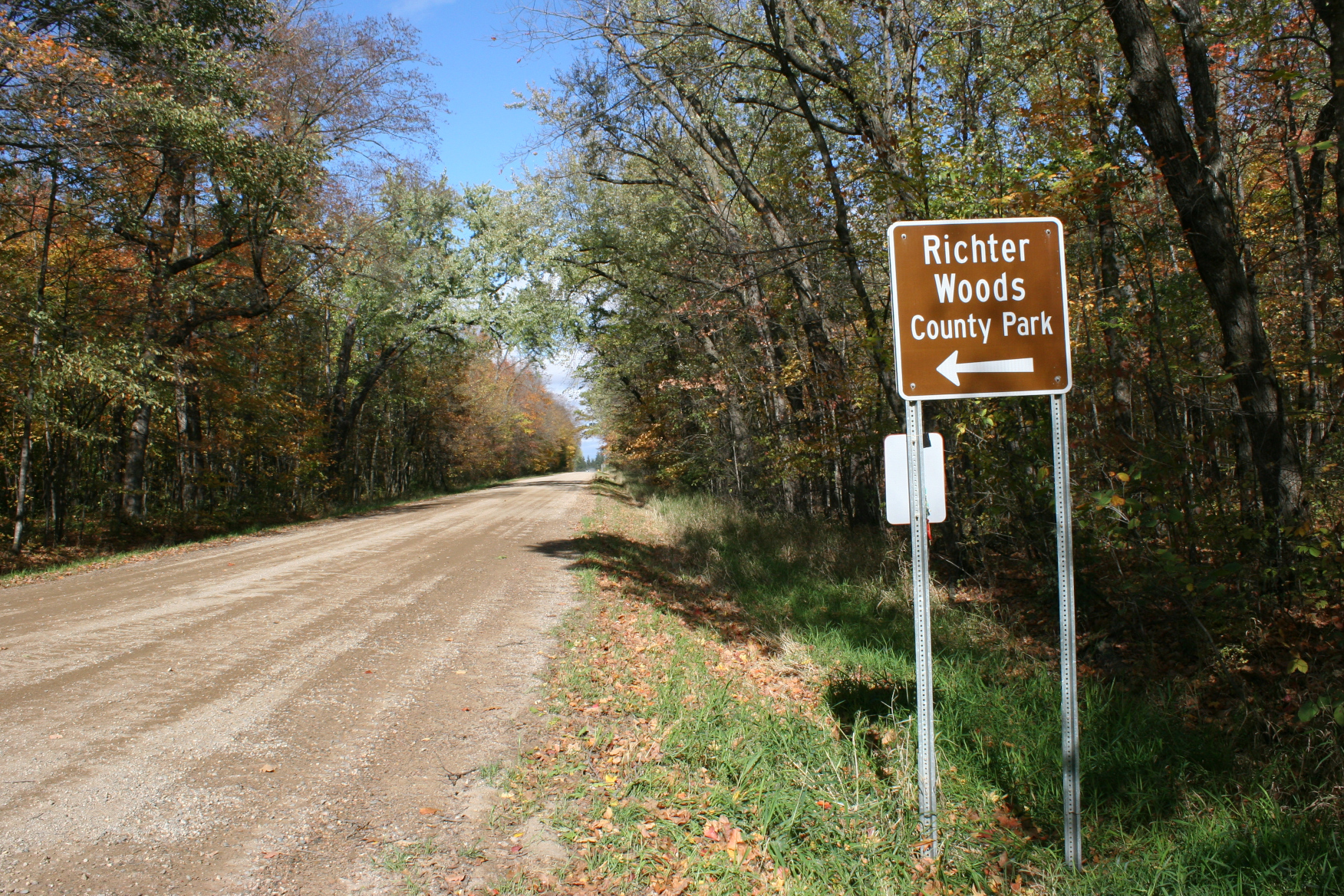
Trees line both sides of the gravel road leading to Richter Woods. Minnesota Prairie Roots copyrighted photo October 2021.
Eventually, we landed at Richter Woods County Park 1.5 miles west of Montgomery. I’d heard of the park, but had yet to visit.
The hilly countryside near Trondjhem Church, rural Lonsdale. Minnesota Prairie Roots copyrighted photo October 2021.
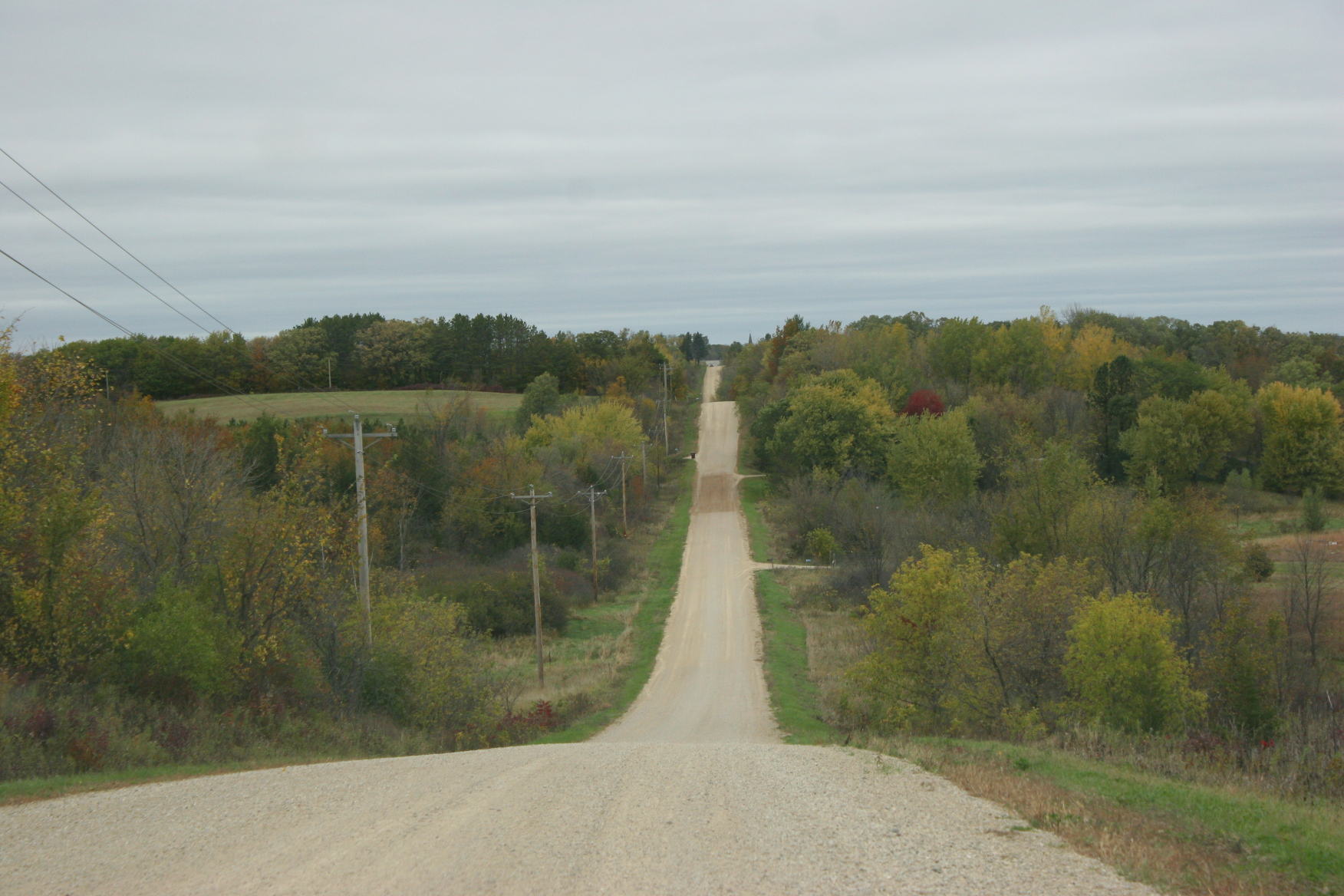
We followed the slow-paced route there along mostly back country gravel roads.
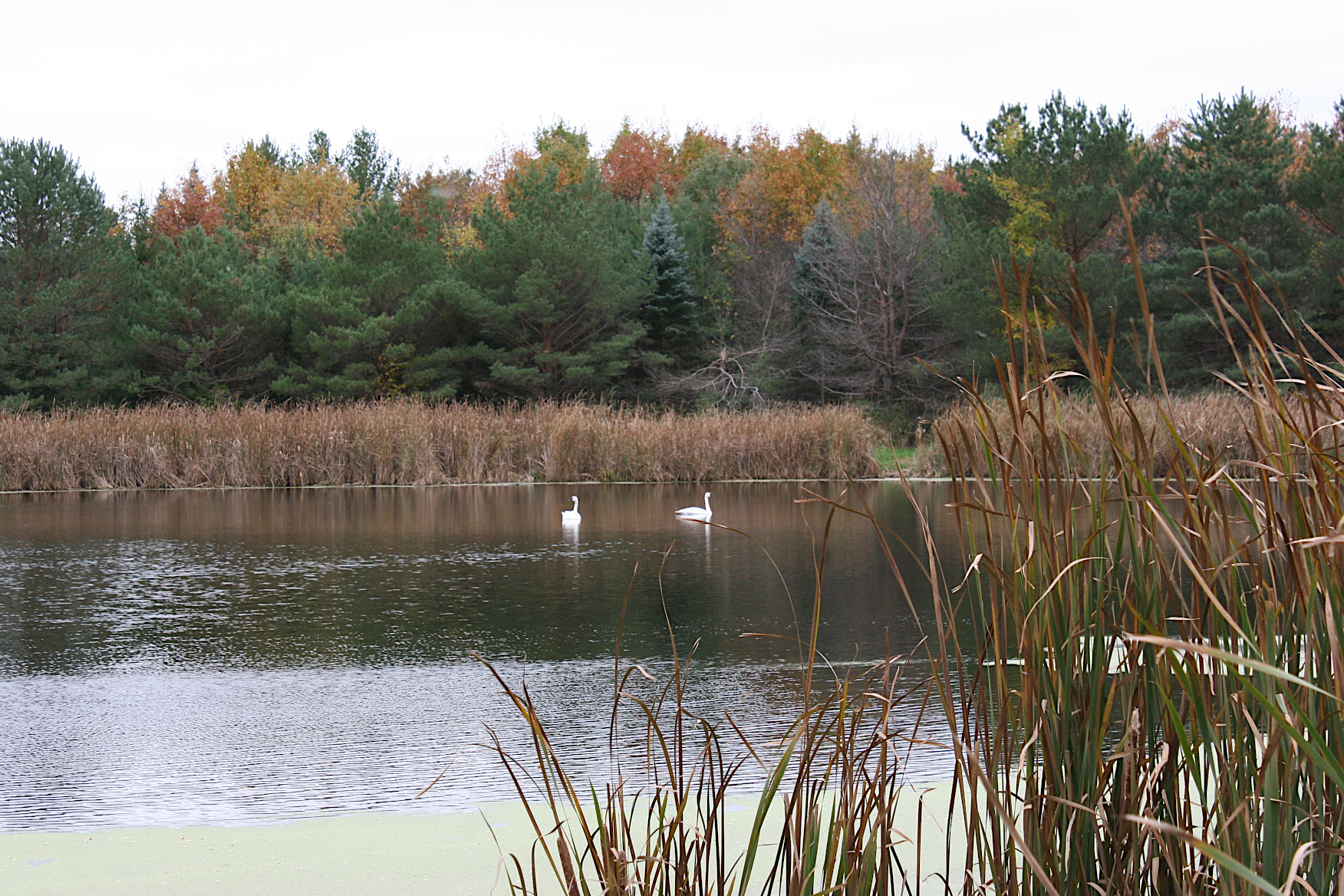
An unexpected sighting of two swans. Minnesota Prairie Roots copyrighted photo October 2021.
We paused once so I could photograph a pair of swans gliding across a small lake.
An aged barn along a gravel road. Minnesota Prairie Roots copyrighted photo October 2021.
I photographed, too, a weathered barn with fieldstone foundation. I often wonder how long barns will remain a landmark of our rural landscape. I feel an urgency to document their existence before roofs cave, boards rot, and only foundations remain.
A playground sits next to Richter Barn. Minnesota Prairie Roots copyrighted photo October 2021.
At 80-acre Richter Woods, a mammoth barn looms, centering the park gathering space. The barn is available to rent for $75/day from April-October. With a spacious loft and main level, the barn offers plenty of room for events like weddings, reunions and much more.
Looking up to the haymow. Trees shadow the barn door. Minnesota Prairie Roots copyrighted photo October 2021.
I couldn’t access the locked barn. But I could envision the interior, especially the haymow with its curved wood frame. Many bridal couples covet rustic settings like this. I wonder whether many have discovered this barn circled by woods in the quiet countryside near Montgomery.
A splash of red/pink flowers bloom on a bush next to the green barn. Minnesota Prairie Roots copyrighted photo October 2021.
As much as I appreciated the barn, I couldn’t get over the forest green color. I longed to see that barn in red, a historically-accurate hue. I expect others, too, have wondered at the unusual color choice. As a photographer, I find a red barn much more visually-pleasing.
One of two trails we took into Richter Woods. Minnesota Prairie Roots copyrighted photo October 2021.
No maps in this mailbox. Minnesota Prairie Roots copyrighted photo October 2021.
There are lots of picnic tables on-site, some nice, others not so much. Minnesota Prairie Roots copyrighted photo October 2021.
Before pulling out our picnic lunch to dine near the barn, Randy and I stretched our legs. We followed a leaf-strewn dirt trail into the woods with no map to guide us. The on-site mailbox was without the promised maps.
Maple leaves galore. Minnesota Prairie Roots copyrighted photo October 2021.
Maple leaves, especially, blanket the earth.
Looking up toward the colorful tree canopy. Minnesota Prairie Roots copyrighted photo October 2021.
In a few spots, I looked overhead to a canopy of red and yellow trees set against the deep blue sky of October.
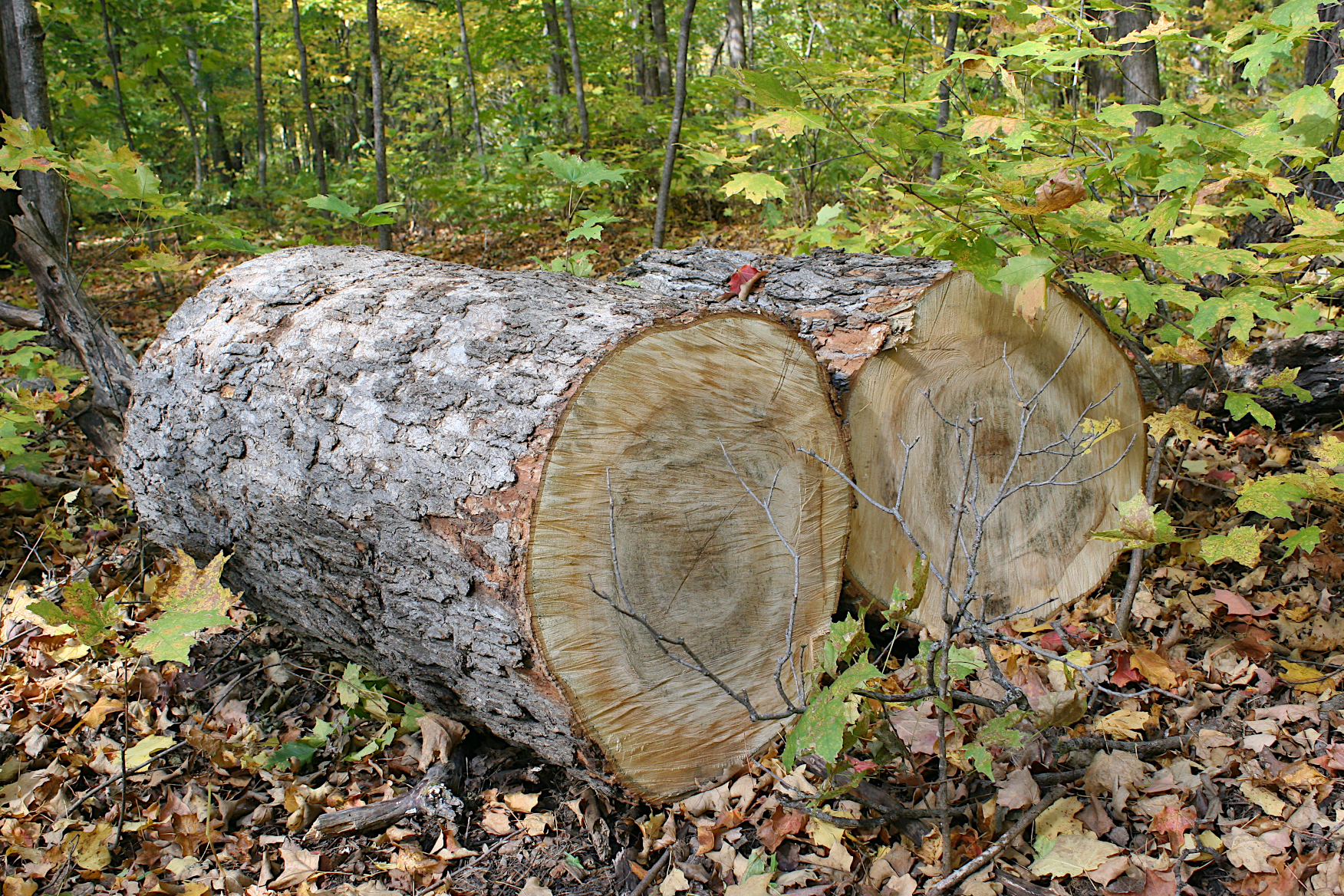
A recently-sawed tree. Minnesota Prairie Roots copyrighted photo October 2021.
We noticed, too, the many rotting and recently-sawed trees, I felt inwardly thankful for an afternoon without strong winds to possibly topple dead trees, loose branches.
Mushrooms on a fallen tree. Minnesota Prairie Roots copyrighted photo October 2021.
Mushrooms thrive in decay.
Loving the graceful curve of the barn roof. Minnesota Prairie Roots copyrighted photo October 2021.
Mostly, though, I noticed the peace. The quiet. I feel incredibly grateful to have access to natural settings like Richter Woods County Park. And I feel grateful, too, to live in this decidedly rural region of Minnesota within an hour of downtown Minneapolis. I feel grateful for gravel roads to follow. For barns that still stand. For warm and sunny October days that draw me into the countryside, into the woods.
#
PLEASE CHECK BACK as I take you on to more backroads in Rice and LeSueur counties.
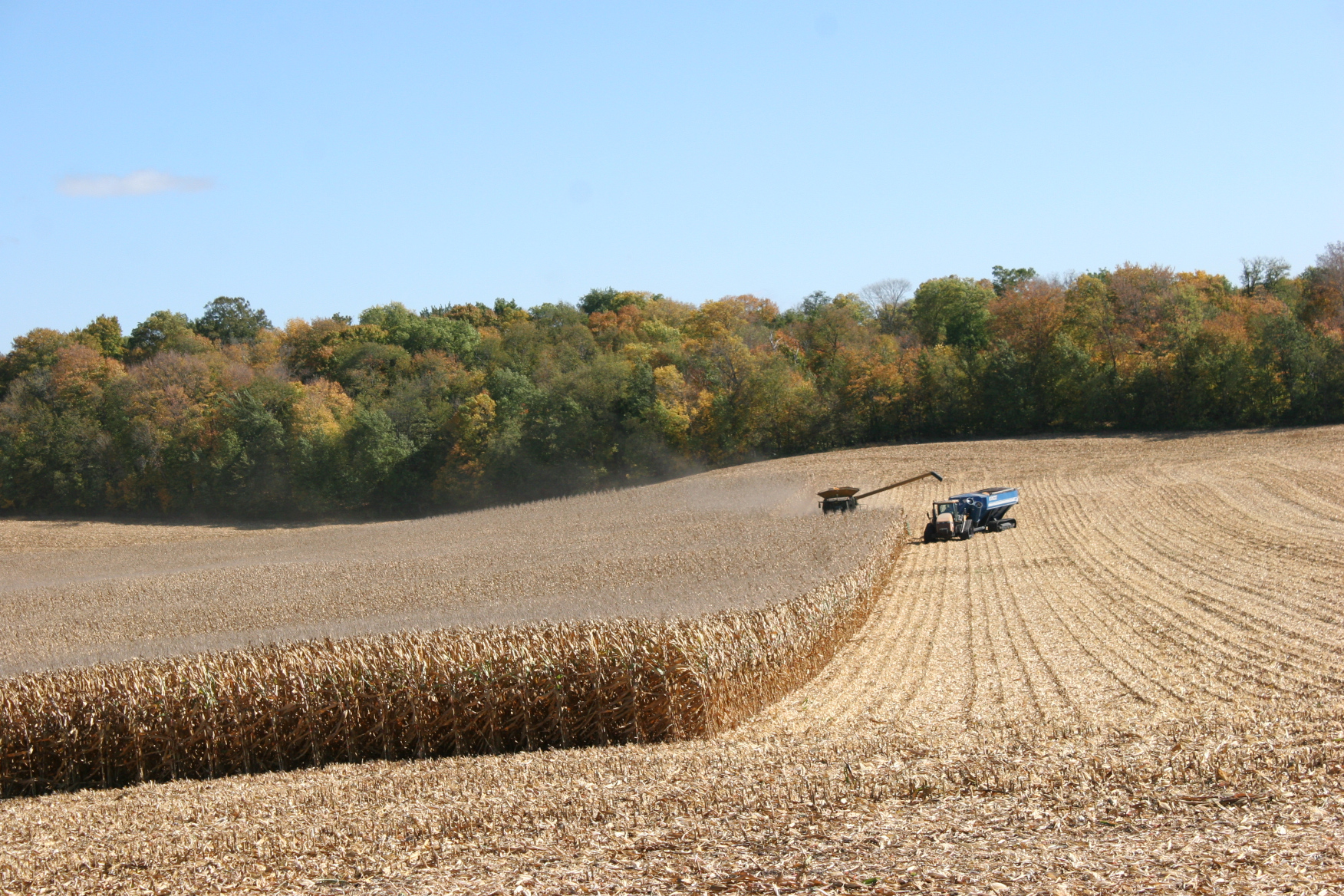
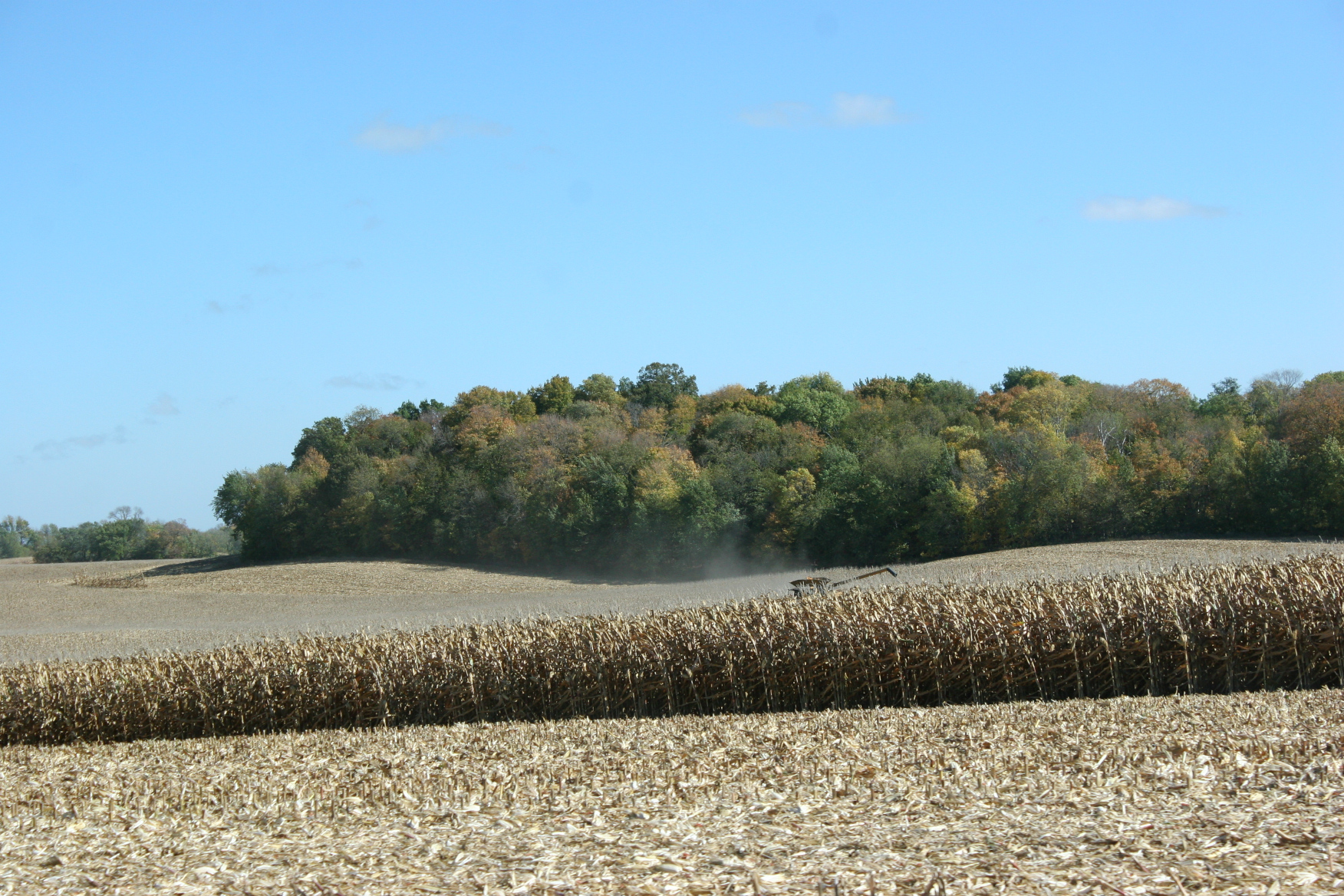
Harvesting corn in southern Minnesota. Minnesota Prairie Roots copyrighted photo October 2021.
DUST RISES FROM FIELDS, clouding the air as combines rake through rows of dry soybeans.
Barely visible, the top of the same combine featured in the photo above. Minnesota Prairie Roots copyrighted photo October 2021.
Combines comb corn rows, too, in this season of harvest in southern Minnesota.
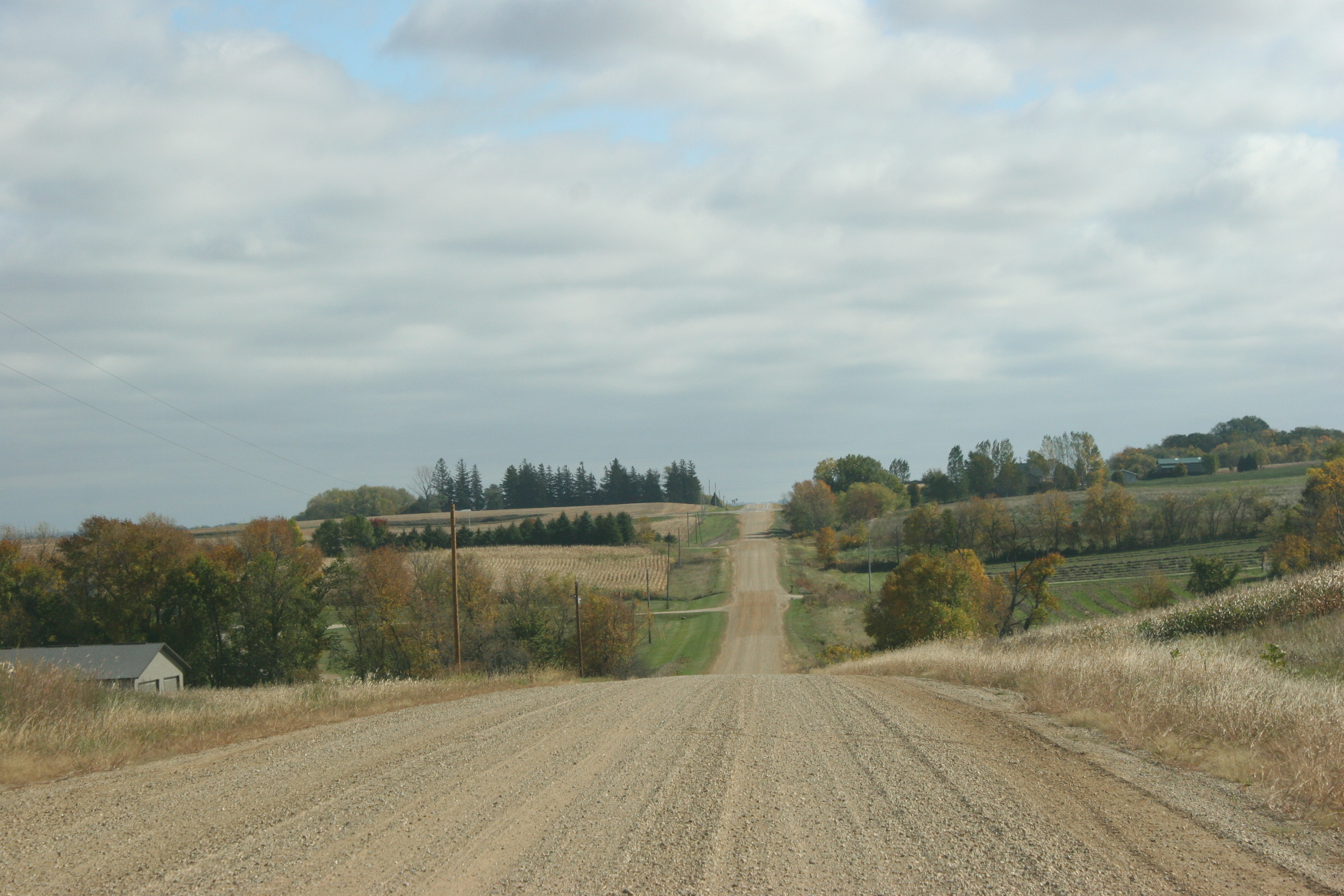
Follow country roads, like this one in eastern Rice County, to view fields at a slower pace. Minnesota Prairie Roots copyrighted photo October 2021.
Take a drive in the countryside these days and you will observe farmers hard at work, bringing in the crops.
A common site, semi trucks parked in fields, awaiting the yield, this one in western Rice County. Minnesota Prairie Roots copyrighted photo October 2021.
As October moves to mid-month, a sense of urgency presses into long days in the field. By 7 pm, darkness envelopes the land and farm machinery still moves, like a mammoth beast lumbering across acres of corn and soybeans, eyes aglow.
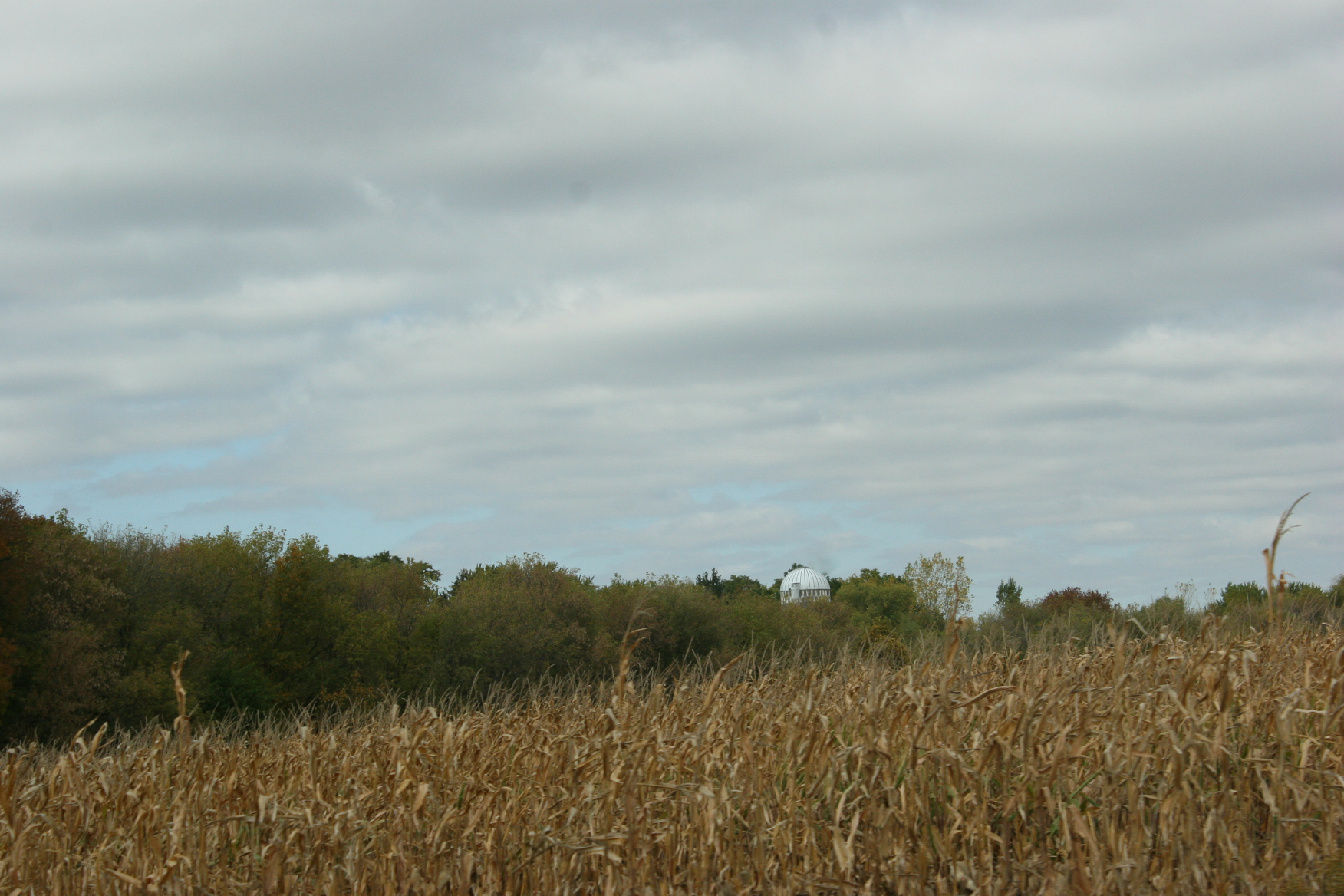
A silo peeks above a cornfield in eastern Rice County. Minnesota Prairie Roots copyrighted photo October 2021.
It is in this season of harvest that I feel a bit melancholy, missing my once close connection to the land. The scent of earth. The view of acres and acres and acres of crops drying to muted hues, visual evidence of a farmer’s work. The sound of combines roaring. The taste of dust and dirt. Golden orbs of soybeans sifting between fingers spread wide.
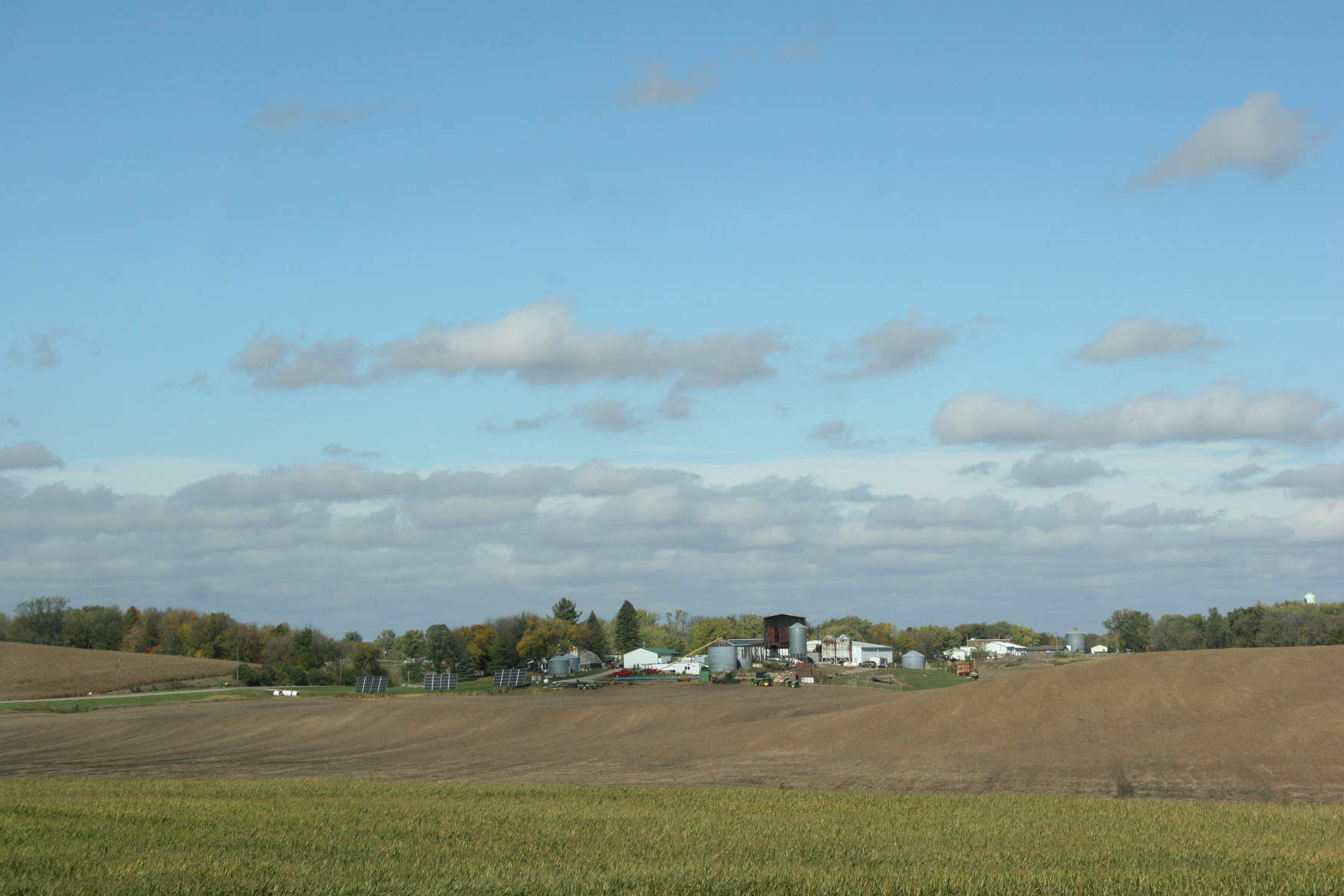
A farm site spreads across the land in western Rice County. Minnesota Prairie Roots copyrighted photo October 2021.
While I once experienced all those first-hand on my childhood farm in southwestern Minnesota, today I feel an outsider looking in. Watching. Remembering. Feeling grateful for the years I lived on a farm, never realizing then just how much those days would mean to me later in life.
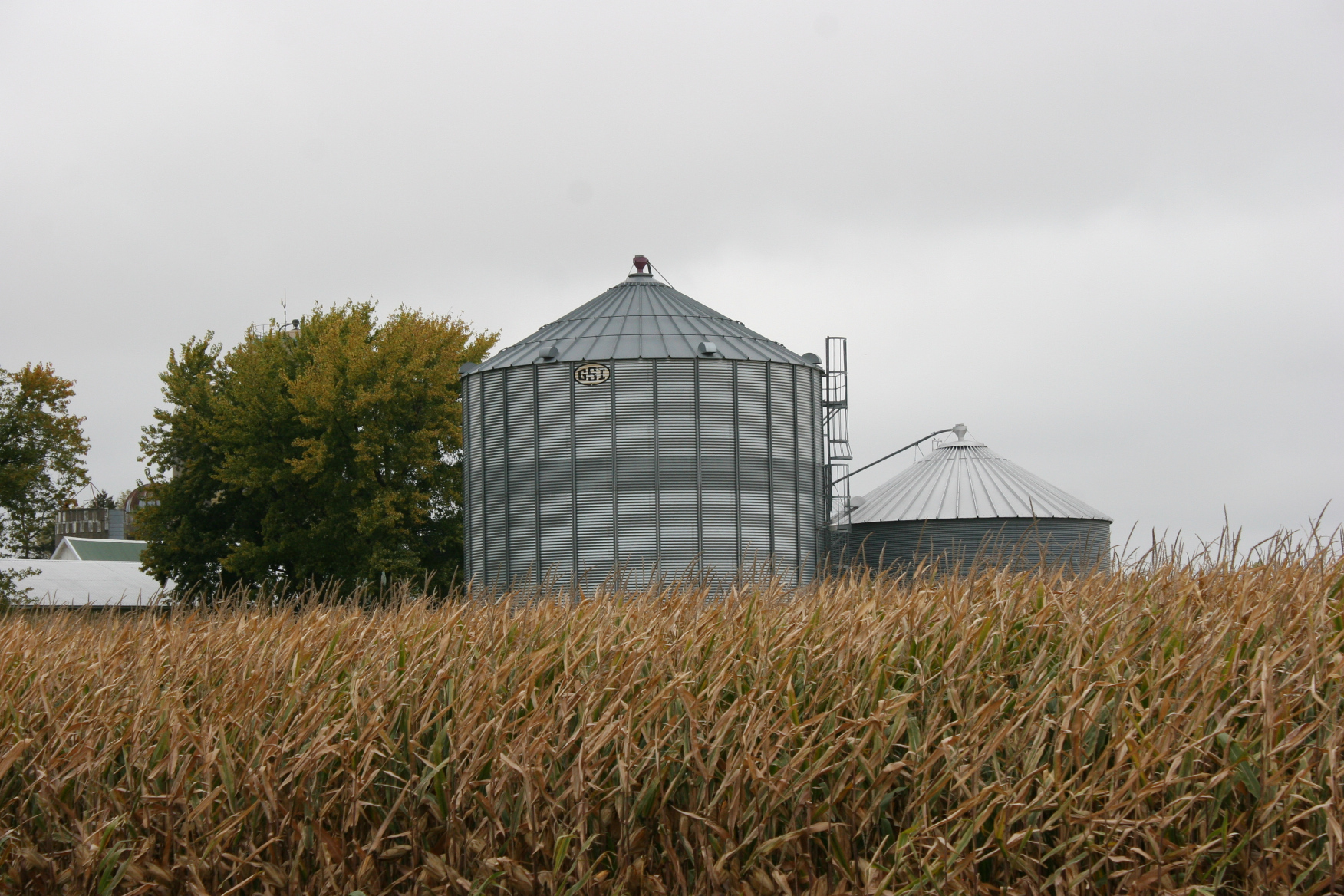
Grain bins, like these in eastern Rice County, symbolize harvest as storehouses for grain. Minnesota Prairie Roots copyrighted photo October 2021.
Each autumn I yield to the call of harvest. I reconnect to the land. Observing. Recalling. Missing my farmer dad and my Uncle Mike, a bachelor farmer who lived the next farm place over to the east. They are decades gone now, their final harvests long-finished.
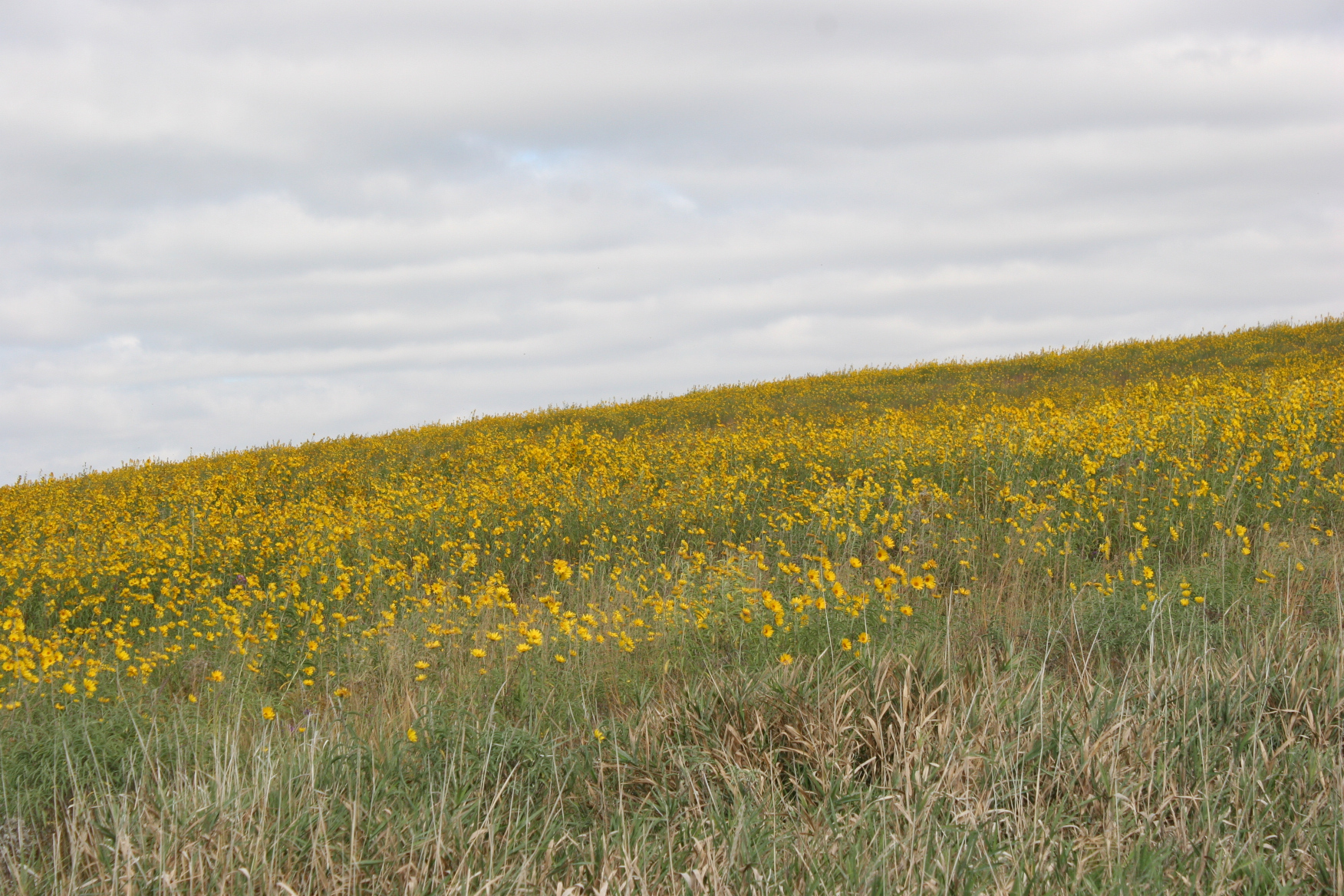
Acres of wildflowers bloom in a field off Rice County Road 20 between Northfield and Cannon City. Minnesota Prairie Roots copyrighted photo October 2021.
These emotions rush like a blustery October wind into my thoughts as winter approaches. As harvest continues, as seasons pass and life goes on.
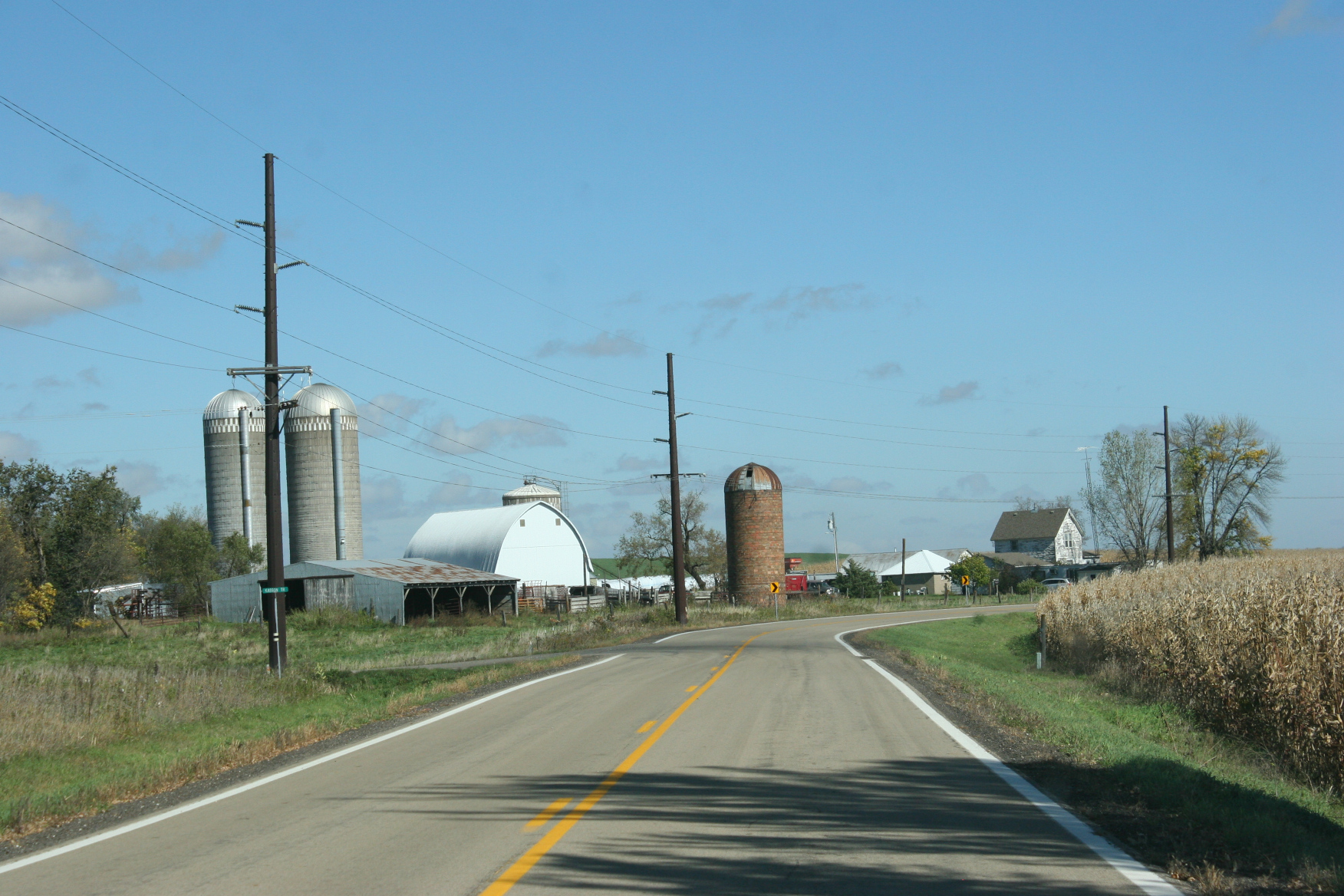
Cornfield to the right, farm site to the left, all part of a Sunday afternoon country drive in southern Minnesota. Minnesota Prairie Roots copyrighted photo October 2021.
TELL ME: Do you go for country drives to view the harvest? Or, if you live in a city, how do you celebrate autumn? I’d like to hear, wherever you live. I welcome harvest memories also.
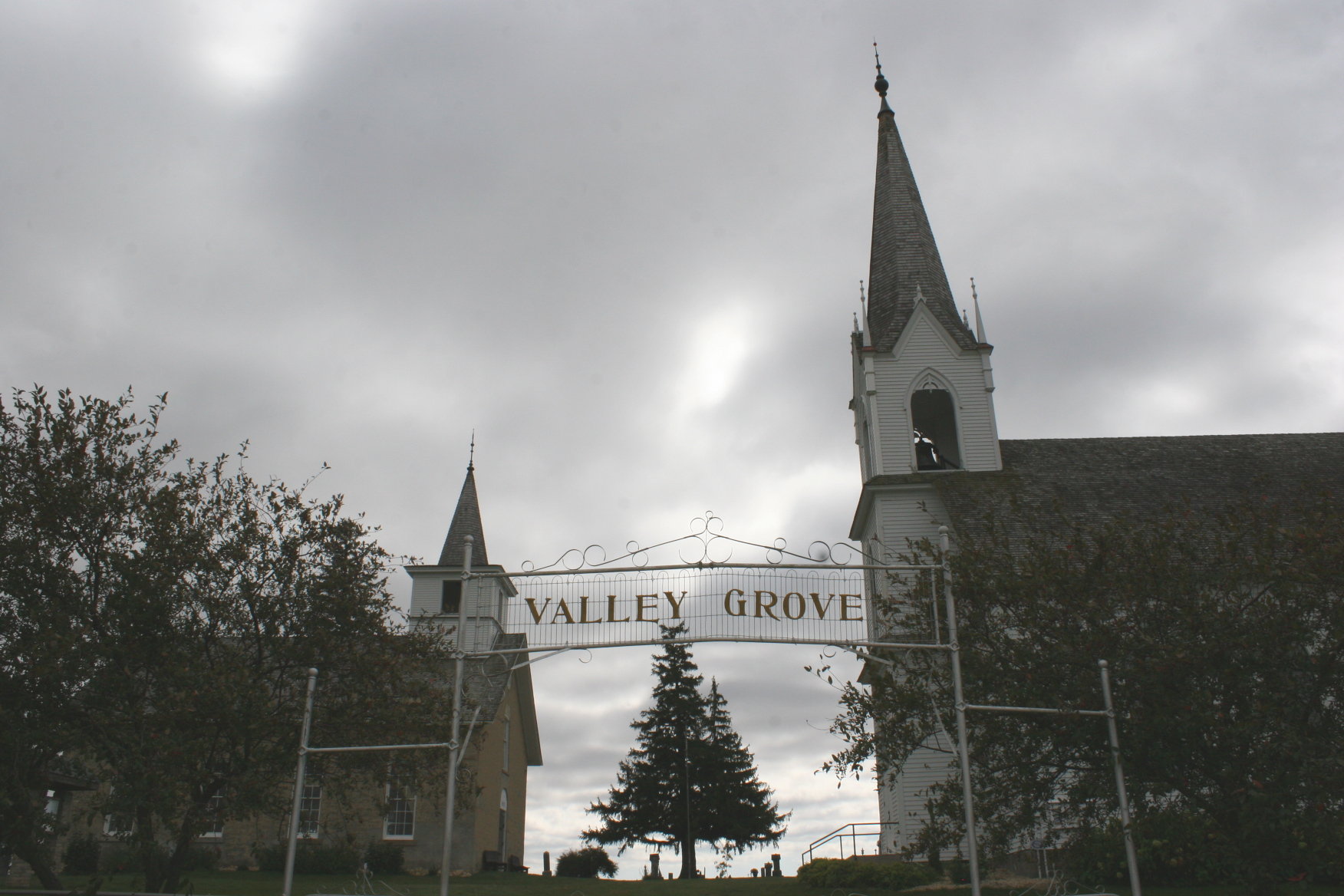
The artful gated entrance to Valley Grove. Minnesota Prairie Roots copyrighted photo October 2021.
I EXPERIENCE SOMETHING SACRED in this place. This preserved parcel of land where two aged churches rise atop a hill in rural Nerstrand.
Looking down the driveway from the hilltop church grounds, a beautiful view of the valley below. Minnesota Prairie Roots copyrighted photo October 2021.
The newer of the two Valley Grove churches. Minnesota Prairie Roots copyrighted photo October 2021.
On a recent Sunday afternoon, Randy and I sat on the front steps of the 1894 white clapboard church eating a picnic lunch. Bothersome bees hovered, drawn by the sweetness of Randy’s soda and fruit-laced yogurt and homemade chocolate chip cookies.
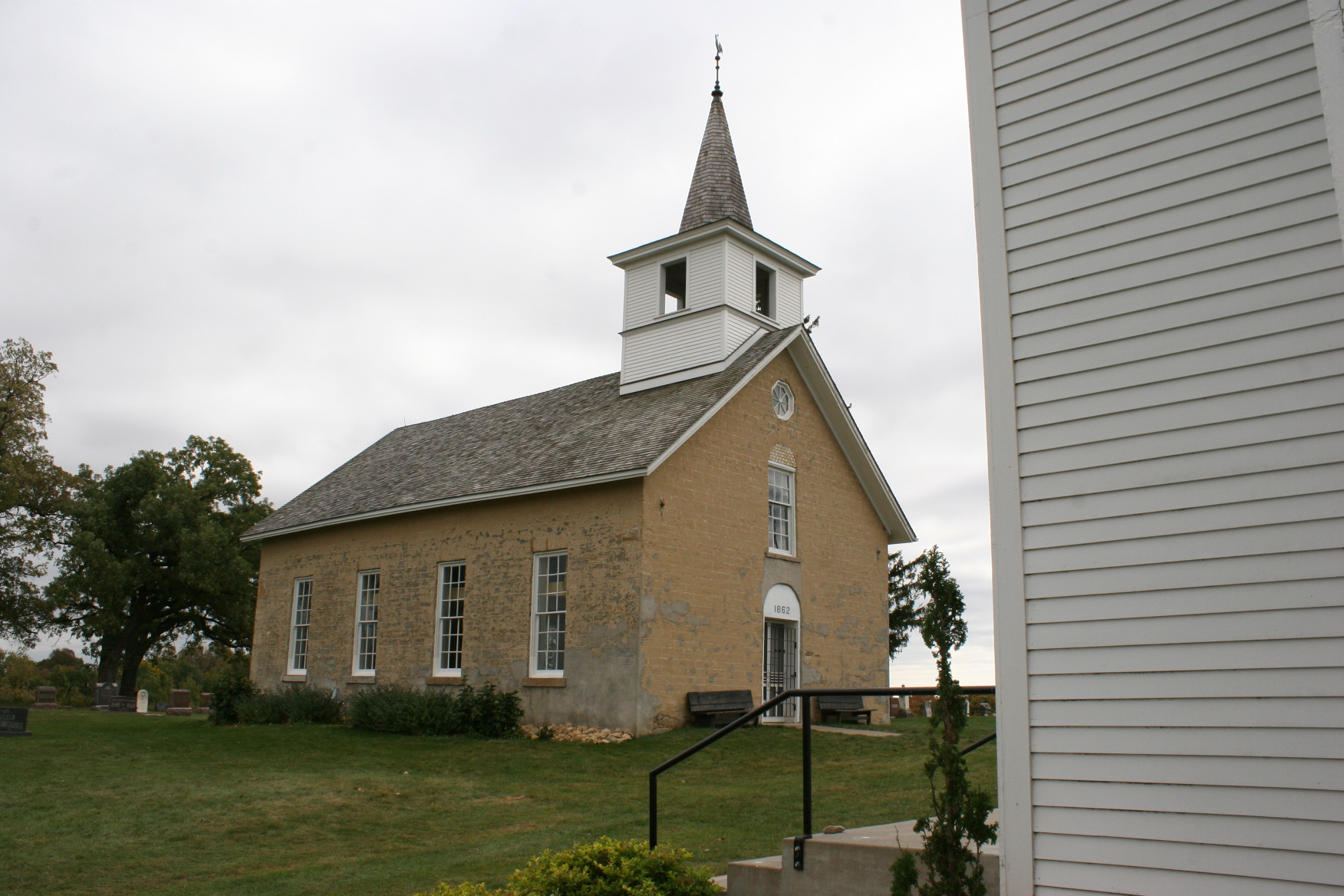
Photographed from a side of the clapboard church, the limestone church a short distance away. Minnesota Prairie Roots copyrighted photo October 2021.
A stone’s throw away across the lawn sits the 1862 limestone church, constructed in the year of the U.S.-Dakota Conflict raging many miles away to the west.
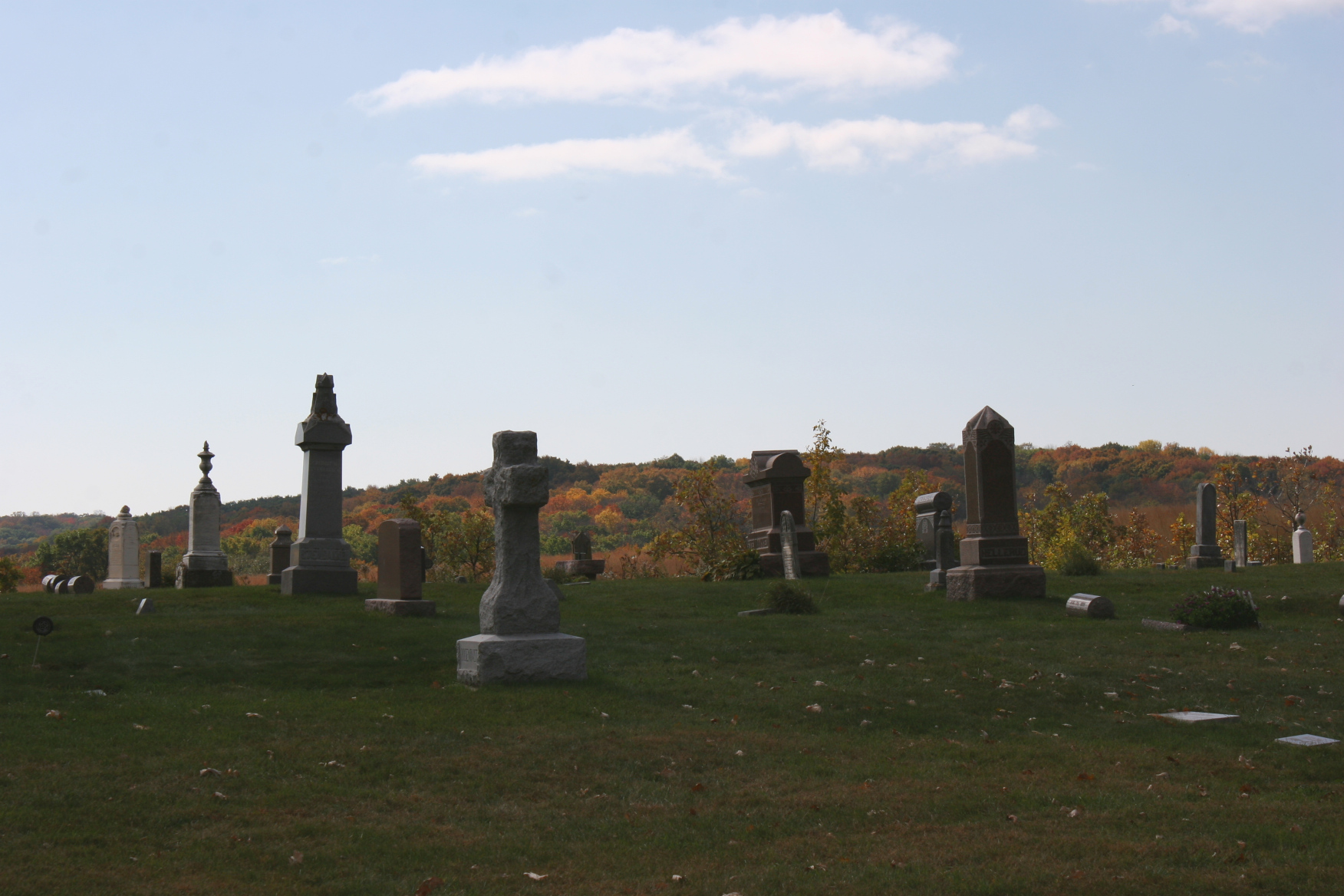
The cemetery offers history, art and a place for quiet contemplation against a beautiful natural backdrop. Minnesota Prairie Roots copyrighted photo October 2021.
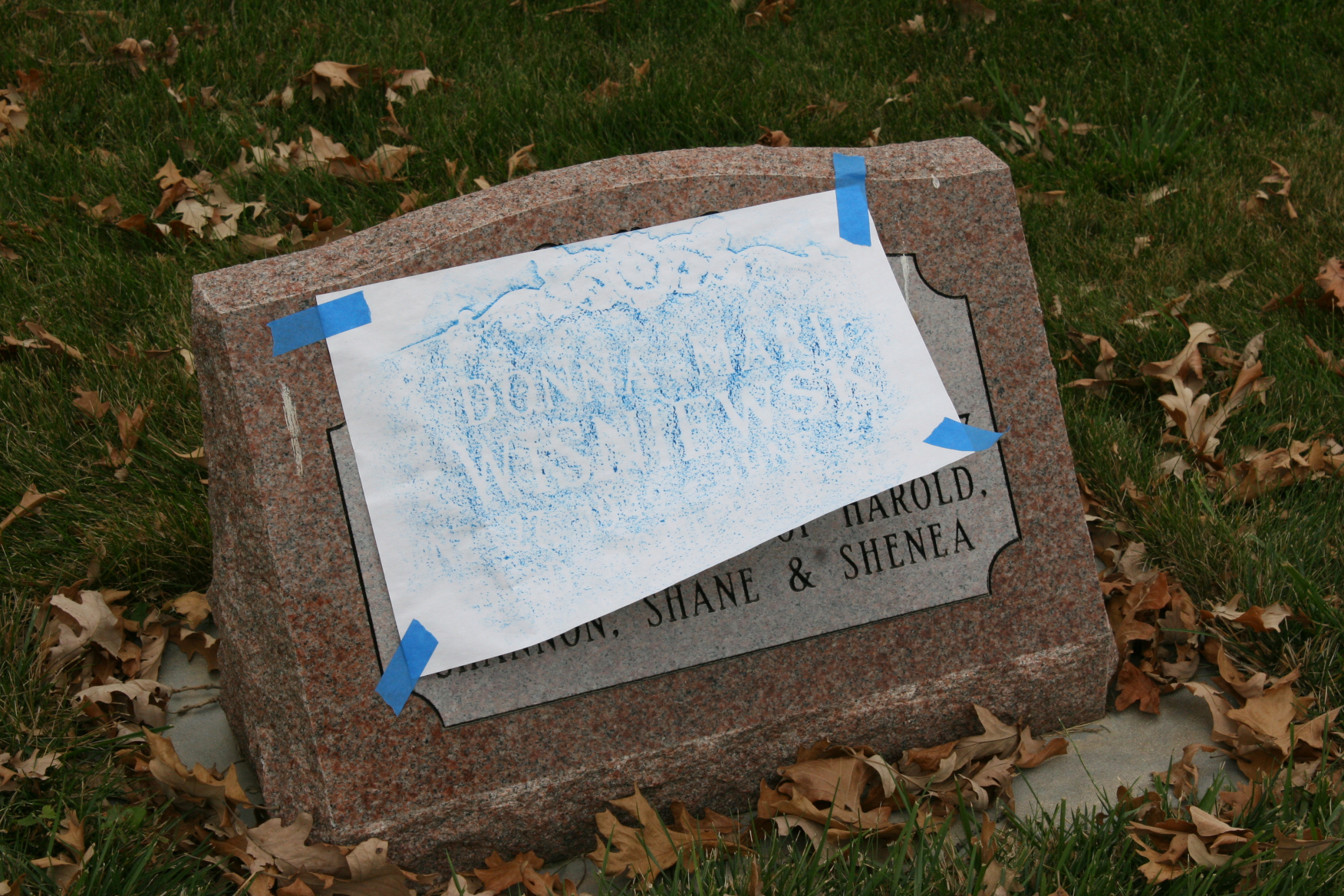
An in-process gravestone rubbing. Minnesota Prairie Roots copyrighted photo October 2021.
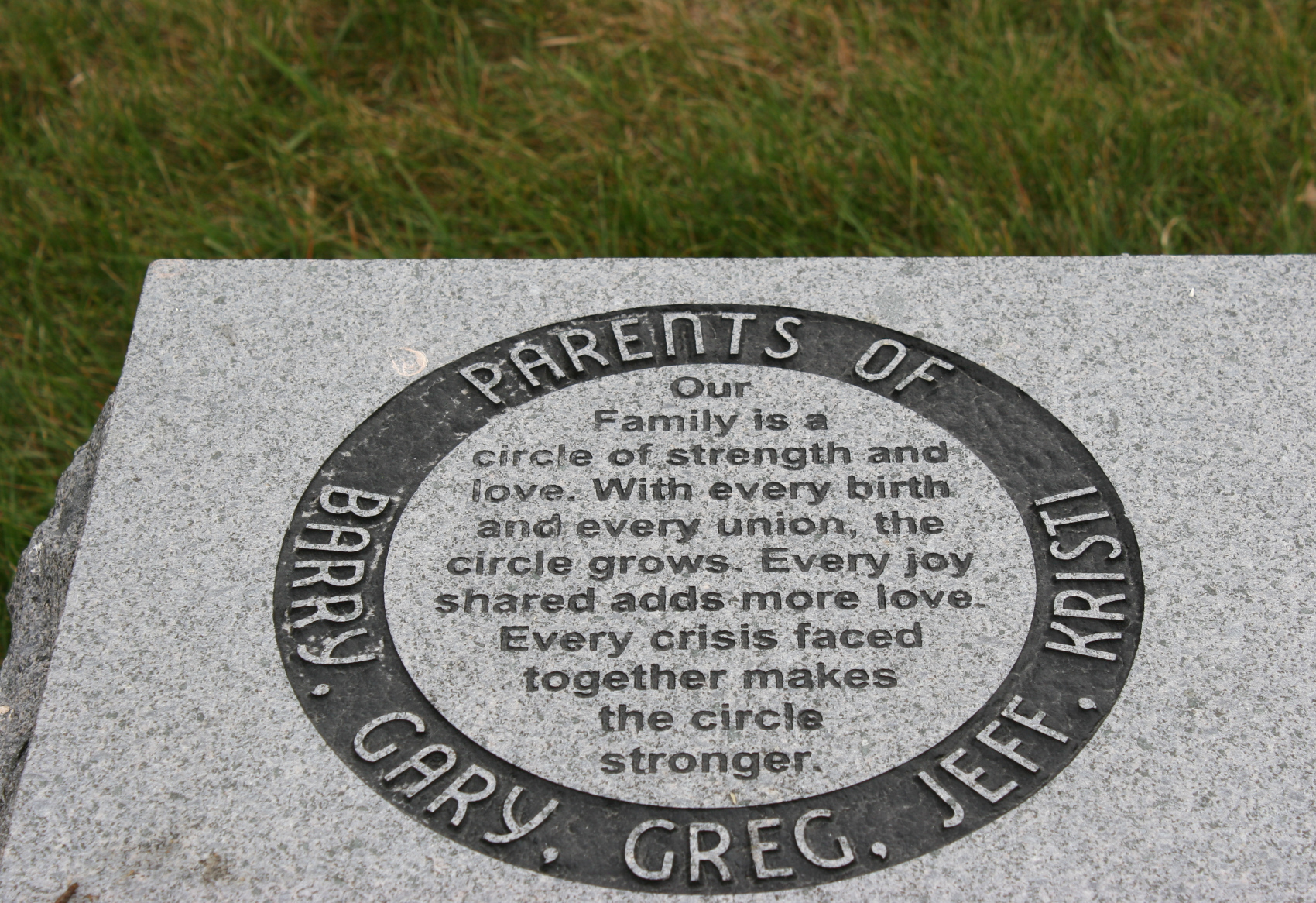
I find gravestone engravings especially interesting and often touching. Minnesota Prairie Roots copyrighted photo October 2021.
Valley Grove holds its own history as a community and spiritual gathering place for the area’s Norwegian immigrants. Walk the grounds of the cemetery next to the churches and you’ll read names of those of Norwegian ancestry. The cemetery remains well-used with new tombstones marking the passage of yet another loved one.
Information about Valley Grove is tucked inside a case on the side of the clapboard church. Minnesota Prairie Roots copyrighted photo October 2021.
I have no personal connection to Valley Grove. But I hold a deep appreciation for the history, honored via the Valley Grove Preservation Society. That organization maintains and manages the church and grounds. And its a lovely, especially in autumn, acreage.
Farm sites and farmland surround Valley Grove. Minnesota Prairie Roots copyrighted photo October 2021.
Once I’d finished my turkey sandwich and other picnic foods, I set out with my camera to document. The views from this hilltop site are spectacular. Farm land and farm sites, the low moo of a cow auditorily reminding me of this region’s agrarian base.
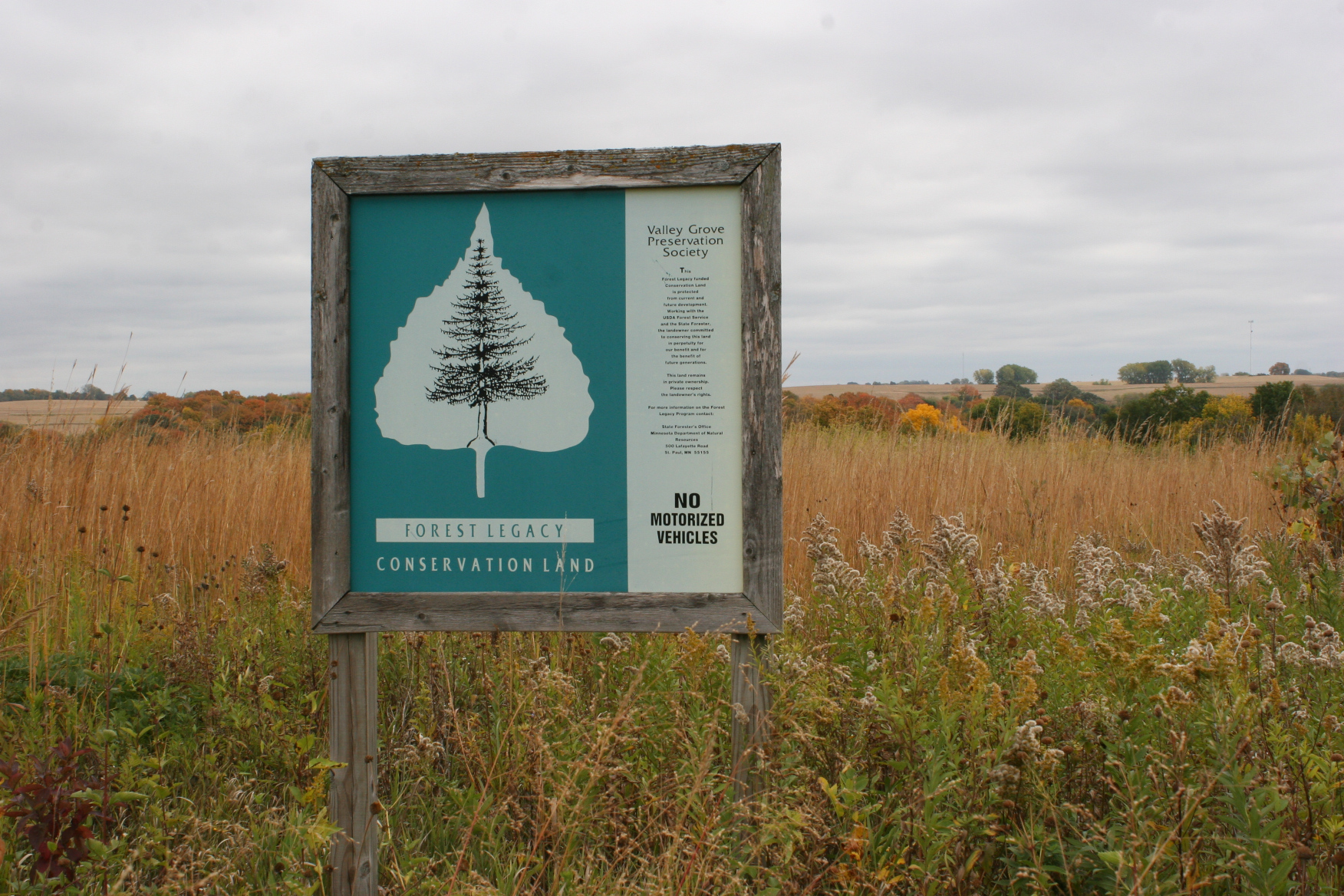
Conservation and legacy are valued at Valley Grove. Minnesota Prairie Roots copyrighted photo October 2021.
Remnants of the Big Woods remain and can be seen from Valley Grove. Minnesota Prairie Roots copyrighted photo October 2021.
Following the prairie path back to the church grounds, just over the hill. Minnesota Prairie Roots copyrighted photo October 2021.
Tall dried prairie grasses frame nearly every view. Those who tend this land value its natural features of prairie and oak savanna. Paths lead visitors along prairie’s edge and onto the prairie to view distant colorful treelines, part of the Big Woods. The hilltop location offers incredible vistas.
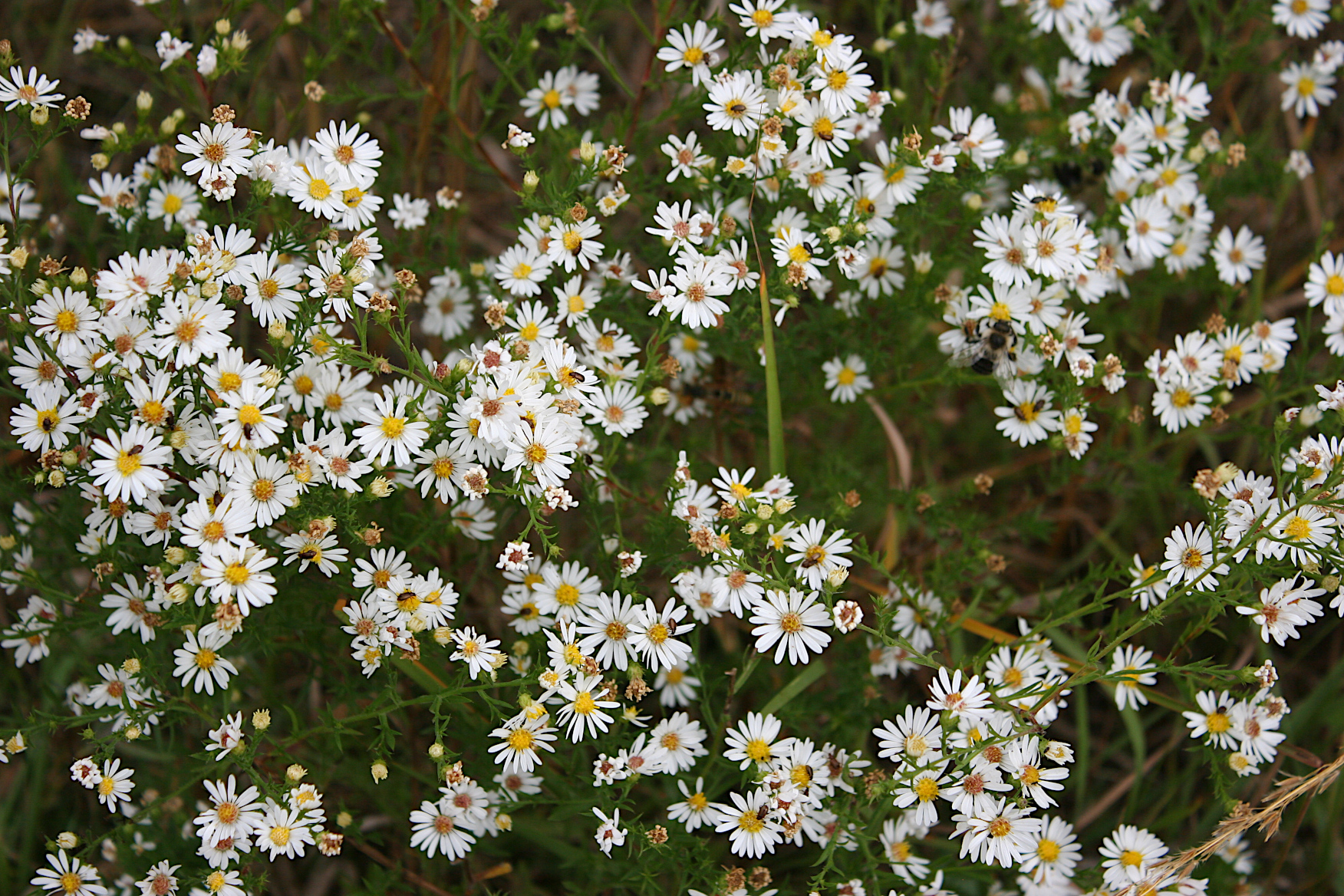
On a mixed October afternoon of sun and clouds, a wildflower jolts color into the landscape. Minnesota Prairie Roots copyrighted photo October 2021.
But up close is worth noting, too, especially the wildflowers.
An unexpected delight in the cemetery was an old-fashioned rosebush in full bloom. Minnesota Prairie Roots copyrighted photo October 2021.
And in the cemetery I found an old-fashioned rosebush abloom in pink roses. Just like a rosebush that graced my childhood farm far away in southwest Minnesota where settlers and Native Peoples once clashed. I dipped my nose into blossom after blossom, breathing in the deep, perfumed, intoxicating scent.
Lots of wildflowers to enjoy. Minnesota Prairie Roots copyrighted photo October 2021.
Spending time at Valley Grove, even when church doors are not open, seems sacred. I feel the peace of this rural location. The quiet. My smallness, too, within the vastness of sky and land and spires rising.
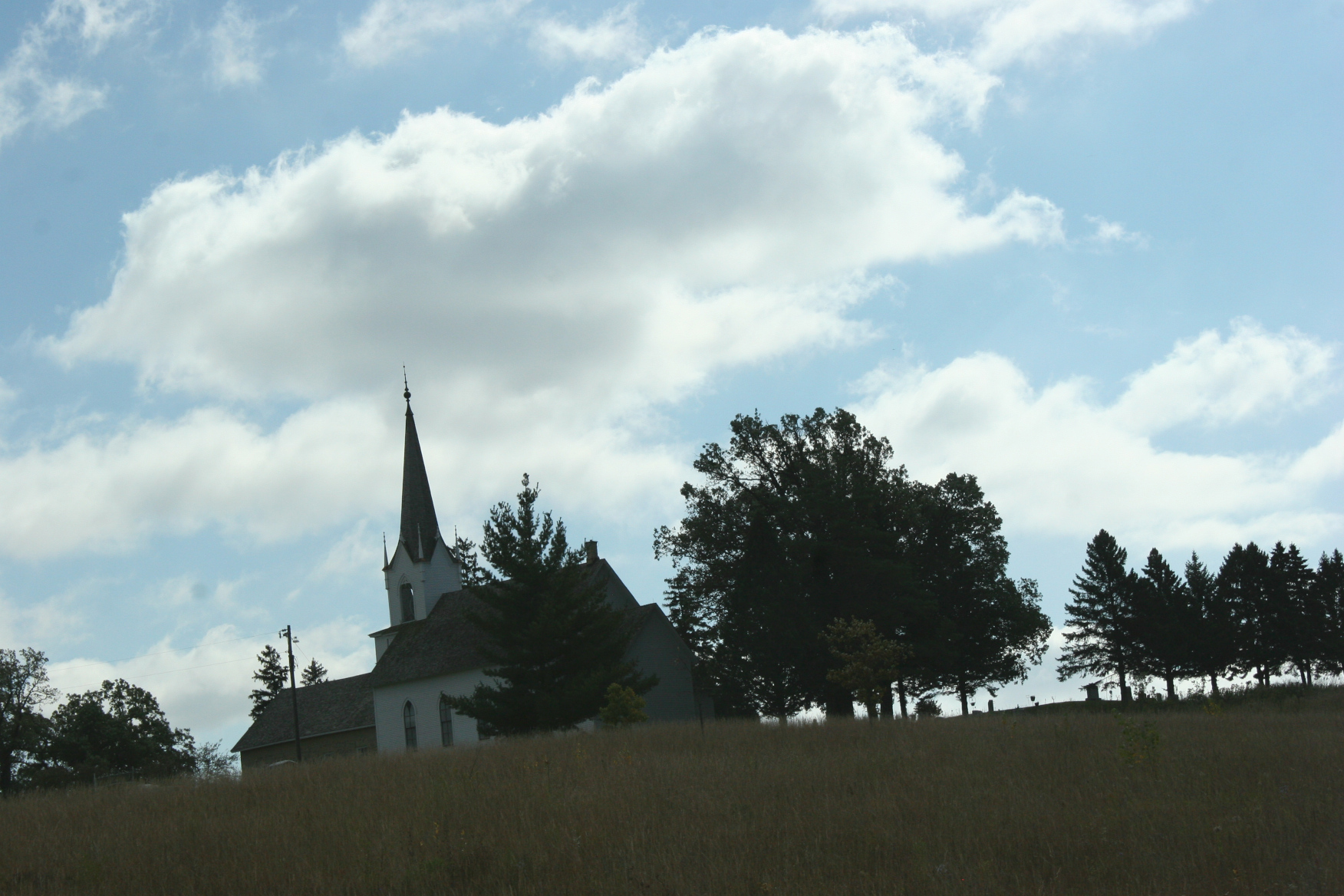
High on the hill…Valley Grove churches. Minnesota Prairie Roots copyrighted photo October 2021.
To walk here, to sit on the front steps of a church on the National Register of Historic Places is to feel a sense of gratitude for those who came before us. For those who today recognize the value of sacredness and continue to preserve Valley Grove. Who understand that the spiritual stretches beyond church doors. To the land. To the memories of loved ones. And to future generations.







































 Minnesota Prairie Roots
Recent Comments