Minnesota Prairie Roots

Writing and photography by Audrey Kletscher Helbling

The art of a southern Minnesota farm show & rural flea market September 4, 2025

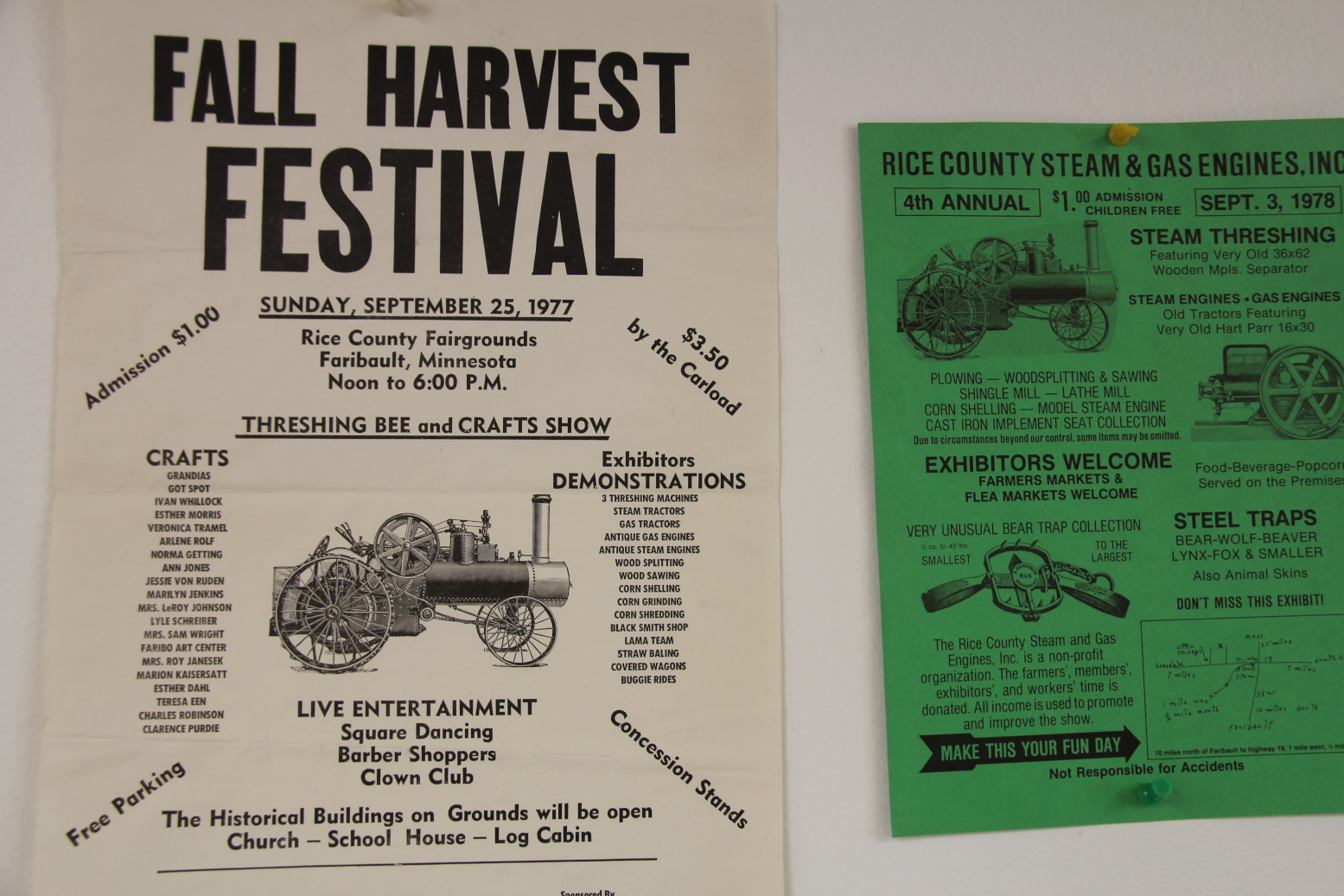
Vintage posters displayed from the early years of the current Rice County Steam & Gas Engines Fall Show, before the name and location changed. (Minnesota Prairie Roots copyrighted photo August 2025)

ART EXISTS EVERYWHERE, even at a farm-themed event. My photos from the Rice County Steam & Gas Engines Fall Show last Saturday in rural Dundas prove that. As a creative, I view life through an artistic lens. So I’m naturally drawn to photograph items that others may not necessarily see as art.
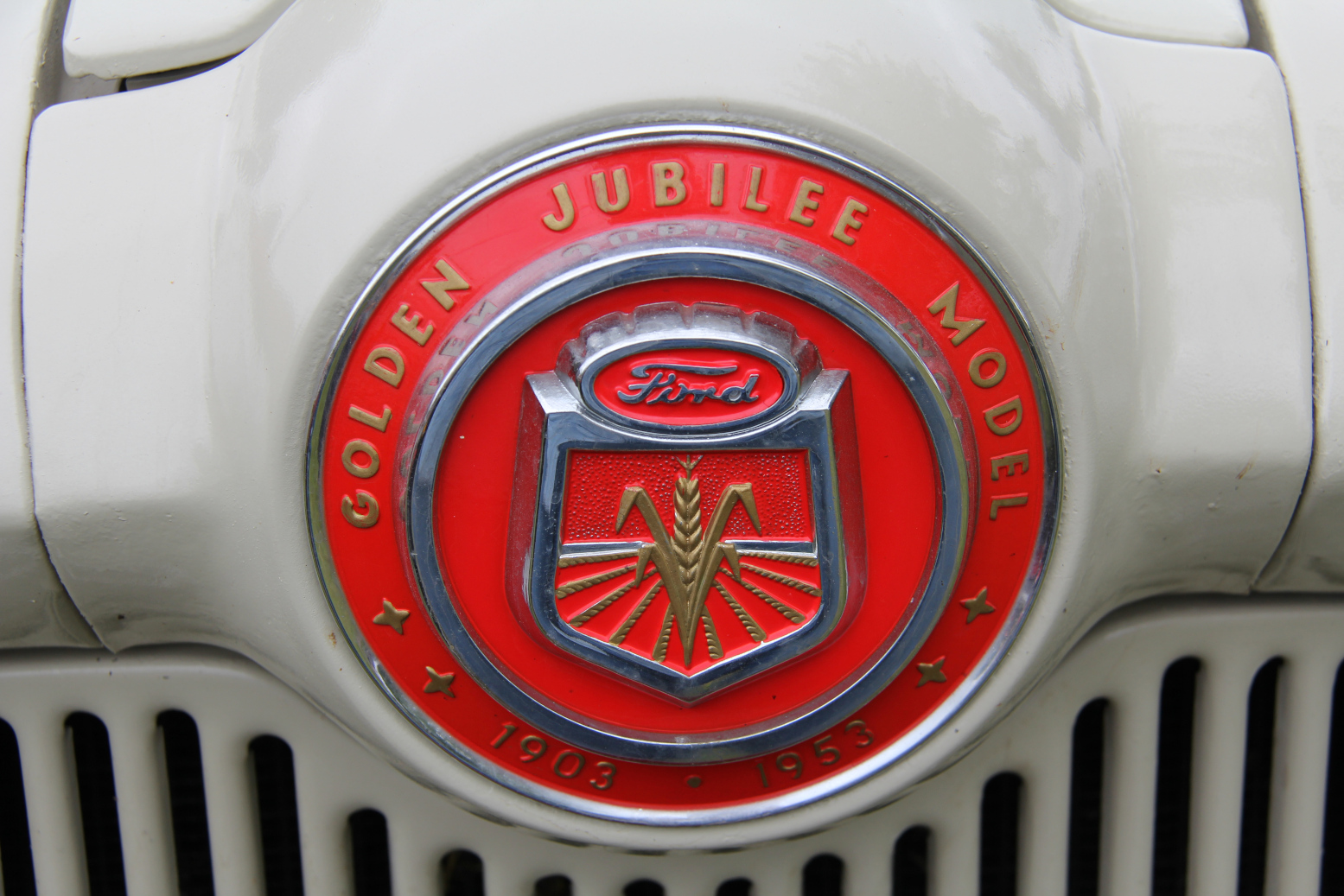
I see tractor emblems, including this one on a vintage Ford, as works of art. (Minnesota Prairie Roots copyrighted photo August 2025)

In this photo essay, you’ll view a sampling of the “art” I discovered. I found art on vintage tractors, on clothing, at the flea market, especially at the flea market, and beyond.
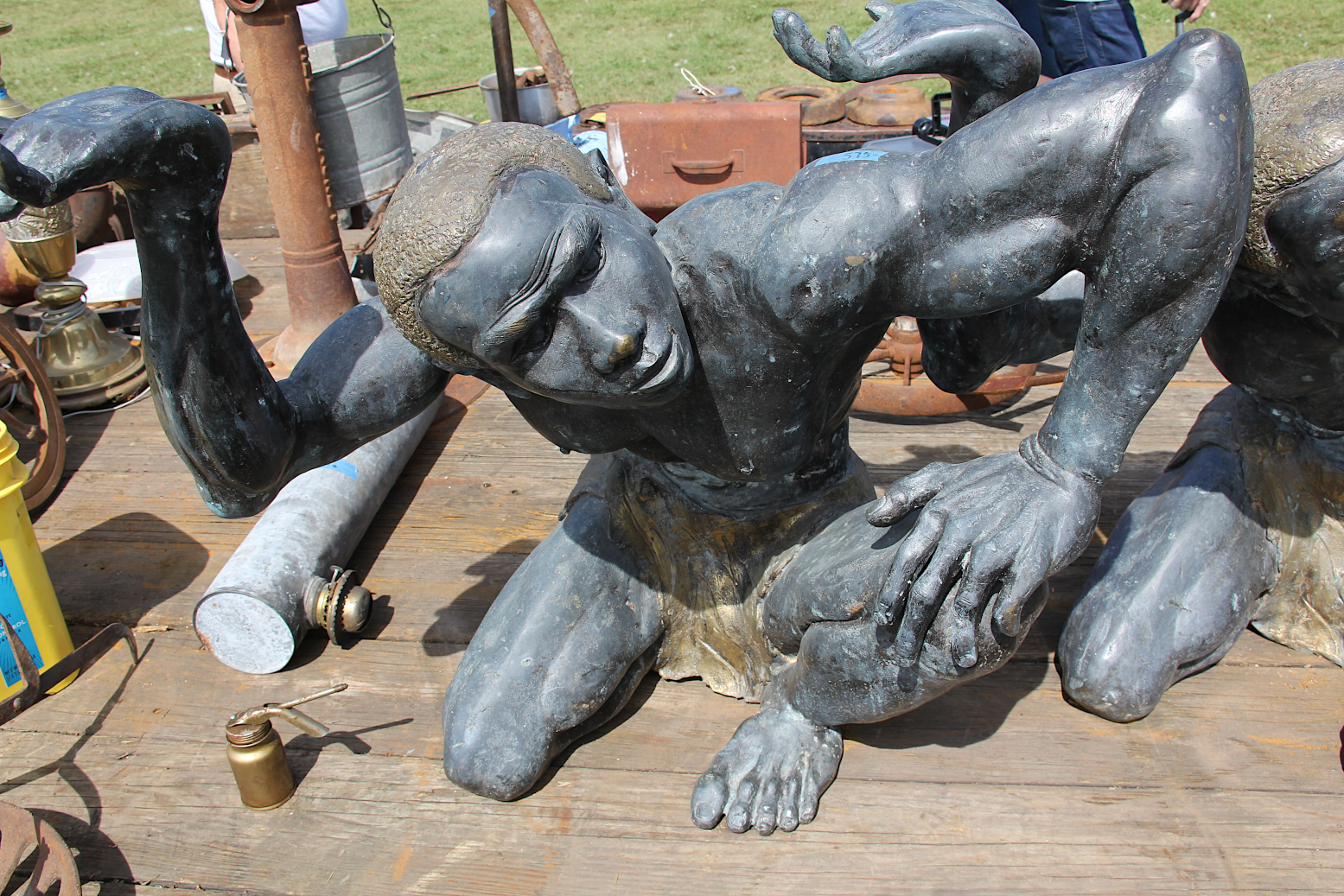
Two brass sculptures offered by a vendor. They are not solid brass, so not as heavy as they appear. (Minnesota Prairie Roots copyrighted photo August 2025)

Let’s start there, among market vendors selling a variety of goods ranging from toy tractors to glassware to home décor and everything in between. The art that drew my deepest interest—two massive brass sculptures of African men—sat on a flatbed trailer. They were nothing short of spectacular. Such grace. Such power in their muscular arms and legs. Truly, truly stunning. Seller Daniel Bell of Faribault, who calls himself a picker, found the matching pair in Iowa. The sculptures once supported tabletops, now missing. He’s priced each at $575. I can connect you with Dan if you’re interested.
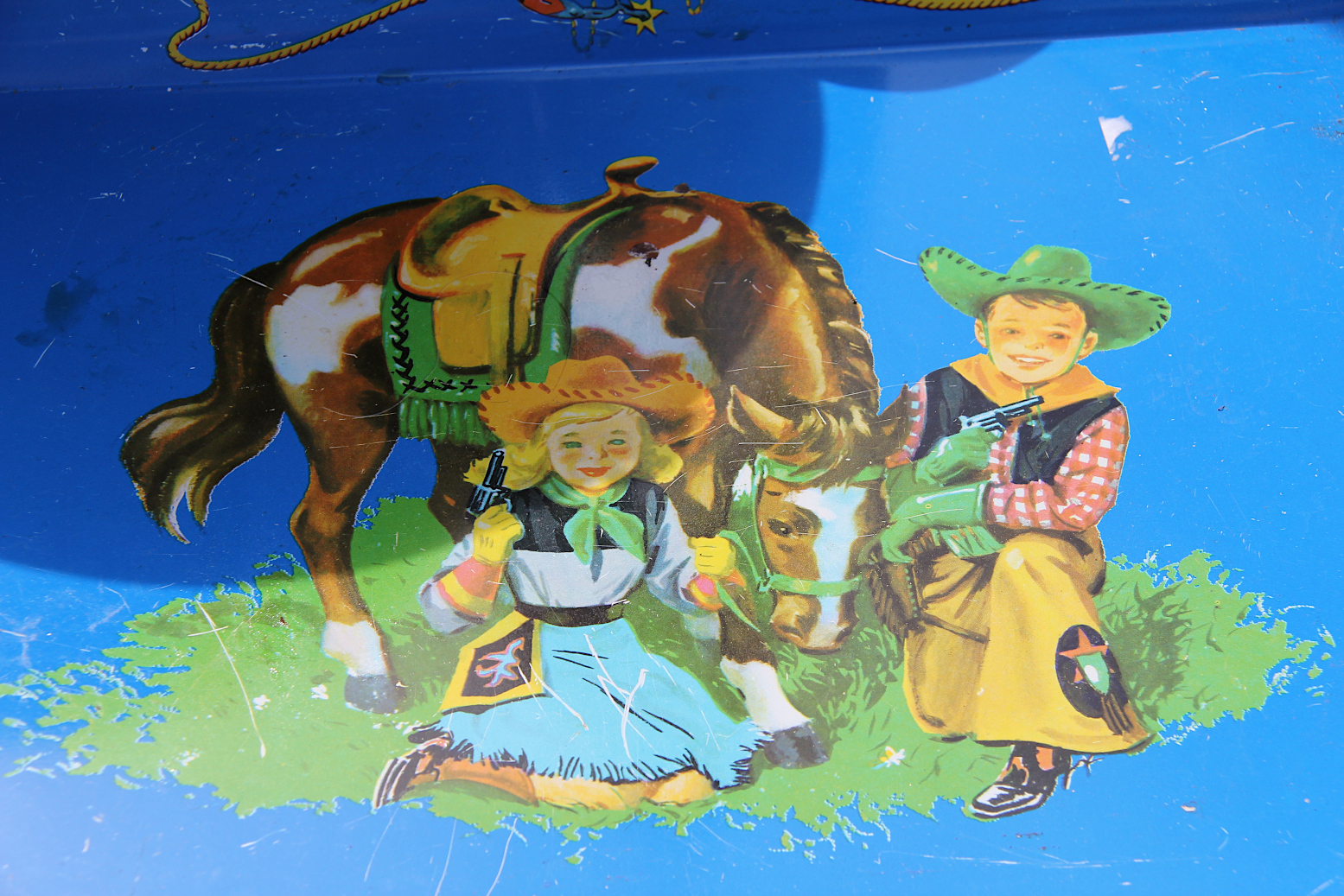
Vintage tray art from the 1950s. (Minnesota Prairie Roots copyrighted photo August 2025)

Almost as interesting, and certainly thought-provoking in 2025, is a 1950s image of children dressed in western attire and brandishing pistols. When I reflect on that scene printed on a tray, I remember how I, too, owned a toy cap gun and played “Cowboys and Indians.” That all seems so terribly wrong now when viewing this as an adult in a world riddled by gun violence. I’m thankful for changed attitudes and perspectives about our Indigenous Peoples and about toy guns.
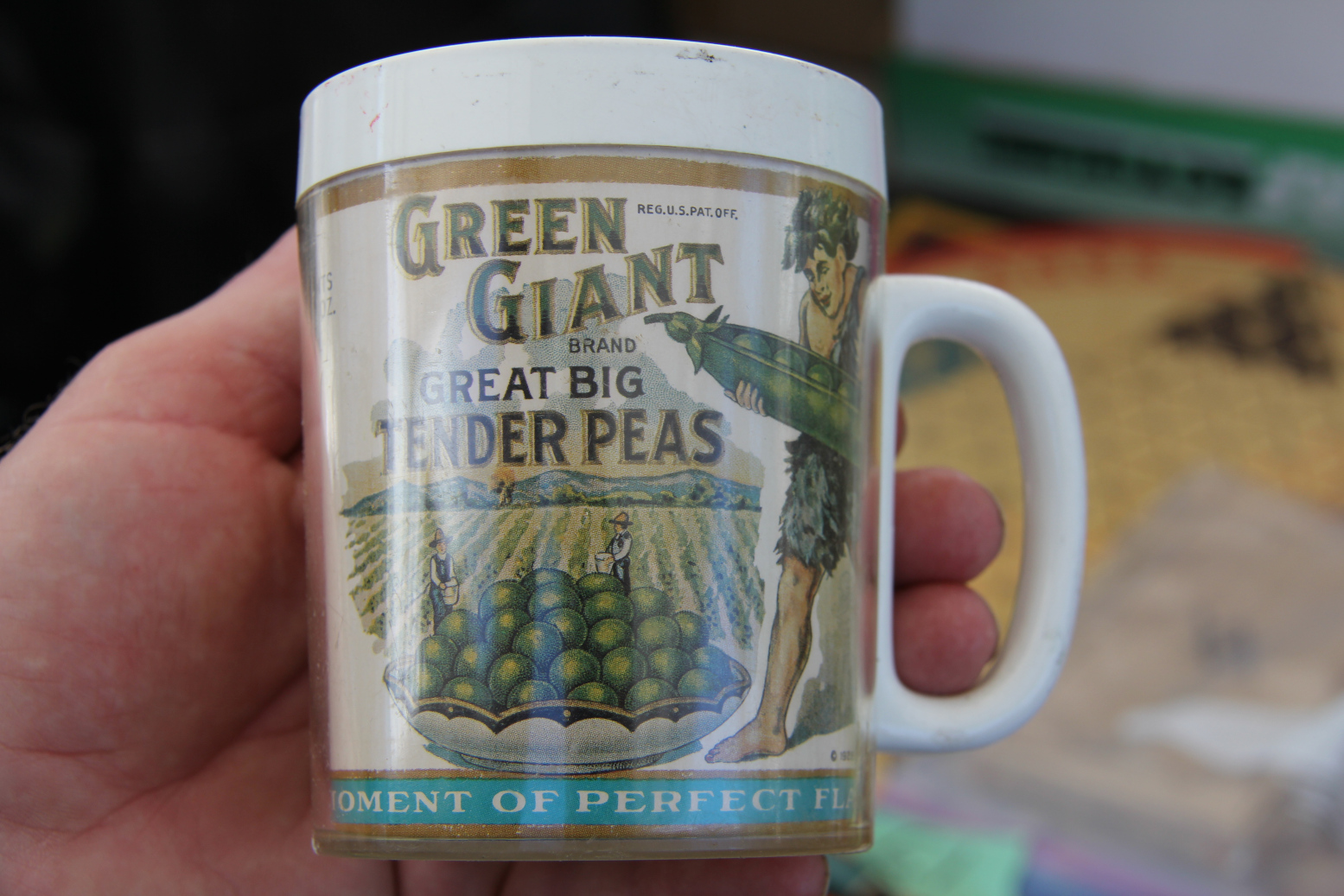
A Jolly Green Giant themed plastic mug. (Minnesota Prairie Roots copyrighted photo August 2025)

I spotted art on a plastic coffee mug from Minnesota Valley Canning Company featuring the Green Giant brand of GREAT BIG TENDER PEAS. The back side of the mug is imprinted with the story of the Jolly Green Giant. I should have purchased the cup, which belonged to the father of the flea market vendor. He worked at the canning company in Le Sueur until its 1995 closure. This mug is more than a mug. It’s a collectible piece of regional literary and visual art.
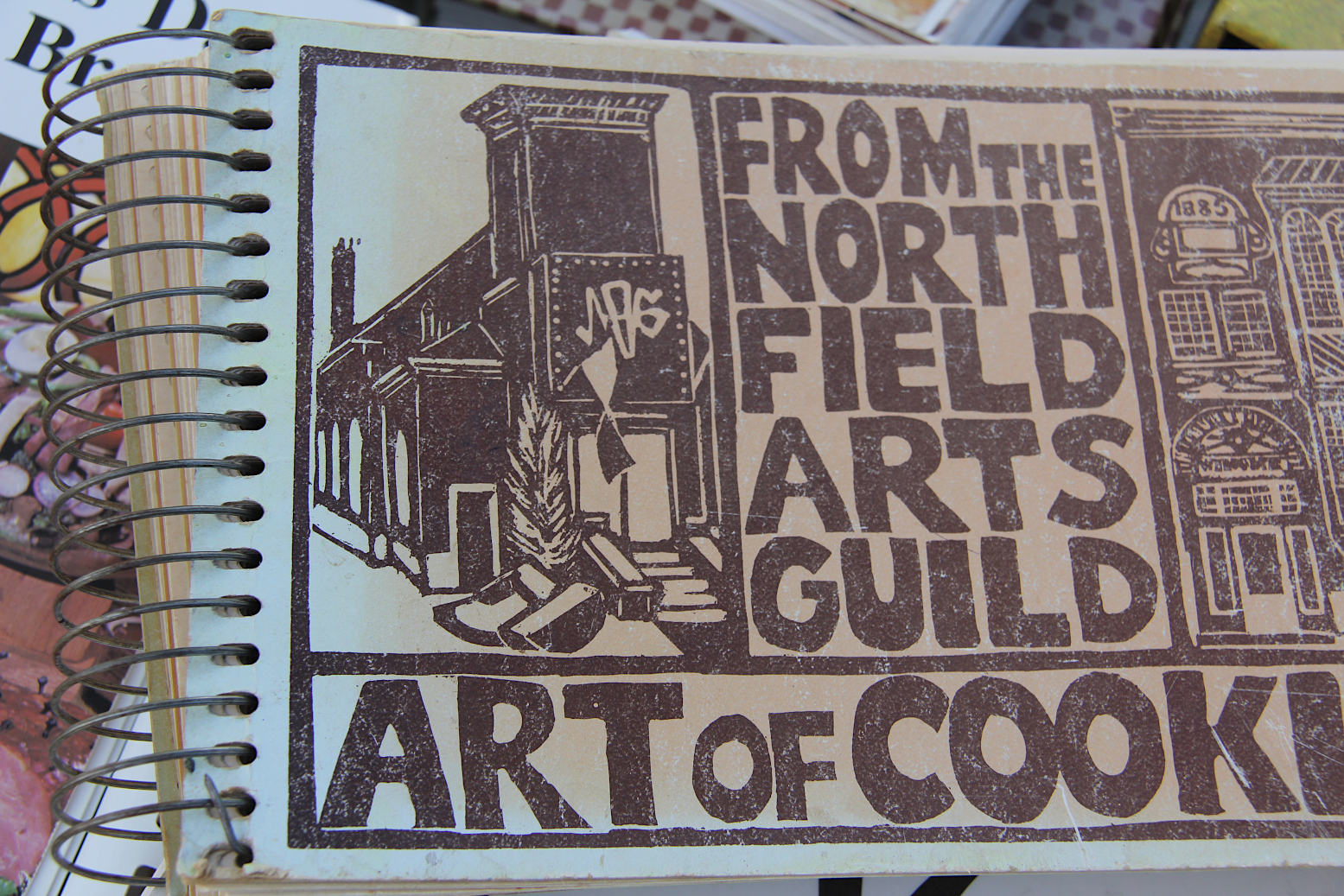
The artsy cover of the 1984 Northfield Arts Guild commemorative cookbook. (Minnesota Prairie Roots copyrighted photo August 2025)

And then I found art on the cover and inside the Northfield Arts Guild’s 25th anniversary cookbook from 1984. Not unexpected, it features the art of rural Northfielder Fred Somers, whose work I admire.
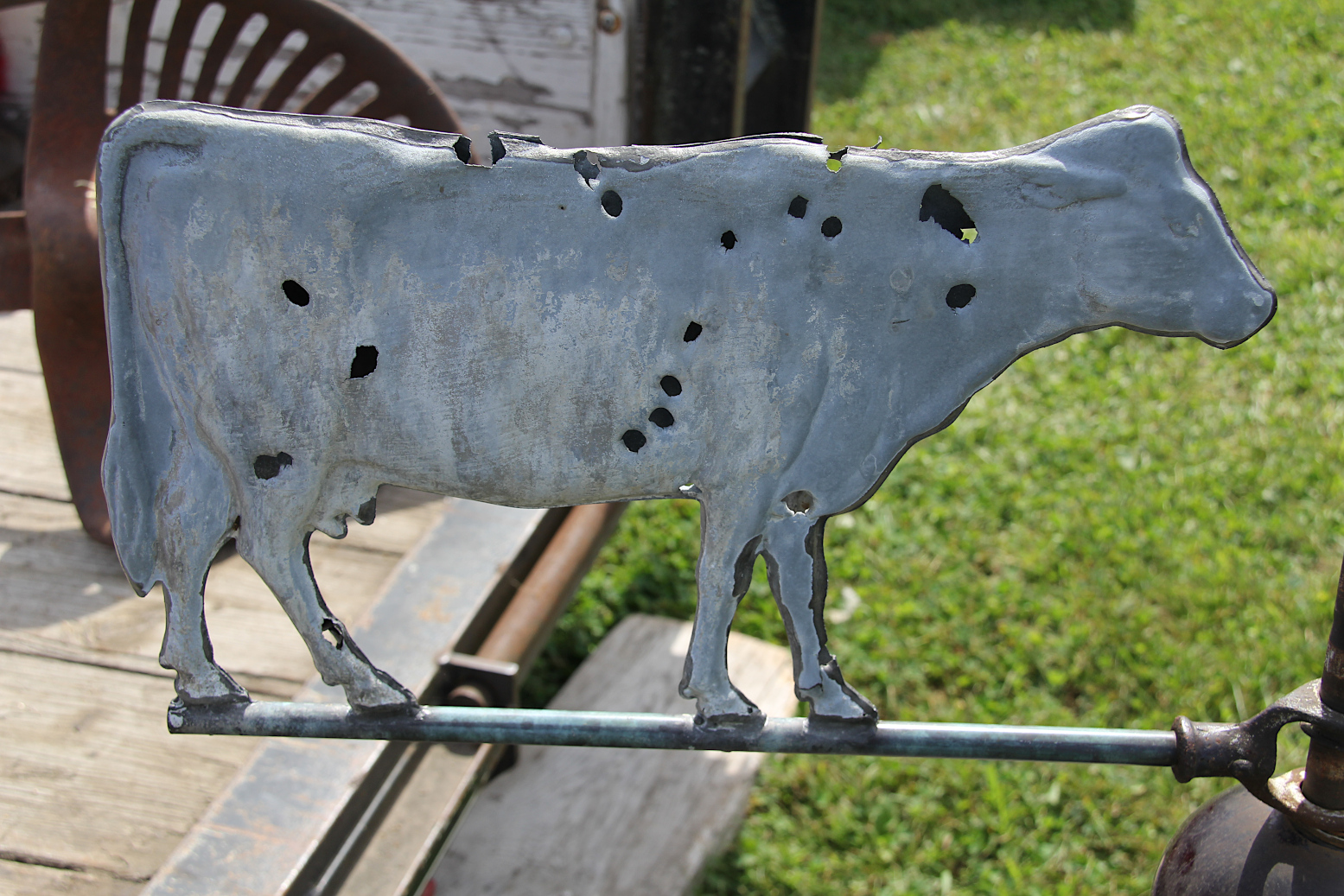
A damaged work of art. (Minnesota Prairie Roots copyrighted photo August 2025)

At another vendor, I spotted a bullet-riddled cow weather vane, a form of functional rural art. And apparently a shooting target, too. I saw a horse weather vane inside a showgrounds building.
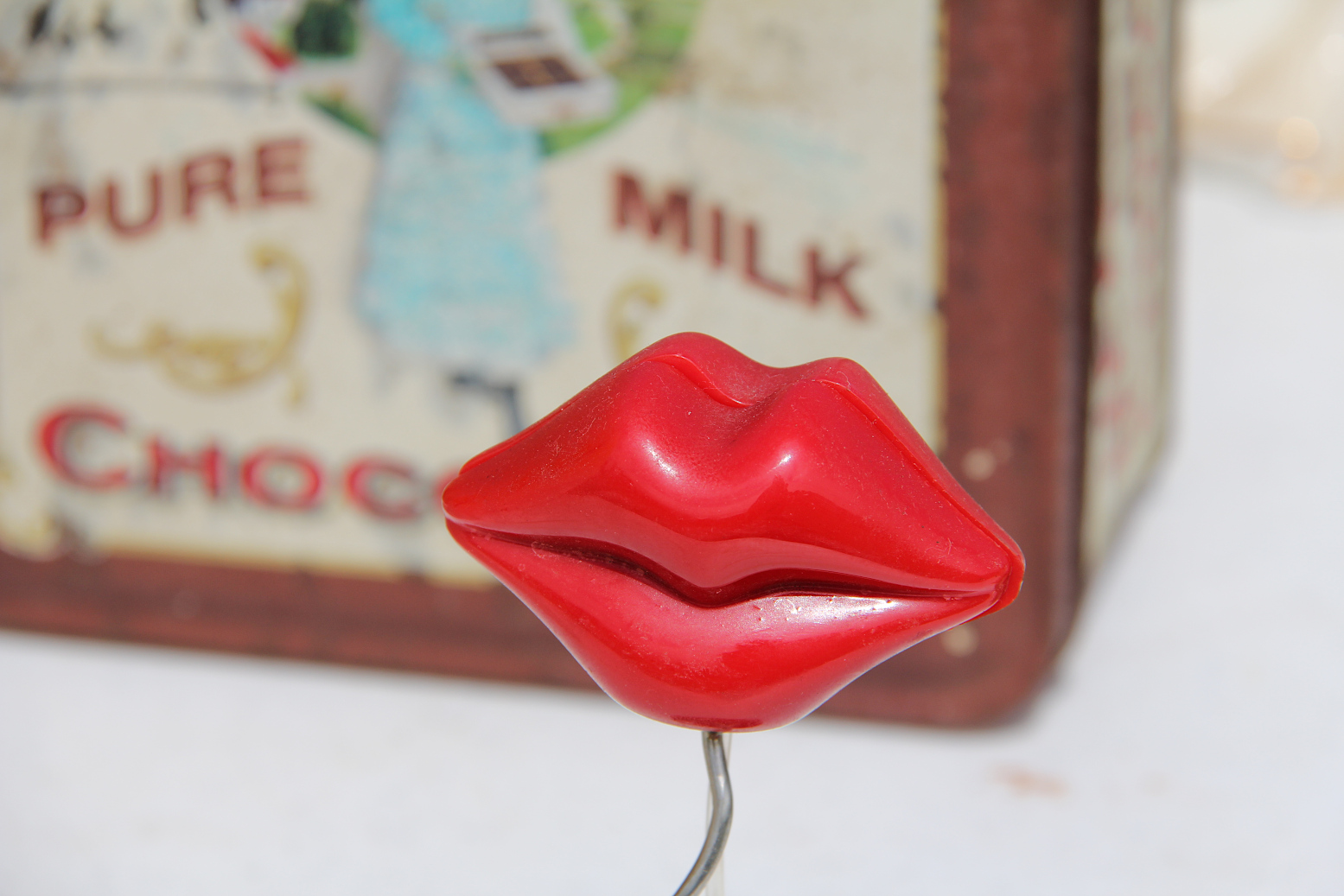
Pop art in my eyes. The vendor saw the lips as otherwise, as a bill holder. (Minnesota Prairie Roots copyrighted photo August 2025)

And then there were the duck decoys, the red plastic lips and the jar full of colored plastic clothespins, all viewed as art by me.
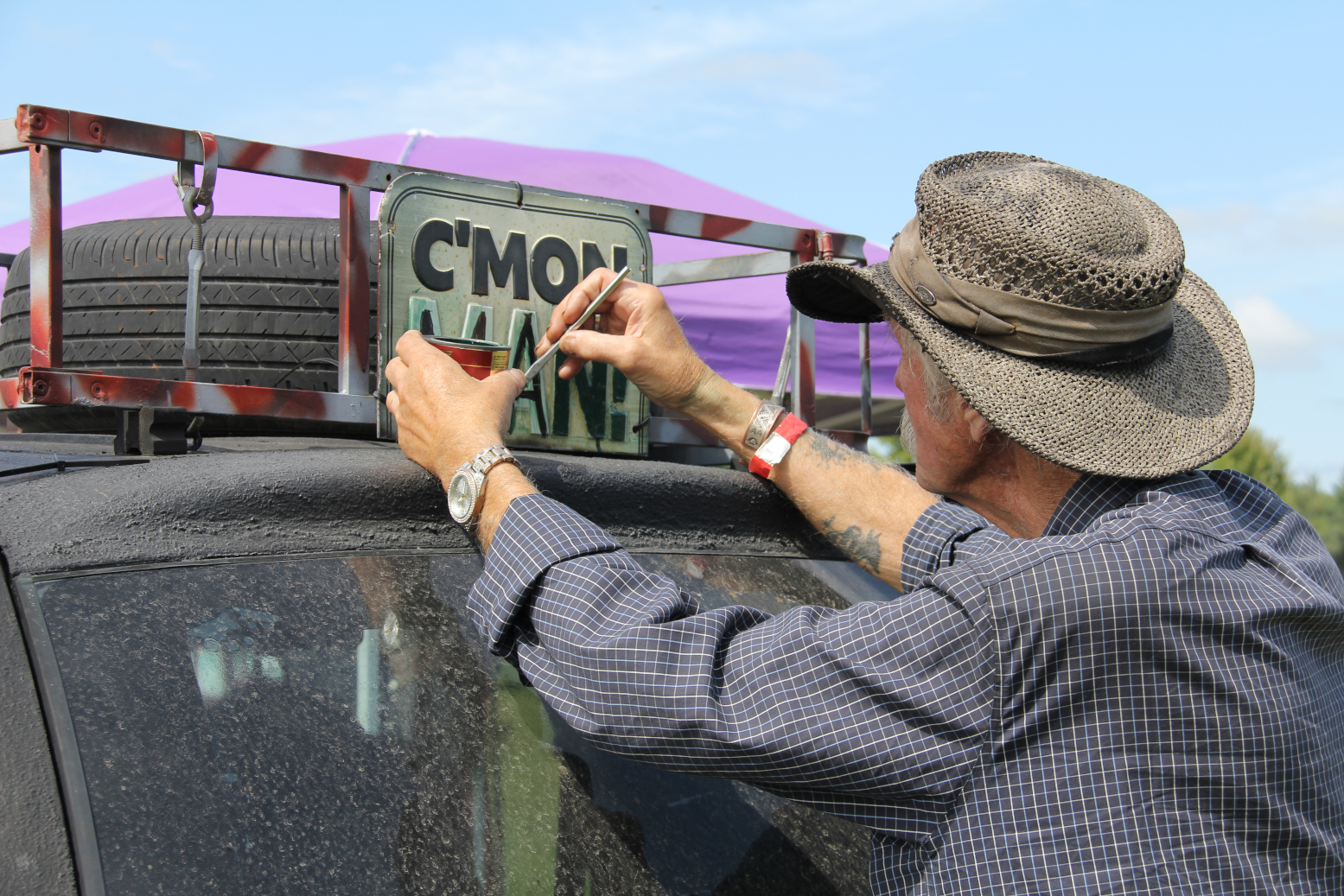
The leather goods vendor paints while manning his stand. (Minnesota Prairie Roots copyrighted photo August 2025)

I even saw a vendor painting, freshening up the words “C’MON MAN!” on his van. He was selling mostly leather belts, an inventory purchased when a leather goods shop closed.
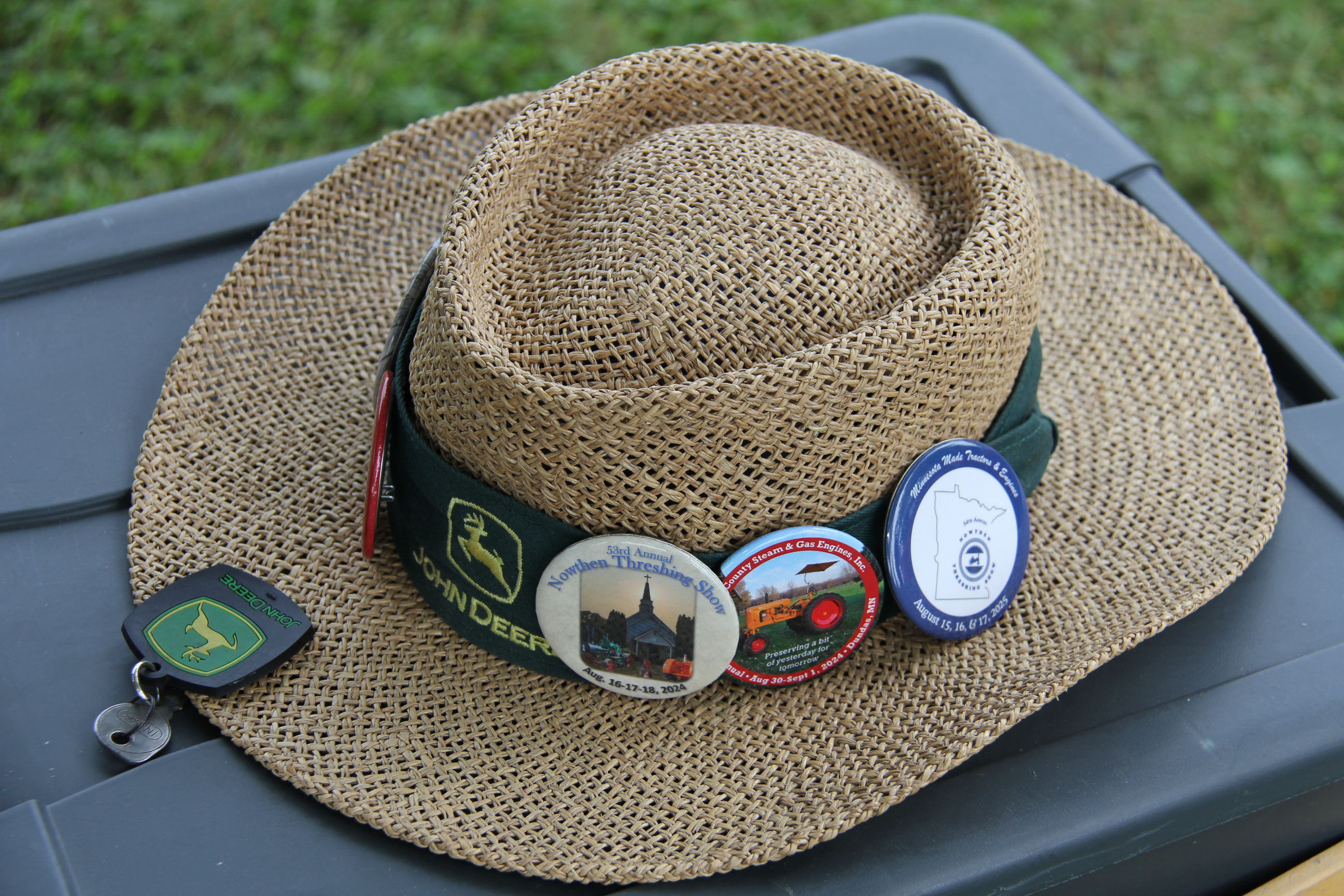
Show buttons on a straw hat and even a keychain are forms of art. (Minnesota Prairie Roots copyrighted photo August 2025)
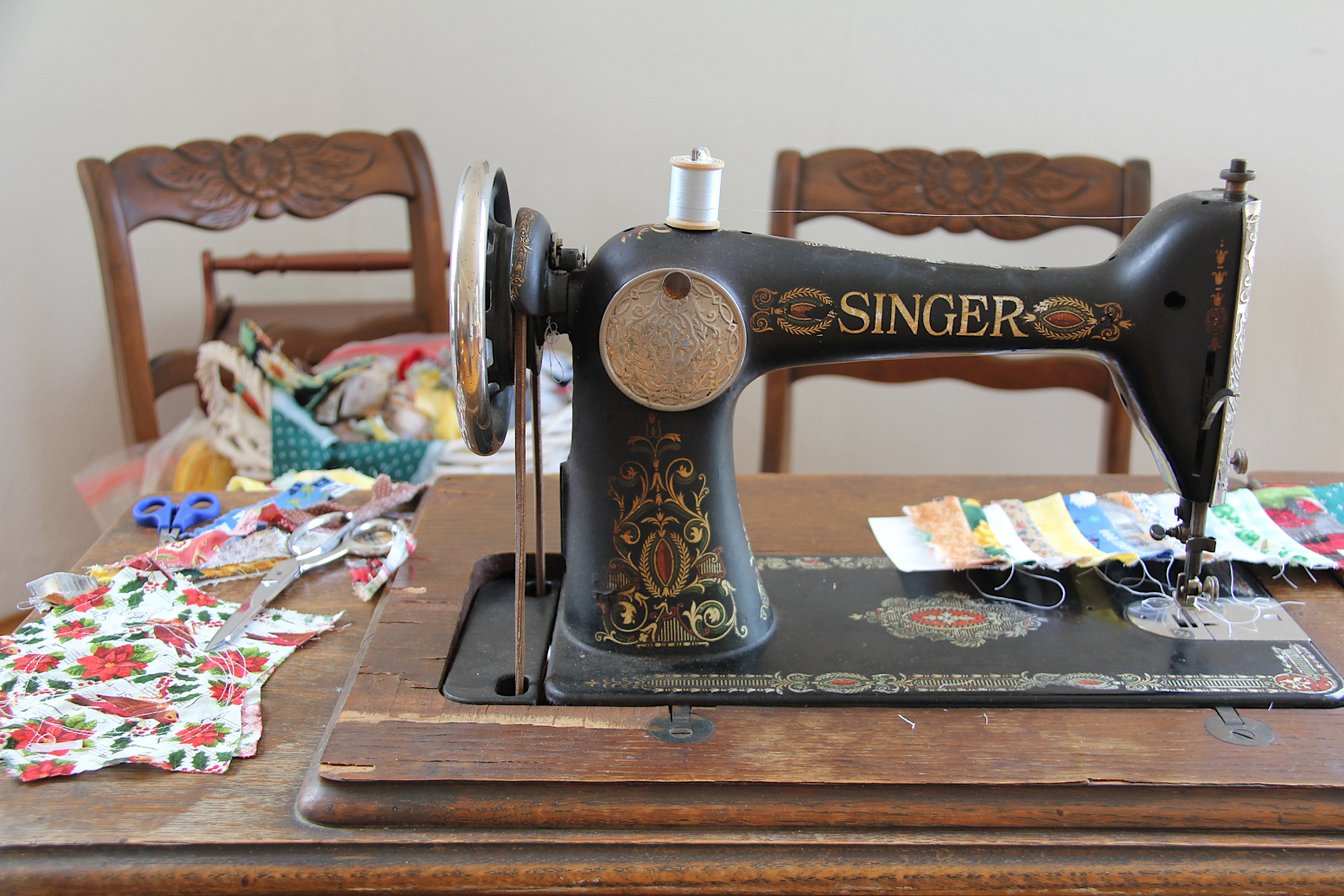
Creative arts of yesteryear shown inside the old farmhouse. (Minnesota Prairie Roots copyrighted photo August 2025)

Elsewhere around the showgrounds, art exists also. I discovered it on commemorative buttons, stickers and signs. Inside the 1912 farmhouse a vintage sewing machine and fabric scraps highlighted the creative arts.
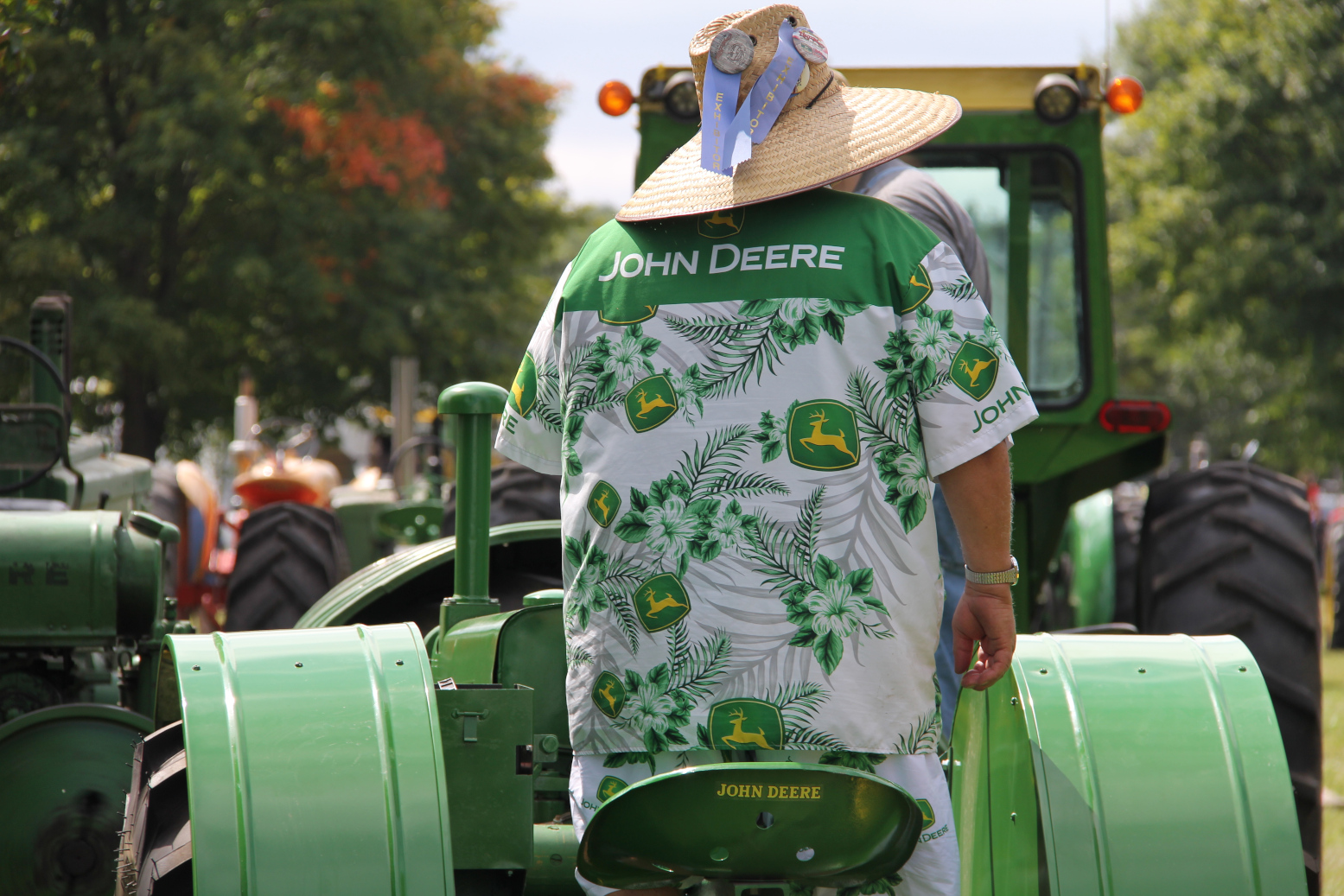
Brand loyalty in fashion. (Minnesota Prairie Roots copyrighted photo August 2025)

I even found fashion art—in a John Deere/Hawaiian shirt worn by a John Deere tractor owner.
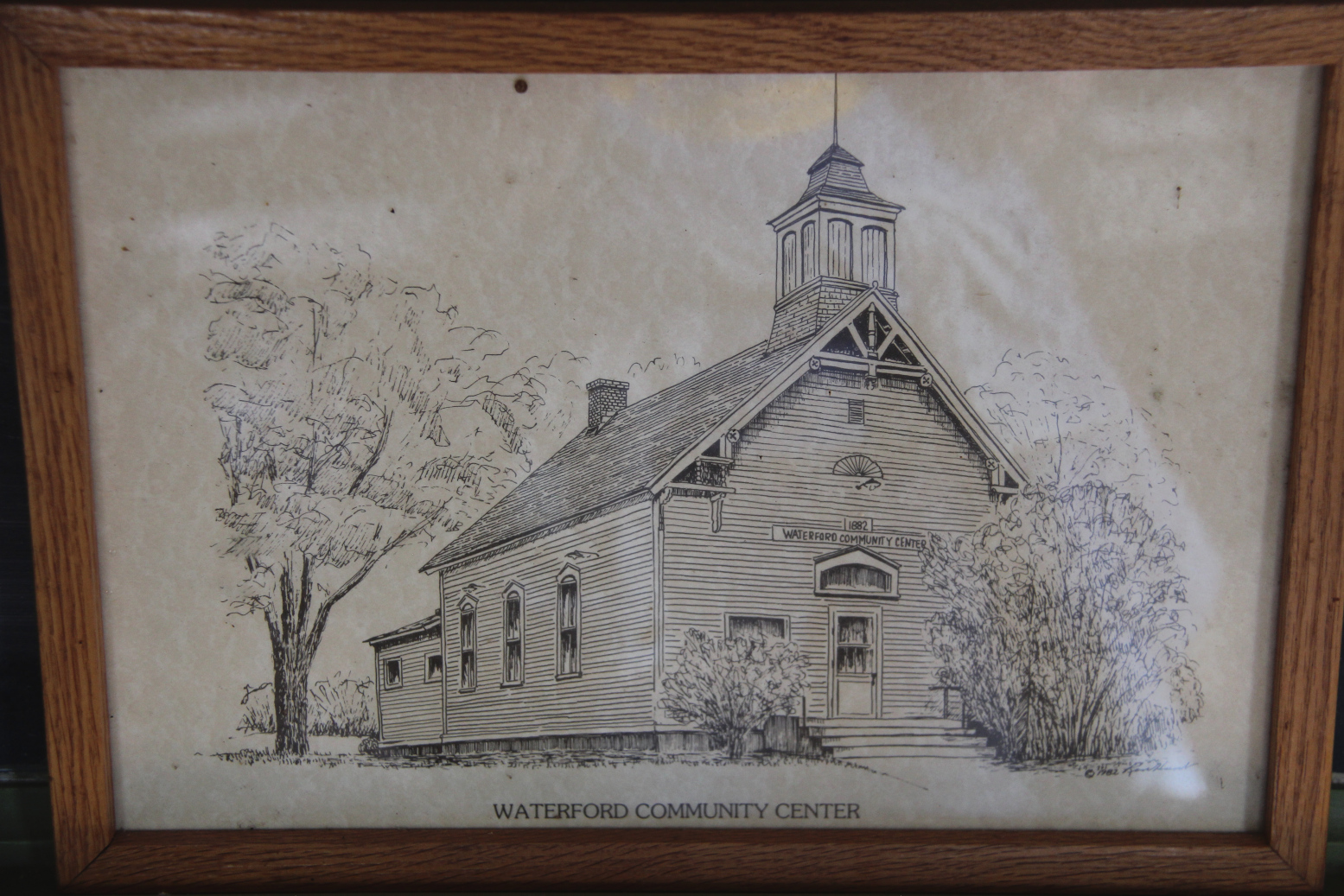
Among the art displayed inside the old Waterford School and then community center. (Minnesota Prairie Roots copyrighted photo August 2025)

Art (prints and photos) graces a wall of the Waterford Community Center, once a one-room school, moved onto the Steam & Gas Engines showgrounds and opened to the public this year.
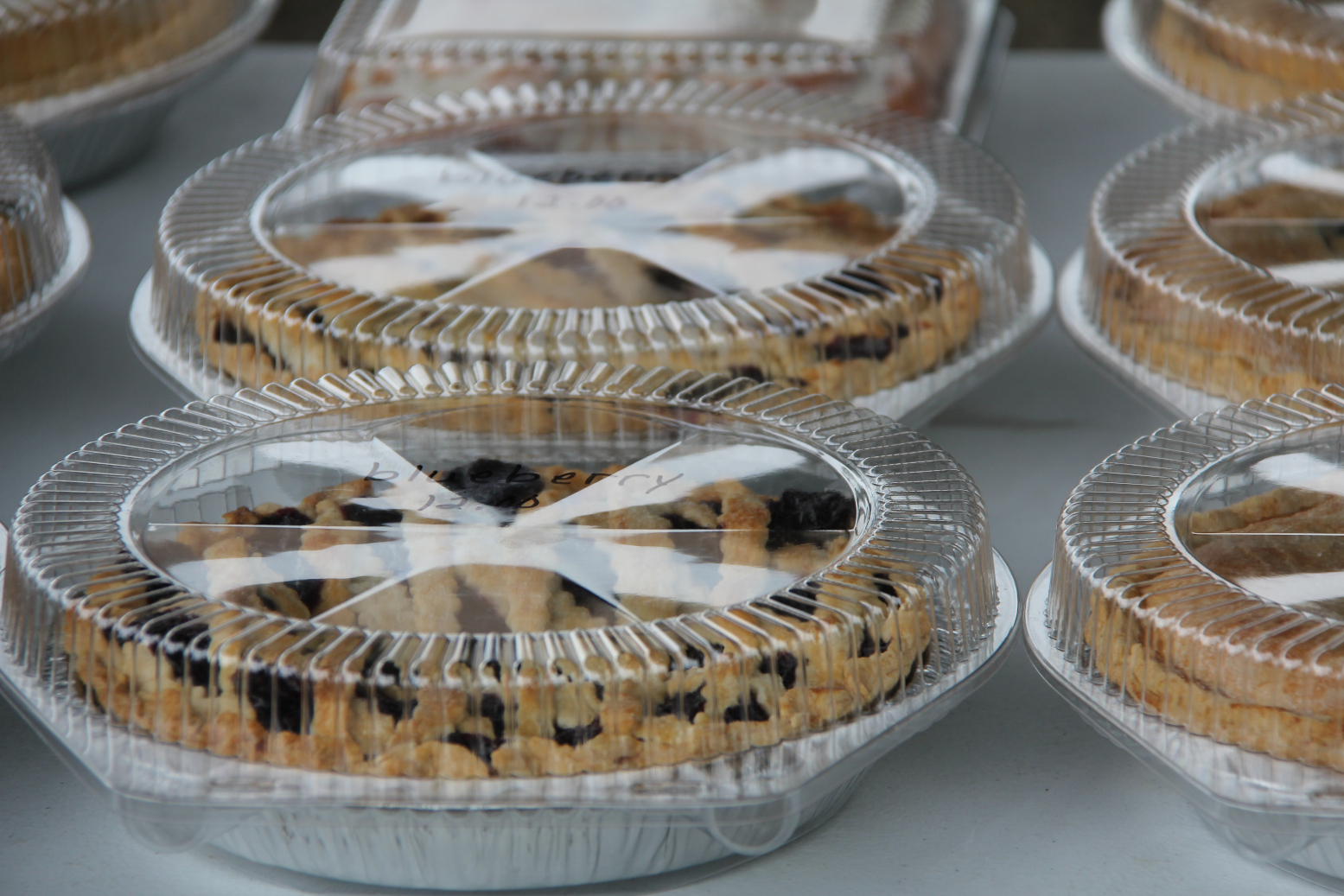
The culinary arts in pies crafted by the Amish. (Minnesota Prairie Roots copyrighted photo August 2025)

And then there are the culinary arts as perfected by an Amish family selling handheld fruit pastries and pies plus homemade ice cream crafted on-site as attendees watched. They are new-to-the-show vendors. The peach pastry and ice cream, oh, my, so delicious. They sold out of pies and handhelds.
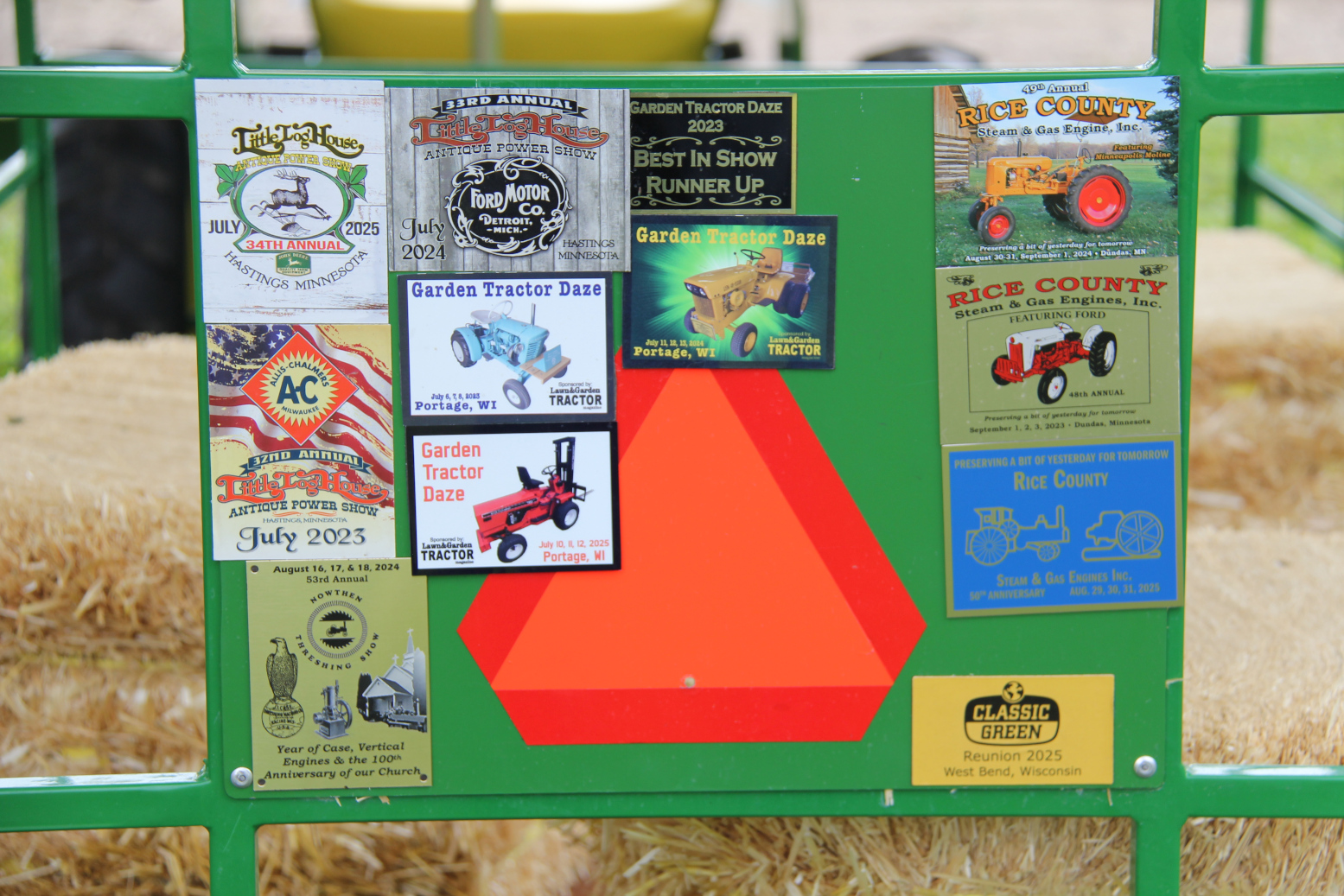
I see this collage of farm show stickers as art. (Minnesota Prairie Roots copyrighted photo August 2025)

This may be a show themed to farming of yesteryear. But, as I discovered, art also abounds. Sometimes you just have to look through an artistic lens to see it.

© Copyright 2025 Audrey Kletscher Helbling


A brief stop in St. Peter, what I saw & learned November 6, 2024

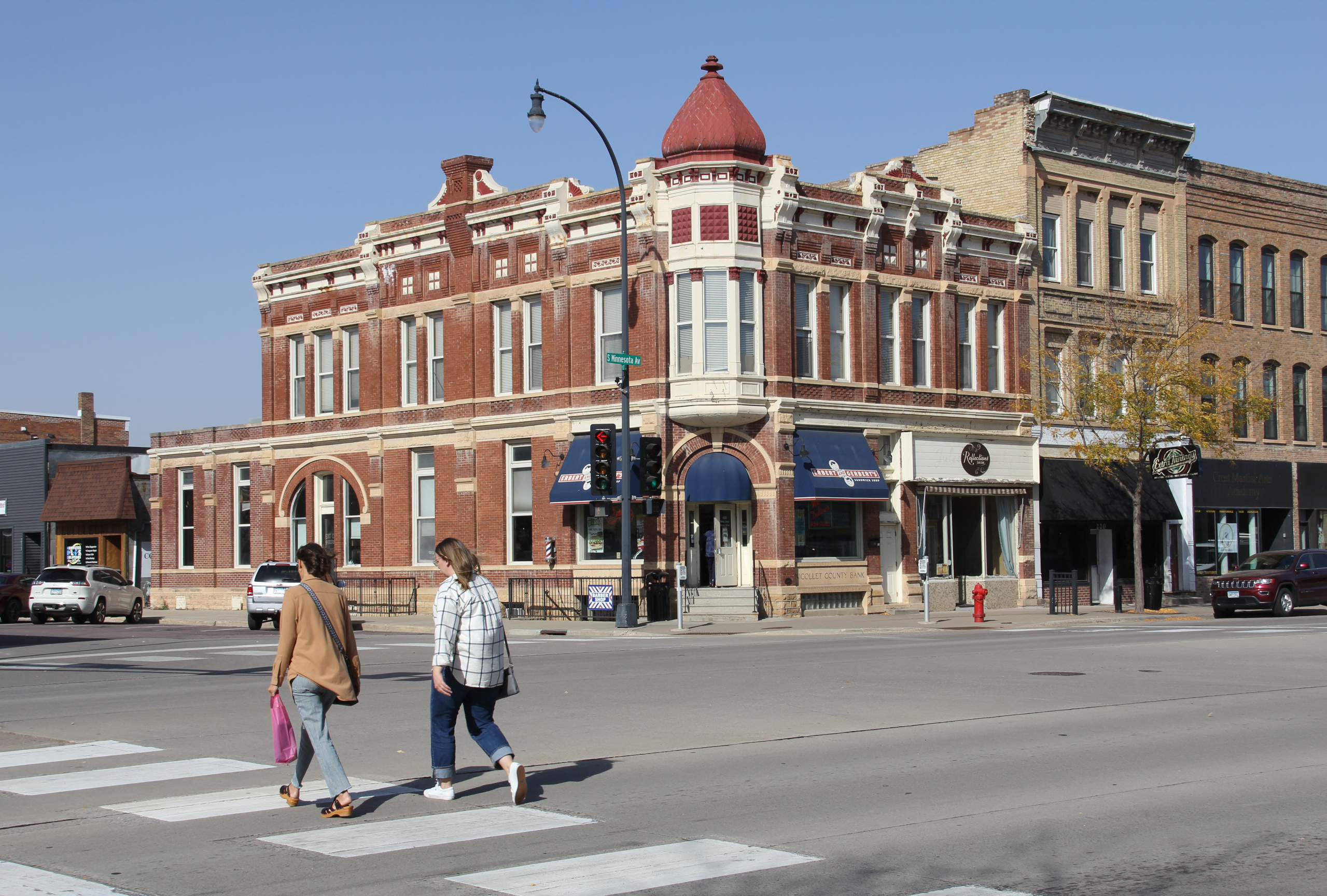
A stunning historic building anchors a corner in the heart of downtown St. Peter along Minnesota Avenue. (Minnesota Prairie Roots copyrighted photo October 2024)

A COLLEGE TOWN. A river town. A town once destined to become Minnesota’s state capital, except for a stolen legislative bill and a judge’s ruling. A town where Jesse James and his gang rode through en route to robbing the First National Bank of Northfield. A town two-thirds destroyed by a March 29, 1998, tornado. The town is St. Peter, population around 12,000, nestled in the Minnesota River Valley.

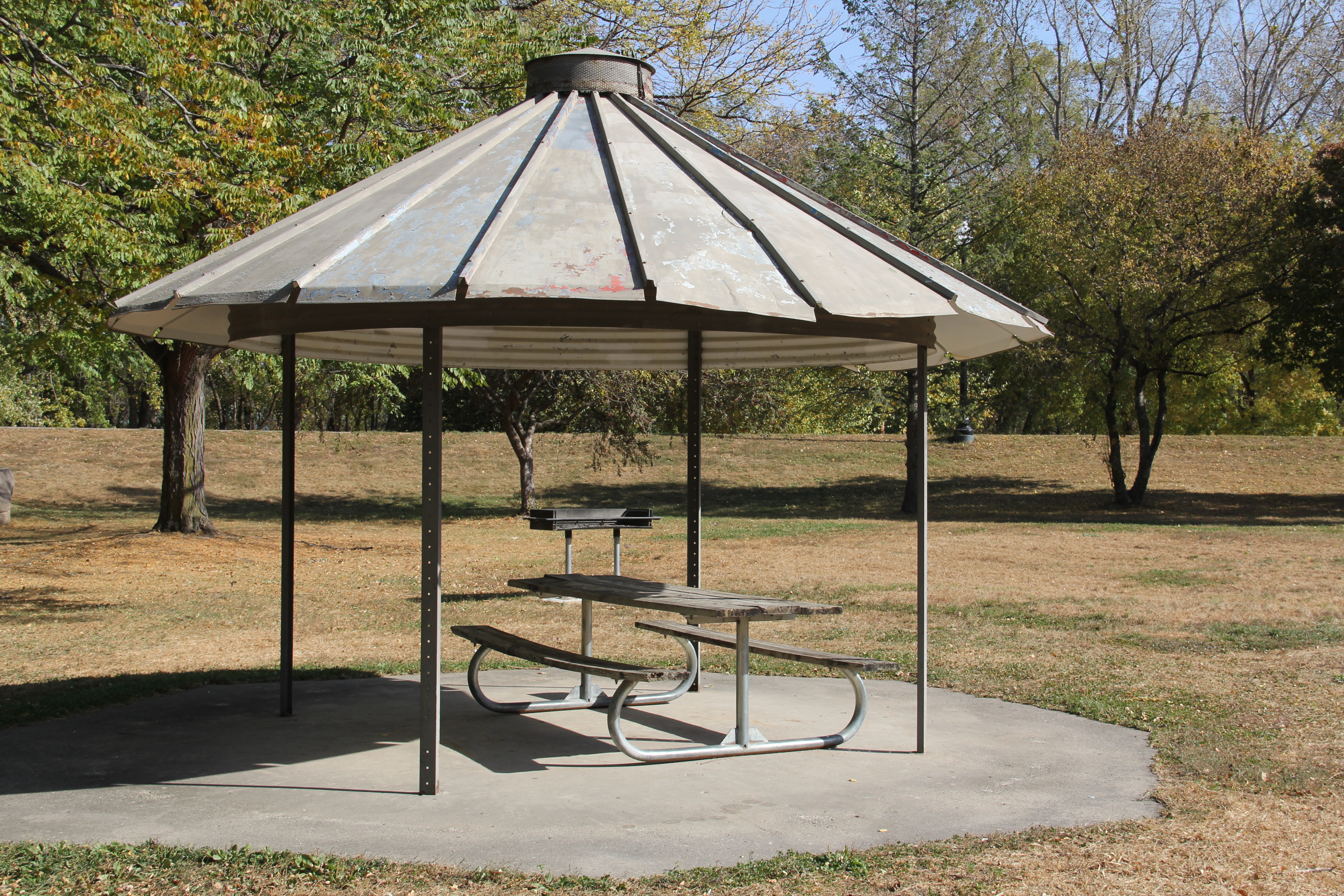
I felt right at home inside this picnic shelter with the grain bin roof. (Minnesota Prairie Roots copyrighted photo October 2024)
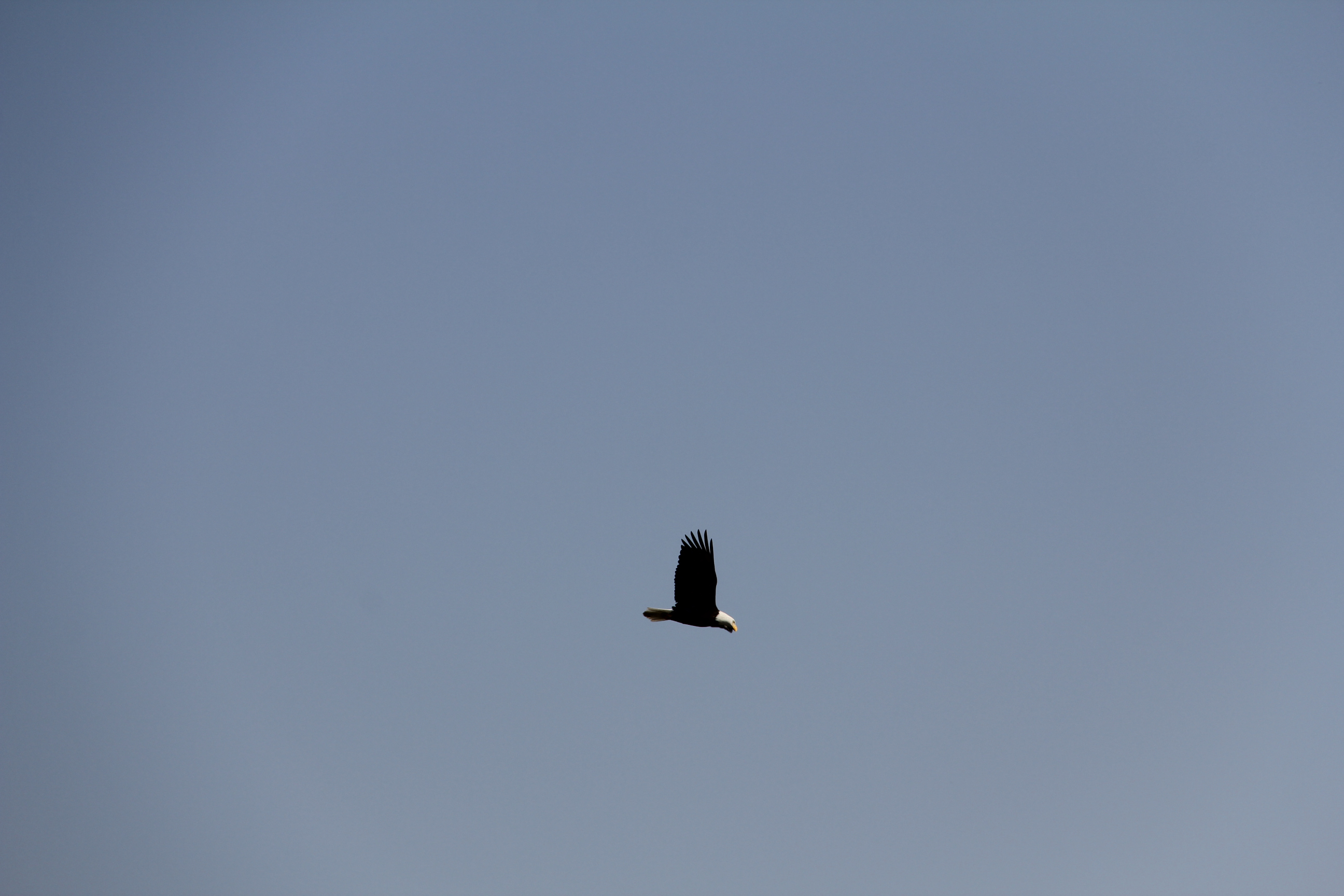
An eagle soars high above the Minnesota River at Riverside Park. (Minnesota Prairie Roots copyrighted photo October 2024)
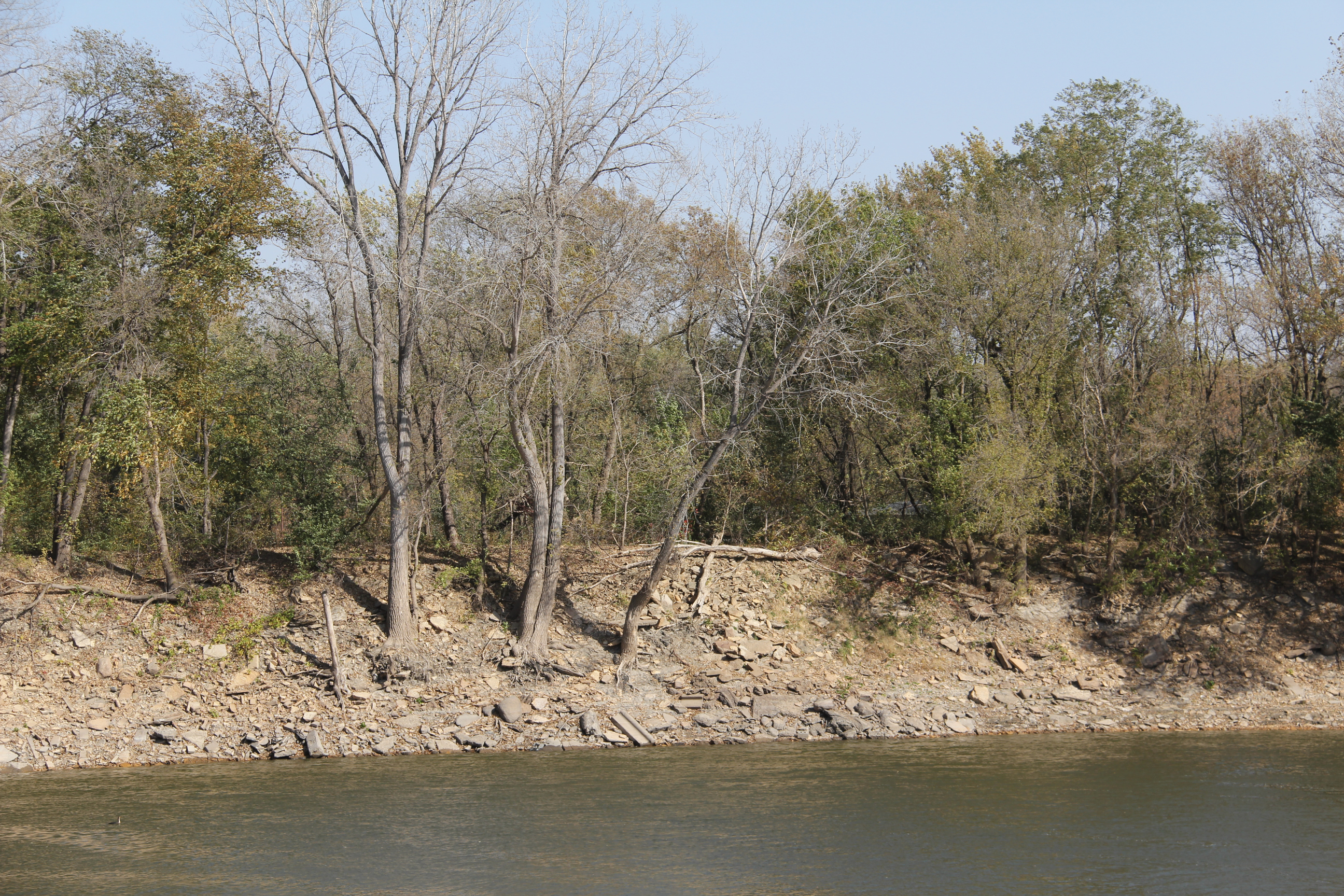
The Minnesota River shoreline as photographed from Riverside Park. (Minnesota Prairie Roots copyrighted photo October 2024)

Recently I spent a bit of time in St. Peter while on a fall color drive. Randy and I picnicked at Riverside Park—Mill Pond & Campground. I watched volunteers prepare for a haunted hayride along the park’s trails, nearly twisted my ankle in an unfilled hole in the grass, noted how murky the Minnesota River appeared, observed an eagle soaring, and noticed the roof of the small picnic shelter. It looked like the top of an old grain bin, much to my rural roots delight.

I appreciated that books inside the St. Peter Thrift Store were mostly displayed horizontally, making it easier for me to read the titles. (Minnesota Prairie Roots copyrighted photo October 2024)

Following lunch, we stopped briefly downtown when I spotted a thrift store. I always enjoy poking around second-hand shops. Not that I’m looking for anything in particular. Often I leave empty-handed. But this time I picked up a clutch of greeting cards because I’m one of those people who still sends cards on birthdays and other occasions. Randy found a cassette tape of some radio talk show, nothing that interests me.

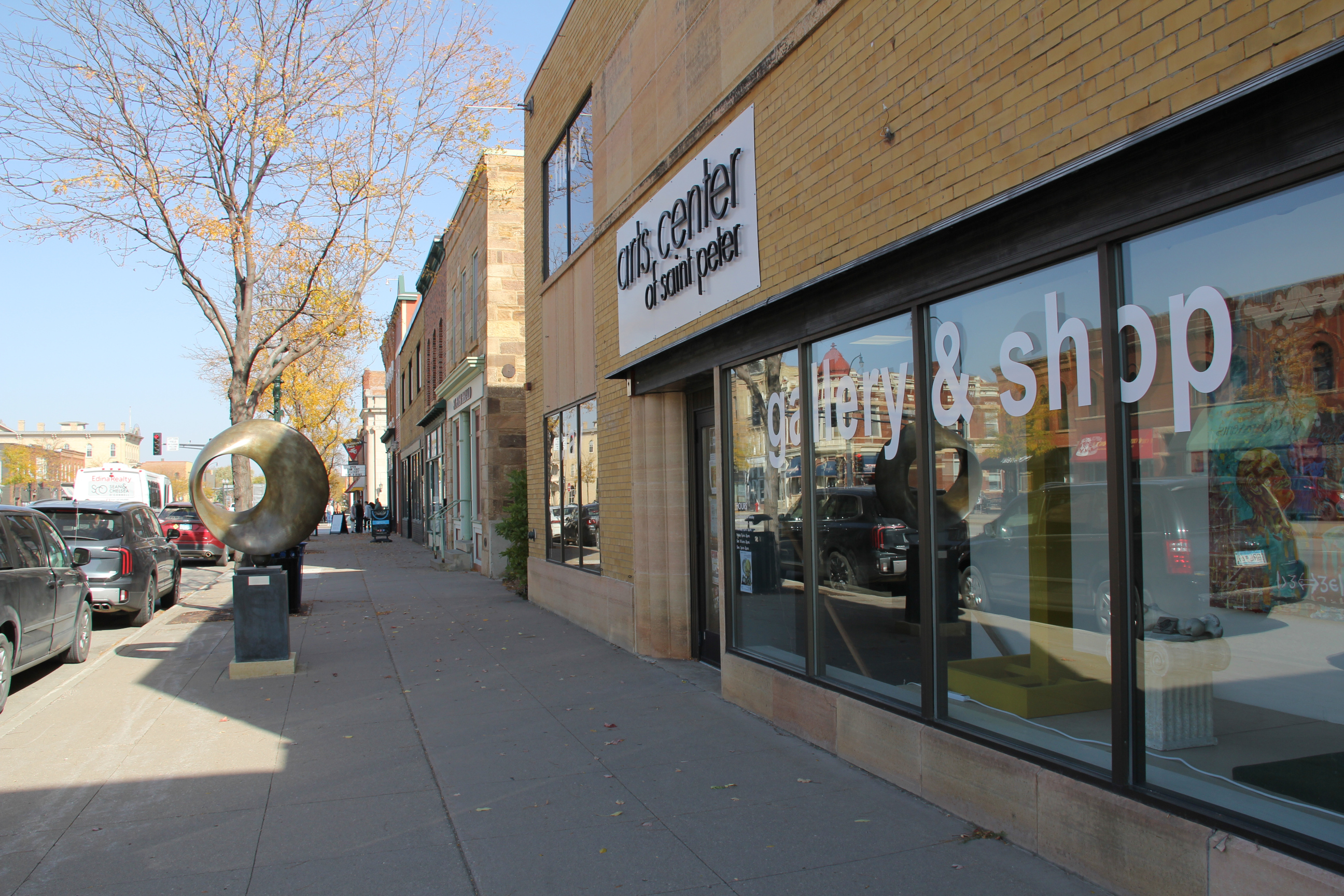
Outside the Arts Center of Saint Peter. (Minnesota Prairie Roots copyrighted file photo October 2024)
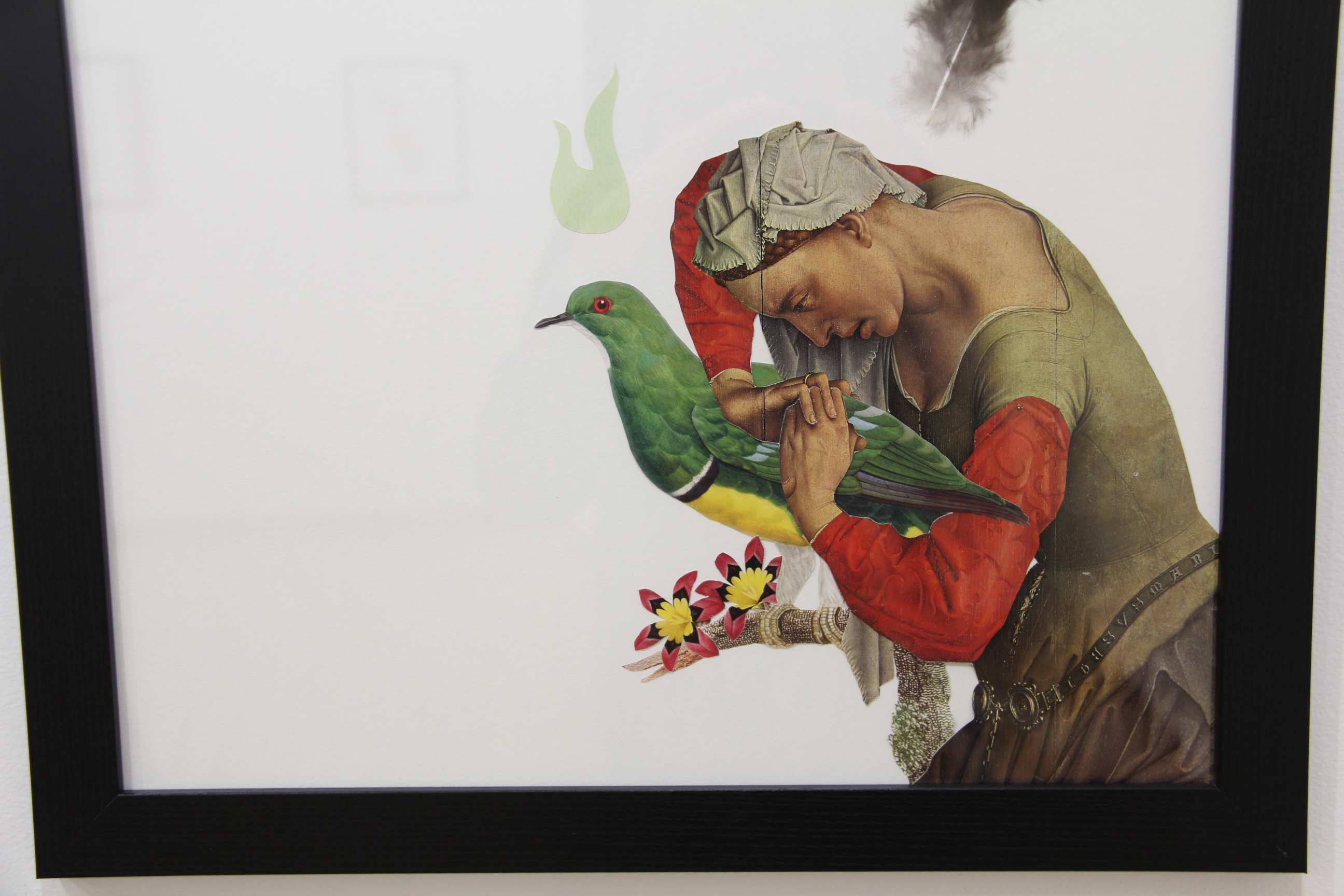
Inside the arts center, I viewed this and other collages by Mankato artist Holly Dodge. Her exhibit has closed. The gallery space now features the work of artists participating in the BUY-AND-TAKE INVITATIONAL and also Bianaca Wilson’s “SIEMPRE BUSCANDO.” (Minnesota Prairie Roots copyrighted file photo October 2024)

We’d parked along busy Minnesota Avenue/US Highway 169 directly in front of the Arts Center of Saint Peter. So, of course, I had to check out the gallery exhibit—collage art by Mankato artist Holly Dodge. The exhibit has since closed. I meandered, photographing some of her pieces. I’m always impressed by the diversity of art, how creative minds work.

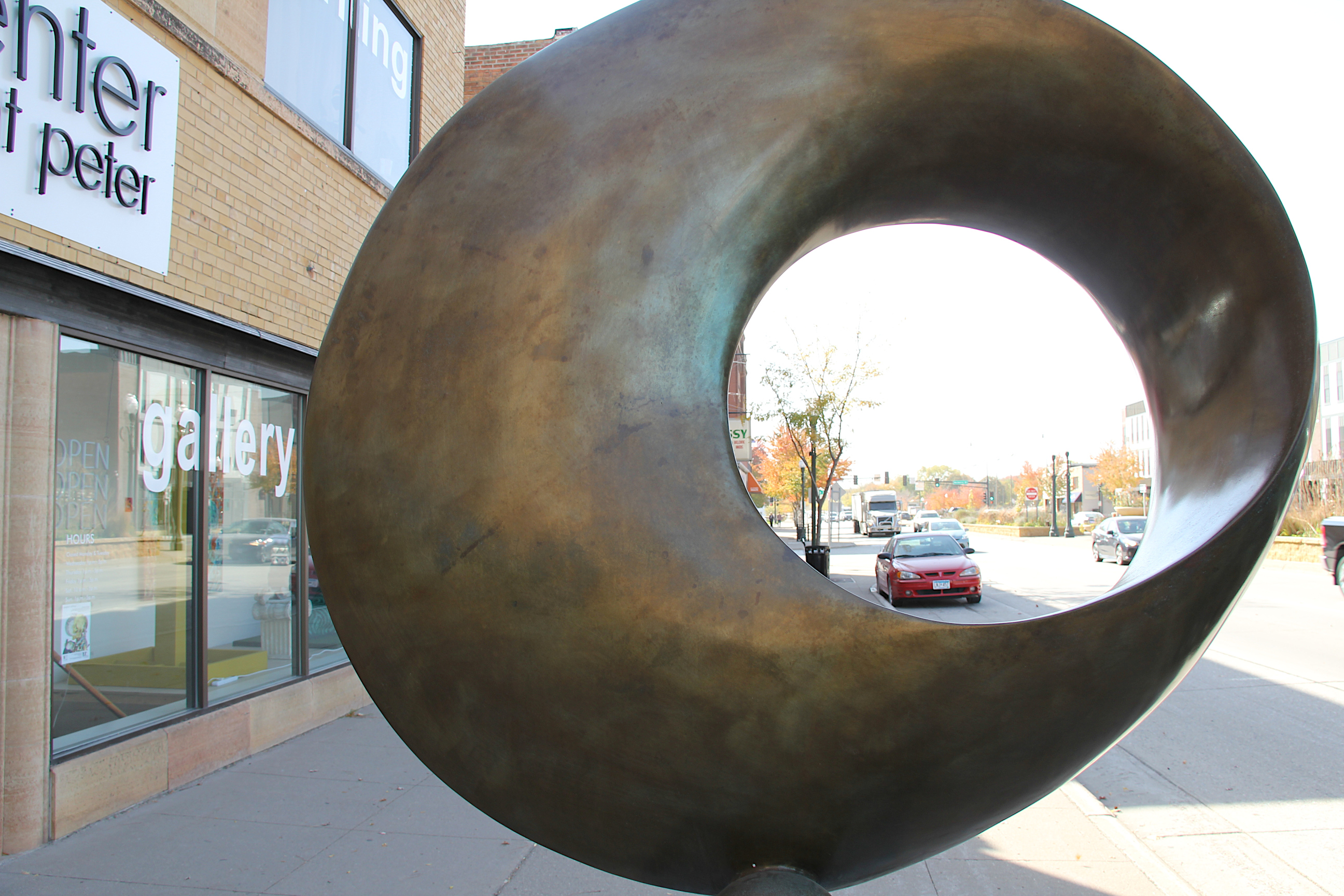
Paul Granlund’s sculpture offers a unique perspective through which to view downtown St Peter. (Minnesota Prairie Roots copyrighted photo October 2024)

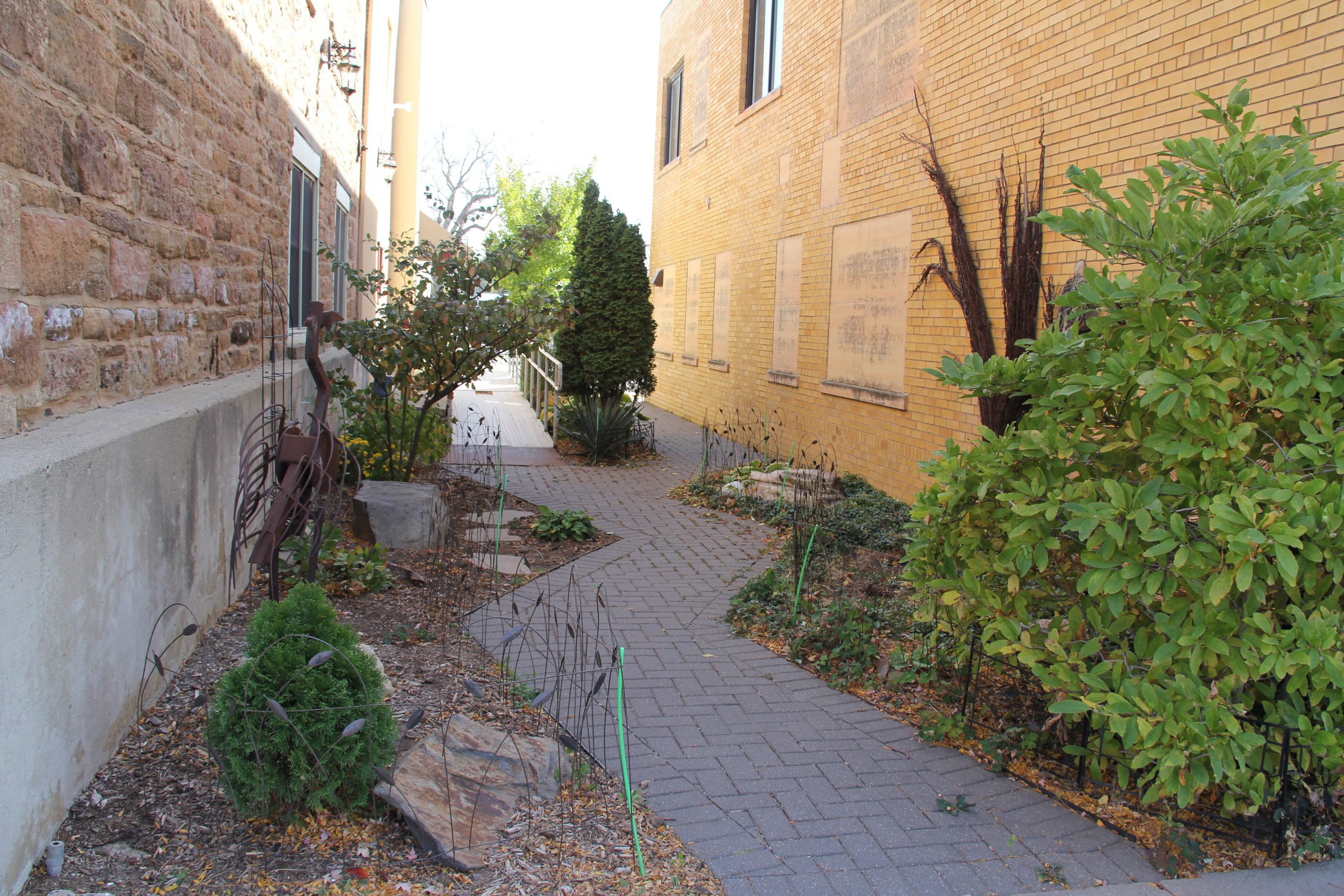
Once outside, I aimed my camera lens toward the distinctive bronze sculpture, “Mobius Strip,” crafted by Paul Granlund, a noted Minnesota sculptor, 1952 graduate of Gustavus Adolphus College (across town and up the hill), sculptor-in-residence there from 1971-1996, and much more in an illustrious career. Granlund’s sculpture is an eye-catching identifier of the arts center. Only after I returned home did I learn about the artist and about the many Granlund sculptures gracing the Gustavus campus. A return trip just to see those is now on my must-do list. I also found heron and eagle sculptures tucked into a pocket park in this block of downtown.

The heron sculpture is to the left, the eagle to the right (hidden by the shrub) in this pocket park. (Minnesota Prairie Roots copyrighted photo October 2024)

I discovered, too, Poshinate Kiddos, a beautiful baby and kids gift boutique where I looked, but didn’t buy (not this trip). I loved the merchandise and the friendly, helpful shopkeeper.

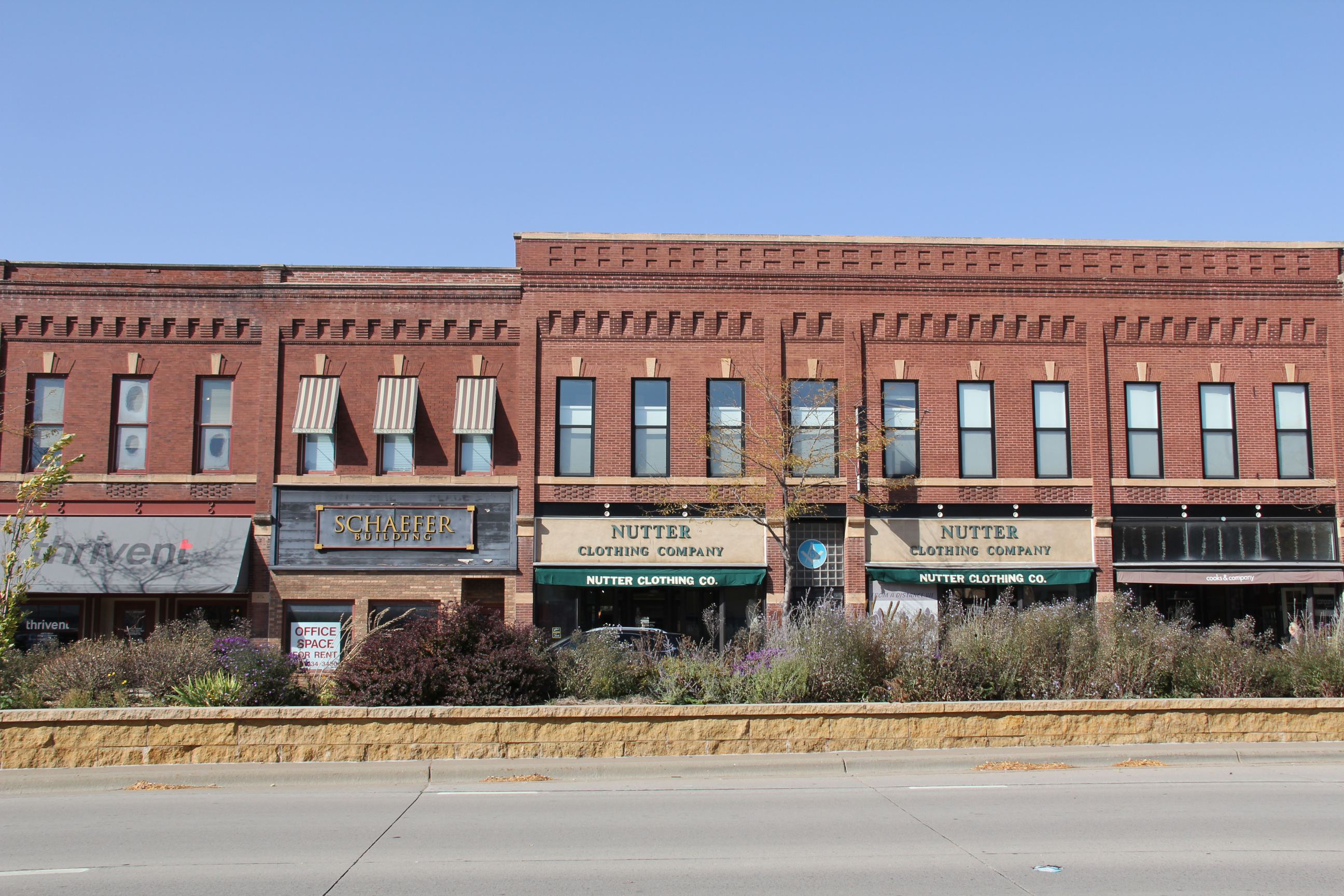
A row of historic buildings sits along US Highway 169, where a center island divides the roadway in downtown St. Peter. (Minnesota Prairie Roots copyrighted photo October 2024)

Historic buildings lining Minnesota Avenue drew my interest. About a dozen are on the National Register of Historic Places. Rather than cross the wide, wide street where traffic whizzes by at speeds that make me uncomfortable, I zoomed and photographed. I appreciate historic architecture and when a community cares enough to save it.

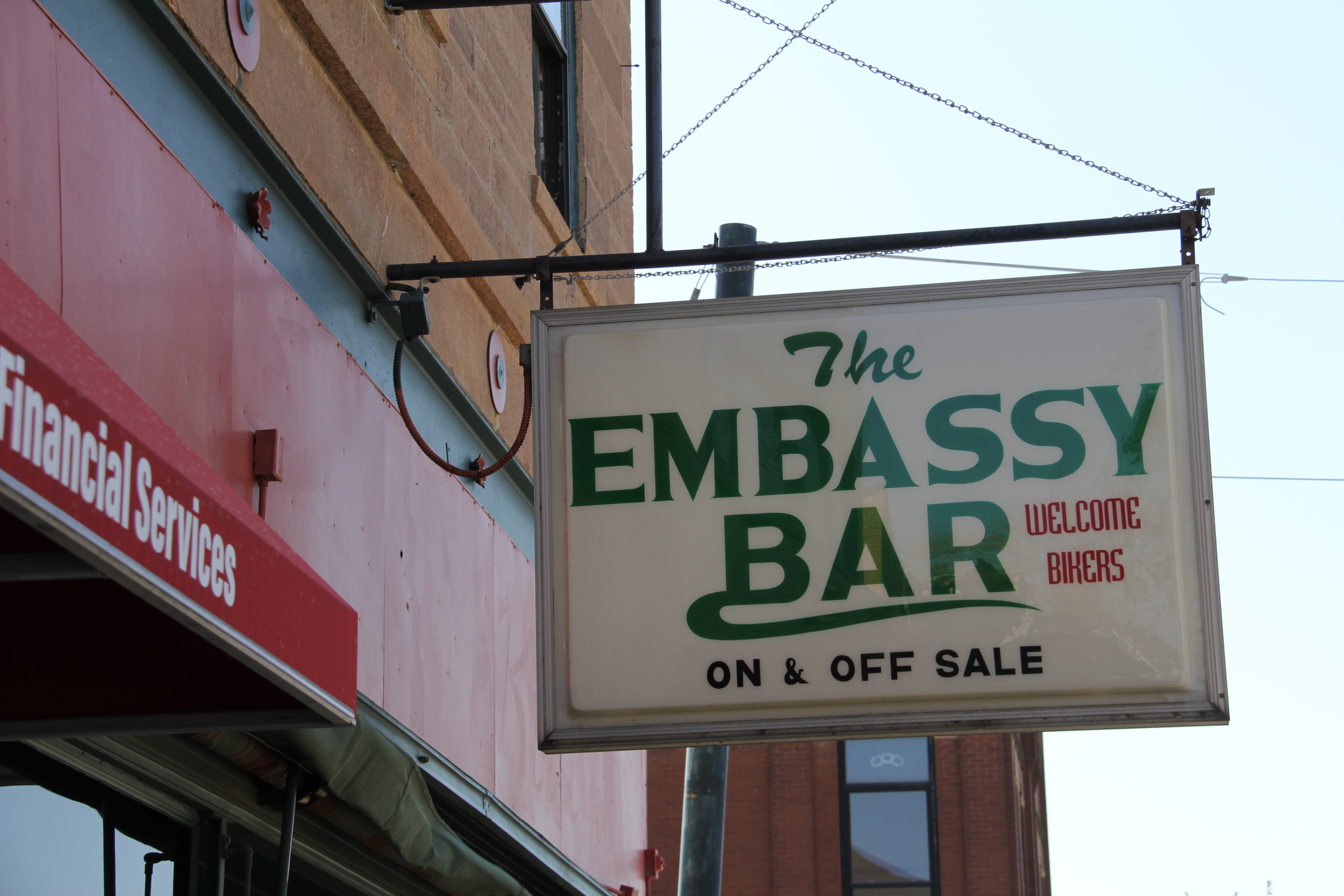
One of the Embassy signs… (Minnesota Prairie Roots copyrighted photo October 2024)
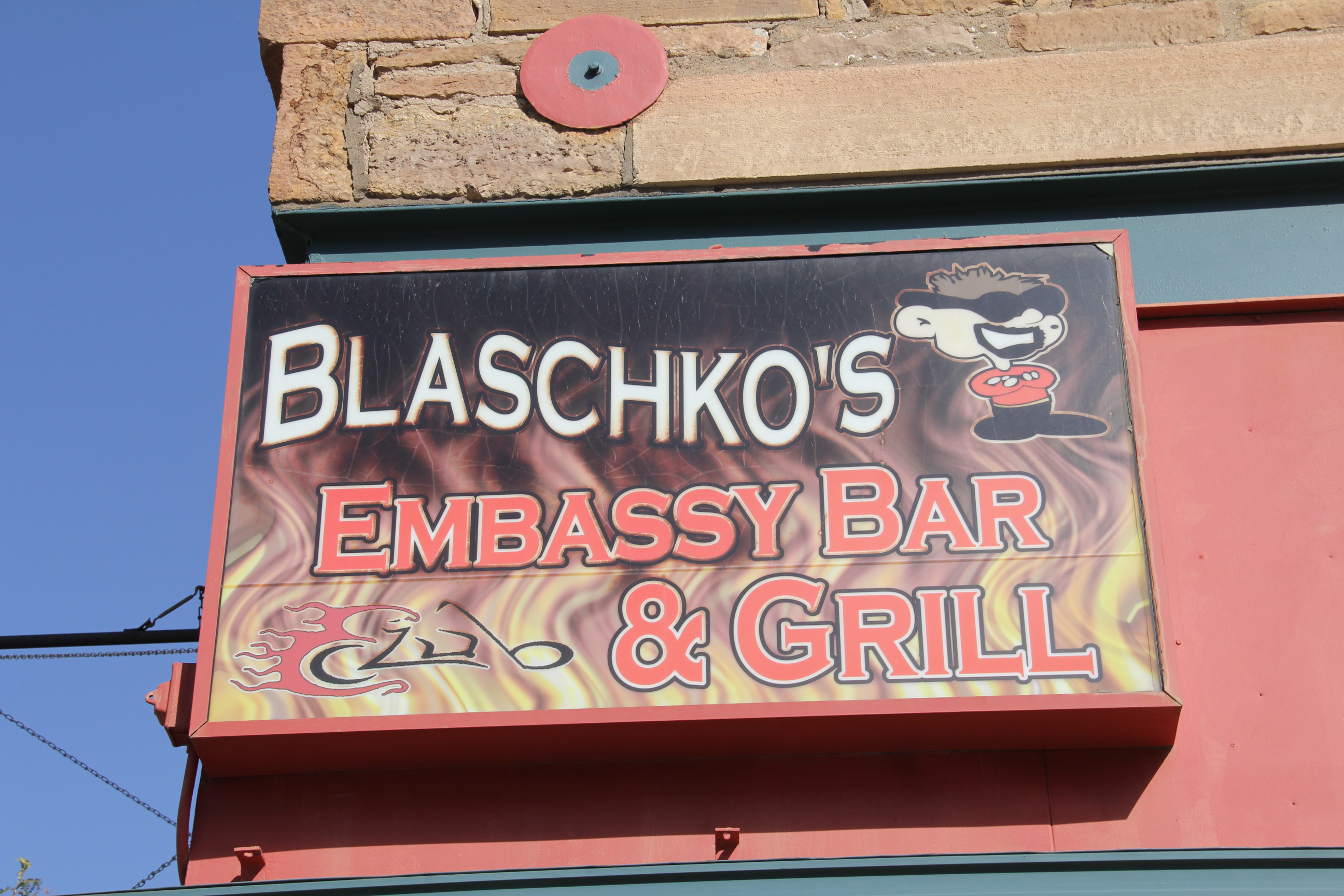
And then on the other side of the Embassy, this sign. (Minnesota Prairie Roots copyrighted photo October 2024)

Within the single block I walked, I also noticed signage on the Embassy Bar, or Blaschko’s Embassy Bar & Grill, depending on which sign you view. Signs always draws my interest, not only as identifiers but also as works of art.

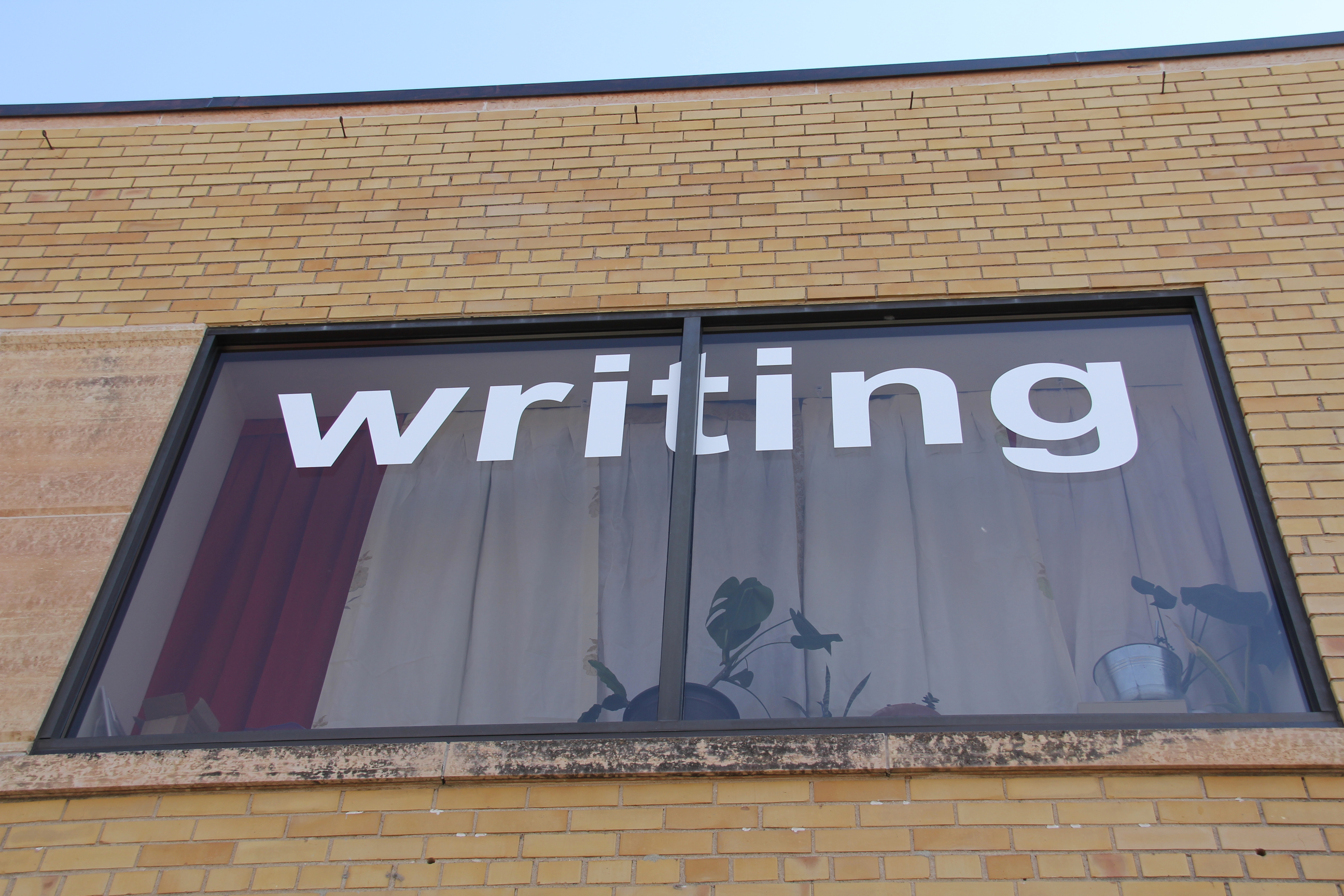
This and other words tag the windows of the Arts Center of Saint Peter. (Minnesota Prairie Roots copyrighted photo October 2024)

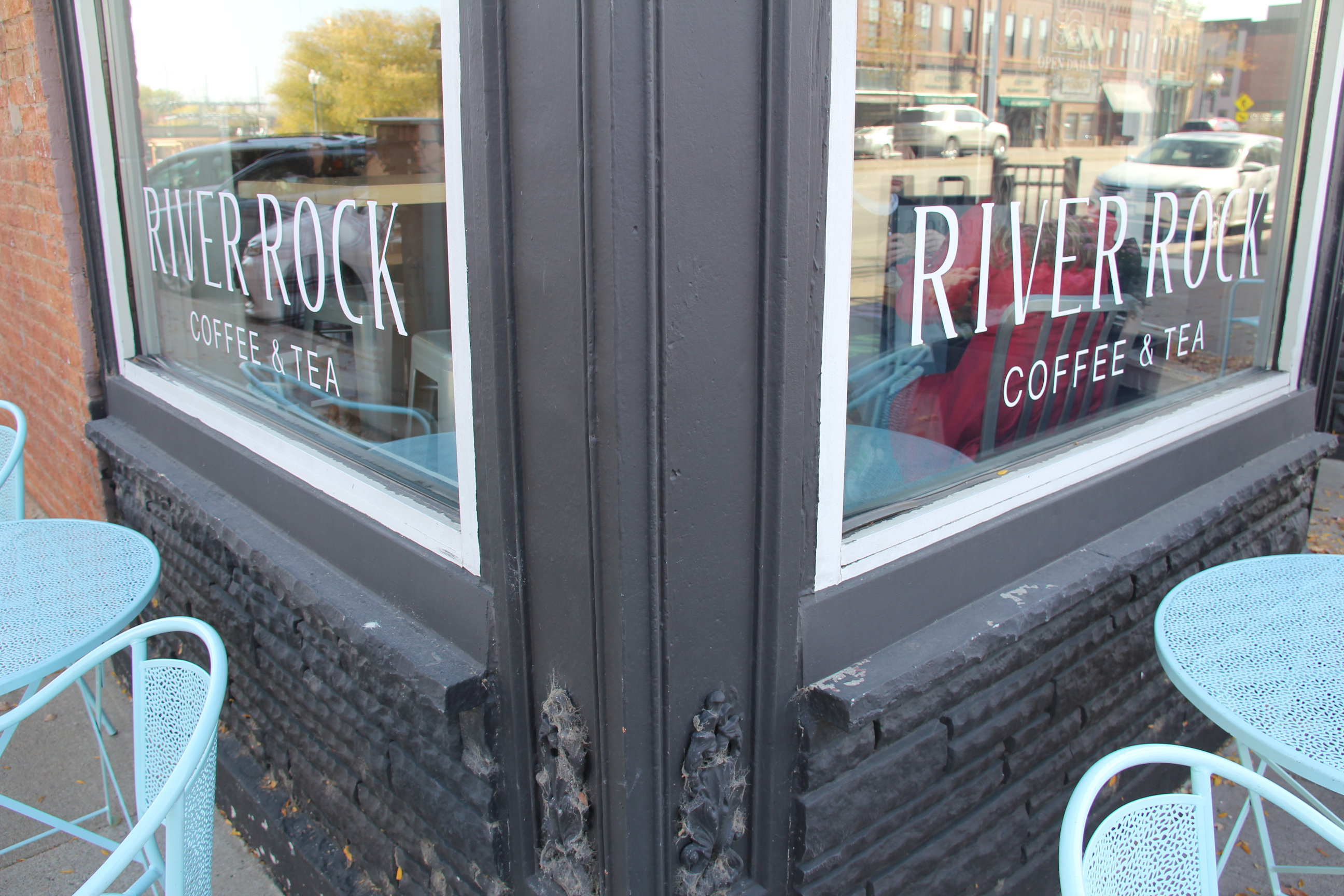
Retracing my steps from River Rock Coffee & Tea, a busy place at the end of the block, I paused at the arts center again. On the second floor I spotted a singular word—writing—spanning a wide window. Now, when you’re a writer like me, you get excited about a word that celebrates your craft. That left a lasting impression on me as we pulled out of St. Peter intent on seeing what we’d come to see, the colorful trees along Highway 169 heading north toward Le Sueur. But the trees weren’t colorful. Not at all. Could have been the timing or the day, which was extremely windy with hazy skies.

I didn’t go into the River Rock. But I looked through the large windows to see the coffee and tea shop teeming with customers. (Minnesota Prairie Roots copyrighted photo October 2024)

Although disappointed, I was not disappointed in the river town, the college town, the historical town of St. Peter. I need to return, devote an entire day to exploring a place that once could have been Minnesota’s state capital…if not for the theft of a legislative bill in 1857 by politician Joseph Rolette and the judicial ruling that followed.

© Copyright 2024 Audrey Kletscher Helbling
 

A whole lot of Irish in St. Patrick March 13, 2024

Appropriate signage for a tavern in St. Patrick, Minnesota. (Minnesota Prairie Roots copyrighted file photo June 2015)

BEER, BASEBALL AND BLESSINGS. Those words define St. Patrick, an unincorporated place of bar, baseball field and Catholic church northeast of New Prague. With the approach of St. Patrick’s Day, now seems a fitting time to revisit this southern Minnesota burg, which I photographed in the summer of 2015.

St. Patrick Church of Cedar Lake Township. (Minnesota Prairie Roots copyrighted file photo June 2015)

I never stepped inside St. Patrick’s Tavern or onto Bonin Field, home of the St. Patrick Irish, on that summer day. Rather, I walked around St. Patrick Church of Cedar Lake Township and its adjoining cemetery. Church doors were locked.

St. Patrick’s church and cemetery.
St. Patrick’s Bonin Field, named after Father Leon Bonin, who brought baseball back to St. Patrick in the 1950s. (Minnesota Prairie Roots copyrighted file photo June 2015)
Across the road from the St. Patrick cemetery sits St. Patrick’s Tavern. (Minnesota Prairie Roots copyrighted file photo June 2015)

The stately church sits atop a hill, the ball field at the base on one side, the tavern on the other. Pray. Play. And then congregate over a beer and a burger basket at the tavern. Or, on St. Patrick’s Day weekend, corned beef and cabbage downed with on-tap green beer, while supplies last.

Born in Ireland, buried in the St. Patrick Church of Cedar Lake Township Cemetery in southern Minnesota. (Minnesota Prairie Roots copyrighted file photo June 2015)
Bonin Field, home of the St. Patrick Irish. (Minnesota Prairie Roots copyrighted file photo June 2015)
The bar and restaurant in St. Patrick. (Minnesota Prairie Roots copyrighted file photo June 2015)

Even with the minimal time I spent in St. Patrick, I experienced its Irish heritage. It’s reflected on tombstones, in the very names of the church, ball field and bar. It’s reflected on signage. But mostly, it’s this feeling of sacredness, as if the patron saint of the Irish dwells here. In the pews. On the bleachers. Even, I expect, inside the bar. St. Patrick was, after all, a missionary.

St. Patrick’s steeple rises in the background, behind this cemetery angel. (Minnesota Prairie Roots copyrighted file photo June 2015)

And then there’s the sacred art. Crucifixes. An angel statue. Tombstones that hold names and history.

The Holy Family tucks into a corner of the grotto. (Minnesota Prairie Roots copyrighted file photo June 2015)
The beautiful face of Mary at the St. Patrick’s grotto. (Minnesota Prairie Roots copyrighted file photo June 2015)
The loving hand of Mary rests upon her son, Jesus, in this sculpture at St. Patrick’s. (Minnesota Prairie Roots copyrighted file photo June 2015)

Aside the church, a grotto welcomes with the most hauntingly beautiful sculptures.

St. Patrick may seem like nothing more than a country church, just another rural bar and a baseball diamond to passing motorists. But it’s much more, worth the stop for a close-up look at a place rooted in Irish heritage.

More signage on St. Patrick’s Tavern. (Minnesota Prairie Roots copyrighted file photo June 2015)

Next road trip back here, I’ll pop into the tavern, order a brew and maybe a burger, and raise my mug to the Irish who settled here, claimed this land as theirs. Here in St. Patrick, place of beer, baseball and blessings.

© Copyright 2024 Audrey Kletscher Helbling
 

Looking for Lucy July 11, 2023

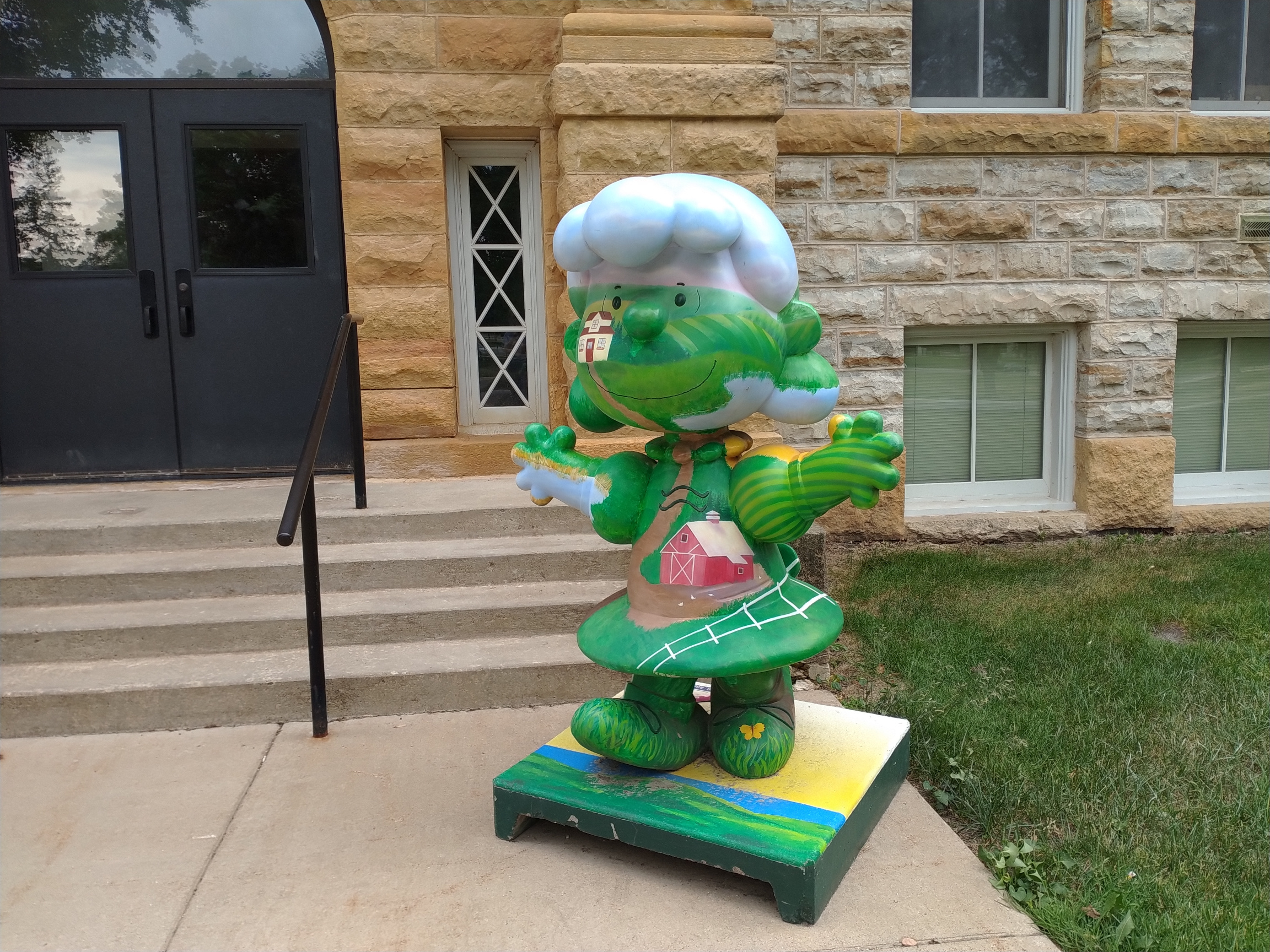
This sculpture of Lucy Van Pelt in Faribault is titled “Land O’Lucy.” (Minnesota Prairie Roots copyrighted photo June 2023)

SHE’S OUTSPOKEN. Loud. Sometimes bossy. Opinionated. Strong. And, in her own unique way, lovable. She is Lucy Van Pelt of the Peanuts cartoon strip.

Lucy stands outside the east wing entry to Noyes Hall at MSAD. (Minnesota Prairie Roots copyrighted photo June 2023)

Lucy and the other characters created by Charles Schulz represent diverse personalities. They are some of us. They are all of us. And that is perhaps what makes this comic strip so endearing, so relatable.

Agricultural-themed “Land O’Lucy” features a farm site. (Minnesota Prairie Roots copyrighted photo June 2023)

In Minnesota, especially, we hold a deep fondness for the Peanuts’ characters. Cartoonist Schulz was born in Minneapolis, raised in St. Paul, moved to Colorado, back to Minnesota, and then eventually to California in 1958 with his wife and their five children. As a high school student, he studied art through a correspondence course at the Art Instruction Schools in Minneapolis and later taught there. His Peanuts cartoon debuted in October 1950 and would eventually include some 70 characters, their stories, trials, triumphs.

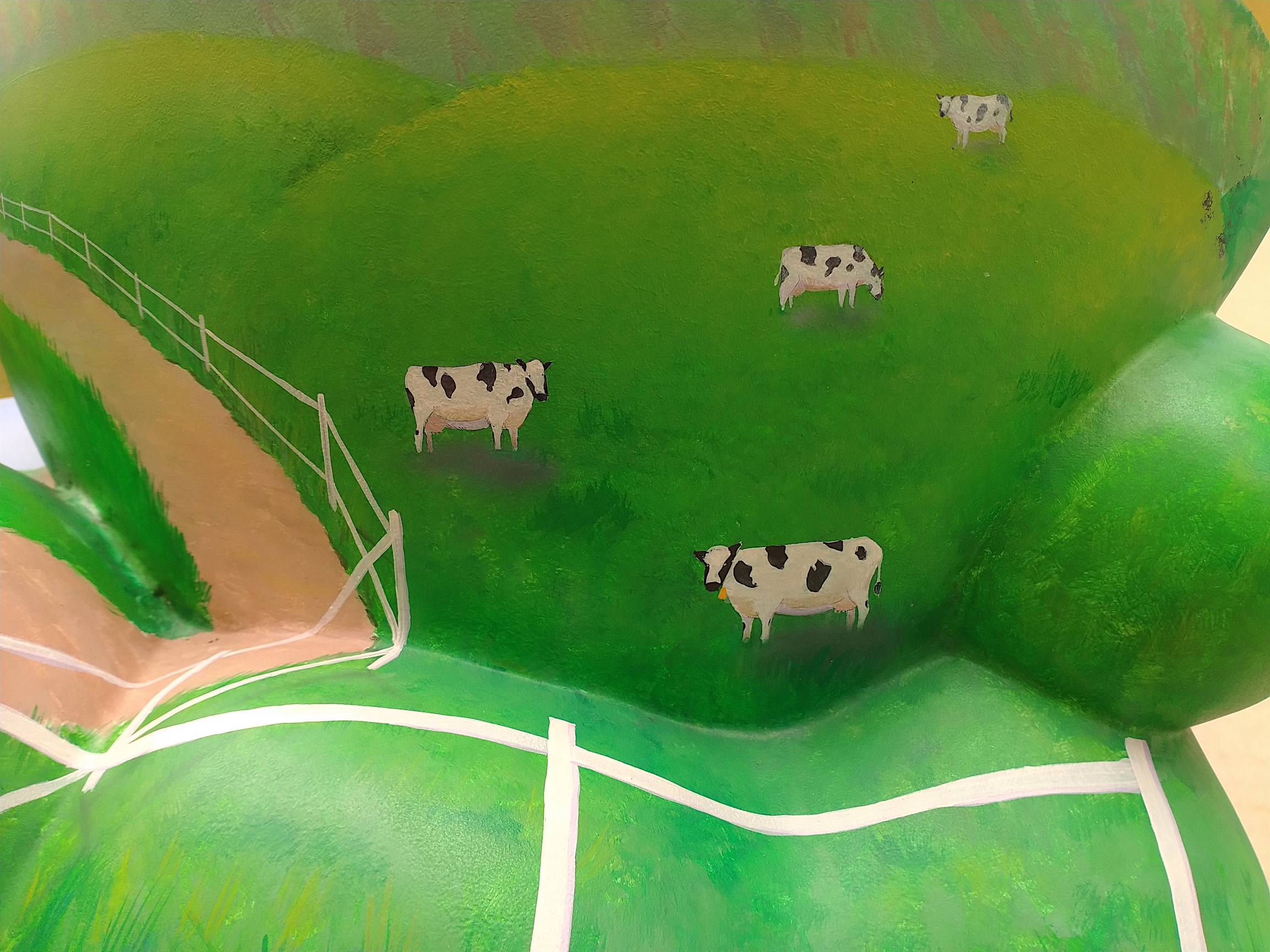
Pastured Holsteins detail the rural theme. (Minnesota Prairie Roots copyrighted photo June 2023)

St. Paul honors their native son with bronze sculptures of Peanuts at Landmark Plaza in the heart of the capital city. While I’ve never seen that art, I’ve seen art from an earlier endeavor, “Peanuts on Parade.” After Schulz died in 2000, St. Paul undertook the five-year parade project beginning with Snoopy fiberglass statues painted by artists and then auctioned to fund scholarships for artists and cartoonists and to finance the bronze statues. In subsequent years, “Peanuts on Parade” featured Charlie Brown, Lucy, Linus, and, finally, Snoopy and Woodstock.

“Land O’Lucy” stands outside the east wing of Noyes Hall. (Minnesota Prairie Roots copyrighted photo June 2023)

It is a statue of Lucy which found its way into my community, landing at the Minnesota State Academy for the Deaf. “Land O’Lucy” now stands in a visible spot on campus, moved during a recent construction project from an obscure location outside Quinn Hall to the front of Noyes Hall East Wing. She’s become my silent, if Lucy can be silent, cheerleader as I walk the deaf school campus doing my vestibular rehab therapy exercises. I like to think that Lucy is encouraging me, just as she is encouraging the young deaf and hard of hearing students who attend this specialized residential school. Lucy symbolizes strength with her nothing’s-going-to-stop-me attitude. We can all use a bit of that empowering approach to life’s challenges.

Informational signage at the base of Lucy. (Minnesota Prairie Roots copyrighted photo June 2023)

This particular statue from the 2002 “Looking for Lucy, Peanuts on Parade” project was painted by Dubuque, Iowa, artist Adam Eikamp with Land O’Lakes Inc. the sponsoring company. The dairy plant in Faribault has since closed. But its support of this public art remains forever imprinted in informational signage at the fiberglass statue’s base.

Artwork shows disking the field in preparation for spring planting. (Minnesota Prairie Roots copyrighted photo June 2023)

The agricultural theme of the MSAD Lucy is fitting. Our area of southern Minnesota is a strong agricultural region. The paintings on the statue reflect that with fields, barn, farmhouse, cows and chickens. Lucy banners rural. She is among 105 five-foot tall Lucys painted as part of “Looking for Lucy.”

Extroverted “Land O’Lucy” outside Noyes Hall east wing. (Minnesota Prairie Roots copyrighted photo June 2023)

If you’re looking for this Lucy, travel to MSAD on Faribault’s east side. You can’t miss the domed Noyes Hall, on the National Register of Historic Places and among many beautiful historic limestone buildings on campus. She stands outside Noyes’ east wing, welcoming students and others, arms flung wide. Typical Lucy with body language that reveals her extroverted personality, her loud, strong and encouraging voice.

© Copyright 2023 Audrey Kletscher Helbling


Memorial Day remembrances & reflections May 25, 2023

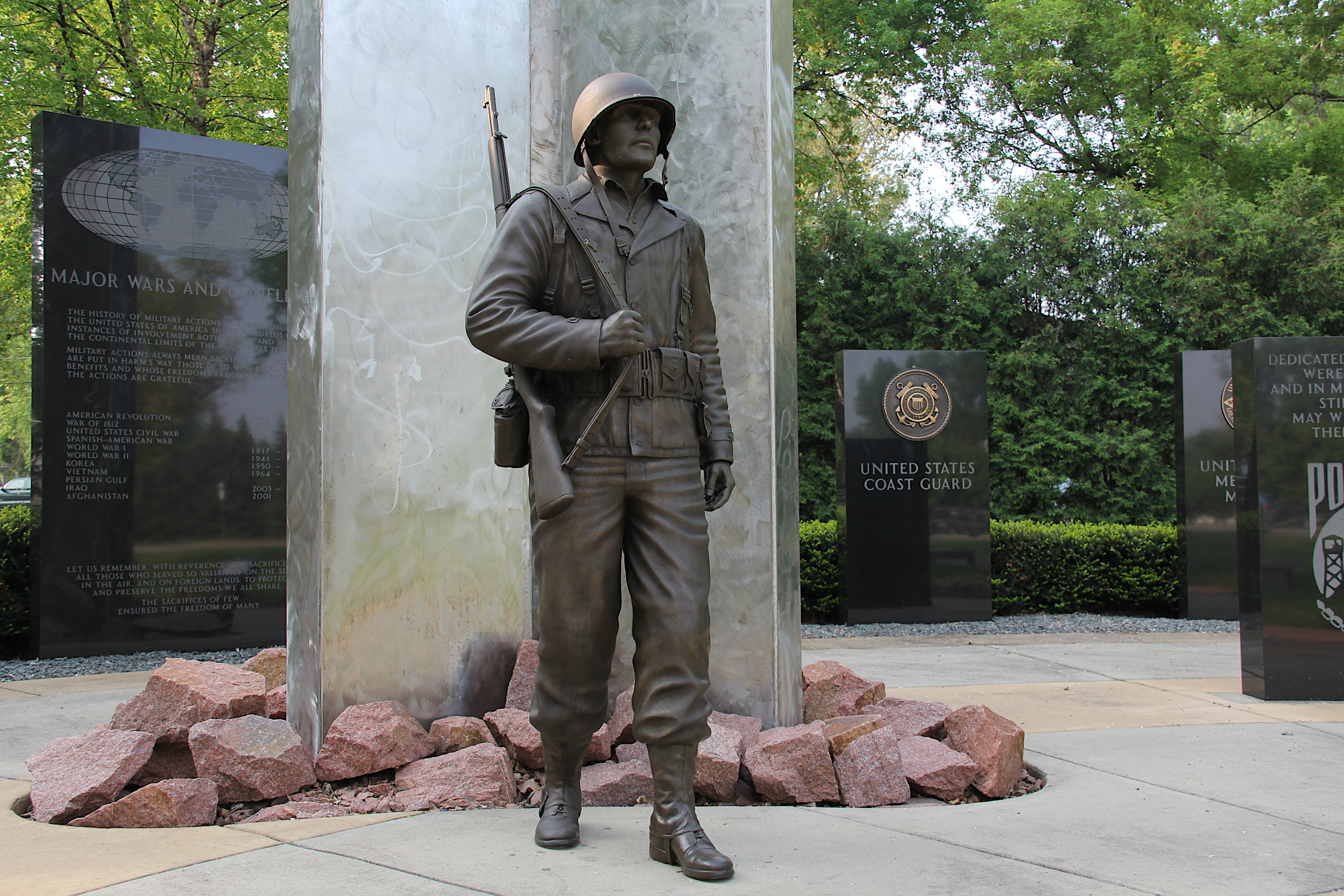
A soldier sculpture centers the Northfield Area Veterans Memorial. (Minnesota Prairie Roots copyrighted photo May 2023)

HIS STRONG STANCE, one boot planted in front of the other, ramrod posture all point to his disciplined military training. I am looking at a sculpture of a US soldier, a combat infantryman. As I study him, I gaze into his haunted eyes, eyes that, by my perception, reveal the horrors of war.

Standing strong in service to country, a life-size soldier replica. (Minnesota Prairie Roots copyrighted photo May 2023)

Perhaps it is my own father’s stories of fighting on the front-line during the Korean War that shape my reaction to this soldier replica at the Northfield Area Veterans Memorial. But this could be anyone’s interpretation. That of a daughter, like me, whose father suffered from Post Traumatic Stress Disorder after leaving the killing fields of Korea. Or this could be the story of any active duty war veteran, the story of a spouse or child who lost a loved one on the battlefield, the stories of too many.

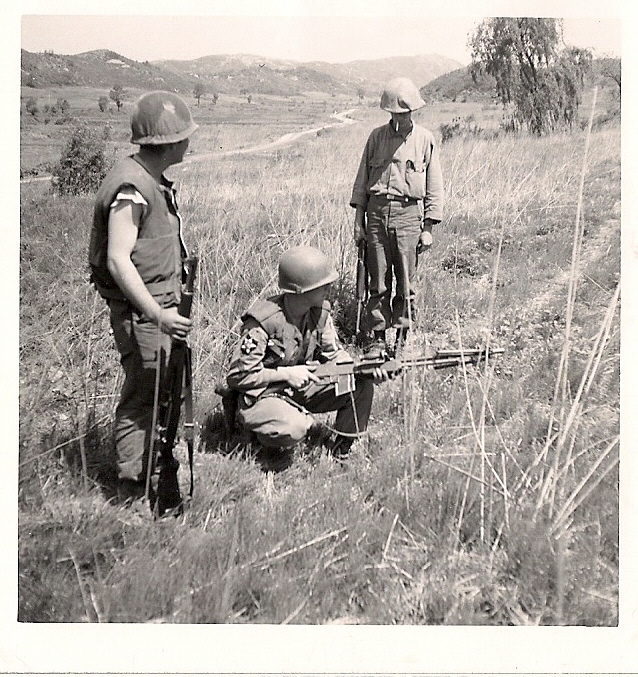
My dad took this photo of his buddies, including Ray Scheibe, left, in Korea. The photo is dated May 1953. Ray was killed in June. (Copyrighted photo by Elvern Kletscher)

This Memorial Day, I pause to remember those who gave the ultimate sacrifice—their lives—to assure my freedom. My dad’s Army buddy and friend Ray was among those. Ray died the day before he was to leave Korea and return to his wife and infant daughter in Nebraska. My father witnessed Ray’s death and it broke a part of him.

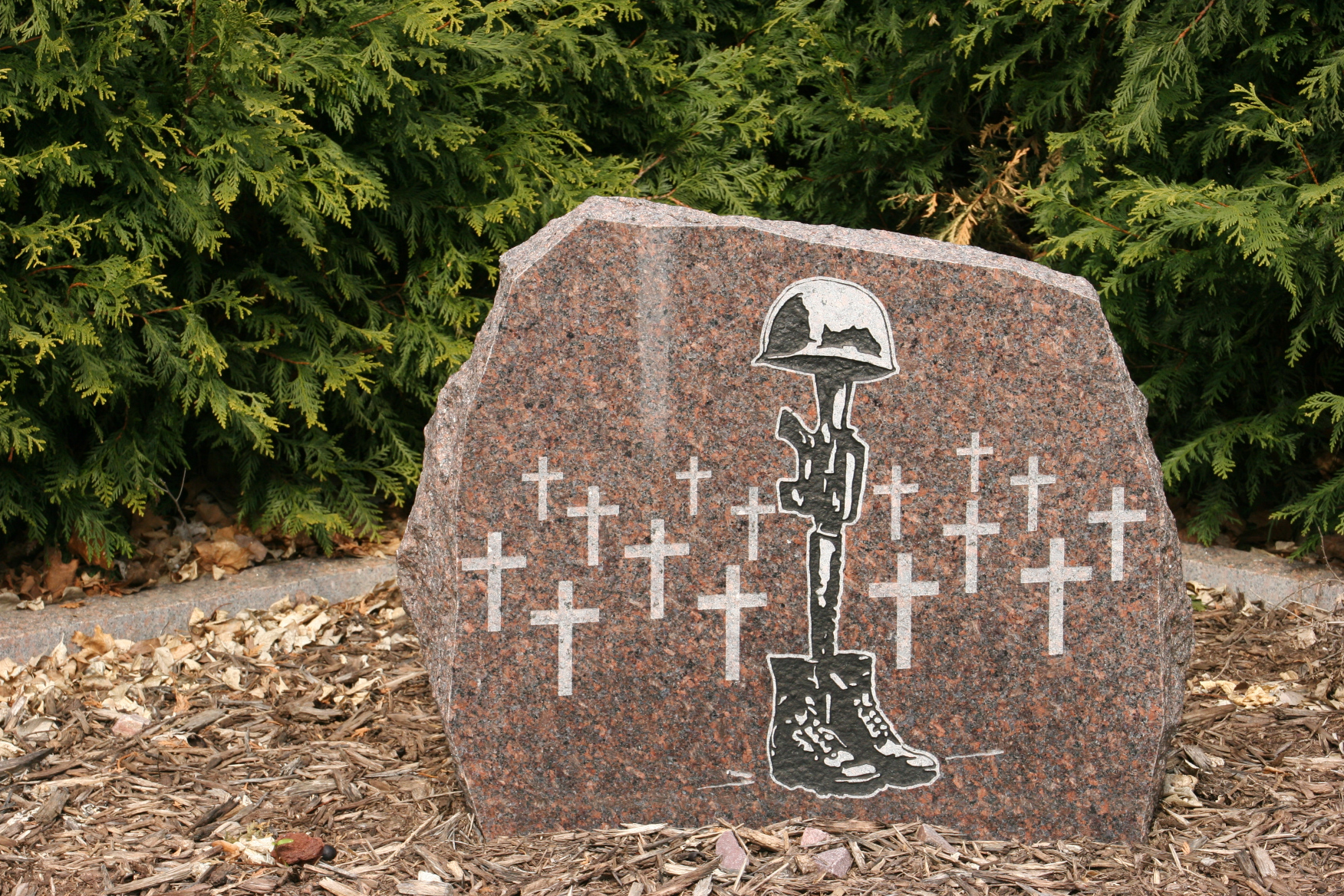
Honoring fallen soldiers with a special monument at the Rice County Veterans Memorial in Faribault. (Minnesota Prairie Roots copyrighted file photo)

These are the personal details we need to remember on Monday, a national day of mourning and remembrance for those who died on the battlefield. Veterans’ memorials and parades and programs all provide ways to honor the brave men and women who died in service to country. But their stories are equally as important. These are, after all, individuals with friends and families, likes and dislikes, histories written long before they were drafted or enlisted and then called to war.

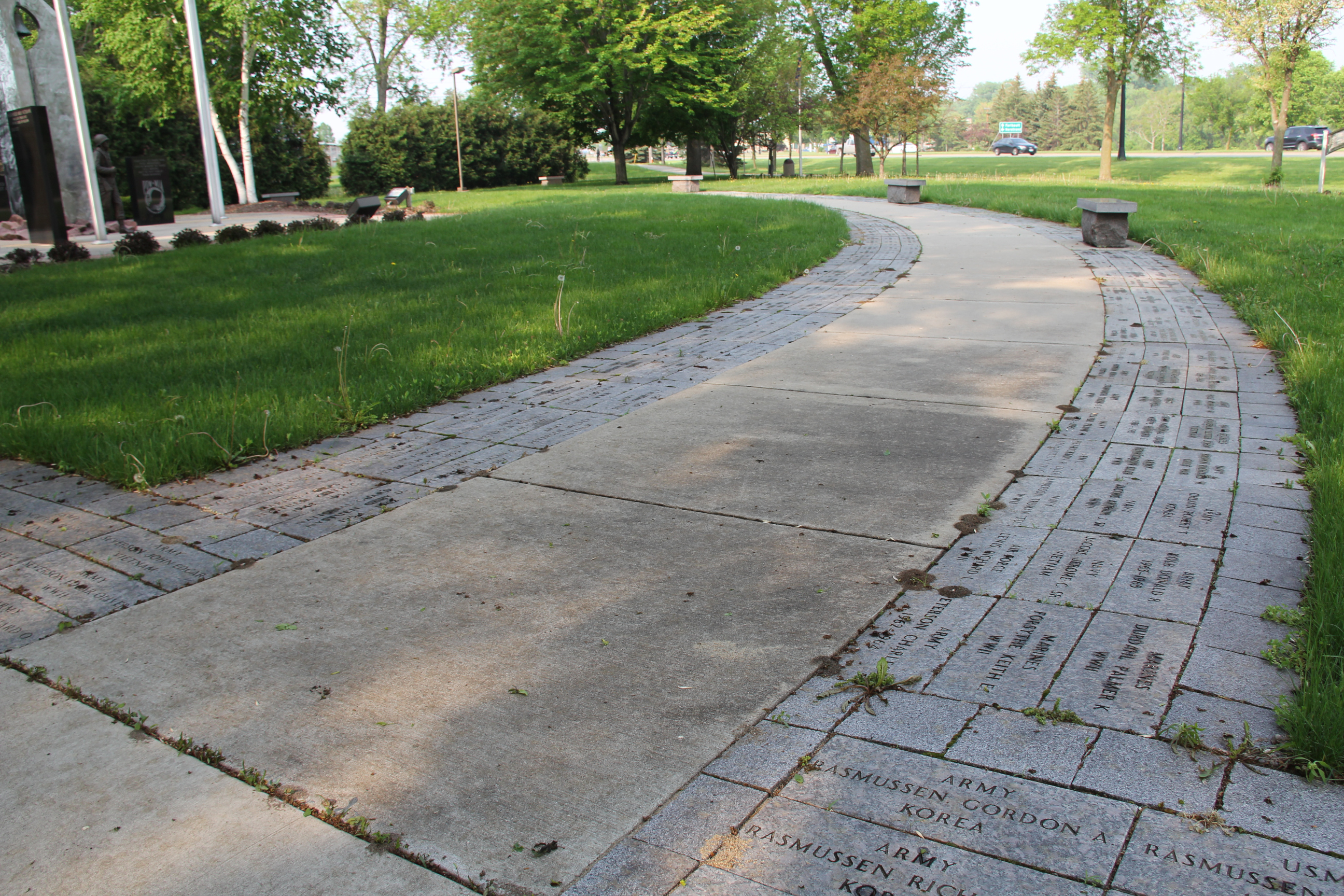
“The Walk of Remembrance” imprinted with veterans’ names and military information edges the Northfield Area Veterans Memorial. (Minnesota Prairie Roots copyrighted photo May 2023)
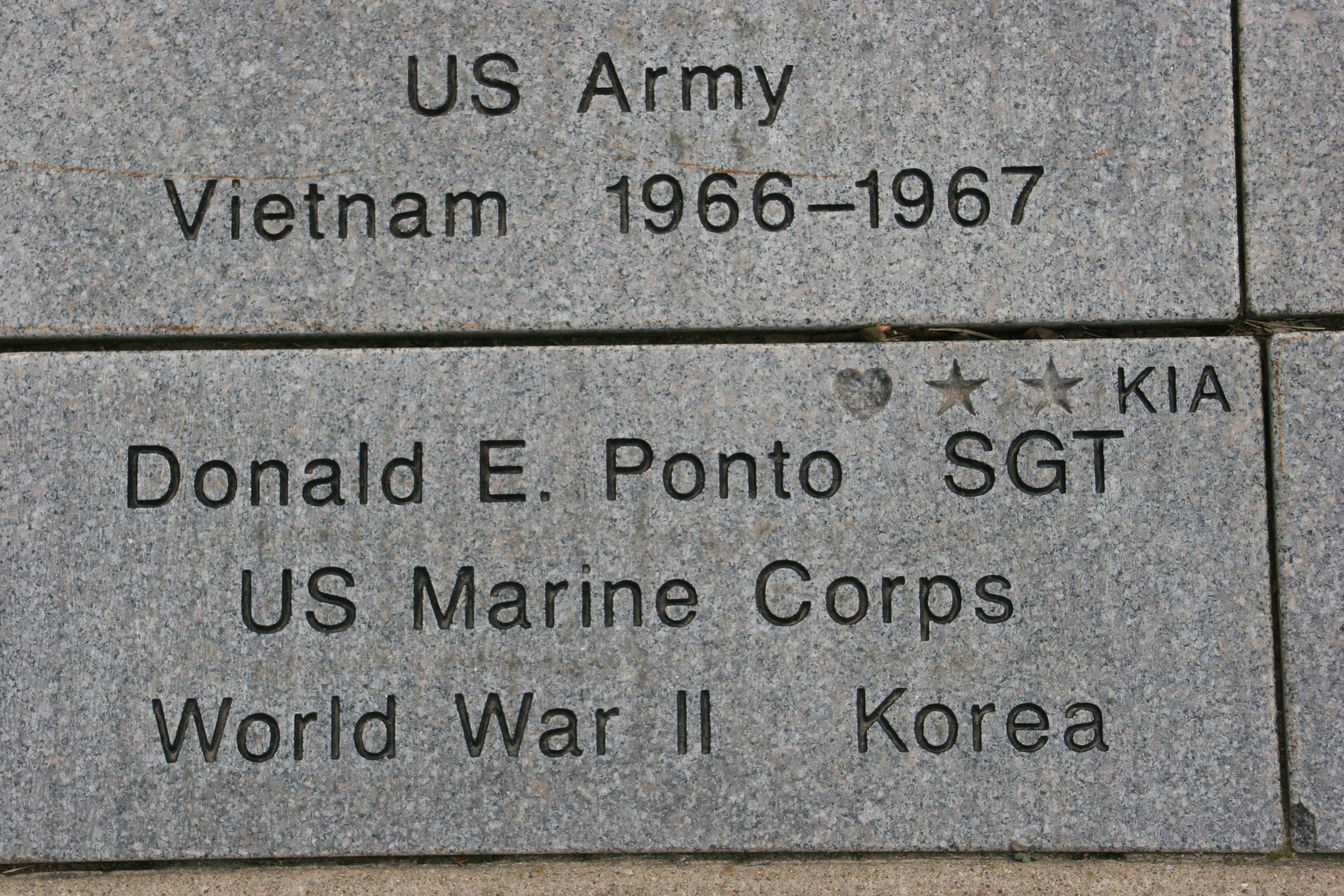
A paver at the Rice County Veterans Memorial honors Sgt Donald E. Ponto, killed in action in Korea. (Minnesota Prairie Roots copyrighted file photo)
A full view of the Northfield Area Veterans Memorial. The stones represent each branch of the military. (Minnesota Prairie Roots copyrighted photo May 2023)

Many Minnesota communities have veterans’ memorials. While designs differ, they share the commonalities of a centerpiece sculpture, sometimes a soldier or an eagle or some other strong symbol; pavers with veterans’ names imprinted; American and other flags; and ways to recognize all branches of the military. It is the names, accompanied by the initials KIA, which break my heart. KILLED IN ACTION. I recognize the intense pain and heartbreak experienced by loved ones back home. The grieving families. The Gold Star Mothers, a mother who lost a child in service to country. The fatherless children, like Teri, the infant daughter of my dad’s buddy, Ray. Overwhelming grief imprints upon those stone pavers.

An eagle at Veterans Memorial Park in Morristown. (Minnesota Prairie Roots copyrighted file photo)

This Memorial Day, I encourage you to reflect on the war dead whom we honor on Monday. Walk through a cemetery and pause at the graves marked by small American flags. Attend a Memorial Day program not out of a sense of obligation, but out of gratitude. I feel thankful for a free press. Not every country has such freedom.

My dad carried this memorial service bulletin home to Minnesota from Korea. In the right column is listed the name of his fallen buddy, Raymond W. Scheibe. (Minnesota Prairie Roots copyrighted file photo)

Spend time at a veterans’ memorial beyond a precursory walk through. Appreciate the words, the names, the symbols, the artwork. And, if a soldier sculpture centers the memorial, look into his eyes and remember this biblical quote pulled from the memorial service folder my dad carried home from Korea: Greater love has no man than this, that a man lay down his life for his friends (John 15:13).

Fitting words engraved in stone at the Northfield Area Veterans Memorial. (Minnesota Prairie Roots copyrighted photo May 2023)

That July 31, 1953, service folder from Sucham-dong Korea lists 28 soldiers who died on the battlefield, among them my dad’s beloved buddy, Raymond W. Scheibe, age 22. It is my dad’s grief and trauma I see when I gaze into the eyes of that soldier sculpture in Northfield. War carries so much death and loss and pain. I vicariously understand that. This Memorial Day I remember, reflect, honor, carry on my heart the heaviness of war.

© Copyright 2023 Audrey Kletscher Helbling


Minnesota prairie roots revisited, remembered, reflected January 25, 2023

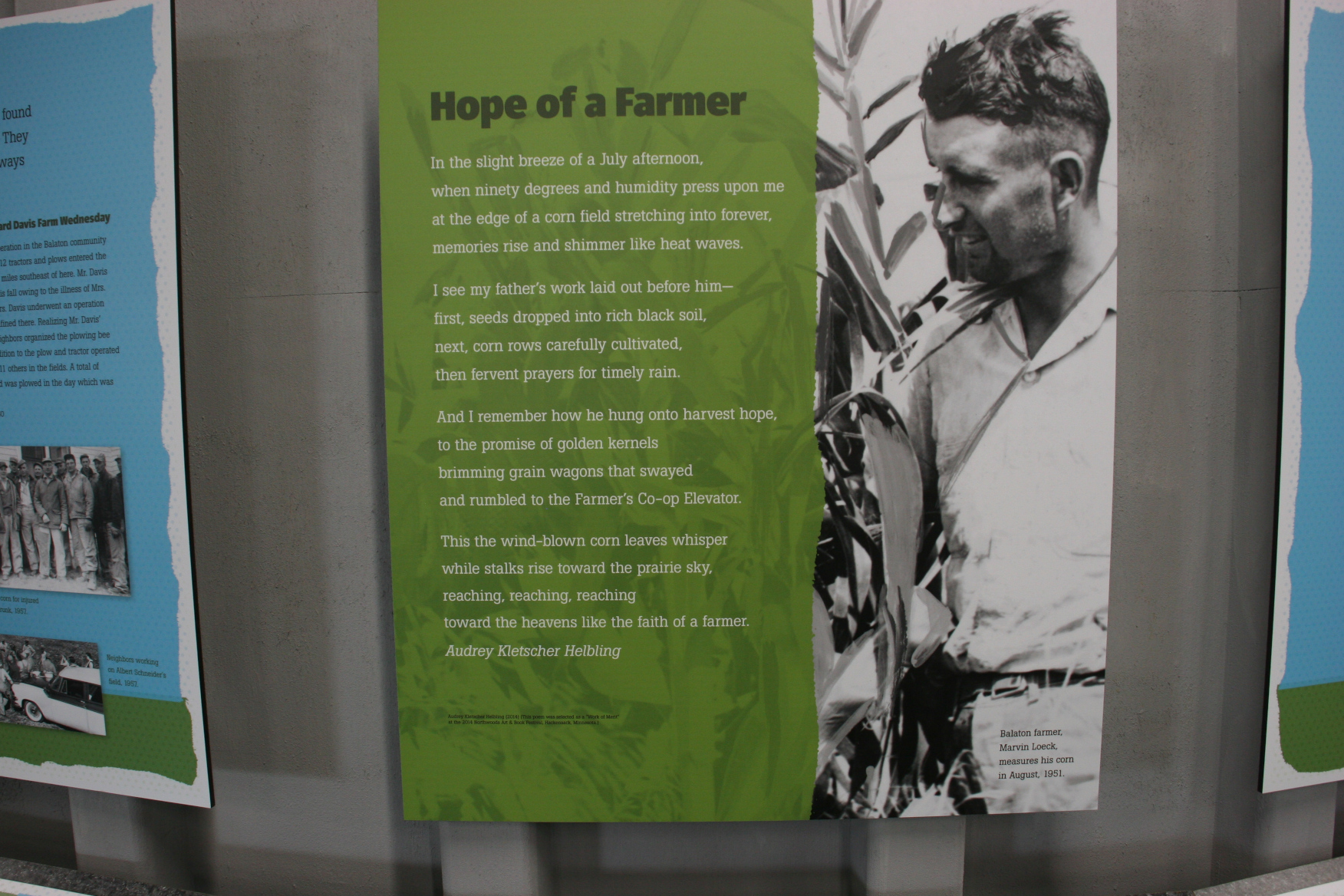
My “Hope of a Farmer” poem exhibited at the Lyon County Historical Society Museum. The exhibit also includes my poem, “Ode to My Farm Wife Mother.” (Minnesota Prairie Roots copyrighted file photo September 2022)

WHEN I RETURNED to my beloved southwestern Minnesota prairie in September, I did so with one primary purpose—to see my poetry showcased in the “Making Lyon County Home” exhibit at the Lyon County Historical Society Museum in Marshall. Any additional attractions—like viewing a public art sculpture outside the local ice arena and a stop at Brau Brothers Brewing—would only enhance the day trip.

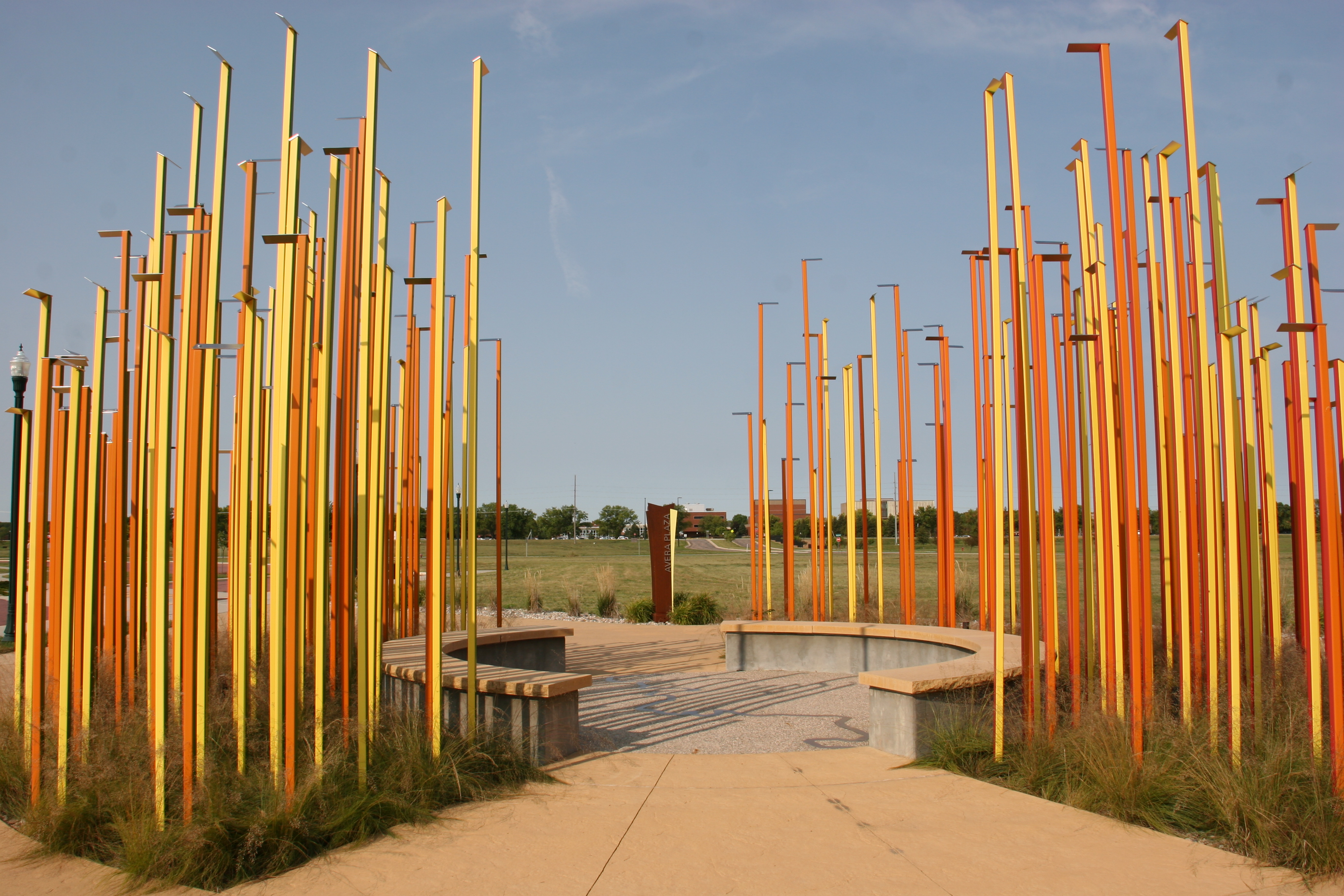
Randy Walker’s “Prairie Roots” sculpture defines the entrance outside the Red Baron Arena on Marshall’s east side at 1651 Victory Drive. (Minnesota Prairie Roots copyrighted photo September 2022)

My one regret is that Randy and I didn’t stay overnight, allowing more time to explore local sites without feeling rushed. Forty years have passed since I visited Marshall en route to the Black Hills on our honeymoon. The college and county seat town lies 20 miles to the west of my hometown, Vesta in Redwood County, and 140 miles from my current home in Faribault.

A serene country scene just north of Lamberton in southern Redwood County on the southwestern Minnesota prairie. (Minnesota Prairie Roots copyrighted file photo September 2013)

This area of Minnesota is the place of my roots. My prairie roots. It is the place of wide open space, expansive skies, small towns and endless acres of cropland.

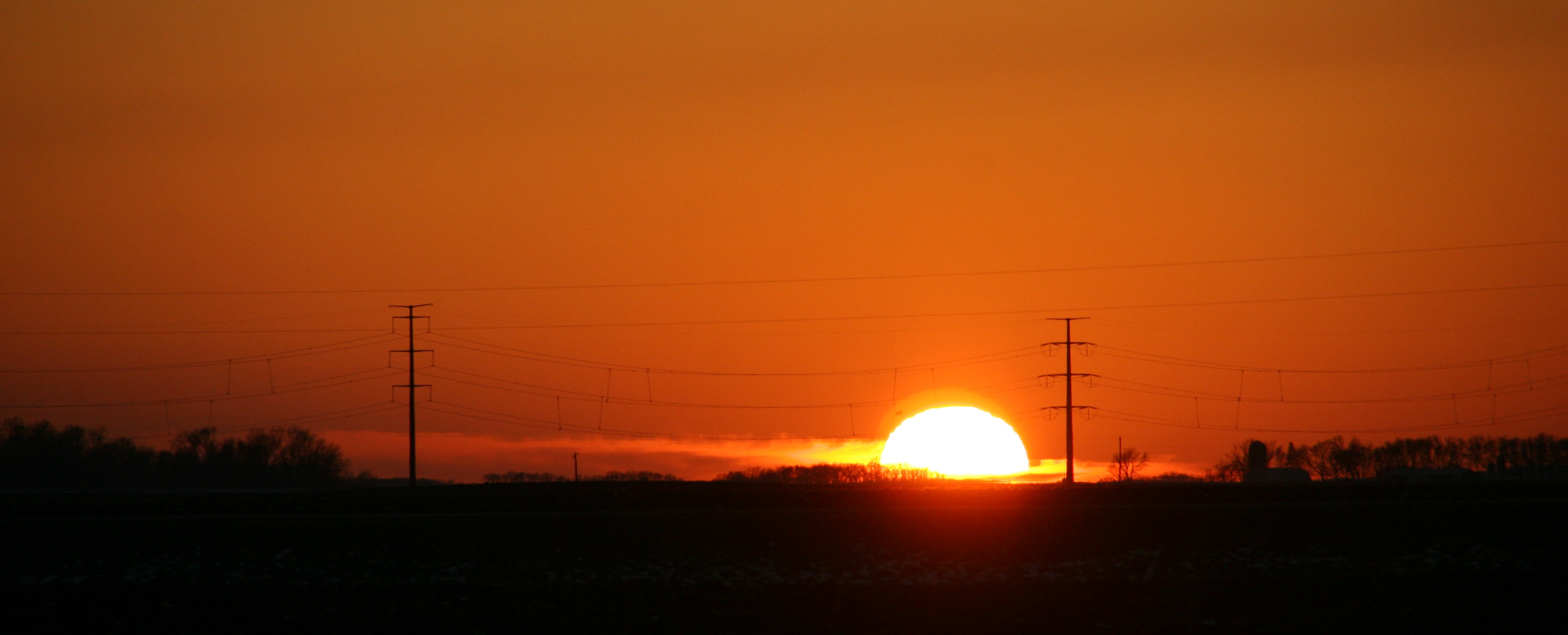
A prairie sunset photographed from Minnesota State Highway 67 between Redwood Falls and Morgan. (Minnesota Prairie Roots copyrighted file photo)

The land where I grew up inspired my blog name, Minnesota Prairie Roots. The name fits me as a person and a creative. The sparseness of the prairie taught me to notice details, to fully engage my senses. To appreciate the landscape and people. The vastness of the flat land and the star-flushed night sky and achingly beautiful sunsets. Here I connected to the land—bare feet upon dirt, bike tires crunching gravel, dirt etched into my hands from working the soil. Here I connected to the people—down-to-earth, hardworking, linked to the land.

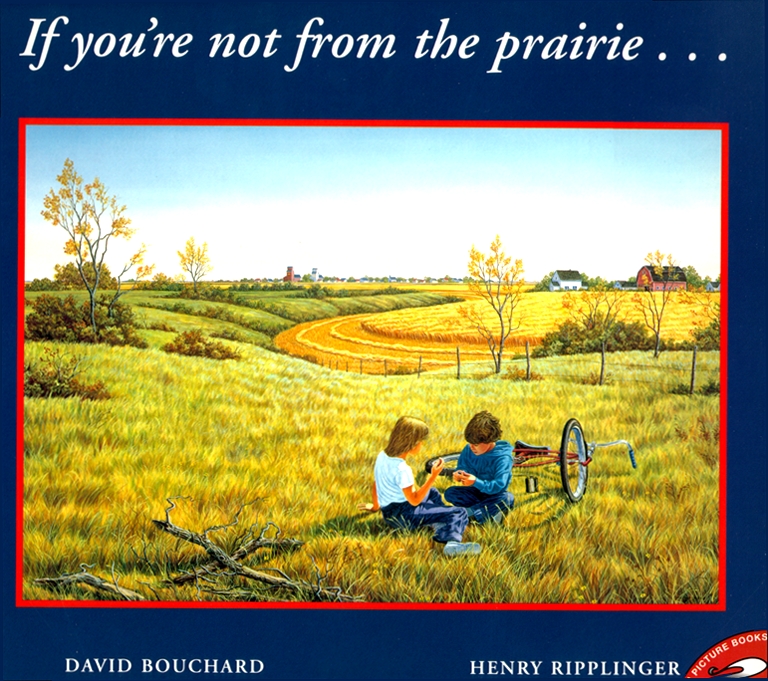
A favorite children’s picture book about the prairie gifted to me by my friend Kathleen.

For those who are not of prairie stock, the sparse landscape can seem uninteresting, empty, desolate. Even I admit the challenge of “if you’re not from the prairie…” A children’s picture book by that title, written by David Bouchard and illustrated by Henry Ripplinger and published in 1995, speaks to the prairie sun, wind, sky, flatness…grasses.

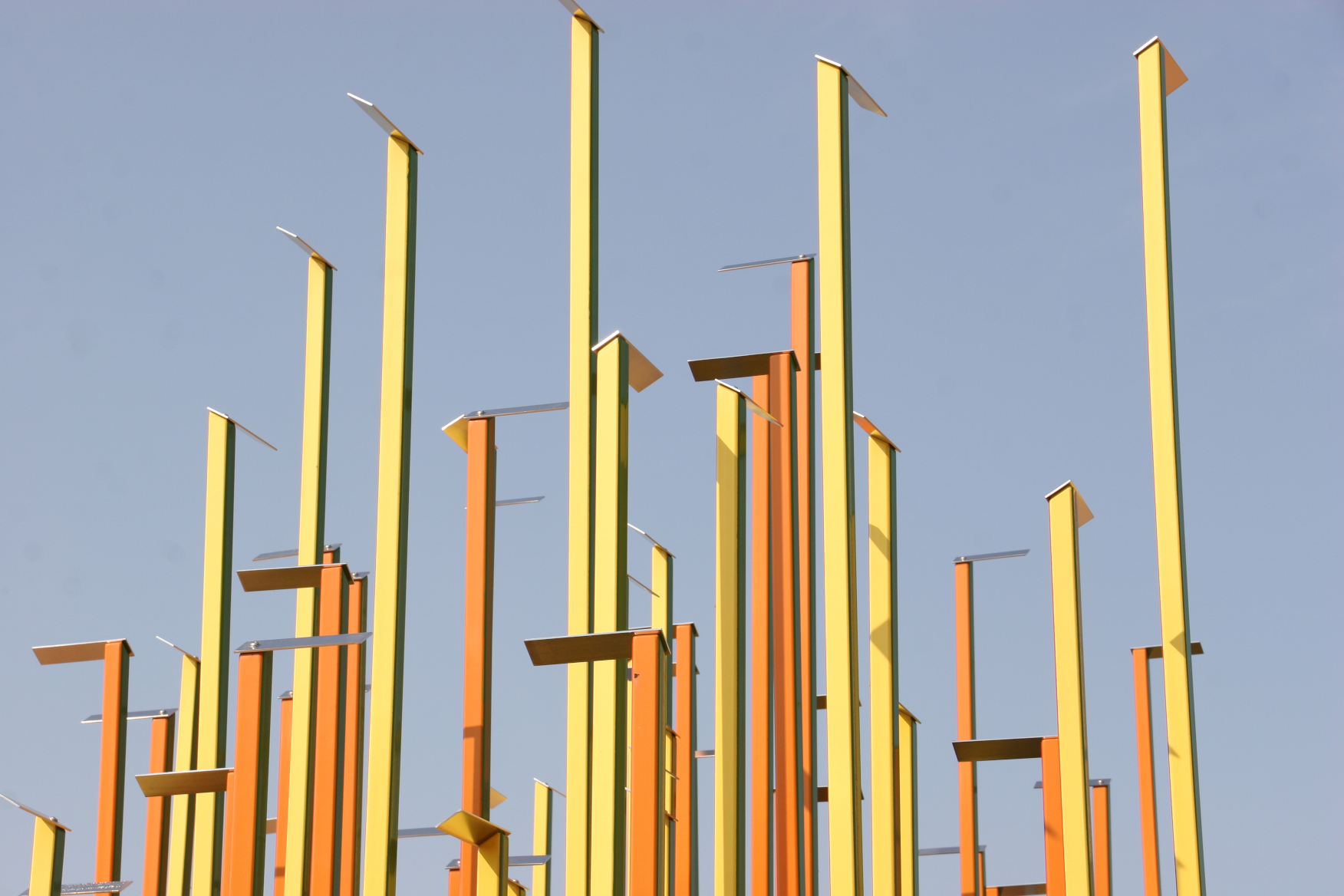
The tall grasses stretch to the prairie sky. The bent tops of the stems are also meant to resemble hockey sticks given the sculpture’s location outside the ice arena. (Minnesota Prairie Roots copyrighted photo September 2022)

Tall grasses are often associated with the prairie. Yet, those grasses were mostly missing from the landscape of my youth as cultivated crops covered the earth. But on our farm site, a sliver of unmown grass grew between granary and grove and gravel driveway, stretching high, stems bending in the wind. That Little House on the Prairie (Walnut Grove is 20 miles from Vesta) space opened summer afternoons to imaginative play. I hold many memories rooted in those tall grasses, in the prairie.

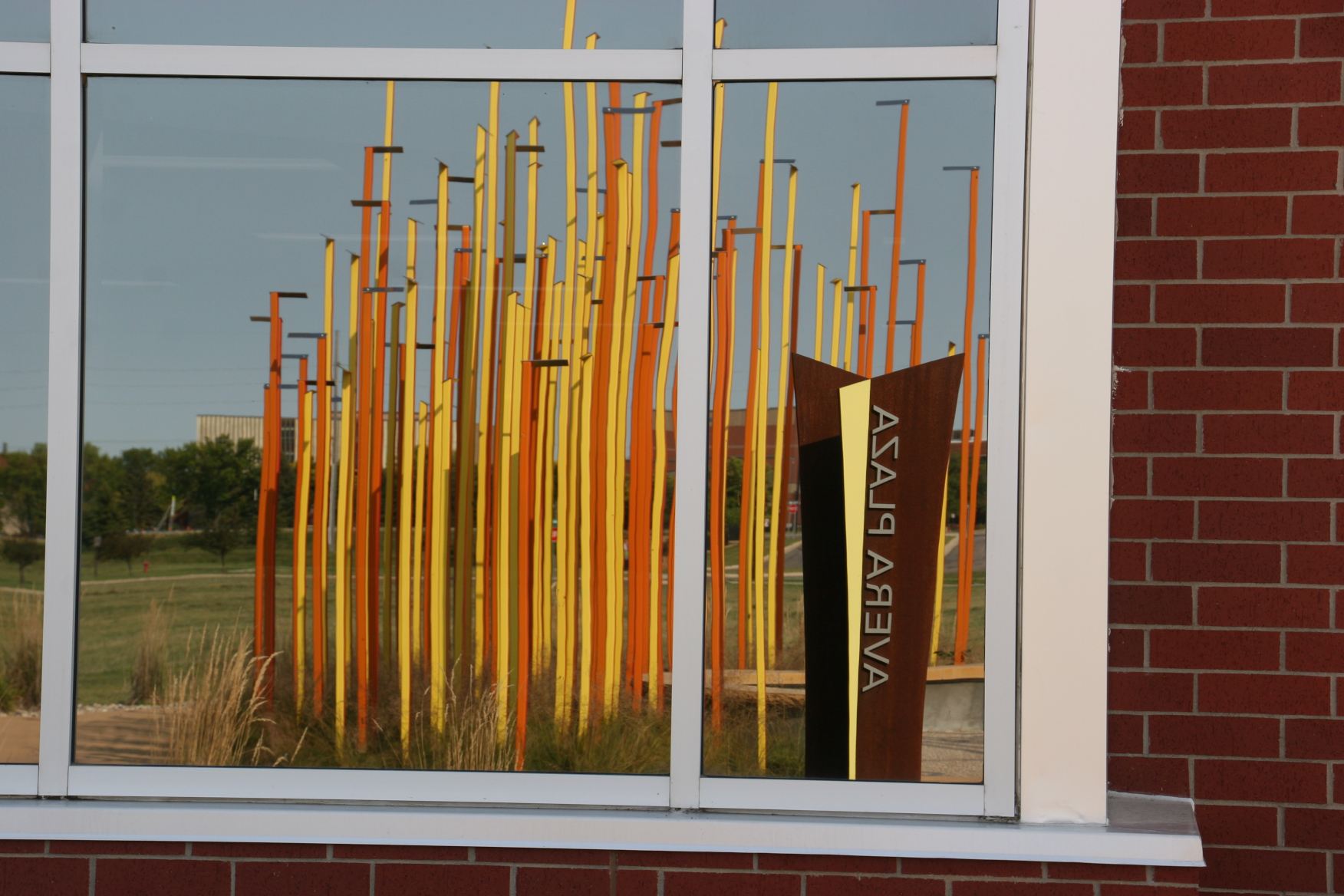
Depending on the time of day and viewing point, the steel grass stems showcase different colors. (Minnesota Prairie Roots copyrighted photo September 2022)
The sculpture reflected in an arena window. (Minnesota Prairie Roots copyrighted photo September 2022)
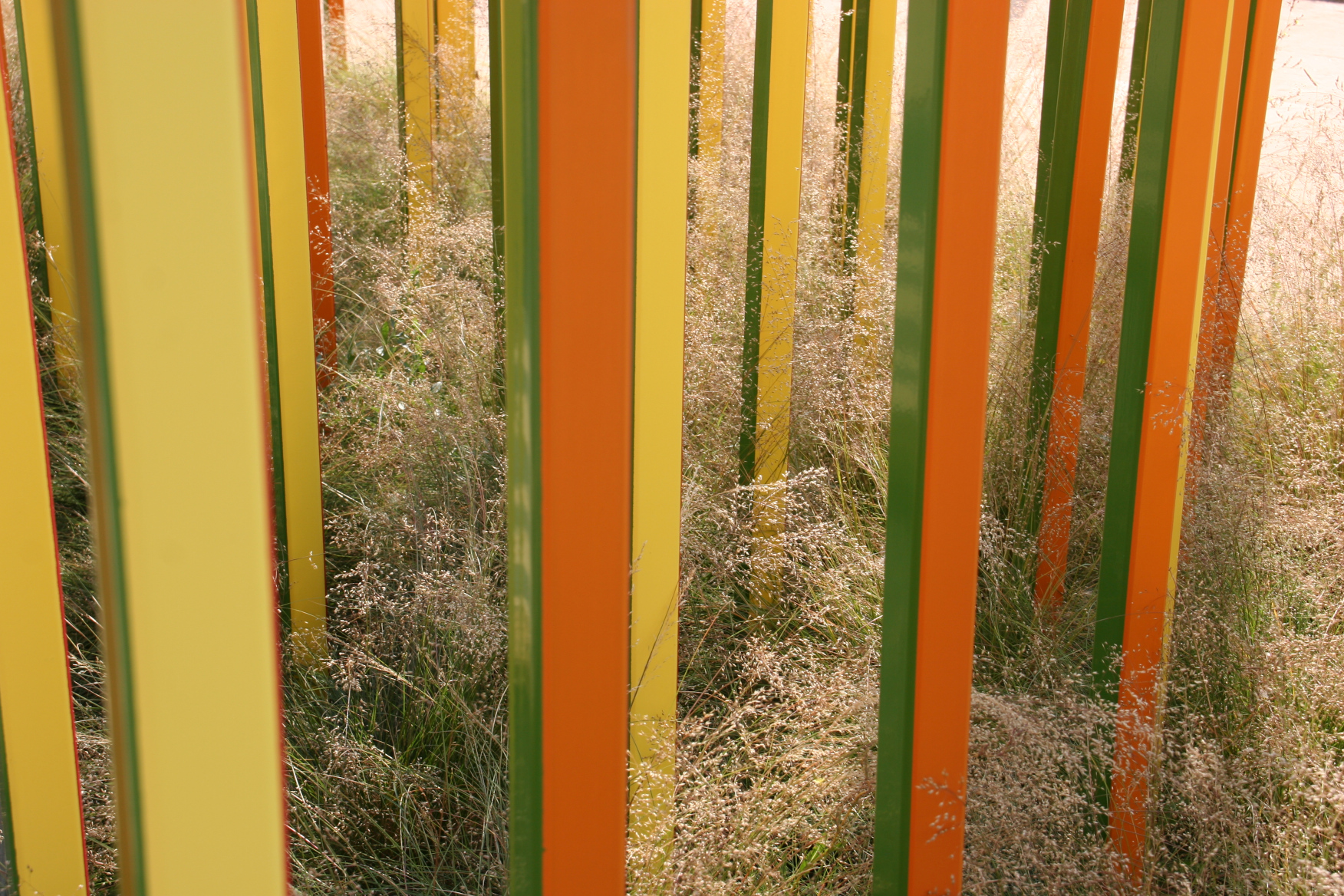
Just another view of the grass stems, emphasizing the orange and yellow hues. (Minnesota Prairie Roots copyrighted photo September 2022)

Prairie Roots. That name graces a public art sculpture outside the Red Baron Arena in Marshall. Minneapolis artist Randy Walker was commissioned by the City of Marshall in 2018 to create the sculpture reflecting the prairie landscape. I knew in advance of my September visit that I needed to see this artwork if time allowed. We made time. Walker used 210 painted steel poles to represent tall stems of grass, prairie grass. They are colored in hues of yellow, orange, red and green, reflecting seasonal changes and light.

Prairie grass grows within the sculpture. (Minnesota Prairie Roots copyrighted file photo September 2022)

And in between all those steel stems, prairie grass grows, thrives.

A grasshopper clings to a steel grass stem in the “Prairie Roots” sculpture. (Minnesota Prairie Roots copyrighted photo September 2022)

I even spotted a grasshopper on a steel stalk, taking me back decades to the hoards of grasshoppers that amassed and hopped through that patch of uncut grass on the farm.

Viewing the sculpture toward the field, this perspective shows the meandering course of the Redwood River in the Marshall area on the floor of the gathering space. (Minnesota Prairie Roots copyrighted photo September 2022)

Walker’s sculpture holds visual appeal against an expansive backdrop sky and open field (when viewing the art from the arena entrance outward). Via that perspective, I see the enduring strength of the prairie, and the immensity of land and sky, this place of my Minnesota prairie roots.

Please check back for more posts about my day trip back to southwestern Minnesota in September 2022.

© Copyright 2023 Audrey Kletscher Helbling


From the heart of Northfield: A sculpture reflects community love April 12, 2022

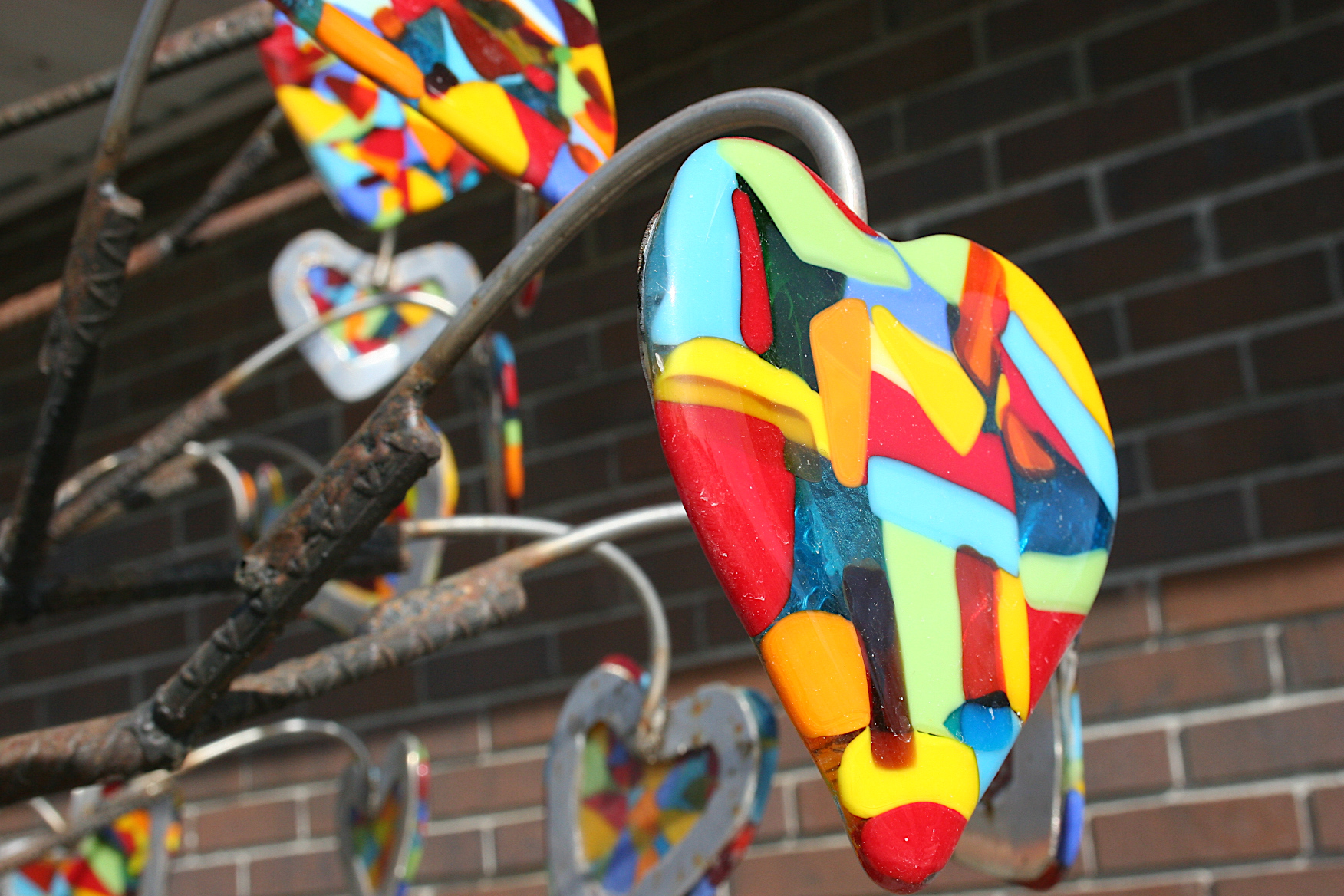
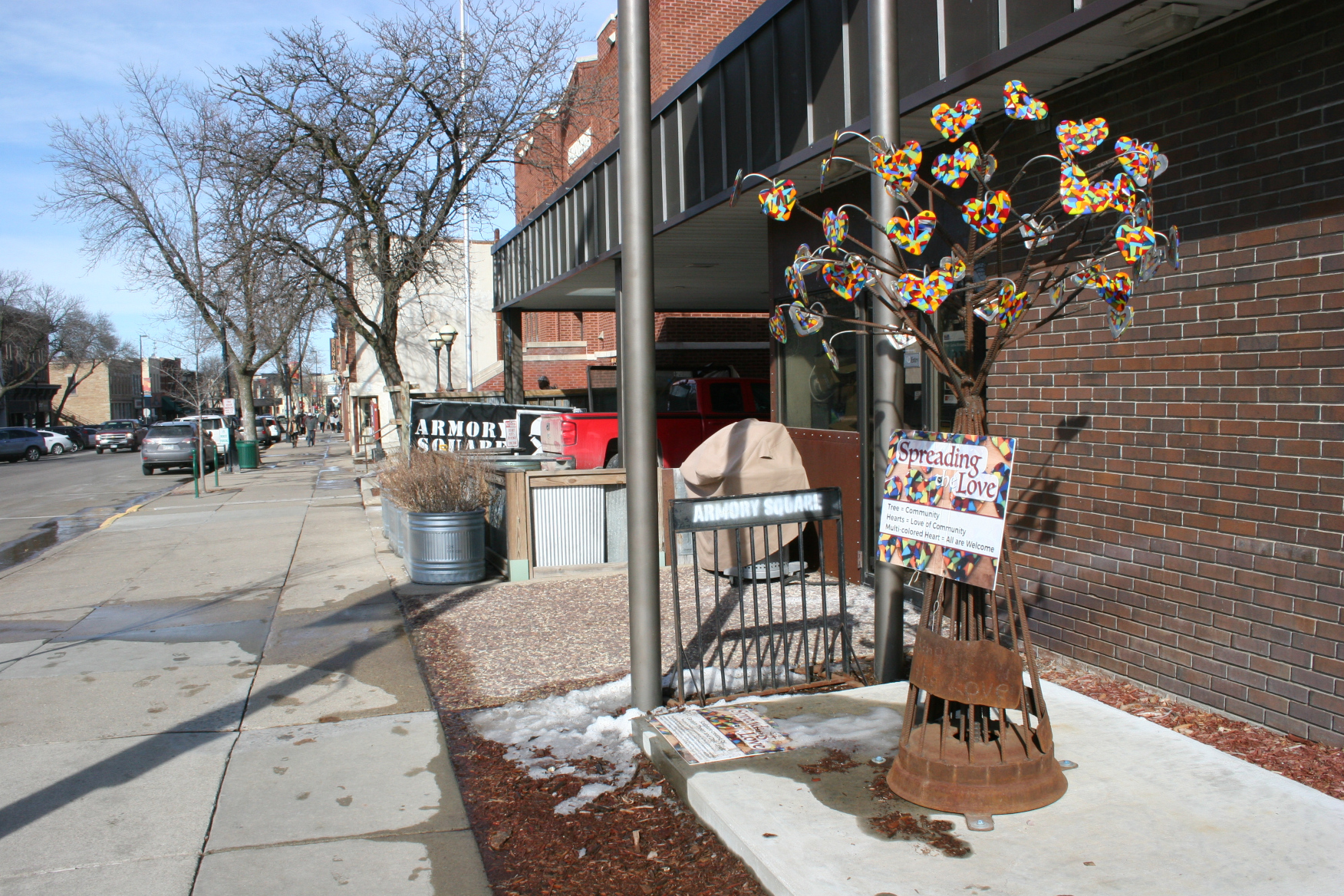
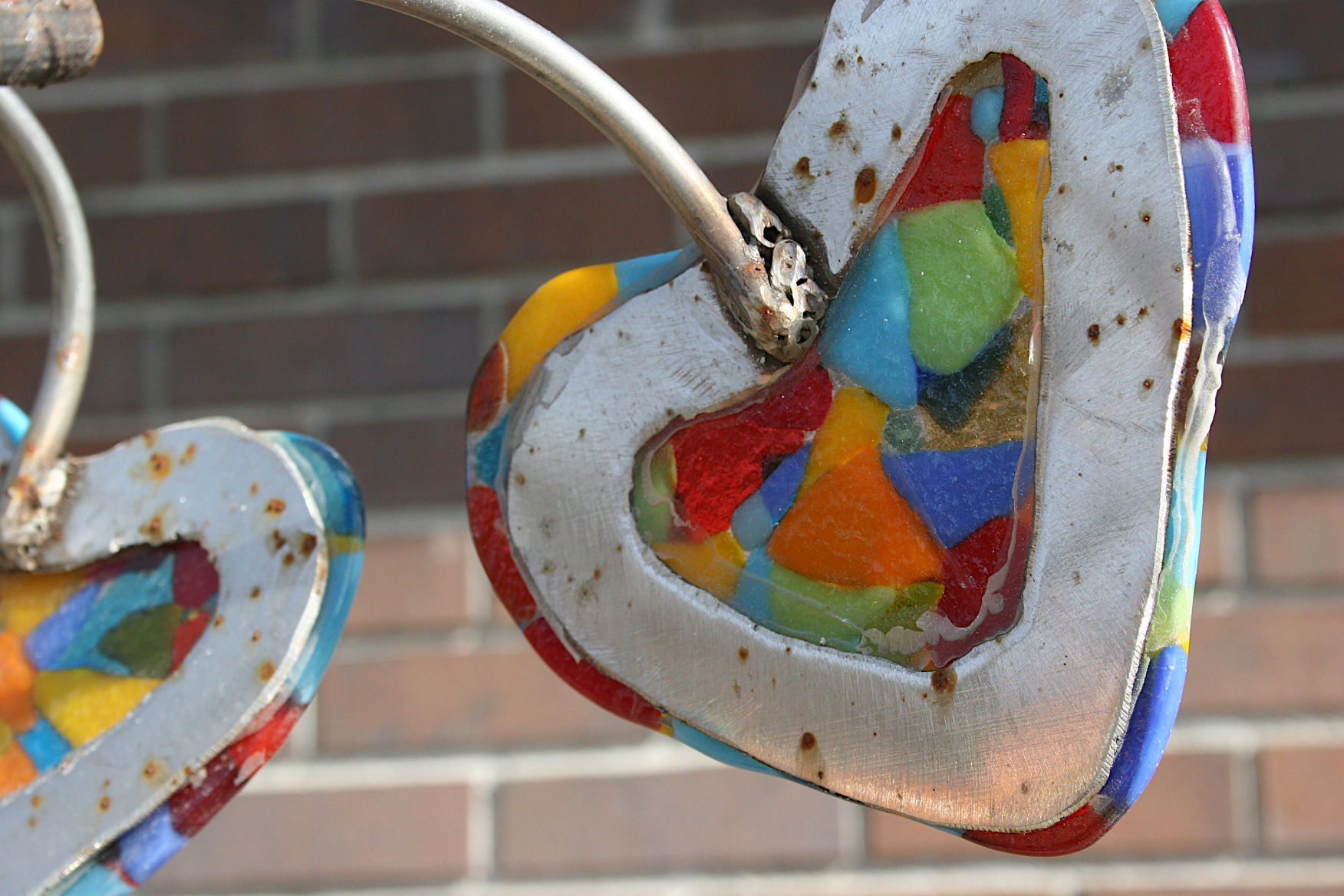
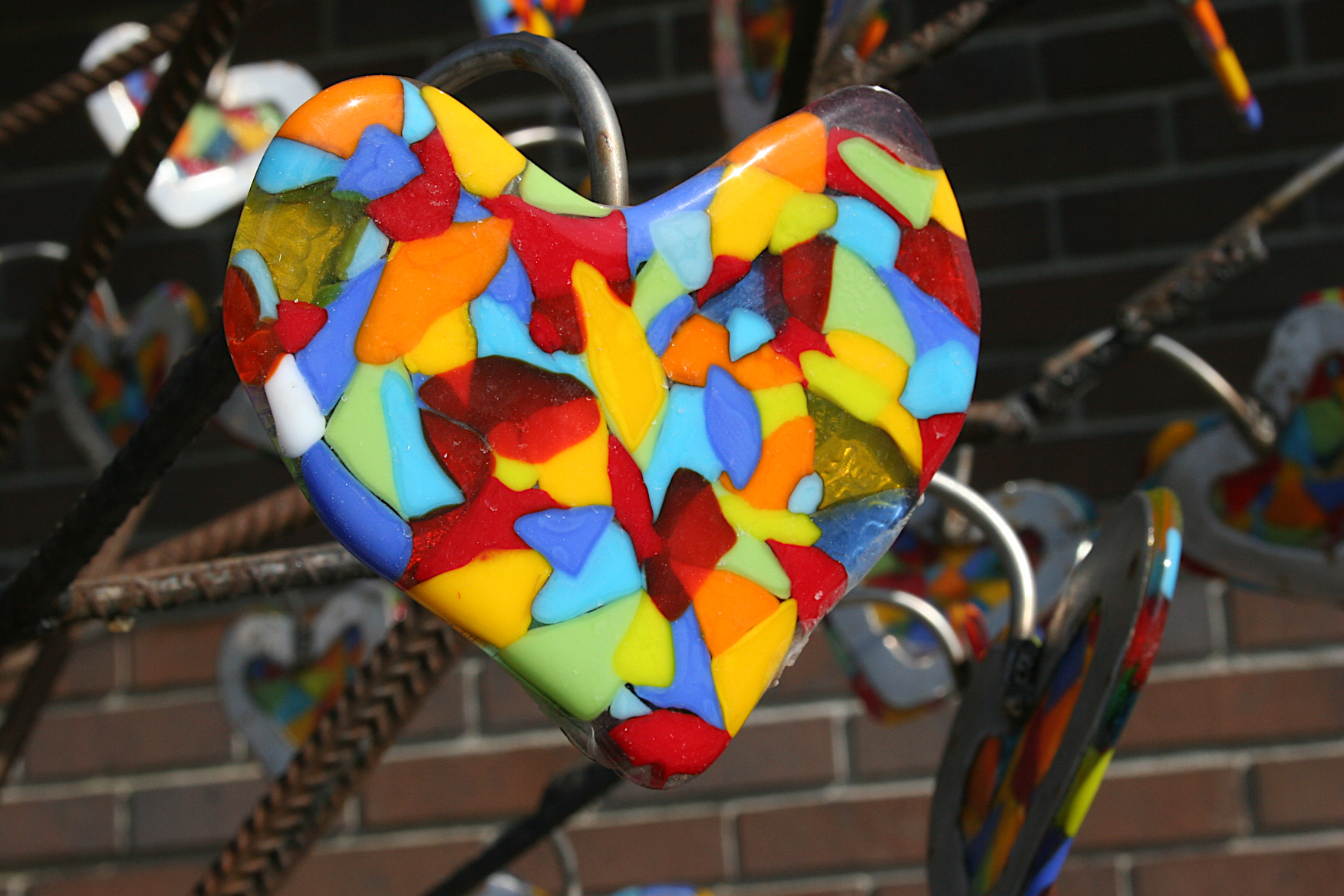
Fused glass hearts on the sculpture “Spreading the Love.” (Minnesota Prairie Roots copyrighted photo February 2022)

IN SOME WAYS, the “Spreading the Love” sculpture reminds me of a box of crayons. It’s a boldly colorful work of art sidling next to a sidewalk near the corner of Division and Sixth Streets in downtown Northfield.

The sculpture is located along Division Street, near Armory Square and Imminent Brewing. (Minnesota Prairie Roots copyrighted photo February 2022)

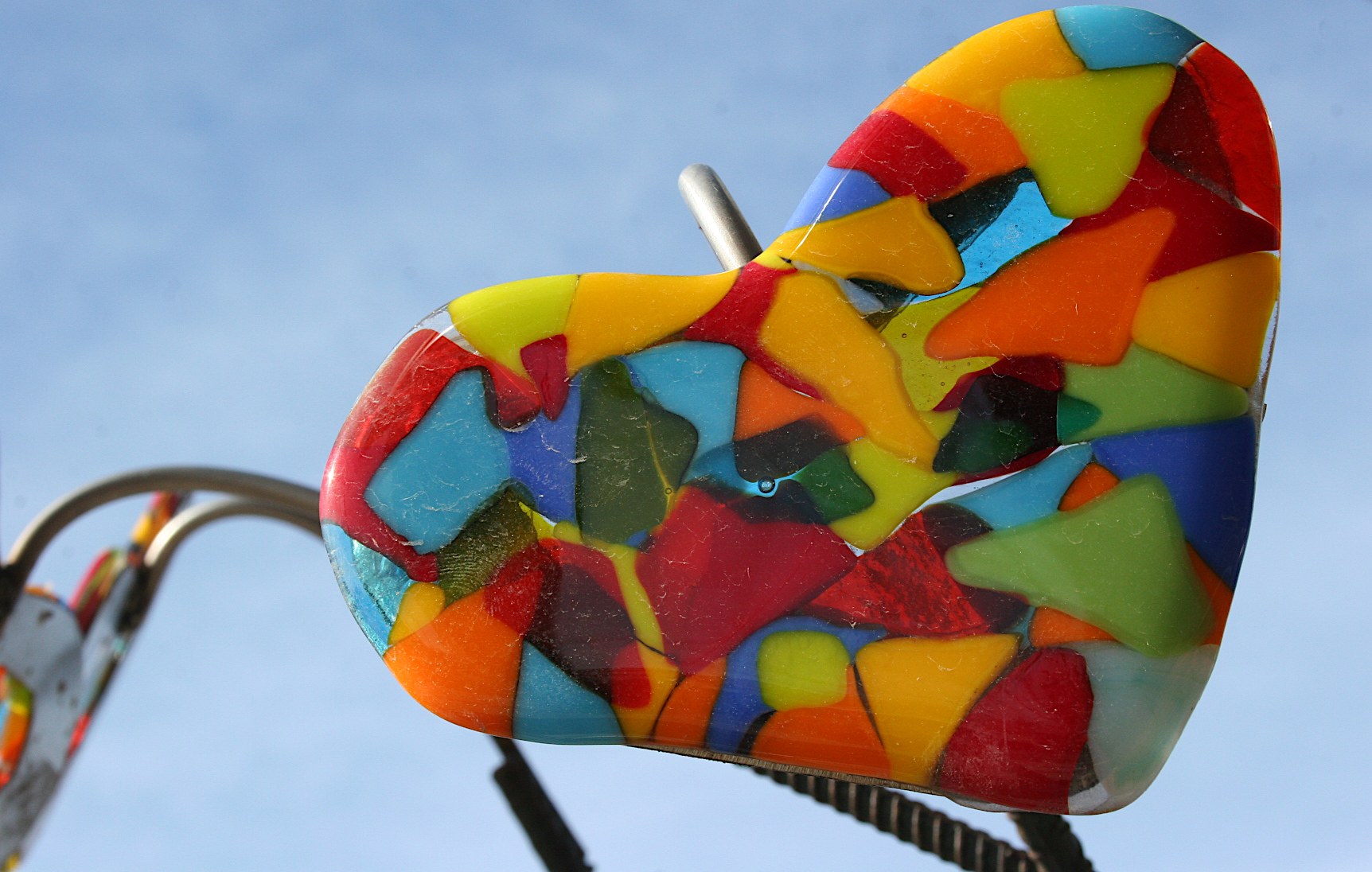
The crayon comparison comes in the mix of colors that combine in fused glass hearts created by Geralyn Thelen. The Northfield glass artist crafted the sculpture in collaboration with Hastings metal artist Dale Lewis as part of the 2020 Artists on Main Street Program.

Against a blue sky, a bold and beautiful multi-hued heart. (Minnesota Prairie Roots copyrighted photo February 2022)
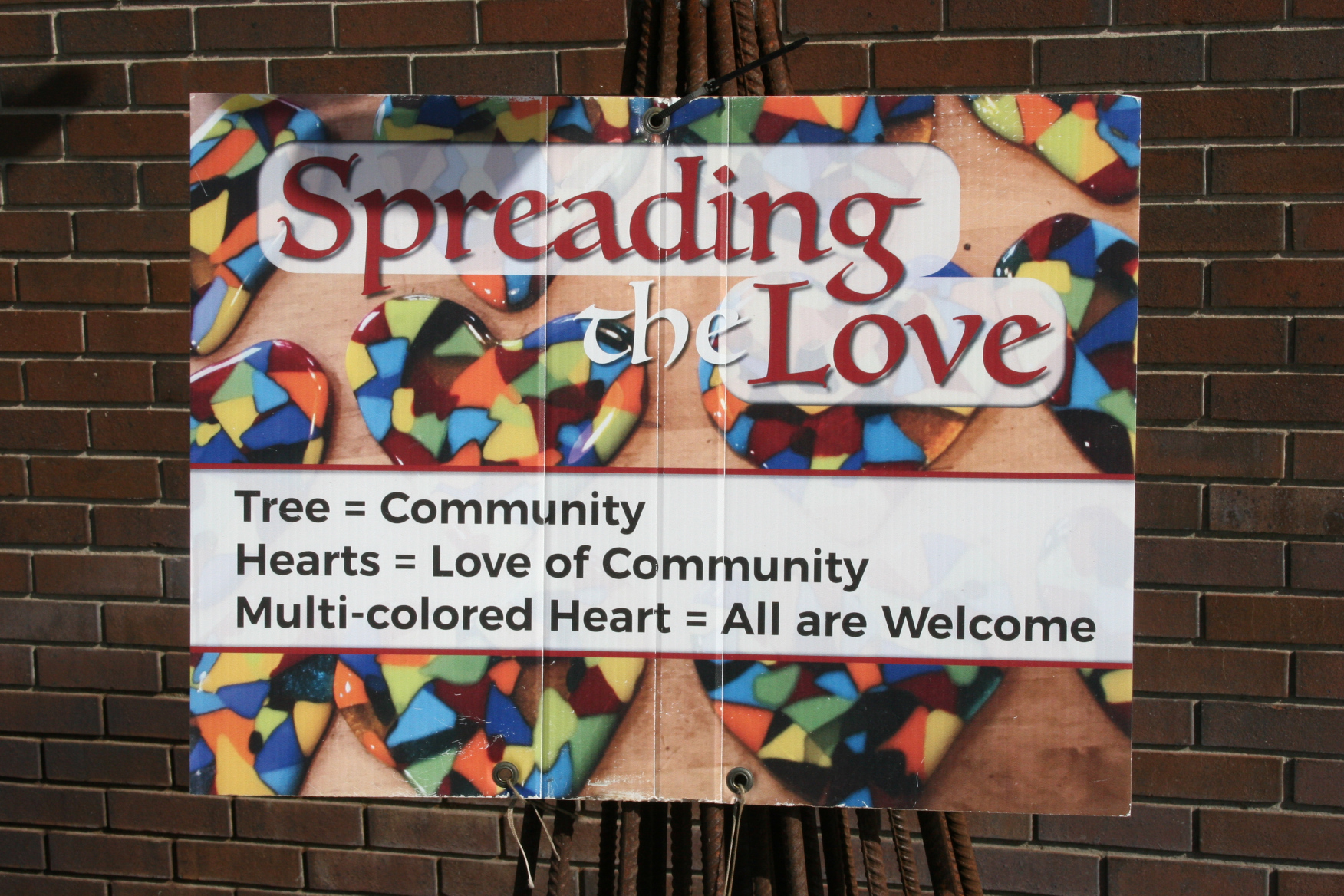
Signage explains the meaning of the sculpture. (Minnesota Prairie Roots copyrighted photo February 2022)
The heart-filled tree represents community. (Minnesota Prairie Roots copyrighted photo February 2022)

The result is this metal community tree adorned with vibrant heart “leaves.” The heart shape represents love. And the mixed hues of those hearts represent inclusiveness, that all are welcome here.

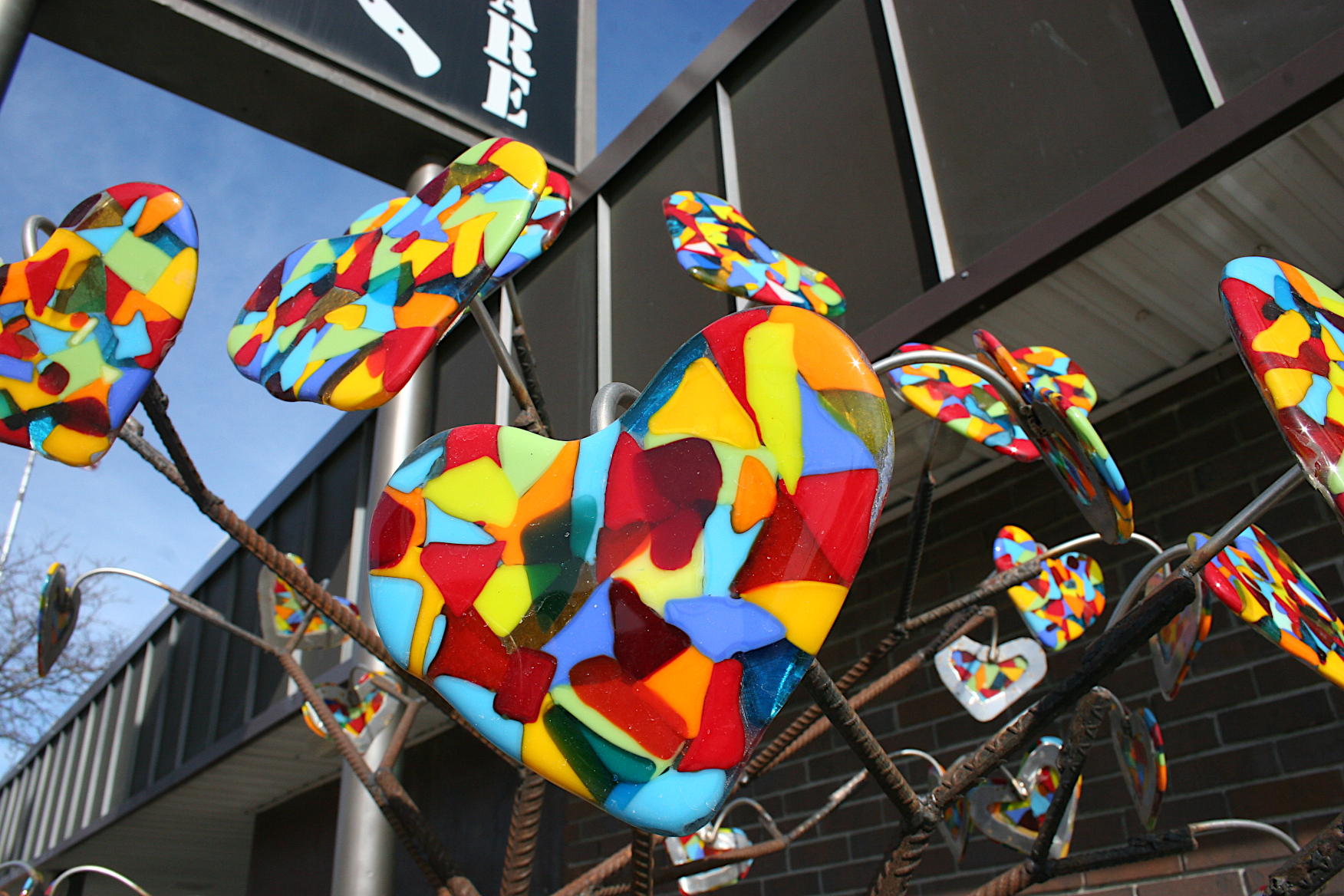
Many hearts in many colors. (Minnesota Prairie Roots copyrighted photo February 2022)

That brings me back to crayons. Remember the thrill of a new box of Crayola crayons? The scent. The sharp points. The rows of neatly packed colors in, oh, so many hues and shades? What kid didn’t want a box of 64 crayons versus the standard 24?

A full view of “Spreading the Love.” (Minnesota Prairie Roots copyrighted photo February 2022)

Yet, even though we had all those choices in colors, there were expectations. Grade school worksheets directed us to color the sun yellow, the grass green, the horse brown, the heart red, for example. To earn an S+ on a paper, we needed to follow directions. It was a way to teach reading and colors. But that left zero options for creativity, for an opening of the mind.

This shows how metal artist Dale Lewis attached the hearts. (Minnesota Prairie Roots copyrighted photo February 2022)

To the child who yearned to use all the colors in the crayon box, following directions stifled creativity in the necessity of conformity. I’d like to think as adults that we consider all the colors in the crayon box. If only that were true.

Geralyn Thelen’s fused glass hearts represent love. (Minnesota Prairie Roots copyrighted photo February 2022)

That’s why projects like “Spreading the Love” hold such value. Art encourages us to see, to think, to open our minds and reflect. To color the sun purple, the grass orange, the horse pink, the heart in a mix of hues. Ours is a multi-colored world of skin tones, beliefs, lifestyles and more. Yet, we all share the commonality of love. Giving love. Receiving love. Feeling loved. And, it is my hope, spreading love.

TELL ME: How do you spread love?

© Copyright 2022 Audrey Kletscher Helbling


Newest student sculpture graces library corner in downtown Northfield March 7, 2022

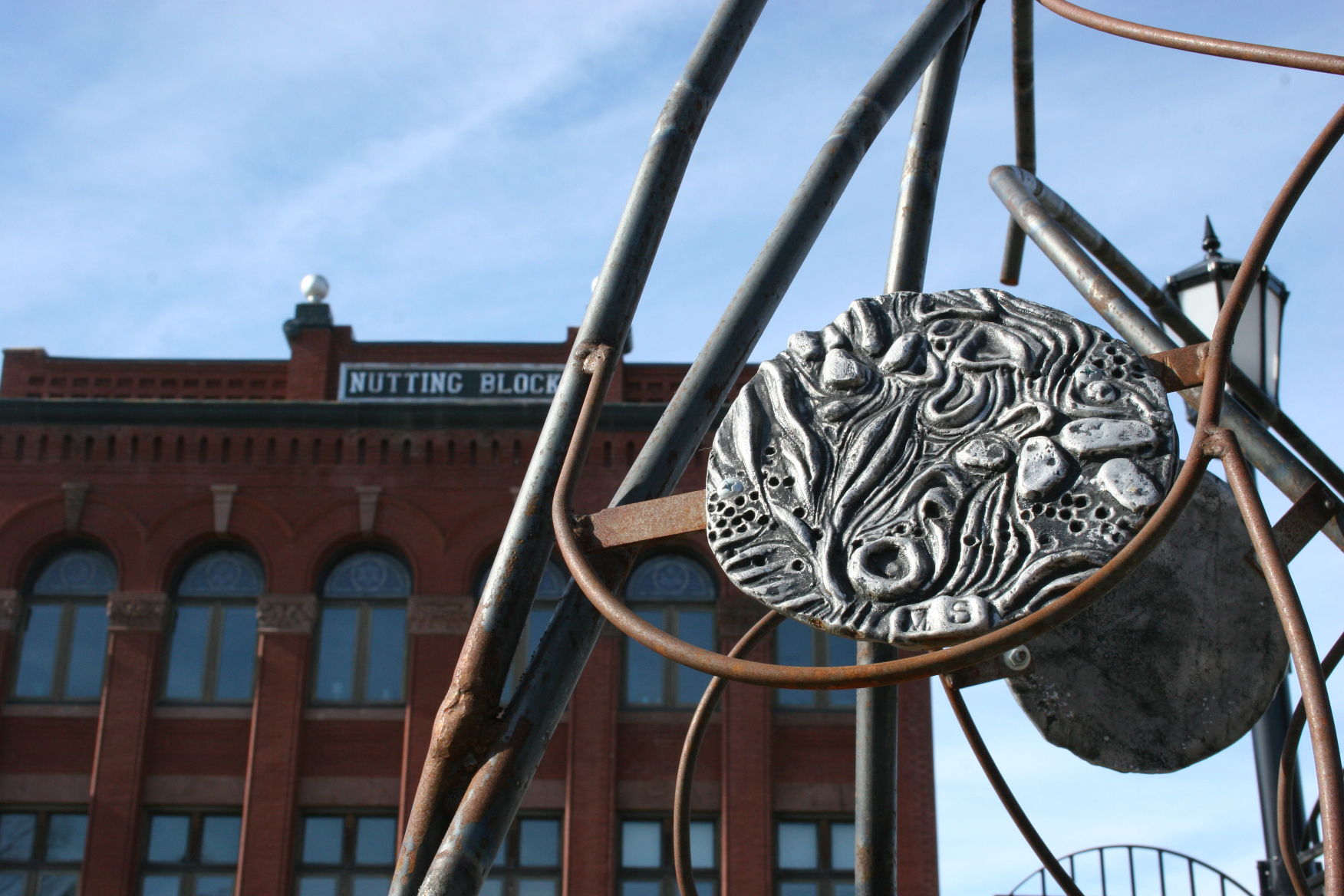
Historic buildings provide a backdrop for the Young Sculptors’ Project latest installation along Division Street in Northfield. (Minnesota Prairie Roots copyrighted photo February 2022)

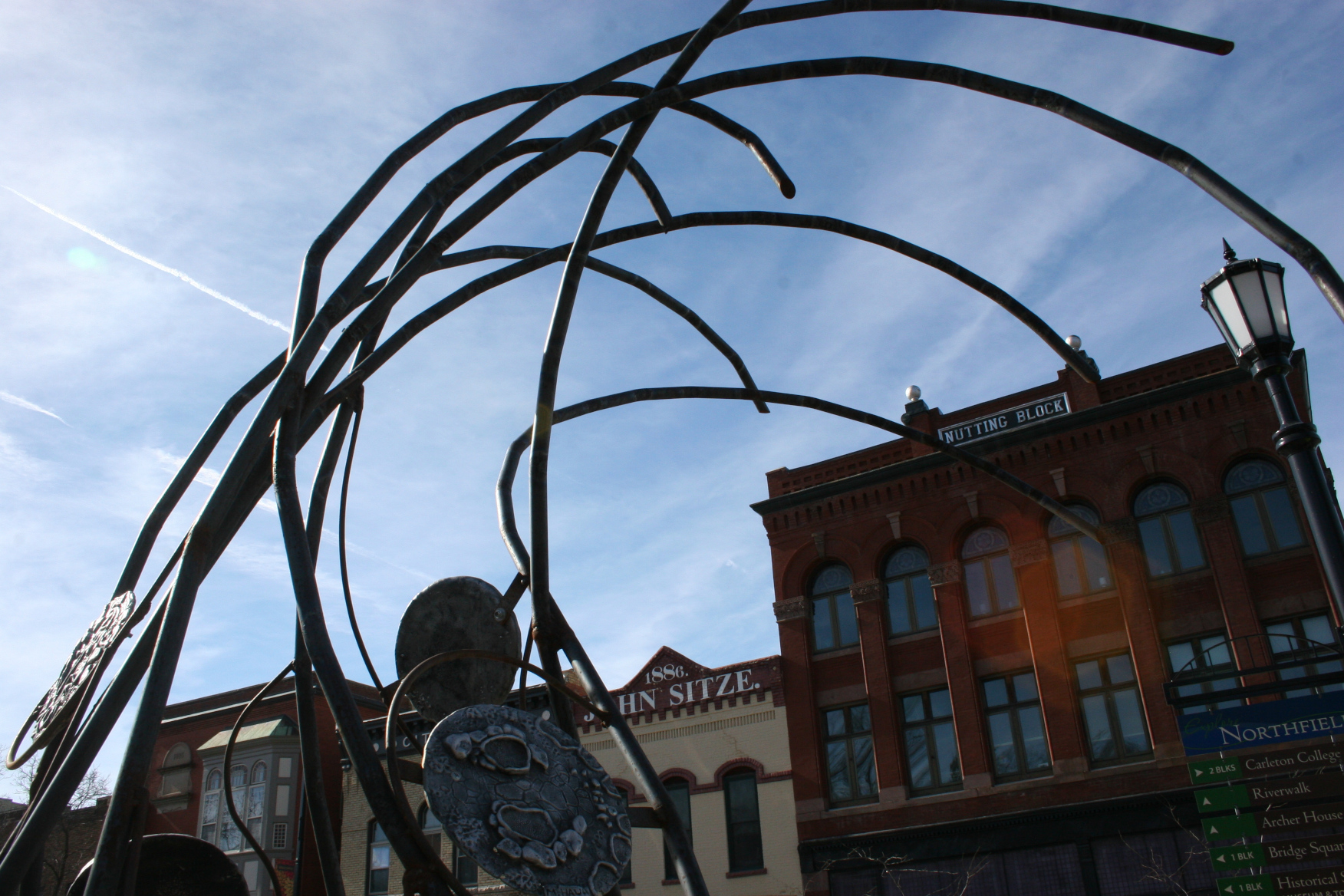
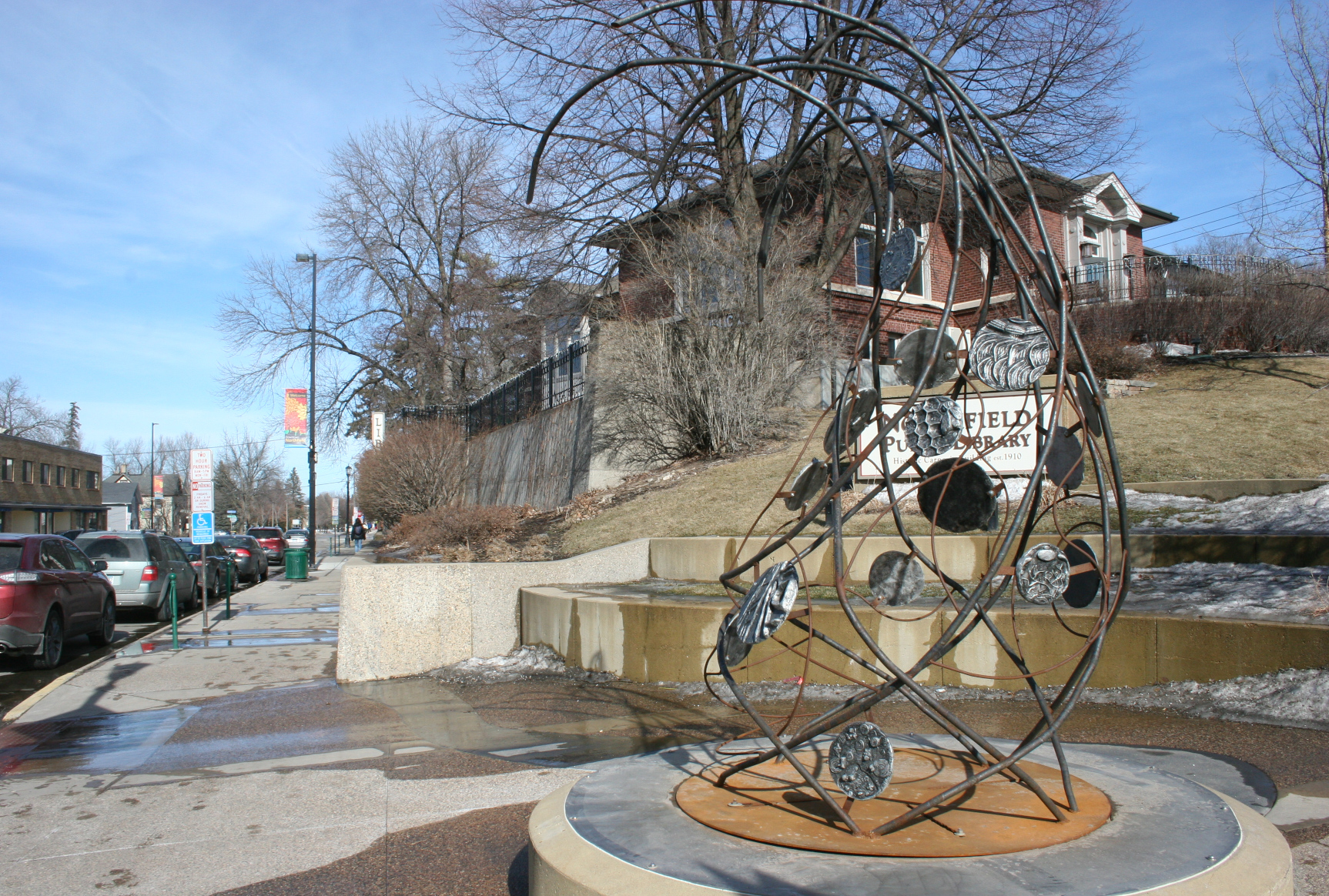
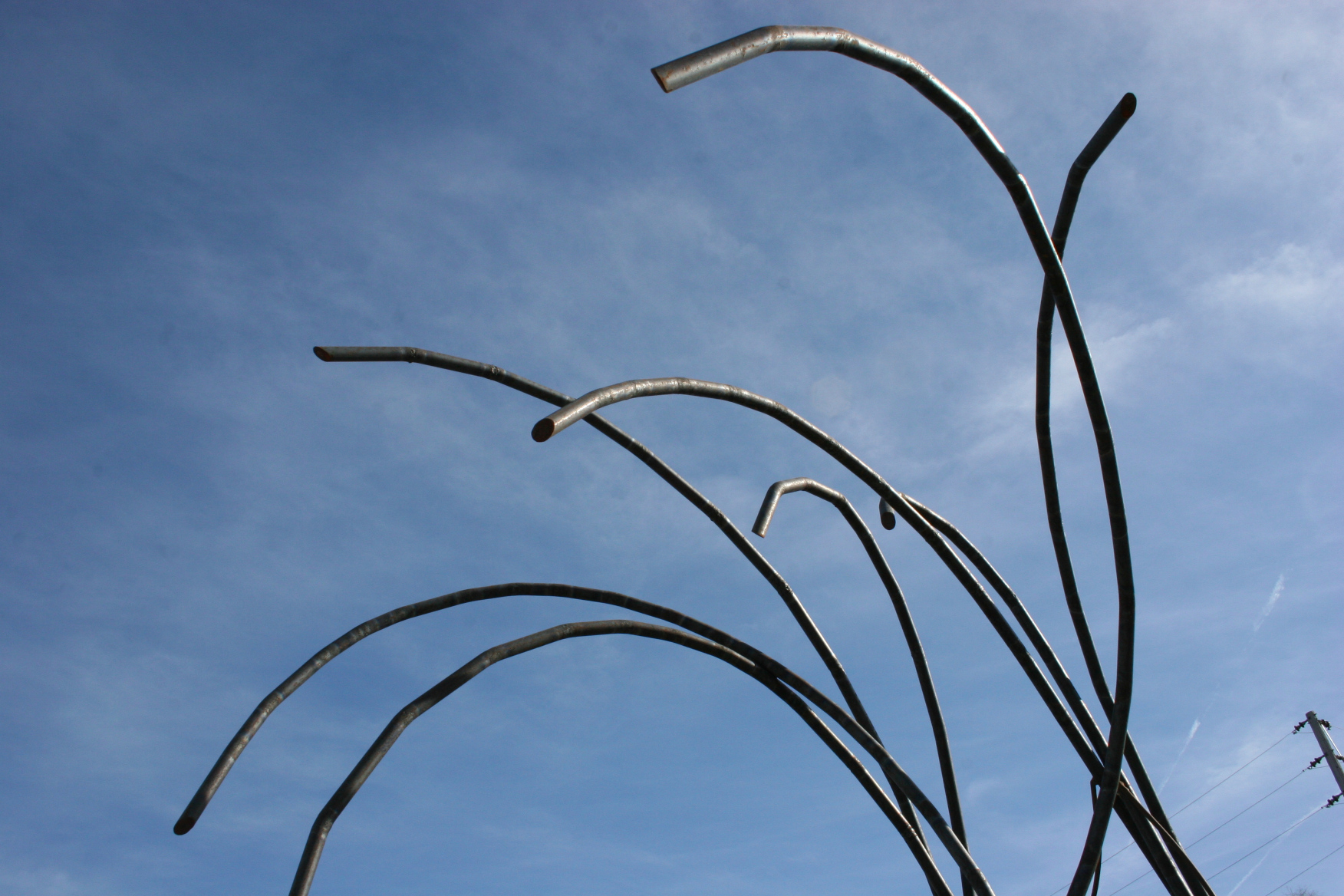
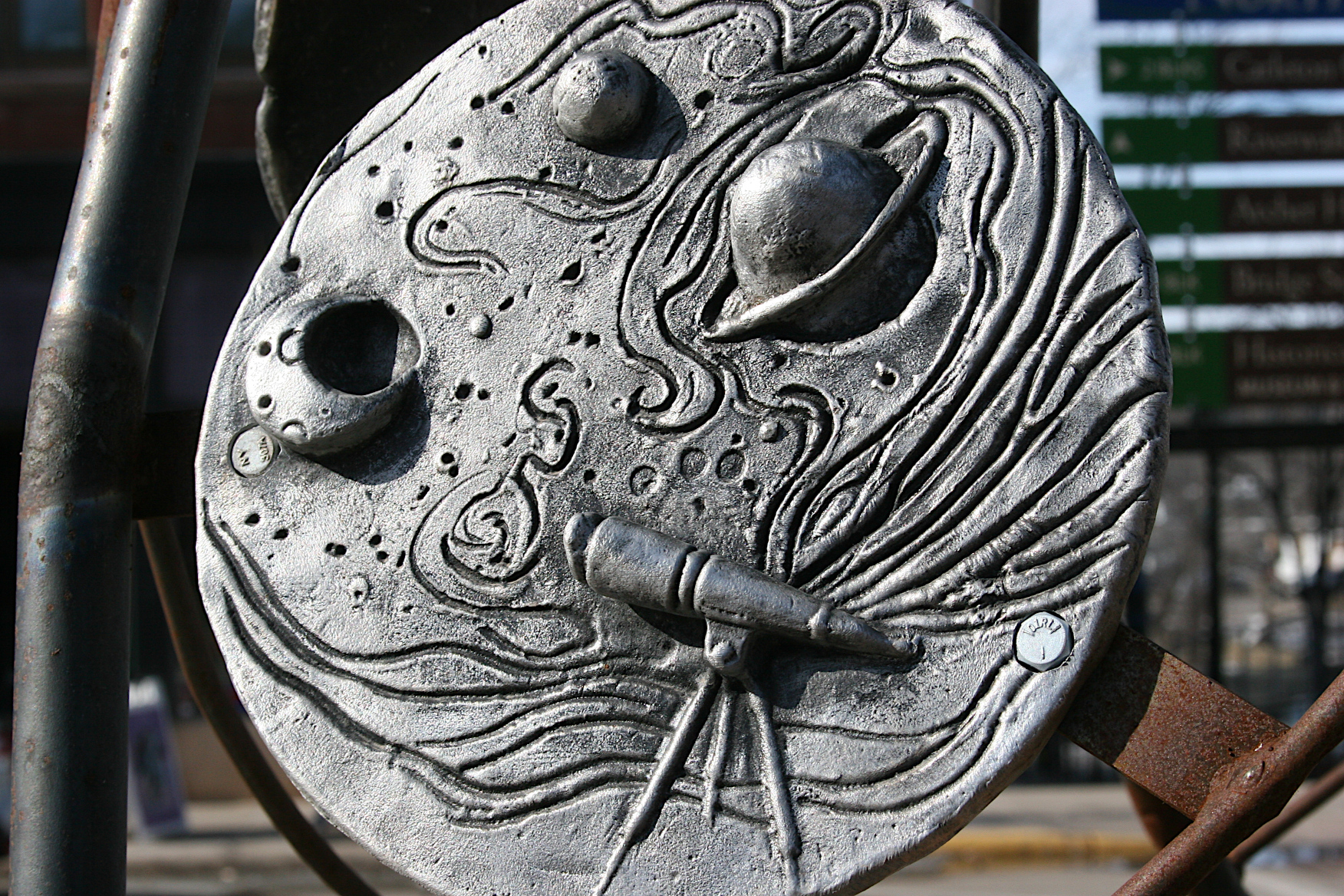
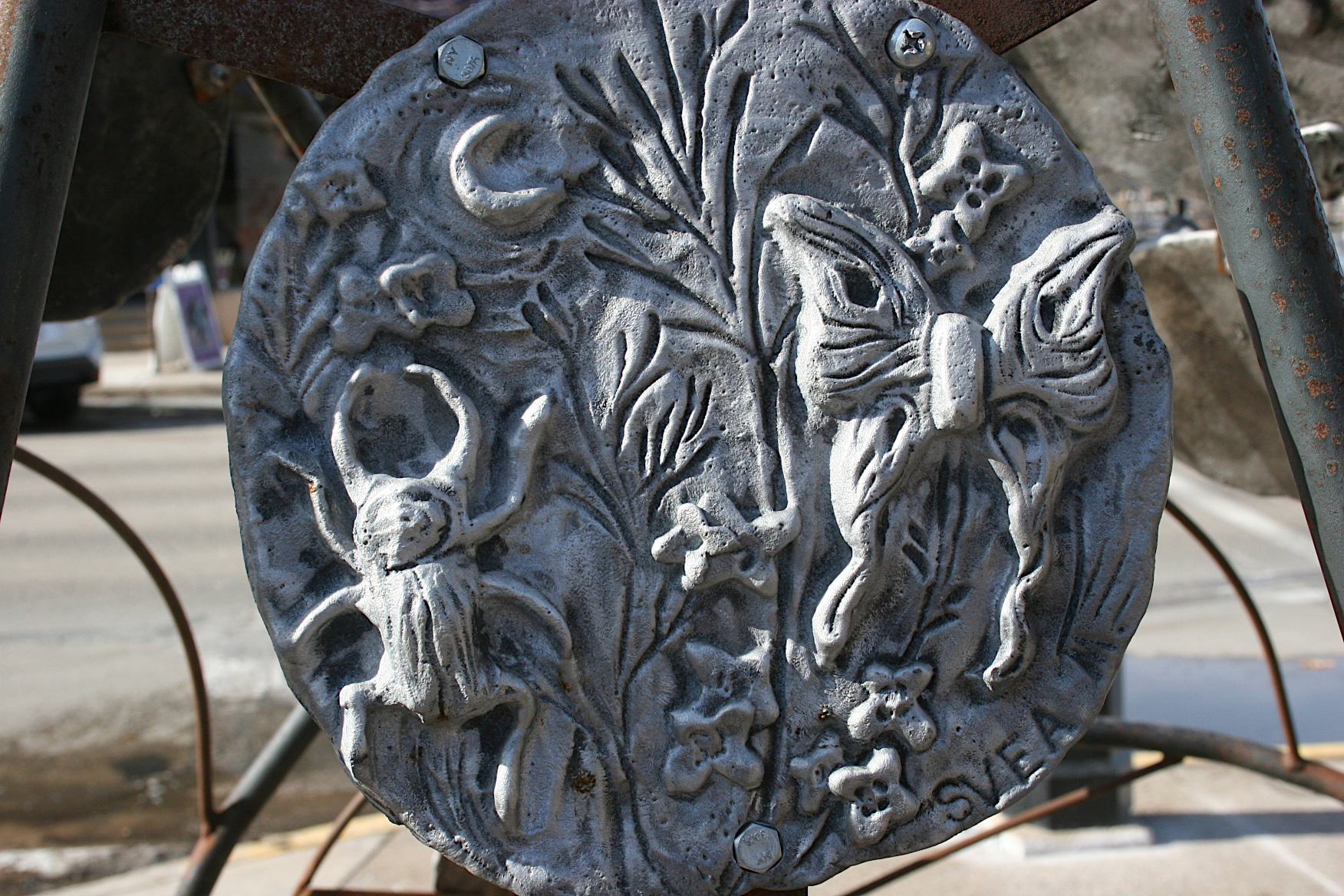
THE WELDED STEEL RODS arc and curve, bending toward Division Street alongside the Northfield Public Library. Dinner plate-sized poured aluminum sculptures attach to the rods, adding detailed interest to this public work of art.

The sculpture sits on a corner by the Northfield Library and changes out every two years. (Minnesota Prairie Roots copyrighted photo February 2022)

This sculpture, installed in 2021, is the latest in the Young Sculptors’ Project, a collaboration of the Northfield Public Schools and the Northfield Arts and Culture Commission “to increase visibility and value for the arts through public sculpture in the community.” It’s funded via a Minnesota Arts and Cultural Heritage grant through the Southeastern Minnesota Arts Council.

Against the blue sky, the rods arc art. (Minnesota Prairie Roots copyrighted photo February 2022)

As someone who values the arts, especially accessible public art, I truly appreciate this joint effort. Professional artists guide the Northfield students who meet in the school’s art and industrial tech departments once a week during the school year to craft the sculptures.

A space theme defines this sculpture plate. (Minnesota Prairie Roots copyrighted photo February 2022)
Art and architecture create a pleasing visual along Northfield’s Division Street. (Minnesota Prairie Roots copyrighted photo February 2022)
Butterfly, bug, florals fill this sculpture plate. (Minnesota Prairie Roots copyrighted photo February 2022)

Northeast Minneapolis professional artist Sara Hanson, along with sculptor apprentice William Lanzillo, led the 18 young creatives in their most recent endeavor. According to info about Lanzillo and the project on the Carleton College Studio Art website, the newest sculpture reflects aspects of Northfield which the students value and celebrate.

This corner by the library is the site for the Young Sculptors’ Project ongoing sculptures. (Minnesota Prairie Roots copyrighted photo February 2022)

Through the years, I’ve delighted in discovering this public art at the base of the library hill on the corner of Division and Third Streets in the heart of downtown Northfield. The sculptures remain there for two years before being moved to a courtyard sculpture garden at Northfield High School.

Another poured aluminum sculpture. (Minnesota Prairie Roots copyrighted photo February 2022)

The over-sized sculptures give me reason to pause, consider, reflect.

Such talent in these young artists. (Minnesota Prairie Roots copyrighted photo February 2022)

As I reflect, I think how wonderful that these young people, these young artists, are guided, supported and encouraged. They are learning, growing, building their confidence. What a gift that is from this community and from those professional artists who guide them, who show them their work, their creativity, is valued.

© Copyright 2022 Audrey Kletscher Helbling


The leaping deer of Deerwood August 24, 2021

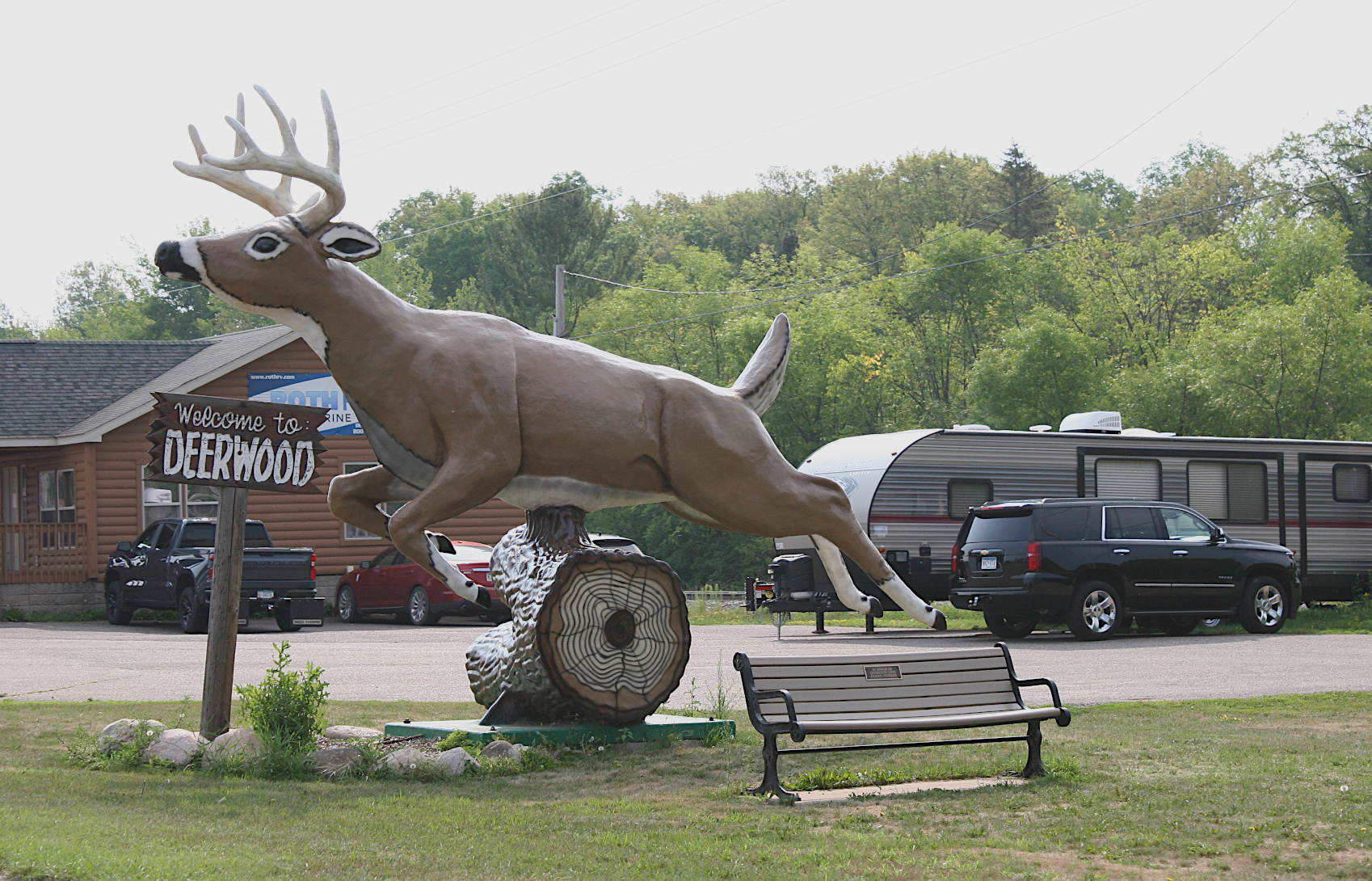
Leaping whitetail deer art in Deerwood, Minnesota. Minnesota Prairie Roots copyrighted file photo July 2021.

I APPRECIATE OUTDOOR public art. That includes kitschy roadside sculptures that define communities. The walleye in Garrison. The prairie chicken in Rothsay. The otter in Fergus Falls. Babe the Blue Ox in countless Up North Minnesota towns.

And in Deerwood, a Crow Wing County community of around 550, a leaping whitetail deer. The jumping deer, located in Elmer Park, is visible from Highway 6. I snapped a shot of it from the road last trip through this town in mid-July.

A little poking around online revealed that Deerwood was originally known as Withington. But, after being too often confused with Worthington in the southwestern corner of Minnesota, it was officially named Deerwood. That makes sense given its location among the lakes and hardwoods of central Minnesota where deer abound.

I learned a bit more history. Cuyler Adams of Deerwood discovered the iron ore which led to mining in this region. Thus the name Cuyuna Range—a combination of Adams’ first name and the name of his dog, Una.

Oh, the things you learn upon seeing, and photographing, a memorable deer sculpture next to a roadway.

TELL ME: Do you have a favorite roadside sculpture? I’d like to hear.

© Copyright 2021 Audrey Kletscher Helbling


In Janesville: The death of Frankenstein June 18, 2021

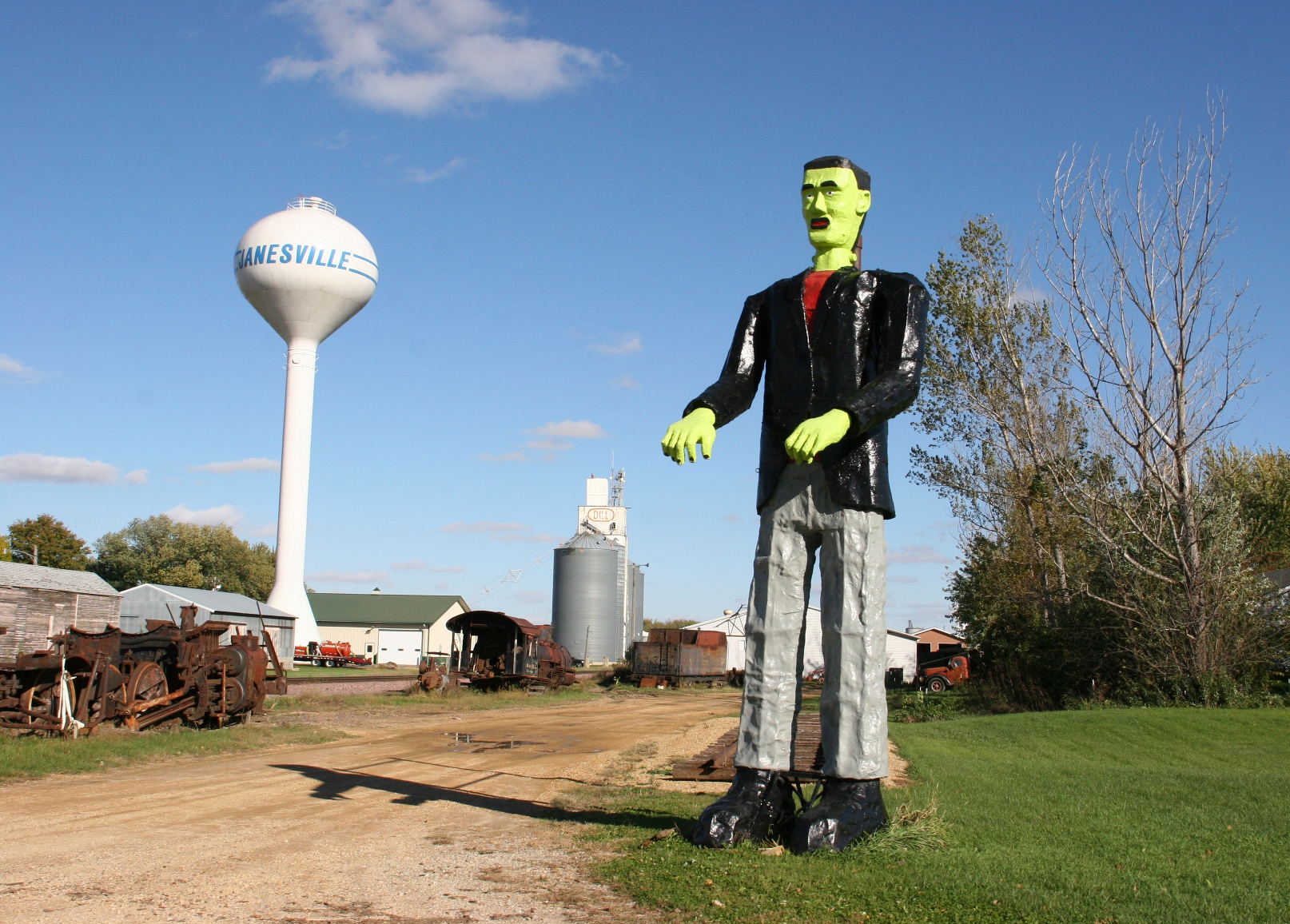
Frankenstein in Janesville, MN. Minnesota Prairie Roots file photo 2016.

FOR THE GOOD FOLKS of Janesville, the fiery “death” of Frankenstein last Saturday morning equates the loss of a community icon.

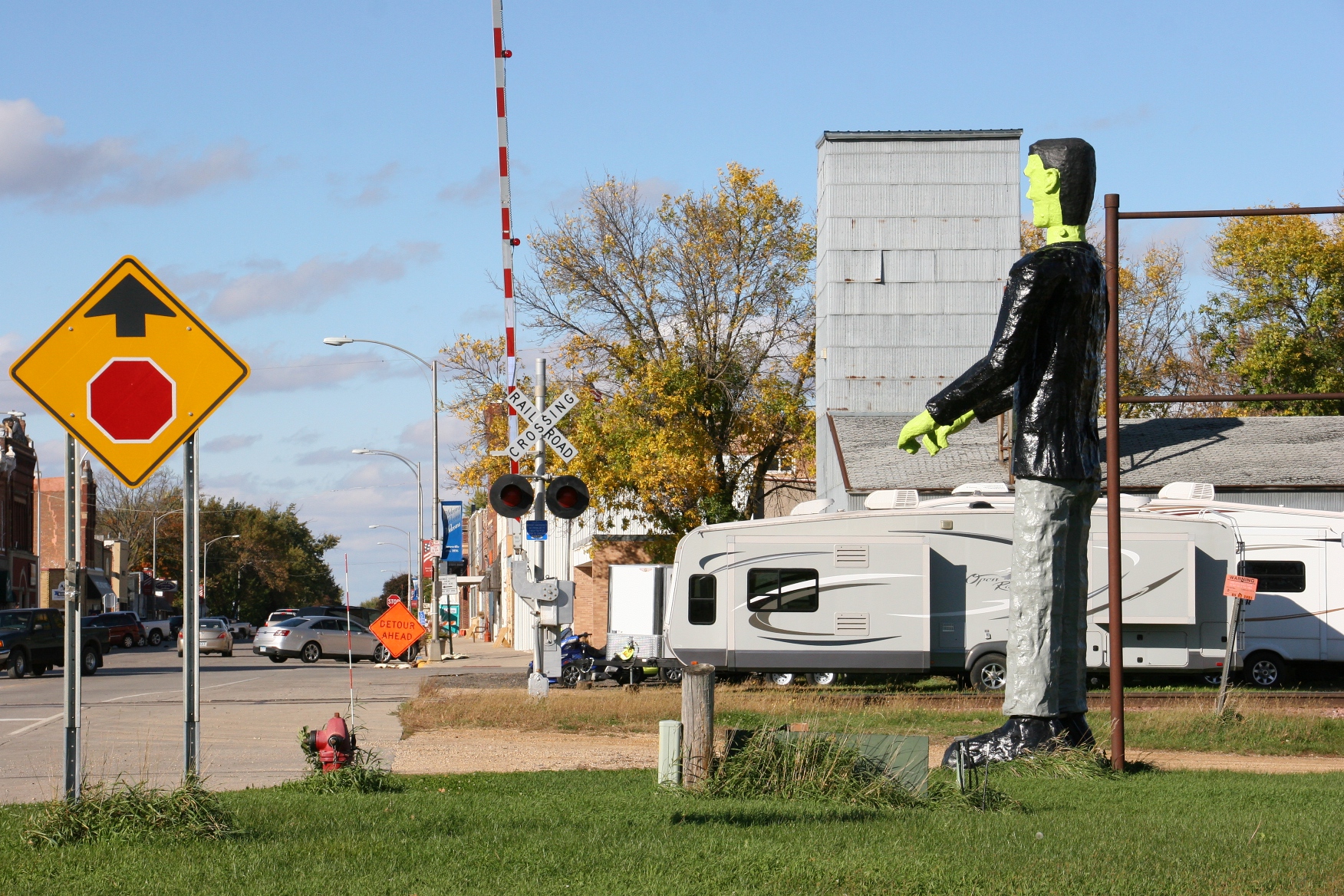
The 20-foot tall fiberglass and steel interpretation of Mary Shelley’s monster loomed on a downtown street corner in this southern Minnesota town of some 2,500. Until the early morning hours of June 12, when a 35-year-old man who lives nearby allegedly torched Frankenstein. He’s been charged with felony arson and damage to property. Only the skeleton remains of the sculpture valued at an estimated $14,000.
A side view of Frankenstein photographed in 2016. Minnesota Prairie Roots copyrighted file photo.

Janesville’s Frankenstein, originally a Vulcan displayed at the 1988 St. Paul Winter Carnival, was reinvented as a Halloween attraction in the metro before a local businessman purchased him from an auction in 2012. I photographed Frankenstein in 2016, finding him an oddity in this small Waseca County town.
But “odd” isn’t new to Janesville. For decades, “The Doll in the Window” was Janesville’s noted attraction. The mannequin, positioned inside an attic window and visible from well-traveled U.S. Highway 14 (which now bypasses the town), was the stuff of creepy legends. The man who displayed the doll died long ago and, from what I found online, a lot of unknowns remain.

Whether Frankenstein is resurrected remains to be seen. For now, folks are honoring him with flowers and other mementos placed at the base of his skeleton, drawing attention once again to this rural Minnesota community.

© Copyright 2021 Audrey Kletscher Helbling