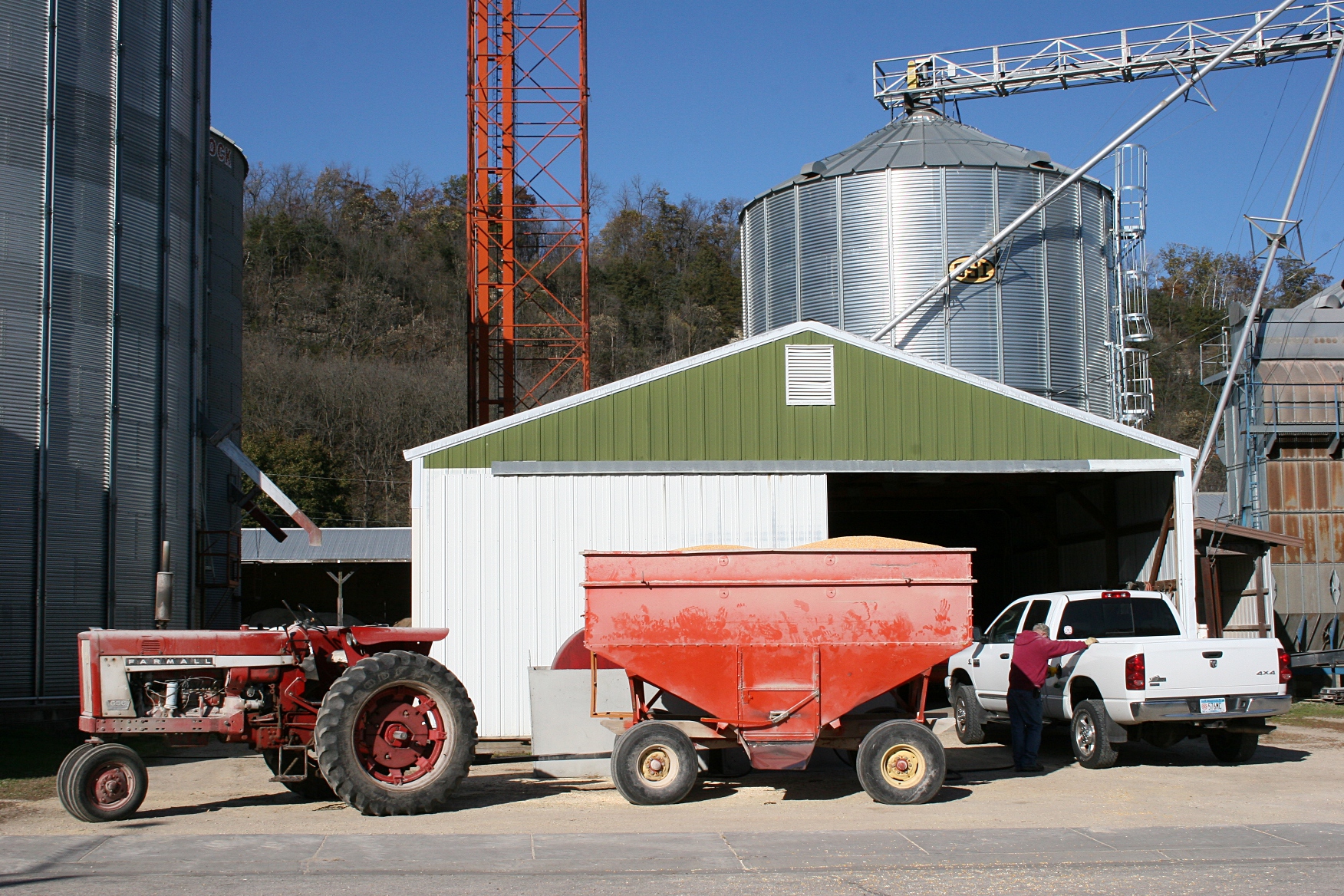
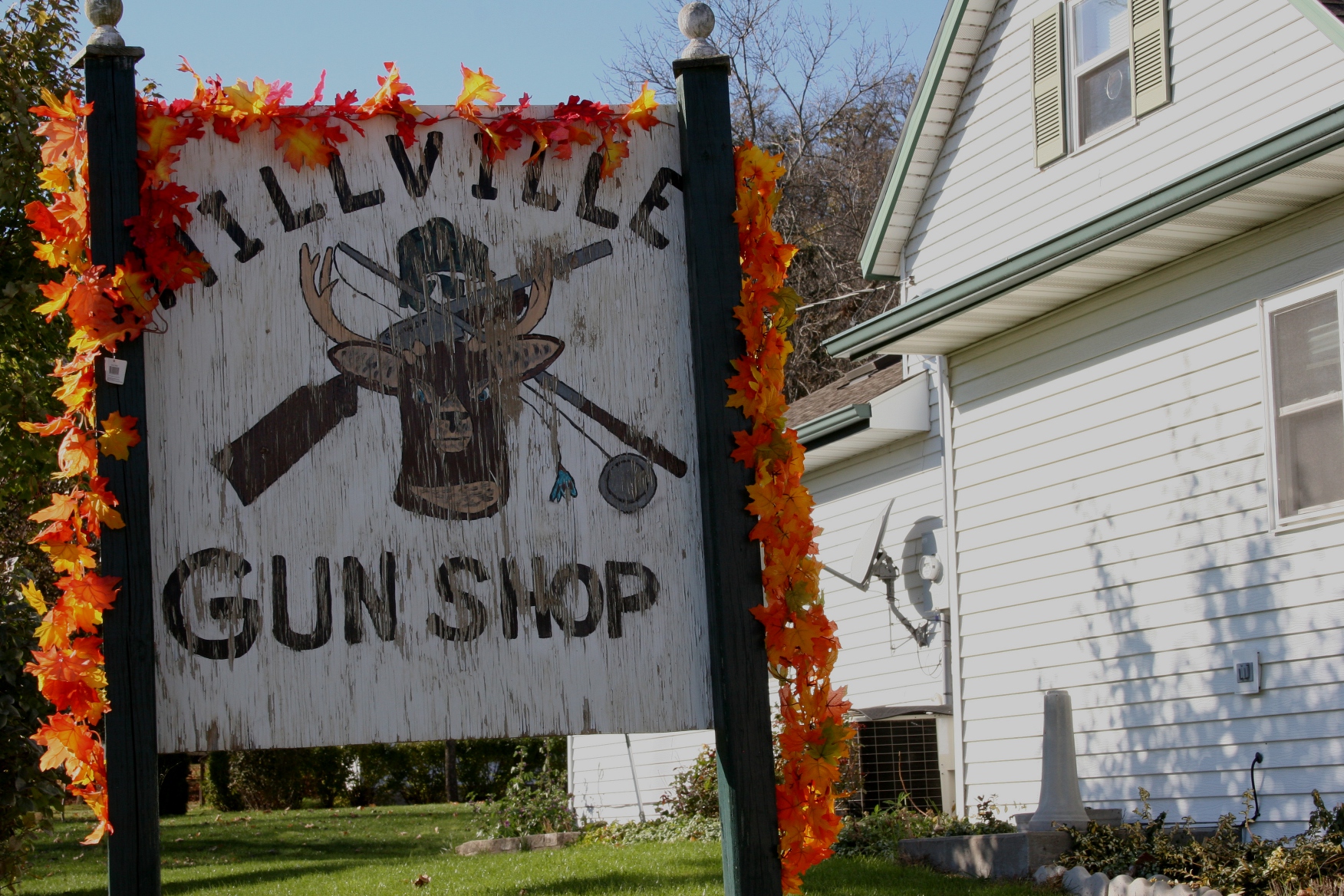
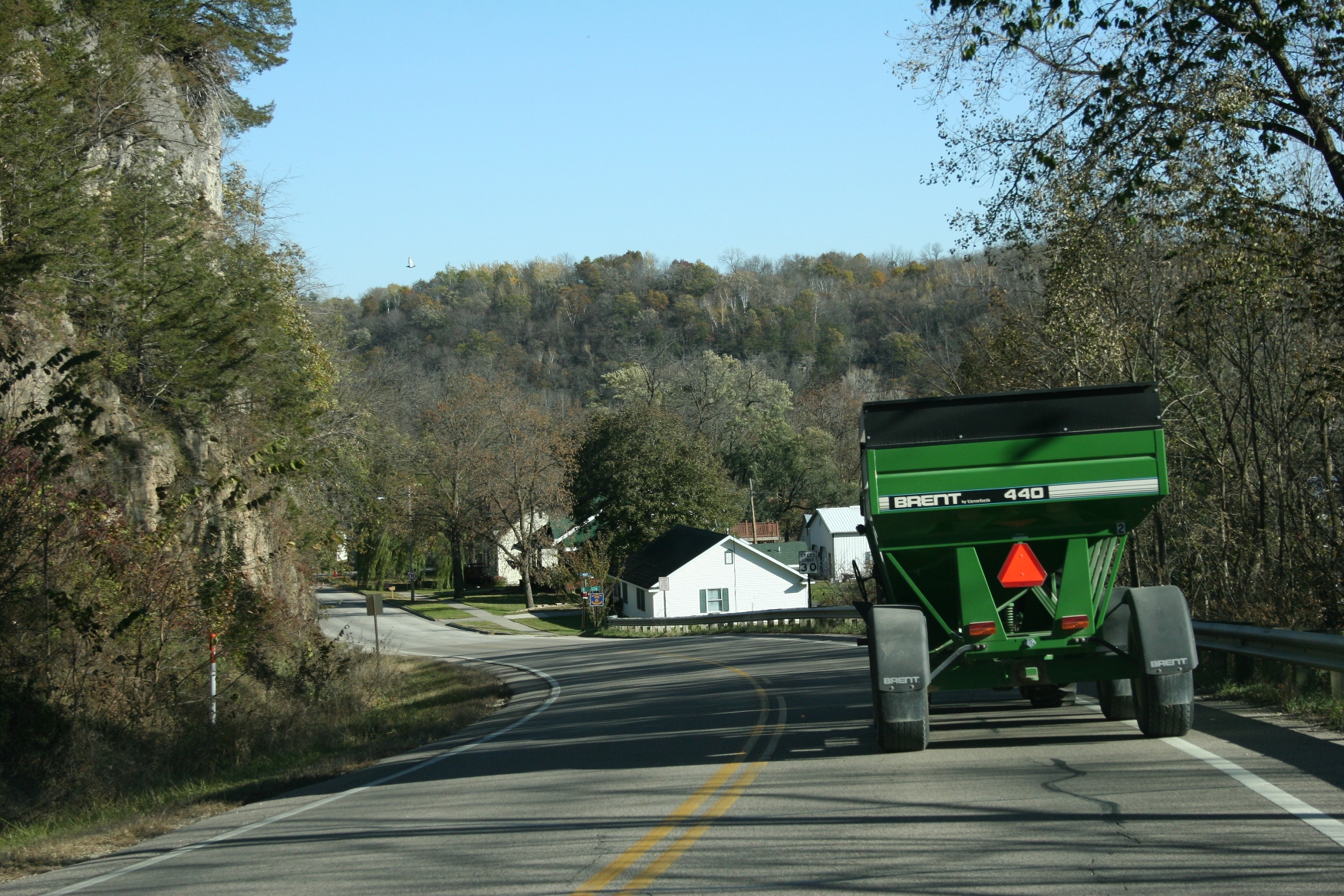
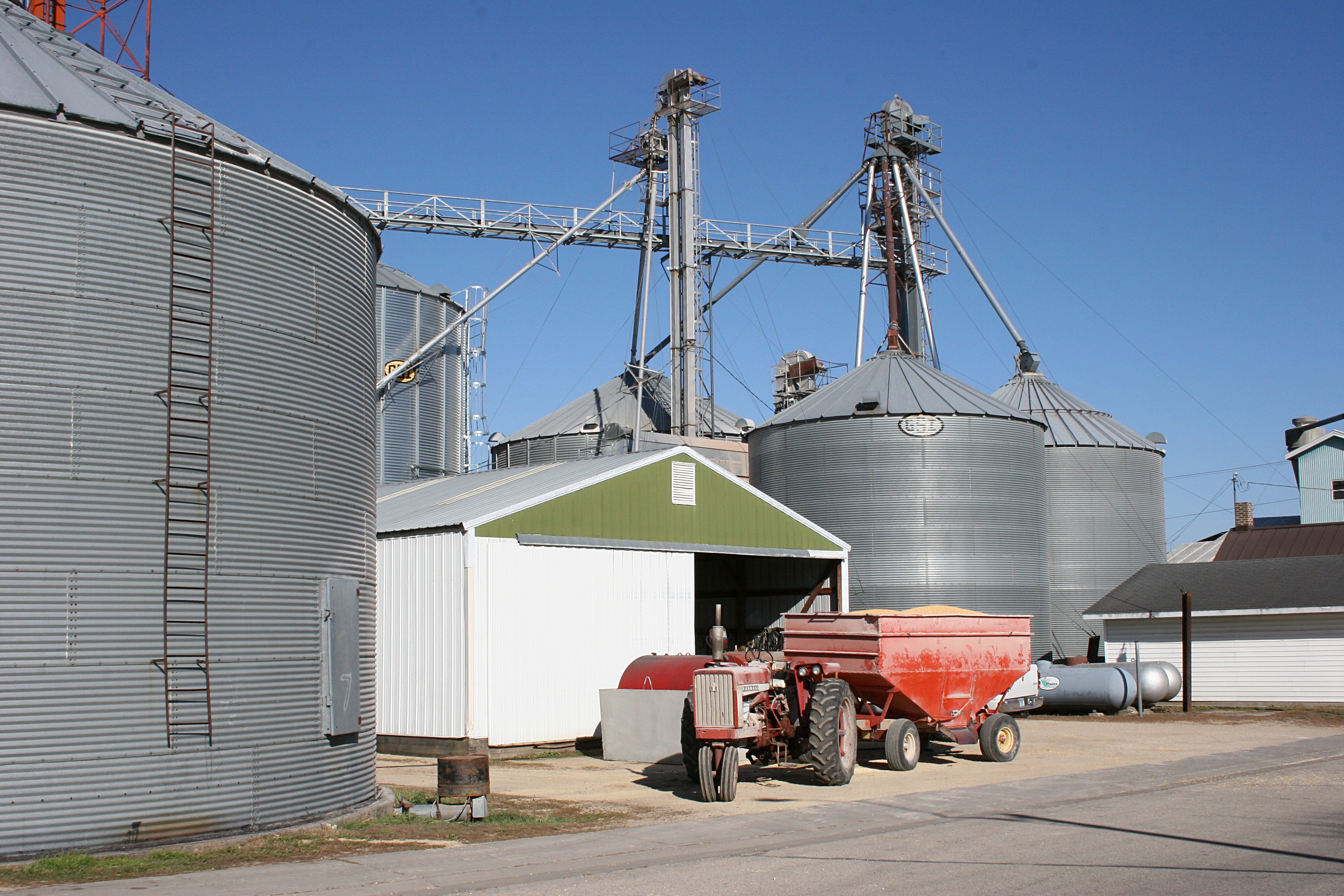
Minnesota Prairie Roots

Writing and photography by Audrey Kletscher Helbling

Bins, bars & beer December 4, 2013

THE LAST TIME I WAS in Cobden, I told my husband, I was photographing a burning building.

That was decades ago, when I worked as a newspaper reporter and photographer for The Sleepy Eye Herald-Dispatch. Thirty-plus years later, I can’t recall what burned, but I think a bar.

Apparently little has changed in Cobden since I raced, with camera and notebook, to this community of 36 residents just off U.S. Highway 14 between Sleepy Eye and Springfield. As I remember, I borrowed a pen (because mine ran out of ink and why didn’t I have a spare?) from a firefighter. Interesting how a detail like that sticks with me.

Downtown Cobden with Tubby's to the left and Ridin' High to the right and the grain bins a few blocks away.

Downtown Cobden with Tubby’s to the left and Ridin’ High to the right and the grain bins a few blocks away.

Today, two bars and grain bins define this community in southwestern Minnesota, which boasts some of our state’s best farmland.

A few months ago while en route to Lamberton, my husband turned our van north off the Laura Ingalls Wilder Historic Highway to circle through Cobden, past the grain bins and then between the two bars—Minnesota Tubby’s Bar & Grill and Ridin’ High Saloon—which comprise the downtown.
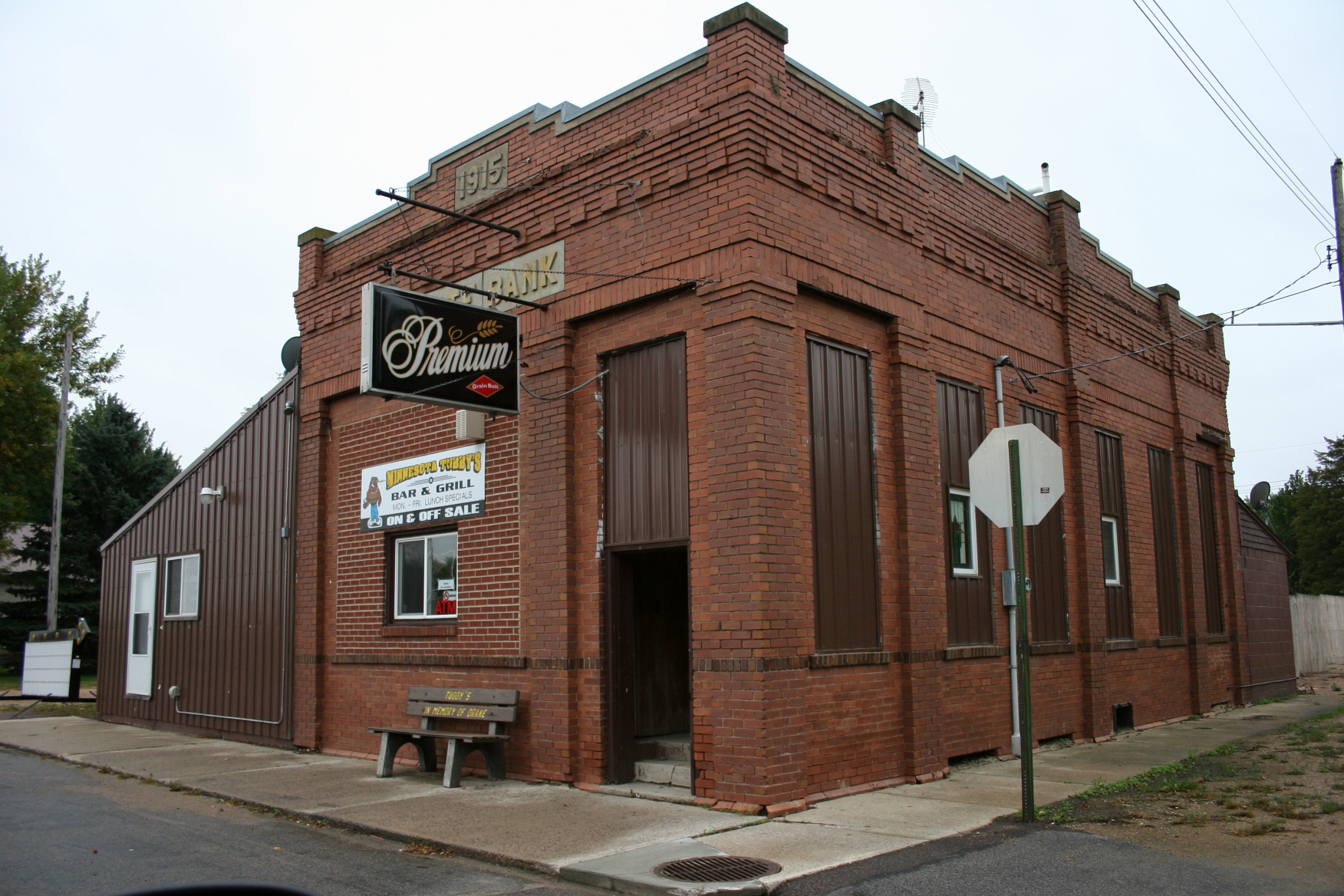
Tubby's, in the old bank building.

Tubby’s, in the old bank building.

There was no time to stop and explore, only a quick roll down of the van window to shoot the building exteriors under grey and drizzly skies. I wished we had time to park and peek inside Tubby’s, housed in the stately 1915 corner brick State Bank building. I wished I could yank away the sheets of brown metal siding that cover the windows. I wished I could see the old bank interior.
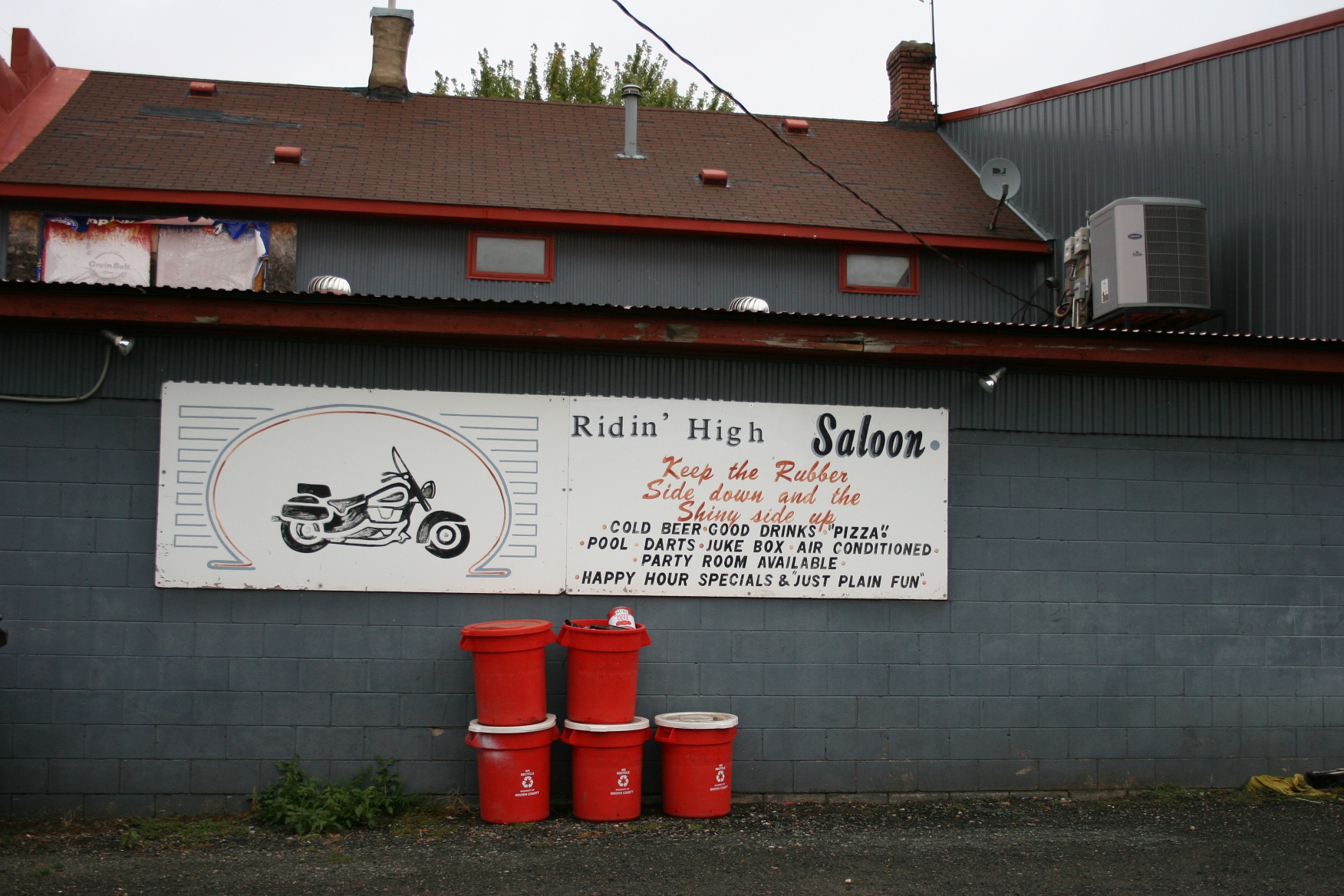
Bikers get a hearty welcome at Ridin' High Saloon.

Bikers get a hearty welcome at Ridin’ High Saloon.

Across the street, Ridin’ High Saloon, from the looks of the exterior signage, caters to bikers.

The Saloon connects to the Back Porch.

The Saloon connects to the Back Porch, right.

The outdoor Back Porch hang-out.

The outdoor Back Porch hang-out.

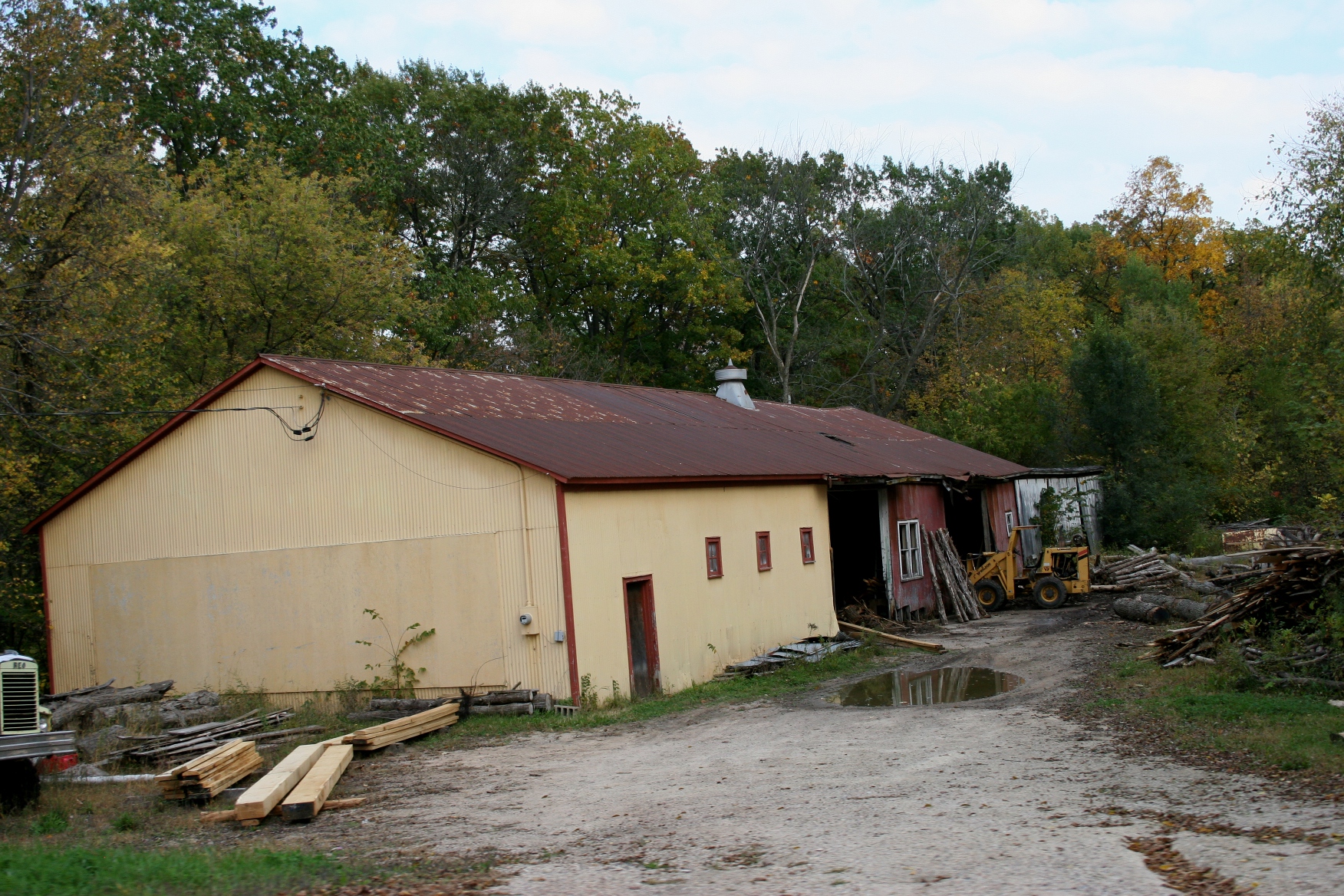
The machine shed style open air Back Porch gives that rough-and-tumble beer drinking impression, a great place to hang out with friends on a warm summer evening.
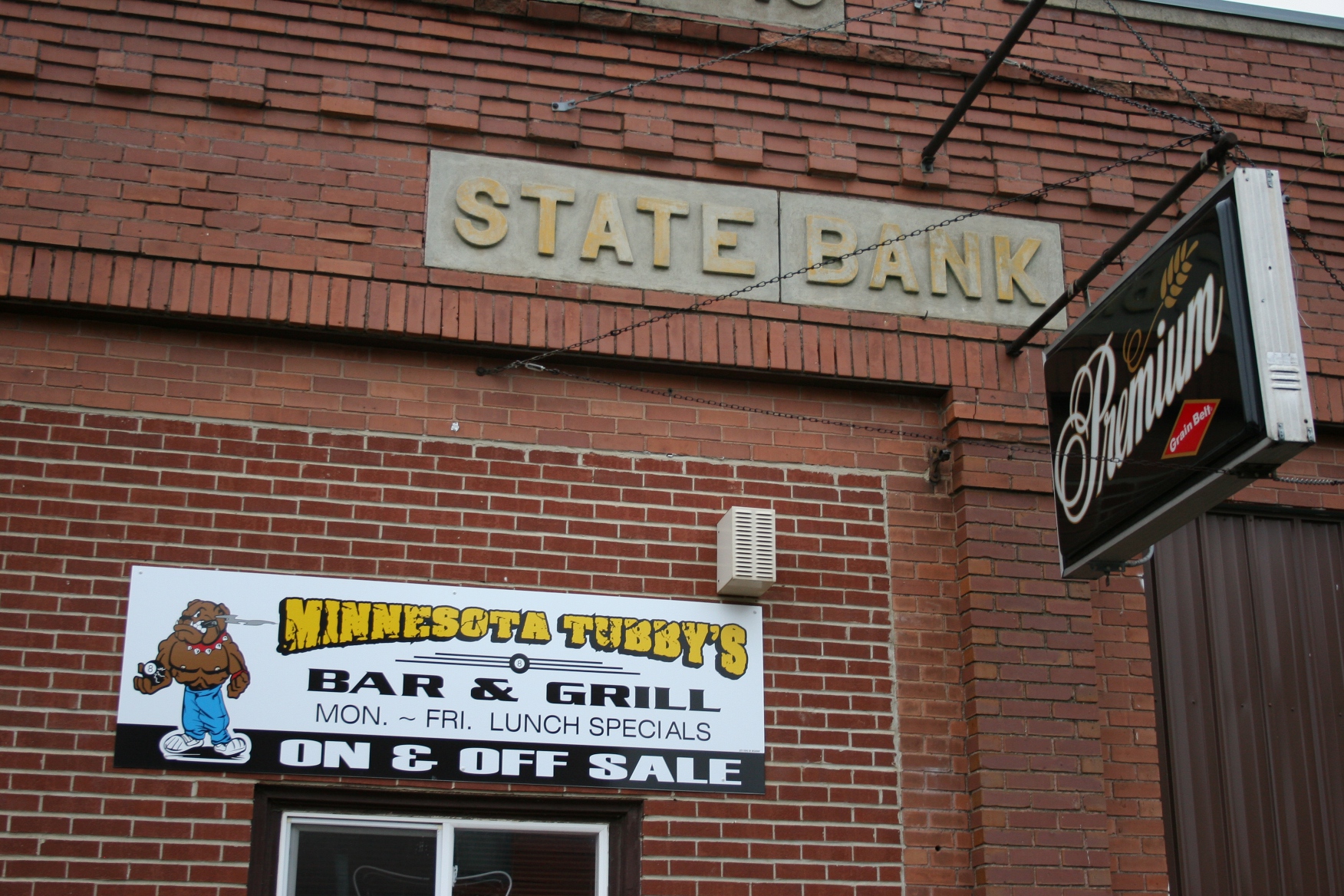
A close-up of Tubby's signage.

A close-up of Tubby’s signage.

Maybe next stop in Cobden will be the charm with no fire to cover, no schedule to keep. Just time for a beer.

© Copyright 2013 Audrey Kletscher Helbling


Antiquing in Wisconsin: A stop in Poy Sippi November 20, 2013

POY SIPPI.

The words roll off my tongue with a sound that pleases me.

Just like this small Wisconsin town. Poy Sippi. Off the beaten path. Sandwiched between busy State Highways 21 and 10. A community discovered a year ago while searching for an alternate route to avoid road construction along U.S. Highway 41 from Oshkosh to Appleton, where my second daughter lives.

Private property or a business? I don't know. But this is one of the first places I notice entering Poy Sippi from the south.

Private property or a business? I don’t know. But this is one of the first places I notice entering Poy Sippi from the south.

This October, my husband and I are back in Poy Sippi, named after the Pine River, called Poygan Sippi by the Pottawatomie because it flows into Poygan Lake, according to the Poy Sippi Public Library website.

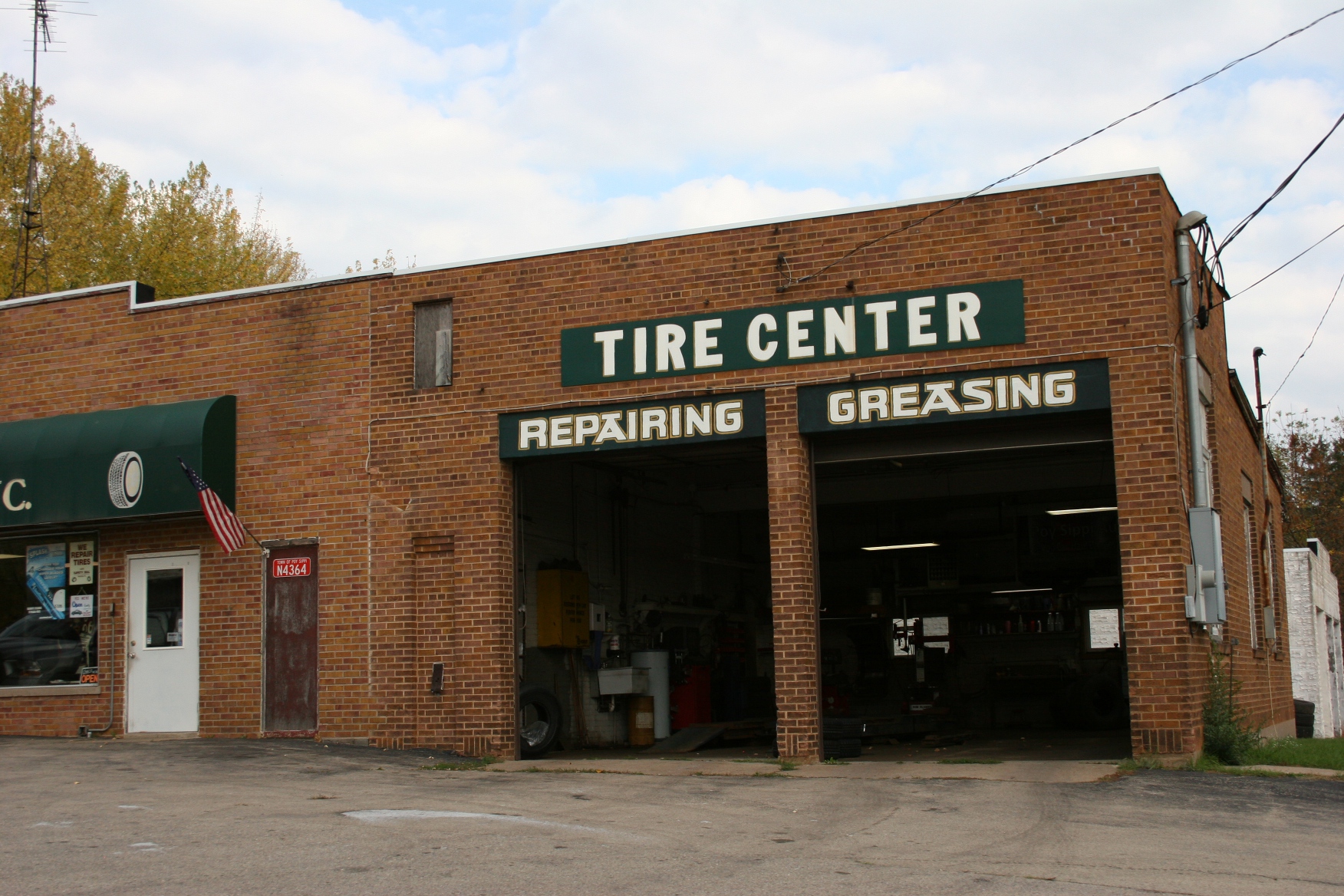
As we drive by the Tire Center, I snap this photo.

As we drive by the Tire Center, I snap this photo.

The uniqueness of the name fascinates me as do the poetically pleasing vowel and consonant combinations in Poy Sippi.

Our first glimpse of The Shop in October 2012. Minnesota Prairie Roots file photo.

Our first glimpse of The Shop in October 2012. Minnesota Prairie Roots file photo.

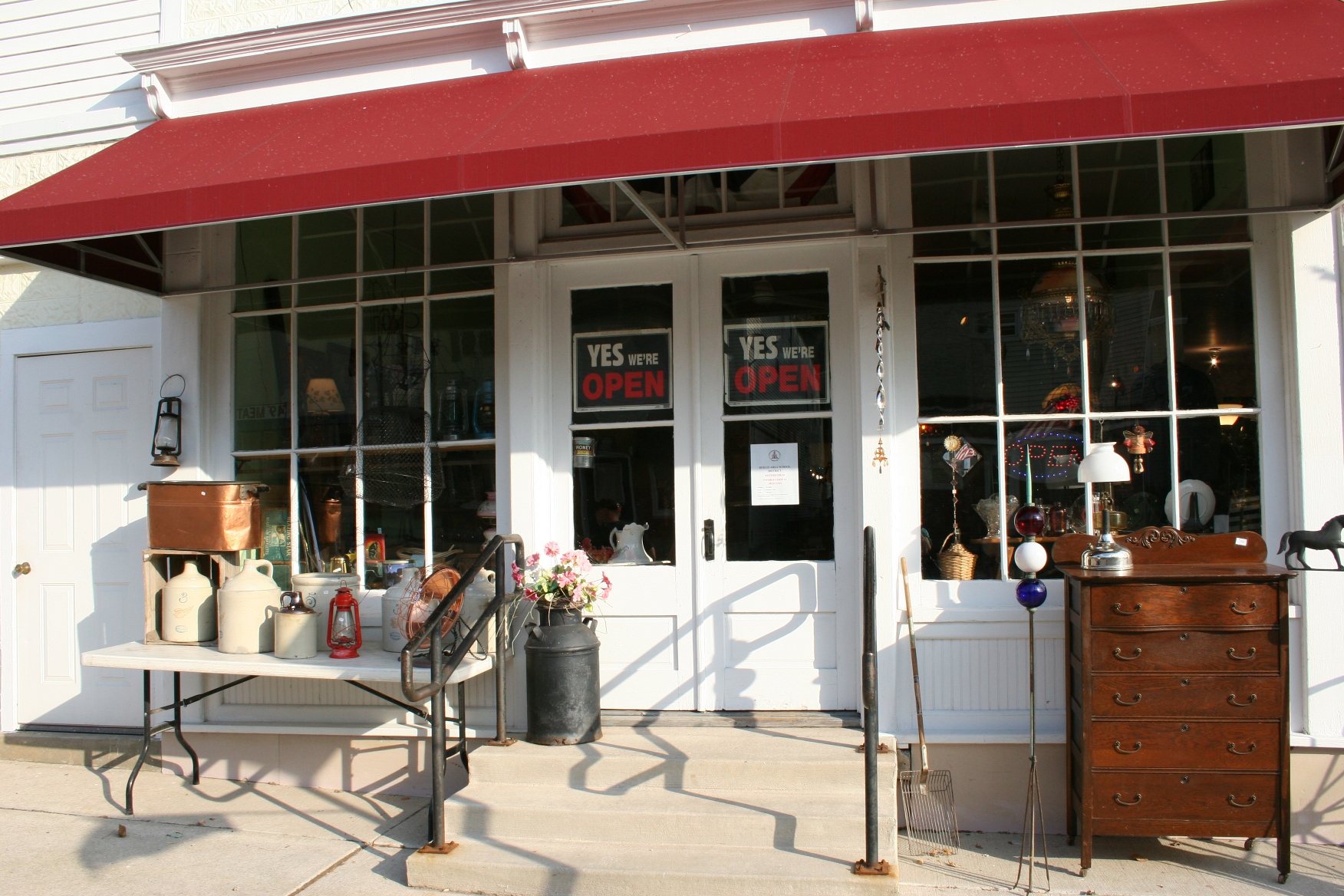
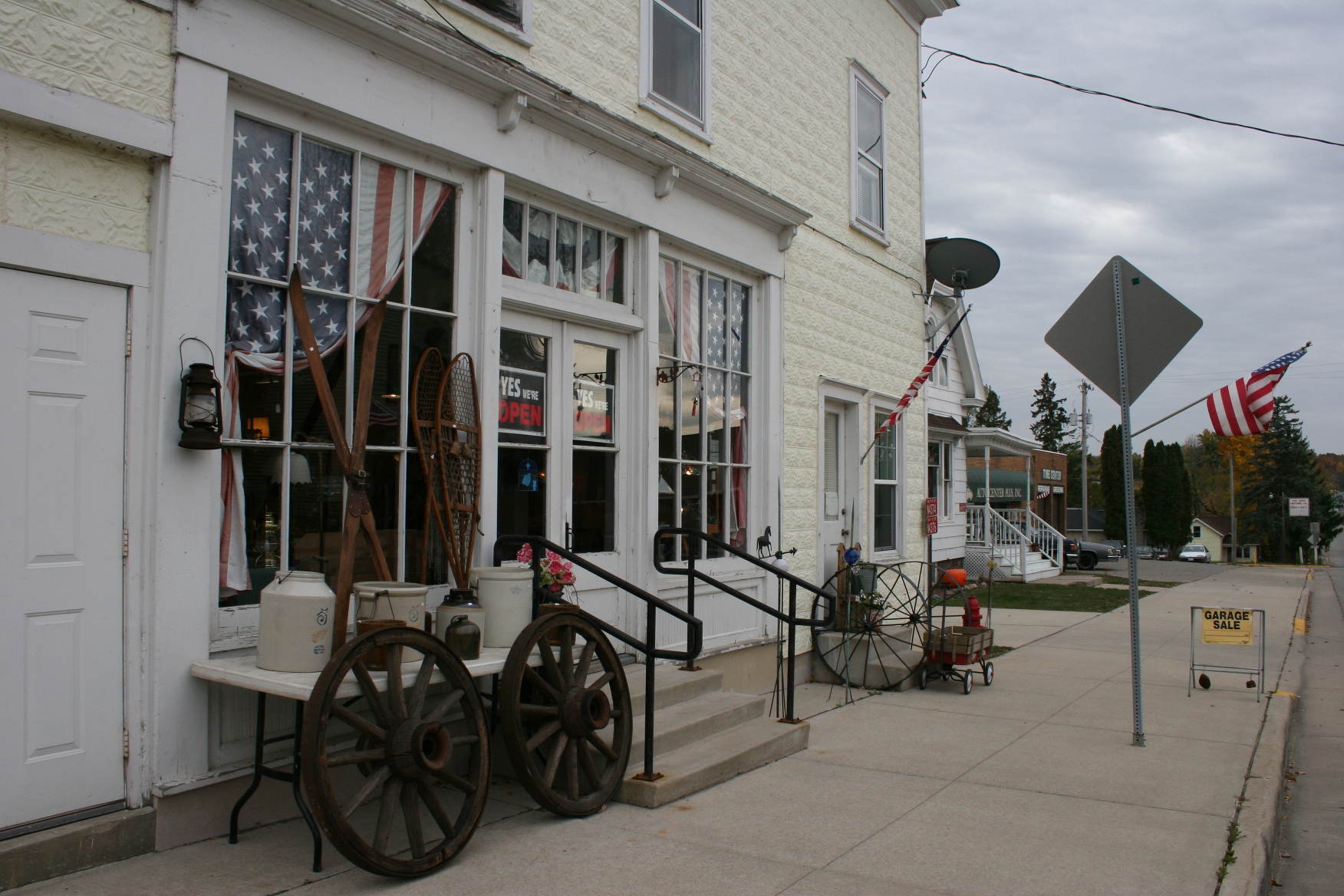
We have not explored Poy Sippi, except for The Shop, a delightful antique shop along Main Street/Highway 49.

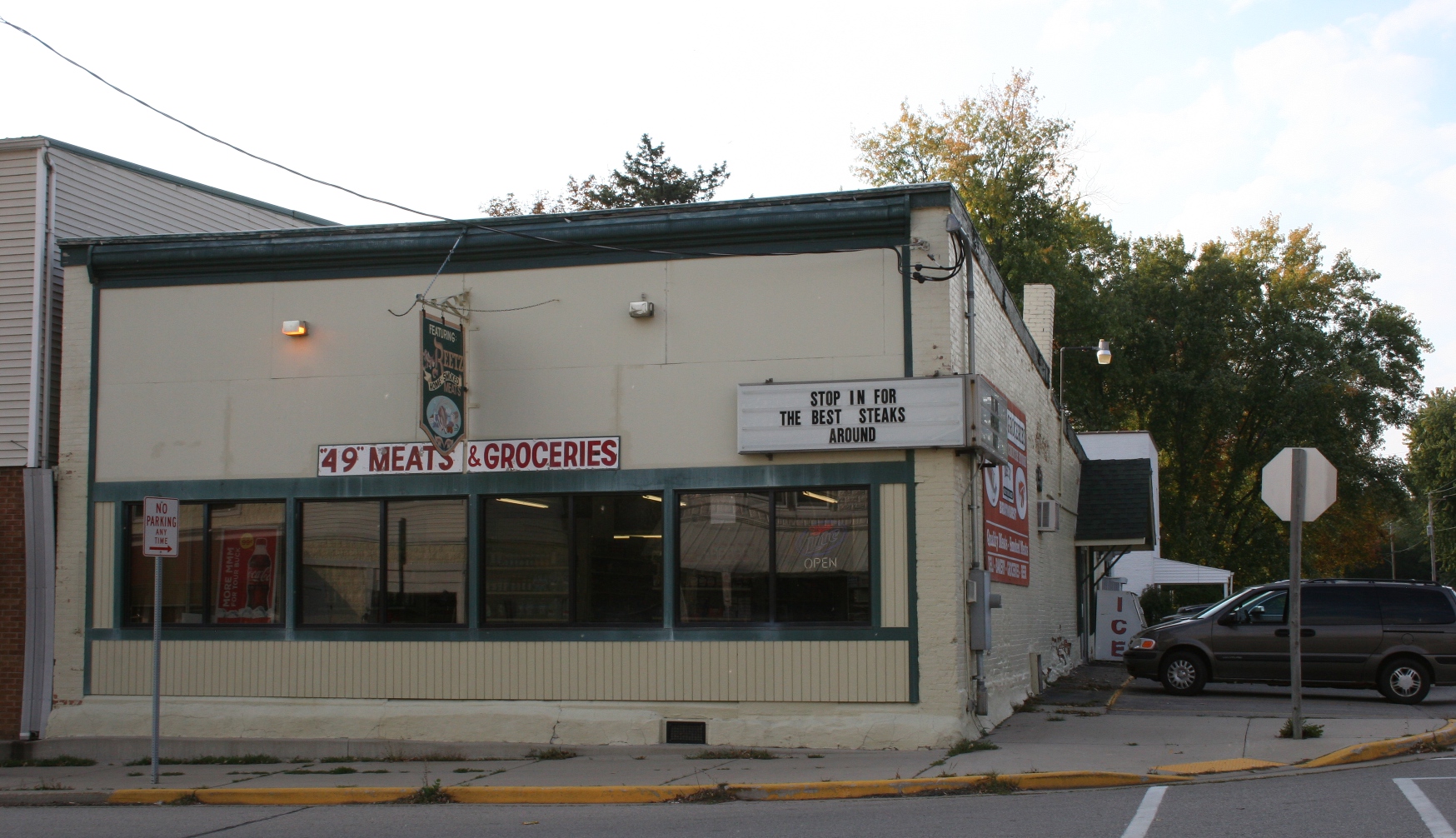
The corner grocery store and meat market.

The corner grocery store and meat market.

Dan Chier and Co. run the place, directly across the road from “49” Meats & Groceries, the corner grocery store/meat market touting “the best steaks around.” And I don’t doubt that. These small town meat markets often do offer the best in meats, this one specifically noting its home-smoked meats.

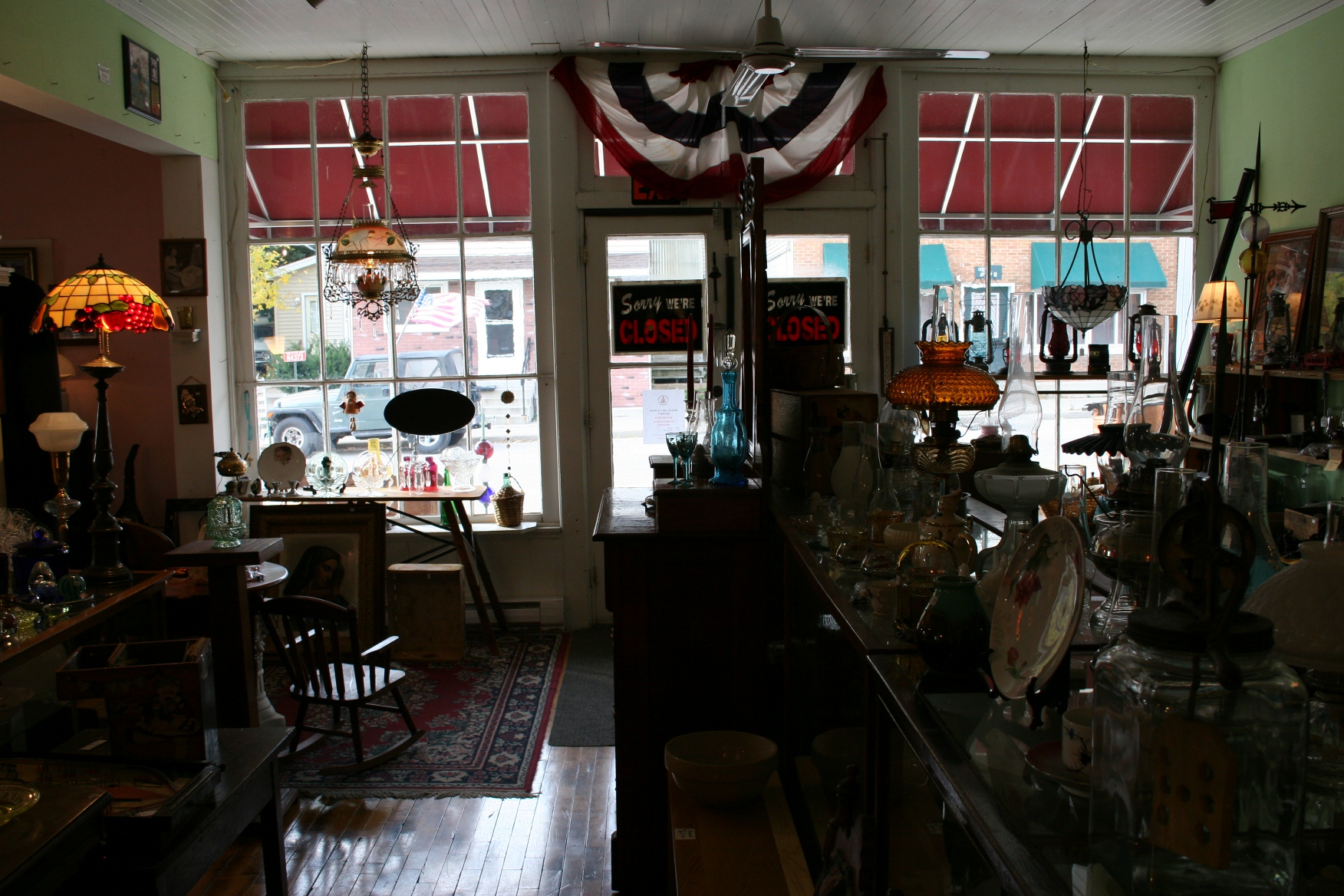
Looking toward the front the antique shop.

Looking toward the front the antique shop.

At one time the building which houses Dan’s shop operated as a general store. Dan shows me photocopies of historic photos. It’s no stretch to imagine the former mercantile occupying this space with the worn wood floor, wainscoting on the ceiling and aged double front doors.

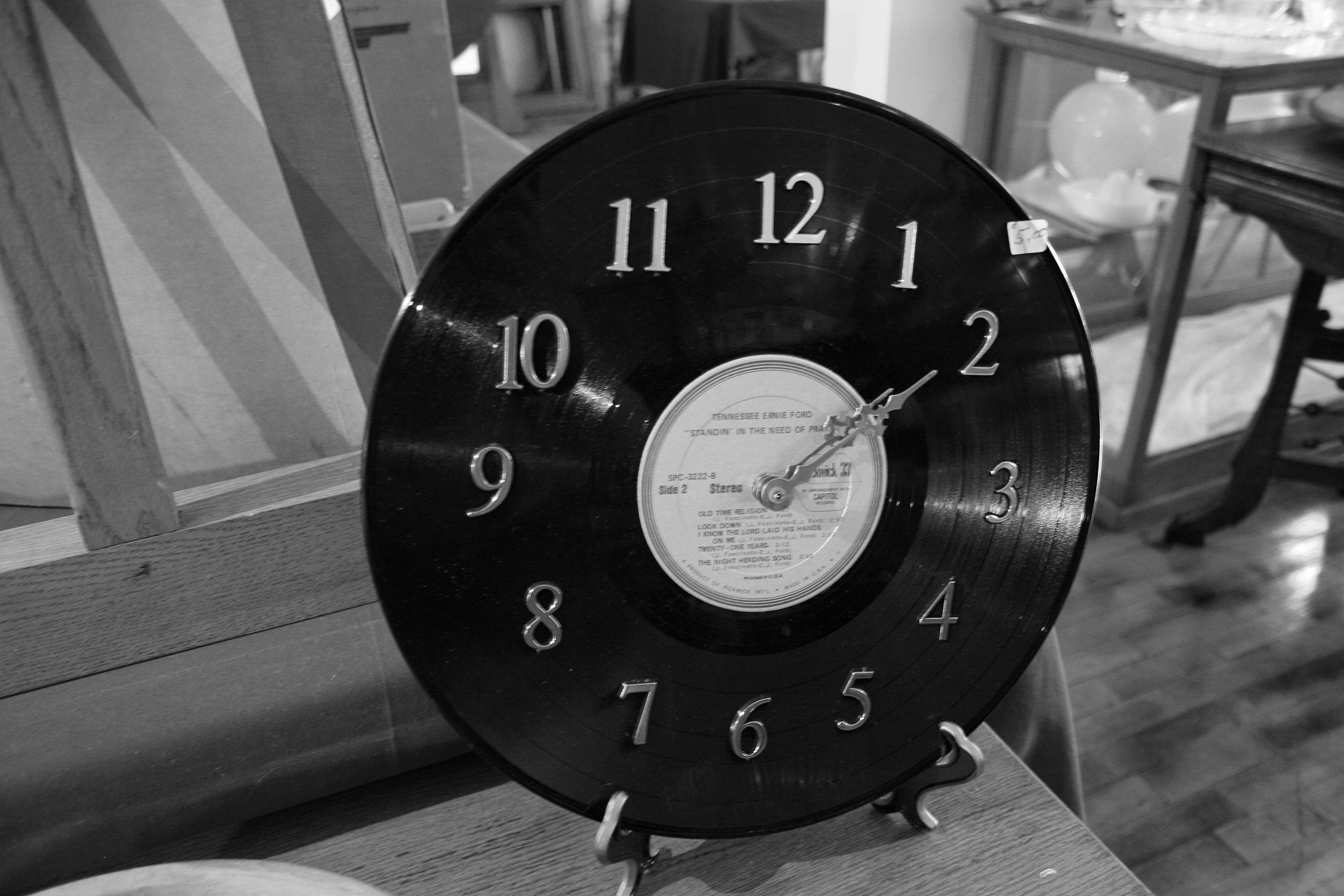
Oh, how I wish I had bought this clock, crafted by Don's mom (recently deceased) from an old album.

Oh, how I wish I had bought this $5 clock, crafted by Dan’s mom (recently deceased) from an old album.

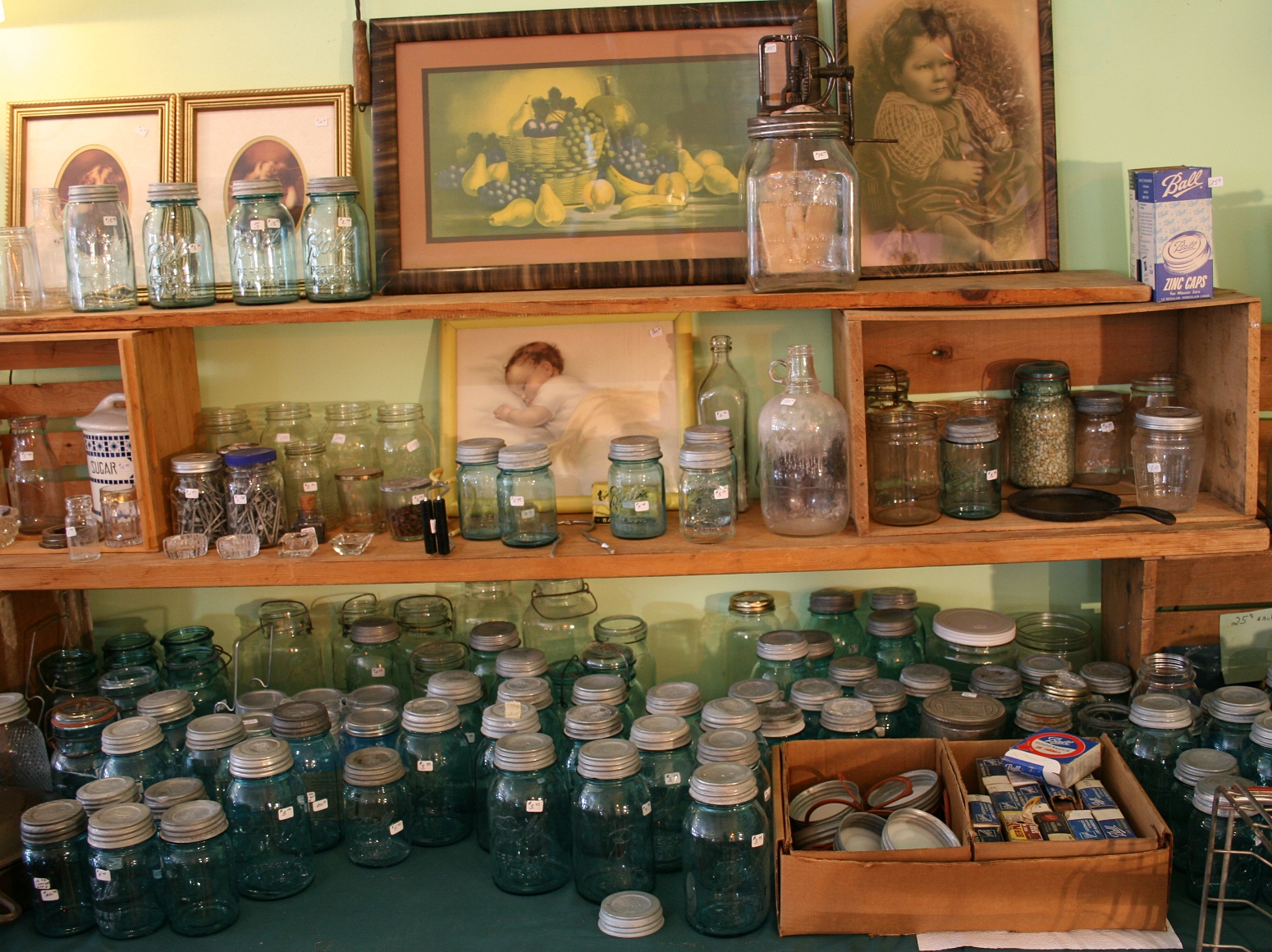
I wish I had known about these vintage blue canning jars when my daughter was planning for her September wedding. I rented quart sized jars like this for $2/each. Don is selling them for $3/each. He sold lots for weddings, he says, but the wedding demand seems to be fading. Now some are using the jars for lights.

I wish I had known about these vintage blue canning jars when my daughter was planning for her September wedding. I rented quart sized jars like this for $2/each. Dan is selling them for $3/each. He sold lots for weddings, he says, but the wedding demand seems to be fading. Now some are using the jars for lights. Oh, and see that fruit print on the top shelf. I spotted that framed piece a year ago, liked it then and still like it now. I should have negotiated a deal with Dan. He’s open to negotiating.

More merchandise.

More merchandise, leaning against the building next door which is for sale.

It’s the perfect place for an antique shop.

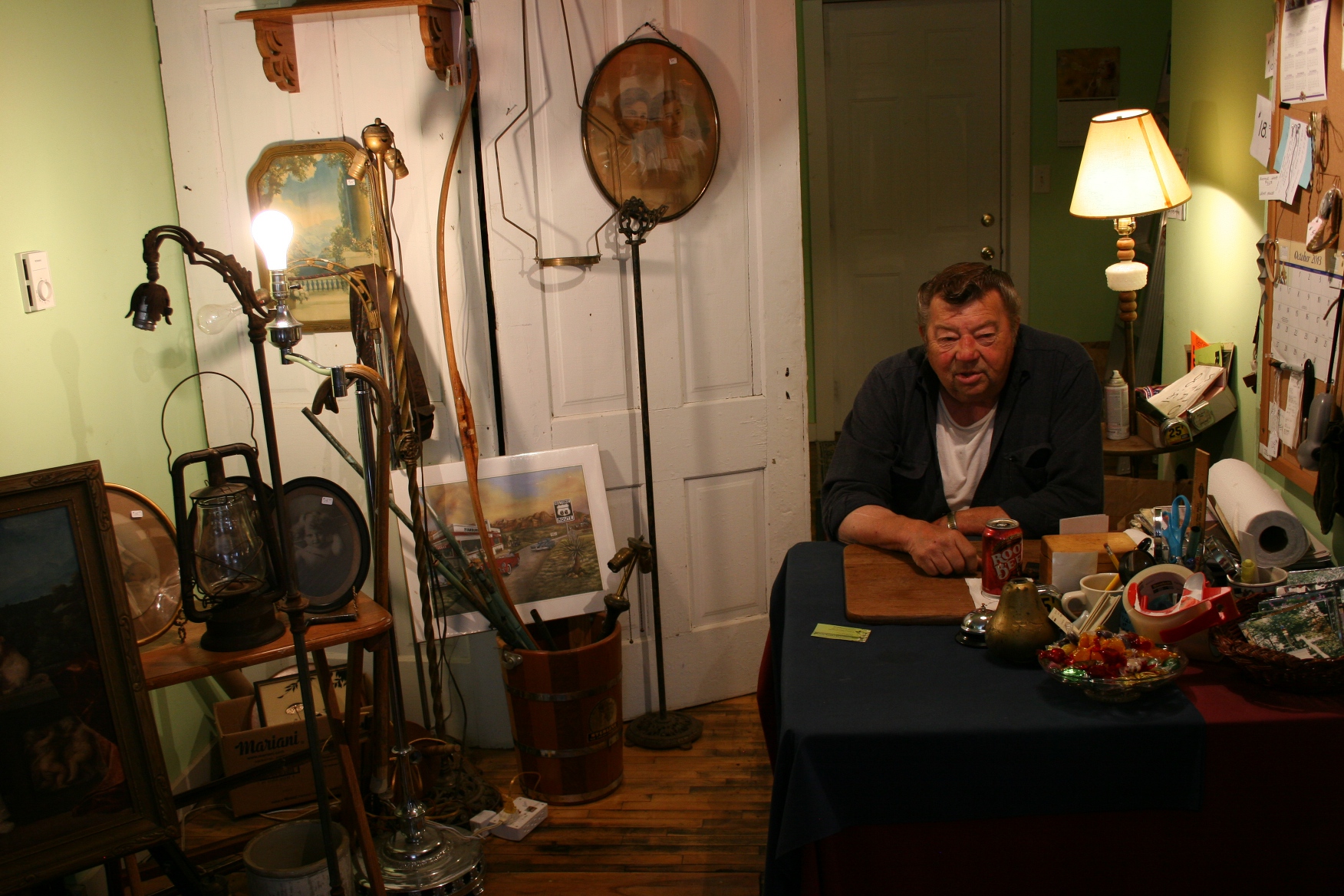
Friendly shopkeeper, Don Chier.

Friendly shopkeeper, Dan Chier.

I appreciate Dan’s warm welcome as much as the old stuff he offers for sale both inside and outside his shop in Poy Sippi. Off the beaten path. A short-cut between two busy highways.

BONUS PHOTOS:

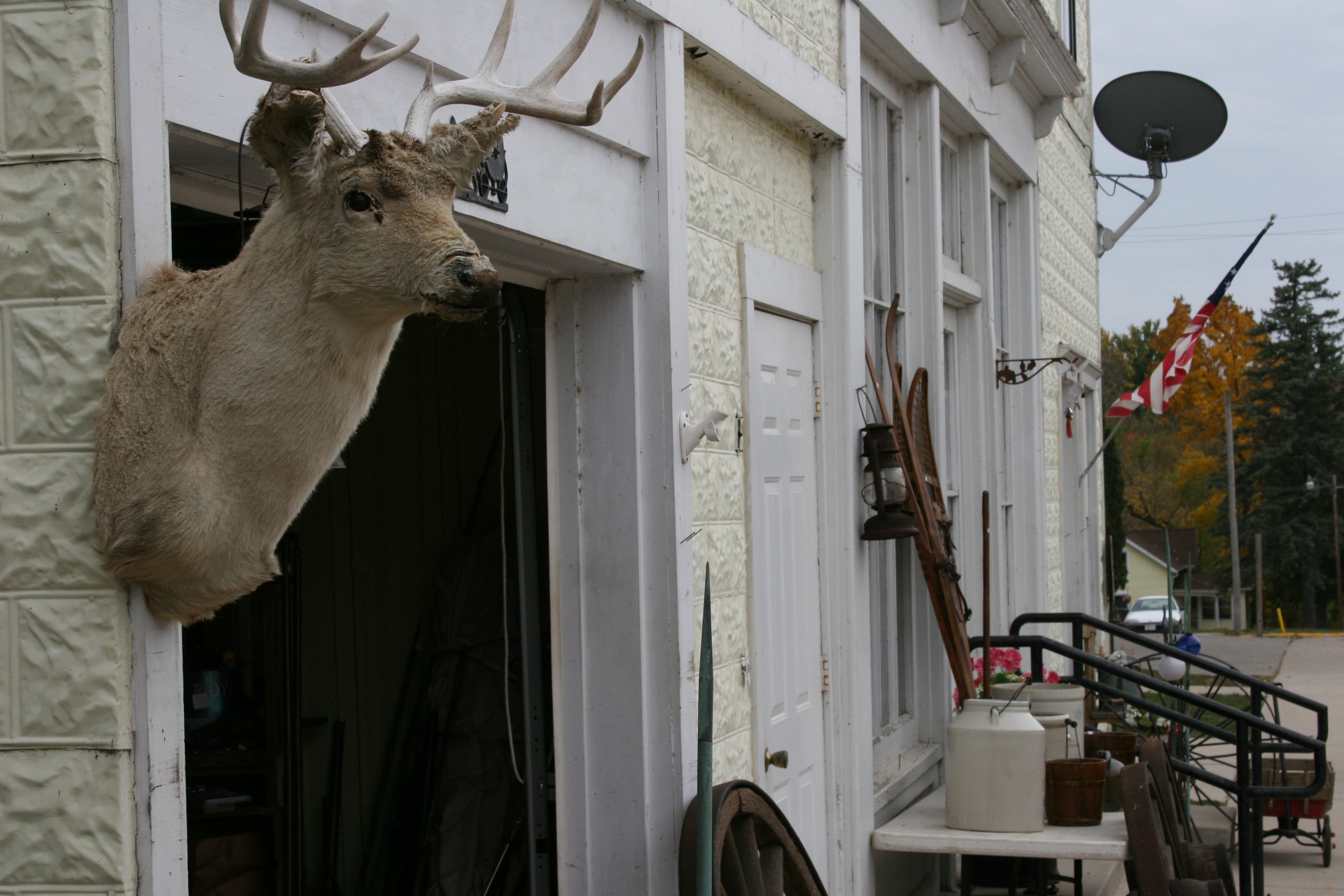
I was a bit creeped out when I spotted this deer head on the garage next to Don't main shop last fall. Minnesota Prairie Roots file photo.

I was a bit creeped out when I spotted this deer head on the garage next to Dan’s main shop last fall. Minnesota Prairie Roots file photo.

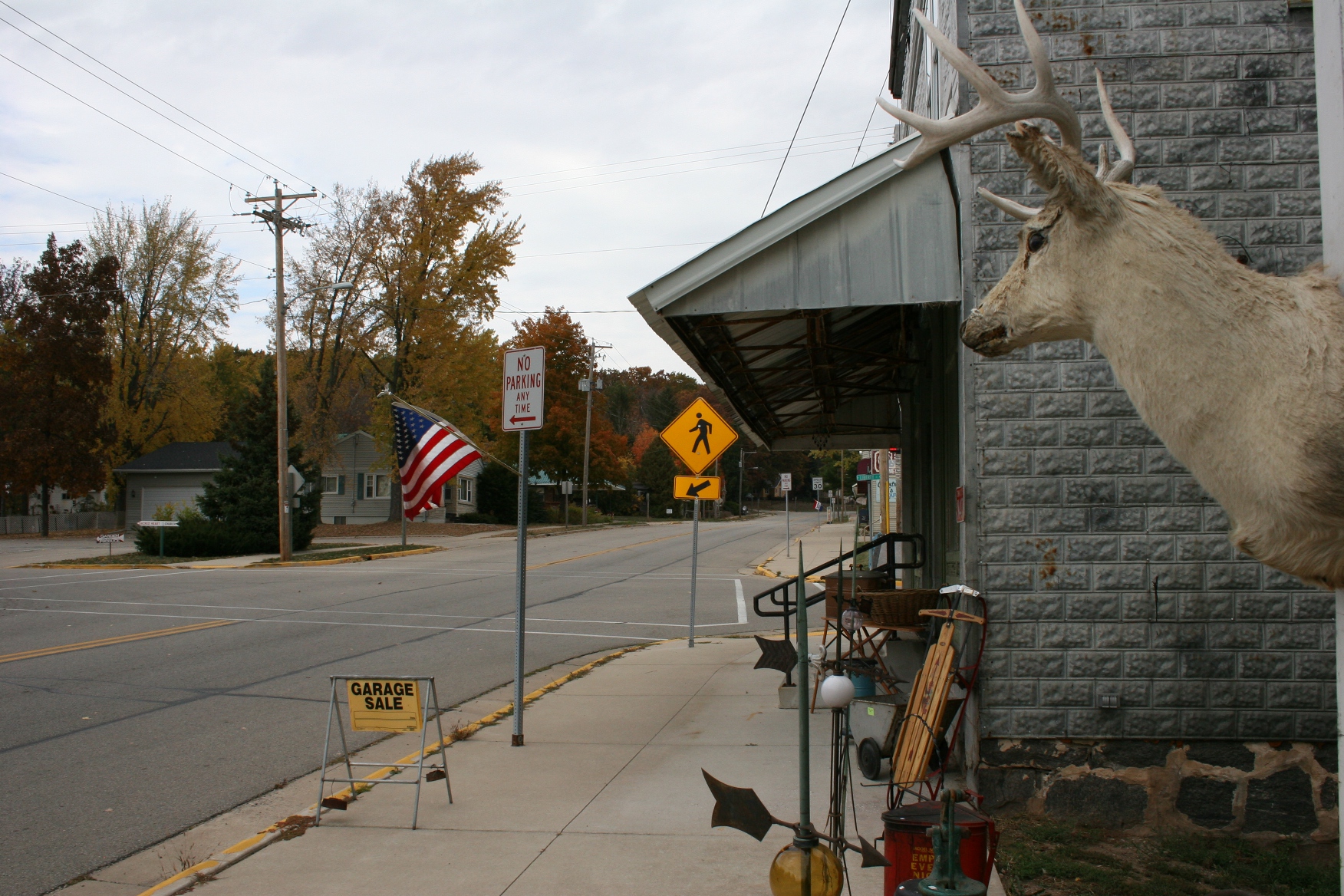
Same spot as above, just looking the other direction toward Main Street. Minnesota Prairie Roots file photo 2012.

Same spot as above, just looking the other direction toward Main Street. Minnesota Prairie Roots file photo 2012.

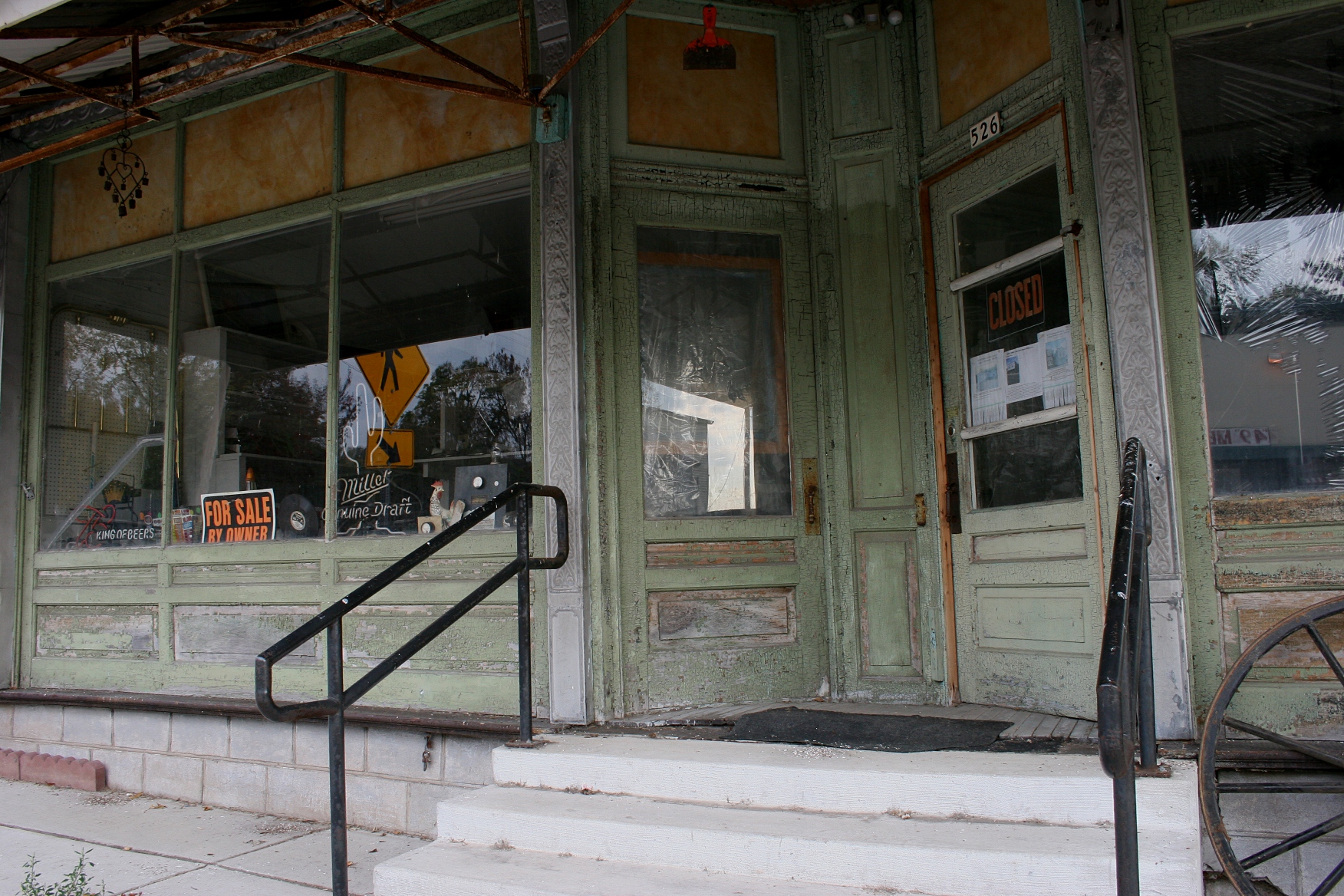
The building to the north of the garage (and deer head) that's for sale.

The building to the north of the garage (and deer head) that’s for sale.

The entry to The Shop.

The entry to The Shop.

© Copyright 2013 Audrey Kletscher Helbling
 

Sunday afternoon drive snapshot: Discovering Theilman & its historic opera house November 17, 2013

WHEN SUNDAY AFTERNOON DRIVES with my husband lead us to undiscovered hamlets and historic treasures, I am especially pleased.

Recently, heading east of Zumbro Falls along Minnesota Highway 60, we turned onto Wabasha County Road 4 aiming south for Theilman. Neither of us had ever heard of Theilman, an unincorporated West Albany Township community. Precisely the type of place we prefer.

Driving into Theilman, we met a lot of trucks pulling horse trailers.

Entering Theilman, located between Lake City and Plainview.

Driving into this settlement, we were impressed. Often times we find such tucked away spots to be unkempt with run-down properties, junk vehicles and a seemingly carefree abandon lifestyle. But not, for the most part, in Theilman.

Well kept homes and a small playground/park border one side of the main drag, where I spotted this mass of signage on the corner by St. Joseph's Catholic  Church.

Well-kept homes and a small playground/park border one side of the main drag, where I spotted this mass of signage on the corner by St. Joseph’s Catholic Church.

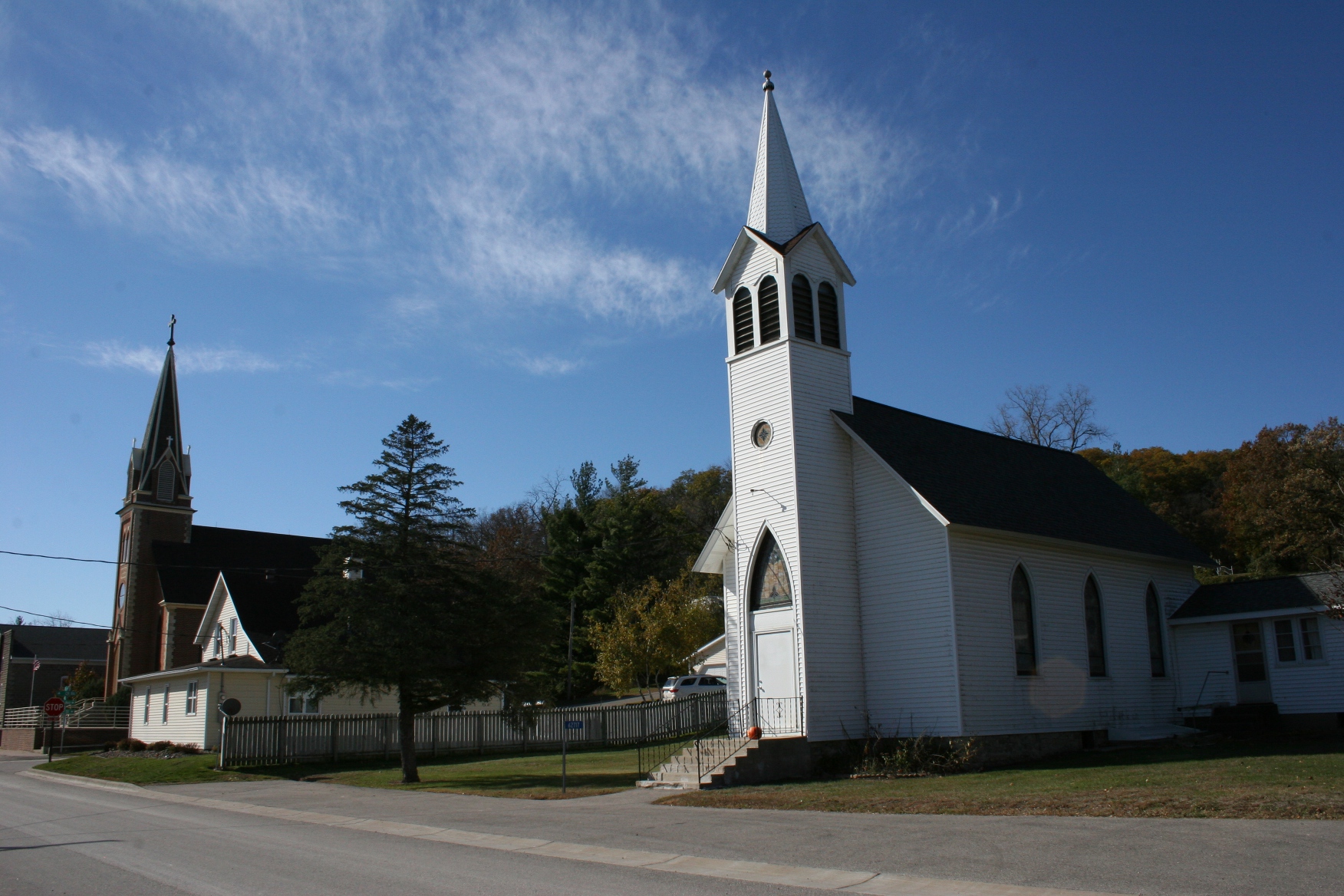
Overall, folks here seem to care about this place with well-kept homes, two churches (although both are closed and one appears to be a private residence) and, the most fabulous discovery of all, a restored opera house.

Another truck and horse trailer pass by the old Catholic church.

Passing by the old Catholic church.

As we stopped to investigate, a steady stream of pick-up trucks pulling horse trailers passed through Theilman, exiting the nearby Zumbro Bottoms Horse Campground.

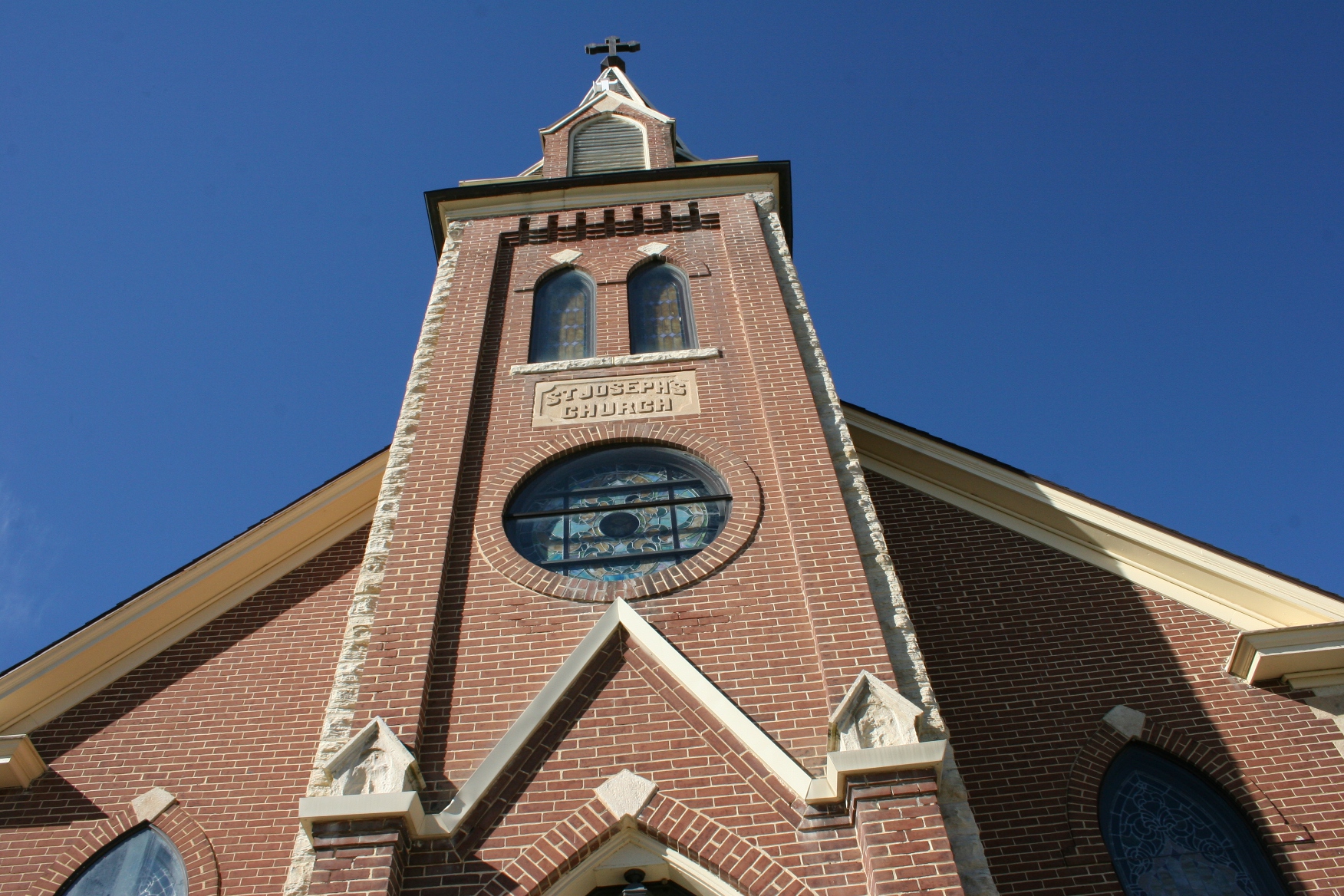
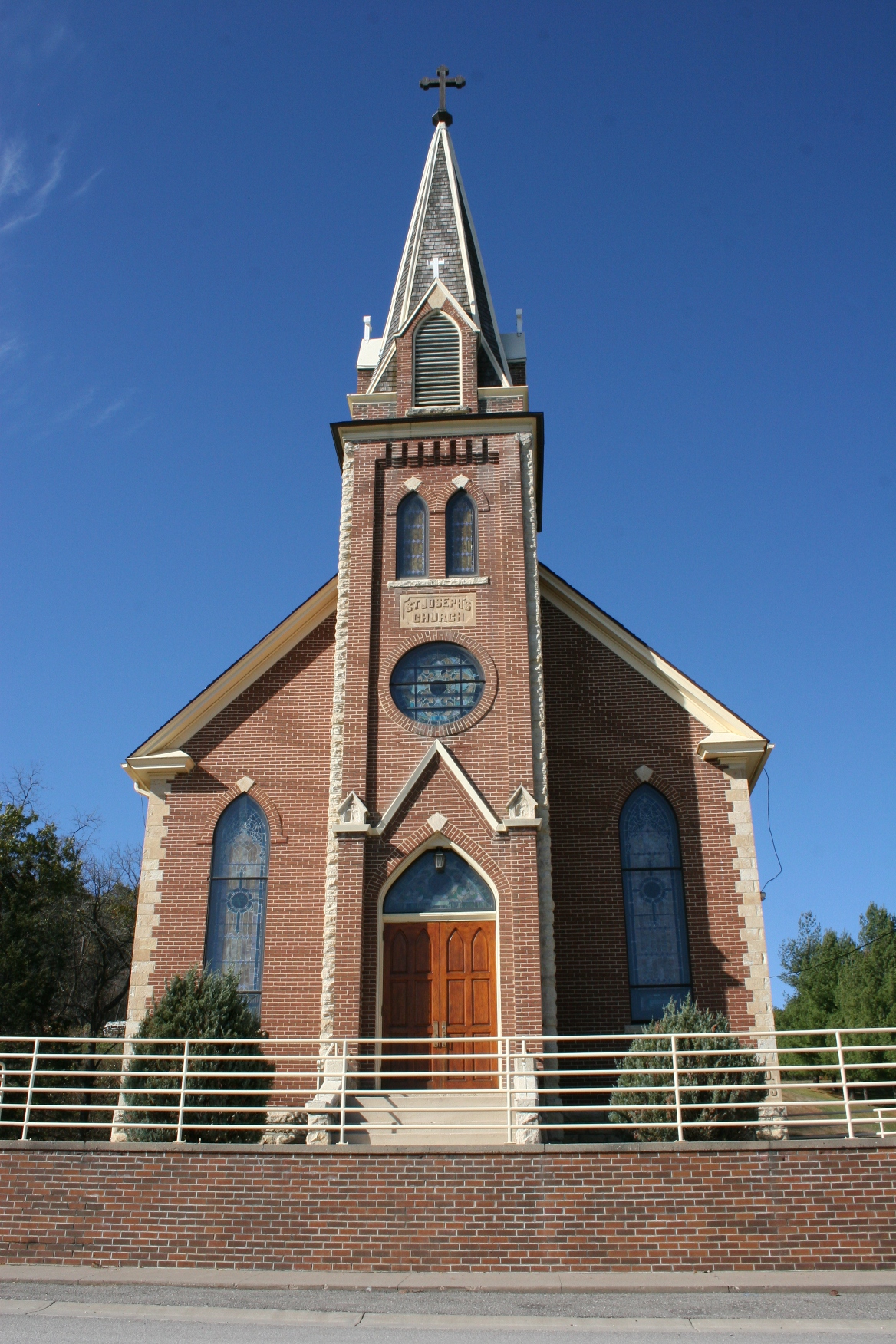
Strong, study and beautiful St. Jospeh's Catholic Church.

Strong, study and beautiful St. Joseph’s Church.

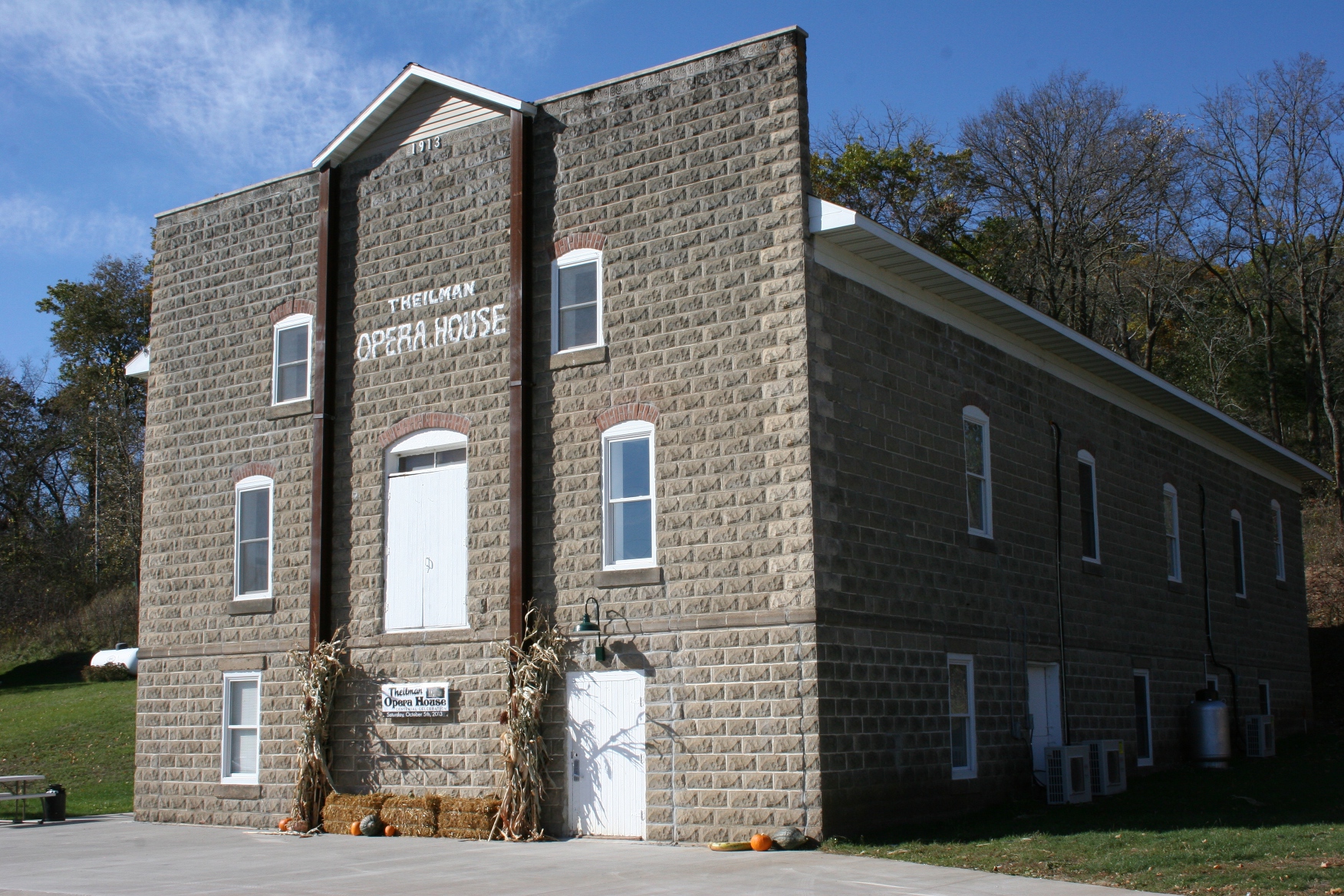
The restored Theilman Opera House.

The restored Theilman Opera House.

I was disappointed, but not surprised, to find the doors to the century old Theilman Opera House and the next door 1903 St. Joseph’s Catholic Church locked. I resorted to peering in an opera house side window, where I spotted a bar area and an apparent kitchen.

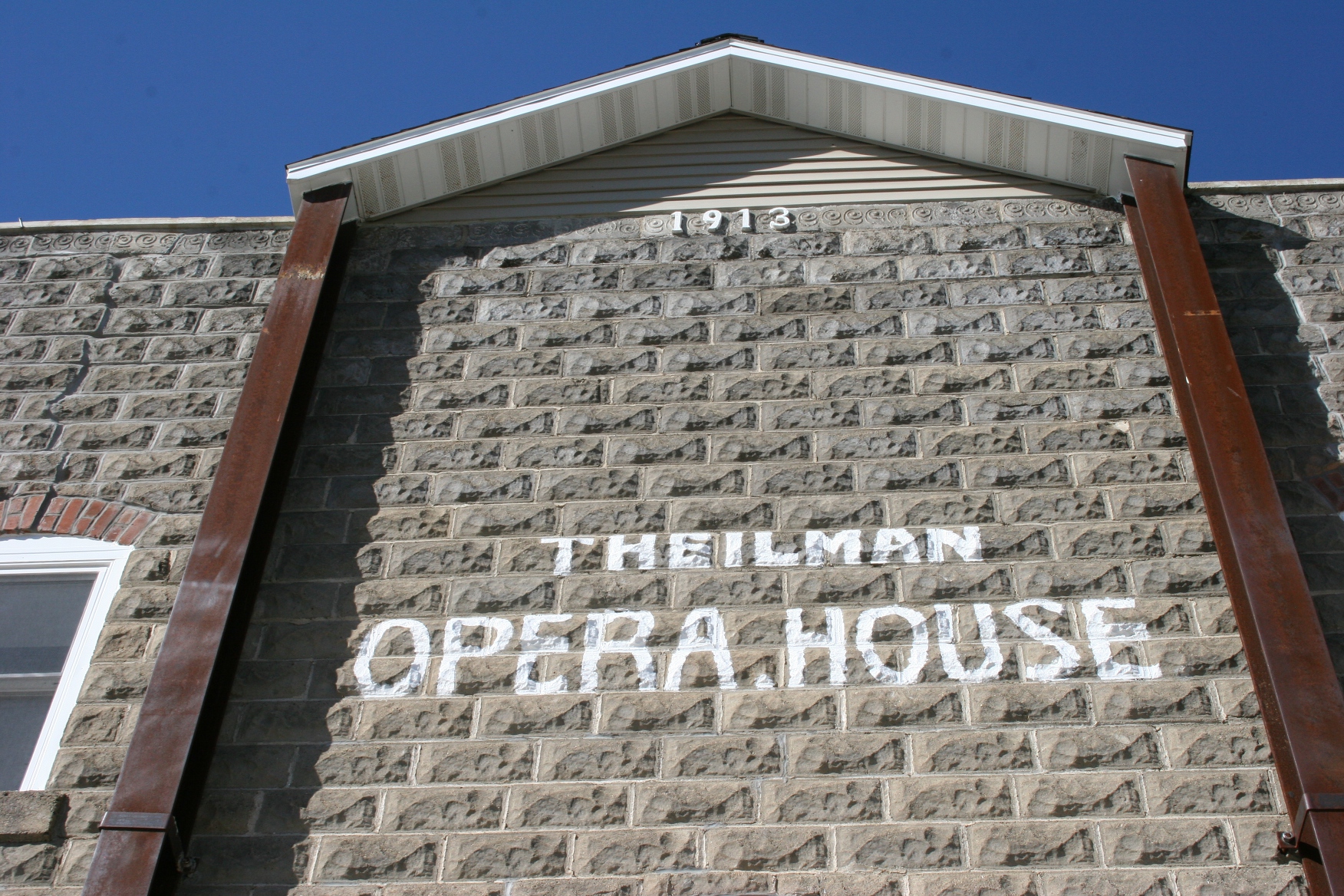
Theilman, Opera House close-up

As Randy and I studied the opera hall exterior, he speculated on its use, perhaps as a former livery stable. He noted reinforcing beams on the building’s front. He has a good eye and sense of history. I later learned he was right about the building. The lower level once held horses while folks danced upstairs or were entertained by traveling medicine shows.

According to the Theilman Opera House Facebook page, the building was pretty much falling apart when locals recently stepped up to save it. Today, with those reinforced walls, a new roof, new flooring, electrical work and other improvements, the 100-year-old opera hall is available for event rental.

Fabulous. I love when a community rallies to save an historic landmark.

Now, what about the next door Catholic church? What does the future hold for that building?

BONUS PHOTOS:

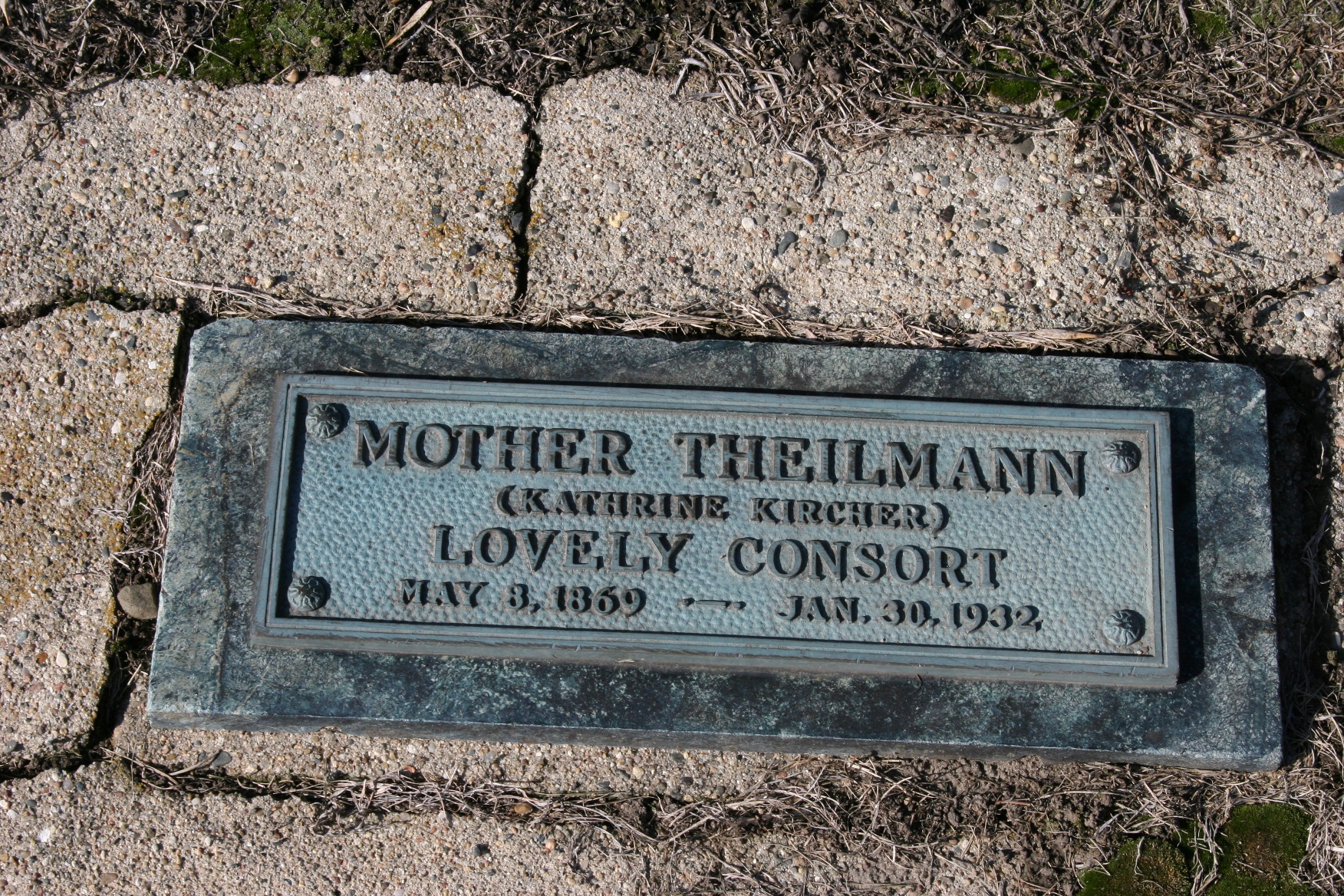
We walked the cemetery behind he wood-frame church and found numerous Theilman family graves, including this one. It drew my attention for the words, "lovely consort."

We walked the cemetery behind he wood-frame church and found numerous Theilmann family graves, including this one. It drew my attention for the words, “lovely consort.” And I also noticed that the Theilmann on the marker is spelled with two “n’s” unlike the single “n” in the town’s name.

Theilman's two churches. I believe the wood one is now a private residence as no sign marked it as a sanctuary.

Theilman’s two churches. I believe the wood one is now a private residence as no sign marked it as a sanctuary and it appears to be a home.

St. Joseph's Church, still an active Catholic parish.

St. Joseph’s Church, a closed parish of the Roman Catholic Diocese of Winona, according to info I found online.

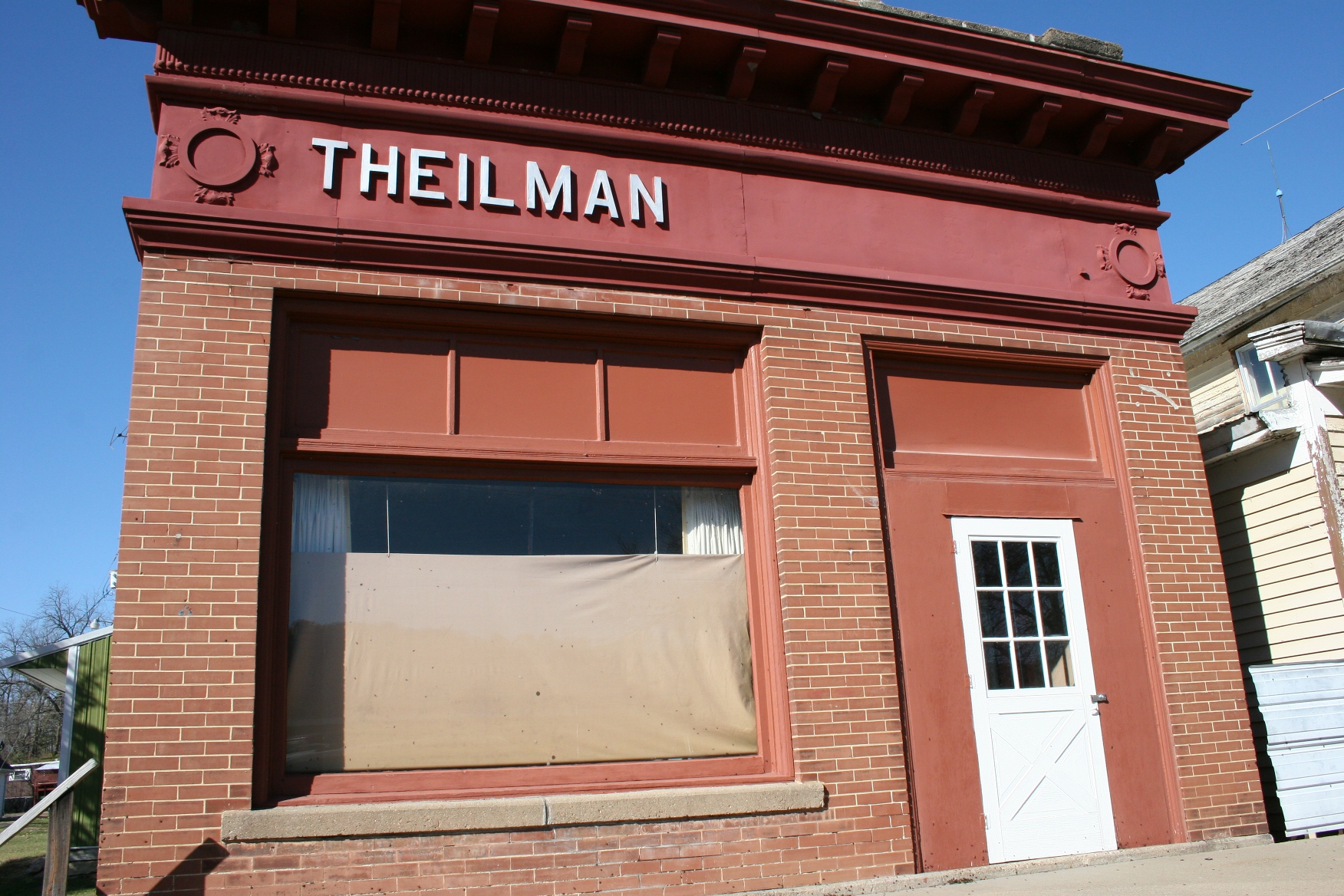
Another interesting old building in Theilman. Would love to know its history.

Another interesting old building in Theilman. I would love to know its history.

© Copyright 2013 Audrey Kletscher Helbling
 

I discover Plainview & then the curtain falls November 15, 2013

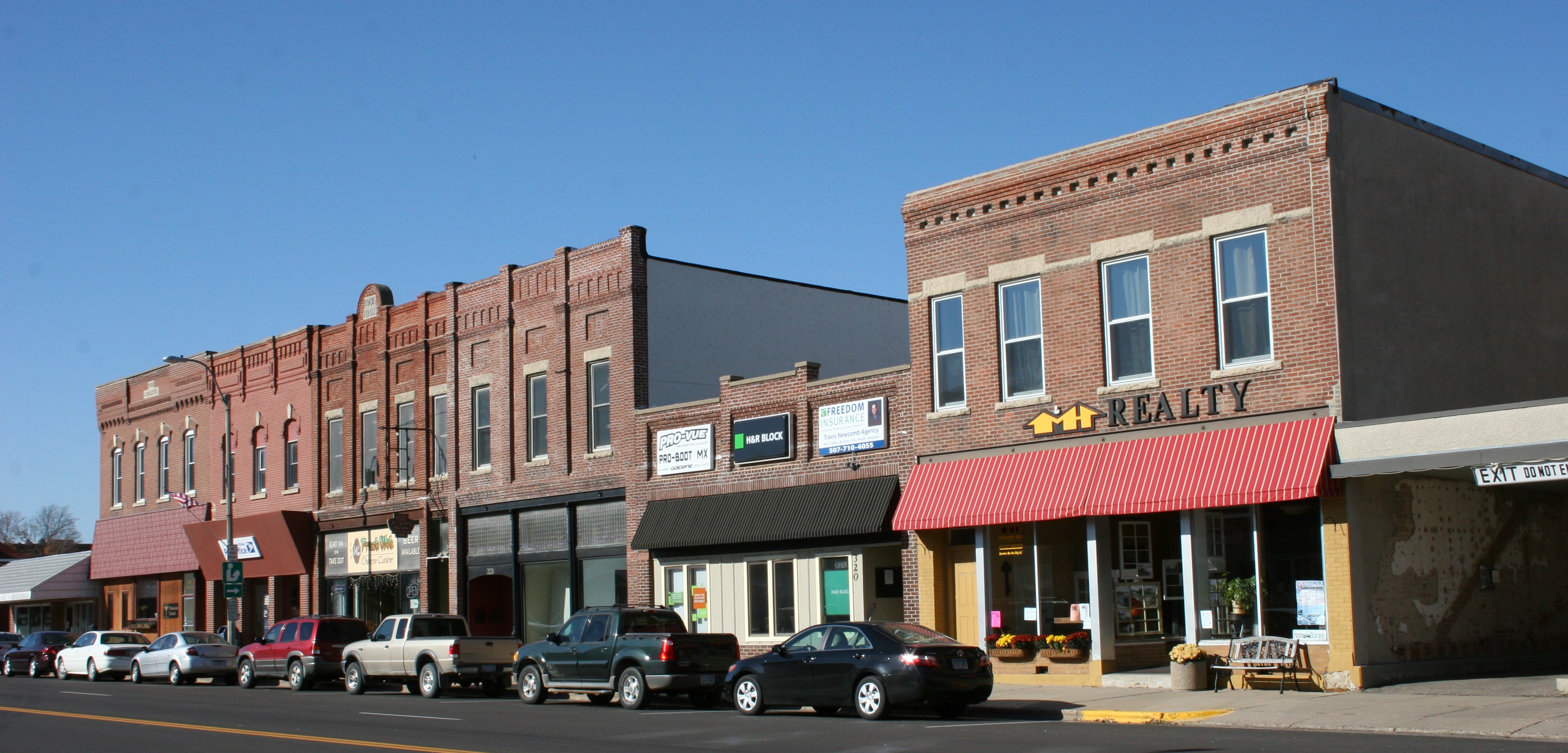
A snippet of Plainview's downtown.

A snippet of Plainview’s downtown.

ACT I:

It’s not like I live a great distance (60 miles) from Plainview, home of the Jon Hassler Theater and Rural America Arts Center. But I’d never been to this rural town 20 miles northeast of Rochester until recently. A wrong turn on a Sunday afternoon drive led my husband and me into this Wabasha County community of some 3,300.

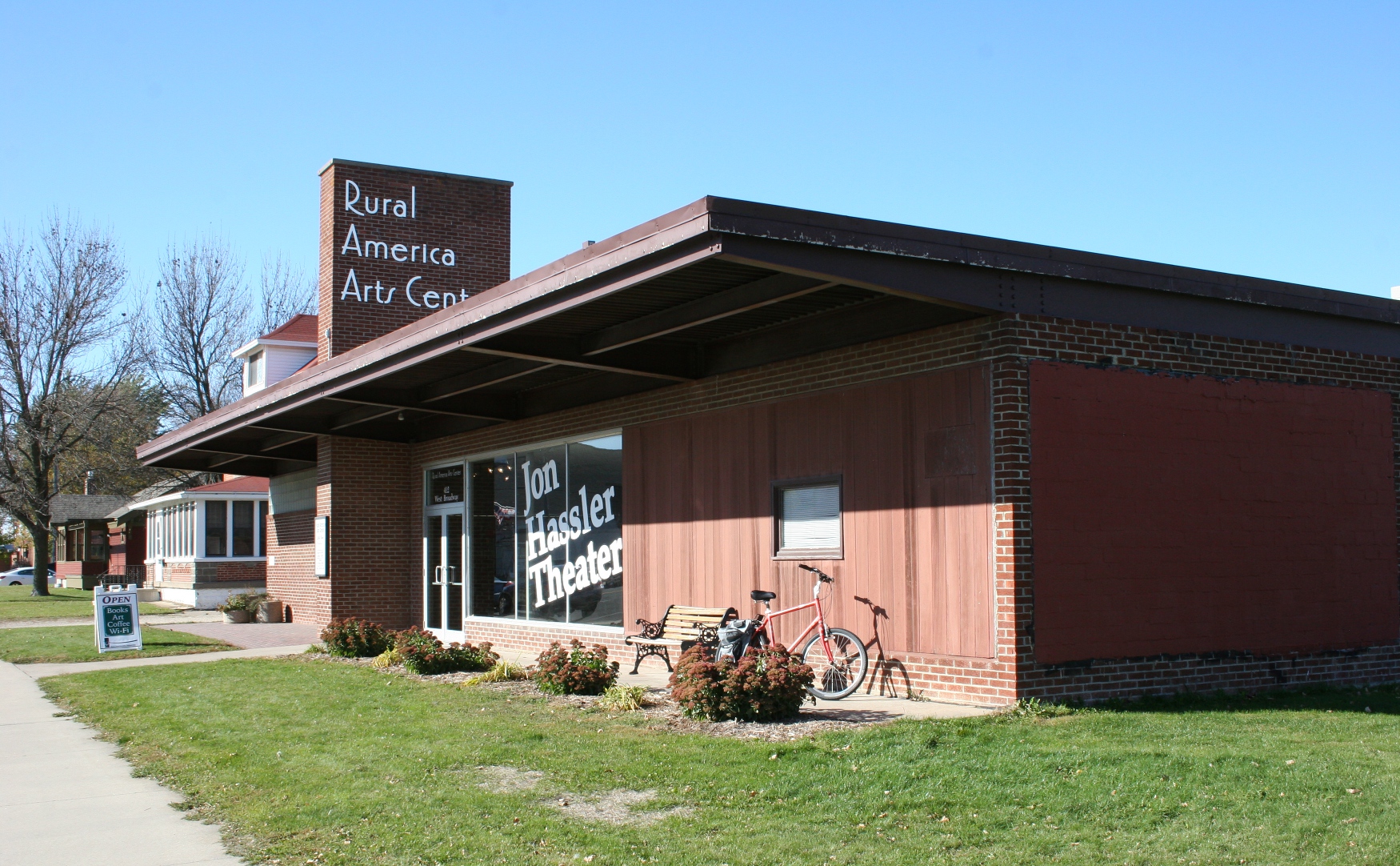
In the heart of the community, the Jon Hassler Theater and Rural America Arts Center.

In the heart of the community, the Jon Hassler Theater and Rural America Arts Center.

And there we discovered the old farm implement dealership building turned arts center—complete with theater, art gallery, bookstore and writers’ retreat center.

Dean Harrington showed me copies of Green Blade, the annual literary journal produced by writers who gather here.

Dean Harrington showed me copies of Green Blade, the annual literary journal produced by writers who gather here.

We met Dean Harrington, local banker, arts center enthusiast and CEO of the Rural America Arts Partnership, who was manning the front desk during the afternoon production of Ole & Lena’s 50th Wedding Anniversary & Vow Renewal. I swear Harrington could have been noted Minnesota author and former Plainview resident Jon Hassler’s twin right down to his sweater vest.

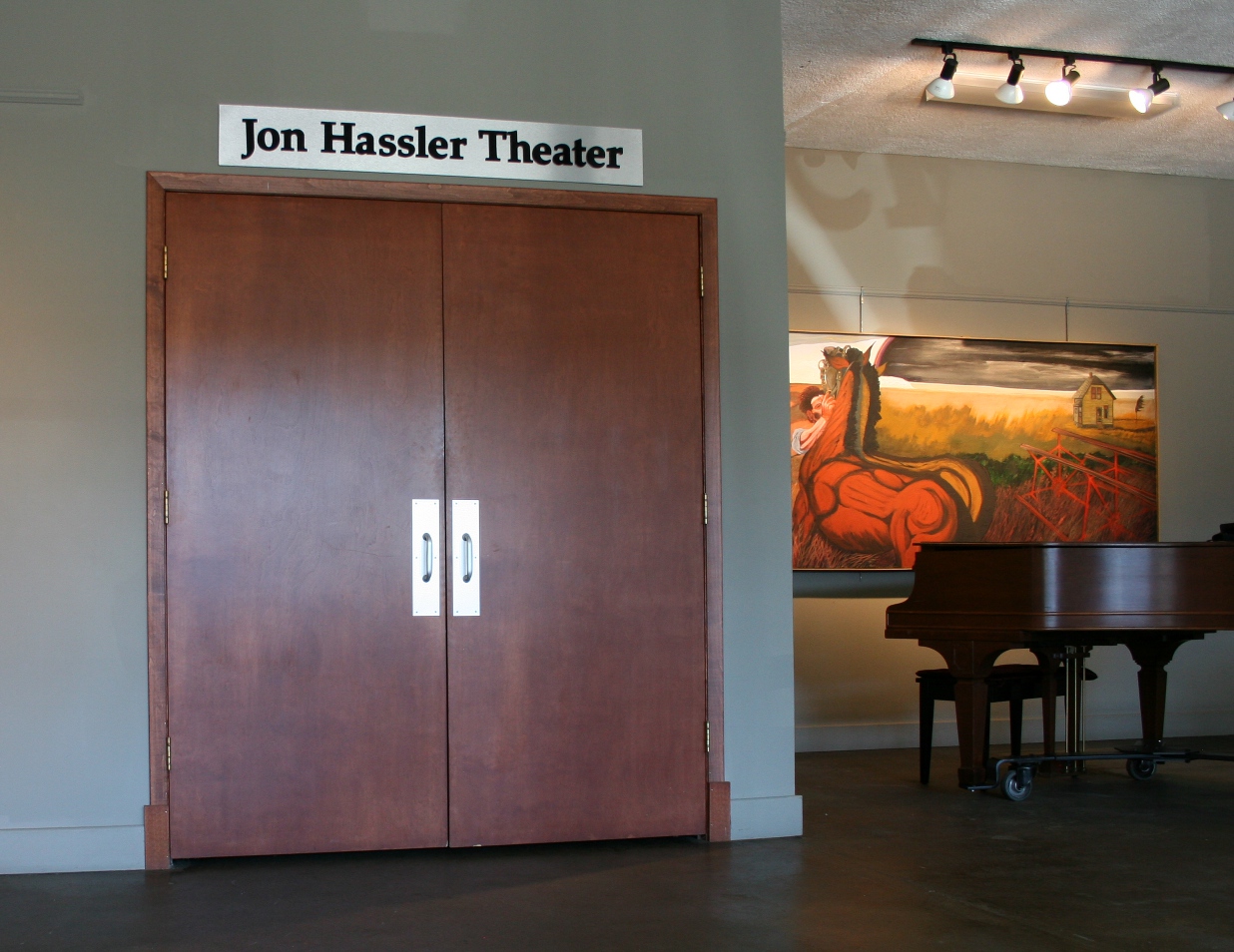
As close as I got to the theater.

As close as I got to the theater.

I wished right then and there that I was seated in the theater, belly laughing at/with Ole and Lena. But it was near intermission, much too late to join the audience.

Words & Afterwords Book Store sells ne

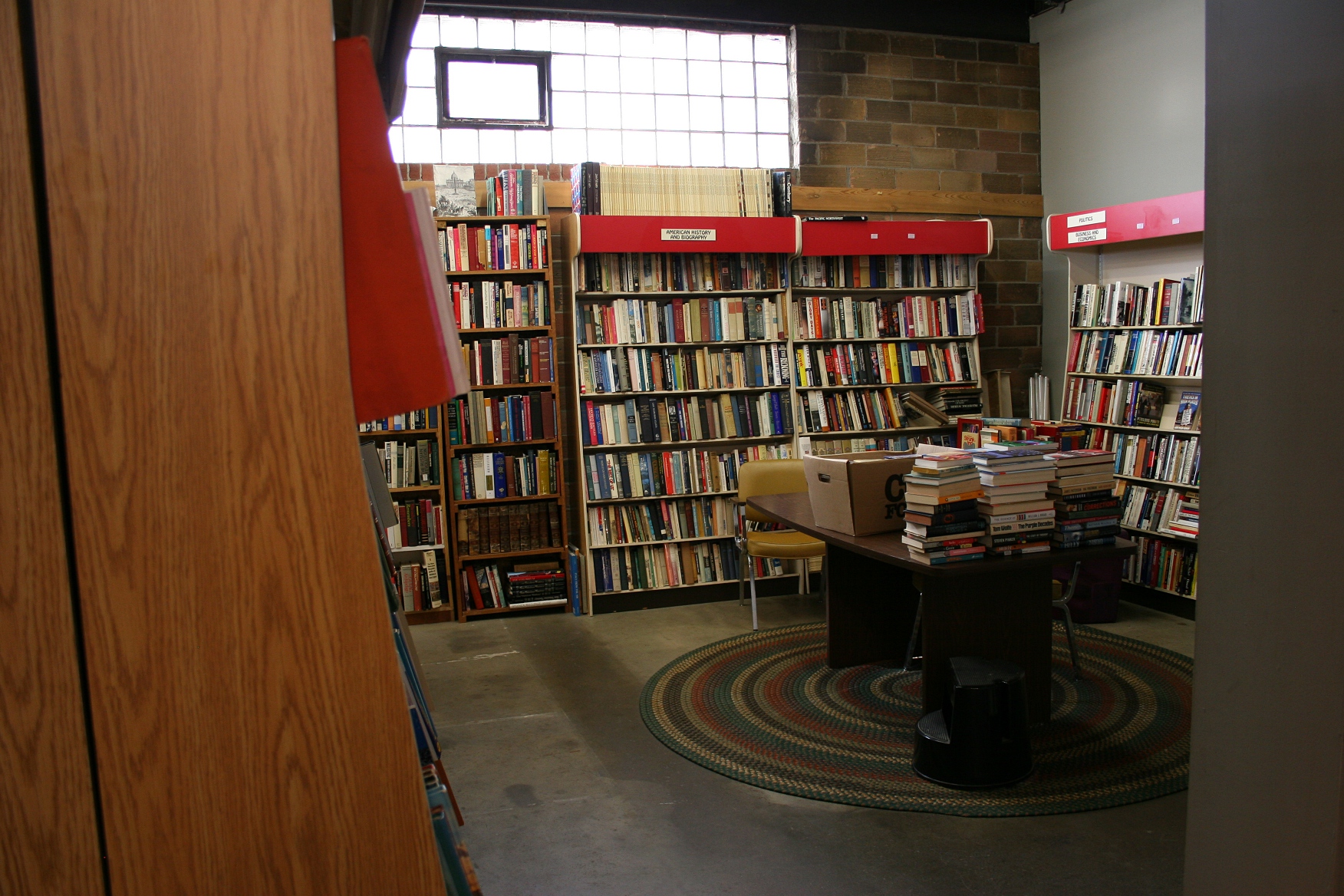
Words & Afterwords Book Store features more than 4,000 used and selected new titles.

Instead, I settled for poking about the gallery and bookshop and snapping a few photos and thinking, how grand to have a place like this in Plainview that embraces the arts. A return trip for a more in-depth look at this community and theater is definitely needed. Maybe next time with play tickets in hand.

ACT II:

I’ve had the above ACT I in my draft posts for a few weeks. I never expected to be penning an ACT II. But in a story reported Thursday on Minnesota Public Radio (quoting the Rochester Post-Bulletin), I learned that the Jon Hassler Theater is closing at the end of 2014. I didn’t see that coming. Dean Harrington offered no hint of the theater’s tenuous situation when we spoke briefly a few weeks ago.

But apparently the audience just isn’t there to continue supporting a theater in Plainview. Plans are to keep the self-supporting bookstore, the art gallery and the writer’s retreat open.

Just two days ago I received an email from the Jon Hassler Theater inviting me to a reading and Q & A by Northfield writer Scott Dominic Carpenter, author of Theory of Remainders and This Jealous Earth. Carpenter will be the Third Wednesdays guest reader at 7 p.m. on November 20.

And now this, this news about the theater’s closing comes. Before I’ve even seen the curtain rise in the Jon Hassler Theater, I’ve seen it fall. Anytime a rural community loses local access to the arts, it’s not good.

I’m fortunate to live in a community with a strong theater presence (Paradise Community Theatre and The Merlin Players) at the Paradise Center for the Arts in historic downtown Faribault. I don’t have to, and don’t want to, drive to the Cities to see great theater. Yet, I know many local residents who’ve never set foot inside the Paradise, but who regularly travel to the Cities for their arts fix. It’s this type of ambivalence and lack of local support, in my opinion, that lead to an outstate theater’s demise.

Apparently the audience numbers weren’t there in Plainview and now this small town is losing its theater.

ACT III: 

Here are a few more photos of that inviting bookstore inside the Rural America Arts Center and of downtown Plainview.

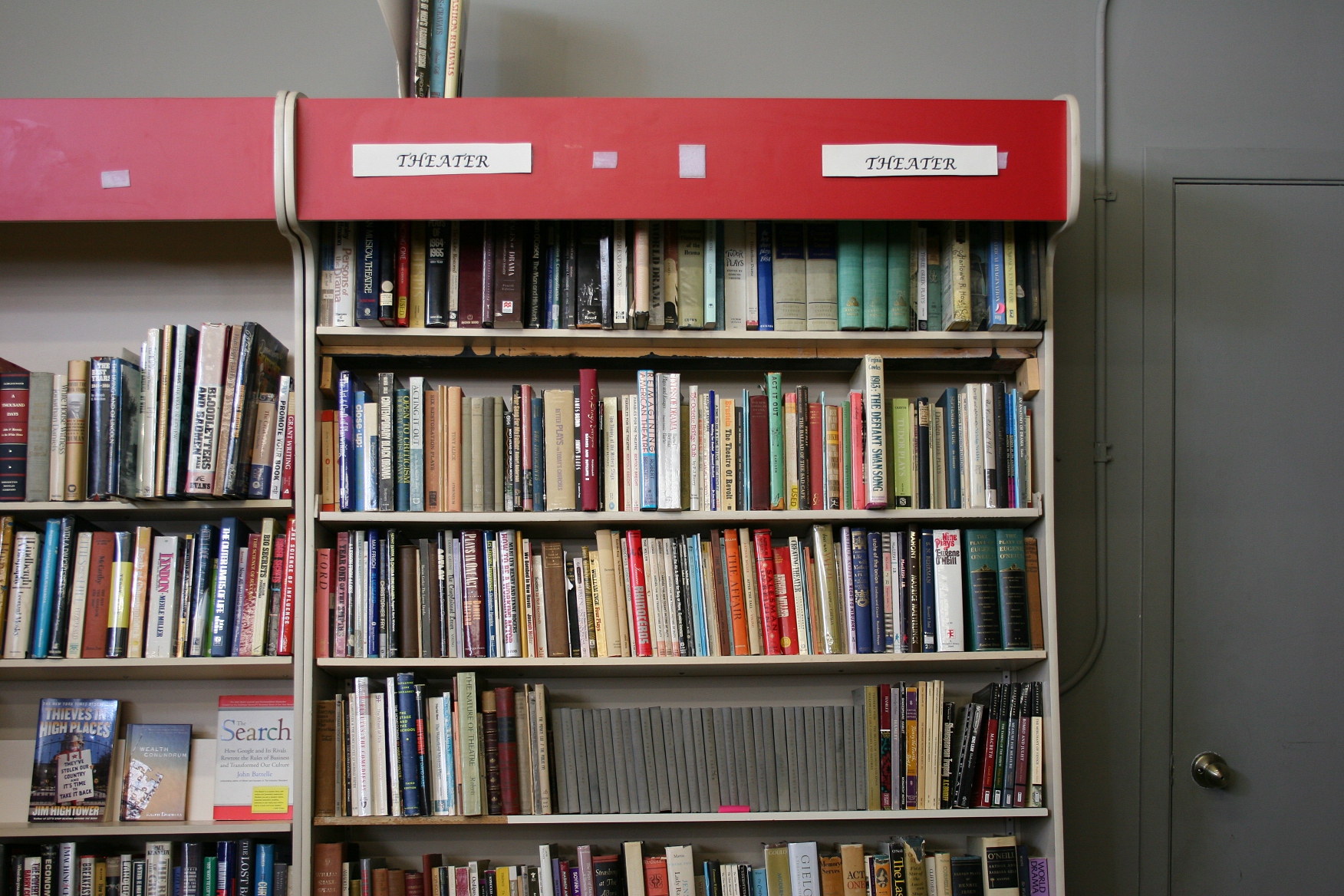
Theater books for sale.

Theater books for sale.

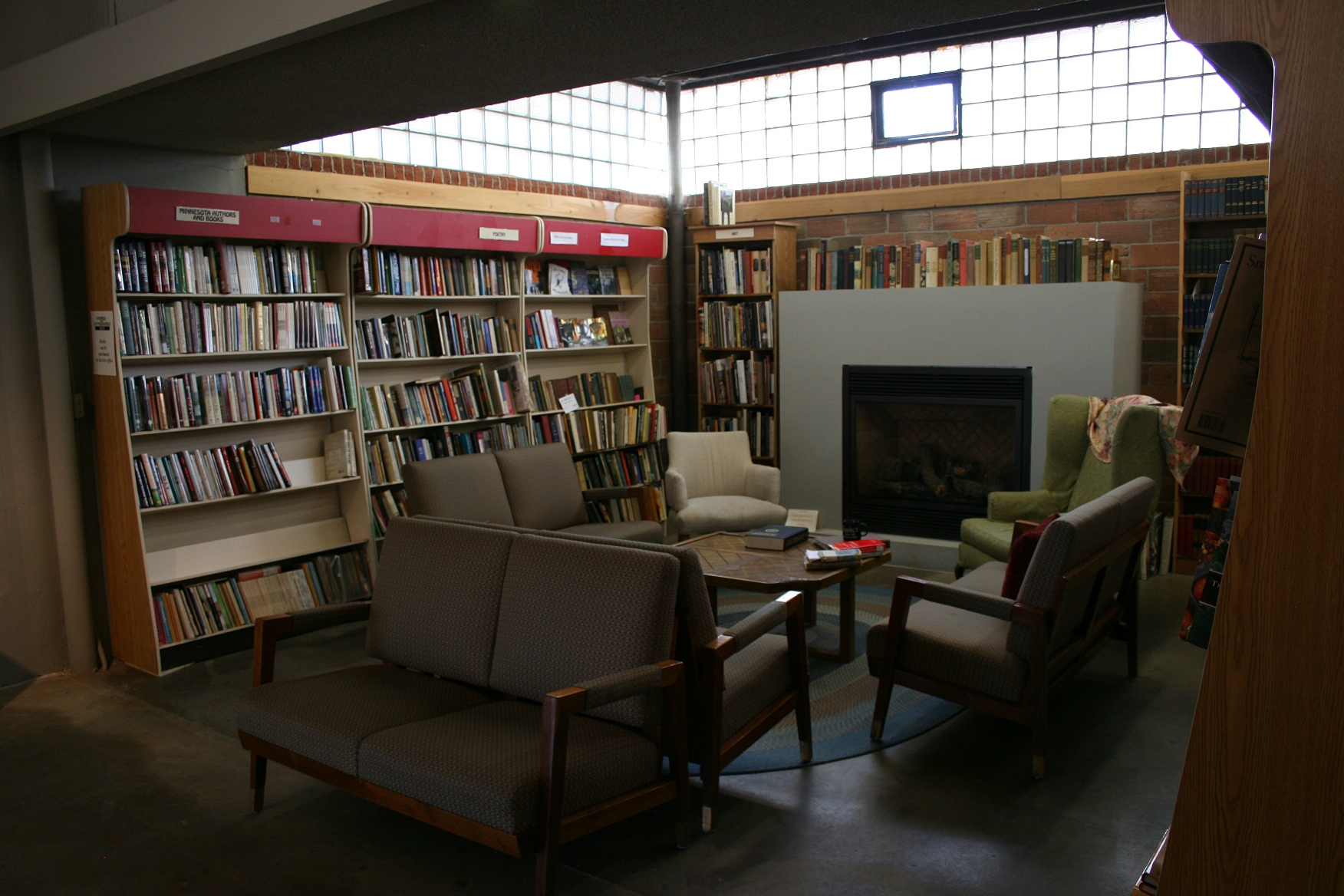
A cozy bookstore nook.

A cozy bookstore nook.

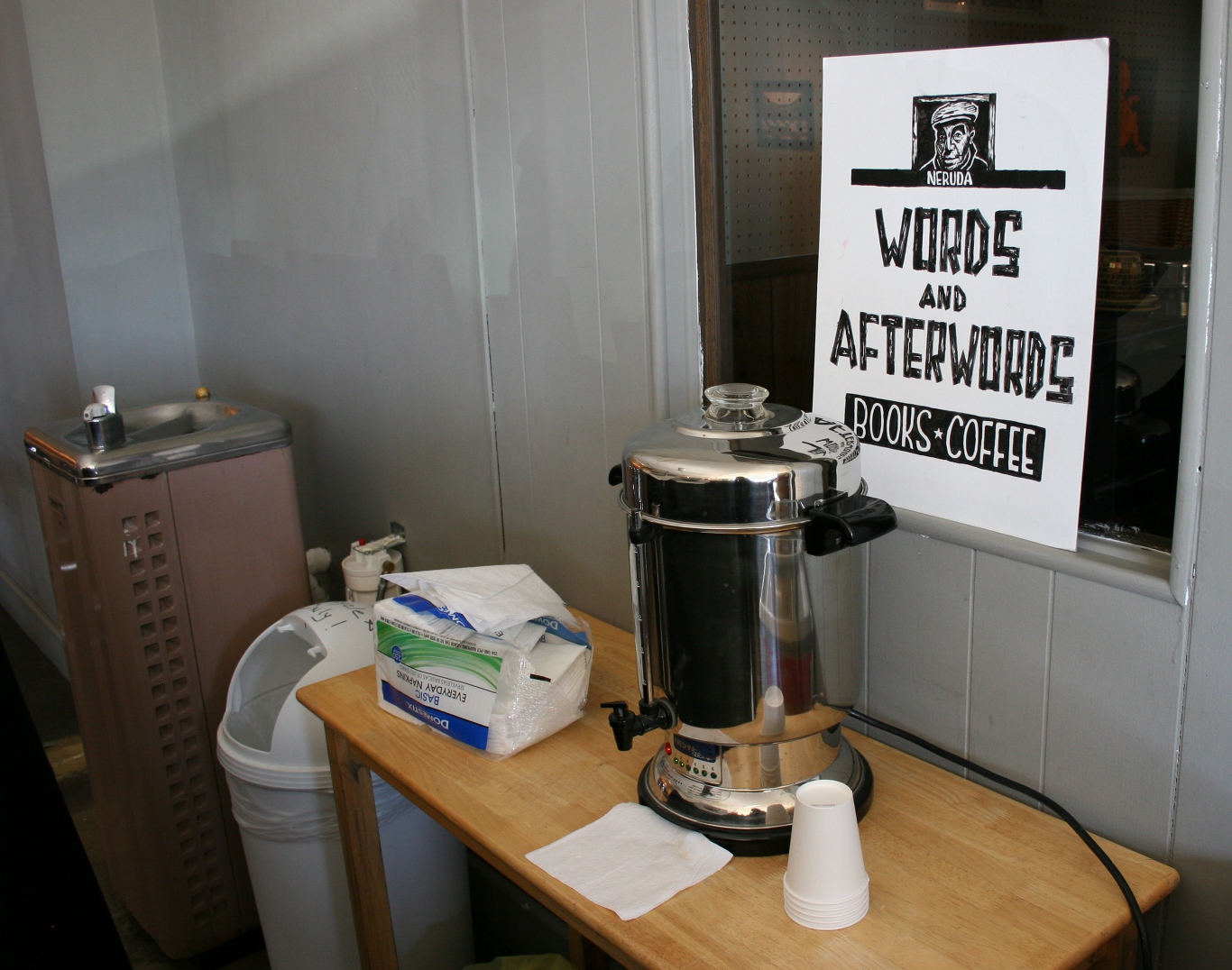
Loved this bookstore signage by the coffee pot up front.

Loved this bookstore signage by the coffee pot up front.

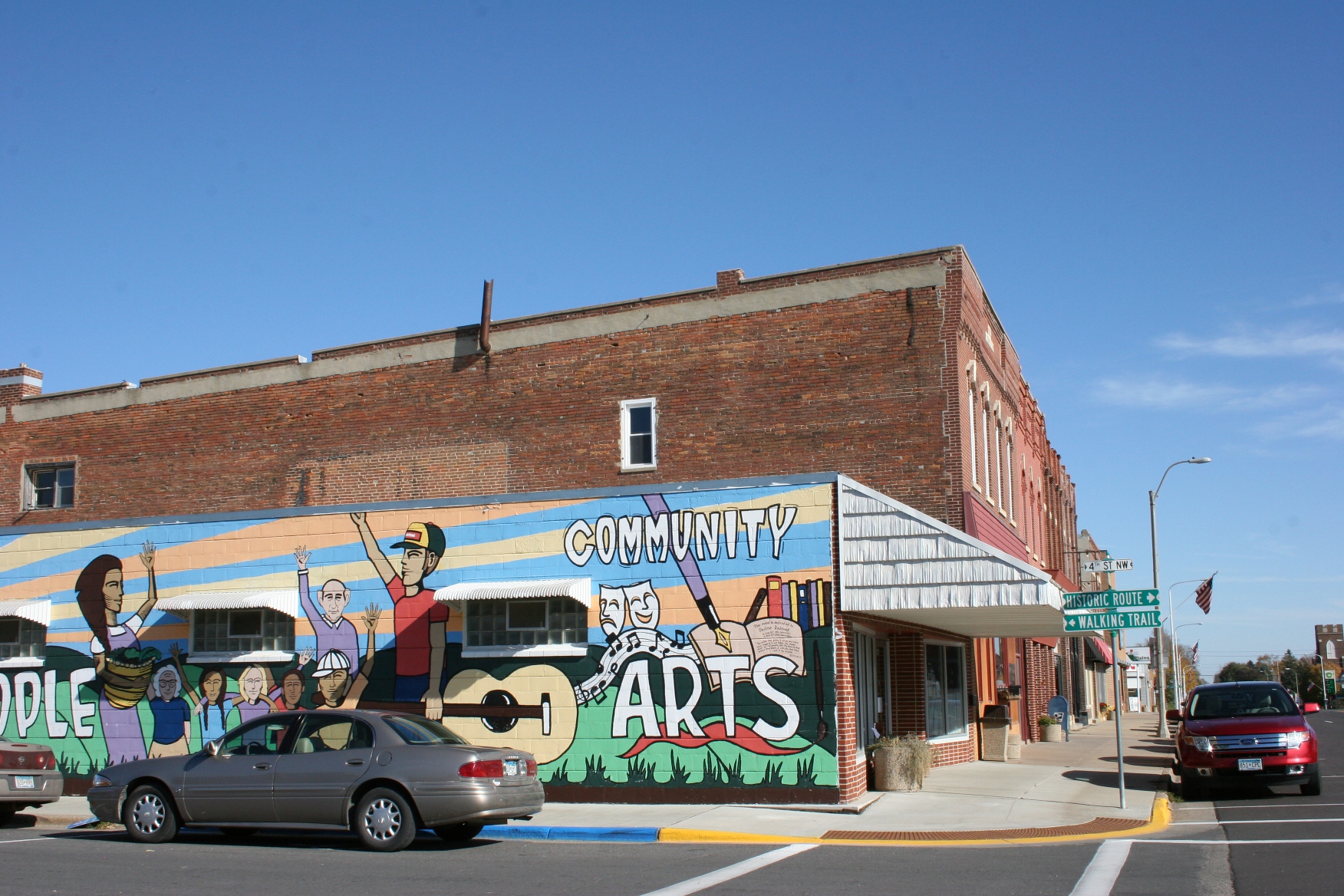
Across the street from the arts center.

Across the street from the arts center.

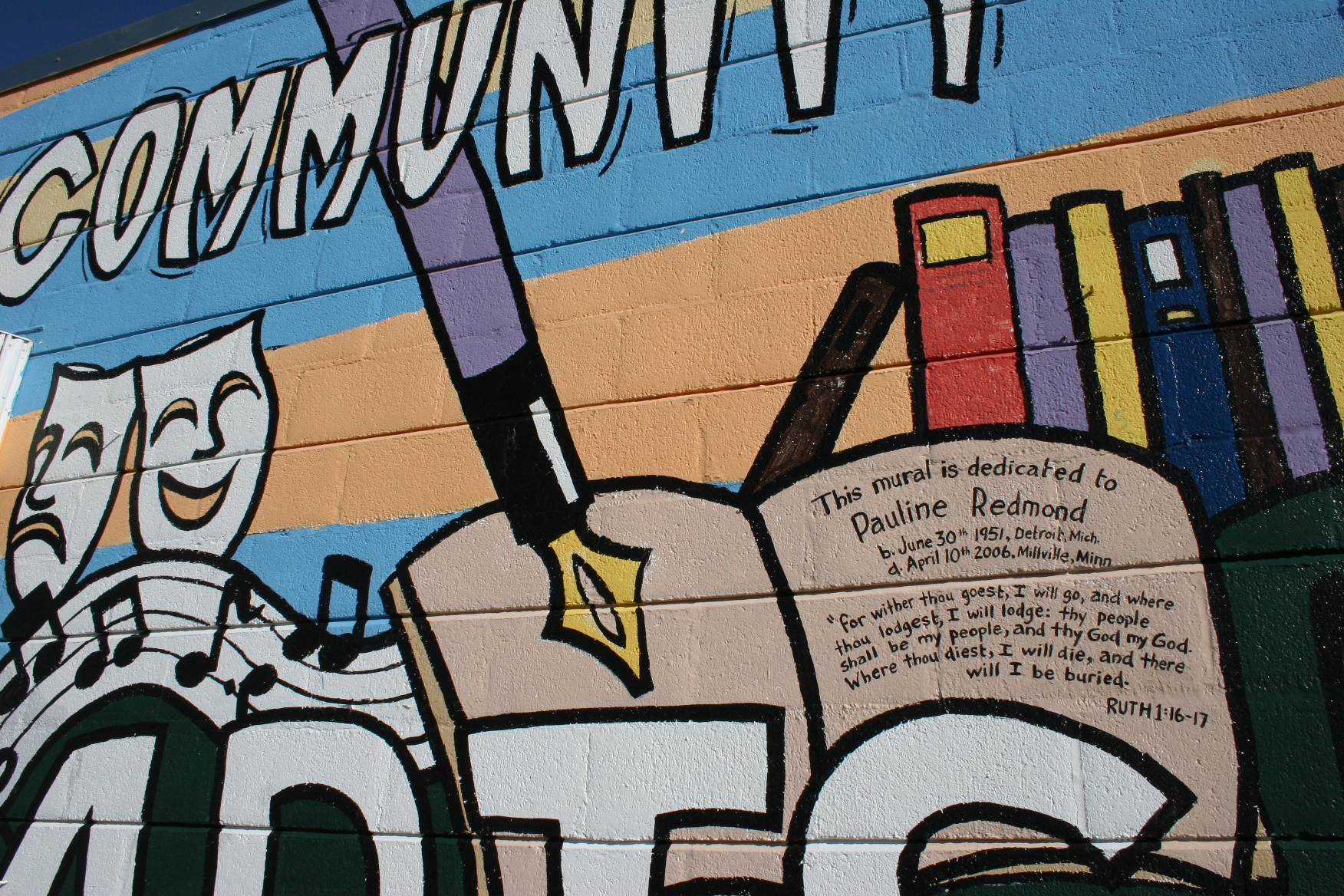
Meaningful mural details.

Meaningful mural details.

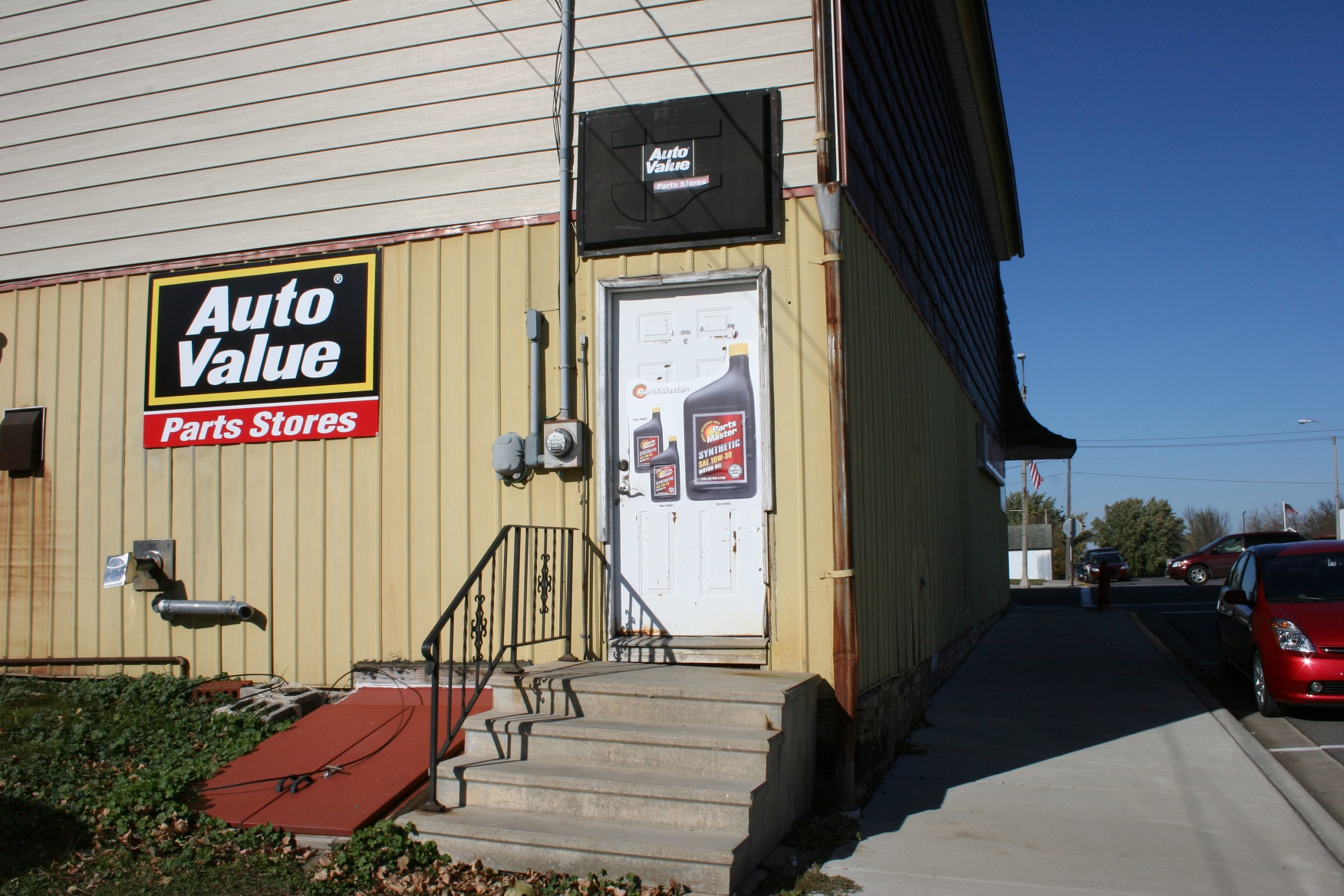
The back of Auto Value, across the street also from the arts center.

The back of Auto Value. If you walk up the sidewalk, cross the street and go left, you will find the arts center.

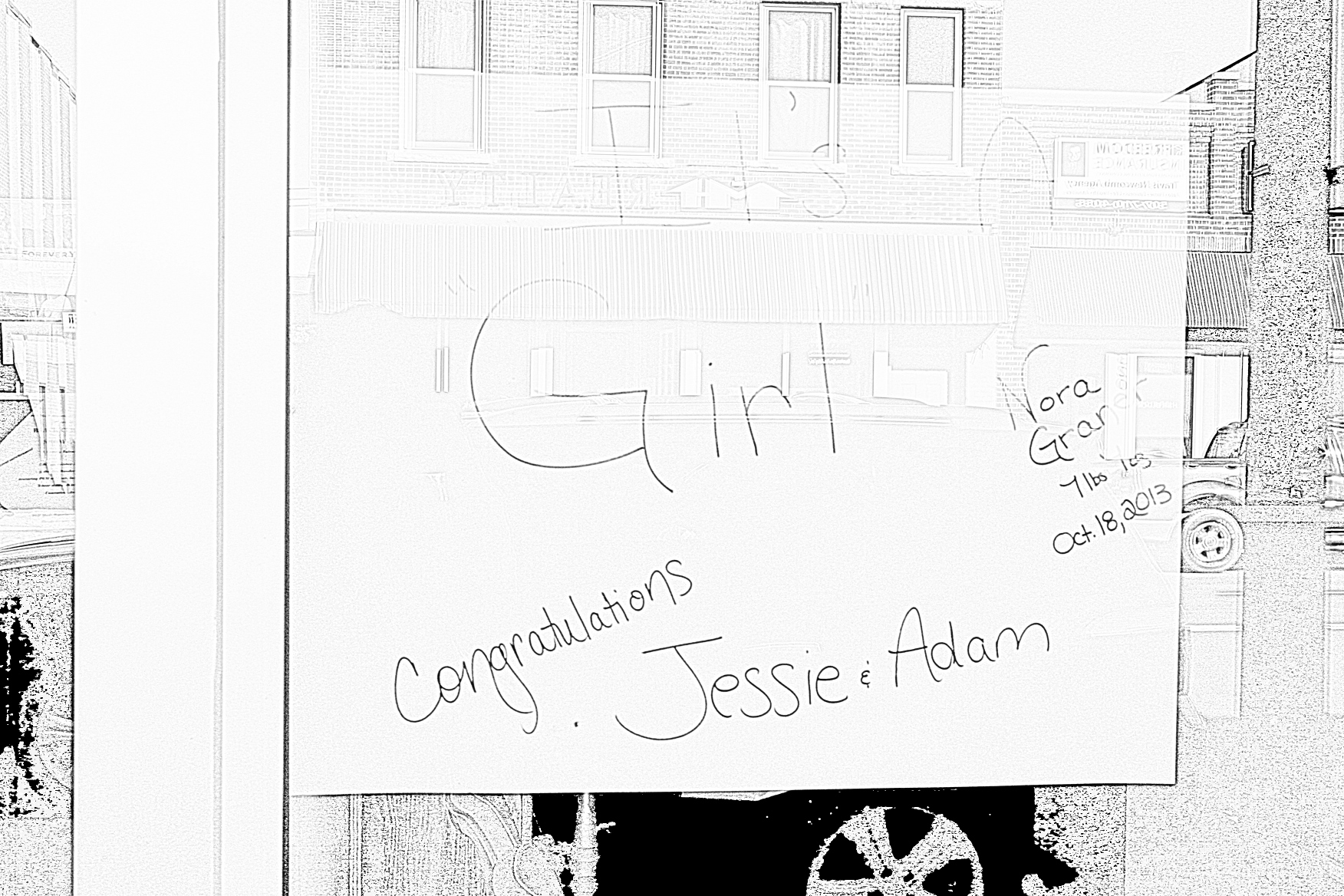
A birth announcement in the front window of a downtown business, converted to black-and-white so it's readable.

A birth announcement in the front window of a downtown business, edited to photocopy black-and-white so it’s readable.

© Copyright 2013 Audrey Kletscher Helbling
 

Sunday afternoon drive snapshot: Sculpture garden in Jarrett November 10, 2013

Sculpture, lens flare on arch

SUN FILTERED THROUGH THE STAND of cedars. Bright enough to cause lens flare when I shot toward the scraggly close-knit cluster of trees shadowing the banks of the clear, fast-flowing Zumbro River.

The setting appeared almost surreal and haunting in the sense that viewing the unexplained can impress upon the mind.

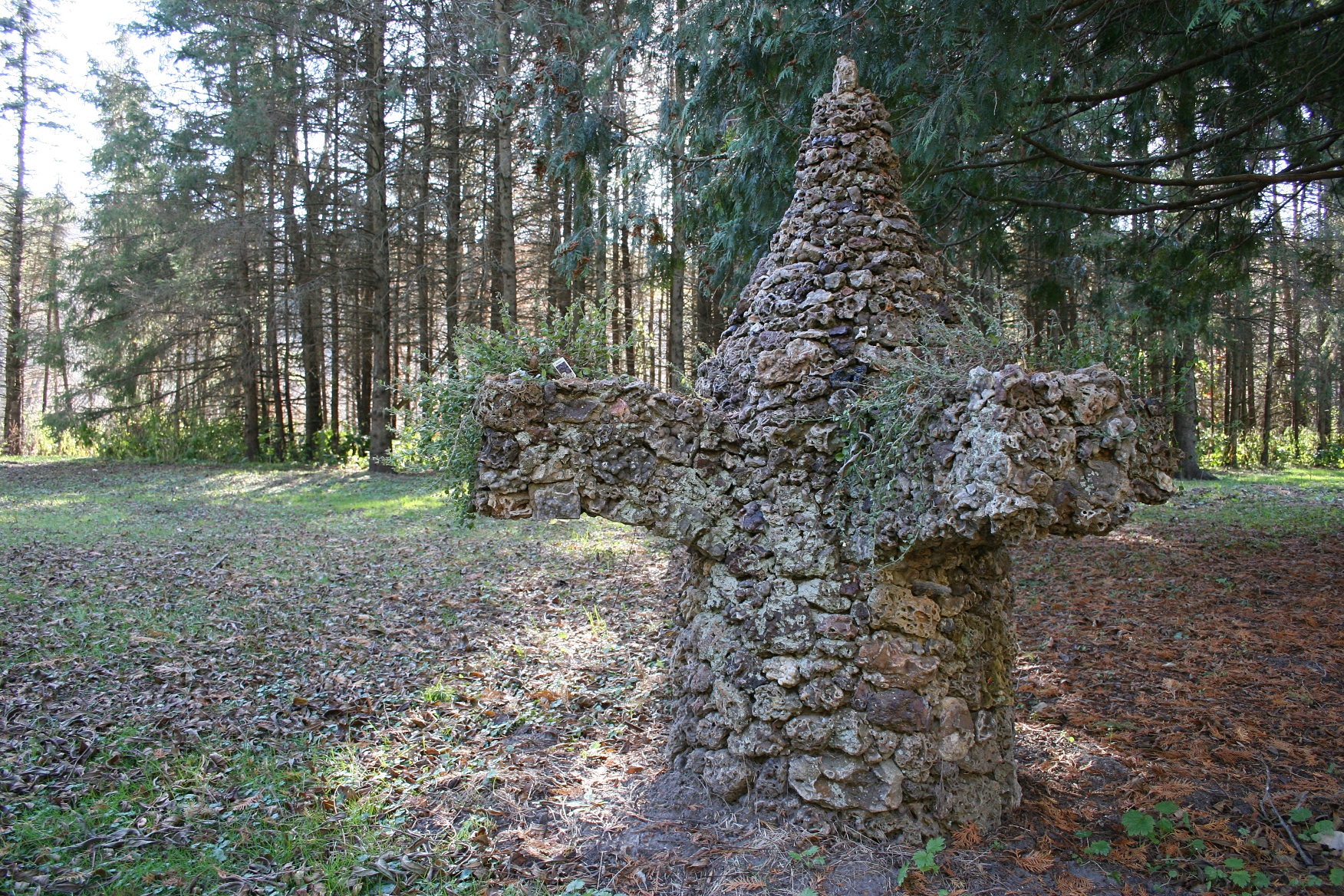
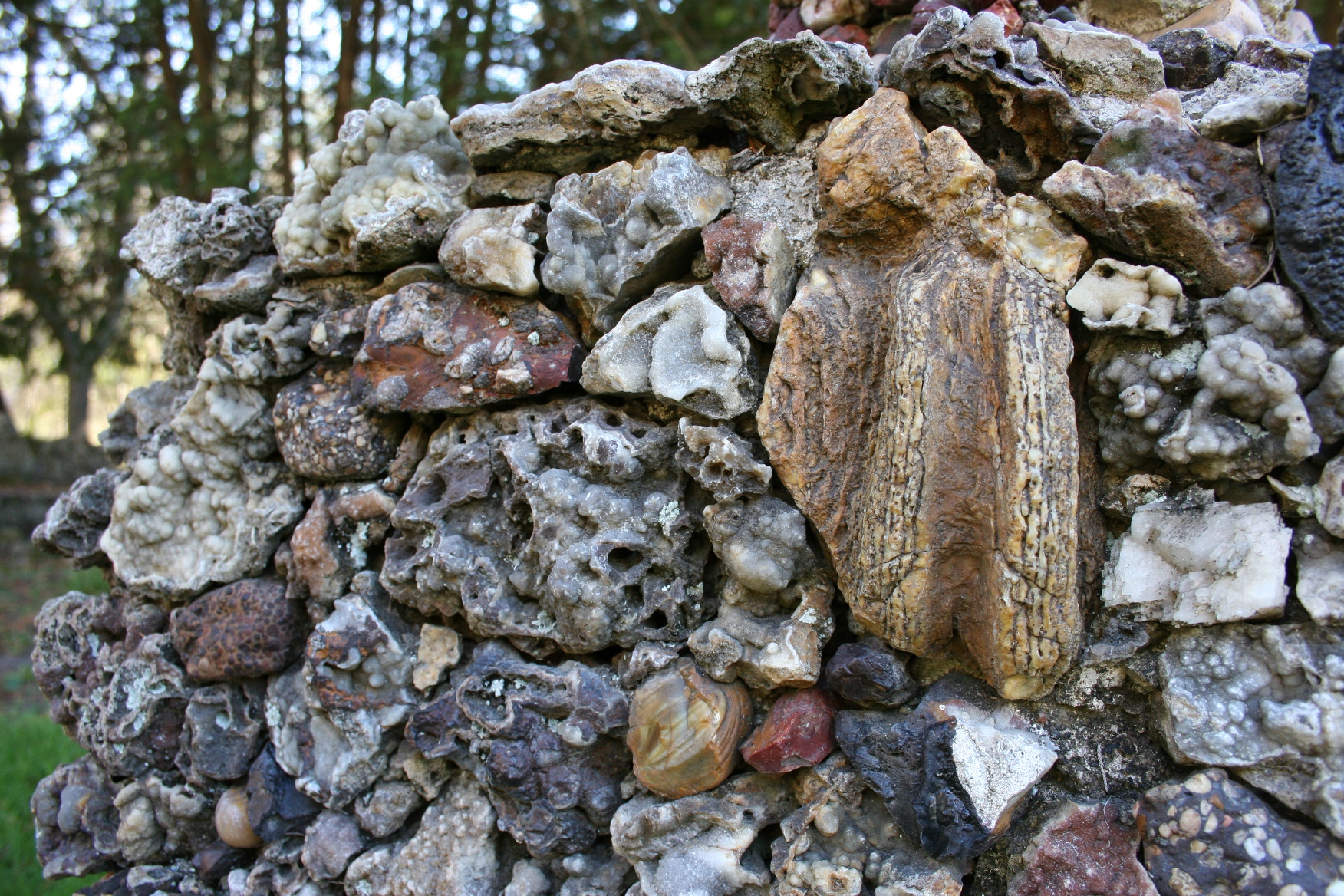
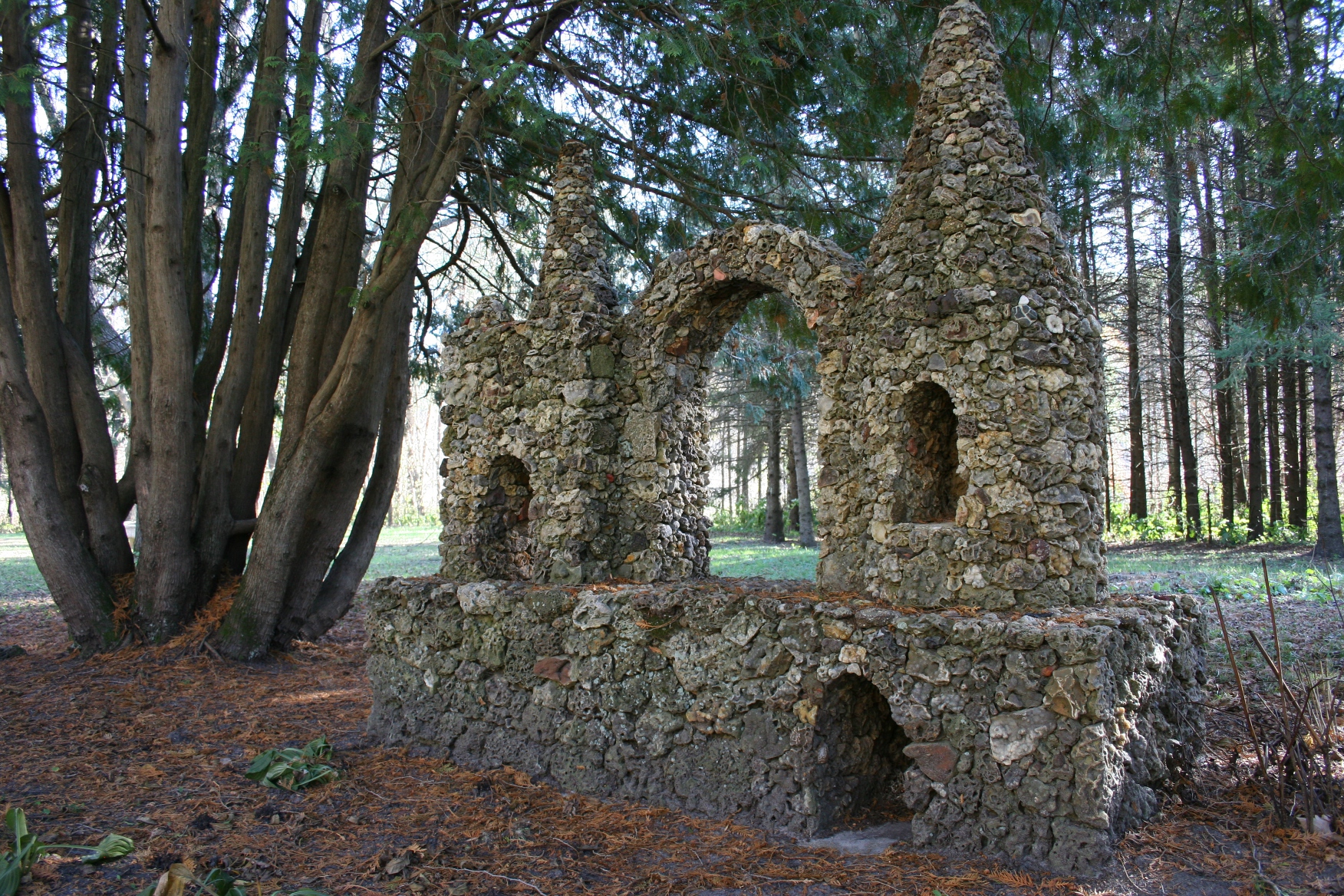
Sculpture, castle

I’d heard of this place, missed it on a previous pass through Jarrett, and nearly missed it again. But on this Sunday afternoon drive, I glimpsed the stone configurations among the cedars and asked my husband to swing the van around.

So here we were, pulled off Wabasha County Road 11, parked in a drive about the length of our van. I wasn’t even sure we should be here, uncertain whether this was public or private land. But I figured “No trespassing” signs would mark the property if visitors weren’t welcome into this sculpture garden.

Sculpture, wreath

In the quiet of this Sunday afternoon, and I cannot imagine any day being anything but quiet here in this secluded wide spot in the road, we meandered among the sculptures, shoes sinking into squishy earth tunneled by varmints.

Sculpture, cone top sculpture

Arches and points.

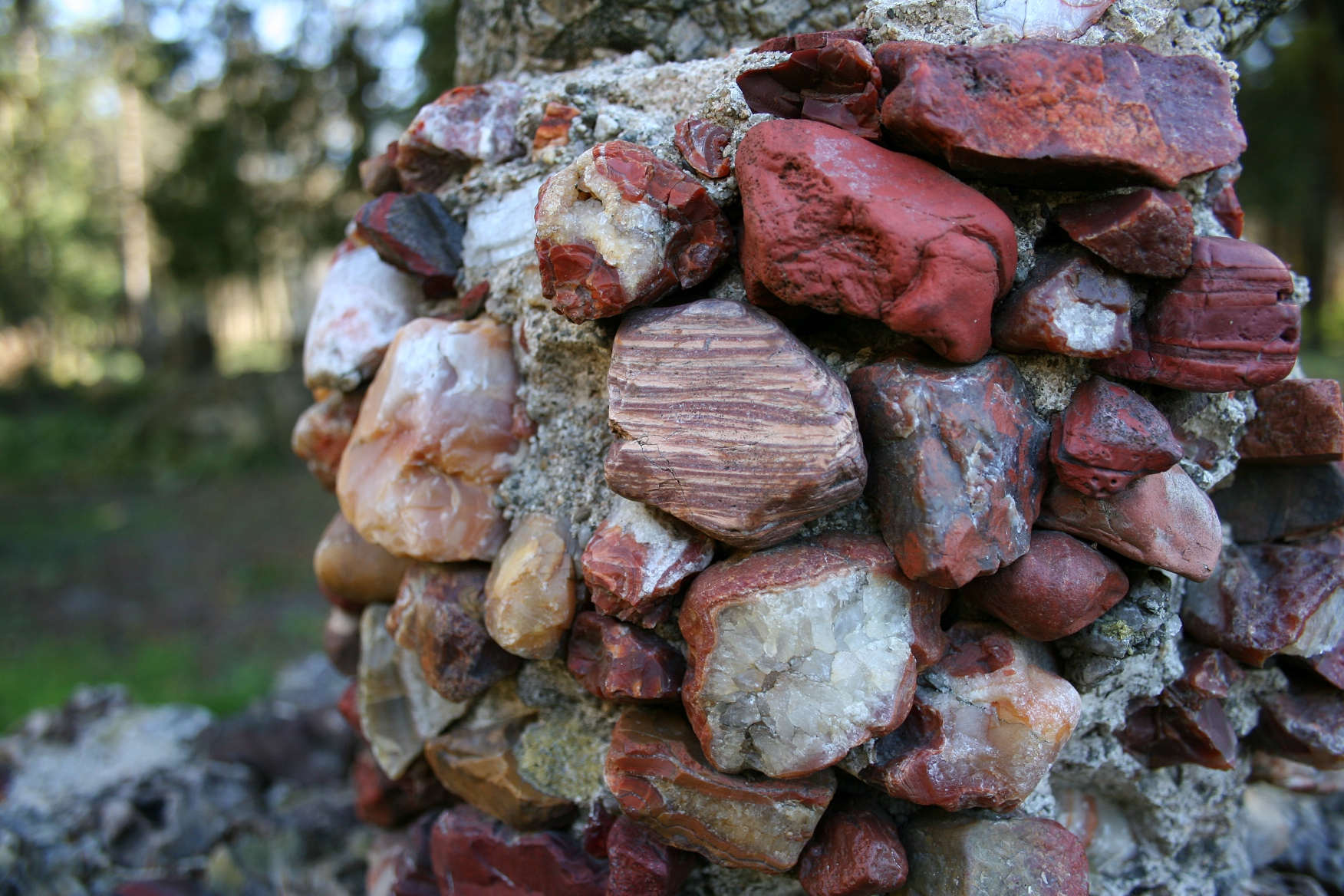
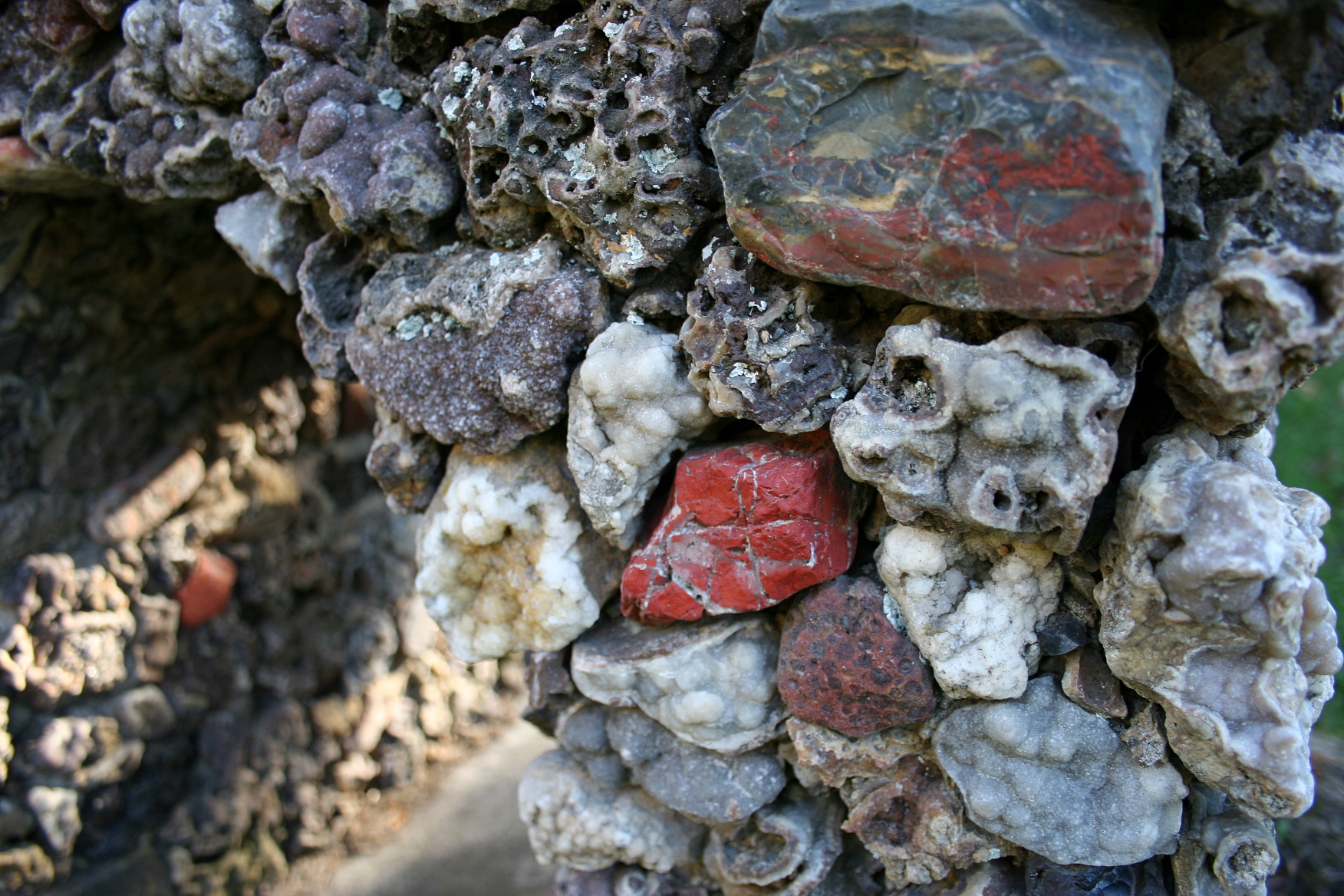
Sculpture, stones close-up 1

Sculpture, stone close up 3

Sculpture, stone close-up 2

Stones joined somehow into these interesting pieces of art. By whom? And why?

As Randy and I wandered and examined and wondered aloud, my appreciation grew for this artist. I expect he worked alone here, drawn to the solitude of this rugged place in the valley. He was, perhaps, viewed as a bit of an odd fellow. Was he a poet? A farmer? A musician?

Do you know the story of this artist and the rock garden in Jarrett, the unincorporated community which made headlines when the Zumbro roared from its banks during the flash floods of September 2010? I’d like to hear.

Someone tends this sculpture garden as flowers grew (during the warmer months) here among the artwork. Someone cares…

BONUS PHOTO:

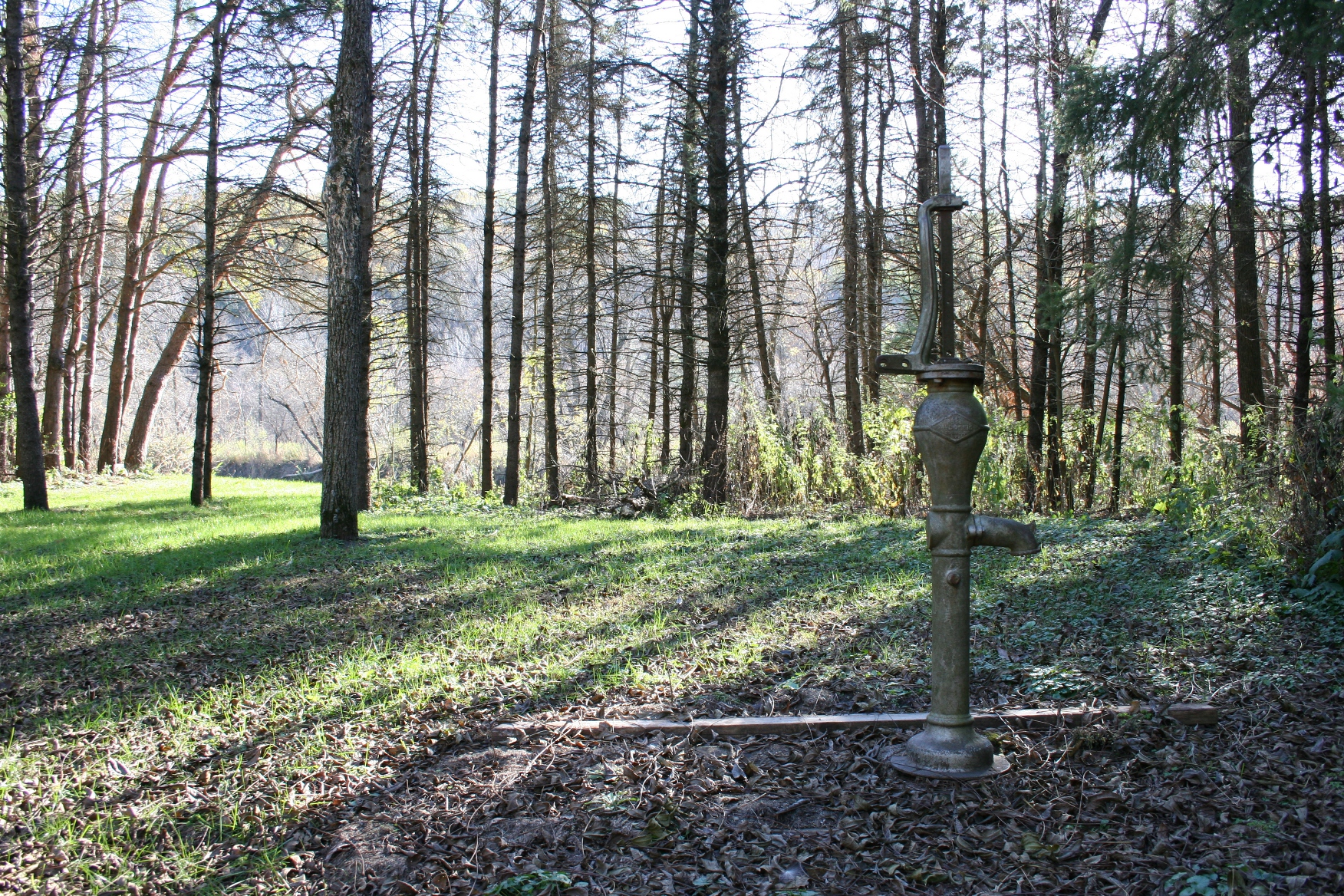
As I walked away from the sculpture garden toward the Zumbro River, I spotted this charming old water pump. I moved closer, until my husband stopped me in my tracks. We saw boards lying across the ground around the pump, an indication that this might not be a safe place to walk.

As I walked away from the sculpture garden toward the Zumbro River, I spotted this charming old water pump. I moved closer, until my husband stopped me. We saw boards, mostly buried under leaves, lying across the ground around the pump, an indication that this might not be a safe place to walk.

© Copyright 2013 Audrey Kletscher Helbling
 

Small town Sunday snapshot: Millville, Minnesota November 3, 2013

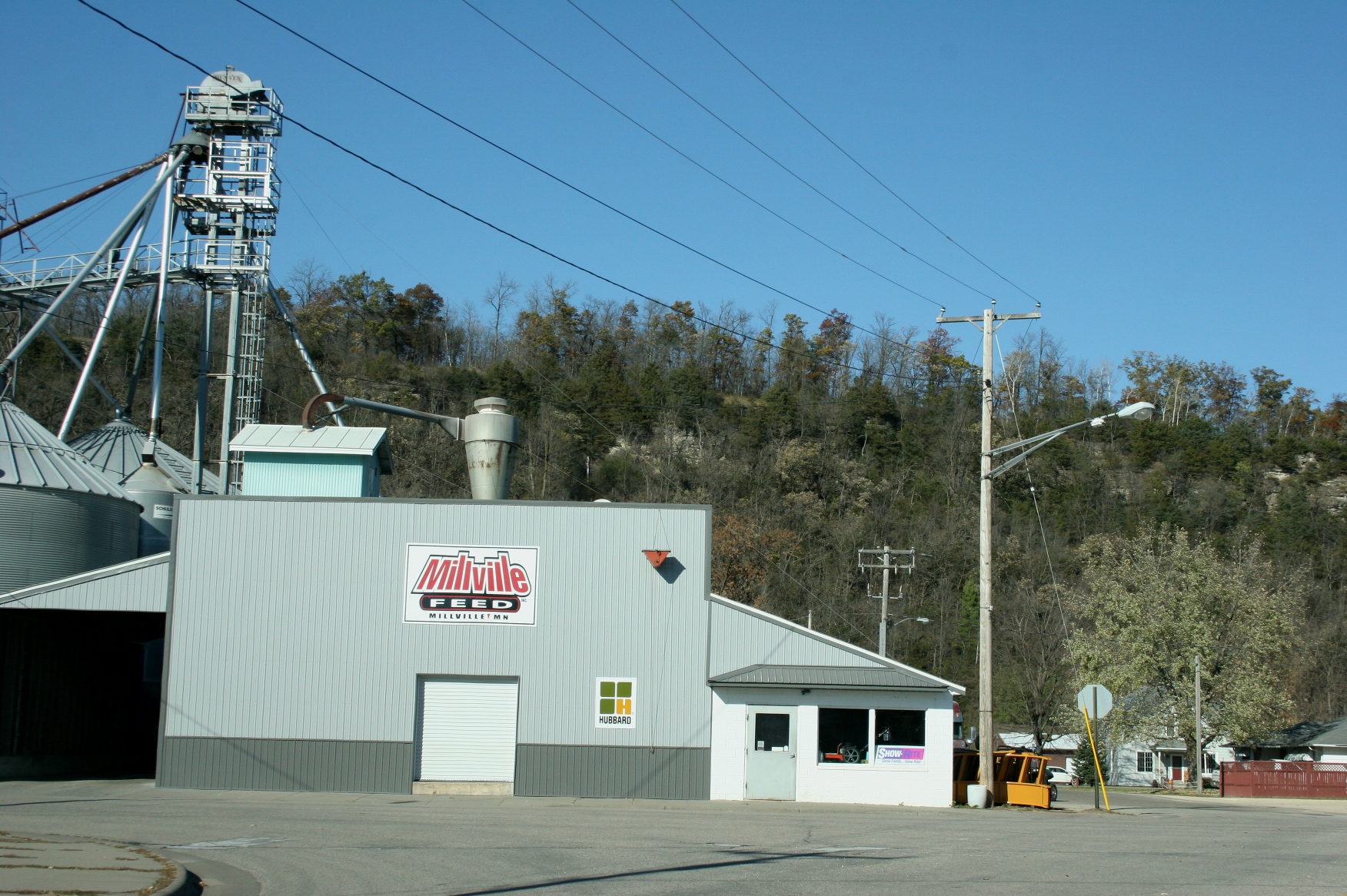
Milville, Milville Feed

A WEEK AGO, my husband and I drove into Millville, population 182, located along the Zumbro River in Wabasha County in southeastern Minnesota. We were on one of our Sunday afternoon drives. We choose a general direction in which to travel from our Faribault home. Then we just go, atlas in hand,

Whatever we discover, we discover. And, even if we do not find anything seemingly extraordinary, we celebrate the ordinary, the everyday, the small towns and farms that hold our hearts. For, although Randy and I have lived in Faribault, population around 24,000, for 29 years, we still long for the land, for small-town life, for Redwood and Morrison counties and the farms upon which we were raised.

Perhaps you, too, were raised on a farm, now live in town, and understand that longing, that forever rooted to the land connection.

That said, I highly recommend a Sunday afternoon drive.

And I also recommend viewing (click here) Minnesota Public Radio’s Ground Level project, “Fighting for an American Countryside,” which published awhile ago. I watched the first video clip on Friday and was moved to tears. The promo summary reads:

 People in rural Minnesota are battling small-town decline with determination, resourceful thinking, and unwavering belief.

I wish that was true for all rural areas, but it is not. I’ve seen all too many shuttered buildings, empty Main Streets, neglected personal properties in too many small towns. Times are tough. Young folks are leaving; the population is aging. It’s difficult, sometimes, to survive the economic and other challenges unique to rural areas.

Some small towns can rise to these challenges like those featured in the MPR project. Others lack the resources, the leadership, the creativity to do so.

Yet, all of these small towns, whether in growth or decline, are to be valued. For they are home to someone. Or they were home to someone, like Randy and me, empty nesters who now take Sunday afternoon drives and end up in places like Millville.

Millville, tractor and wagon

When Randy pulled over in Millville to check the map, I hopped out and photographed a farmer leaning on his pick-up truck near a wagon brimming with corn. It’s a typical small-town scene this time of year.

Millville, gun shop sign

Then I walked just up the road and snapped a picture of the gun shop signage before we aimed out of town, and then turned around a few miles out. Apparently we were on the wrong route.

Millville, tractor and wagon entering

We followed a tractor and wagon, winding at a snail’s pace down the hill back into Millville.

Millville, brick house

And then, as we drove by, I photographed a curb-appealing brick house I’d noticed earlier. I love the wrap around porch, the strong lines, the neighborly appeal of this home.

Milville, grain bins

Past the grain bins, again, and the farmer waiting by his truck, we turned and found the “right road,” although there are really no “wrong roads” on a Sunday afternoon drive.

Copyright 2013 Audrey Kletscher Helbling
 

In Owatonna: Celebrating the old-fashioned shoe store September 10, 2013

I CAN STILL FEEL the taut cotton string snugged around the shoebox, knotted and clamping the lid in place, the smell of polish and leather locked inside.

I can taste, too, the sugary sweetness of the sucker tied to the shoebox, a treat for any child getting a new pair of shoes.

A back-to-school display at Owatonna Shoe.

A back-to-school display at Owatonna Shoe.

Leather and lollipops are as much a part of my childhood back-to-school memories as a Big Chief tablet and boxes of sharp-tipped Crayola crayons and lace-edged anklets.

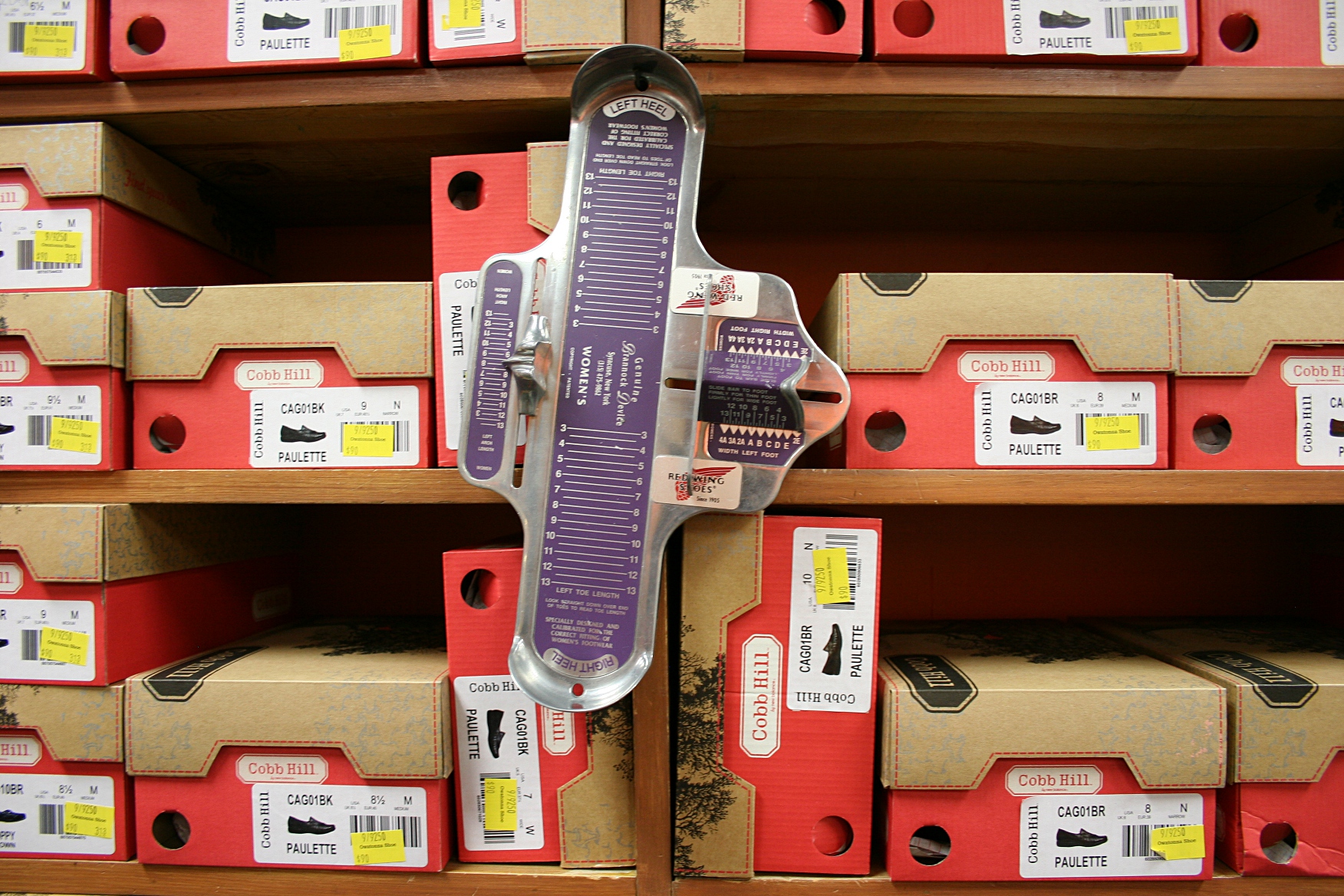
They'll measure your feet at Owatonna Shoe.

They’ll measure your feet at Owatonna Shoe.

Back in the day, there were stores that sold just shoes or retailers like Montgomery Wards which featured sizable shoe departments with full customer service. Employees measured your feet then disappeared behind a cloth-covered doorway only to return with stacked boxes of shoes.

A clerk retrieves a box of shoes for a customer.

A clerk carries a box of shoes for a customer.

I remember feeling like a princess of sorts as the clerk slipped a shoe onto my foot, sometimes yanking shoelace ends before tying a tight bow. I would wiggle my toes upon command as the salesman bent low, pressing on the tip of the shoe to assure the right fit.

Nostalgia today draws me to places like Burkhartzmeyer Shoes in Faribault, a third-generation family-owned business. It’s my favorite shoe store as much for the service and quality of shoes as for the people who work there.

Owatonna Shoe is located to another long-time local business, St. Clair's for Men in the heart of downtown Owatonna.

Owatonna Shoe is located next to another long-time business, St. Clair’s for Men, in the heart of downtown Owatonna.

Recently I checked out another area family-owned shoe store, Owatonna Shoe at 121 N. Cedar Avenue in Owatonna, 15 miles to the south of my community. I didn’t need shoes. Rather I simply wanted to poke around, to see for myself why others have raved about this place.

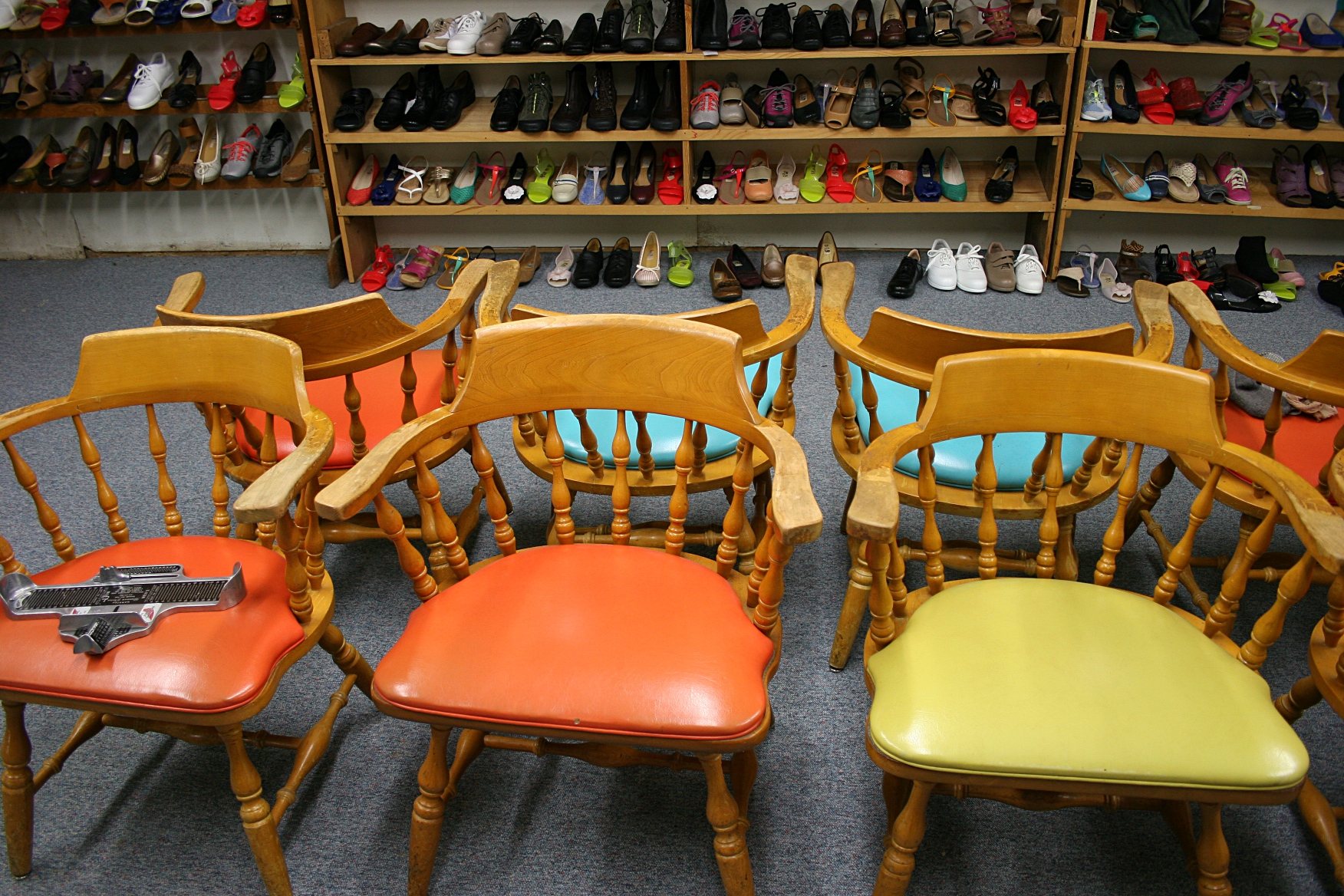
I found the look of an old-fashioned shoe store in the basment, complete with vintage chairs.

I found the look of an old-fashioned shoe store in the basement, complete with what appear to be vintage chairs.

I found what I expected—a down-home friendly place with a welcoming atmosphere and great customer service.

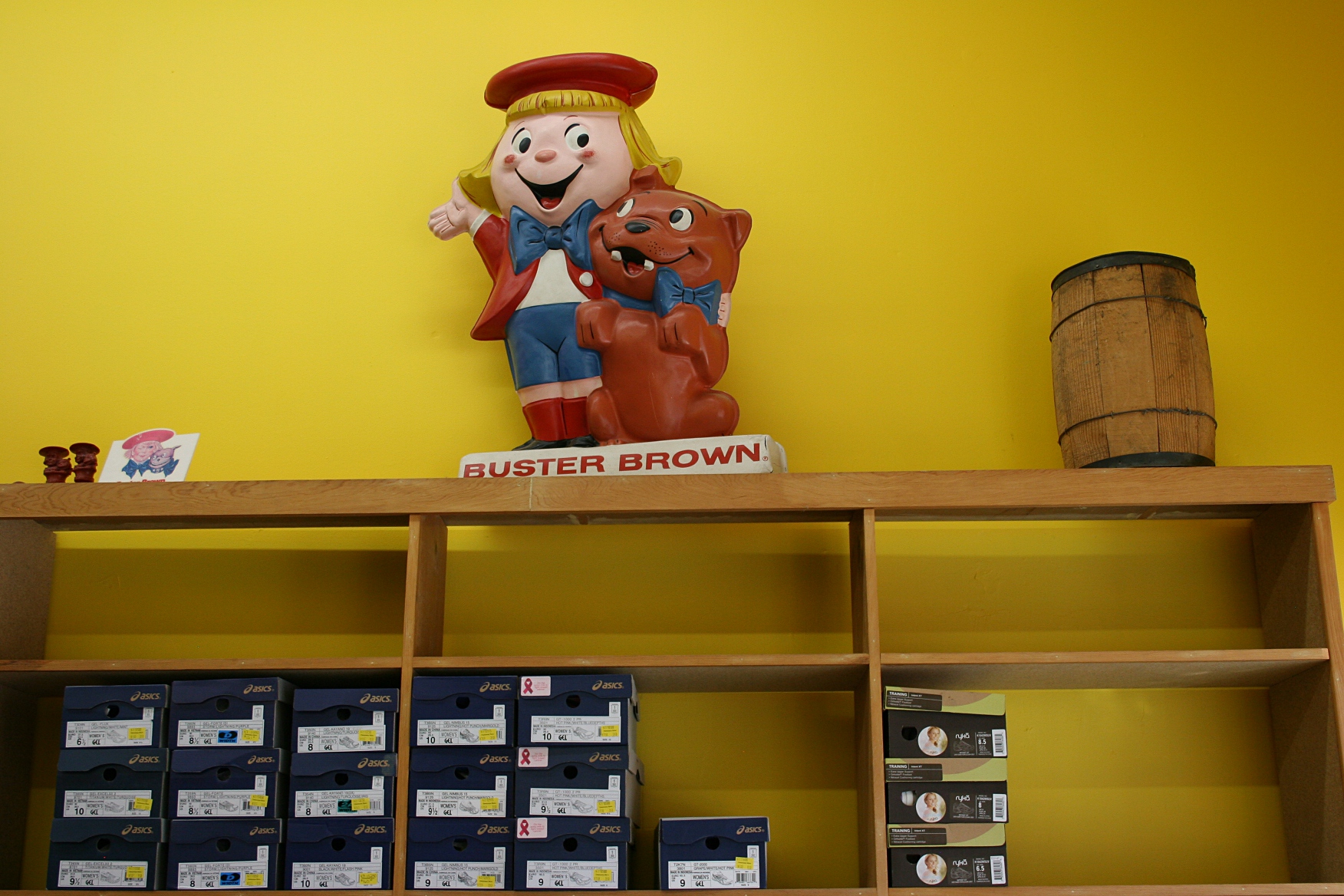
On display: several items of Buster Brown memorabilia.

On display: Buster Brown memorabilia.

As a bonus, I also discovered bits of the past in a collection of Buster Brown collectibles…

Colorful vintage chairs in the basement.

Colorful vintage chairs and shoes in the basement.

…vintage chairs…

Tom Brick purchased this mechanical horse for Owatonna Shoe in 2010. It's original history in Owatonna stretches back to Duffy's Fairway Food Store, where it entertained generations of children from 1946-1990.

Tom Brick purchased this mechanical horse for Owatonna Shoe in 2010. Its original history in Owatonna stretches back to Duffy’s Fairway Food Store, where it entertained generations of children from 1946-1990. The horse still works.

…and a mechanical horse for the kids to ride.

Stacked boxes of shoes fill the store.

Stacked boxes of shoes fill the store.

Owatonna Shoe’s business motto, published on its website, says it all:

“We don’t just want to make the sale, we want to make a customer for life.” It’s a long time philosophy of Owatonna Shoe. We pride ourselves in providing unparalleled customer service, unique product offerings, and personalized attention in a fun, laid-back atmosphere.

FYI: To learn more about Owatonna Shoe, which has been serving the area for more than 65 years with service, quality and fit, click here.

BONUS PHOTOS:

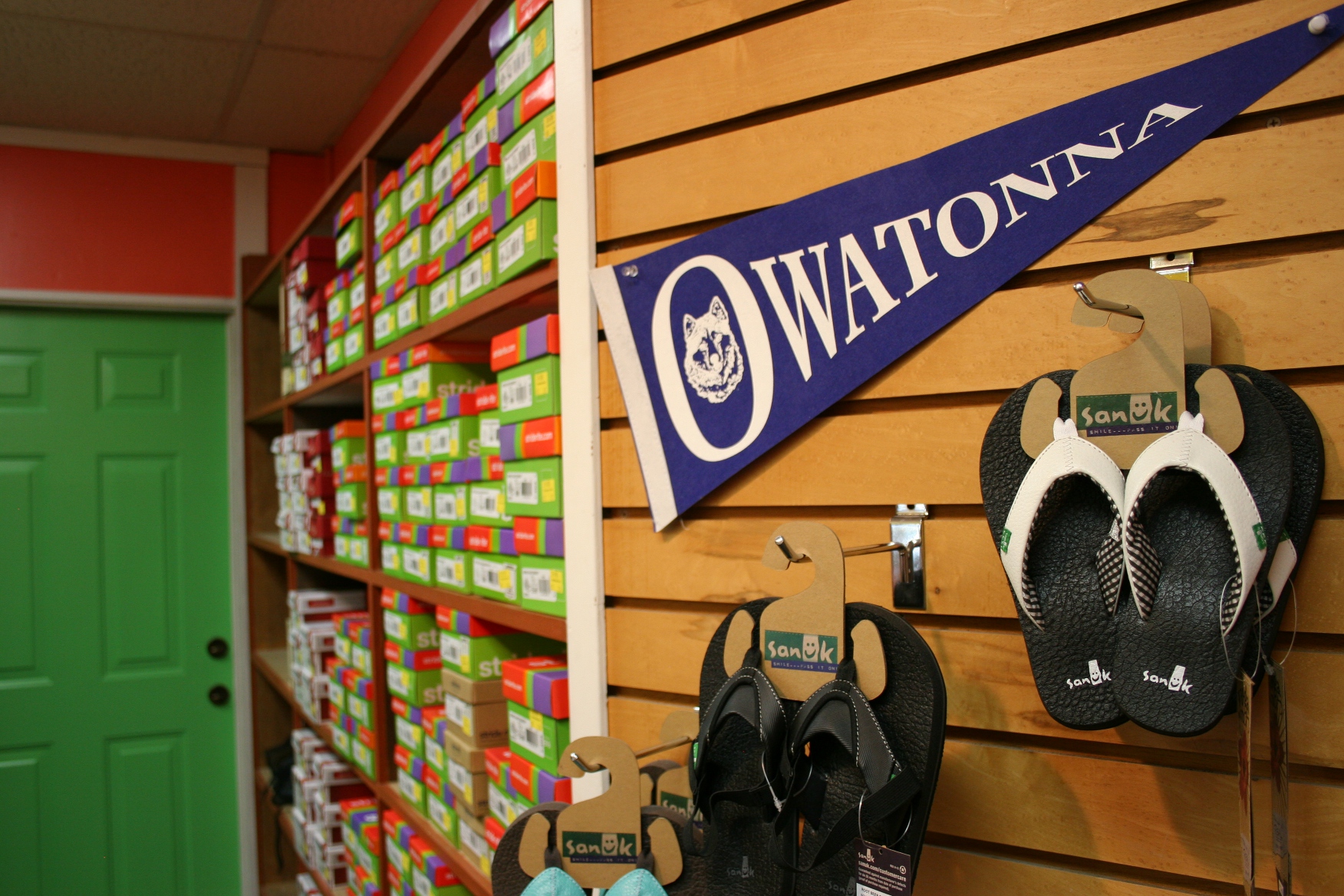
This place pops with color and Owatonna pride.

This place pops with color and pride for the Owatonna Huskies.

A shoe sale in the back room in the basement.

A shoe sale in the back room in the basement.

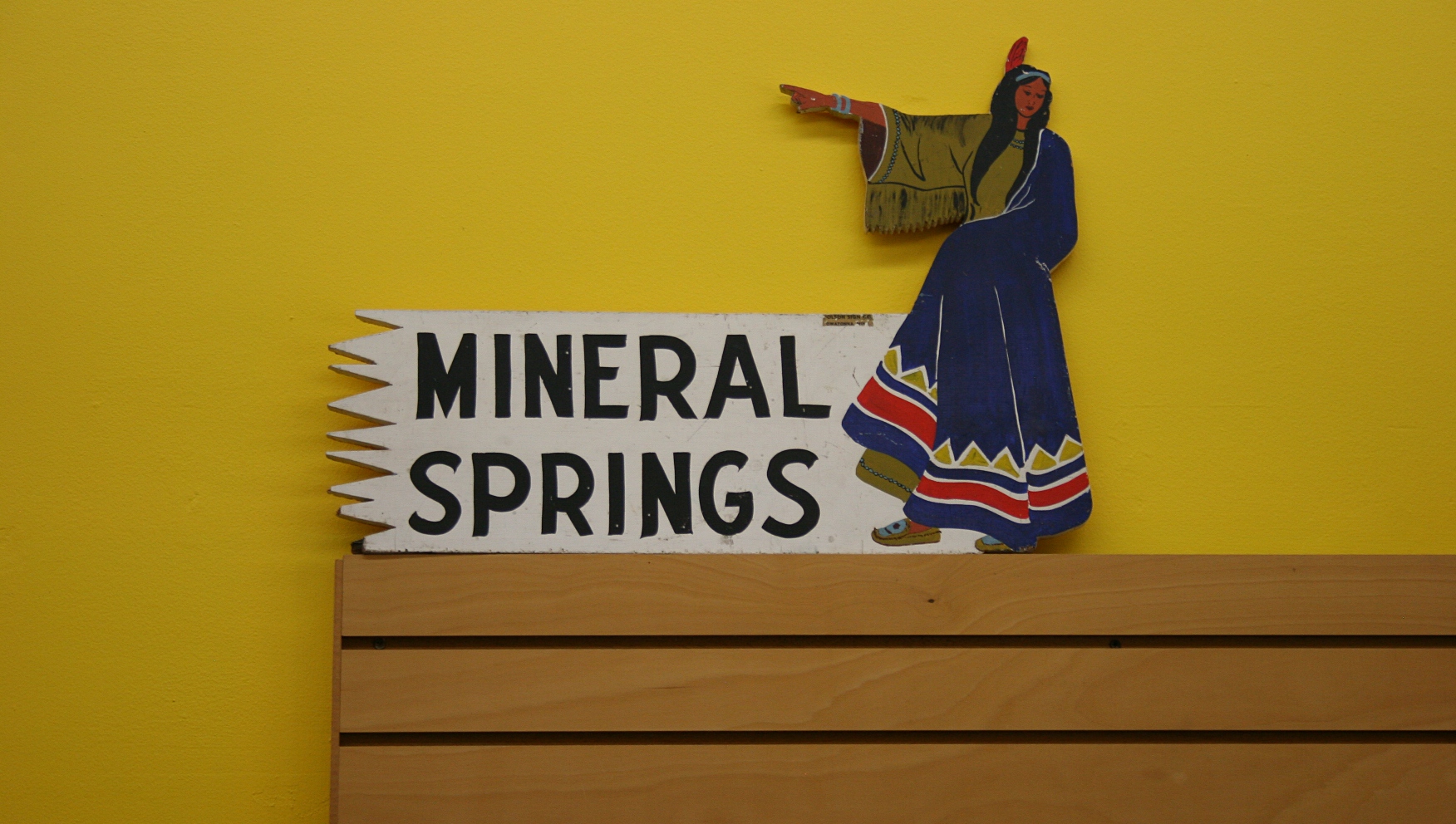
A nod to Owatonna's namesake, the legendary Indian Princess Owatonna, at home where her statue stands in Mineral Springs Park.

A nod to Owatonna’s namesake, the legendary Indian Princess Owatonna. As the story goes, the maiden drank from the healing natural spring waters in the current day Mineral Springs Park.

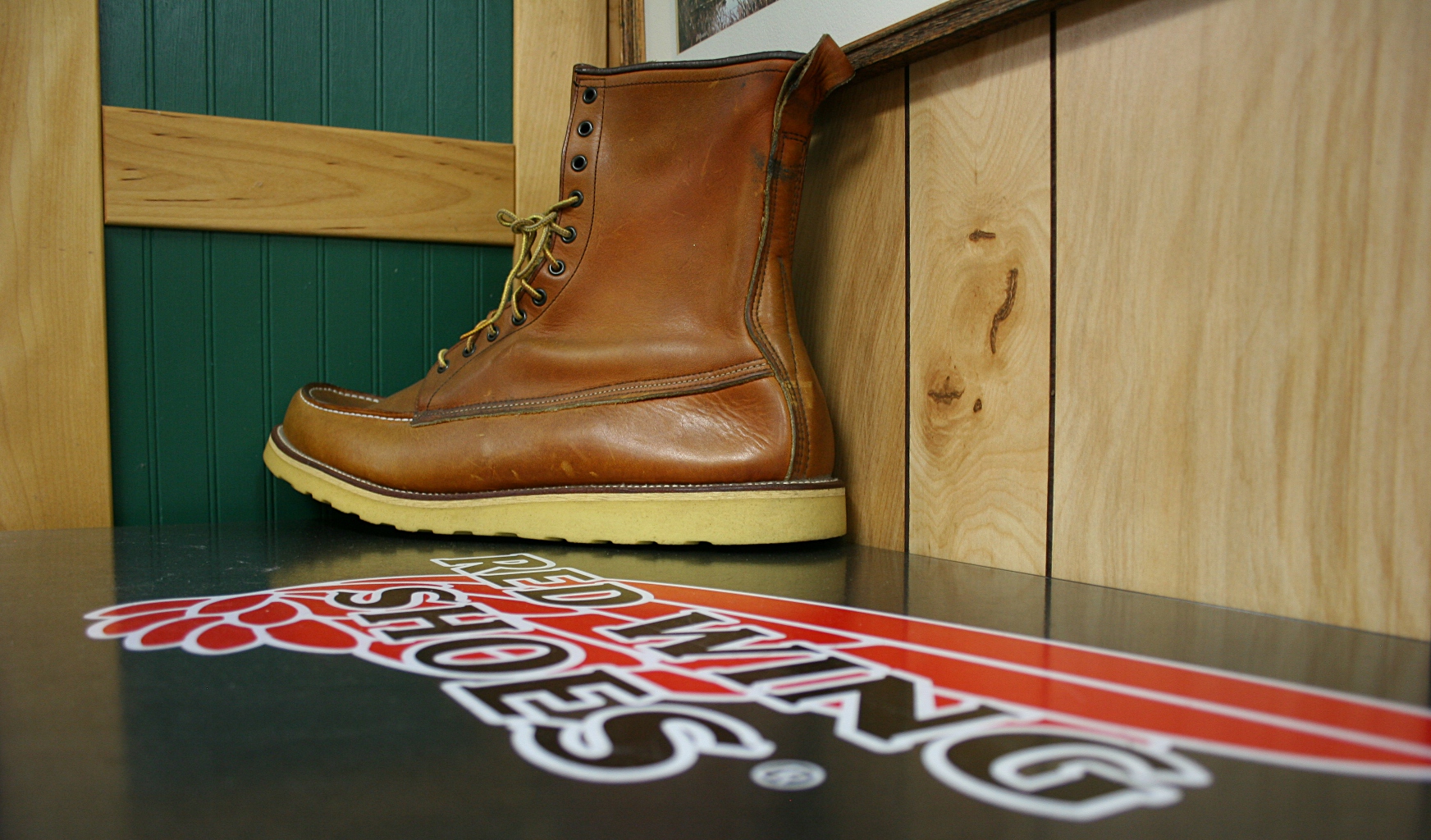
The store carries the ever popular Red Wing brand of shoes made in Red Wing, Minnesota.

The store carries the ever popular Red Wing brand of shoes made in Red Wing, Minnesota.

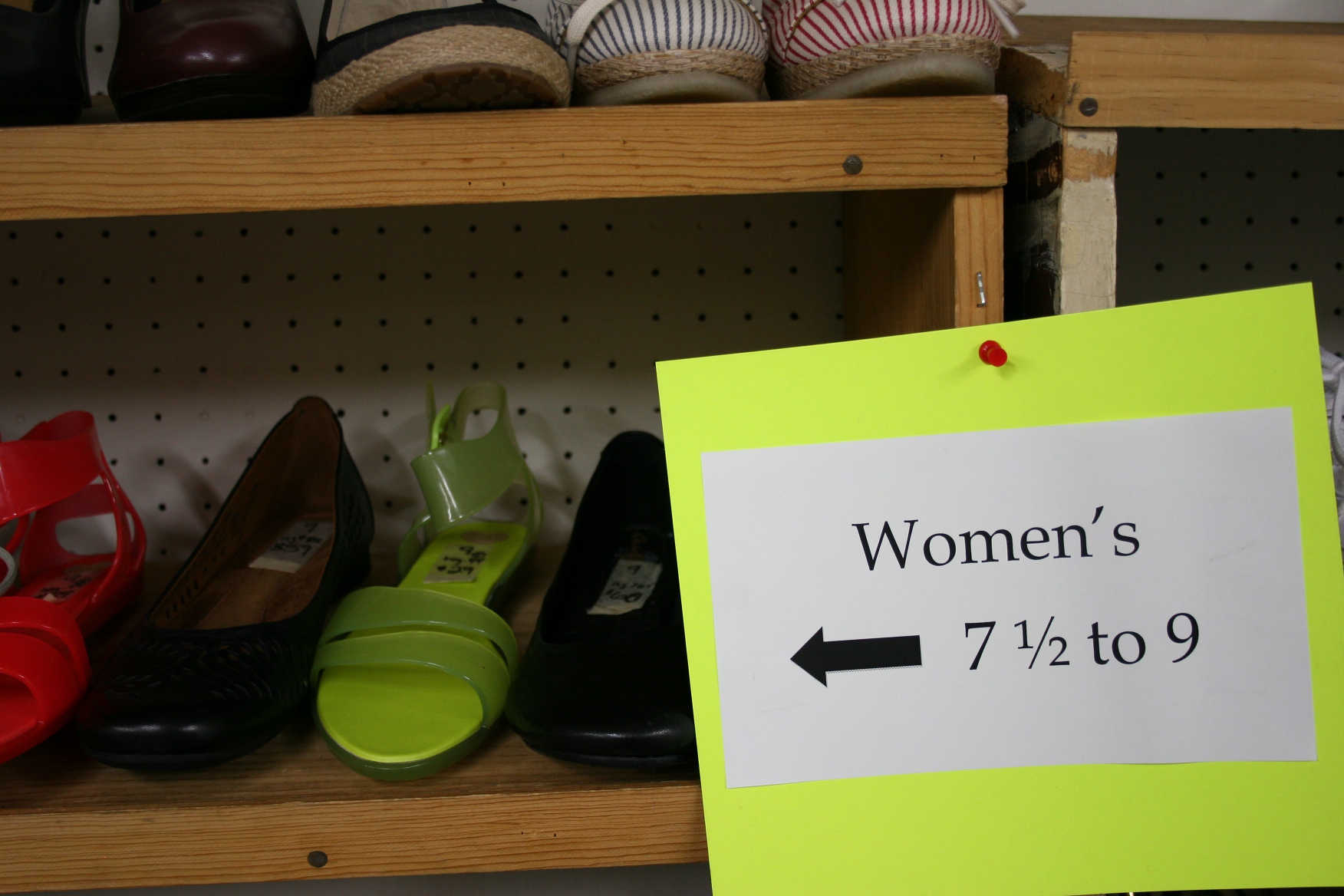
Colorful shoes, colorful signs.

Colorful shoes, colorful signs.

© Copyright 2013 Audrey Kletscher Helbling
 

In Luverne: “Go digital or go dark” August 29, 2013

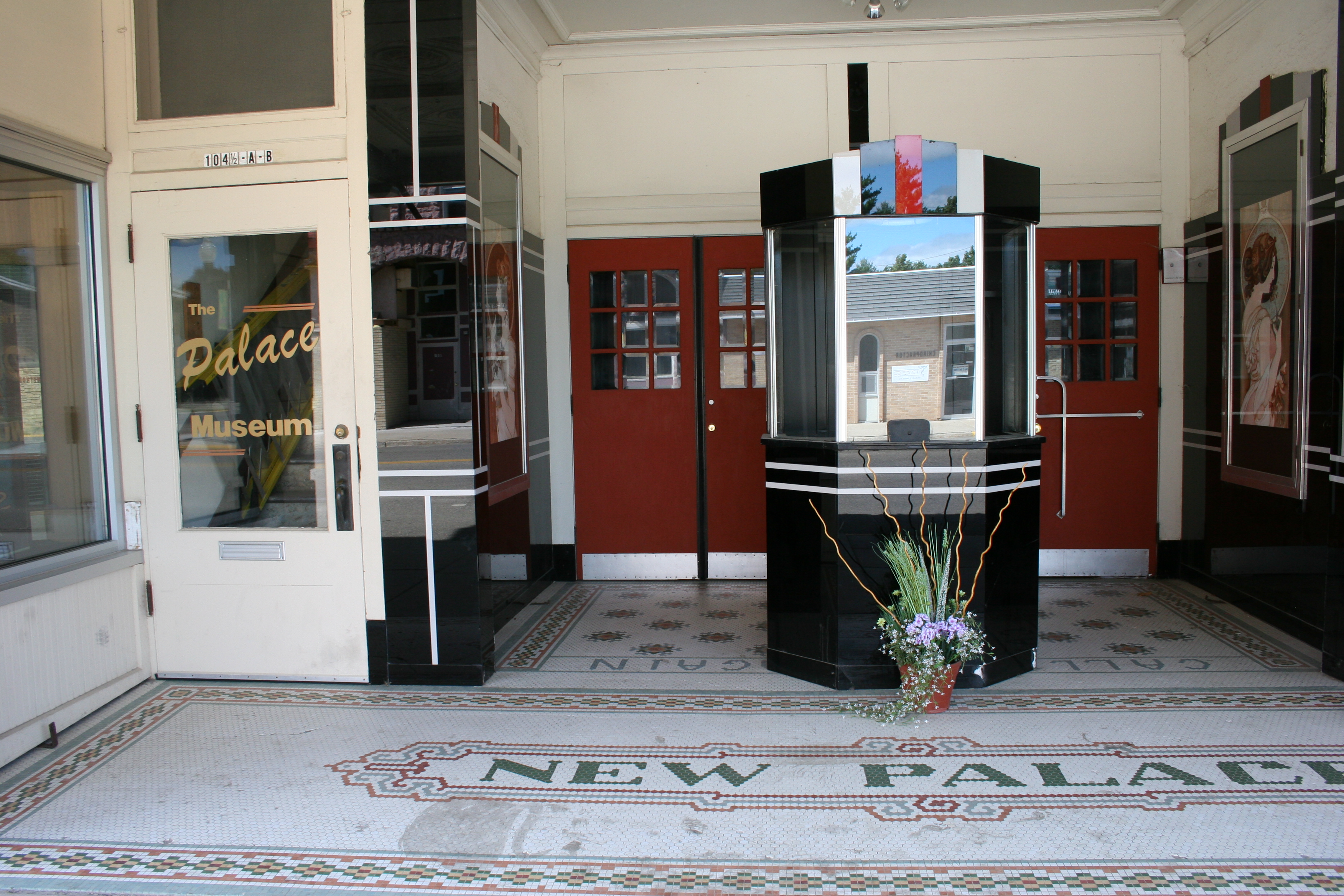
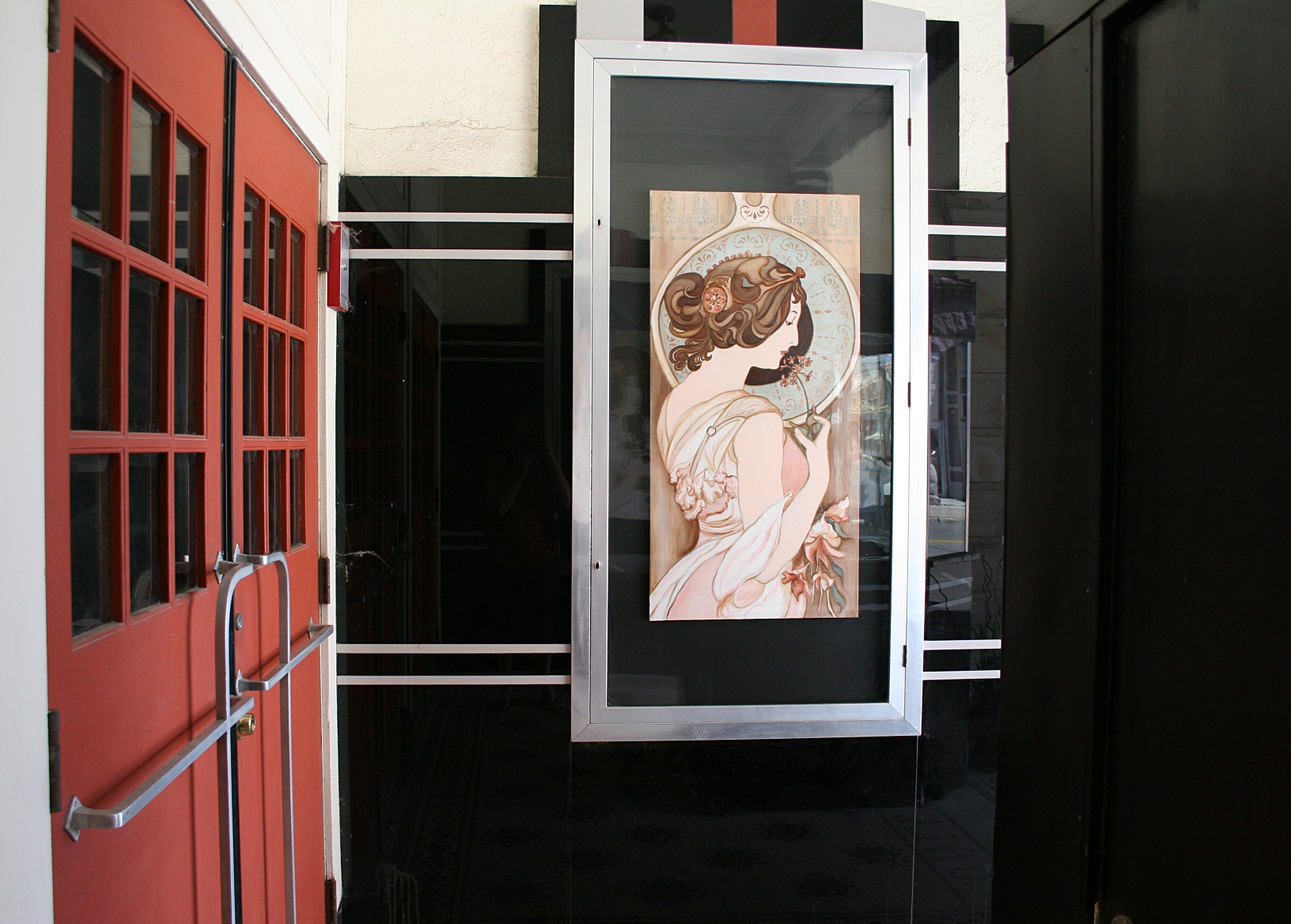
The entry to the historic Palace Theatre in downtown Luverne, Minnesota.

The entry to the historic Palace Theatre in downtown Luverne, Minnesota.

THE DOORS TO THE OLD THEATRE were locked, much to my dismay, on a recent Saturday visit to Luverne in extreme southwestern Minnesota.

Charming exterior art.

Charming exterior art.

If only I could have gotten inside to view the original painted wall panels, stage curtains, pipe organ, and artistic wall and ceiling décor inside the 1915 Palace Theatre.

I am a fan of old theatres and of old buildings in general. But you know that if you’ve followed Minnesota Prairie Roots.

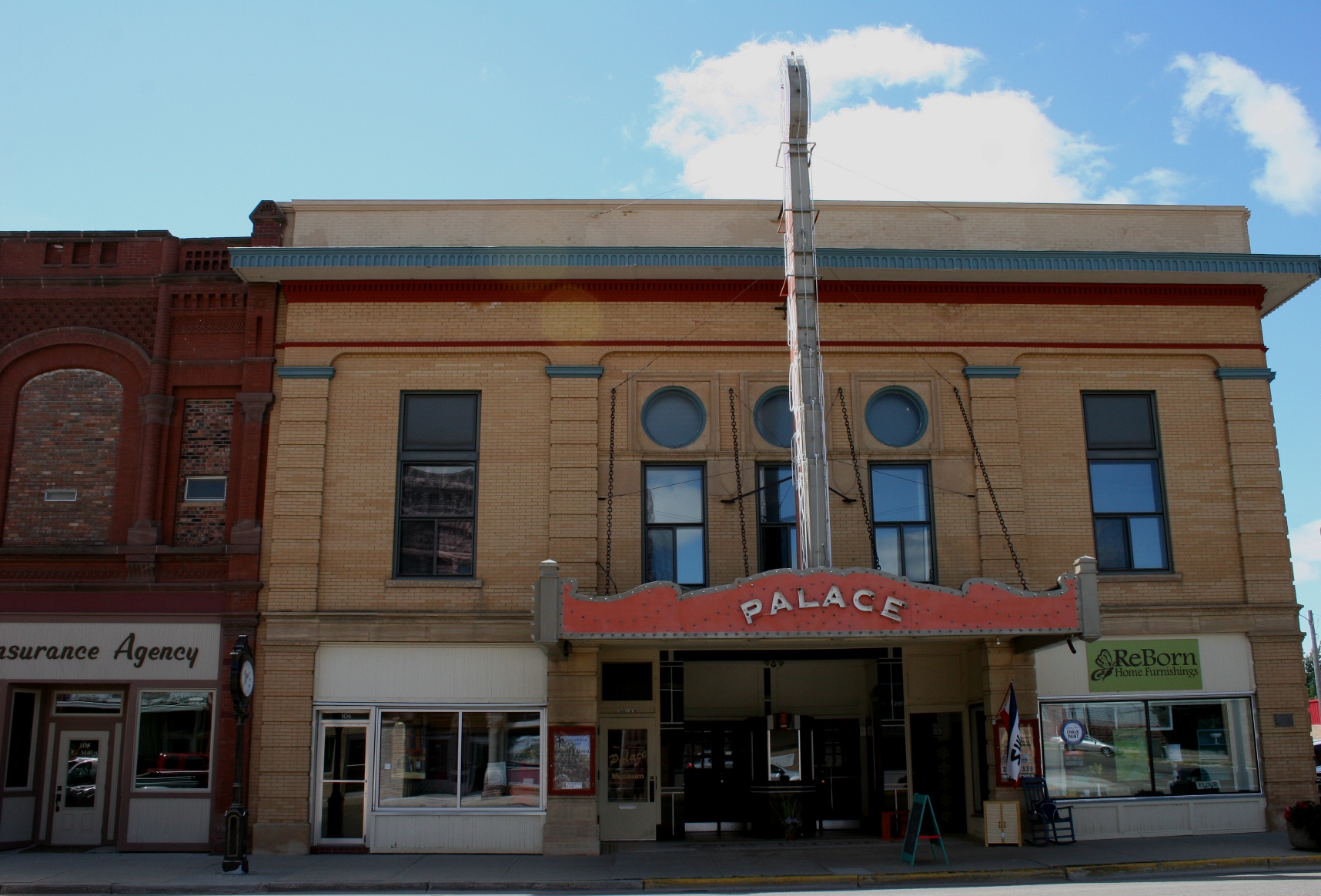
That's ReBorn, in the right corner of the city-owned theatre building at 102 E. Main Street.

The city-owned Palace Theatre at 102 E. Main Street, operated by the nonprofit Blue Mound Area Theatre.

That Luverne appreciates the value of its historic theatre enough to preserve the building, which hosts a variety of cultural and other events, pleases me. The building was placed on the National Register of Historic Places in 1978.

Theatre supporters are currently working to continue one aspect of the building’s use, that of showing movies. Through the “Go Digital or Go Dark” campaign, efforts are underway to raise $75,000 for the purchase of a digital projector. At the end of 2013, film companies will no longer produce 35mm film, necessitating the switch.

Now I’m not a big movie watcher, having last viewed an in-theatre movie several years ago. But I like the option of a local theatre, which my community of 23,000 no longer has. Sad. Truly sad.

I expect the good folks of Luverne would miss their movies, too, should funding not come through for the digital projector.

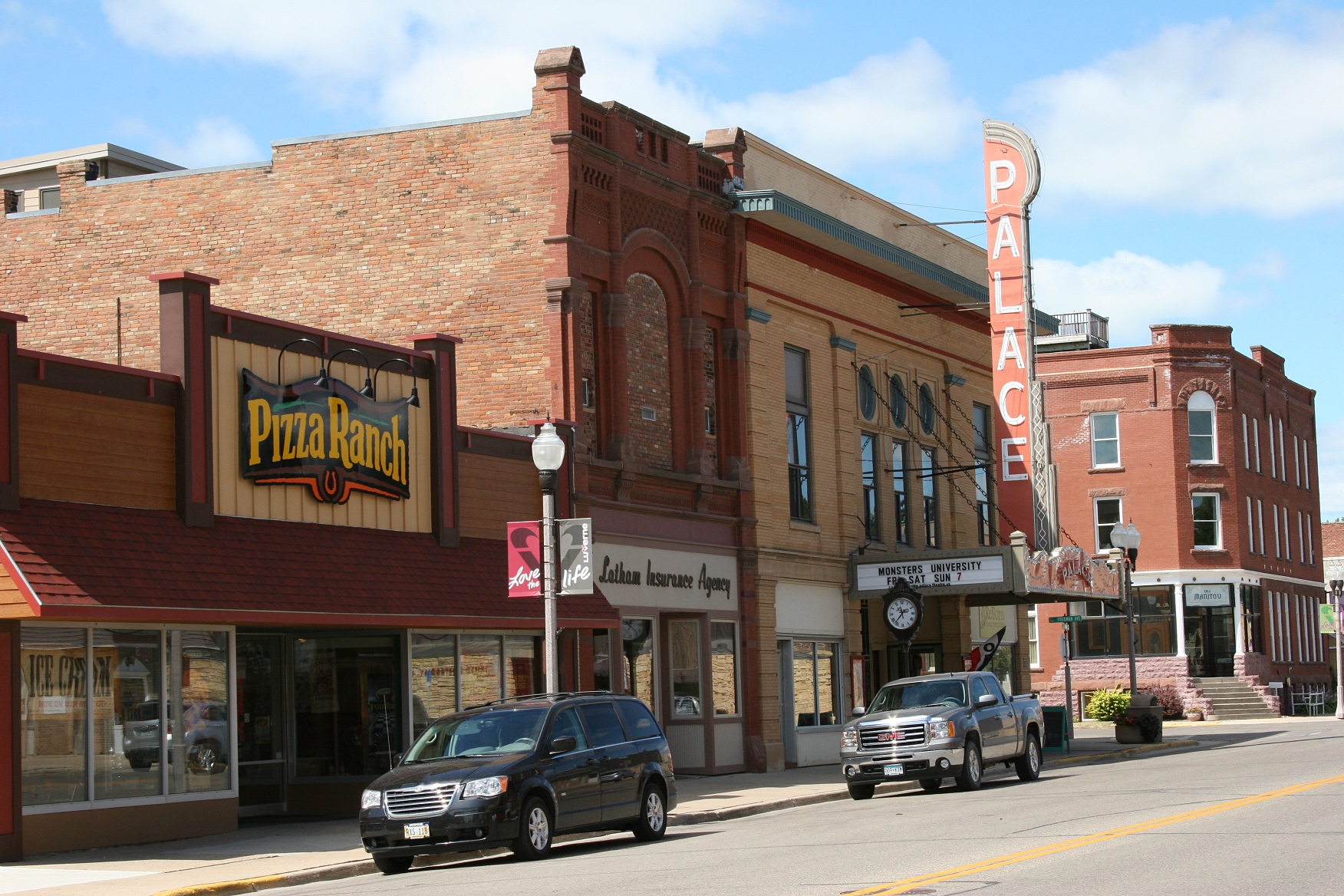
A notable sign draws the eye to the Palace.

A notable sign draws the eye to the Palace.

A special fundraising event, “A Night at the Palace,” slated for Saturday, September 7, will raise monies specifically for that projector. Click here to learn more.

There’s just one more bit of information you should know about the Palace Theatre. Six years ago, on September 6, the Palace Theatre hosted the world premiere of The War, a Ken Burns documentary on World War II. Luverne is one of four communities featured in the film.

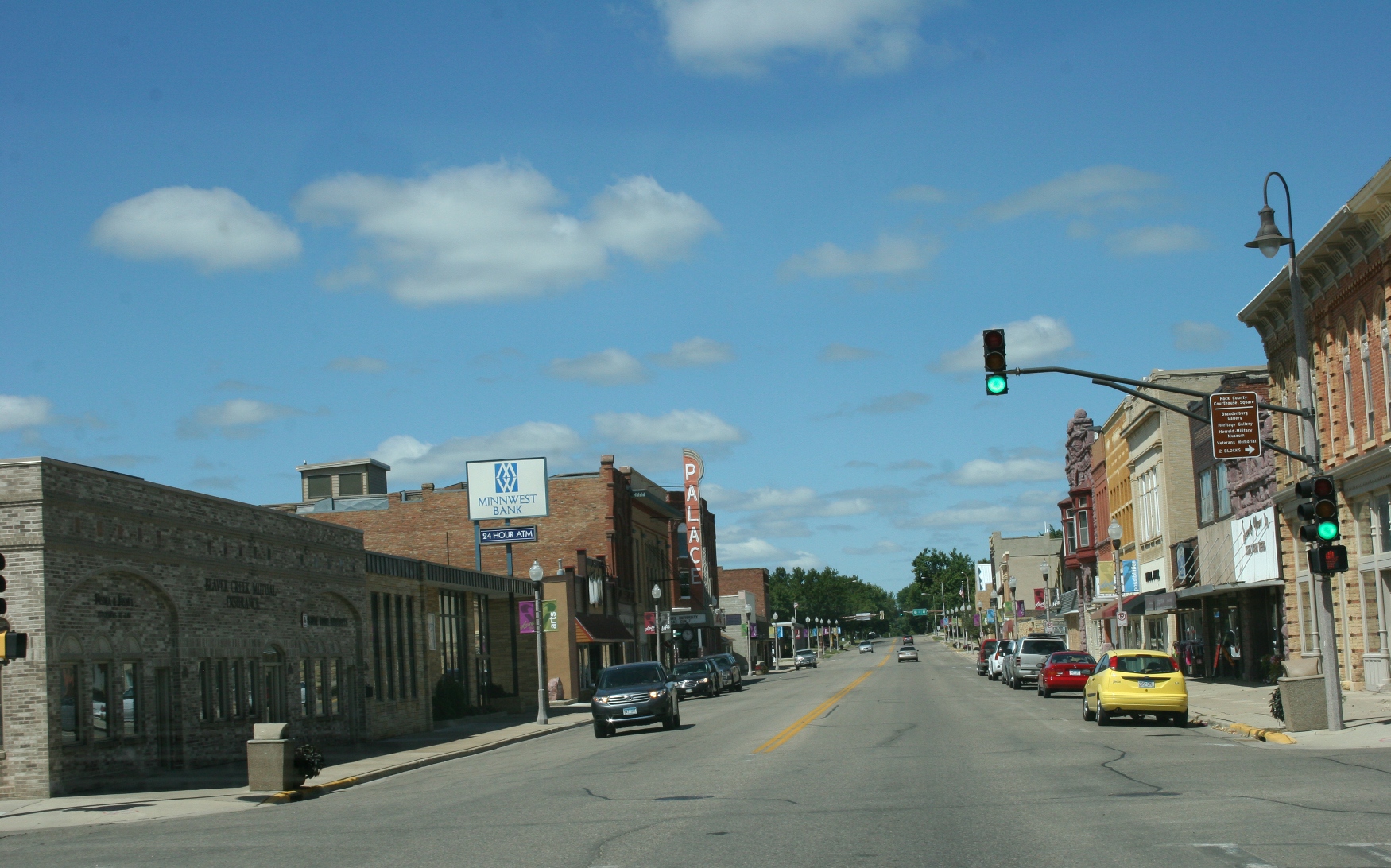
Downtown Luverne, Minnesota.

Downtown Luverne, Minnesota.

Of all the venues which could have been selected for the debut showing, the Palace Theatre was chosen. That, my friends, says a lot for the community of Luverne and the historic theatre.

FYI: To learn about another Luverne theatre in need of funding for a digital projector, click here and read about the Verne Drive-in.

If you wish to donate monies (via PayPal) toward purchasing a digital projector for the Palace Theatre, click here.

© Copyright 2013 Audrey Kletscher Helbling
 

Hey, check out this southeastern Minnesota small town July 27, 2013

Filed under: Uncategorized — Audrey Kletscher Helbling @ 6:00 AM
Tags: , , , , , , ,

SMALL TOWNS INTRIGUE ME. Each possesses a unique character.

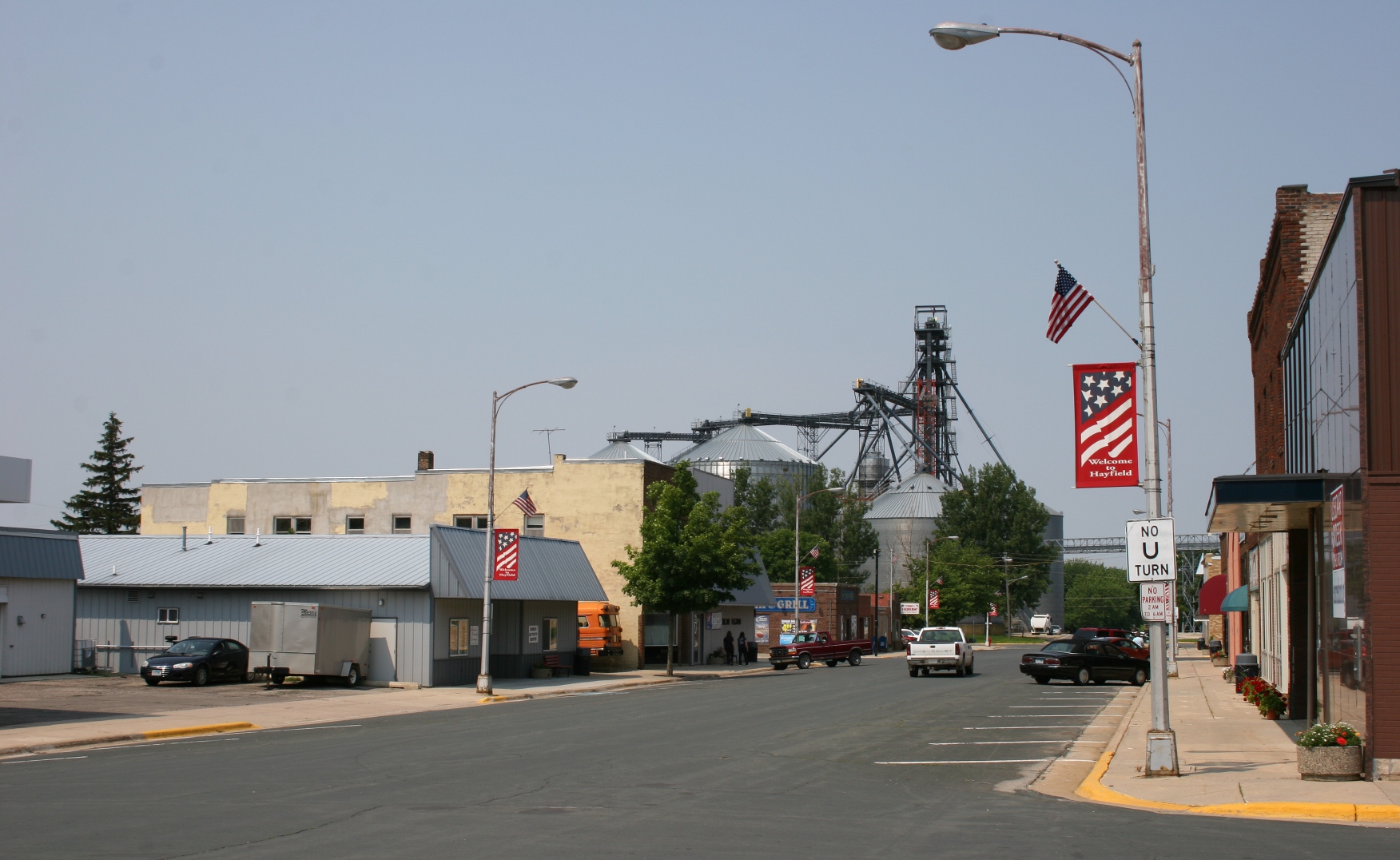
A snapshot of Hayfield's downtown business district.

A snapshot of Hayfield’s downtown business district.

For that reason, and because I favor rural more than urban, my husband and I purposely detour off highways, park our vehicle along Main Streets and explore.

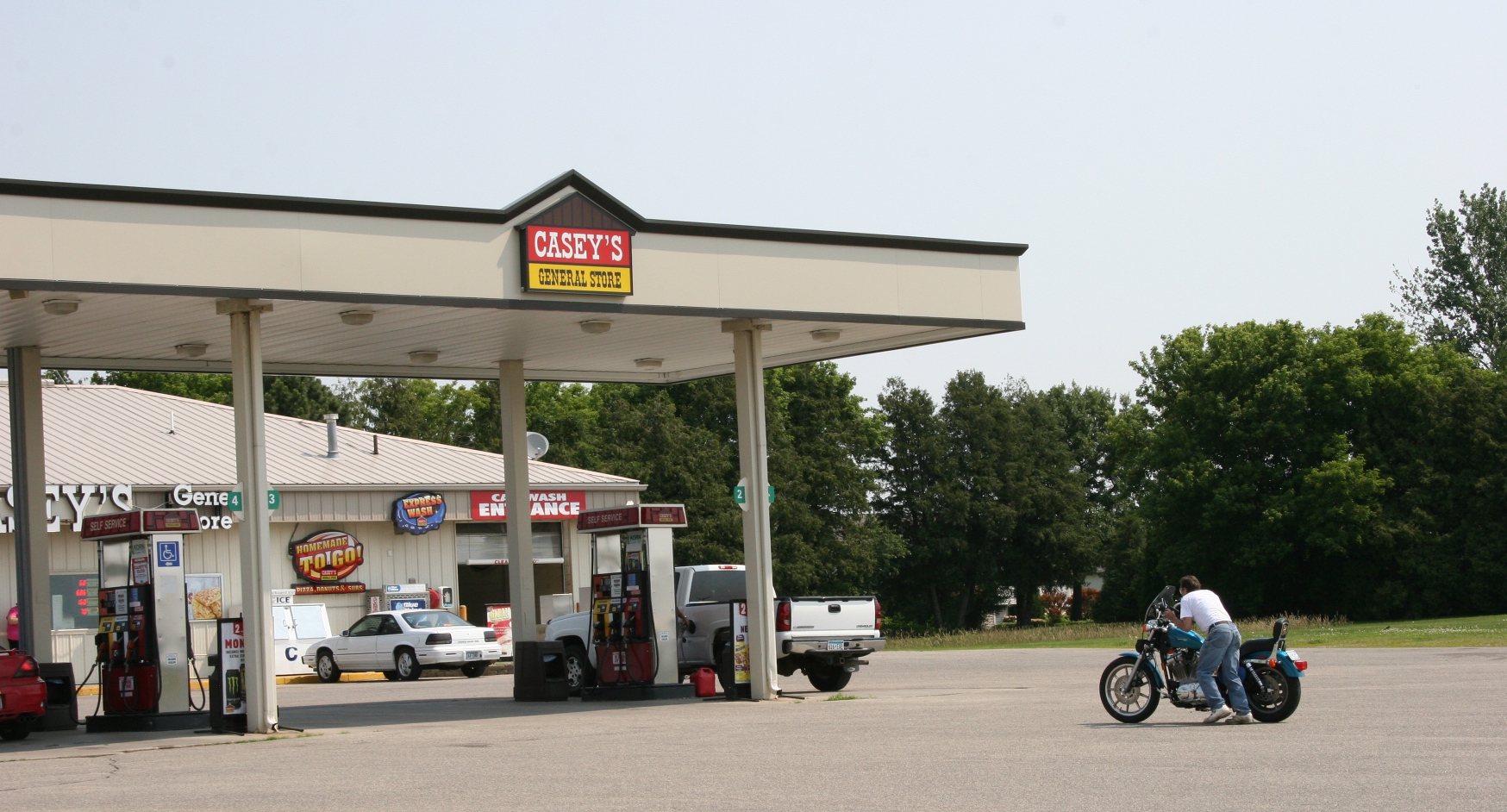
This biker ran out of gas and pushed his motorcycle up to the pumps at Caseys in Hayfield, just off Minnesota Highway 56.

This biker ran out of gas and pushed his motorcycle up to the pumps at Casey’s General Store in Hayfield, just off Minnesota Highway 56.

Often we are the only ones walking about, especially since our stops are typically on Sunday afternoons.

However, even on a recent Monday morning visit to Hayfield, population 1,300, southwest of Rochester in Dodge County, the downtown was quiet enough that I didn’t have to worry about standing in the middle of the street to take photos.

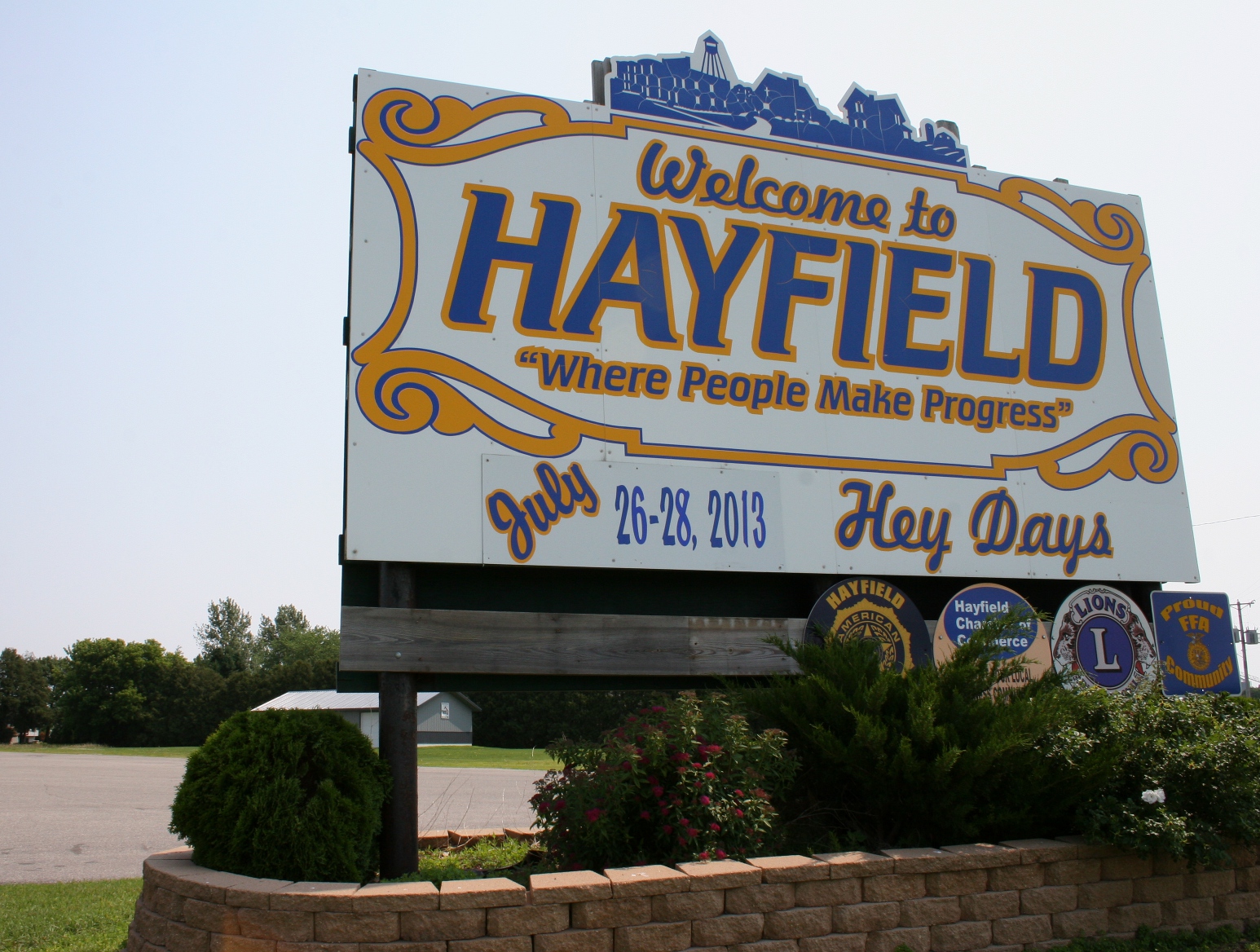
Welcome to Hayfield. So...I'm wondering whether the town is named after a person or a hay field.

Welcome to Hayfield. So…I’m wondering whether the town is named after a person or a hay field.

And Hayfield offers plenty of photo ops, beginning with the welcome sign just off Minnesota State Highway 56. The “Where People Make Progress” slogan puzzled me, until I read this explanation on the city’s website:

Our community has had many projects which have been accomplished by grants, donations and countless volunteer hours.

Examples of that progress include the local pool, ball diamonds, the library, Meals on Wheels…

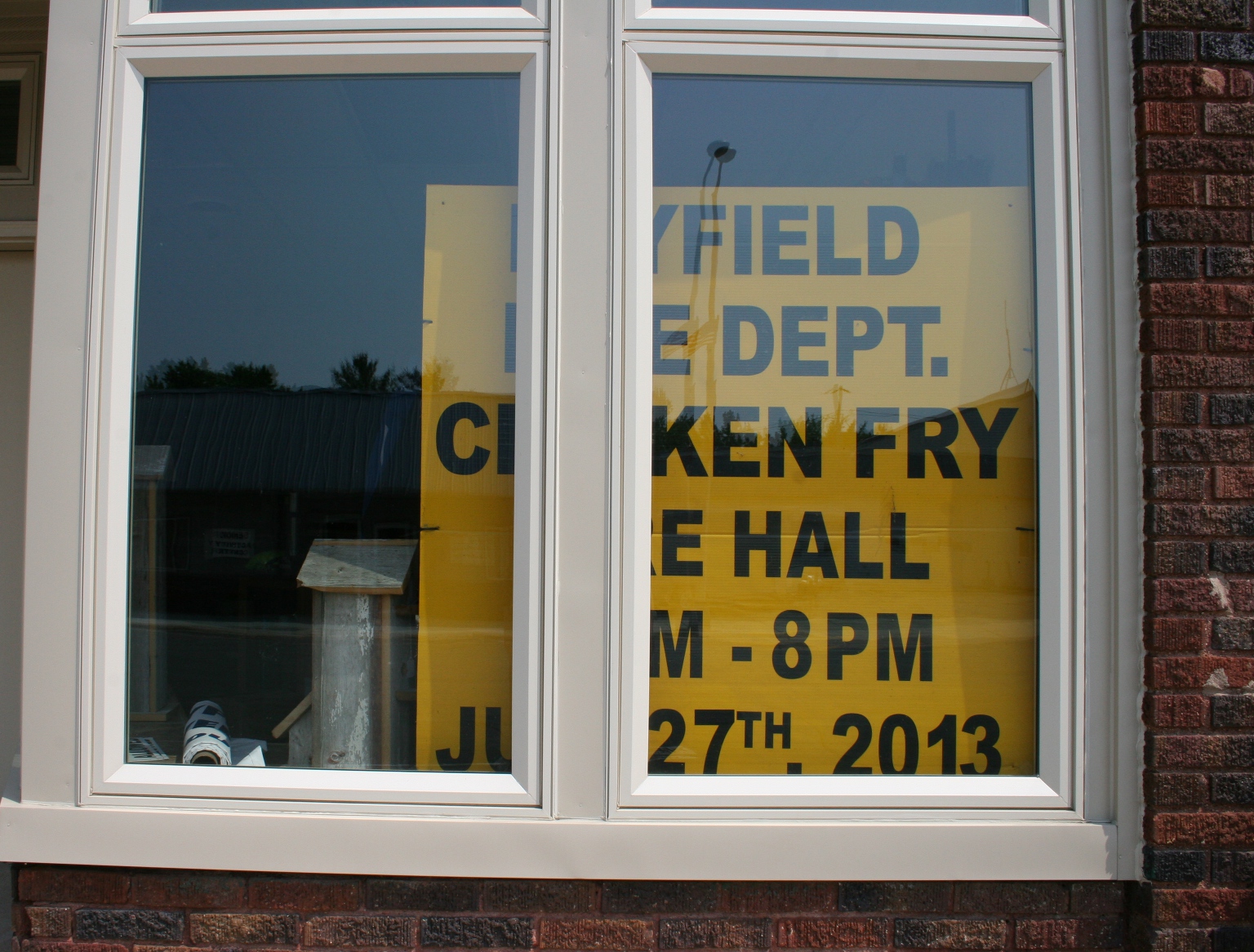
A sign in a window advertises the chicken dinner served during Hey Days.

A sign in a window advertises the chicken dinner served during Hey Days.

The annual community celebration of Hey Days, slated for July 26 – 28, also involves countless hours of volunteerism. That’s the thing about small towns. People don’t necessarily sit and wait for someone else to do something. They just do it.

Part of the impressive vets' memorial.

Part of the impressive vets’ memorial.

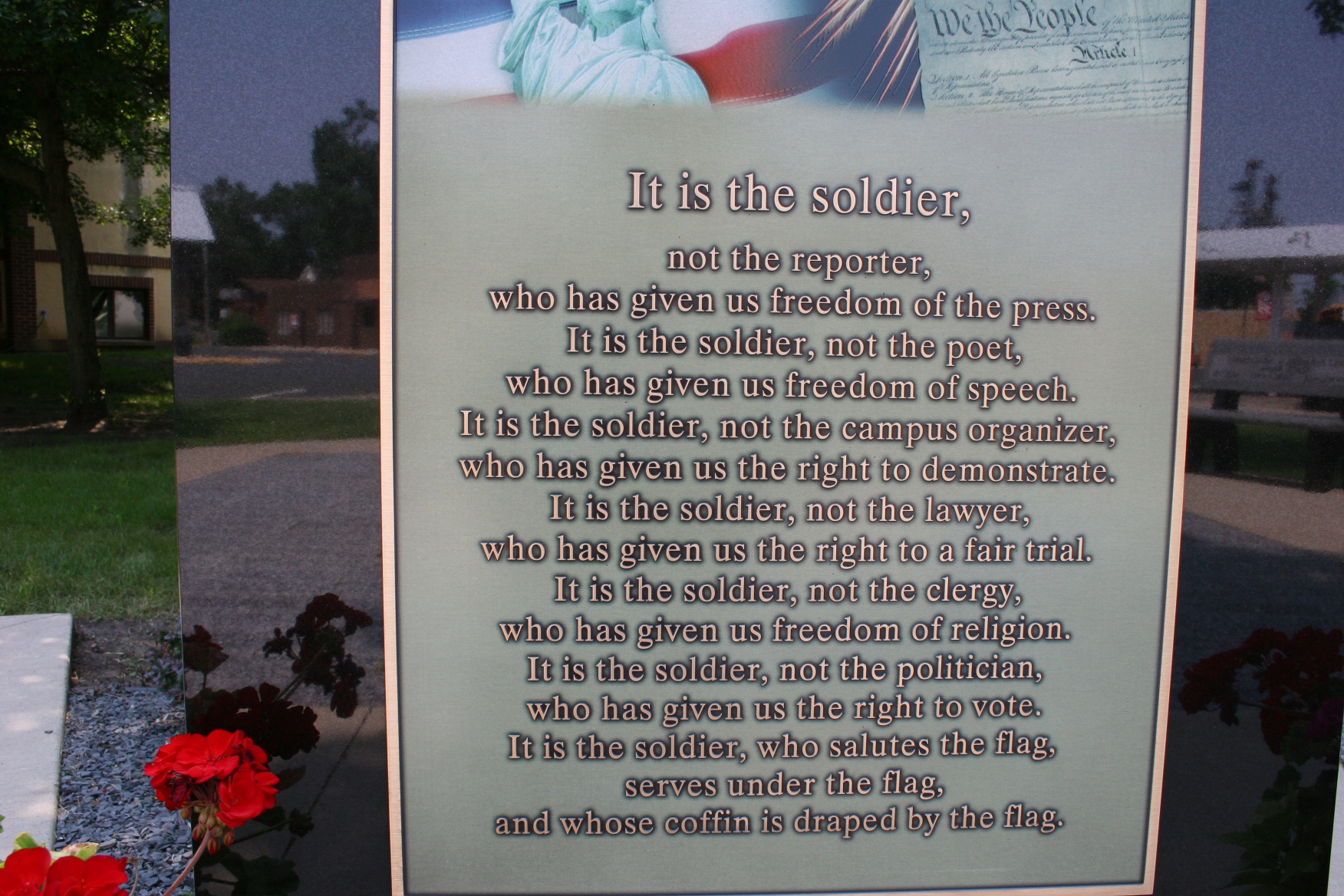
I bet volunteers planned, raised funds for and helped build the veterans’ memorial park next to First Presbyterian Church at the end of the business district. It’s one of the most impressive memorials we’ve seen.

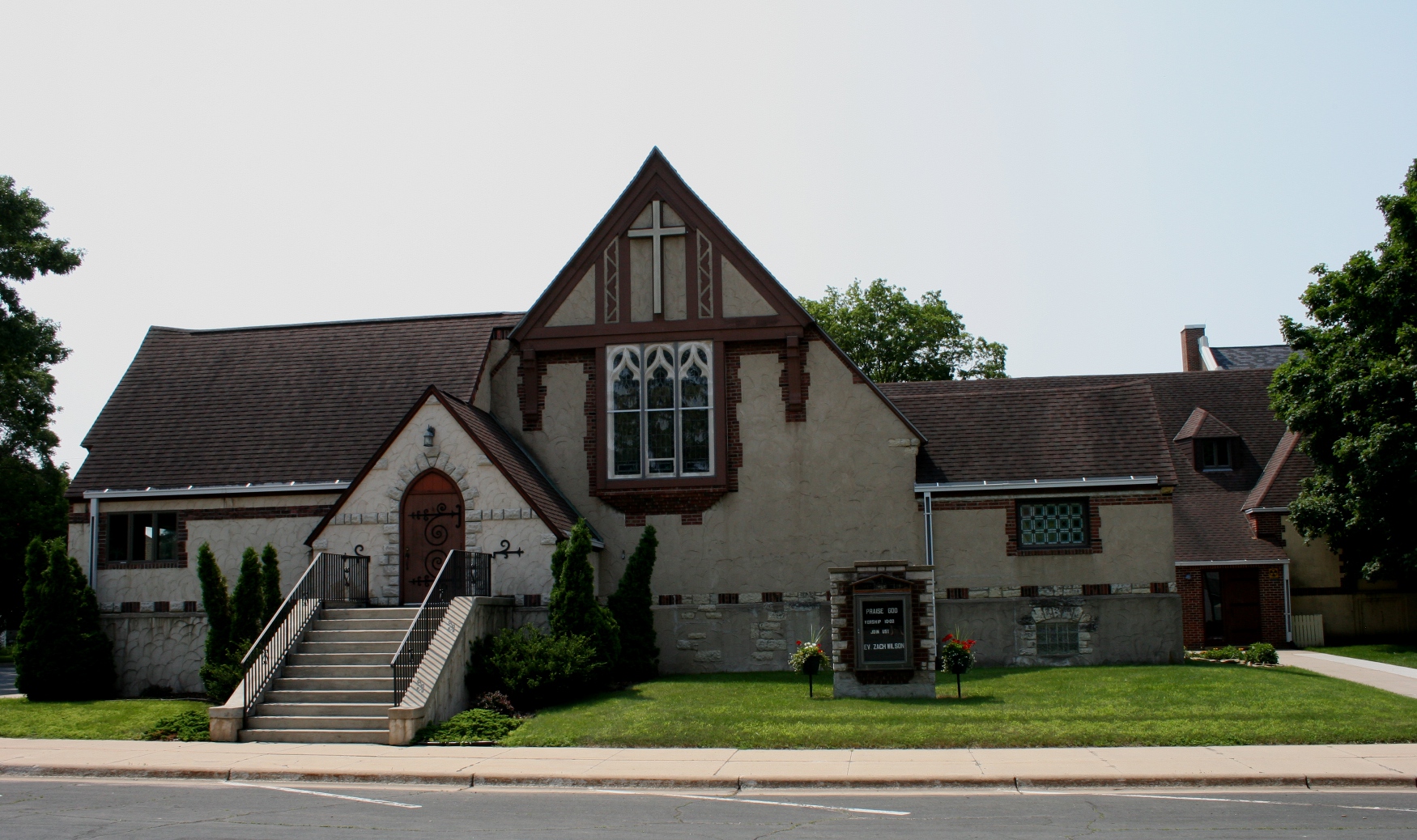
First Presbyterian Church, next to the veterans' memorial.

First Presbyterian Church, next to the veterans’ memorial.

Inside that lovely old church.

Inside that lovely old church.

That memorial is definitely worth a trip into town as is the church. We found the door unlocked and so let ourselves into this beautiful sanctuary. I’m pretty certain the guy working on a school bus at the bus garage was watching us.

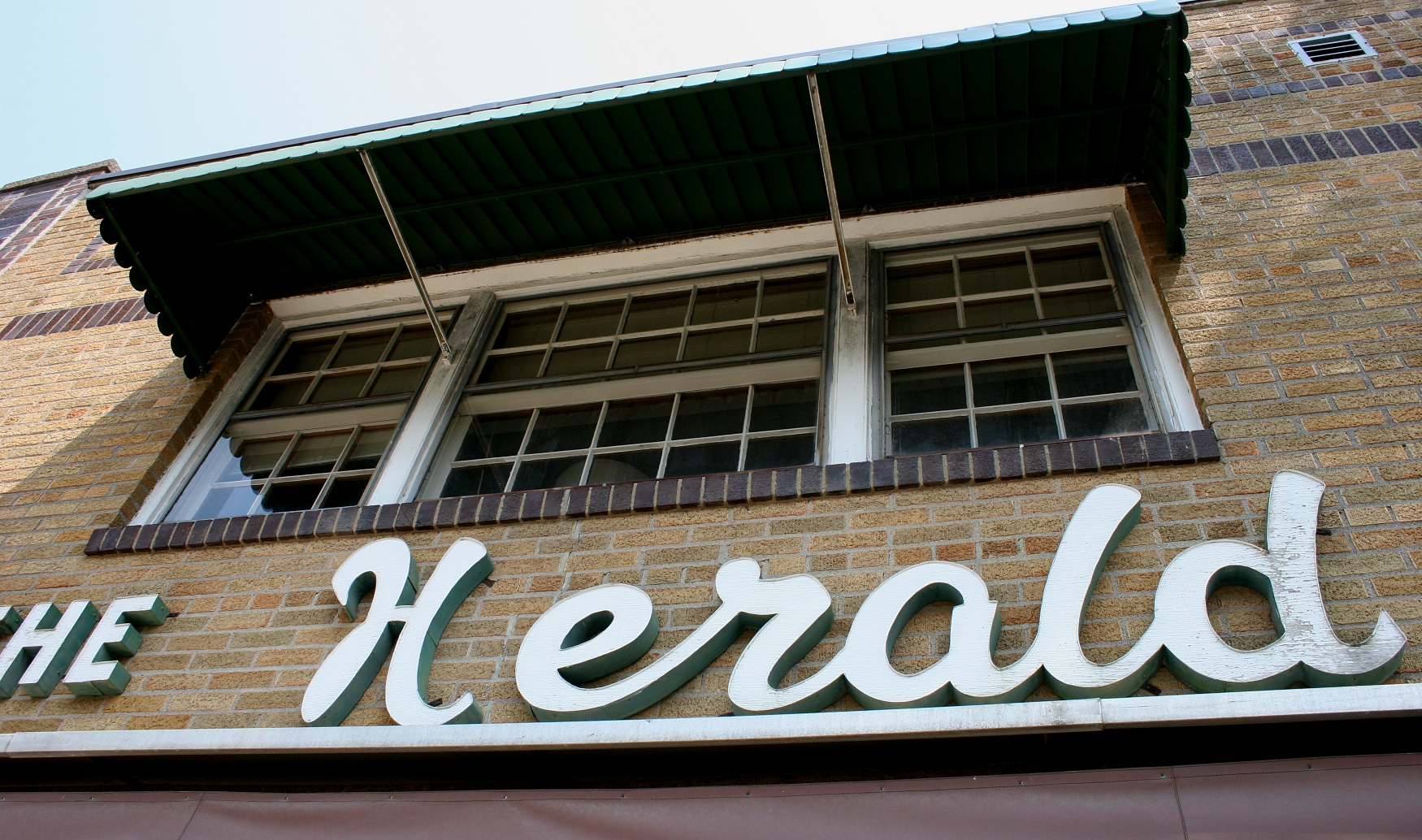
Font art at the former newspaper office.

Font art at the former newspaper office.

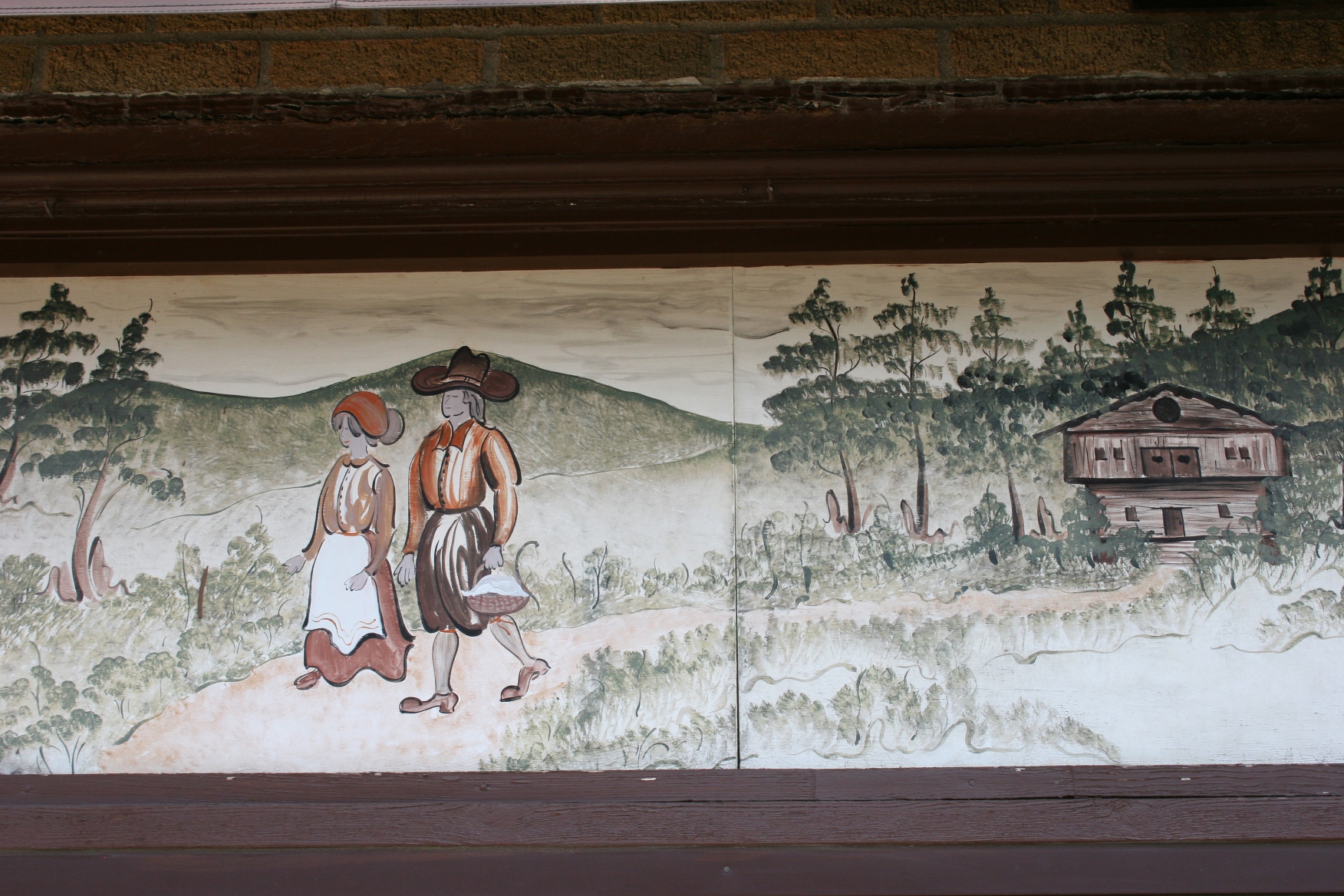
And more art on the former news office.

And more art on the former news office.

Across the street, the font and paintings on the former Herald newspaper office, now a home, caught my eye. The newspaper is now merged as the Star Herald based in nearby Dodge Center.

The library on the left, the former newspaper office on the right.

The library on the left, the former newspaper office on the right.

Next door I tried the door of the library, only to find it locked.

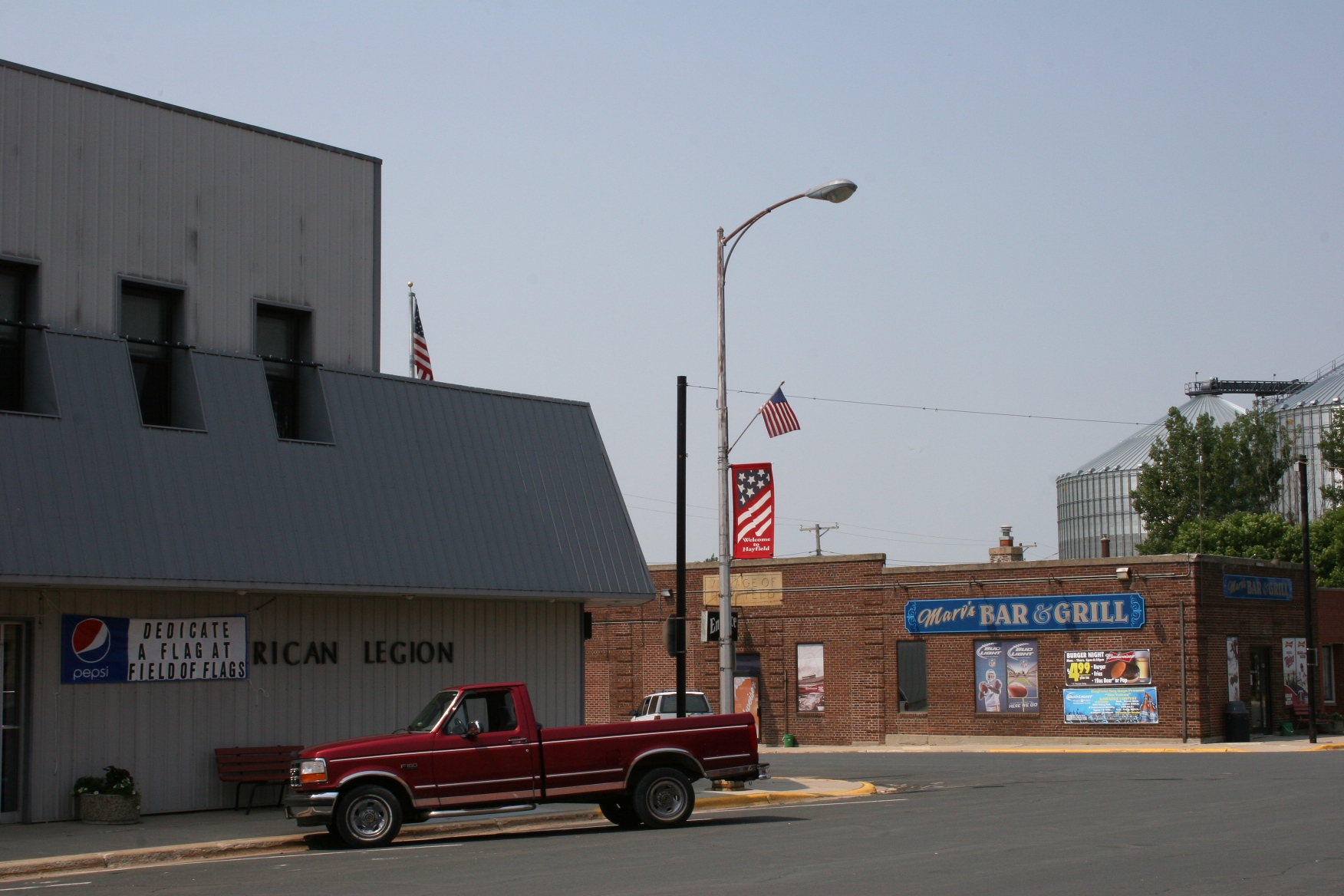
Like most small towns, you will find a Legion and a bar and grill in Hayfield.

Like most small towns, you will find a Legion and a bar and grill in Hayfield.

Yes, when I explore small towns, I’ll always try the doors. Always.

© Copyright 2013 Audrey Kletscher Helbling
 

A muddy shoe ban in Morgan July 24, 2013

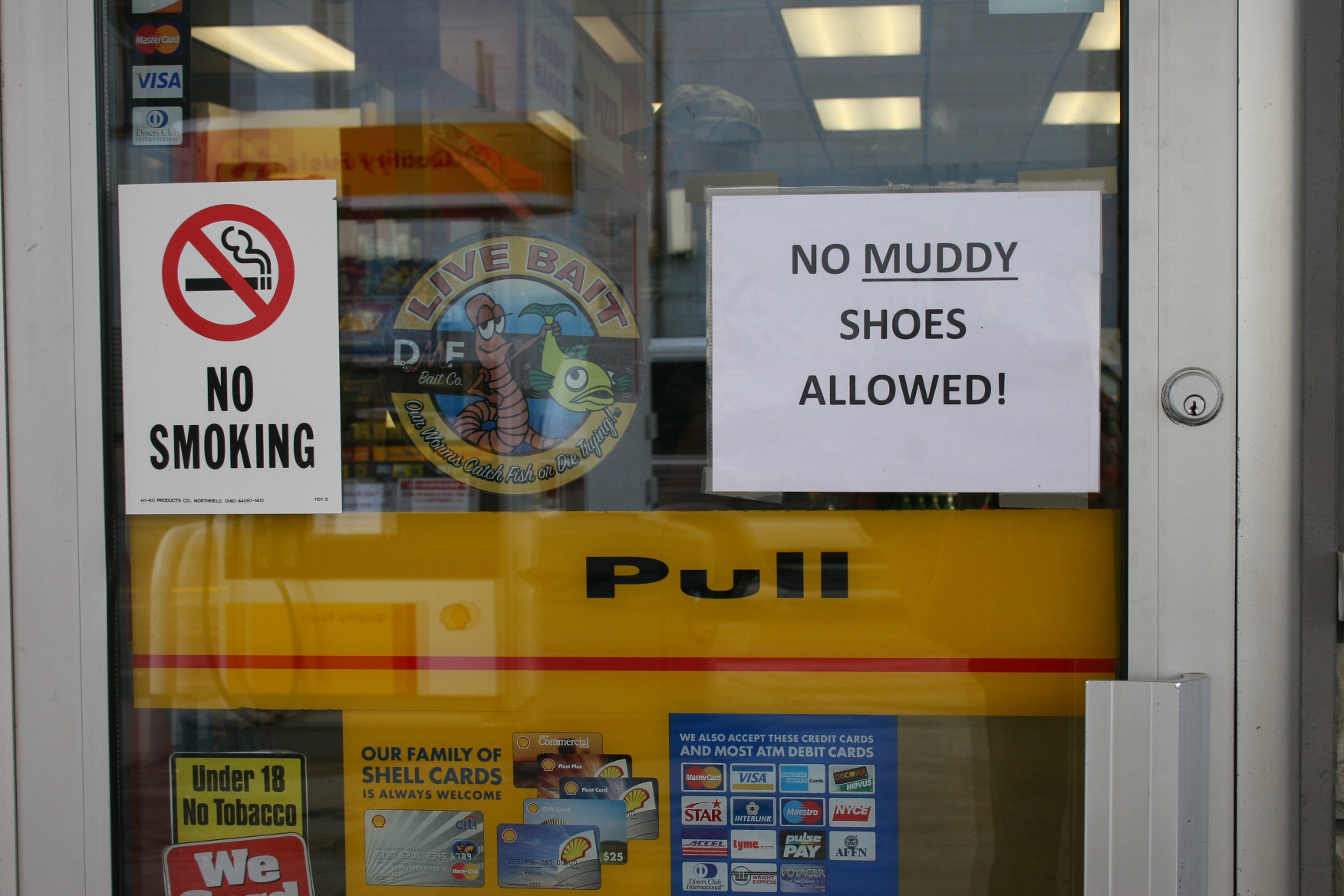
YOU BEST NOT ENTER the Shell convenience store/gas station in Morgan with muddy shoes. I never checked my flip flops nor the floor upon entering. My initial focus was finding the bathroom in Wayne’s C-Store, as it’s known by locals.

Posted on doors of the Shell station in Morgan.

Posted on doors of the Shell station in Morgan.

Only afterward did I ponder the message and wonder how many times staff has dealt with mud trekked inside this retail hub in this rural southwestern Minnesota community. Often enough, apparently, given the postings on the two front doors.

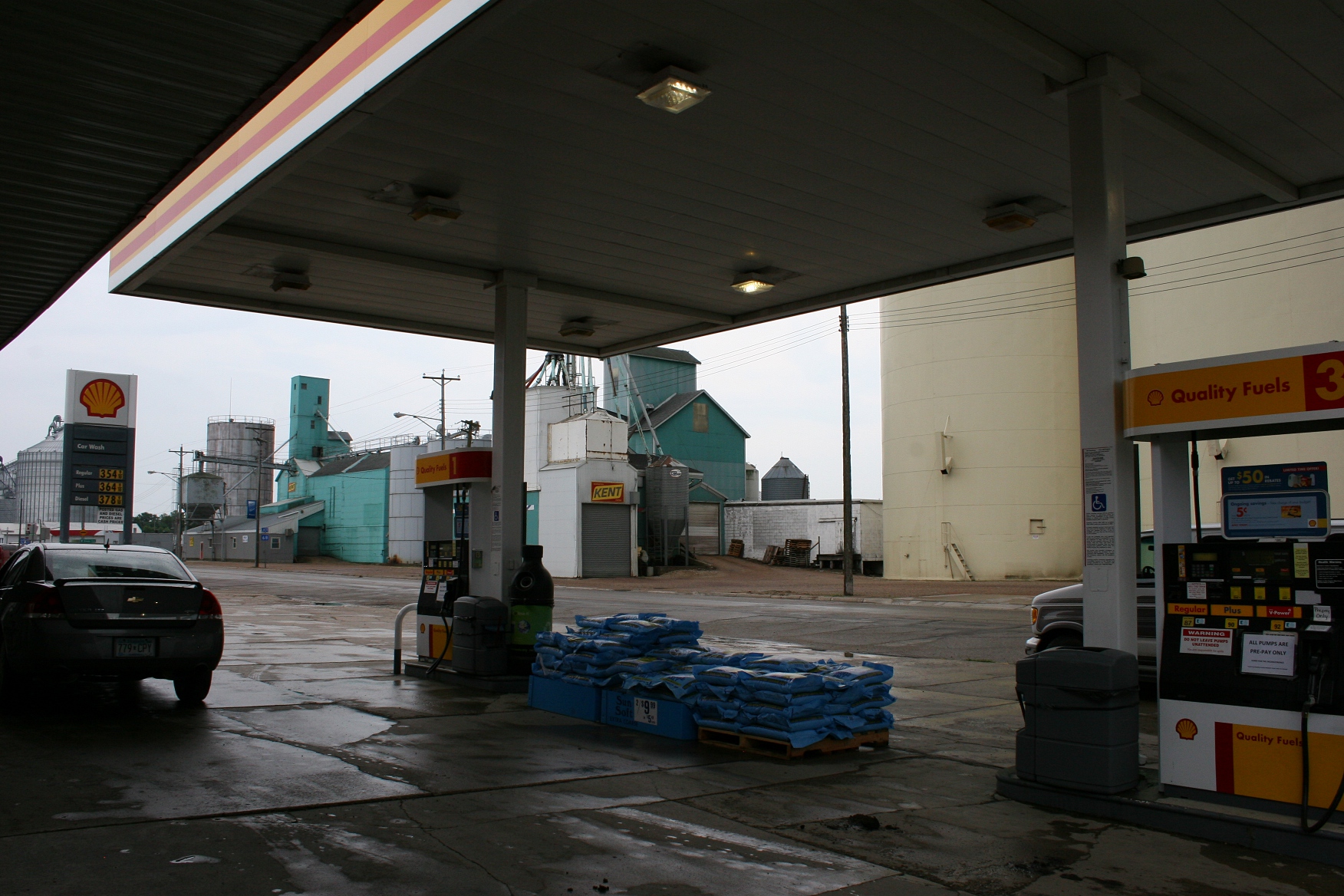
A view right outside the Shell station.

A view right outside the Shell station.

My husband and I had just driven about 100 miles, more than an hour of that in rain. But, unless our soles acquired mud while walking from our gravel parking space into the store, they should have been clean.
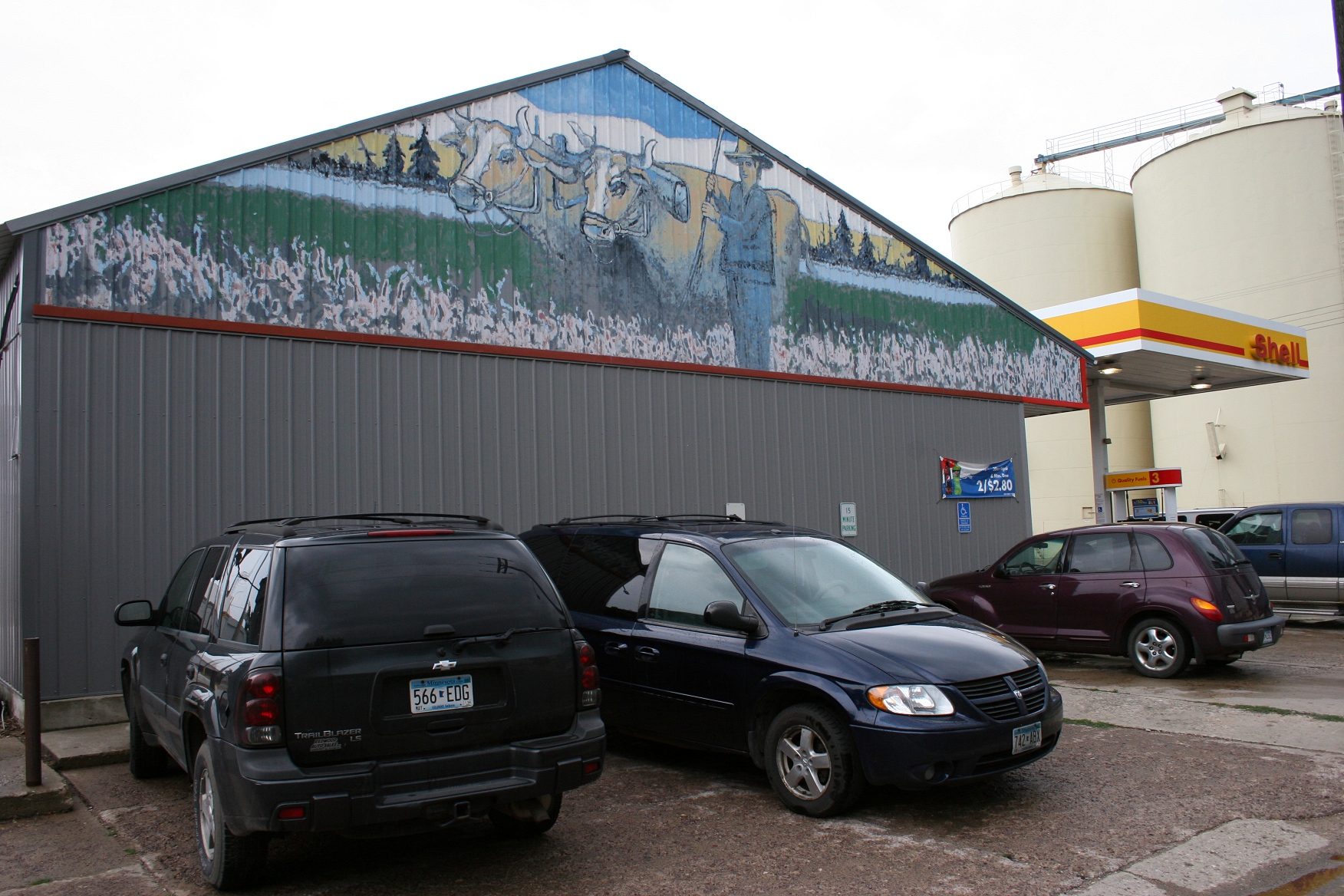
A rural-themed mural on the side of Wayne's C-Store.

A rural-themed mural on the side of Wayne’s C-Store.

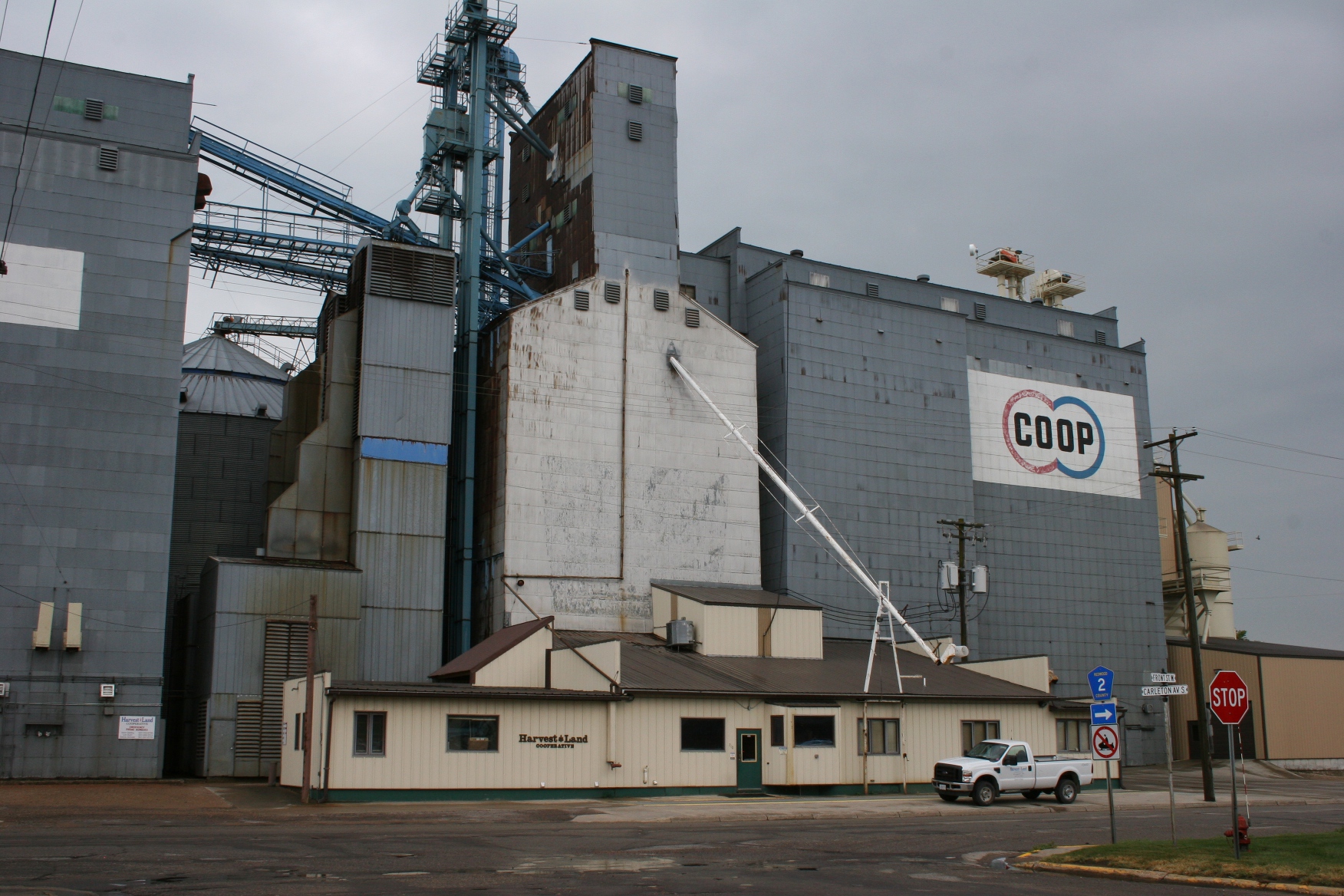
After photographing the NO MUDDY SHOES ALLOWED! sign and the mural on the side of the convenience store, I swung my camera around to photograph Harvest Land Cooperative across the street.

A snippet of the Harvest Land Co-op complex across the highway from the Shell station.

A snippet of the Harvest Land Co-op complex across the highway from the Shell station.

There’s something about an elevator that always causes me to pause and reflect on my rural Minnesota prairie roots.

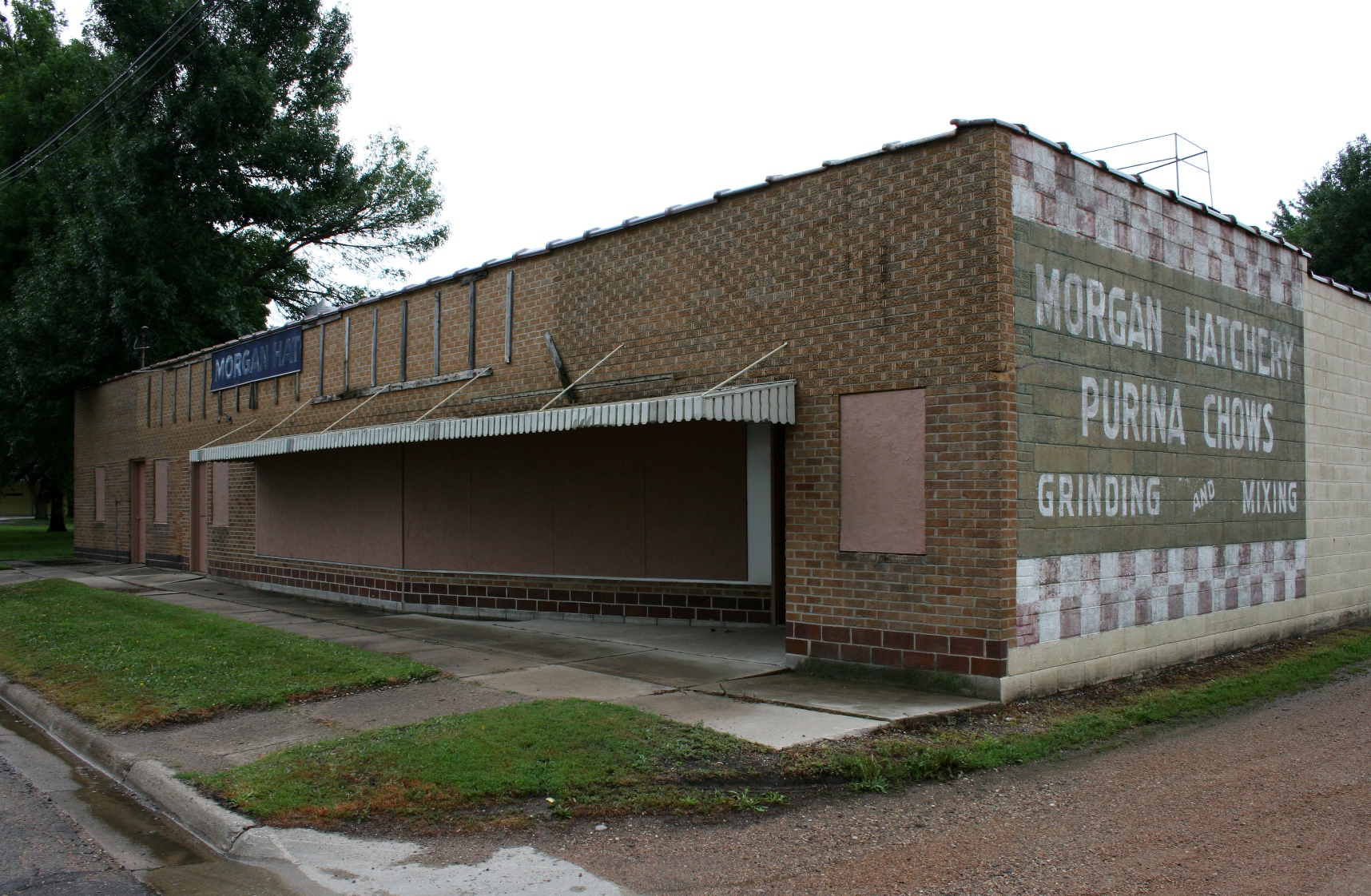
The hatchery is closed.

The hatchery is closed.

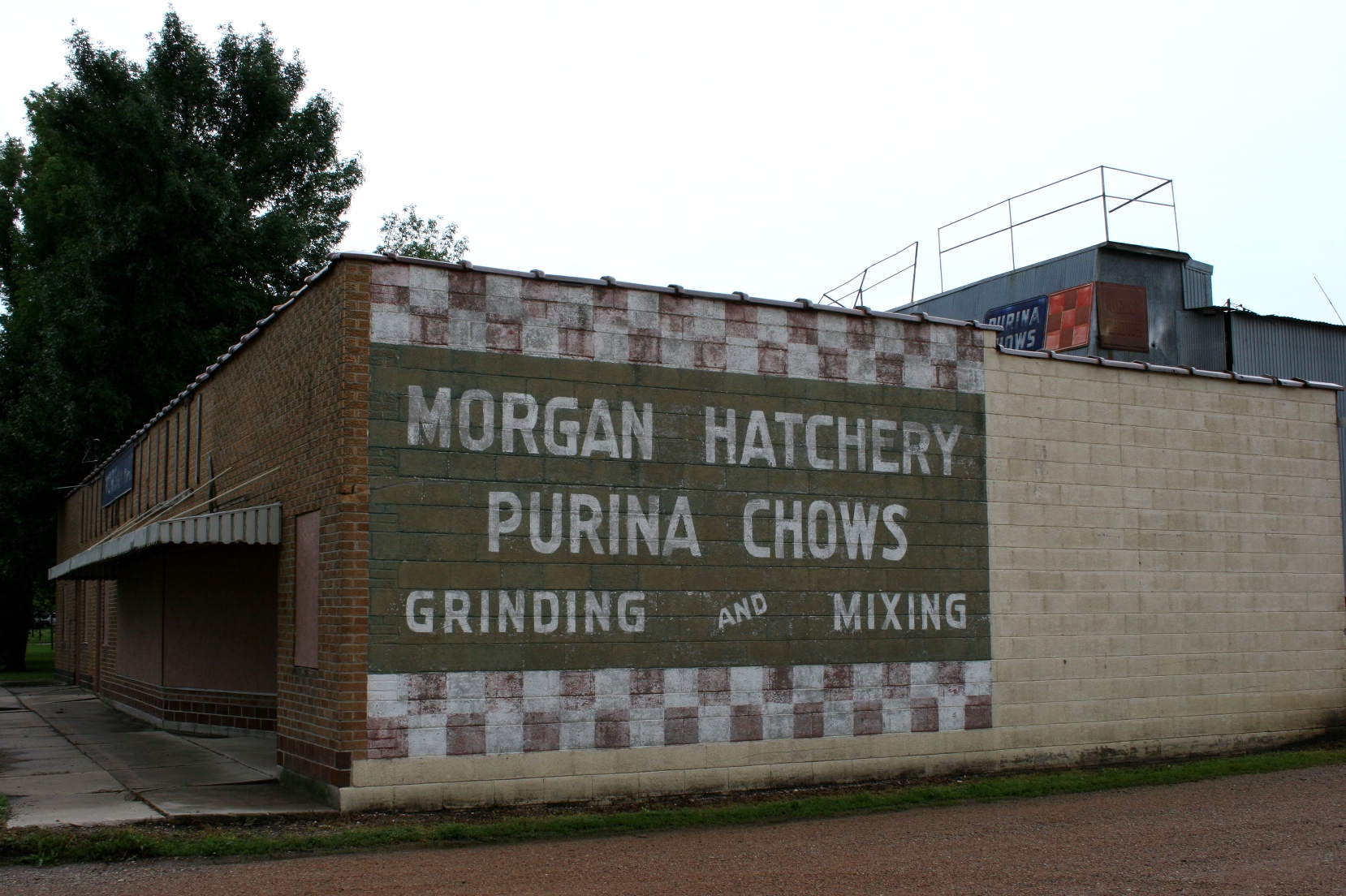
From there I skirted vehicles parked alongside the Shell station and dodged puddles to photograph signage on the next door old Morgan Hatchery.

A side view of the former hatchery.

A side view of the former hatchery.

At that point I likely muddied my flip flops. But that was just fine. I wasn’t returning to the NO MUDDY SHOES ALLOWED! store.

© Copyright 2013 Audrey Kletscher Helbling