Minnesota Prairie Roots

Writing and photography by Audrey Kletscher Helbling

A photo essay: Autumn at River Bend October 20, 2014

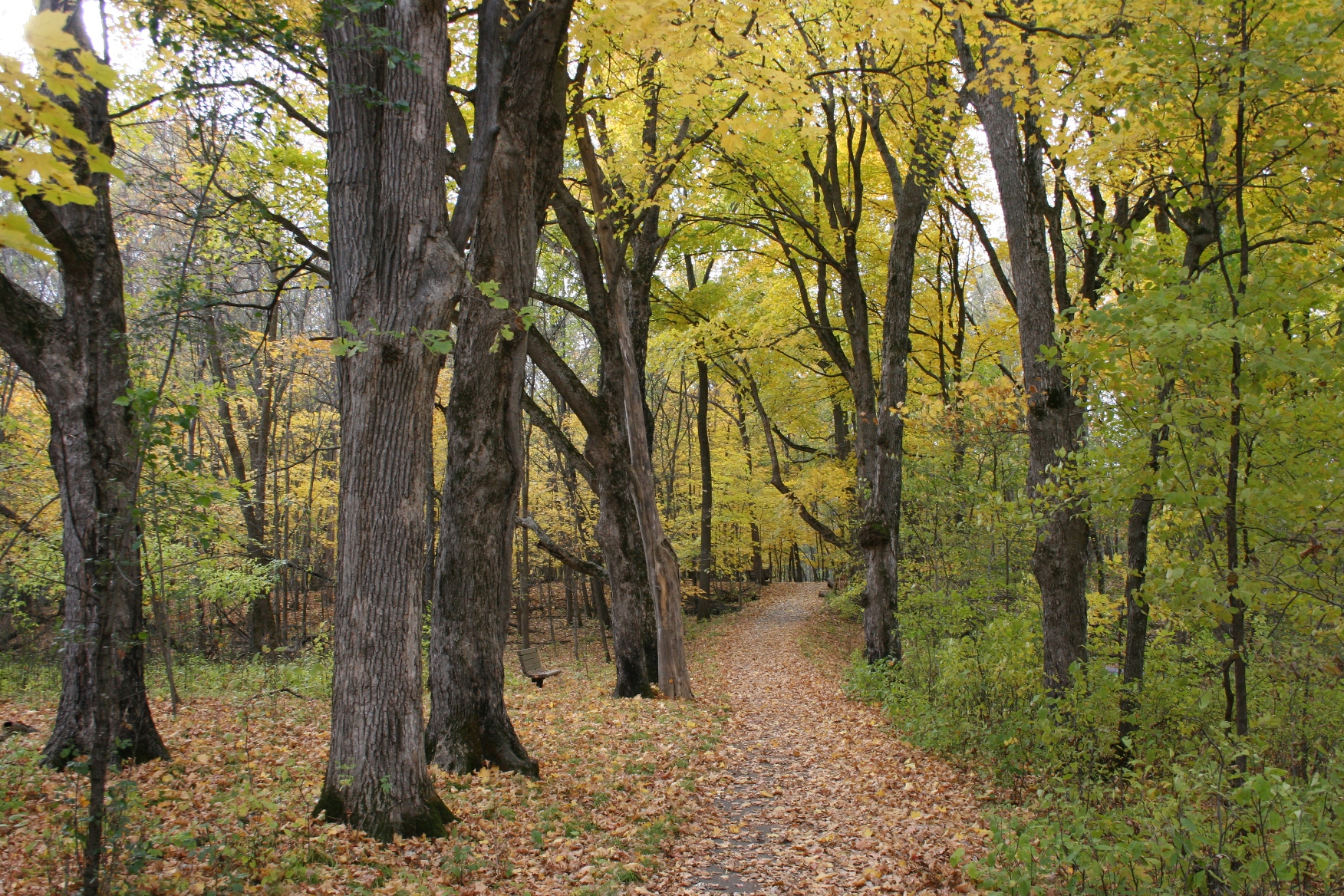
A trail through the woods at River Bend Nature Center, Faribault.

A trail through the woods at River Bend Nature Center, Faribault.

IT IS IMPOSSIBLE, I’ve determined, to fast walk my way through a park or nature center, camera slung around neck or over shoulder. Impossible.
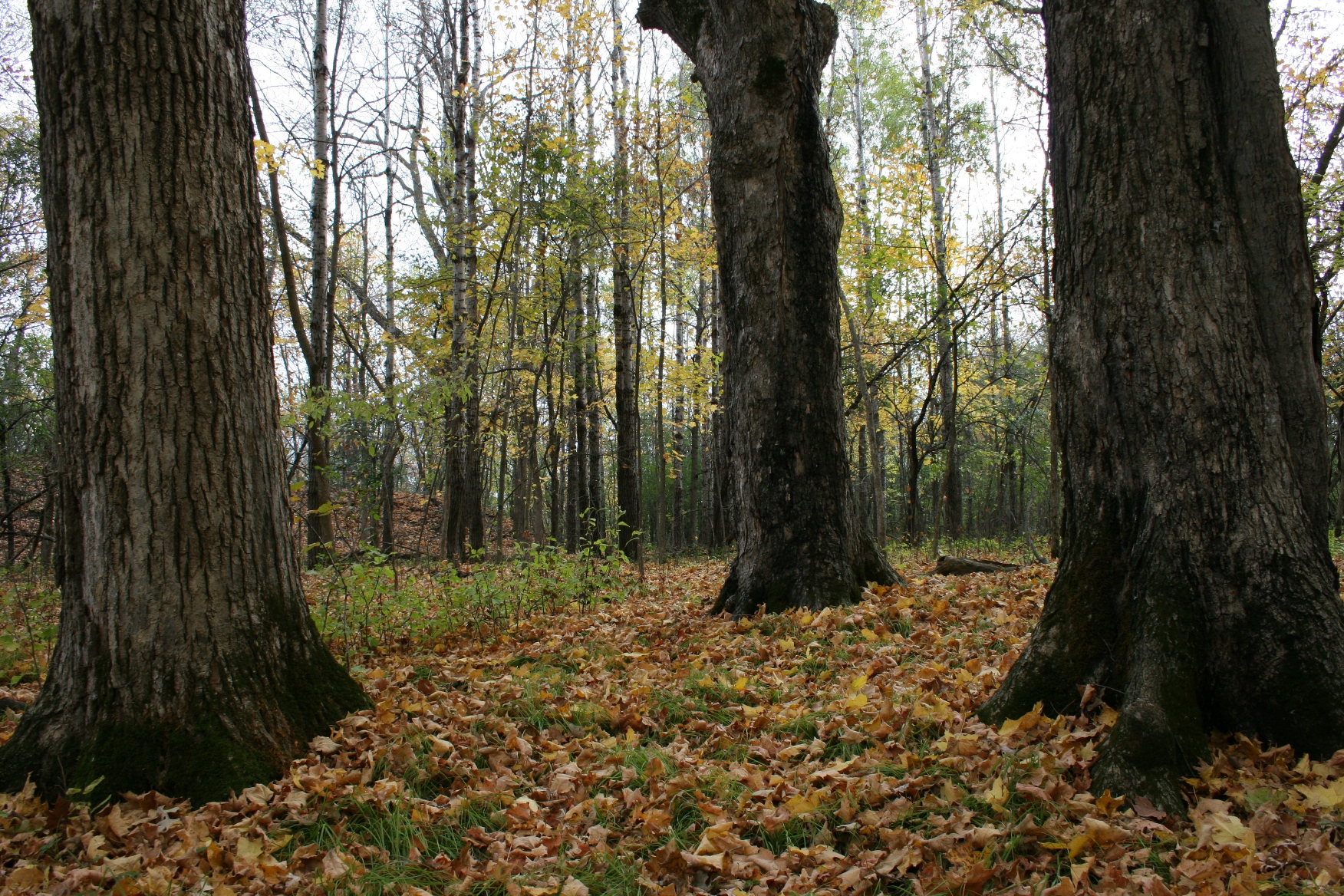
A slower pace allows one to notice the individual trees in the woods.

A slower pace allows one to notice the individual trees in the woods.

I cannot hurry, even with the goal to raise heart rate and burn calories. My desire and need to notice details, to take in and often photograph my surroundings, overrides.
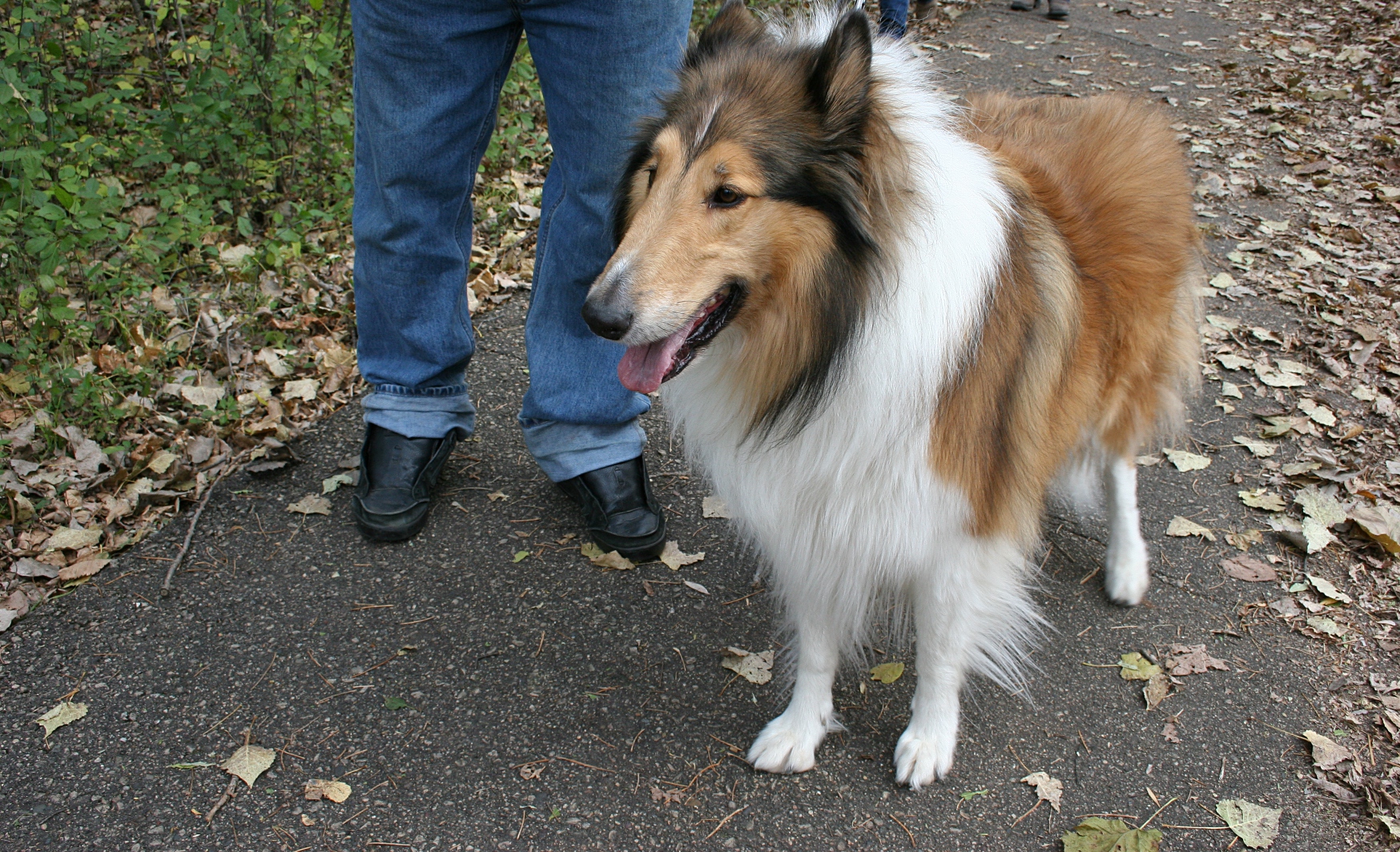
Rudi, one friendly collie who cooperated for one photo.

Rudi, one friendly collie who cooperated for one photo.

On a recent Sunday afternoon walk at River Bend Nature Center in Faribault, I tried, oh, I tried, to step it up. But then Rudi appeared and I just had to pet and photograph this friendly collie. The thing is, I’m not a big dog lover. Typically, I’ll skirt a canine. But not this one who reminded me of Lassie.
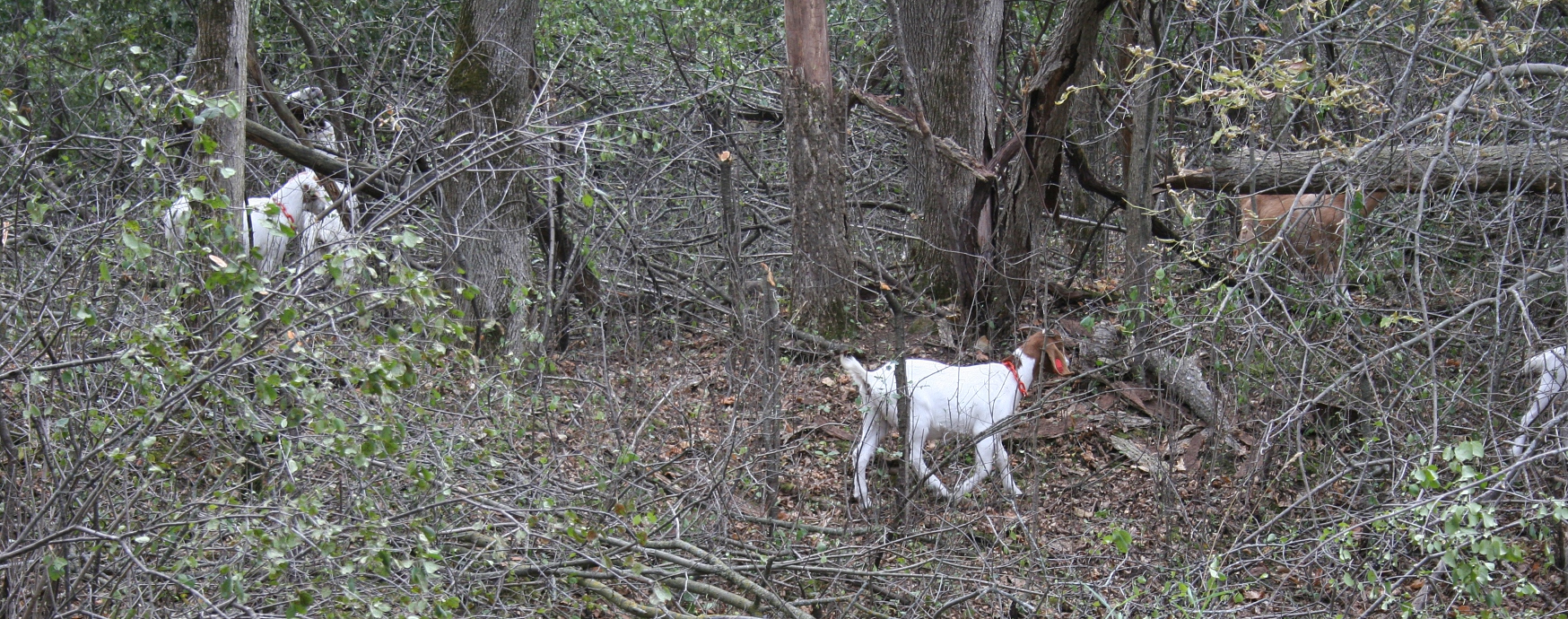
A group of goats are grazing on Buckthorn at River Bend.

A group of goats graze on Buckthorn at River Bend.

Rudi proved to be distraction number two after I observed penned goats attacking invasive Buckthorn (more on that in a future post).
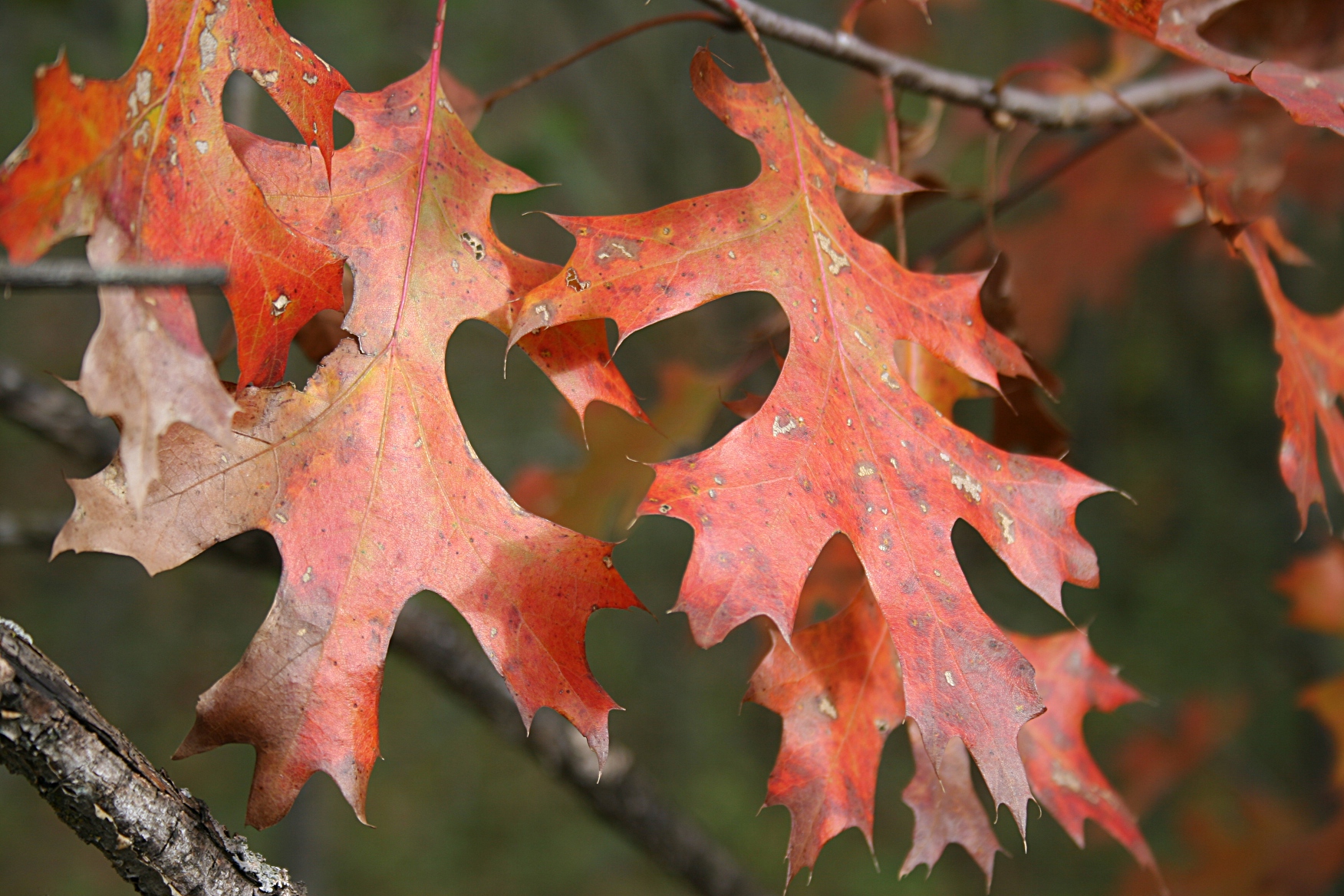
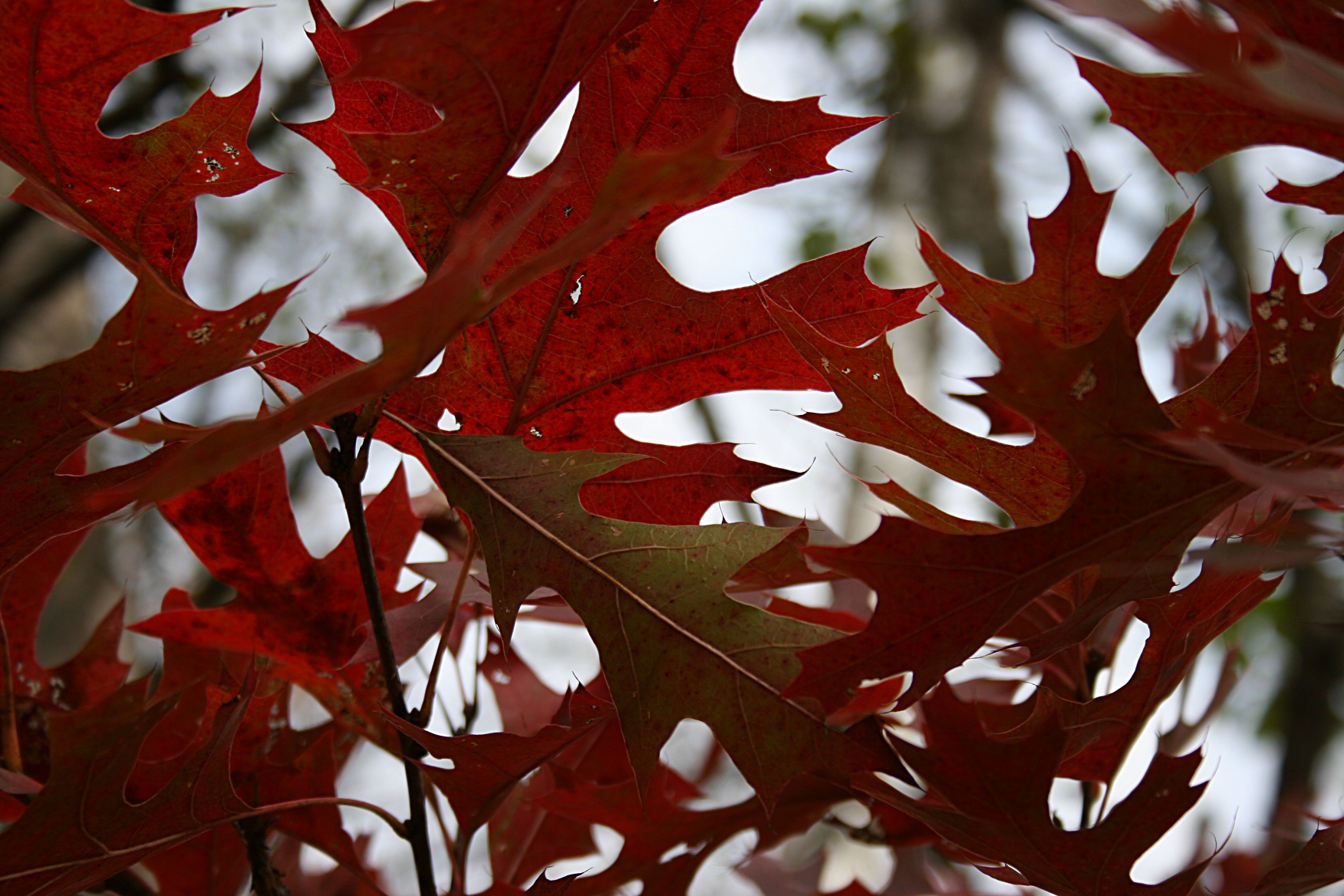
Oak leaves
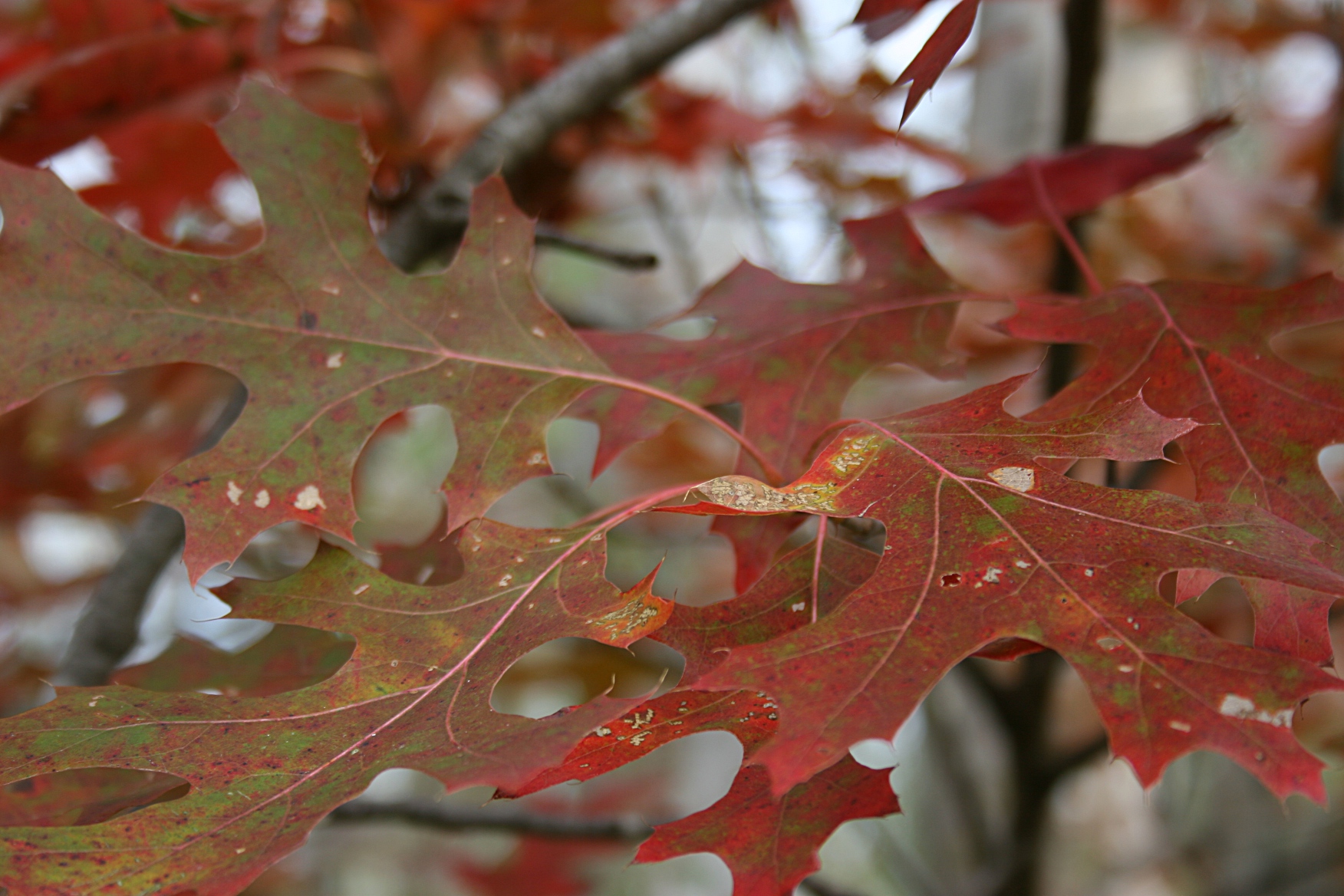
Oak leaves

More oak leaves

More oak leaves

And still more

And still more oak leaves

My husband and I fast-paced for awhile before my eyes focused on patches of oak leaves in burnished shades of orange and red. I veered slightly off the tarred path for close-up images.
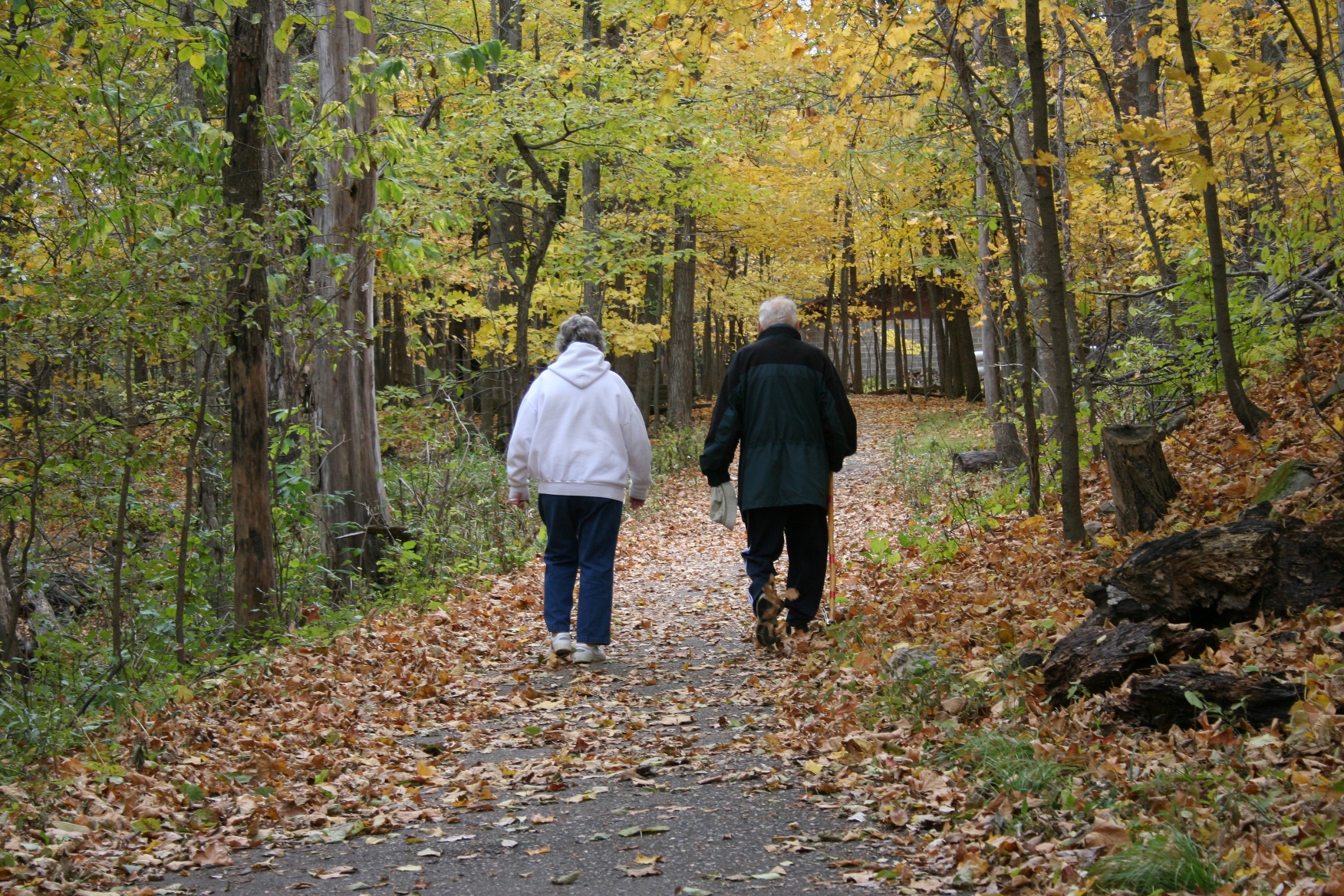
So many folks were walking the trails on a gorgeous autumn afternoon in southeastern Minnesota.
So many folks were walking the trails on a gorgeous autumn afternoon in southeastern Minnesota.

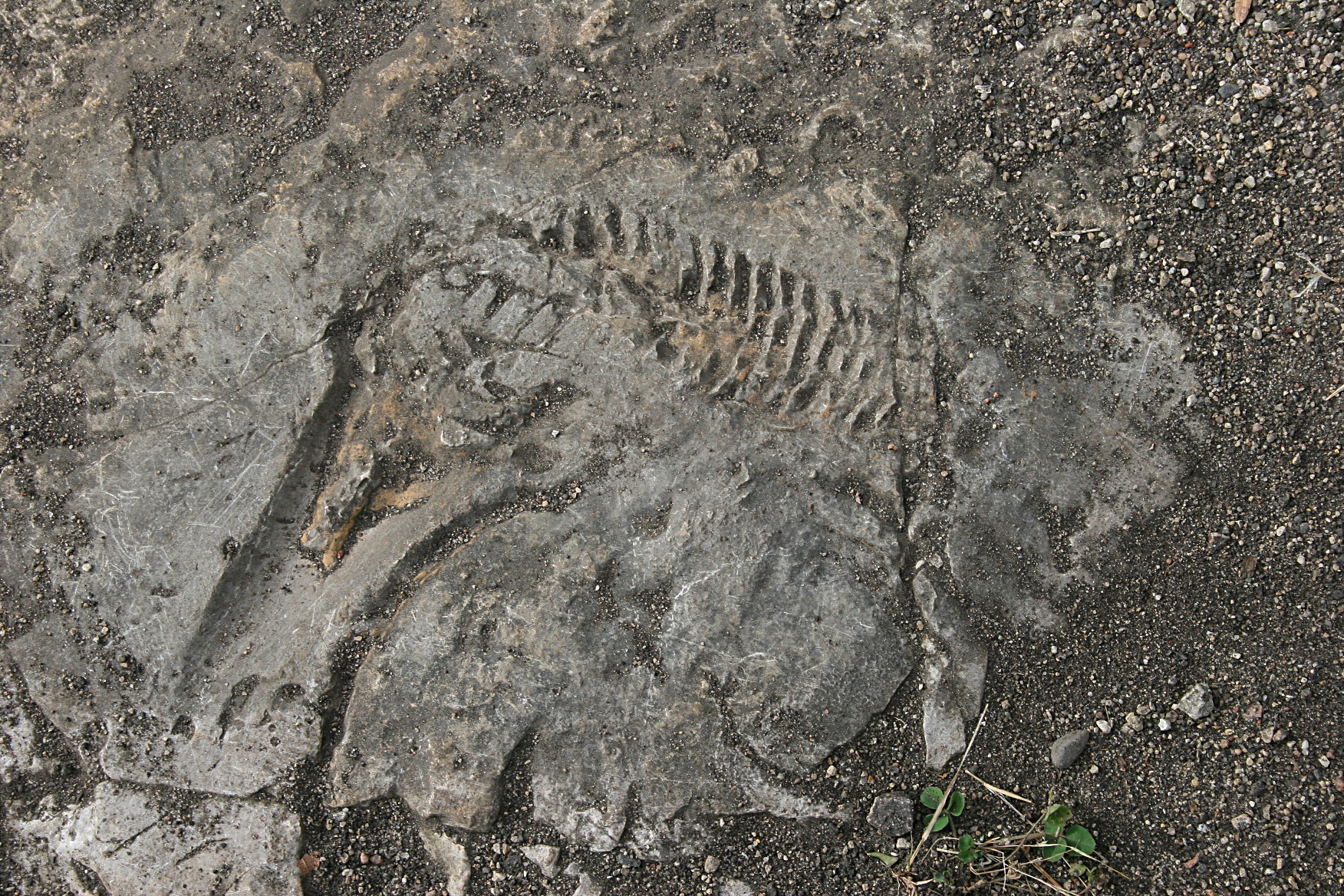
My husband claims this is a fossil in rock.

My husband claims this is a fossil in rock.

Rustic signs mark River Bend trails.

Rustic signs mark River Bend trails.

A burst of brilliant red berries caught my eyes.
A burst of brilliant red berries caught my eyes.

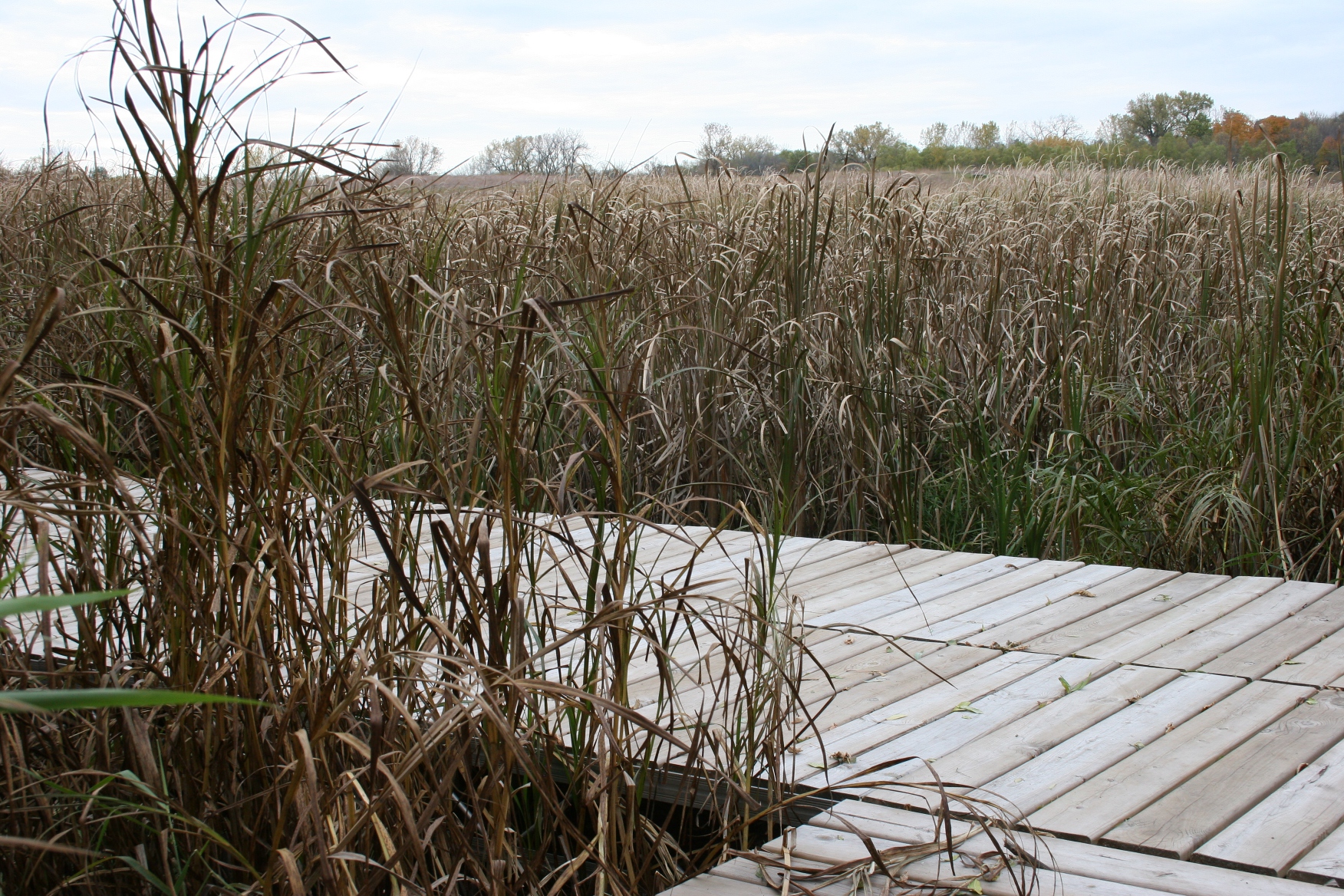
Even dried swamp grass possesses a certain beauty.
Even dried swamp grass possesses a certain beauty.

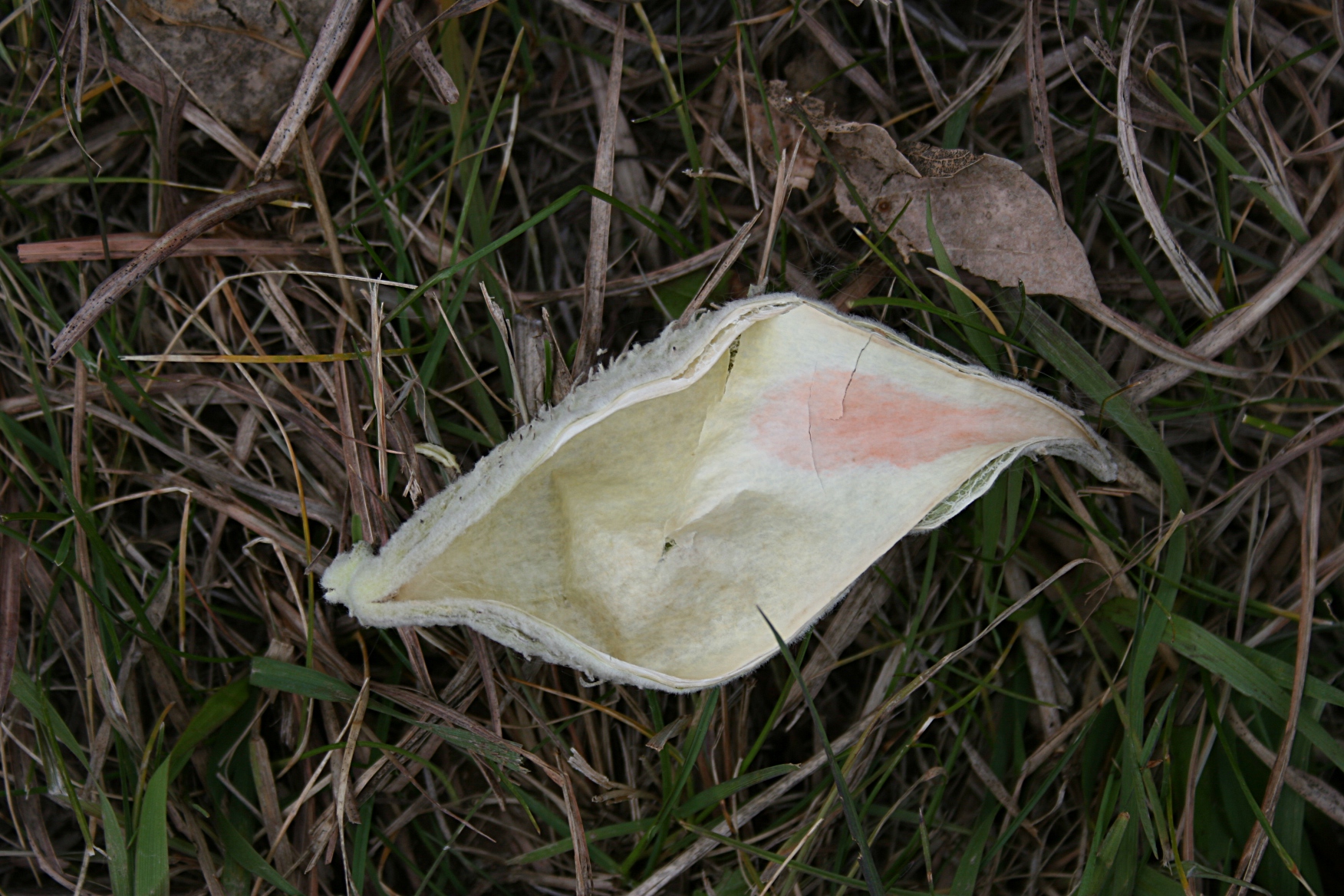
Even a dried milkweed pod does not go unnoticed.
A dried milkweed pod does not go unnoticed.

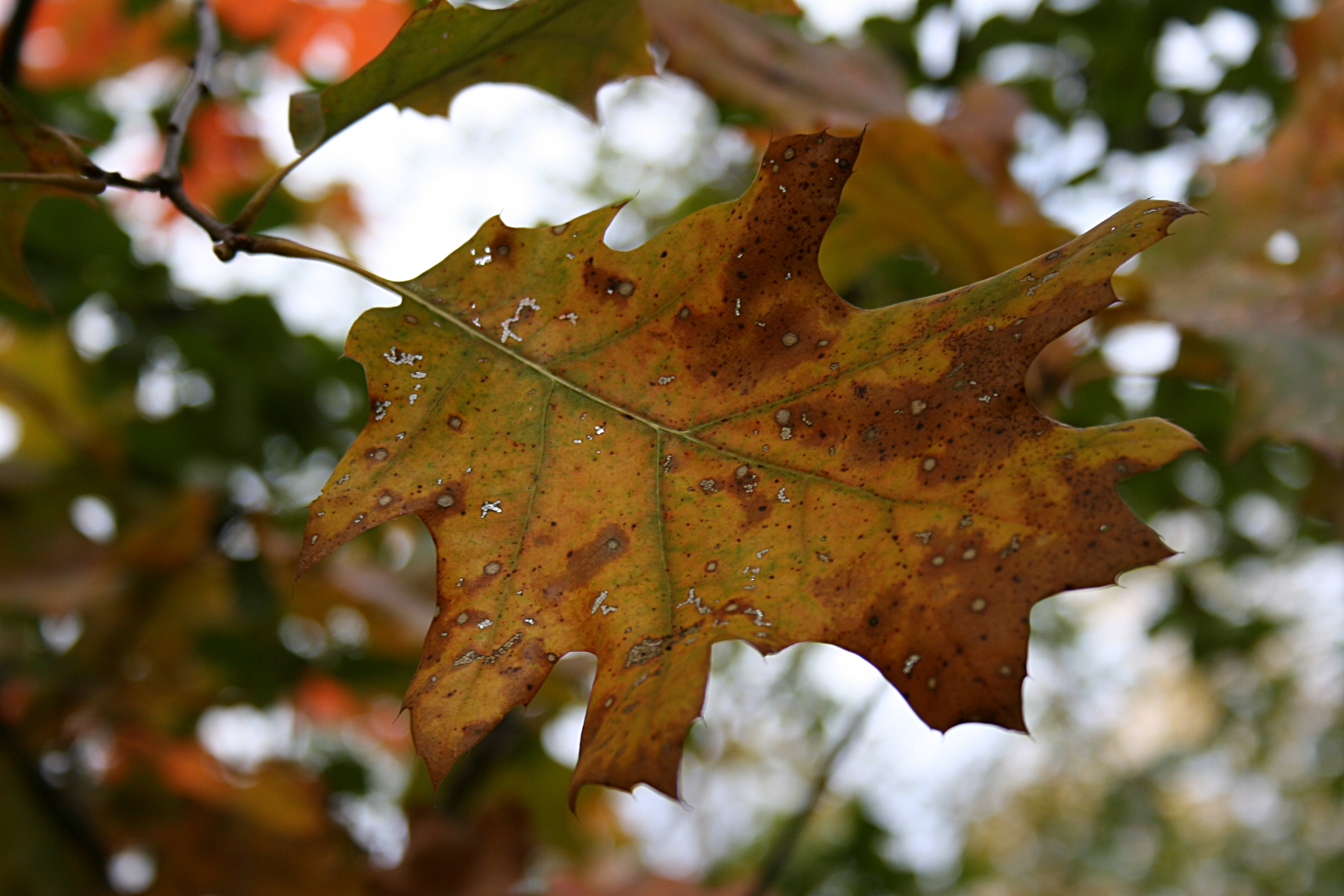
A single leaf is worthy of notice for its mottled beauty.

A single leaf is worthy of notice for its mottled beauty.

And so the distractions continued—fossil embedded in rock, leaves, tree trunks, contrast of colors and light, a quick chat with another couple, milkweed and signs and berries and dried swamp grasses.
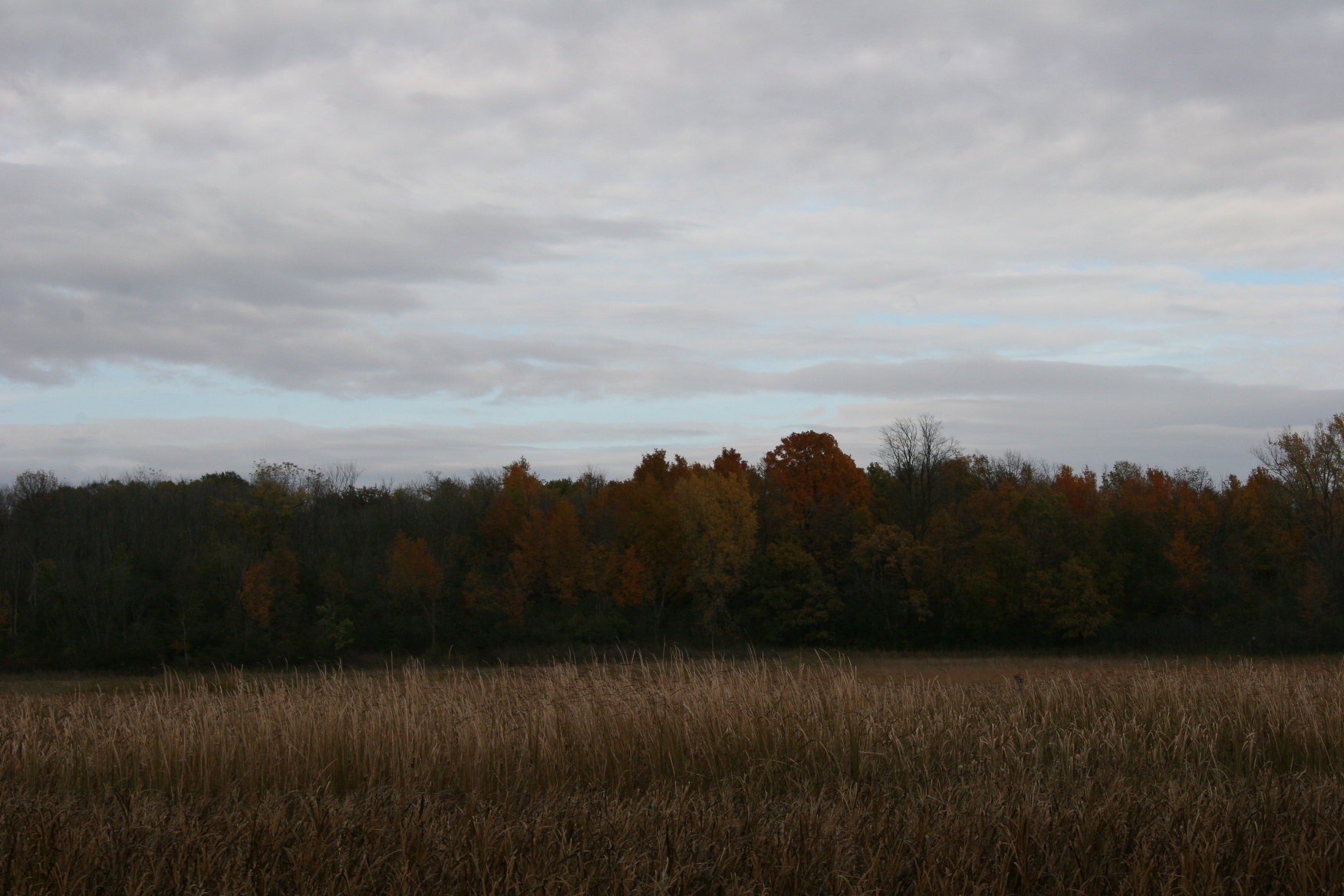
A treeline showcases the changing colors of autumn.

A treeline showcases the changing colors of autumn at River Bend.

Everywhere, nature drew me to a halt.
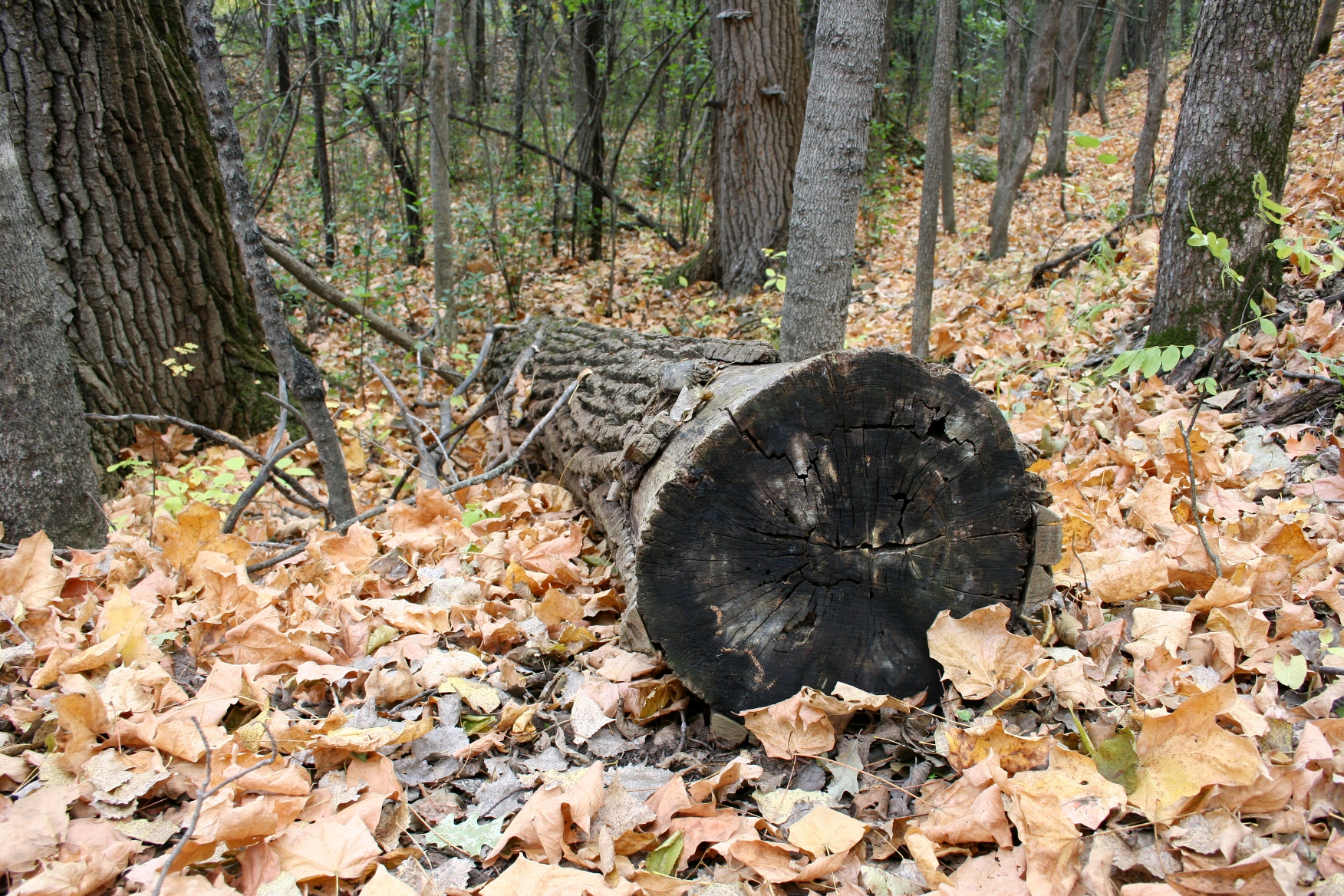
Fallen trees and branches litter the woods.

Fallen trees and branches appear as nature’s art in my photographic mind.

And that’s alright. Sometimes life calls for a slow pace. An eye that sees a single leaf in the woods. An ear that hears the crunch of leaves underfoot. A nose that smells the earthy scent of autumn. A hand that feels the rugged bark of a fallen tree.

(These images were shot on October 12. One week later, River Bend’s woods had changed considerably with most trees bare of leaves. My husband reminded me that autumn can transition quickly in Minnesota.)

© Copyright 2014 Audrey Kletscher Helbling


Season of harvest in southeastern Minnesota, a photo essay October 13, 2014

Filed under: Uncategorized — Audrey Kletscher Helbling @ 6:00 AM
Tags: , , , , , ,
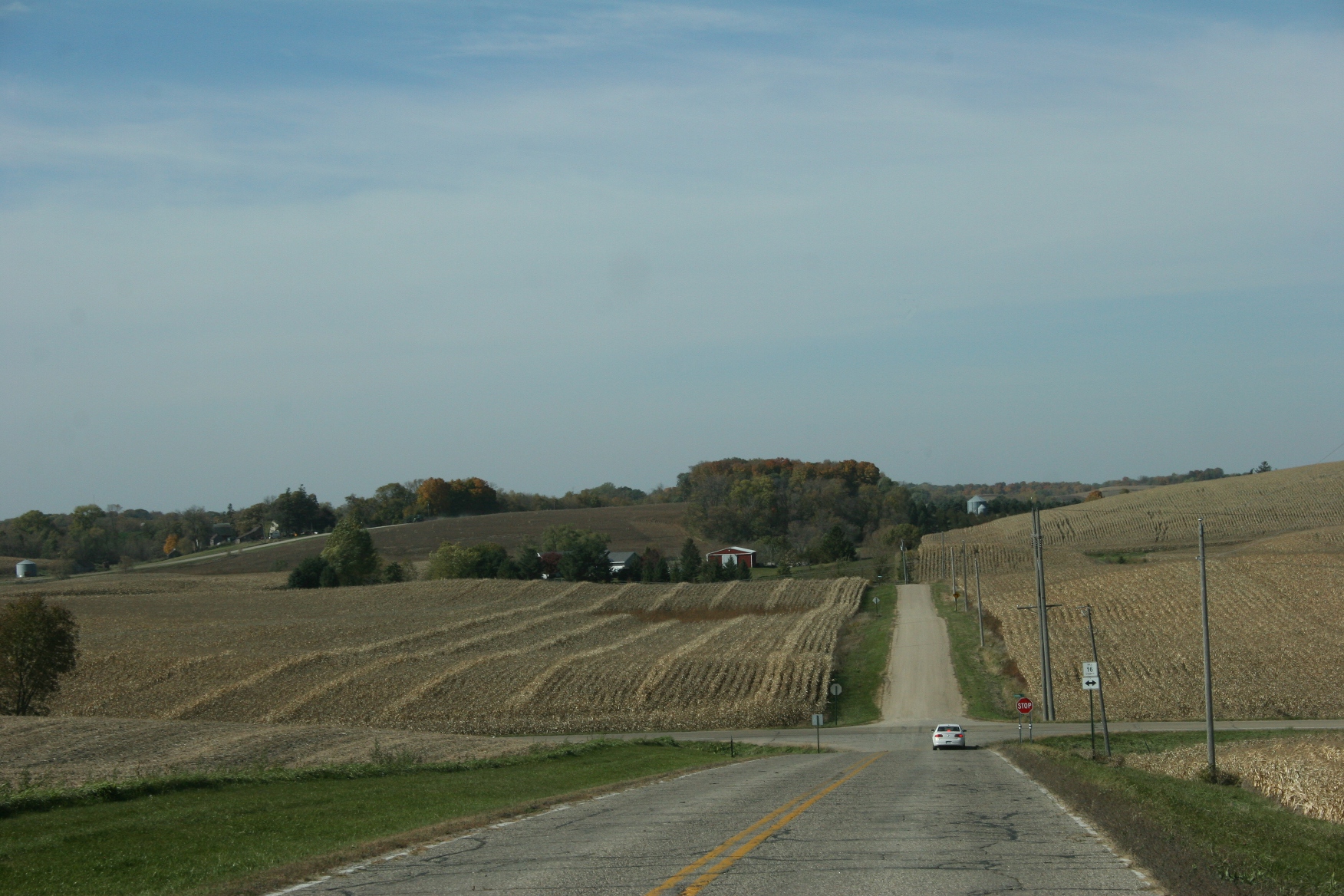
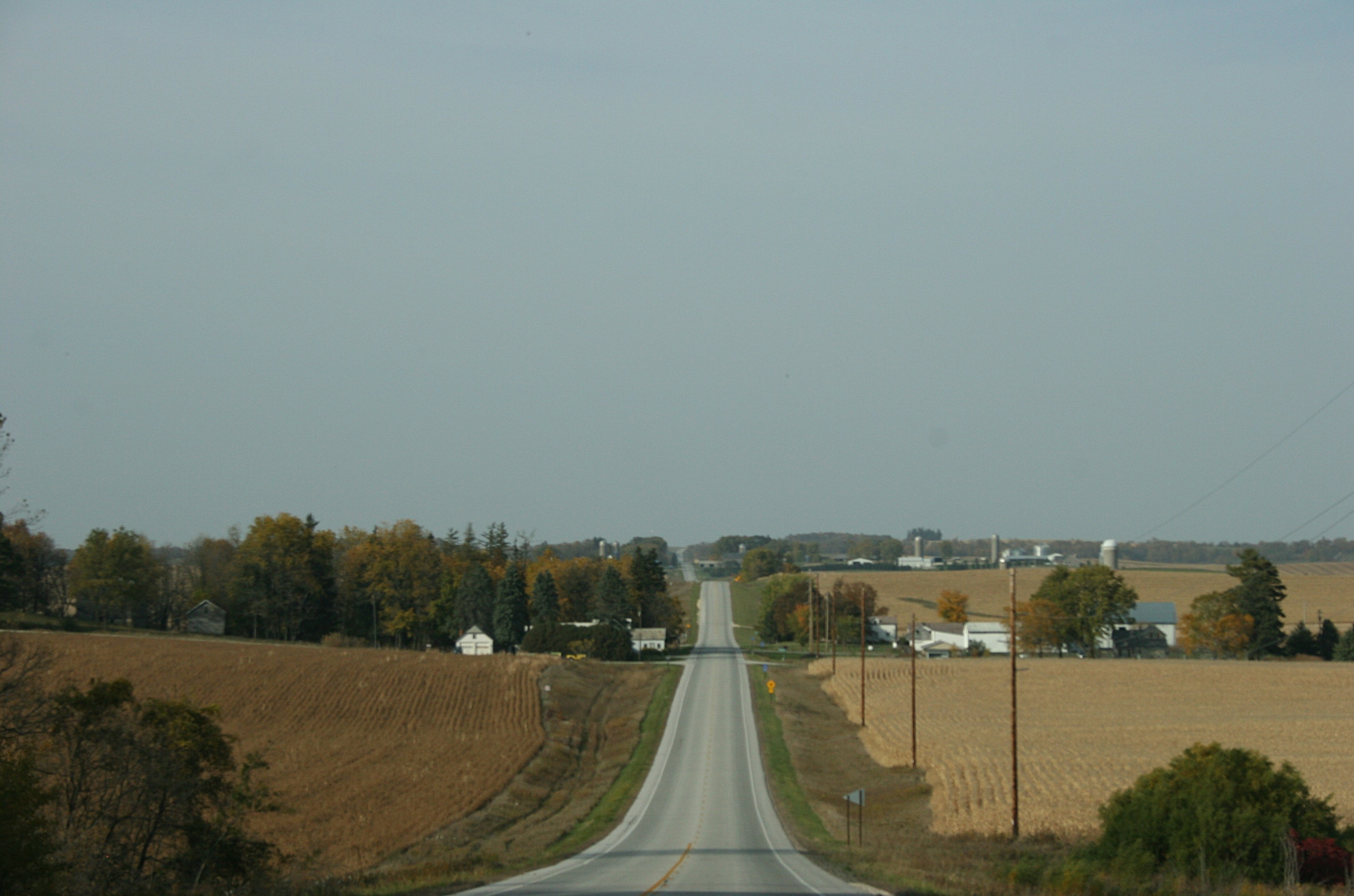
Rural Rice County, Minnesota, west of Faribault.

Rural Rice County, west of Faribault.

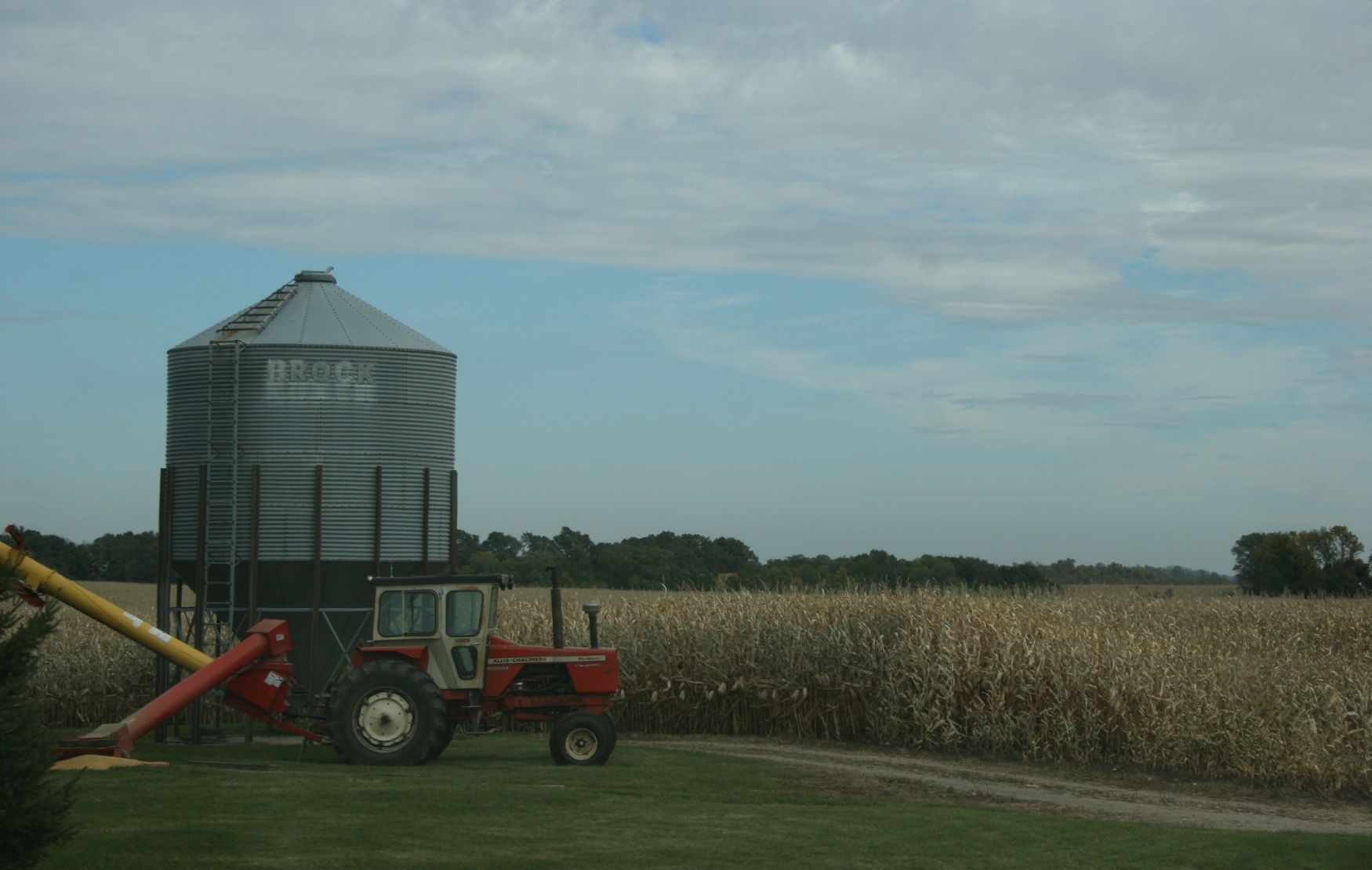
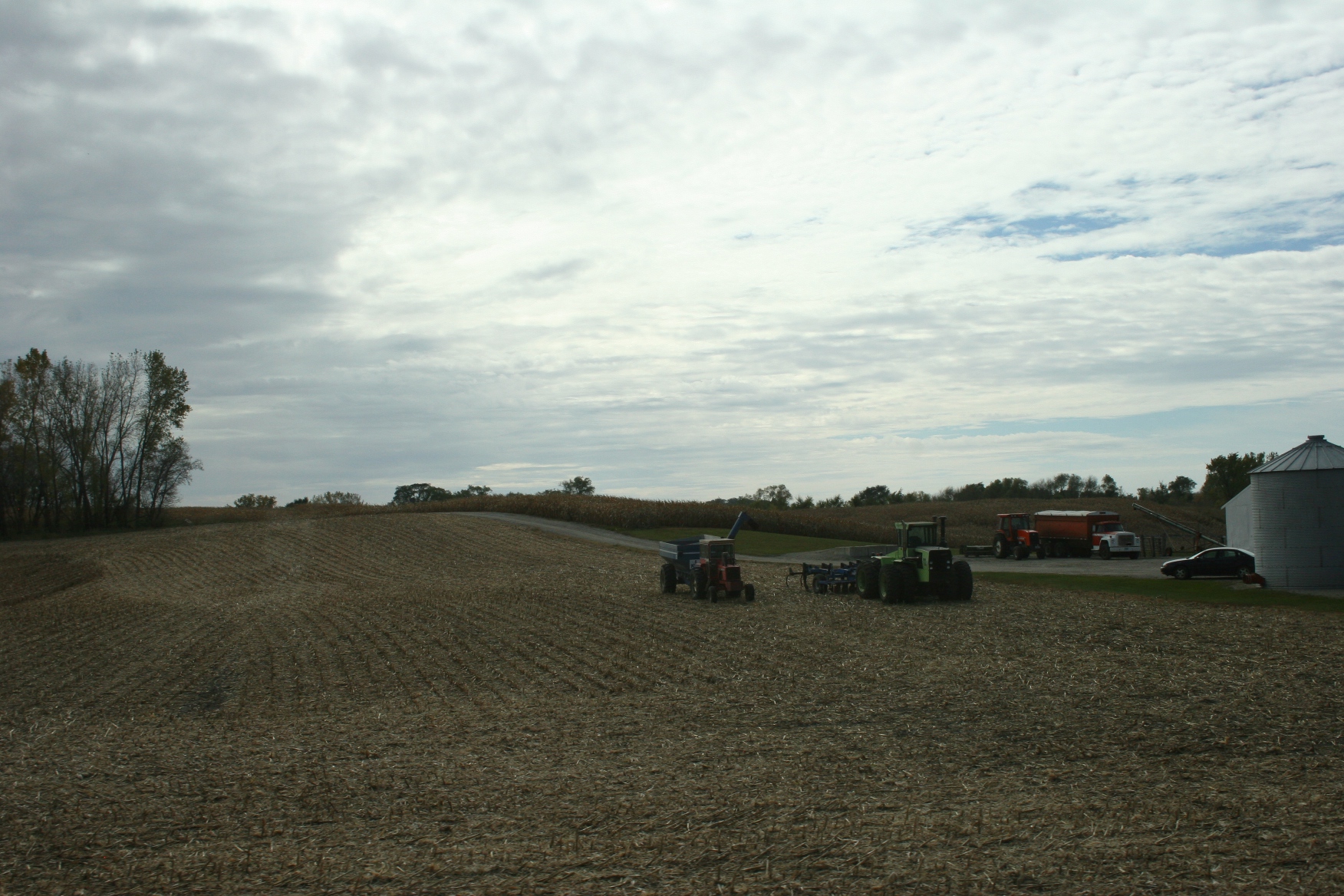
ACRE UPON ACRE OF CORN unfolds in the mixed sunshine and grey skies of an October afternoon in southeastern Minnesota.

East of Morristown, Minnesota, along Rice County Road 15.

Harvest underway east of Morristown, along Rice County Road 15.

It is the season of harvest.

Just west of North Morristown, Minnesota.

Just west of North Morristown.

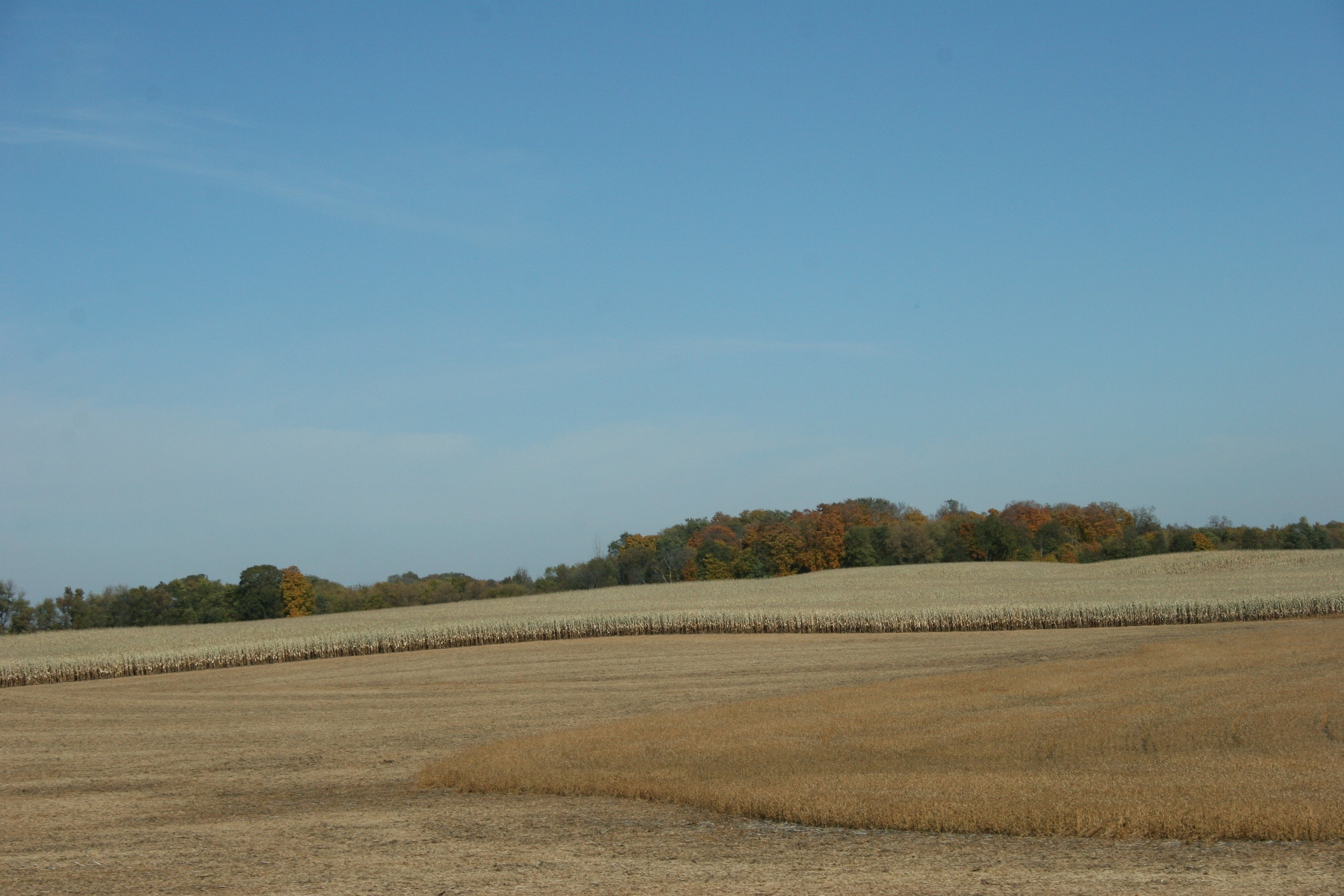
Cornfields roll into soybean fields, some harvested, some not.

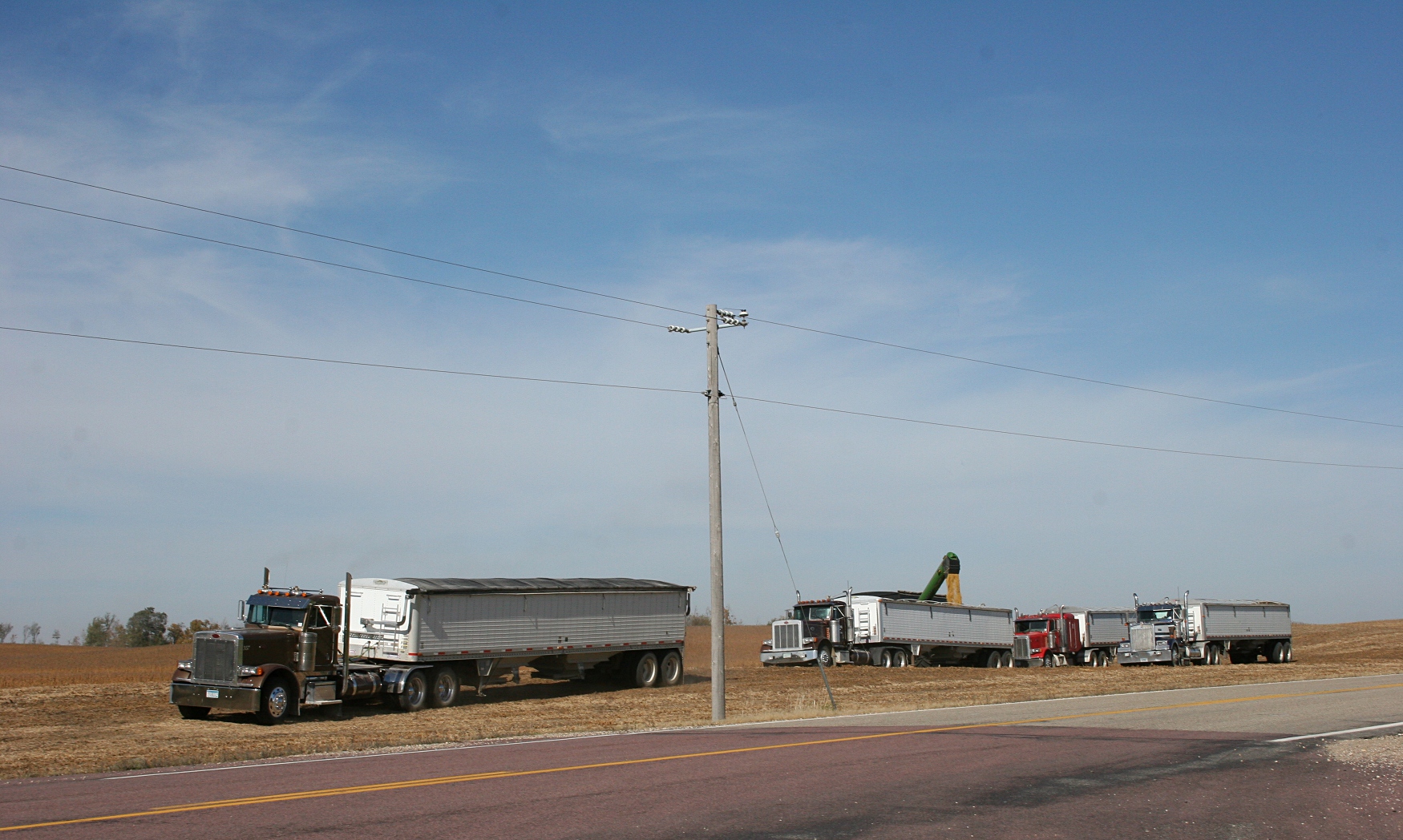
Semis await the harvest in southeastern LeSueur County.

Semis await the harvest in southeastern LeSueur County.

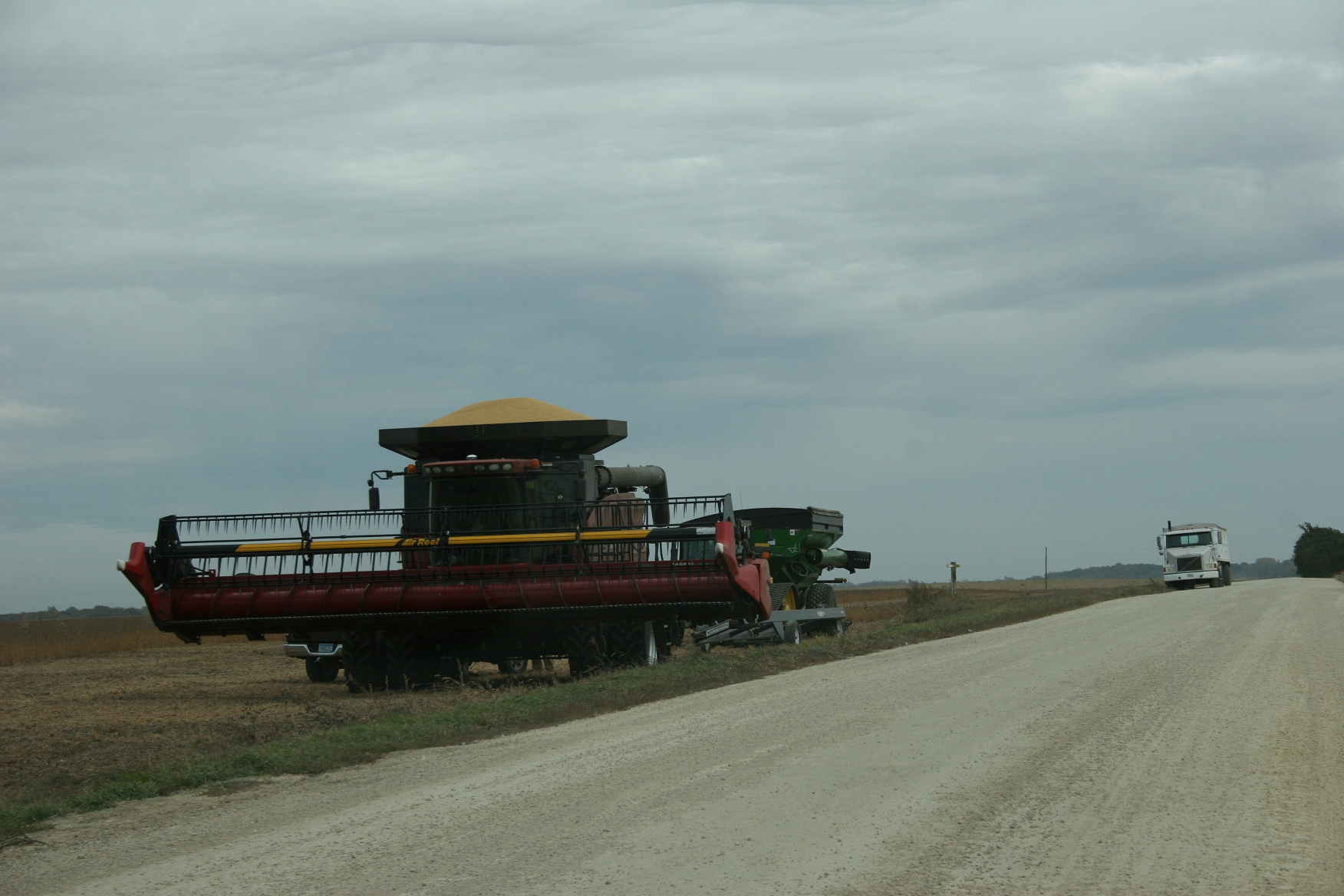
Harvesting just south of Faribault off Rice County Road 45.

Harvesting just south of Faribault off Rice County Road 45.

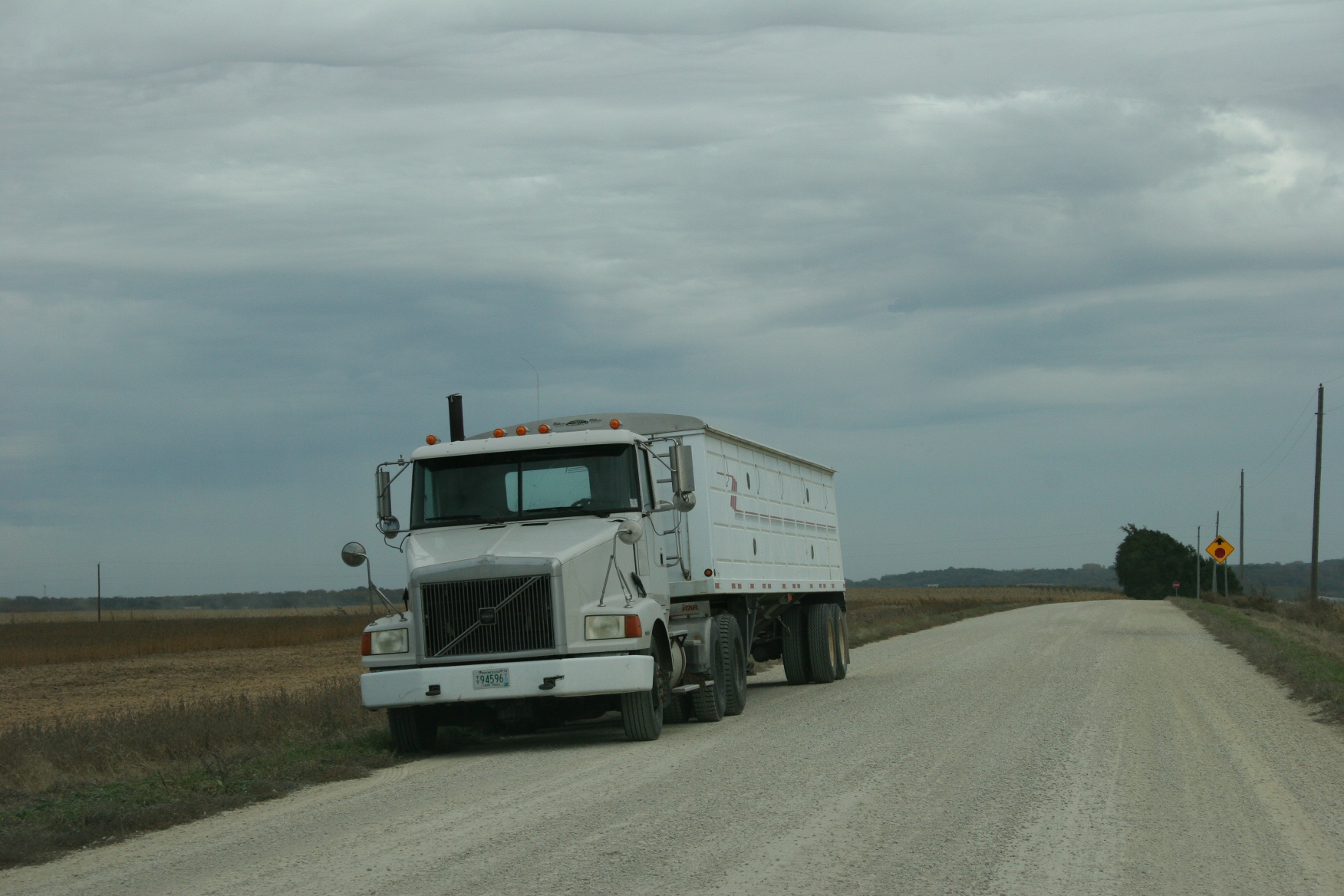
A semi ready to be filled with corn.

A semi ready to be filled with soybeans.

Trucks and tractors and combines labor or await the farmers who will toil day into dark to reap that which they’ve planted and tended and watched until now.

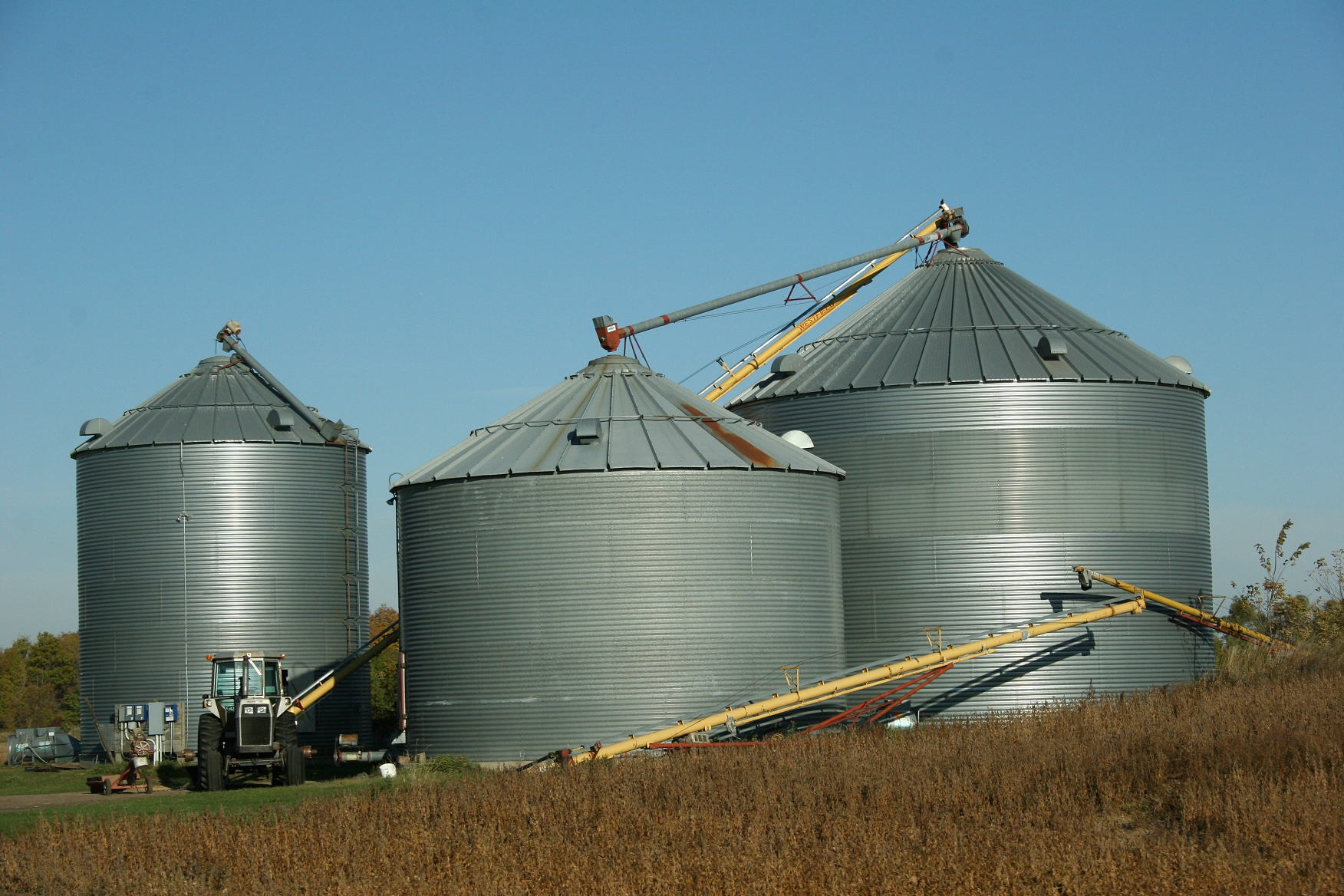
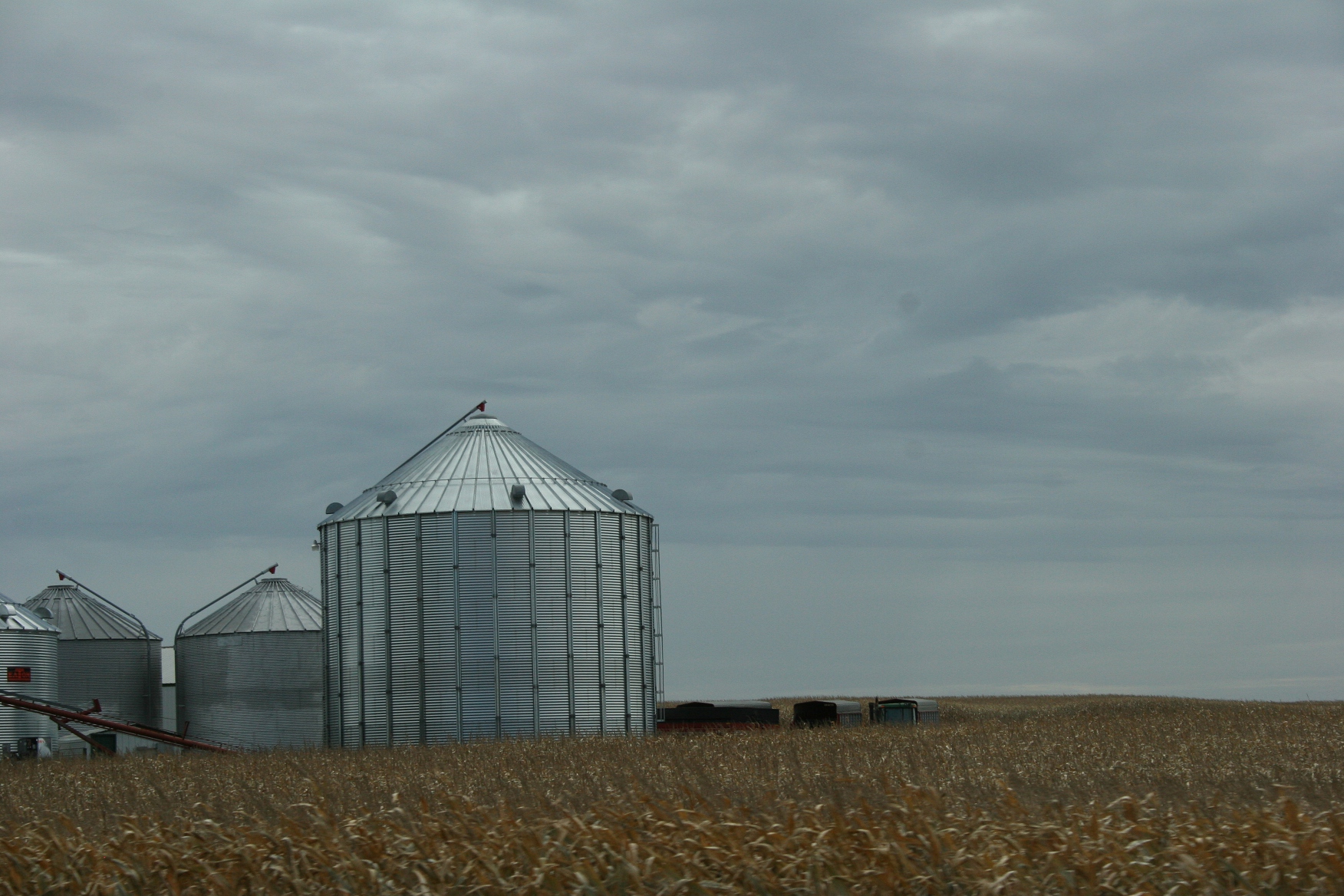
Bins likely have been emptied for the new crop.

Bins likely have been emptied for the new crop.

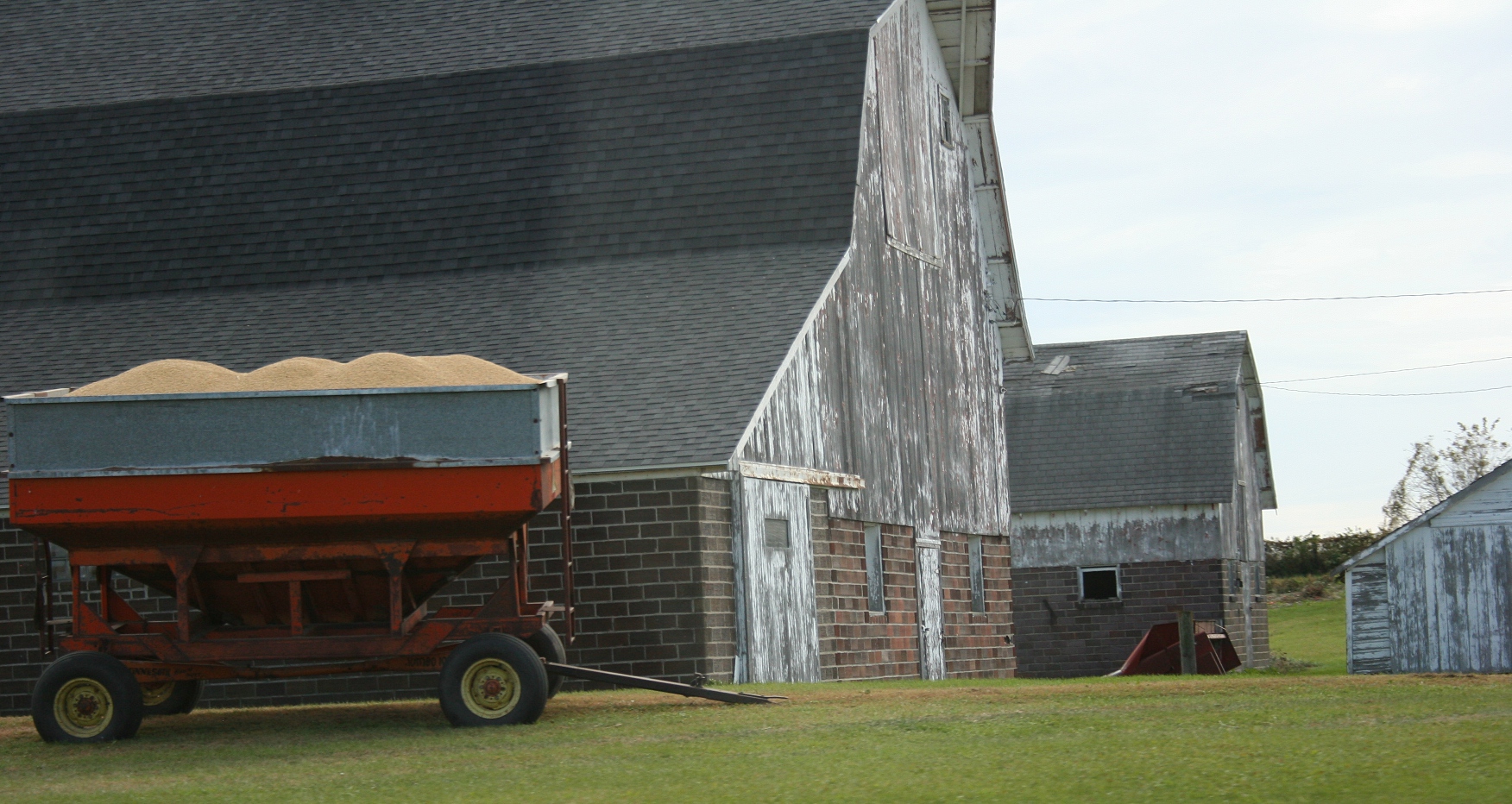
Corn fills a wagon at a farm site east of Morristown along Rice County Road 15.

Corn fills a wagon at a farm site east of Morristown along Rice County Road 15.

More bins to bank the harvest.

More bins to bank the harvest.

Corn brims wagons like a stash of gold, banks of bins or the local grain elevator ready for harvest delivery.

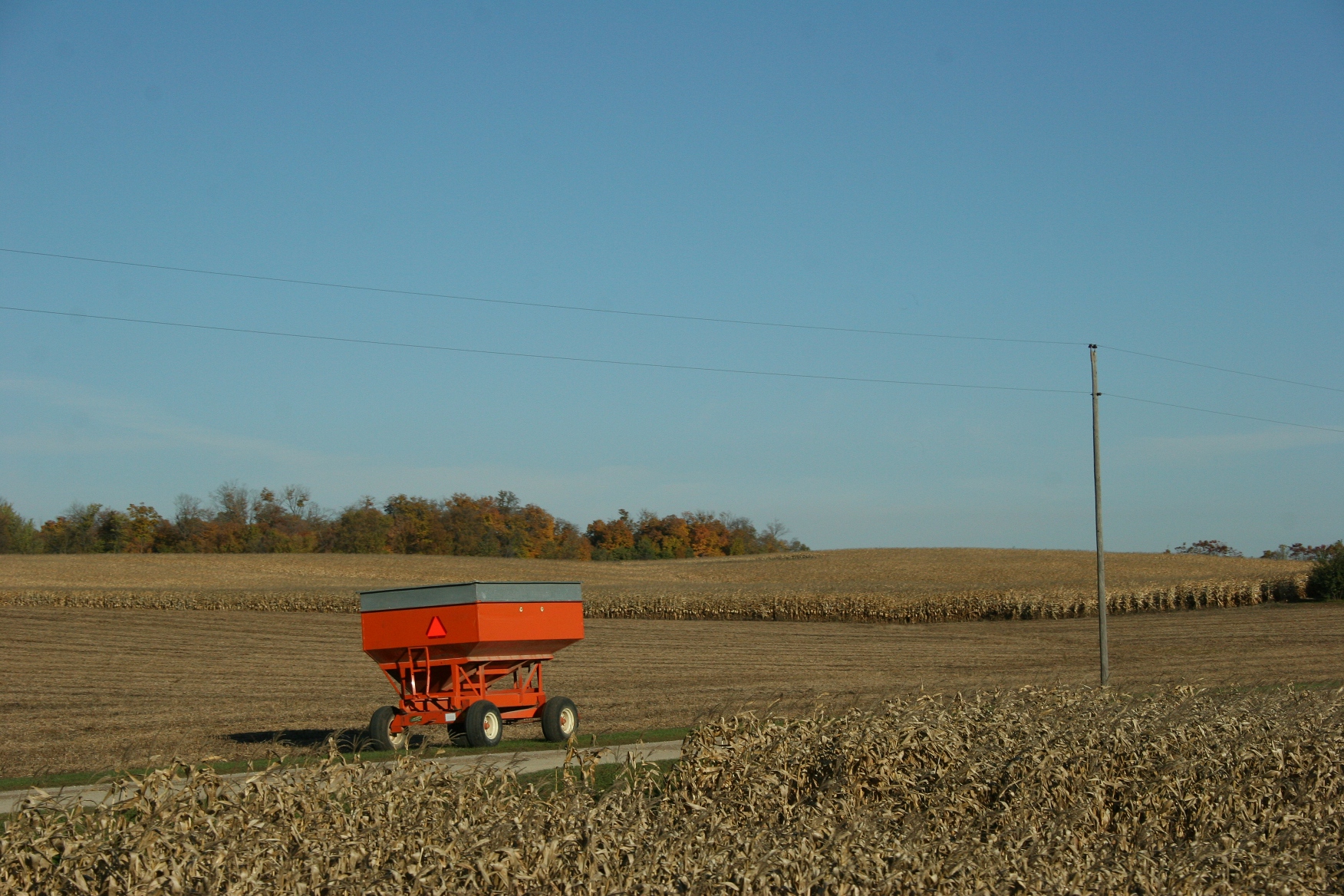
In rural Rice County, a wagon at the harvest ready.

In rural Rice County, a wagon at the harvest ready.

This is the season the farmer awaits.

Waiting...

Waiting…

This October, this harvest time.

© Copyright 2014 Audrey Kletscher Helbling
 

A photographic connection to my rural roots April 12, 2014

Filed under: Uncategorized — Audrey Kletscher Helbling @ 9:30 AM
Tags: , , , , , , ,

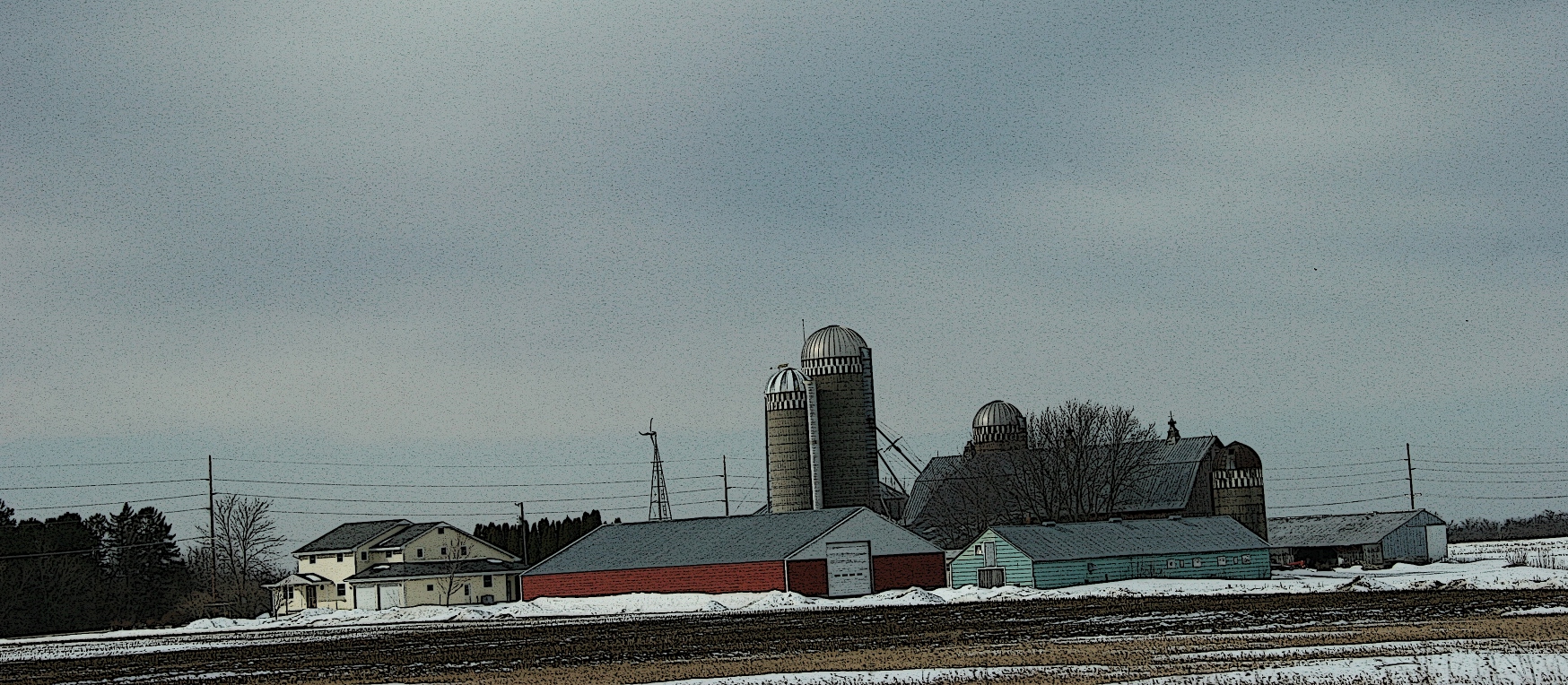
Rural Minnesota, farm site


I INFORMED MY HUSBAND that I would focus on photographing houses, rather than barns, on a recent 600-mile round trip from Faribault, Minnesota, to Appleton, Wisconsin.

He didn’t believe me. And he was right not to believe.


Rural Minnesota, red barn and red building


Yes, I snapped images of houses. But I could not, no matter how I tried, keep from lifting my Canon DSLR to capture photos of farm sites as we traveled.


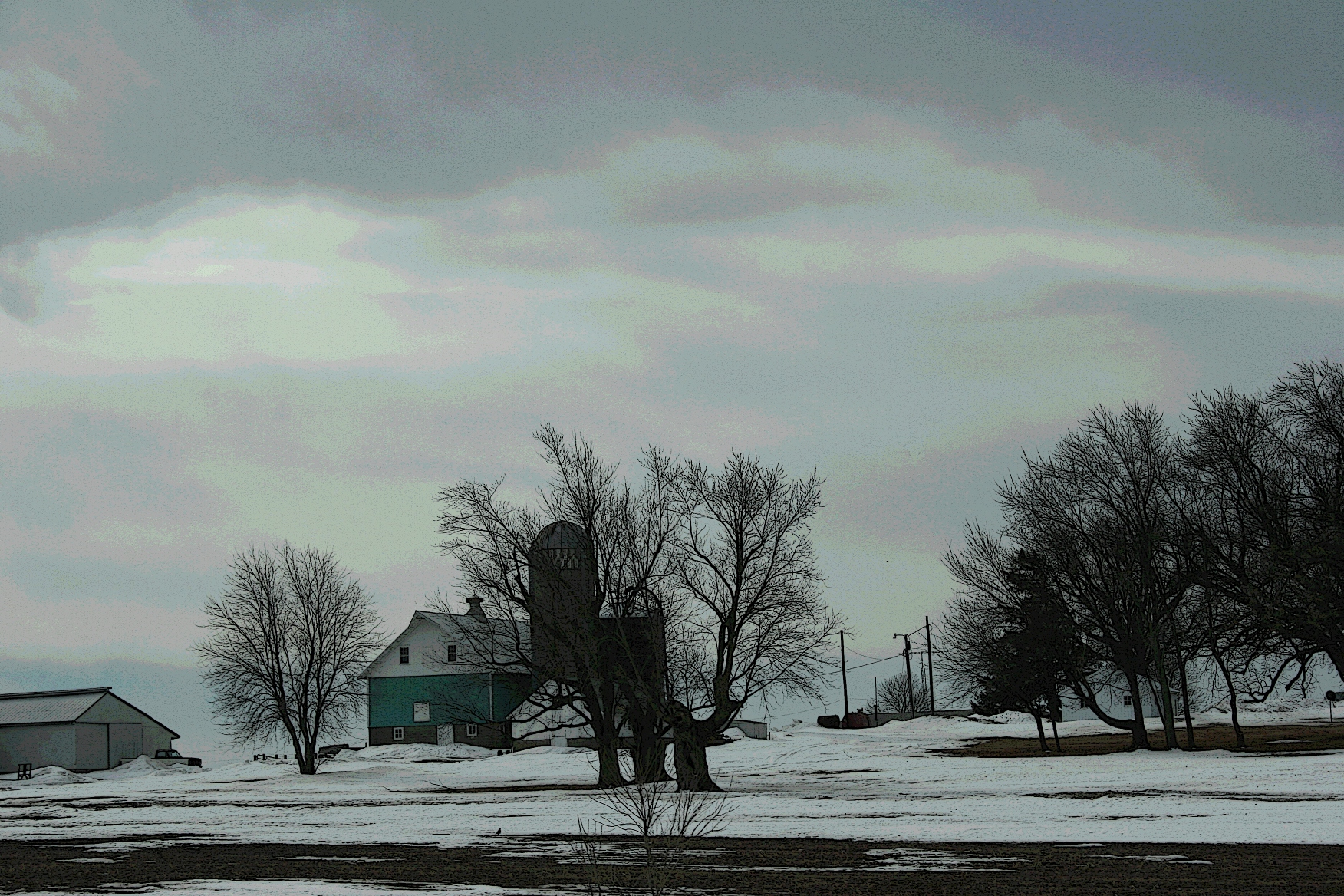
Rural Minnesota, turquoise barn


They are like a magnet for someone such as myself with rural roots. Having left the farm 40 years ago upon my graduation from high school, I rely today on memories and visual connectedness to fulfill my longing for the land. That and my writing, especially my poetry.


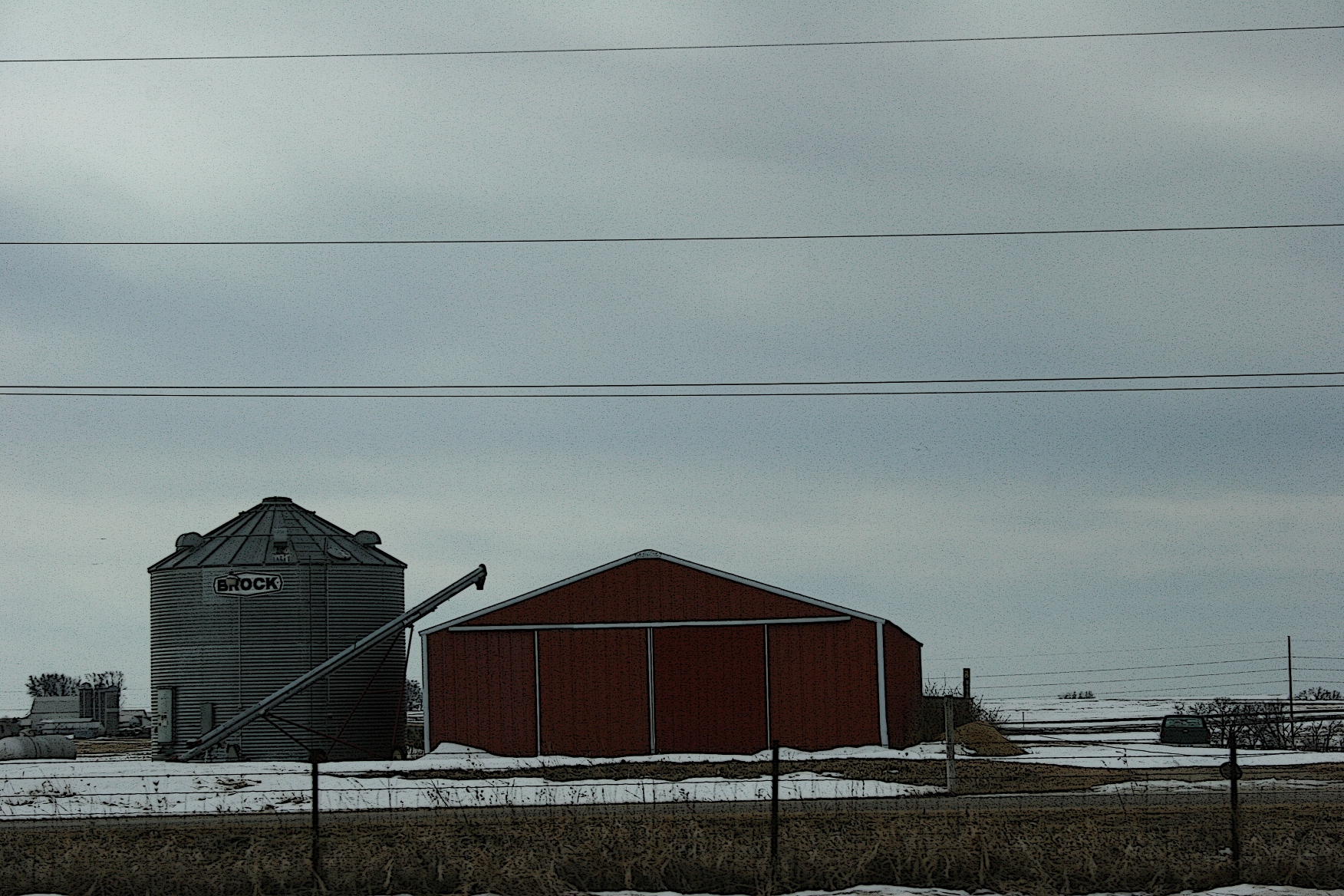
Rural Minnesota, machine shed and bin


Few people I know farm anymore. No one in my immediate extended family farms, although two brothers remain rooted to agriculture, one via co-ownership in a farm implement dealership and the other as CEO of an ethanol plant, both in my native southwestern Minnesota.


Rural Minnesota, farm behind hill


The farm where I grew up near Vesta is rented out. Thus I have lost that touch of feet on the farm, familiar creak of the barn door—that direct connection to the place of my youth.

My natural instinct now is to seek out, with my eyes and camera, that which is no longer mine.

(All photos were taken while traveling three weeks ago along Interstate 90 between Rochester and the Wisconsin border. Yes, the snow has since melted. Yeah!)

© Copyright 2014 Audrey Kletscher Helbling
 

What Minnesotans do on a balmy winter day January 20, 2014

SUNDAY BROUGHT A WELCOME change in weather with an abundance of sunshine and temps reaching nearly 40 degrees Fahrenheit here in southeastern Minnesota.

It was a glorious day.

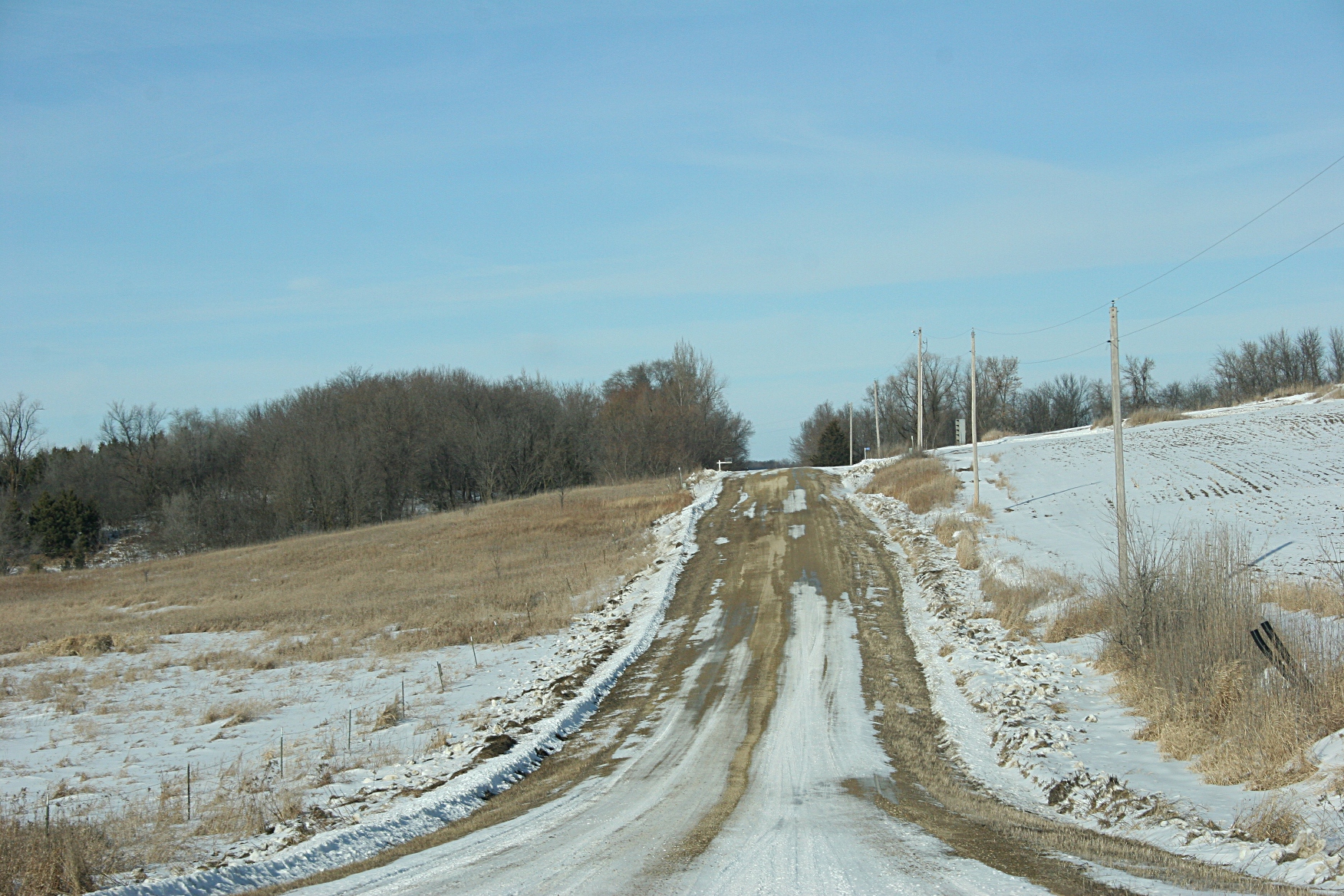
Following a country road Sunday afternoon somewhere northwest of Faribault.

Following a country road Sunday afternoon somewhere northwest of Faribault.

So after my husband had finished repairing a friend’s dad’s snowblower, we set out on a Sunday afternoon drive along back country roads northwest of Faribault. Oh, how I love a drive in the country, camera in hand, shooting scenes from the passenger side of the car.

And, yes, prior to departure I cleaned the salt-grimed car windows, a futile effort as the windshield was soon spotted with road spray. Temps weren’t quite warm enough to roll down the front passenger side window to take photos. No, we can’t always stop for photo ops or we would never get anywhere.

Anywhere was our destination. We both are suffering from cabin fever, the trapped feeling that afflicts Minnesotans when the winter gets too cold and too snowy for too long. Such is this winter. Today, after a one-day reprieve, we are sliding back into the deep freeze.

But we had yesterday, a gloriously warm and sunny Sunday. For that I am grateful.

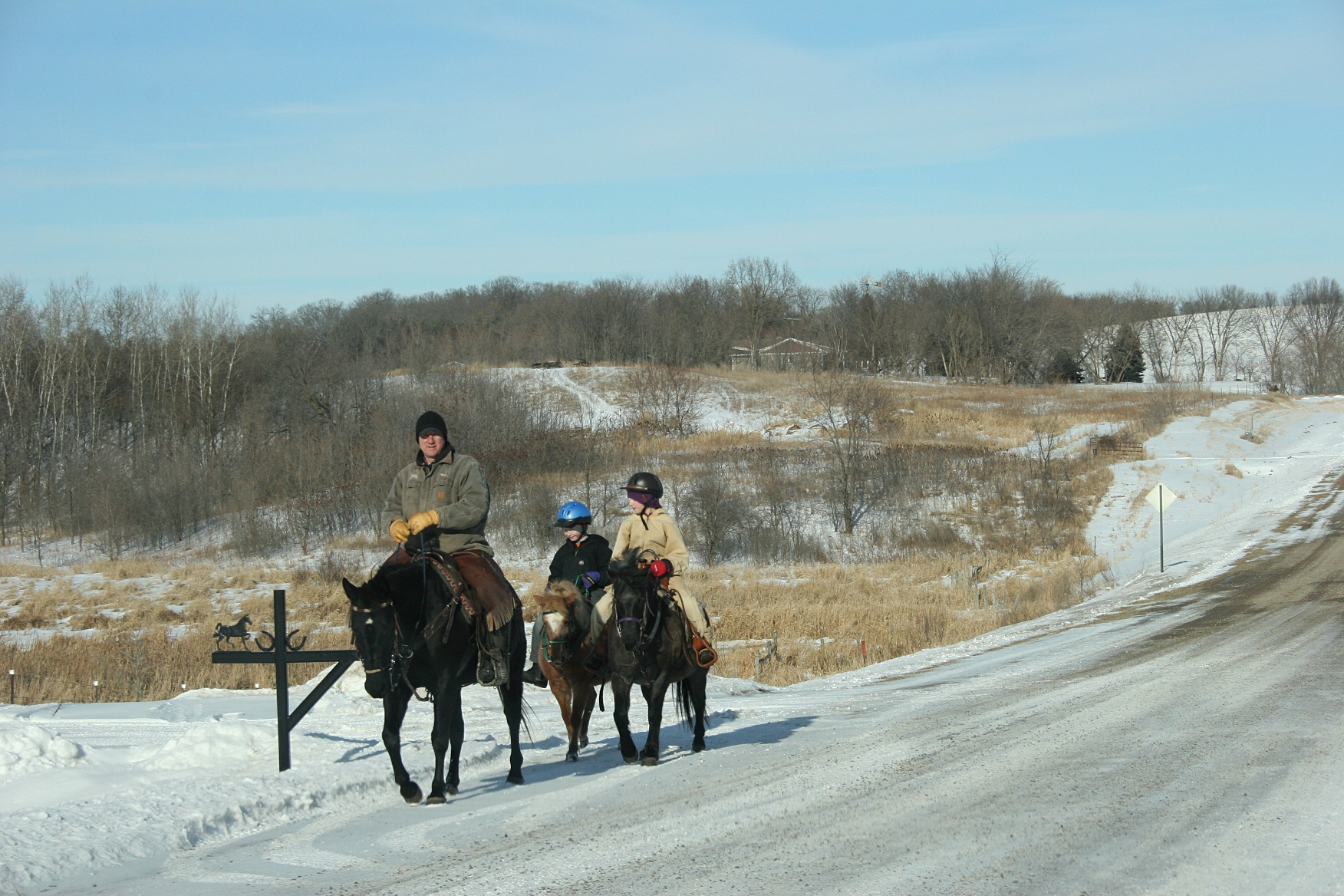
Sunday proved a perfect day for this family to ride their horses.

Sunday proved a perfect day for this family to ride their horses.

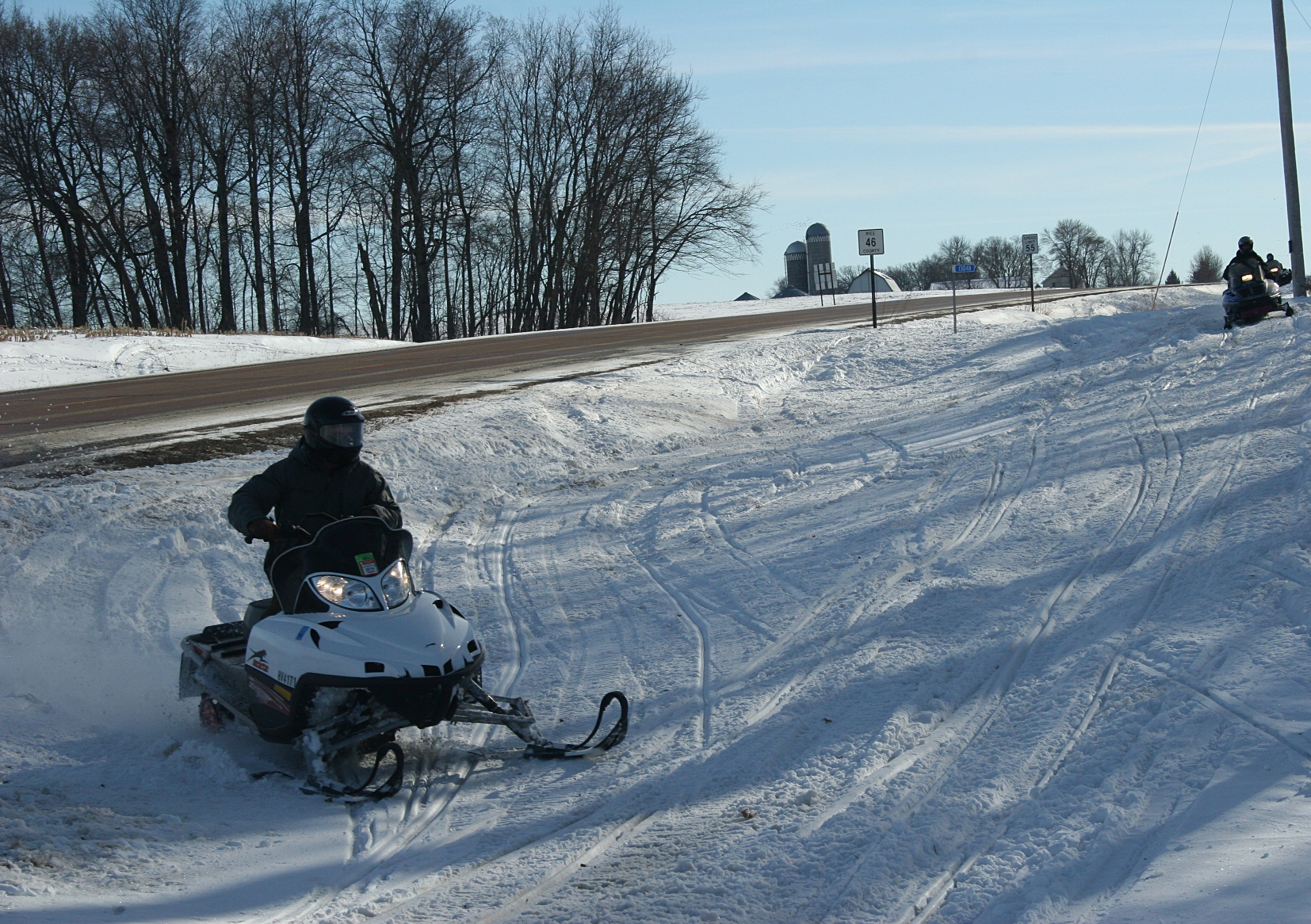
These Minnesotans preferred driving their snowmobiles in the ditch along a Rice County Road.

These Minnesotans snowmobiled in the ditch along a Rice County Road.

A few miles further north, other snowmobilers

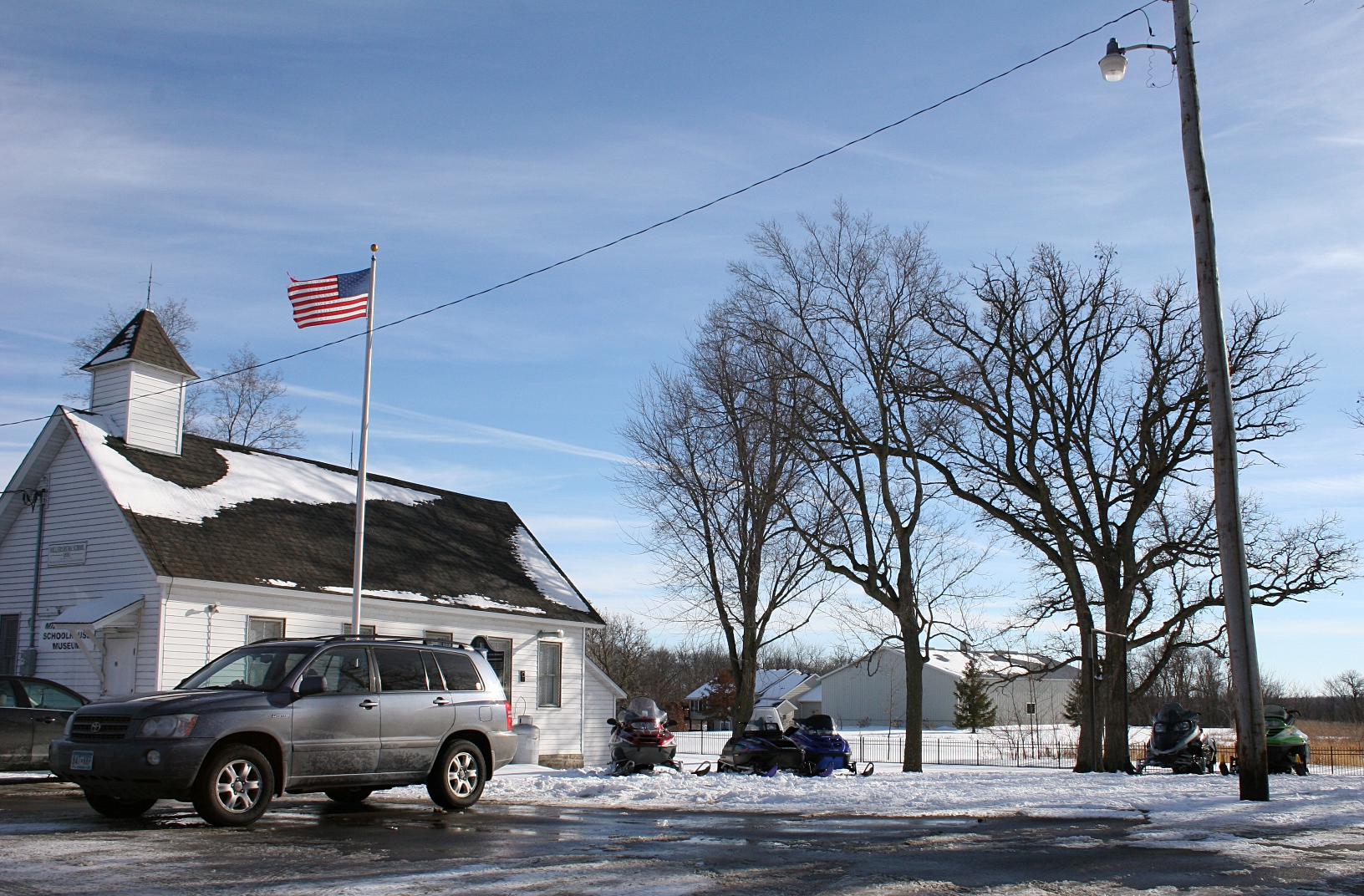
A few miles further north, other snowmobilers parked next to the old school in Millersburg and walked across the street to Boonie’s Bar & Grill.

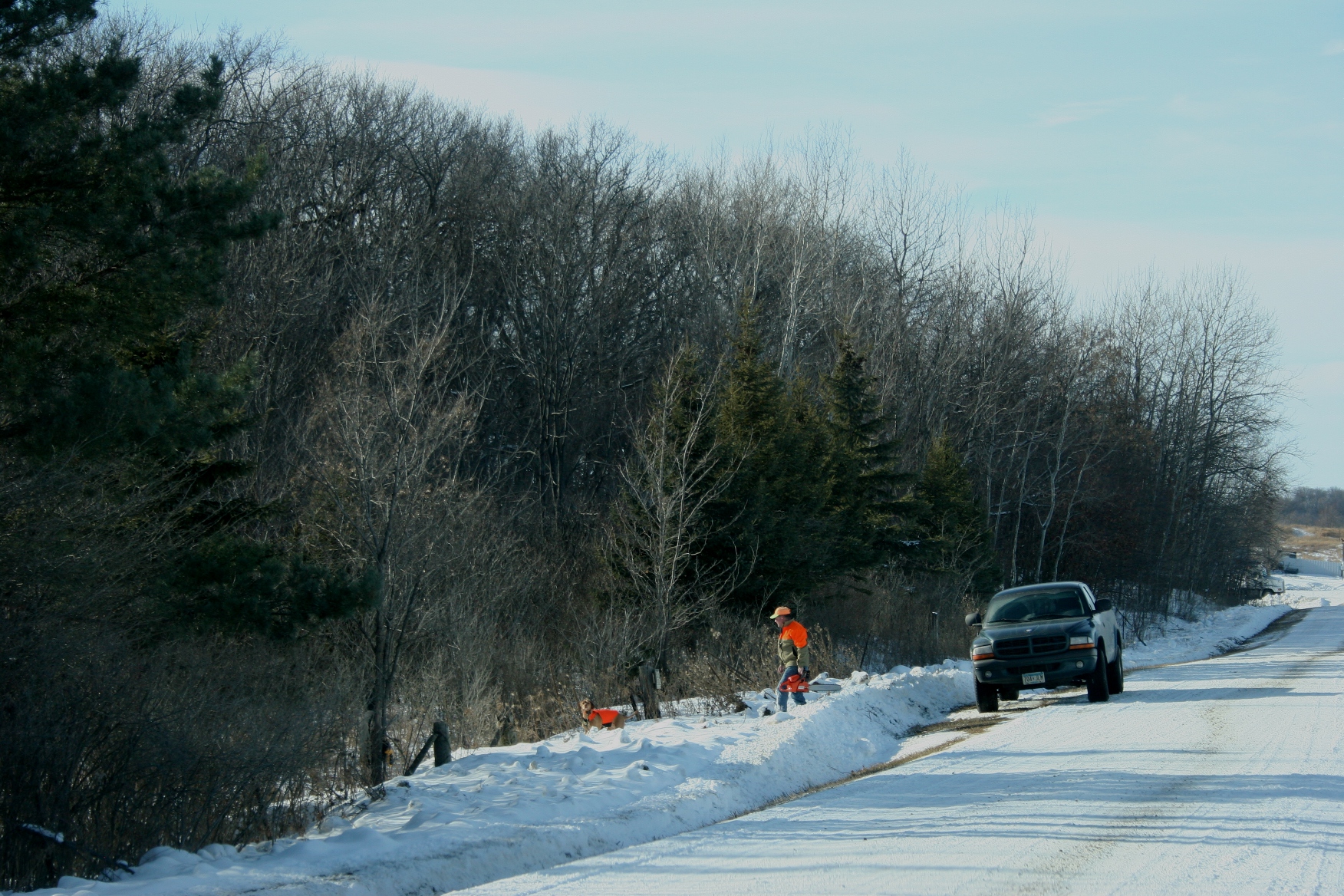
While some played, others worked. This guy prepares to saw wood along a rural roadway.

While some played, others worked. This guy prepares to saw wood along a rural roadway.

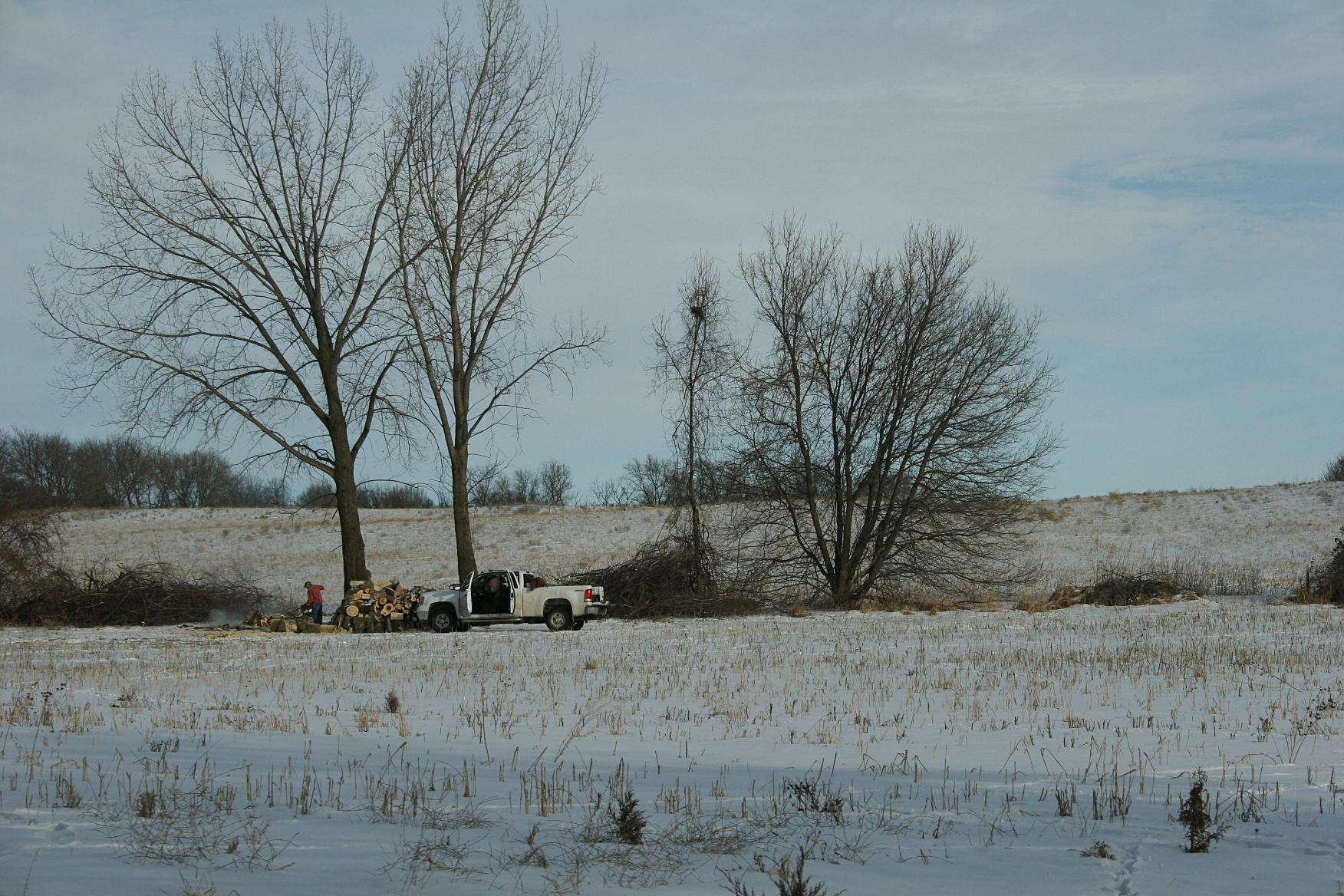
Back in Faribault, another man cut wood.

Back in Faribault, another man cut wood.

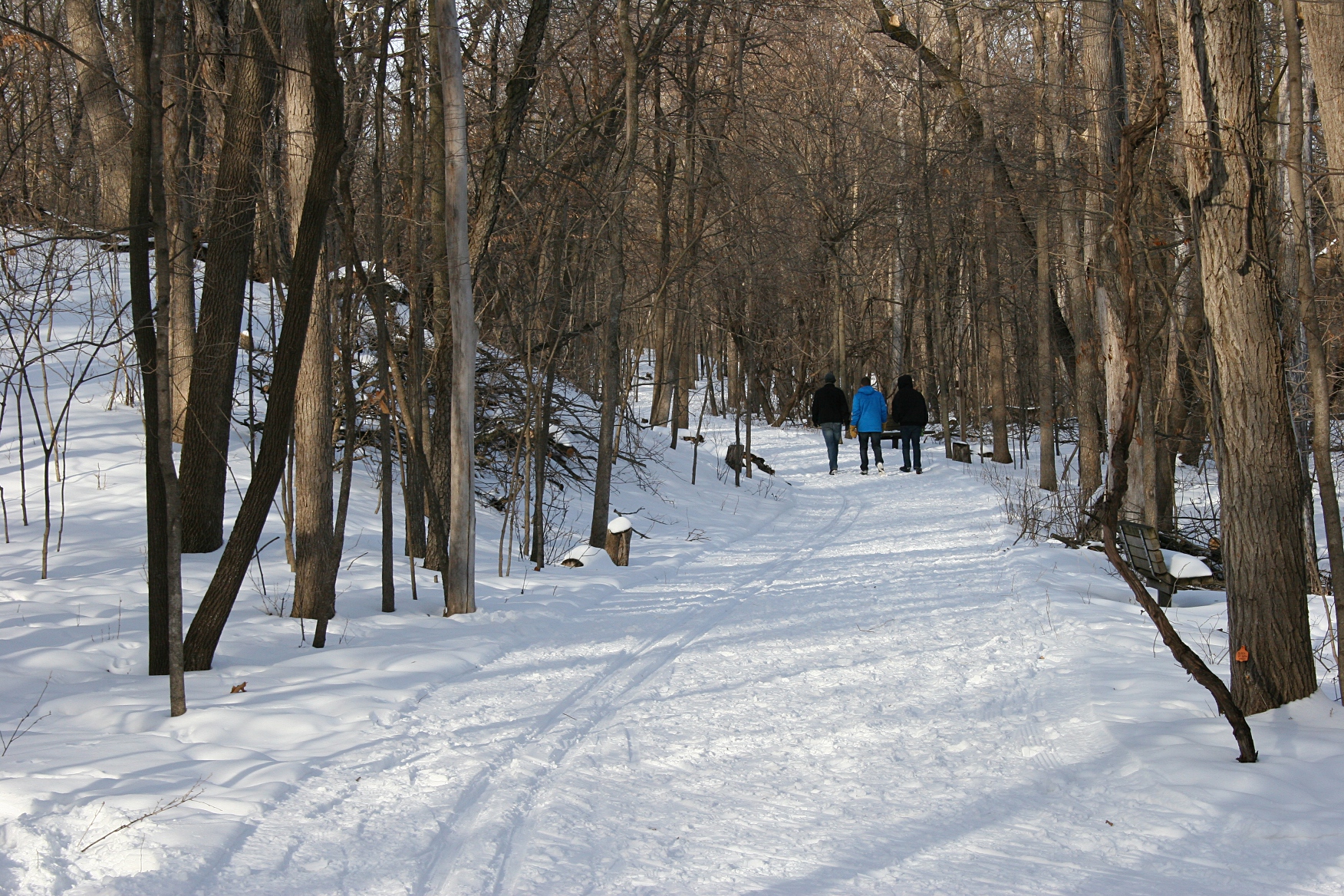
And we ended our drive with a walk along the snowy trails at River Bend Nature Center in Faribault.

And we ended our drive with a walk along the snowy trails at River Bend Nature Center in Faribault.

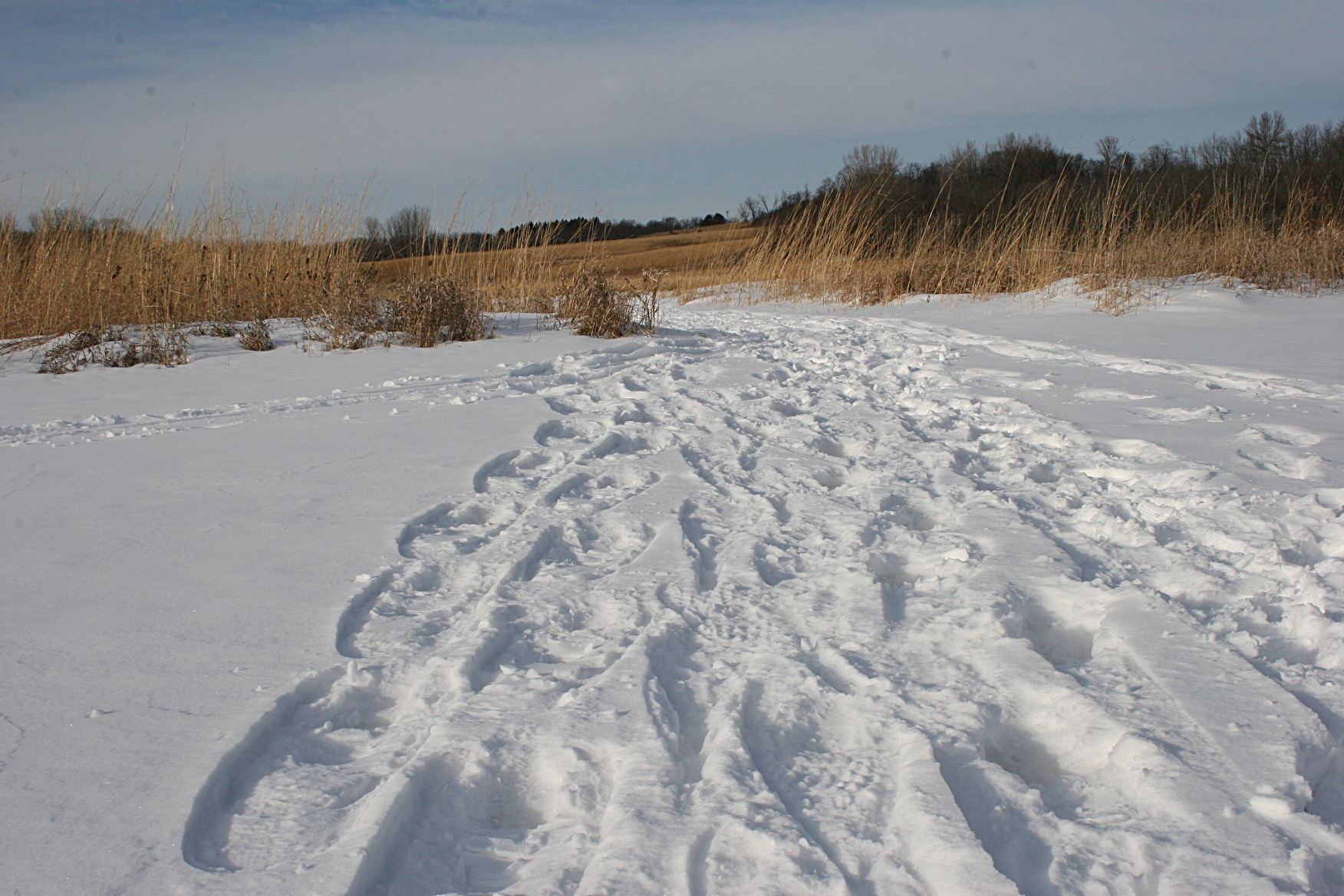
Fresh tracks showed us that others snowshoed and skied through the nature center.

Fresh tracks showed us that others snowshoed and skied through the nature center.

© Copyright 2014 Audrey Kletscher Helbling
 

Sunday afternoon drive snapshot: Discovering Theilman & its historic opera house November 17, 2013

WHEN SUNDAY AFTERNOON DRIVES with my husband lead us to undiscovered hamlets and historic treasures, I am especially pleased.

Recently, heading east of Zumbro Falls along Minnesota Highway 60, we turned onto Wabasha County Road 4 aiming south for Theilman. Neither of us had ever heard of Theilman, an unincorporated West Albany Township community. Precisely the type of place we prefer.

Driving into Theilman, we met a lot of trucks pulling horse trailers.

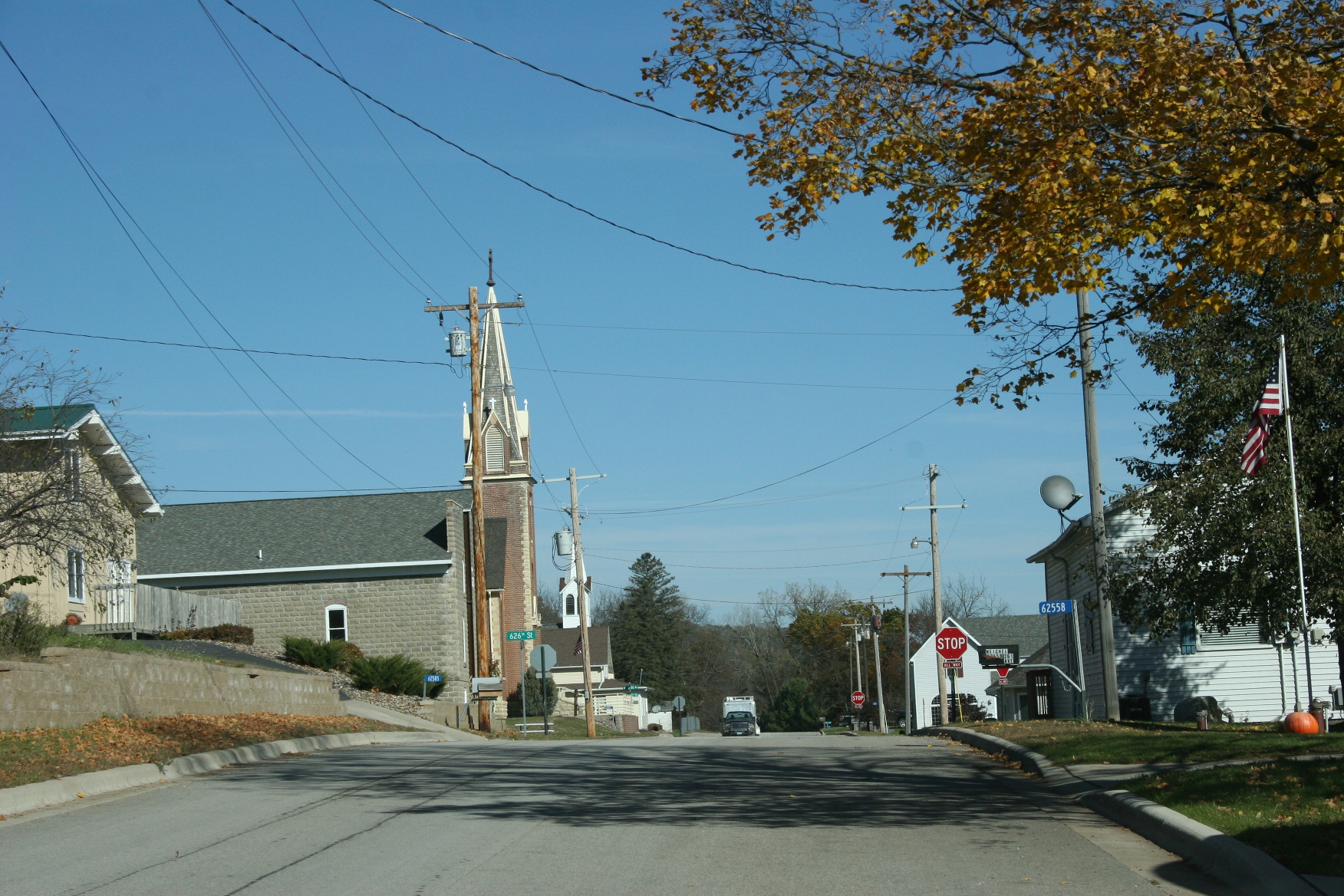
Entering Theilman, located between Lake City and Plainview.

Driving into this settlement, we were impressed. Often times we find such tucked away spots to be unkempt with run-down properties, junk vehicles and a seemingly carefree abandon lifestyle. But not, for the most part, in Theilman.

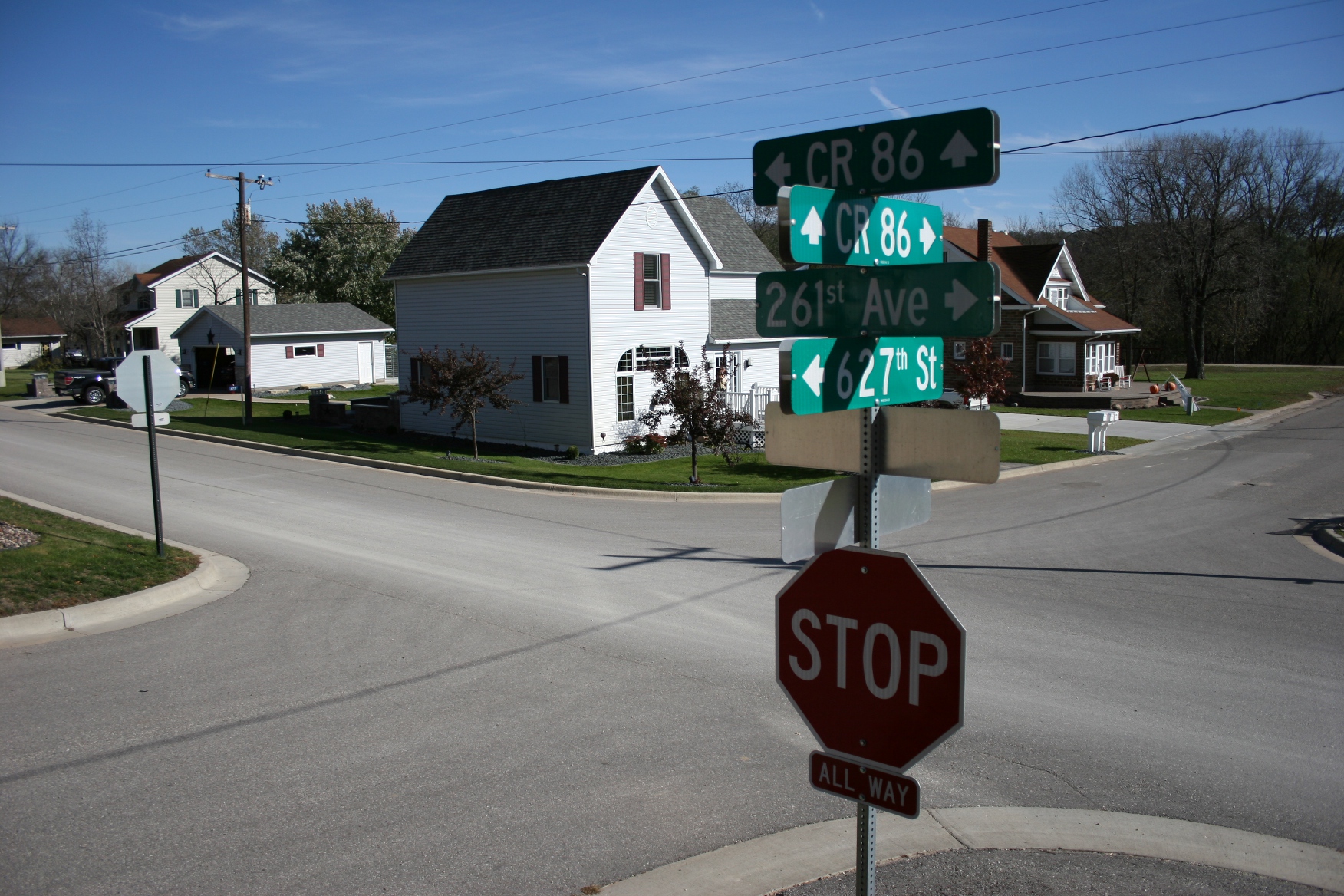
Well kept homes and a small playground/park border one side of the main drag, where I spotted this mass of signage on the corner by St. Joseph's Catholic  Church.

Well-kept homes and a small playground/park border one side of the main drag, where I spotted this mass of signage on the corner by St. Joseph’s Catholic Church.

Overall, folks here seem to care about this place with well-kept homes, two churches (although both are closed and one appears to be a private residence) and, the most fabulous discovery of all, a restored opera house.

Another truck and horse trailer pass by the old Catholic church.

Passing by the old Catholic church.

As we stopped to investigate, a steady stream of pick-up trucks pulling horse trailers passed through Theilman, exiting the nearby Zumbro Bottoms Horse Campground.

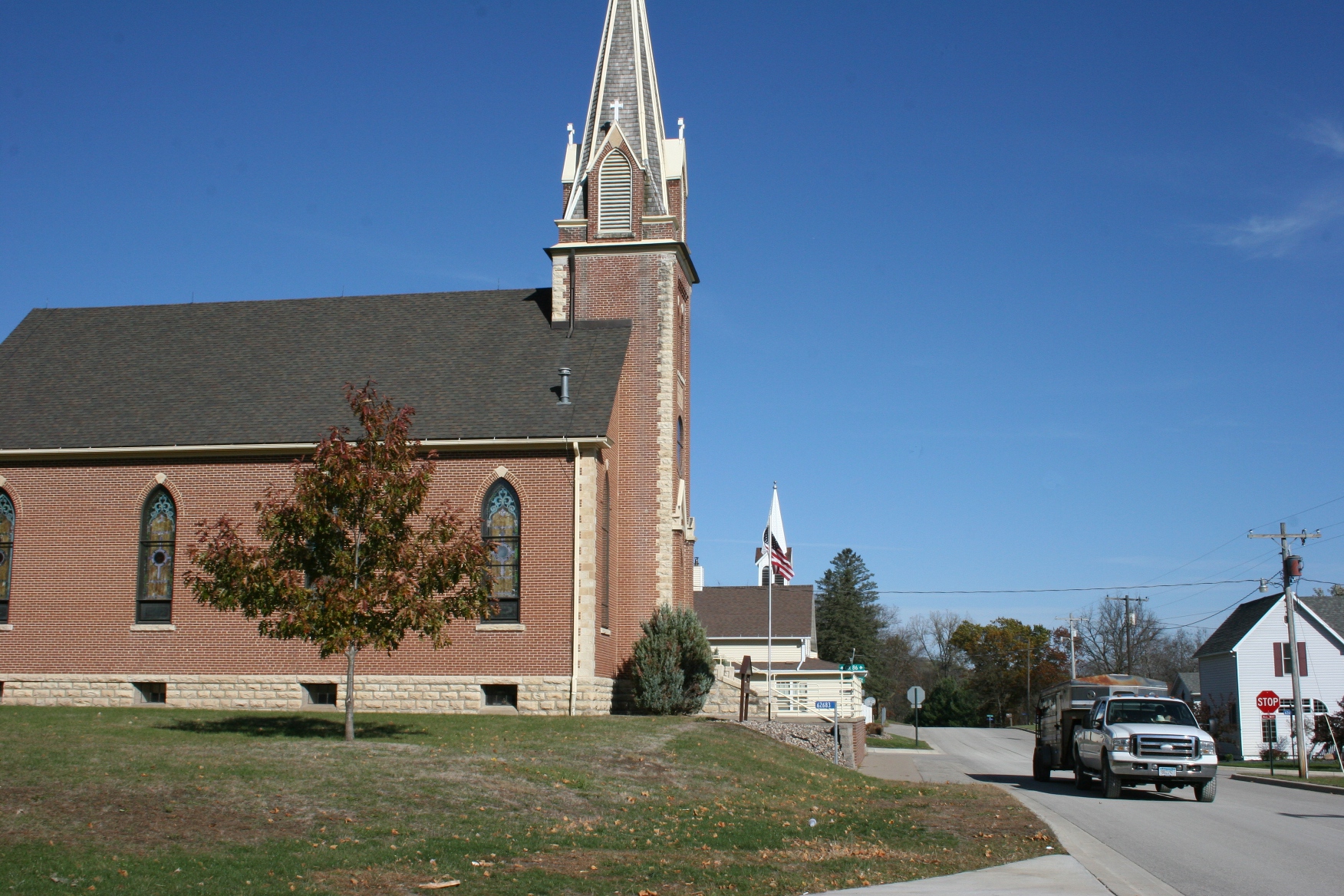
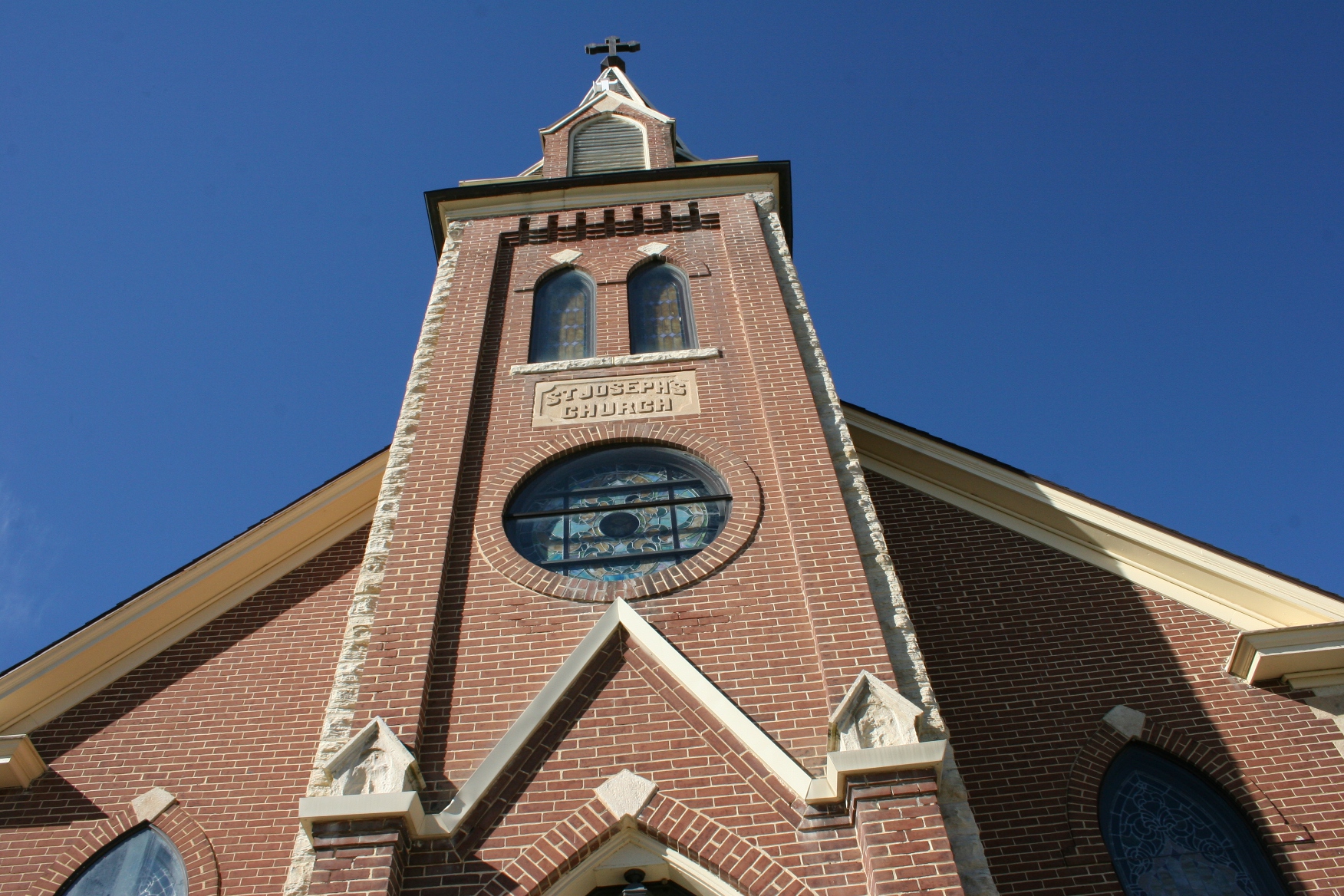
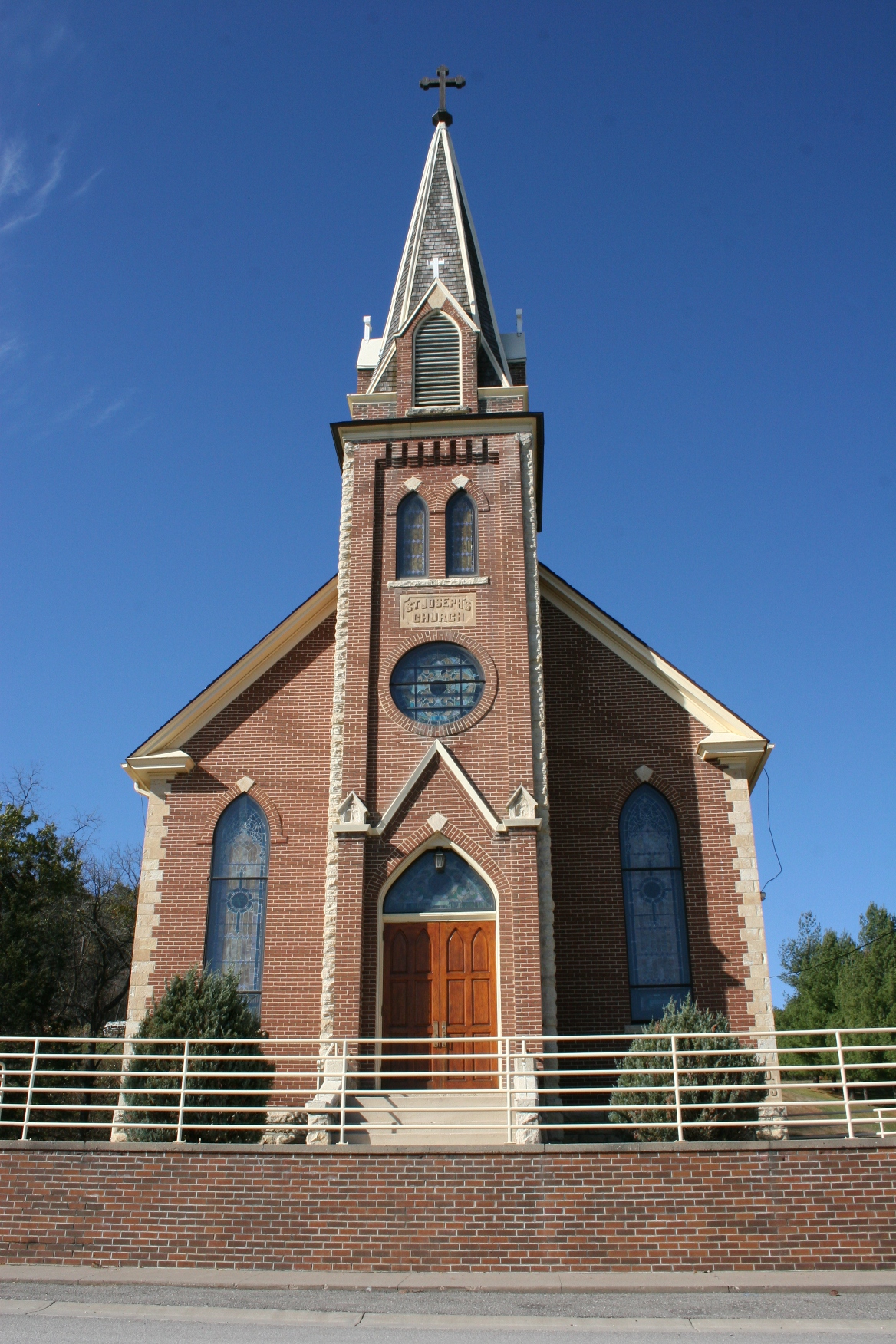
Strong, study and beautiful St. Jospeh's Catholic Church.

Strong, study and beautiful St. Joseph’s Church.

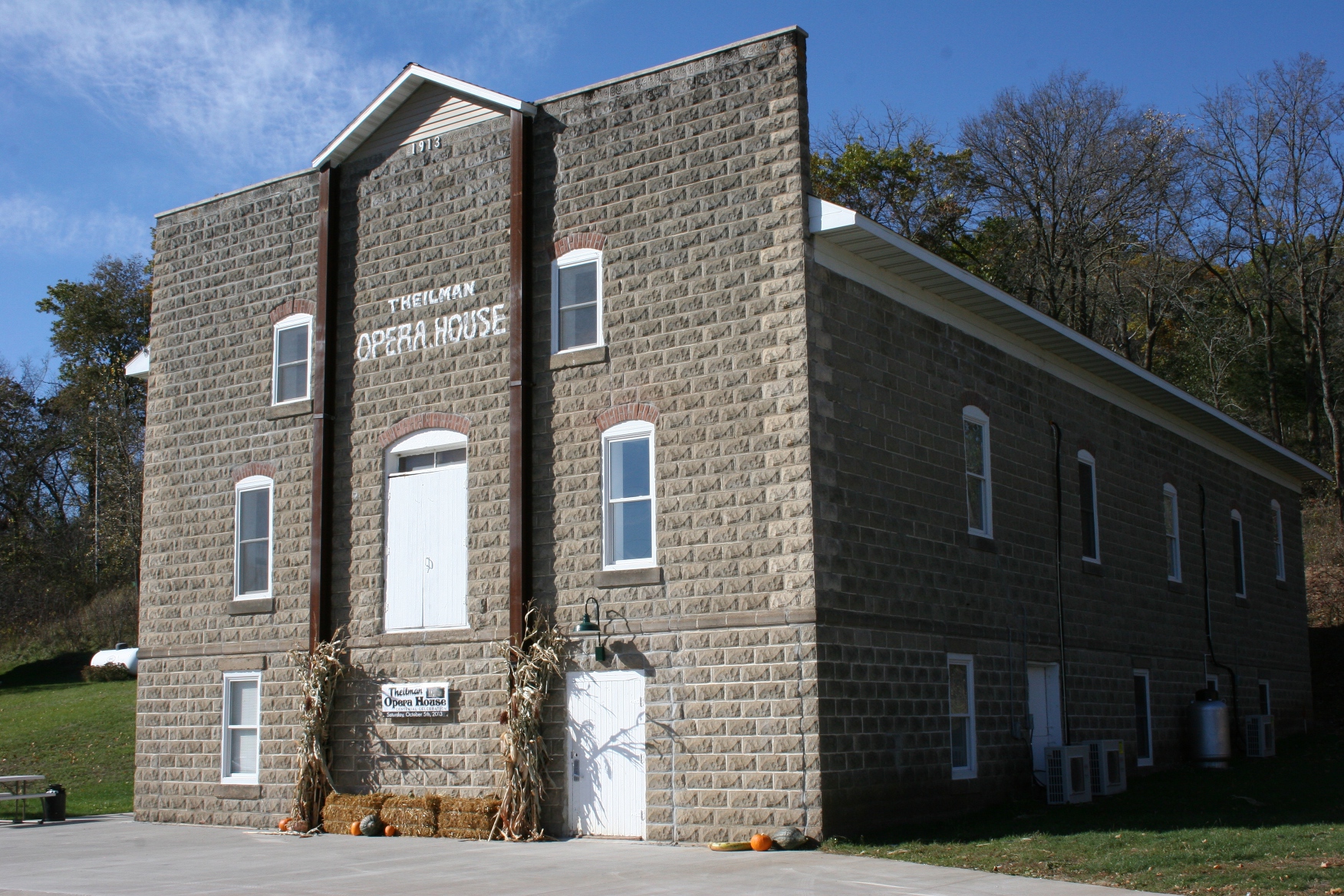
The restored Theilman Opera House.

The restored Theilman Opera House.

I was disappointed, but not surprised, to find the doors to the century old Theilman Opera House and the next door 1903 St. Joseph’s Catholic Church locked. I resorted to peering in an opera house side window, where I spotted a bar area and an apparent kitchen.

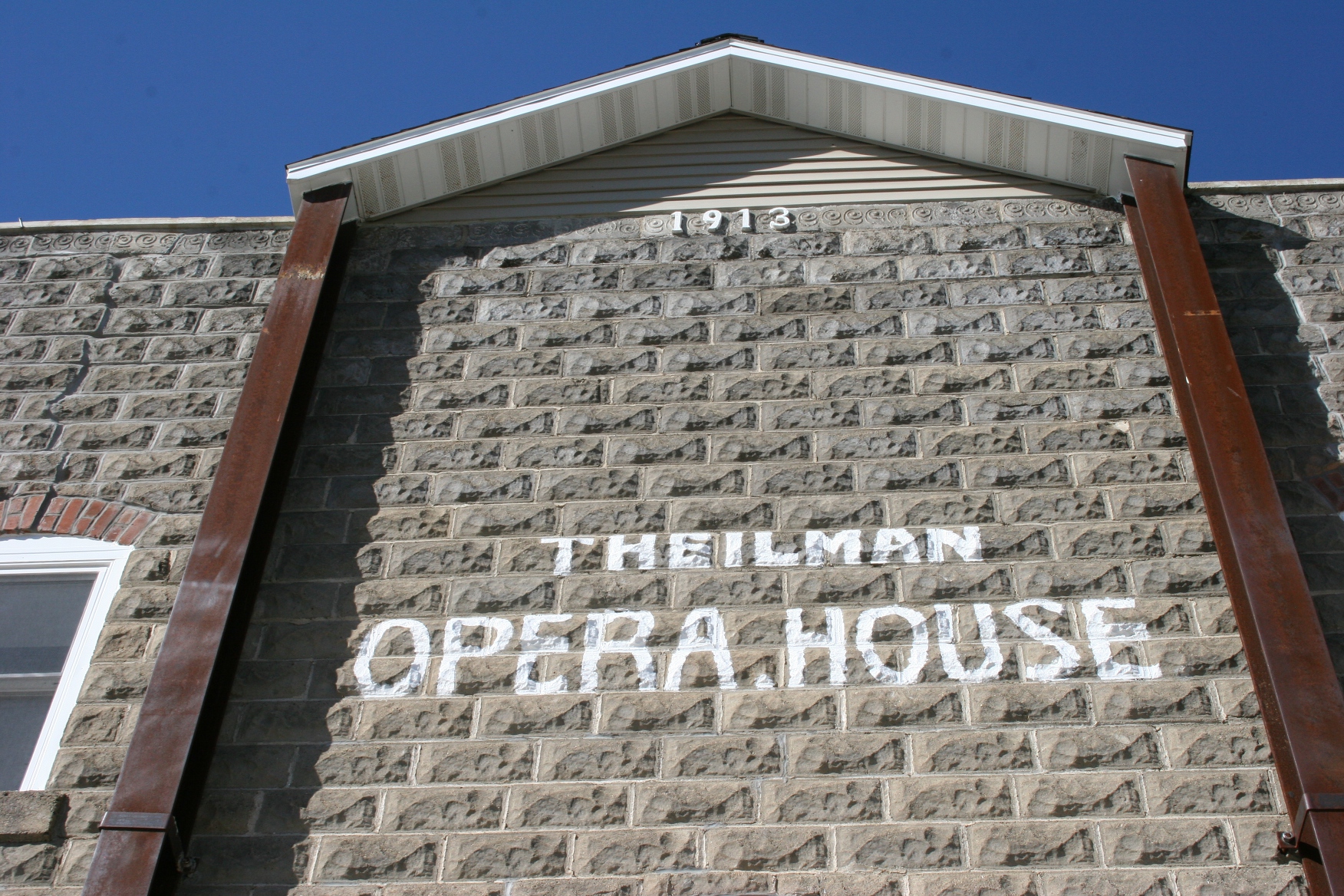
Theilman, Opera House close-up

As Randy and I studied the opera hall exterior, he speculated on its use, perhaps as a former livery stable. He noted reinforcing beams on the building’s front. He has a good eye and sense of history. I later learned he was right about the building. The lower level once held horses while folks danced upstairs or were entertained by traveling medicine shows.

According to the Theilman Opera House Facebook page, the building was pretty much falling apart when locals recently stepped up to save it. Today, with those reinforced walls, a new roof, new flooring, electrical work and other improvements, the 100-year-old opera hall is available for event rental.

Fabulous. I love when a community rallies to save an historic landmark.

Now, what about the next door Catholic church? What does the future hold for that building?

BONUS PHOTOS:

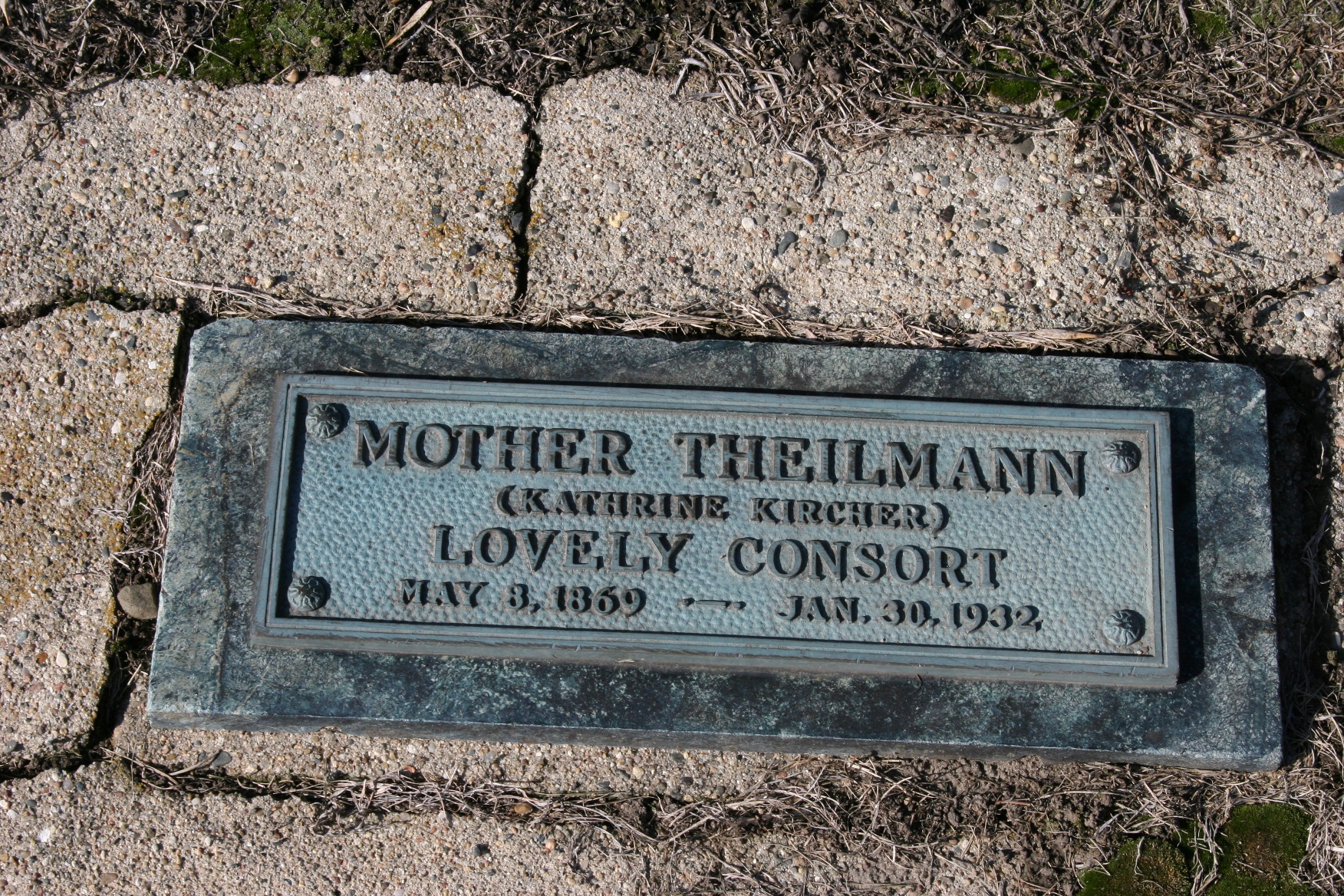
We walked the cemetery behind he wood-frame church and found numerous Theilman family graves, including this one. It drew my attention for the words, "lovely consort."

We walked the cemetery behind he wood-frame church and found numerous Theilmann family graves, including this one. It drew my attention for the words, “lovely consort.” And I also noticed that the Theilmann on the marker is spelled with two “n’s” unlike the single “n” in the town’s name.

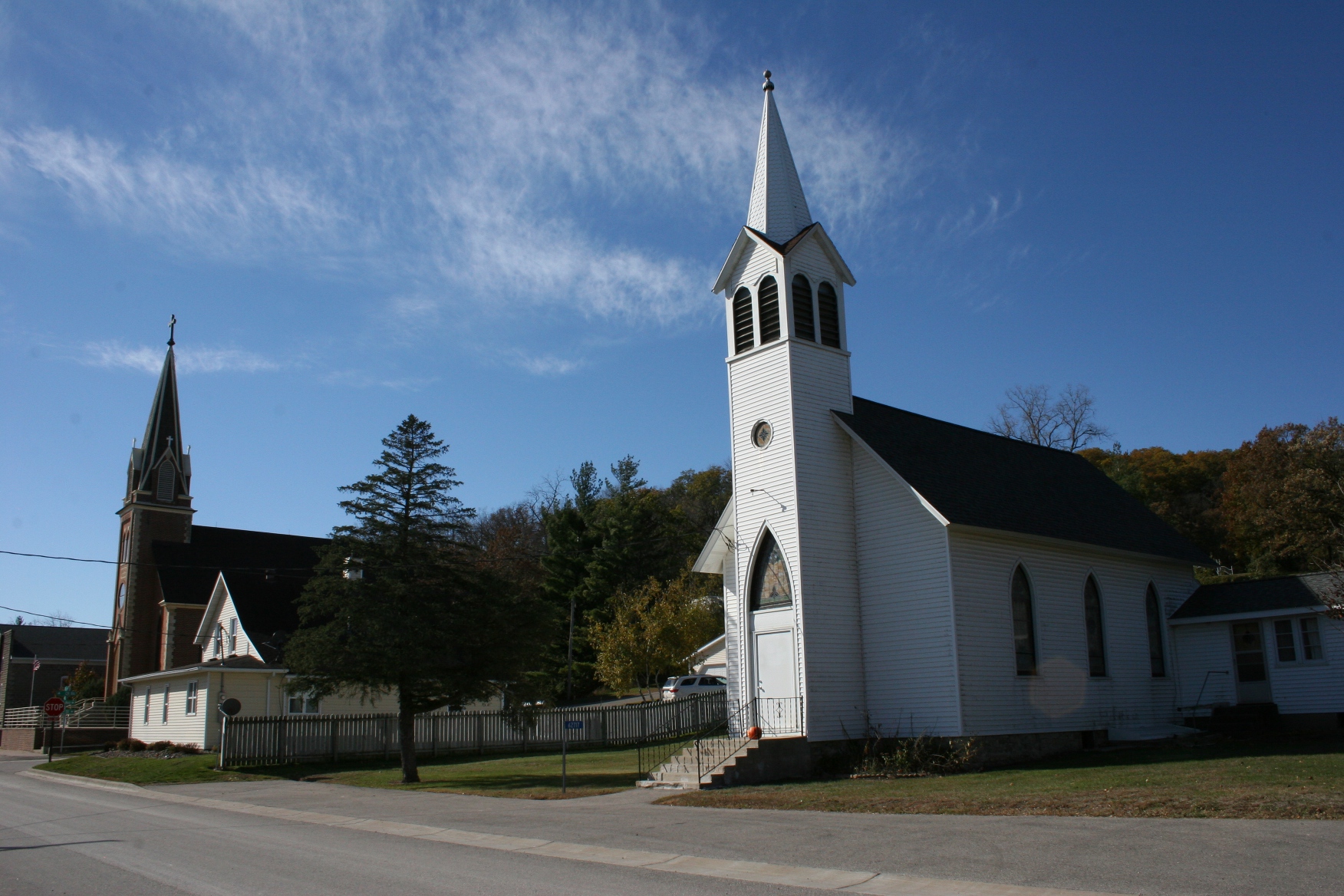
Theilman's two churches. I believe the wood one is now a private residence as no sign marked it as a sanctuary.

Theilman’s two churches. I believe the wood one is now a private residence as no sign marked it as a sanctuary and it appears to be a home.

St. Joseph's Church, still an active Catholic parish.

St. Joseph’s Church, a closed parish of the Roman Catholic Diocese of Winona, according to info I found online.

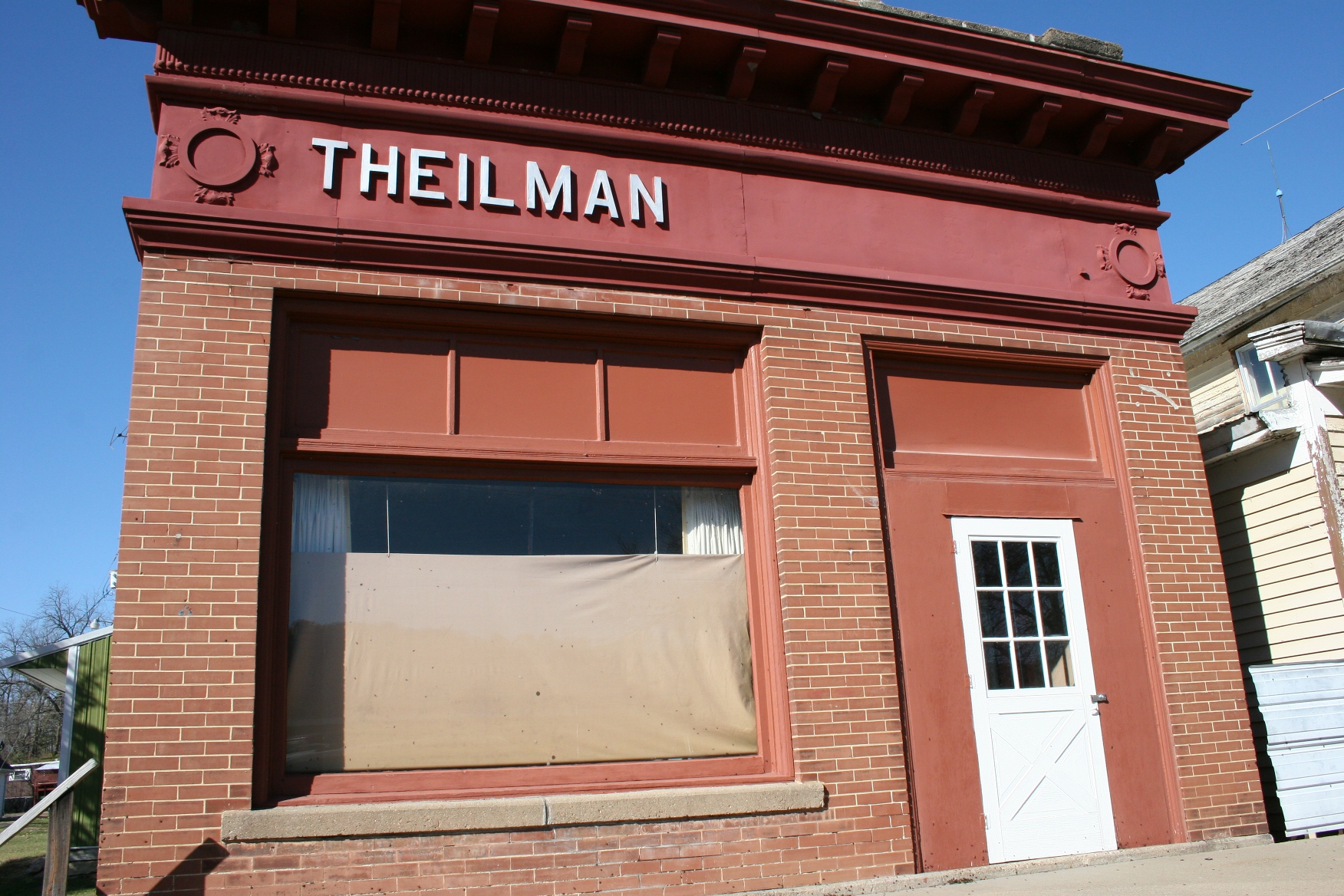
Another interesting old building in Theilman. Would love to know its history.

Another interesting old building in Theilman. I would love to know its history.

© Copyright 2013 Audrey Kletscher Helbling


Up close with an Amish family in southeastern Minnesota October 15, 2013

HIS NAME SURPRISES ME. Dennis. “It is not,” I insist to my husband, “in The Book of Amish.”

Not that a Book of Amish exists. I have made that up. But in my mind, this trim Amish carpenter with the dark beard, suspenders criss-crossing his back and a tape measure hooked on his black pants, should bear a biblical name like Samuel, Jacob or Daniel.

Dennis sounds too Englisch.

His surname of Hershberger, however, seems appropriate although the German in me would like to insert a “c” and make that Herschberger.

Driving Fillmore County Road 21 north of Canton toward Henrytown then west to Dennis and Mary Hershberger’s farm in early October 2012. This is deep in Minnesota Amish country.

The photographer in me would also like very much to photograph this young Amish father who crafts the most beautiful, gleaming furniture you can imagine on his farm north of Canton and west of Henrytown in southeastern Minnesota. But I know that to photograph him would violate his trust and hinder my welcome to Countryside Furniture.

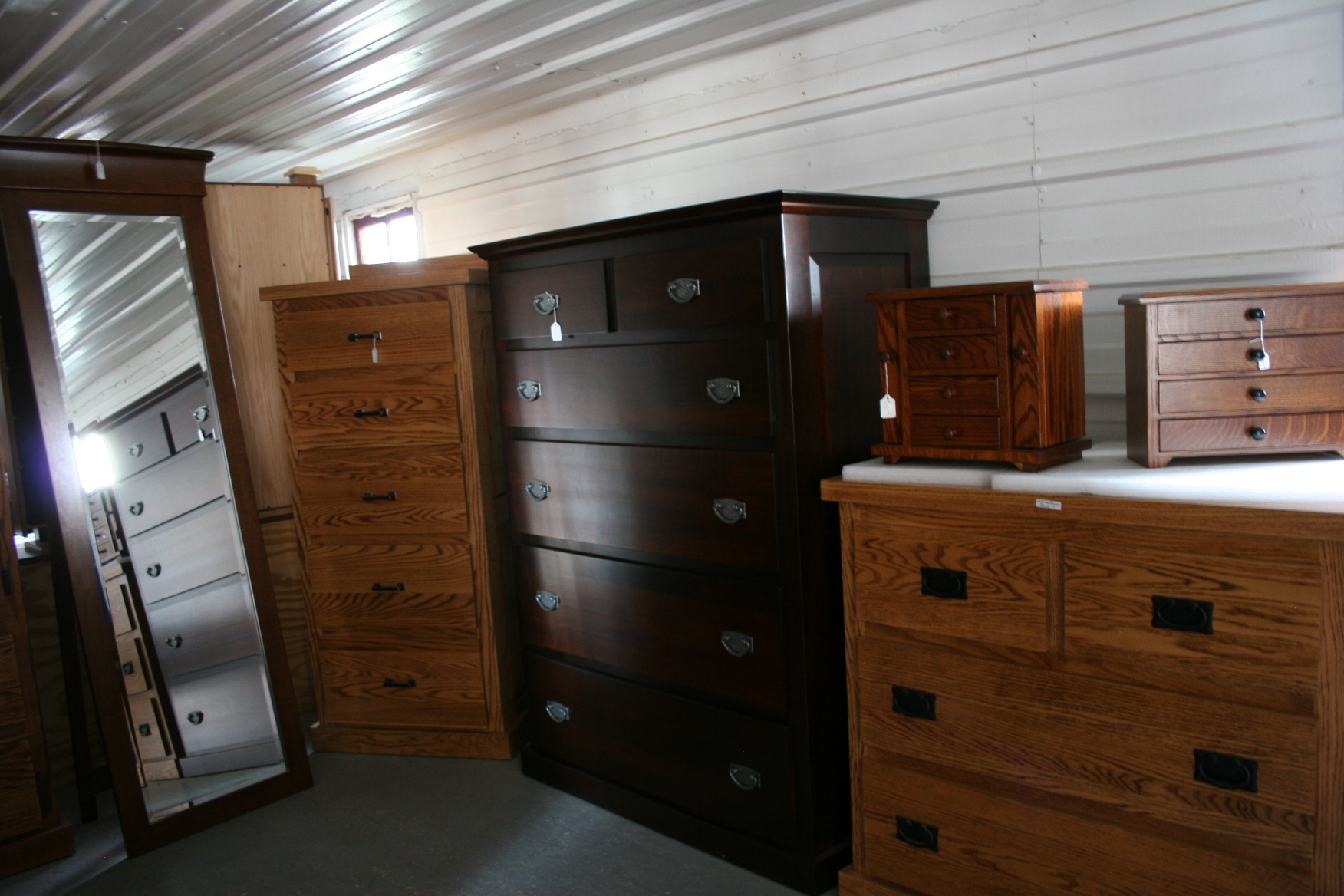
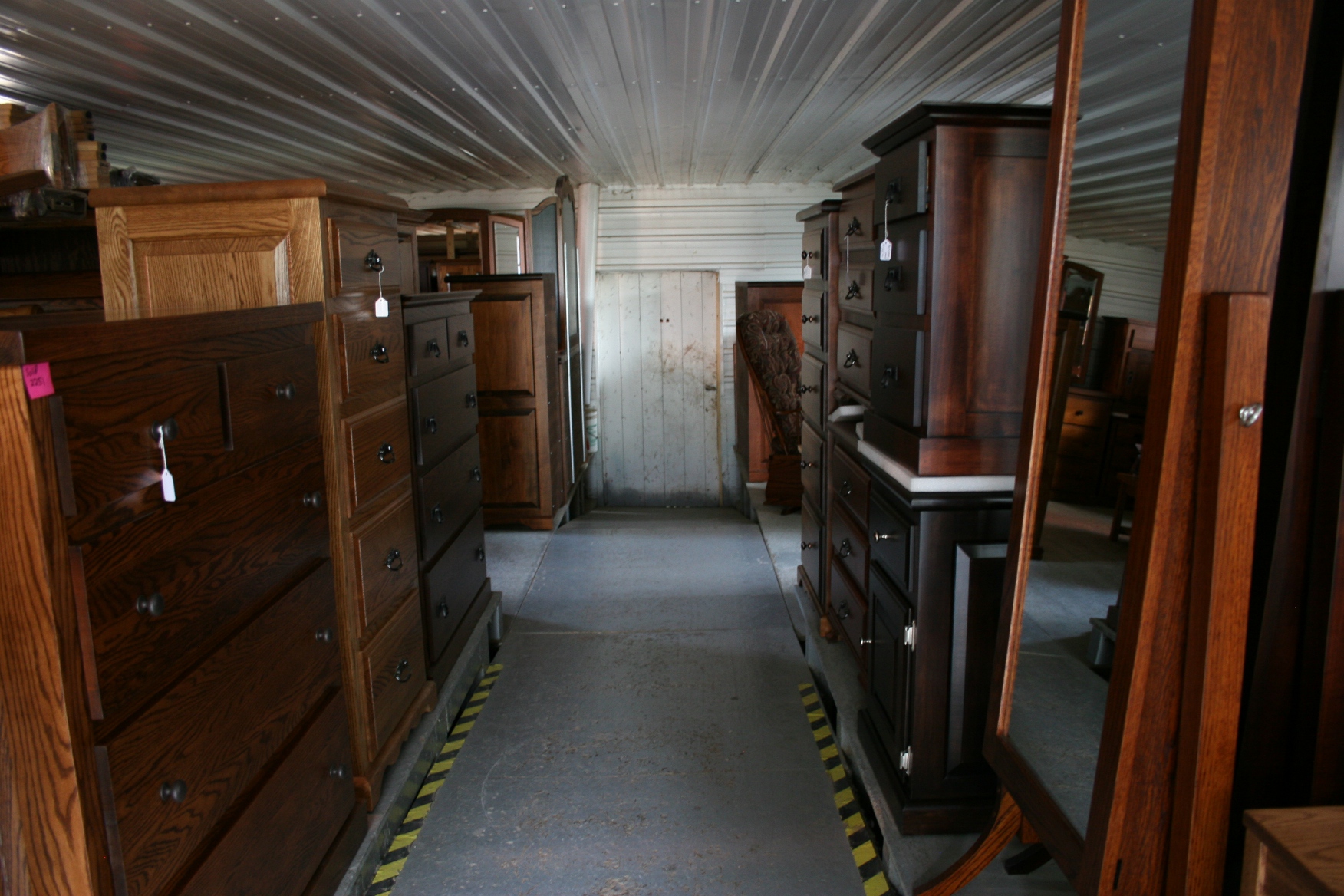
Inside Countryside Furniture, with furniture crafted by Dennis and crew.

So I keep my camera low, tugging it to my side as I watch the Hershberger children, 17-month-old Simon and his 3-year-old sister, whose name I never do learn, wheel a faded red wagon. I am mostly intrigued by Simon in the plain handcrafted blue dress that skims his ankles above pudgy bare feet hardened to the stones and rough grass underfoot. His face is still edged with the softness of a baby, but emerging into that of a little boy. Straight cut bangs ride high on his forehead with wisps of hair tickling his ears in a bowl cut hair style.

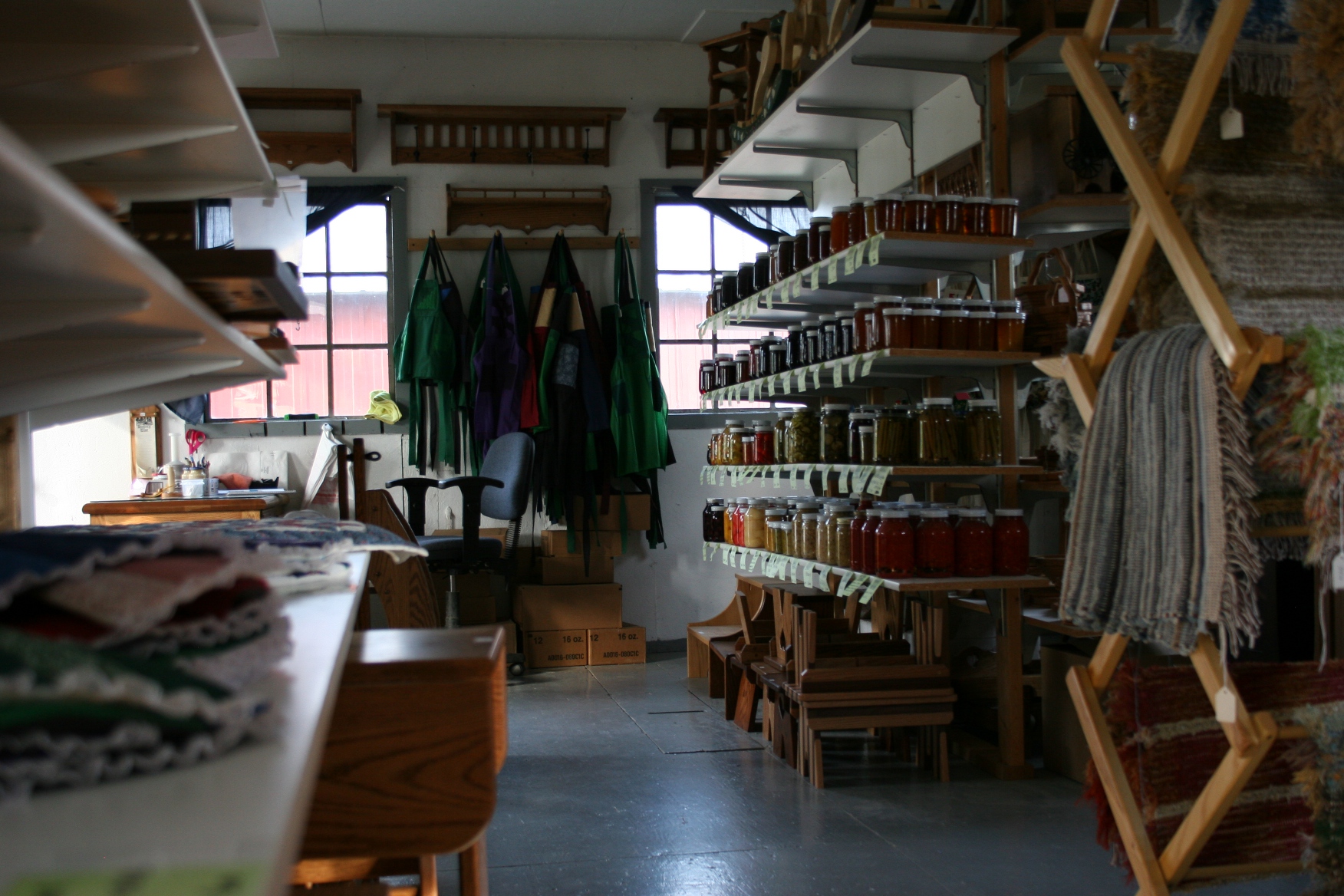
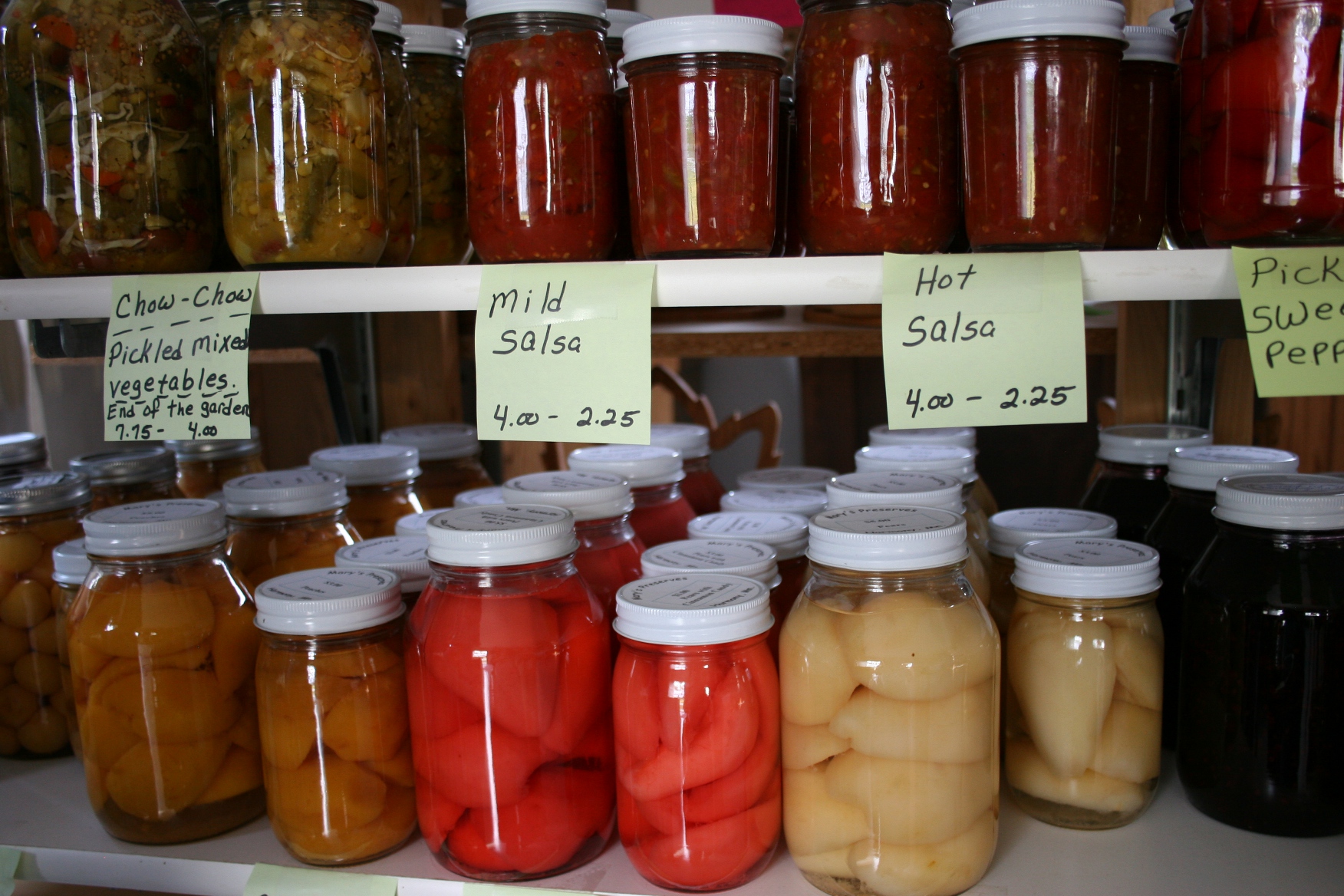
Jars of canned goods line the shelves in Mary’s shop.

When I amble next door, the siblings follow me into their mother’s shop, rattling round and round with the wagon like a car on a racetrack.

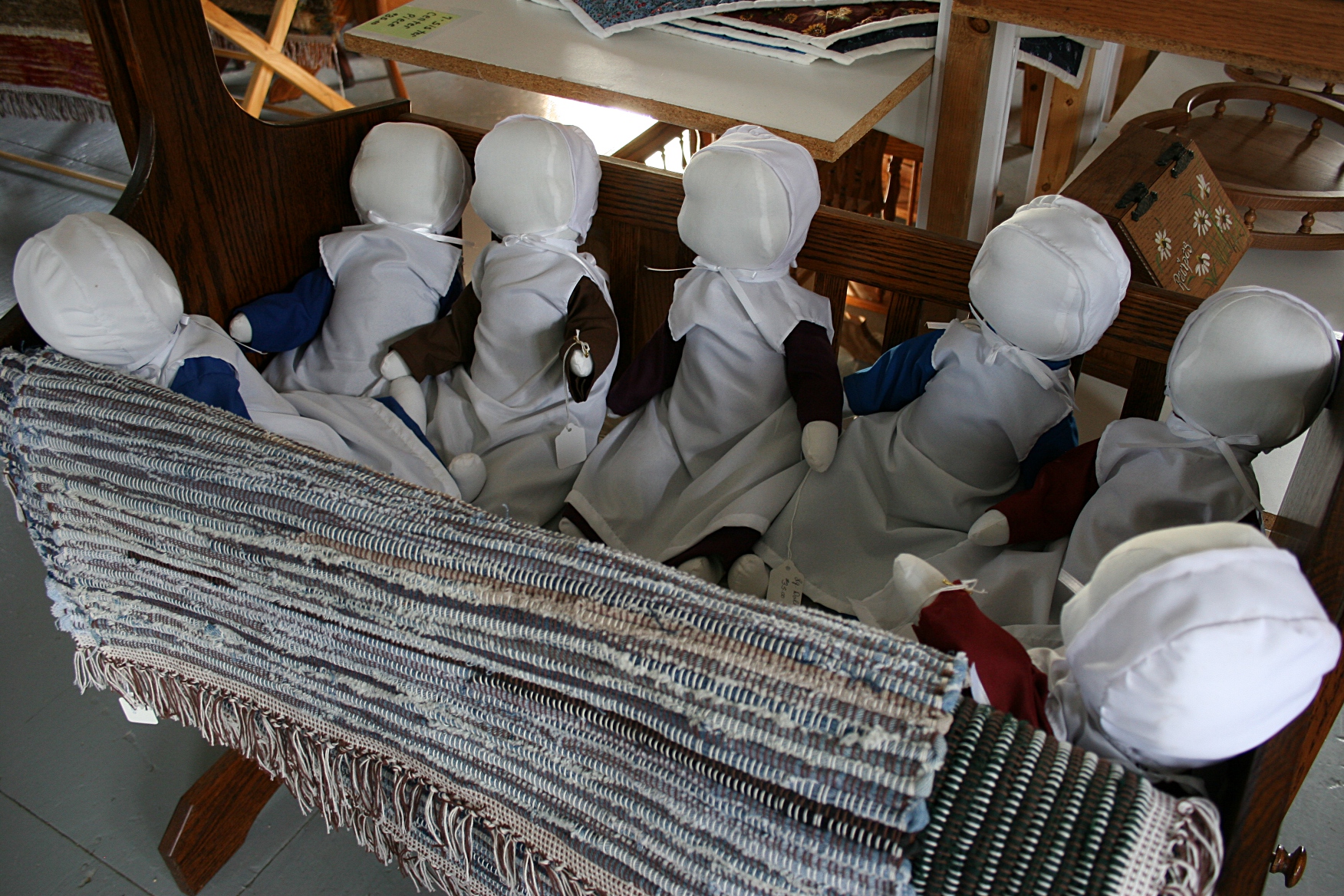
I admire the rows of canned produce (bright orange carrots, golden nuggets of corn, jade spears of dill pickles), the faceless Amish dolls snug in a cradle, the tight weave of cotton rag rugs…

Faceless handcrafted Amish dolls in a handcrafted cradle.

I lift bars of homemade soap and breathe in their perfumed scent.

A pathway in the crafts store where Simon and his sister circled their wagon.

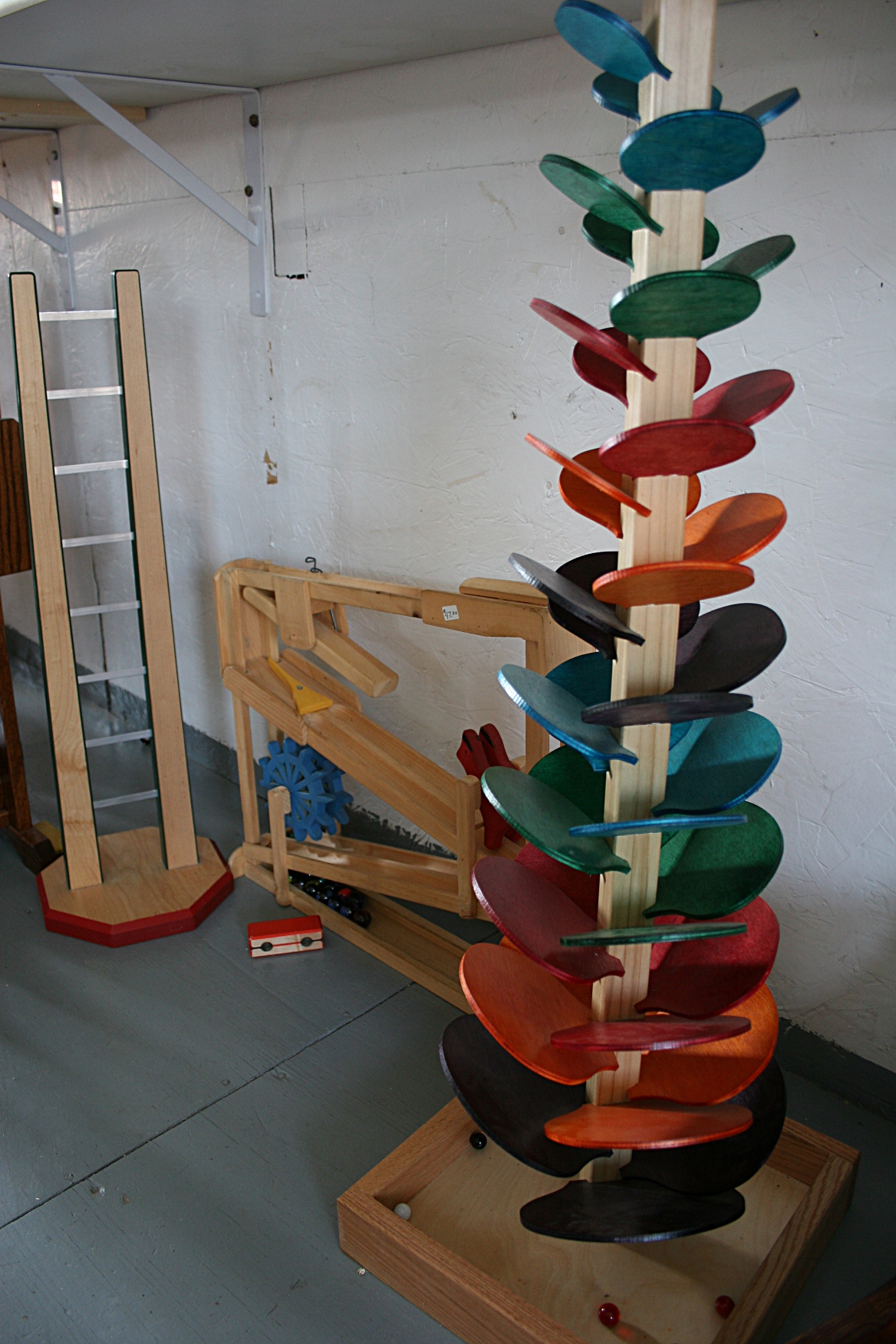
Then my attention turns again toward little Simon and his sister as they drop marbles onto a colorful tower before darting outside. Clack, clack, clack.

The siblings dropped marbles down the colorful tower on the right.

Through the open shop door, I watch a horse and buggy wheel into the farmyard, steering toward the weathered red barn. A boy, perhaps 10 years old, strolls toward the farmhouse and I lift my right hand to wave. He hesitates, then returns my greeting.

I turn my attention back to Mary’s merchandise. We must choose something to purchase now. It is expected. So Randy picks two jars of Mary’s Preserves. We head back to the furniture showroom, a small outbuilding with white walls and a low ceiling, with two jars of strawberry and tripleberry jams.

We make small talk. Dennis asks where we’ve come from. “Faribault,” I tell him.

“Along Interstate 35,” he notes, then tells us of a good customer from our community.

A close-up of the furniture Dennis and his crew craft.

I ask Dennis’ permission to photograph his fine furniture and he gives his OK. Then we return, with Simon still tugging that wagon, to Mary’s shop. As we walk, Dennis lifts his son off the ground, snugs the boy against his right hip, then speaks to him in a language I can only assume is a German dialect. I expect Simon may be getting a gentle admonition about taking the wagon inside his mother’s shop.

Randy pays $4.50 for the jam. We thank Dennis for the gracious welcome to his farm.

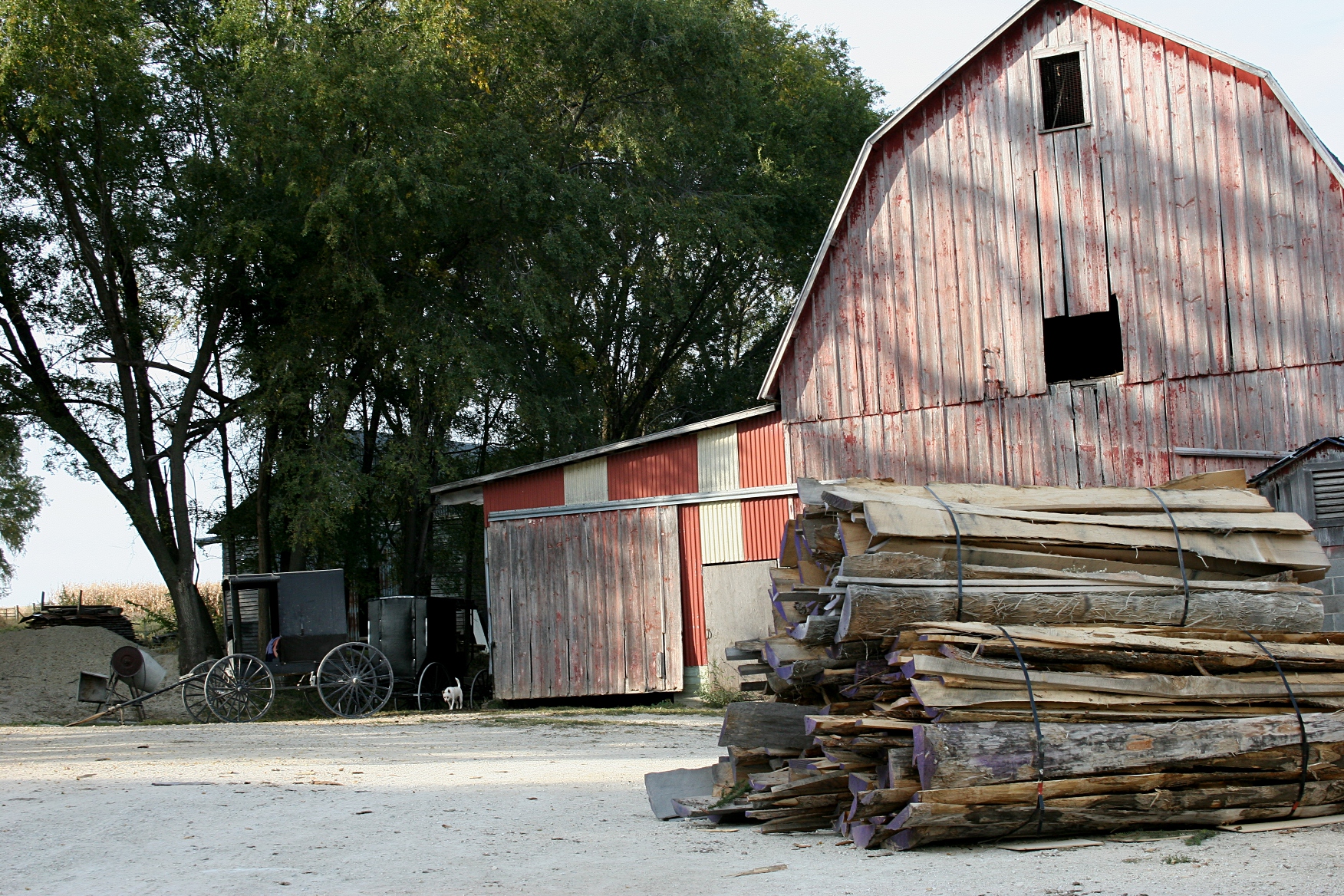
My final shot of the Hershberger farmyard: the barn, the buggies, the stack of wood.

As we head to the car, I photograph the red barn, the two buggies parked next to it and the rough-hewn lengths of stacked wood which Dennis and his helpers will soon craft into fine furniture.

Even though I couldn’t photograph the Hershbergers, the visuals of this place, of this Amish family, of this experience, have imprinted upon my memory. And sometimes that is better than a photo.

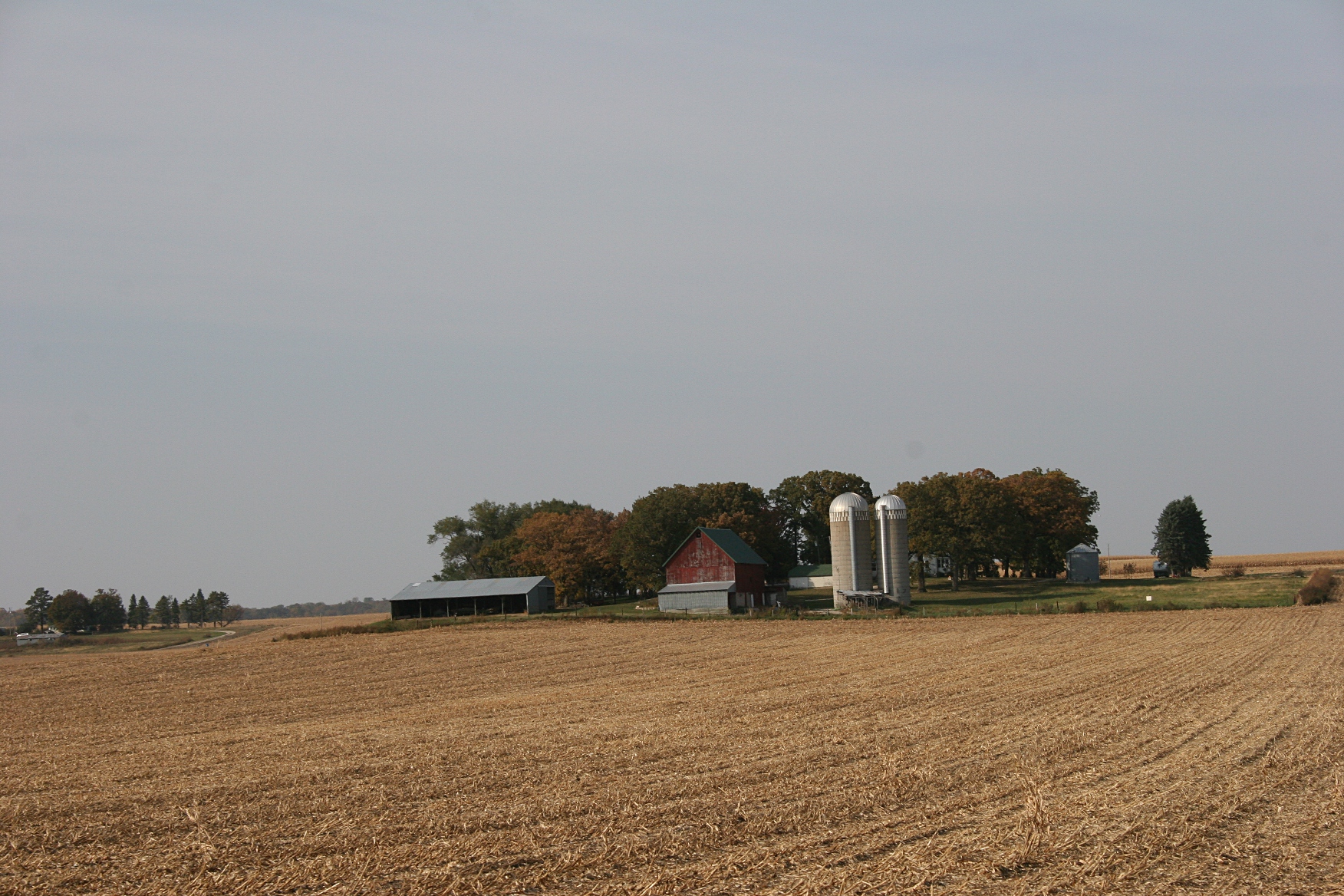
A picturesque farm near the Hershberger place, rural Fillmore County, Minnesota, taken in early October 2012.

FYI: Dennis Hershberger also sells his furniture at Countryside Furniture, located at Old Crow Antiques in Canton, at the intersection of U.S. Highway 52 and Fillmore County Road 21. The Hershberger farm is about five miles northwest of that intersection.

Old Crow Antiques is a great place to stop for information on local Amish farms.

This story and these images are from an October 2012 visit to the Hershberger farm.

© Copyright 2013 Audrey Kletscher Helbling
 

In which I meet Amish quilter Fannie Miller on her Lenora farm October 11, 2013

Filed under: Uncategorized — Audrey Kletscher Helbling @ 6:00 AM
Tags: , , , , , , , , ,

THE AMISH HAVE ALWAYS intrigued me. I can’t explain specifically why, except to admit that perhaps I am a bit envious of their minimalist lifestyle, one likely similar to that of my farmer forefathers.

Never have I gotten a closer look at Amish life than on an early October 2012 day trip to the Lenora/Canton/Harmony area of southeastern Minnesota.

My first glimpse of the Amish began in unincorporated Lenora in southeastern Fillmore County where my husband and I were searching for the historic Lenora Methodist Church. Unable to initially locate the church (how we could miss it in tiny Lenora is beyond me), we stopped at Summer Kitchen Antiques, which was closed, and then began driving east onto a gravel road.

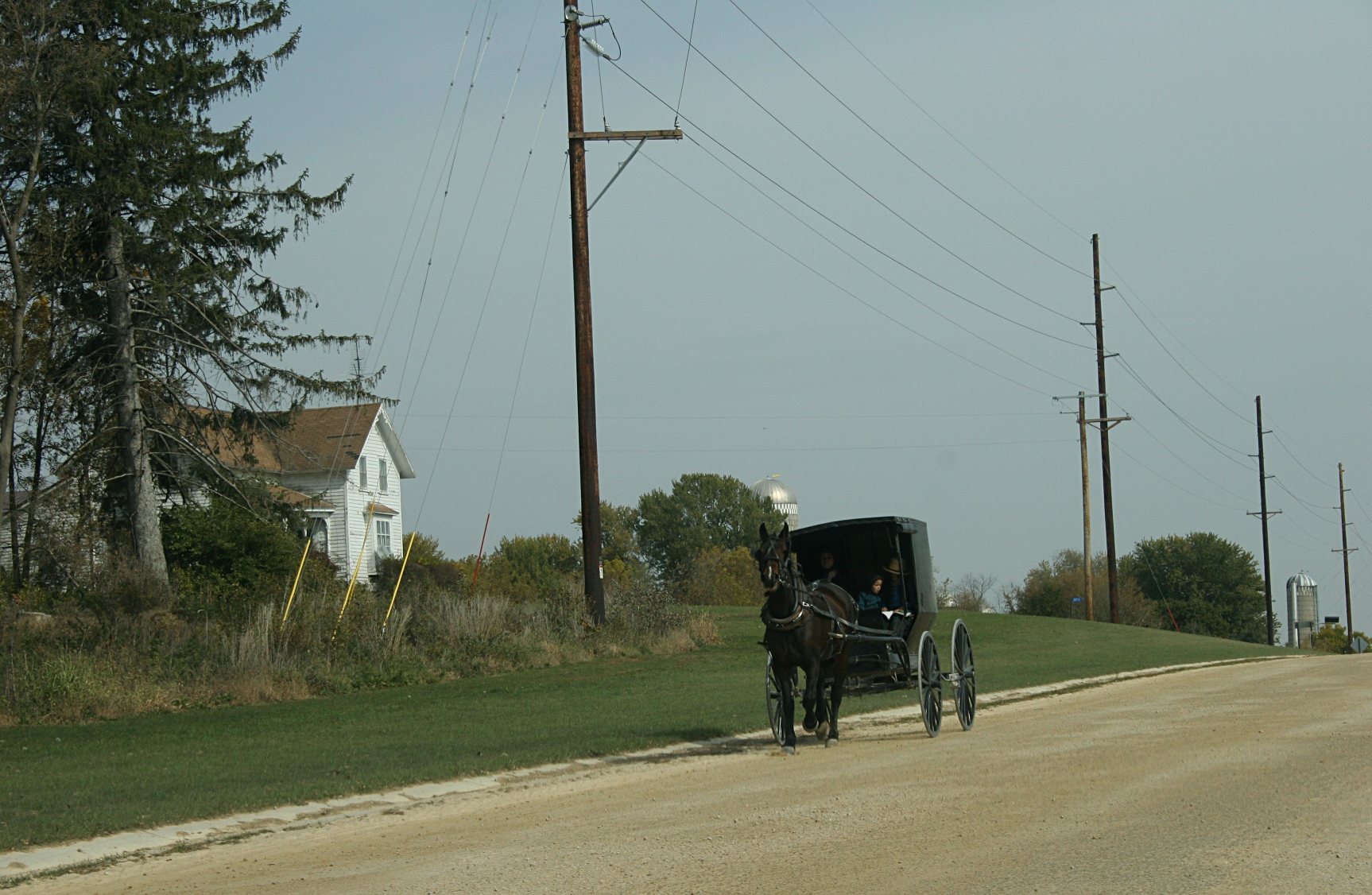
An Amish buggy approaches our car just on the outskirts of Lenora.

Just barely past the antique shop, an Amish buggy came into view and I raised my camera to snap two quick photos through the passenger side windshield. Now I know how the Amish forbid face photos, and I am (mostly) respectful in their close presence. But when they are traveling on a public roadway in a region that markets itself as a “see the Amish” destination, from which the Amish benefit financially, I do not feel obliged to keep my camera tucked away.

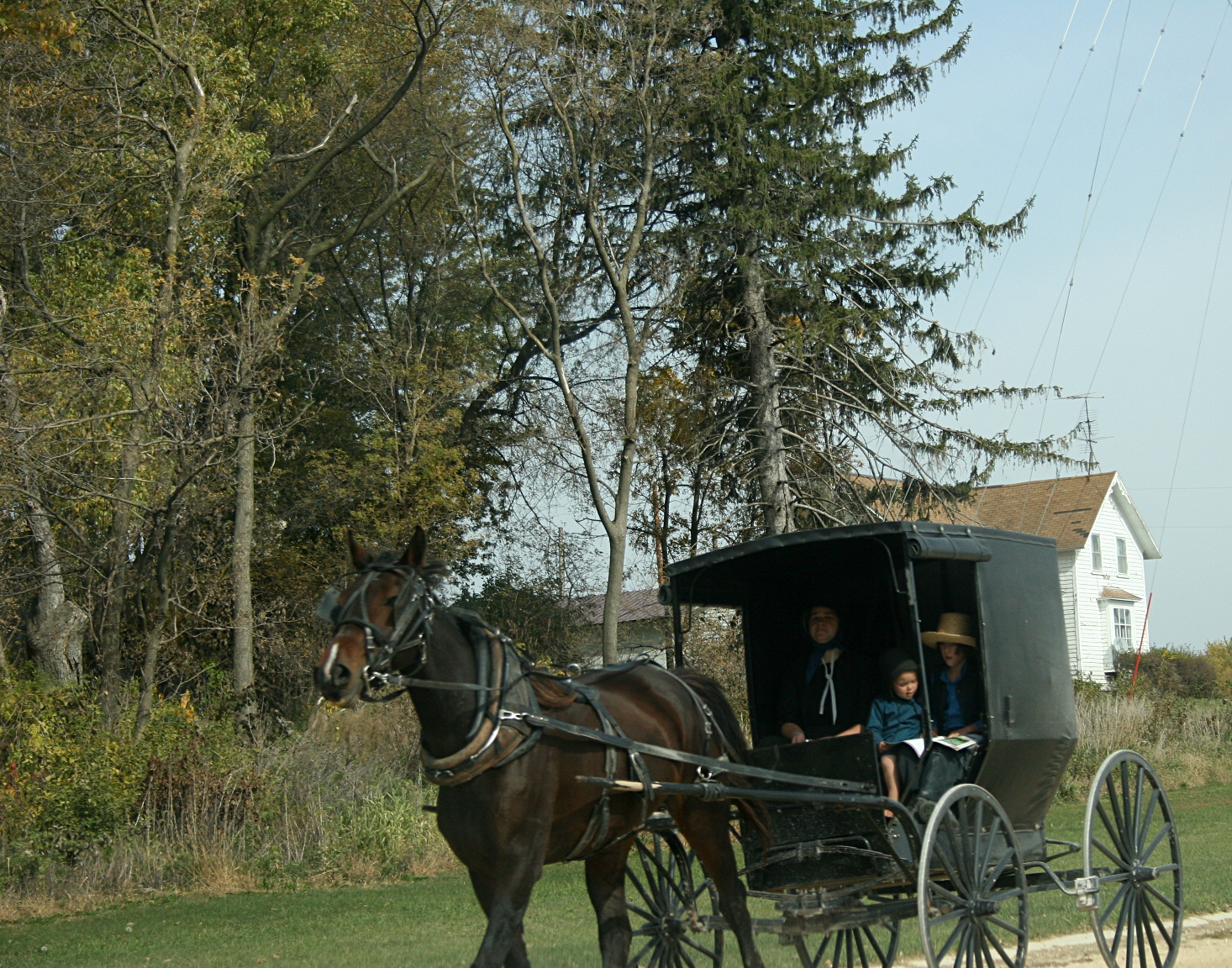
A close-up look at the approaching buggy shows a young Amish boy reading a book to his little sister as their mother guides the horse and buggy down the gravel road.

After that initial sighting, we came upon a roadside sign advertising quilts and table runners less than one-quarter of a mile from Lenora. My excitement heightened as we turned into the Amish farmyard, even though I was acutely aware I’d need to keep my shutter button finger mostly still.

That proved to be a challenge as I desired more than anything to photograph the red-haired pre-teen Amish girl with the pinkish birthmark splotched across her right cheek lolling on the feather-littered lawn next to her younger brother with the bowl-cut auburn hair.

When I cannot take a photo, I imprint visual details upon my mind.

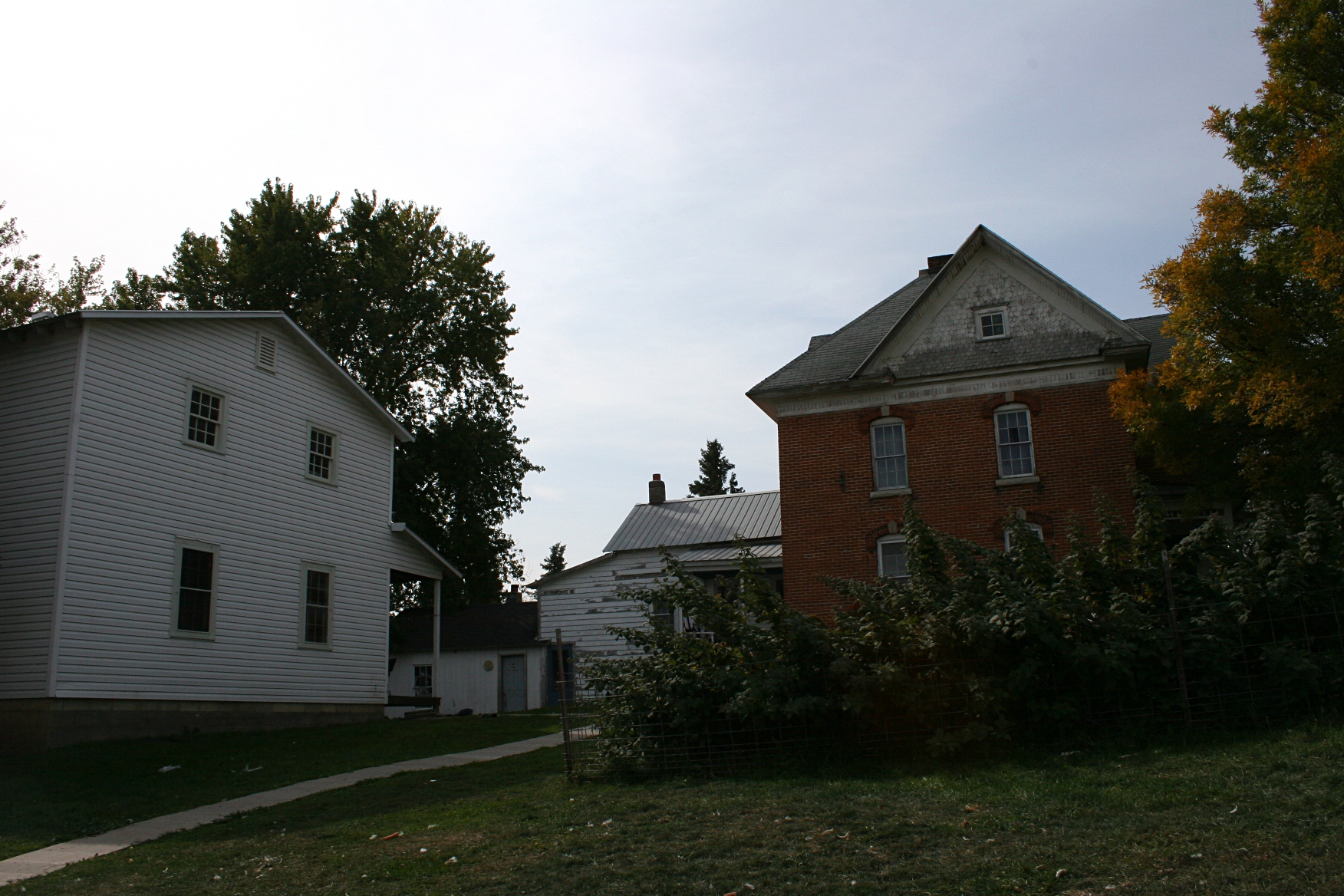
Fannie Miller’s brick house is on the right, her shop in the attached lean-to just to the left.

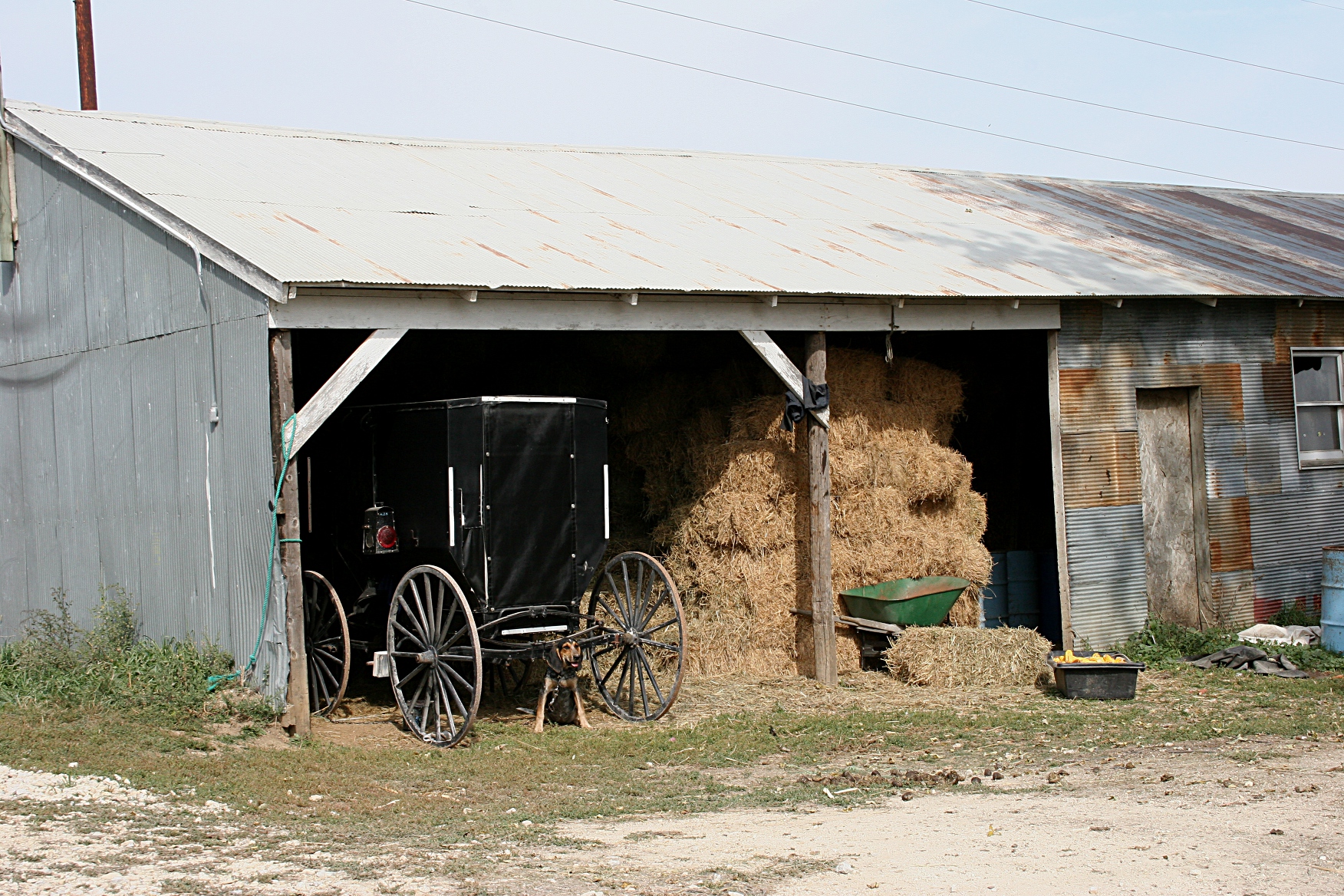
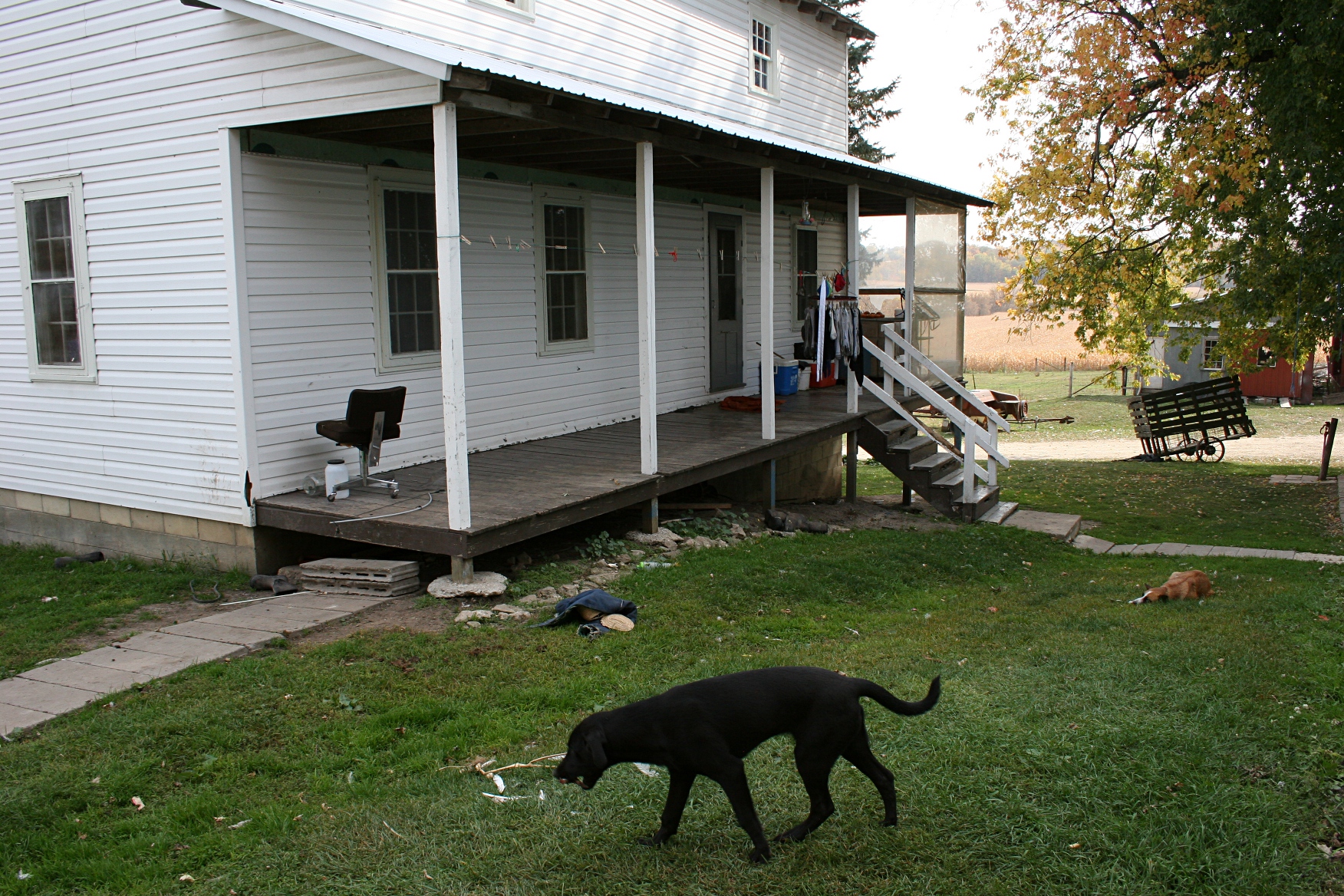
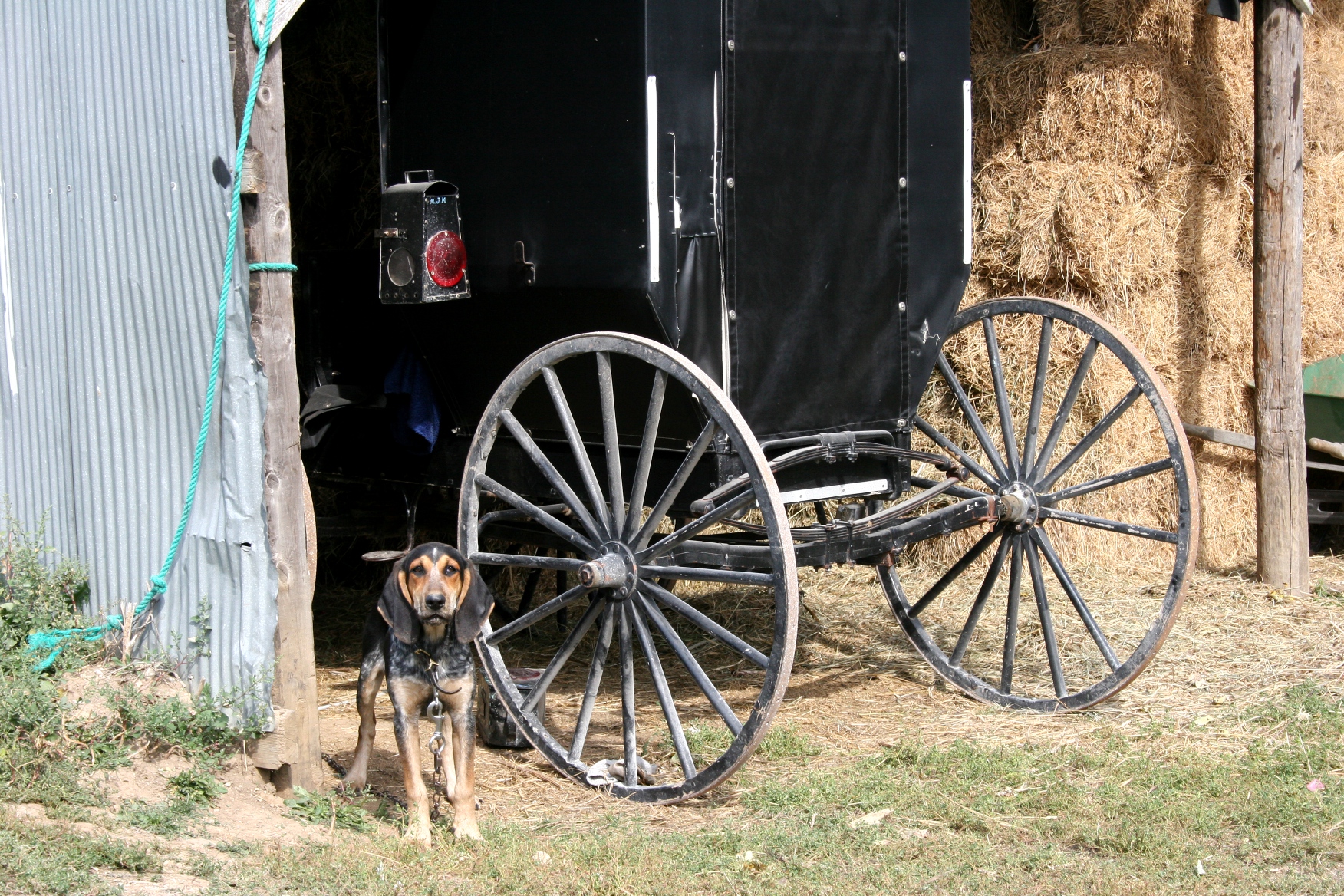
The siblings directed us toward a lean-to attached to a stately and aging brick house adjacent to a wood-frame house. Dogs roamed while a third one, tethered to a thick chain in a pole shed next to an Amish buggy, barked with a ferocity that made me thankful he was restrained.

My first glimpse of the Millers’ dog chained in the pole shed.

The pungent smell of silage wafted across the yard as, across the gravel road, a farmer pushed the fermented corn with his tractor and loader.

Stepping onto the lean-to porch, I eyed a handwritten “no photos” sign and pulled my camera close to my side. Randy made a point of pointing out the warning to me, as if I couldn’t see it.

And then we met Fannie Miller, whose name aptly describes her rotund physical appearance. She settled onto a chair and watched as I caressed her fine handiwork, praised her stitching. I admired the sturdy, blue built-in wall of cupboards in the corner and told Fannie so.

I wished, in that moment, that I could photograph the entire scene before me and through the doorway into the next room where Fannie’s husband napped in a chair by the wood-burning stove. His chin dipped, his scruffy beard defining my side view of the old man sleeping. In the corner I spotted a patchwork quilt snugged across a single bed. I dared not look more for fear Fannie would banish me from her home.

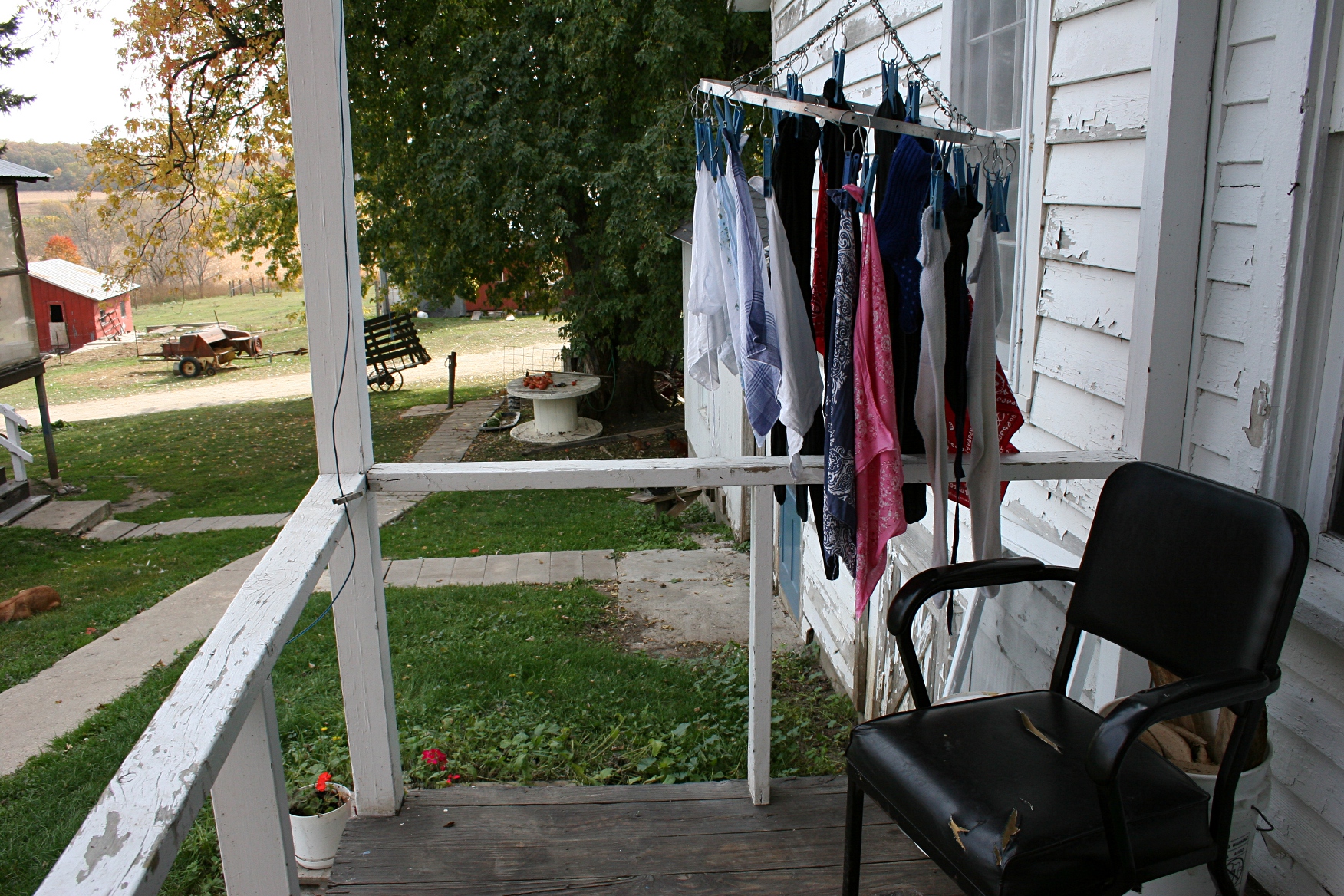
I hang my laundry outside, so I was particularly intrigued by this circular drying rack onto which handkerchiefs were clipped on the porch of Fannie’s house.

I remember thinking, though, before exiting Fannie’s shop, before asking her if I could photograph hankies drying on her porch on this Monday wash day in October, how perfect and lovely the natural light that filtered into the two rooms of her house.

The children ran into this house after I stepped out of Fannie’s shop.

She granted me permission to photograph outside, as long as I did not photograph the children. I told her I would respect her request, then watched the red-haired siblings scamper inside their house.

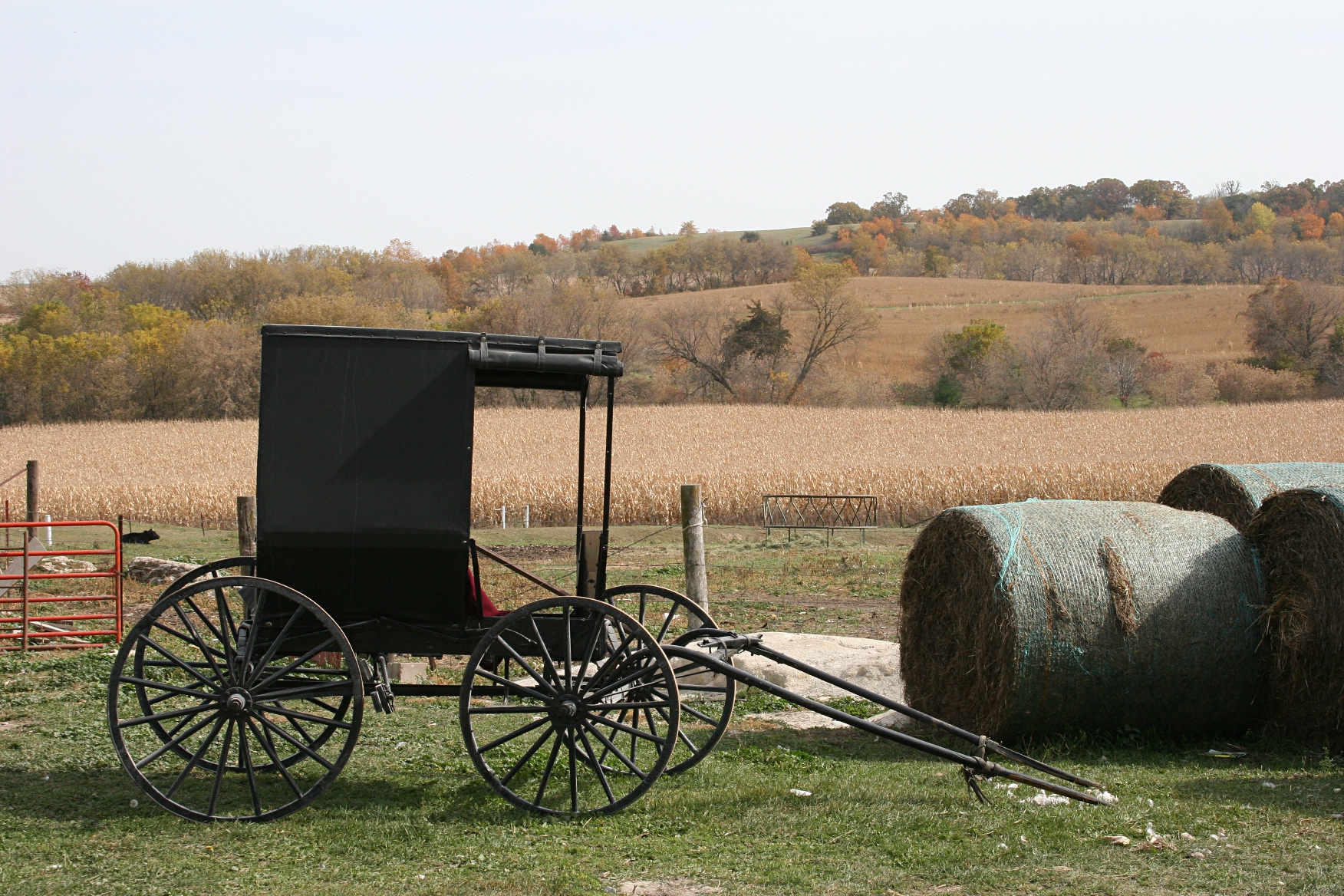
Just another buggy parked on the Miller farm. I was surprised to see the round bales.

I snapped several more building and buggy photos, though not too many as to overstay our welcome, before passing by the now placid chained dog and turning onto the gravel road back to Lenora.

My final photo on the Miller farm, of the dog turned docile.

PLEASE CHECK BACK for another post about the Amish in the Canton and Harmony areas.

Click here to read my previous post about the historic Lenora United Methodist Church.

© Copyright 2012 Audrey Kletscher Helbling
 

Celebrating the wordful art of poetry in southeastern Minnesota April 19, 2013

SELCO's seventh volume of Poetic Strokes.

SELCO’s seventh volume of Poetic Strokes.

POETIC STROKES. The title resonates with a graceful image of fountain pen dipped in ink sweeping words across a blank page.

In my idealistic poet’s eye, I envision letters flowing onto paper with ease and passion.

In reality, I understand that inspiration more likely comes in halting clicks on a computer keyboard, screen idling, fingers poised, poet pausing to claim the muse. If only poetry were as easy to write as it might seem.

My poem, "Life Cycles."

My poem, “Life Cycles.”

These are my thoughts as I read the recently-released volume 7 of Poetic Strokes 2013—A Regional Anthology of Poetry from Southeastern Minnesota, published by Southeastern Libraries Cooperating (SELCO). My poem, “Life Cycles,” is among 18 selected for publication from 110 submissions. This marks the fifth Poetic Strokes volume in which my poetry has printed.

As I thumb through the pages of this anthology, which also includes youth poetry in a Word Flow section, I am impressed by the talent of poets who call this 11-county SELCO region home. Southeastern Minnesota claims some mighty fine poets. I recognize many poets’ names from past anthologies and other contests. I am in fine company.

If I were to ask these poets what inspires them, how would they respond?

How have they come to write about an aged woman going to the beauty shop, sweet memories from the summer of ’68, picking strawberries, perusing library shelves, baking bread and a dozen other topics which, without their creative pens, would seem rather ordinary topics?

The poet’s gift is to dip a pen into the inkwell of a memory, an emotion, a moment in time, a scene—whatever inspires—and create a wordful work of art. As a poet, there is nothing sweeter than words flowing into lines and verses, connecting to the reader in some way.

When I read about gardening or peeling an apple (not really about peeling an apple) or any of the other subjects covered in this seventh volume of Poetic Strokes, I take away my own interpretation based on my experiences. Therein lies a truth. Poetry is as much about writing as it is about experiencing this wordful art.

Eighteen poems were selected for publication from 110 submissions to Poetic Strokes. In the Word Flow section of the anthology, 14 poems were published from 99 submissions.

Eighteen poems were selected for publication from 110 submissions to Poetic Strokes. Faribault High School English teacher and writer Larry Gavin joins me as the other Faribault poet included in the anthology.  In the Word Flow youth section of the anthology, 14 poems were published from 99 submissions. All but two of those students attend Cannon Falls High School.

YOU CAN MEET Poetic Strokes poets at 6 p.m. on Tuesday, April 30, during a Meet and Greet hosted by the Owatonna Public Library and the Owatonna Poetry Writer’s Group in the third floor Gainey Room at the library, 105 North Elm Avenue. Poets will discuss and share their poetry. If you plan to attend, please RSVP to Bonnie Krueger at the library by emailing bonnie@owatonna.info or calling (507) 444-2460. Because refreshments will be served, she needs a head count.

Following the Meet and Greet, at 7 p.m., Minnesota Book Award Poet Todd Boss, one of my favorite Minnesota poets, will share his works. I cannot wait to hear Todd read during this “Poets at the Library Tour” event celebrating National Poetry Month in April.

THIS EVENING, Friday, April 19, Better Brew Coffeehouse, 301 North Main Street, Pine Island, is hosting an Open Mic Poetry Night beginning at 7 p.m. The event calls for participants of all ages and all forms of poetry to read their works or that of others. Participant registration opens at 6 p.m. Better Brew, the Van Horn Public Library and Pine Area People for the Arts are sponsoring the poetry reading. Given the unfolding weather situation, I’d advise checking whether this reading is still “on” or postponed.

FYI: If you live in the SELCO system, you can check out a copy of Poetic Strokes from your local library. The anthology was funded in part or in whole with money from Minnesota’s Arts and Cultural Heritage Fund. Click here to see the names of poets published in the 2013 Poetic Strokes. To read the list of youth poets published in Word Flow, click here.

© Copyright 2013 Audrey Kletscher Helbling
 

Claiming a prairie sunset February 8, 2013

Filed under: Uncategorized — Audrey Kletscher Helbling @ 8:10 AM
Tags: , , , , , , , , ,

MY HEART BELONGS to my native prairie. Always has, always will.

Even after three decades away from southwestern Minnesota, I remain connected to the sky and to the land, to the place that shaped me as a person, a writer, a photographer.

In an environment as stark as the prairie, you notice details.

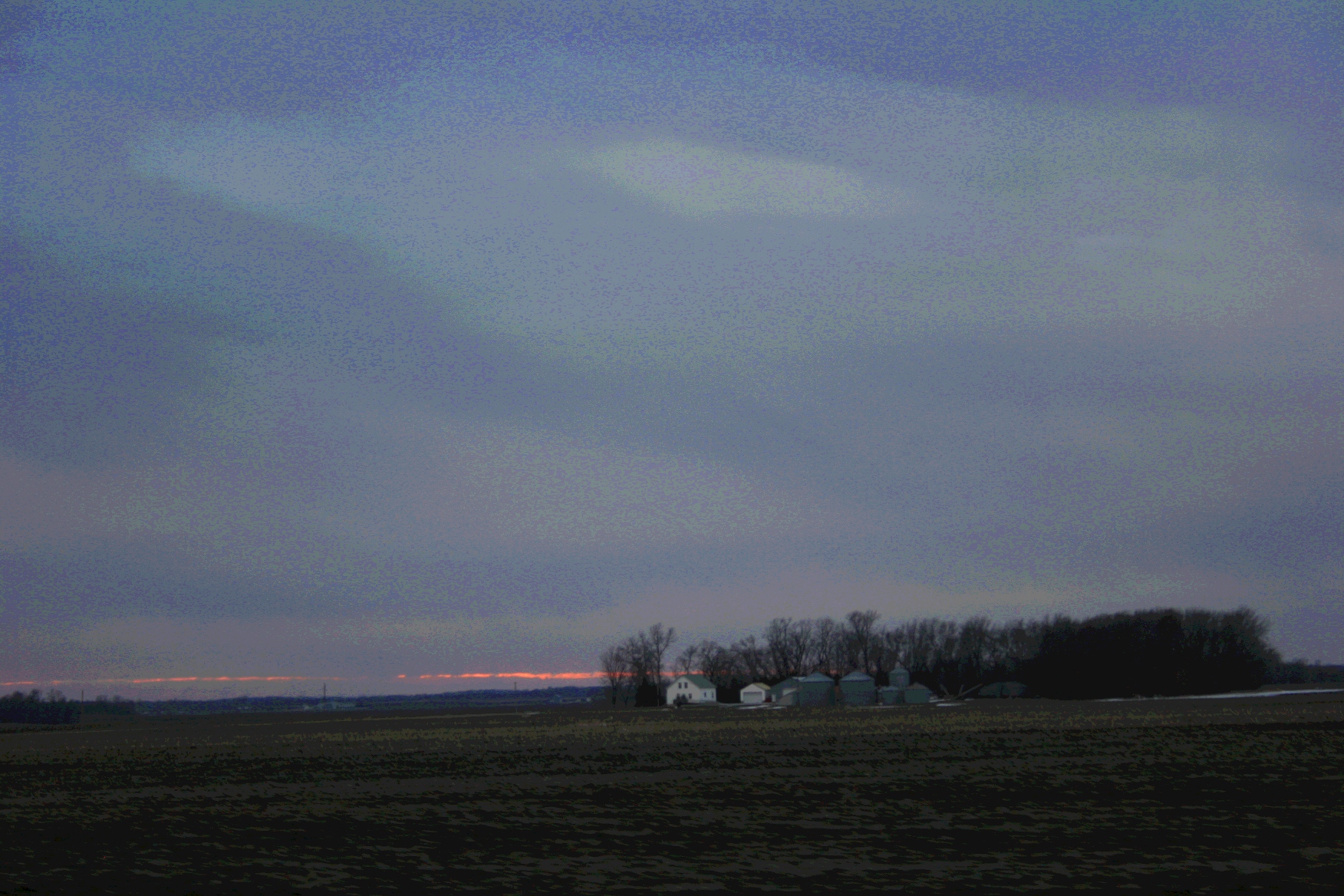
Even in southeastern Minnesota, where I've lived for three decades, expanses of prairie exist like this sunset scene.

Even in southeastern Minnesota, where I’ve lived for three decades, expanses of prairie exist like this sunset scene.

And so, on a recent Saturday, as my husband and I traveled south and east from Cleveland to Kilkenny (that’s in southeastern Minnesota, not Ohio and Ireland), I observed daylight evolve into evening, the sun slipping in a slim band of rosy peach across the horizon.

In that moment my soul yearned for the land I left at age 17, the prairie, the place of my heart.

© Copyright 2013 Audrey Kletscher Helbling
 

Monday wash day in Minnesota Amish country November 5, 2012

Filed under: Uncategorized — Audrey Kletscher Helbling @ 7:58 AM
Tags: , , , , , , ,

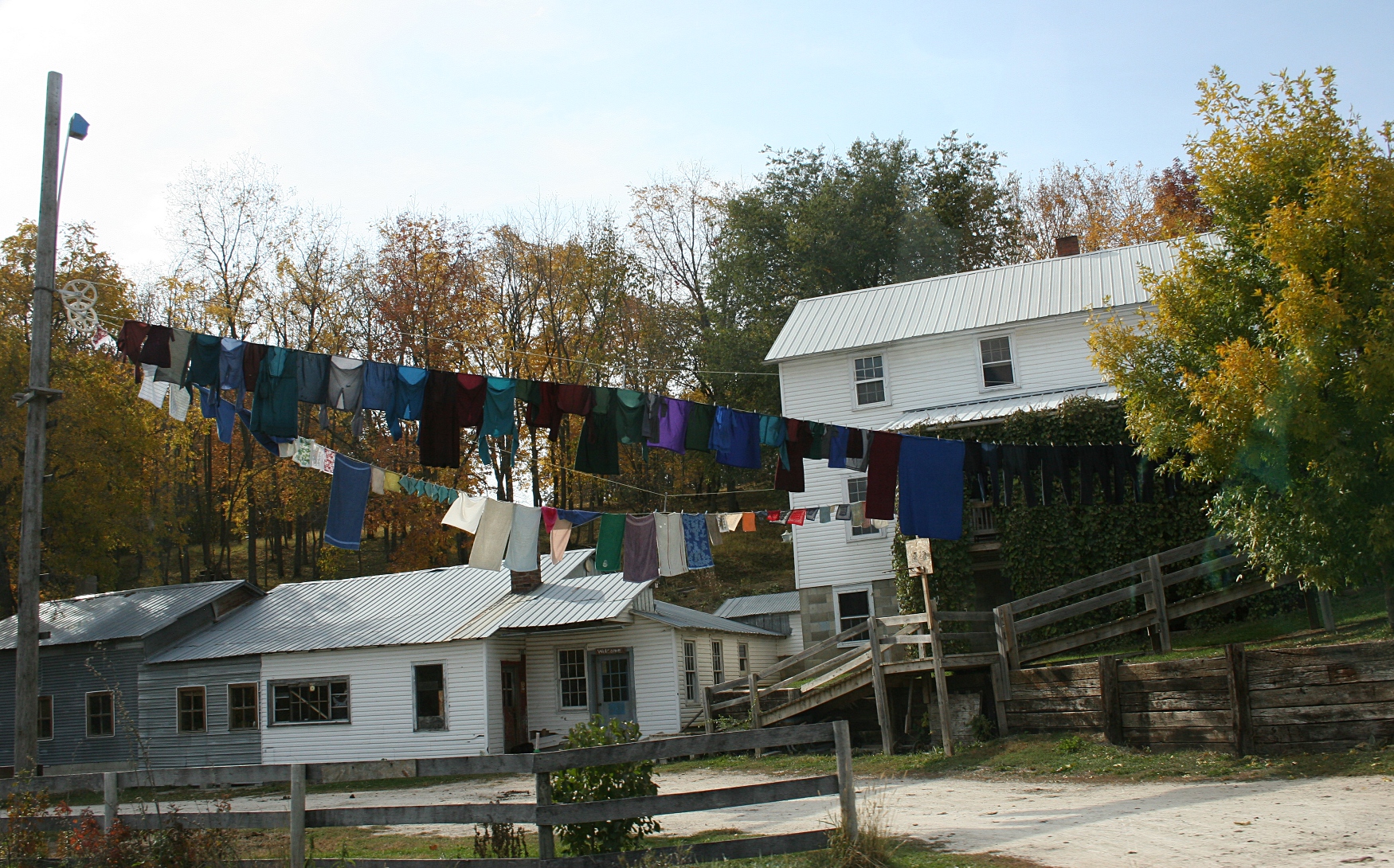
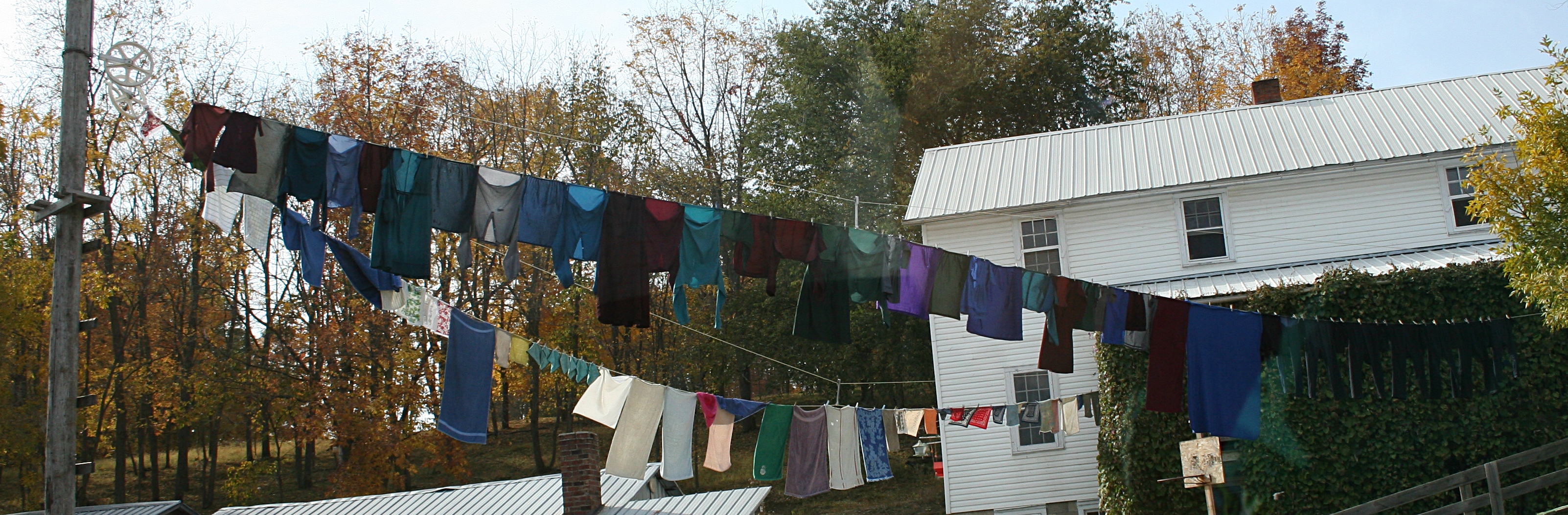
Monday wash day in Eden Hollow, Minnesota, in early October.

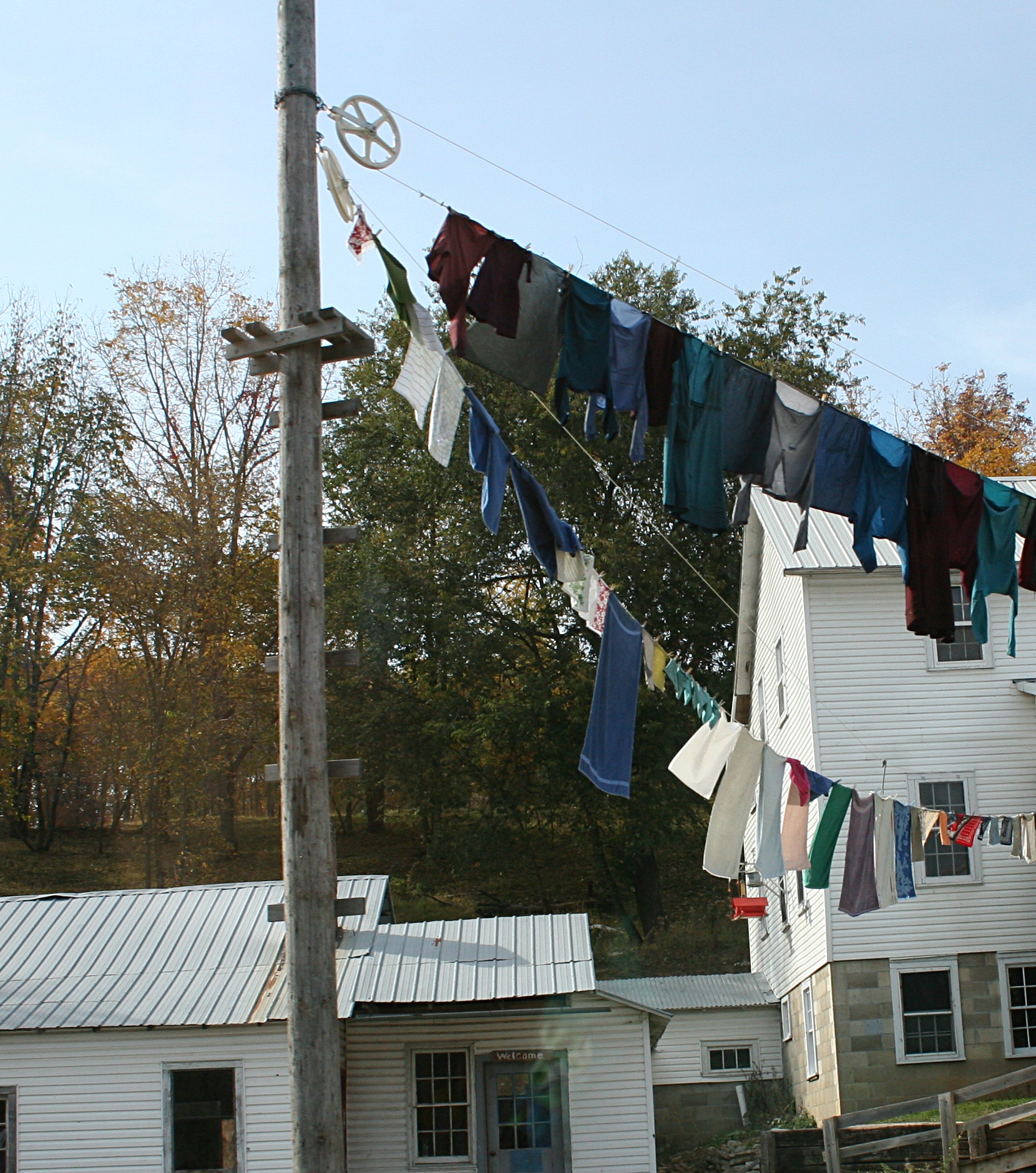
IMAGINE MY DELIGHT, being a hanging-laundry-outside fanatic, when I spotted this clothesline recently in southeastern Minnesota. Pure genius, wouldn’t you say, to rig up a contraption like this for reeling laundry outside and back inside?
A close-up on how this clothesline system works.

I photographed this scene in a place marked Eden Hollow as my husband and I were traveling somewhere between Lenora and Canton in Fillmore County on a drive through southeastern Minnesota Amish country.
Given the style and jewel tones of the clothing, I’d say this laundry belonged to an Amish family. Double bonus for me as I also am intrigued by the Amish and their lifestyle.

Happening upon daily snippets of ordinary life like this pleases me for I am given the opportunity to view life as it is, unedited and real.
The pulley system, rigged to a post in the front yard on one end. I couldn’t see the other end.

© Copyright 2012 Audrey Kletscher Helbling