Minnesota Prairie Roots

Writing and photography by Audrey Kletscher Helbling

Healthy & hearty dining at the retro Highland Cafe in southeastern Minnesota October 22, 2012

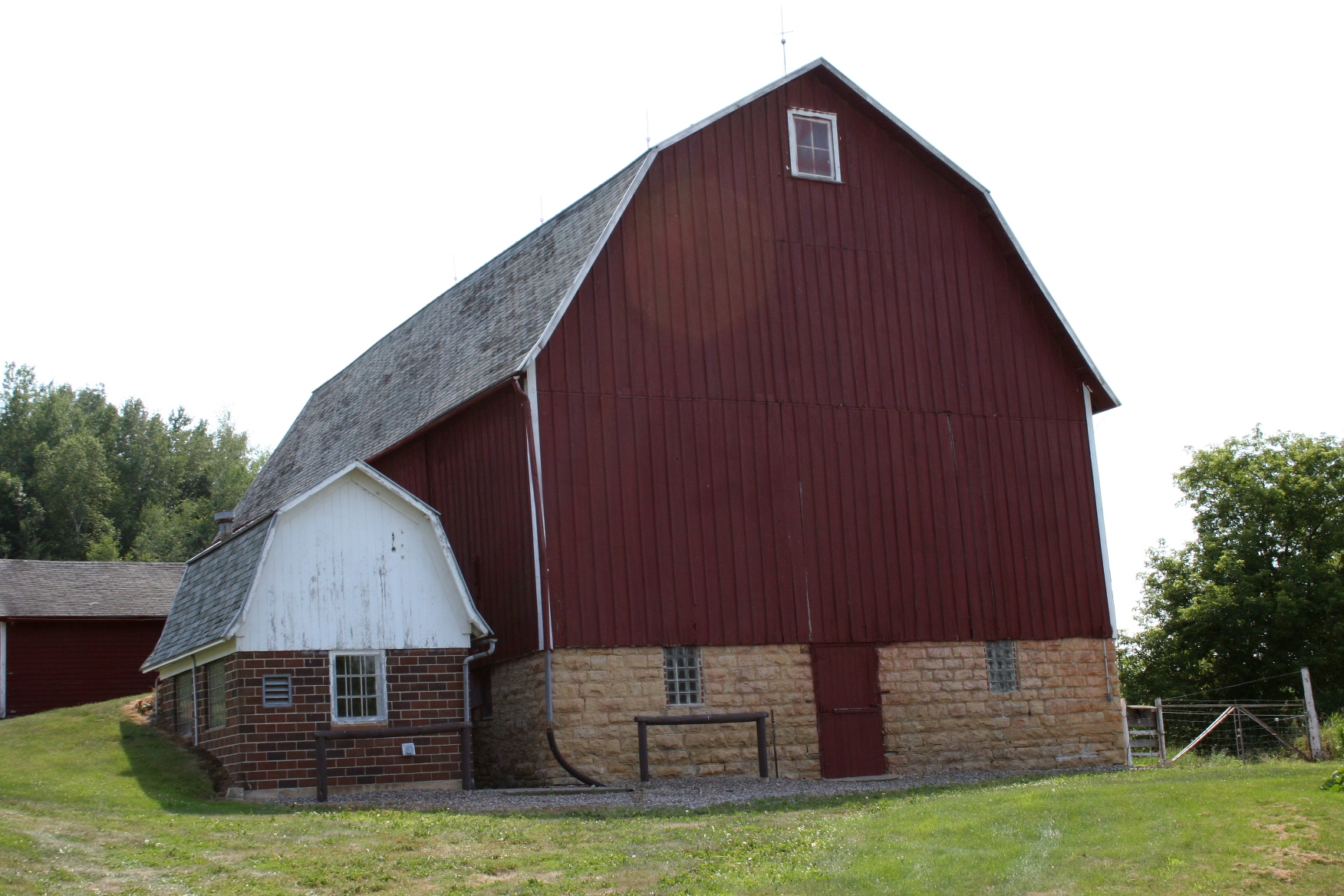
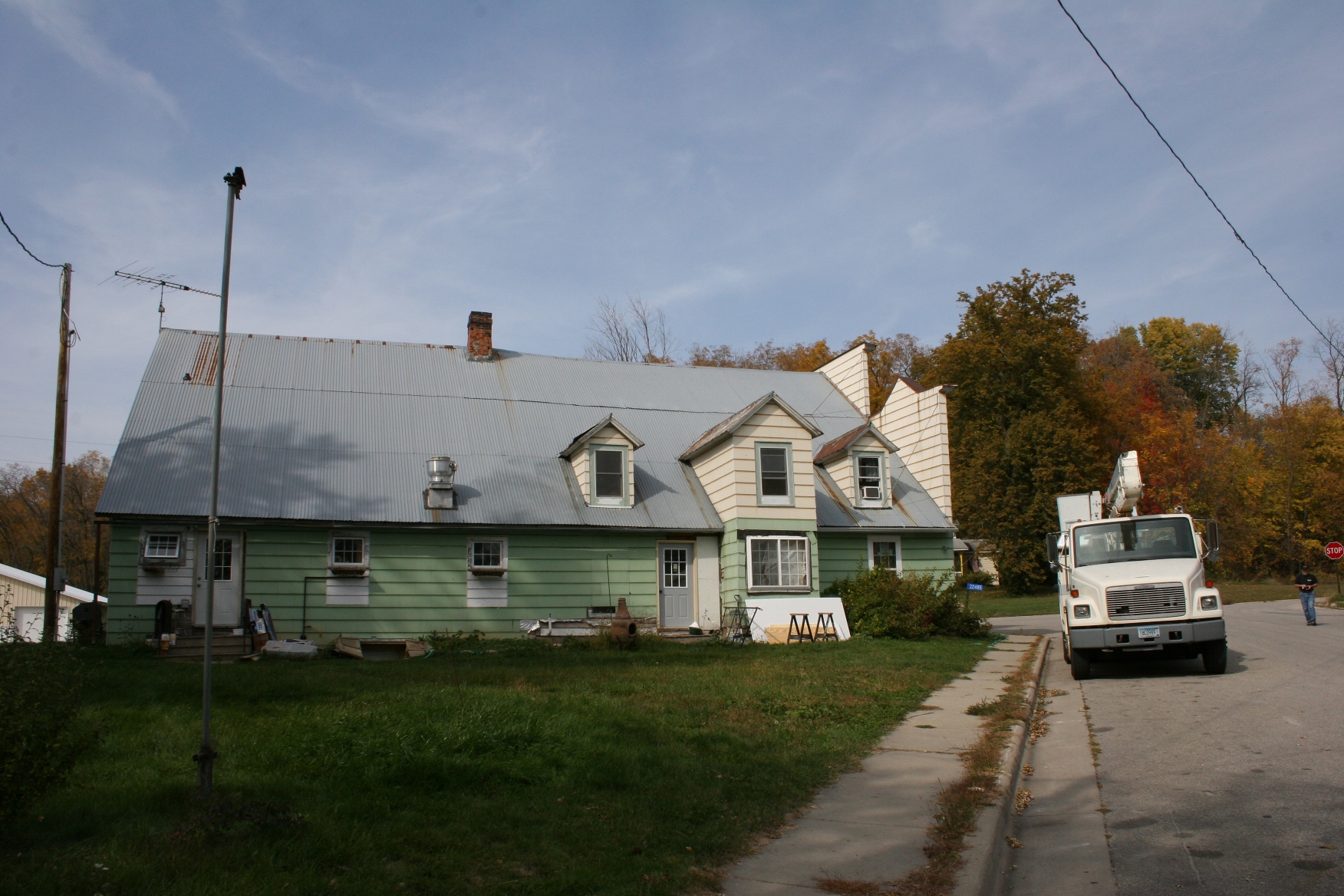
A side view of the Historic Highland Store and Cafe.

FROM THE EXTERIOR, a side view of the Historic Highland Store and Cafe in unincorporated Highland in rural Fillmore County, Minnesota, presents a mishmash of angles, work in progress and a corrugated metal roof that seems more fitting for a machine shed than a restaurant.

Face on, the front facade is rather plain and unassuming, until you aim your focus upward to the weathered wooden sign: “Highland Store est. 1894.”
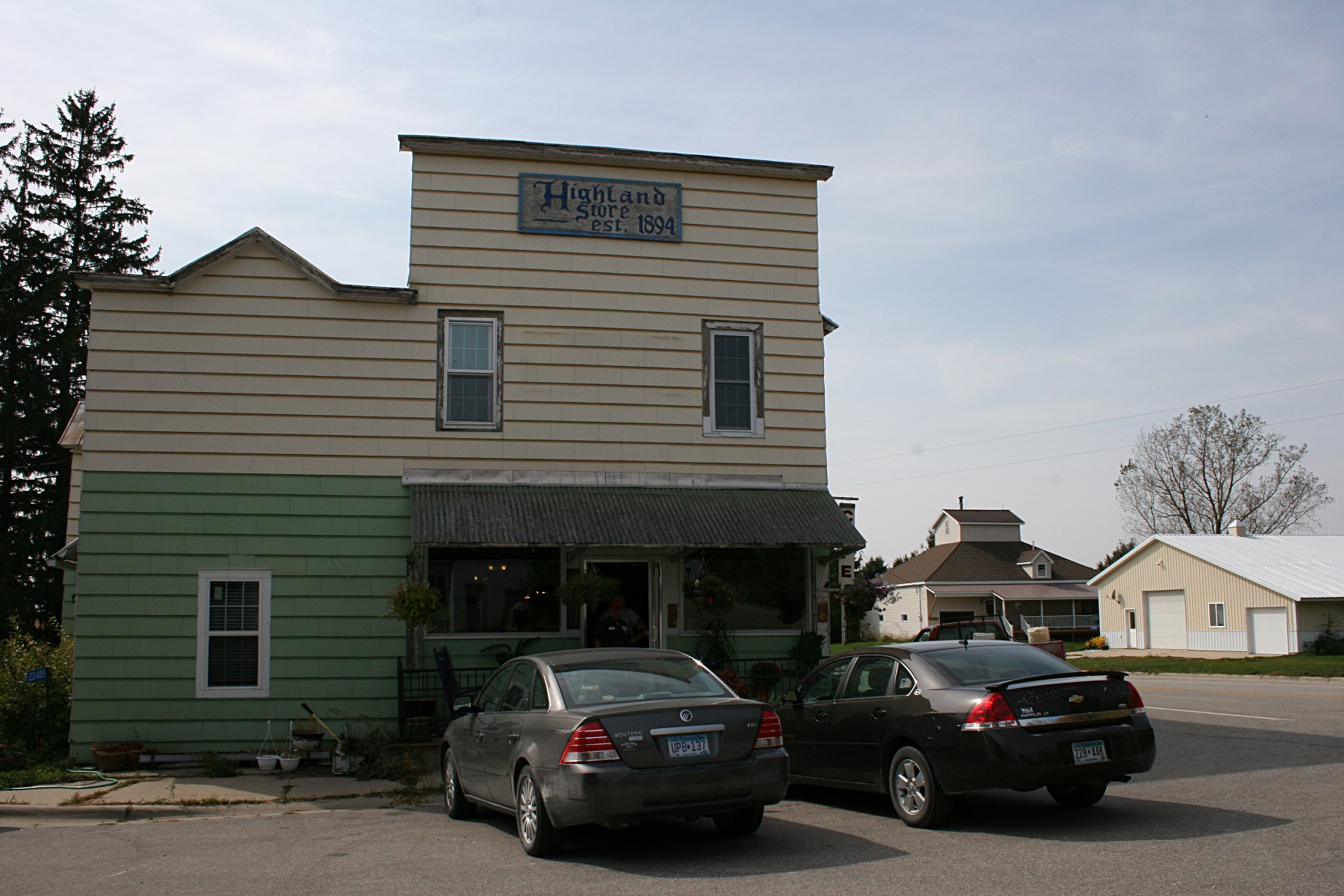
The unassuming front of the Highland Cafe.

That single simple sign hints at the treasure you’ll discover once you step inside this combination cafe, mini-store and Seventh Day Adventist mission outreach next to County Road 10.
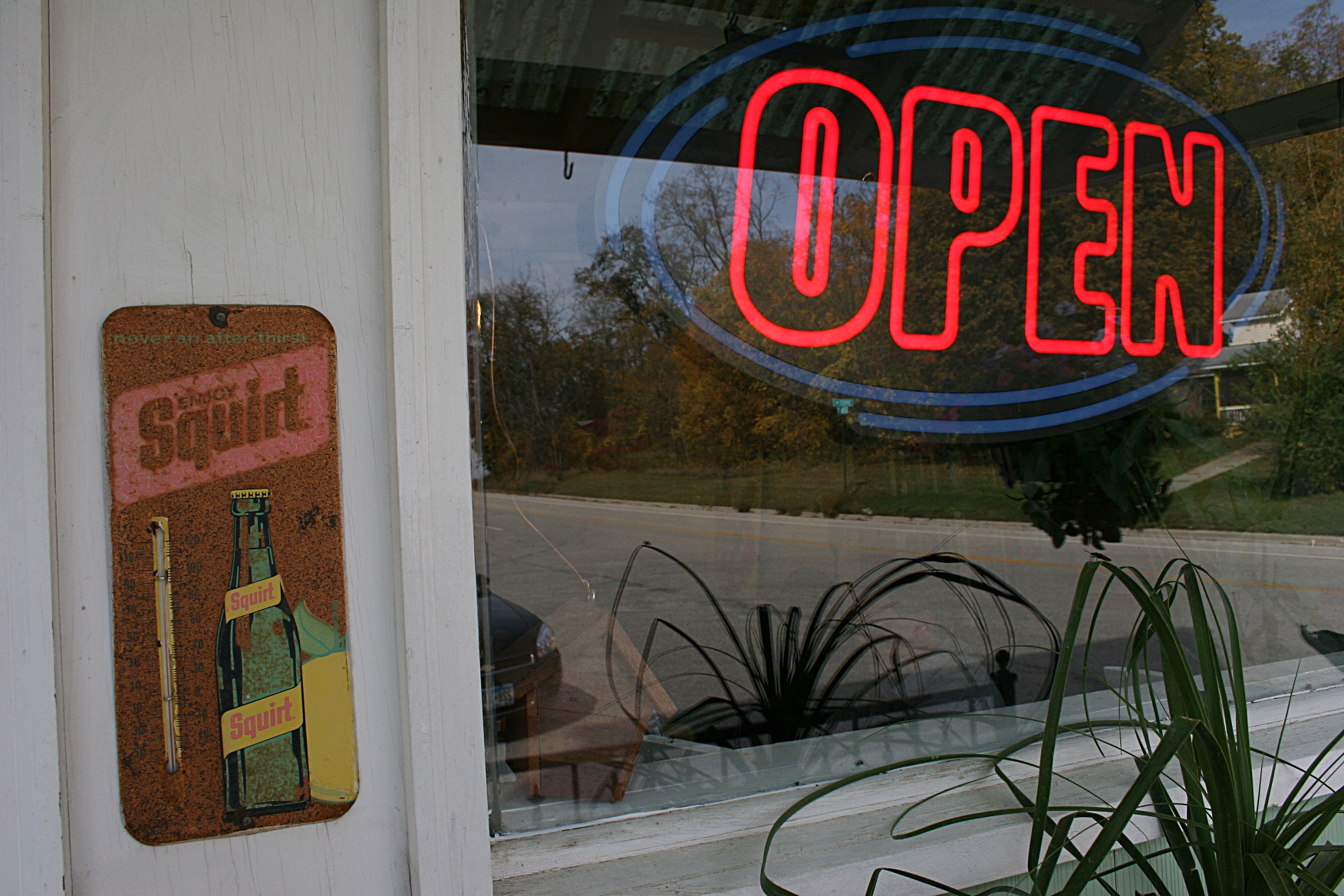
A vintage pop sign and a neon OPEN sign next to and on a front window.

Enter this historic building in Highland and you just have to stop and take in the novelty of this place which once served as a general store in this strong agricultural and tourism region of southeastern Minnesota.
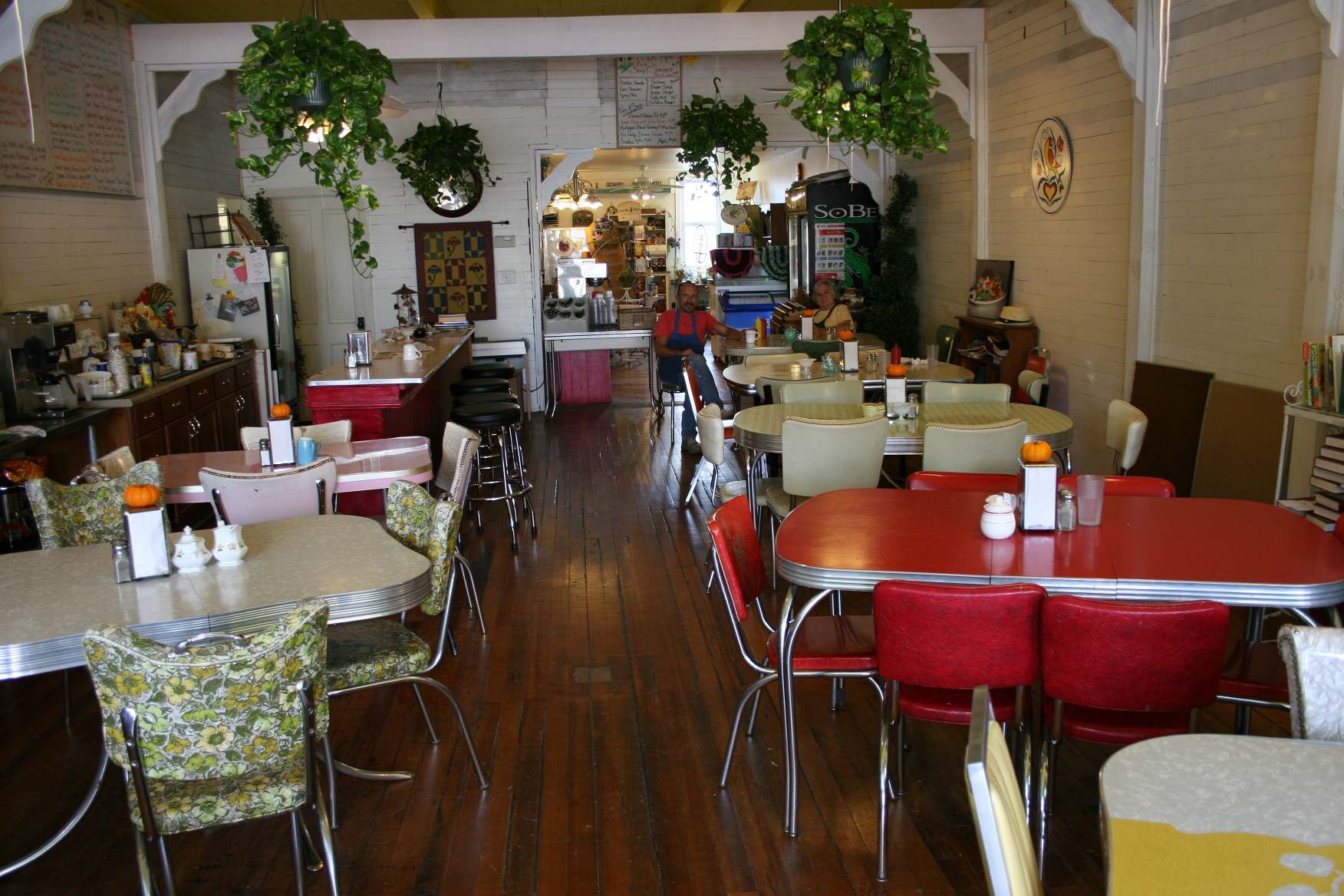
A dining room overview with a mini gift shop tucked in the back.

The cafe’s charm and good, home-cooked and healthy food draw not only locals, but tourists/users of the area’s state recreational trails and regional diners from Rochester some 50 miles to the north and west.

My husband and I have come here for lunch early on a Monday afternoon in early October while on a day trip to view the fall colors. We prefer one-of-a-kind small-town cafes to chain restaurants and are thrilled with the unique, down-home atmosphere we discover at the Highland Cafe. It’s as if we’ve walked into the kitchens of our childhood, minus the red-and-white checked linoleum floor.
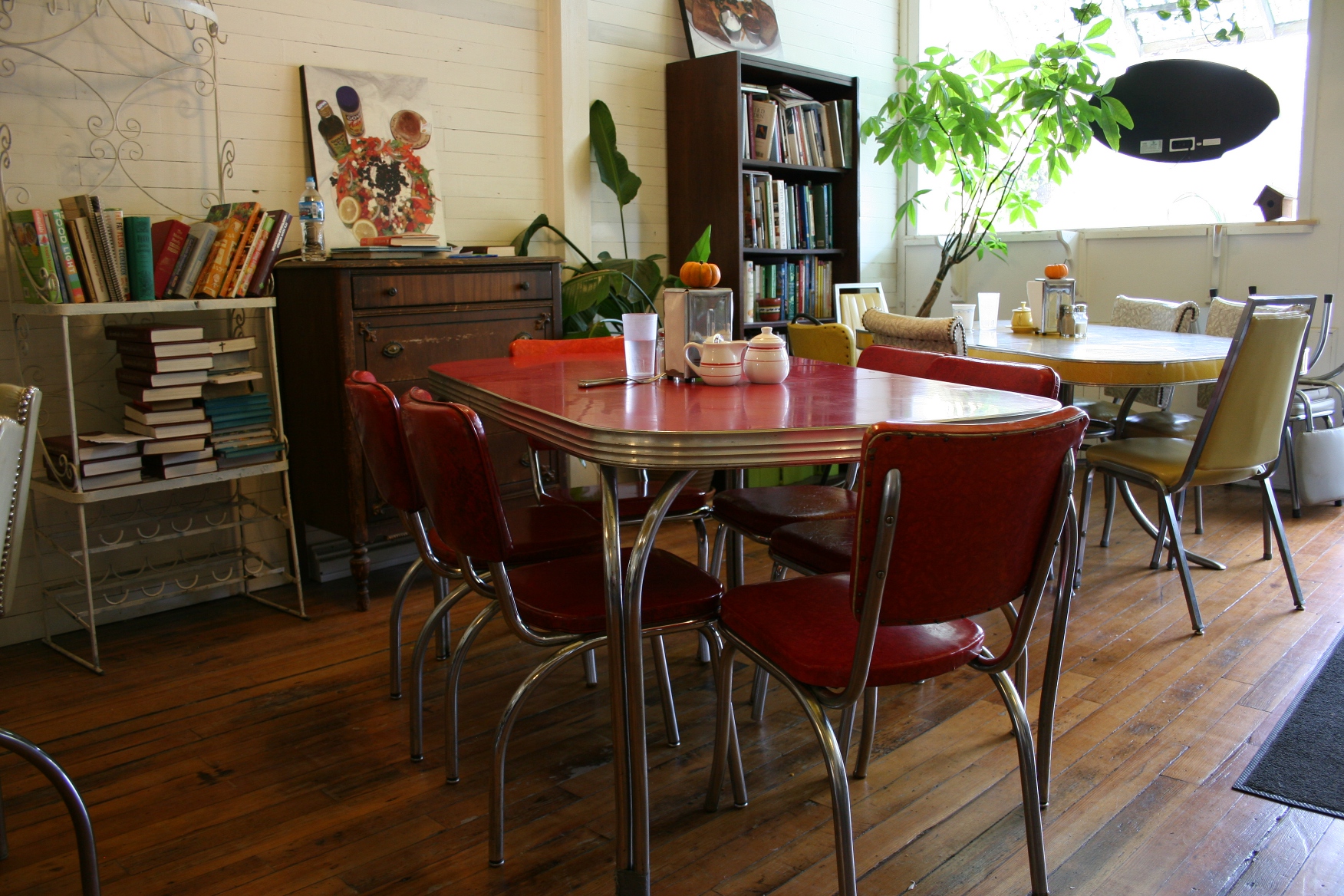
This is the scene near the front of the dining room where vintage tables and chairs are drenched in sunlight on an October afternoon. This is the kind of spot where you can read a book, work on your laptop or chat it up with the locals or others.

This eatery features the original wood floor topped by a mix of 1940s and 1950s vintage laminate chrome-legged/edged tables and chairs that set the mood for casual dining. There’s nothing matchy, matchy perfect about the décor here and that unpretentiousness suits me perfectly.
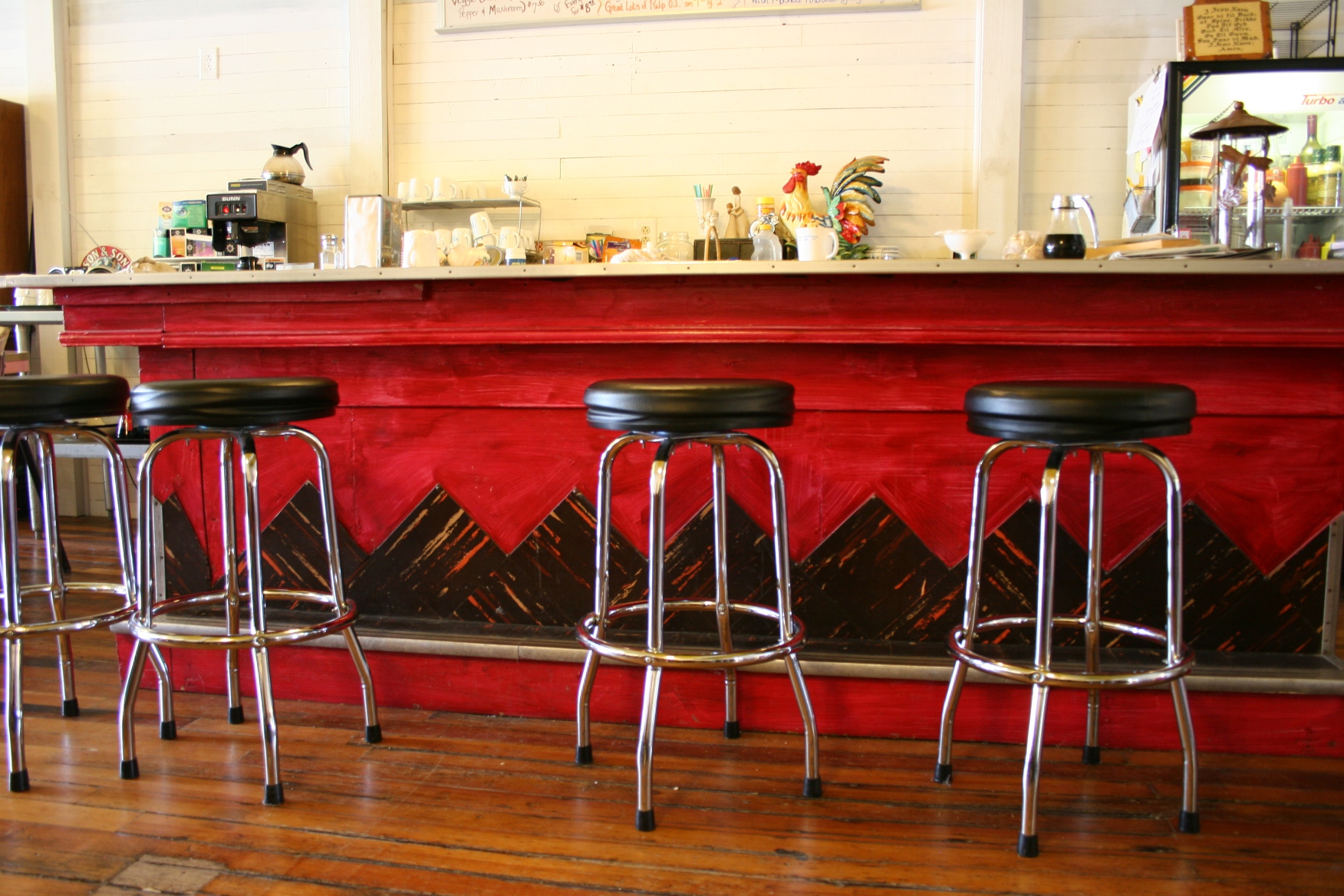
The absolutely fabulous lunch counter.

If you prefer to dine at a lunch counter, you’ll find one of those, too, painted in the most unexpected eye-jolting red that contrasts with the dark wood floor and cream-hued wood plank walls.
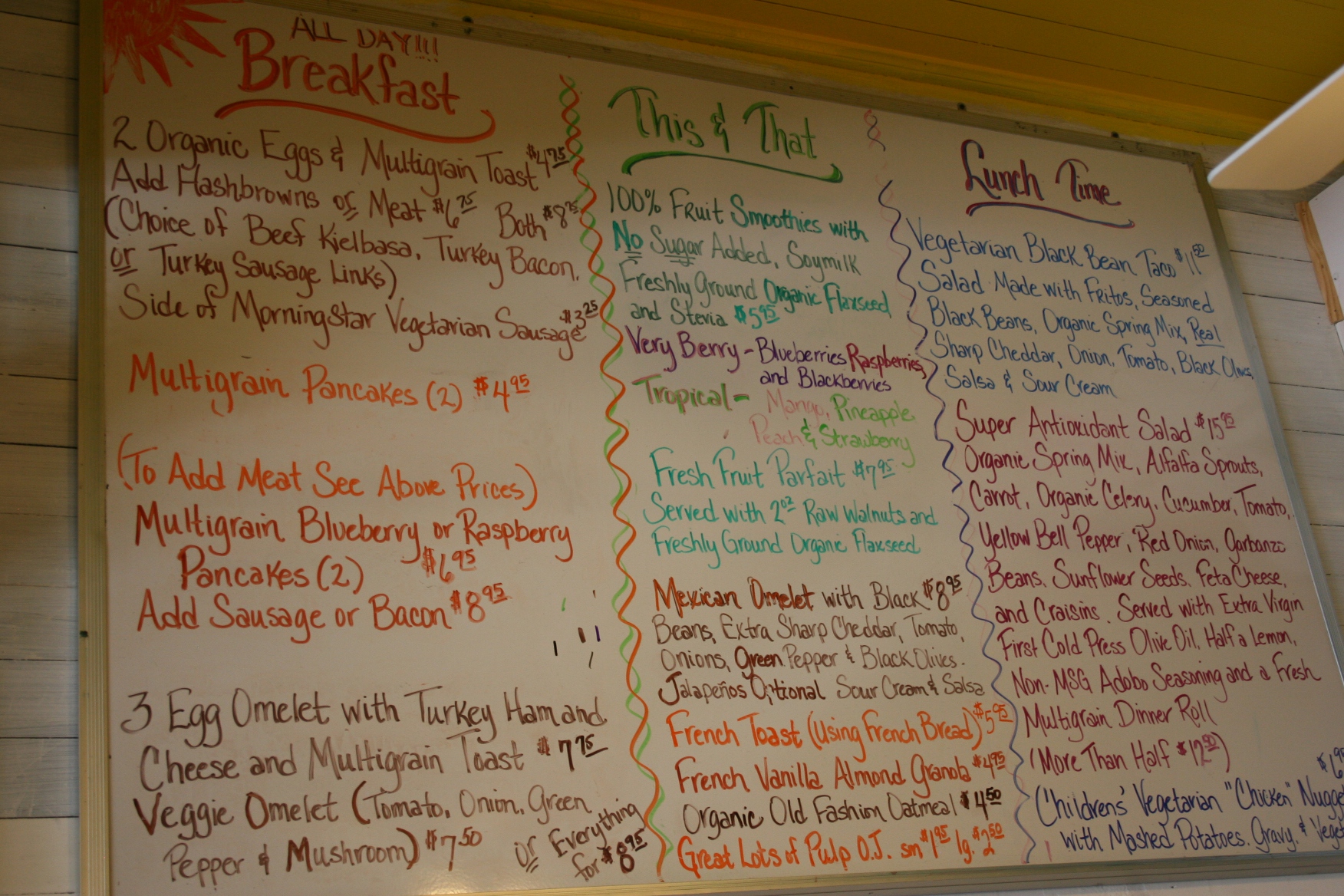
The main menu offers plenty of healthy choices.

The Highland Cafe, you’ll discover, is as much about the casual country atmosphere as about the food. You’ll read words like organic, multigrain, no sugar, soymilk, super antioxidant and fresh on the whiteboard main menu. You’ll also find comfort foods, like real mashed potatoes and gravy, along with fresh vegetables harvested from the cafe garden out back.
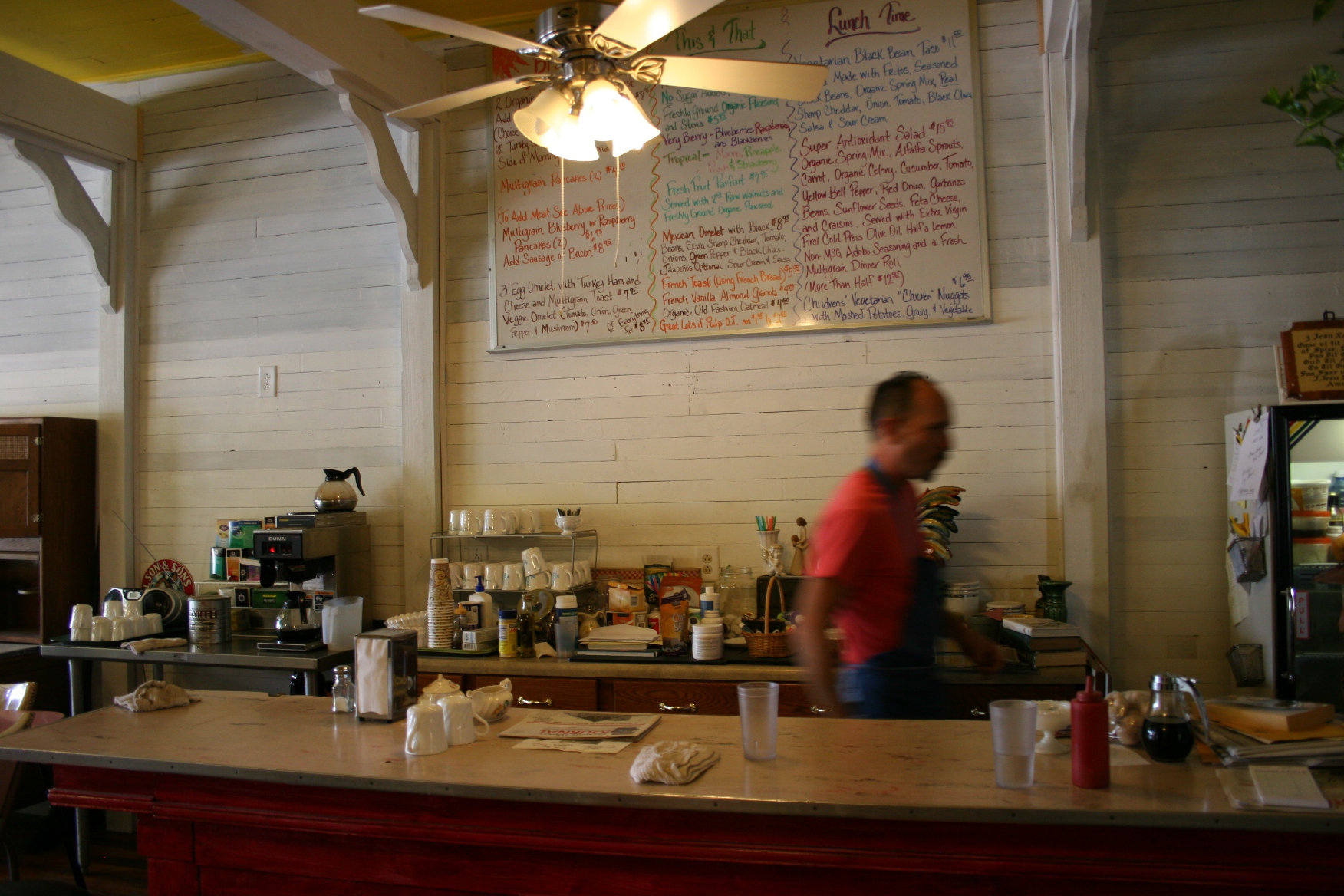
Troy Starks hustles behind the lunch counter toward the kitchen.

Even once mostly meat-and-potato eating local farmers have come around to eating healthier, says Troy Starks who on this Monday is waiting tables while his sister, cafe owner Vicki Hudson, is shopping for groceries. It took some time and convincing, but those stolid farmers are now sometimes ordering the cafe’s super oxidant salads.
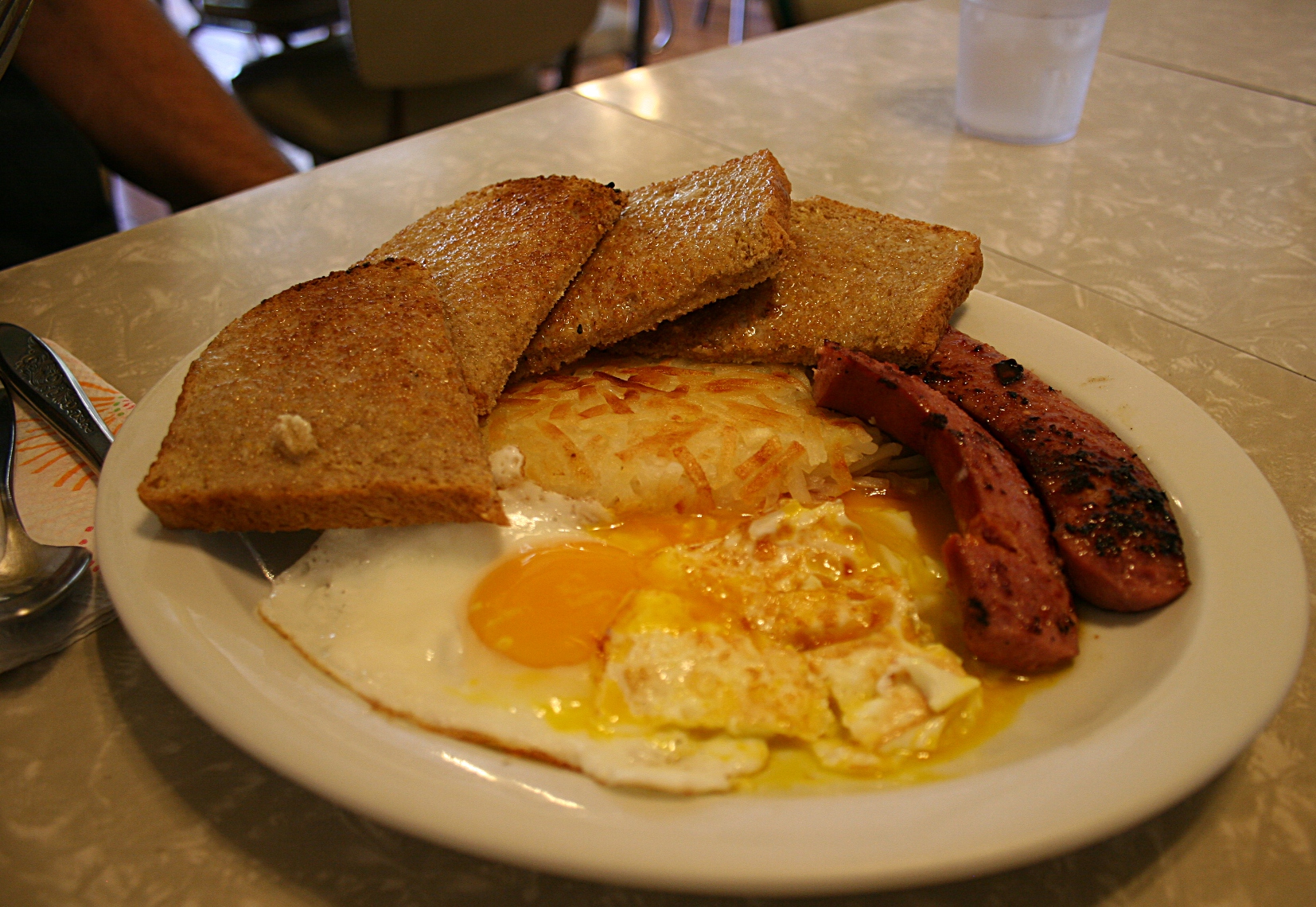
The hearty breakfast my husband ordered, even though the hour was well past breakfast: two organic eggs, multigrain toast, hashbrowns and kielbasa. He broke the egg yolks before I photographed his meal.

While my husband and I await our orders—his a plate of breakfast foods and mine a chicken salad sandwich and a bowl of corn chowder—I strike up a conversation with R.J., dining alone at the table next to us. He’s eating a burger. Turns out young R.J. farms just up the road and sells his grass-fed, antibiotic-free beef to the cafe.

When I point out to R.J. that he’s paying to eat the beef he sold to the cafe, he shoots back with a quick-witted, “Well, at least I know it’s (the beef) good.”
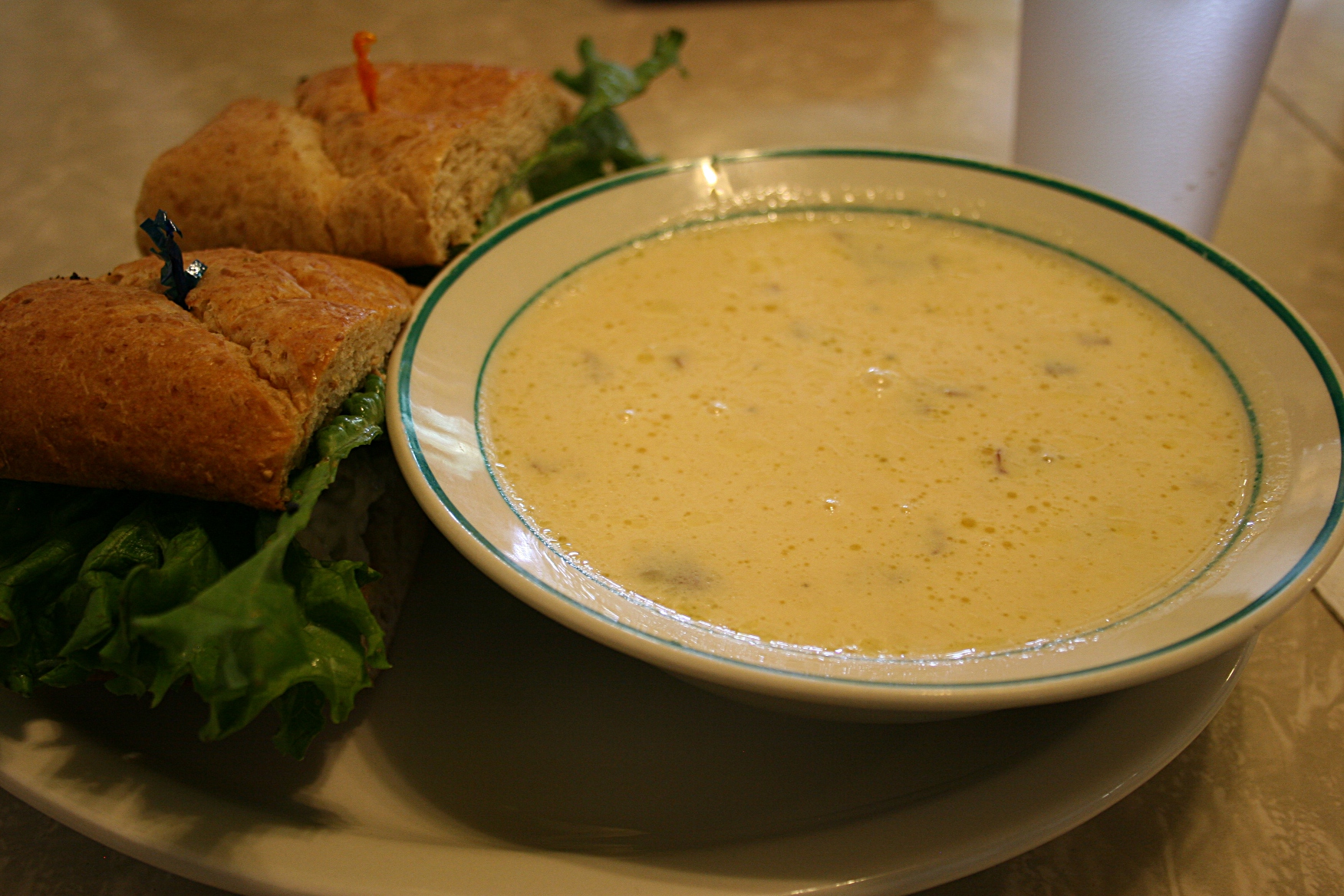
My meal: a chicken salad sandwich and tasty corn chowder.

Good and filling most assuredly define the food here. I wished I wasn’t too full to order a slice of pie or bread pudding or a piece of apple crisp for dessert. But I am. Next time…

And this, dear readers, is where I originally ended this post, which has been sitting in my draft box. Now I must add to this story because cafe owner Vicki Hudson announced to me in an email on Friday that the cafe she purchased five years ago will be closing just before Thanksgiving.

Her mother Sharyn Taylor, the cafe’s chief cook, is “getting tired and will not be up to working another year, so we are closing our doors,” Vicki writes. “…we are going to turn the upstairs into a bed and breakfast and then sell it as a combination bed and breakfast and cafe. It would not be the same without my mom and I feel she has done a tremendous job the past five years.”

Vicki continues: “Maybe there will be someone out there interested in carrying on.”

There. If you are interested in carrying on the fine tradition of the Historic Highland Store and Cafe, preserving a piece of southeastern Minnesota history and more, contact Vicki. Honestly, don’t you just love this unique small town dining spot? I do.
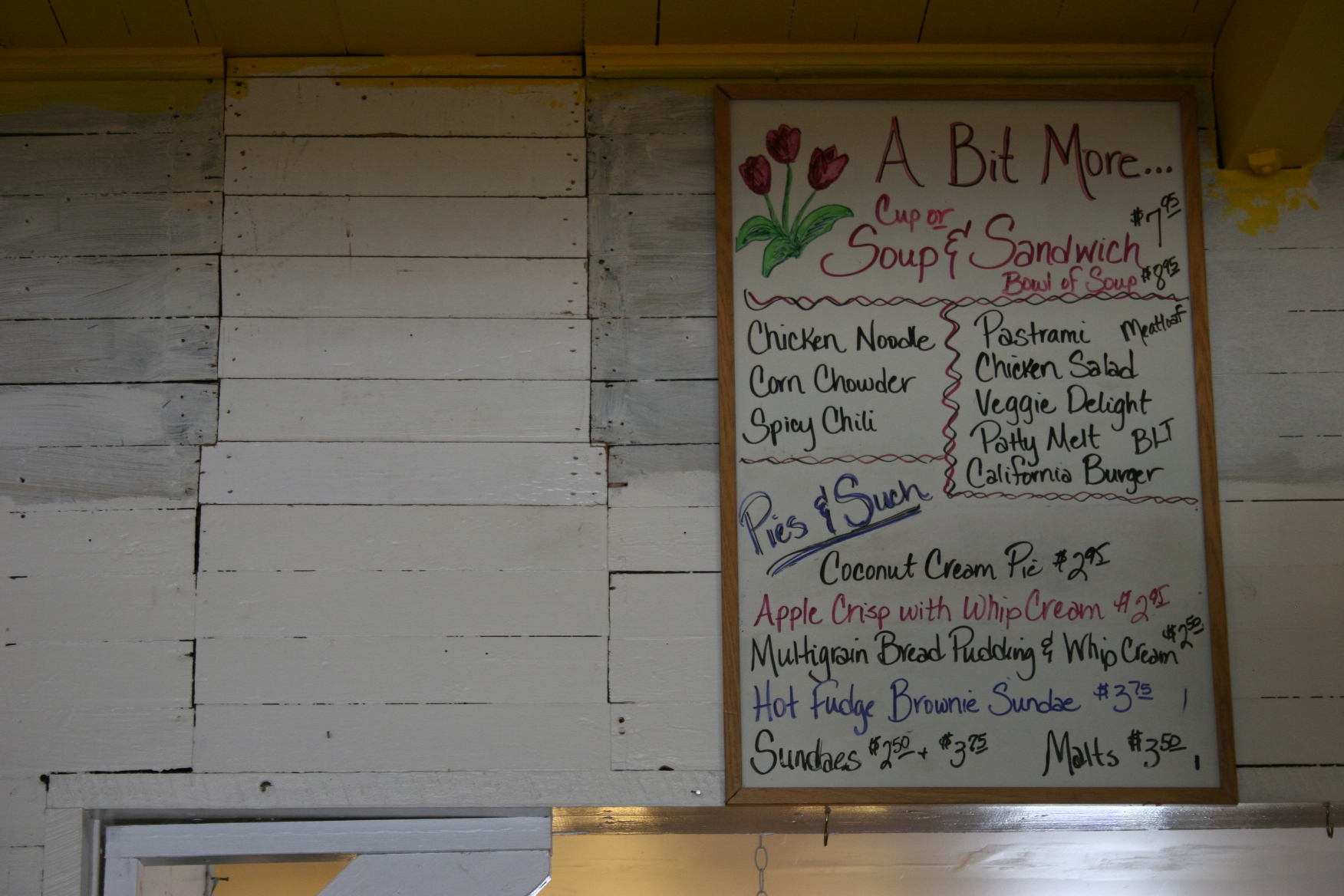
The dessert menu on this particular Monday in October.

FYI: The Historic Highland Store and Cafe is located along Fillmore County Road 10 southeast of Lanesboro in unicorporated Highland. Hours are from 7 a.m. – 3 p.m. Monday-Friday, closed Saturdays and open from 8 a.m. – 3 p.m. Sunday, until just before Thanksgiving.

Yes, the cafe is closed on Saturdays because the building also serves as a ministry for the Seventh Day Adventist Highland Chapel with Sabbath school beginning at 9:30 a.m. followed by an 11 a.m. church service and vegetarian potluck. Bible study is also held at 7 p.m. on Wednesdays and is open to all.

For more information about the Historic Highland Store and Cafe, click here to reach the cafe’s website.
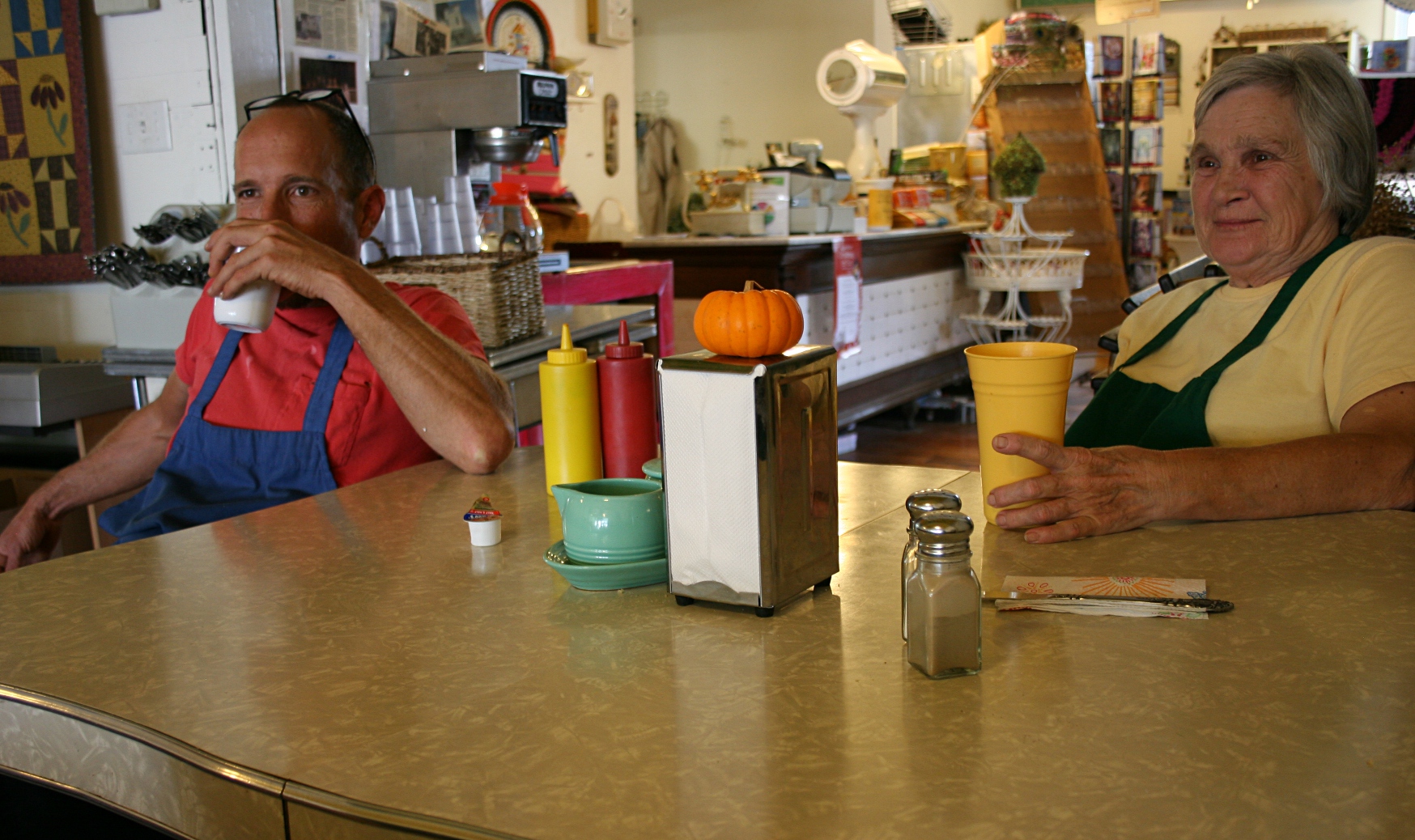
After the lunch rush, Troy Starks and his mom, Sharyn Taylor, sit down to relax and chat. Sharyn is the cafe’s cook.
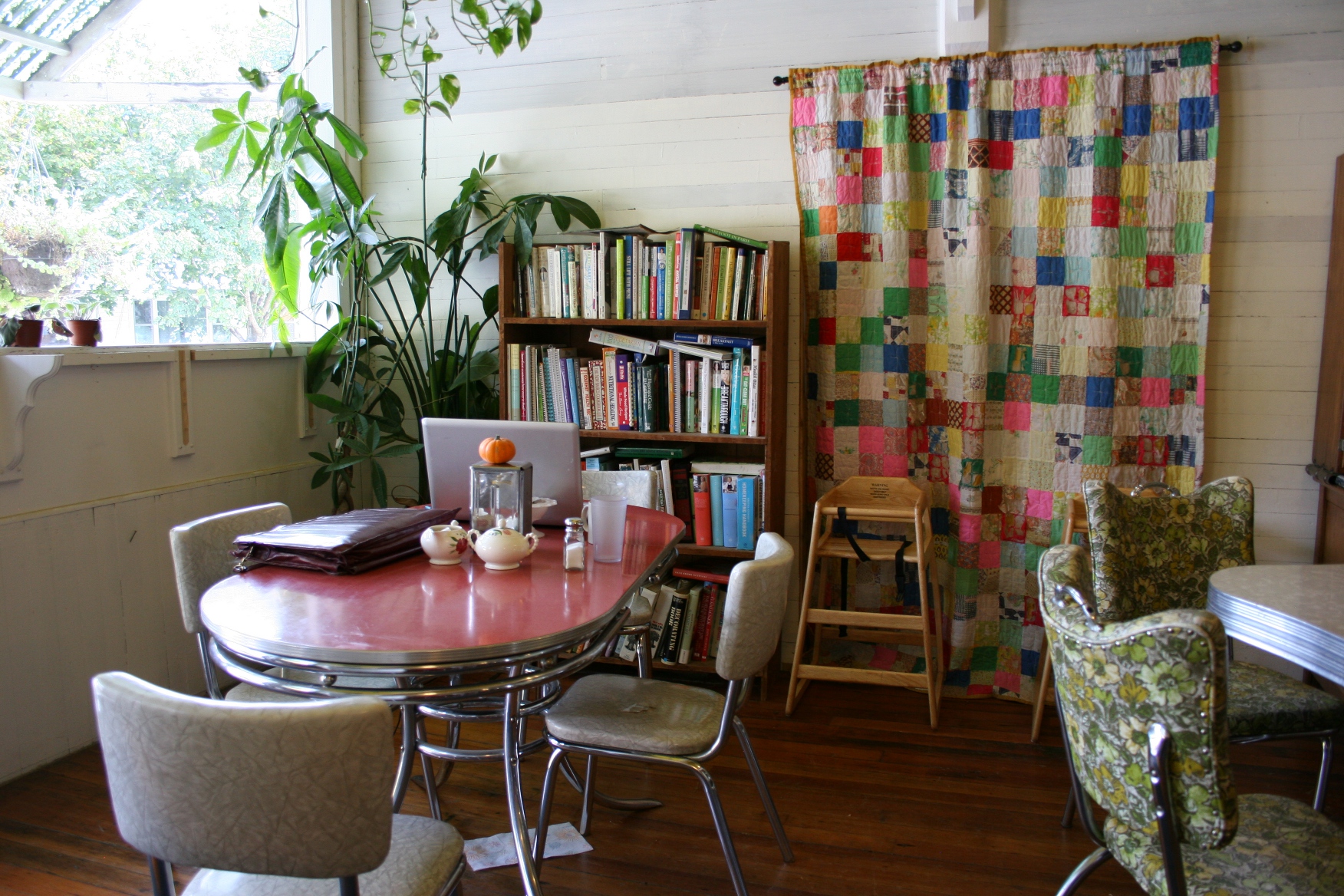
A comfy and cozy front corner of the cafe.
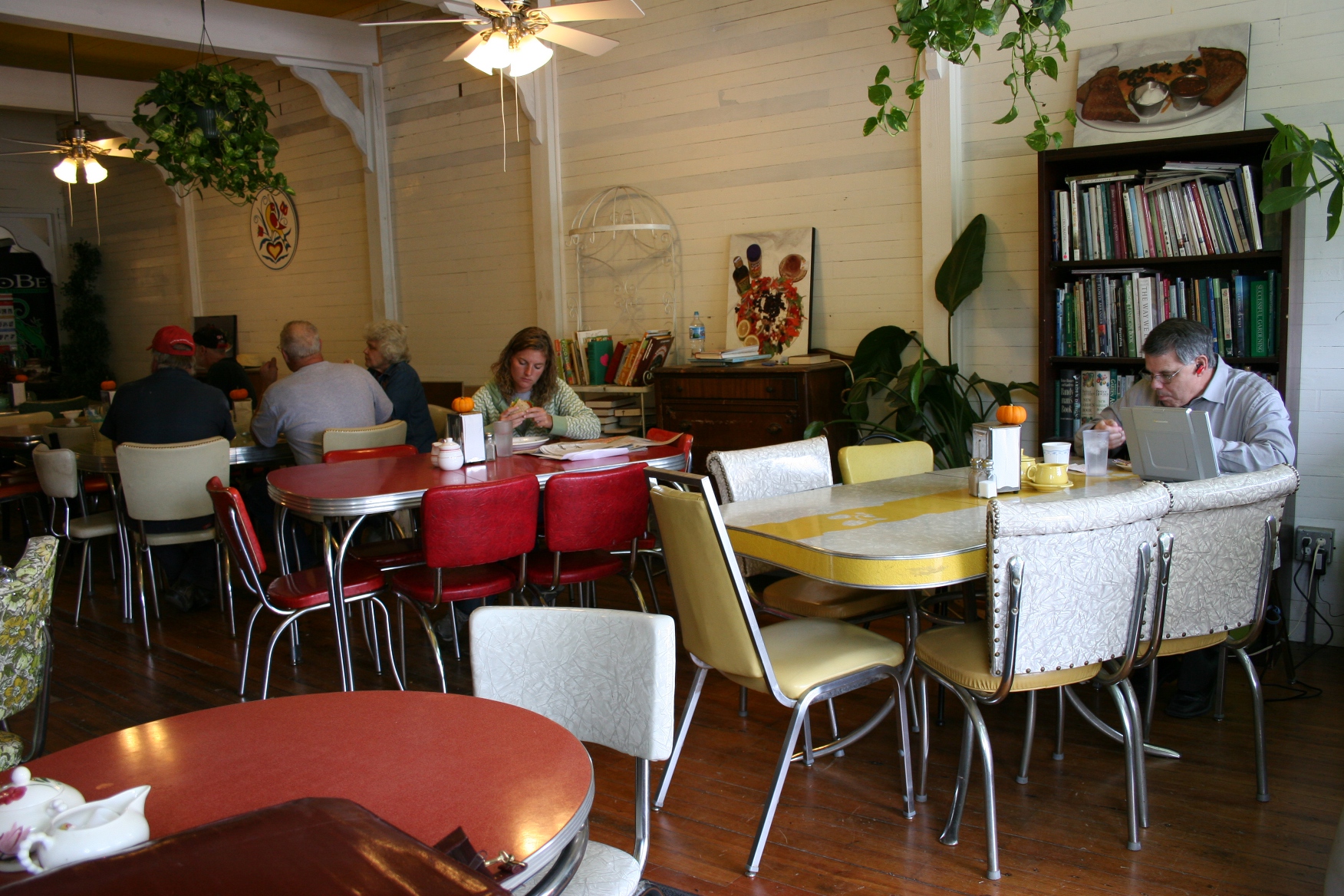
Even early on a Monday afternoon, the cafe is fairly busy. Occasionally local Amish dine here, intriguing tourists who come to this region of Minnesota. None were here on the Monday we visited. We were told that young Amish women have also worked here on occasion in the kitchen. And at least one  did not show up for work one day, having left the Amish order to “go Englisch.”
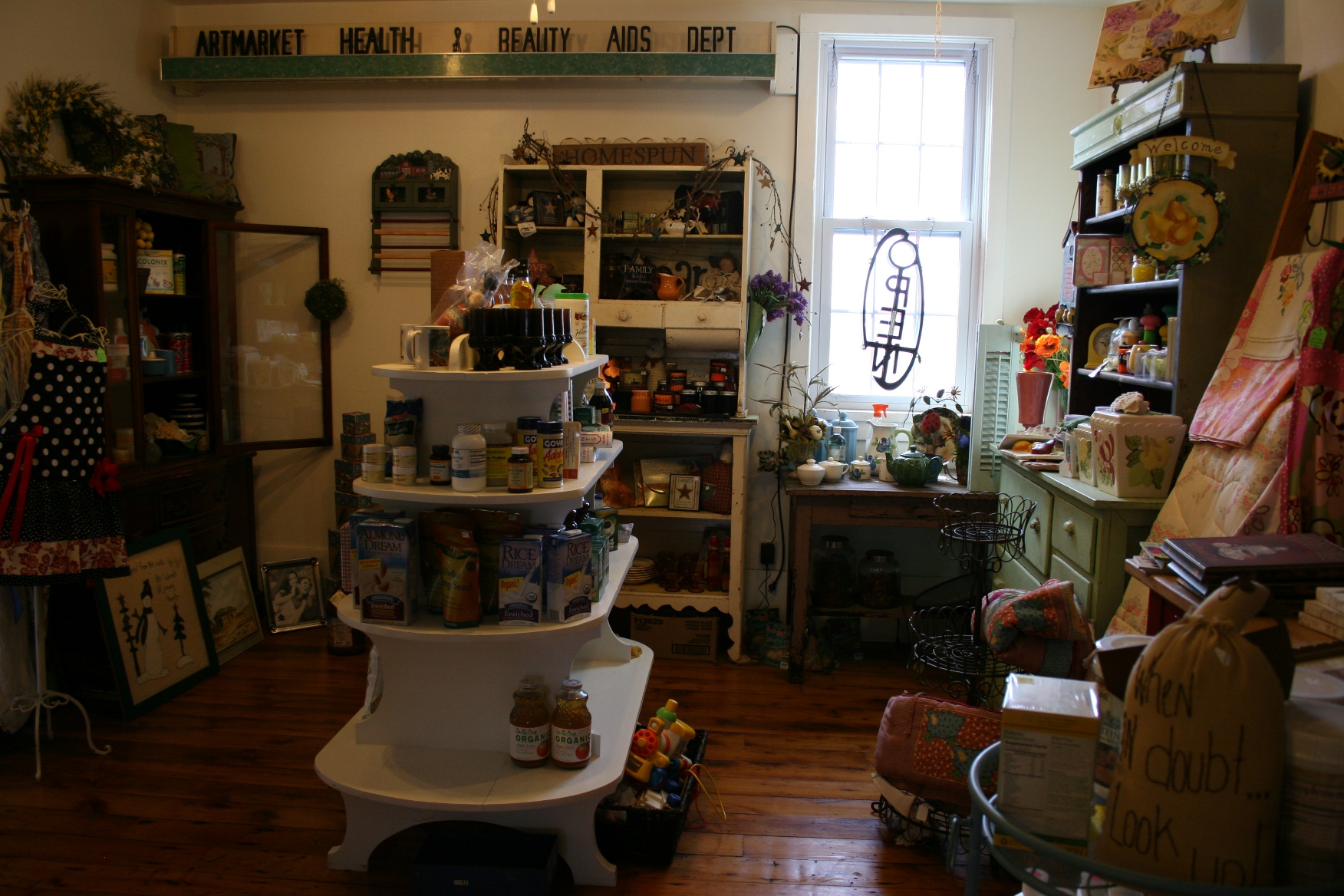
The art market and health and beauty aids department behind the dining room offers an eclectic mix of merchandise.

© Copyright 2012 Audrey Kletscher Helbling


Poets, photographers & penny pinchers connect in Zumbrota October 21, 2012

FRIDAY EVENING I SUCCESSFULLY read a poem about water before an audience of other poets and photographers and guests in an historic Zumbrota, Minnesota, theatre as part of the “It’s All One Water” exhibit.

I tell you this because I prefer to quietly write and read poetry (to myself) as opposed to standing before an ocean of seats in a darkened theatre with my lips pressed close to a microphone. But practice, practice, practice made all the difference in my feeling fairly confident and comfortable this go around.

(Yes, I’ve read in the State Theatre previously and you can read about that poet-artist collaboration by clicking here.)

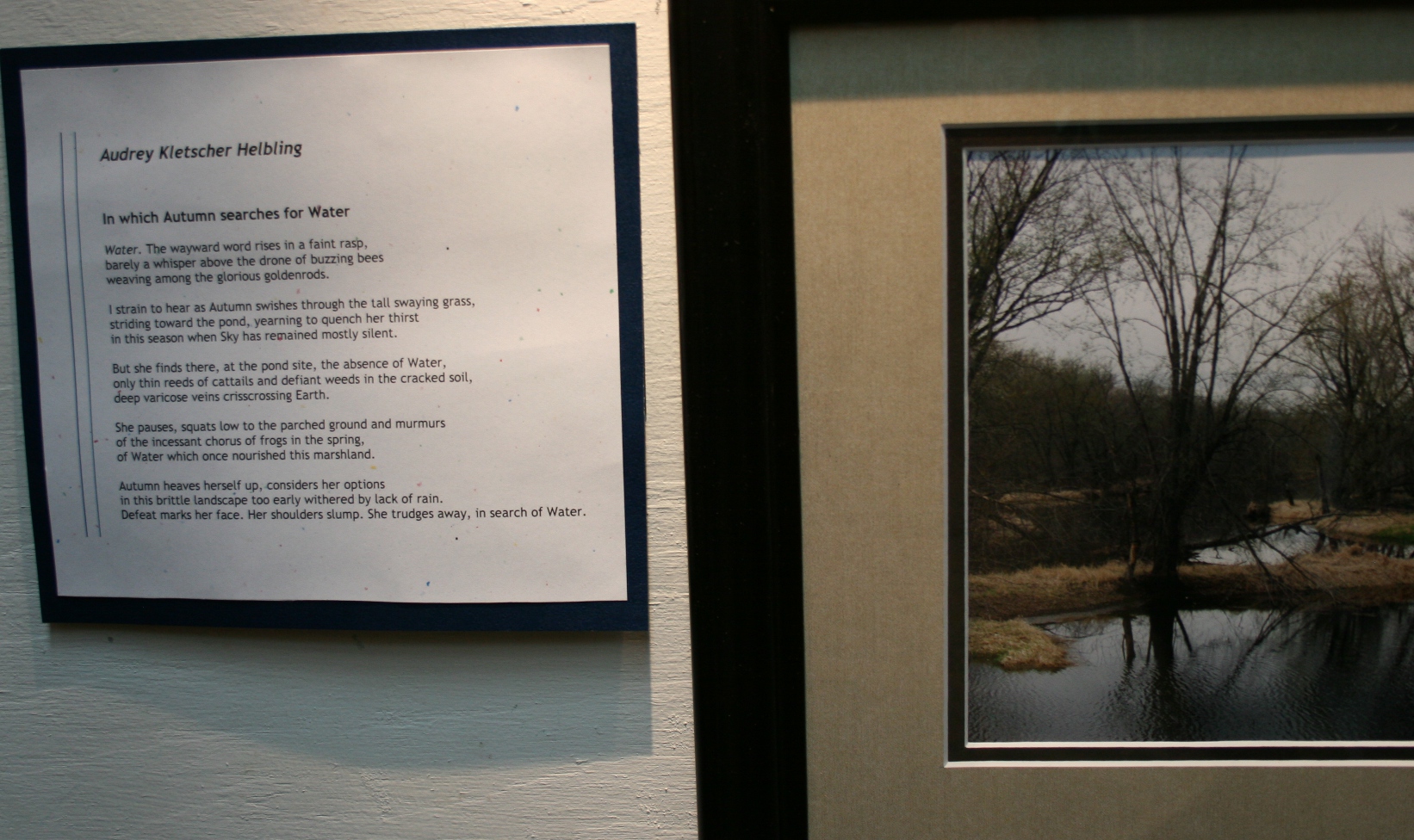
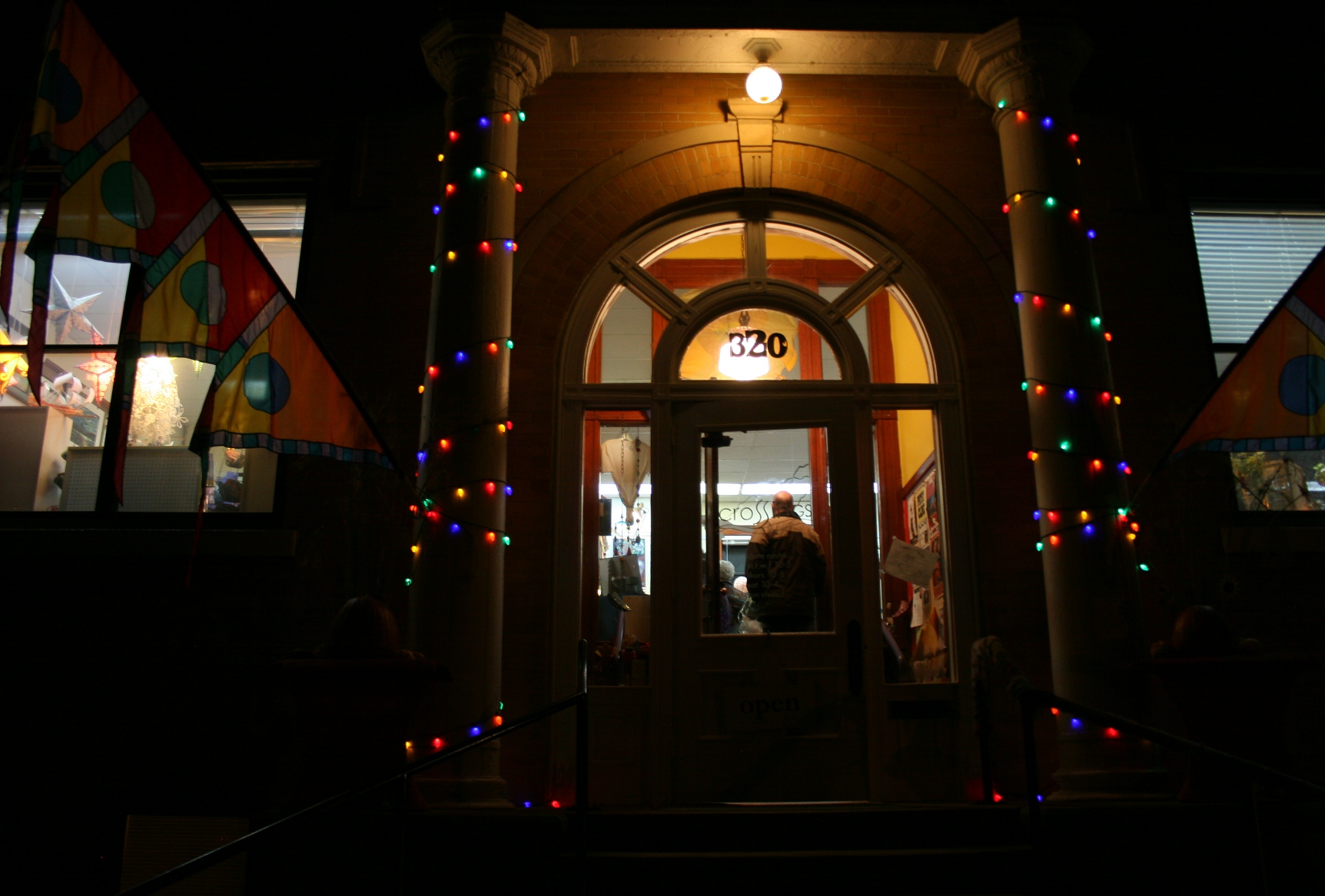
My poem,  left, was one of 28 selected and hung in a juried writing competition. Photos themed to water were also part of the “It’s All One Water” show which continues through the end of October at Crossings at Carnegie, 320 East Avenue, Zumbrota.

You’ll just have to imagine me reading my poem:

In which Autumn searches for Water

Water. The wayward word rises in a faint rasp,
barely a whisper above the drone of buzzing bees
weaving among the glorious goldenrods.

I strain to hear as Autumn swishes through the tall swaying grass,
striding toward the pond, yearning to quench her thirst
in this season when Sky has remained mostly silent.

But she finds there, at the pond site, the absence of Water,
only thin reeds of cattails and defiant weeds in the cracked soil,
deep varicose veins crisscrossing Earth.

She pauses, squats low to the parched ground and murmurs
of the incessant chorus of frogs in the spring,
of Water which once nourished this marshland.

Autumn heaves herself up, considers her options
in this brittle landscape too early withered by lack of rain.
Defeat marks her face. Her shoulders slump. She trudges away, in search of Water.

The “It’s All One Water” event included so much more than reading and listening to poetry and viewing photos on the subject of water. It was about mingling with other writers and artists, about connecting, or reconnecting.

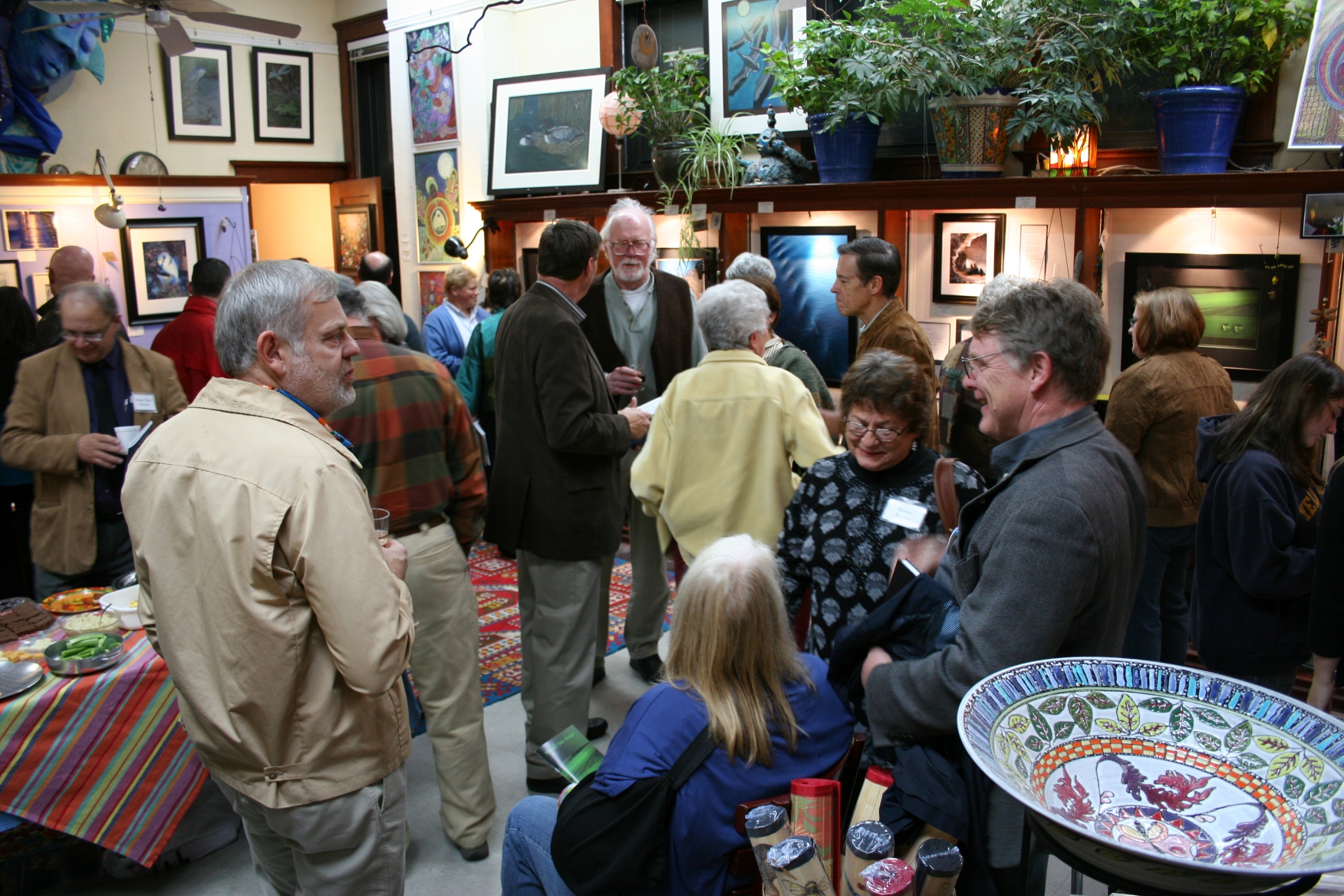
Poets, photographers and others mingle over wine and snacks at Crossings prior to the readings a block away at the State Theatre.

I chatted briefly with poet Patrick L. Colemen of Minneapolis, whom I met at Crossings at Carnegie, (the arts venue supporting the show) last spring, and caught up with him on the mystery book he is writing.

I talked with John Calvin Rezmerski of Mankato, a poet who is eons ahead of me, having published several books of poetry and having taught writing at the college level. I met him last year at a poetry-photography show/reading in Mankato. More connecting there and encouragement from other poets.

That is, I have found, the true benefit of attending events like the Friday evening reception and reading in Zumbrota. Connecting. Encouragement for me personally in my writing.

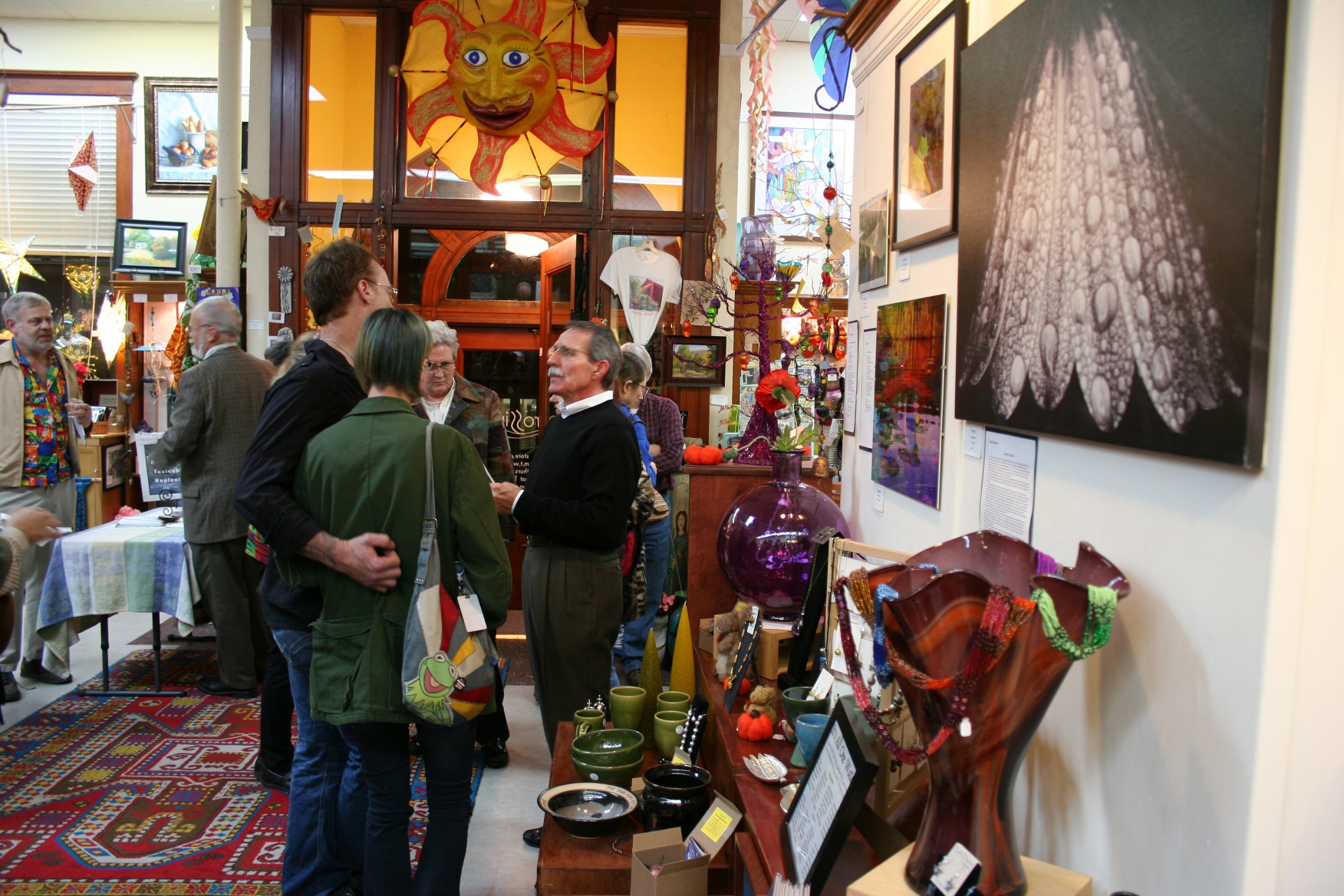
More mingling at Crossings, this time after the poetry readings. To the right is the photo “Tiffany” by Tim Rabe of Rochester. All of the “It’s All One Water” photos are for sale.

Among all the unfamiliar faces was the familiar face of Peter Allen, a gifted Faribault poet who lives several blocks away and a street over from me. Peter and I will be presenting on poetry at Buckham Memorial Library in Faribault in early December. Peter gave me two thumbs up for my poetry reading Friday evening.

I don’t know how Faribault High School English teacher Larry Gavin (he’s taught all three of my children) would have graded my reading. But he was in Zumbrota, too, on Friday evening reading his two poems. He, like Rezmerski, has published several volumes of poetry and reads with the confidence of a seasoned poet who truly has mastered the craft of entertaining an audience.

Likewise Susan Waughtal of Oronoco entertained the audience with her “Farm Water Cycle” poem which resonated with me, a former farm girl. Afterward I chatted with Susan and her husband. They are, she says midlife crisis farmers (farming since 2008) who live and farm on a 10-acre sustainable farmstead, raising chickens (and more), tending bees, operating community supported agriculture, and supporting music and the arts… Susan recently quit her off-farm job to work full-time on the farm.

When Susan told me about the old granary converted into an antique/thrift/arts shop on Squash Blossom Farm and how much she thrills in thrifting, I connected even more for I, too, am a thrifter.

Poets and photographers and penny pinchers. Wonderful company to keep on a Friday evening in October.

The festive exterior of Crossings at Carnegie, a privately-owned art center housed in a former Carnegie library.

FYI: For more information about Crossings at Carnegie, which collaborated with the Zumbro Watershed Partnership on “It’s All One Water,” click here.

© Copyright 2012 Audrey Kletscher Helbling
 

Rural Americana: A personal tour of historic Canton, Minnesota October 18, 2012

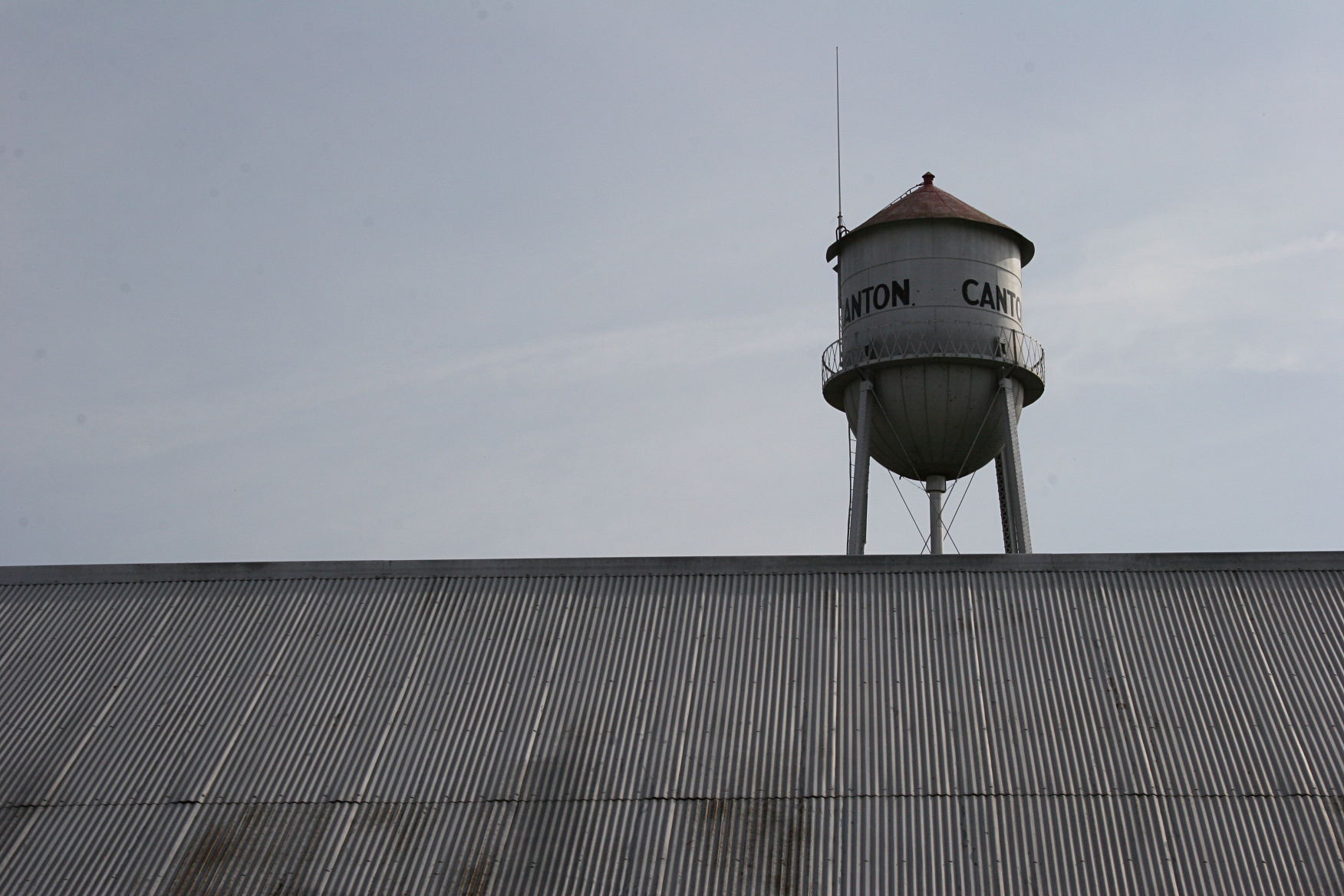
The water tower in Canton, on the other side of the roof line seen here in the foreground.

LeROY HAYNES WAS BRUSHING green paint onto wainscoting in the sunny warmth of an October afternoon when I happened upon him in Canton, a town of 328, in southeastern Minnesota near the Iowa border.

He was, he said, in the process of sprucing up Lumber Yard Antiques, the shop he and wife Kathie opened in July. Kathie’s originally from Canton where the couple now lives only three blocks from their antique store.

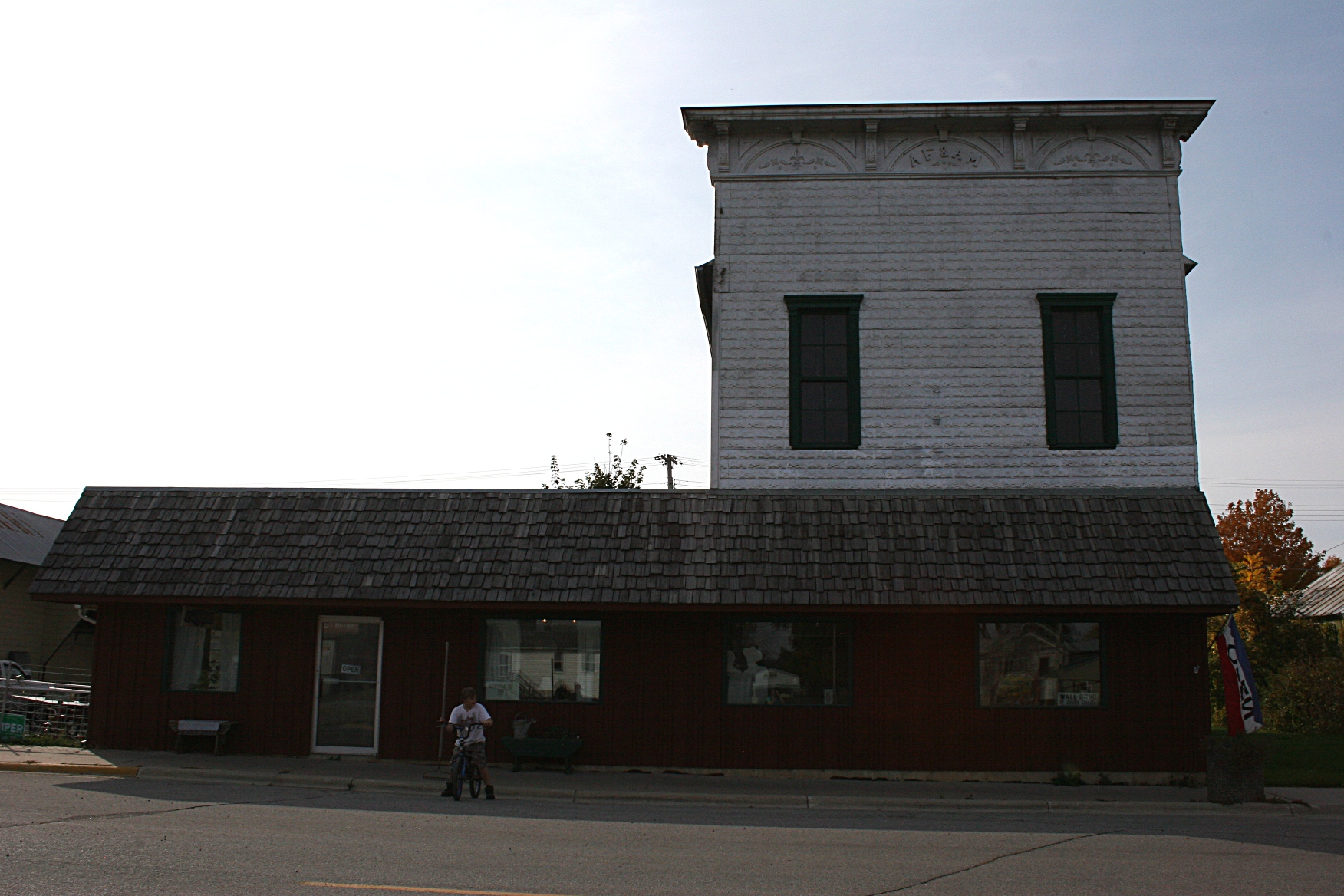
When the lumber yard moved here, it added the front red part of the building onto the former Masonic Lodge building on the right. The first floor of this complex now houses Lumber Yard Antiques.

They named their business after the lumber yard previously housed in the building complex which some 10-plus years ago was home to another antique shop and before that Canton city offices. The older part of the Haynes’ shop, the Masonic Lodge building, was once rented out by the Masons and used as a grocery store, barbershop and even as apartment space.

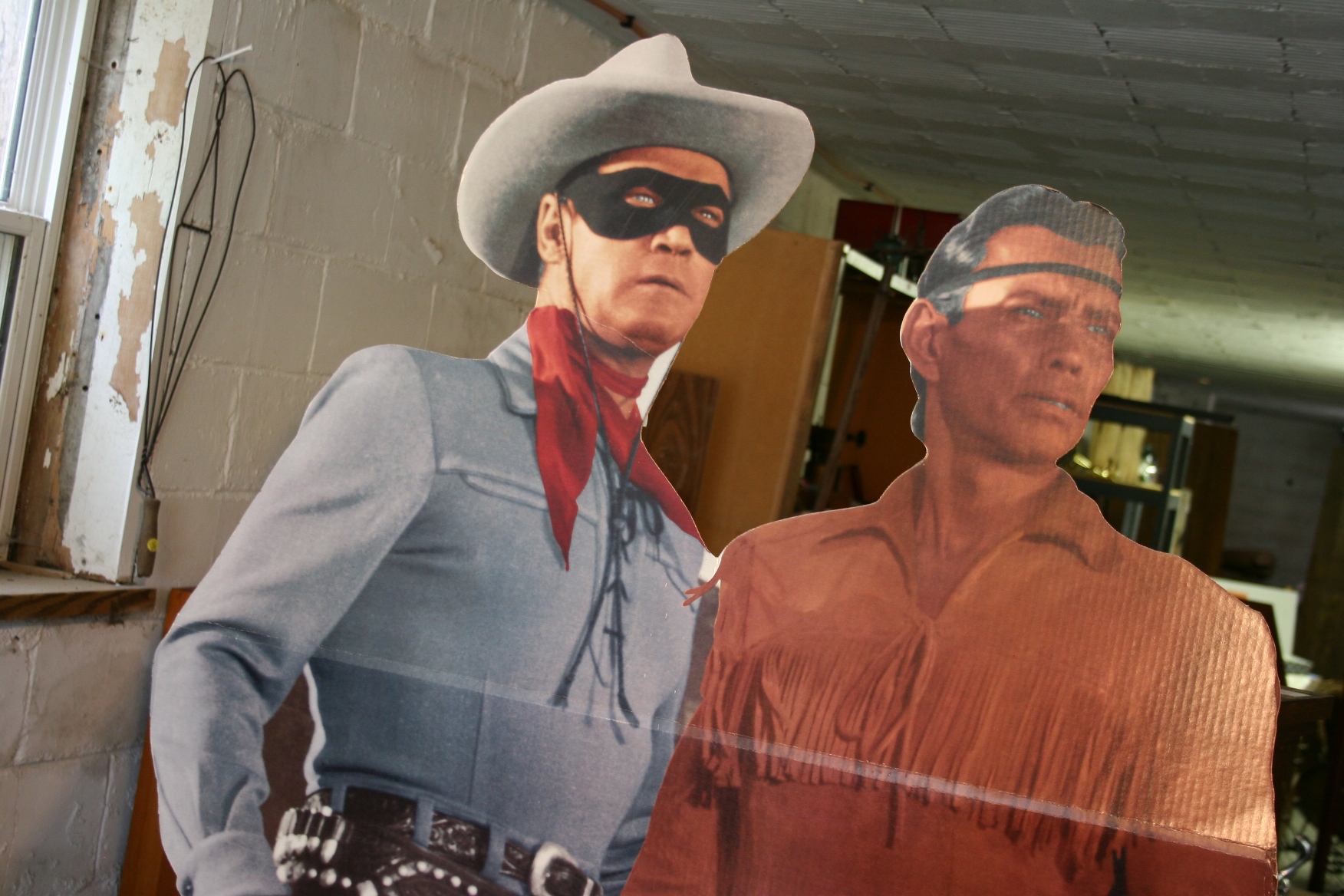
See what you learn when you start a conversation. I learned even more when I spotted a cut-out of Tonto and the Lone Ranger and mentioned to LeRoy that I’d seen one just like it in the basement of an antique shop in Stockholm, Wisconsin.

The Lone Ranger and Tonto cut-outs, photographed last fall in Stockholm, Wisconsin.

Imagine my surprise when LeRoy informed me that the cut-out had come from Stockholm, where he once sold his antiques and collectibles at A+ Antiques & Oddities.

It is a small world.

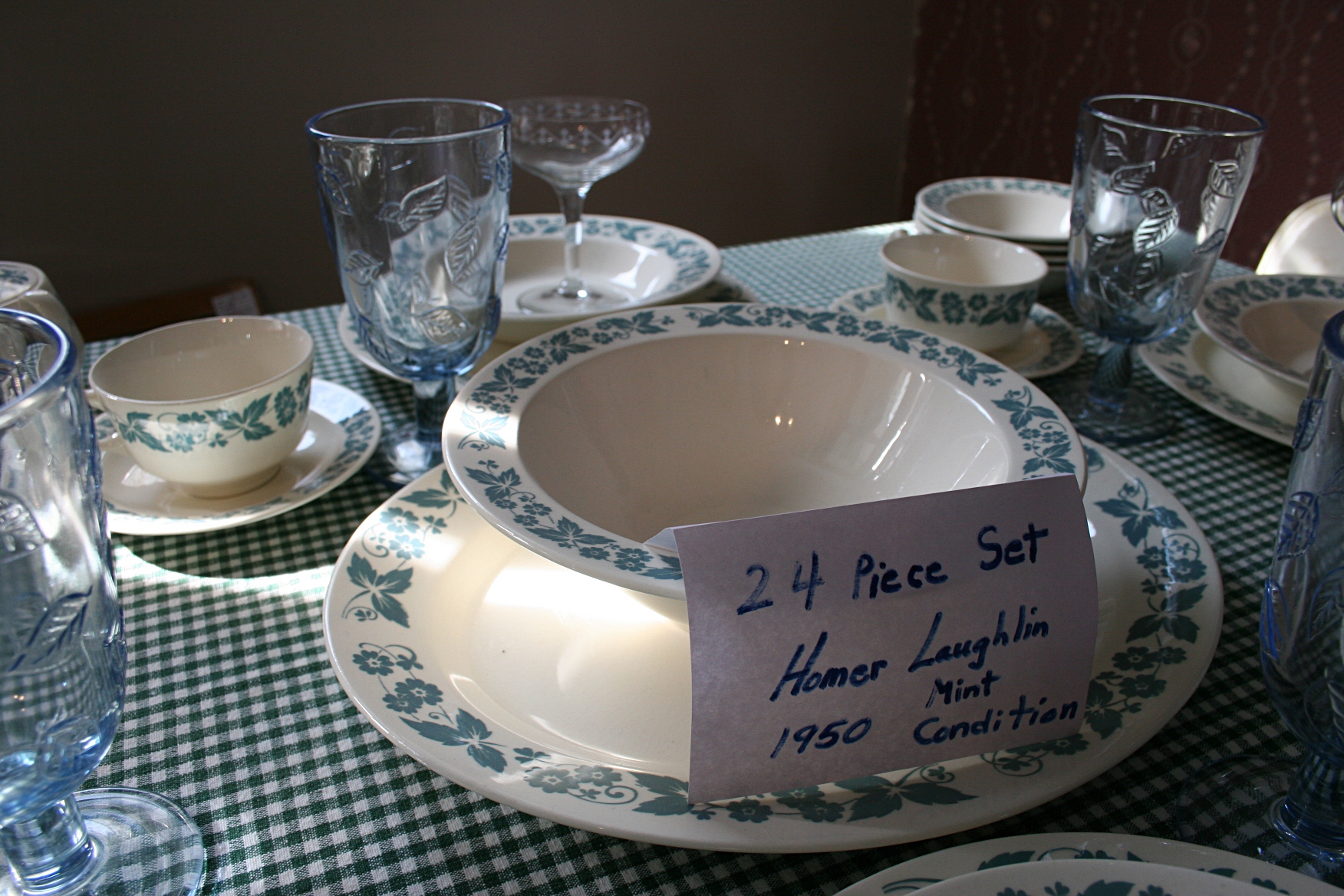
Beautiful 1950 Homer Laughlin china for sale at Lumber Yard Antiques.

LeRoy and I hit it off marvelously and soon he was offering to take me and my husband into the upstairs of the former Masonic Lodge. I had my doubts as this Presbyterian minister led us past a jumble of boxes, over broken glass and finally weaving our way up a steep and dark stairway littered with piles of bird poop. And I was wearing flip flops.

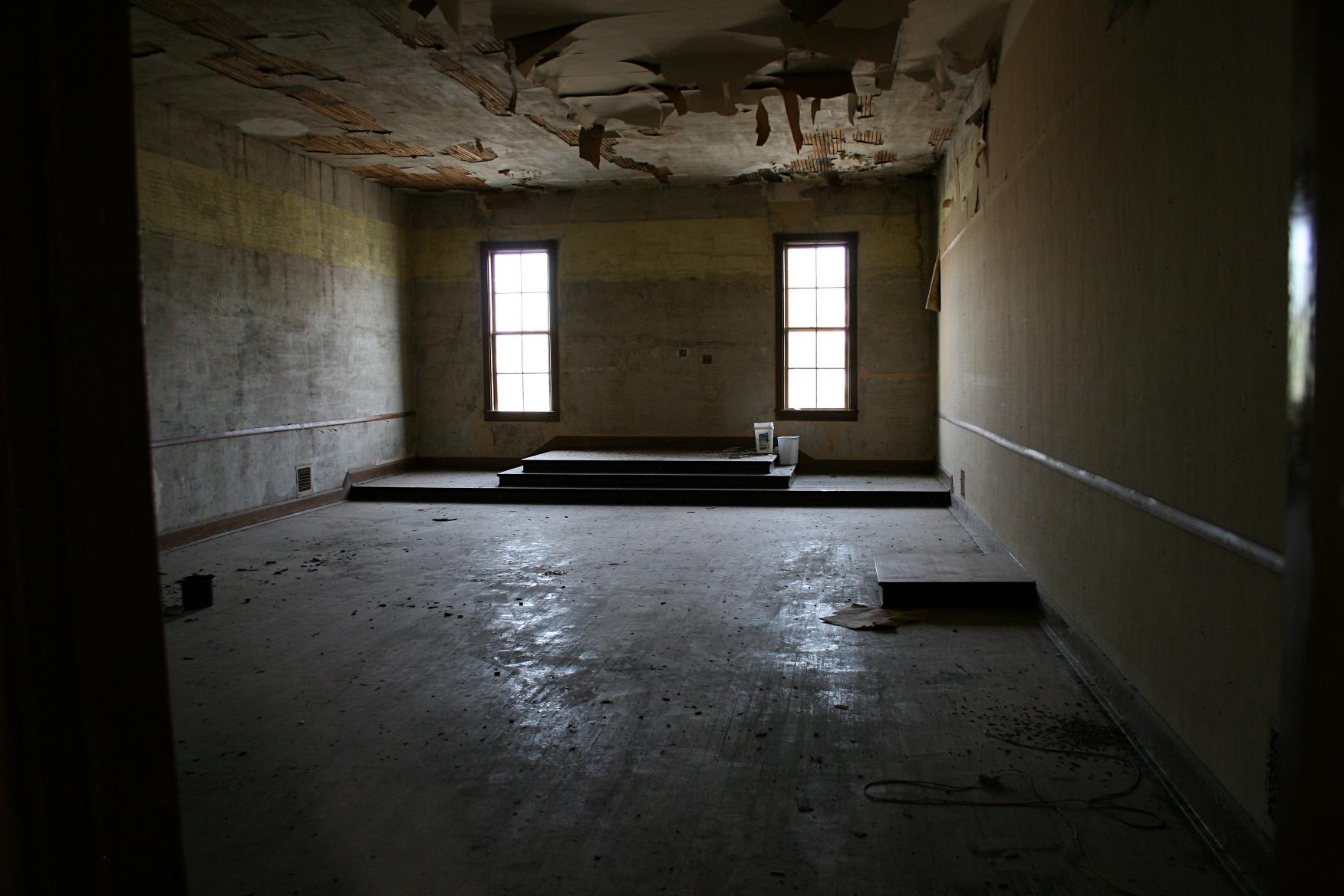
Inside the former Masonic Lodge, the second floor of Lumber Yard Antiques. Can you see the potential here?

But it was worth the climb when LeRoy led us into a spacious room with incredible potential, despite the crumbling ceiling and general disrepair. The wood floor and the step-up small “stages” on both ends of the room—something to do with Masconic ritual, LeRoy said—instantly ignited my creative thoughts. This, I told our tour guide, would be perfect for theatre and/or music.

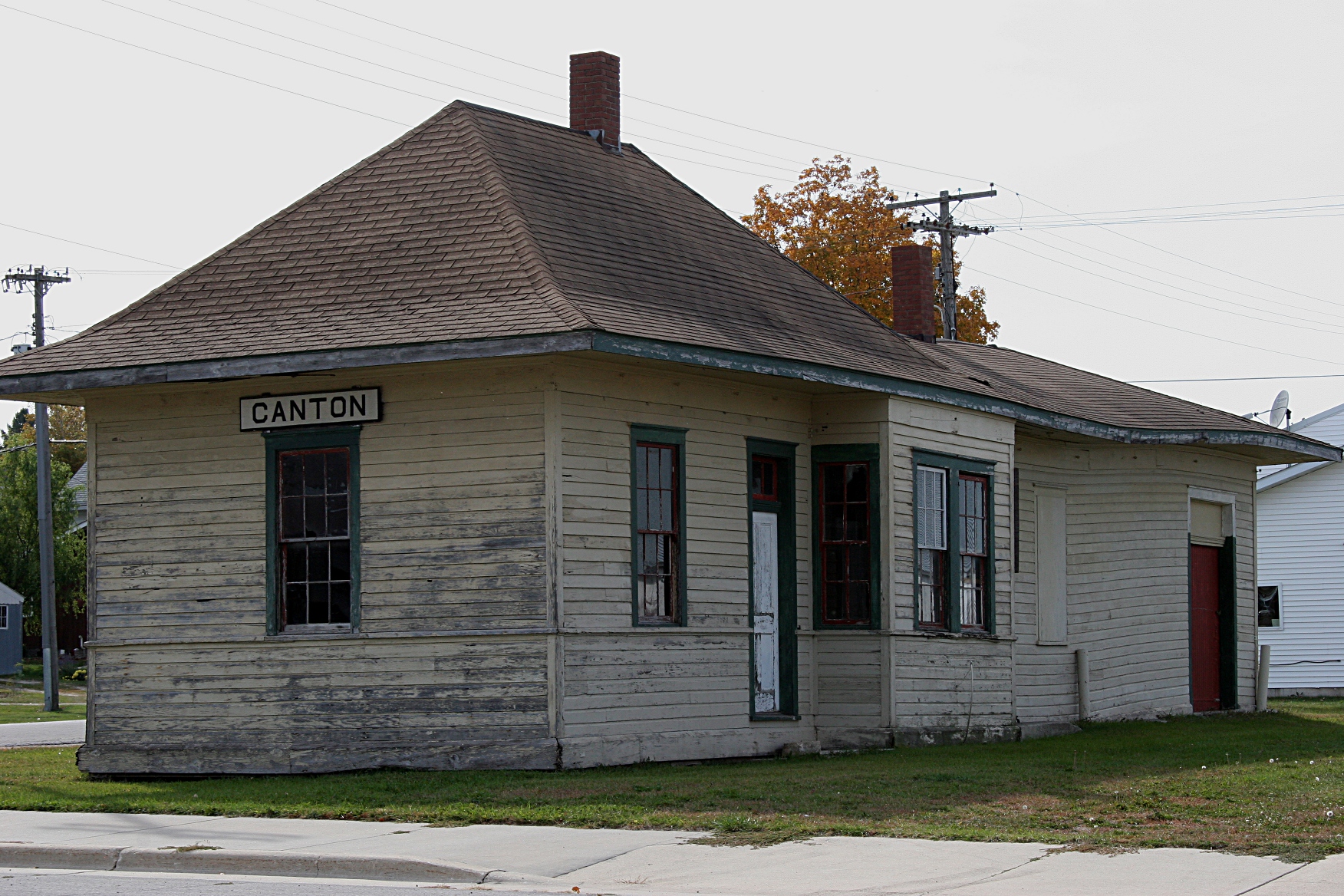
Canton’s original depot, recently reroofed.

I don’t know that LeRoy and Kathie share my vision. But they have been thinking preservation as has a railroad buff from California who bought the next door vintage railroad depot, sight unseen, according to LeRoy.

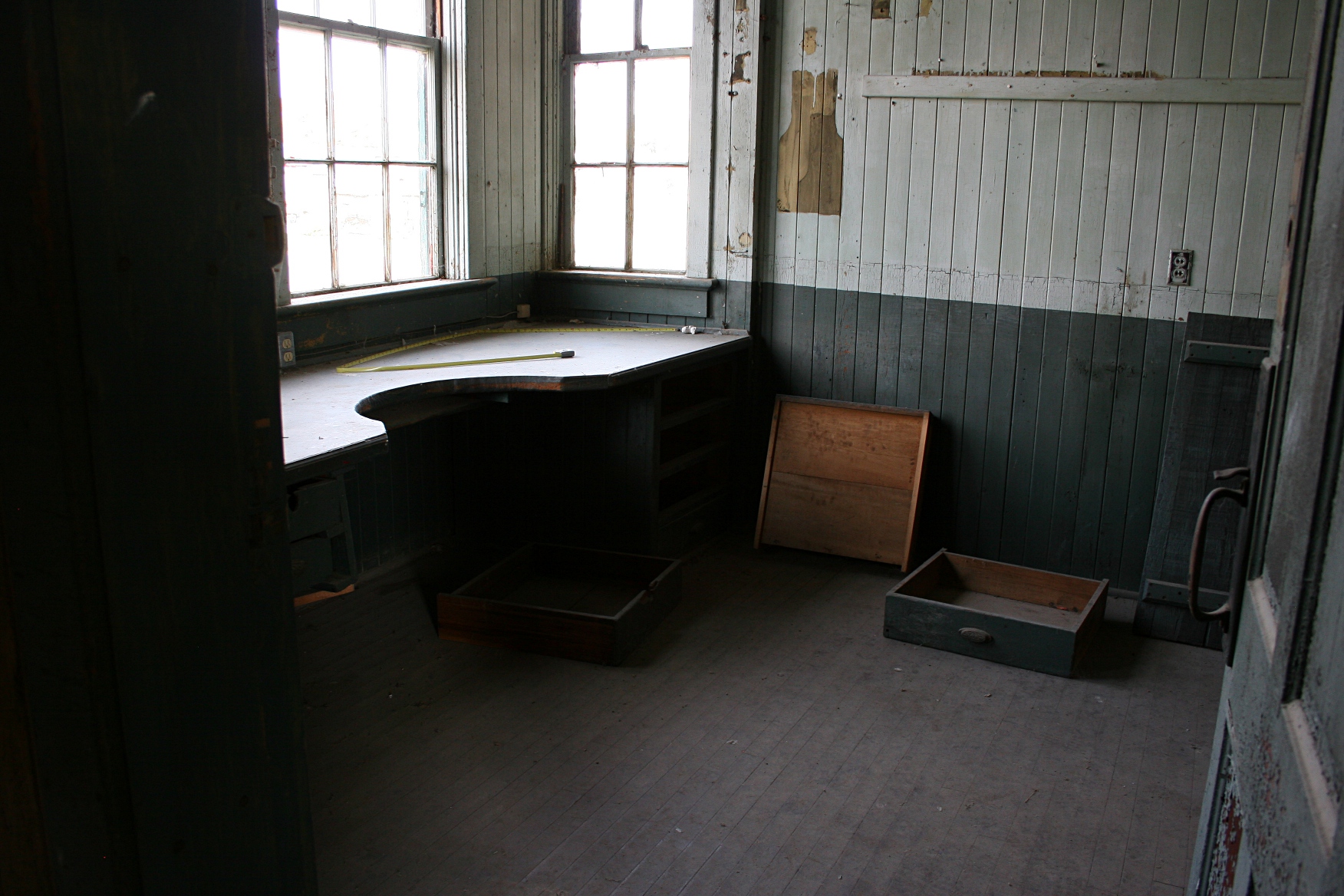
Inside the depot.

The depot came next on our tour (LeRoy’s been entrusted with a key) and I was just as delighted to get inside this historic building.

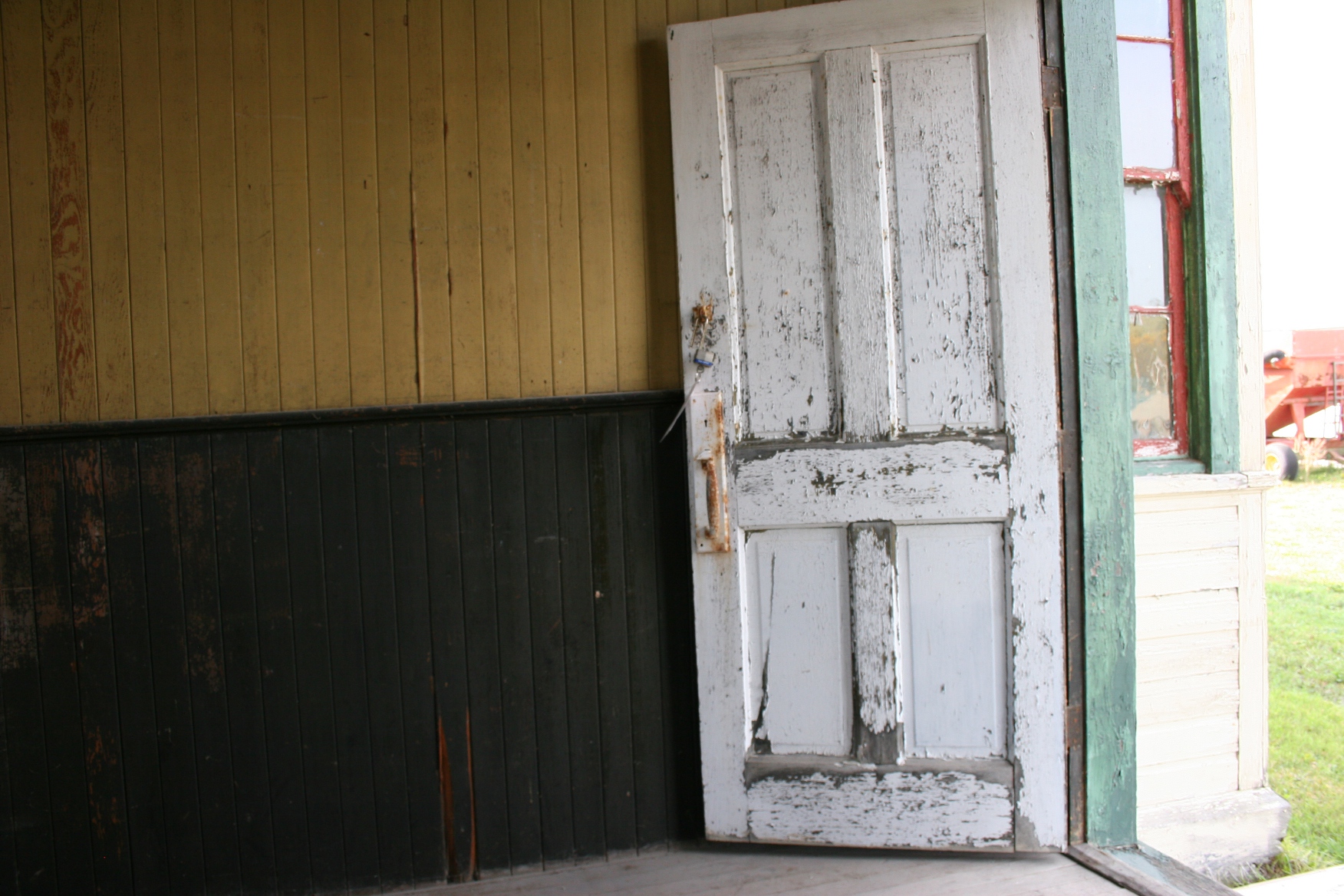
The door LeRoy unlocked into the depot. Love it.

The California man has a vision to create a historic site in Canton and a Canton Historical Society has been formed. Plans are to seek grants to restore old buildings like the depot.

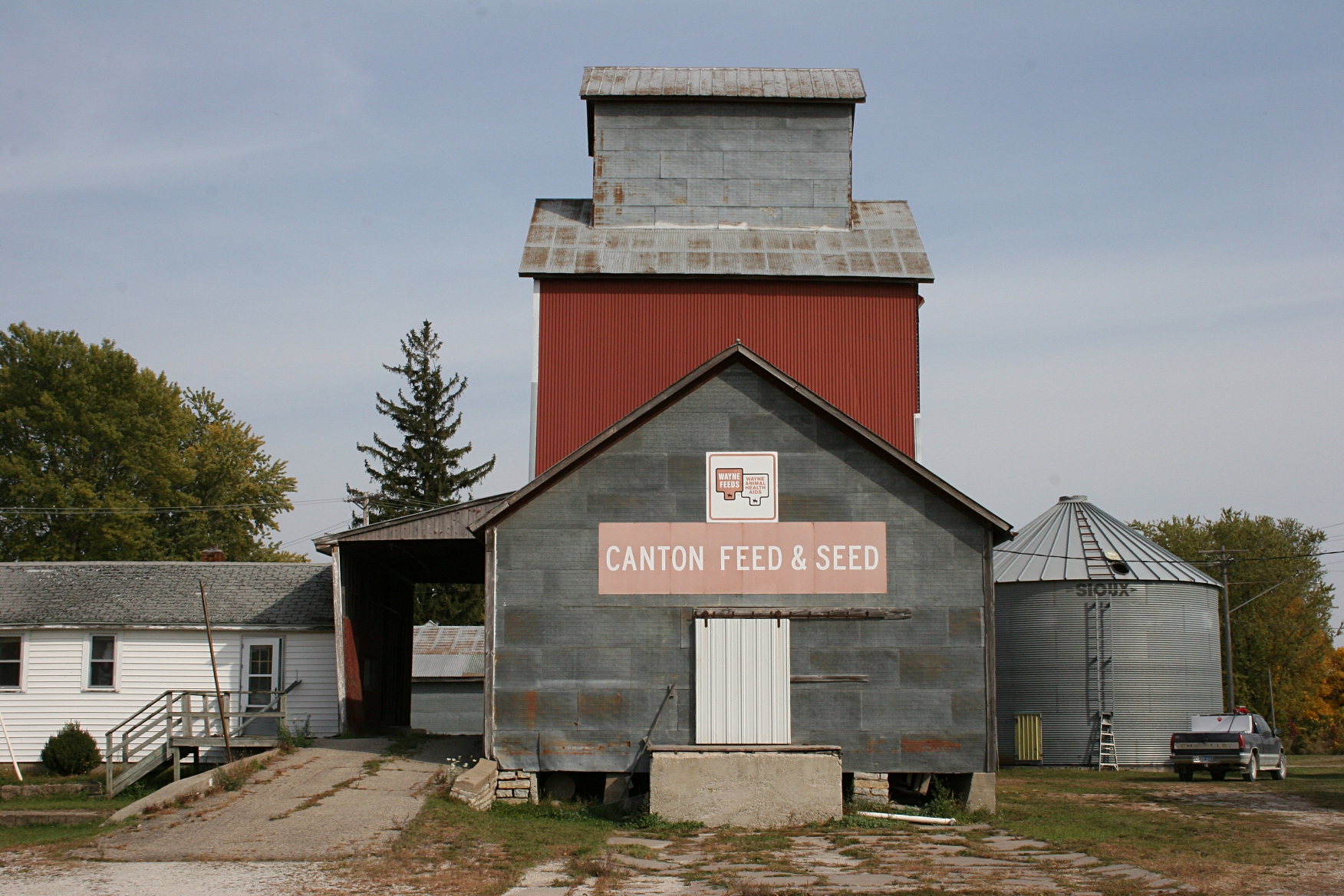
Old elevators like this are disappearing from our small towns, replaced by large, generic storage units. The Canton Historical Society hopes to save Canton Feed & Seed and other old buildings in town as part of an historic site.

And that pretty much ended our tour of the portion of Canton which lies off the main route past town, Minnesota Highway 44. Had we not driven into town via the back way, past the elevator, we may have missed all of this, and that personal, historic tour by LeRoy.

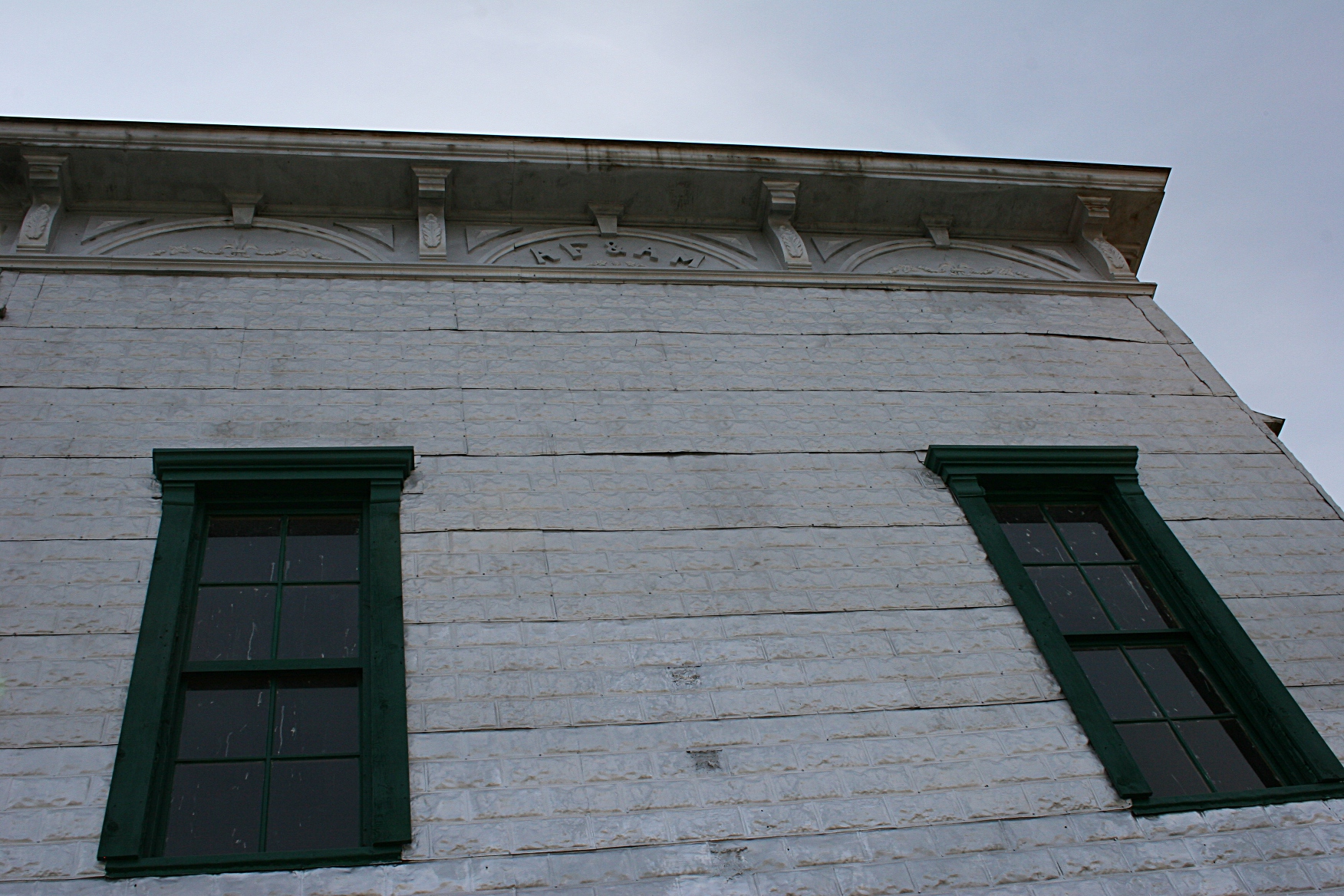
Exterior details on the old Masonic Lodge building.

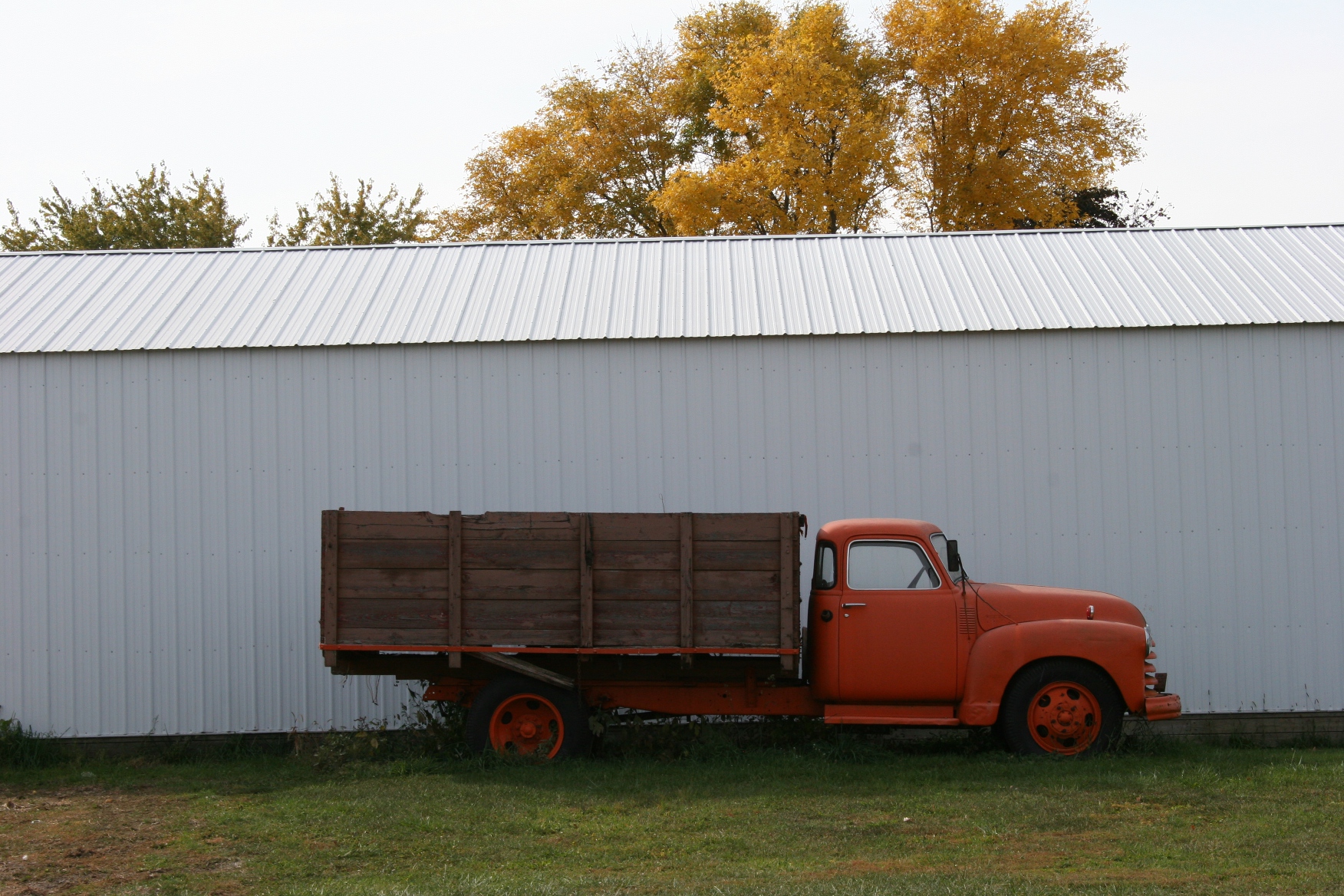
Outside the back door of the antique shop, this tangerine hued vintage truck contrasted against the gray metal caught my artist’s eye.

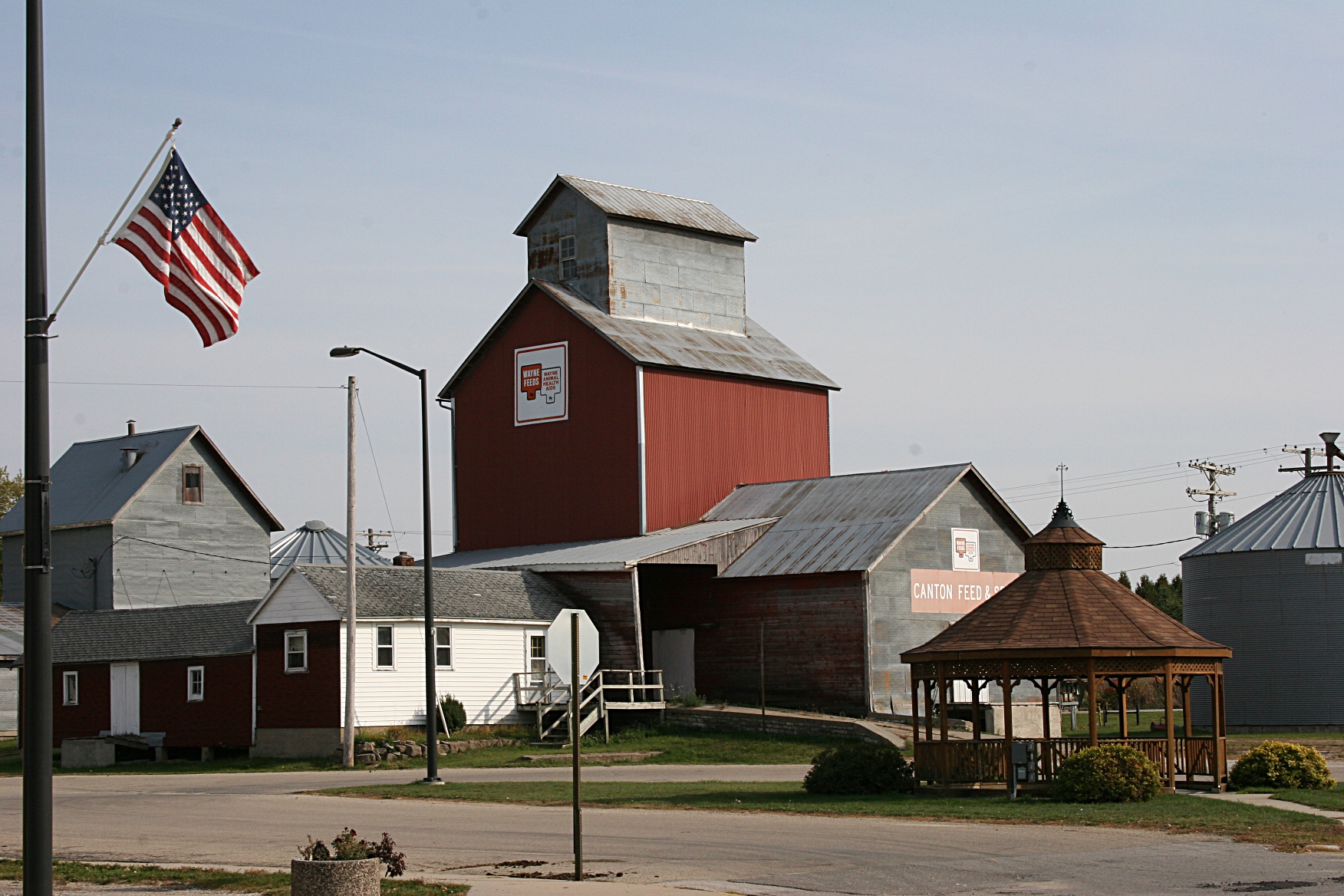
A broader view of the scene directly across the street from Lumber Yard Antiques and the depot. Pure rural Americana.

FYI: Lumber Yard Antiques is open from 11 a.m. – 5 p.m. “most days,” LeRoy says, but will be closed from January – March. My apologies for failing to photograph LeRoy and Kathie. What was I thinking? Clearly I was not.

CLICK HERE TO READ a previous post from Canton. 

© Copyright 2012 Audrey Kletscher Helbling
 

The corner bar in Canton October 17, 2012

If you can take your eyes off the vintage phone booth, you’ll notice a beer sign suspended from ZZs Tap (bar) along Canton’s Main Street.

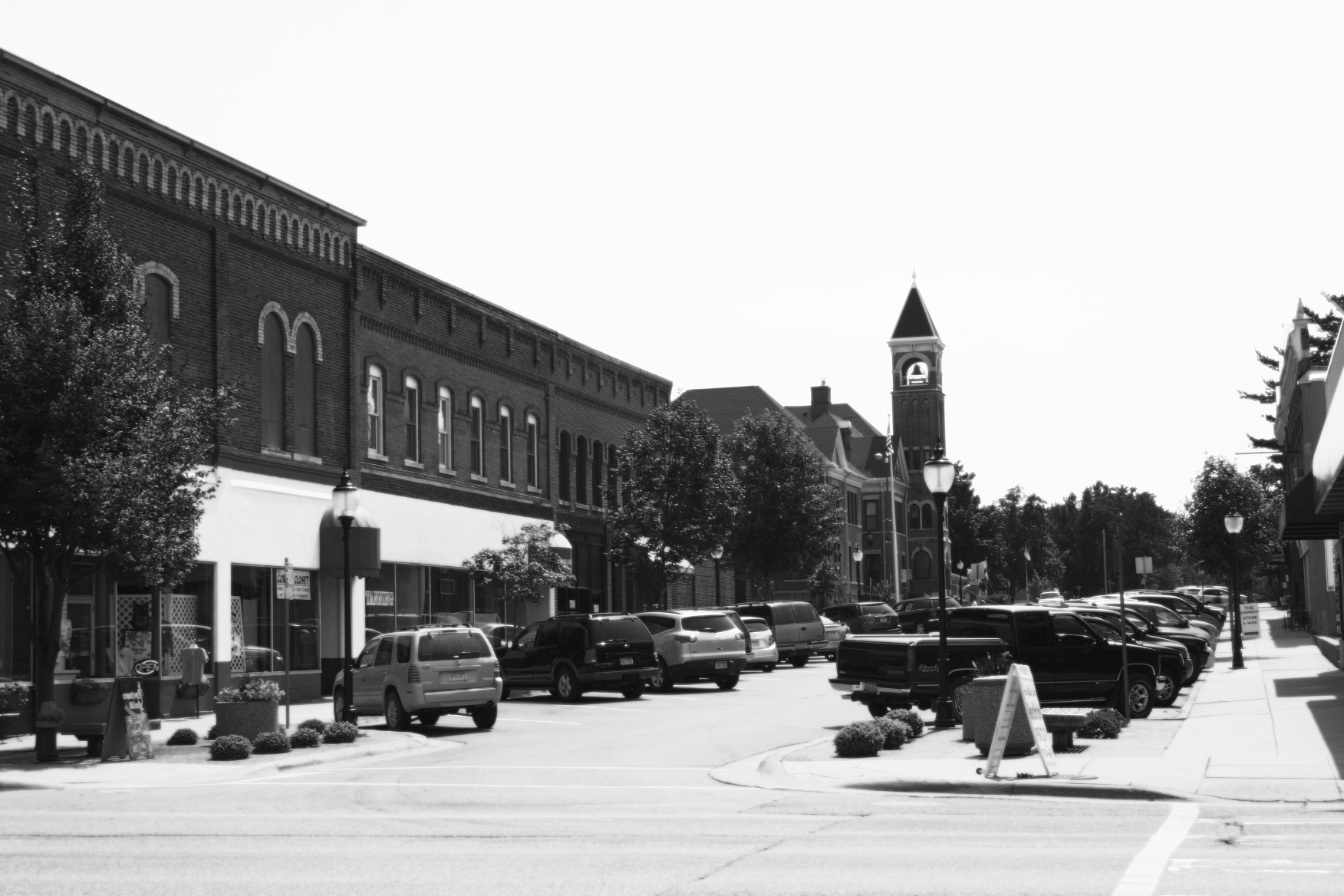
PEER DOWN THE ONE-BLOCK Main Street of Small Town, USA, and your eyes likely will land on a bar or two anchoring a business district comprised of primarily vacant and crumbling buildings.

That’s an over-generalization, of course, but sadly all too true for many once-thriving small towns.

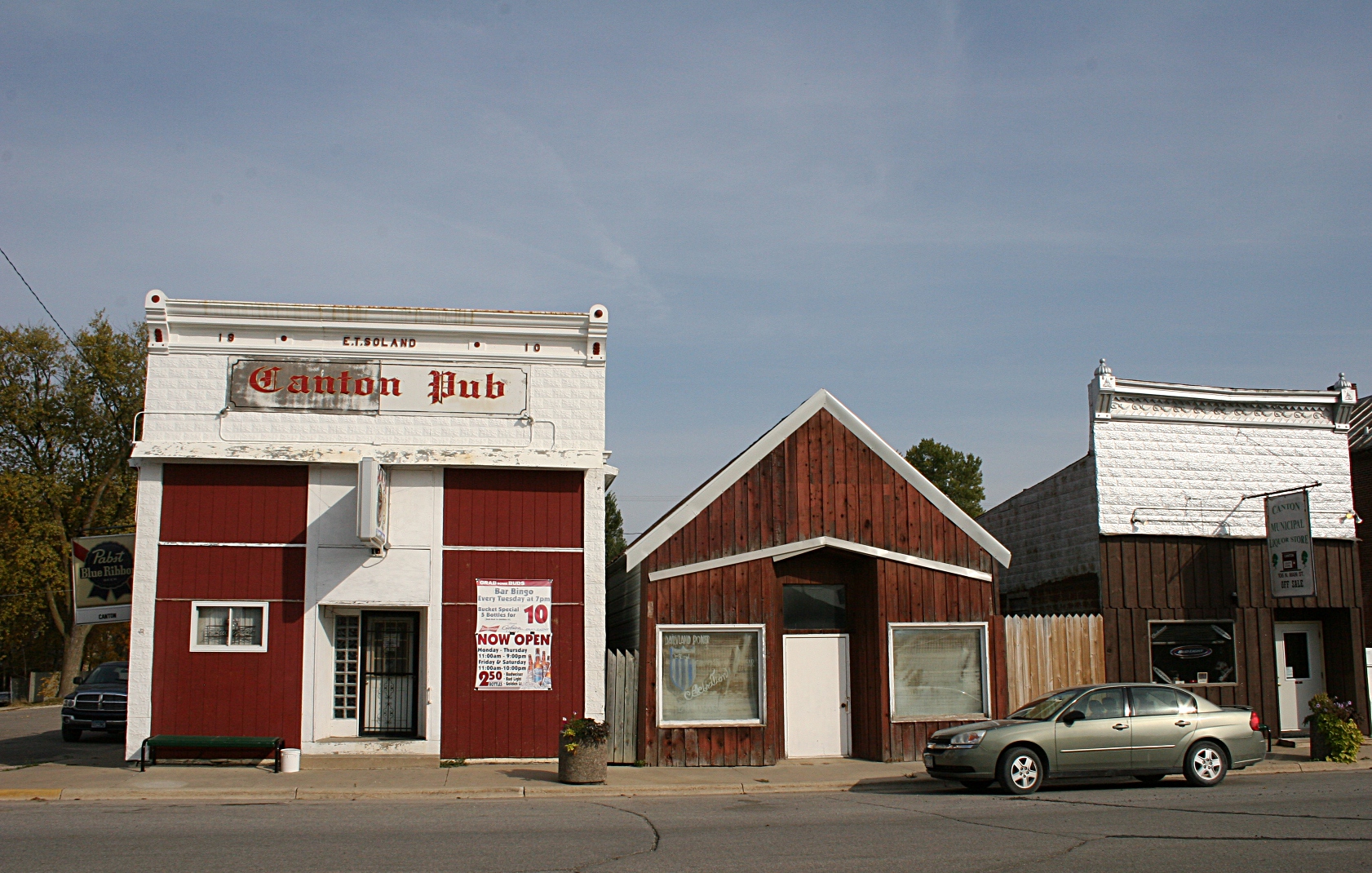
That’s the Canton Pub on the left and the Canton Municipal Liquor Store on the right with an unknown business sandwiched in between.

While hardware stores and grocery stores, even hometown cafes and barber shops, have closed, the corner bar typically endures.

I’ve never been a frequent bar customer and honestly can’t remember the last time I stepped into a small town bar where heads swivel when a stranger enters. You know what I mean, right?

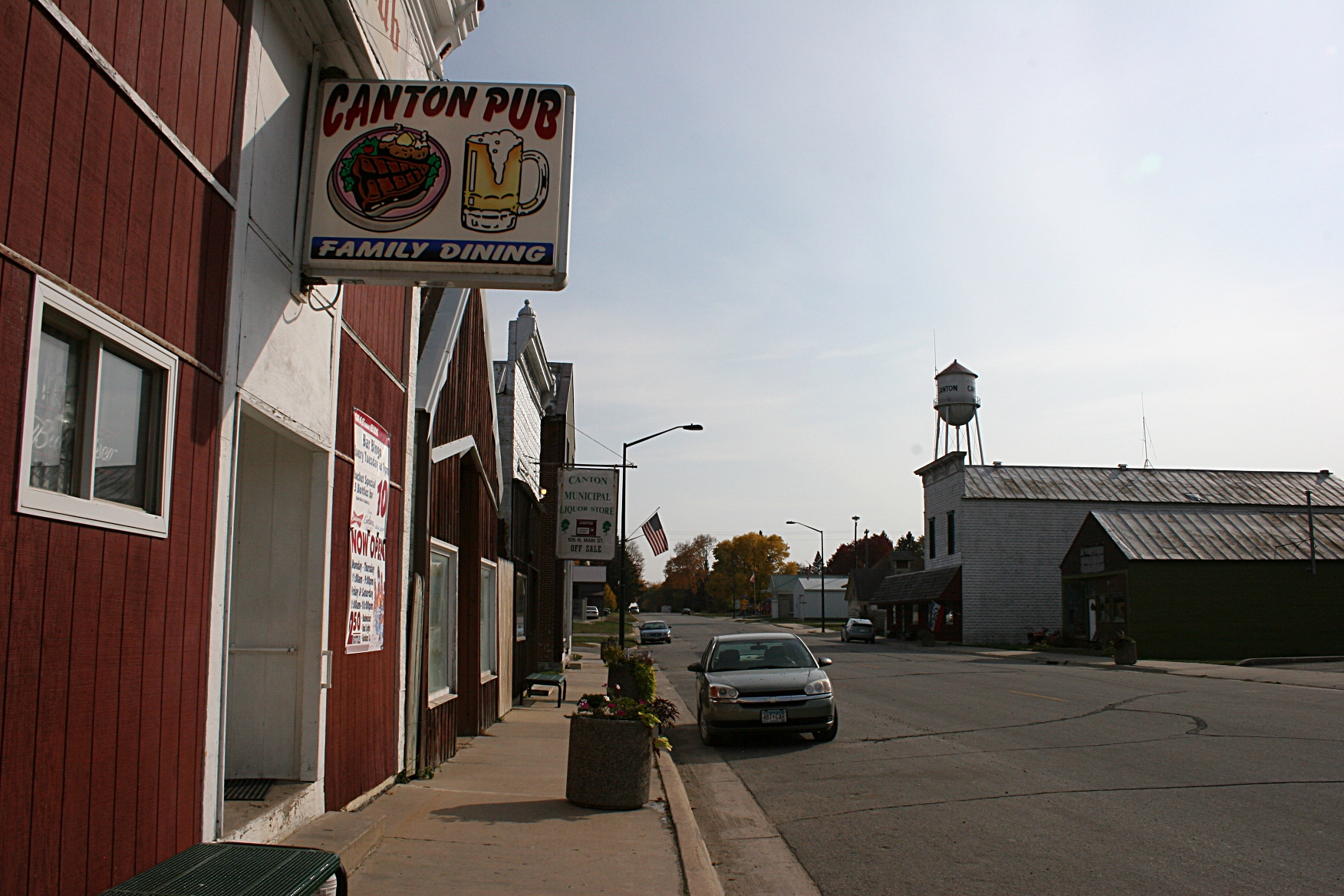
Food and drink and Tuesday night bar bingo can be found at the Canton Pub.

On a recent stop in Canton, a town of 328 nudging the Iowa border in southeastern Minnesota, I spotted the Canton Pub. I didn’t even try the pub door to see if I might slip inside for a cold one on an autumn afternoon.

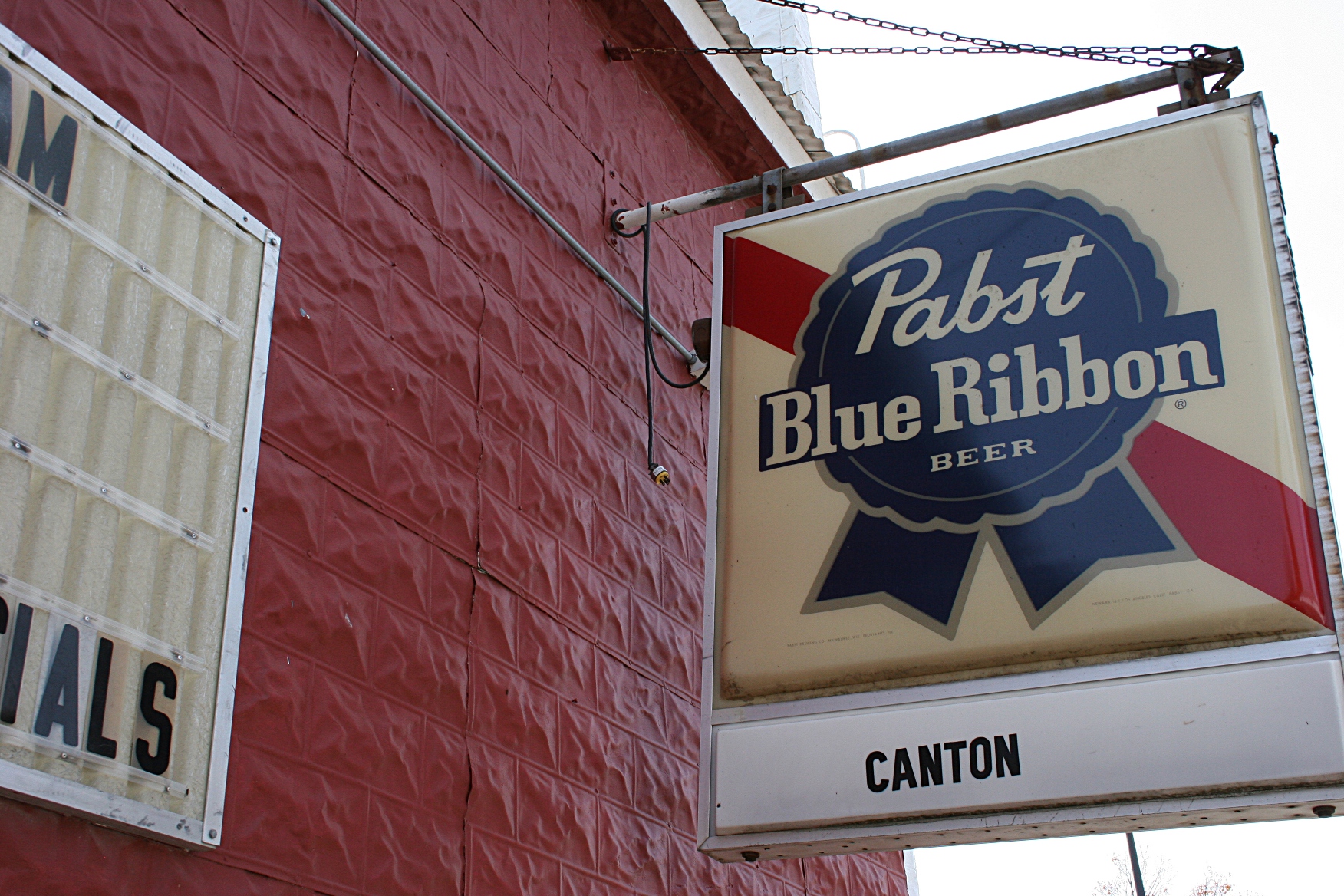
I was too busy photographing the beer signs.

I photographed this sign at the Canton Pub for my oldest daughter’s boyfriend, Marc Schmidt, who recently relocated to the Twin Cities from LA.

Another beer sign on the Canton Pub.

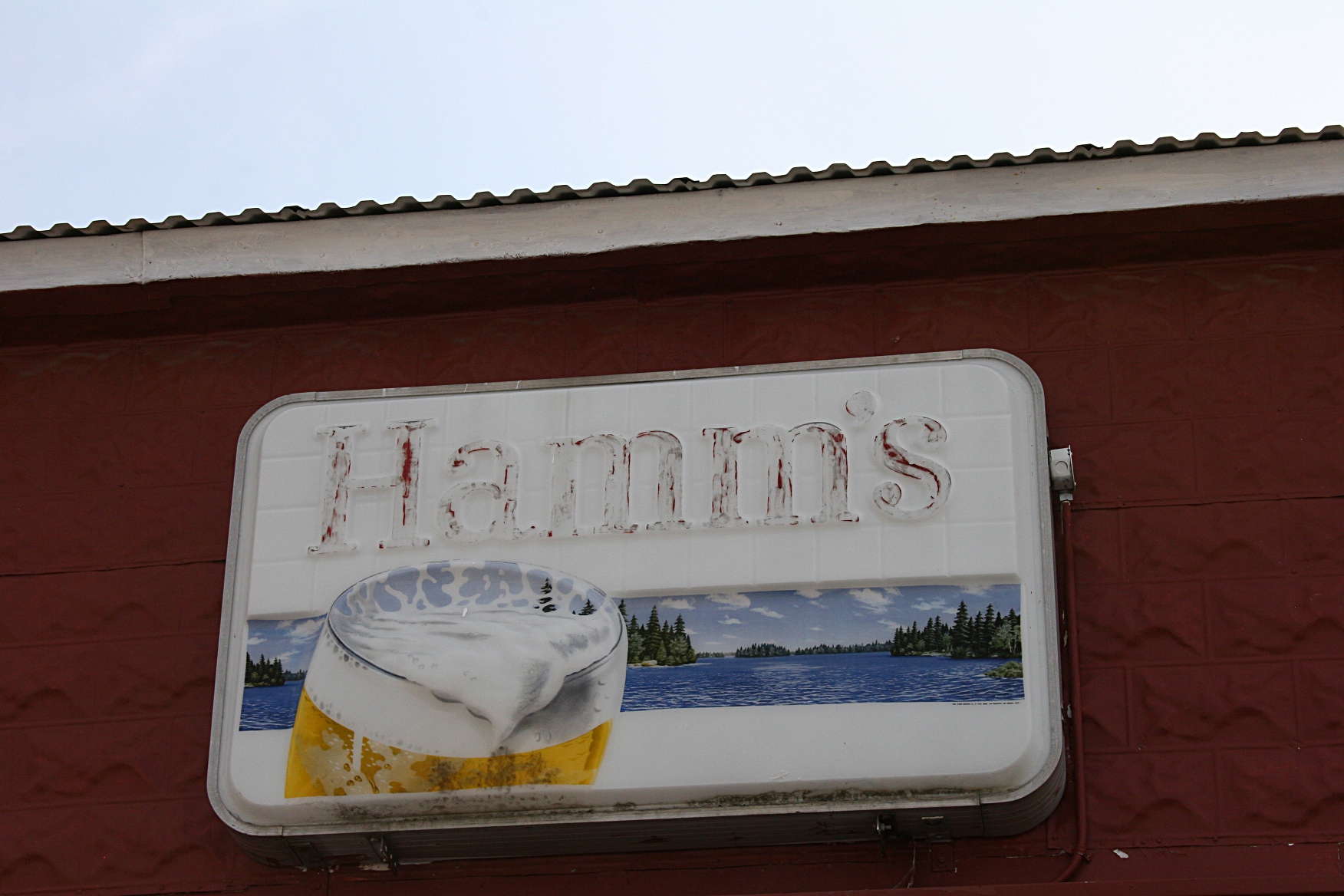
I almost missed the classic “land of sky blue waters” Hamm’s sign until my husband pointed it out at the Canton Pub.

CHECK BACK FOR ANOTHER post from Canton. There’s more to see in this small town than the bars.

© Copyright 2012 Audrey Kletscher Helbling
 

Following the road less traveled, even if you have no idea where you are October 16, 2012

Filed under: Uncategorized — Audrey Kletscher Helbling @ 7:25 AM
Tags: , , , ,

MY HUSBAND WILL TELL YOU, unequivocally, that I am not a navigator. I cannot read a map nor do I possess any sense of direction when we are traveling in unfamiliar territory.

Given that knowledge, I prefer we both know exactly where we are going before we get going. He plots out roads and I sometimes write down directions and hope for the best. That saves lots of frustration and, ahem, discussion about “maybe we should stop somewhere and ask for directions.”

But occasionally a road beckons and we end up in an unknown locale and I start to fret about where we are and where we’ll end up.

About that time in the journey, Randy will pull over to the side of the road (because we are typically in a remote area) and consult the Minnesota atlas we carry with us. He’ll study it for awhile, then set it down and start driving—without telling me where we are or where we are going.

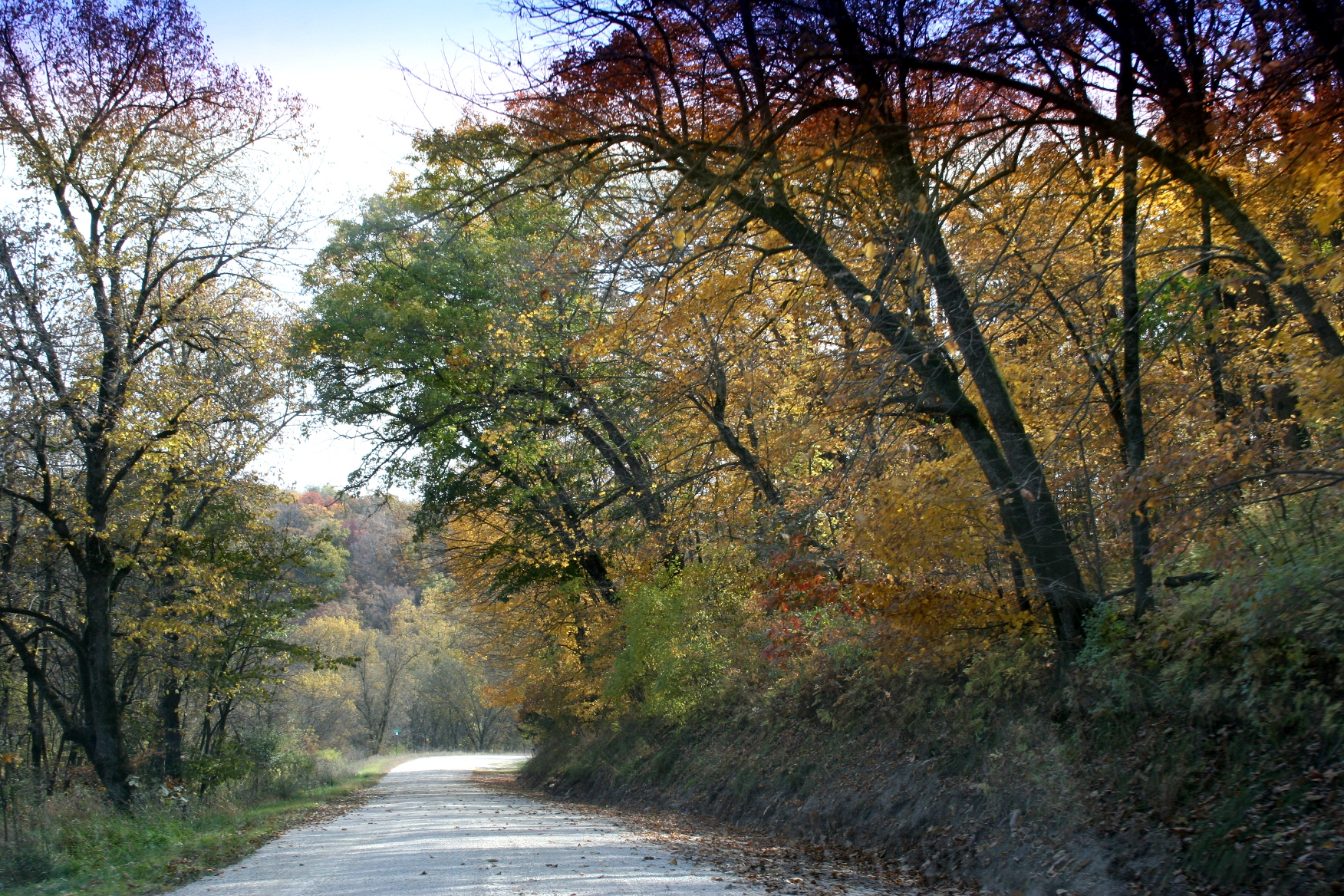
A view of isolated Fillmore County Road 23 as taken through the front windshield of our car.

On a recent day trip to the Chatfield/Lanesboro/Canton/Harmony/Preston area of southeastern Minnesota, we turned onto Fillmore County Road 23, a scenic route recommended by Jackie, who blogs over at “Who will make me laugh” (you really ought to read her blog by clicking here). I wasn’t expecting the tar road to turn into gravel and twist and turn through isolated backwoods before reaching County Road 10.

I was becoming somewhat agitated, wondering if this really was the road Jackie meant for us to travel and how long we’d be driving in the middle of nowhere.

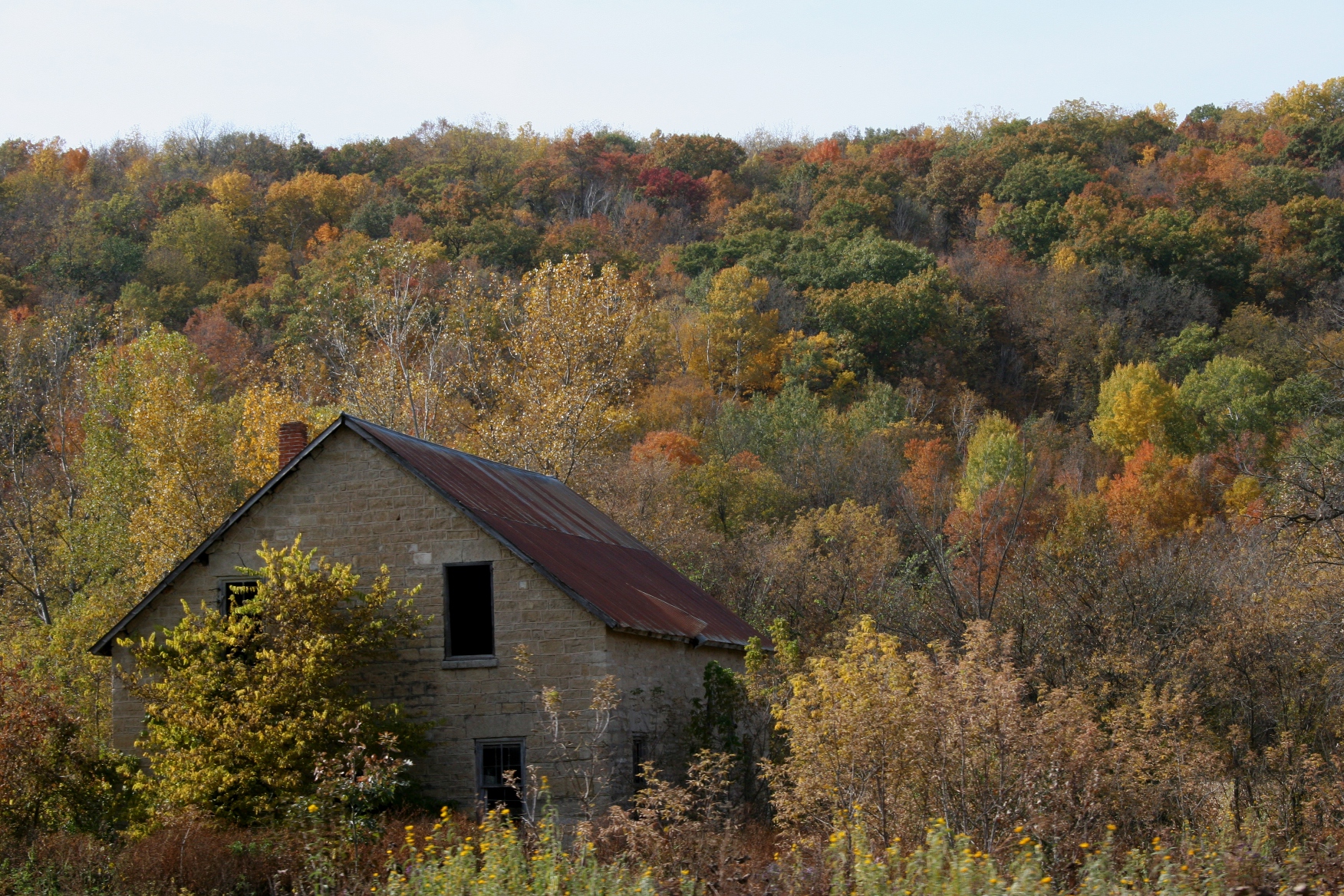
This lovely old stone house seems to meld into the muted autumn landscape.

Soon enough, though, I became distracted by the scenery and the old stone buildings and the beauty of the place through which we were traveling.

Jackie was right in suggesting we follow scenic CR 23. And my husband was right in realizing that sooner or later, I’d enjoy the ride.

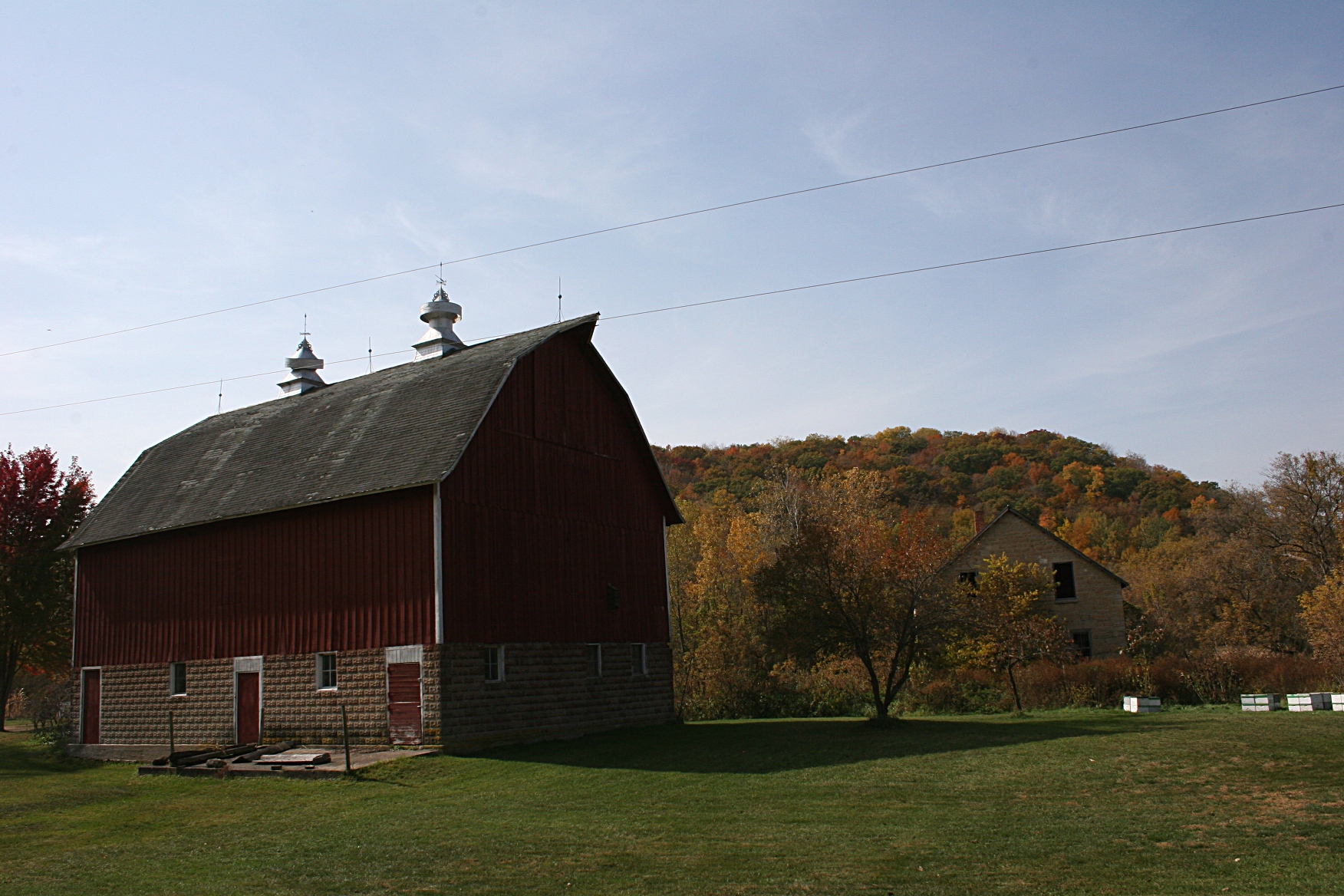
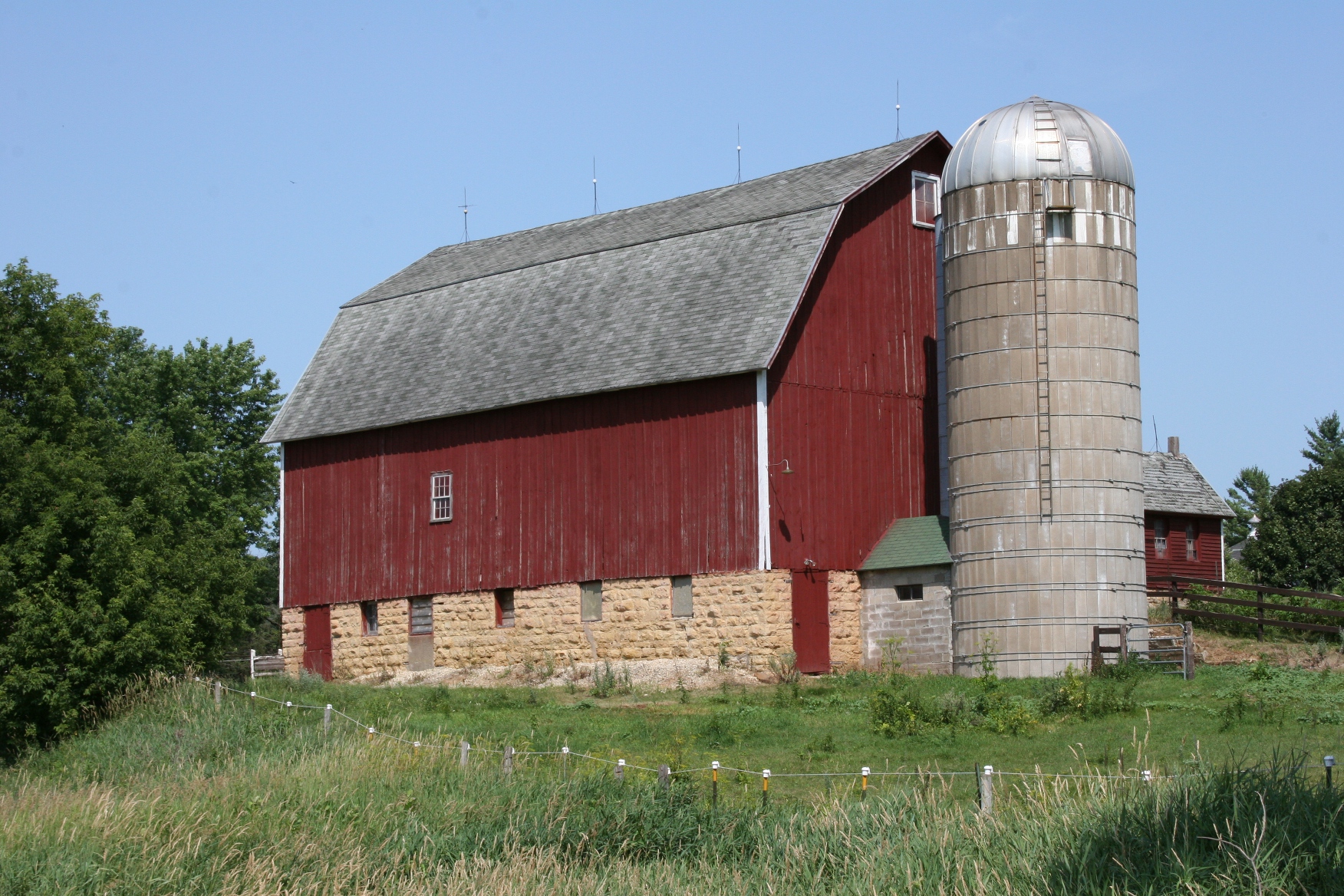
And then, bonus, that stately red barn near the old stone house.

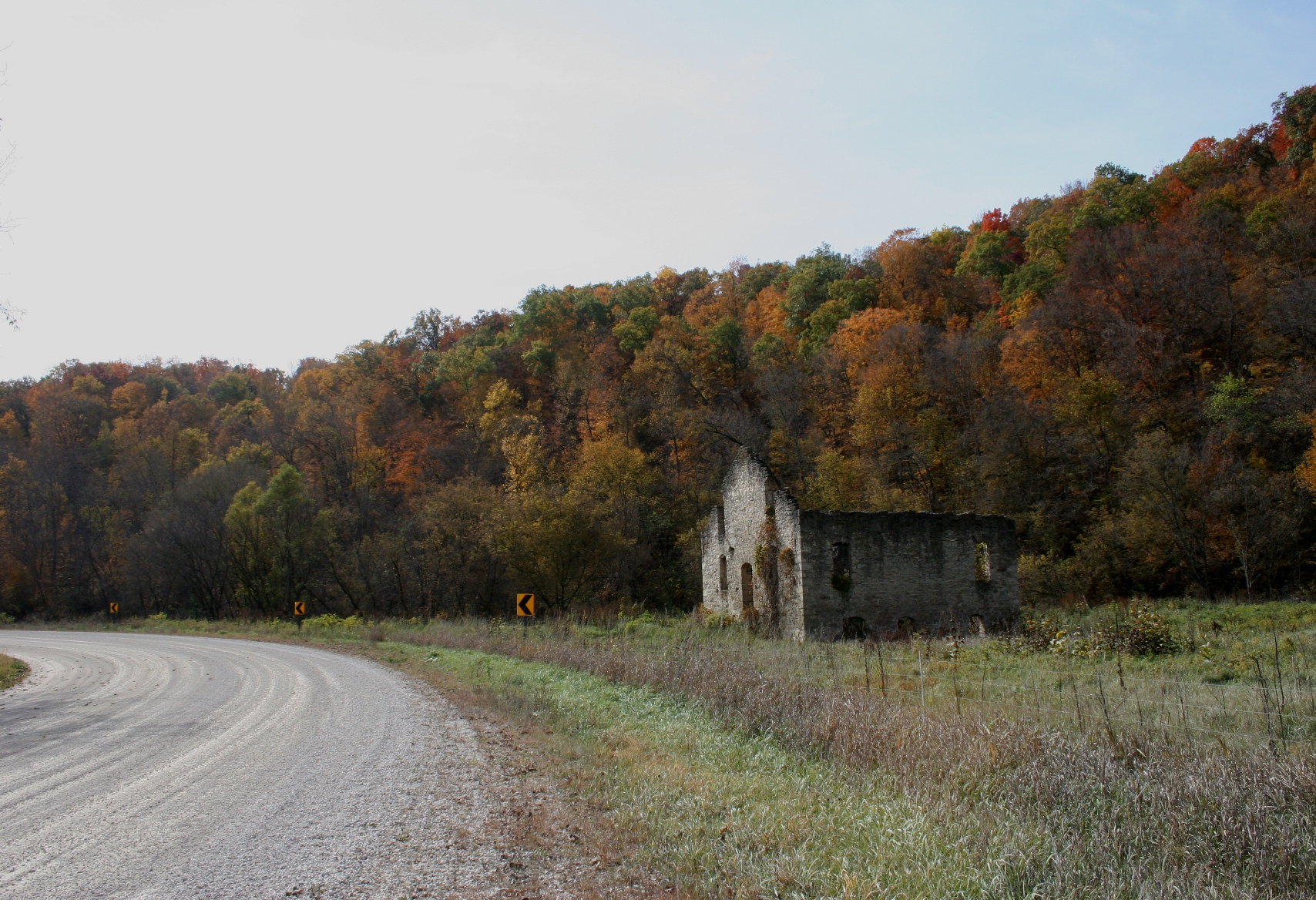
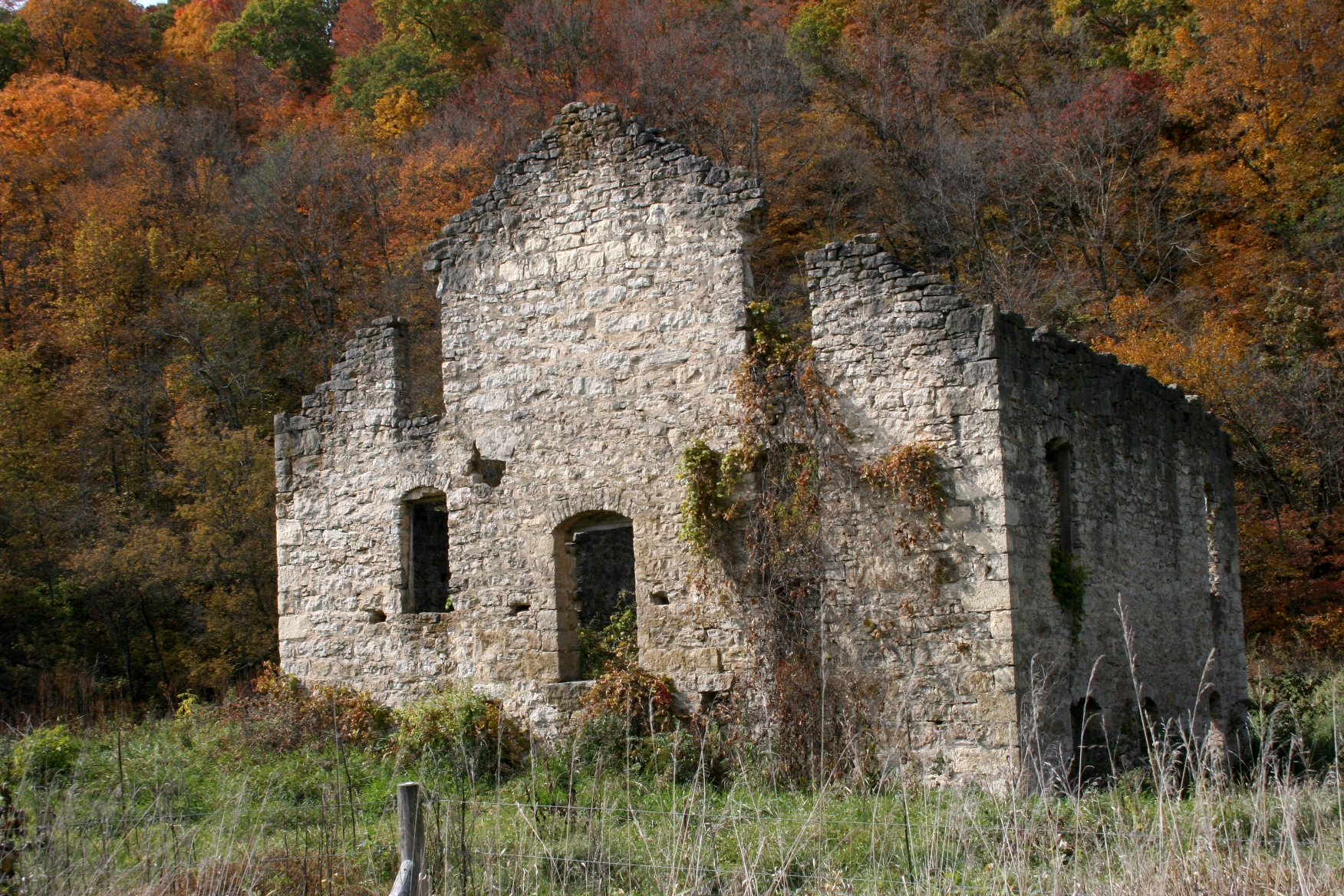
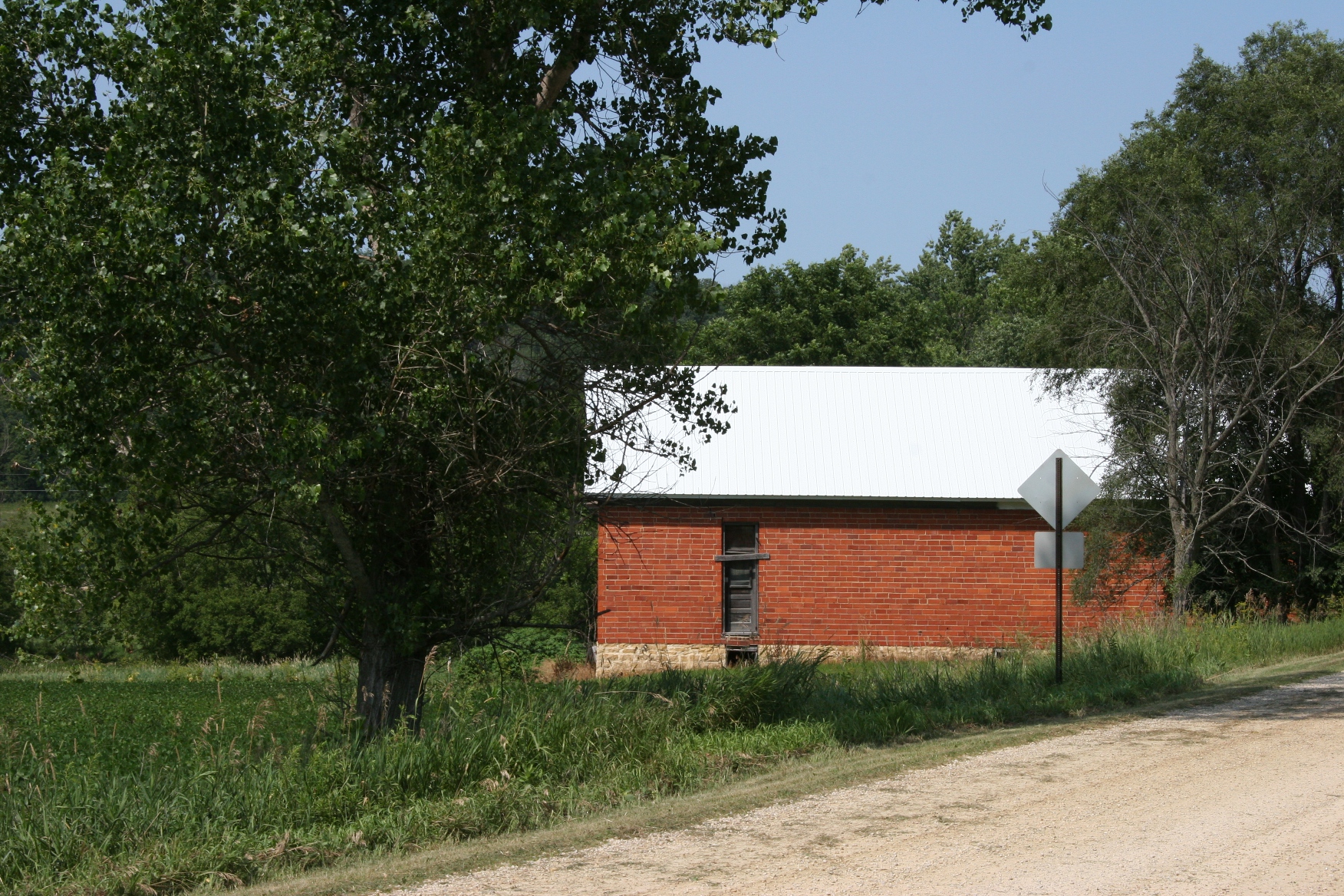
And then further, on a bend in the road, these old stone ruins appeared.

And later I would learn, from Troy at the Highland Cafe (where Jackie also sent me) that this was once a mill.

HOW ABOUT YOU: What type of traveler are you? Are you adventuresome or, like me, wanting to know where you are? I expect some of you will suggest a GPS might be a wise investment. Am I correct?

No matter your answers, taking those backroads always, always, results in wonderful discoveries. Thanks, Jackie, for the scenic travel tip.

© Copyright 2012 Audrey Kletscher Helbling
 

Scenic southeastern Minnesota on a Sunday afternoon in autumn September 30, 2012

West of Faribault on Sunday afternoon.

I NEVER TIRE OF IT. Never. Autumn in Minnesota is stunningly beautiful. Stunning.

A Sunday afternoon drive took my husband and me west of our Faribault home along Cedar Lake Boulevard and then on Old Dodd Road, all the way to Kilkenny.

Lake Francis, Elysian

From the Irish settlement, we continued west and then south and west and south and, well, I don’t navigate, until we entered Elysian from the north.

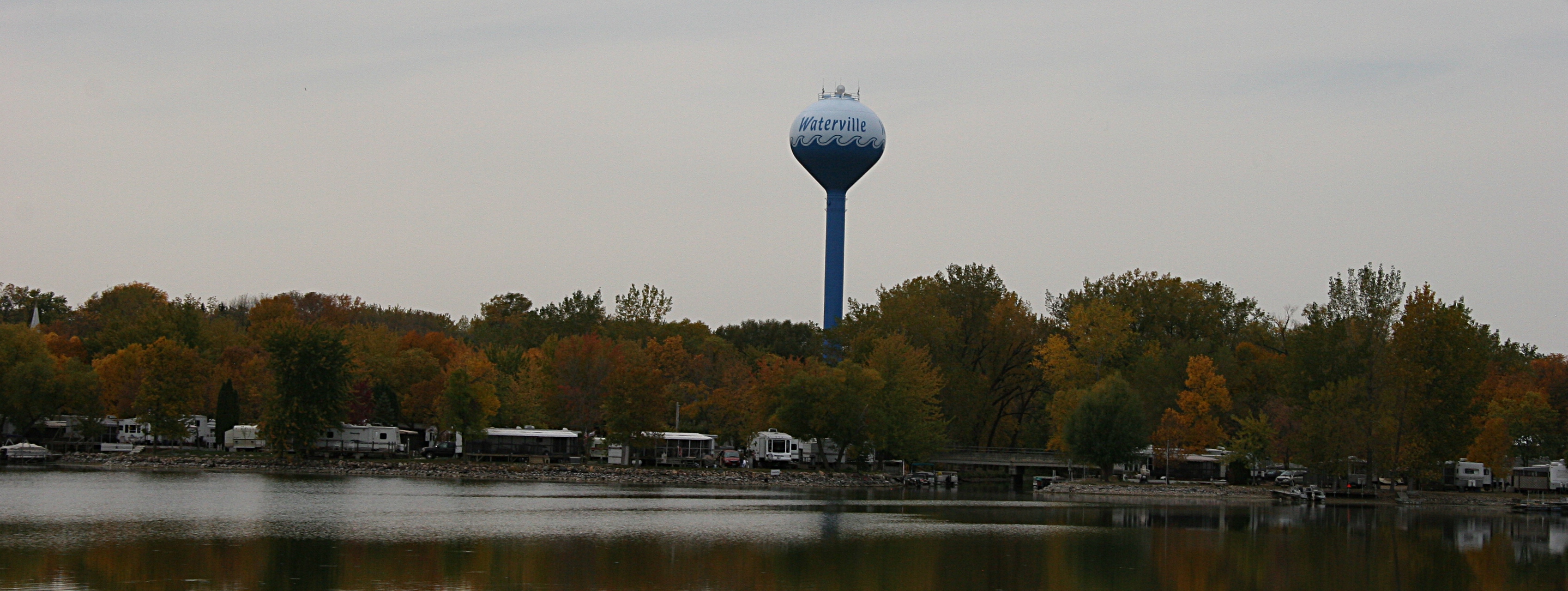
Tetonka Lake, Waterville

We then aimed back east and north along a dusty gravel road and then a tar road to Waterville.

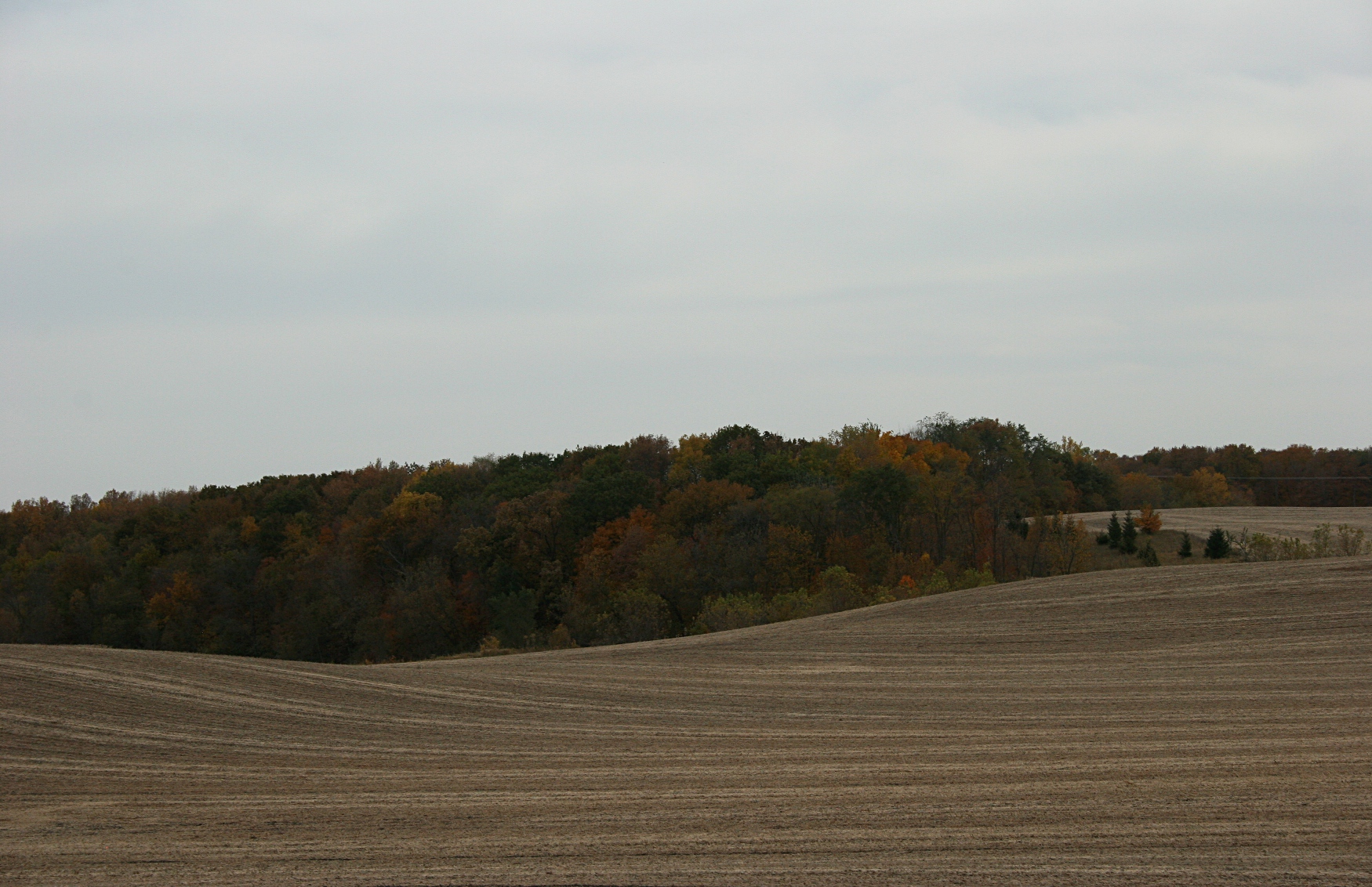
Northeast of Waterville.

We traveled through the North Morristown area and, nearing Faribault, skirted Cannon Lake on the north and east.

It was, for us, a leisurely horseshoe drive to view lovely Autumn, dressed in her Sunday best.

North and east of Waterville somewhere, maybe closer to North Morristown.

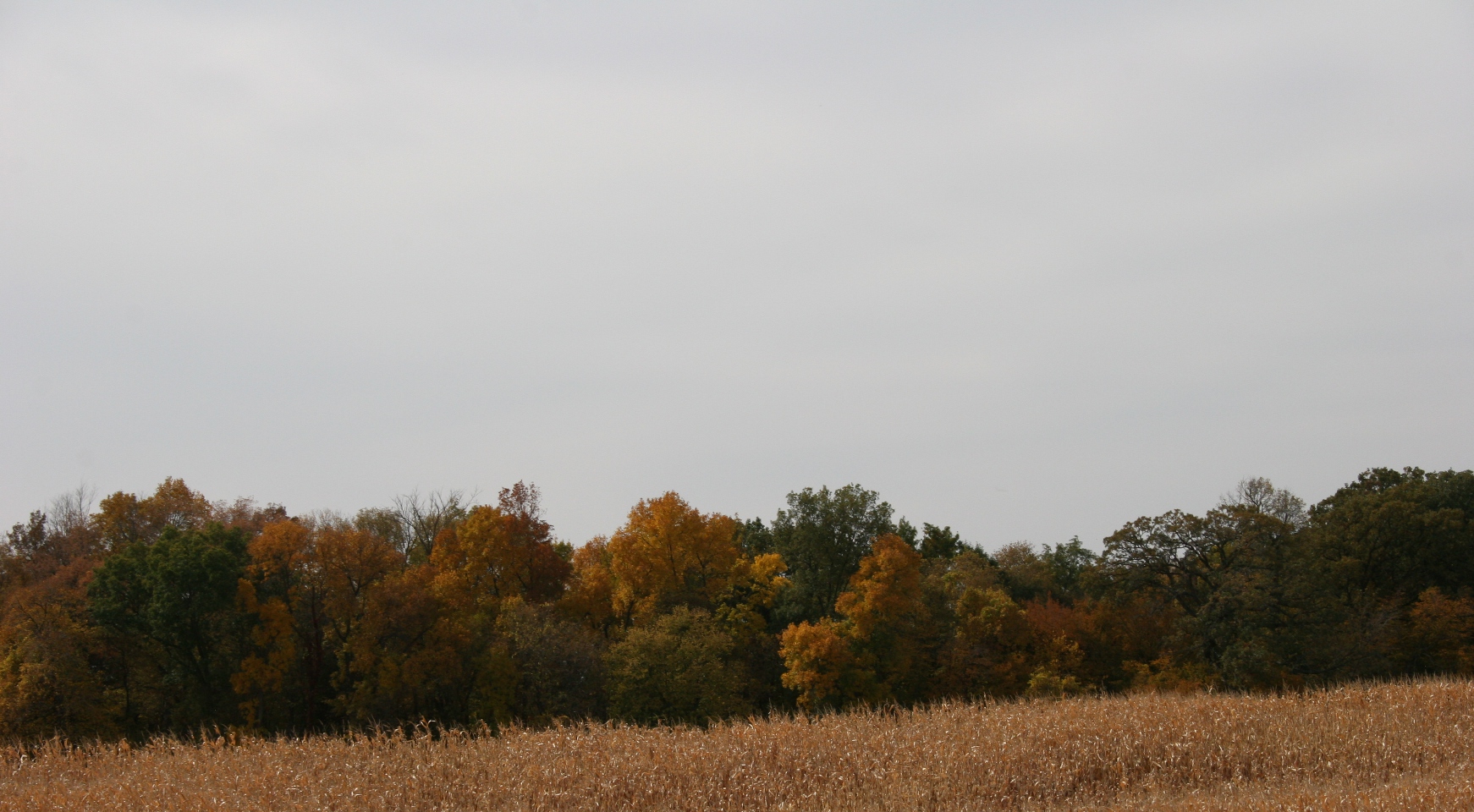
A lovely treeline somewhere on the eastern end of our route.

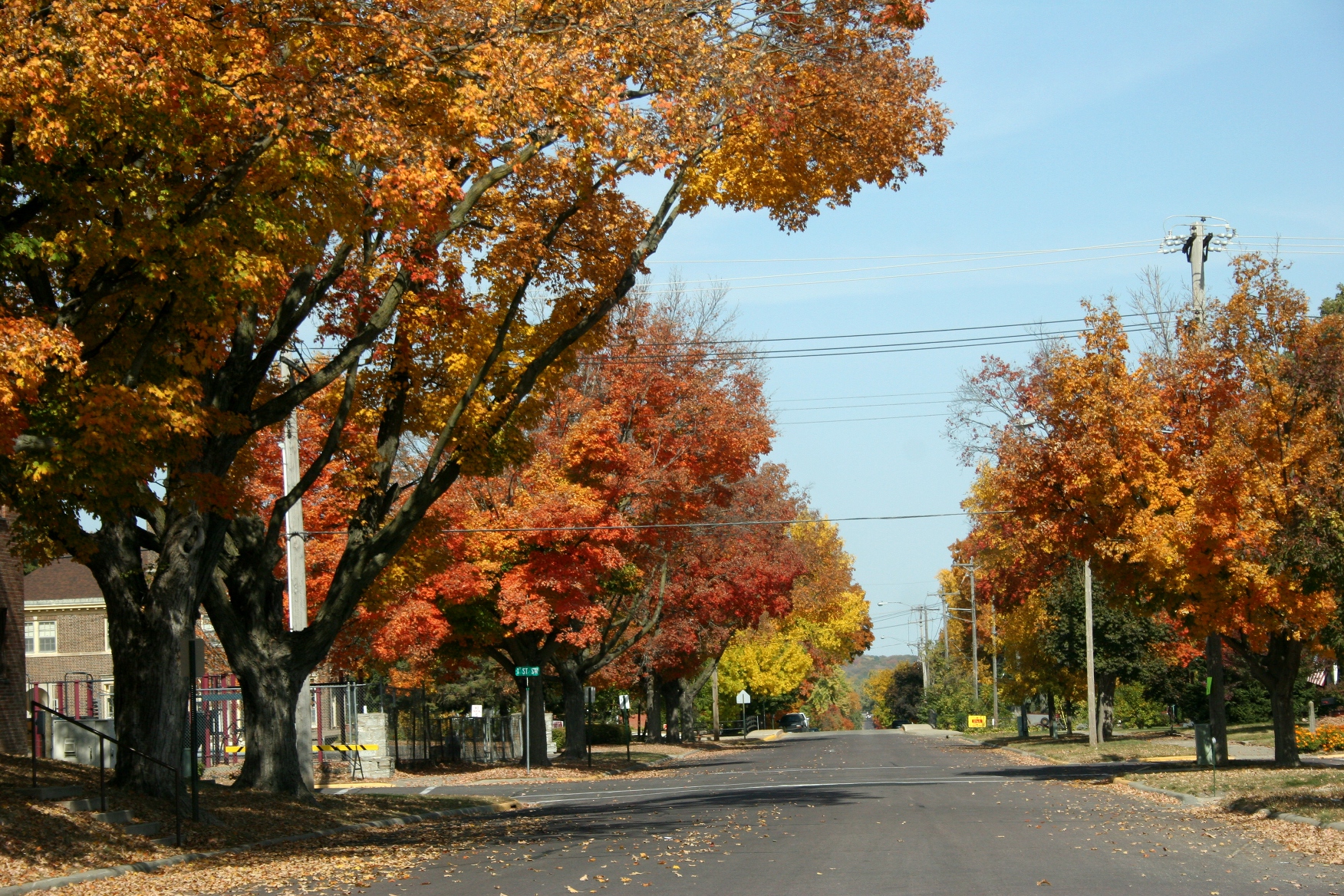
Along Seventh Street in Faribault….my community has stunning autumn colors along many, many residential streets.

A block away up the hill from my house are some of the most blazing gorgeous trees in town lining Second Avenue Southwest by Bethlehem Academy.

© Copyright 2012 Audrey Kletscher Helbling
 

Missing the farm during a Minnesota harvest

Filed under: Uncategorized — Audrey Kletscher Helbling @ 11:09 AM
Tags: , , , , , , , ,

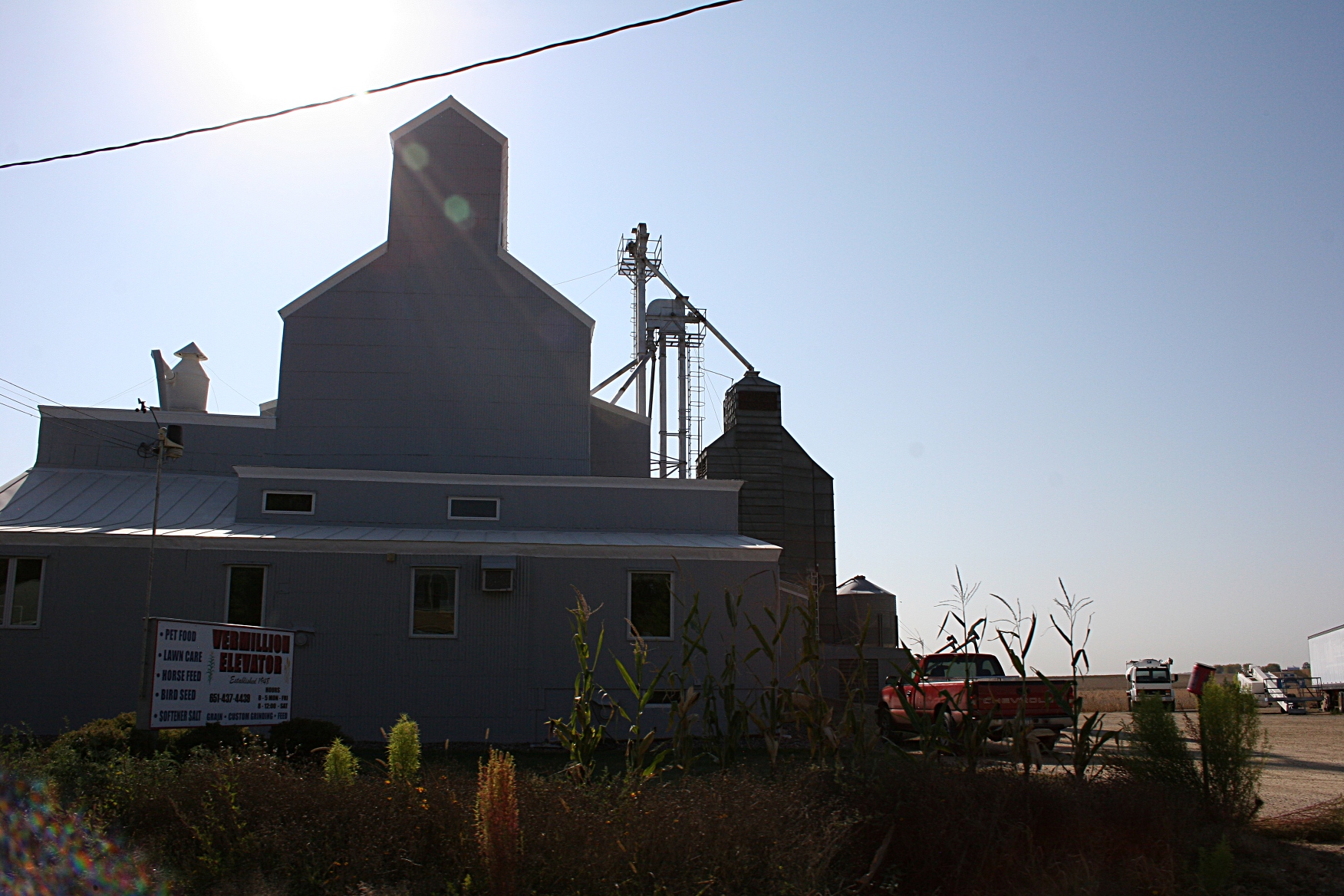
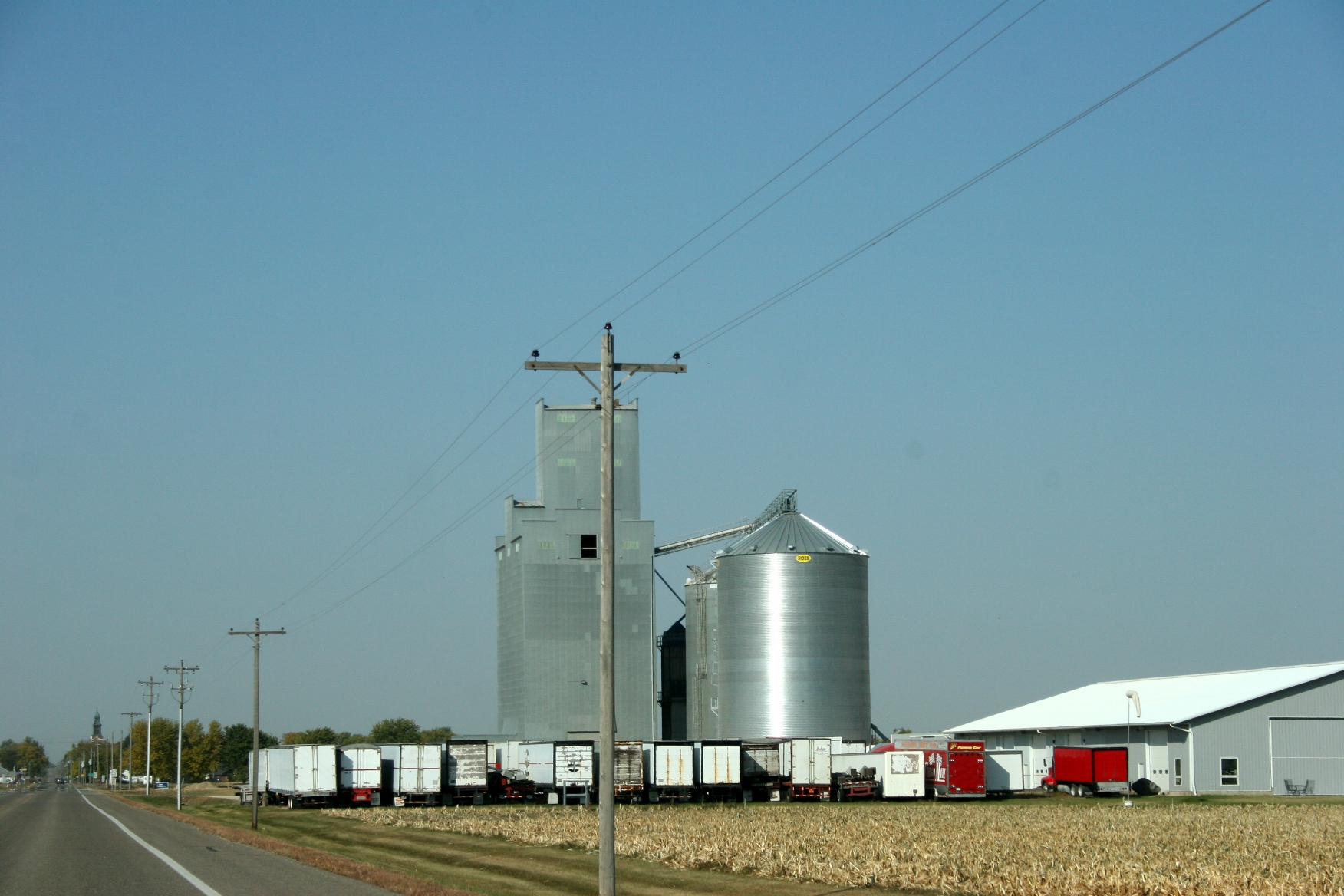
An elevator just outside of Vermillion, MN., near Hastings on Saturday morning.

DECADES HAVE PASSED since I’ve been home on the farm for harvest. My middle brother quit farming years ago and the home place is now rented out.

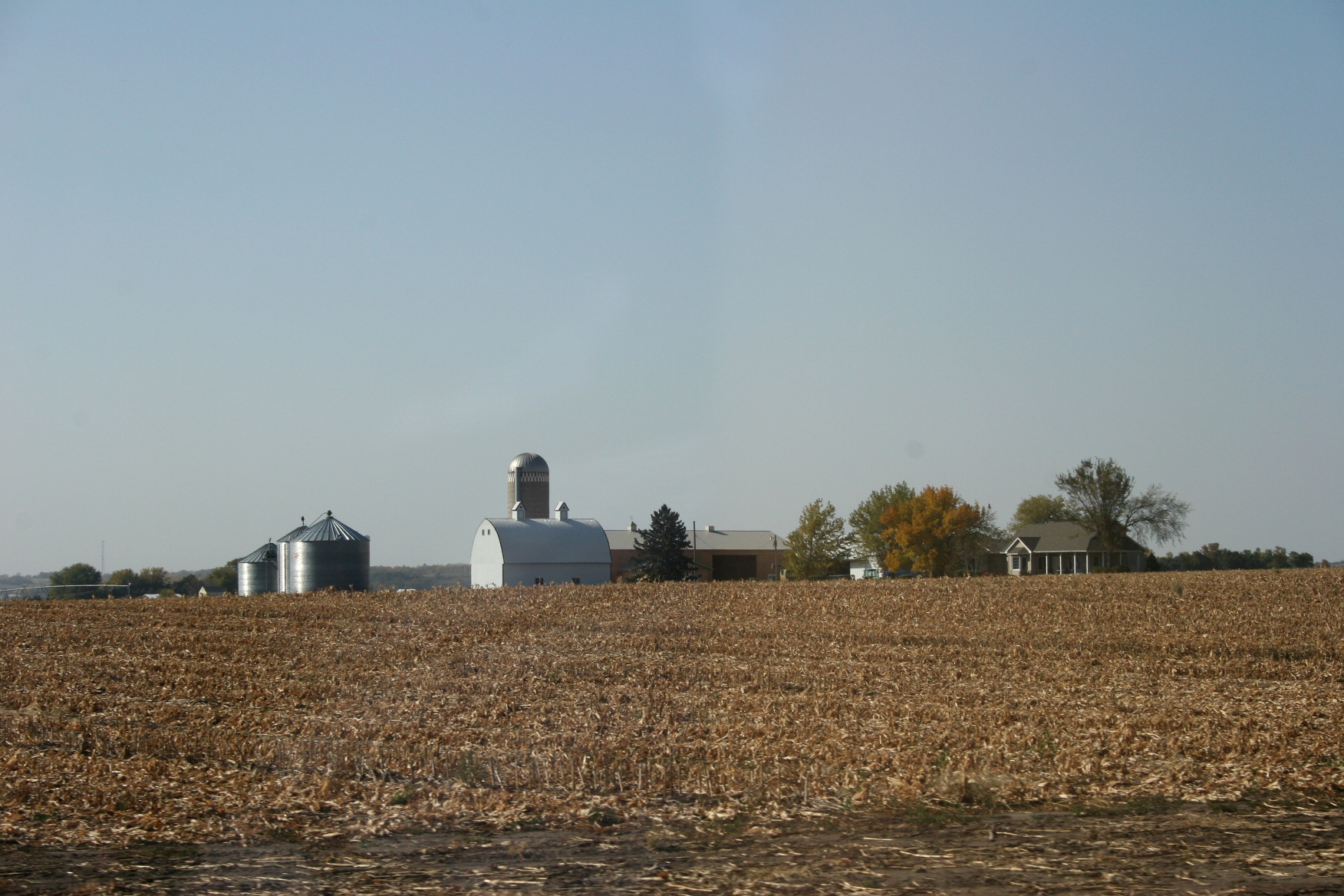
A harvested cornfield between Hastings and Cannon Falls.

I miss being on the farm, anticipating the bringing in of the crop, then watching the combines chomp through rows of brittle cornstalks and brown fields of ripened soybeans.

Between Hastings and Cannon Falls.

I miss the undeniable scent of earth and plant residue.

Harvesting corn just south of Hastings on Saturday afternoon.

I miss the grain wagons brimming with golden kernels.

The Vermillion Elevator, in the small town of Vermillion.

I miss living in a rural community where tractors and aged grain trucks line up at the local co-op elevator.

I miss the hum of grain dryers drying corn.

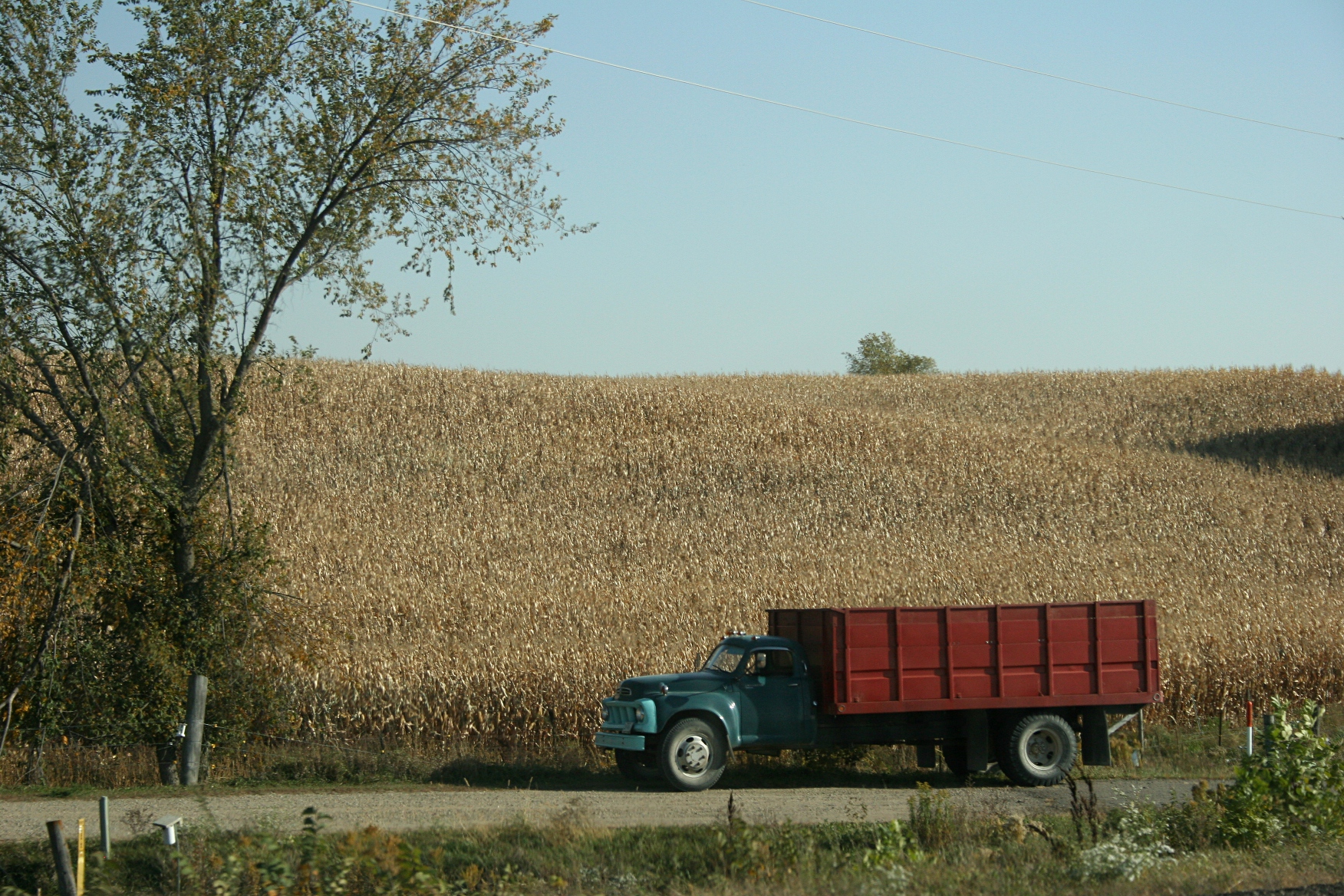
A grain truck waits on a gravel road near Cannon City, east of Faribault.

Now I view the harvest from a distance, as an observer passing by.

© Copyright 2012 Audrey Kletscher Helbling
 

Driving into a ghost town on Hogsback Road July 23, 2012

An old building, perhaps a former blacksmith shop, in Belvidere Mills.

GHOST TOWNS INTRIGUE ME. I wonder—who lived in these places and were these towns once thriving and why did people leave?

Often, placement of the railroad determined which Minnesota town survived, which did not.

Recently my husband and I, on one of our day trips, turned off Goodhue County Road 3 about 10 miles south of Red Wing, onto Hogsback Road and into Belvidere Mills.

Yes, Hogsback Road. When you read a street sign like that, you just know there’s a story somewhere that’s been passed down from generation to generation. If only I knew the right old codger to consult for a little history lesson on the road that now also is called Wellscreek Trail. I’ll travel on Hogsback Road, thank you.

The former Belvidere Mills creamery, modernized into a garage.

The first view we got of the lovely old barn in Belvidere Mills.

And so we did, up the hill on Hogsback Road past a handful (or less) of houses and the old creamery and a stately red barn and past another old building (perhaps a blacksmith shop), around a curve in the gravel road and we were already out of Belvidere Mills. We turned around and backtracked.

Our second view, the side, of the barn as we backtracked into the ghost town.

And back again past the old building in the top photograph, this a side shot. What is it, readers?

Thanks to signage placed by the Goodhue County Historical Society along the county road, we knew this was the site of the former Belvidere Mills, established in 1858.

The historical society has marked some 60 ghost towns in Goodhue County with signage to “preserve their history and to recognize their historical contribution.” All either once had, or currently have, post offices.

They also have intriguing names like Black Oak, Cannon Junction, Featherstone, Roscoe Centre, Skyberg and White Willow.

And then there are the Goodhue County Minnesota ghost towns of—ready for this—Lena, Norway and Miami.

© Copyright 2012 Audrey Kletscher Helbling
 

Oh, the places I should have visited in Lake City July 19, 2012

A side street in the downtown business district of Lake City Minnesota.

SO…YOU DRIVE into a town you’ve never been to and you and your traveling companion wonder where to eat, what to do, which places to visit.

How do you decide?

Trust the locals? Trust your instincts? Just start walking and see where the sidewalk leads you?

I suppose those thoughts run through any visitor’s mind upon arrival in an unfamiliar community. To my list I add the decision of what to photograph, made easier by ownership of a DSLR camera. As long as I have space on my CF cards, and a patient husband, I keep shooting.

Then back home, upon review of those images, I can see the places I missed because of time constraints or another restaurant chosen or a business closed for the day and I have visible reasons to return.

Here is photographic evidence for returning to Lake City, a southeastern Minnesota Mississippi River town my spouse and I recently visited on a way too hot summer afternoon in early July.

I’m not a boater, nor a swimmer. But the water still draws me close to gaze upon, to appreciate, its mesmerizing beauty. Next trip back to Lake City, my husband and I need to find a park along Lake Pepin where we can simply sit and enjoy the water or perhaps stroll along a beach. That treeline across the lake/river is Wisconsin.

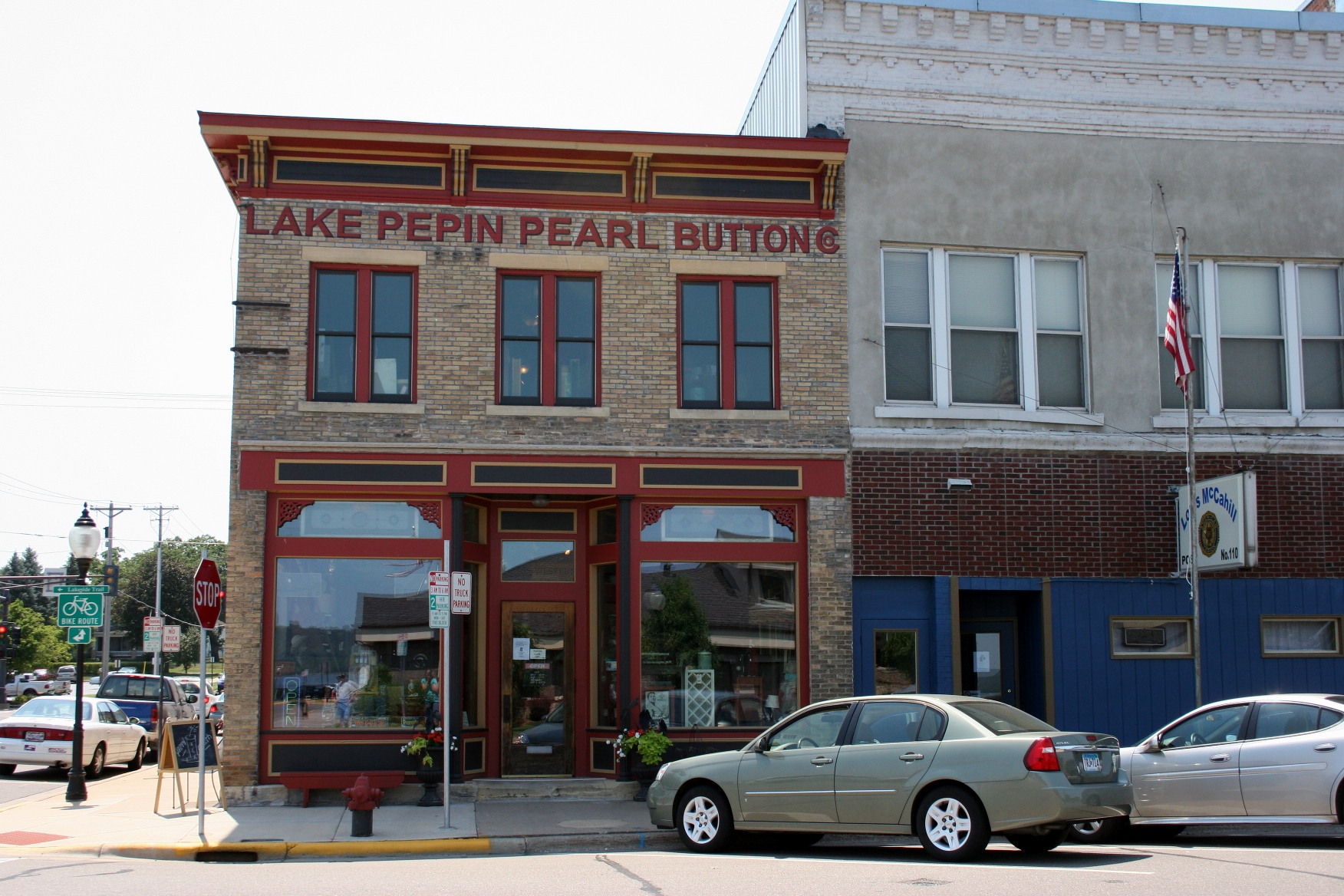
The Lake Pepin Pearl Button Co. antique shop features a little nook of a room off the spacious main shop area, exterior pictured here, in which I need to spend more time poking around. Poke, poke, poke.

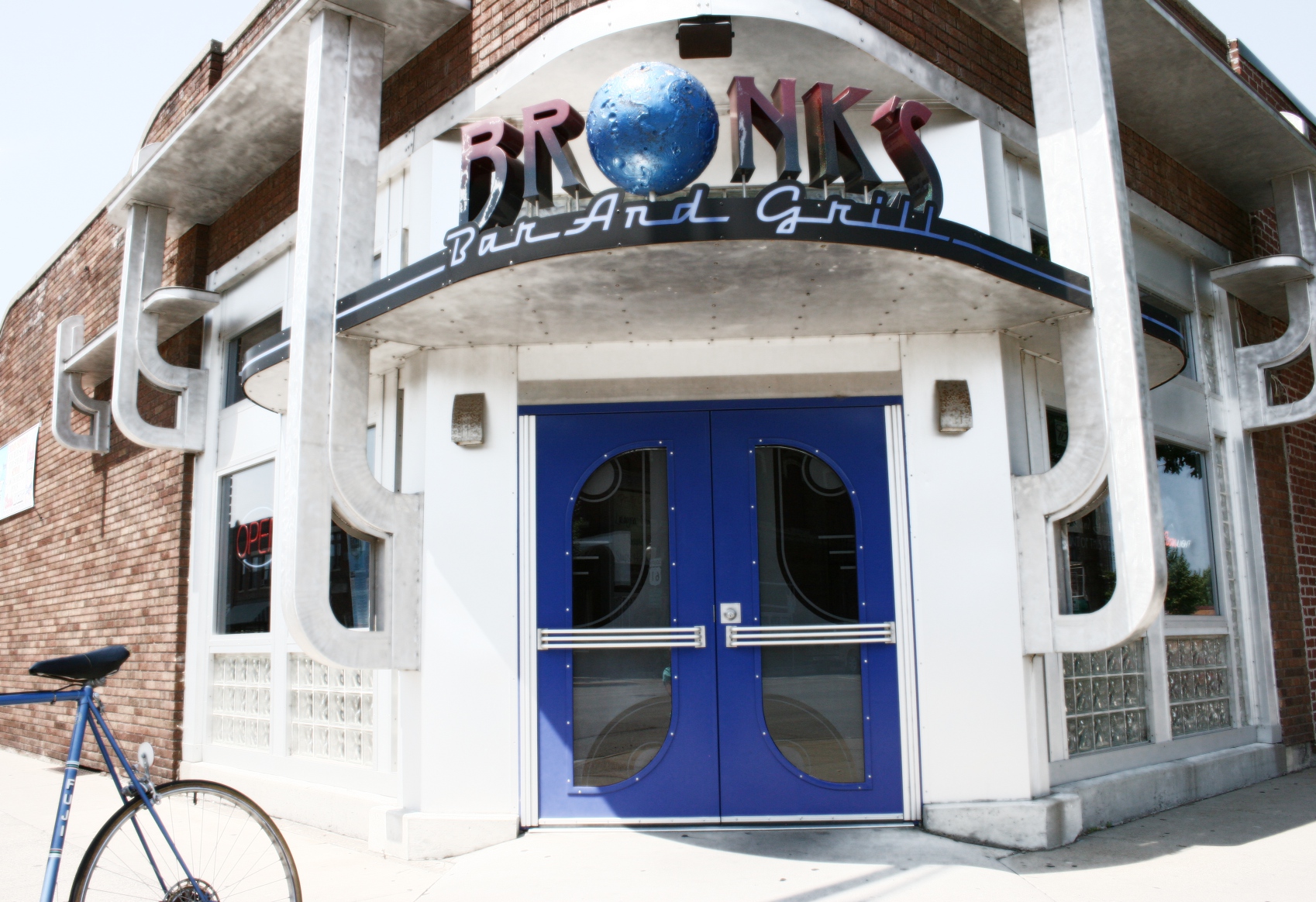
The entry to Bronk’s Bar and Grill angled into a downtown Lake City street corner caught my attention. Was this once a movie theater? No matter, Bronk’s claims “the best hamburgers in Lake City” made from only local fresh meat. Anyone eaten here?

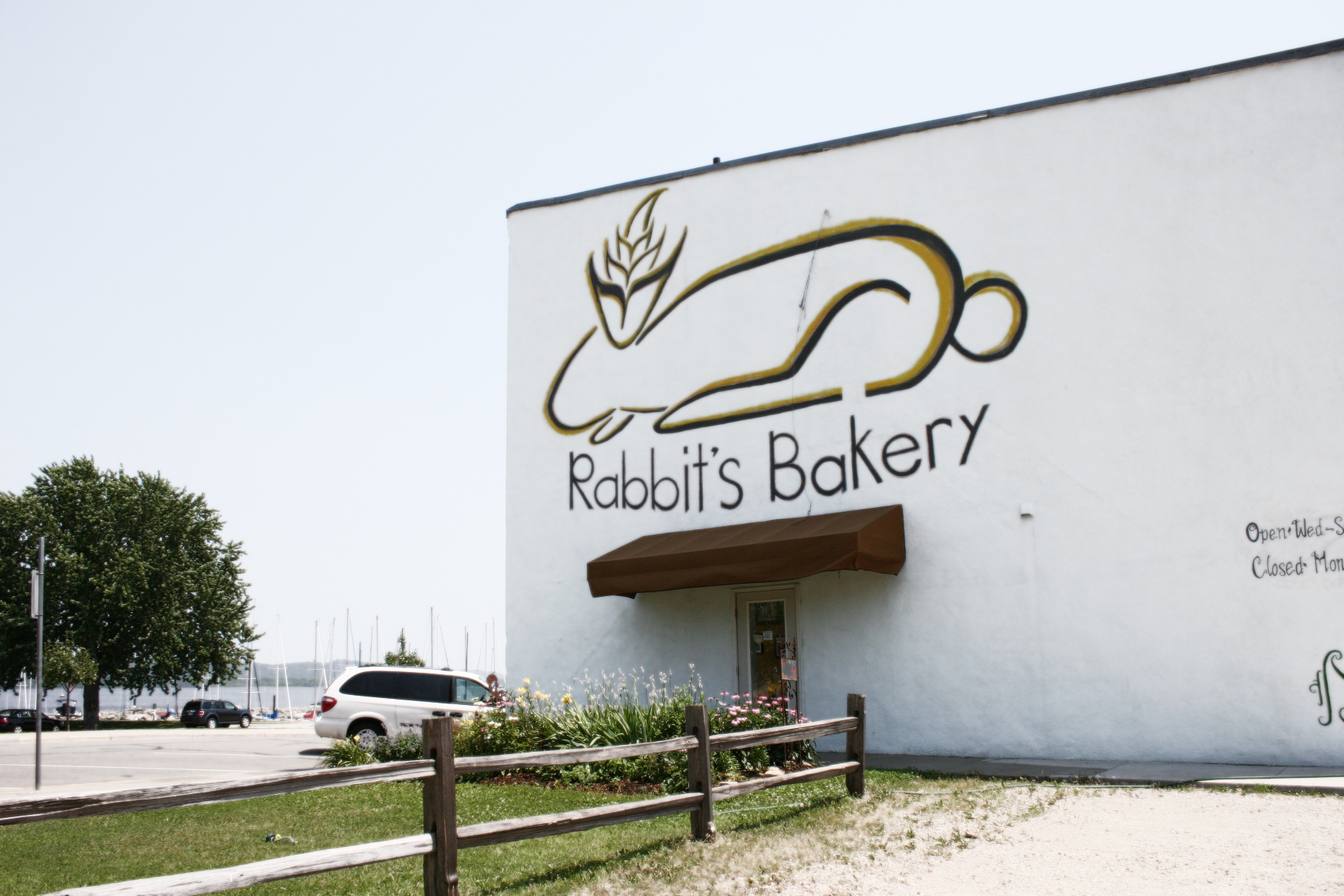
Unfortunately, Rabbit’s Bakery was closed on the Tuesday I was in Lake City or I surely would have stopped in here. Any business with “Rabbit” as part of its name naturally draws me to it given I graduated from Wabasso High School, home of the white rabbit. This photo was also encouraged by my husband who once (and still occasionally) called one of my sisters Rabbit. Love the graphic.

© Copyright 2012 Audrey Kletscher Helbling
 

Antiquing with my husband in Kenyon and Lake City July 17, 2012

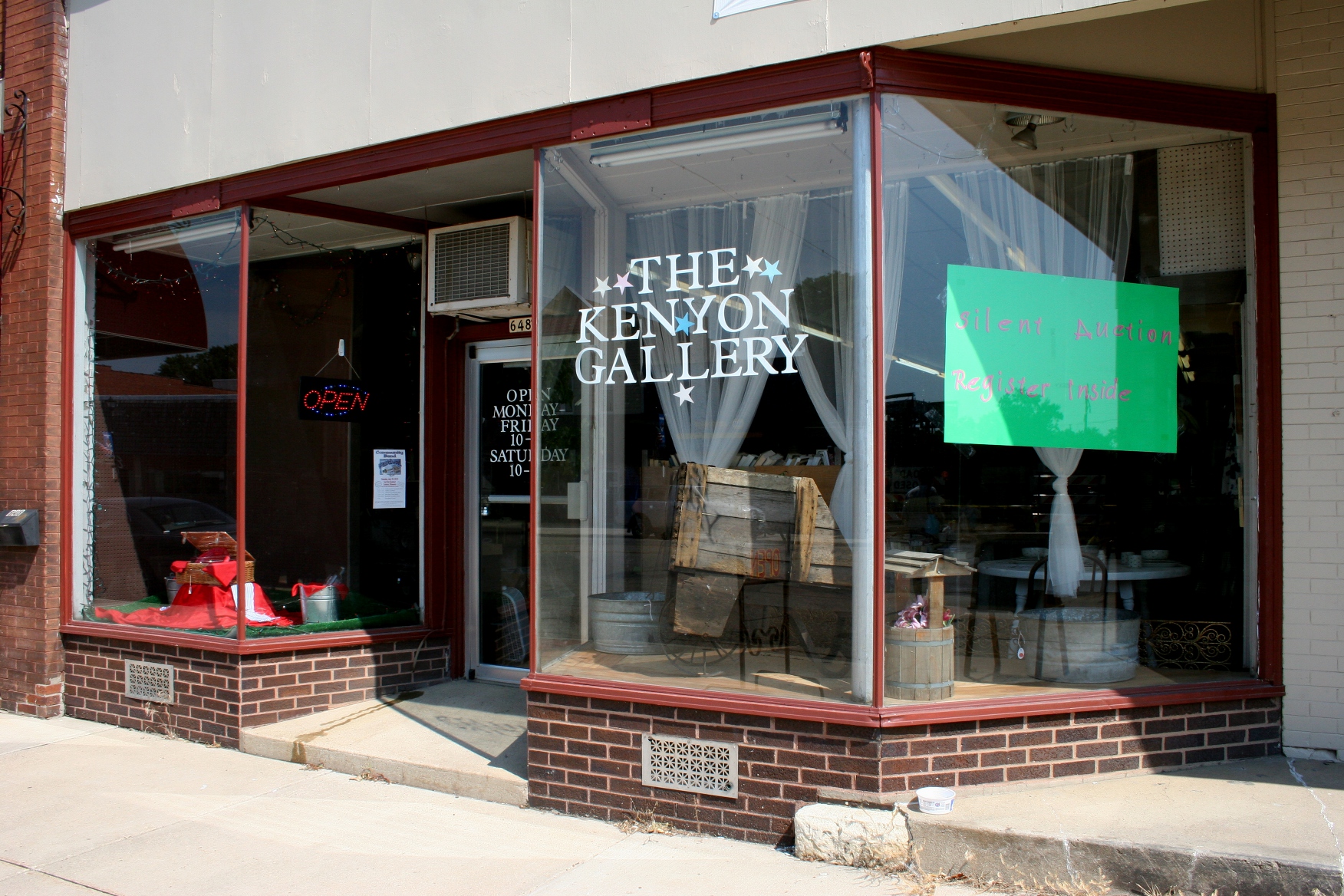
A sweet little gallery and antique shop, The Kenyon Gallery in Kenyon.

I AM ONE OF THOSE ANTIQUE SHOPPERS, emphasis on the word those.

Allow me to explain. I enjoy browsing through antique stores, but I seldom buy. Why? I am cheap and prefer to find my collectibles and antiques at thrift stores and rummage sales.

Perhaps that word cheap isn’t quite right. Let’s change that to budget conscious. Yes, that’s better.

It’s not that I haven’t ever made an antique store purchase. I have. Just not that often. I am sorry, antique dealers. I do appreciate you and all the effort you put into finding, displaying and selling your merchandise.
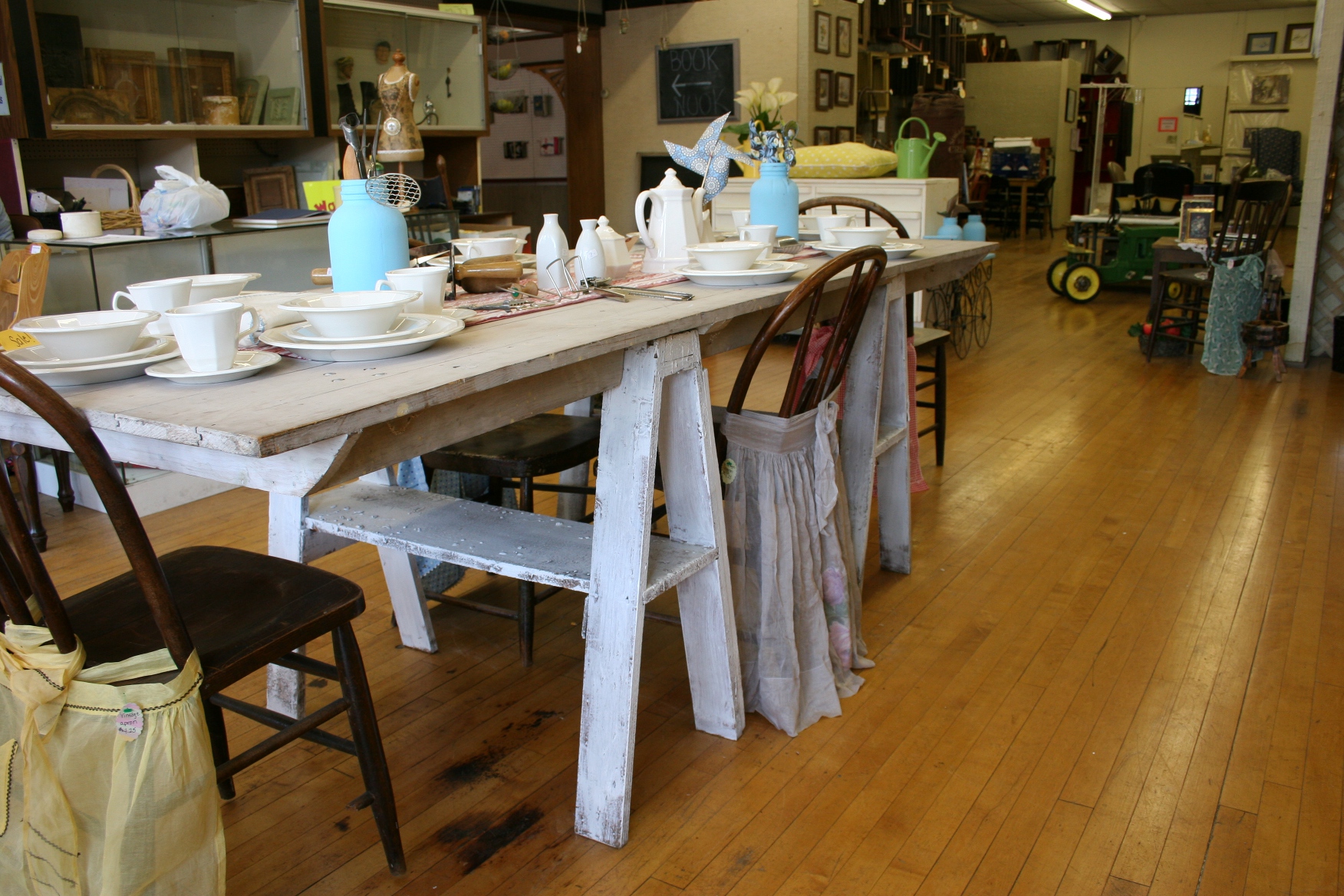
Loved this unassuming casual country style table setting inside The Kenyon Gallery.
I’ve always wondered, though, how can you bear to part with your treasures? If I had to give up one of my two dozen or so vintage tablecloths, I would struggle. Oh, yes, I’ve done that, loaning several to my eldest daughter. The emphasis here would be on the word loan.
Recently my husband and I took a day trip to Lake City, which is on Lake Pepin (aka a wide spot in the Mississippi River). But before we reached that southeastern Minnesota town, we stopped in Kenyon at The Kenyon Gallery, a shop that markets a mixture of merchandise including $5 frames, framed prints, antiques and collectibles.

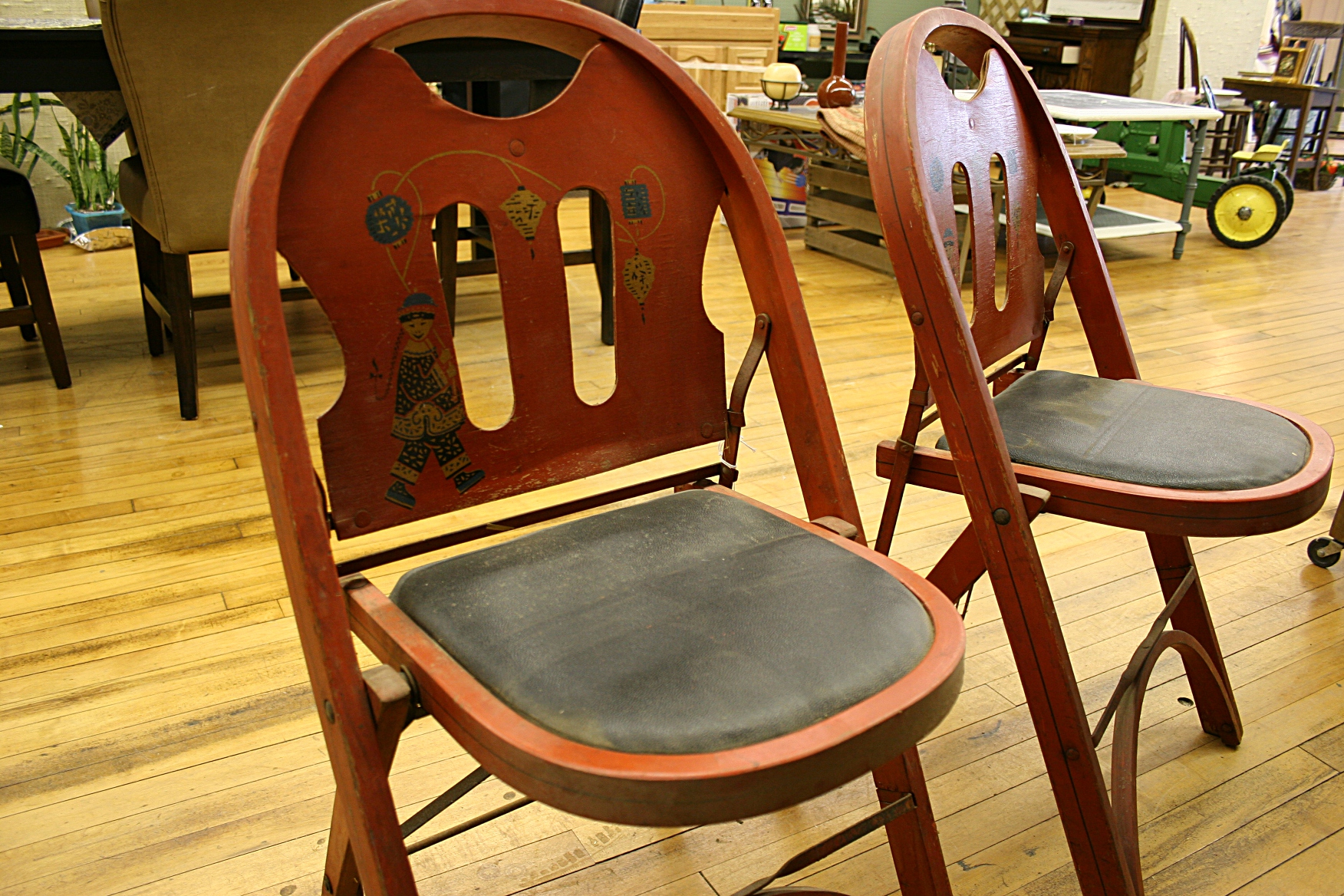
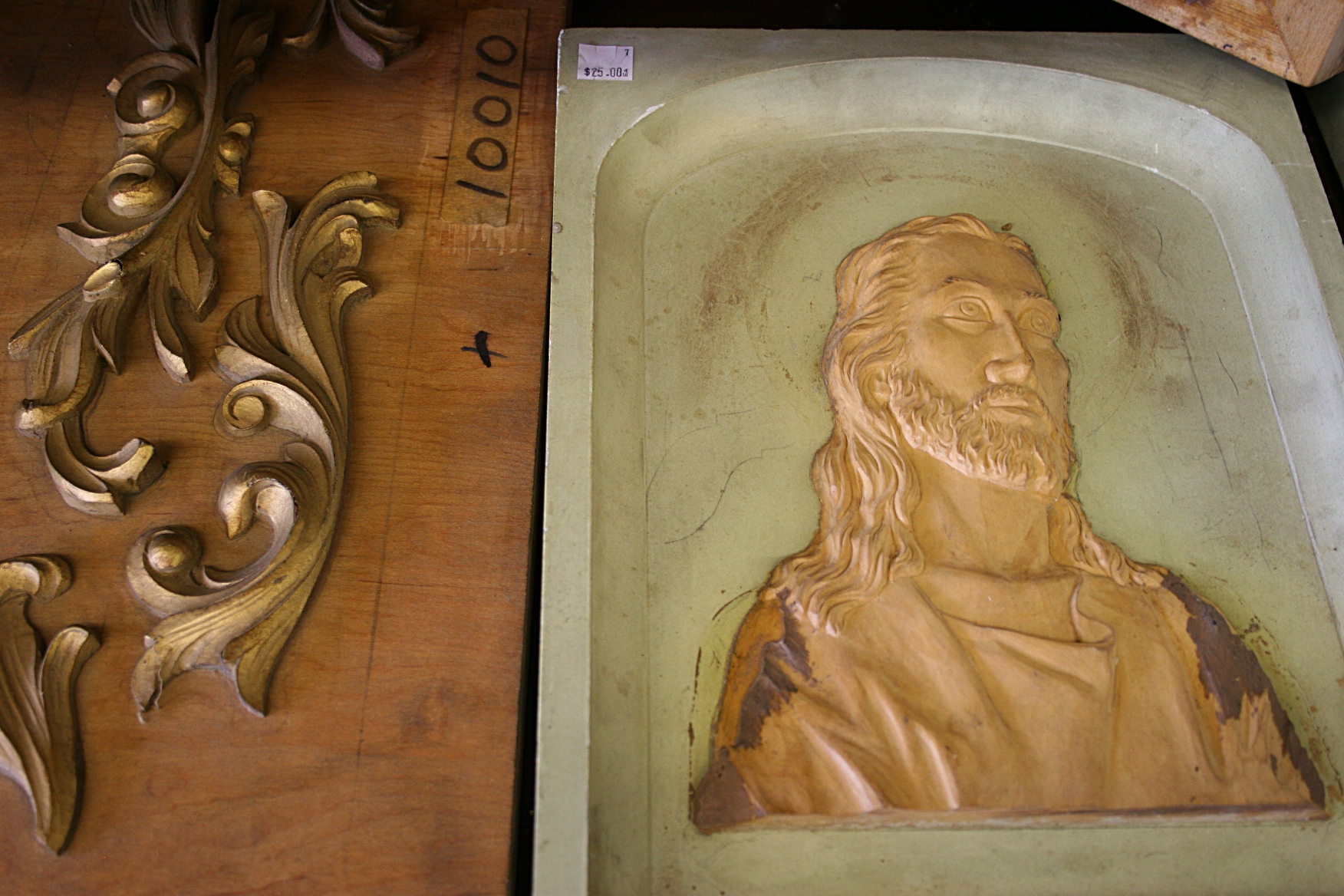
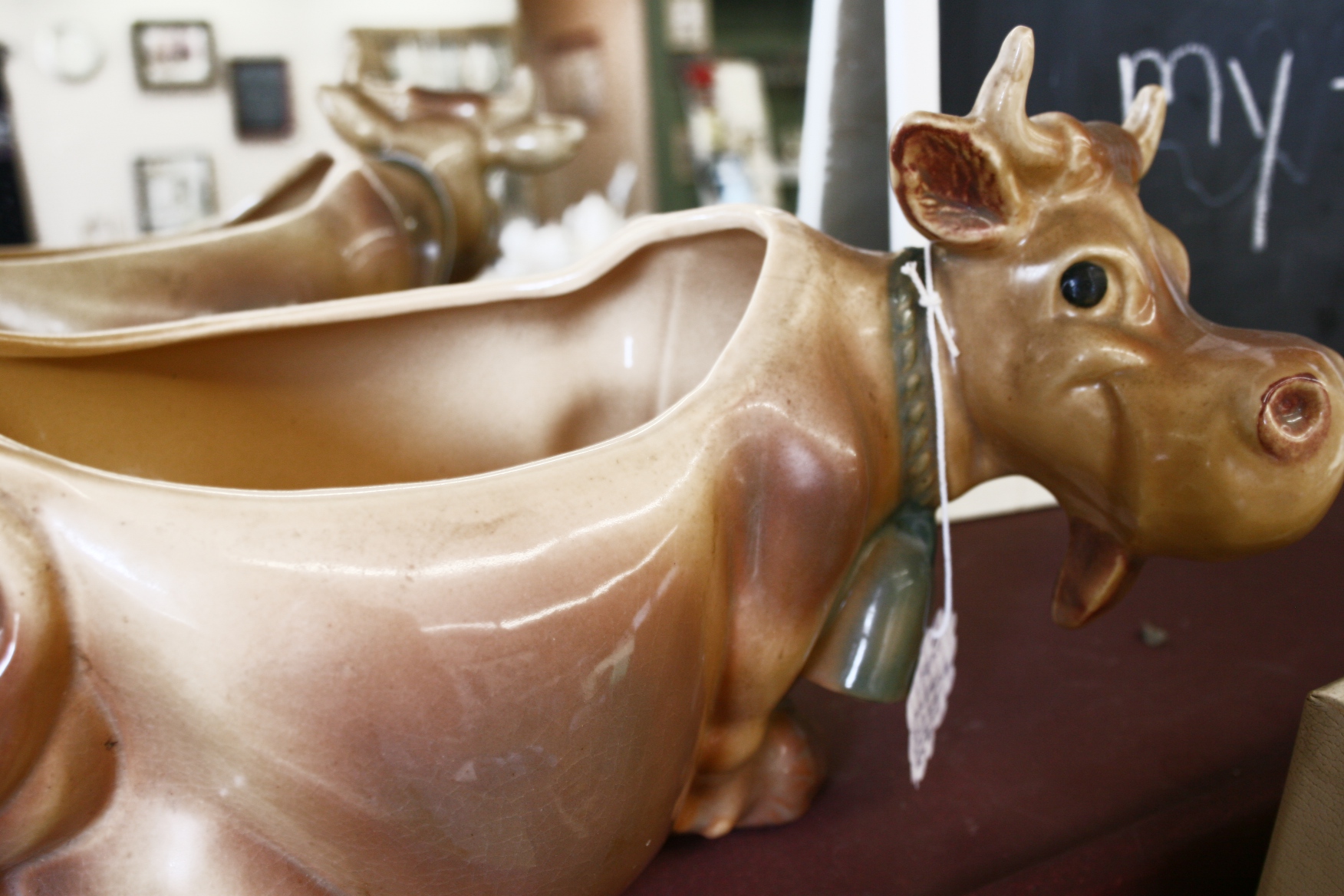
Here are three particularly interesting items I eyed up with my camera until my husband said, “We’ve gotta keep moving along here.” He was right and out the door we went, still aiming for Lake City.

The design on these chair backs intrigues me; I’ve never seen anything like these chairs. Readers, do you know anything about these chairs or their value?

I call it art although both pieces really have to do with something involving the making of furniture. I think.

I grew up on a dairy farm. What can I say?

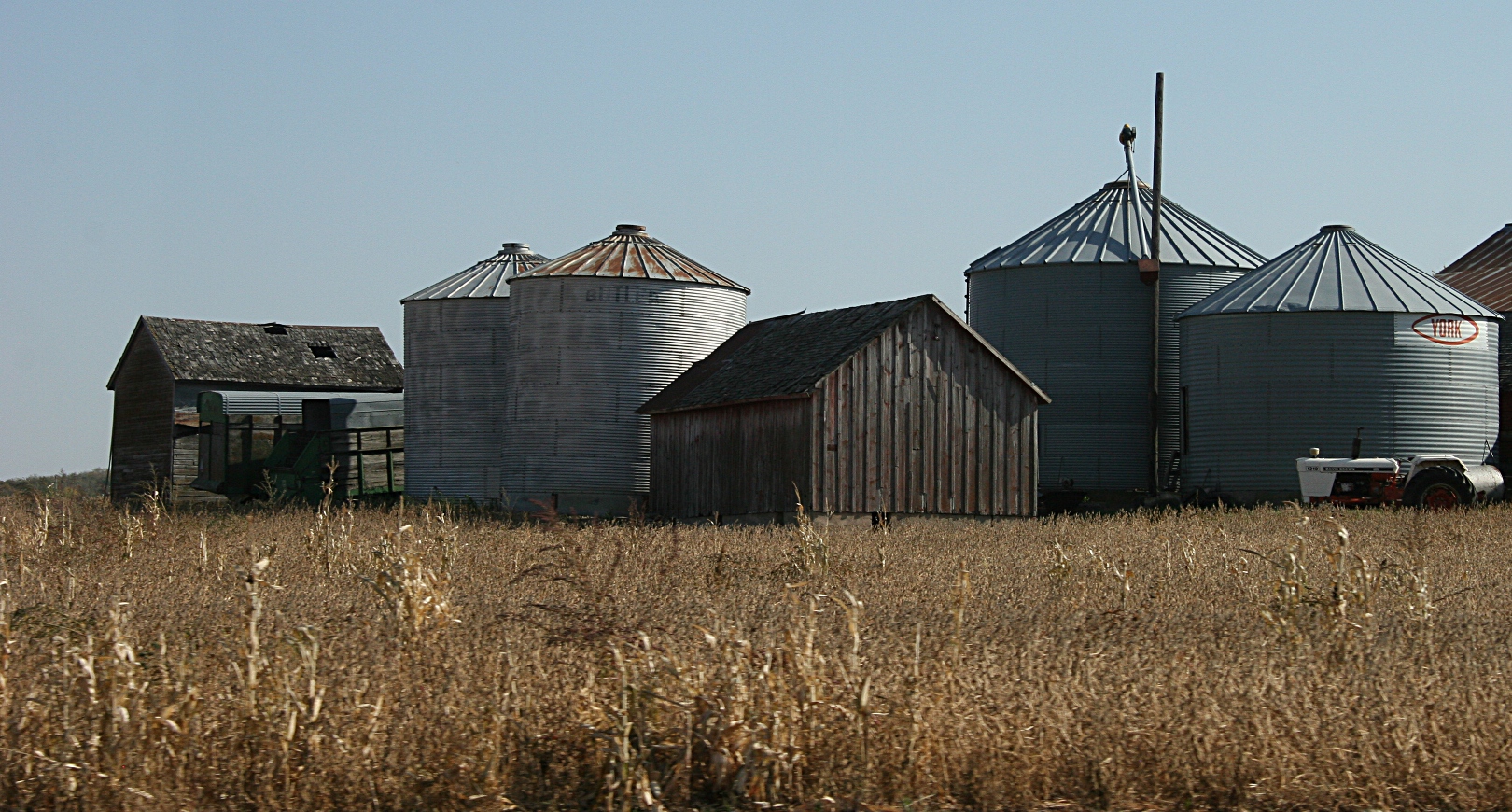
Before we got there, though, we had to stop in Bellechester and check out a cornfield.

And then we were back on the road to Lake City. The husband might have repeated, “We’ve gotta keep moving along here.”

The Lake Pepin Pearl Button Co, a must-stop antique store in Lake City.

If you’re into antiquing, you’ll like the shopping in this riverside town. The Lake Pepin Pearl Button Co., located in a former button factory and dry goods store and with around 40 antique dealers, will easily occupy you for hours, if your spouse is patient. Not that I window-shopped for hours. But I could have.

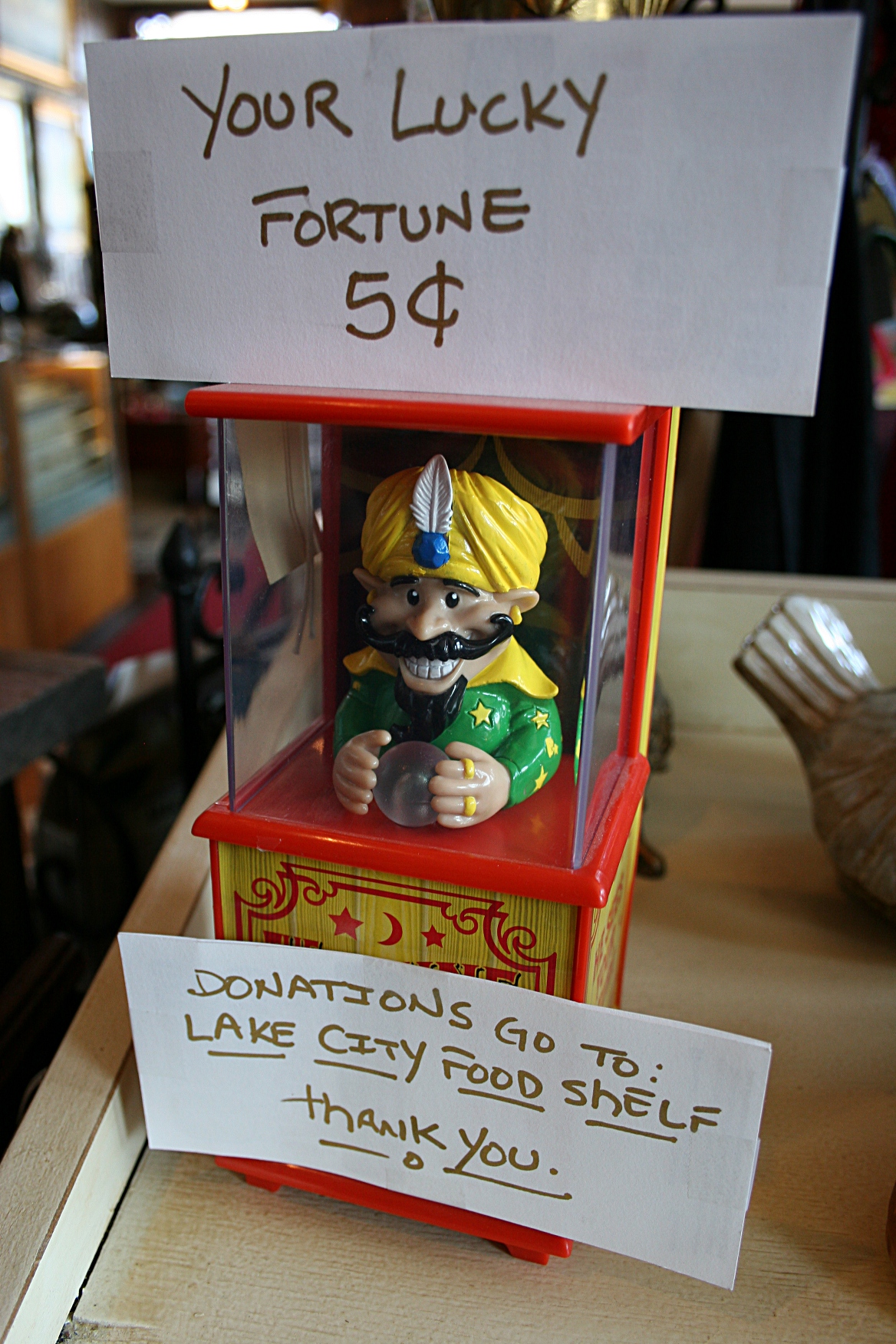
A nickel for your fortune and a nickel for the foodshelf at the Button Co.

Pop art style graphics and my childhood fondness for 7-UP made this sign a tempting purchase at the Button Co.

So onward we traipsed in the heat and humidity.

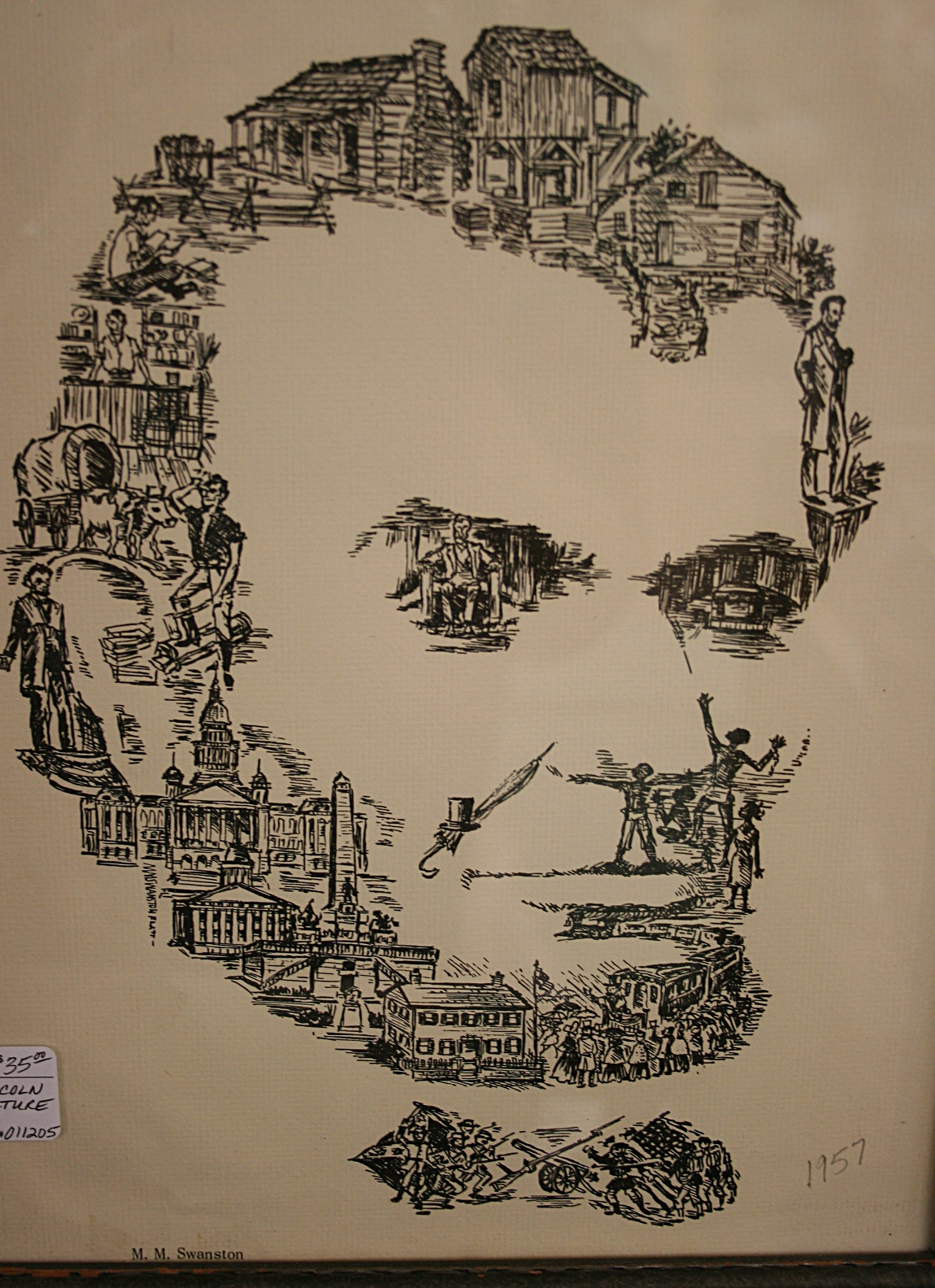
A 1957 pen and ink drawing print by M.M. Swanston.

In the basement of Mississippi Mercantile (don’t you love the names of these antique stores?), I spotted this unusual portrait of Abraham Lincoln.

On to the Antique Shopper, I found plenty of appealing merchandise on the main level and in the basement of this multi-dealer venue.

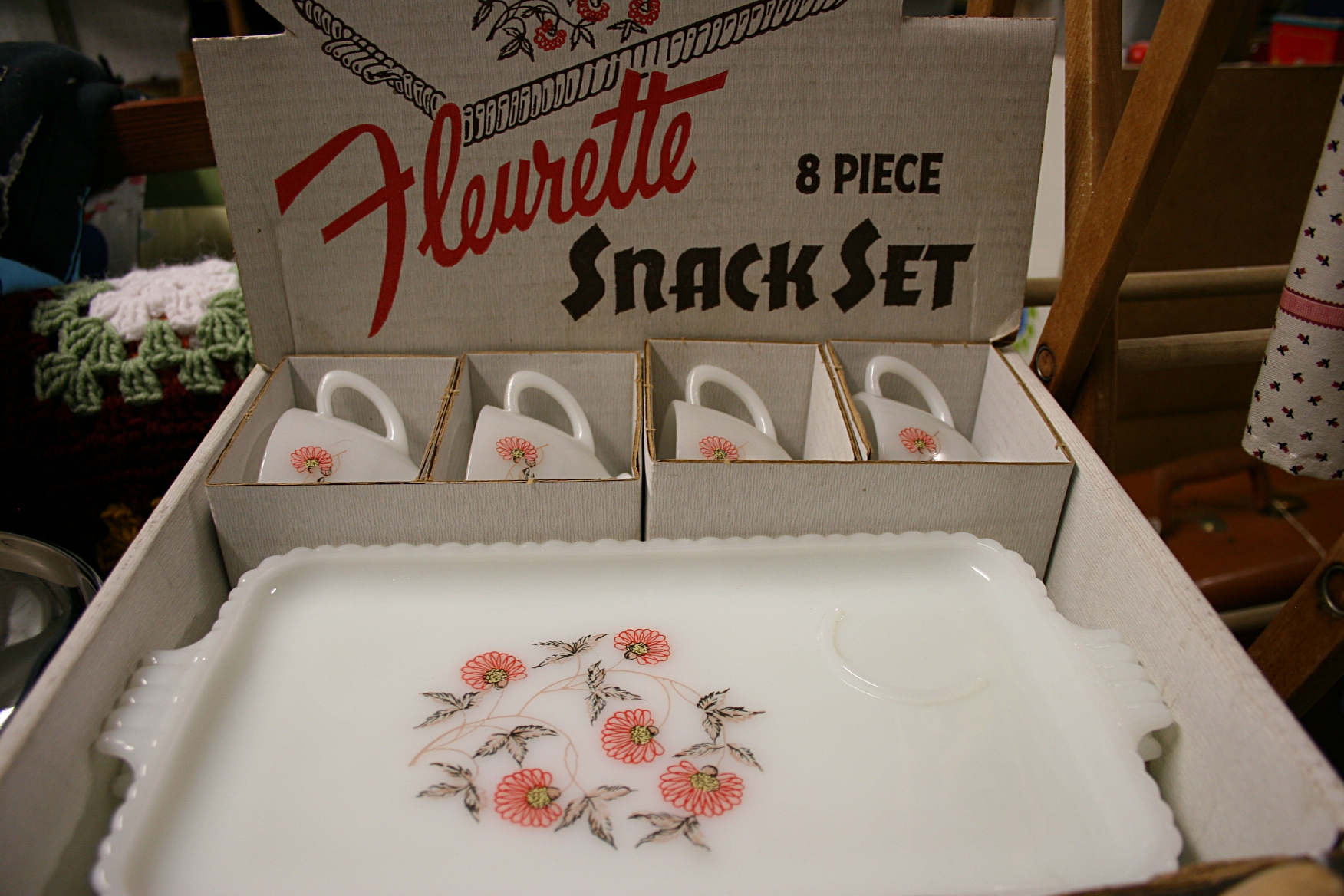
My mom used snack sets to serve company when I was growing up, the reason I am typically drawn to these fancy dishes.

I had a tough time passing up these vintage bowls in the Antique Shopper. I have this thing for bowls, as my husband and kids will tell you. And these are beauties, unlike any I’ve seen.

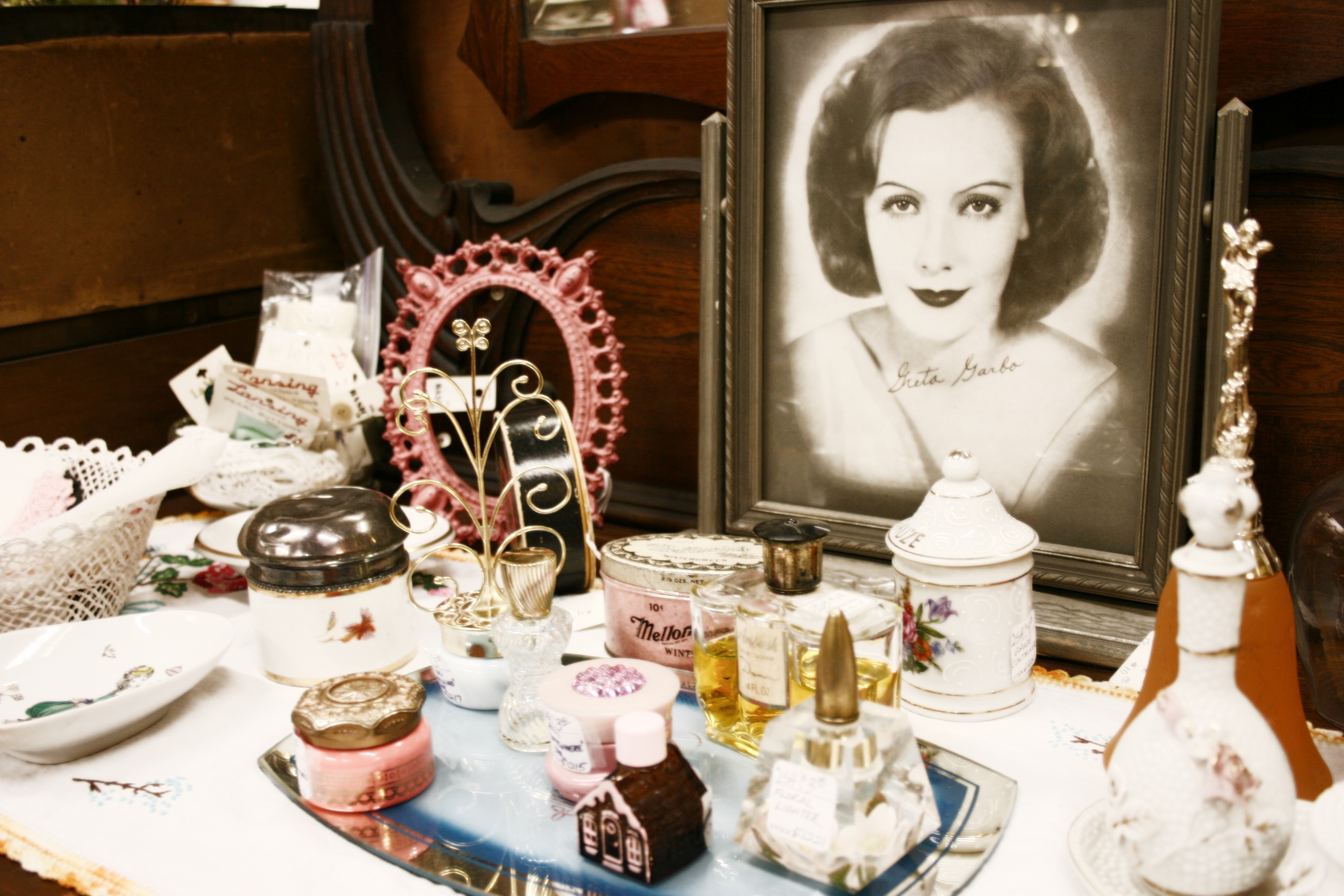
Simply a graceful display highlighted by that Greta Garble photo.

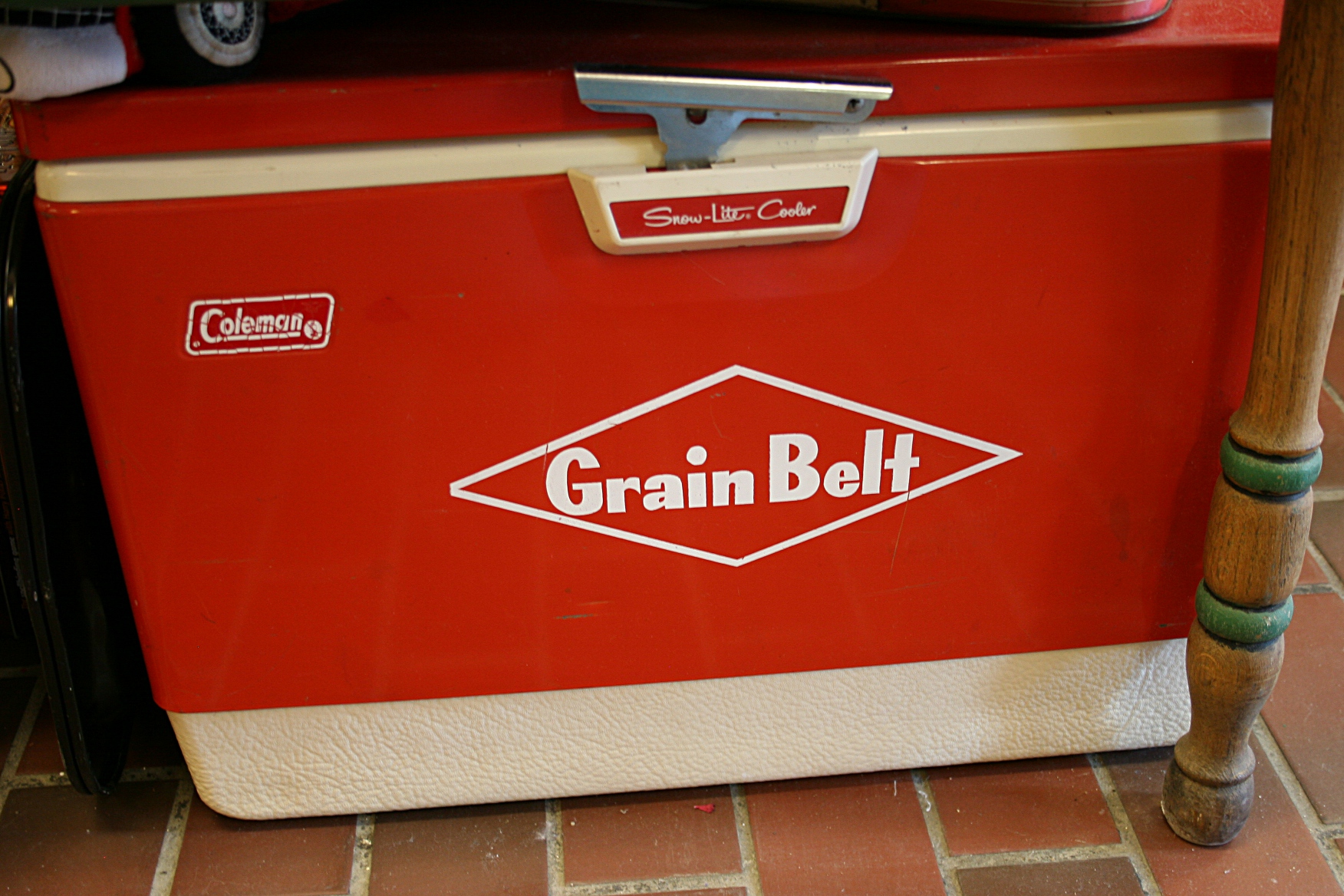
Just as we were heading for the door, my spouse spotted an antique Grain Belt beer cooler under a table and paused to admire it.

My husband lingered at this Grain Belt cooler in Antique Shopper.

The oppressively hot, humid and smothering weather coupled with a strong desire to swig a cold one compelled both of us to just stand there for a few seconds and stare.

But then I snapped out of my heat-induced stupor. “We’ve gotta be moving along,” I muttered and out the door we went.

CLICK HERE TO LINK to a previous post about Lake City, specifically its pearl button-making history.

© Copyright 2012 Audrey Kletscher Helbling