Minnesota Prairie Roots

Writing and photography by Audrey Kletscher Helbling

Poking around Montgomery, Minnesota April 9, 2013

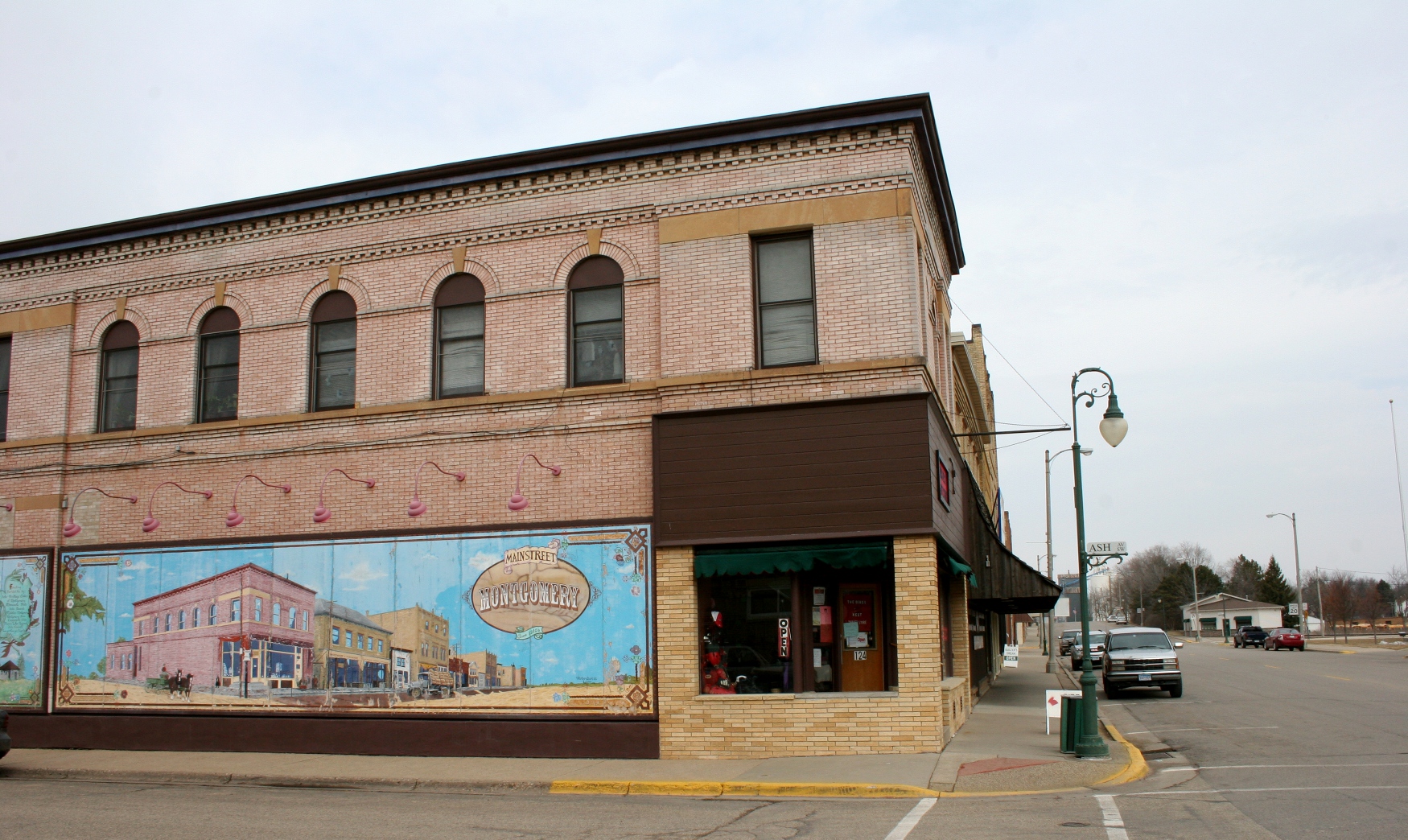
A shot of Main Street Montgomery.

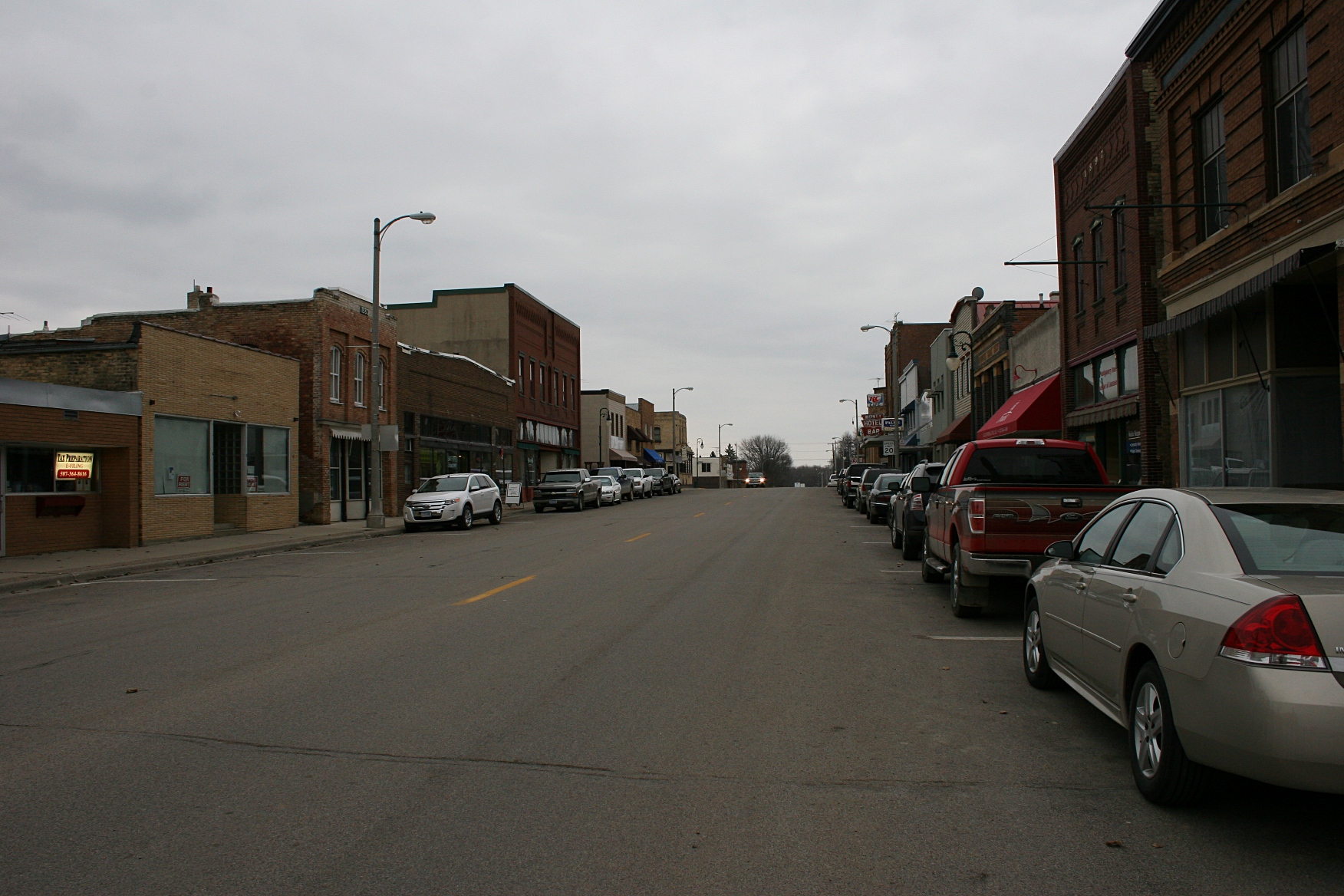
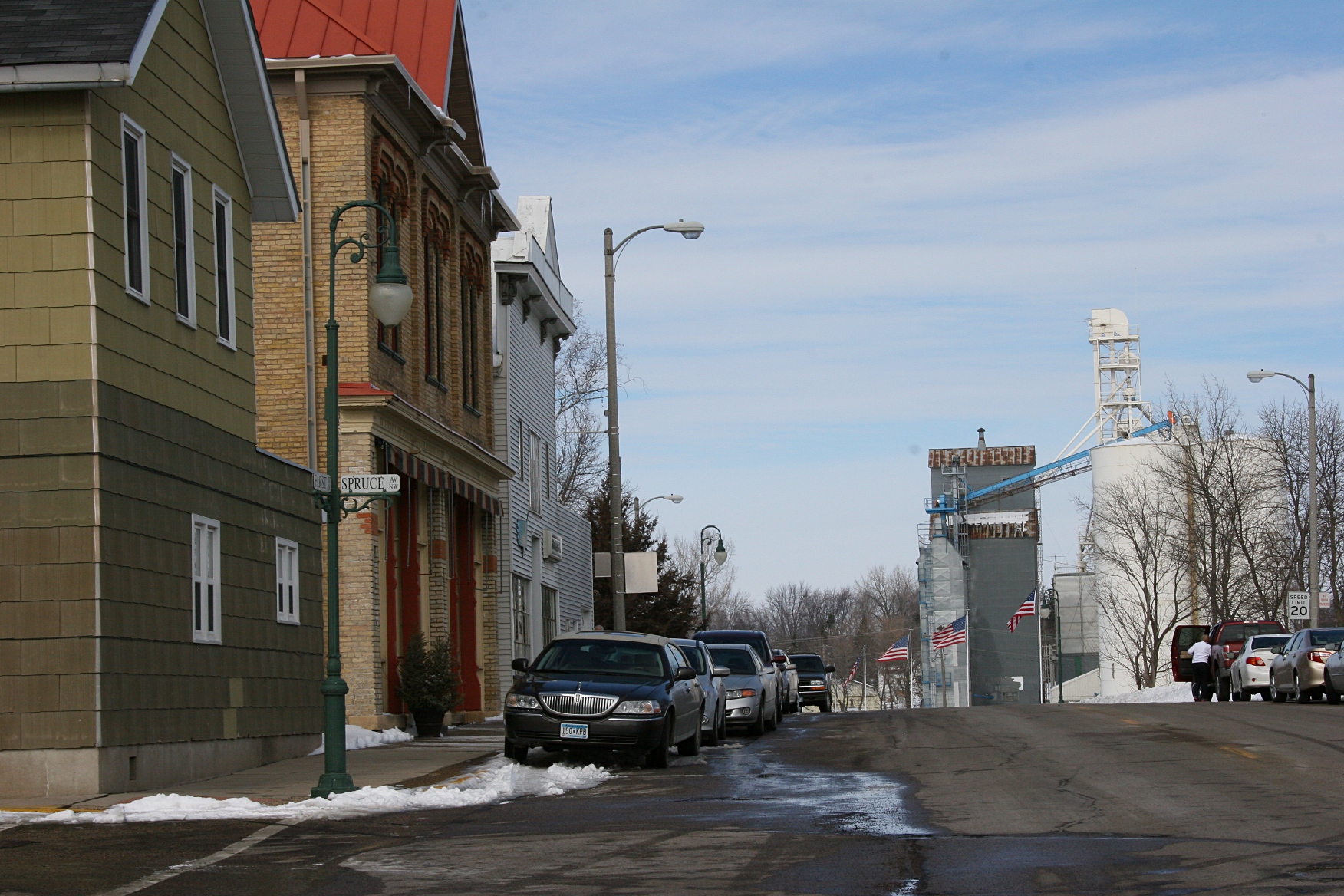
A shot of First Street in Montgomery’s downtown business district.

MONTGOMERY, IN MY OPINION, may be one of small town southern Minnesota’s best-kept secrets.

A wealth of historic buildings still stand in Montgomery, one reason I am particularly drawn to this community. Walk inside many businesses and you will find original tin ceilings and wood floors.

A wealth of historic buildings still stand in Montgomery, one reason I am particularly drawn to this community. Walk inside many businesses and you will find original tin ceilings and wood floors.

If you appreciate historic buildings, ethnic charm, friendly folks and one-of-a-kind home-grown businesses all packaged in a Main Street reminiscent of yesteryear, you’ll delight in Montgomery.

Dogs roaming and kids rollerblading along the sidewalks of Main Street.

Dogs roaming and kids rollerblading along the sidewalks of First Street.

On Saturday, my husband and I drove a half hour northwest of Faribault to check out this Czech community’s downtown. We meandered from thrift shop to bakery to thrift shop to drugstore and quilt shop, and even bopped into an old-fashioned barbershop before visiting the town’s newest corner shop, Rani’s, and then walking a block north to order pizza for a late lunch.

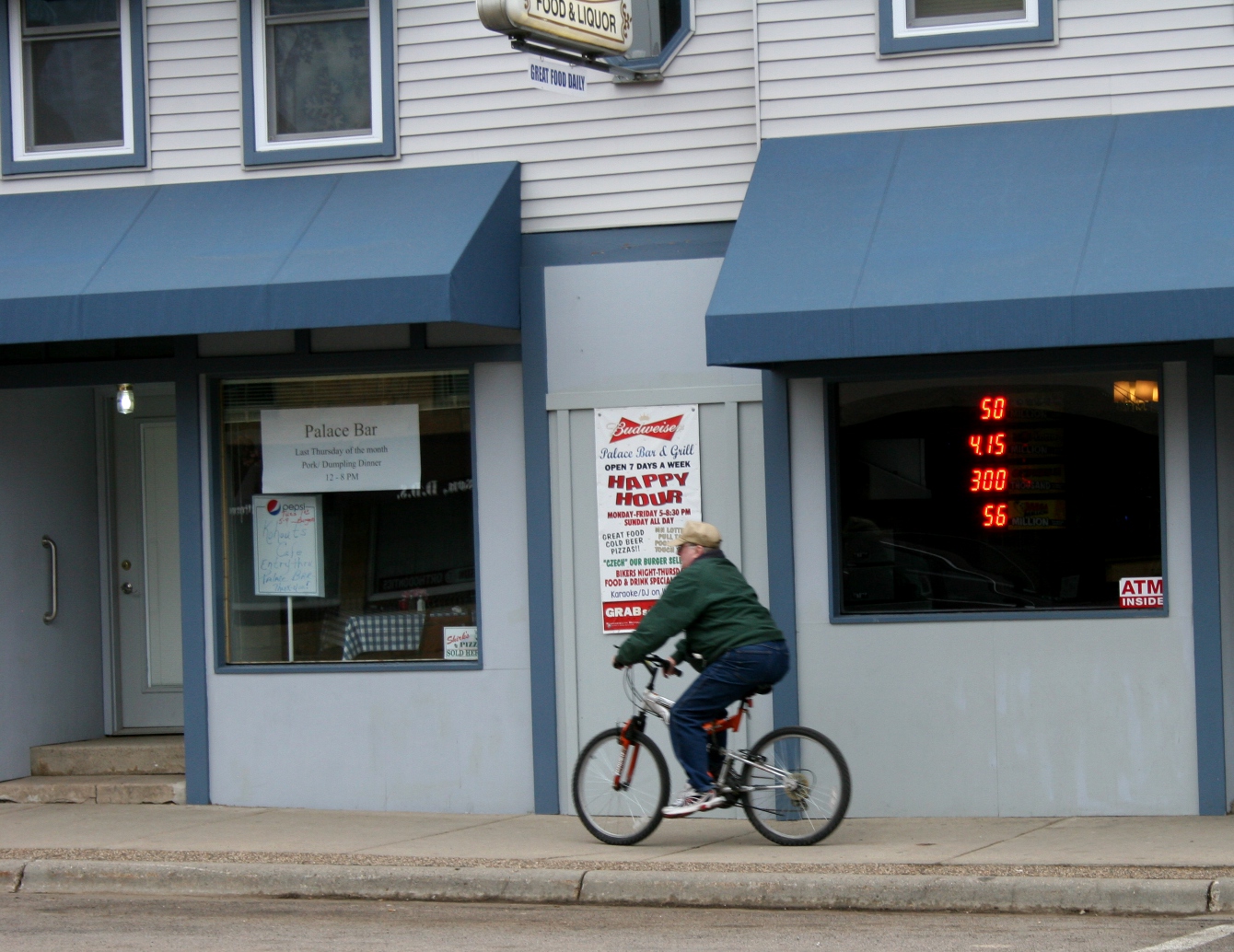
Biking in downtown Montgomery.

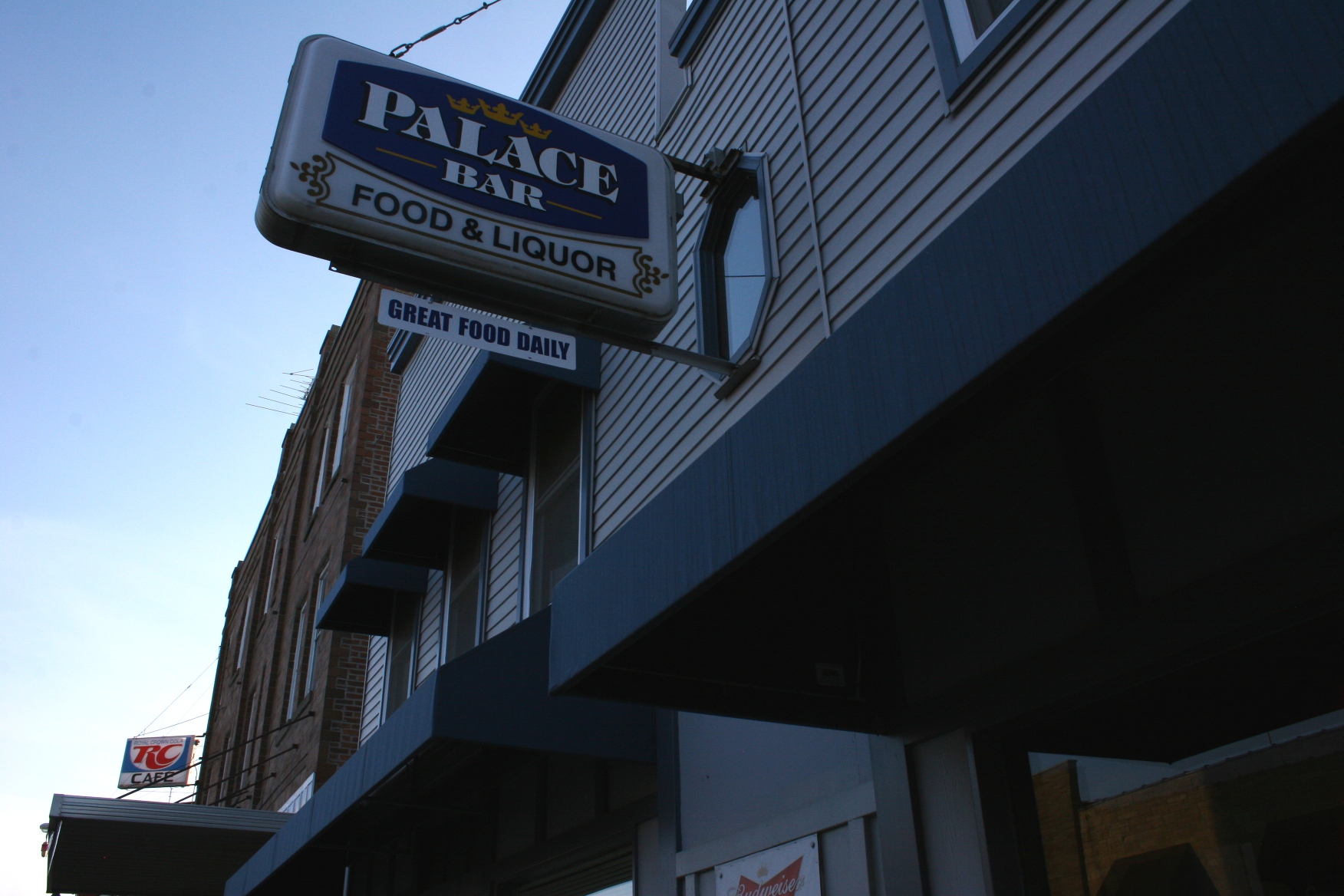
Biking in downtown Montgomery past the Palace Bar which advertises a Pork/Dumpling Dinner from 12 – 8 p.m. on the last Thursday of the month.

Afterward, we perused Big Honza’s Museum of Unnatural History, hit up another antique store and, finally, caught a Czech import shop on the way out of town.

The White Front Saloon, one of many bars we spotted.

The White Front Saloon, one of many bars we spotted.

But we didn’t hit a single of the half-dozen or so bars. Nor did we take in the 24th annual Miss Czech Slovak MN Pageant over at the American Legion, although several shopkeepers inquired whether we were in town just for that.

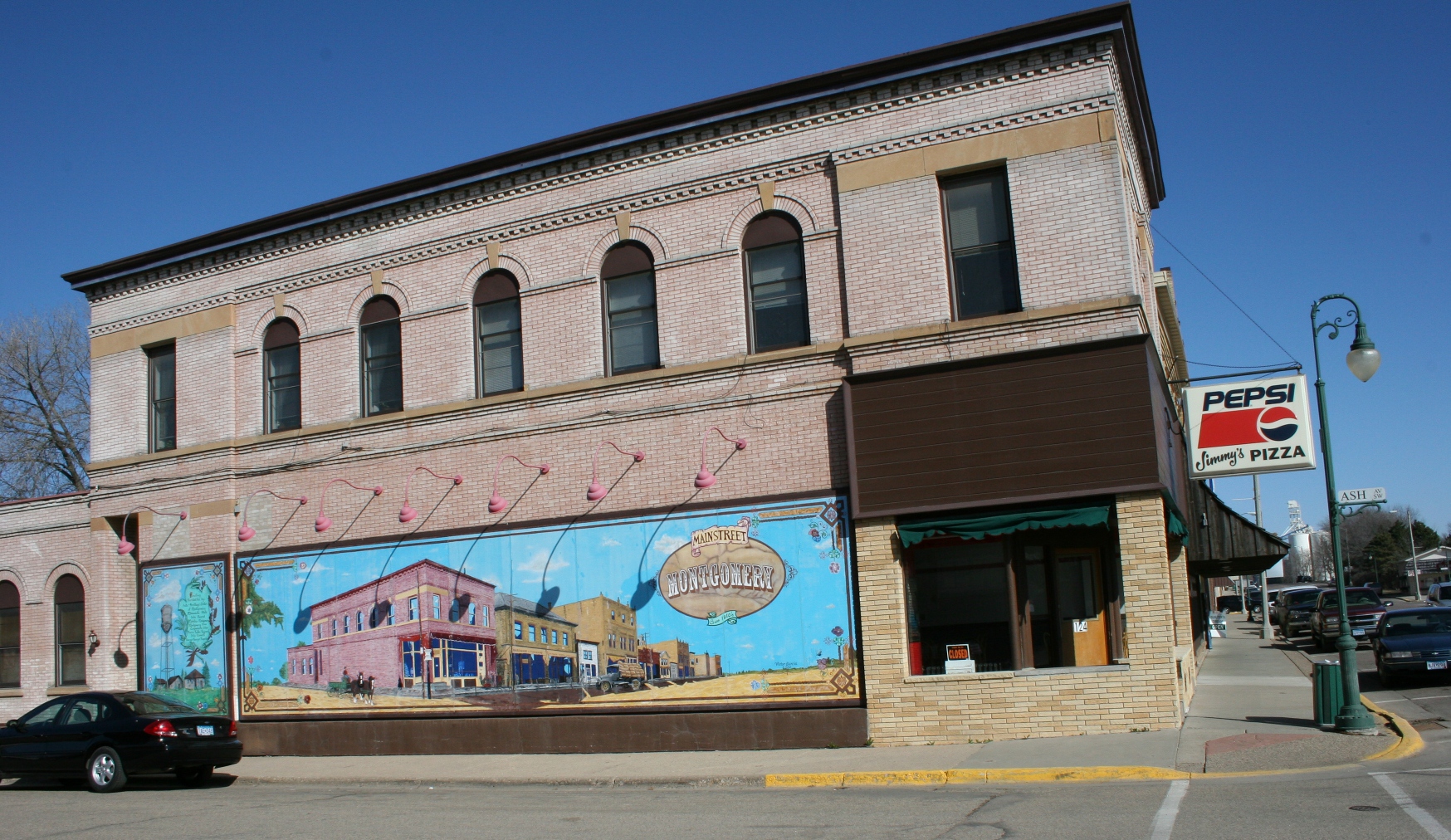
A Main Street mural

A downtown mural graces the side of the Bird’s Nest, a thrift store.

Nope, just two empty nesters poking around this self-proclaimed Kolacky Capital of the World.

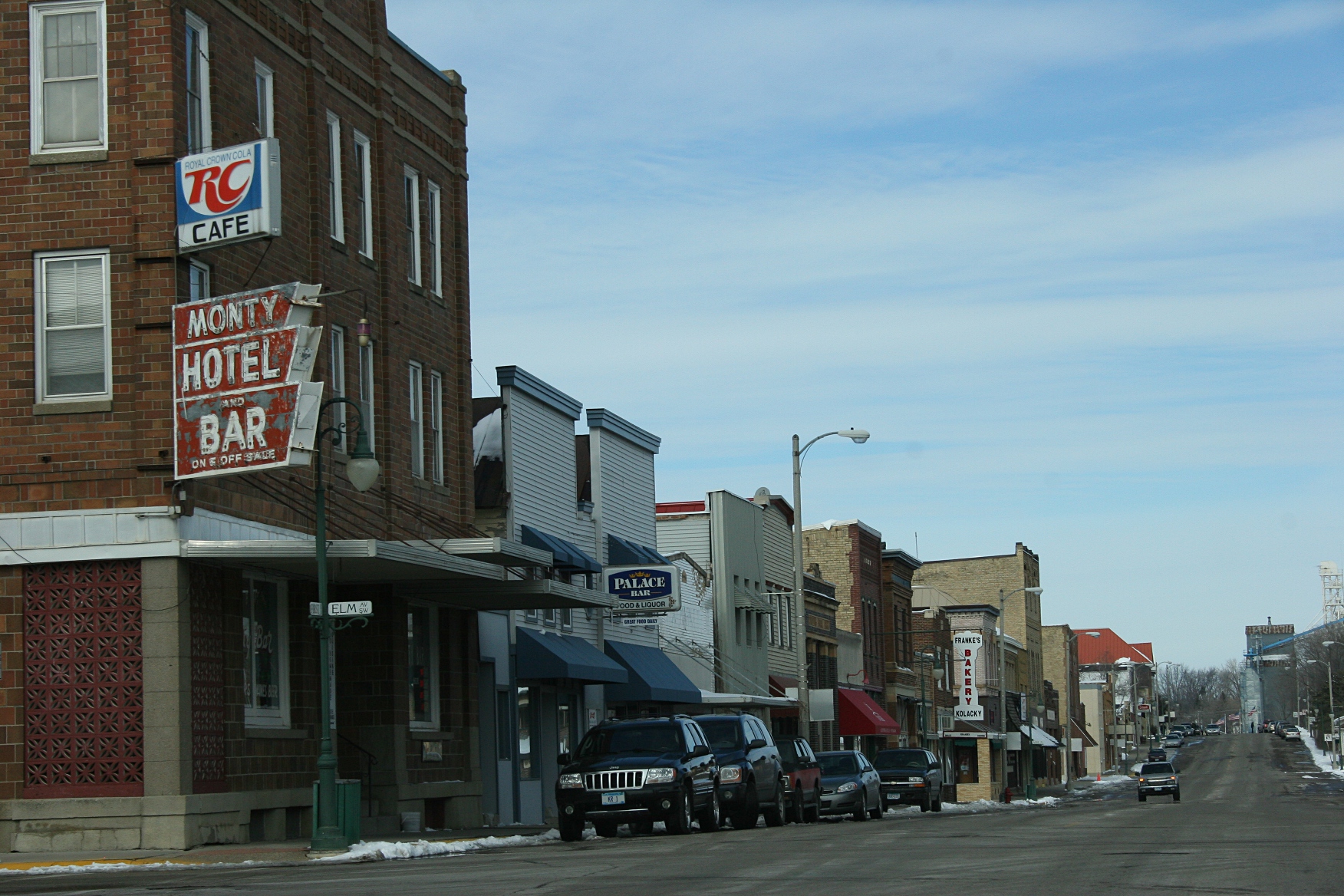
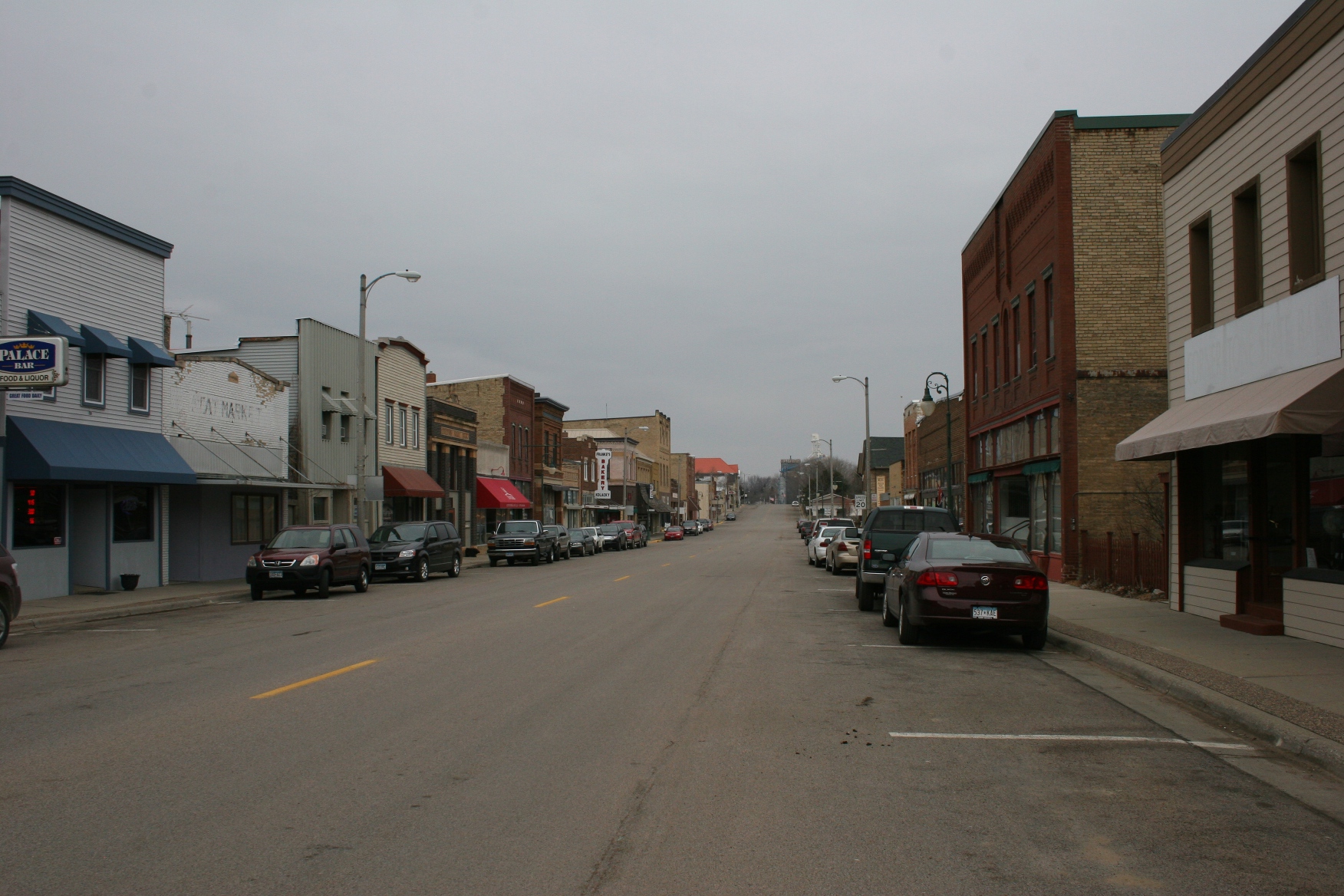
Another shot of the Main Street business district.

Another shot of the downtown business district.

CHECK BACK for a series of posts featuring the places we visited in this Le Sueur County community of around 3,000. You can click here to read my post about Main Street Barber. Also check my March 4 – 8 archives for additional stories focusing on the artsy side of Montgomery.

For those not in the know, a kolacky is a Czech pastry. Montgomery celebrates Kolacky Days each July, this year the 26th through the 28th.

BONUS PHOTOS:

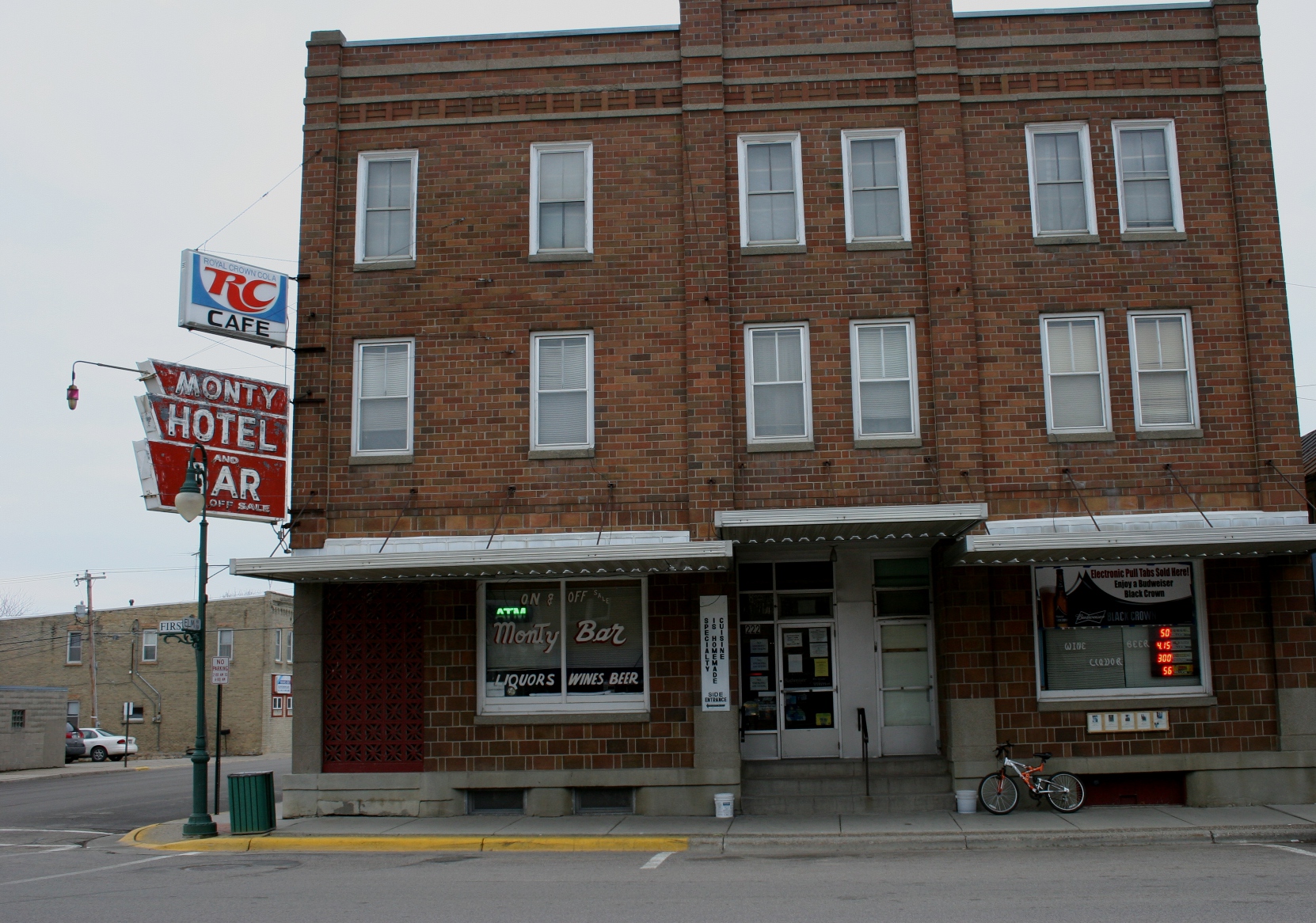
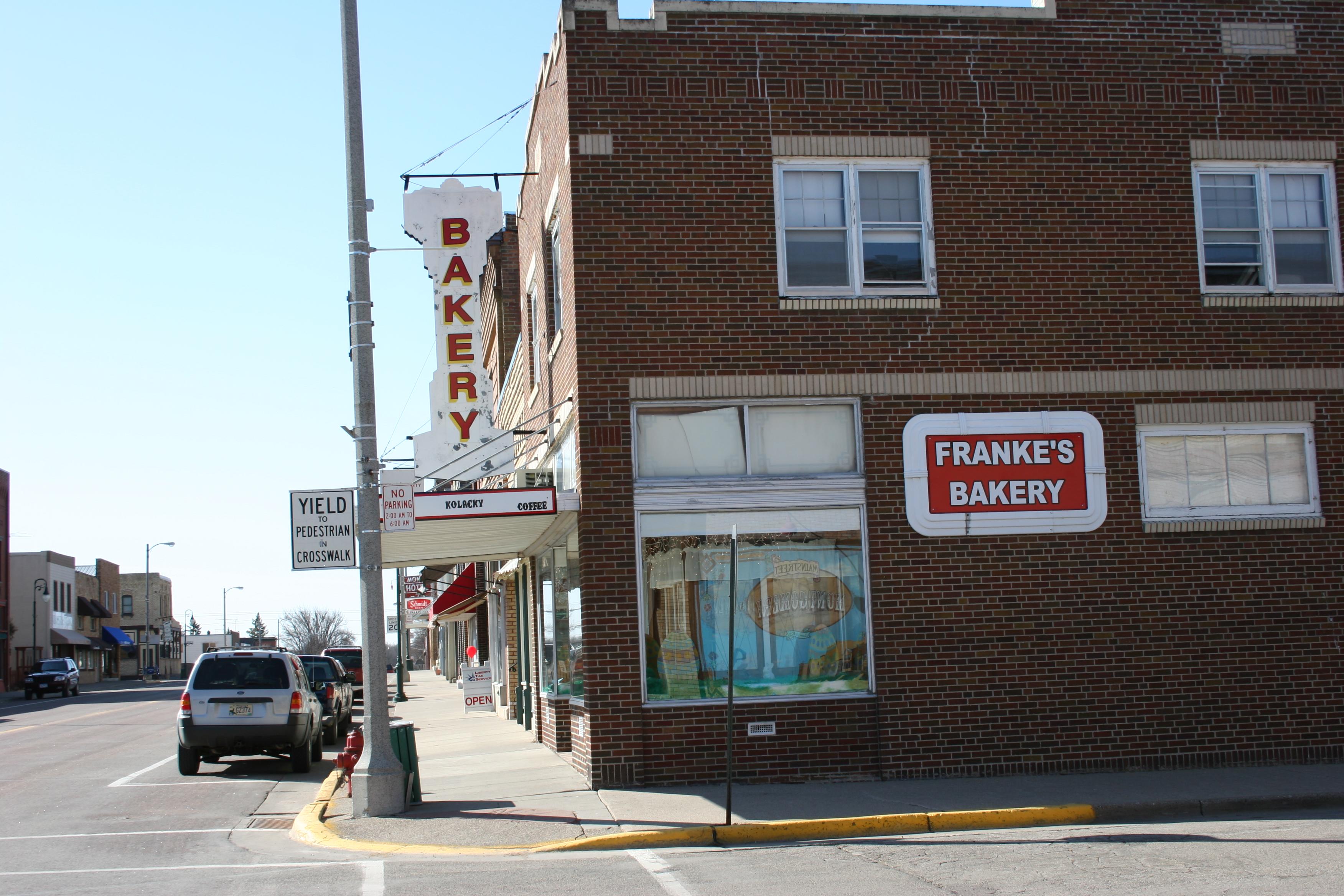
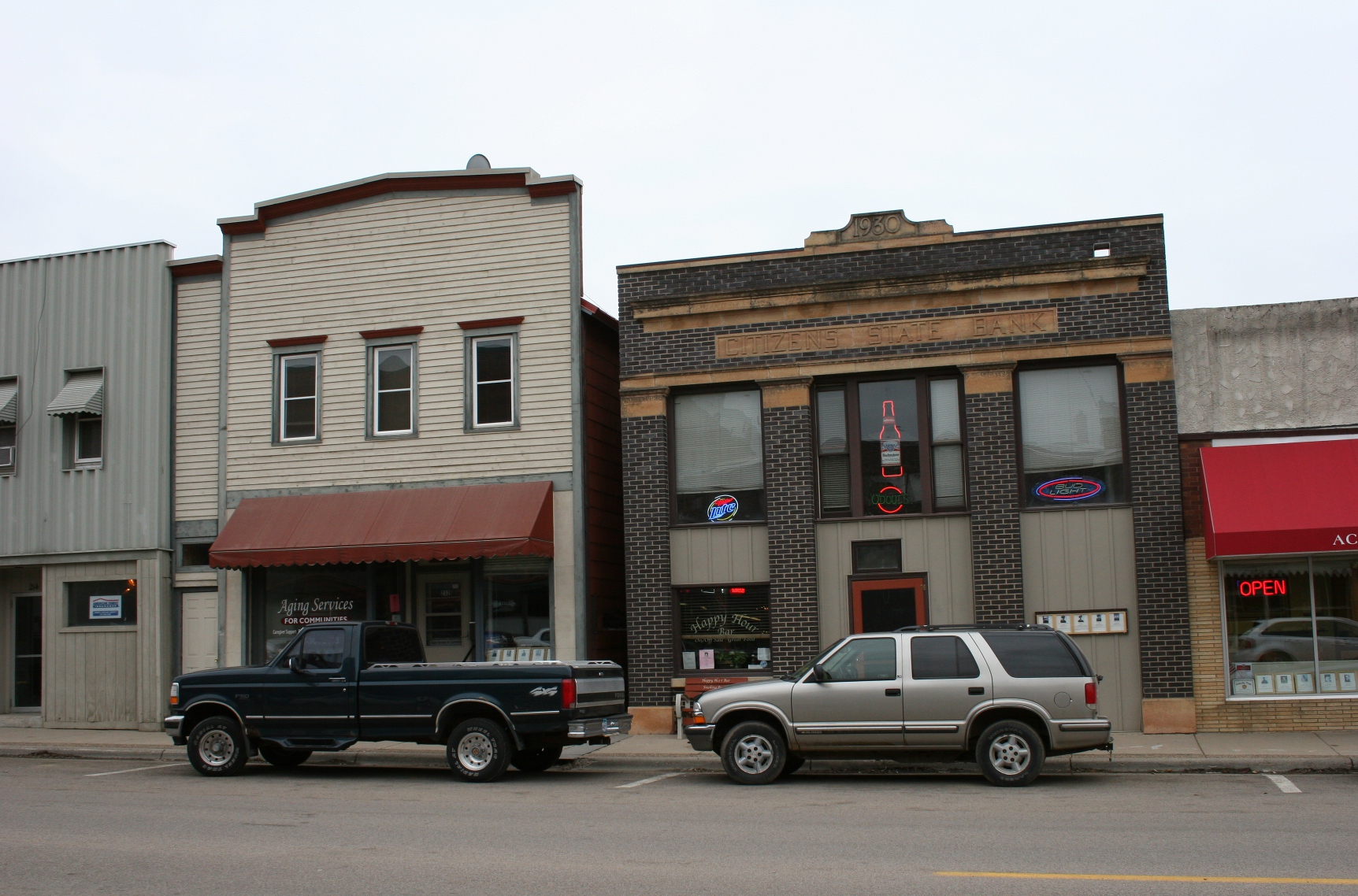
One of my favorite buildings and attached vintage signage. I need to return and explore this place.

One of my favorite buildings and attached vintage signage. I need to return and explore this place.

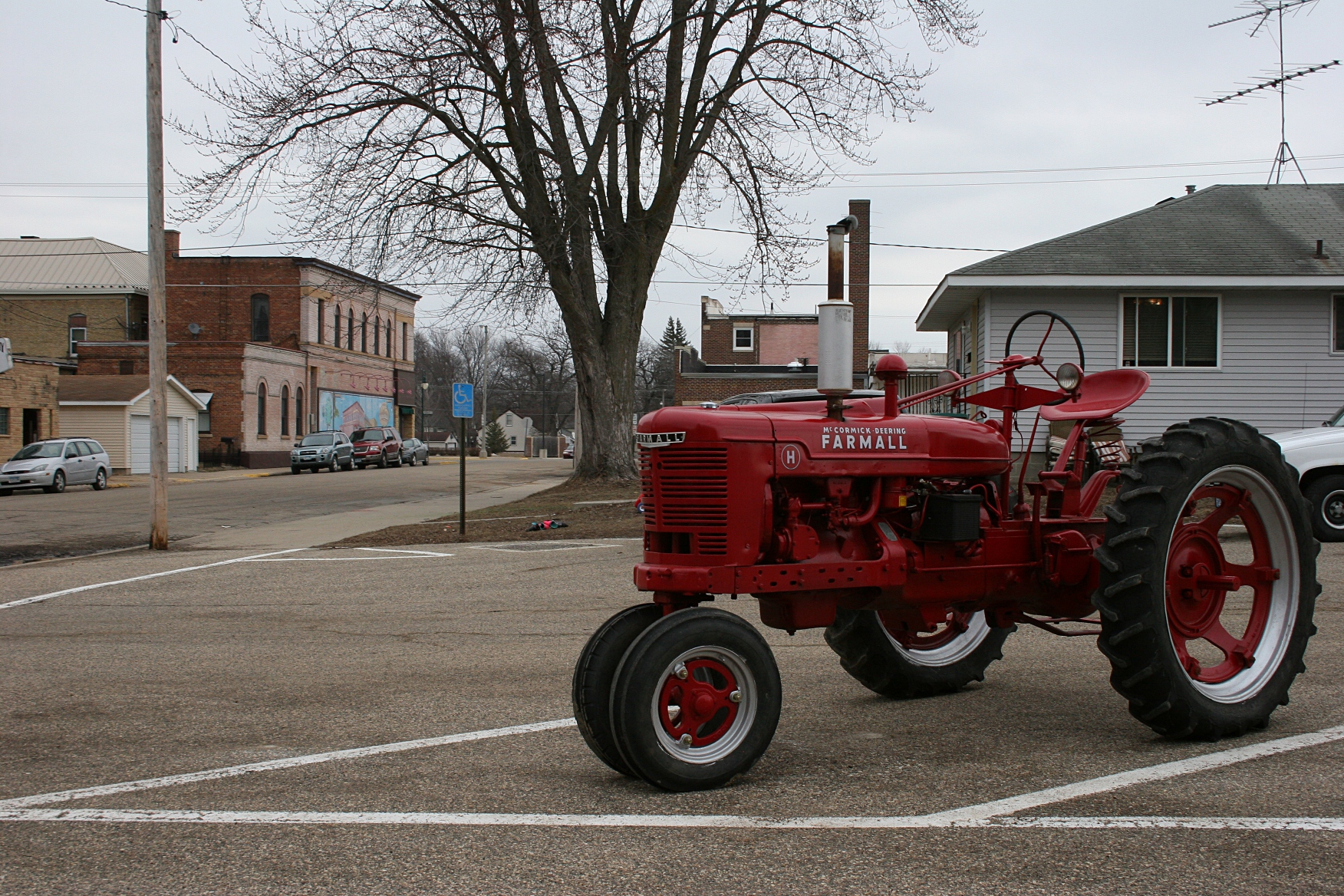
A block off the main drag, we spotted this tractor. "It's for sale," a man yelled from a window somewhere.

A block off the main drag, we spotted this tractor. “It’s for sale,” a man yelled from a window somewhere.

A parting shot of that historic Main Street.

A parting shot of that historic downtown.

© Copyright 2013 Audrey Kletscher Helbling


Montgomery, Part IV: The unique way this Minnesota town honors its veterans, plus a haven for some March 7, 2013

NEARLY EVERY COMMUNITY, from the smallest to the largest, has a veterans’ memorial. And that is good, for honoring those who have served our country is worthy.

Often, though, these memorials are costly. So individual bricks or pavers are sold, fundraisers held, donations solicited to cover expenses. This, too is admirable, to garner that personal and community involvement, support and ownership.

But sometimes it is the simplest idea, the one that does not cost a great deal of money, which most impresses.

Patriotism is evident in downtown Montgomery.

Patriotism is evident in downtown Montgomery.

In Montgomery, Minnesota, you will find Veteran’s Memorial Park with its soldier and eagle statues, granite monument, inscribed brick pavers, park benches, flags and more.

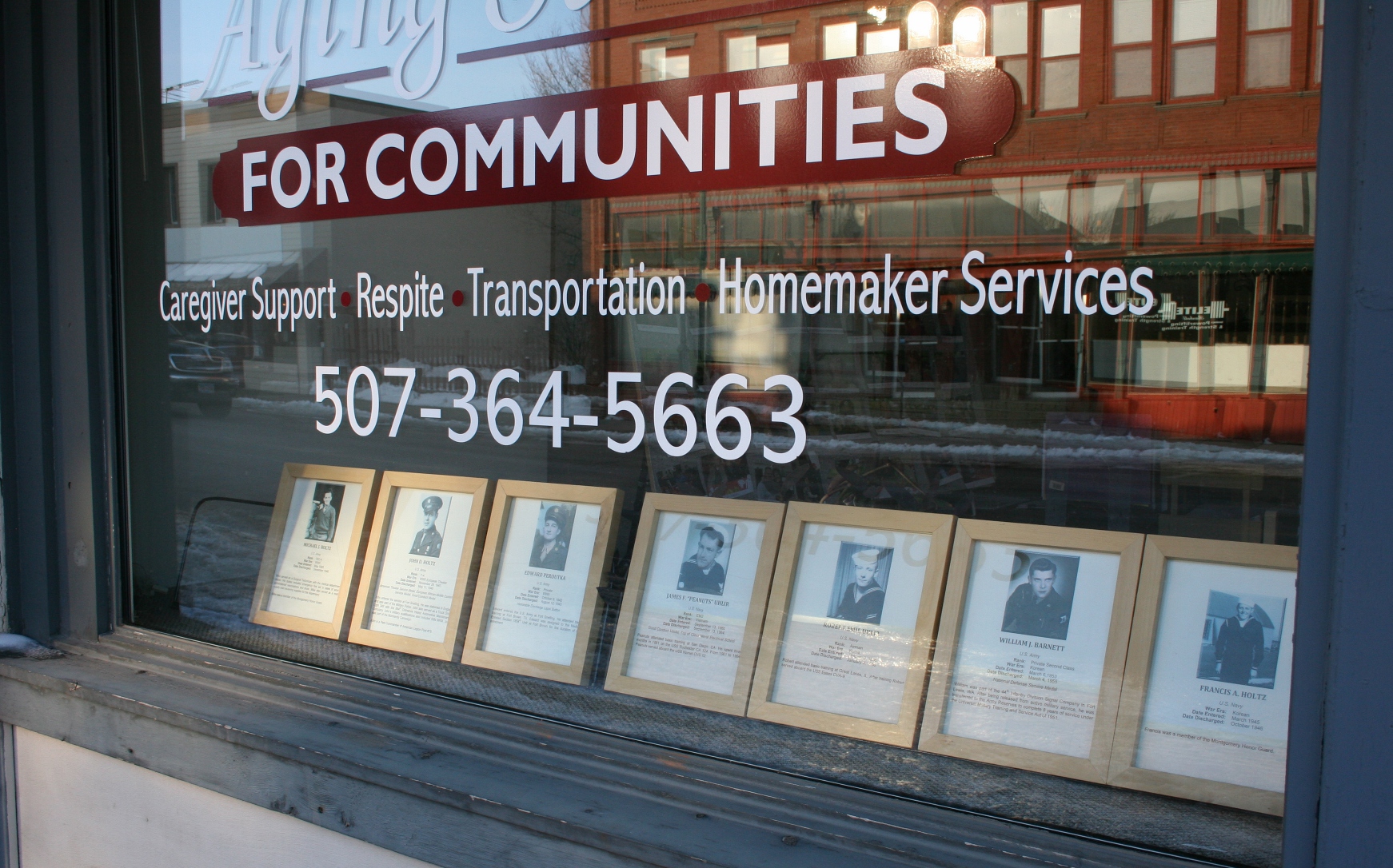
Veterans' photos and information in the window of Aging Services.

Veterans’ photos and information in the window of Aging Services.

But you will also find, in the vet’s park and primarily in the heart of downtown, the photos and stories of Montgomery’s veterans printed, framed and showcased.

It is a simple, but deeply personal and moving, way to honor hometown men and women who have served in the military.

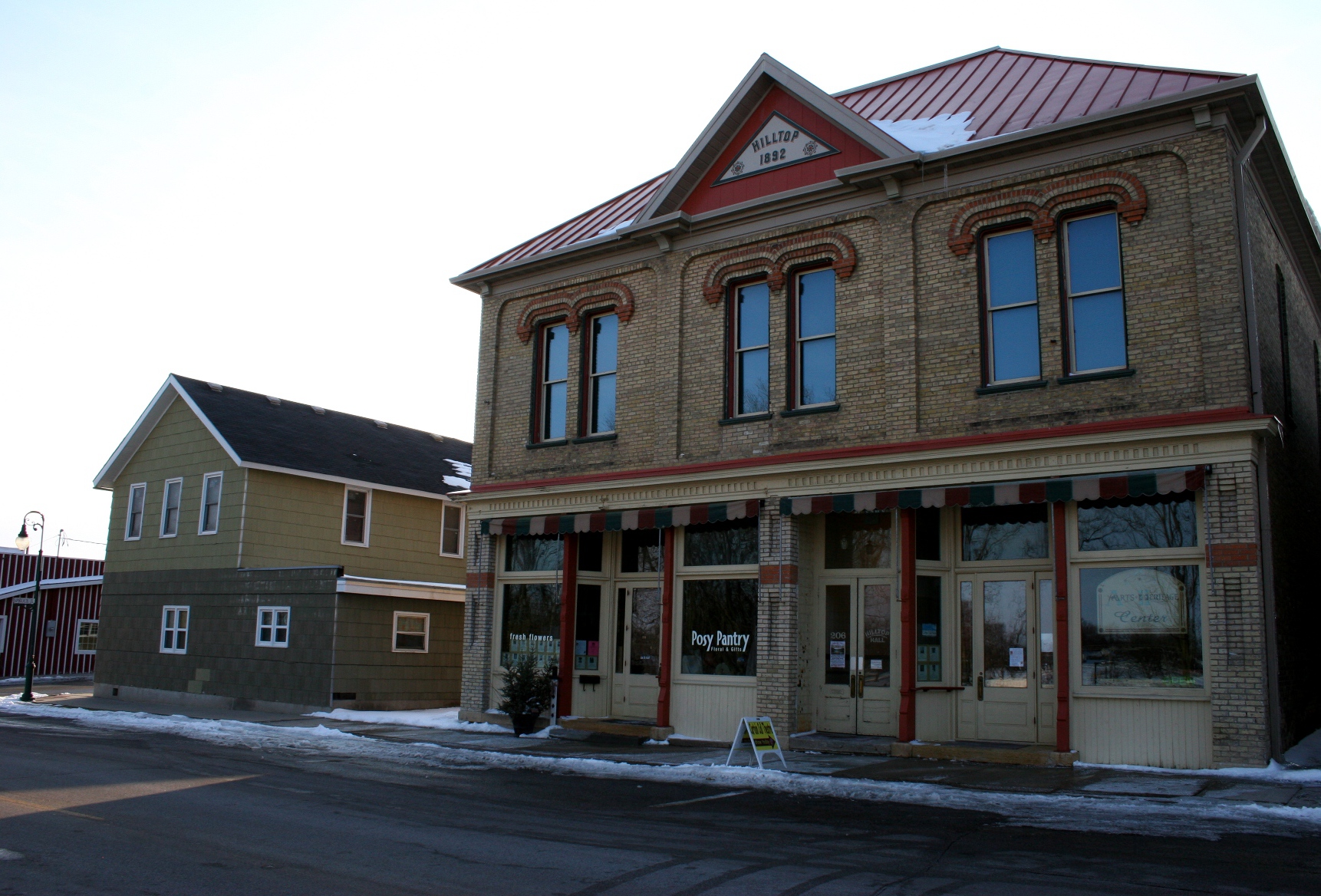
If you look closely, you can see the veterans' tributes in the lower windows of Hilltop Hall.

If you look closely, you can see the veterans’ tributes in the lower windows of Hilltop Hall.

I happened upon the Montgomery Veteran’s Project on a recent Sunday afternoon visit to see Curtain Call Theatre’s performance of “On Golden Pond” at historic Hilltop Hall. (Click here to read a previous post about Hilltop.) On Hilltop’s lower level, in the windows of Posy Pantry and the Montgomery Arts & Heritage Center, I first noticed the framed veterans’ tributes.

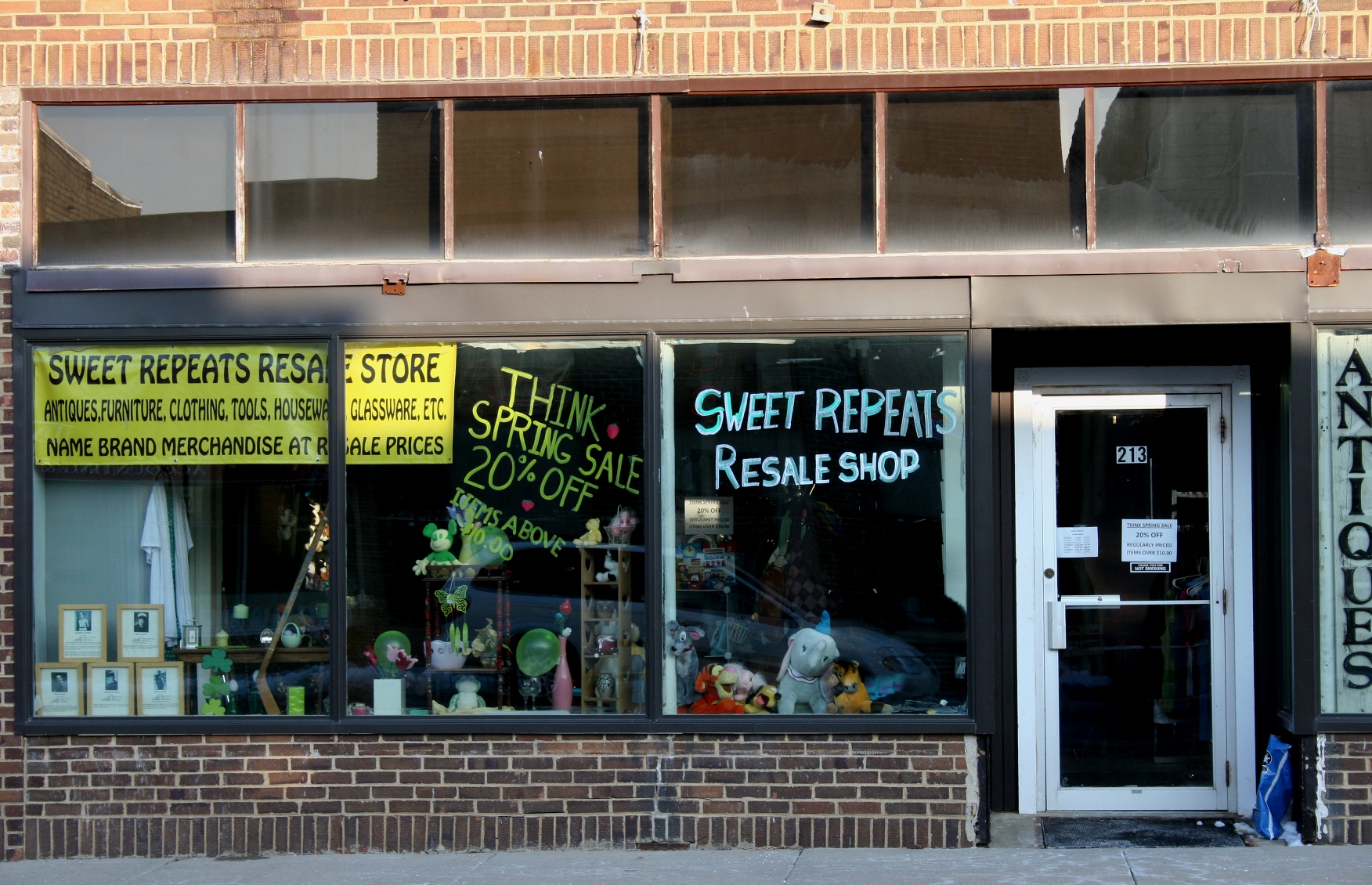
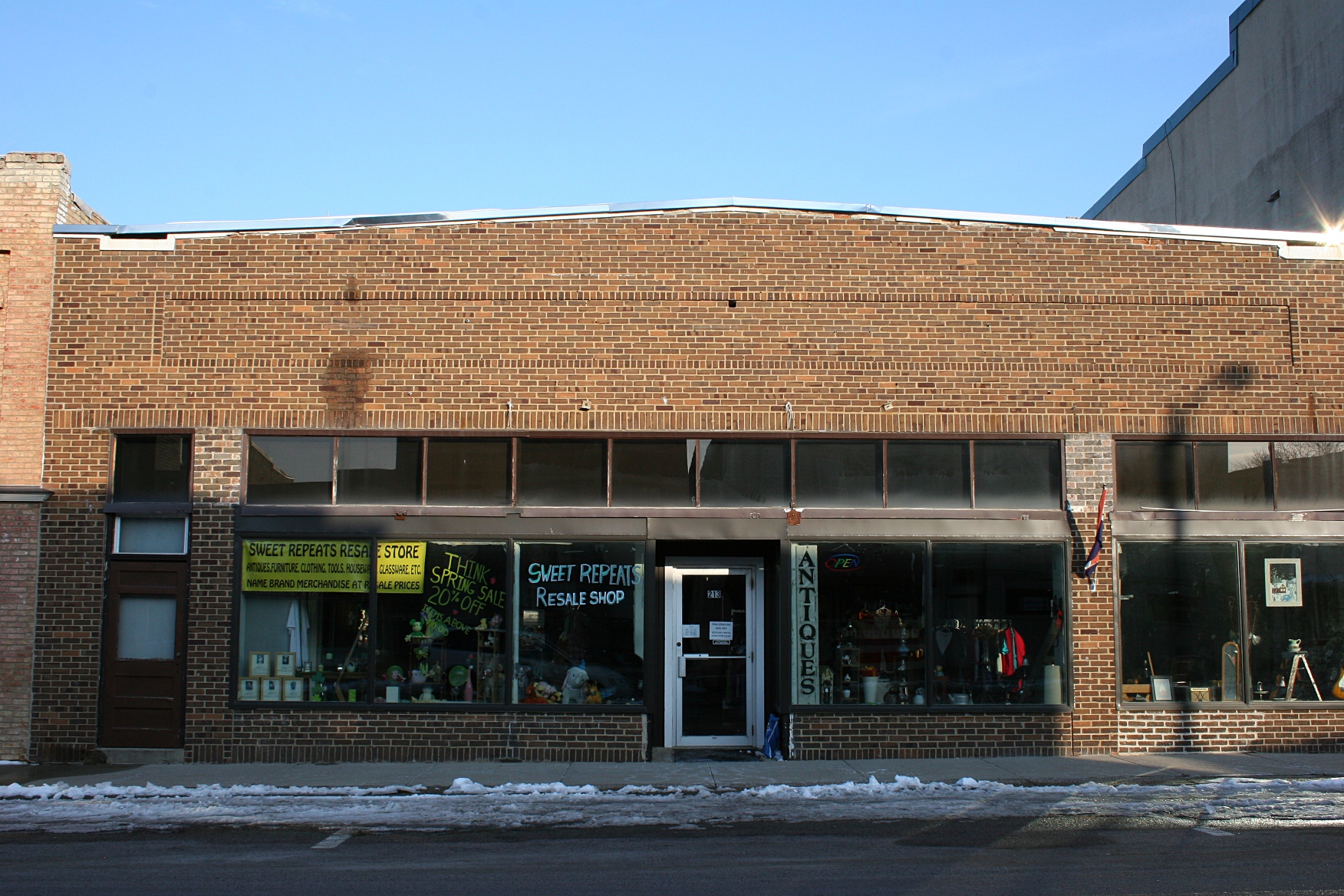
In the lower left corne you can see veterans' tributes in the window of Sweet Repeats Resale Shop.

In the lower left corner you can see veterans’ tributes in the window of Sweet Repeats Resale Shop.

But not until after the play, on a tour through the downtown, did I realize the scope of this project. Everywhere—from business storefront windows to exterior building walls—I spotted veterans’ photos and information, 279 total.

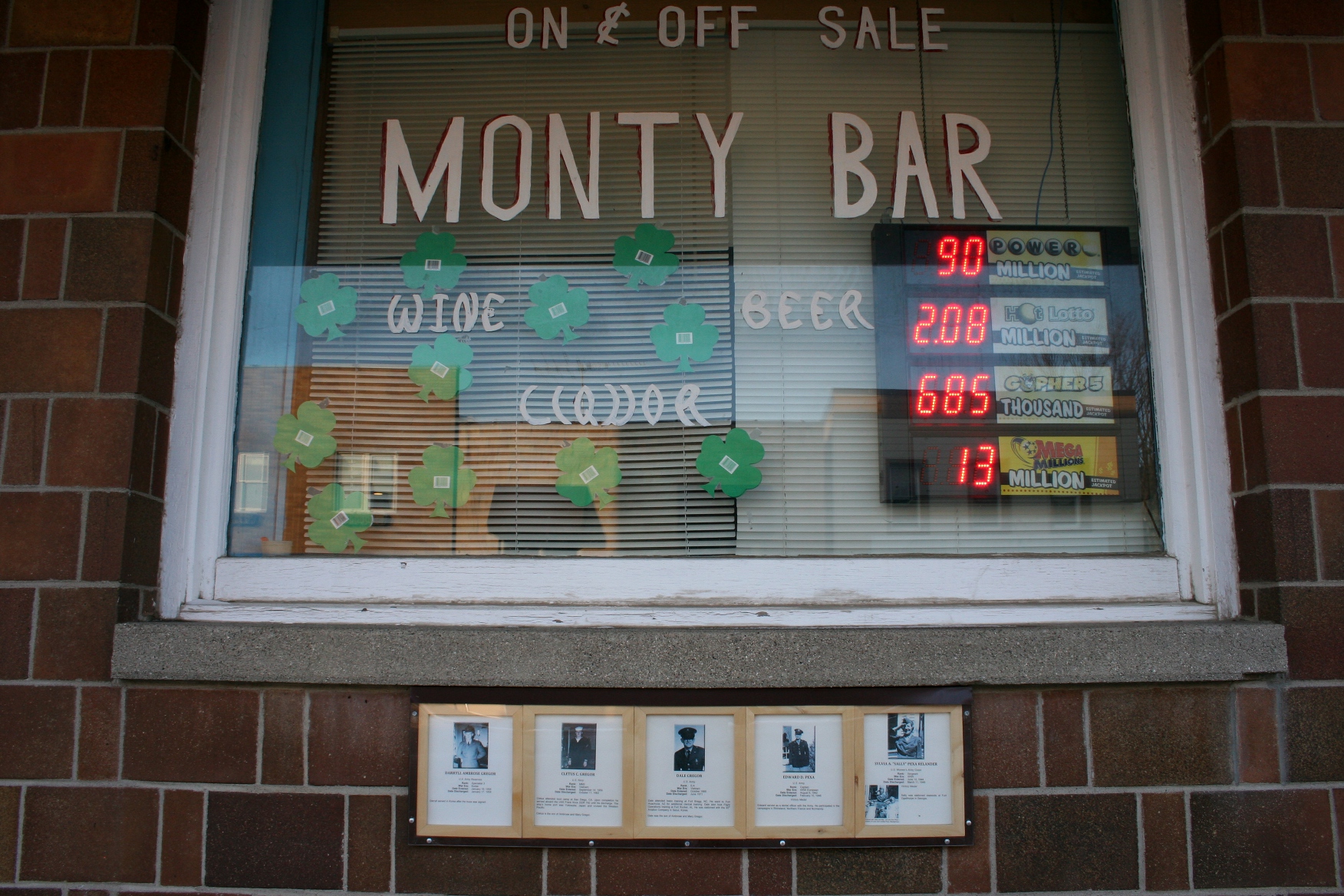
Honoring veterans at the Monty Bar.

Honoring veterans at the Monty Bar.

Framed and secured to the brick wall below a window at the Monty Bar are the pictures and military backgrounds of Cletus C., Dale and Darryll A. Gregor; Edward D. Pexa; and Sylvia A. Pexa Relander.

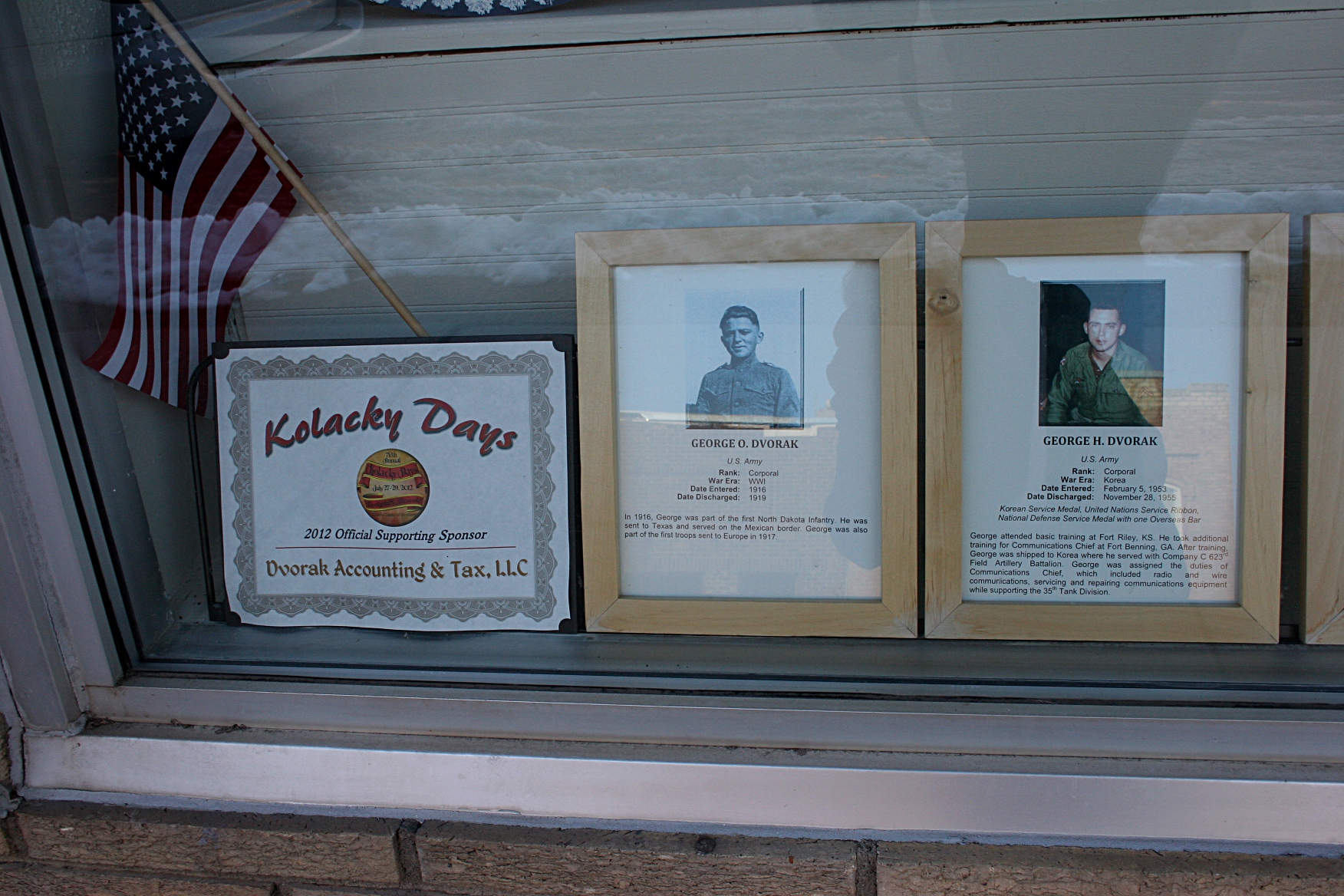
Veterans photos and info posted at Dvorak Accounting & Taxes.

Veterans photos and info posted at Dvorak Accounting & Tax.

Propped against a window at Dvorak Accounting & Tax, framed memorials reveal that George O. Dvorak was among the first troops sent to Europe in 1917. George H. Dvorak serviced communications equipment while supporting the 35th Tank Division in Korea.

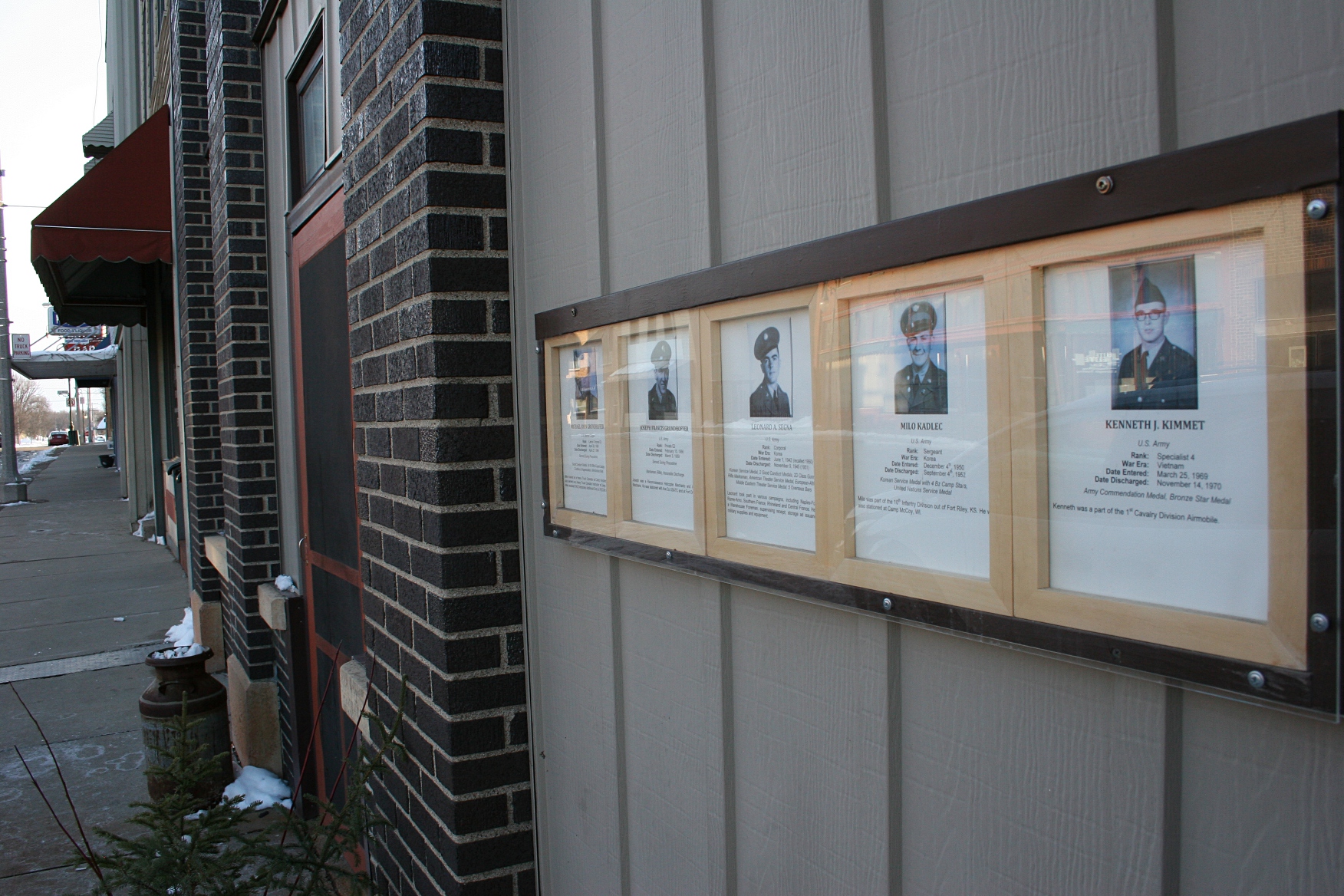
More tributes on the exterior of the Happy Hour Bar.

More tributes on the exterior of the Happy Hour Bar.

Over at the Happy Hour Bar, I learn that Milo Kadlec, part of the 10th Infantry Division, received the Korean Service Medal with four Bronze Stars and the United Nations Service Medal.

To see these photos, to read this information, truly allows me to view these veterans as individuals, as hometown men and women who left rural Minnesota to serve in the U.S. and abroad.

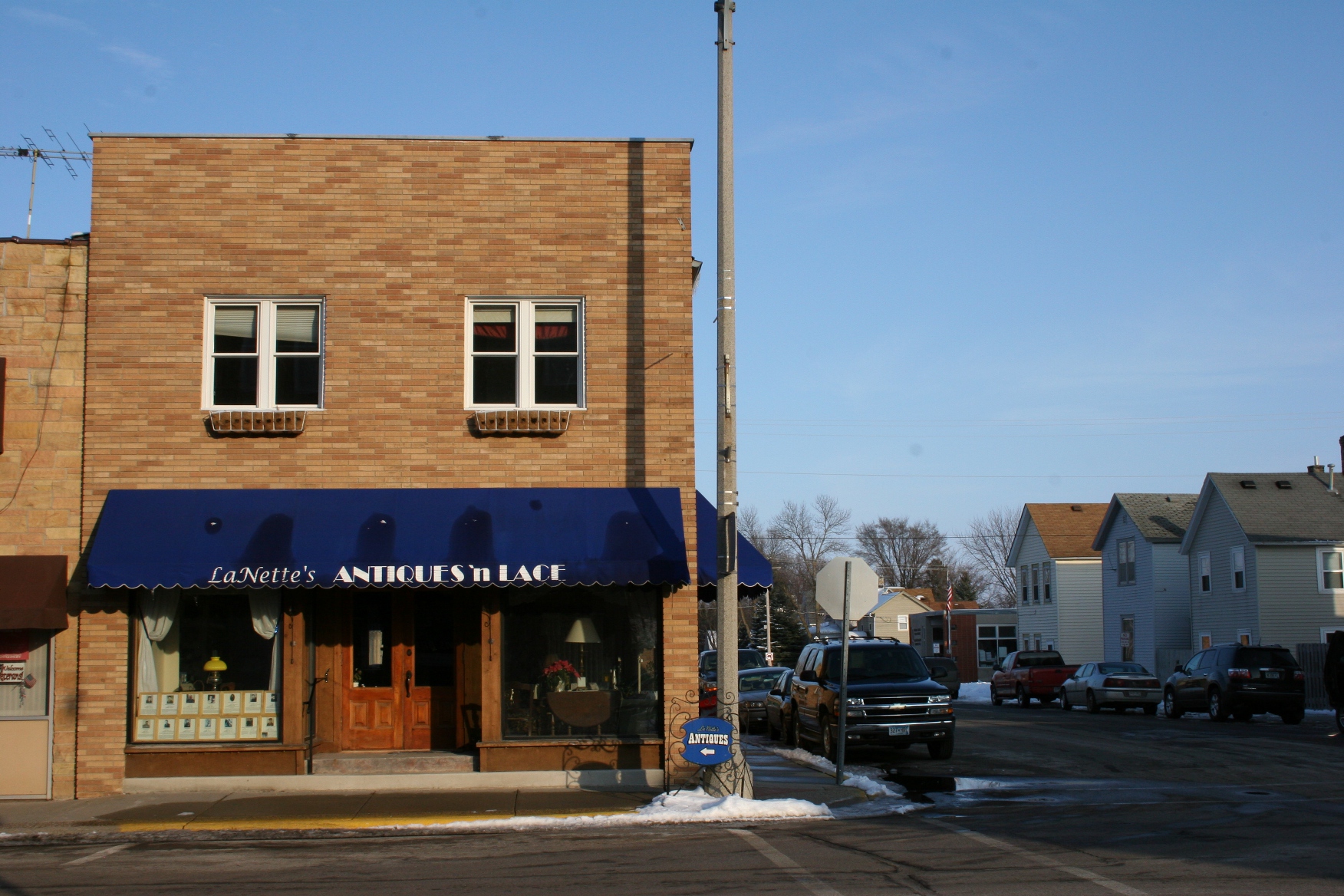
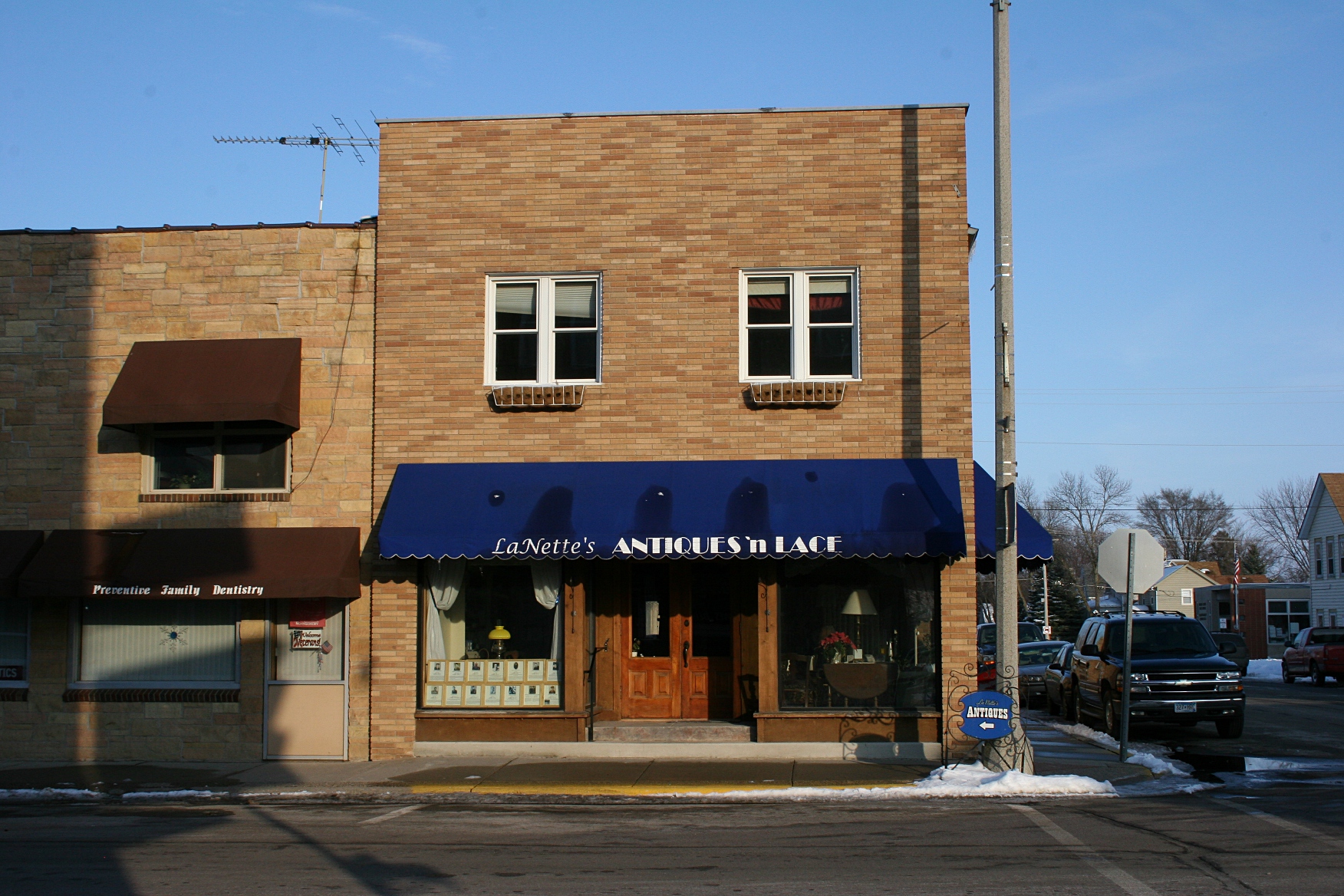
More personal memorials grace the windows of La Nette's Antiques.

More personal memorials grace the windows of La Nette’s Antiques’n Lace.

But how did this project come to be, I wondered. When interviewing Montgomery entrepreneur and Hilltop Hall owner John Grimm, I asked him about the framed veterans photos. Grimm, an Air Force instructor pilot in Texas during the Vietnam War, had seen a similar tribute at a veterans’ memorial in his hometown of Wautoma, Wisconsin, and suggested that Montgomery establish such a personalized memorial. That was nearly three years ago.

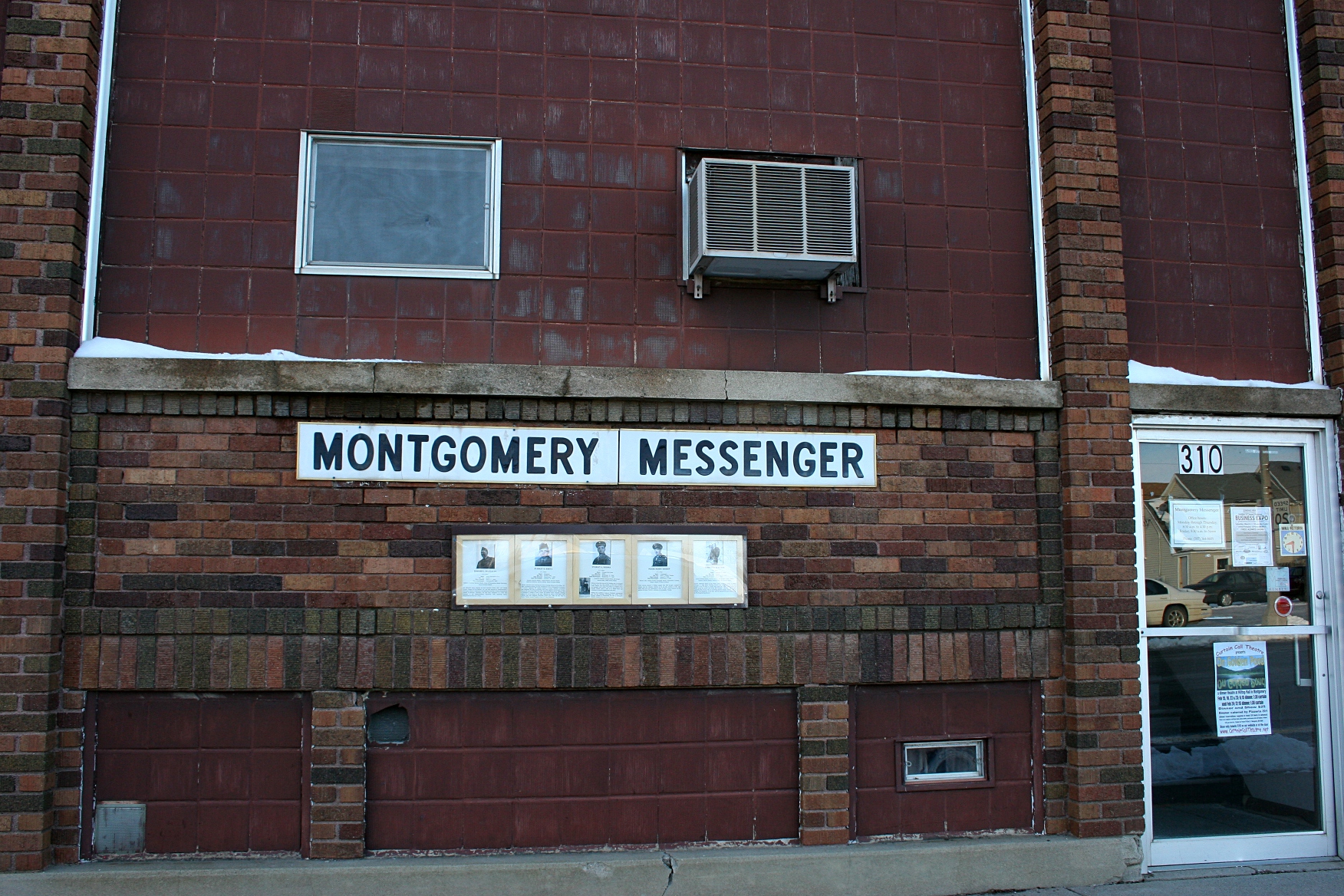
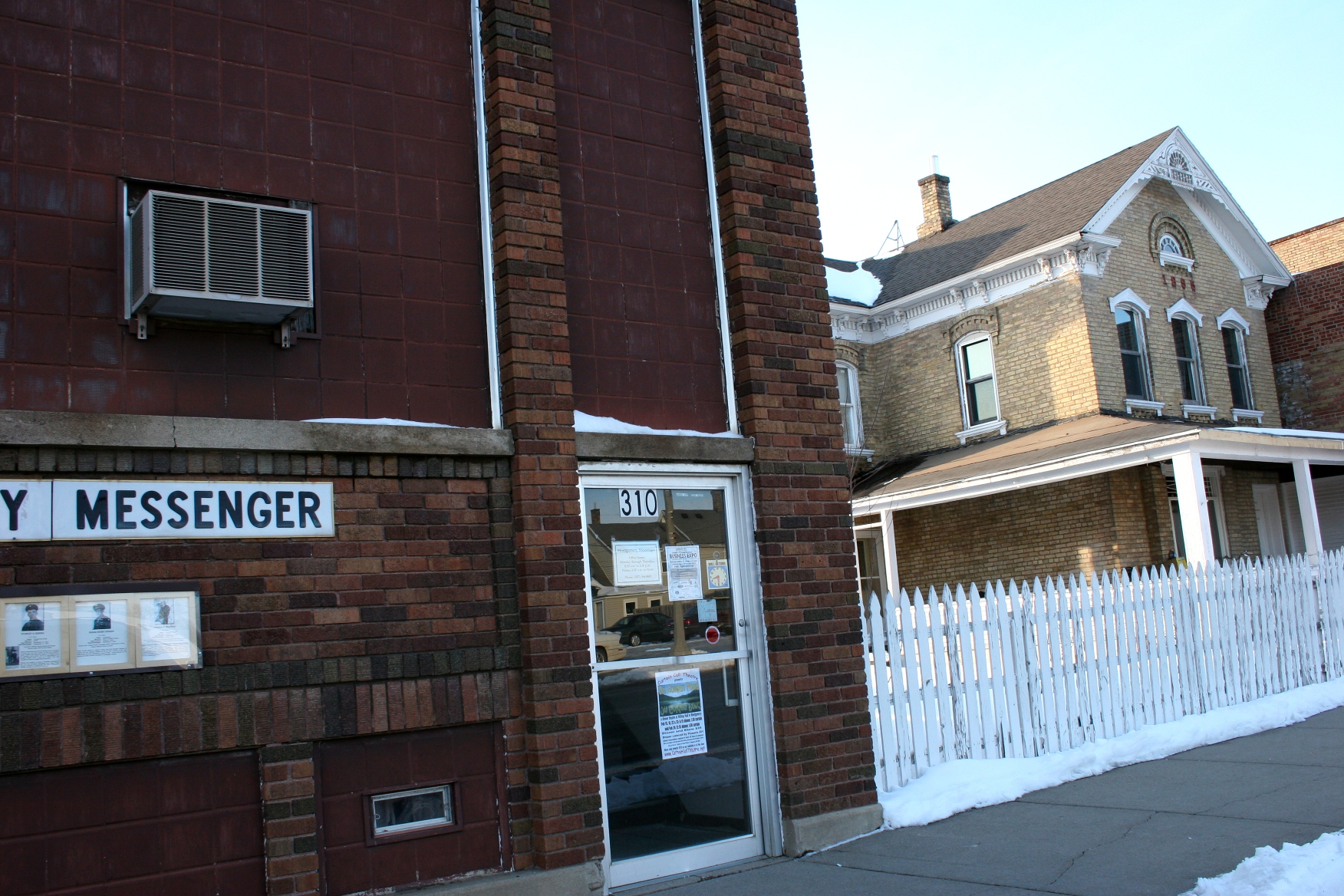
Several vets' photos hang on the exterior of the local newspaper office, The Montgomery Messenger.

Several vets’ photos hang on the exterior of the local newspaper office, The Montgomery Messenger.

Initially coordinated by Mobilize Montgomery, the installation of these individualized memorials is now handled by local American Legion Post 79. For a suggested $25 donation to defray printing, frame and display case costs, families can honor their loved ones via a personalized tribute.

That’s not a lot of money for the front and center memorials embraced by a patriotic community proud of those who served their country.

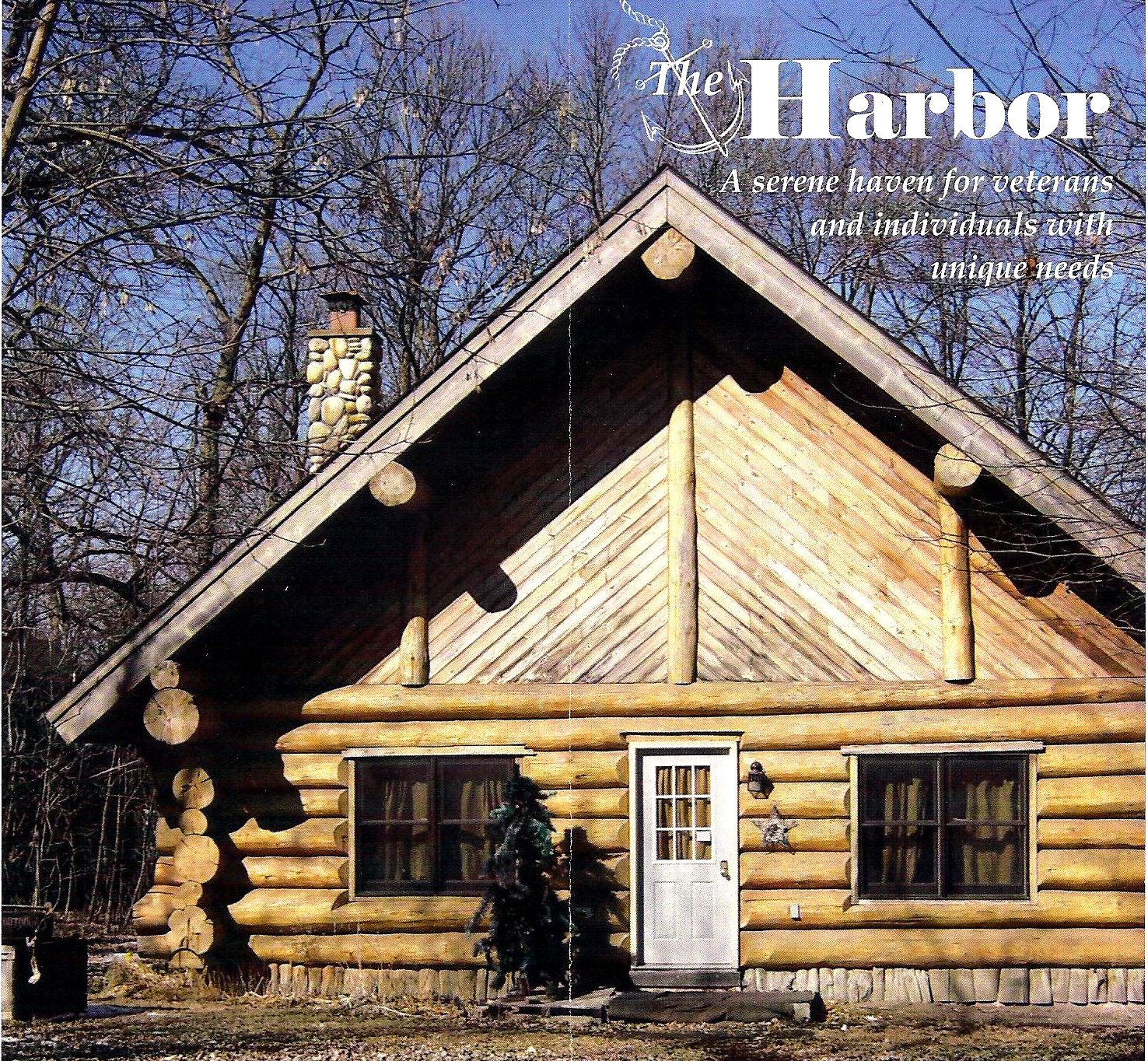
A portion of the promotional brochure from The Harbor. Courtesy of John Grimm.

A portion of the promotional brochure from The Harbor. Courtesy of John Grimm.

THAT’S NOT ALL. Grimm, who says he has a passion for helping veterans, recently undertook another project aimed at assisting aging veterans and others in need. He bought the former Cottagewood Resort along Minnesota Highway 13 between Montgomery and New Prague last May and has converted it into The Harbor, advertised as “a serene haven for veterans and individuals with unique needs.”

The Harbor features three log cabins and a central facility which can house a total of 14 on the 20-acre wooded, lakeside property.

His goal, Grimm says, is to negotiate individual rental rates based on whatever is reasonable and affordable to the renter and will work for him to keep the haven financially solvent.

This Vietnam War era veteran, who previously operated a Montgomery area assisted living facility, tells of a call he received about a 52-year-old homeless veteran while The Harbor was in the beginning of renovation. He thought about the housing request for awhile and decided if the vet had to choose between living under a bridge and living in a mess, he’d likely choose the mess. Turns out the vet had been a sheetrocker, so he moved into The Harbor in July to help tape and seam sheetrock.

THERE, DEAR READERS, are two feel-good stories from one small Minnesota town, stories I discovered because I took the time to really look at Montgomery, to see the veterans’ tributes, and then to inquire about them. These discoveries await you at every turn. Just slow down, and you will see them, too.

Watch for one more story in my five-part series from this southern Minnesota community.

© Copyright 2013 Audrey Kletscher Helbling


Part I: Touring historic downtown Montgomery, Minnesota, not Alabama March 4, 2013

A snippet overview of First Street in downtown Montgomery.

A snippet overview of First Street in downtown Montgomery late on a Sunday afternoon.

EARLY ON A SUNDAY AFTERNOON in the dead of a Minnesota winter, downtown Montgomery, except for vehicles clustered around Hilltop Hall for a theatrical performance and around locals bars, is mostly quiet.

A mural on the

A mural depicts downtown. Minnesota Prairie Roots file photo.

The occasional pick-up truck cruises First Street, the main north-south route through the heart of this Le Sueur County farming community of nearly 3,000 noted for its strong Czech heritage.

Although this self-proclaimed “Kolacky Capital of the World” lies only about 25 miles northwest of my Faribault home, I’ve never really explored the town except to attend three plays at Hilltop Hall and to write a magazine feature story about Franke’s Bakery. The 99-year-old bakery specializes in kolacky, a folded Czech pastry filled with poppy seeds or fruit.

Franke's Bakery. Minnesota Prairie Roots file photo.

Franke’s Bakery. Minnesota Prairie Roots file photo.

On this Sunday afternoon the bakery is closed. And so are most other businesses. Without distracting vehicles, I can fully appreciate the historic architectural qualities of this downtown. From the aged brick buildings to the vintage signage to the woodframe storefronts that always remind me of something out of a Western, I am smitten with these buildings, this business district.

I must, I tell myself, return to Montgomery when these businesses are open. I can only imagine what discoveries await me.

I love antique shops and thrift stores, so you can bet Sweet Repeats Resale Shop is on my list of places to check out.

I love antique shops and thrift stores, so you can bet Sweet Repeats Resale Shop is on my list of places to check out.

Look, another antique shop, La Nette's Antiques'n Lace.

Look, another antique shop, La Nette’s Antiques’n Lace.

Lots of super cool vintage signage in Montgomery.

Lots of super cool vintage signage in Montgomery.

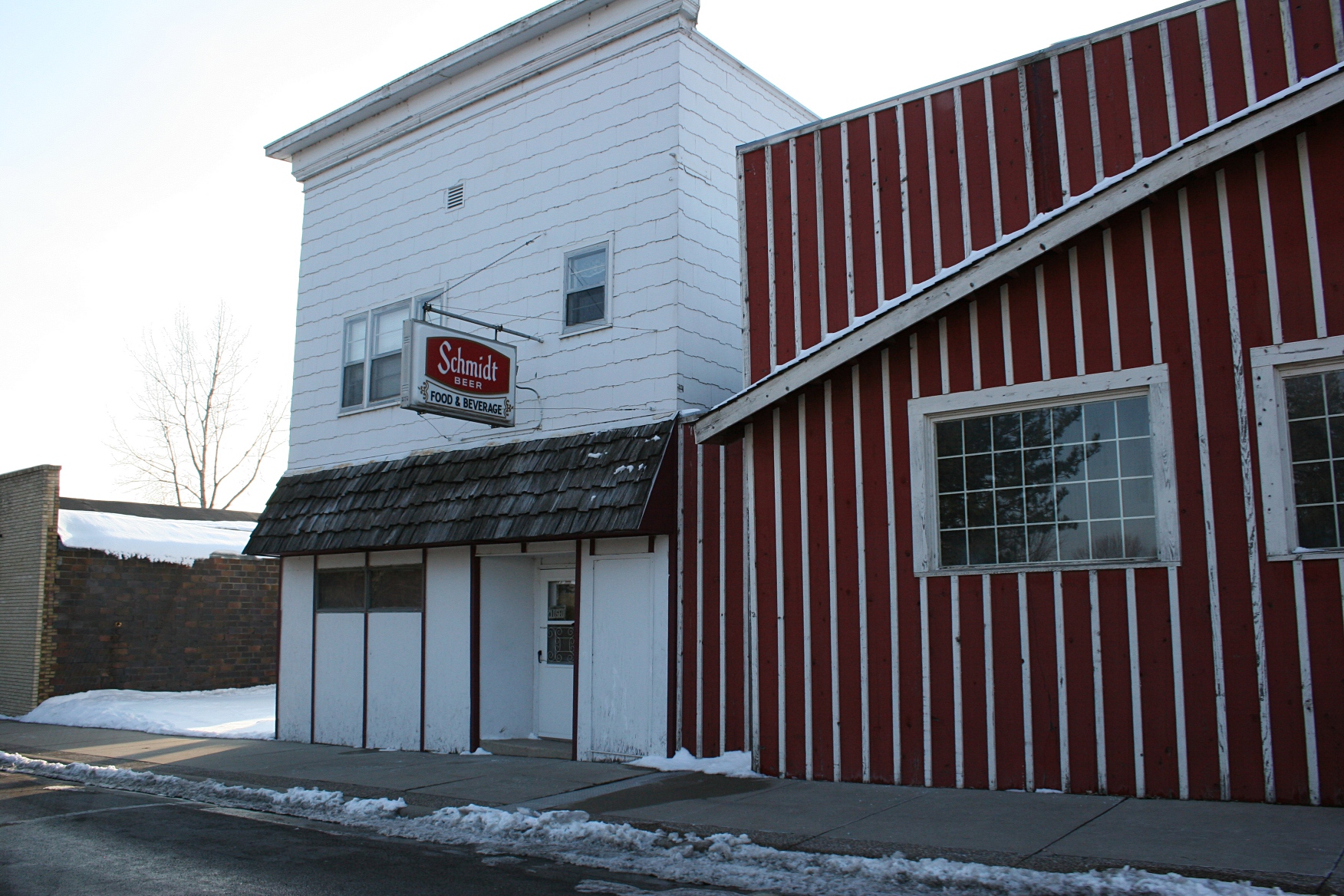
Because my eldest daughter is in love with a Schmidt boy (nothing to do with the beer), I had to photograph this sign. The striped building is the local meat market.

Because my eldest daughter is in love with a Schmidt boy (nothing to do with the beer), I had to photograph this sign. The striped building is the local meat market.

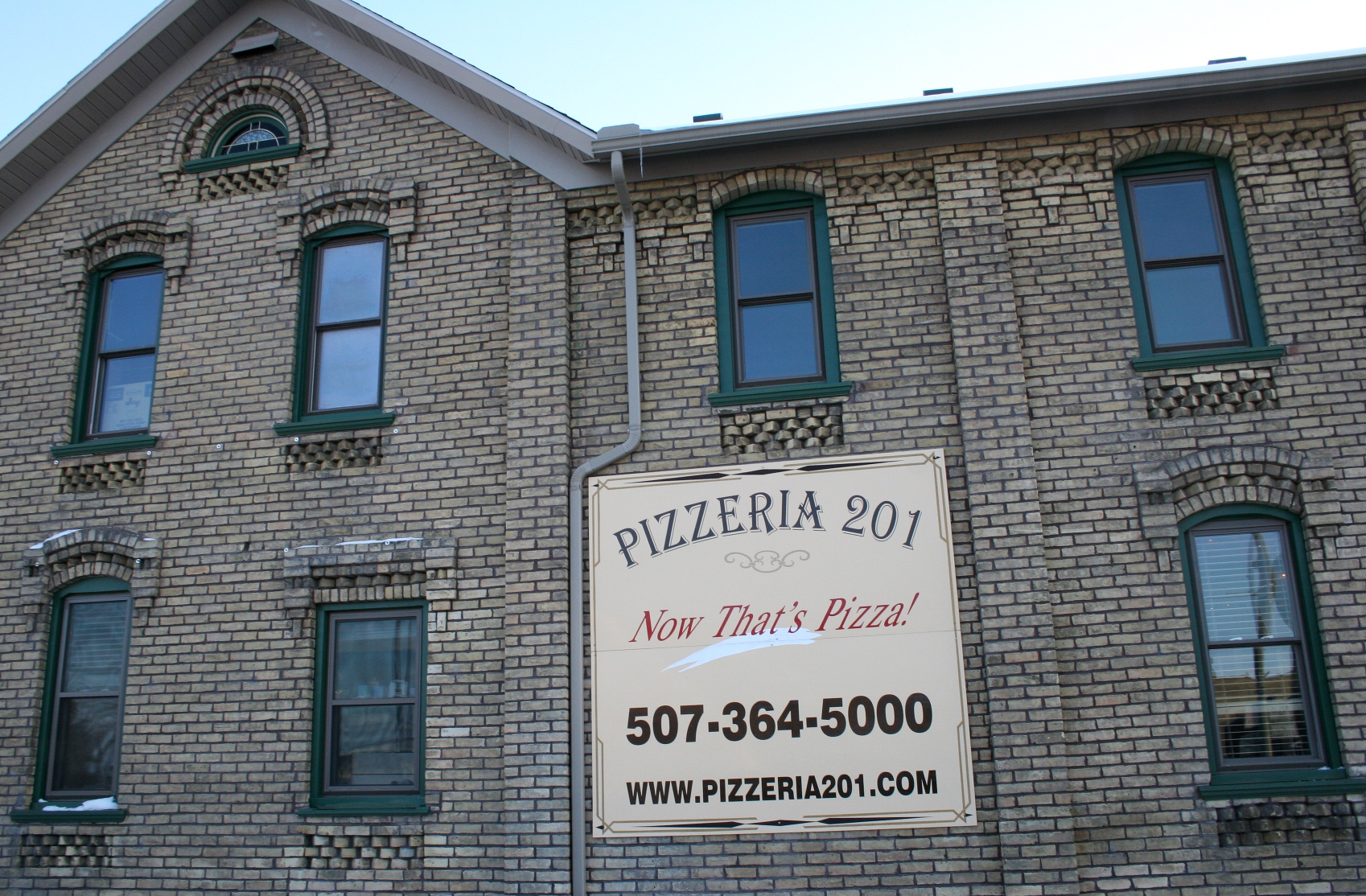
On the National Register of Historic Places, the historic Westerman Lumber Company office and house is home to Pizzeria 201. The restaurant makes homemade pizzas, a wide selection of Italian foods and more.

On the National Register of Historic Places, the historic Westerman Lumber Company office and house is home to Pizzeria 201. The restaurant makes homemade pizzas, a wide selection of Italian foods and more. I’ve heard rave reviews about the food.

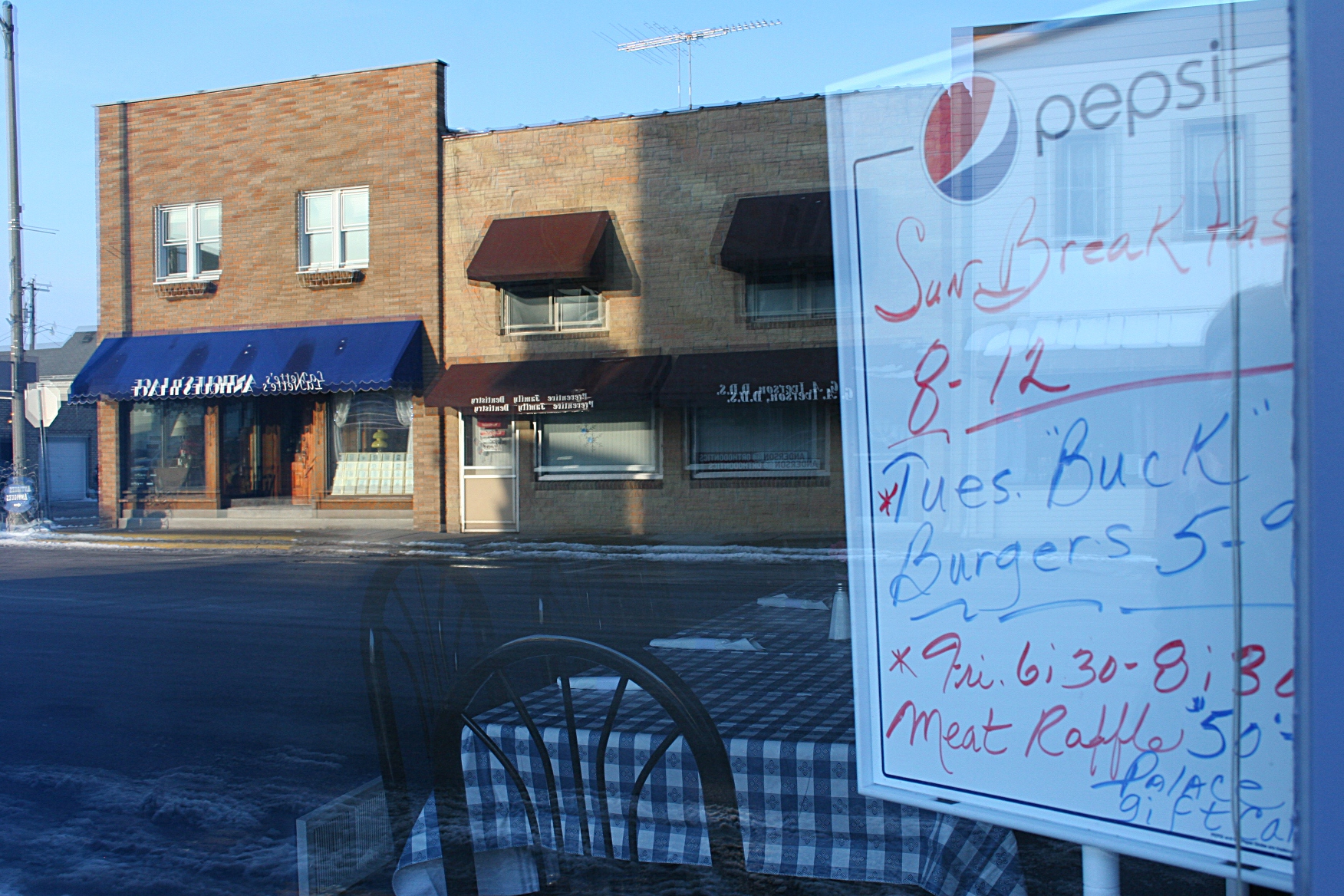
So small town: burgers and a meat raffle promoted on a whiteboard in a restaurant window.

So small town: burgers and a meat raffle promoted on a whiteboard in a restaurant window.

I don't expect I'll get inside this vintage 1800s house tucked between businesses on First Street, but I could try. That's the office of the local newspaper, The Montgomery Messenger, on the left.

I don’t expect I’ll get inside this vintage 1800s house tucked between businesses on First Street, but I could try. That’s the office of the local newspaper, The Montgomery Messenger, on the left.

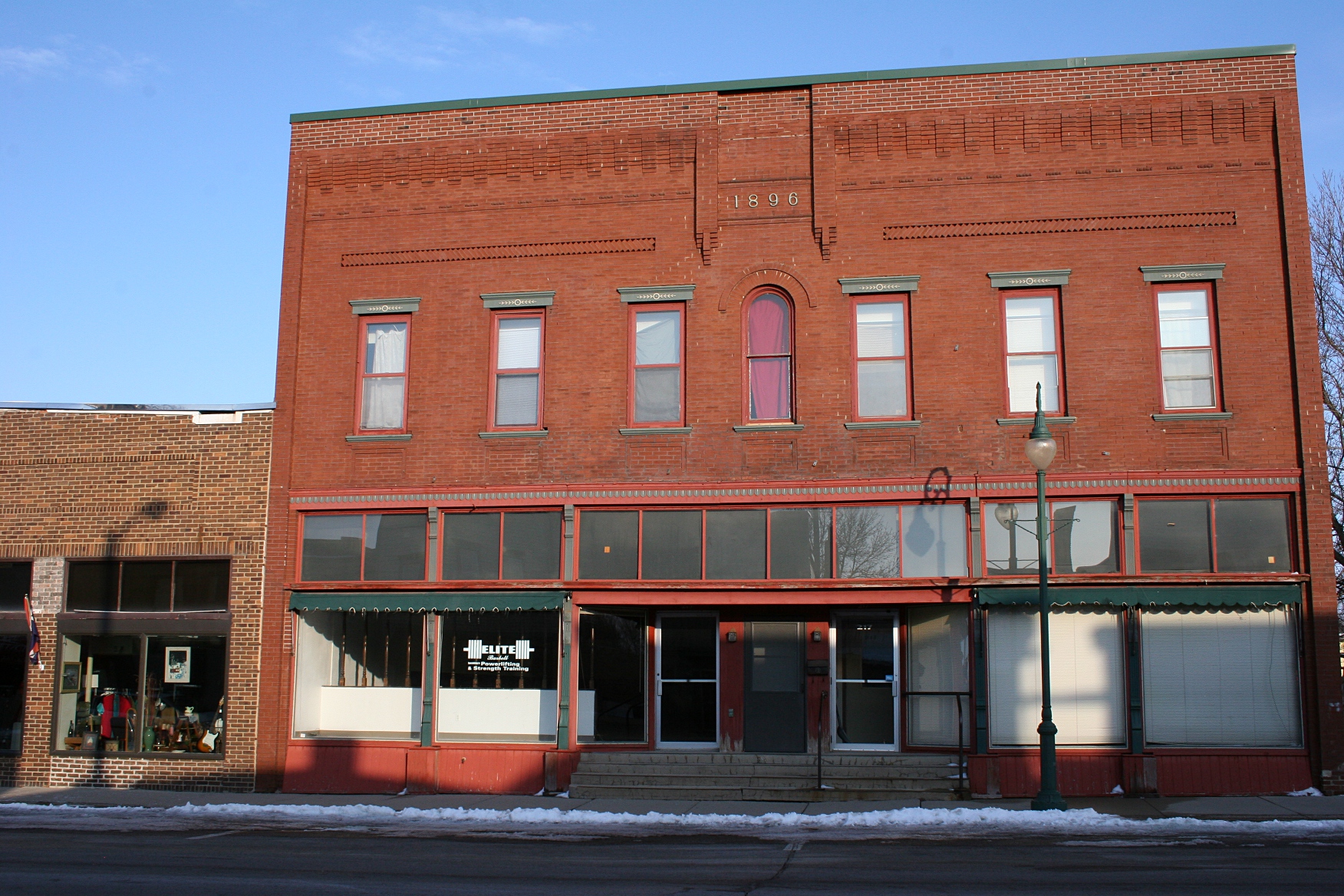
I absolutely love these small towns that have kept their historic buildings.

I absolutely love these small towns that have kept their historic buildings like this one dated 1896.

TOMORROW, IN THIS FIVE-PART SERIES from Montgomery, I take you to Hilltop Hall, which I’ve visited thrice. After that, we’ll go inside Franke’s Bakery, with photos from my 2010 visit there; I don’t expect much has changed. Next, I’ll show you how this community honors its veterans in a unique way. And then, to end my five-part series on Montgomery, I’ll show you several bonus photos from the town.

© Copyright 2013 Audrey Kletscher Helbling


Prairie poetry January 7, 2013

Along U.S. Highway 14

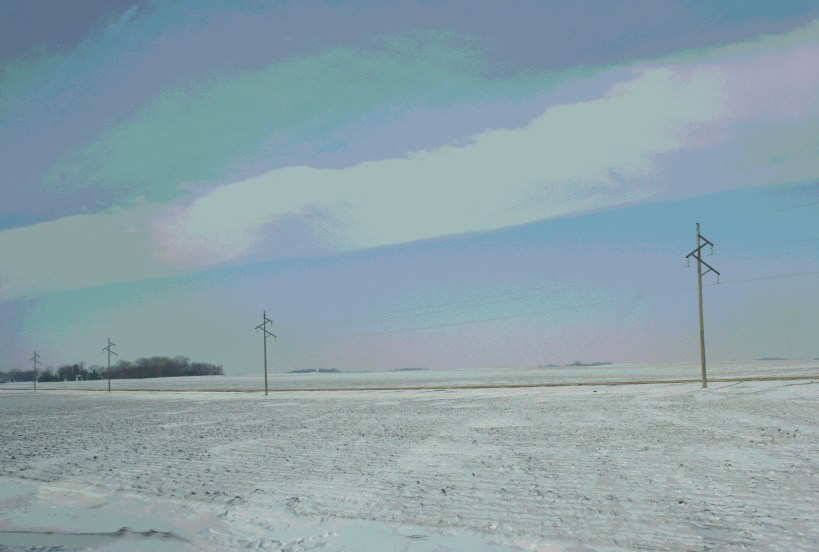
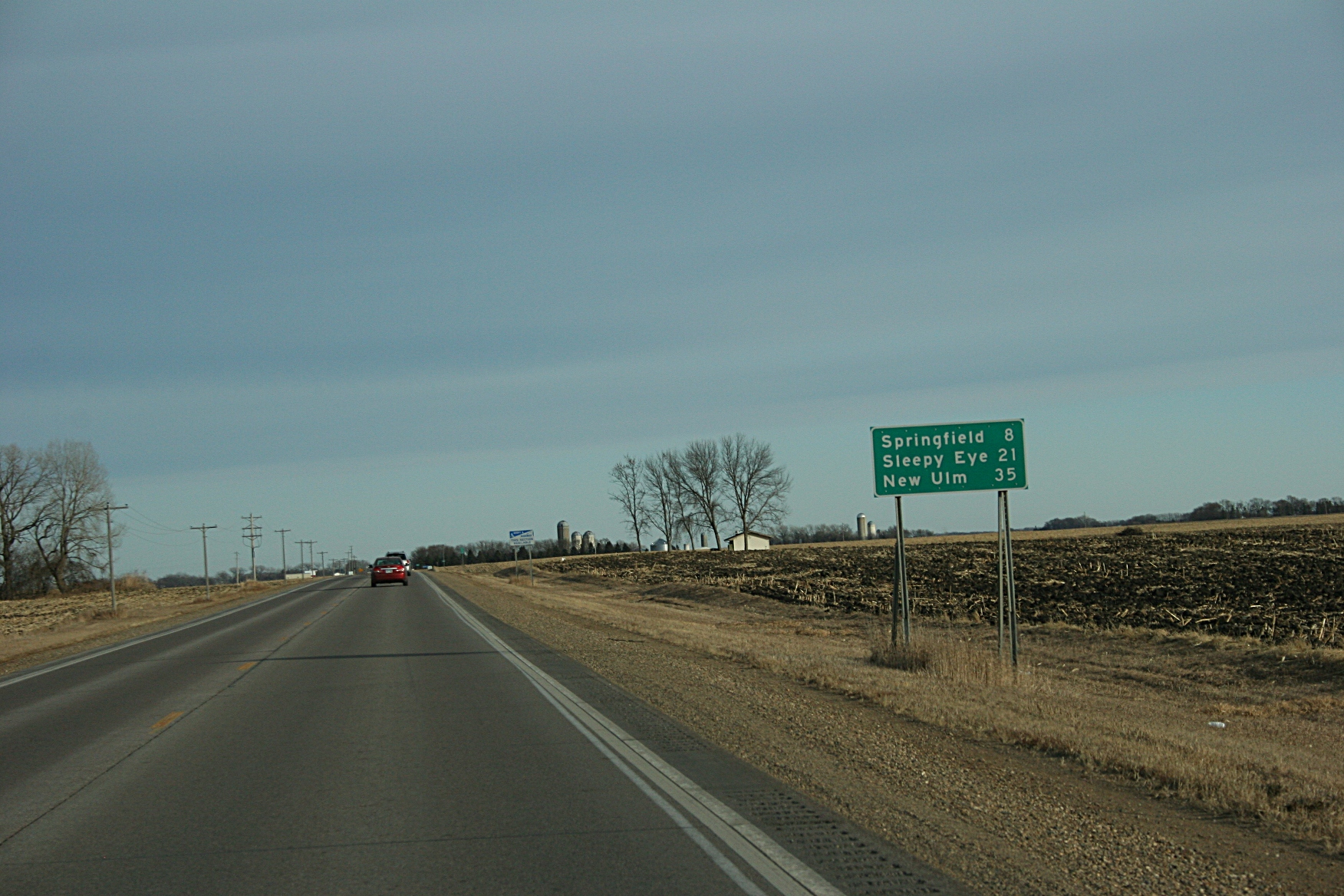
Along U.S. Highway 14 between Sleepy Eye and Springfield on the southwestern Minnesota prairie.

THOSE WHO CATEGORIZE the southern Minnesota prairie as flat, boring and in the middle of nowhere truly have not seen.

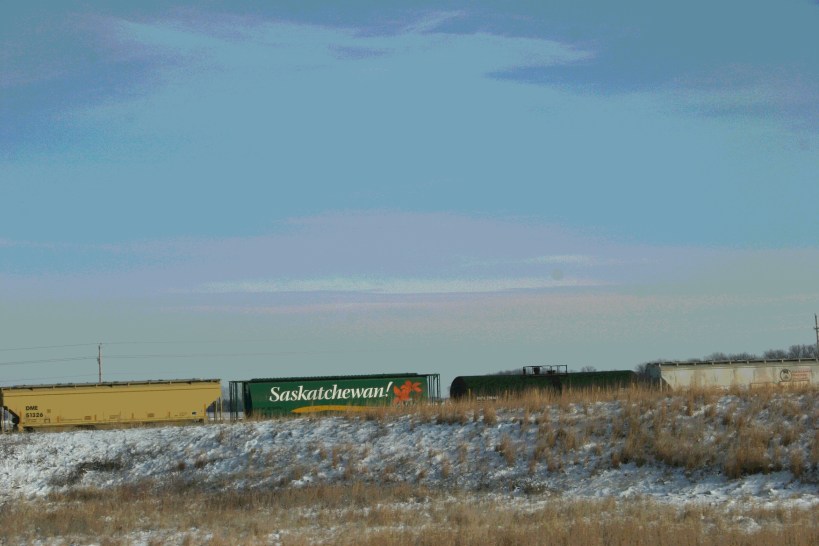
South and west of Waseca, along U.S. Highway 14, a train cuts across the flat farm land.

South and west of Waseca, along U.S. Highway 14, a train cuts across the flat farm land.

Perhaps you are one of them—a traveler passing through this land defined by horizontal lines. Your patience for the endless miles of vast sky and open space expires shortly after you exit the city.

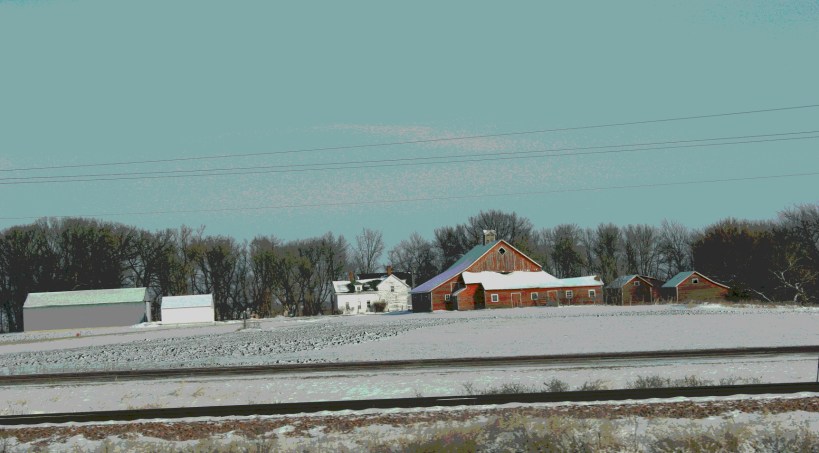
The horizontal lines of railroad tracks and farm buildings define this scene near Janesville along U.S. Highway 14.

The horizontal lines of railroad tracks, utility wires and farm buildings define this scene near Janesville along U.S. Highway 14.

You cannot fathom how anyone can live here, let alone appreciate this landscape.

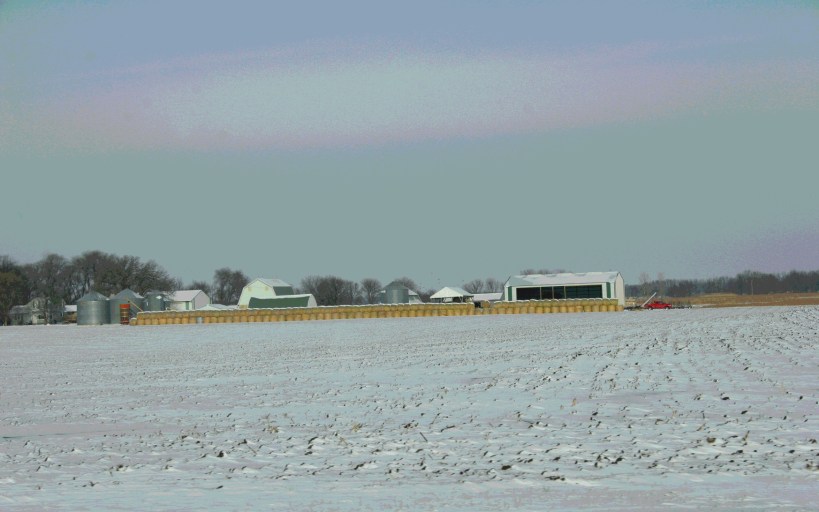
East of Courtland, rows of bales edge a farm site.

East of Courtland, tidy rows of bales edge a farm site.

But I challenge you, the next time you are hurrying from City A to City B, to look beyond the pavement, beyond the preconceived ideas you have about rural Minnesota and specifically of the prairie.

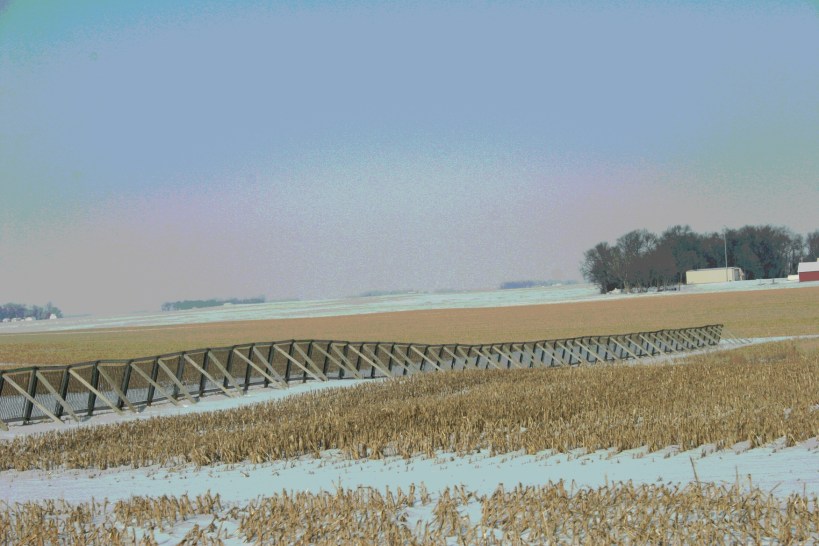
West of Springfield, a snow fence emphasizes the horizontal lines of the prairie.

West of Springfield, a snow fence emphasizes the horizontal lines of the prairie.

View this landscape as an artist’s canvas. Before your eyes, you will begin to see the bold lines, the wispy strokes, the colors (or lack thereof), the composition of a scene.

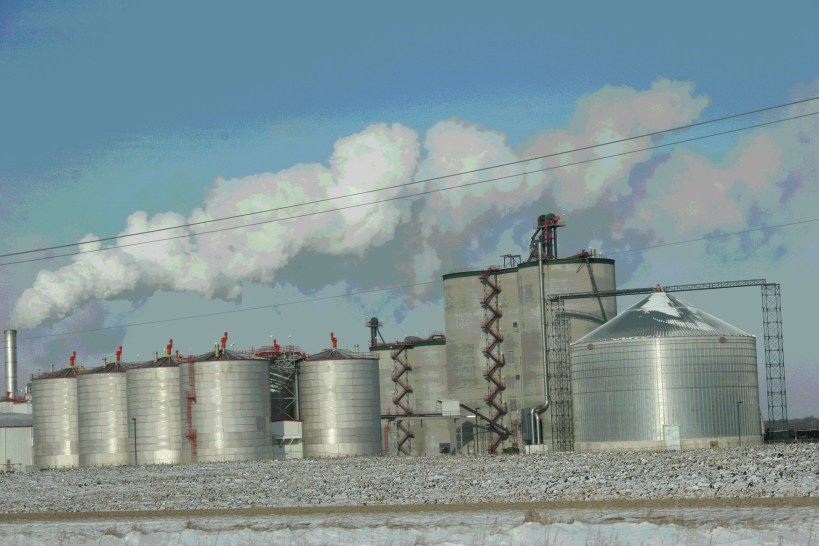
The ethanol plant near Janesville on a cold December morning.

The ethanol plant near Janesville on a cold December morning.

You will feel the strength of the artist’s brush in the wind.

One of my favorite barns along U.S. Highway 14, west of Sleepy Eye.

One of my favorite barns along U.S. Highway 14, west of Sleepy Eye.

You will read poetry in the simplicity of the uncluttered landscape and in the fortitude and kindness of those who inhabit this place.

And then, perhaps, you will begin to connect to a land which possesses an infinite beauty unlike any other.

© Copyright 2012 Audrey Kletscher Helbling


No cherry picking for me as I miss out on The Cherry Orchard Project July 18, 2012

The Cherry Orchard Project promo photo.

I TRIED LAST WEEK to get two tickets to a production of Anton Chekov’s “The Cherry Orchard” in the historic Gunderson House in neighboring Kenyon. But, alas, I could not secure a pair for a weekend performance, much to my dismay.

If only I’d known prior to last Thursday about the unique, touring theatrical group which is sweeping into historic homes in five southern Minnesota communities this summer. I embrace the concept of professional actors from the Guthrie, Ten Thousand Things, the Jungle Theatre and Theatre de la Jeue Lune performing in rural Minnesota, because, frankly, I’m not one to venture into The Cities for theater, or much of anything. Just being honest here. The metro traffic and general busyness simply don’t suit me.

The Cherry Orchard Project, which presents Chekov’s play of an aristocratic Russian family about to lose their home and cherry orchard through foreclosure, seems an ideal way to extend performance art to Minnesotans like me. It also gives outstate actors/actresses an opportunity to work with pros. Each site-based production includes local performers working with those professionals.

This type of theater, staged in an historic home, presents an intimate venue for both performers and audience members, which also appeals to me.

Here’s a description of The Cherry Orchard Project from Brown Paper Tickets, the online ticket source for The Cherry Orchard Project:

Audiences move in and around the house to the strains of local musicians, experiencing the characters cooking, dancing, debating and attempting to indulge in their unrequited passions. It’s a rare opportunity to step inside the world of Chekhov’s eccentric and comedic characters, living the drama with them.

Now if that sounds like the type of close-up theater you might enjoy, consider purchasing your tickets immediately for an upcoming performance in one of the following communities:

Little Falls at the 1898 Musser Mansion, July 18 – 22
Taylors Falls at The Historic Folsom House, July 25 – 29
Worthington at the Historic Dayton House, August 1 – 5
Blue Earth, James B. Wakefield House, August 8 – 12, audience limit of 25

Do not wait until the last minute, like I did (because I was unaware), or you will not get tickets. Audiences at the performances I wanted to attend in Kenyon were limited to 30 – 40.

And, if your local community newspaper runs an online poll with this question, “Would you like to see more live local theater in our small towns?”, I hope you will respond favorably, unlike many who answered that exact question posed by The Kenyon Leader.

According to results posted on Tuesday afternoon, 57 percent of the 35 respondents to The Leader survey said they have little interest in live theater. Thirty-four percent said they would watch live local theater in small towns. The rest, nine percent, were interested in attending and/or participating.

Those poll results disappoint me. But then I suppose I can’t make anyone appreciate theater anymore than anyone can make me value sports. Plus, given the low survey response rate, I would question whether the results accurately reflect the overall consensus of Kenyon residents. The Cherry Orchard Project Facebook page reports a sell-out crowd and warm reception in Kenyon.

If only I’d been among those in the audience. Perhaps next year…

© Copyright 2012 Audrey Kletscher Helbling


Steele County showcases history in a big way July 10, 2012

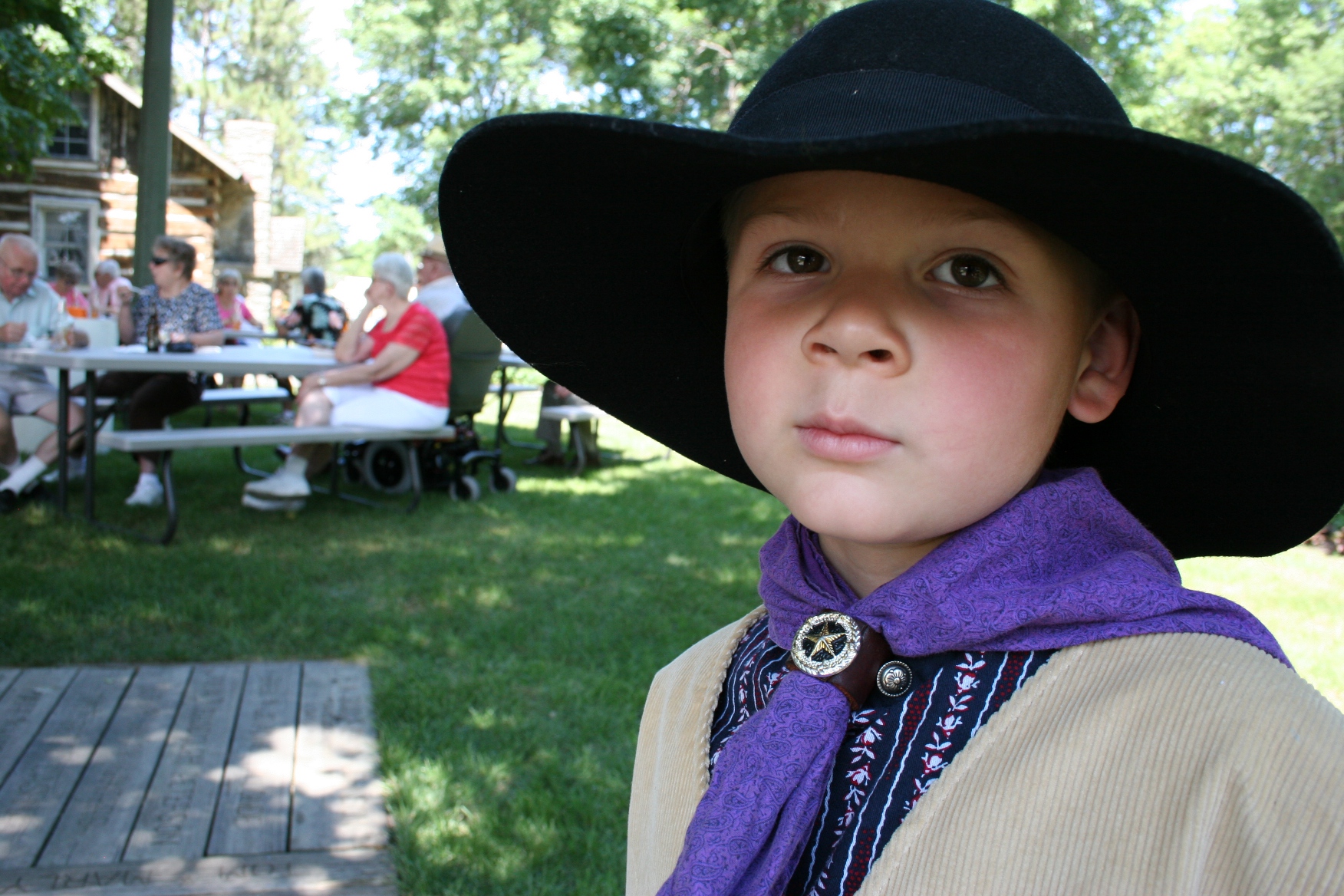
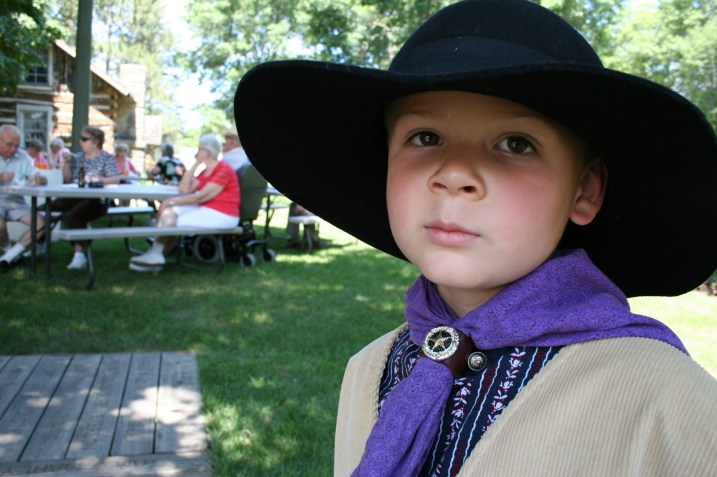
Five-year-old David of Faribault, aka Apache Shadow, was among costumed reenactors from the Old West Regulators.

WHEN THE STEELE COUNTY HISTORICAL SOCIETY in Owatonna throws an extravaganza, they put on a heckuva an event.

Late Sunday morning my husband Randy and I headed about 15 miles south on Interstate 35 to the Village of Yesteryear for the historical society’s 26th annual celebration of history. I cannot believe that I’ve never known about this extravaganza, which I’d recommend to anyone interested in a free family-friendly day of learning about the past.
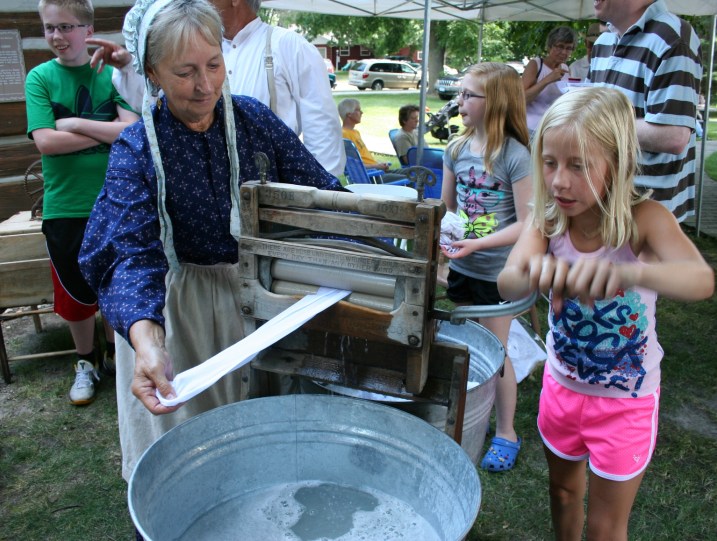
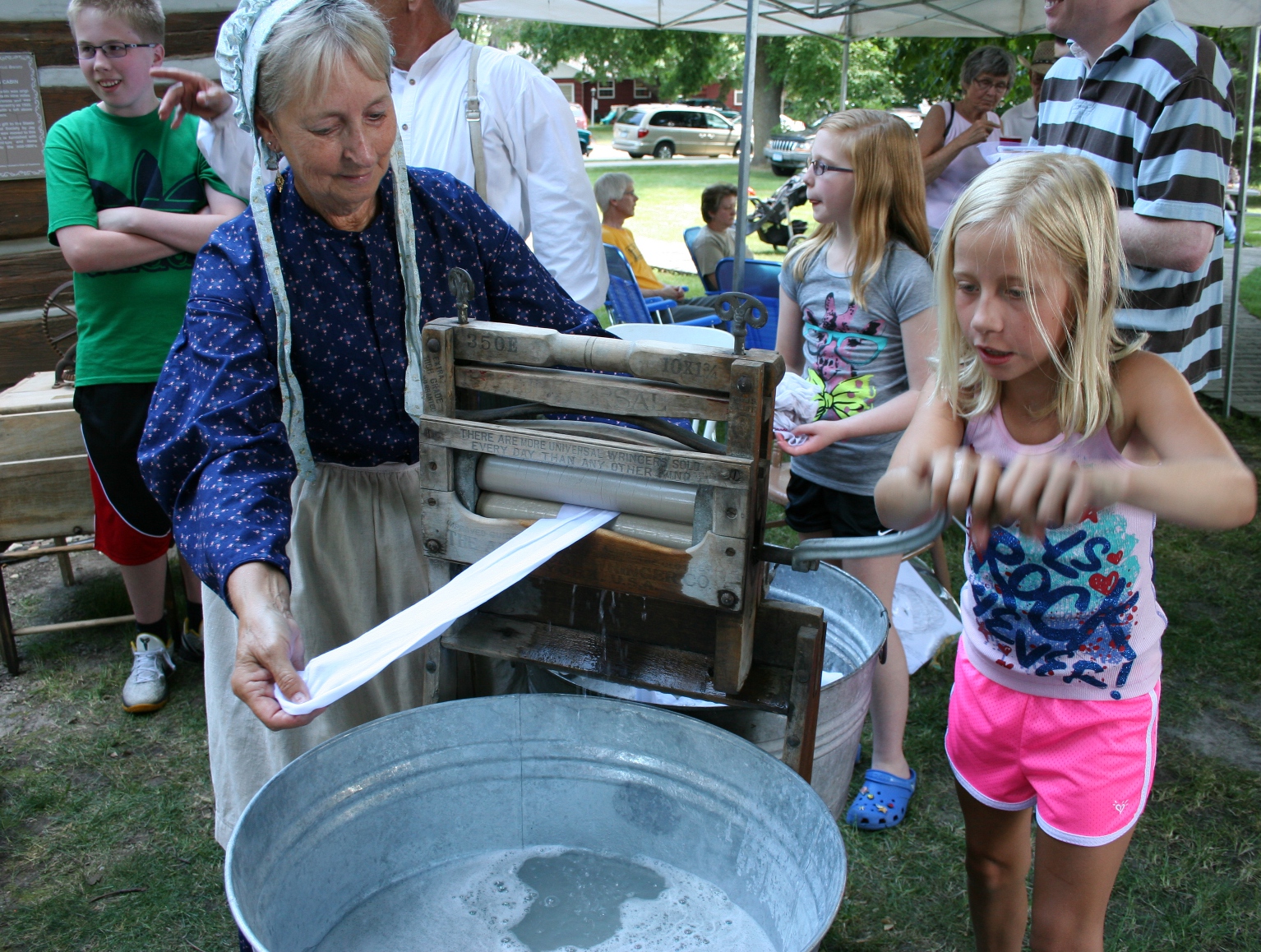
Kids, like Kennedy, right, were drawn to the water and the old-fashioned wringer.
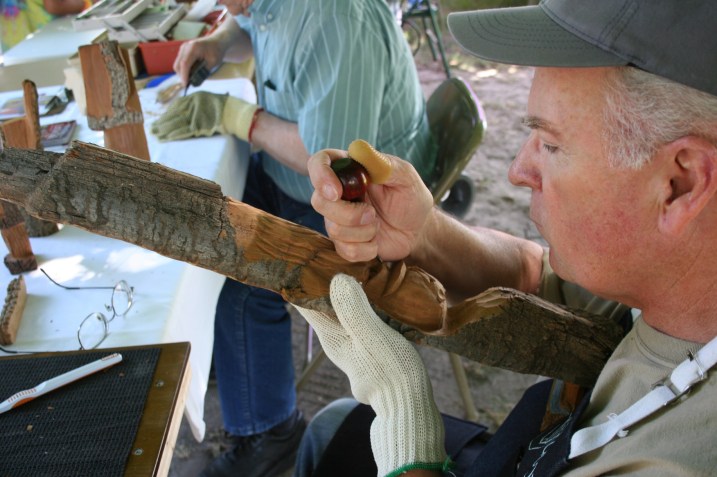
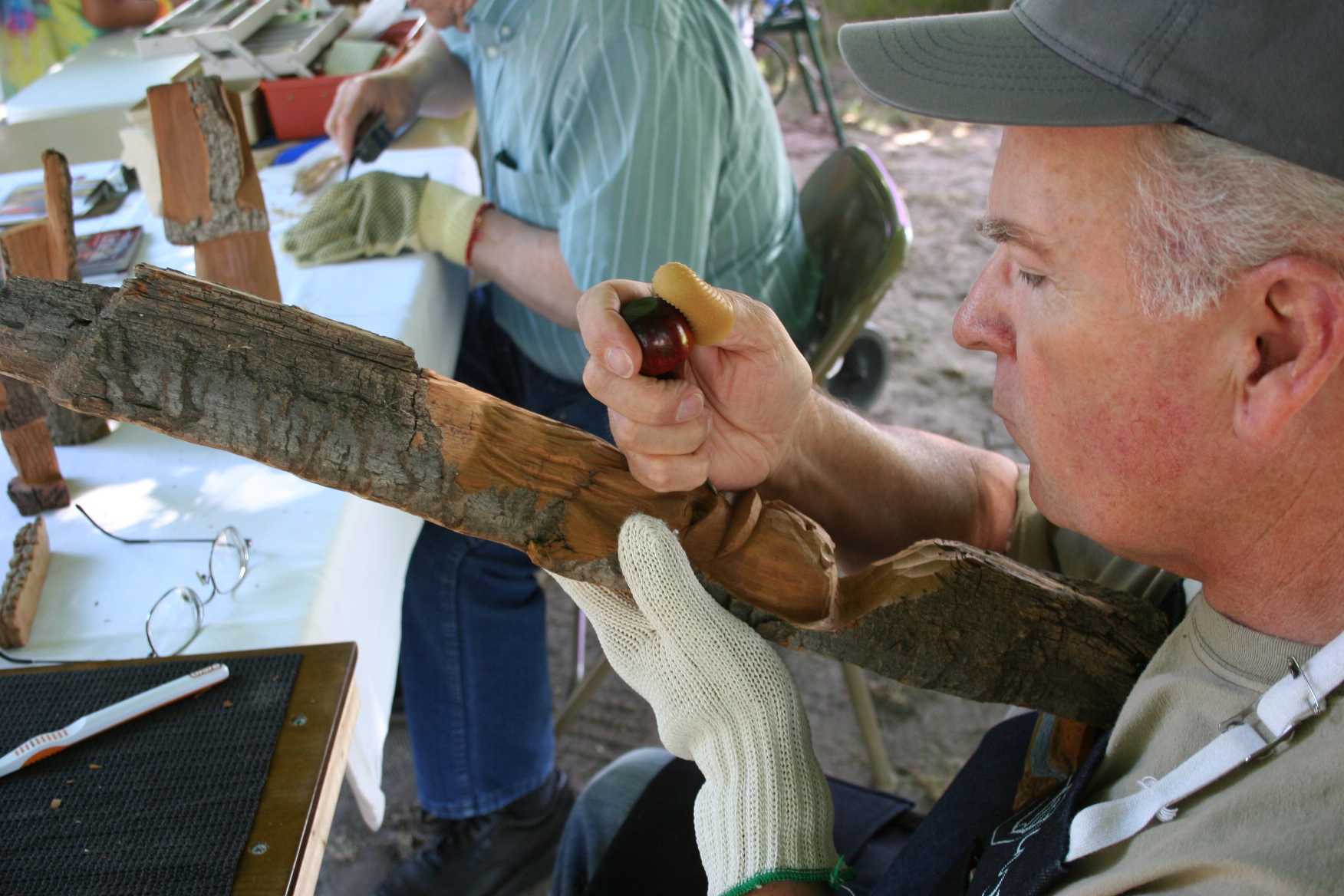
Owatonna resident Tom Gray carves a mountain man.

From hands-on demonstrations of rope making to washing clothes the old-fashioned way to printing on an aged press to carving wood and working with leather, and more, we observed an array of dedicated and passionate historians showcasing yesteryear.
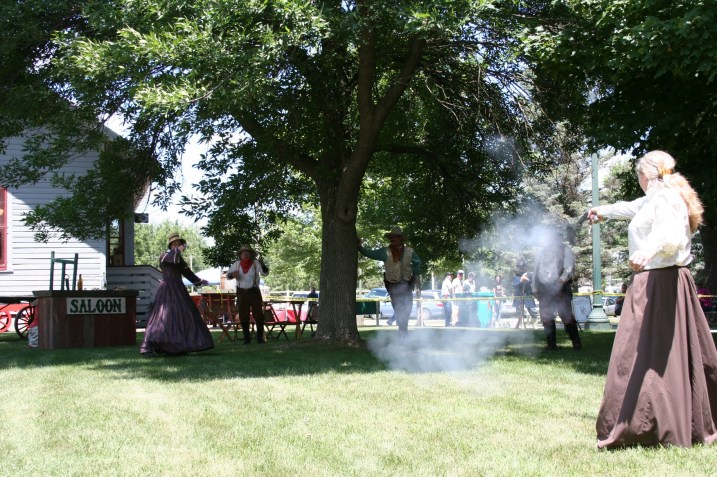
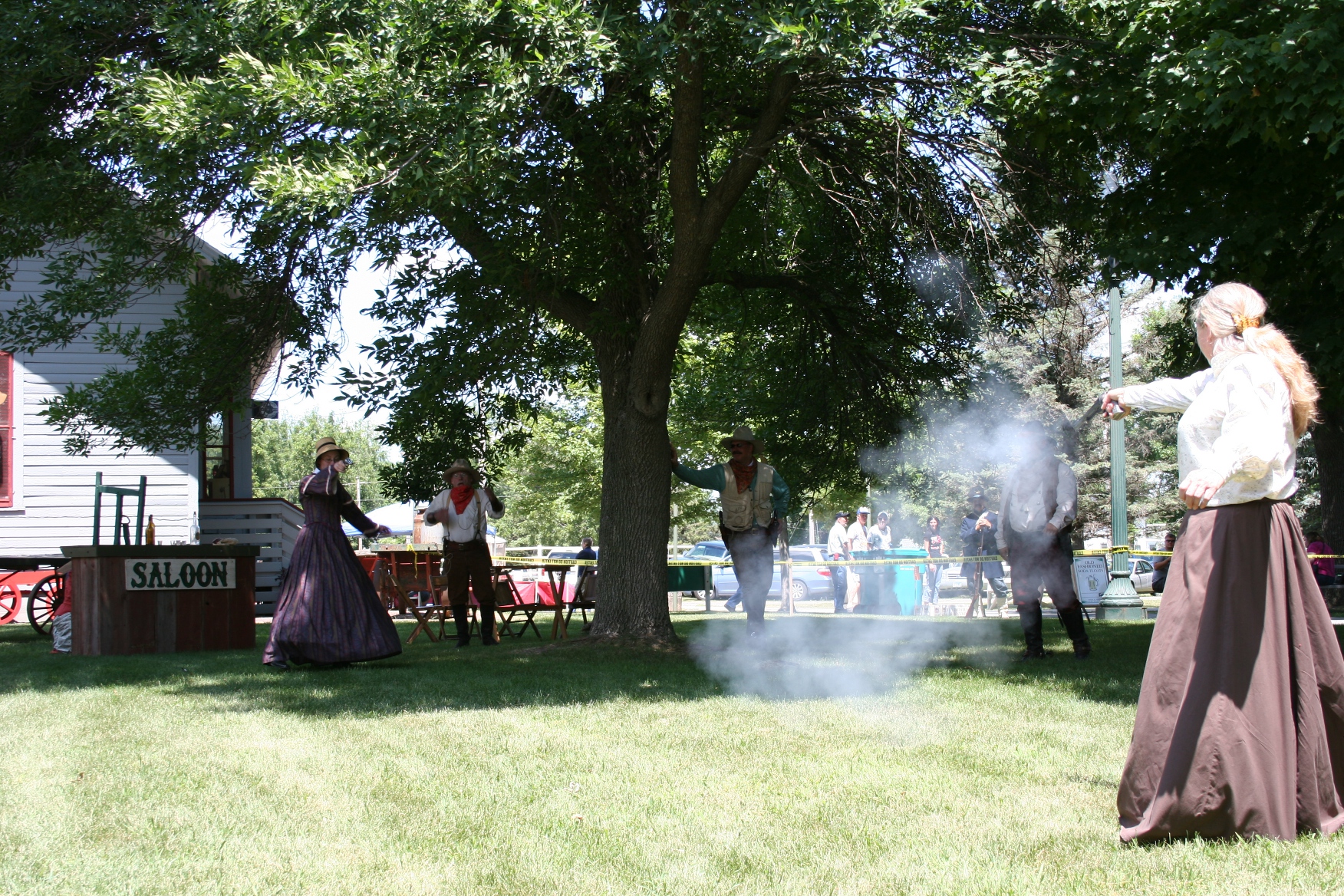
Two actresses shoot it out in a scenario presented by the Old West Regulators.

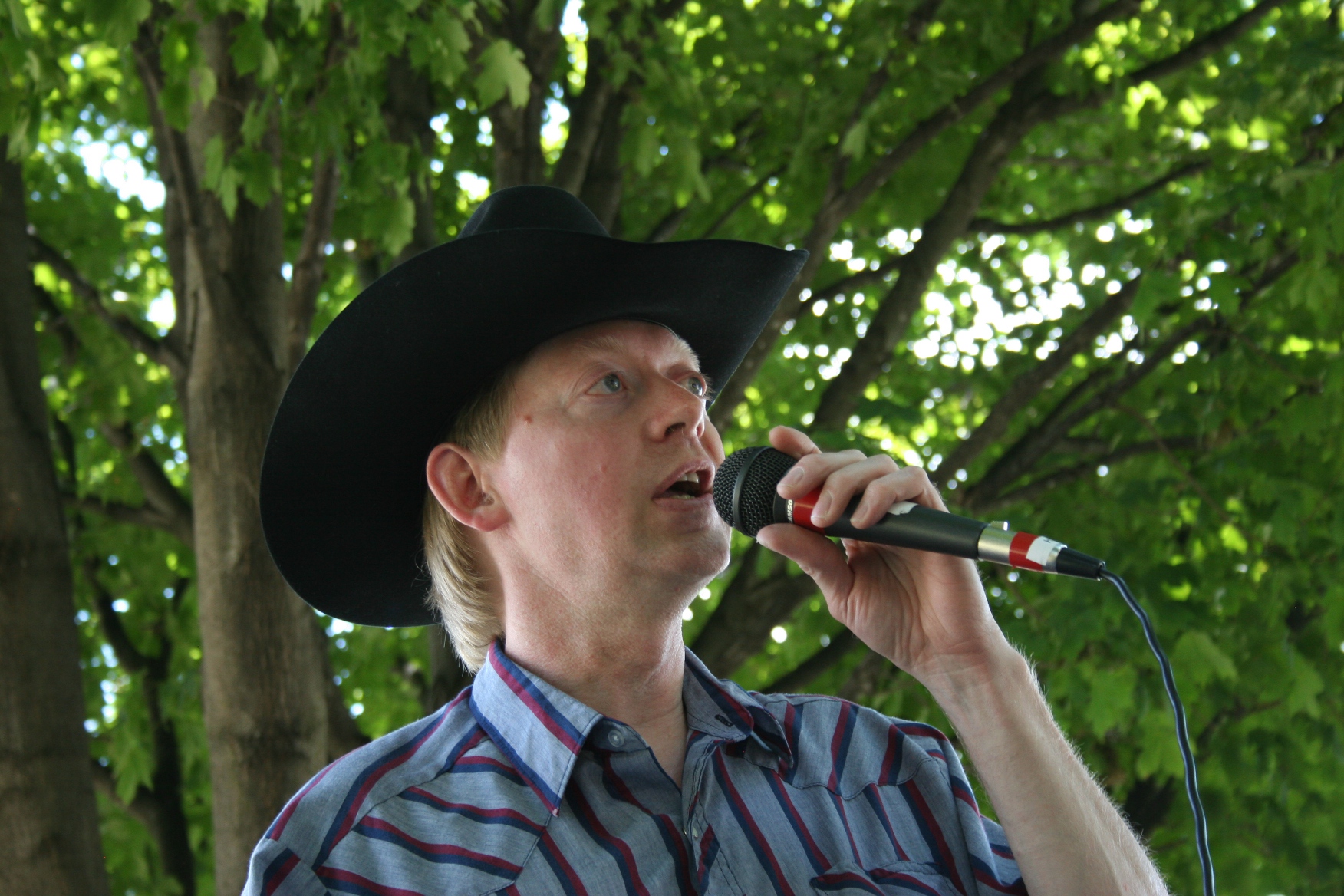
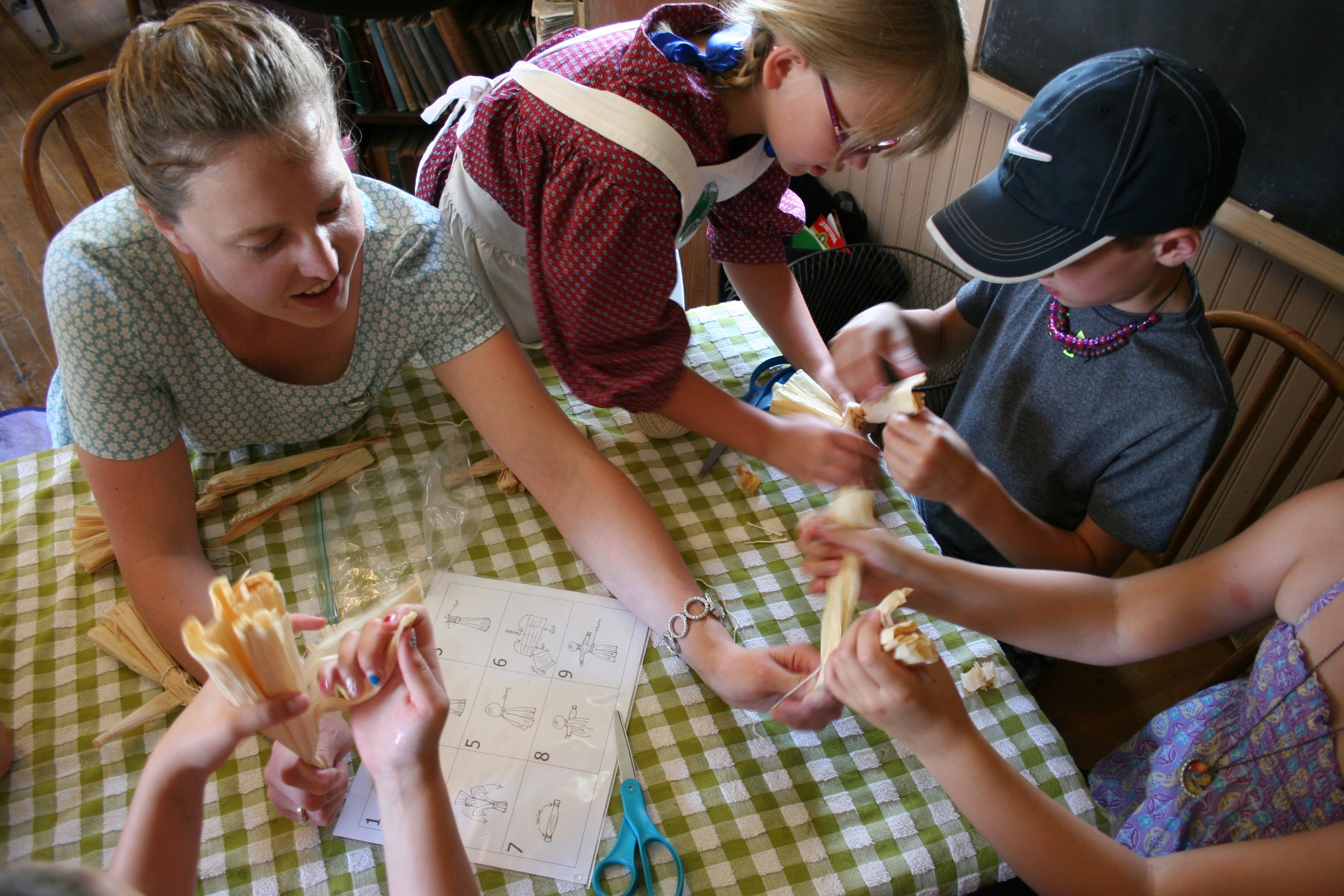
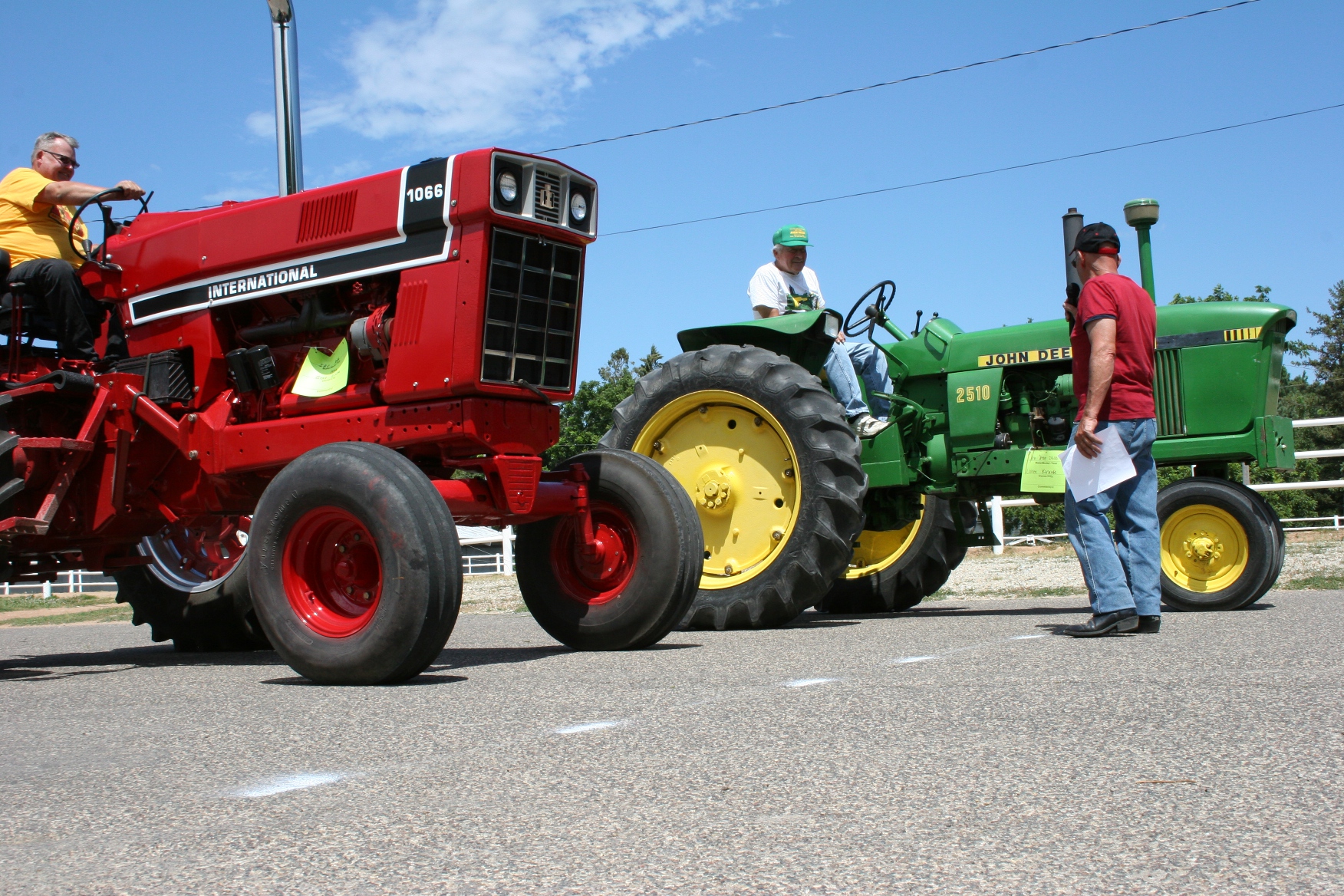
Add in costumed reenactors modeling period attire and shooting it out in mini dramas; a country singer crooning Hank Williams’ “Your Cheatin’ Heart;” kids circled around a table in an old country school crafting corn husk dolls; tractors snail-crawling toward the finish line in a slow tractor race; the tantalizing aroma of shredded pork sandwiches and the refreshing promise of icy root beer; 15 buildings, most of them vintage, plus a caboose to tour, and you have a full day.
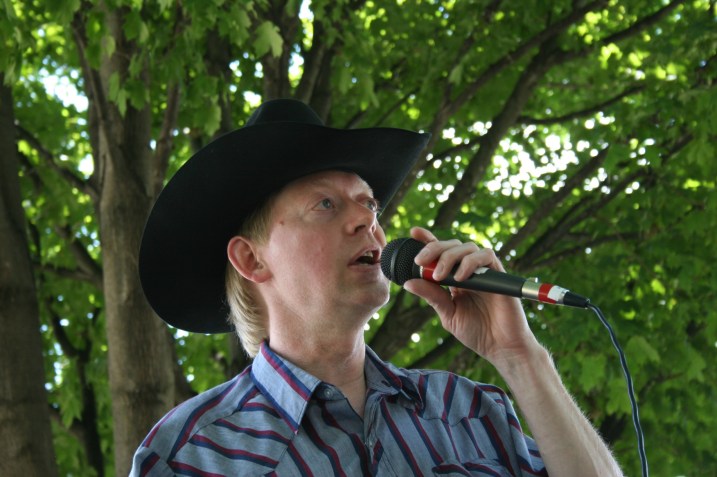
Dunnell Lenort, who has performed at the Grand Ole Opry and elsewhere, presented a selection of songs, including “I Fought the Law.” It was, he said, “for those who have been on the wrong side of the law.”
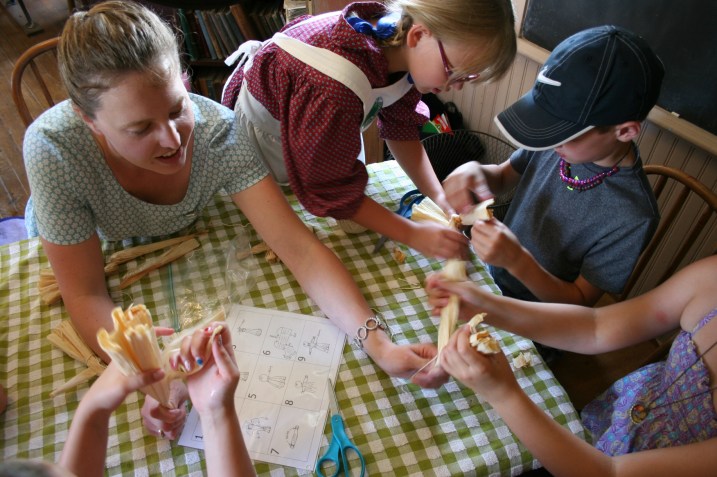
Kids learned how to make corn husk dolls inside the former District 14 country school, built in 1856 and located about four miles south of Owatonna along Lemond Road. The school was closed by consolidation in 1962.
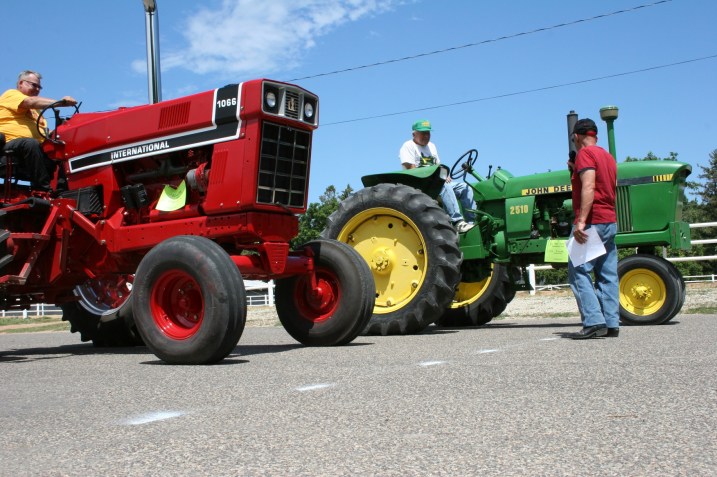
Lest you think the John Deere won this race, you would be wrong. The winner here was the tractor which drove the slowest along about a 50-foot stretch to the finish line in a slow tractor race.

Randy expected we would be there an hour; we left more than four hours later and could have stayed longer. We missed the vintage baseball game and other events.
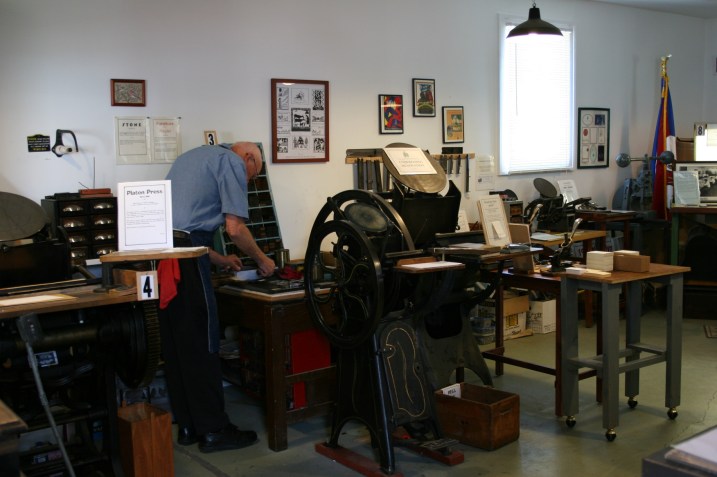
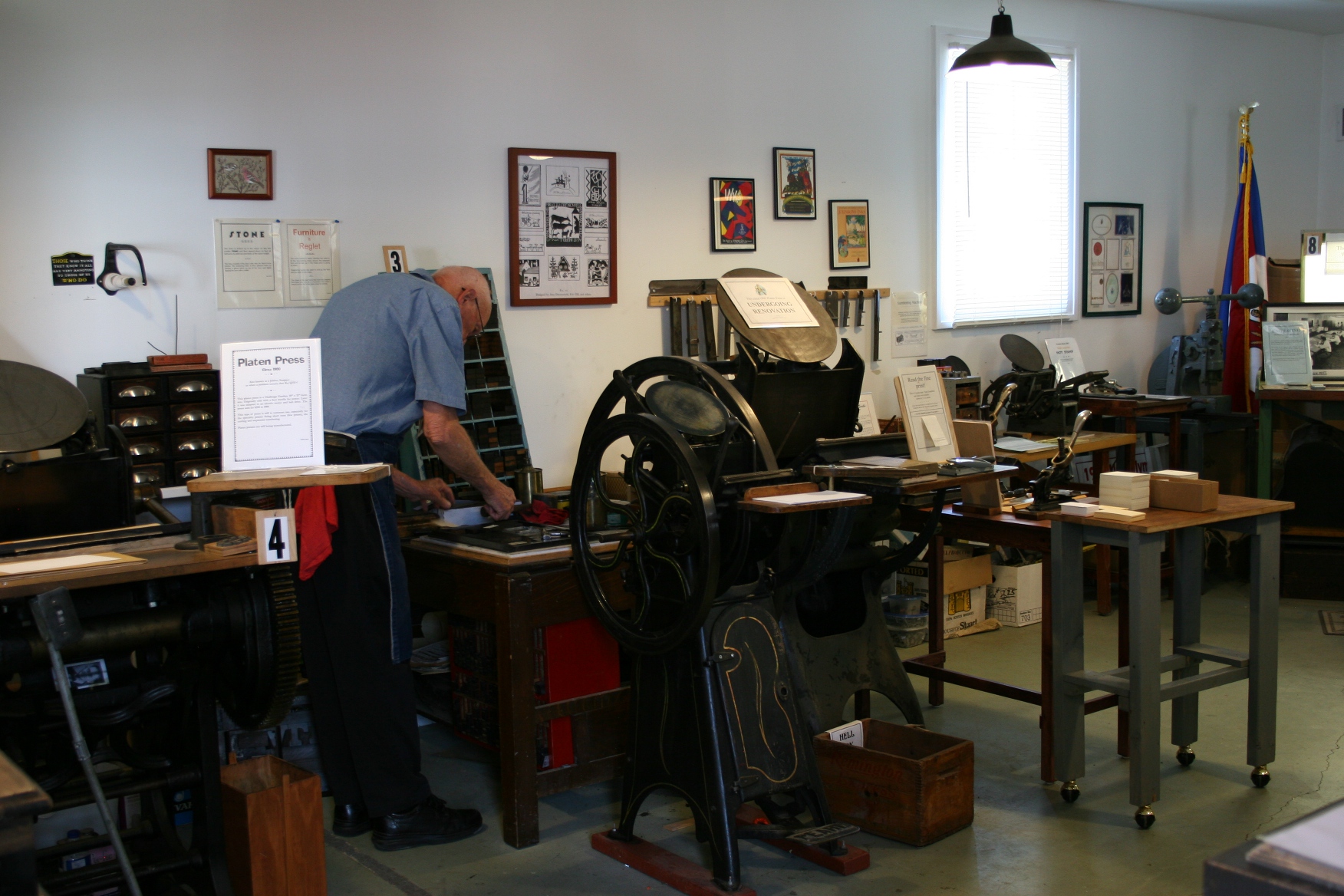
Pete the printer at work in the Village of Yesteryear print shop.

Of course, my spouse will tell you that, had I not been so interested in the village print shop, we could have knocked perhaps 30 minutes off our extravaganza tour. But given my journalism background; two years of employment at a weekly newspaper which printed auction bills and other items on an old Linotype machine; and my appreciation for the art of printing, I was fascinated by the working print shop and its resident printer, Pete Baxter.

Randy indulged my print obsession and I, likewise, later feigned interest in the engine display over in the agricultural section of the extravaganza.

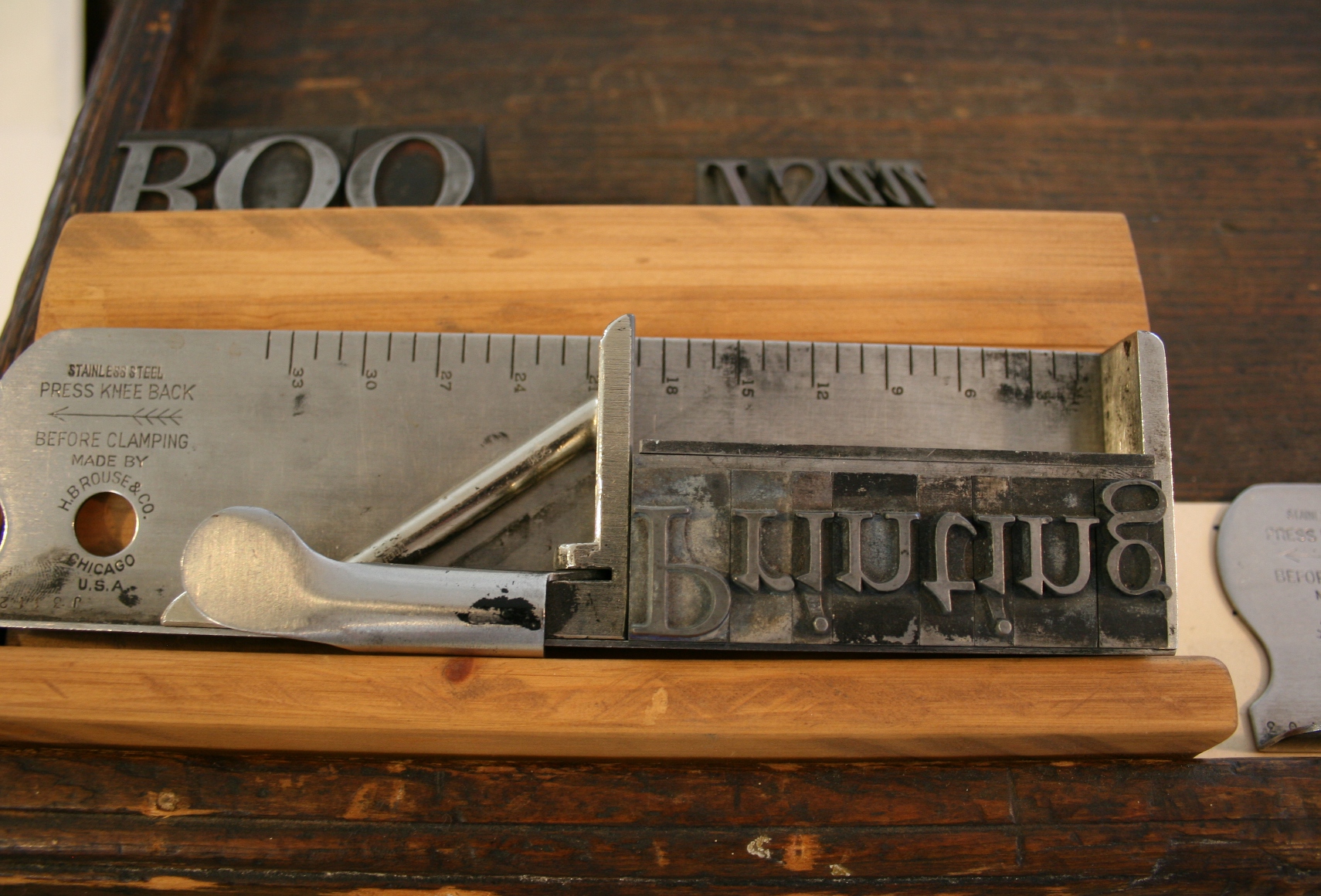
Letters laid out to spelling “printing.”

Let’s back up to that print shop and printer Pete, who once owned North Cal Printing, as you would expect, in California. Family brought Pete to Minnesota about a dozen years ago. And the old print shop at the Village of Yesteryear was one of the deciding factors in his settling specifically in Owatonna.

Today he’s an enthusiastic volunteer who dons a printer’s apron as he educates visitors, spins a few stories and inks up the press to spew out bookmarks and cards with messages like “Without a love for books the richest person is poor.”

Spend any time with this man who owns a library of 1,500 volumes; is a member of The Wördos, an organization which meets monthly in the metro to discuss errors in local and national media; and who knows the ins and outs of the printing business, and your interest in printing is likely to grow, too. When he mentioned the bit about The Wördos and their dissection of media grammar, usage and more, I wanted to grab back the business card I’d handed him for fear of him scrutinizing my writing. But I didn’t.

I wasn’t about to allow my insecurities to interfere with learning from an old-school printer educated in the 1940s at California Polytechnic State University during the transition from letterpress to offset printing.

Pete’s interest in printing stretches back to his childhood when he often accompanied his dad to a California street car station and stood at the window of a nearby newspaper office watching printers at work.

One day, as Pete dramatizes with arms gesturing, a worker exited the print shop, grabbed him by the arm and shouted, “Get your snot nose off my window.” He hauled young Pete inside, gave him a tour, and, as the printer says, “I was hooked.”

The next Christmas, he received a toy printing press and a case of type. Years later, he would earn a printing degree from Cal Poly and eventually own a print shop.
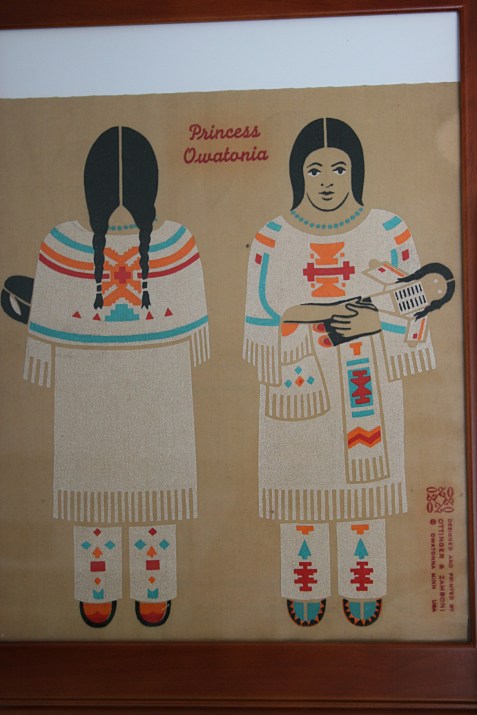
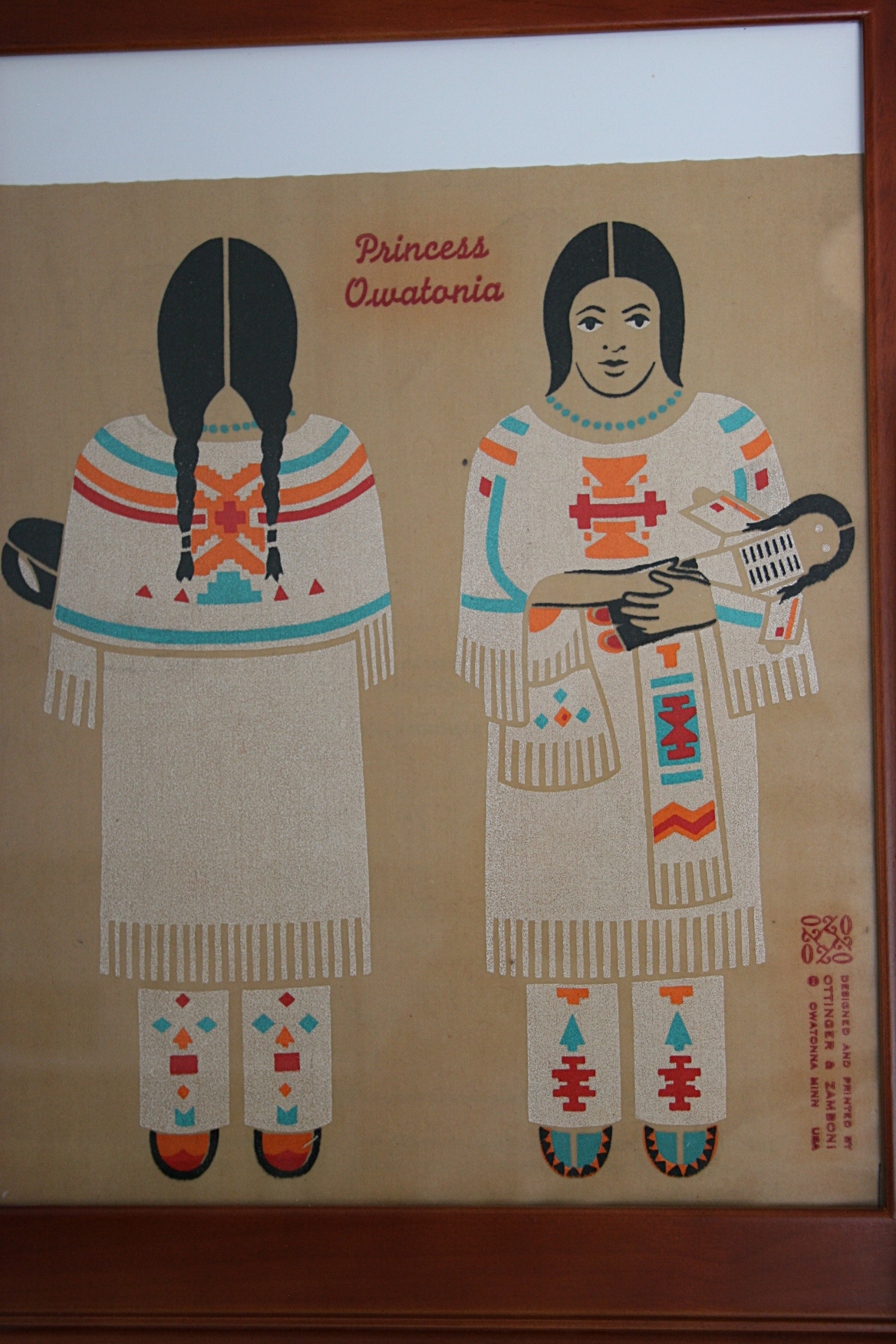
An original OZ Press print of the Indian princess after whom Owatonna is named, on display in the print shop.

That Pete the printer understands and appreciates printing is obvious to anyone who takes the time, as I did, to listen. He’s quick to spotlight the work of Owatonna’s probably most notable press, OZ Press. OZ co-owners Alice Ottinger and Jean Zamboni—thus the OZ name—donated an 1885 working printing press and artwork to the Village of Yesteryear print shop. Their press specialized in original art printing and silk screening during its 40 years in business, 22 of them in Owatonna.
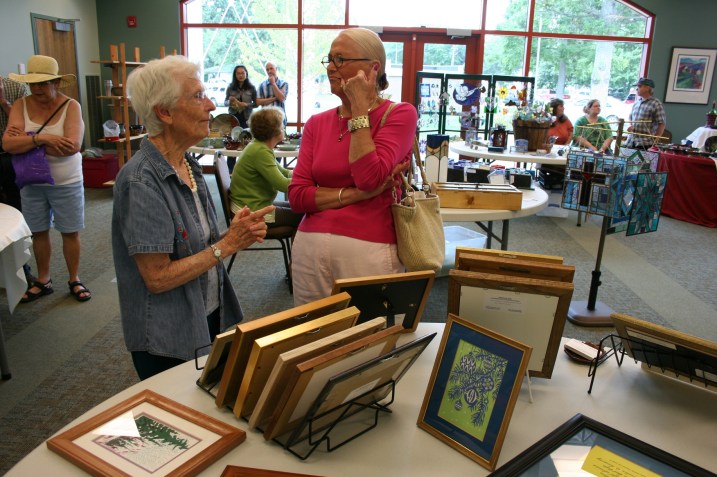
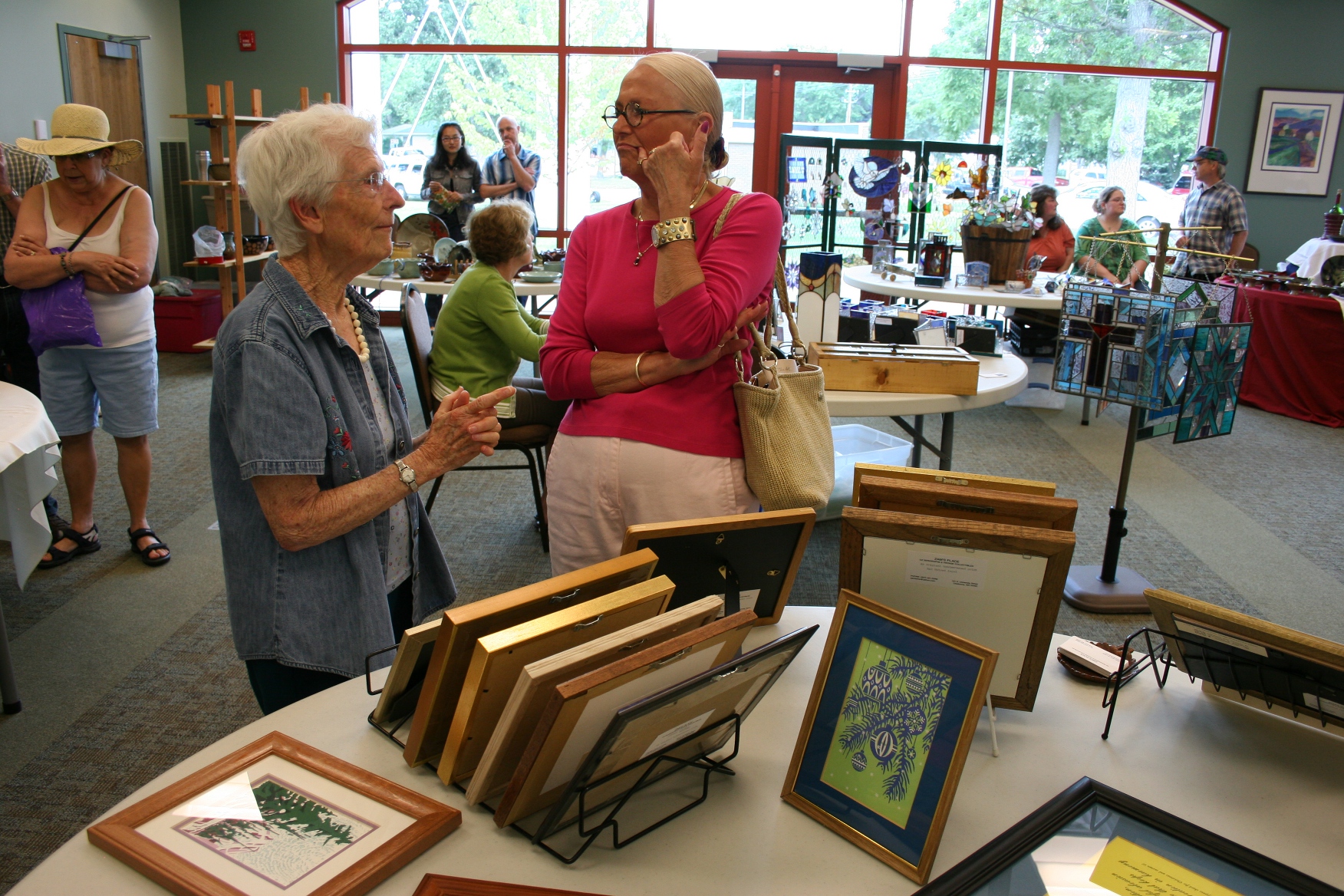
Jean Zambonia, left, talks about OZ Press at the artisan market. Framed OZ Press prints, on the table, were for sale.

Later I met Jean Zamboni in the new Steele County History Center and learned that she taught art at Minnesota State University, Mankato, before opening her press with friend Alice Ottinger. They designed some program covers for the college, did silk screening and eventually determined they could afford to start a press.

“So that was it,” Jean summarized as she stood next to a table where a limited selection of OZ framed prints were sold at the extravaganza. I wish now that I’d purchased one.

And you likely wish, about now, that I’d informed you of the Steele County Historical Society Extravaganza before the event. Mark it on your calendar for next July. Before that, though, you can attend Christmas in the Village, set for 4:30 – 8:30 p.m. Friday, November 30, and again from 10 a.m. – 2 p.m. on Saturday, December 1. The holiday celebration includes sleigh rides, visits by Santa and Mrs. Claus, children’s activities, selected buildings decorated for the season, a cookie sale, music and more. If it’s anything like the summer extravaganza, you will not want to miss it.
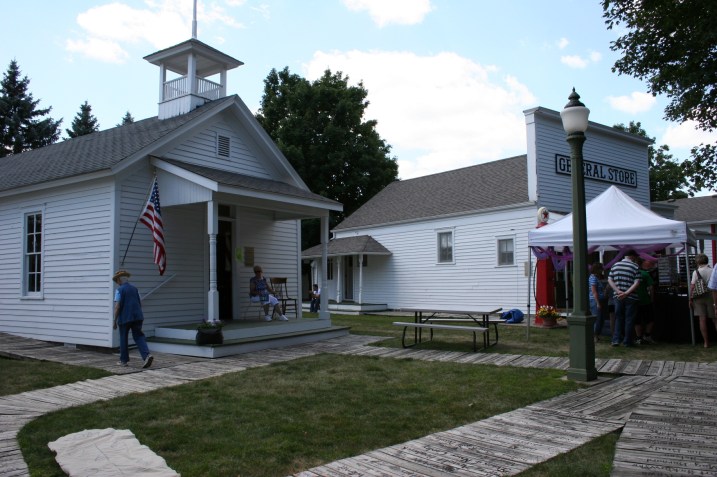
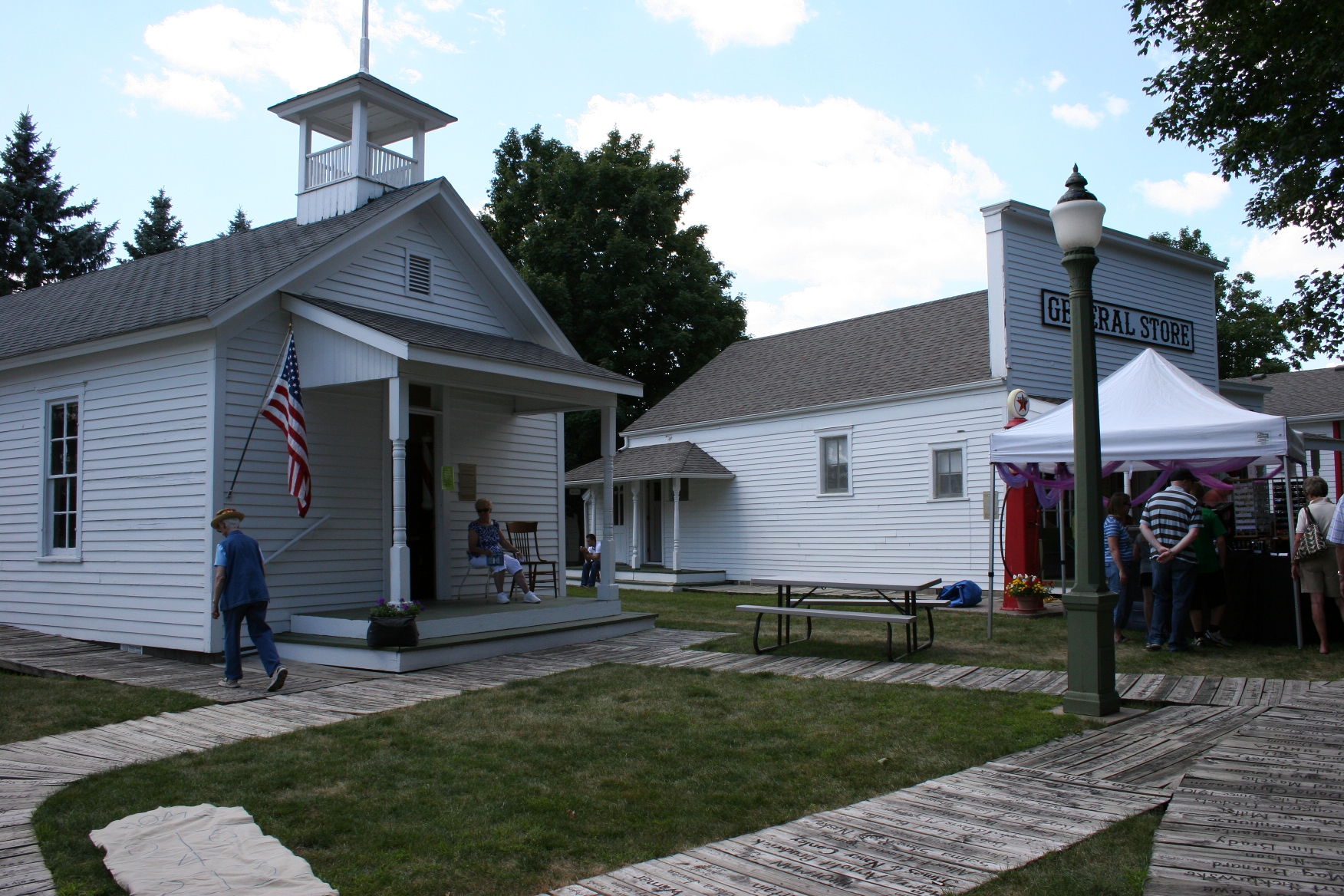
The general store and Museum of Professions at the Village of Yesteryear.

FYI: Click here to learn more about the Village of Yesteryear. Watch for several more posts from the extravaganza to be published here on Minnesota Prairie Roots.

© Copyright 2012 Audrey Kletscher Helbling


An enlightening, poetic moment and more January 21, 2012

SOMETIMES I’M A SLOW LEARNER, mostly in math and science. But this time my delayed learning applies to words, specifically poetry.

Dear readers, don’t stop reading now simply because I mentioned the word “poetry.”

I prefer to read and write poetry that is down-to-earth and not so open to interpretation or overloaded with big words that I cannot possibly comprehend the content.

With that perspective, consider this: Poetry is meant to be read aloud.

“Duh,” you say. “She just figured that out.”

Yes, I did.

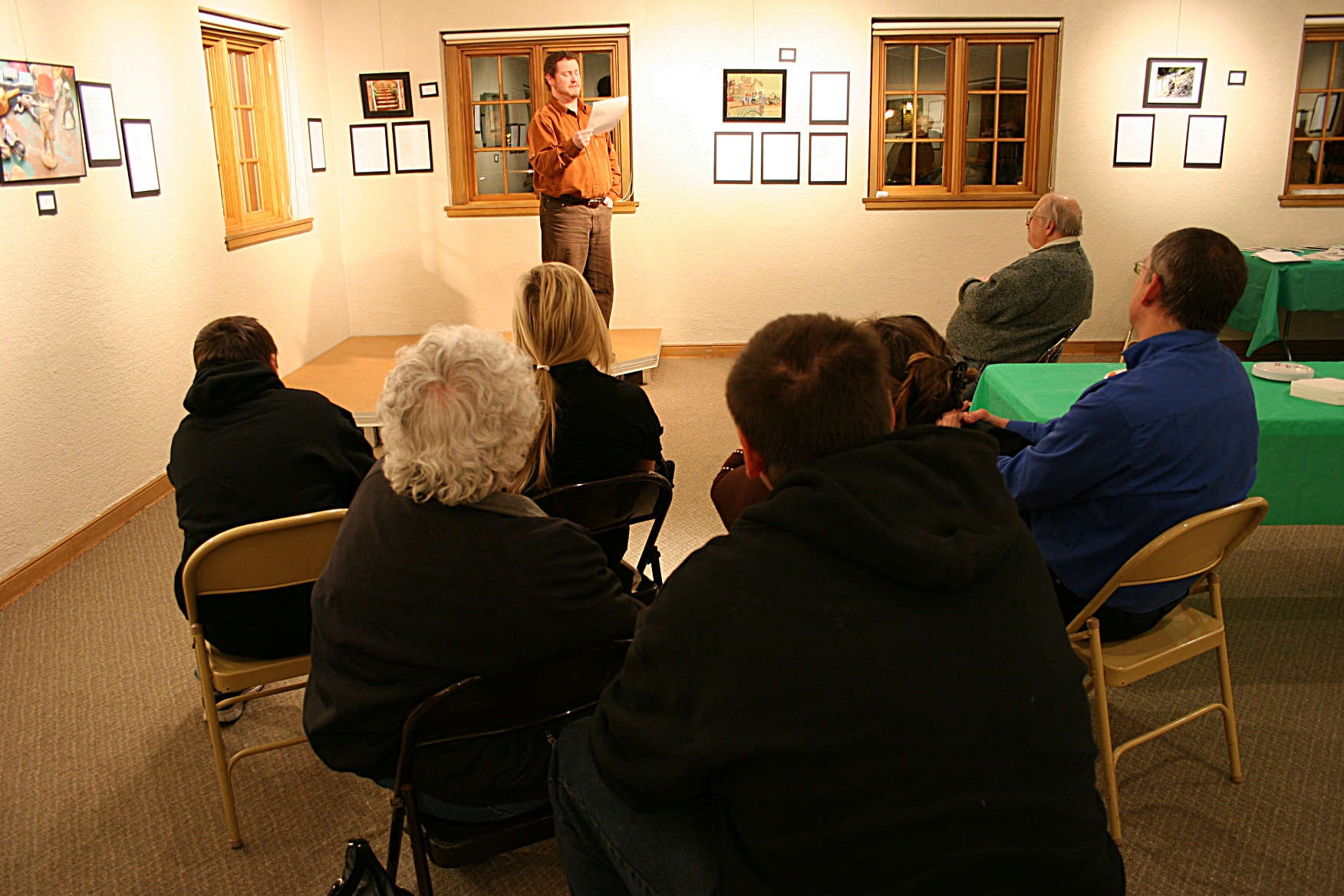
Poet Derek Liebertz reads a poem during "The Image and the Word 2012" reception. The poems are displayed next to the photos that inspired them.

Thanks to Derek Liebertz and Yvonne Cariveau, organizers of “The Image and the Word 2012” exhibit at the Emy Frentz Arts Guild in downtown Mankato, I now fully grasp the importance of reading poetry. Out loud. To an audience.

You see, I attended a reception Thursday evening for the poets and photographers whose work is featured in an exhibit that pairs photos and poems. During that event, Derek and Yvonne read poems inspired by those photos and also invited other participating poets, me among them, to read their works.

Only once, many, many years ago, have I read my poetry in public, unless, of course, you count all those times I read silly “married life” poems at cousins’ bridal showers decades ago. Public reading was not the easiest thing for me to do, but I managed.

The atmosphere on Thursday evening was so relaxed and casual, however, that I nearly breezed through reading two of the three poems I’d written. In hindsight, my readings could have been much better had I practiced at home. But I didn’t, and what’s done is done.

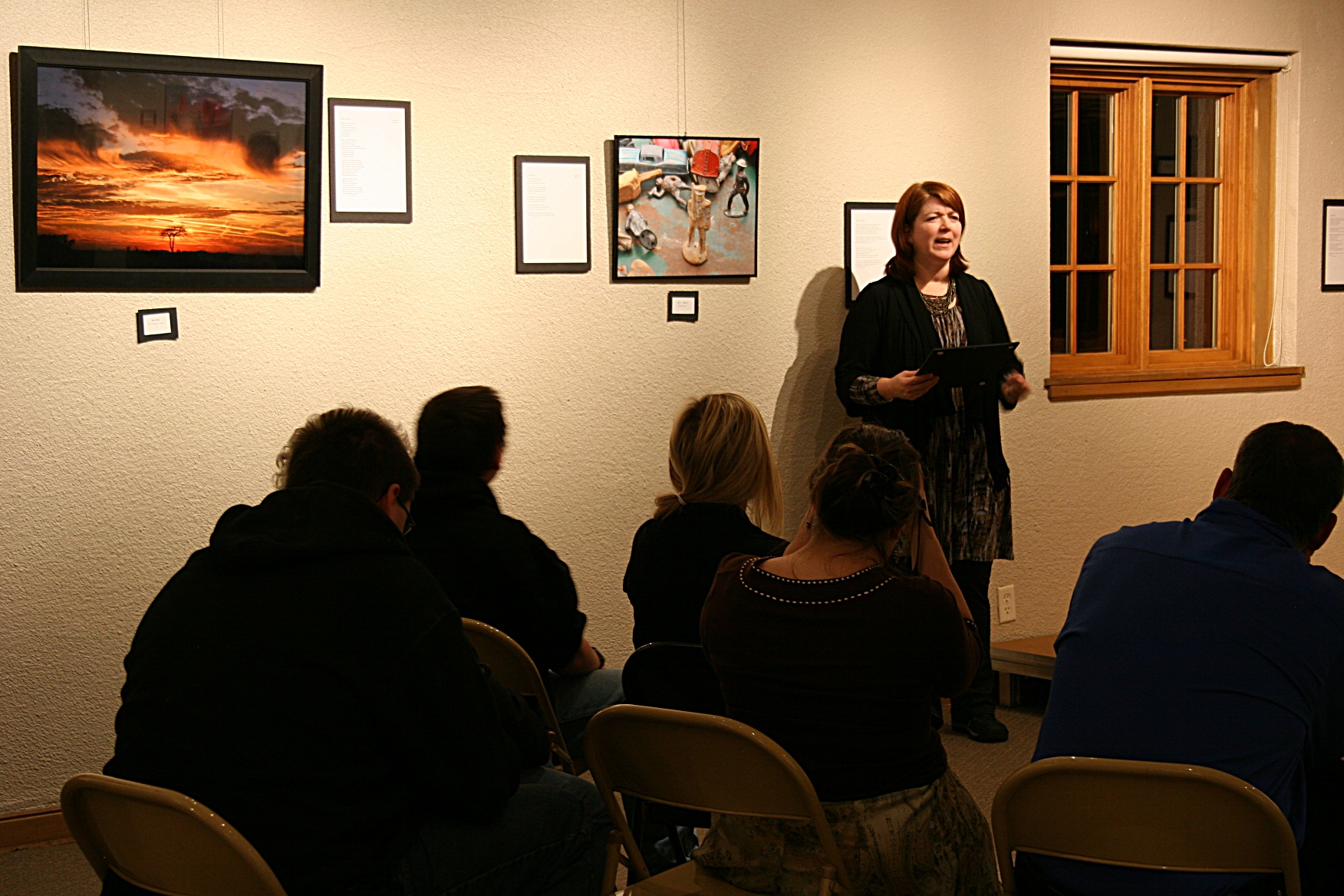
Yvonne Cariveau reads a poem. To the left is a photo taken by Kay Helms and voted as the "favorite photo" during the Thursday evening reception. The landscape image was taken along Highway 14 between Waseca and Owatonna.

The other poets, though, clearly were accustomed to and comfortable sharing their poetry with a listening audience. I listened with a learning ear, picking up on the drama, the cadence, the tone, the volume, the movement of the hands, the facial expressions and every nuance that conveyed the meaning and depth of a poem.

I got it. Finally.

That does not mean I’m eager to read poetry in public again. But I understand how a poem can be more fully appreciated when read aloud by its author.

Why did it take me so long to figure this out?

BESIDES THE POETRY lesson I learned Thursday evening, I also met and learned a bit about several other “The Image and the Word 2012” participants. Derek, for example, works as a programmer at his wife Yvonne’s company, Voyageur Web. Who would expect techies to write poetry? Not me. Derek, the most dramatic of the readers, tagged his day job as his “Clark Kent” persona. You have to appreciate a guy with that type of humor, which weaves into his writing.

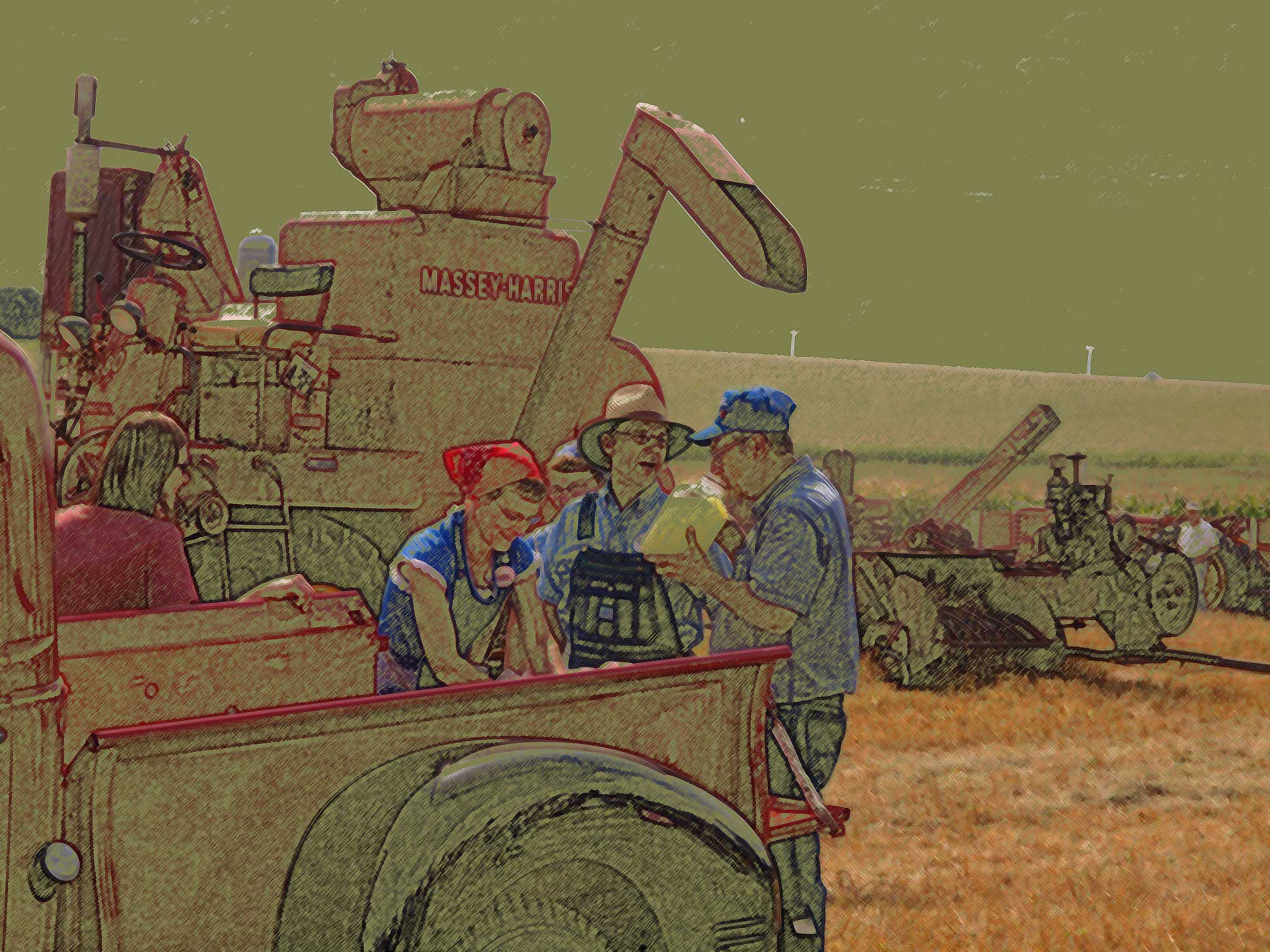
Then I met John Othoudt, a retired highway department employee turned photographer. His exhibit photo of farmers gathered at the tailgate of a vintage pick-up truck was taken at the Le Sueur County Pioneer Power Show. With a single click of his mouse, John edited the image into a pencil drawing style that makes the photo appear vintage 1950s. It inspired me to write “Taking lunch to the men in the field,” recalling the afternoons my older brother and I did exactly that on the Redwood County crop and dairy farm where we grew up.

"Lunch Time" by John Othoudt of Lake Crystal

I’d encourage you to click here and check out John’s photography. This man has talent. I share his passion for noticing details and photographing the often overlooked everyday and ordinary things in life. He shoots in the moment, he says. His “Lunch Time” photo, for example, happened as he was planning another shot. I understand. Some of my best photos have simply happened, unexpectedly.

Then I met Terri DeGezelle, whose credentials are even more impressive than those she shared with me Thursday. Click here to learn more about this woman who has written 64 nonfiction children’s books and is also an avid nature photographer. Her “Artist’s Colors,” a photo of colorful chalk, won the best paired photo-to-poem honor at the reception. Susan Stevens Chambers wrote the accompanying poem. I loved Terry’s enthusiasm and warm personality and the pure passion she exudes for the crafts of writing and photography.

As I was preparing to leave and thanking Yvonne for organizing the exhibit, I talked briefly with John Calvin Rezmerski, who encouraged me in my writing. His “Window” poem was voted as the favorite poem. Only until later, back home, did I learn that he is the League of Minnesota Poets current Poet Laureate and a well-known, established poet with 20 books, chapbooks and anthologies to his credit. He’s retired from teaching creative writing, journalism, literature, storytelling and more at Gustavus Adolphus College in St. Peter. Unlike me, he’s quite experienced at reading his work in public.

I met other delightful individuals, too, including Kay Helms, whose “The Witness Tree” was selected as the favorite photo at Thursday’s reception. The stunning sunset image was taken along U.S. Highway 14 between Waseca and Owatonna.

Helms’ photography will be displayed February 17 – March 18 at the Arts Center of Saint Peter in a collection of words and photos highlighting individuals who worked the land in south central Minnesota. Click here for details.

IN SUMMARY, Thursday’s reception proved invaluable for me. I learned that I could stand (or sit) before an audience and read my poetry without too much trepidation. I learned that poetry shines when read. And, finally, even though I was likely the most novice of the participating poets, I felt comfortable among all that talent. They are a fine bunch of poets, but more important, they are warm, kind and welcoming individuals with whom I enjoyed networking.

CLICK HERE TO READ a previous post I wrote about “The Image and the Word 2012.”

Click here to learn more about me, my writing and photography, including my published poetry credits.

© Copyright 2012 Audrey Kletscher Helbling
“Lunch Time” photo courtesy of and copyrighted by John Othoudt


How a car looks after spinning into the path of a semi truck January 10, 2012

Filed under: Uncategorized — Audrey Kletscher Helbling @ 7:30 AM
Tags: , , , , , ,

A WEEK AGO I published a post, “New Year’s thankfulness,” about my niece (in-law) who was involved in an accident that quite easily could have killed her. She lost control of her 2002 Saturn Ion on an icy Minnesota interstate sending her car spinning into the path of a semi truck. Her car was then subsequently struck by a pick-up truck. (Click here to read that original post.)

Heidi was knocked unconscious, had to be cut from her vehicle and was transported to St. Mary’s Hospital in Rochester. She, miraculously, suffered only a concussion, a gash on her head, and bumps, cuts and bruises.

At the time I wrote that post, I did not have photos of Heidi’s car meaning I could not fully grasp, but only imagine, the severity of this accident.

Recently I received two images from Heidi’s husband, Jeremy, and permission to post those car photos here. It is one thing to read, in an e-mail, details of an accident like this involving a semi. It is quite another to view images.

In this case, I would most definitely agree that “a picture is worth a thousand words.”

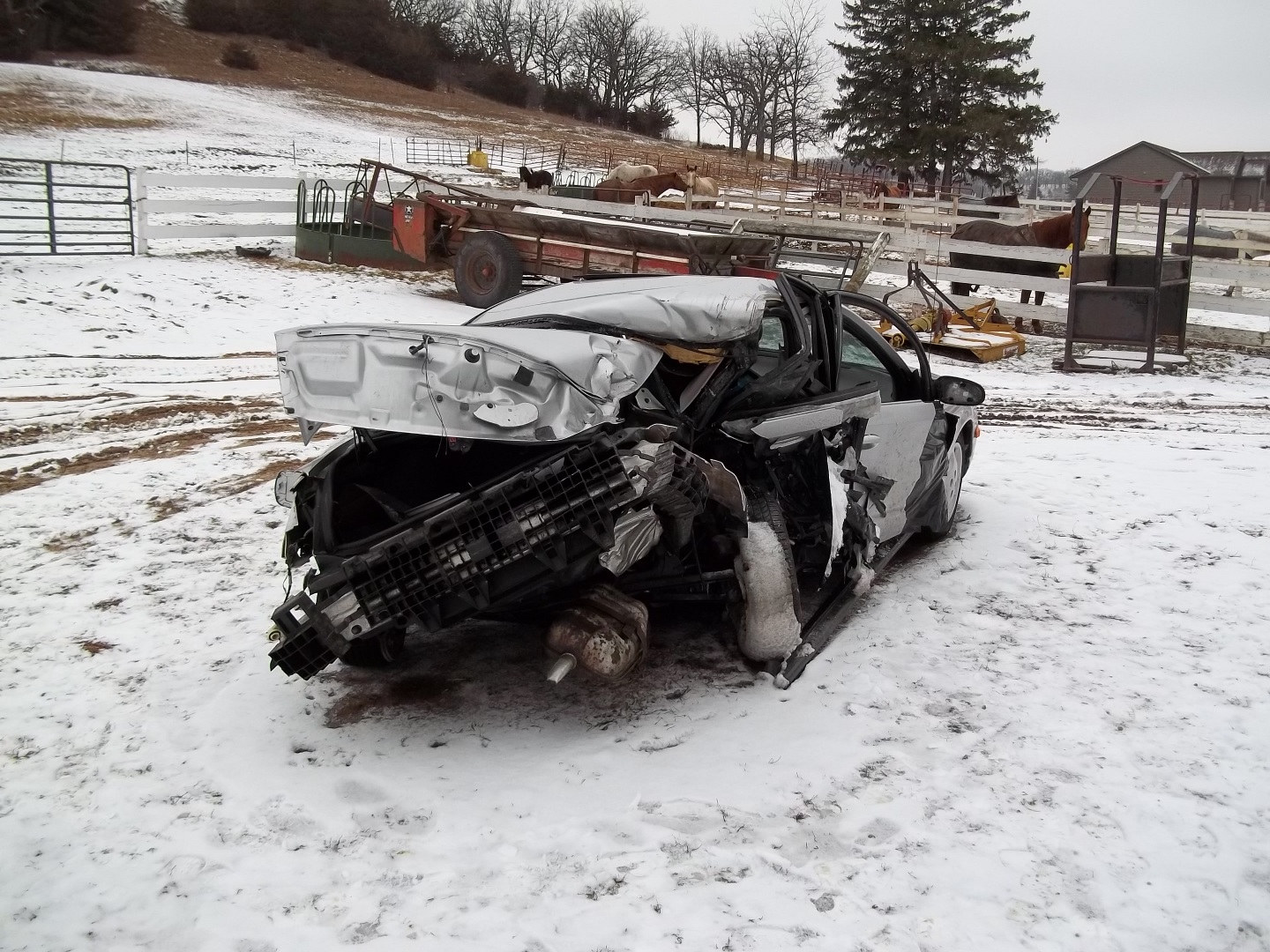
The demolished rear of Heidi's Saturn after her car was struck by a semi and pick-up on I-90.

Heidi was cut from her car following the December 30 morning crash on an icy interstate.

Jeremy reports that Heidi, also the mother of two young children, is doing much better since the December 30, 2011, crash. “…we’re able to go for walks now and she is able to go down stairs backwards. In a way, her healing process reminds me of watching our kids learning to walk in fast-forward.”

Godspeed in your recovery, Heidi.

© Copyright 2012 Audrey Kletscher Helbling
Photos courtesy of my nephew, Jeremy


Same day, same highway 50 miles apart: Plane lands, cattle truck crashes January 7, 2012

KNOWN AS A NOTORIOUSLY DANGEROUS roadway along some stretches, U.S. Highway 14 in southern Minnesota Thursday grabbed headlines again with two separate crashes about 50 miles and 12 hours apart. One involved a cattle truck, the other a small plane.

This time though, only cattle, not people, died.

I know this road, The Laura Ingalls Wilder Historic Highway, well as it’s the route my family travels back to my native southwestern Minnesota.

I shot this image along U.S. Highway 14 east of Lamberton several weeks ago.

Around midnight Thursday, January 5, a semi truck pulling a cattle trailer left Highway 14 just east of the Nicollet County Road 37 intersection near New Ulm and rolled onto its side in the ditch, according to news reports. The driver suffered only minor injuries, but some of the 35 cattle were killed in the crash or had to be euthanized.

About 50 miles west and some 12 hours earlier, Highway 14 east of Revere in Redwood County became a runway for a Lakeville pilot who was forced to make an emergency landing, according to news sources. He managed to land his plane on the road before it went into a ditch and flipped.

As in the cattle truck accident, the pilot escaped with only minor injuries.

When I first heard and read about these accidents, I was simply thankful that the truck driver and pilot survived. I was thankful, too, that others traveling along Highway 14 were not involved.

Then I started wondering exactly how many vehicles travel along these sections of Highway 14 each day and how those counts and the timing and locations of the incidents affected the outcomes.

According to the most recent statistics I could find from the Minnesota Department of Transportation’s Office of Transportation Data and Analysis, the 2009 annual average daily traffic count was 8,000 for the Highway 14 area where the cattle truck crashed.

See how the outcome could have been so much different had this occurred during peak daylight travel hours? Anyone who’s driven Highway 14 between New Ulm and Mankato realizes just how unsafe this narrow, arterial road is with its heavy traffic, county and other roads intersecting the highway and few opportunities to safely pass.

Fortunately, 50 miles west, the traffic count drops considerably as the population decreases and the land stretches flat and wide into acres of fields punctuated by farm sites and small towns.

Near Revere, where the pilot landed his plane on Highway 14 before noon on Thursday, MnDOT lists the 2007 annual average daily traffic count as 1,550. Odds of putting a plane down without hitting a vehicle were definitely in the pilot’s favor.

And given trees are sparse on the prairie, luck was in the aviator’s favor there, too.

Fortunately, the emergency landing also occurred outside of Revere, in the 3.5 miles between the town of 100 residents and Highwater Ethanol and not too dangerously close to either. The ethanol plant, of which my middle brother is the CEO/GM, is situated along Highway 14 between the crash site and Lamberton.

Viewing a 1994 plat of the area, I spotted a landing strip just to the north and east of Revere. I could not verify whether that still exists and it really doesn’t matter given the pilot claims he had to make a snap decision to put his failing aircraft down Thursday on Highway 14 at a speed of 90 mph.

I’m thankful that on January 5, 2012, U.S. Highway 14 in southern Minnesota didn’t rack up more fatal statistics. It’s already had too many.

© Copyright 2012 Audrey Kletscher Helbling


The generous gift of a St. Paul woman to a rural Minnesota food shelf January 6, 2012

TODAY I’M TREATING YOU to a gem of a story published yesterday in a weekly community newspaper, The Gaylord Hub.

It’s an inspiring and uplifting story of a St. Paul woman who purposely sought out a rural food shelf as the recipient of a Christmas gift. And a mighty generous one from someone with apparently no connection to Gaylord, a southern Minnesota Sibley County seat town of around 2,300.

Hub officer manager and bookkeeper Elizabeth Reishus shares the tale of generosity in her January 5 “The Word From High Avenue” column as shared with her by Yvonne O’Brien of Sibley County Food Share, Inc.

Writes Reishus:

A woman from St. Paul had called Second Harvest food bank to ask for a list of rural food shelves. Second Harvest was not able to give her that information, but did give her O’Brien’s phone number.

The woman then called O’Brien and asked questions about the food shelf. What percent of families served were minorities? Is the need higher in the summer? What kinds of resources does your food shelf have to rely on for donations?

O’Brien explained that about 40 percent of clients at the food shelf are people of a minority. The need for help increases in the summer when seasonal workers arrive to work at area farms and other agriculture-related jobs. She also explained that unlike bigger towns and cities, we do not have the big chain stores such as Wal-Mart, Target, Cub or Cash Wise that donate food. The Sibley County Food Shelf is maintained through the generosity of area people and some grant money, O’Brien explained.

The St. Paul woman said she would like to send a donation to the food shelf. O’Brien gave the woman the mailing address for donations and expected to receive a check for about $50. She was pleasantly surprised to find that the donation check was for 10 times that amount. The generous mystery woman gave $500 to the Sibley County Food Shelf.
How’s that for Minnesota Nice and for thinking beyond the metro?
Consider the effort this mystery woman took to find just the right place for her $500 donation. What motivated her to seek out a rural food shelf, to ask those specific questions about minorities, to give that much money to a single food shelf?

I’d never really thought, prior to reading Reishus’ column, how small-town food banks typically don’t receive food donations from chain stores, relying instead primarily on the generosity of locals.
So thank you to that woman from St. Paul for thinking beyond the metro area of the need in rural Minnesota and for blessing Sibley County Food Share with $500.

She offers us much food for thought.

FOR MORE INFORMATION about Sibley County Food Share, click here.