Minnesota Prairie Roots

Writing and photography by Audrey Kletscher Helbling

Zip code 56046 July 26, 2011

THE NEXT TIME YOU’RE traveling Interstate 35 south of Owatonna, instead of whipping by the Hope exit at 70 mph, pull off the freeway and check out this unincorporated community of 120 residents, probably best-known outside of Steele County for Hope Creamery butter.

Unless my husband and I missed the signage, we never saw a sign marking the creamery and simply guessed that the butter-making operation is housed in an old brick creamery on the edge of town next to a farm.

But we discovered several other places of interest after parking our car along the one main road that cuts through Hope. Yes, you need to park your vehicle, get out and walk, rather than simply driving through town thinking, “There’s nothing here.”

You would be wrong, oh, so wrong.

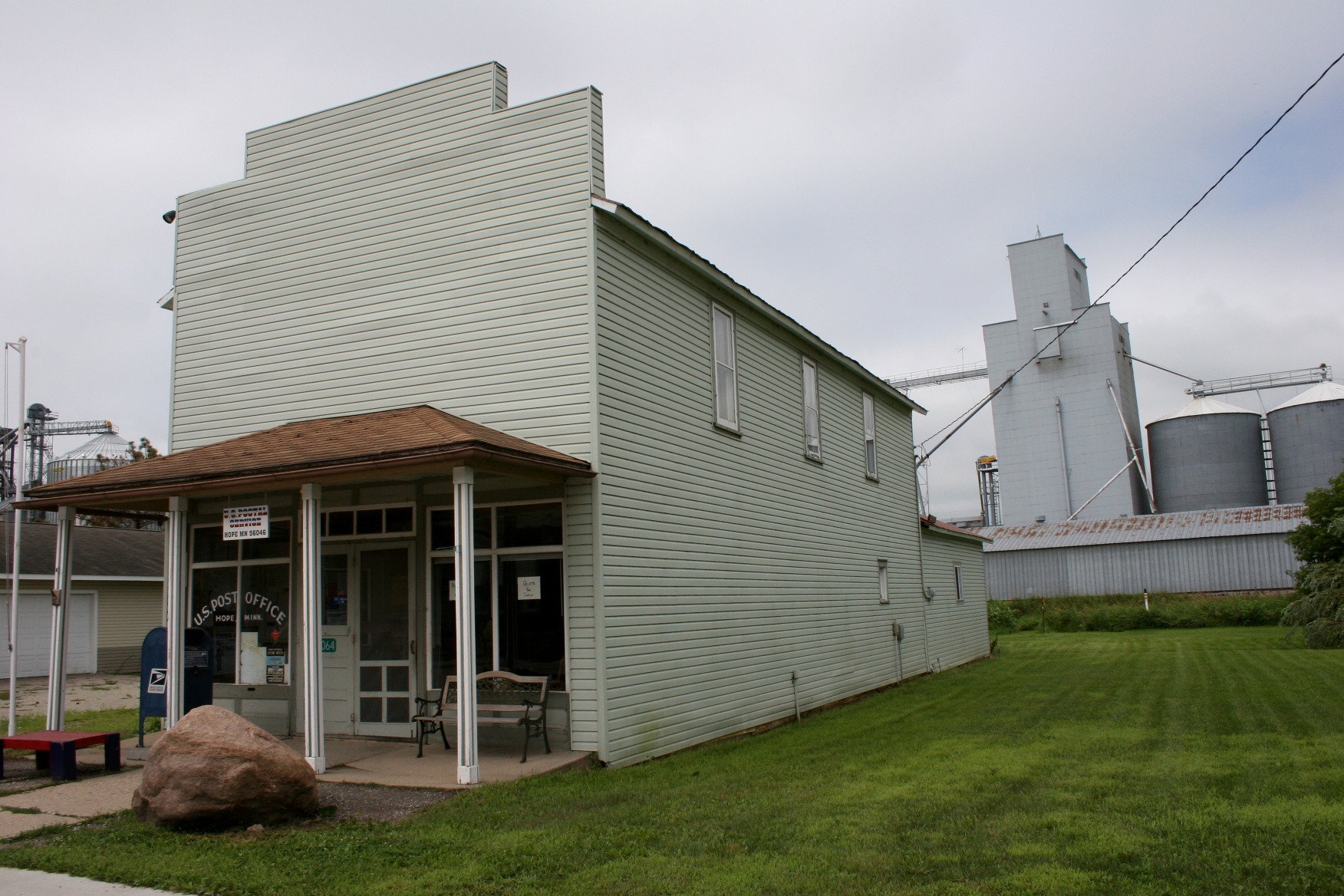
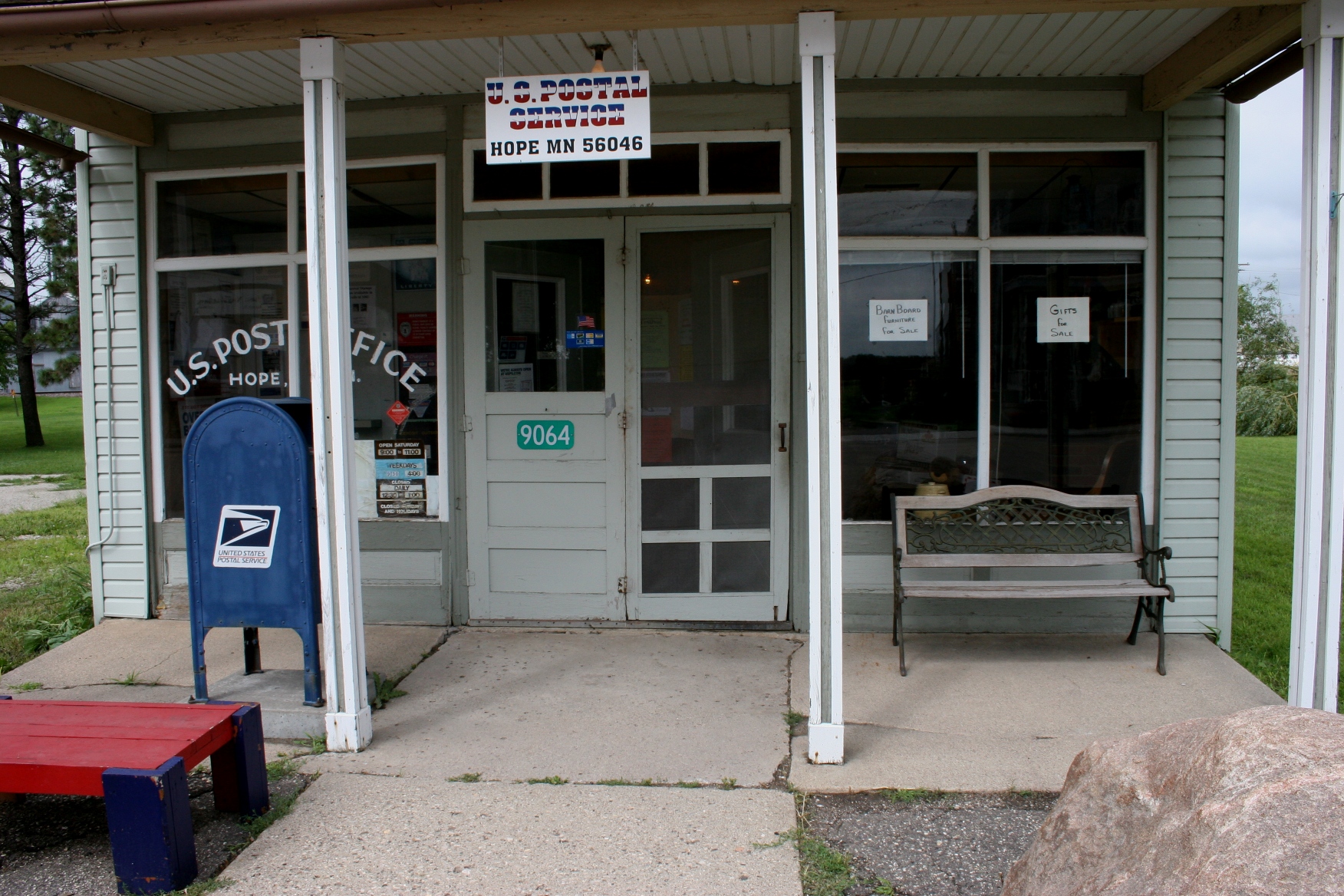
First point of interest: 56046. That would be the Hope Post Office. With a street front facade resembling the general stores of yesteryear or perhaps a building from a western movie set, this old-style structure charms.

The Hope Post Office sits along Main Street. The elevator complex in the background is just across the train tracks.

Take in the details: the red and blue bench, the double front doors, the rock out front, the welcoming porch...

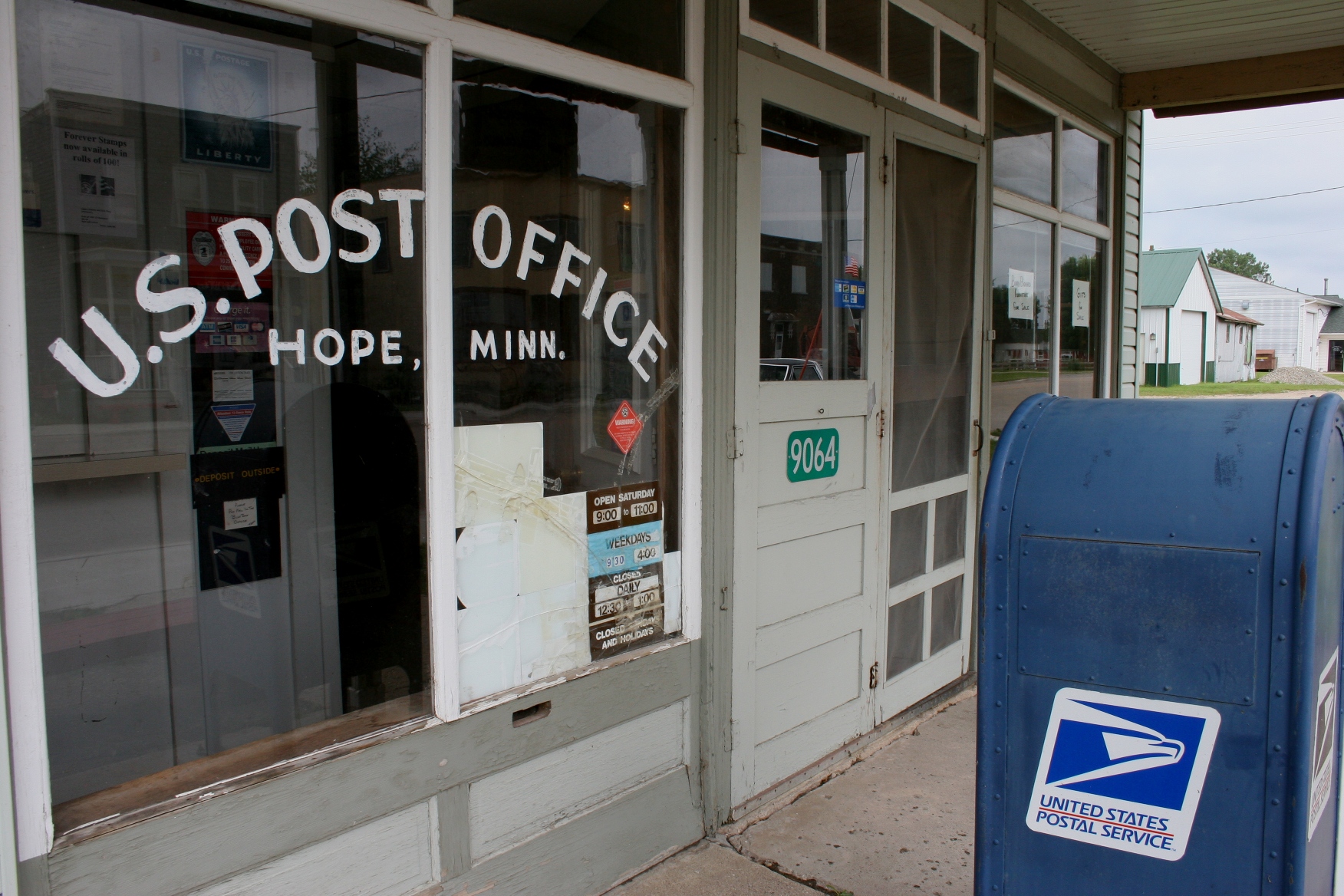
Even the lettering on the front window has old-style charm.

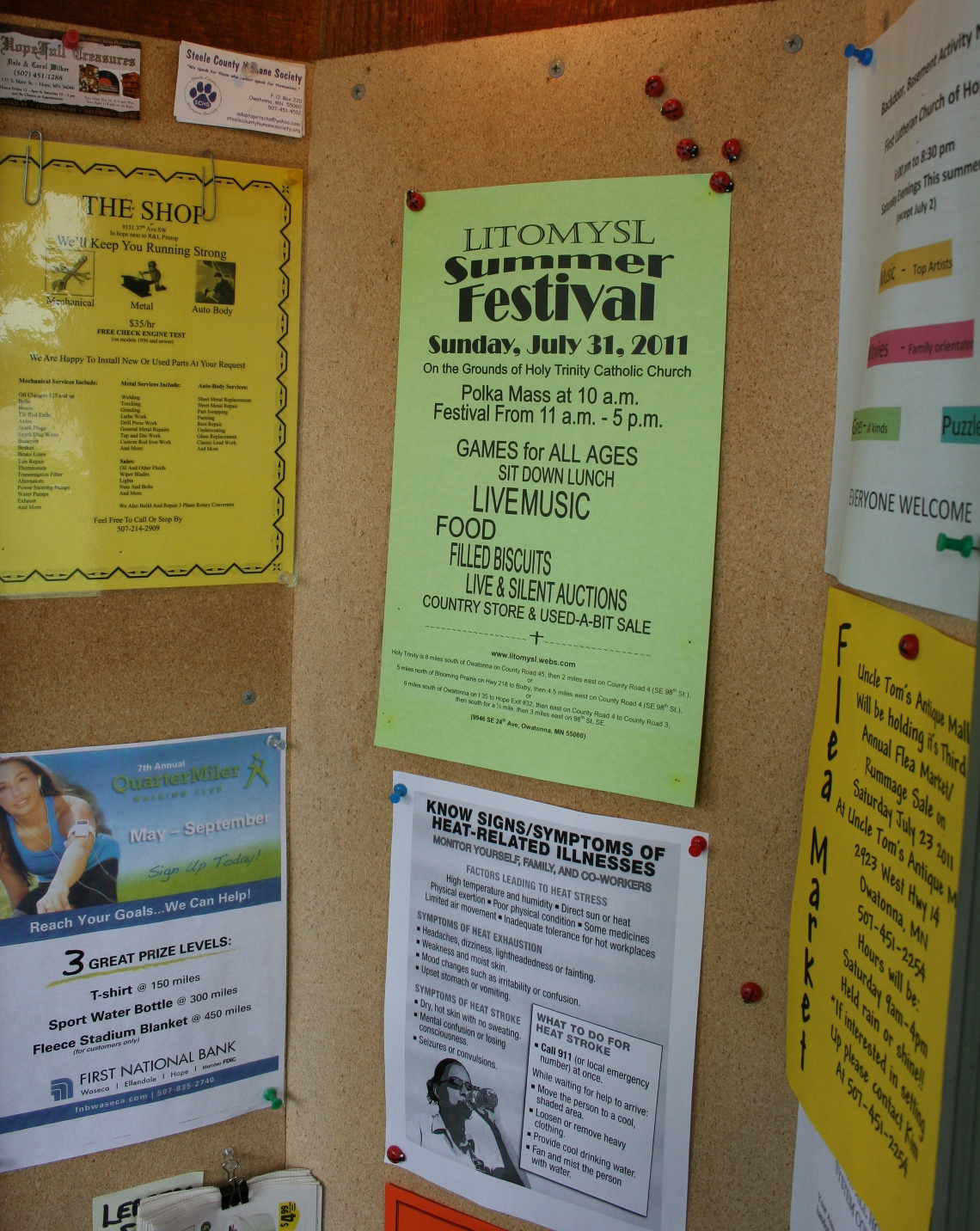
Maybe it doesn’t take much to impress me, but I appreciate buildings with character. I quickly determined that the post office serves as Hope’s community hub. I pulled open the screen door and stepped inside a closet of an entry, the door to the post office to my left, the door to a gift shop to my right. Smack in front of me, I found business cards and signs, church festival notices and other information tacked onto a bulletin board. A clutch of rubber-banded newspapers lay on the floor in front of the post office door.

The community bulletin board inside the post office entry.

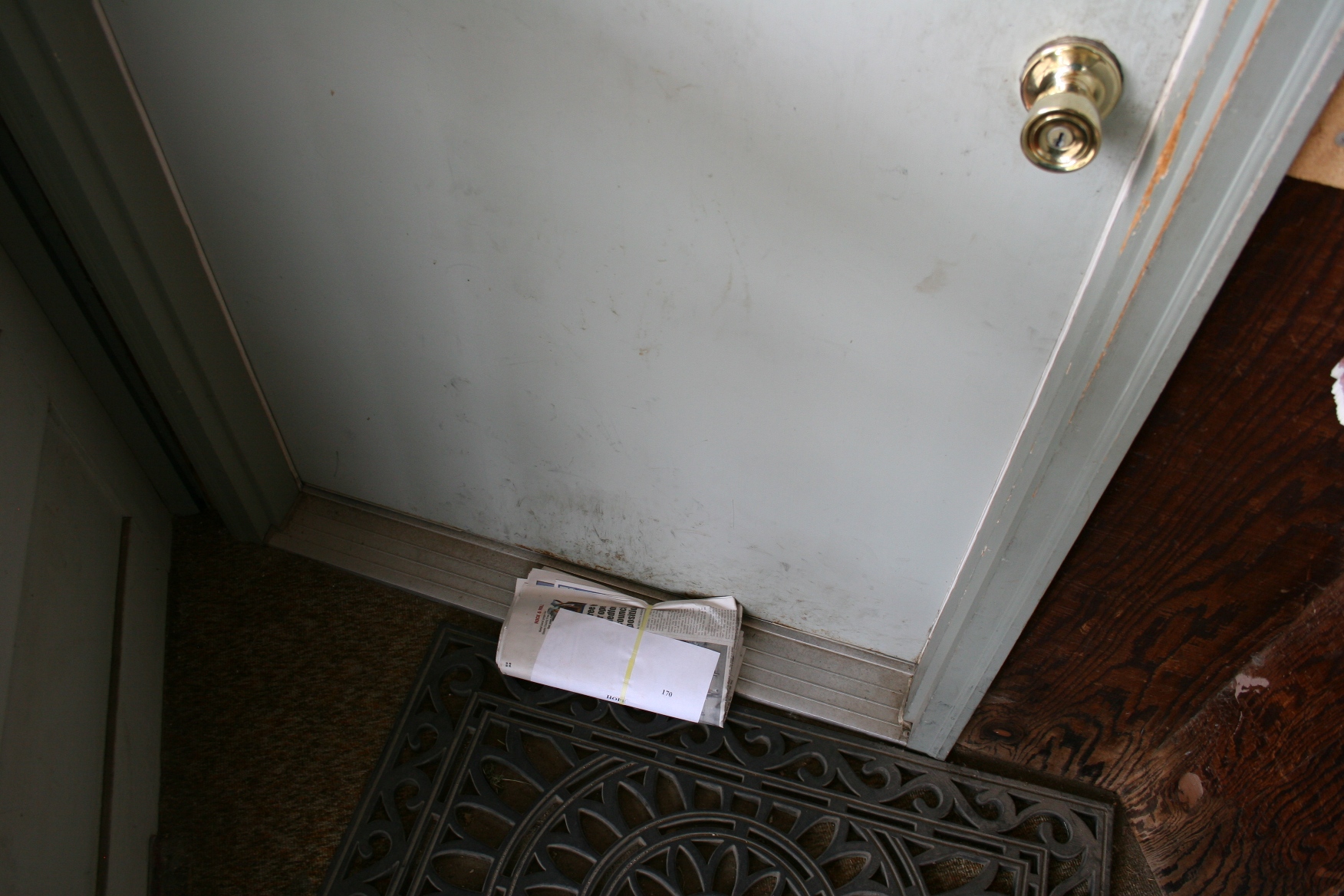
A clutch of bundled newspapers outside the locked interior post office door.

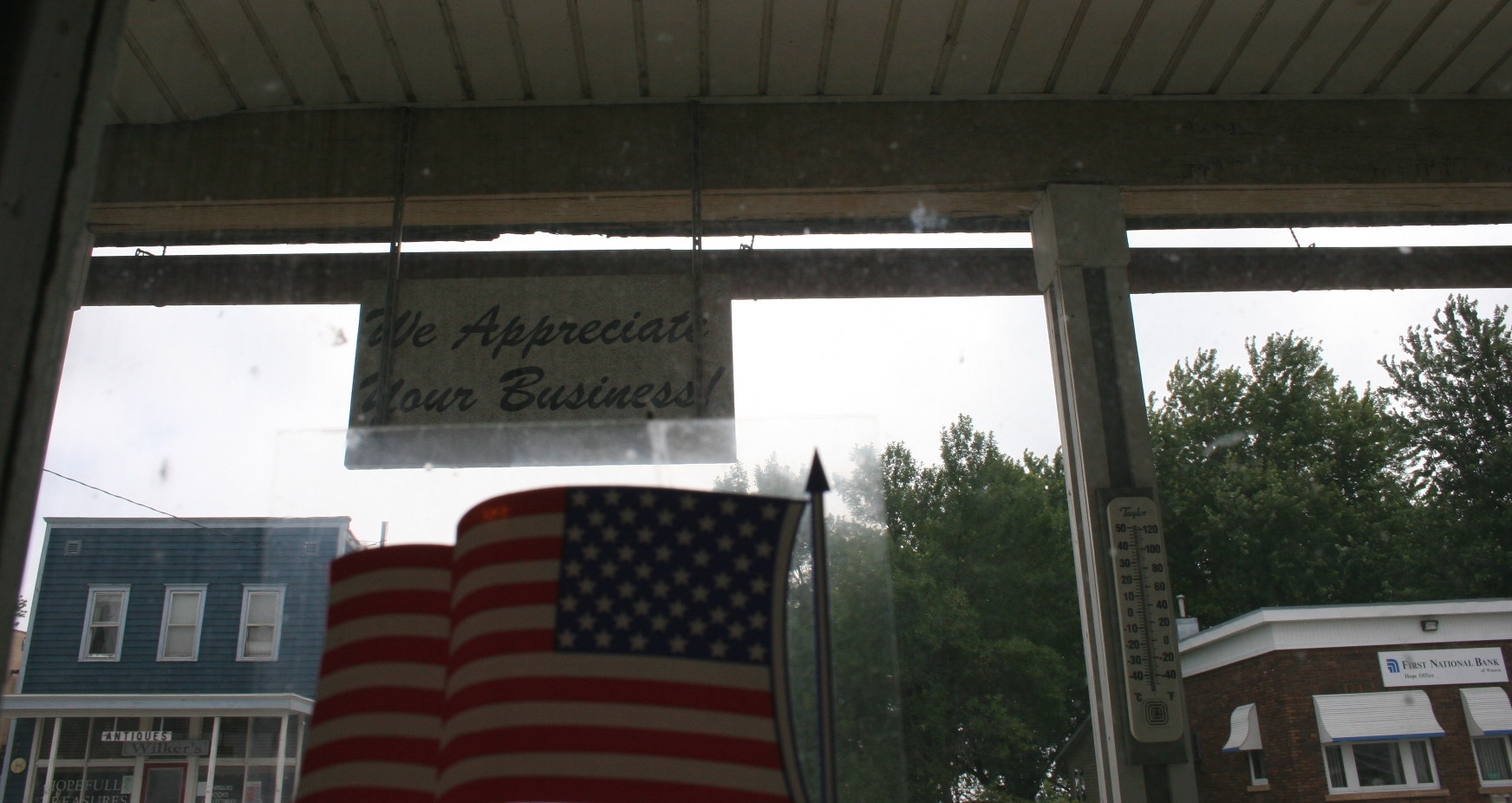
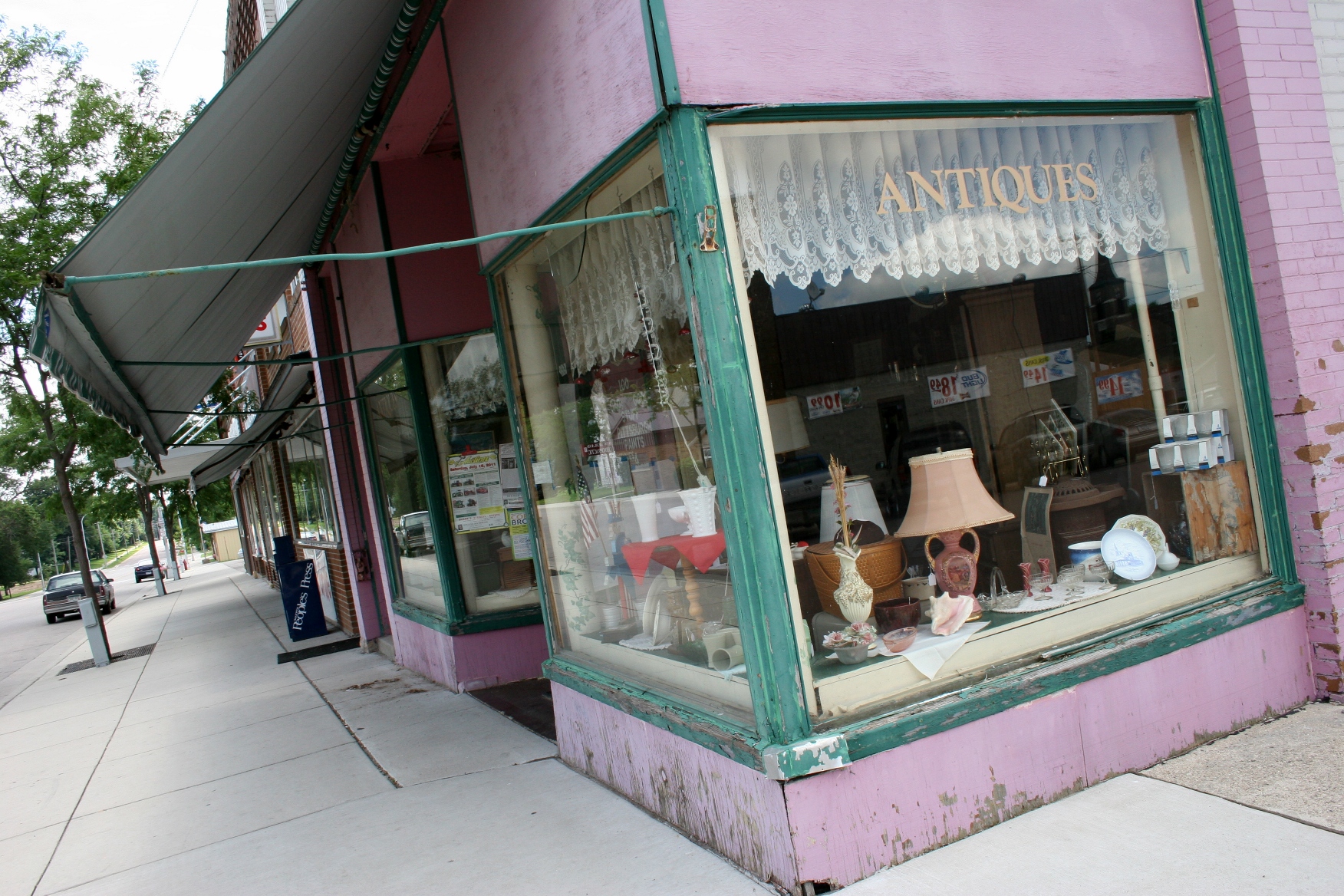
From inside the post office entry, a view across the street of the bank and an antique store.

Since I was there on a Sunday afternoon, I had to settle for standing outside, peering through the large, cracked and taped front windows to view the customer service area that is smaller than most bathrooms. But it serves the purpose and I’m sure Hope folks are happy to still have their post office.

I always figure once a community loses its school, its post office and its bank, well then, you may as well close up the town. So far, Hope has only lost its school.

Today the U.S. Postal Service releases a list of 3,600-plus post offices under consideration for possible closure in a cost-cutting effort. I hope Hope is not among them.

Post office hours are listed on a cracked and taped front window.

CHECK BACK FOR MORE posts out of Hope and other area communities I recently visited while on a Sunday afternoon drive. It’s my philosophy that most of us are missing out on the treasures of small-town U.S.A. because we fail to get off the freeways, park our vehicles on Main Street and explore. Either that or we’re “too busy” to slow down and notice the details worth noticing in our small towns.

If anyone knows about the history of the Hope Post Office, submit a comment. I would like to learn more about this building.

© Copyright 2011 Audrey Kletscher Helbling


Canning jars and funeral info at the hardware store July 24, 2011

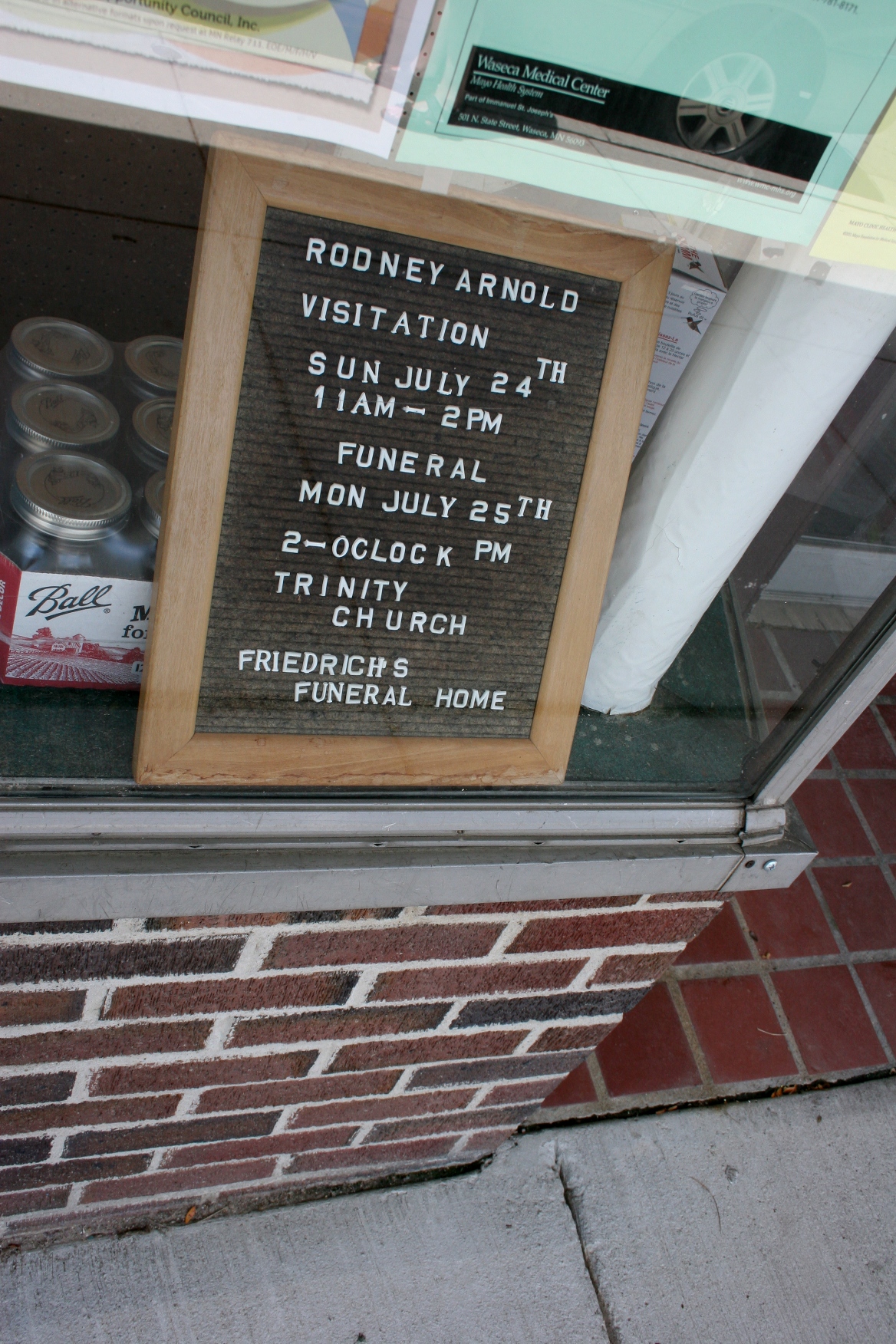
A sign in the Gambles' hardware store window gives updated visitation and funeral information to the residents of the New Richland area.

SHE PULLED UP ALONGSIDE the curb Sunday afternoon, leaned toward the semi-open window on the passenger side of her van and asked if my husband or I knew why Rodney had died. “He seemed so young,” she said.

“We’re not from here,” I answered. “I have no idea.”

But I had a question for her: “Why is his funeral information in the Gambles’ window?”

She didn’t exactly have a response for me—not one I can publicly share anyway—so I took this as one of those small-town oddities.

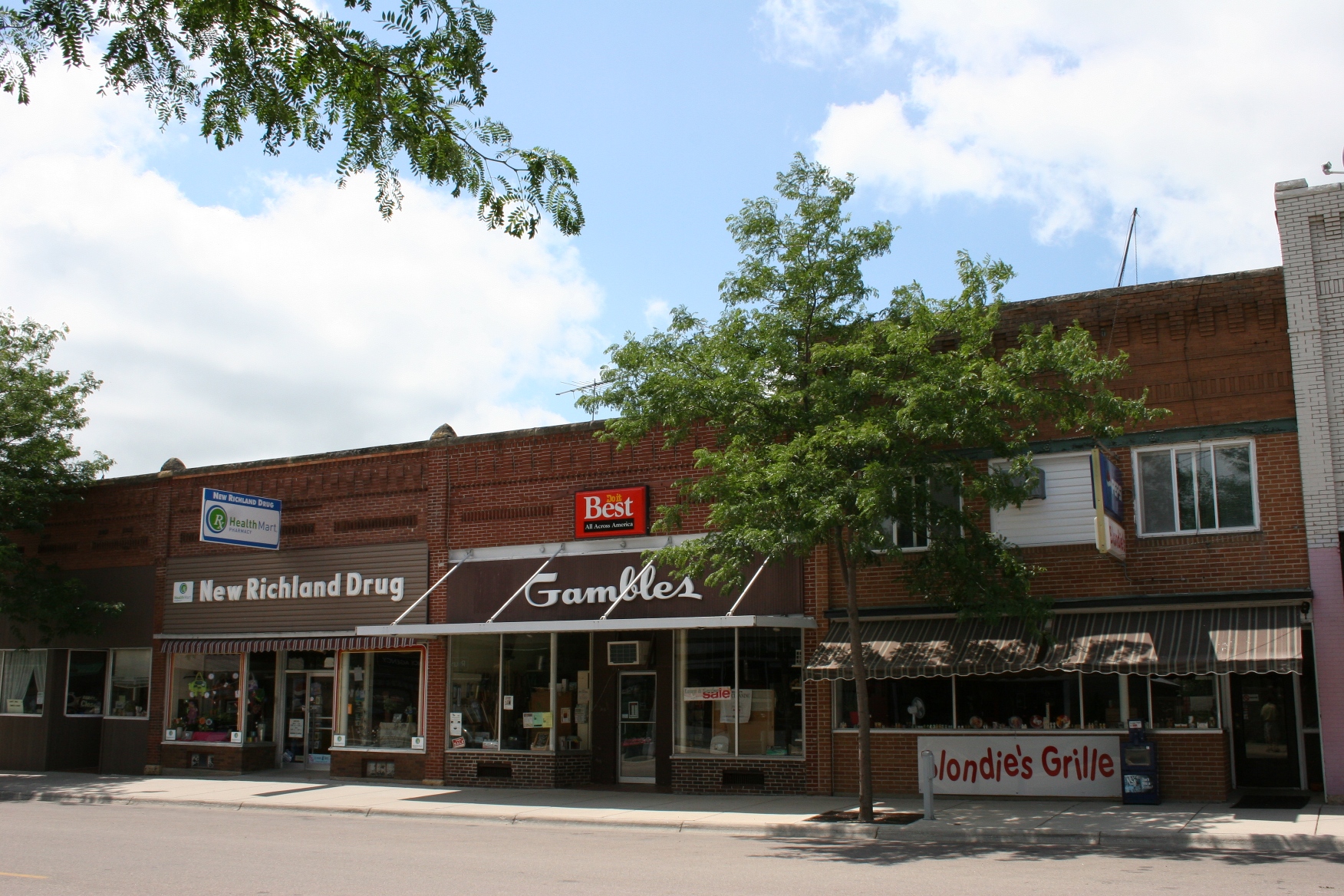
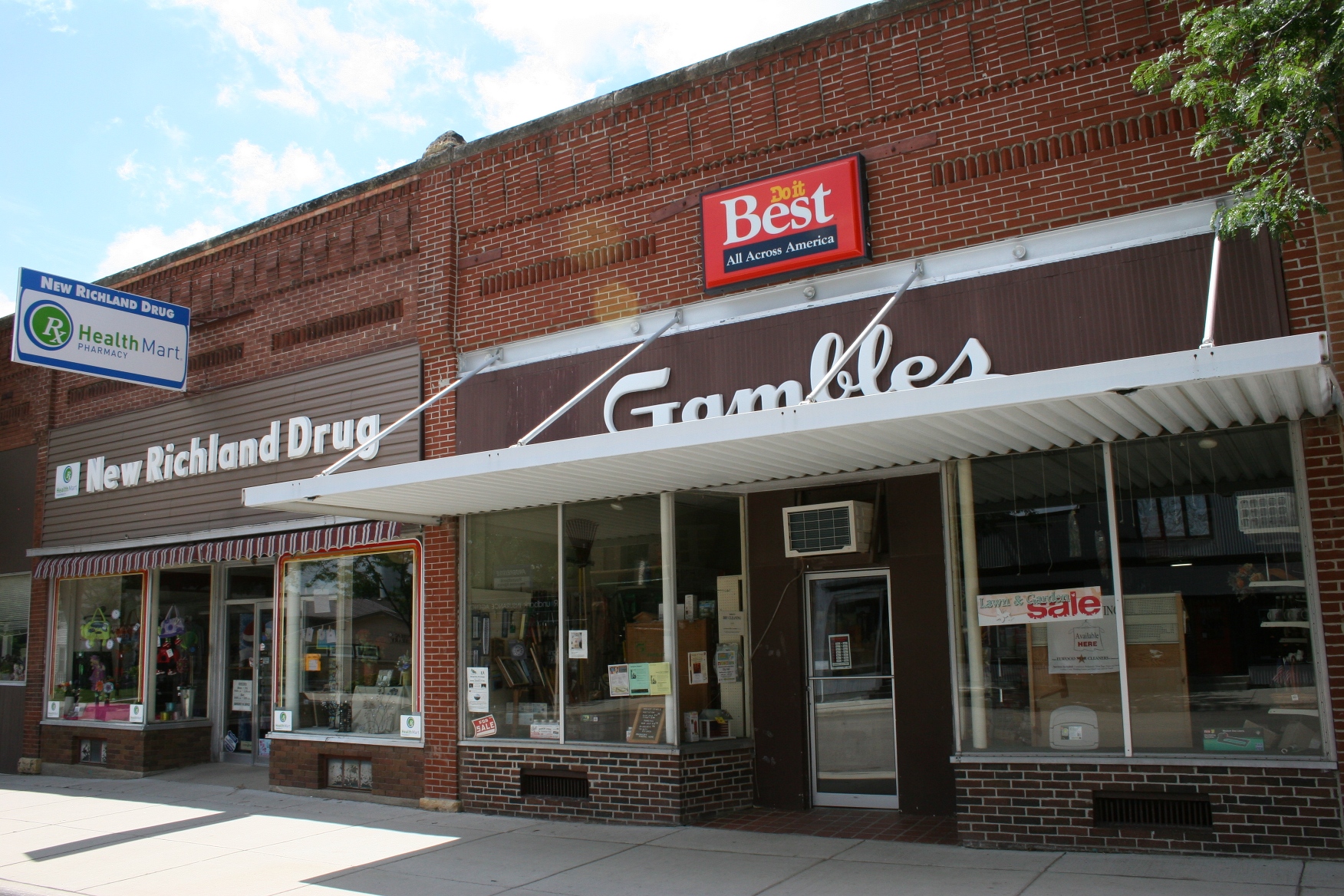
Even finding a Gambles hardware store in New Richland, population around 1,200, seemed an oddity. But there it was, sandwiched between New Richland Drug and Blondie’s Grill, along a main drag in this Waseca County community. These hardware stores were common when Randy and I were growing up in the 1960s, but not so much now.

Gambles stores, like this one in New Richland, were once common in Minnesota small towns. From 1925 - 1928, Gamble-Skogmo was headquartered in Fergus Falls and then moved to Minneapolis.

As surprised and delighted as we were to find the Gambles store, we were even more surprised to see that funeral and visitation information posted in the front window next to the canning jars.

But apparently this business place public posting is a usual practice in New Richland since the elderly van driver pulled up in front of Gambles for the sole purpose of checking out the information about Rodney Arnold.

Randy, wanting to know how she defined “seemed so young,” inquired while I snapped photos of that seemingly out-of-place sign in the hardware store window.

“He was maybe in his early 60s,” the woman, probably in her late 70s or early 80s, guessed, then drove off.

For the record, Rodney Arnold was 62. Upon our return home, I went online to Friedrichs Funeral Home and checked. I also learned that this self-employed dry wall installer met his friends every morning for coffee at Dads Good Stuff, just a few doors down from Gambles.

The things you learn if you simply take the time to stop along a small-town Minnesota Main Street…to read the latest funeral information.

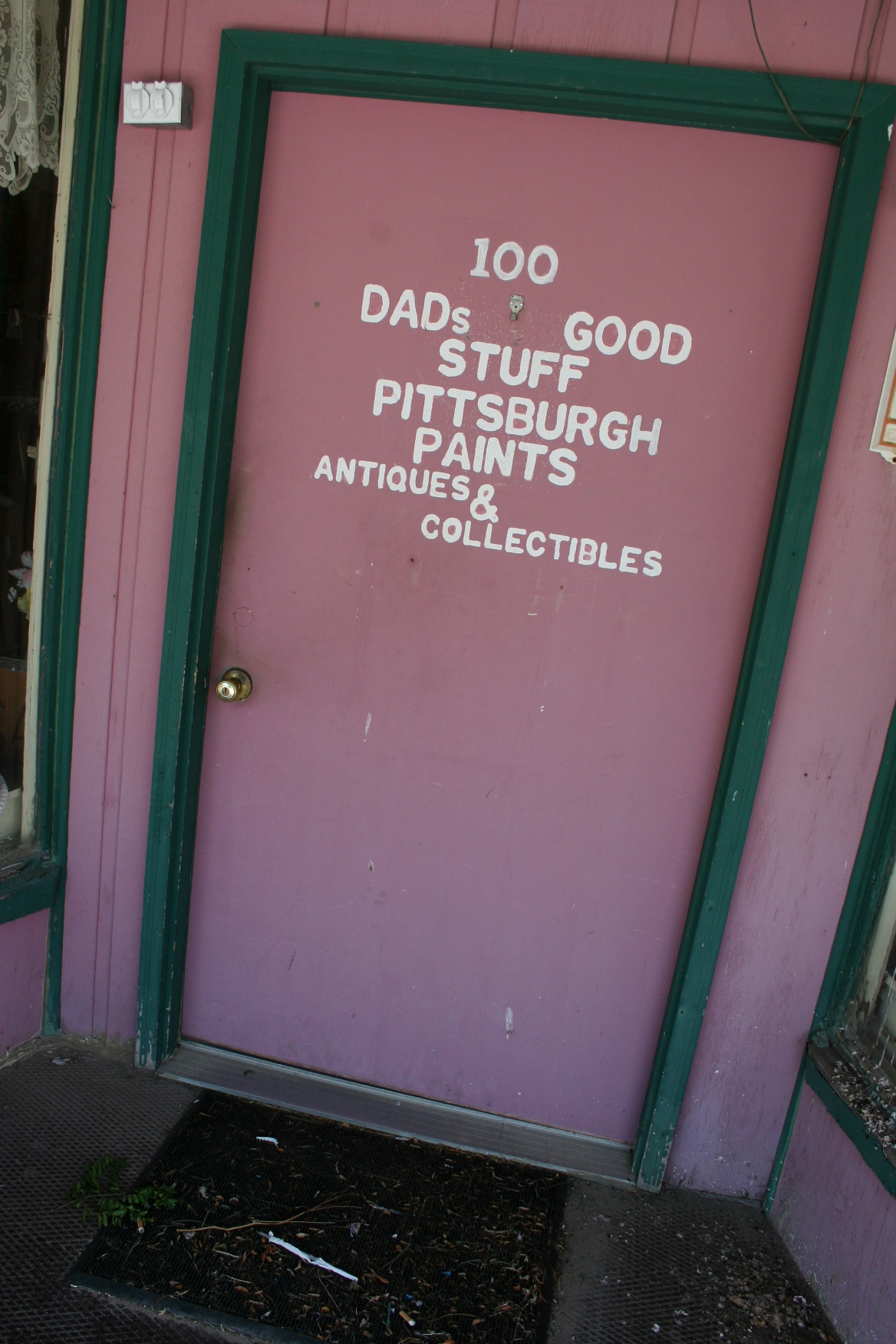
The flashy front door of Dads Good Stuff.

Unfortunately, Dads Good Stuff antique, etc., store was closed when we were in New Richland Sunday afternoon.

Just a close-up shot of New Richland's Gambles store, which was closed when we were in town.

READERS: This is the first of many posts I’ll publish this week about a Sunday afternoon drive south to Hope, west to Ellendale and New Richland, north to Otisco and Waseca, and then back home to Faribault, with two country church stops in between.

© Copyright 2011 Audrey Kletscher Helbling


Hot as “you know what” in Minnesota July 18, 2011

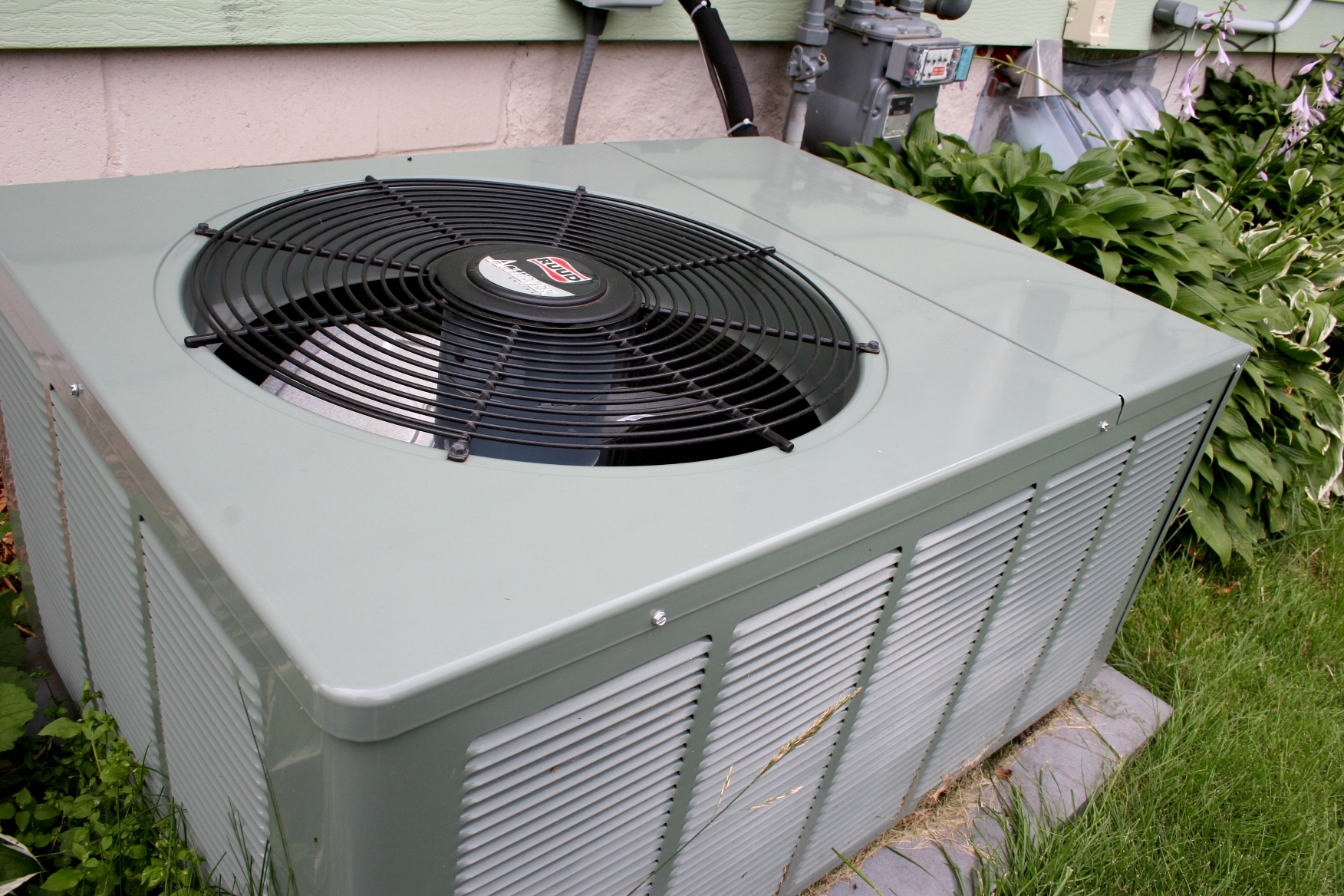
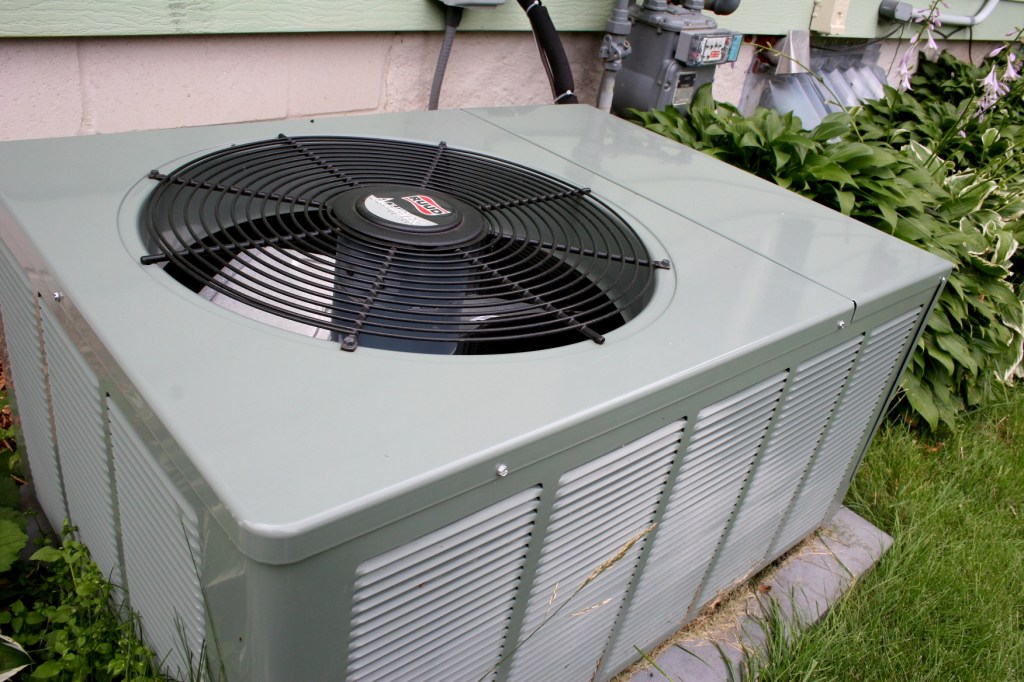
Air conditioners will be working overtime in Minnesota this week.

SO, MINNESOTANS, here’s the weather question of the day: “How hot is it outside?”

Although I’m of German heritage, I’d unequivocally state, “hotter than a Finish sauna.”

With a predicted dewpoint in the 70s (Sunday it reached an almost unheard of 81) and temperatures in the 90s today, the National Weather Service in Chanhassen has continued an extensive heat warning for central and southern Minnesota and west central Wisconsin through 9 p.m. Wednesday.

Heat indexes of more than 105 degrees (some media outlets are saying 110 – 117 degrees) are expected for several-hour stretches during the afternoon, creating “a dangerous situation in which heat illnesses are likely.” Ya think?

That means, folks, that we need to keep ourselves cool (preferably in an air conditioned building), drink plenty of fluids (and we’re not talking alcohol here) and stay out of the sun.
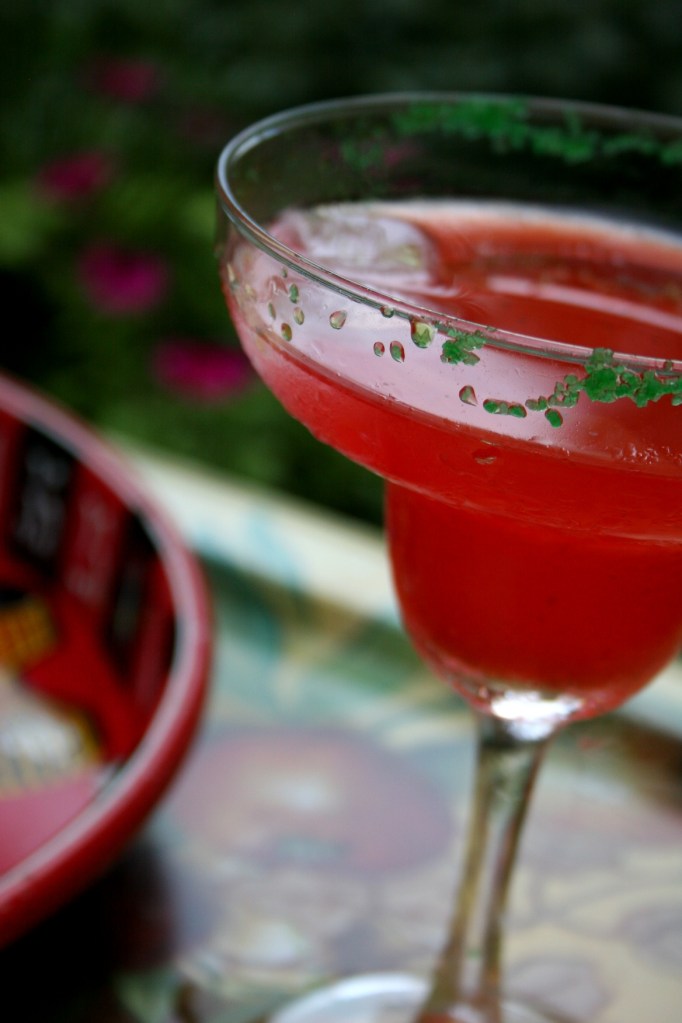
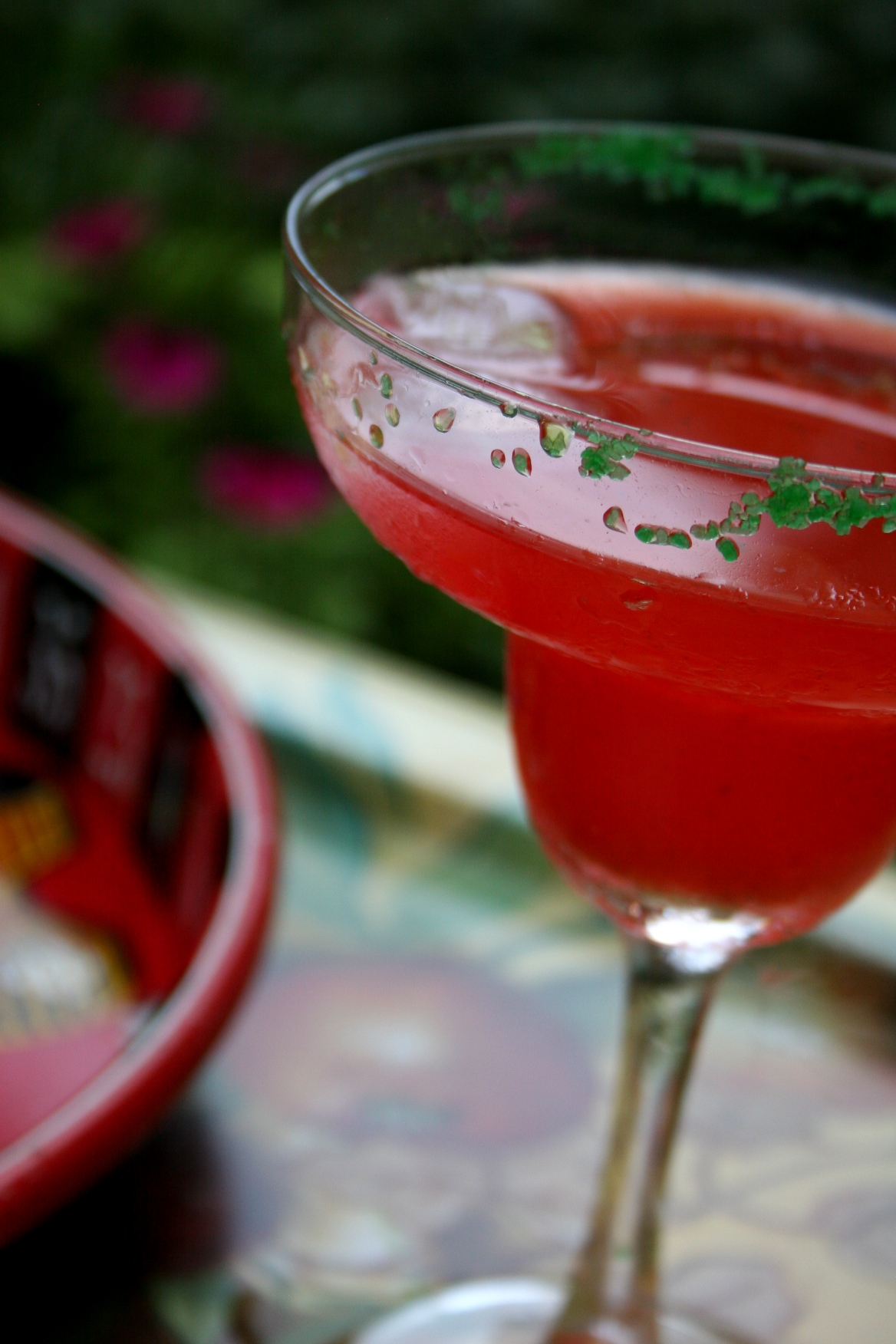
Don't increase your fluid intake via alcohol.

Honestly, when I stepped outside Sunday evening, I felt like I couldn’t breathe. You can guess how long I stayed outdoors. Long enough to turn around and walk back inside the house. I had been out earlier photographing the air conditioner you see above. I had a little trouble with the camera lens fogging over as soon as I stepped outdoors. The windows on our house also fogged, a phenomenon I have not previously seen except when I cook pasta. Weird stuff this weather.

All joking aside, this heat and humidity can be downright dangerous, especially for anyone working outdoors.

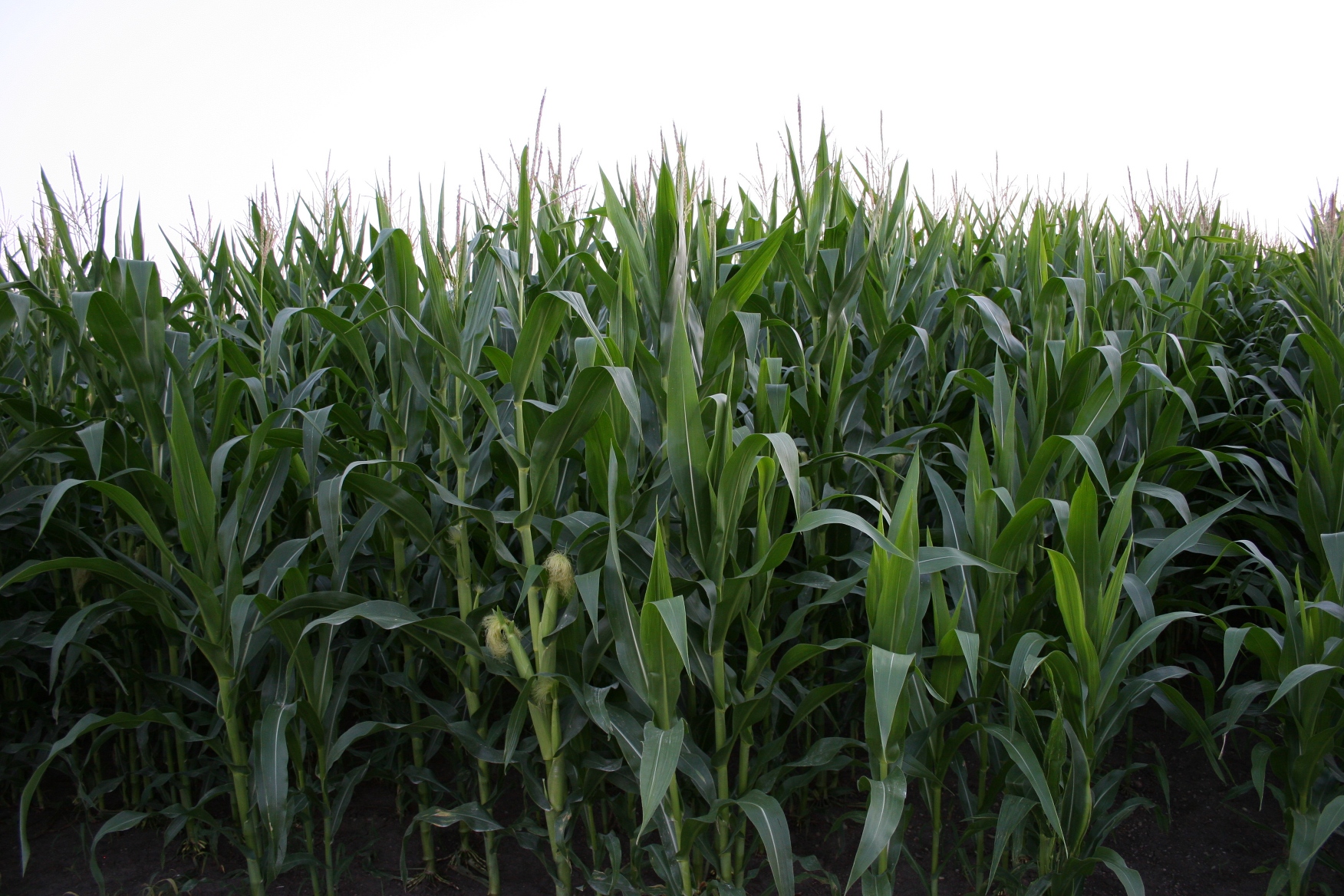
I know of some teens supposedly heading to the corn fields early this morning to detassel corn in the Stanton/Northfield area. Here’s my advice: Gulp water, by golly, then gulp some more. Slather on the sun screen, wear a cap and, if you’re at all feeling out of sorts, immediately tell your supervisor. Today would not be the day to tough it out. And, yes, I do know of what I write. As a teen I detasseled corn on days so hot it seemed as if the heavy air would suffocate me in the corn rows.
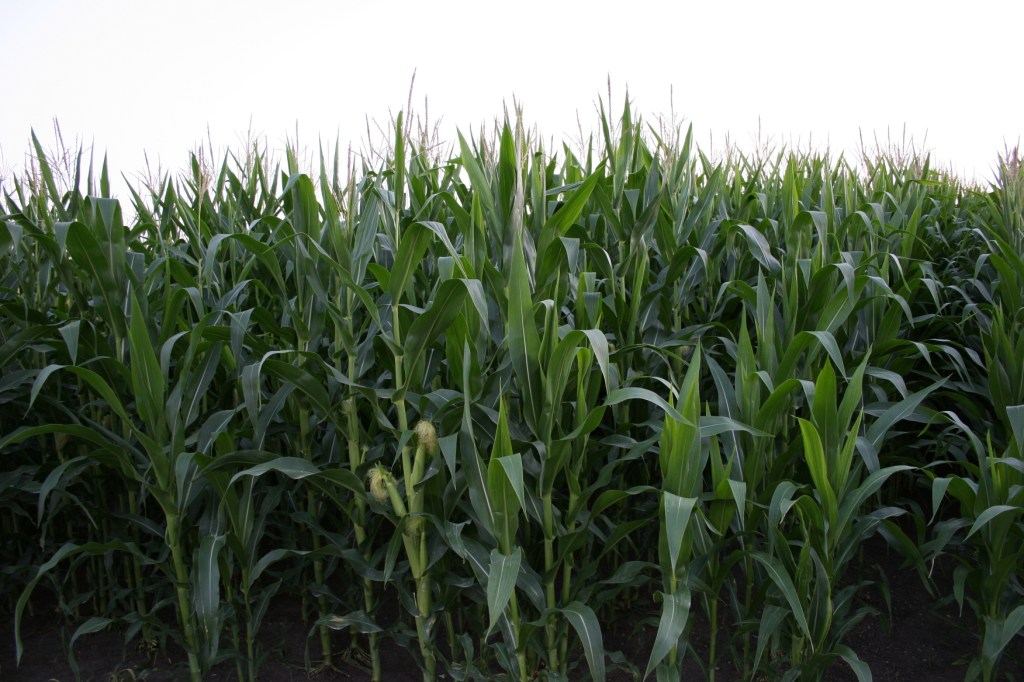
If you, or your teen, is starting a job this week as a corn detasseler, take extra precautions to avoid heat-related health issues. Also, don't quit. Every week in the cornfield won't be like this one and you' likely work only til noon.

Now, with those dire warnings out of the way, let’s talk about the words and phrases we Minnesotans use to describe this stretch of humid, hot weather. Let me pull out my Minnesota Thesaurus and thumb through the pages.

Here are some select synonyms for our current weather: steamy, muggy, scorching hot, sweltering, a real barn burner, so hot you could fry an egg on the pavement, like a sauna, “it’s not the heat, it’s the humidity”…

Whichever words you choose from that non-inclusive list, you might want to add, “It could be worse.” We Minnesotans like to tack that little phrase onto our statements lest, by not adding that qualifier, we leave ourselves open to worse circumstances/situations/weather. We do not want to tempt fate.

After all, come December, we could get socked with a raging blizzard that dumps two feet of snow on us followed by a week of temperatures plummeting to 20-below, and that’s without the windchill. We wouldn’t want to invite a Siberian winter by forgetting, this week, to say, “It could be worse.”
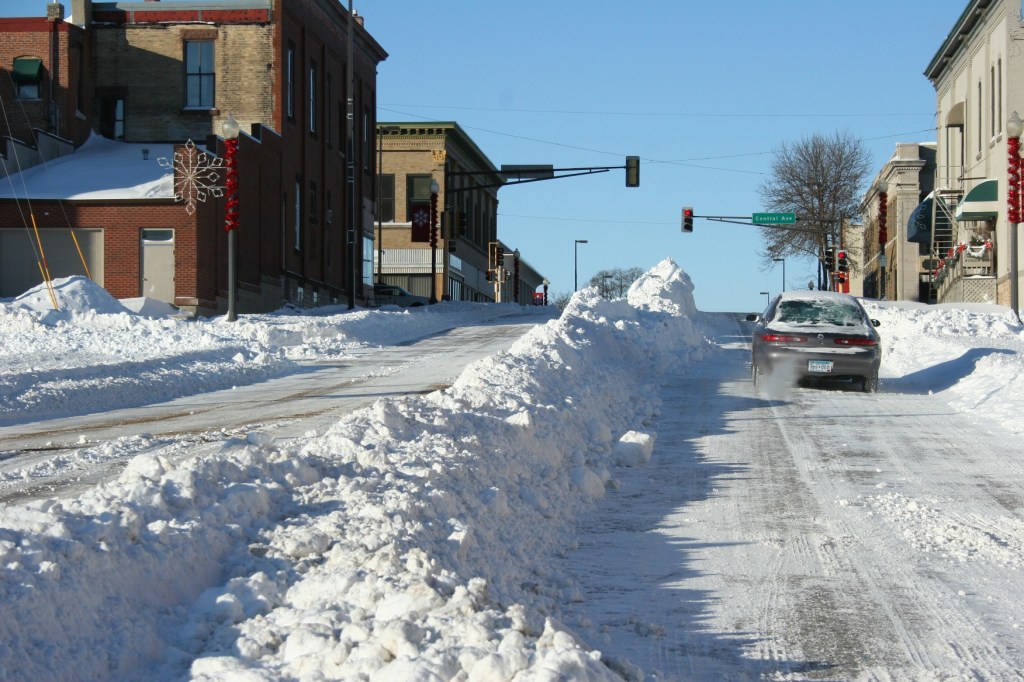
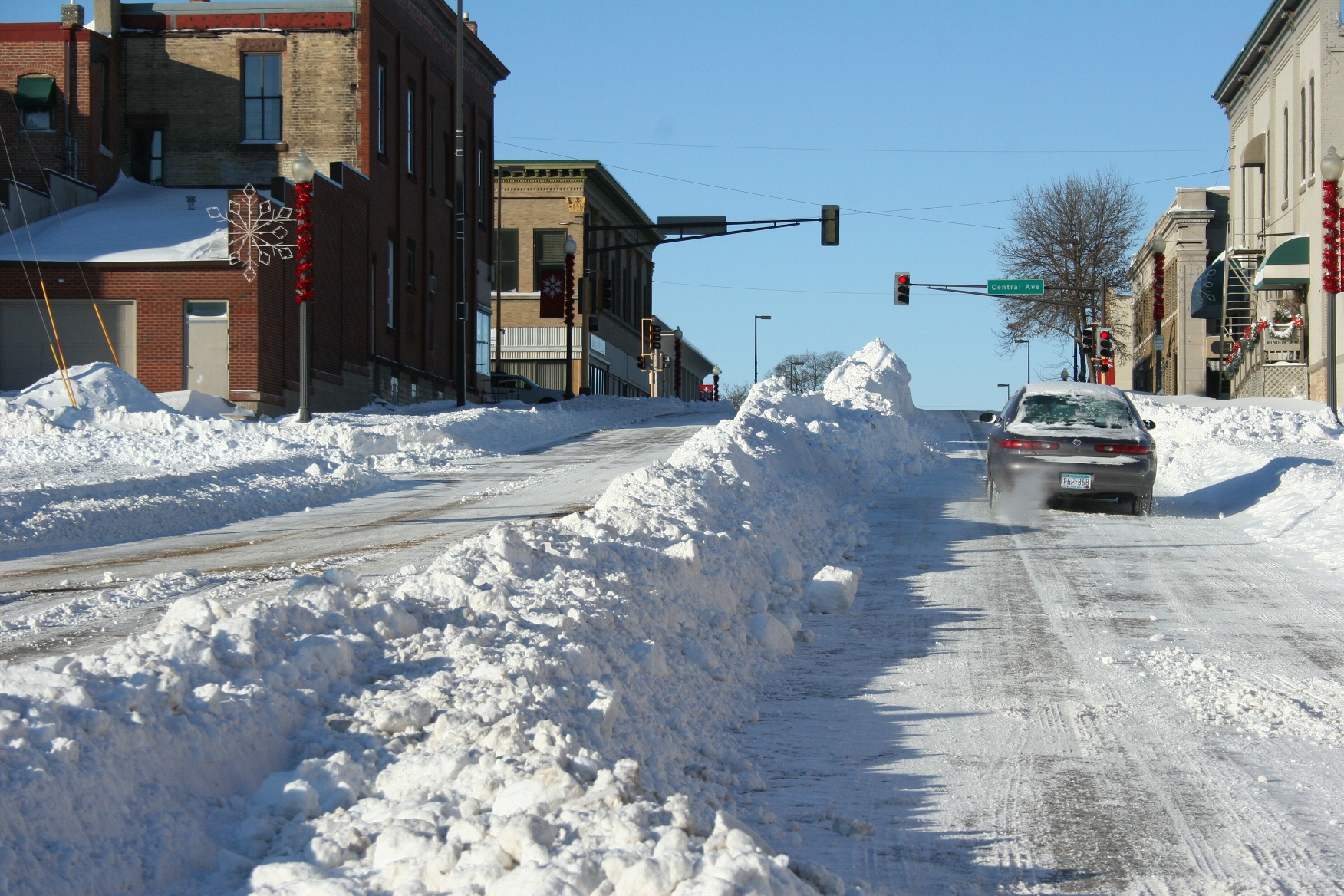
A snow pile divides traffic lanes along Fourth Street/Minnesota Highway 60 a block from Central Avenue in Faribault following a December 2010 snowstorm.

In summary, it’s best, really, not to overly-complain about the hellish, hot, scorching, stifling, steamy, sticky, sweltering, miserable, muggy, unbearable, oppressive heat and humidity. OK, then?

And, please, don’t be thinking, “Whatever, Audrey.”

IT’S YOUR TURN to speak up. How would you describe this weather we’re experiencing in Minnesota? How are you coping? Add your ending to this prhase: “It’s so hot in Minnesota that…”  Submit a comment and tell me whatever.

© Copyright 2011 Audrey Kletscher Helbling


A virtual tour of Mankato’s sculpture walk July 9, 2011

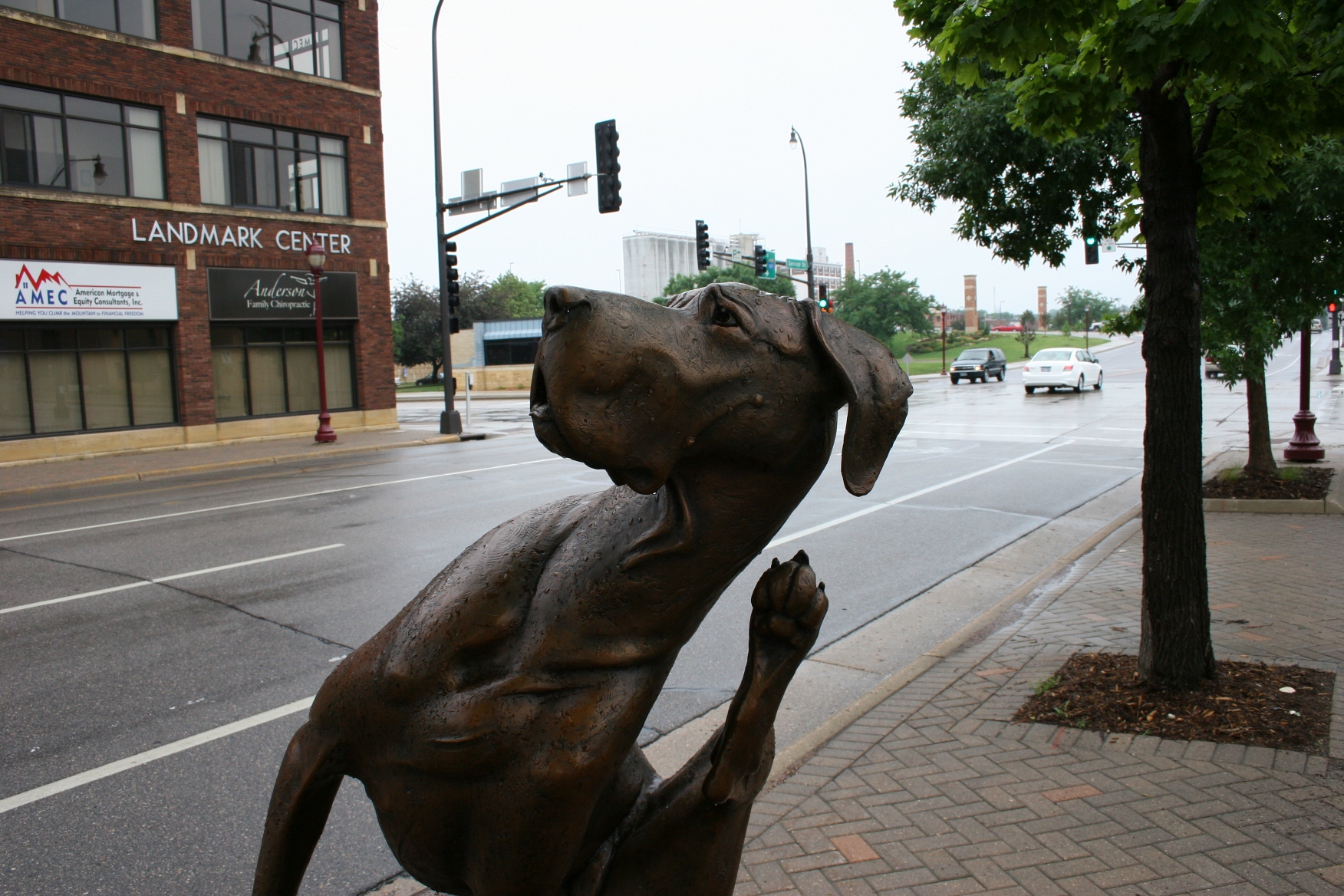
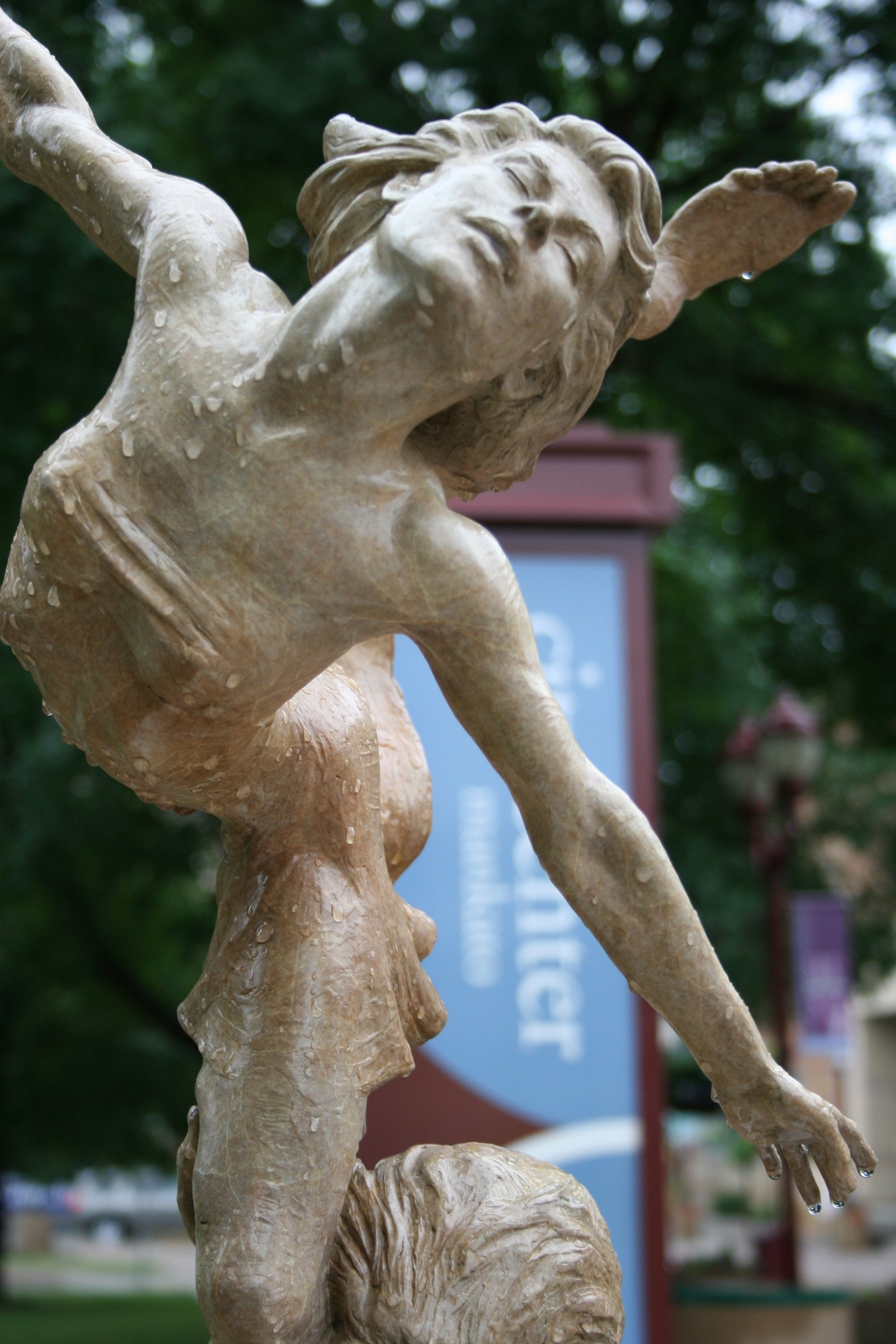
Louise Peterson of Guffey, CO. created this $20,000 bronze sculpture of a playful Great Dane titled "Tickled."

DEAR READERS,

I realize that some, maybe even many, of you, do not live anywhere near Mankato, the southeastern Minnesota community where I recently viewed sidewalk sculptures.

Heck, some of you don’t even live in states bordering Minnesota. Your chances of ever seeing these 25 pieces of art in person are about zilch.

So, for those of you who will view the City Art Walking Sculpture Tour only via Minnesota Prairie Roots, I’ve pulled together one last blog post. Please read my previous two posts for more details and photos of this community art project by first clicking here and then here.

This whole concept of bringing art to the streets through a rotating sculpture tour pleases me immensely. What a grand idea. Such art adds to the vibe of a downtown, to its art, history and culture.

Thank you, Mankato, and everyone who supported this cause financially, for bringing these sculptures to southeastern Minnesota, within quick driving distance of my Faribault home.

Yours gratefully,

Audrey Kletscher Helbling at Minnesota Prairie Roots

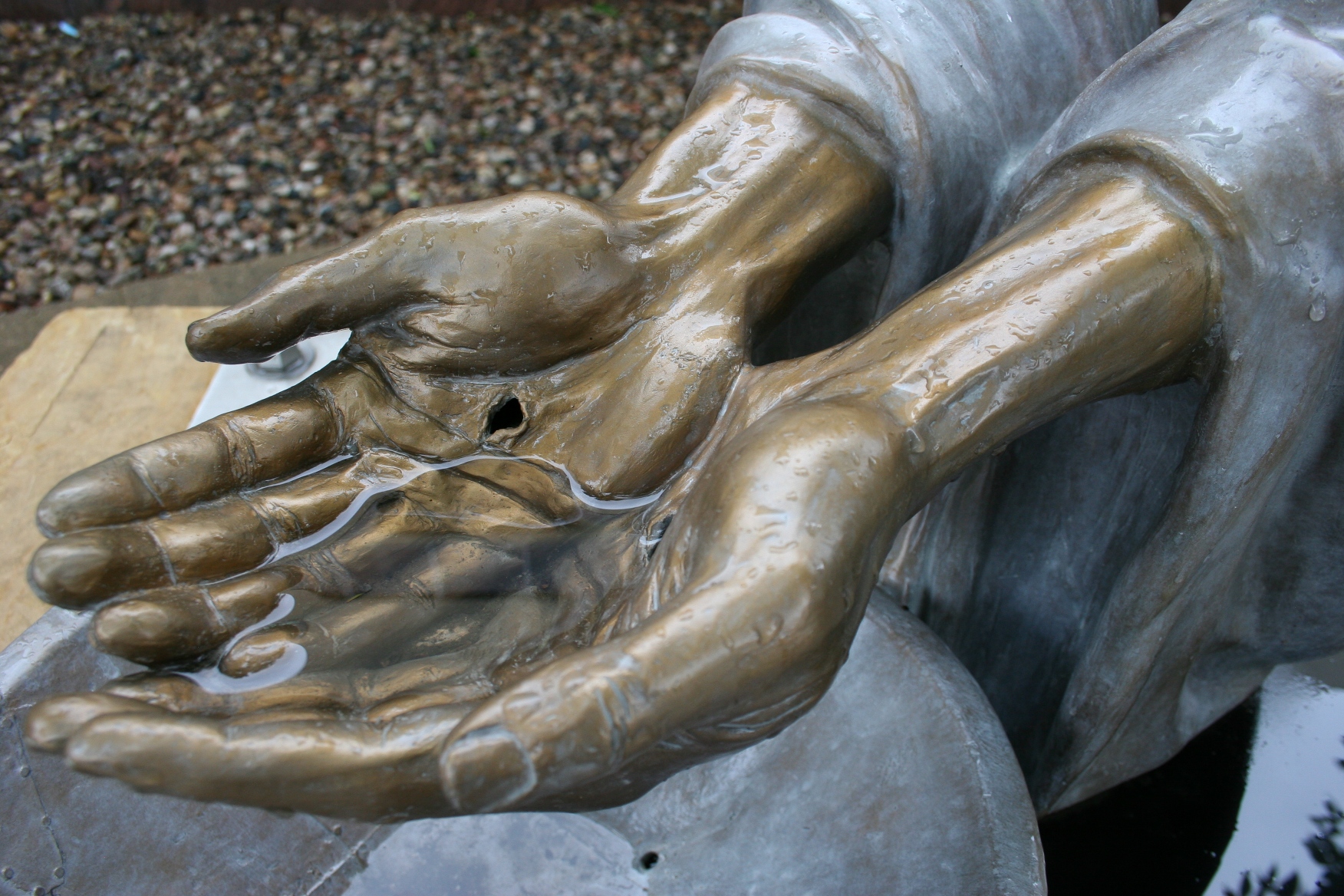
Sioux Falls artist Darwin Wolf's $13,500 sculpture, "The Fountain of Life," references Jesus washing Peter's feet at the Passover. It emphasizes the healing, life-giving qualities of water.

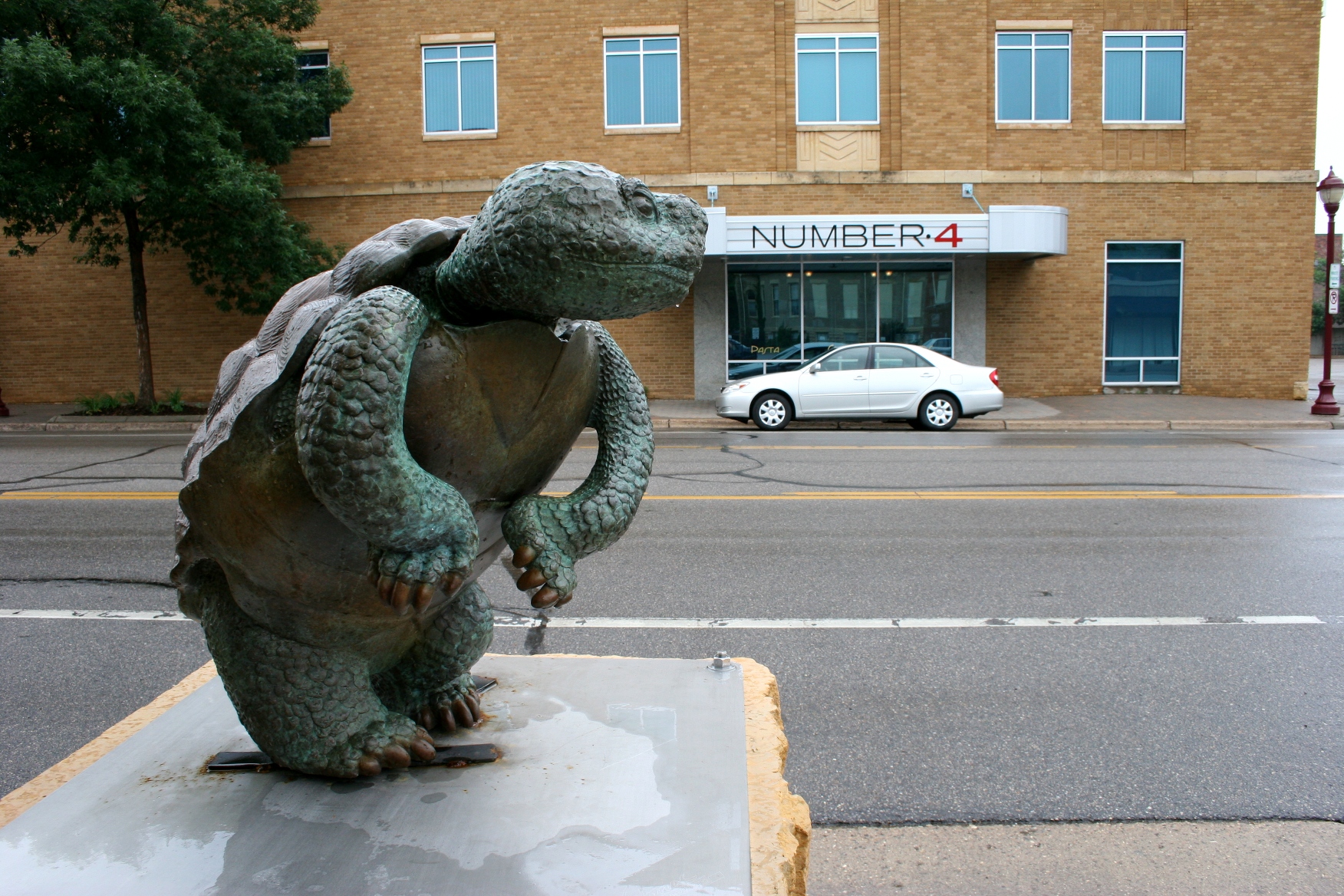
"Poco a Poco" a $12,000 bronze sculpture by Pokey Park of Tucson, Arizona, highlights the tortoise, representative of wisdom in American Indian culture. The building in the background houses Number 4 American Bar & Kitchen.

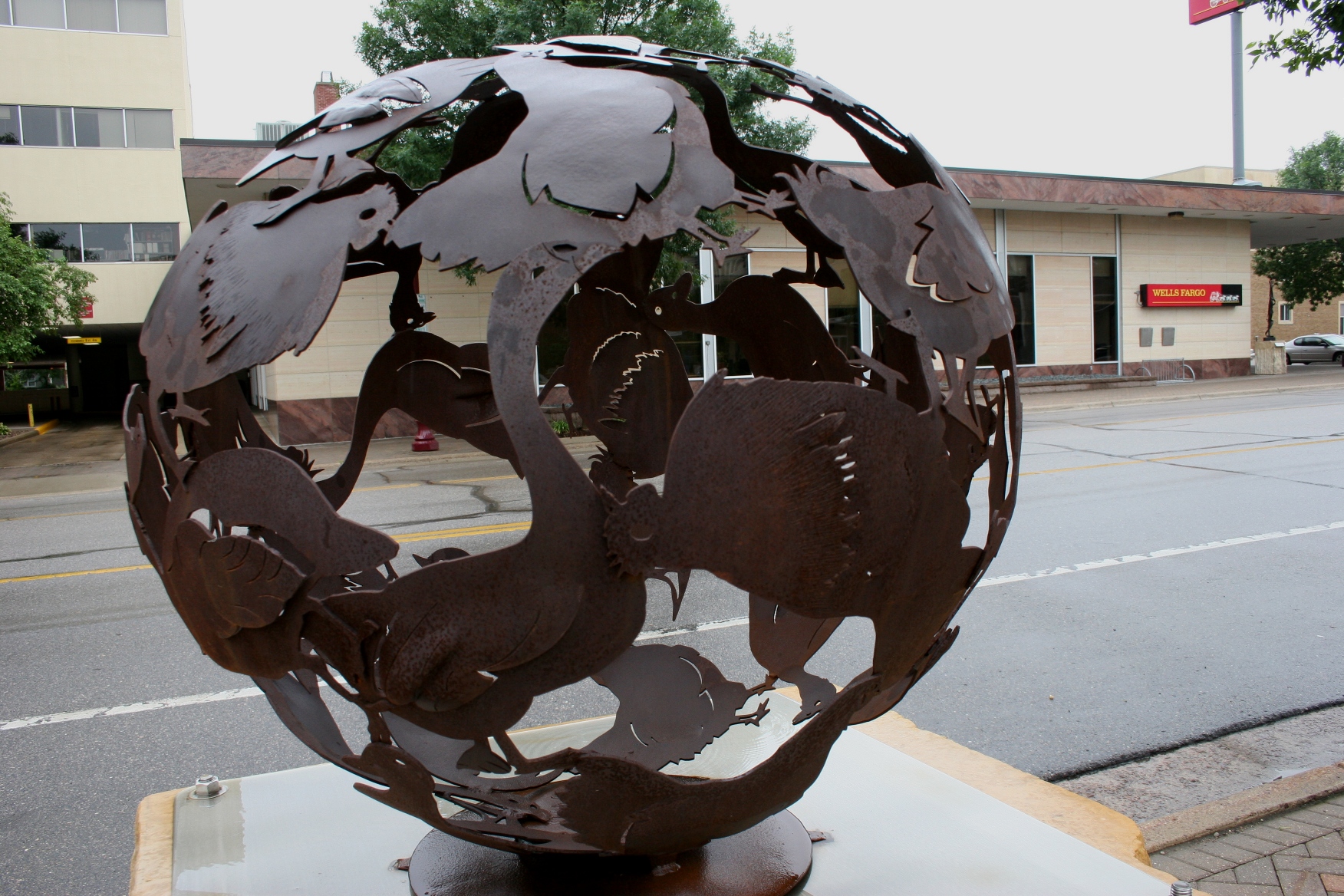
"Fowl Ball" celebrates geese, ducks, turkeys and chickens in this $7,600 forged and welded weathered steel sculpture by Lee W. Badger of Hedgesville, West Virginia.

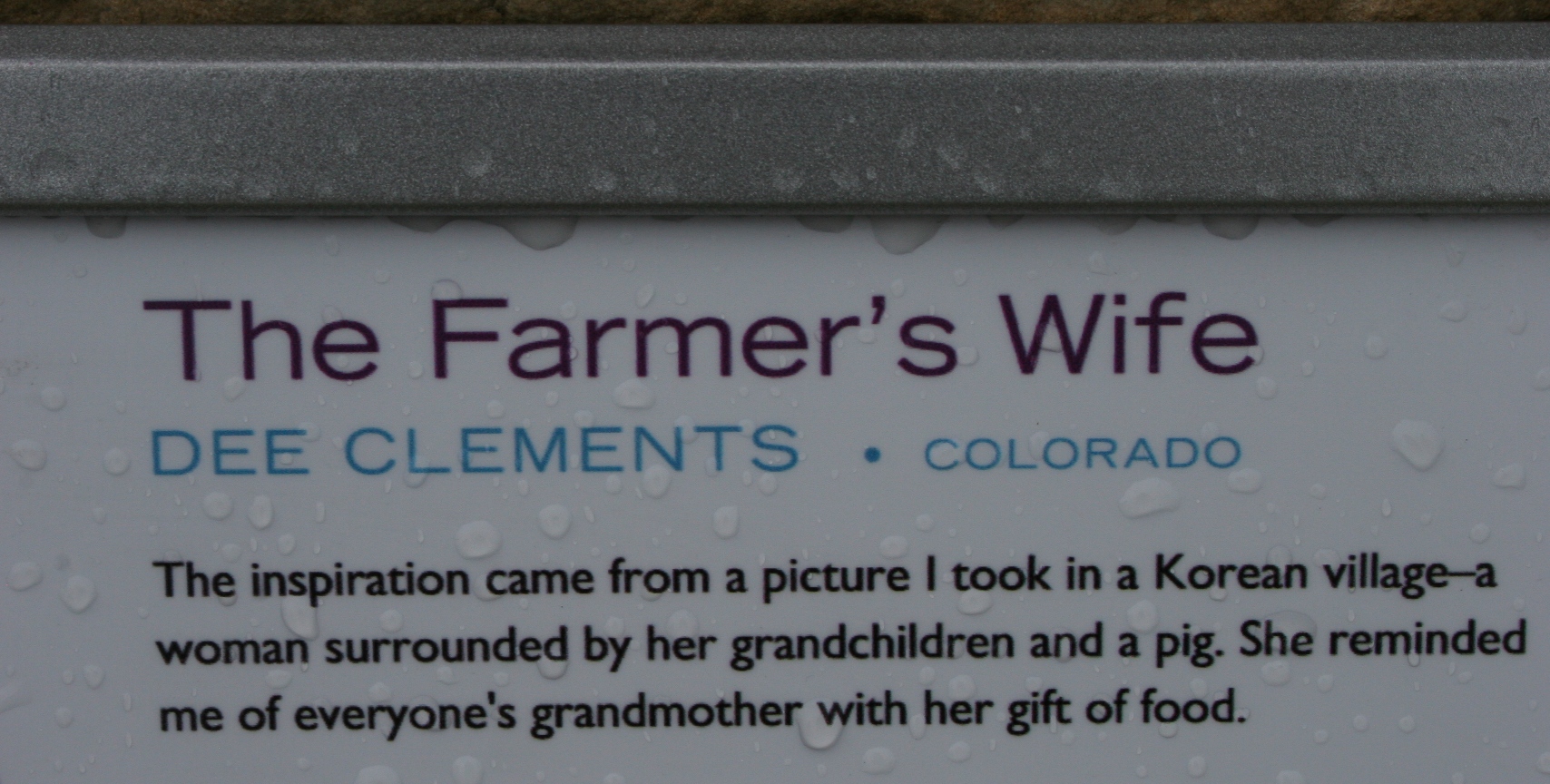
All of the sculptures are marked with informational signage.

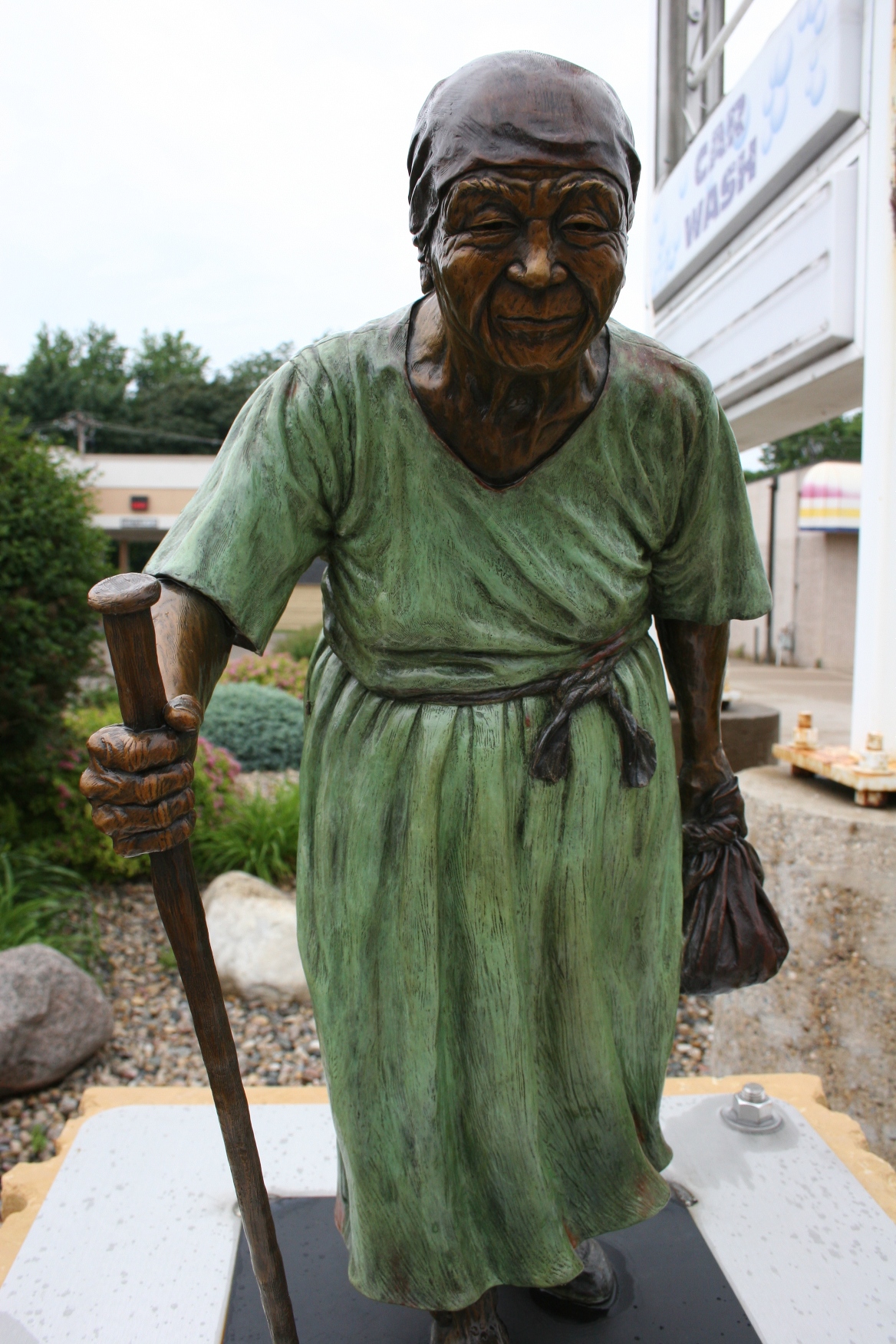
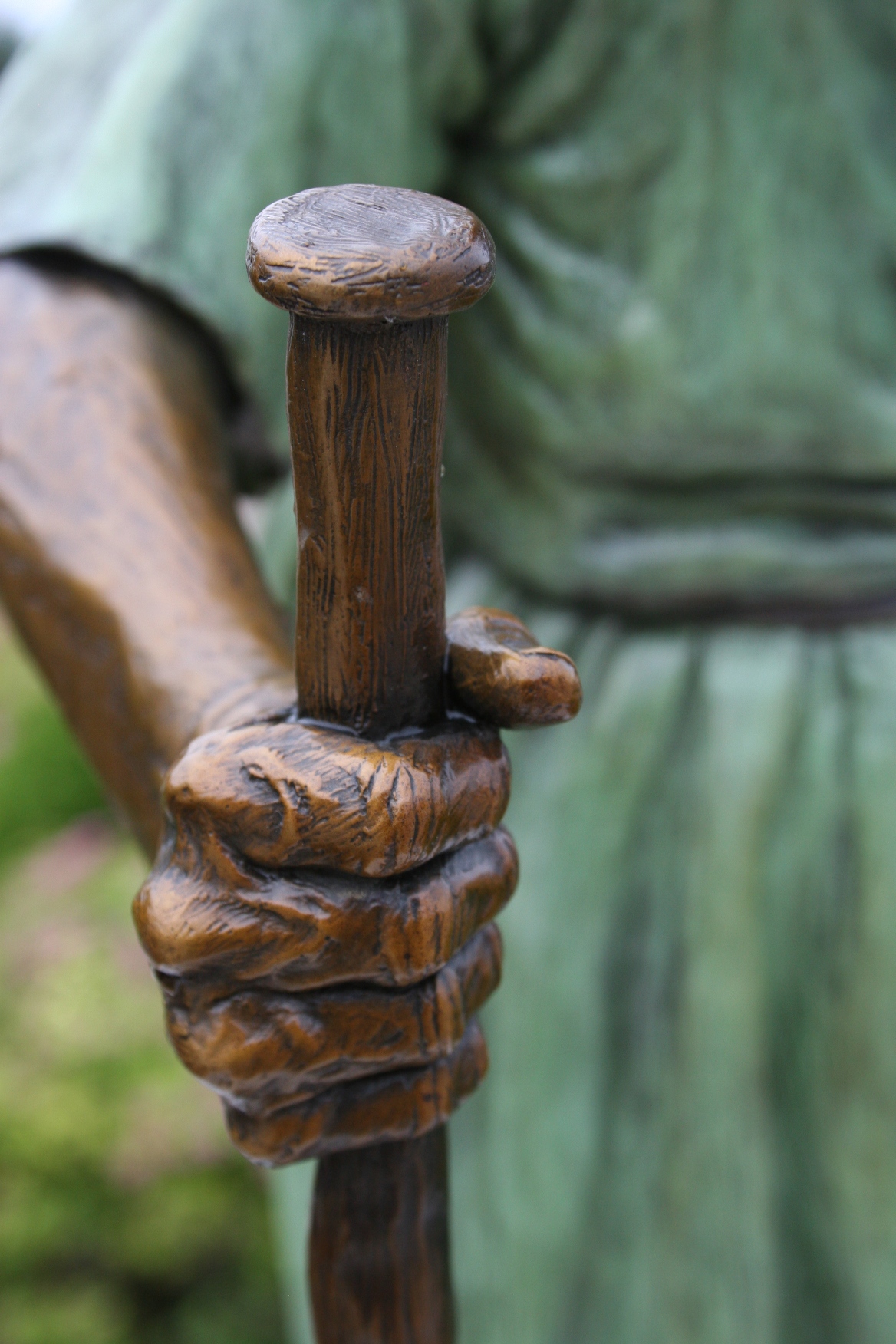
Dee Clements of Loveland, Colorado, created the $6,000 bronze "The Farmer's Wife," one of my favorite exhibit pieces.

To fully appreciate these sculptures, you must notice the details, including the Korean woman clenching her walking stick in "The Farmer's Wife."

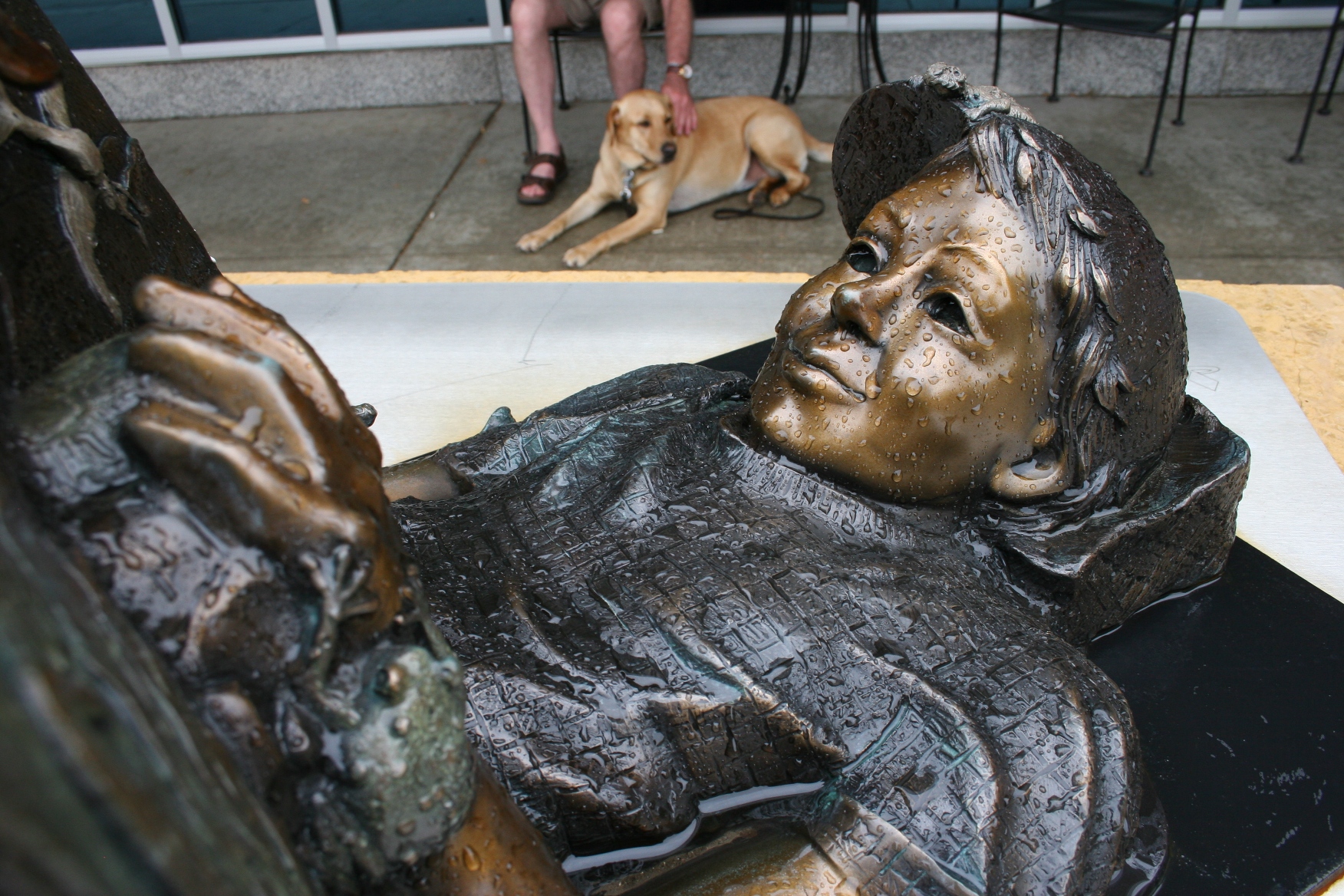
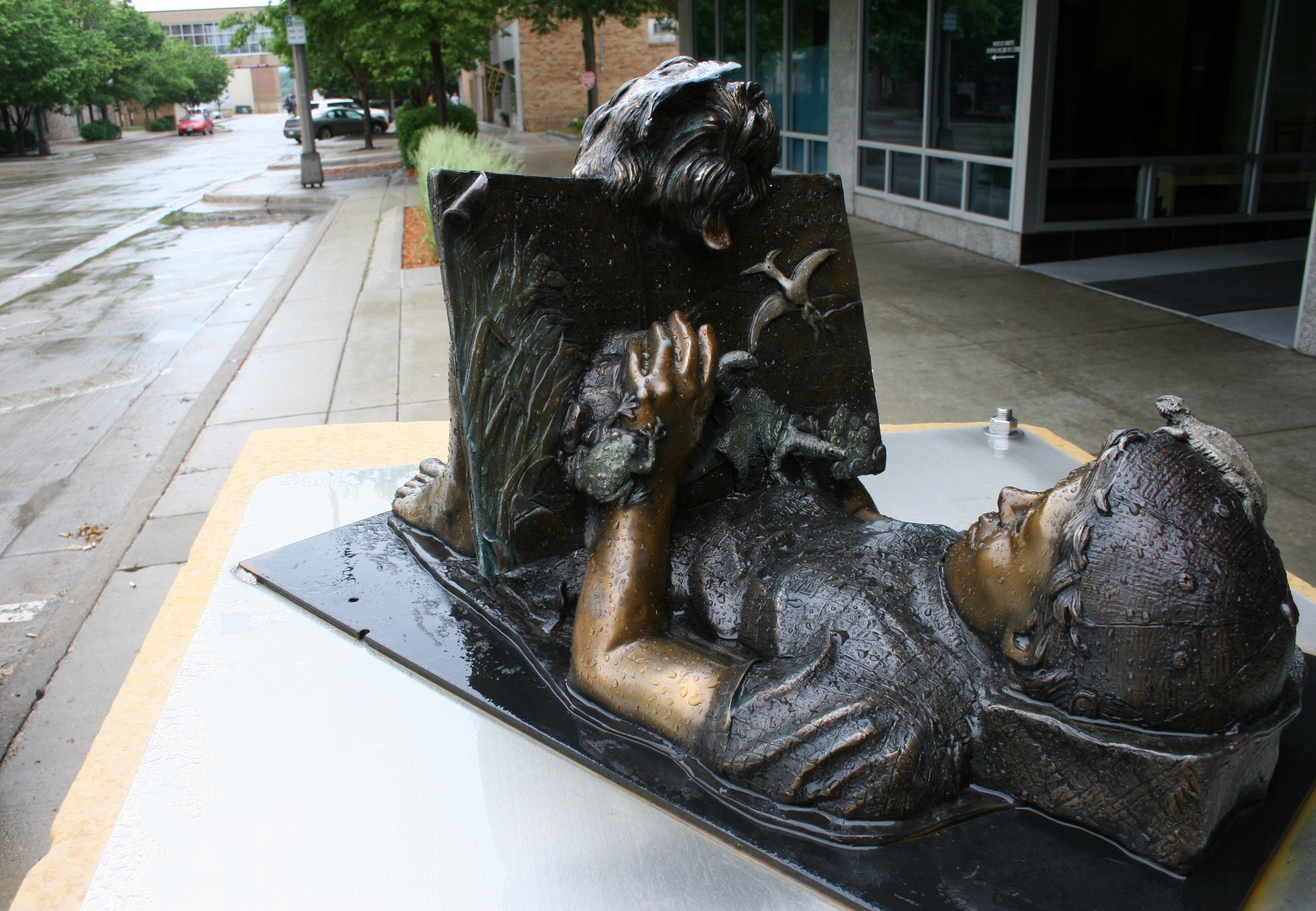
Details define "Reading Magic," a $8,500 bronze sculpture by Julie Jones of Fort Collins, Colorado.

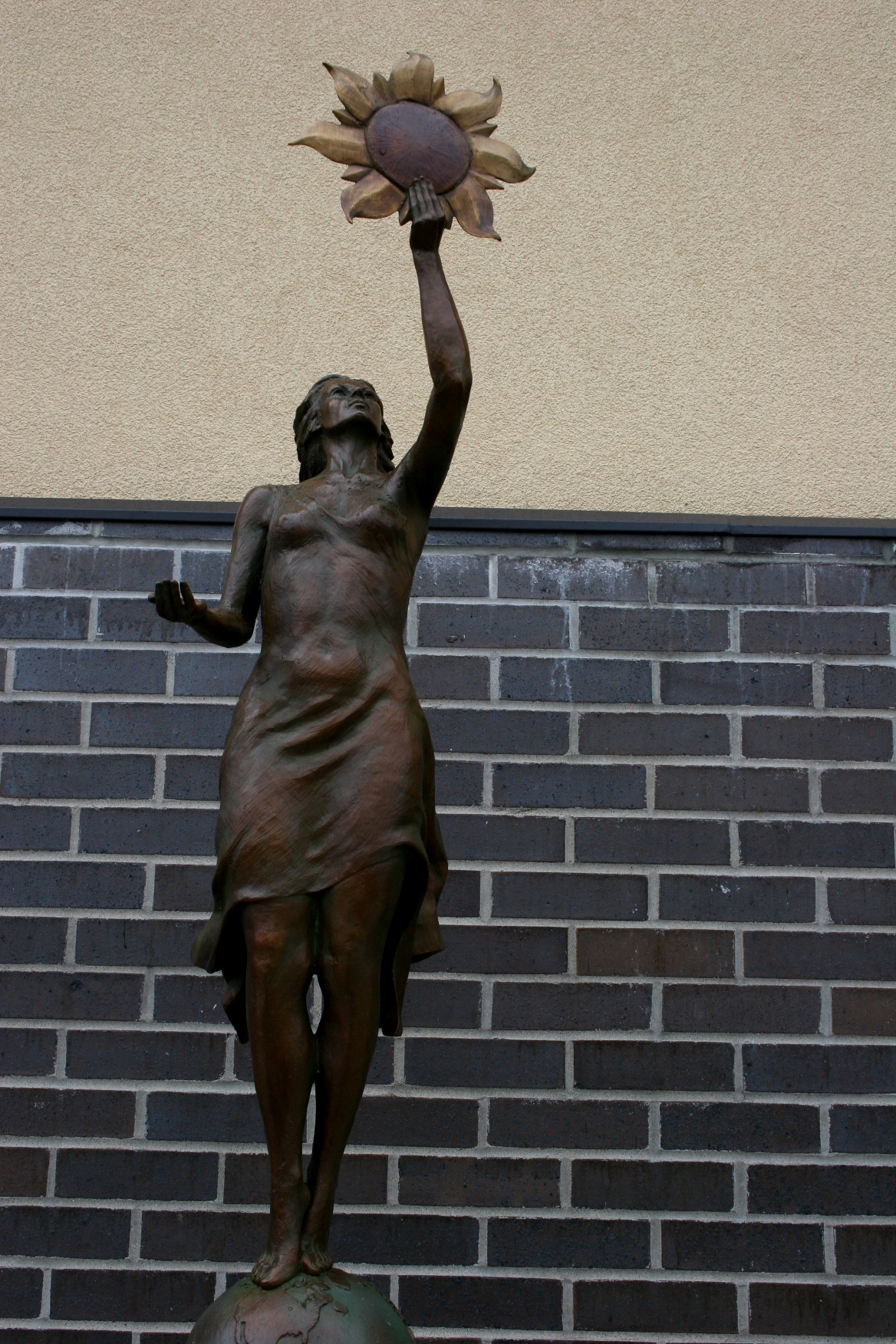
"Spirit of Energy," a $8,400 bronze by Karen Crain of LIttleton, Colorado, represents three renewable energy resources: sun, wind and water.

© Copyright 2011 Audrey Kletscher Helbling
 

Appreciating mom-and-pop businesses like Mutch Hardware June 27, 2011

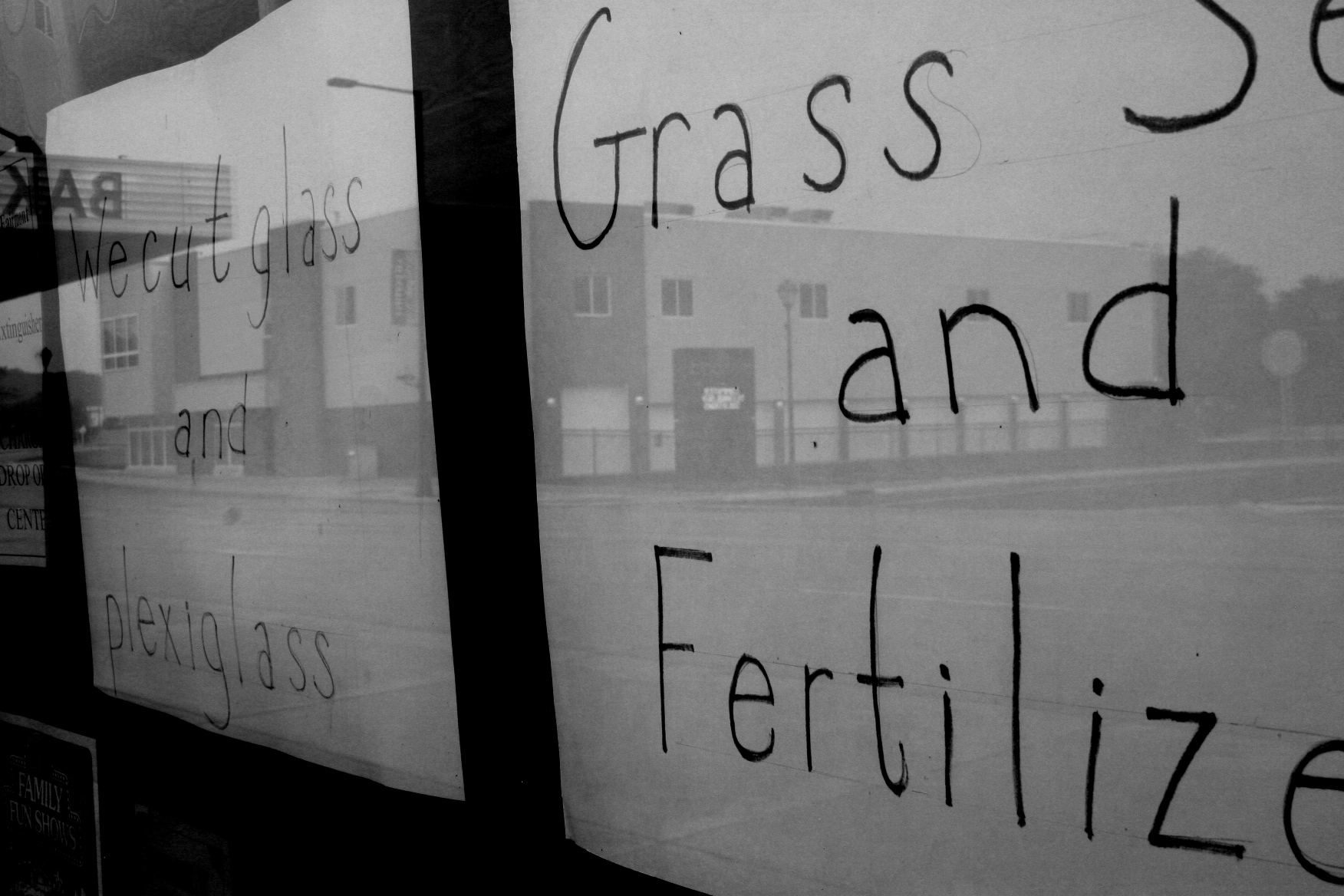
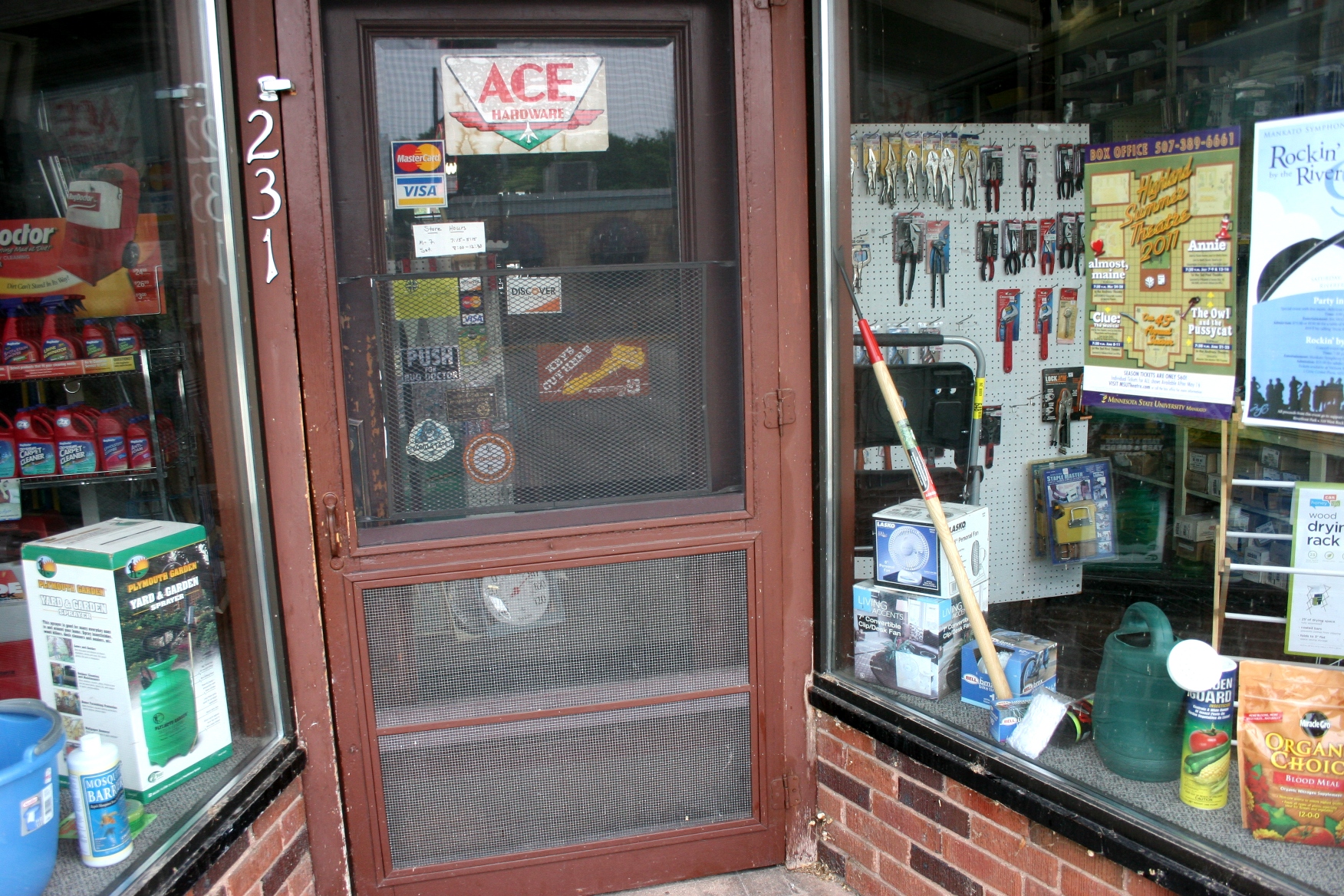
Buildings across the street reflect in the windows of Mutch Northside Hardware in North Mankato where these signs hang on a front plate-glass window.

“Grass Seed and Fertilizer.”

“We cut glass and plexiglass.”

I didn’t need grass seed or fertilizer or any glass cut. Yet, the signage drew me to the storefront plate-glass window of the hardware store along Belgrade Avenue in North Mankato. How often do you see business signs like this with letters printed in near-perfect penmanship between two penciled ruler lines on white tagboard?

After I admired the simplicity of this advertising in a world of mass-produced, flashy, signage, I noticed the old screen door. That did it. I was smitten with this place, this Mutch Northside Hardware that, from the exterior, reminded me of the small town hardware stores of my youth.

You know, the kind of store where you can buy everything and anything. The place packed with merchandise from floor to ceiling, aisles narrow as a sidewalk crack. Nails and bolts jumbled in scarred cubbies. Belts dangling from hooks on pegboard. Wooden floors that creak.

Mutch Hardware is crammed with merchandise, some of it displayed in the window fronts.

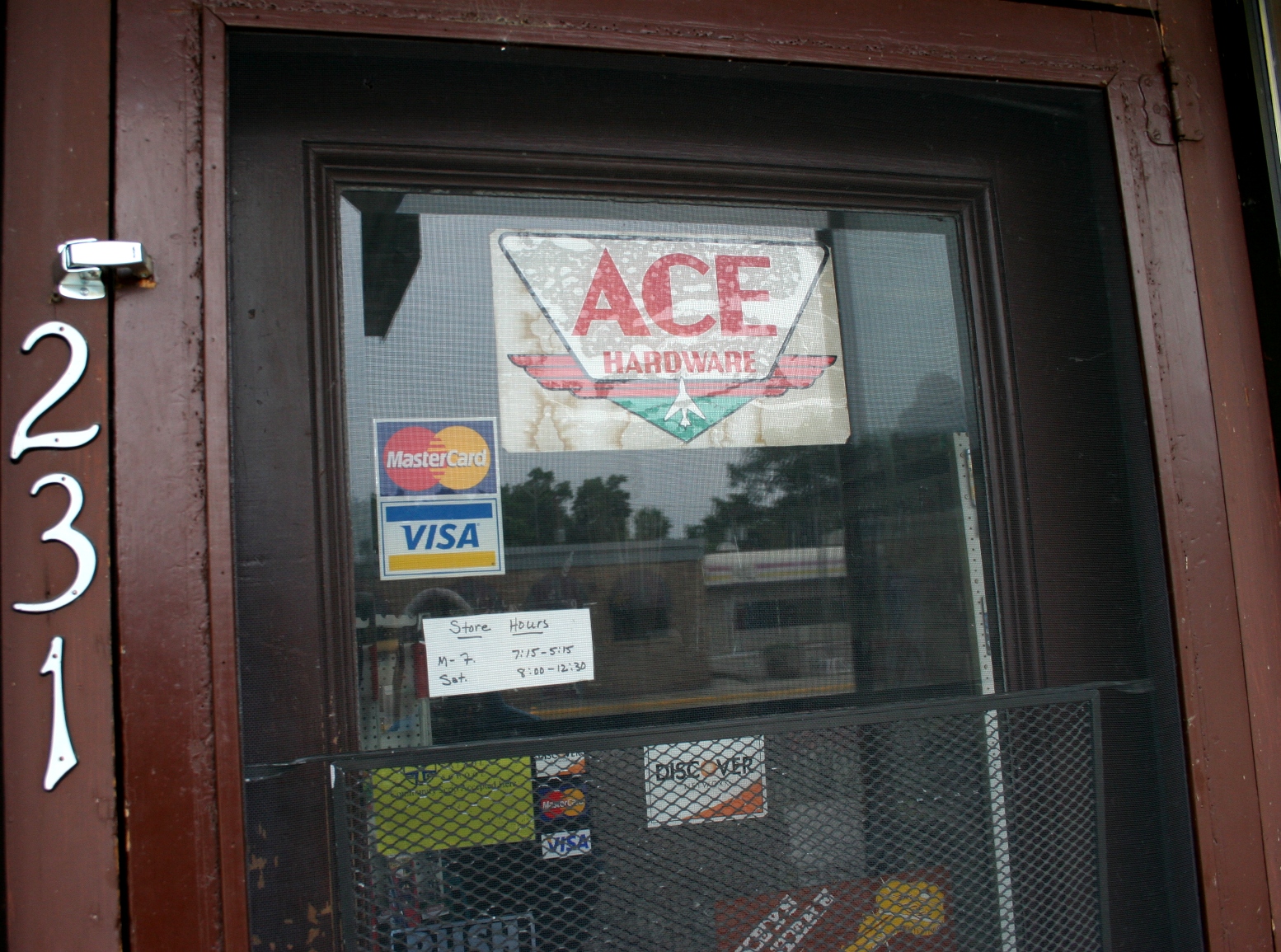
An old ACE Hardware sign decorates the front door where a handwritten sign is posted listing store hours.

I could almost hear the vintage screen door slam shut behind me as I stood outside the closed hardware store, hands cupped around my eyes, peering inside. It was late Saturday afternoon and I was hours too late to step inside Mutch Hardware, much to my disappointment.

But that didn’t stop a flood of memories from washing over me. Memories of going to town with my dad, stopping at Joe Engel’s Hardware store on Vesta’s main street to pick up a few bolts or maybe a belt or something else for the farm.

My siblings and I had another reason for hitching a ride to the southwestern Minnesota hardware store with our dad. Joe Engel’s supplied our ammo—coiled rolls of red-perforated paper pocked with gun powder for our toy cap guns. This was the 1960s, and even though not politically-correct today, an era of playing “Cowboys and Indians.” I remember those days with a depth of fondness that I doubt today’s tech-oriented kids will ever experience.

I would like to take each of them inside a business like Mutch Hardware, where I expect helpful, personal service, care and friendliness accompany each purchase. Places like this seem rare in our fast-paced world of big box stores run by corporations in far away cities. Few mom-and-pop stores can survive in today’s economy. That is reality.

I’m not a prima donna; I shop chain stores as much as anyone. Yet when I see a business such as Mutch Northside Hardware in North Mankato, I take notice. I appreciate the hardworking men and women who, as independent business owners, still offer us a shopping option.

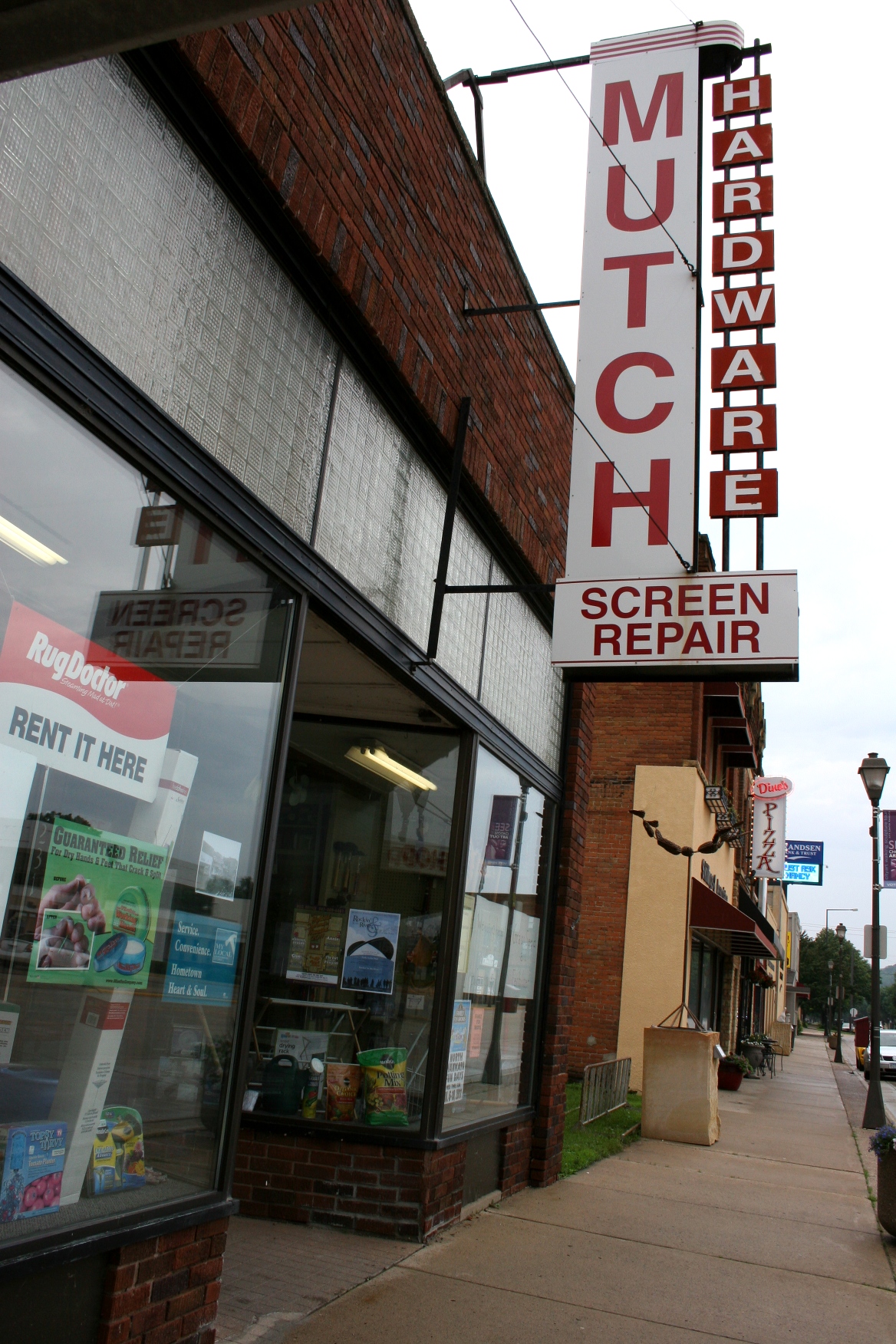
Outside Mutch Northside Hardware, a place reminiscent of bygone days.

DOES AN OLD-FASHIONED mom-and-pop type business like Mutch Northside Hardware exist in your community, or do you know of one somewhere? I’d like to hear. Tell me about it by submitting a comment.

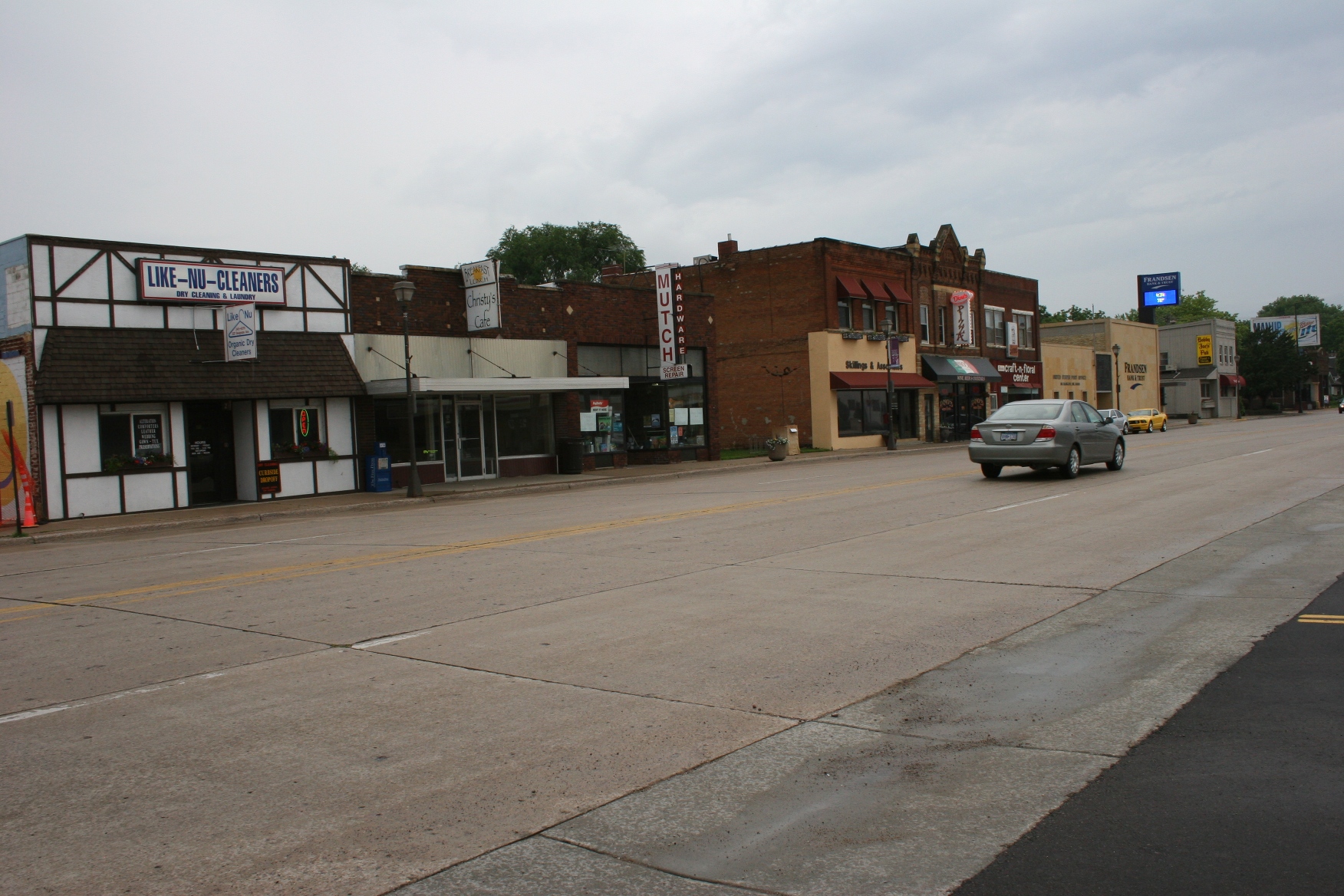
This image of a section of Belgrade Avenue in North Mankato shows the following businesses, from left: Like-Nu-Cleaners, Christy's Cafe, Mutch Northside Hardware, Skillings & Associates, Dino's Gourmet Pizzeria, Craft-n-Floral Center, the U.S. Post Office, Frandsen Bank & Trust and Bobby Joe's Pub.

© Copyright 2011 Audrey Kletscher Helbling


Mankato brings art to the sidewalks with walking sculpture tour June 21, 2011

Martin Eichinger of Portland, Oregon, created this graceful "Bird in the Hand" bronze sculpture valued at $14,500 and posed near the City Center.

You'll find "Play Thing" by Ryszard, Denver, Colorado, and sculpted from Colorado marble, in North Mankato.

MAYBE IT’S BECAUSE I grew up without much art—no paintings, no piano, no library—that I so appreciate the visual, performing and literary arts.

I still can’t paint a painting or read a musical note. But I value those two art forms and words, which have always been a part of me, who I am.

Several years ago I walked the Bemidji Sculpture Walk and I quickly became enamored with the idea of placing sculptures in a community and then swapping them out a year later for new sculptures. The touring sculptures scattered primarily through-out Bemidji’s downtown impressed me as an ingenious way to get art before the general public.

Now I needn’t drive hours and hours and hours to view such public art. In 45 minutes I can reach downtown Mankato and view the 25 sculptures positioned there and in North Mankato as part of the City Art Walking Sculpture Tour. For free.

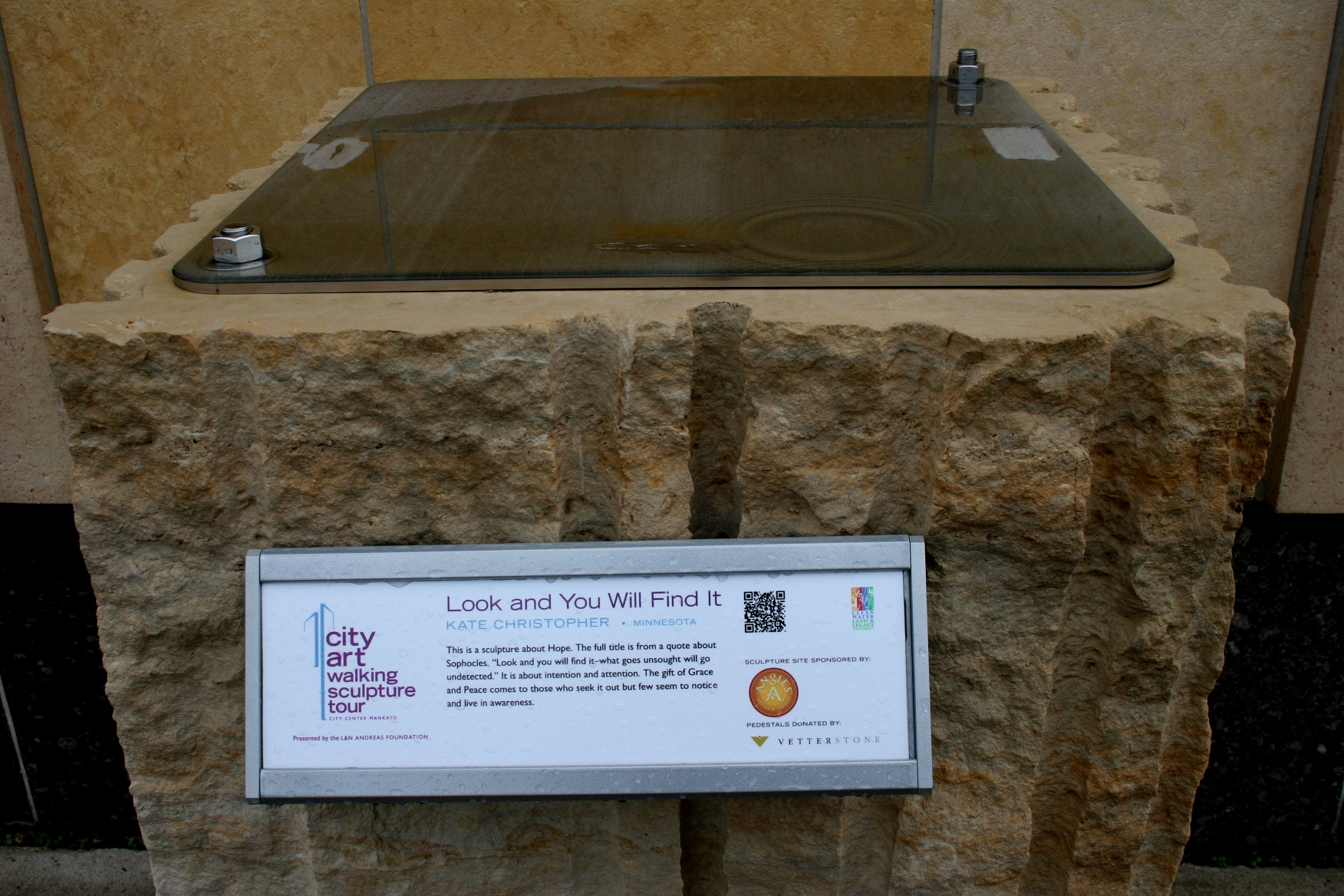
On Saturday, while in Mankato for a graduation reception, my husband and I made it a point of afterward checking out those sculptures. We missed seeing only a few of the art pieces, including one along Belgrade Avenue that was vandalized and, ironically, titled “Look and You Will Find.” We found only an empty block of Minnesota limestone, donated by Vetter Stone, where the sculpture once stood.

Mahtomedi artist Kate Christopher's $6,900 bronze sculpture, "Look and You Will Find It," was vandalized. The art piece symbolized HOPE.

I expected to find a bustling downtown Mankato. Obviously I have not been downtown for many years. Nearly all of the shopping has moved to the fringes of the city, into the malls and big box stores, and the downtown houses primarily office buildings, restaurants, bars, a hotel and the Verizon Wireless Center. Honestly, except for the sporadic motor traffic on Second Street and a few pedestrians, the place was basically deserted around mid-afternoon. Granted, the weather was less than ideal with on-again-off-again rain. We could park almost anywhere we wanted and walk to the sculptures within a several-block area.
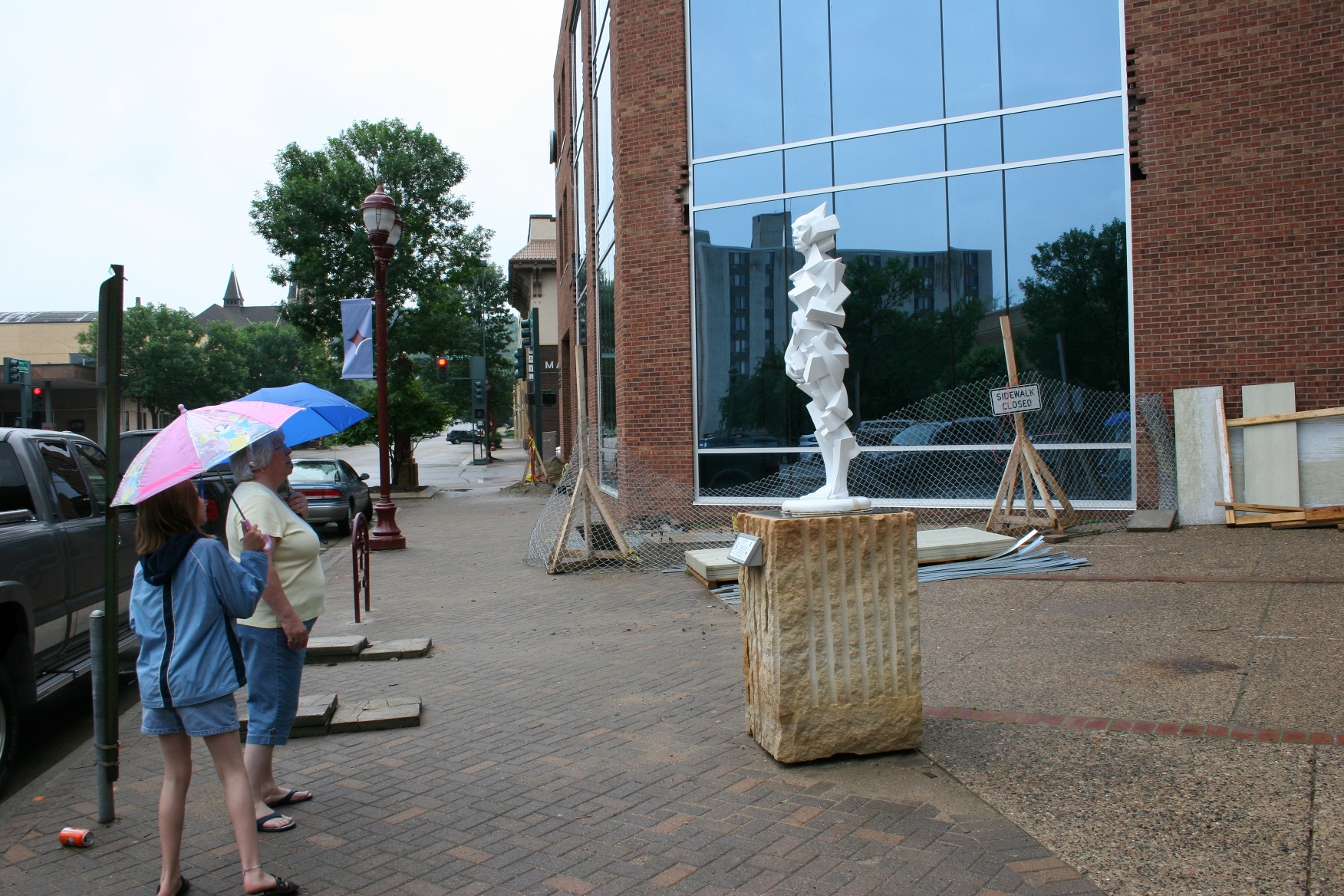
We spotted only two other individuals walking around viewing the sculptures. Dana Parlier of Brooklyn, New York, created this resin sculpture, "Cubist Woman." The man-made concrete canyons of New York City inspired this contemporary art, which seems to match the modern look of the building.
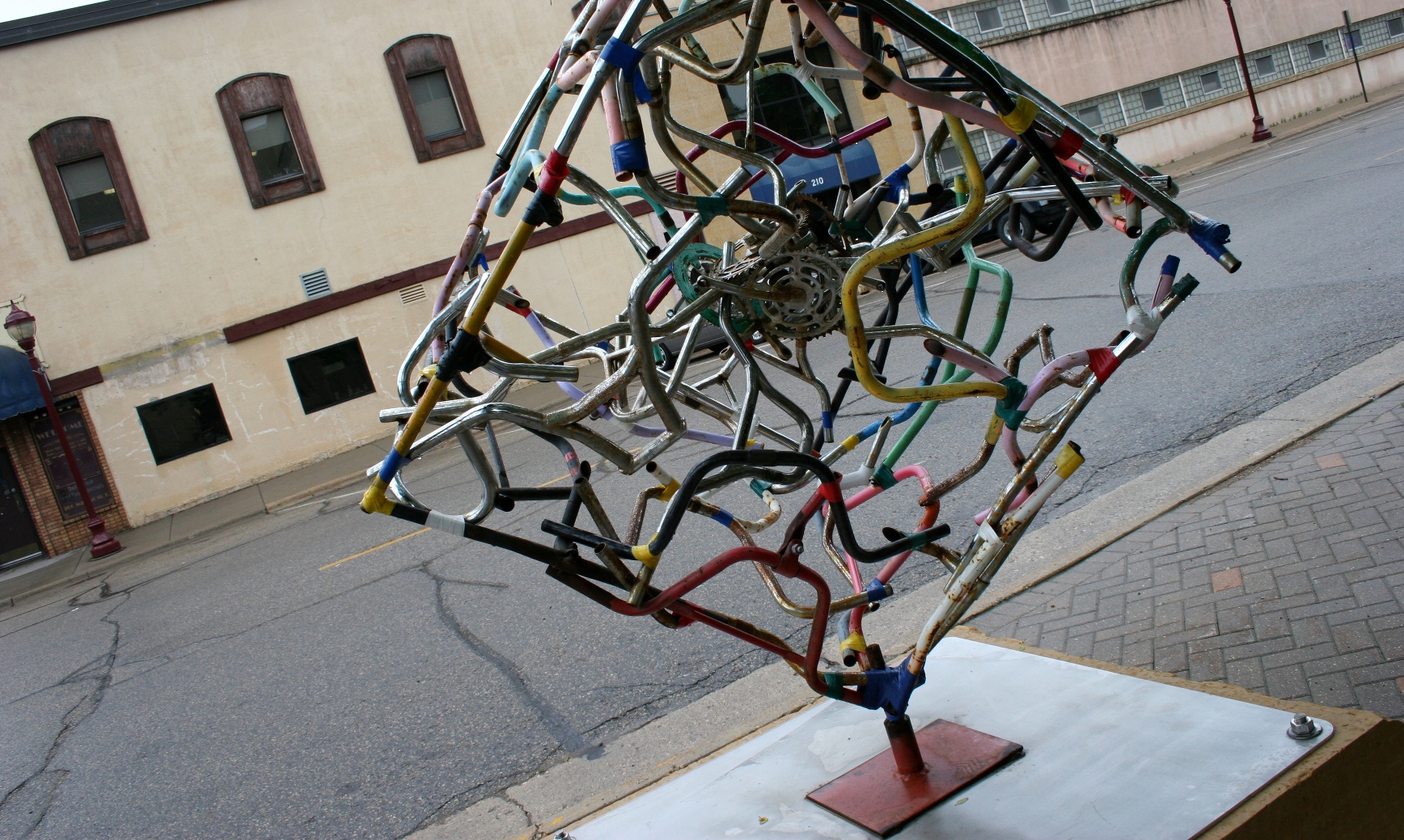
The art pieces certainly present a reason to visit downtown Mankato and then cross the Minnesota River to North Mankato to view several more sculptures. I’m not going to tell you I liked every sculpture, because I didn’t. But that’s OK; no one expects that. Sometimes first impressions change though. When I spotted “Twenty Seven (China)” from across the street, I honestly thought it looked like a mess of twisted junk. But up close, the steel sculpture of recycled bicycle parts—mostly handle bars—grew on me. Joe Forrest Sacke’s $3,500 conglomeration seemed modernish and hippyish and vintageish jumbled into one. Art will surprise you that way.

Joe Forrest Sacke's "Twenty Seven (China)."

You can vote for your favorite, for The People’s Choice Award. We didn’t, although I narrowed my favorites down to three. Voting booths are strategically located through-out the Walk area.

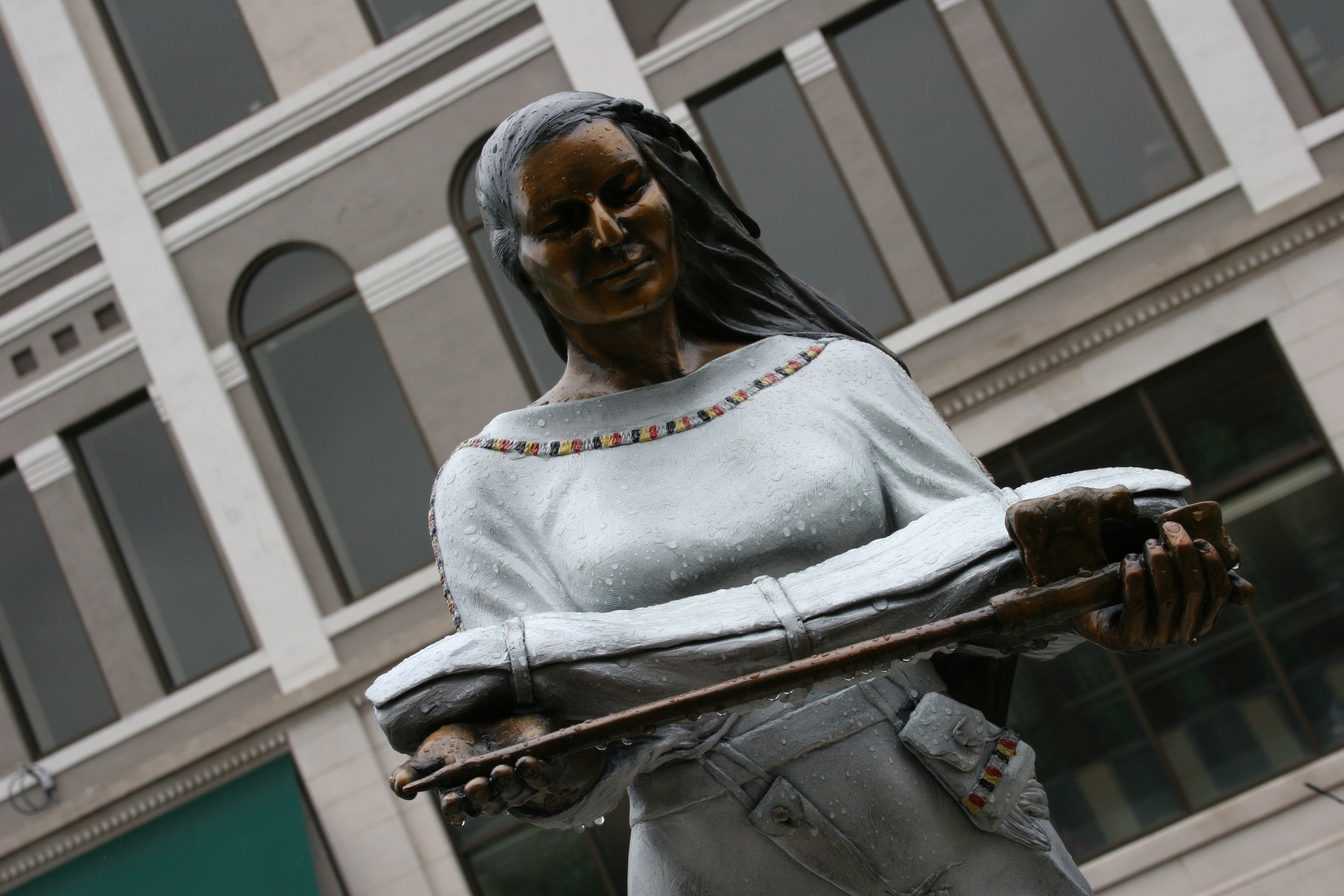
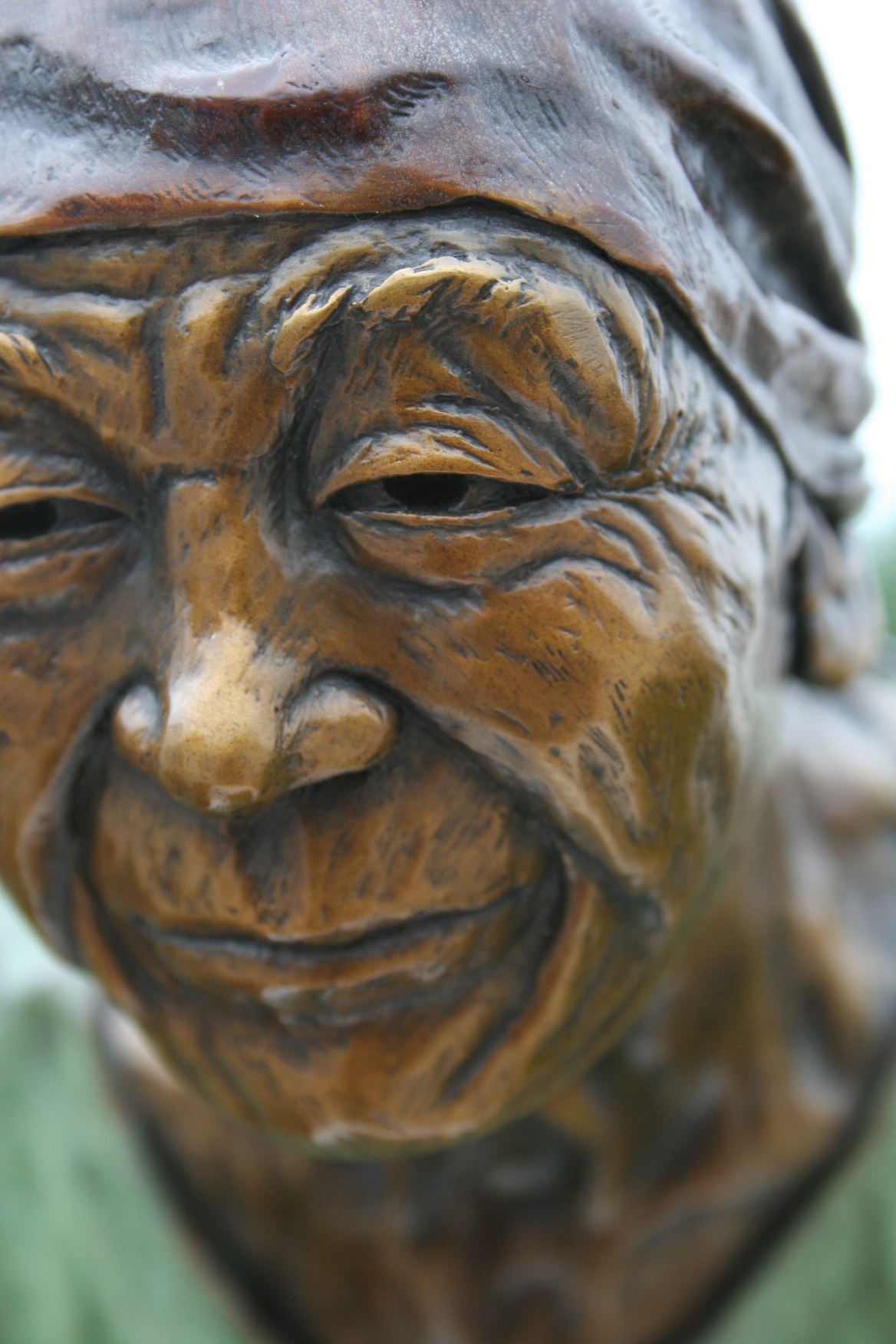
One of my three favorite sculptures, "White Buffalo Calf Woman," a bronze piece created by Aberdeen, South Dakota, artists Lee Leuning and Sherri Treeby. Notice how the dominant color in the sculpture blends with the building's color. Wait until you see the building on the other side of this Native American woman. You will be wowed. I'll share those images with you in another post.

This bronze piece, "The Farmer's Wife," by Dee Clements of Loveland, Colorado, is also among my three favorite sculptures. A photo Clements took in a Korean village inspired this art creation.

The detail in this bronze, "Reading Magic," by Julie Jones of Fort Collins, Colorado, appeals to me and makes it one of my top favorites among the 25 sculptures in the exhibit.

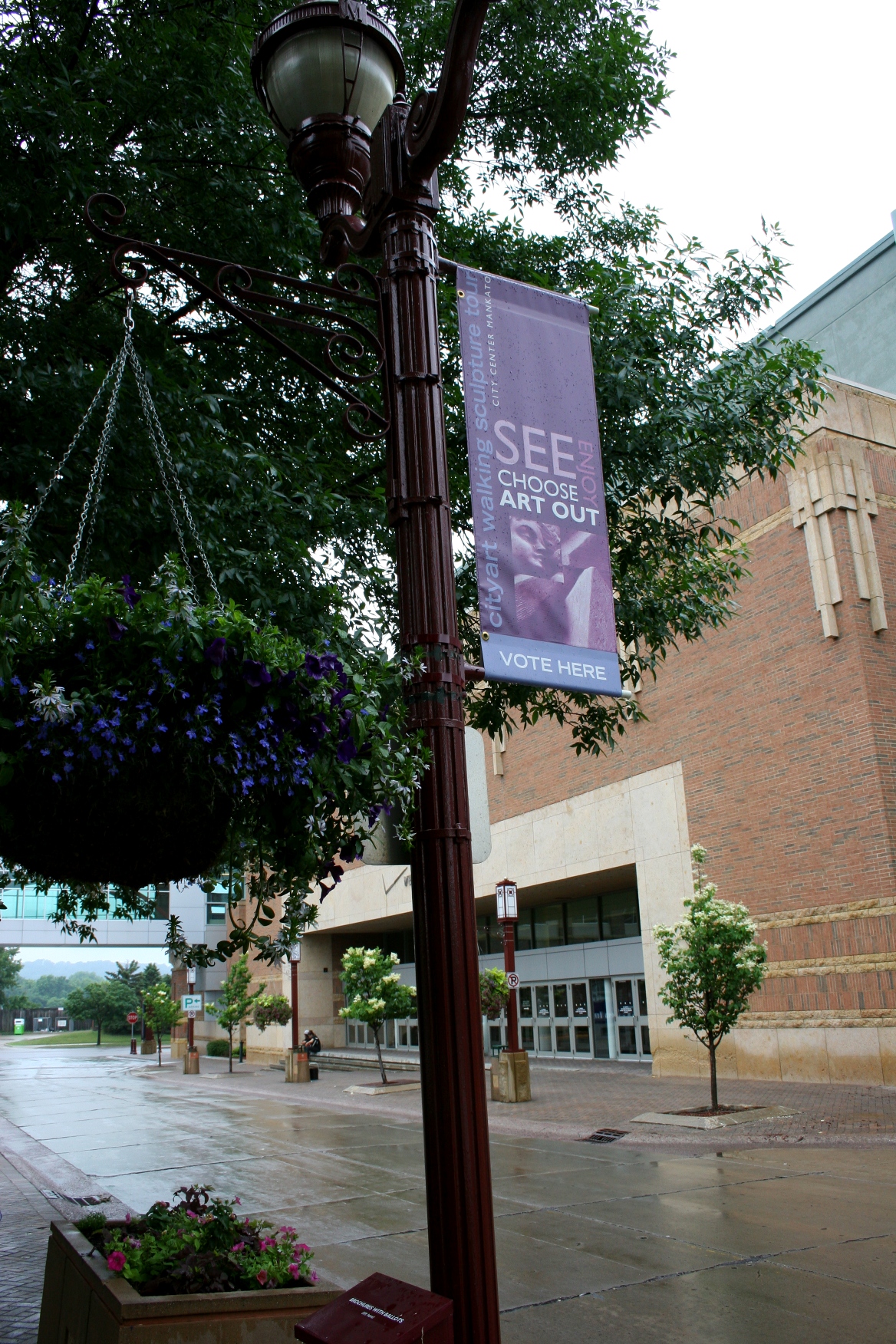
Banners draw visitors to the sculptures and to voting spots in downtown Mankato.

I also noticed, and I don’t know whether this was on purpose, but the sculptures often seemed to jive, architecturally and environmentally, with the buildings they were situated near.

Mankato is committed for the next five years to bringing these rotating sculptures into the community via a partnership with the Sioux Falls-based SculptureWalk program. Of course, this all costs money and with the help of a grant, business sponsorships, donations and more, Mankato has managed to bring this art directly to the people.

It’s a grand idea. I expect to return to Mankato to see next year’s art and perhaps other area attractions. Even though I attended college here for four years, I really didn’t appreciate the city. And so much has changed since 1978.

For someone like me, who doesn’t venture into Minneapolis to engage in the art scene there, mostly because I don’t like the congestion and busyness of the metro, outstate art opportunities like City Art in Mankato offer me culture at a quieter, more enjoyable (at least for me) pace.

#

SINCE I CAN’T POSSIBLY show you all of my photos in one post, I’ll bring you more images in future stories.

© Copyright 2011 Audrey Kletscher Helbling