Minnesota Prairie Roots

Writing and photography by Audrey Kletscher Helbling
Reflecting on Alexander Faribault, connecting past & present December 2, 2022

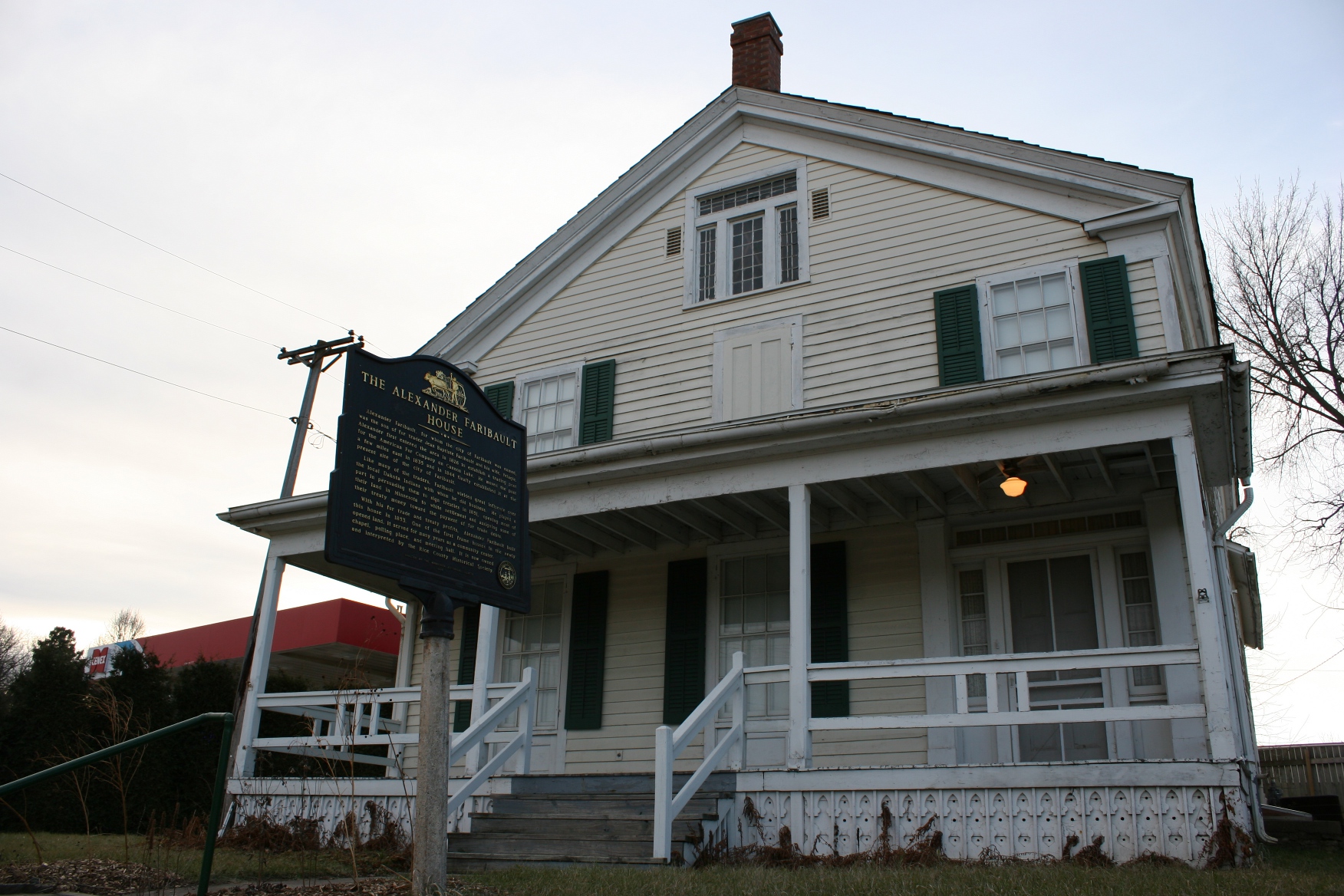
The home of town founder Alexander Faribault. (Minnesota Prairie Roots copyrighted file photo 2017)

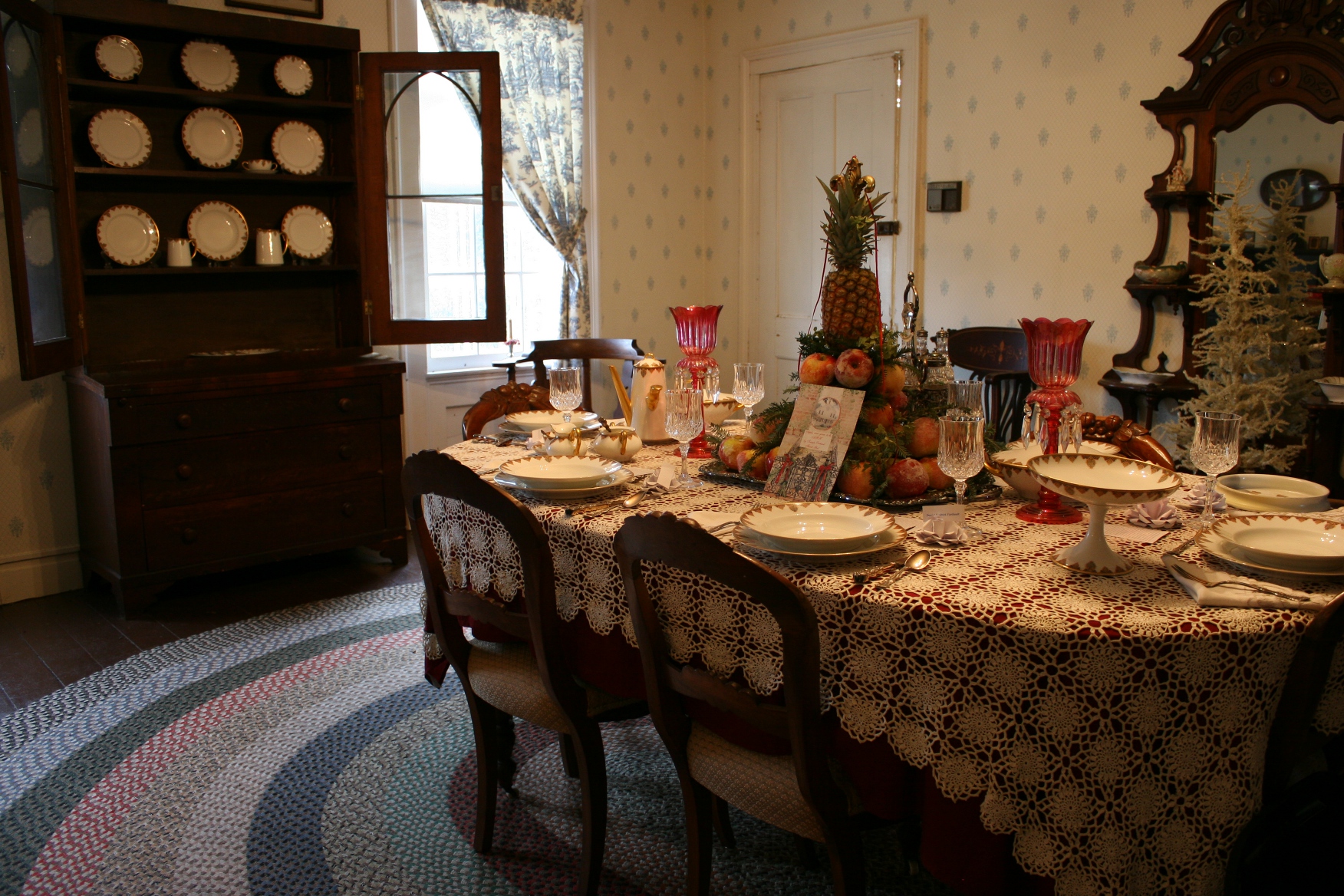
ON SATURDAY, THE HOME of Faribault’s founder, Alexander Faribault, opens for its 15th annual Christmas open house. The event features the 1853 house decorated for the holidays in the French-Canadian style. Faribault was of French-Canadian and Dakota descent.

The Faribaults’ dining room set for the holidays during the 2017 Christmas open house. (Minnesota Prairie Roots copyrighted file photo 2017)

To walk through the rooms of this historic home is to feel the presence of the Faribault family, including wife Mary Elizabeth Graham and their children. The Faribaults lived here only a few years before moving to a large brick mansion on the bluffs overlooking the Straight River. With 10 children, I expect they needed more space than the wood-frame house provided.

An overview of Alexander Faribault’s gravesite at Calvary Cemetery. (Minnesota Prairie Roots copyrighted photo April 2020)

Across town several miles to the west atop a hill overlooking the countryside on the edge of Faribault, the life of Alexander Faribault comes full circle. It is here, in Calvary Cemetery, that this fur trader, this friend of the Dakota, this town founder, this family man, is buried.

A memorial to Alexander Faribault stands at the Calvary Cemetery entrance. The birth date here differs from the one on Faribault’s tombstone. (Minnesota Prairie Roots copyrighted photo April 2020)

In April 2020, I visited this cemetery for the first time specifically looking for Faribault’s gravesite. I found it along with a memorial marker honoring him at the graveyard’s entrance.

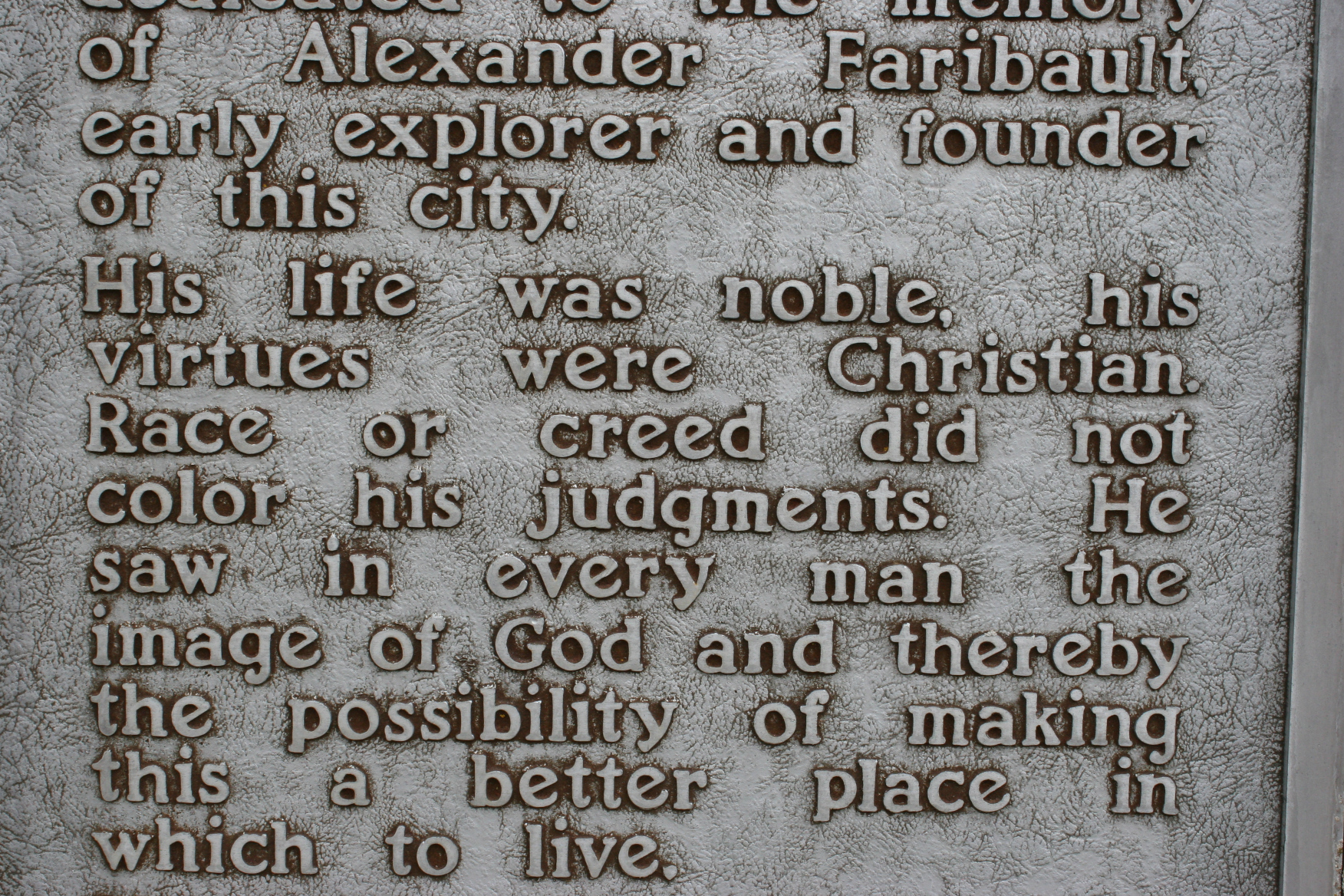
Memorial marker words up close. (Minnesota Prairie Roots copyrighted photo April 2020)

Race or creed did not color his judgments, the marker states in part. That seems to match what I’ve read about Alexander Faribault. Both his mother and wife were of Dakota heritage, thus he and his children were, too. Alexander, who traded with and befriended the Dakota, later sheltered some of them on his land. Government treaties removed indigenous peoples from their land, including in current-day Faribault. Alexander Faribault served as an interpreter in the signing of regional treaties given his knowledge of the Dakota language and culture. I wonder if he felt conflicted by how the government treated the Dakota.

This sculpture of Alexander Faribault and a Dakota trading partner stands in Faribault’s Heritage Park near the Straight River and site of Faribault’s trading post. Faribault artist Ivan Whillock created this sculpture which sits atop the Bea Duncan Memorial Fountain. (Minnesota Prairie Roots copyrighted file photo)

Today, 216 years after Faribault was born on November 28, 1806, an awareness and acknowledgment that indigenous peoples were the first inhabitants of this area is rising. Long before fur traders like Faribault set up trading posts in the region, the Dakota lived here, hunted here, fished here, raised their families here, called this place home.

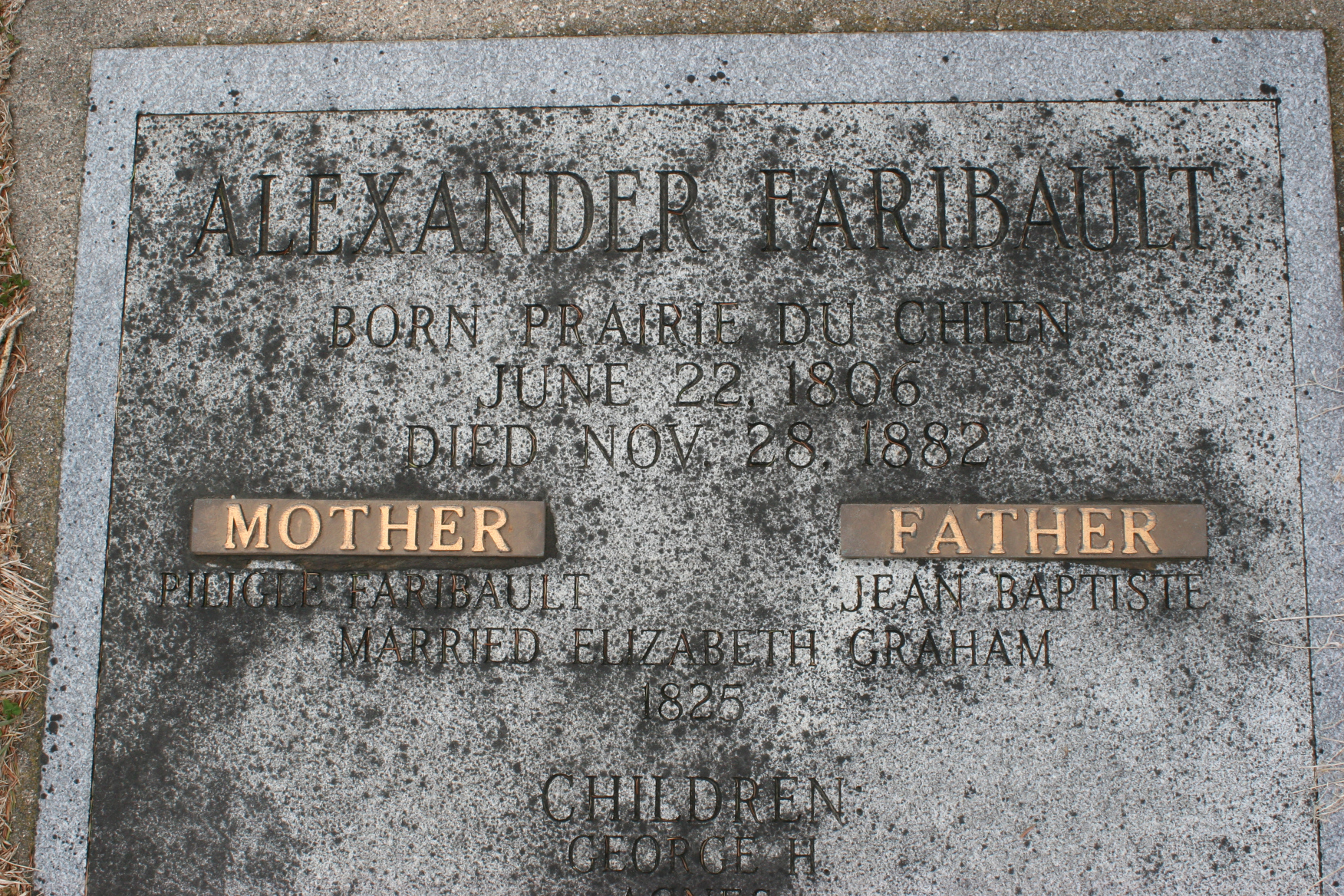
This shows a portion of an in-ground marker for Alexander Faribault. (Minnesota Prairie Roots copyrighted photo April 2020)

When I consider the friendships forged among fur traders and the Dakota, I think of the Faribault community today and those who call this place home. This city truly is a melting pot of cultures and peoples. I celebrate that. Some day I hope we can all, like our town founder, view each other through a clear lens without the filter of race or creed coloring judgment.

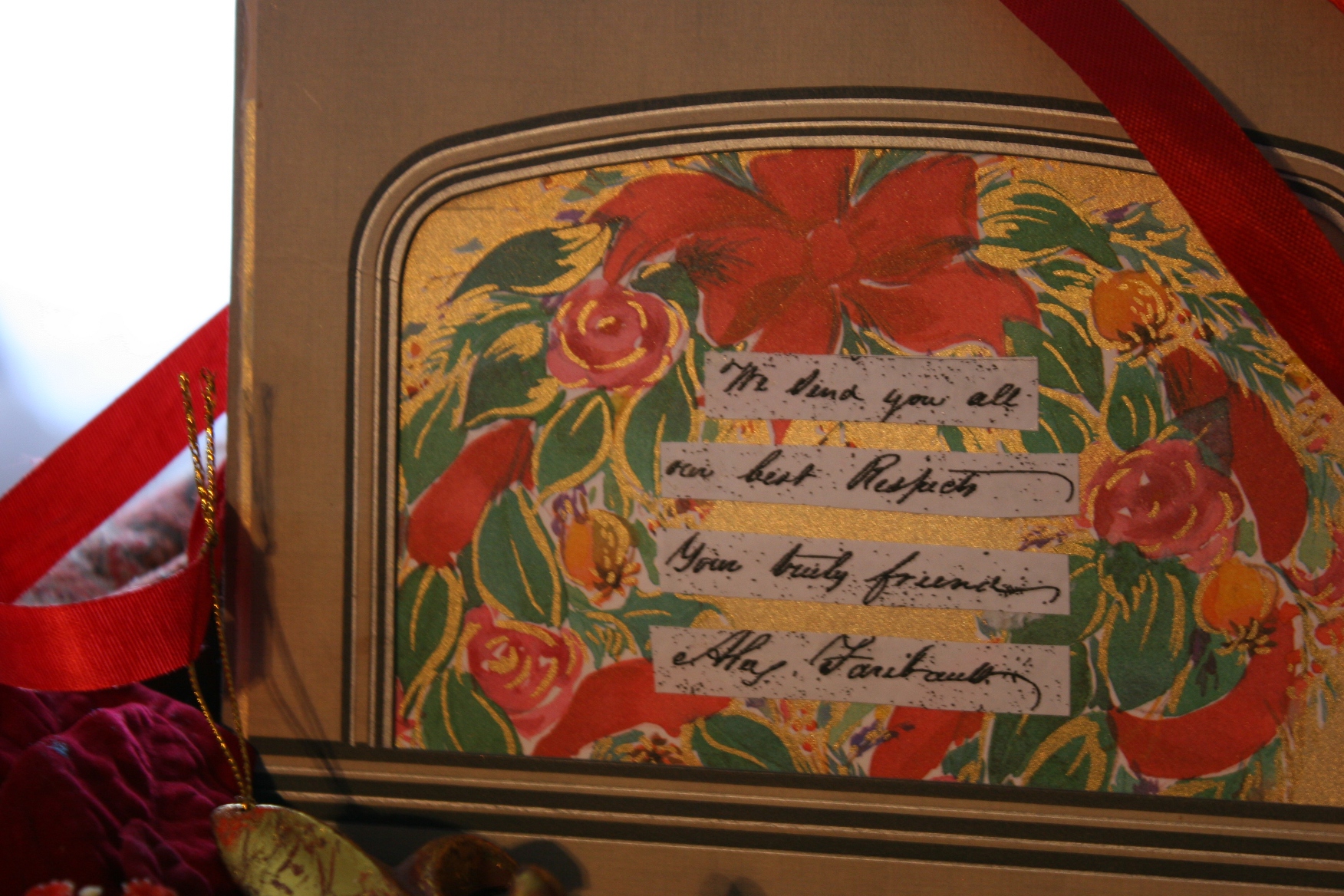
A holiday greeting from Alexander Faribault displayed at a past Christmas open house. (Minnesota Prairie Roots copyrighted file photo)

FYI: The Alexander Faribault House Christmas Open House is from 11 am- 3 pm Saturday, December 3, at 12 First Avenue Northeast, Faribault. The event is free and is part of this weekend’s Winterfest celebration in Faribault.

© Copyright 2022 Audrey Kletscher Helbling
 

In small ways, we can make a positive difference November 22, 2022

Filed under: Uncategorized — Audrey Kletscher Helbling @ 5:00 AM
Tags: , , , , , ,
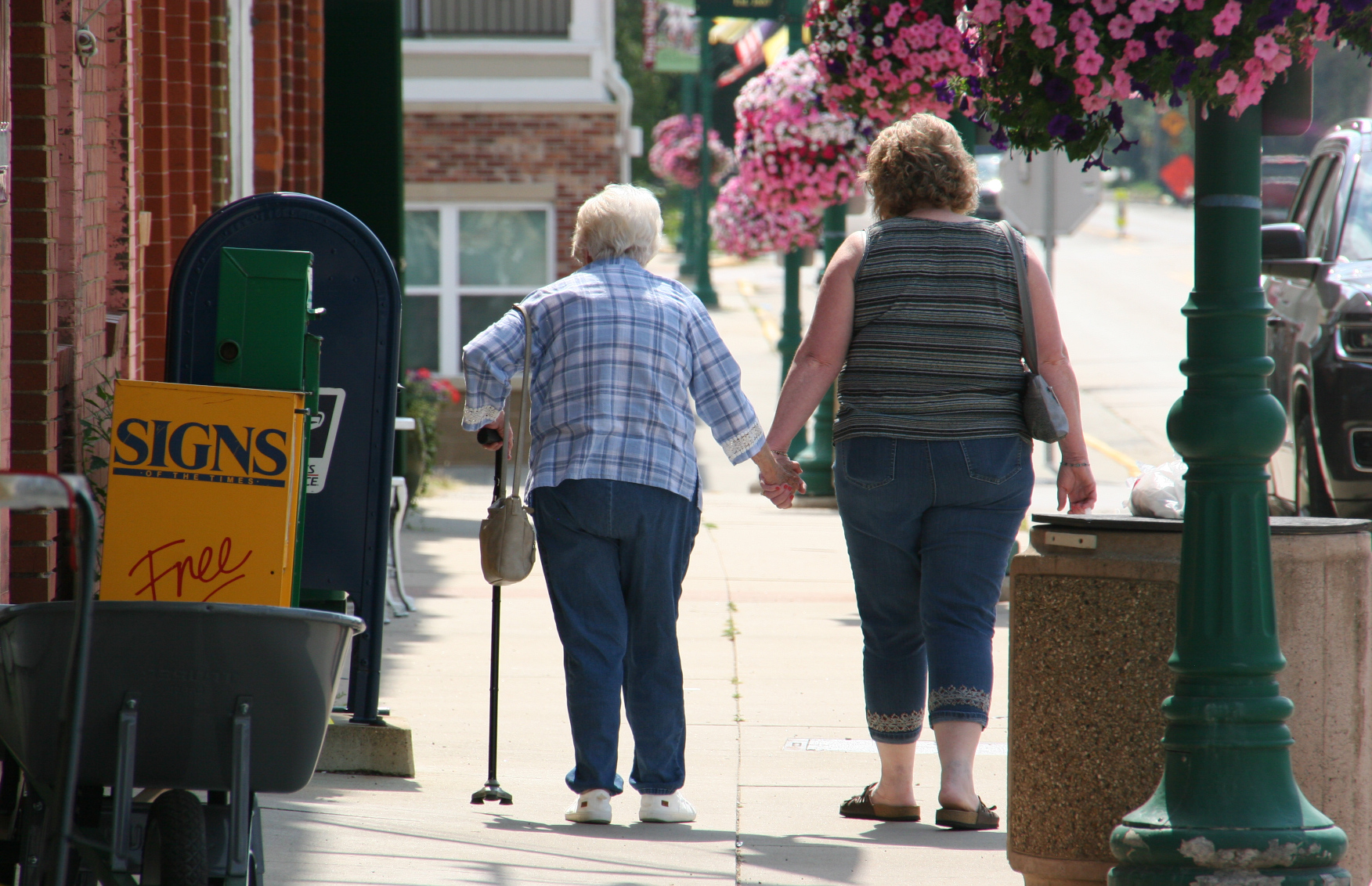
Photographed several months ago in Pine Island, this scene epitomizes love and care. (Minnesota Prairie Roots copyrighted photo September 2022)

I’VE FELT IN A RATHER reflective mood recently. Perhaps it’s the shift in seasons. Perhaps it’s the approach of Thanksgiving. Perhaps it’s the deep concern I hold for those who are struggling. In reality, all three and more contribute to these present feelings.

November—with shortened daylight, colder temps and a landscape devoid of color—always brings a noticeable change within me. I prefer snuggling under a fleece throw with a good book in the evenings. I feel more cocooned, not as connected. That’s not necessarily negative, just different.

But what doesn’t change is my awareness that these months of family-centered celebrations can be really hard for some. Not everyone will gather with those held dearest. Geographical distance, death, illness and more separate. I, for one, seldom have my entire family together on holidays given distance and work schedules. Yes, that can be tough when others share about all of their loved ones back home. I’ve learned to feel grateful for the family I do see.

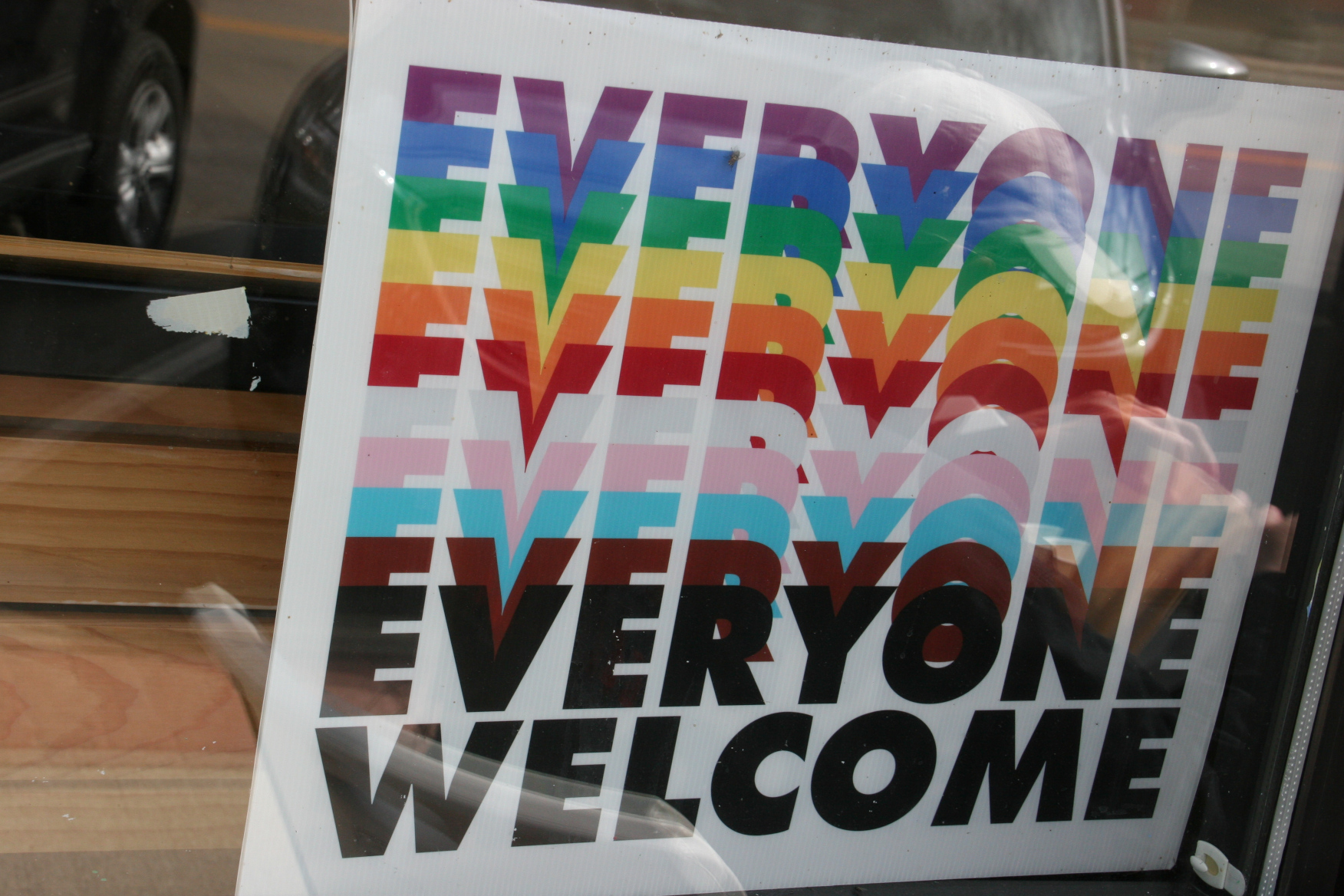
A welcoming message spotted in a downtown Faribault business. (Minnesota Prairie Roots copyrighted photo October 2022)

I’ve found also that focusing on others goes a long way in creating a mindset of care and compassion. A lot of people, at least in my circle, are dealing with a lot right now. Death. Illness. Job loss. Financial struggles. It’s almost overwhelming, the amount of need, the grief, the pain, the trauma.

I can’t fix things, but I can be there in meaningful ways.

This inspiring message on a business in downtown Pine Island uplifted me. (Minnesota Prairie Roots copyrighted photo September 2022)

We have this capacity, each of us, to make a difference in this world. Not necessarily on a grand scale. But in small ways that touch individuals in our communities, our families, among our friends and beyond. Something as simple as opening a door for a stranger; mailing an encouraging handwritten note; treating people with kindness and respect; dropping off a gift card or a bag of groceries; calling; and listening can make a big impact on someone.

My mom, Arlene, who died in January, taught me the importance of caring for others. As a mother of six, she always put her children first. Beyond our farmhouse, she did the same within her community, volunteering at church, blood drives, veterans-related groups and with other organizations. She left a legacy of love, faith and compassion.

We can all learn a lot from the Arlenes of this world.

Whenever I’m out and about, I feel especially grateful when witnessing the goodness of people. One of those moments came in early September while in Pine Island. Near the Hardware Hank, I watched two women, presumably mother and daughter, walking hand-in-hand down the sidewalk. I nearly cried at observing such love, care and compassion.

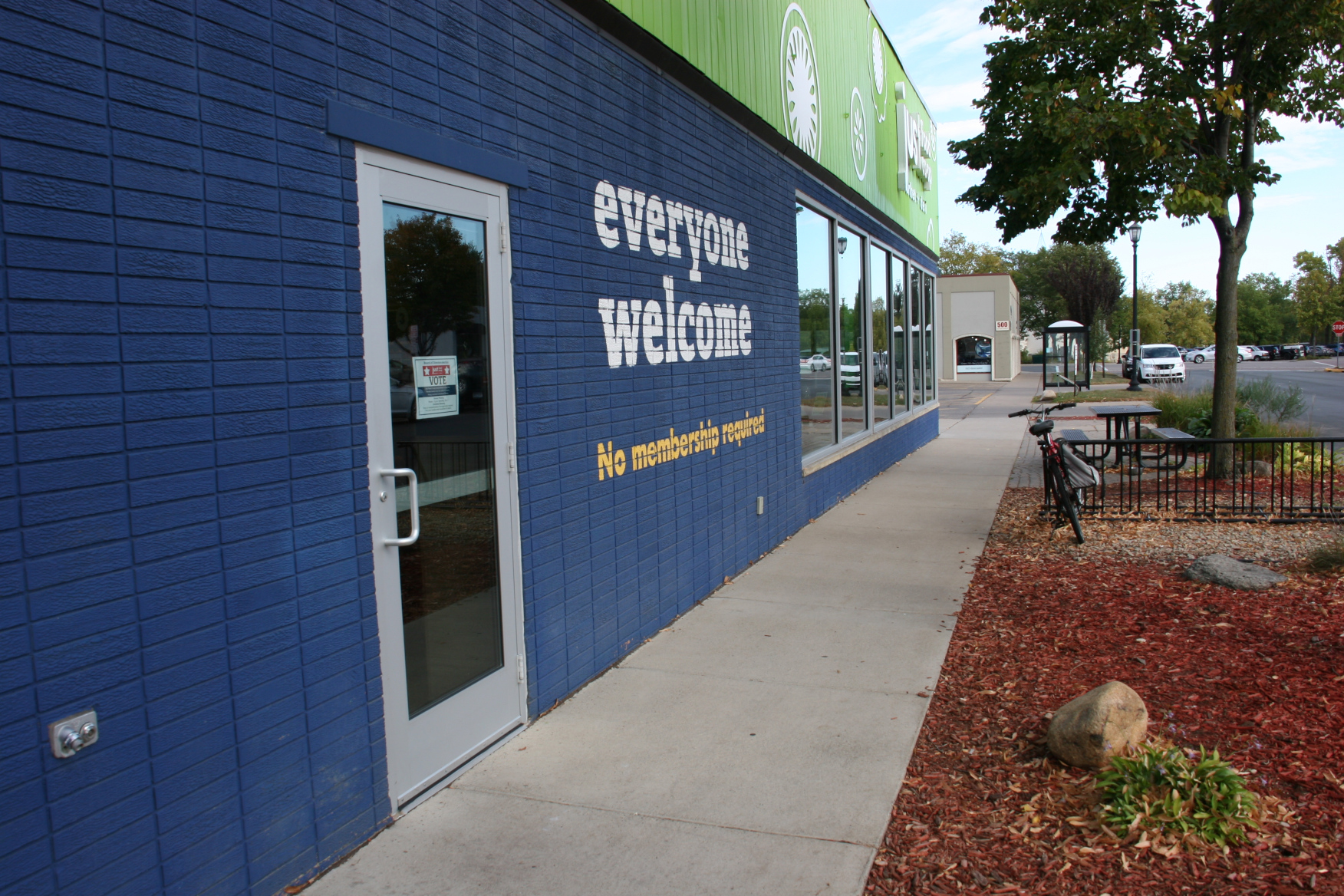
A welcoming message on Just Food Co-op in Northfield. (Minnesota Prairie Roots copyrighted file photo September 2022)

I celebrate, too, when I see welcoming signs posted at businesses or on homes.

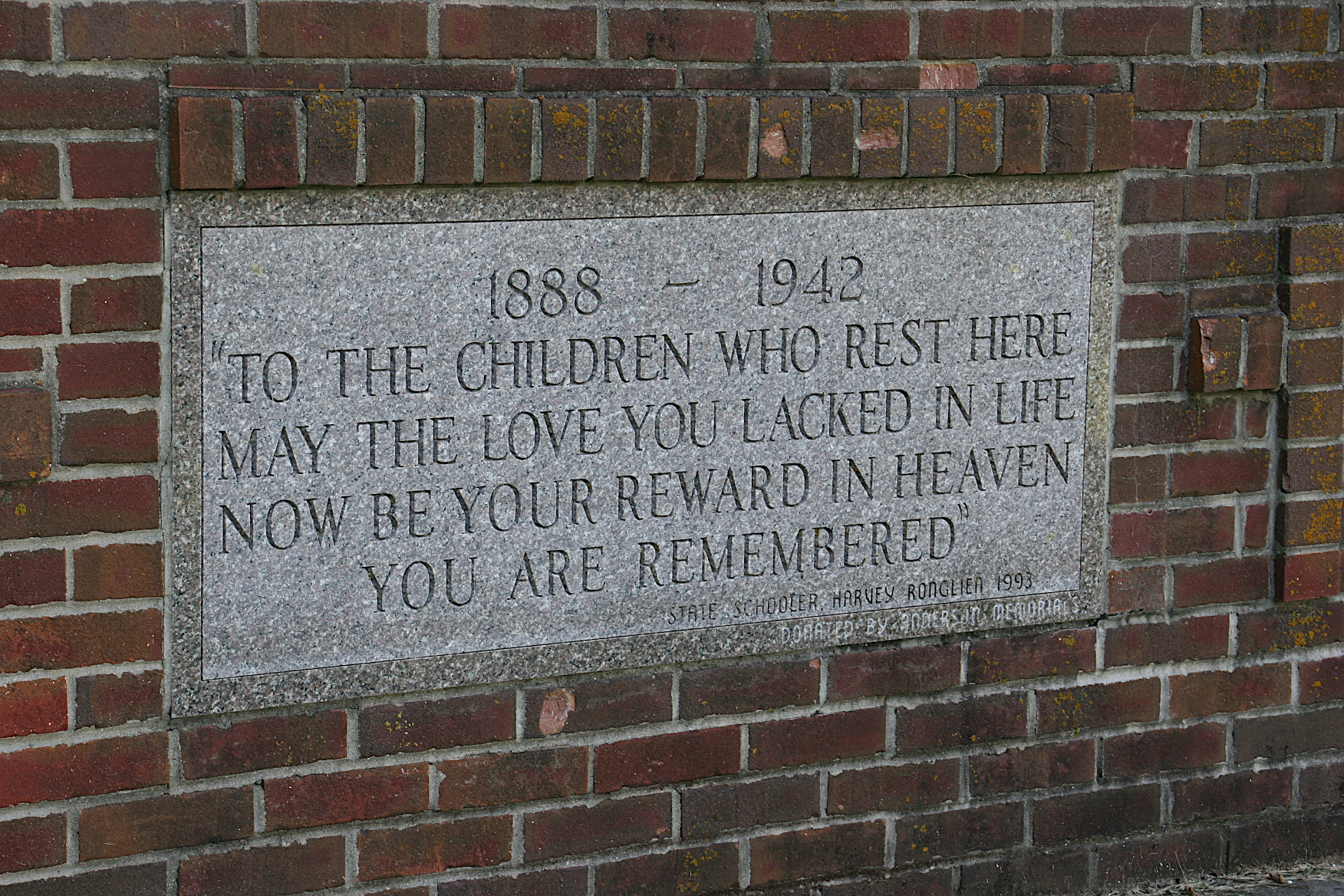
This loving inscription is posted at the State Public School for Dependent and Neglected Children’s Cemetery in Owatonna. The school (orphanage) was open from 1886-1945. (Minnesota Prairie Roots copyrighted photo September 2022)

Even a message of love imprinted in stone at a cemetery touches me. When I intentionally look for the positive, I see it, hear it, feel it. There truly is more good than bad in this world if we allow the light to break through the grey and outshine the darkness.

© Copyright 2022 Audrey Kletscher Helbling
 

Mental illness: Learn. Listen. Link. November 15, 2022

Slowly we are beginning to unmask mental illness. (Minnesota Prairie Roots copyrighted file photo 2018)

HER VOICE RISES. Strong. Compassionate. Without hesitation.

She is Penny Wilson, published poet, blogger, fiction writer, advocate. Penny, who blogs at Penny Wilson Writes, advocates for those diagnosed with mental illnesses. She is open about her struggles with depression. And it is that honesty which impresses upon me how much, how deeply, Penny cares.

From her fixer-up home in a small Texas town, Penny pens pieces that inform, educate, advocate about mental health. Recently she spent hours researching and compiling a list of resources in a post titled “Affordable Mental Health Counseling.” A friend’s need for affordable therapy (when her benefits were running out) prompted the piece. What Penny found was nothing. No low cost or no cost counseling services for mental health issues. I’m not surprised.

Yet, Penny published that list of 14 possible places to find some sort of help. It’s a start, a good resource list. I encourage you to read that compilation by clicking here.

A particularly powerful book that shows how mental illness ripples, affecting the entire family. (Minnesota Prairie Roots copyrighted file photo)

All of this got me thinking given I, too, write occasionally on the subject of mental illnesses. My goal, like my friend Penny’s, is to increase awareness, educate, advocate. I want to use my writing skills to make a difference. Penny and I recognize that we have this gift, this ability to communicate information in a way that connects and perhaps challenges our readers to learn more, to grow in their compassion and care.

Yes, it starts with each of us, individually. Learning. Listening. Acknowledging that depression, anxiety, bi-polar, post traumatic stress disorder, schizophrenia and any host of mental illnesses are hard and challenging and sometimes/often debilitating. Recognition, understanding and support are vital. Not just in words of encouragement, but in action. Individuals and their families need compassionate care.

This book should be in every church library.

I learned recently that Hosanna Church, just up Interstate 35 north of Faribault in Lakeville (and with campuses also in Northfield, Rosemount and Shakopee), won NAMI Minnesota’s 2022 Faith Community of the Year Award for demonstrating extraordinary work and advocacy on behalf of the National Alliance on Mental Illness Minnesota’s mission. In part, that mission is to champion justice, dignity and respect for all people affected by mental illnesses. To read the full mission statement, click here.

Justice. Dignity. Respect. Pretty basic, yet often overlooked by society, where mental illness still carries stigma.

That a faith community like Hosanna reaches out to individuals with mental illnesses and their families and aims to change public attitudes towards those with mental illnesses shows they care. They get it and they want others to get it, too. They love, listen, act. I appreciate those efforts and I’d like to see more faith communities do the same.

We each hold within us the capacity to learn, listen, link. Learn about mental illnesses. Education goes a long way in reducing stigmas and in understanding. Listen to those who live with mental illnesses (and their families). Ask how they are doing, how you can help and genuinely mean it. Link to them in meaningful ways. Offer help. Connect with professional resources. Be there. It’s that simple. Learn. Listen. Link.

FYI: I encourage you to visit the NAMI website for additional information by clicking here. I also encourage you to visit the “mental health help” page of Penny’s blog at Penny Wilson Writes by clicking here. Also read her recently-posted fictional short story, “Dragons in the Dark,” which offers powerful insights into depression.

© Copyright 2022 Audrey Kletscher Helbling
 

With thoughtful gratitude on Veterans Day November 11, 2022

A bronze statue titled “Poppie” personalizes the Rock County Veterans Memorial in Luverne as do the names of some 1,600 veterans engraved in pavers. I’ve seen a lot of veterans memorials and this is among the most impressive. (Minnesota Prairie Roots copyrighted file photo August 2013)

NEARLY EVERY COMMUNITY has one. A veterans memorial. I appreciate that public recognition of military service in communities from rural to urban. Yet, acknowledgment of our veterans must stretch beyond public memorials.

Today, Veterans Day, I pause to personally thank the individuals who have served our country. That’s important to remember—individual service and sacrifice. I expect most of you can rattle off names of those in your circle who engaged in combat or other military work. They left their homes, their everyday lives, to answer the call of duty.

I feel gratitude to individuals who, either by draft or by choice, stood strong for democracy. Words like courage, commitment, strength, fortitude…filter into my thoughts when I think of our veterans.

But I also think of the physical, emotional and mental challenges too many combat veterans face post-war. I can never comprehend the pain, the trauma, the grief experienced by those who fought in war zones. I only know how my own father, an infantryman in the Korean War, battled the demons of war during his lifetime. That glimpse was enough to elicit deep concern within me.

We are making strides in recognizing and treating post traumatic stress disorder, for example. Not until near his 2003 death was my dad aware of his PTSD. He never got the intervention and help he needed upon arriving home from war. I’m thankful for the help available today, although I expect sometimes it’s not easily-accessible and not nearly enough.

Suicide among veterans remains high. After hearing a few of my dad’s stories of war atrocities and killing, I recognize the emotional and mental tolls on health. Returning to everyday life after experiencing the traumas of war brings challenges civilians will never fully understand. We need to be there for our veterans in ways that matter—support, compassion, care, understanding—with gratitude in our hearts.

TELL ME: If you’re a veteran, what would you like to hear today, Veterans Day? How can we as a country better honor and help you? If you know a veteran, what have you done to honor and help veterans?

© Copyright 2022 Audrey Kletscher Helbling
 

Sort of like a broken bone, but not really November 3, 2022

Filed under: Uncategorized — Audrey Kletscher Helbling @ 5:00 AM
Tags: , , , , ,
Look on the lower right side of my wrist to see the surgically-implanted plate, shaped like an ice scraper, and held in place by 10 screws. (Minnesota Prairie Roots copyrighted file photo 2018)

WHEN I BROKE my right shoulder one summer and then a year later shattered my left wrist, I needed physical and occupational therapy. Muscles quickly weakened with my shoulder clamped immobile in a sling and my wrist secured in a splint. After months of in-person therapy and at-home exercises, I regained my strength and use of my shoulder and wrist. I felt grateful for the therapy, which was easily accessible and covered under my insurance (although I ended up paying because of my high deductibles).

I also got lots of encouragement following those bone breaks. Cards. Texts. Emails. Calls. Even some meals delivered. When you’re experiencing a health issue, it’s reassuring to feel the support of others.

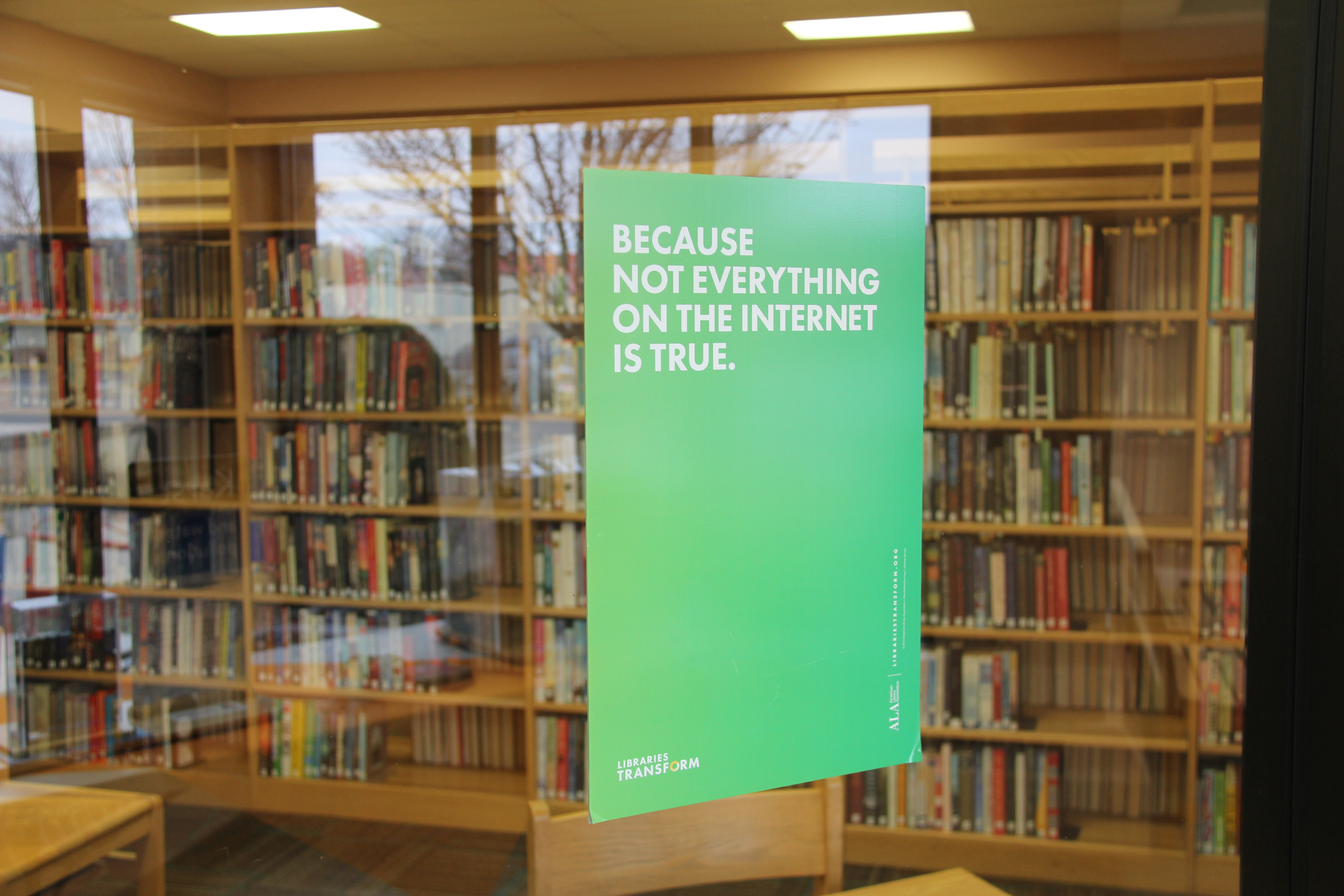
Buttons photographed at the Northfield Public Library. (Minnesota Prairie Roots copyrighted file photo)

But what if your health issue is a mental health issue? Do you have the same access to healthcare? Does your insurance plan offer sufficient coverage? How do friends and family respond?

A post, “Help needed—therapy information please” published a few days ago by Texas blogger Penny Wilson, and my personal interest prompted me to write on this topic. Penny is seeking information on affordable mental health therapy for her friend whose benefits are soon ending. She understands. Penny, too, faced the same problem when she needed therapy and her insurance would cover only three sessions. Three. Sessions. Penny writes, “3 sessions didn’t even begin to scratch the surface. After that, I was on my own to figure out how to pay for it.”

I’d like to think the experiences of Penny and her friend are the exception. But I don’t believe that, not for a second. First, unlike my easy access to therapy for my broken bones, accessing mental healthcare is difficult at best. At least in Minnesota. Waits are long, if psychiatrists and psychologists are even taking new patients. That often leaves individuals in a mental health crisis seeking care in an emergency room. Unless the hospital has an on-call mental health professional, this is not necessarily the best treatment option. But when you can’t access care any other way…

Whether insurance adequately covers mental health treatment and therapy seems debatable. For Penny and her friend, obviously not.

This message refers to the struggles with mental illness. (Minnesota Prairie Roots copyrighted file photo)

And then there’s the topic of personal support. Mostly, it’s lacking. Although we’ve made strides in reducing the stigma of mental illness, we have a long ways to go. Ask anyone who’s experienced a mental health crisis, whether directly or indirectly as a family member, and you will likely not hear stories of tangible support. No meals delivered. No cards sent. No texts. No emails. Primarily silence. There are, of course, exceptions.

Beyond the emotional toll, a mental health crisis can devastate individuals and families financially. Yet, there are no public fundraisers. Again, this traces to the stigma, the lack of understanding, not necessarily a lack of compassion.

Mental illness, in my opinion, is not viewed on the same level as say diabetes or cancer or other debilitating diseases. I’m not taking away from anyone who has dealt with those because they are horrible and awful. But so is a serious mental illness. There are no cures, no single plans of treatment that work for everyone. A med may ease symptoms and then it doesn’t and then it’s start over with a different med. The same for therapy. Imagine the exhaustion and frustration that can set in as individuals struggle to manage anxiety, depression, bipolar and more. It’s a lot.

A mental health-themed sculpture, “Waist Deep,” once stood outside the Northfield Library. This is such a strong visual of reaching for help. (Minnesota Prairie Roots file photo 2019)

So what’s the point of this post? The point is to educate and raise awareness. The point is to reduce the stigma of mental illness. The point is to encourage you—if you know someone struggling with mental health—to reach out, acknowledge, support. Act. Support their families, too. Offer words of encouragement. Offer financial support if needed. This is their broken bone.

FYI: The National Alliance on Mental Illness (NAMI) is a great resource for information and support. Click here for more information.

© Copyright 2022 Audrey Kletscher Helbling
 

So many reasons to value the arts in southern Minnesota & beyond October 26, 2022

“Rain” by Ivan Whillock priced at $3,000 and exhibited at the Paradise Center for the Arts in Faribault. (Minnesota Prairie Roots copyrighted photo October 2022)

TO HAVE ACCESS TO THE ARTS, whether visual, literary or performing, here in southern Minnesota is such a gift. The arts enrich our lives, open our minds to new ideas and experiences, feed our souls, entertain us and, for me, also inspire.

As someone who grew up in rural southwestern Minnesota with minimal exposure to the arts, I especially value galleries, theaters, libraries, and any place that gives me access to creativity. Creating with images and words is my passion and my life’s work. I embrace the work of fellow creatives, who, like me, must create.

Woodcarvings fill the main gallery at the Paradise. (Minnesota Prairie Roots copyrighted photo October 2022)

Recently, I stopped by the Paradise Center for the Arts in historic downtown Faribault. The PCA centers the arts in my community with four galleries, theater, music, art classes and more. Here in this space, creatives converge. And we as a community are the better for that. I hope those in neighboring Northfield, Owatonna, Waseca and even small town Montgomery, feel the same gratitude for their arts centers.

“Eileen” by Ivan Whillock, priced at $1,500. (Minnesota Prairie Roots copyrighted photo October 2022)

The arts broaden our perspectives, make us think, laugh, cry, ponder… When I write and photograph, I feel a sense of purpose and fulfillment if my work resonates, prompts emotions, stirs interest and more. I expect the artists currently exhibiting at the Paradise feel the same. There is joy in getting art out there into the community, joy in connecting.

Marv Kaisersatt specializes in caricatures such as “Portrait of a Pig,” displayed but not for sale. (Minnesota Prairie Roots copyrighted photo October 2022)

As I meandered through the Paradise’s current exhibits, I observed incredible talent and variety in the art displayed. Inside the largest gallery, I meandered among woodcarvings by three Faribault artists, two carving for more than 40 years. Ivan Whillock and Marv Kaisersatt, are award-winning long-time carvers, nationally and internationally-recognized. Their work is decidedly different, but their creative skills decidedly the same—excellent. Both are quiet, humble men.

“Wood Spirit” by Chris Whillock, priced at $40. (Minnesota Prairie Roots copyrighted photo October 2022)

Chris Whillock, Ivan’s son, is a talented carver in his own right. The pair create at Whillock Studio in Faribault and operate the Whittling Shack, source for woodcarving supplies, their art and more.

The plant-filled installment by Shelley Caldwell. (Minnesota Prairie Roots copyrighted photo October 2022)

In one of the most unusual installments I’ve ever seen is the art of Shelley Caldwell who lives in rural Faribault County near the Iowa border. Her artistic use of plants to shape art left me standing temporarily immobile, wowed by her imaginative creativity. Peace comes in connecting with nature and I felt that in the scene before me—all that green interspersed with light, air and a sense of movement. Her exhibit also includes mixed media drawings.

Photos of Autumn Carolynn line a gallery wall at the Paradise Center for the Arts. (Minnesota Prairie Roots copyrighted photo October 2022)

The images of Minneapolis-based travel photographer and writer Autumn Carolynn are displayed in another gallery. Studying the work of other photographers, especially one as talented as Autumn, helps me grow my skills, even if I’m not a world traveler. Her images take me to places I have never seen and never will. She expands my world through her photos and that, too, is an artful purpose.

This is an untitled acrylic and latex on canvas by Bethlehem Academy senior Tyler Hogate. (Minnesota Prairie Roots copyrighted photo October 2022)

In the final gallery, the art of selected students from Bethlehem Academy in Faribault is highlighted. I never fail to be impressed by the talent of these young people. I feel gratitude to their teachers, the PCA and others who support them in their creative pursuits. Now, more than ever, students need the arts as an outlet, a way to express themselves, a way to connect.

This shows a snippet of Ivan Whillock’s “He’s Late,” priced at $6,000. (Minnesota Prairie Roots copyrighted photo October 2022)

And now, more than ever in these unsettled times, we as a community, a state, a country, a world, need the arts.

FYI: The exhibit by artists featured here continues until November 12.

TELL ME: What do you appreciate about the arts?

© Copyright 2022 Audrey Kletscher Helbling
 

A token of friendship & thoughts thereon October 24, 2022

Filed under: Uncategorized — Audrey Kletscher Helbling @ 5:00 AM
Tags: , , , ,

(Minnesota Prairie Roots edited and copyrighted photo October 2022)

GLINT OF SUNSHINE on metal caught his eye while mowing lawn. Five feet from the stop sign, Randy found the quarter-sized round in the grass. A friendship token with a center butterfly cut-out.

Like a writing prompt, my mind wandered to the story behind the token in our yard. How had it gotten there? When? Why? Plots form. Characters emerge. Tension builds.

I imagine the metal circle tossed by an angry friend. I picture friends—pre-teen or teen girls, simply because the token seems like something that age demographic would value—arguing. Perhaps their disagreement was over a boy or some weighty matter like name-calling or something trivial. No matter the reason, it was enough for one to fling the symbol of friendship onto a stranger’s lawn.

Or perhaps the coin was simply lost, fallen from a pocket. That scenario feels better, even if loss never feels good. I expect the physical reminder of friendship provided comfort and reassurance. Touch the coin when stressed, when missing a friend, when needing a moment of connection to someone who cares about you and loves you.

Friendships, no matter our ages, hold such importance. These are our people—those who get us, support us, encourage us, care about us, hold us dear. I cherish friends, from those who are on the level of just beyond everyday acquaintances to those with whom I can share anything and trust that they will listen, keep confidences and be there for me in joyful as well as challenging times. I reciprocate.

EVER-CHANGING

Certainly, friends come and go. The friends I had in grade school through college are mostly now friendships of memory. Memories of jumping rope during recess, dining at Club 59 in Marshall senior year and sitting cross-legged on dorm beds far away from home, our worlds opening wide. These friends will always hold a piece of my heart.

Moves, life changes, circumstances, differences and more change friendships, grow friendships, end friendships. That’s a given in life.

Technology has changed how we connect, form relationships. Through blogging, I’ve grown some close friendships with other bloggers. I never expected this, to first connect online and then develop friendships (think visiting one another, dining together, emailing one another and more). It’s wonderful, this widening of my friends circle. That circle is large, encompassing friends now from New York, North Carolina, Pennsylvania, Texas, even the Netherlands, and other locales, including many places in Minnesota.

ACCEPTING, LOVING, SUPPORTIVE

Life is hard. There’s no denying that we all face challenges at some point in life. But true friends lighten those struggles by their simple, non-judgmental presence, by their support and encouragement. Family histories, grievances and experiences don’t get in the way. These are our friends. Pure. Simple. They accept and love us as we are, for who we are.

I may not carry a friendship token in my pocket. But I understand its symbolism, its importance. I hope whoever lost or tossed that metal circle into my yard has reclaimed her friendship or realized the friendship was not worth continuing. Sometimes that’s the hard truth, too, that not all individuals should remain our friends. Sometimes the friendship token needs to be tossed into a stranger’s yard, left behind so we can move forward.

TELL ME: How do you define friendship and how has it changed for you through the years?

© Copyright 2022 Audrey Kletscher Helbling
 

Heartache. Hope. Help. October 19, 2022

Sunrise on Horseshoe Lake in the central Minnesota lakes region. (Minnesota Prairie Roots copyrighted photo September 2022)

I’M FEELING A BIT INTROSPECTIVE these days. Perhaps it’s the season. Perhaps it’s the state of the world. Perhaps it’s the challenges faced by people I love, people in my circle. I can’t pinpoint a specific reason for feeling this way, only a recognition that my thoughts seem more reflective.

(Book cover credit: Milkweed Editions)

My reading follows that thread. I just finished Graceland, at Last—Notes on Hope and Heartache From the American South by Margaret Renkl. A friend recommended this award-winning book published by Minneapolis-based Milkweed Editions. She knew I would appreciate the essays therein which cover topics ranging from politics to social justice to the environment to family, community and more. So much resonated with me, inspired me, focused my thoughts. To read about these issues from a Southern perspective enlightened me.

Yes, this book includes political viewpoints that could anger some readers. Not me. Equally as important, Renkl also writes on everyday topics like the optimism of youth. I especially appreciated her chapter, “These Kids Are Done Waiting for Change.” In that essay on youth activists, she concludes: They are young enough to imagine a better future, to have faith in their own power to change the world for good.

Sam Temple, 21, is running for county commissioner in Rice County. (Minnesota Prairie Roots copyrighted photo July 2022)

That quote fits a young candidate running for Third District county commissioner in my county of Rice. Last week I attended an American Association of University Women-sponsored debate between the two candidates, one 21, the other 67. It’s refreshing to see a young person running for public office, someone who cares deeply about his community, about issues, about history, about humanity. He is well-informed, experienced in public service, thoughtful, a good listener, invested, and brings a new, young voice into the public realm. I felt hopeful as I listened to the two candidates answer written questions submitted by the audience. There was no mud-slinging, no awfulness, but rather honest answers from two men who seem decent, kind, respectful and genuine. Those attributes are important as I consider anyone running for public office. Candidates may disagree, and these two do on some issues, but that didn’t give way to personal or political attacks.

Among Faribault’s newest apartment complexes, Straight River Apartments. Many new apartment buildings have been built in the past year with more under construction. Yet, this is not enough to meet demand. (Minnesota Prairie Roots copyrighted file photo 2022)

Renkl, in Graceland, writes on pertinent topics of concern to many of us, including those seeking election to public office. In “Demolition Blues,” an essay on housing changes in her neighborhood, she shares how housing has become unaffordable for many who work in the Nashville metro. The same can be said for my southern Minnesota community, where high rental rates and housing prices leave lower income and working class people without affordable housing. That’s linked to a severe shortage of rentals and single family homes.

It would be easy to feel discouraged by real-life issues that flow into our days whether via a book, an election, personal experiences, media… But then I think of those young activists, the young candidate running for office in my county, and I feel hope for the future.

Among the many sympathy cards I received after my mom died. (Minnesota Prairie Roots copyrighted file photo January 2022)

I feel hope, also, within. We each possess the capacity to “do something.” That needn’t be complicated as Renkl writes in her essay, “The Gift of Shared Grief.” She reminds readers of the importance of sending handwritten condolences. I understand. My mom died in January and I treasure every single card with handwritten message received. There’s something profoundly powerful and personal about the penned word, about connecting beyond technology. It doesn’t take much effort to buy a greeting card, write a few heartfelt sentences and mail it. Yet, the art of connecting via paper is vanishing. I’d like to see more people sending paper birthday cards again…I miss getting a mailbox filled with cards.

I photographed this message along a recreational trail in the Atwood Neighborhood of Madison, WI., several years ago. To this day, it remains one of my favorite public finds and photos. (Minnesota Prairie Roots copyrighted file photo)

One final essay penned by Renkl, “What It Means to Be #Nashvillestrong,” took me back to that candidate forum last Thursday. When asked to identify the most pressing issue people face locally, the younger candidate replied with “personal issues.” He’s right. No matter what we face jointly as a society (such as inflation), it is personal issues which most challenge us. Author Renkl, referencing a text from a friend, calls those—cancer, death, etc—our “private Katrina.” That in no way minimizes the death and destruction of large-scale disasters like Hurricane Katrina. But we all have something. Her friend texted: One day the sun is shining and all is intact, the next day everything is broken. And the rest of the world goes on. You’re trapped in your own crazy snow globe that’s been shaken so hard all the pieces fly loose.

And when those pieces fly loose in our circle, in our community and beyond, what do we do? We can, writes Renkl, be the hands that help our neighbors dig out.

© Copyright 2022 Audrey Kletscher Helbling


Strength & hope October 14, 2022

The Straight River roils by at the dam in Owatonna. I see struggles. I see strength. (Minnesota Prairie Roots copyrighted file photo)

WHAT’S YOUR DEFINITION of strength? Whom do you consider strong? Have you faced a challenge, or multiple challenges, in life that required strength? While our answers vary, especially on the third question, I expect threads of commonality in responses.

Strength, from my perspective, is about fortitude and endurance. It’s about somehow finding the ability to face a challenge, to persevere, to come out on the other side with a renewed sense of personal power. Not power in the sense of control, but power that reaffirms one’s ability to deal with whatever life throws at us.

We all have something, right? Financial hardships. Health issues. Loss. Pain. Family members who are struggling. But, admittedly, when we are in the middle of a lot, it can sometimes feel like we are alone, that others live perfect lives unencumbered by issues that drain, stress and, yes, sometimes overwhelm. Nothing could be further from the truth. I repeat: We all have something, whether individually or within our families. We are not alone.

(Cover image from Goodreads)

The novel, Three Sisters by Heather Morris, prompted me to write on the topic of strength. Although fictional, the book is based on a true story about three sisters held in a concentration camp. This is a story of indescribable atrocities witnessed and experienced. This is also a story of irrepressible strength and hope. I encourage you to read this novel and also watch Ken Burns’ newest documentary, “The U.S. and the Holocaust,” which happened to air at the same time I was reading the book. Together, the two were almost too much for me to emotionally take in. It’s a lot to comprehend the inhumanity and cruelty of mankind. Those sent to concentration camps certainly exhibited strength, whether they survived or not.

The iris symbolizes hope. (Minnesota Prairie Roots copyrighted file photo 2021)

In reading Three Sisters, I learned that gladiolus (the flower) signify strength. And the iris, which is part of the glad family, denotes hope. The iris was my mom’s favorite flower. “Hope” is a word I’ve held, and continue to hold, close. “Hope” is not simply a wish. By my definition, it is an active verb that focuses on light shining through darkness. It is a word, too, that envelopes gratitude and believing that things will get better.

I keep this stone on my office desk. (Minnesota Prairie Roots copyrighted file photo)

My name, Audrey, means noble and strong. I wish I’d asked my mom why she chose that name for me, her first-born daughter. I never did, and now she’s gone, but the name fits. I’ve had to be strong many times throughout my life. We all have something, right? Challenges can make us better, more empathetic and compassionate people. That is the good that arises from struggles.

This message refers to struggles with mental illness. (Minnesota Prairie Roots copyrighted file photo)

This week, especially, with World Mental Health Day on October 10, I consider mental health. From anxiety to depression to brain disorders like bi-polar and schizophrenia, these are undeniably hard diagnoses which require incredible strength to face. Simply getting up in the morning, functioning, can prove difficult. There are no cures. No quick fixes. Medication can manage, therapy can help. And even though we are getting better at recognizing and understanding, stigma remains. We can do better at supporting, encouraging, helping. We need more mental health professionals to meet the growing demand for mental health care.

Strength. Hope. Those two words inspire and uplift. Gladiolus and iris. Those two flowers represent the same. From the pages of a novel about three Holocaust survivors to my name to life experiences, I understand what it means to be strong, to feel hope.

TELL ME: I’d like to hear your thoughts on strength and hope.

© Copyright 2022 Audrey Kletscher Helbling
 

Thoughts from southern Minnesota on Indigenous Peoples’ Day October 10, 2022

A photo panel at the Traverse des Sioux Treaty Center in St. Peter shows Dakota leaders photographed in Washington D.C. in 1858. The photo is from the Minnesota Historical Society. Broken promises led to the 1862 war. (Minnesota Prairie Roots file photo)

TODAY, INDIGENOUS PEOPLES’ DAY, I think of the US-Dakota War of 1862. When as a high school student I studied that war, I felt an immediate connection to the event which occurred in my home county and neighboring counties in southwestern Minnesota. My interest sparked because this happened in my backyard. Today I have a much better understanding of the 1862 conflict among the native Dakota peoples, the settlers and the government. My learned “white” perspective has shifted, my viewpoint has broadened. That has come through listening, reading, educating myself.

A public art installation at Northfield’s 2022 Earth Day celebration. Northfield has a Land Acknowledgement Agreement. (Minnesota Prairie Roots copyrighted file photo April 2022)

I see the same shift in attitudes throughout our nation, state and communities today. Land acknowledgment agreements are being written. There’s an awareness that indigenous peoples are the original inhabitants of the land, including in my home county of Redwood and my home of the past 40 years, Rice County.

I recently learned that the Wahpekute, part of the Dakota Nation, placed their dead on scaffolding on land just up the hill from my Faribault home. Land that is now a city park. After a year, the bones of the deceased were moved a few blocks away to a permanent burial grounds. That cemetery is not marked as such. Up until a presentation by Susan Garwood, director of the Rice County Historical Society, I was unaware that Peace Park was a sacred place, not simply a triangle of land with a WW II memorial along busy streets. Efforts are underway in Faribault to landmark such places of importance, to honor the Dakota.

A must-read novel based on fact.

It starts at a grassroots level, this unraveling of the truth, this recognition, this acknowledgment. I’ve toured museum exhibits, read books, attended presentations and more to assure that I am informed. I highly-recommend reading the award-winning book, The Seed Keeper by Diane Wilson. (Click here to read my review.)
I value that awareness of Indigenous Peoples’ food, culture, history and more is growing. In Minneapolis, diners can enjoy North American traditional indigenous food at award-winning Owamni by The Sioux Chef, for example.

Back in my home county, the Lower Sioux Indian Community is working hard to assure its culture remains strong through ongoing traditional events and teaching of the Dakota language.

A bison herd has been reintroduced to the prairie at Minneopa State Park near Mankato. (Minnesota Prairie Roots copyrighted file photo 2019)

I still have much to learn about the Indigenous Peoples of Minnesota. That I admit. Perhaps much of it is really unlearning. Today I pause to honor those who called this place, this southern Minnesota, home first, back when prairie grasses stretched high, bison roamed and the land was respected.

© Copyright 2022 Audrey Kletscher Helbling