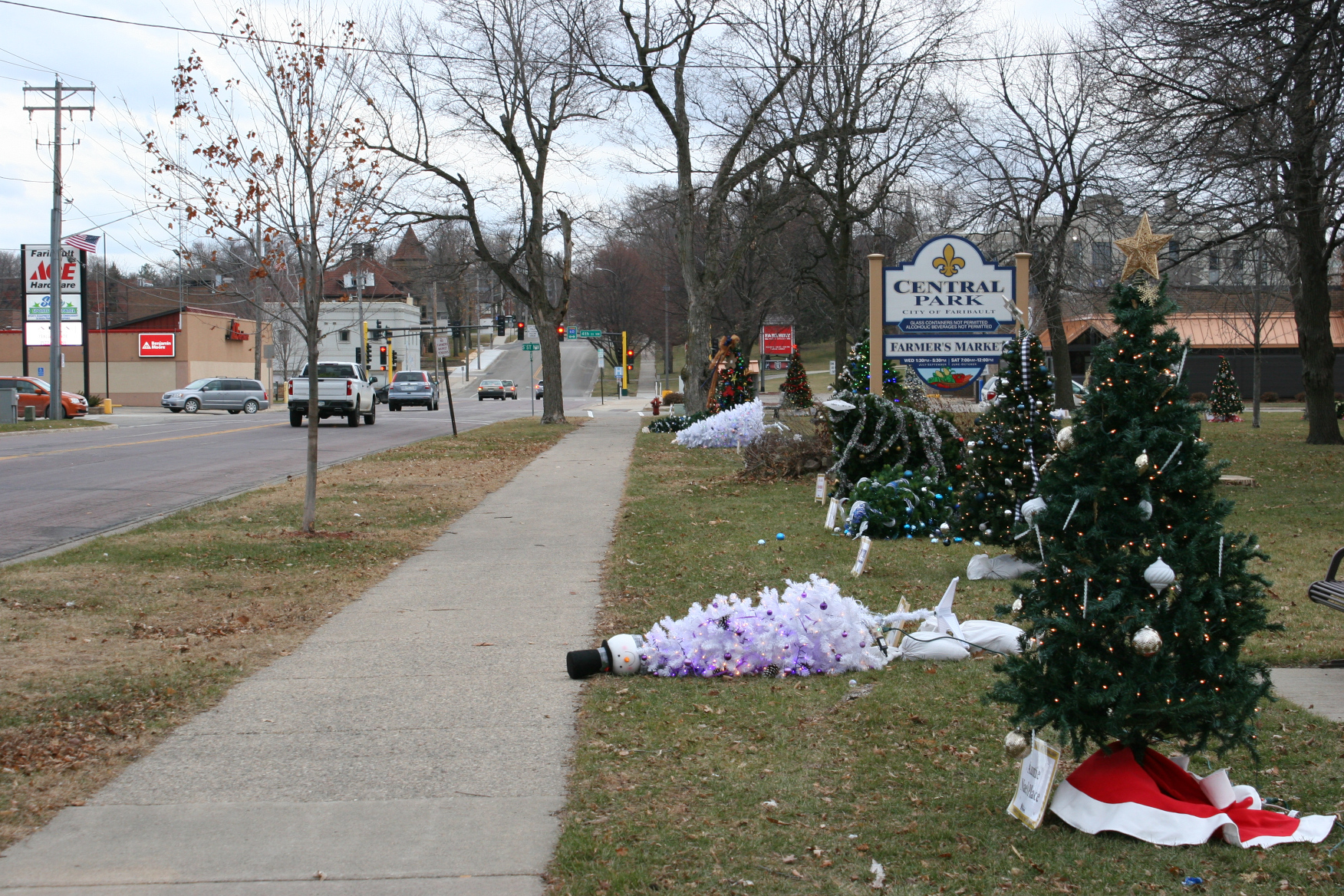
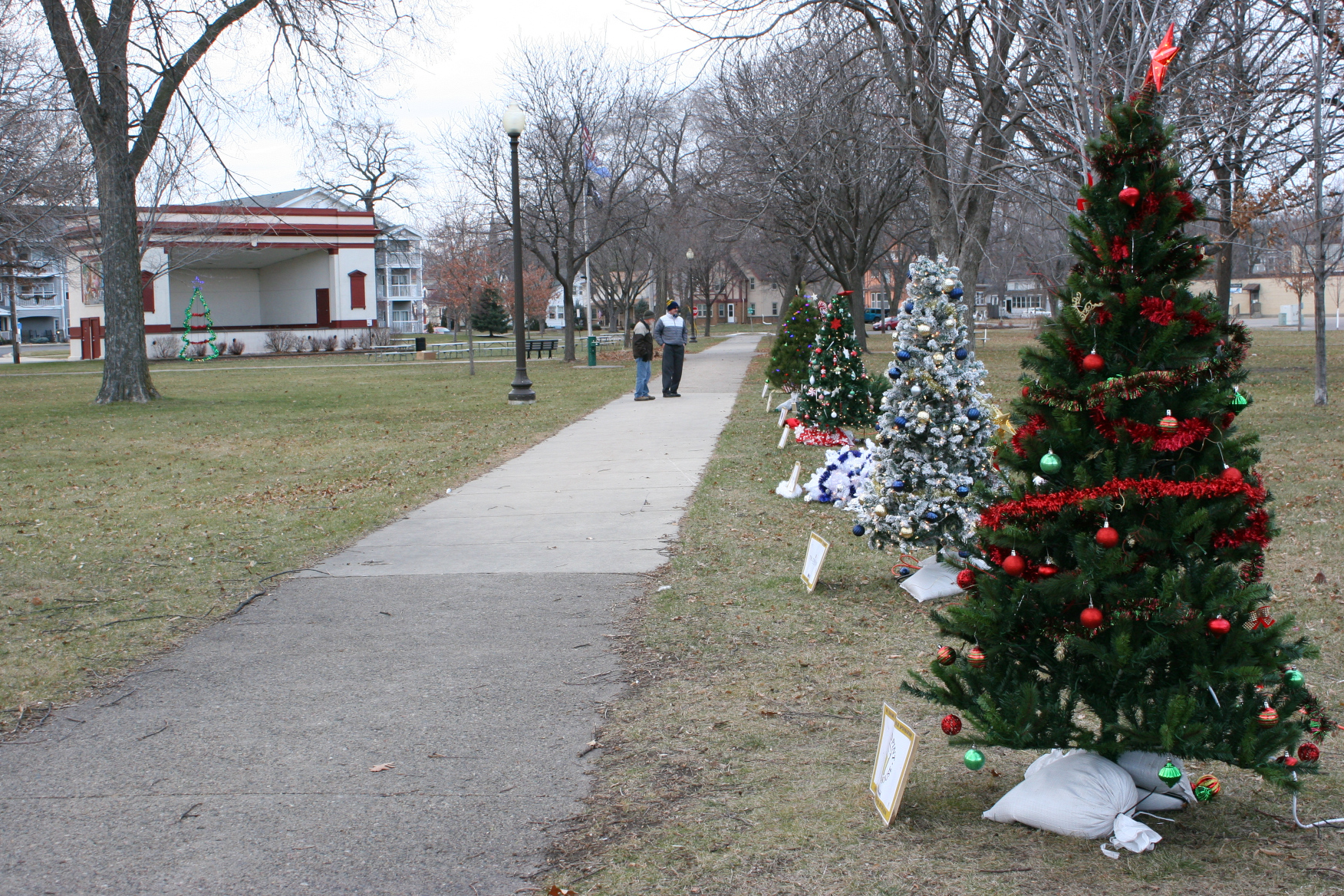
The Holiday Tree Display in Faribault, late Sunday afternoon, when winds tipped trees. (Minnesota Prairie Roots copyrighted photo December 2021)
WICKED WINDS SWEEPING from the northwest into Faribault Sunday afternoon into Monday brought more than cold temps. The strong winds also toppled Christmas trees displayed in Central Park.
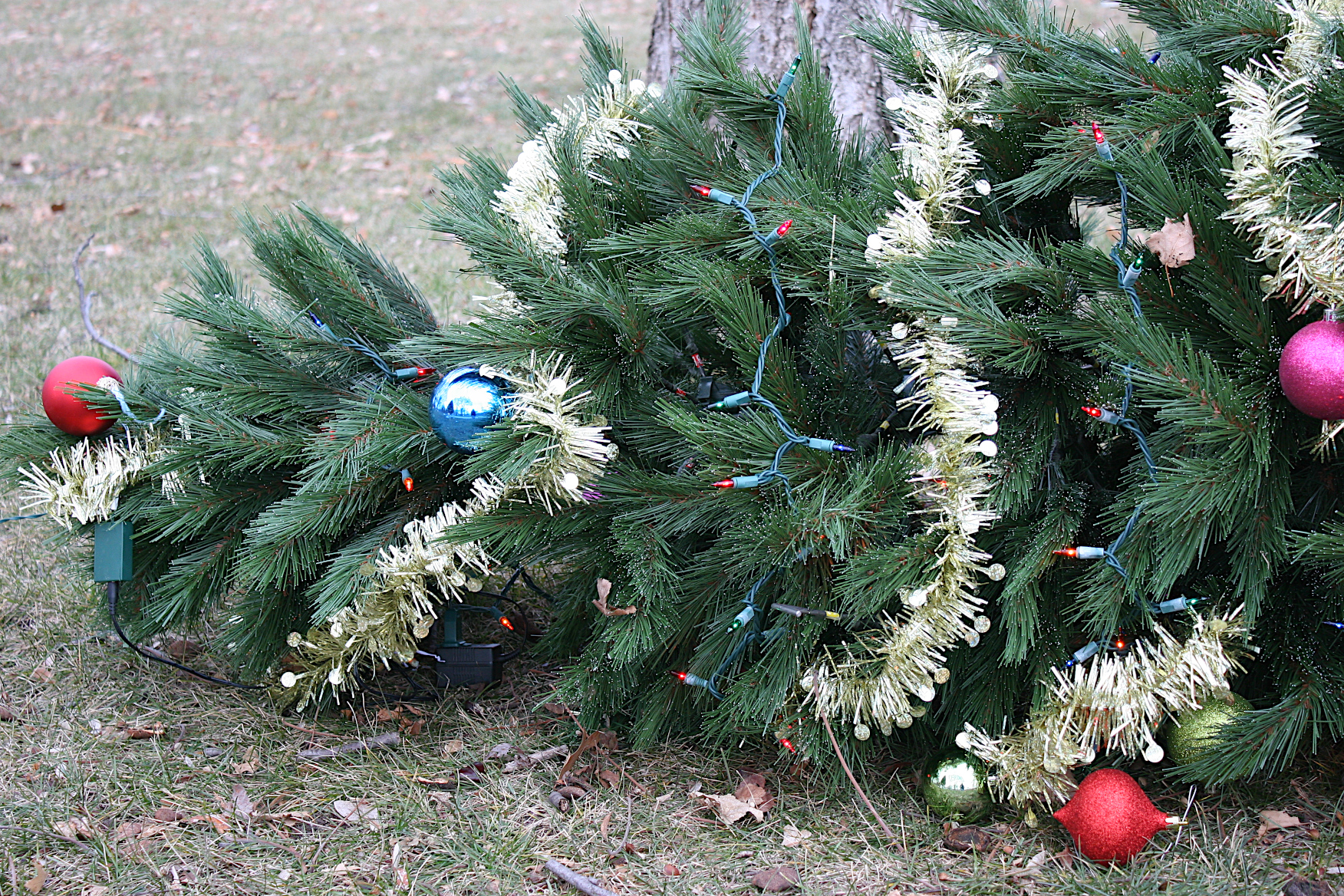
Tipped tree. (Minnesota Prairie Roots copyrighted photo December 2021)
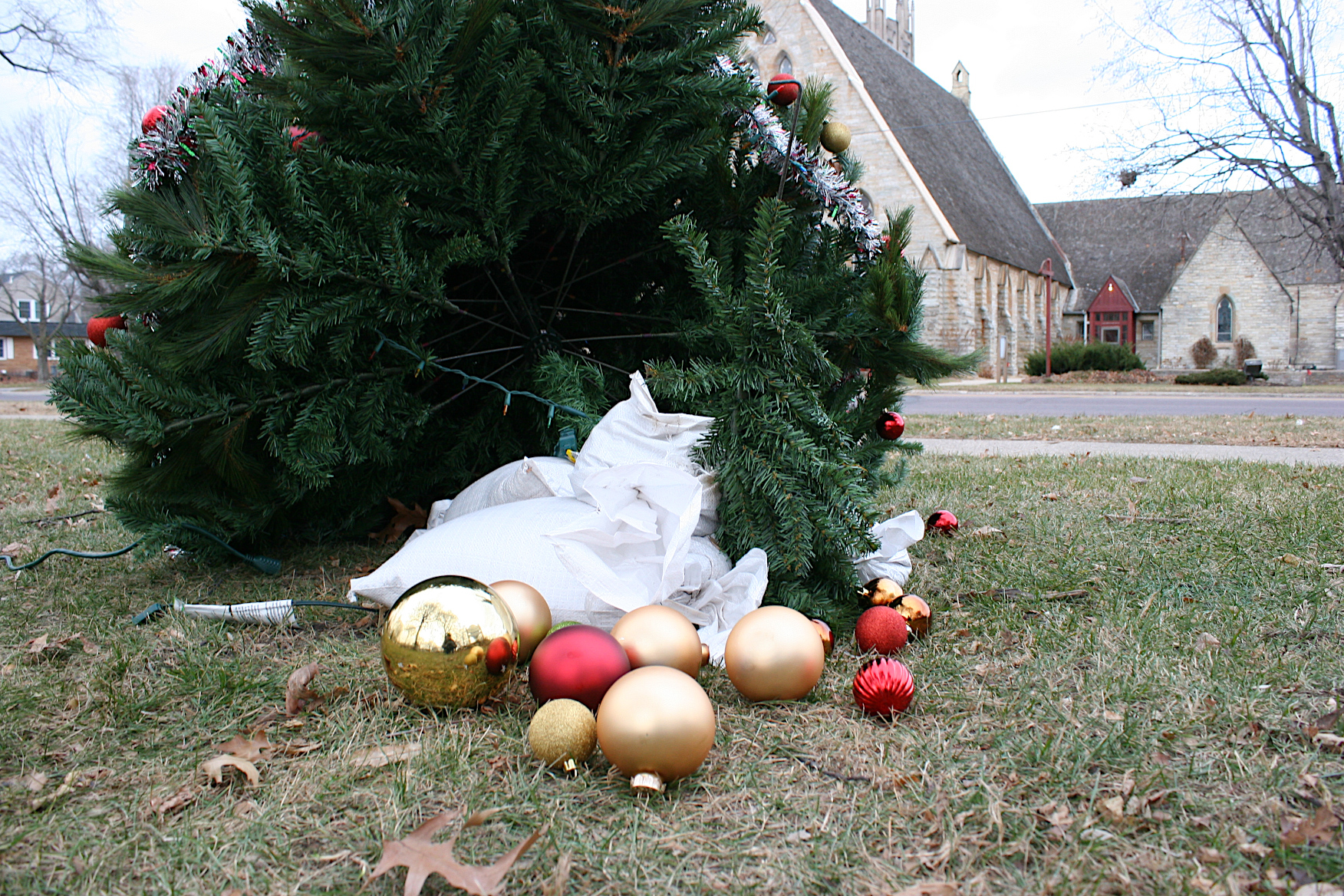
Fallen ornaments atop a Christmas tree skirt. (Minnesota Prairie Roots copyrighted photo December 2021)
Fallen snowman tree. (Minnesota Prairie Roots copyrighted photo December 2021)
Randy and I headed out to view the Holiday Tree Display, a project of the City of Faribault Parks and Recreation Department, after the Vikings game. When we pulled up, we observed numerous trees lying on the ground, ornaments littering the lawn, tree toppers askew.
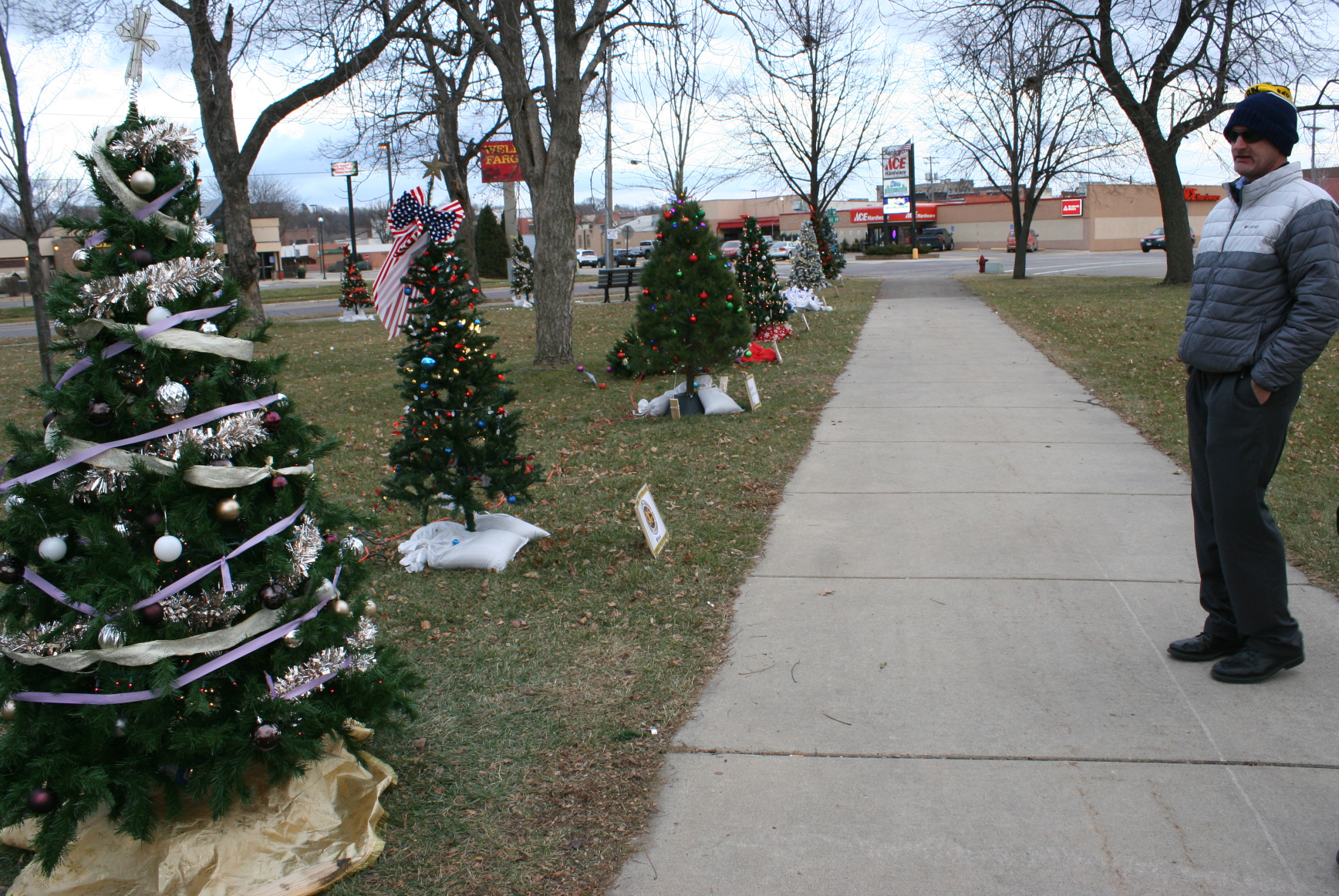
A member of the Wunderlich family stands near the tree (left front) he and his sister donated. (Minnesota Prairie Roots copyrighted photo December 2021)
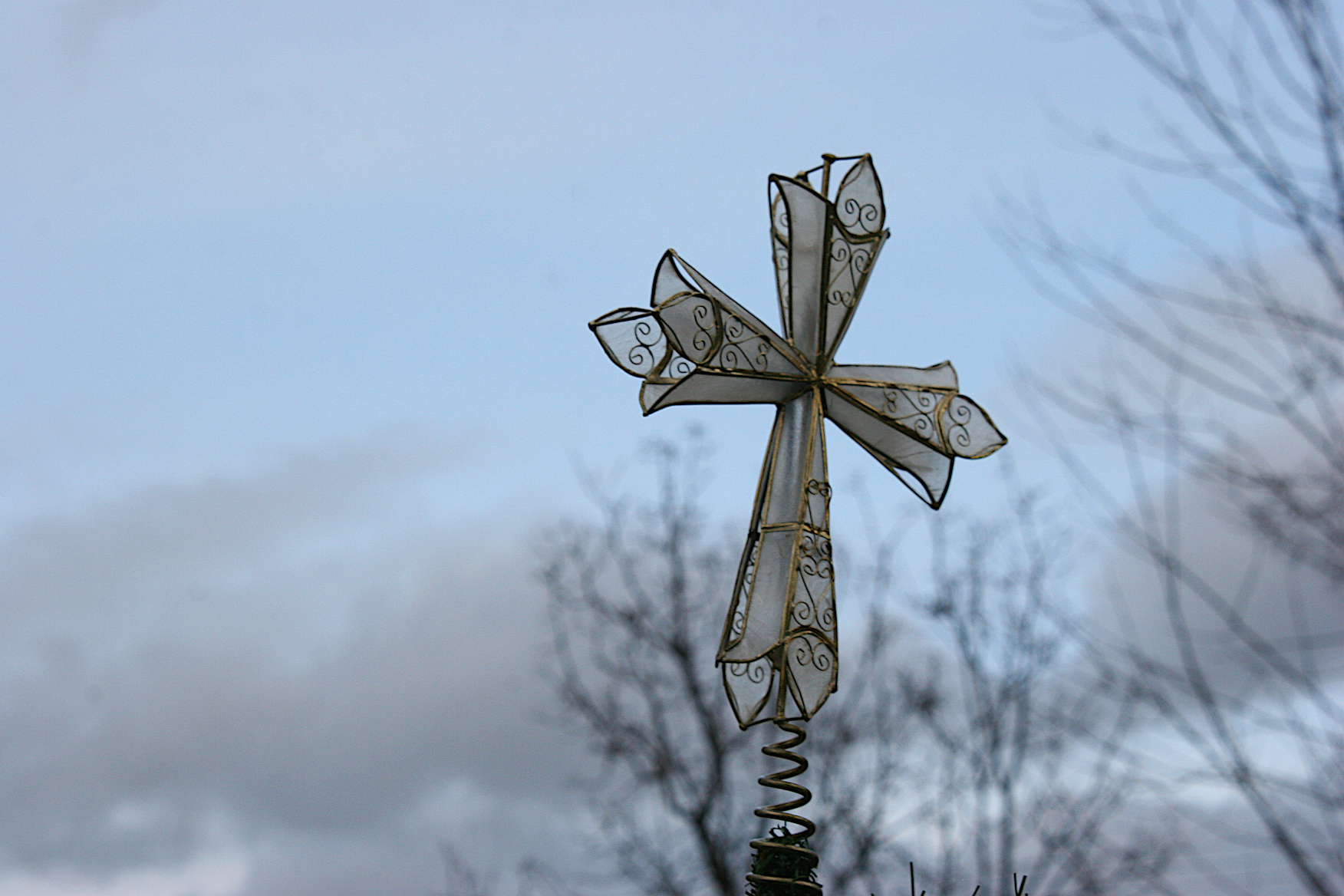
A cross tops the tree donated by the Wunderlich family. (Minnesota Prairie Roots copyrighted photo December 2021)
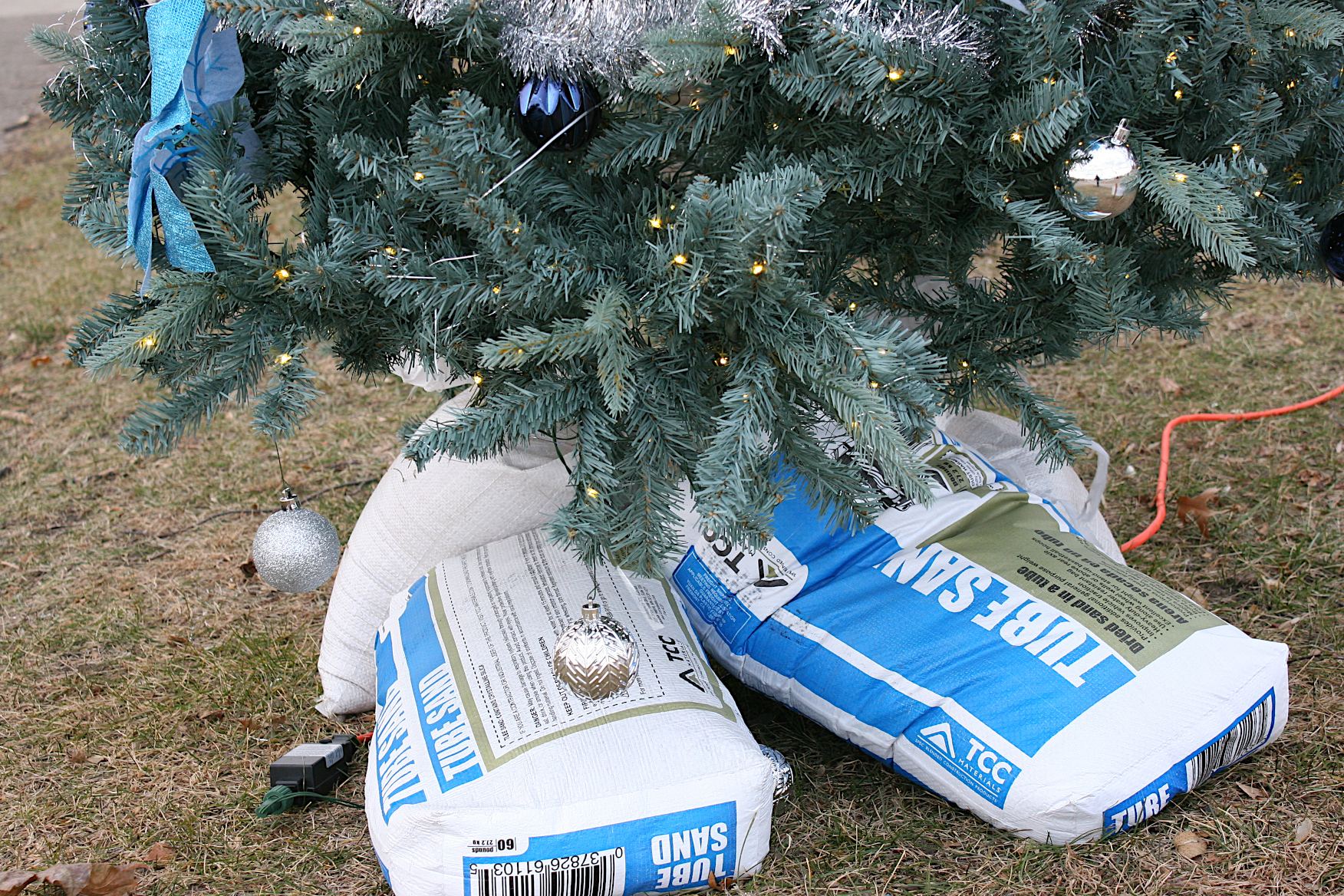
Tubes of sand anchor a tree. (Minnesota Prairie Roots copyrighted photo December 2021)
Several tree sponsors arrived to deal with the unexpected damage. A Wunderlich family member who, along with his sister set up a tree honoring loved ones and community members who died of cancer, headed across the street to Ace Hardware for sandbags. I noticed sandbags anchoring several trees. And when two women came to upright their trees, Randy and I convinced them to let the trees lie given the prevailing winds.
Randy chats Sunday afternoon with a member of the Wunderlich family. (Minnesota Prairie Roots copyrighted photo December 2021)
Even though toppled onto the ground, this star topper still shines. (Minnesota Prairie Roots copyrighted photo December 2021)
A particularly beautifully-decorated tree. (Minnesota Prairie Roots copyrighted photo December 2021)
When Randy drove by the holiday display Monday morning on his way to work, he reported more trees down with only perhaps 10 of the 34 still standing. Winds still blew, with the temp dipping into the single digits. It feels a lot like winter now. No snow here, though. But central and northern Minnesota got enough to create travel issues and necessitate late school starts.
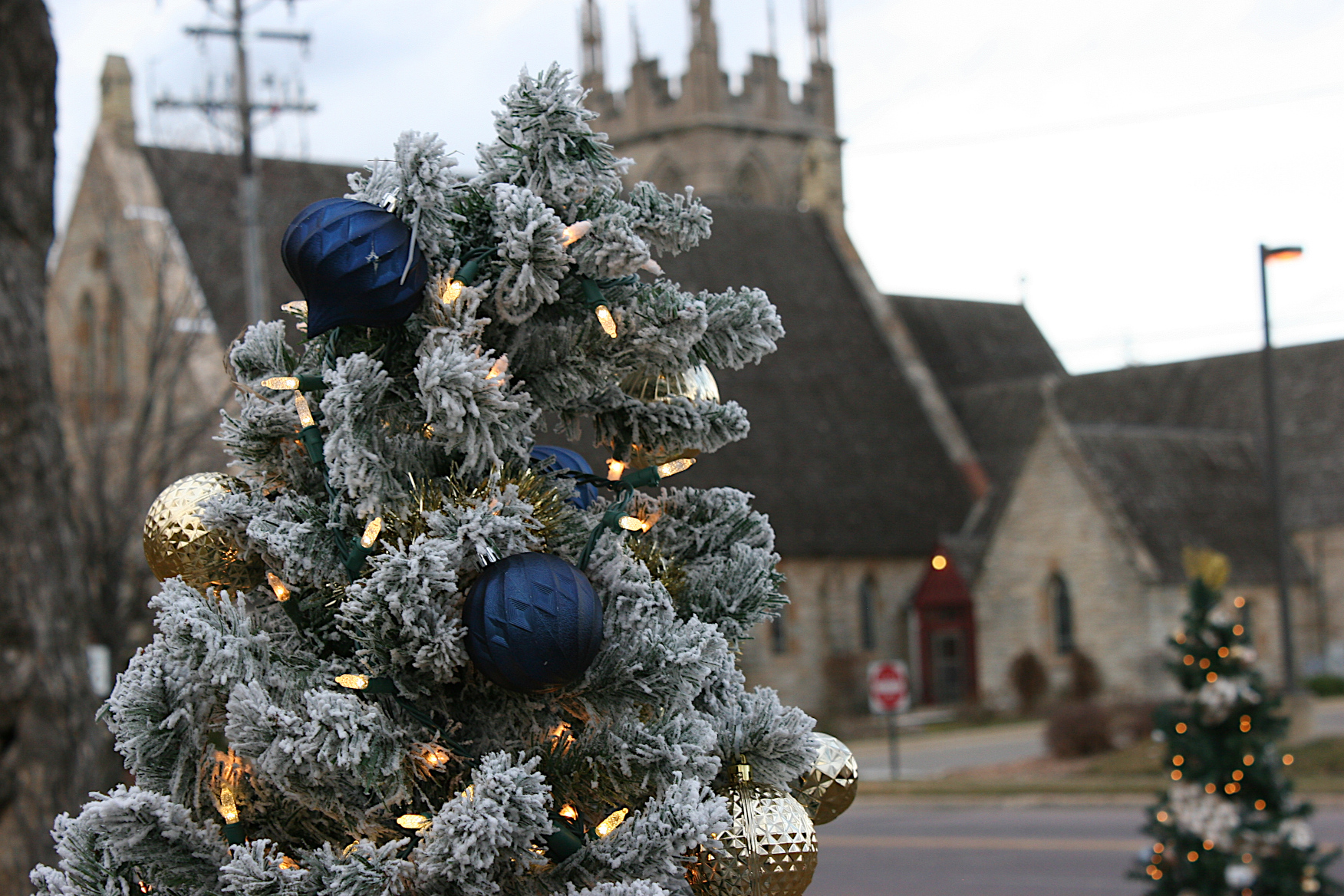
Across the street, the beautiful, historic Cathedral of Our Merciful Saviour provides a lovely backdrop. (Minnesota Prairie Roots copyrighted photo December 2021)
Ah, Minnesota. I expect next year precautions will be taken to keep those holiday trees standing straight.
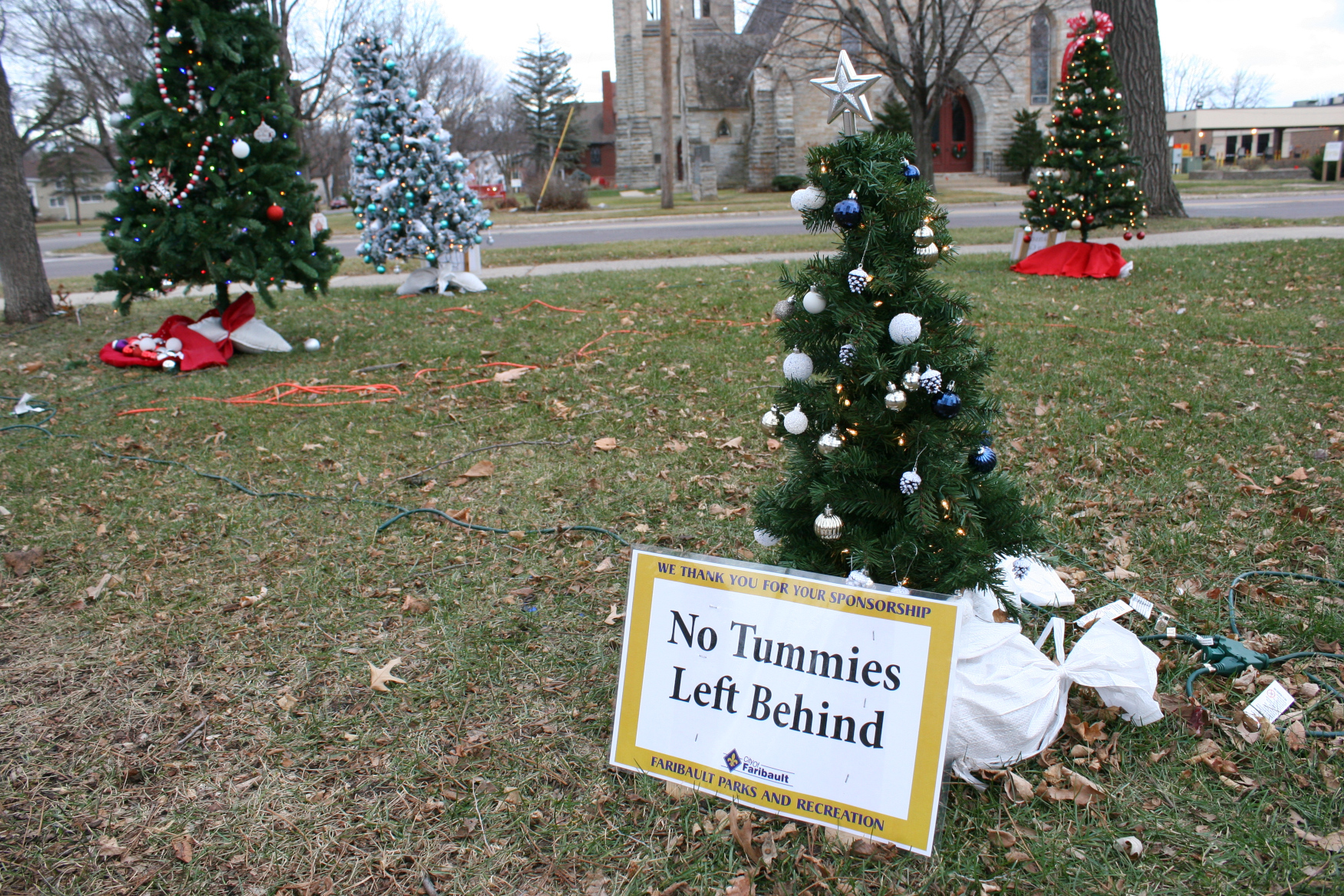
An unusual tree sponsor name. (Minnesota Prairie Roots copyrighted photo December 2021)
So many beautiful ornaments. (Minnesota Prairie Roots copyrighted photo December 2021)
Grey against grey. A rustic star. (Minnesota Prairie Roots copyrighted photo December 2021)
This is only the second year of a project which spreads Christmas joy. All trees are sponsored and decorated by local businesses, organizations, civic groups, etc., and then donated to families/individuals without a tree. It’s a great idea, one which garnered the 2020 Minnesota Recreation and Park Association Award of Excellence for Faribault Parks and Rec.
In the grey of a December day, this red star brings light. (Minnesota Prairie Roots copyrighted photo December 2021)
I feel thankful to live in a community of generosity.
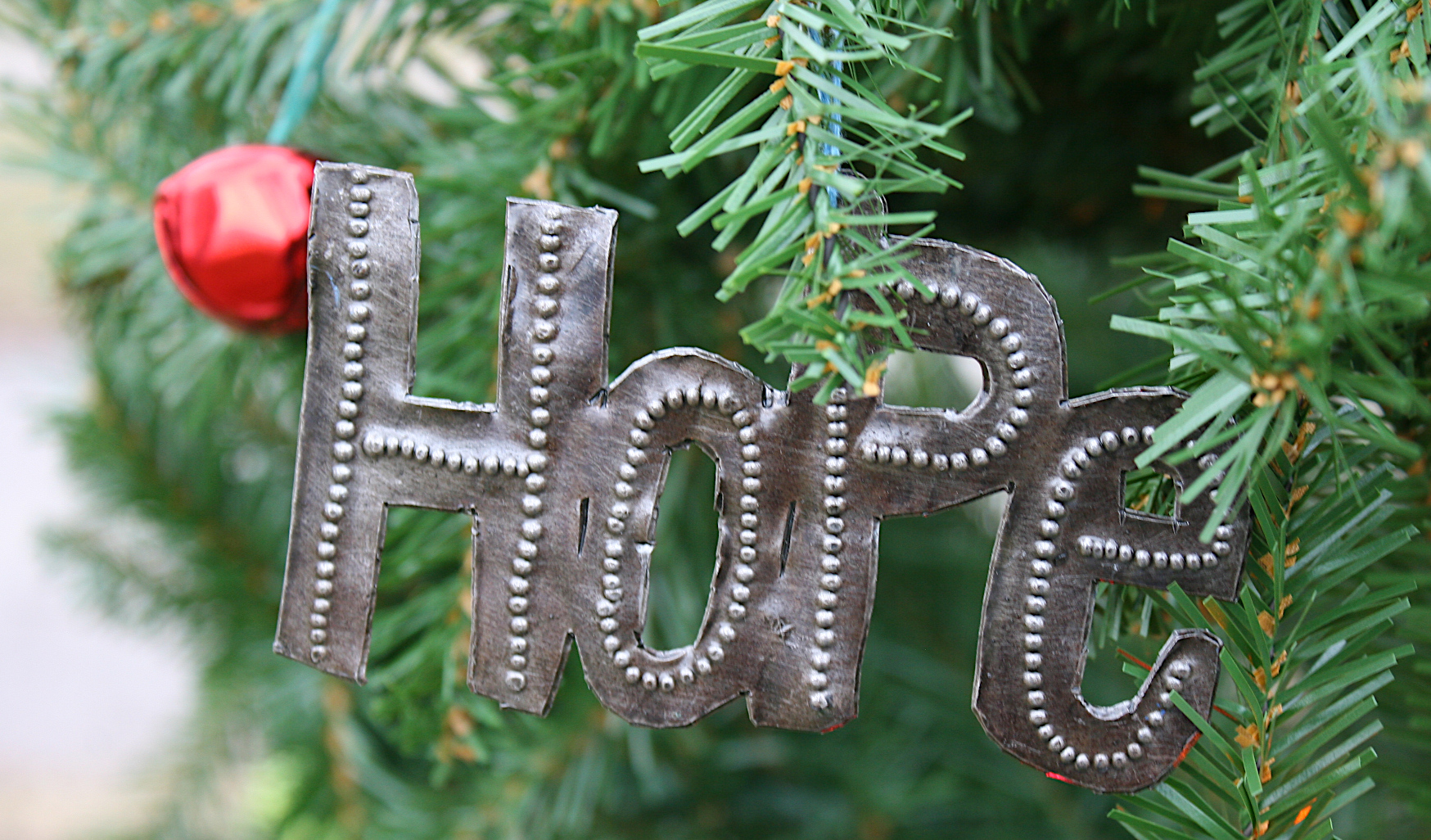
Found among the ornaments. (Minnesota Prairie Roots copyrighted photo December 2021.)
None of us ever knows when strong winds will sweep into our lives and knock us down. None of us ever knows when we will need the kindness of others to uplift us, to help us stand, to support us. To give us hope. There is something to be learned from wicked winter winds. We need one another, even if sometimes we think we don’t.
Photographed Sunday afternoon. All trees have now been placed upright. (Minnesota Prairie Roots copyrighted photo December 2021)
FYI: The trees have now been placed upright and staked, and will be displayed until December 10.
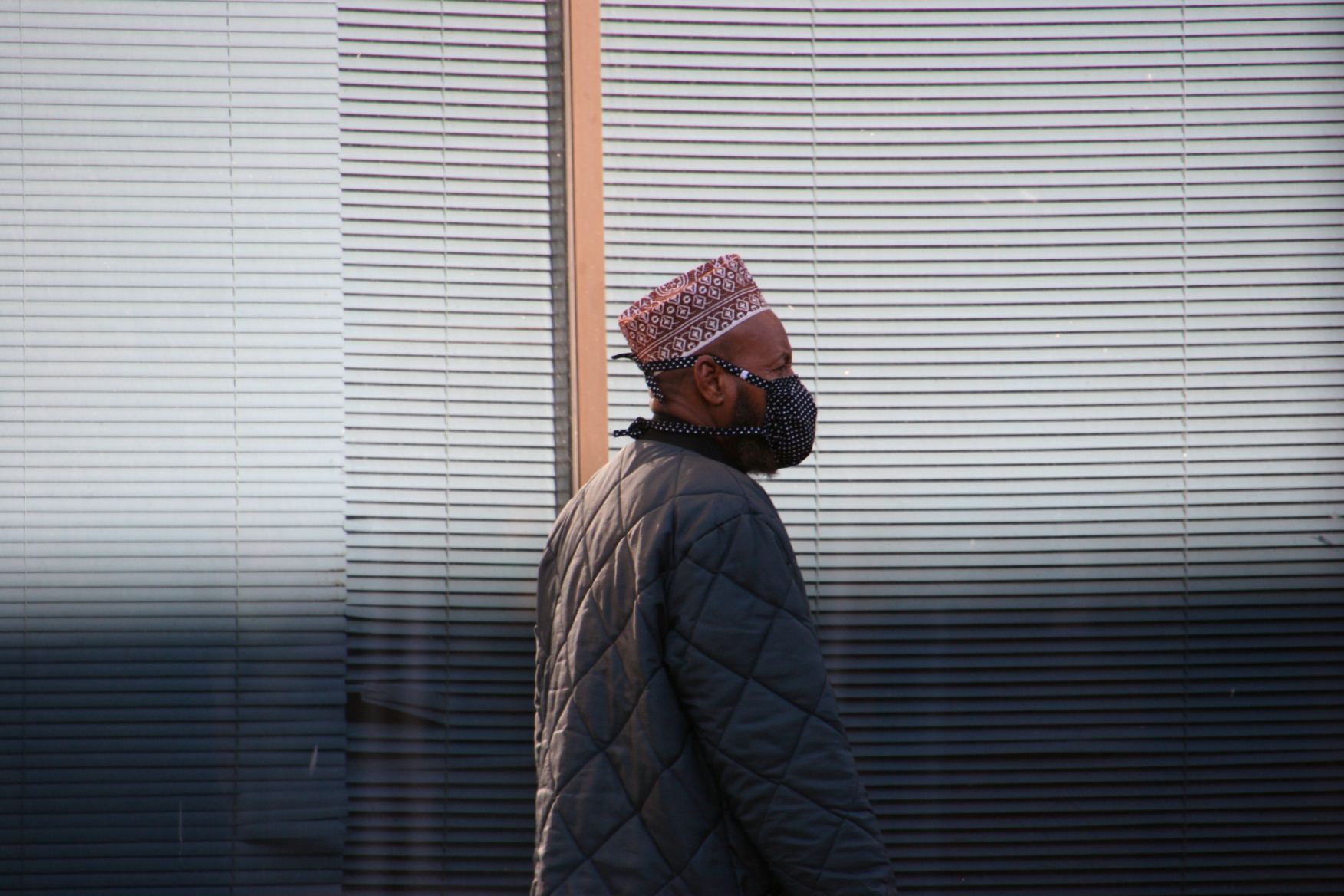
I took this photo in downtown Faribault on May 15, 2020. It remains my personal most powerful early local documentation of the pandemic. (Minnesota Prairie Roots copyrighted file photo May 2020)
I DISLIKE CONFLICT. I prefer decency, kindness and respect. I’d rather we all just got along. Listened. Stopped all the political jockeying and spread of misinformation. Cared about one another. Really cared. That would be ideal.
But this is not Utopia, especially not now during a pandemic. I am beyond frustrated. We’ve risen to new levels of disagreement and disconnect that threaten our health and our relationships, even our democracy. I find myself faced with sometimes heartwrenching choices as I try to protect my health and that of those I love most.
WHOOPING COUGH WAS BAD ENOUGH
A severe viral infection, which my husband caught at work and then passed along to me in mid-August, showed just how vulnerable I am to respiratory infections. While this week-long-plus infection had all the marks of COVID-19, it was not. We both tested negative. (Yes, we were fully vaccinated and recently got our boosters.) Yet, this reminded me of my need to be careful. Sixteen years ago I developed a severe case of whooping cough that lasted for three months and required an inhaler and steroids to help me breathe. (Yes, I was vaccinated for pertussis, but that protection wears off, unbeknownst at the time to me. Staying current on vaccines is essential.)
When I asked my doctor back in 2005 where I could have contracted whooping cough, he replied, “You could have gotten it waiting in line at the grocery store.” I was his first adult diagnosed case in 30-plus years of practicing medicine. I never want to be that ill again.
PROTECTING MYSELF & OTHERS
I have made, and will continue to make, choices that best protect me and my closest family circle from COVID-19. With young grandchildren and also a mother in a long-term care center, I am not willing to take chances with their health or mine. Because of high COVID rates in Minnesota, I haven’t seen my mom since July.
In the past nearly two years, I’ve opted out of grad parties, family reunions and gatherings with friends that included unvaccinated and unmasked individuals. I also stopped attending in-person worship services earlier this summer for the second time during this pandemic. I don’t feel comfortable being in enclosed spaces (beyond brief passing) with people who may or may not be vaccinated and who are unmasked.
I’ve missed funerals, attending only one since this whole pandemic began. And that was my father-in-law’s in February, pre-vaccination. It was a horrible experience, trying to keep my distance from the half-maskers and unmasked, too often repeating that I wasn’t hugging or shaking hands because, um, we’re in a pandemic.
STRAINED RELATIONSHIPS
Already, family relationships feel strained as I struggle to understand why some extended family refuse to get vaccinated. And then feel it’s OK to attend family get-togethers. I expect to make some difficult choices soon about whether to attend upcoming holiday gatherings. If unvaccinated adults are in attendance, I likely won’t be. Not because I don’t trust the vaccine, but because there’s always some risk and it’s a matter of principle. I don’t want to, by choice, be around individuals I know to be unvaccinated.
CARE, COMMON SENSE & OUR CHILDREN
And then there are those daily life occurrences which trigger concern. Like the unmasked teenage grocery store cashier who ran her fingers around her mouth. Then checked out my groceries.
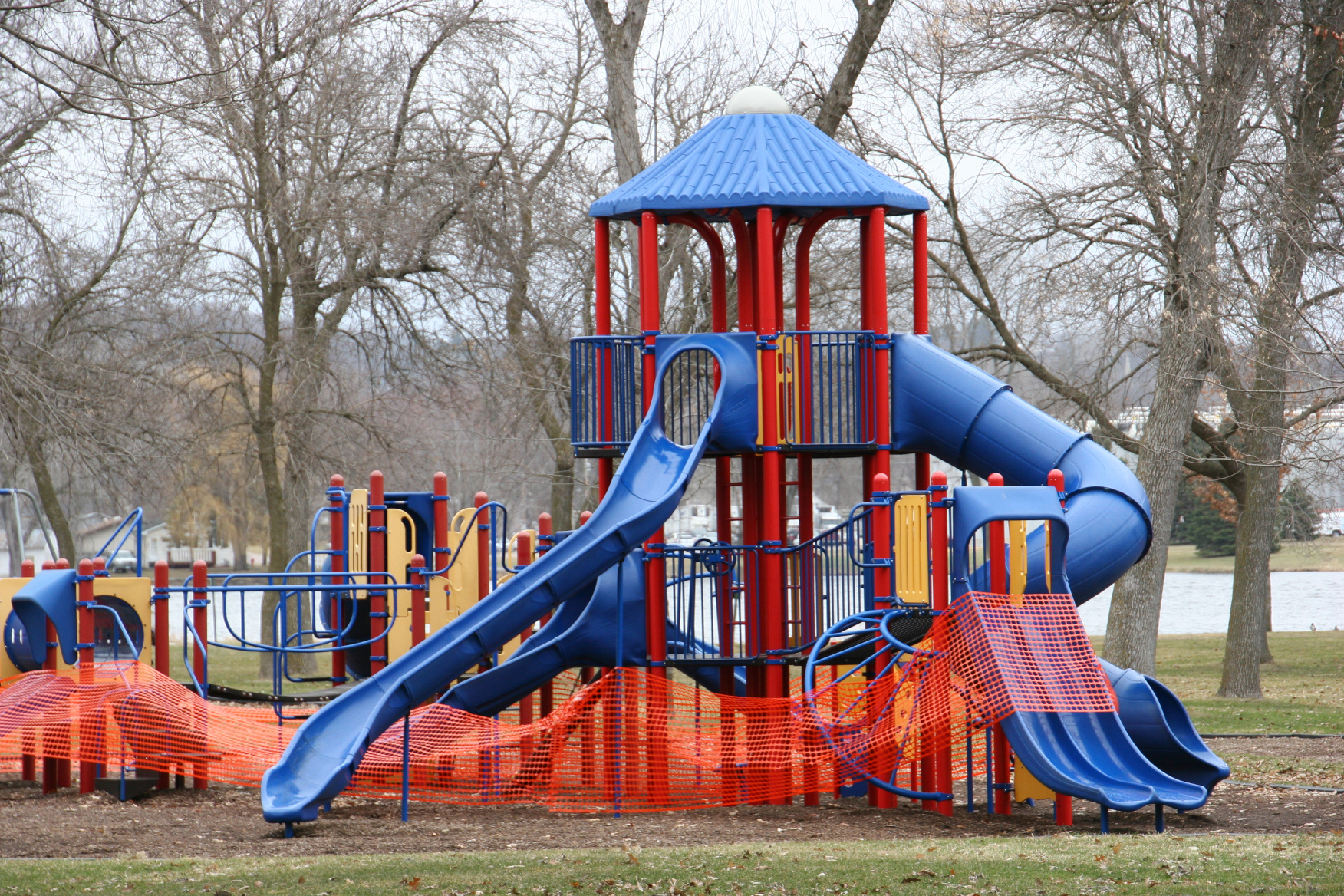
Early on in the pandemic, playgrounds were off-limits to kids, including this one at North Alexander Park in Faribault. (Minnesota Prairie Roots copyrighted photo March 2020)
Months ago at the playground, I watched my granddaughter run up and down a tunnel slide with another little girl. The whole time I wondered, should I allow her to do this? In the end, I did, mostly because they were outdoors and in constant motion. I find myself feeling especially protective of my two grandchildren. The day my 5-year-old granddaughter got her first vaccine dose, I felt incredible joy. I cannot wait for the nearly 3-year-old to become eligible for his COVID vaccine.
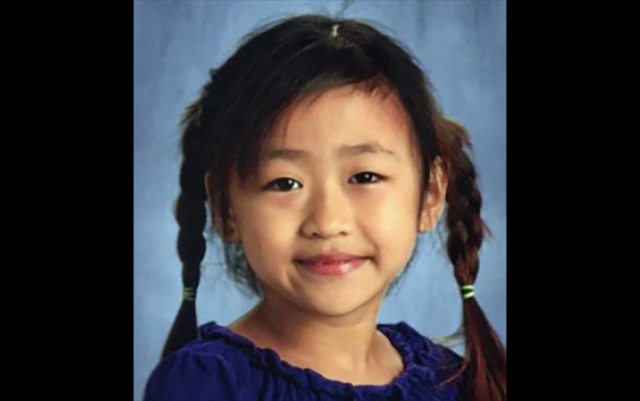
Week Day, 6, a first grader at Park Side Elementary School in Marshall, MN., died of COVID on April 25, 2021. Photo source: Hamilton Funeral Home.
It’s true that, generally, if kids get COVID, they experience milder cases. But some have also ended up severely ill in the hospital and others have died. I will take every preventative measure I can to keep my dear grandchildren healthy and safe.
I recognize we each have different comfort levels. I tend to believes the experts, to be a rule follower, to want to do my part to keep others safe via vaccination and mitigation. I trust health and science. If public health officials are recommending we wear masks indoors, regardless of vaccination status, I will do exactly that. Not that I need them advising this. Common sense and knowledge of the highly-contagious Delta variant are enough for me to mask up, keep my distance and more. I would never think of going into surgery (and I’ve had many surgeries in my life) with an unmasked healthcare team, pandemic or not.
OVERWHELMED IN MINNESOTA, A COVID HOTSPOT
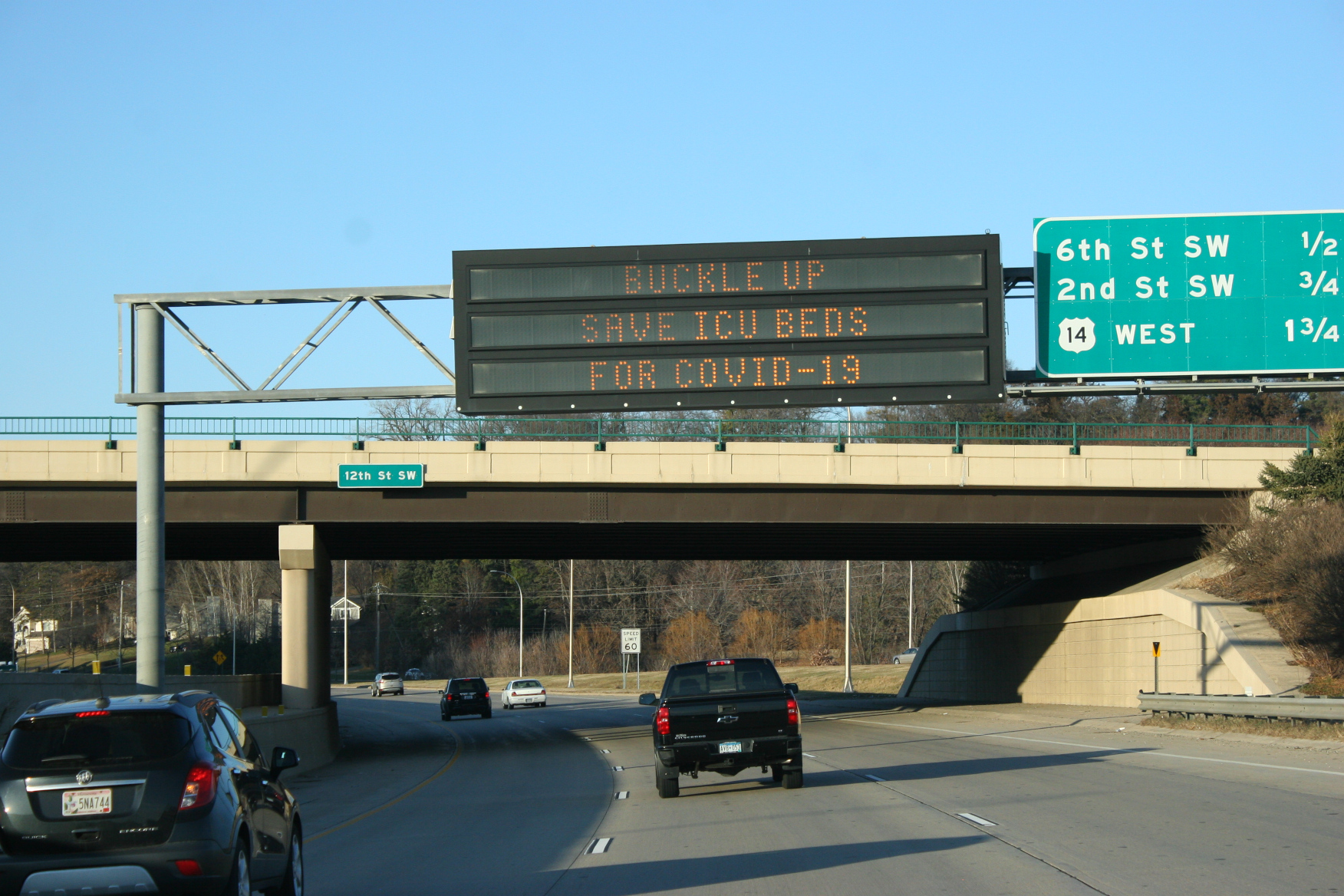
I photographed this from the passenger seat of our van as we drove through Rochester in November 2020. I’d like to see a message now stating, GET VACCINATED & save ICU beds for anyone who needs one.(Minnesota Prairie Roots copyrighted file photo November 2020)
Minnesota’s overwhelmed healthcare system concerns me as it affects anyone who needs care. Not just those with COVID. Despite all of this, too many Minnesotans are still refusing to get vaccinated.
I want this pandemic to end. But right now I don’t foresee that happening any time soon…unless we start acting like we care about one another. How? Get vaccinated (and that includes boosters). Wear a face mask. Social distance. Stay home when sick. Practice other proven COVID mitigation measures. We have the power to stop COVID-19. This isn’t 1918. But sometimes it sure seems like 103 years ago, despite advances in science and knowledge and an understanding of how this virus spreads.
#
NOTE: I will not publish anti-vaccine or anti-masking comments on this, my personal blog. Likewise, I will not publish misinformation, etc. as it relates to COVID and vaccines.
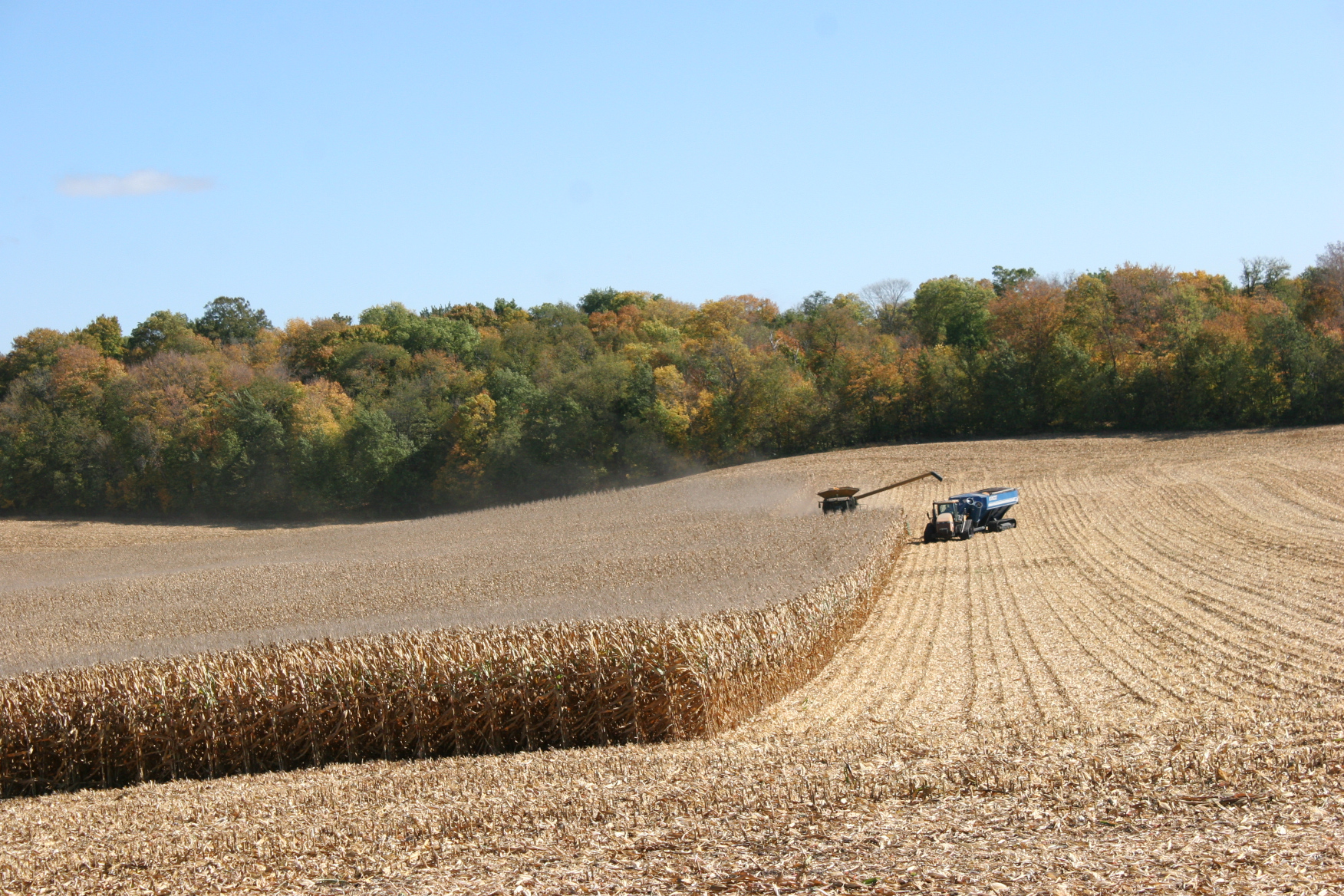
Harvesting corn in southern Minnesota. Minnesota Prairie Roots copyrighted photo October 2021.
DUST RISES FROM FIELDS, clouding the air as combines rake through rows of dry soybeans.
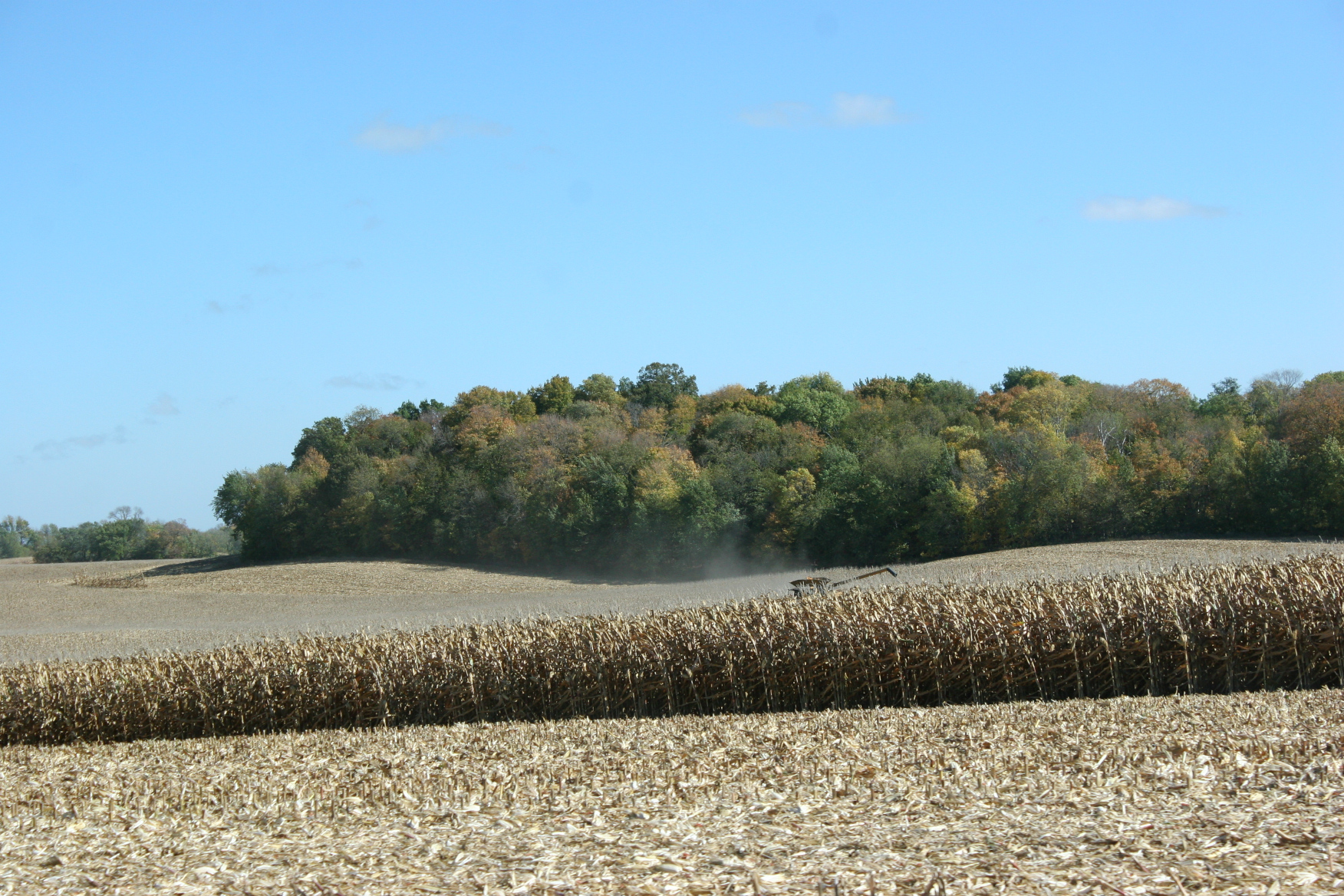
Barely visible, the top of the same combine featured in the photo above. Minnesota Prairie Roots copyrighted photo October 2021.
Combines comb corn rows, too, in this season of harvest in southern Minnesota.
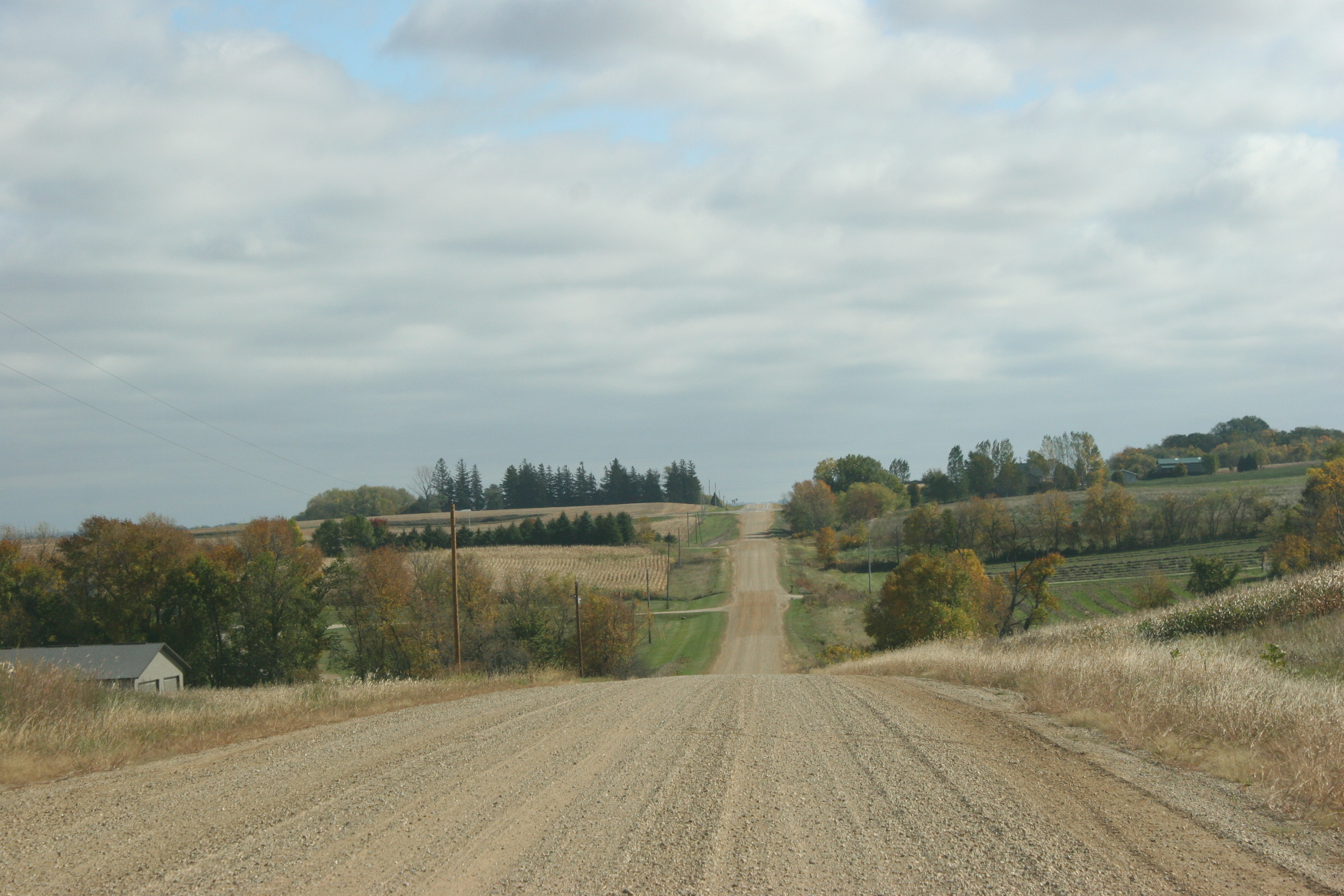
Follow country roads, like this one in eastern Rice County, to view fields at a slower pace. Minnesota Prairie Roots copyrighted photo October 2021.
Take a drive in the countryside these days and you will observe farmers hard at work, bringing in the crops.
A common site, semi trucks parked in fields, awaiting the yield, this one in western Rice County. Minnesota Prairie Roots copyrighted photo October 2021.
As October moves to mid-month, a sense of urgency presses into long days in the field. By 7 pm, darkness envelopes the land and farm machinery still moves, like a mammoth beast lumbering across acres of corn and soybeans, eyes aglow.
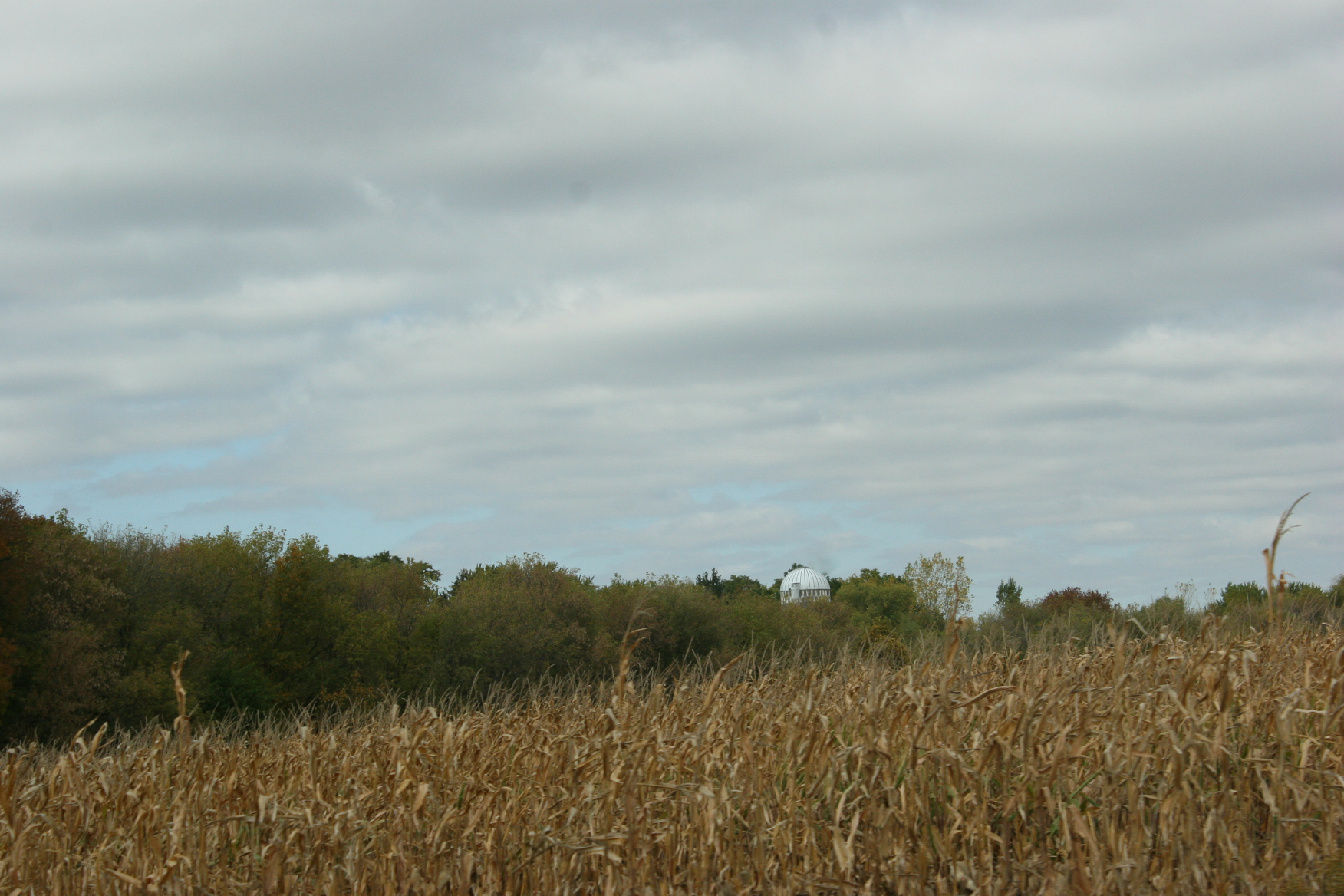
A silo peeks above a cornfield in eastern Rice County. Minnesota Prairie Roots copyrighted photo October 2021.
It is in this season of harvest that I feel a bit melancholy, missing my once close connection to the land. The scent of earth. The view of acres and acres and acres of crops drying to muted hues, visual evidence of a farmer’s work. The sound of combines roaring. The taste of dust and dirt. Golden orbs of soybeans sifting between fingers spread wide.
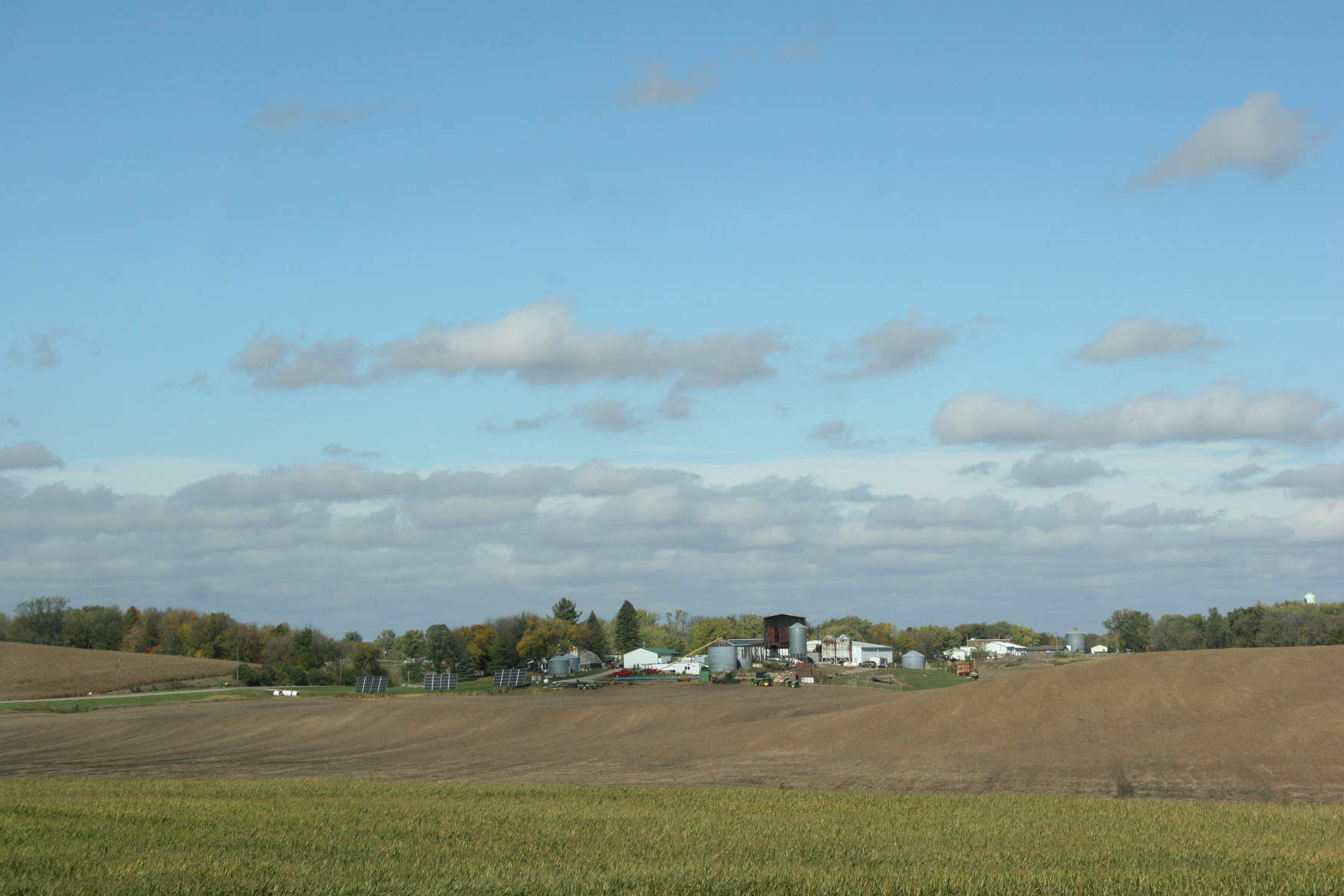
A farm site spreads across the land in western Rice County. Minnesota Prairie Roots copyrighted photo October 2021.
While I once experienced all those first-hand on my childhood farm in southwestern Minnesota, today I feel an outsider looking in. Watching. Remembering. Feeling grateful for the years I lived on a farm, never realizing then just how much those days would mean to me later in life.
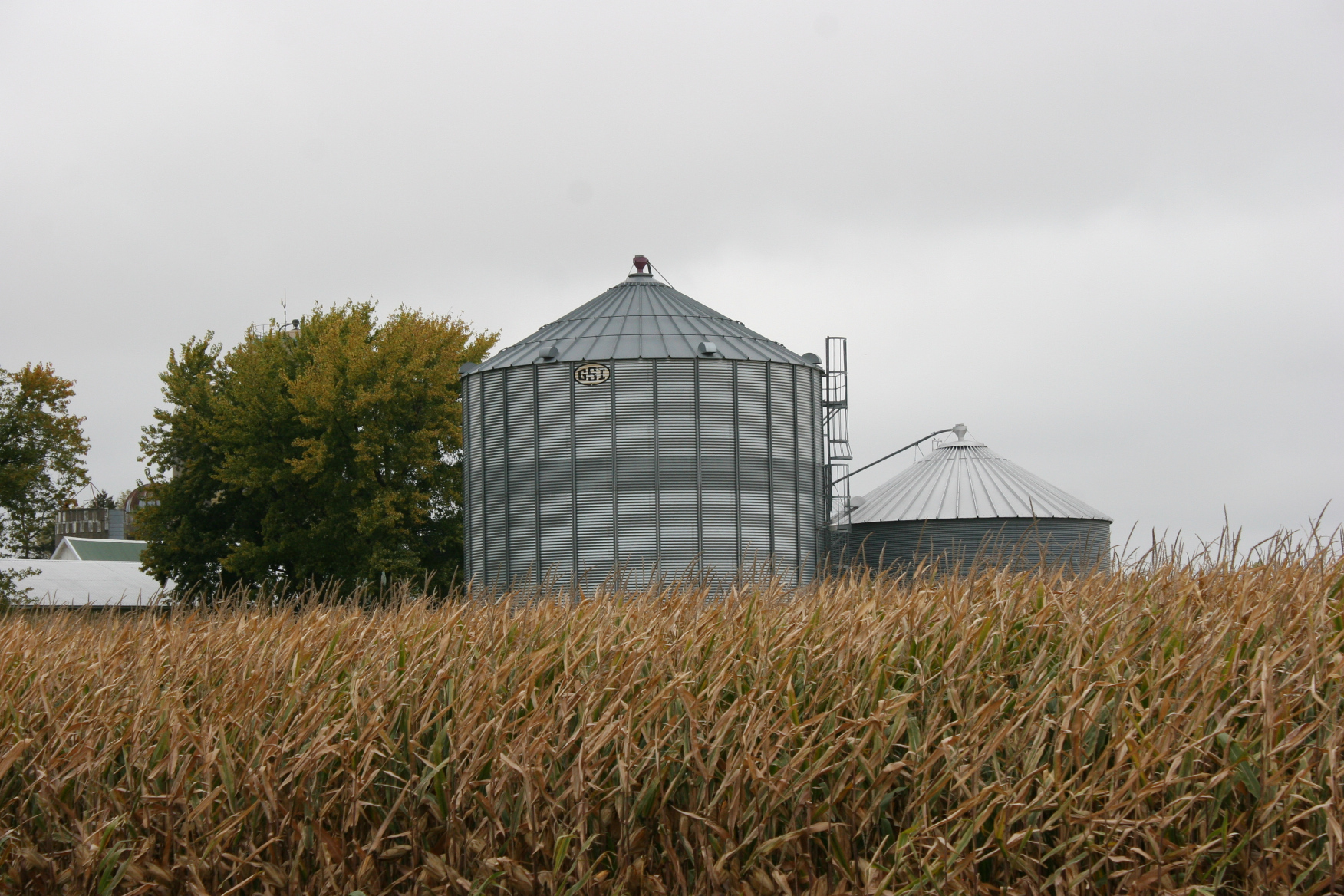
Grain bins, like these in eastern Rice County, symbolize harvest as storehouses for grain. Minnesota Prairie Roots copyrighted photo October 2021.
Each autumn I yield to the call of harvest. I reconnect to the land. Observing. Recalling. Missing my farmer dad and my Uncle Mike, a bachelor farmer who lived the next farm place over to the east. They are decades gone now, their final harvests long-finished.
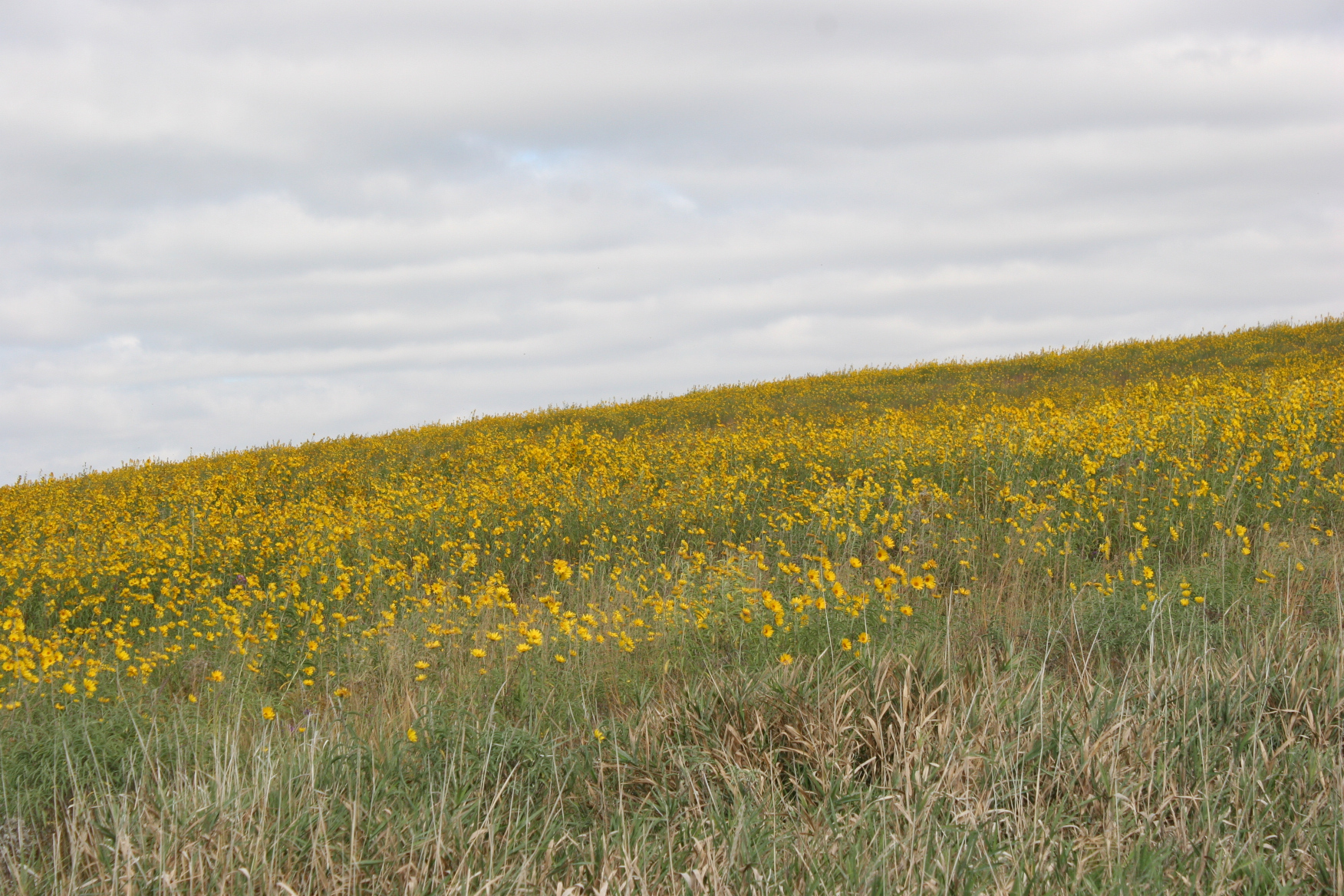
Acres of wildflowers bloom in a field off Rice County Road 20 between Northfield and Cannon City. Minnesota Prairie Roots copyrighted photo October 2021.
These emotions rush like a blustery October wind into my thoughts as winter approaches. As harvest continues, as seasons pass and life goes on.
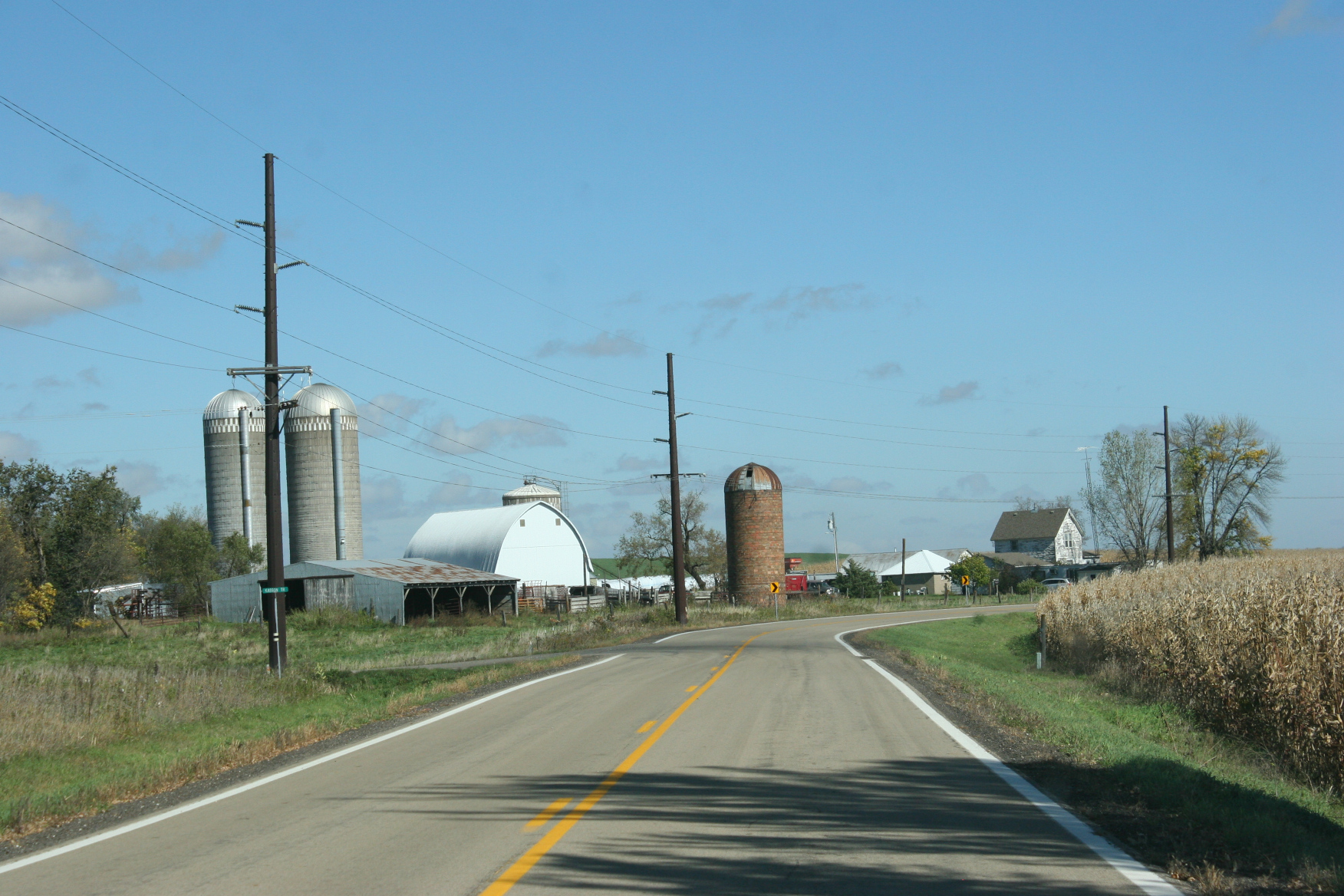
Cornfield to the right, farm site to the left, all part of a Sunday afternoon country drive in southern Minnesota. Minnesota Prairie Roots copyrighted photo October 2021.
TELL ME: Do you go for country drives to view the harvest? Or, if you live in a city, how do you celebrate autumn? I’d like to hear, wherever you live. I welcome harvest memories also.
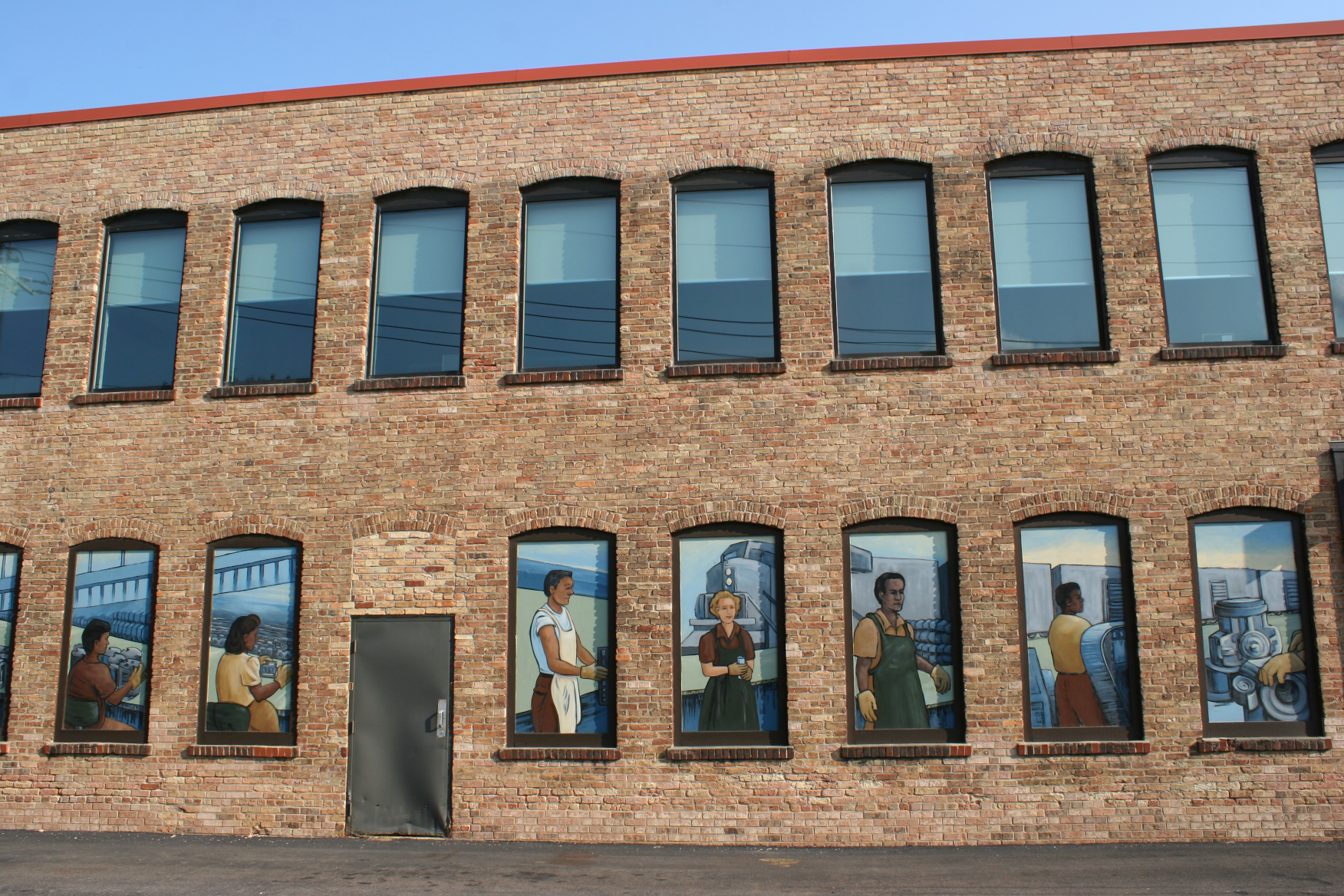
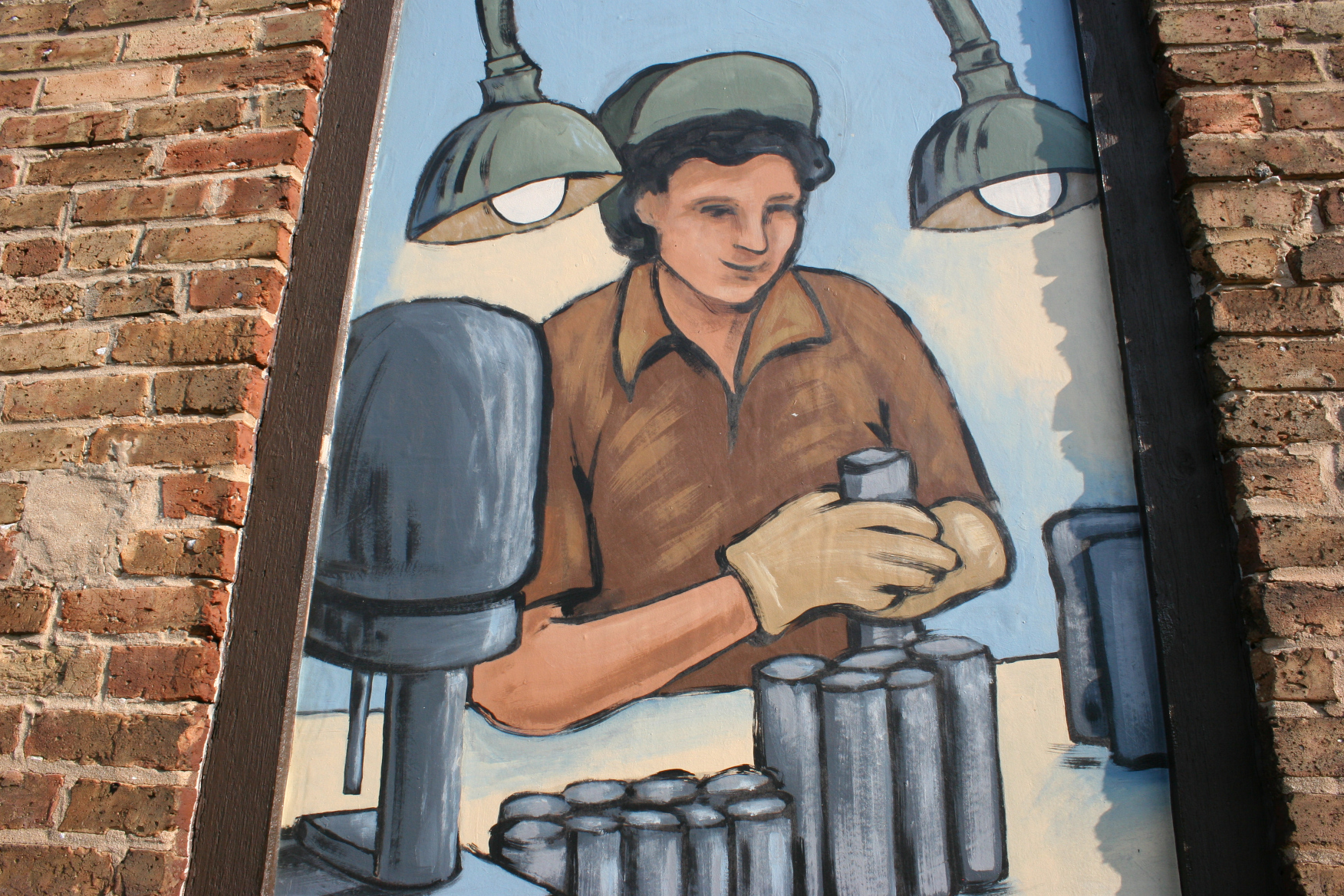
Portraits of industrial workers stretch along the Madison-Kipp building in the Atwood Neighborhood of Madison, Wisconsin. Minnesota Prairie Roots copyrighted file photo September 2020.
WITH LABOR DAY only days away, I’m reflecting on employment. Not the unofficial end of summer or the start of school. But on jobs.
I can’t recall a time when jobs seemed so abundant, when businesses can’t find enough workers.
One look at my local paper and shopper shows postings for transit bus drivers, sandwich makers, managers, truck drivers, construction workers, nursing assistants, housekeepers, maintenance people, a city finance clerk, sports reporter, mortgage banker, cylinder delivery driver, pharmaceutical researchers, direct care staff, meat market counter help, digital media specialist, appraiser, engineering tech, bilingual-Somali eligibility worker and more.
Companies are offering sign-on bonuses, free food, enticing benefits and better wages. Not that these higher wages are high enough to meet the ever-growing cost of living in a community like mine with a housing shortage. In both rental and home ownership. I expect many in Faribault struggle to manage monthly rent of $831-$1,315, for a two-bedroom apartment, for example.
Many, despite full-time employment, struggle also to put food on the table, to afford healthcare, and more. Life is not vacations and dining out and having the newest and the best for many. Rather, it’s about getting by and budgeting and shopping thrift stores and stretching dollars until they stretch no more. This is reality.
The gap between the haves and the have-nots seems as wide as ever. And often that distance exists not for a lack of hard work, but rather in the differing values placed on jobs. Or disparities that exist due to greed. Or a lack of appreciation for the knowledge and skills of hands-on laborers, especially, versus white collar workers.
The pandemic, too, has challenged the work force in ways we’ve never experienced. I feel, especially, for those who work in healthcare (namely hospitals), who are overwhelmed by the stress and pressures of caring for COVID patients. I can only imagine how disheartened they feel as cases surge, when it didn’t need to be this way. I can only image how disheartened they feel when dying patients and their families continue to deny the realities of this deadly virus.
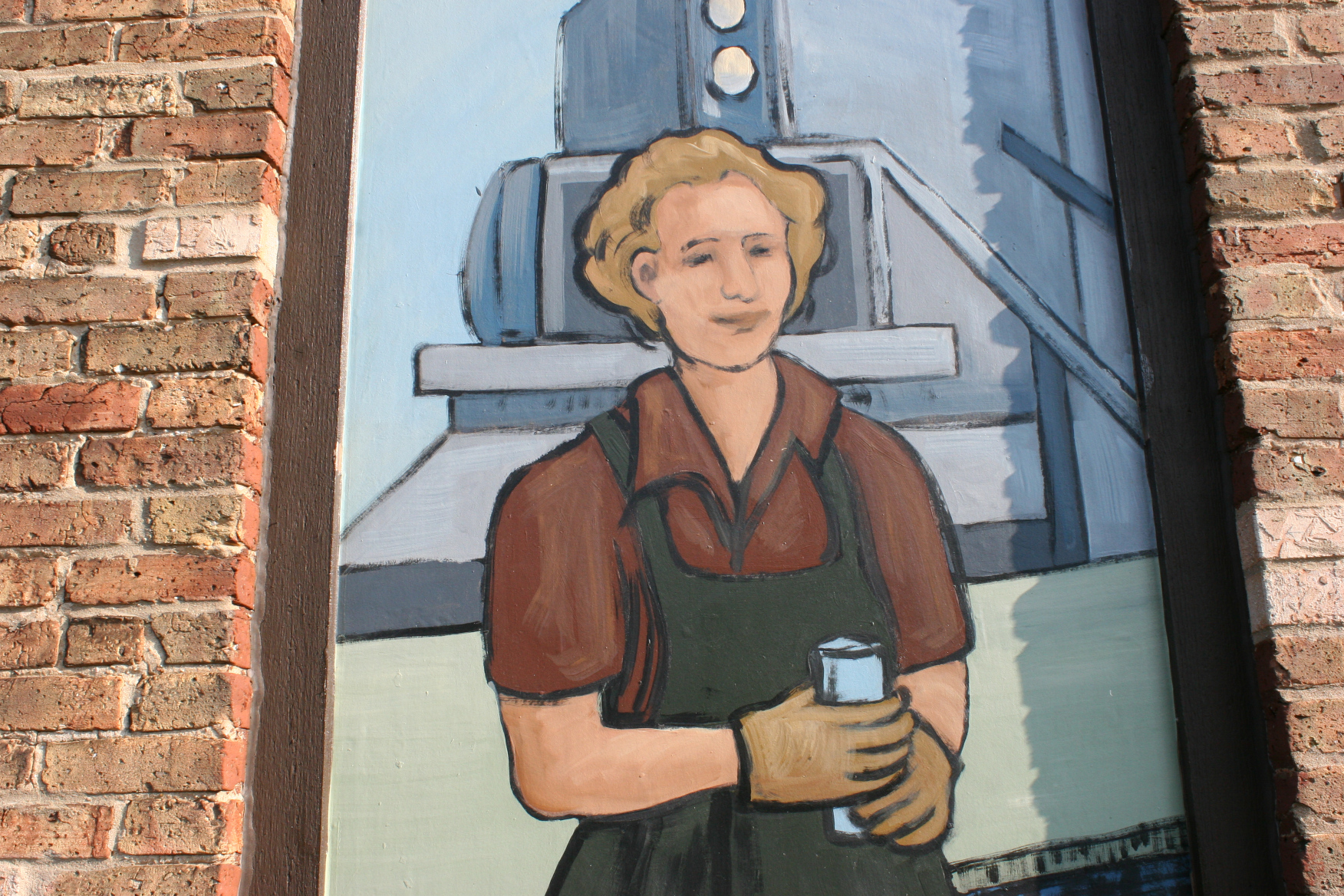
That each window focuses on one worker highlights their importance. Minnesota Prairie Roots copyrighted file photo September 2020.
I am grateful for all those “essential workers” who continued to go to work when others could stay home and work from the safety of their home offices. Workers like my husband, an automotive machinist. Workers like my cousin, a grocery store cashier. Workers like another cousin, a nurse. Workers like my second daughter, who lost her job as a contract Spanish medical interpreter early in the pandemic and now works as a full-time letter carrier.
Faribault’s newest mural, LOVE FOR ALL, created by Minneapolis artist Jordyn Brennan. Minnesota Prairie Roots copyrighted file photo July 2021.
I appreciate, too, the creatives who continue to create during the pandemic. The writers. The artists. The poets. The photographers. The musicians. I think, in the midst of lockdowns and lack of direct access to the arts, we began to understand the value of the arts to our mental health. Art heals. Art provides an escape. Art encourages and uplifts. We need art.
And so this Labor Day, my gratitude for the workforce runs high. But I’m also grateful for the unpaid workers—the volunteers—who serve with compassion and care. They, too, labor, giving from their hearts and souls to help their communities.
I value workers. Paid. And unpaid. Thank you for all you do to make this world a better place.
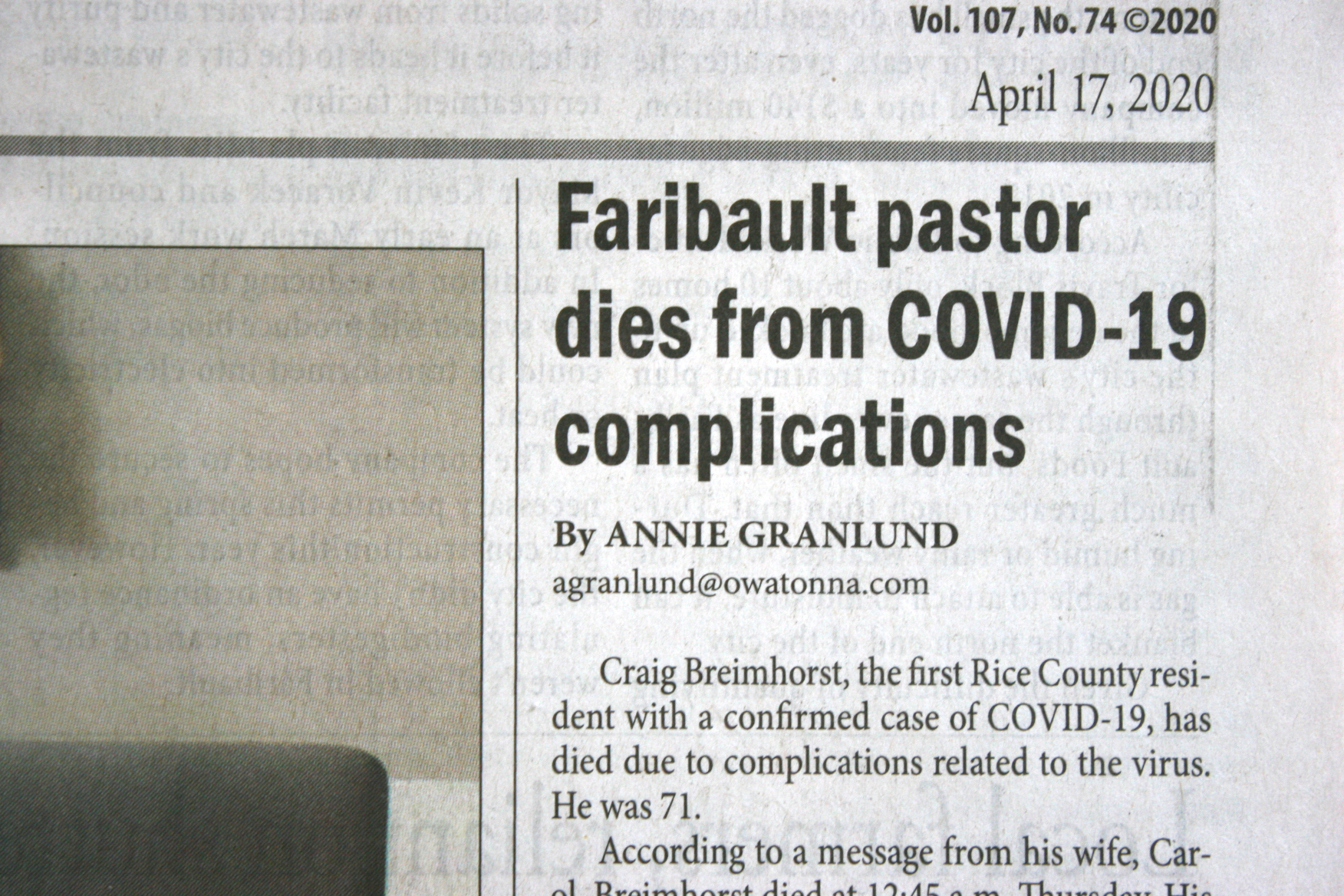
I remember well the shocking headline in the local newspaper: Faribault pastor dies from COVID-19 complications. That singular head and the story that followed shook me and imprinted upon me the seriousness of this virus. This was no longer a virus an ocean away or half a country away in New York. This was here. In Minnesota. In my county. In my community.
MORE THANNUMBERS, THESE WERE INDIVIDUALS WHO LOVED & WERE LOVED
Now more than ever with the highly-contagious and more serious delta variant, we need to care. And take care. Breimhorst’s online obituary ends with this requirement: Everyone not vaccinated of all ages are requested to wear a mask (at the funeral). Among Rice County residents ages 12 and older, 60.7 percent are fully-vaccinated, according to data listed by the Centers for Disease Control. Additional stats show 52.3 percent of the county’s population fully-vaccinated. That leaves a lot of unvaccinated people in Rice County. Too many by choice. And then those under 12 who are not yet eligible for vaccination and have no choice.
PLEASE, WEAR A FACE MASK
Rice County remains in the high community transmission category for COVID. And that is leading our local school district to rethink its “no masks when school starts” stand of just a few weeks ago. The Faribault School Board will vote soon on whether to require masks of staff and students when classes resume. We, as a community, owe it to our kids to protect them, to offer the safest and healthiest environment possible in which to learn. I cannot even fathom why anyone would object to masks to protect our children, especially. But then I can’t fathom either why people refuse vaccination.
A recent article in the Faribault Daily News quotes local student representatives saying that students feel wearing masks “is a small request…if it means staying in school in person.” Additionally, those reps state that vaccine hesitancy “seems to come from parents more than students themselves.” That doesn’t surprise me. Even though I don’t have kids in school, I still care about kids in Faribault.
I feel thankful for businesses, churches and others who are now asking, even requiring, the public (both vaccinated and unvaccinated) to wear face masks in an effort to stop the spread of COVID. Rice County is once again requiring face coverings to be worn in all county government buildings. And, yes, I’m definitely masking in indoor public places, adding another layer of protection to my vaccine protection. I don’t want to get a break-through case of COVID and then perhaps unknowingly spread COVID to my friends, family, neighbors or strangers. I feel a strong sense of personal, social and community responsibility.
I would like to think that I am also honoring the Rev. Craig Breimhorst by masking. A line in his obit reads: With Craig, love always won and love will always win. Those are words to ponder, to take to heart as this pandemic rages, to remember that love is more than a word. It is an action.
#
NOTE: If you are anti-vaccine or anti-masking, please do not comment. I moderate all comments and will not give voice to those views on this, my personal blog.My stands on wearing face masks and vaccination are rooted in care. And in love.
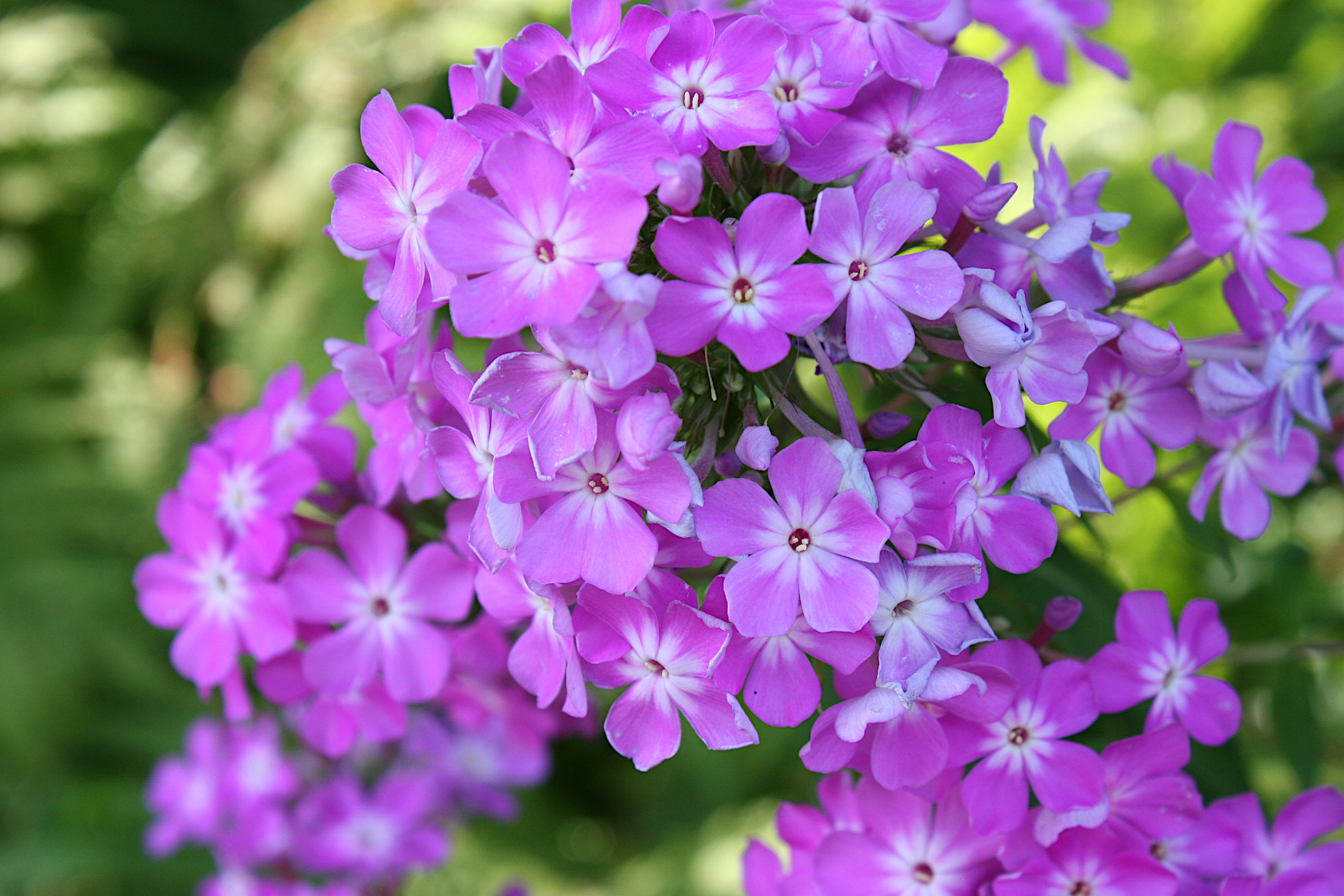
PHLOX IN VIBRANT SHADES of purple and pink, interspersed with occasional white blossoms, fill my flowerbeds. They thrive, their fragrance scenting the air that drifts through my office window.
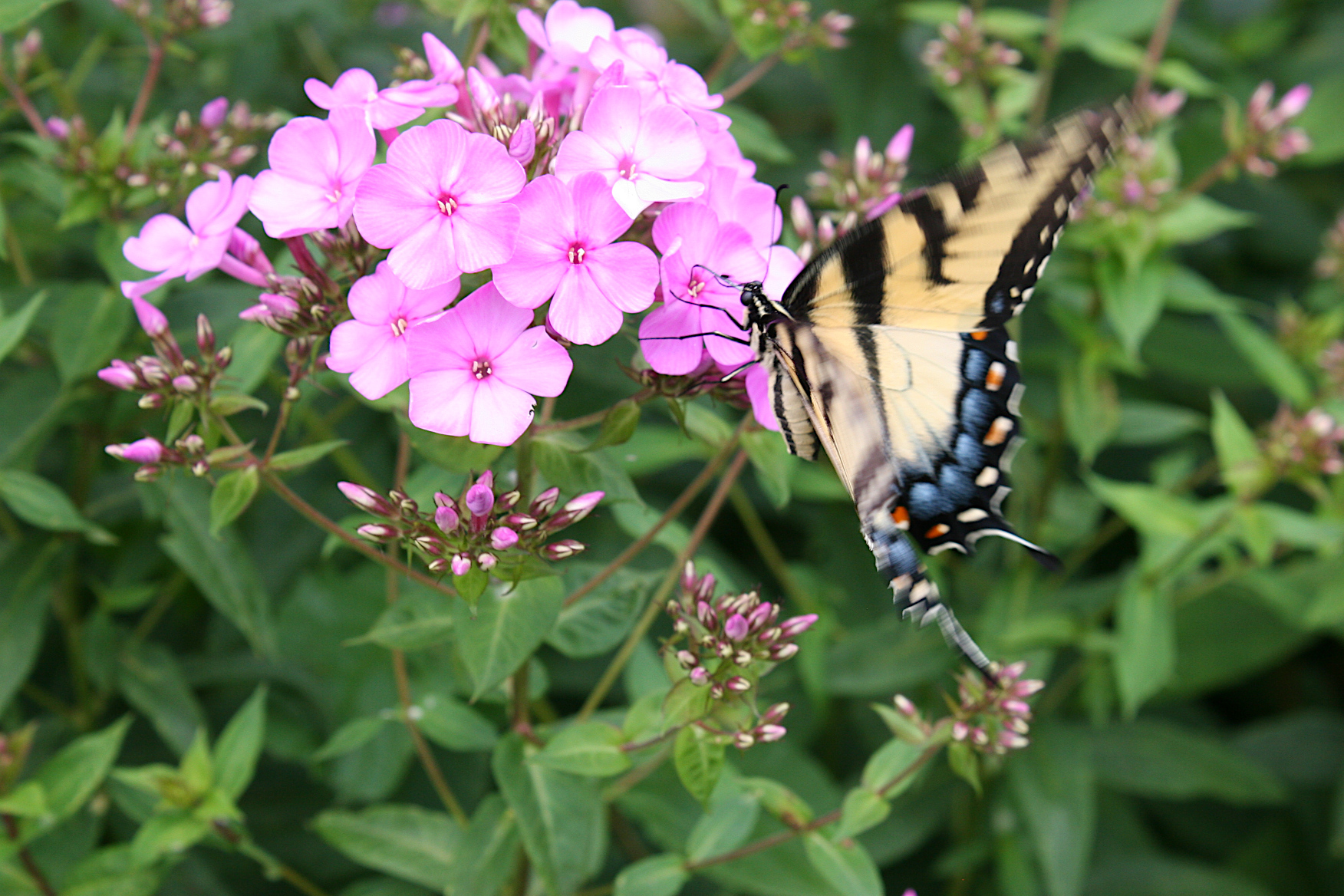
A yellow swallowtail butterfly. Minnesota Prairie Roots copyrighted photo 2021.
Occasionally I spot butterflies flitting among the phlox, random milkweeds, wild orange tiger lilies, ferns and other unidentified plants growing in a tangled mess of wildness. I love watching them—the monarchs and the swallowtails—their wings flapping with such incredible grace. They swoop and dip and pause. As if dancing. As if performing. As if penning poetry.
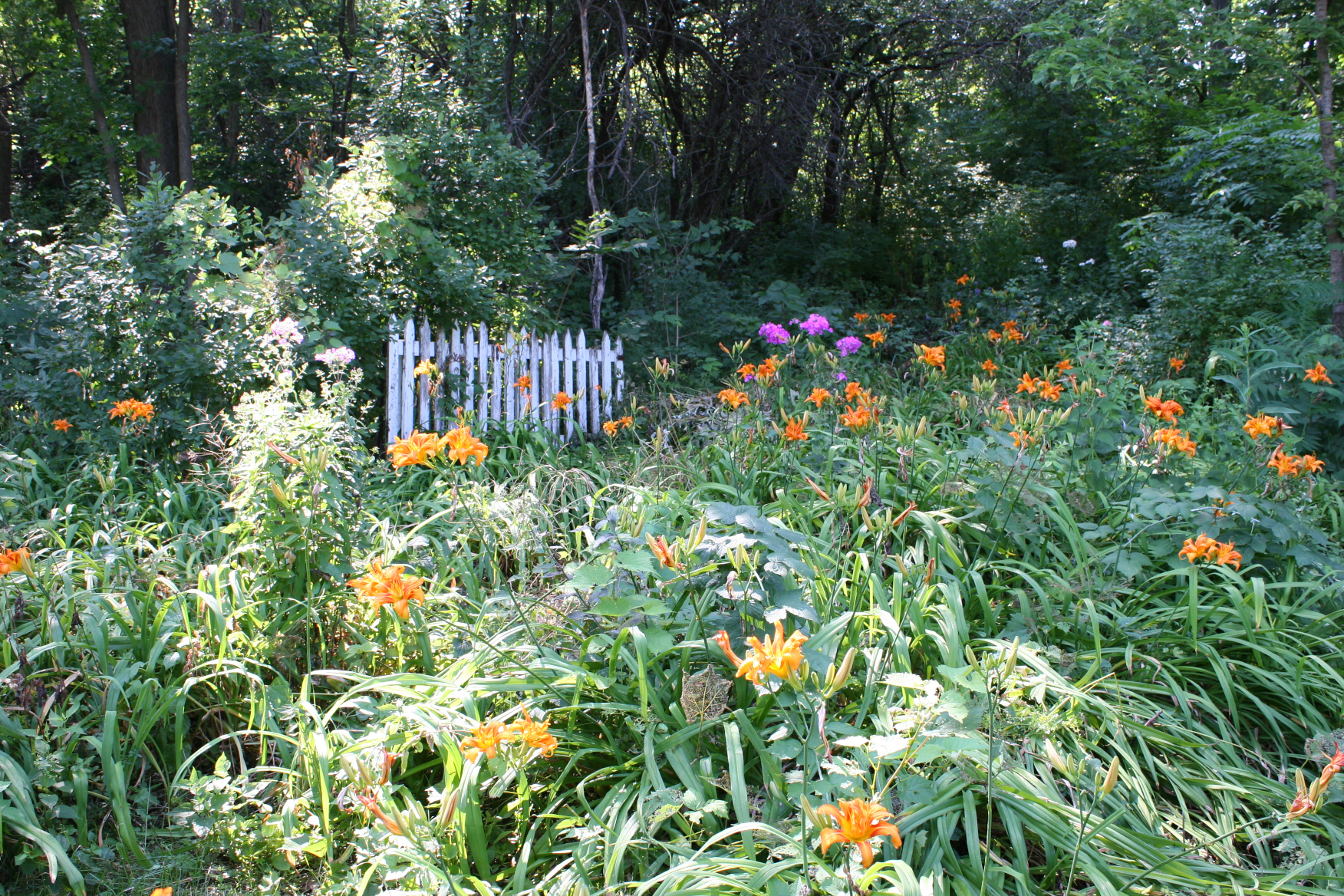
A mess of flowers grow on a hillside next to woods in our backyard. Minnesota Prairie Roots copyrighted photo 2021.
Moments like this imprint upon me the importance of pausing to appreciate the beauty of nature. The details of a flower petal. The curve of a butterfly wing. The bend of a milkweed pod.
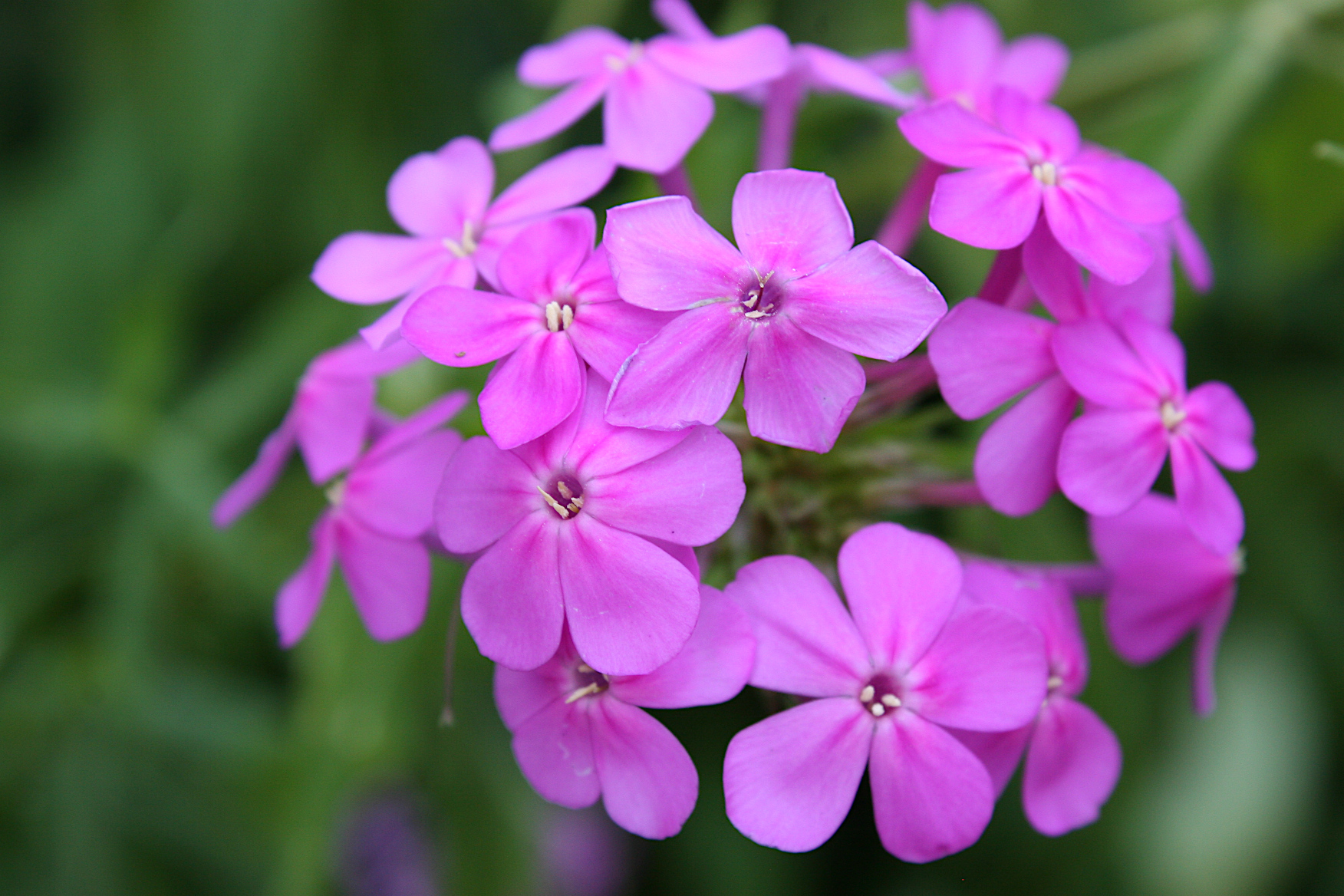
Phlox up close. Minnesota Prairie Roots copyrighted photo 2021.
Now, more than ever, I need this connection to nature, these moments to reset. To see that, even as a pandemic rages, flowers still bloom and butterflies still fly.
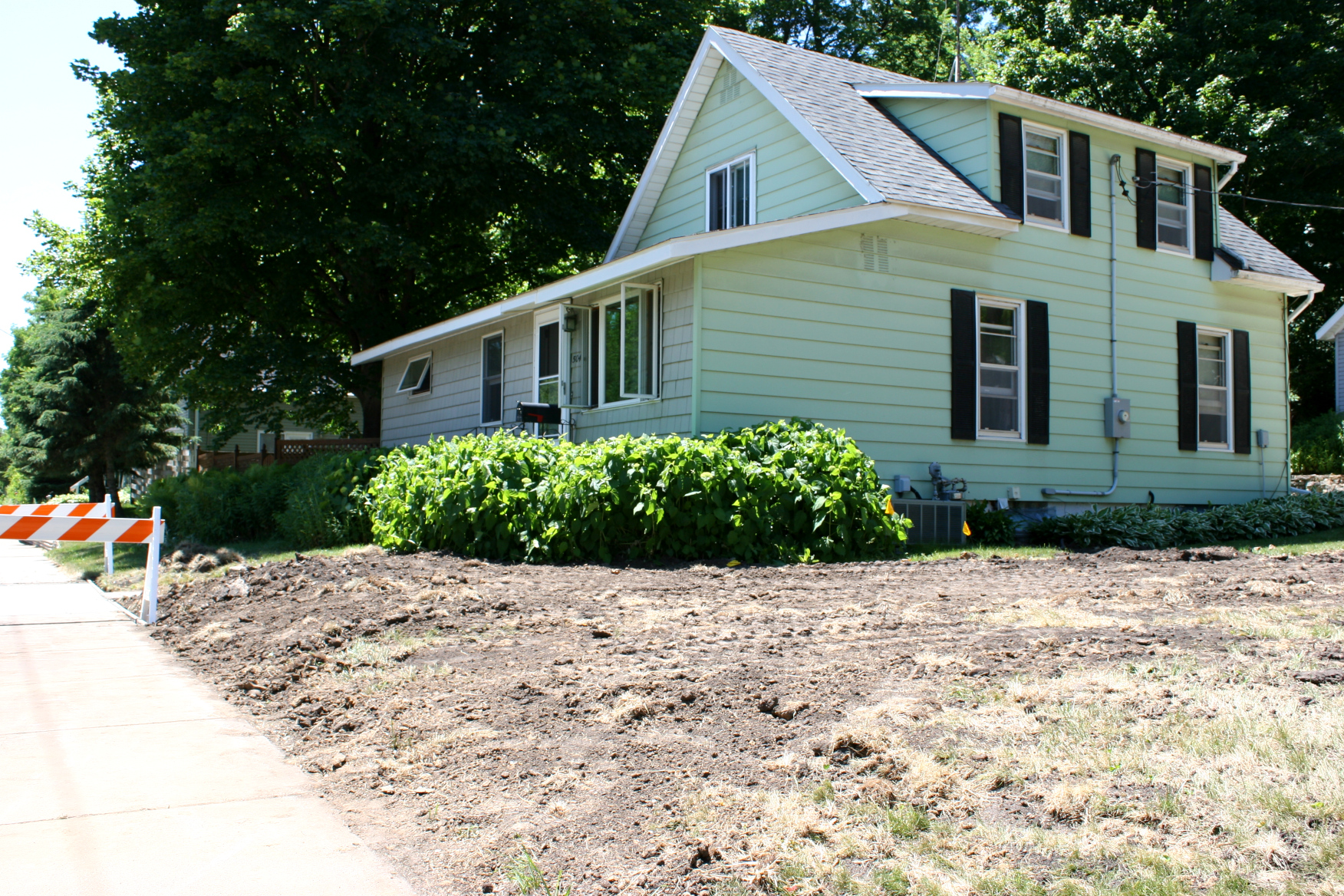
Our side yard, dug up during water line replacement and before it was overgrown with mostly invasive crabgrass. Minnesota Prairie Roots file photo June 2021.
AS I WRITE THIS EARLY WEDNESDAY afternoon, the civil defense siren blares. There’s no emergency, just a monthly routine testing of the system.
This time of day, after lunch, my energy dips. The wail of the siren interrupted my dozing off in the recliner while reading a book. It’s not often I fall asleep during the day, which is revealing in itself. I am tired because I’m not sleeping well. Lots on my mind. I tend to overthink. To ruminate. Uncertainty stresses me.
We’re all different personalities, different in the ways we handle whatever life throws at us. And that’s OK. Some of us are early risers, work best in the morning people while others are evening/night people. Nothing right or wrong about either. I’m up early, focusing on mental tasks in the morning.
Shortly I’m heading outside to pull crabgrass, a job I started last evening and which I found incredibly satisfying, even if labor intensive and sometimes difficult. To dislodge those strong roots from the soil and then toss the clump empowered me. I felt like I was ridding our yard of an unwanted invader. And I was.
Since the digging of our yard and replacement of a water line in June, the crabgrass has had plenty of time to take hold. I was happy just to see green again rather than bare earth as we await the right time to sod or seed in this drought. Randy informed me that the crabgrass needs to go. He wants to use chemicals. I don’t. Thus I am willing to pull weeds, although, in the end, he may still need to apply a weedkiller.
This isn’t about who’s right and who’s wrong, but about eventually solving a problem. About different approaches. About trying and evaluating. And, for me, about satisfaction that comes from doing something with my hands. Touching the soil. Reconnecting with the land. Remembering all the summers I pulled weeds from the family garden and cockleburrs and thistles from my dad’s soybean fields. We didn’t use chemicals back then to eradicate weeds.
But farming has changed. The world has changed. Life has changed. Yet, the satisfaction of pulling weeds by hand has not changed. Not for me.
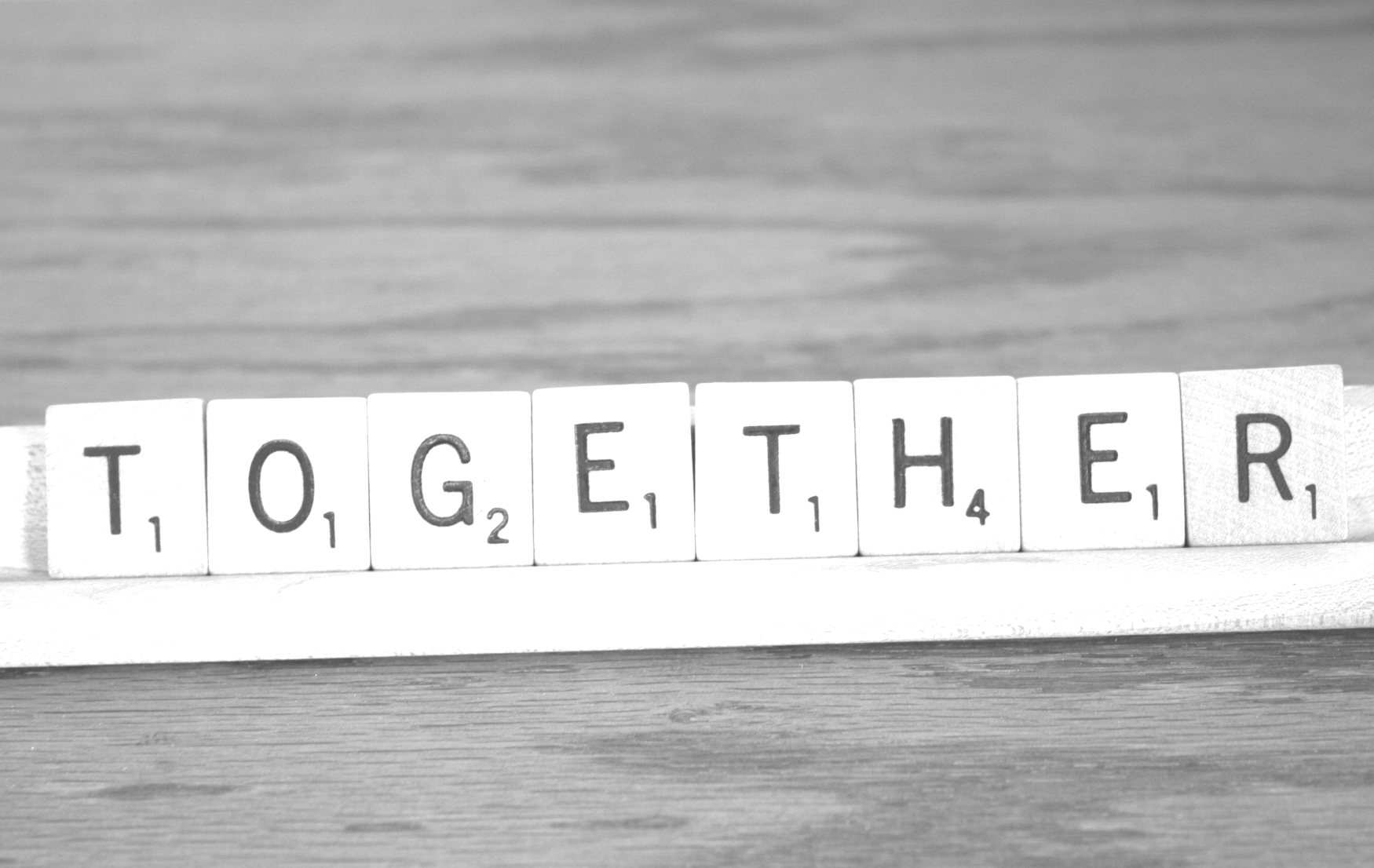
ON PAGES 444 and 445 of my 2003 Webster’s New World Thesaurus, I read synonyms for the word together. (Jointly) collectively, unitedly, commonly…
Clearly, together means everyone working toward a common goal/purpose for the good of all.
Many times people have come together, especially during disasters, to help others. I recall when my second daughter traveled twice to New Orleans to help with clean-up after Hurricane Katrina. Recently, rescuers worked tirelessly to find victims and survivors following the collapse of a condo in Surfside, Florida. Locally, folks are providing financial support for a professional juggler who broke both wrists after falling from a ladder during a performance.
These examples of togetherness, rooted in genuine care for others, encourage me. They give me hope. They uplift me.
Together and togetherness as defined in the Fourth Edition of Webster’s New World College Dictionary. Minnesota Prairie Roots photo.
DISHEARTENED & FRUSTRATED
As I reflect further, though, I grow disheartened. Disheartened because, as much as the “We’re all in this together” motto defines many official/marketing statements about COVID-19, I don’t feel it. I don’t see it. I don’t experience it. Perhaps it’s time for public health officials and others to ditch the word together as it relates to this global pandemic.
Like many, I feel such frustration that COVID is now back full force in the much more contagious and deadly delta variant. This didn’t need to happen…if only people would get vaccinated. I’m thankful to read that vaccination rates are rising. I hope that continues.
Now some retailers, colleges, entertainment venues and more in Minnesota are embracing those CDC guidelines and reinstating masking. For that I feel great gratitude.
My healthcare provider has also joined a growing number of providers requiring vaccination of all employees. Finally. I have never understood how anyone in the medical profession (and that includes those working in long-term care and assisted living) can, ethically or morally, continue to care for patients/residents while unvaccinated. And, looking at it from a patient perspective, I don’t want an unvaccinated nurse/doctor/lab tech/whoever near me, even if I am vaccinated.
One source for the definition of “together.” Minnesota Prairie Roots copyrighted photo 2021.
WHAT HAPPENED TO KEEPING STUDENTS SAFE?
That brings me to education. I really struggle with preschool-high schools that are not requiring students and staff to wear face masks going into the new school year. I fail to understand that thinking. Our public health officials tell us that masking is one very basic, and easy, way to help stop the spread of COVID. My concern focuses primarily on those under age 12, who can’t yet be vaccinated. Schools owe it to children, like my 5-year-old granddaughter, to implement the strongest health and safety protocols possible. Teachers fought last year for the best protection for themselves, and rightly so. Protecting our kids is equally as important.
When I hear people say, “Well, just keep your child home or send them to school in a mask,” I cringe. Most parents want their kids in the classroom. And putting the burden of protecting himself/herself on a young child seems pretty selfish and childish behavior on the part of adults. Most kids prefer to “fit it” with their peers. A parent may send their child to school with the directive to “wear your mask.” But we all know that doesn’t mean they will, especially if masking is optional and their classmates are mask-less.
Where’s the compassion, the care, the willingness to provide access to education for all in a safe school environment? It’s best, from a health and safety perspective, to require (rather than recommend) face masks in schools for everyone.
So, yeah, I’m not seeing much togetherness during this global pandemic. I’m disheartened. I’m disappointed. And, yes, I’m even angry. I feel like, just as we were making progress in ending the pandemic, we are now back to START, farther than ever from the FINISH LINE. I’m beyond frustrated. (Just like Minnesota Vikings head coach Mike Zimmer.)
That all said, we can decide, right now, to work together. to mask up, to get vaccinated, to make choices that protect ourselves and each other. To end this pandemic sooner rather than later.
NOTE: I welcome readers’ comments. However, if you are anti-vaccine or anti-mask, I will not give voice to those viewpoints on this, my personal blog. As always, with any posts, I screen/moderate comments and determine which I will, or won’t, publish.
I photographed this woman’s shirt at a public event in Northfield. The message refers to struggles with mental illness. Minnesota Prairie Roots file photo.
IF YOU’VE FOLLOWED my writing long enough, you understand my dedication to increasing awareness on two important issues—domestic violence and mental health.
This week, both made headlines in my community. I can’t let this opportunity slide without sharing what’s happened/is happening in Faribault. We need to stay informed, to choose awareness over sticking our heads in the sand. Understanding leads to action and, perhaps, saving lives.
First the really good news for Faribault and the surrounding region (according to the Faribault Daily News): Our local hospital, District One, and Rice County Social Services are collaborating on new adult outpatient mental health services. The hospital, part of Allina Health, will offer a day treatment program and a partial hospitalization program for adults dealing with mental illnesses. Social services will provide referrals.
Photographed at the Northfield Public Library. Minnesota Prairie Roots file photo.
To say I am thrilled is an understatement. This is so needed in Rice County and the surrounding rural areas. Our access to mental health care, especially during or following a crisis, is limited. Waiting time to see a psychiatrist, if that doctor is even accepting new patients, can be up to six weeks. Can you imagine waiting six weeks if you were experiencing a heart attack? You would likely die. Individuals facing mental health issues—from depression to anxiety to bipolar to schizophrenia and more—deserve, and need, immediate access to local care. As do their families.
To get treatment and support locally, rather than traveling to the Twin Cities metro, will ease some of the stress during an already stressful situation. Even with this improvement in services, though, we really need more mental health professionals to alleviate the shortage and meet the area’s needs.
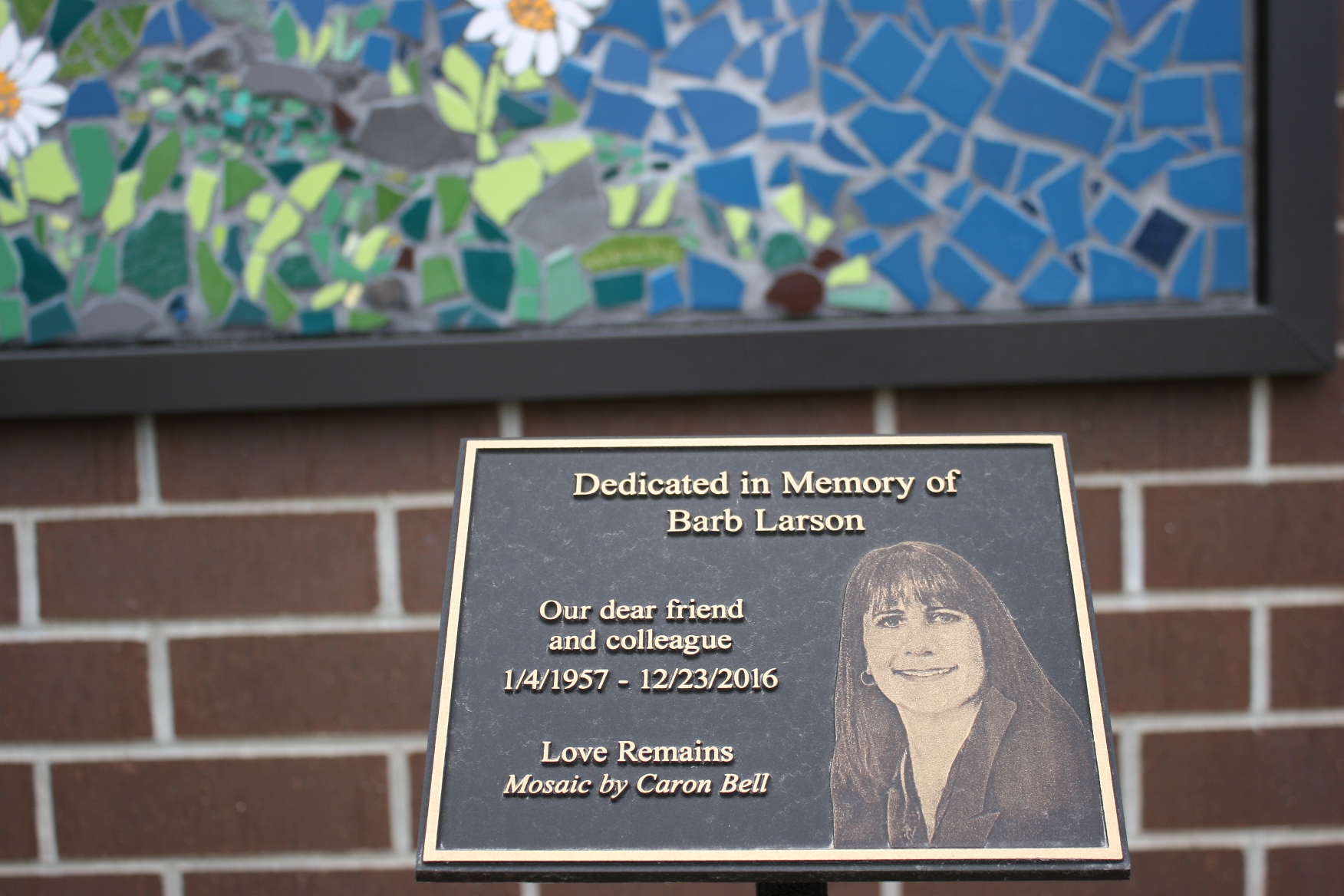
A mosaic on the exterior of the Faribault Chamber of Commerce & Tourism office honors employee Barb Larson, murdered there on December 23, 2016. Minnesota Prairie Roots file photo.
My heart breaks every time I read of such murder-suicides, or any act of domestic violence. Shortly before Christmas 2016, Barb Larson was shot and killed by her ex-husband, who then took his own life, in a high profile case in Faribault. She worked for the local tourism office. He was a retired police officer. That crime shook Faribault to its core.
In both of these situations—domestic abuse/violence and mental health crises—people are here to help. I feel thankful to live in a community that cares. No one ever needs to feel alone, to face life’s challenges and stresses solo.
Warning signs of domestic abuse/violence from a previous community event on the topic. Minnesota Prairie Roots file photo.
I know Amanda tried. She called 911. To make that call took strength and courage. Still, she died. If Amanda’s death can save one life, can result in one person safely leaving an abusive partner, then something positive has come from this tragedy.
Where does all of this leave us as individuals? I encourage you to educate yourself on domestic abuse/violence and mental illness. Then take that knowledge and show your care and compassion to those who need it. To those experiencing challenges. And their families. Listen. Support. Encourage. Refer to professionals. Be that person who chooses not to ignore, but rather to be there. To engage. To understand. To uplift. To care.
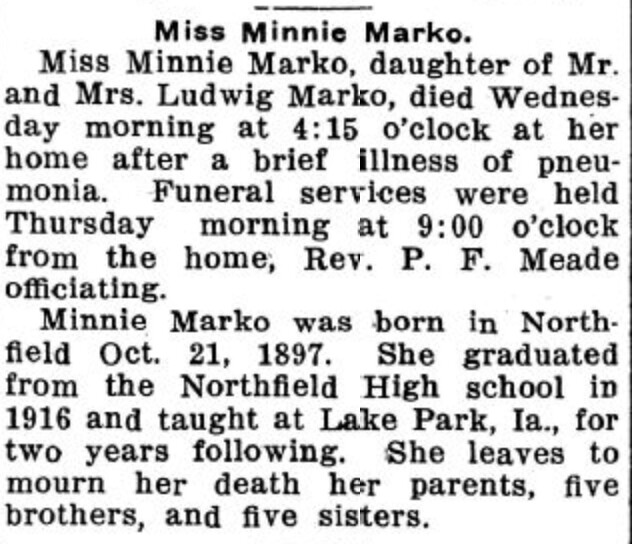
Minnie’s obit, published in the Northfield News. Source: Timeline on NHS website.
FIRST DEATH BY INFLUENZA…
Minnie Marko died at her home after a brief illness of pneumonia, according to her obituary published in the November 15, 1918, issue of the Northfield News.
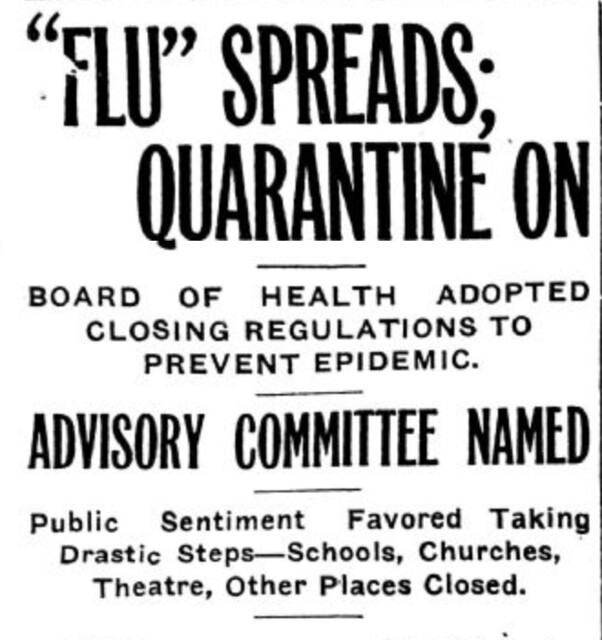
FOUR STUDENTS AT ST. OLAF DIE DUE TO INFLUENZA (11/21/1918)
NO CHRISTMAS CHURCH SERVICE IN NORTHFIELD (12/22/1918)
COLLEGES RETURN, WITH RESTRICTIONS (1/1919)
BELOVED CARLETON PROFESSOR FRED B. HILL DIES OF INFLUENZA (1/29/1919)
As I read the headlines and the brief summaries that followed, I considered how quickly information, and misinformation, spreads today. I considered how public health officials then, and now, recognized the seriousness of the virus and took efforts to stop the spread of the virus. The State Board of Public Health forbade public funerals and ordered wearing of gauze masks on streets and in public buildings in November 1918. Sound familiar?
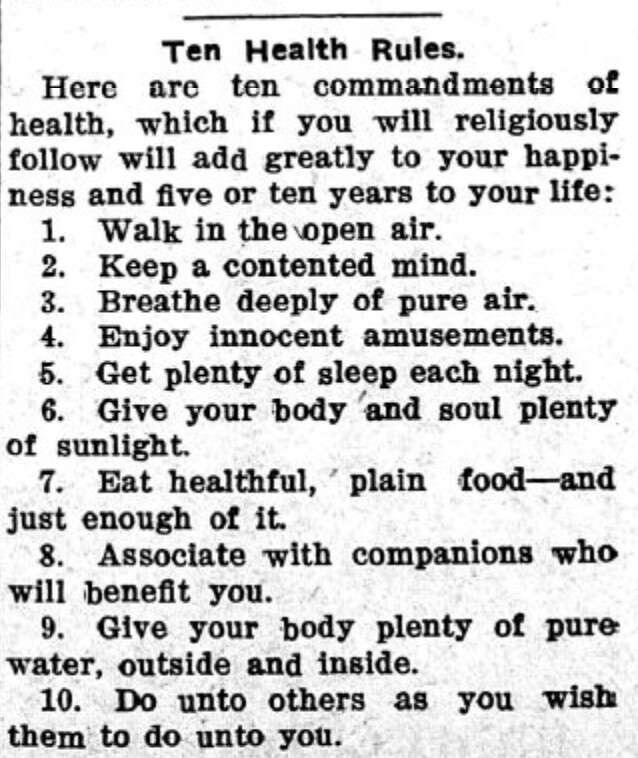
Health Rules published in the February 13, 1920, Northfield News. Source: Timeline on NHS website.
But perhaps the timeline entry that struck me most personally was this item in a list of Ten Health Rules published in the February 13, 1920, Northfield News:
10. Do unto others as you wish them to do unto you.
Think about that as it relates to COVID-19. Just like in 1918, our choices today affect more than ourselves. Before COVID numbers dropped in our country due to vaccinations, too many people refused to wear masks (and to wear them properly over mouth AND nose). And now people are refusing vaccination for reasons ranging from political to distrust of the vaccine (and thus of science) to believing the virus won’t make them seriously sick or kill them. It can and it does.
History tells us to expect a resurgence of the virus if such me-centered attitudes and behaviors prevail. As in 1918, the message that bears repeating is this: This is not just about us individually. This is about all of us. About caring for one another. About understanding that our choices affect the health, and thus the lives, of others.
People are still getting sick and dying from COVID-19. That’s especially true in states with low vaccination rates. Missouri, for example, has the most aggressive Delta variant outbreak, according to recent media reports. In Minnesota, Crow Wing and Cass Counties (in the heart of lake and cabin country) are experiencing a noticeable increase in COVID cases. All of this concerns health officials. And it should concern us, too, especially those who are not vaccinated, whether by choice or because they are too young for vaccination. This virus can mutate, as it did into the highly-contagious Delta variant, putting people at an even higher risk of serious illness and death.
The grief of those losing loved ones today is no less than the family of Minnie Marko, 21, who died in 1918 in Northfield. Minnie didn’t have the option of a vaccine. We do.
















Recent Comments