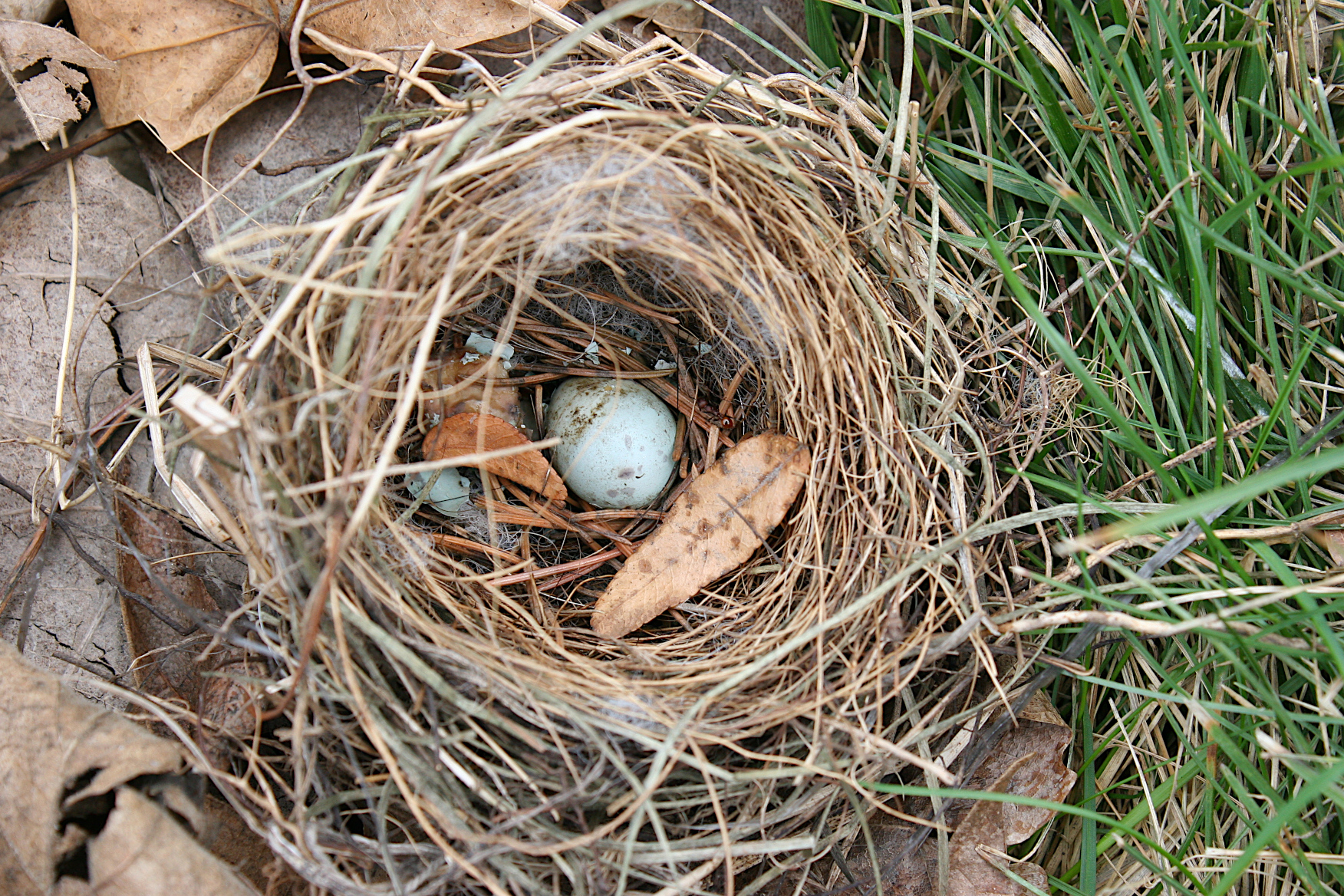
LAST WEEK, WHILE RAKING leaves off flowerbeds, I came across a bird nest in the grass. Nestled near a retaining wall, by a row of evergreens.
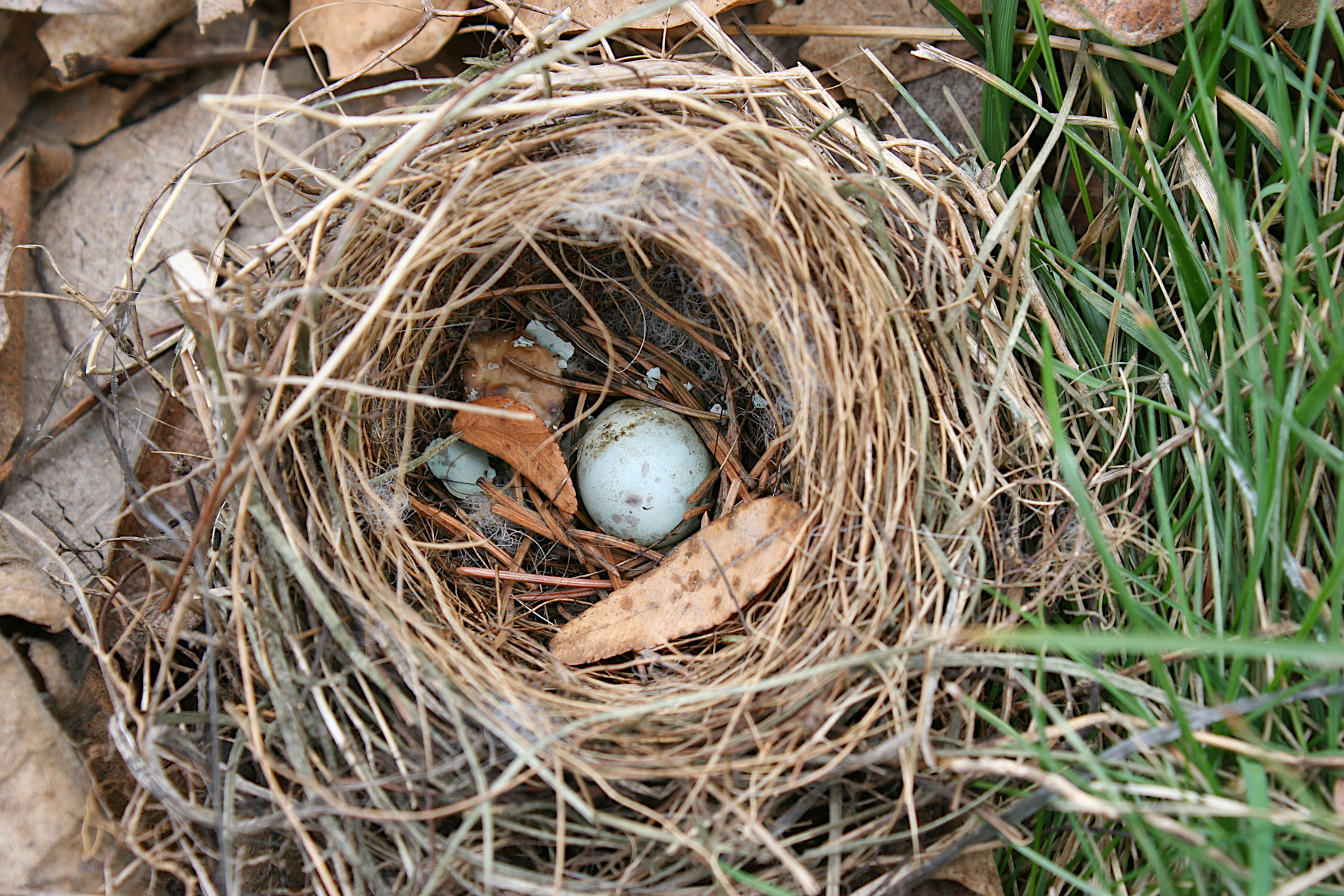
Inside, a pale blue egg lay in the center, next to the broken shell of another egg.
I didn’t touch anything, didn’t move or investigate, simply photographed. And pondered.
Minnesota Prairie Roots photo.
How did this nest, woven with such care and perfection by a bird’s beak, claws and body, end up upon the ground? I speculated that strong winds earlier in the day loosened the nest from the shelter of the neighbor’s evergreens. Or perhaps the nest dropped from the maple in our backyard.
Whatever the story, I felt a sense of sadness at the loss. I recognize the realities of the natural world. Of challenges and predators and unhappy endings.
Minnesota Prairie Roots photo.
And that is life. We can choose the materials to build our lives and weave in hopes and dreams, plans and goals. But then along comes a strong wind and, whoosh, just like that our carefully-crafted nests plummet to the earth and we find ourselves struggling, broken. Struggling to rebuild. Wondering why and how this happened. It is then that we need to reach deep inside, to connect with those who listen and care, to remember that we are not alone.
These past few days, especially, of sunshine and 70-degree temps have sprung spring. To see buds forming, to hear birdsong, to feel sun upon skin…oh, the joy.
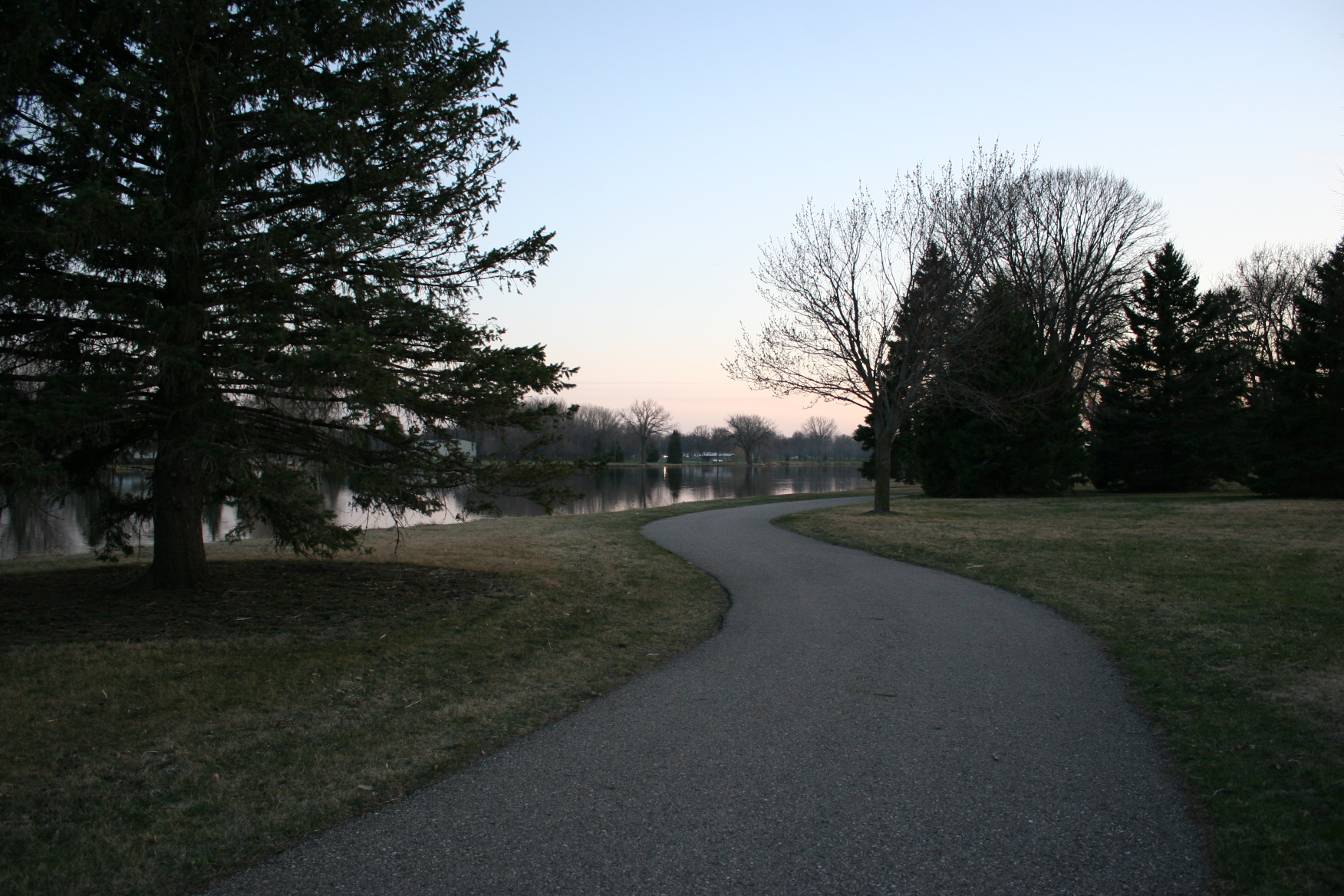
On Saturday evening, as the sun set, Randy and I followed the asphalt trail that winds along the Cannon River in North Alexander Park. It’s a favorite place to walk. Uncrowded. Beautiful.
The trail follows the river, curving around trees.
I love the way the trail curves around trees.
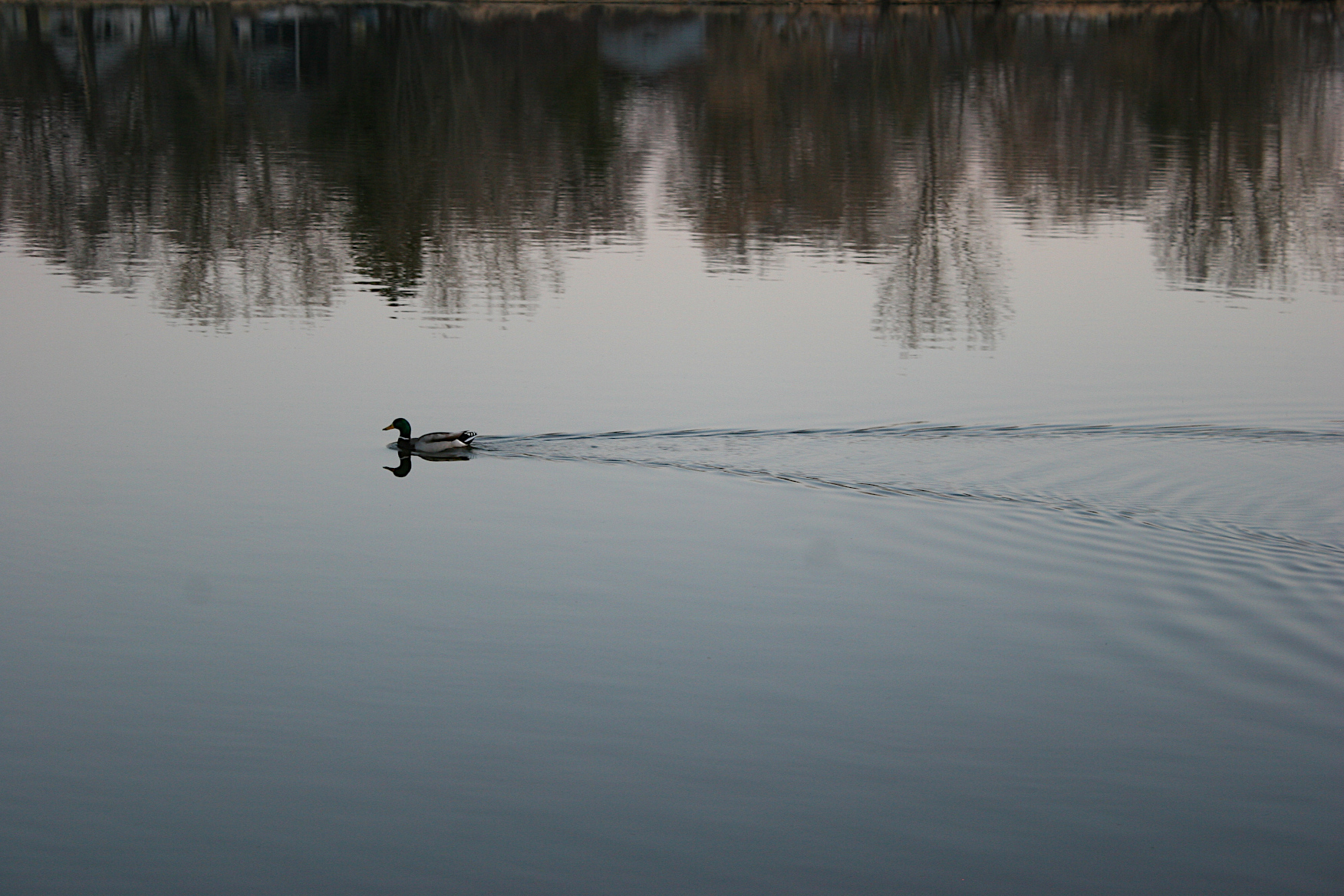
The river draws waterfowl.
I love how the river draws my eyes to view reflections and to appreciate the ducks and geese which populate this waterway. The quacking of a lone mallard pulled me to river’s edge. I observed how the water trailed in a lengthy V as the duck paddled across the still surface. Poetry seen, not written.
The historic Faribault Woolen Mill, a subject I enjoy photographing any time of year.
Across the Cannon, the iconic Faribault Woolen Mill focused my eyes as it reflected in the river. And I thought of all the blankets woven here, the history of this place.
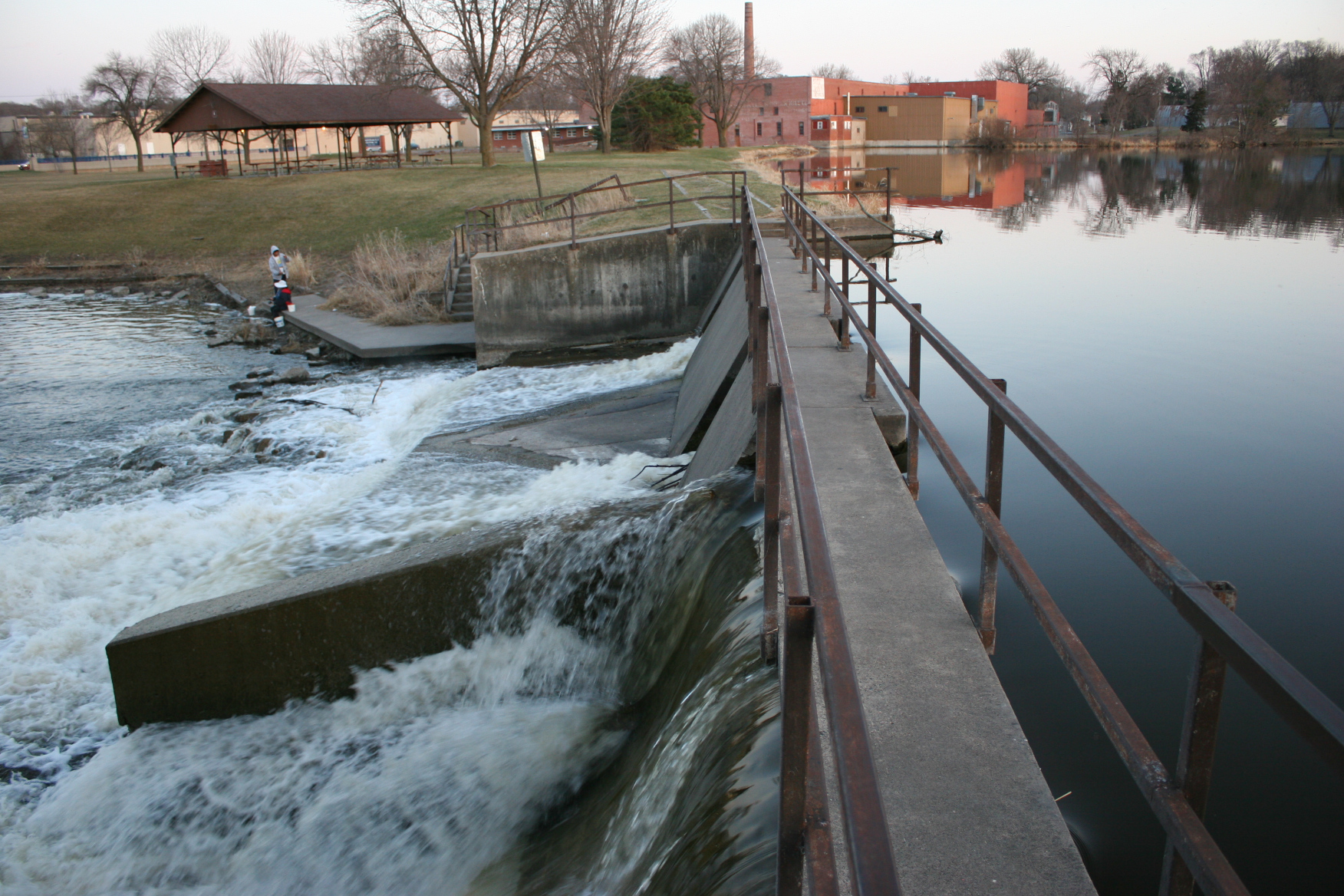
Water rushes over the Cannon River Dam by Father Slevin Park.
At the Cannon River Dam, aside the trail, I noticed how the dam walkway seemingly follows a straight line to the historic mill. Sometimes it’s about perspective, pausing to consider a place in a different way. I challenge myself, in my photography, to view my surroundings creatively. While I created, people fished, a popular activity along this stretch of the Cannon.
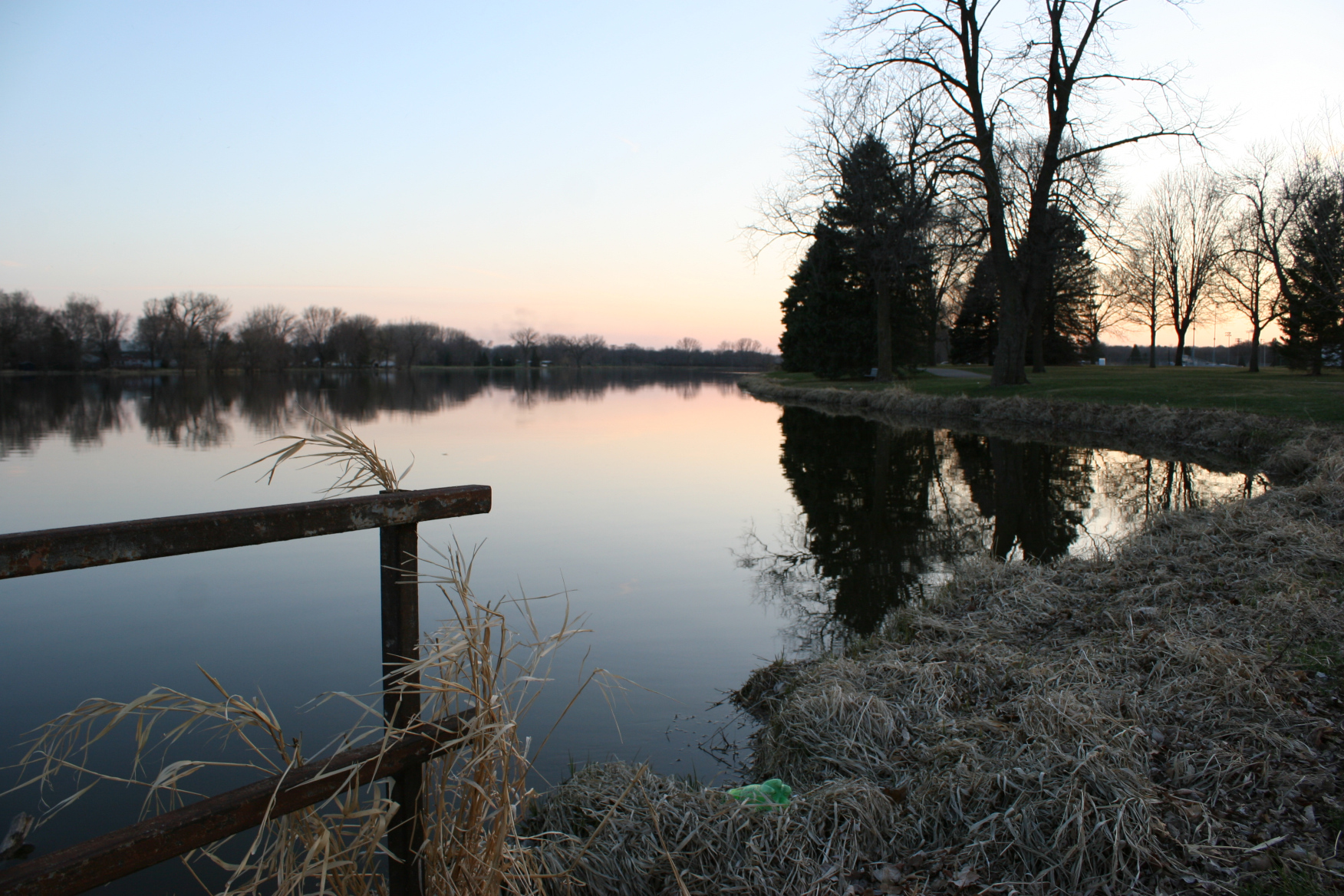
Looking down the Cannon, before it spills over the dam.
The river absorbed the pink tint of twilight. Soft. Muted. Another poem to photograph.
And if I’d had my zoom lens on my Canon EOS 20-D, I would also have photographed the two bald eagles following the river like a road map. I never tire of watching these majestic birds.
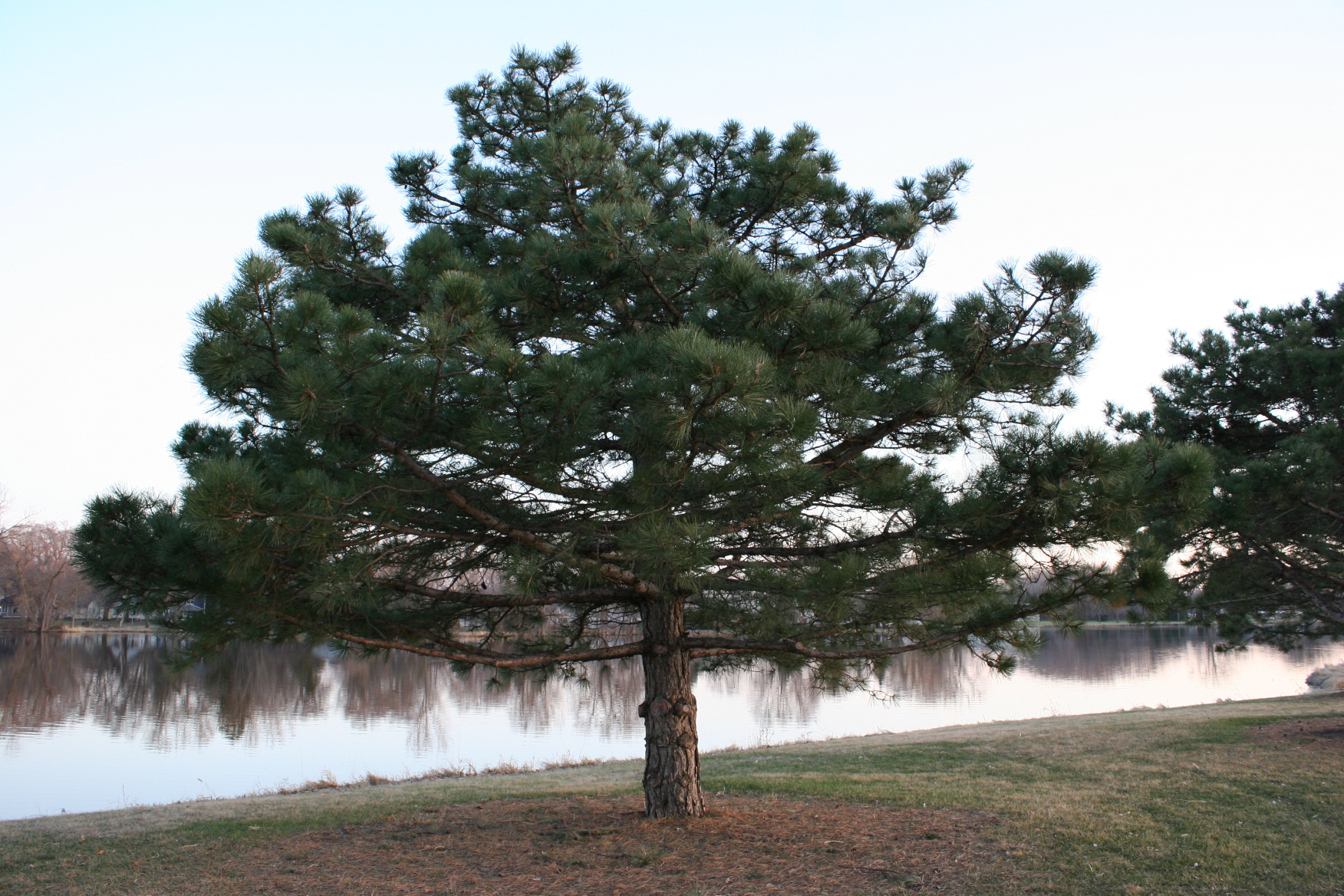
The top of this evergreen is lopped off, removed following a tornado several years ago.
As day edged closer to night, Randy and I retraced our route back to the van. A bit farther down the trail, teens packed basketball courts, their raucous voices rising.
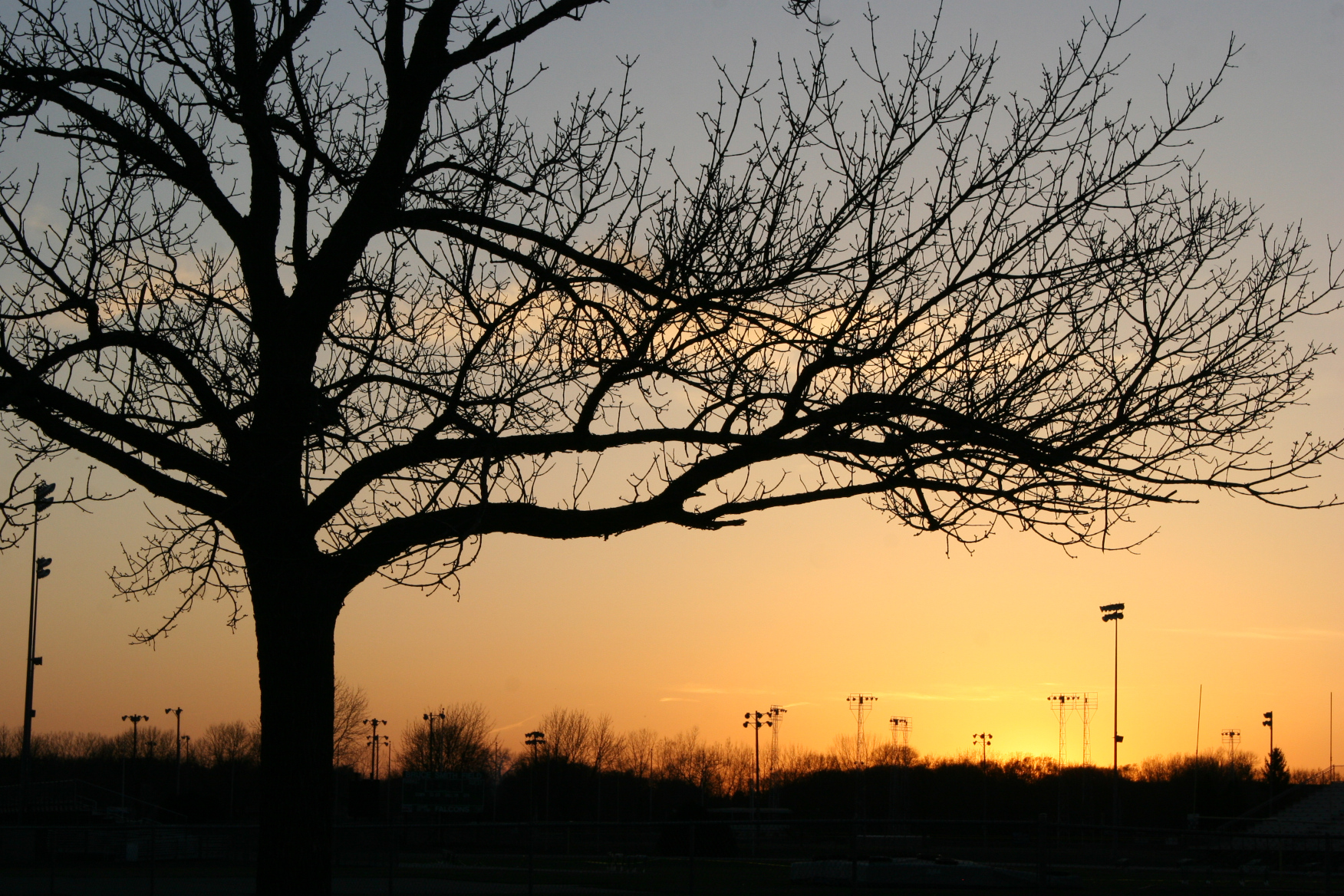
Ballpark lights and a treeline contrast with the orange hue of sunset.
To the west, the sun glowed fiery orange like an exclamation mark ending a glorious spring day in southeastern Minnesota.
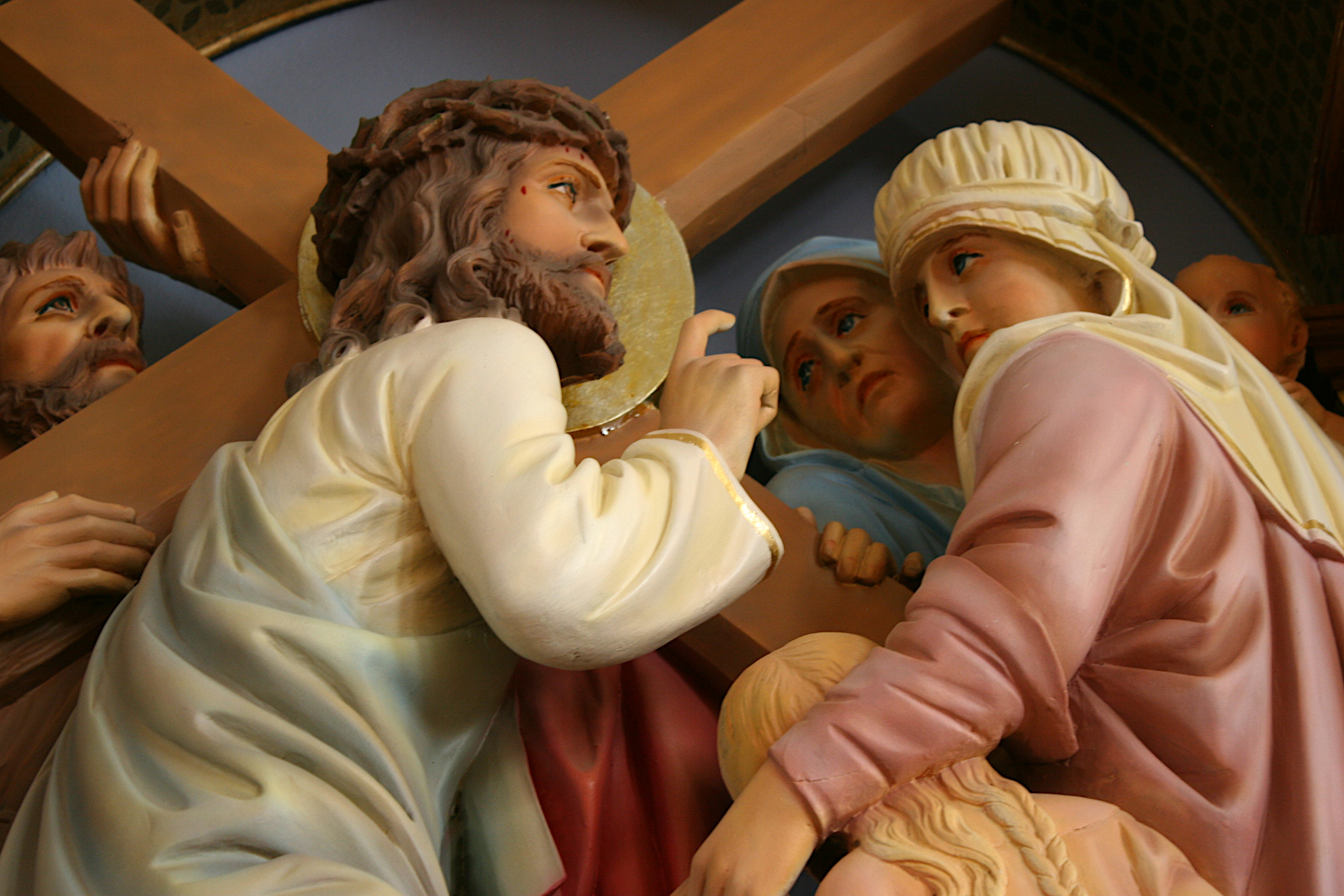
A sculpture inside St. Michael’s Catholic Church, Buckman, MN. Minnesota Prairie Roots file photo September 2020.
AS HOLY WEEK MOVES ever closer to Easter Sunday, I find myself focusing on hope. It’s such a positive word. One that I’ve held close to my heart through some really difficult challenges in life.
This past pandemic year has challenged all of us. Stretched our endurance, our patience, our ability to cope. To live life in a way that would keep us, and those we love, safe. I’ve felt frustrated about lax attitudes and behaviors regarding COVID-19. But through all of this, I’ve tried to balance that with hope.
Minnesota Prairie Roots file photo May 2020.
Hope seems synonymous with spring in Minnesota. Nature reveals hope in spring bulbs popping, in trees budding, in dormant grass greening and much more.
After a season of cold and darkness, hope breaks forth in longer days. More warmth. More sunshine. More light.
And now, in this too long season of COVID, hope for an end to this pandemic.
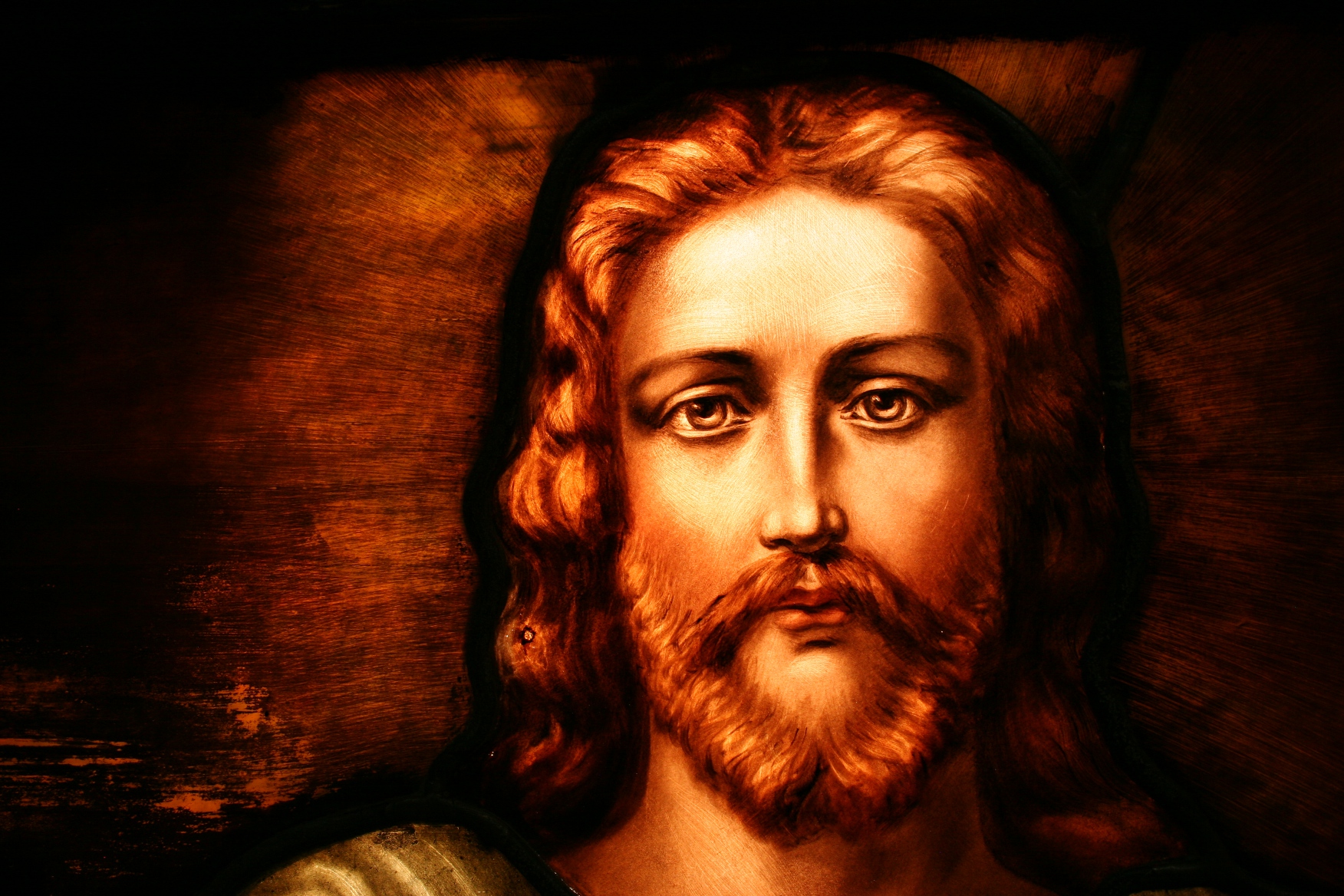
A photo of Christ’s face from a stained glass window in my church, Trinity Lutheran, Faribault. Minnesota Prairie Roots file photo 2012.
As a woman of faith, I also view this time of year through the lens of eternal hope. I see the face of Jesus. Determined. Caring. Suffering. Dying. And then living, breathing. Alive. Darkness replaced by light on Easter morning. The light of eternal life.
This Easter Sunday, just like last, I’ll miss celebrating Easter in person with my faith family. I’ll miss the feeling that comes with worshiping inside a church with other Christians. I’ll miss the scent of lilies and the reverberation of the organ. I’ll miss the blessings of being among friends, of joyful Easter greetings.
Yet, I can still view the Easter service online or listen on the radio. I can experience worship indirectly. I can praise God and pray and let the joyful music of Easter fill my ears. And my mind. Hope remains. I know that my Redeemer lives! What comfort this sweet sentence gives!
Inspirational and honoring words are embedded in the mosaic tile on a memorial for Barb Larson (murdered in an act of domestic violence) in Faribault. Minnesota Prairie Roots file photo.
TO YOU, MY DEAR READERS, I wish you a most blessed, joyful and hope-filled Easter!
AS SPRING EASES INTO MINNESOTA, I embrace the transition of seasons in indecisive weather and in the subtle greening of the landscape.
A greening vine in the otherwise muted landscape.
I don’t trust that winter has really, truly, exited. Yet, these early glimpses of spring assure me that the bulk of winter lies behind us.
Randy walks in the woods.
I saw that in the woods of Falls Creek County Park on Sunday afternoon. Randy and I hiked in this 61-acre park a mile east of Faribault off Minnesota State Highway 60. It’s a relatively unused park, one of the reasons we are drawn here.
Water rushes under the bridge and over rocks.
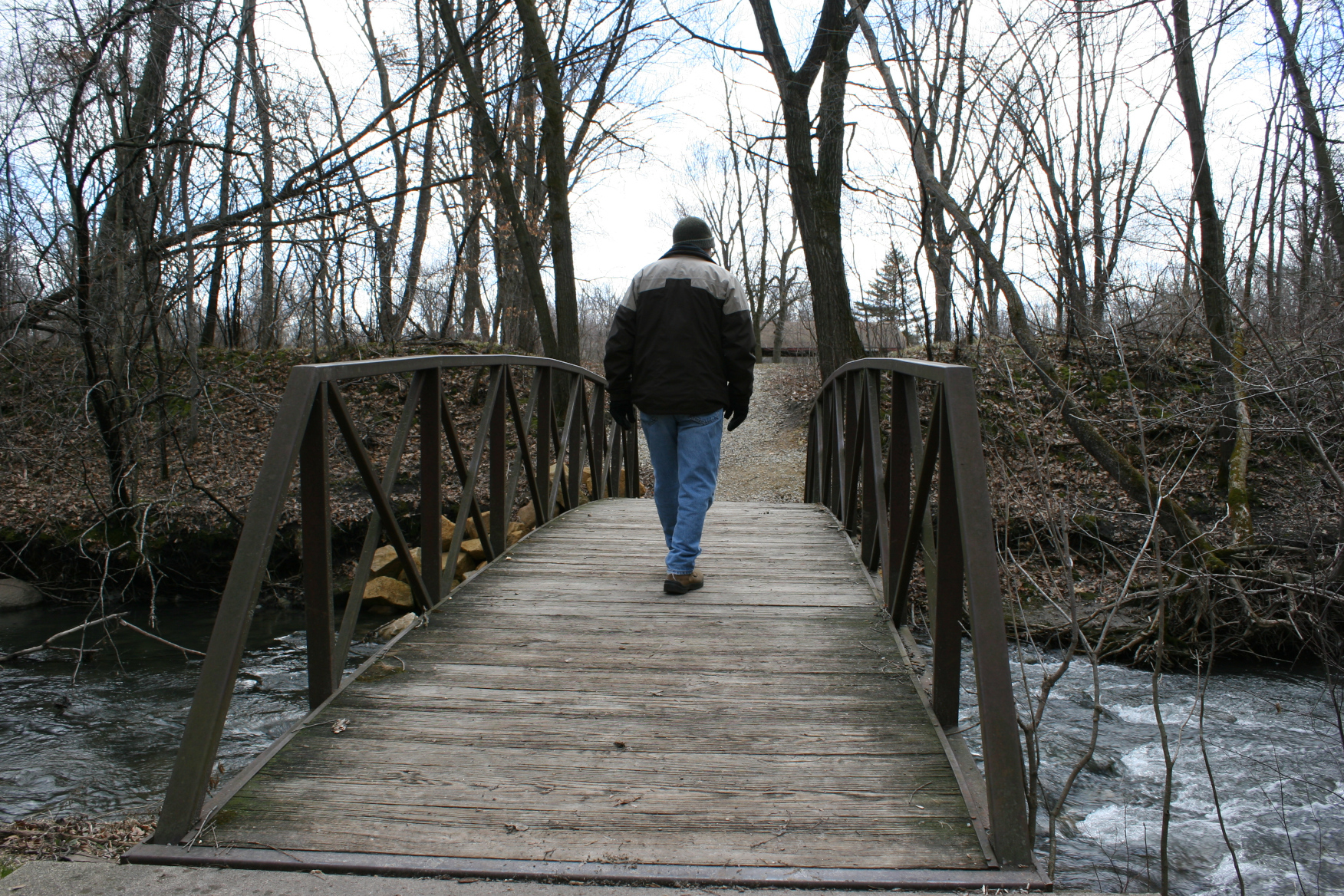
Here a dirt hiking path curves along the waterway winding through woods. Access to that path comes via an arched pedestrian bridge. There water rushes over rocks and we always pause to appreciate the soothing sound of rushing water.
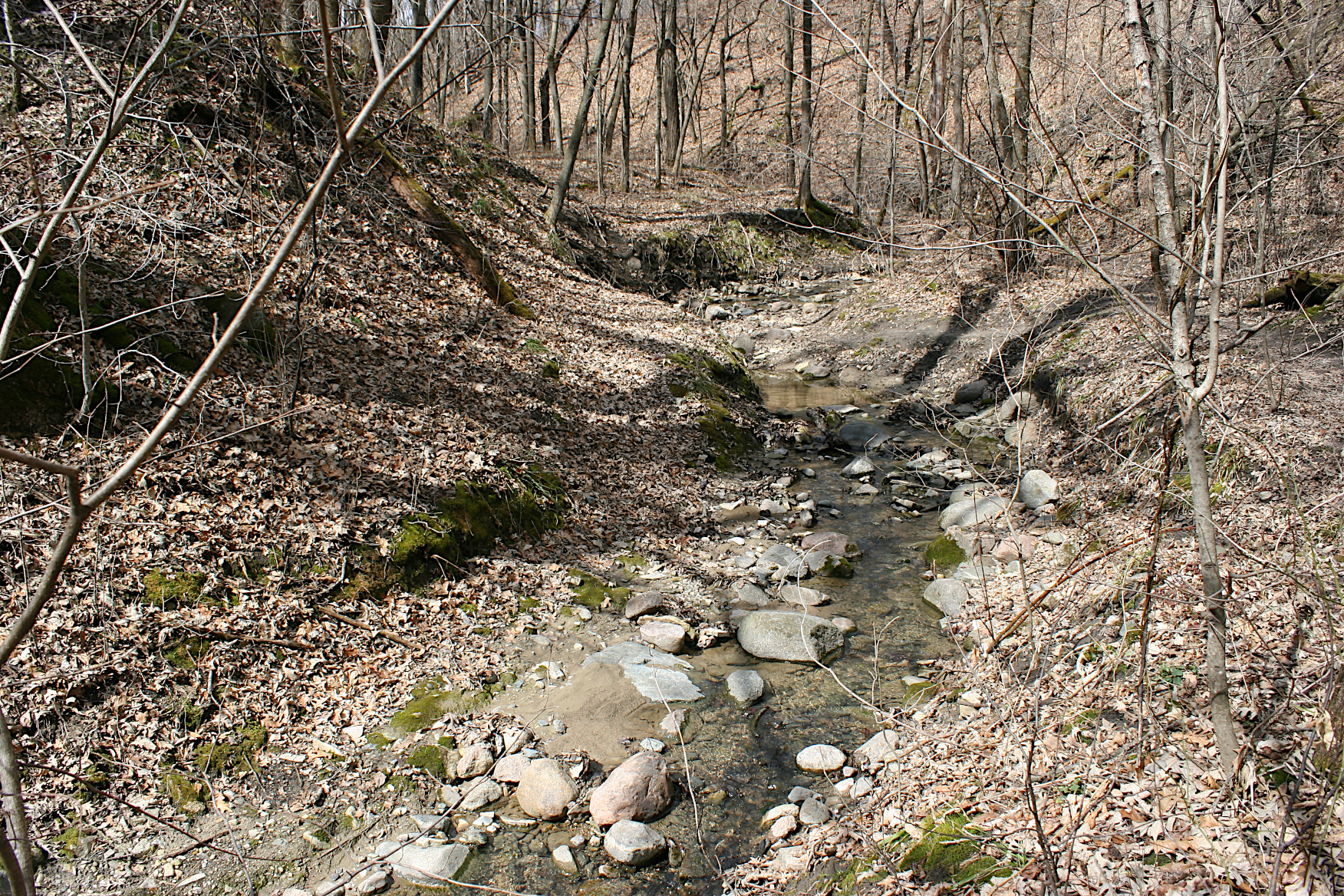
The creek meanders, wide in some areas, narrow in others.
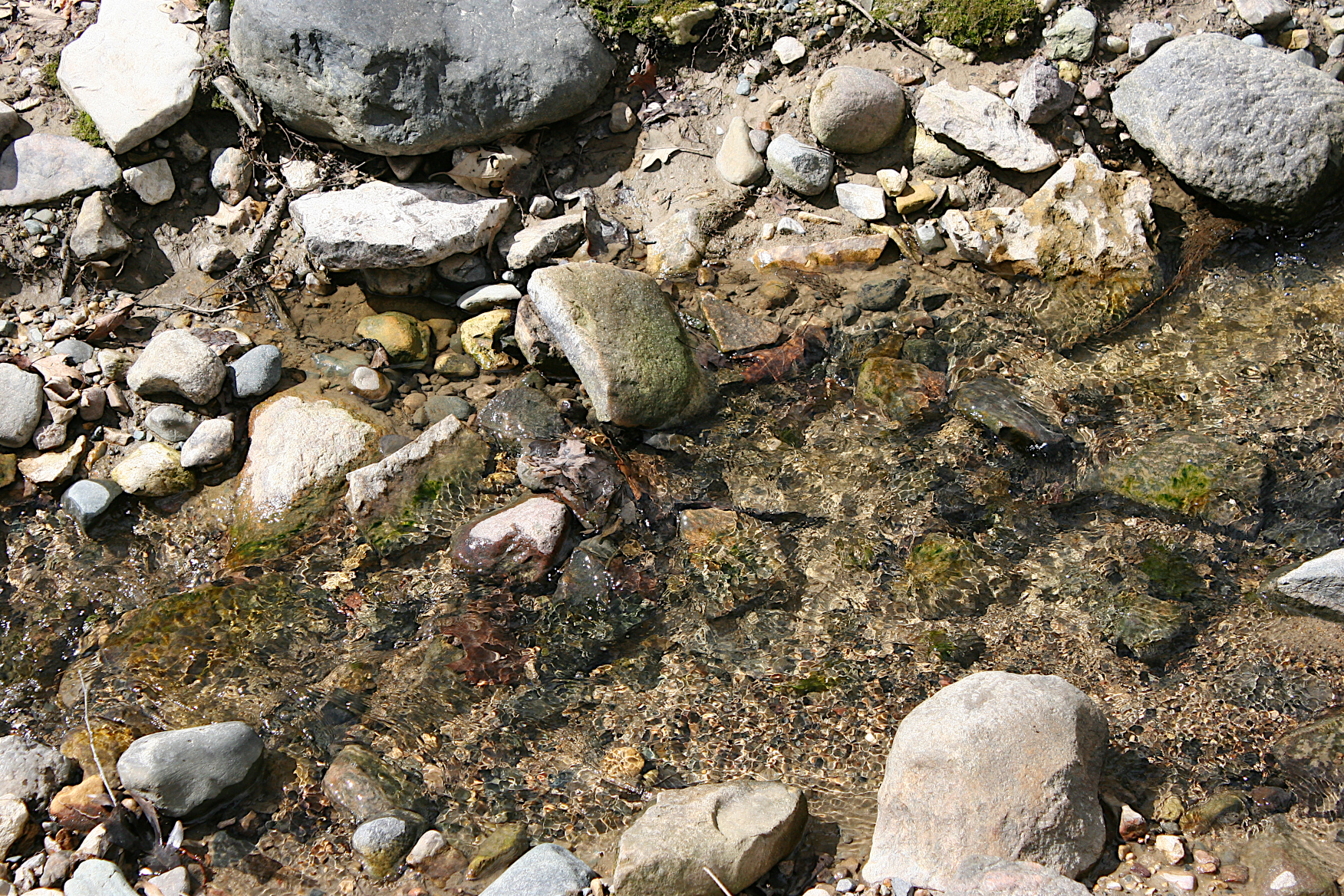
In places, the creek runs clear.
A fork in the creek.
And we also always walk to the side of the creek, to examine the water at the bend, before it flows under the bridge. Recent rain left that water muddied. Later we would find the creek flowing clear.
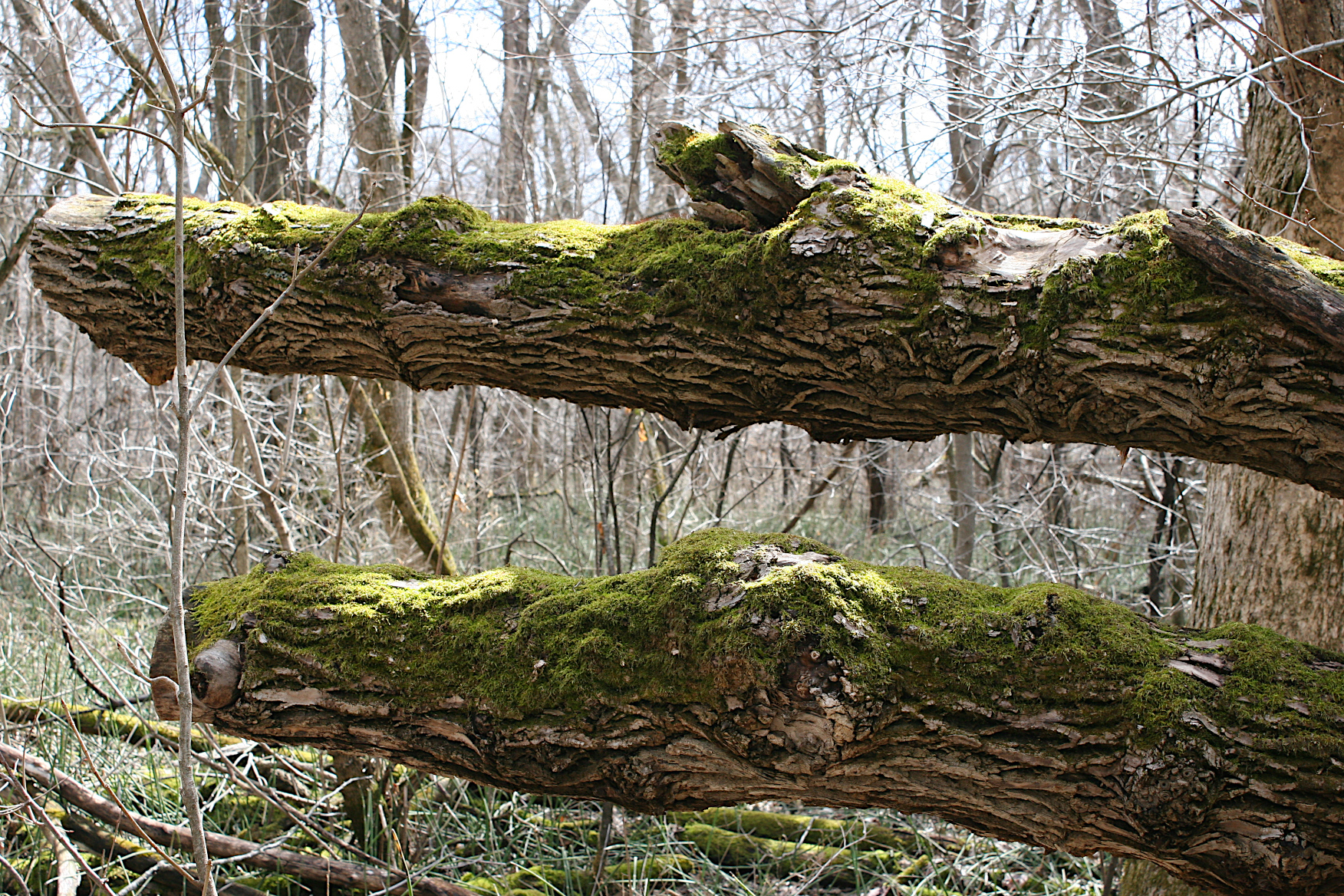
Loving the light, color and texture on this tree trunk moss.
Entering the woods, I determined to photograph signs of spring in the muted landscape. That requires focus. Examples of spring are elusive and seen mostly in vivid green moss carpeting fallen tree trunks.
A fallen tree provides a canvas for art.
But I can photograph only so much moss. Thus I expanded my perspective. Nature writes details upon the landscape. Even in a scene of mostly muted browns.
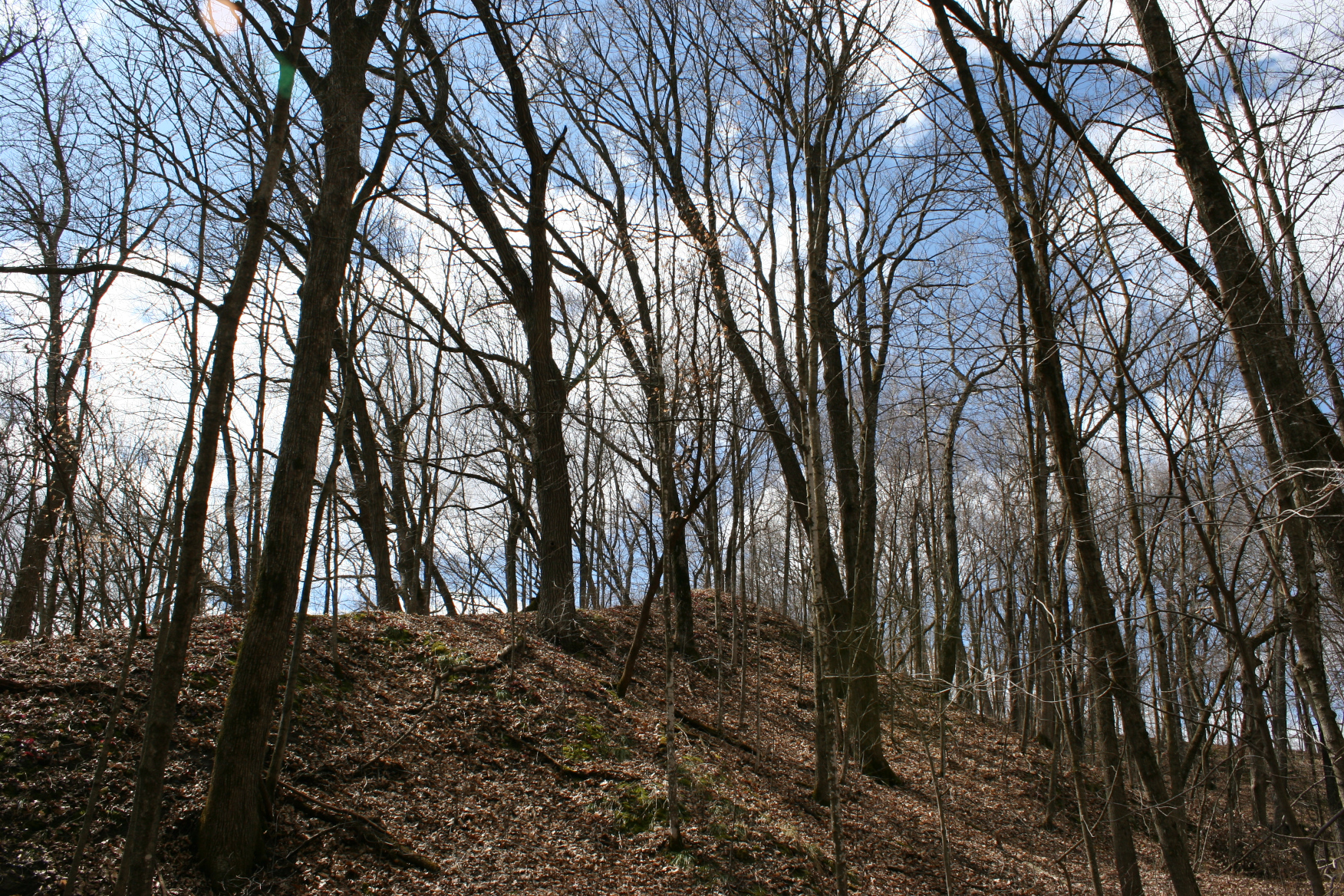
Hillsides of trees rising
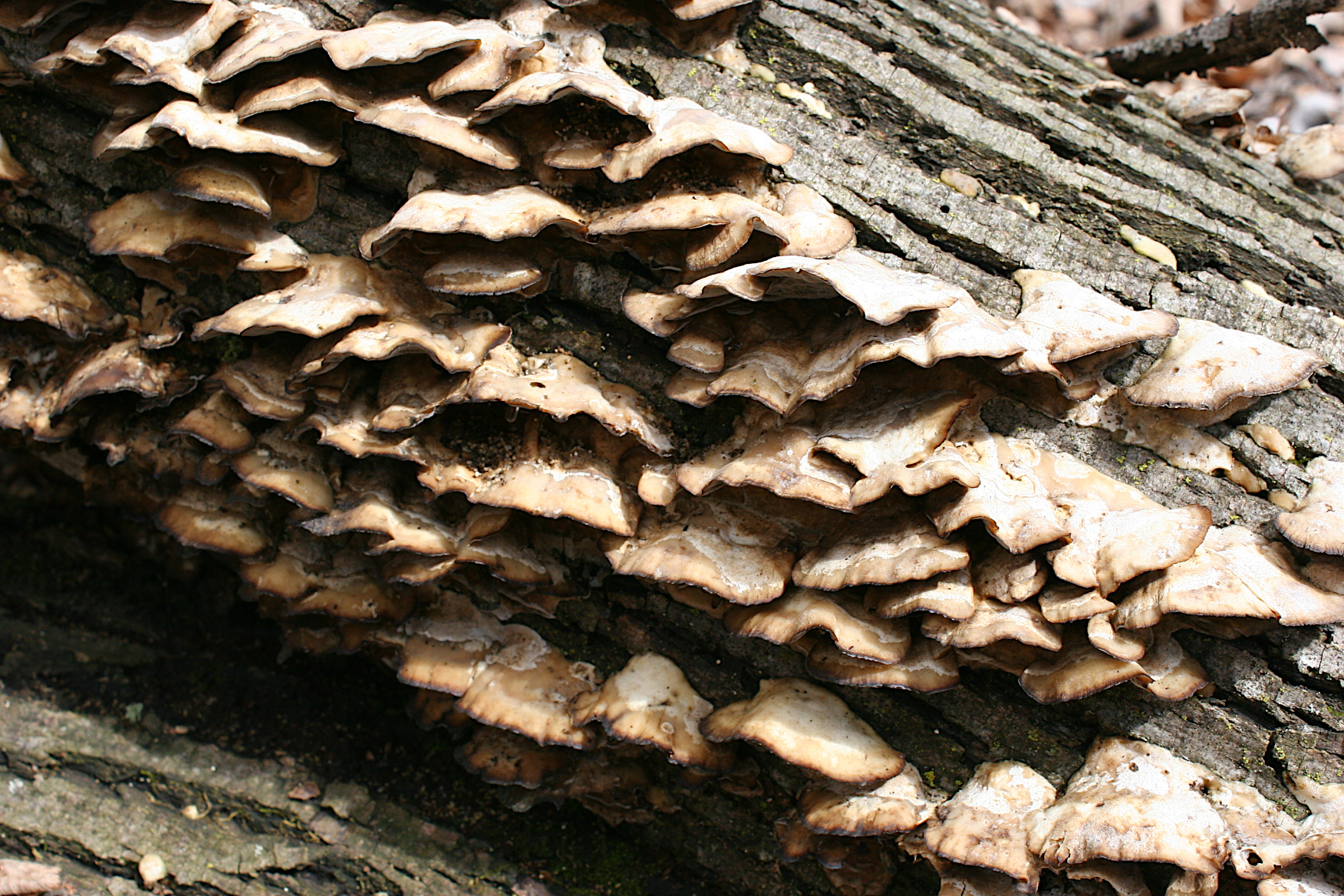
and fungi laddering
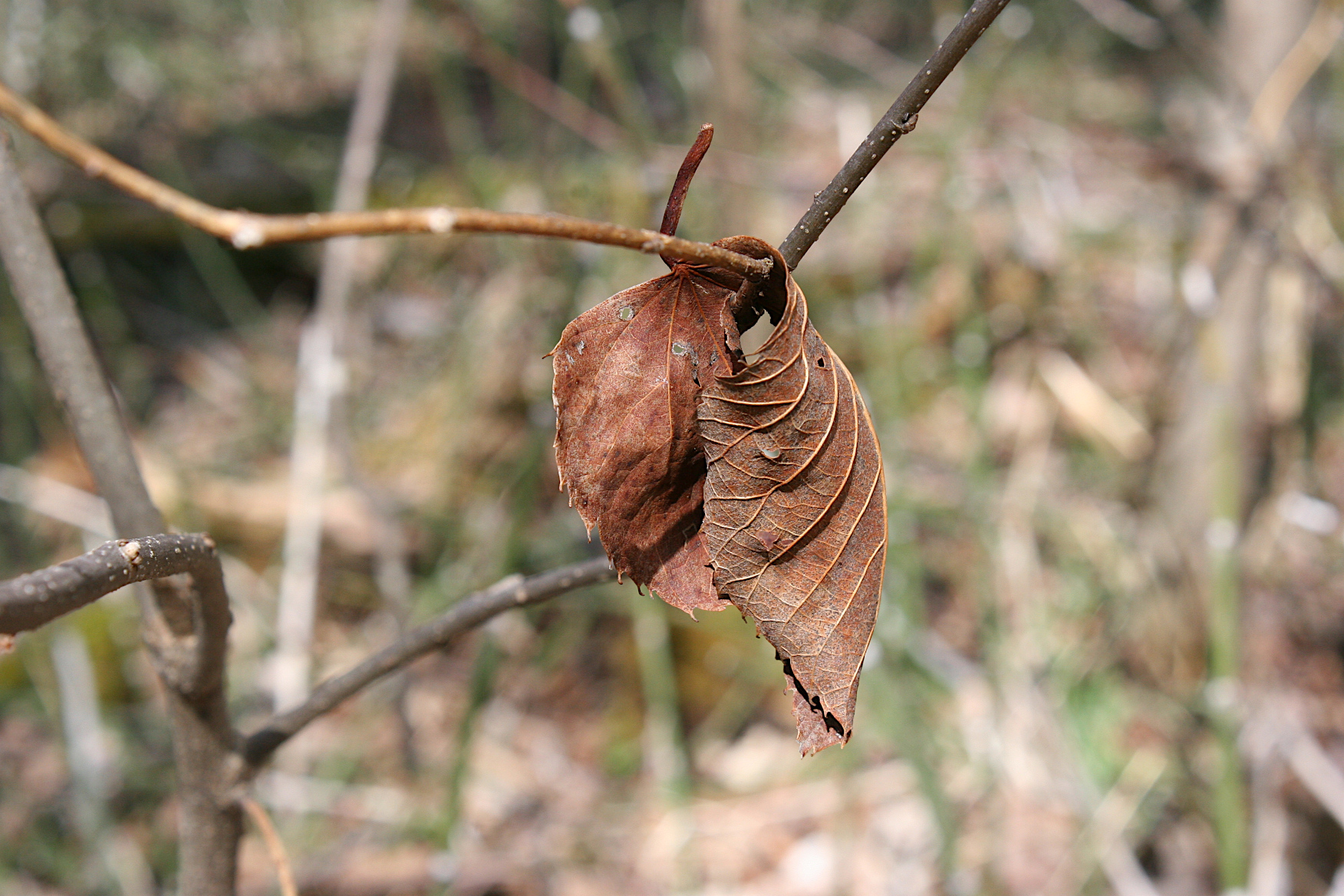
and dried leaves curling.
Nature’s “antlers.”
And the branches of a tree twisting like antlers.
Nature’s sculpture.
And felled trees that appear like natural sculptures.
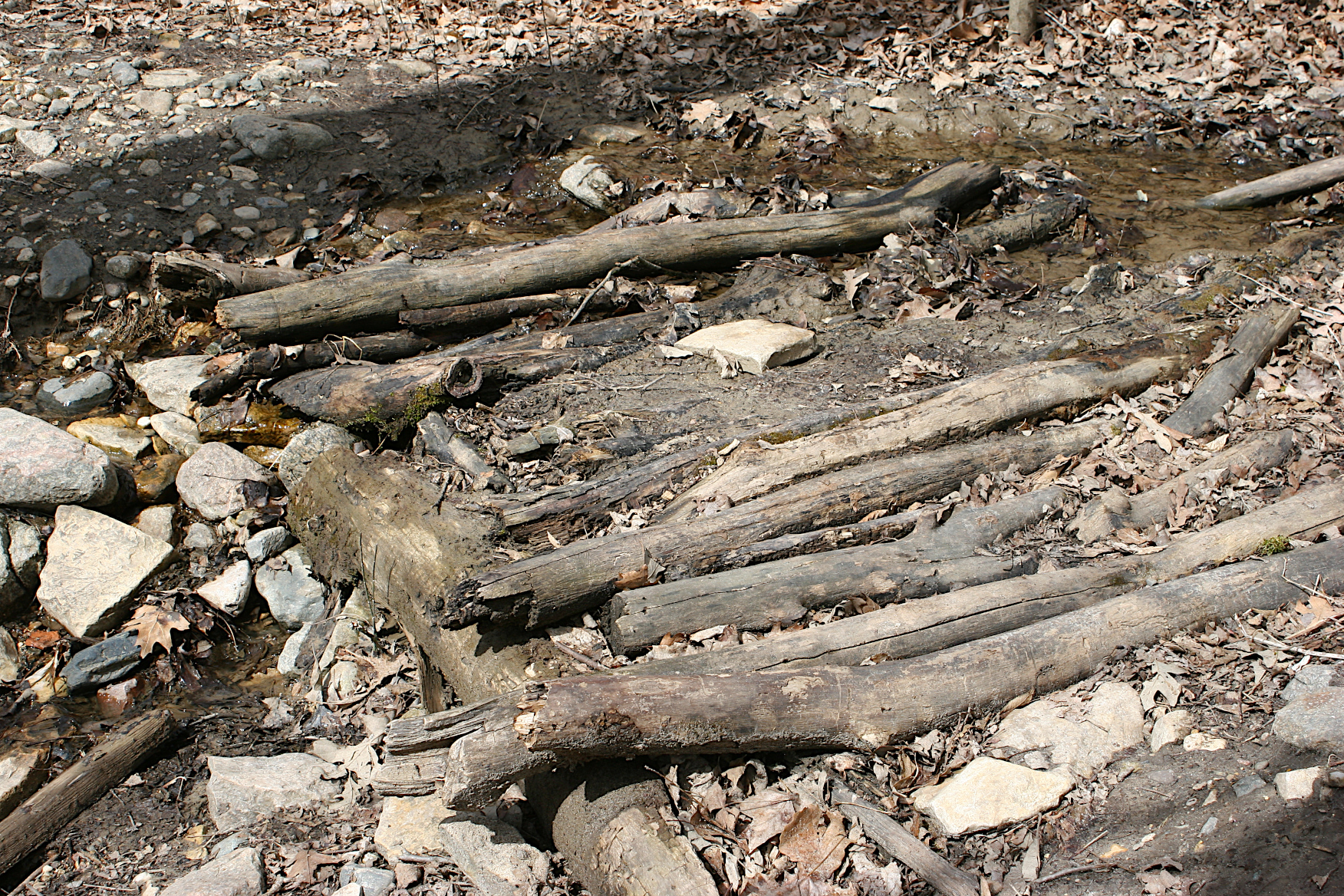
The makeshift bridge.
All of these nuances I noticed as we walked, as I stopped to take in my surroundings, as Randy steadied me while I crossed a makeshift branch bridge across a spillway.
Randy crosses the bridge out of the woods.
There is much to see in this seasonal transition, if only we pause to appreciate. To look. And really see. To hear. And really listen. It’s there. The poetry of wind and water and woods and words.
In this file photo, snow edges the patio as I’m about to hang laundry on the clothesline in early spring.
WHEN I STEP OUTSIDE to hang sheets and towels on the clothesline, I feel such gratitude for the arrival of spring in southern Minnesota. Winter gets long in these parts.
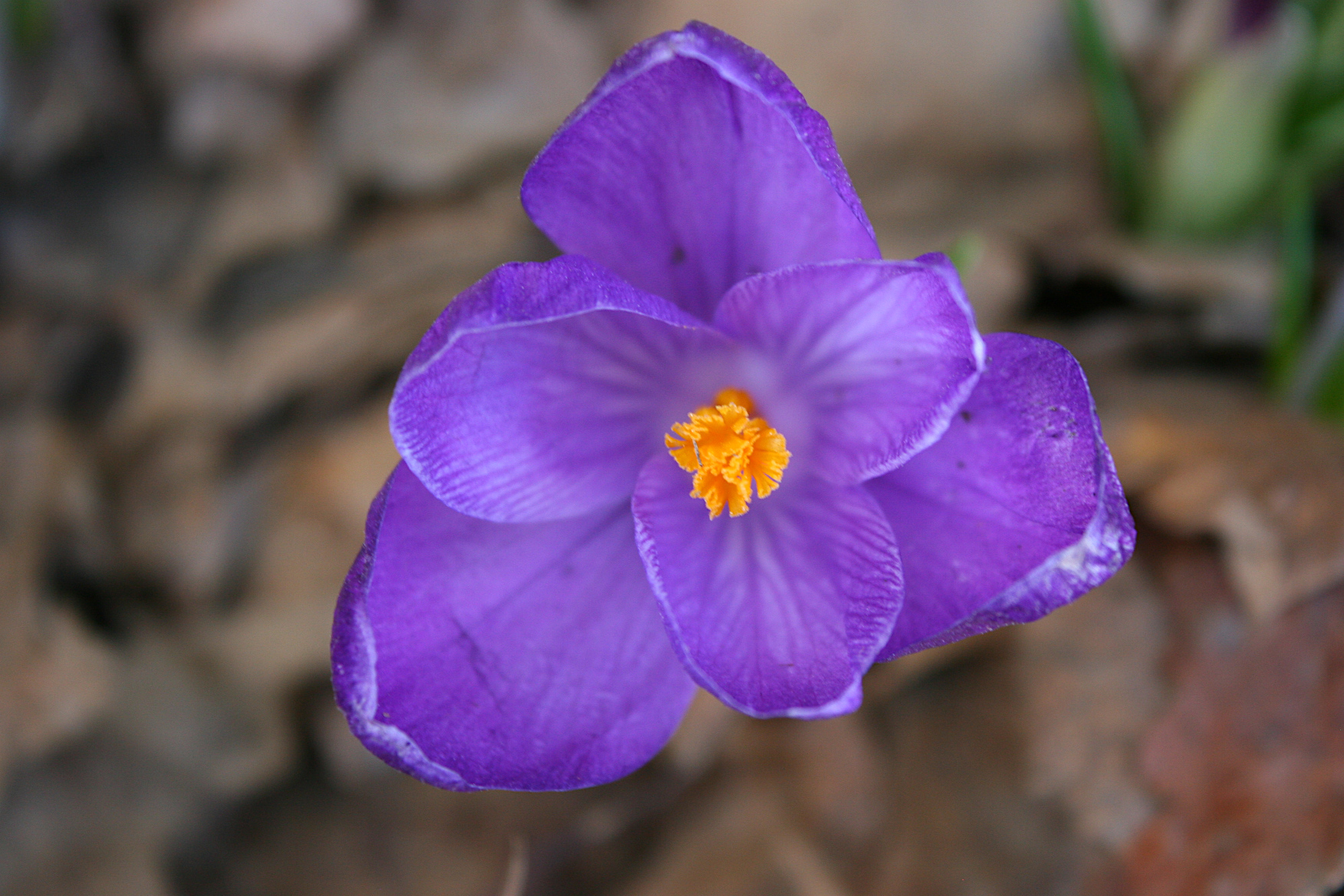
Crocuses are in full bloom in my front yard flowerbed.
I long for sunshine and blue skies and more light than darkness. Birds tweeting. Crocuses unfolding and tulips stretching above the earth. And no more freezing my fingers while hanging laundry in the morning. Early spring brings all of those.
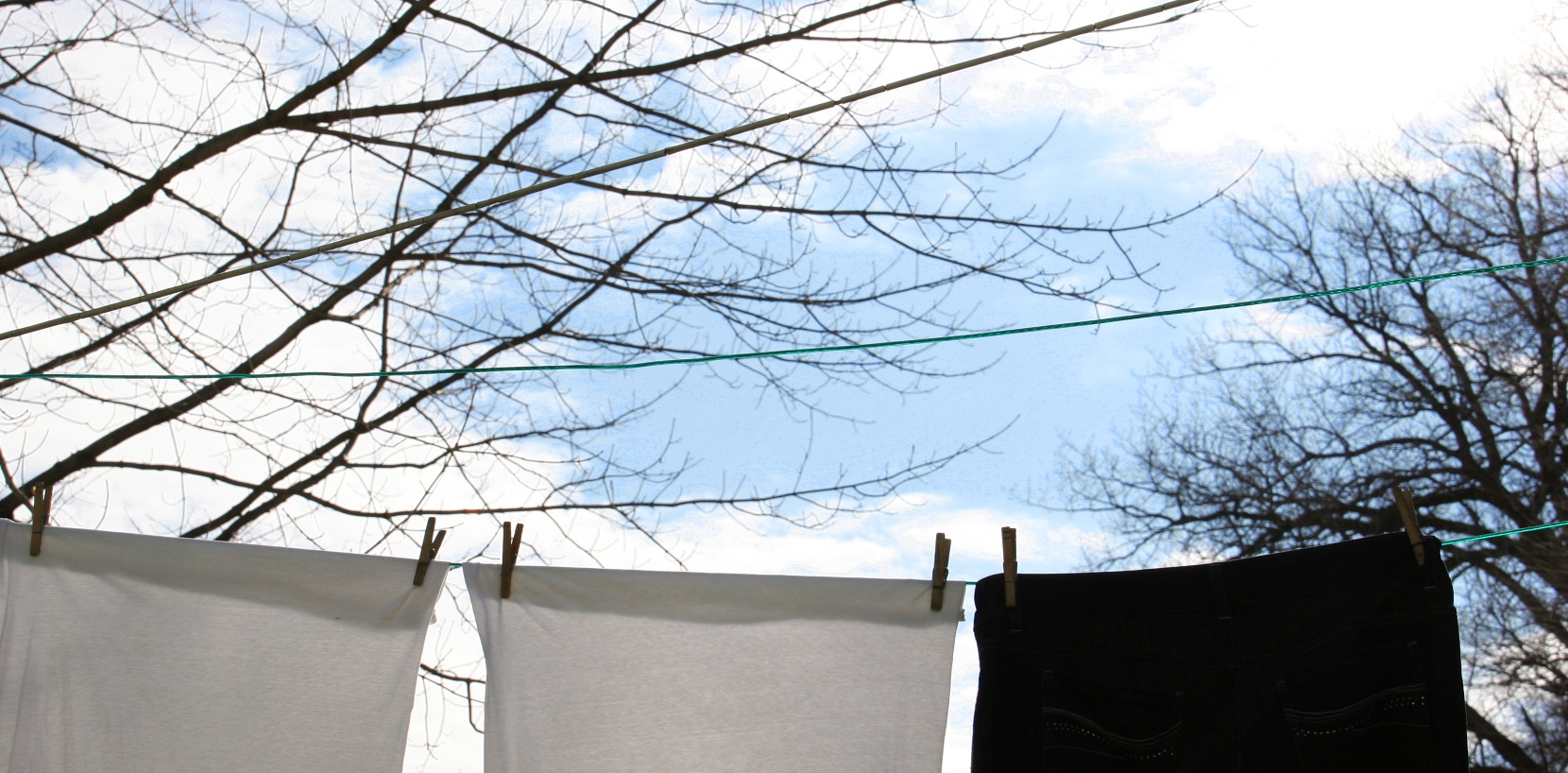
Laundry on my clothesline. Minnesota Prairie Roots file photo.
I love hanging laundry outside. The rhythm of pulling items from the laundry basket then clipping and repeating soothes me. The physical task gives pause in my day, reconnects me with generations of women who did the same, connects me to nature via the warmth of the sun and the music of birds.
And then, when I reverse the task in the afternoon and carry the air-dried laundry indoors, I breathe in the scent of nature. The air of spring.
A biker swings his bike onto Minnesota State Highway 60/Fourth Street past the Rice County Courthouse on a recent warm spring afternoon.
For others, spring signals biking season. And plenty of bikers have been out and about. Some even earlier, in winter.
My grandson hopscotching in his two-year-old way.
And the kids, oh, the kids. Taking them outside is so much easier with no snowpants or snowboots to pull on. Randy and I played with our grandkids in the driveway of their home last weekend with Izzy circling on her bike and Isaac jumping, rather than hopping, on chalked hopscotch squares. Then we headed to the neighborhood park with Izzy zooming ahead on her bike and me pushing her brother in the stroller, trying to keep up, but failing. At the playground, we pushed both kids in the swings with Isaac calling for “higher.”
Always the first flower of spring in my yard. The beautiful crocus.
How wonderful this time with our grandkids. To be in the moment. To feel their joy. To watch them soar and climb. To hear them laugh. To experience their delight. I feel blessed in this season of life.
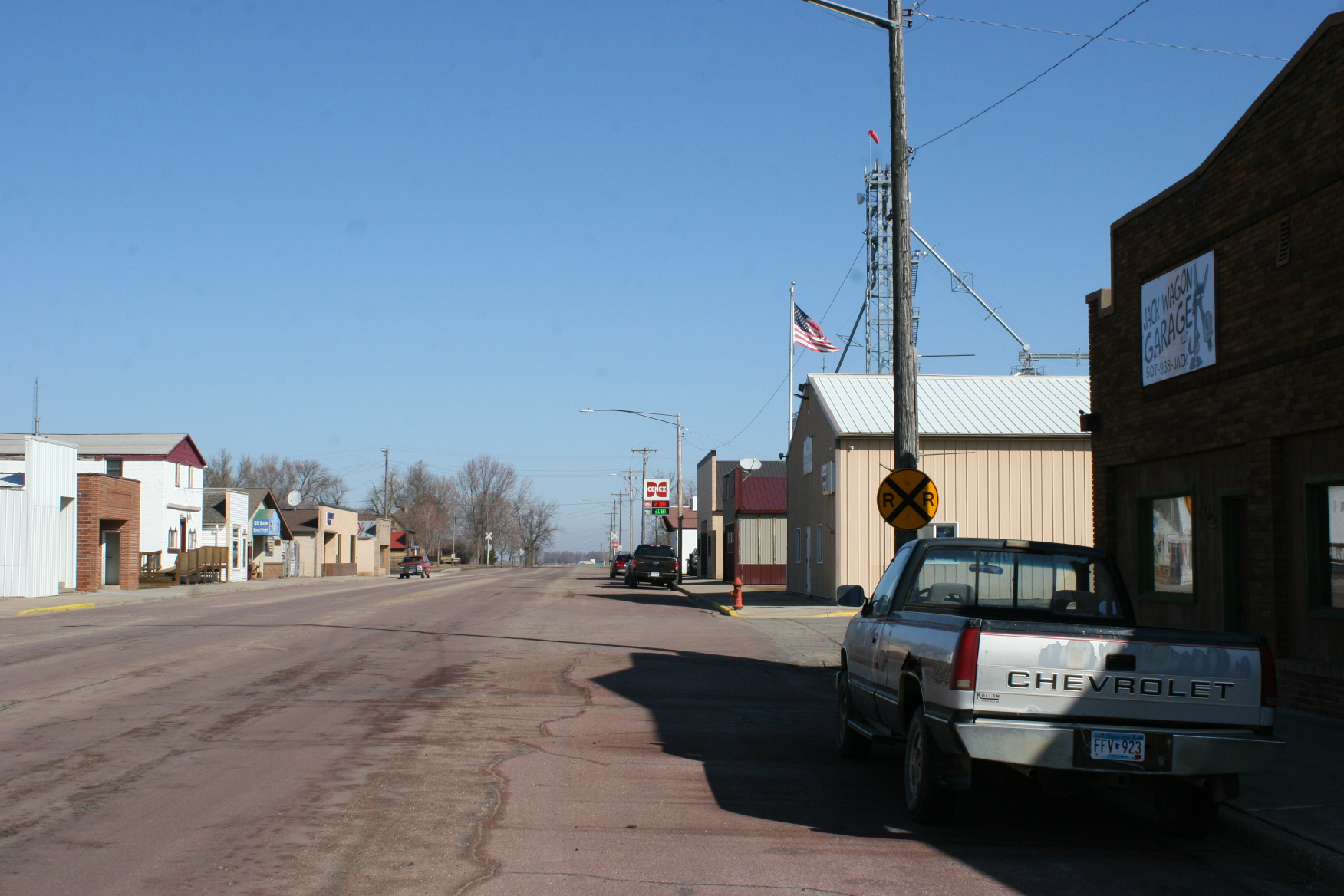
Belview, located in southwestern Minnesota, some seven miles from my hometown of Vesta.
FOR THOSE OF YOU who’ve followed my Minnesota Prairie Roots blog for awhile, you understand that I value small towns. They are a favorite destination, an escape of sorts back to my rural prairie roots. To a less-populated place, typically rooted in agriculture.
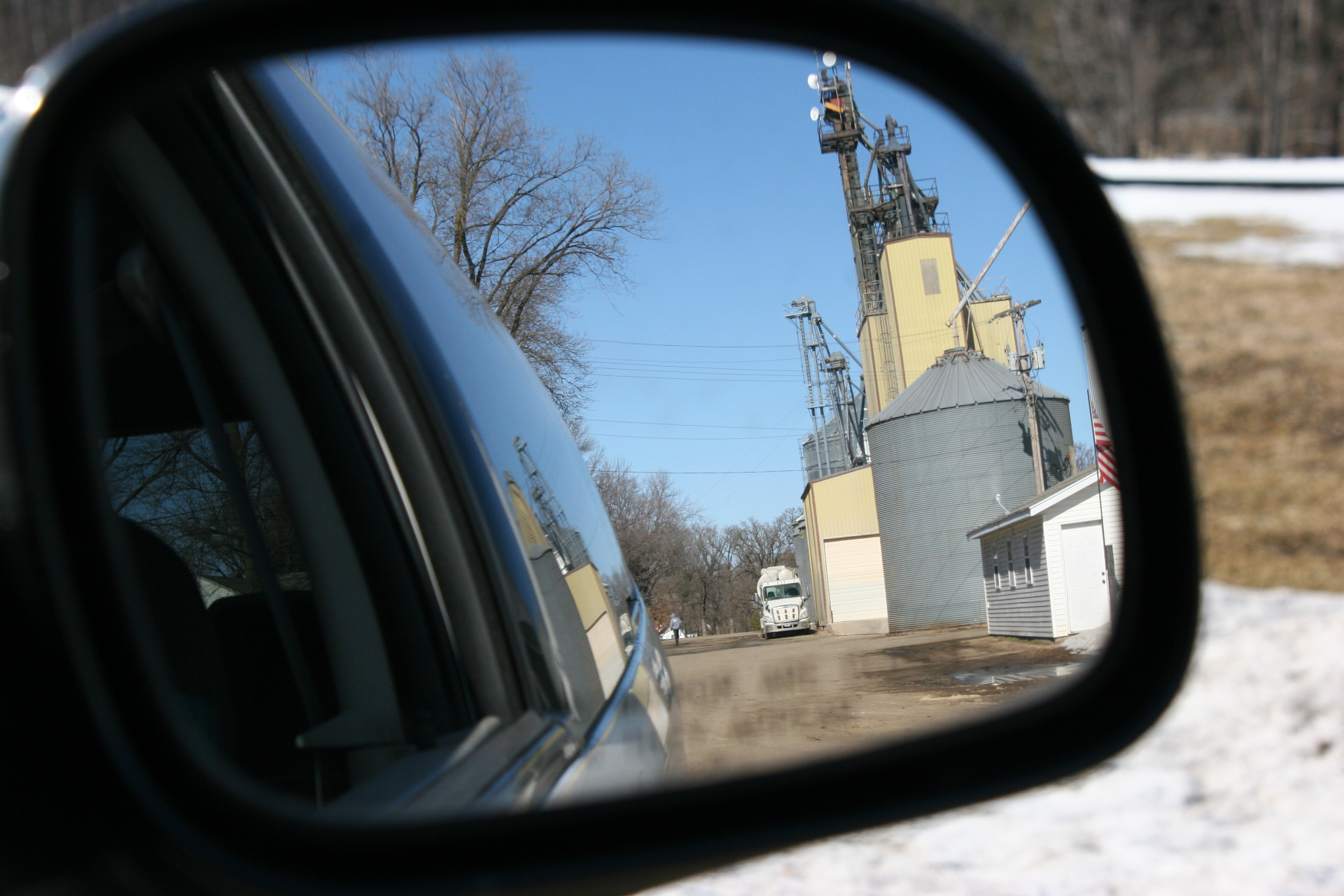
The grain complex in unincorporated Bixby in Aurora Township in Steele County, MN, reflects in the passenger side mirror.
That said, I recognize that my definition of a “small town” may differ from yours. I view small towns as communities with populations of several thousand or less. I would not, for example, consider my city of Faribault to be small. Others would given its population of around 24,000.
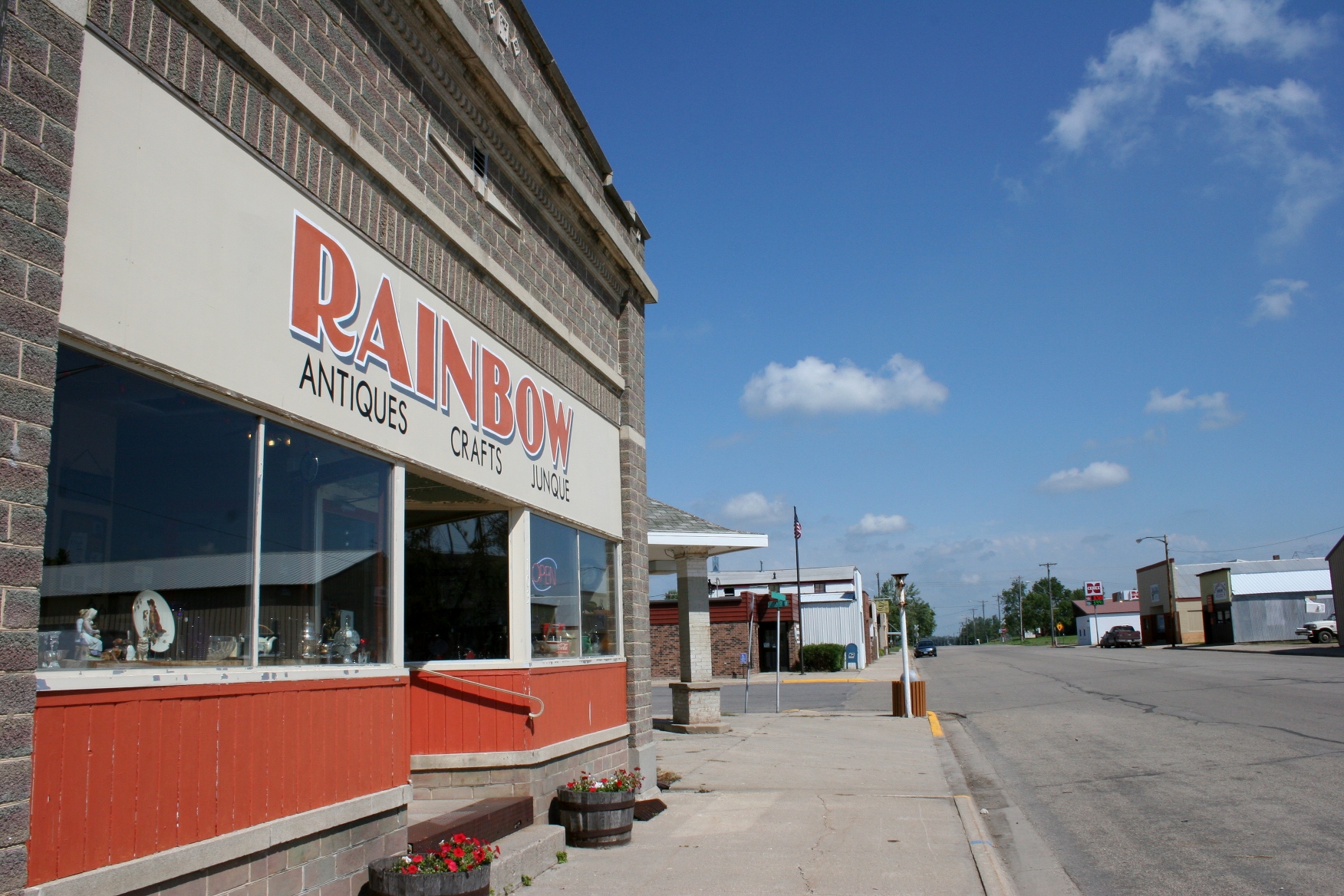
A favorite stop (when it’s open) is Rainbow Antiques, Crafts & Junque in Belview. Other attractions in Belview include the historic Odeon Hall, Rock Dell Lutheran Church, rural Belview, and Grandview Valley Winery, to the north of town. Minnesota Prairie Roots file photo August 2011.
What draws me to small towns, to photograph and write about them, beyond my desire to reconnect with rural places and share my finds?
I love this kitschy bar stool atop the City & Country Tavern roof overhang in Morgan in southwestern MN.
It’s discovering nuances of character. It’s connecting with people. It’s the architecture and oddities and so much more. Exploring small towns is like taking a basic sentence and enhancing the main subject with adjectives.
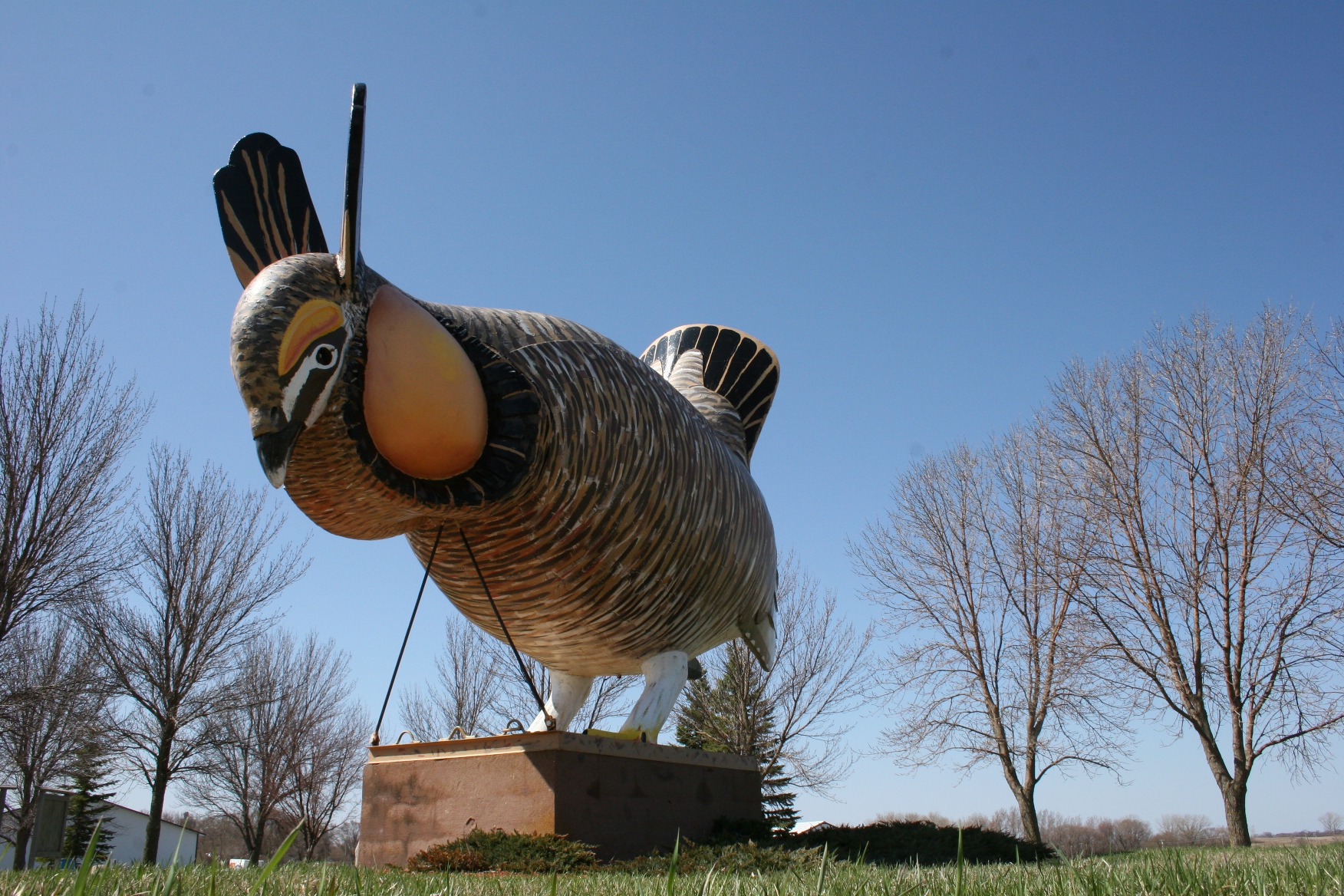
This prairie chicken statue along Interstate 94 in western Minnesota celebrates the real prairie chickens which reside in the Rothsay area. Minnesota Prairie Roots file photo May 2013.
Yet, I realize not everyone appreciates language like I do. All too often, small towns are bypassed or driven through—seemingly not a place that would attract visitors. But I am here to tell you they are worth the detour off the interstate, the destination for a day trip, the stopping on Main Street.
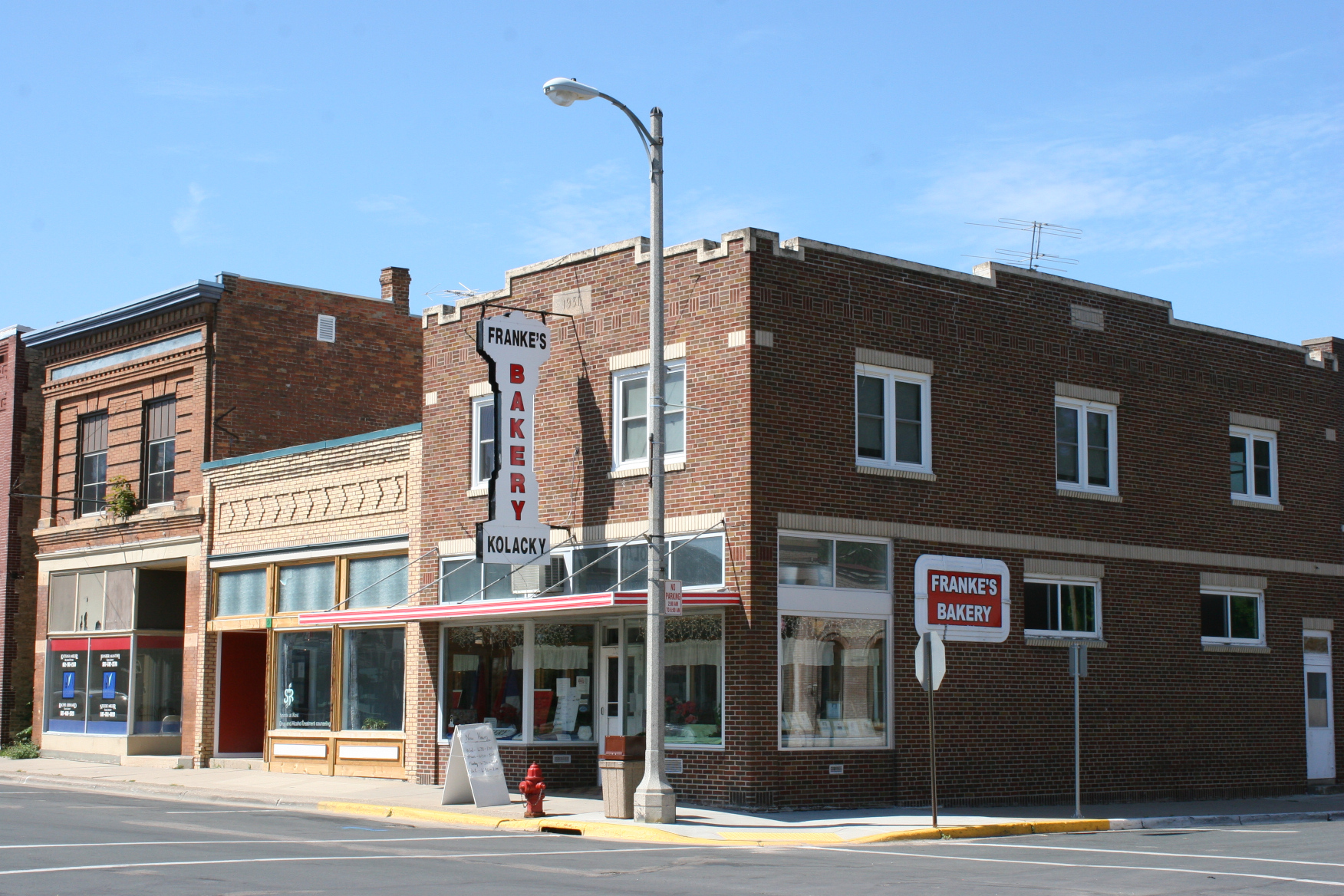
Popular Franke’s Bakery anchors a corner in downtown Montgomery, MN. Minnesota Prairie Roots file photo August 2020.
Montgomery, Minnesota, for example, is one of my favorite nearby small towns. Why? I love going to Franke’s Bakery, a staple in this community for 100-plus years. The bakery specializes in Czech treats, in this self-proclaimed Kolacky Capital of the World. Across the street from the bakery, a mural tells the history of this town. Aged buildings line the main business district, with home-grown shops and eateries and bars. The adjectives enhancing the main subject.
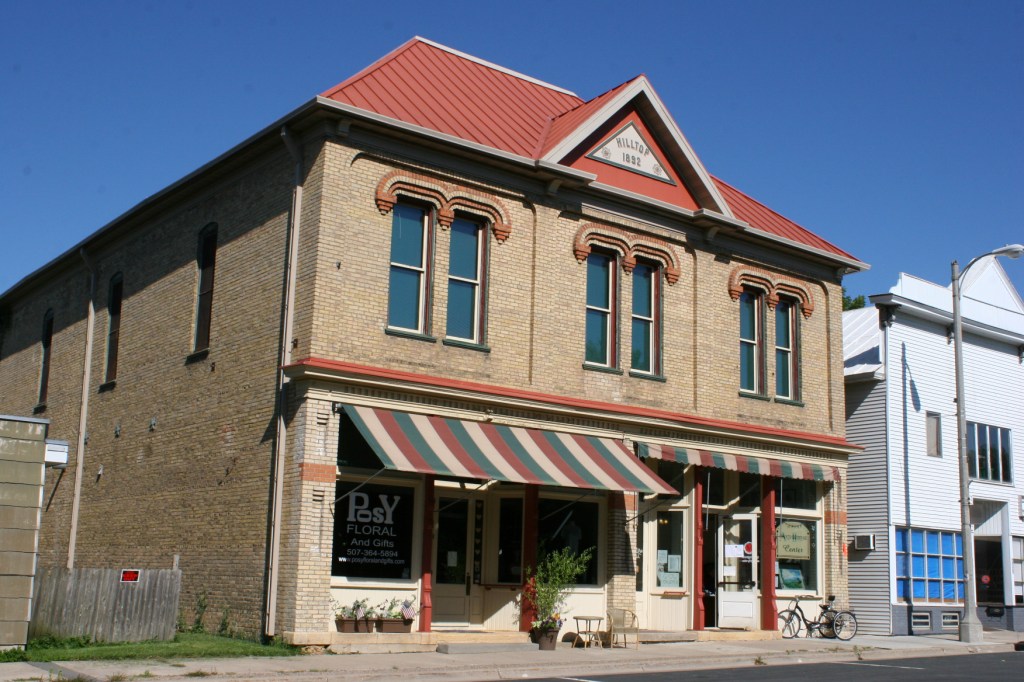
The Montgomery Arts & Heritage Center, right, and Posy Floral, left, along First Street North on the north end of downtown Montgomery, MN. Minnesota Prairie Roots file photo August 2020.
The Montgomery Arts and Cultural Heritage Center and Montgomery Brewing also draw me to this Le Sueur County community. And the signs and architecture.
The good folks of Montgomery have branded their community, tapping into their heritage and then building on that to create a place that attracts visitors. I think potential exists in every small town to do the same. And it starts with recognizing the strengths, the uniqueness, of a community. I know that requires time, money and effort. But, oh, the possibilities.
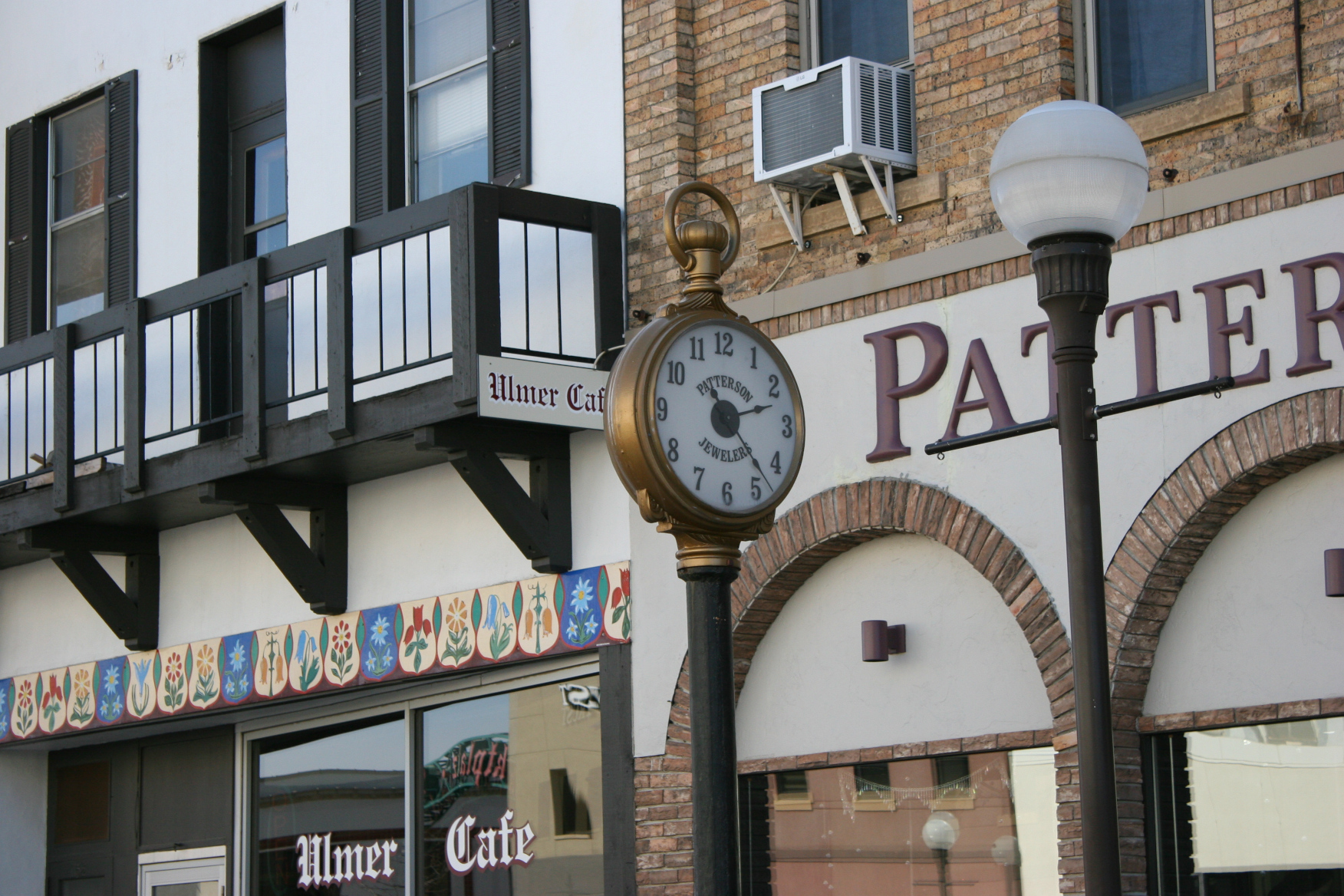
The community of New Ulm is home to many home-grown restaurants, like the Ulmer Cafe.
I, for one, love small town bakeries, antique shops, thrift stores, art centers and home-grown cafes with meal offerings that are crafted by hand, not pulled from a freezer and heated. I recently saw a sign for Beef Commercials in New Ulm. I haven’t eaten one—roast beef layered between slices of white bread, topped with a dollop of mashed potatoes and smothered in gravy—for years. Had it been meal time and not a pandemic, I may have stopped to indulge in nostalgia.
A thriving grocery store in small town Ellendale, MN.
Now I know every community can’t tap into heritage like New Ulm and Montgomery. But, each place truly possesses potential to attract visitors. In Ellendale, for example, the award-winning Steve’s Meat Market draws meat lovers. I am partial to Lerberg’s Foods and its worn wooden floor, narrow aisles and aged moose head looming over cans of stacked corn.
Outside the local hardware store in the downtown main business district, this heart art shows pride, marketing savvy and identity in Blooming Prairie. This small town is located in southern Steele County, south of Owatonna.
I delight in such discoveries. Kitsch. Identity. A strong sense of place and pride. I hope that, by sharing my thoughts and photos, you, too, will view small towns through a lens of appreciation.
TELL ME: Have you discovered a small town that you just love. I’d like to hear.
PLEASE CHECK BACK as I expand on this post with more photos from some of the communities featured here.
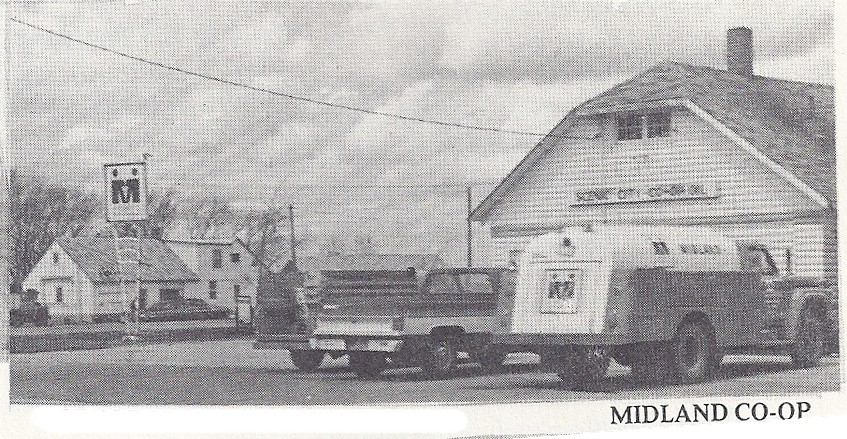
My uncle’s gas station with the fuel delivery truck parked by The Old Log Cabin. Photo from Envisioning a Century, Vesta, 1900-2000. The Miland station and the restaurant across Highway 19 in Vesta no longer exist. Minnesota Prairie Roots file photo.
GROWING UP IN SMALL TOWN Minnesota in the 60s and 70s, I saw local businesses thriving. There were two hardware stores, two grocery stores, a lumberyard, feed mill, grain elevator, bank, restaurants, corner bar, barbershop, several service stations, post office and more in my hometown of Vesta, population 365. But today, the one-block Main Street stands mostly empty, pocked by vacant lots from long-ago torn down buildings. A few businesses remain. The elementary school closed decades ago.
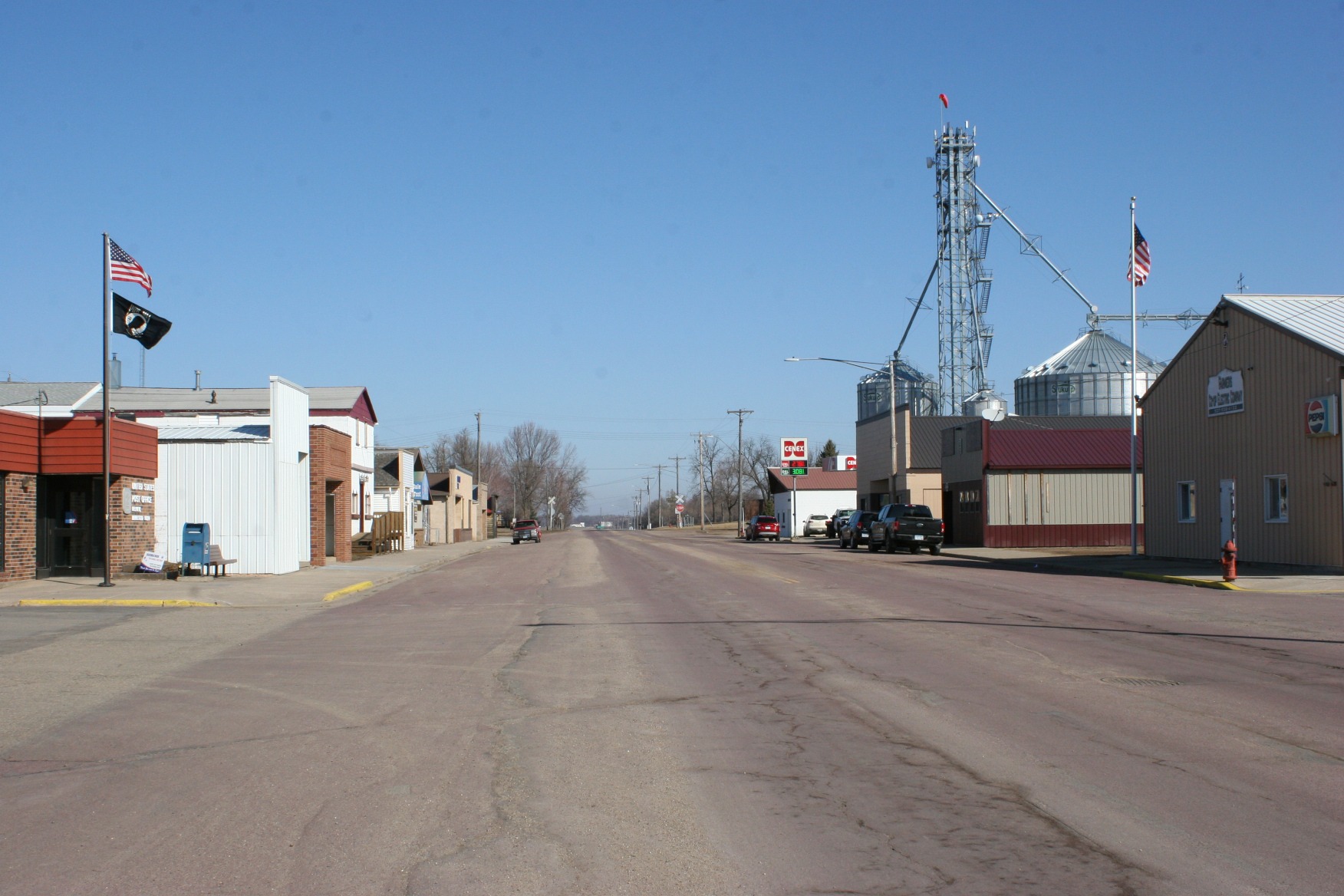
Downtown Belview, Minnesota, photographed last Saturday, March 13, 2021.
In Belview seven miles to the north and east, the story repeats. I recall driving to Belview with my grandma in the early 1970s to shop for fabric so I could sew dresses for her. That dry goods store is long gone. Belview has, like most rural communities, experienced the closure of many businesses as locals headed to regional shopping hubs to shop at Big Box stores and also embraced online shopping.
An historic anchor building in downtown Redwood Falls. Sward Kemp Snyder Drug recently moved out of downtown to the new hospital and clinic on the east edge of Redwood.
Likewise, Redwood Falls, to the east of Belview along Minnesota State Highway 19, has changed considerably. That Redwood County seat and the Lyon County seat of Marshall were our family’s go-to larger towns to shop for clothes, shoes and other necessities when I was growing up on the prairie. Last Saturday when Randy and I stopped in downtown Redwood, I found the streets nearly empty and few businesses open. Nothing like the bustling downtown I remember.
Vintage Vinyl, a newly-opened business in the heart of Redwood Falls.
I can sit here and write about this with nostalgia and sadness, wishing these rural communities remained self-sufficient. But wishes are not reality. And wishing does not change things. Action does.
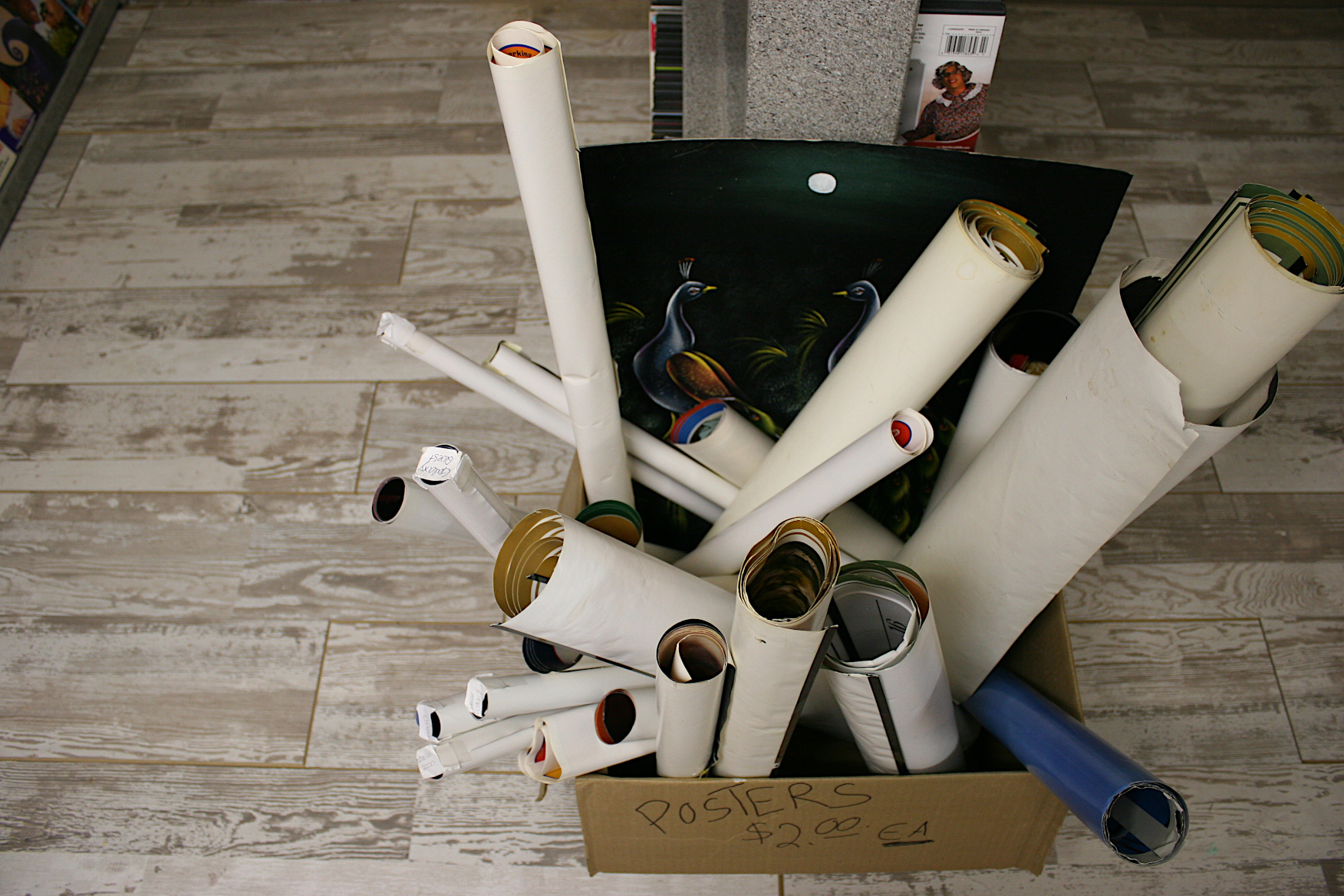
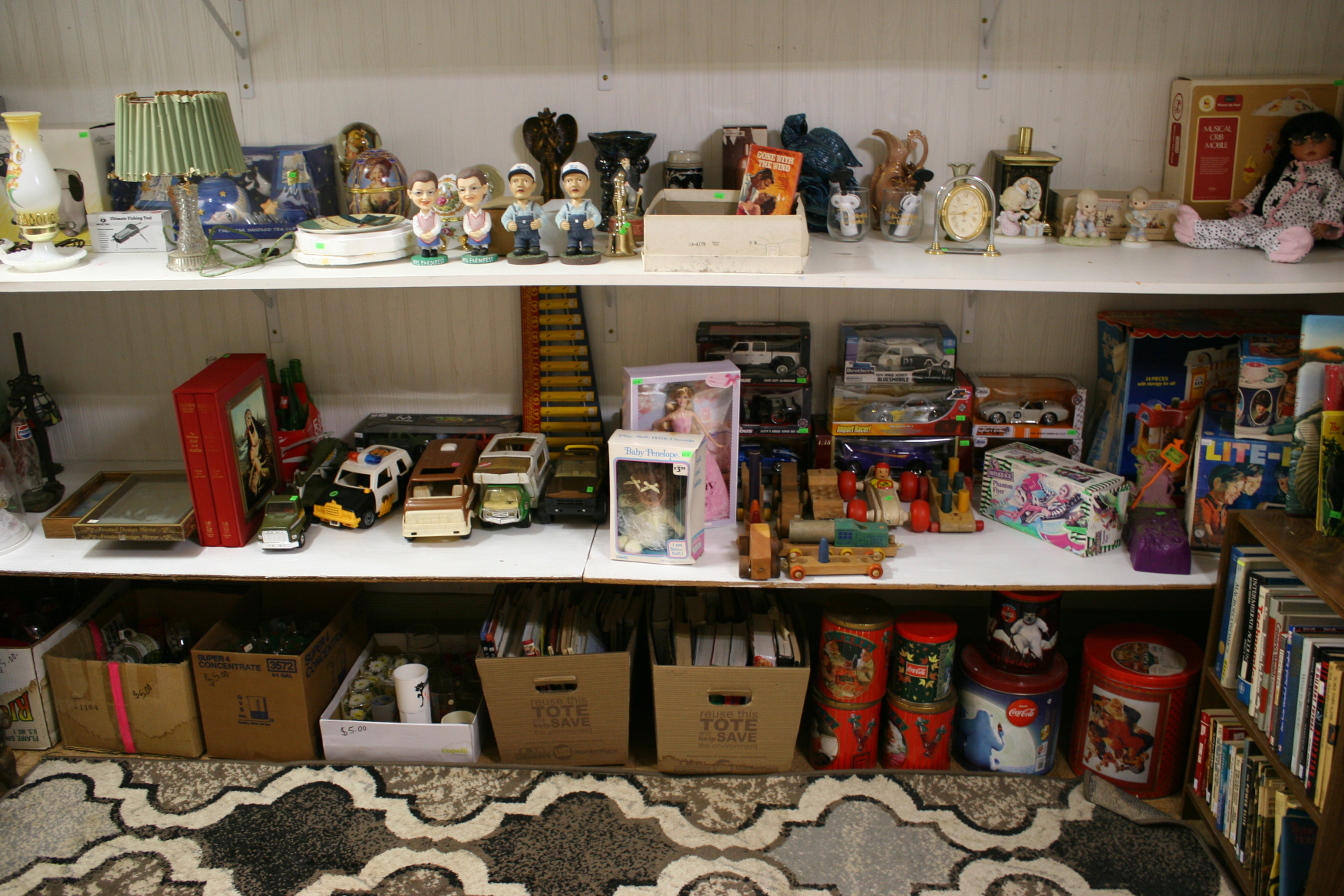
An overview of Vintage Vinyl, packed with albums plus gaming and trading cards, books, video games, DVDs and VHSs, figurines and more. The tables provide a place for folks to play checkers, etc., and/or just hang out.
Looking for a poster? You’ll find them in Nate’s shop.
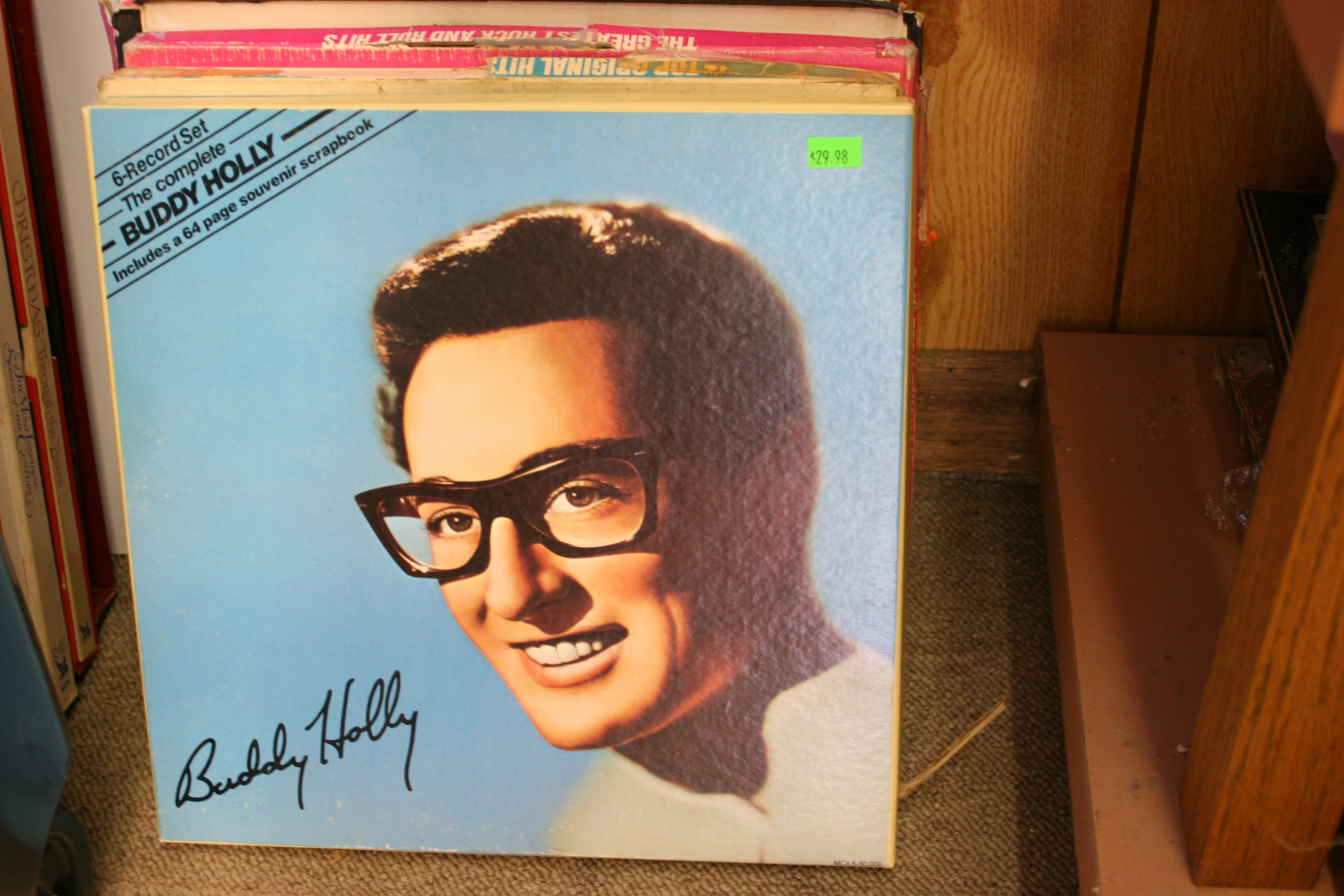
I spotted this Buddy Holly album leaning against the wall on the floor.
In the basement, an array of merchandise.
He’s friendly, outgoing, welcoming. Everything you want in a shopkeeper. But Nate also carries a sense of responsibility, it seems. He recently-returned to his home area after a stint with the military that took him around the world. He could have settled elsewhere. But he chose to return to his roots. (He graduated from nearby Wabasso High School, my alma mater, in 2004.) That says something.
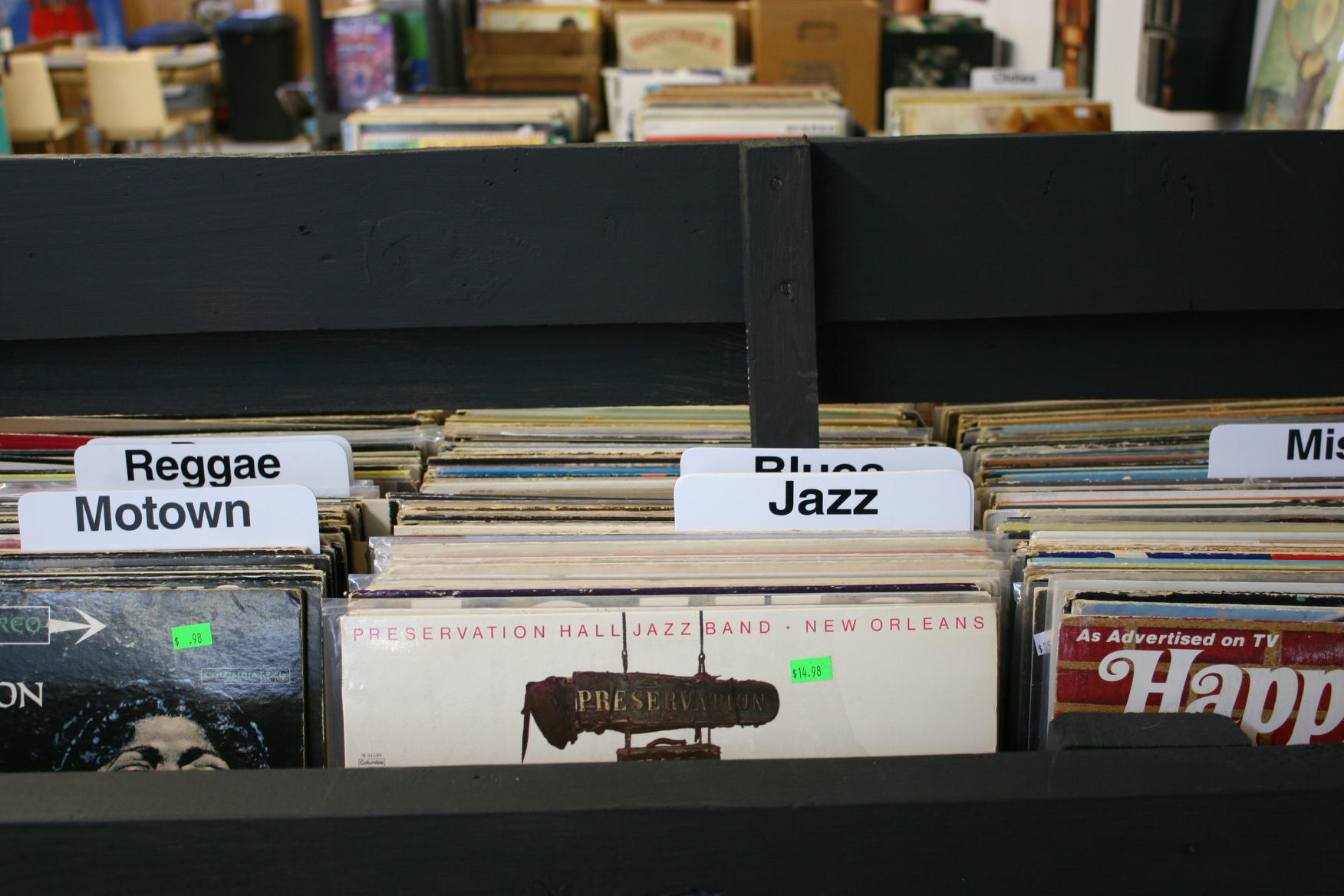
Endless musical options…
We didn’t chat all that long. But my brief conversation with Nate gives me hope. Hope that his positive attitude, his efforts—including purchasing two arcade games—and his drive will ignite a fire of possibilities.
PLEASE CHECK BACK to read my thoughts on small towns and what draws me to them.
WE ARRIVED NEARLY A HALF HOUR early in the small southwestern Minnesota community. But I didn’t want to be late for my scheduled 10:30 am visit. So, after a brief tour around Belview and stopping for several photo ops, Randy pulled the van into the parking lot next to the low-slung building adjoining the city park.
I slid the back passenger side door open, camera secured over my shoulder, and grabbed a cloth tote bag from the seat. Inside I’d stashed several family photos, my bible, a devotional and two pictures colored by my nearly 5-year-old granddaughter. Randy eased out a vase of flowers secured in a bucket.
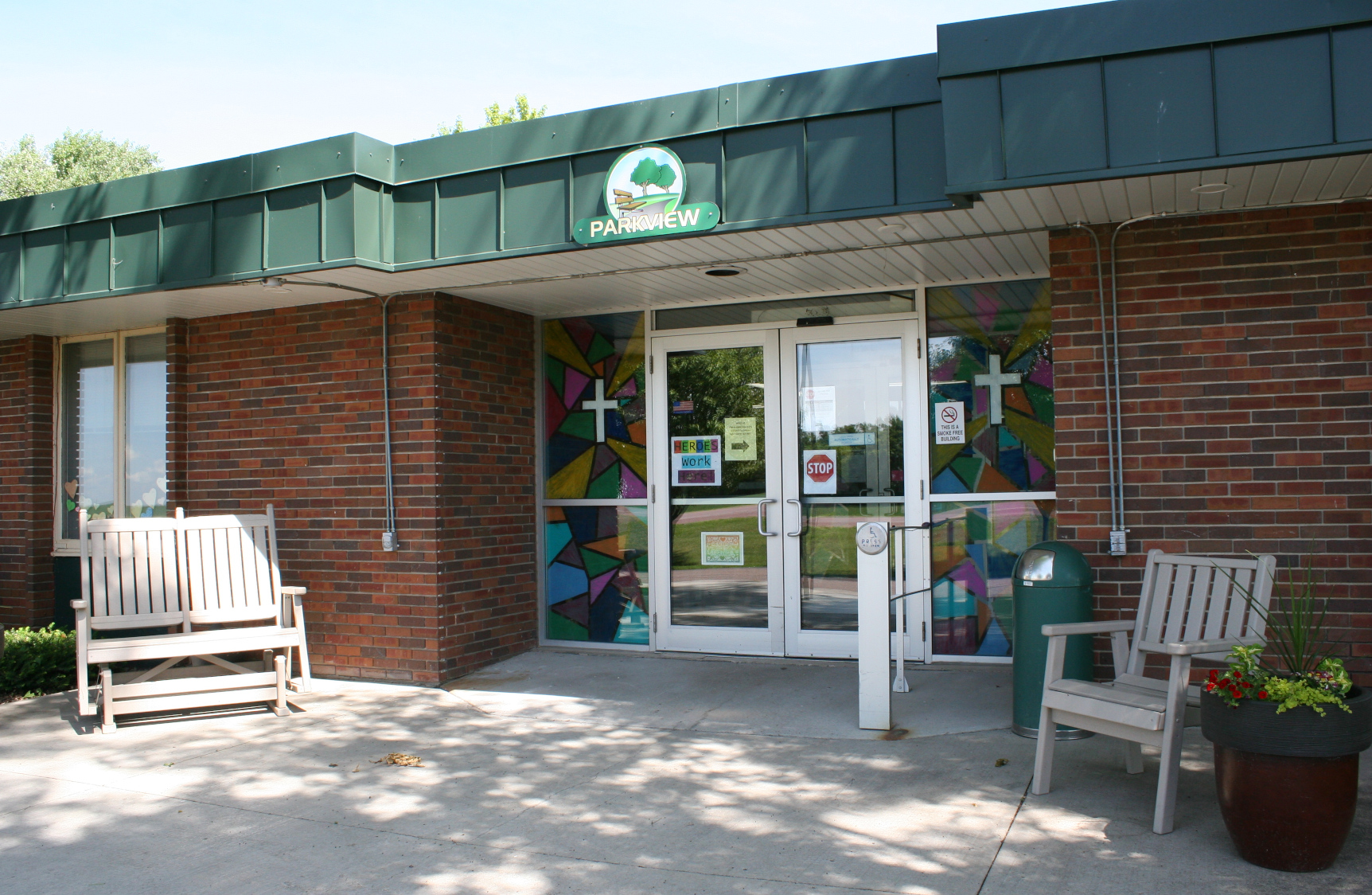
Then we headed across the parking lot on this Saturday morning in March, aiming west a short distance to the front entry. I looked for the doorbell I was told to ring. I pushed the button. We waited, the cold prairie wind sweeping around the care center. I shivered. Randy punched the button again. Peering through the double glass doors, I saw figures at the far end of the hallway. Soon a woman approached and invited us inside. I leaned into the heavy interior door, barely able to push its weight inward.
Once in the building, staff checked us in, took our temps, asked if we were experiencing any symptoms of illness. Apparently I didn’t answer. “If you were, you wouldn’t be here, right?” the young aide prompted. I nodded. Then I grabbed the goggles I was told to take and slipped them over my prescription eyeglasses with some hesitancy.
AN EMOTIONAL MOMENT
That’s when I saw her. My mom. Staff wheeling her across the carpet toward me. A short distance from her room to our designated meeting spot in the day room. In that moment, profound emotions overtook me and I cried. Not uncontrollable crying. But crying that represented a year of separation. One year had passed since I last saw Mom face-to-face. “Are you OK?” a staffer asked with concern.
I was. And I wasn’t. I understood that I needed to pull myself together, that this was not about me and how I felt, but about my mom. My arms ached to reach out and hug her, to hold her hand, to touch her and never let go. To kiss her cheeks.
RECONNECTING
Staff wheeled Mom to the end of a table in the day room. Randy and I were advised to keep a six-foot distance. We knew enough to keep our masks on. A screen provided some privacy. But I was cognizant of people occasionally moving on the other side. Yet, it really didn’t matter. I was here. In the same room with my sweet mom. Randy and I would have 15 minutes with her together before he had to leave and I could move into her room for a compassionate care visit. Mom is in hospice.
Mom’s health is such that conversation with her is one-sided. Us talking. Her listening, if she could hear us over the whir of her oxygen machine. Randy and I talked in raised voices. And when I showed her photos of my grandchildren, her great grandchildren, the skin around her eyes crinkled, indicating a smile beneath her face mask. There were more smiles and moments of connection, of understanding, of recognition. And those were enough to bring me joy. And her, too. I could see it in her reaction.
When Randy told Mom goodbye, she didn’t understand why he had to leave. Mercifully, her cognition and memory are such that she doesn’t comprehend COVID and all that entails, including the reason we haven’t seen her face-to-face in exactly one year.
CURIOUS GEORGE AND GOOD SAMARITANS AND A SMILEY FACE
Mom holds her Curious George.
We moved to her room, me carrying the vase of vivid flowers. Once there, I asked the aide to switch off the Curious George DVD playing on the TV. Mom was already fixated on the cartoon, which she loves. A stack of DVDs featuring the mischievous monkey rested on a table below the television and a stuffed animal Curious George sat on a recliner in the corner. I picked it up and gave it to her and Mom cuddled the monkey on her lap.
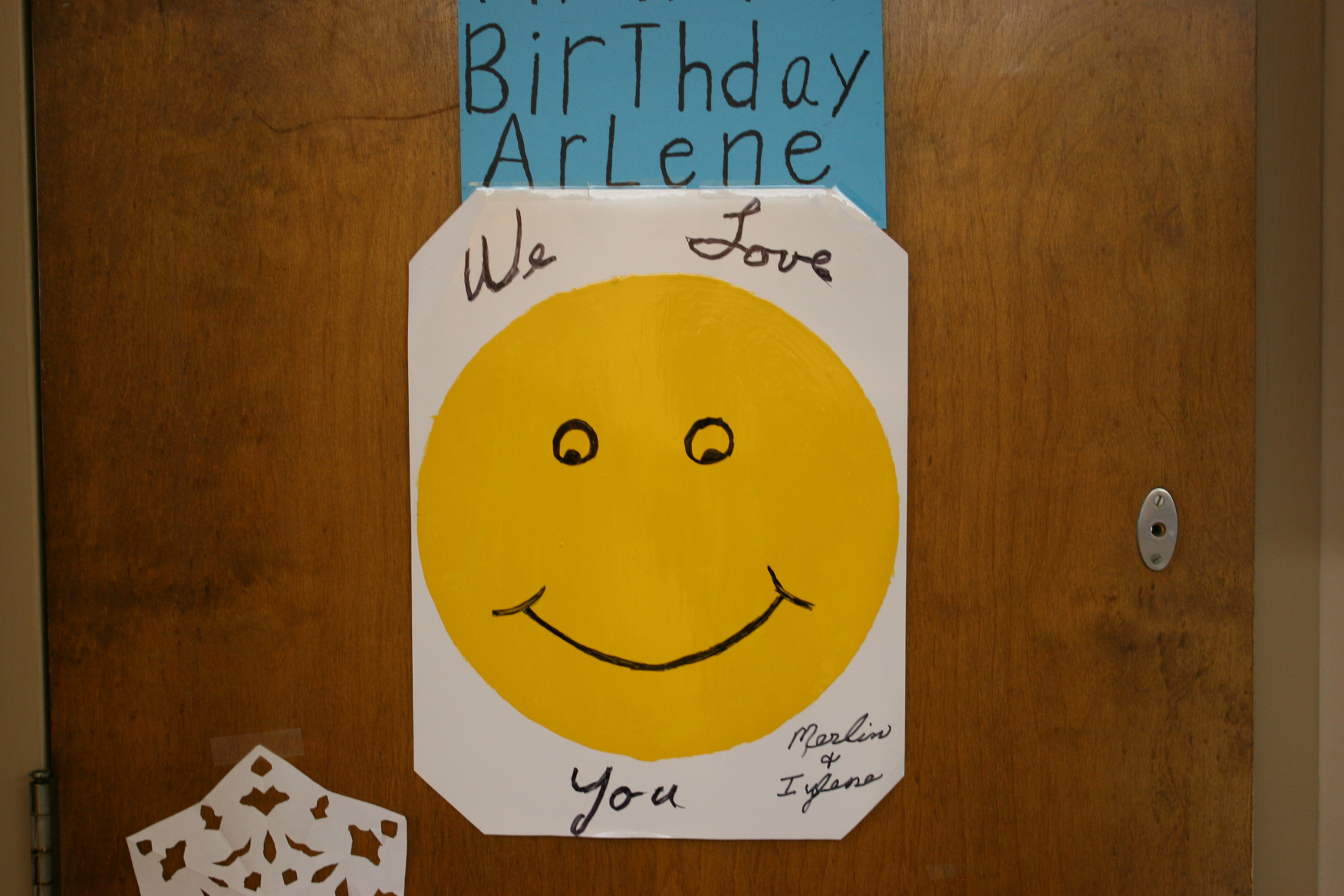
I looked around her room, bulletin boards crammed with family photos. I commented on the picture of Jesus the Good Shepherd that graced her bedroom wall on the farm. And I admired the bright over-sized smiley face posted on the bathroom door and felt gratitude to my aunt and uncle, who live just blocks away, for making this for Mom. Below, I saw a picture of a dog fish colored by my granddaughter in a rainbow of hues.
I talked with Mom about cream cheese roll-out cookies and my older brother sneaking ice cream from the freezer and eating it atop the haystack. She laughed. I talked about how she worked so hard to raise a family of six children and that now it was time for her to rest. Occasionally her eyes fluttered shut and I could tell she was growing tired. I continued to talk on other topics, although I’m uncertain how much she heard or comprehended. Yet, I have to think my mere presence, the sound of my voice, comforted her.
A staffer popped in for a moment, praising Mom for eating her pancake and drinking her juice and milk at breakfast. “Good job, Mom,” I said, feeling like I was the mom and she the child. And, in many ways, that would be accurate.
Soon the staffer returned and handed me a sheet of paper and said Mom might like it if I read some of the information thereon. My eyes landed on a story about Neil Sedaka, then quickly shifted to an article about National Good Samaritan Day on March 13. I scanned the piece, chose tidbits to share about the Good Samaritan parable from the bible. To show kindness. To help others. It seemed fitting for this day, in this small town care center where staff show great compassion. I will always feel grateful to the healthcare workers and other staff who have cared for my mom like a family member.
SAYING GOODBYE
The smiley face poster, from Mom’s in-laws, on the exterior bathroom door.
As time ticked toward 11:30 and lunch and the end of my hour-long allotted visit, I knew I needed to leave. “I have to go. Maybe next time I can take you outside so you can hear the birds, see the trees.” Mom smiled beneath her face mask. “I love you, Mom.” Tears brimmed.
“I love you,” she replied. Her words felt like a hug, a kiss. Bringing us together after a year of separation caused by a pandemic.
In the doorway I stopped, turned for one final look at Mom. “I love you,” I repeated, then crossed the lobby to the staffer monitoring the front door. “I’ll need you to sign out,” she said. By then I was already crying, barely able to find a pen to note my departure time. I thanked her, observed the compassion in her eyes.
Then I walked into the sunshine of an incredibly beautiful Saturday in March in southwestern Minnesota. I turned left toward the parking lot where Randy waited. I opened the van door, swung onto the seat, removed my face mask and then sobbed uncontrollably, shoulders heaving, face in my hands. Emotionally-exhausted.
A sign posted at the Steele County History Center in Owatonna. Minnesota Prairie Roots file photo June 2020.
TODAY MY COUNTY OF RICE reported its 92nd COVID-related death. That saddens me. I don’t know the identity of this latest individual to die from the virus. But that matters not. What matters is that, to family and friends, this is the loss of a loved one.
That’s something we all need to remember. Ninety-two represents much more than a number added to the growing statistics. It represents a life.
With that said, I need to vent. And if you’re weary of reading about anything COVID-related, then stop reading right now. But I’m frustrated, beyond frustrated.
On Saturday, Randy and I headed to two small towns south of Owatonna. Just to get out of town for a bit. We’ve previously toured both, but several years ago. Driving into rural Minnesota, parking on Main Street and then walking to see what we can find is an adventure.
WHAT MASKS?
Our day trip into these two rural Steele County communities on Saturday proved to be an adventure alright. What we found was absolutely, totally, disheartening. Compliance to Minnesota’s state mask mandate is pretty much non-existent. That left me exiting several businesses—a hardware store and boutiques—before the doors had barely closed behind me. And we’re not talking just customers here without masks. We’re talking owners and employees.
Never mind the signs posted outside these businesses stating that “masks are required.” Why bother? Oh, because the state requires posting of these signs, apparently.
FEELING DISRESPECTED
Here’s how I felt when I saw those business owners and employees without masks. I felt disrespected. I felt unsafe. I felt unwelcome. I felt frustrated. I felt angry. I felt like they didn’t really want my business. And, as much as I wanted to say something to them about my feelings, I didn’t. You never know who’s carrying a gun these days and may harm you if you speak up. So I walked out.
And the thing is, several of those small town boutiques, especially, were inviting little shops filled with merchandise that may have interested me. But I felt uncomfortable from the moment the unmasked shopkeepers greeted me and I turned to make a hasty exit.
BUSINESSES LEAD BY EXAMPLE
Interestingly enough, while Randy was shopping at a popular family-owned meat market in the town a mile off the interstate, he found full mask mandate compliance and even a plexi-glass shield separating cashiers from customers. Plus hand sanitizer. So kudos to that meat market and the local grocery store owner, who was also masked. I observed a woman I’d previously seen, unmasked at the boutique, walk into the meat market wearing a mask. Interesting, huh? A business sets the tone for customer compliance.
This masking issue isn’t a problem unique to small towns. When we returned to Faribault and stopped to pick up a few groceries, I spotted mask-less customers. They are increasing in number. The non-maskers and half-maskers. But at least I don’t see business owners and employees without masks in my community (except at the farm implement dealer). That’s the difference. In the two small towns in Steele County, business owners and employees were without masks. I don’t get it. I just don’t get it. Masks are a scientifically-proven way to prevent spread of COVID-19. Why risk the health of customers? This, what I perceive as selfish and uncaring behavior, left me with a really negative perspective of these two towns. And that’s something no business, no community, needs, especially now.
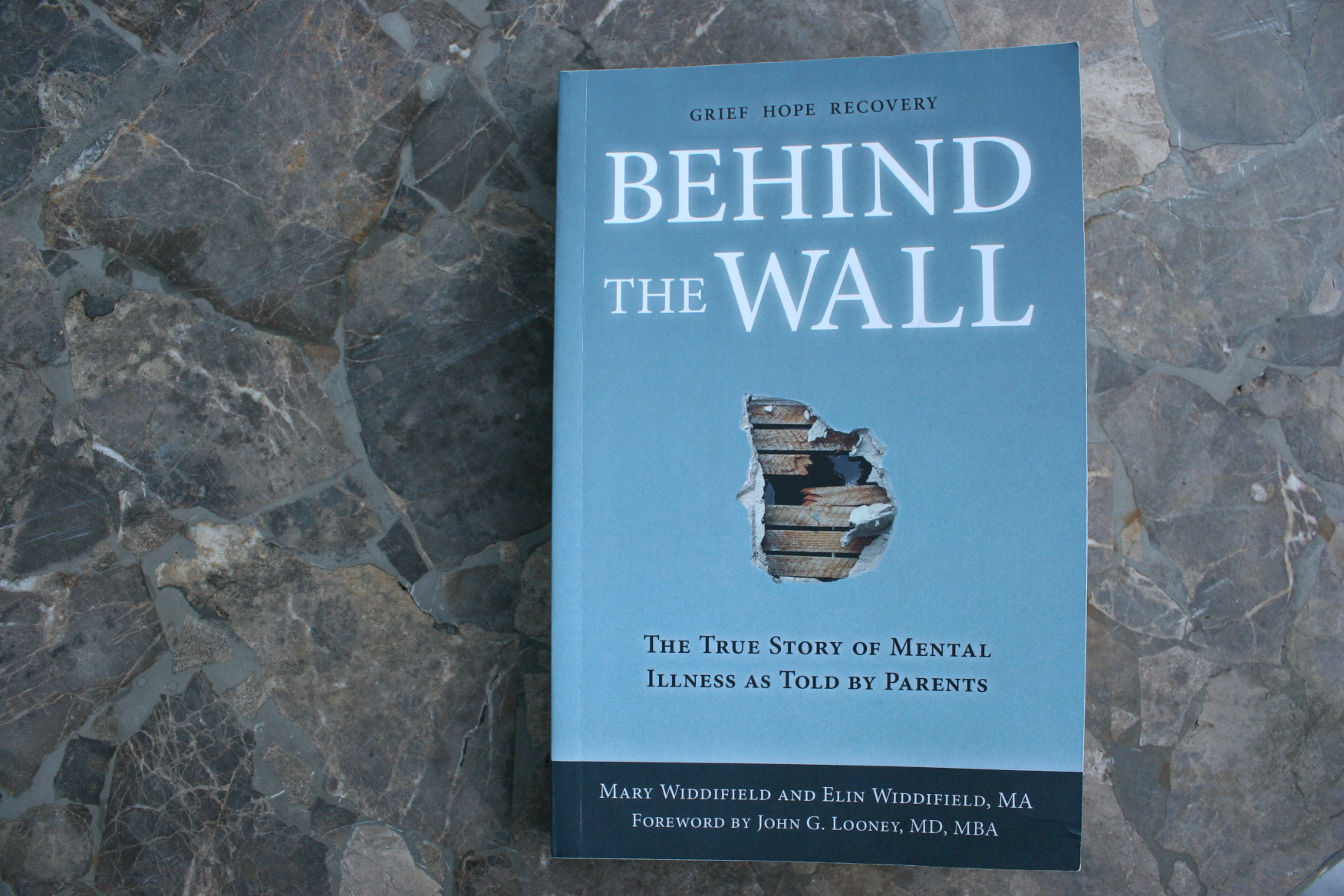
An edited snippet of the book cover for Behind the Wall, a powerful book about mental illness.
SOMETIMES IN LIFE, moments present that forever imprint upon one’s mind.
Like the Sunday morning I walked out of church after the pastor termed Vincent van Gogh “crazy” in his sermon. The artist wasn’t “crazy.” He suffered from mental illness. Delusions. Psychosis. Depression. The next morning, after I calmed, I phoned my pastor and we discussed his word choice and why I found that offensive.
On another occasion, while sampling craft beer in a small town southern Minnesota brewery, I noticed a customer with the name of a nearby brewery printed on the back of his jacket. Lost Sanity Brewing. As if that name wasn’t bad enough, the business logo—a straightjacket—proved even more insensitive.
Minnesota Prairie Roots file photo September 2019.
But then there was the day I spotted this message blazoned across the back of a shirt worn by a young woman attending a cultural event at the Northfield Public Library: THE STRUGGLE IS REAL. When I approached her, she shared how she lives with depression and how her family has loved and supported her through her struggles.
Encounters like that in Northfield give me hope. Hope that we’re making progress in erasing the stigma of mental illness. Hope that we’re raising awareness. Hope that people will become more understanding and compassionate. Hope that carelessly tossed words like “crazy” and images of straightjackets will vanish.
I highly recommend this book to every one of you. It’s a must-read insider view of individuals and their families struggling with mental illness.
I admire that strong young woman in Northfield who, through the message on her shirt, spoke truth. THE STRUGGLE IS REAL.Those struggles unfold in a particularly powerful book, Behind the Wall—The True Story of Mental Illness as Told by Parents. This book is a compilation of real-life experiences shared by parents of mentally ill adult children in their own words. Compiled by Mary Widdifield and Elin Widdifield, it’s an honest and often heart-wrenching look at the struggles these families face.
Behind the Wall is not an easy read. But it shouldn’t be. There’s nothing easy about depression or bipolar disorder or schizophrenia or any mental illness/brain disorder. These stories are deserving of our time, focus and attention. When you read these stories, you will feel the pain, experience the challenges, grieve the losses, encounter the frustrations, hold the worry and, hopefully, come away with a deeper understanding of mental illnesses. You will see, perhaps for the first time, the struggles that are all too real for many individuals and their families.
And you will see, too, incredible strength, resilience, determination and hope.


























Recent Comments