Minnesota Prairie Roots

Writing and photography by Audrey Kletscher Helbling

Thou shalt not photograph the Amish June 14, 2011

TEMPTATION TEMPTED ME on Saturday afternoon, wrapping her slippery fingers around mine, tightening her grip, nudging my index finger toward the shutter button.

But Right resisted, reminding Temptation, “Thou shalt not photograph the Amish.”

The battle waged for a good 15 minutes on a grassy wedge of land along a main route through Osakis, southeast of Alexandria.

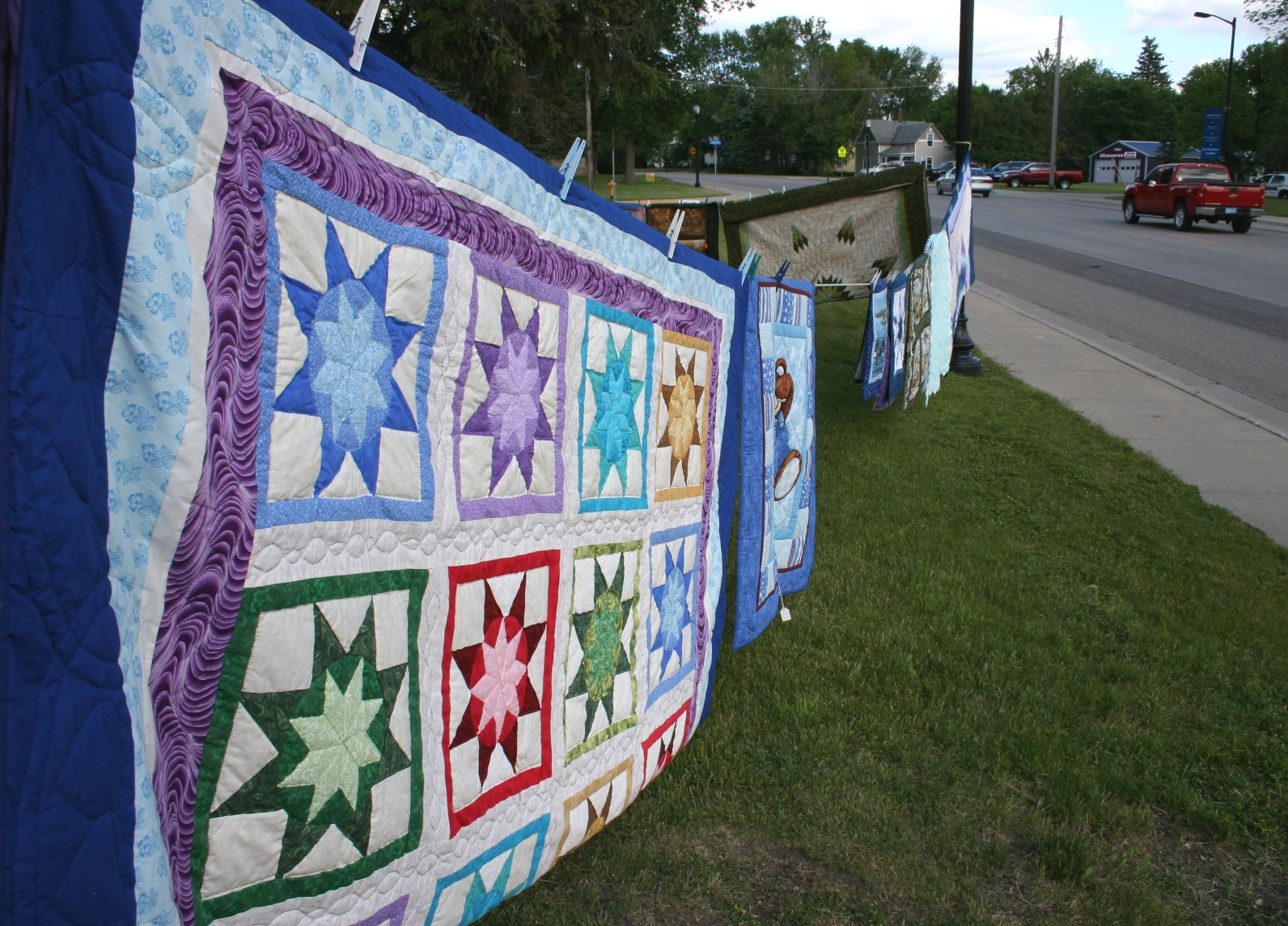
Here quilts, clipped to clothesline strung between a light post and trees, drew my husband and me off the road. When we turned onto the side street and I spotted the black buggy, I couldn’t believe our luck. I’ve wanted, always, to encounter the Amish up close and photograph them.

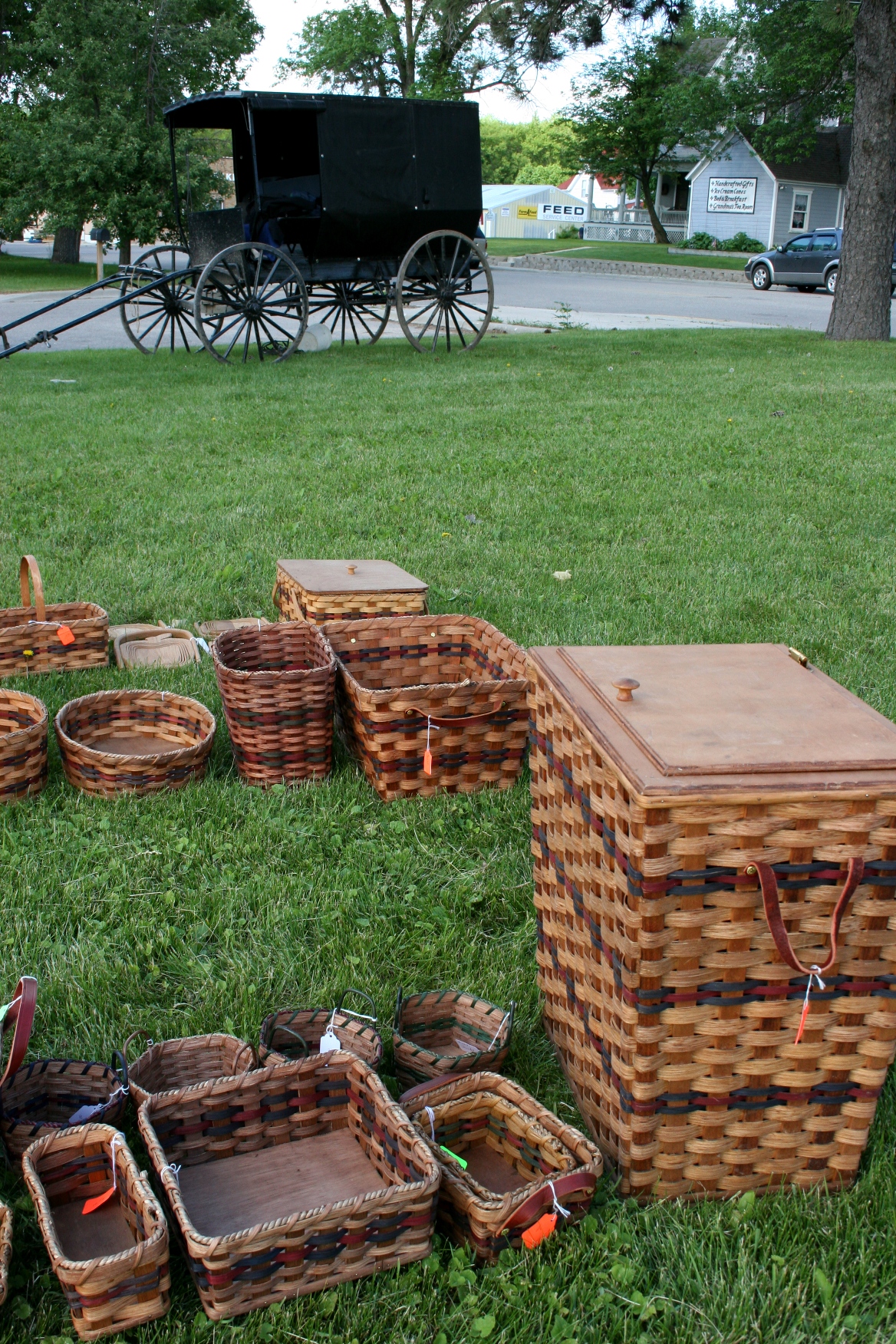
The Amish buggy parked at a roadside market in Osakis.

But then Right niggled my conscience: “Thou shalt not photograph the Amish.”

At least without asking, I thought, although Temptation urged me to click the shutter button of my camera immediately and then ask. But I didn’t. “Is it OK if I take your picture?” I inquired of the bonneted mother cozied with her two black-bonneted daughters on a blanket spread upon the grass.

“No.”

What did I expect? That she would say “yes” and smile for the camera. So I tried again. “How about if I photograph you from the back?”

“No.”

I tried for the third time. “Can I photograph your quilts and baked goods?”

The Amish mom agreed, as long as I didn’t include her or her two pre-teen daughters in my photos. But I was still tempted, oh, so tempted, to sneak them into the images. Would they notice if I edged the camera lens over the clothesline while photographing the quilts?

Right prevailed and I photographed the hand-stitched blankets, the rows of baskets, the preserves and homemade noodles and that black buggy, minus its passengers and minus the horse that was tethered in the shade of trees behind nearby buildings.

I should also have photographed the fly swatters and woven rugs, but I didn’t want to push my luck, appear too pushy and offend these Amish.

Beautiful, hand-stitched quilts stretched on the clothesline.

Preserves and a few baked goods remained when we arrived at this mini Amish market late Saturday afternoon.

This close-up photo shows the detailed stitching in these hand-stitched Amish quilts.

Hand-woven baskets for sale by the Amish.

All the while the two young girls watched me like a hawk. I could feel their eyes following me, boring into my conscience. I wondered what they were thinking. Were they interested in my fancy schmancy camera, or did they simply wish me gone?

Were they worried that I would photograph them, thereby stealing their souls or creating a graven image, or whatever reason the Amish have for shunning photos of themselves?

I remained so focused on possible covert photo ops that I failed to notice details, except those black bonnets, the blue and plum dresses and the wide, plain copper-colored wedding band on the mother’s ring finger (which I wanted to photograph). I wish I had noticed their shoes.

I also failed to ask many questions of the trio. I learned that they live 10 miles east of Osakis, that the buggy trip takes an hour and that they come to town every Saturday (not in winter, of course) to peddle their goods. All of this the mother shared in a brogue that I couldn’t place, but which reminded me of a far-away homeland, of the thick tongue of an immigrant.

While the mother spoke, her two daughters perched, respectful, still and mute as statues, until I looked directly into the brown eyes of one and asked whether she had made any of the market merchandise.

“Cookies,” she blurted, her face blossoming into an appreciative smile.

I wished in that moment, more than any, that I could have photographed her happiness, shown you the delight blooming upon that young Amish girl’s face when I paused to acknowledge her presence, to include her, to boost her self-confidence.

But I could not. “Thou shalt not photograph the Amish.”

Not on this June Saturday afternoon in Osakis.

The one item we purchased, a superb (except for the burned crust), flavorful $6 pie oozing with tasty red raspberries. FYI, there were no cookies remaining or I would have bought some.

© Copyright 2011 Audrey Kletscher Helbling


A perfect summer day in Minnesota June 6, 2011

Filed under: Uncategorized — Audrey Kletscher Helbling @ 9:23 AM
Tags: , , , , , , , , ,

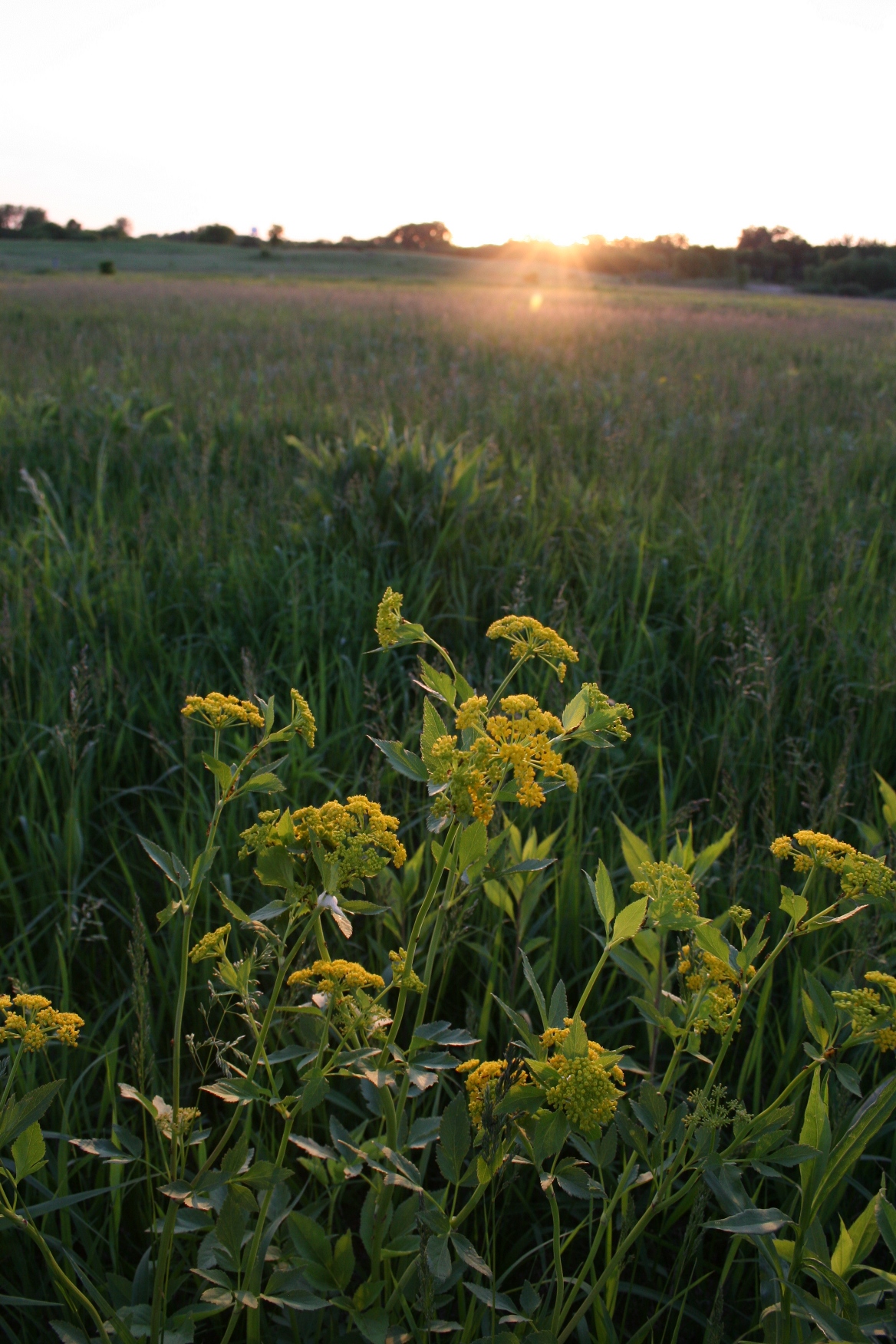
The sun sets on the prairie at River Bend Nature Center in Faribault on Sunday evening.

SUNDAY BROUGHT as perfect of a day as we have here in Minnesota. Sunshine. High temps without the humidity. No wind. A day to linger outdoors until the sunlight fades into the dark calm of a perfect summer evening.

Honestly, do days get any better than this?

In Minnesota, we gather these days into our memories, filing them away for the brutal months of winter, of bitter cold temps, snow (dare I mention that word?) and too much darkness.

For now we choose to celebrate the days of summer with family and friends, backyard barbecues and icy beer, laughter and conversation.

Here’s to the arrival of summer and the banishment of winter to some hinterland far, far, far away from Minnesota.

A deer I spotted just inside the nature center. (If only I had a telephoto lens.)

I saw this deer atop a hill at the nature center as my husband and I were leaving after a short hike. Same deer?

© Copyright 2011 Audrey Kletscher Helbling
 

A look back at a 1951 graduation speech about communism June 5, 2011

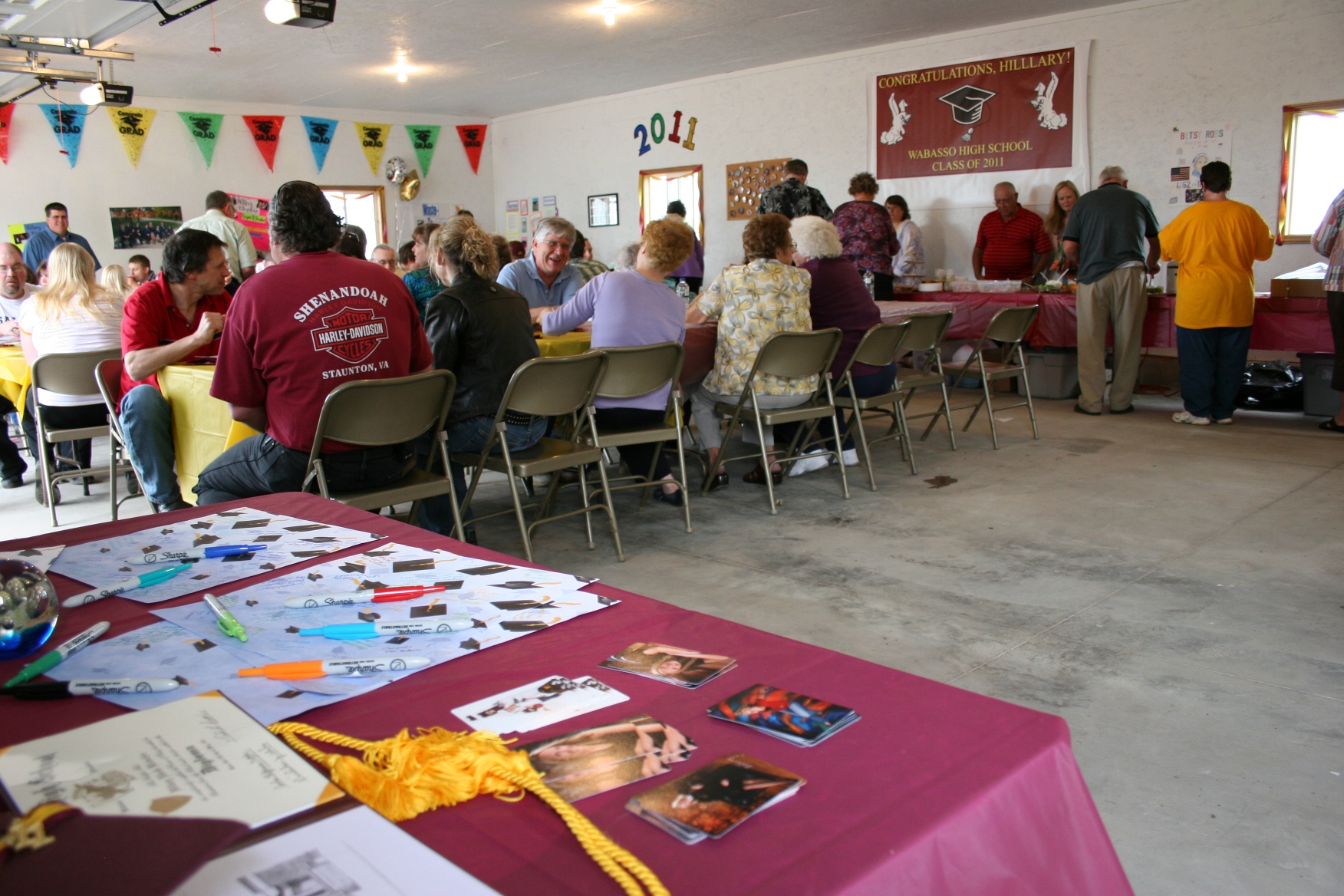
I recently attended this graduation reception for my niece Hillary, who graduated from Wabasso High School.

A soon-to-be 2010 graduate of Westbrook-Walnut Grove High.

IF YOU’RE LIKE ME, you’ve received invitations to numerous high school graduation receptions. You’ll make the rounds, shaking hands with the new graduates, inquiring about their future plans, congratulating their parents and then grabbing something to eat (pacing your food intake) before moving on to the next reception.

If you’re like me, you also have not attended a single graduation ceremony, unless your child is graduating or you are invited to a small-town high school where seating is not limited to four spaces per graduating senior’s family.

Therefore, you probably have not heard a student commencement speech in some time.

About a week ago my niece graduated as valedictorian of  Wabasso High School, my alma mater, and gave a graduation speech, of which I’ve received a copy. Hillary spoke about the past and how it weaves into the future. “As we become the people we are meant to be, we can hold onto the memories of yesteryear and the hopes of tomorrow,” she said in part. “The one thing that will always remain constant is the change in our lives.”

Now compare that to the speech (see below) given by Hillary’s grandmother, my mother, at Wabasso High School 60 years ago. Class of 1951 valedictorian Arlene Bode spoke about “Our Part in the Fight Against Communism.”

When my mom first told me the title of her speech, I laughed. “Who gives a graduation speech about communism?” I asked, and laughed again.

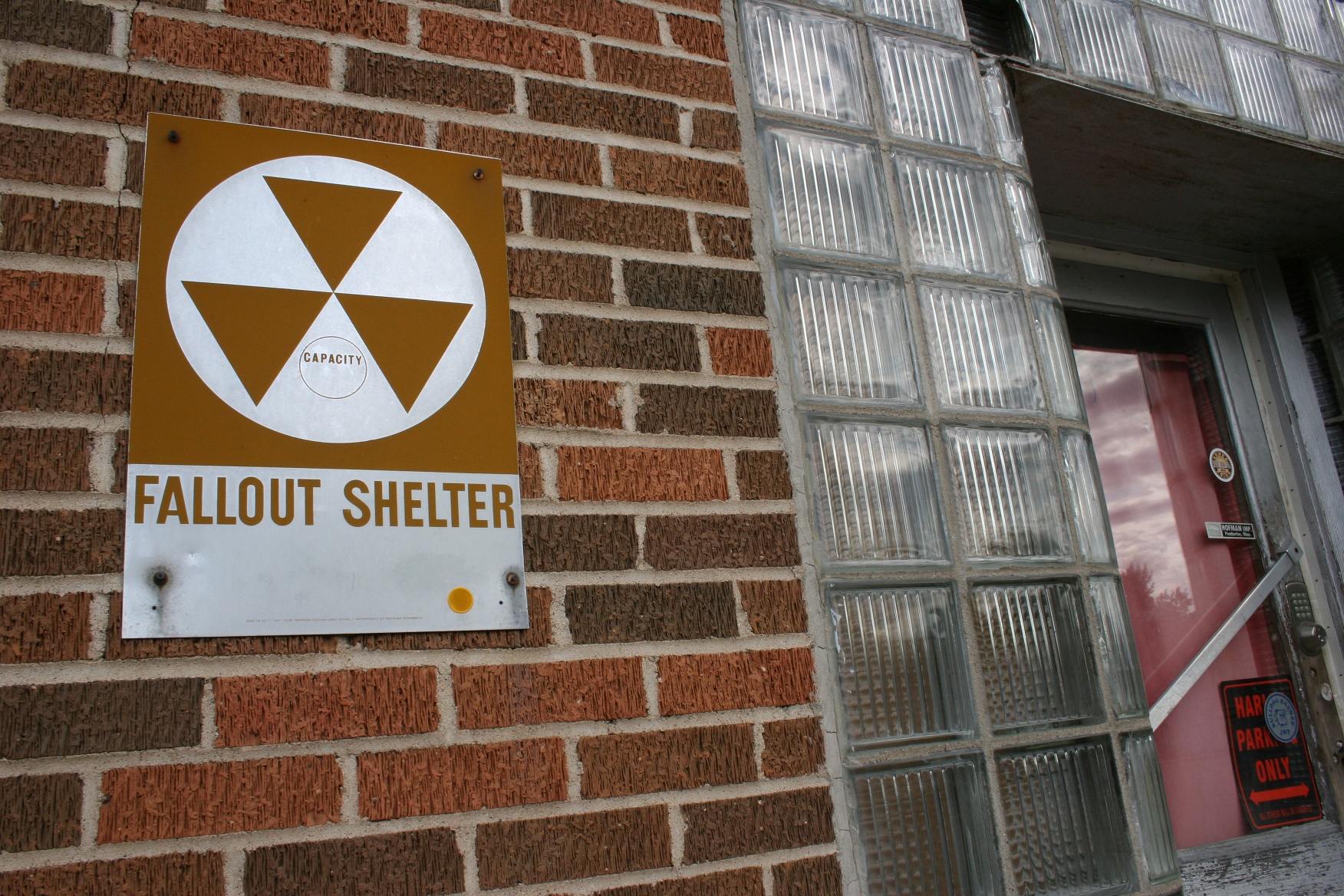
An old fallout shelter sign on a building in downtown Pemberton in southern Minnesota.

Then my 79-year-old mother reminded me of the time period—the Cold War, the fear of the Soviet Union, the Korean War, fallout shelters—and I understood. She doesn’t recall whether she chose the topic or whether the subject was assigned. But the content gives some youthful, historical insight into the world six decades ago:

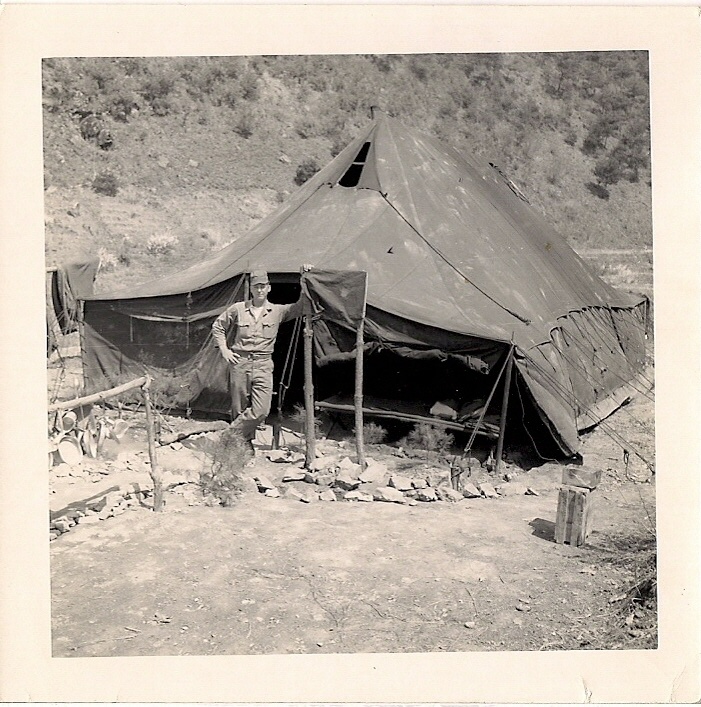
My father, a Korean War veteran, in Korea in 1953.

“WE, THE GRADUATING SENIORS, wish to take this opportunity to express our sincere gratitude to our parents, teachers, and all others who have helped us obtain our education.

OUR PART IN THE FIGHT AGAINST COMMUNISM

Communism is threatening the peace and security of our country. This is being brought more and more to our attention each day by the governmental leaders of the United States. We are sending our boys to Korea. We are conducting investigations to reveal any communist workers who may be in our government. We are sending Voice of America broadcasts behind the Iron Curtain to inform the people of how democracy works. But this is not enough. The tide of communism is moving ever forward. Most of Europe is communistic and it is spreading rapidly in Asia. This has happened just in the last few years. We must stop this tide before it is too late. It behooves us as graduating seniors to help in the fight against communism while there is still time.

Of course we must know what we are fighting against. The mere word communism is not enough. We must know what it means. The word communism is derived from the Latin word communis meaning common. It is said that communism is the distribution of income to each according to his need. They believe that all natural resources and most businesses should be owned by the government. They also believe in community ownership of property. This is the true meaning of communism, but it has an even greater meaning here in the United States. Senate hearings have shown that it is a politically controlled conspiracy, promoted by a foreign nation, for the overthrow of our government. If they should accomplish this overthrow it would be a decisive step toward placing the entire world under communistic government. According to Kenneth Goff, author of “Confessions of Stalin’s Agent,” the communist party has six main points in its program: Abolition of all governments, inheritance, private property, patriotism, family, and religion.

The communists strike first at the poorer class of people and at those who are not satisfied with present day conditions. They promise these people that under communism they will have all they want, such as rest, leisure, and social security paid by the State. But this is far from what really happens. What really happens is that these people lose their personal freedom and whatever they do is for the benefit of the communist party.

If we have an understanding of what communism means and how it works we can fight against it. Here are some of the things we can do.

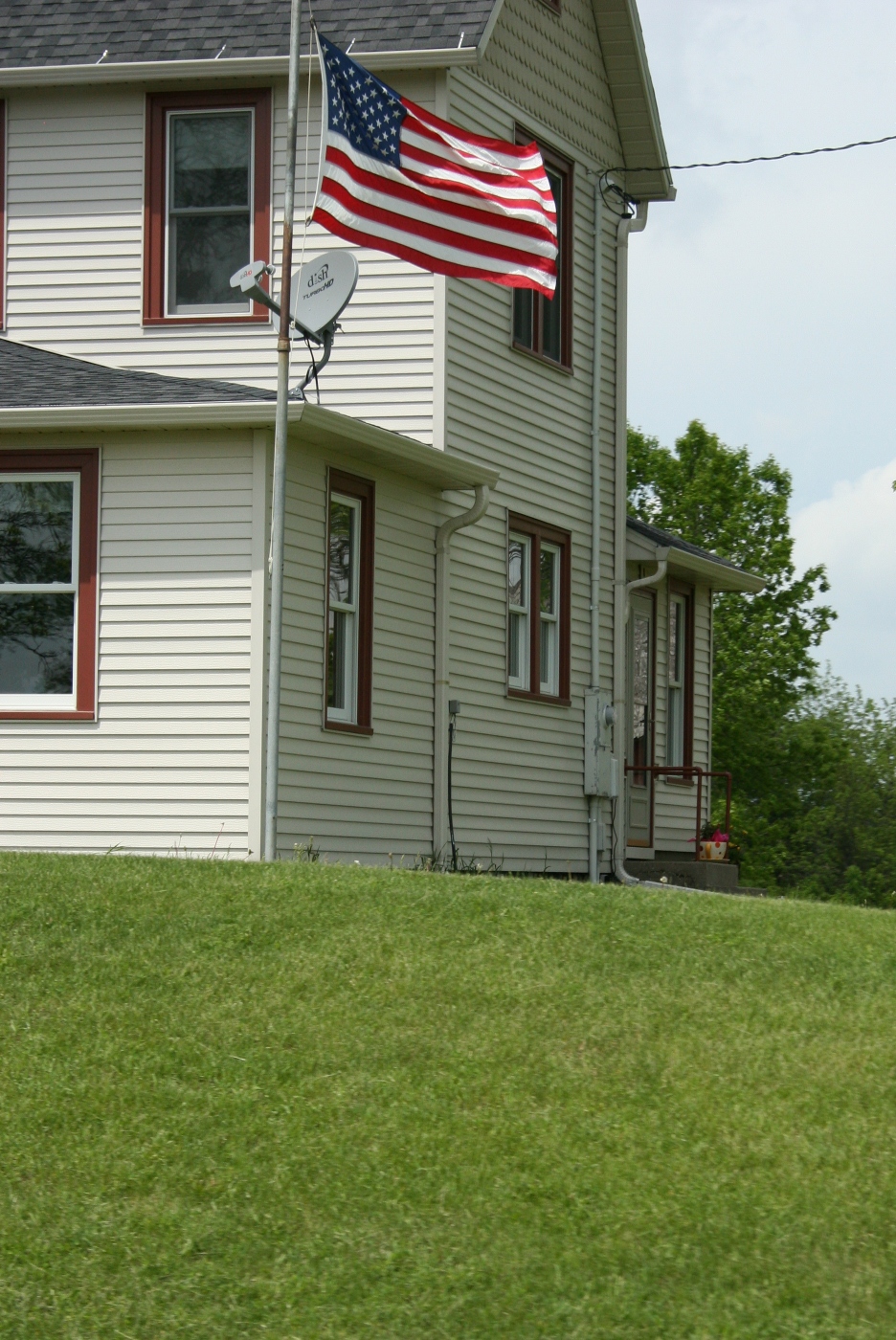
Patriotism displayed on a rural Minnesota home.

We must at all times practice democracy. Democracy means a sharing of respect, a sharing of power, and respect for the dignity of man. Democracy is promoted by a balanced economic distribution and an enlightenment of the people. We should see that parliamentary procedure is used in all organizations to which we belong such as, church organizations, community organizations, and women’s clubs. It is important to secure the wishes of the majority of the people without wasting time.

We must set a good example by being democratic in our every day life and in our dealings with others by working toward a definite goal in life, setting up ideals to follow, being a neighbor to all people regardless of their race, color, or religion, showing good judgment in all we do.

In a few years we will have a voice in our government and we must do our best to keep communists out of it. We can do this by voting at each election, which is one of the privileges of living in a democracy and one which we must never lose. But just casting a vote is not enough. We should know who we are voting for by studying the policies of each candidate to see what he stands for.

If each and every one of us practices democracy wherever we are we have done our part in the constant fight against communism. The part we play may seem small, but every little bit counts if we are to win over communism.”

AFTER READING MY MOM’S SPEECH several times, I wondered how often we as Americans pause to consider the freedoms we likely take too much for granted.

“We must at all times practice democracy. Democracy means a sharing of respect, a sharing of power, and respect for the dignity of man.”

WHAT’S YOUR TAKE on this 1951 graduation speech? Are any of her comments relevant today? What particularly struck you about this speech? I’d like to hear your specific reactions.

© Copyright 2011 Audrey Kletscher Helbling
Graduation speech © Copyright 1951 Arlene Bode Kletscher (Except for corrected errors in spelling, this speech is published here as originally written.)

2011 graduation speech excerpts © Copyright 2011 Hillary Kletscher


Chauncey, a Civil War soldier June 4, 2011

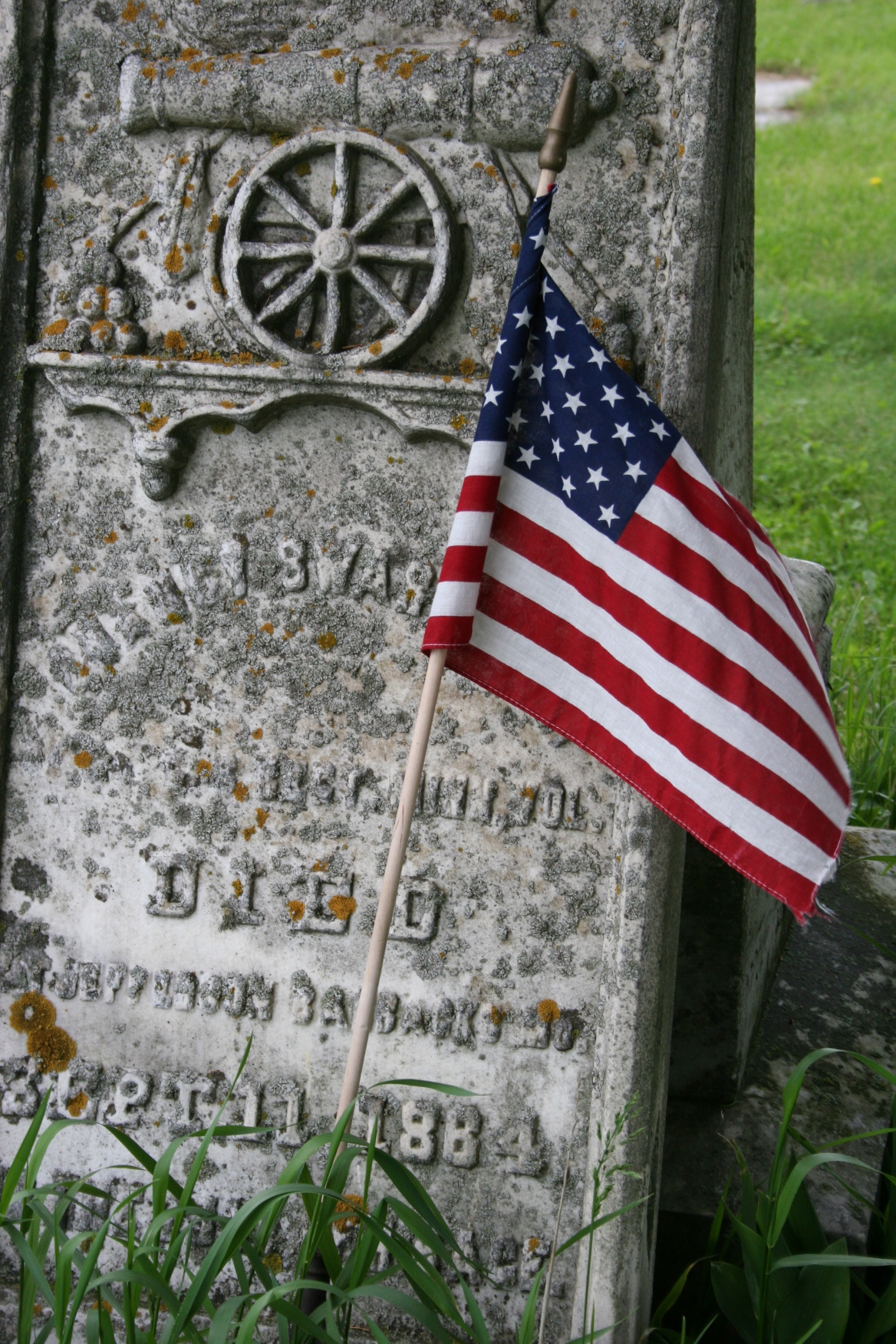
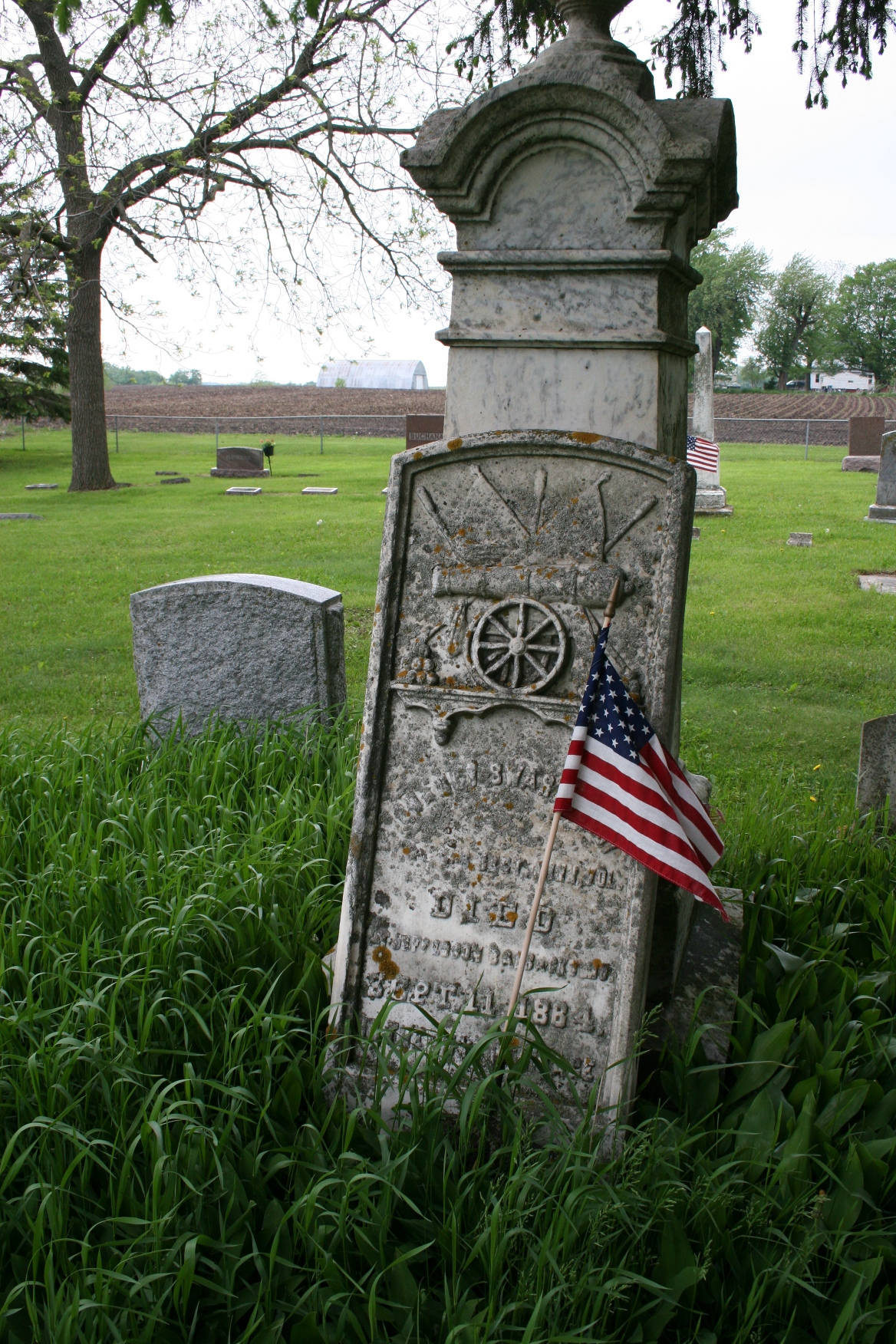
The grave of Chauncey Swartwoudt at the Cannon City Cemetery.

THE NAME ON HIS TOMBSTONE is barely readable as my husband, Randy, struggles to decipher the letters that form “Chauncey Swartwoudt.”

I like how the name rolls off my tongue—the Chauncey part at least. I’m unsure how to pronounce his surname.

He means nothing to me. His is just another tombstone marked by an American flag, among many in a Minnesota country cemetery.

A close-up of Chauncey's tombstone, decorated for Memorial Day.

Yet, because of the size of this grave marker and the rectangular border surrounding it, I am drawn to this spot in the Cannon City Cemetery on Memorial Day.

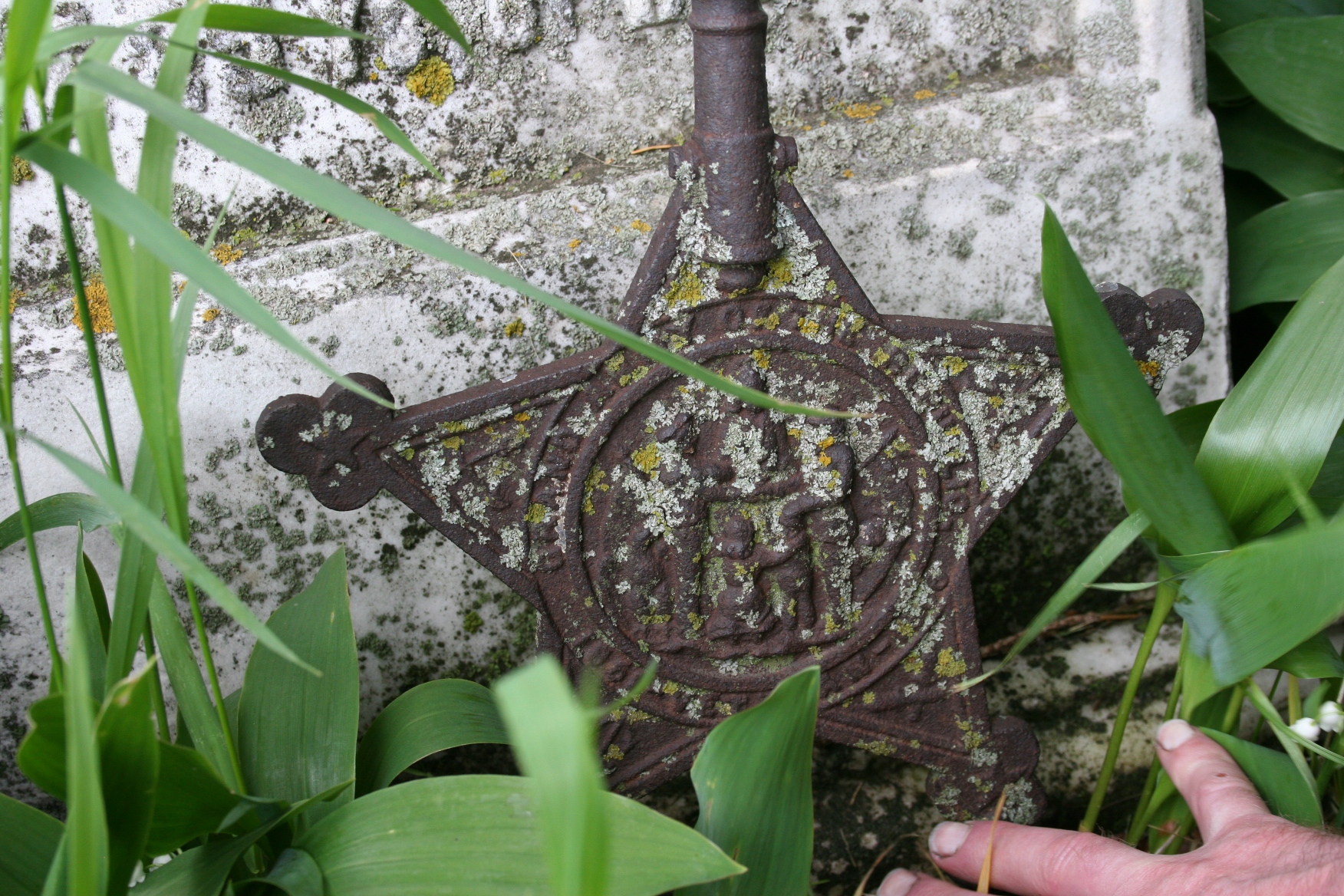
When I lean in close, I discover more. Or, more accurately, Randy uncovers a veteran’s star with difficult-to-read words. He decodes “The Grand Army of the Republic.” GAR equals veterans of the Union Army who served in the Civil War.

Randy pulls back foliage to reveal a GAR star with words that are barely readable and a design that we can't clearly see. Does anyone know what design graces the center of these old GAR stars?

Chauncey was mustered into the military on August 8, 1862, at the age of 22. He served as a Union Army private with Company C, Sixth Minnesota Volunteer Regiment. Two years, one month and three days later, on September 11, 1864, at the age of 24, he died at Jefferson Barracks in St. Louis, Missouri.

He was a soldier, the son of Henry and Catherine and brother of Charles. (He may have  had other siblings, but my quick research reveals only Charles.)

Nine years after Chauncey’s death, on March 15, 1873, Charles and Elizabeth Swartwoudt named their new-born son after his uncle. Little Chauncey lived only three years.

This is all I know about the elder Chauncey who fought in the Civil War, who died far from his Minnesota home. A young man of only 24, his entire life ahead of him.

Why did he die?

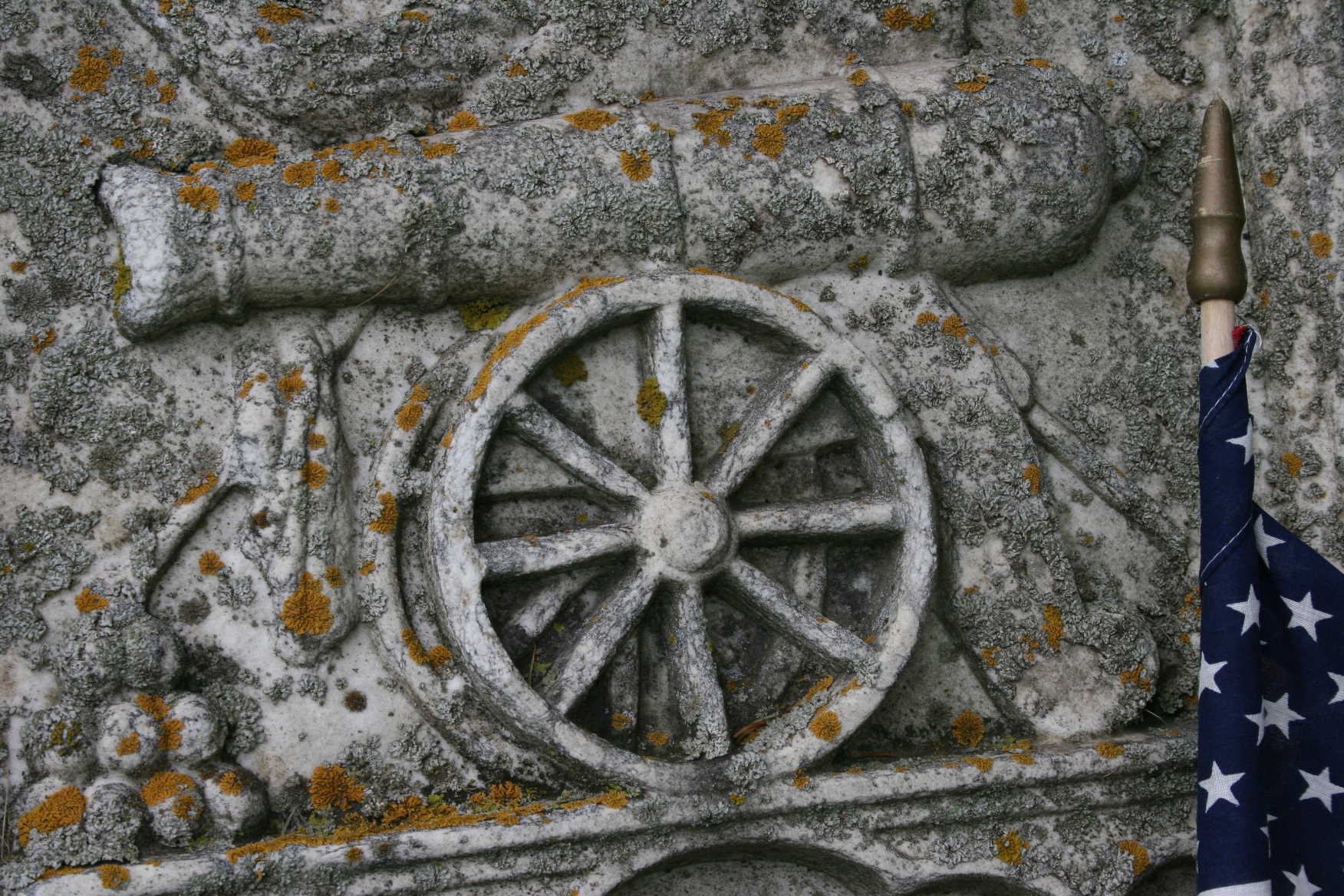
Detailed artwork, in the form of a cannon and cannonballs are engraved on Chauncey's tombstone.

Why is a cannon, with stacked cannonballs, etched into the cold stone of his grave marker? I’ve visited many Minnesota cemeteries and never seen such detailed art on the marker of a Civil War soldier.

It’s not like I should care. I have no connection to Chauncey. Yet I do care. He was a soldier, a son, a brother. I am a mother and a sister. He came home in a box. And a mother wept.

© Copyright 2011 Audrey Kletscher Helbling


Transitioning through parenthood and letting go June 3, 2011

Filed under: Uncategorized — Audrey Kletscher Helbling @ 7:14 AM
Tags: , , , , , , , , ,

In December we helped move my second daughter into an apartment as she started her first post-college job.

ONCE UPON A TIME, like 15 to 20, maybe even seven, years ago, I dreaded my kids graduating from high school, leaving for college and then eventually landing jobs. It would mean they no longer needed me and I could barely stand the thought of their absence.

But since then, since the two oldest followed the path of degrees, jobs and their own apartments, I’ve changed my attitude.

I rather like the lessening of parental responsibility that comes with their independence. It’s freeing. Not that I don’t worry about them; I still do. But it’s different now when they can basically fend for themselves.

My second oldest daughter graduated from the University of Wisconsin, La Crosse, last spring.

With that frame of mind, I recently visited my second oldest daughter in eastern Wisconsin, where she started work in December as a Spanish medical interpreter. Her first post-college job. Her first apartment of her own. She’d officially grown up.

I would have preferred that she settle closer to her hometown of Faribault instead of 300 miles away. But I’ve reminded myself many times that at least she’s in the U.S., within easy driving distance, and not in Argentina.

Nothing against Argentina. My daughter studied abroad in Buenos Aires and later returned for an internship. But I didn’t want her settling there, 6,000 miles away. I feared she might. Live there. Permanently.

That said, I have only myself to blame for the wanderlust spirits my 23-year-old and 25-year-old daughters possess. Because I grew up on a southwestern Minnesota dairy and crop farm, I seldom traveled as a child—once to Duluth and once to The Black Hills. I wanted my children to travel. I didn’t want them to be like me—someone who prefers, as my dad would have said, “to see the smoke from the chimney.”

And so I let them go, first as young children, to bible camp. Then, in high school, my eldest took her first out-of-state spring break mission trip to Texas. More mission and church and school trips followed as step by step by step they stretched their travel wings.

Then, during my eldest daughter’s freshman year of college, she signed up for a mission trip that took her to Paraguay. Heck, I had to dig out the globe to locate that country which borders Argentina, Brazil and Bolivia. I panicked, regretting for more than a few days my decision to raise children who enjoyed traveling.

Later, when my daughter journeyed to Costa Rica for a brief study sojourn, I barely gave her trip a second thought.

I could handle those short trips.

But then one summer the eldest worked in West Virginia and she was definitely gone for more than 10 days.

That, thankfully, prepared me for her sister’s decision to study abroad and do mission work in Argentina for six months and then return a second time for an internship.

Through the years, I’ve watched that desire to travel, to see the world, become an integral part of my daughters’ lives. The oldest one, who lives and works in the metro, is always plotting her next adventure.

The daughter who lives in Wisconsin will need to chisel away at her college loans and save some money before she can travel again. Right now she earns barely enough to pay the bills. But the time will come when she can resume traveling.

My oldest daughter and my son.

ALL OF THIS BRINGS ME back full circle to the first paragraph in this post, the one about lamenting my children growing up and leaving home. In a year my 17-year-old graduates from high school. He doesn’t know yet where he’ll attend college—whether close or far away. Life could take him anywhere.

Like his sisters, I won’t hold him back, won’t stop him from pursuing his dreams, from traveling to far away places. I’ve already let him go—to Spain on a Spanish class trip. That wasn’t easy, not easy at all, to allow my boy to journey so far at the age of 16.

But his sisters have blazed the way, have shown me that I can handle this part of parenting and handle it with grace. I’ve raised them all to be strong, independent and fearless individuals.

I’m beginning to enjoy this stage of life, with fewer parental responsibilities and new types of relationships forming with my adult children. I’m confident I’ve done my best as a parent, although best certainly isn’t perfect.

Now it’s time, almost, to move on, to continue supporting and encouraging my 17-year-old son as he transitions into adulthood and to always support my daughters, holding all three of them forever close, yet letting them go.

© Copyright 2011 Audrey Kletscher Helbling
 

The patriotic traditions of Memorial Day in Minnesota May 31, 2011

Boy Scouts march down Faribault's Central Avenue, giving away small American flags, on Memorial Day.

A member of the Color Guard salutes at the Memorial Day program in Central Park.

YES, DEAR READERS, I have yet another Memorial Day post to share with you. But I cannot help myself. My parents reared me to respect this day as a time to honor our war dead.

Every year of my childhood, we attended the Memorial Day program in my hometown of Vesta on the southwestern Minnesota prairie. I continued that tradition with my children by taking them each year to the Memorial Day parade in Faribault.

It is a tradition my husband and I continue, minus the kids—two of whom are grown and gone and the third a teen that cannot be roused from bed for the 10 a.m. parade.

Now I smile at the young families who gather along the curb in downtown Faribault to watch the veterans and Boy Scouts, the old cars and horses, the Girl Scouts and the Shattuck-St. Mary’s crack squad, the police cars and fire truck and marching bands.

Little hands reach for American flags distributed by the walking, sometimes running, Boy Scouts.

Clutched fists wave American flags.

It’s all so patriotic.

After the parade, the crowd gathers at nearby Central Park for more patriotism and I am reminded of my dad, a Korean War vet, who marched so many times with his Color Guard in parades and programs.

In the park bandshell, the guests of honor sit, rise and tell us they have little to say before offering these words:

“Your wars aren’t all won on the battlefield. They’re also won at home.”

“If you know a veteran, just say, ‘thank you.’ It means so much to them—something Vietnam vets were short of.”

“I salute all veterans here.”

“God bless everybody.”

“God bless America.”

The Color Guard leads the way in the Faribault Memorial Day parade.

These Boy Scouts seem a bit indecisive, while other Boy Scouts race toward the crowd to hand out American flags.

Every year the Boy Scouts give away flags during the parade.

A veteran and others wait for the Memorial Day program to start at Central Park.

The Color Guard advances and the Memorial Day observance begins in Central Park.

The Color Guard soldiers salute. Emcee and radio announcer Gordy Kosfeld, on stage at the podium, will later tell us: "Memorial Day should be a time of reflection, not a holiday."

A strong wind blew the Color Guard flags set next to the bandshell stage at Central Park.

© Copyright 2011 Audrey Kletscher Helbling
 

Memorial Day at Cannon City May 30, 2011

About 30 people gather at the Cannon City Cemetery for an afternoon Memorial Day observance.

IN THE SHELTER of the spruce, of the pines, we formed a semi circle, clustered together in this small country cemetery to honor the veterans buried here, 22 of them from the Civil War.

Ezekiel and Samuel. Spencer and Charles. Henry and Theodore. Emcee Mel Sanborn read the list of names as the wind whipped his words into sometimes inaudible, unintelligible syllables at the Cannon City Cemetery.

Since the late teens or early 1920s, folks have gathered in this Rice County cemetery every Memorial Day, initially called “Decoration Day,” to honor the war dead. Civil War veteran Elijah Walrod was quoted as saying that his son Luther “would strike up the Death March and lead the procession” from the nearby Cannon City School, along the country road to the cemetery.

School children—some of them in attendance at the 2011 Memorial Day observance—once marched with flags and flower bouquets and lilac wreaths and then, afterward, celebrated at the school picnic.

When the school closed in the 1960s, the Cannon City Cemetery Board took over the annual Memorial Day observance, a tradition that continues today, minus the Death March from the country school. It is an unpretentious, informal program that is touching and moving and heartfelt. Americana through and through.

My husband and I came here on this muggy afternoon to experience a small-town Memorial Day observance. We were the strangers among those who had grown up here and had loved ones buried in this ground butted against the rich black soil of farm fields.

Yet, we were welcomed like family and I felt as if I had stepped back in time to the Memorial Day observances of my youth—the days of patriotic songs and playing of taps and reading of “In Flanders Fields.” I mouthed the words silently: “In Flanders Fields the poppies grow between the crosses row on row…” These poetic lines I knew nearly from heart, having recited them as a young girl on the stage of the Vesta Community Hall some 125 miles from this cemetery.

As Don Chester strummed his guitar and clamped his harmonica, we sang “My country, ‘Tis of Thee” “The Battle Hymn of the Republic” and other patriotic songs.

Bob (didn't get his last name) sings as Don and Judy Chester lead the group in song. Bob attended Cannon City School and participated in Memorial Day programs here as a student.

Song sheets were handed out to attendees. Here Mel Sanborn sings "The Battle Hymn of the Republic."

When Steve Bonde blasted “The Star Spangled Banner” on his trumpet, we sang along, turned toward the flag at the cemetery entrance, the brass quelling voices that drifted away with the word-flogging wind.

It mattered not how well or how loudly the 30 or so of us sang. It mattered not that a young girl darted inside the semi circle to pluck a dandelion from the grass. It mattered not that the occasional airplane droned out our voices. We were focused on the songs, “The Gettysburg Address” read by Audrey Sanborn Johnson, and, finally, Bonde’s mournful playing of taps.

Long-time Cannon City resident Bob respectfully removes his cowboy hat during the playing of taps, a tribute that moves me to tears.

When the final note ended, the small group drifted, scattering across the cemetery to visit the graves of loved ones. I wandered, drawn by American flags to the final resting places of veterans. Names I did not know in an unfamiliar cemetery I was walking for the first time.

After the program, attendees visited gravesites.

Yet, despite the unfamiliarity with this place or these people, I felt connected to them by the reason I was here—to reflect upon the sacrifices made by so many American men and women in defense of our freedom. America. Land of the free and home of the brave.

A flag waves in the wind on a soldier's grave.

A star marks a veteran's tombstone.

Can anyone explain the symbolism of these clasped hands on a veteran's grave?

A flag marks the entrance to the Cannon City Cemetery.

© Copyright 2011 Audrey Kletscher Helbling
 

The veterans of Vesta

A flag placed on a veteran's grave at the Vesta Cemetery in southwestern Minnesota.

EARTH MEETS SKY HERE.

On this Memorial Day weekend, I have come to this hilltop cemetery outside of my hometown of Vesta in southwestern Minnesota to remember.

I walk the rows, between the tombstones, lean in close, read the names, memories only a thought away.

My focus is on my father and the other veterans buried here whose names I know, whose stories of war I will never fully know.

An in-ground marker honors my father, Elvern Kletscher, a Korean War veteran and recipient of the Purple Heart for wounds he suffered at Heartbreak Ridge in Korea.

How did they feel leaving family and farm? Were they scared? Were they honored to serve their country? Did they yearn for home as they shouldered their weapons? Did they leave as boys, come home as men? Were they scarred by war, forever changed?
I wondered as strong prairie winds whipped flags attached to white wooden crosses. So many flags. So many graves of men who’ve served.
If only I’d asked them to tell me their stories, these men whom I’d never thought of as soldiers, until I saw their graves marked by crosses and stars and American flags.

The local American Legion marks veterans' graves with white crosses.

Barb Schmidt teaches her grandchildren about their ancestors as they place flowers on the graves of loved ones Saturday evening at the Vesta Cemetery.
Set atop a hill, the wind catches the flags marking vets' graves.

I was surprised by the number of veterans buried in the Vesta Cemetery, their graves marked by small flags attached to white crosses. This photo shows only one small portion of the graveyard.

© Copyright 2011 Audrey Kletscher Helbling