Minnesota Prairie Roots

Writing and photography by Audrey Kletscher Helbling

Forget shopping in North Dakota on a Sunday morning November 25, 2012

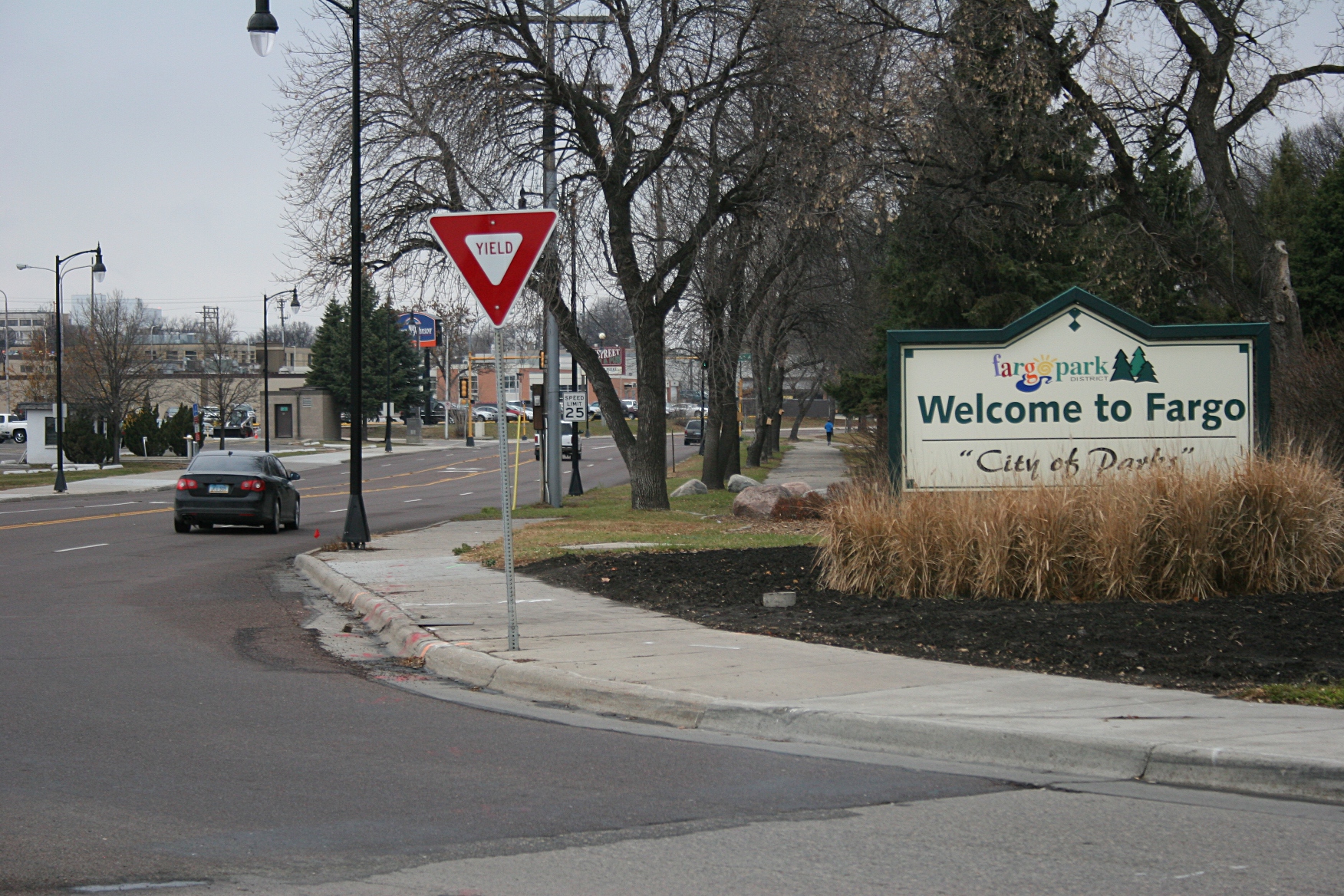
A sign along a city street welcomes us to Fargo, North Dakota, from Moorhead, Minnesota, just across the Red River.

LET’S PRETEND FOR A MOMENT that you are me. You’ve traveled nearly 300 miles from southeastern Minnesota to Fargo, North Dakota, with your husband to visit your son at North Dakota State University in mid-October.

Your son needs basic supplies like laundry detergent and deodorizing powder to sprinkle into his smelly athletic shoes. He also needs long-sleeved shirts, sweaters, socks and a warm scarf to wrap around his neck. Winter, after all, is waiting on flat and windy Fargo’s doorstep.

Being the nice parent that you are, you offer to take your boy shopping. And even though your son detests shopping, he agrees. He is no dummy. He would rather spend Mom and Dad’s money than his own.

So you plan a shopping trip to Target in West Fargo for 10 a.m. Sunday because that will allow the teen to sleep in. Afterward you’ll grab lunch around 11 a.m., then proceed to J.C. Penney (you checked online and Penneys does not open until noon) and leave town by 1 p.m. That is the plan. You have 300 miles to drive yet today.

But the entire plan is tossed out the window when you arrive at Target around 10:30 a.m. Sunday to find the doors locked. This big box retailer does not open until noon.

You suggest heading to Walmart. Your son gets on his smart phone, which he’s recently purchased quite successfully without your assistance or money, thank you. The three of you are soon winding your way around West Fargo, aiming for the discount retailer many love to hate.

Pulling into the parking lot, you notice that the place appears mostly deserted of cars and certainly of customers. As you draw nearer to the front doors, you spot signs stationed at the entrances:

The sign posted in front of the West Fargo Walmart on a Sunday morning.

OK, then.

Now what? Change of plans. Again.

Time to proceed with Plan C, which would be to check if Moorhead, Minnesota, just across the Red River, has a Target. It does. So you aim west for the border, driving five-plus miles, burning up gas because you don’t have time to wait for North Dakota’s stores to open.

You arrive at the Minnesota Target to find the parking lot packed with vehicles bearing mostly North Dakota license plates.

If only you had known about the Sunday morning shopping ban in NoDak, you would have planned differently and squeezed in a Saturday evening shopping outing. You would not be a now unhappy and grumpy Fargo visitor.

But you’ve heard/read nothing of this Blue Law (which you can read about in detail by clicking here)…

How are you supposed to know this stuff? You live in southeastern Minnesota.

And why is such a seemingly antiquated law still on the books?

FYI: I DID NOT REALIZE until I later spoke with a friend, a Minnesotan who grew up in North Dakota and whose son lives and works in Fargo, that the Blue Law not all that long ago prohibited retailers from any Sunday sales. So I suppose I should consider it progress that North Dakota retailers can now open their doors at noon on Sunday.

Secondly, this same friend told me that North Dakota has a five percent sales tax on clothing, of which I was unaware. The trip back across the river to the Target store in Moorhead thus saved us some tax dollars. However, according to information I found online, some North Dakota legislators want to repeal that tax. You can read about those efforts by some Fargo Democrats by clicking here.

Finally, can anyone explain the origin of the Blue Law in North Dakota? I expect it dates back to Sunday as a day of rest, as the Lord’s Day. I respect that and hope that most would choose worship over shopping. Yet, times have changed and church services are held on Saturdays too and, well, you know…

© Copyright 2012 Audrey Kletscher Helbling


Thanksgiving Eve goodness November 22, 2012

FIFTY MILES FROM FARGO, he called his dad. His words were garbled, cutting in and out.

So he hung up, dialed my cell. “Give me Dad,” he snarled.

I waited, listening to one side of a conversation that did not sound good.

After my husband clicked off my phone, he told me that Julie’s car had broken down near Fergus Falls. Our son’s friend had managed to steer the smoking vehicle off Interstate 94 at eastbound exit 50. There they sat, four North Dakota State University college students stranded along the interstate on Thanksgiving Eve with nearly 250 miles to go.

Interstate 94 sometimes seems to run right into the sky as you drive west toward Fargo. (File photo)

What to do? We offered to drive the four hours north and west to Fergus Falls. But Caleb told us to wait, that they were trying to figure things out, to find a tow truck and perhaps hitch a ride from another friend back home to Faribault.

At one point, in several exchanged phone calls, my son ordered, “Stop freaking out, Mom.”

Alright then.

I asked Caleb to keep me posted. And eventually they worked it out, securing a tow and ride, walking from the mechanic’s shop a short distance to a nearby convenience store, waiting for the friend to arrive from Fargo. By 9 p.m., they were back on the interstate, 2 ½ hours after that initial SOS to my automotive machinist husband who was trying to long-distance diagnose problems with an aged Honda.

Shortly after our son and three others left Fergus, Julie’s dad phoned saying her car had already been repaired. (Phil didn’t know the specific diagnosis.) Julie had insisted on staying with her vehicle, sending the others on their way home.

My husband doubted anyone would repair the Honda on Thanksgiving Eve, or anytime prior to Friday. He was, obviously, wrong.

So we waited, me reading, my husband nodding off as the television blared and the minutes crept into hours, past midnight and then 1 a.m.

Shortly after 1 a.m., our son arrived home and we embraced in fierce, tight hugs. I was so relieved to have my boy home early Thanksgiving morning.

But there is more to tell, for this is also a story of thankfulness.

Thank you to the good people, the many strangers, who stopped to check on the stranded travelers at eastbound exit 50 by Fergus Falls. There were many, our son said.

Thank you to the mechanic who repaired Julie’s car on Thanksgiving Eve.

And thank you to the young woman who was willing to drive three other college students 250 miles home.

On this Thanksgiving Day, I am a grateful mother.

© Copyright 2012 Audrey Kletscher Helbling


At the Hjemkomst Center: A cultural melting pot of gifts November 19, 2012

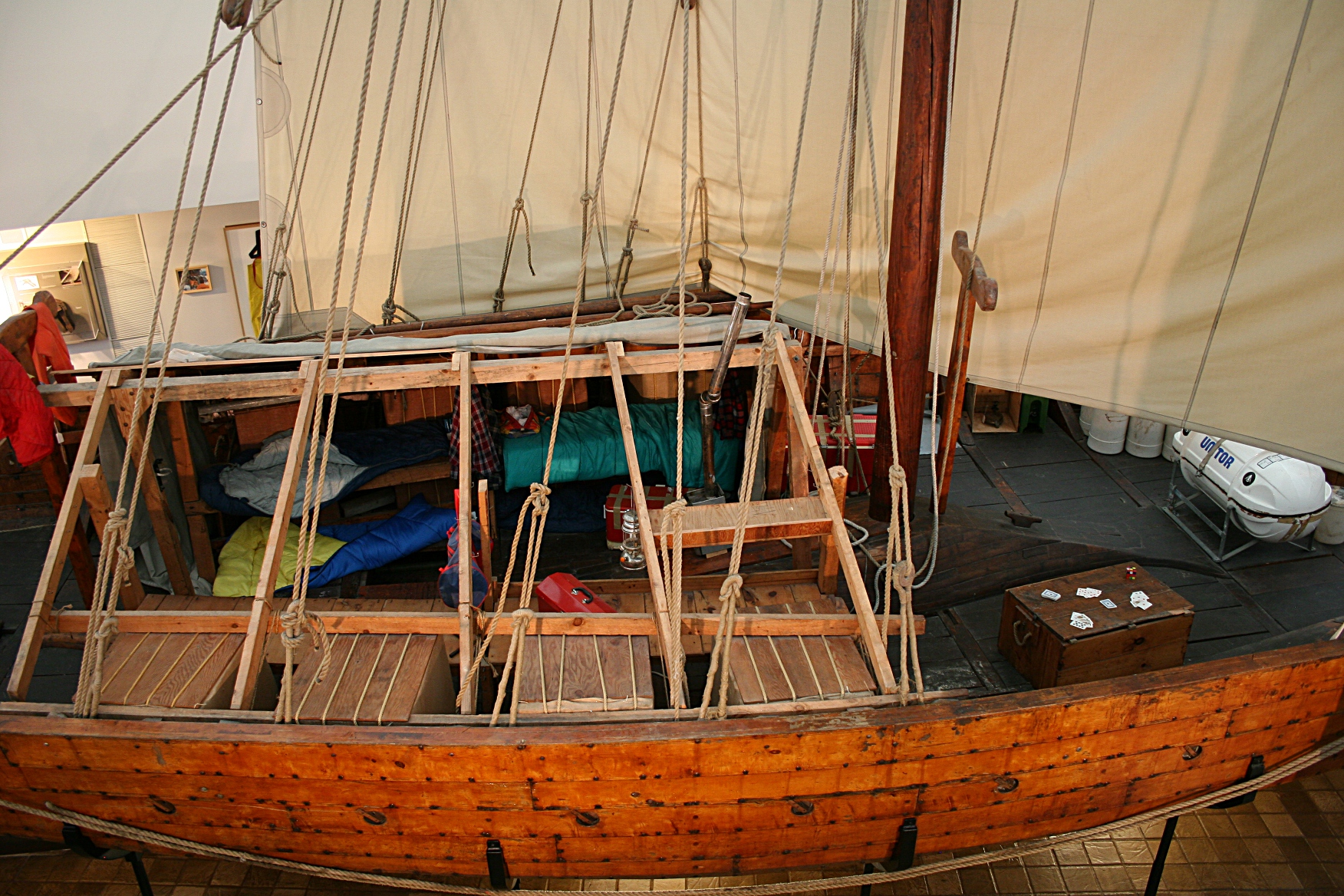
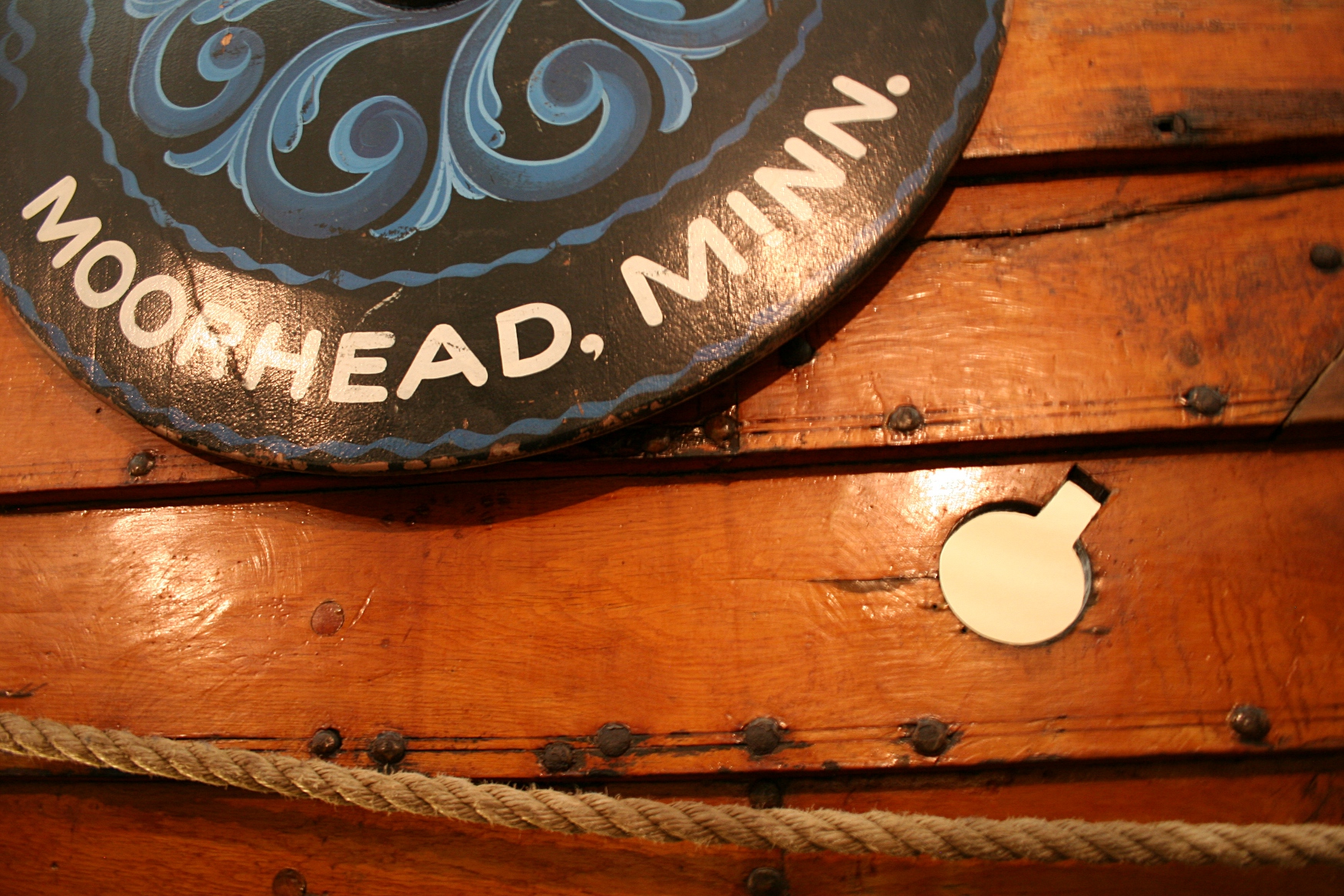
The interior of the Hjemkomst, a replica Viking ship.

IMAGINE PACKING YOUR ENTIRE LIFE into a steamer trunk and sailing across a vast ocean into the unknown and a future that holds both fear and promise.

I cannot fathom this as I am neither an adventurer nor lover of water transportation. Nor would I desire to leave the familiarity of the only home I’d ever known, or loved ones behind.

To be an early immigrant to this country had to be difficult.

My ancestry is 100 percent German.

My own forefathers, both maternal and paternal, arrived here from Germany, making their way west to eventually settle in Minnesota.

A Swedish ( I think) gift shop doll.

Minnesota. Home to Swedes and Germans, Norwegians and Finns and Irish and Poles and Italians and…a whole melting pot of people in those early days of settlement. Today we might add Sudanese, Somali and Hispanic to the mix.

A gift shop doll labeled Solveig. Norwegian, I think.

So where am I going with this pondering?

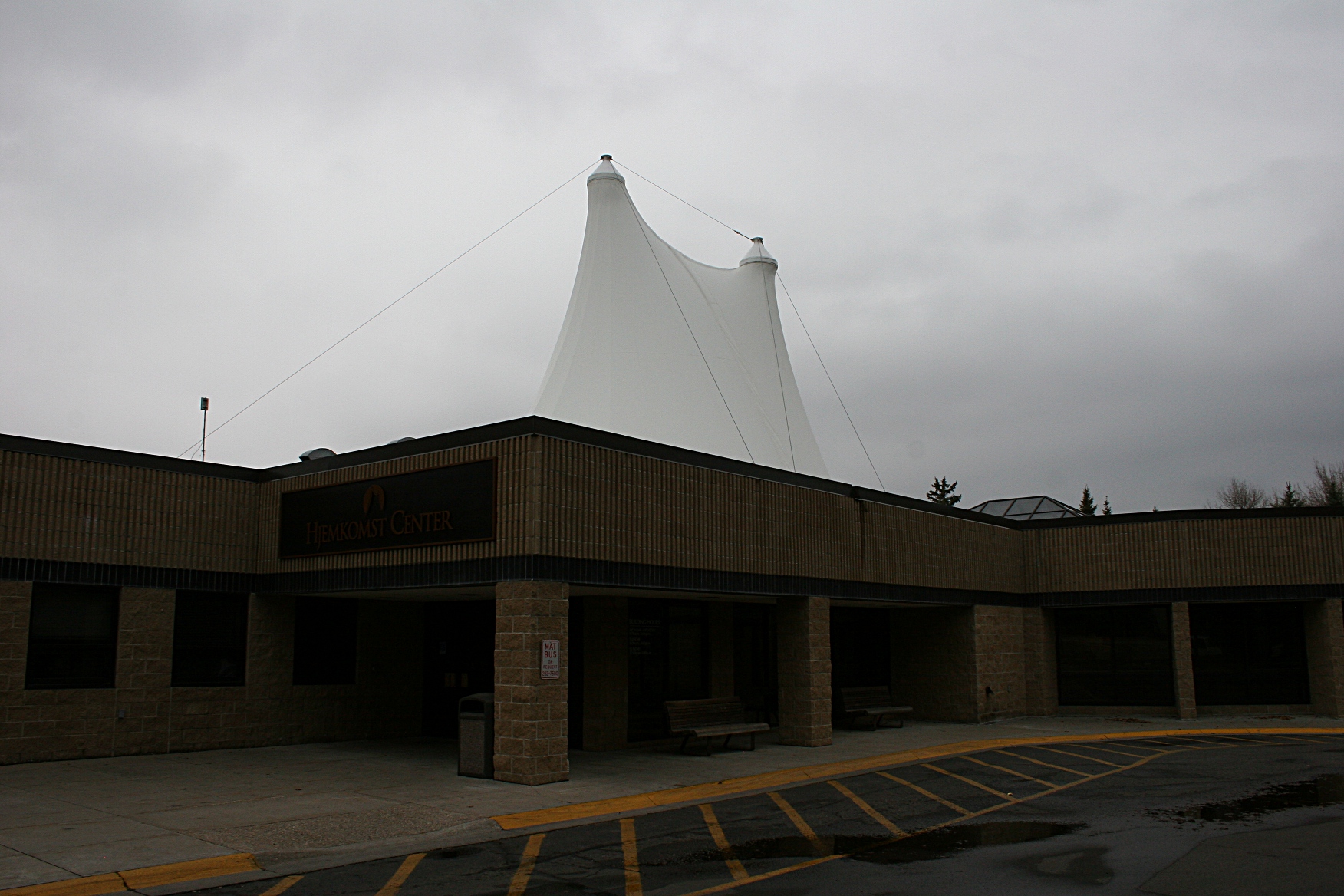
In the center of the Hjemkomst Center, the mast area of the Hjemkomst ship dominates the roofline.

A visit to the Hjemkomst Center on the western border of Minnesota in the city of Moorhead, snugged against the Red River of the North, prompted all this thought about immigration. The center is, among other things, home to the Hjemkomst, a replica Viking ship constructed in northwestern Minnesota and then sailed from Lake Superior in Duluth, Minnesota, across the Atlantic Ocean to Norway in 1982. (Click here to read my post about the Hjemkomst.)

A Scandinavian painting on a plate in the gift shop.

It was the Hjemkomst Center Heritage Gift Shop which truly directed my thoughts toward immigration and celebrating the cultural diversity of our country. Here, in this store, you can purchase merchandise which connects to ethnicity.

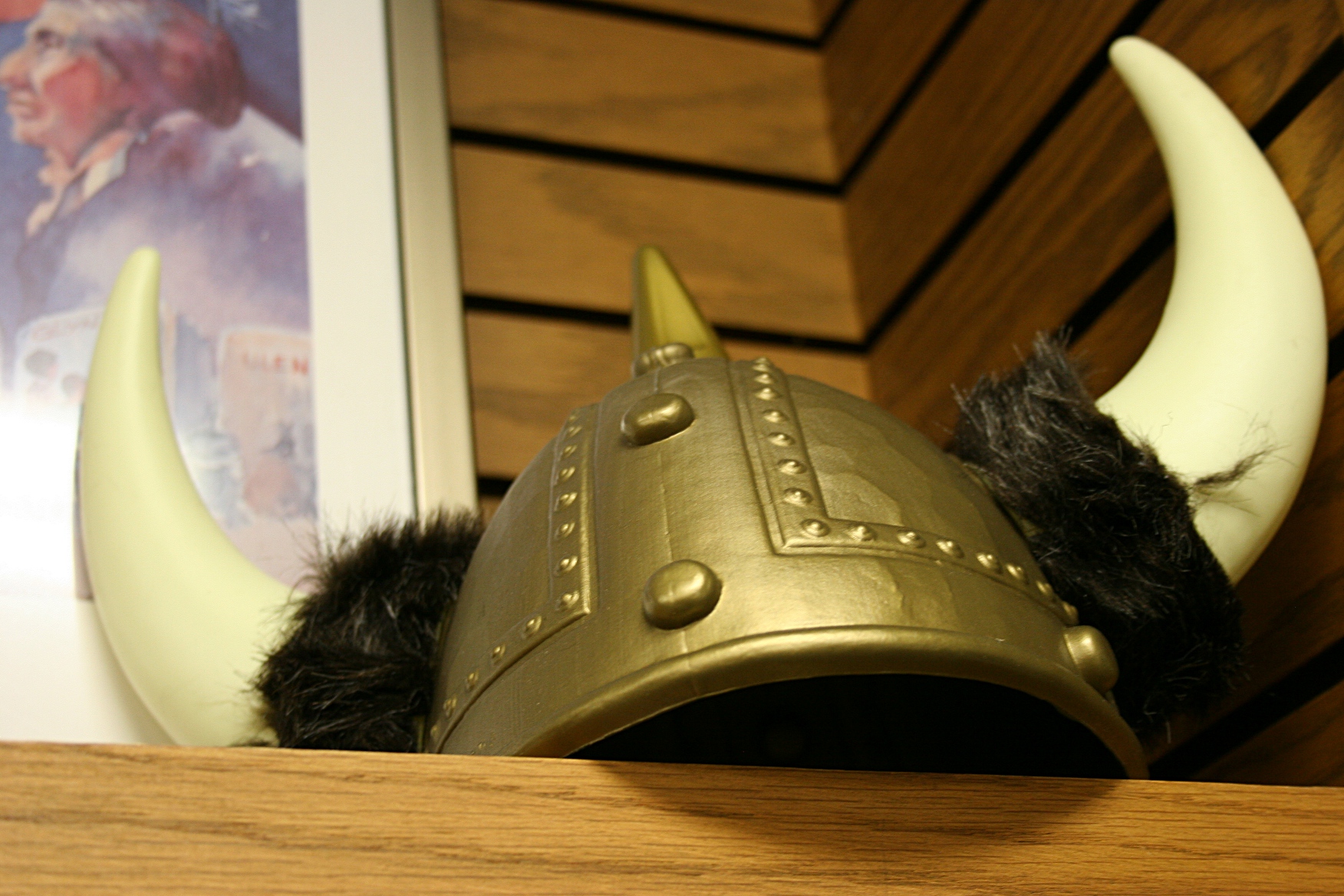
A Viking helmet on display.

And because I have never traveled across the ocean, not any farther west than the eastern border of Wyoming, but as far east as New York with the Statue of Liberty within my view, shops like this allow me to experience snippets of other countries and cultures.

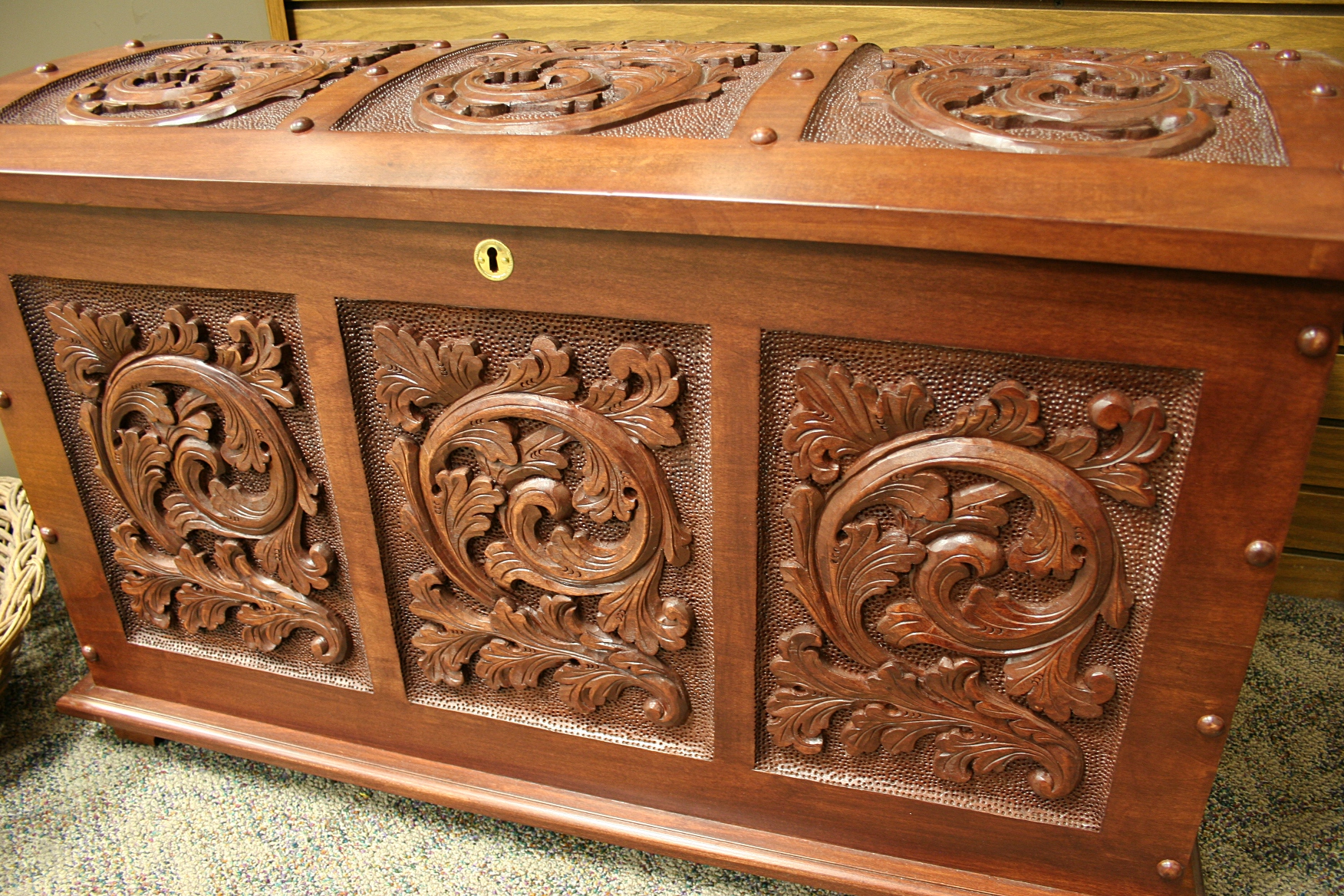
Hands down, I found this to be the most stunning piece of handcrafted art for sale in the Heritage Center Gift Shop. Bosnian immigrant Dzenan Becic carved this incredible cedar chest and other pieces sold in the gift shop. I tried to find more info online about this artist, but could not. His father, Izudin, is also a carver. These artists live either in Fargo or Moorhead.

I know. This museum gift shop does not hold the same meaning to those of you who are seasoned world travelers. But for me, a child of the land-locked prairie, such places hold a certain allure. I suppose it’s like reading a book. I can travel afar without actually ever boarding the ship.

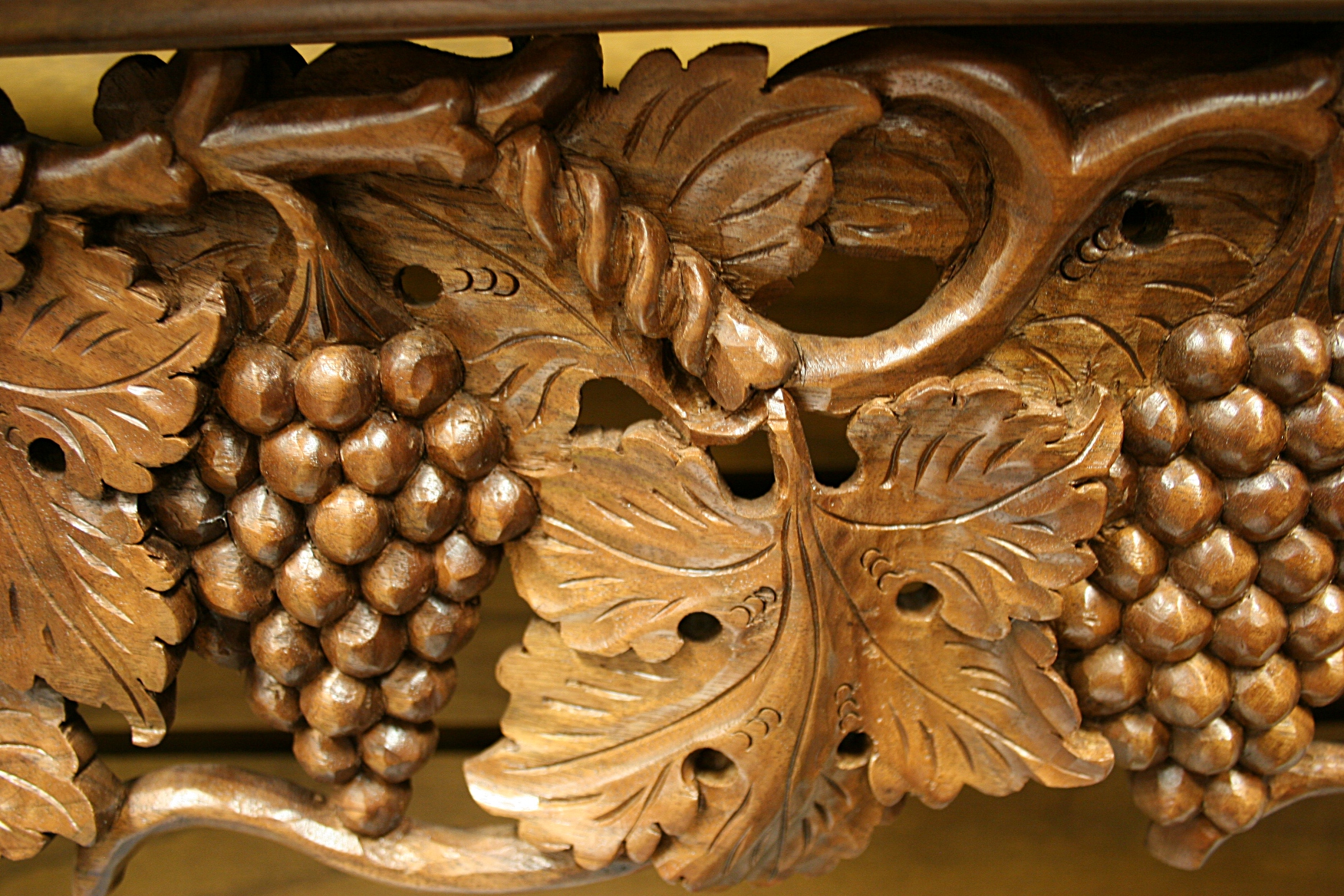
More Becic carving in a wall shelf.

Just a cute little Viking I spotted for sale in the gift shop. May I call a Viking “cute?”

BONUS BUY:

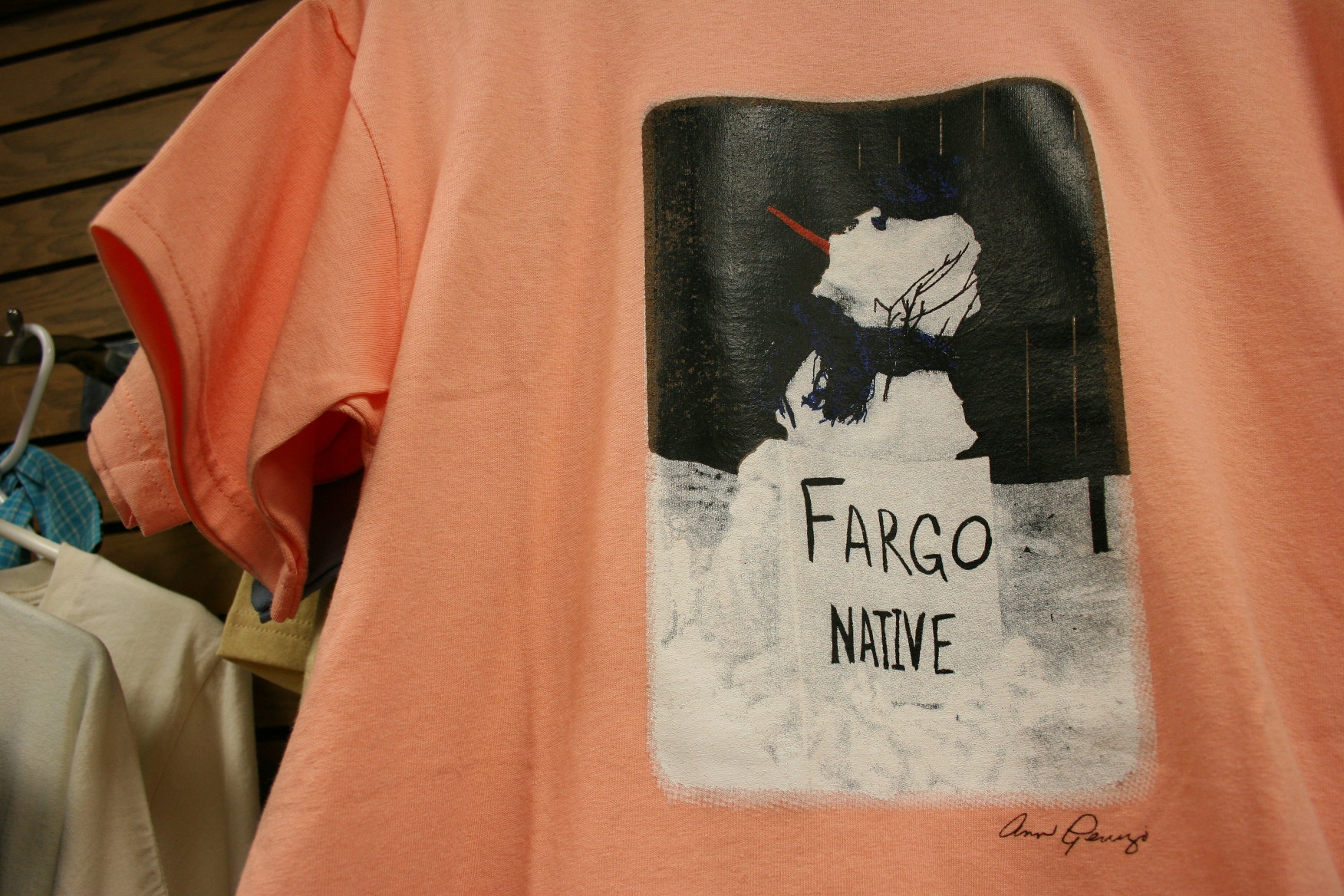
Even though, geographically, you’re in Moorhead, Minnesota, and not Fargo, North Dakota, when you’re at the Hjemkomst Center, you may still be interested in purchasing this Fargo native t-shirt.

© Copyright 2012 Audrey Kletscher Helbling
 

One last chance to dine at The Historic Highland Cafe in southeastern Minnesota November 16, 2012

YOU SHOULD ALL know by now, if you’ve followed Minnesota Prairie Roots for any amount of time, that I’ll dine at a home-grown restaurant any day over a chain. I appreciate uniqueness and creativity and all those good qualities that typically define independent ownership.

In two days one of those delightful, mostly undiscovered by the general population, rural eateries closes.

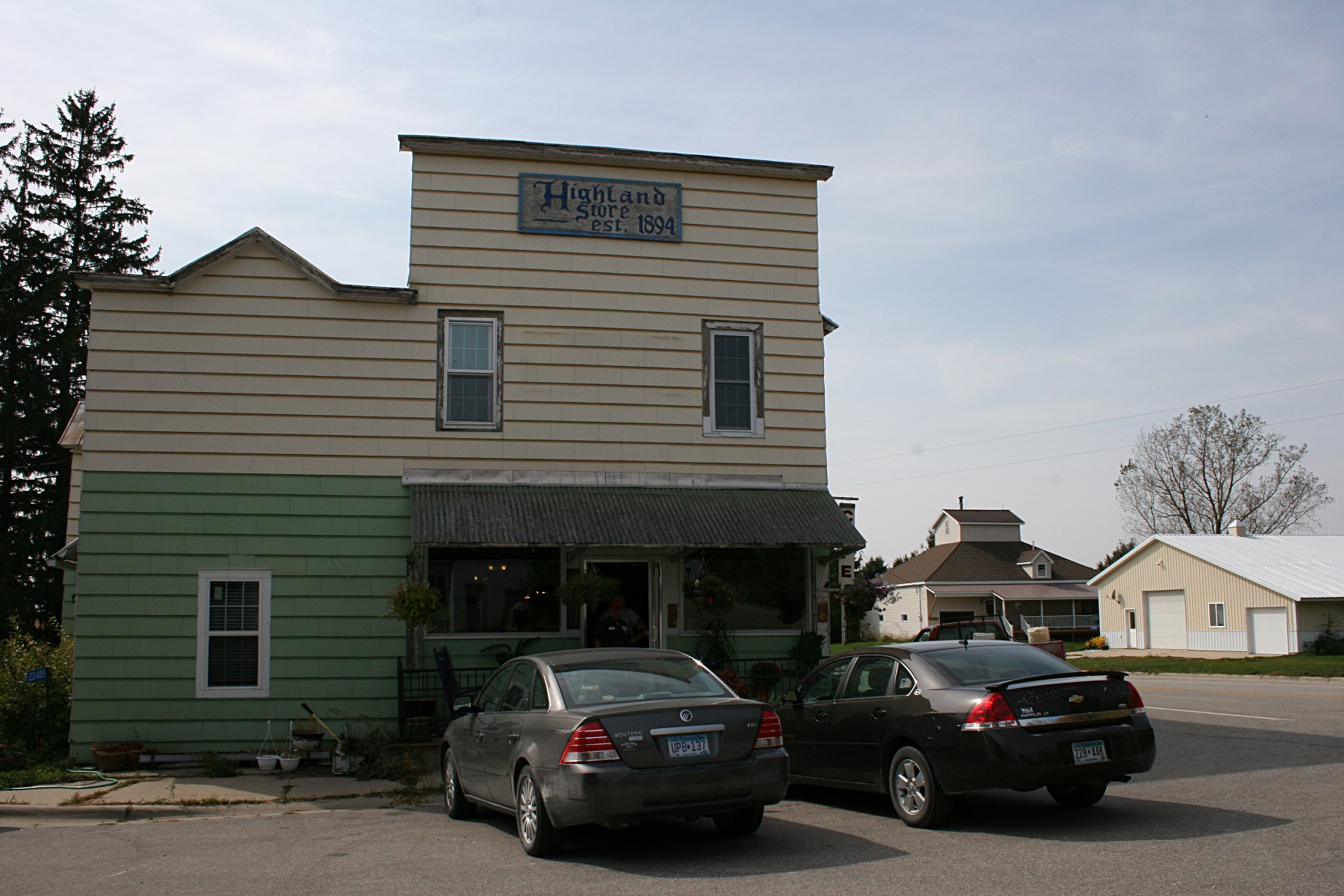
The unassuming front of The Historic Highland Store & Cafe.

And that saddens me because I only found The Historic Highland Store & Cafe in October and ate there with my husband for the first, and last, time. (You can read all about that experience, and why this cafe is closing, by clicking here.)

On Sunday, November 18, owner Vicki Starks Hudson and crew will open for the final time in the historic 1894 wood-frame building along Fillmore County Road 10 southeast of Lanesboro in unincorporated Highland. It’s about an 80-mile drive for me, so I won’t be heading back for another meal. Not that I don’t want to do so.

The special of the day will be a roast beef dinner featuring real mashed potatoes, gravy and carrots and a side organic spring mix salad. How enticingly Sunday dinner at Grandma’s house comforting does that sound? And you’ll get all of that home-cooked goodness for only $8.99. Be sure to thank long-time faithful cook Sharyn Taylor, Vicki’s mom.

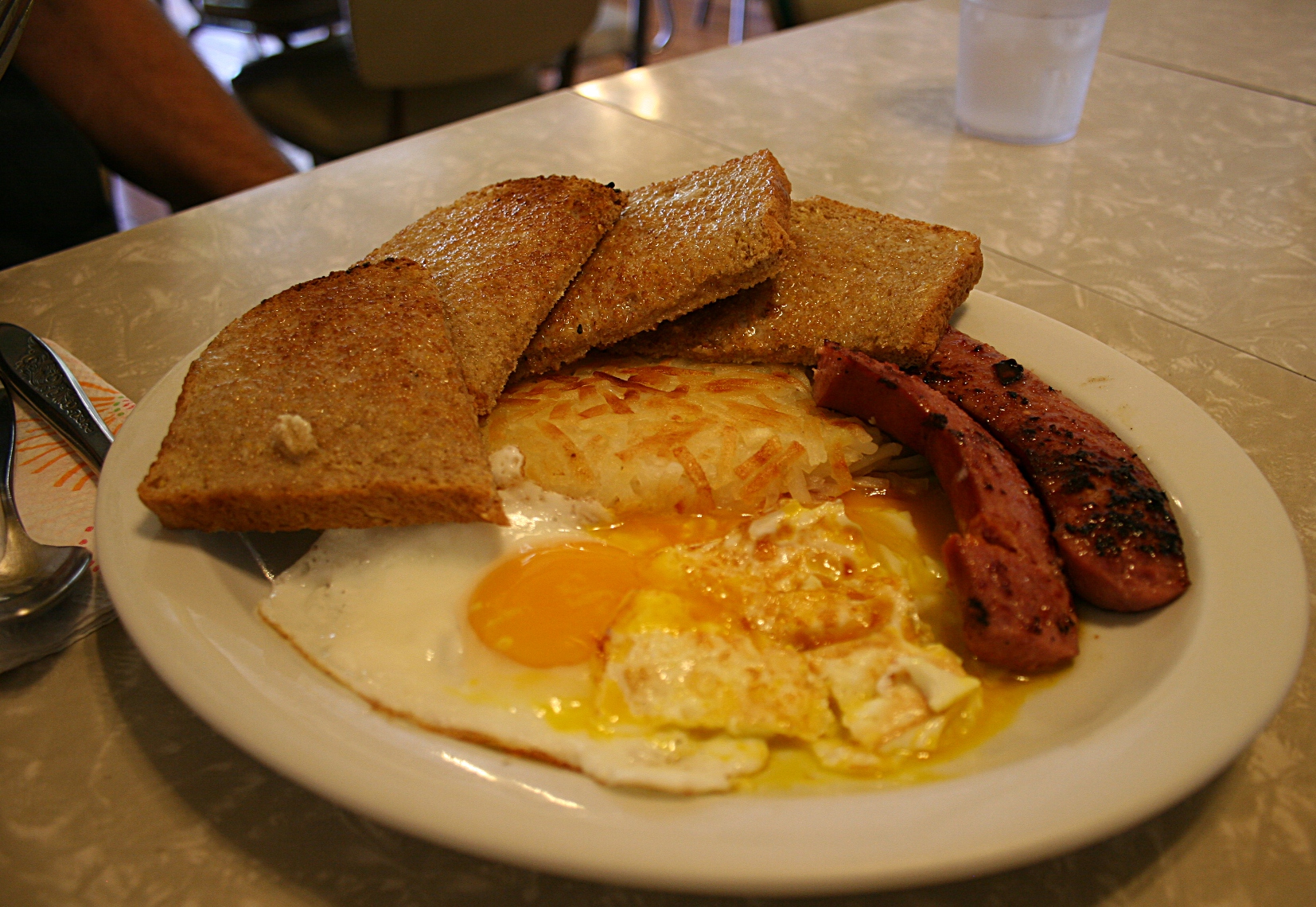
The breakfast my husband ordered when we dined here in October included two organic eggs, multigrain toast, hashbrowns and kielbasa. I photographed his plate after he broke the egg yolks.

You can also order soup and sandwiches or breakfast all day, hours being from 8 a.m. – 3 p.m.

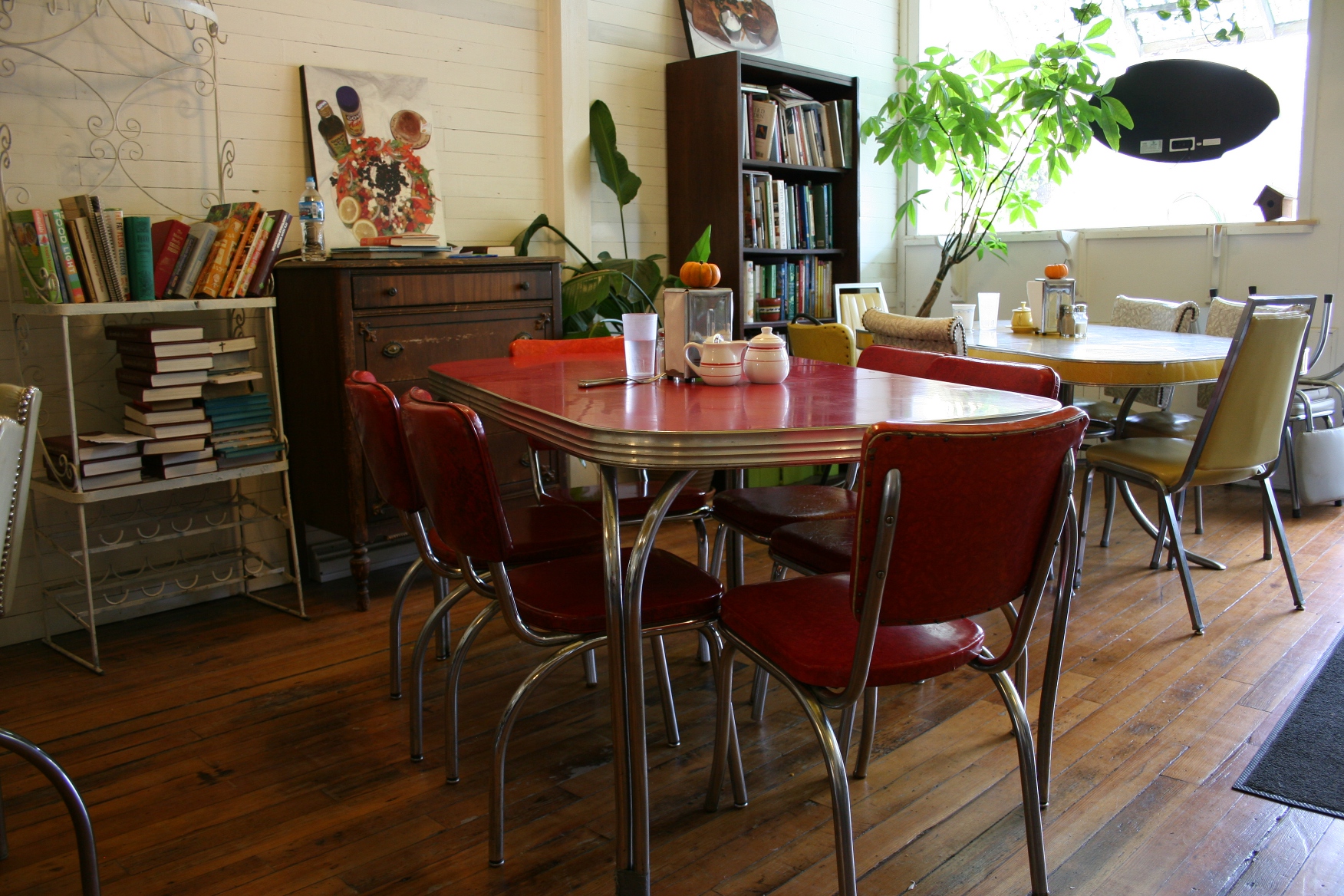
A sunny front corner of the restaurant showcasing the vintage tables and chairs.

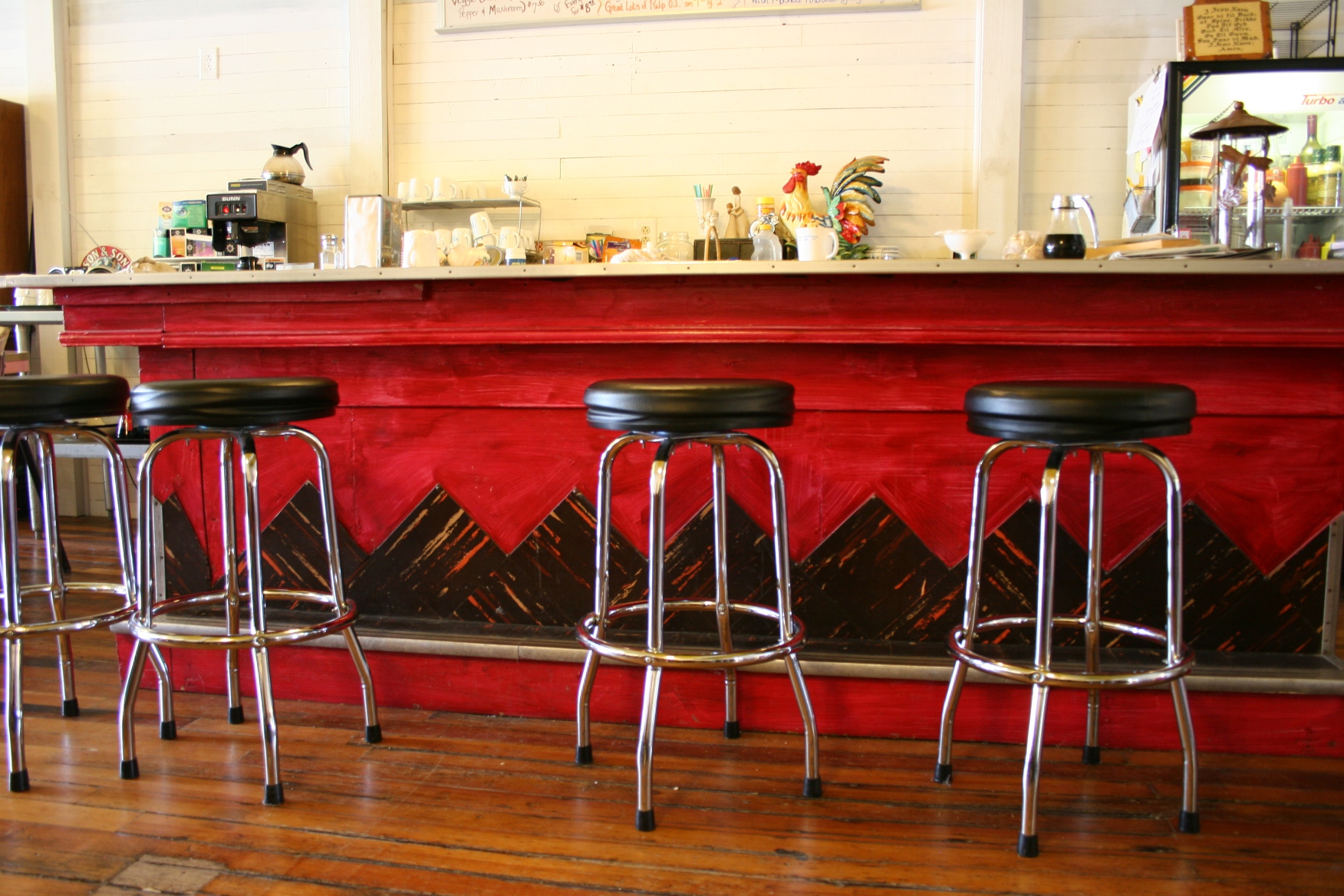
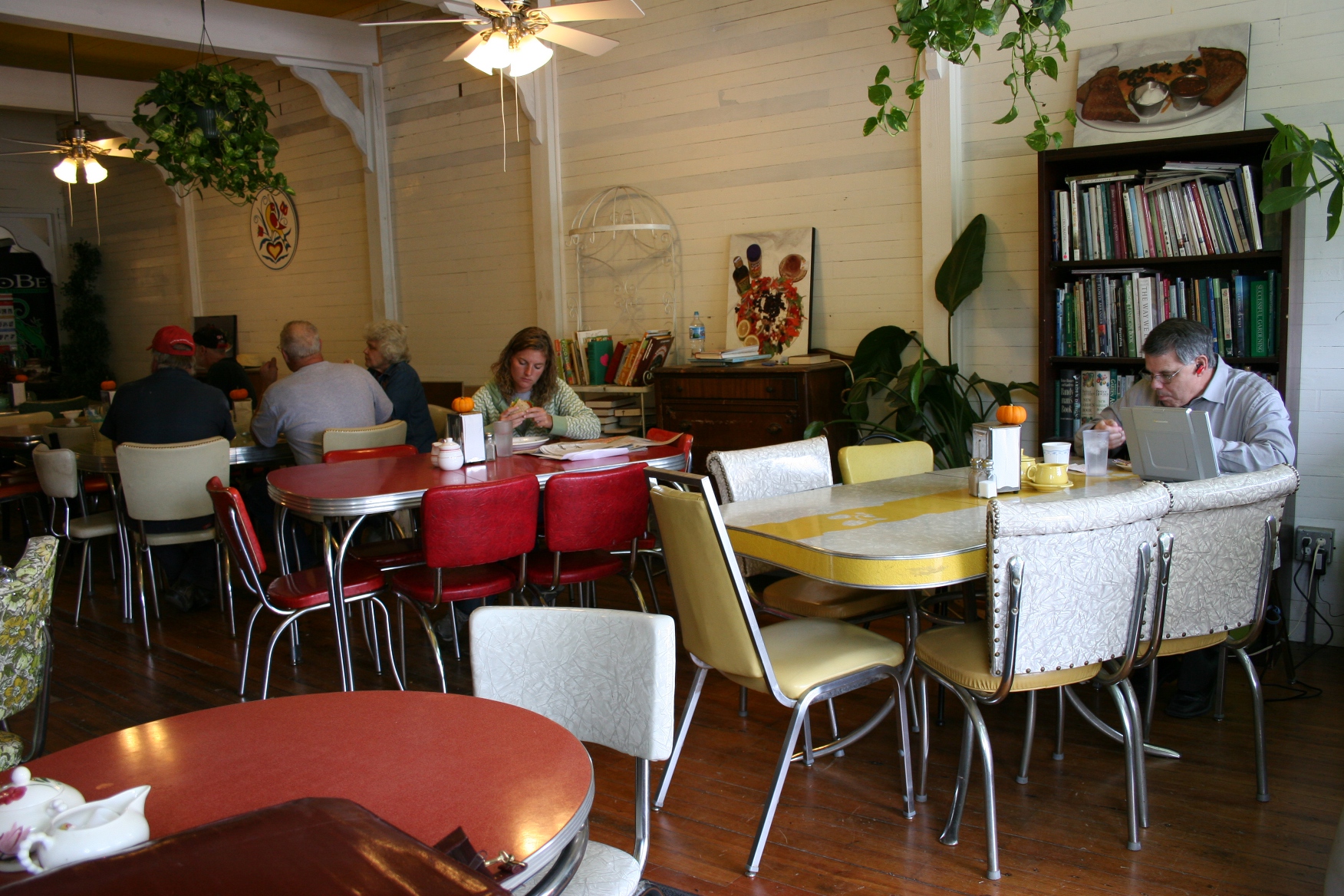
Not only is the food wholesome and homemade and delicious, but the atmosphere—with its original worn wood floor, wood-plank walls, lunch counter and hodge-podge of 1940s/1950s Formica and chrome tables and vinyl chairs—sets the scene for a relaxed and homey dining experience. Pure retro.

The absolutely fabulous lunch counter.

Now, if you dine there on Sunday and the place charms the bobby socks right off your feet and you are looking for an investment or a business to run, the building is for sale. Or it will be, in the spring after Vicki’s husband finishes some exterior updating.

On a Monday afternoon in October, the Highland Cafe was a popular dining spot.

But before then, you can also do a little shopping in this building which originally housed a general store. Vicki and her family had originally planned on opening a consignment shop upstairs. But they didn’t and now have some merchandise—mostly women’s clothing and home items—to sell.

Sale hours will be from 10 a.m. – 4 p.m. on Black Friday, November 23; 10 a.m. – 2 p.m. on Sunday, November 25; and 10 a.m. – 6 p.m. on Monday, November 26.

The Historic Highland Store & Cafe is closed on Saturdays as the building serves as the ministry site for the Seventh Day Adventist Highland Chapel.

FYI: Click here to reach The Historic Highland Store & Cafe website.

© Copyright 2012 Audrey Kletscher Helbling

 

Musings of a Baby Boomer upon touring a museum exhibit in Moorhead November 15, 2012

I’M WONDERING IF the rest of you baby boomers out there feel as I do, that youthful years have vanished, poof, just like that.

I need only look in the mirror to see the patches of ever spreading gray (time for a dye, again), the lines and creases and sagging skin to realize that Age has crept into my life to the point that I no longer can deny her presence.

Age has also shoved me into the corner of those who are overwhelmed by technology. It’s like the boxing gloves never come off as I resist, rather than embrace, technological changes. No Facebook or Twitter for me. No PayPal or paying bills online. And what is a smart phone and an iPad?

I am not joking, people. I need to enroll in a Technology 101 course or persuade the 18-year-old son, who is pursuing a degree in computer engineering, to tutor me.

Interestingly enough, this musing relates to a recent tour of  The Historical and Cultural Society of Clay County exhibit, “The BOOM 1945-1960 in Clay County,” at the Hjemkomst Center in Moorhead.

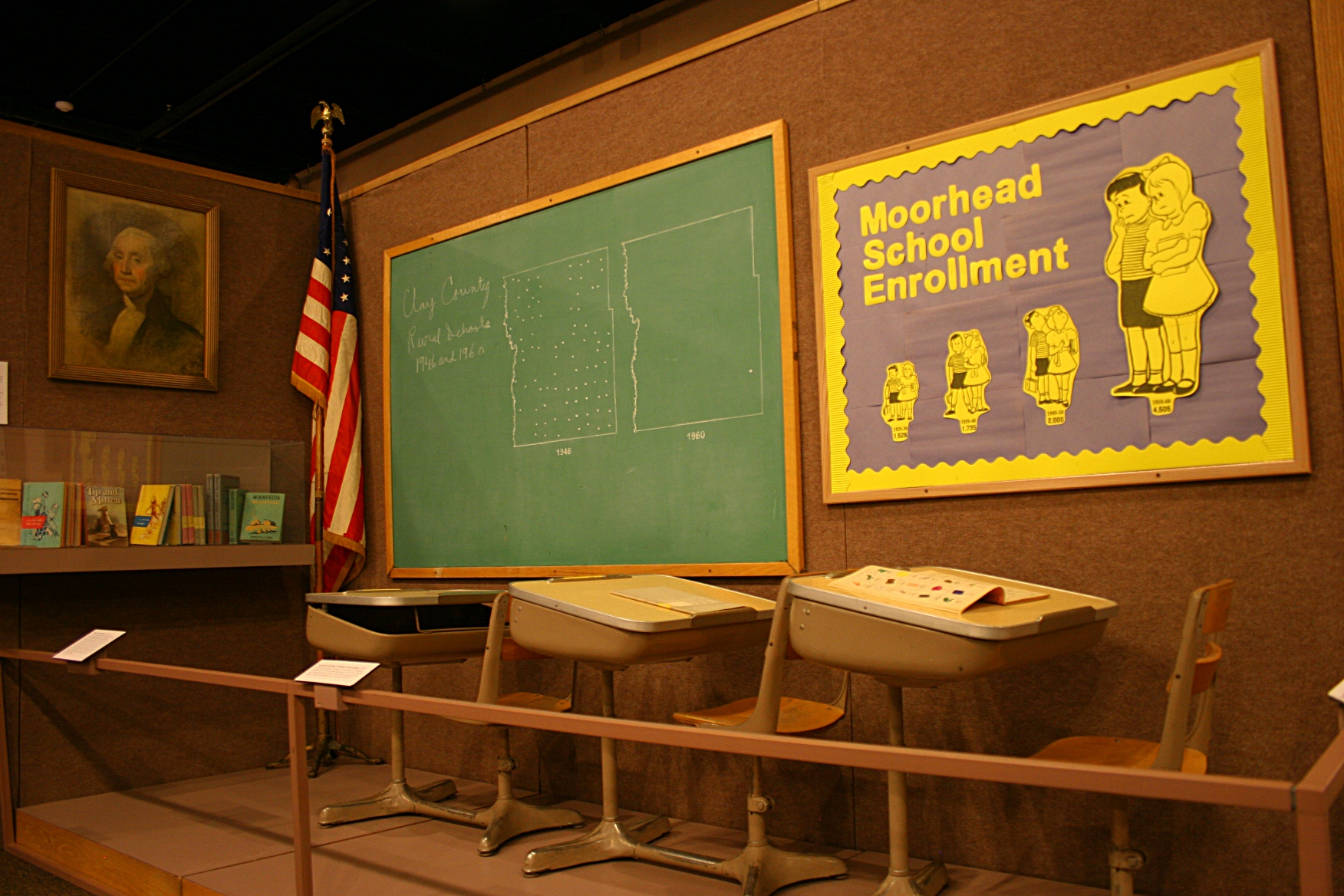
While I was only a few years old at the end of that boom period, much of what I saw in that exhibit, including the outhouse, looked pretty darned familiar:

These books are shelved in a mock boom era one-room schoolhouse display. I own that exact Dick and Jane book.  I love Dick, Jane, Sally, Tim, Spot and Puff. They taught me to read. Oh, I mean my teacher taught me to read via that book series.

Fun with Dick and Jane book. Check.

So familiar to me, desks just like I sat in through my years at Vesta Elementary School. The blackboard, though, is not correct. Ours was black, not green.

Rows of school desks. Check.

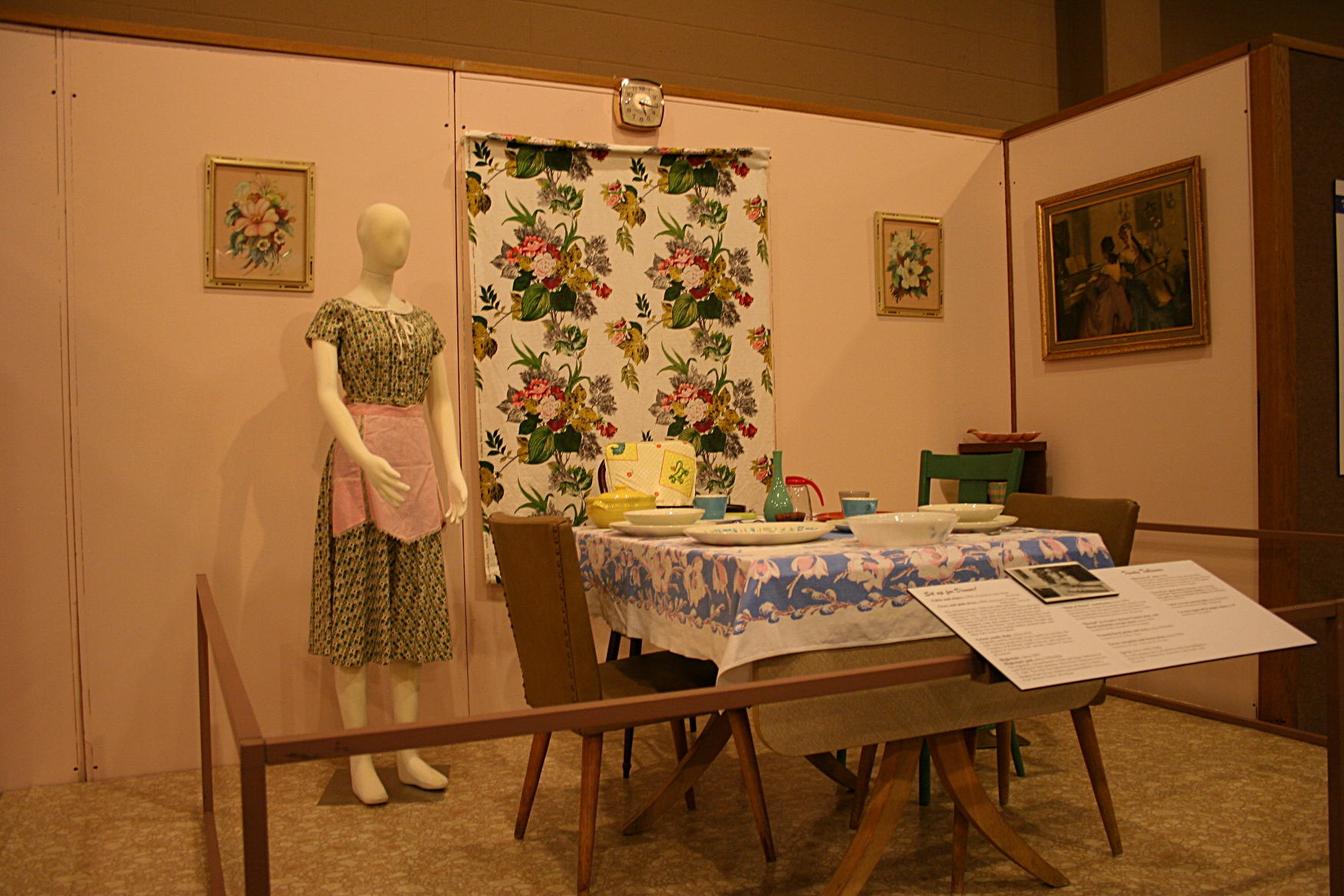
I remember the floral print plastic curtains which once hung in the tiny wood-frame house where I grew up on the southwestern Minnesota prairie. Today I collect vintage tablecloths like the one draping the table here. And, yes, I use them. Come to dinner at my house and you’ll find one gracing the table. I love retro.

A floral print curtain and floral print tablecloth. Check.

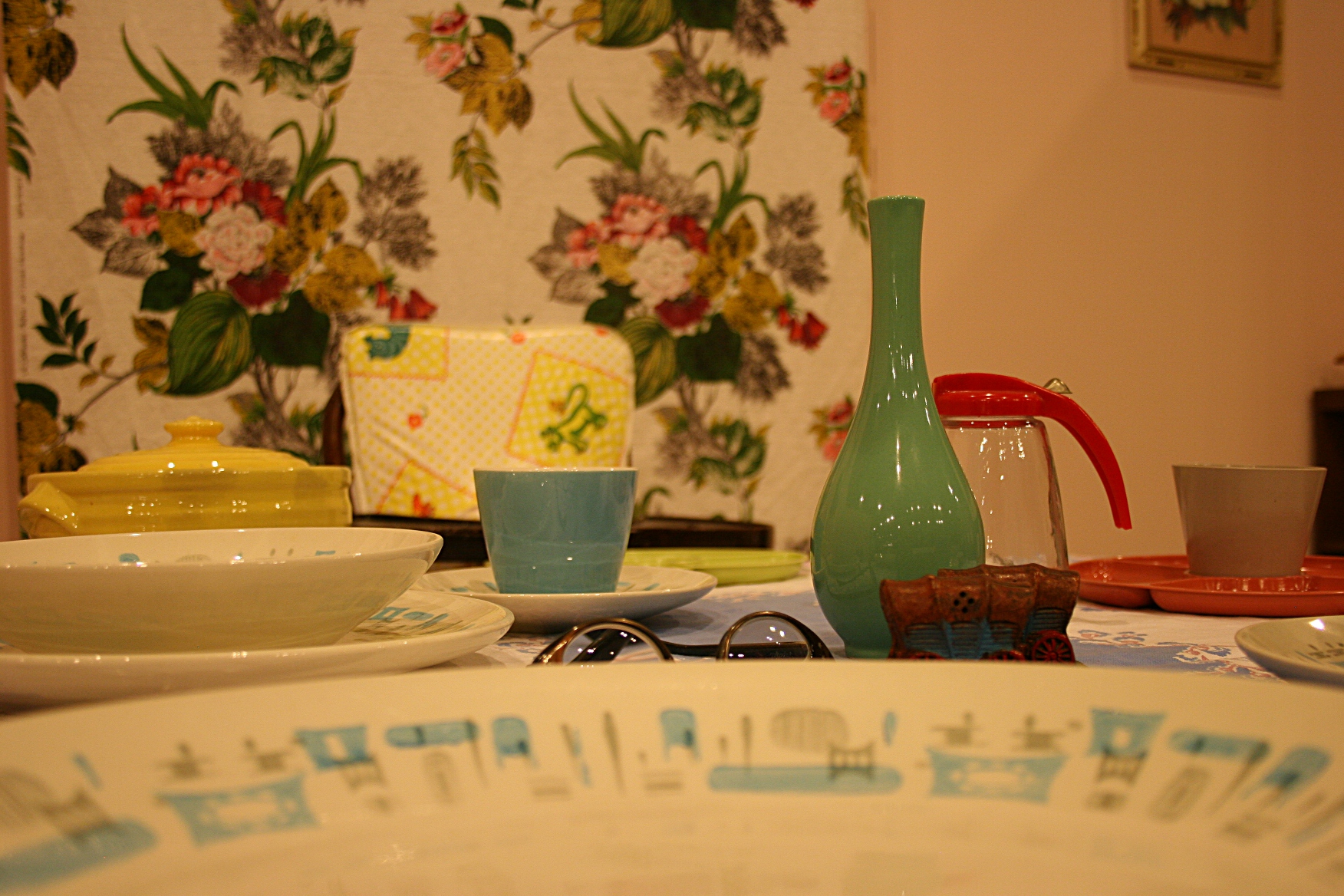
Tucked behind the close-up of the vintage plate, you’ll spy eyeglasses. I’ve worn prescription eyeglasses since age four, including the cat eye style and dark brown framed ones.

Dark-framed eyeglasses and vintage tableware. Check.

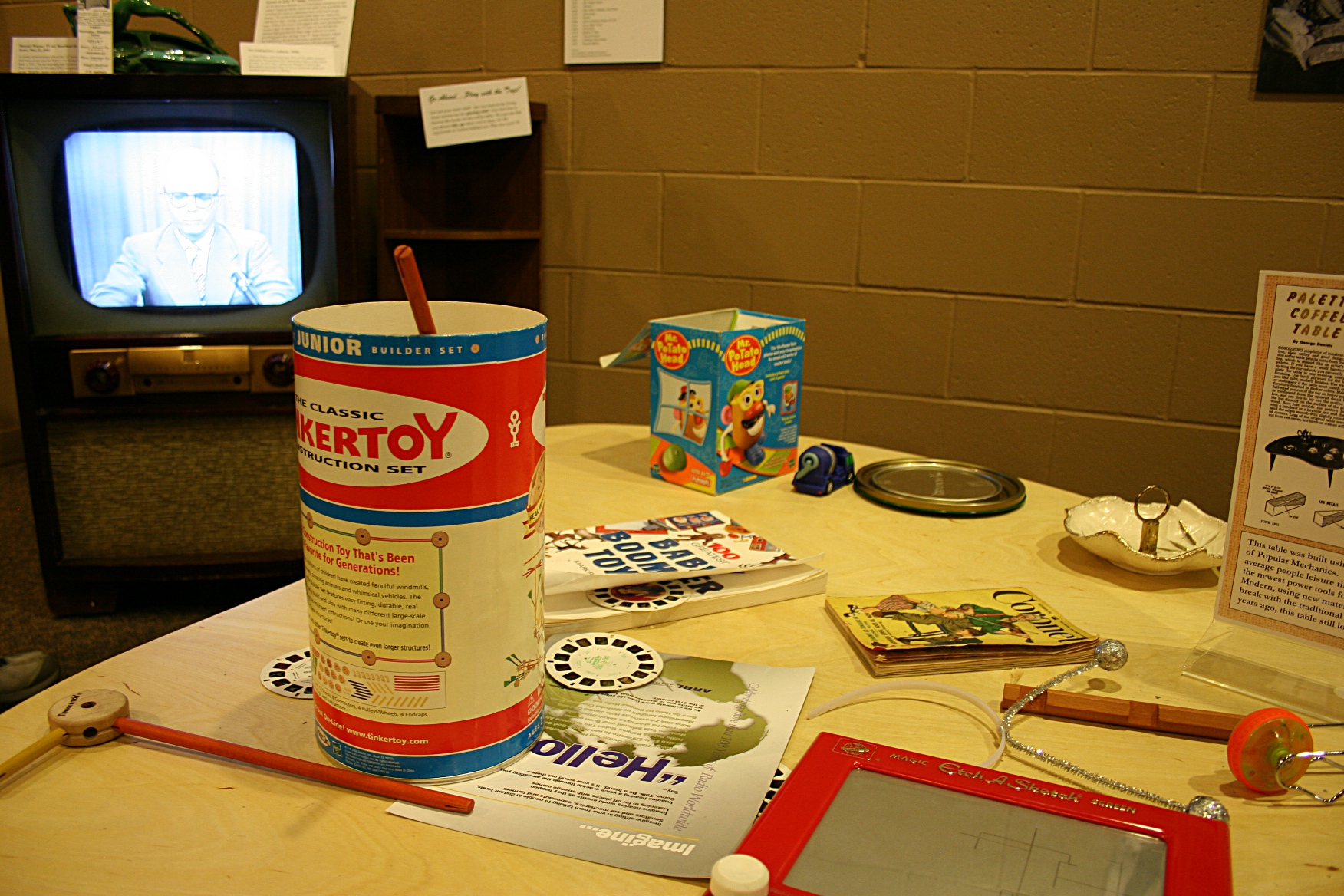
Popular Baby Boomer toys, ones my children, born between 1986 and 1994, also played with. Some toys truly are timeless, although I expect the View-Master isn’t. I played with Mr. Potato Head in the background, but he was not a favorite.

An Etch a Sketch, View-Master reels and Tinker Toys, all among my favorite childhood toys. Check, check and check.

There was not a piece of technology in sight save the old grainy black-and-white television.

© Copyright 2012 Audrey Kletscher Helbling

 

One man’s dream: Build it and it shall sail, the story of the Hjemkomst November 14, 2012

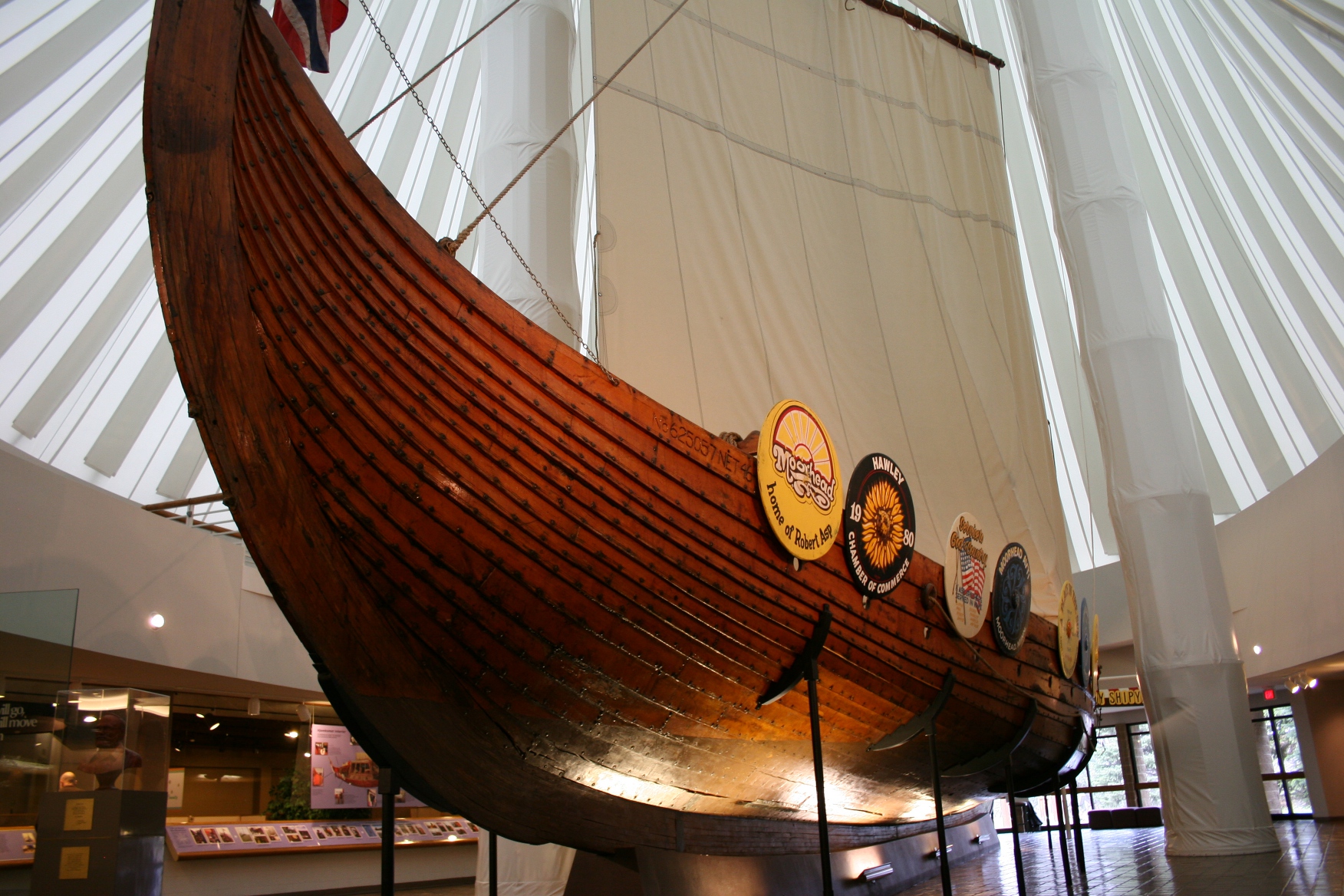
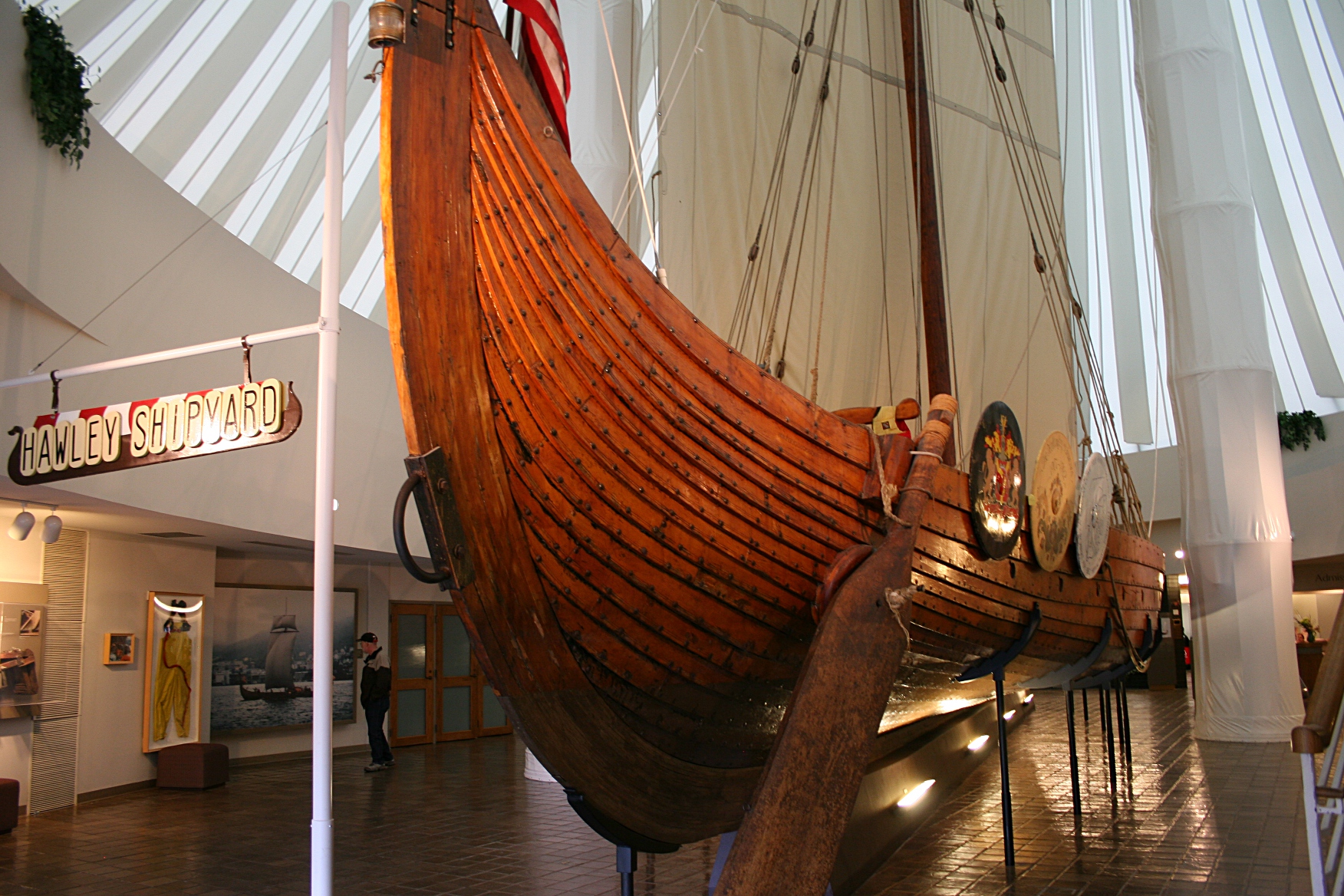
The Hjemkomst.

I REMEMBER BEING ONE of the skeptics.

Build a ship in the middle of nowhere, haul it to Lake Superior in Duluth and then eventually sail across the Atlantic Ocean to Norway.

Who thinks that is possible?

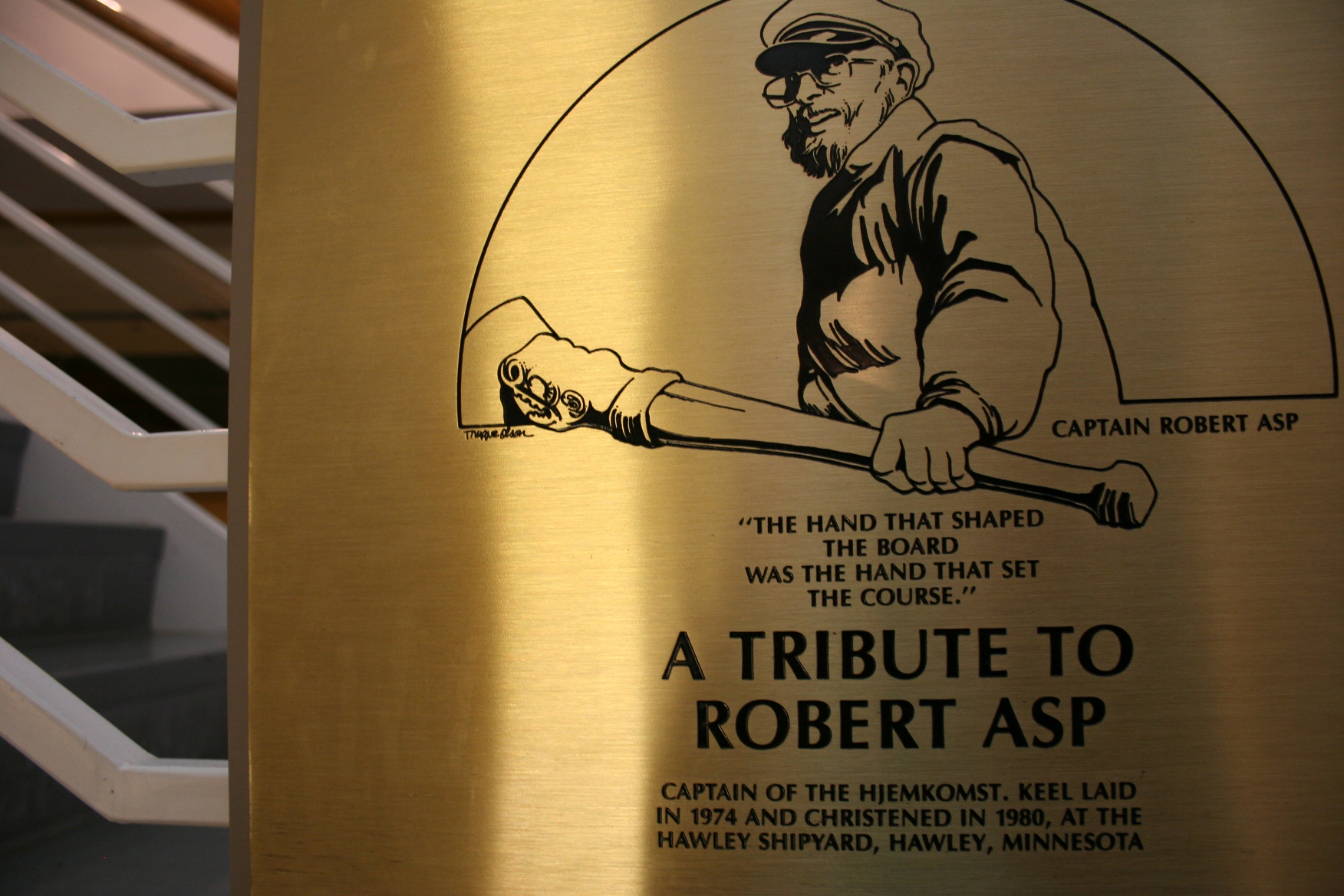
A plaque honoring ship builder and captain Robert Asp, located in the Hjemkomst Center, Moorhead, Minnesota. The steps, left, lead visitors to a deck for viewing of the open ship interior.

Robert Asp.

Thirty years ago the Hjemkomst, a ship built by this Moorhead, Minnesota, junior high school counselor, with the help of family and friends, accomplished that 4,700-mile feat, proving the skeptics wrong.

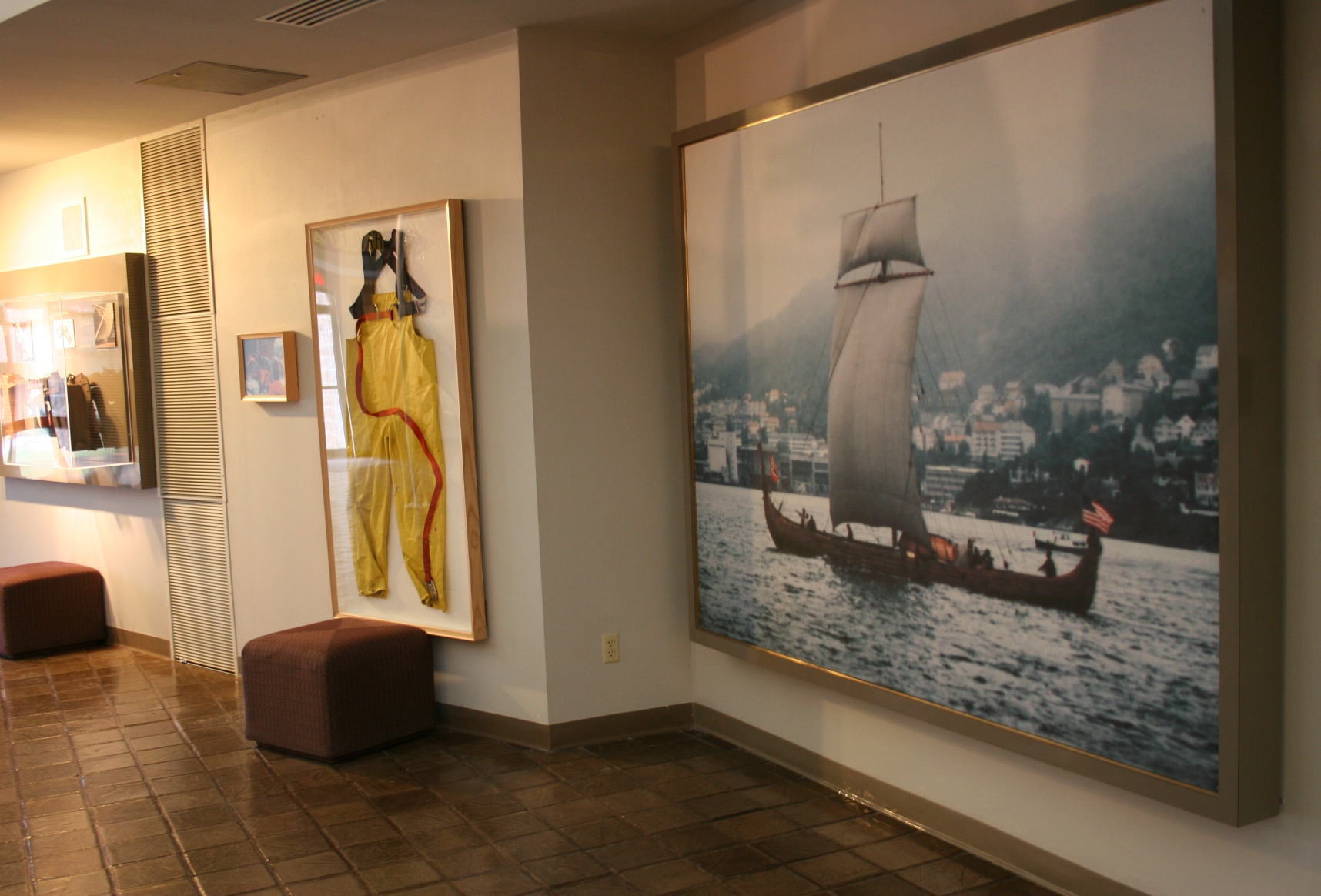
The photo on right, by Tim Hatlestad, shows the Hjemkomst sailing into the harbor of Bergen, Norway.

By then, Asp had died, passing away in December 1980 at the age of 57 from leukemia. But his family pursued his dream, launching the ship on May 11, 1982, for the journey back to the Asp family Motherland on the Hjemkomst, which translates from Norwegian into English as “homecoming.”

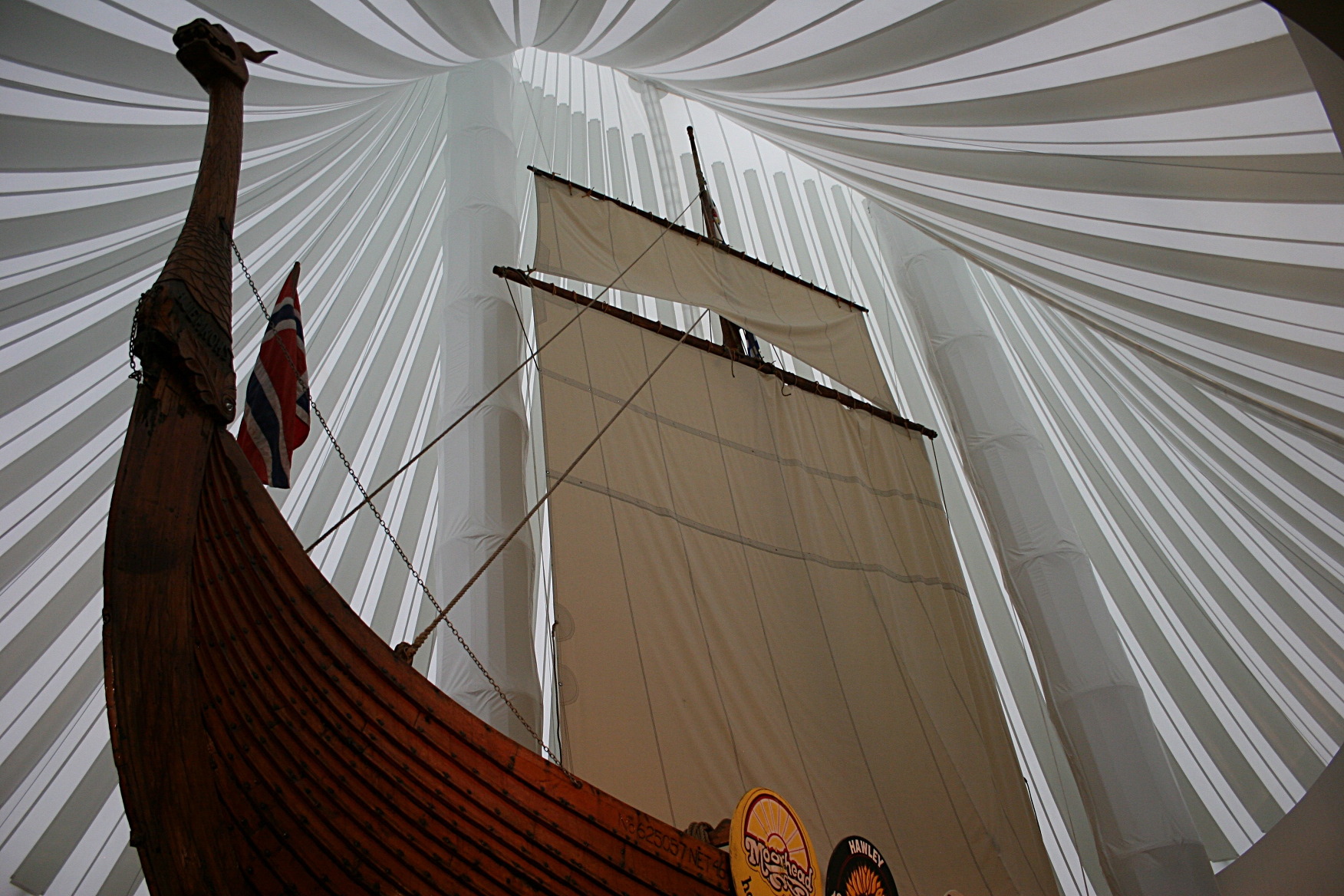
Looking up to the mast and sails.

Hearing the Hjemkomst story many years ago is one thing. Seeing Asp’s ship permanently docked in the Hjemkomst Center in Moorhead is another. Only by viewing the ship and learning its story in detail can you truly appreciate the determination of a man to fulfill a dream.

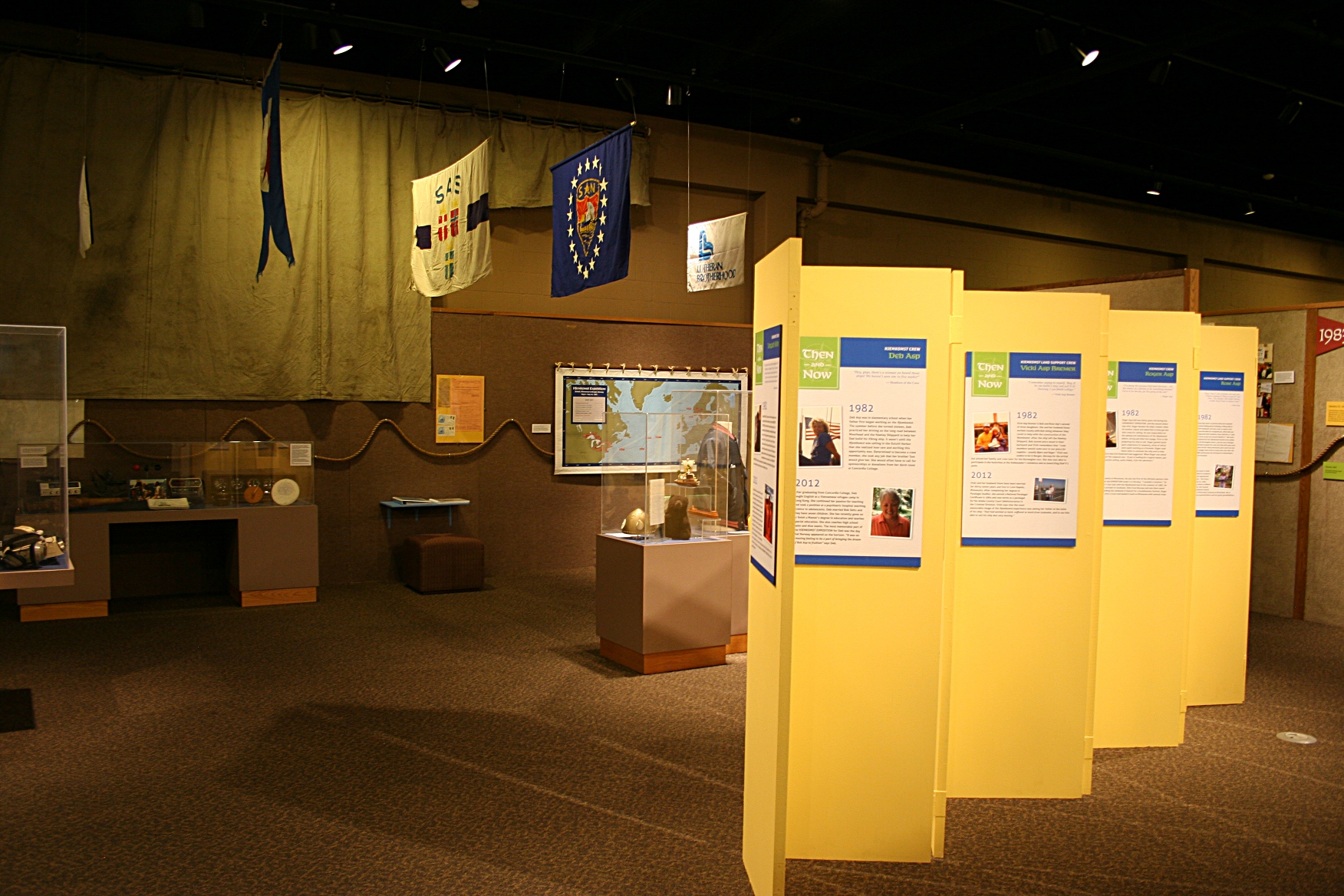
A small section of the museum exhibit on the Hjemkomst.

And details you will find in the museum exhibit, these among the highlights I pulled from the wealth of information revealed during a recent visit to the Hjemkomst Center:

  • In the summer of 1971, Bob Asp and his brother Bjarne talked about their Viking heritage over coffee and joked about building a Viking ship to sail to Norway.
  • Bob began searching in the Alvarado area, 18 miles north of Grand Forks, North Dakota, and six miles east of Oslo, Minnesota, in the spring of 1972 for oak trees with which to build the Hjemkomst. Eventually 100 oaks would be used in the ship construction.
  • In November 1973, Bob leased a former potato warehouse in Hawley, 22 miles east of Moorhead, in which to construct his replica of the Viking ship Gokstad. Archeologists discovered the Gokstad in 1880 in Gokstad, Norway. Bob based the Hjemkomst on that ship.
  • The purpose of his ship, according to Bob, was “to further the Norwegian image and heritage.”
  • In 1976, Bob was offered $25,000 by a man who wanted to hire a crew to finish building the Hjemkomst for a tall ship parade in New York City. Bob declined the offer.
  • The ship’s keel was laid in 1974 and, after six years of construction, the vessel was christened in 1980 at the “Hawley Shipyard.”
  • In August 1980, the Hjemkomst was lowered into Lake Superior in the Duluth harbor.
  • On May 11, 1982, a 13-member crew began the voyage across Lake Superior with 12 continuing on to Bergen, Norway. The trip would take 72 days, covering 4,700 miles.
  • The ship was eventually returned via freighter to the U.S. and today is permanently at home in the Hjemkomst Center near the banks of the Red River of the North.

As impressed as I was by viewing the actual Hjemkomst and by reading the detailed time-line of its construction, launch and voyage, I was even more impressed by the fortitude of Bob Asp.

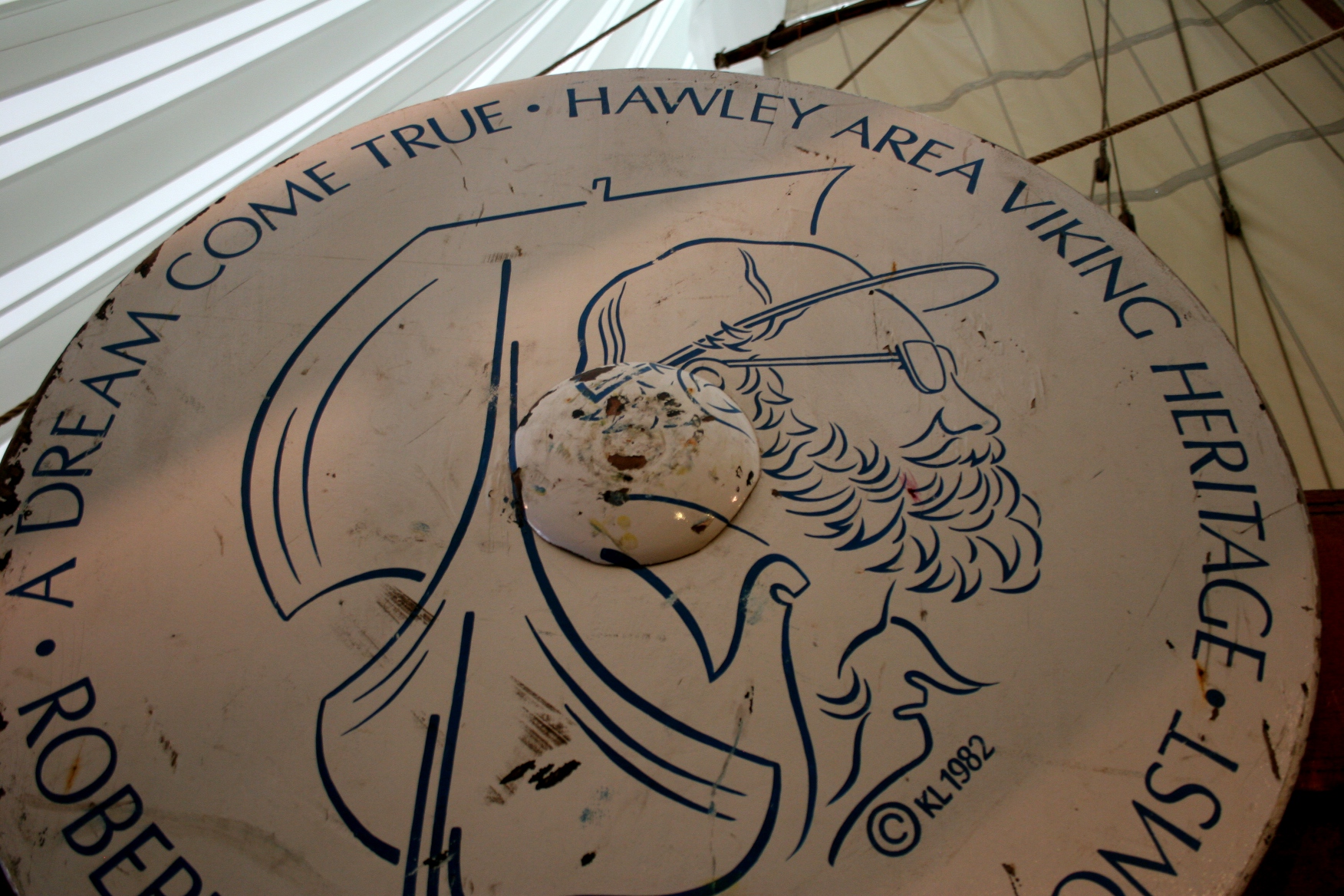
A dream come true “button” attached to the side of the Viking ship replica.

He dared to dream.

Here’s a quote from the museum: “Constructed in a sea of grain, a prairie with no ocean in sight, this Viking ship was built board-by-board with determination and sailed to Norway.”

He dared to continue on, even in the face of skeptics and illness (he was diagnosed with leukemia in July 1974).

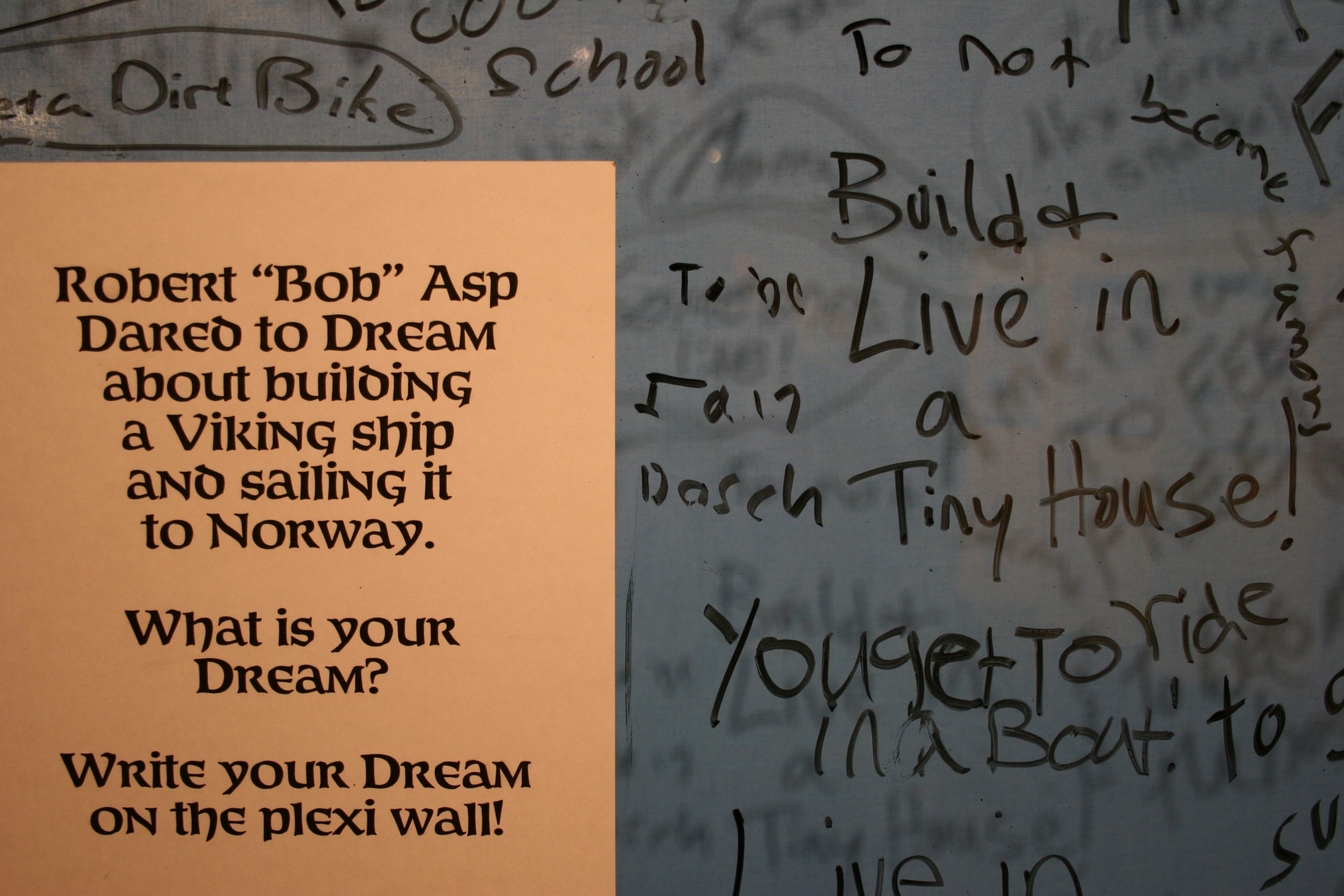
A plexi board upon which museum visitors can post their dreams.

He dared to believe in himself. Therein lies a legacy of inspiration that teaches all of us the value of holding on to dreams.

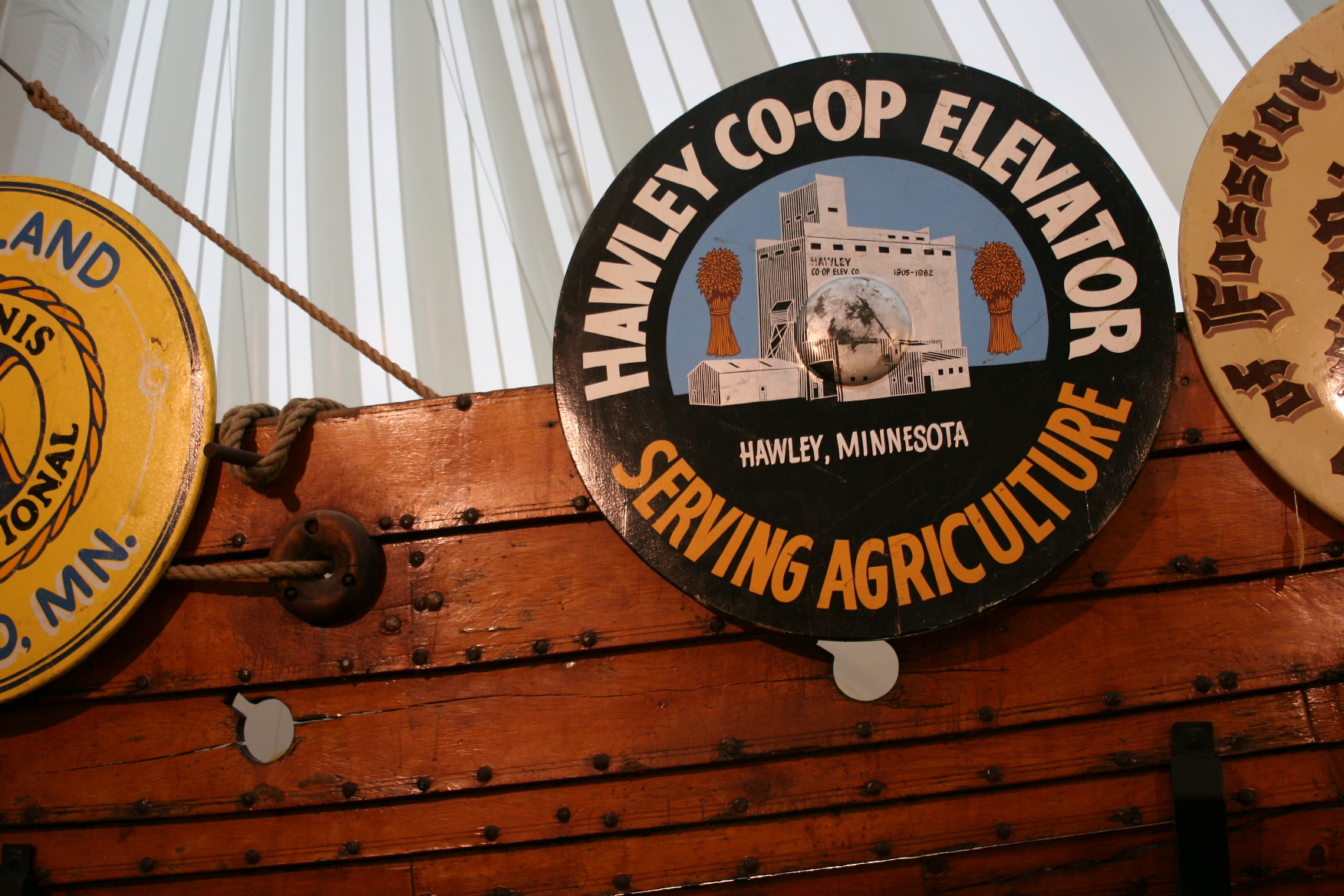
A sign of support from the grain elevator in Hawley, where the ship was built.

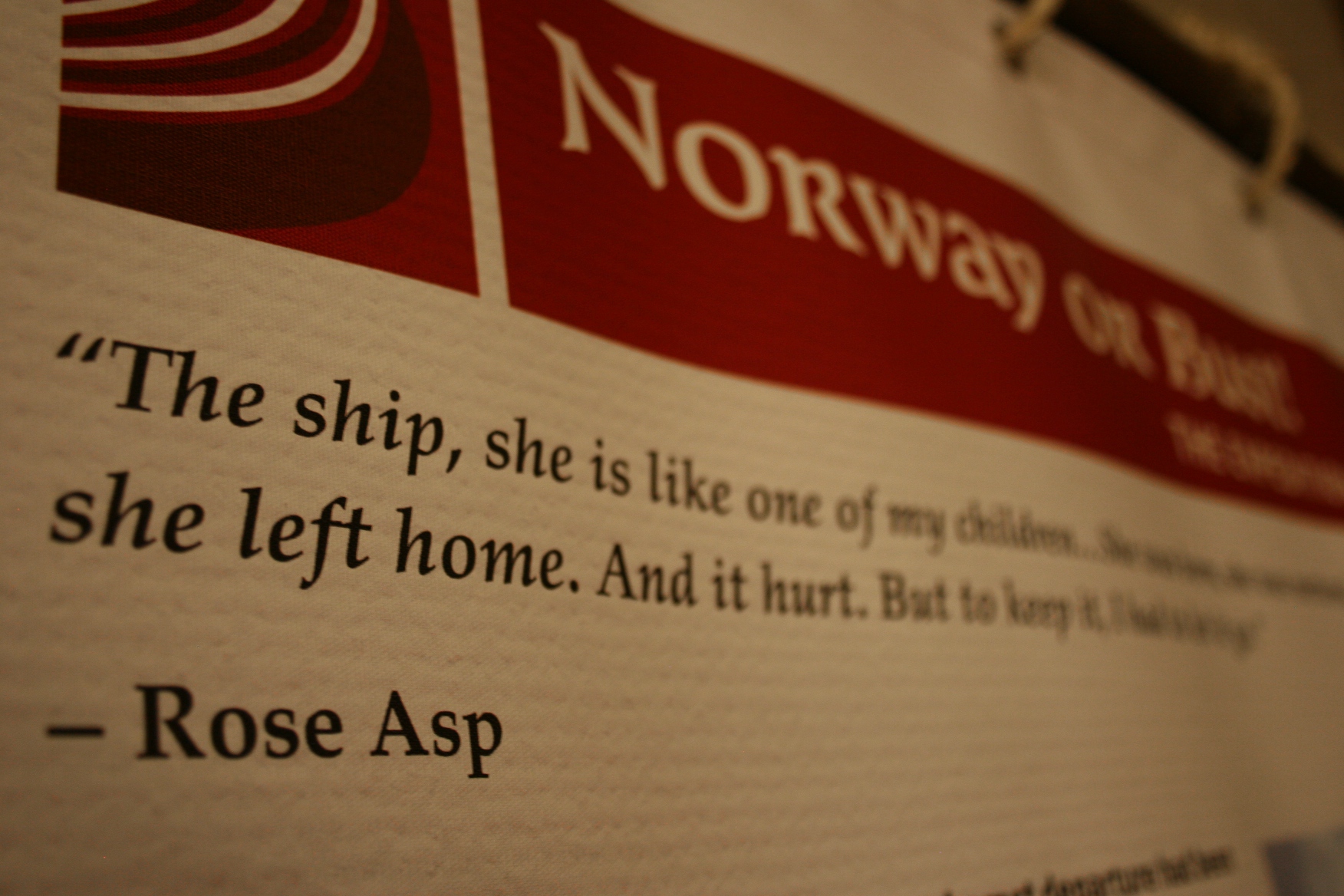
A quote from Rose Asp, Bob Asp’s wife.

The interior of the Hjemkomst as seen from a second floor viewing deck.

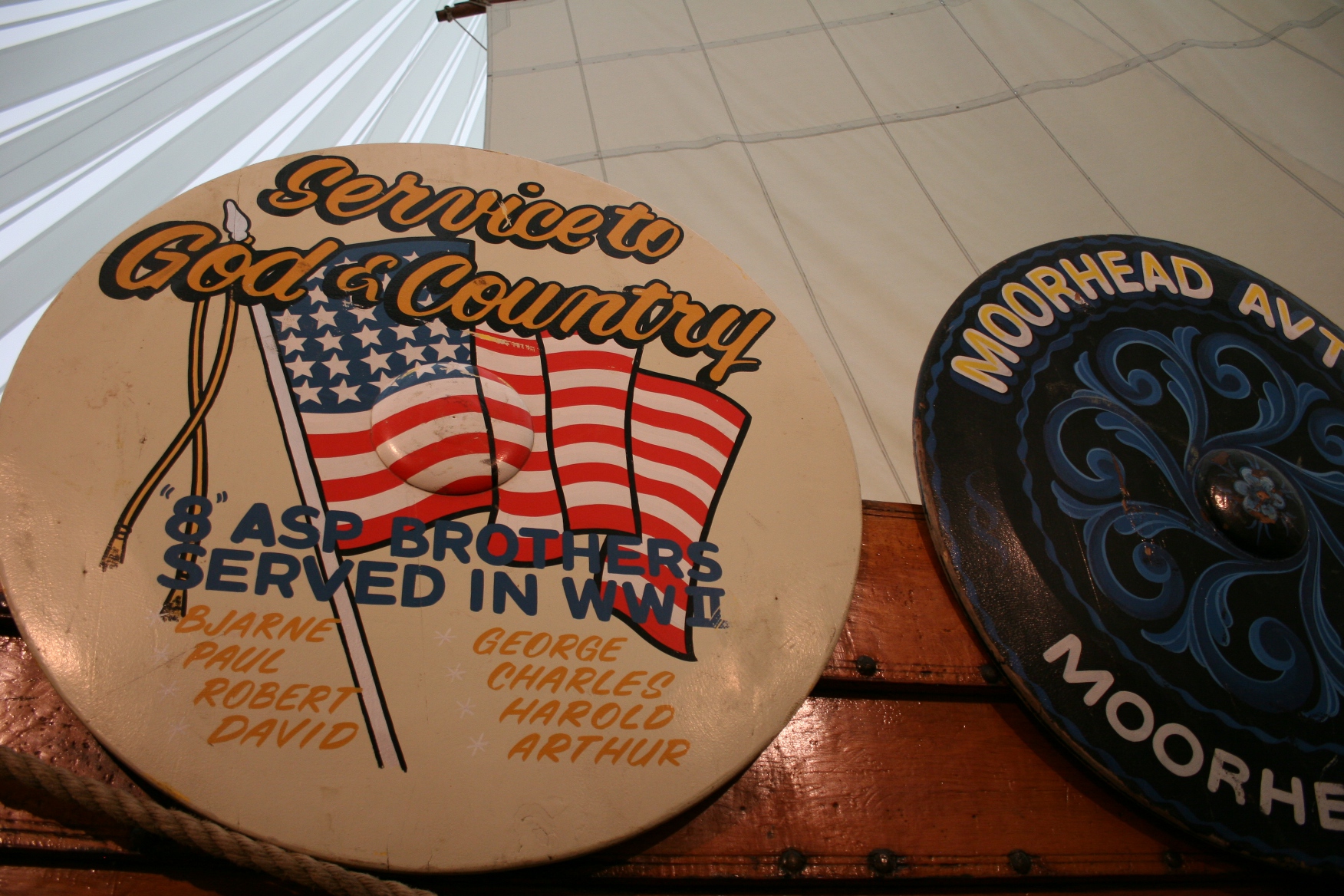
A sign on the ship honors the Asp brothers for their military service.

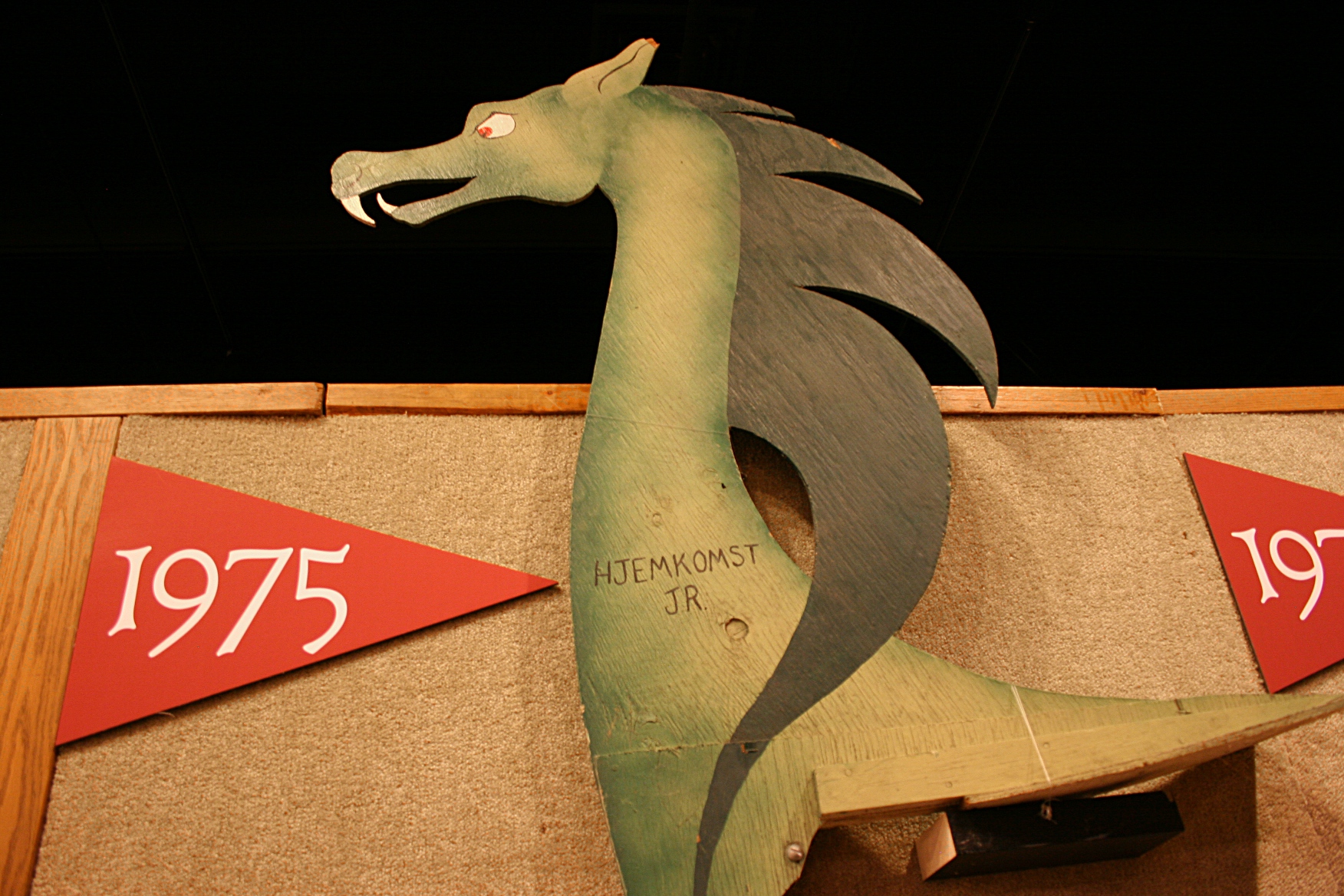
This dragon head was attached to a canoe, dubbed Hjemkomst Jr., and shown in parades to promote the ship project.

Some of the gear and equipment from the Hjemkomst.

Moorhead, Minnesota, Asp’s home and now the Hjemkomst’s permanent home.

In the center of the Hjemkomst Center, the mast area of the Hjemkomst ship dominates the roofline.

FYI: The Hjemkomst Center is open from 9 a.m. – 5 p.m. Monday-Saturday, from 9 a.m. – 8 p.m. Tuesdays and from noon – 5 p.m. Sundays. It is closed some holidays. There is free admission from 5 p.m. – 8 p.m. every third Tuesday. Admission prices vary. Click here to link to a $1 off admission coupon and for other coupon savings in Fargo/Moorhead.

© Copyright 2012 Audrey Kletscher Helbling

 

Touring Hopperstad Stave in Moorhead November 13, 2012

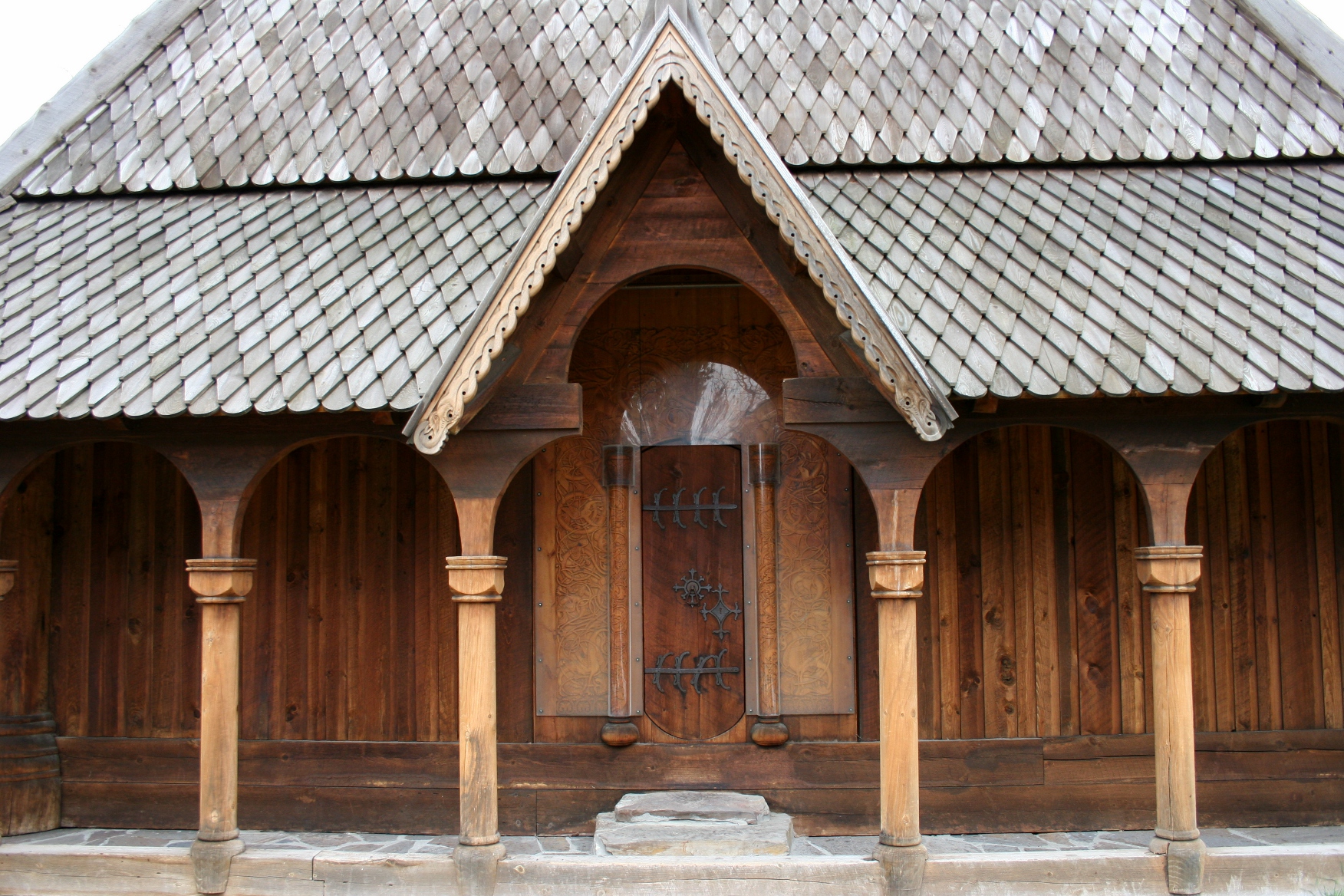
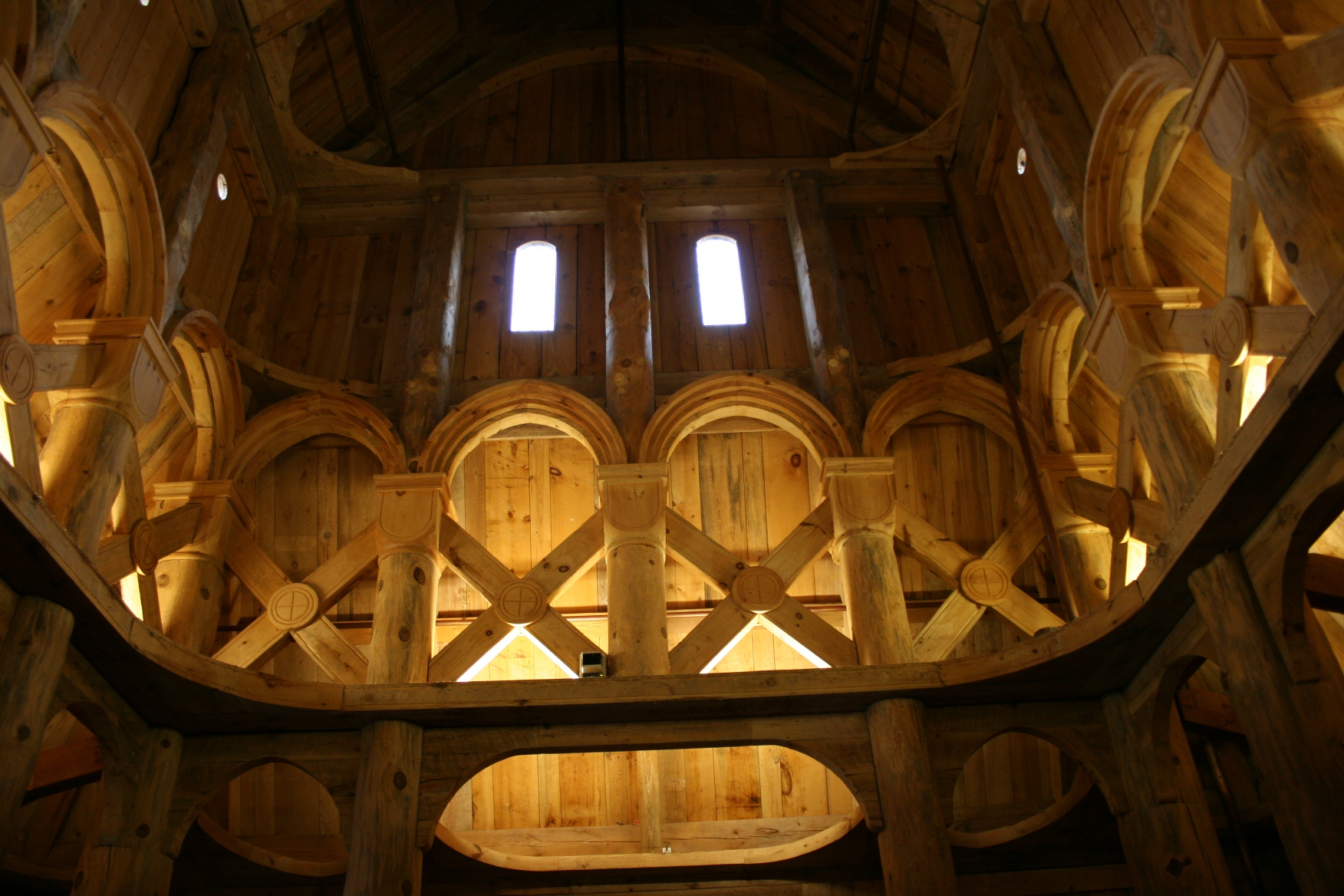
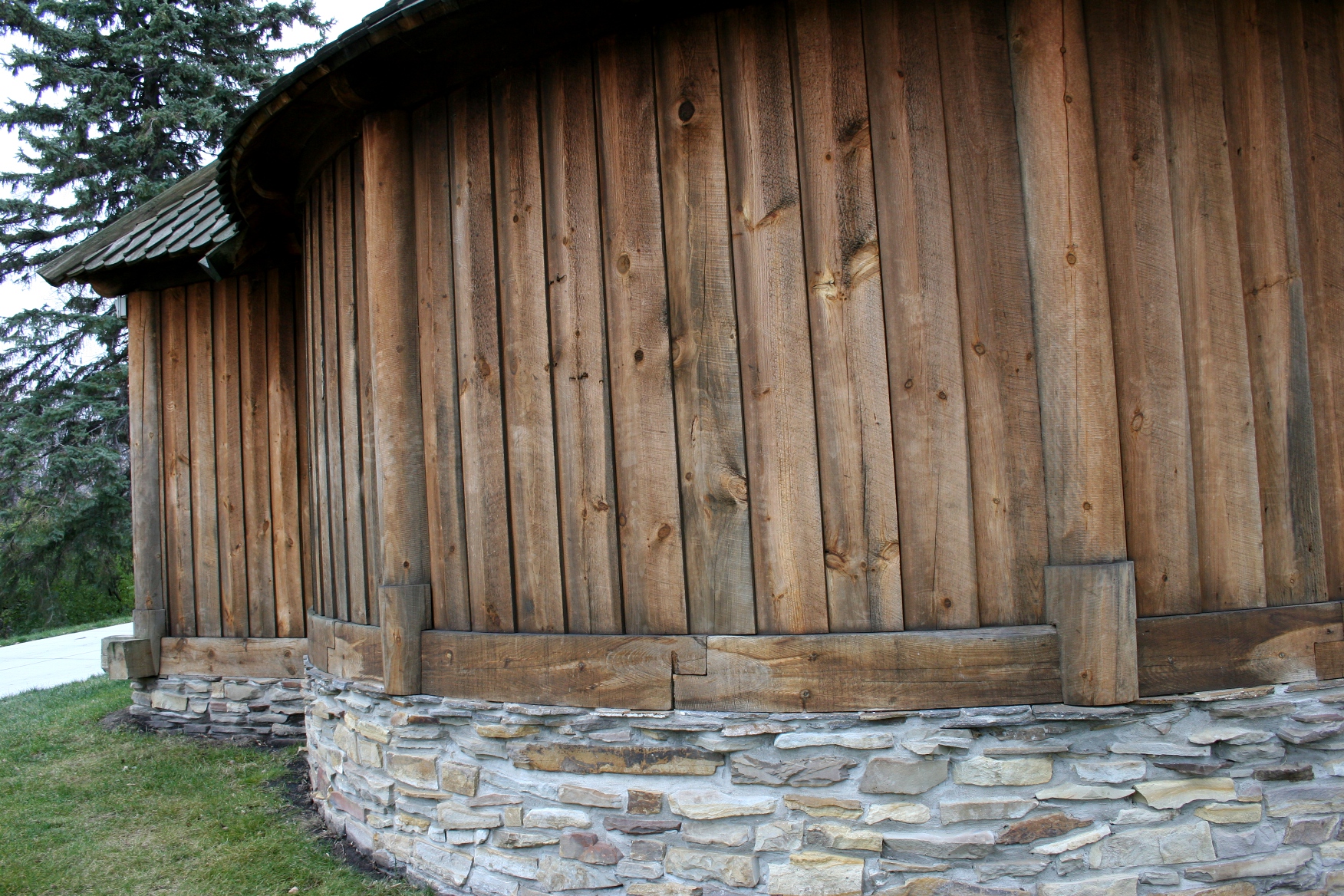
A replica of Hopperstad Stave, a church built in 1140 in Vik, Norway. This replica was constructed in 1998 in Moorhead, Minnesota from cedar, redwood and pine. This is a rear view of the Minnesota stave.

OUR YOUNG TOUR GUIDE spewed information so fast that I could not have written down details about the Hopperstad Stave had I tried.

And, I simply must say this, but I was distracted by the political sticker stuck on her coat, quite inappropriate, I thought, to display while leading a public tour at a public facility only days before the November election. But I did not want to create a scene, so I kept my lips pressed together.

She had already rankled me earlier by informing my husband and me that we likely would not be able to tour the Norwegian church at the Hjemkomst Center in Moorhead because the museum was short-staffed. On a Saturday. We had just driven nearly 300 miles. Do not tell me this after I have paid my admittance fee.

Forgive me for venting. But I needed to confess before taking you inside the replica Norwegian church built in 1998 by Guy Paulson, a retired researcher from North Dakota State University. I do not want such negative thoughts rattling around in my head while showing you God’s house.

A side view of the stave and the Celtic cross which stands near it. The stone cross replicates one located in the church yard of Loen Nordfjord, Norway. The cross represents the period in which Celtic missionaries came from the British Isles to convert Vikings to Christianity.

Yes, apparently the situation changed so that the young woman could leave her admission station to take a group of visitors, including my husband and me, inside the stave. Hallelujah.

Norwegian themed mugs for sale in the Hjemkomst Center gift shop.

I am not Norwegian. I know nothing of Norwegian architecture, have eaten lutefisk only twice, will consume lefse if offered and certainly do not say, “Uff da.”

But I want to assure you that I now am aware of how to pronounce stave. The word does not rhyme with “gave.” The “e” is silent, the “a” short.

I can also tell you that, from the exterior, the Hopperstad Stave resembles a Viking ship.

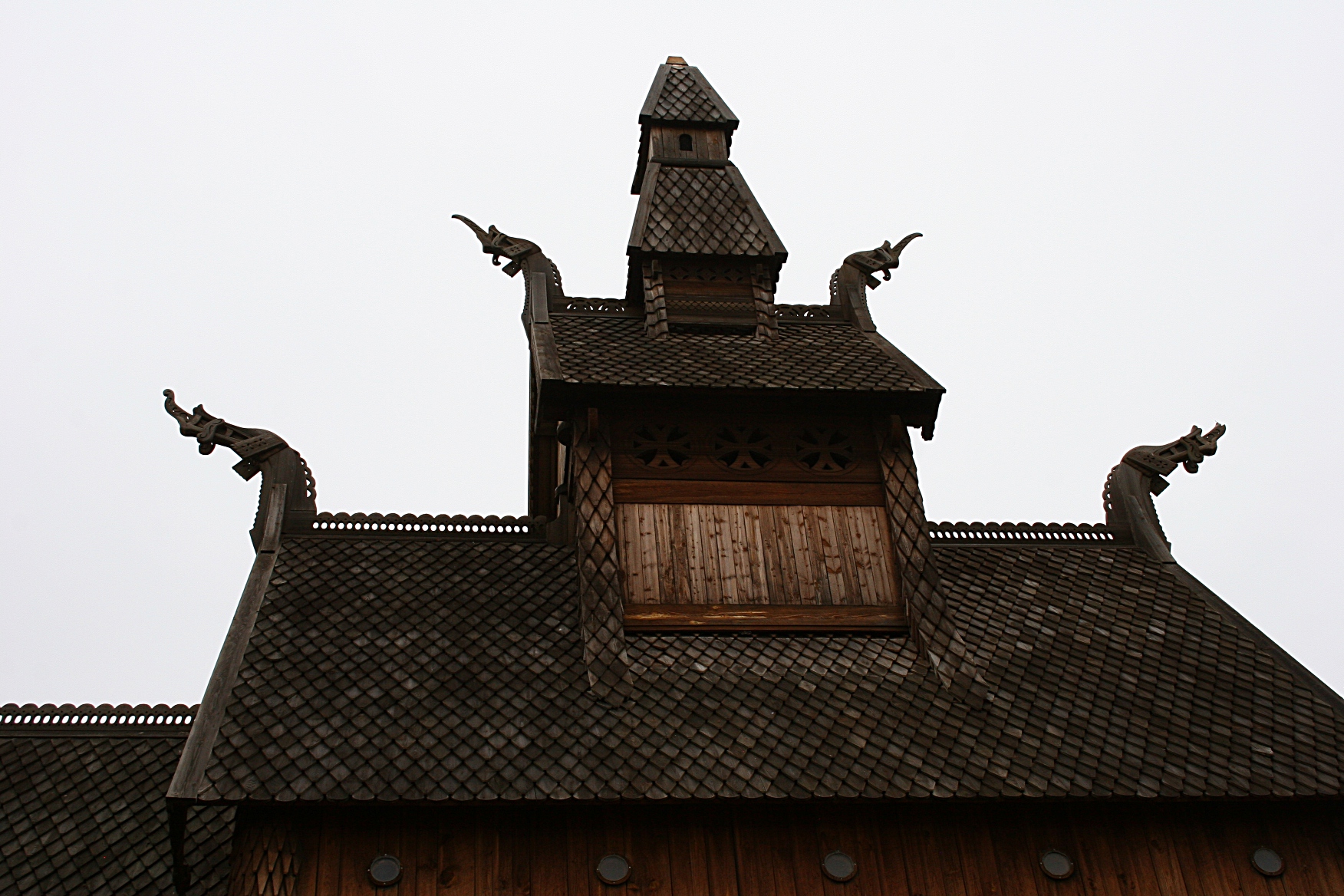
The roofline which mixes crosses, the symbol of Christianity, and dragons, once a symbol of pagans.  Obviously, the crosses are not visible at this angle.

Carved dragons and crosses mark peaks of the multi-layer roofed church which looms dark and foreboding.

Most of us stepped up and walked through that narrow front door. Others chose to walk around to a handicapped accessible and wider side door.

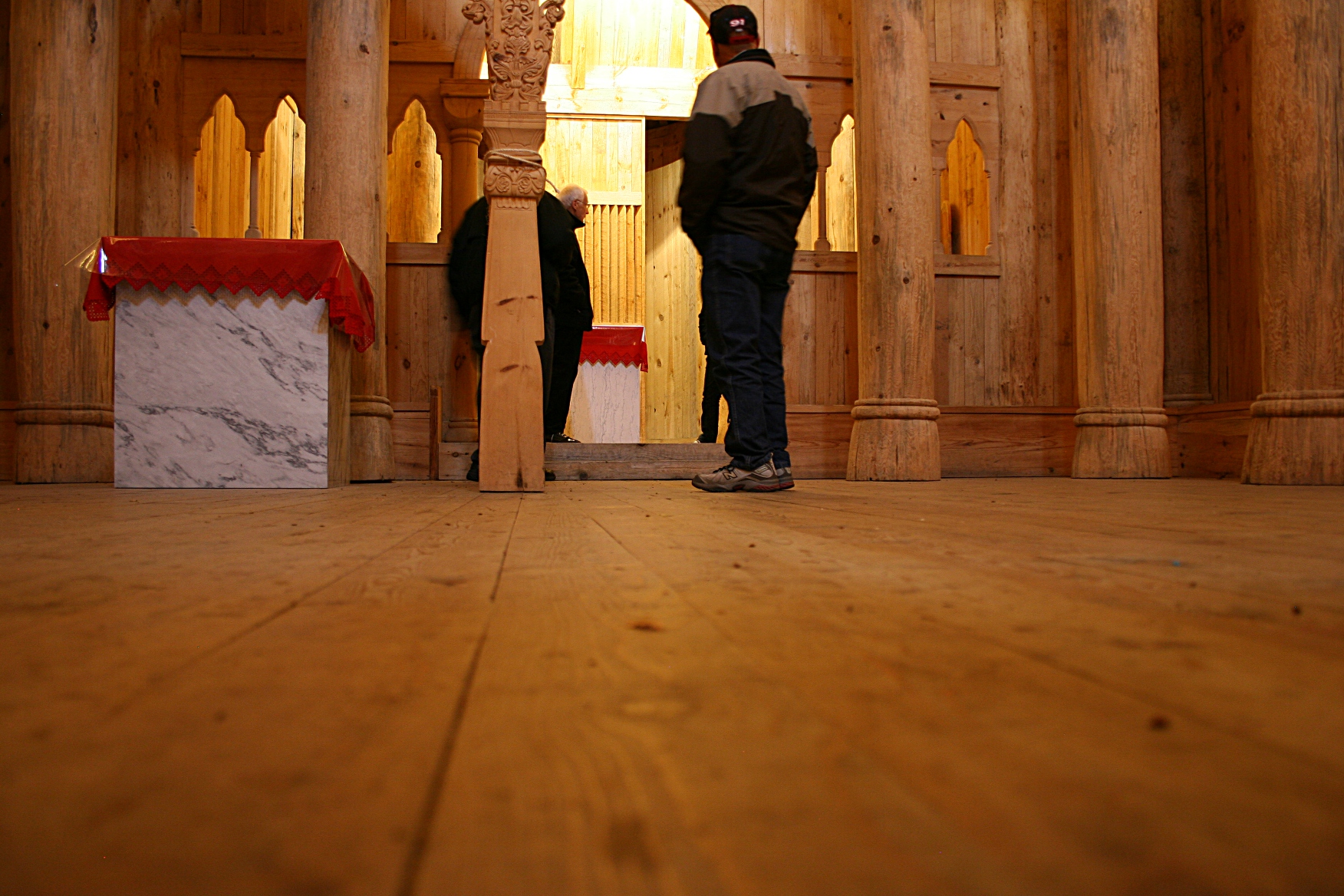
Stepping, and I do mean stepping, through the narrow doorway, I found the interior nearly equally as dark as the exterior. Missing are the eye level windows I’m accustomed to in the older Lutheran churches here in Minnesota.

An overview of the church shows the small chapel and altar on the left where more intimate religious ceremonies, such as baptisms, could take place. The main altar sits in the background and near center in this image.

Missing also are the pews. Worshipers would stand through services. And those with leprosy or other illnesses (think back to the 1100s) would wait outside the sanctuary, peering through a tiny opening cut into a side wall.

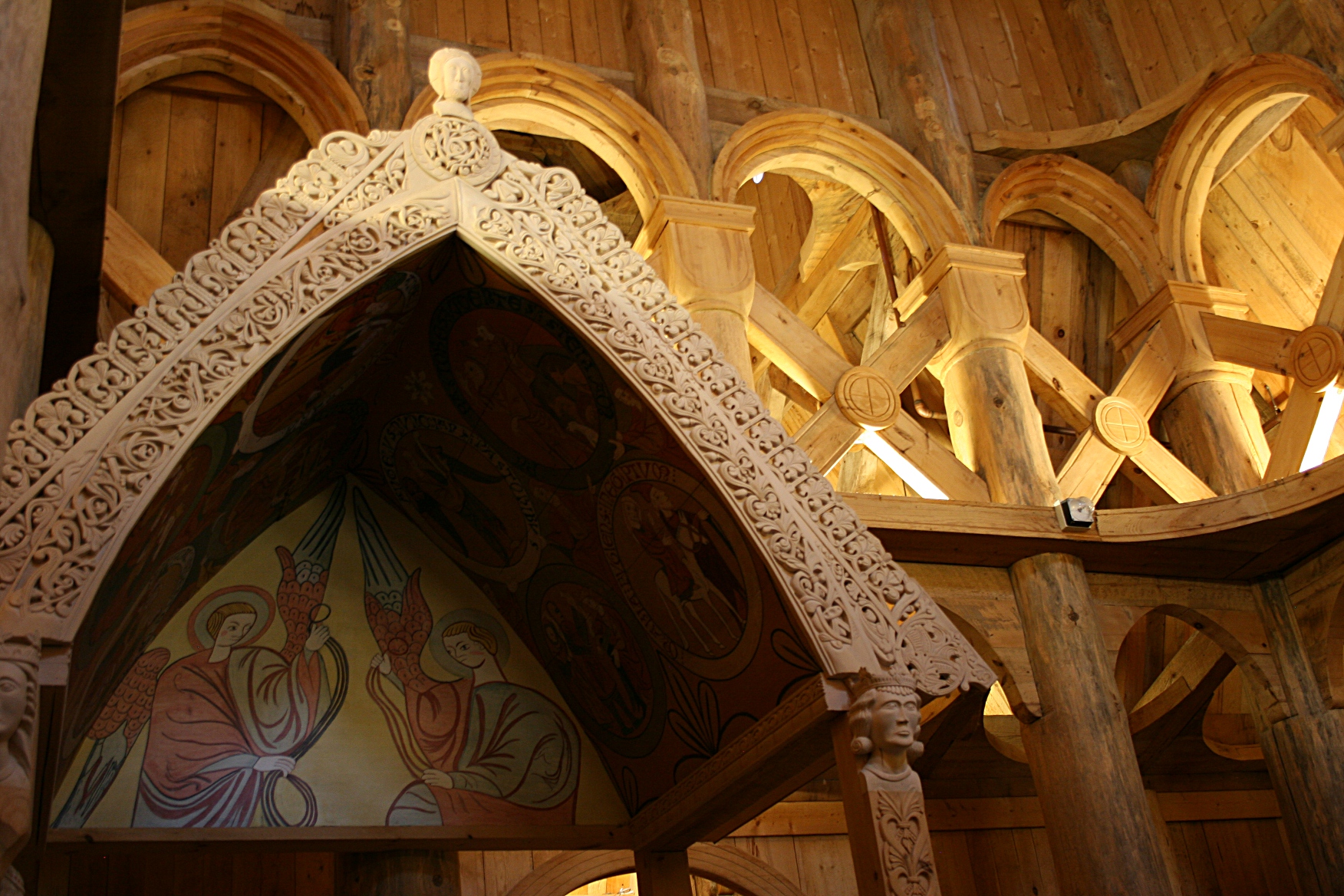
Detailed carvings and paintings define the chapel area.

Other details escape me except that Guy Paulson, who built and donated the stave to the city of Moorhead, carved the intricate designs inside and outside the church. The craftsmanship of his work is exquisite.

Really, sometimes remembering the visual details, rather than the rapid-fire of information overload, is the best way to take a tour.

Amen and amen.

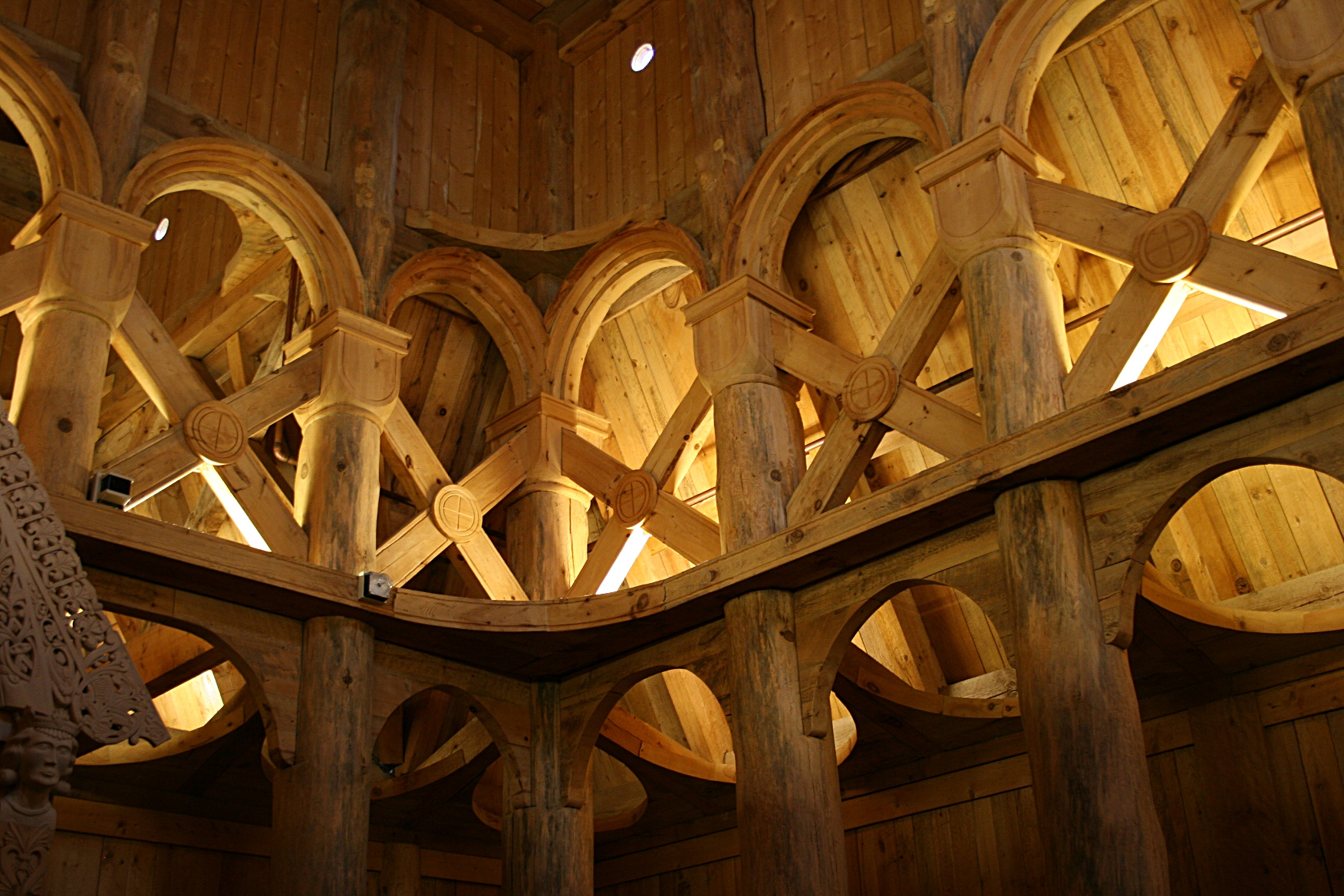
Looking up at the beautiful construction.

Another painting inside the chapel area.

There are no ground level windows, only above. This is looking toward the back of the church, above the narrow entry door.

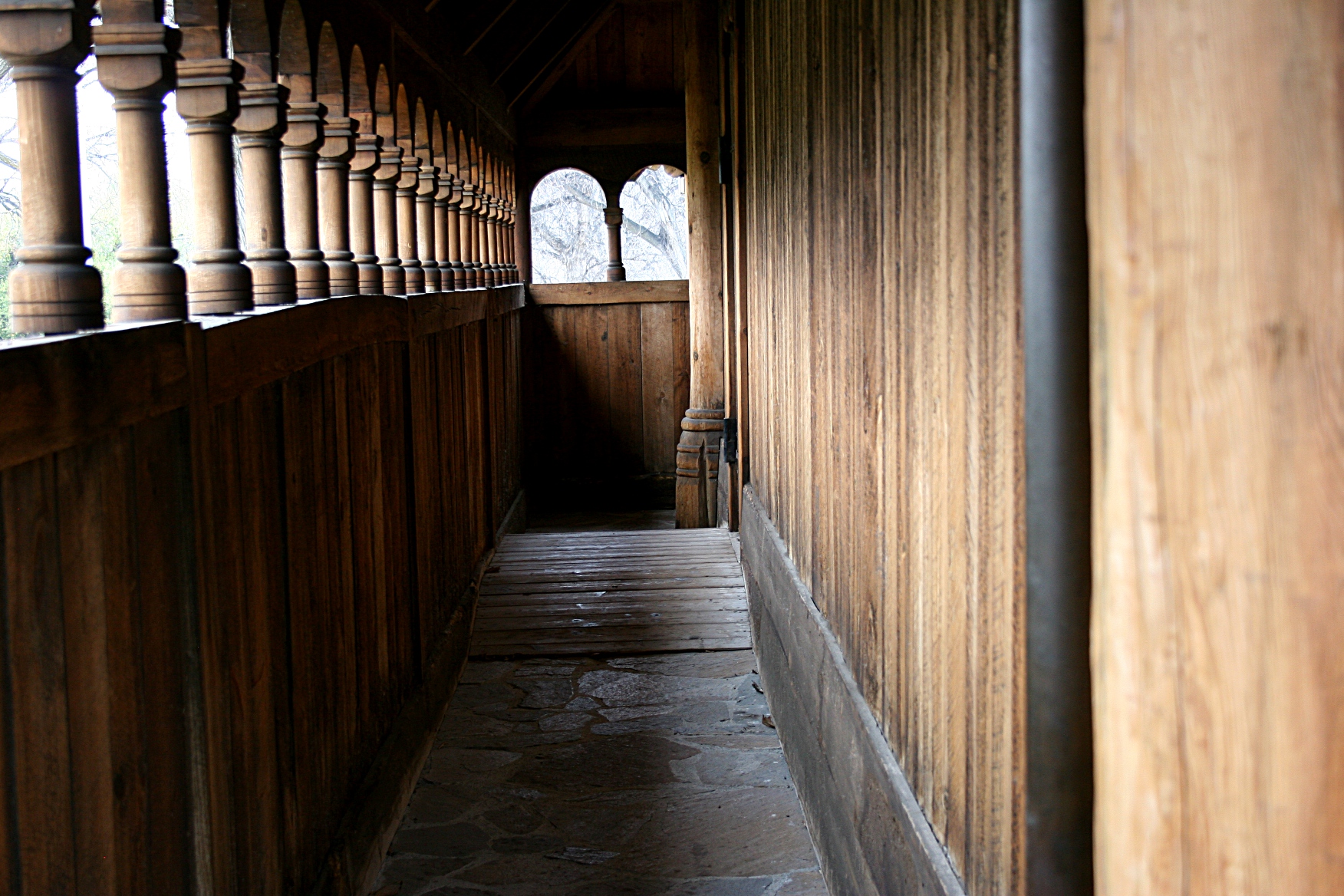
Two exterior hallways buffet the building. In the original church in Norway, those with diseases like leprosy would wait here as they were not allowed inside for worship.

A close-up shot detailing construction.

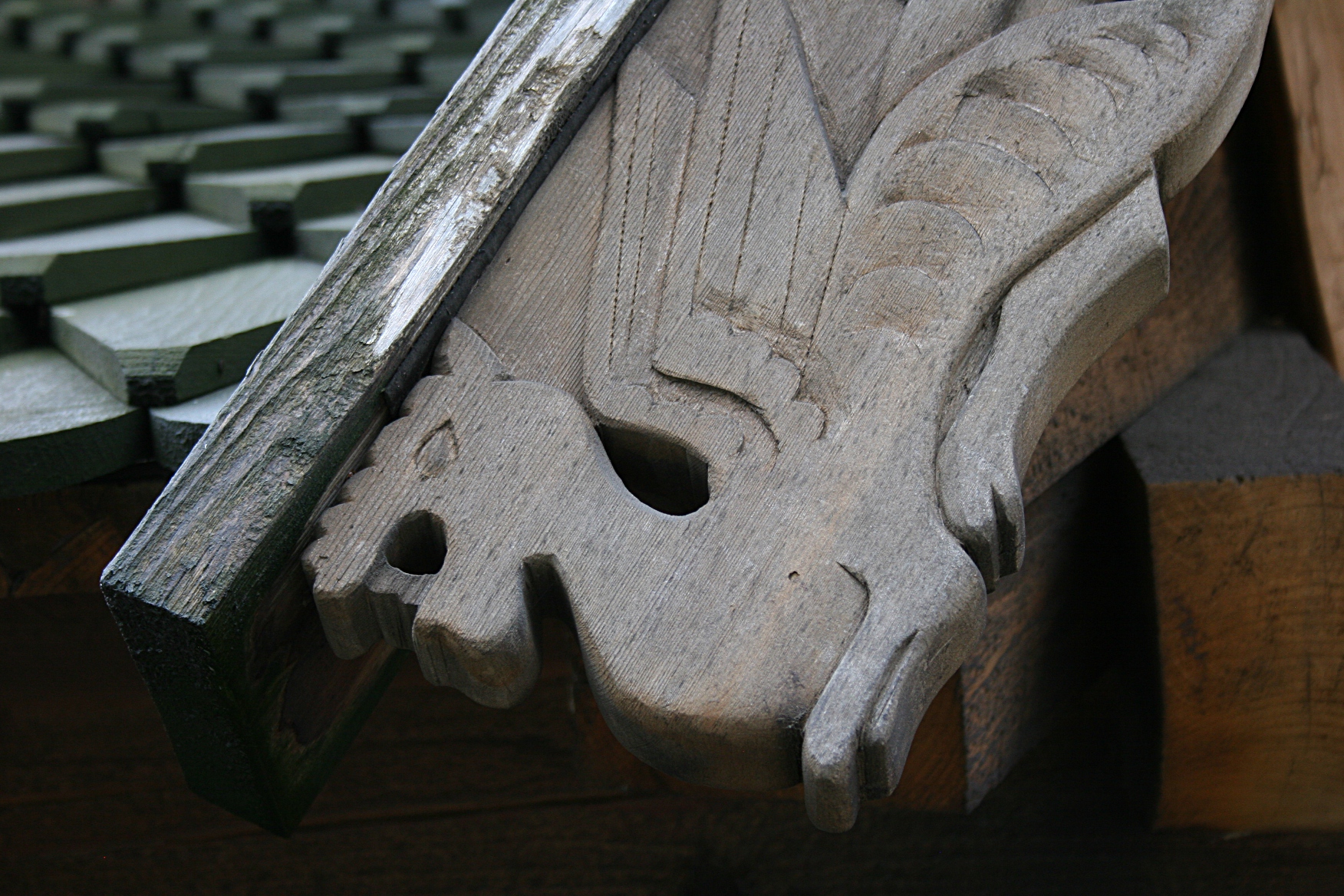
Dragon carvings are everywhere, inside and out, this one at the edge of the roof.

© Copyright 2012 Audrey Kletscher Helbling
 

Discovering historic & vibrant downtown Fargo November 12, 2012

Filed under: Uncategorized — Audrey Kletscher Helbling @ 8:29 AM
Tags: , , , , , , , ,

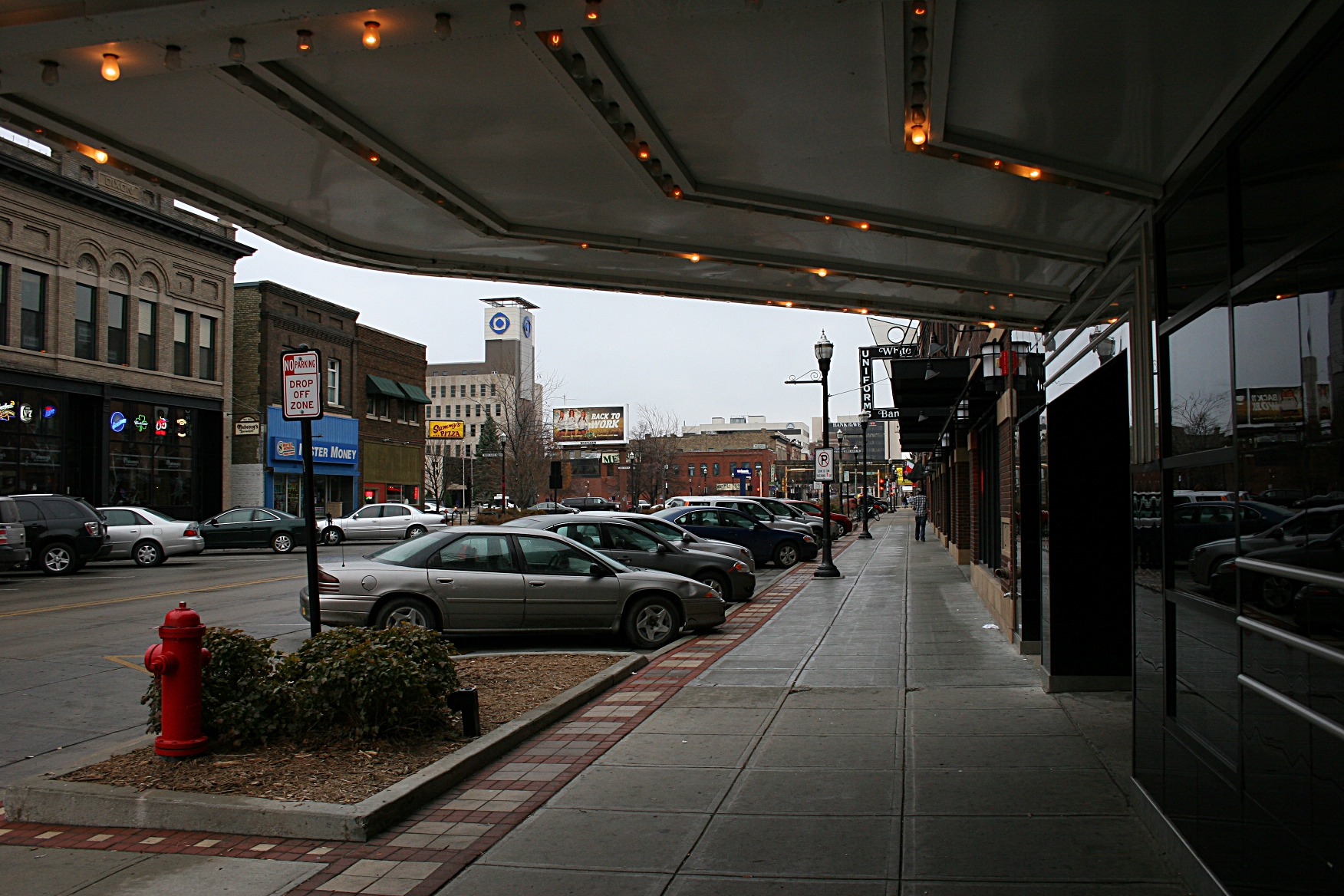
A view of the 300 block on North Broadway, including signage for the Fargo Theatre, built in 1926 as a cinema and vaudeville theatre. The restored theatre is on the National Register of Historic Places and serves as a venue for independent and foreign films, concerts, plays and more.

NOT EVEN THE SHROUD of gray mist and gloom which wrapped around Fargo in the late afternoon of a bone-chilling Saturday in early November could quell my enthusiasm for this historic downtown in a city I’ve only begun to explore.

This is my kind of downtown with historic buildings and a vibe that is both vibrant and subdued. I’d feel as comfortable here glammed for an evening on the town as I would kicking about in my jeans and buffalo plaid flannel shirt.

Under the protective canopy of the Fargo Theatre, I shot this street scene.

In a brief walk of not quite two blocks—shortened by the drizzle and my desire to keep my camera out of the rain—I realized that I need to revisit this downtown when time and weather allow for a more intimate look.

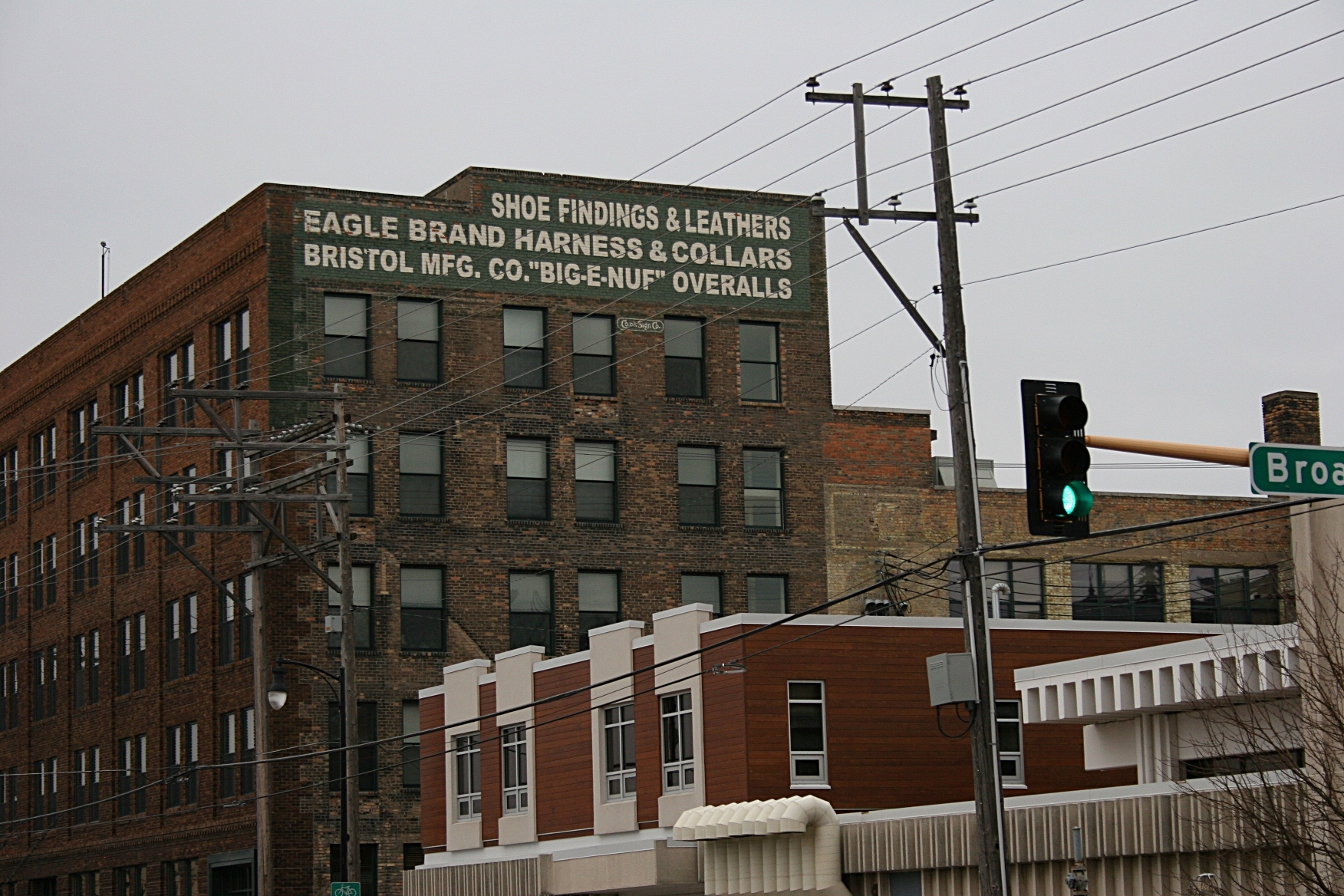
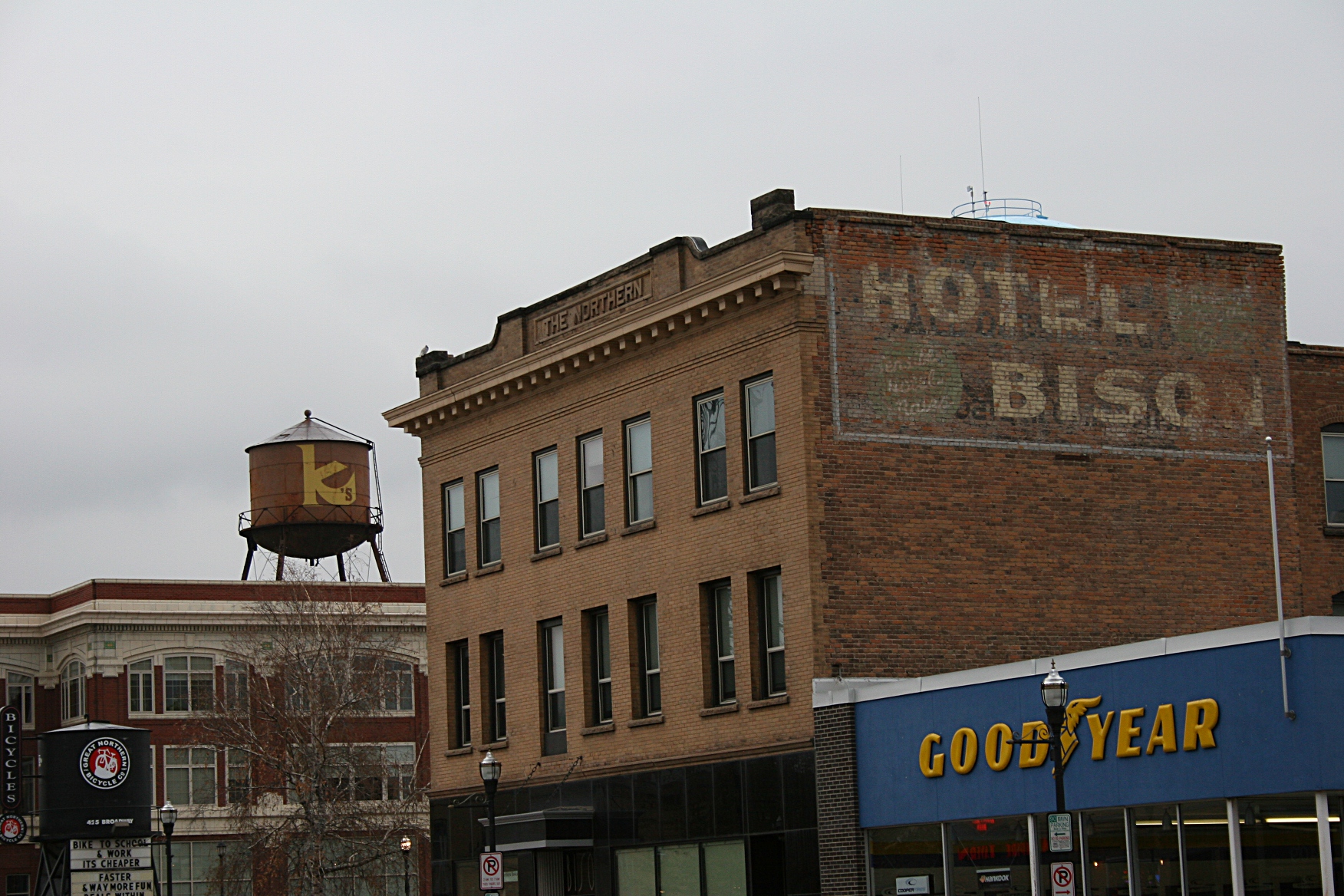
I swung my camera around to focus on the advertising on this stately brick building just off Broadway.

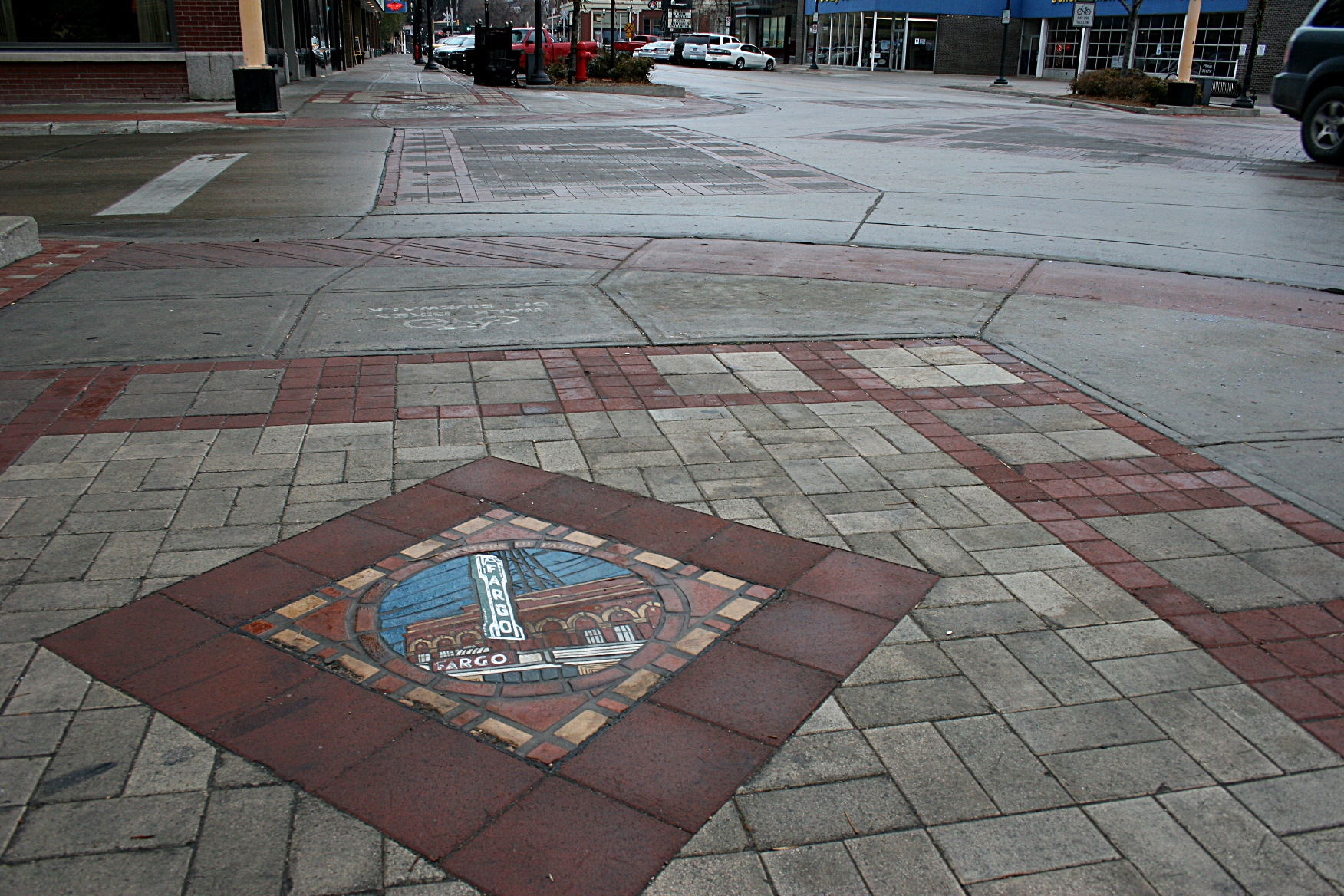
A quick visual tour revealed well-kept brick buildings with great architectural detail, vintage neon signs, advertising painted on brick walls, art in the sidewalk and a general impression that those who live and work here care about this place.

Sidewalk art featuring the Fargo Theatre.

It’s no wonder that in 2011, Forbes magazine recognized downtown Fargo as one of the nation’s top 10 most transformed neighborhoods.

If you want big box retailers and miles of cement and malls, all of which you could find in Anytown, U.S.A., Fargo has that too, over in West Fargo.

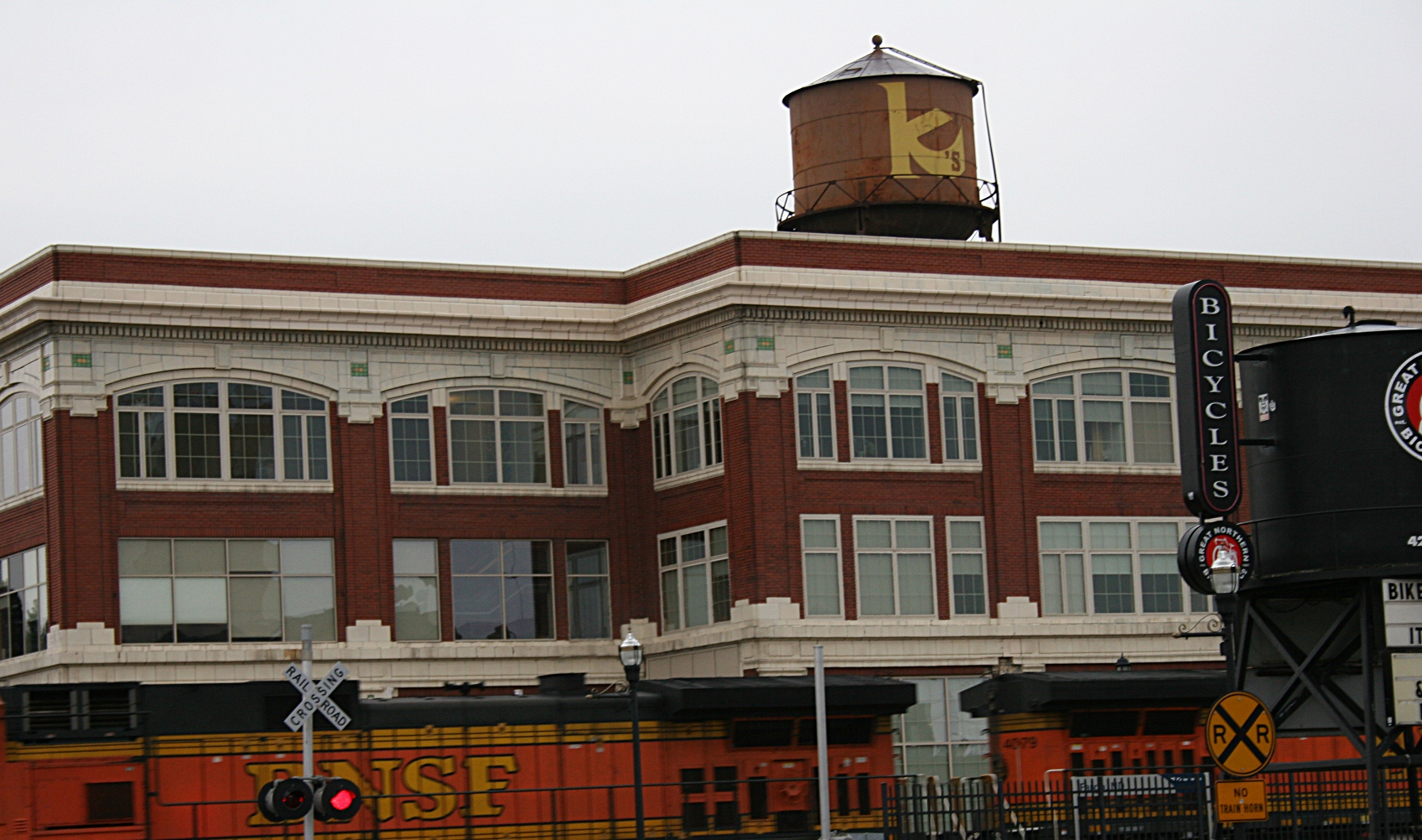
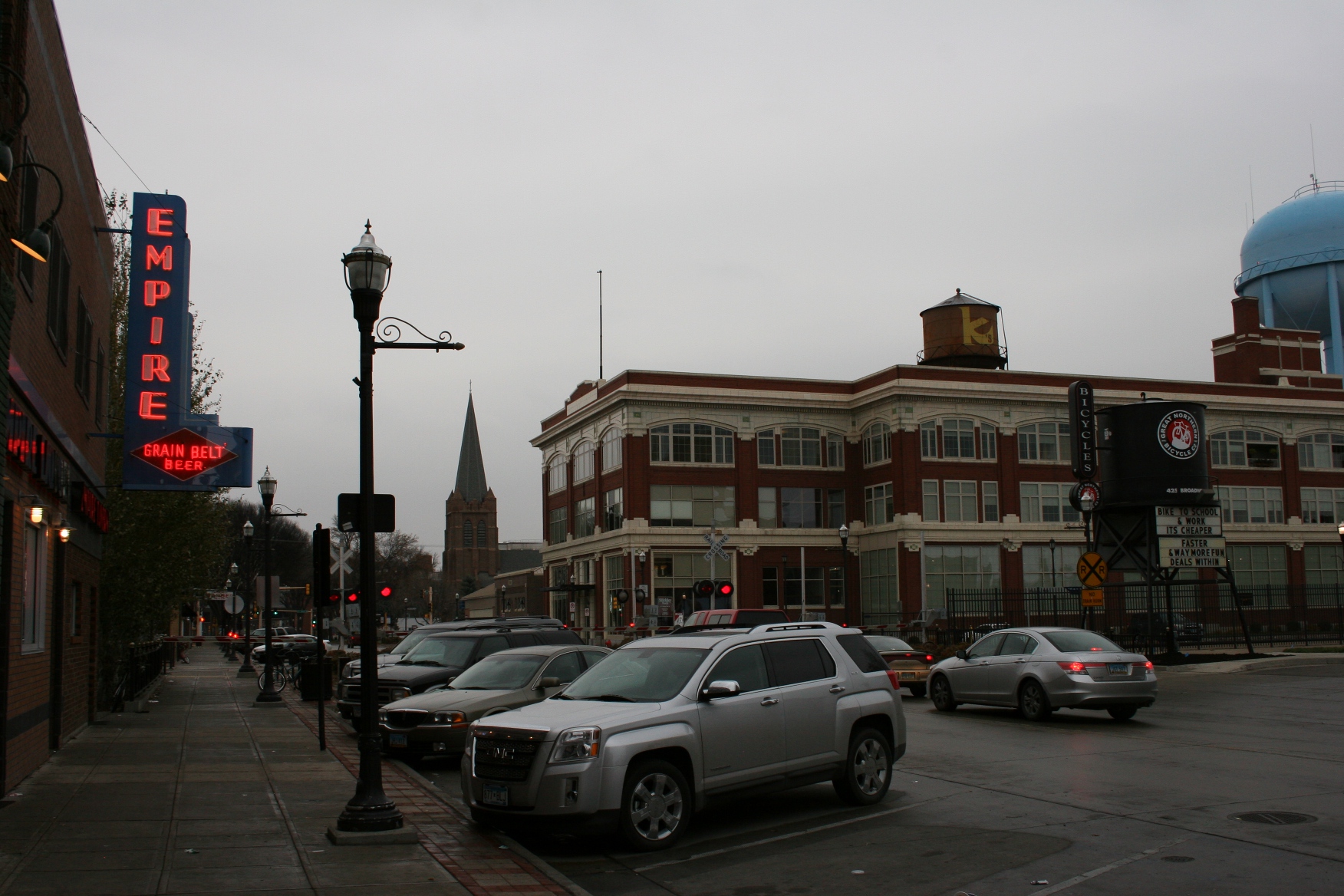
Almost anywhere you go in Fargo, you will encounter railroad tracks, even in the heart of downtown, here in the 400 block of North Broadway.

But the downtown, oh, the downtown, that to me holds the personality of Fargo as an historic river and railroad and farming community, appreciative of its past, adapting to the present and aware of its future.

Looking toward the 400 block of North Broadway, a broader view of the image above.

Signage details on buildings in the 400 block of North Broadway.

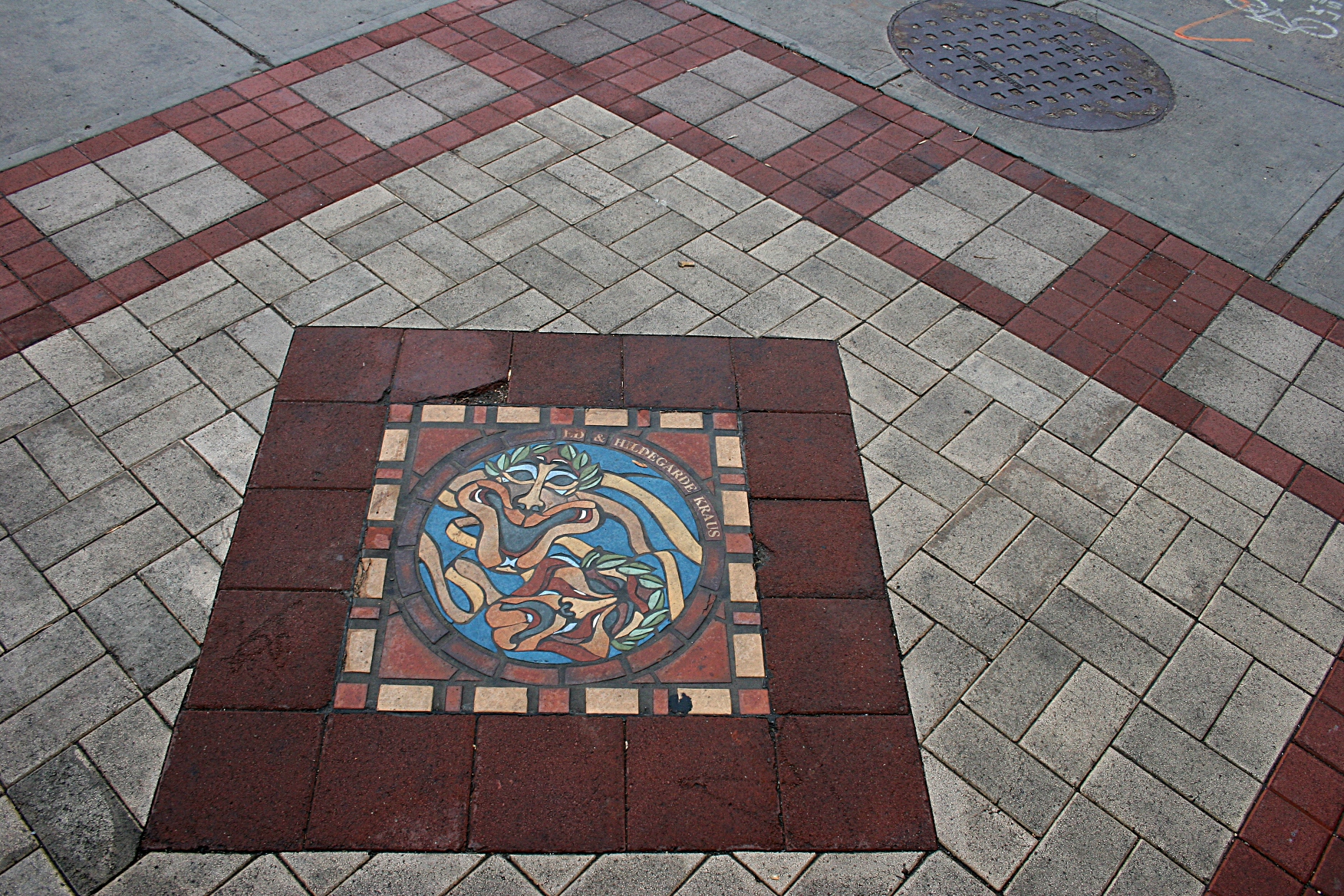
More sidewalk art, with the names Ed & Hildegarde Kraus embedded.

Across from the Fargo Theatre, O’Day Cache’ , located in the building labeled Fargoan.

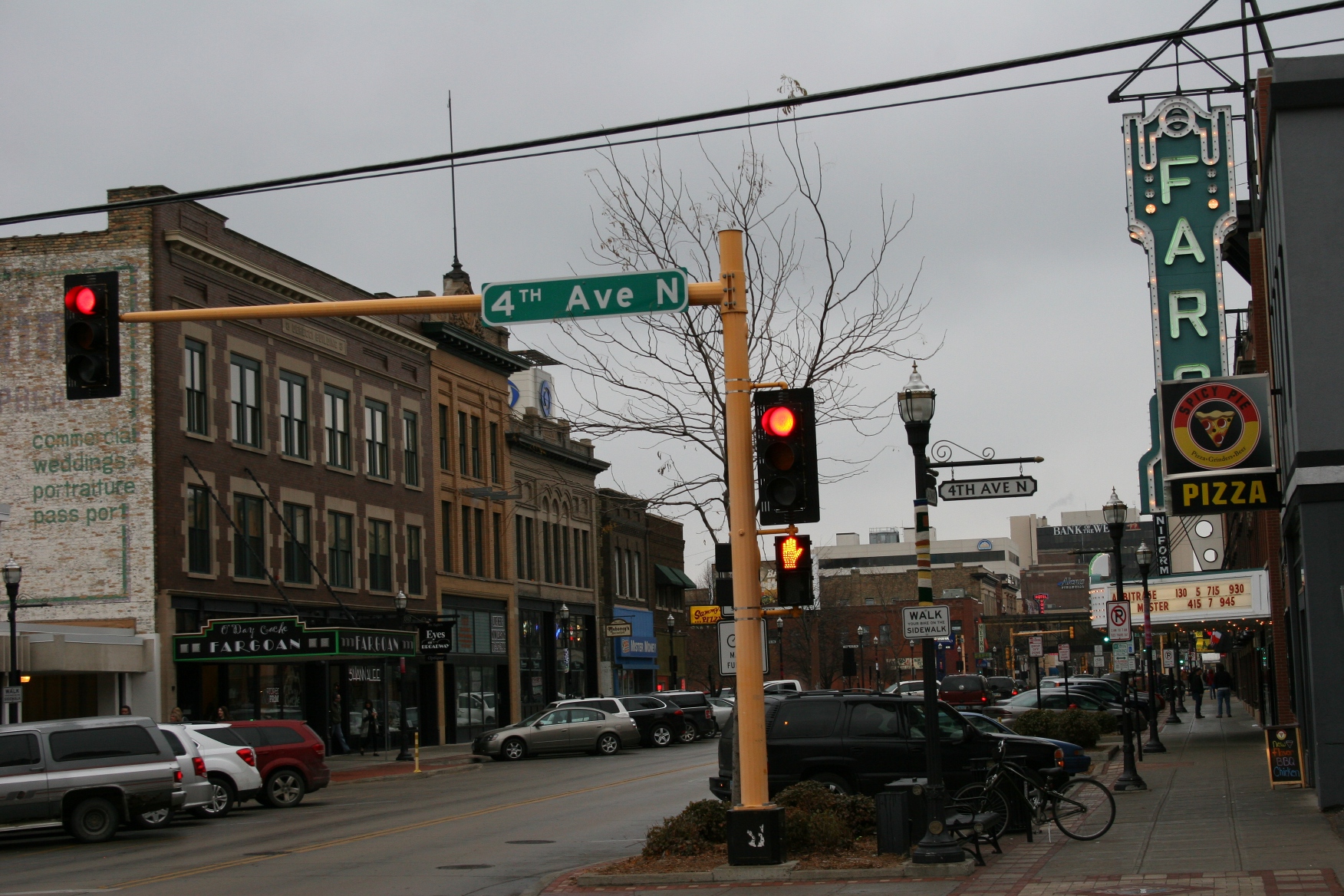
Another shot of downtown, from the corner of Fourth and Broadway.

© Copyright 2012 Audrey Kletscher Helbling

 

Thoughts on a weekend journey to Fargo and back under grey November skies November 7, 2012

Filed under: Uncategorized — Audrey Kletscher Helbling @ 7:52 AM
Tags: , , , , , , , ,

Westbound for Fargo on Interstate 94 near the West Union exit on Saturday morning.

NEARLY 10 HOURS in a vehicle traveling almost 600 miles round trip to Fargo, North Dakota, under the gloomiest of grey November skies can test one’s endurance.

The eyes began to wander, to lock onto the slightest patches of color in an otherwise dull and monotone landscape.

Billboards offer a diversion as do the semis which follow Interstate 94, some forking north toward Canada, others continuing even farther west into the endless grey expanse.

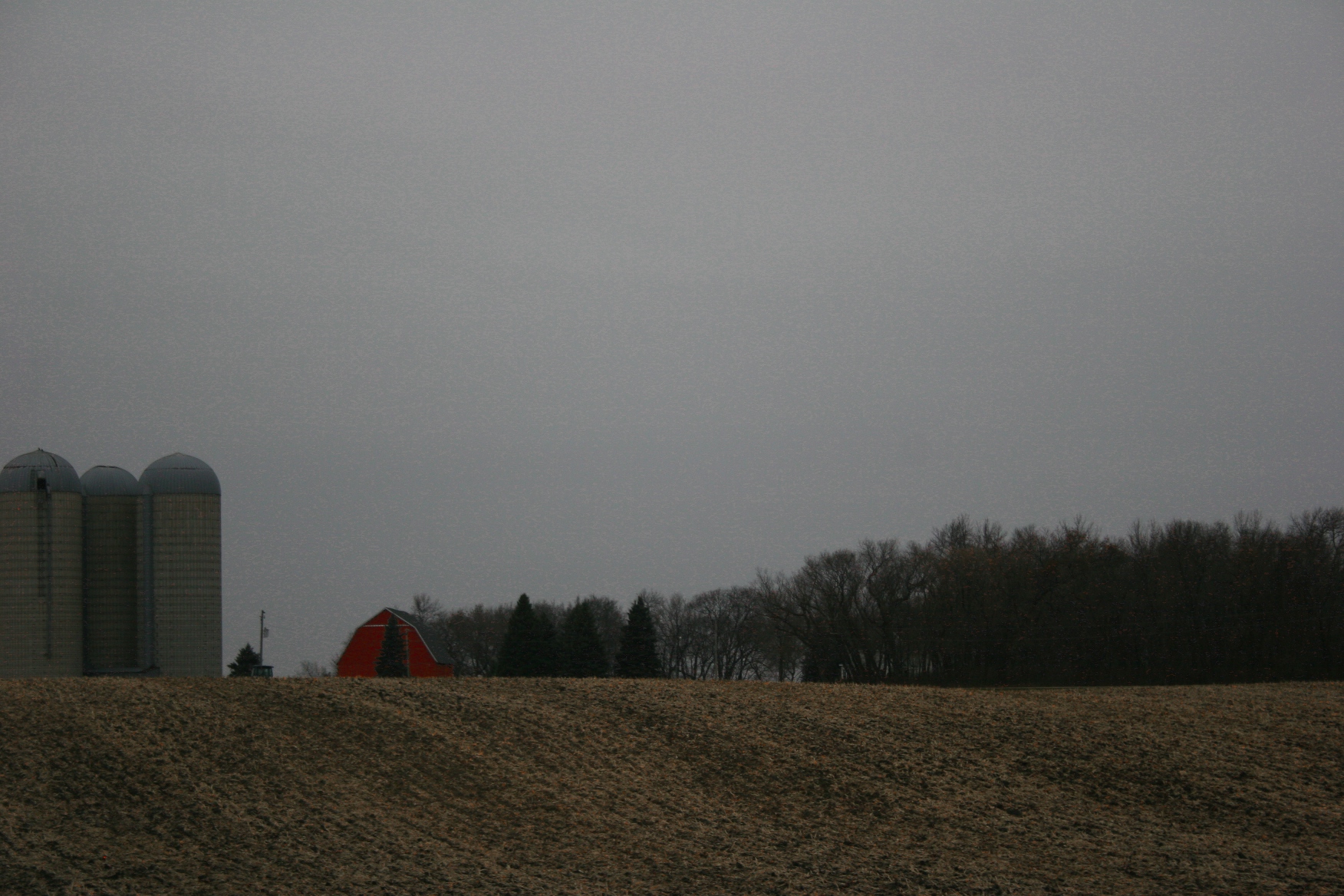
A section of the journey where there are still hills. My eyes focus on the brilliant red hue of the barn.

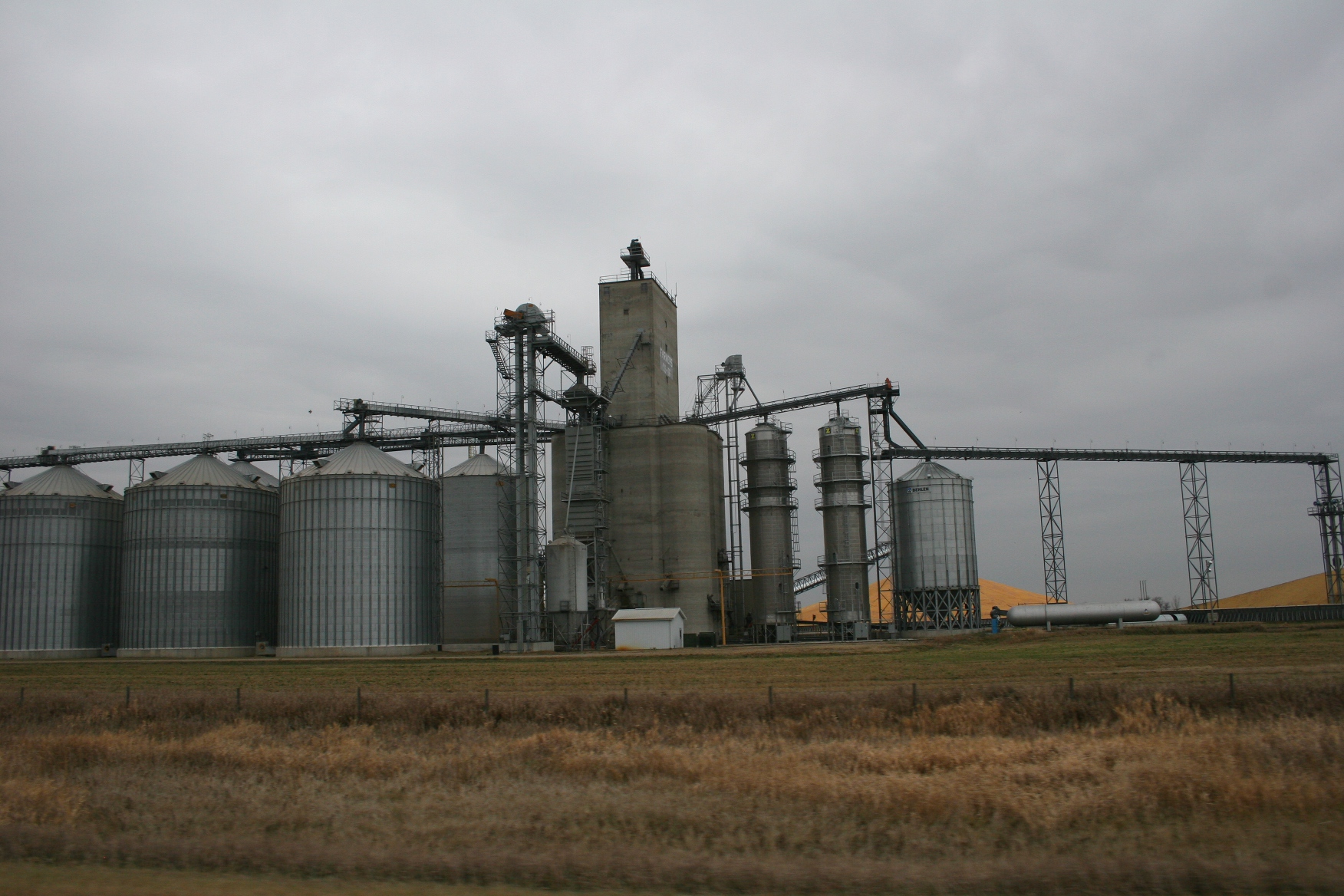
Near Barnesville, a short distance east of Fargo and Moorhead, piles of corn brighten the muted landscape.

Hunters in bright orange roam fields during the opening weekend of firearms deer hunting in Minnesota.

Red barns and piles of golden corn and deer hunters in blaze orange distract me from the barren greyness of this journey to the Red River valley. I wonder at that use of the word “valley,” for I see no indentations in the earth to suggest a valley.

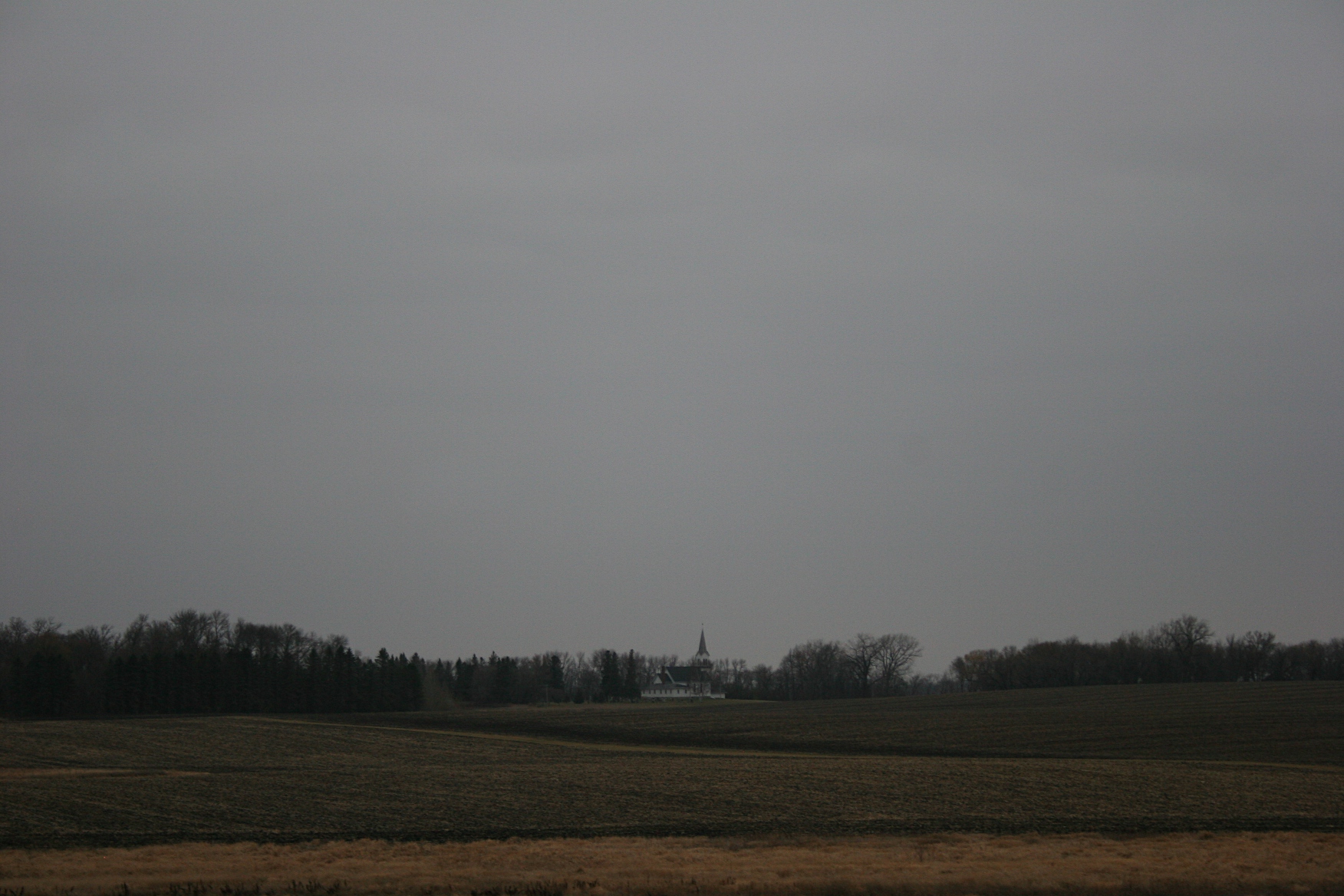
This quaint country church in the distance somewhere east of Fargo/Moorhead always calms my spirits.

I am a prairie native. But even for me, the flat land west of Fergus Falls and into Fargo/Moorhead challenges my spirit. I feel insecure and diminished in this place and that unsettles me.

How can a place seem so flat that I feel as if I will step off the earth should I journey any further than the northwestern fringes of Fargo?

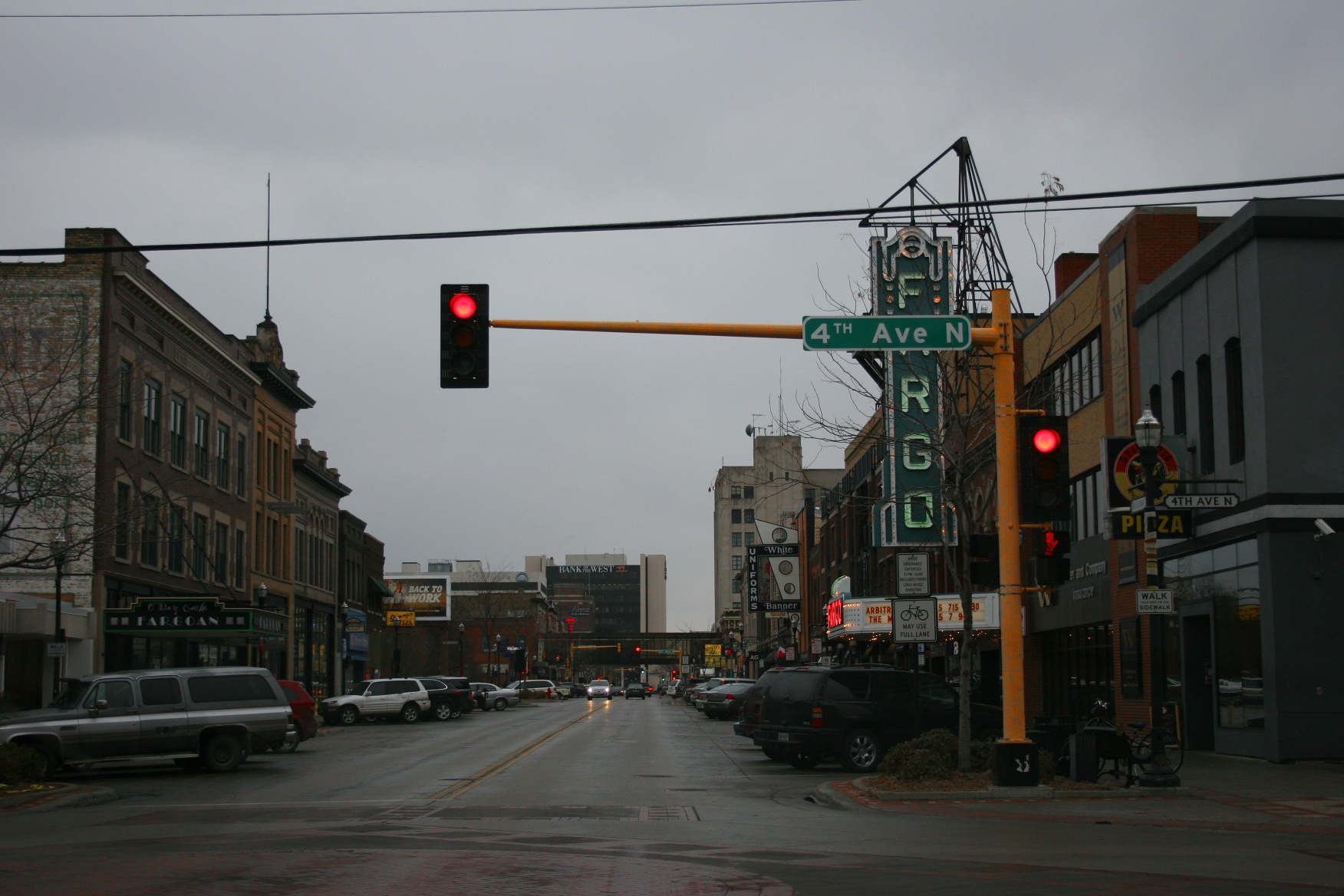
Downtown Fargo late Saturday afternoon under sullen skies with a light mist falling.

More gloomy skies on the return trip from Fargo to Faribault on Sunday afternoon.

Spots of orange (slow moving vehicle signs) provide a respite for my eyes on Sunday’s drive home.

© Copyright 2012 Audrey Kletscher Helbling
 

Monday wash day in Minnesota Amish country November 5, 2012

Filed under: Uncategorized — Audrey Kletscher Helbling @ 7:58 AM
Tags: , , , , , , ,

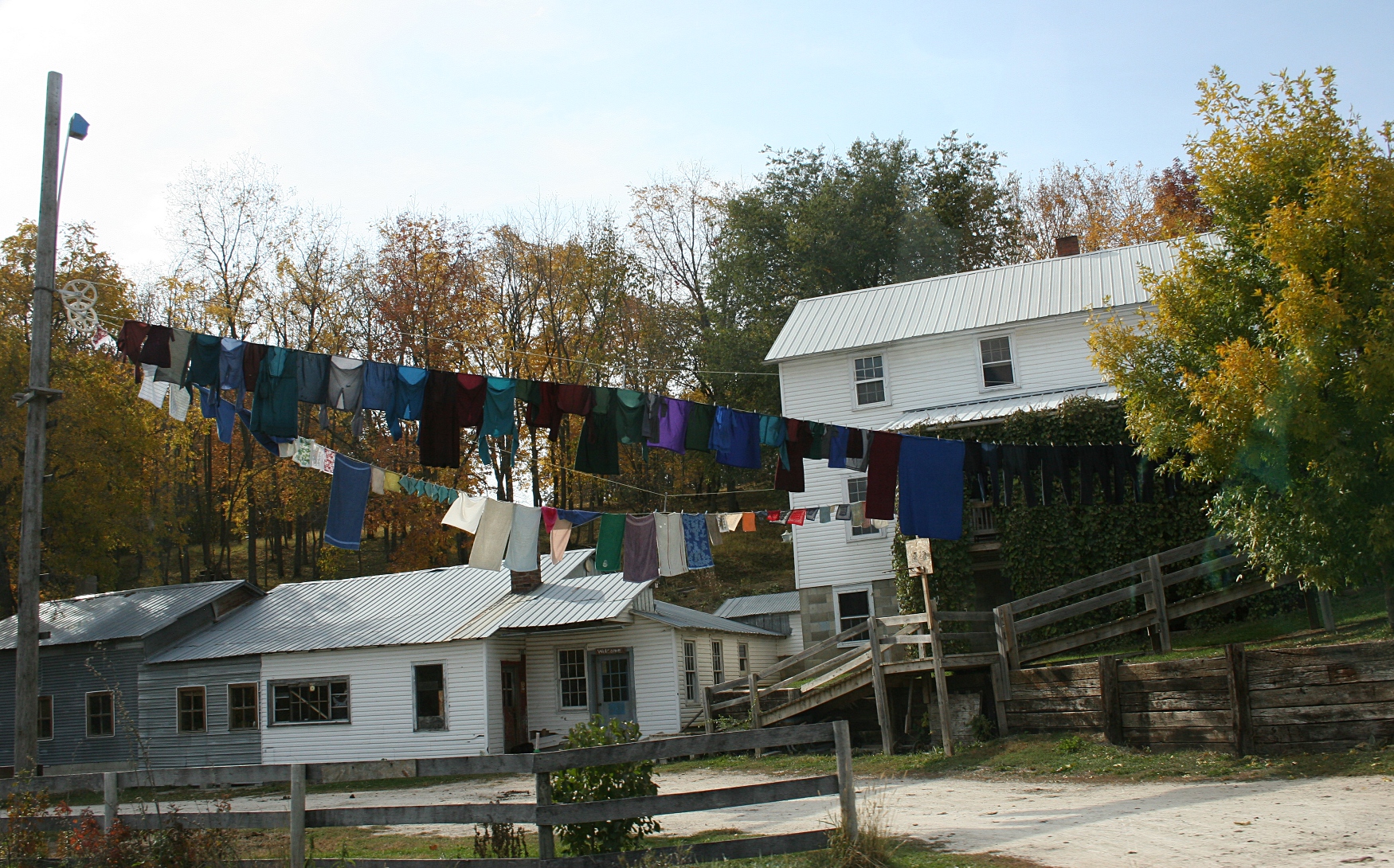
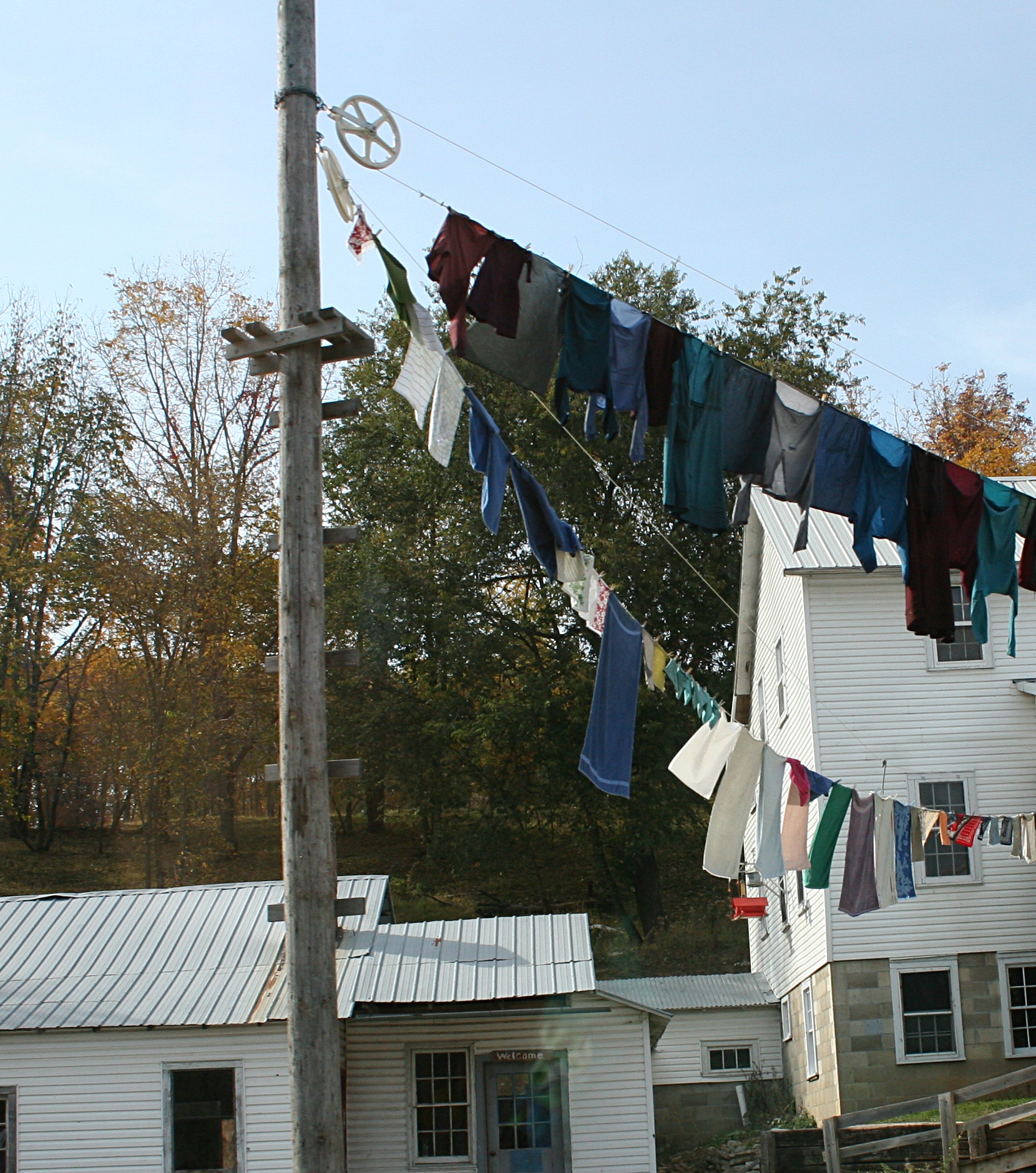
Monday wash day in Eden Hollow, Minnesota, in early October.

IMAGINE MY DELIGHT, being a hanging-laundry-outside fanatic, when I spotted this clothesline recently in southeastern Minnesota. Pure genius, wouldn’t you say, to rig up a contraption like this for reeling laundry outside and back inside?

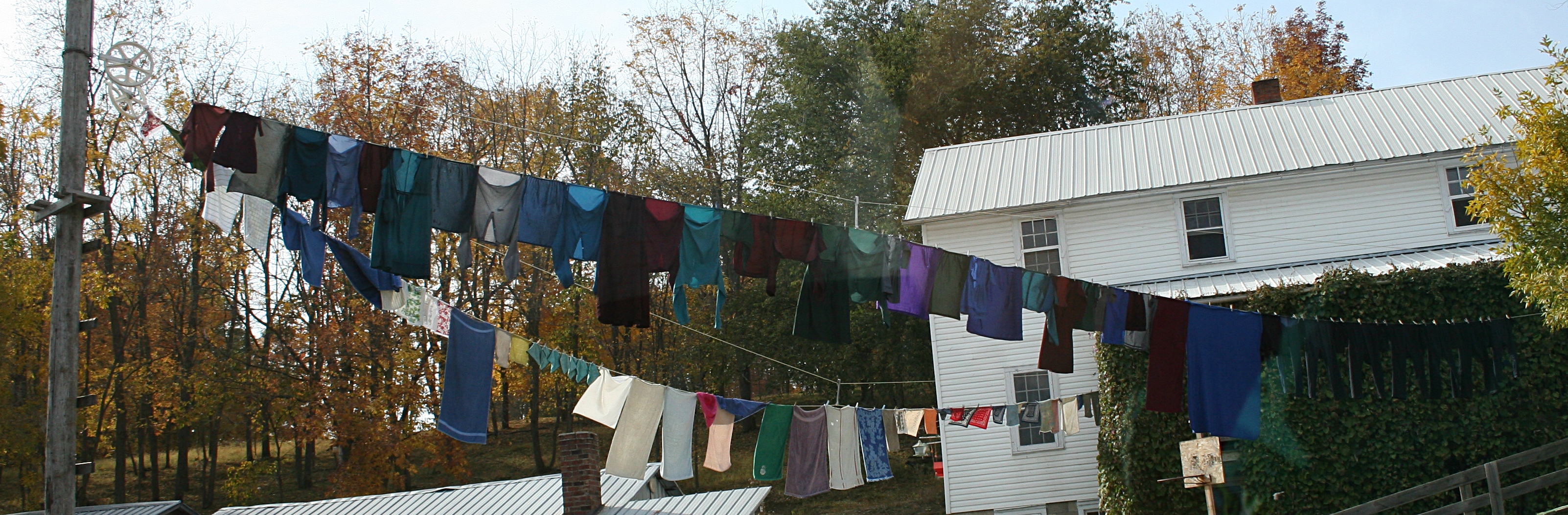
A close-up on how this clothesline system works.

I photographed this scene in a place marked Eden Hollow as my husband and I were traveling somewhere between Lenora and Canton in Fillmore County on a drive through southeastern Minnesota Amish country.
Given the style and jewel tones of the clothing, I’d say this laundry belonged to an Amish family. Double bonus for me as I also am intrigued by the Amish and their lifestyle.

Happening upon daily snippets of ordinary life like this pleases me for I am given the opportunity to view life as it is, unedited and real.

The pulley system, rigged to a post in the front yard on one end. I couldn’t see the other end.

© Copyright 2012 Audrey Kletscher Helbling