Minnesota Prairie Roots

Writing and photography by Audrey Kletscher Helbling

Pizza & beer on a Saturday night in Kilkenny January 26, 2013

Filed under: Uncategorized — Audrey Kletscher Helbling @ 9:52 PM
Tags: , , , , , , , , , ,

I SUGGESTED WE STOP for directions at the corner gas station.

“How hard can it be to find this place in Kilkenny?” my husband responded.

He was right. Kilkenny, population around 150, in Le Sueur County, runs only a few blocks in all directions. Surely we could find “the bar on top of the hill with the really good pizza,” per our friend LeAnn’s recommendation.
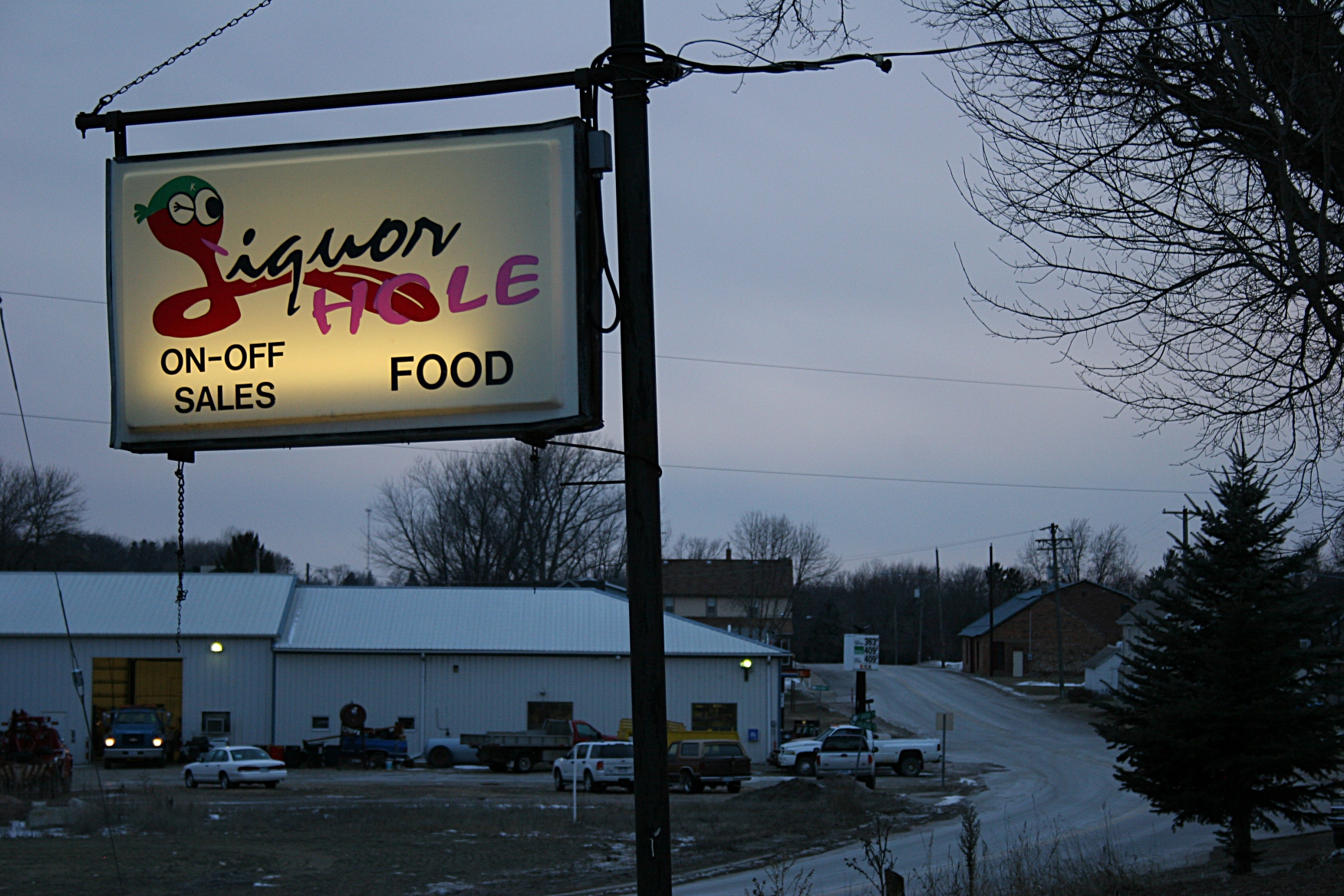
Atop the hill in Kilkenny by the water tower, we found the Liquor Hole.

Atop the hill in Kilkenny by the water tower, we found the Liquor Hole.

Just up the road from Bud’s Service, we found the Liquor Hole.
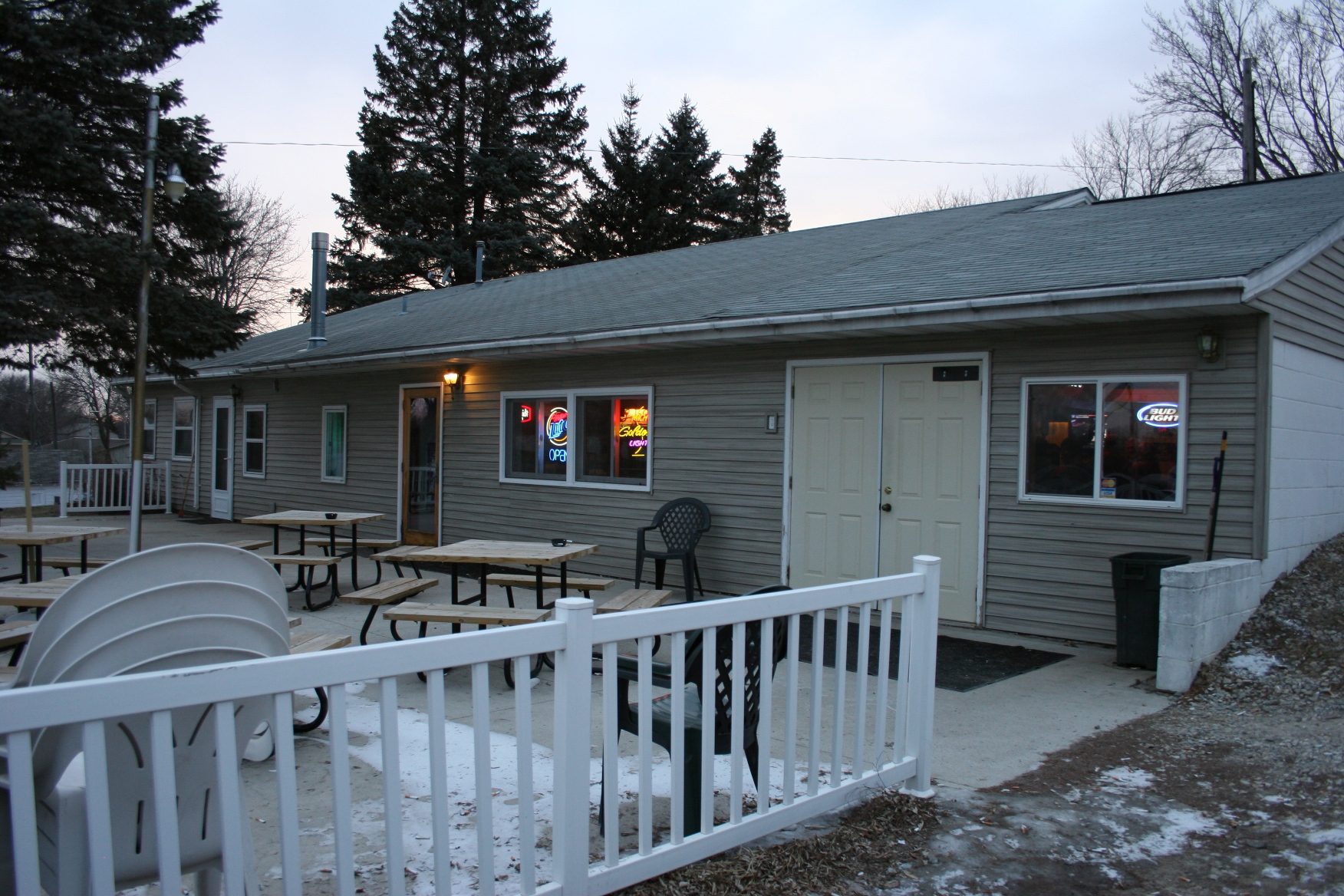
I expect in warm weather, the front patio is a popular dining and drinking spot at the Hole.

I expect in warm weather, the front patio is a popular dining and drinking spot at the Hole.

We arrived Saturday evening as the last wisps of daylight faded, enough time for me to snap a few outdoor shots before entering the Hole.

Inside we found your typical small town restaurant/bar—pool table in the corner, stools ringing a horseshoe bar, neon beer lights blazing, televisions blaring, opened pull tabs littering the bar top, smokers stepping out to light up a smoke…
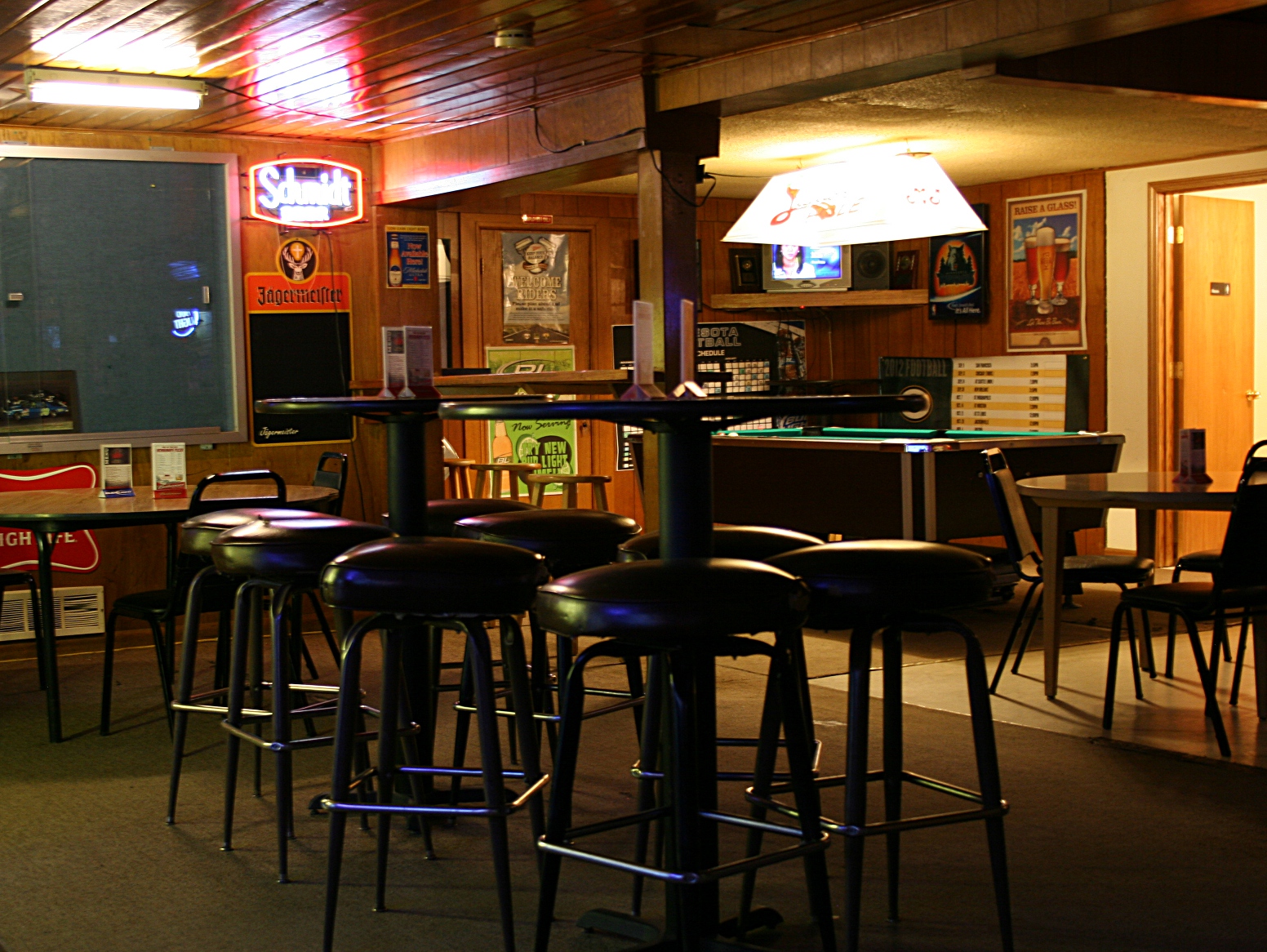
A section of the dining area.

A section of the Liquor Hole.

No pool players yet early on a Saturday evening.
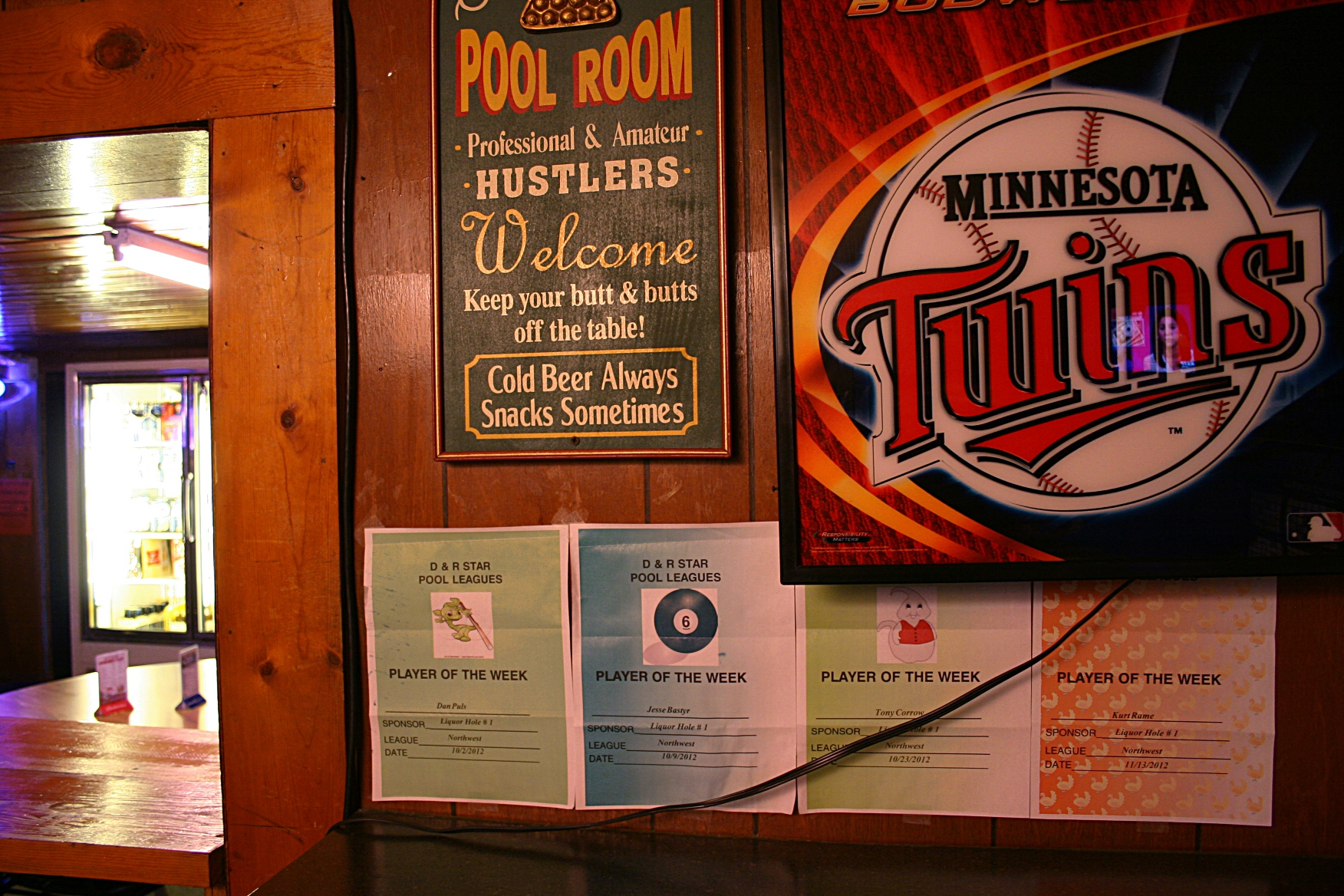
No pool players yet early on a Saturday evening.

Be sure to follow the bar's pool rules.

Be sure to follow the bar’s pool rules.
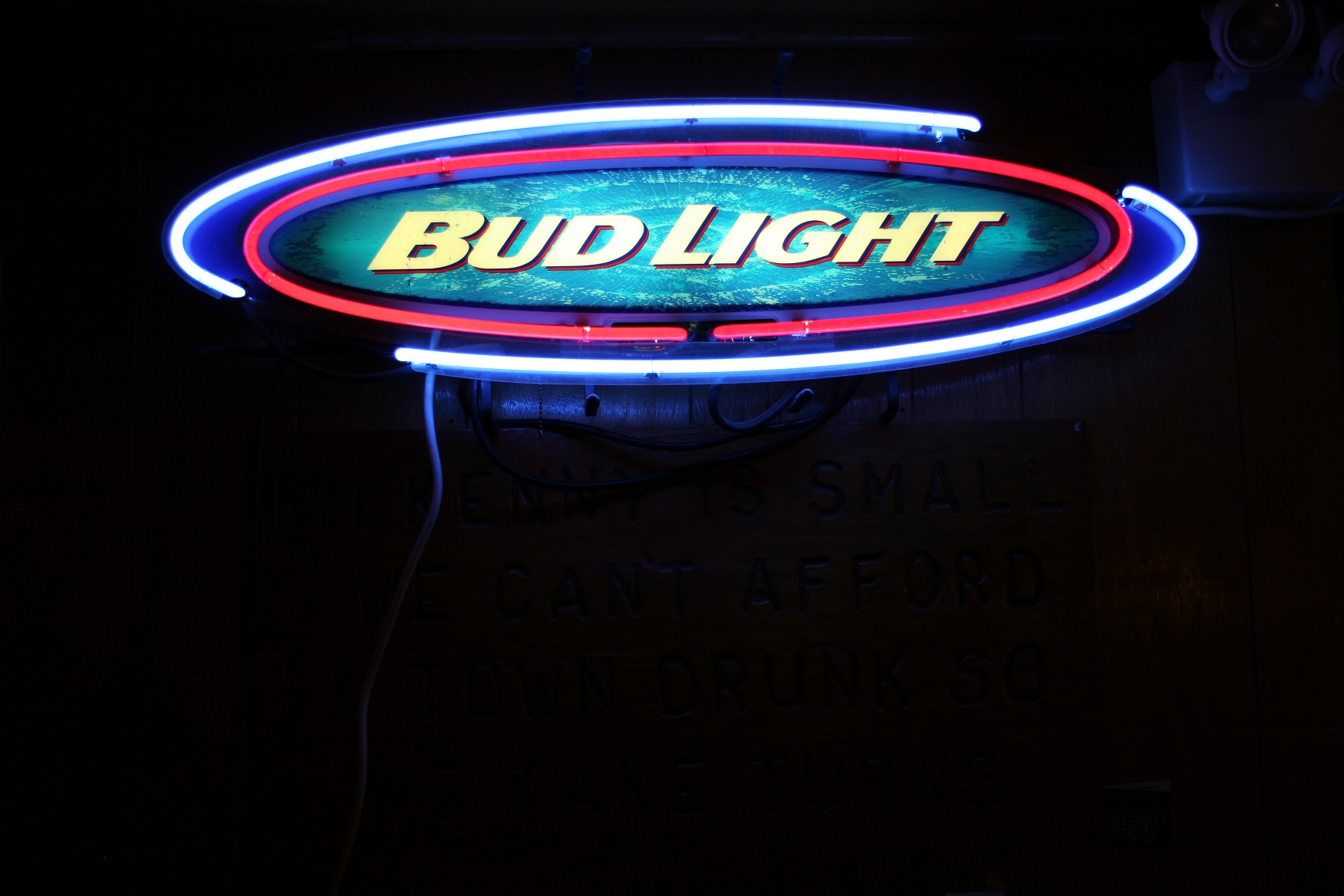
Lots of neon beer signs.

Lots of neon beer signs.

But there were a few surprises, like the homemade wood sign announcing Kilkenny’s inability to afford a town drunk and a fat-bottomed girl print I refused to photograph.
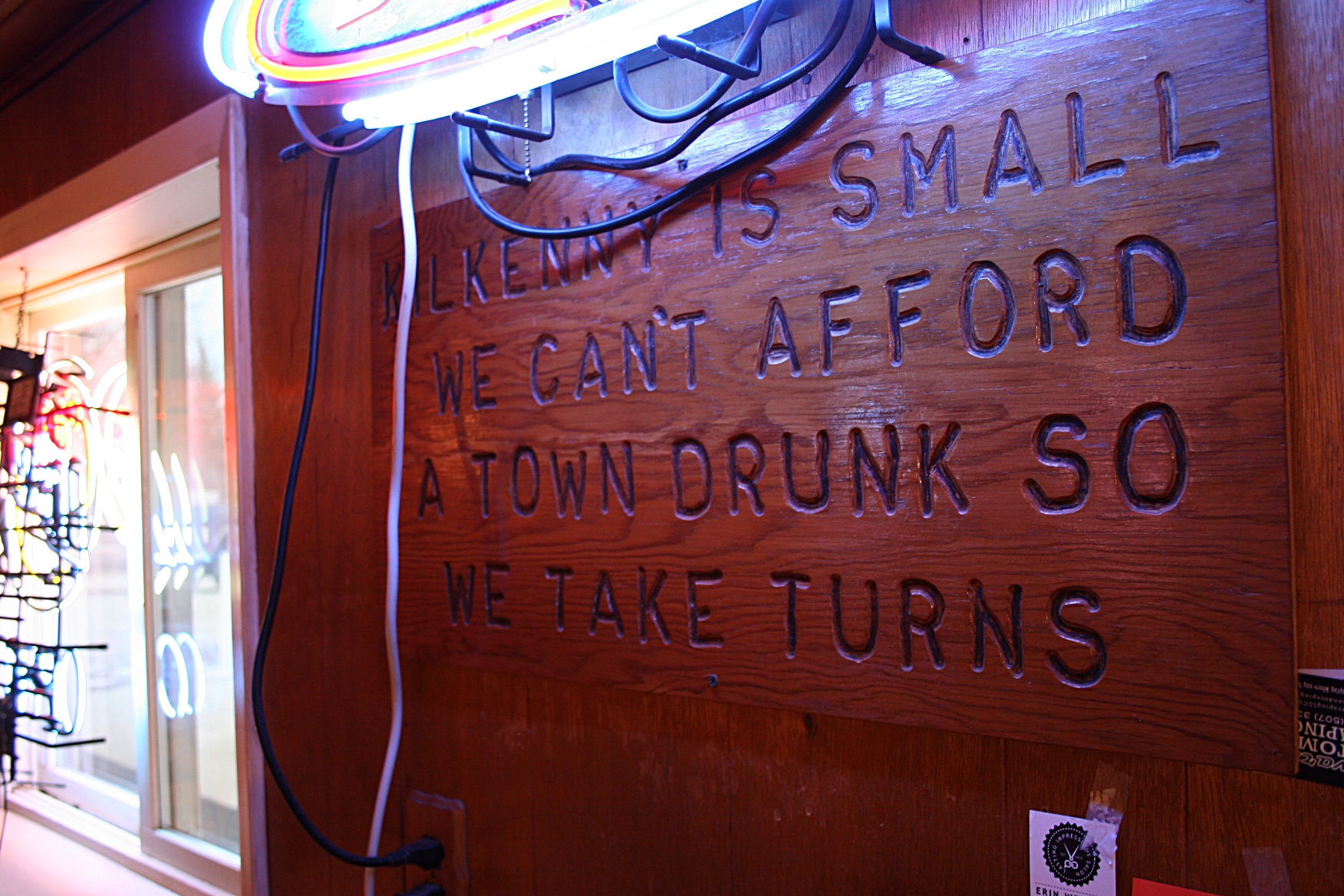
Kilkenny bar humor posted below the Bud Light sign.

Kilkenny bar humor posted below the Bud Light sign.

And when Randy asked for a Schell’s FireBrick beer, the bartender/owner looked at him and said, “Come on, this is Kilkenny.”

Alright then. We both ordered a Nordeast to go with our $11 House pizza topped with sausage, pepperoni, Canadian bacon, onion, mushrooms, green pepper and green olives. And just for the record, the pizza is not entirely homemade. The crust is pre-made. I asked.
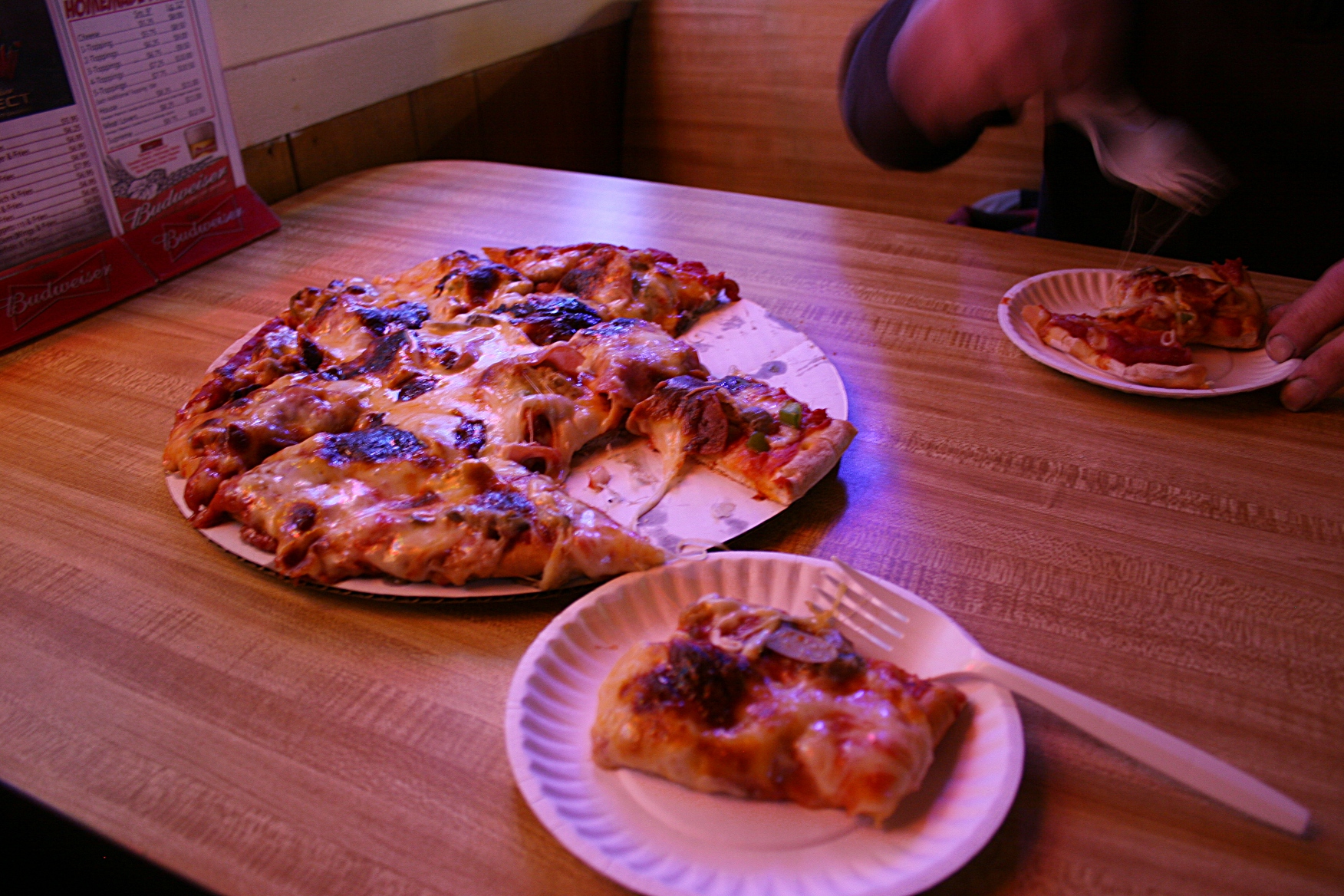
The Liquor Hole's House pizza.

The Liquor Hole’s House pizza.

None-the-less, the pizza was thick and tasty, loaded with cheese and was delivered on a cardboard round with several small paper plates, plastic forks and a half-inch thick stack of napkins, most of which we used.

“Cuts down on the dishes,” Randy joked as he observed the disposable tableware.

But we didn’t mind. After all, in the bartender’s words, “This is Kilkenny.”
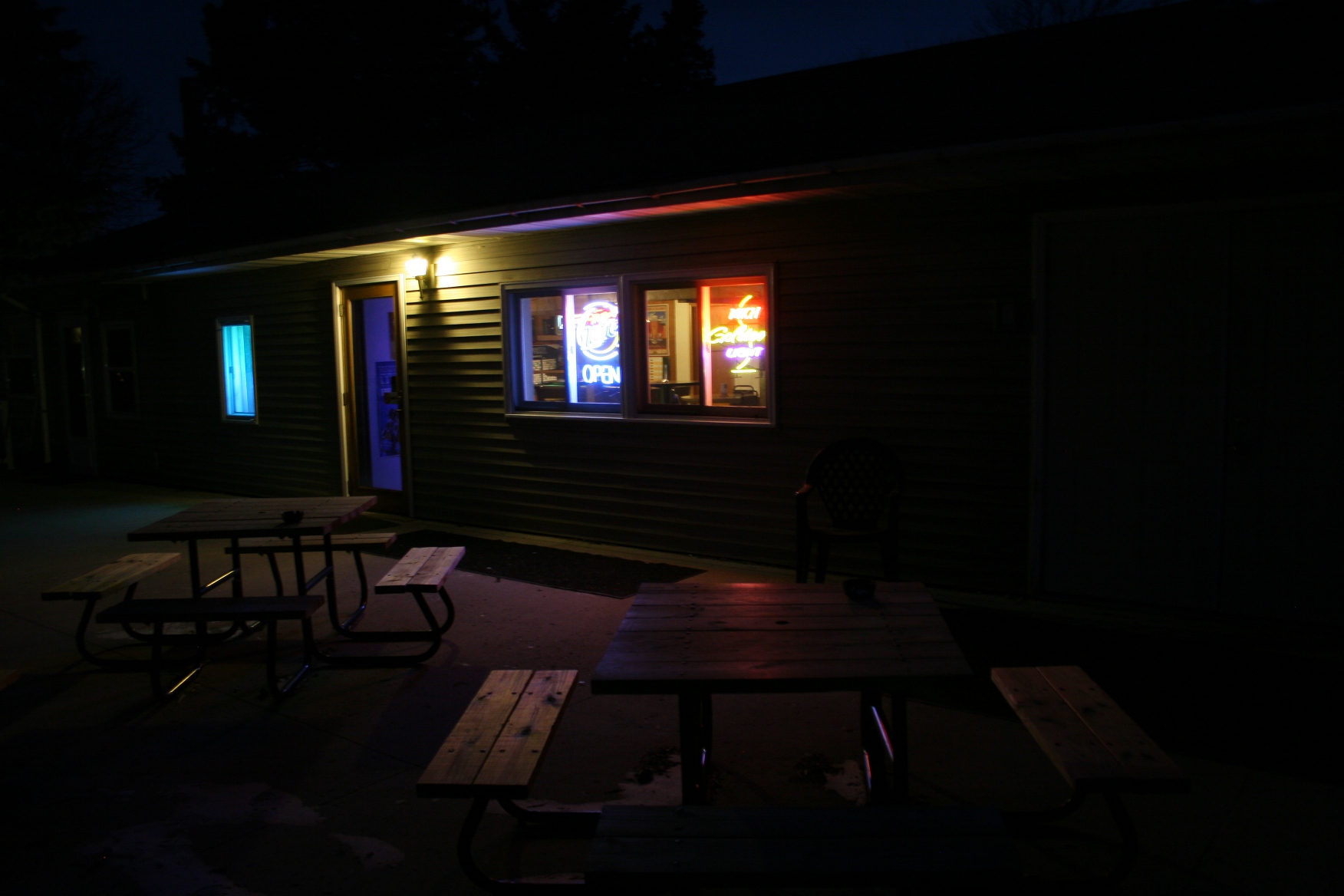
A last shot of the Liquor Hole before we got into the car and drove 15 miles back east to Faribault.

A last shot of the Liquor Hole before we got into the car and drove 15 miles back east to Faribault.

© Copyright 2013 Audrey Kletscher Helbling


Houdini magic in Appleton, Wisconsin January 17, 2013

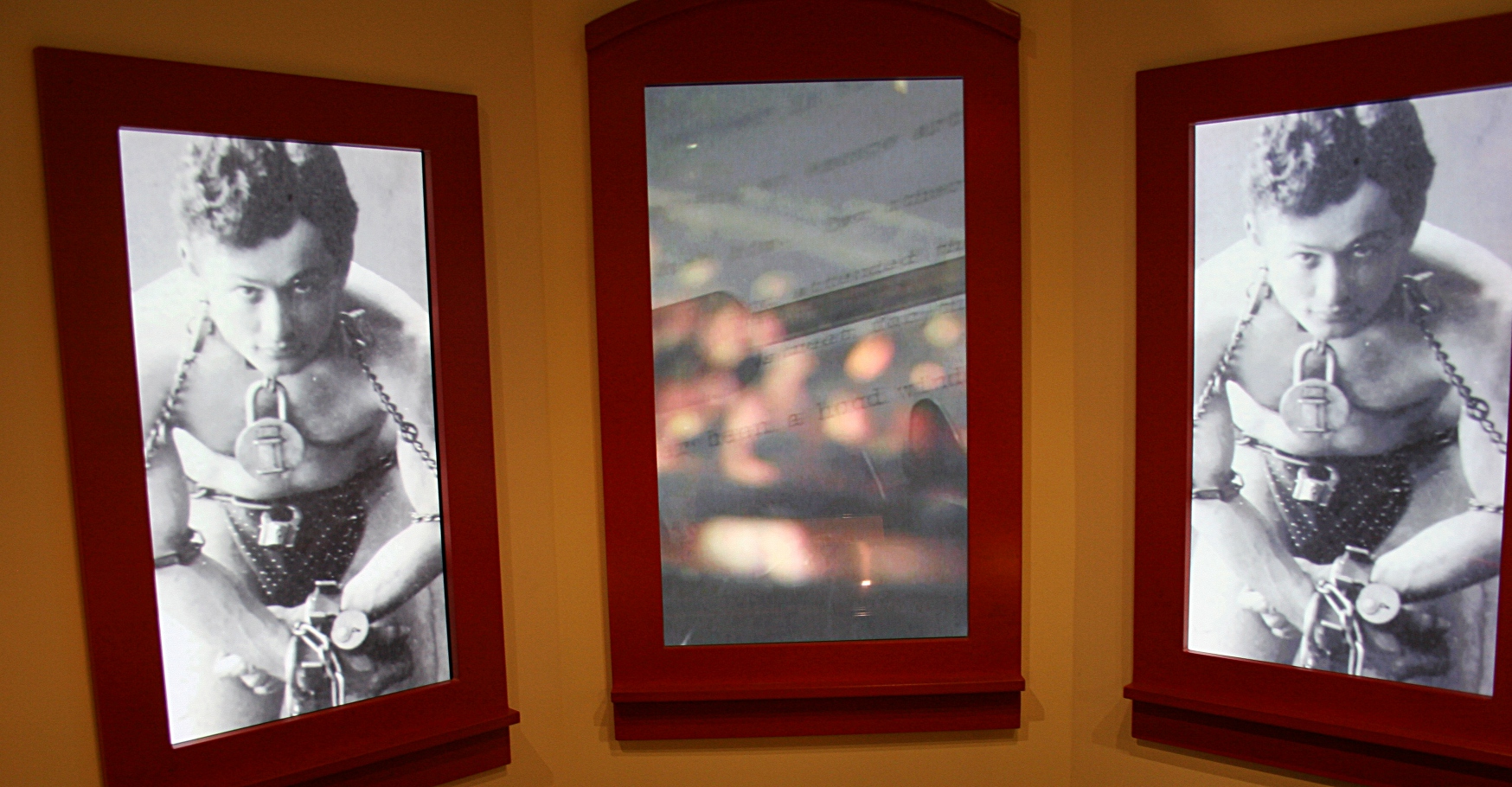
Illusionist and escape artist Harry Houdini.

Illusionist and escape artist Harry Houdini.

WHAT DRAWS US to the magic of a magician?

I expect the attraction begins subtly when we are babes playing peek-a-boo. We frown as the face we love disappears beneath our beloved blankie. But when Mom or Dad reappears, so does our smile. It’s magic.

And then, at some point, we discover card tricks and colorful scarves growing from sleeves and rabbits pulled from top hats. And the fascination with magic dances in our childish brains and never quite vanishes.

The History Museum at the Castle, home to the Houdini and other exhibits.

The History Museum at the Castle, home to the Houdini and other exhibits.

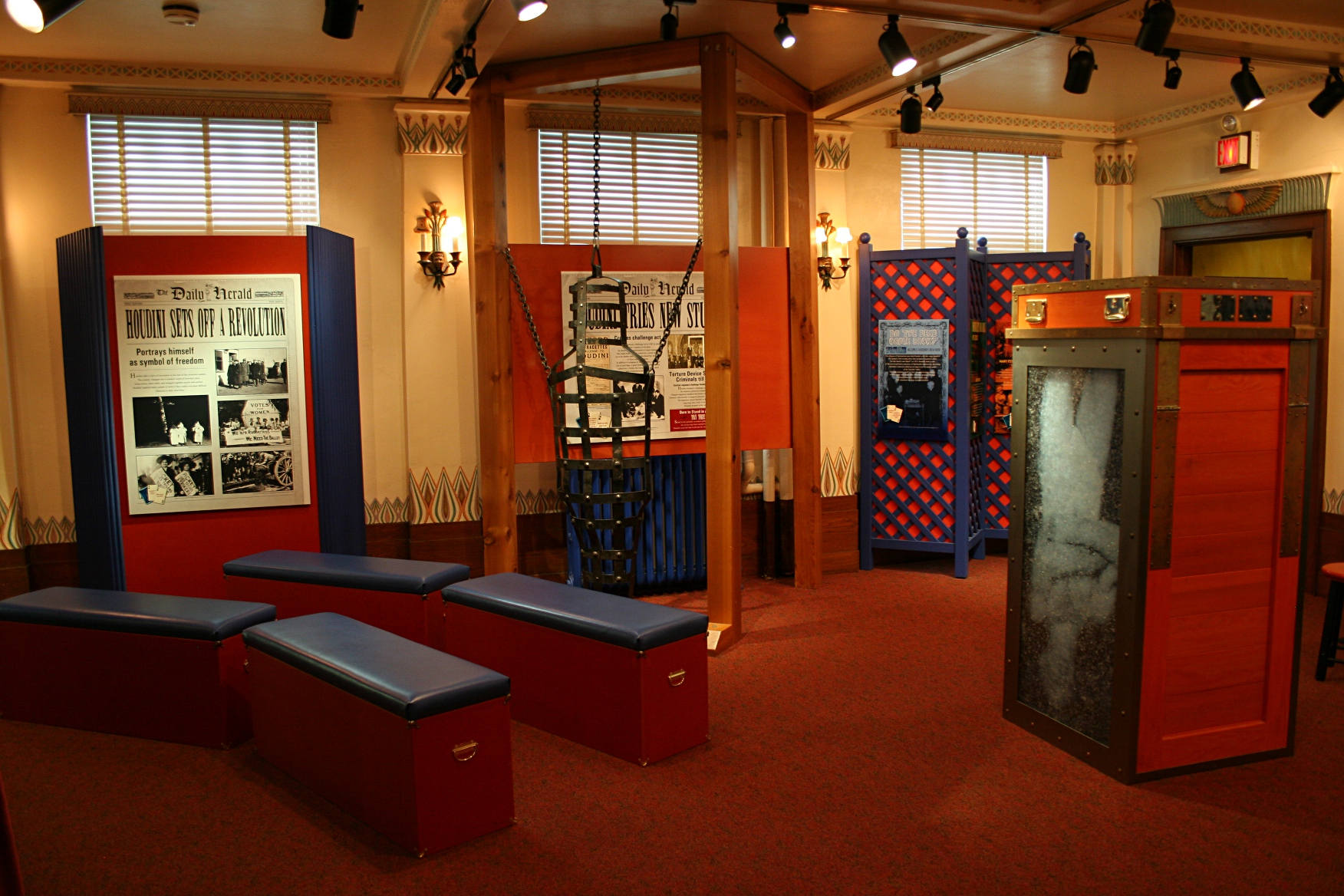
I suppose that is part of the attraction visitors find to the “A.K.A. Houdini Exhibit” at The History Museum at the Castle in downtown Appleton, Wisconsin, the city illusionist Harry Houdini falsely claimed as his birthplace. He was born in Budapest, Hungary, came with his family to America in 1878, settling briefly in Appleton where his father was the city’s first rabbi.

A snippet of the Houdini exhibit.

A snippet of the interactive Houdini exhibit.

As you would expect, you’ll learn detailed facts about Ehrich Weiss, the illusionist and escape artist known to all of us as Houdini. The name is a tribute to his illusionist idol, Jean Eugene Robert-Houdin.

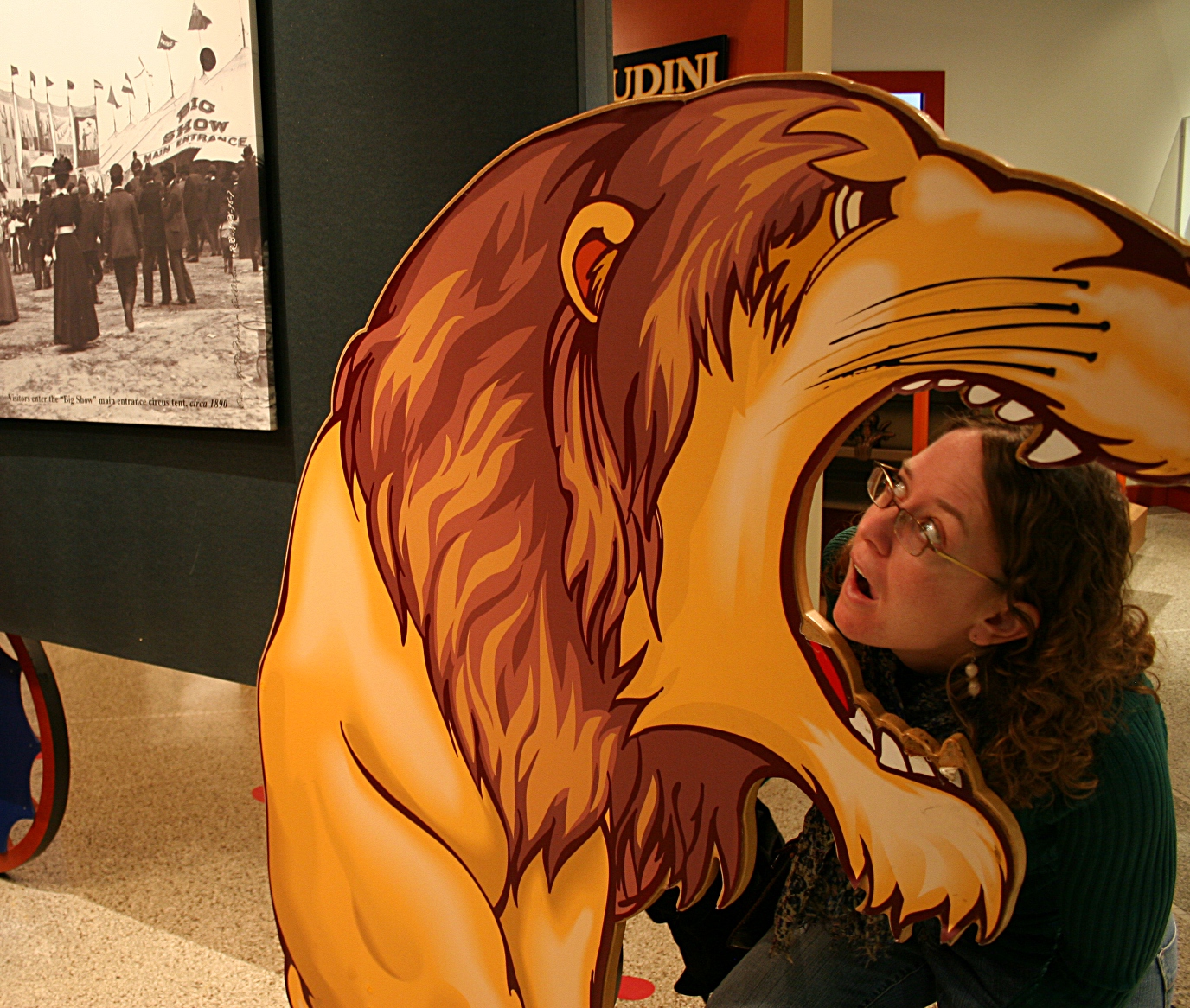
Be sure to pose with the lion head, a tribute to Houdini's early fascination with traveling circuses.

Be sure to pose with the lion head, a tribute to Houdini’s early fascination with traveling circuses. That’s my second daughter, who lives and works in the  Fox Valley (Appleton) area.

But you’ll also experience hands-on interactive activities that will uncover the magic which isn’t really magic at all. Not to worry; you won’t be sawed in half or stuck in a straightjacket.

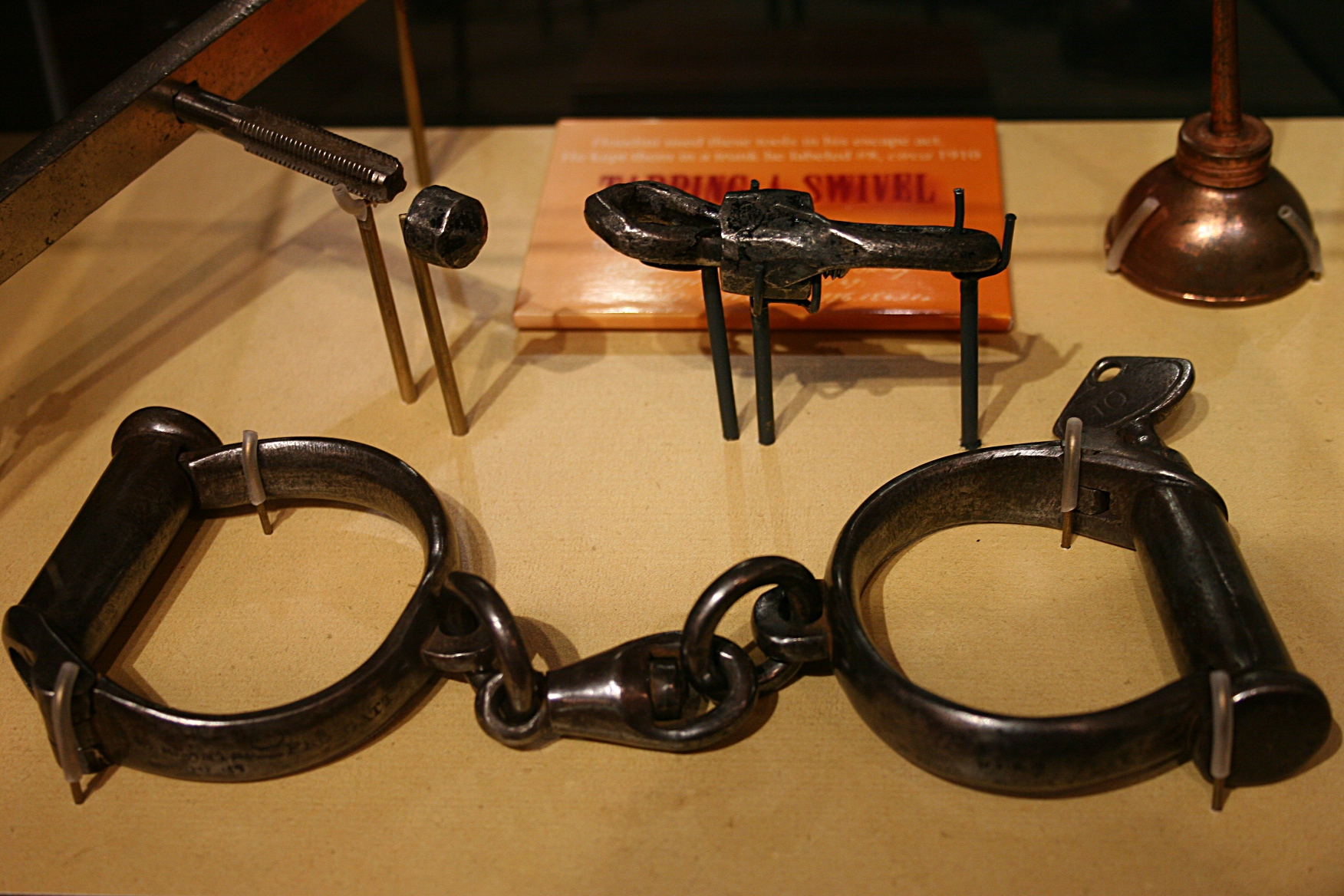
Tools of the escape artist profession.

Tools of the escape artist profession.

The museum collection includes artifacts gifted by an escape artist protege of Houdini’s escape artist brother, Theo. Sort of a tongue twister sentence there, I know. Some of Houdini’s tools of the trade seem rather archaic, almost barbaric, in a clanking metal and chains sort of way. But given the time period, you would not expect sleek and shiny.

A Houdini bust in the museum.

A Houdini bust in the museum.

Therein, perhaps, lies the genuine appeal of this exhibit. In learning about Houdini, you are honoring a man who entertained the masses in unprecedented, daring and fearless ways as he wrote magic into history and into our hearts.

Upon his death, Houdini was buried in a stage prop, his "buried alive" casket, introduced on his final tour in 1926. He escaped the staged burial in under two minutes.

Upon his death, Houdini was buried in a stage prop, his “buried alive” casket, introduced on his final tour in 1926. He escaped the staged burial in under two minutes.

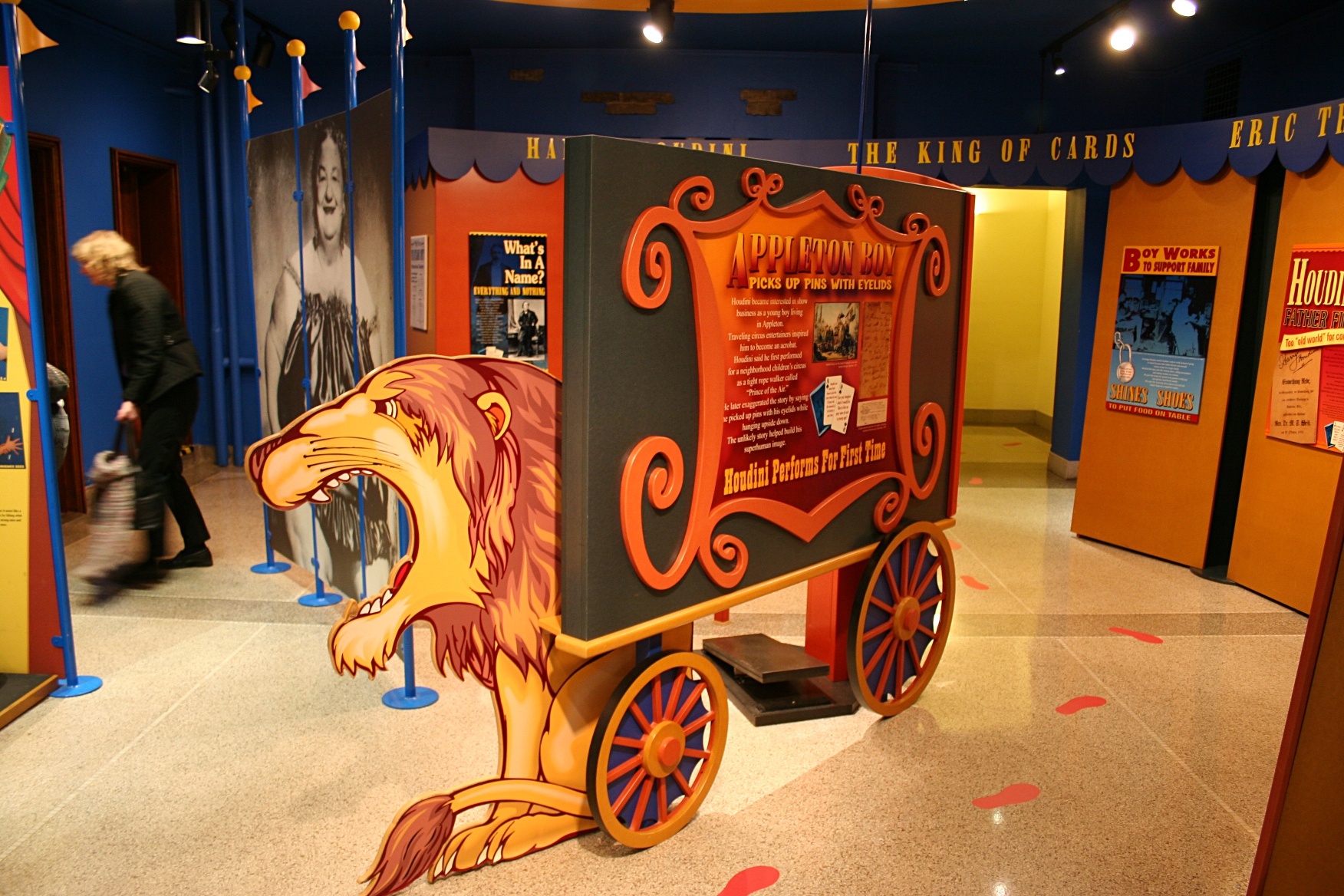
The circus wagon in the exhibit is a nod to Houdini's circus association. He first performed for a neighborhood children's circus as tight roper walker "Prince of the Air."

The circus wagon in the exhibit is a nod to Houdini’s circus association. He first performed for a neighborhood children’s circus as tight roper walker “Prince of the Air.”

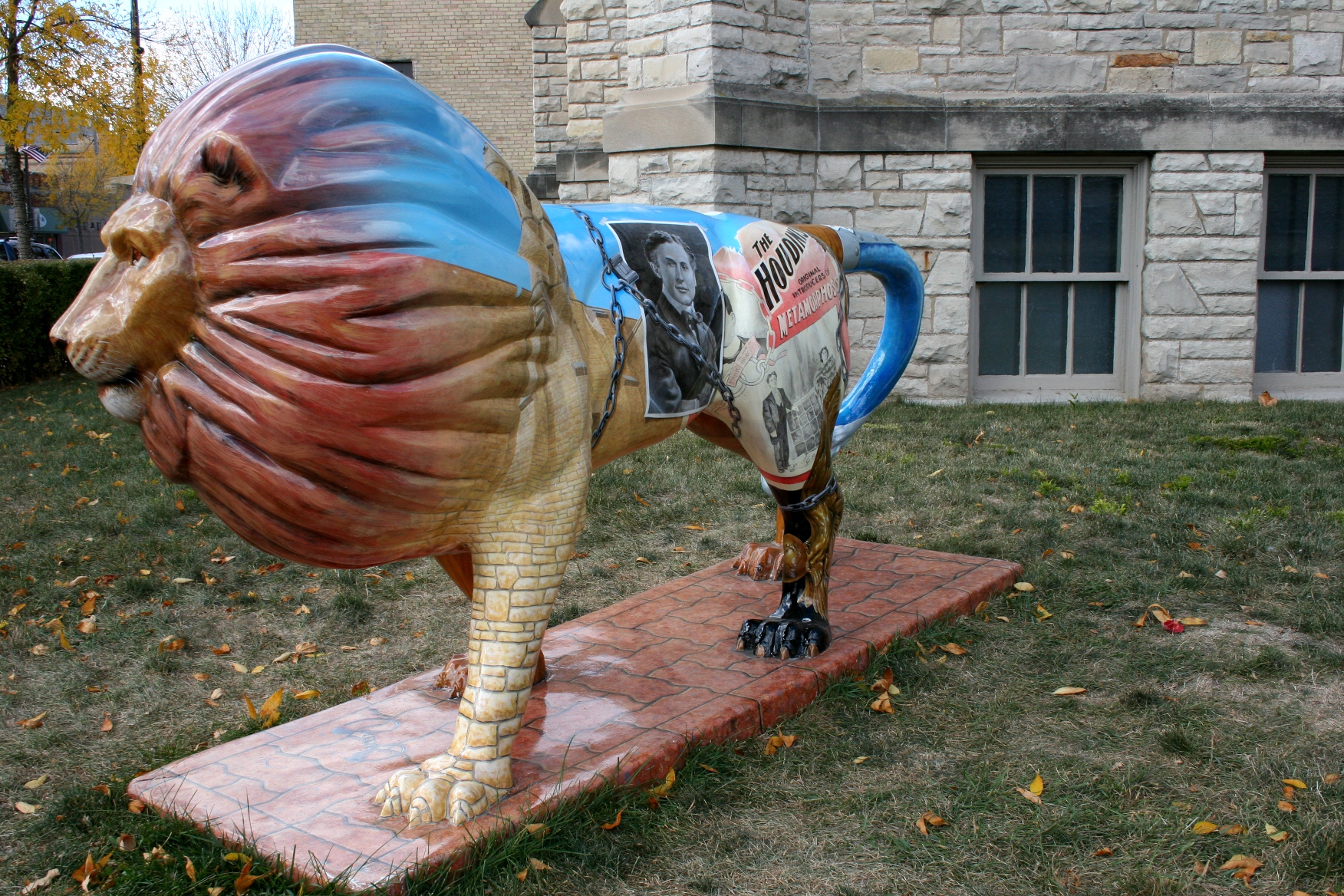
A sculpture outside The History Museum at the Castle.

A sculpture outside The History Museum at the Castle.

FYI: The History Museum at the Castle, 330 East College Avenue, is open from 10 a.m. – 5 p.m. Tuesday – Sunday, closed Mondays and holidays. Admission prices are free for 4 and under; $10 for ages 5 – 17; $15 for ages 18 – 64; and $13.50 for those 65 and older.

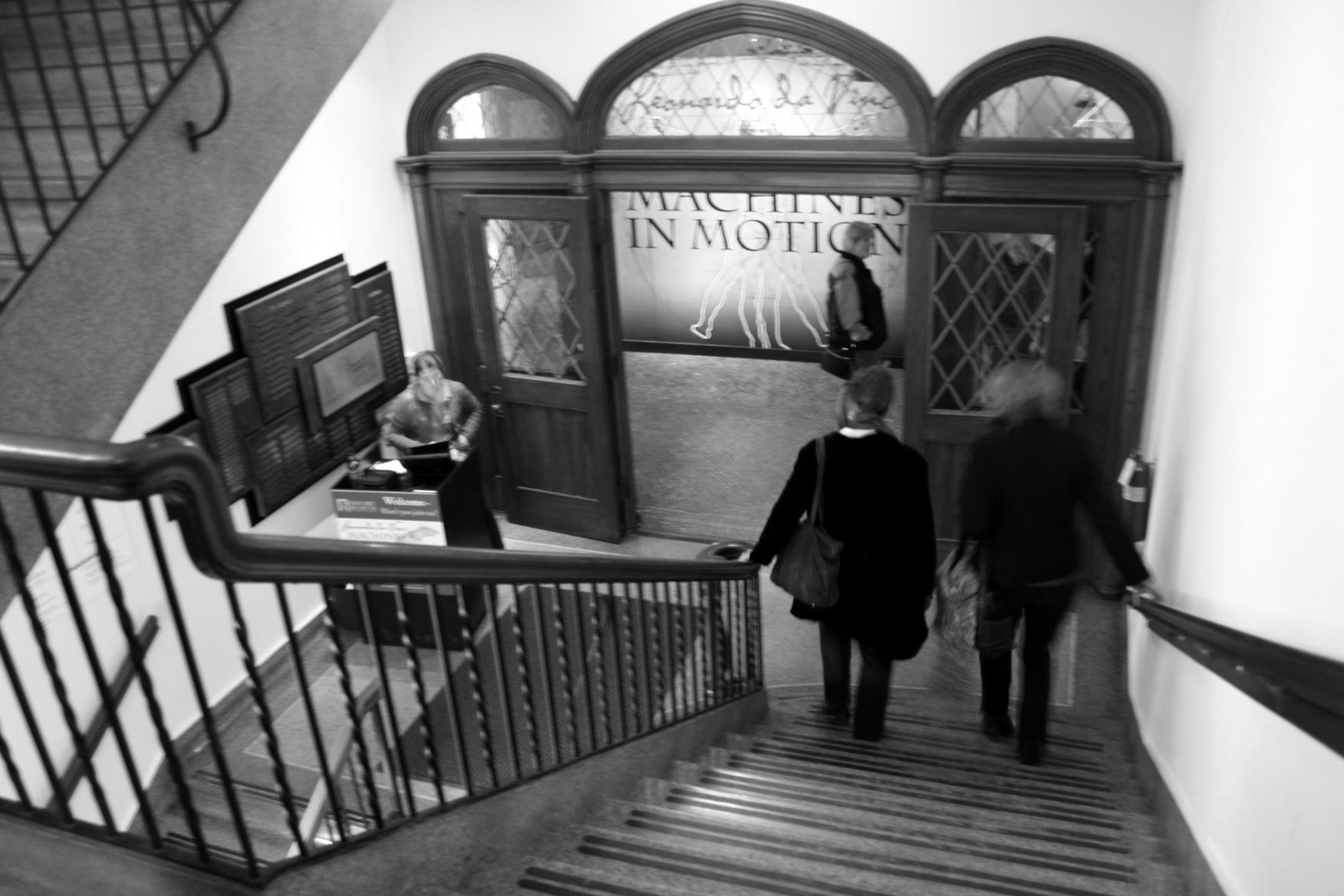
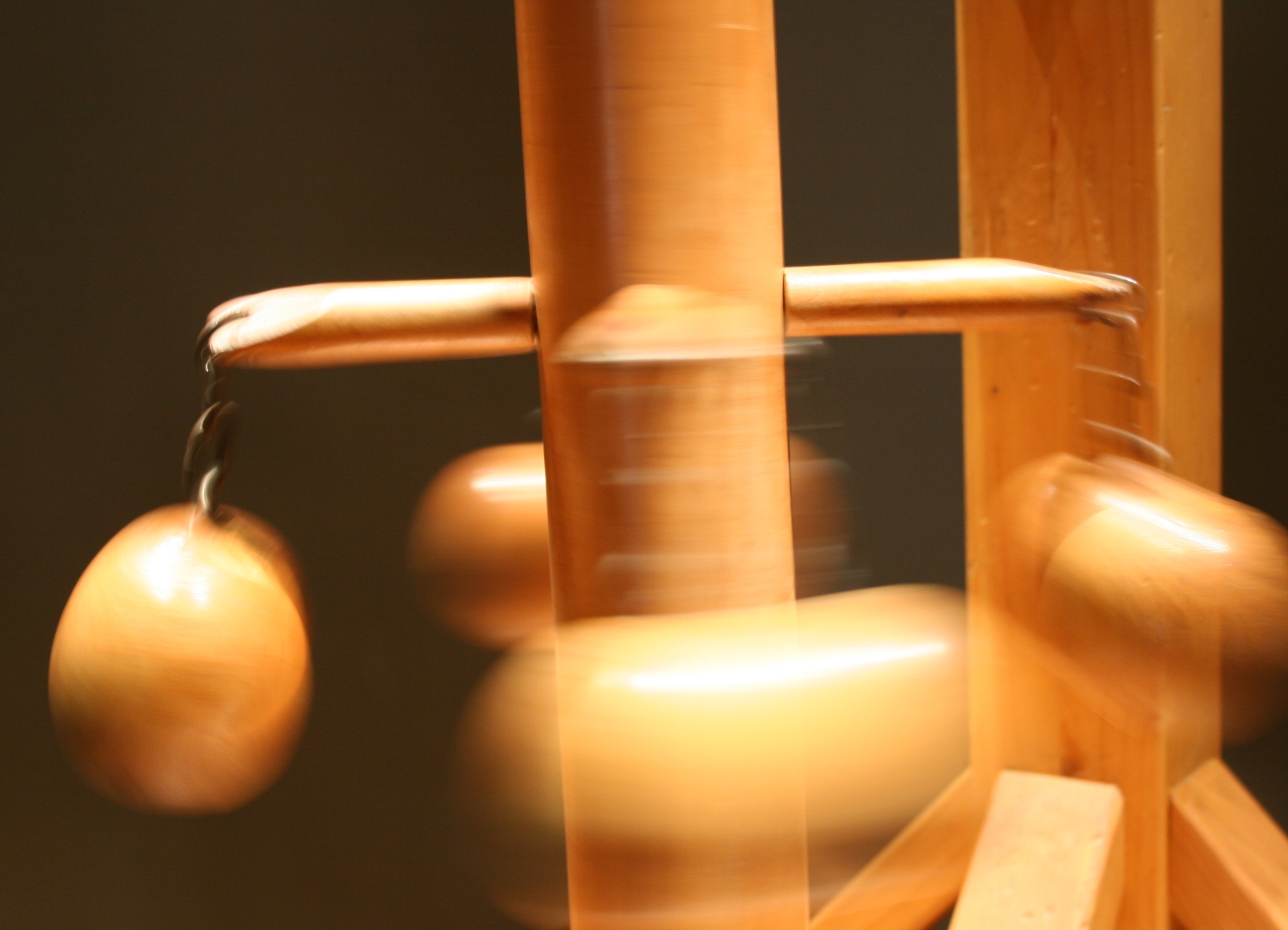
A blurry image to emphasize the "Leonardo da Vinci Machines in Motion" exhibit. It's a must-see.

A blurry image to emphasize the “Leonardo da Vinci: Machines in Motion” exhibit. It’s a must-see.

Admission to the museum also covers the “Leonardo da Vinci: Machines in Motion” temporary exhibit which has been extended through February 3, and other exhibits. You can click here to read my previous post about the da Vinci exhibit. From 6 p.m. – 8 p.m. on Thursday, January 31, the museum will host “Arrivederci, Leonardo!”, a gala event celebrating the success of the exclusive da Vinci showing in Wisconsin. Cost for the gala, which covers a da Vinci exhibit tour plus light refreshments and fine Italian wine, is $20 for non-members and $10 for museum members.

You can check out all the museum has to offer by clicking here.

ADDITIONALLY, APPLETON is currently raising monies to redo Houdini Plaza, a downtown gathering spot reminiscent of the town squares of yesteryear. To read about that project, “Recapturing the Magic,” click here.

READ MY PREVIOUS post about The History Museum at the Castle by clicking here.

CHECK BACK  for a post on a great place to eat in Appleton. Like the museum building, this restaurant exudes history.

© Copyright 2013 Audrey Kletscher Helbling
 

Appreciating the history of, and in, Appleton, Wisconsin’s “castle” January 16, 2013

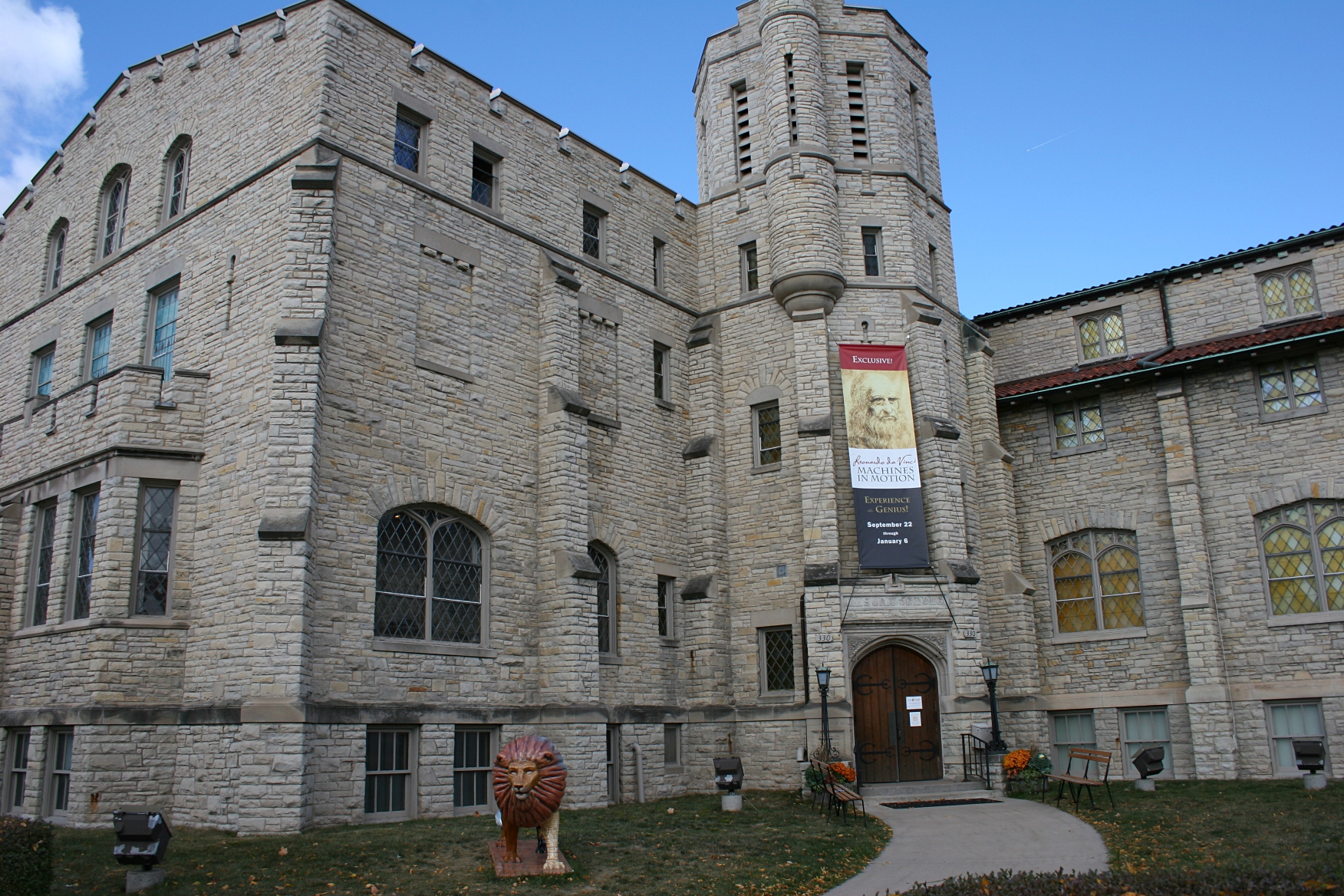
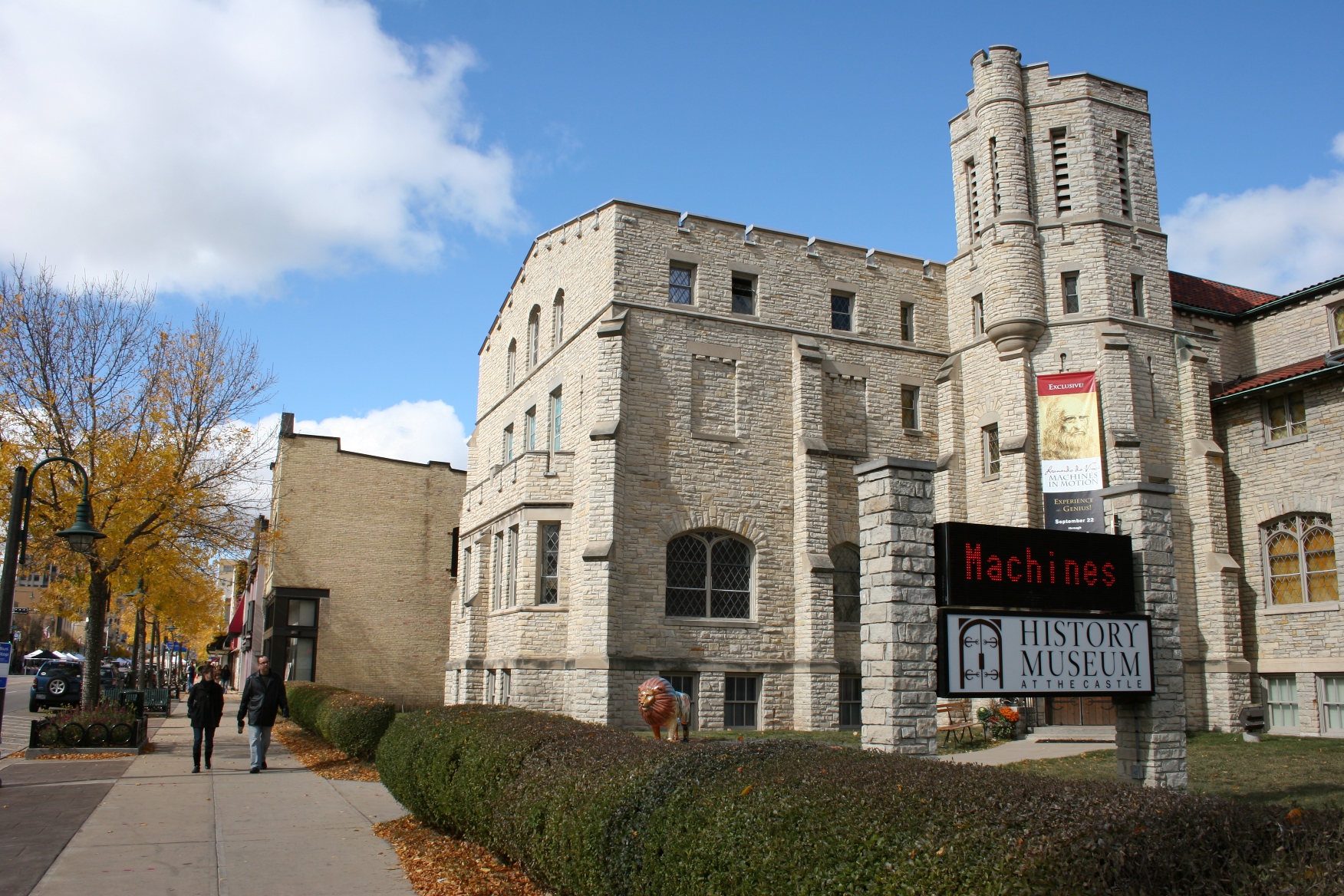
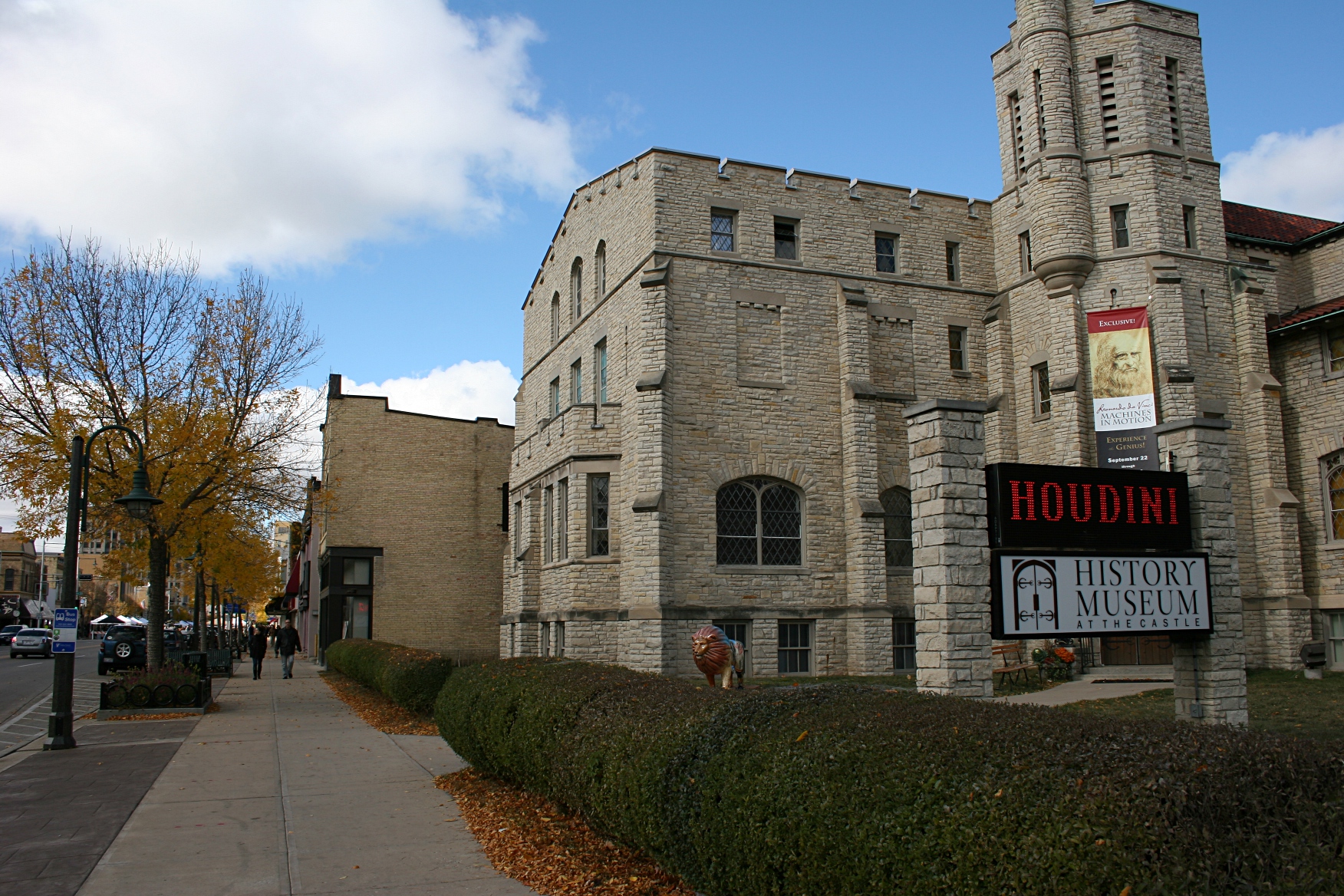
The History Museum at the Castle, 330 E. College Ave., Appleton, Wisconsin.

The History Museum at the Castle, 330 E. College Ave., Appleton, Wisconsin.

CONSTRUCTED OF STONE and anchored by a center tower, the impressive multi-story structure commanding the corner of College Avenue and Drew Street in downtown Appleton, Wisconsin, presents an almost formidable exterior presence.

Aptly named The History Museum at the Castle, this sprawling castle-like fortress embodies the essence of history from the outside in. History seems meant to be showcased here. And it is, in this, the home of The Outagamie Historical Society.

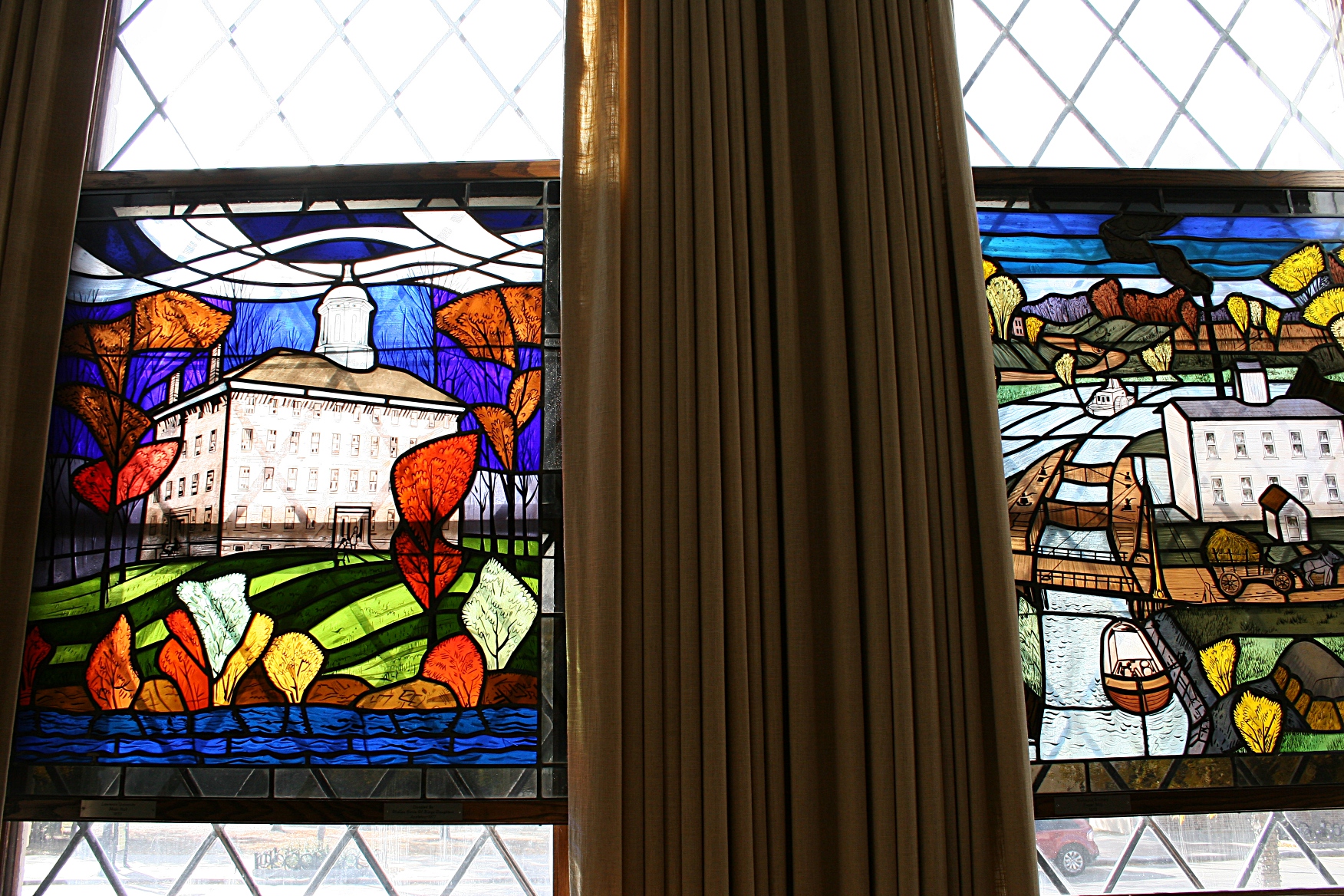
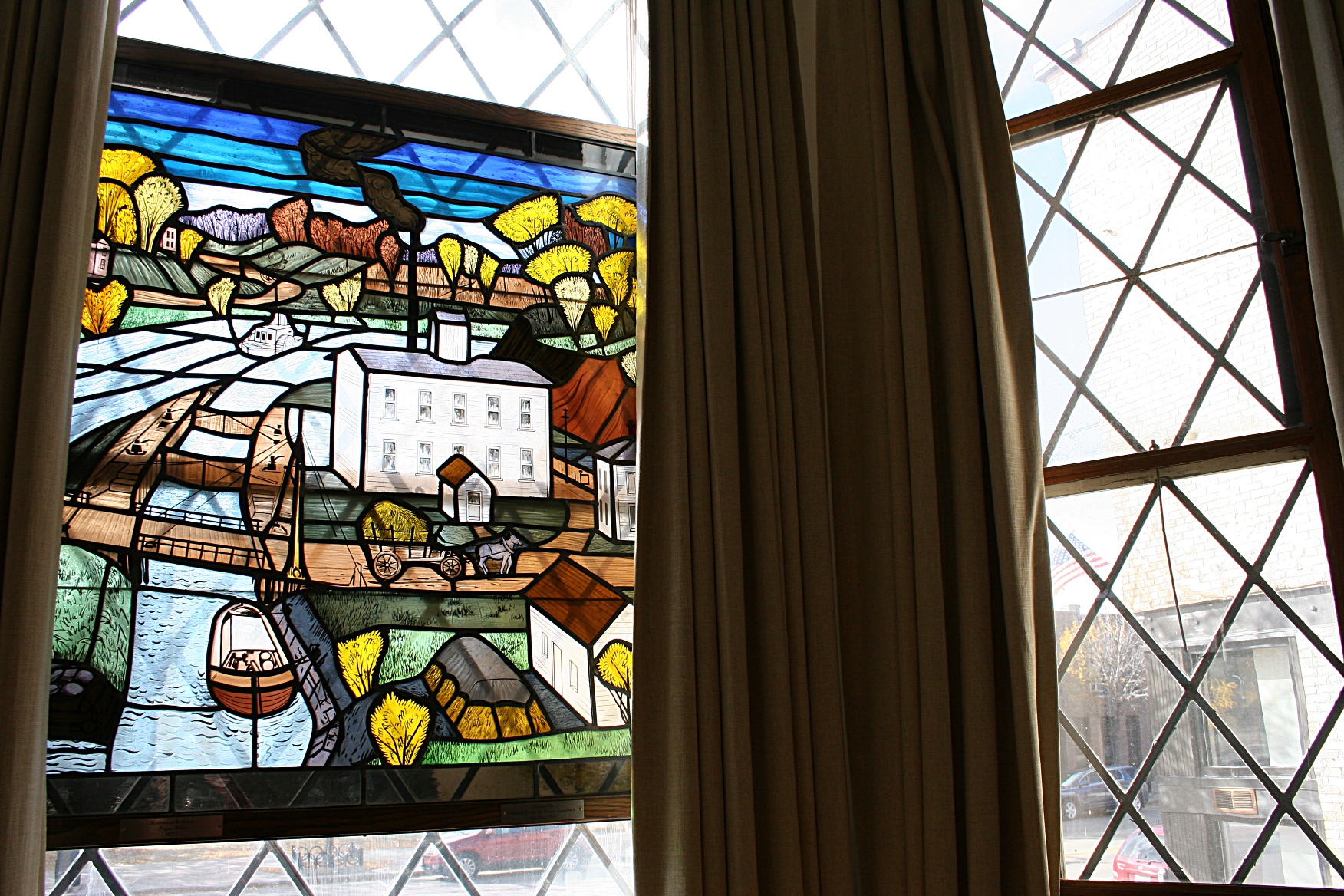
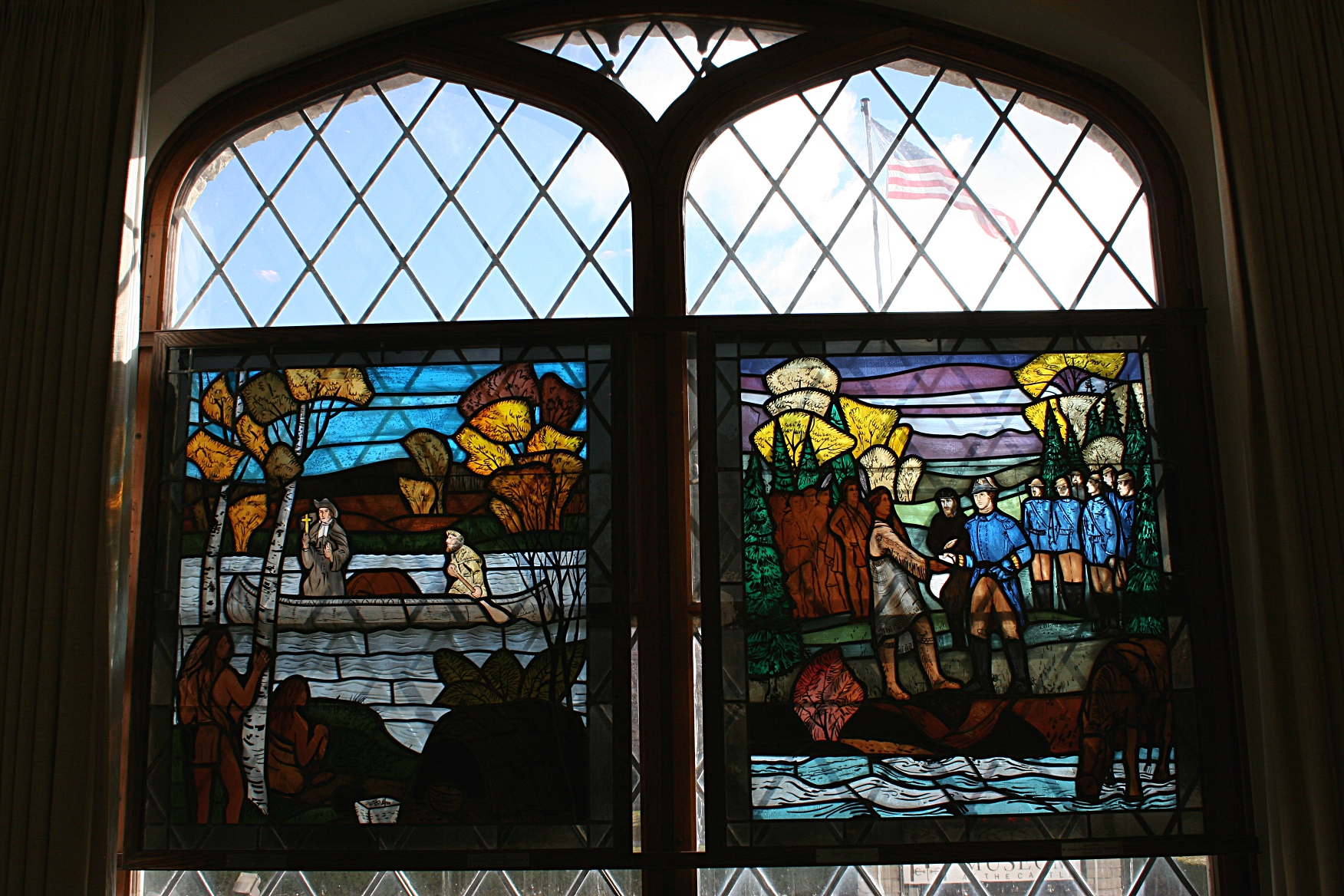
Windows in the Siekman Room depict the history of the Fox Cities from the days of the early explorers until modern times.

Windows in the Siekman Room depict the history of the Fox Cities from the days of the early explorers until modern times.

Perhaps it is a matter of personal taste. But I prefer to learn about history within the walls of a place aged by time rather than in a sterile, modern facility. From the heavy wooden double front entry doors strapped with metal to the woodwork woven throughout the interior to the detailed wall scones, fireplace, paintings and stained glass windows, this museum exudes yesteryear.

More Fox Valley history in art.

More Fox Valley history in stained glass art.

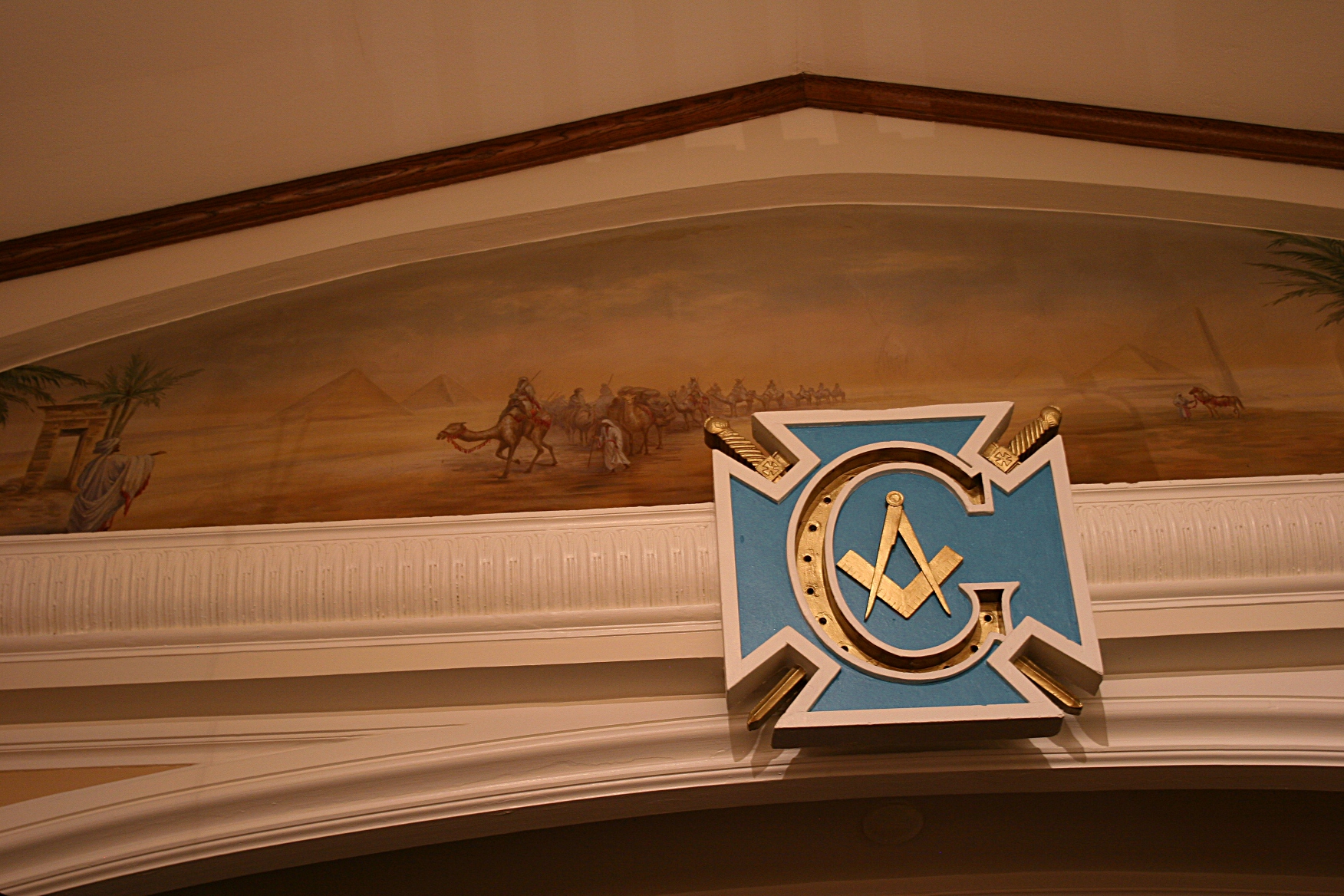
Its history dates back to 1923-1924 when Waverly Lodge No. 51 constructed the complex for use as a Masonic Temple, according to Kathy Voigt, community engagement manager for the museum. Says Voigt:

Now on the National Register of Historic Places, the building is constructed in the Norman Revival style, characterized by the use of rough-hewn stone and other features reminiscent of medieval castles and churches, such as vaulted ceilings, heavy beams and leaded windows.

Artwork above an auditorium stage hints at the building's past as a Masonic Temple.

Artwork above an auditorium stage hints at the building’s past as a Masonic Temple.

In the mid-1980s, after the Masons could no longer afford to maintain the temple, the building was sold to the local historical society.

Windows depicting the region's early fur trading history.

Windows depicting the region’s early fur trading history.

Today this building houses, among other exhibits, rotating and permanent, the history of the Fox River Valley, a region stretching from Green Bay on the north to Neenah on the south. The area was once home to the Fox River Valley Indians, AKA the Meskwaki/Mesquakie, who relocated to Wisconsin from the East around 1650.  “Tools of Change” highlights the Fox Valley’s tools, people, work and everyday life between 1840-1950.

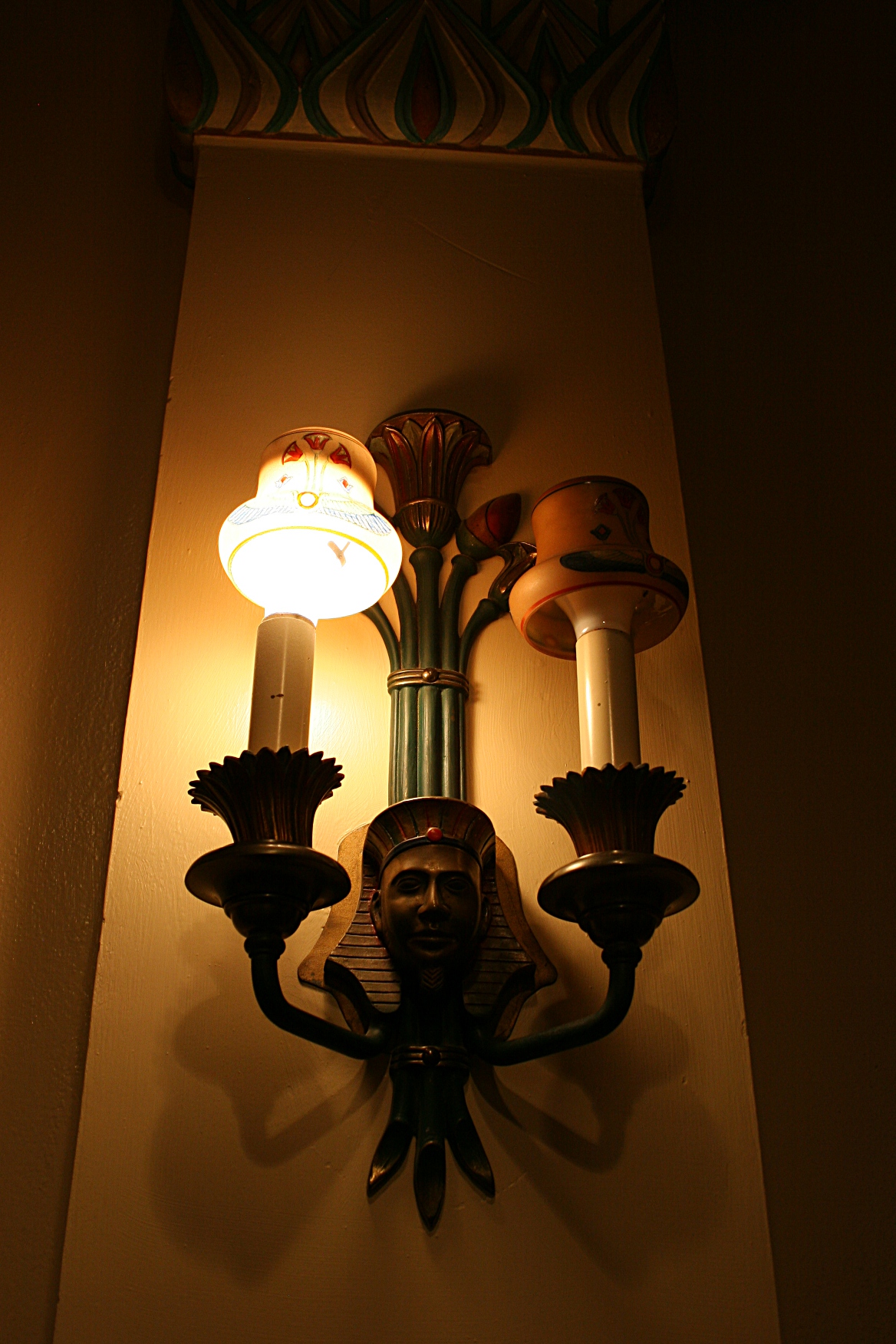
And because I notice details, be sure to look for these incredible light fixtures in the main Houdini exhibit room.

I noticed these incredible wall sconces in a Houdini exhibit room.

Other exhibits feature Senator Joseph McCarthy, born and raised in Appleton; Nobel Prize winning writer Edna Ferber; the work of local noted photographer Andrew J. Mueller; and, upstairs, a more extensive exhibit on illusionist and escape artist Harry Houdini, who lived in Appleton as a child. I’ll post about the “AKA Houdini” exhibit tomorrow.

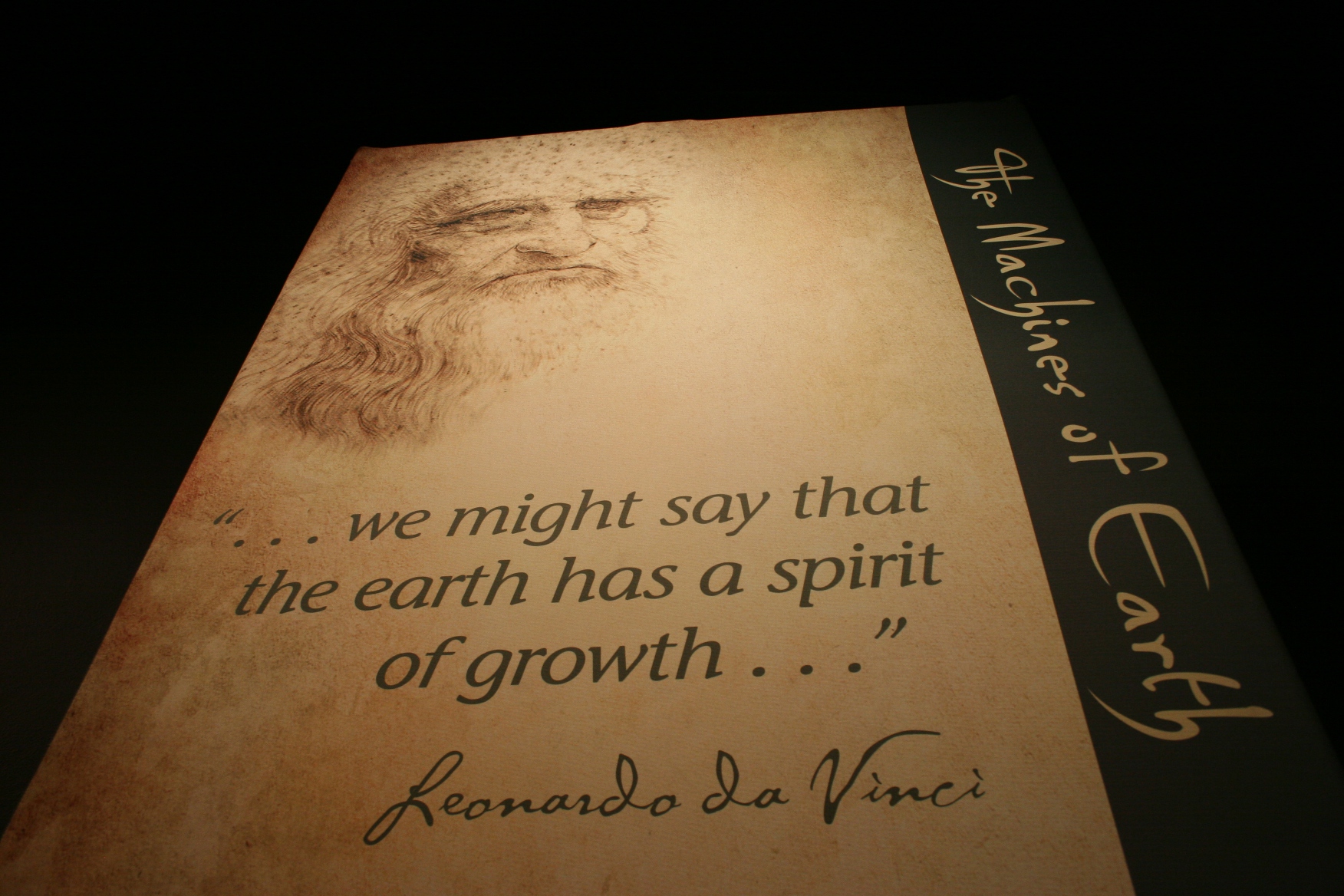
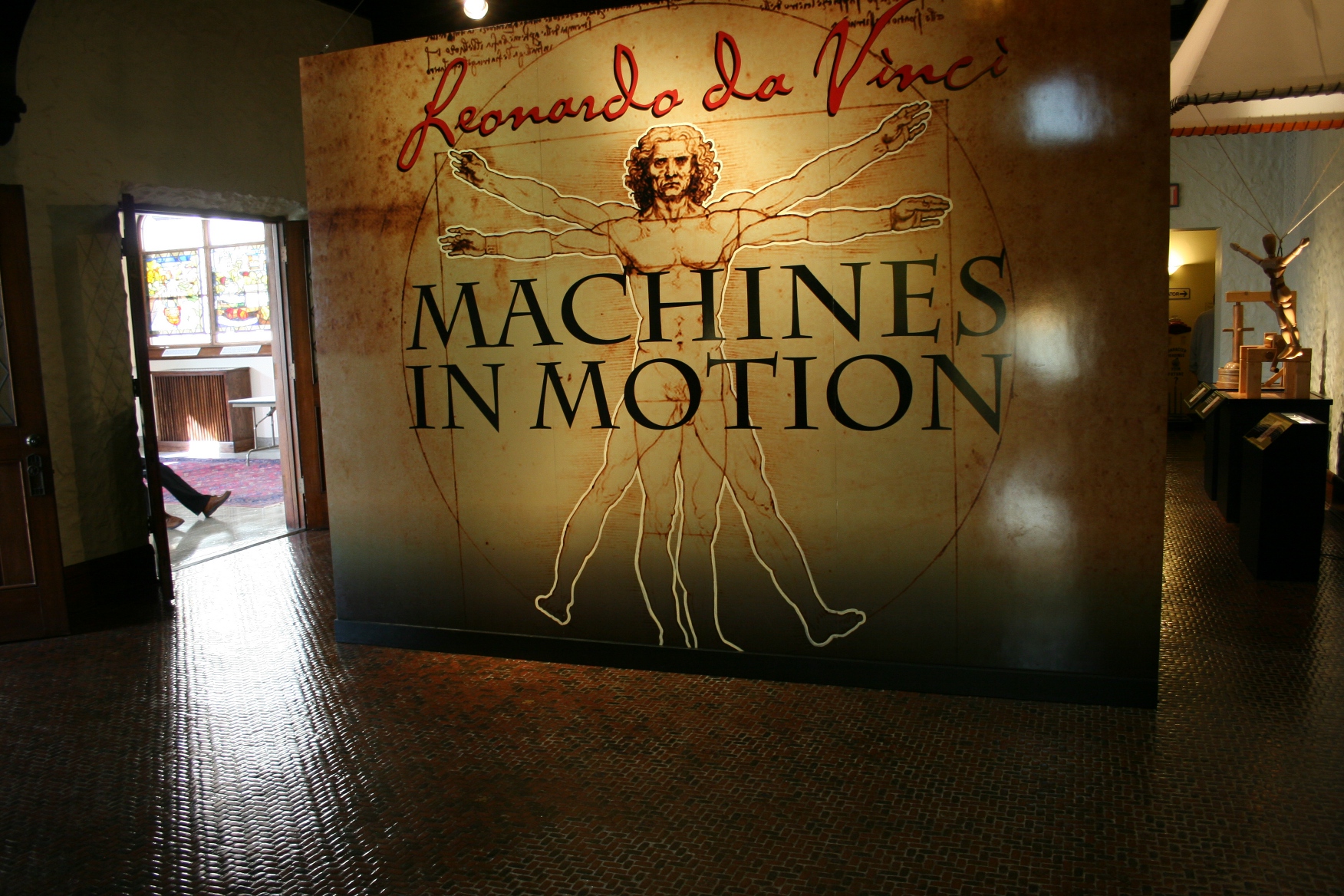
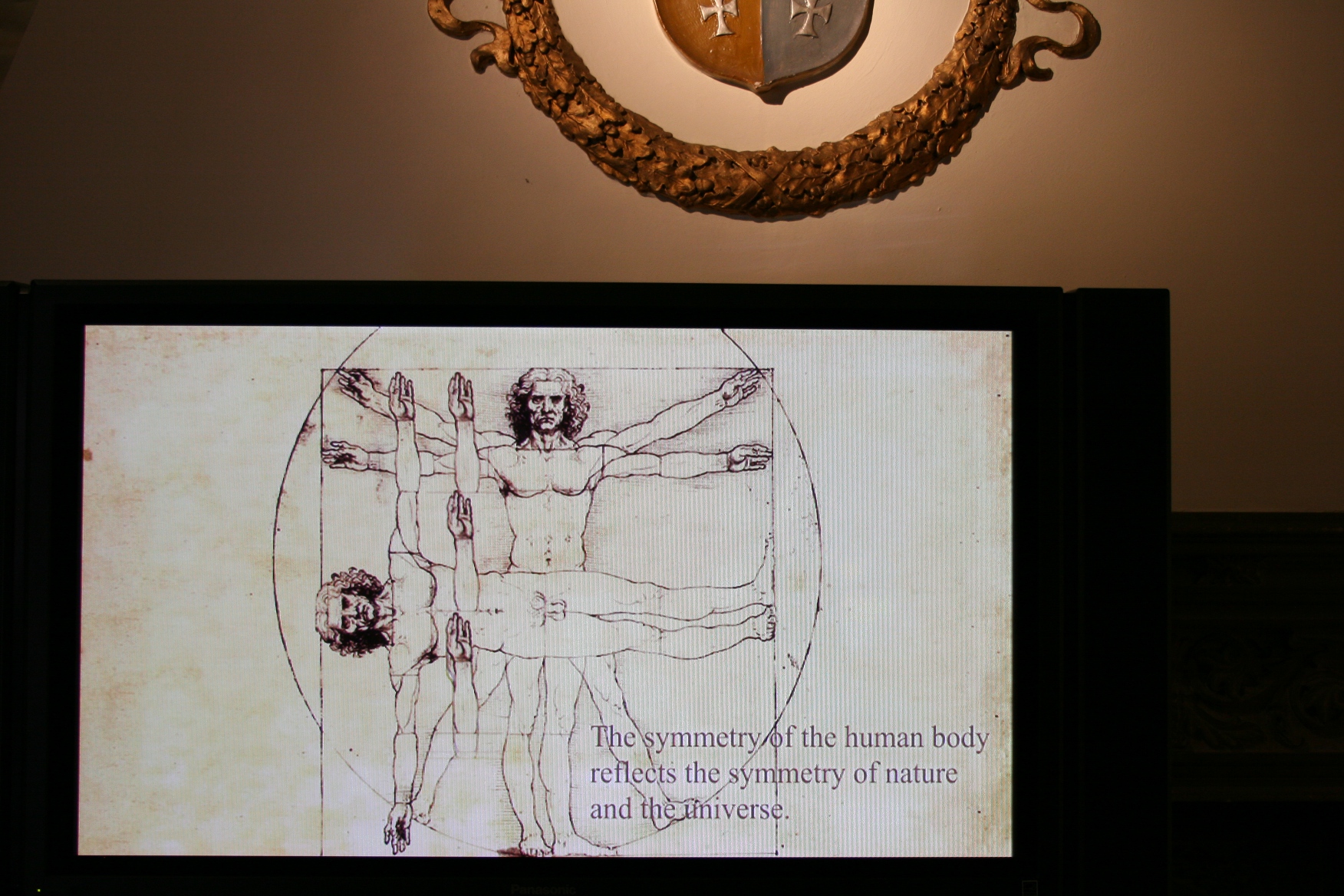
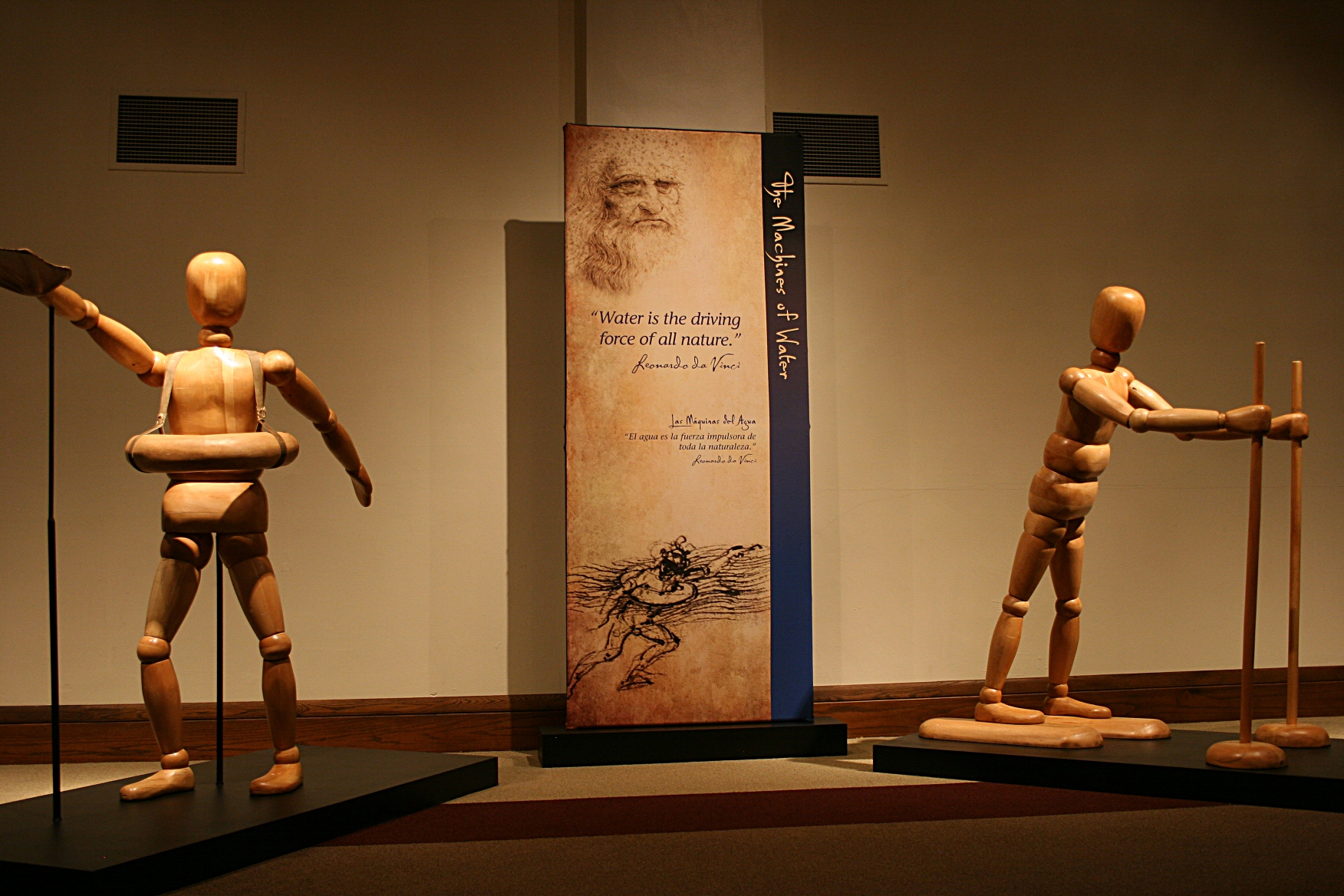
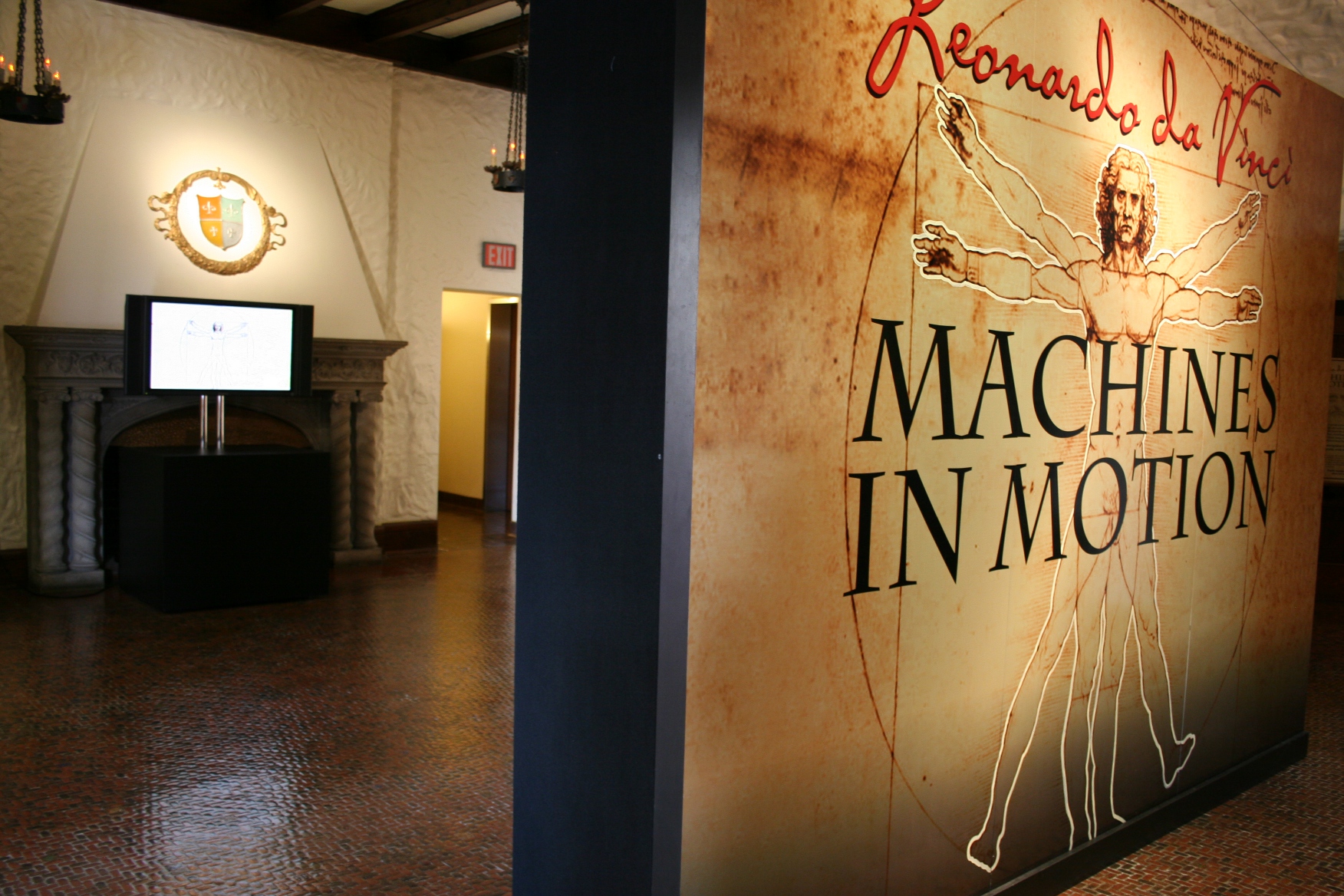
While the Leonardo da Vinci signage likely catches your eye first in this photo, look to the left and notice the fireplace.

While the Leonardo da Vinci signage likely catches your eye first, look to the left and notice the fireplace, the lights, the floor.

But currently drawing the most interest is the museum’s temporary “Leonardo da Vinci: Machines in Motion” exhibit which opened late last year and has now been extended through February 3. You can read about “Machines in Motion” in a previous post by clicking here. This show was my primary reason for touring the museum in early October when my husband and I were in Appleton visiting our second daughter.

Another view of the historic museum.

Another view of the museum, from early October.

The historic Masonic Temple housing the museum rates as a bonus to the history inside. I wonder how many visitors, when they tug at those heavy front entry doors and then enter the castle, pause to appreciate the building they are standing within.

BONUS IMAGES:

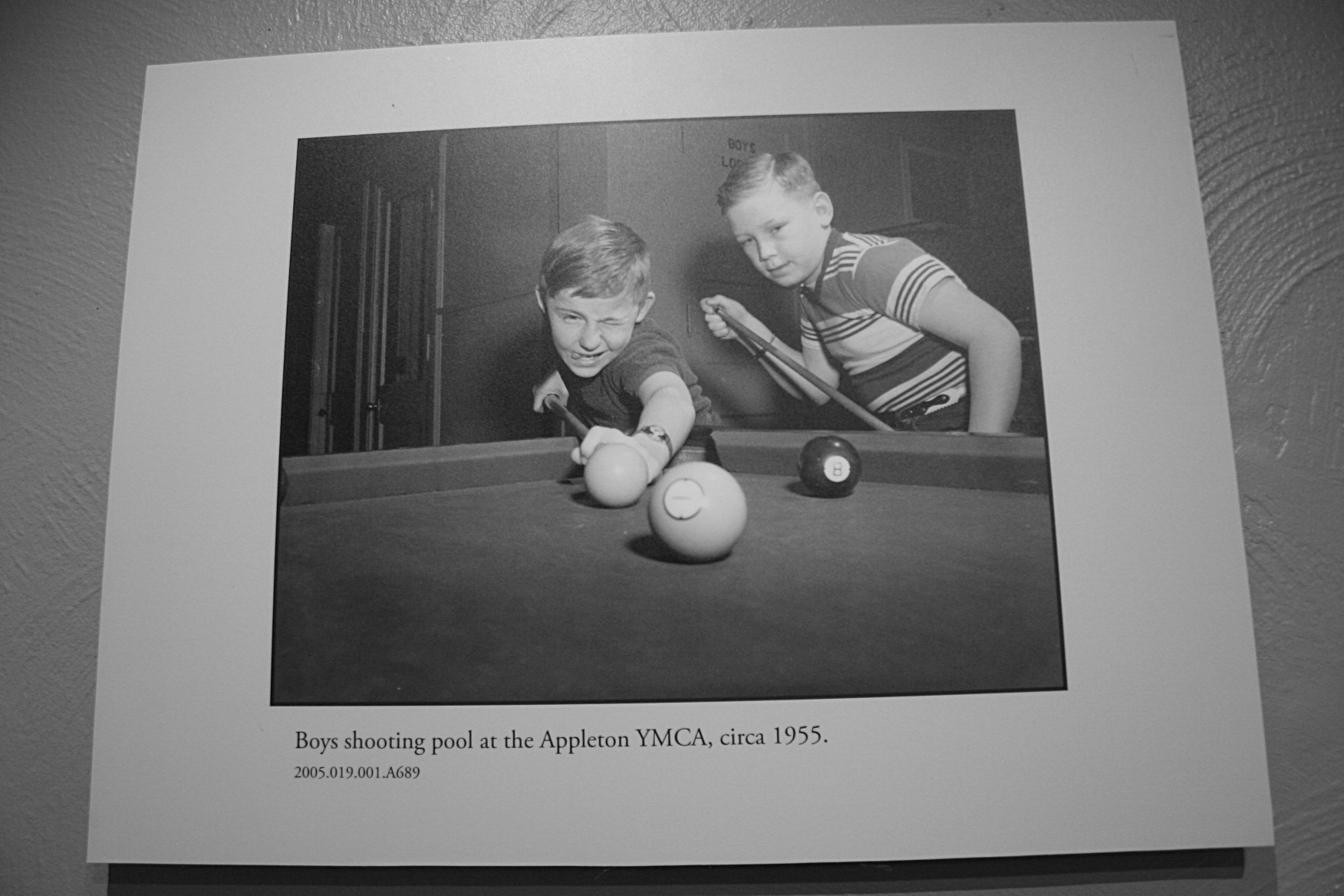
Given my love of photography, the "From My View: The Photographs of Andrew J. Mueller" exhibit especially interested me. Mueller worked for the local newspaper.

Given my love of photography, the “From My View: The Photographs of Andrew J. Mueller” exhibit especially interested me. Mueller worked for the local newspaper, beginning as an artist there and becoming the paper’s full-time photographer in 1950. He approached photography from both artistic and journalistic perspectives.

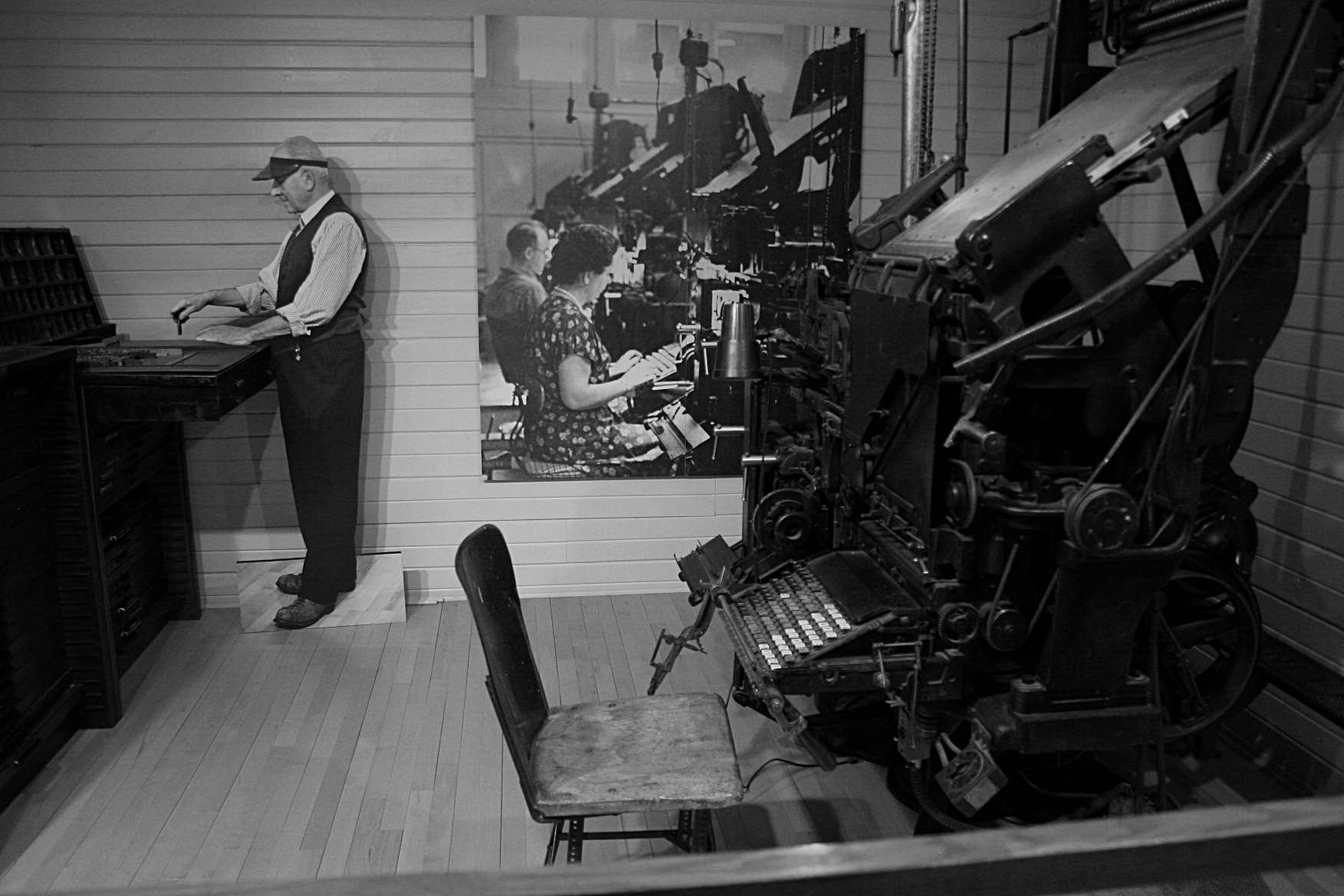
Given my journalism background, an old printing press also caught my eye.

Because of my journalism background, an old printing press also caught my eye.

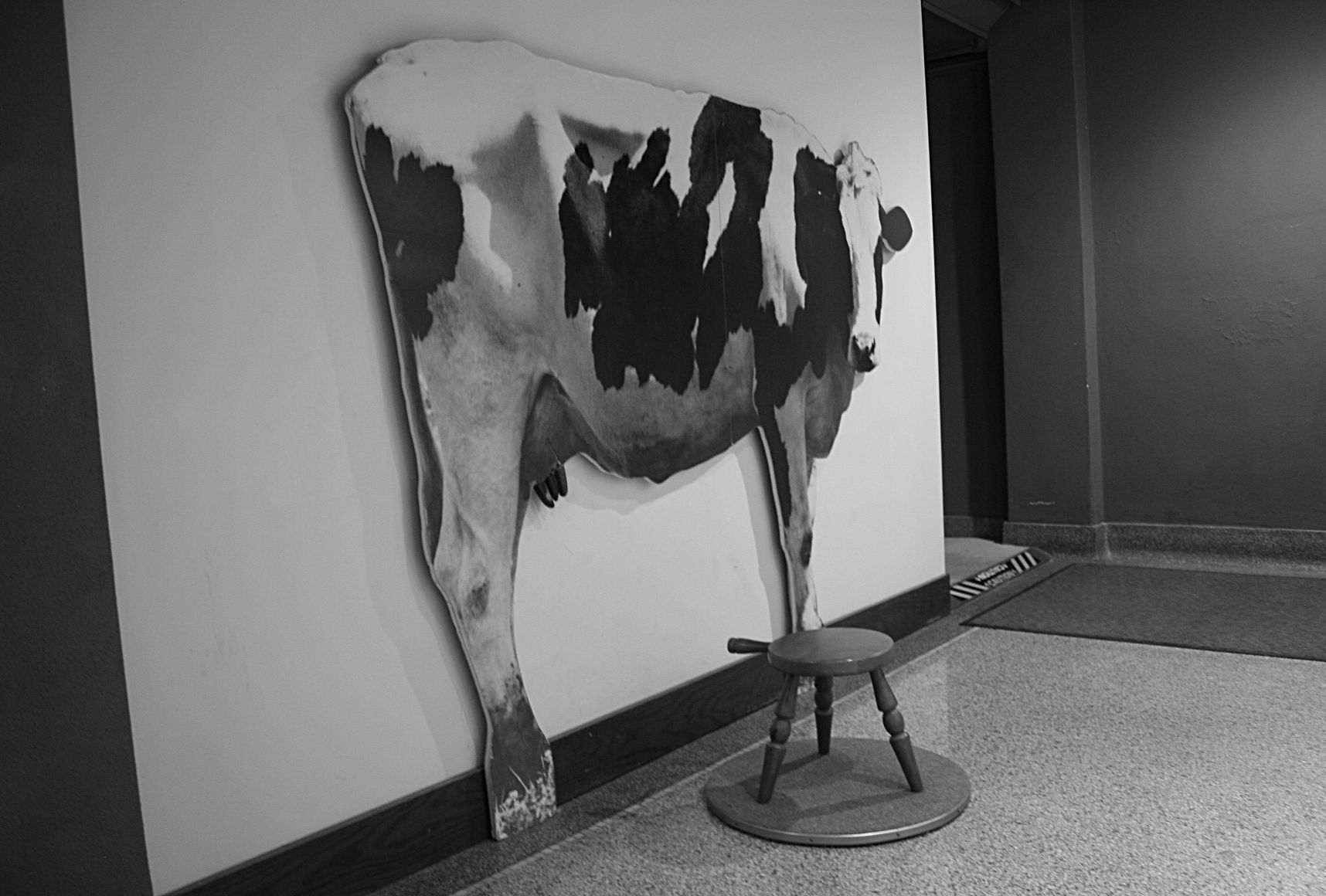
Would any Wisconsin museum exhibit be complete without a cow? Here you can perch on the stool and pretend to milk this Holstein.

Would any Wisconsin museum exhibit be complete without a cow? Here you can perch on the stool and pretend to milk this Holstein.

FYI: For more information about The History Museum at the Castle, click here.

© Copyright 2013 Audrey Kletscher Helbling
 

Prairie poetry January 7, 2013

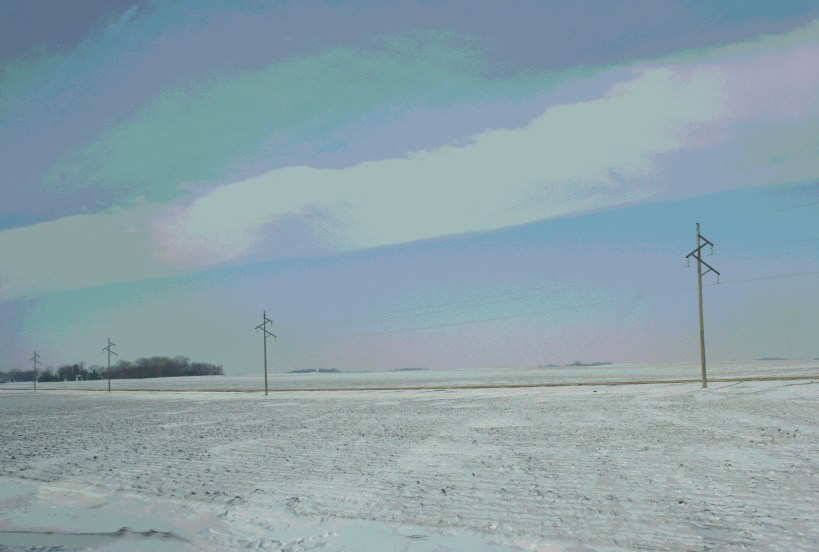
Along U.S. Highway 14

Along U.S. Highway 14 between Sleepy Eye and Springfield on the southwestern Minnesota prairie.

THOSE WHO CATEGORIZE the southern Minnesota prairie as flat, boring and in the middle of nowhere truly have not seen.

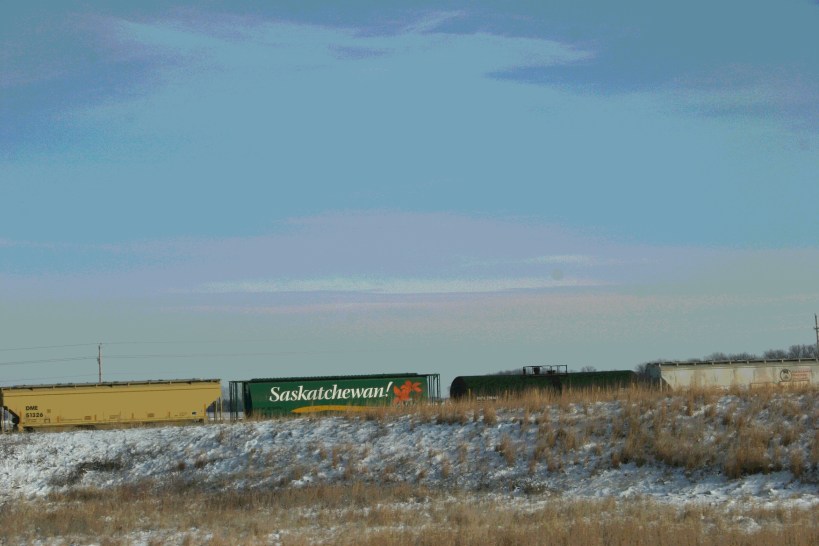
South and west of Waseca, along U.S. Highway 14, a train cuts across the flat farm land.

South and west of Waseca, along U.S. Highway 14, a train cuts across the flat farm land.

Perhaps you are one of them—a traveler passing through this land defined by horizontal lines. Your patience for the endless miles of vast sky and open space expires shortly after you exit the city.

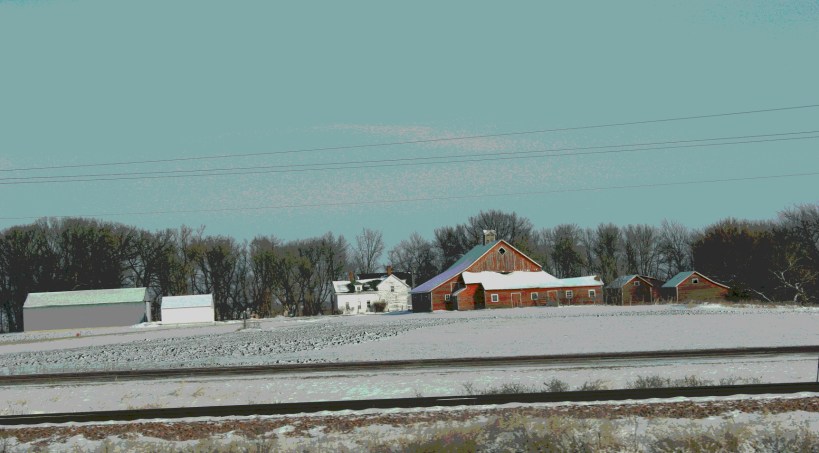
The horizontal lines of railroad tracks and farm buildings define this scene near Janesville along U.S. Highway 14.

The horizontal lines of railroad tracks, utility wires and farm buildings define this scene near Janesville along U.S. Highway 14.

You cannot fathom how anyone can live here, let alone appreciate this landscape.

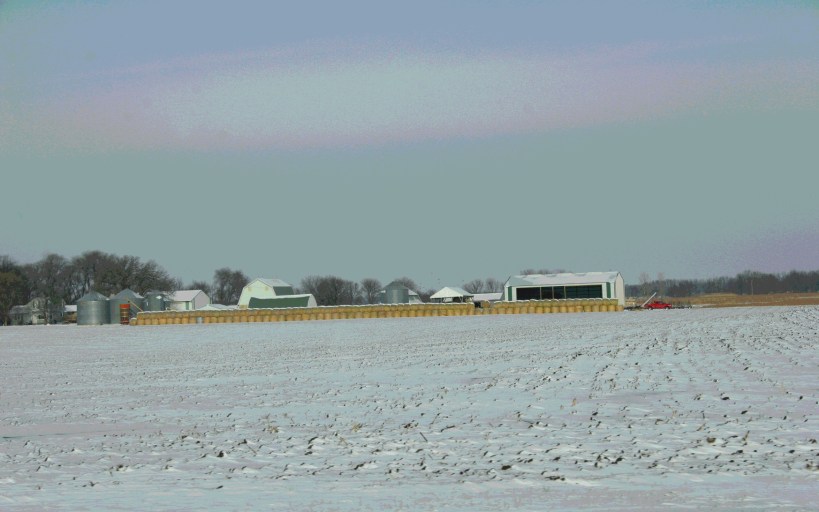
East of Courtland, rows of bales edge a farm site.

East of Courtland, tidy rows of bales edge a farm site.

But I challenge you, the next time you are hurrying from City A to City B, to look beyond the pavement, beyond the preconceived ideas you have about rural Minnesota and specifically of the prairie.

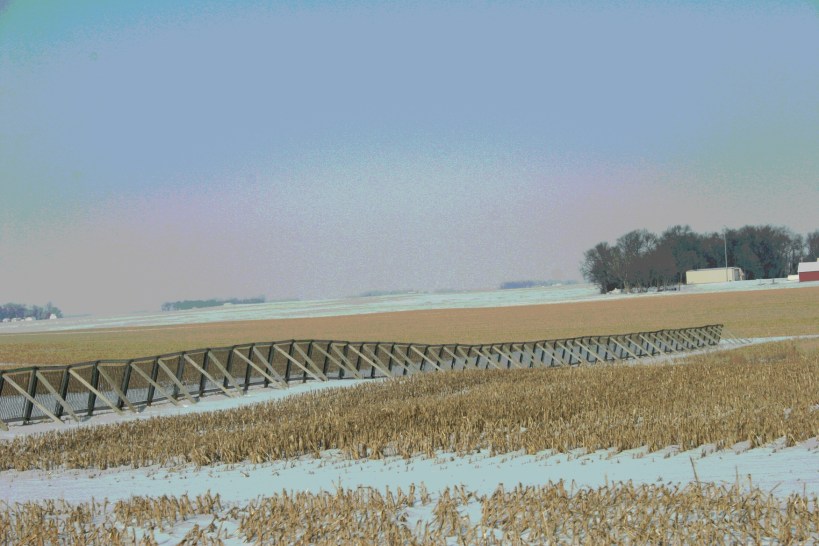
West of Springfield, a snow fence emphasizes the horizontal lines of the prairie.

West of Springfield, a snow fence emphasizes the horizontal lines of the prairie.

View this landscape as an artist’s canvas. Before your eyes, you will begin to see the bold lines, the wispy strokes, the colors (or lack thereof), the composition of a scene.

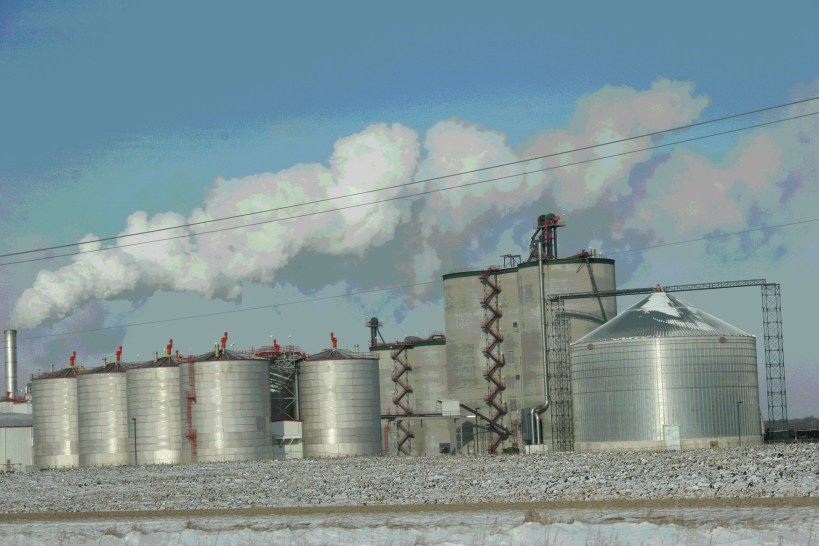
The ethanol plant near Janesville on a cold December morning.

The ethanol plant near Janesville on a cold December morning.

You will feel the strength of the artist’s brush in the wind.

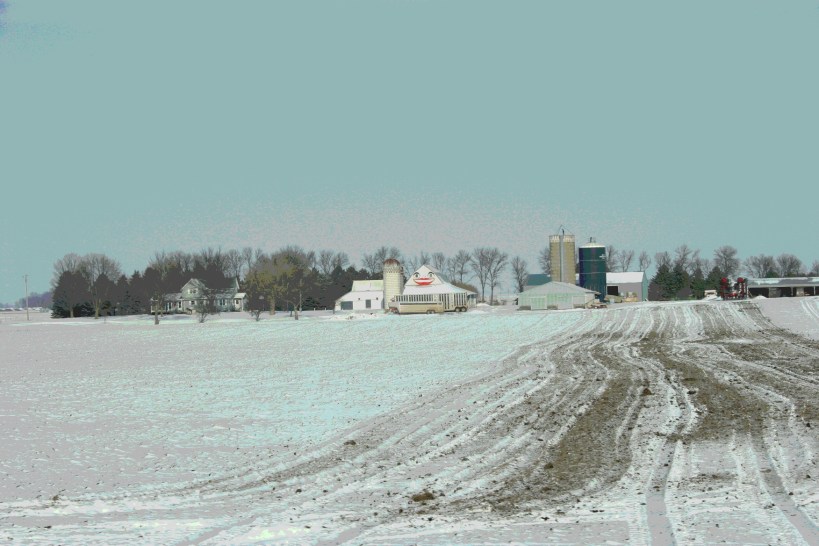
One of my favorite barns along U.S. Highway 14, west of Sleepy Eye.

One of my favorite barns along U.S. Highway 14, west of Sleepy Eye.

You will read poetry in the simplicity of the uncluttered landscape and in the fortitude and kindness of those who inhabit this place.

And then, perhaps, you will begin to connect to a land which possesses an infinite beauty unlike any other.

© Copyright 2012 Audrey Kletscher Helbling


What’s your take on these St. Paul moments? January 4, 2013

Filed under: Uncategorized — Audrey Kletscher Helbling @ 8:10 AM
Tags: , , , , , , , ,
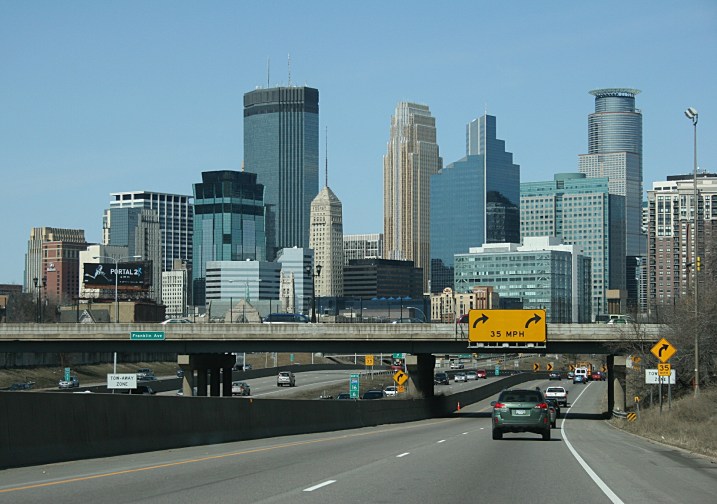
A view of the Minneapolis skyline from Interstate 35 on a light traffic day. Minnesota Prairie Roots file photo.

A view of the Minneapolis skyline from Interstate 35 on a light traffic day. Minnesota Prairie Roots file photo.

SELDOM DO MY HUSBAND and I venture into the Twin Cities.

I abhor the heavy traffic rocketing down the interstate, especially that one crazy driver who weaves from lane to lane.

I detest the Interstate 35W/Interstate 494 interchange, which throws our vehicle into the midst of a dodge ball game. I am not a nail biter. But, at this juncture, I bite my nails as my husband tries to merge into near bumper-to-bumper traffic on I-494 before the right lane ends.

You get the picture. Mostly, we stay out of the metro, unless we need to drive to Fargo where the son attends North Dakota State University or we need to visit our eldest daughter in south Minneapolis or the in-laws, most of whom live north of the metro.

An edited cell phone snapshot of Kellogg Boulevard shot from the skyway into the Xcel Energy Center.

An edited cell phone snapshot of Kellogg Boulevard shot from the skyway into the Xcel Energy Center.

But last Saturday we had to travel to St. Paul for the Trans-Siberian Orchestra concert at the Xcel Energy Center. I’d rather motor toward St. Paul any day given the traffic (at least when we’ve driven there) in the capitol city seems less rushed, less dense (you can take that word “dense” either way) than in Minneapolis.

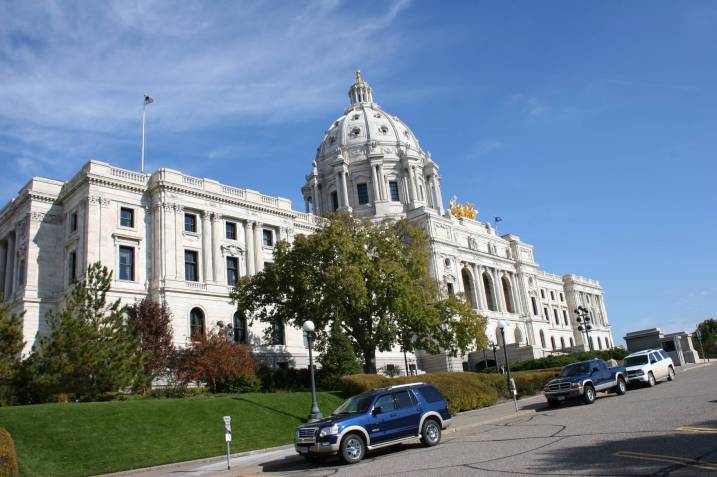
A file photo of the stunning Minnesota state capitol in St. Paul.

A file photo of the stunning Minnesota state Capitol in St. Paul.

I also appreciate the less urban feel of St. Paul versus Minneapolis. I expect this assessment, right or wrong, stretches back to my childhood knowledge of St. Paul as the home of the state Capitol and the South St. Paul Stockyards and Minneapolis as the location of the Foshay Tower.

Both of the Twin Cities can be seen in this view taken from the state capitol. You can see the downtown Minneapolis skyline in the distance.

Both of the Twin Cities can be seen in this view taken from the state Capitol. You can see the downtown Minneapolis skyline in the distance to the left. Minnesota Prairie Roots file photo.

Alright, I probably should not stir up a battle between the Twin Cities here. That is not my intent. Rather, I want to share a little story from our recent foray into St. Paul. The eldest daughter’s boyfriend lives and works there, so we stopped after the Trans-Siberian Orchestra concert to see his apartment and then dine out at Cafe Latte.

That visit to a sprawling apartment complex across from Mears Park brought the first odd moment of the evening. During the elevator ride to the underground parking garage, a young woman stepped inside and promptly pressed herself into a corner, her back to the four of us. I was so stunned by her strange behavior that I remember thinking “What is wrong with her?” and “Should I say anything?” I noticed only her long auburn-dyed locks, her knee-high boots and the paper towels crammed into a plastic bag gripped in her right hand. I never saw her face.

Should I have spoken to her?

The second unusual moment came when we were dining at the Cafe Latte along historic Grand Avenue. While savoring my tasty asparagus chicken stew and smokey turkey pasta salad, I noticed a football-player-sized man peddling M & Ms directly outside the cafe’s front door. Anyone trying to enter Cafe Latte would have to weave around the man blocking the entry. Many diners pulled bills from their wallets. By the time we finished our meal, the mysterious Candy Man had vanished.

Who was this Candy Man? And would you have purchased M & Ms from him?

Finally, on our way back to the daughter’s car, parked in a ramp just off Grand, we encountered a woman who’d been standing inside the ramp entry before we ate. This time, upon our return, she asked, “Can you spare $1.75 for bus fare?” None of us reached into our billfolds.

Should we have given this woman money? How long had she been standing there and how much money had she collected?

Perhaps all of these incidents are common occurrences in the Twin Cities. I really do not know. But for this out-state Minnesotan, the moments were impressionable and, certainly, unsettling.

© Copyright 2013 Audrey Kletscher Helbling
 

Don’t ask Santa, ask Grandma in the home of champions December 29, 2012

Filed under: Uncategorized — Audrey Kletscher Helbling @ 12:09 PM
Tags: , , , , , , , , ,

BILLBOARDS, ESPECIALLY THOSE in rural Minnesota, fascinate me.

The signs impress me as more interesting, more focused, quirkier, it seems, and zeroed in on a specific geographical region. The messages, the art, can reveal much about an area and often make me smile, sometimes even laugh.

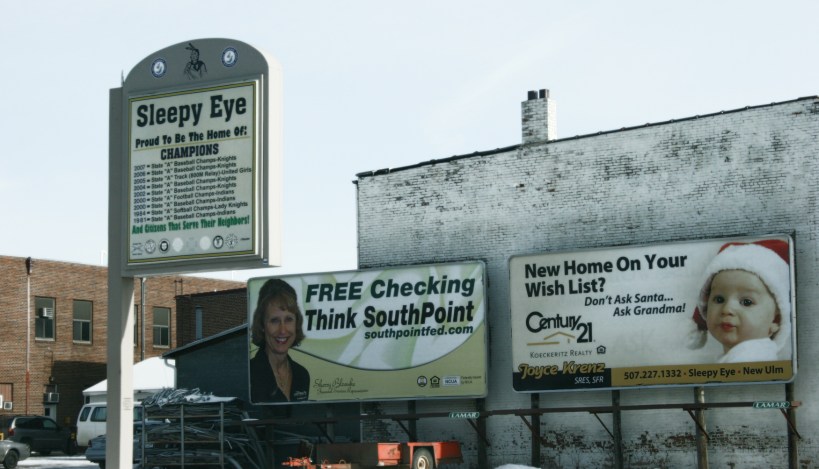
This creative real estate billboard in Sleepy Eye, at the intersections of U.S. Highway 14 and Minnesota Highway 4, makes me smile. A nearby sign boasts the local high school's athletic accomplishments.

This creative real estate billboard, right, in Sleepy Eye, at the intersections of U.S. Highway 14 and Minnesota Highway 4, makes me smile. A nearby sign boasts athletic accomplishments at Sleepy Eye and St. Mary’s high schools.

Additionally, many small towns take great pride in the local high school’s athletic accomplishments, even from decades ago.

Although many small towns brag about local sporting accomplishments, I would like to occasionally drive into a community and also read a sign boasting of academic, musical, theatrical or other accomplishments.

Wouldn’t that be nice to see in our sports-obsessed world?

Imagine reading a sign like “Home of the 2012 Minnesota State Spelling Bee Champion” or something like that.

HAS ANYONE OUT THERE ever spotted a sign in a community highlighting non-athletic accomplishments at the high school level?

© Copyright 2012 Audrey Kletscher Helbling
 

Instead of “Let it snow,” I’m singing, “Don’t let it snow any more” December 20, 2012

Filed under: Uncategorized — Audrey Kletscher Helbling @ 11:16 AM
Tags: , , , , , , , , , , , ,
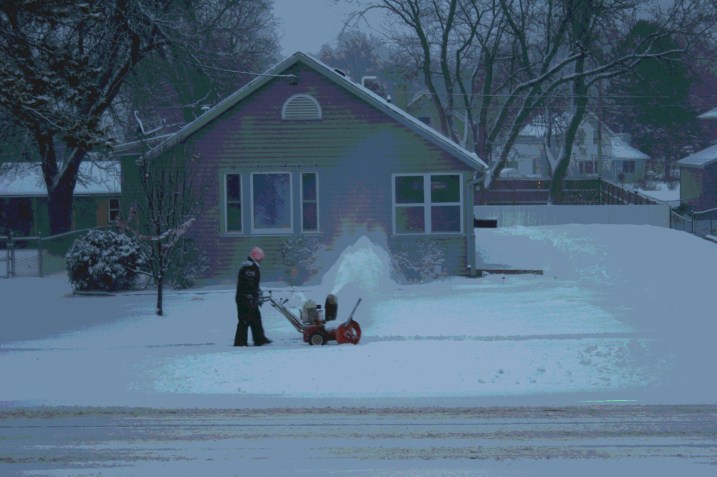
An edited scene from my home office window before 8 a.m. today.

An edited scene from my home office window before 8 a.m. today.

WHAT I FEARED MAY OCCUR is currently unfolding across the Midwest. Snow. Lots and lots of snow.

The snow in and of itself really is quite lovely, unless you must deal with it, drive in it.

And that’s precisely the problem. I don’t need to tell you that. I expect many of you, like me, are awaiting the arrival of loved ones for Christmas.

My second daughter, who lives 300 miles away in Appleton, Wisconsin, is scheduled to drive to Faribault on Friday, her first trip back since the Fourth of July. I want my girl home for the holidays.

But…the situation in Wisconsin right now is not good with snow and blowing snow creating hazardous travel conditions. Nor is it good in southeastern Minnesota, where blizzard warnings are in effect for as near to me as Steele County, the county right next to my home county of Rice. We’ve gotten perhaps five inches of snow here in Faribault.

Radio announcers are reporting difficult travel along Interstate 35 south of Faribault on into Iowa. The Minnesota Department of Transportation 511 website confirms difficult driving conditions throughout the southeastern region with words like “snow, drifting snow, blowing, slippery.”

Three hundred miles away in Outagamie County, in which Appleton is located, the sheriff’s department has issued a tow ban on US 41, a major north-south freeway linking cities like Milwaukee, Oshkosh, Appleton and Green Bay. My daughter travels US 41 often in her work as a Spanish medical interpreter. It worries me that she may be sent out to some hospital emergency room in an outlying rural community today.

I realize it does no good to worry. But I am a mother, and mothers never stop worrying about their offspring, even when those children are independent adults. Given last week’s tragic loss of 20 children in Sandy Hook, I think we are all especially emotionally vulnerable right now.

WHAT ARE WEATHER and road conditions like in your area? Has the weather changed your holiday travel plans or those of loved ones?

© Copyright 2012 Audrey Kletscher Helbling
 

Light snow falling here in Faribault December 7, 2012

Filed under: Uncategorized — Audrey Kletscher Helbling @ 6:51 PM
Tags: , , , ,
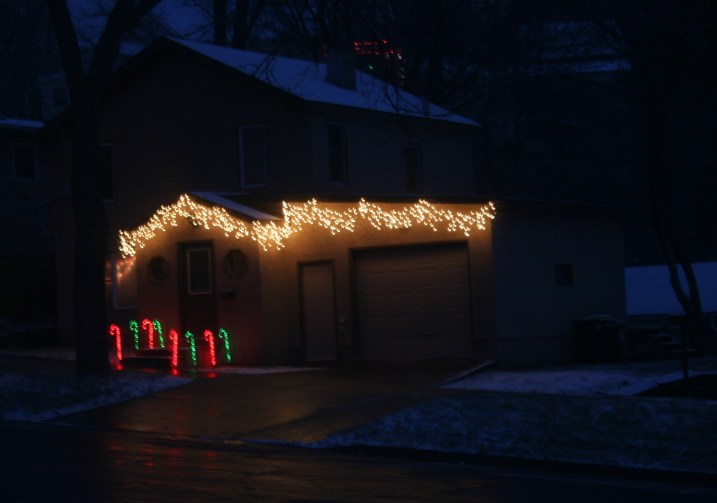
My neighbor's house glows in the fresh snow.

My neighbor’s house glows in the fresh snow.

NO MATTER HOW MANY YEARS you’ve witnessed them, the first snowfalls of the season always feel magical.

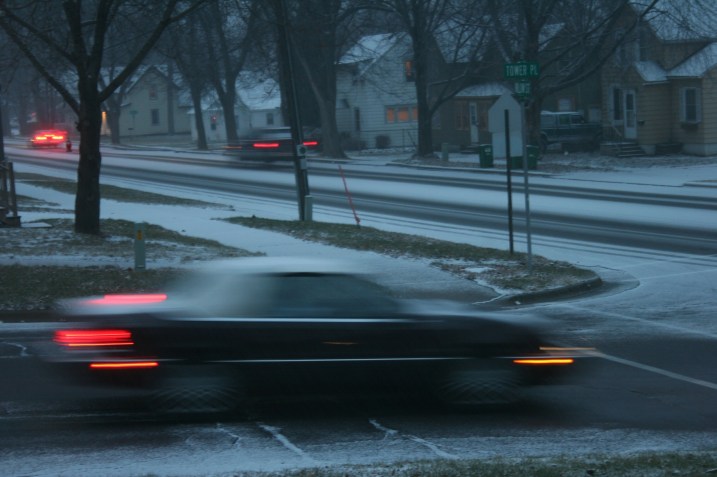
Late afternoon along my street.

Late afternoon along my street.

Snow began falling here in Faribault late this afternoon, dusting the earth, the rooftops, the roadways.

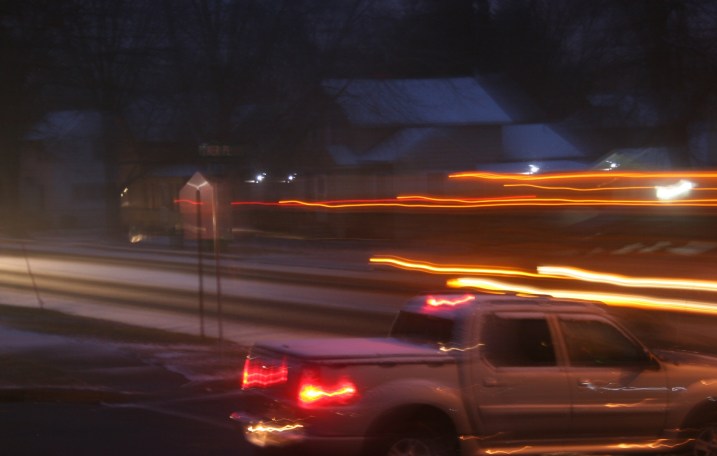
The blurred lines of a school bus passing by as a pickup waits on a side street.

The blurred lines of a school bus passing by as a pickup waits on a side street.

I expect the precipitation will be just enough to slick up the roads. Be careful out there.

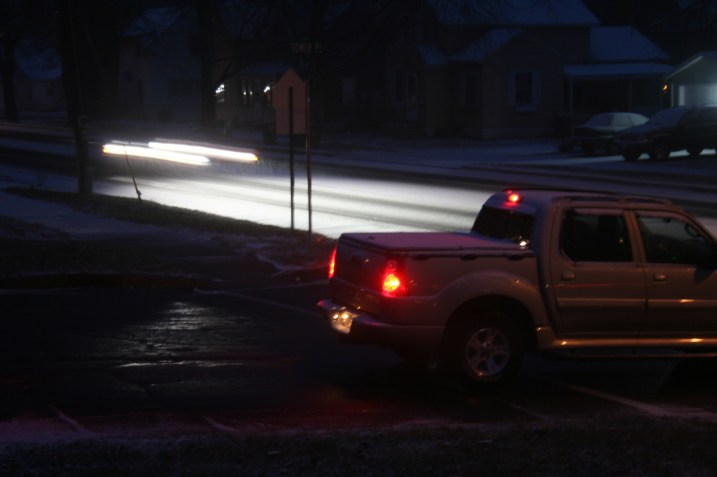
Still waiting for traffic to pass on a main arterial street past my house.

Still waiting for traffic to pass on a main arterial street past my house.

IS SNOW FALLING where you are?

Copyright 2012 Audrey Kletscher Helbling


Wisconsin exhibit highlights Leonardo da Vinci’s inventive side November 27, 2012

Another facet of Leonardo da Vinci, on exhibit in Appleton, Wisconsin.

QUICK. When I say “Leonardo da Vinci,” what pops into your mind?

For me, it’s his “The Last Supper” painting.

Inside The History Museum, a sign welcomes visitors to the da Vinci exhibit.

I do not even think of him as a scientist or inventor.

But this Renaissance man surely was, a fact emphasized in a current exhibit originating in Florence, Italy, and currently showing at a northeastern Wisconsin museum through January 6, 2013.

The History Museum at the Castle, 330 W. College Avenue, Appleton, Wisconsin.

Two months ago I toured “Leonardo da Vinci: Machines in Motion” at The History Museum at the Castle in downtown Appleton, a hip and historic city some 300 miles from my southeastern Minnesota home and today home to my daughter Miranda.

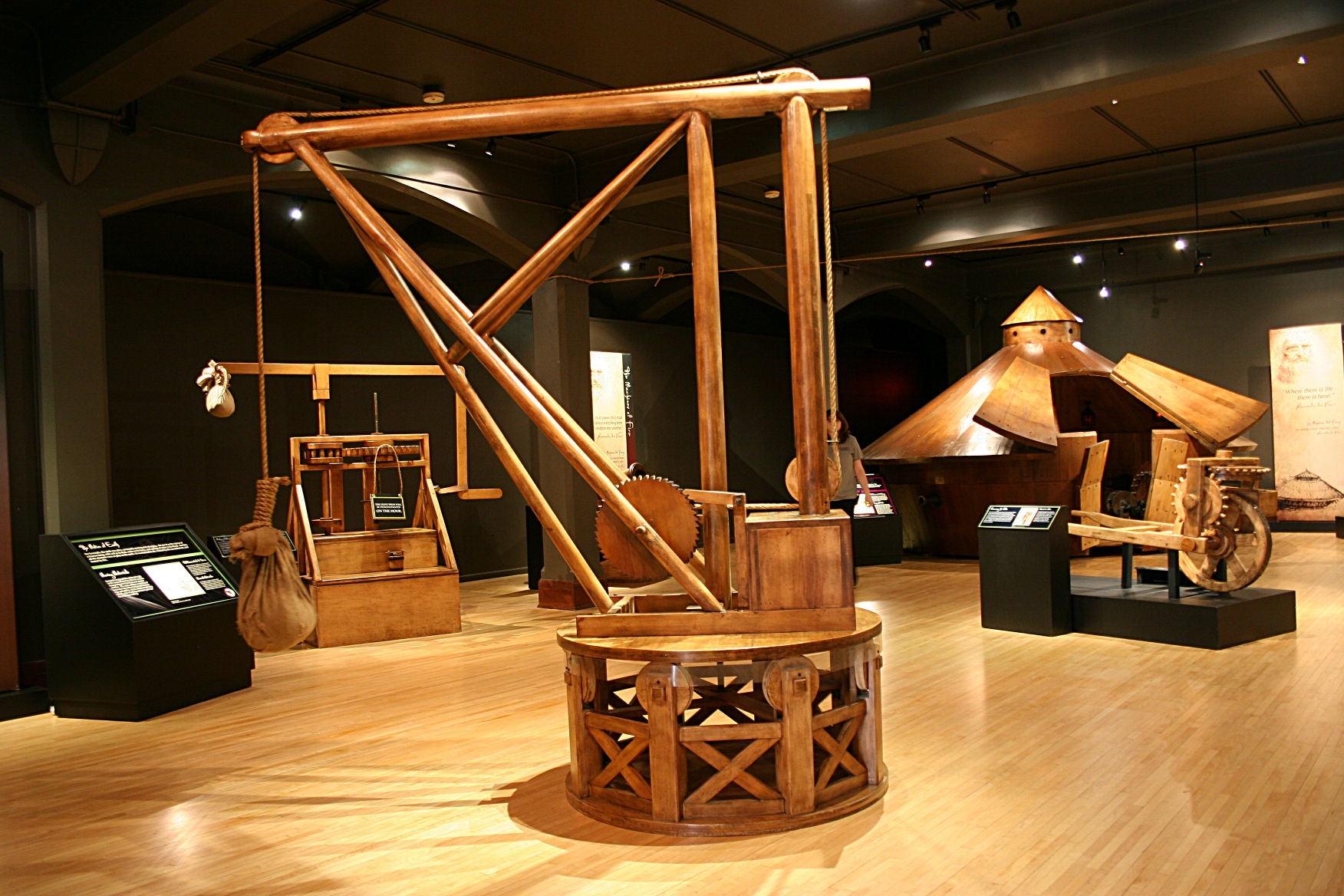
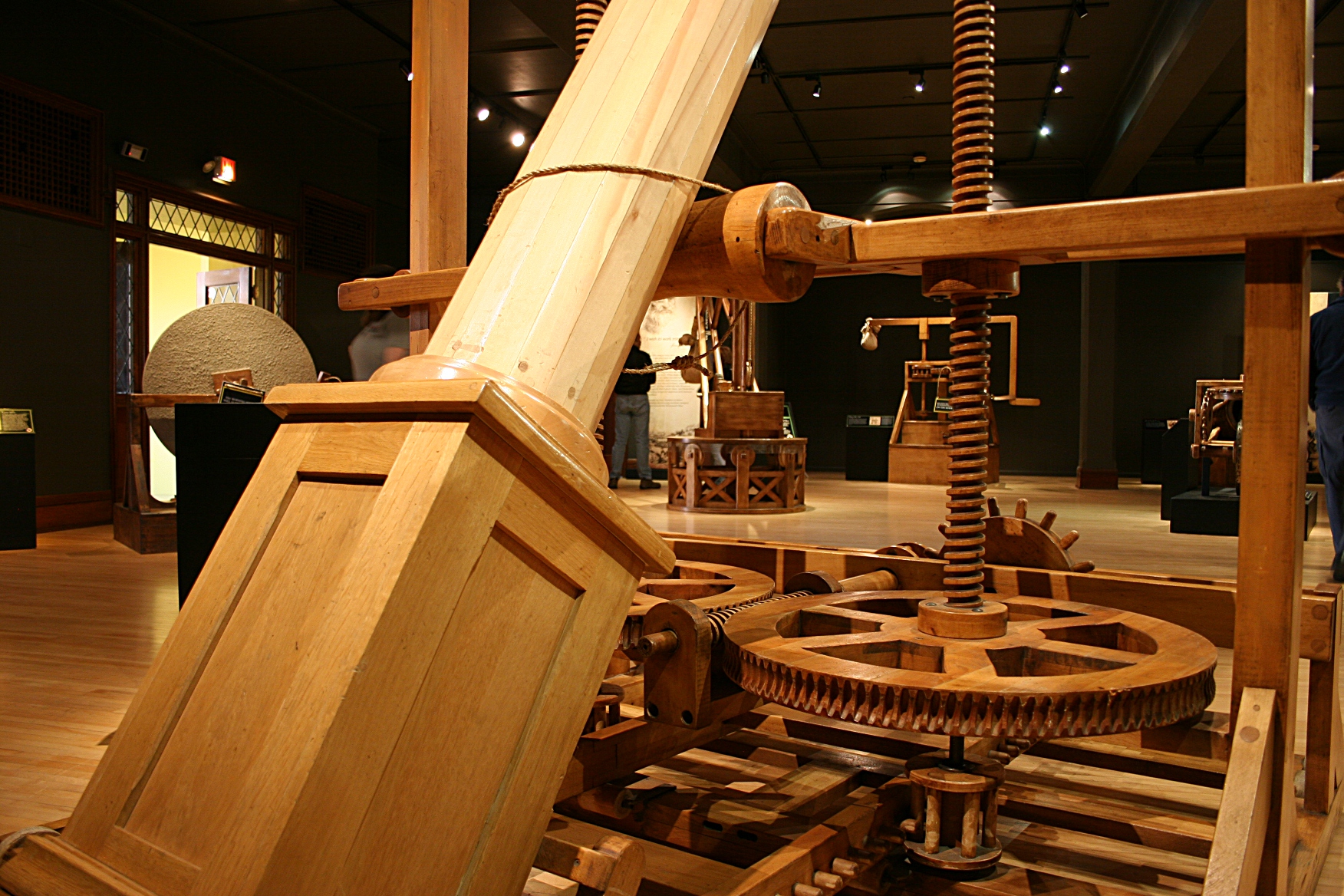
An overview of one exhibit room, a working crane in the front and a tank in the back, right.

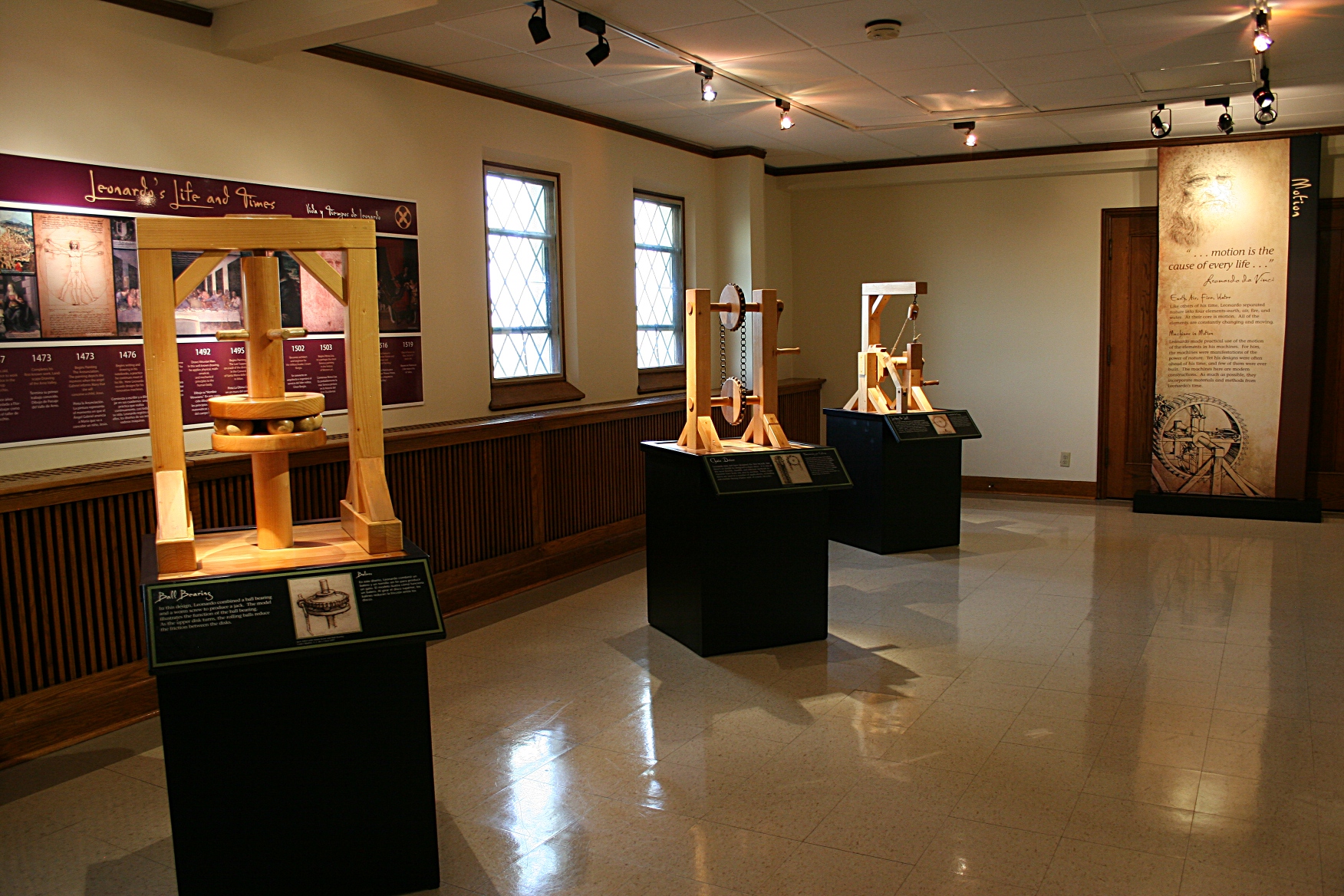
Typically I would not get particularly excited about a show which features mechanical-oriented displays. But given da Vinci’s notoriety and my interest in art and in sharing discoveries with you, I embraced this working models exhibit of 40 da Vinci machines. Modern day scientists and artisans built the machines based on da Vinci’s codices.

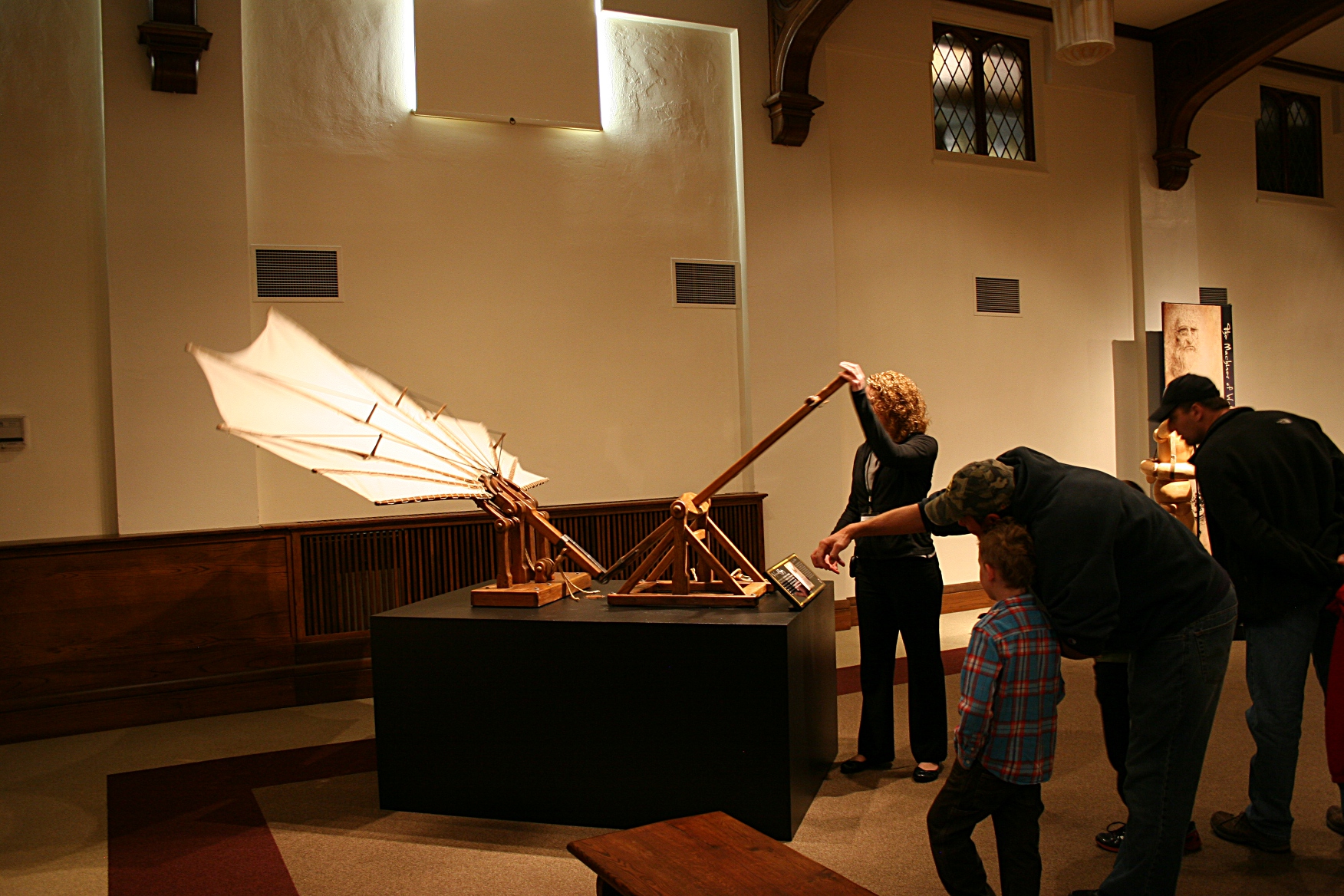
This is an interactive exhibit.

Kids will thrill in “Machines in Motion” as much as adults.

An informational sign summarizes well the multiple talents da Vinci possessed:

Perhaps more than anyone before him—and perhaps anyone since—Leonardo was a great scientist, engineer, and artist all in one. He combined a scientist’s passion for exploring how things work and an artist’s ability to vividly illustrate his revelations. His machine designs were ingenious and visionary—often ahead of his time. They illustrate principles at the heart of machines today.

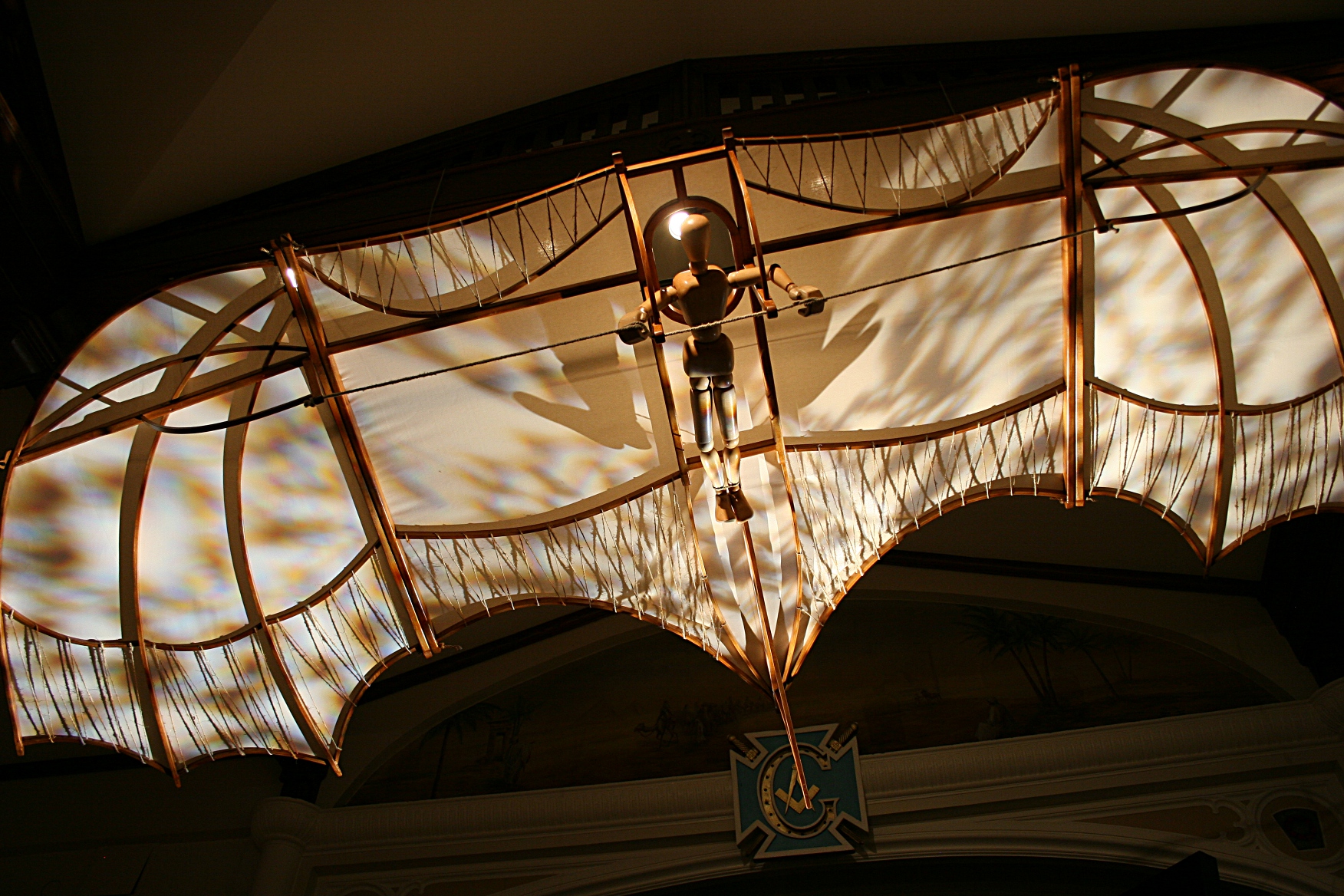
One of da Vinci’s more impressive flight designs, suspended from the ceiling of an auditorium at the History Museum.

In his study of air, water, earth and fire, this genius—and I don’t hesitate to term someone of da Vinci’s intellectual and artistic talent as thus—created ideas which evolved into workable solutions aiding mankind.

See for yourself via these selected photos from the exhibit or by traveling to Appleton to tour this vast, interactive display. Click here for more information about “Leonardo da Vinci: Machines in Motion.”

An illustration by the scientist/inventor, Leonardo da Vinci.

Machines created from da Vinci’s codices.

More inventions showcased.

Da Vinci’s version of a horse-drawn armored military tank.

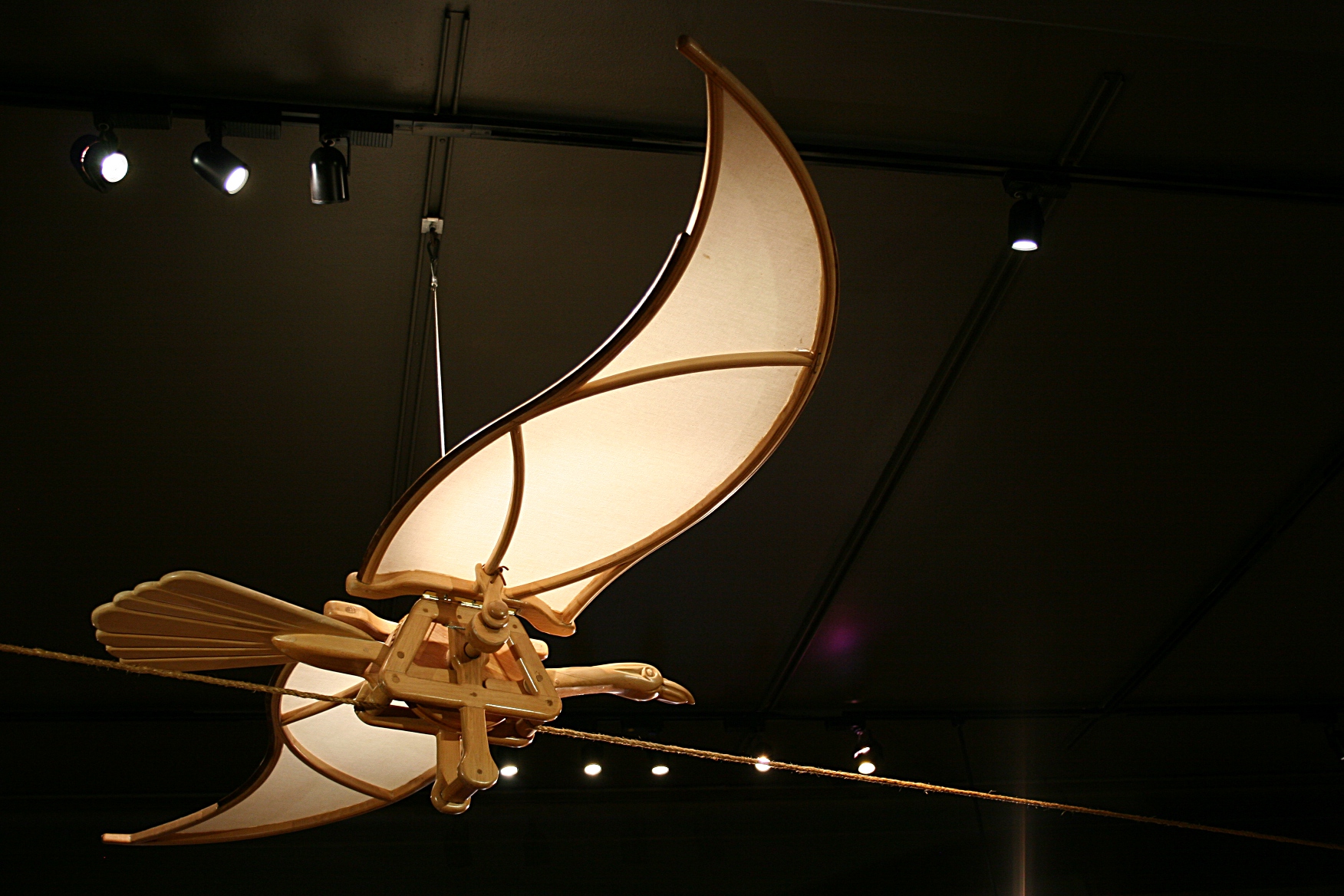
The bird’s wings flap as it moves across the stage during theatrical performances.

A machine in motion.

Da Vinci the artist and da Vinci the scientist.

Da Vinci’s idea to traverse water.

One final exhibit overview.

Disclaimer: I received a $25 gift certificate from Downtown Appleton, Inc., prior to my visit and used that money toward museum admission for myself, daughter and husband. That did not influence my decision to post about the da Vinci exhibit.

© Copyright 2012 Audrey Kletscher Helbling
 

Bring in a billboard, a pregnant burrito & more along I-94 November 26, 2012

Filed under: Uncategorized — Audrey Kletscher Helbling @ 8:27 AM
Tags: , , , , , , , ,

IN THE PAST YEAR, I’ve begun to really pay attention to billboards. Prior to this, I viewed these mega ads primarily as visual clutter.

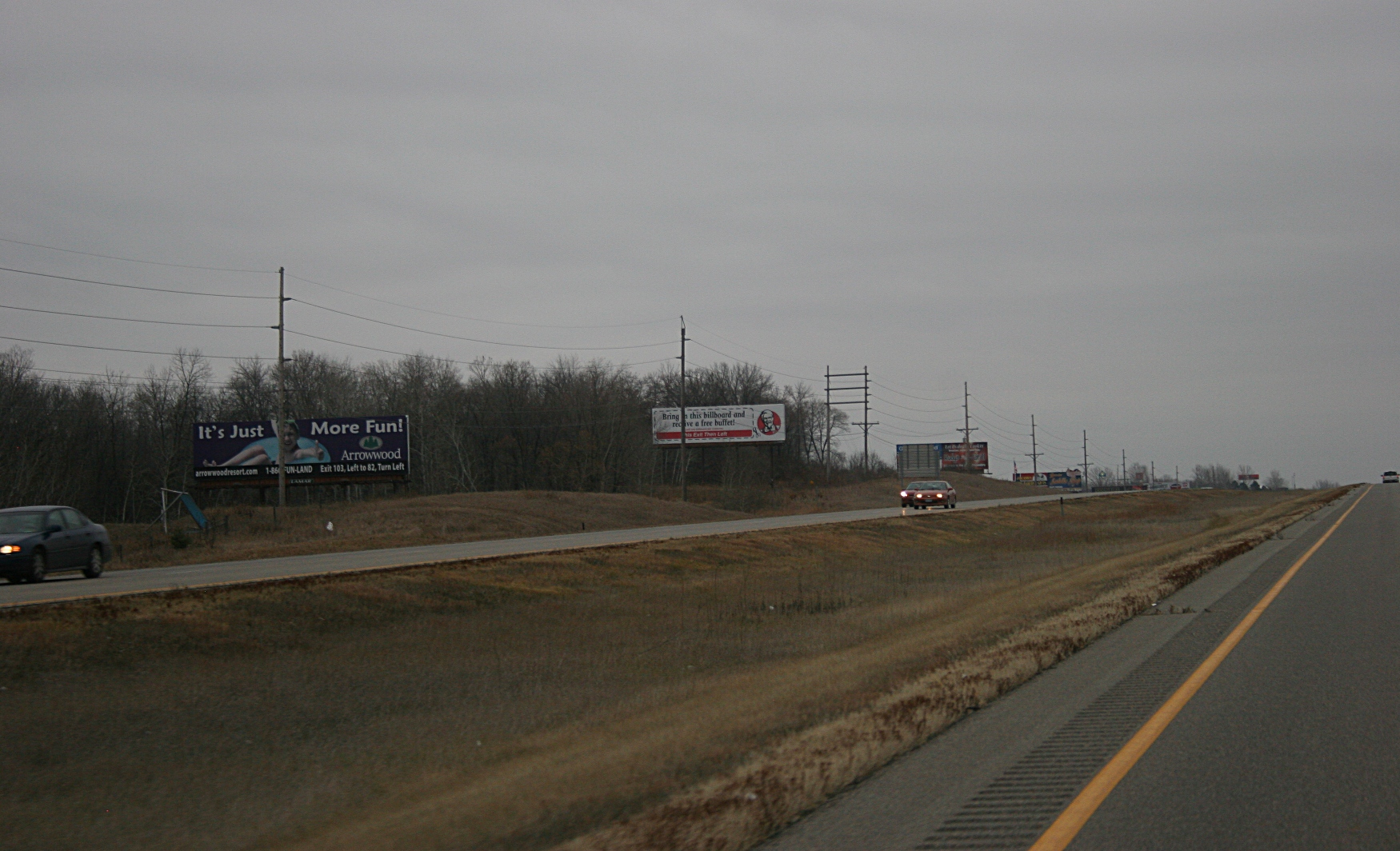
A string of billboards near Alexandria, photographed while driving eastbound back to Faribault along Interstate 94.

But now this open air, in-your-face advertising has evolved into a diversion from a long and weary journey along a familiar route. For me, that tedious trip has been the 600-mile round trip to and from Fargo, North Dakota, four times since February. (Our son attends North Dakota State University.)

At first the drive was interesting. I haven’t traveled all that often across this region of Minnesota along Interstate 94.

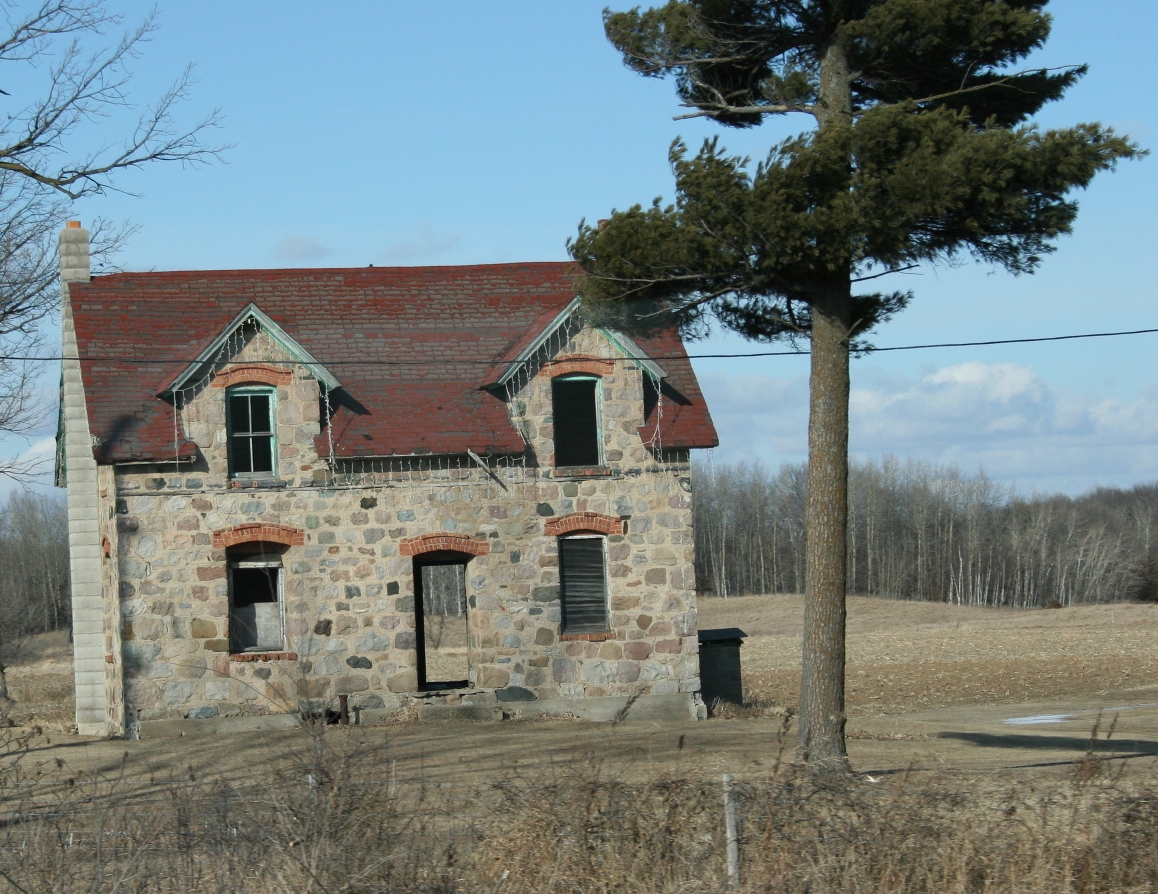
Abandoned stone house along I94 near Avon.

Now, though, I am so familiar with the sites that I can tell you exactly where to find the abandoned stone house I wish would be restored (near Avon),

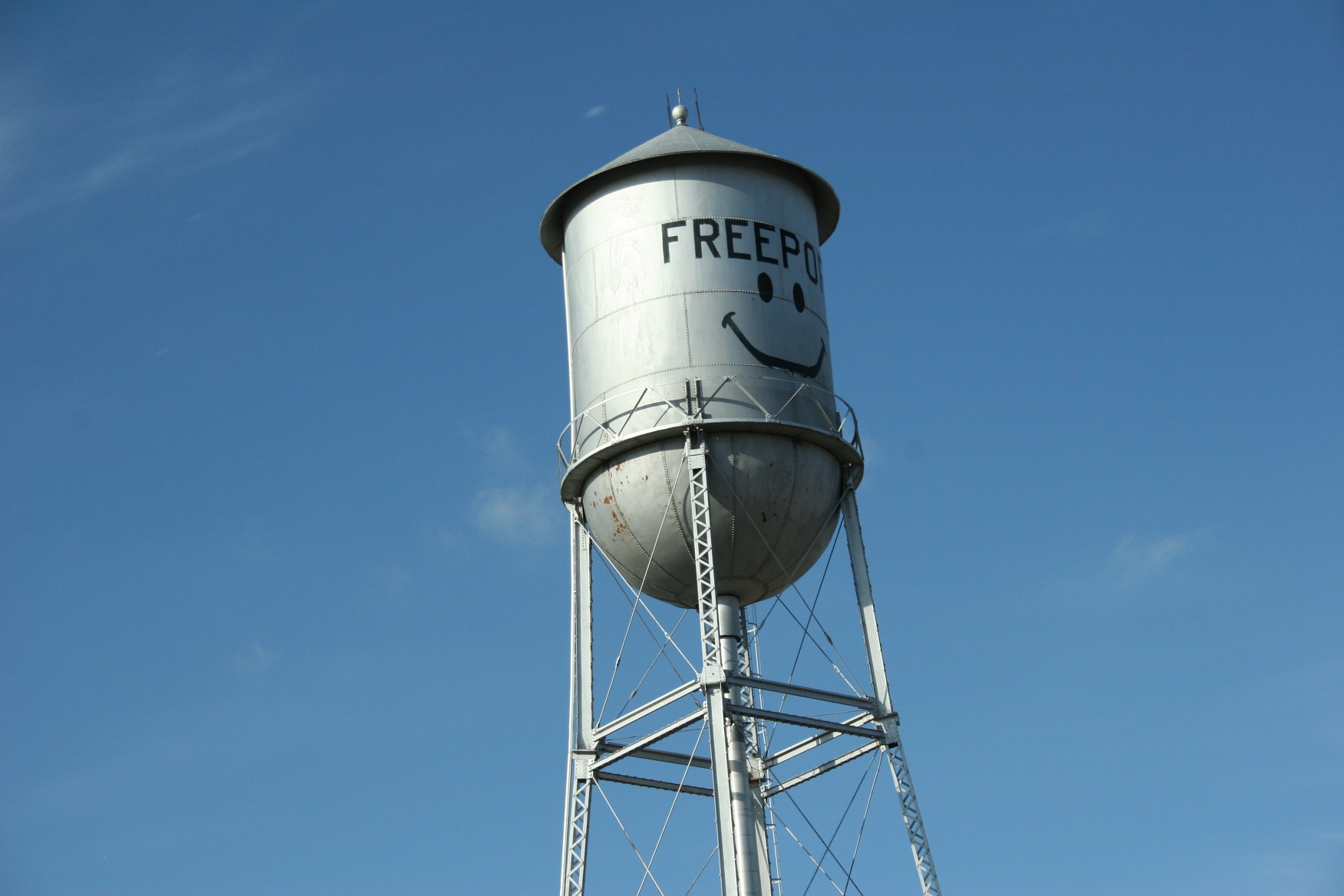
Freeport, “The city with a smile!” is marked by this smiling water tower.
…the location of the vintage smiley-faced water tower (Freeport)

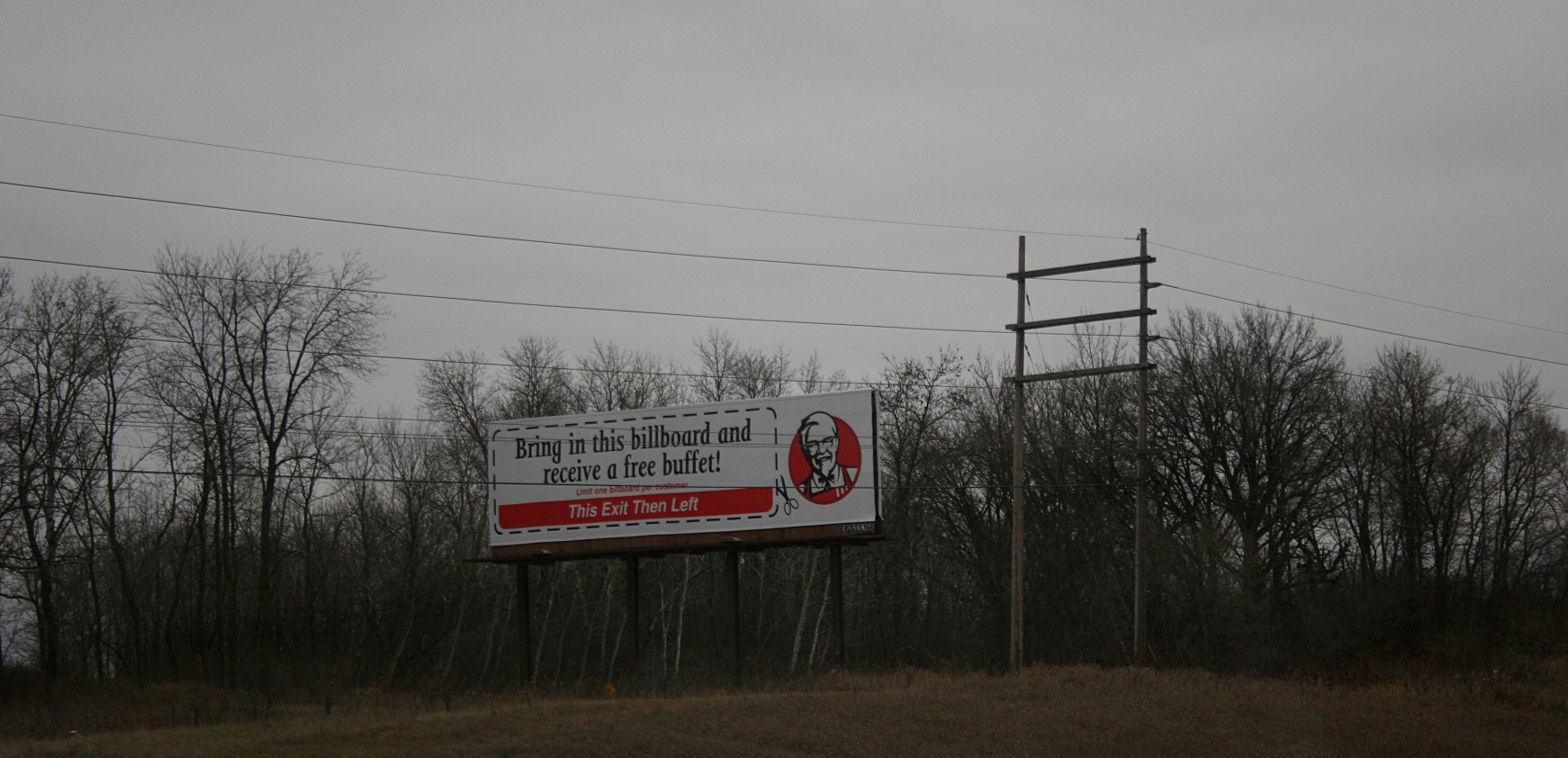
The most entertaining of all the billboards along Interstate 94 between Faribault and Fargo is this one for Kentucky Fried Chicken just west of Alexandria. Seriously, I’d like to see anyone dragging this billboard coupon into KFC.
…and even where you will spot a particularly interesting billboard coupon (Alexandria).

The billboards along I-94 from Monticello west begin to draw my eye as the land eases from urban to rural. They are a diversion, markers of towns and cities along the route and a source of entertainment and, sometimes, amusement.

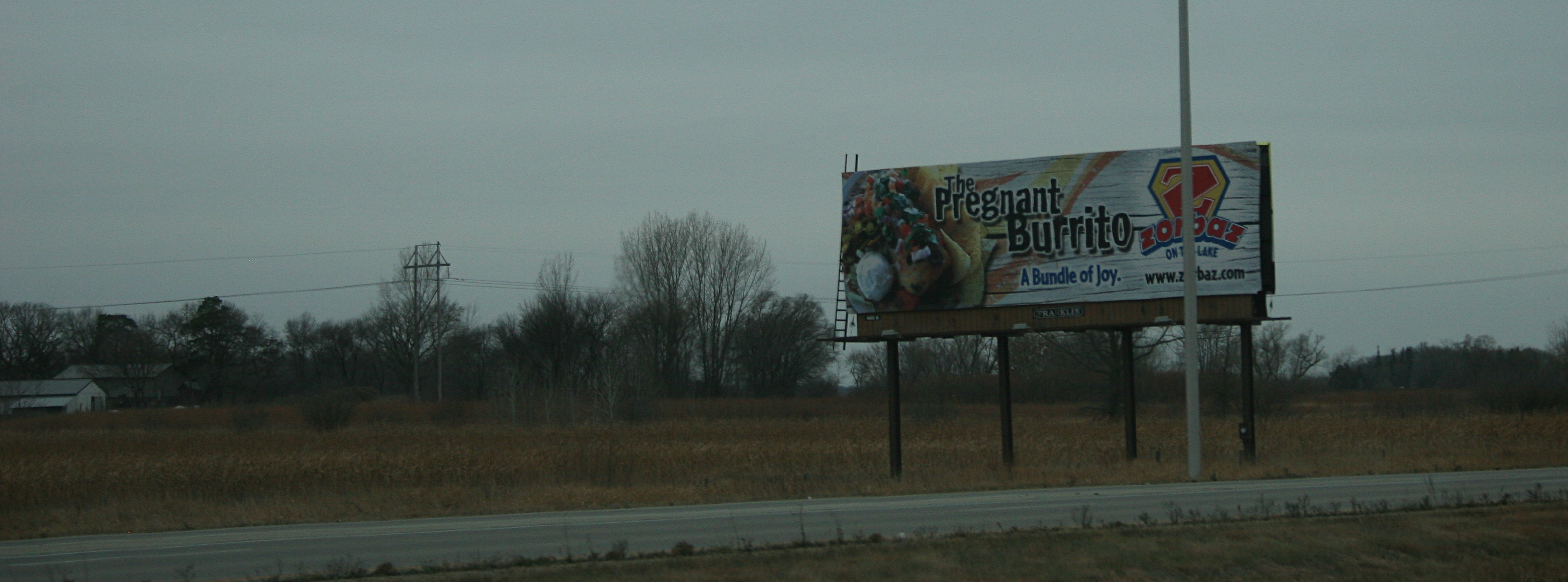
I totally cannot tell you the exact location of this billboard for Zorbaz on the Lake along I-94. But the “pregnant burrito…a bundle of joy” slogan just does not work for me. But I suppose since I noticed the message, the billboard is effective.

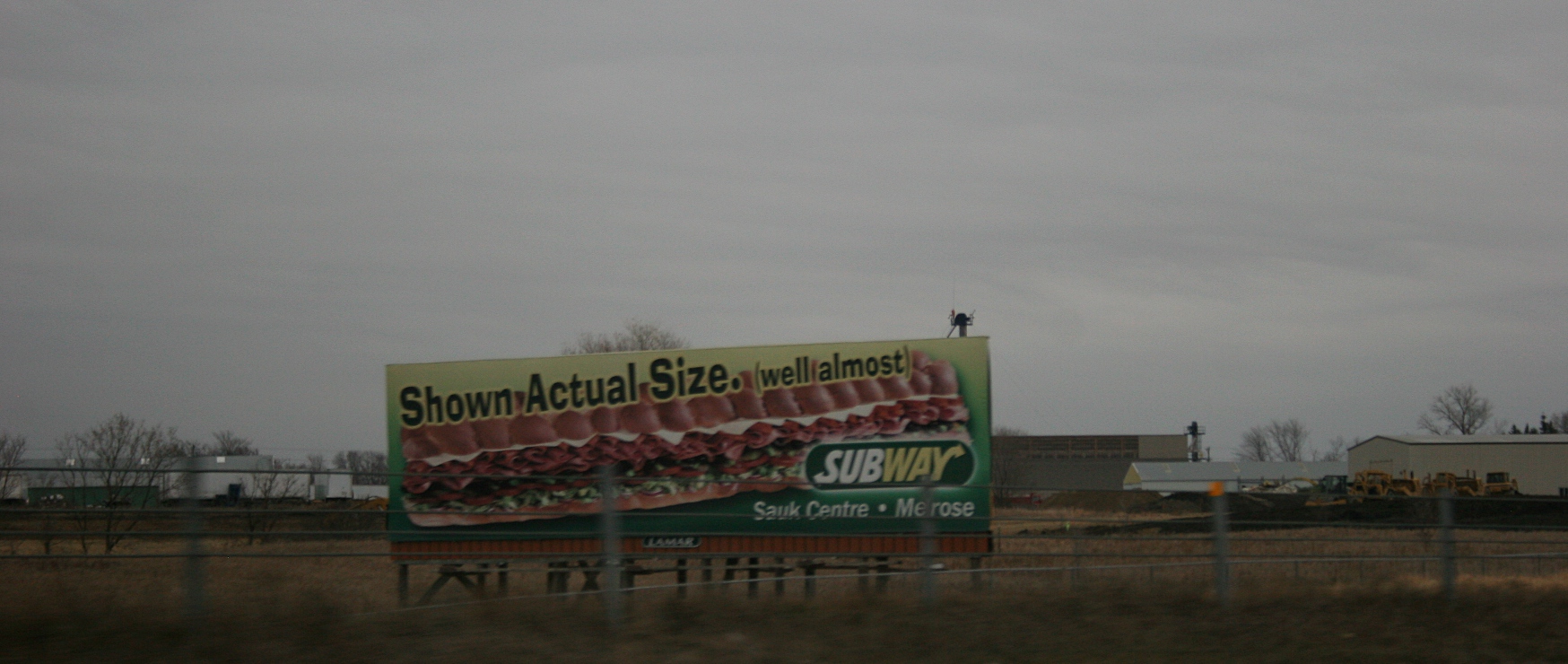
What is it about these restaurant advertisers? A sub as big as a billboard? Oh, yeah, read the small print. Snapped this sign near Melrose/Albany.

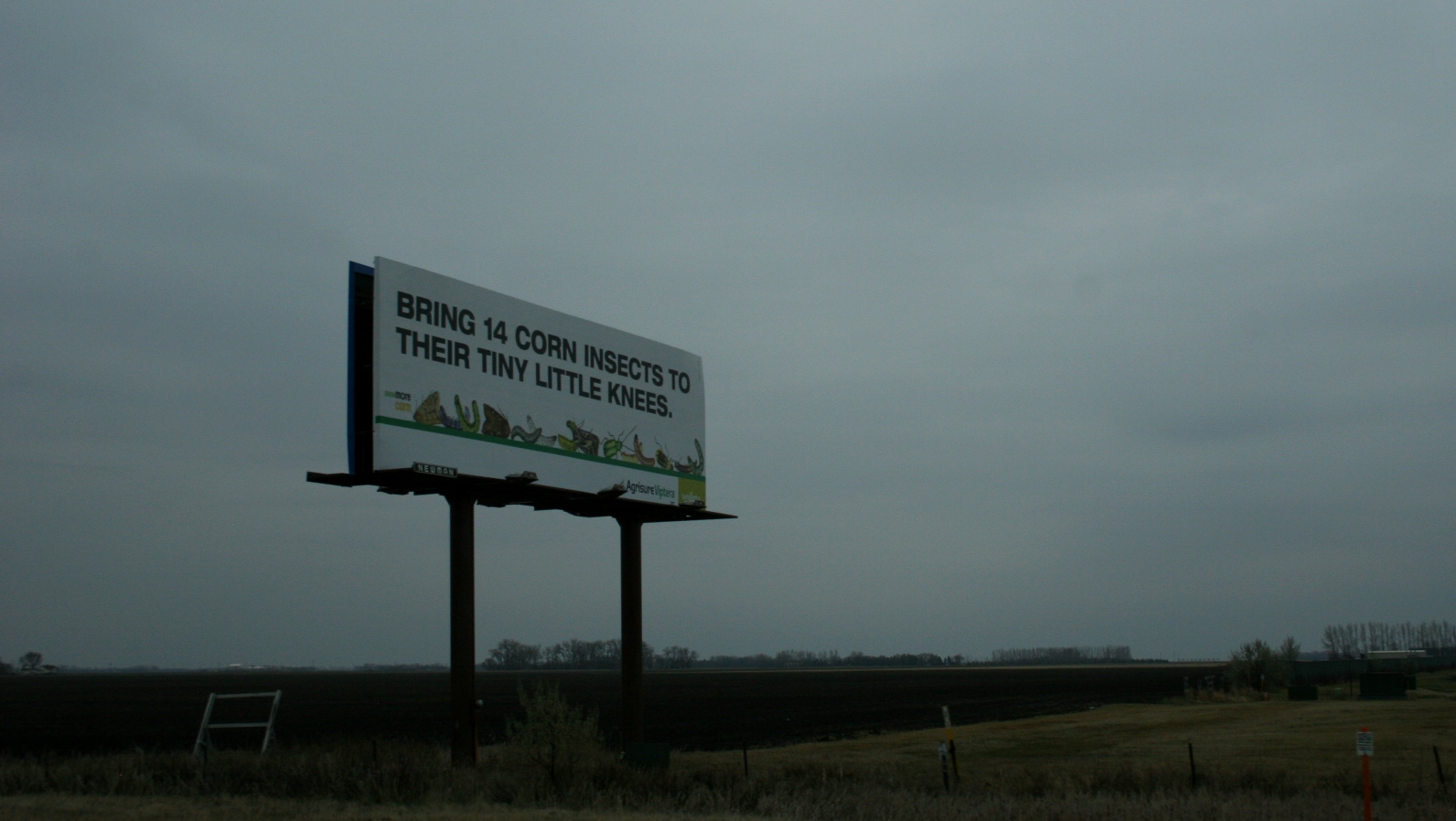
Just east of Fargo/Moorhead, you know you’re in farming country. And, yes, I counted all 14 insects on this billboard.

Copyright 2012 Audrey Kletscher Helbling