Minnesota Prairie Roots

Writing and photography by Audrey Kletscher Helbling

My adventure at a Minnesota “antique theme park,” Part II September 18, 2012

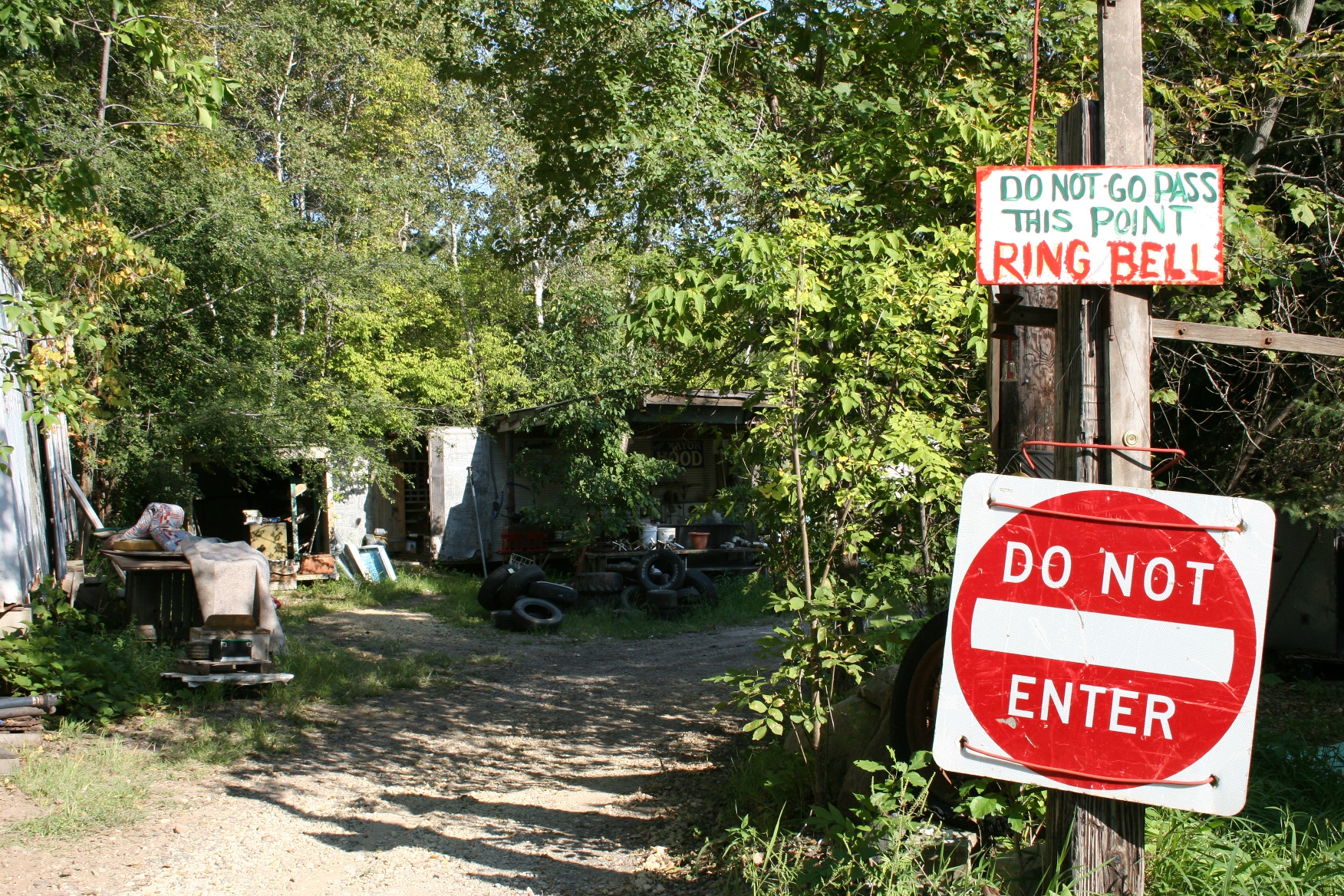
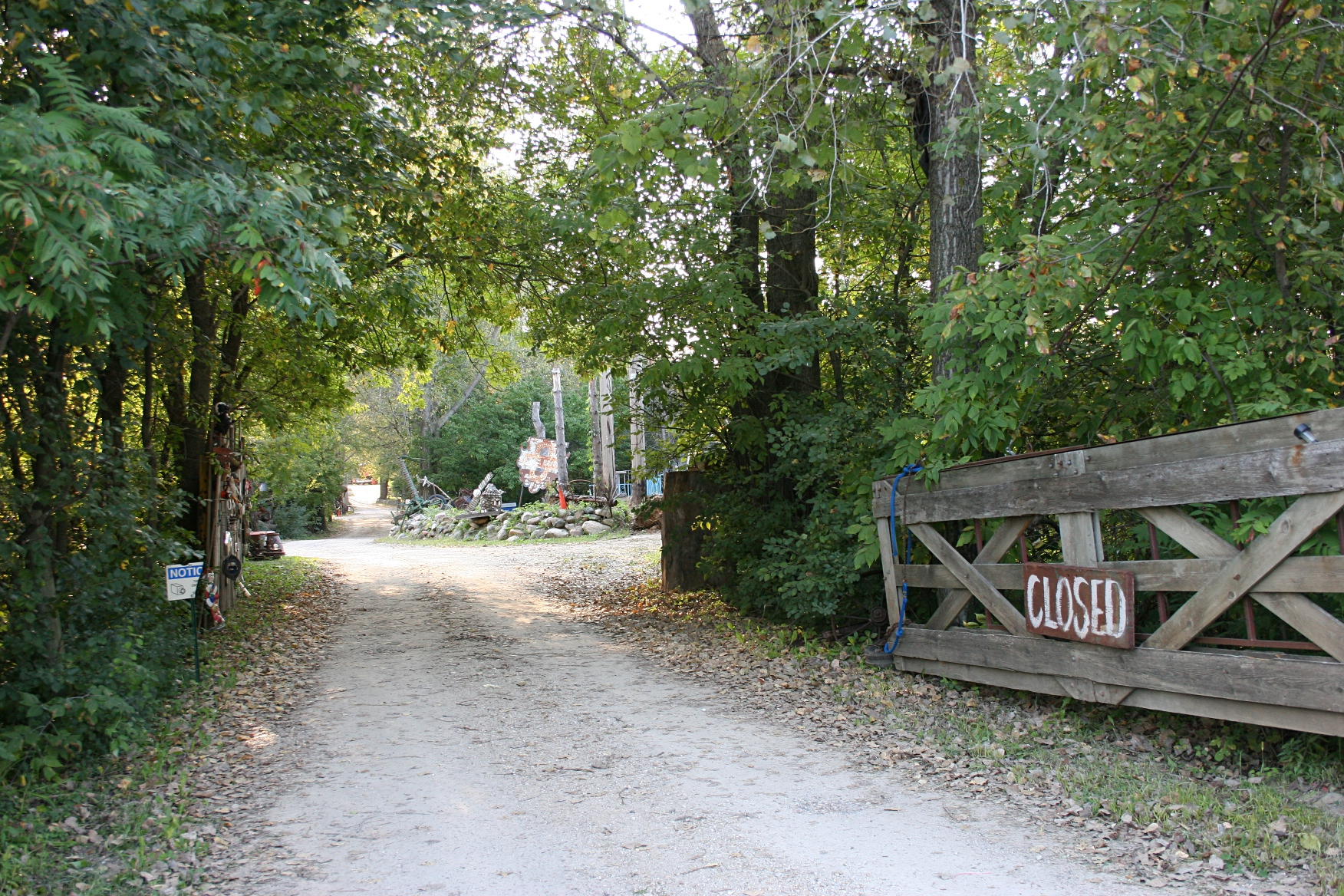
Would you follow this driveway into the woods? I did. And what an adventure.

“I’M A LITTLE SCARED,” I admitted as we turned off Pillsbury Avenue just south of Lakeville, Minnesota, onto a narrow, hard-packed gravel road. Thick dark woods crept to the edge of the driveway and my imagination ran wild with fairy tales that ended badly.

What lurked in those woods? I glanced toward my husband, who was guiding our van into the unknown. “I hope there’s not a big dog.” I imagined a ferocious canine, teeth bared, legs planted in a defensive stance.

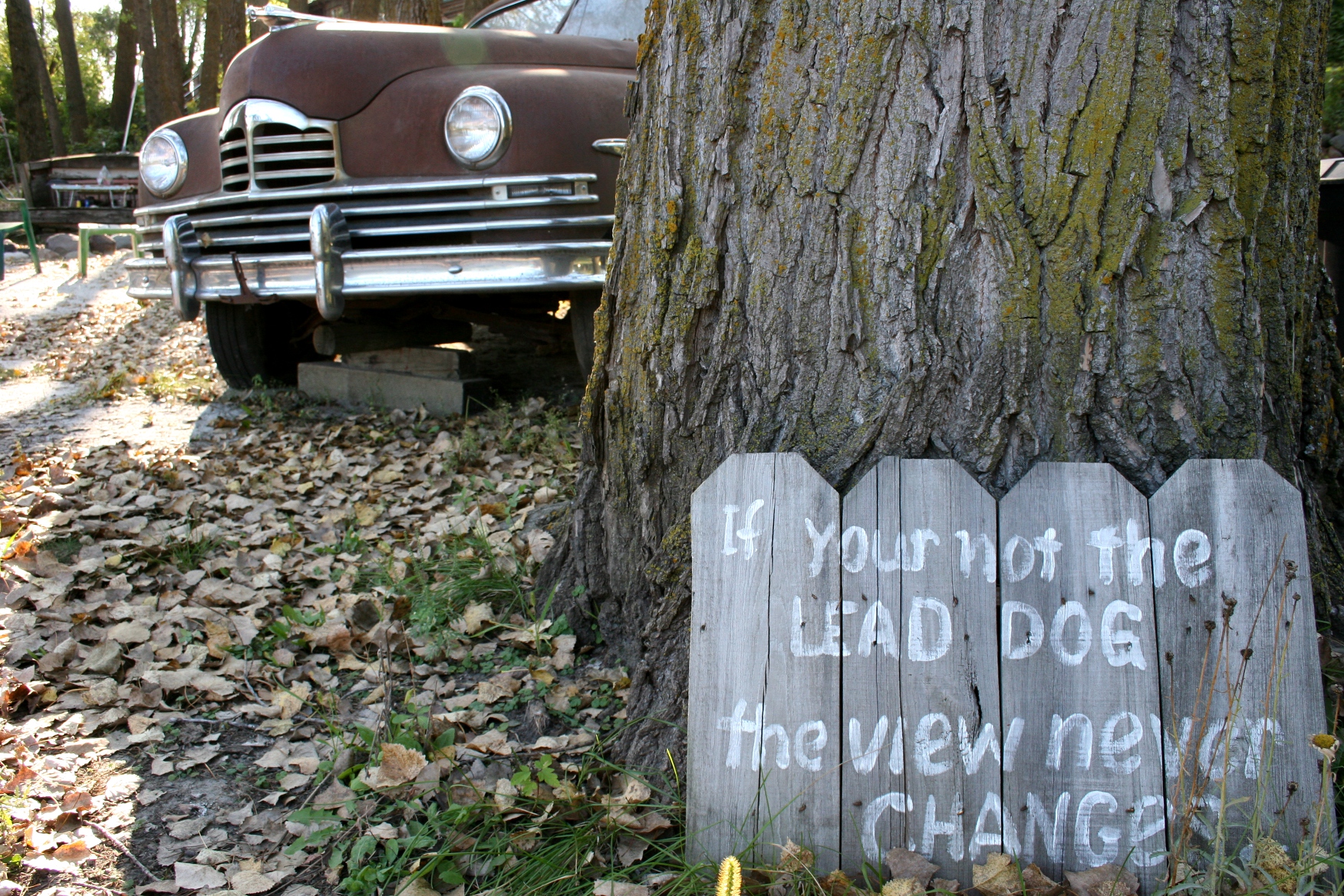
A dog-themed sign, one of many signs on the property. And, no, spelling is apparently not a priority here.

There were no guard dogs—unless you count the little dog interested only in pursuing a baby bunny and not humans. There were no bad endings.

But I wanted to warn you, lest you initially think like me and consider backing out even before you enter the wonderment which is Hot Sam’s Antiques.

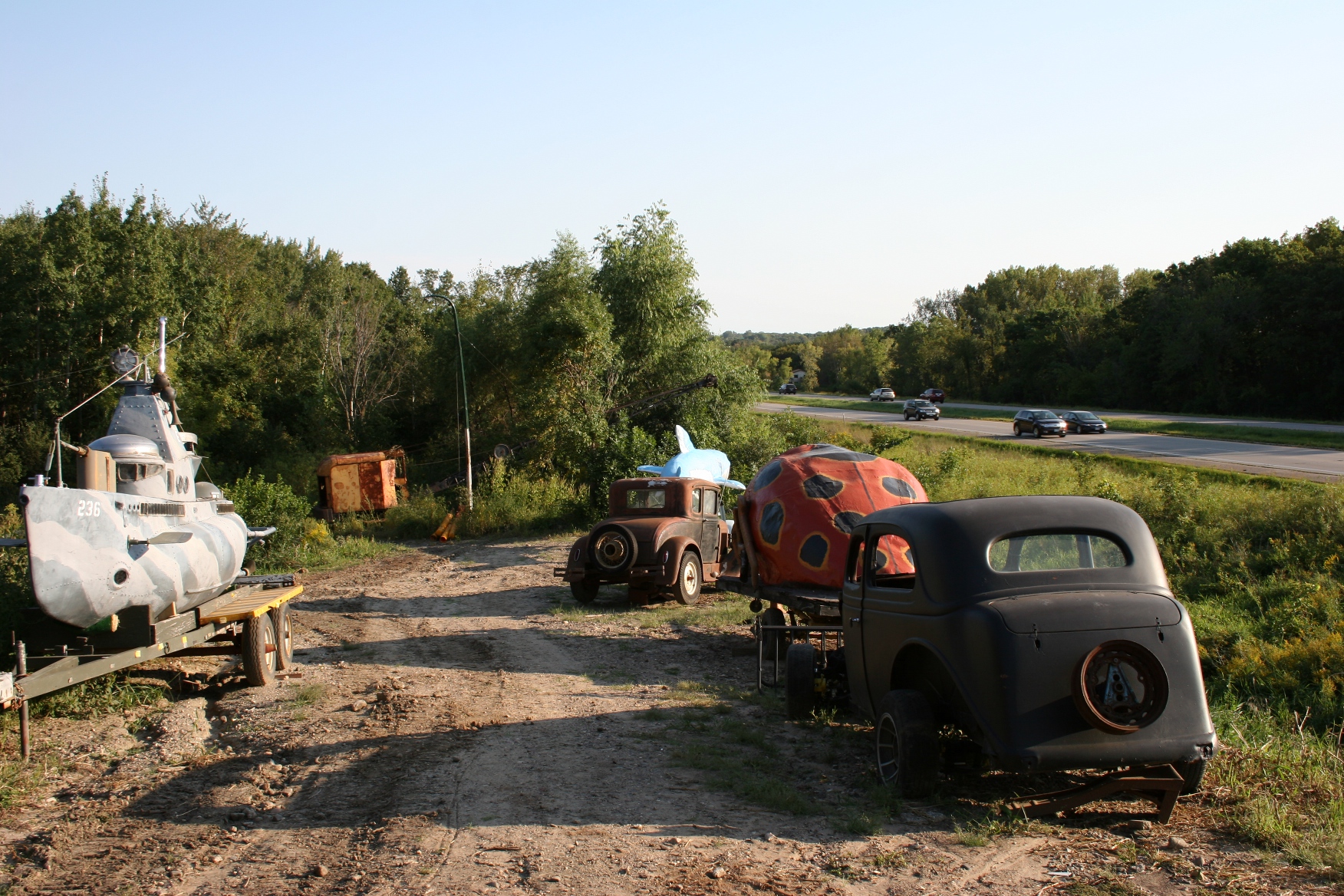
Junk cars line the driveway, left. And, yes, that’s a Statue of Liberty standing in that red junk car in the background.

This place is part junkyard, sculpture garden and antique shop.

If you like your picking places all nice and neat and tidy, then this may not be your shopping venue.

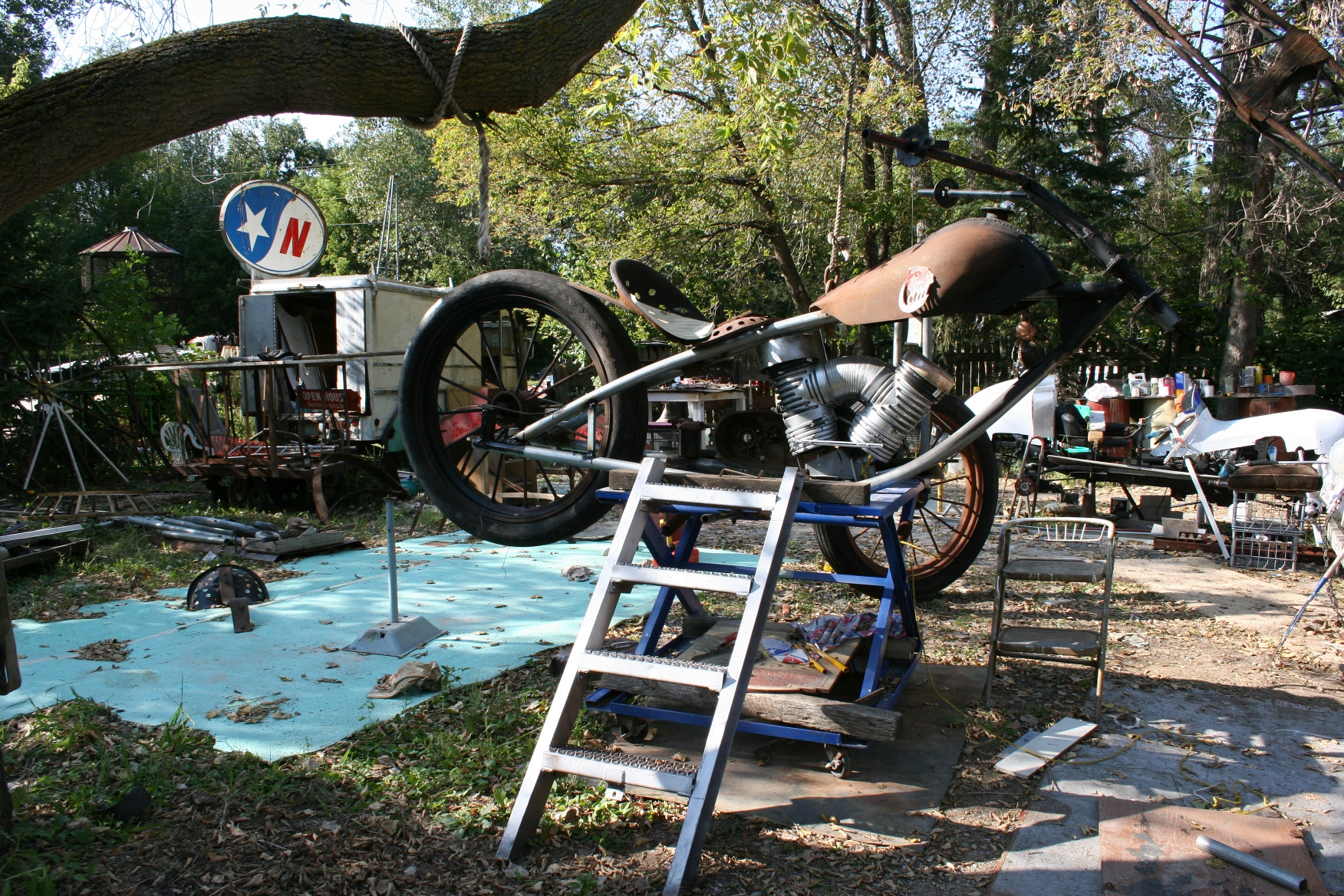
Under construction in the woods, an over-sized motorcycle sculpture currently lashed to a tree limb among the junk.

But if you are adventuresome, don’t mind scuttling around junk (aka art/fabulous finds/treasures), have lots of time to meander and appreciate a one-of-a-kind place bursting with creativity, then, welcome to Hot Sam’s Antiques.

FYI: Click here to read my first post introducing you to Hot Sam’s Antiques. I have so much to show you that I will be writing a third post.

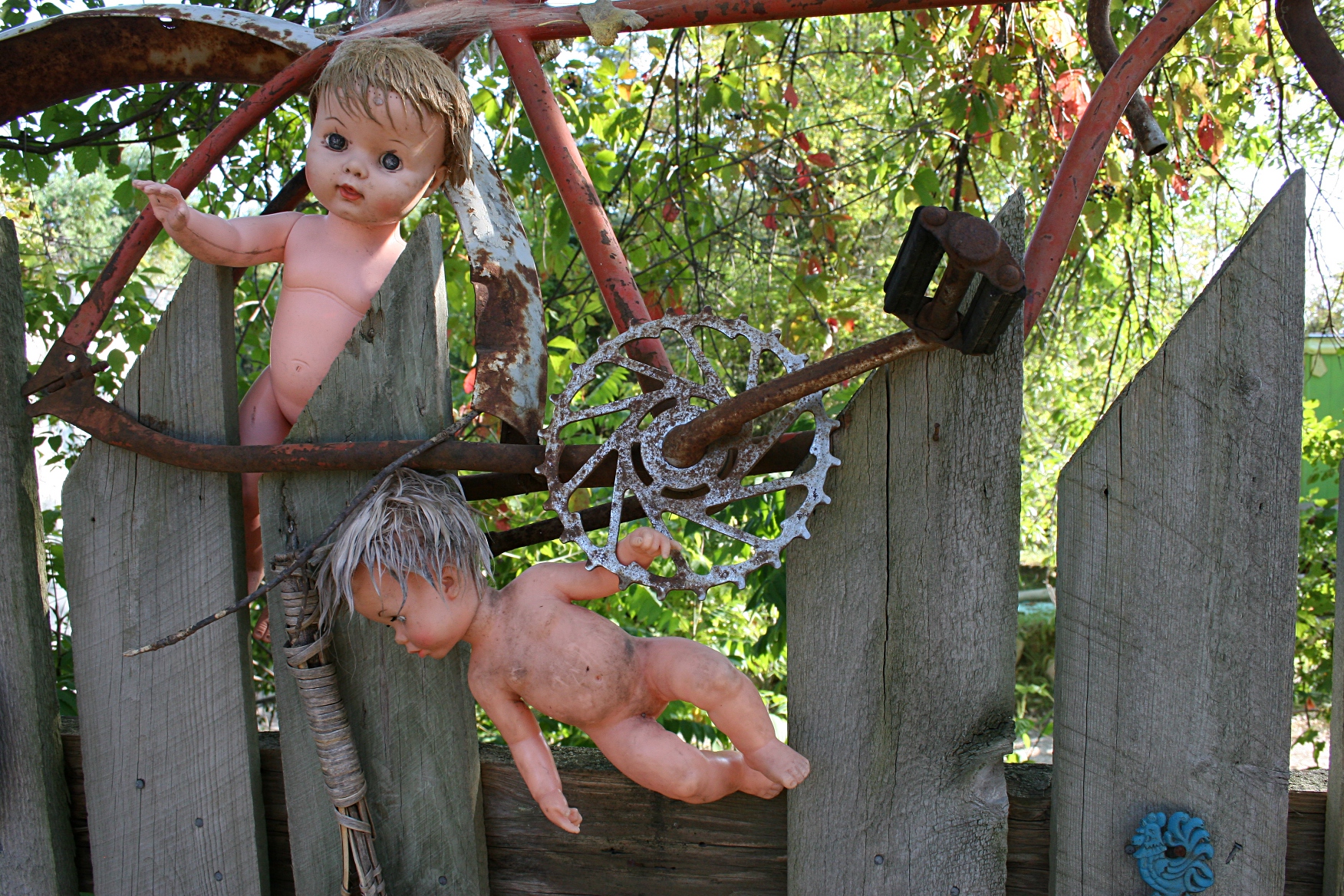
Along the driveway, you’ll see this fence decorated with an eclectic collection of stuff.

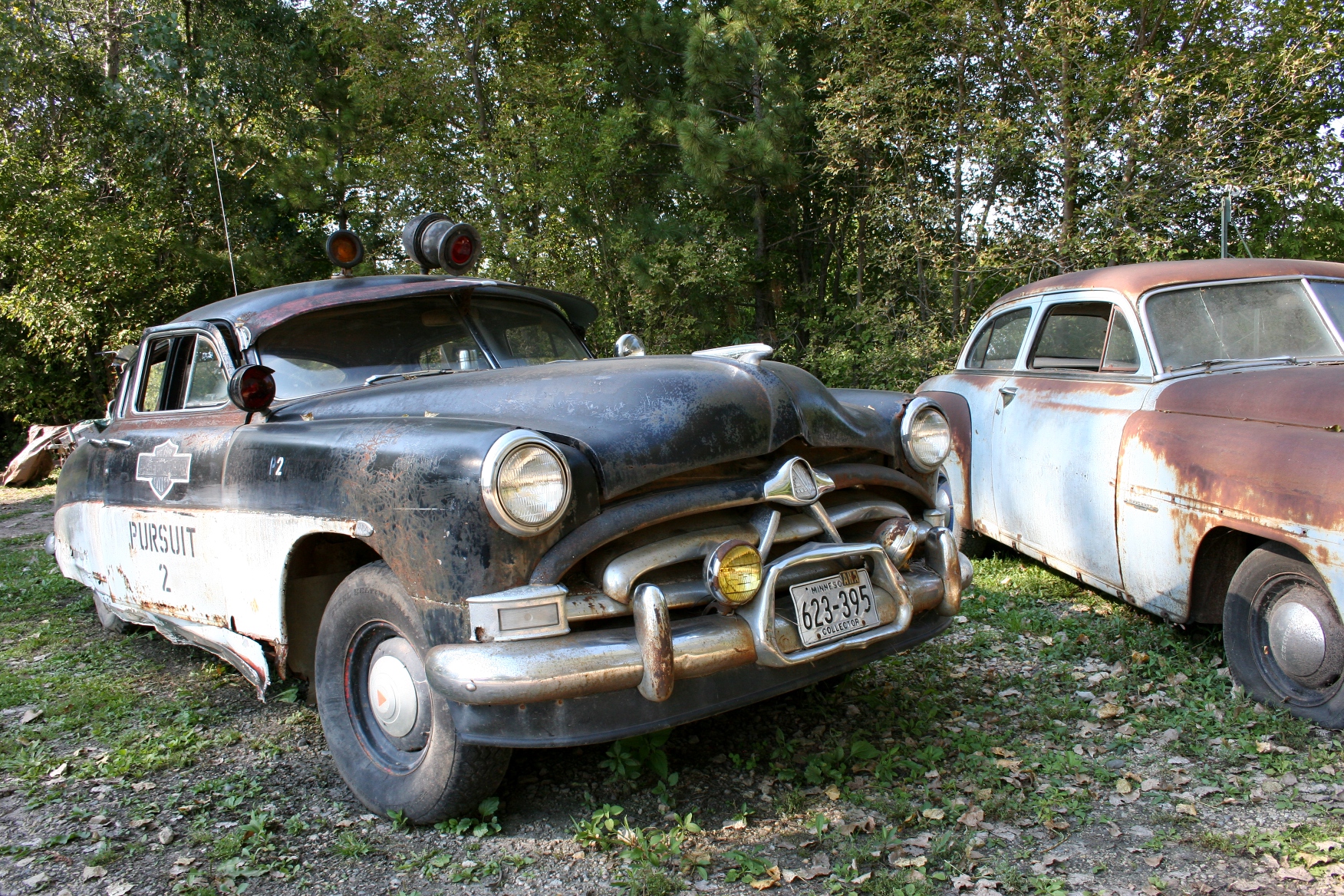
Just more abandoned vintage cars along the side of the driveway.

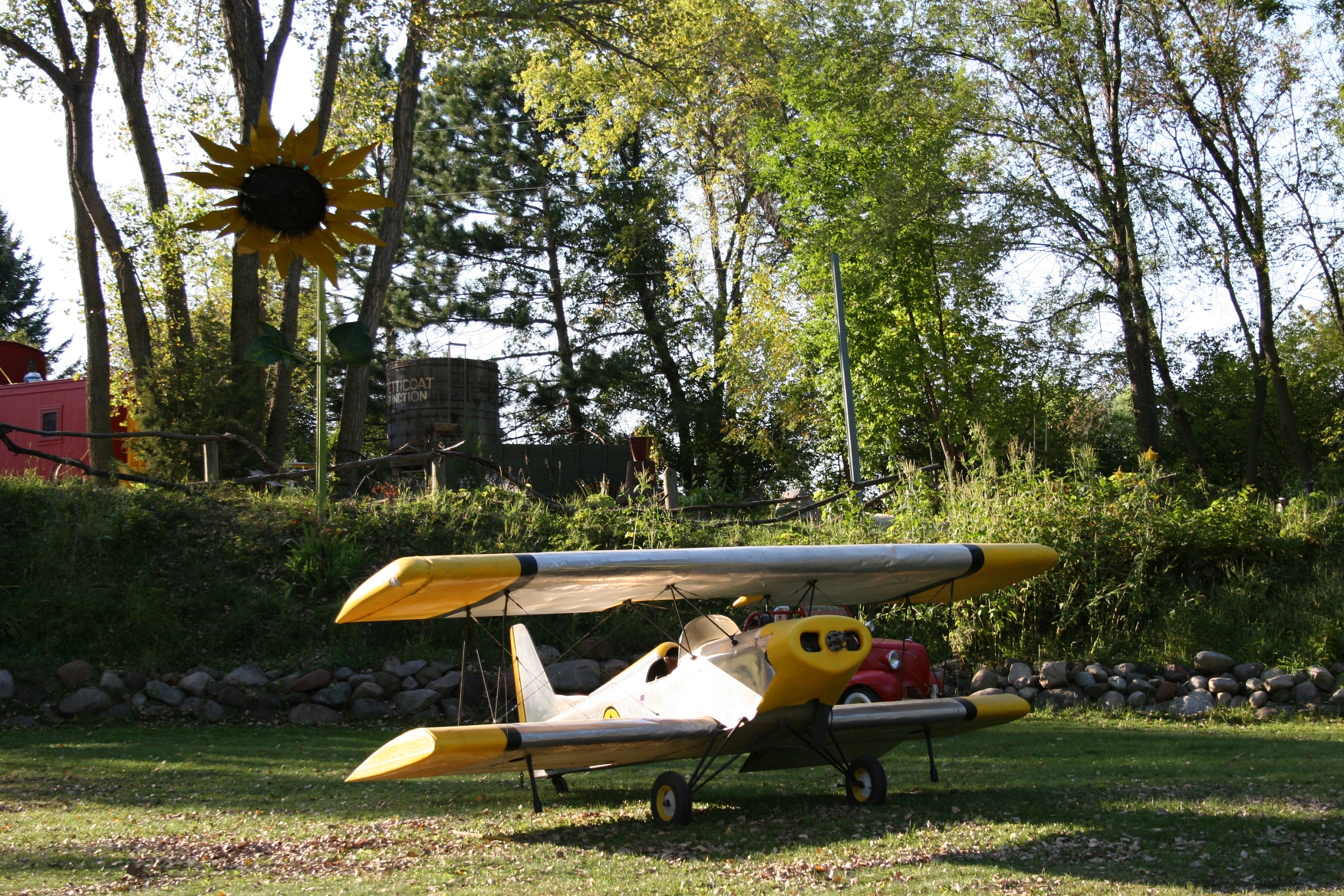
One of two planes on the property; the other one’s nosedived into the swampland. Yup, that’s a train in the background, behind the gigantic sunflower and to the left.

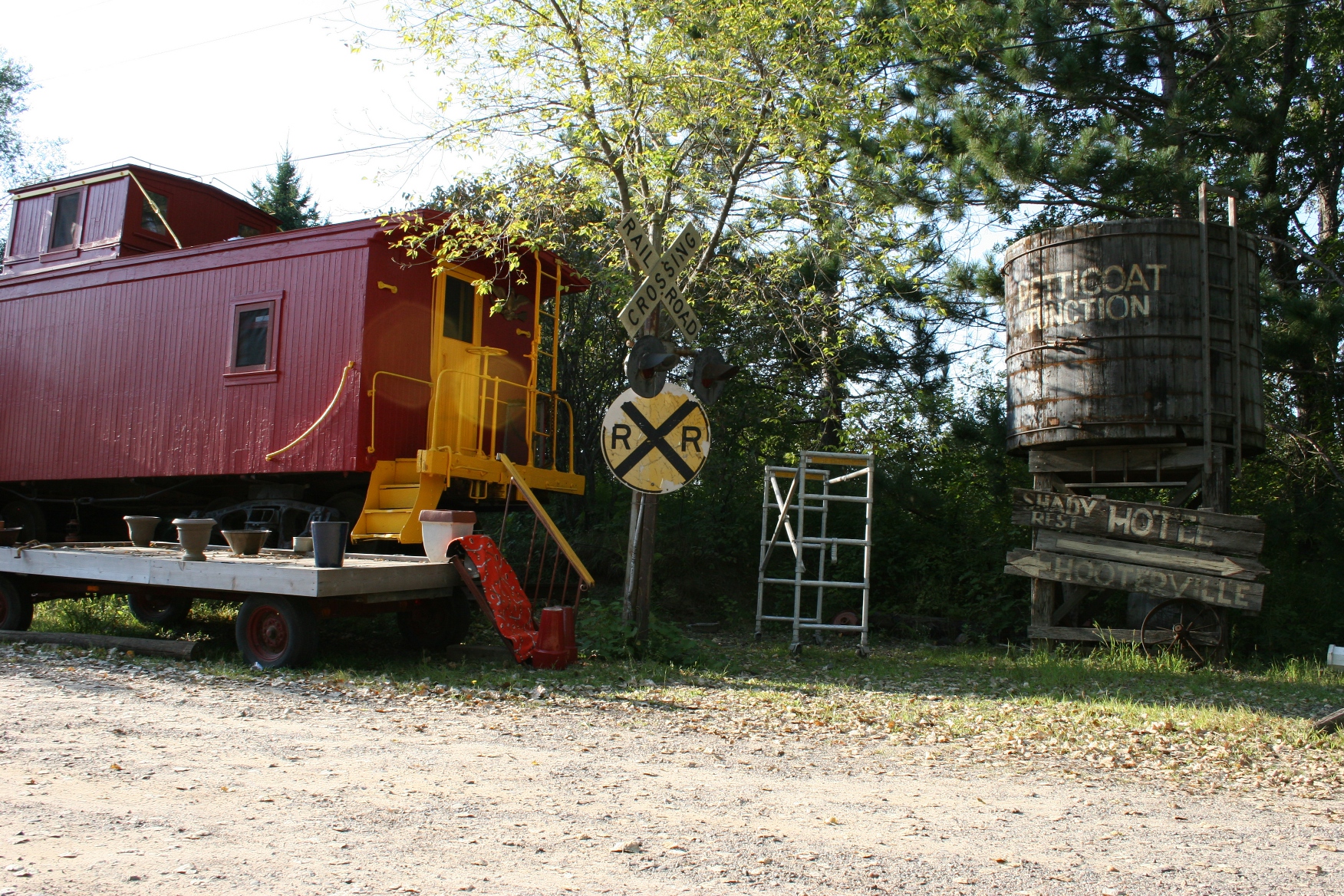
Following its theme park theme, Hot Sam’s pays tribute to the 1960s television sitcom, “Petticoat Junction,” via several on-site train cars (including this caboose) and a water tank. You’ll find antiques and collectibles inside the boxcars.

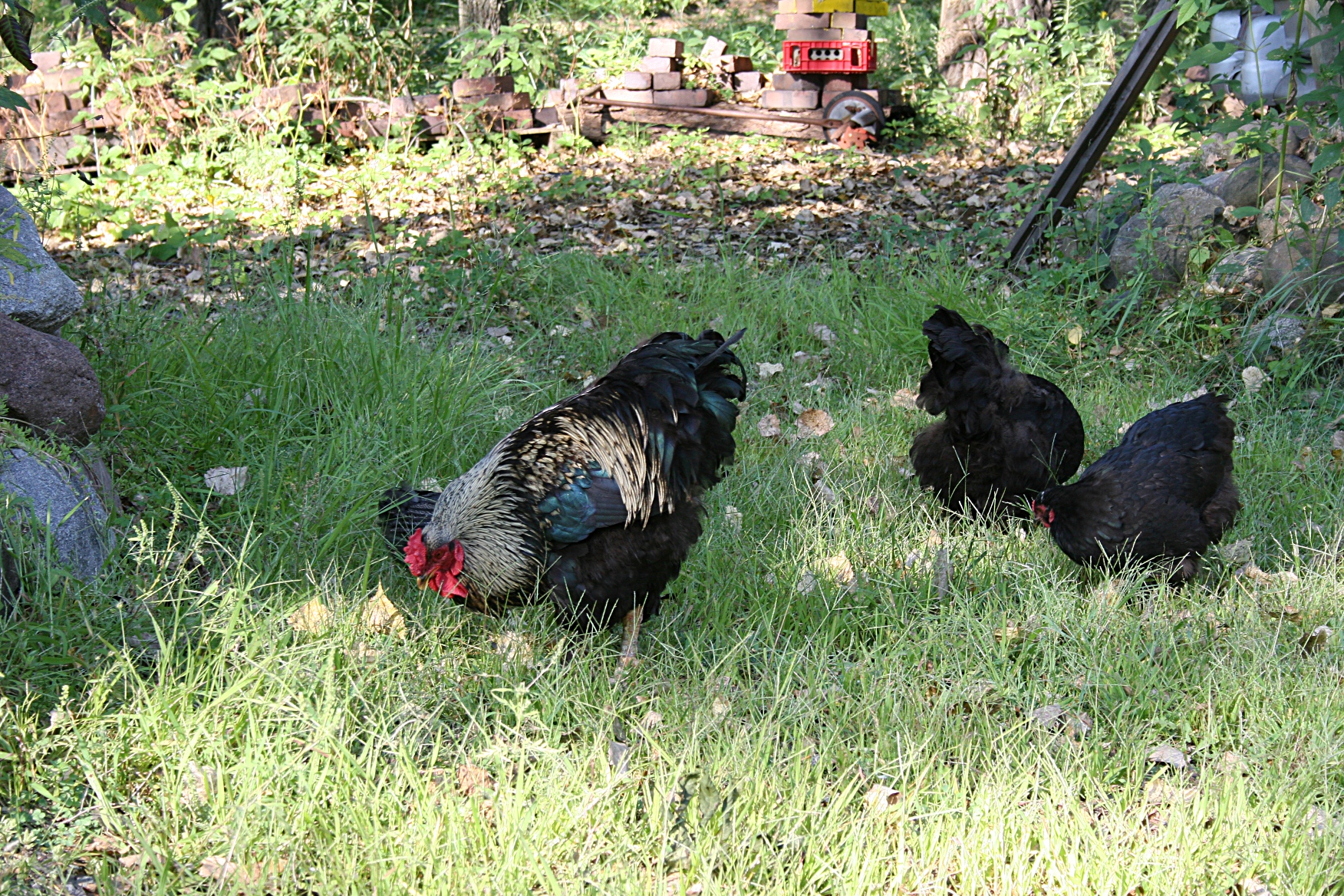
Anyone who knows me and how much I fear chickens will appreciate that I actually photographed these fowl roaming at Hot Sam’s.

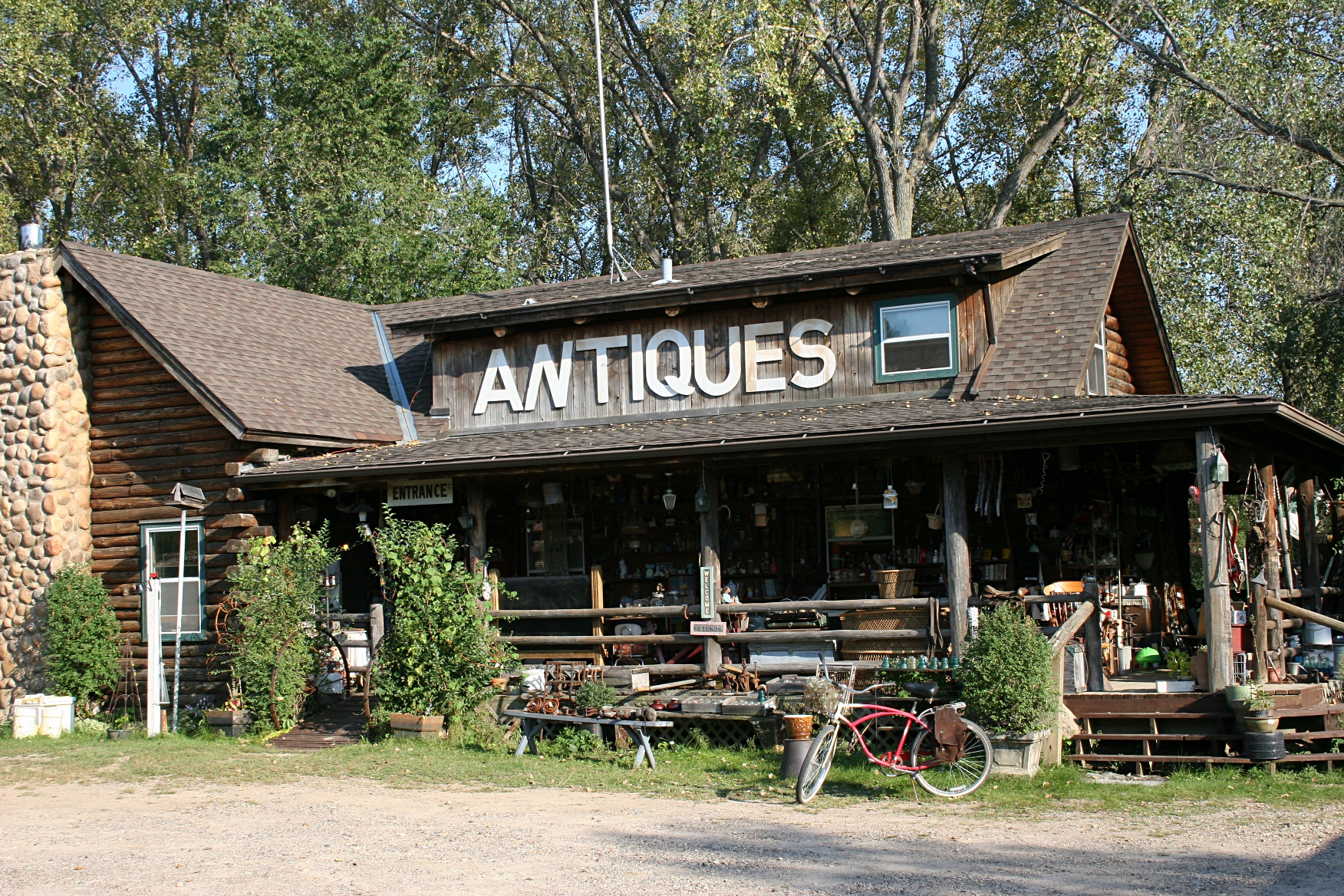
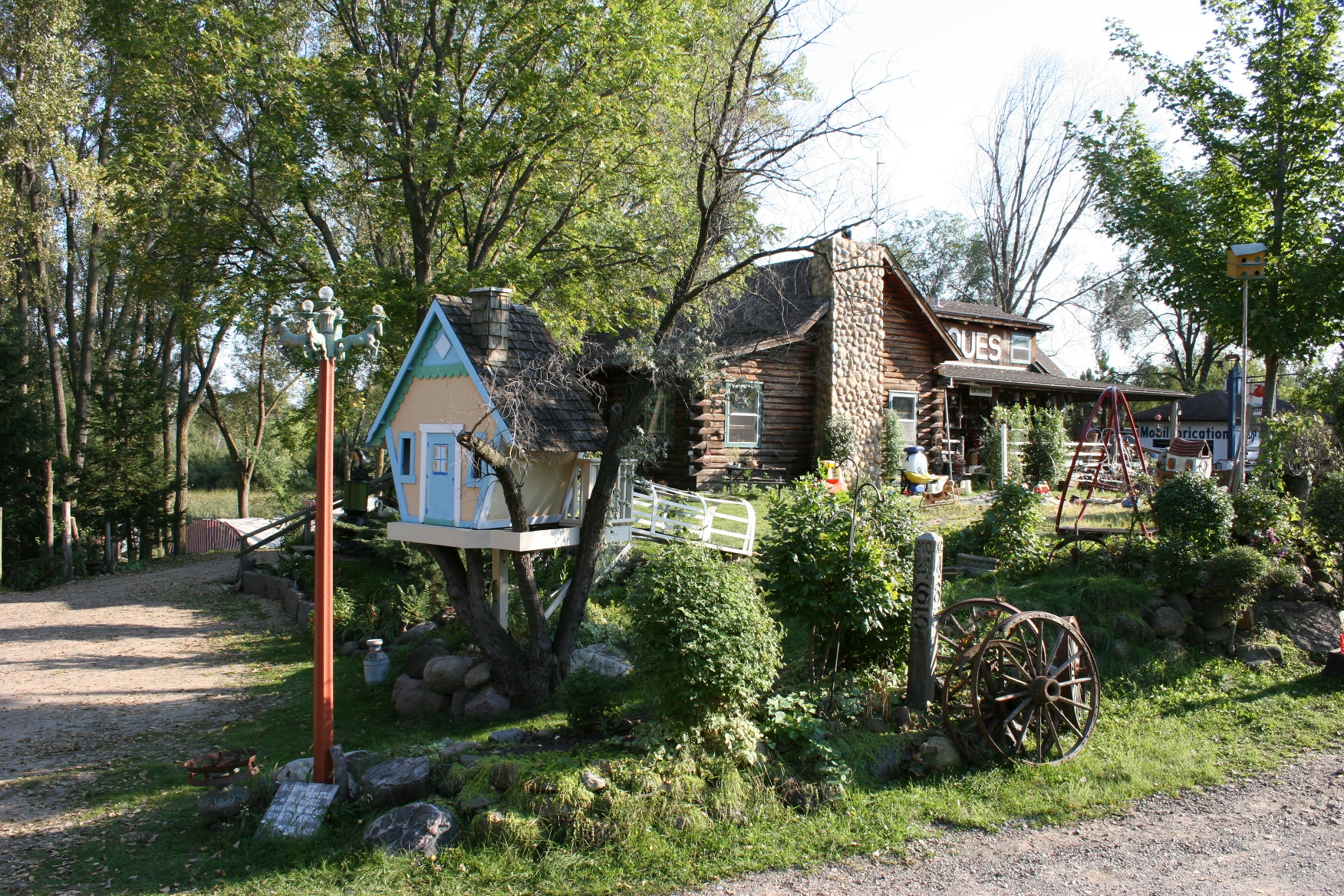
This log cabin is simply bursting with antiques and collectibles, inside and out.

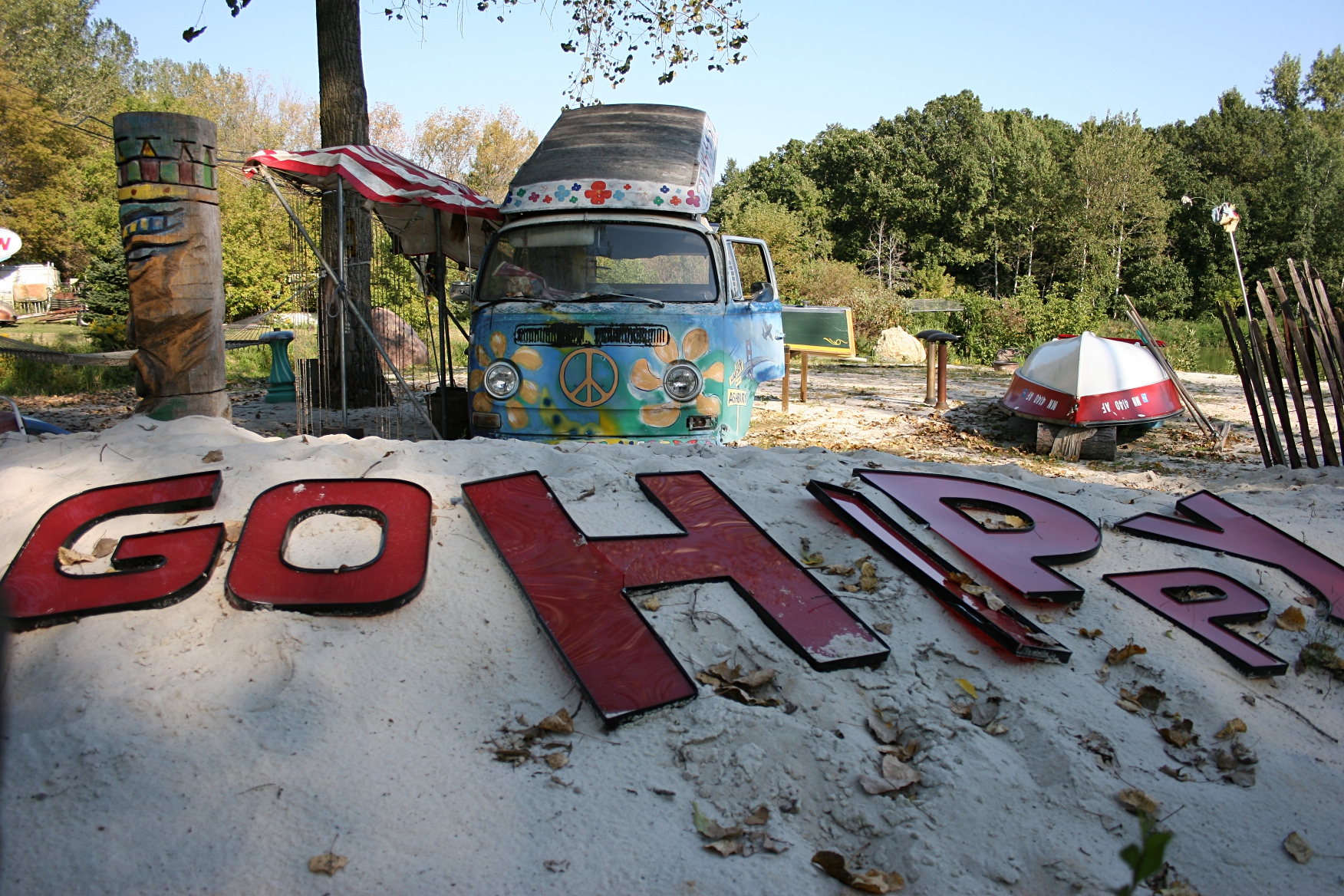
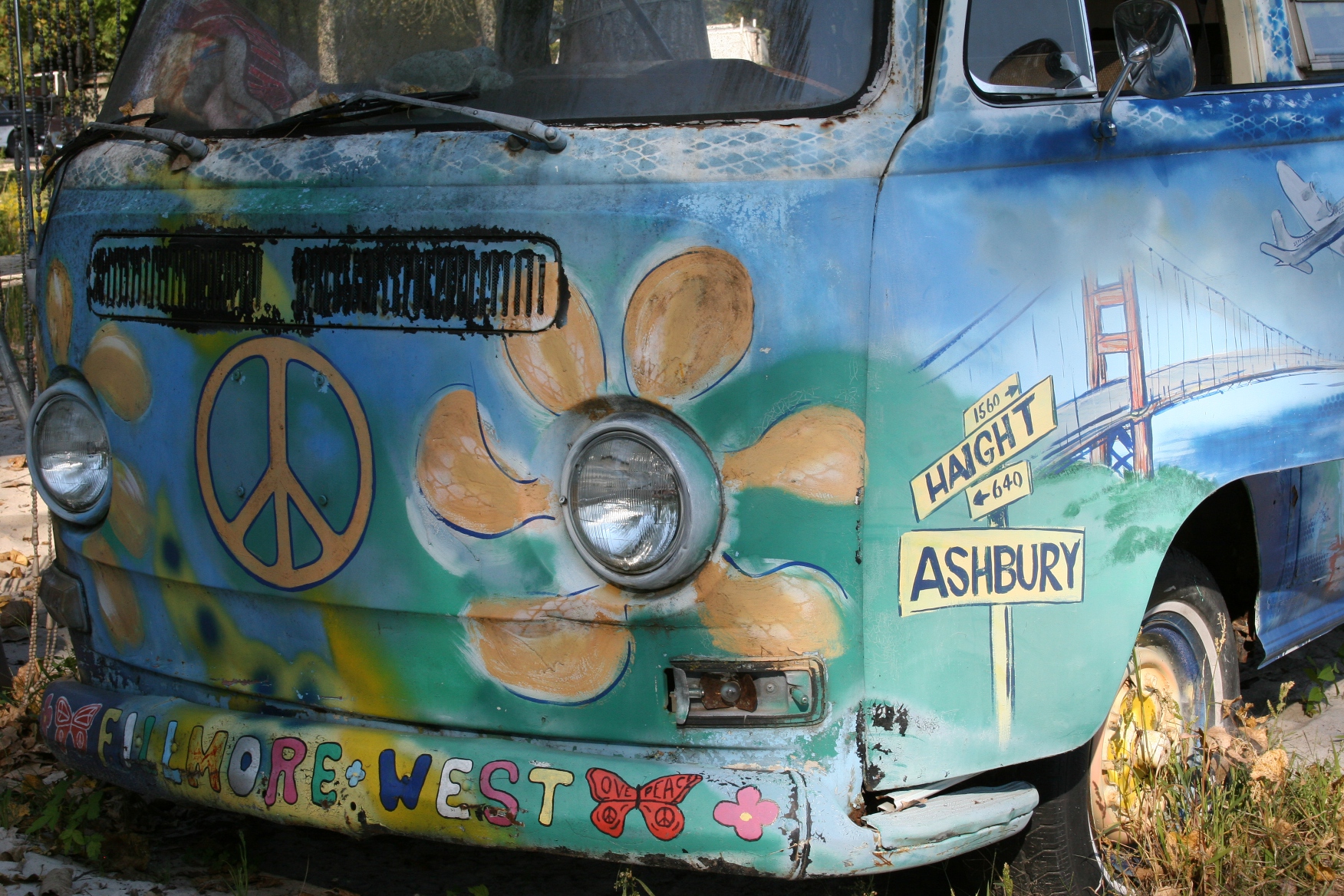
The hippie van, parked along the beach in the theme park area of Hot Sam’s.

I was tempted, quite tempted, to disobey these signs. Next visit…

© Copyright 2012 Audrey Kletscher Helbling


Touring Hot Sam’s, an “antique theme park” near Lakeville September 17, 2012

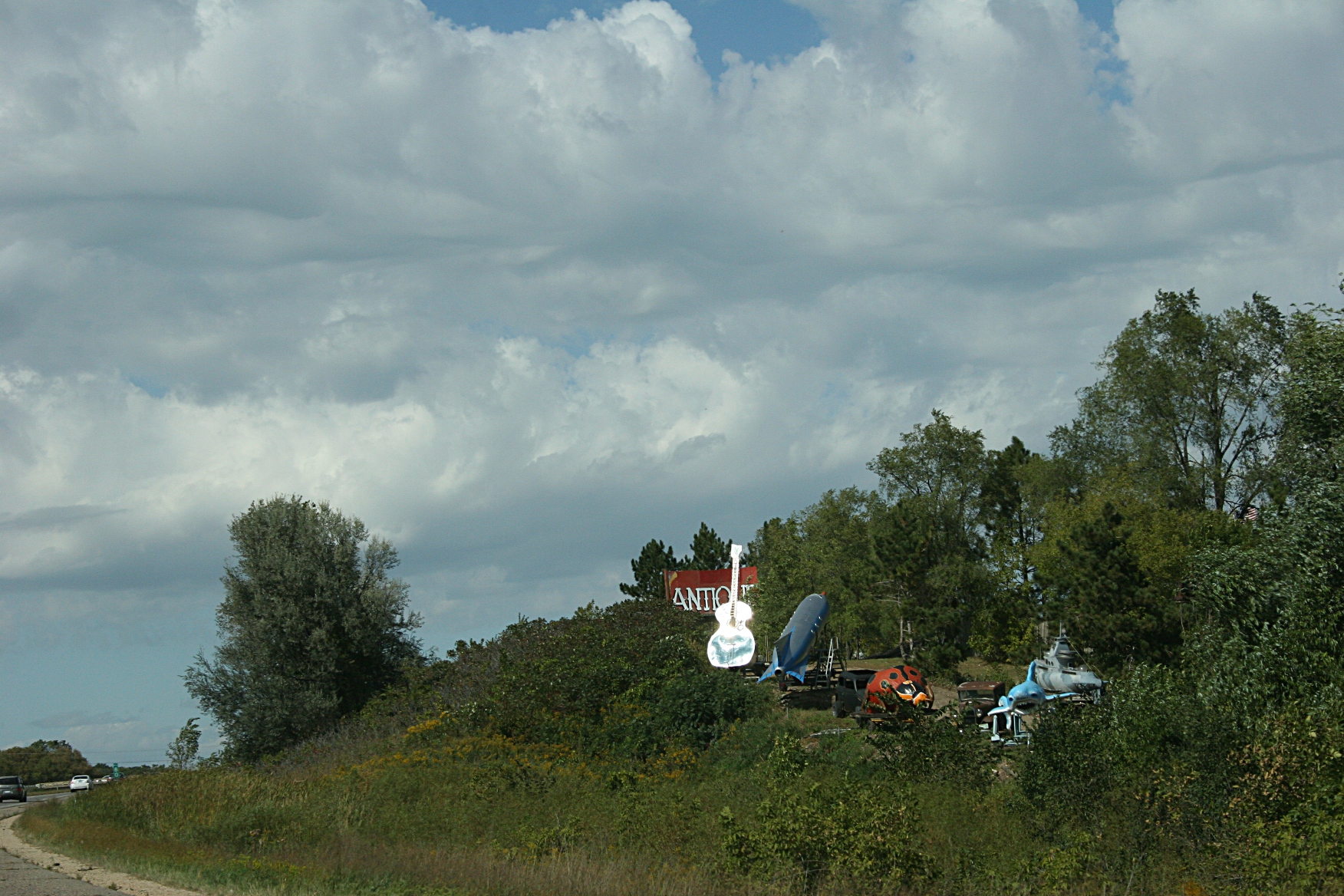
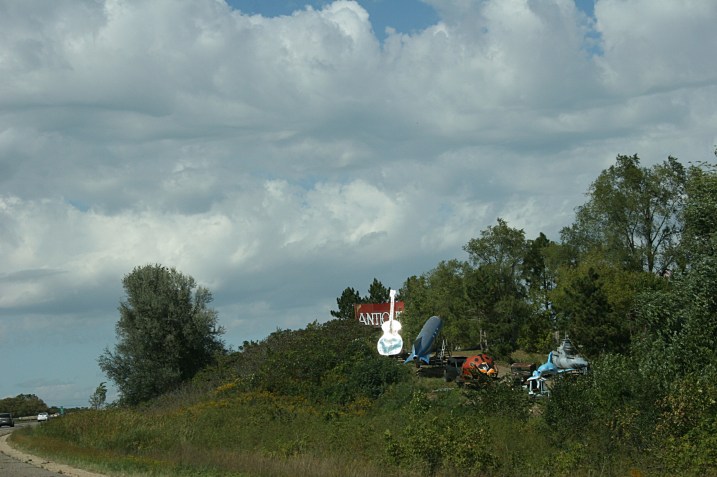
Northbound on Interstate 35 just south of Lakeville, you’ll see this roadside art marking the location of Hot Sam’s Antiques.

YOU’VE SEEN THE ECLECTIC COLLECTION, I’m sure, if you’ve ever traveled Interstate 35 northbound near Lakeville.
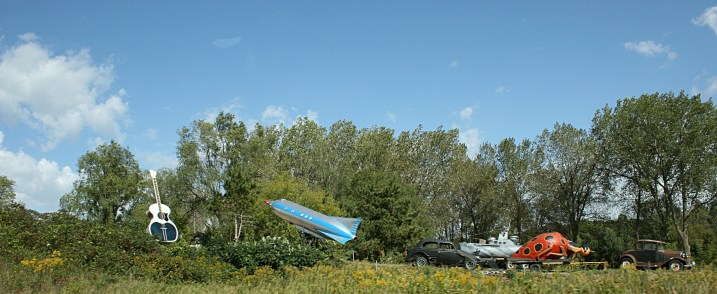
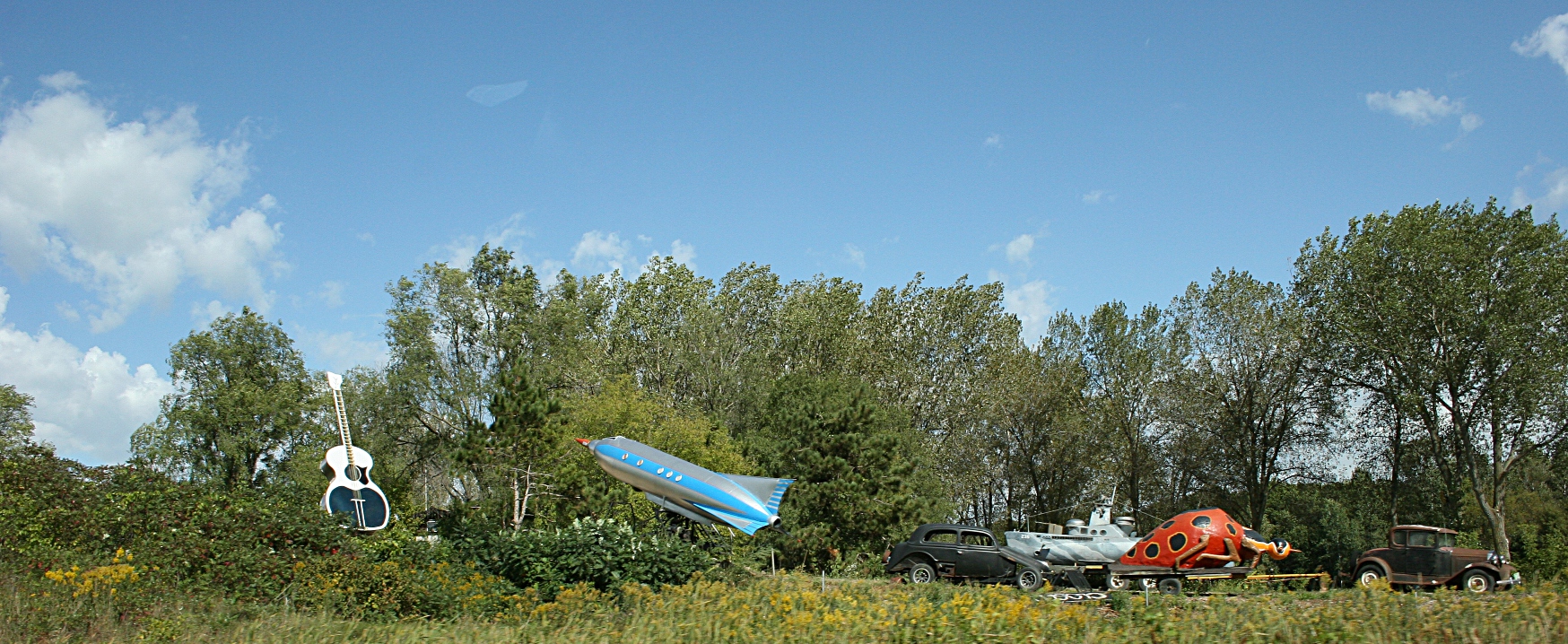
Just another view of the eclectic art collection, shot while traveling the interstate. No stopping for this photo.
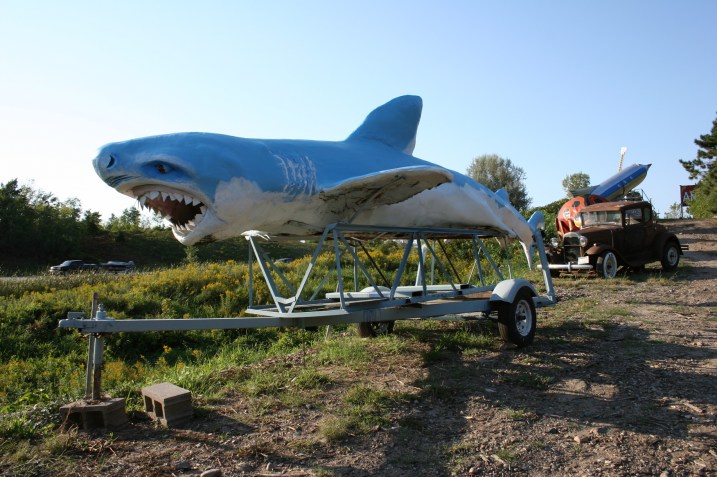
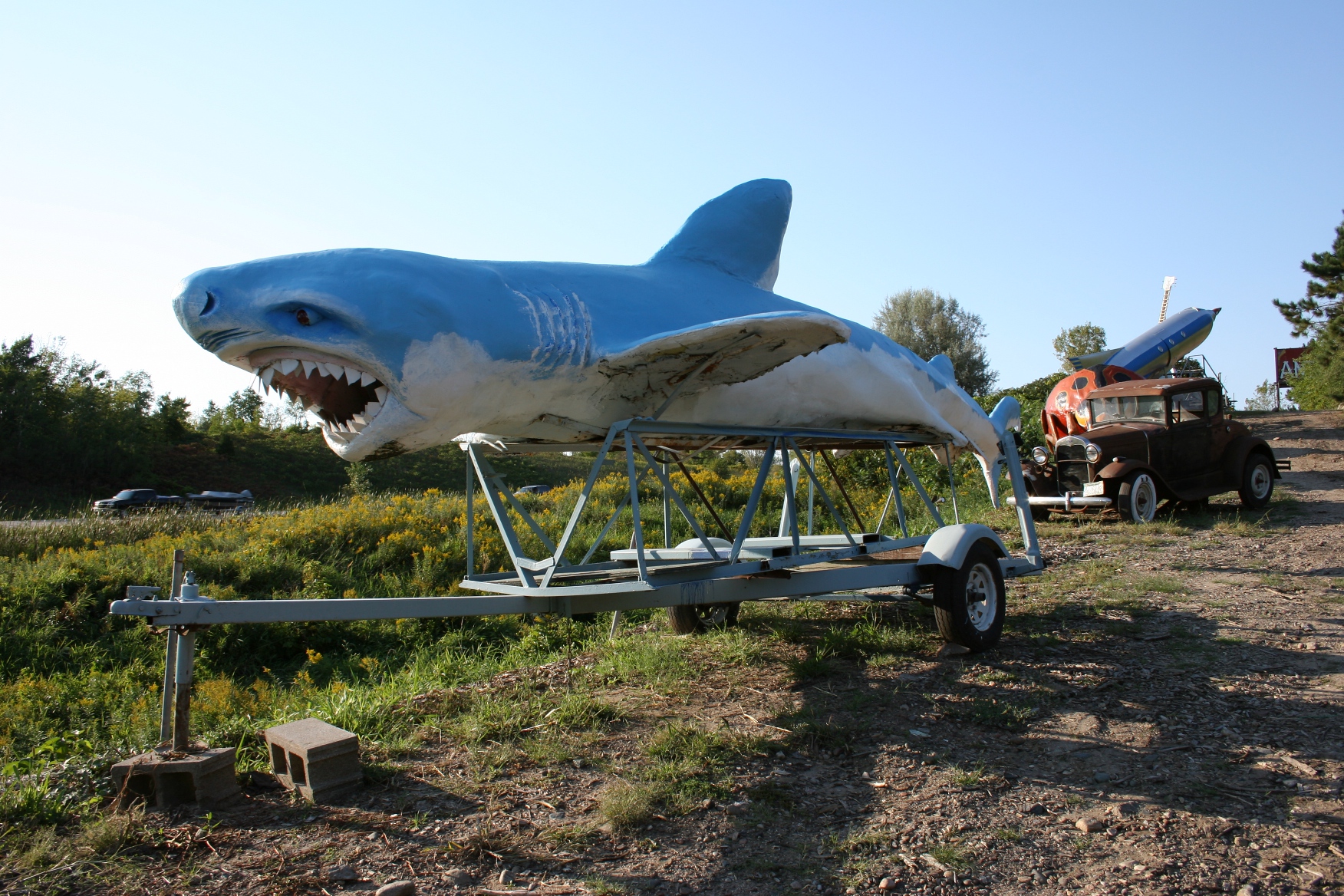
You’ll see the fearsome shark first as you’re driving north on I35.

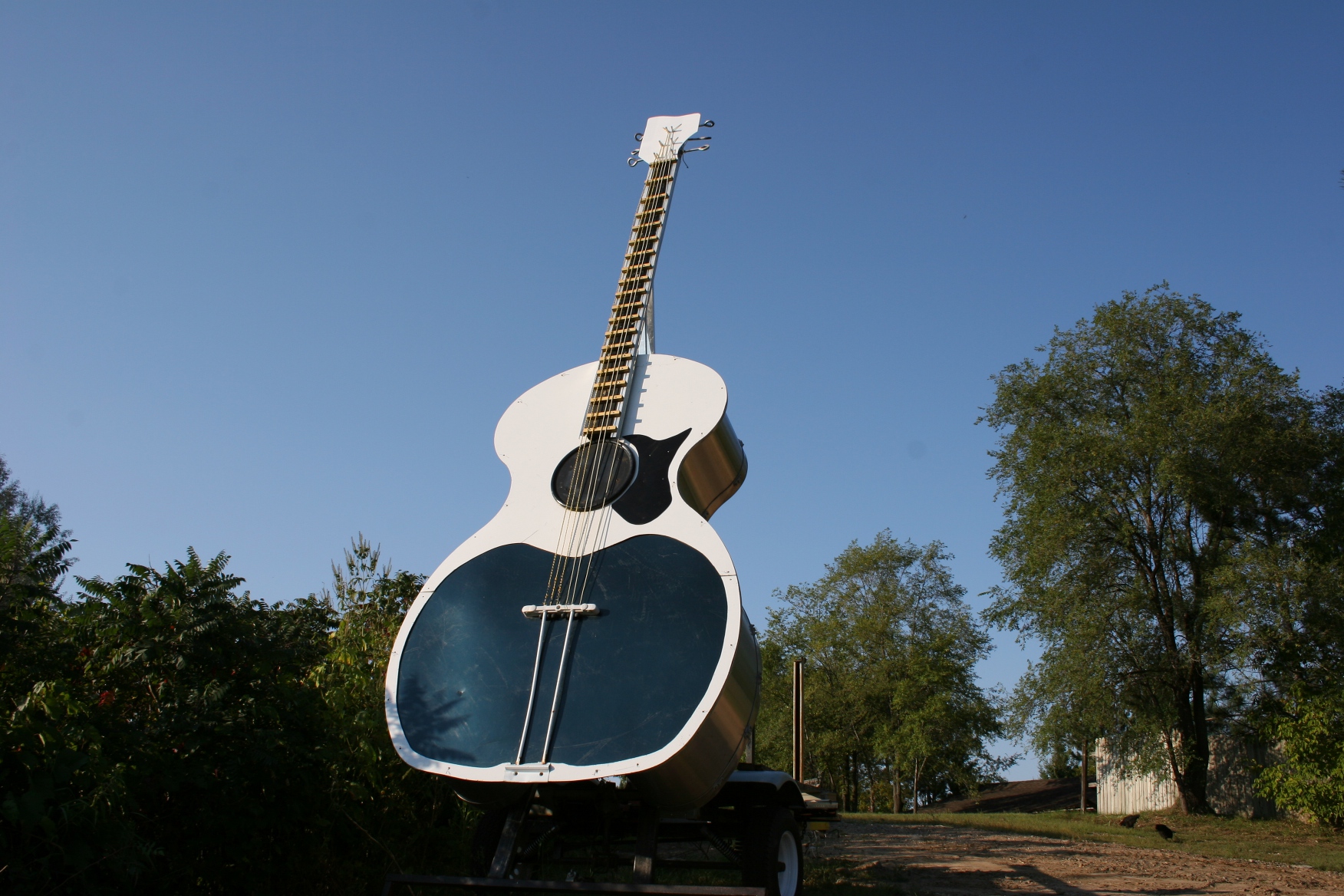
Just south of exit 81 atop a hill on the east side of the interstate, a red ANTIQUE sign draws your eye to a mish-mash of stuff. Several rusting cars. A rather vicious looking blue shark (although I’m sure you don’t notice the detailed sharp teeth while racing along the interstate at 70 mph). A lady bug. A rocket and a submarine. And, heck, there’s an oversized guitar, too.
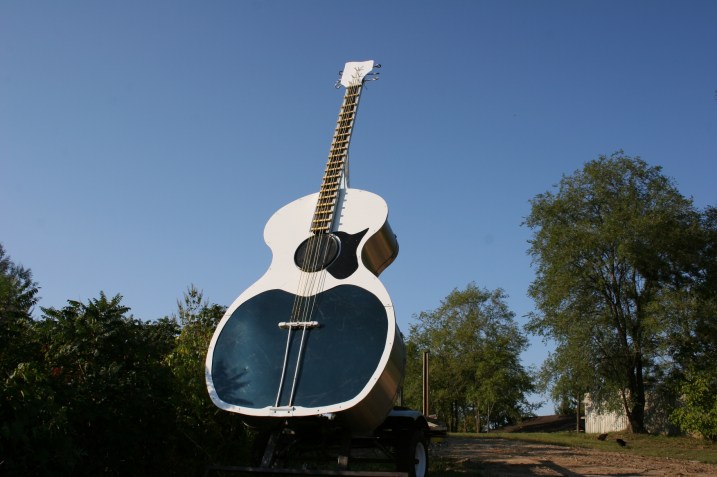
At the north end of the line, the ginormous guitar.
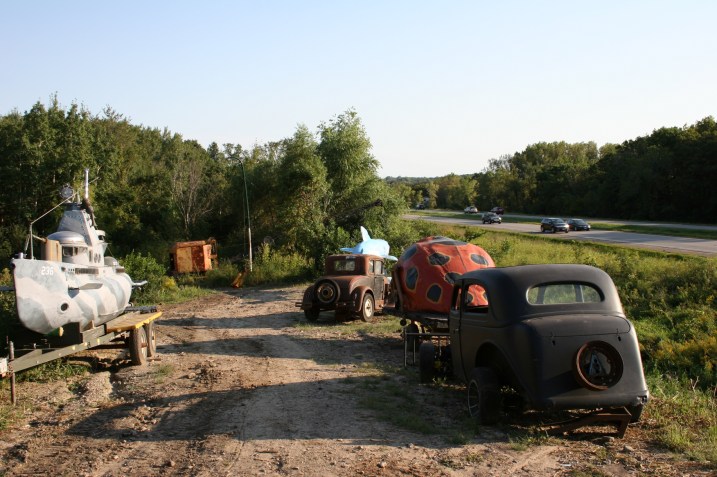
A view from atop the hill, in the middle of the eclectic collection.

For 30 years I’ve seen the changing collection and always wondered about Hot Sam’s Antiques. Now, after a recent Saturday afternoon visit, I need wonder no more.
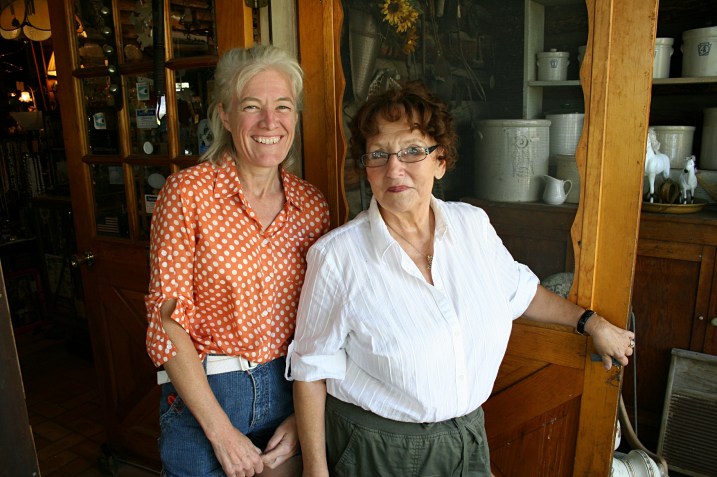
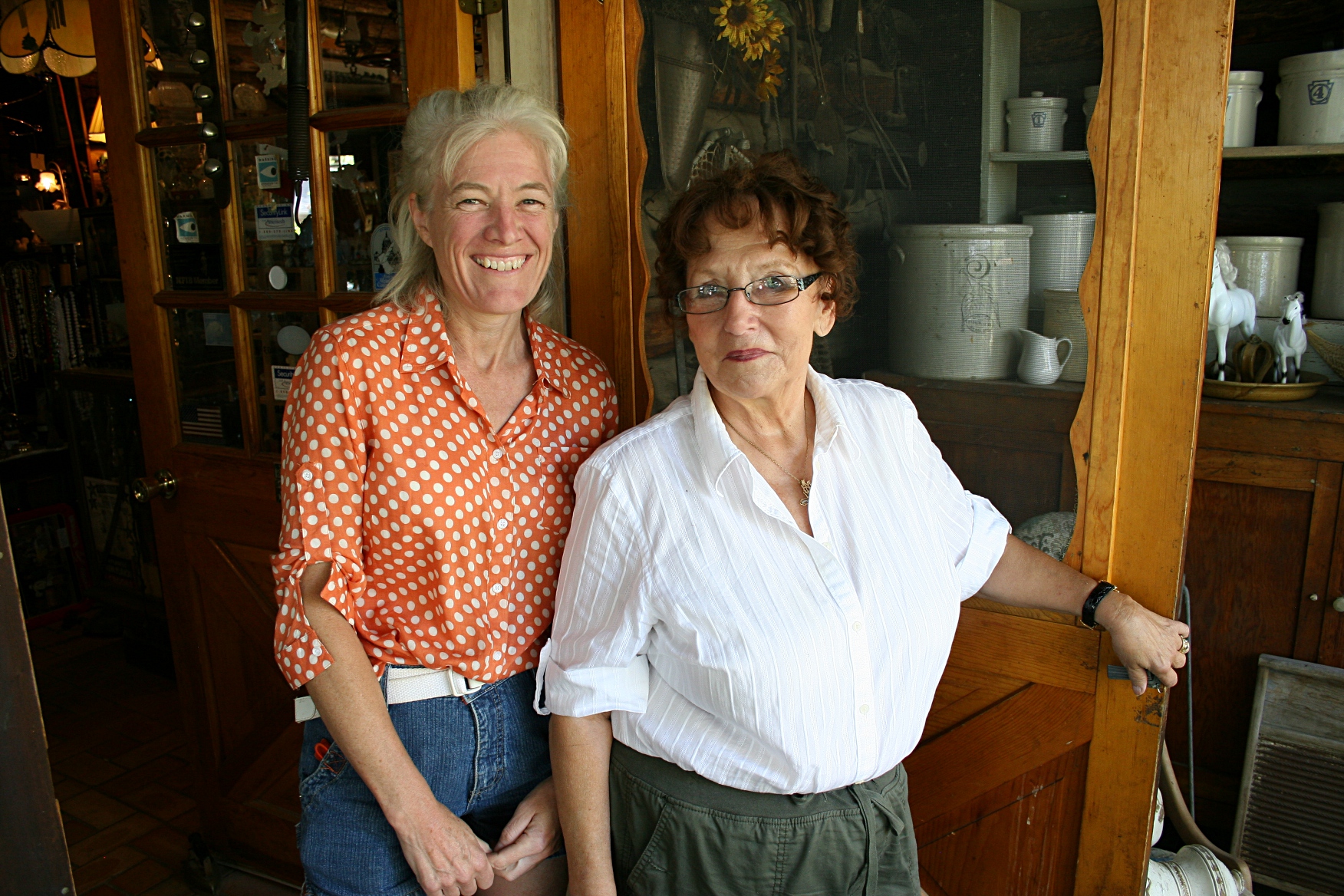
Kathy Sakry, left, and Aina Puritis on the front porch of the log cabin.

Honestly, how to begin to describe this place seems an impossibility, until I meet Aina Puritis—pronounce that Latvian first name with a silent “A” and a long “i”—a part-time employee of three months. “I’ve never seen anything quite like this,” I tell Aina.

“You got that right, honey,” she agrees, then offers her definition. “It’s an antique theme park, a mix of this and that.”
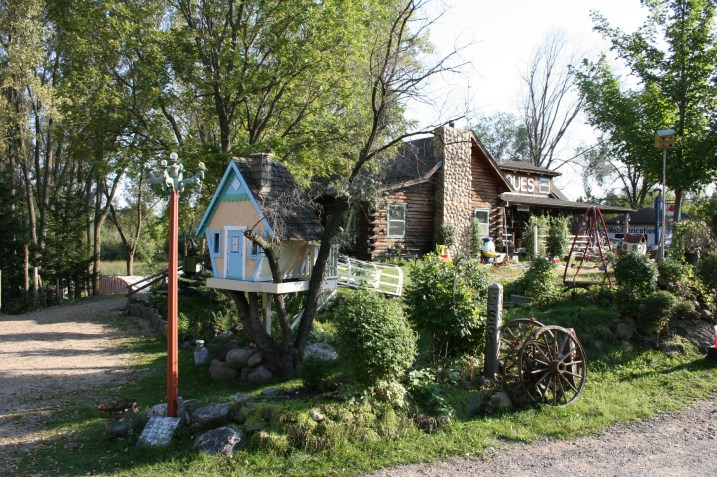
The log cabin, back and to the right, is packed with antiques and collectibles. I spotted the charming, cottage style treehouse, left, but didn’t even check to see if I could explore inside. I was running short on time.

Aina nails Hot Sam’s with that description because, in addition to thousands of antiques and collectibles crammed inside and outside a log house, outbuildings and train cars and scattered upon the grass and through the woods and along the sides of the narrow gravel drive, you’ll discover a wonderment of creations fitting a theme park.
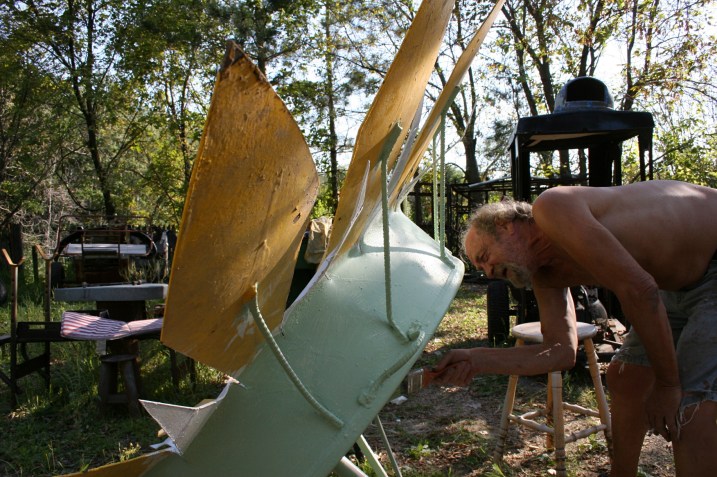
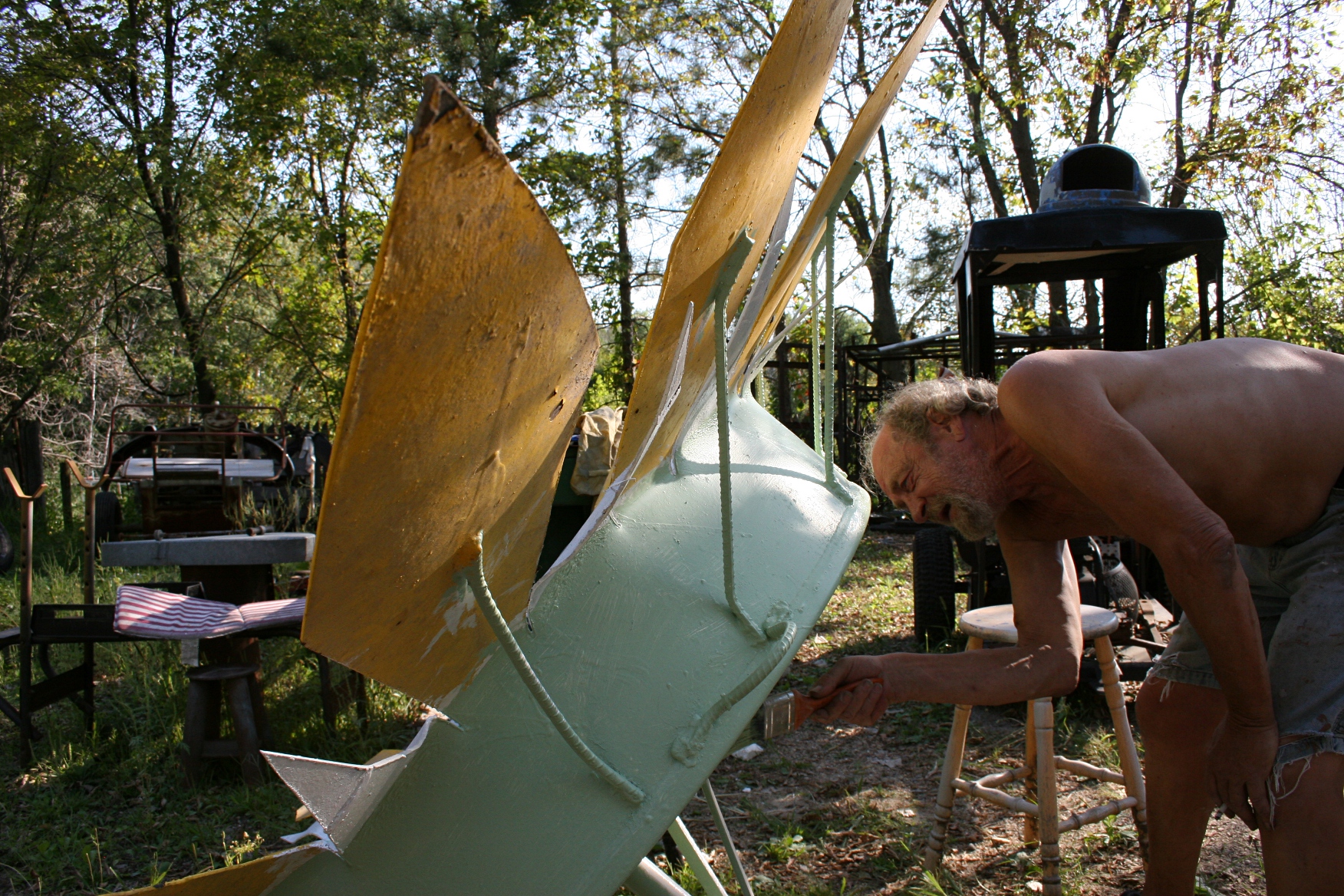
Barry was painting a giant sunflower when I came upon him among the junk in the woods.

You might find Barry (no last name offered), a retired laser cutter turned artist, back in the woods among all the junk working on his latest sculptures—painting a giant sunflower or building an oversized motorcycle roped and suspended from a tree limb.
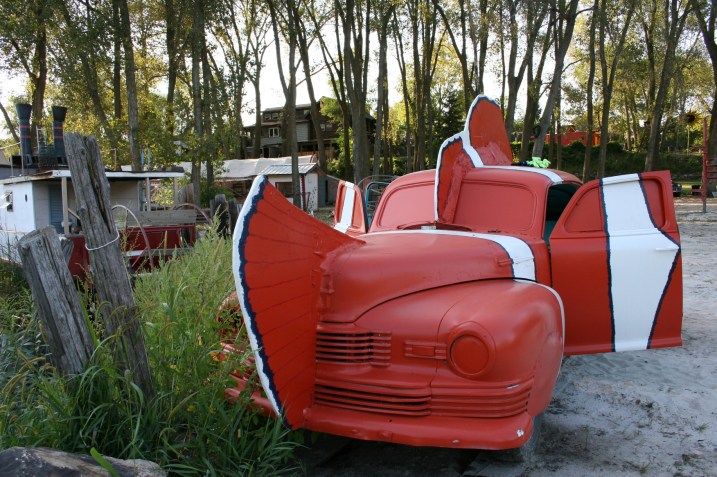
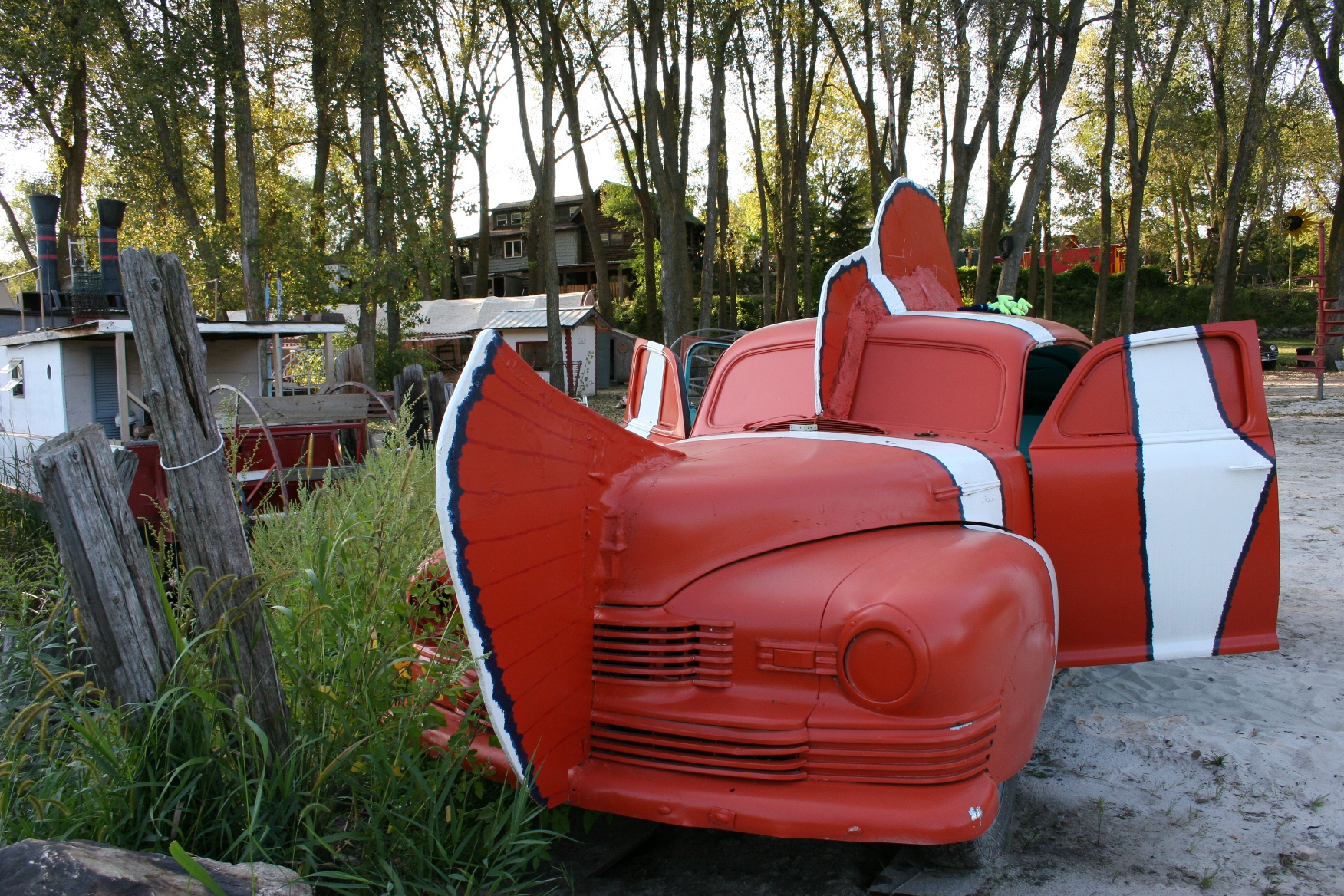
Nemo from the back, looking toward the log cabin on the hill, center, a boat on the left and train cars in the distance to the right.

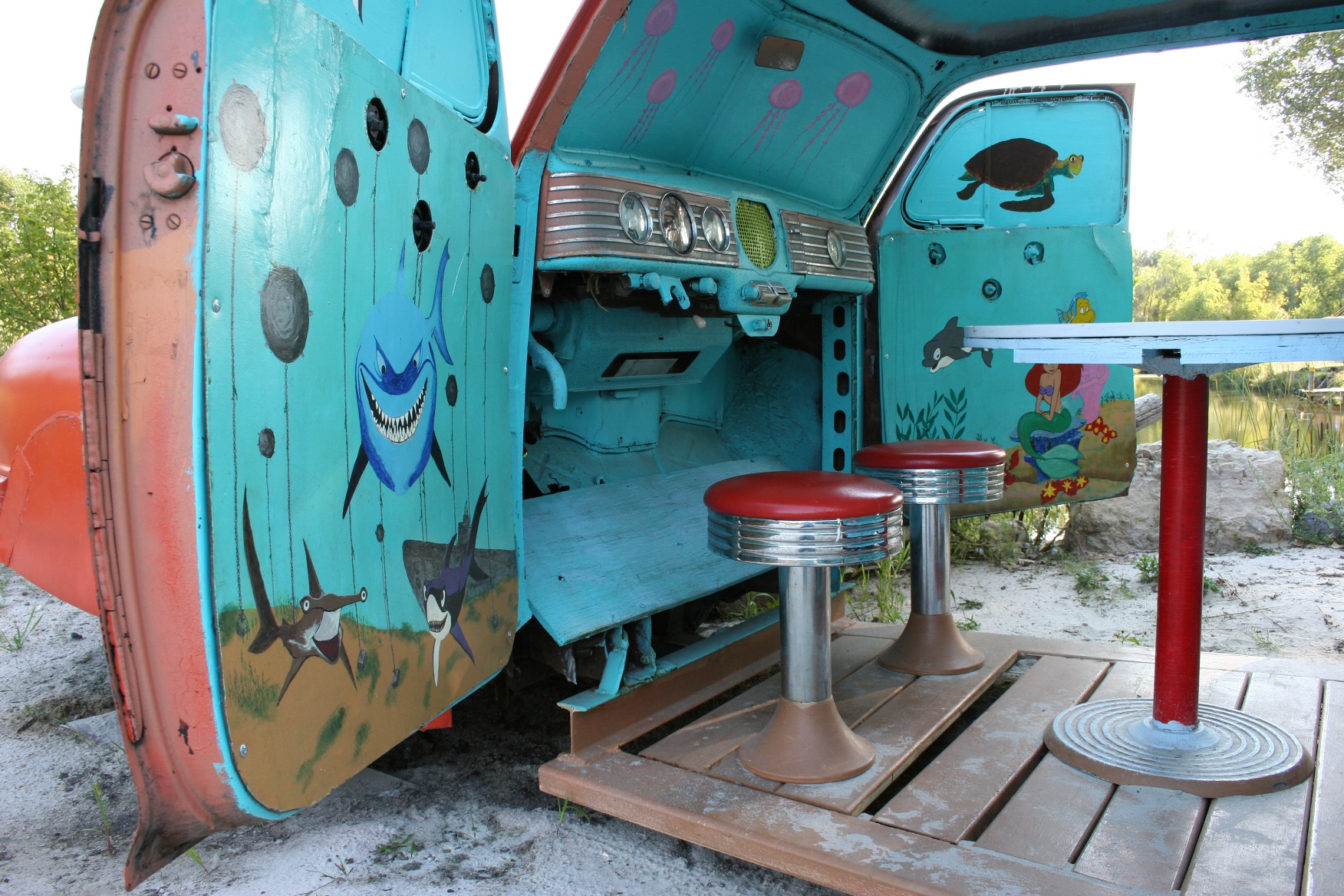
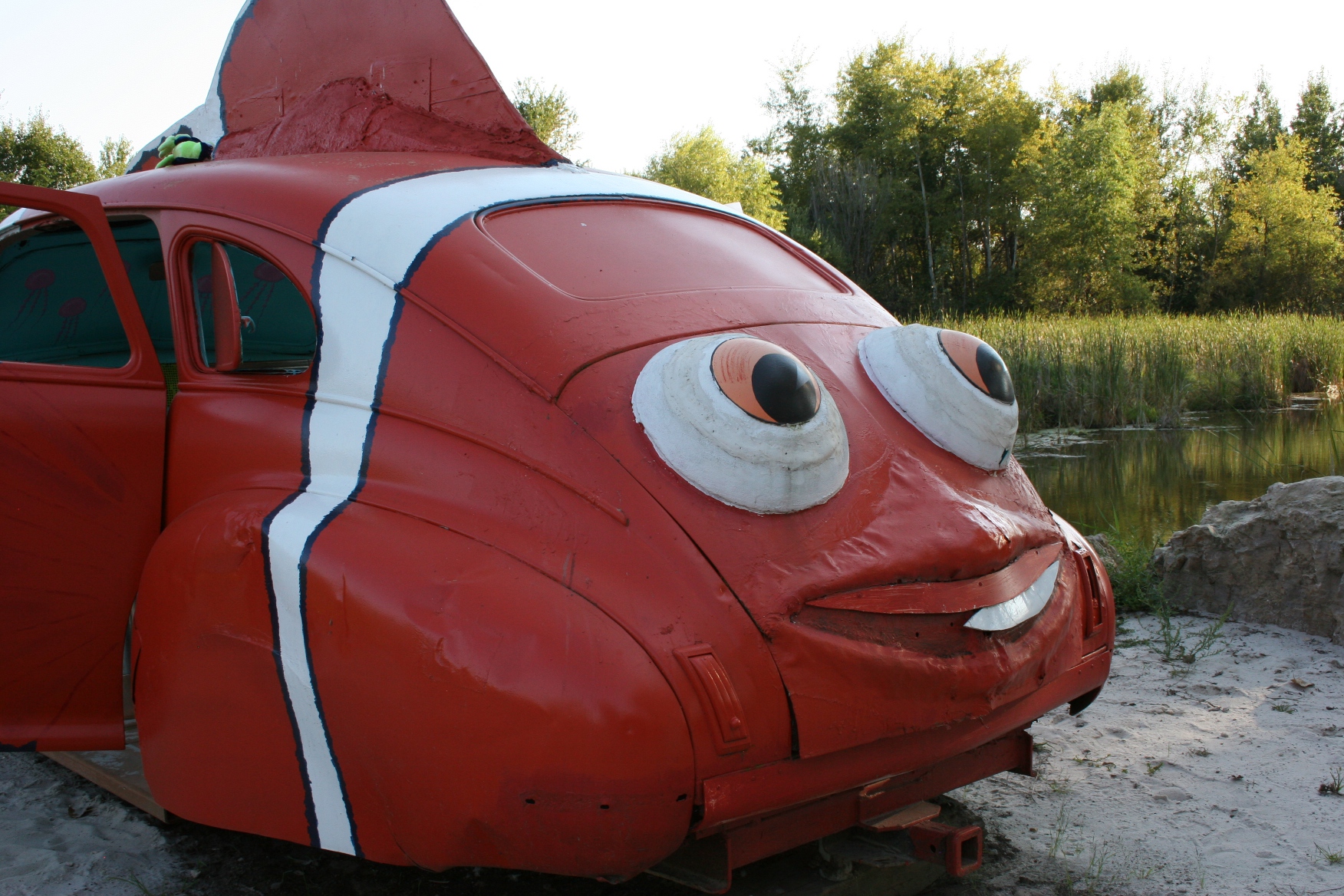
He takes credit for transforming a vintage car into the Disney cartoon fish Nemo via orange paint, the addition of fins and eyes and some major interior redecorating. Nemo’s beached in sugar fine sand along a ribbon of water which meanders into the 10-acre property.
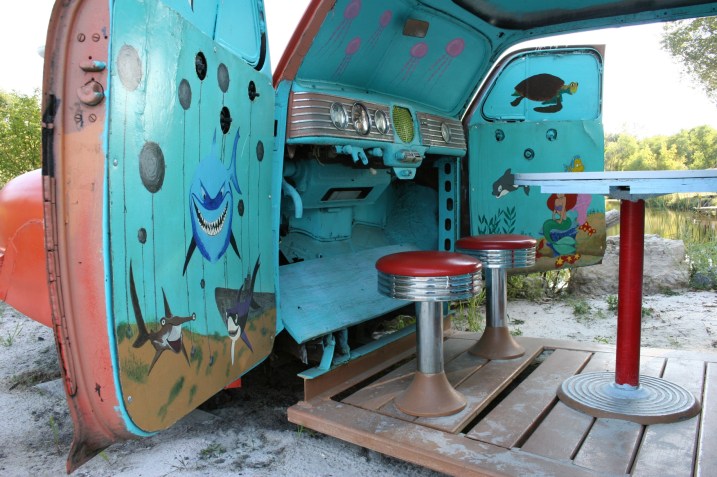
Inside Nemo, my absolute favorite part of the entire antique theme park. Who would ever think you could turn an old car into something so incredibly magical?

The tropical beach scene seems oddly out of place given the native swampland grass and surrounding woods and the autumn leaves littering the sand. But no one claims anything’s exactly as it should be at Hot Sam’s.
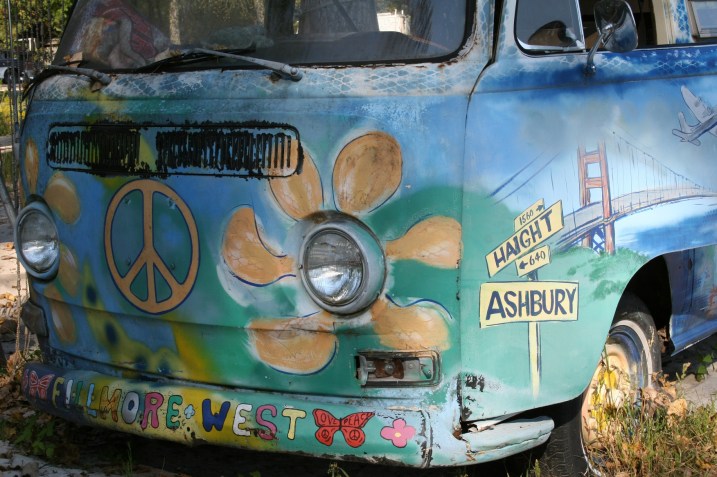
A close-up of the hippie van parked in a beach setting with fine white sand and even a hammock.

That’s part of the appeal, to see a peace-out hippie van parked on the beach; the wreck of the S.S. Minnow from the 1960s T.V. sitcom, Gilligan’s Island, hugging the shore; the canary yellow tail of a crashed airplane poking through the swampland grass across the water.

“It became a labor of love,” Kathy Sakry says of this whole intriguing place. She’s the significant other of Jake Hood, who, along with his mother, Gladys Hood, 26 years ago transformed a field with a two-car path into Hot Sam’s Antiques. Nine years prior to that, the business was located in Burnsville. Gladys died in December 2010.

Kathy prefers not to explain the story and inspiration behind the antique theme park, choosing instead to hand over a reprint of an article written by Gladys and published in Reader’s Digest. To summarize, Gladys’ father, Hyreeg, an Armenian immigrant living in Detroit, collected scrap metal to raise money for a flagpole upon which he flew a U.S. flag symbolizing his pride in becoming an American.
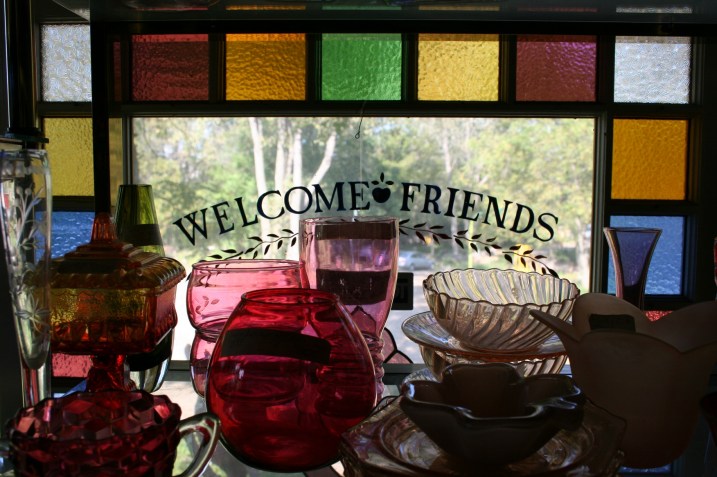
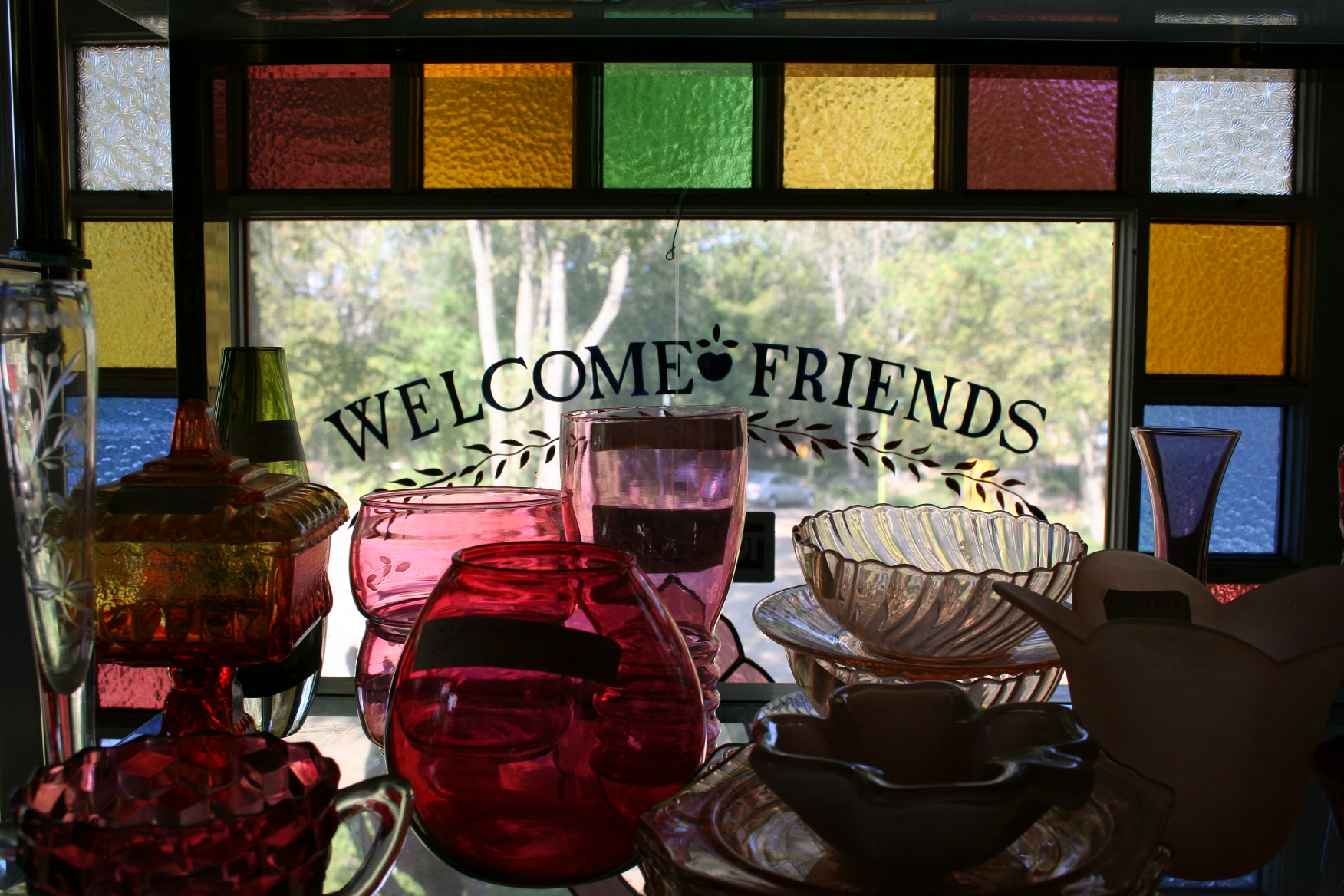
Inside the log cabin, I found this collectible glassware and this welcoming sign, which seems to exemplify the welcoming spirit of Hot Sam’s Antiques.

Gladys wrote in 2002 that she acquired her father’s love for hard work and collecting (she would go “picking” with him as a child) and continued his legacy via her business. She collected for practical and recycling reasons and for the joy of sharing in the memories of those who visit Hot Sam’s.
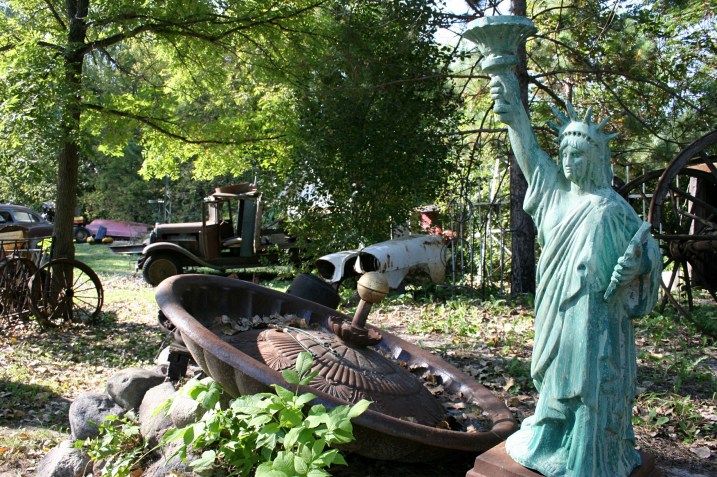
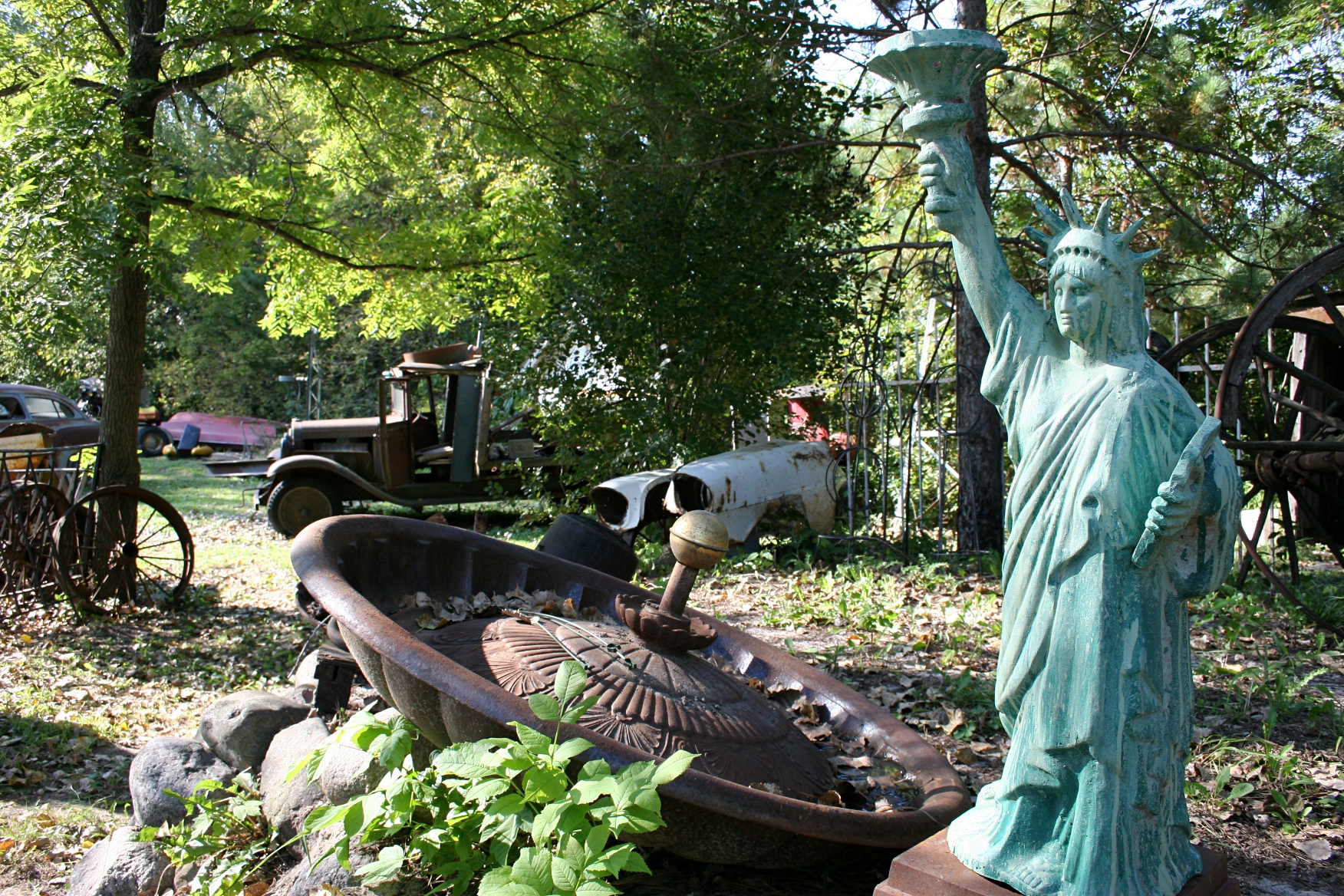
I saw at least three Statues of Liberty on the property.

Whether a tribute to her father’s patriotism or not, numerous replicas of the Statue of Liberty are planted on Gladys’ tangible slice of the American dream.

About that business name… Kathy says Hot Sam was Gladys’ nickname, a name she preferred to her given Gladys, which taunting youngsters reinvented into, well, you can figure that out, during her childhood.

Then Kathy shares more about Gladys and a clearer picture emerges of this strong woman. She once raced cars, breaking the land speed record on Daytona Beach in 1956.

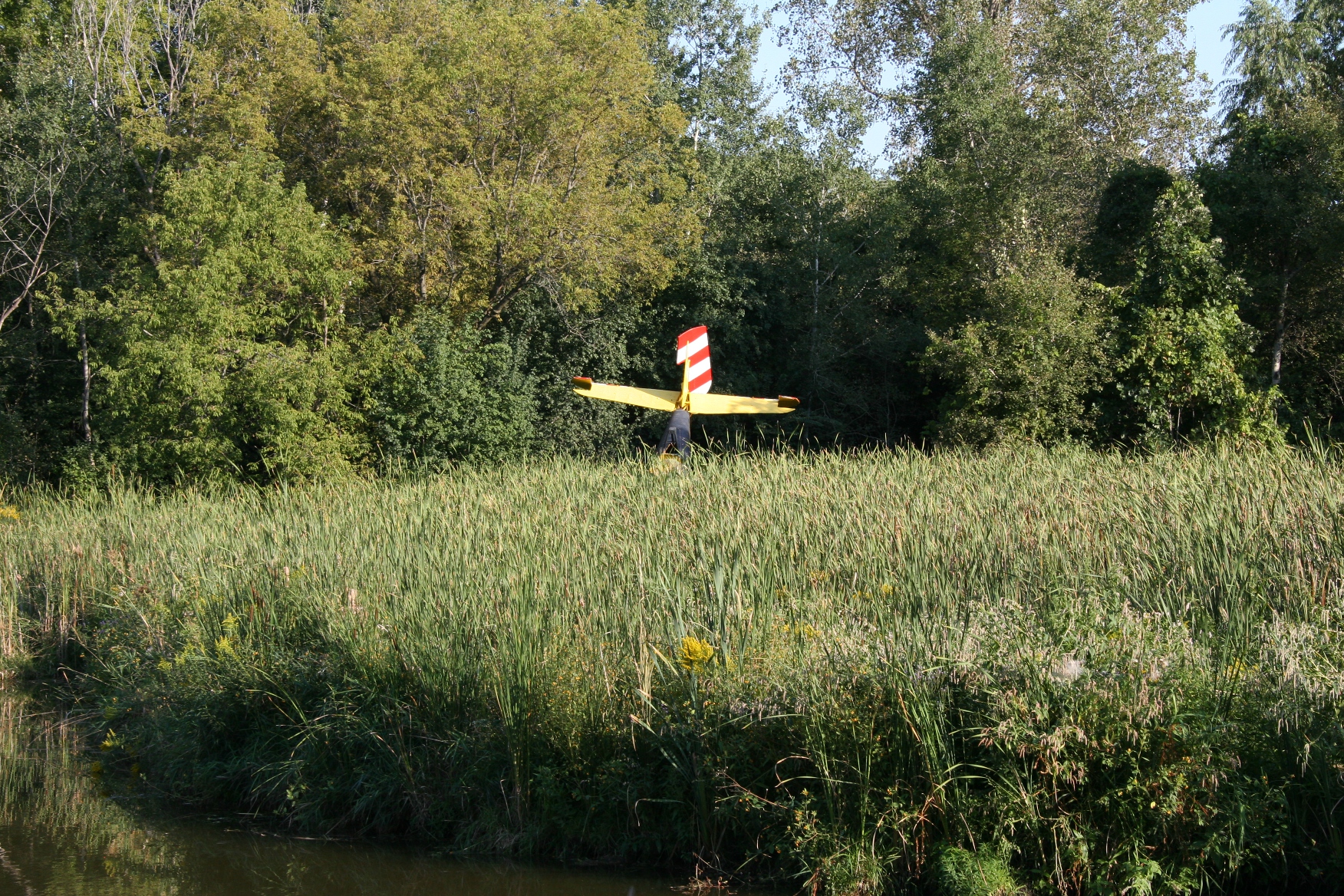
This mock, crashed airplane is positioned across swamp grass on the property.

Despite her prior days of daring, competitive racing in a man’s world and of traveling, Gladys seldom left Hot Sam’s once established, Kathy relates. And when she did, it was to attend air shows with her adopted daughter, airline and aerobatic pilot Julie Clark. The bi-plane and staged, mock plane crash at Hot Sam’s are perhaps visual connections to Julie, whose birth father was murdered in 1964 while piloting a plane which subsequently crashed, killing all 44 aboard. Or perhaps the planes reflect Gladys’ general affection for air shows.

While wandering the grounds of Hot Sam’s, you have to wonder where Jake and Gladys acquired all this stuff and Kathy says only that they are buyers and sellers. She wants me to talk to Jake and sets off to find him. But I am anxious to photograph this magical antique theme park in the perfect, golden hour around sunset. I never do connect with Jake.

I am not the only photographer here on this late Saturday afternoon. I meet a young couple and their two children primping for a family photo shoot with St. Louis Park-based portrait photographer Jess Sandager of Olive Avenue Photography. Later I meet up with the family and photographer near the beach. Jess tells me Hot Sam’s is well-known in the photo industry.

Although I’d like more details, I won’t keep Jess from the waning, perfect light.

I watch for a minute as Jess works her camera, photographing the little boy on a tractor and then mom and baby.

The beached Nemo.

Father and son, in the meantime, are now heading toward the orange fish on the beach, toward Nemo—dad walking, son running…
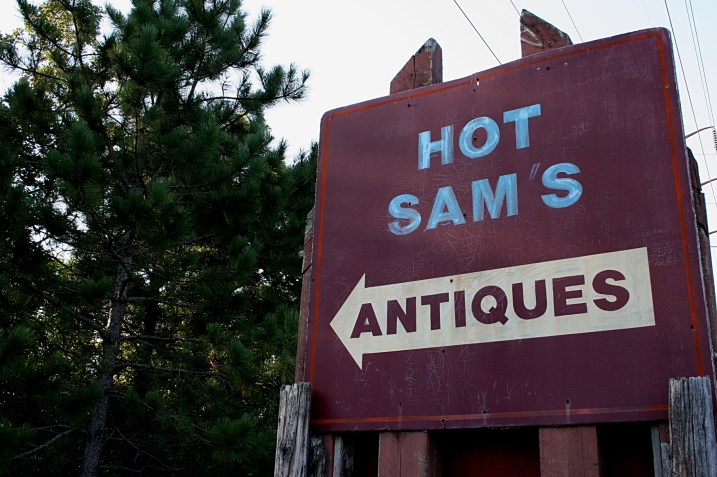
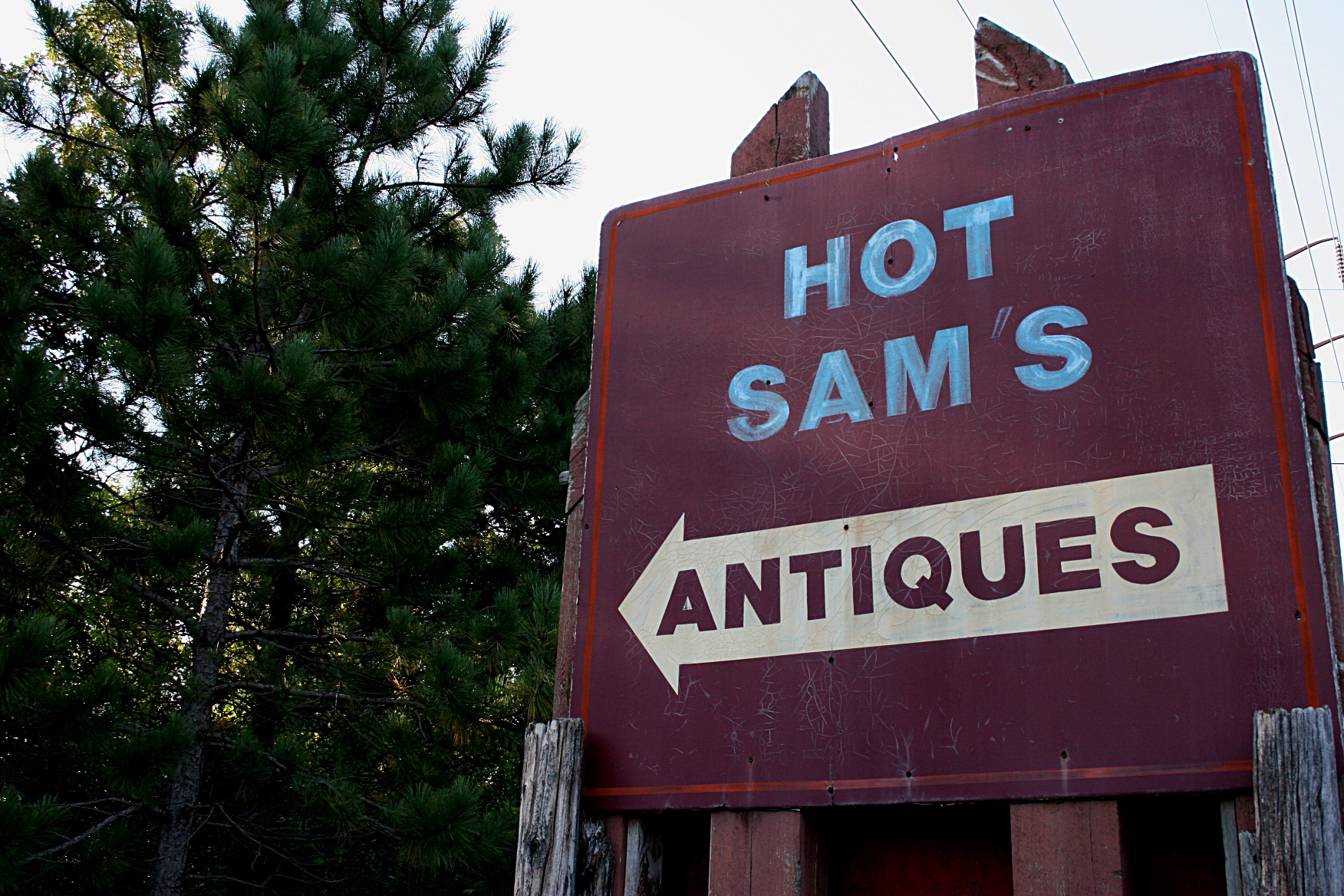
Watch for this sign at 22820 Pillsbury Avenue South directing you onto the narrow gravel road into Hot Sam’s Antiques.

FYI: To get to Hot Sam’s Antiques from Interstate 35, take exit 81 near Lakeville and go east on Dakota County Road 70 about half a mile to the stoplight. Then turn south onto Kenrick Avenue/County Road 46. Continue approximately 1 1/2 miles on Kenrick, which turns into Pillsbury Avenue. Hot Sam’s is located on the west side of the road at 22820 Pillsbury Avenue South, Lakeville. You’ll see a sign.

Hours are from 10 a.m. – 6 p.m. weekdays (except closed on Thursday) and Saturday and from noon to 6 p.m. on Sunday.

Check back for more photos from Hot Sam’s because there’s so much more I need to share with you.

© Copyright 2012 Audrey Kletscher Helbling


A maple bacon sundae & other delights at a Waterville coffee shop September 13, 2012

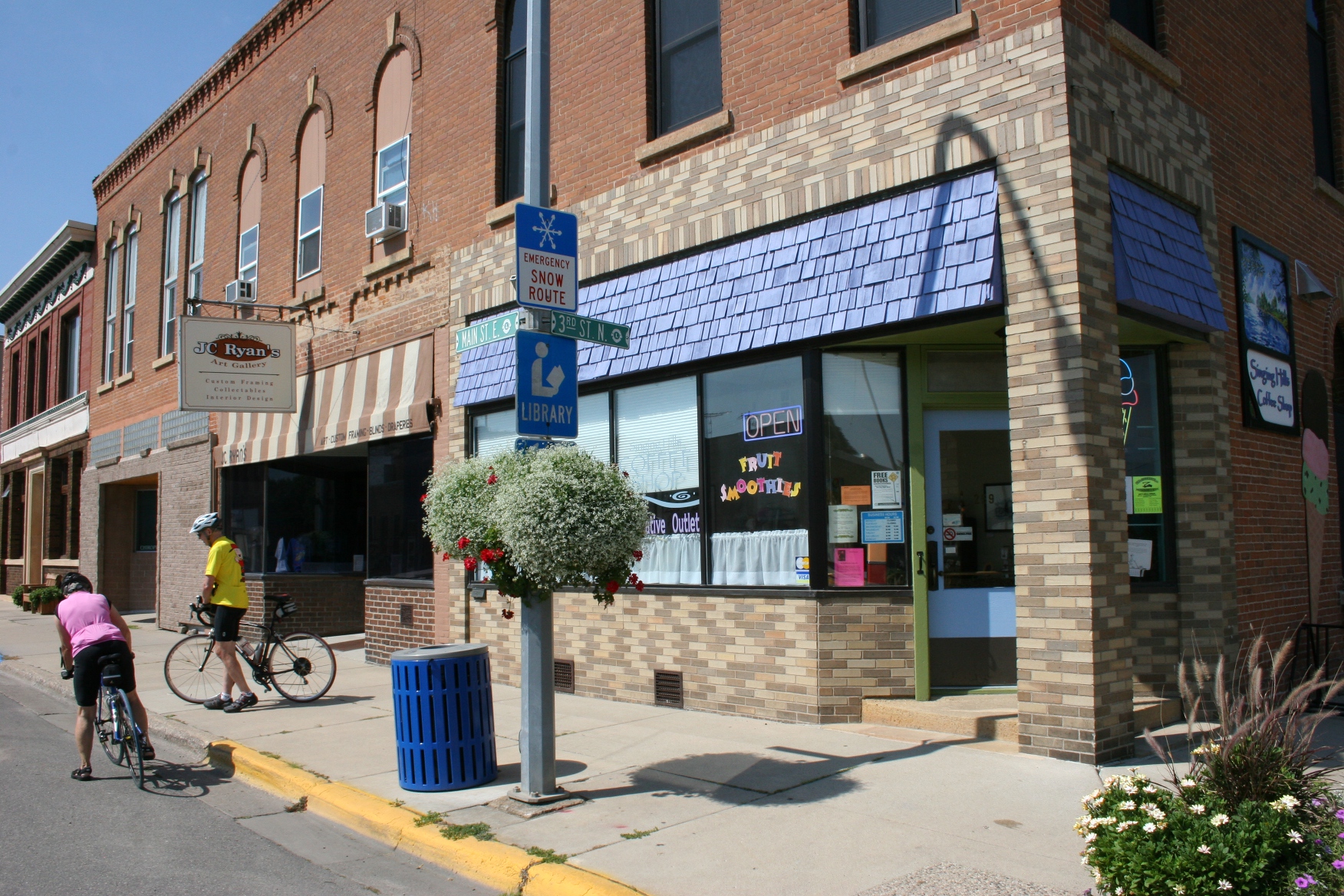
Singing Hills Coffee Shop, at the corner of Main and Third Streets in downtown Waterville in southern Minnesota.

KATHY GREW UP in Detroit, worked 20 years as a deck officer on a freighter for the Merchant Marine, met her husband at a Halloween party, birthed two daughters in her 40s and then, with no business experience, opened a coffee shop in December 2010.

That’s the life synopsis of the woman behind Singing Hills Coffee Shop in the southern Minnesota lakeside community of Waterville, best known for its bullheads and Buccaneers—as in the local high school champion football and basketball teams.

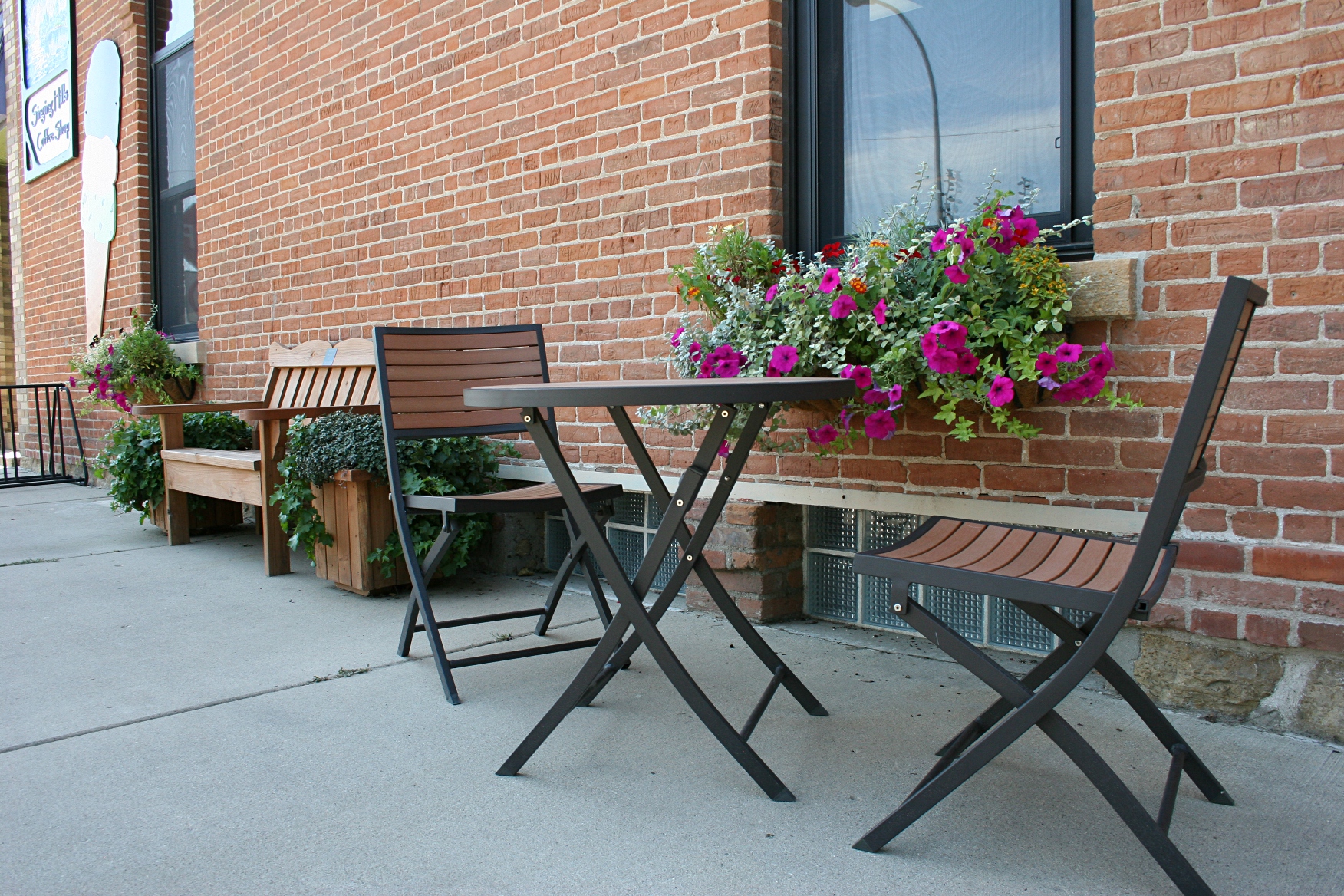
Inviting outside dining at the Singing Hills Coffee Shop.

One-third of a stately, anchor brick building on a corner of Waterville’s Main Street houses the coffee shop. It’s as inviting on the outside—with bistro tables and a bench and window baskets popping with hot pink petunias and luscious ivy spilling from pots—as it is inside.

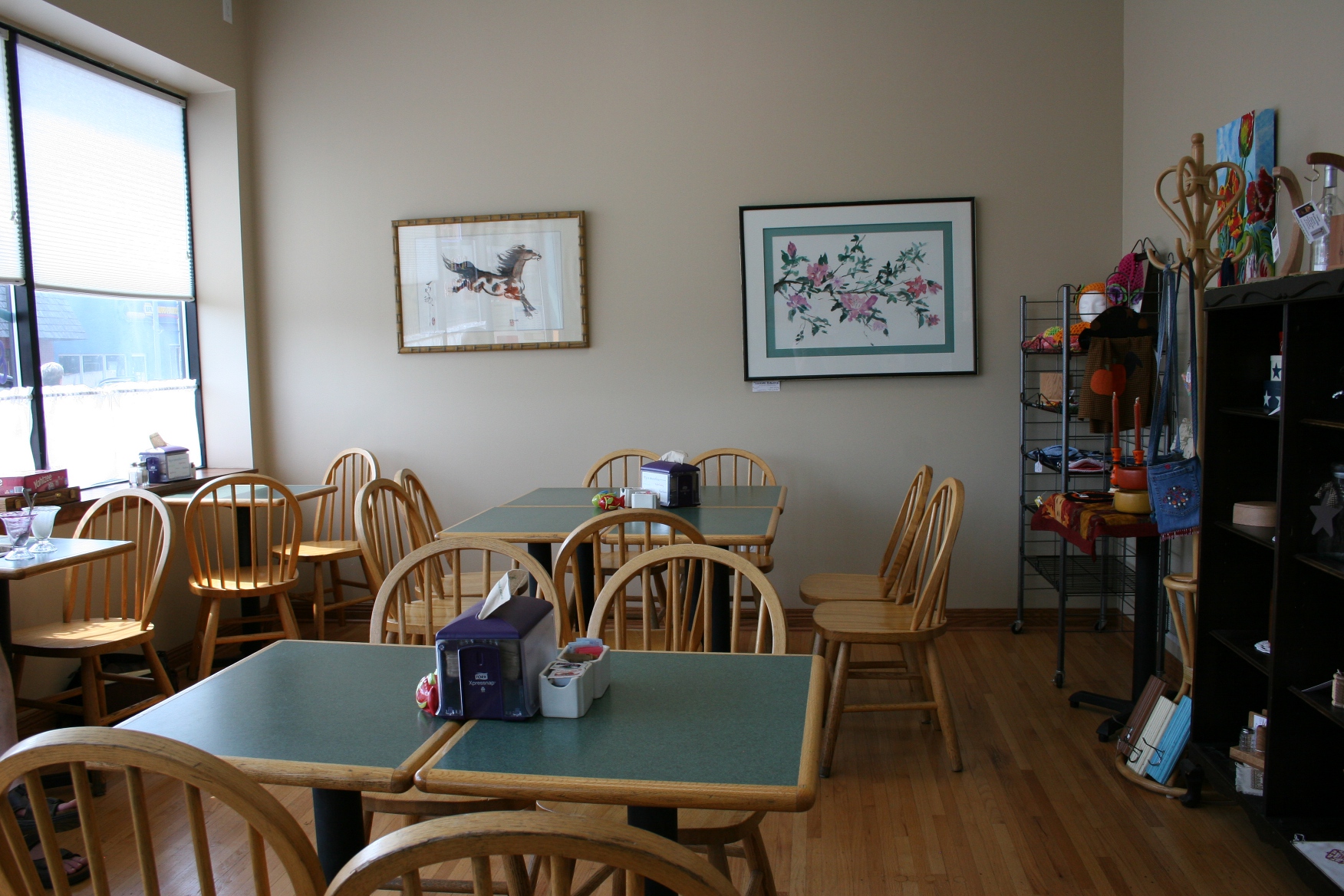
The bright, cozy dining area of the coffee shop with local arts and crafts displayed on shelves to the right and on walls.

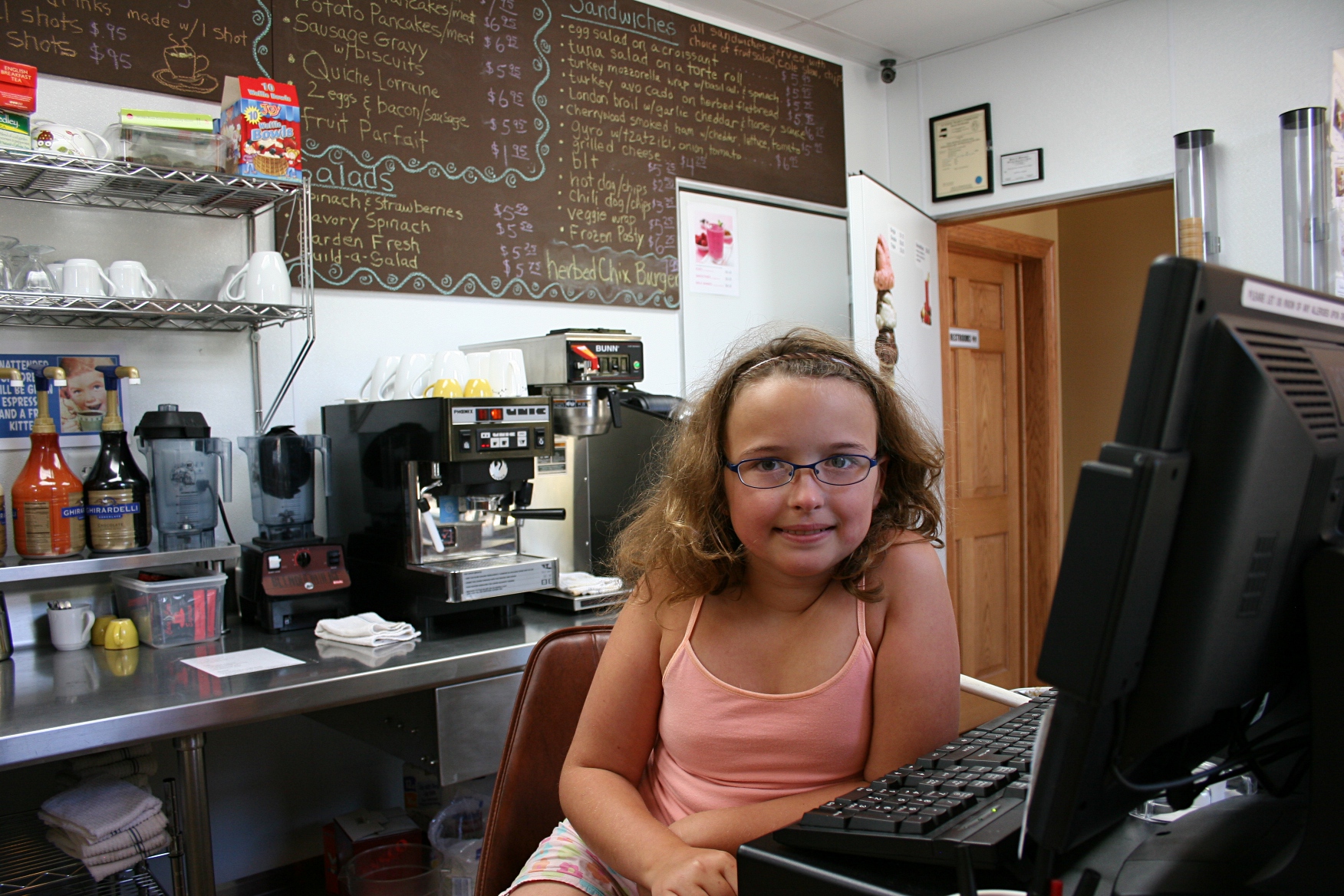
Kathy’s daughter, Marina, waits on customers.

On an early Sunday afternoon, 45 minutes before the 2 p.m. closing, Kathy hustles to prepare sandwiches and ice cream treats while her 10-year-old daughter, Marina (yes, her name is a nod to Kathy’s time on the water), takes orders, accepts payment and makes change.

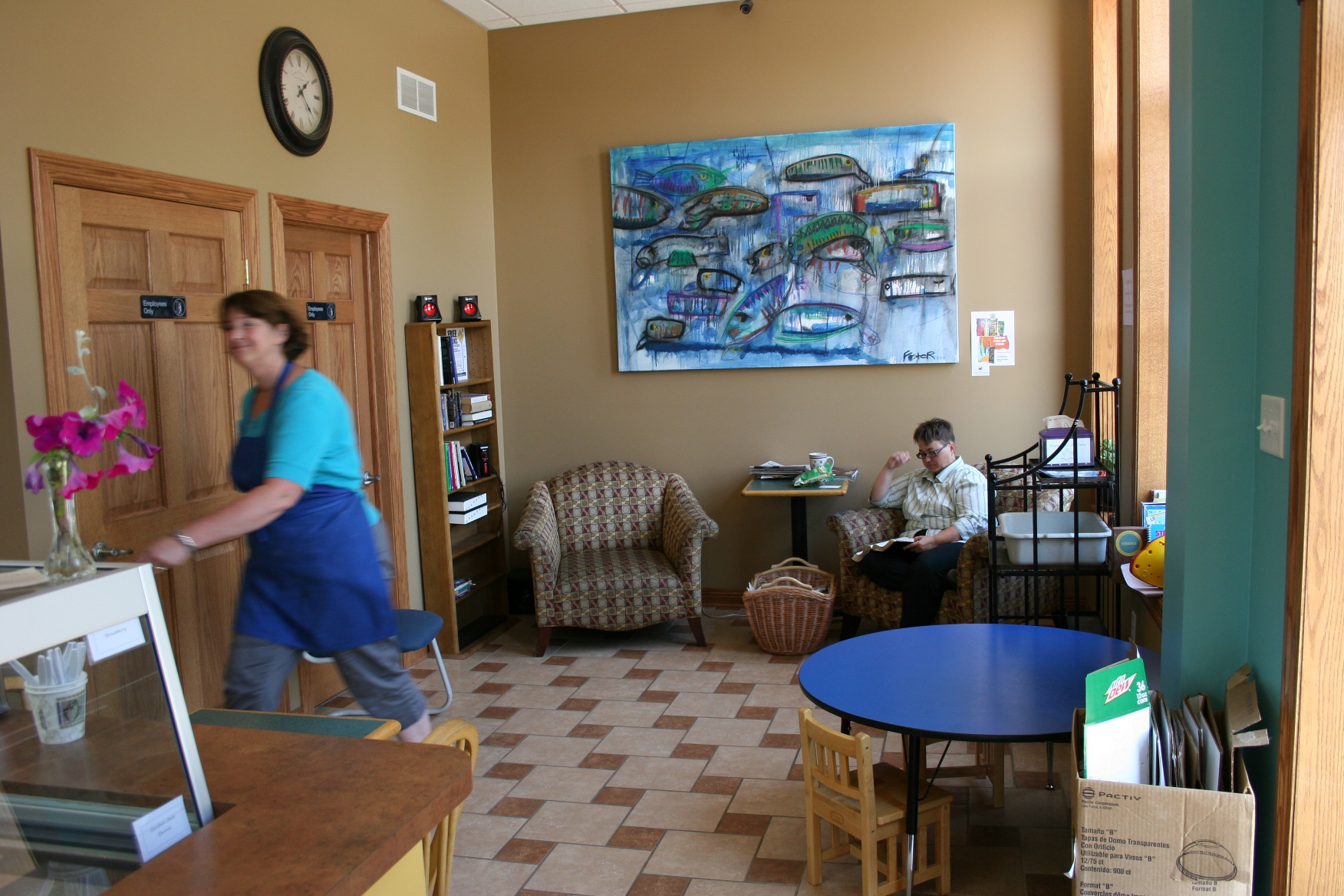
Kathy hurries back to the kitchen to prepare orders while customer and friend, Kari, relaxes in a back coffee shop corner. Tim Foster’s “American lures” painting (oil paint, oil pastels and graphite on canvas) anchors the wall. It was inspired, he says, by old fishing lures. Kathy would like to purchase the $450 painting as a permanent installment in her shop. I suggested she collect tips to help her buy it. Foster sells his mostly abstract and surreal paintings through his website and studio, at Hogan Brothers in Northfield and via art shows. Kathy saw “American lures” at the 2012 Sakatah Arts Experience in Waterville and invited Foster to bring his painting to her coffee shop.

In a comfy corner chair, Kathy’s friend, Kari, is reading her bible, seeking comfort at the recent, unexpected loss of her 36-year-old cousin. Light floods the homey space warmed by walls the hue of honey on two sides and a contrasting robin’s egg blue on the other.

A printed sign on a slim spot between two towering windows reads:

Conduct Code—Love your neighbor as yourself. Treat other people the way you want to be treated!

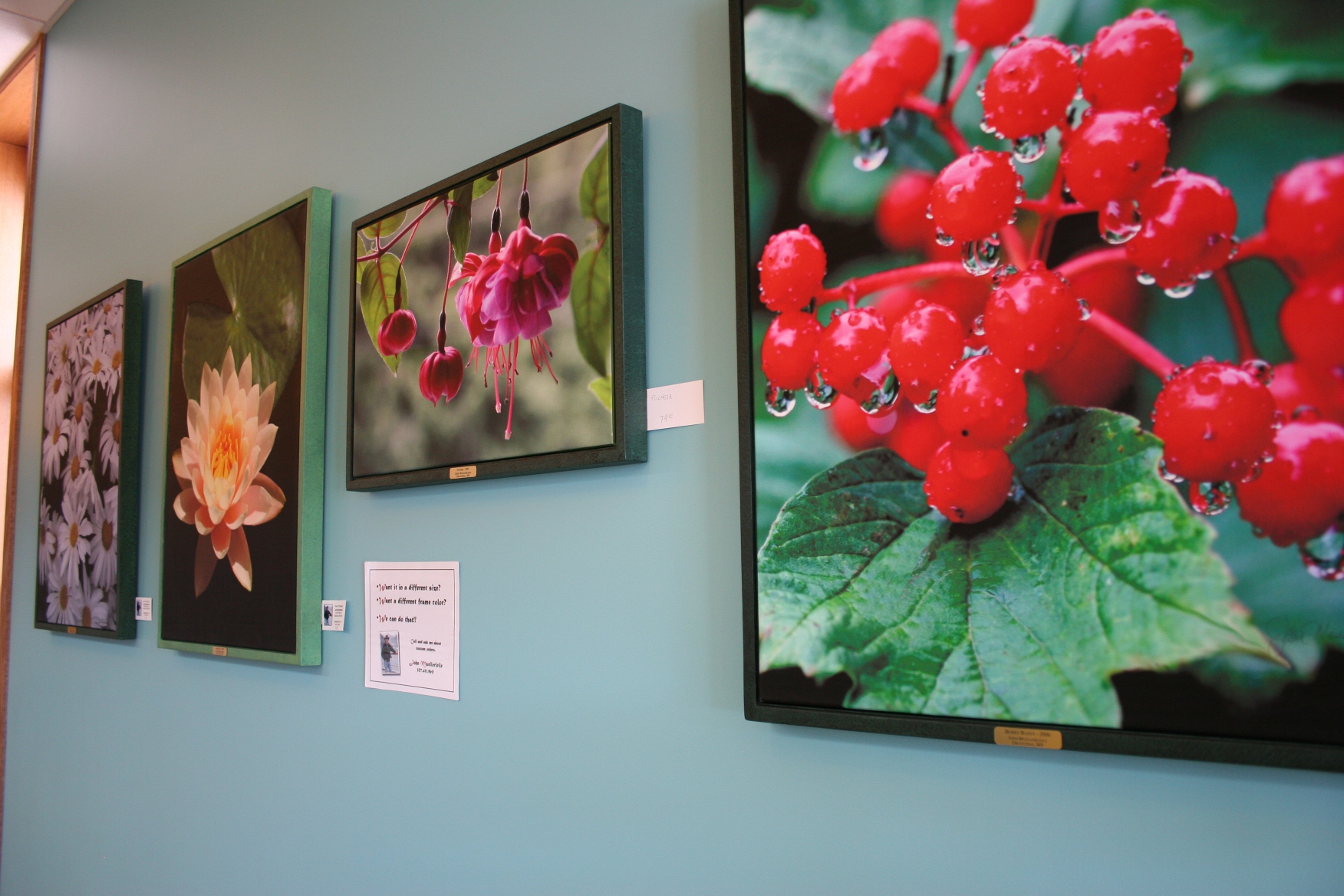
Owatonna resident John Muellerleile’s fine art photography on display and for sale.

Kathy welcomes customers and artists here, into this corner haven in a town that thrives on summer-time business from resort guests, cabin dwellers and users of the recreational Sakatah Singing Hills State Trail.

Her customers come here for the ever-popular smoothies and the favorite turkey avocado sandwich, for the coffee and the espressos and other beverages, for the breakfast and soup and sandwiches and salads and baked goods and ice cream treats.

On this Sunday, my husband and I have driven 15 miles for an ice cream treat upon the recommendation of our friend, Joy, who raves about the maple bacon sundae.

As Randy places our order with Marina, I chat with Kari in the corner, take photos and admire a focal point, 6-foot by 4-foot oil painting by Tim Foster of Northfield. His fish-themed art piece, titled “American lures,” is “so Watervillian,” Kathy tells me later, fitting this lakeside town which celebrates bullheads at an annual June festival. There’s a deeper meaning to the painting in which words like “love” and “prove it” and “Federal Reserve Bank” are hidden, Kathy says, but we don’t get into details.

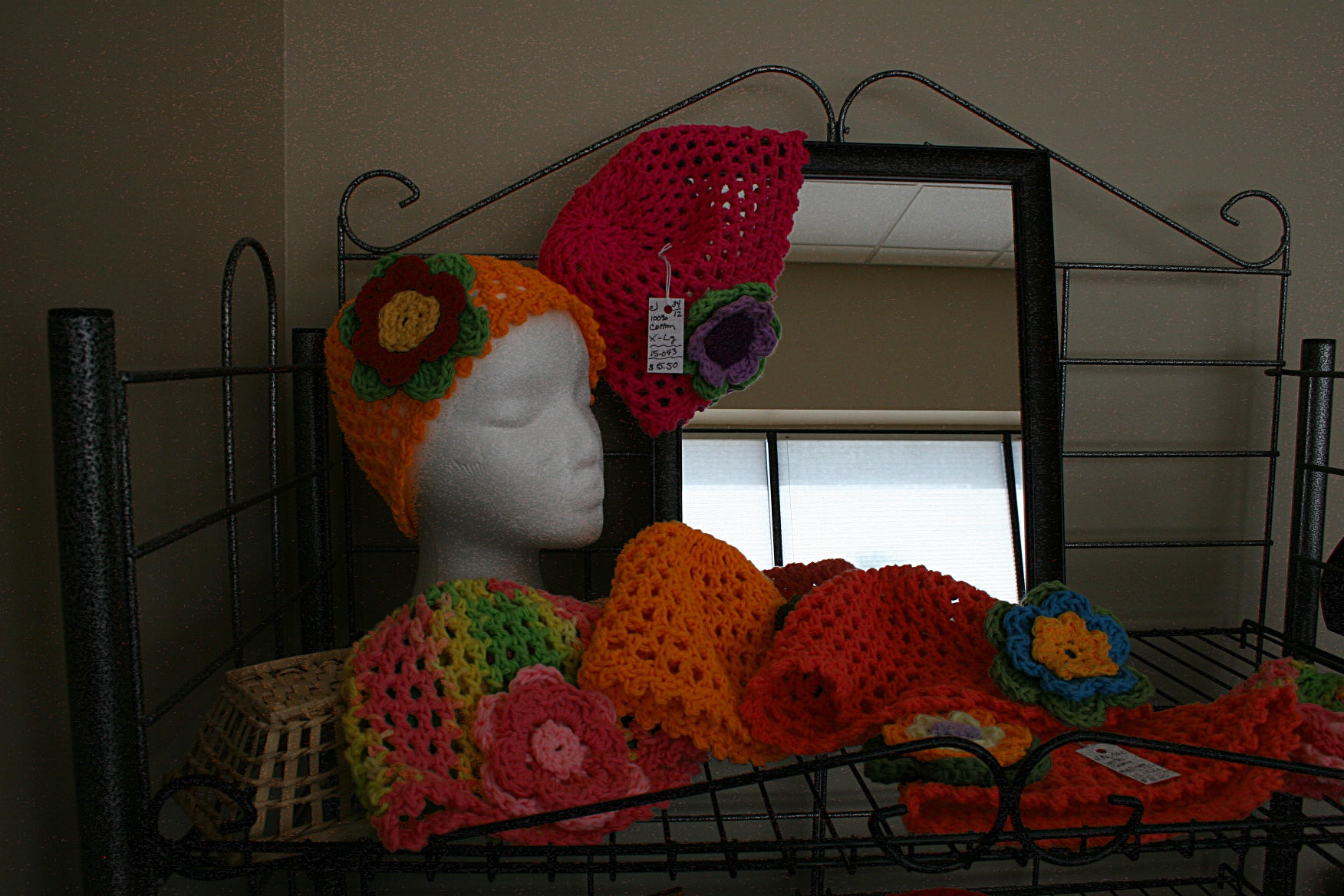
An example of the handcrafted work of local artisans for sale in the coffee shop.

Kathy works with the nonprofit Waterville Local Cooperative Outlet to provide a marketplace for some 8-10 local artisans and crafters. Their creations—from woodcrafts to crocheted caps, paintings, photos and more—are displayed on walls and on shelves through-out the coffee shop.

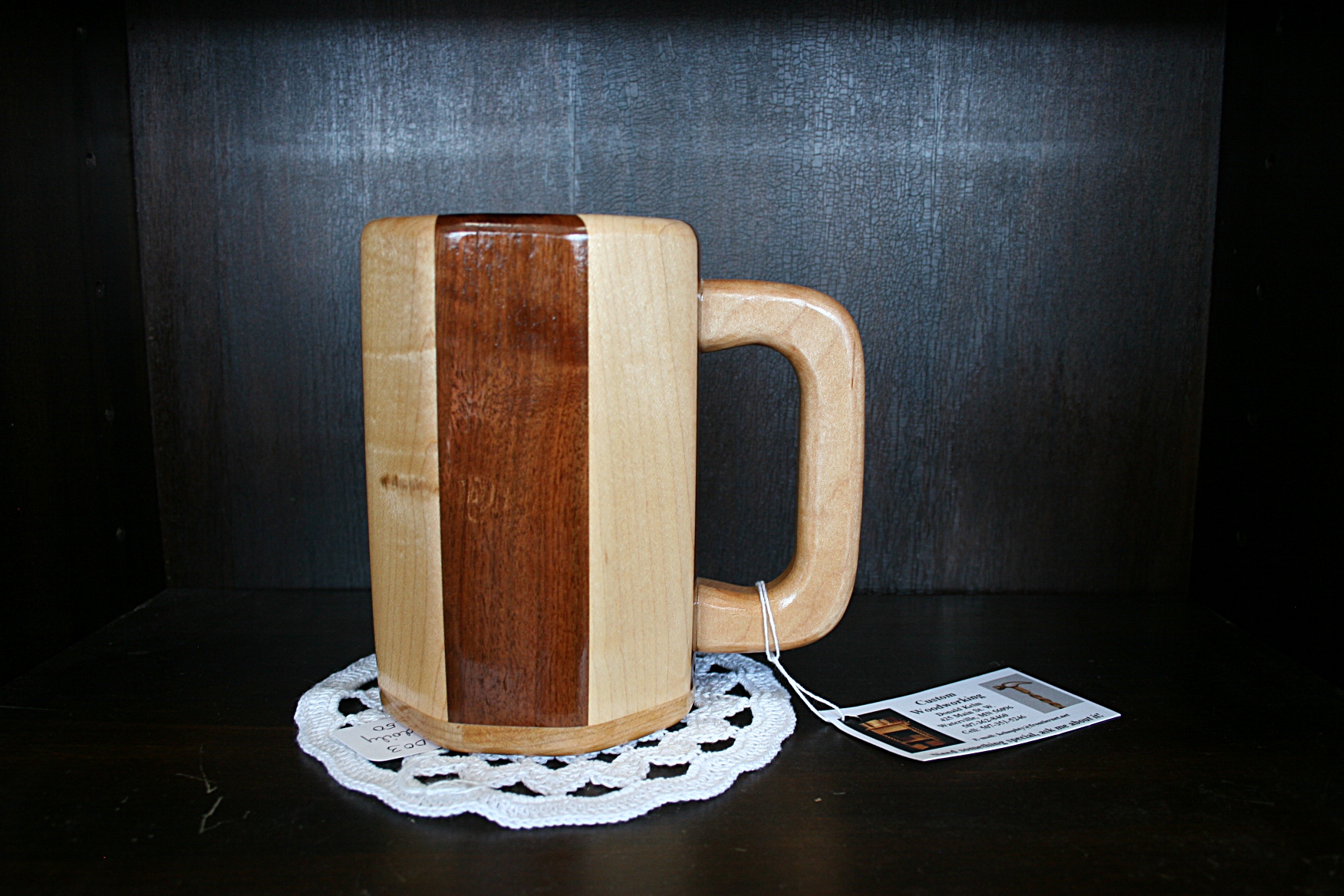
Donald Kelm of Waterville, a custom woodworker, created this mug.

Engaging the arts community exemplifies Kathy’s efforts at community development. That extends to the food aspect of her business, too. She wanted, she says, more dining options than bar food burgers and fries for the town she and her family now call home. And Kathy offers that with a sandwich menu which doesn’t include a single burger. The closest thing to fries are the chips accompanying sandwich orders.

On her sandwich menu, you’ll find choices like egg salad on a croissant; veggie wrap with hummus, provolone, red onion, red pepper and spinach; and cherrywood smoke ham with garlic cheddar, tomato and mustard sauce. You can build your own sandwich, order a cup of soup.

Hungry for a bakery treat? Kathy has selections from cupcakes to pie to traditional Upper Peninsula style pasties, a tribute to her native Michigan.

Singing Hills Coffee Shop’s delicious maple bacon sundae.

But, on this Sunday, I’ve come only to sample the maple bacon sundae with spicy maple-glazed pecans, homemade maple caramel and bacon, yes, bacon, on vanilla ice cream. My husband questions my choice. I don’t, and find the sweet and salty mix a perfect complement to the ice cream. I’d give the maple bacon sundae a five-star recommendation.

An equally tasty blueberry sundae.

My less daring spouse orders a blueberry sundae and is equally pleased with his selection.

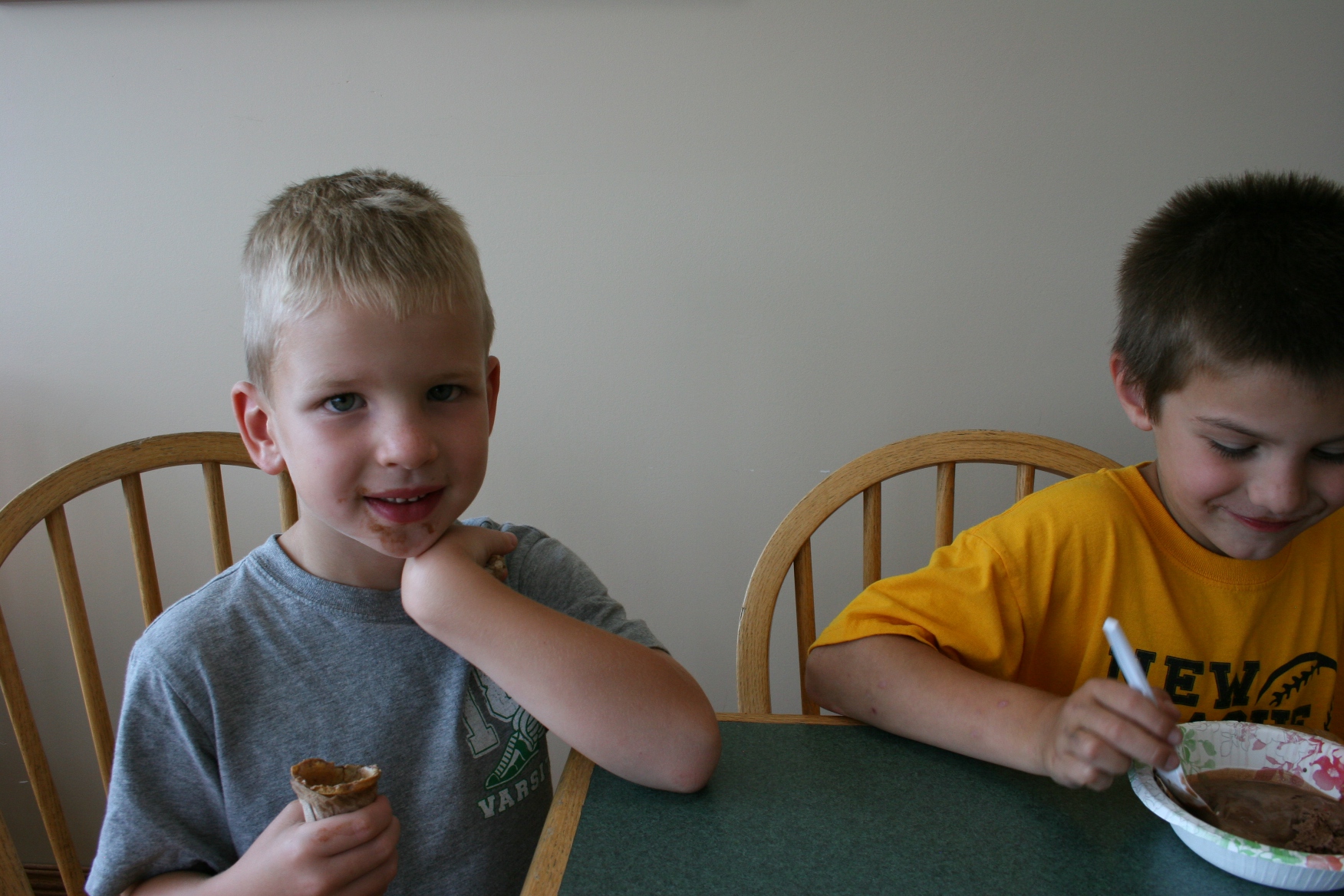
These two boys came with their moms, and a sister of one, for ice cream treats. The boy on the right told the boy on the left that he had a mustache. Then I told the boy on the right that he had an ice cream mustache, too.

A retired couple who spend their summers at a Waterville resort rave about the sandwiches while two moms ordering ice cream for themselves and their kids endorse the ice cream.

Kathy, though, admits that business growth was slow during her first year and that she’s still learning, given her inexperience as a businesswoman. With summer winding down, she’s cutting back on hours. Singing Hills Coffee Shop is closed now on Mondays and Tuesdays, but open from 8 a.m. – 5 p.m. Wednesday – Saturday and from 8 a.m. – 2 p.m. on Sunday.

On October 14, the coffee shop will close for the season and then reopen in mid-April.

So, if you want to try that maple bacon sundae…

FYI: For more information about Singing Hills Coffee Shop in Waterville, click here to reach the shop’s website.

To learn more about the arts scene in Waterville, specifically the annual Sakatah Arts Experience, click here.

For more info about Northfield artist T. Andrew Foster, click here to visit his Creative Space Art Studio website. 

Copyright 2012 Audrey Kletscher Helbling
 

A Sunday afternoon drive to Waterville, Minnesota, Bullhead Capital of the World September 12, 2012

Filed under: Uncategorized — Audrey Kletscher Helbling @ 6:55 AM
Tags: , , , , , , ,

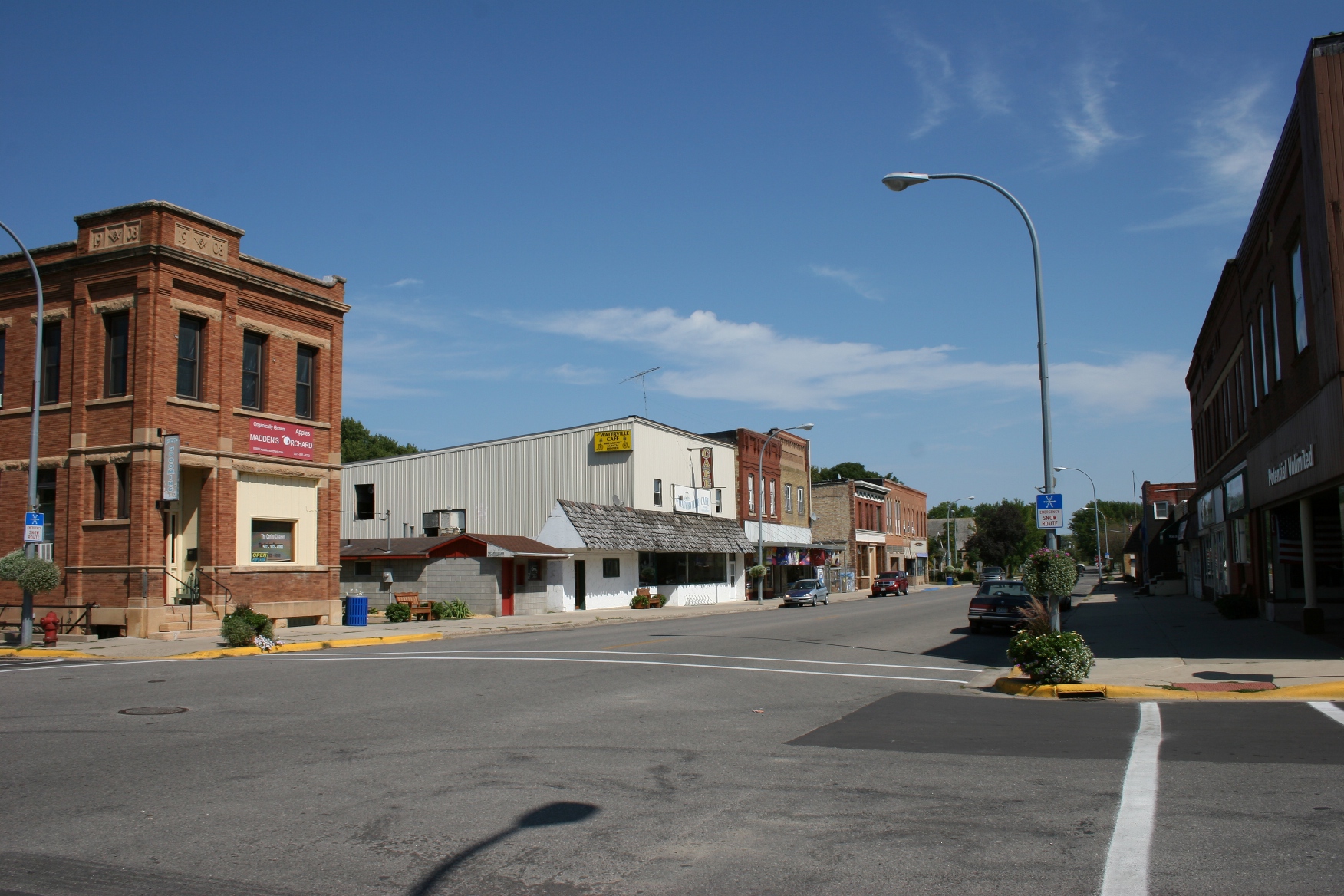
Main Street Waterville, Minnesota, on a Sunday afternoon in September.

THE THING ABOUT SMALL TOWNS is this. They’re not boring cookie cutter places with chain stores and look-alike subdivision houses occupying space in the middle of nowhere. I know, I know, you likely disagree about that “boring and middle of nowhere” if you live in a sizable city.

But these small towns possess individuality and character. And by small town, I mean a community of 5,000 or fewer residents. Just want to be clear on the definition.

Exploring small towns is something I enjoy, probably because I grew up on a dairy and crop farm near Vesta, current population around 330 or so, among the corn and soybean fields of southwestern Minnesota.

I’m intrigued by these communities which are most often ignored as simply, sigh, another place to slow us down as we rush from one destination to the next. I’m as guilty as the next traveler in feeling that way.

But sometimes I intentionally slow down. In recent years my husband and I have embraced Sunday afternoon drives, not unlike the Sunday drives of my youth. Dad would guide the family car along the washboard gravel roads of Redwood County, sometimes venturing into neighboring Yellow Medicine County, so we could look at the crops.

While Randy and I sometimes take gravel roads, our ultimate destination is typically Main Street.  We meander to a nearby small town, park our vehicle, get out and walk. It is then that we discover the quirks, the character, the feeling of community and closeness which define a given town.

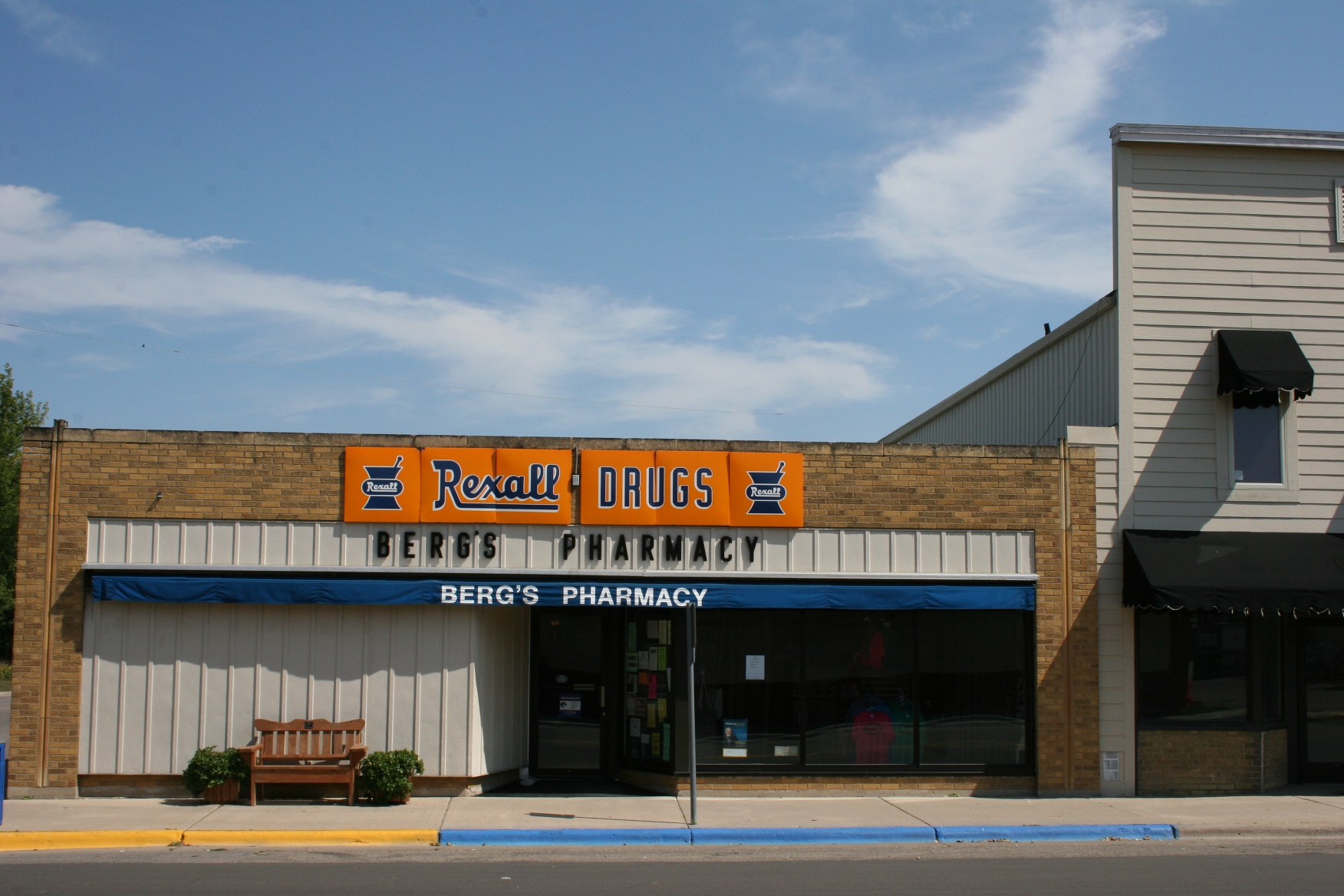
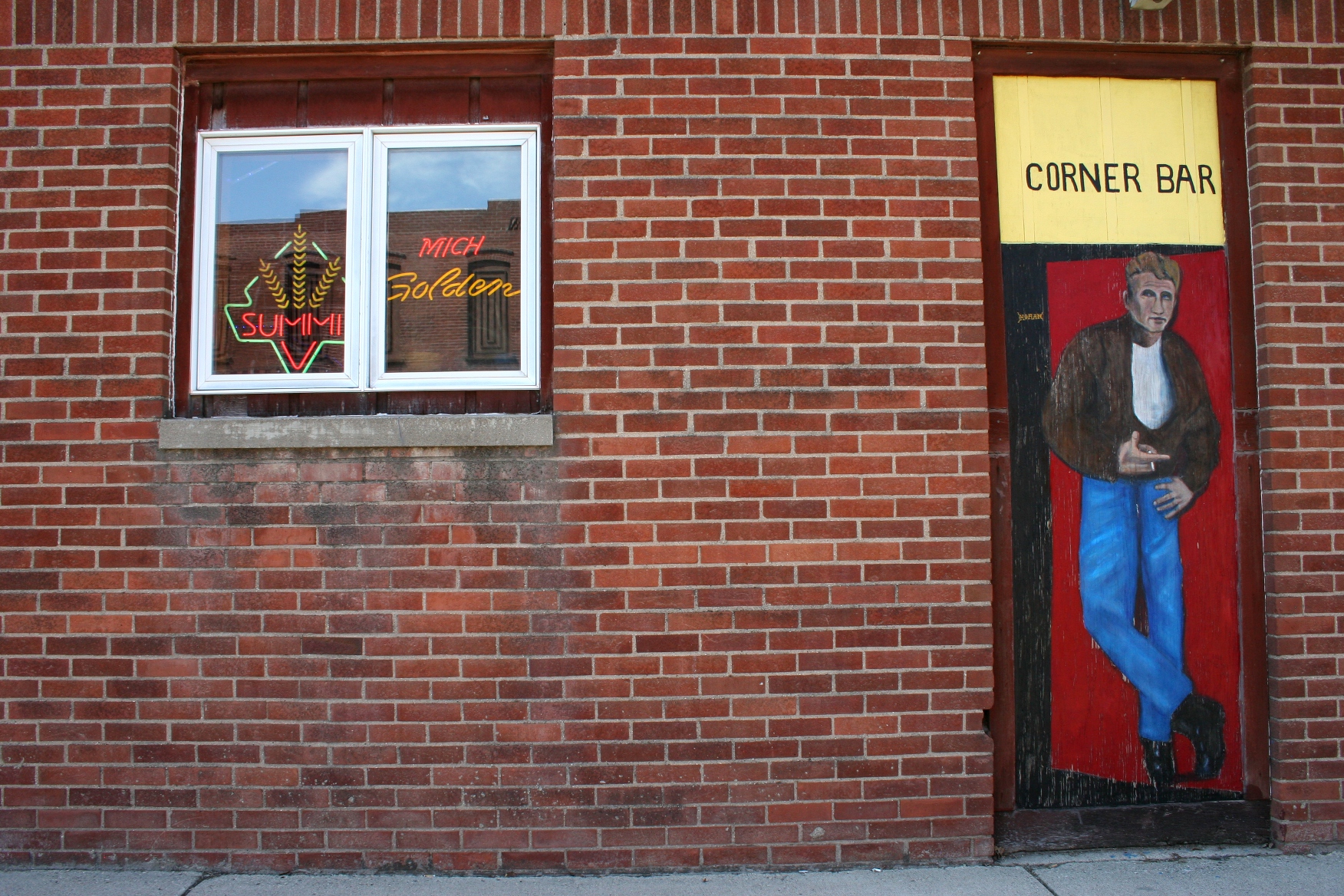
Our most recent Sunday jaunt took us to Waterville, only 15 miles from Faribault. I’ve been into this lakeside town of nearly 1,900 perhaps half a dozen times, just to drive through it, tour Ron’s Hardware (a story in itself, but it was closed the Sunday we were there), enjoy an ice cream treat and, many years ago, to grab a burger and beer at the Corner Bar.

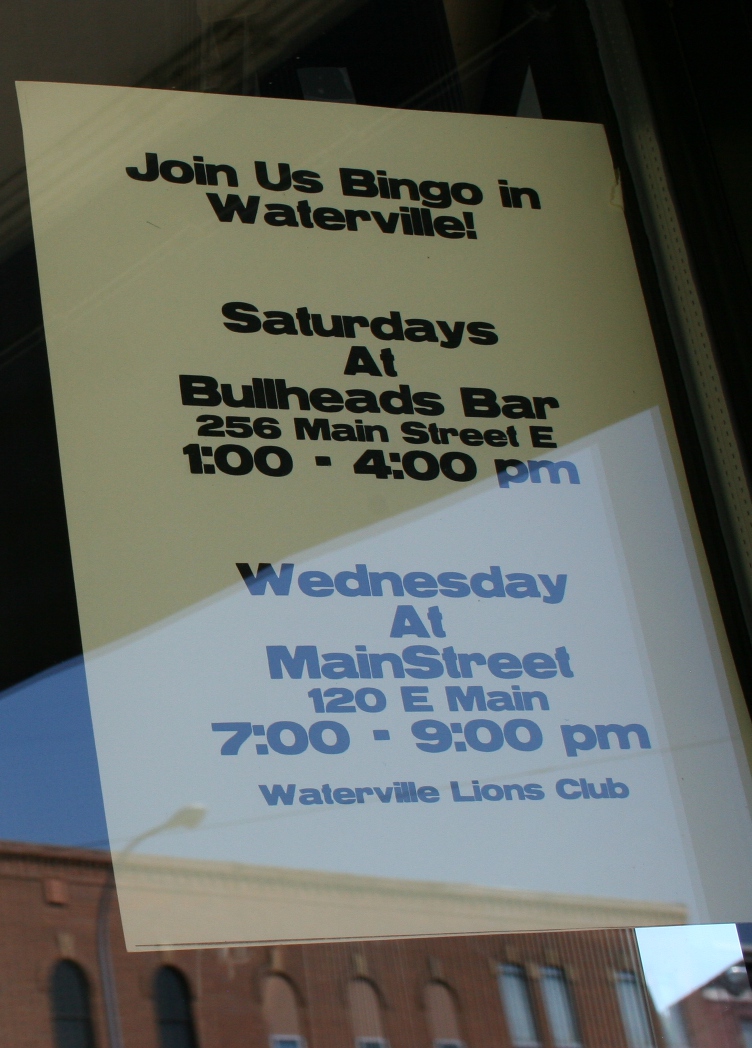
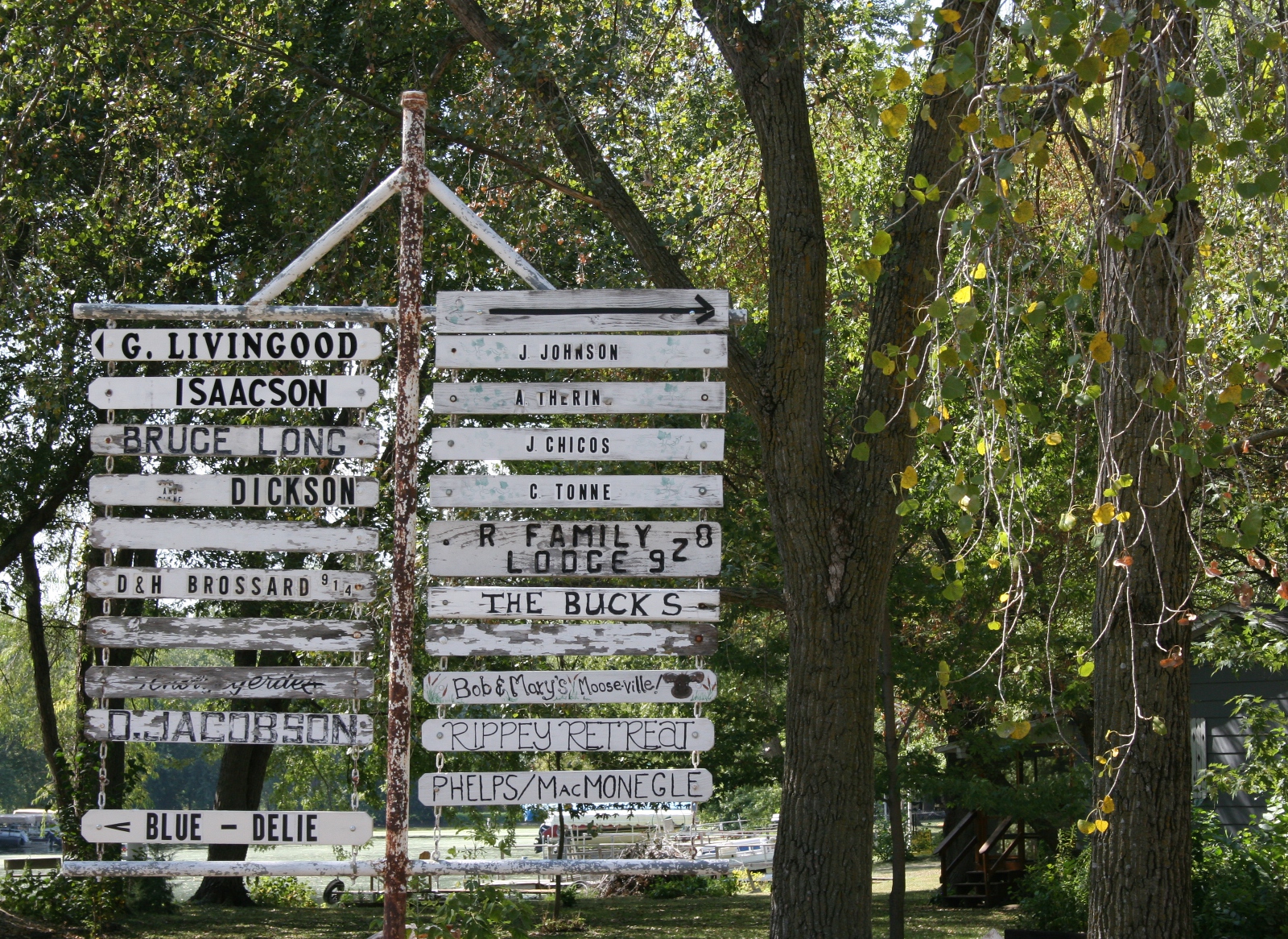
Mostly, though, Waterville has been a town my family zips past along Minnesota Highway 60 en route west. By doing that, I’ve missed out, missed out on the defining details. And the easiest way to notice those details, when Main Street businesses are mostly closed on a Sunday, is to check out the signage.

Welcome to Waterville, Minnesota, Bullhead Capital of the World, where signs hint at this community’s individuality and character.

CHECK BACK FOR A FUTURE post featuring one of Waterville’s newest businesses.

© Copyright 2012 Audrey Kletscher Helbling
 

Threshing oats at the Rice County Steam & Gas Engine Show September 4, 2012

Filed under: Uncategorized — Audrey Kletscher Helbling @ 6:42 AM
Tags: , , , , , , , ,

Grayden Moorhouse of Randolph holds freshly-threshed oats.

GRAYDEN MOORHOUSE unfurls his palm, revealing some two dozen oat kernels before dropping several into my hand.

He wants me to try them, to separate the meat from the hull with my teeth and spit the shell onto the ground.

I try, without success, and then he hands me a single kernel already hulled.

All the while I am thinking this:

I shoveled plenty of oats in my day growing up on a dairy and crop farm. And why would I want to eat raw oats, which I associate with cattle feed?

But Grayden is one of those guys who seems convincing and I like the strong sound of his name and, heck, what’s life without trying something new occasionally?

So I eat the single oat kernel and that is enough for me. I’d rather eat my oats in oatmeal.

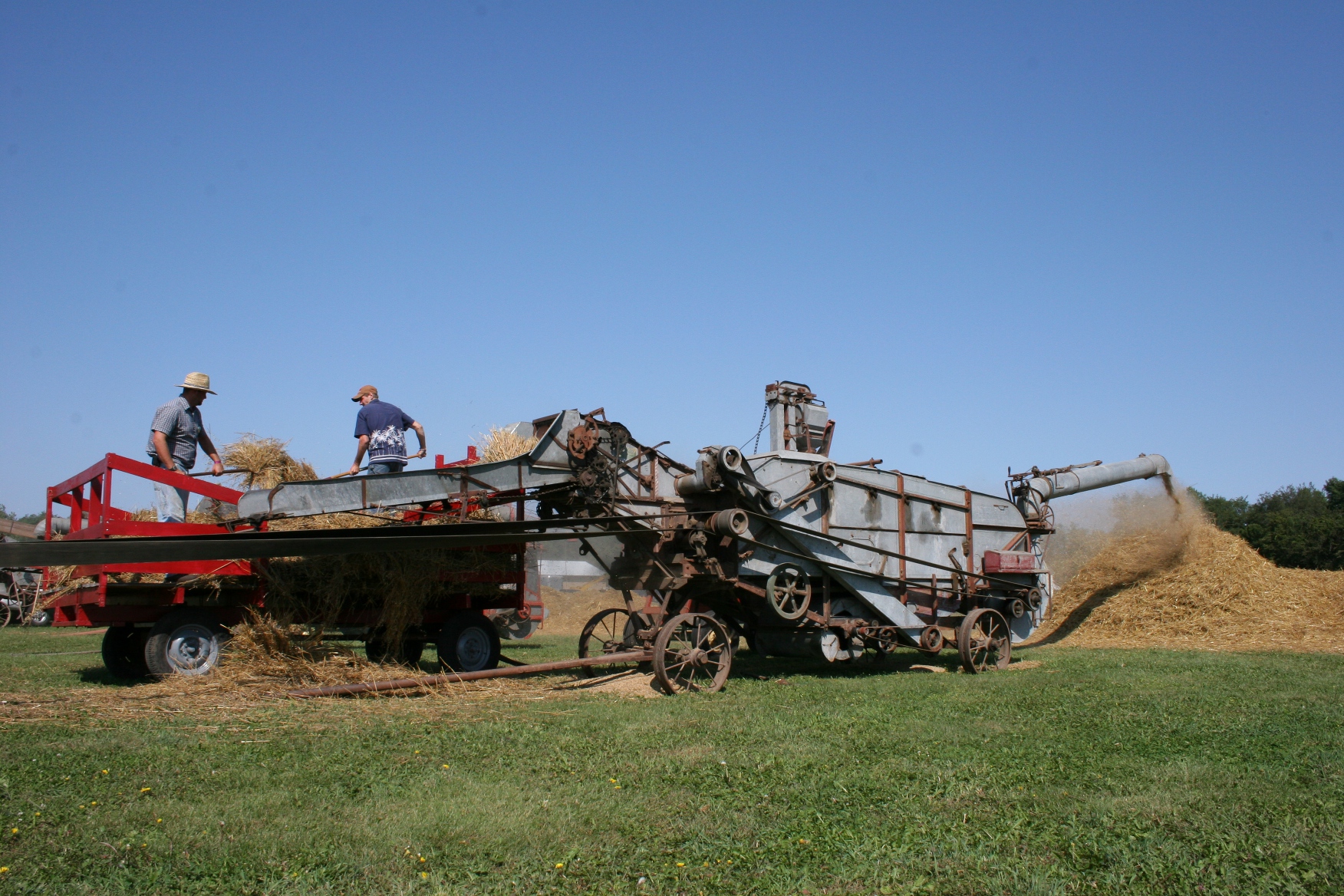
Now that I’ve ended that introductory narrative, let’s follow the path of how those oat kernels ended up in Grayden’s hand via this photo essay from the Rice County Steam and Gas Engine Show this past weekend in rural Dundas.

Shoveling the raw oats into the conveyor system.

An overview of the threshing equipment and process of separating the oats kernels from the stem.

Bill Becker of rural Northfield mans the Minneapolis Moline which powers the threshing operation.

More shoveling of oat bundles, a dusty, dirty job.

The dust flies as men and machine work.

Plenty of farmers and retired farmers watch, remembering…

While horses plow a nearby field (left), the threshing crew continues working.

And the straw pile grows.

Finally, meet Grayden Moorhouse, whose strong name, it seems to me, belongs in a western.

FYI: Please check back for more posts from the steam and gas engine show. You’ll meet one interesting character and an incredible teen, plus ride along with me on the back of a truck.

© Copyright 2012 Audrey Kletscher Helbling


In which I learn a lot about the James-Younger Gang bank raid in Northfield September 3, 2012

CHRISTIAN HAKALA WEAVES the story of the bank robbery with the skills of a seasoned storyteller, his voice rising as the tension mounts, his hands gesturing, his eyes locking with those of a rapt audience.

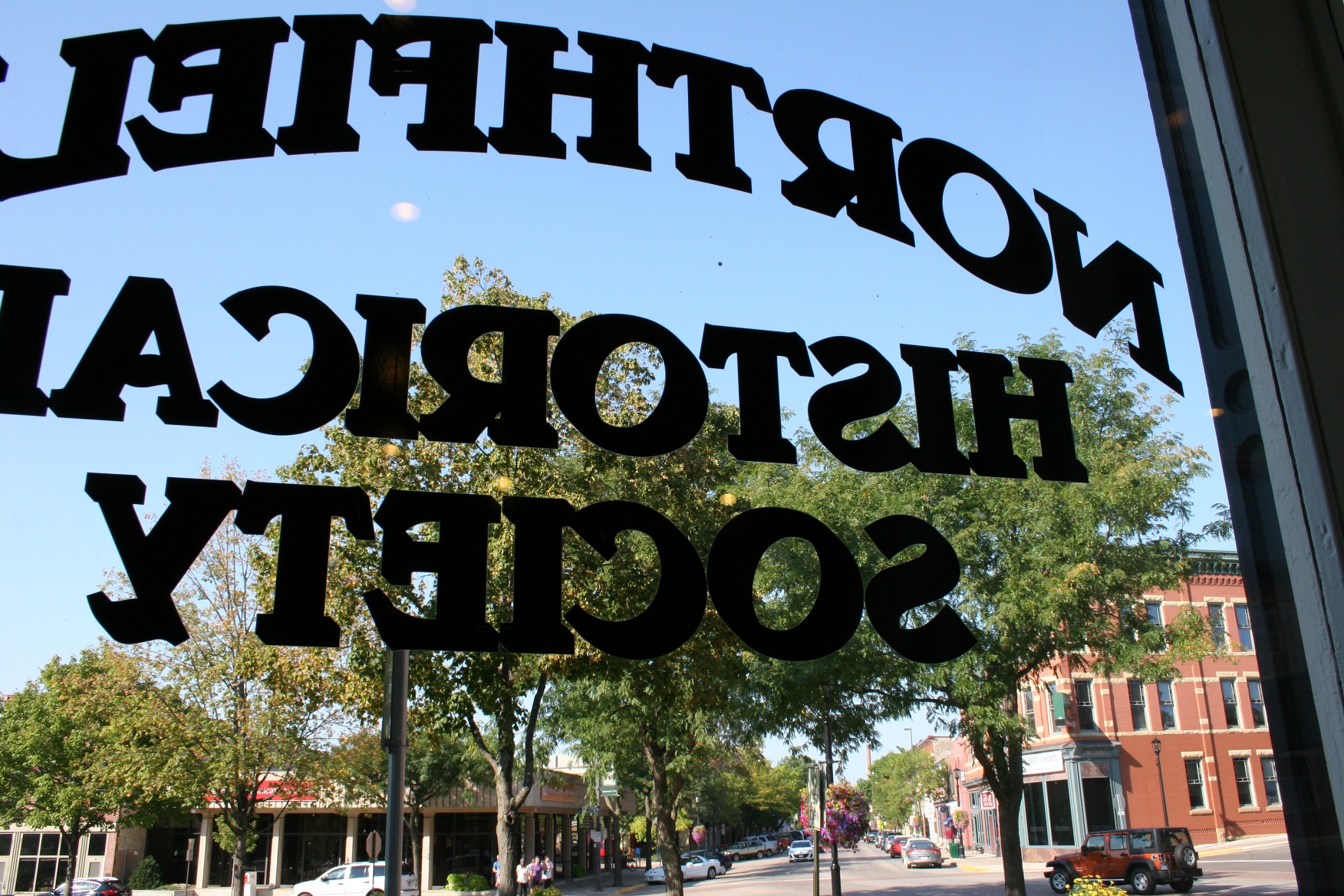
Looking through a front window of the Northfield Historical Society museum toward Division Street.

It is Sunday afternoon and I am with a small group touring the Northfield Historical Society. I have come here with my husband to view the temporary U.S.-Dakota War of 1862 exhibit as it relates to Rice County.

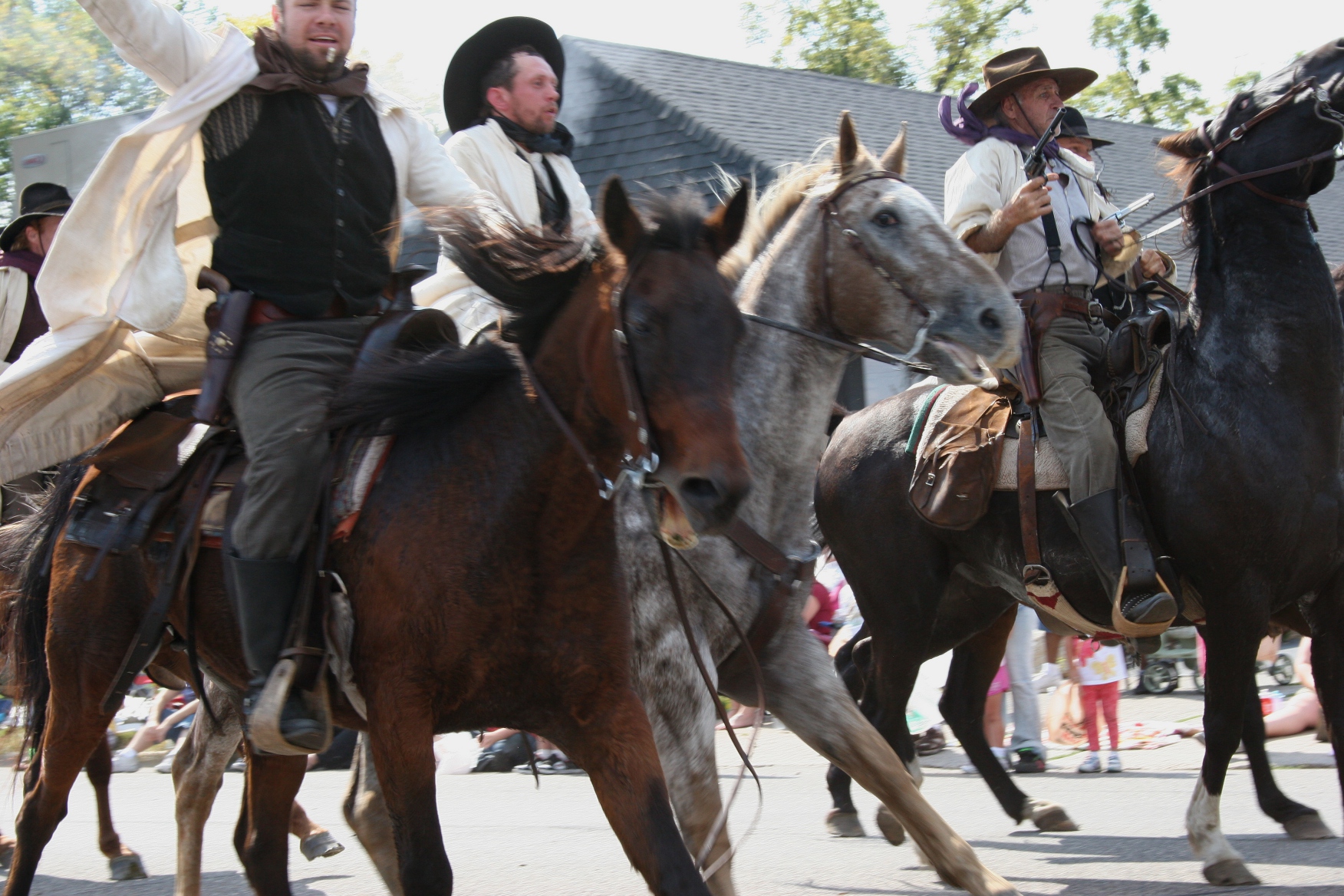
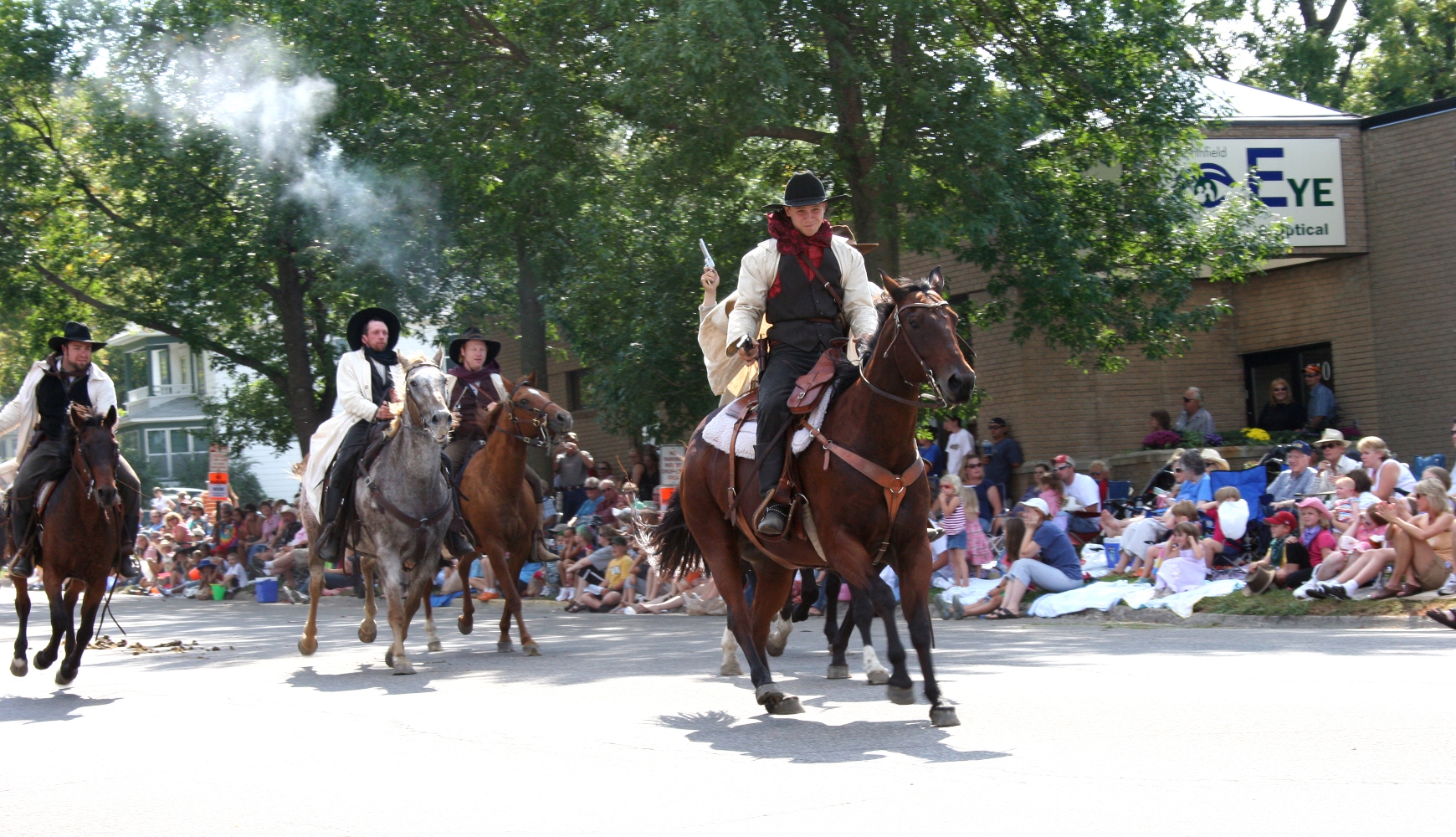
The James-Younger Gang re-enactors riding in The Defeat of Jesse James Days parade perhaps five years ago.

But I find myself, instead, captivated by Hakala’s intriguing play-by-play account of the James-Younger Gang bank robbery of September 7, 1876, as he leads us through the historical society and into the bank. I am embarrassed to admit that I’ve never visited this museum, site of perhaps the most historic bank robbery in U.S. history, even though I live only 15 miles away and once worked briefly as a newspaper reporter in this town.

This week some 100,000 visitors, according to Hakala, are expected in Northfield for the annual Defeat of Jesse James Days celebration September 5-9.

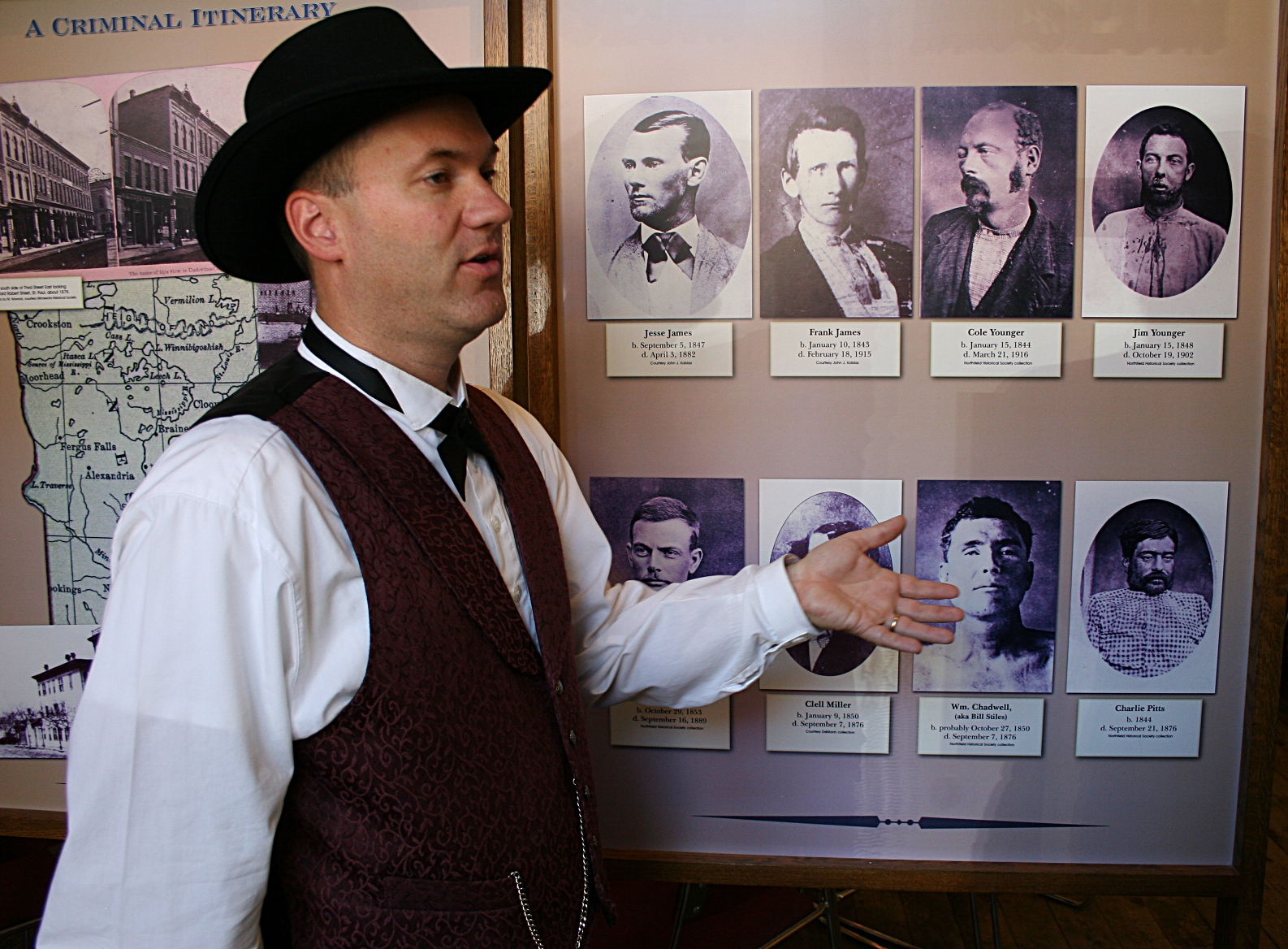
Christian Hakala talks about gang members involved in the Northfield bank raid, pictured to his left: Frank and Jesse James; Cole, Bob and Jim Younger; Clell Miller; William Chadwell; and Charlie Pitts.

The former history teacher, and now a fund raiser at Carleton College in Northfield, serves on the historical society board, volunteers as a tour guide and role plays a townsperson in the annual re-enactments of the bank robbery. His knowledge of the crime is precise, right down to the minute on the original bank clock, stopped at 1:50 p.m., the time of the deadly and unsuccessful robbery.

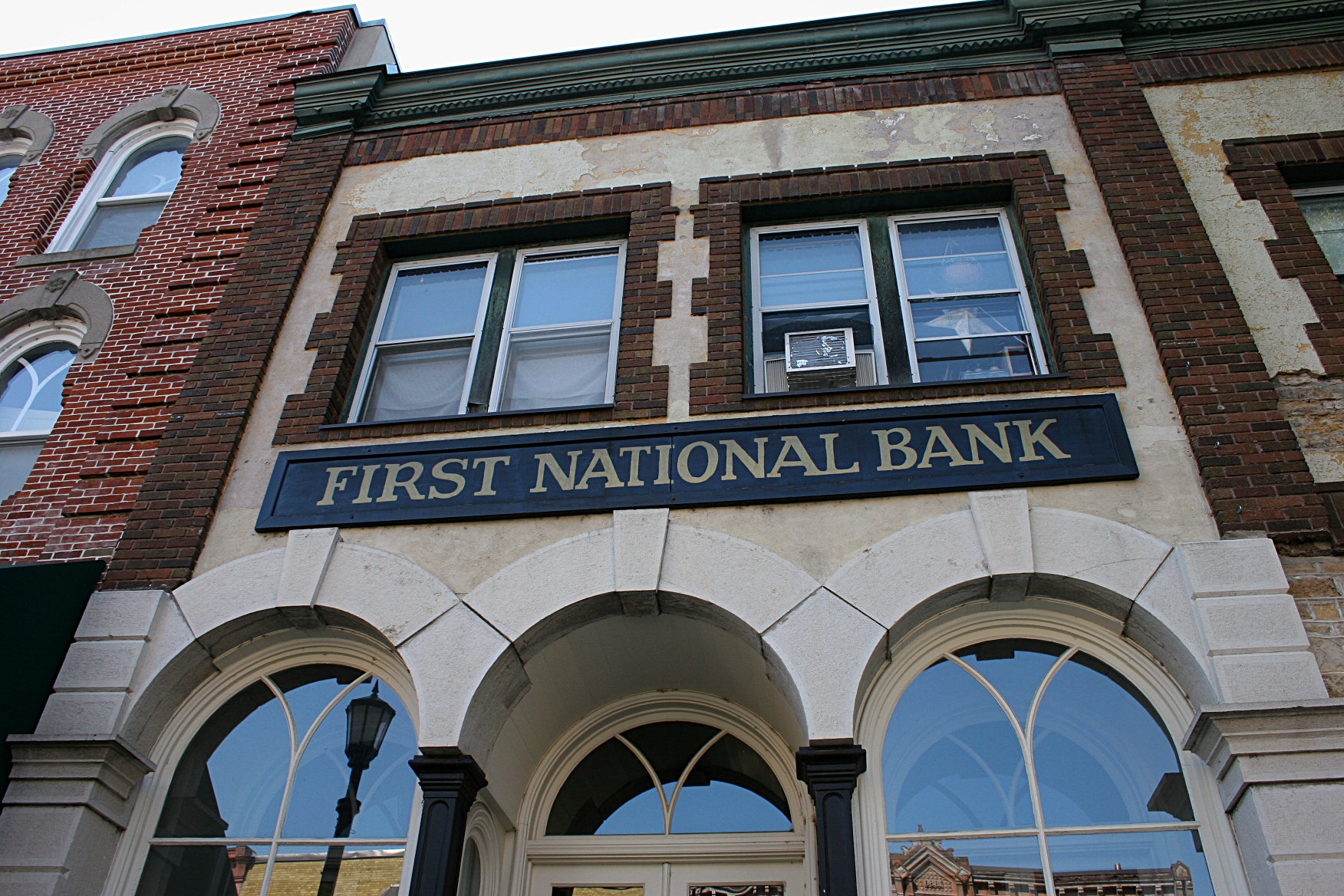
The front of the original First National Bank of Northfield. I didn’t photograph the entire building as the sidewalk in front of the bank was torn up and blocked for installation of sidewalk poetry.

It was all over in seven minutes with four shot dead, including acting cashier Joseph Lee Heywood who refused to allow the robbers into the vault; Swedish immigrant Nicolaus Gustafson; and outlaws Clell Miller and William Chadwell.

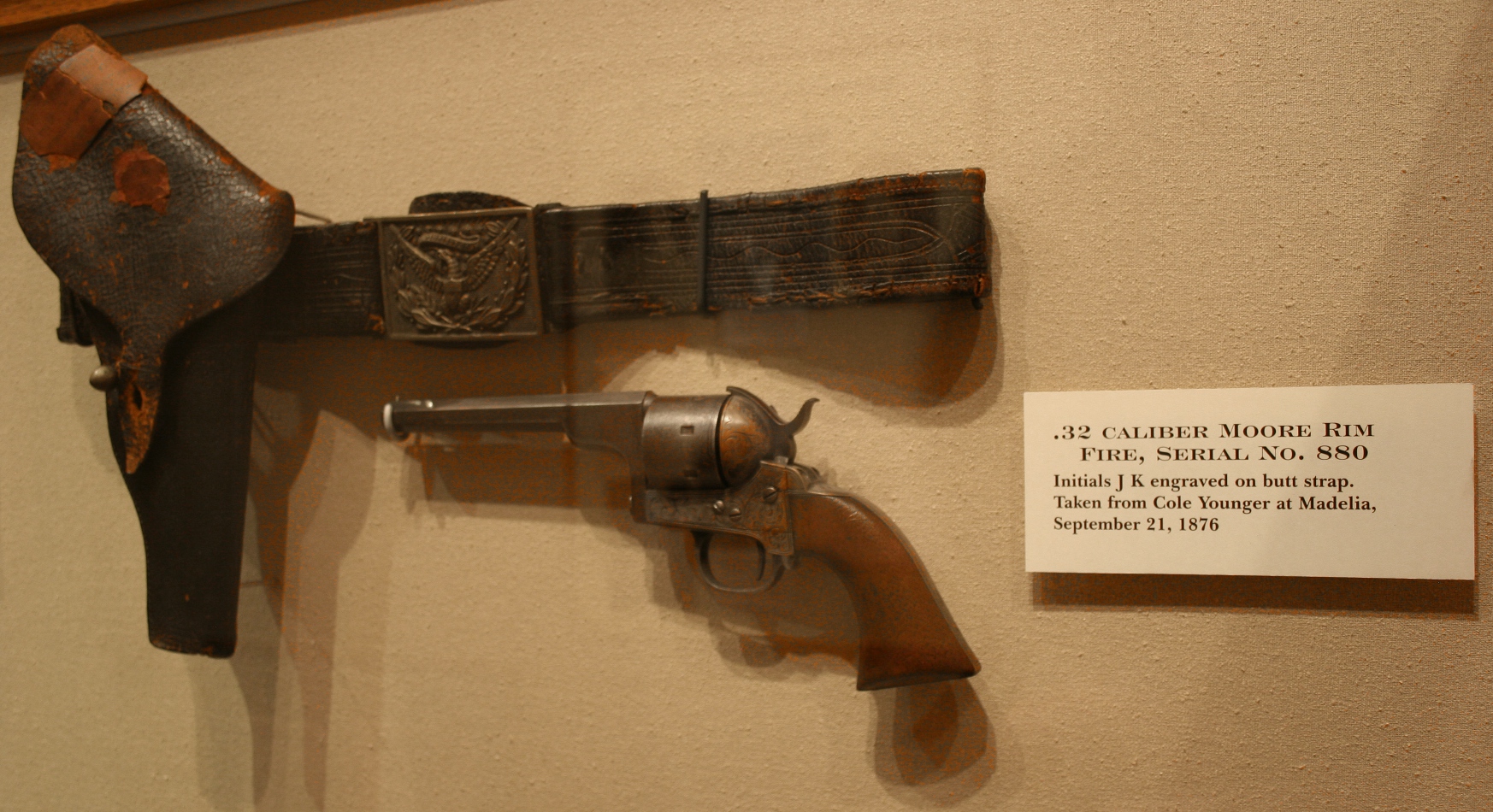
The gun confiscated from Cole Younger when he was captured two weeks later near Madelia. I shot this glass-encased weapon in available light, without a tripod and without flash, meaning quality is not there in this image.

Not until the end of the tour does Hakala reveal that efforts are currently underway to exhume and determine if the presumed body of gangster Miller, buried in his home state of Missouri, truly is Miller.

Hakala explains: Then-medical student Henry Wheeler, who shot Miller from an upper story level of a building across the street from the bank, dug Miller from his grave and shipped the body from Northfield to his Michigan medical school for dissection and study. Later, Wheeler would return the supposed body of Miller to his family in Missouri. But, as the story goes, Wheeler kept a skeleton, purported to possibly be Miller, in a closet of his Grand Forks, N.D., medical practice office. That skeleton is today owned by a private collector.

The Miller family, Hakala says, is cooperating in proposed plans to positively identify the body buried in Missouri via forensic testing. The body was badly decomposed and thus not identifiable by the time it was received by the Miller family for burial.

Wheeler’s actions, Hakala further says, would not have been all that unusual for the time period with a likely attitude of “I killed the guy. He’s mine.”

This recent development simply adds to the mystery and drama and varying versions of events and details which have long accompanied the James-Younger bank raid in Northfield. Hakala, a northeastern Minnesota native who has also lived and taught in Missouri, knows how perspectives and stories differ based on source locations.

Yet, Hakala assures that the minute-by-minute account he relates of the actual bank robbery is based on the eyewitness testimony of a bookkeeper, collaborated by a teller who also witnessed part of the hold-up.

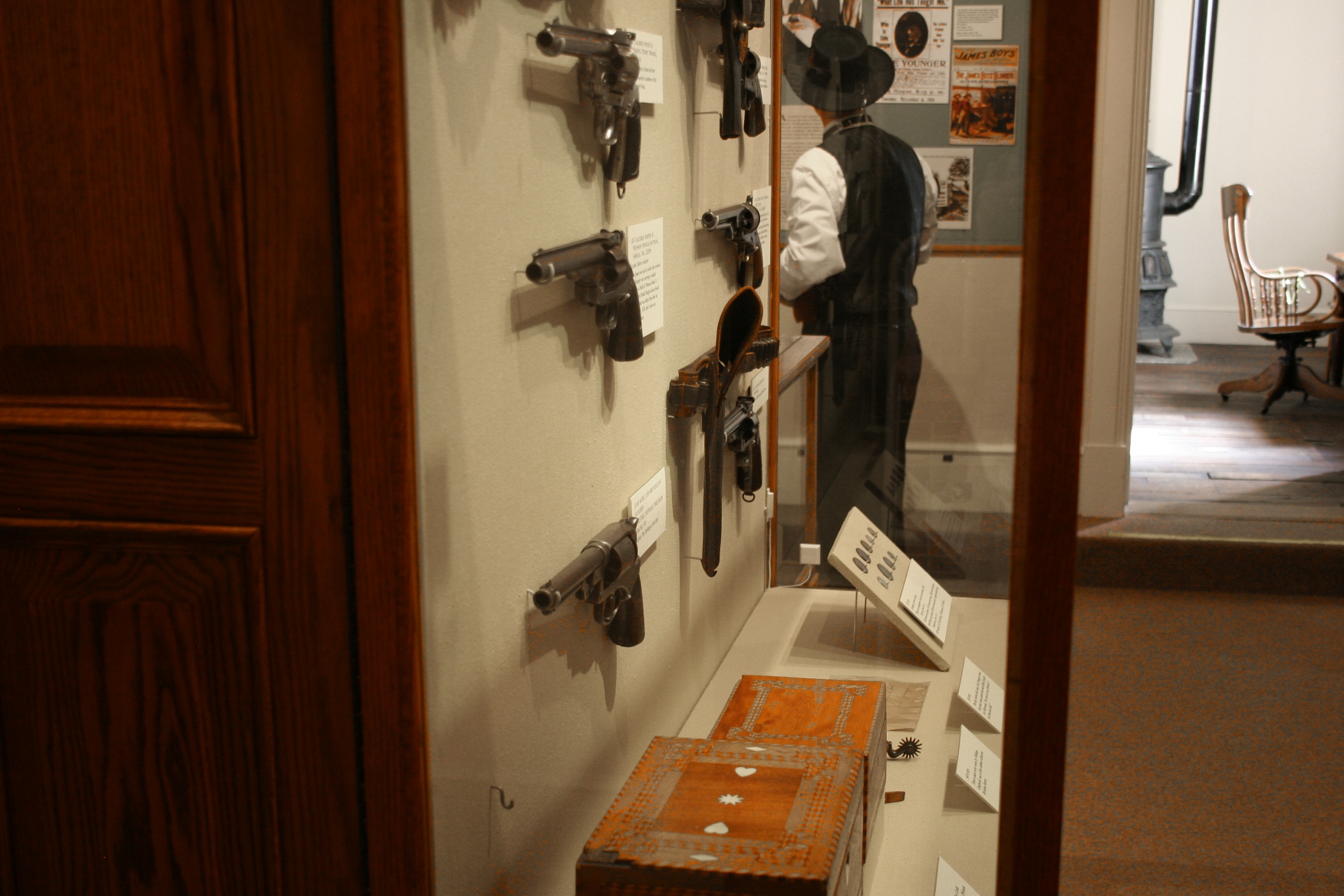
The only portion of the original bank you’ll see in this post is to the right in the background, caught when I was photographing this display case in the adjoining museum space which is in a separate building.

I can’t possibly share with you here the entire scenario Hakala presented in his tour on Sunday. Nor can I show you images, because photography is not allowed inside the original First National Bank of Northfield. But I can tell you that walking upon the very same rough floor boards trod by outlaws with a 10-year history of successful raids on trains and in banks, eying the massive black vault (closed, but unlocked at the time of the crime) and seeing blood stains on the bank ledger makes an impression.

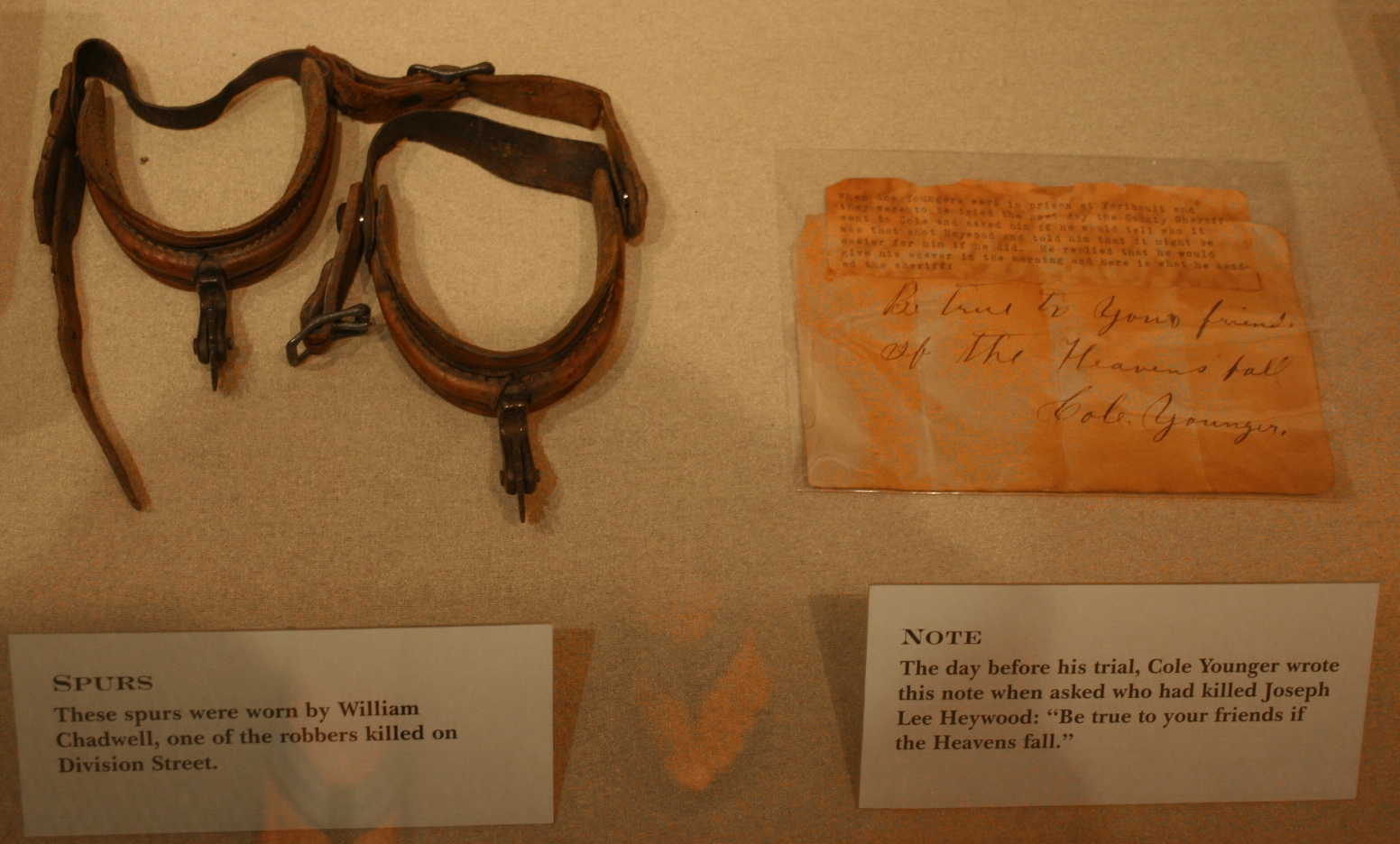
These two items in a display case caught my attention. On the right is a note written by Cole Younger the day before his trial. When asked who killed Joseph Lee Heywood, he answered. “Be true to your friends if the Heavens fall.” In other words, he wasn’t telling. To the left are spurs worn by outlaw William Chadwell, who was shot and killed on Division Street during the raid.

However, here are some select pieces of information presented by Hakala which I find particularly interesting:

  • Jesse and Frank James’ father was a Baptist minister.
  • The James-Younger Gang invented the “stick ’em up” bank hold-up, conducting the first bank raid during daylight business hours, in which no war was going on, in Northfield.
  • One theory surmises that the James-Younger Gang was trying to get back at the Union by robbing banks.
  • In following with that anti-Union theory, Hakala notes that Union General and post Civil War provisional governor of Mississippi Adelbert Ames was a member of the Northfield family—coincidentally Jesse Ames and sons—which owned the local Ames (flour) Mill. Adelbert’s father-in-law was Benjamin Butler, a Union general much-despised by Southerners. This could explain why the gang targeted Northfield since the Ames’ family had money in the First National Bank.
  • While there was $15,000 in the Northfield bank vault, the outlaws made off with only $26.70 in cash, and not from the vault, which was protected by hero/cashier Heywood.
  • The unarmed Heywood was shot out of frustration and “cold-blooded meanness” (Hakala’s words, not mine). He was also slit across the throat, just enough to scare him, and pistol-whipped.
  • Northfield townspeople were throwing cast iron skillets, tossing bricks and aiming birdshot at the trapped gang members as they tried to ride away from the narrow canyon-like street setting in Northfield.
  • A posse of some 1,000 people formed to track down the gang.  The three Younger brothers were shot and captured in a gun battle at Hanska Slough near Madelia. Charlie Pitts was killed there. Frank and Jesse James escaped to Missouri.
  • Jesse James was killed by a friend and fellow gang member, Robert Ford, in 1882 for the reward money.
  • Postcards featuring photos of the dead outlaws, Clell Miller and William Chadwell, were sold to the public after their bodies were taken to a professional photography studio in Northfield and photographed.
  • It is written into a lease on an apartment across the street from the original First National Bank that re-enactors can use the apartment each year for bank raid re-enactments. An actor is stationed in the upper level room to portray medical student Henry Wheeler shooting, and killing, Clell Miller.

Another shot of the James-Younger Gang re-enactors riding in The Defeat of Jesse James Days parade several years ago.

If you wish to witness the seven-minute bank raid re-enactment, this is the week to do so. Performers will shrug into their long linen dusters, tuck their sidearms in place, saddle up and shoot it out at the Northfield Historical Society Bank Site & Museum, 408 Division Street in downtown Northfield.

Re-enactments are set for 6 and 7 p.m. Friday, September 7—the actual date of the robbery—and at 11 a.m. and 1, 3 and 5 p.m. on Saturday and at 11 a.m. and 12:30 p.m. on Sunday.

A copy of a wanted poster posted next to the front door of the museum.

For a complete listing of The Defeat of Jesse James Days activities, click here.

For more information about the bank site and museum, click here.

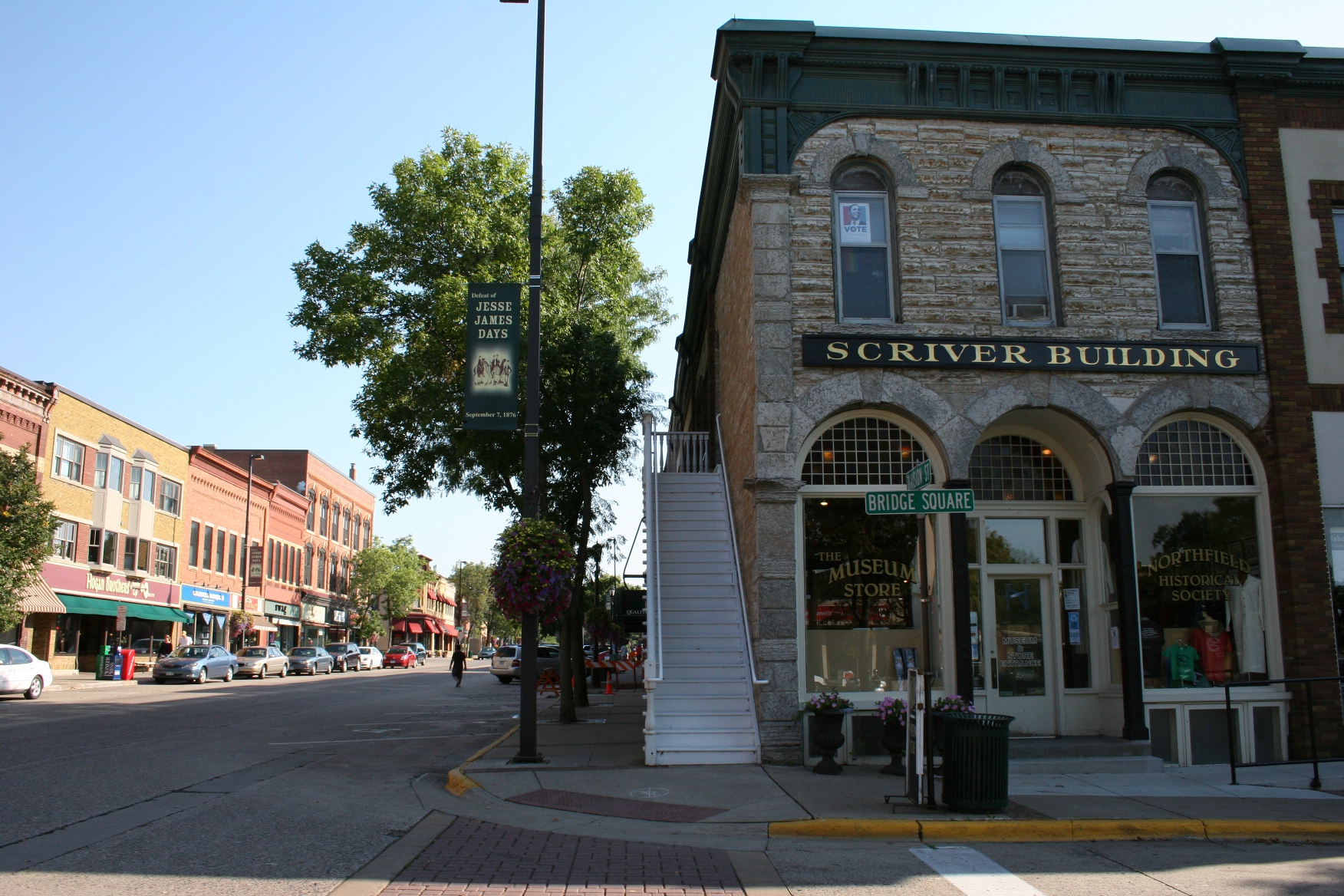
The front of the museum. If you look underneath the white steps, you’ll find three holes ringed in black, supposedly bullet holes made during the raid. It’s conjecture with nothing proven, according to Christian Hakala, who has his doubts about the holes being made by bullets. That’s Division Street on the left.

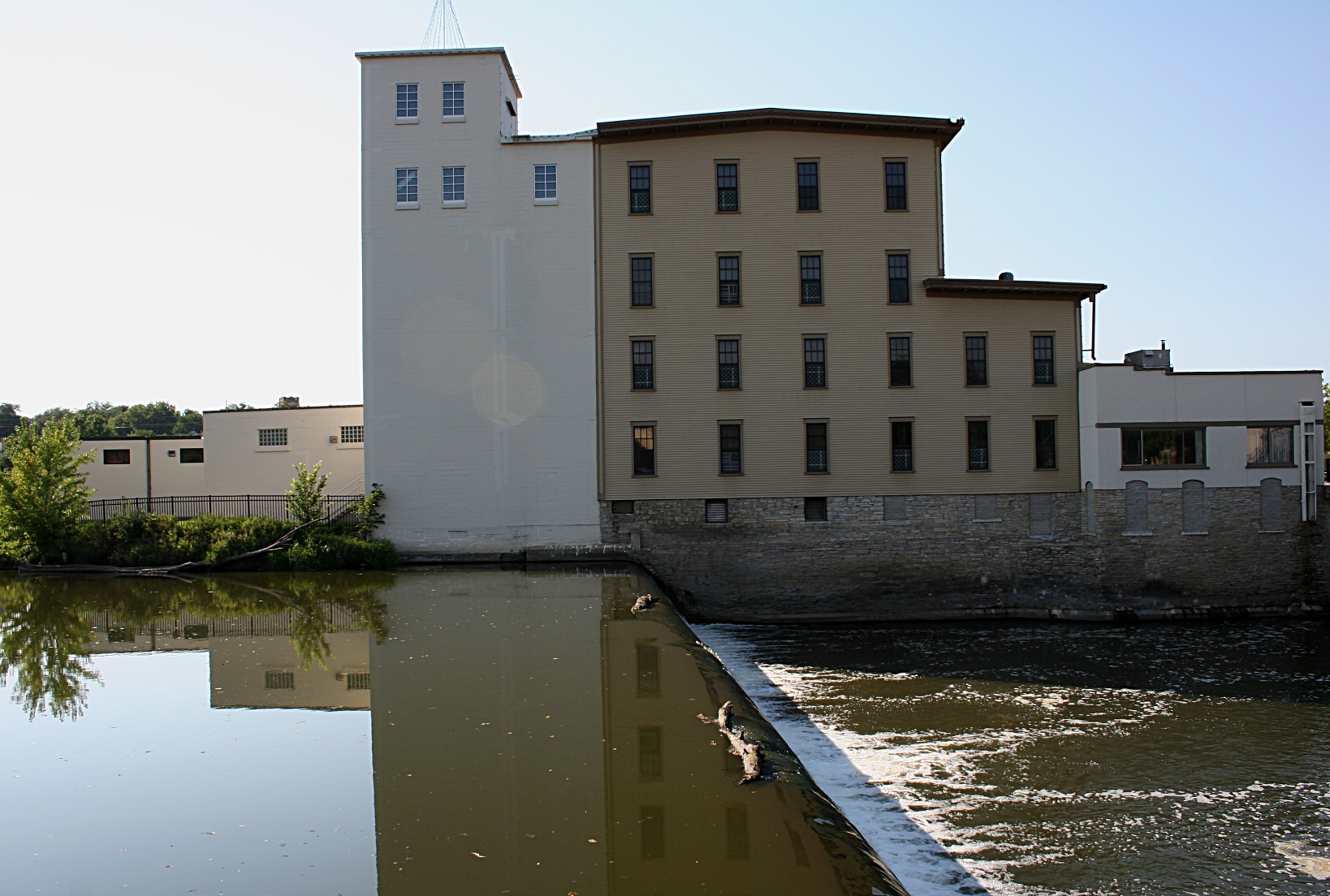
The original Ames Mill, once owned by Jesse Ames and sons, and today owned by Malt-O-Meal. It’s located around the corner and across the river from the bank. The company’s hot cereal is made here in the old flour mill.

© Copyright 2012 Audrey Kletscher Helbling
 

New exhibit highlights Rice County in the U.S.-Dakota War of 1862 September 2, 2012

IT IS EASY TO FORGET SOMETIMES, because I grew up in the region of Minnesota where the U.S.-Dakota War of 1862 was centered, that residents of the county in which I now live also played an integral role in the conflict.

Specifically, Rice County residents Bishop Henry Whipple and Alexander Faribault, after whom my community of Faribault is named, are key persons often noted in historical information written about the war.

I am always surprised that relatively few people from outside of southwestern and central Minnesota know so little about the bloody, six-week war between the Dakota and the white settlers and soldiers given it is a major, defining event in Minnesota history.

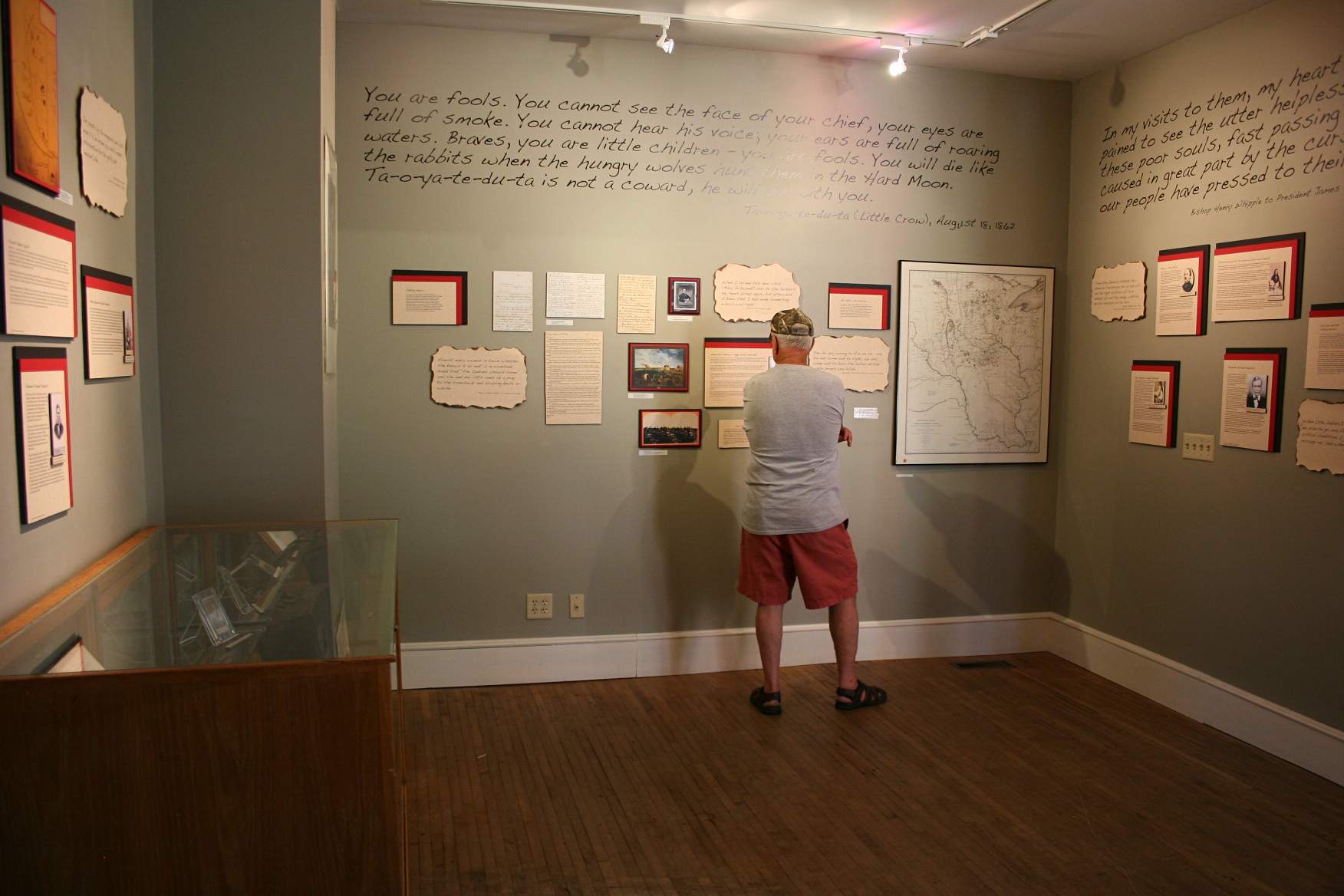
An overview of 1862, Through Rice County’s Eyes, which opened August 22 in Northfield.

However, awareness has grown considerably this year on the 150th anniversary of the war, including right here in Rice County. The Northfield Historical Society, partnering with the Rice County Historical Society, is currently showcasing an exhibit, 1862, Through Rice County’s Eyes.

I recently checked out the Northfield exhibit, which features mostly memorable quotes, volumes of summarized information and copies of photos. It’s a lot of reading.

But if you’re interested in educating yourself, it’s worth the time and concentration needed to absorb the information presented in this exhibit. And I’ll admit to occasionally skimming the postings because I am more of a visual, multi media, show-and-tell kind of history learner. I also had a pretty good background of knowledge going into the exhibit.

This sculpture of Alexander Faribault trading with a Dakota trading partner stands in Faribault’s Heritage Park near the Straight River and site of Faribault’s trading post. Faribault artist Ivan Whillock created this sculpture which sits atop a fountain known as the Bea Duncan Memorial Fountain.

I knew, for example, that fur trader Alexander Faribault was one-quarter Dakota and married to Mary Elizabeth Graham, whose mother was a family member of a Dakota chief. I knew, too, that Faribault was involved in the negotiating and translating of land treaties between the government and the Dakota before the war and that he benefited financially.

I was aware that Alexander Faribault sheltered the Dakota.

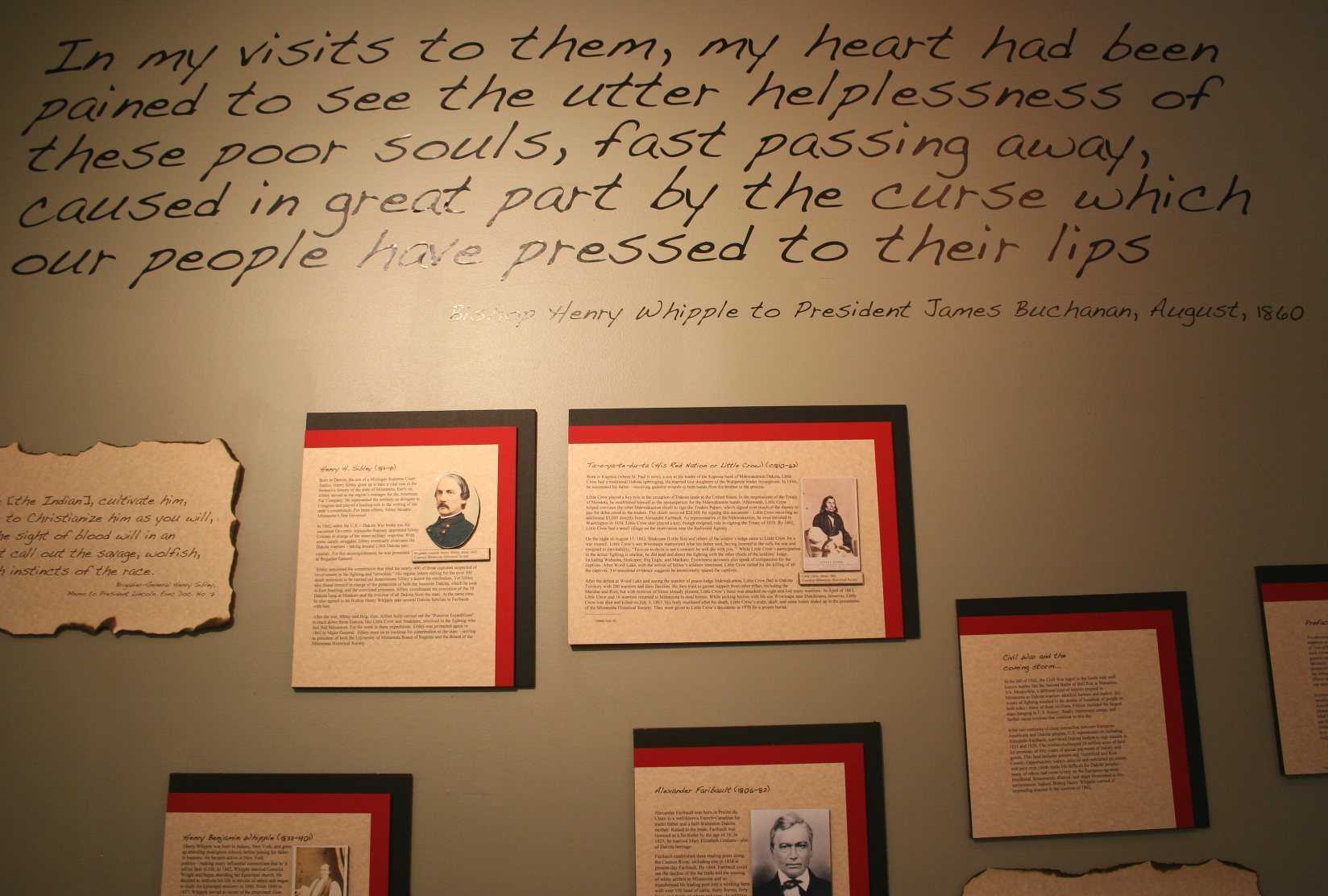
Above the photos and info is this quote by Bishop Henry Whipple to President Buchanan in August 1860: “In my visits to them, my heart had been pained to see the utter helplessness of these poor souls, fast passing away, caused in great part by the curse which our people have pressed to their lips.”

But I had forgotten that Bishop Henry Whipple, a long-time advocate for the rights of the Dakota and known to them as “Straight Tongue,” worked to find a safe refuge for them in the city of Faribault.

Alexander Faribault opened his land to the Dakota. Information in the exhibit states:

This land was the only safe-haven of its kind in a state now prejudiced in fear and anger against anyone with Dakota blood.

According to info in the exhibit, Alexander Faribault, whom you recall was one-fourth Dakota, also experienced prejudice against him. By 1869, this once successful fur trader, flour mill owner and politician had to sell his land and assets, including the land occupied by the Dakota.

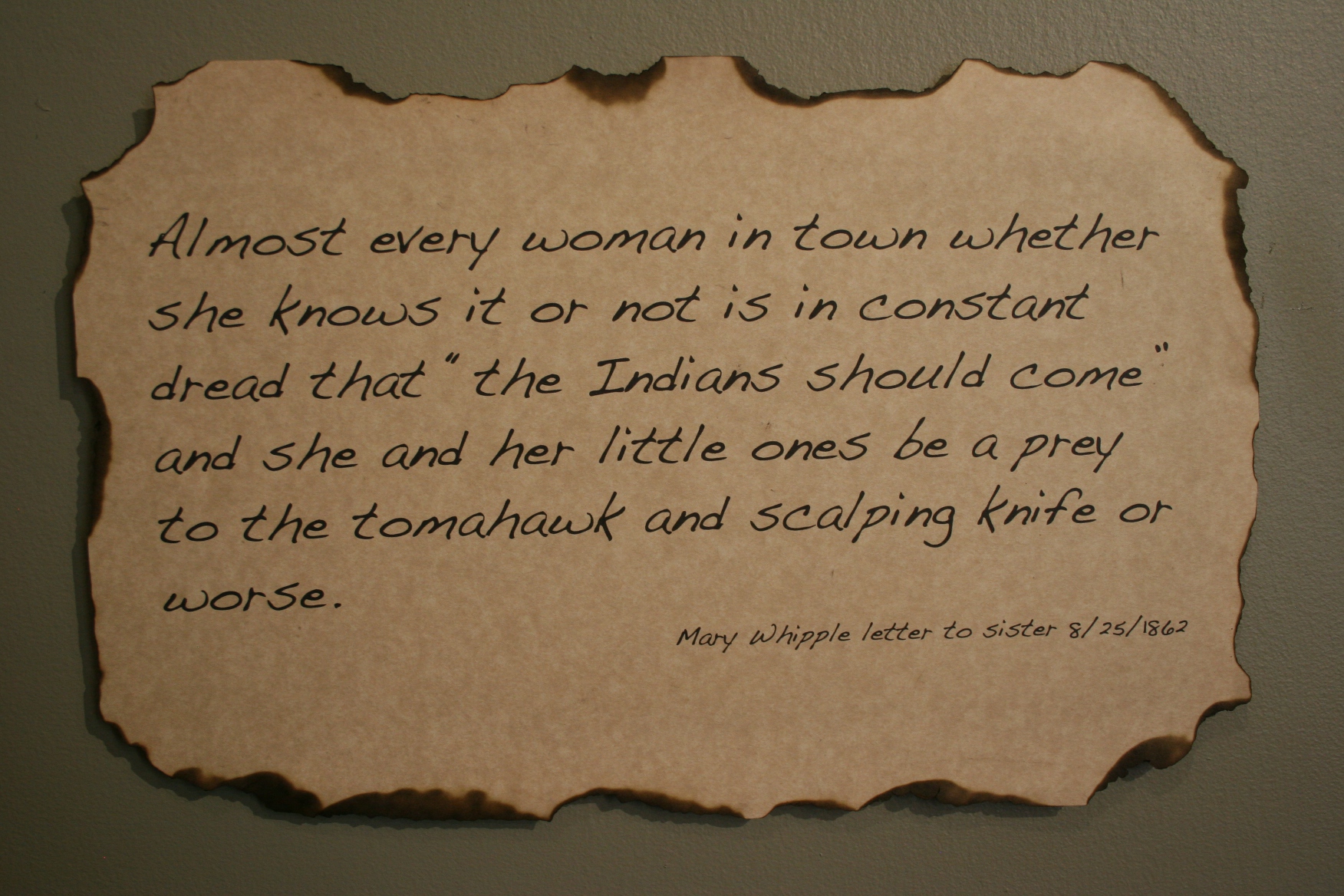
Equally interesting is the quote, below, attributed to Mary Whipple. Even though her husband, the bishop, worked tirelessly to help the Dakota, fear still existed in his home community.

A quote from a letter written by Mary Whipple to her sister during the U.S.-Dakota War.

Perhaps the most interesting fact I learned relates to that of Lt. Rollin Olin, a decade-long resident of Northfield. He was second in command of the Third Minnesota Regiment at the Battle of Wood Lake—the final battle of the war—and a member of a five-man military tribunal which tried the Dakota following the war. He signed more than 300 death sentences for nearly 400 Dakota charged with murder, rape and/or robbery.

For me, that raises the obvious question: How could someone who fought against the Dakota judge them without bias? All members of the tribunal, in fact, had fought the Dakota. The answer, of course, is that Lt. Olin and the other four could not.

Likewise, the Northfield Historical Society is wisely careful to indicate that its new, temporary exhibit may not please everyone or include everything on the topic of Rice County’s connection to the war. On the NHS website, you’ll read this disclaimer:

As varied as these and other local perspectives may be, any exploration of the U.S.-Dakota War of 1862 suffers from the inevitable limitations facing every historical examination—limitations such as scope and biases, past and present, which impact the telling and perception of the stories and data. In presenting the exhibit 1862, Through Rice County’s Eyes this fall, NHS endeavors to draw visitors into thoughtful interest and discussion of this momentous event and its aftermath by sharing local connections. Come and critically examine this exhibit.

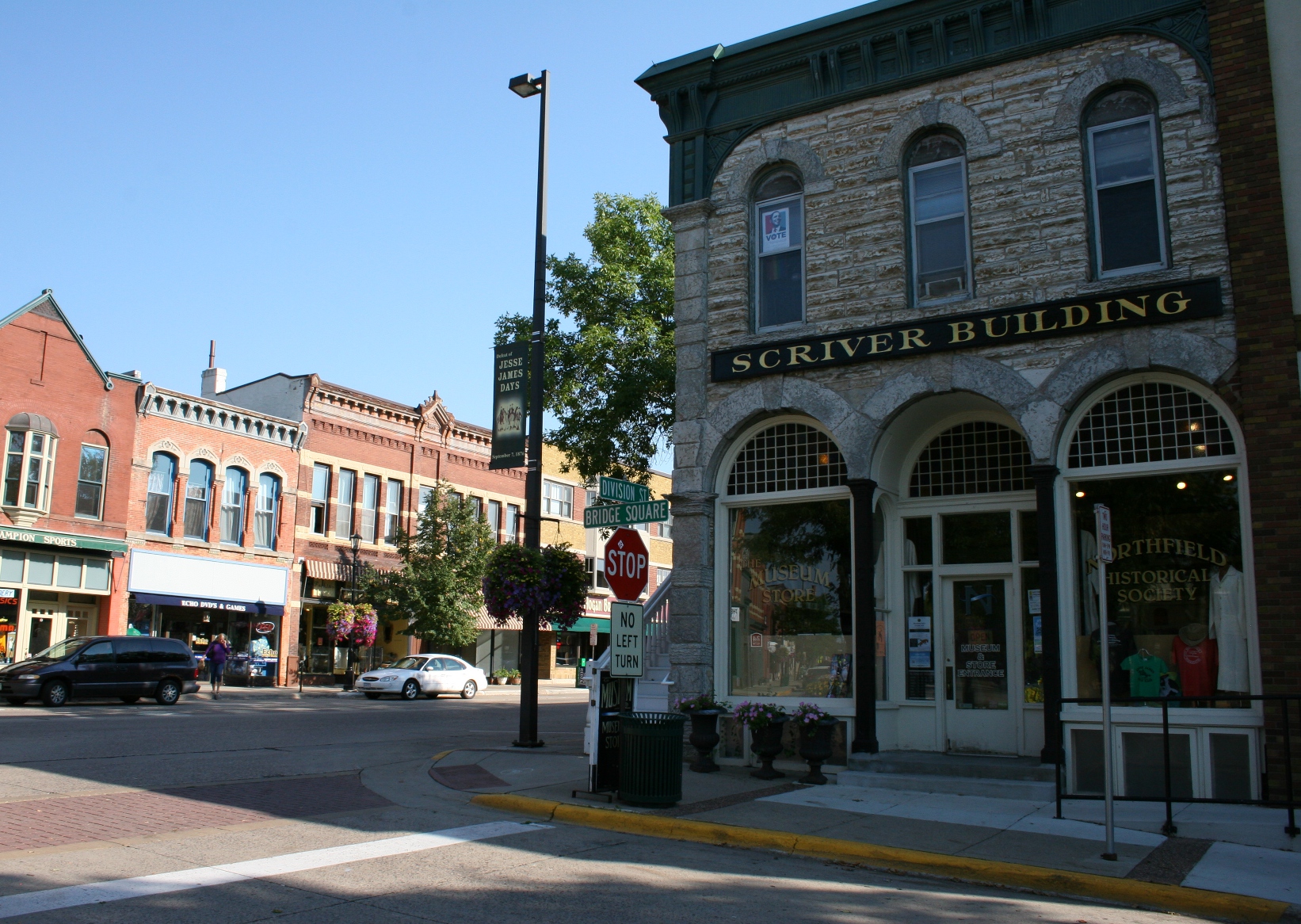
The exterior of the Northfield Historical Society, 408 Division Street, Northfield.

FYI: To learn more about 1862—Through Rice County’s Eyes, click here to the NHS website.

To learn more about the Minnesota counties, county by county, involved in the U.S.-Dakota War of 1862, click here.

© Copyright 2012 Audrey Kletscher Helbling
 

All about cars at Faribault art center August 31, 2012

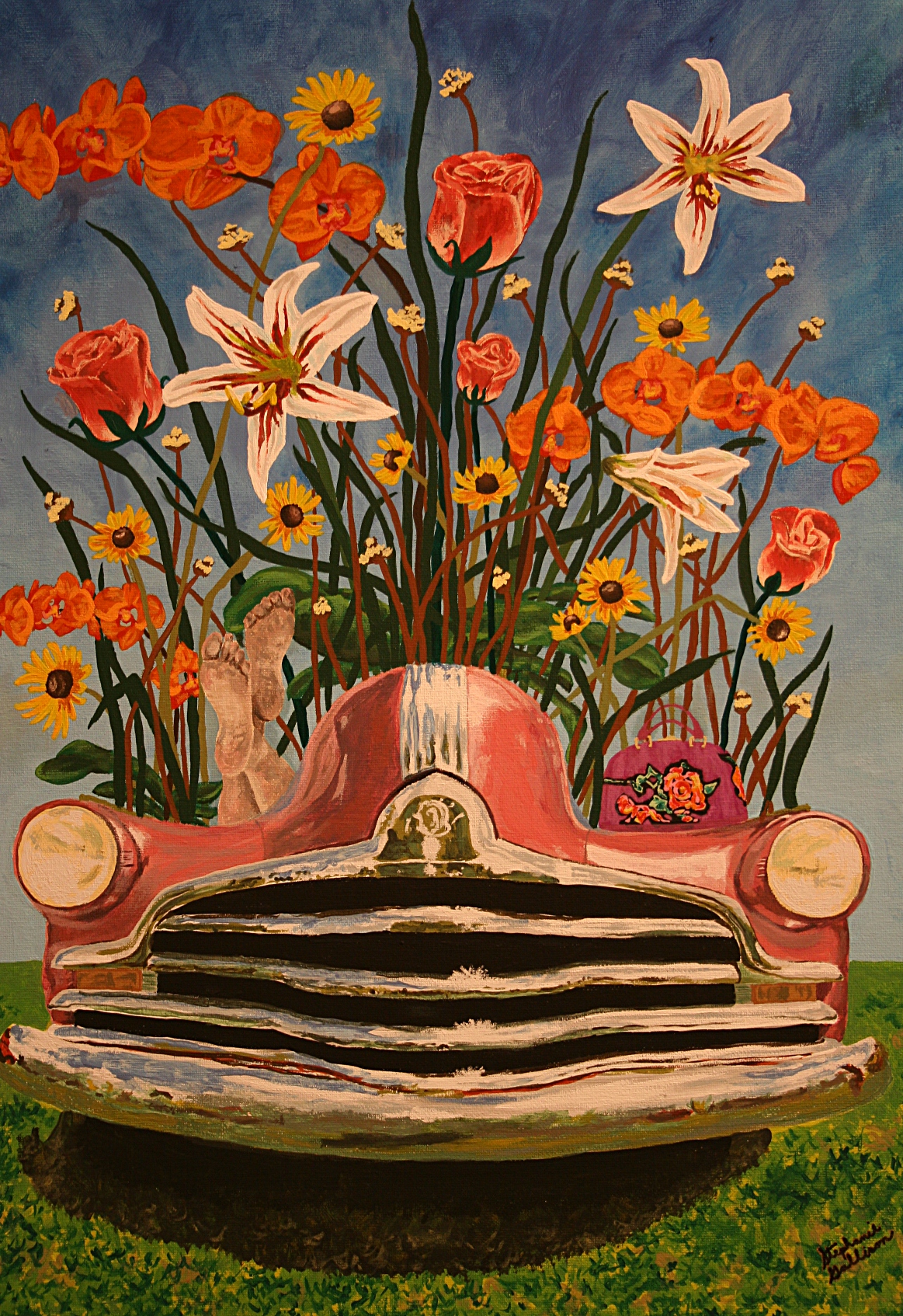
“Flower Car for a Living Detroit,” acrylic on canvas by Michigan artist Stephanie Gallison and part of the car pARTS exhibit at the Paradise Center for the Arts. The painting “represents life, hope and resurrection for the city of Detroit; the opposite of recession, decline and decay,” according to Gallison’s website.

IF YOU’VE FOLLOWED this blog for awhile, you know that I’m a supporter of the arts.

And I don’t specifically mean I write out generous checks to buy art or donate to an arts cause or such. I wish I could. But the fact is that my family, like many middle class families, needs to watch its budget.

That doesn’t mean, though, that my husband and I can’t treat ourselves to the occasional night out to see a play or enjoy a concert or catch a comedy show, or become members of the local arts center.

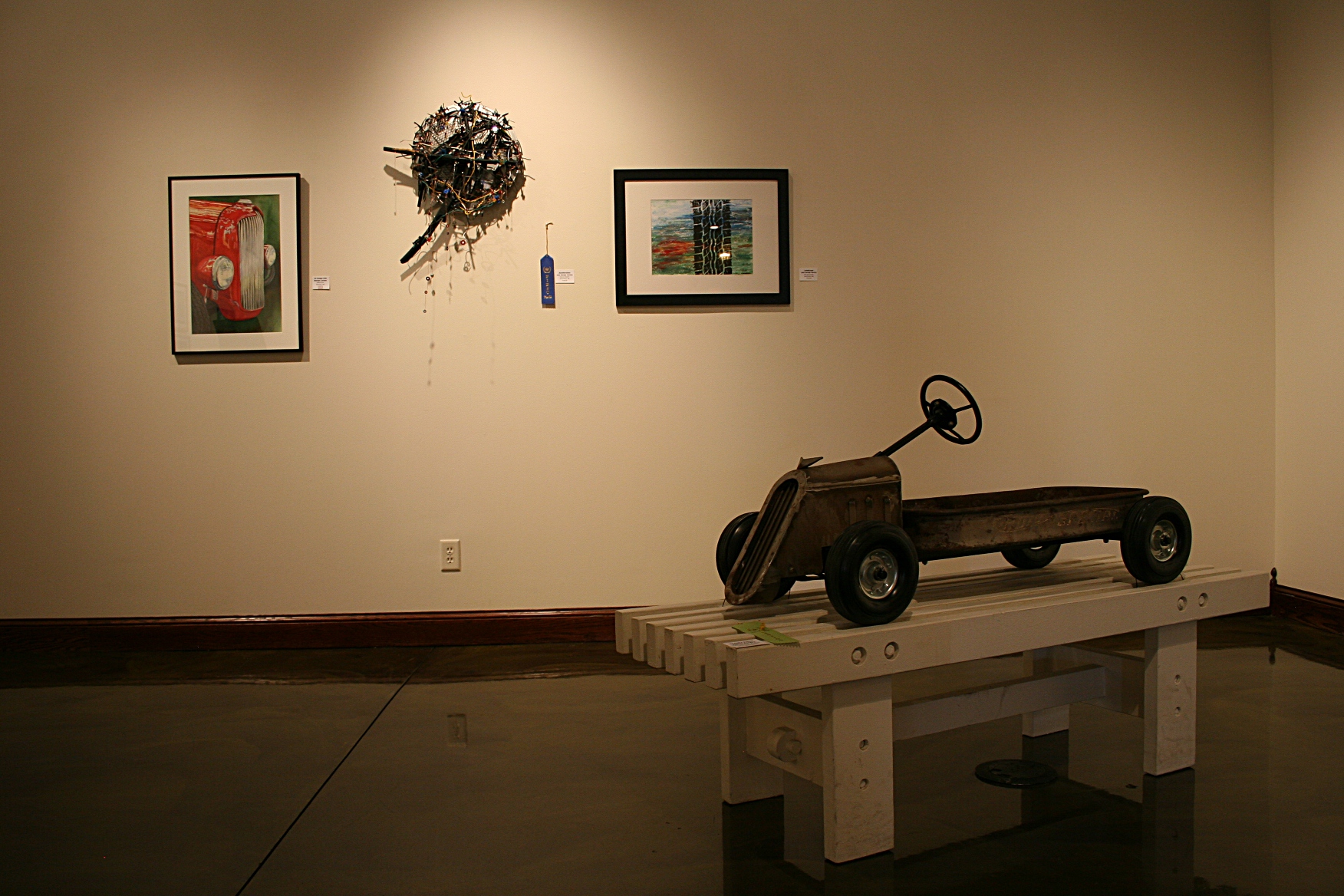
A snippet of the current car pARTS exhibit at the Paradise.

I appreciate that we have the Paradise Center for the Arts right here in Faribault as a venue to enjoy the visual and performing arts and even take a class, if I wish, but haven’t.

Perhaps because I grew up in the 1960s and 1970s in rural southwestern Minnesota, without access to the arts, I especially value the arts opportunities offered right here in my community, only blocks from my home. No need to drive up to the Cities or elsewhere.

Faribault artist Vivian Jones created this watercolor, “It Was Grandma’s Car,” for “car pARTS.”

For example, currently the juried exhibit, “car pARTS,” is showing in the PCA’s Carlander Family Gallery through September 25. The show is exactly as it name implies, artwork featuring cars or parts of cars.

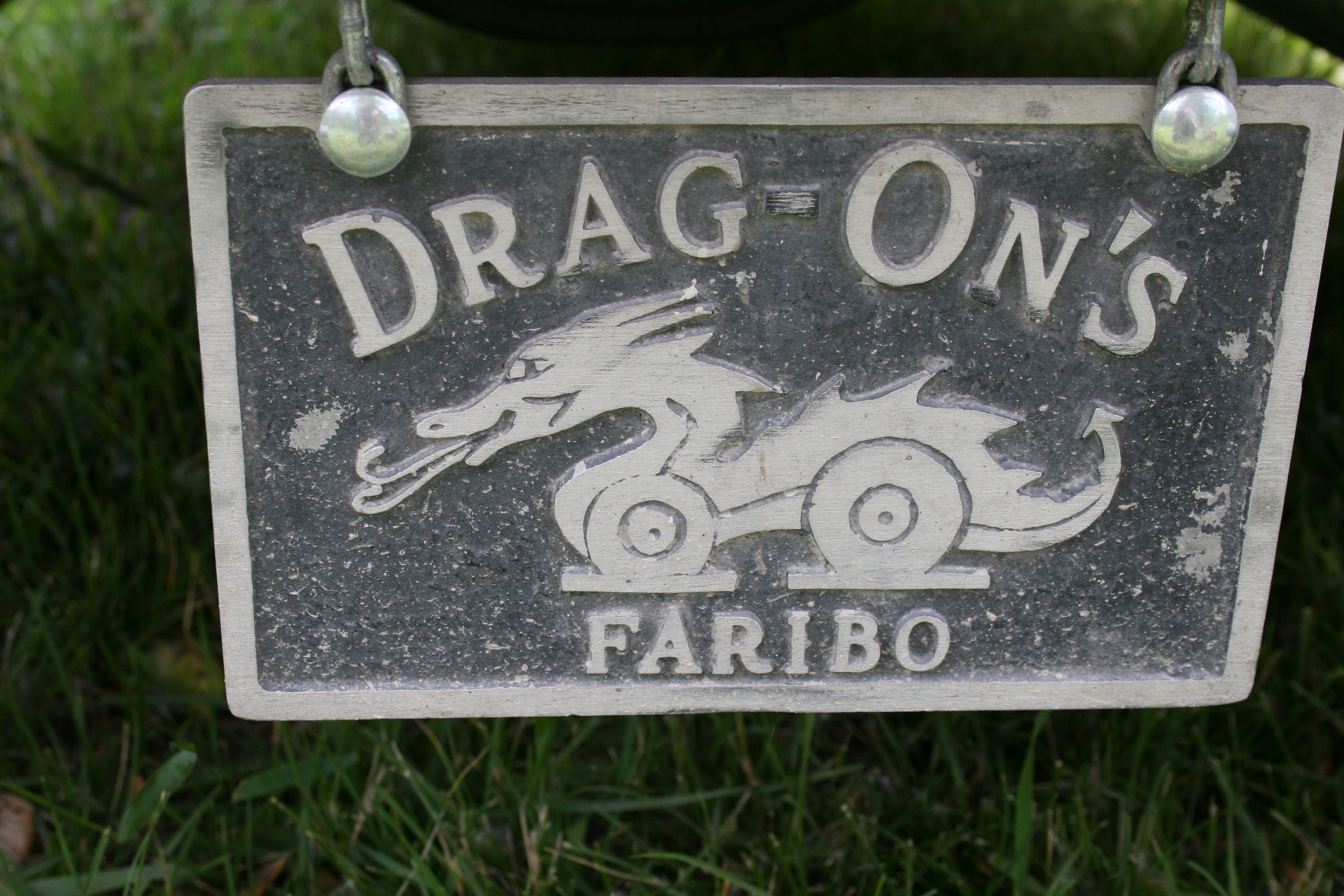
The logo for the Faribo Drag-On’s Car Club.

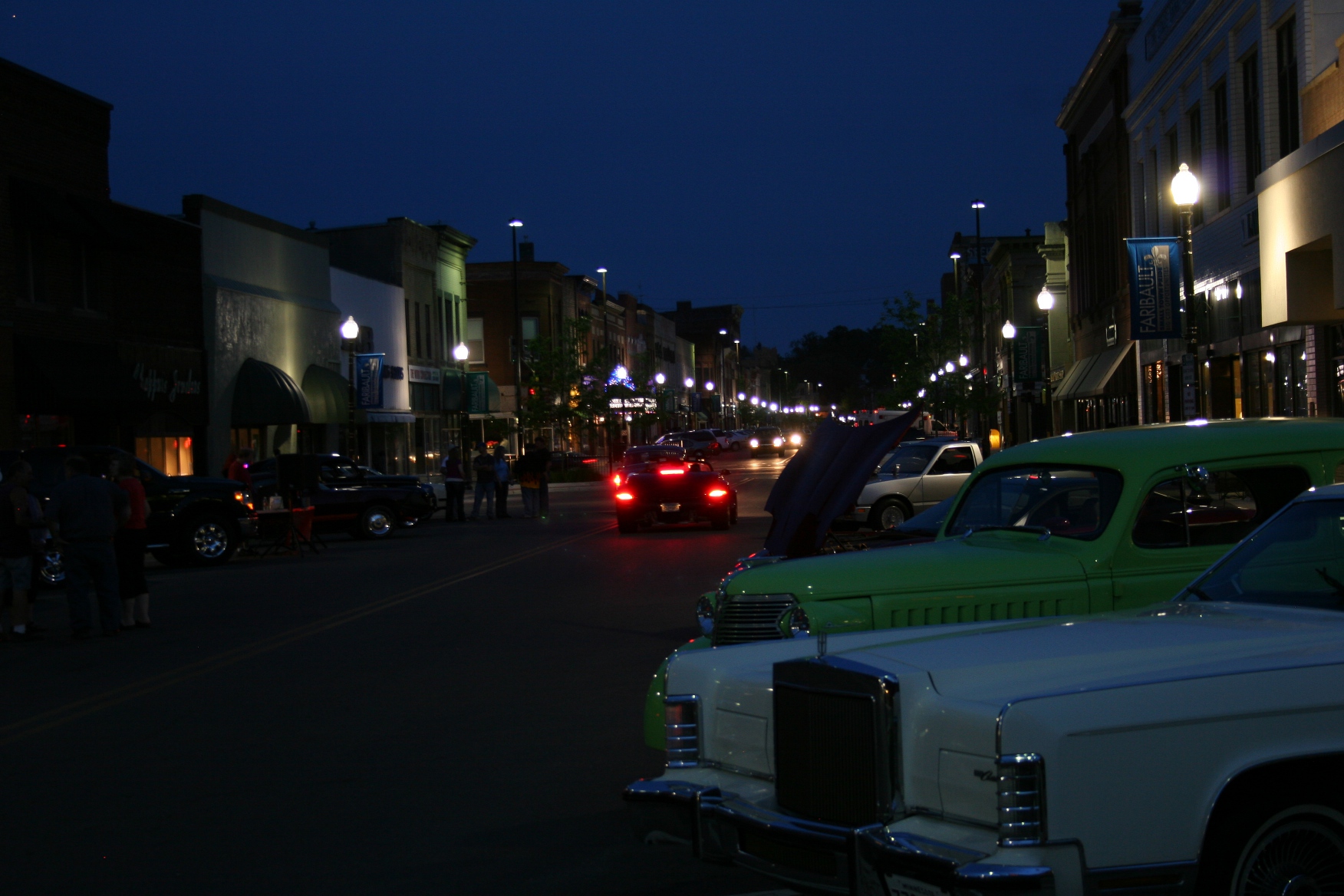
Hanging out along Central Avenue during Faribault Car Cruise Night in May.

The subject seems an ideal one for this predominantly blue collar community which has a special fascination with cars. That’s my assessment, anyway, based on the long-standing Faribo Drag-On’s Car Club, the Classic Car Roll In on Tuesday evenings at the Country Kitchen and the recent start-up of the May-September third Friday of the month Faribault Car Cruise Night on downtown’s Central Avenue.

Following the car theme, the Paradise Community Theater will present six performances of the play, The Car by Carol Wright Krause, beginning September 14 and running through September 22.

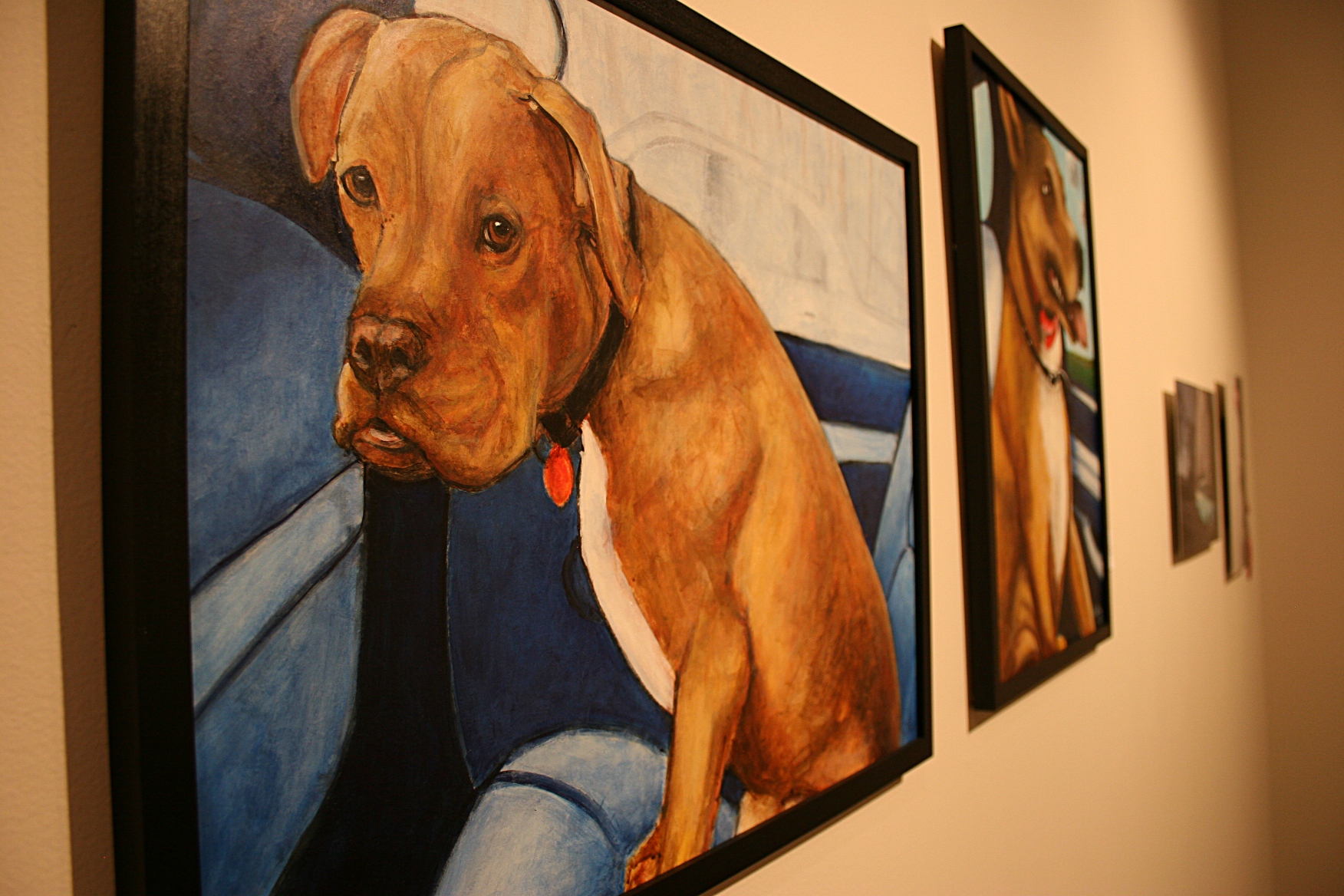
Acrylic paintings of dogs in cars, by Julie M. Fakler of Faribault , are in the car pARTS exhibit.

The play seems the ideal mesh with “car pARTS,” one complementing the other.

Here’s a summary of The Car, pulled from the PCA website:

Meet the Banners, a picture perfect postcard of a 1950s American family with an all-American son, a doting mother and an honest car salesman of a father, who does everything by the book and has just recently purchased the car—a 1954 Hudson Hornet. But when their son suddenly joins the military, only to return with a Japanese wife, the family’s world is suddenly turned upside down. Things may not be as picture perfect as they seem. The Car hits a few potholes along the way, takes some sharp turns, but takes you on an engaging and entertaining ride.

Looking south on Central Avenue during the Faribault Car Cruise Night in May.

I’d love to see all those collectors who are members of the Drag-On’s and/or all those who will be participating in the last downtown car cruise of the season on Friday, September 21, among those attending The Car in Faribault’s historic theater.

I invite any of you with vintage vehicles, whether from Faribault or not, to drive to the theater in your vintage vehicles, park along historic Central Avenue and experience the arts scene here. Maybe even dress up in back to the 50s garb to truly embrace the time period of the play.

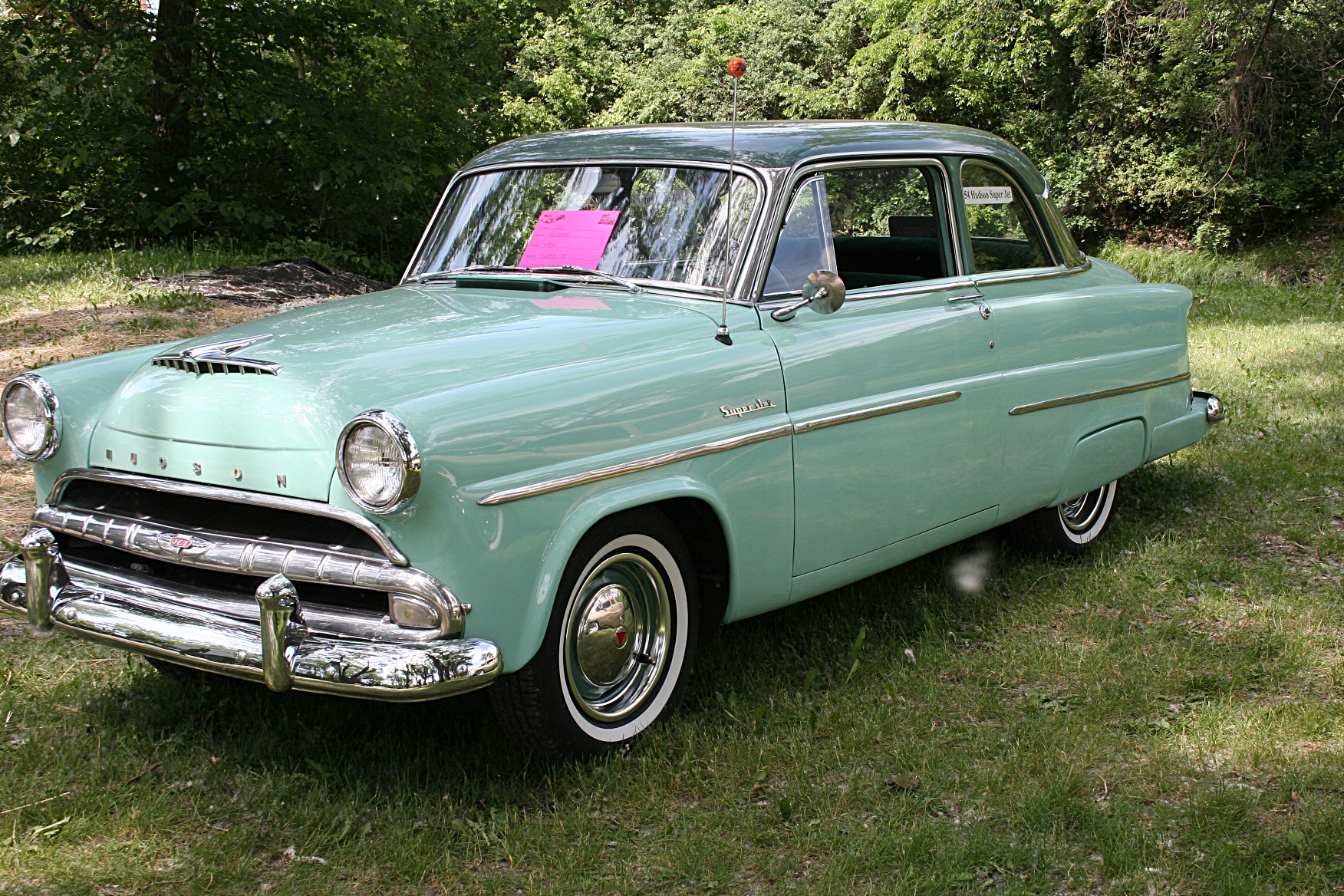
Do you know who owns this Hudson Super Jet?

And whoever owns this Hudson Super Jet, which I photographed at a car show in TeePee Tonka Park in 2009, you’d be especially welcome given the car in the play is a 1954 Hudson Hornet.

Just a close-up of the Hudson Super Jet, built either in 1953 or 1954, I believe.

FYI: Click here for more information about the Paradise Community Theater’s performance of The Car.

P.S. This additional postscript has nothing to do with the arts in Faribault. But it is related to my support of the arts via my work on Minnesota Prairie Roots. Earlier this week I posted about the Gabor and Edith Nemeth Study Collection, a priceless collection of 15th to 19th century paintings in Park Rapids. The Nemeth Art Center is attempting to raise $1,200 for a storage unit to safely store and protect the paintings. Since posting this story on Monday, five more contributions have been made to the cause via the NAC’s online fundraising campaign, which you can find by clicking here. You have four more days to donate.

To read my original post about the Gabor and Edith Nemeth Study Collection, click here.

© Copyright 2012 Audrey Kletscher Helbling
 

Discovering a beachfront style building in Fargo, of all places August 30, 2012

Filed under: Uncategorized — Audrey Kletscher Helbling @ 6:55 AM
Tags: , , , , , , , ,

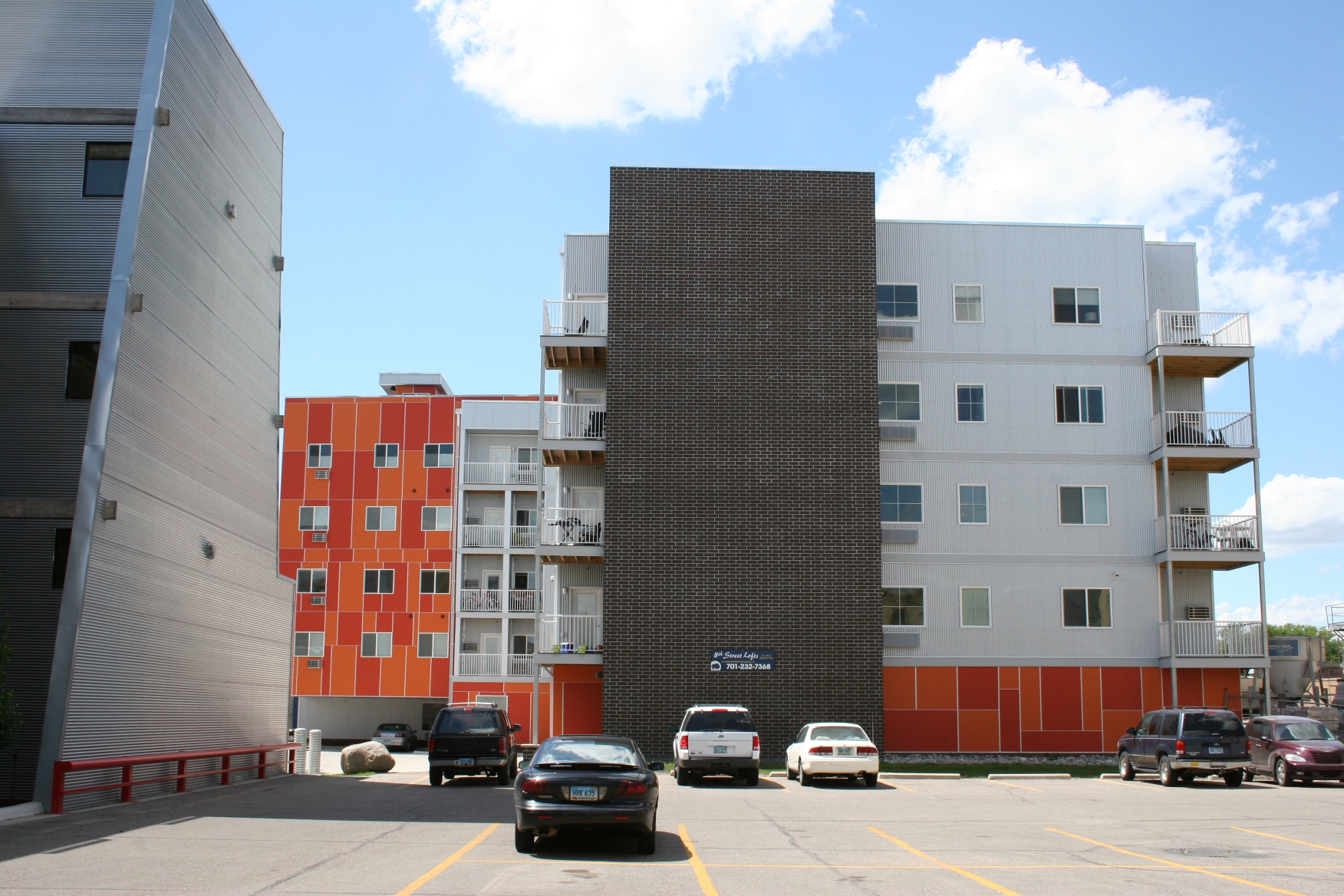
AMID ALL THE BUILDINGS—most of them mammoth brick structures—that I observed in a one-block walk-around in downtown Fargo, I never expected this one:

The 8th Street Lofts in downtown Fargo house apartments ranging in size from 465 to 1,445 square feet and renting for $560 – $1,800 a month, according to the Loft website.

Wow.

The rectangles of tangerine orange bursting in brilliant shades next to monotone gray walls set against the complementary soft blue of a summer afternoon sky caused me to pause, mouth agape.

Would you expect this in Fargo? Maybe along an ocean beachfront in Florida or California. But North Dakota?

That just goes to show that any preconceived notions of what buildings belong where can be proven wrong when you happen upon an architectural anomaly like this structure housing 8th Street Lofts.

Honestly, in the bone-chilling cold of a sub-zero, wind-flogging January morning, wouldn’t this cheery color cause you to smile? It would me.

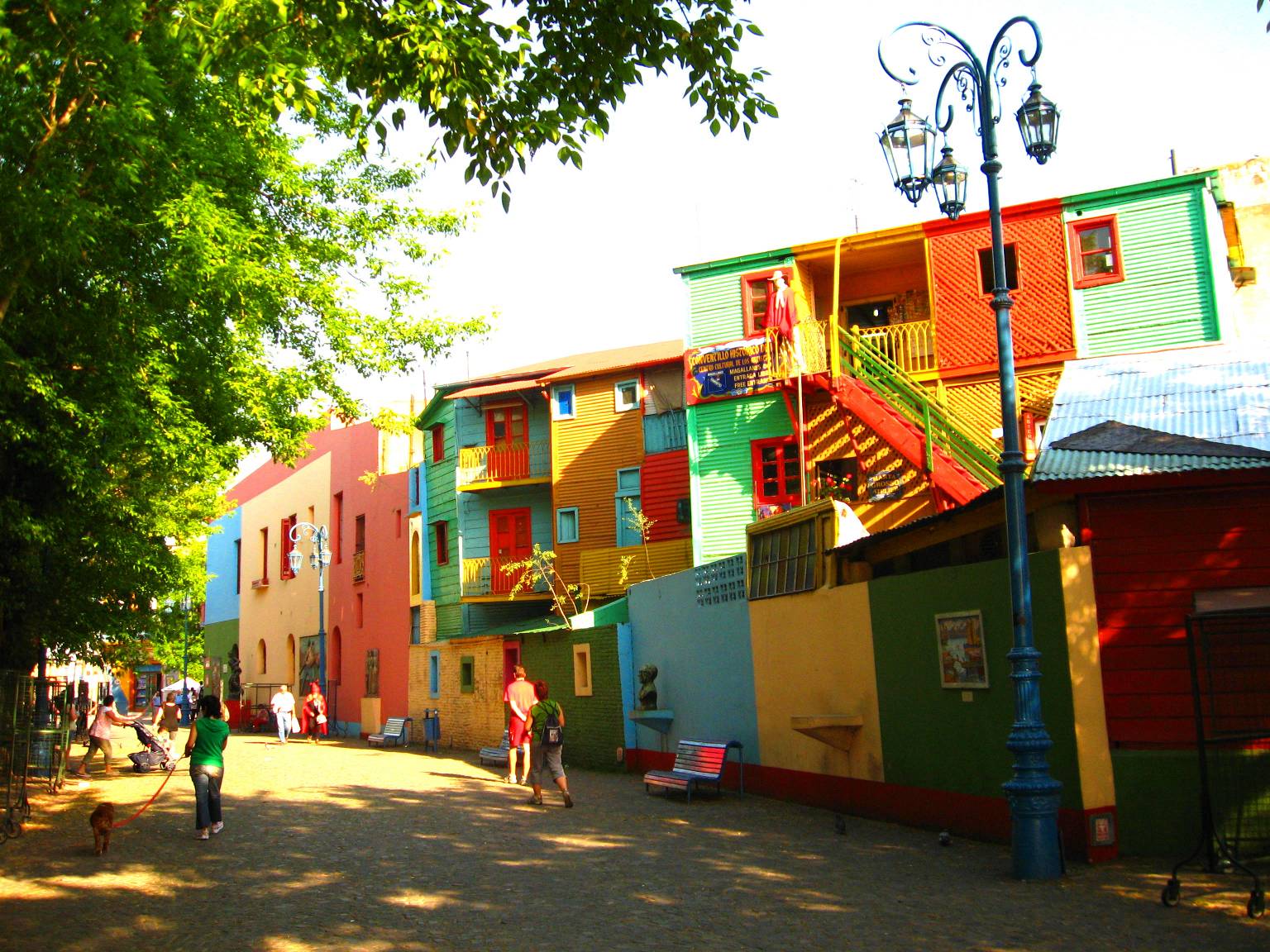
You’ll find brightly-colored buildings in the La Boca neighborhood of Buenos Aires, Argentina. Although primarily a tourist destination today, the area is surrounded by houses with painted sheet walls of different colors. Photo by Miranda Helbling.

The jolting orange shades remind me of the multi-colored buildings photographed by my second daughter in the La Boca barrio of Buenos Aires, Argentina. That rough, working class neighborhood along the banks of the Riachuelo River draws tourists to view the colorful houses built by the early Italian immigrants from cast-off ship building materials—planks, sheet metal and such—and then, as legend goes, painted with left-over paint.

I expect when my daughter saw those jolts-of-color buildings, she, too, stopped, mouth agape.

She failed to tell me, though, that the La Boca neighborhood is a rather dangerous place, especially at night. That figures given street criminals are drawn to tourists.

I wouldn’t expect the same in Fargo.

© Copyright 2012 Audrey Kletscher Helbling
 

Connecting, conversing and celebrating cultural diversity at Faribault festival August 28, 2012

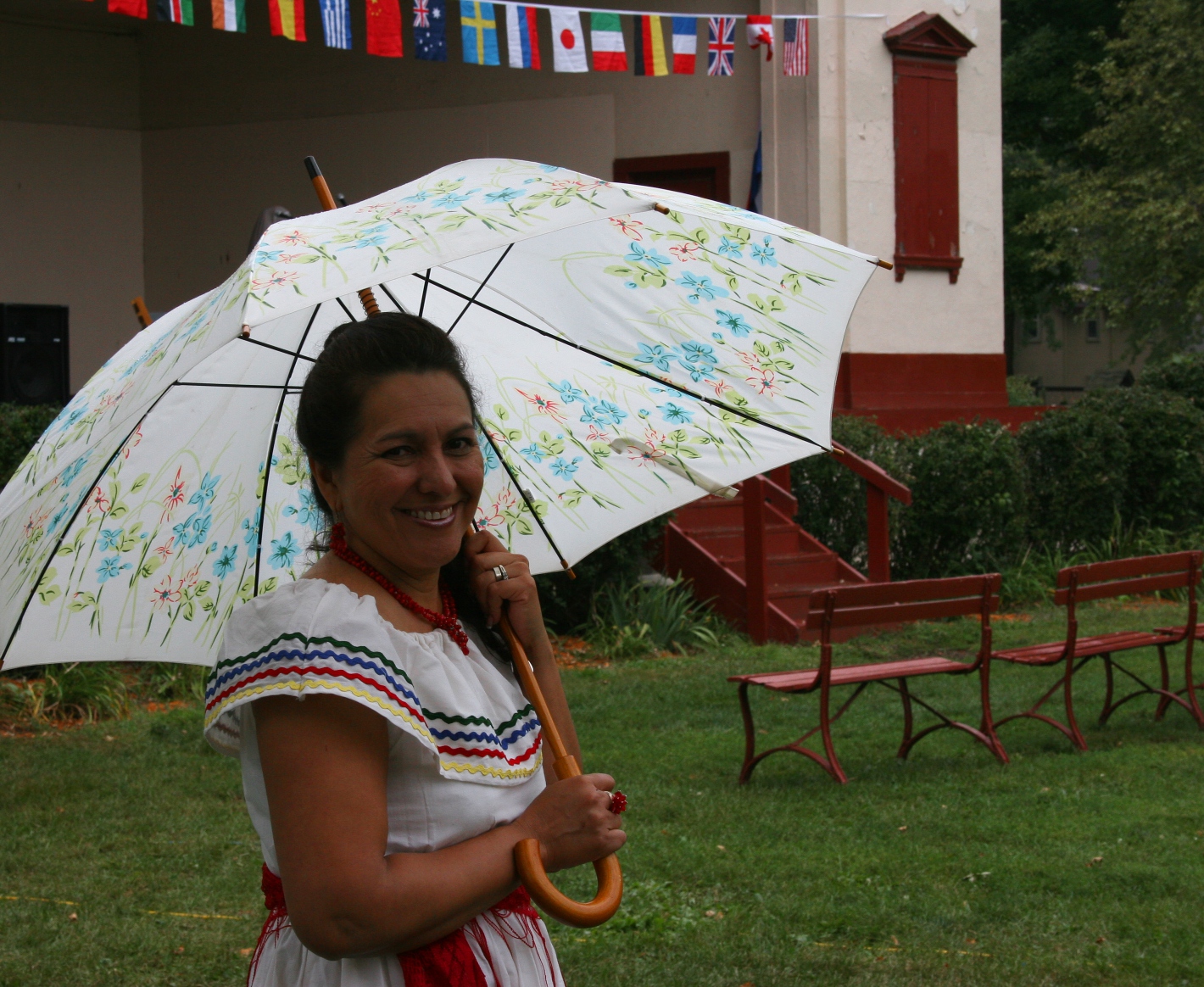
This woman represents El Salvador during the International Festival Faribault on a drizzly Saturday. Flags suspended from the Central Park band shell in the background show the countries participating in the event.

DESCRIBING AN EVENT like International Festival Faribault within the confines of a blog post or two seems daunting. How do I adequately convey the essence of this fest celebrating the cultural diversity of my community?

You can view my first effort by clicking here and reading “Yearning for respect & equality, ‘no matter what color you are.’”

Now, as I scroll again through the many photos I took during the fest (when rain wasn’t drizzling upon my camera), I ponder which images to share, what words to pen.
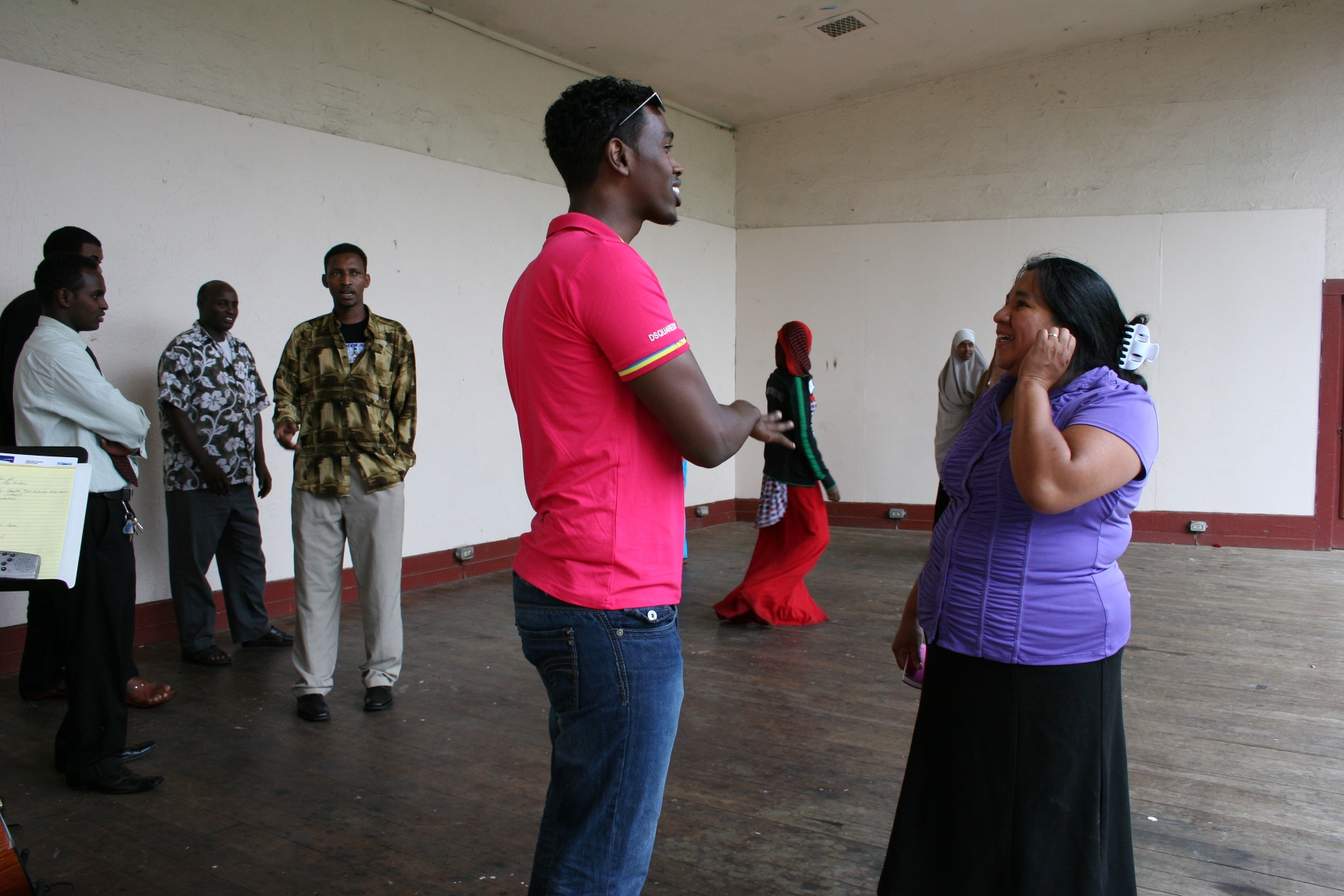
Cultures connecting on the band shell stage between musical acts.
And “c” words—like color, connecting, communicating, conversation, coloring, candy, culture, care, colorful clothing—pop out at me as I view my photos.

I should perhaps add “confusing” to that list because I felt overwhelmed when trying to photograph the wood carvings from Somalia and Kenya peddled by Bashir Omar and Asher Ali.
A woman, without prompting, took this mask from the table manned by Bashir Omar and Asher Ali and asked me to photograph her.

Suddenly, it seemed, everyone wanted to pose for a picture. And I much prefer candid to set up shots. I obliged, though, because it seemed the easiest thing to do.

Lul Abdi shows off beautiful wood crafts from Kenya and Somalia.

Then Lul Abdi, who had grabbed a wooden platter and giraffe, and held them up for me to photograph, asked me to write in my blog that an election is coming up in Somalia and I should tell everyone to vote for whomever it is she supports. Bashir Omar translated my answer—I don’t write about international political issues.

While this back-and-forth translation was occurring, I felt befuddled because, when too much noise (in this instance lots of conversation going on around me and music in the background), is coming my way, my brain doesn’t process anything. That issue is related to the 70 percent hearing loss in my right ear.

Despite the difficulties, this muddle served as an aha moment. Imagine if I was Lul, struggling on a daily basis to understand those around me. Life would be challenging.

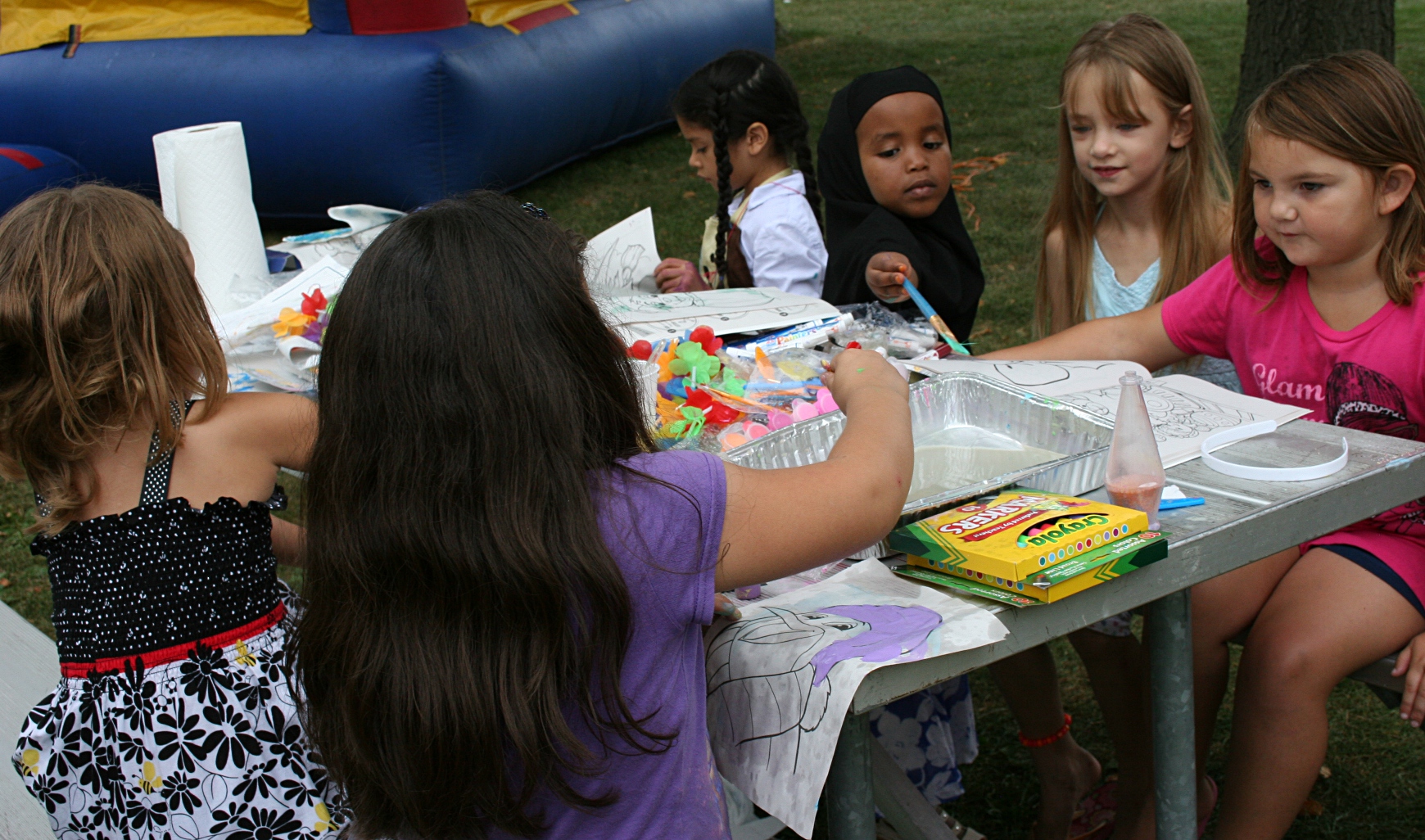
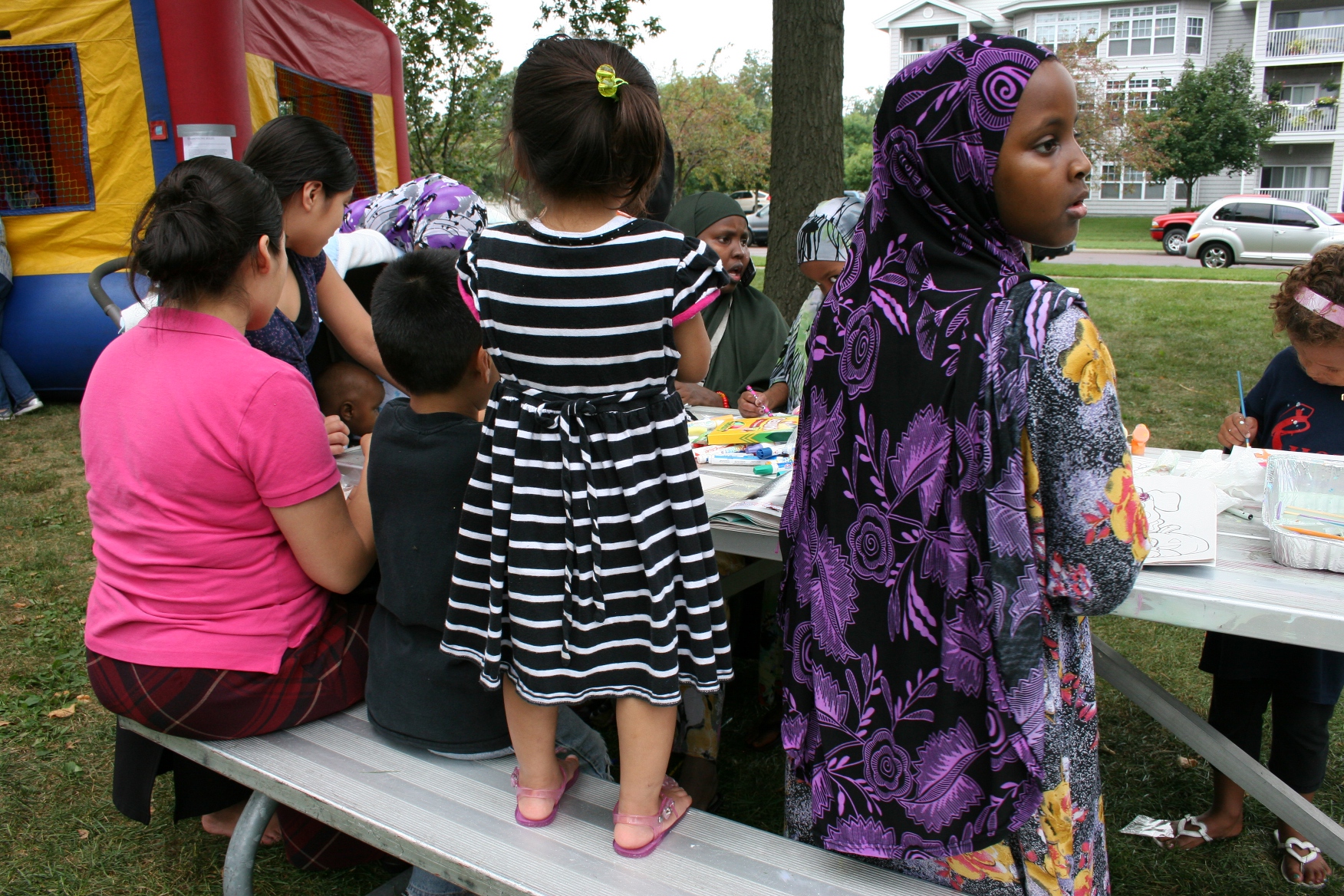
Busy artists at the kids’ activity table.

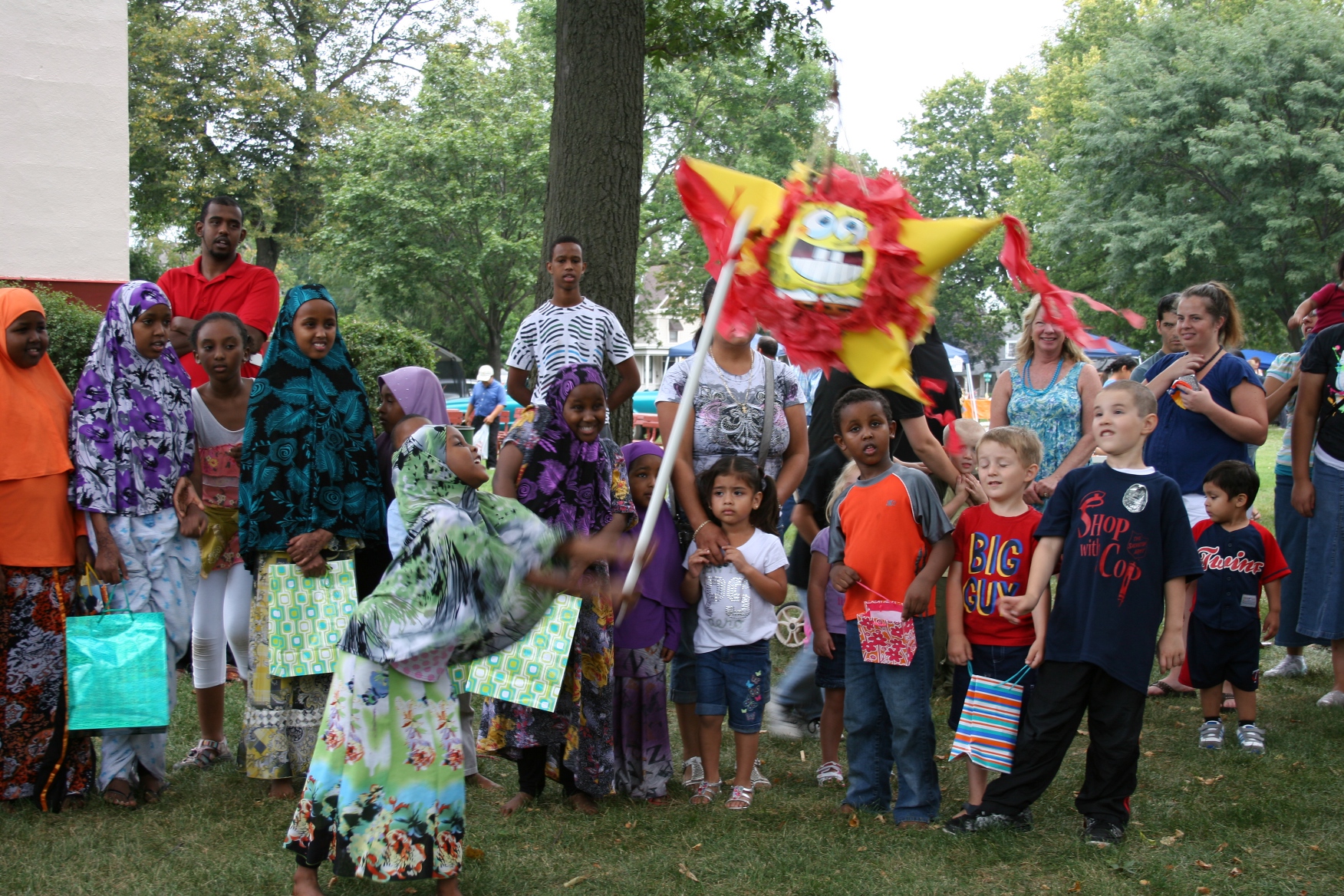
But sometimes we all speak the same language. And I saw, rather than heard, that on Saturday, at the festival, especially among the children. They sat side-by-side painting at the kids’ activity table, bounced side-by-side in the bouncy tent, stood side-by-side in line to take turns swinging at pinatas.
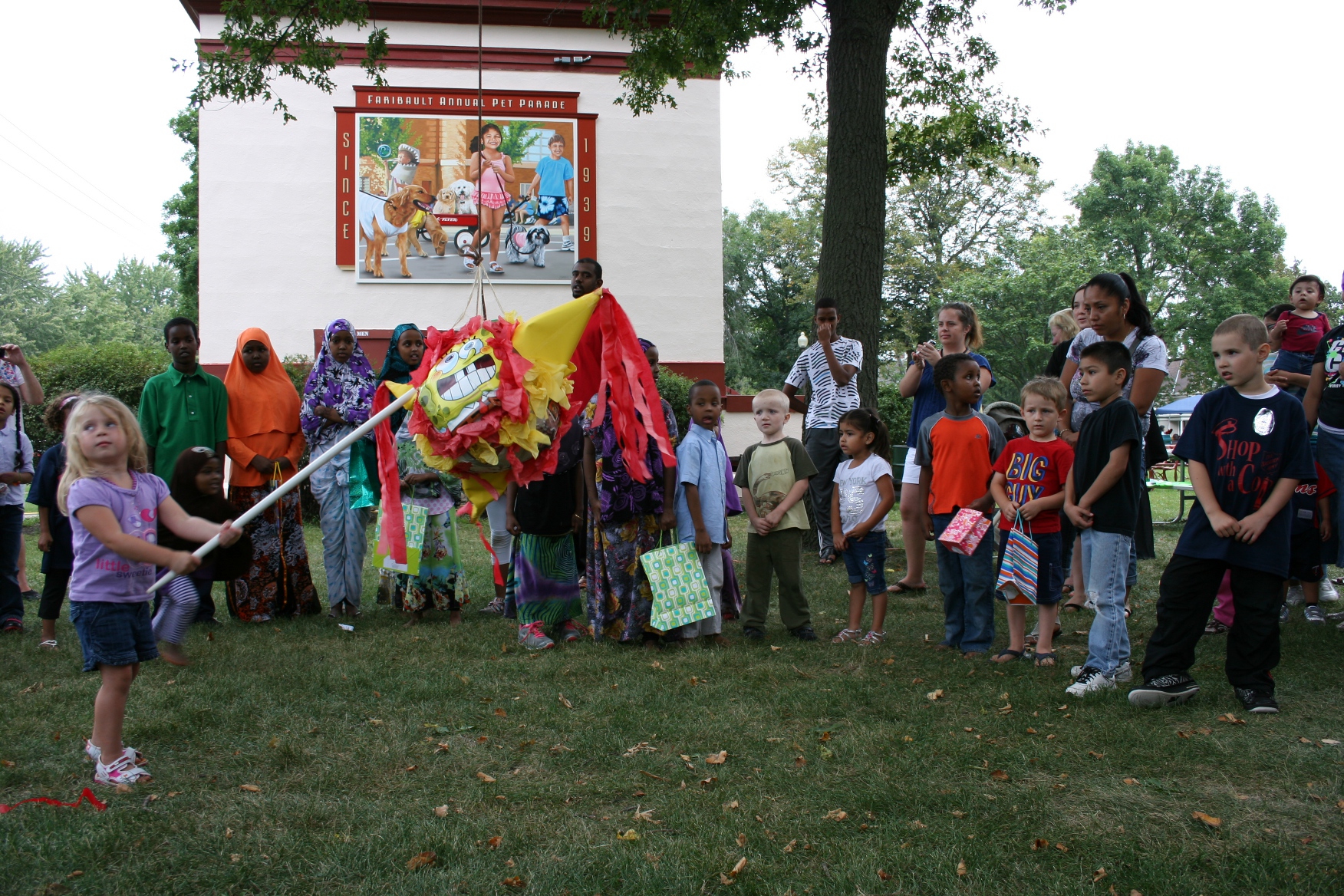
A little girl stands on the opposite side of the group of children waiting to swing at the pinata.
Differences in color and culture and language mattered not to these children. They shouldn’t matter to any of us. Therein lies the message I most want to communicate to you today and which was communicated so well via International Festival Faribault.

Happy children all focused on the same goal: breaking the pinata.

All around me, children and adults of all colors mingled.

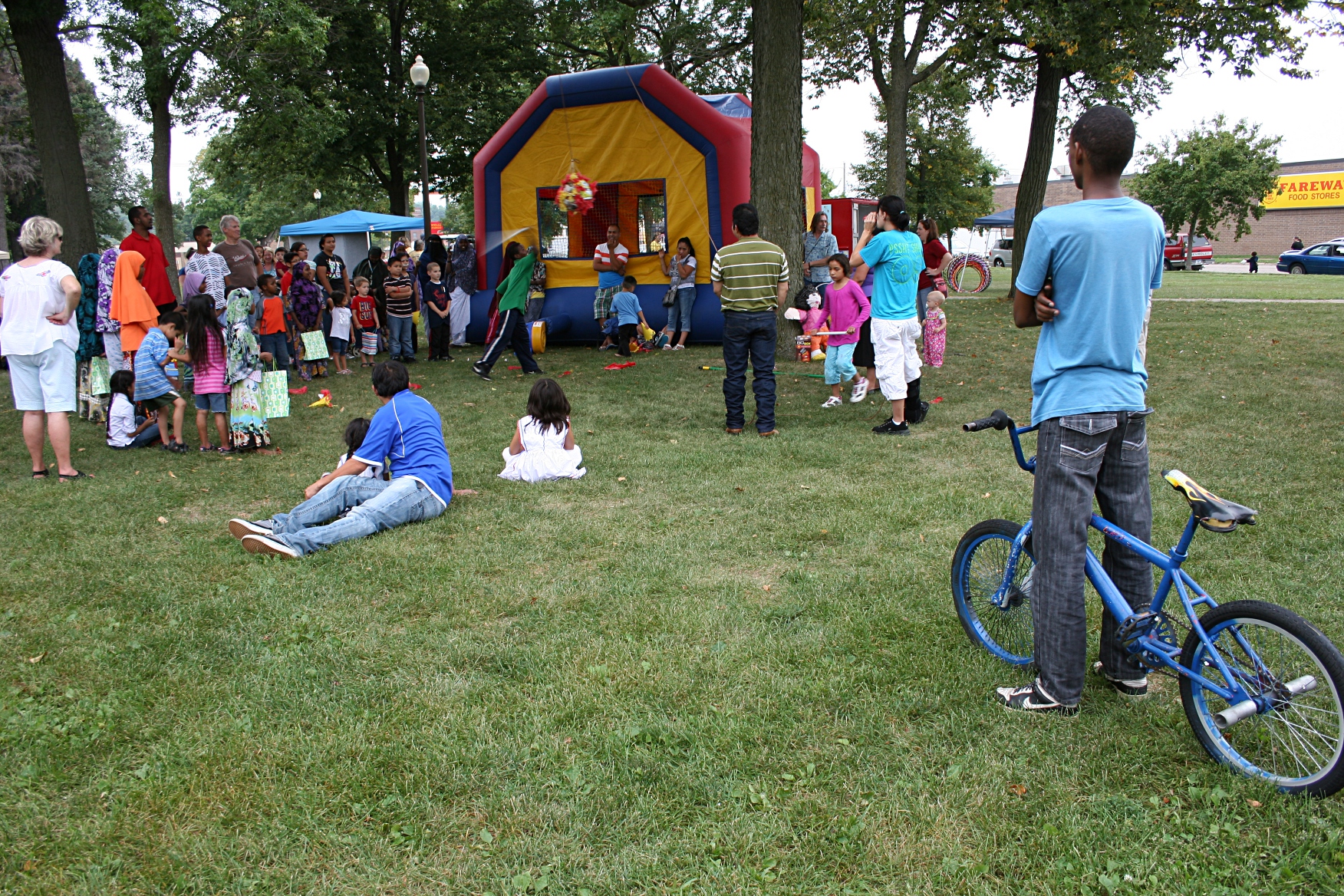
The boy on the right was biking past Central Park and stopped to watch the activities at a distance.

The scramble for candy once one of three pinatas is broken.

AND HERE ARE SOME ADDITIONAL BONUS PHOTOS:

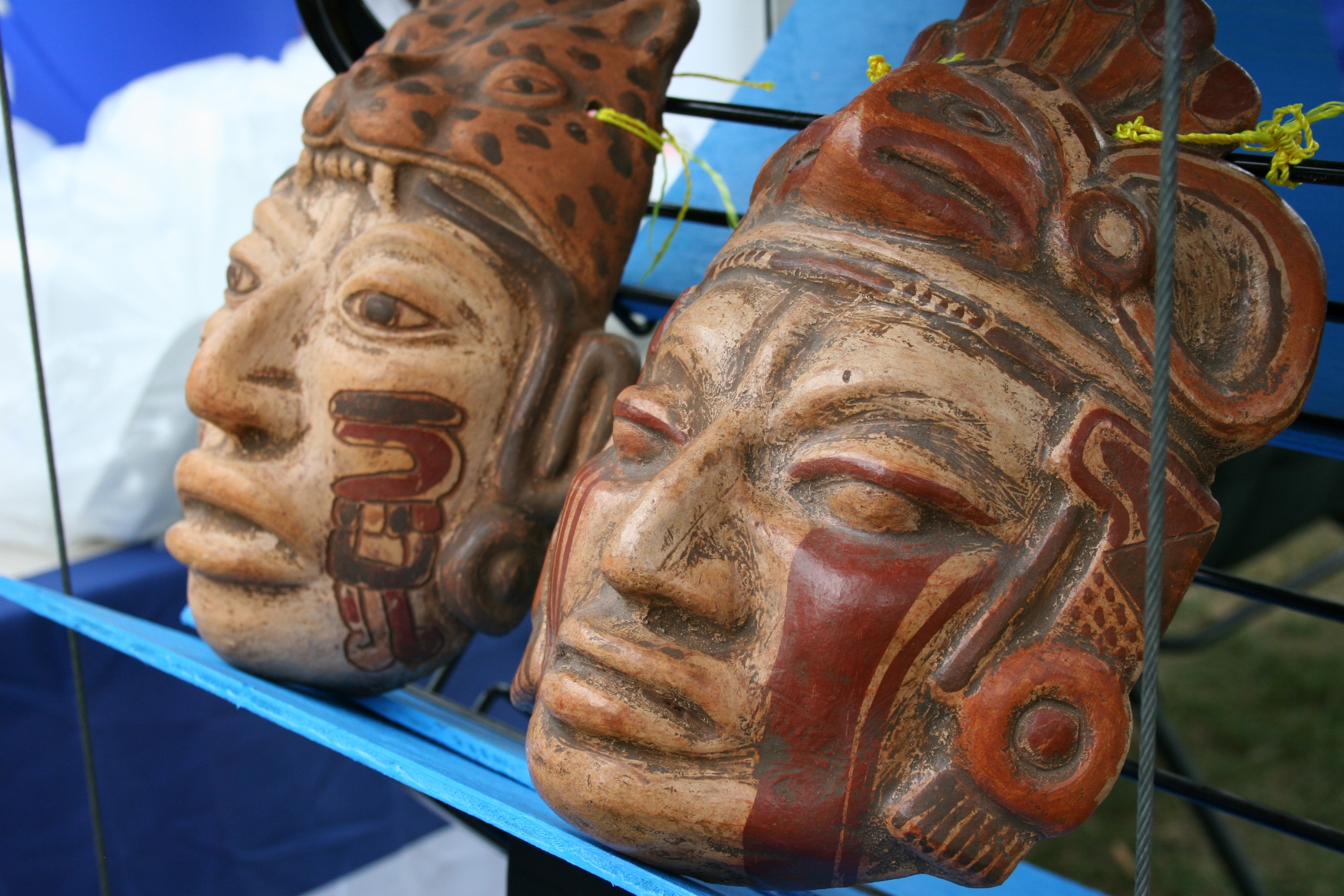
Masks displayed at the food vendor representing El Salvador.

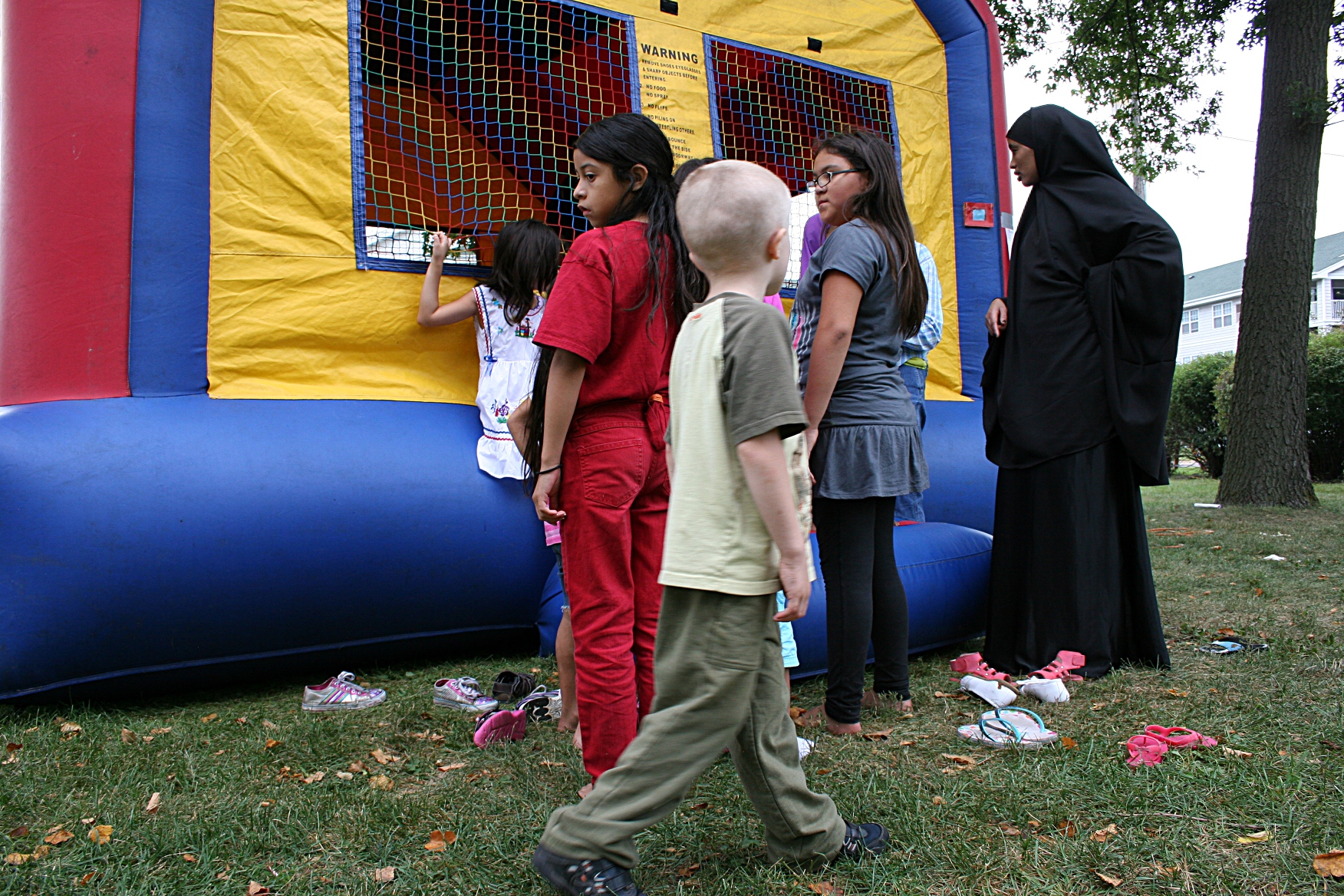
Waiting at the bouncy tent.

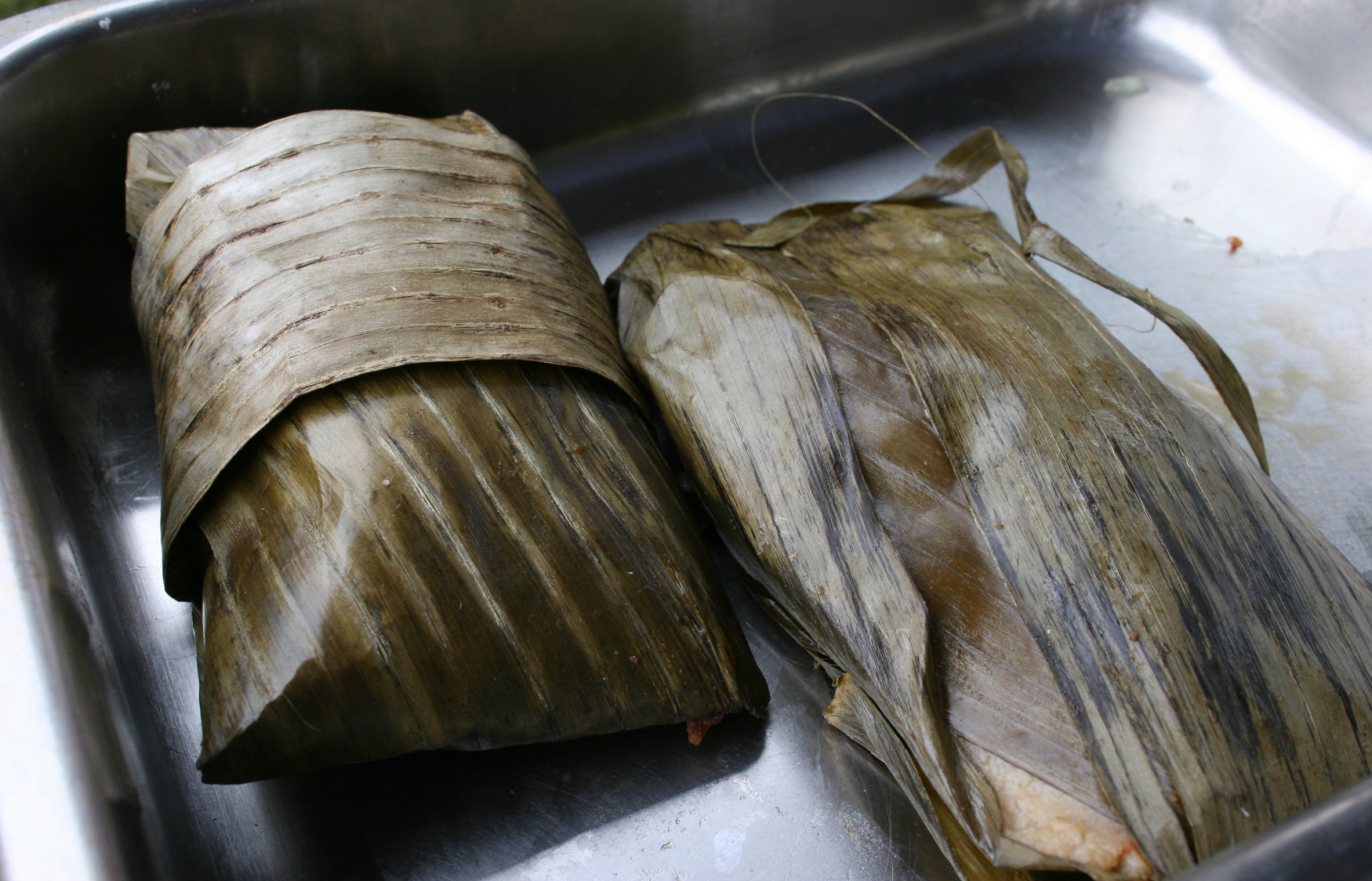
A Mexican dish (help me out if you know, but I think tortillas) was wrapped in banana leaves. My husband and I tried this.

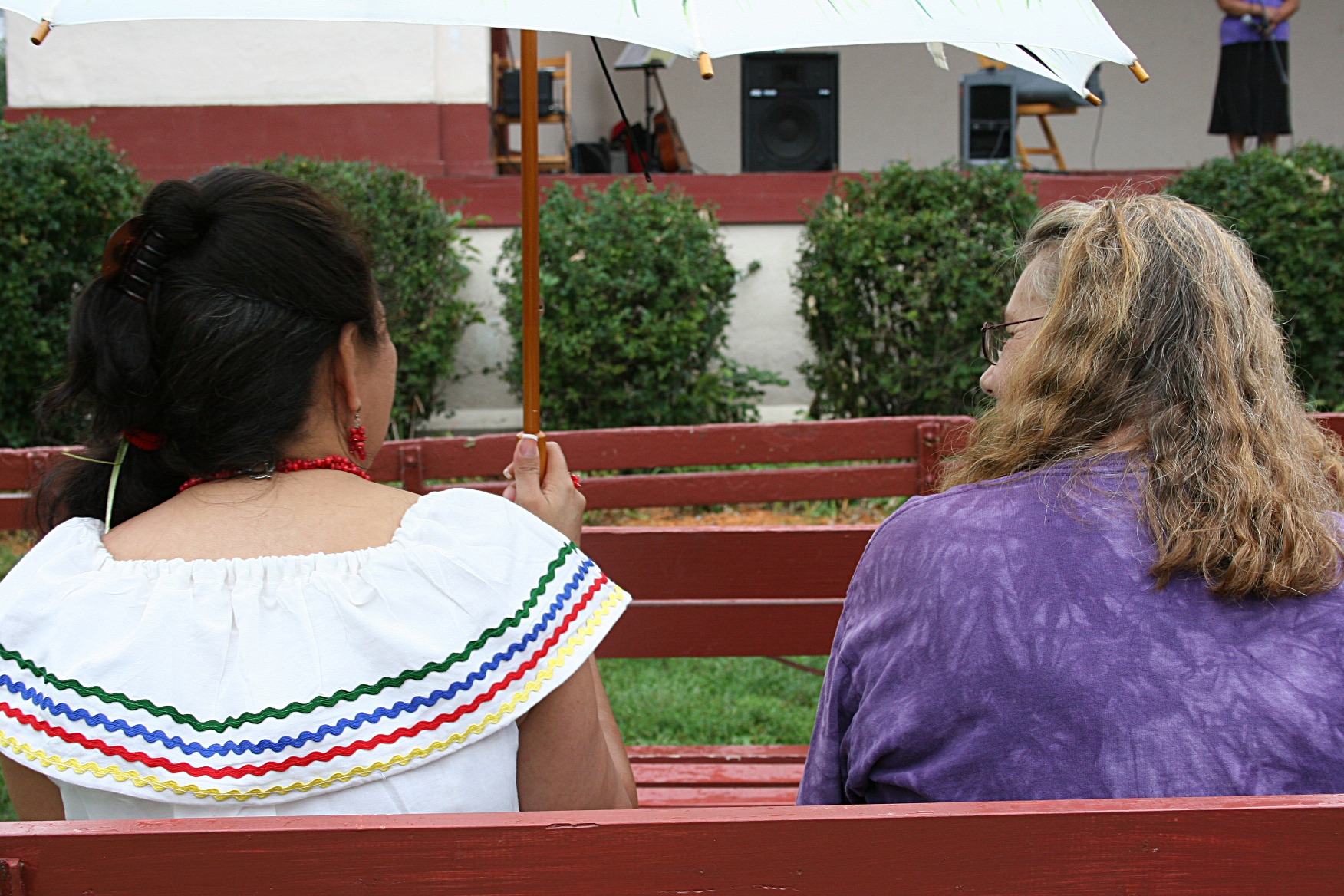
Conversation and connecting…, no other words necessary.

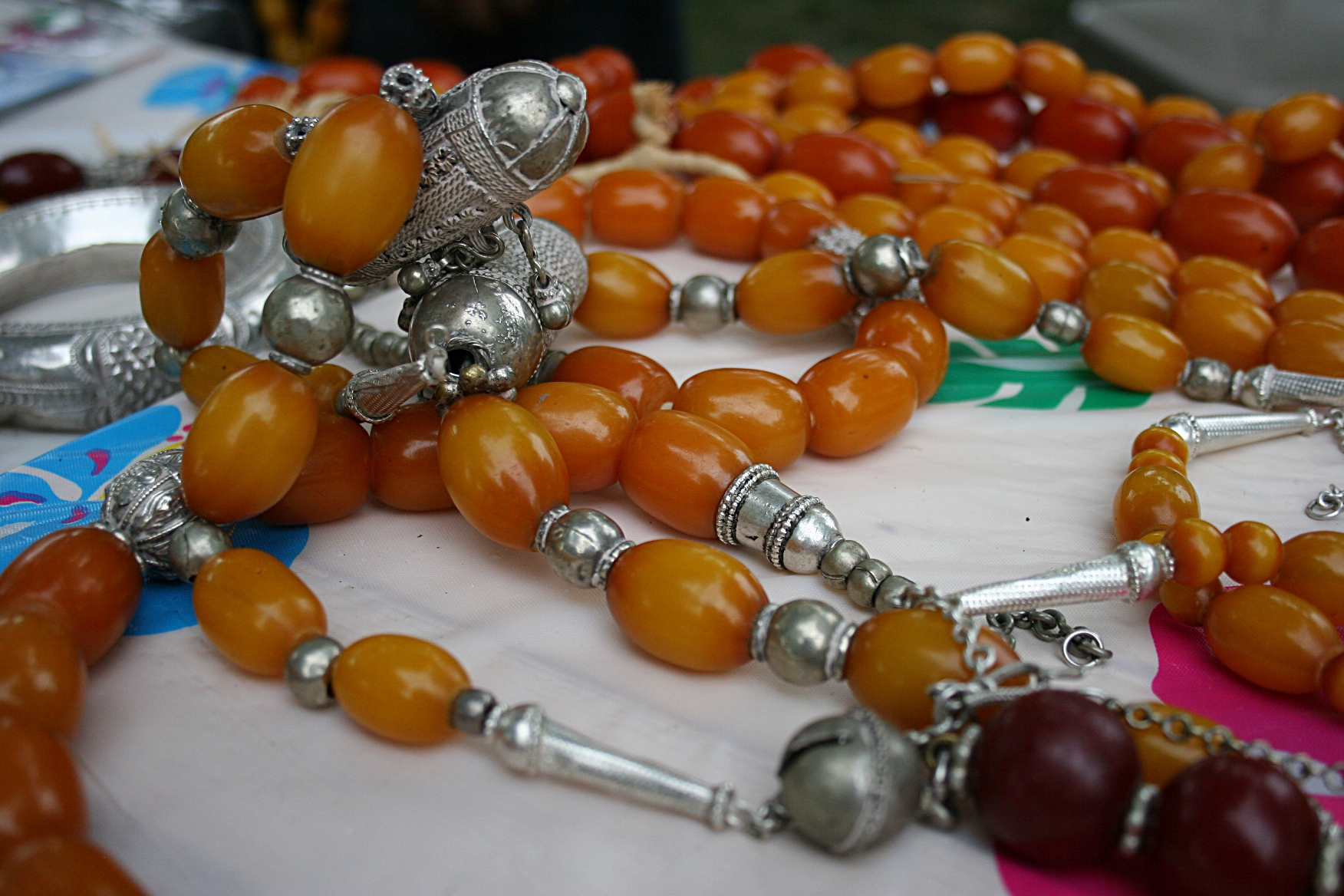
Necklaces and other jewelry from Kenya and/or Somalia and for sale at the festival.

Kids painted and colored, etc., elbow to elbow at the always busy kids’ activity table.

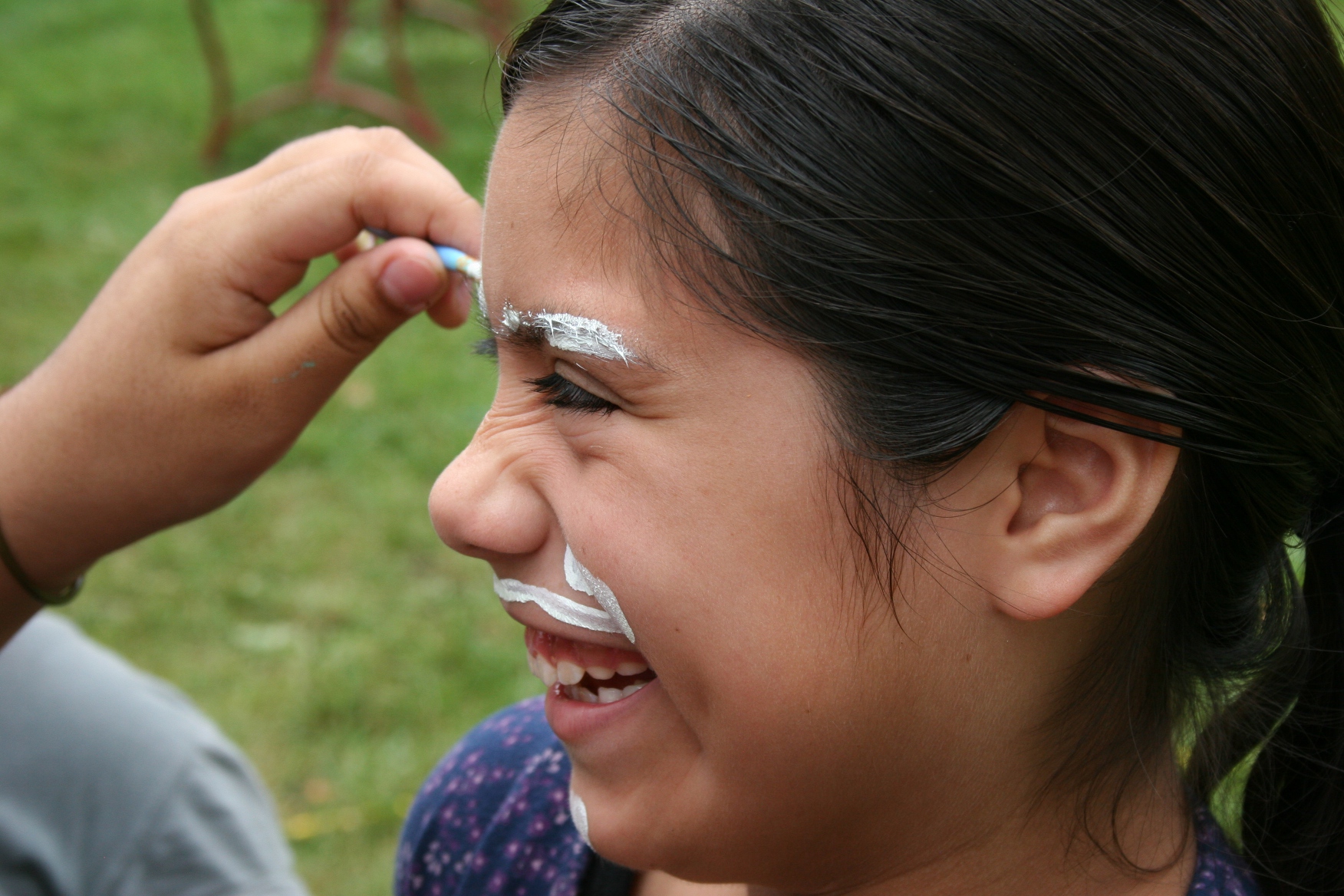
Some mischievous face painting was also part of the fun.

© Copyright 2012 Audrey Kletscher Helbling