Minnesota Prairie Roots

Writing and photography by Audrey Kletscher Helbling

Touring an historic mill in Morristown June 4, 2013

I WISH MY MEMORIES of the old feed mill were imprinted upon the pages of a book. Indelible ink. Words recorded so that I would always remember. The smell. The sound. The sights. The everything encompassing this agricultural business in my southwestern Minnesota prairie town.

I recall so little—the wooden steps leading to the feed mill; the ground feed residue lingering in the air and on surfaces; the ever-deafening grinding noise of machinery chomping grain; handsome operator Wally Anderson with his shock of white hair who lived in a well-kept corner house several blocks north; and the summer a ventriloquist sat in front of Vesta’s feed mill with a dummy perched on his knee.

The Morristown Feed Mill in Morristown, Minnesota.

The Morristown Feed Mill in Morristown, Minnesota.

Those faint wisps of recollection filtered through my thoughts on Saturday as I meandered through an historic 1860 grist mill along the banks of the Cannon River in Morristown. Once a year this rural southeastern Minnesota community opens the mill for tours and grinds wheat and corn.

A replica waterwheel built in 1997 by Theodore E. Sawle.

A replica waterwheel built in 1997 by Theodore E. Sawle.

I won’t even pretend to understand all I viewed and photographed at this mill once powered by a waterwheel, later by electricity.

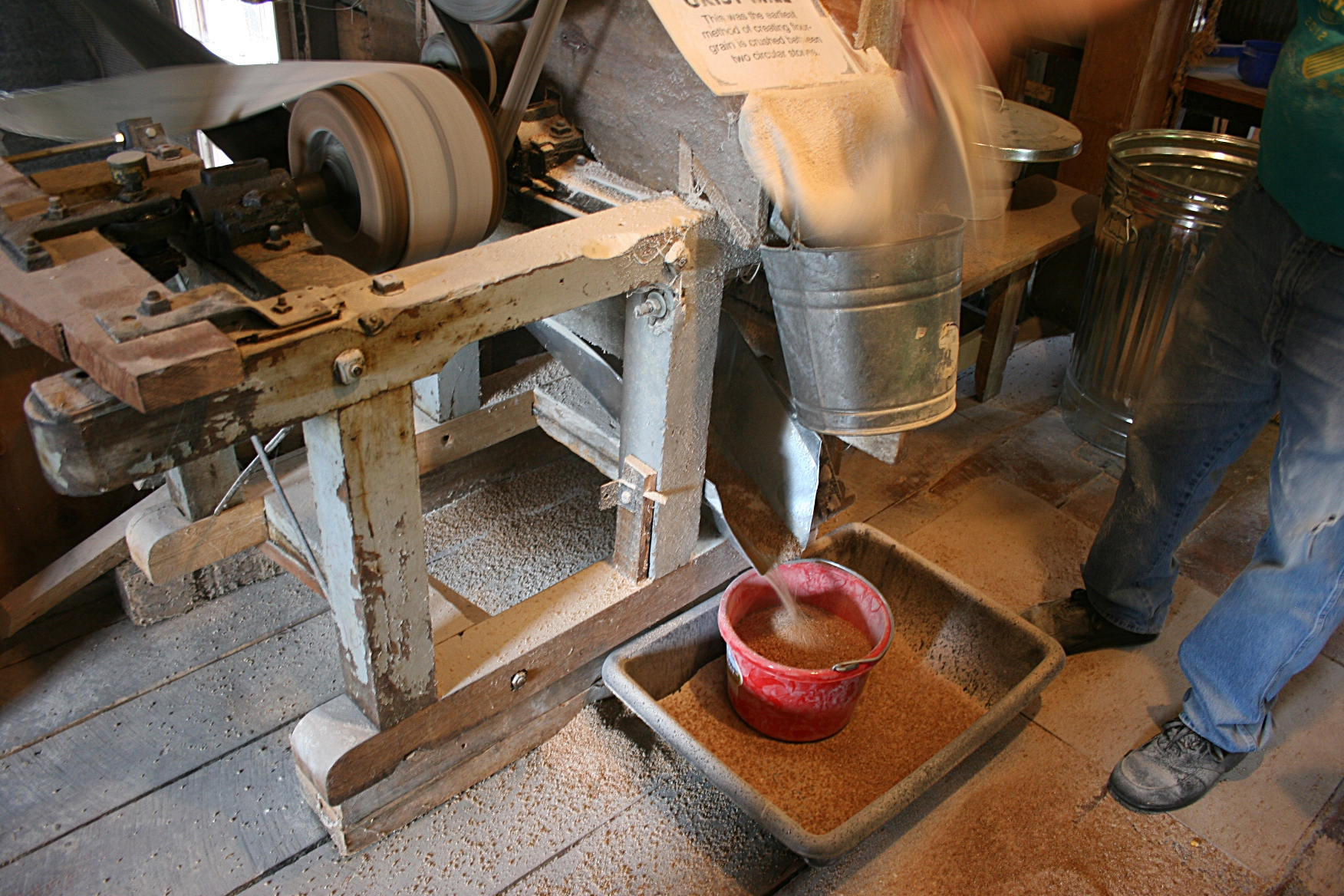
A volunteer grinds wheat into flour in the old grist mill. Each time the waterwheel turns, it spins the millstone 17 times in the process of crushing grain between stones. The volunteer's wife bakes Communion bread for the local Methodist church.

A volunteer grinds wheat into flour in the old grist mill. Each time the waterwheel turns, it spins the millstone 17.5 times in the process of crushing grain between stones. The volunteer’s wife bakes Communion bread for the local Methodist church.

Initially, the mill opened in 1855 as a sawmill. But, within years, the business was replaced by Hershey Grist Mill, a mill for grinding grain into flour and livestock feed. On the afternoon I toured, a volunteer was grinding wheat into flour with the waterwheel powering the grinder. I had intended to buy a bag of the $2 wheat flour, but forgot in the midst of my photographic focus.

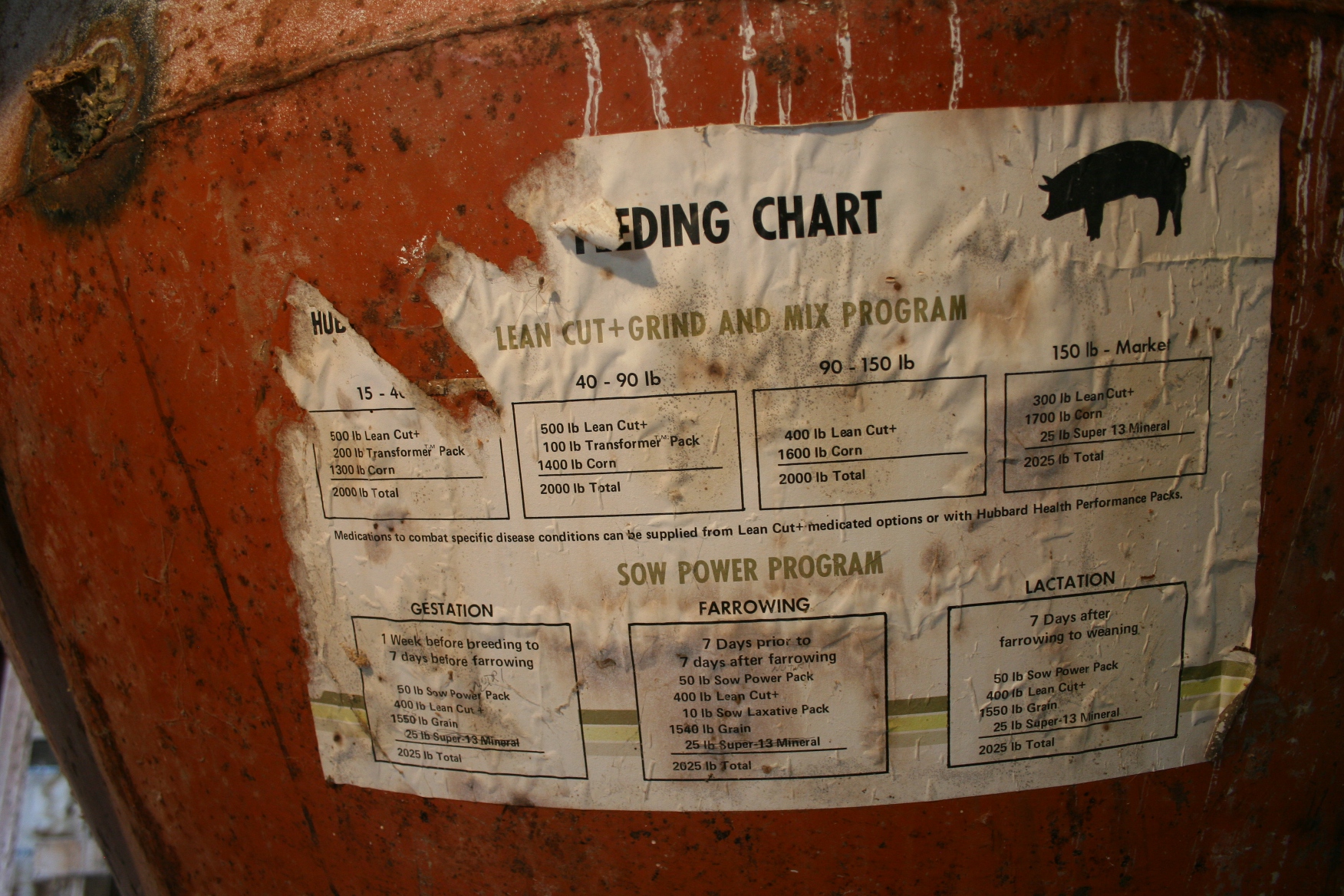
Guidelines for pig feed.

Guidelines for pig feed posted on a mixer.

The Morristown Historical Society today cares for the facility which closed in the 1970s as the Morristown Feed Mill, purveyor of livestock feed. For those like me, who grew up on a farm but have long ago left the land, such endeavors to preserve the rural past are deeply appreciated.

The conveyor belt powered by the waterwheel. This operates the grinder.

The waterwheel turns these pulleys and belts which operate the grinder.

While I walked the old wooden floor of the feed mill, descended stairs into the cluttered utility room where a dangerous conveyor belt cycled and afterward climbed stairs to the second floor, I reconnected with my rural roots.

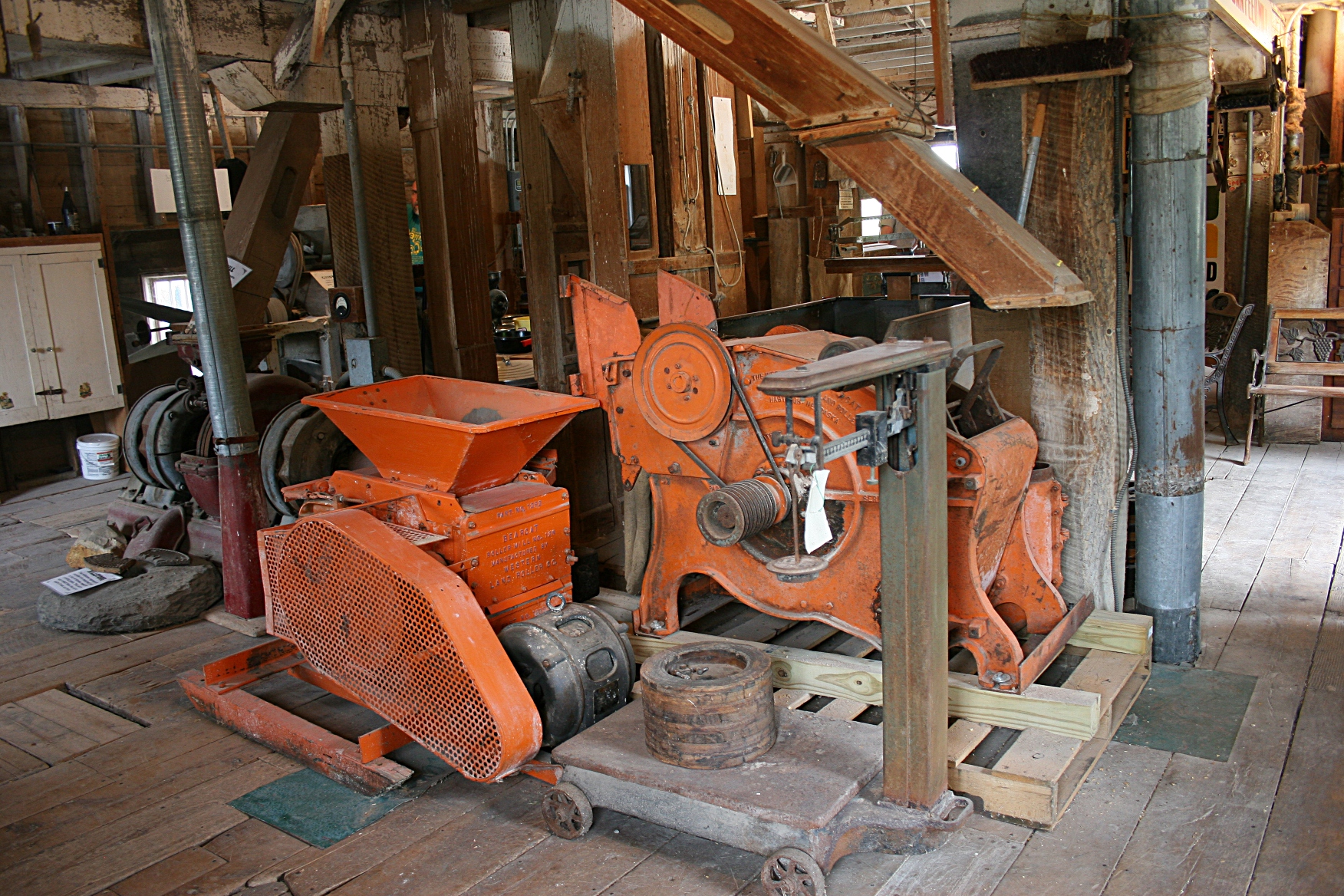
The old feed mill is stocked with lots of vintage grinding equipment.

The old feed mill is stocked with lots of vintage mill equipment.

And it may not have been in the way you most likely would expect. For me, the experience was mostly about the dust—knowing I needed to protect my camera from the fine grain dust which permeates a place like this, layers on the skin, hovers in the air, filters into memories.

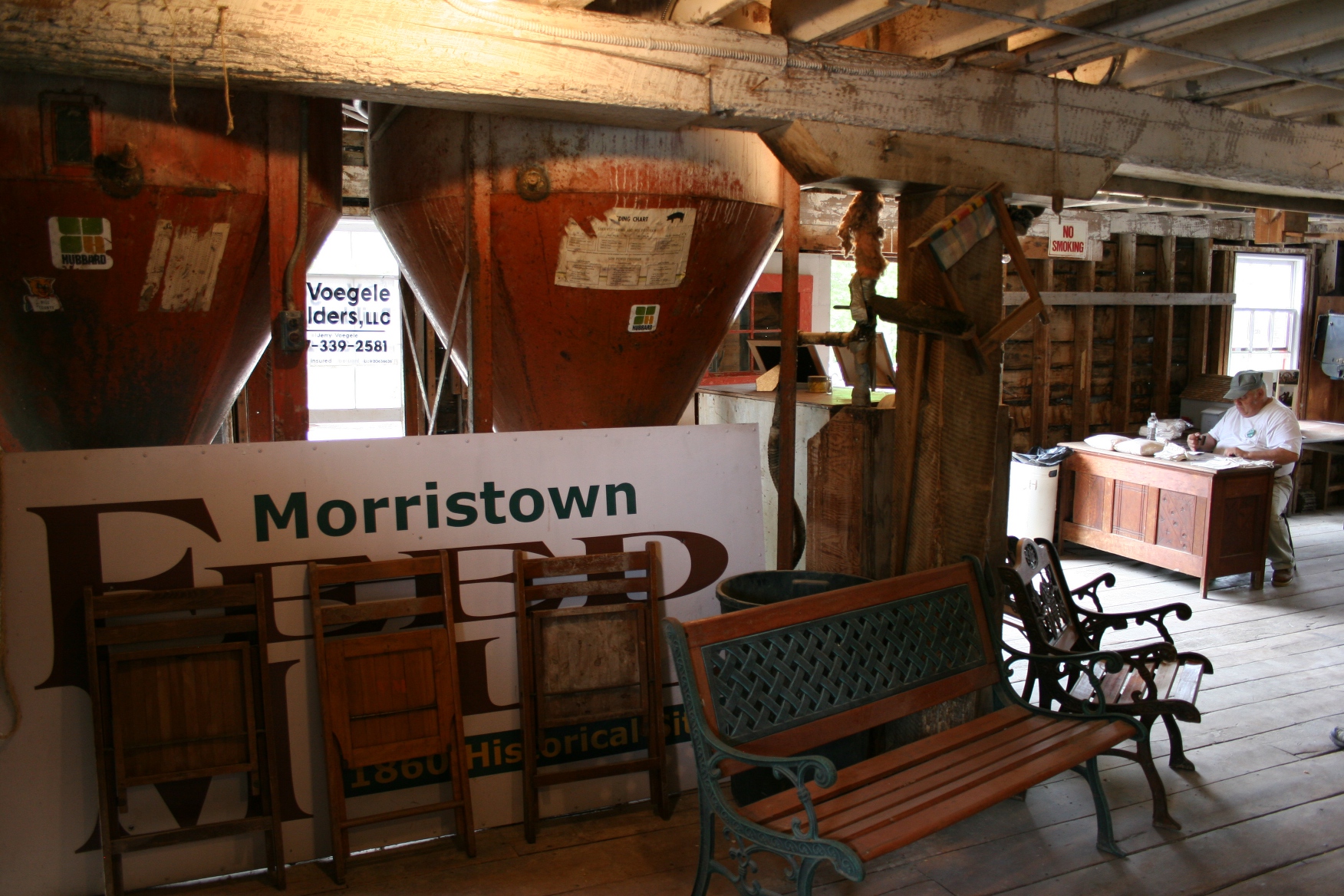
Inside the feed mill, where a volunteer stamps cloth bags with Morristown Feed Mill.

Inside the feed mill, a volunteer stamps cloth bags with Morristown Feed Mill. Behind the sign are two mixers.

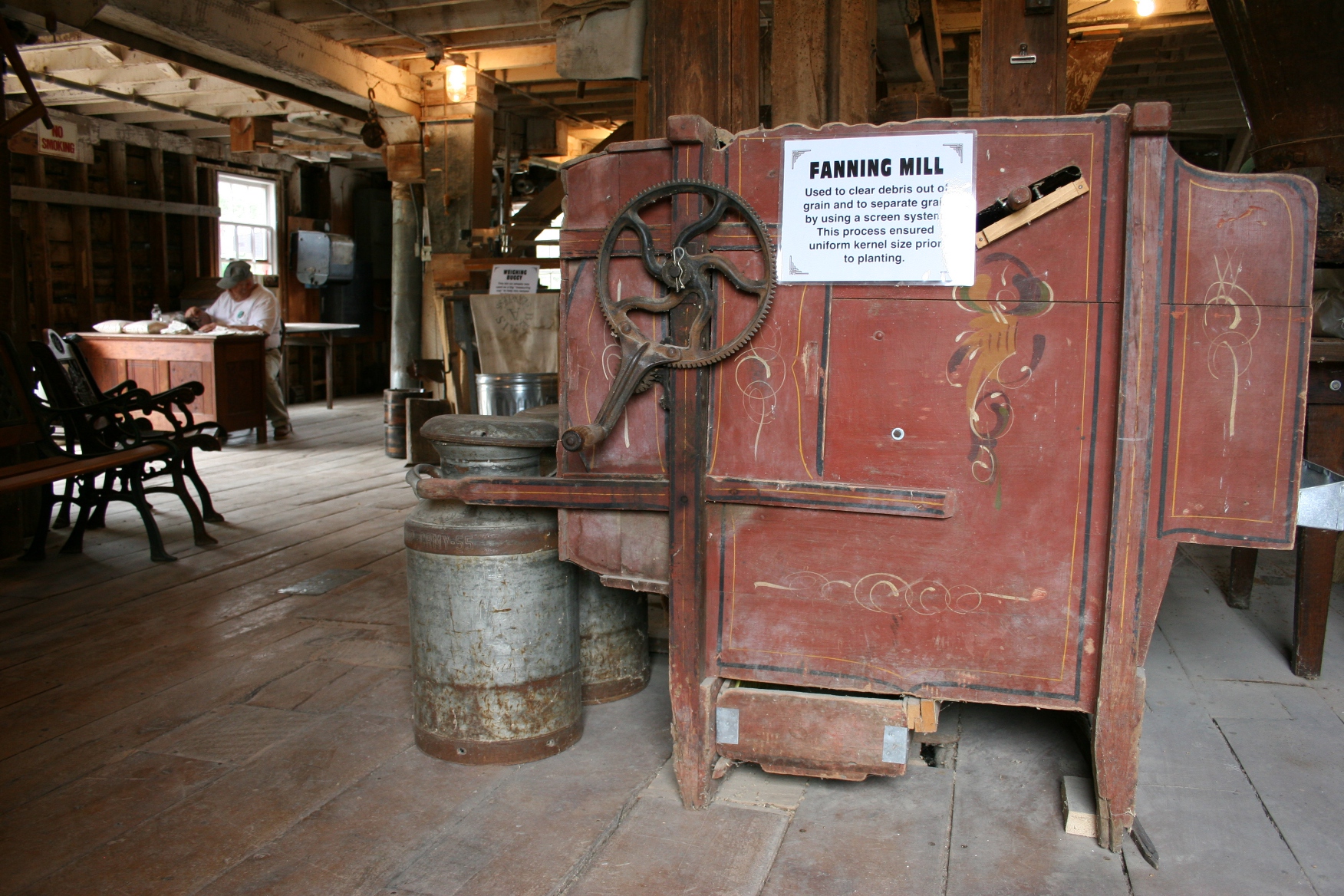
An old fanning mill cleans the grain for planting.

An old fanning mill cleans the grain for planting.

When I heard mention of mice, I was a little nervous about going into the utility room.

When I heard mention of mice, I was a little nervous about going into the utility room.

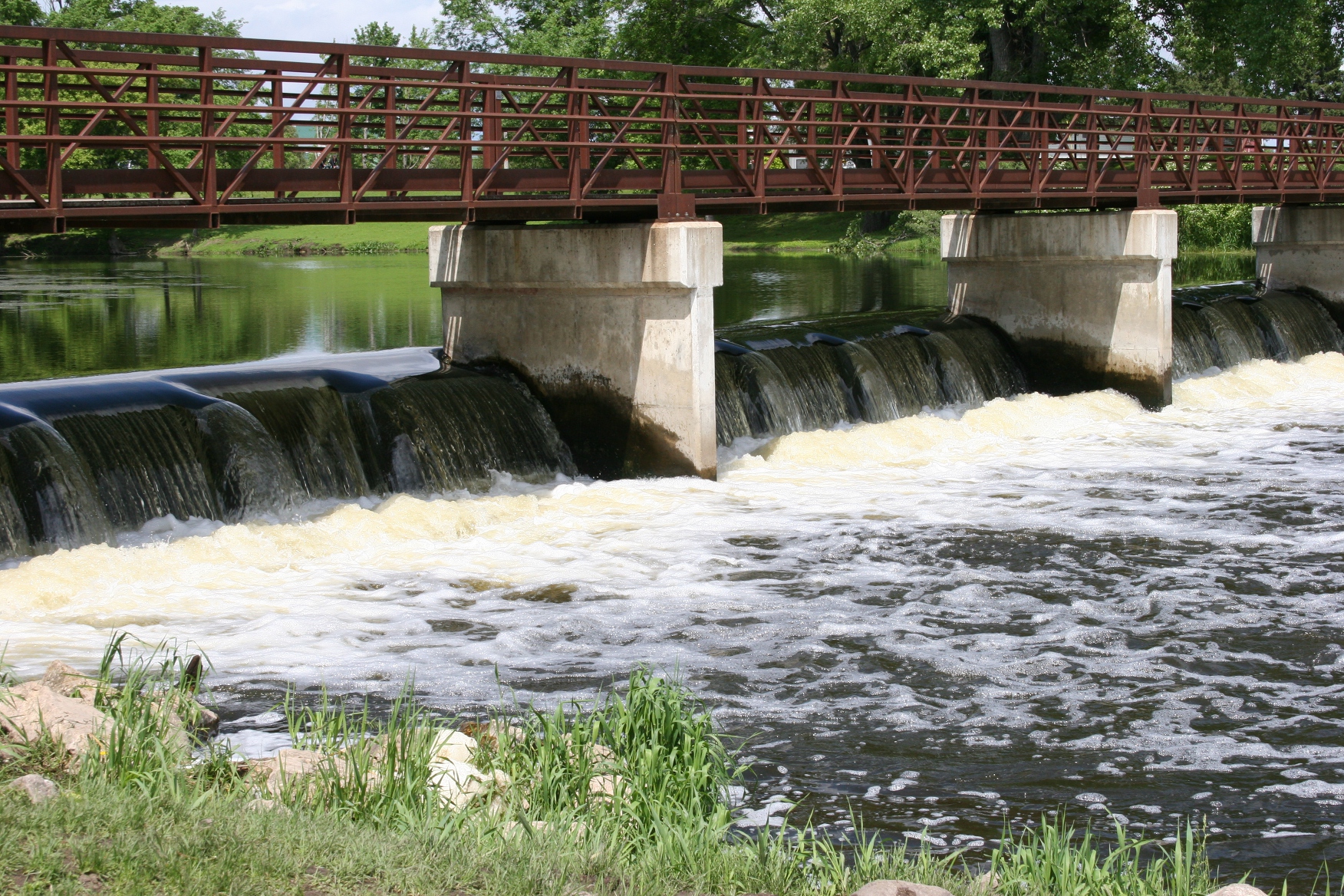
The Cannon River dam right next to the mill.

The Cannon River dam right next to the mill.

FYI: As a side note, the mill sheltered several refugees from the U.S. – Dakota Conflict of 1862.  Check back for more mill photos.

© Copyright 2013 Audrey Kletscher Helbling


I know that my Redeemer lives March 31, 2013

Filed under: Uncategorized — Audrey Kletscher Helbling @ 2:29 PM
Tags: , , , , , , , , , ,
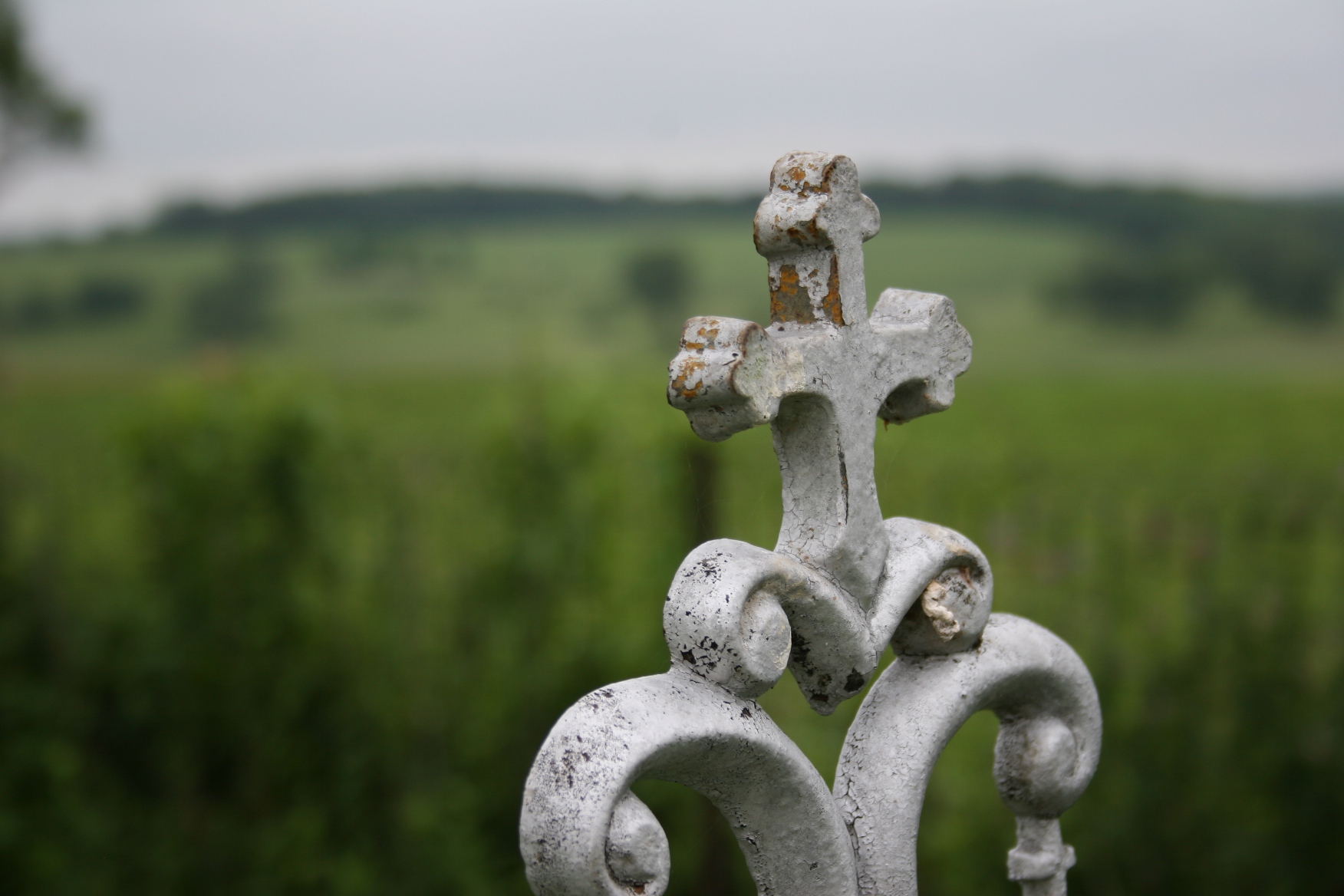
A cross in Trebon Cemetery, 10 miles northwest of Faribault in Shieldsville Township.

A cross in Trebon Cemetery, 10 miles northwest of Faribault in Shieldsville Township.

I know that my Redeemer lives;
What comfort this sweet sentence gives!
He lives, He lives, who once was dead;
He lives, my ever-living head.

He lives triumphant from the grave;
He lives eternally to save:
He lives all-glorious in the sky;
He lives exalted there on high.

This, one of my favorite hymns, I sang with the congregation of Trinity Lutheran Church in Faribault this Easter Sunday morning.

The words are imprinted upon my memory from childhood Easters, of singing from the balcony of St. John’s Lutheran Church in Vesta with my Sunday School classmates.

I know that my Redeemer lives. I knew that then. I still know that now. He is risen. He is risen, indeed.

Wishing you a most blessed Easter in our risen Lord.

Copyright 2013 Audrey Kletscher Helbling


Raising monies for Jaws of Life at a small town pork chop feed March 28, 2013

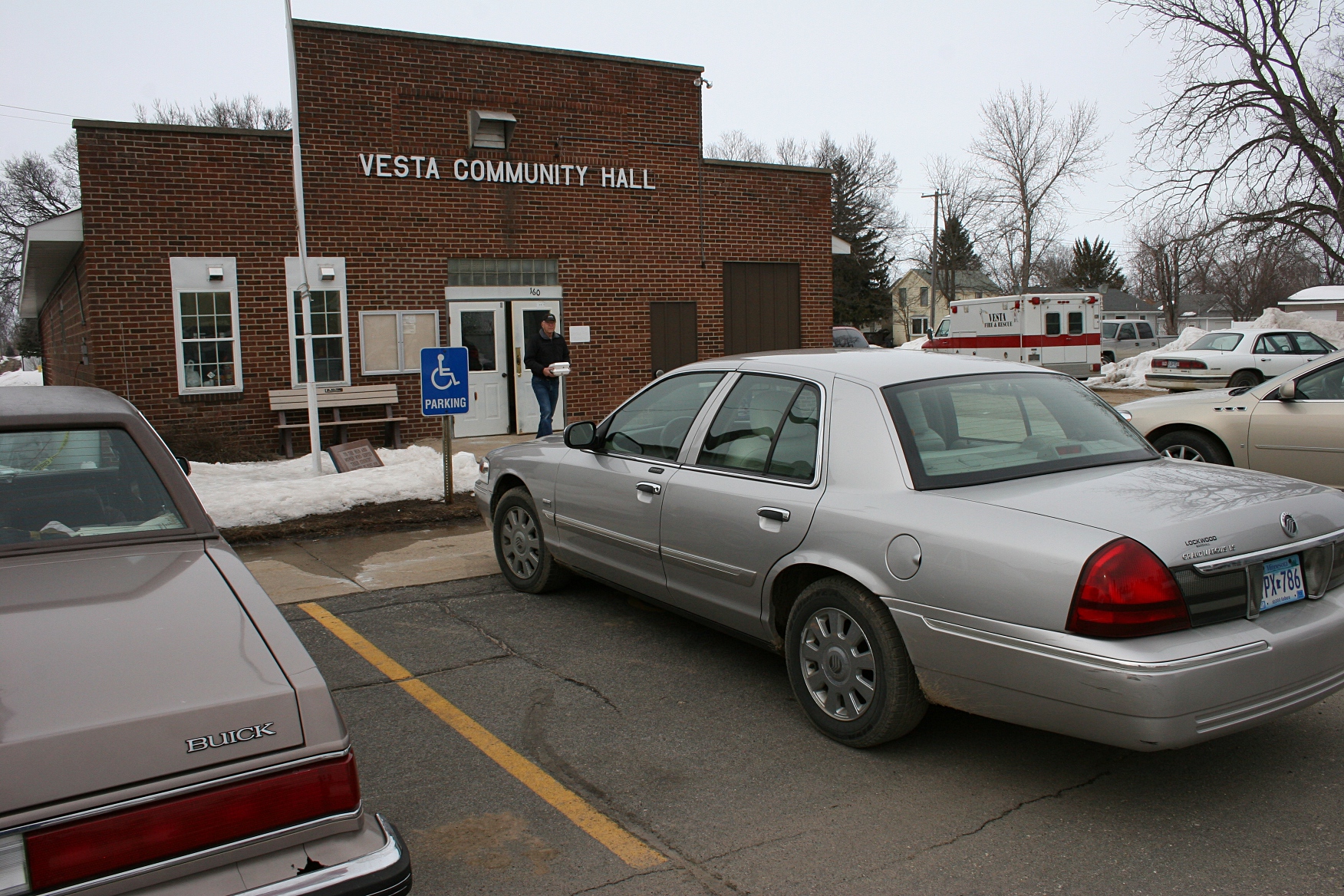
Pork chop dinner take-out at the Vesta Community Hall.

Pork chop supper take-out at the Vesta Community Hall.

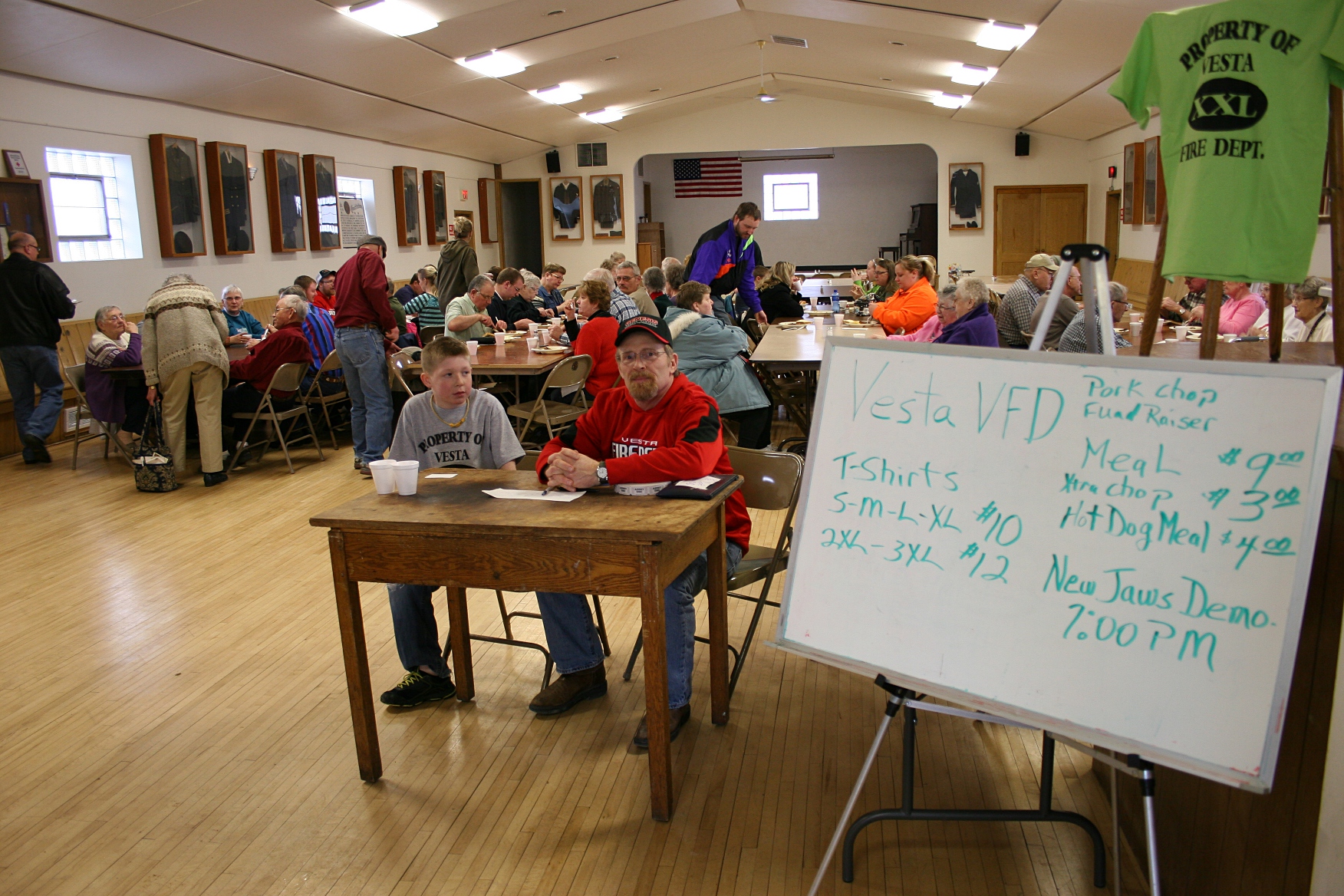
SMALL TOWN, MINNESOTA, on a Saturday night, and I am snapping pictures at a pork chop supper in the community hall.

This could be Any Town, rural Minnesota. But this is my hometown of Vesta, population around 330, situated half way between Redwood Falls and Marshall along State Highway 19 on the southwestern Minnesota prairie.

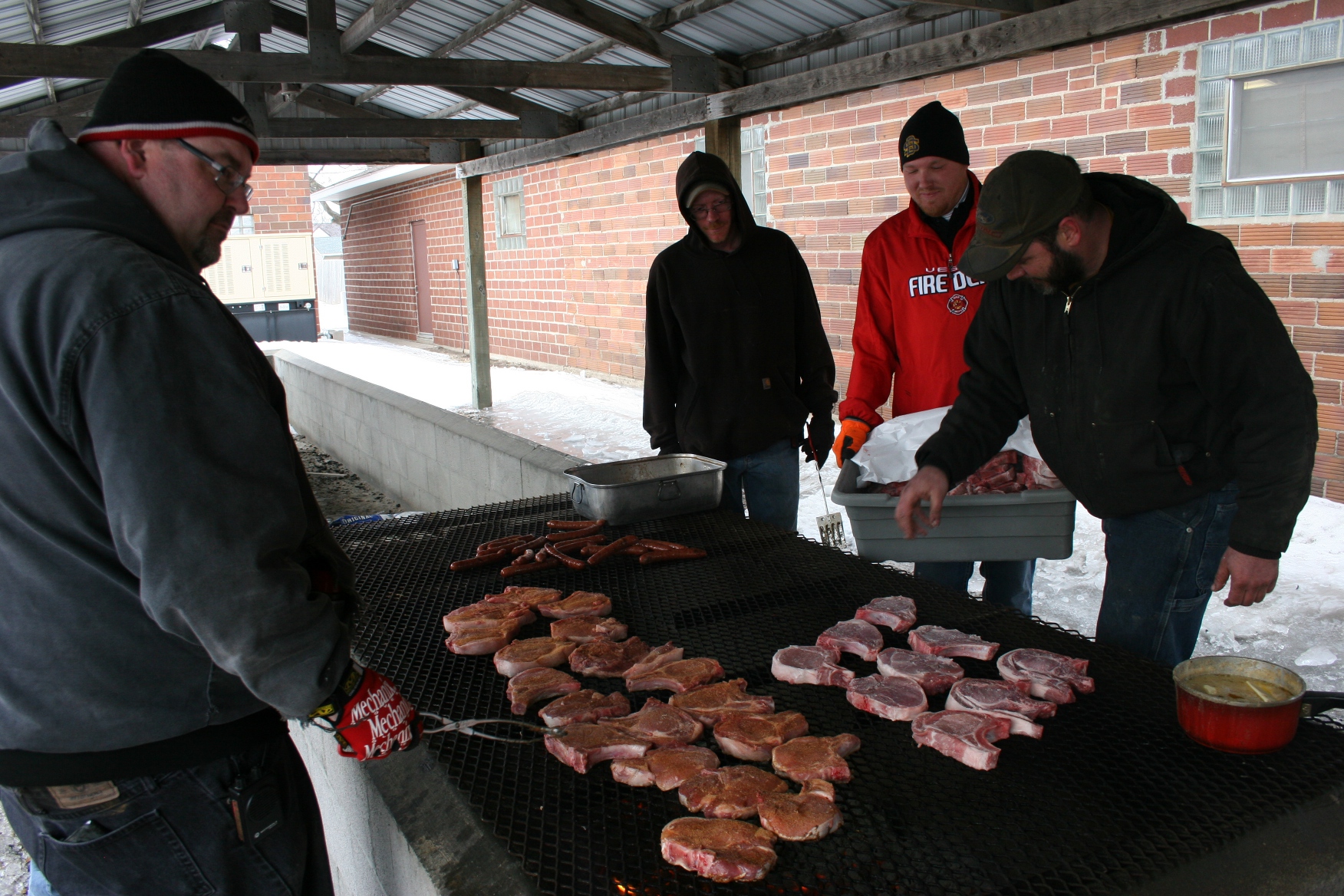
Volunteer firefighters, including my cousin Randy, left, grill pork chops outside the hall.

Volunteer firefighters, including my cousin Randy, left, grill pork chops outside the hall. The firemen served about 250 meals.

Outside the hall, several volunteer firemen, including my cousin Randy, are grilling chops over an open charcoal pit for the annual Vesta Firemen’s Relief Association Pork Chop Supper.

David Widman sells tickets.

David Widman sells tickets.

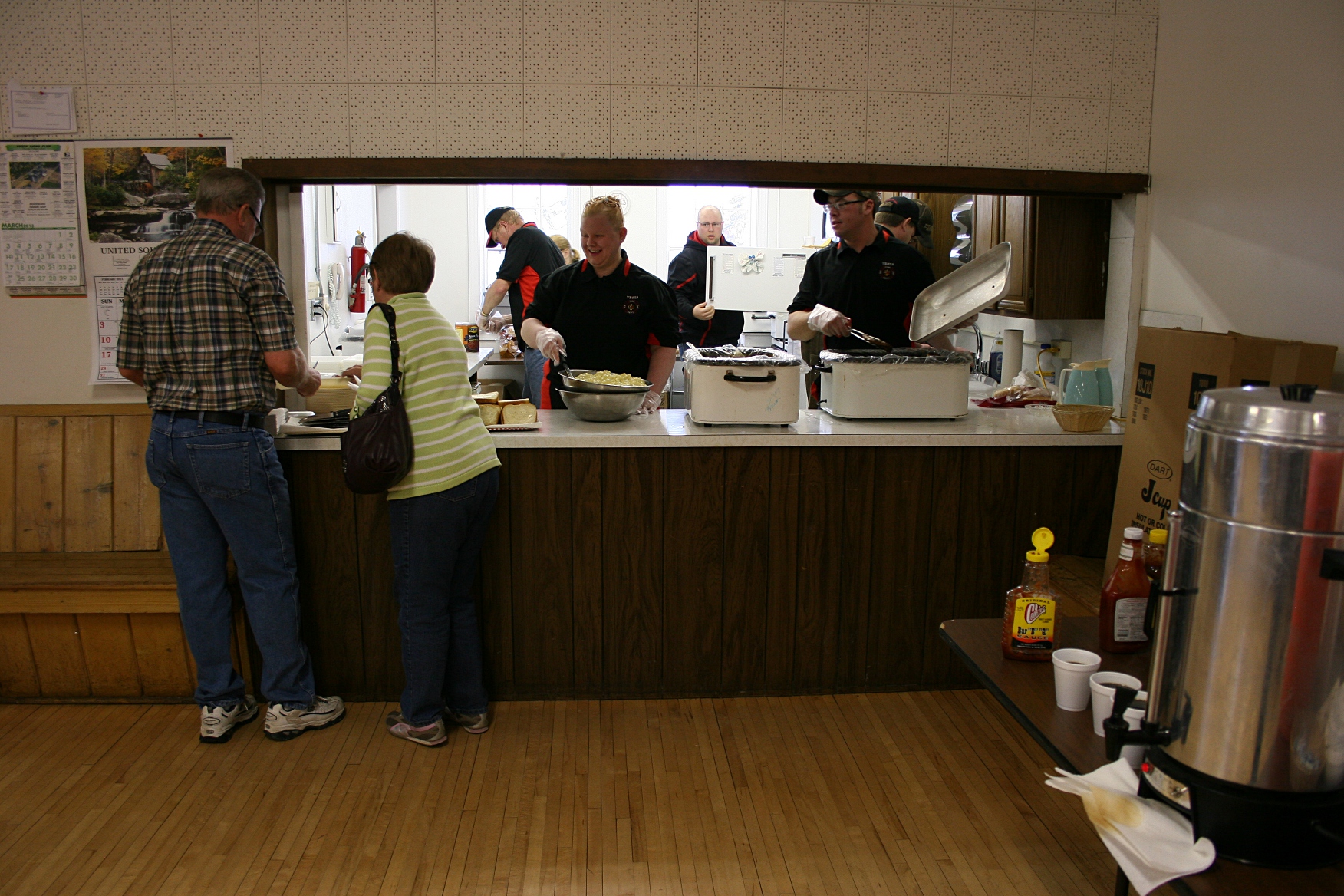
Harlan and Karen step up to the serving window, where Erin, center, and other volunteers dish up food.

Harlan and Karen step up to the serving window, where Erin, center, and other volunteers dish up food.

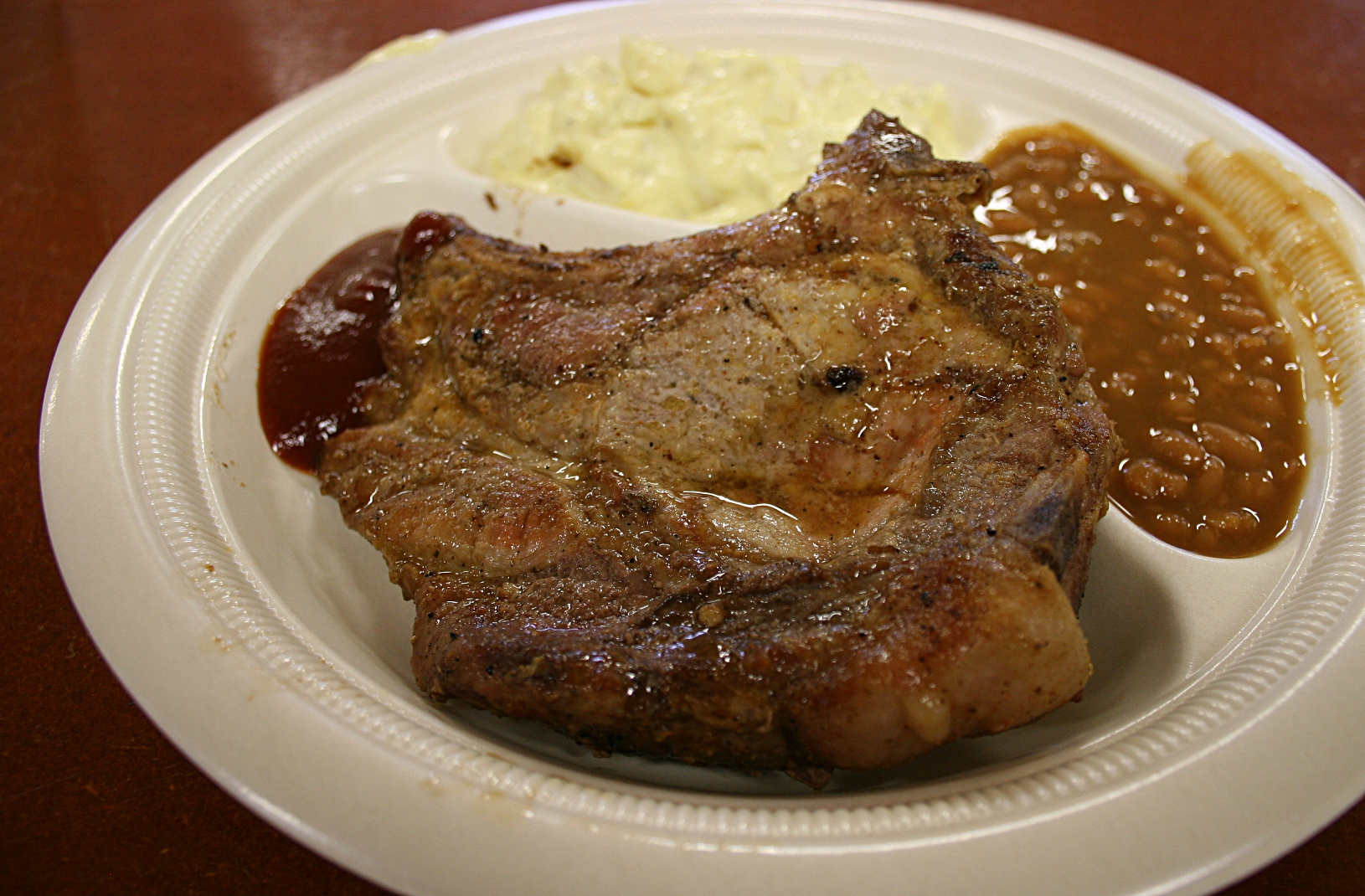
The grilled pork chop meal.

The grilled pork chop meal.

Inside, Randy’s wife, Erin, and others are scooping up baked beans and potato salad and parceling out chops while other volunteers sell tickets and pour beverages. My nearly 81-year-old mom, whom we are visiting for the weekend, is treating my husband and me to supper.

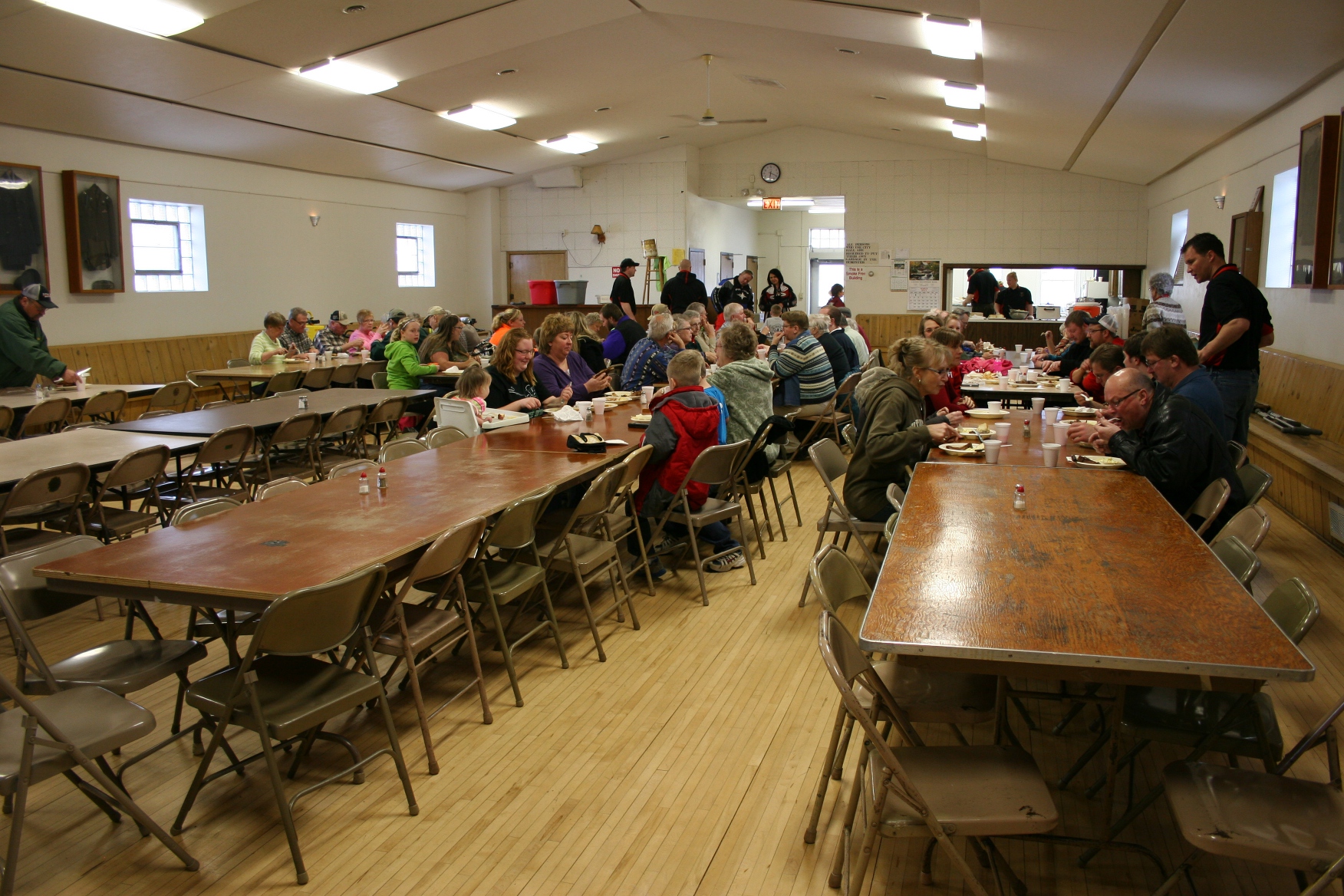
I knew most of the diners.

I knew most of the diners.

As I mingle among diners, chatting with aunts, an uncle, cousins, and locals I haven’t seen in awhile, I’m cognizant of the importance of this event to raise funds for the Vesta Volunteer Fire Department. Proceeds will go toward a new $25,000 Jaws of Life device, already purchased with a $5,000 grant, past Pork Chop feed dollars and a loan.

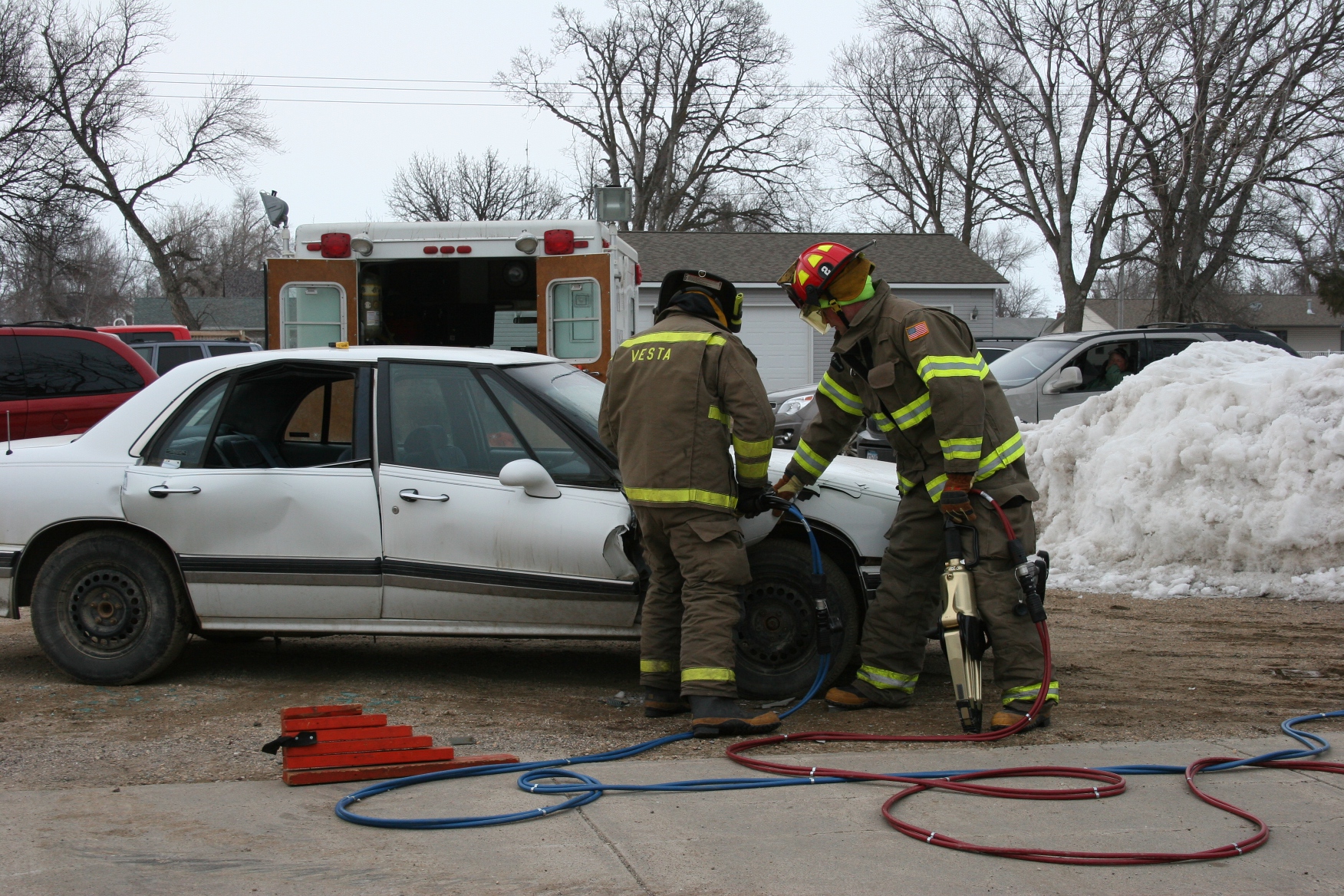
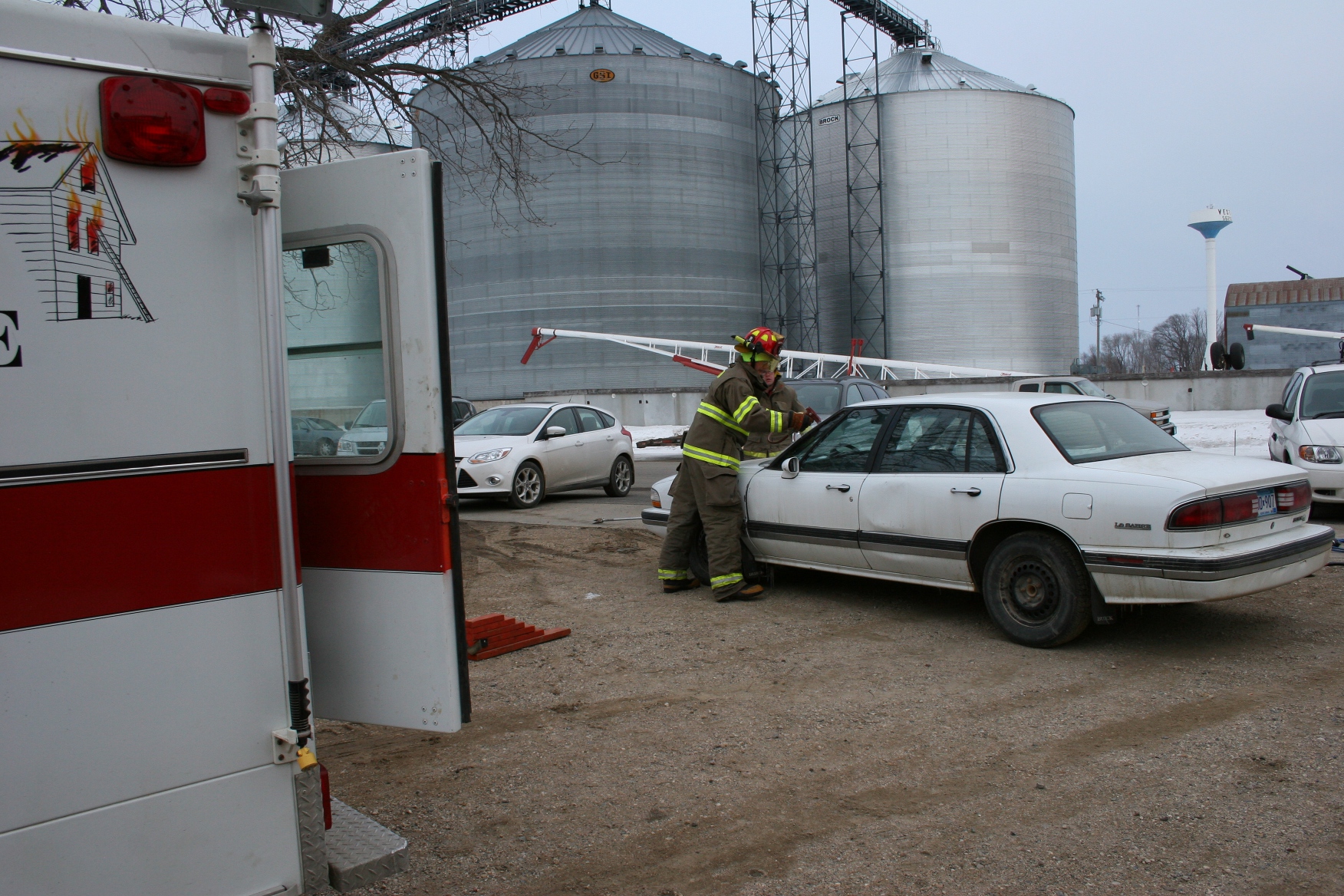
Volunteer firemen remove the windshield from a junk car.

Volunteer firemen remove the windshield from a junk car.

After finishing my meal, at 7 p.m,, I step outside the Vesta Community Hall to observe several volunteer firemen remove a windshield and peel open the doors of a junk car using that new Jaws of Life.

About 30 onlookers gathered outside the hall to watch the Jaws of Life demonstration.

About 30 onlookers gathered outside the hall to watch the Jaws of Life demonstration.

Bracing myself against the stiff wind in a “feels more like 15 than 30 degrees,” I question my judgment in roving around the “accident scene” taking photos. Why would this crowd of about 30 stand outside in this raw weather watching this demonstration?

Because they care. Because they support their local volunteer firemen and First Responders. Because they know this could be them or their next-door-neighbor or their sibling or some stranger off the highway in need of rescue and emergency care.

Peeling away doors with the new Jaws of Life.

Peeling away doors with the new Jaws of Life.

The fire department typically responds to 12 – 15 fire calls annually in a 61 square mile area covering the City of Vesta, Vesta Township and part of Underwood Township, according to Fire Chief Travis Welch. In 2012, firefighters fought a major shop fire. They also responded to two head-on crashes which left three dead. Eight of the volunteer firemen serve as Vesta First Responders.

To the 18 volunteer firefighters—Travis, Jeremy D., Dallas, George, Randy, Tony, Aaron, Jeff, Jeremy K., Jon, David, Brian, Jason, Andrew, Neal, Jordan, Ryan B. and Ryan E.—thank you for being there for my hometown of Vesta.

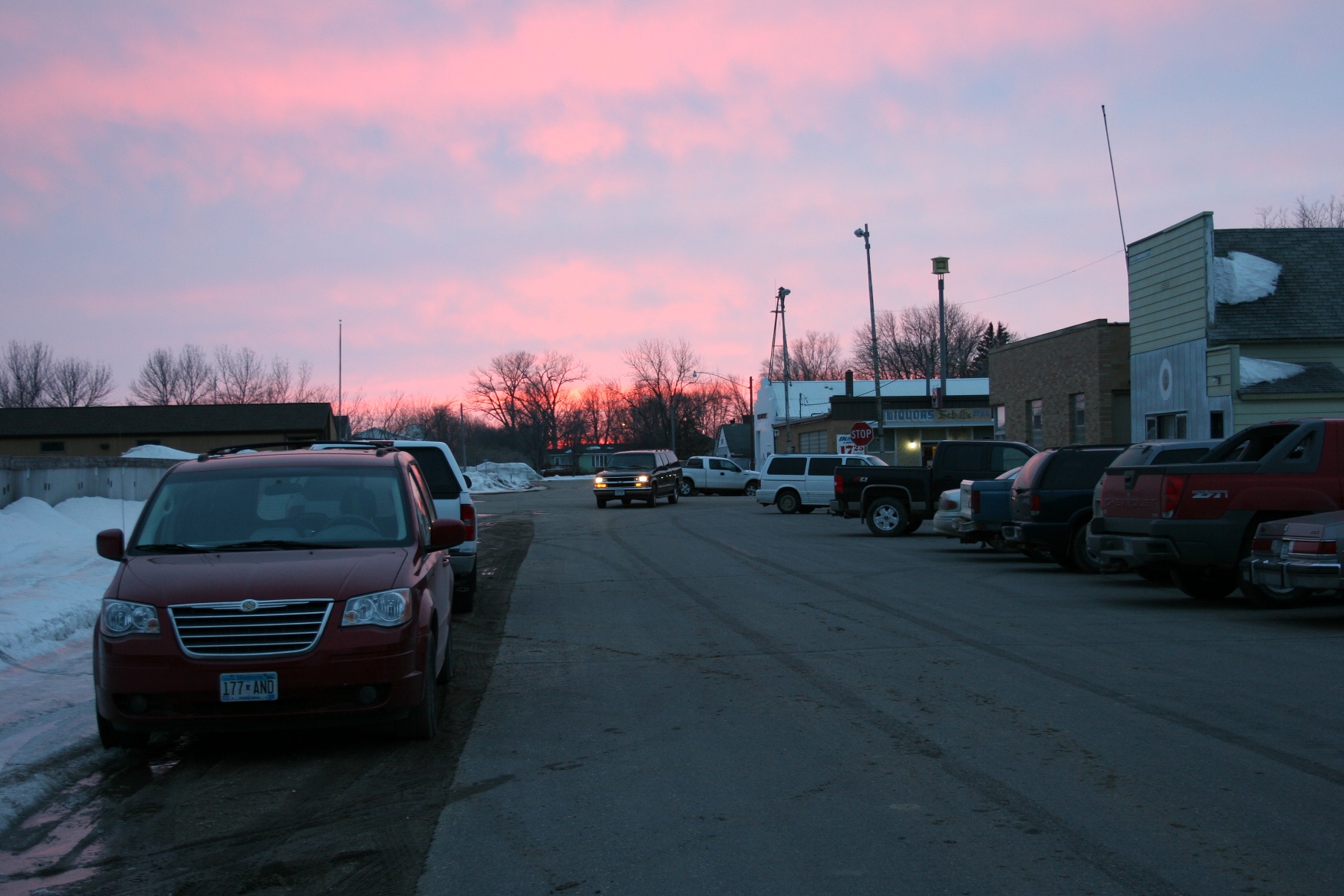
Standing in front of the community hall, I watch the sun set in my hometown.

Standing in front of the community hall, I turn and watch the sun set in my hometown.

FYI: If you wish to donate monies toward the $5,000 balance owed for the Jaws of Life, mail your donation to:

Vesta Fire Relief
c/o David Widman
Box 104
Vesta, MN. 56292

The new Jaws of Life replaces jaws more than 20 years old and “unable to cut some of the new high tensile steel in today’s cars,” according to a letter from the Vesta Firemen’s Relief Association.

© Copyright 2013 Audrey Kletscher Helbling


Little General Store on the Prairie March 27, 2013

I LOVE BERNADETTE THOOFT’S infectious laugh and outgoing personality. And I love what this mother of seven is doing for my hometown.
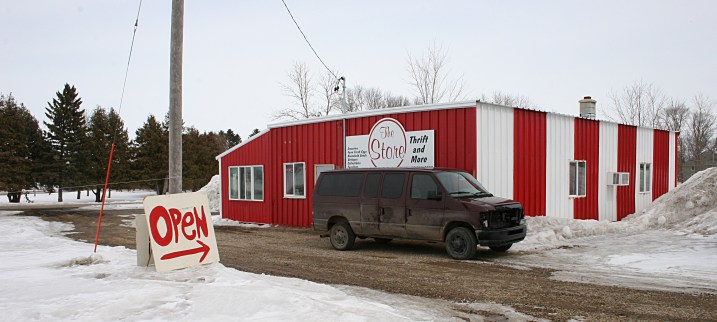
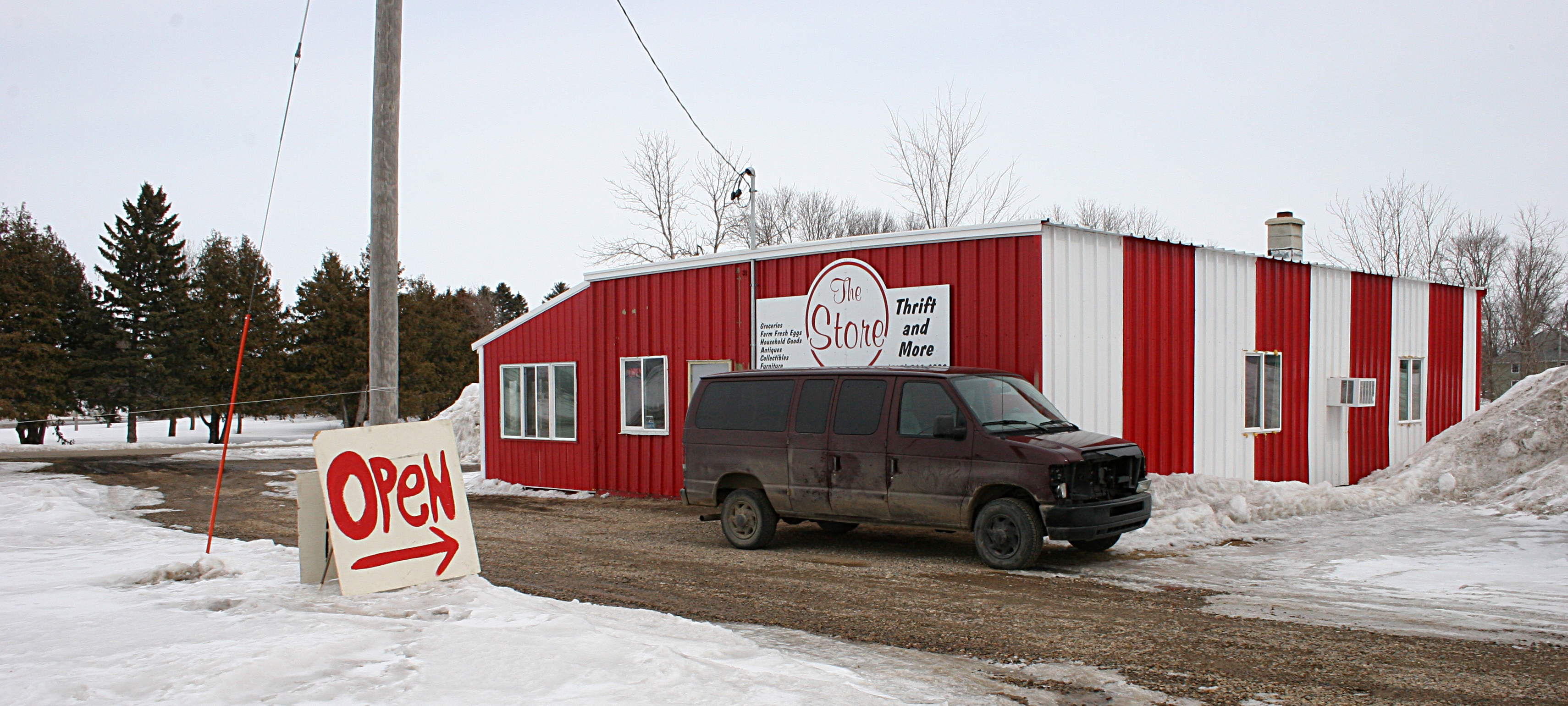
The Store: Thrift and More sits just off Minnesota Highway 19 in Vesta in Redwood County.

The Store: Thrift and More sits just off Minnesota Highway 19 in Vesta in Redwood County.

In February she opened The Store: Thrift and More in Vesta, population 330 and the only town along the 40-mile stretch of Minnesota Highway 19 between Redwood Falls and Marshall.

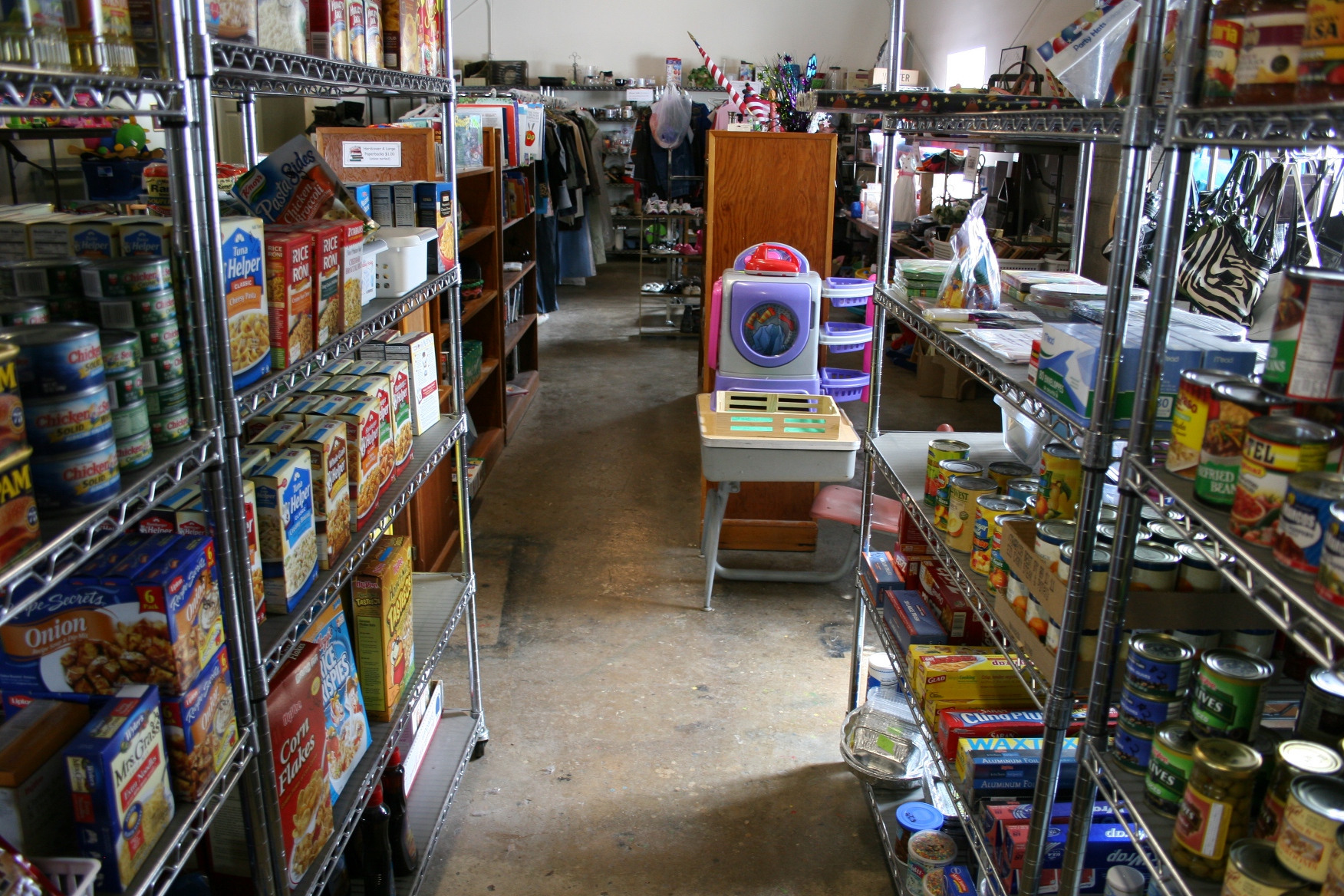
The “more” part of Bernadette’s store includes eight shelving units stocked with foodstuff, personal care items, paper products and more in addition to perishables stashed in nearby coolers.
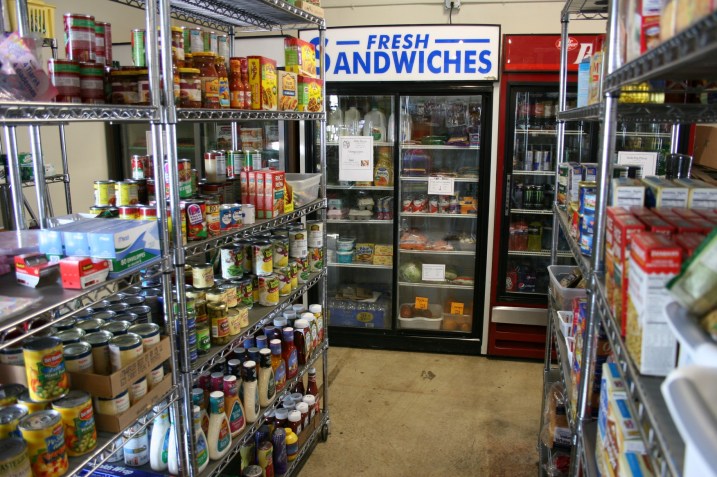
The grocery section of the store includes basic perishables like dairy products, some fruit, lettuce and more. Canned, boxed and bagged foods, personal care items, and miscellaneous items like greeting cards, tape and such fill eight shelving units.

The grocery section of the store includes basic perishables like dairy products, organic eggs, some fruit, lettuce and more. Canned, boxed and bagged foods; personal care items; and miscellaneous items like greeting cards, tape and such fill eight shelving units.

I don’t know exactly how long my hometown has been without a grocery store. But it’s been awhile. Locals, like my 80-year-old mom, have had to drive 20 miles either east or west to find the nearest grocery store. Now this community’s residents, many of them elderly, need only walk or drive to the west edge of town to buy a loaf of bread, a gallon of milk, organic eggs from Bernadette and Matt Thooft’s farm, fruit and an assortment of processed foods that include SPAM, much to my mom’s delight.

This is huge, to have groceries and basic necessities available in Vesta. Bernadette even offered to have her 11-year-old son deliver right to my mom’s doorstep a block away. Such small-town neighborliness simply warms my heart. Many times the good people of Vesta have assisted my mother. And for that, I am grateful.
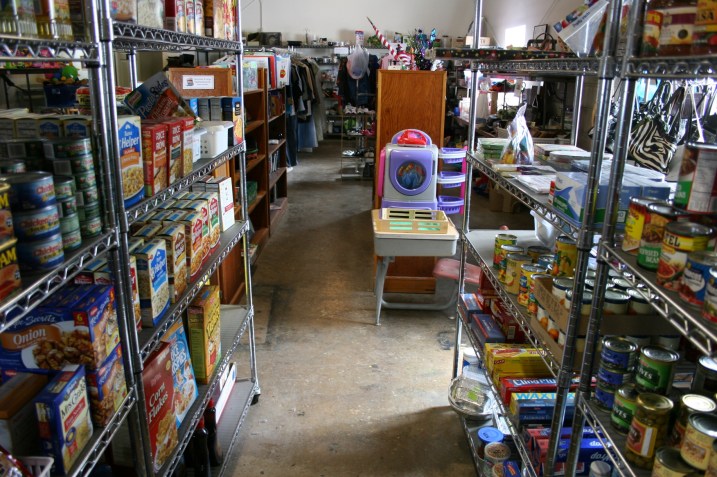
Looking toward the back thrift section of the floor.

Looking from the front grocery section toward the back thrift area of The Store.

Bernadette tells me she originally hadn’t planned on stocking groceries, rather dedicating her floor space to thrift items that range from kitchenware to toys, books to clothing, gift items to home décor and an assortment of other merchandise.
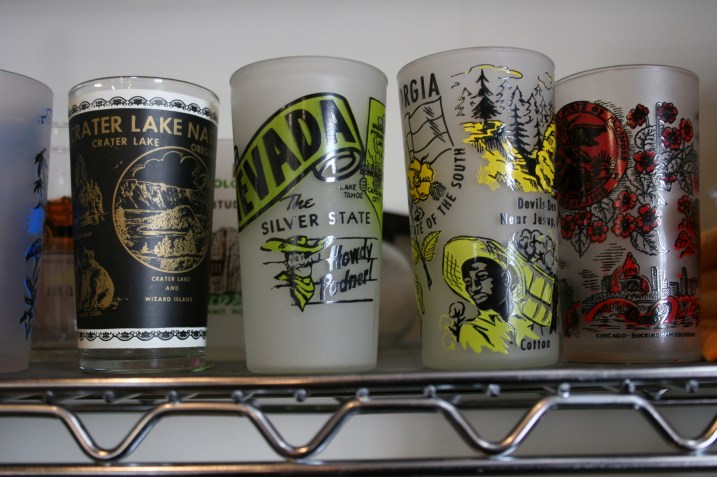
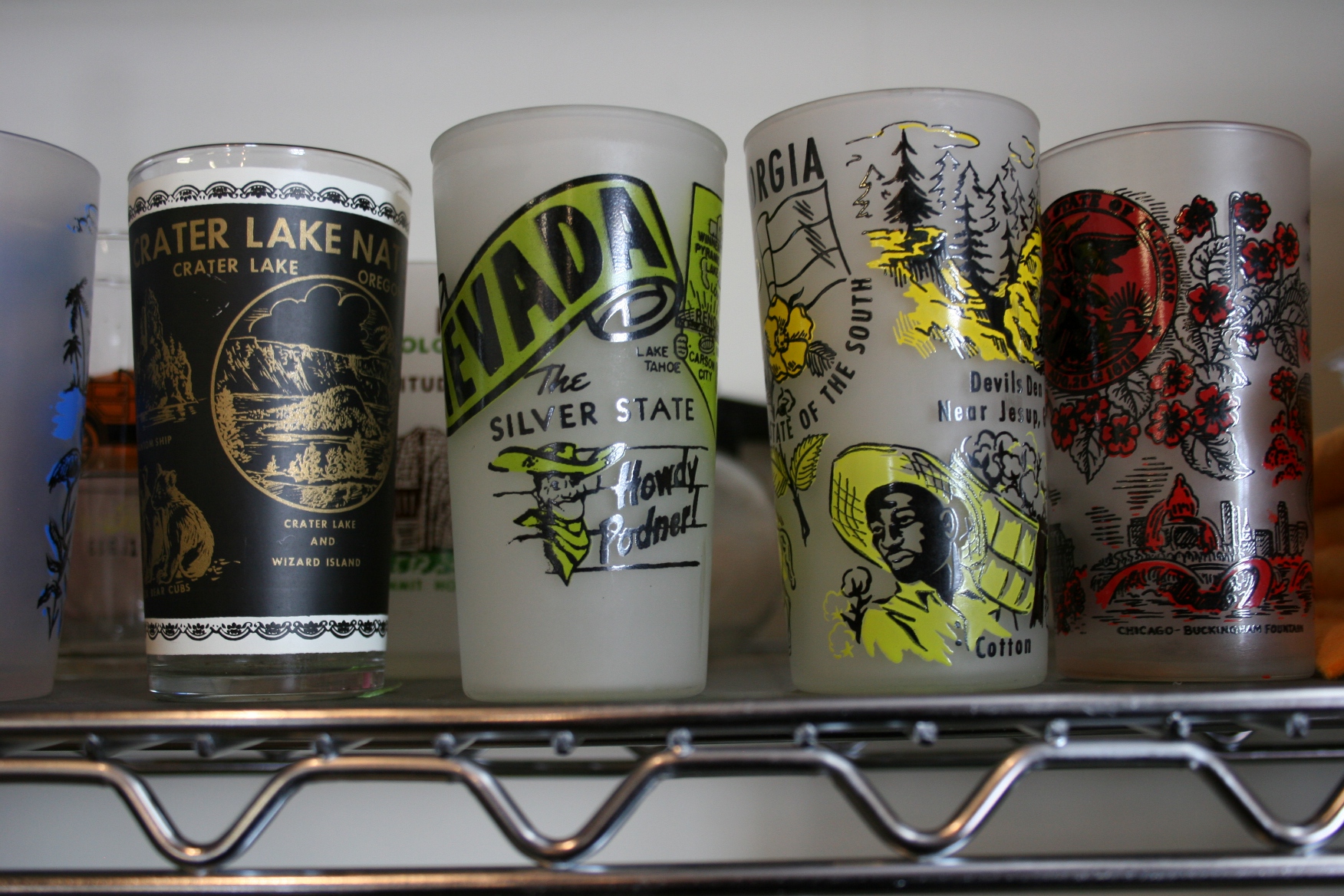
Vintage glasses in the thrift section.
Vintage glasses in the thrift section.

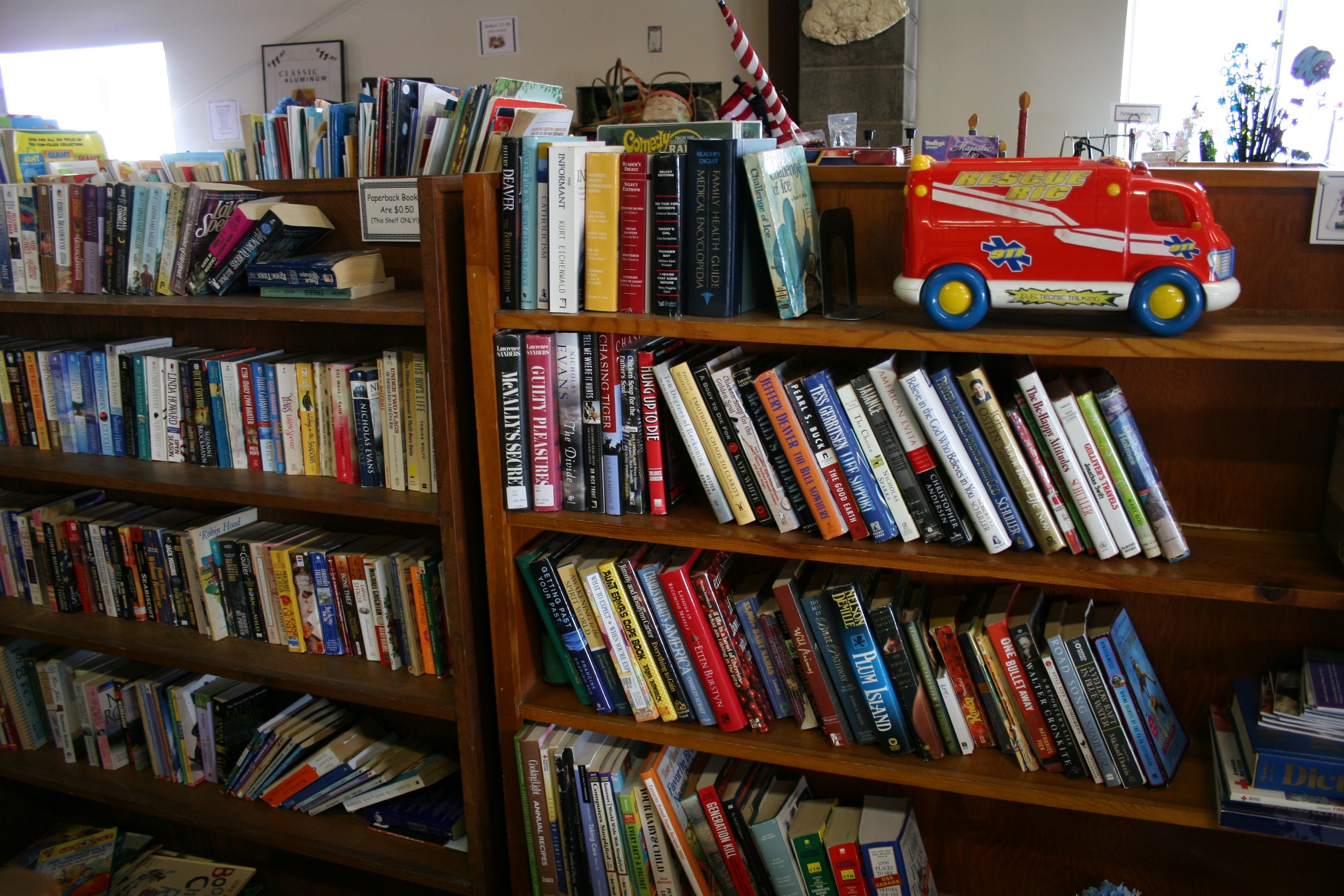
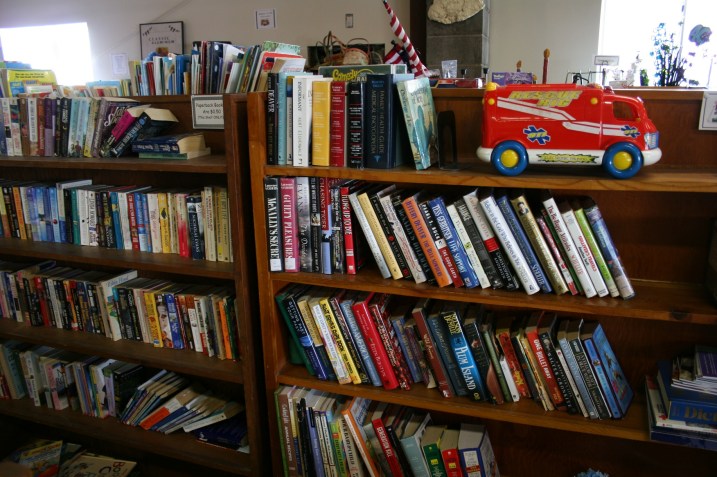
Bernadette offers a great selection of used books for all ages.
Bernadette offers a great selection of used books for all ages.

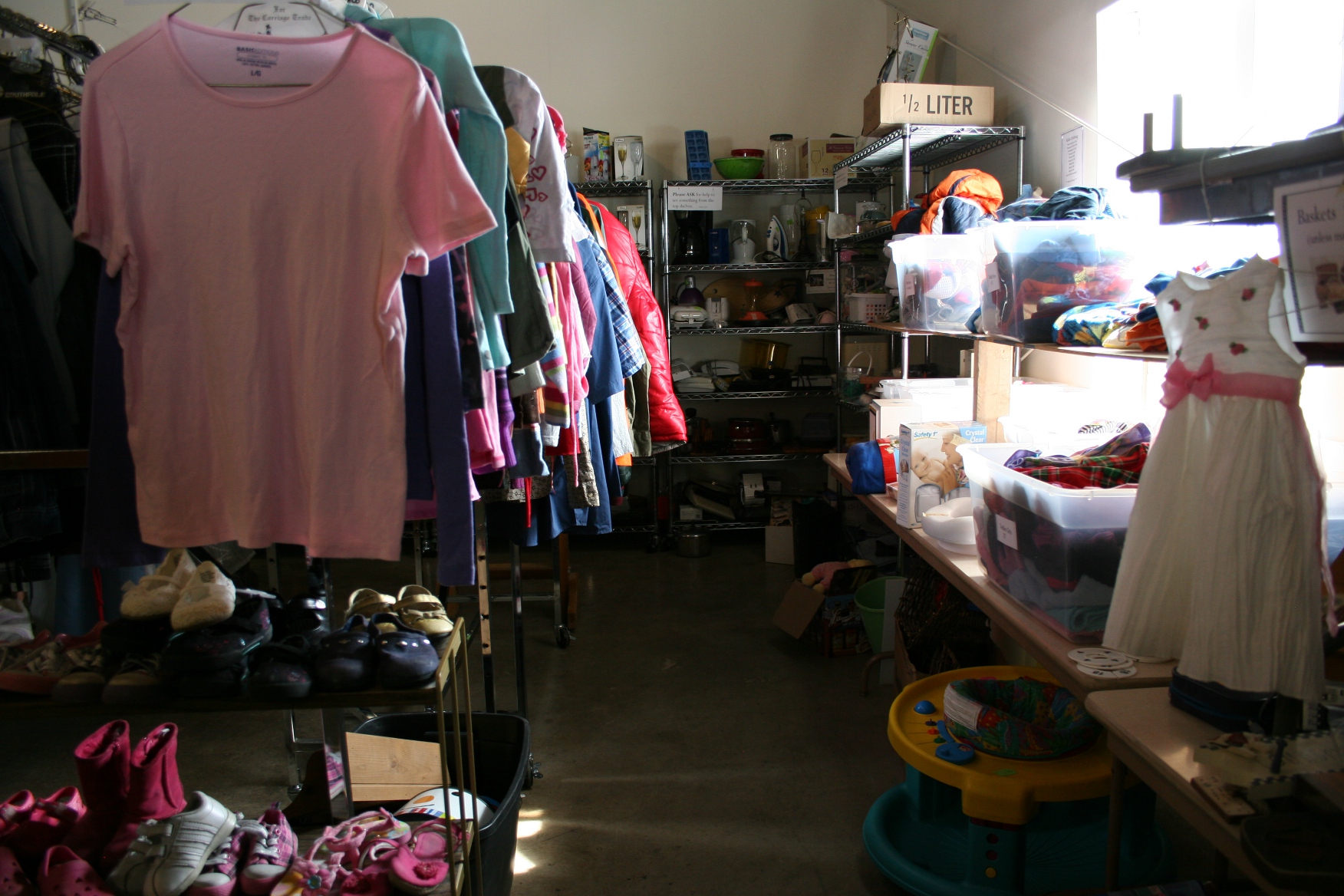
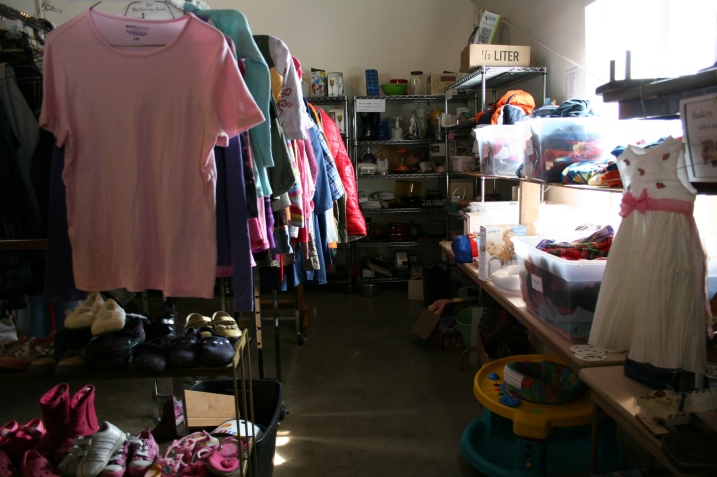
You'll also find a selection of clothes.

You’ll also find a shoes and clothing.
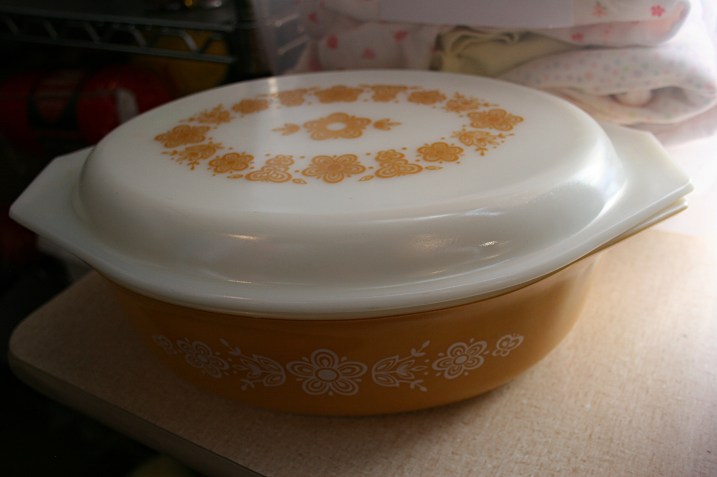
One of my favorite finds in The Store, an $8 vintage Pyrex casserole, which I nearly purchased.

One of my favorite finds in The Store, an $8 vintage Pyrex casserole, which I nearly purchased.

But then she started getting requests to carry groceries. So Bernadette decided to buy food and products her family can use. That way, if items don’t sell, she doesn’t lose anything. Once a week this entrepreneur mother drives the 20 miles west to Hy-Vee Foods in Marshall, reselling her purchases in Vesta at a slightly marked up price that will help cover gas expenses.
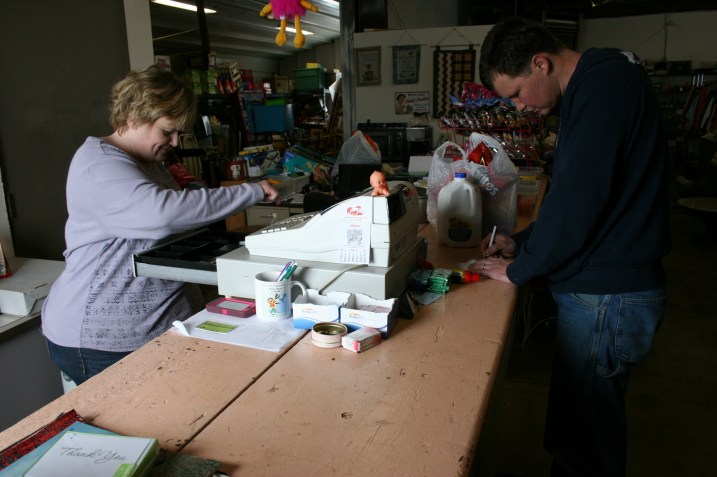
Jason Kramer stops in to buy a few grocery items from Bernadette.

Jason Kramer stops in to buy a few grocery items from Bernadette.

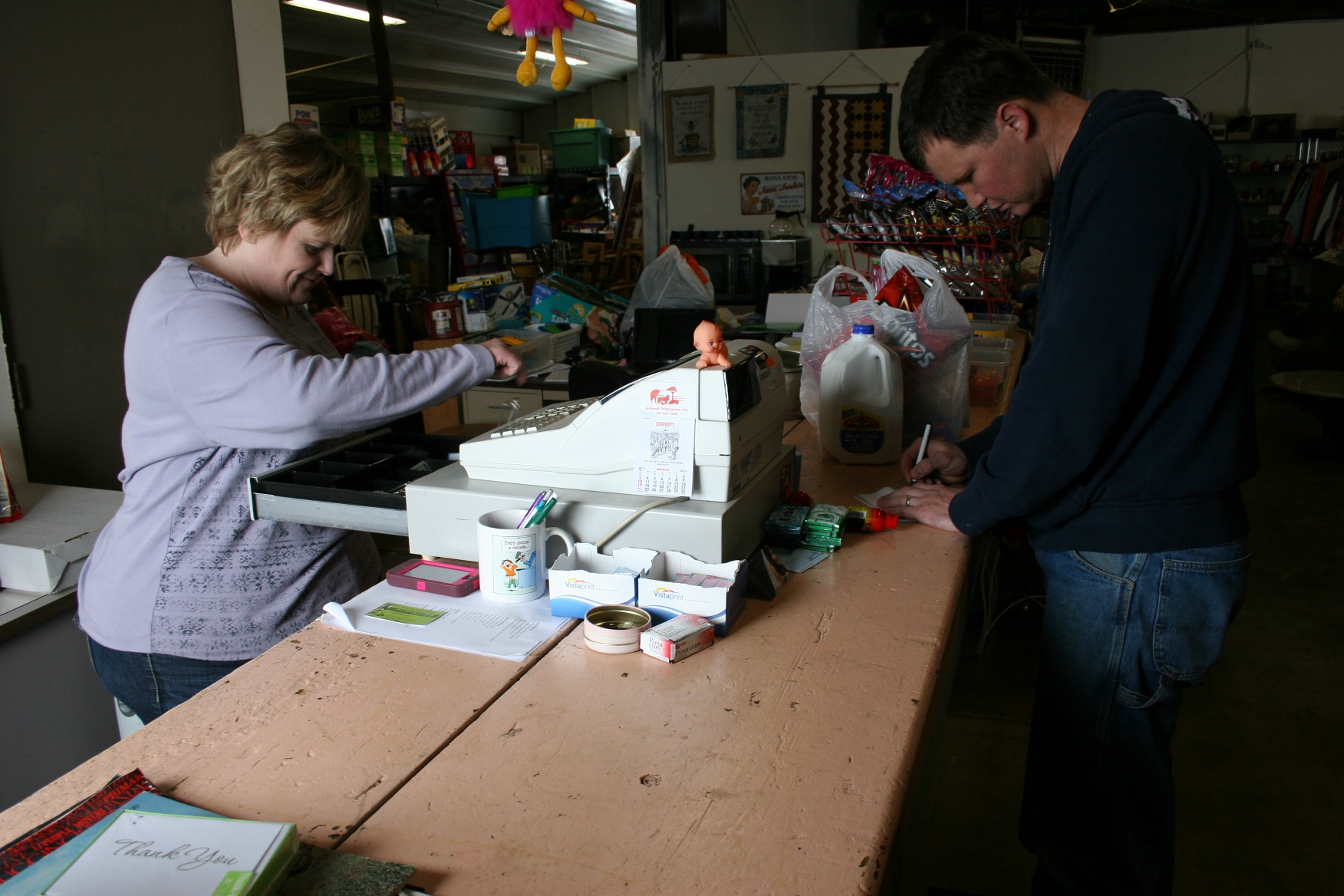
Already several local families come to The Store once a week to purchase their groceries, she says. On the Saturday afternoon I visited, Jason Kramer popped in from his home across the street to pick up Oreos, chips, bread and milk. He calls opening of The Store “flippin’ awesome.”

It is that type of enthusiasm Bernadette hopes for from other Vesta area residents. She needs their support, and business off the highway, to make her venture work in this isolated prairie town.
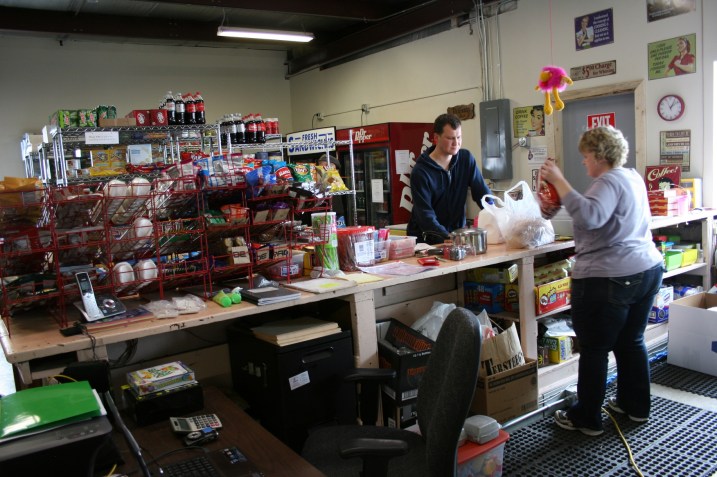
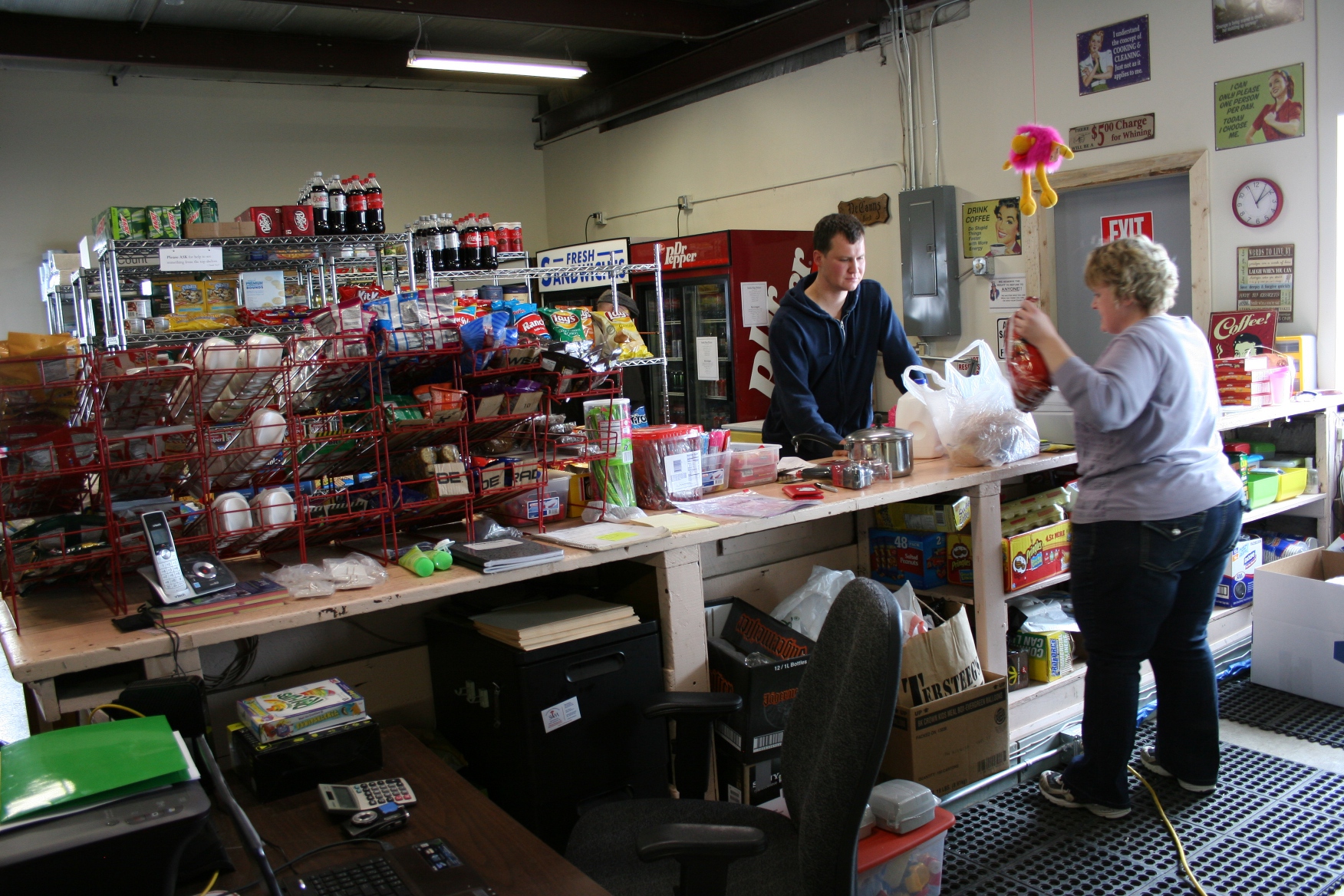
Just another view of the store with Bernadette bagging Jason's purchases.

Just another view of the store and Bernadette’s office with Bernadette bagging Jason’s purchases.

In the short time I perused the store and spoke with Bernadette, several others stopped in—two middle schoolers to eye the toy collection and eventually purchase candy, a middle-aged couple scanning thrift items and then Jason for his groceries. I walked out with a kettle for my college-aged son and my husband grabbed packaging tape and a dispenser.
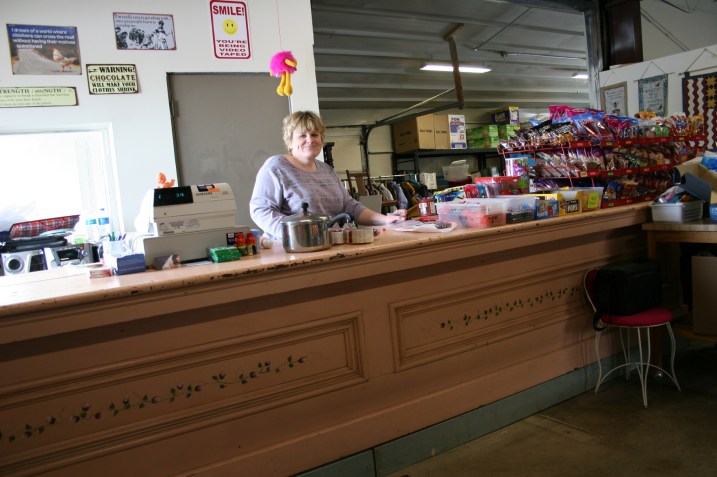
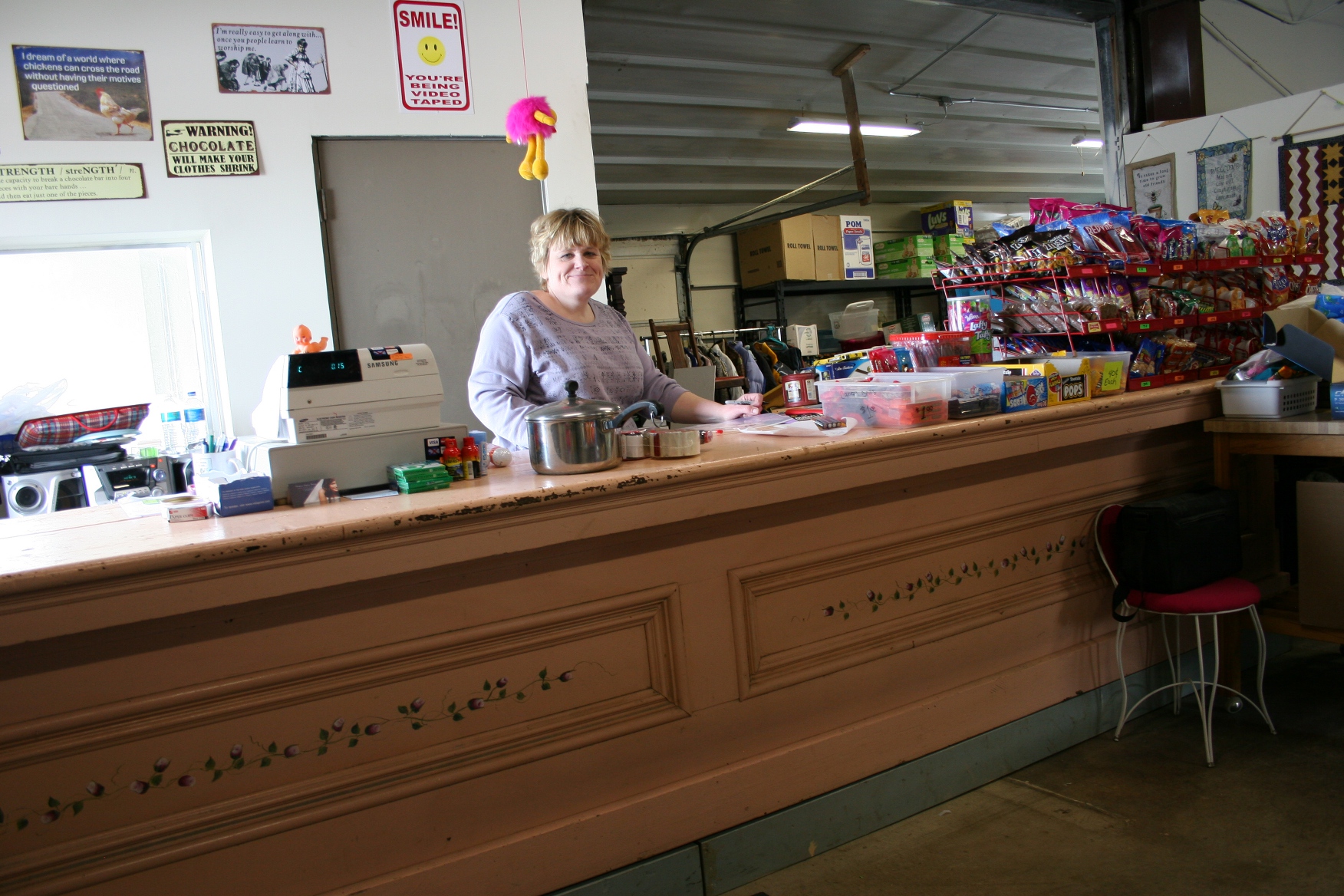
This 1800s general store counter anchors The Store.

This 1800s general store counter anchors The Store. Those are our purchases on the counter, that kettle and tape.

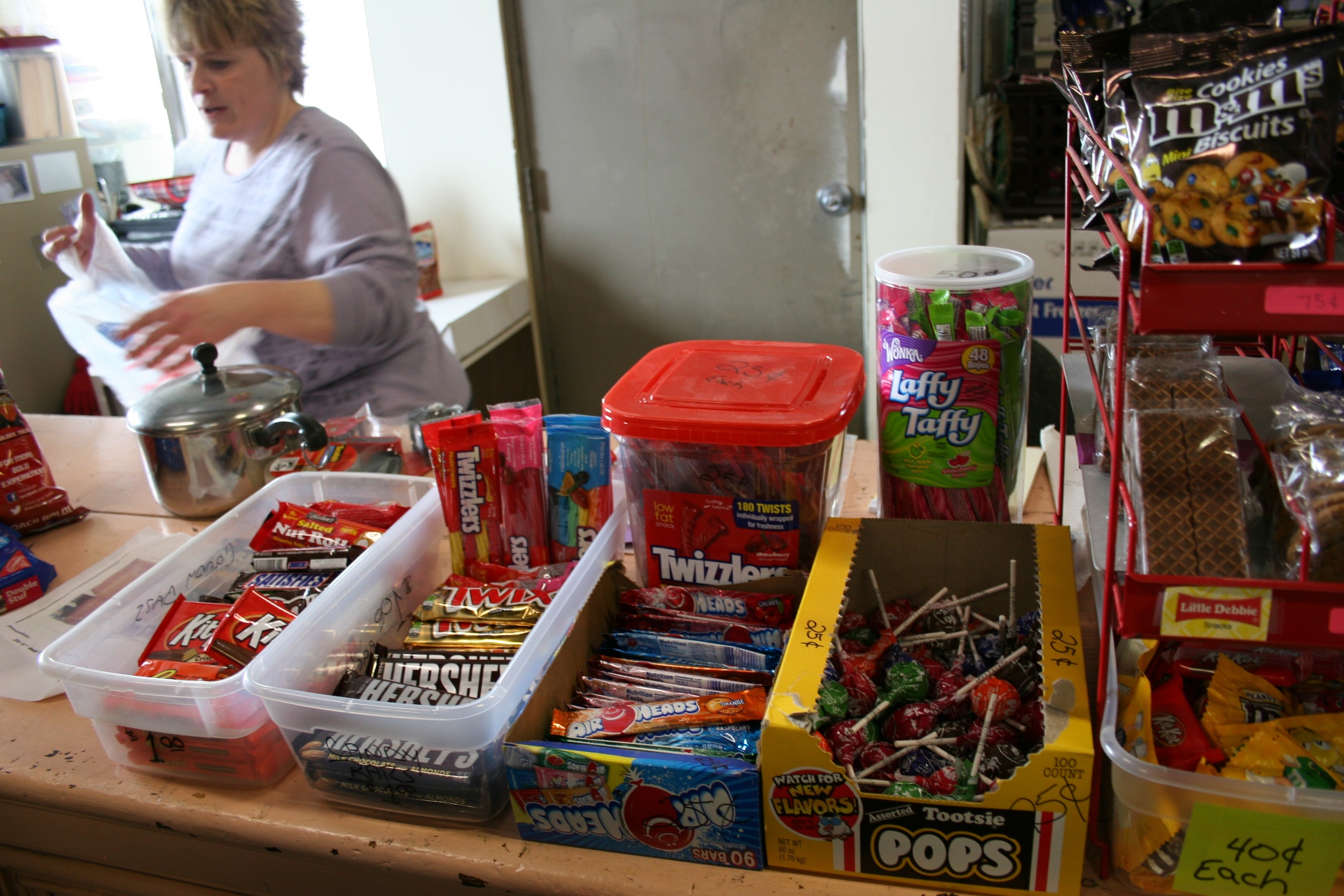
Bernadette says she’s aiming to recreate a Mom and Pop general store with a little bit of everything. I was delighted to find candy lining the 1800s checkout counter, reminding me of the penny candy I bought at Rasmussen’s Grocery while growing up in Vesta. The vintage counter, purchased from a Lake Benton antique store, originated from a general store between Lake Benton and Brookings, South Dakota. It’s the perfect fit for The Store, lending that historic authenticity reminiscent of yesteryear.

Like the old-fashioned general store, Bernadette has set up candy display, including my favorite Tootsie Pops.

Like the old-fashioned general store, Bernadette has set up a candy display, including my favorite Tootsie Pops.

I can remember when Vesta boasted two hardware stores, several restaurants/bars and a grocery store along with other businesses, in its one-block Main Street.

Rarely does a new business open here. But Bernadette, who lives on a farm near Lucan seven miles to the south, was looking to locate along the highway, conveniently next door to her husband’s business, Matt’s Frame Repair.
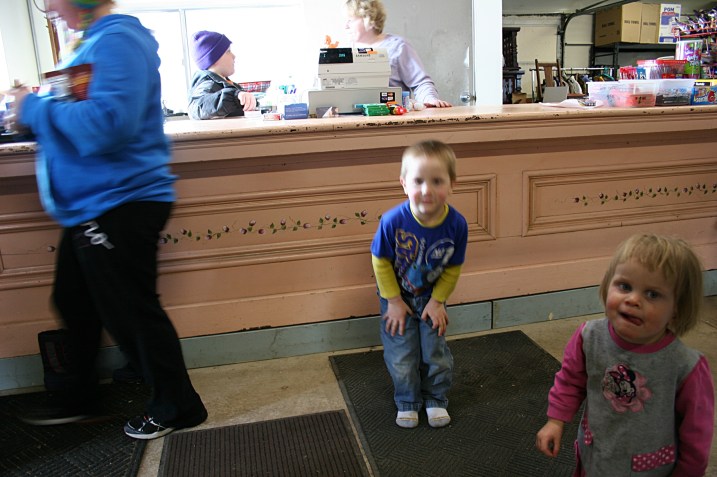
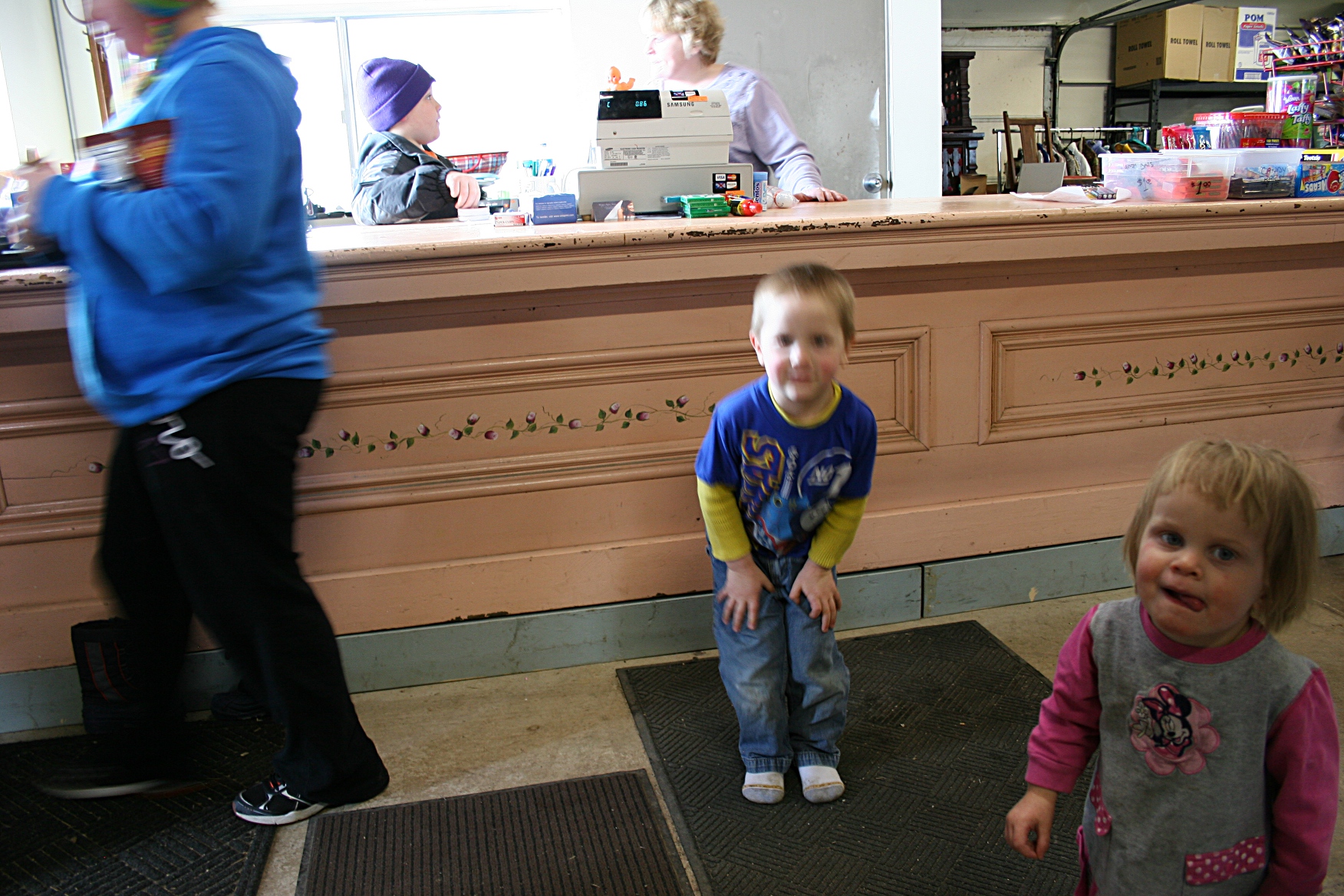
A young customer exits The Store, left, while three of the Thooft kids, including Maxwell, 4, and Beatrice, 21 months, hang out with Mom.

A young customer exits The Store, left, while three of the Thooft kids, including Maxwell, 4, and Beatrice, 21 months, hang out with Mom. The Thooft’s children include an 11-year-old, two 7-year-olds, two 4-year-olds, a 3-year-old and a 21-month-old.

She likes that Matt can walk over for lunch and spend time with her and the kids, ranging in age from 21 months to 11 years. She affectionately calls her seven, five of them birth children, two adopted, “the hoodlums.” The kids hang out in a room built into a corner of the poleshed style building.
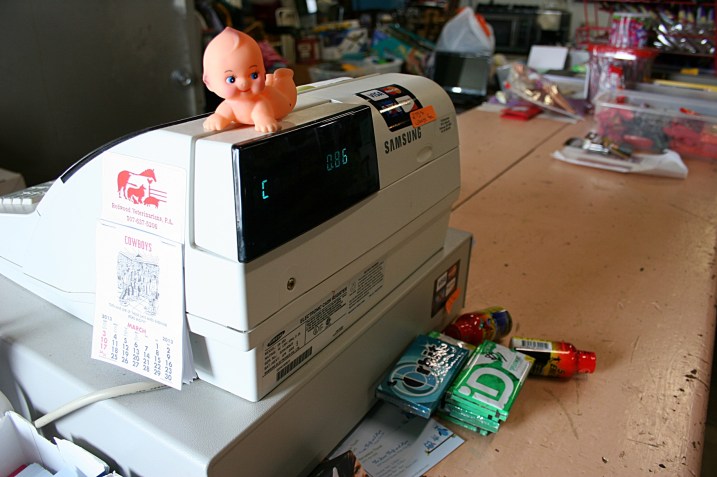
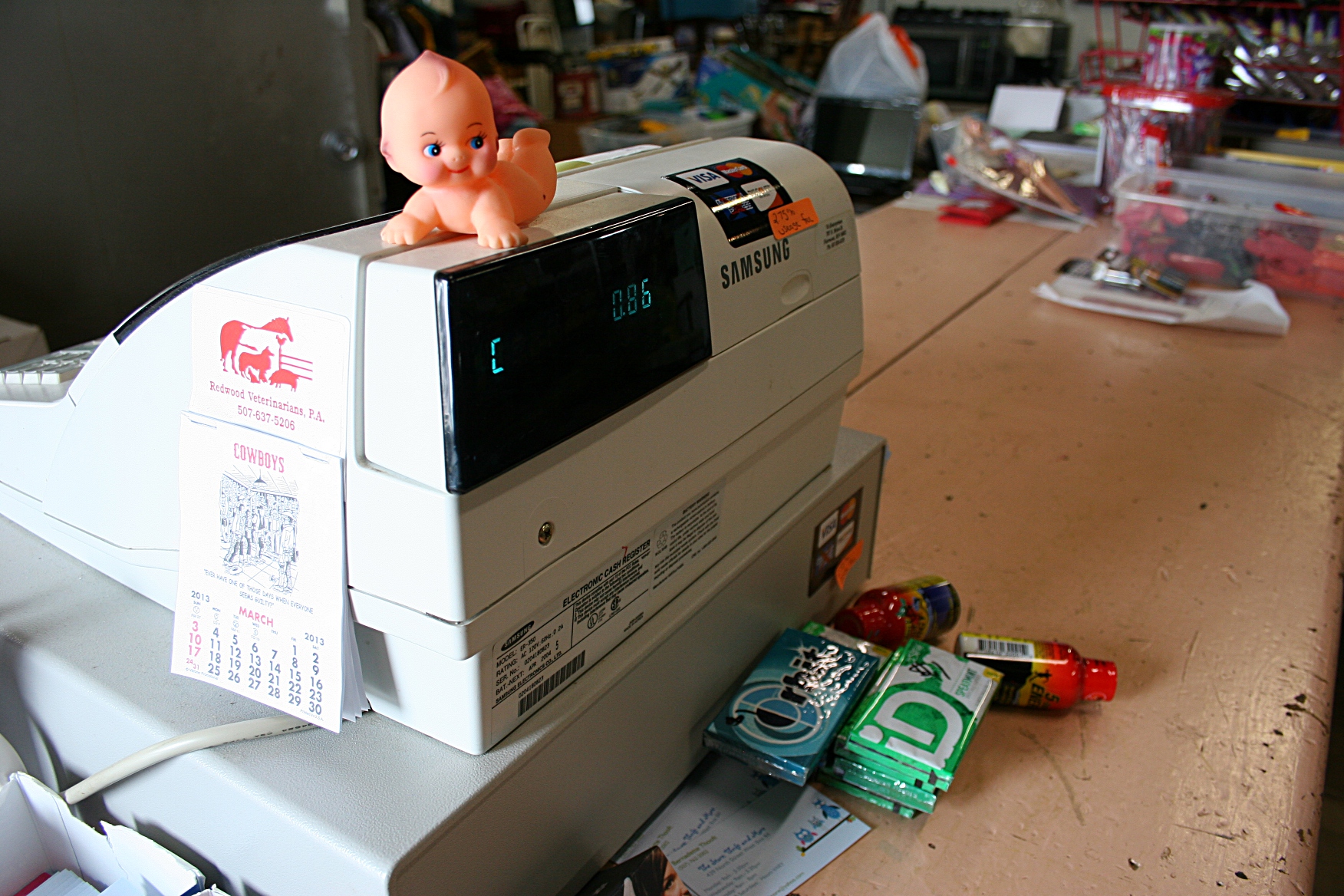
Look around and you'll see Bernadette's sense of humor in signage and props like this doll perched upon the cash register.

Look around and you’ll see Bernadette’s sense of humor in signage and props like this doll perched upon the cash register.

While the kids play and Matt naps in that corner playroom, Bernadette tends to customers on this Saturday afternoon in March. Her laptop sits open on her desk, her reference source for the thrift merchandise purchased primarily from online auctions and also from garage sales.
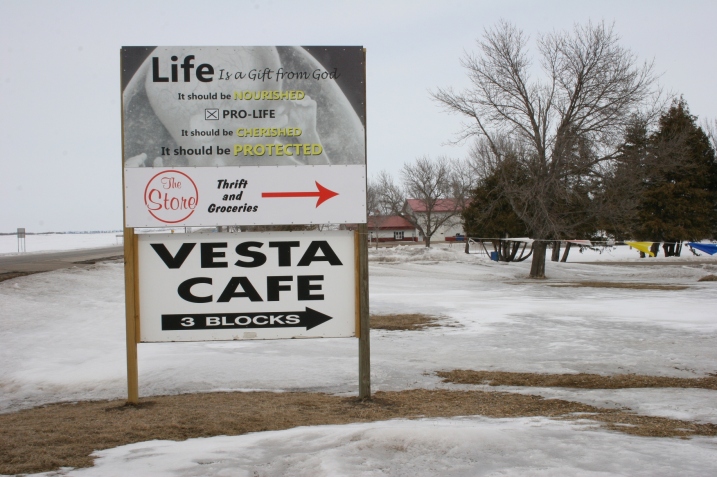
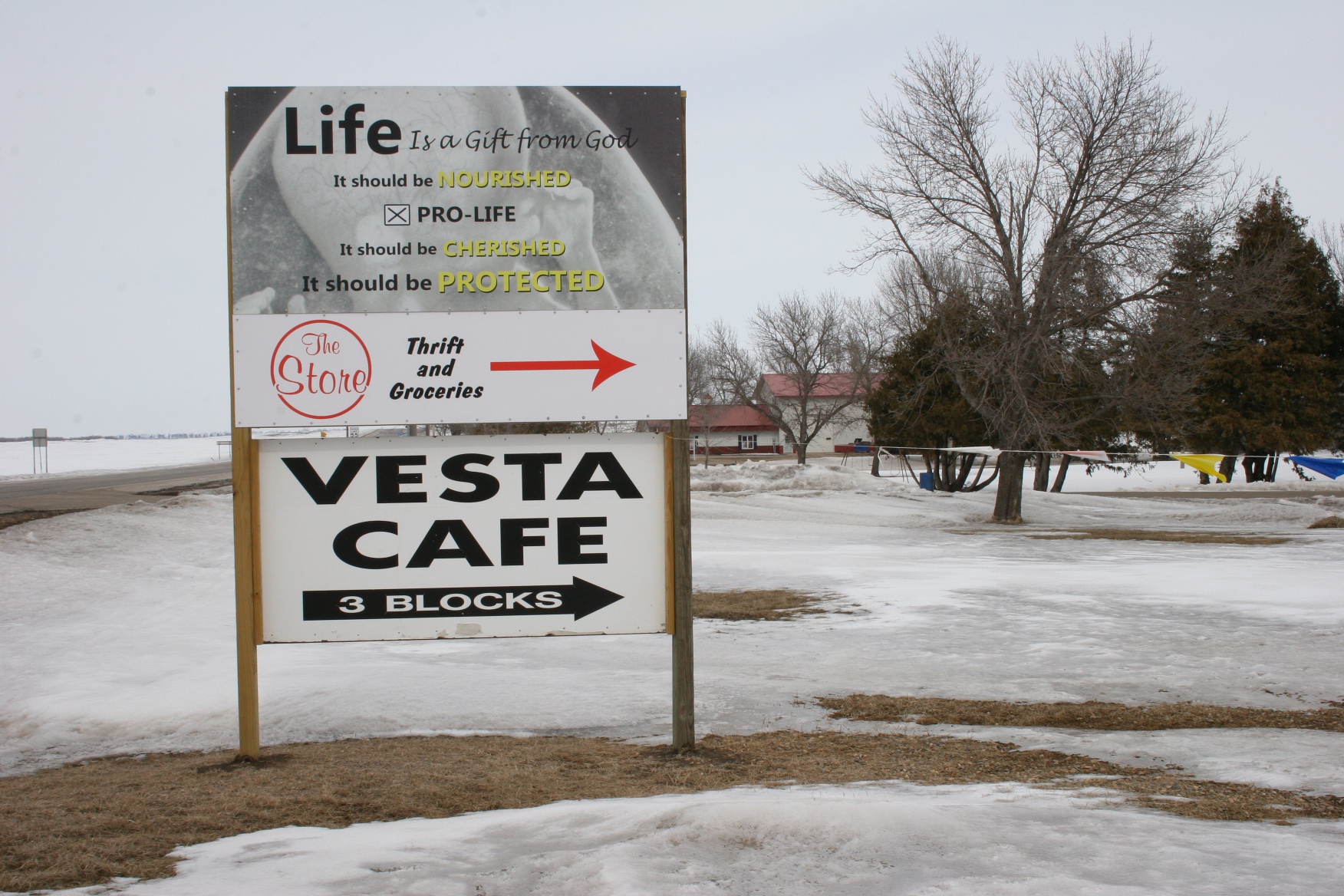
This sign by the thrift store points travelers along Minnesota Highway 19, left, to The Store and the Vesta Cafe.

This sign by the thrift store points travelers along Minnesota Highway 19, left, to The Store and the Vesta Cafe.

Bernadette is donating 10 percent of thrift sale proceeds to local charities like the United Way, a crisis nursery, area schools and the broader Minnesota Citizens Concerned for Life. She’s also created a “Believe in the Backpack” charity whereby she fills backpacks for kids in foster care.

In the short time I’ve spent with Bernadette, it’s clear to me that this Osakis native and former daycare provider loves kids and cares about folks in my hometown enough to open her own little general store on the prairie. And for that I am grateful.
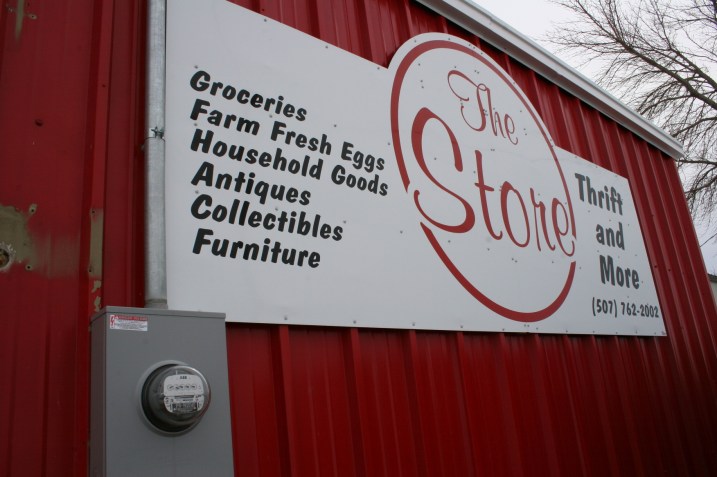
This sign graces the front of The Store: Thrift and More.

This sign graces the front of The Store: Thrift and More.

FYI: The Store: Thrift and More is open from 9 a.m. – 5:30 p.m. Monday and Wednesday; from 9 a.m. – 8 p.m. Thursday; and with varied hours on Friday and Saturday. Closed Sunday and Tuesday.

© Copyright 2013 Audrey Kletscher Helbling


Little Free Libraries for Small Towns project in Minnesota and Wisconsin officially kicks off at MOA August 15, 2012

TEN MONTHS AGO, Todd Bol, co-founder of the Wisconsin-based Little Free Library, and I were discussing an idea to get Little Free Libraries into small towns without libraries. I wanted a library in my hometown of Vesta, a community of around 340 residents which has never had a library.

I had blogged about a LFL in Faribault, where I have lived for 30 years, and challenged the residents of Vesta to start a LFL.

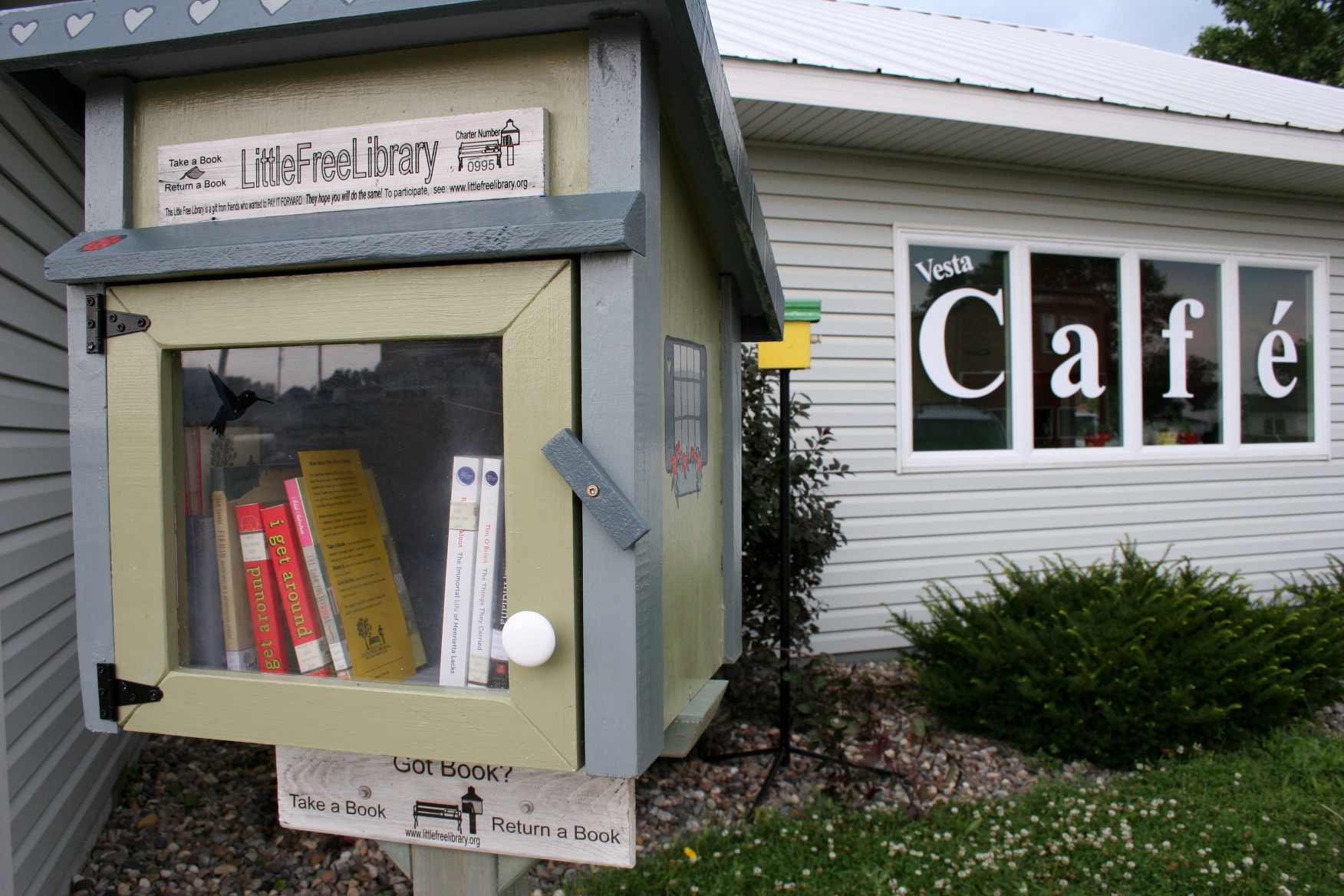
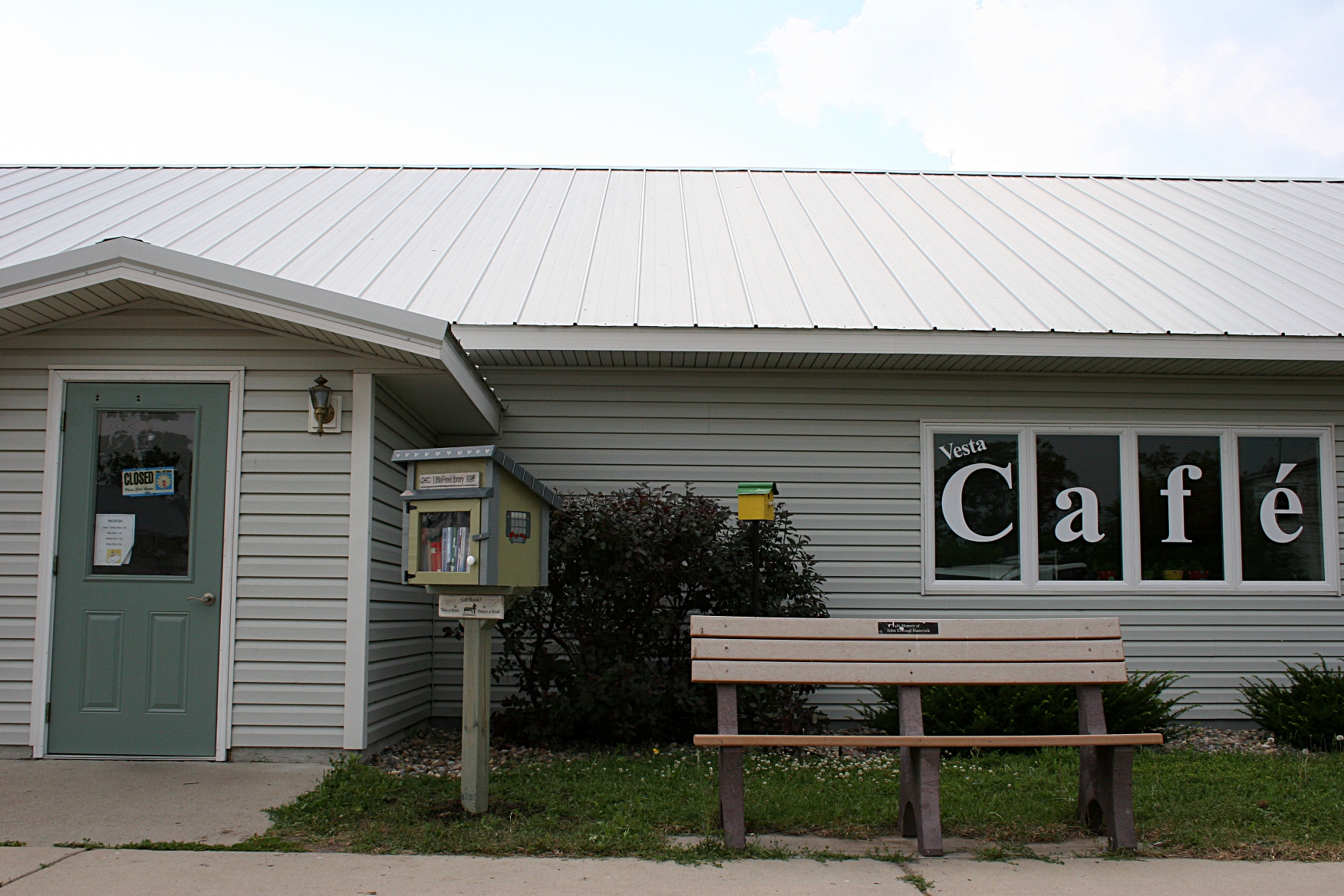
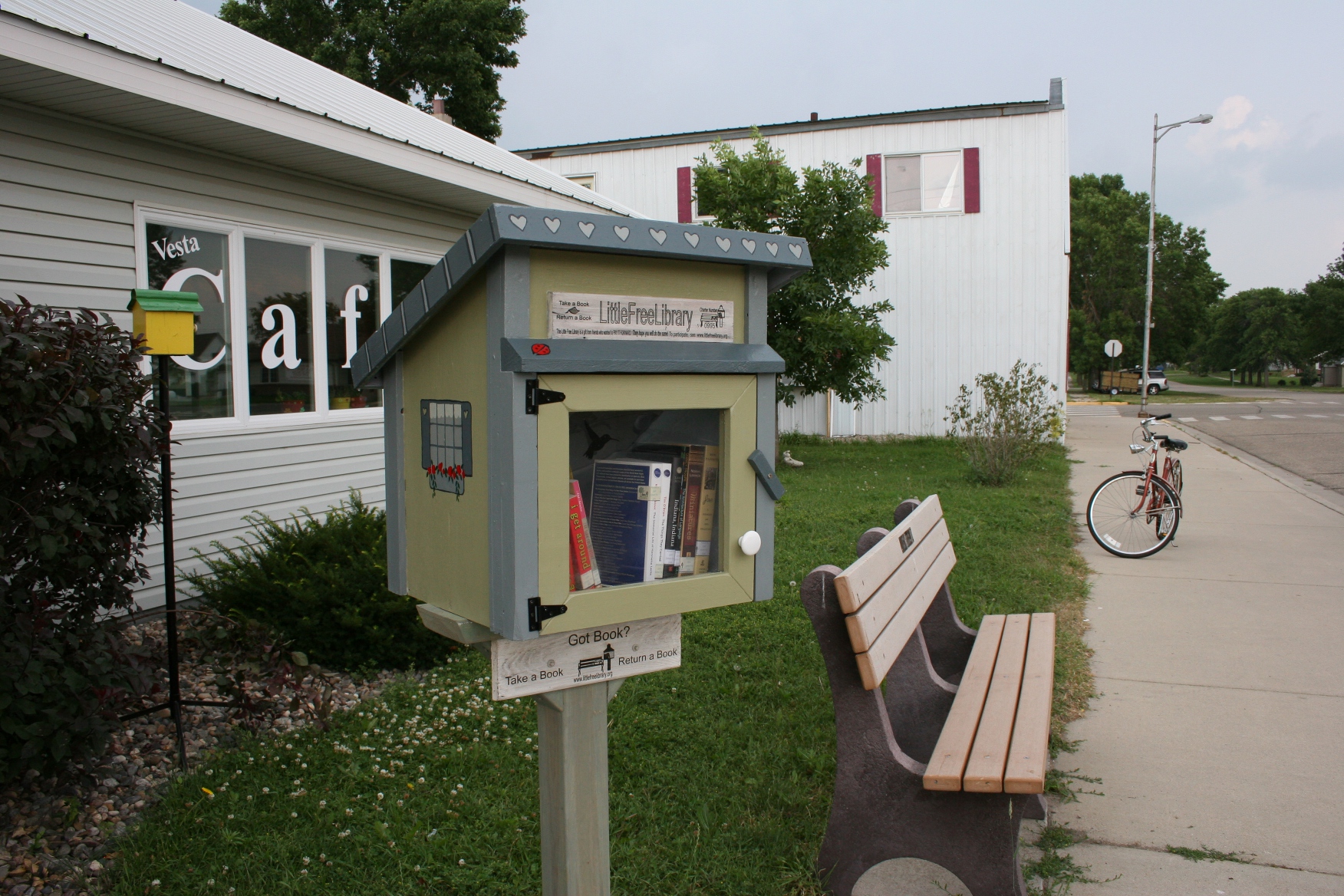
The LFL Todd and Susan Bol installed outside the community-owned Vesta Cafe.

After making that challenge, Bol and I talked and, several months later, he offered to donate, deliver and install a LFL in Vesta, placing the first library in a new initiative, Little Free Libraries for Small Towns. Bol and his wife, Susan, drove from Hudson, Wisconsin, on July 1 and installed a LFL in front of the Vesta Cafe.

This Friday, August 17, that small towns project officially kicks off with a celebration from noon to 3 p.m. in the Mall of America rotunda near the east entrance. A program featuring activities and also appearances by local celebrities sharing their favorite books is slated for 1 – 2 p.m. Businesses and publishers are donating new books and the public is encouraged to bring books for 20 uniquely designed mini libraries to be placed in Twin Cities’ neighborhoods and communities surrounding the mega mall.

MOA is donating those 20 libraries and two special libraries (numbers 2,509 and 2,510) which will tie and break the records of libraries funded by philanthropist Andrew Carnegie.

How sweet is that? But even sweeter, in my opinion, is the MOA’s general support of the Little Free Libraries for Small Towns project as a way “to promote literacy and community-building by supporting neighborhood book exchanges.”

The beautiful handcrafted LFL donated to my hometown of Vesta.

The LFL works on the premise of take a book/leave a book in a little library, which is typically an over-sized birdhouse size structure attached to a post and installed outdoors, making books accessible to the public 24/7.

In kicking off its Little Free Libraries for Small Towns project, the LFL non-profit aims to focus first on the small towns of Minnesota and Wisconsin without ready access to public libraries, like my hometown of Vesta on the southwestern Minnesota prairie. The closest libraries to Vesta are about 20 miles away. Earlier this year bookmobile service to my hometown and several other communities was cut by Redwood County commissioners to save money.

I expect that many other small towns in Minnesota and Wisconsin are in similar positions, without library services because a) they’ve never had libraries or b) funding has been cut or trimmed.

Living in or near a town without a library, as I did growing up, is a hardship for someone like me who loves to read. That’s why I was adamant in my discussion last fall with LFL co-founder Bol that he focus on small towns without libraries. He liked the idea—Bol is very much an energetic ideas man—and he eventually shaped our discussion, with the help of his equally enthusiastic staff, into the Little Free Libraries for Small Towns project.

Bol thinks big. The LFL group is initially seeking 20 sponsors to each facilitate 20 Little Free Libraries for small towns across Minnesota and Wisconsin, resulting in 400 new free libraries. A $600 contribution supports construction, delivery and installation of one LFL to a small town and a starter collection of books as well as official LFL registration and promotion, and a plaque on the sponsored library.

Beyond all of that, the real satisfaction, I think, comes in the reaction of those communities which benefit from such generosity. My hometown has embraced the LFL with a level of enthusiasm beyond anything I ever expected.

The team that worked to bring a Little Free Library to Vesta includes Dorothy Marquardt, left, and Karen Lemcke, representing the sponsoring Vesta Commercial Club, LFL co-founder Todd Bol and me (holding a copy of a poetry anthology I donated and in which I have two poems, “A school without a library” and “Saturday night baths”).

Karen Lemcke, who early on supported the LFL as a member of the Vesta Commercial Club and is now the Vesta library steward, shared several weeks ago that Vesta’s LFL is a “very successful project.”

She then went on to explain that area residents are taking books from the outdoor LFL and that two bookshelves inside the Vesta Cafe have also been filled with donated books. Says Lemcke:

We have a variety of books from non-fiction, fiction and children’s books. On Sunday, children had taken some of the books and sat on a couch nearby looking through them. I heard today that tractor books were on a shelf and local farmers were borrowing them overnight to look through. The women have been going through the books as well and they will be picking up some to read, too…It’s like it (LFL) brought a “little life” to Vesta.

If you are thinking that Karen’s report brought tears to my eyes, you would be right. To hear that farmers are pulling tractor books from shelves to take home, especially, pleases me. And kids paging through books…

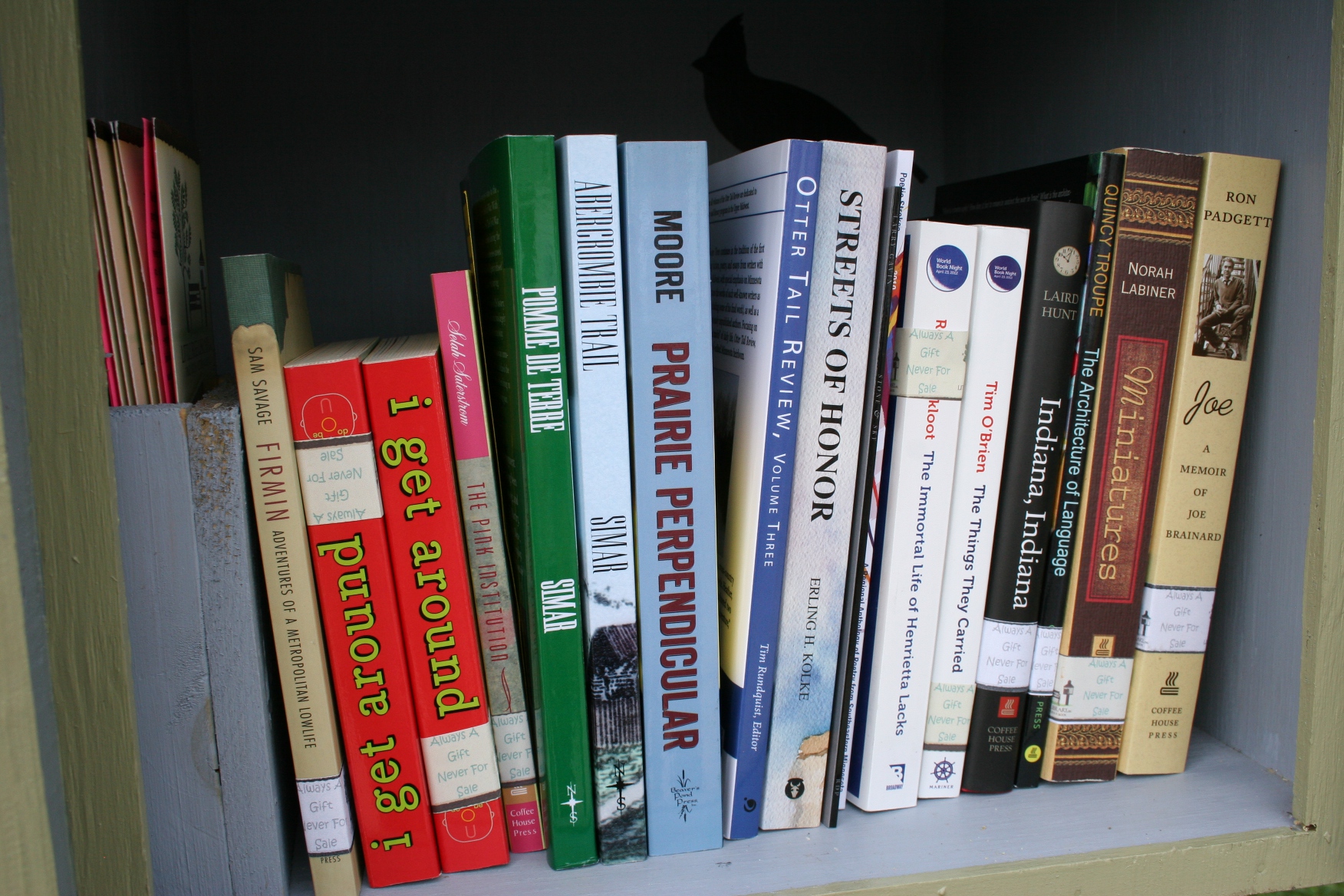
The books Todd Bol and I placed inside Vesta’s LFL on July 1. He brought books donated by several Twin Cities publishers and I brought books from my personal collection. I have since collected and donated an additional 40 books.  A retired librarian from nearby Wabasso donated eight bags of books, primarily mysteries, and the cafe manager’s family also donated books and I expect others have given books, too.

With this new LFL for Small Towns project, just consider for a moment how many more scenarios like this can happen in small towns without libraries. What a gift to bring books to the residents of small towns and enhance or instill a love of reading.

The LFL organization is now accepting applications from communities which would like to be considered for the Little Free Libraries for Small Towns project. Applicants from Minnesota and Wisconsin need only complete a short questionnaire requesting information such as the town’s population, whether it has a public library and how a LFL would make a difference in their community.

LFLs will be awarded based on available sponsorships and contributions and the need and interest level of the applicant communities, among other criteria.

So…if your small Minnesota or Wisconsin town needs a library, believe. It can happen. My conversation with the co-founder of the Little Free Library resulted in the donation of a library and a starter collection of books to my hometown…and the launch of the Little Free Libraries for Small Towns project.

The Little Free Library at the Vesta Cafe on the one-block Main Street in my hometown is the seed plant of the Little Free Libraries for Small Towns project.

FYI: For more information about the LFL program, click here to reach the website. To learn more about  the Little Free Libraries for Small Towns initiative and to download an application, click here.  Applications will also be available at the MOA-LFL event on Friday, to which I’ve been invited but will be unable to attend.

If you or your business or organization is interested in sponsoring a library or libraries for the small towns initiative in Minnesota or Wisconsin, email Megan Hanson at mphanson@littlefreelibrary.org.

© Copyright 2012 Audrey Kletscher Helbling
 

Let’s study action verbs today August 1, 2012

Filed under: Uncategorized — Audrey Kletscher Helbling @ 7:20 AM
Tags: , , , , ,

I KNOW. I KNOW. You already are thinking you do not want to read this post. After all, you have no interest in grammar or the eight parts of speech.

Or maybe you love language, like me, and wonder what I could possibly teach you.

Perhaps I can’t teach you anything. But I can show you, via a series of photos, how kids define “fun.”

I’ve also labeled each image with an appropriate action verb followed by a definition pulled not from a dictionary or online source, but from my creative brain. Who says some grammar guru can tell me exactly how to define a word?

Twirl: To spin a boy around and around until an adult suggests you stop or the kid may puke up the potluck lunch he just ate at the family reunion.

Swing: To move your arms in such a way as to imitate hitting one out of the ballpark.

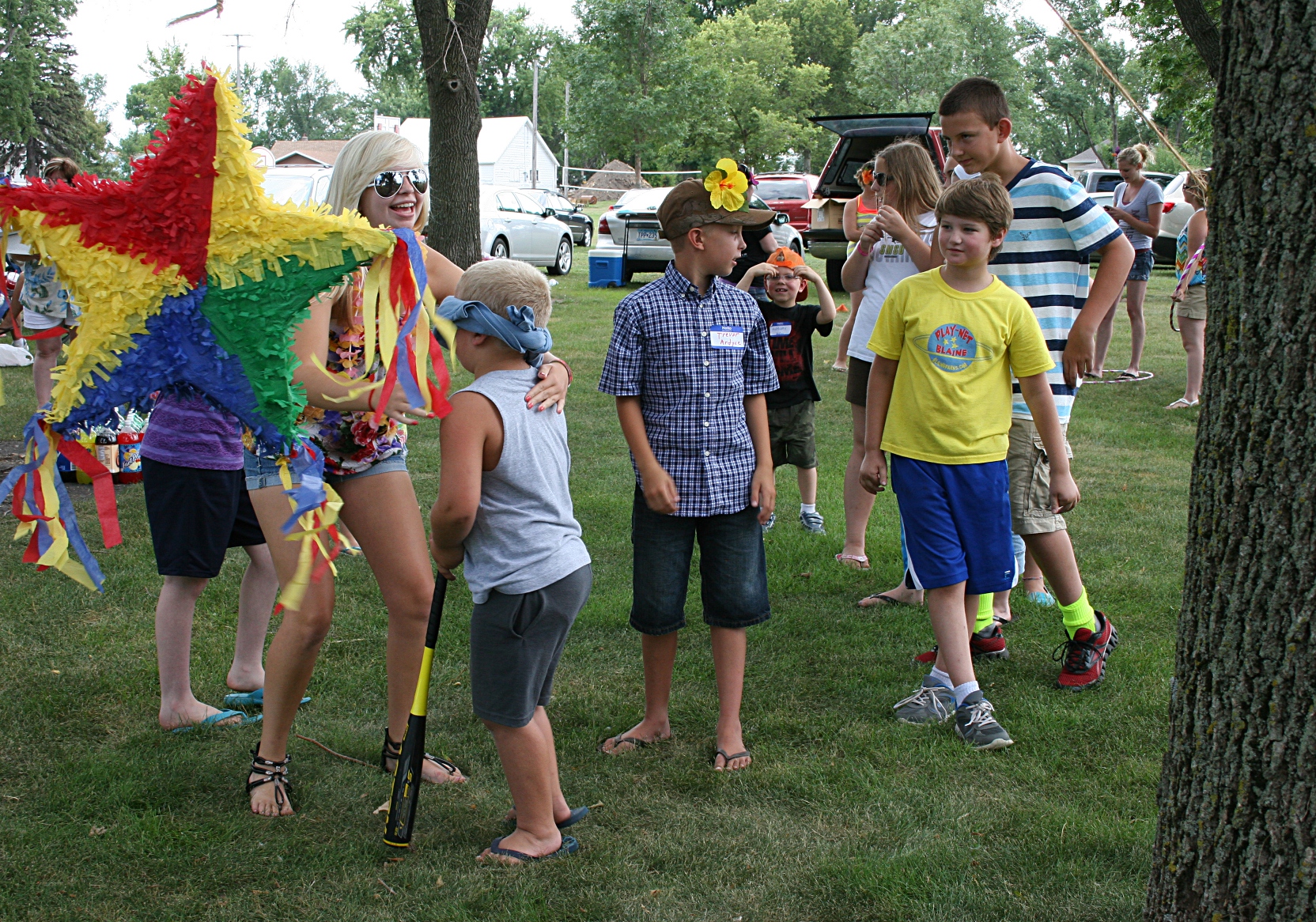
Run: To launch or propel one’s body forward at a rapid pace in an effort to get as much candy as possible because, uh, like you want to be the winner and scoop up the most candy.

Grab: To reach out and grasp handfuls of candy as fast as you can.

Hoard: To scoop a large quantity of candy into your hands, protecting your pile with your body, until an adult notices and advises you that you must share.

Gather:  To pick up and fill your hands to overflowing with candy.

Stash: To pull the cap from your head and use it to corral all of the candy you’ve plucked from the grass.

FYI: These images were taken at the Kletscher family reunion held this past weekend at the park in my hometown of Vesta. To read an additional family reunion post with many fun photos, click here.

Copyright 2012 Audrey Kletscher Helbling
 

Memories shared, memories made at a rural Minnesota family reunion July 31, 2012

Old-fashioned games like a gunny sack race, a three-legged race, and running with eggs on a spoon have been popular activities at recent Kletscher family reunions.

MY COUSIN LYNN doesn’t realize it, I’m sure. But when she repeated to me several times at this past weekend’s Kletscher family reunion that we need to keep this going, that not all families are like ours, gathering every year, remaining connected, sharing memories of the past, I knew that she was absolutely right.

The reunion originated many, many years ago as an annual summer picnic for descendants of Rudolph and Mathilda Kletscher, my great grandparents. As their son Henry’s family grew, a reunion for the family of Henry and Ida, my grandparents, was established.

In my 55 years of life, I bet I’ve missed only a handful of Kletscher reunions. It’s that important to me to attend this yearly gathering  in my hometown of Vesta. These aunts and uncles and cousins (and my grandparents, long ago deceased) were very much a part of my life when I was growing up as we all lived in close proximity to one another.

Saturday evening, circled around a campfire in the Vesta City Park, we shared memories of the many, many times our family celebrated birthdays and anniversaries. While the uncles clustered around card tables to swig beer and play cards so many decades ago and the aunts visited, we cousins raced in the dark shadows of farm yards in raucous games of “Starlight, Moonlight.” And then, when the wooden crate of pop bottles was pulled out, we swarmed to grab the rare treat of bubbly beverages.

Such were our memories (some best kept within the family) shared as darkness settled upon the prairie. Campfire flames flared and sparked while conversation ebbed and flowed as only it can in the comfortable familiarity of family.

Despite the feelings of closeness evoked at a reunion, the reality is that we are connected now primarily by memories and blood, not by the intertwining of our lives today. For the most part, we’ve moved away from the prairie and see each other only at the reunion or at the funerals of family members.

Several years ago, my sister Lanae and I decided we needed to infuse new energy into the reunion if we were to keep the next generation interested in remaining connected. That meant offering activities which would create memories. And so we, and other family members, have planned games. This year was no exception.

The cupcake walk, a popular activity two years ago, was brought back.

Elle, one happy little girl with a cupcake. She’s also an excellent hula hooper.

Already we can see our hard work and efforts effecting a change. The younger generation wants to come to the reunion now as opposed to “having” to tag along with mom and dad and being bored to death because “there’s nothing to do.”

I need only see the excitement in the faces of my cousins’ kids and grandkids’ and the smiles on my cousins’ faces to realize we’re on to something with offering organized activities. These descendants of Henry and Ida Kletscher are bonding and building memories.

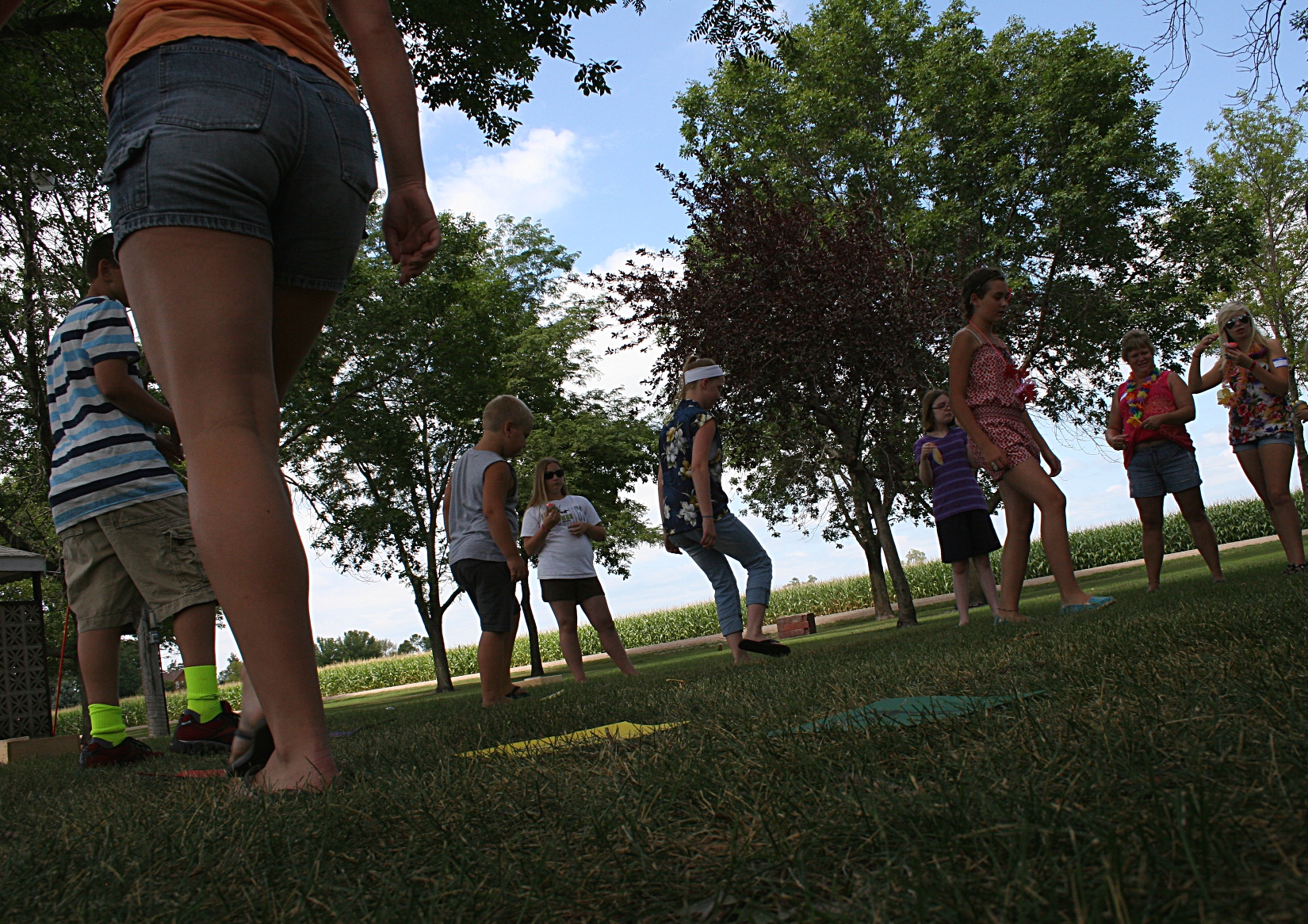
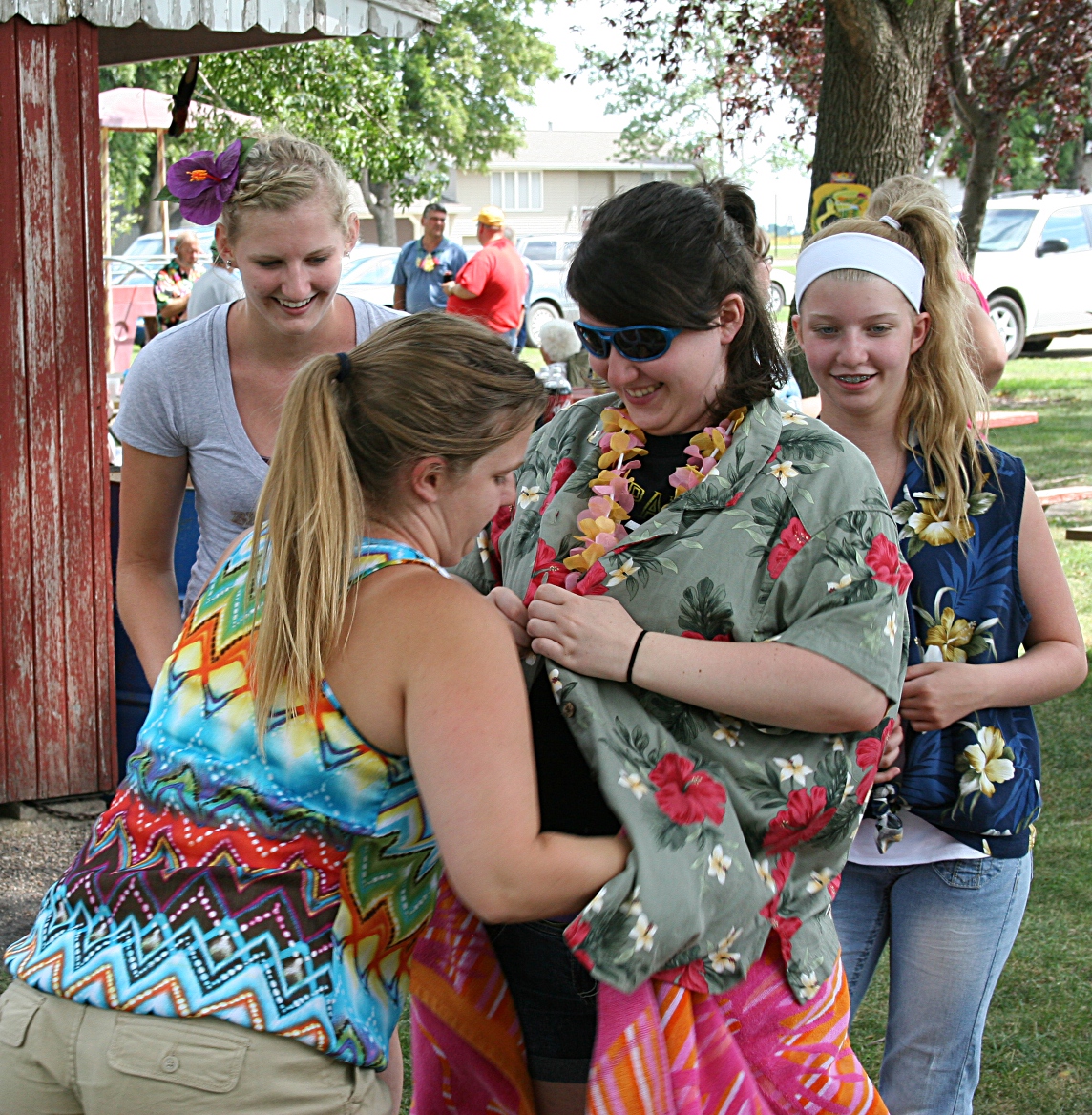
It didn’t take much persuading to get the young adults participating in the Tacky Tourist Relay, helping each other slip into Hawaiian garb and more during our Hawaiian Luau themed reunion.

Perhaps 15 – 20 years from now they will circle around a campfire in the Vesta park remembering those gunny sack races or the time they hula hooped or Audrey insisting they join in the Tacky Tourist Relay Race.

Teams compete in the Tacky Tourist Relay.

I hope they will smile at the memories and realize how very blessed they are to be part of a family that has loved one another for generations.

Even my generation (OK, they’re a wee bit younger than me) formed a Tacky Tourist Relay team.

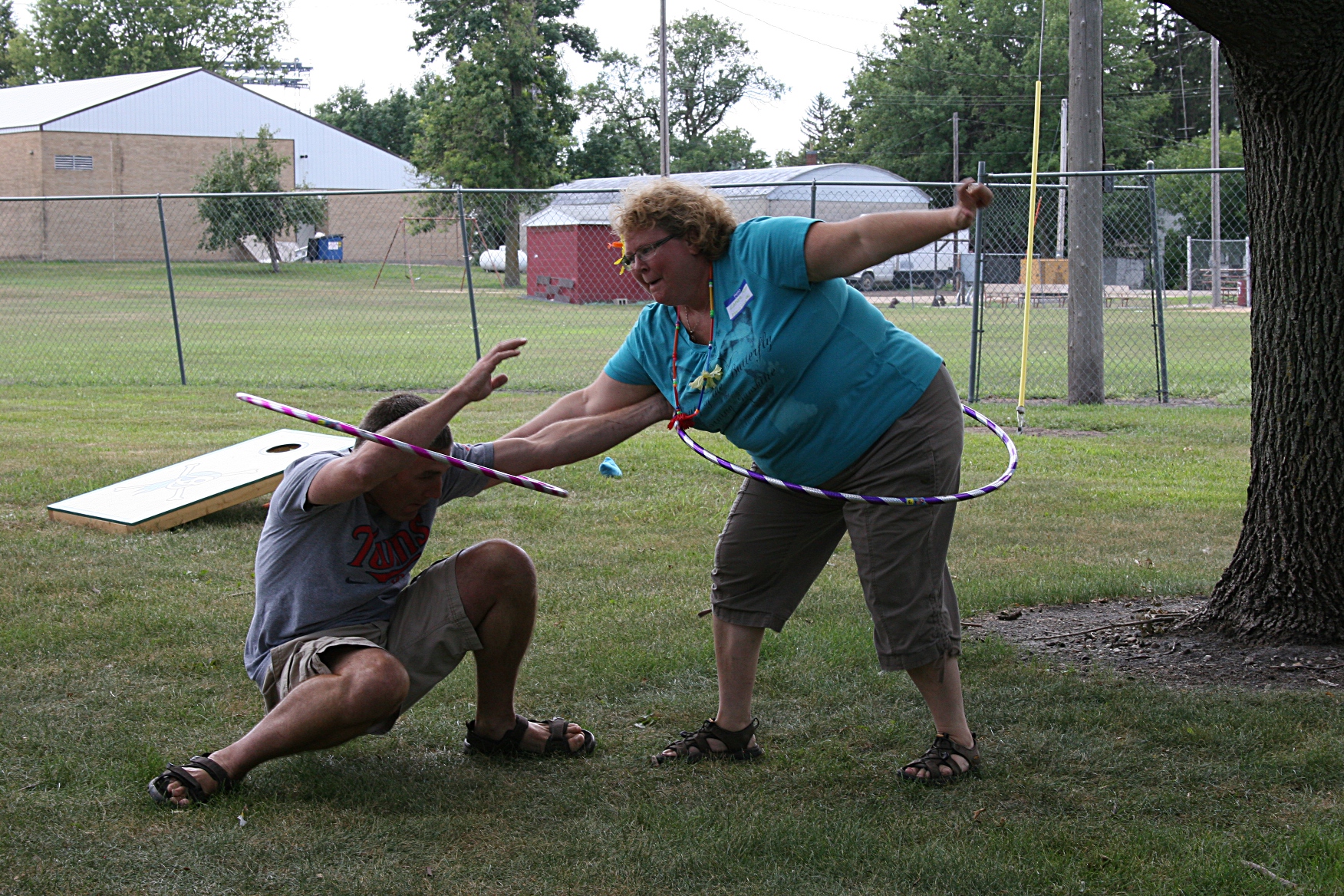
My sister Lanae and cousin Kirt assist each other in the hula hoop competition. I’m pretty certain they did not win.

© Copyright 2012 Audrey Kletscher Helbling
 

“…take this house into your protection” July 5, 2012

Filed under: Uncategorized — Audrey Kletscher Helbling @ 7:01 AM
Tags: , , , , ,

IT HAD BEEN AWHILE, I suppose, since they needed extra hymnbooks at a Sunday morning worship service.

But this past Sunday at my home congregation, St. John’s Lutheran in Vesta, the ushers and elders pulled out and dusted off surplus hymnals before distributing them to worshipers seated in the social hall overflow section.

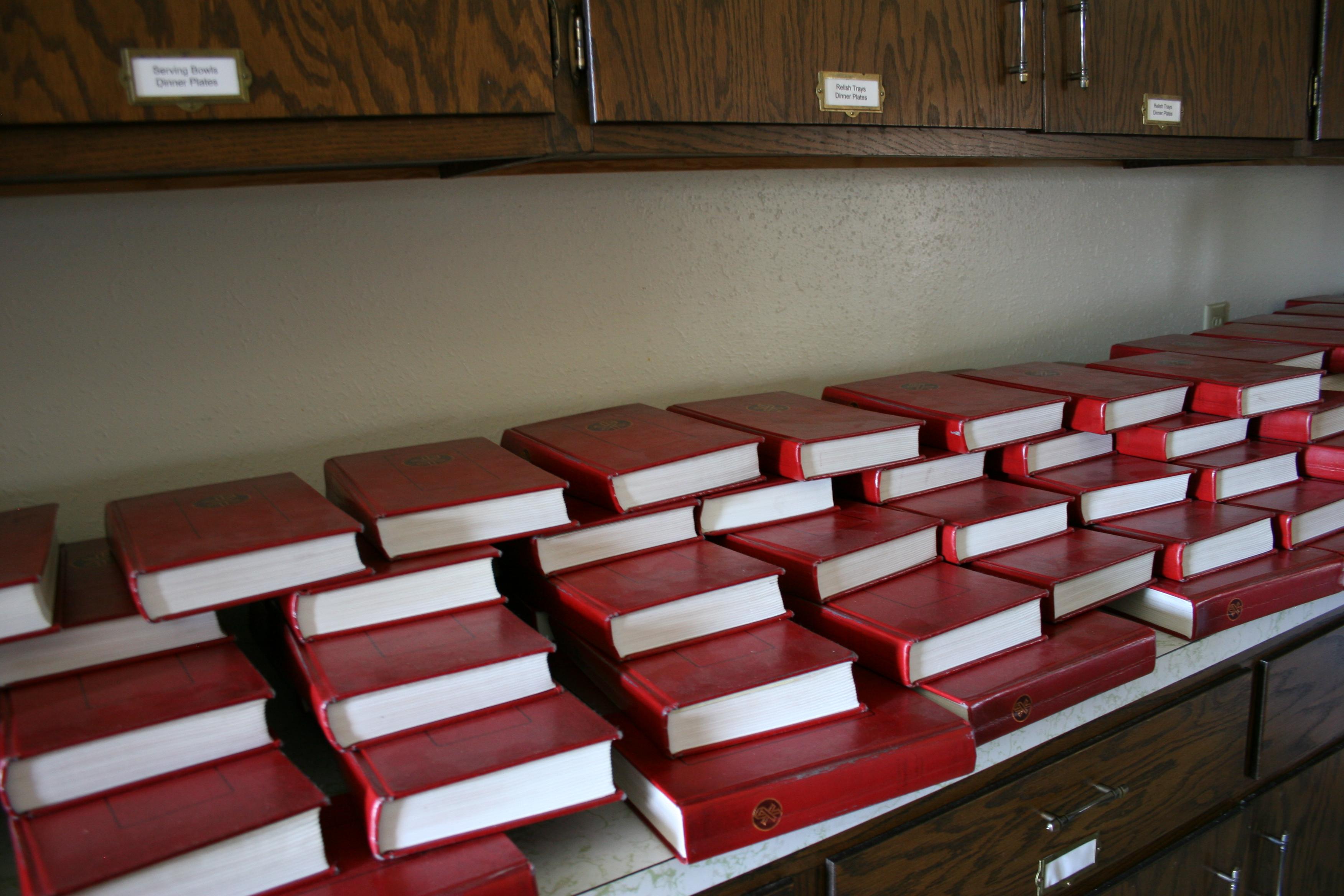
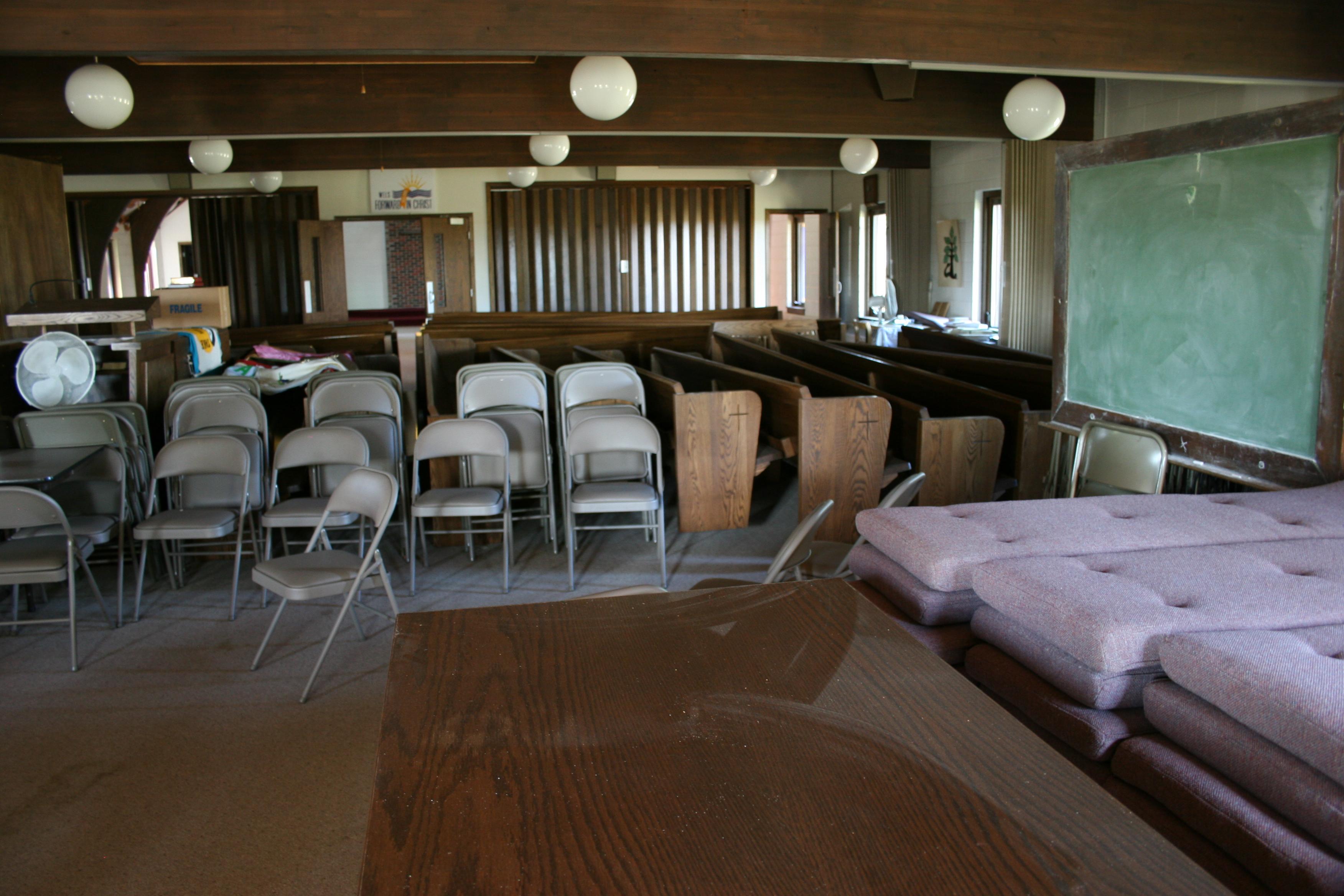
The last time I saw those hymnbooks, they were stacked on counters in the church kitchen. And the fellowship hall, where I was sitting on a folding chair, was crammed with pews and pew cushions, banners, a dismantled statue of Jesus, and an assortment of items moved there from the sanctuary following a damaging summer storm.

Hymnals were stacked on the kitchen counter after the storm.

The pews and other items from the church were moved into the undamaged social hall.

St. John’s, hours after a July 1, 2011, storm. Photo courtesy of Brian Kletscher.

A year ago, a storm packing 90 – 100 mph winds ripped half the roof from St. John’s sanctuary, leaving the congregation without a permanent home for 10 months. Members worshiped at their sister congregation, Peace Lutheran in nearby Echo, before returning on May 6 to their church in Vesta.

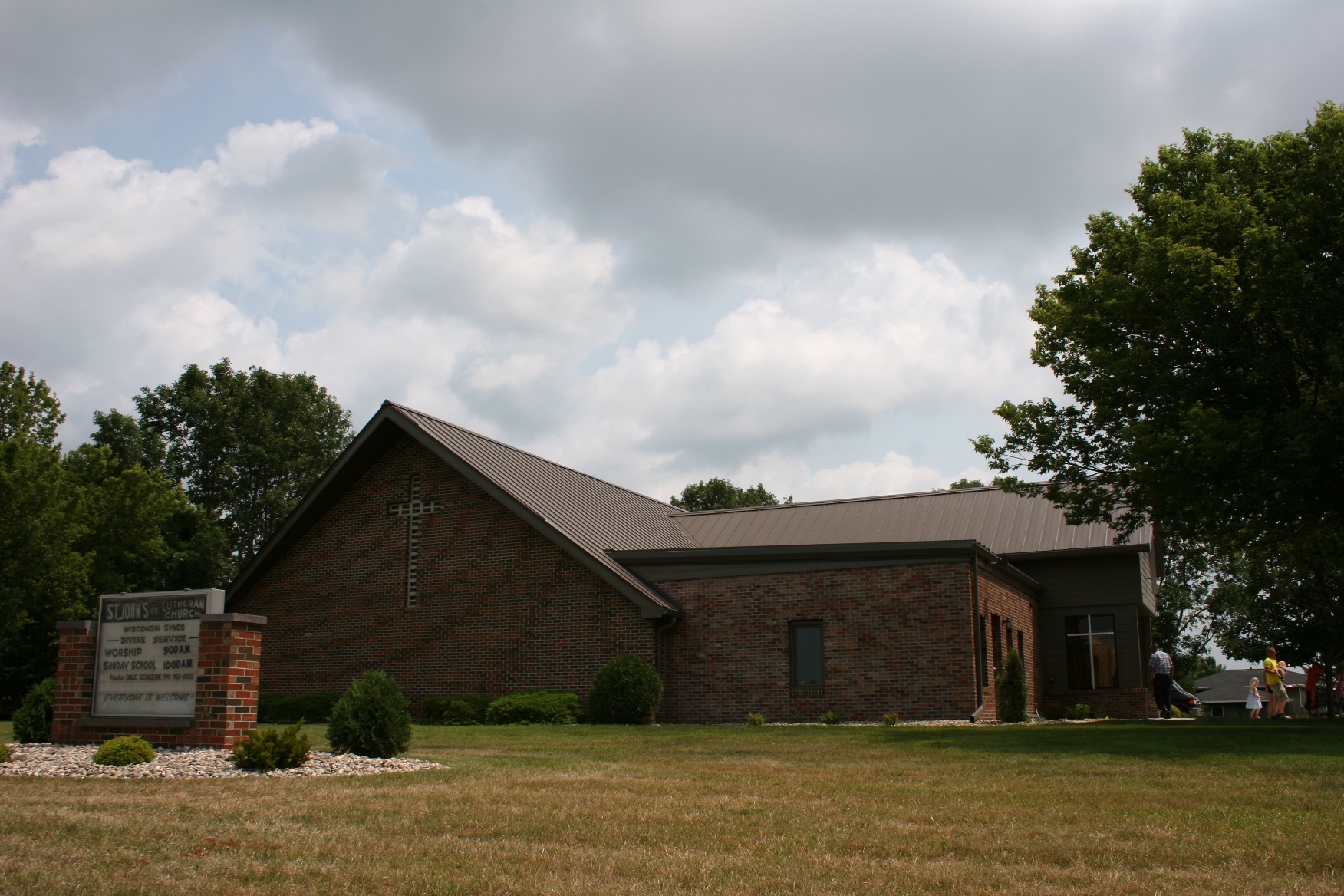
St. John’s, one year after the storm with a new roof and an addition.

However, the dedication of the addition—which includes an office, storage space, handicapped accessible bathroom and enlarged narthex—and rededication of the repaired sanctuary were delayed two months to coincide with the one-year anniversary of the July 1 storm.

Standing inside St. John’s sanctuary in September 2011, I listened to the wind flap the tarp that covered the damaged roof.

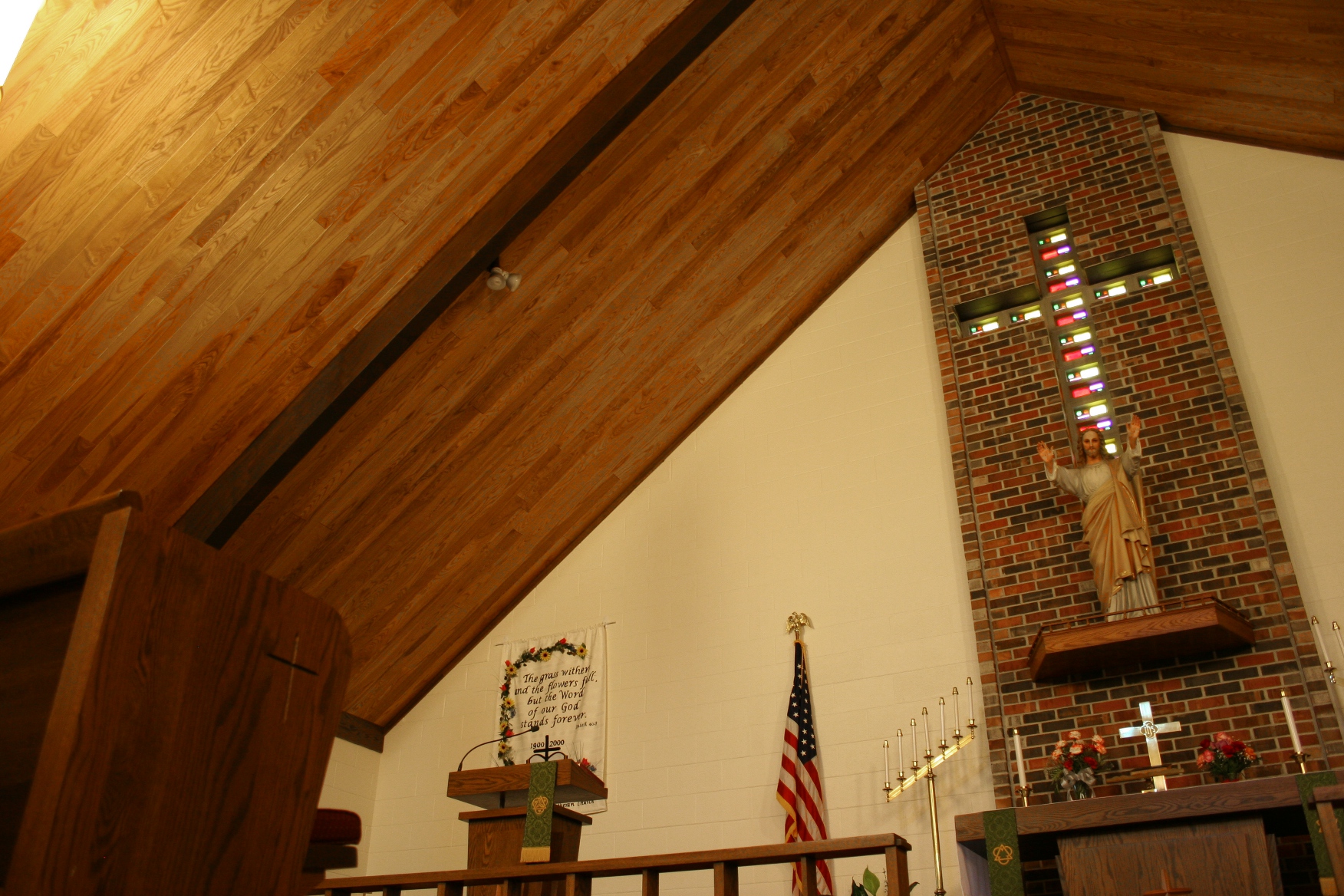
A view of the same ceiling/roof area a year later.

On Sunday, I attended the service of prayer and thanksgiving, of dedicating the addition and rededicating the sanctuary “to the glory and the service of the Lord,” according to the Rev. Dale Schliewe.

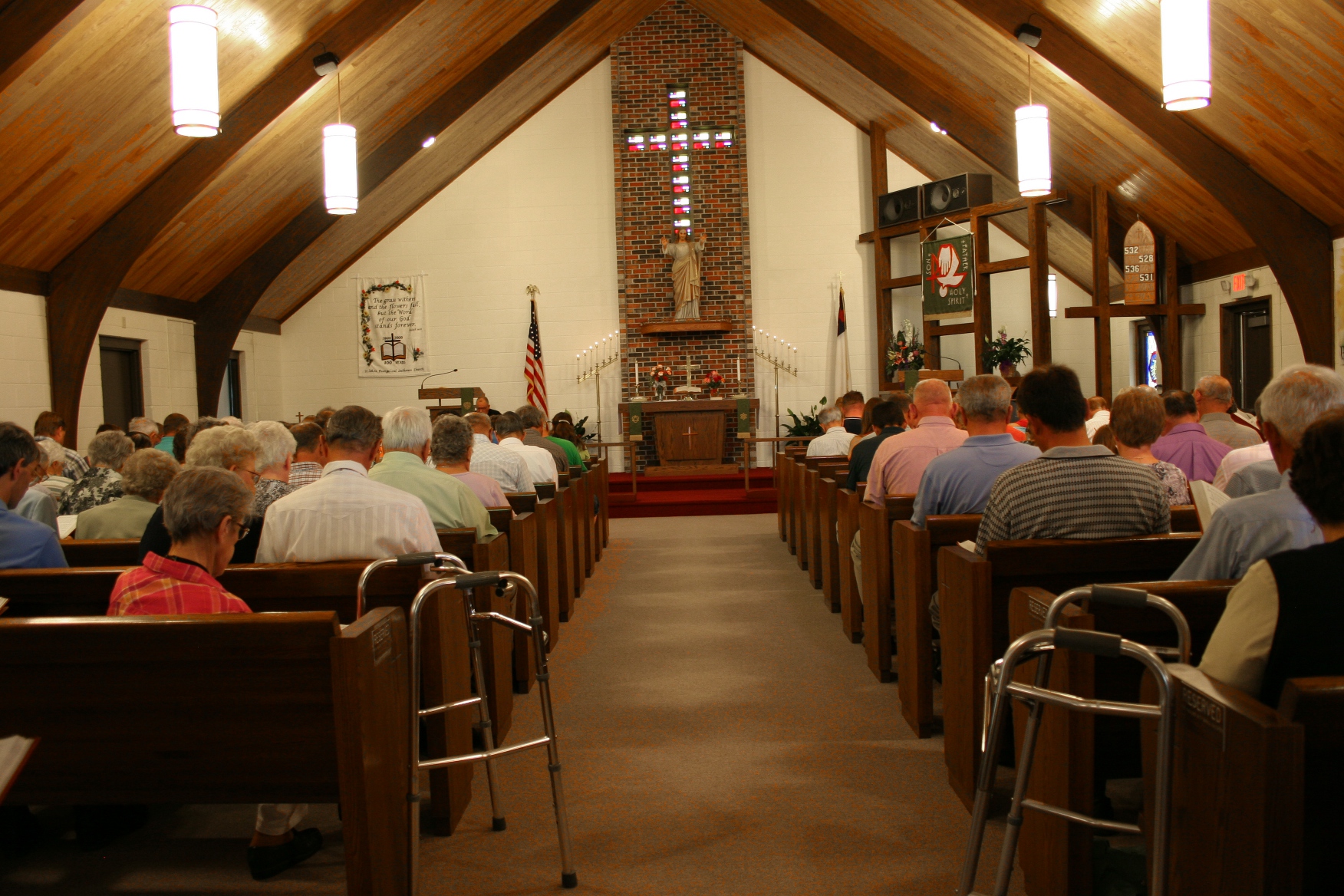
Worshipers gathered July 1, 2012, in the repaired sanctuary with overflow into the social hall.

Singing words like “Christ is our cornerstone, on him alone we build…built on the rock secure…here is the day’s dedication…,” we celebrated.

It felt good to be there, in my home church, the building in which I was married, the place where I have mourned the deaths of loved ones, the sanctuary where I have celebrated confirmations and baptisms and weddings and many Christmases and Easters.

It was good to be home, to bow my head and fold my hands and pray: “…contine to take this house into your protection… Be with us always to bless, to keep and to save.”

Amen.

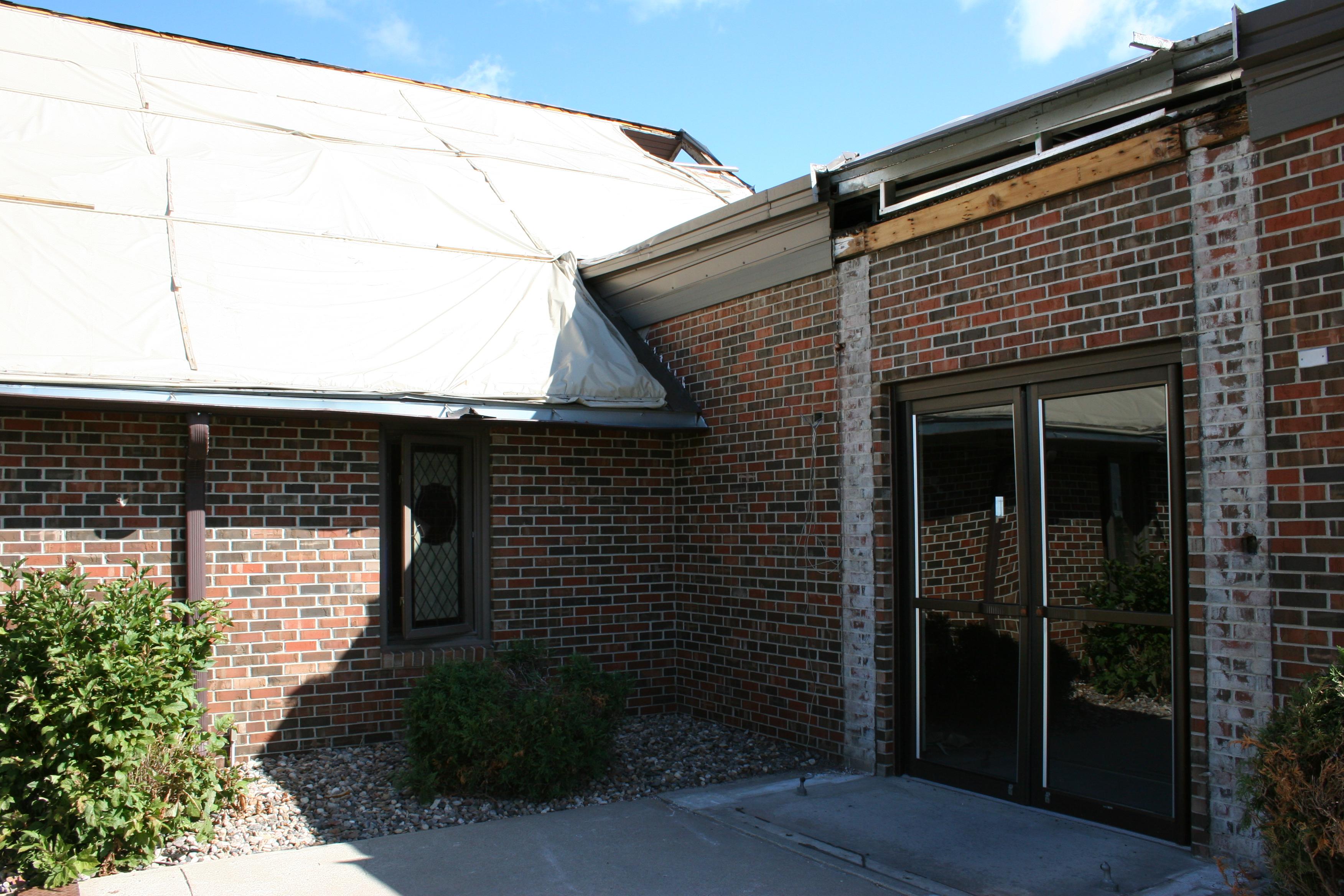
The southern half of the roof was ripped off by high winds and toppled onto the bell tower, which was removed. It was attached to the sides of the entry, as seen in this image from September 2011

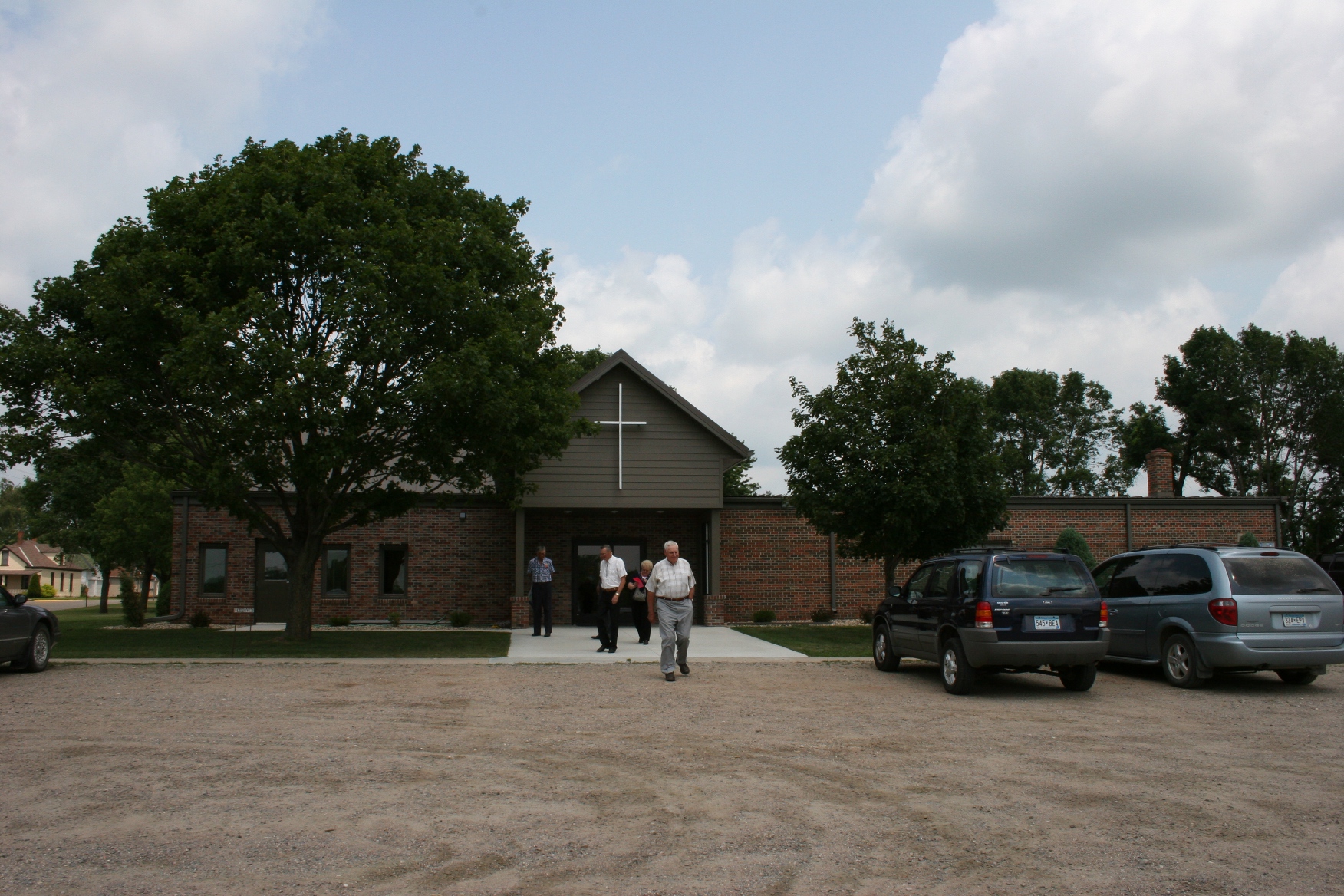
Here you see the addition to the south side of the church. Worshipers now enter through south-facing doors.

© Copyright 2012 Audrey Kletscher Helbling
 

My dream come true: A Little Free Library installed in my hometown on the southwestern Minnesota prairie July 3, 2012

IMAGINE GROWING UP in a town without a library and, all your life, wishing for a library in your hometown.

Then imagine one July day, when you have been gone for nearly four decades and are old enough to qualify as a senior citizen, that a couple drives into your hometown in their station wagon to deliver a library.

That scenario played out in my hometown on Sunday afternoon as Todd Bol, co-founder of the Little Free Library, traveled three hours from Hudson, Wisconsin, with his wife, Susan, and their two dogs to deliver and install a LFL at the Vesta Cafe in the southwestern Minnesota prairie town of Vesta.

Troy Krause of The Redwood Falls Gazette interviews Little Free Library co-founder Todd Bol as Dorothy Marquardt, left, and Karen Lemcke of the Vesta Commercial Club listen.

“I love books. They are part of my heart and soul,” Todd Bol said Sunday as he stood outside the cafe near the over-sized birdhouse style library anchored on a post. I listened and snapped photos as Troy Krause, editor of The Redwood Falls Gazette interviewed this man who has seen his LFL story spread to media outlets worldwide, from The Huffington Post to The Los Angeles Times and beyond.

The LFL Todd and Susan installed outside the community owned Vesta Cafe.

Little Free Libraries are popping up everywhere across the country (and even outside the U.S.), bringing books to neighborhoods and cities and now, for the first time, to places likes Vesta, the seed plant for the “Small Towns Minnesota” movement of the LFL project, according to Bol.

The beautiful handcrafted library Todd Bol had built and painted for the residents of Vesta, population around 340.

He offered to donate the library, hand-built by an Amish carpenter from Cashton, Wisconsin, to Vesta after I blogged last November about a LFL in my community of Faribault and then issued this challenge to my hometown of some 340 residents:

I’d like to challenge the residents of Vesta to start a Little Free Library. How about in or near the Vesta Cafe? Make my dream of a library in my hometown come true. I’ll even bring some books for the library the next time I’m “back home.”

The books Todd Bol and I placed inside Vesta’s LFL. I plan to bring some books for children and teens the next time I’m back in Vesta. Anyone is welcome to donate books. Overflow books will go on a bookshelf inside the cafe and books will be rotated.

Sunday afternoon I delivered on that promise as did Bol with his promise. He brought the library and we filled it with books—his donated by Coffee House Press and mine from my bookshelves. Among my seven donations were two books of poetry, not something I would typically expect Vestans to read. But I wanted Vesta’s LFL to have a copy of Poetic Strokes—A Regional Anthology of Poetry from Southeastern Minnesota, Volume Four. That includes two poems I wrote, one titled “A school without a library.” (When I attended Vesta Elementary School, our library books were selected by students from the Redwood County Library in Redwood Falls 20 miles away and brought back to our school, then later returned and exchanged for a new selection of volumes.)

The other poetry book, Stone & Sky, was written by a Faribault High School English teacher who once lived in nearby Belview and who understands the prairie like I do.

Vesta resident and Vesta Commercial Club resident Dorothy Marquardt took home this book donated by Coffee House Press to Vesta’s LFL. Dorothy is an enthusiastic promoter of my hometown.

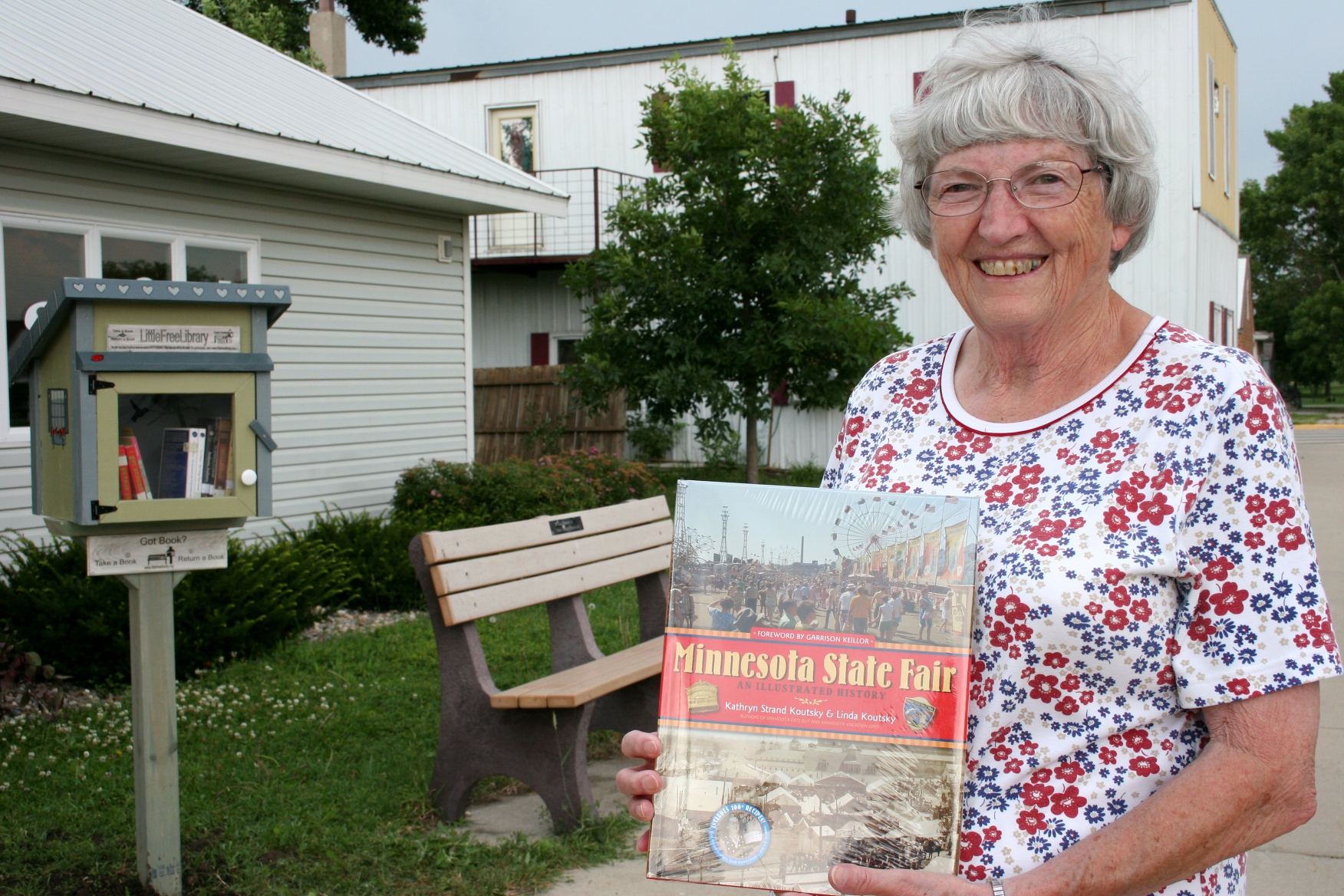
Dorothy Marquardt, a member of the Vesta Commercial Club, which worked with Bol on getting the LFL into Vesta, understands what a LFL will mean to area residents. Vesta recently saw its county bookmobile service end. “It’s kind of a godsend,” she said on Sunday, clutching a copy of Minnesota State Fair—An Illustrated History by Kathryn Strand Koutsky and Linda Koutsky with foreword by Garrison Keillor. Marquardt is officially the first reader to pull a book from Vesta’s LFL.

The team that worked to bring a Little Free Library to Vesta includes Dorothy Marquardt, left, and Karen Lemcke, representing the sponsoring Vesta Commercial Club, LFL co-founder Todd Bol and me (holding a copy of a poetry anthology I donated).

Monday morning, while dining in the cafe, I promoted the LFL to locals, moving between tables explaining how the library works. It operates on the premise of take a book, leave a book. Or take a book and bring a book back later to place inside the outdoor library. It’s all done on the honor system and done to promote literacy and encourage reading.

For me, the establishment of a LFL in my hometown is a dream come true. I always wanted a library while growing up. And now that I’m all grown up, my hometown finally has one.

The Little Free Library at the Vesta Cafe.

#

I’D LIKE TO ISSUE A NEW CHALLENGE TODAY. This one goes to the people of my native prairie, of southwestern Minnesota. I’d like to see more Little Free Libraries in the many small towns, like Vesta, that are without libraries and/or bookmobile service. Purchase a library via the LFL organization. Build your own. Work together—perhaps as a 4-H club or a church youth group or a civic organization or whatever—to bring a LFL into your town.

Be sure to officially register your LFL (there’s a small fee) so word of your library can be spread on the LFL website and via social media. Comment on this post and tell me that you are going to accept my challenge and bring a LFL to your community.

Finally, thank you, Todd Bol, for making my dream come true through your gift of a LFL to my hometown. It is my hope that the library in Vesta will inspire other communities to grow this project in rural Minnesota so that no child or adult, no matter where he/she lives, is without a library.

Thank you also to Karen Lemcke of the Vesta Commercial Club for working with Todd and me to make this project a reality.

This LFL, repurposed from a cranberry crate, needs a new home. Check The Redwood Falls Gazette to read how editor Troy Krause will be attempting to find a location for the library in southwestern Minnesota. Interested? Contact Troy.

FYI: Todd also dropped a LFL off in the neighboring community of Belview. And he left a third library with Troy Krause, editor of  The Gazette. Troy promised to publicize the availability of that third library. I’ll keep you posted on which town accepts the third LFL.

Click here to link to the LFL website and learn more about the Little Free Library project.

© Copyright 2012 Audrey Kletscher Helbling
 

Vesta & Belview celebrating one year after storms June 29, 2012

TWO REDWOOD COUNTY COMMUNITIES will come together to celebrate this Sunday, one year to the date after severe storms ripped through this region of southwestern Minnesota.

St. John’s Lutheran Church in Vesta, hours after a July 1, 2011, storm ripped half the roof from the sanctuary. Photo courtesy of Brian Kletscher.

In my hometown of Vesta, area residents will remember the storm anniversary and rededicate St. John’s Evangelical Lutheran Church at a 10:30 a.m. worship service followed by a catered chicken dinner.

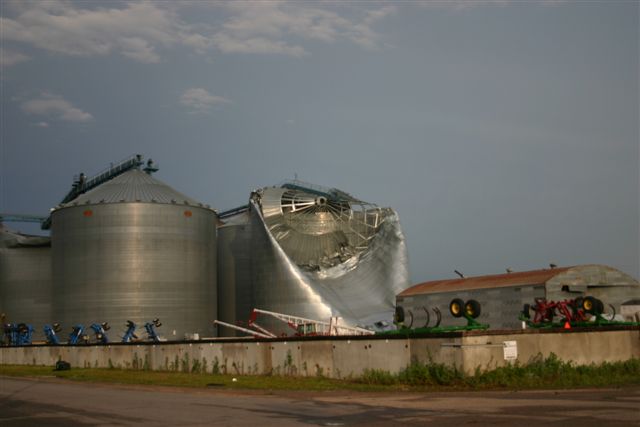
Damage to one of the grain bins at the local elevator. Photo by Brian Kletscher.

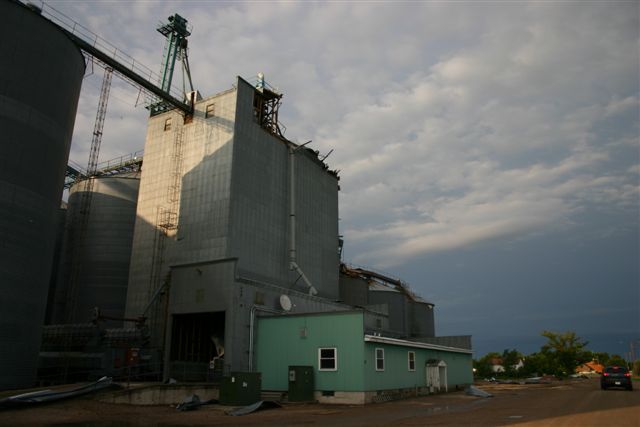
The grain elevator complex, the visual defining landmark in the farming community of Vesta, was ravaged by winds. You’ll see the damage near the top of the old grain elevator. Photo by Brian Kletscher

During the late afternoon of July 1, 2011, a series of downbursts with wind speeds of 90 – 100 mph swept through Vesta, ripping half the roof from St. John’s sanctuary, felling trees, denting grain bins, damaging the landmark grain elevator and more.

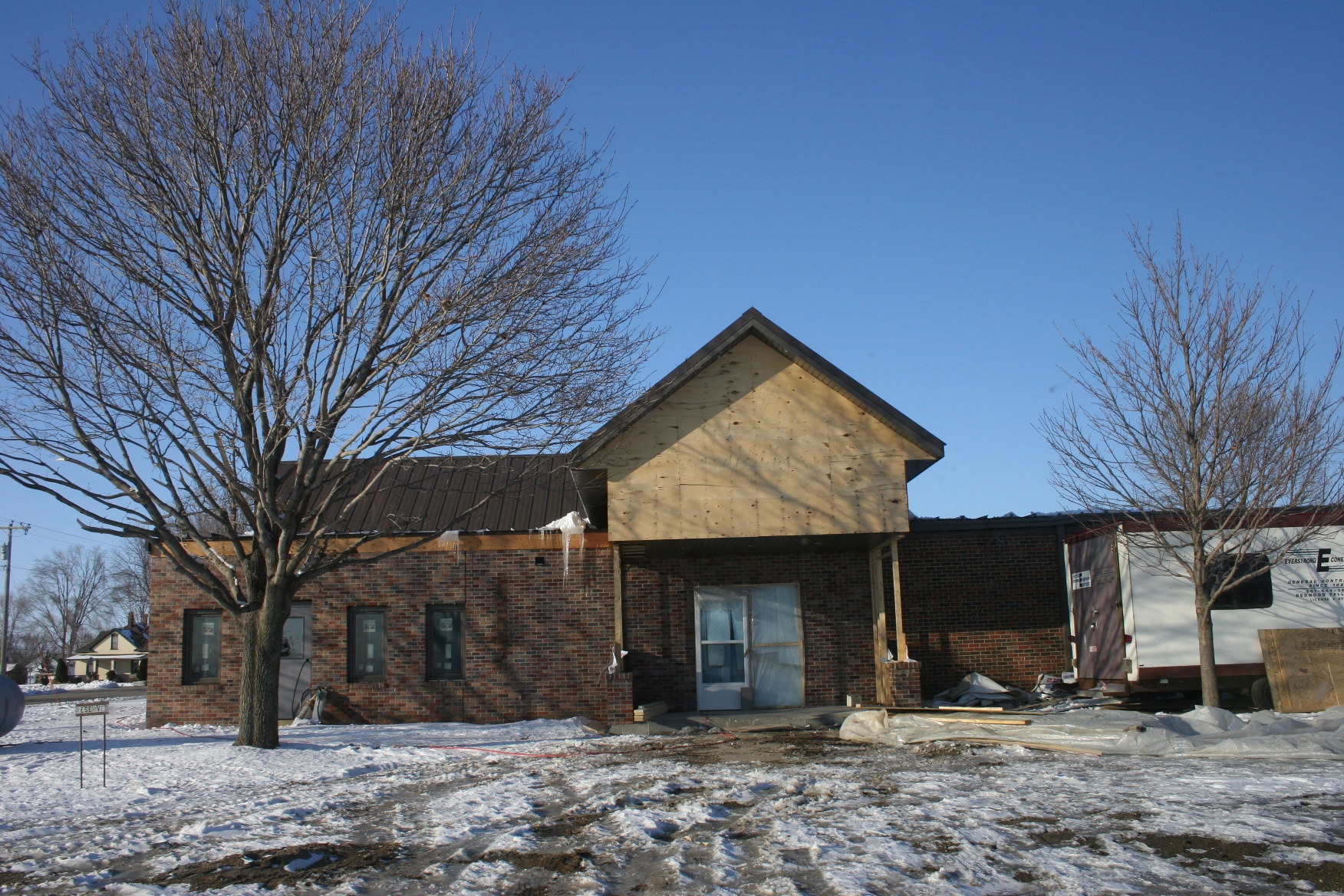
Under construction in March, a pastor’s office, bathroom and storage room were added to the south side of the early 1970s era church. Photo by Audrey Kletscher Helbling.

It took nearly a year for St. John’s to reopen after the congregation decided to expand the church as part of the roof reconstruction process.

Entering Belview from Sacred Heart at 9 a.m. on July 2, the morning after the tornado. Photo courtesy of Merlin and Iylene Kletscher, who were not yet living in Belview when the storm hit.

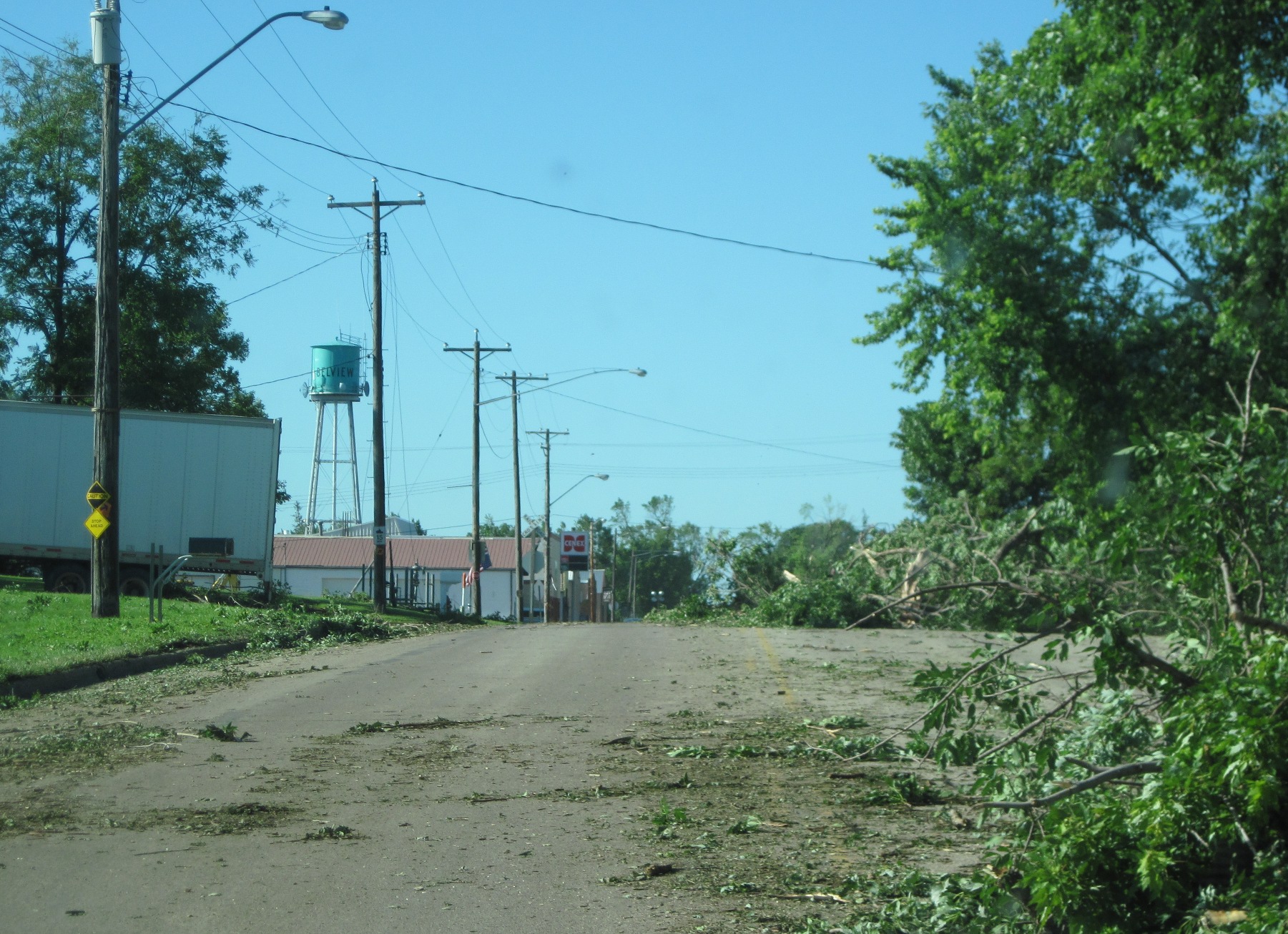
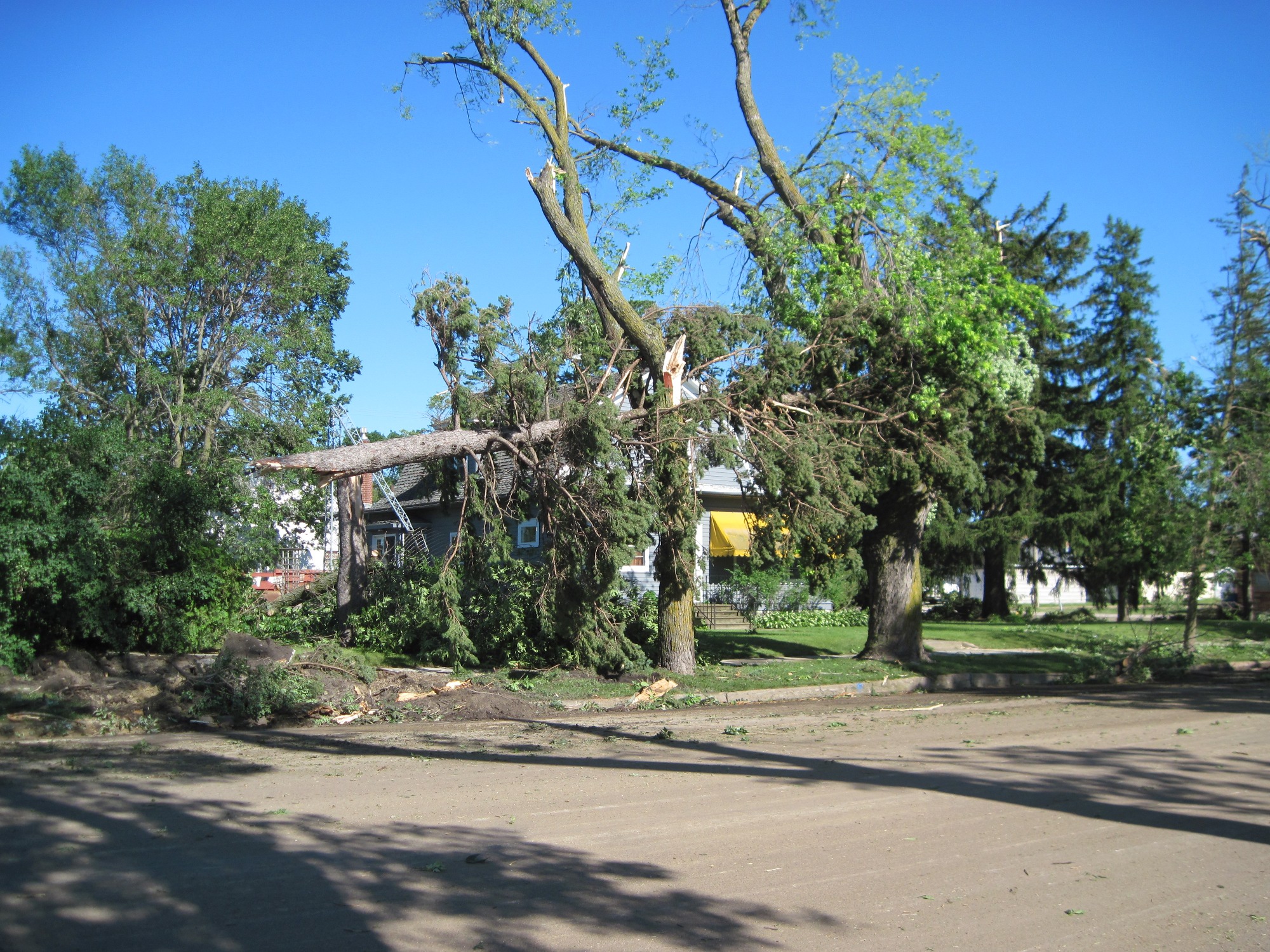
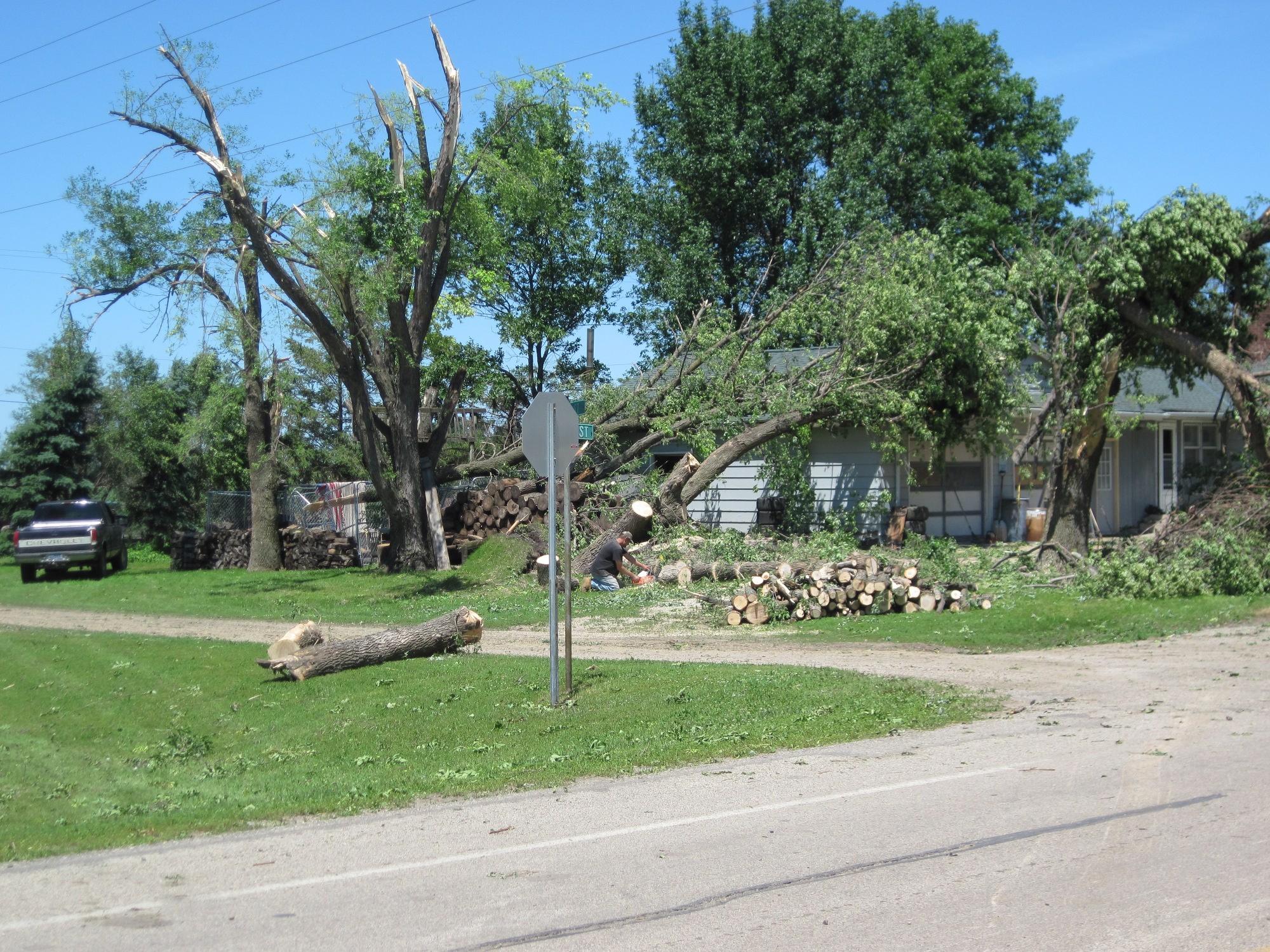
In Belview, about 10 miles to the north and east, residents will also mark the one-year anniversary of an EF-1 tornado which rode in on the same storm system. The tornado, with winds of 95 – 105 mph, wiped out many of this prairie town’s trees (which fell onto buildings and vehicles), damaged the nursing home to the point that it closed for awhile, wrecked roofs and more.

A month after the tornado, Belview’s Parkview Home (nursing home) remained closed as repairs were needed to the damaged roof, covered here with blue tarps. Photo by Audrey Kletscher Helbling.

The communities of Belview and Vesta lost many trees in the July 1 storms. This photo is along a Belview street north of the park. Photo courtesy of Merlin and Iylene Kletscher.

Jerry Hagen’s house, across the street from Merlin and Iylene’s home in a July 2 photo. Photo courtesy of Merlin & Iylene Kletscher.

Damage along South Main Street in Belview. Photo courtesy of Merlin and Iylene Kletscher.

A year later, Belview residents are celebrating with a catered community picnic supper and entertainment at the local park (or in the air conditioned historic Odeon Hall if the weather is too hot) from 4 p.m. – 6 p.m. Sunday.

“We know we can pull together when the going gets tough as was proven after the storm,” says City Clerk Lori Ryer. “Now we would like to pull together in a spirit of community and fellowship and say thank you to everyone in town and to those that helped.”

My Uncle Merlin and Aunt Iylene Kletscher will be among Belview residents attending that picnic, celebrating and listening to the music of Ron and Kathy and Friends. The Kletschers had just closed on the purchase of a foreclosed fixer-upper home along Belview’s Main Street when the tornado ravaged Iylene’s hometown. They lost most of their trees—one of the reasons the couple bought the property—and sustained damage to their house, which they had just begun renovating.

Says Merlin:

So far we have planted four flowering crabs, a new disease resistant elm tree, 13 lilac bushes and the city has the Main Street boulevard planted with really nice-sized maples. We have two churches with new roofs, the bank is putting a new roof on right now and there are also more homes in the process of new shingles, etc., now.

One year later, Belview is looking pretty darn good!

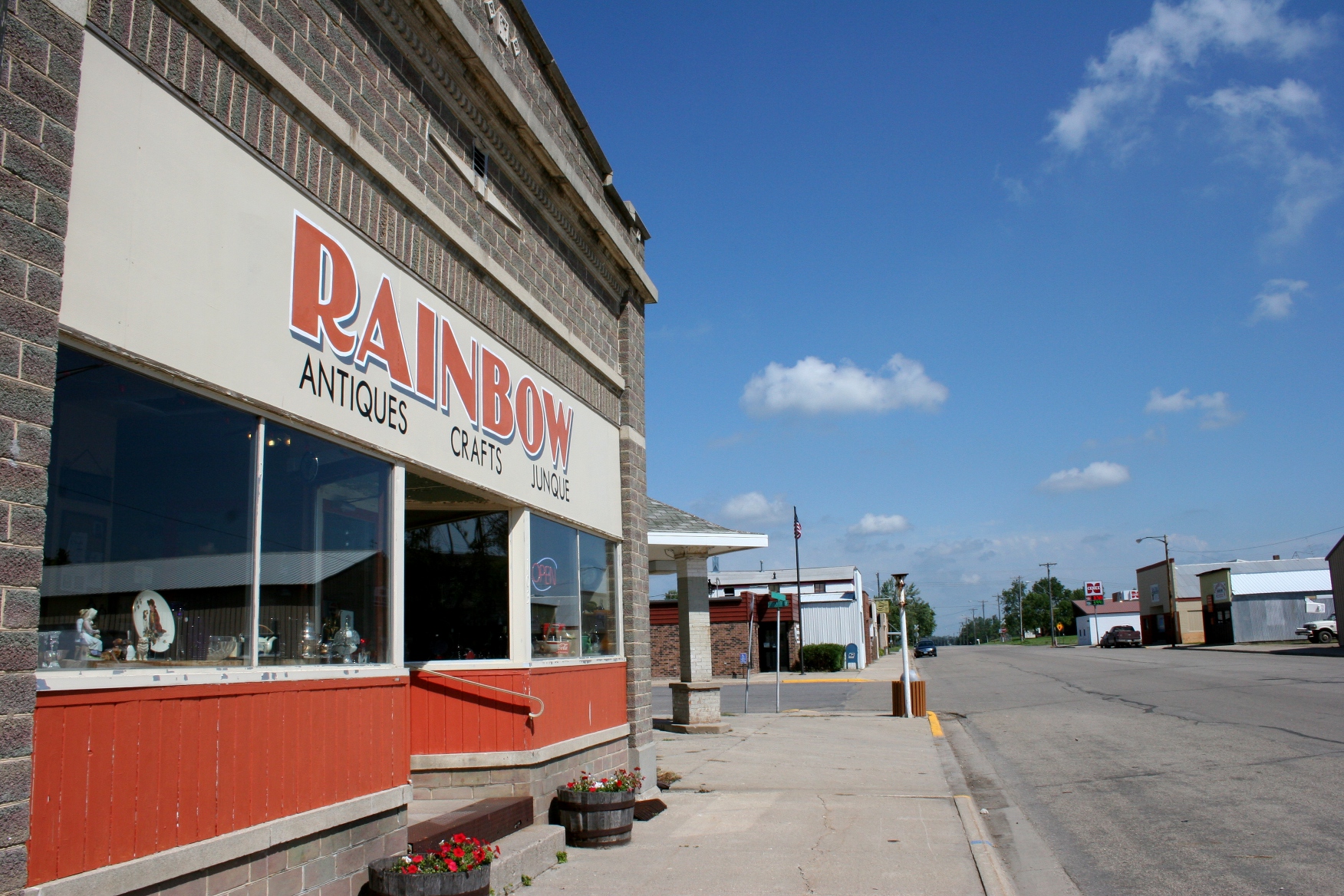
A portion of Main Street in Belview a month after the tornado. Photo by Audrey Kletscher Helbling

FYI: To read more about the July 1, 2011, storms and to view more storm damage photos, check the Minnesota Prairie Roots archives from July 2011. In addition to the damage in Vesta and Belview, many rural residences also were hit. The farm of my cousins, Danny and Marilyn Schmidt, was struck by a second EF-1 tornado which nipped the northwestern corner of Redwood County. Near the South Dakota/Minnesota border, the community of Tyler experienced an EF-2 tornado which followed a 3-mile path through Lincoln County. The tornadoes and wind storms were part of a massive storm system  on July 1, 2011, which began along the western edge of Minnesota and extended as far east as northwestern Wisconsin.

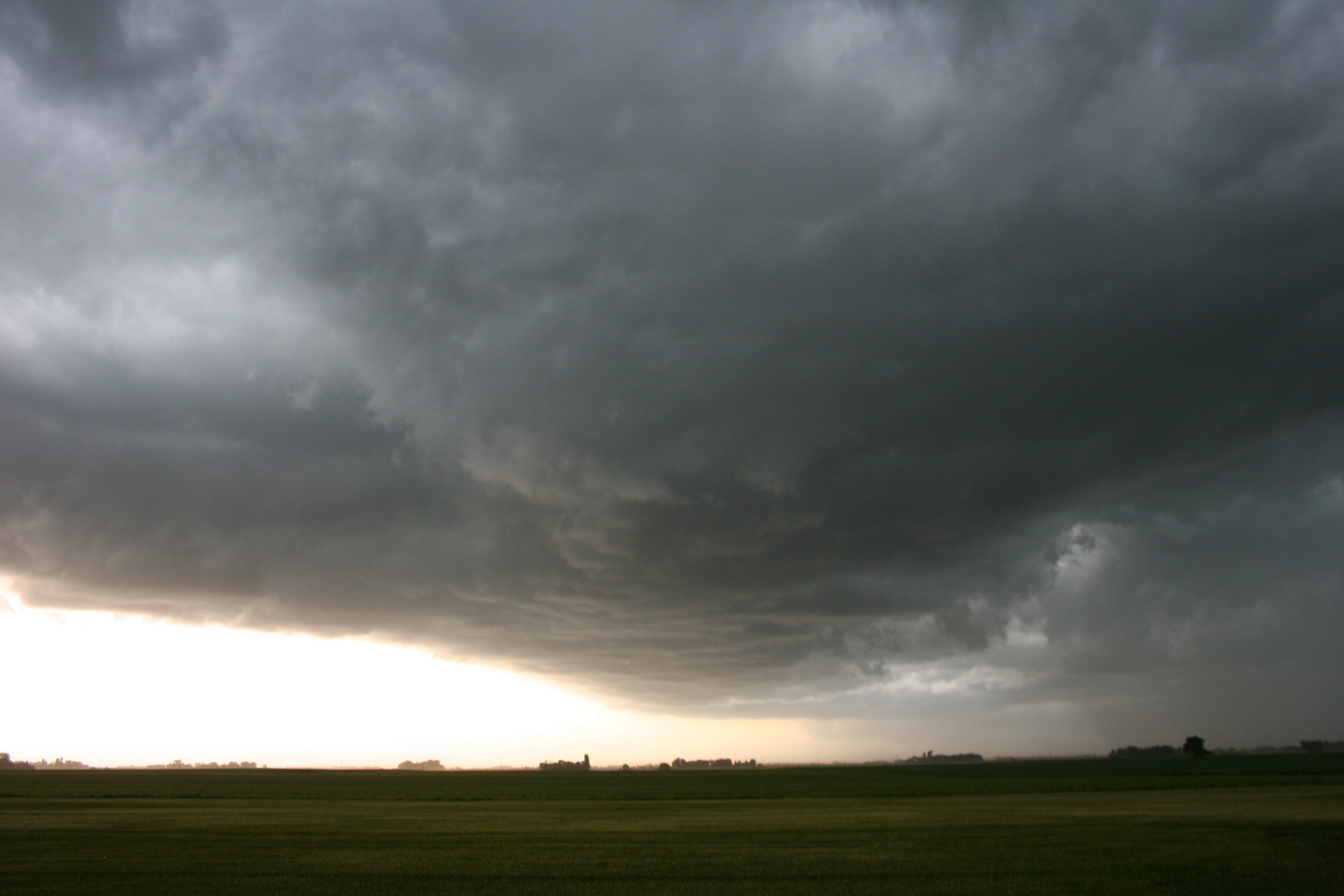
I was on my way with my husband to a party near Nerstrand not far from our Faribault home in southeastern Minnesota when these threatening clouds moved in during the early evening hours of July 1, 2011. It was while driving to our friends’ rural home that my sister Lanae phoned to tell me about the storm in our hometown and to warn me of the approaching bad weather. Fortunately the ominous clouds delivered only rain and nothing severe. But I was worried, very worried.
Copyright 2012 Audrey Kletscher Helbling