Minnesota Prairie Roots

Writing and photography by Audrey Kletscher Helbling

Thoughts after the season’s first snowfall December 4, 2011

Filed under: Uncategorized — Audrey Kletscher Helbling @ 1:58 PM
Tags: , , , , , , , ,

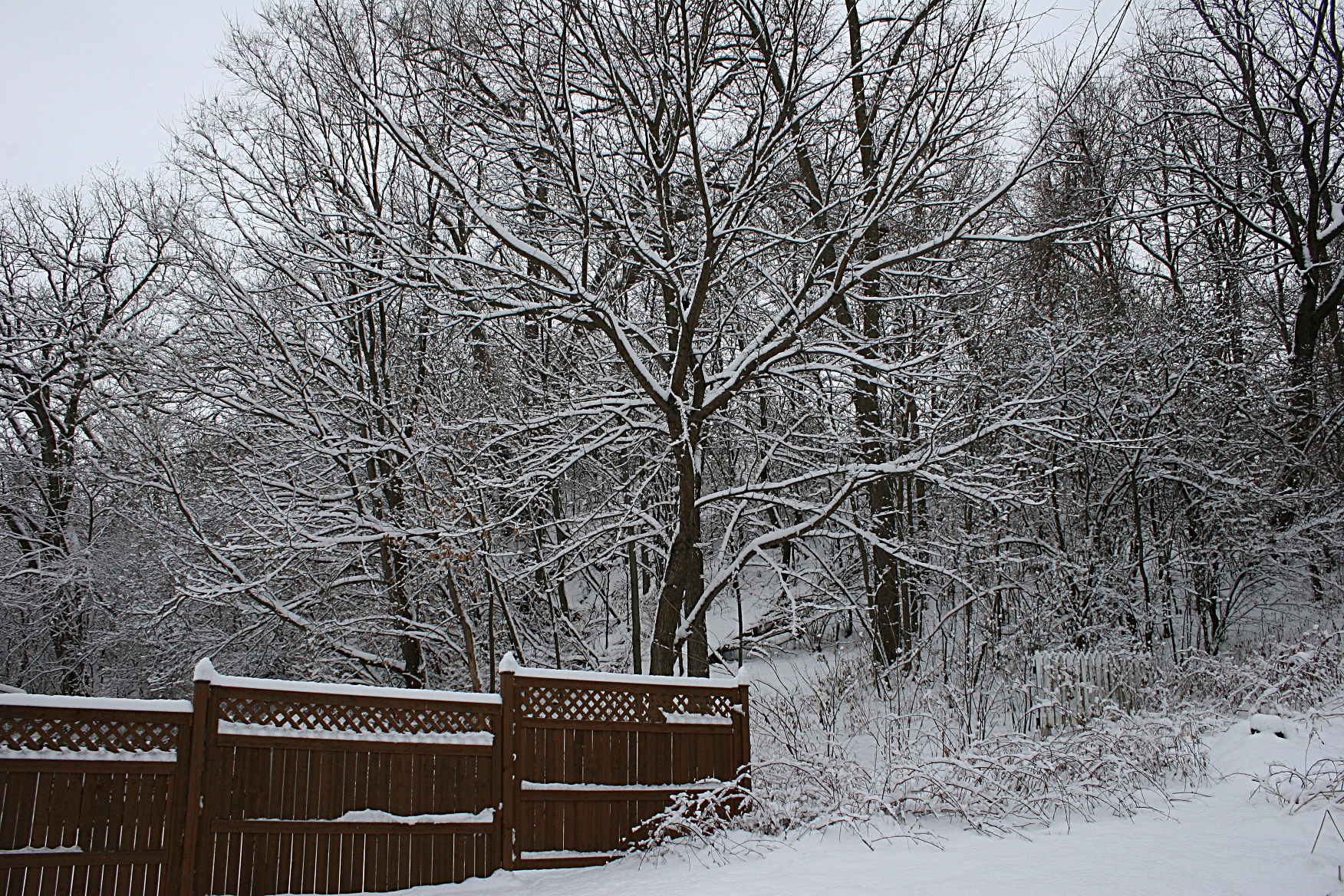
The snowy woods adjoining my backyard in Faribault late Sunday morning following about a five-inch snowfall.

WELCOME TO MY BACKYARD after the first significant snowfall in Faribault this season.

It is a world of mostly black-and-white, like vintage photos in an album.

Branches laden with the first significant snowfall.

I’m trying to be poetic here because, as disloyal Minnesotan as this sounds, I don’t particularly like snow. I dread the resulting icy sidewalks and parking lots.

I realize I possess the attitude of  “an old person” here. No offense meant to any of you who are older than me. But, at age 55 and with an artificial hip implanted in my right side three years ago, snow and ice threaten me. I fear falling, so I inch across ice with trepidation.

Just to clarify, my hip replacement did not result from a fall. I suffered from osteoarthritis and reached the point where surgery was the only option to deal with near immobility and chronic pain.

So here we are, in the season of snow and ice in Minnesota. If I don’t exactly embrace it, now at least you understand why. I suspect it is the reason many Minnesotans flee to Arizona and Florida during the winter months—not only to escape the cold, but to escape the danger.

Yet, even I can see the beauty in a fresh snowfall that layers branches and seed heads and the entire world around me in a surreal sort of peacefulness on a Sunday morning.

That, for me, redeems winter.

The blessing of winter lies in its beauty, seen here in a snippet of time-worn fencing in my backyard.

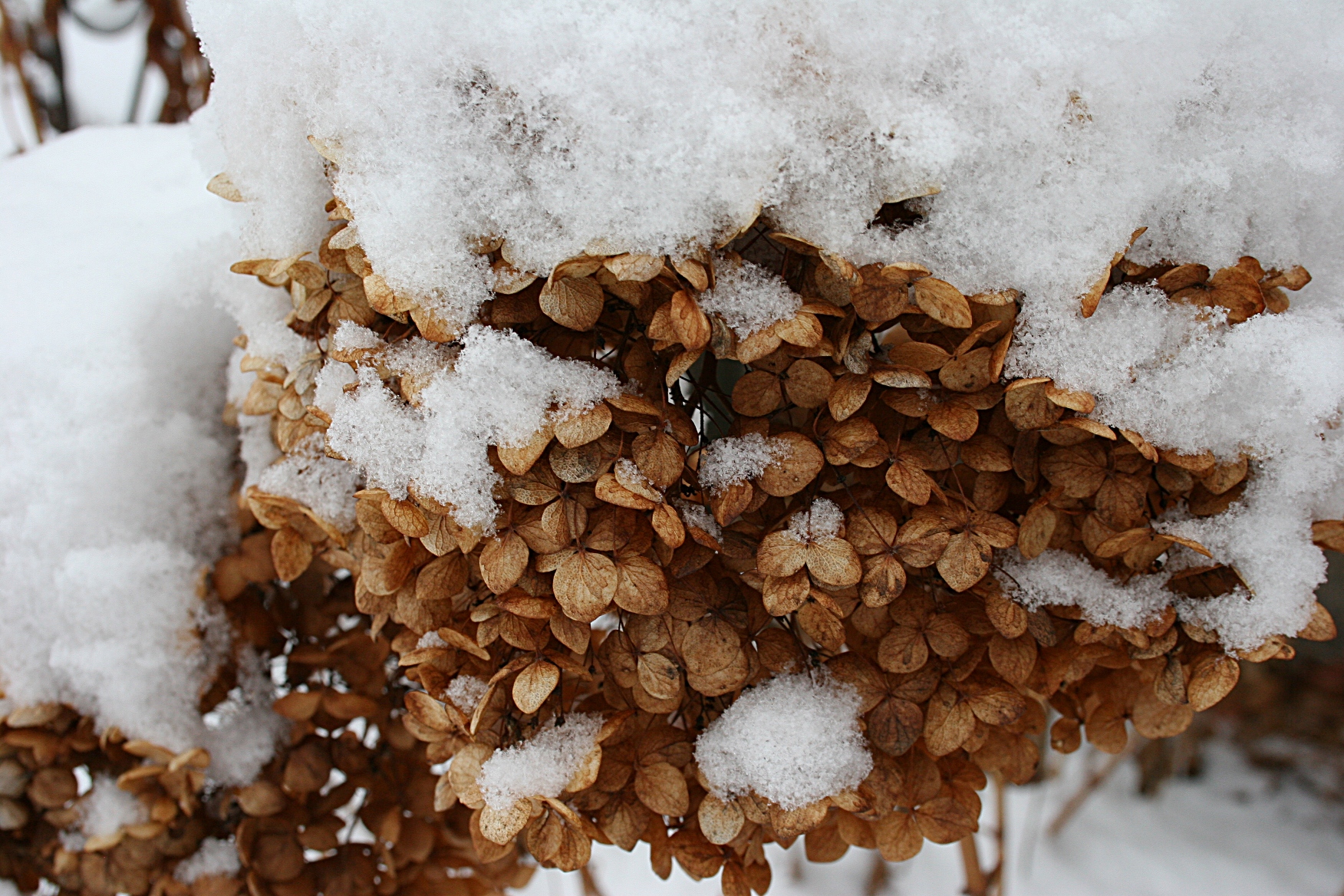
An unobtrusive patch of color in a mostly black-and-white world Sunday morning: Snow capping a hydrangea.

HOW DO YOU feel about snow and winter in general? The truth, please.

© Copyright 2011 Audrey Kletscher Helbling


Tough tilling in Minnesota farm fields November 9, 2011

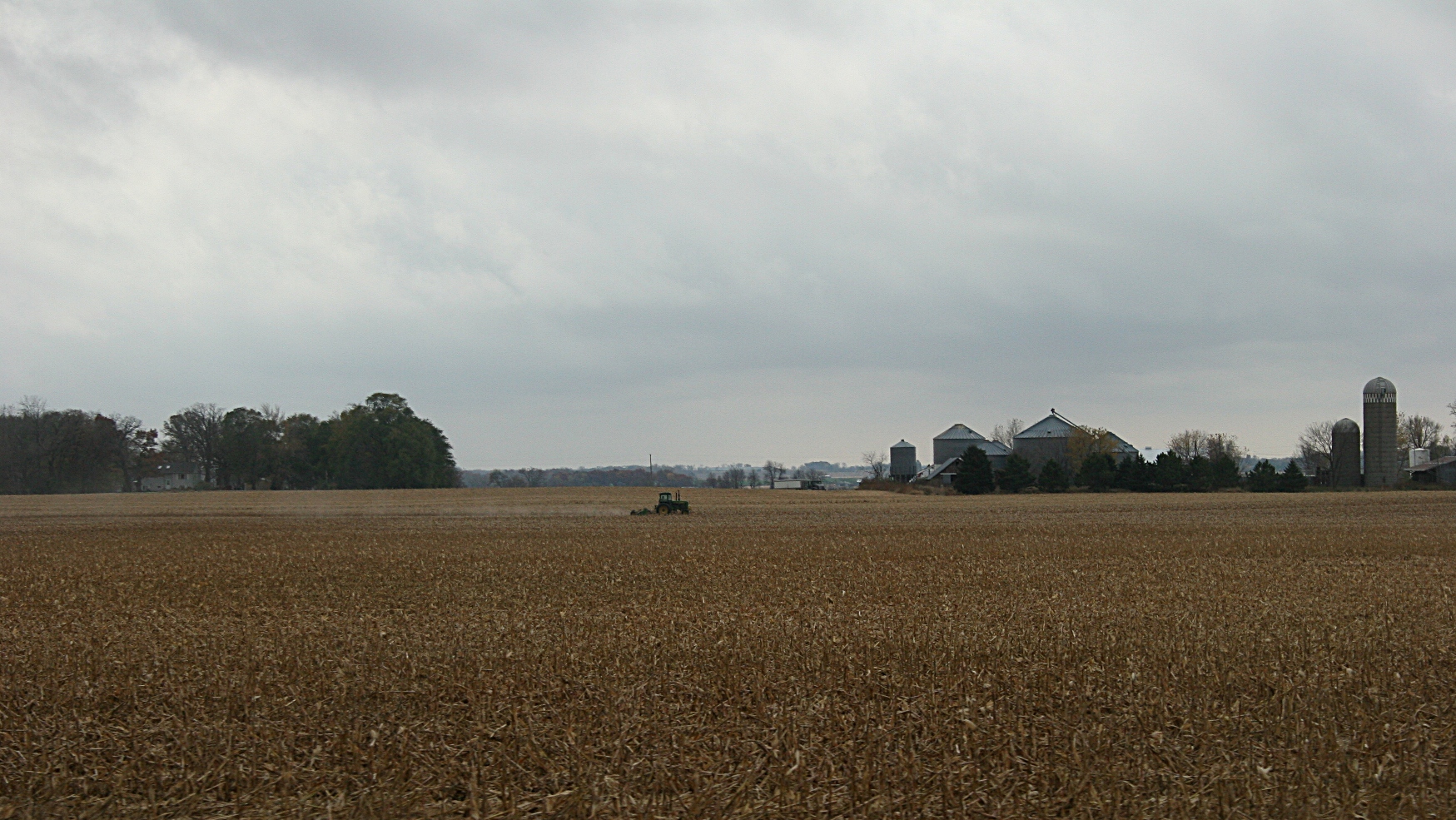
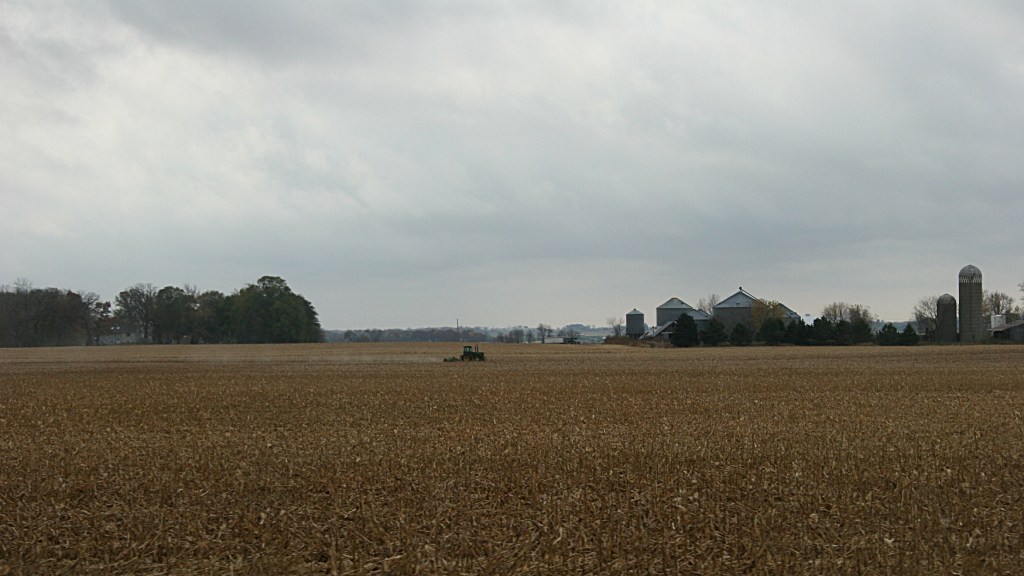
A farmer works the field recently in this scene shot in southeastern Minnesota.

HAVE YOU TRIED DIGGING into the ground lately? Takes some effort, doesn’t it? This soil in Minnesota rates as rock hard right now given the lack of moisture.

I’m hesitant to admit it, but I don’t think about soil conditions and moisture nearly as much as I once did, when I was not so long-removed from the farm.

But last week when a carpenter, who is also a farmer, was working on a project at my house, we chatted briefly about crops, soil conditions and weather.

Kenny shared how fall tillage has been especially trying this year. Farmers in his area around Owatonna in southeastern Minnesota have been breaking implement parts with all-too-often frequency in the dry, hard earth. He mentioned shanks, which he claims never break.

Some parts are in short supply, Kenny says, meaning farmers sometimes need to wait. That’s not a good thing when you’re trying to finish fall tillage before the snow flies.

Friends of mine who farm near Dundas finally halted all tillage work for the season, leaving some 300 acres, of 700, untilled. The rock hard dry soil proved too difficult to work and too tough on their equipment.

IN SOUTHWESTERN MINNESOTA, my brother Doug Kletscher, the parts manager at Westbrook Ag Power in Westbrook, confirms that tillage is tough there, too, and farmers are going through the parts. “We ran out of ripper points and they have been back-ordered for a good month. I have heard of a few farmers that have pulled their rippers in half,” Doug says. “We have sold at least five years’ worth of chisel plow spikes in one year. Bolts have also been in very high demand.”

On the flip, positive side, farmers haven’t had to deal with mud, Doug reports, and the corn has been very dry with 14 percent or less moisture content (a significant cost savings on corn drying).

However, farmers are facing another issue related to moisture-depleted conditions. “The fertilizer companies are not putting on any anhydrous as it is too dry to hold the anhydrous in the ground,” my brother continues. “Anhydrous needs moisture to adhere to keep it in the ground; also it (the soil) is pulling so hard that they would break their anhydrous bars.”

Doug reports the last rain over a half inch fell on July 14 with .78 inch. Since then any rainfall has been .10 inch or less. That makes for extremely dry soil conditions for farmers trying to prep the soil for next spring’s planting season.

LIKEWISE, IF YOU’RE a gardener, digging vegetables has been anything but easy this autumn. Take my friend Virgil Luehrs, who lives along Cedar Lake west of Faribault. Unearthing potatoes proved tough, he says. But then he got to the carrots:

“First I tried the garden spade, then a round-point shovel and then a tiling shovel. I had to dig a trench beside the rows to loosen the soil around the carrots to get them loose enough to pull out.  Finally I resorted to a pick to loosen the soil and that was easier but still a lot more work than normal.”

Tilling the garden, even with a powerful Troybuilt rear tine tiller, proved equally challenging. “I could not get down deep enough,” Virgil reports. “Hopefully next spring.”

When Virgil talks soil and weather, I listen. He’s not just your average Minnesota gardener. He’s also a retired high school science teacher with a Masters in biology, a former interim and assistant director at River Bend Nature Center in Faribault, and a volunteer rain gauge reader for the Rice County Soil Water Conservation District (SWCD) and the state Climatology Lab.

In other words, he’s a knowledgeable resource.

So then, exactly how much rainfall has Virgil recorded at his Cedar Lake home (where the lake water level is the lowest in 20 years, but not as low as in the drought years of 1988- 1990). Thus far since April, Virgil has taken these rain gauge readings:

April:  3.14”

May:  4.63”

June:  5.26”

August:  1.38”

September:  1.00”

October:  .58”

TOTAL during the past six months: 15.99”

Says Virgil: “This year we had a much wetter spring and that probably helped to carry us through the dry fall. Recall that last fall we had record rainfalls.”

His 2010 readings were as follows:

April:  1.35”

May:  2.75”

June:  4.76”

July:  5.49”

August:  3.91”

September:  9.13”

October:  1.91”

TOTAL during those six months: 29.3”

According to information Virgil passed along from State Climatologist James Zandlo and University of Minnesota Climatology/Meteorology Professor Dr. Mark Seeley, 2010 was the wettest year in Minnesota modern climate record. The 34.10-inch state average precipitation total was roughly 8 inches more than the historical average.

But here we are in November 2011, desperately short of moisture.

What will winter bring here in Minnesota? A continued shortage of precipitation? Or more snow than we care to shovel?

WHAT’S YOUR PREDICITON for snowfall in Minnesota this season? Submit a comment with a forecast and the reasoning behind your prediction.

IF YOU’RE A FARMER, an implement dealer or a gardener, have you faced any special challenges this year due to dry (or other) weather conditions? Submit a comment. I’d like to hear, whether you live in Minnesota or elsewhere.

CLICK HERE to link to climate.umn.edu for detailed statistics and information about Minnesota weather.

© Copyright 2011 Audrey Kletscher Helbling


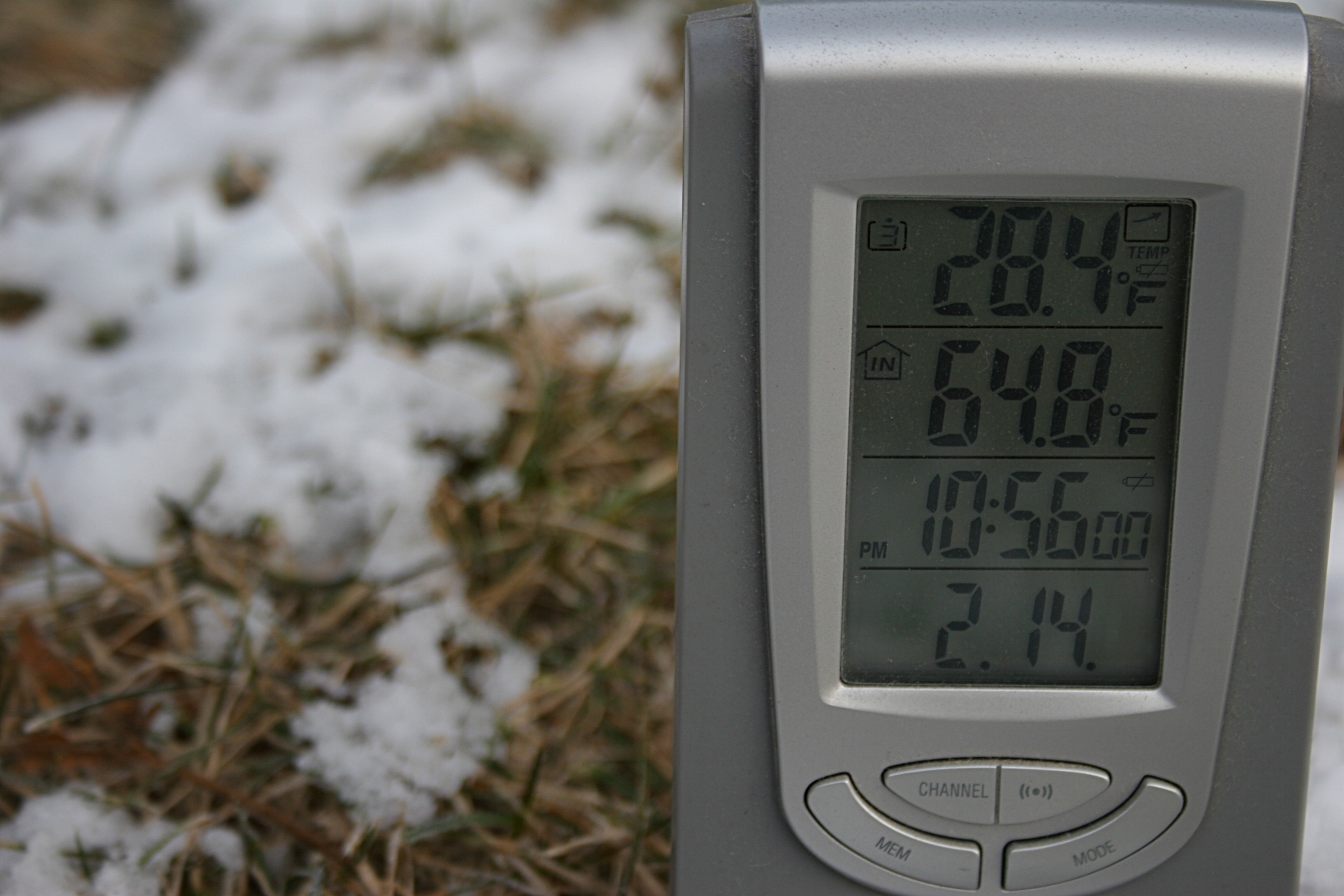
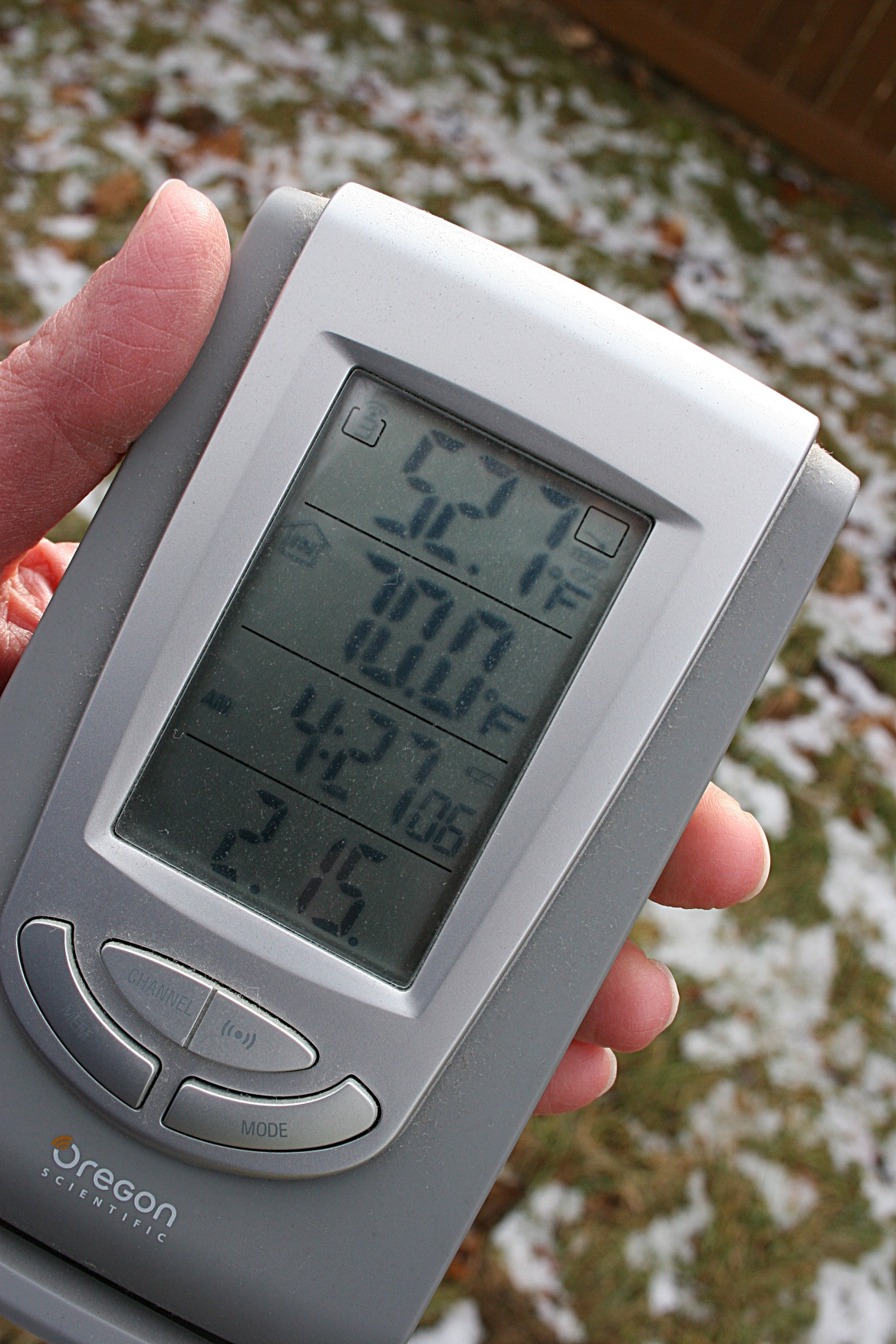
Twenty-seven degrees November 3, 2011

Filed under: Uncategorized — Audrey Kletscher Helbling @ 9:06 AM
Tags: , , , , , ,

THE 17-YEAR-OLD, bundled in his winter coat and stocking cap, poked his head out the kitchen door. “Mom, it’s below freezing.”

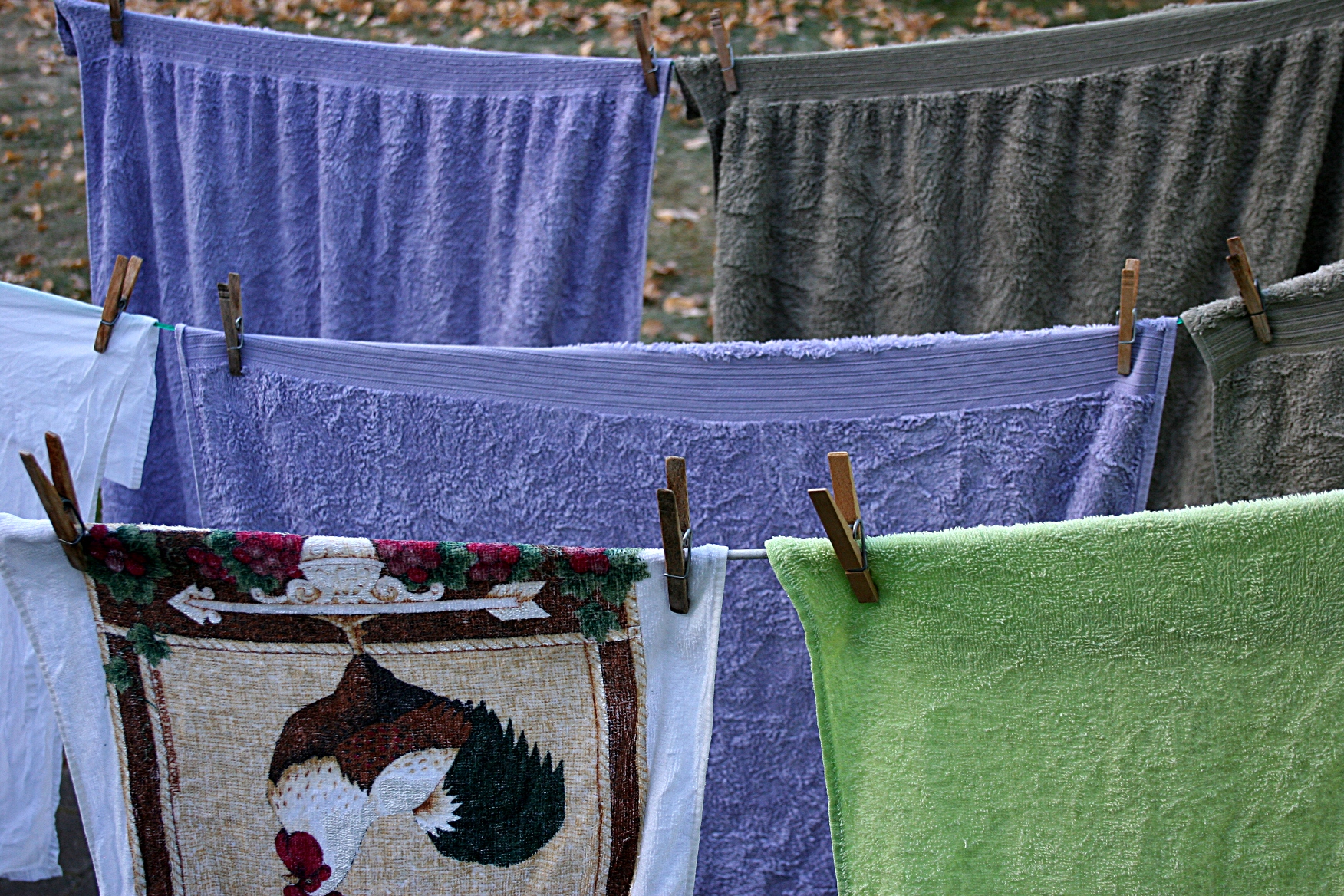
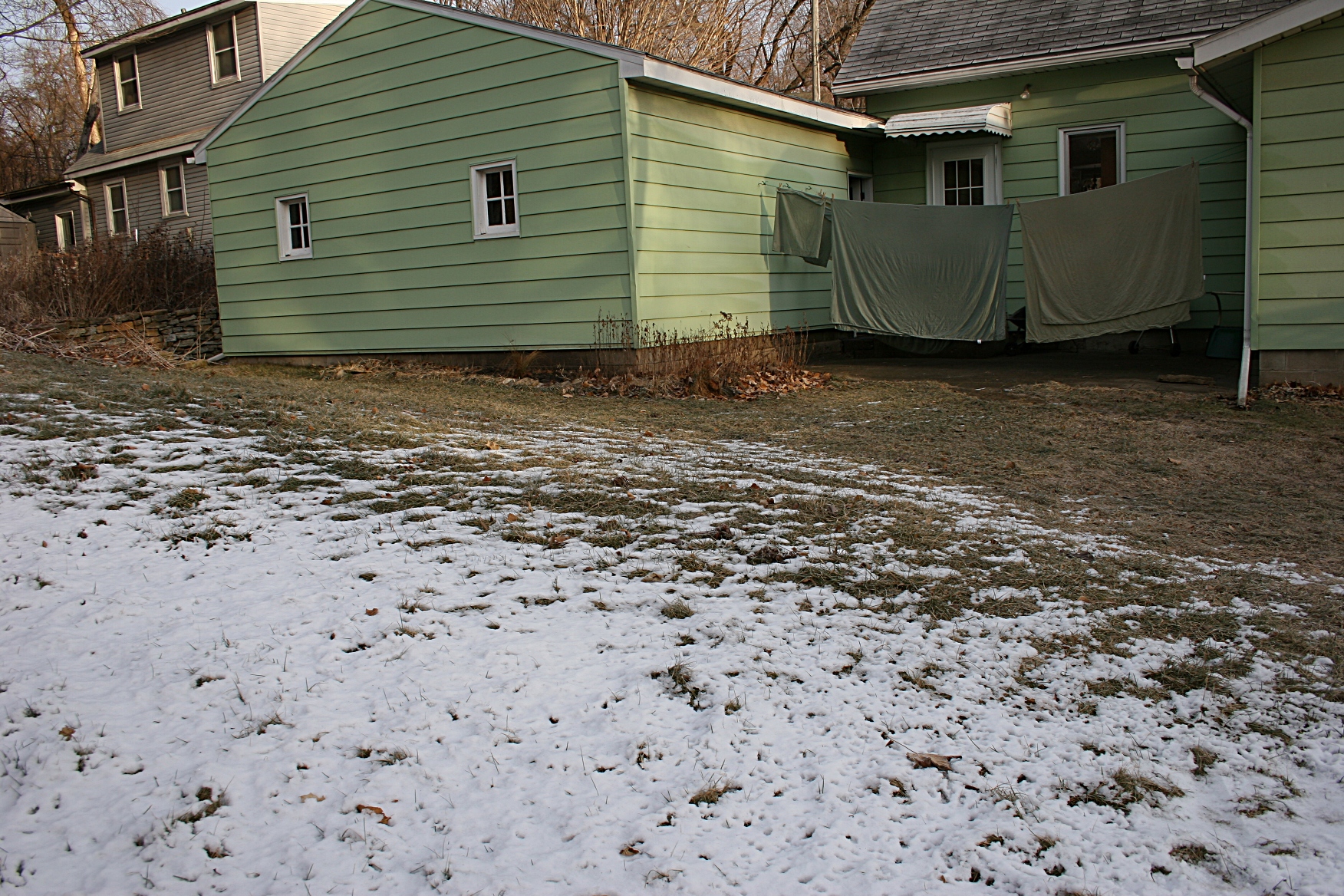
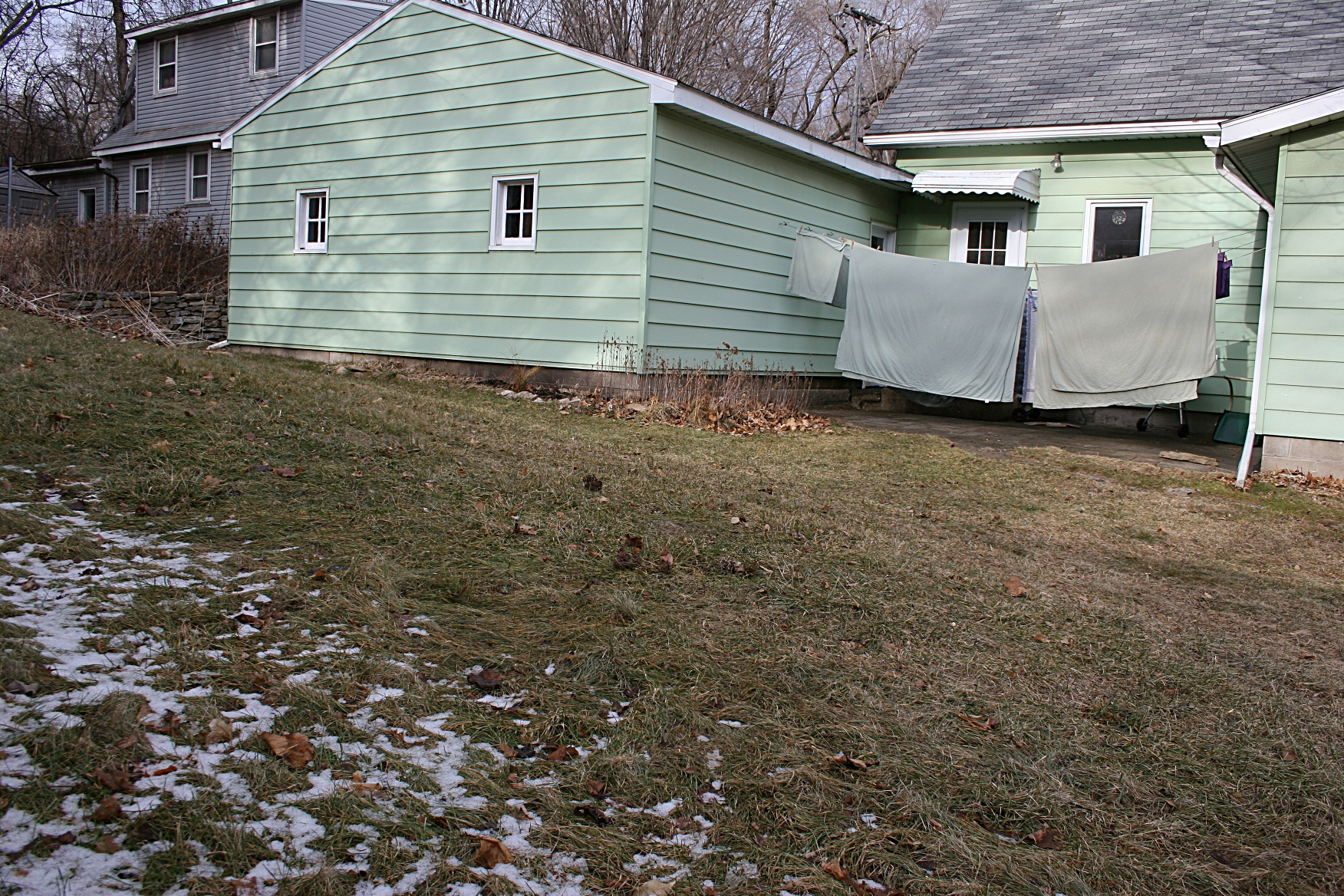
“I know. But the sun will come out,” I responded, continuing to pull heavy, wet bath and kitchen towels from the laundry basket and clipping them onto the clothesline.

The door slammed shut.

I smirked, amused that I’d annoyed my son so early in the morning, early being 8:30 given it’s the weekly late-start school day.

As I grabbed the last towel from the basket, my teen stepped out the door, shot me “the look” and shook his head, not even allowing me to reach up and wrap him in a goodbye hug.

“I love you,” I said. “Have a good day at school.”

He didn’t respond. But I saw the speech bubble above his head: “She’s crazy!”

SO, DEAR READERS, are you crazy like me? Crazy enough to hang laundry outside on a crisp, 27-degree morning?

© Copyright 2011 Audrey Kletscher Helbling
 

Field fires aplenty in Minnesota’s Red Flag areas October 6, 2011

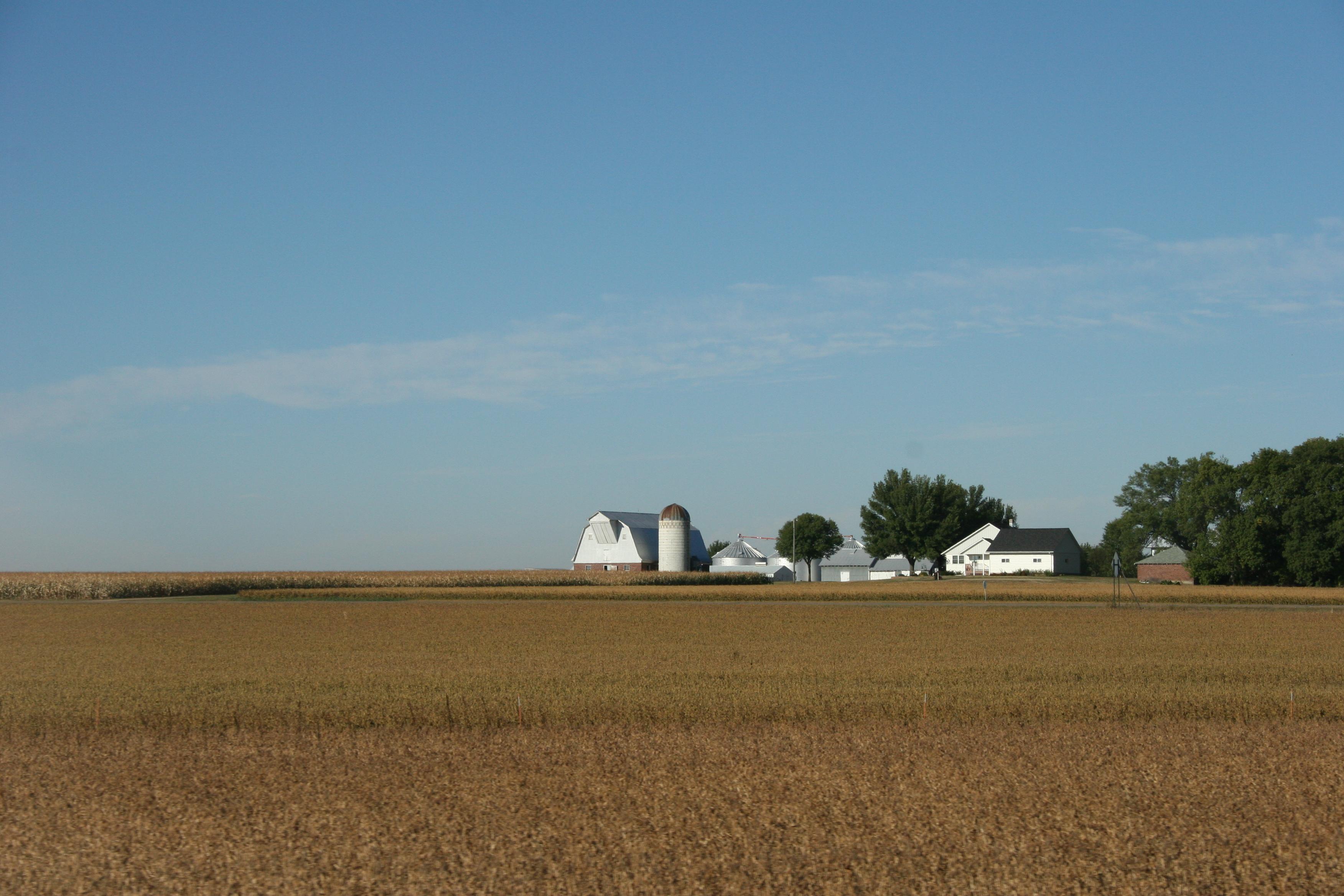
A farm site between Morgan and Redwood Falls in southwestern Minnesota, where field conditions are dry and the fire danger high.

DRY, WINDY CONDITIONS persist in much of Minnesota creating ideal conditions for fire.

Unless you’ve had your head buried inside, you understand the danger and the reason for the National Weather Service’s Red Flag Warning that covers central and southern Minnesota.

Today would not be the day to build a campfire, have a bonfire or toss a cigarette butt out the car window (like you should any day). Burning bans are in effect throughout the state.

If forecasters are correct, these weather conditions will continue for awhile.

That all said, I wondered if my nephew, a kindergarten teacher and Westbrook volunteer firefighter, has been battling any blazes in his region of southwestern Minnesota.

Adam checked in with me early this morning:

Fires—we have had quite a few around here. Westbrook has had two; Dovray, two; and Walnut Grove, for sure three, all in the past week. It’s very dry and with the wind, it doesn’t take much to create a big fire. Many of the calls are mutual aid—helping neighboring towns with fires, but that’s how we do things here. All of them have been combines and fields. I haven’t made it to many of them as I could not get out of school at the time. But I made it to one on Sunday.

A story in today’s The Cottonwood County Citizen about a county-wide burning ban confirms Adam’s summary:

These burning bans come in the wake of at least a half-dozen fires that occurred around the county, most of which involved the harvest. Extremely dry conditions, low humidity and high winds have increased the potential for major fires.

I found an article in last Thursday’s Jackson County Pilot headlined “Combine fire sparks massive field blaze.” The story went on to say that a combine fire, fueled by 40 mph winds, quickly spread into a field. Fire crews from numerous departments in southern Minnesota and northern Iowa were called to the scene.

The Faribault Daily News today reports a Monday afternoon fire in the Lonsdale-Montgomery area that burned five acres of hay, 30 acres of swamp and 30 – 50 acres of corn.

Another blaze, this one on Wednesday afternoon in a soybean field northwest of Luverne, is reported in The Rock County Star Herald. In that case, farmers disked strips of black dirt to help contain the fire.

It’s a dangerous situation out there right now, especially for farmers bringing in the harvest in those dry, dry fields.

IF YOU WOULD LIKE to report on fires in your area, submit a comment.

© Copyright 2011 Audrey Kletscher Helbling
 

What a Red Flag Warning means for Minnesota farmers October 4, 2011

Farmers are in the fields harvesting corn (pictured here) and soybeans under extremely dry conditions.

WHEN I HEARD about the National Weather Service’s “Red Flag Warning” for west central and south central Minnesota Monday evening, it was the first time I had heard that terminology.

What does it mean?

Here’s the definition, direct from the NWS:

A RED FLAG WARNING MEANS THAT CRITICAL FIRE WEATHER CONDITIONS ARE EITHER OCCURRING NOW…OR WILL SHORTLY. A COMBINATION OF STRONG WINDS…LOW RELATIVE HUMIDTY…AND WARM TEMPERATURES WILL CREATE EXPLOSIVE FIRE GROWTH POTENTIAL.

That’s a strongly-worded warning for those folks living in the communities and rural areas along and west of a line from Alexandria to Fairmont.

Farmers, especially, have to be worried about the fire danger given they are in the middle of harvesting corn and soybeans in tinder dry fields. Mix dry plant material, strong winds and the heat of a combine exhaust, for example, and you have the potential for a devastating fire.

Michael, a southwestern Minnesota farmer who blogs at Minnesota Farmer, writes two days ago about fires he spotted last Thursday while combining beans. Click here to read his October 2 post which explains how blazes start and the resulting, devastating financial impact on farmers.

It’s all too easy for those of us who live in town, even if we grew up on a farm, to forget about the dangers that come with harvest. And this year, the fire danger is particularly high.

The Red Flag Warning remains in effect until 7 p.m. Wednesday.

DO YOU LIVE in the Red Flag Warning area? If so, has there been an increase in the number of fires recently? Please submit a comment and share.

© Copyright 2011 Audrey Kletscher Helbling
 

The armless Jesus at storm-damaged St. John’s in Vesta August 4, 2011

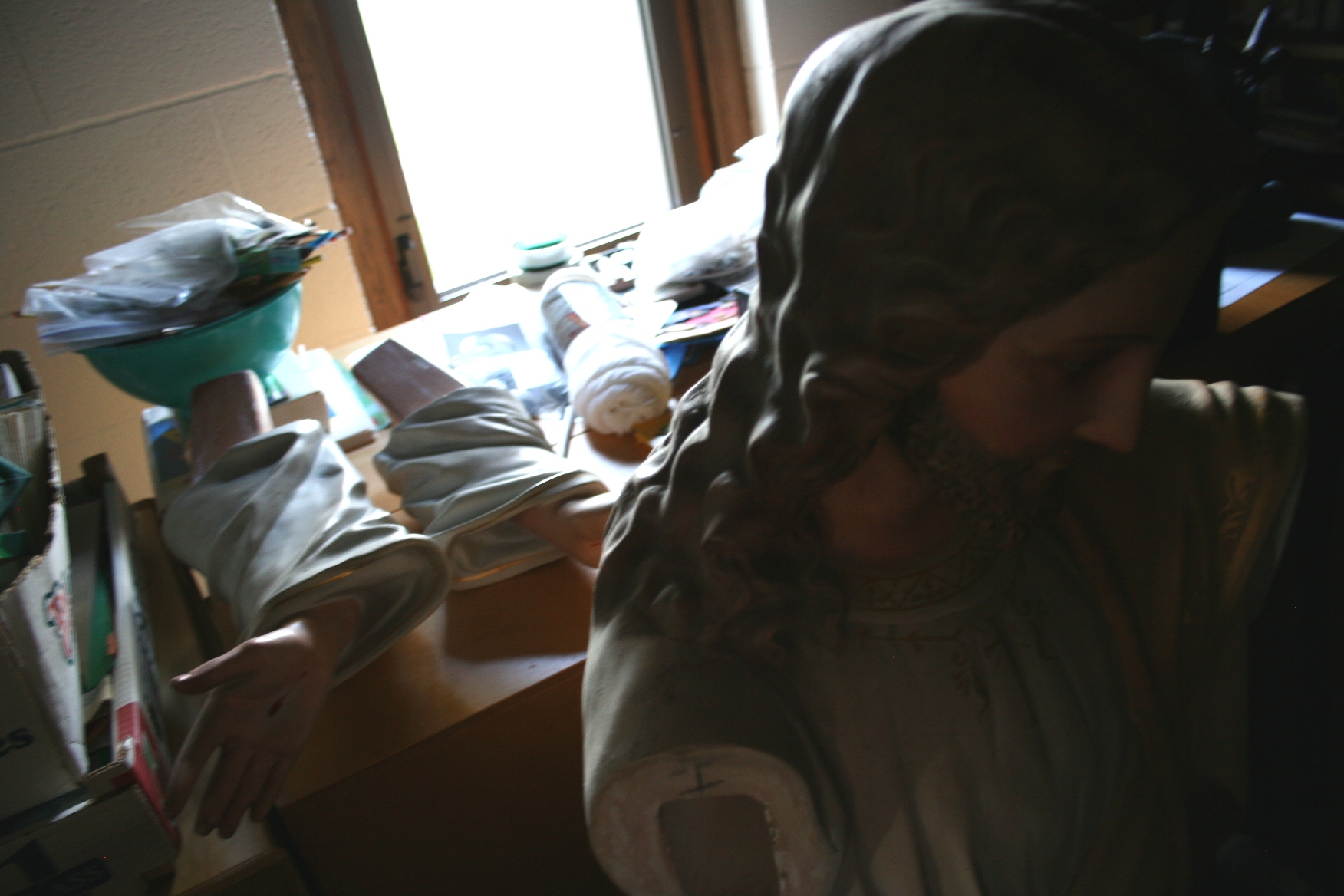
THE ARMLESS JESUS stood there, shoved into the back corner against a desk in the dark fellowship hall packed with misplaced pews.

That’s when I panicked, thought for a moment that Jesus had lost his arms in the July 1 storm, until I realized his appendages had been removed, not broken.

To the right in this photo, stands Jesus. His arms were removed and lie behind him on a desk.

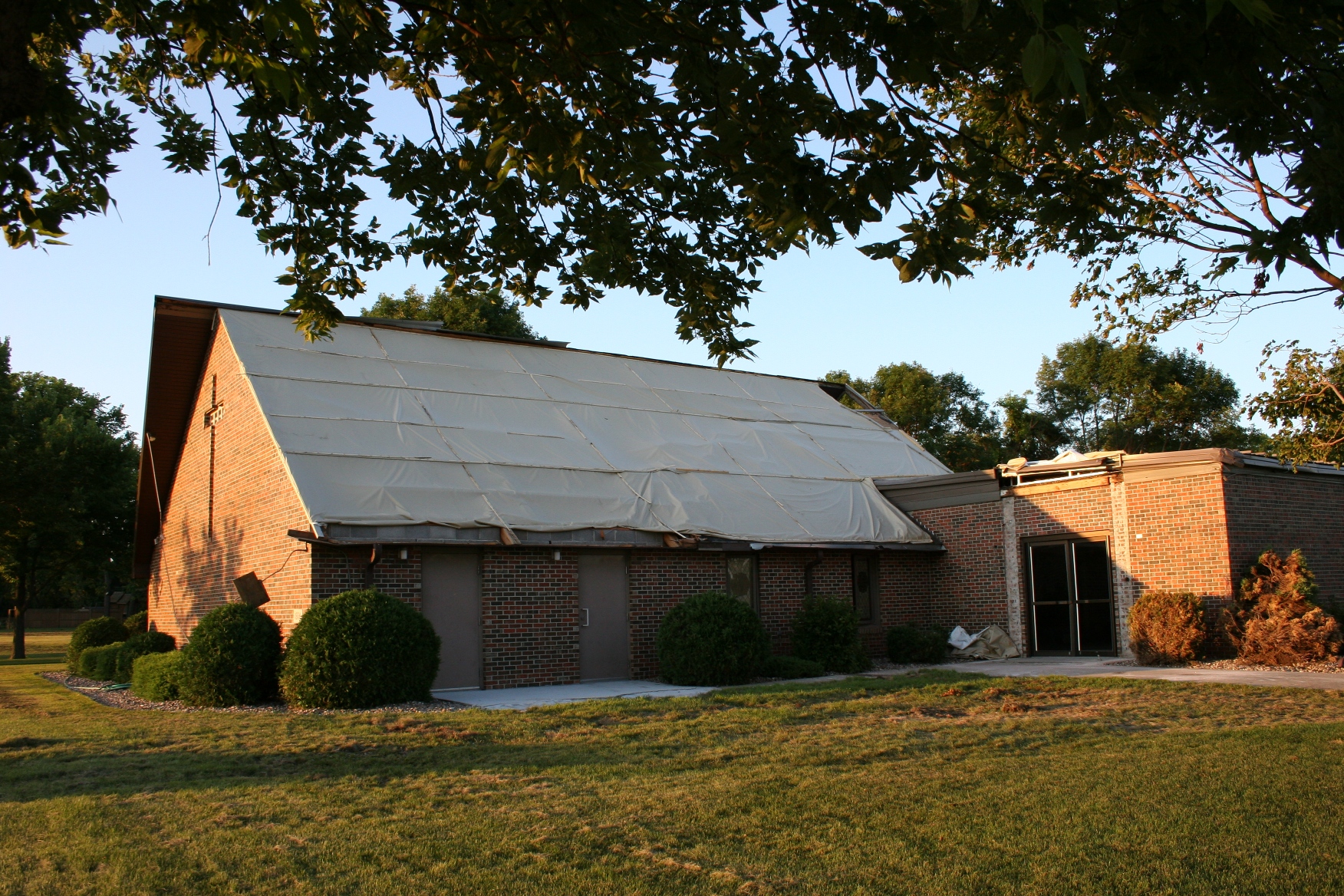
The statue of Christ has been my greatest concern ever since a series of downbursts with winds of 90 – 100 mph ripped half the roof from St. John’s Lutheran Church, exposing the sanctuary and Jesus to the heavens.

One month after that strong windstorm, I returned to my hometown of Vesta in southwestern Minnesota and viewed the damage I’d only seen in photos. The town looks better than I’d feared, although I’m certain if I’d been there right after the storm, I wouldn’t be writing that.

St. John's, hours after the July 1 storm with half of the south roof ripped off by high winds. The roof fell against and cracked the bell tower, which has since been taken down. Photo courtesy of Brian Kletscher.

It’s the damage to St. John’s that I knew would impact me the most emotionally. My worries centered on that Jesus statue, the single remaining visual reminder of the old 1900 church building across town where I was baptized and confirmed and worshipped for the first 18 years of my life. In May of 1982, I was married in the new brick church built in 1974.

Jesus, who once blessed us with outstretched arms from the altar of the old church, was alright. For that I was thankful.

As St. John’s members await word from an engineer on whether the damaged building is structurally-sound or will need to be demolished, they are attending their sister church, Peace Lutheran, in Echo seven miles to the north.

That seems to be working for now. But come winter, when travel can sometimes be difficult and dangerous on the southwestern Minnesota prairie due to blowing snow, options to worship in Vesta may need to be considered. Or maybe not. Pastor Dale Schliewe doesn’t expect the church to be rebuilt by the time the snow flies.

Right now, though, church members are more concerned about getting the building process started. That could include an expansion.

No matter what ultimately happens, this congregation remains a thriving one, attended by many members of my extended family. My great grandfather, Rudolph Kletscher, helped found St. John’s. The first church service was held in his home one mile east of Vesta.

My emotional attachment to this congregation runs deep, rooted in that legacy of faith passed from generation to generation.

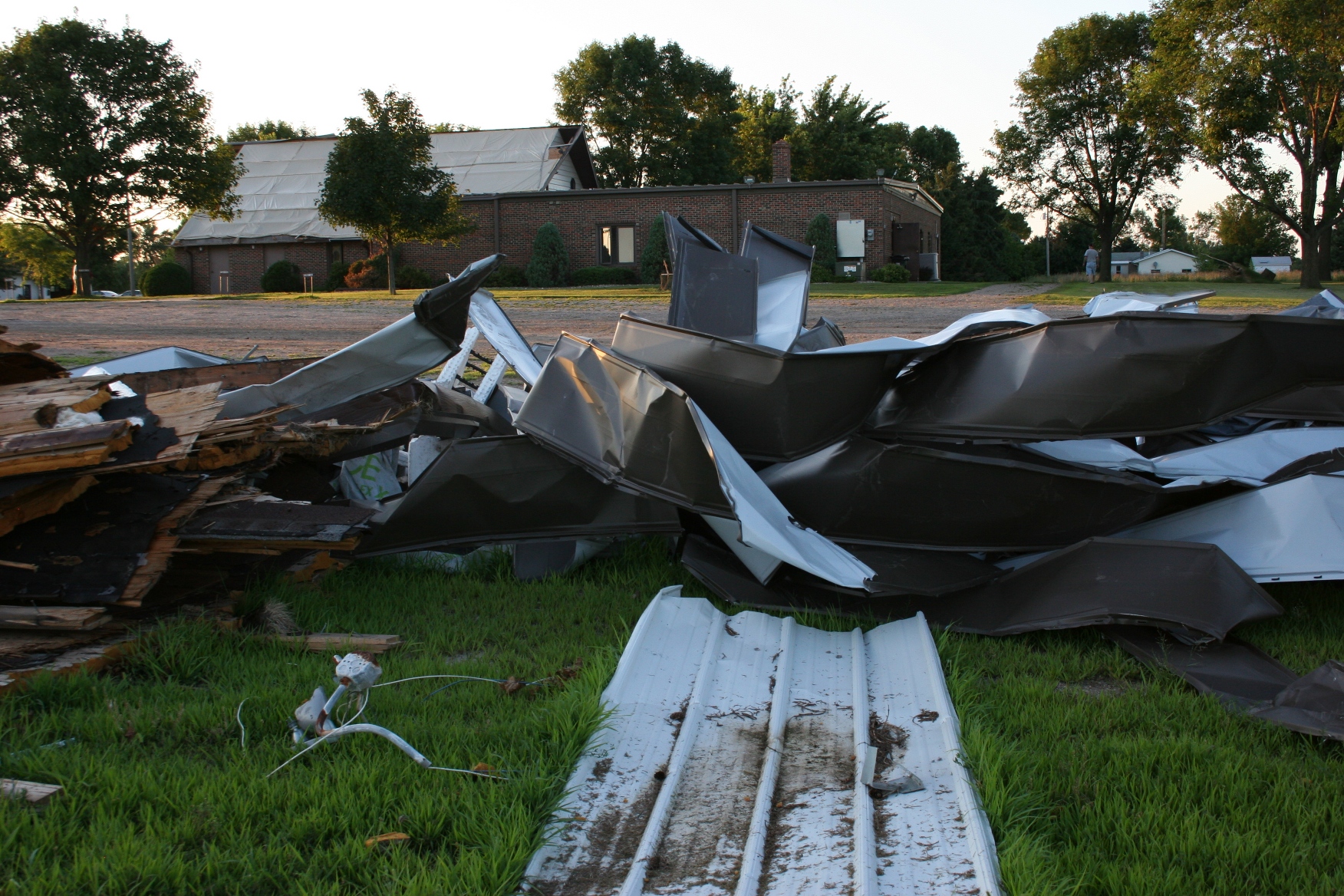
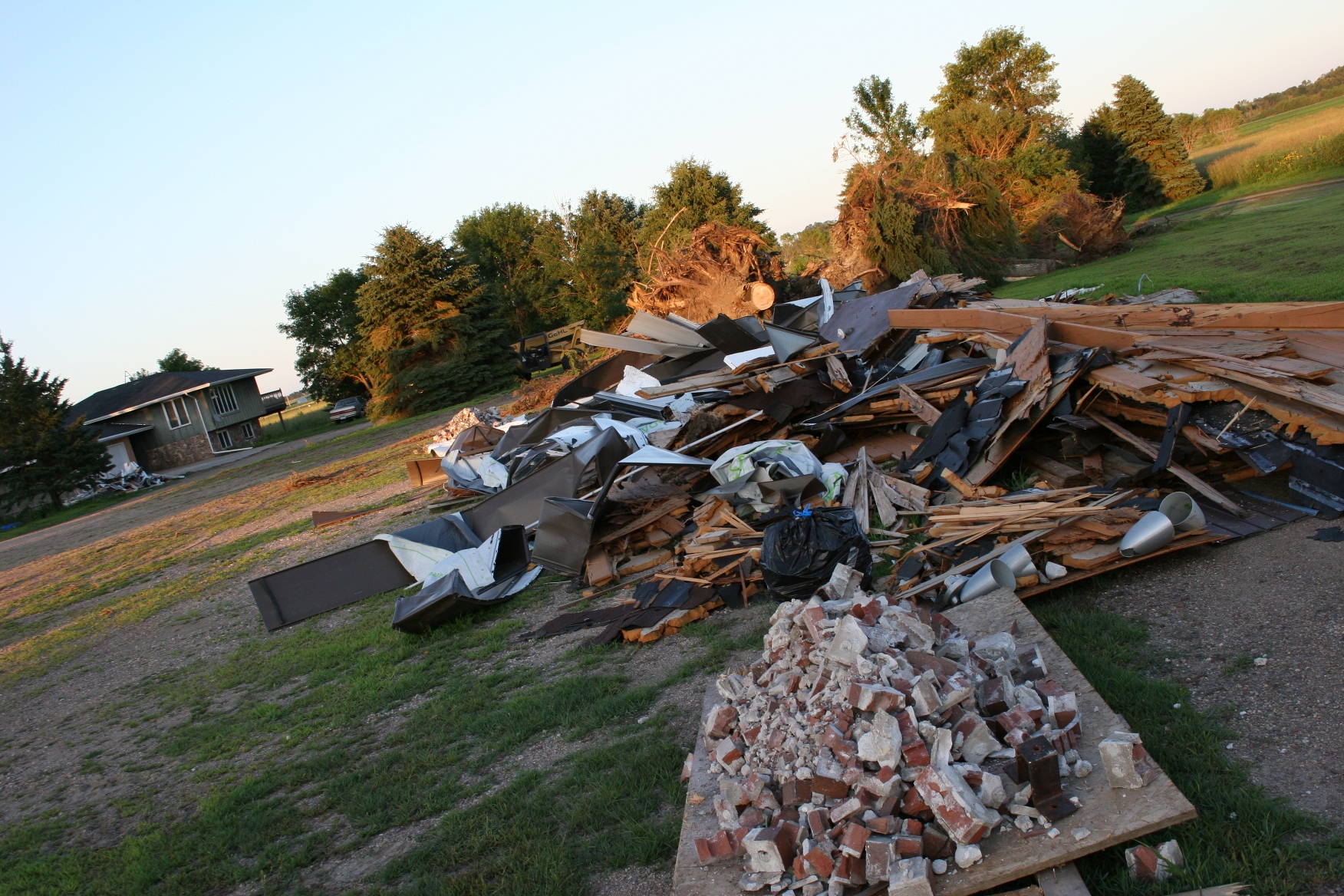
I understand that a building does not comprise a church. Yet, when I walked into the empty sanctuary of St. John’s, gazed upward at the tarp covering the missing roof, saw the splintered wood, walked around the pews jammed into the fellowship hall, noticed Jesus standing armless in the corner, spotted the hymnals stacked on a kitchen counter and skirted the pile of debris in the church parking lot, my soul ached.

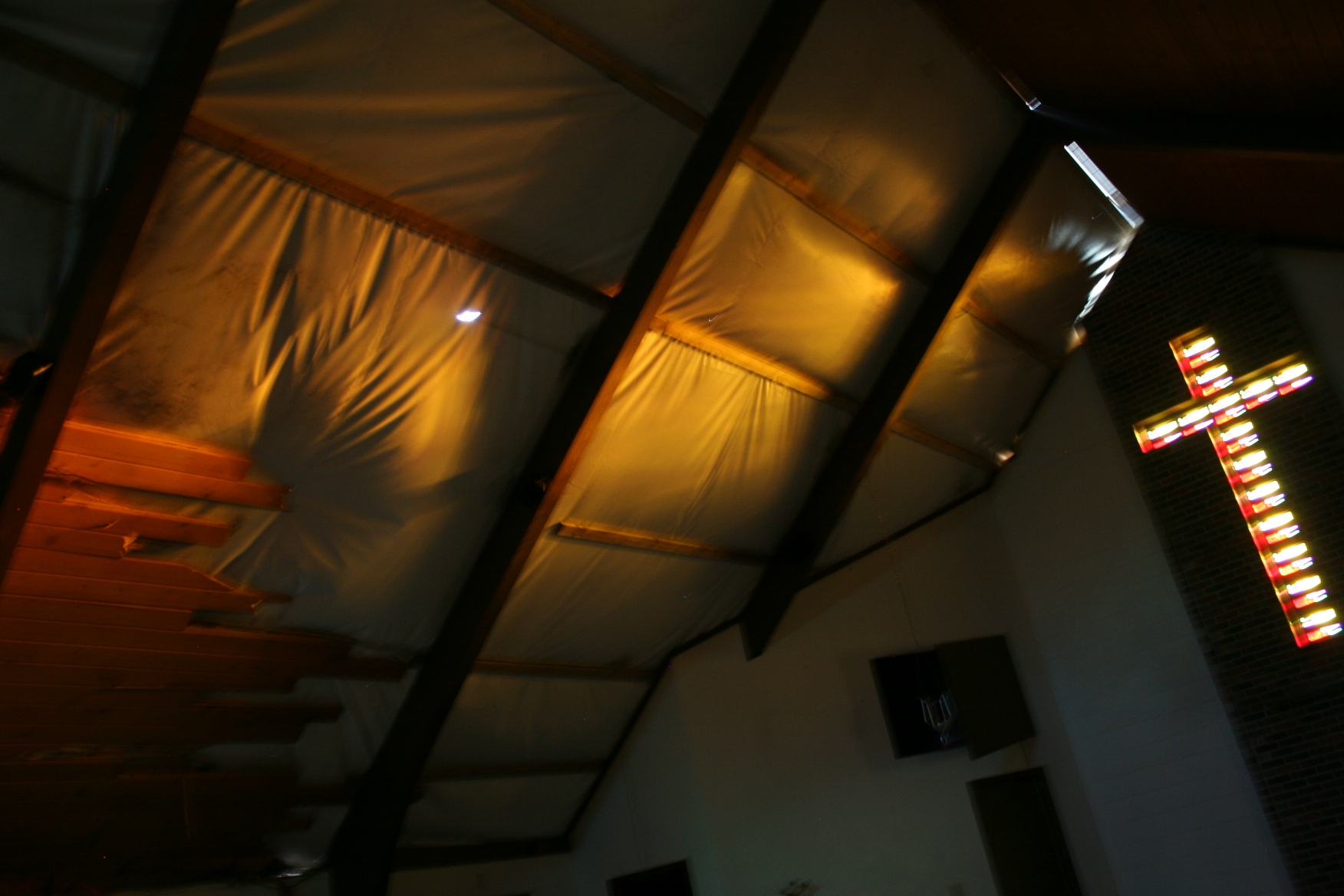
Inside the sanctuary, you see the damage to the roof, now covered by a tarp. To the right, a stained glass cross centers the worship area in this photo shot at an angle.

One month after the storm, the south side of the roof is covered with a tarp.

A debris pile on the edge of the parking lot includes pieces of steel from the roof and brick from the bell tower.

Another angle of that debris pile shows uprooted trees and, to the east, a house which was damaged.

© Copyright 2011 Audrey Kletscher Helbling
 

This little piggy can go home July 20, 2011

THE RICE COUNTY FAIR in Faribault officially opened at 5 p.m.Tuesday.

But even before then, fair officials were telling 4-H kids and other livestock exhibitors that, because of the excessive heat and humidity, they could arrive late and take their critters home after judging, according to information I heard on local radio station KDHL.

Then Tuesday at 10 p.m., my 17-year-old received a text message and asked me to switch the TV to KARE 11 news. “Adam’s going to be on,” he said. And sure enough, 30 seconds later the camera focused on his friend Adam Donkers spraying a pig with water in the swine barn at the fair. Adam informed viewers that hogs can’t sweat so he was sweating for them by cooling them with water. His family farm lost 11 pigs overnight due to heat stress.

So that got me thinking about excessive heat warnings for livestock, none of which I’ve heard. That doesn’t mean, however, that such warnings haven’t been issued; I simply might not be tapping into the right media sources.

This morning I checked the Rice County Fair website, but didn’t find any information there. I do know that fair officials brought extra fans into the barns on Tuesday.

Then I googled “livestock heat warning,” only to find warnings (not all of them current) from places like Kansas, Iowa, Nebraska and Montana. Not Minnesota.

I googled the Minnesota Department of Agriculture, the Minnesota Pork Producers, the Linder Farm Network and the University of Minnesota Extension Service and, in quick scans of the websites, found nothing.

But then, I suppose, most farmers already understand the importance of keeping their swine, cattle, poultry and other animals cool with fans and water during extended periods of excessive heat and humidity like we’re experiencing in Minnesota. Yesterday the heat index reached 119 in Minnesota, the highest since July 11, 1966. The dew point soared to an all-time high of 82.

But back to those animals… Some may question why removing livestock from the fair would help because conditions are just as hot back on the farm. Consider the stress factor. Take an animal out of its familiar environment, load it into a trailer or truck, haul it to the fair, place it among strange animals and gawking people in unfamiliar surroundings, and stress multiplies. I mean, how would you feel?

IF YOU’RE A FARMER with cattle, swine, poultry or other animals, how are you keeping your animals comfortable and cool during this weather? How is the excessive heat affecting your animals? Have you lost any due to heat stress? How are your crops faring? Submit a comment and share.

© Copyright 2011 Audrey Kletscher Helbling


Summer showers in the sweltering heat July 19, 2011

A hose was for more than watering the garden or cattle when I was growing up on the farm. Read on.

WITH THE CURRENT HEAT WAVE we’re experiencing in Minnesota, I’ve been thinking a lot about the weather of yesteryear. And here’s what I’ve concluded. Unless the weather impacted some major event in my life or ranked as exceptional, I really can’t specifically remember one summer to the next or one winter to the next. Fall and spring sort of get lost in the mix of seasons.

That is the reality of my long-term memory.

For me, the summers of my youth on a southwestern Minnesota crop and dairy farm were defined, not by the weather, but by playing “cowboys and Indians” (yes, I realize that is not politically correct today, but it was the reality of the 1960s), by after-chores softball games on the gravel farmyard and by evening showers with a garden hose.

Let me explain that last one. I lived for the first dozen years of my life in a cramped 1 ½-story wood-frame farmhouse with my farmer-father, my housewife-mother and four siblings. The third brother was born later, after we moved into the new house.

The old house didn’t have a bathroom. That meant we took a bath once a week, on Saturday night, in an oblong tin bath tub that my dad lugged into the kitchen. Yes, we shared bath water. And now that I consider it, given we labored in the barn daily, we must have really stunk by Saturday night.

Sometimes in the summer, when the weather was especially hot and humid, we showered. After my dad finished milking cows, he would thread the green garden hose through an open porch window outside to the east side of the house. Then, with one of us “standing guard” where the driveway forked, within a stone’s throw of the tar road, we began the process of showering.

One-by-one we took our turn standing naked on the grass, soap bar in one hand, garden hose in the other, scrubbing away the sweat and animal stench, the bits of ground feed and hay and silage, the dirt that clung between our toes.

And all the while we showered, we worried that a relative or a neighbor might turn into the farmyard or an airplane might fly overhead, as if a pilot could see us from high in the prairie sky.

So during a hot stretch like we’re experiencing right now in Minnesota, I remember those primitive summer showers on the farm. I recall, too, the single turquoise box fan we owned—the one reserved for my hardworking farmer-father who endured heat and flies as he bent to wash another udder, to attach another milking machine, all to earn money to feed his growing family.

And I think, as I sit here at my computer in my air-conditioned office just around the corner from the bathroom with the combination bathtub and shower that I have it good, darned good.

Growing up on the farm, we had one box fan similar to this one.

DO YOU HAVE summer memories like mine, or another weather-related story? Submit a comment and share.

Copyright 2011 Audrey Kletscher Helbling
 

Hot as “you know what” in Minnesota July 18, 2011

Air conditioners will be working overtime in Minnesota this week.

SO, MINNESOTANS, here’s the weather question of the day: “How hot is it outside?”

Although I’m of German heritage, I’d unequivocally state, “hotter than a Finish sauna.”

With a predicted dewpoint in the 70s (Sunday it reached an almost unheard of 81) and temperatures in the 90s today, the National Weather Service in Chanhassen has continued an extensive heat warning for central and southern Minnesota and west central Wisconsin through 9 p.m. Wednesday.

Heat indexes of more than 105 degrees (some media outlets are saying 110 – 117 degrees) are expected for several-hour stretches during the afternoon, creating “a dangerous situation in which heat illnesses are likely.” Ya think?

That means, folks, that we need to keep ourselves cool (preferably in an air conditioned building), drink plenty of fluids (and we’re not talking alcohol here) and stay out of the sun.

Don't increase your fluid intake via alcohol.

Honestly, when I stepped outside Sunday evening, I felt like I couldn’t breathe. You can guess how long I stayed outdoors. Long enough to turn around and walk back inside the house. I had been out earlier photographing the air conditioner you see above. I had a little trouble with the camera lens fogging over as soon as I stepped outdoors. The windows on our house also fogged, a phenomenon I have not previously seen except when I cook pasta. Weird stuff this weather.

All joking aside, this heat and humidity can be downright dangerous, especially for anyone working outdoors.

I know of some teens supposedly heading to the corn fields early this morning to detassel corn in the Stanton/Northfield area. Here’s my advice: Gulp water, by golly, then gulp some more. Slather on the sun screen, wear a cap and, if you’re at all feeling out of sorts, immediately tell your supervisor. Today would not be the day to tough it out. And, yes, I do know of what I write. As a teen I detasseled corn on days so hot it seemed as if the heavy air would suffocate me in the corn rows.

If you, or your teen, is starting a job this week as a corn detasseler, take extra precautions to avoid heat-related health issues. Also, don't quit. Every week in the cornfield won't be like this one and you' likely work only til noon.

Now, with those dire warnings out of the way, let’s talk about the words and phrases we Minnesotans use to describe this stretch of humid, hot weather. Let me pull out my Minnesota Thesaurus and thumb through the pages.

Here are some select synonyms for our current weather: steamy, muggy, scorching hot, sweltering, a real barn burner, so hot you could fry an egg on the pavement, like a sauna, “it’s not the heat, it’s the humidity”…

Whichever words you choose from that non-inclusive list, you might want to add, “It could be worse.” We Minnesotans like to tack that little phrase onto our statements lest, by not adding that qualifier, we leave ourselves open to worse circumstances/situations/weather. We do not want to tempt fate.

After all, come December, we could get socked with a raging blizzard that dumps two feet of snow on us followed by a week of temperatures plummeting to 20-below, and that’s without the windchill. We wouldn’t want to invite a Siberian winter by forgetting, this week, to say, “It could be worse.”

A snow pile divides traffic lanes along Fourth Street/Minnesota Highway 60 a block from Central Avenue in Faribault following a December 2010 snowstorm.

In summary, it’s best, really, not to overly-complain about the hellish, hot, scorching, stifling, steamy, sticky, sweltering, miserable, muggy, unbearable, oppressive heat and humidity. OK, then?

And, please, don’t be thinking, “Whatever, Audrey.”

IT’S YOUR TURN to speak up. How would you describe this weather we’re experiencing in Minnesota? How are you coping? Add your ending to this prhase: “It’s so hot in Minnesota that…”  Submit a comment and tell me whatever.

© Copyright 2011 Audrey Kletscher Helbling
 

Rain, rain and more rain in Faribault July 15, 2011

I shot this photo from my living room window late this afternoon of flooded Willow Street.

AROUND 4 P.M., the sky turned black as night here in Faribault. And then the rain let loose. Rain pouring forth so fast that if I was Noah’s wife, I would have urged him to hurry up and finish building that ark.

For some 10 minutes or so, a boat would have been the preferred mode of transportation along the street past my house. The storm sewer couldn’t keep up with the rainwater rolling down the hill onto Willow Street, a main route through town.

Some drivers diverted to the opposite traffic lane to dodge the deepest water. Others splashed through without even slowing down. And yet others paused, tentatively tire-tip-toeing into the water.

Some drivers were cautious, others not so much, as they drove on flooded Willow Street.

Motorists drove through flooded Willow Street without too much concern.

Soon the onslaught of water swept across the roadway into a neighbor’s driveway, down the side of the garage and into the backyard. Next door, rain also surged onto the driveway, then channeled south down the sidewalk to another neighbor’s newly-blacktopped driveway.

The rain flowed across the street into the neighbor's driveway (left), along the garage and into the backyard.

The next two neighbors to have water from the flooded street surge onto their properties.

On my side of the street, at the near bottom of the hill, the curb contained the deluge of water.

It’s been quite a day here—rain, rain and more rain. Open the windows, close the windows. Open. Close. Check the skies. Listen to the weather report. Hang clothes on the clothesline and two minutes later pull them off after spotting heavy, threatening clouds moving in.

Then I checked the National Weather Service website to learn Rice County, my county, is now under a flash flood warning. Yes, it’s been quite a day with rain, rain and more rain.

WHAT’S THE WEATHER like in your area? Submit a comment and tell me.

© Copyright 2011 Audrey Kletscher Helbling