Minnesota Prairie Roots

Writing and photography by Audrey Kletscher Helbling

Reflecting on bee lawns, invertebrate inns, learning & the future August 29, 2024

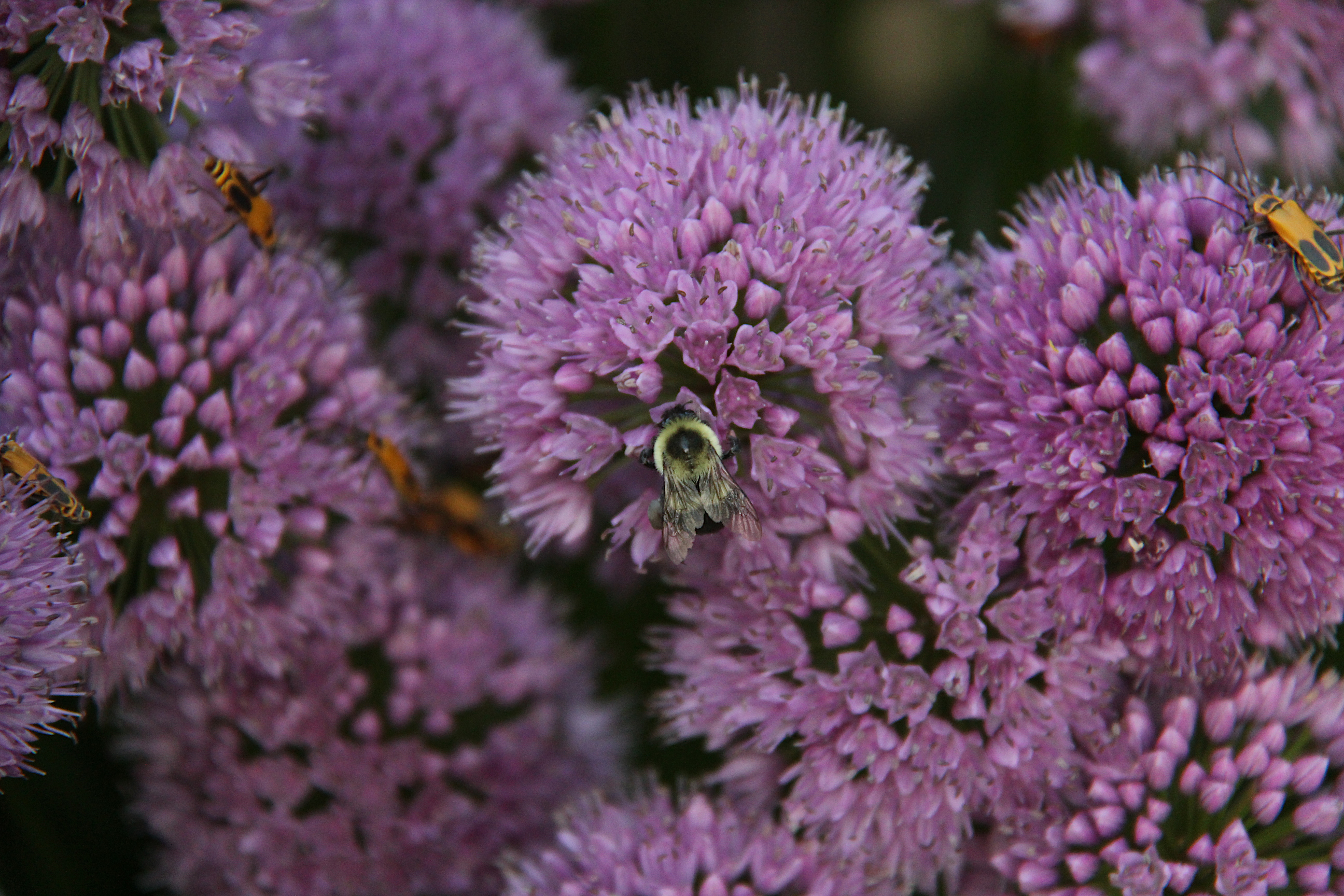
I spotted this bee and other bugs on flowers in the Rice County Master Gardeners’ Teaching Gardens. (Minnesota Prairie Roots copyrighted photo August 2024)

ADMITTEDLY, I NEVER EXCELLED in science. I sort of just got by, learning what I needed to learn to get reasonably good grades in science class. But if I was to go back to the classroom, I’d listen more intently, ask more questions, figure out how the information I was taught actually related to me and my world. In other words, I wouldn’t simply absorb, regurgitate and then move on, which seemed to be the way subjects were taught when I was a student.
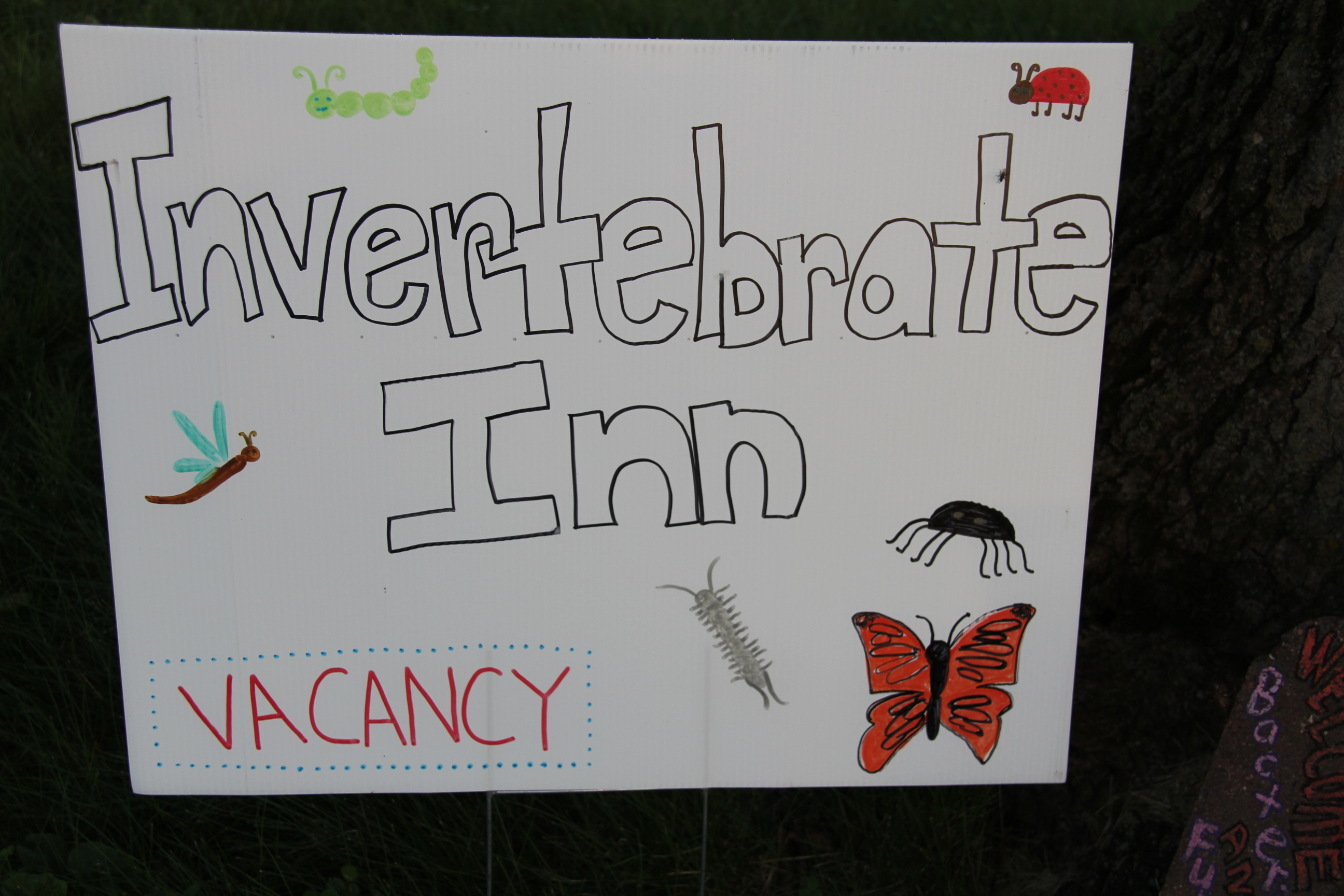
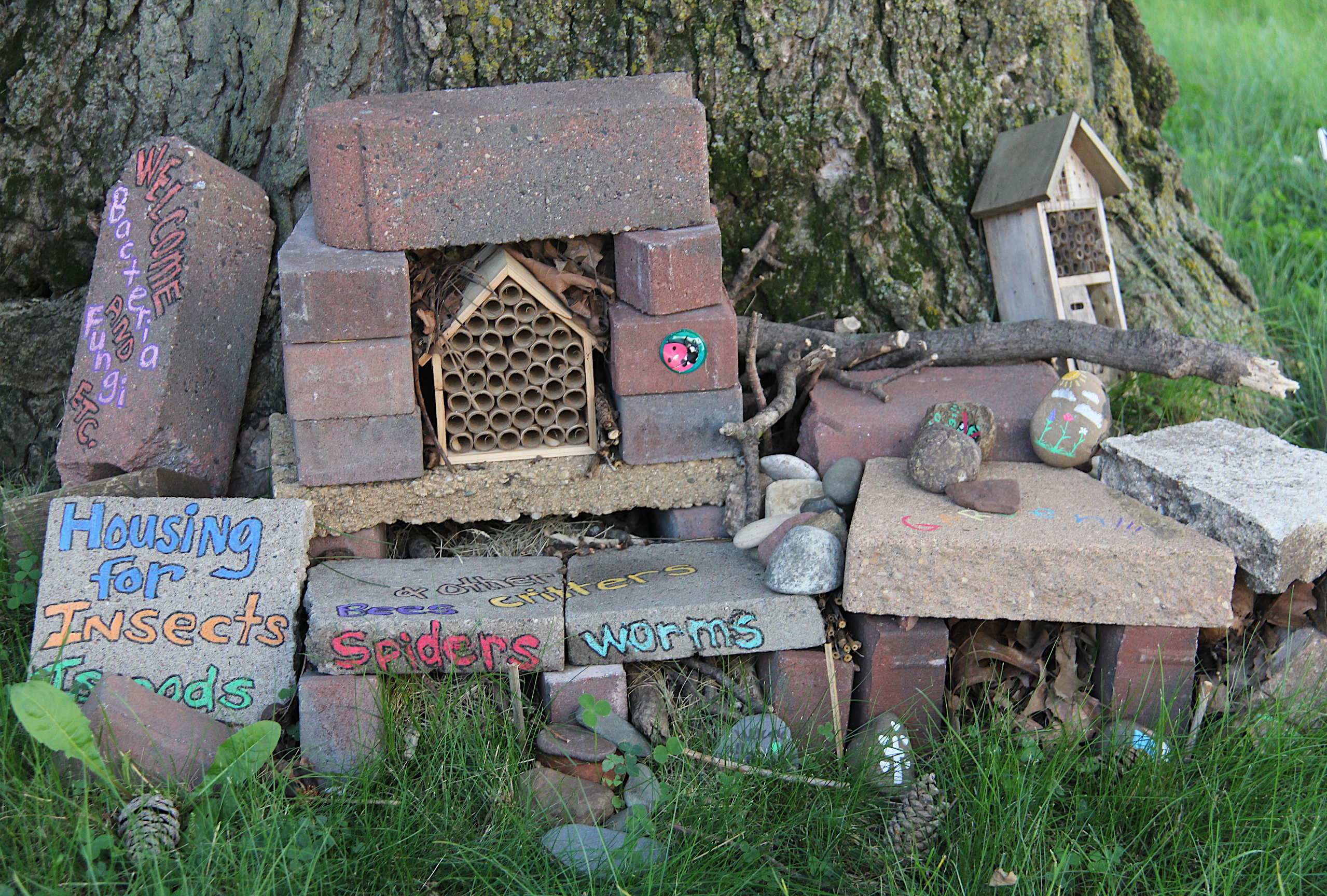
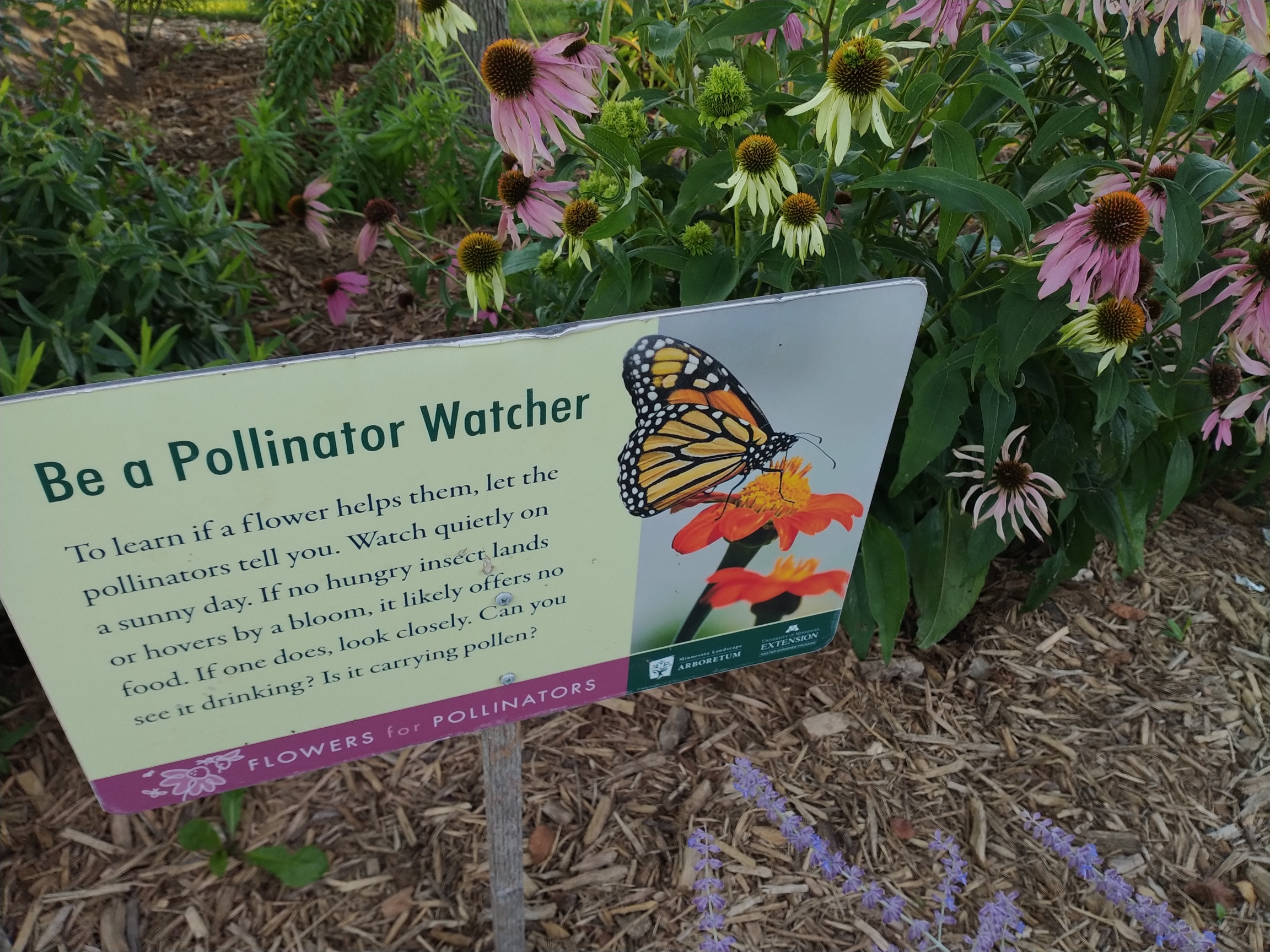
This sign drew me to the base of a tree, where I found an inn and a bee lawn. (Minnesota Prairie Roots copyrighted photo August 2024)
Bricks, stones, sticks and more comprise this haphazard housing unit. (Minnesota Prairie Roots copyrighted photo August 2024)
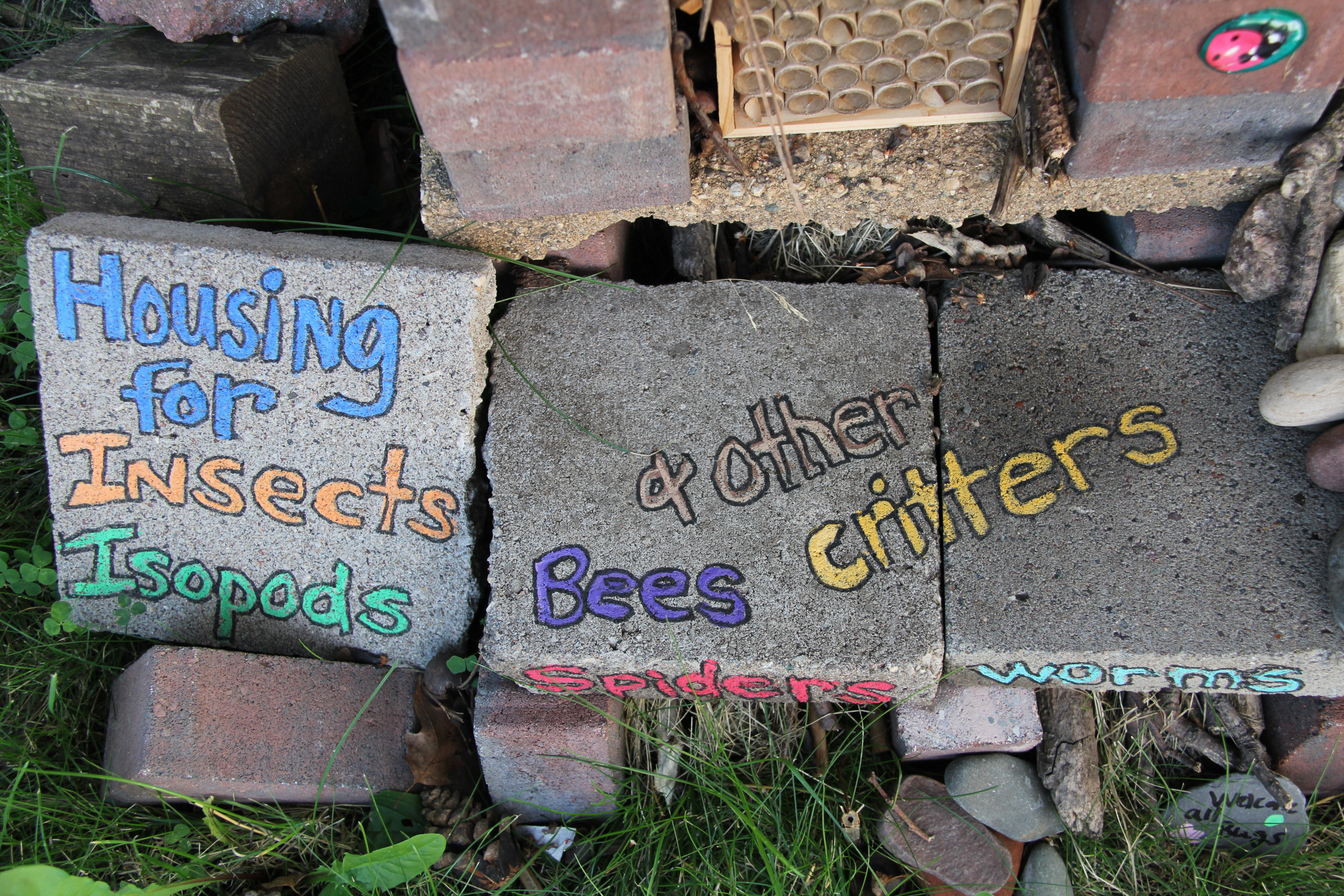
Identifying signage on the Invertebrate Inn. (Minnesota Prairie Roots copyrighted photo August 2024)

Now, as an adult, and an aged one at that, I realize that the core of learning is not memorization. It is rather taking in information that sparks interest, raises questions, causes independent thinking. I am still learning well into my sixties, this year marking 50 years since I graduated from high school.
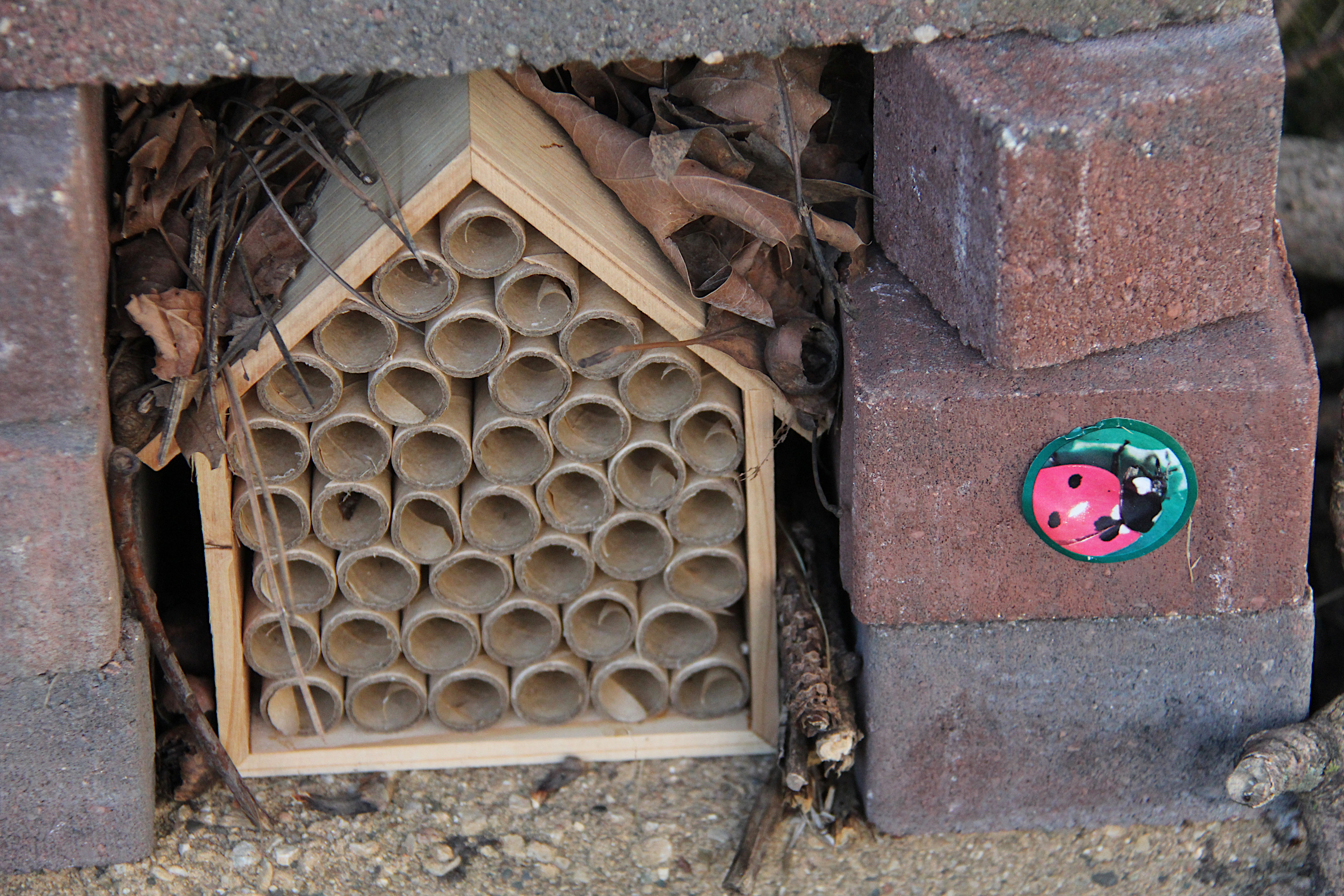
I trust this structure would be a good home for a bug. (Minnesota Prairie Roots copyrighted photo August 2024)

Today I learn because I want to, not because I need to take some class for credits or to earn a degree.
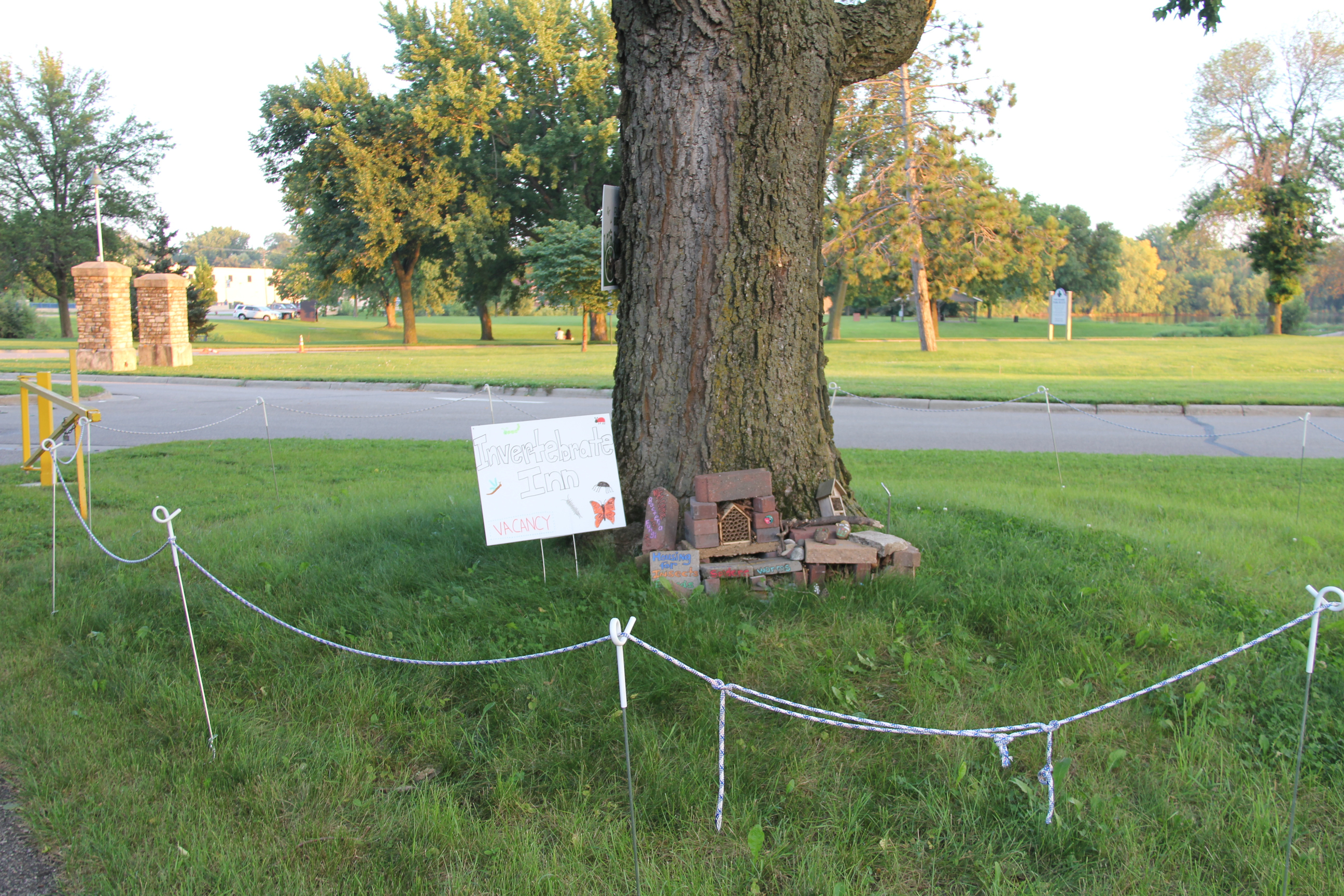
The bee lawn was roped off when I visited. (Minnesota Prairie Roots copyrighted photo August 2024)
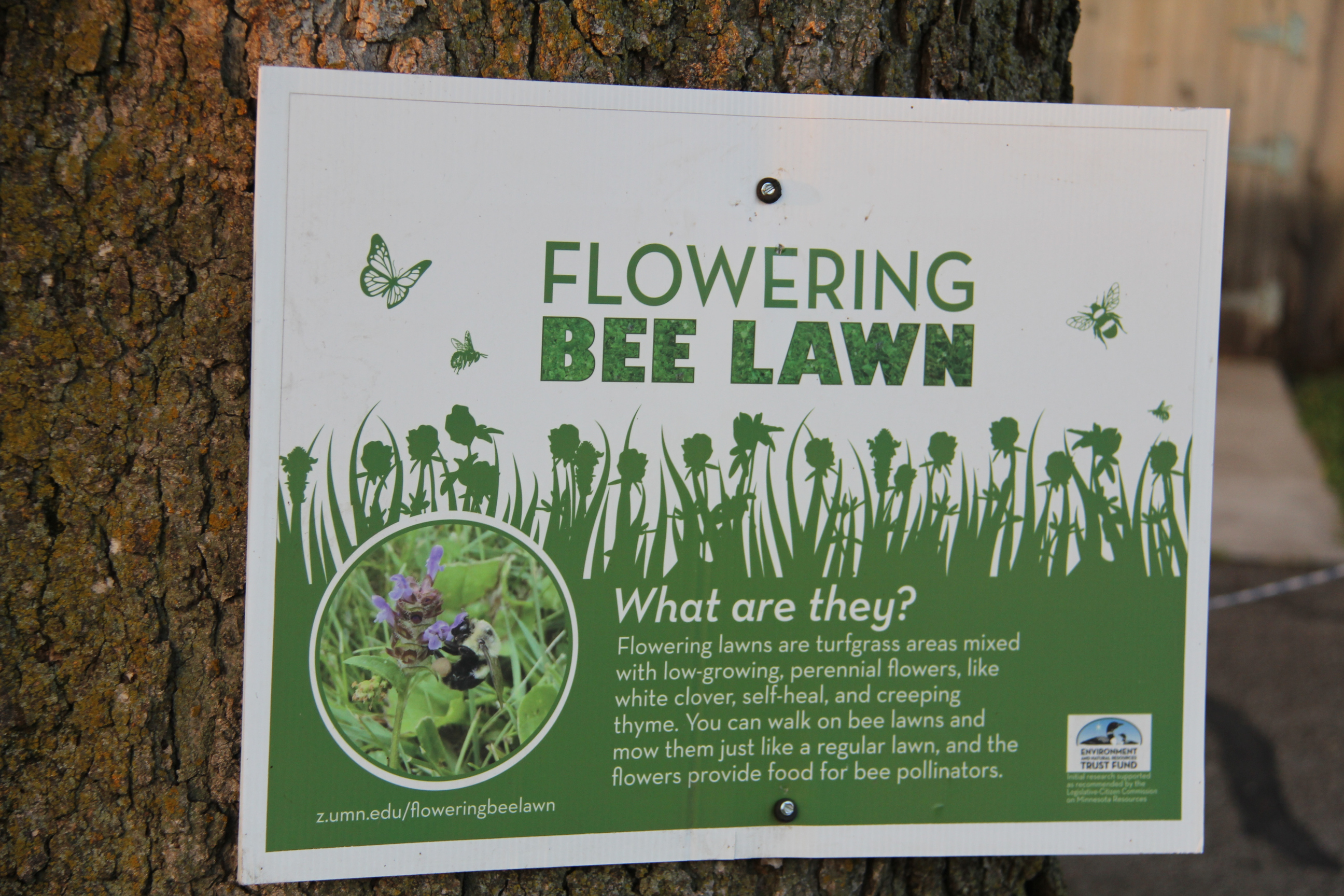
Signage on the tree explains a flowering bee lawn. (Minnesota Prairie Roots copyrighted photo August 2024)
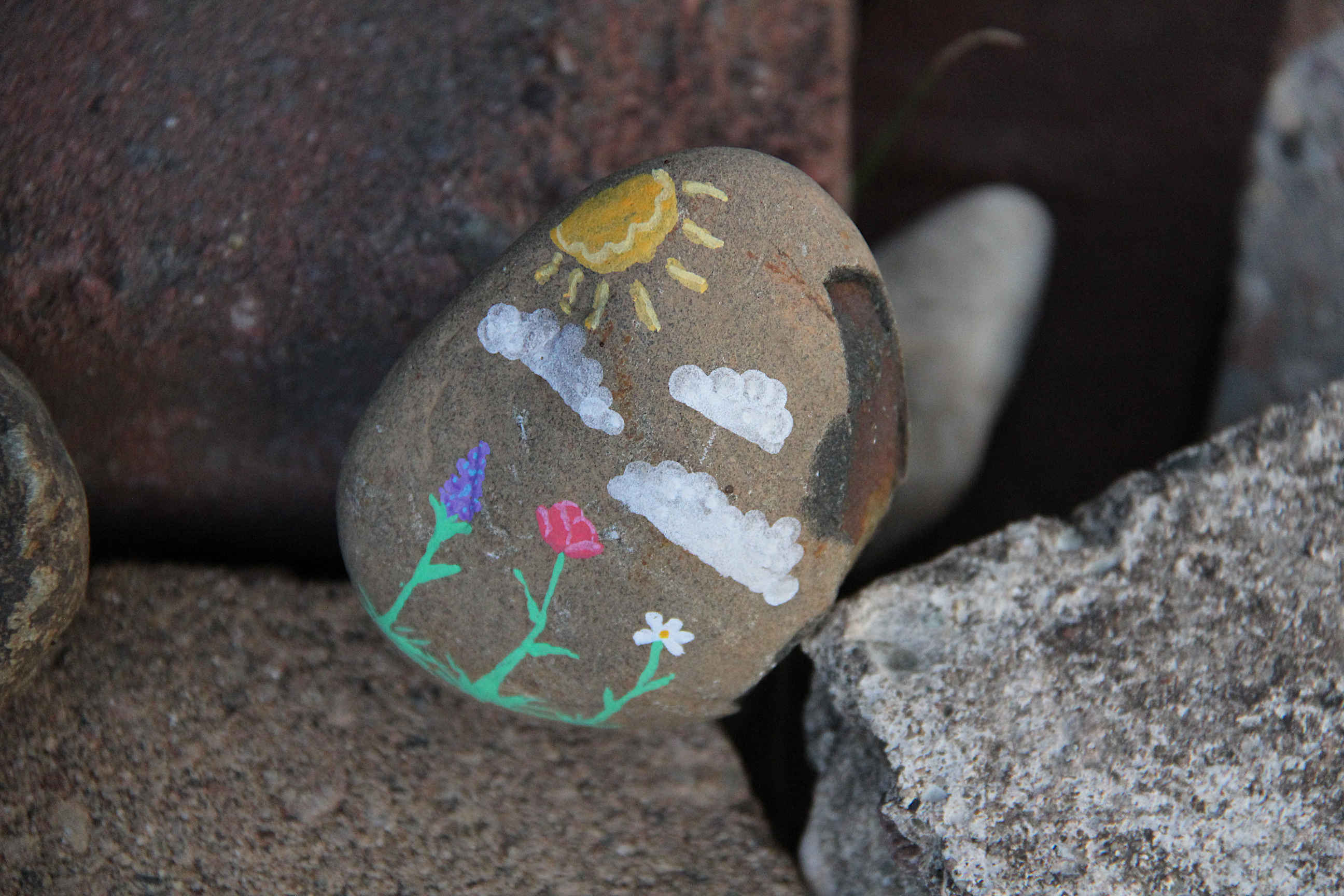
Fitting floral rock art in the inn. (Minnesota Prairie Roots copyrighted photo August 2024)

My latest delve into science was prompted by a visit to the Rice County Master Gardeners Teaching Gardens in Faribault. There I spotted an Invertebrate Inn and a bee lawn, recent additions to the beautiful gardens located at the Rice County Fairgrounds. These are not exactly novel ideas. But I’d not previously considered them much and how they benefit the natural world. Low-lying bee lawns, with their clover and other flowers like creeping thyme, provide nectar and pollen for pollinators.
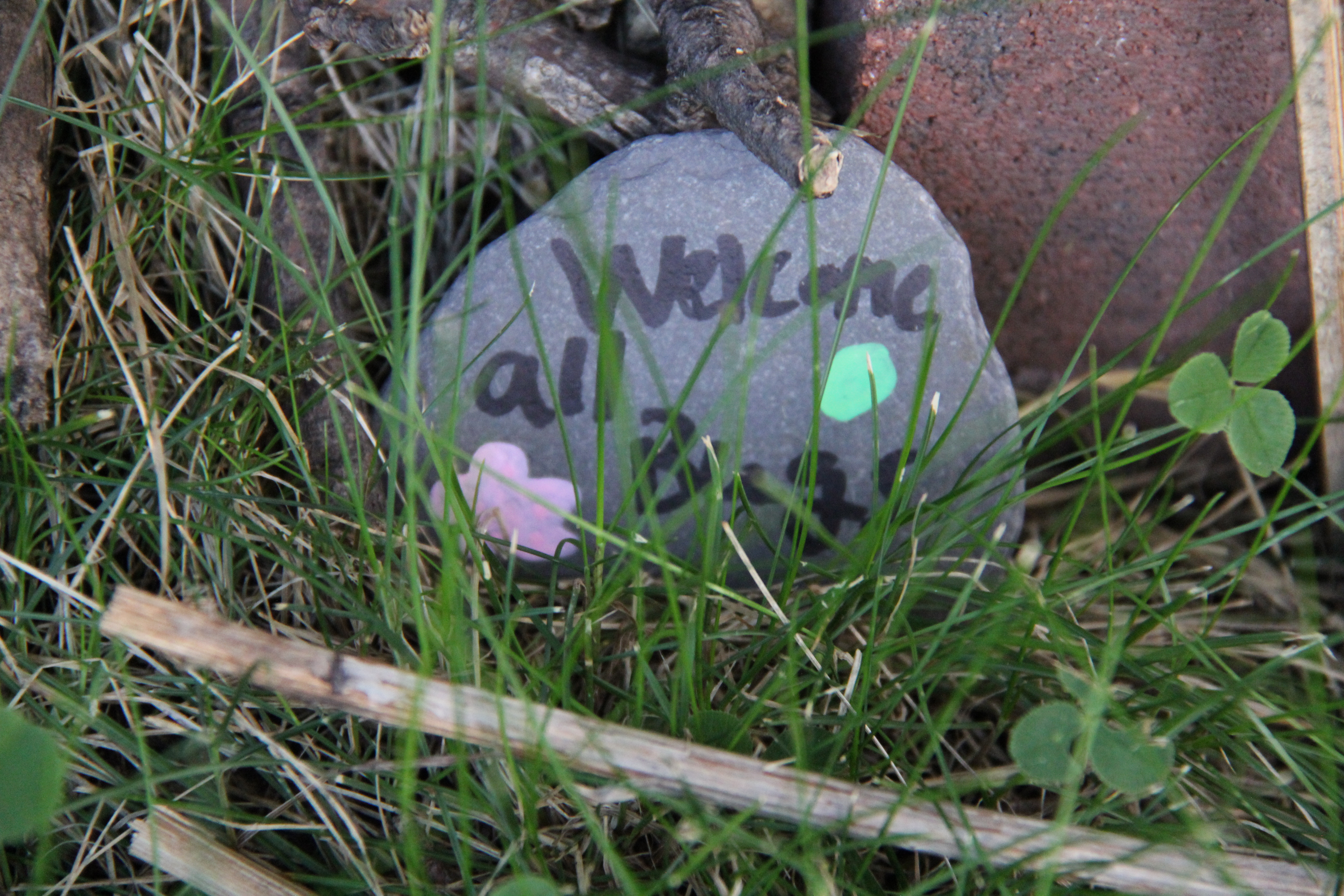
At the inn, a welcome sign for guests. (Minnesota Prairie Roots copyrighted photo August 2024)

In some ways, the inn and the bee lawn remind me of childhood days on the farm with our grass anything but weed-free and manicured. Dandelions and clover were prolific. No weedkiller or insecticides were used except on crops. No nothing applied to the grass, because who cared and who had time to nurture a lawn when there were crops to plant and cultivate and animals to tend?
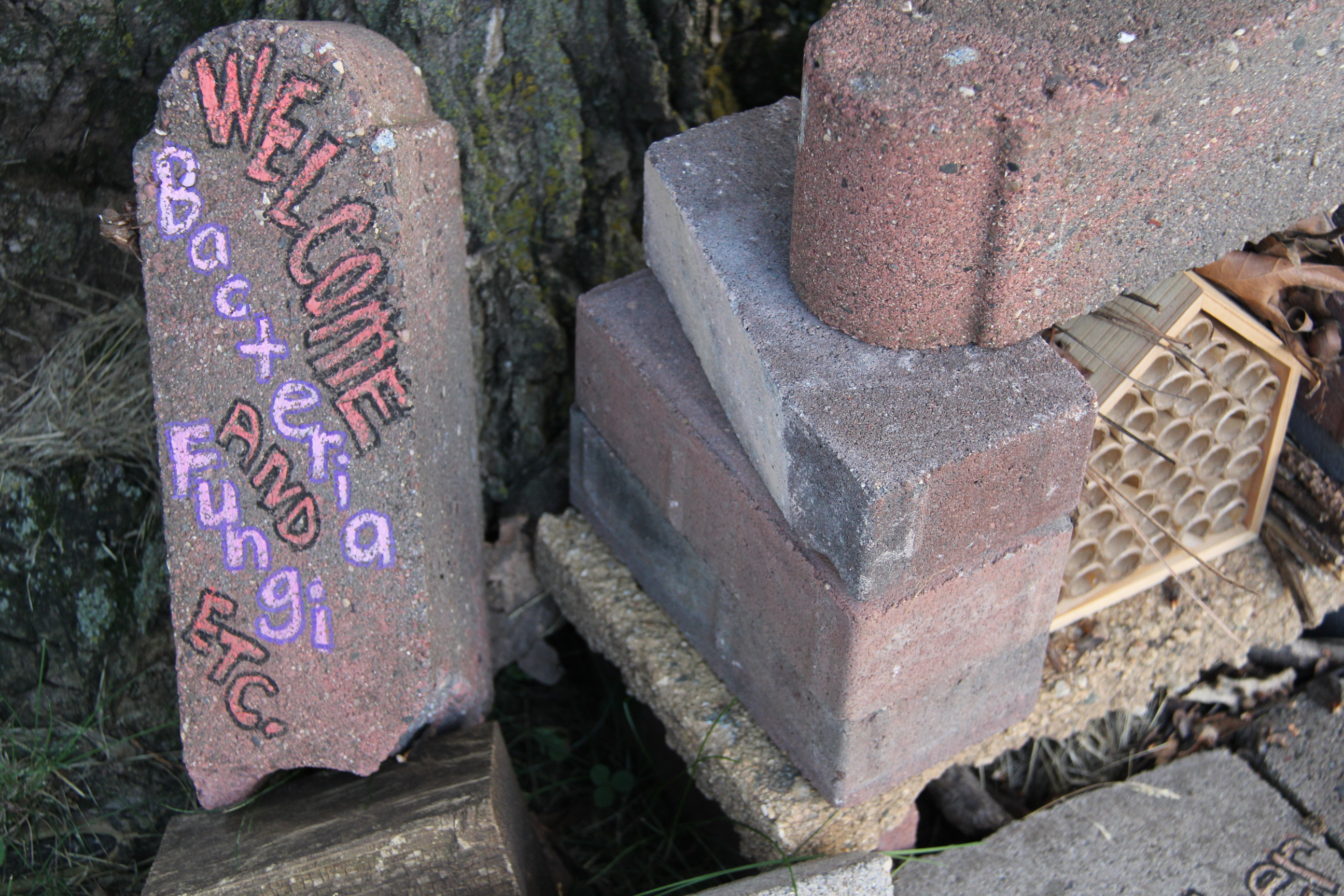
Housing for more than just insects, isopods, bees, spiders, worms and other critters. (Minnesota Prairie Roots copyrighted photo August 2024)

Times have changed as farming and yard care have evolved. Insecticide and herbicide usage is prevalent. We would be naive to think this has not affected pollinators like butterflies and bees. And so when I discover something like a bee lawn and an Invertebrate Inn, I feel a spark of joy, a sense of gratitude for those who create them.
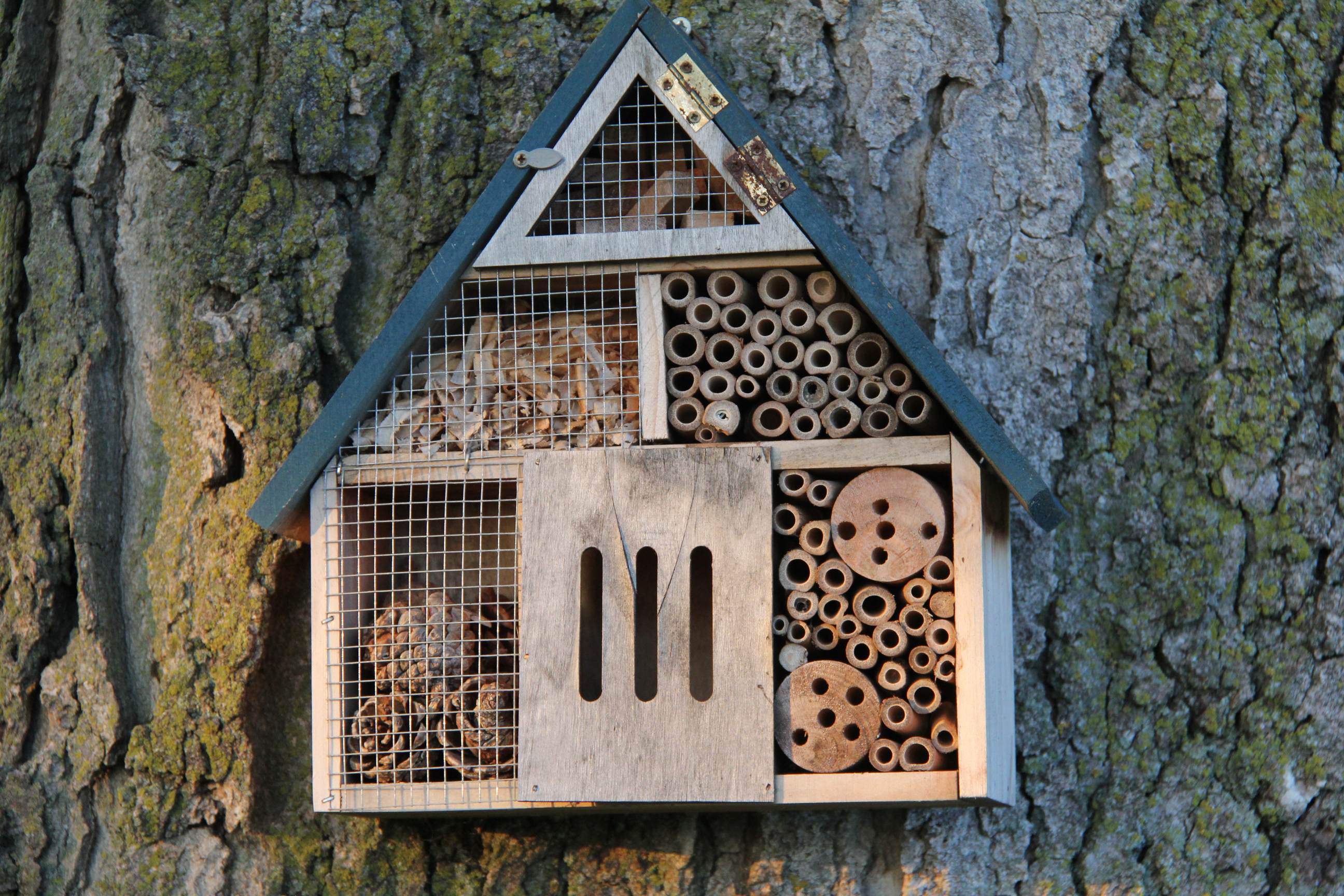
High rise housing. (Minnesota Prairie Roots copyrighted photo August 2024)

I want my grandchildren to understand that this world they’ve been given is one that needs to be nurtured and appreciated, taken care of in a way that perhaps my generation did not. Sure I celebrated Earth Day, wore Earth Shoes and spouted environmental platitudes of the 1970s. But did that really mean anything, make any long-lasting impact? It was a beginning, I suppose.
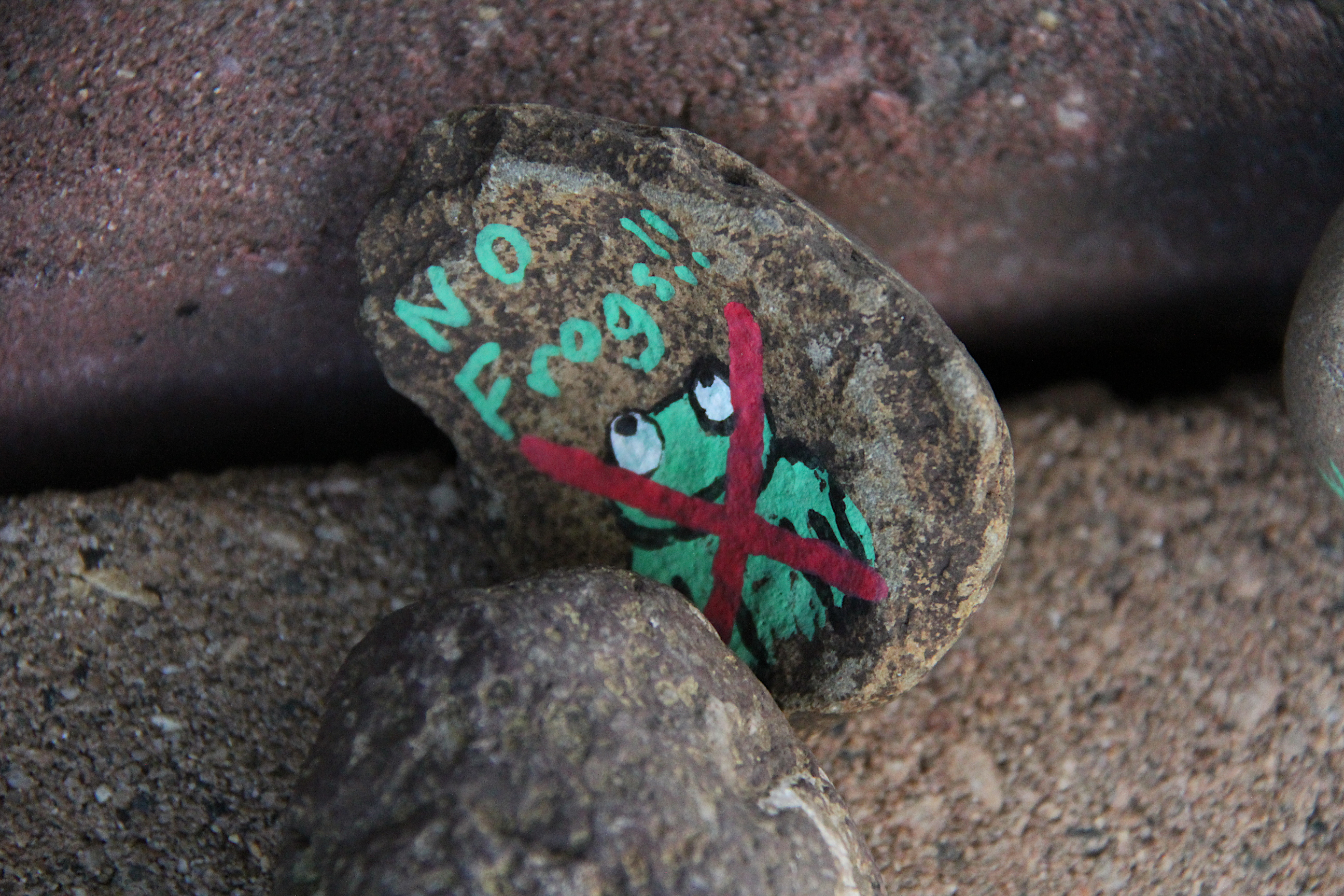
Frogs are banned from the inn. (Minnesota Prairie Roots copyrighted photo August 2024)

I want my grandchildren to ask questions in class, seek out information, learn in a way that is focused on curiosity rather than feeding back facts. I want them to care about the bees and the butterflies and the bugs.
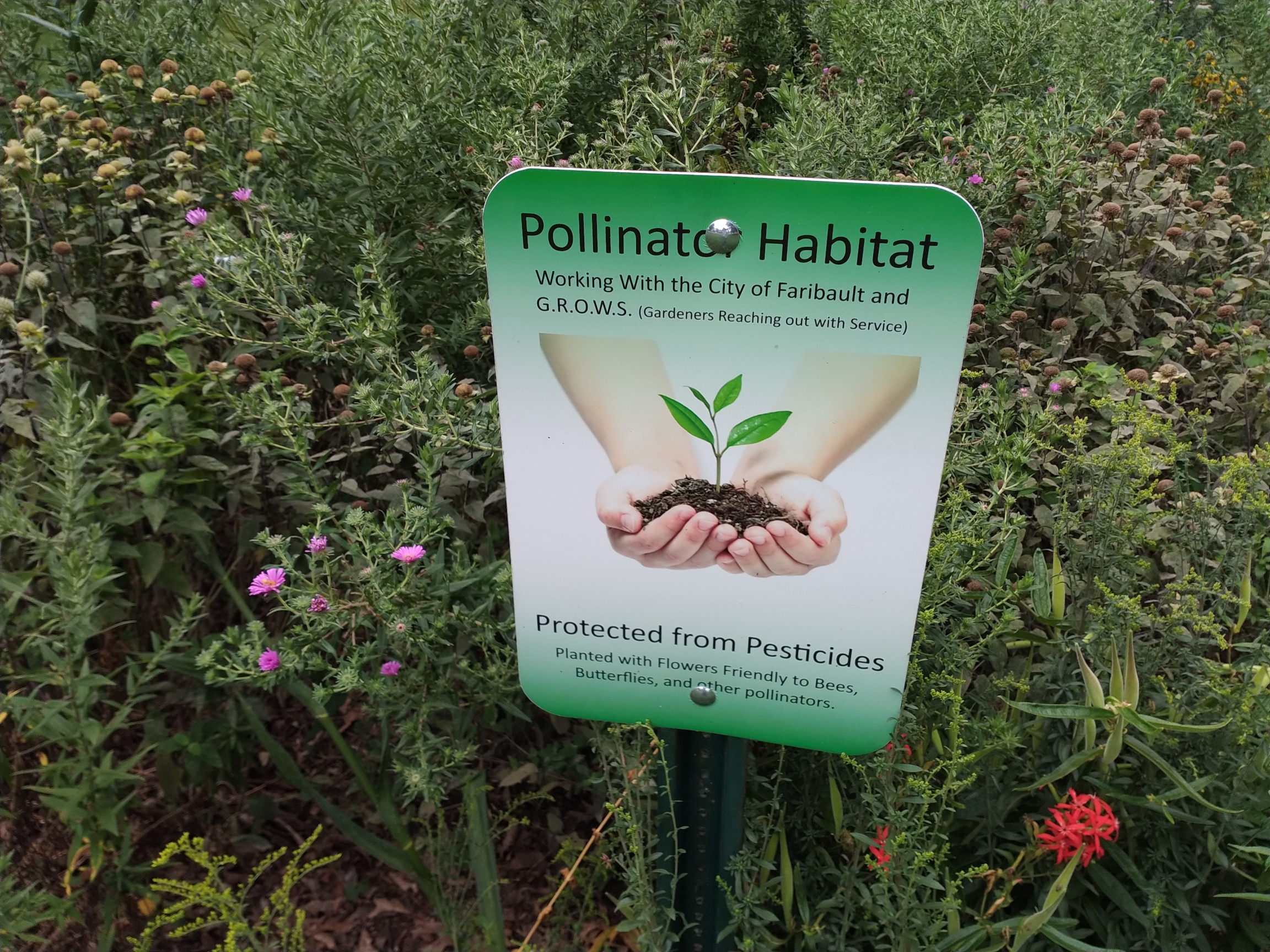
There are other bee lawns, pollinator gardens, etc., in my community, including this one in Central Park. (Minnesota Prairie Roots copyrighted photo August 2024)

I want them to connect with nature, to understand that what they do, or don’t do, to the earth matters. I want them to get their hands dirty in the soil, overturn rocks, hold bugs, pick up worms, plant flowers and, most of all, appreciate this natural world of ours. The science of it. The beauty of it. The peace it brings to the soul. The joy it brings to the spirit. And I want them to care. Always.

FYI: Click here to watch an informative video about creating a bee lawn by Faribault master gardener Jayne Spooner.

© Copyright 2024 Audrey Kletscher Helbling


Snap, & then snap again August 28, 2024

Filed under: Uncategorized — Audrey Kletscher Helbling @ 9:10 AM
Tags: , , , , , ,

SNAP. SNAP. Two mice snapped in traps. Dead. In an upstairs bedroom closet. One caught yesterday during the day, the other overnight. And then a third caught in a live trap in the garage overnight, the second mouse snared in the garage in two days.

I am assuredly relieved, but also a tad freaked out by the presence of multiple mice, especially in our house. I won’t share details, but suffice to say Randy thinks more mice may have moved in. The trap has been set for a third time in the closet.

Meanwhile in the basement, the peanut butter baited trap remains untouched. There have been no additional live mice sightings since the first mouse we spotted running into our living room and then into the kitchen before vanishing Sunday evening. How did it find its way upstairs? Don’t even answer that question.

I just want them caught. All of them. I am not a welcoming landlord. I want them out, evicted. Gone for good.

The interesting thing here is that I suggested to Randy on Sunday evening that he set a trap in the upstairs closet because we have, on occasion, caught mice in that space. He didn’t listen. Not initially. But before he left for work Tuesday morning, I asked him to please remove the trap from the kitchen. My fear was that a mouse would be caught there while he was gone. I don’t have the mental capacity to deal with a mouse, dead or alive. I am terrified of mice.

And so the waiting continues with hopes that soon, very soon, all of the mice in this house will have been eradicated. Because I am truly sick of them.

P.S. Sorry, no photos with this post. No way will I photograph a mouse, dead or alive.

© Copyright 2024 Audrey Kletscher Helbling
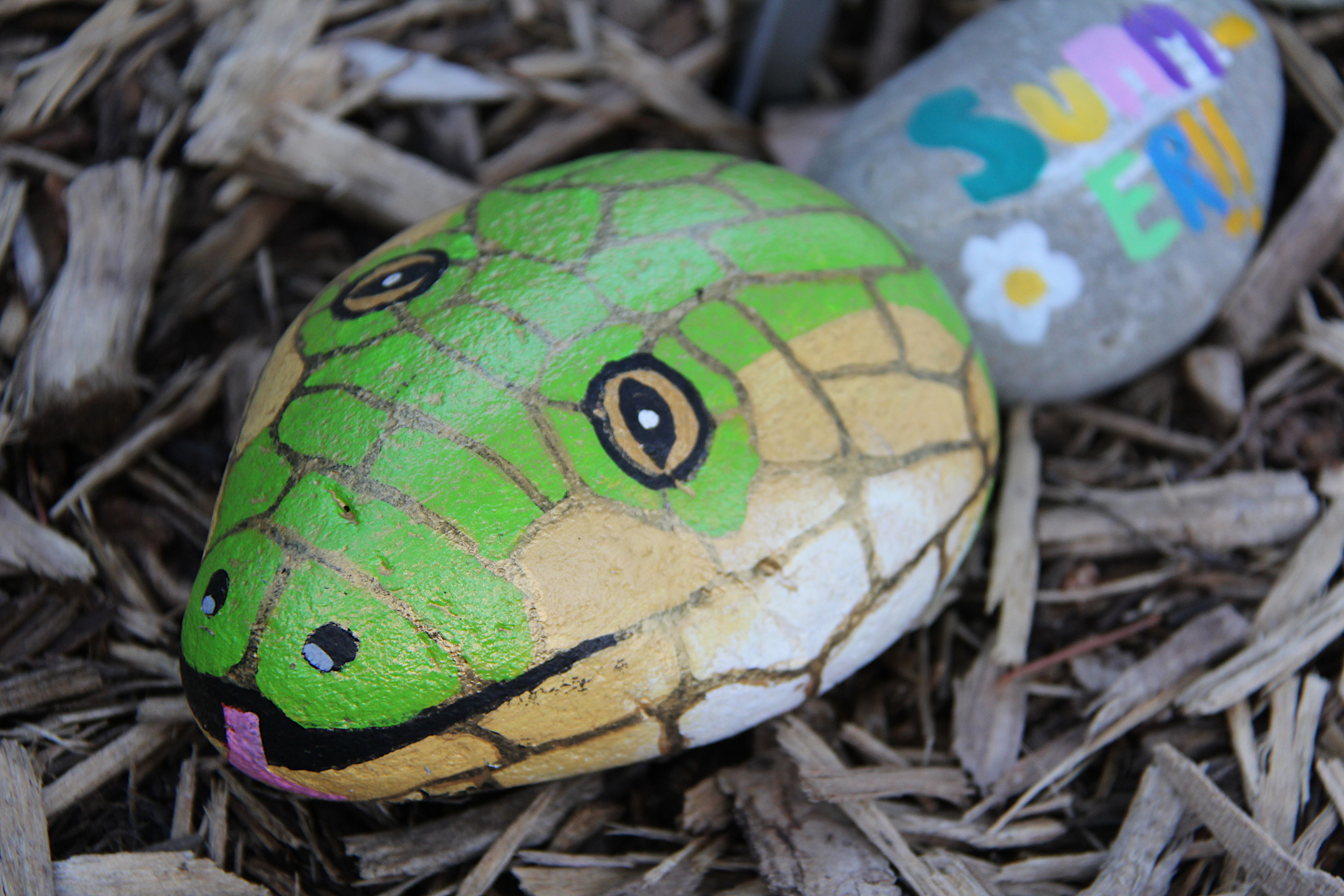
 

A rock snake in Faribault’s Garden of Eden August 27, 2024

The snake I found in a Faribault garden. (Minnesota Prairie Roots copyrighted photo August 2024)

AS THE BIBLICAL STORY GOES, a cunning snake tempted Eve, convincing her that she could eat fruit from a tree growing in the middle of the Garden of Eden. She believed the snake’s claim of knowledge and immortality. Turns our he manipulated her. Things did not go so well after Eve ate the forbidden fruit and shared it with Adam.

I stood atop a bench to get this photo of the long and winding Rock Snake. (Minnesota Prairie Roots copyrighted photo August 2024)

Not all snakes are liars and evildoers. Some, like the one I found recently in a Faribault garden, are quite the opposite. The Rock Snake that stretches an estimated 40 feet across wood chips between a brick pathway and a rain garden in the Rice County Master Gardeners’ Teaching Gardens exudes only goodness.

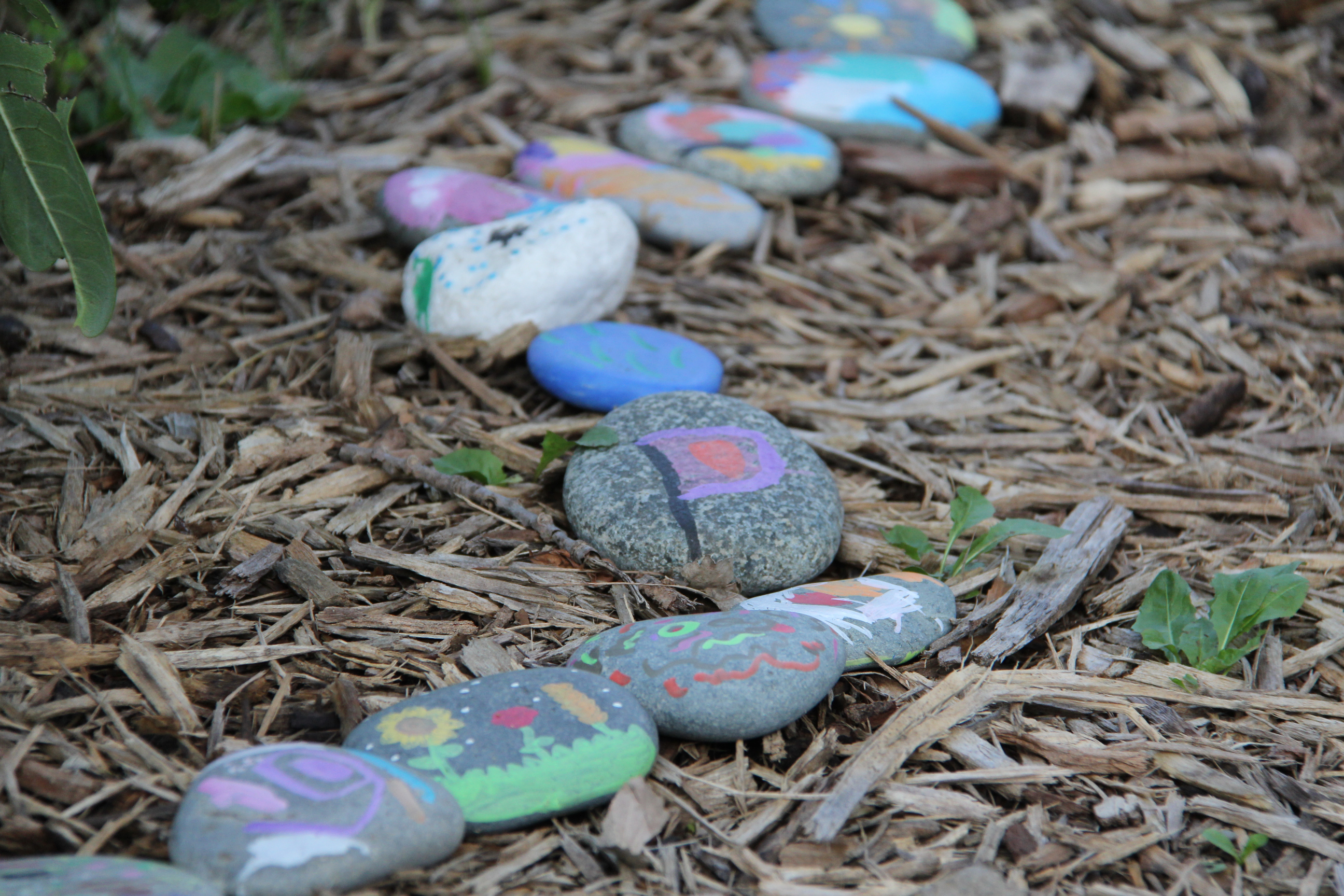
The Rock Snake slithers (well, not really) past the rain garden. (Minnesota Prairie Roots copyrighted photo August 2024)

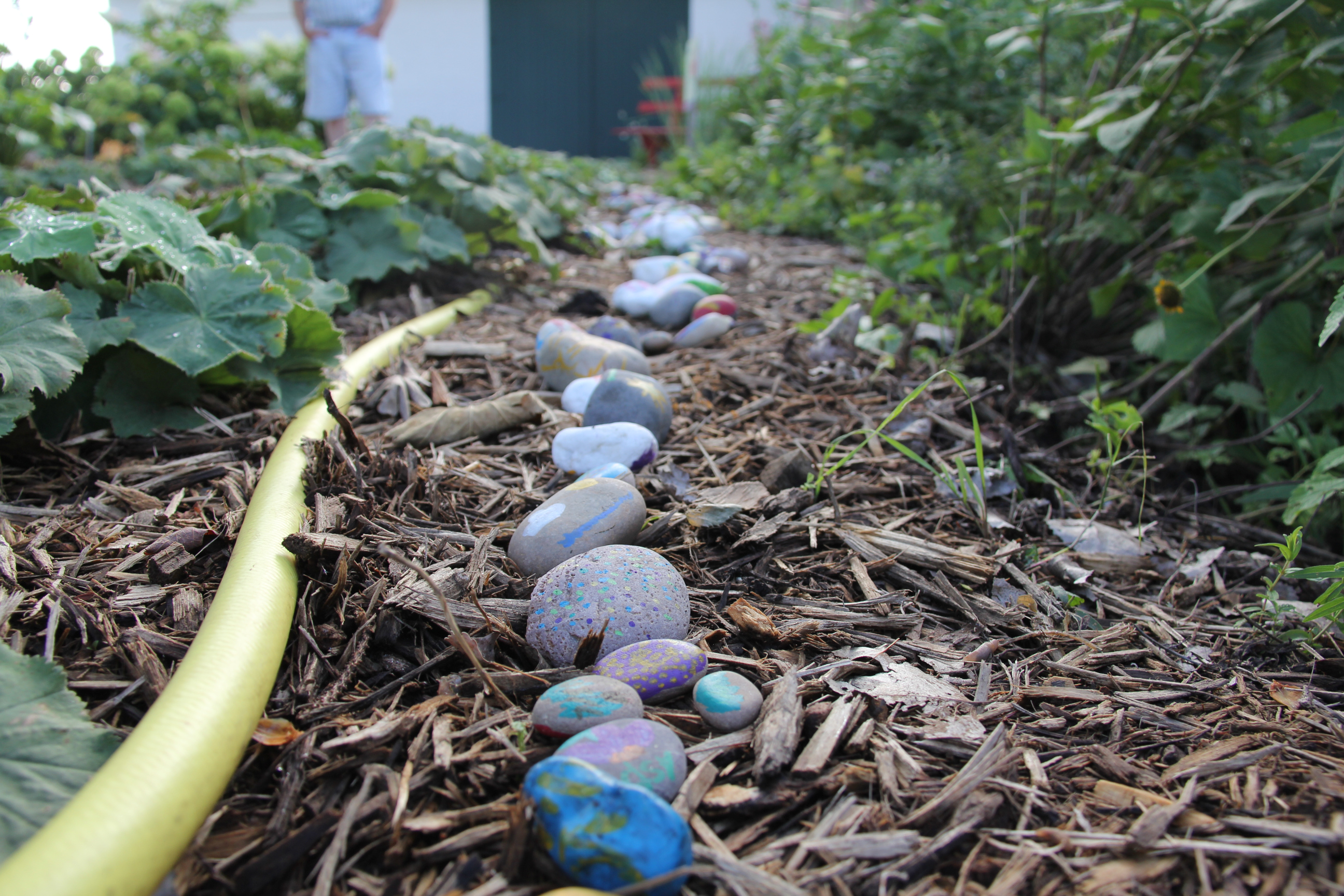
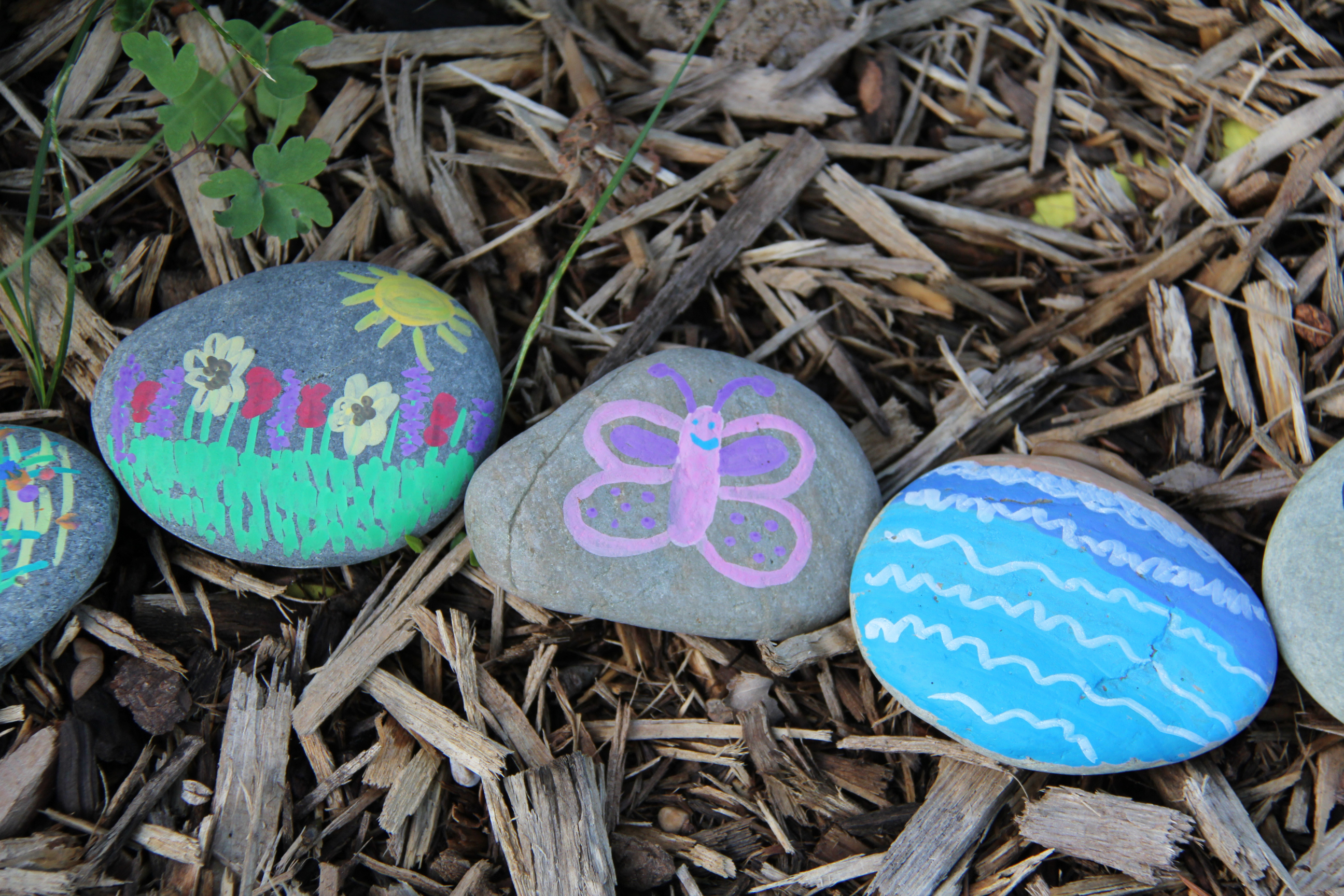
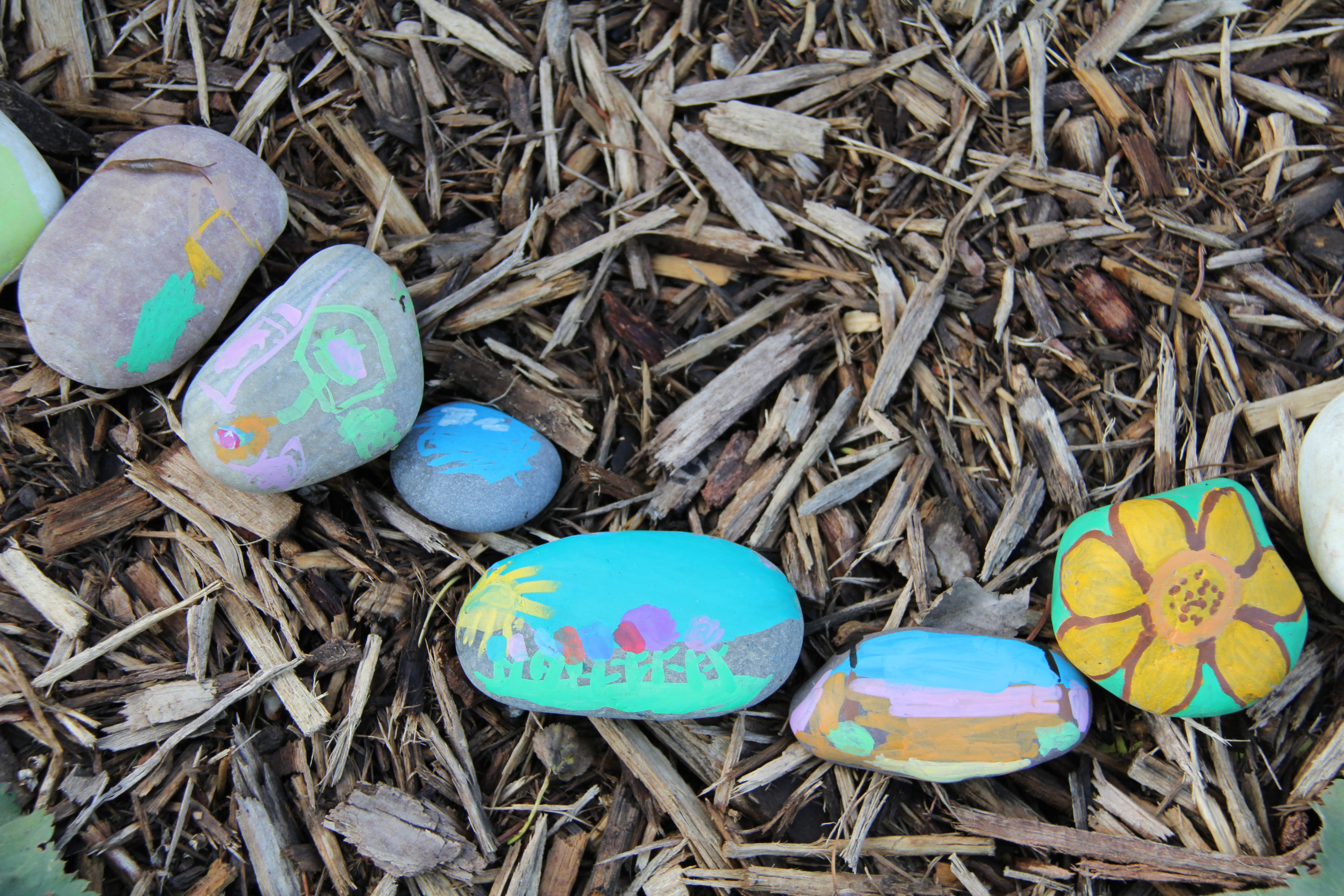
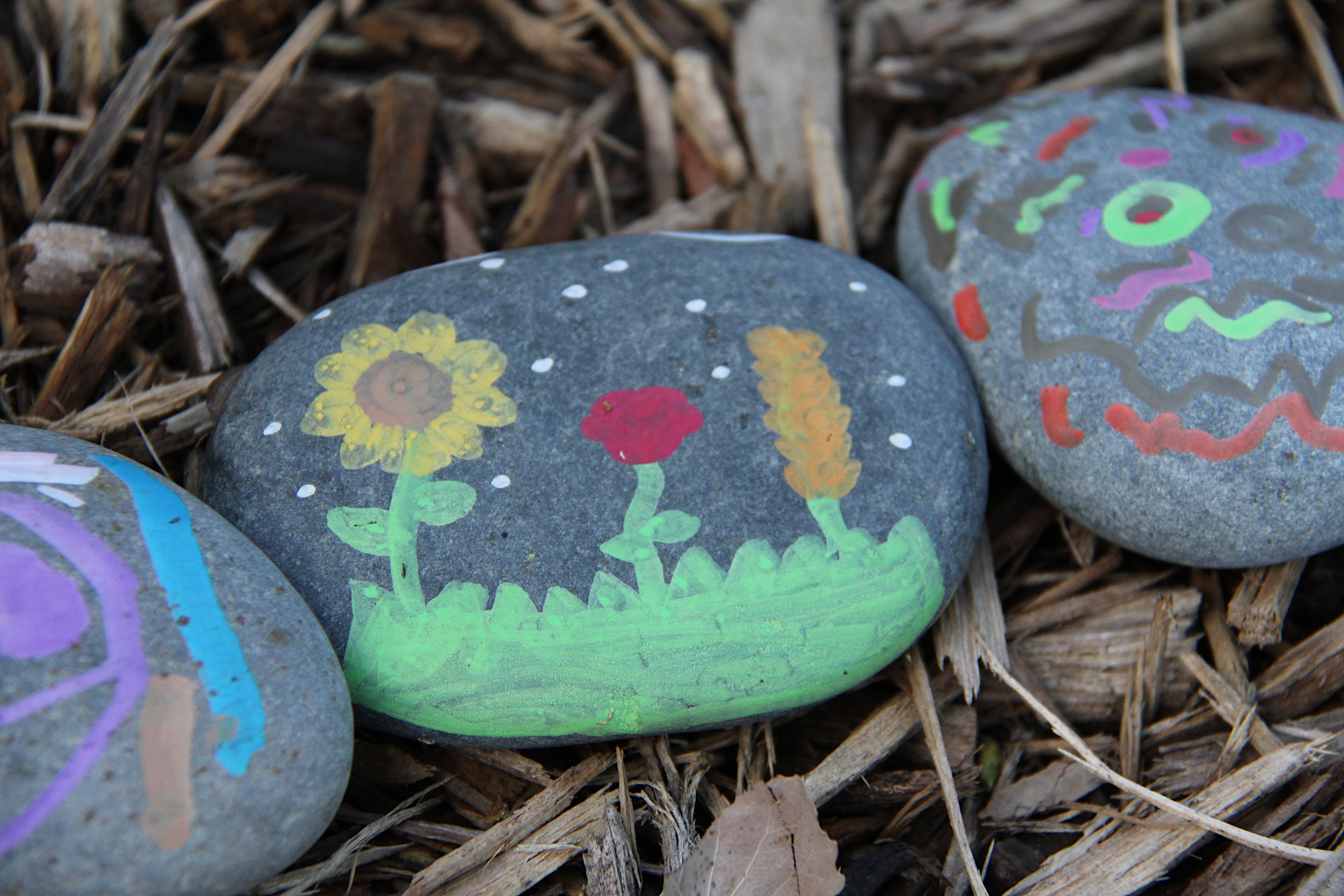
I resisted the temptation to snatch away a segment—a painted rock—of the snake. Some 220 painted stones comprise the serpent. I learned a lesson from Eve. Be strong. Don’t give in to those who would mislead you.

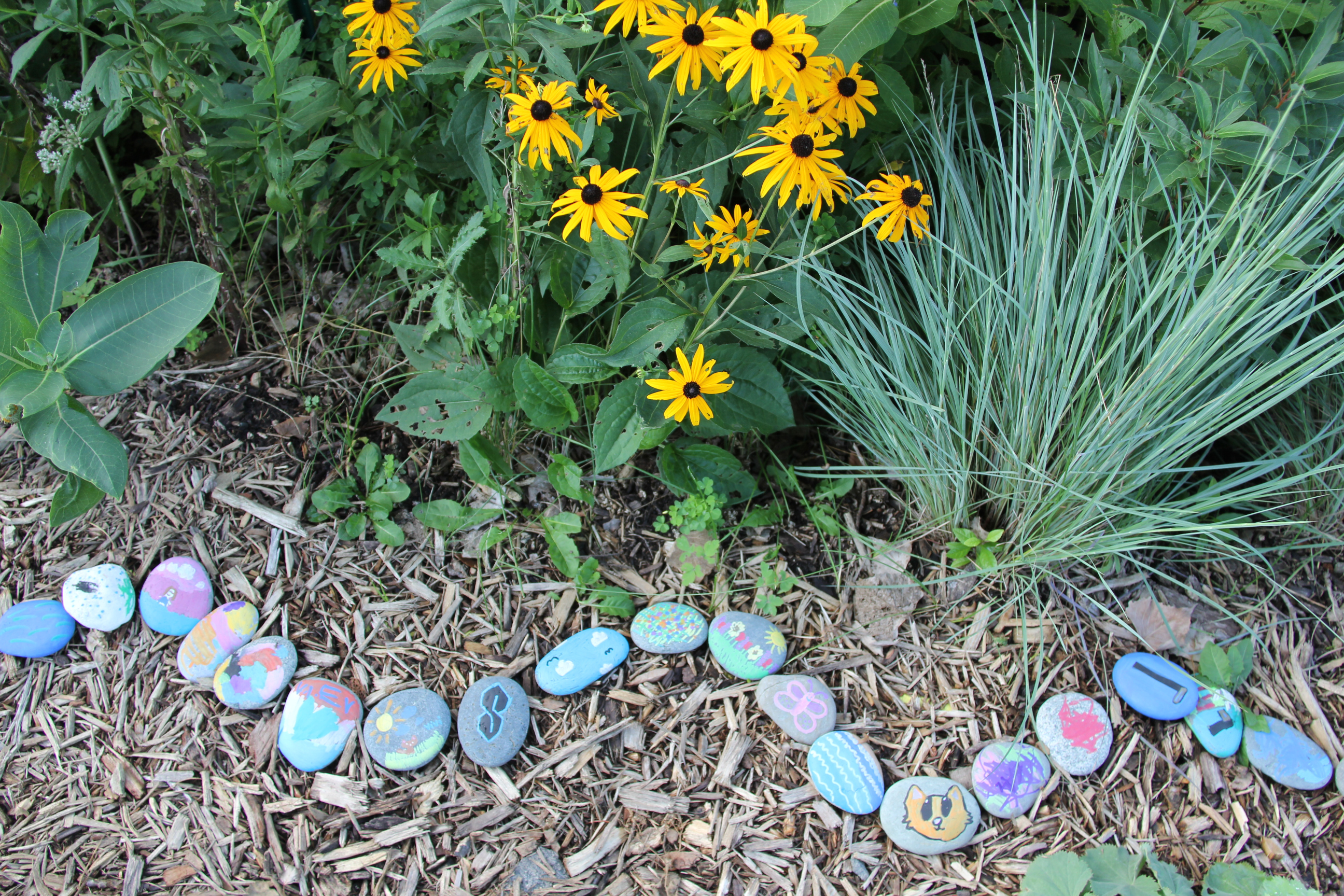
These painted rocks are themed to summer. (Minnesota Prairie Roots copyrighted photo August 2024)
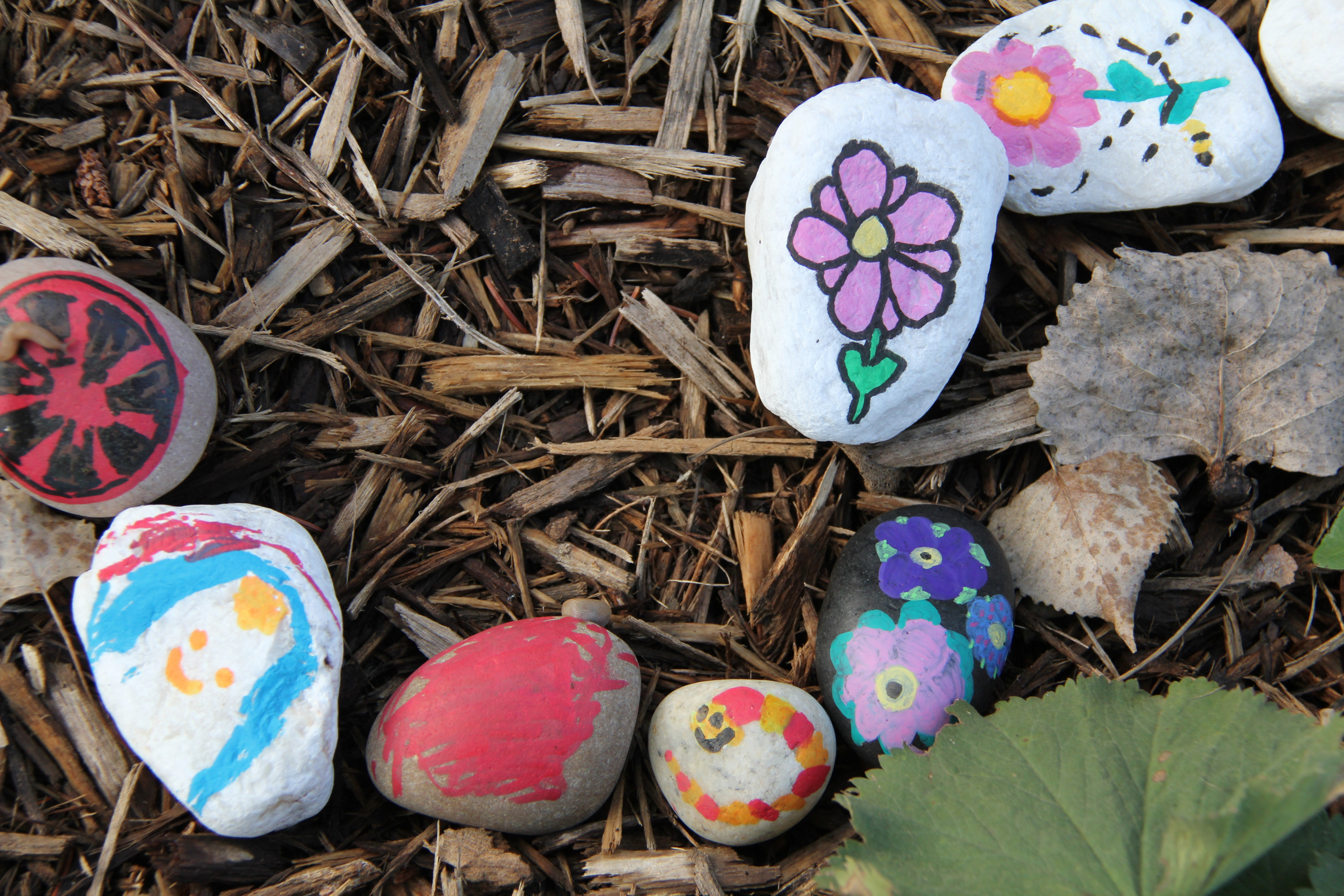
More sunshine and flowers on the snake’s body. (Minnesota Prairie Roots copyrighted photo August 2024)
And yet more flowers bloom on the Rock Snake. (Minnesota Prairie Roots copyrighted photo August 2024)

Rather, I opted to photograph and enjoy the Rock Snake with its inspiring, joyful messages, its colorful art. A posted sign invites people to add their own painted rocks, lengthening the snake designed to bring a smile.

(Minnesota Prairie Roots copyrighted photo August 2024)

And smile I did as I followed the snake’s winding body, bending low to study the art, the words. Many of the stones were painted at the Master Gardeners’ booth during the recent Rice County Fair.

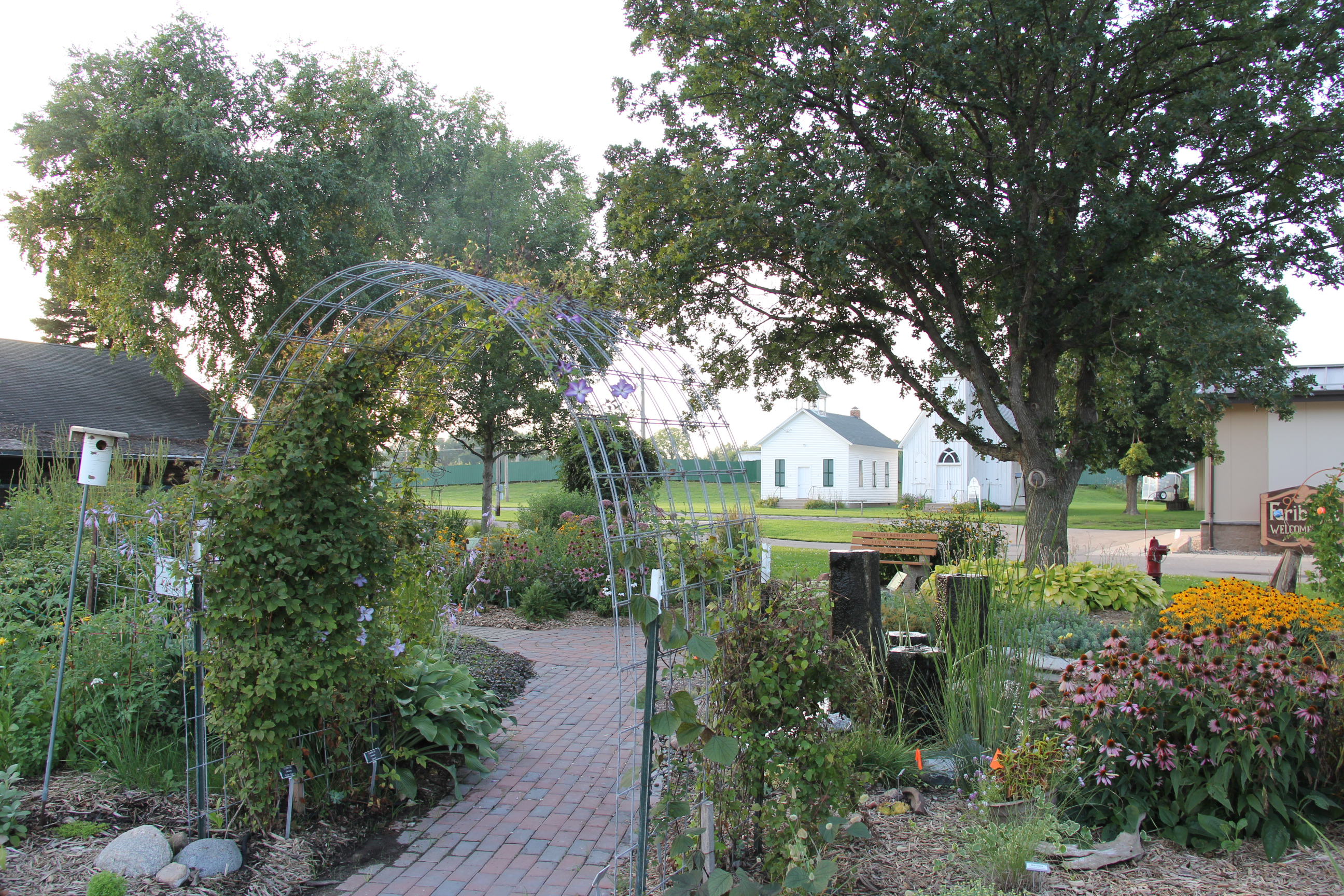
An overview of a small section of the gardens. (Minnesota Prairie Roots copyrighted photo August 2024)
Water features include a bird bath, pond and fountains. (Minnesota Prairie Roots copyrighted photo August 2024)
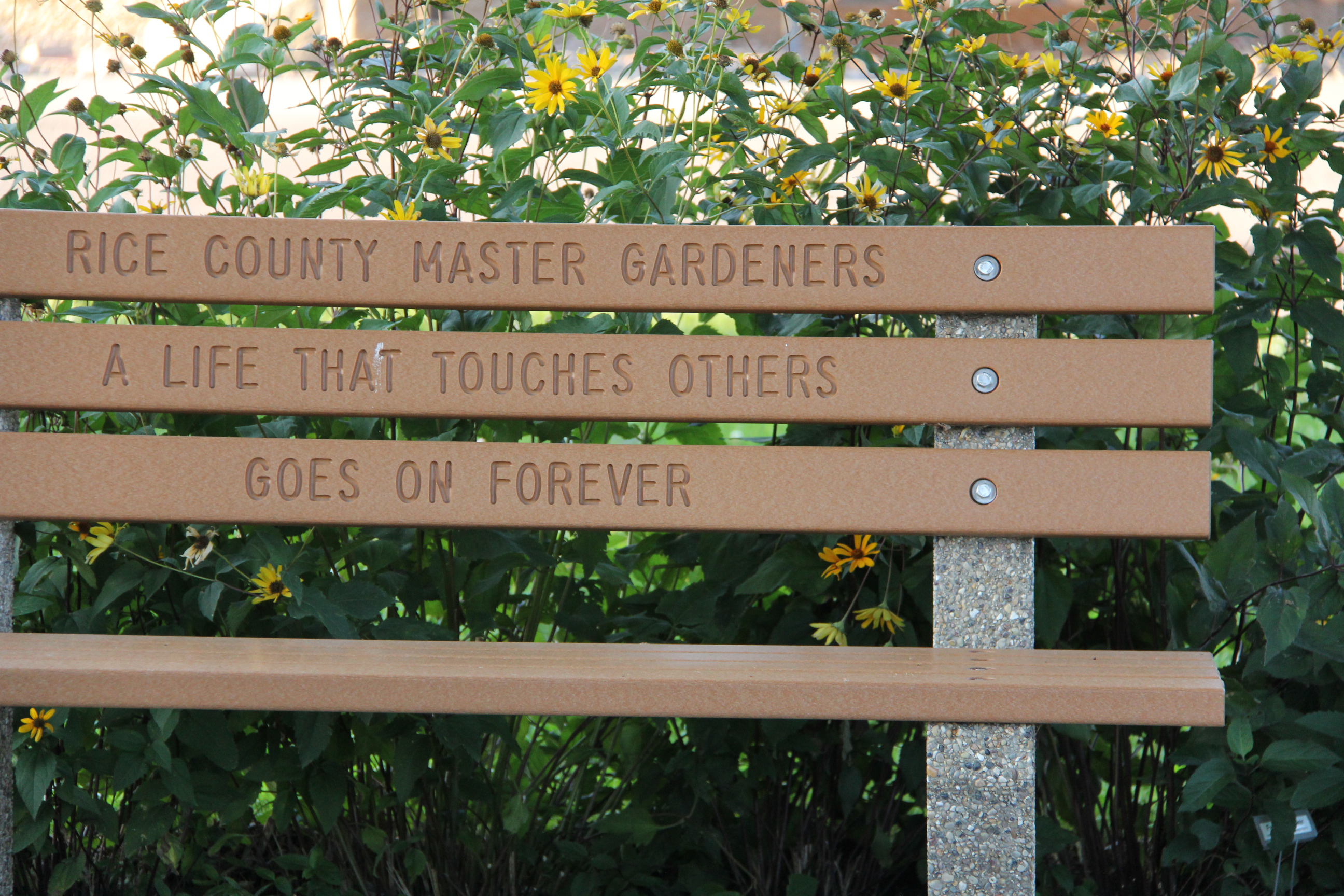
Several benches offer a place to rest, contemplate and enjoy the gardens. (Minnesota Prairie Roots copyrighted photo August 2024)

These gardeners, through their volunteer efforts, have created Faribault’s own Garden of Eden in a spacious area next to the conservation building and the Rice County Historical Society on the city’s north side. It’s taken years to get the garden to this lush, well-kept, welcoming space.

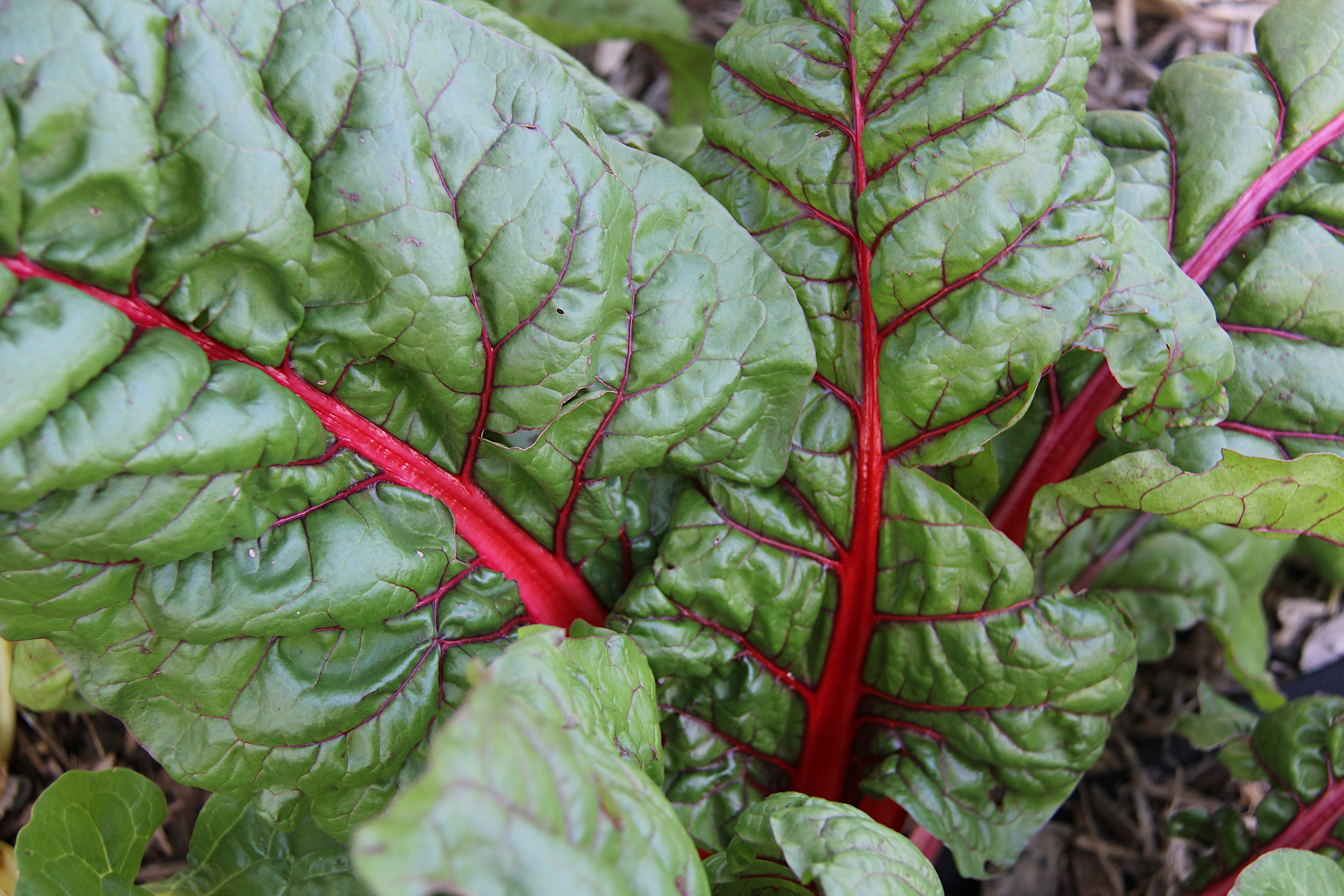
Swiss chard grows in the trial garden. (Minnesota Prairie Roots copyrighted photo August 2024)

I enjoy coming here, meandering among blooming flowers and plants, past the water features, pausing to examine the fairy garden. And now there’s more to see in the Rock Snake and a new bee lawn with habitat. There are trial gardens here and free seeds for the taking and benches for sitting. It is, indeed, a bit of paradise, a respite, a place to rest and contemplate and envelope one’s self in nature.

Flowers are always blooming. (Minnesota Prairie Roots copyrighted photo August 2024)
A garden hose runs alongside the Rock Snake. (Minnesota Prairie Roots copyrighted photo August 2024)
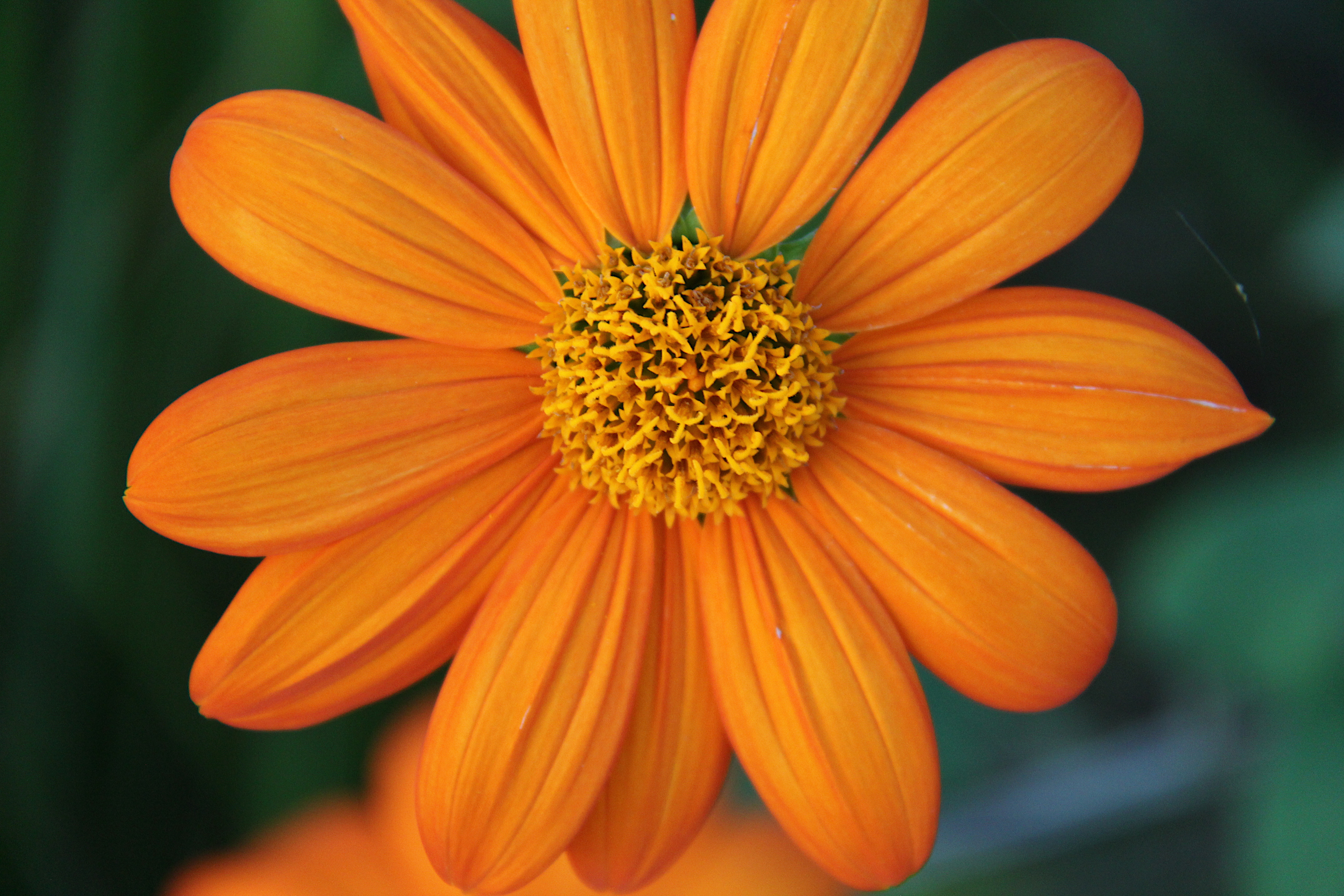
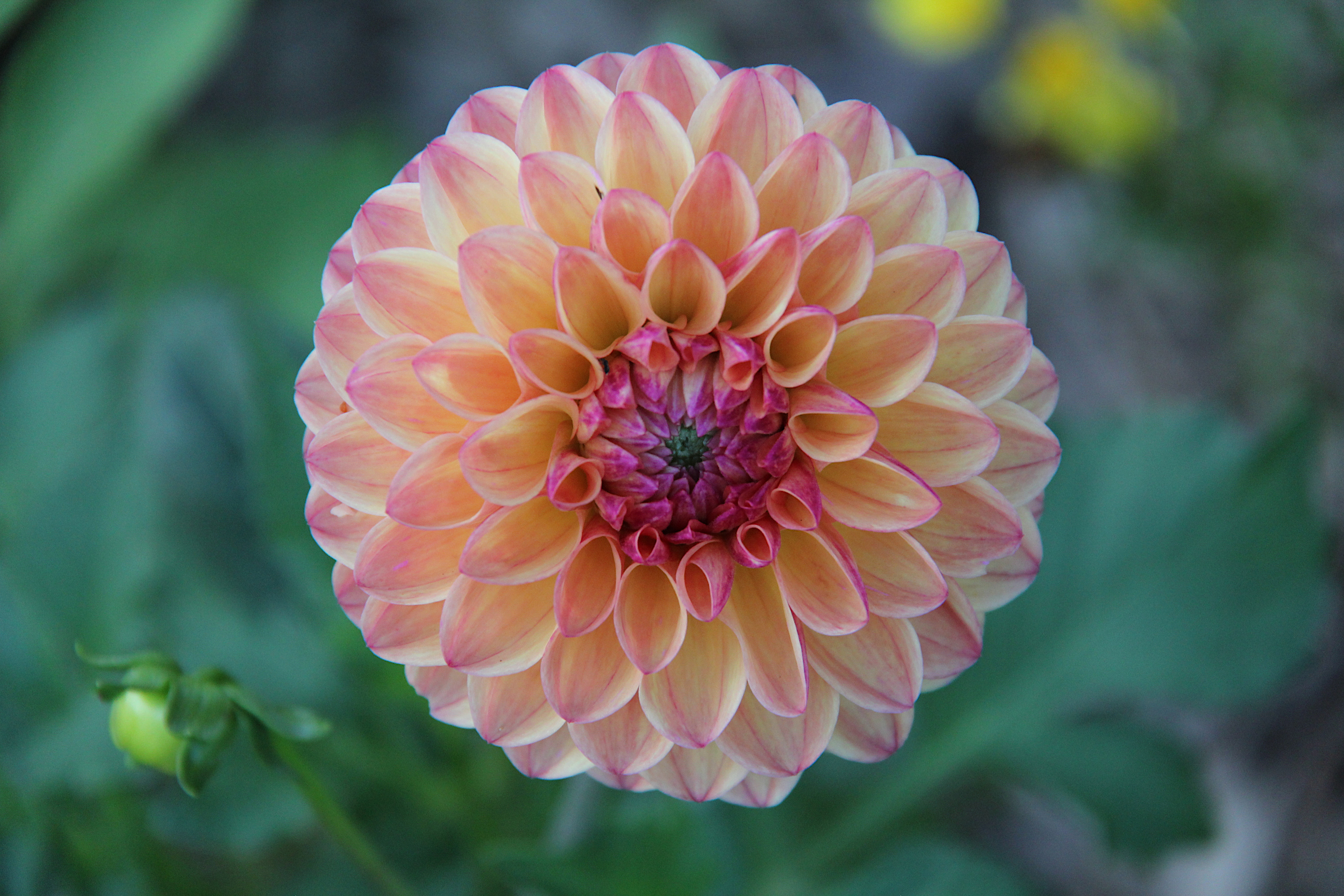
A sturdy dahlia blooms. (Minnesota Prairie Roots copyrighted photo August 2024)

Goodness thrives here. I experience it with my senses. My eyes take in the birds, blooms, bees, butterflies, the colorful Rock Snake. I smell the scent of blossoms. I hear water burbling in fountains, birds chirping. And if I could pluck vegetables from the trial gardens, I would assuredly taste goodness. But I won’t. I will not be tempted. Rather I will look and not touch. Leave and not take. I will leave this bit of Eden as I found it, beautiful and wondrous, a place of peace for anyone who visits.

© Copyright 2024 Audrey Kletscher Helbling
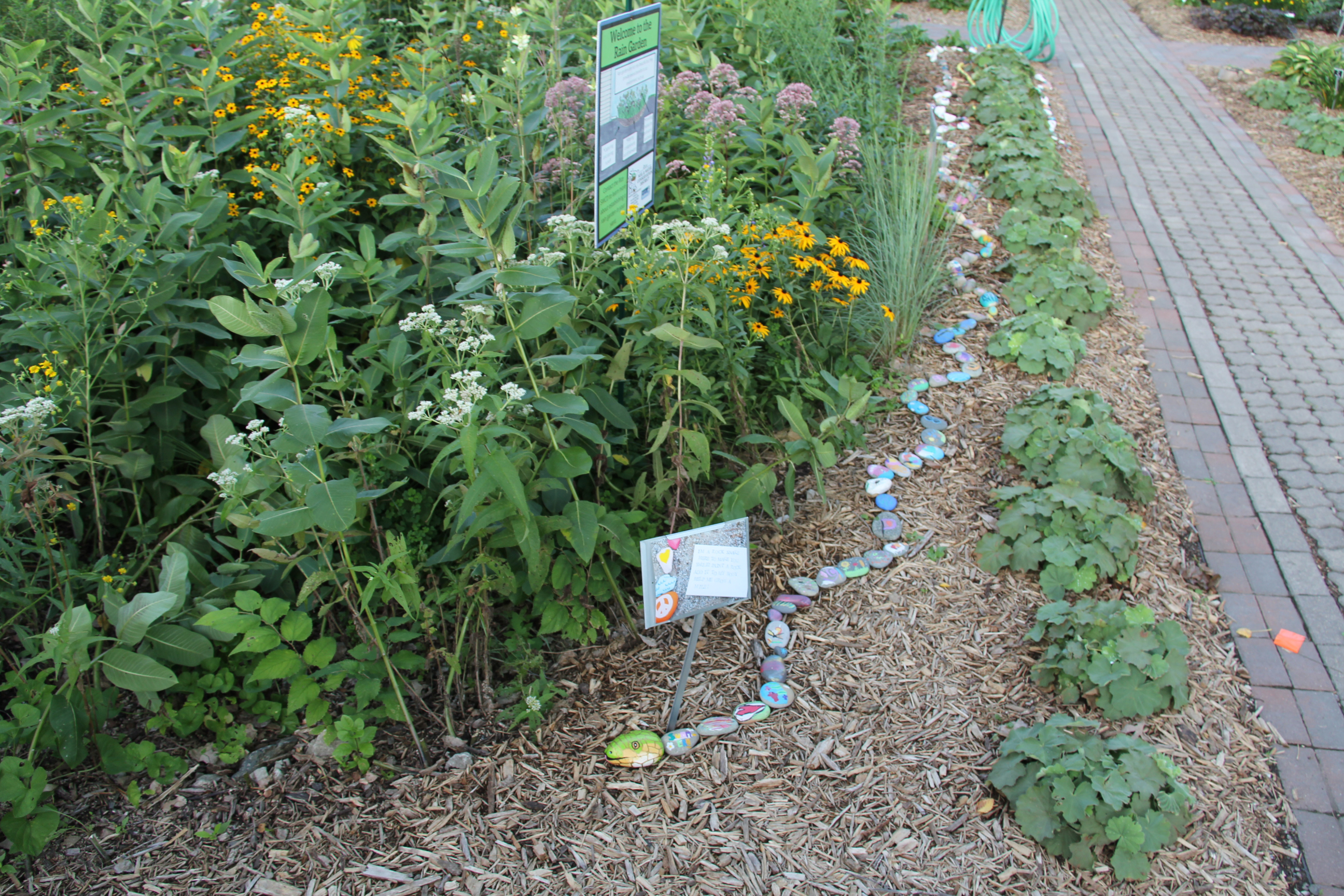
 

A mouse in the house August 26, 2024

Filed under: Uncategorized — Audrey Kletscher Helbling @ 10:51 AM
Tags: , , , , , , , , ,
Mouse art displayed in a show at the Owatonna Arts Center many years ago. (Minnesota Prairie Roots copyrighted file photo)

I AWAKENED HOPEFUL this morning. Hoping the mouse that ran into the living room Sunday evening, scurrying into a corner behind a floor lamp when I screamed, was trapped. Dead. That did not happen.

We awakened Monday morning to two unsprung traps still baited with fresh peanut butter. One in the basement, the other between the stove and cupboard.

Have I mentioned that mice terrify me? Or maybe, more accurately, that I am terrified of mice. I detest, hate, abhor them. Always have. I recognize it’s rather ridiculous to be afraid of mice given my size compared to theirs. But they are quick and creepy and varmints I do not want inside my space.

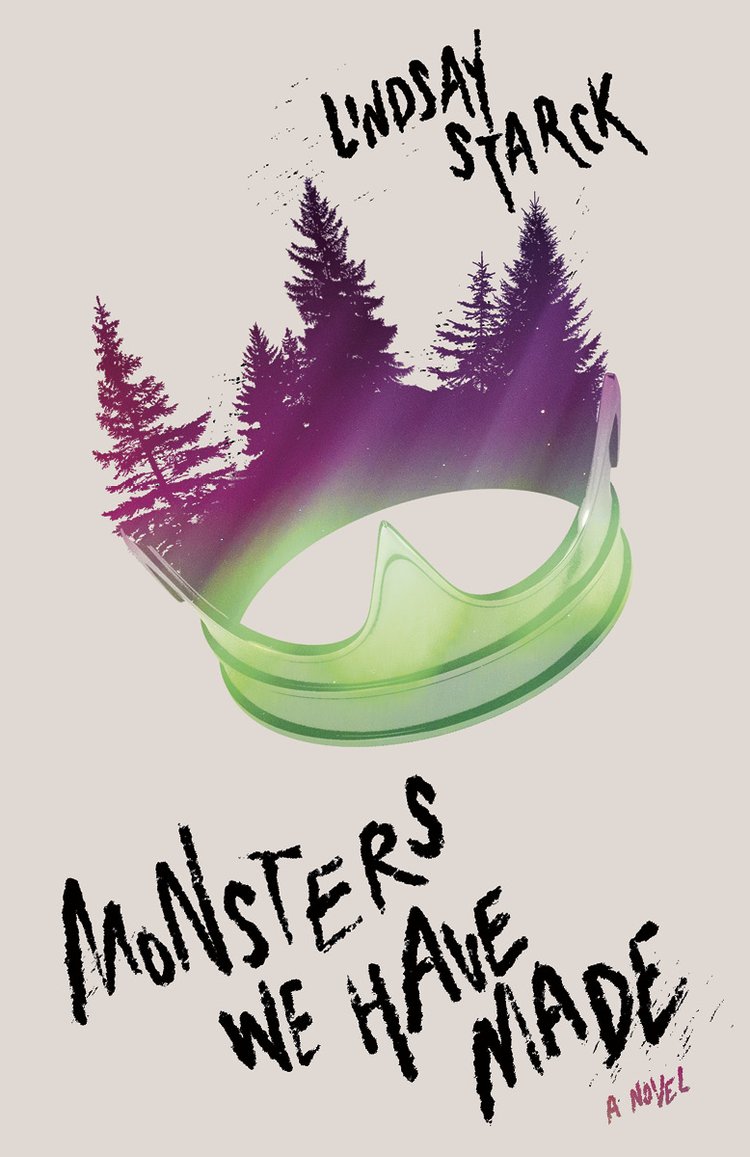
(Book cover source: lindsaystarck.com)

So there I was Sunday evening, feet up in the recliner, semi-watching the 9 pm news between reading Minnesota author Lindsay Starck’s terrifying novel, Monsters We Have Made, when I saw movement out of the corner of my eye. A mouse. Eeeek! I screamed, grabbed my phone, shot to the bedroom, slammed the door and climbed onto the bed. Rats. I forgot my book.

But at least I could Google “why mice come into your house in the summer” while Randy tracked the mouse. Apparently when the temps are as hot as they are now, they, too, want to cool off. Just as in winter, they want to be warm. I can’t fault them for that thinking. Do mice even think?

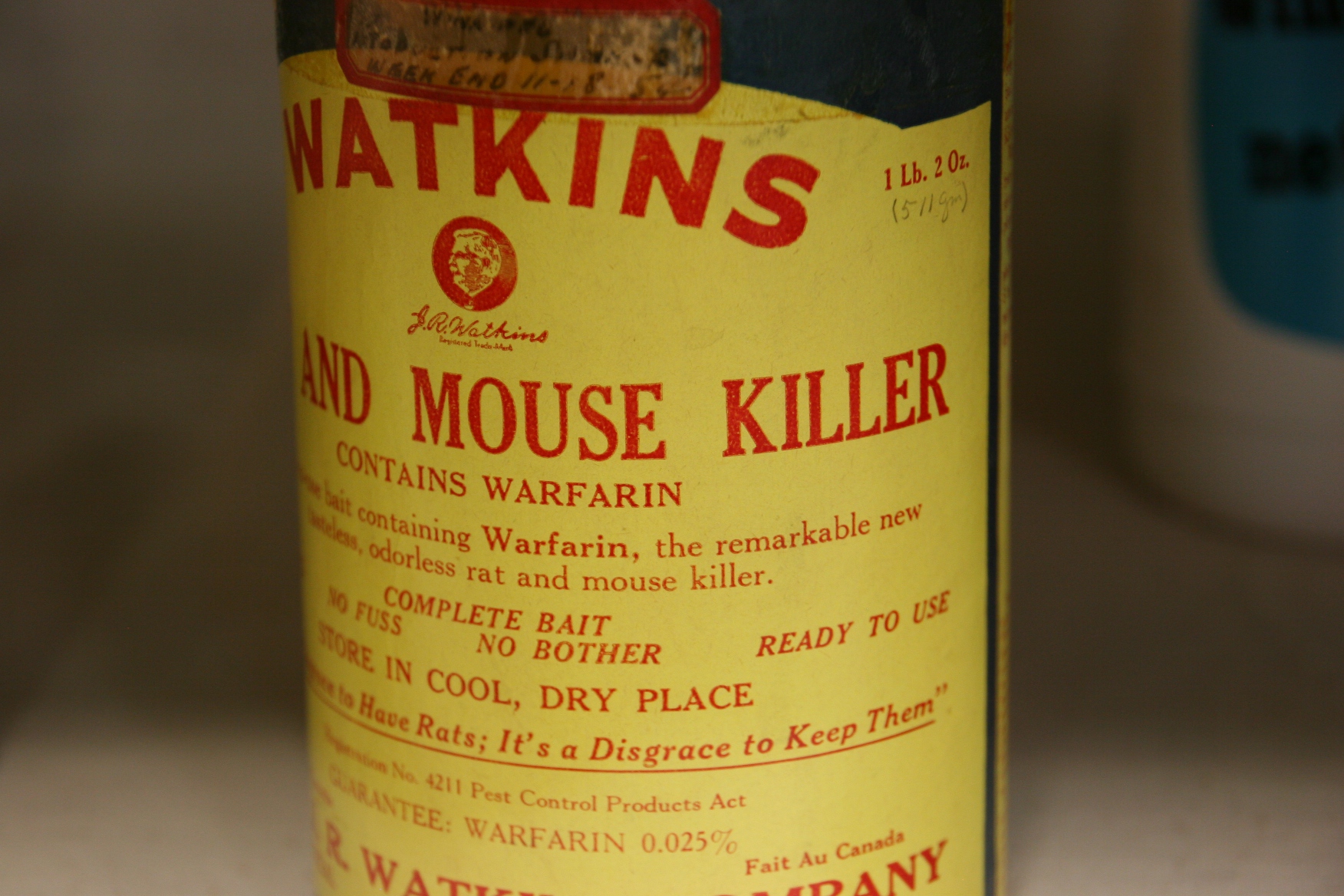
Mouse and rat killer spotted in The Watkins Museum in Winona during a visit years ago. (Minnesota Prairie Roots copyrighted file photo)

As I hunkered atop the bed, I felt hopeful that Randy would find and kill the mouse. I didn’t think that through. How? With his bare hands? Randy observed the mouse hurry behind the fridge. So he moved the fridge. We haven’t seen it since. But he did catch a mouse in the garage overnight. Same mouse? Highly unlikely.

We live in an old house, next to a wooded hillside, with lots of entry points for mice. So I expect mice and we have caught many in our 40 years living here. Typically, though, they stay in the dark basement. I never invited them onto the main floor. The neighborhood mice apparently did not get the warning memo to stay out. They are risking their lives.

Now why do I detest mice? It started with the scritch-scratch of mice running inside the bedroom walls of my childhood farmhouse. Mice in the house. Mice in the barn. Mice in the hay and straw bales. Mice in the granary. Even with a passel of roaming cats.

In college, I opened a silverware drawer to see a mouse staring up at me.

When I was nearly third trimester pregnant with my youngest, I awakened to pee in the middle of the night at my in-law’s farmhouse. There, in that tiny closed bathroom, a mouse circled. Screaming drew no one to my rescue. Eventually, I climbed onto the edge of the bathtub, tossed a pile of wet towels on the mouse and fled upstairs to my sleeping husband. True story.

Years later, I reached into the sink one morning to empty water from a crockpot left soaking there overnight. Atop the water floated a dead mouse. Enough to scare anyone, especially me. At least it was dead, the sole consolation. I slammed the lid on the crockpot, carried it outside and Randy dealt with it after work. That crockpot never cooked another meal.

Yes, I have experienced mouse trauma. Too often. Traps are set. Should I see the mouse again this evening, I will be sure to grab Monsters We Have Made before sequestering myself in my bedroom to read before dreaming nightmares of monstrous, uncaught mice.

TELL ME: Are you afraid of mice? Any mouse stories to share? Or cats to share?


Spotlight shines on Minnesota, specifically Mankato (once my home) August 23, 2024

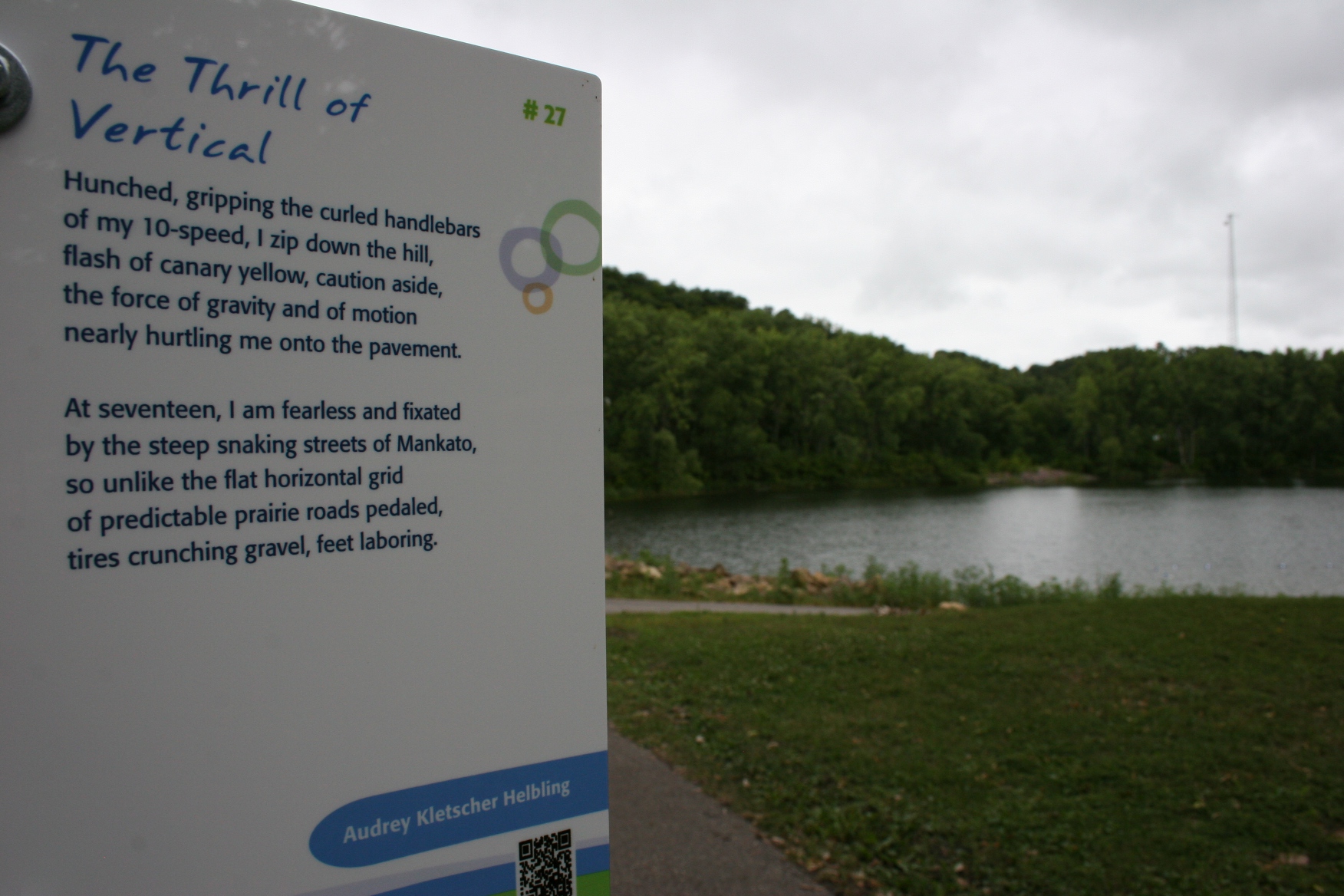
“The Thrill of Vertical,” posted on a sign in Spring Lake Park as part of the 2013 Mankato Poetry Walk & Ride, was inspired by my college years in Mankato. (Minnesota Prairie Roots copyrighted file photo 2013)

I ARRIVED IN MANKATO with a canary yellow 10-speed bike, a simple orange backpack, my Sears portable manual typewriter, a clock radio, a quilt stitched by Grandma Ida and a suitcase filled with clothes. The year was 1974, the beginning of my freshman year at Bethany Lutheran College, high atop a hill in this southern Minnesota city.

The Ardent Mills grain silos, a massive public art project, dominate the skyline along the Minnesota River in the heart of Mankato. The art depicts the diversity of the area. (Minnesota Prairie Roots copyrighted photo November 2023)

I was only 17, nervous, but ready to leave my childhood farm home some 85 miles to the west. I met my roommate, Rhonda, a beautiful high school cheerleader from western Wisconsin. She was well-traveled, outgoing, vastly different than me, quiet and shy. And she had a stereo for our cozy fourth floor corner dorm room. We were set. Despite our differences, we got along splendidly.

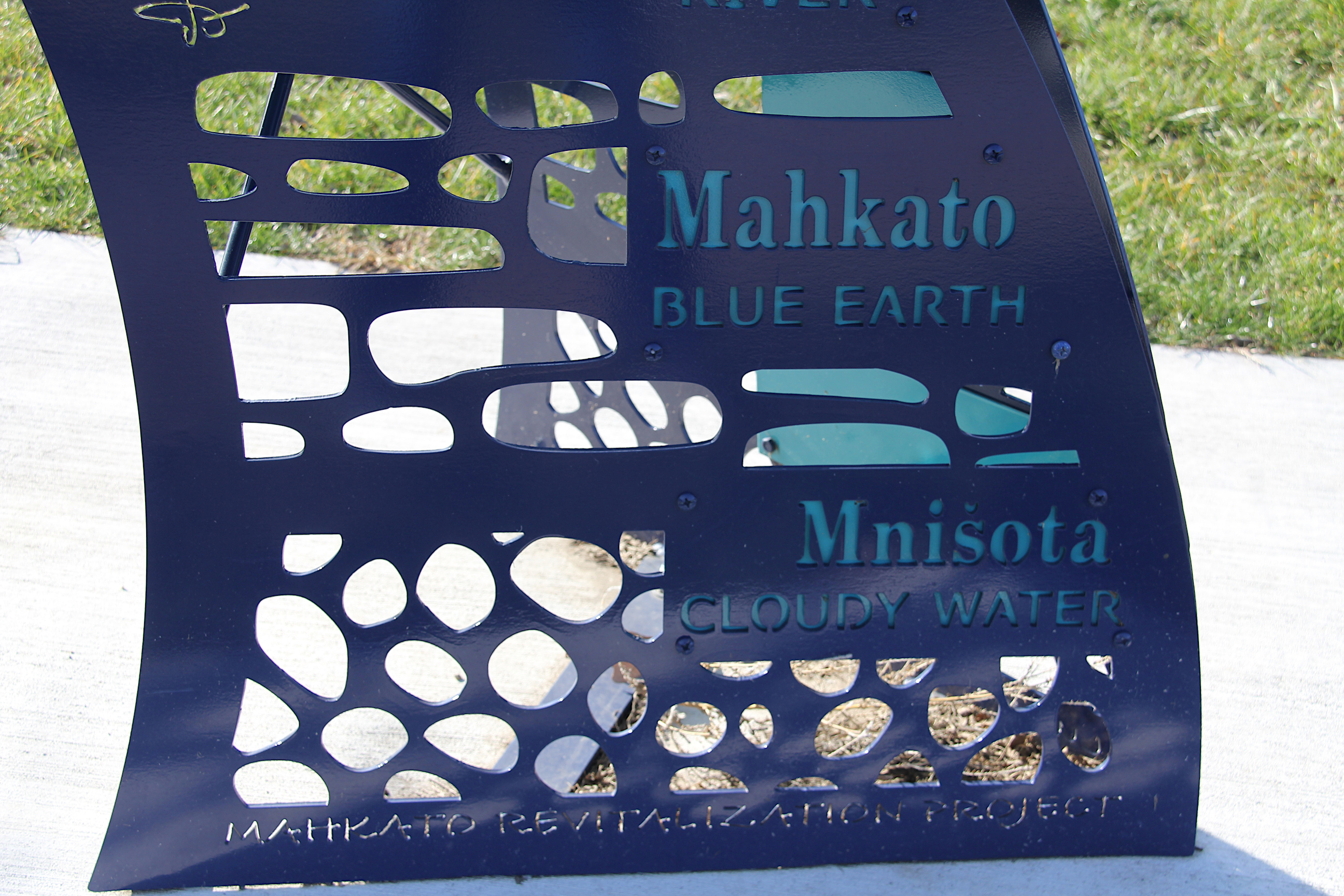
This shows the base of a place sculpture along the Minnesota River in Riverfront Park. The words for Mankato and Minnesota are written in the Dakota language and translated. (Minnesota Prairie Roots copyrighted photo November 2023)

As I settled into the big city (Mankato’s current population numbers around 45,000), big for me when you come from a town of 362, I began to feel at home. Not only on campus, but also in the community. Happy Chef became a go-to destination for conversation and for warm loaves of bread glazed with powdered sugar frosting. A Christian coffee house also drew me off campus. I wasn’t in to the bar scene.

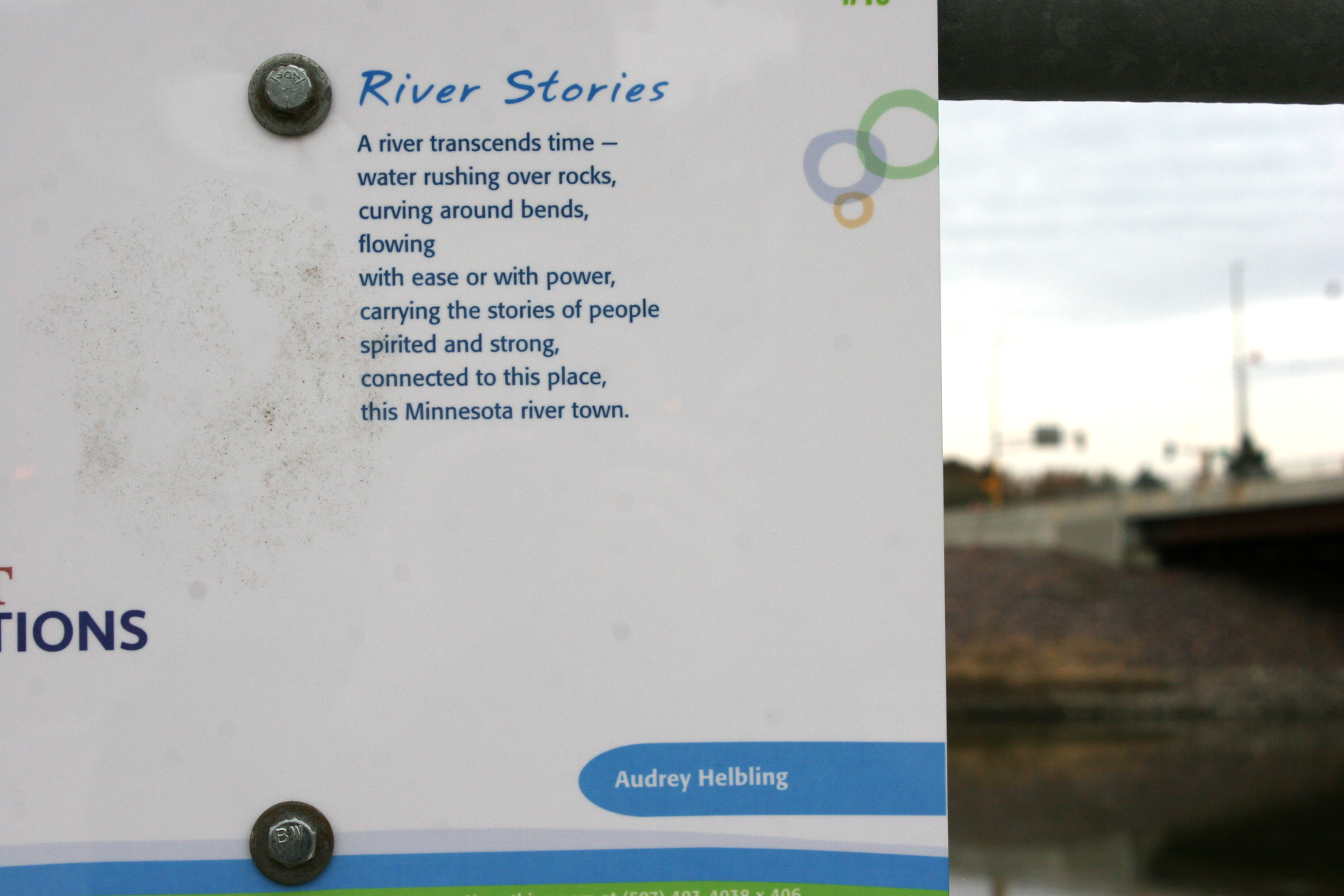
My poem, “River Stories,” highlights the Minnesota River, which winds through Mankato. It was posted along the river as part of the 2019 Mankato Poetry Walk & Ride. (Minnesota Prairie Roots copyrighted file photo 2019)

For nearly four years, Mankato became my home away from home. The place that grew me educationally and as a person. I earned an associate of arts degree from Bethany, then only a two-year college, before moving on to Minnesota State University, Mankato, to study journalism. I worked at the college newspaper, “The Reporter.” In the winter of 1978, I earned a mass communications degree with an emphasis in news/editorial. Soon thereafter, I started my career as a newspaper reporter and photographer. Years later I returned to work for “The Mankato Free Press,” heading up the paper’s St. James-based news bureau (me living and working from my apartment long before working remotely became a thing).

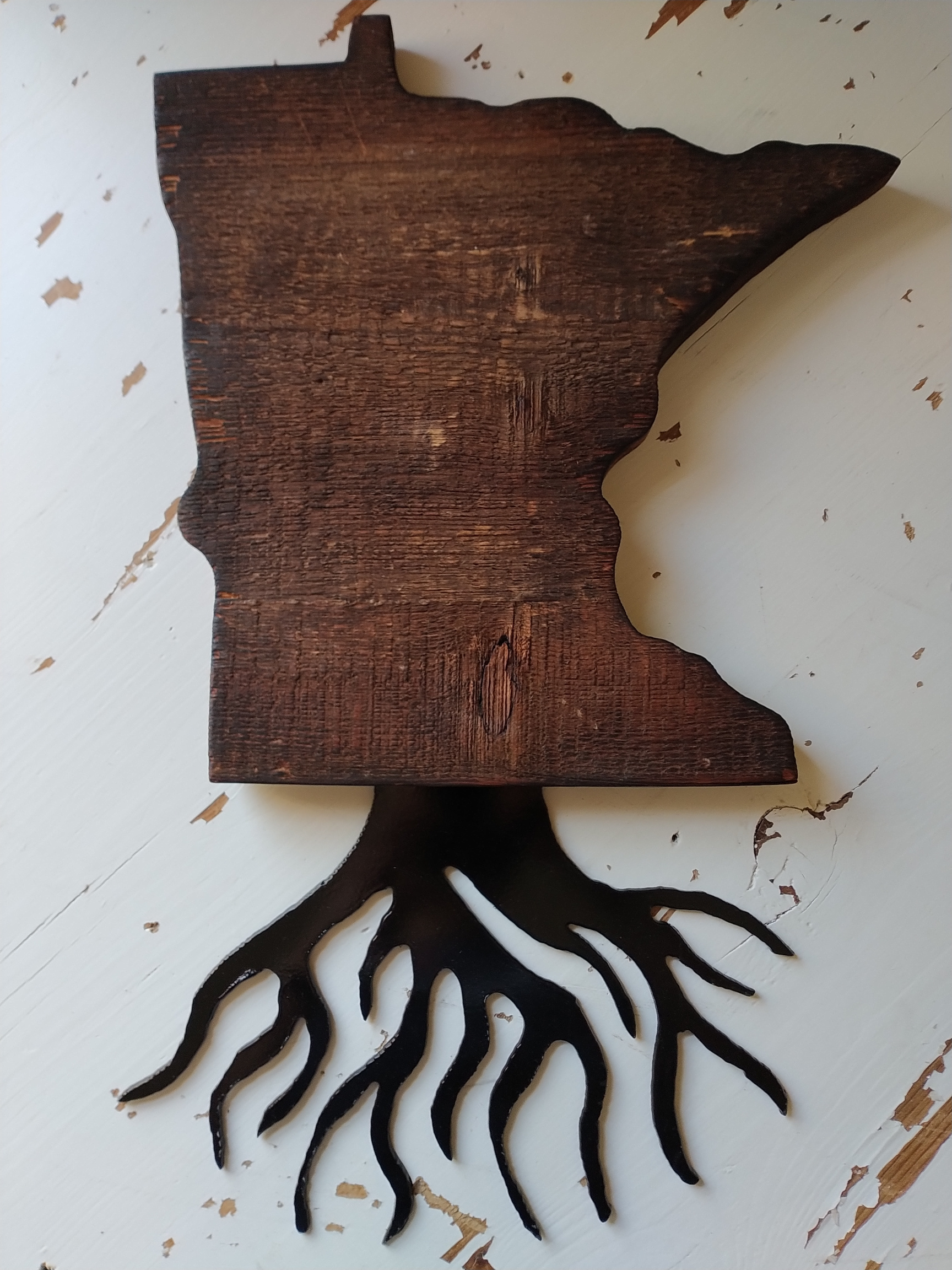
I am rooted in Minnesota. This art hangs in my home office. (Minnesota Prairie Roots copyrighted file photo)

Why am I sharing this with you today? Because of Minnesota Governor Tim Walz, now the vice presidential candidate on the DFL ticket. He lived in Mankato, where he worked as a social studies teacher and football coach at Mankato West High School. Walz, likely unfamiliar to most Americans up until recently, has put our state, specifically Mankato, on the map. As a life-long Minnesotan, I am proud to see my state, considered by many to be fly-over land, in the spotlight. No matter your political leanings, such publicity is good for Minnesota.

I’ve only attended the Minnesota State Fair a few times in my life. This mug came from my father-in-law’s collection. The State Fair started yesterday. (Minnesota Prairie Roots copyrighted file photo)

Like Walz, flannel shirts hang in my closet. I am wearing one as I write on this cool August morning. Flannel truly is a Minnesota thing, no matter political affiliations. We like our hotdishes (not “casseroles”) and the Minnesota State Fair (although not me; too many people), our cabins Up North. We claim musicians Bob Dylan and Prince, the Coen Brothers (of “Fargo” movie fame) and other notables like vice presidents Hubert Humphrey and Walter Mondale.

The grain silos are a massive work of public art. (Minnesota Prairie Roots copyrighted photo November 2023)

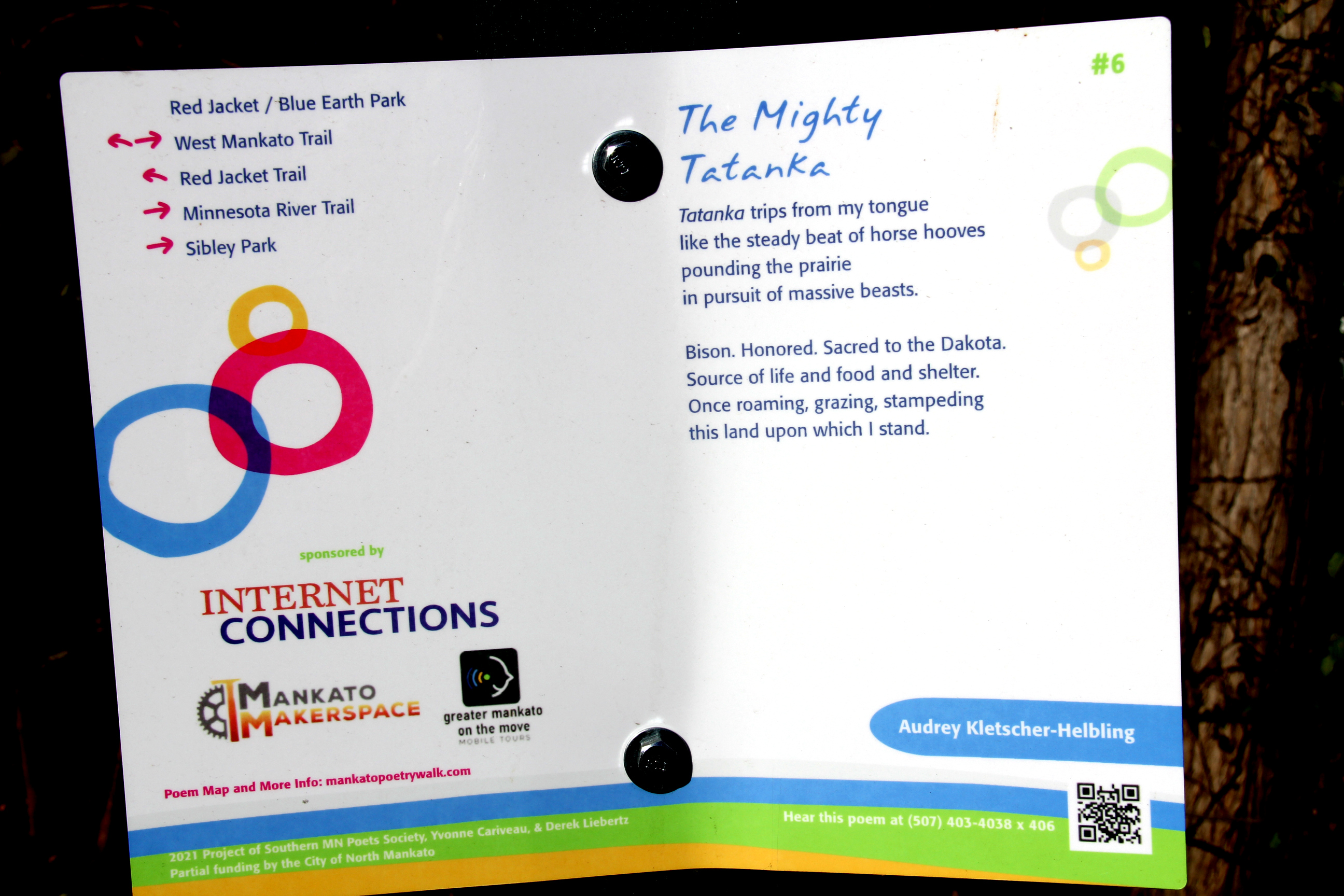
I cannot imagine living elsewhere, even if I don’t especially like the frigid cold and snow of a Minnesota winter. I loved winter as a Redwood County farm girl. Minnesota is home. I live 40 miles northeast of Mankato, a city originally inhabited by the Dakota. Mankato is a river town, a college town, a regional shopping hub, a community with a rich (but not always “good”) history. It is home to many creatives. I’ve been part of that with poetry showcased on signs through the Mankato Poetry Walk and Ride.

My latest poem, “The Mighty Tatanka,” posted along the West Mankato Trail near West Mankato High School. (Minnesota Prairie Roots copyrighted photo November 2023)

My connection with, and appreciation of, Mankato all started in that fourth floor dorm room with a roommate who was nothing like me. Despite our differences, we connected, forged a strong friendship, together grew and matured. We were on the cusp of our lives. Young. Open to new ideas and learning. The future held endless possibilities. For me, the 17-year-old with the canary yellow bike. And for Rhonda with her stereo system.

© Copyright 2024 Audrey Kletscher Helbling
 

Give me a daisy a day, or maybe a zinnia August 22, 2024

Filed under: Uncategorized — Audrey Kletscher Helbling @ 5:00 AM
Tags: , , , , , , ,
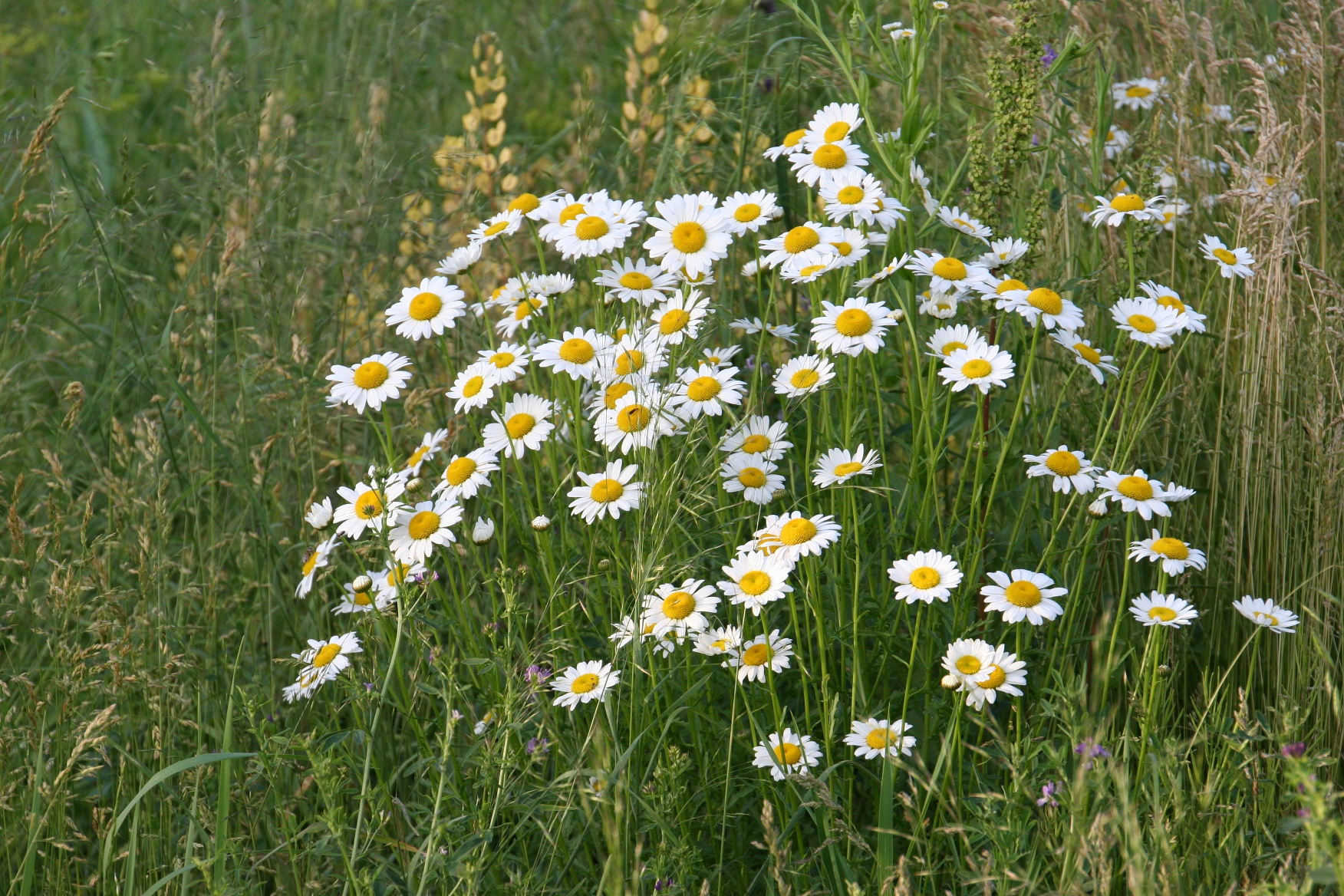
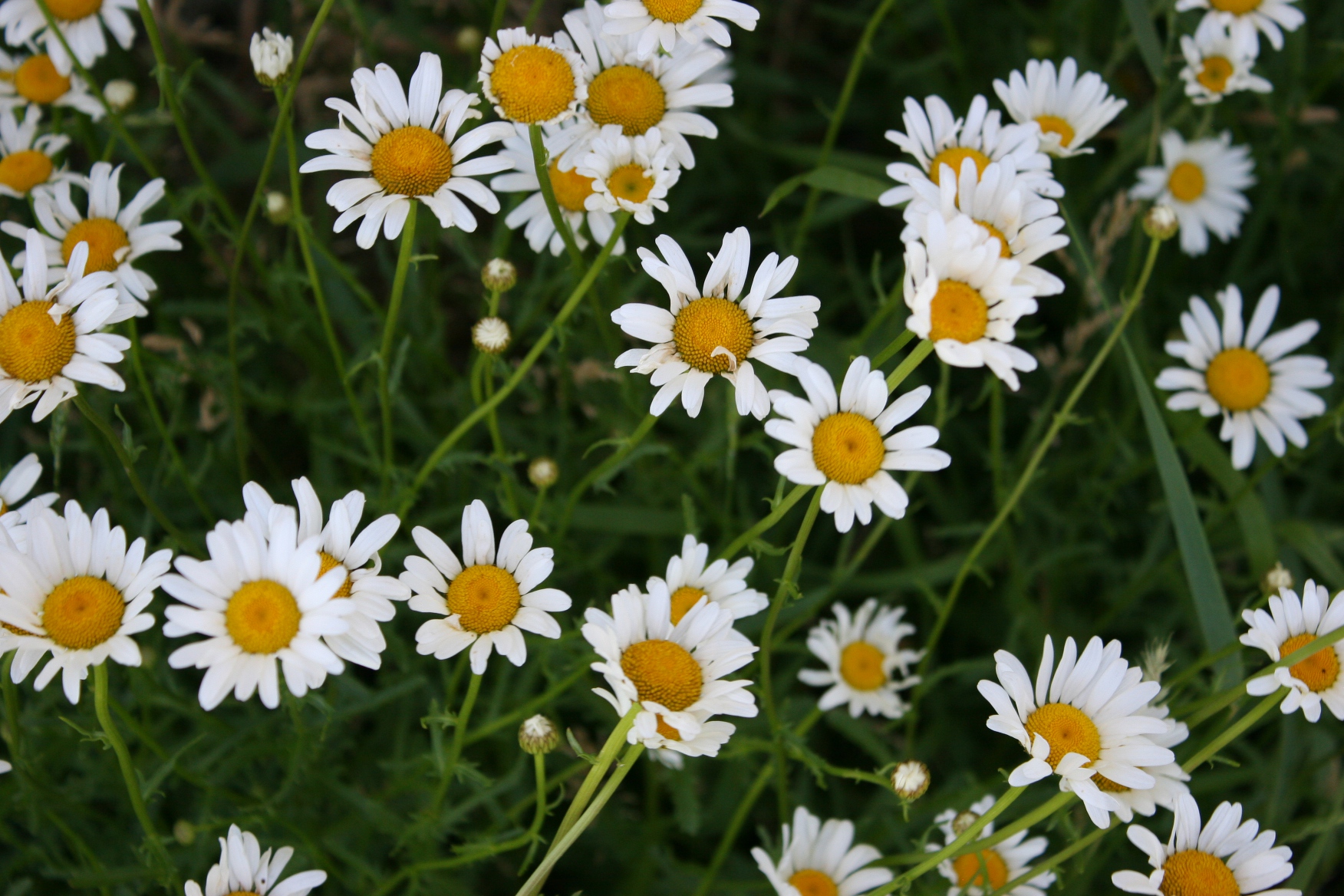
A patch of daisies. (Minnesota Prairie Roots copyrighted file photo)

RECENTLY, MY SISTER-IN-LAW Rena asked me to name my favorite flower. I immediately responded, “Daisy.” But that’s not really true, I realized the more I considered the flowers I especially like.

A time existed when my response to Rena was accurate. For a long time, daisies assuredly were my personal pick for most beloved floral. Daisies, like me, are simple, uncomplicated, down-to-earth. There’s nothing pretentious about a daisy with its circle of white petals and yellow center.

Daisies, too, were the flower of my teen years. The age of flower children and peace symbols and rebellion. Daisies, prolific, strong, reseeding on their own, spreading and blanketing the landscape.

At my 1982 wedding, daisies graced bouquets and corsages. “I’ll give you a daisy a day,” wrote songwriter Jud Strunk in the 1973 hit, “Daisy a Day.” A love story in lyrics if I’ve ever heard one.

I still like daisies a lot. The way they bend in the wind. The way they remind me of my youth. And young love.

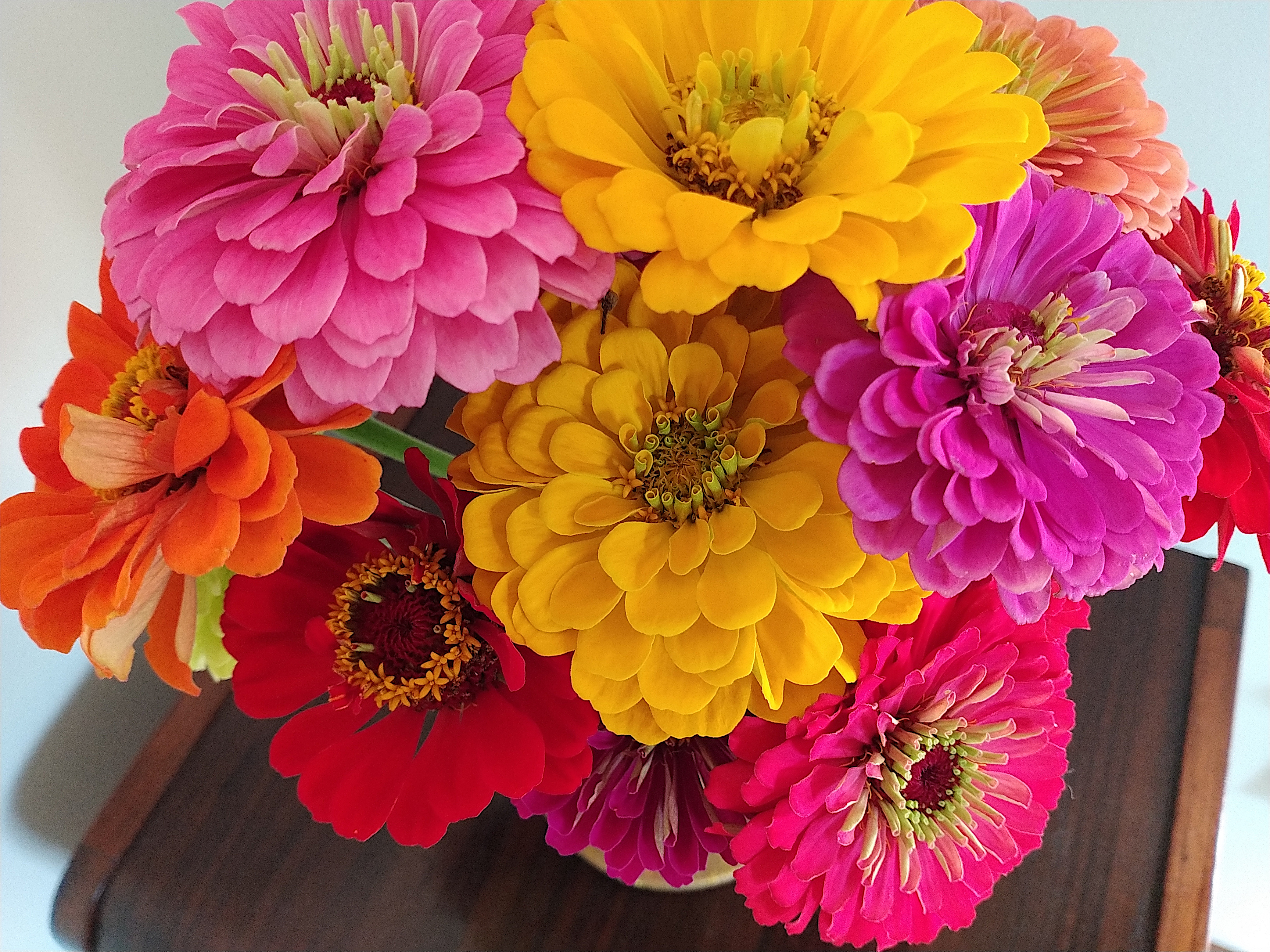
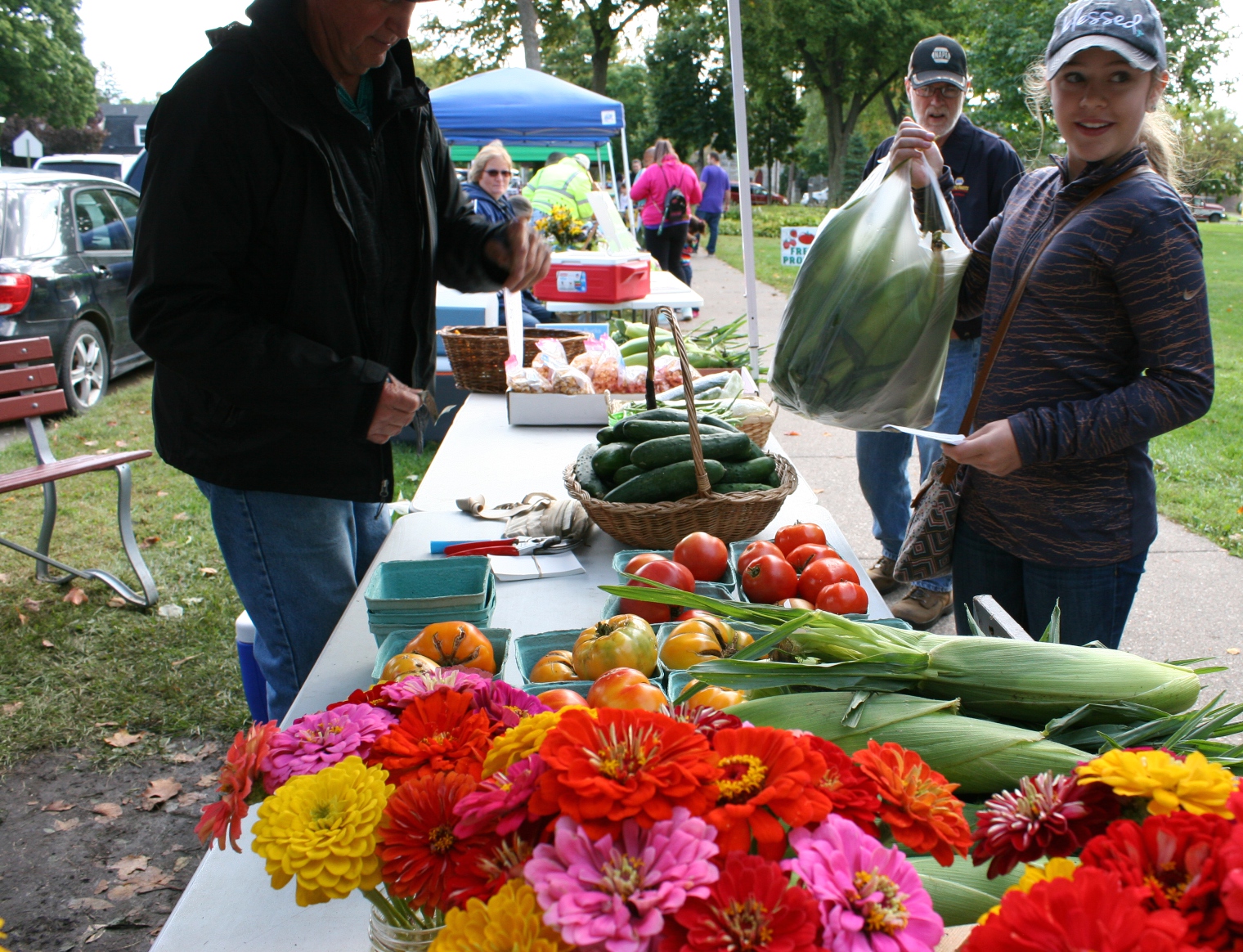
Zinnias sourced at the Faribault Farmers’ Market. (Minnesota Prairie Roots copyrighted photo August 2024)

But, after pondering Rena’s question, I would answer differently. Zinnias. Yes, vivid, bold zinnias are my favorite flower today. Like daisies, they trace to my youth. Mom seeded rows of zinnias in her vegetable garden. They jolted color into the greenery, later adding color to our farmhouse in bouquets gathered.

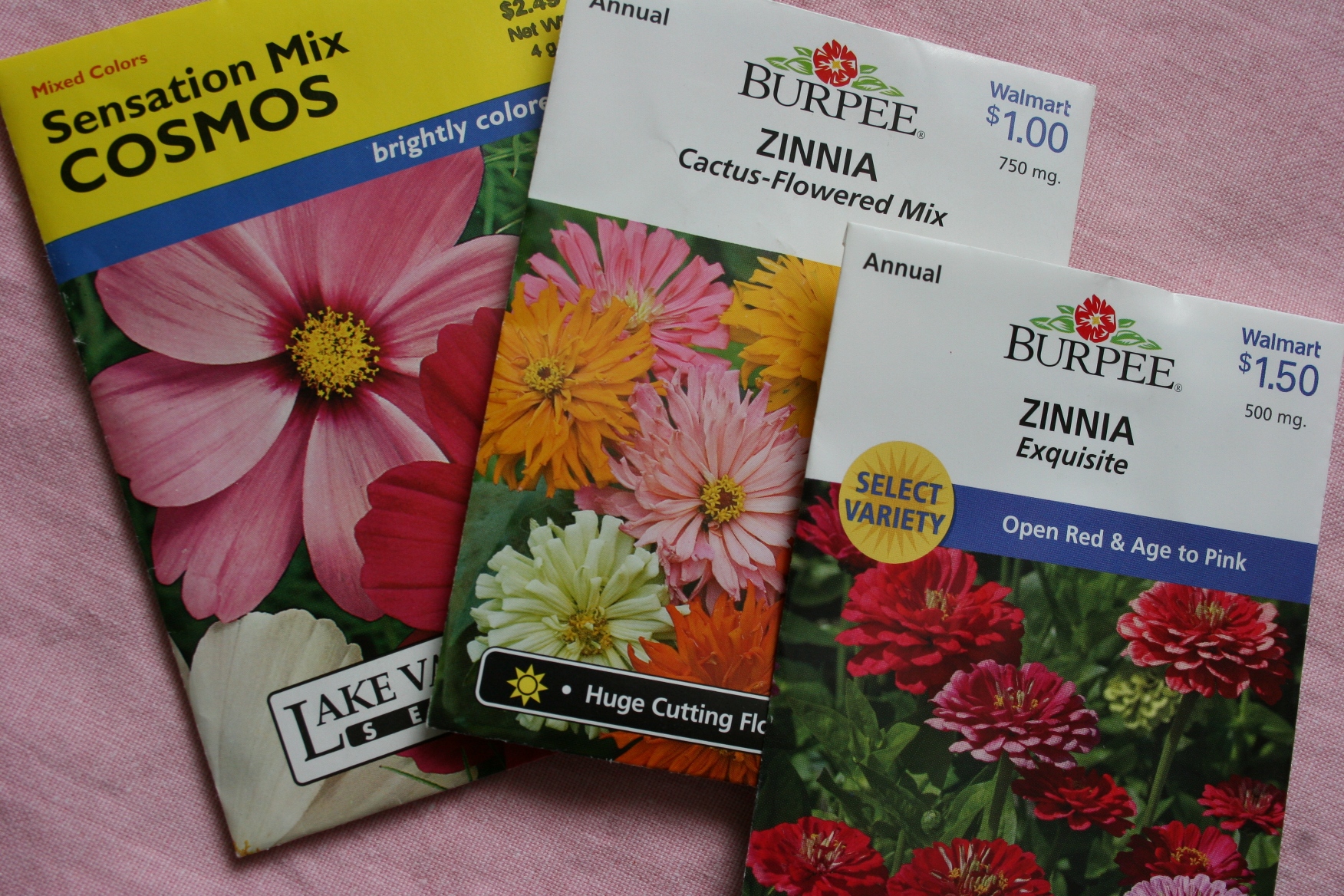
Zinnias and cosmos can be easily grown by direct seeding into the soil. (Minnesota Prairie Roots copyrighted file photo)

Zinnias grow easily from seed. They are hardy and prolific and colorful, coming in varying sizes from small to “giant.” They make excellent, long-lasting cut flowers.

My friend Al, left, sells flowers and produce at the farmers’ market. (Minnesota Prairie Roots copyrighted file photo)
I transferred the zinnia bouquet from Solo cup to vase at home. (Minnesota Prairie Roots copyrighted photo August 2024)
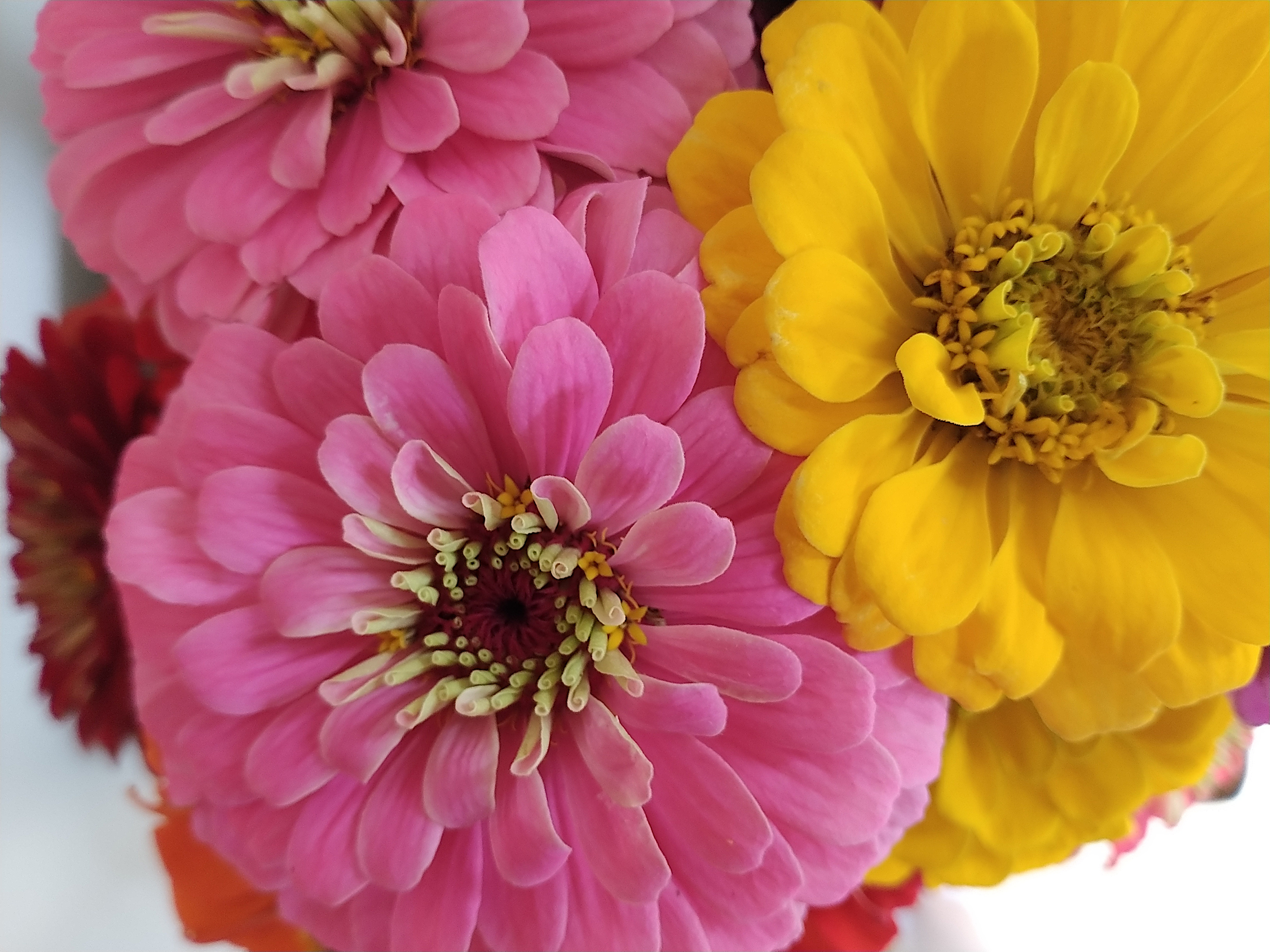
Al and Char’s zinnias up close. (Minnesota Prairie Roots copyrighted photo August 2024)

As I write, a bouquet of zinnias purchased at the Faribault Farmers’ Market graces a vintage chest of drawers in my living room. My friend Al grew them. His wife, Char, artistically arranged the stems of red, pink, orange and yellow with one green-tinted flower tossed in the colorful mix.

Daisies thrive. (Minnesota Prairie Roots copyrighted file photo)

Randy bought them for me. For no reason. I love when he does that—spur of the moment gives me flowers. Just because. I was chatting with our friend Duane while Randy paid for sweetcorn purchased from Al along with those unexpected zinnias arranged in a red Solo cup. It was a moment when I felt loved, so loved, as if Randy had given me my daisy a day.

TELL ME: What’s your favorite flower and why?

© Copyright 2024 Audrey Kletscher Helbling
 

Learn about local history & more at Oak Ridge Cemetery talk August 21, 2024

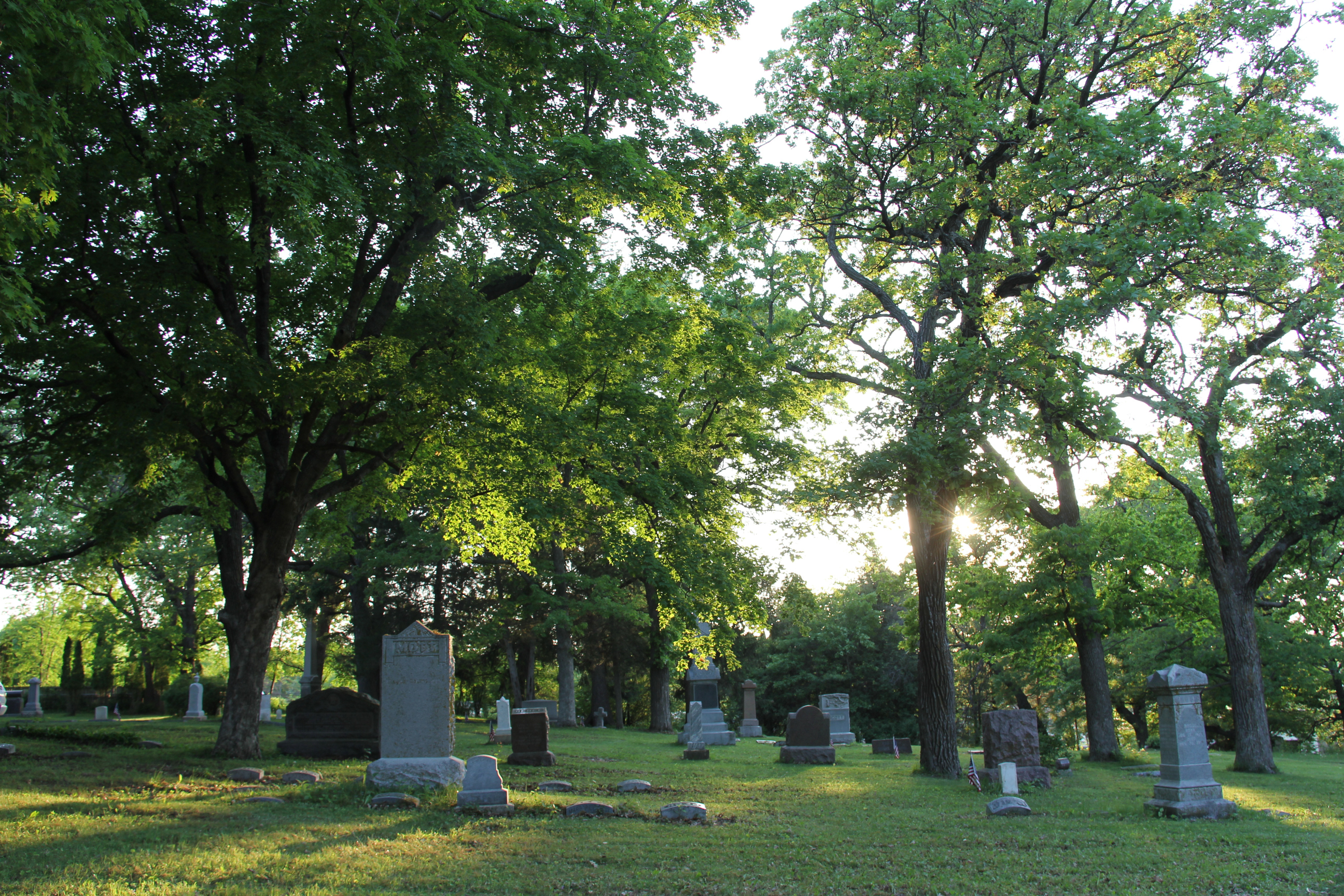
Oak Ridge Cemetery, Faribault. (Minnesota Prairie Roots copyrighted file photo)

FOR ANYONE WHO APPRECIATES local history, especially cemeteries, the Rice County History Museum in Faribault is the place to be at 7 pm Thursday, August 22. Tom Rent, an Oak Ridge Cemetery volunteer, will present “Preserving Faribault’s Oldest Cemetery, Oak Ridge.”

It’s sure to be an informative talk focusing on the cemetery’s history, operation and preservation. Rent will also share photos, stories, headstone symbology, preservation methods and future plans to maintain Oak Ridge Cemetery. Plus, he’ll talk about some of the people who helped shape Faribault and Rice County.

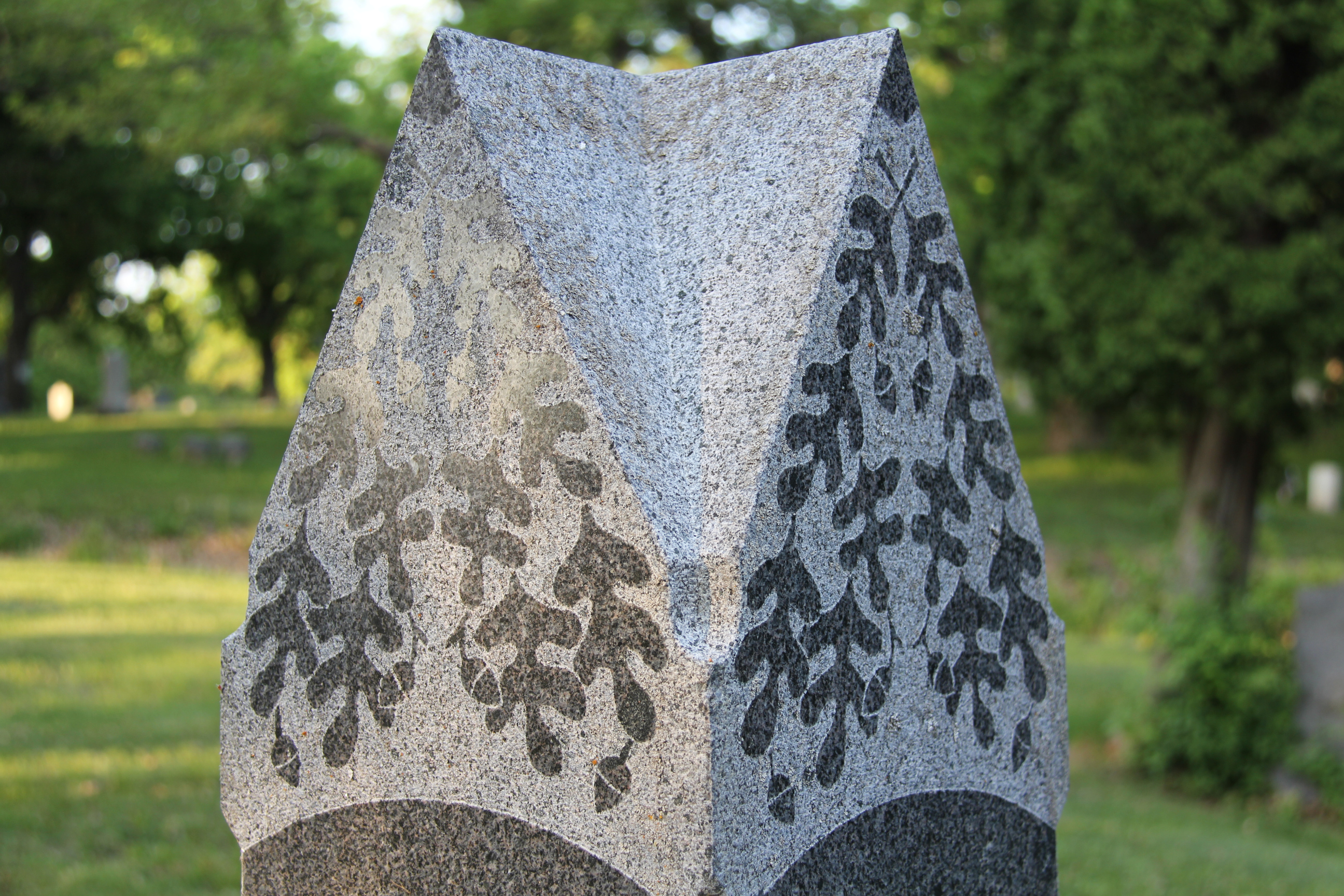
Oak leaves fittingly grace the top of a grave marker at Oak Ridge Cemetery. (Minnesota Prairie Roots copyrighted file photo)

As someone who did not grow up in this region of Minnesota, I’m always interested in learning more about this place I’ve called home for 42 years now. I’ve explored a lot of cemeteries, including Oak Ridge. Cemeteries fascinate me with their history, art, stories, natural beauty, peacefulness and aura of reverence.

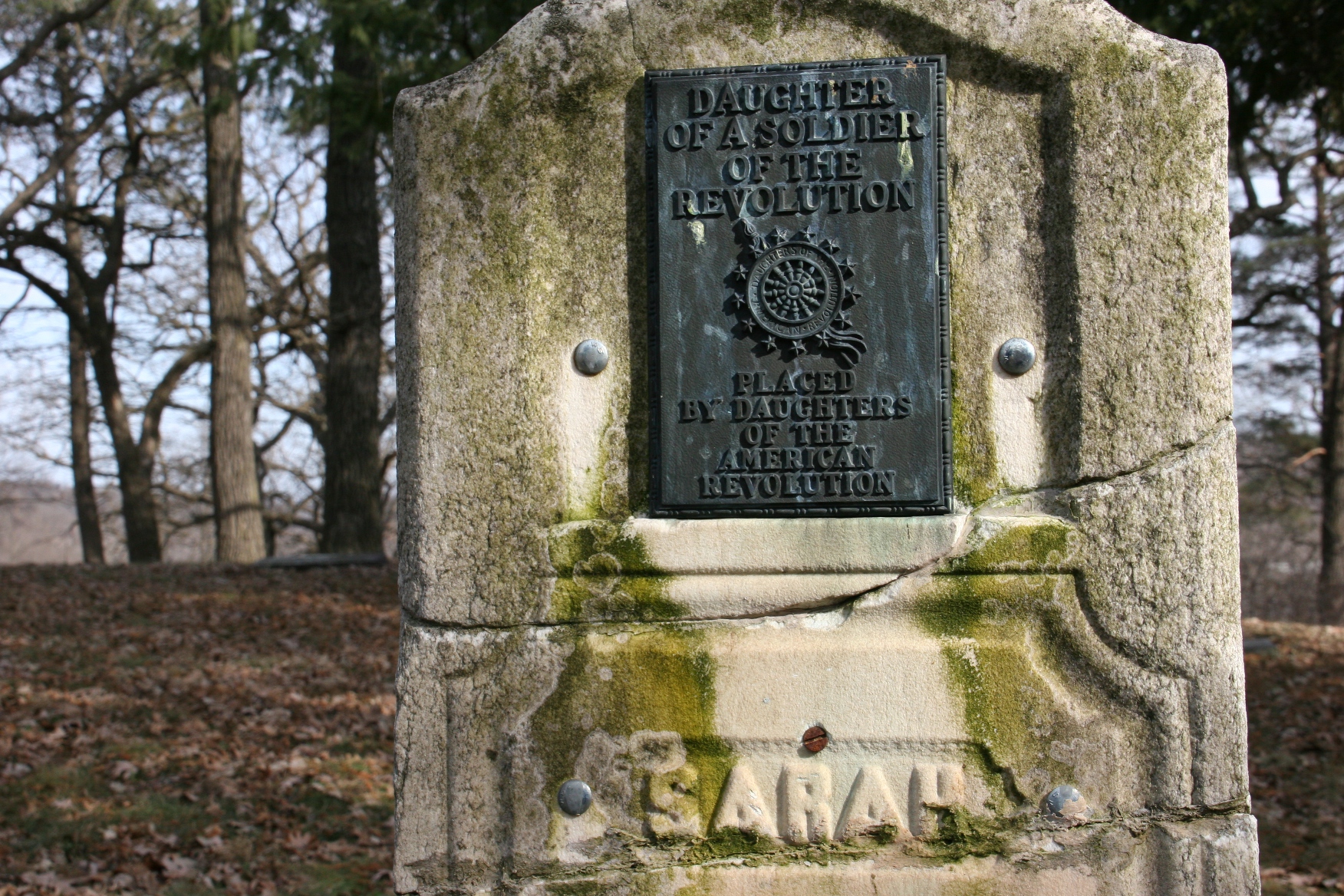
Sarah, daughter of a Revolutionary War soldier, lies buried here. (Minnesota Prairie Roots copyrighted file photo)

Oak Ridge Cemetery, founded in 1857, sits high atop a hill on Faribault’s north side just off Minnesota State Highway 3. It’s a beautiful, wooded location filled with oak, maple and spruce trees, and many aged headstones. There are names—like Nutting and Buckham—recognizable as key figures in local history. There are Civil War and Spanish American War veterans and a daughter of an American Revolutionary War soldier buried here. Senators and representatives, too. Local leaders and farmers. Immigrants and paupers and people from all walks of life. People with stories. So. Much. History.

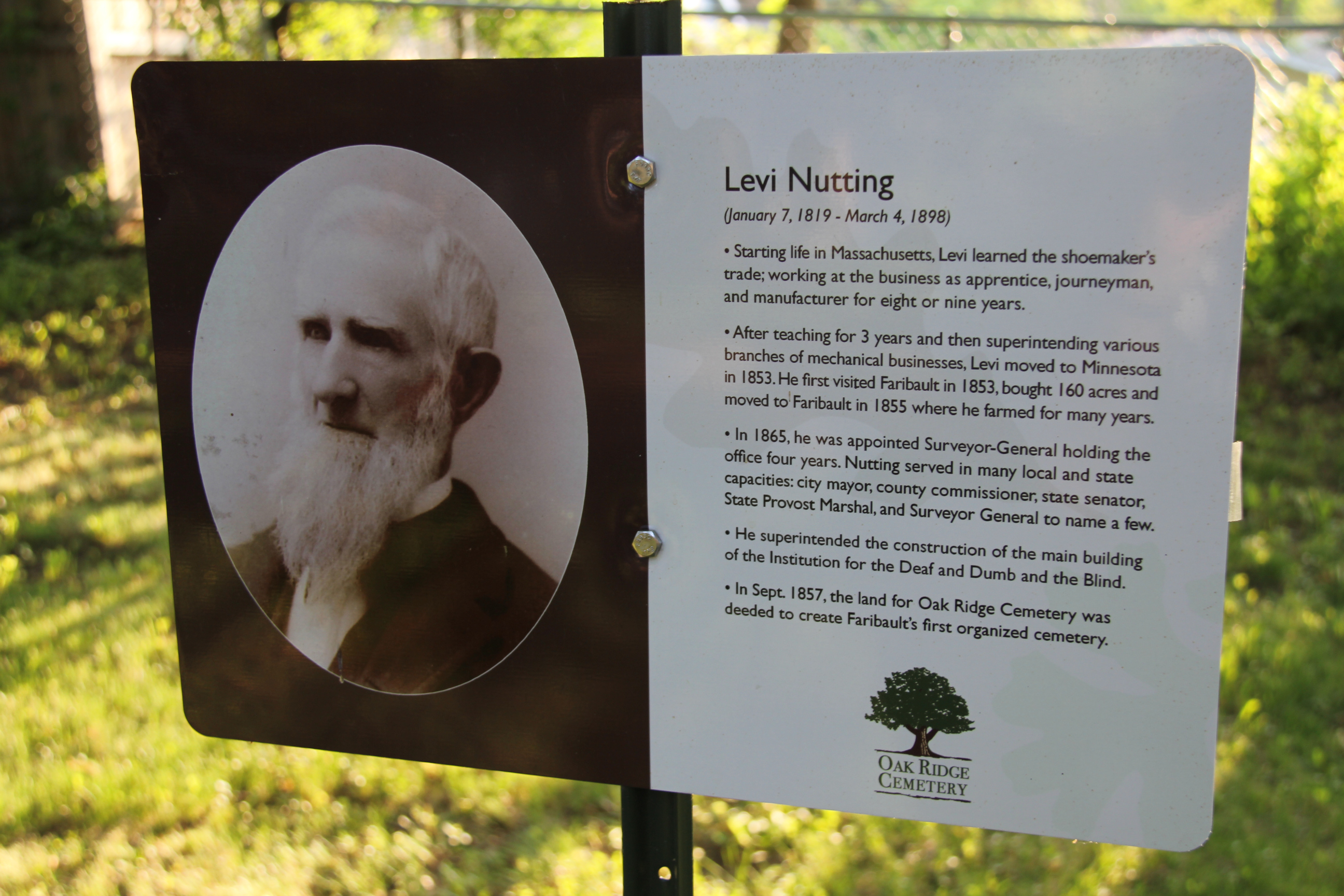
Levi Nutting was important in early Faribault history, as noted in this cemetery signage. (Minnesota Prairie Roots copyrighted file photo)

I especially like that the caretakers/volunteers of Oak Ridge have installed signage profiling some of the people buried in the cemetery. For those like me who are curious about the stories behind the deceased, this is valuable information. I always want to know more beyond names and dates of birth and death. The Oak Ridge Cemetery Facebook page offers lots of historical info, too.

Efforts have also been underway to restore aged tombstones in the cemetery.

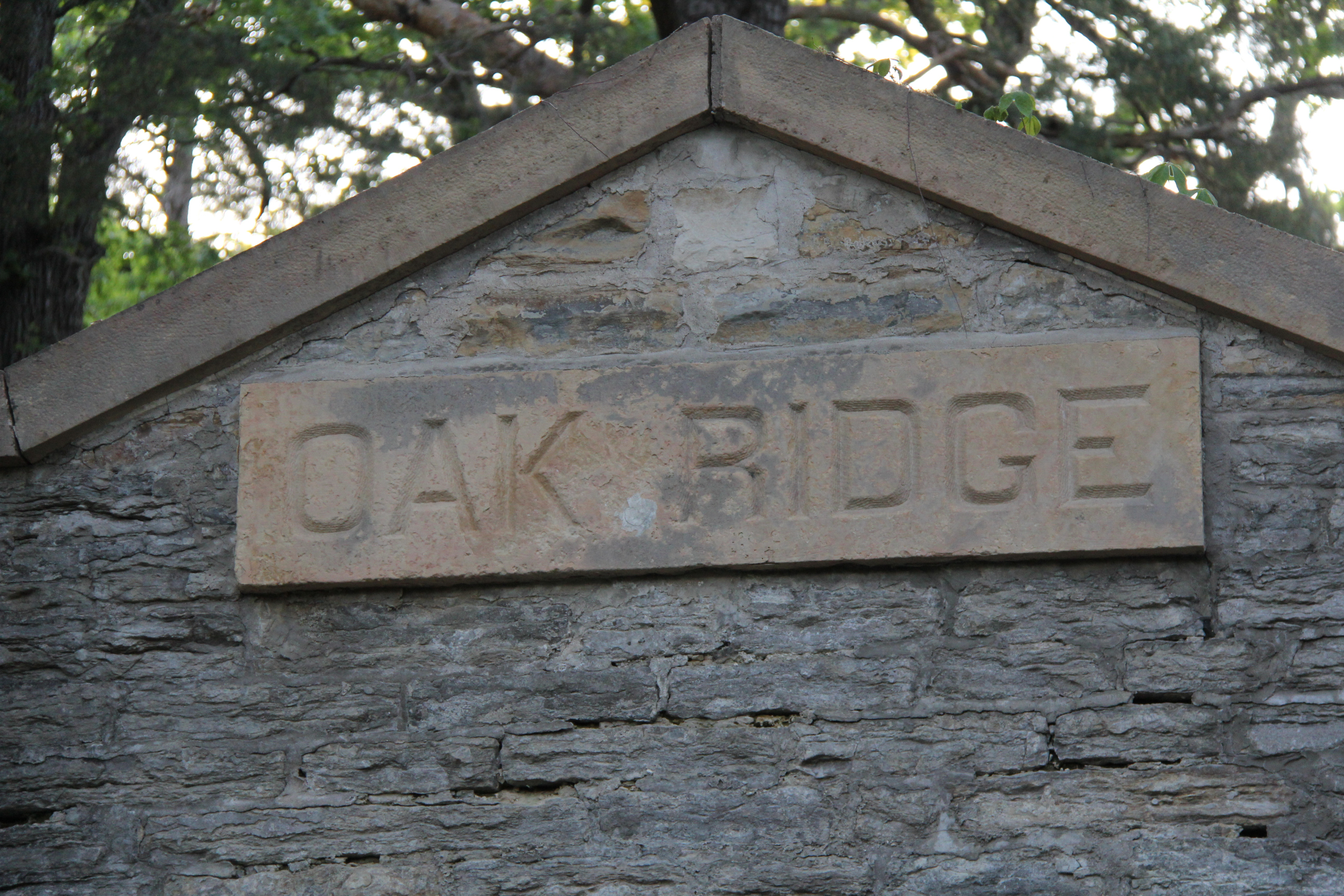
Identifying signage on the limestone crypt at Oak Ridge. (Minnesota Prairie Roots copyrighted file photo)

I expect Tom Rent will cover much of this in Thursday’s talk. He, like so many others, cares deeply about those who lie buried beneath the canopies of trees at Oak Ridge Cemetery.

FYI: To reserve a seat at Thursday’s presentation, call 507-332-2121, email rchs at rchistory.org or stop at the history museum. The program is free to Rice County Historical Society members and $5 for non-members.


Milkweeds, monarchs & memories in Minnesota August 20, 2024

Monarch on the common milkweed flower. (Minnesota Prairie Roots copyrighted file photo 2023)

I’VE ALWAYS HELD a fascination with milkweeds. Their clusters of vanilla-scented dusty pink flowers draw me to a plant that seems more flower than weed. Unless you were my dad, who wanted the common milkweed removed from his acres of soybeans. Yes, I hoed or pulled plenty of milkweeds from the fields on my southwestern Minnesota childhood farm.

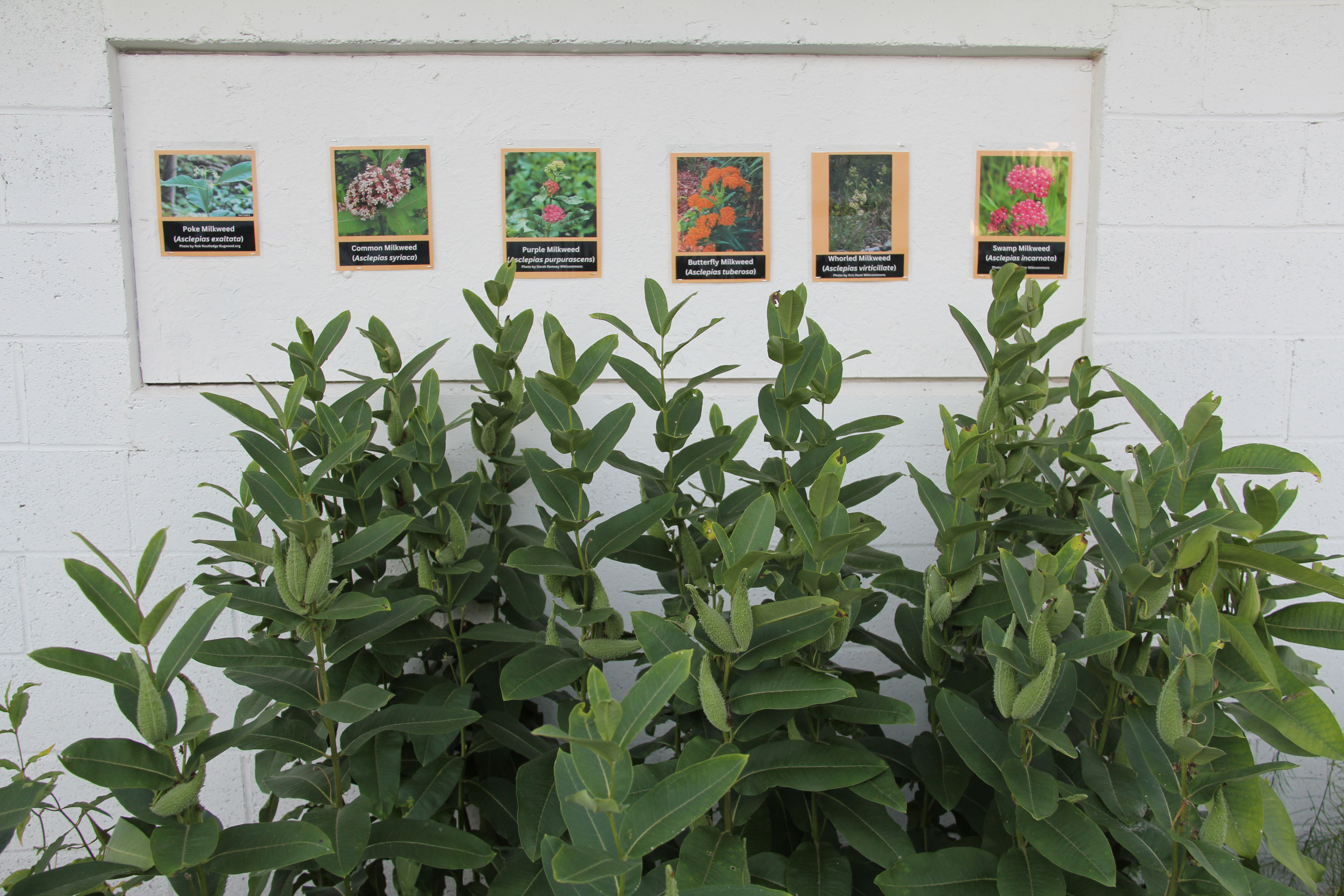
Milkweeds grow next to the conservation building at the Rice County Fairgrounds against a backdrop of identifying milkweed photos. Those include six types: common, poke, purple, butterfly, whorled and swamp. (Minnesota Prairie Roots copyrighted photo August 2024)

My thinking has shifted since then. Today I plant, rather than eradicate, milkweeds. Dad, if he was still alive, might wonder how his farm-raised daughter strayed so far from hoeing to growing.

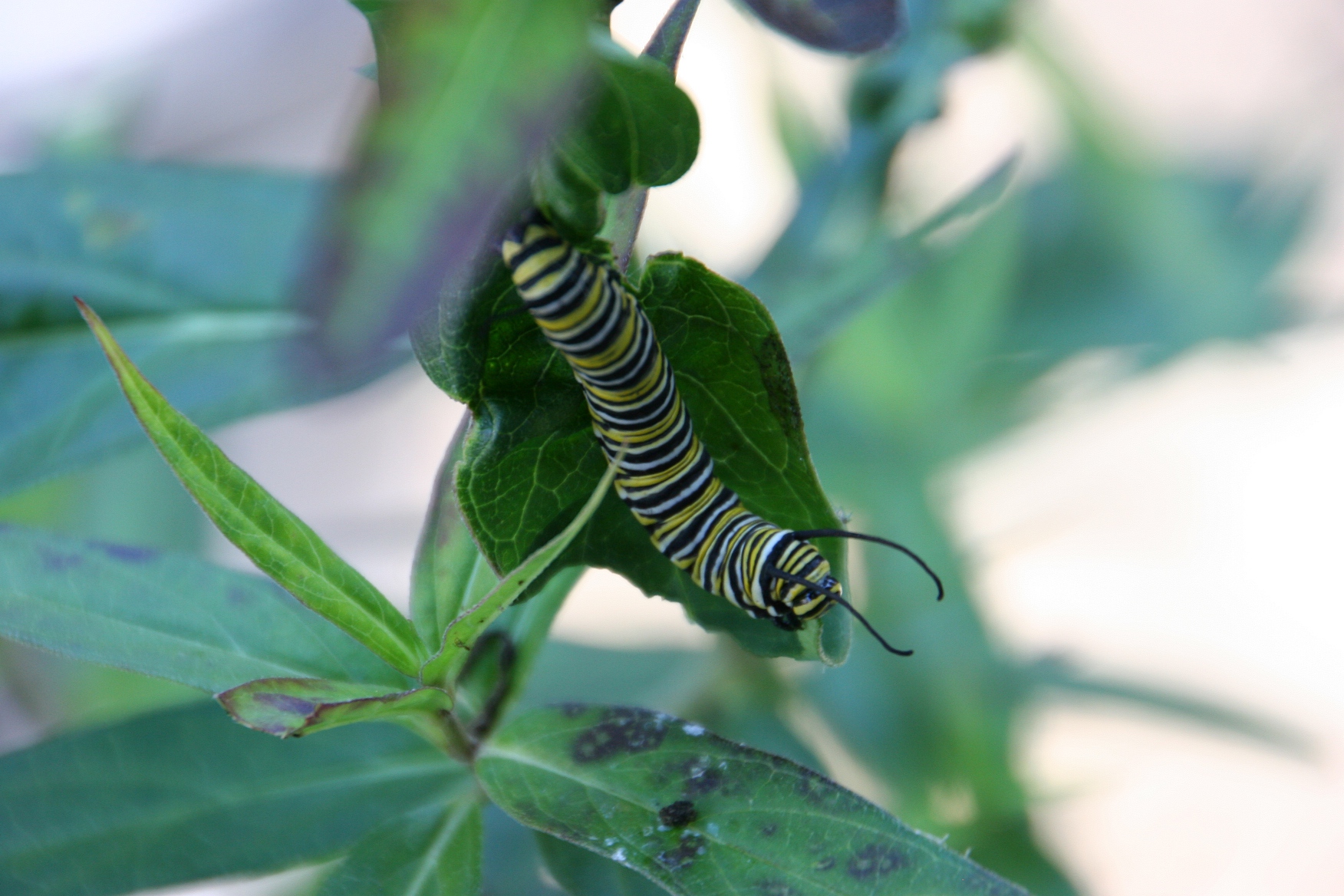
A monarch caterpillar. (Minnesota Prairie Roots copyrighted file photo)

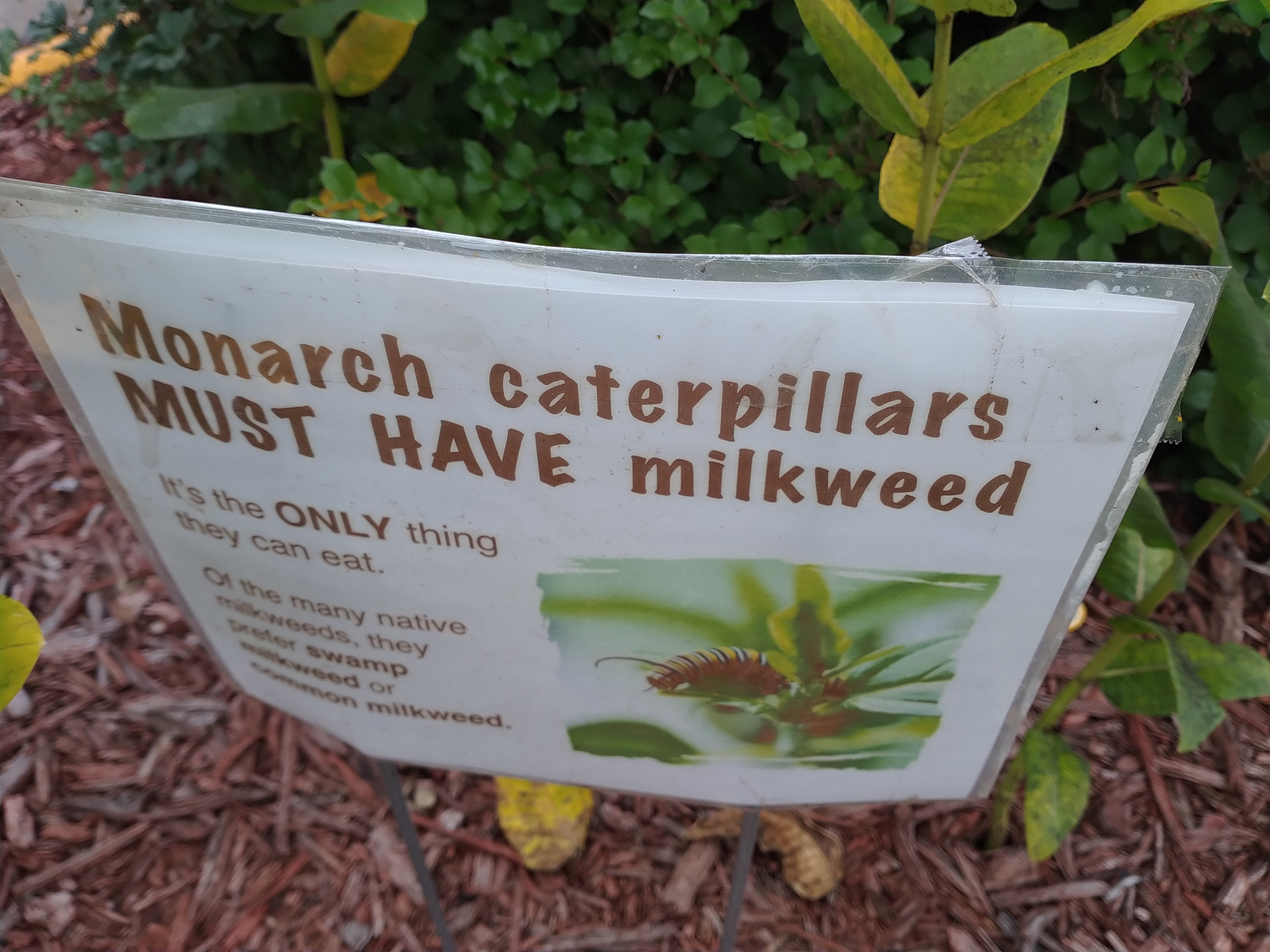
The answer is easy. Long ago I learned the value of milkweeds to our monarch butterfly population. The butterfly lays its eggs on milkweed leaves. And milkweed is the sole source of food for monarch caterpillars. If we want the monarch population to grow, thrive and survive, we need milkweed plants. It’s that simple.

A sign at Hy-Vee grocery store explains the importance of milkweed to monarchs. (Minnesota Prairie Roots copyrighted photo August 2024)

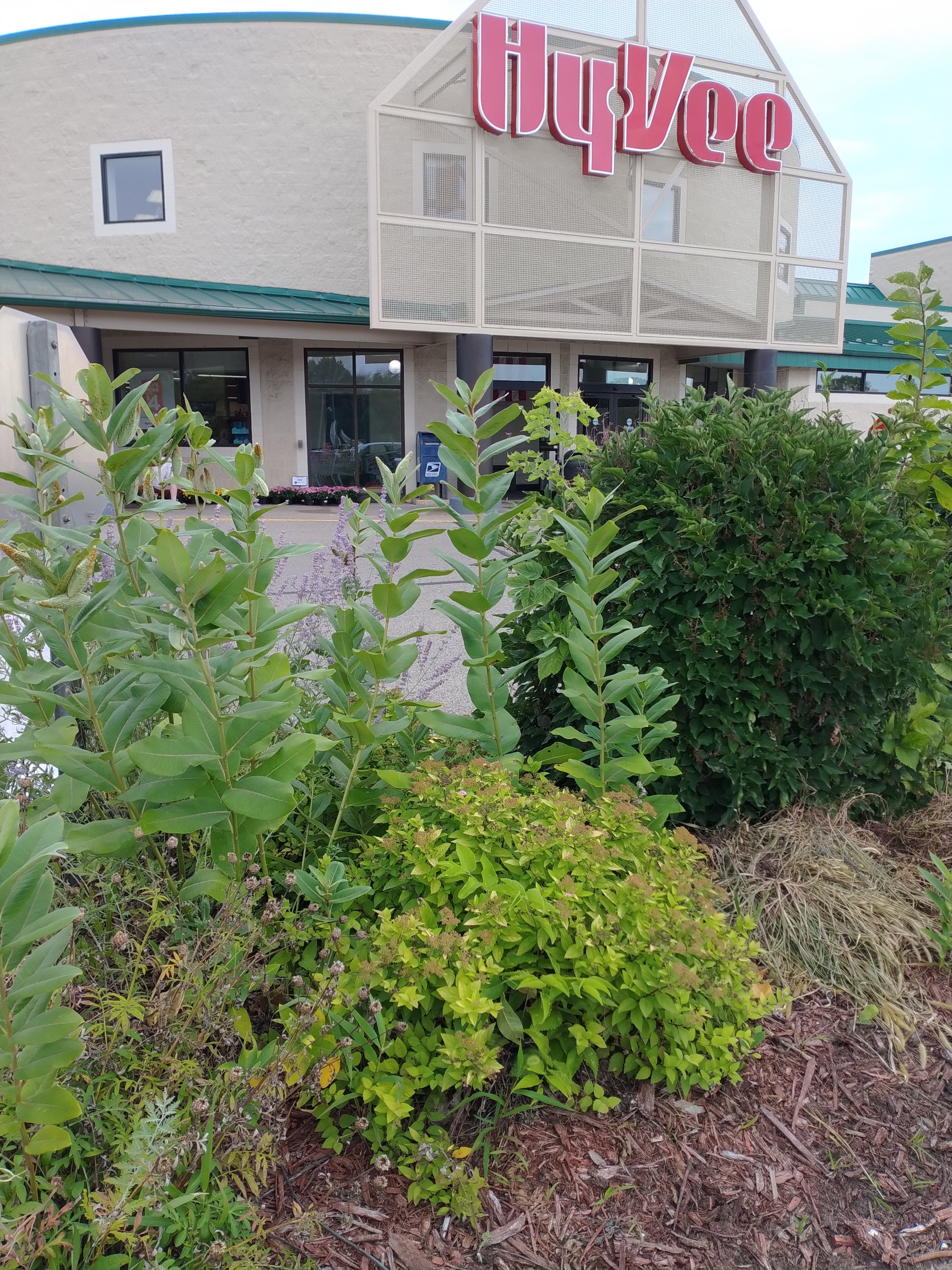
More and more I’ve spotted milkweeds growing in public places in and around Faribault. River Bend Nature Center. Falls Creek County Park. The Rice County Master Gardeners’ Teaching Gardens. Beside the conservation building at the Rice County Fairgrounds. Even in flowerbeds at Hy-Vee grocery store.

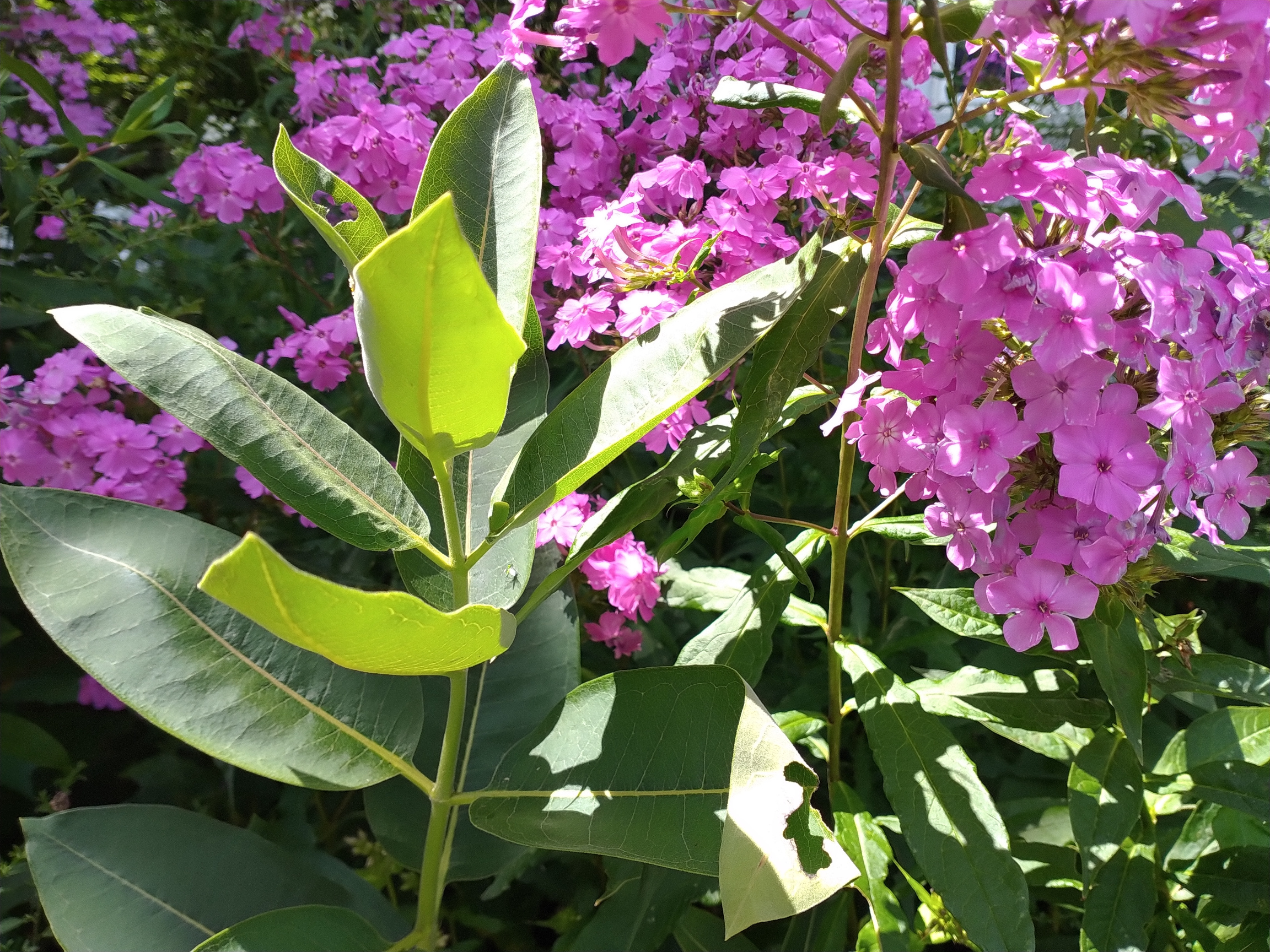
Milkweeds grow among phlox. (Minnesota Prairie Roots copyrighted photo August 2024)

If you walk by my house, you’ll see stray milkweeds popping up here and there. Along a retaining wall. Among the prolific phlox in my messy flowerbeds. The husband has orders not to mow, pull or otherwise remove milkweed plants.

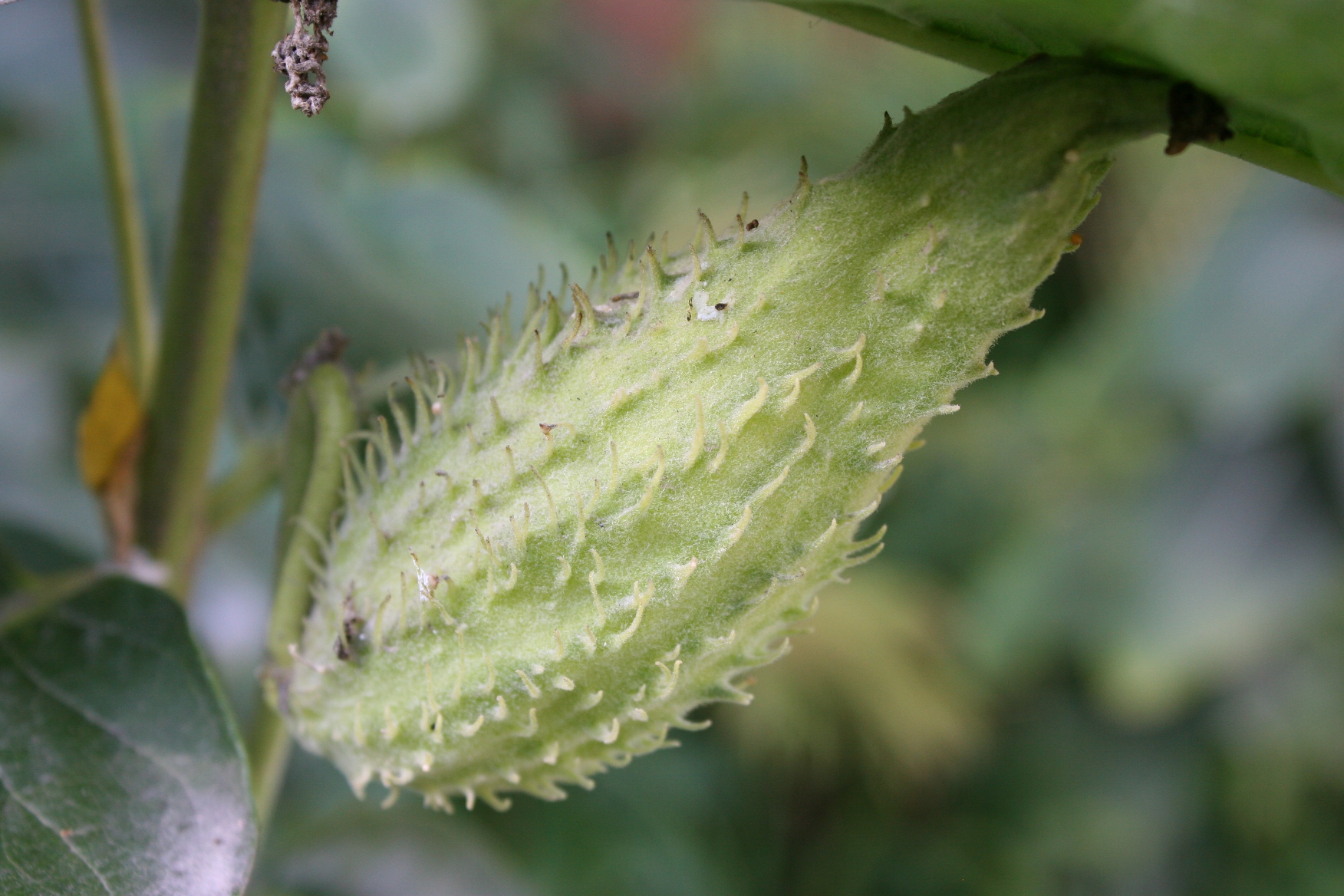
An unripened milkweed pod. (Minnesota Prairie Roots copyrighted file photo)

This time of year, seed pods are forming on milkweeds. Perhaps it’s the writer, the poet, in me that loves the shape of those fat green pods that will eventually dry, burst open and spread seeds on wisps of white fluff carried by the wind.

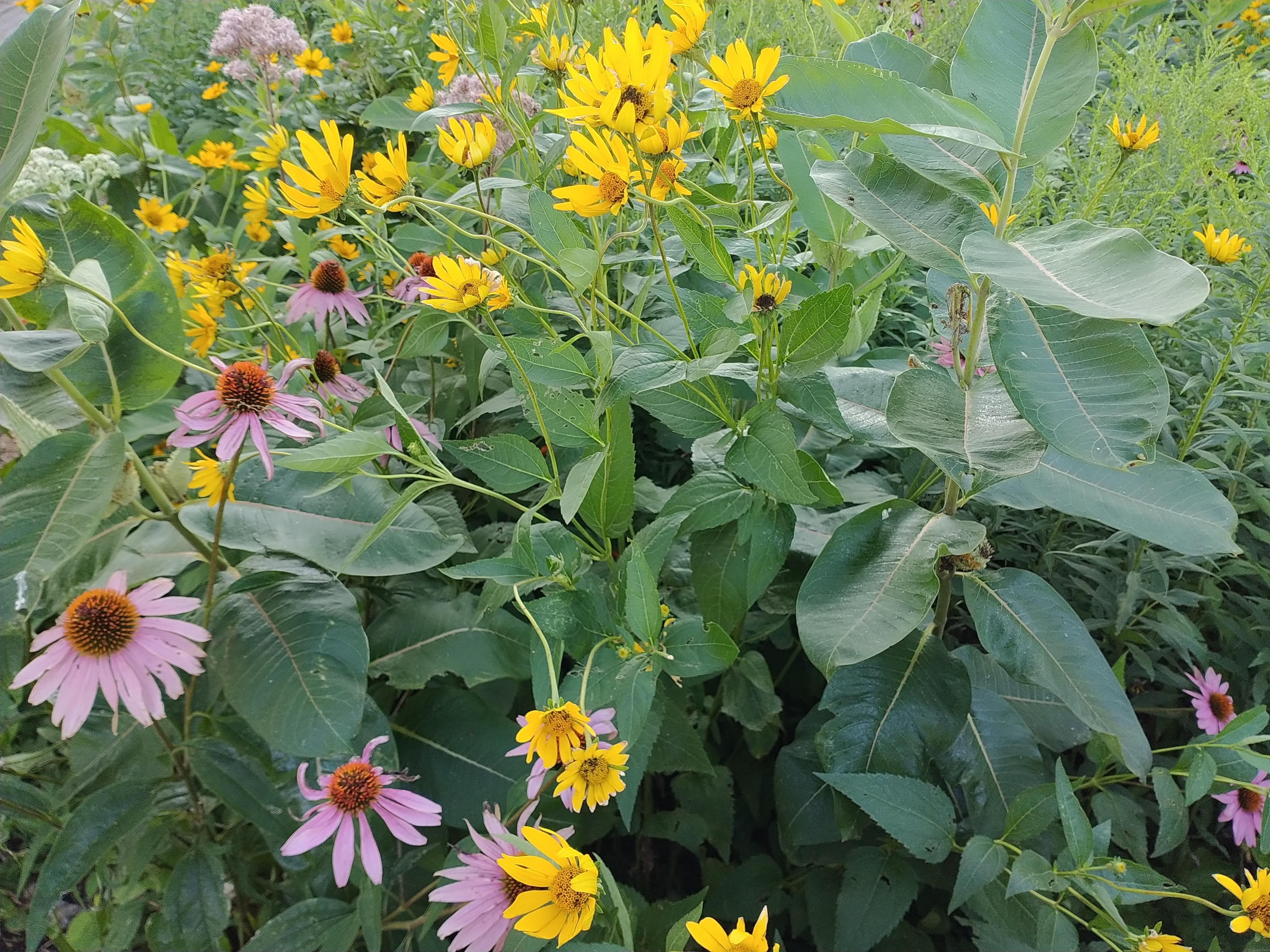
Milkweeds flourish among prairie flowers in the Rice County Master Gardeners Teaching Gardens, Faribault, (Minnesota Prairie Roots copyrighted photo August 2024)

Seeds wing across the landscape, just like monarchs. I remember a time when monarchs were prolific. Yes, even in rural Minnesota where I labored to get rid of milkweed plants.

I discovered milkweeds planted outside Hy-Vee. (Minnesota Prairie Roots copyrighted photo August 2024)

Naturalists, gardeners and others are working hard now to bring back the monarch population. It’s taken time, effort and education to convince people to plant milkweeds for monarchs. I don’t expect butterfly numbers will be what they once were—when monarchs flitted everywhere. But we have to start somewhere, do something. And that begins with each of us. Educating ourselves. Caring. And then deciding that milkweeds really aren’t weeds after all. They are vital to the survival of the monarch butterfly. It’s OK to plant milkweed seeds or allow nature to plant them.

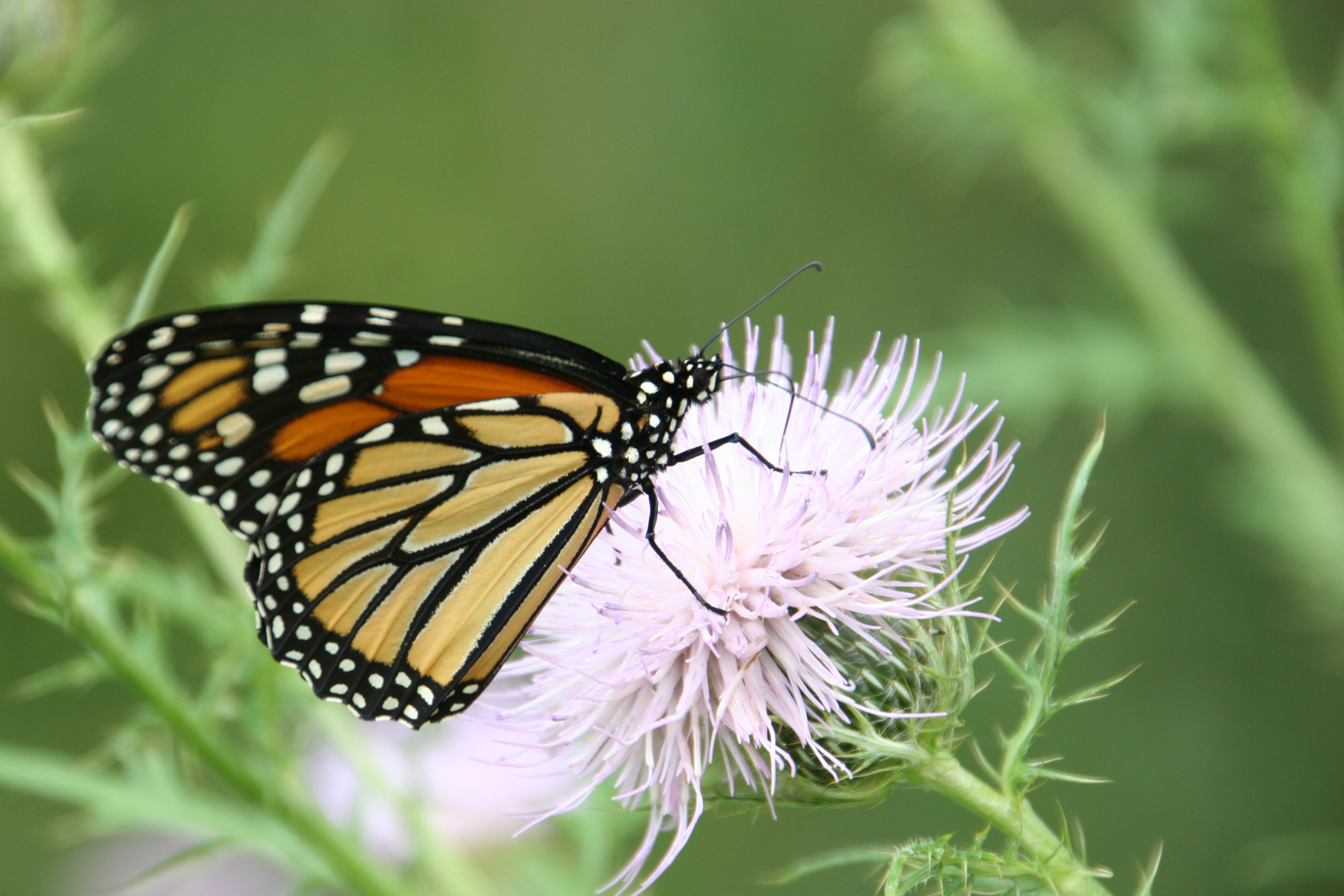
Monarch on a thistle flower. (Minnesota Prairie Roots copyrighted file photo)

I, for one, delight in watching monarchs flit about my yard. They are magical as only a butterfly can be. Delicate, yet strong. Poetically beautiful. Carrying memories and grace on their wings.

An educational sign among the flowers at the Rice County Master Gardeners Teaching Gardens. (Minnesota Prairie Roots copyrighted photo August 2024)

FYI: Nerstrand Big Woods State Park is hosting a “Monarchs and Milkweeds” presentation at 10 a.m. Saturday, August 24, in the park’s amphitheater. Kathy Gillispie, who raises monarchs from eggs, caterpillars and chrysalises, will speak about her experiences with monarchs. The program is free, but a state park parking pass is needed to enter the rural Nerstrand park.

© Copyright 2024 Audrey Kletscher Helbling
 

Oh, the places my photos go, including into a vets home in Bemidji August 19, 2024

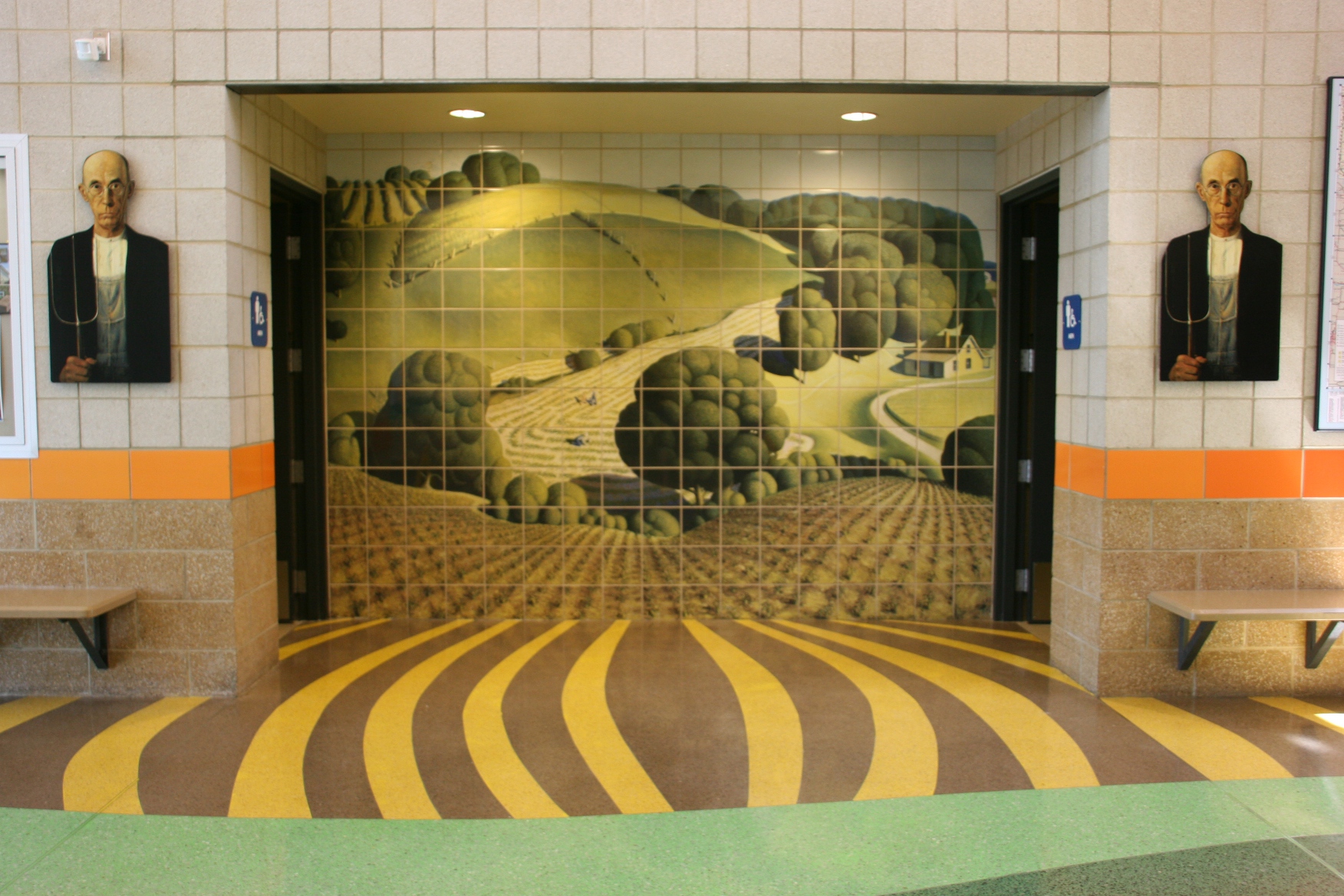
This photo, taken at the Grant Wood Rest Area along I-380 south of Cedar Rapids, Iowa, was published in a book about architecture. It was converted to black-and-white in the book. (Minnesota Prairie Roots copyrighted file photo)

THROUGHOUT MY 15 YEARS of blogging, I’ve sold rights to dozens of images sourced from Minnesota Prairie Roots. My photos have published on websites, in tourism guides, on album covers, on packaging for a toy company, in magazines and newspapers, on business promotional materials, on signs and banners, on the cover of a nonprofit’s annual report, in books…

Three of my photos published in this book. (Book cover sourced online)

I’m especially proud of the three photos published in The World of Laura Ingalls Wilder—The Frontier Landscapes that Inspired the Little House Books by New York Times bestselling author Marta McDowell. I grew up only 25 miles from Walnut Grove, Wilder’s childhood home. Wilder inspired me as a writer and photographer with her detail-rich creative style. I’m also proud of my two Grant Wood-themed Iowa rest stop photos printed in the book Midwest Architecture Journeys. I have copies of both books.

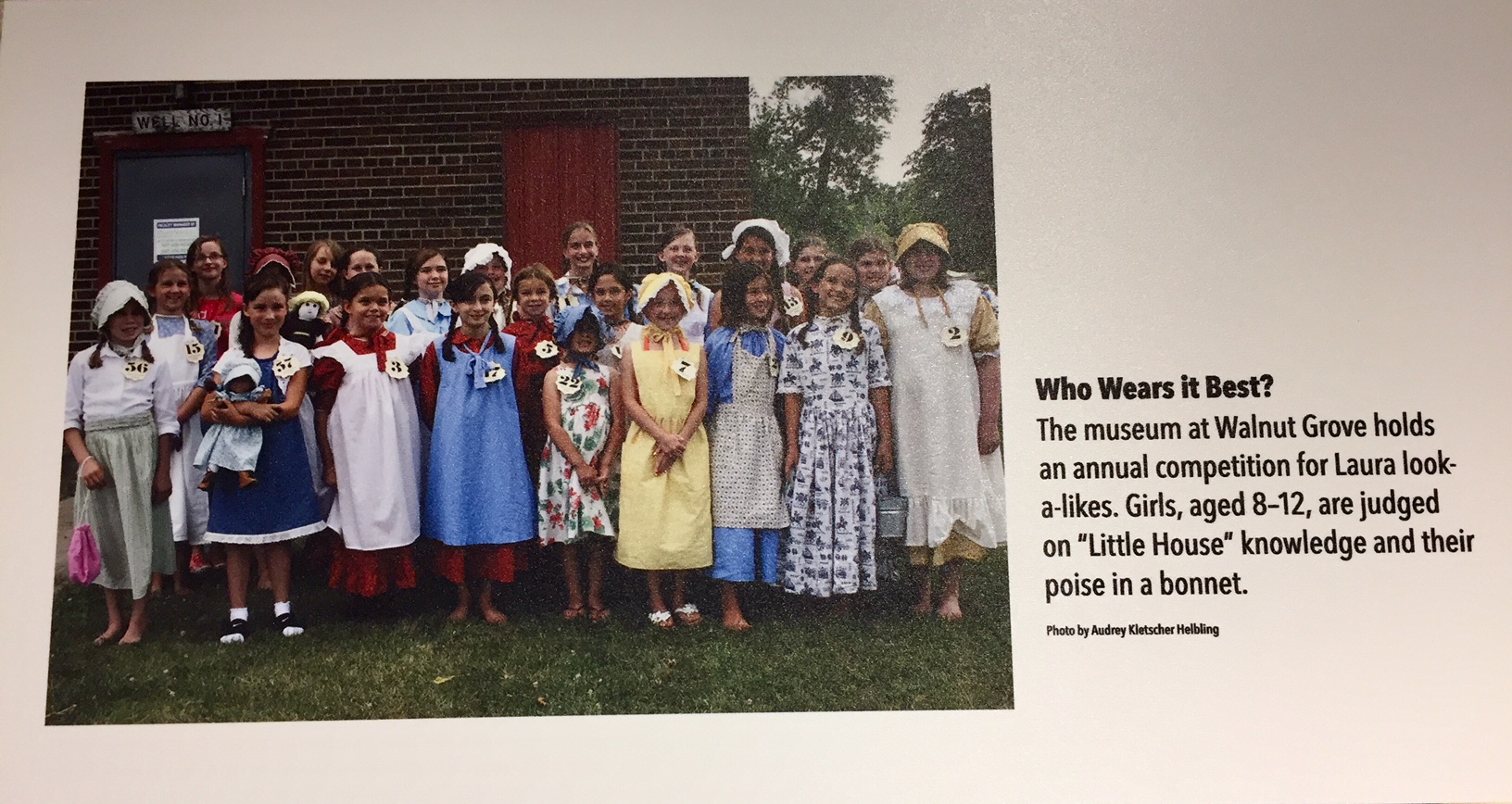
My Laura Look-Alike Contest photo displayed in a Chicago museum. My friend Laurel happened upon the photo while touring the museum and snapped this image for me. (Minnesota Prairie Roots copyrighted photo by Laurel Engquist)

Likewise, I had the honor of selling rights to photos displayed in a temporary Laura Ingalls Wilder exhibit at the American Writer’s Museum in Chicago, at the Minnesota Children’s Museum in St. Paul and at the National WWII Museum in New Orleans. Atherton Pictures purchased rights to a southwestern Minnesota farm site photo for a WWII video created for the museum. I’ve never visited any of the three museums.

The Minnesota Veterans Home, Bemidji, which can house 72 veterans, recently opened. (Photo courtesy of Minnesota Veterans Home, Bemidji)

Seldom do I see how my photos are used once I email the original high resolution digital images to the buyer. But this summer I had the joy of seeing my framed photos displayed in hallways of the new Minnesota Veterans Home in Bemidji. I was in town to bring my son, who lives in Boston and was in Bemidji for the international unicycling convention, home to Faribault. I knew I had to make time for a stop at the veterans home.

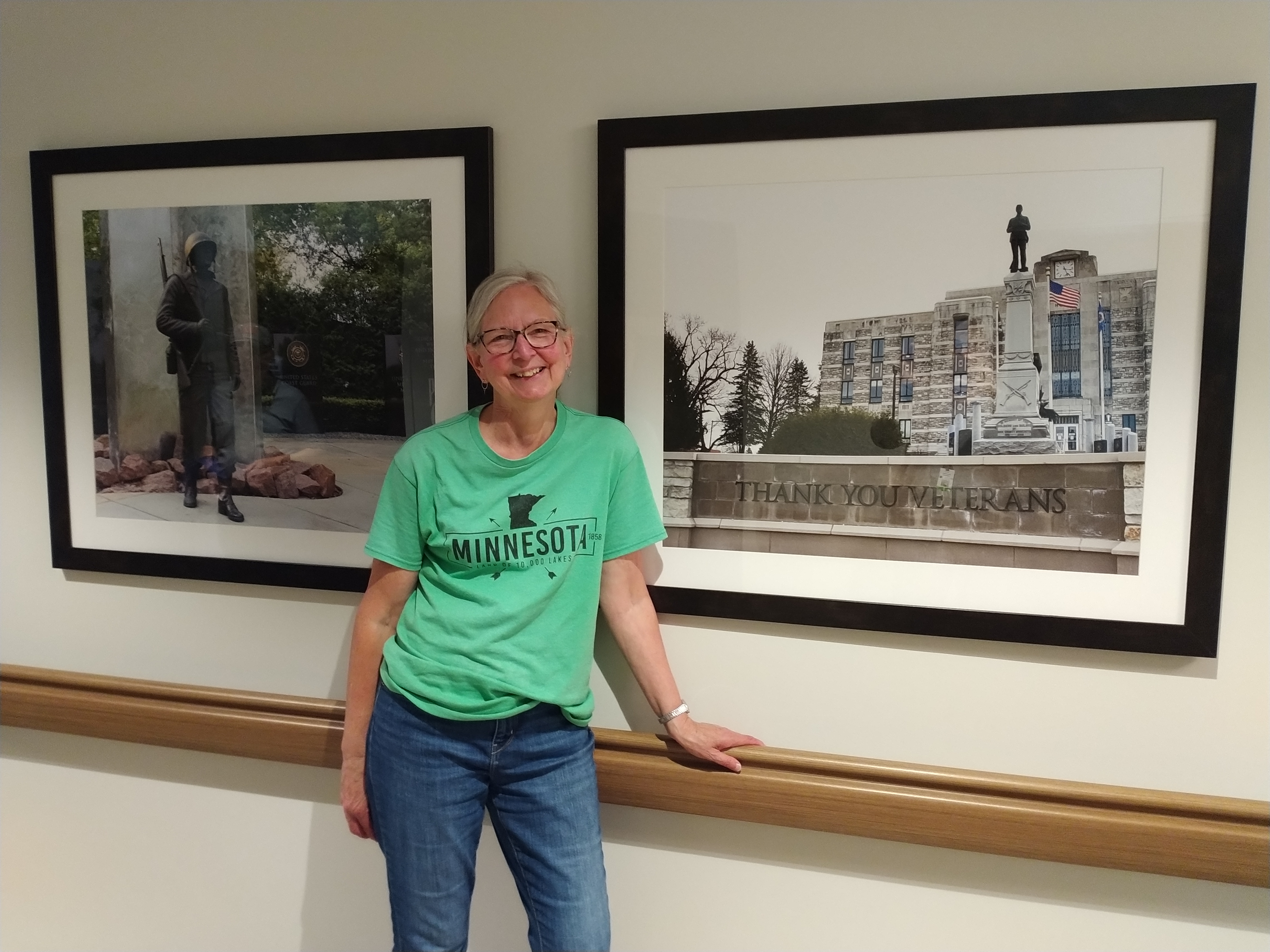
Me with two of my photos, a scene from the Northfield Area Veterans Memorial on the left and the other at the Rice County Veterans Memorial. (Photo courtesy of Minnesota Veterans Home, Bemidji)

So in between Unicon 21 events, Randy and I headed to the vets home in hopes of seeing my six framed art prints. We found four, thanks to Maryhelen Chadwick, public affairs/volunteer coordinator at the Veterans Home. When we showed up unexpectedly, Chadwick graciously led us through the sprawling Town Center in search of my photos. There, in the hallways of this public space, which includes a multipurpose room, theater, club room, learning studio, family dining room, therapy gym and meditation room, we located four of my photos.

This photo, converted to black-and-white, hangs in the Bemidji veterans home. (Minnesota Prairie Roots copyrighted file photo)
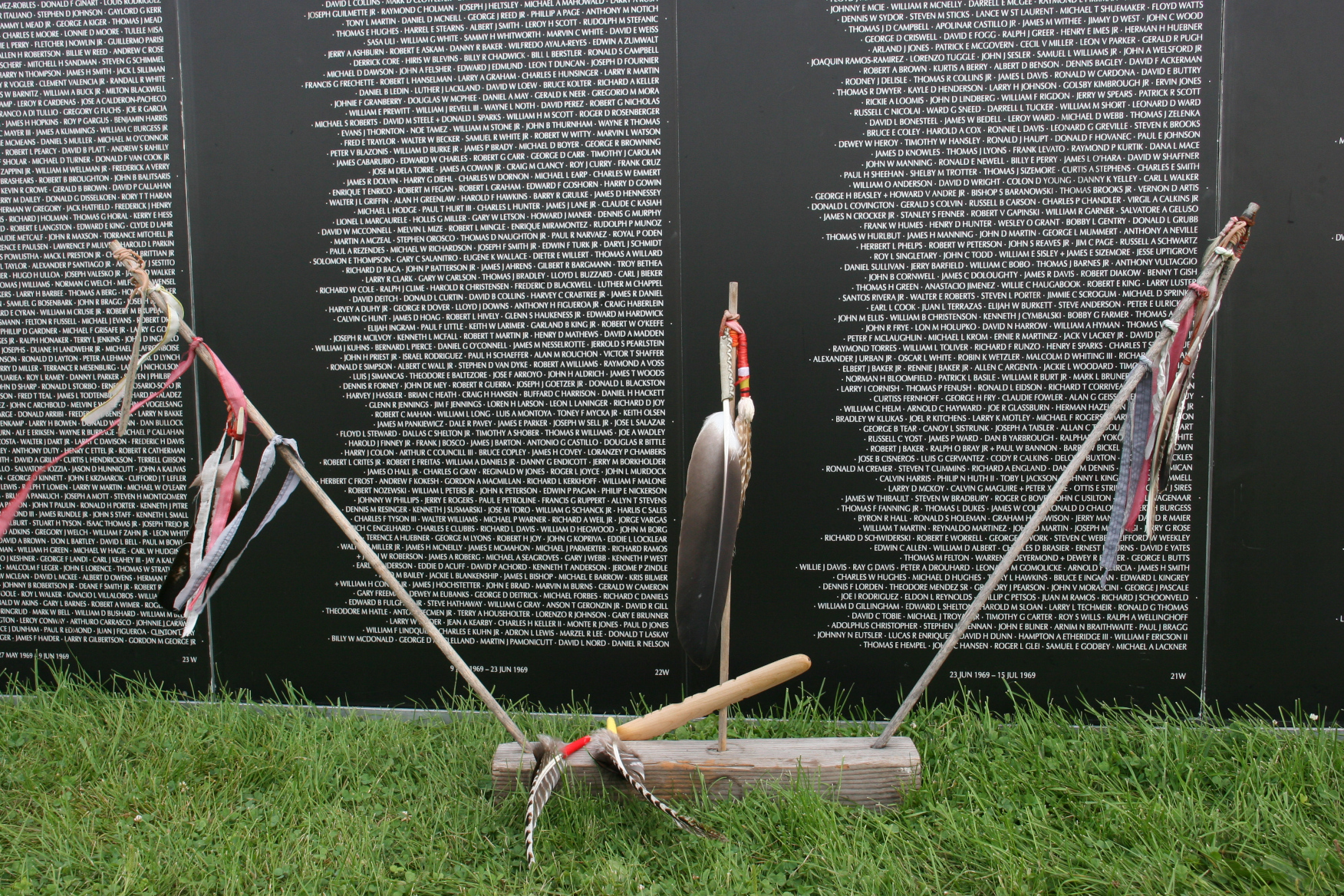
My photo of the Traveling Vietnam Memorial Wall also hangs in the vets home. (Minnesota Prairie Roots copyrighted file photo)

Curated by a St. Paul art company, the selected images are all veteran-themed. Oversized photos of veterans’ memorials in Faribault and Northfield anchor a hallway wall. Elsewhere in the public space are two more images shot in Faribault—a veteran playing taps at a Memorial Day program and a photo of items placed at the Traveling Vietnam Memorial Wall. Chadwick later found my photos of sculptures at the county memorial in Faribault and the Rock County Veterans Memorial, Luverne, in the residential wing of the veterans home.

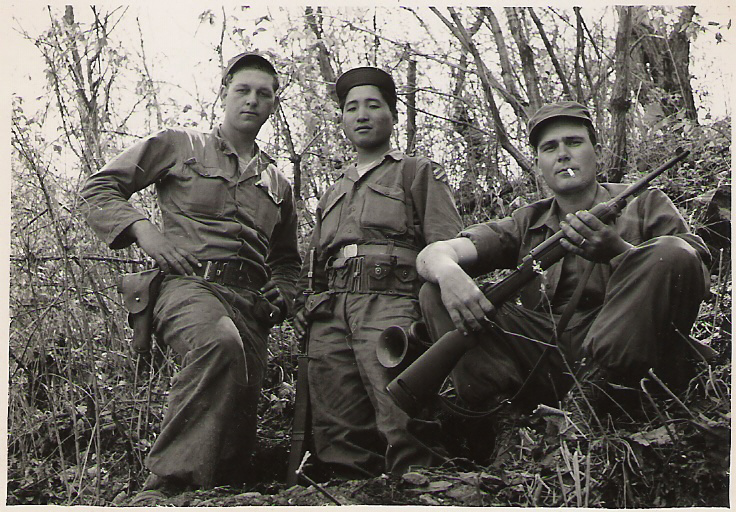
My father, Elvern Kletscher, on the left with two of his soldier buddies in Korea. (Minnesota Prairie Roots copyrighted photo)

To see four of my six photos showcased in a public space where veterans, their families and friends, staff, and others can view my work is humbling. I am the daughter of a Korean War veteran. My dad, Elvern Kletscher, fought on the front lines in Korea as a foot soldier. He experienced the worst of war. The injuries. The killing. Atrocities so awful, so horrific that he was forever changed by his time in combat. He suffered from Post Traumatic Stress Disorder (unrecognized at the time of his discharge). He endured much pain, heartache, trauma. Nightmares. Flashbacks.

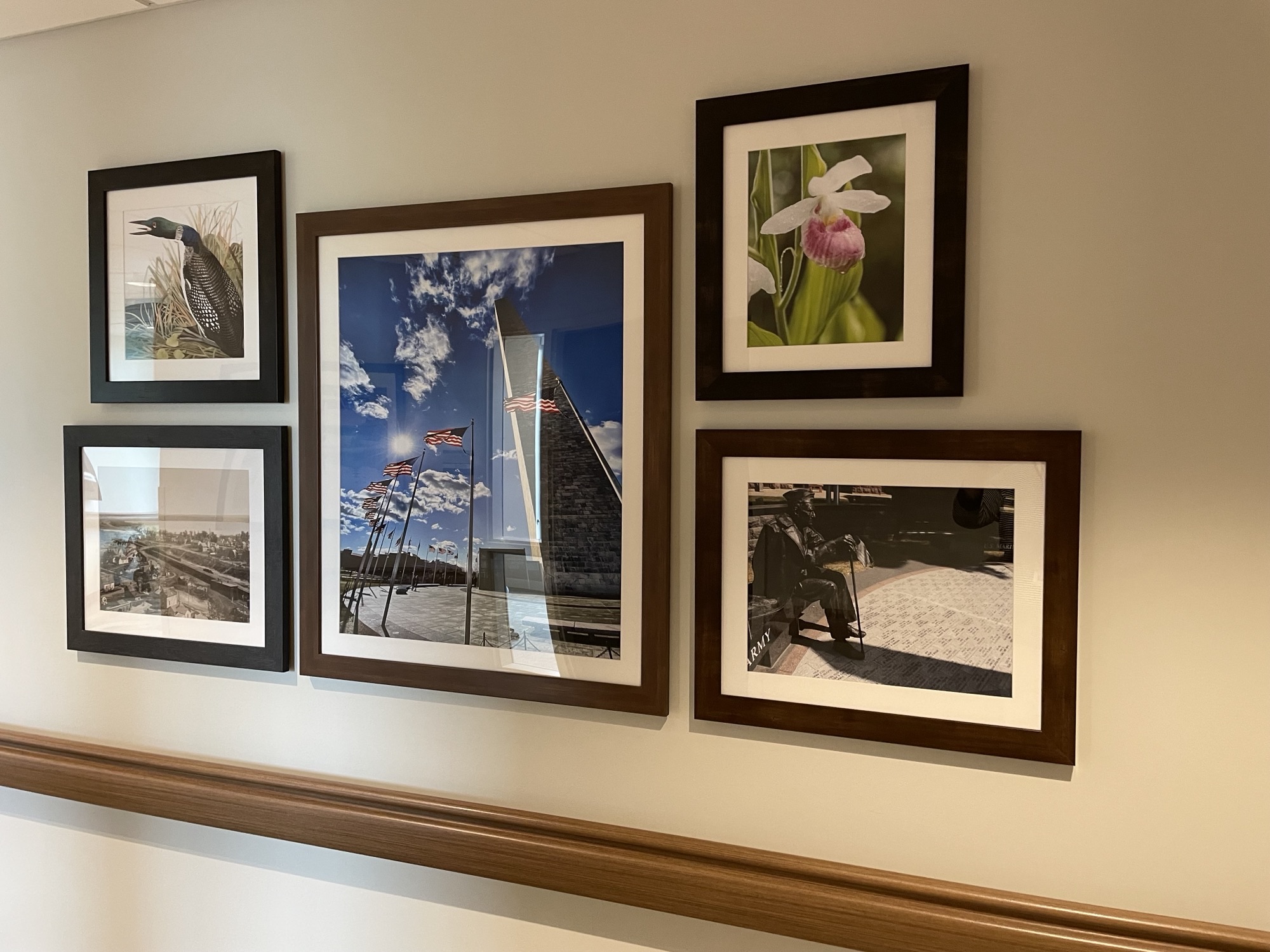
My photo of a sculpture at the Rock County Veterans Memorial, lower right, is showcased in a group of images in the Beltrami Household. (Photo courtesy of Minnesota Veterans Home, Bemidji)

But, in his later years of life, Dad found solace among other veterans in a support group through the Redwood County Veterans Service office. I remember how hard officials worked to secure the Purple Heart that Dad finally got 47 years after he was wounded on Heartbreak Ridge. I was there for that emotional public ceremony.

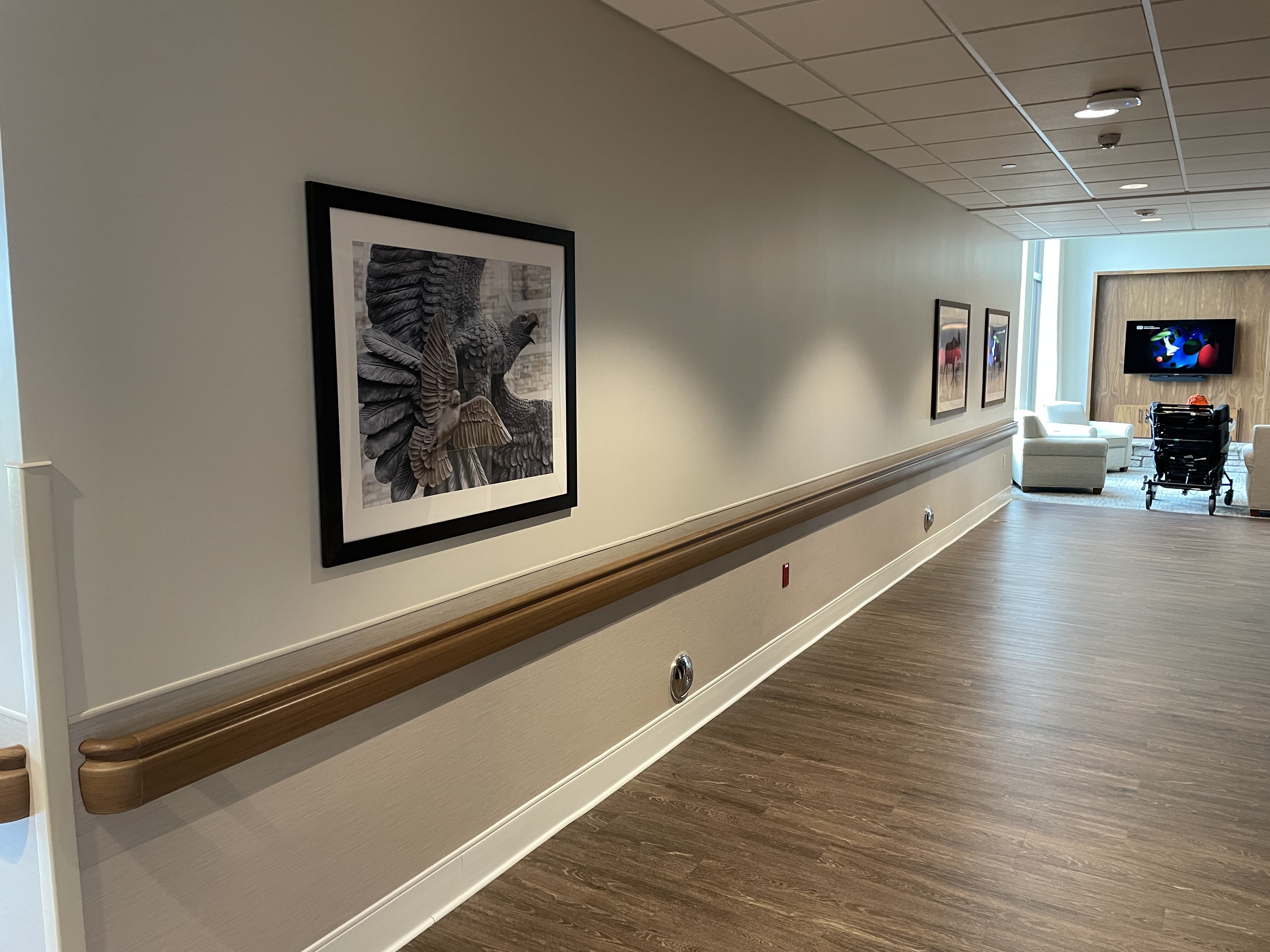
My photo of a dove and eagle at the Rice County Veterans Memorial in Faribault graces a hallway of the Beltrami Household. (Photo courtesy of Minnesota Veterans Home, Bemidji)

Today emotions swell again as I think of my framed photos hanging in the Minnesota Veterans Home—Bemidji. To me these are not just veterans-related images procured as art. They are a photographic “thank you” to every person who has served our country. Because of individuals like my dad, I live in a free country, in a democracy. I never take that for granted. To be able to express my gratitude via my photos is truly an honor, a joy and deeply meaningful.

I hope my photo of a dove sculpture, symbolizing peace, and an eagle, symbolizing freedom, conveys my gratitude to the veterans living in the Minnesota Veterans Home, Bemidji. (Minnesota Prairie Roots copyrighted file photo)

NOTE: Maryhelen Chadwick kindly found and photographed my eagle/dove and soldier sculpture photos per my request after I visited the home. They hang in the Beltrami Household, one of four 18-room residential areas, a space I could not tour due to privacy.

© Copyright 2024 Audrey Kletscher Helbling
 

Peaches, beyond simply a fruit to eat August 15, 2024

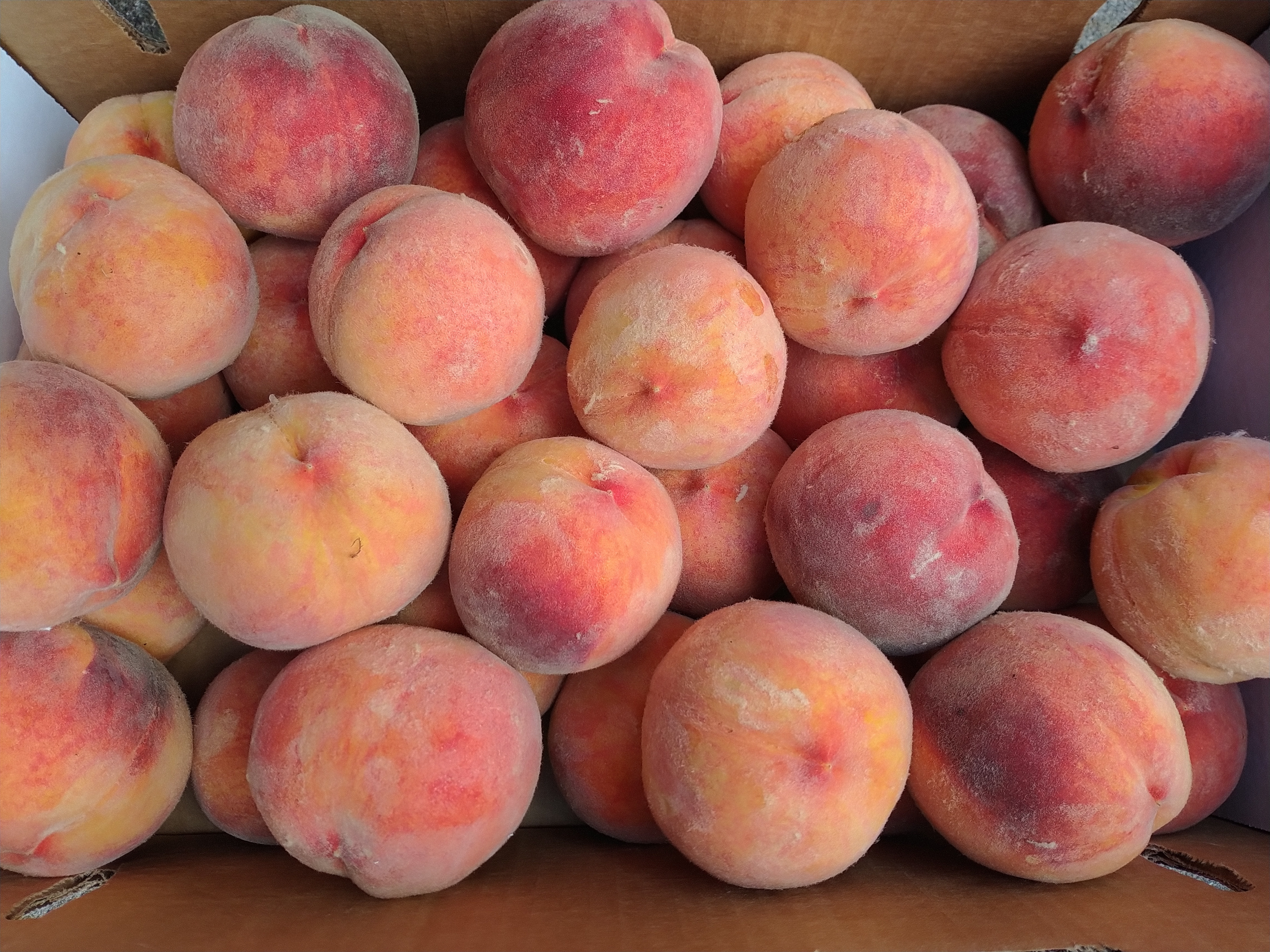
Peaches fill a box and now my fridge. (Minnesota Prairie Roots copyrighted photo August 2024)

PEACHES PACK my refrigerator. Several ripen in a brown paper bag on the kitchen counter. Big, beautiful Colorado peaches.

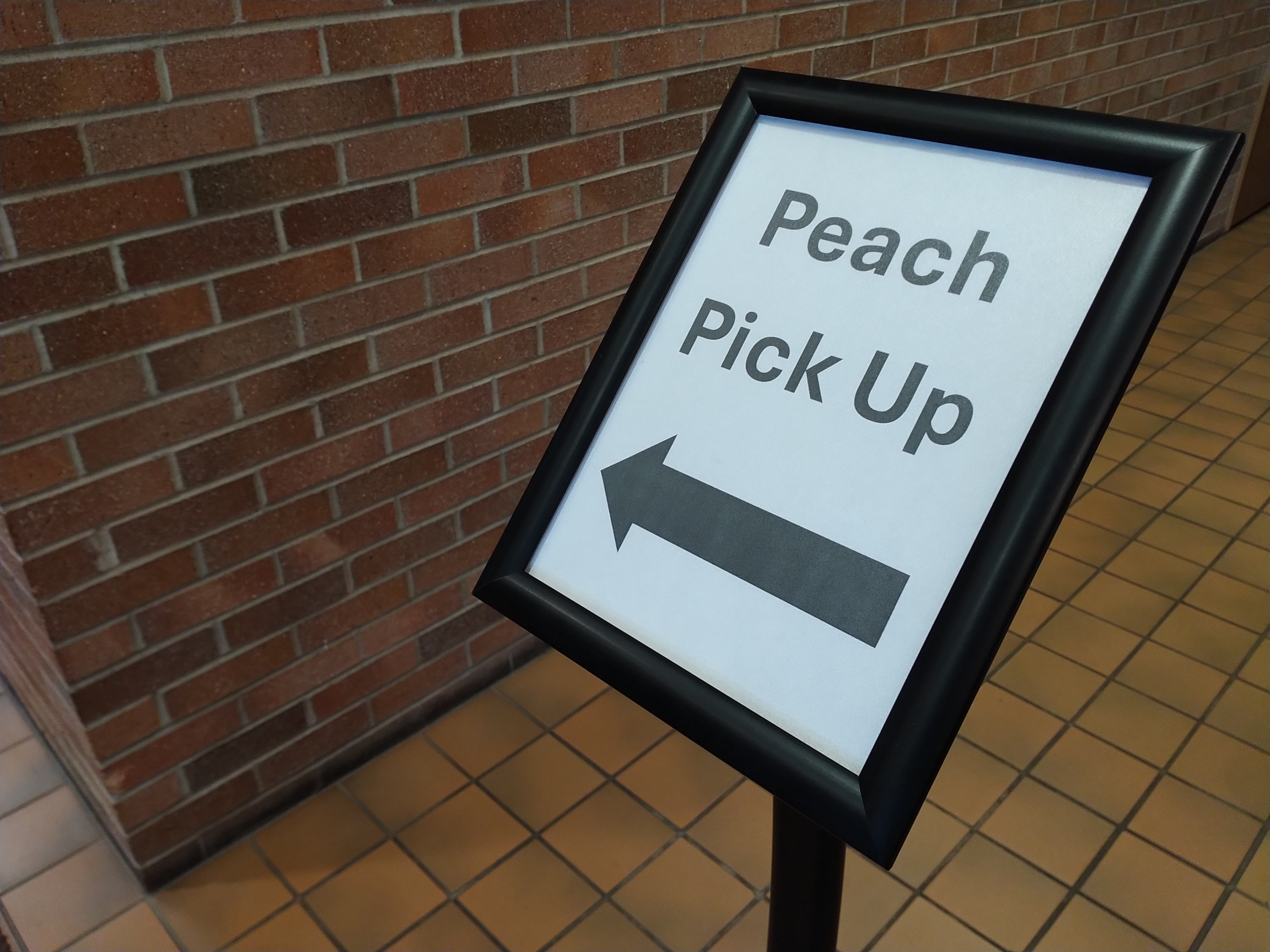
Signs directed people into the peach pick up spot in the basement. (Minnesota Prairie Roots copyrighted photo August 2024)

Earlier this week, Randy and I picked up a 20-pound case of peaches in the basement of First English Lutheran Church. That’s a lot of peaches—around 40—for two people to eat. But I love peaches. And we’ll share some with our eldest daughter and her family.

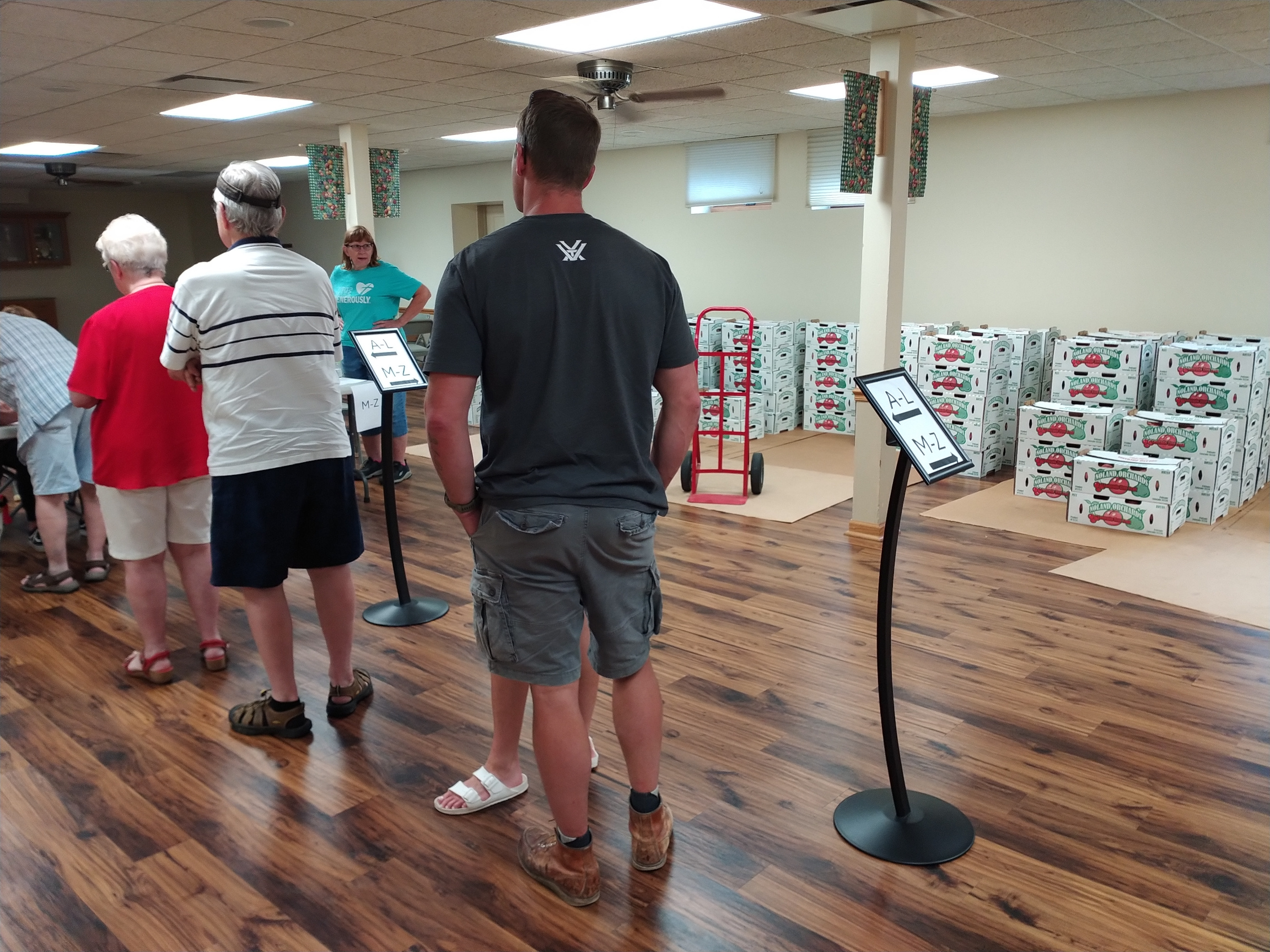
People wait in line for their peaches at First English Lutheran Church. (Minnesota Prairie Roots copyrighted photo August 2024)

A steady stream of people flowed into the cold church basement late Tuesday afternoon for their pre-ordered peaches, sold as a fundraiser by the youth group. We paid $37 for our full box. That’s $1.85/pound. I have no idea if that’s a “good” price. It doesn’t matter. I prefer peaches shipped directly from the grower. I also like supporting local church youth, because I was once that mom of kids raising monies for mission trips and youth gatherings.

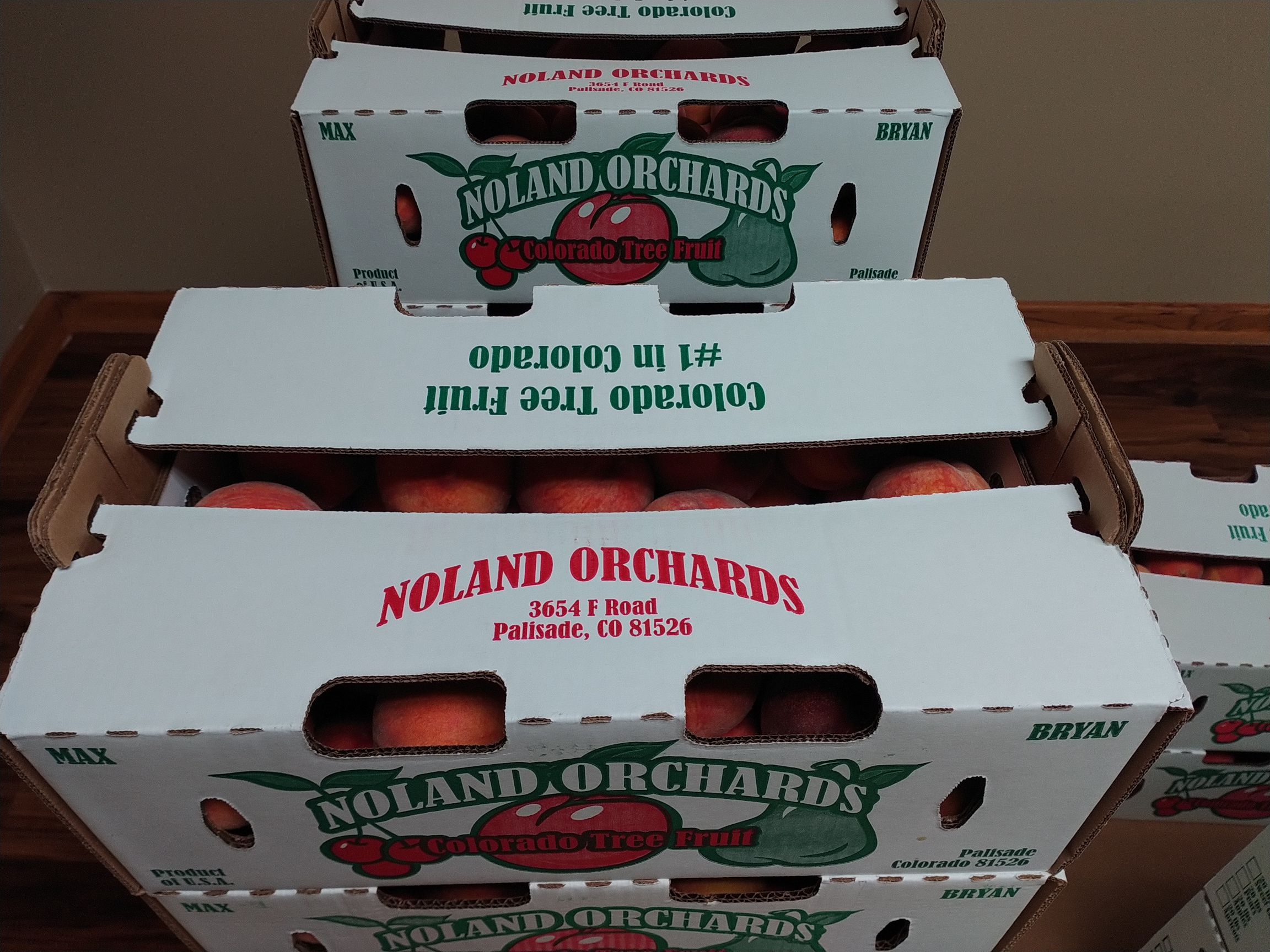
Peaches no longer come in wooden crates, but in cardboard boxes. (Minnesota Prairie Roots copyrighted photo August 2024)

Peaches, though, mean more to me than simply supporting a good cause and eating one of my favorite fruits. Peaches take me back to summer on the farm, into the kitchen. There my mom pried open a wooden crate of peaches wrapped in pinkish tissue paper (saved for later use in the outhouse). Then she dropped the peaches into a large kettle of boiling water to remove the skins. Next, she halved or sliced the peaches into Mason and Ball quart jars. Topped with lids and ringed, the jars went into the pressure cooker. Once removed, the jars cooled and sealed. Then we carried the jars to the cellar.
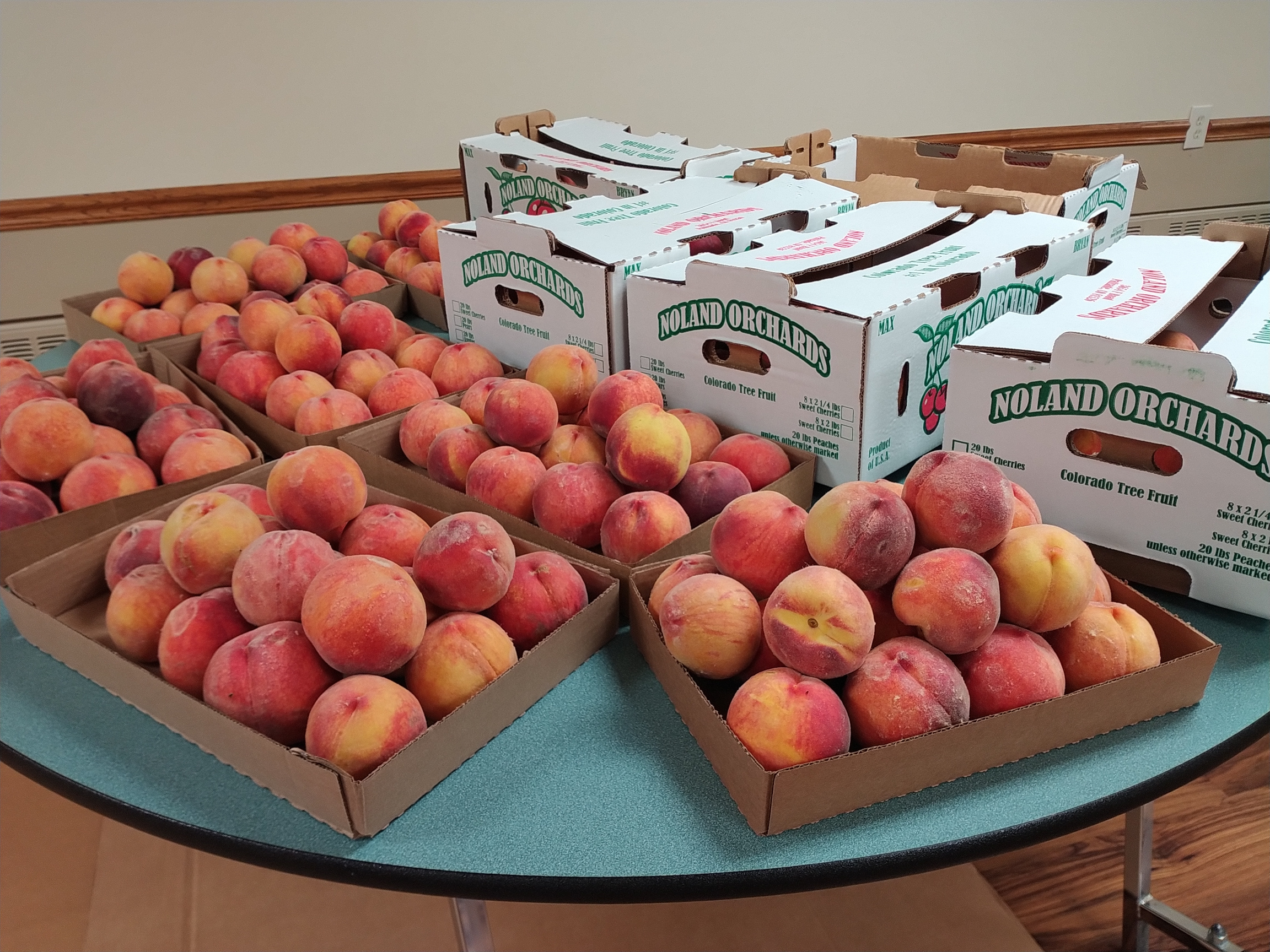
Beautiful (and delicious) Colorado peaches sold at First English. (Minnesota Prairie Roots copyrighted photo August 2024)

I admire farm women like my mom who labored to preserve fruits and vegetables to feed their families during the winter months ahead. And winters on the prairie were long and harsh. Many a cold, snowy evening, Mom would pull open the kitchen floor trap door and send me down the open wooden steps into the depths of the dank, dark, dirt-floored cellar lit by a single light bulb. There I selected a quart jar from the wooden shelves. Whatever fruit Mom wanted. Pears, cherries, plums, apples, peaches. The preserved fruit would complete our meal of meat, boiled potatoes with gravy, a side vegetable (pulled from the freezer) and homemade bread.
We ate well. Good food without preservatives. Beef from our cattle. Vegetables from our garden. Apples from local trees. And then all those fruits, purchased in crates and preserved. No additives. Just simple, good food.

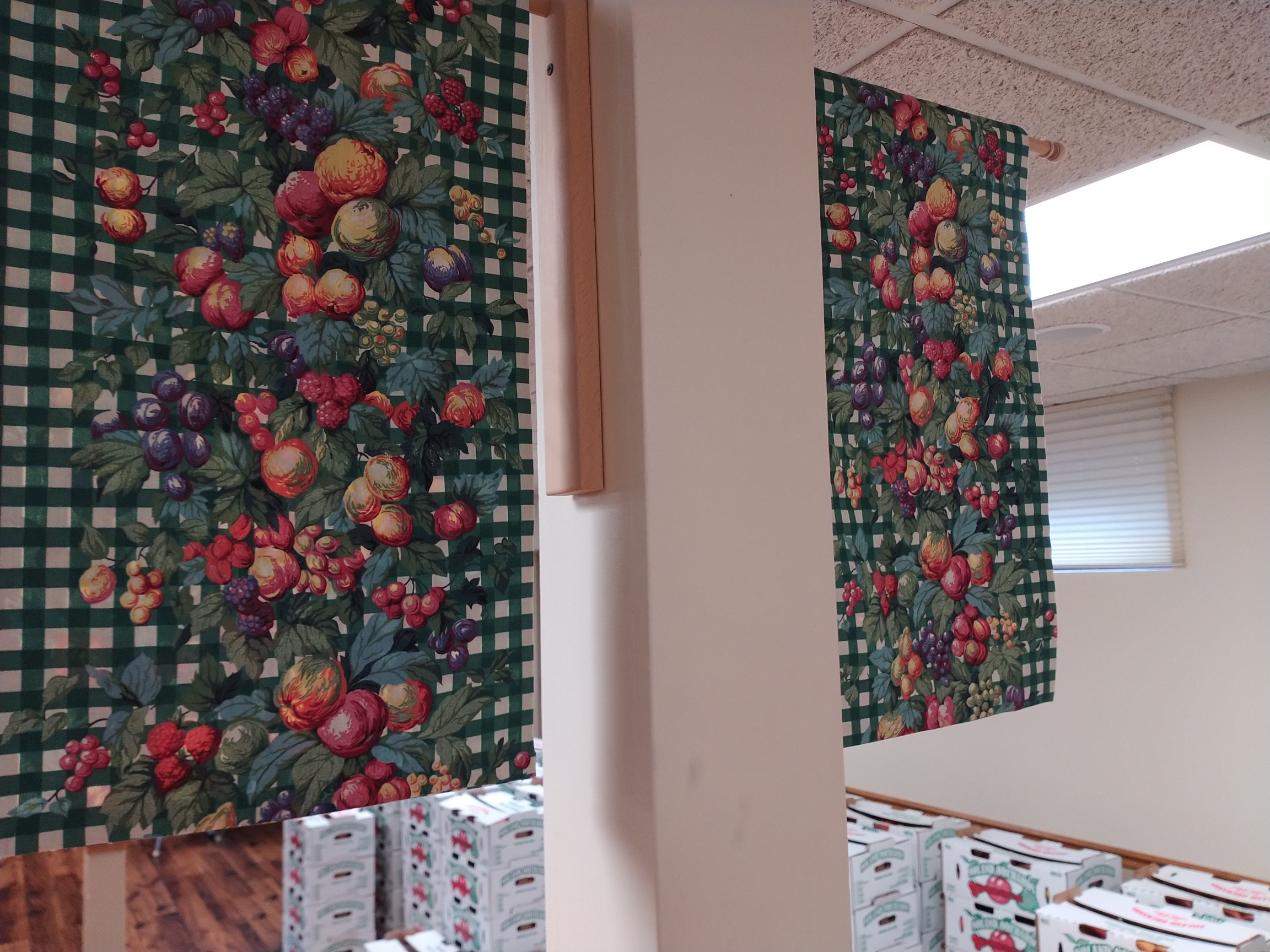
Fruit-themed banners add a festive flair to peach pick up. (Minnesota Prairie Roots copyrighted photo August 2024)

I always thought I would follow my mom’s example of planting a big garden and preserving food. But I never did. I live on a mostly shady lot in town. I raised only three children, not six like her. I have easy access to multiple grocery stores, unlike her. Fresh fruit is readily available. I prefer fresh. And, if I’m really honest with myself, I never wanted to labor in the kitchen for hours during the hot summer putting up fruits and vegetables.
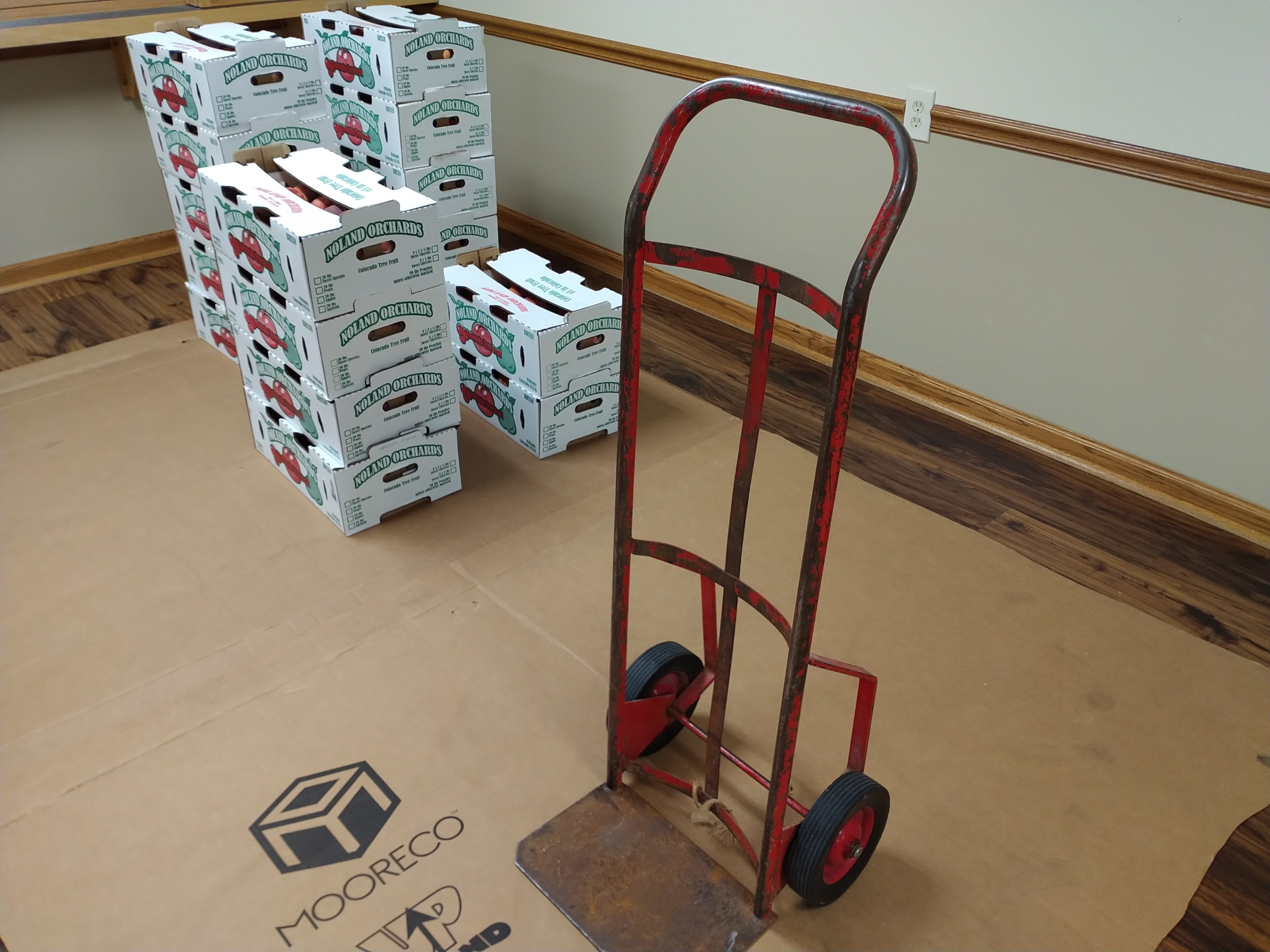
Carts were ready for volunteers to wheel peach cases to vehicles. (Minnesota Prairie Roots copyrighted photo August 2024)

Still, I buy that case of peaches from First English. All those peaches, minus the tissue paper wrappings reused in the outhouse. In many ways, I am honoring my mom, hardworking farm woman of the Minnesota prairie. As I pull ripened peaches from a brown paper bag to slice into my morning oatmeal, to eat with a meal or to incorporate into a crisp, pie or galette, I think of Mom. She, who showed her love for family not in words or hugs, but rather in rows and rows of quart jars filled with fruit. Jars shelved on planks in the dank, dark depths of the dirt-floored cellar.

© Copyright 2024 Audrey Kletscher Helbling