Minnesota Prairie Roots

Writing and photography by Audrey Kletscher Helbling

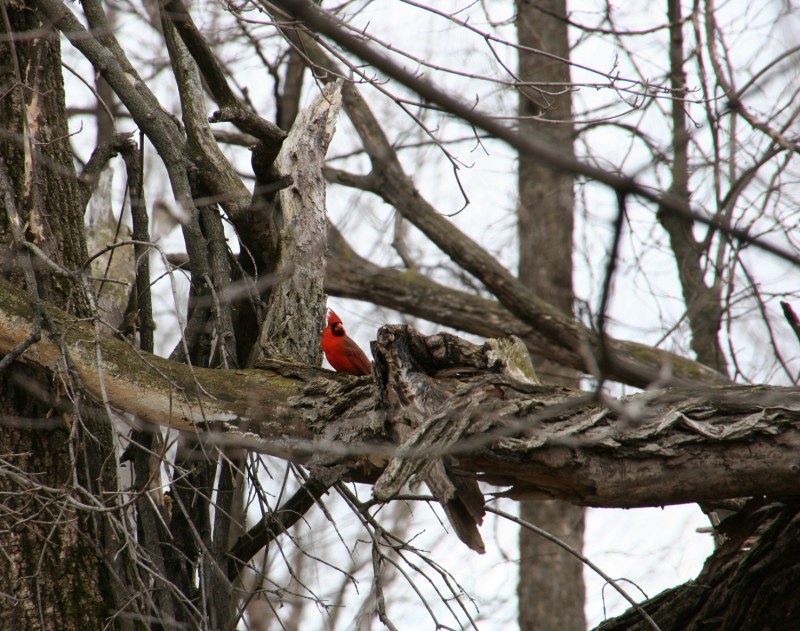
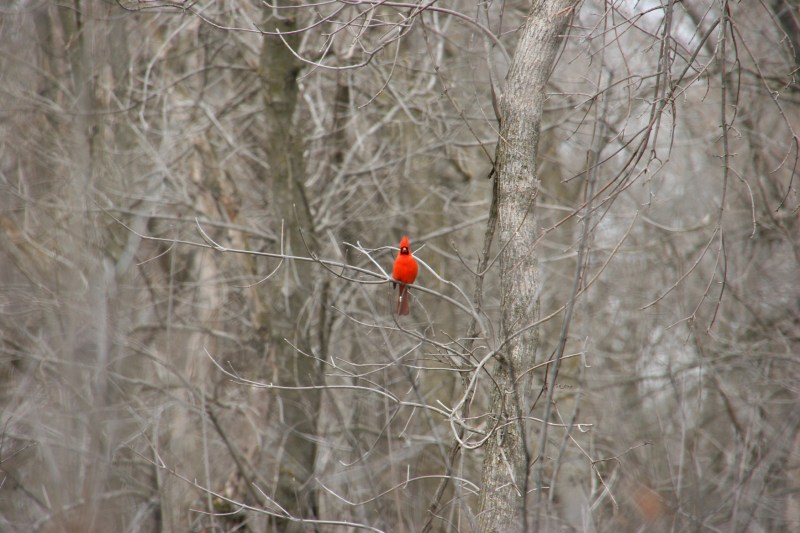
Spring afternoon at River Bend, a photo essay April 9, 2019

Filed under: Uncategorized — Audrey Kletscher Helbling @ 5:01 AM
Tags: , , , , , , , , , , ,


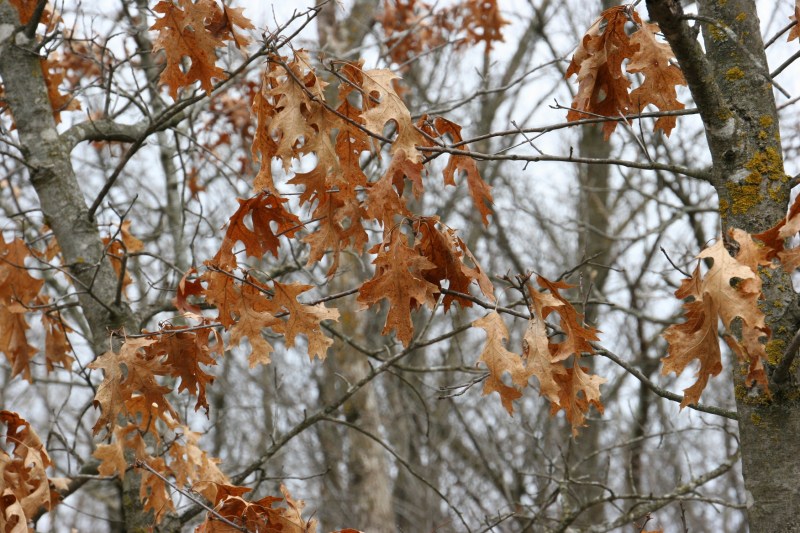
AUTUMN’S OAK LEAVES cling to branches.


Swatches of green pop in the woods.


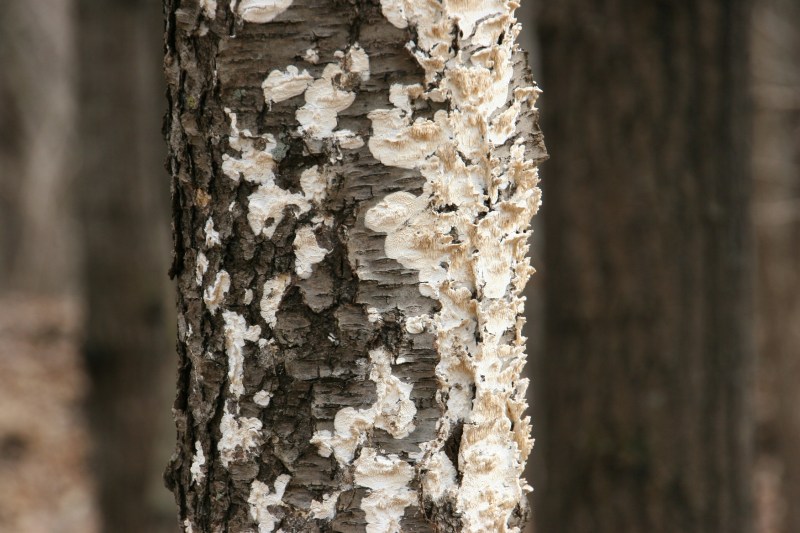
Fungi ladder tree trunks.


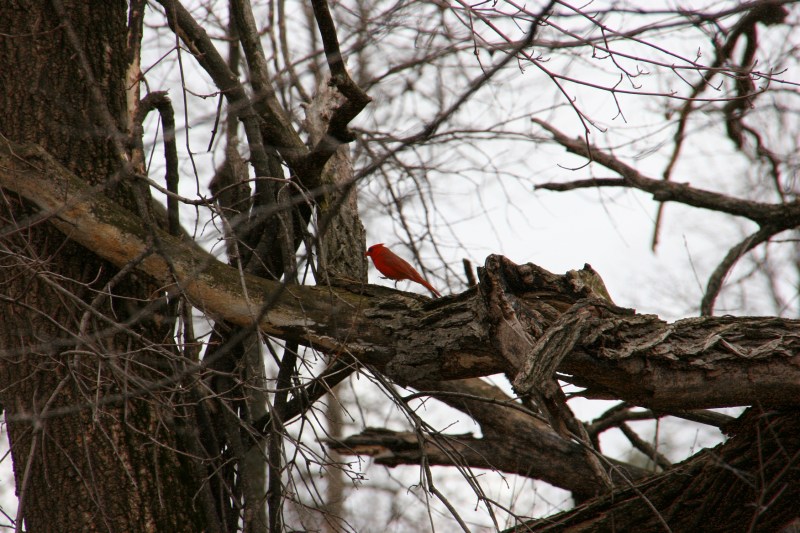
Brilliant red flashes against weathered grey.


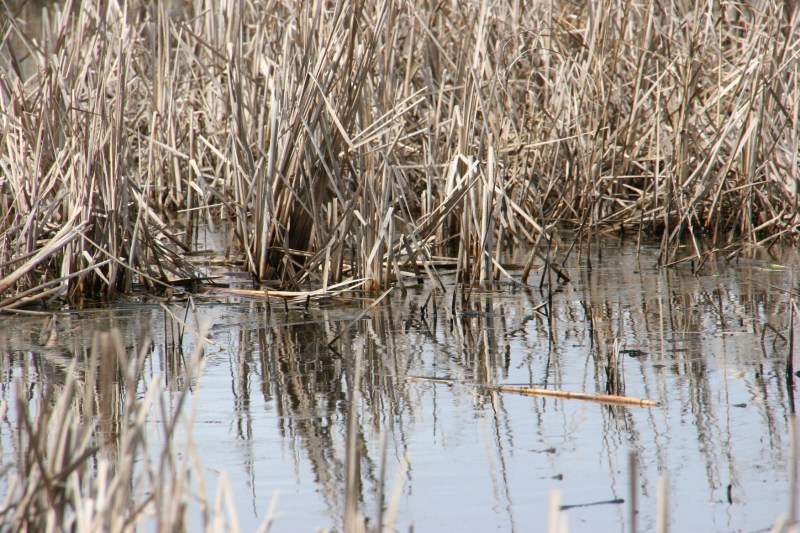
Ponds populated by trilling peepers reflect the changing blue of the sky.


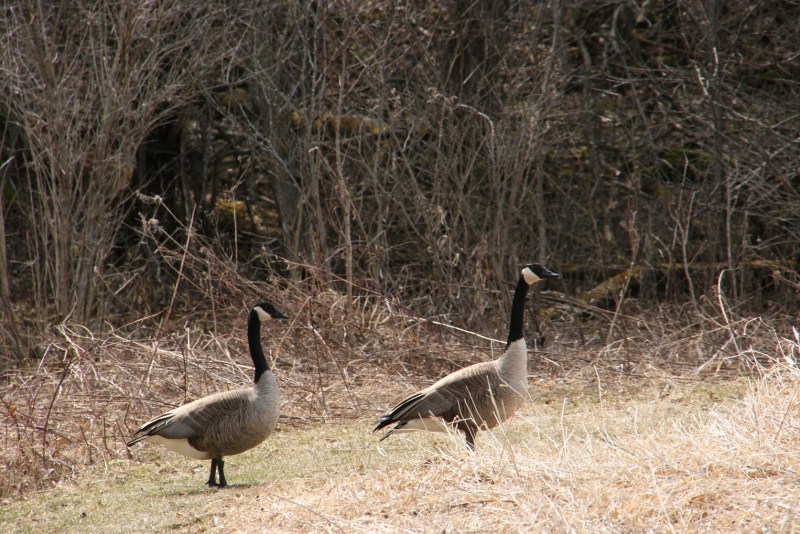
Geese honk territorial warnings best respected.


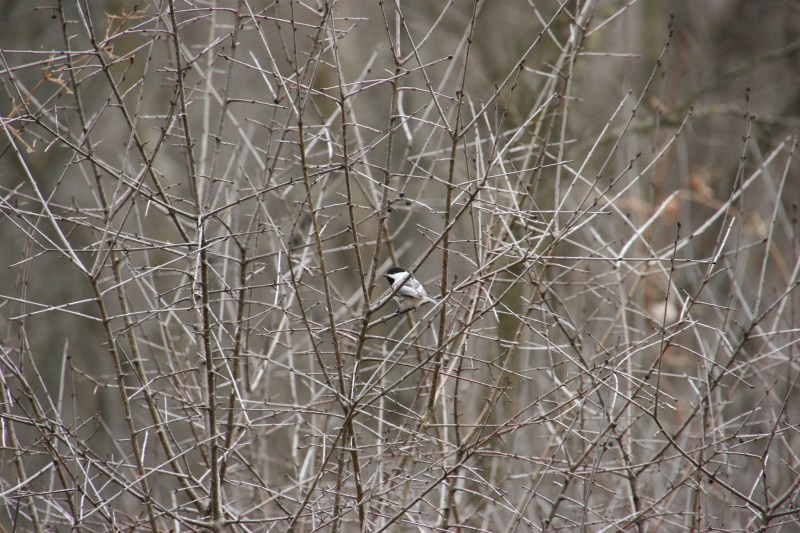
A camouflaged bird blends into stands of invasive buckthorn.


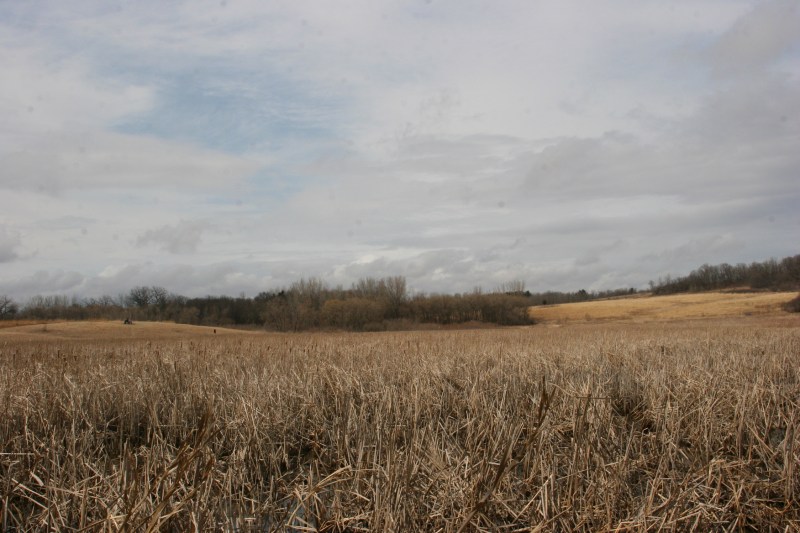
Dried vegetation proves a visual reminder that spring is not yet fully here in Minnesota.


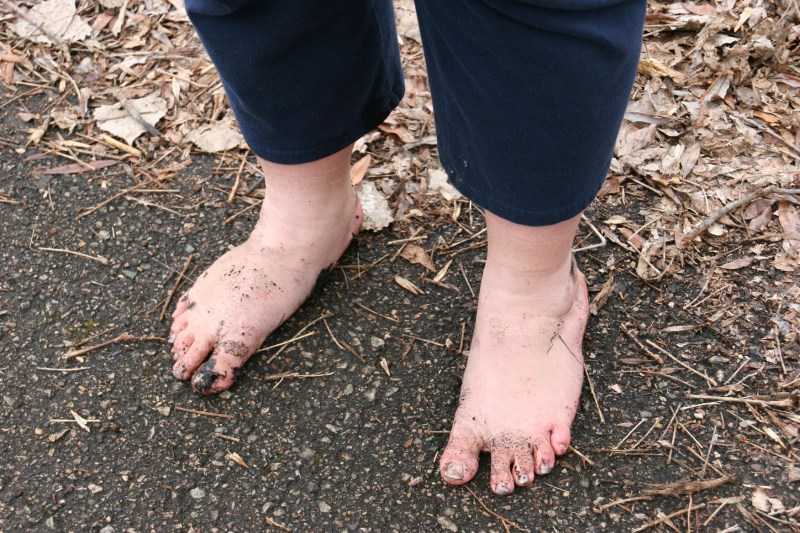
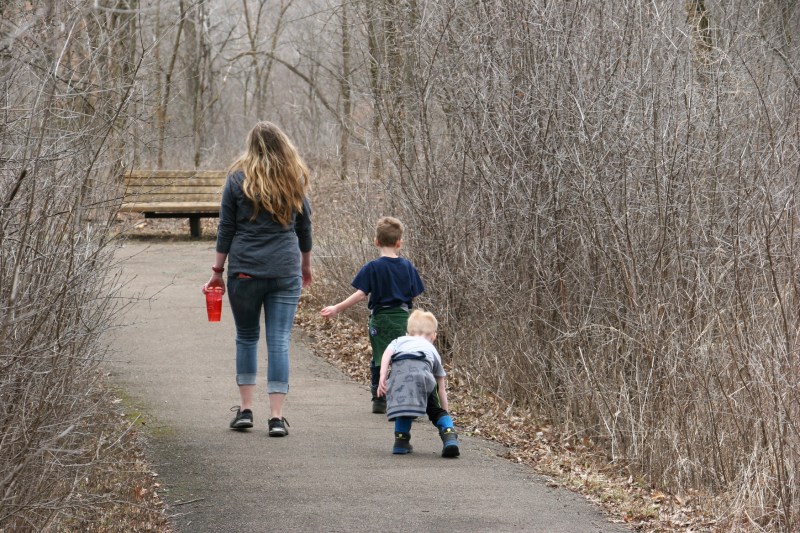
But tell that to the woman walking barefoot.


Just behind the boys with feet still snugged inside winter boots.


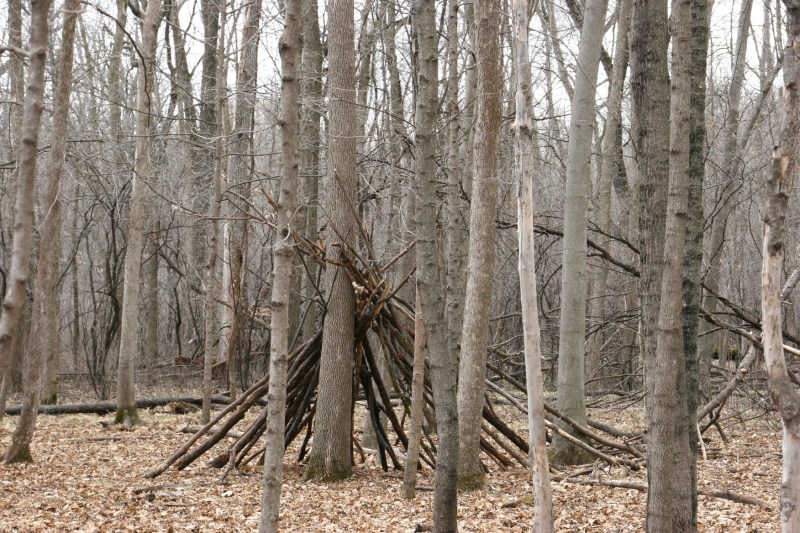
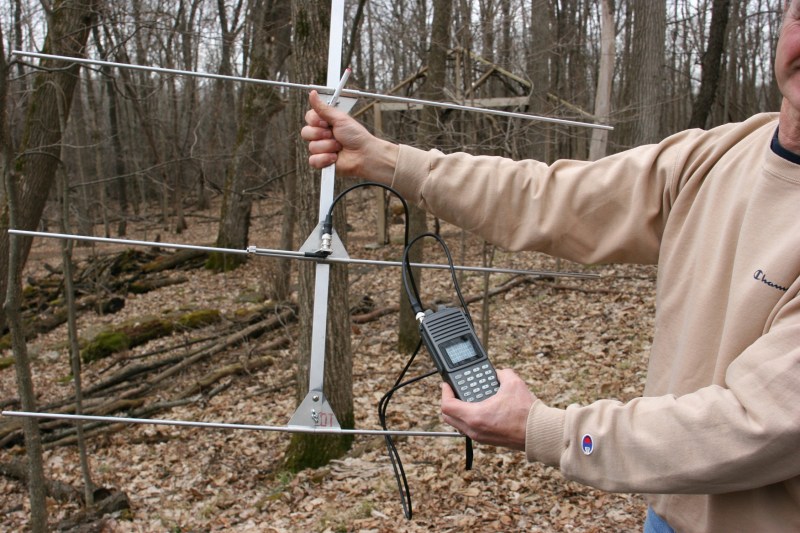
At River Bend Nature Center in Faribault, people hiked and biked and rested on benches and even tracked squirrels in Sunday’s 60-degree temps. (More on the squirrels later.)


If not for the forecast of major snowfall later this week, I might believe these brown woods will soon leaf into a canopy of green.


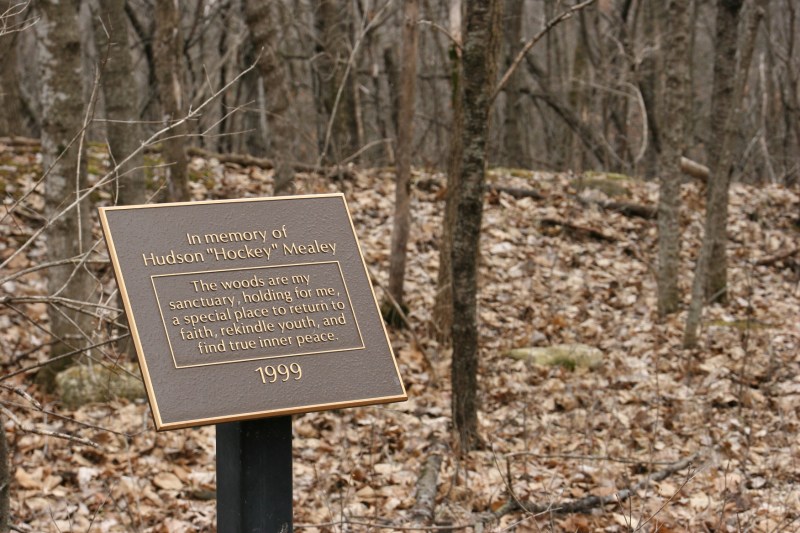
No one would doubt that on Sunday, an ideal day to delight in the outdoors, to read poetry in the woods.


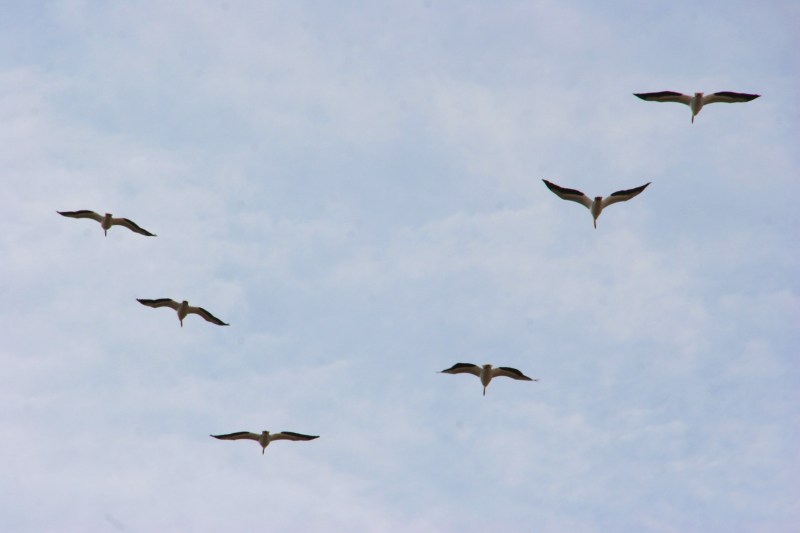
Spring spread her wings over River Bend on a lovely early April afternoon in southern Minnesota.


© Copyright 2019 Audrey Kletscher Helbling


Honoring the artist behind a cultural art phenomenon April 8, 2019

Filed under: Uncategorized — Audrey Kletscher Helbling @ 5:00 AM
Tags: , , , , ,

DAN ROBBINS DIED, my husband texted.

Who’s that? I replied.


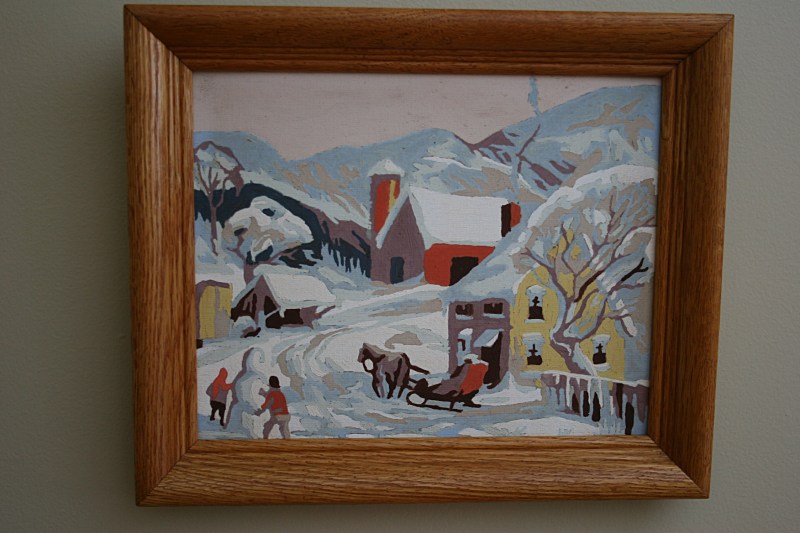
My Great Grandma Anna painted this paint-by-numbers, one of a pair. Minnesota Prairie Roots file photo.


Robbins, it turns out, invented paint-by-numbers pictures. And Randy knows how much I love vintage paint-by-numbers art. Enough that I own several pieces. I am a bit of an art collector, securing my art primarily at garage sales and thrift shops. It’s the only way I can afford artwork.

Back to Robbins. He died a week ago at the age of 93. According to info I sourced online, he worked as a package designer for Detroit-based Palmer Paint Products when he came up with the paint-by-numbers idea. Leonardo da Vinci inspired him. That master Italian painter apparently used numbered backgrounds to teach his students.


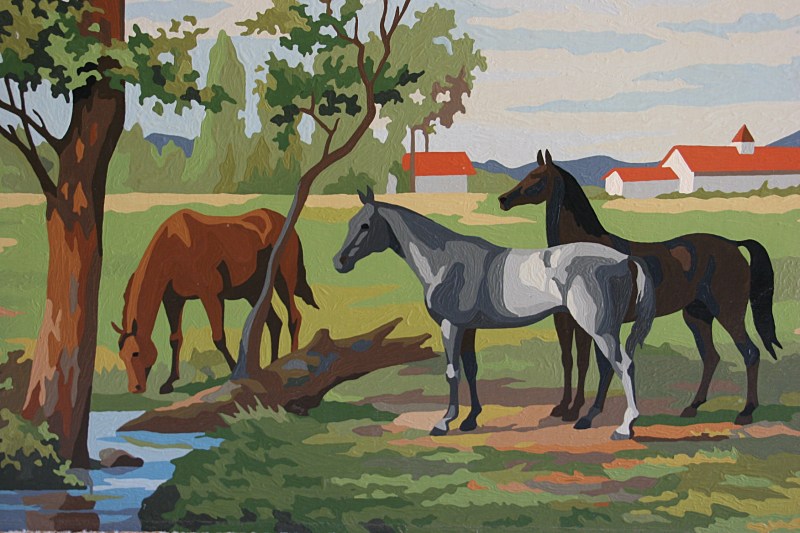
I purchased this stunning 24-inch x 18-inch paint-by-numbers painting several years ago at a Wisconsin second-hand/collectible/antique shop. Minnesota Prairie Roots file photo.


If it worked for da Vinci’s proteges, why not for the masses? I expect that was Robbins’ thinking when he crafted his first landscape paint-by-numbers art, soon expanding to subjects like horses, puppies and kitties.


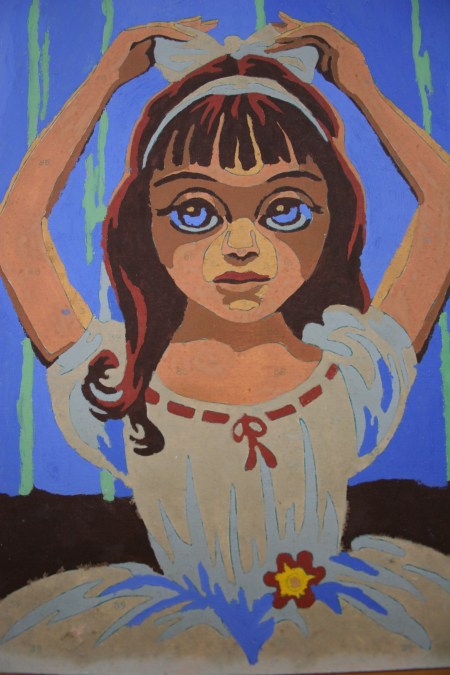
I painted this paint-by-numbers ballerina some 50 years ago. Minnesota Prairie Roots file photo.


This painting option evolved into a bit of a cultural phenomenon beginning in the 1950s. I was part of that, painting a pair of ballerinas from a paint-by-numbers kit gifted to me one Christmas in the 1960s. I still have those paintings, which I need to pull out now in honor of Robbins. I rotate my art to keep my home art-gallery interesting. And because I have such a wide collection of mostly original art. I have more paint-by-numbers than shown in this post.


The other ballerina in the pair I painted as a child. Minnesota Prairie Roots file photo.


I realize not everyone appreciates paint-by-numbers. But I do. There’s something down-to-earth kitschy and appealing to me about an art form that allows anyone to paint art. Talented or not. Just brush inside the lines with the appropriate numbered colors and you’ve got art.

TELL ME: What’s your opinion of paint-by-numbers art? Have you crafted art this way and/or do you own any paint-by-numbers artwork?

© Copyright 2019 Audrey Kletscher Helbling


In Owatonna: Toys exhibit highlights 50 years of child’s play April 5, 2019

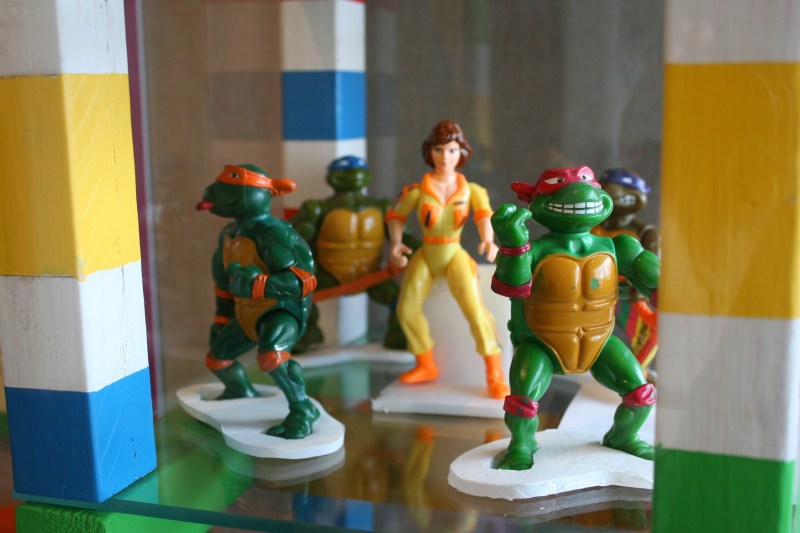
Turtle power displayed.


CAN YOU NAME all four Teenage Mutant Ninja Turtles?

I bet my daughters can. These fictional teenage cartoon characters are named after Italian artists of the Renaissance. And they were vastly popular when my girls were growing up in the late 1980s and 1990s.


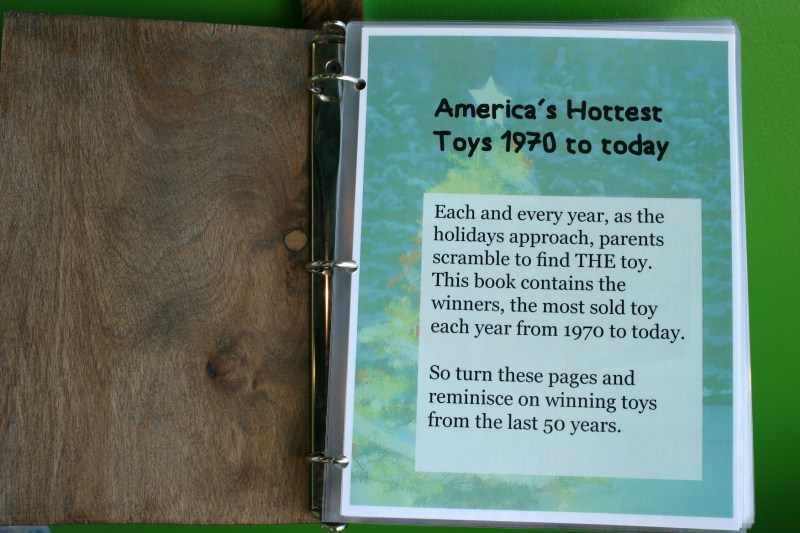
Leonardo, Donatello, Michelangelo, Raphael. The turtles are among toys featured in a “Toys & Play, 1970 to Today” exhibit at the Steele Country History Center in Owatonna. This museum ranks as one of my favorite regional history centers. Why? Because of the home-grown changing exhibits, the traveling exhibits and the adjoining Village of Yesteryear. Staff and volunteers clearly work hard to create engaging exhibits with a local connection.


Go ahead, play.


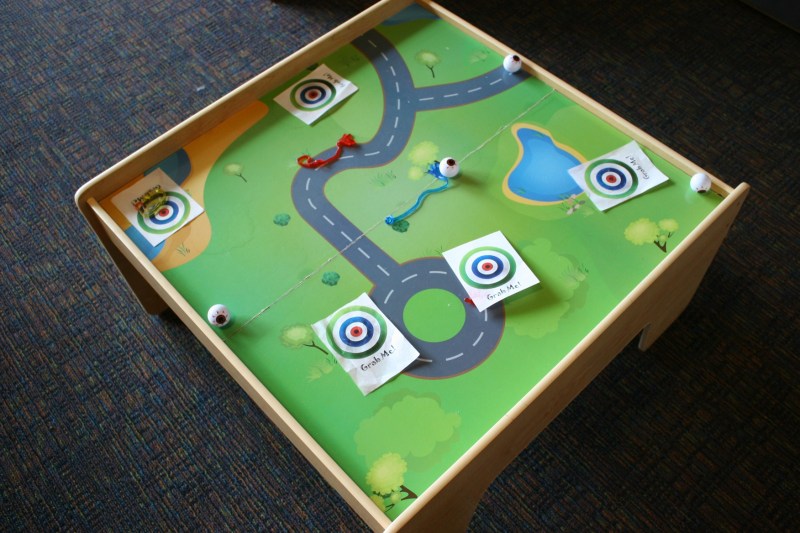
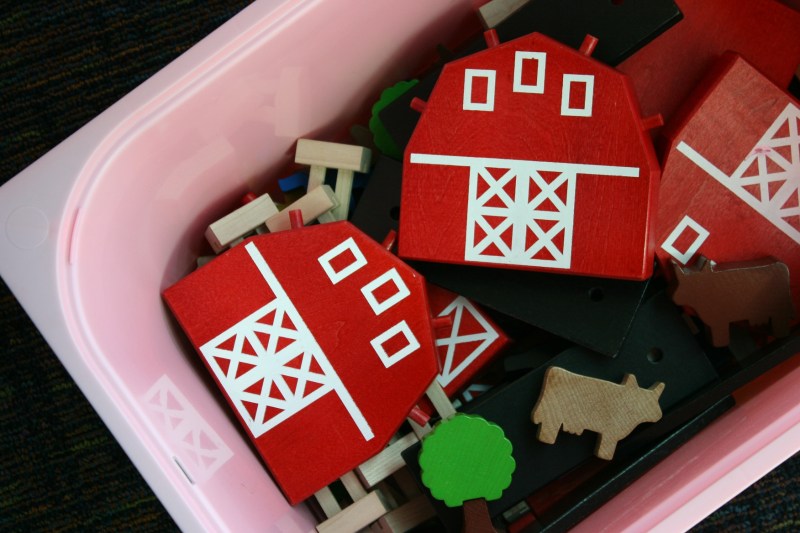
Kids are welcome to play with some of the exhibit toys, including these farm-themed wood cut-outs.


From videos to interactive activities to creative displays and more, visitors experience history. I am so thankful for this shift from “look and don’t touch” to hands-on that now imprints most history centers. History, to be remembered, must be experienced through the senses. I find myself bored at museums that revolve around simply walking past glass-encased historical artifacts. I need engagement to pull me in.


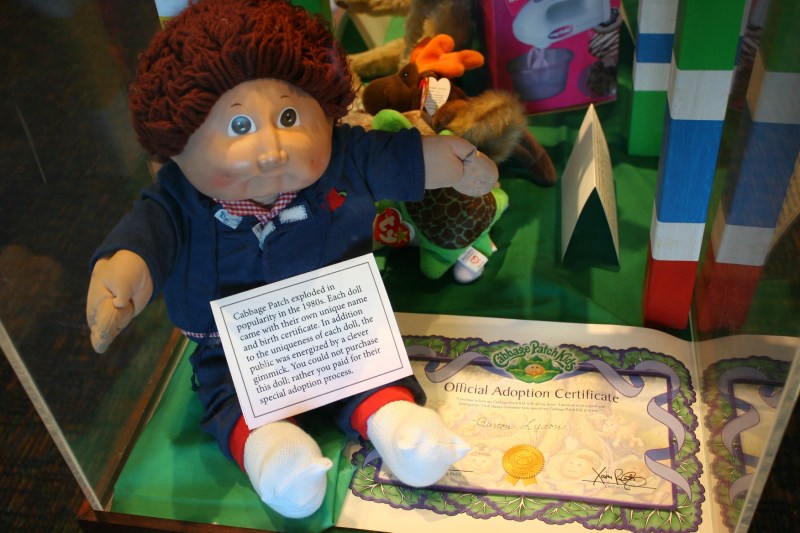
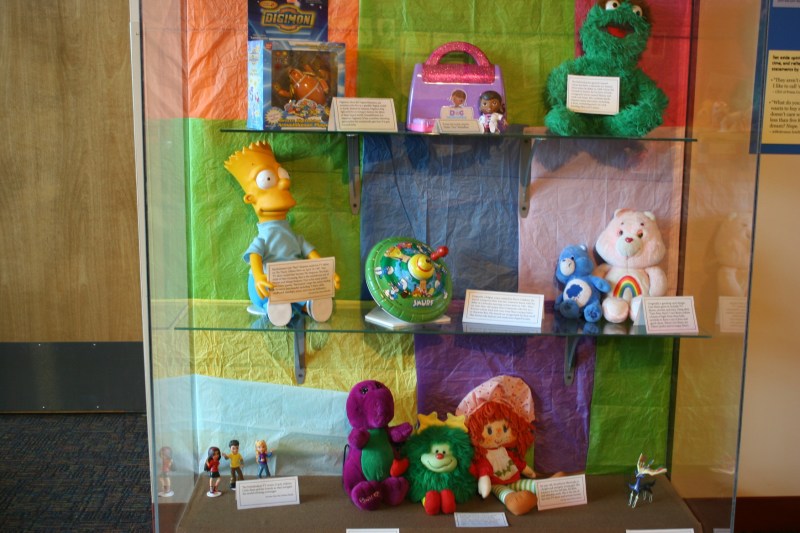
All three of my kids, including the son, owned one Cabbage Patch doll.


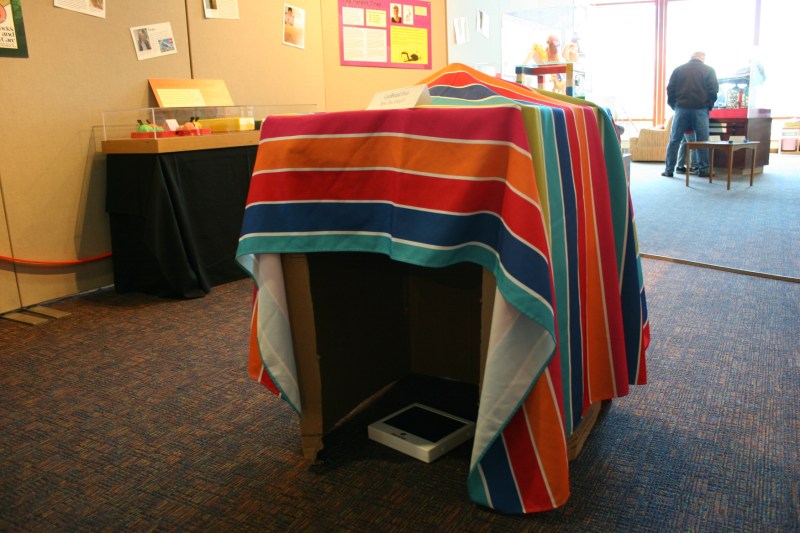
Front and center in the exhibit, fabric drapes over a cardboard box to create a fort.


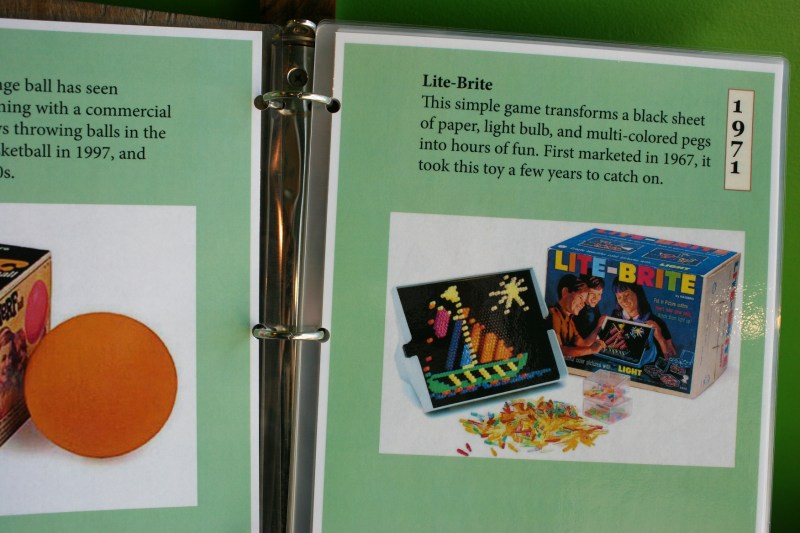
Without kids in tow, though, I mostly observed this exhibit, flashing back to sweet memories of my daughters cradling their Cabbage Patch dolls, clasping tiny Polly Pockets in their little hands, sliding Viewmaster reels into place, creating art with a Lite-Brite, building forts from blankets draped over card tables and much more.


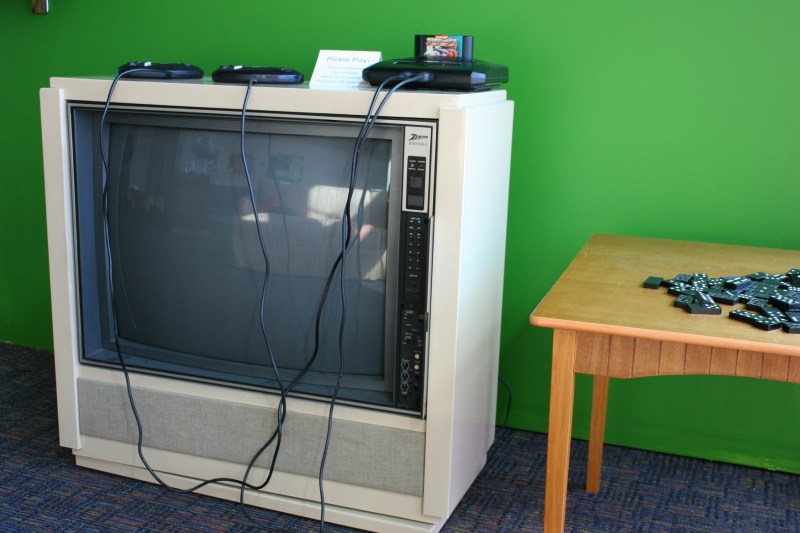
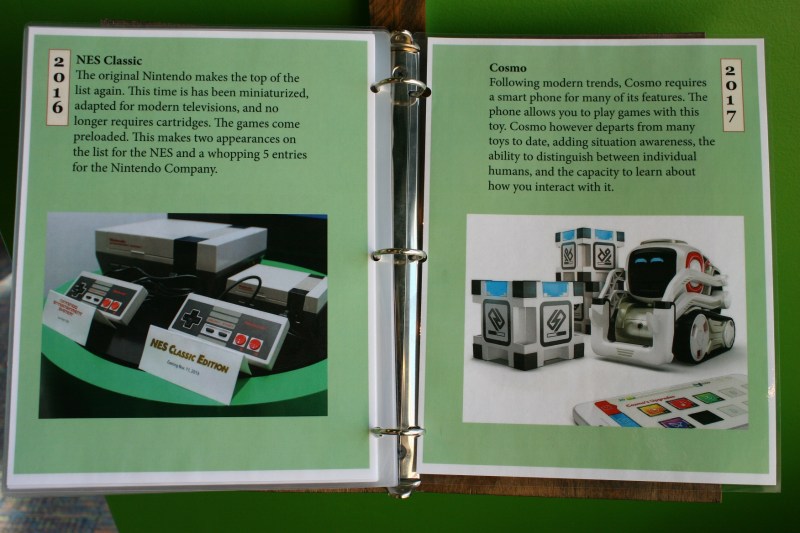
In a mock-up child’s bedroom, visitors are invited to play Nintendo.


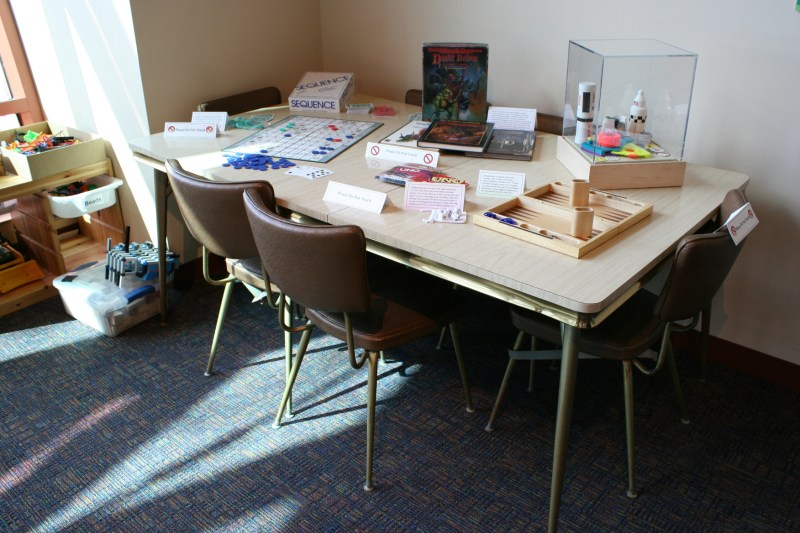
Our family played lots of board games. Those are part of the Owatonna exhibit, but are a don’t touch part of the exhibit.


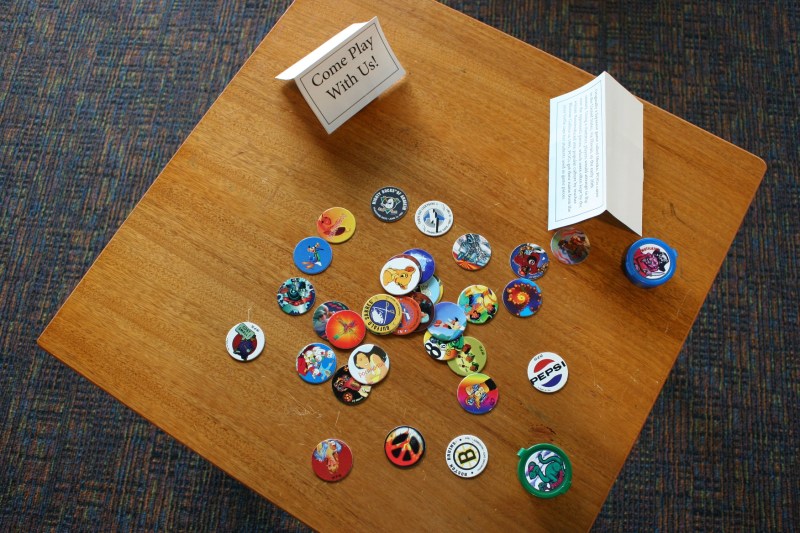
A table full of pogs, ready for playing.


I limited their screen time. They played together. Indoors and outdoors. And they used their imaginations.


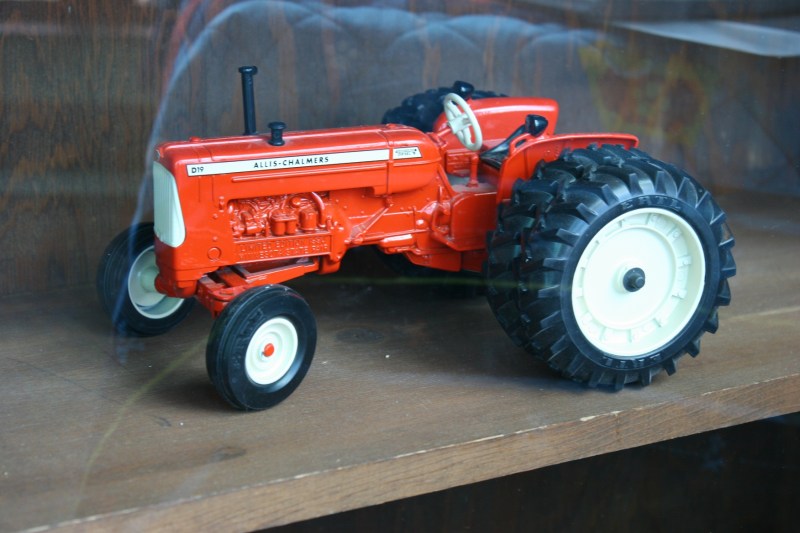
I was happy to see a tractor displayed in a case full of toys.


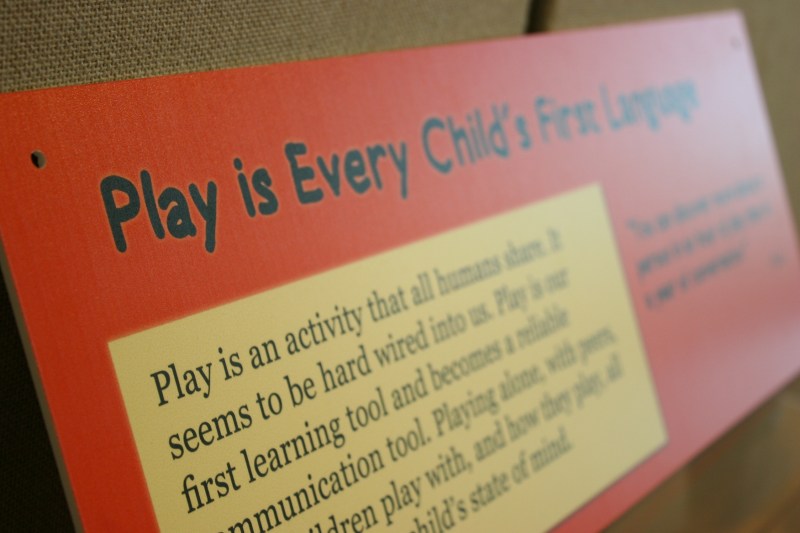
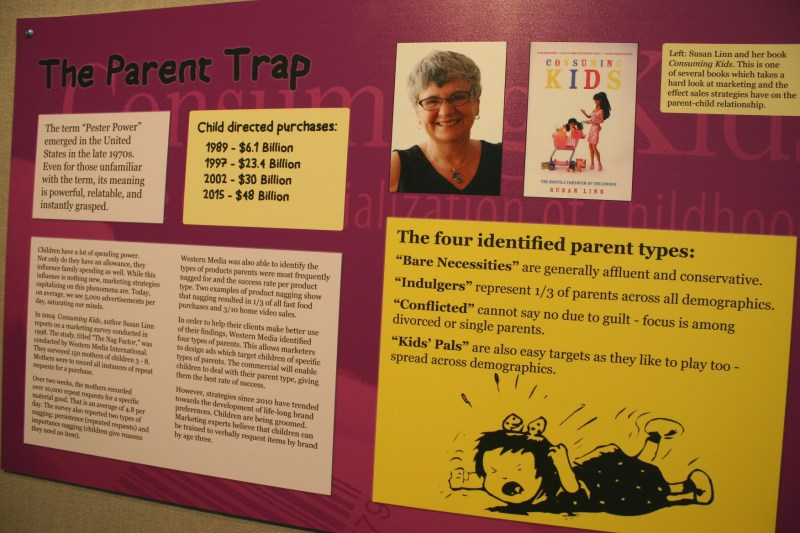
The exhibit extends beyond a collection of popular toys. It also addresses the value of play as a learning tool, consumerism, issues related to technologically-based toys… There’s much to contemplate as I consider how toys have changed in the decades since I was a kid galloping around the farmyard on my stick horse crafted from a sock and an old broom handle.


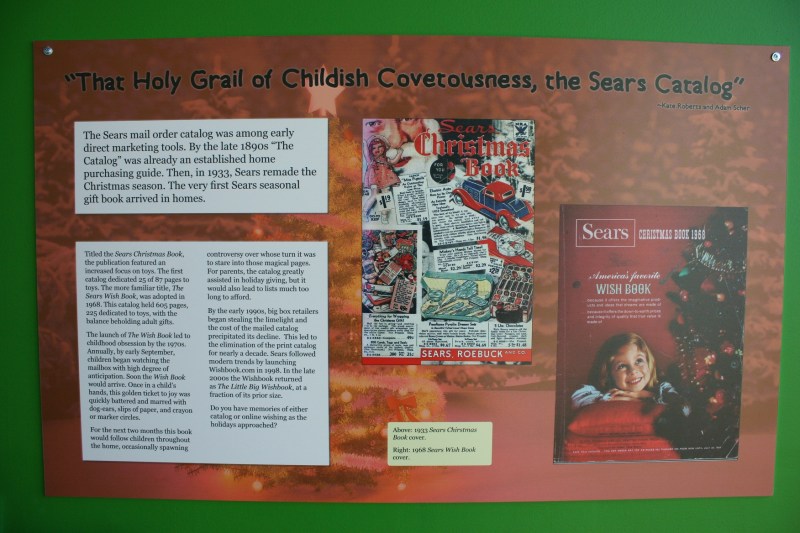
But one thing remains unchanged—that is a kid’s desire for whatever is the hottest, newest toy. I remember flipping through the pages of the Sears & Roebuck Christmas catalog, aka the Wish Book, to tag the toys I knew I’d never get. A pogo stick sticks in my memory. I could dream all I wanted while repeatedly turning those pages. But in reality my parents had only minimal money and not enough to buy those coveted toys.


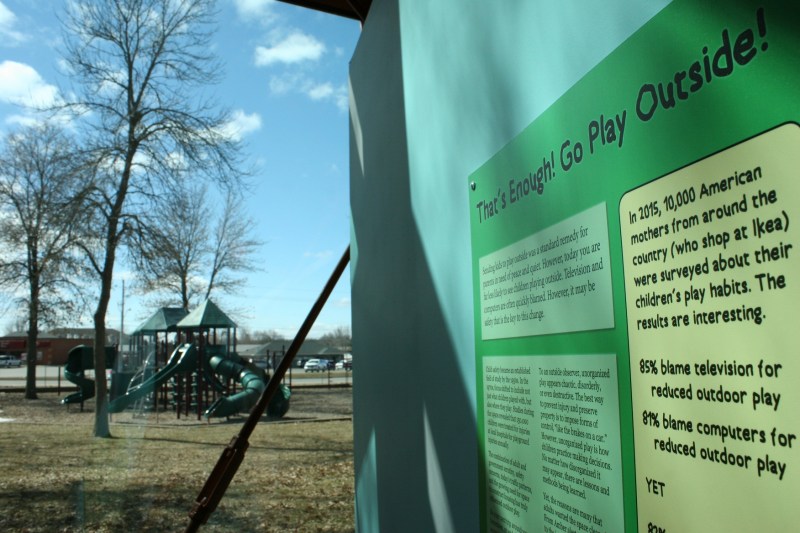
Through the museum window I saw this playground, such a fitting visual for the info posted inside the mock child’s bedroom.


Looking back now, I am thankful for that lack of material possessions as a child. Instead, the vast outdoors of rural Minnesota provided all I needed for imaginative play with my siblings. There were no battery operated toys, which I refuse to buy even today for my grandchildren.


Parenting children today, I think, proves more challenging than that of previous generations, even of raising my own kids. Screen time robs too many kids of creative play, of family time, of spending time outdoors. I realize it’s a much different world. And I can lament all I want about the changes. But that does no good. The bottom line is that we can make choices for our children. We decide whether to cave to whining. We decide which toys to buy. We decide on screen time. We decide on the importance of outdoor play. We have the ability to encourage healthy, engaging and creative play.


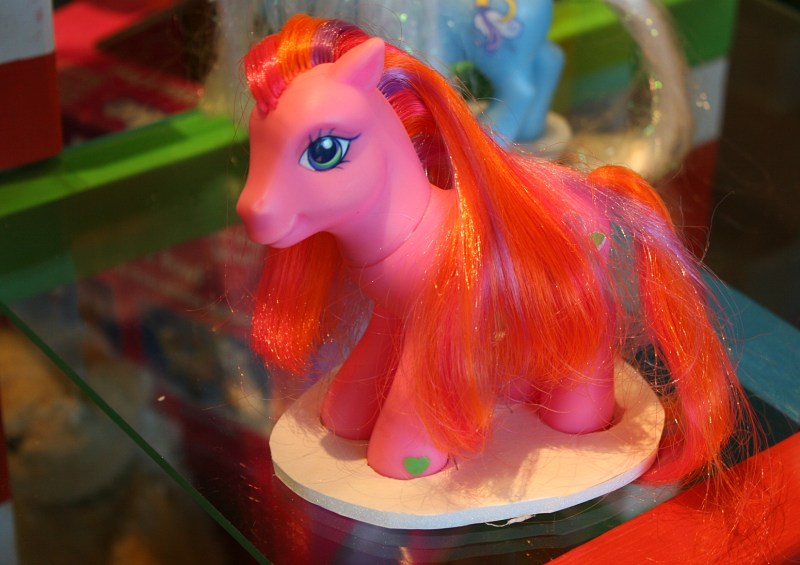
My girls’ My Little Ponies came from garage sales, as did many of their toys.


PLEASE SHARE your thoughts on toys, on child’s play, on your favorite childhood toy, on parental choices, whatever you feel inclined to say about kids and toys and, yes, parents, too.


FYI: The Steele County Historical Society museum is open Tuesdays – Saturdays. The toy exhibit remains open into the fall. Call to confirm dates.

RELATED: Click here to read about the reasons behind the closing of Creative Kidstuff, a group of home-grown toy stores in the Twin Cities.

© Copyright 2019 Audrey Kletscher Helbling


It’s all about stories in Faribault’s new branding campaign April 4, 2019

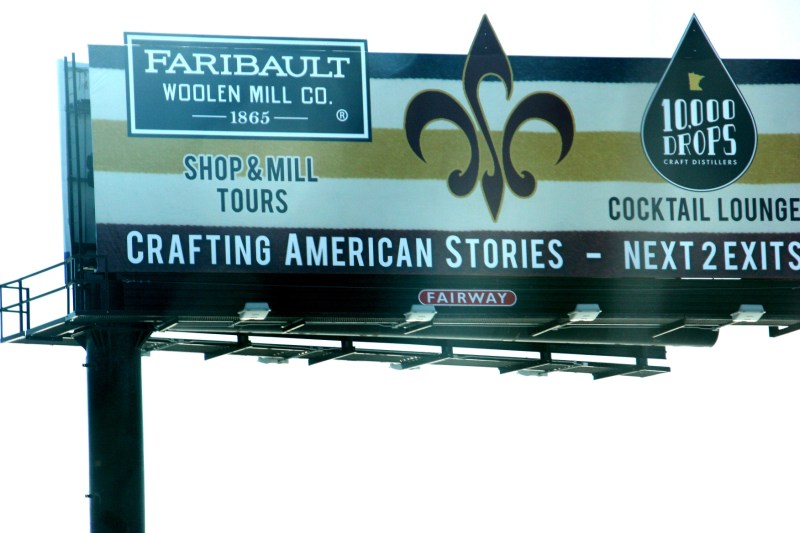
Faribault tourism’s newest billboard along Interstate 35 focuses on Crafting American Stories. Photo edited. Minnesota Prairie Roots file photo 2019.


I CONSIDER MYSELF a storyteller, using images and words to share stories. Storytelling resonates with people, connects with them, builds a sense of community.


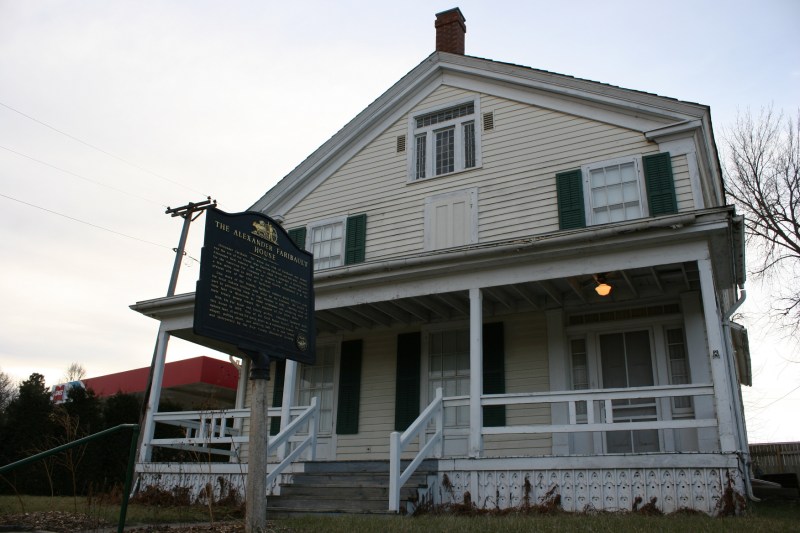
The home of town founder Alexander Faribault. Minnesota Prairie Roots file photo 2017.


Now my community of Faribault is embracing the same storytelling concept through a new branding campaign themed as American Stories. A collaboration of the Faribault Main Street Design Committee and the City of Faribault, including the park and rec department, this storytelling approach seems a good fit for my southern Minnesota city. We truly are a place of stories—from past to present.


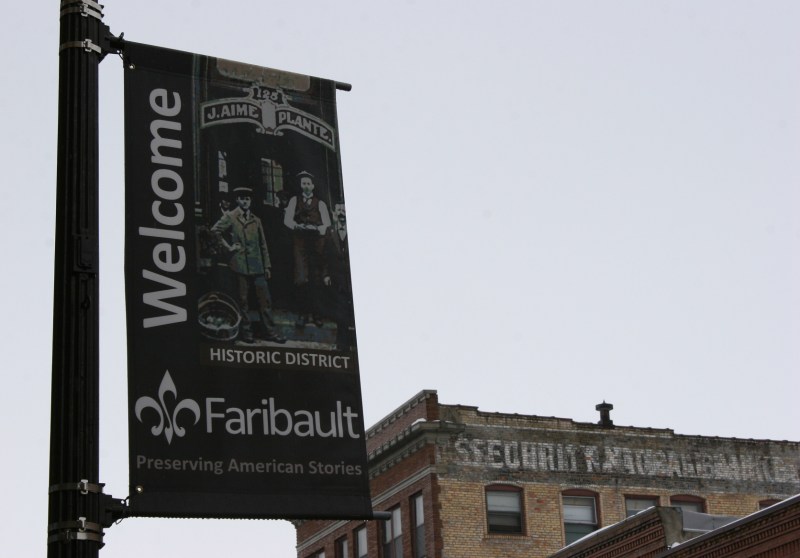
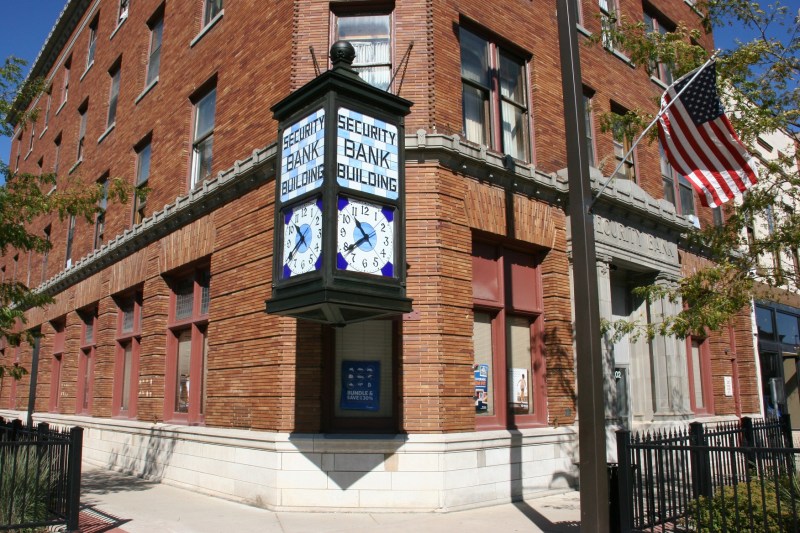
The first in a series of banners to be placed throughout Faribault includes this one photographed outside the Paradise Center for the Arts. The historic Security National Bank building backdrops this image. See the end of this post for more details.


Already, this American Stories theme has launched on the Faribault tourism website, on a billboard along Interstate 35 near Faribault and in banners hung throughout the downtown historic district. We truly have a gem of a downtown with many well-preserved historic buildings. Now Preserving American Stories banners flag this historic area.


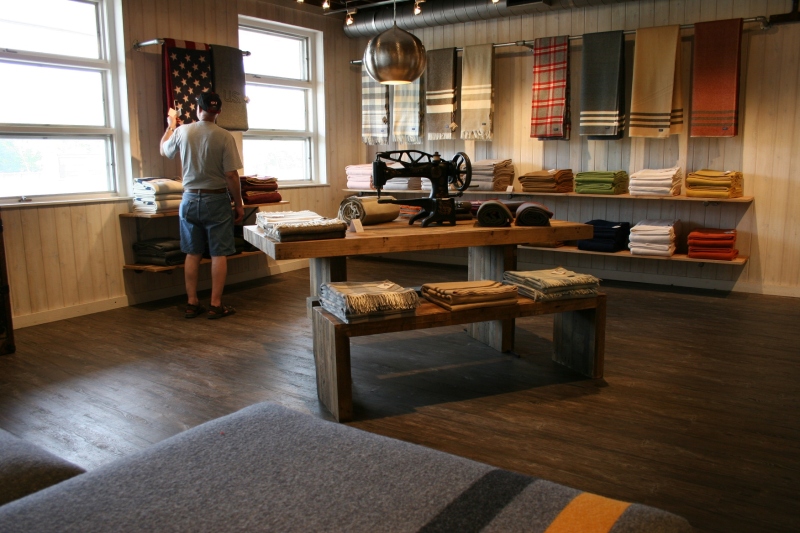
A photo I took inside the Faribault Woolen Mill retail store several years ago after the mill reopened. Minnesota Prairie Roots file photo.


More banners are yet to come, according to Kelly Nygaard of the Faribault Area Chamber of Commerce & Tourism office and the Faribault Main Street Coordinator. Those markers will include Experiencing American Stories to be posted near River Bend Nature Center, Crafting American Stories near the Faribault Woolen Mill and Shaping American Stories near the Minnesota State Academies for the Deaf and for the Blind and by Shattuck-St. Mary’s School. Additionally, Making American Stories banners will be placed throughout town.


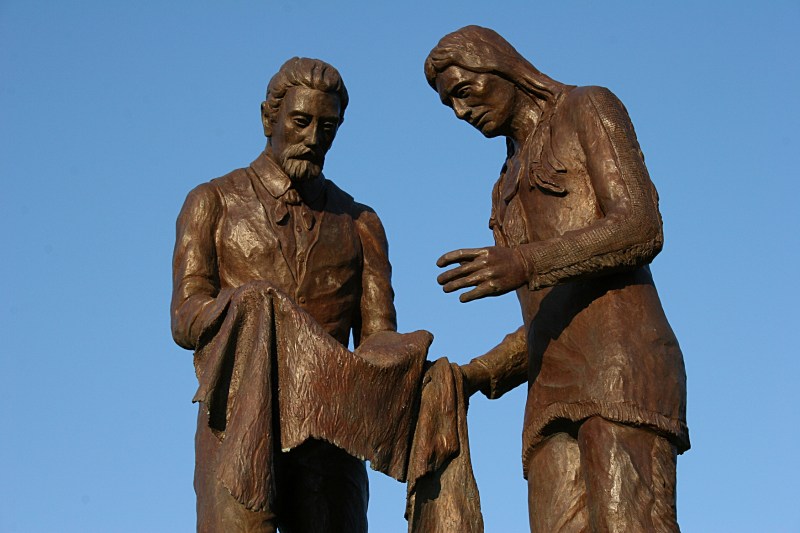
This sculpture of Alexander Faribault trading with a Dakota trading partner stands in Faribault’s Heritage Park near the Straight River and site of Faribault’s trading post. Faribault artist Ivan Whillock created this sculpture which sits atop a fountain known as the Bea Duncan Memorial Fountain. Minnesota Prairie Roots file photo.


Says Nygaard: “America is often described as a melting pot, and Faribault has always had diversity with Alexander Faribault himself being part First Nations. We have a beautiful downtown, great industry, a wide array of educational options, and plenty of fun ways to experience the outdoors and fun events.”


One of my all-time favorite photos taken at the 2012 International Festival in Faribault shows the diversity of Faribault as children gather to break a pinata. Minnesota Prairie Roots file photo 2012.


I agree. This stories theme not only portrays the many unique aspects of Faribault, but it creates a sense of identity. And, I hope it also instills in locals a sense of pride in this place we call home. Individually and together we are Faribault’s stories.

#


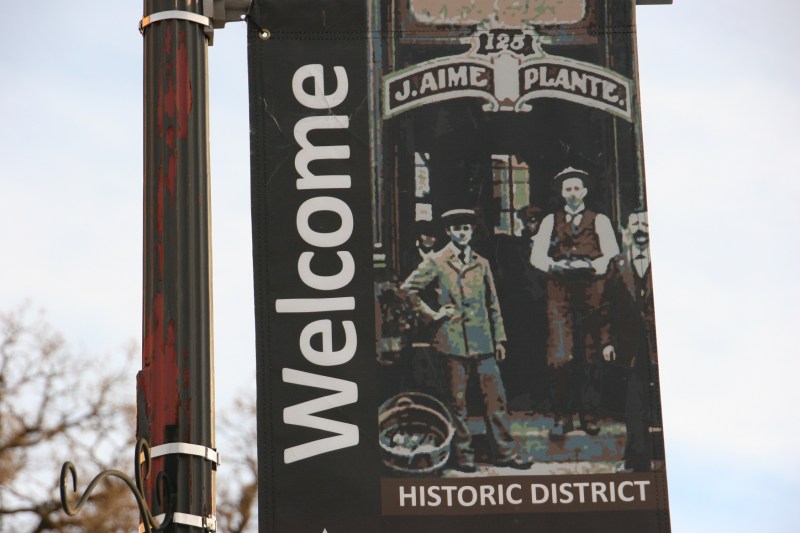
A close-up of the banner posted outside Buckham Memorial Library.


ABOUT THAT Preserving American Stories banner. The banner photo features the then Plante Grocery on Third Street which “offered customers a wide variety of household products and foods in baskets, barrels and boxes,” according to info on the Faribault Heritage Preservation Commission website. 


In my photo of the banner, you will see the top of the 1870 National Security Bank building. The HPC website provides this additional information about the historic structure:  “A Classical Revival-style brick facade covers a stone structure constructed originally by mercantile entrepreneur F.A. Theopold. The building was leased by Security Bank in 1899. The bank eventually purchased the building, and a fourth story was added in 1914, possibly the same year that brick was used to radically alter the structure’s appearance.”


© Copyright 2019 Audrey Kletscher Helbling


Small town observations from southwestern Minnesota April 3, 2019

Filed under: Uncategorized — Audrey Kletscher Helbling @ 5:00 AM
Tags: , , , , ,


I APPRECIATE THE ODDITIES of small towns. If oddities is the correct word.

But there are things you can do in rural communities that you can’t in others much larger.

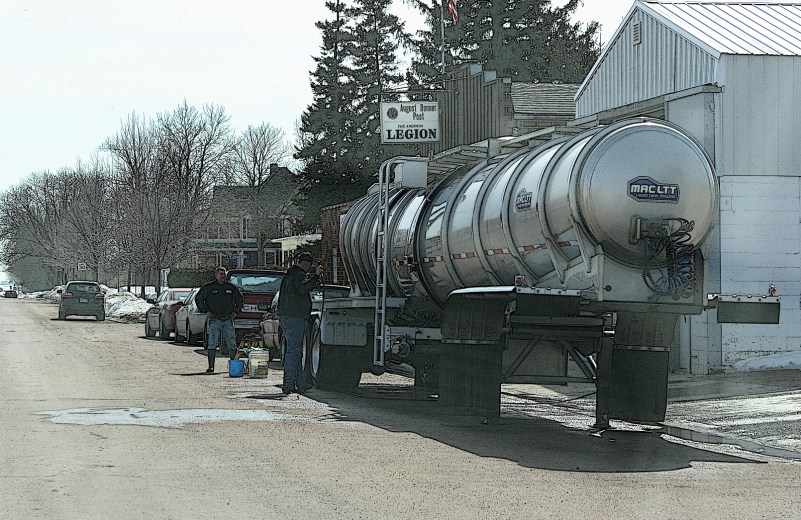
For example, while driving through downtown Belview, Minnesota, on a recent Saturday afternoon, I spotted two guys outside the August Donnor American Legion Post washing a tank. One with a hose, the other with hands on hips. Supervising probably.

The scene seemed so iconic rural.

I snapped two frames while Randy and I passed by, returning from the Cenex just down the main street on the northern end of the short business district. I needed a cylinder of Pringles for my mom back at the city-owned care center. She’d asked for them. I found a few canisters in several flavors, a neon orange sticker pricing the potato chips at $2.39. That sticker in itself speaks small town.

I explained my mission to the clerk, who used to work at Parkview, whose mother was once my mother’s table mate in the assisted living part of the facility. That’s the thing about rural Minnesota, too. Lives weave into lives.

© Copyright 2019 Audrey Kletscher Helbling


“Singin’ in the Grain” documentary celebrates southern Minnesota’s Czech heritage April 2, 2019

Singin’ in the Grain promo photo from Minneapolis St. Paul International Film Festival website.


HERITAGE. WHAT’S YOURS? German? Irish? French? Scandinavian? How about Czech?
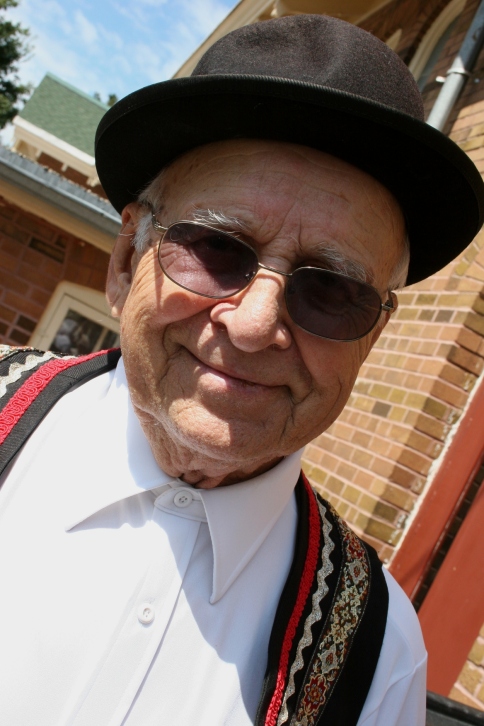
 

Clarence Smisek, photographed at the August 2011 Veseli Ho-Down. Minnesota Prairie Roots file photo.


The heritage, history, stories and music of the Czech people of southern Minnesota focus a documentary, Singin’ in the Grain—A Minnesota Czech Story, debuting on April 6 at the Minneapolis St. Paul International Film Festival. I spoke recently with noted Minnesota filmmaker Al Milgrom who co-directed and co-produced the film with Daniel Geiger.


Mary Ann Kaisersatt, left, and Jule Franke make prune-filled kolacky at Franke’s Bakery in Montgomery, a small town which calls itself the Kolacky Capital of the World. Minnesota Prairie Roots file photo.


In our 45-minute interview, Milgrom shared his excitement about this documentary with filming spanning from 1974 until just weeks ago and centering on the communities of Montgomery, New Prague, Lonsdale and Veseli. All hold a strong Czech heritage well known in this area of Minnesota, but not necessarily elsewhere in the state. Milgrom calls this regional Czech culture a hidden treasure and wants others to expand their knowledge of Minnesota’s cultural identity by viewing his film.


The Most Holy Trinity Catholic Church photographed during the August 2011 Veseli Ho-Down. Minnesota Prairie Roots file photo.


The Eddie Shimota Band performs at the 2011 Veseli Ho-Down. Minnesota Prairie Roots file photo August 2011.


The film’s storyline follows the Eddie Shimota, Sr., Polka Band and three generations of the Shimota family. But this documentary is about much more than a single family or a single band. The filmmakers showcase the Czech culture and heritage via the Veseli Ho-Down, an annual event at Most Holy Trinity Catholic Church; Montgomery’s Kolacky Days; New Prague’s Dozinky Festival; St. Paul’s Sokol (Czech-Sloval Protective Society) Hall; music from groups like the Czech Concertina Club; and much more. Even via an interview with two bachelor farmers from Union Hill.


Kolacky, a fruit-filled Czech pastry, were among the many ethnic baked goods sold at the 2011 Veseli Ho-Down. Minnesota Prairie Roots file photo.


Although I’ve not seen the film, I am familiar enough with the area’s Czech culture to understand the background of this film. I recognize Czech surnames. I’ve eaten more than one kolacky, attended the Veseli Ho-Down complete with polka mass, heard area Czech bands, visited Franke’s Bakery in Montgomery…


Photographed at the August 2011 Veseli Ho-Down, Minnesota Prairie Roots file photo.


Milgrom’s film covers the Czech heritage, efforts to continue traditions, generational assimilation, symbolic ethnicity and more. He noted, too, the evolution of Czech music from polka/folk to more gypsy-like with a beat differing from Old Country style Czech.


The New Prague Czech Singers perform in their mother tongue at the August 2011 Veseli Ho-Down. Minnesota Prairie Roots file photo.


Music is integral to Singin’ in the Grain, a take on Gene Kelly’s Singin’ in the Rain. Milgrom describes a scene of locals working in cornfields, polka music pulsing in the background. That visual and audio alone are enough to interest me in the film.


The New Prague Czech singers perform at the August 2011 Veseli Ho-Down. Minnesota Prairie Roots file photo.


Milgrom’s interest in this culture sparked when he was a child growing up in Pine City among many, as he calls them, Bohemian kids. His high school band played Czech folk songs. And when his interest in photography and then filmmaking developed, so grew his appreciation of Czech filmmakers with their unique take on filmmaking that included a wry humor, he says.


A sign several miles from Veseli directs motorists to the Ho-Down. Minnesota Prairie Roots file photo 2011.


It’s easy to embrace this experienced—he’s pushing age 97 with more film ideas in the works—documentarist’s enthusiasm for Singin’ in the Grain. Audiences, he says, will have a lot of fun watching this film packed with music and dancing. From Veseli, which he calls “a hidden little town somewhere in the hills,” to New Prague and places in between, Milgrom has spent nearly 50 years working on this film, gathering 100 hours of footage now condensed into this 109-minute documentary.


A mural in downtown Montgomery, Minnesota. Minnesota Prairie Roots file photo.


While the film debuts this Saturday at the Minneapolis St. Paul International Festival at St. Anthony Main Theater, Milgrom hopes to eventually bring the documentary to rural southern Minnesota, to communities of strong Czech heritage.


FYI: The April 6 showing of Singin’ in the Grain is sold out, but tickets may still be available for a 4:15 p.m. Wednesday, April 17, screening at St. Anthony. The documentary also screens at noon on Thursday, April 18, at the Rochester International Film Festival in Rochester, Minnesota.

Milgrom’s credentials include founding and serving as artistic director of U Film Society and co-founding the Minneapolis St. Paul International Film Festival and much more.

Daniel Geiger also has an extensive film background with work on feature films such as Fargo, North Country, Purple Rain and more.

CLICK HERE to watch a short clip from Singin’ in the Grain.

CLICK HERE and then click here to read posts I wrote on the 2011 Veseli Ho-Down.

© Copyright 2019 Audrey Kletscher Helbling


From Faribault: Food art with a literary twist March 30, 2019

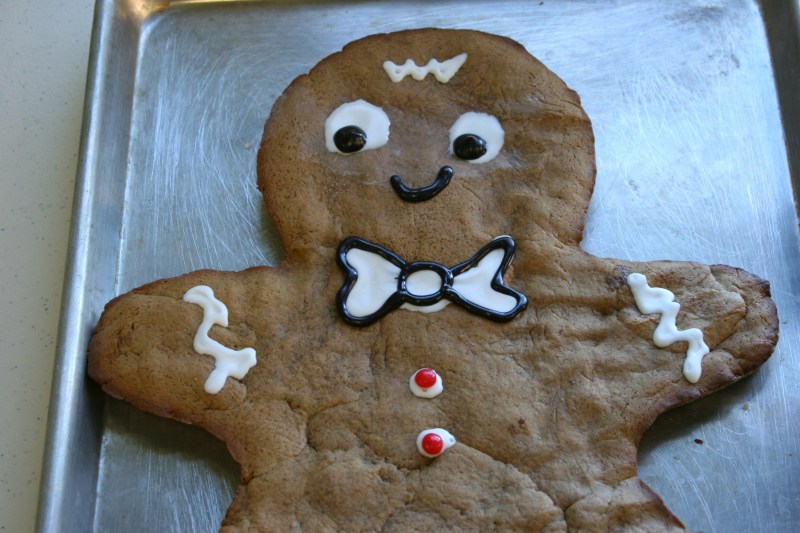
The Gingerbread Man Loose on the Fire Truck inspired this cookie sheet sized gingerbread man.


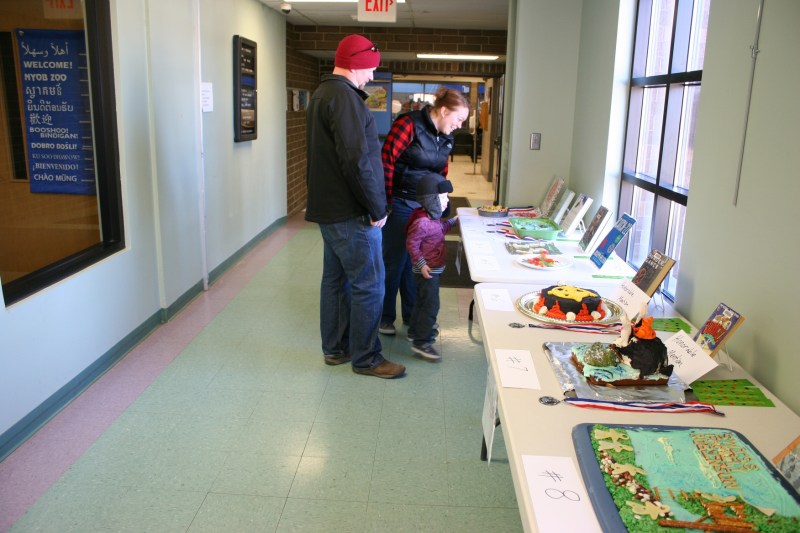
BOOKS INSPIRED FOOD ART on Saturday at the annual Buckham Memorial Library Edible Books Festival & Competition.


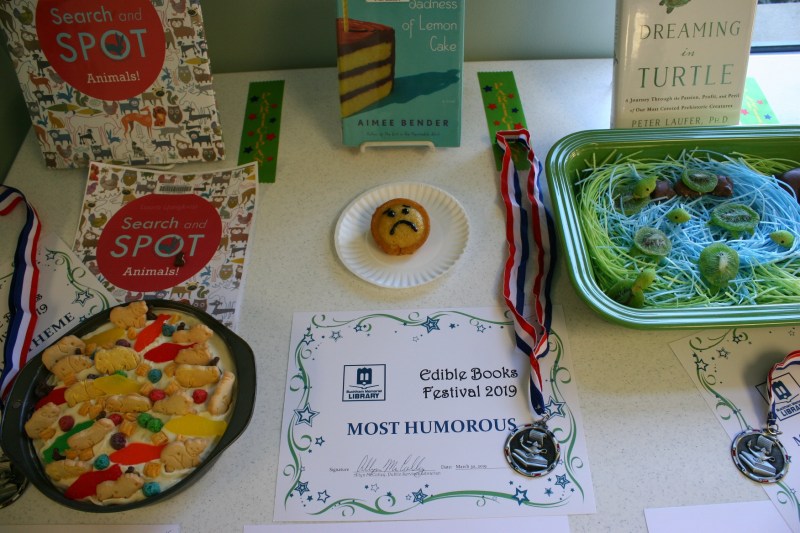
A staff entry based on The Particular Sadness of Lemon Cake.


From simple


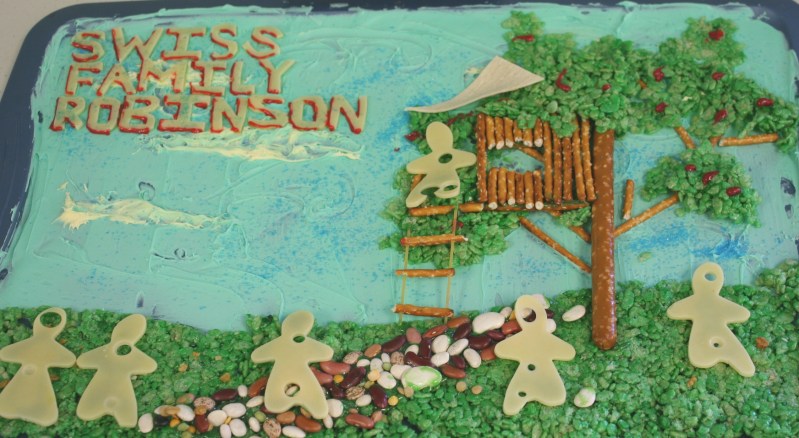
Another detailed family entry based on one of my favorite childhood books.


to extraordinarily detailed,


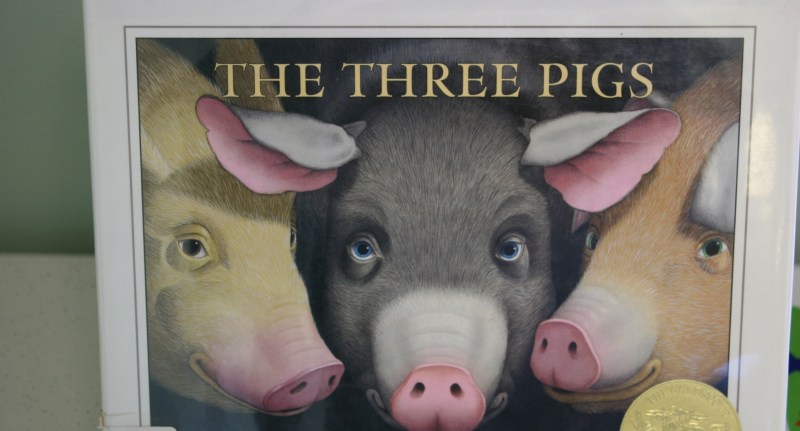
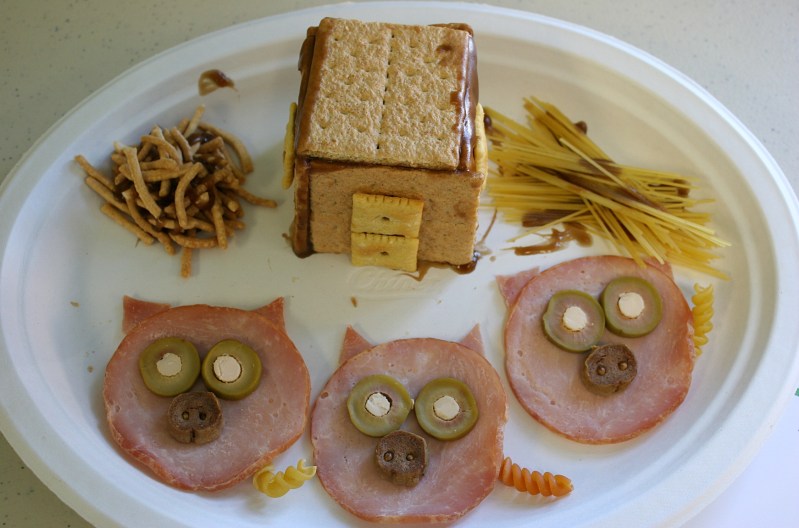
The Three Pigs inspired another entry.


That Three Pigs entry judged most humorous in the families category.


the creativity of the book-based entries always impresses me.


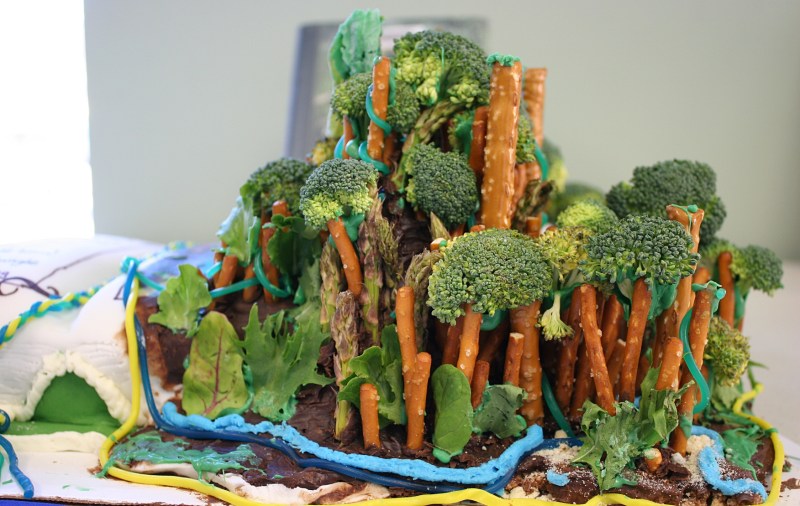
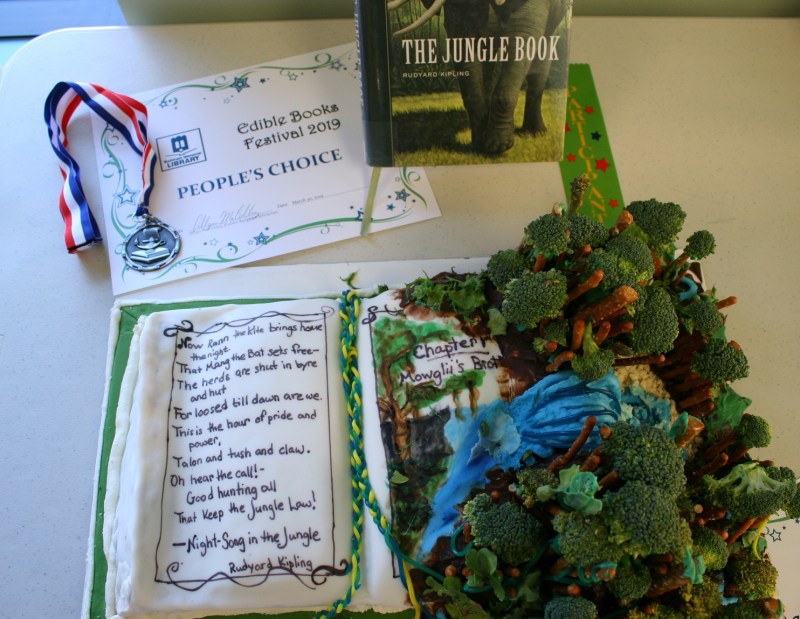
The Jungle Book inspired The People’s Choice Award.


A close-up of the jungle.


The entire The Jungle Book entry.


Rules call for artwork to be made only of edible materials, although the entries are meant to be viewed only, not eaten. All must represent a book or a literary theme.


Based on the book Prime Cut by Diane Mott Davidson.


Staff entries.


This year 14 units—most created by families and the rest by individuals and City of Faribault staff—comprised the festival.


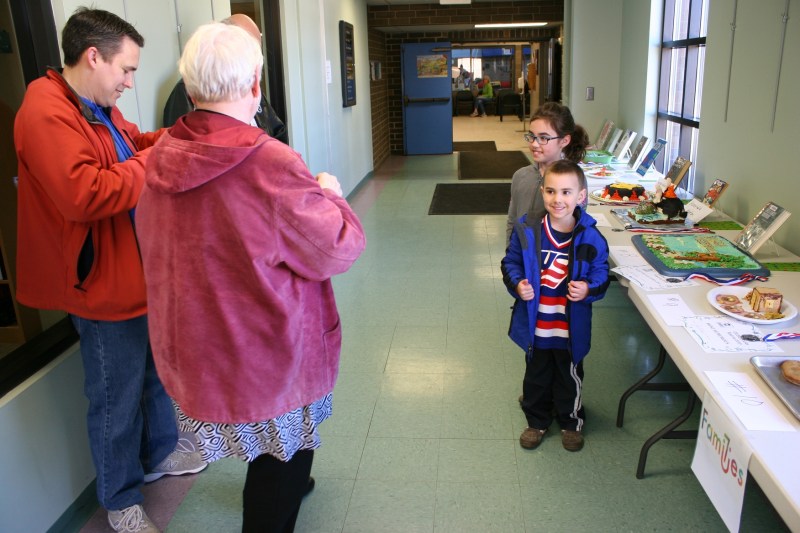
I especially love that families work together to create their literary masterpieces. While I photographed the event, I watched participating families arrive with parents, grandparents and siblings and pose for photos.


One of the many awards given.


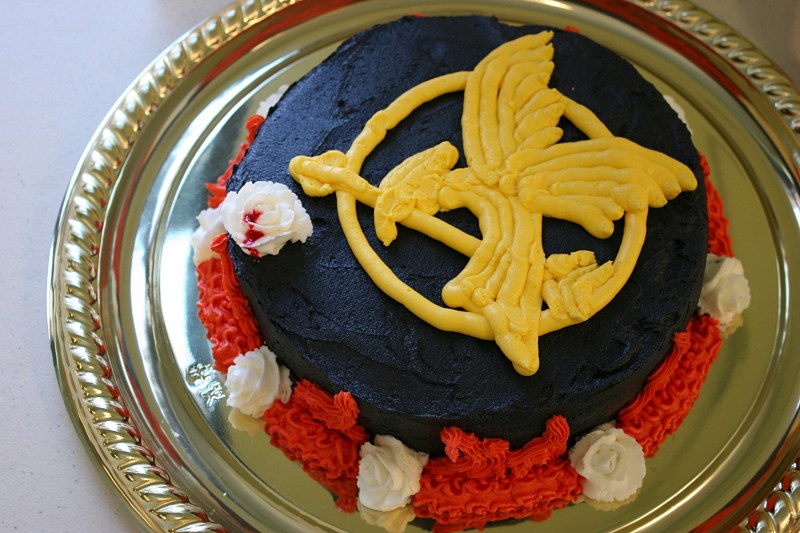
Based on the book The Hunger Games.


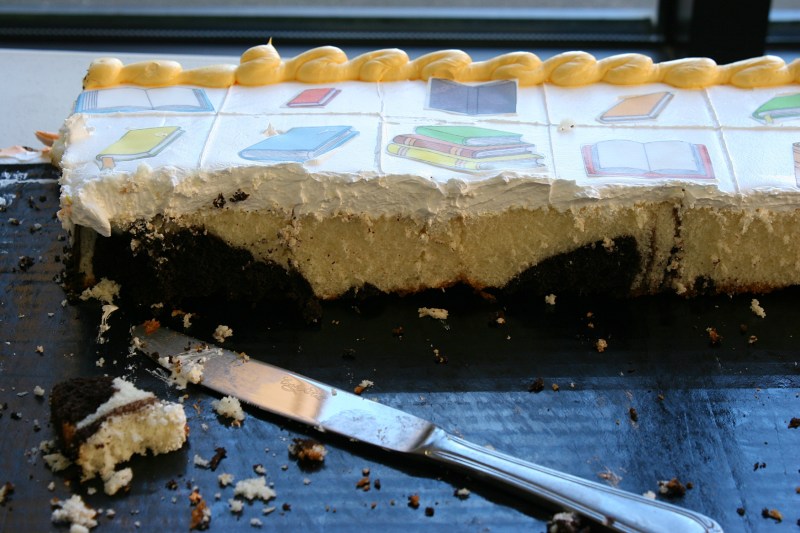
A Friends of the Library volunteer served book-themed cake to guests.


Anytime kids get excited about books and the library is, in my opinion, a win. To read and to love reading opens the doors to learning and growing your world, your education, your imagination. And your creativity.

© Copyright 2019 Audrey Kletscher Helbling
 

About letting your dog run loose…my story March 29, 2019

Dogwood


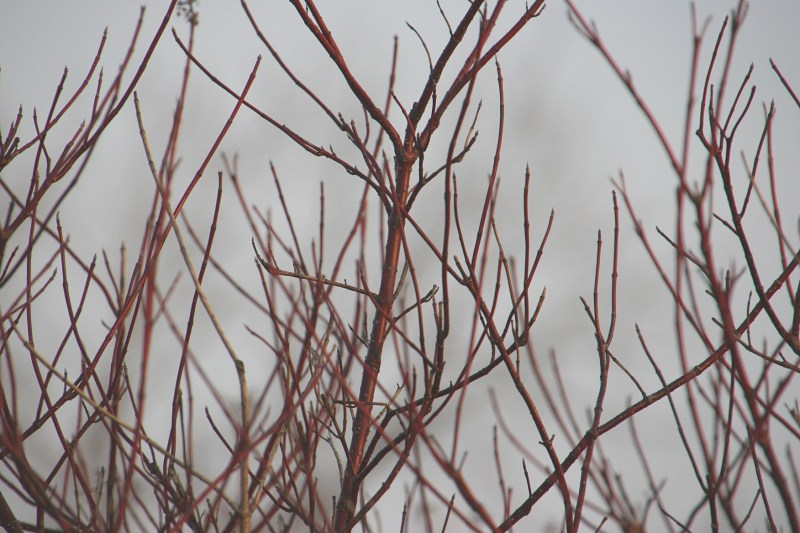
HE DEFENDED ME with dogwood against the dogs.


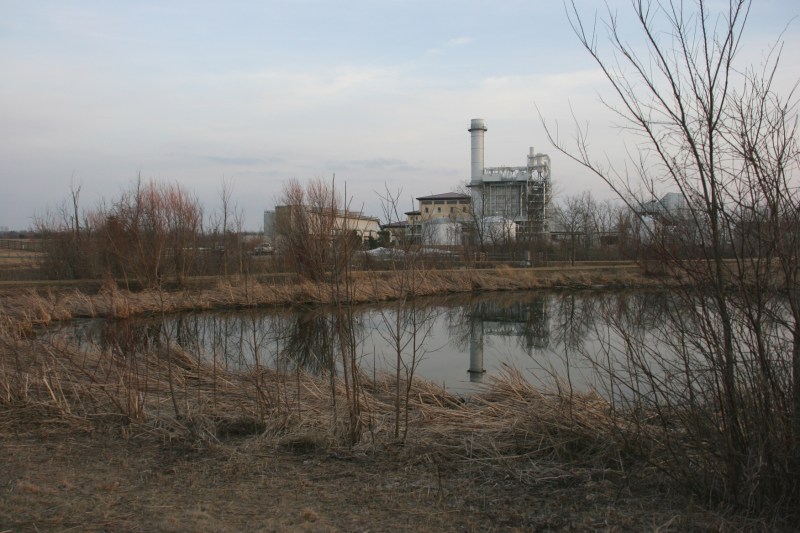
A scene shot along one of the trails in the Faribault Energy Park toward the energy facility. Trails wrap around multiple ponds where three men fished for crappies Wednesday evening. An otter glided in the same pond, keeping his distance from the fishermen.


It seems fitting that dogwood would provide protection from two dogs running free at Faribault Energy Park around sunset on Wednesday. A quick Google search reveals the name of the reddish-tinted bush rooted in the Middle English words dagge/dagger. The thin sticks were once used as daggers or skewers.


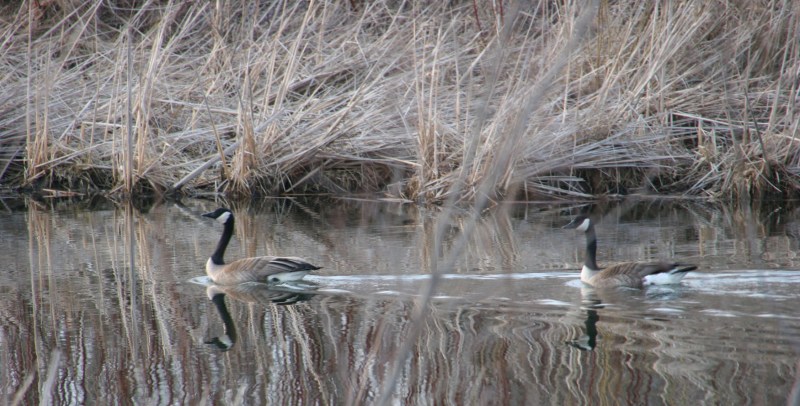
After the incident with the dogs, I photographed these geese.


With that language lesson for the day, I return to the story of a walk on a lovely late March evening that left me upset and frustrated with an irresponsible dog owner.

Here’s the deal. If you have dogs and choose to take them to a public place, then leash them per city ordinance and common sense. Otherwise go to the local dog park and let your dogs run free. Or stay on your property and watch your dogs run.

A dog not under the control of its owner concerns me. I don’t care how supposedly friendly and well-behaved the dog. Any canine in a strange place, among strangers has the potential to do harm.

I feel fortunate that I escaped with only muddied jeans after a large curly-haired black-and-brown dog bounded toward and then jumped onto me, slicking mud down my pant legs. That was enough to kick in the fear factor, especially when a second dog joined the first dog.

By that time I was in semi-panic mode, unsure what these dogs might do to me. Randy picked up on my fear and stepped in with a bundle of dogwood. He thrust it between me and the dogs, held it as a shield as the pair continued to circle.


The Faribault Energy Park wind turbine. Minnesota Prairie Roots file photo.


We don’t typically carry around dogwood. But minutes earlier I picked up dogwood twigs broken off at the base of a bush. I’ve always wanted dogwood for outdoor flower pots and these would rot if left to the elements. Soon thereafter we encountered the dogs on the gravel road by the wind turbine.

Not only was I afraid, but I was angry. About my muddied jeans and that inconsiderate canine owner. I scanned the park grounds for the absent owner. And I yelled multiple times for that delinquent owner to retrieve his/her dogs. My voice was lost in the drone of heavy traffic from nearby Interstate 35. Randy and I kept moving, hopeful the dogs would leave us alone. Eventually they did and soon the owner rounded the gravel road in a green van, stopped, opened the side door and the dogs leapt inside.

Part of me wanted to turn around, walk to the van and lecture the dog owner. But I recognized that I was still too upset and, in today’s world, you never know how someone may react.

End of story except to say this incident ruined an otherwise lovely walk in the park.


© Copyright 2019 Audrey Kletscher Helbling

I don’t know dog breeds well enough to identify the dogs referenced in this story. But it doesn’t matter. Dogs should not run loose in a public place.


Signs of Christmas linger in Minnesota into March March 28, 2019

Filed under: Uncategorized — Audrey Kletscher Helbling @ 5:00 AM
Tags: , , , , , ,


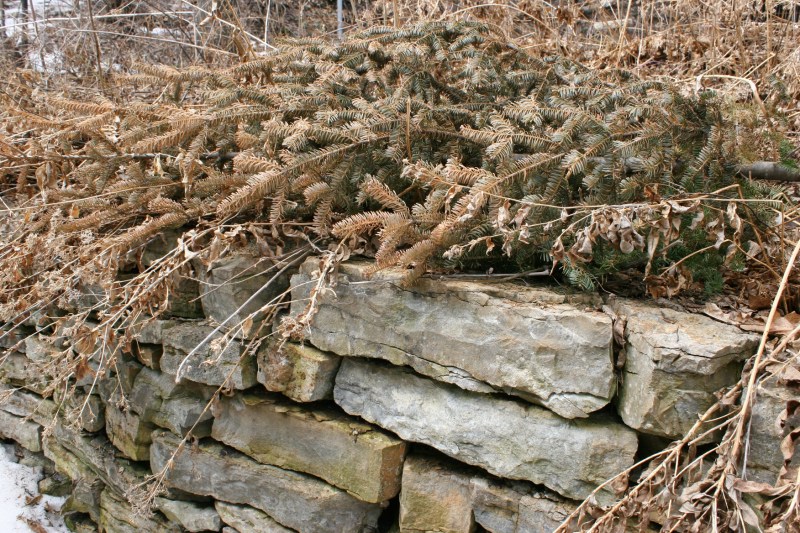
ACROSS THE STREET, on my neighbor’s front door, a faded Christmas wreath hangs. Needles dried and dropping. Decorative ribbon faded. In my own side yard, our dried Christmas tree, once buried under snow, lies atop a flowerbed.


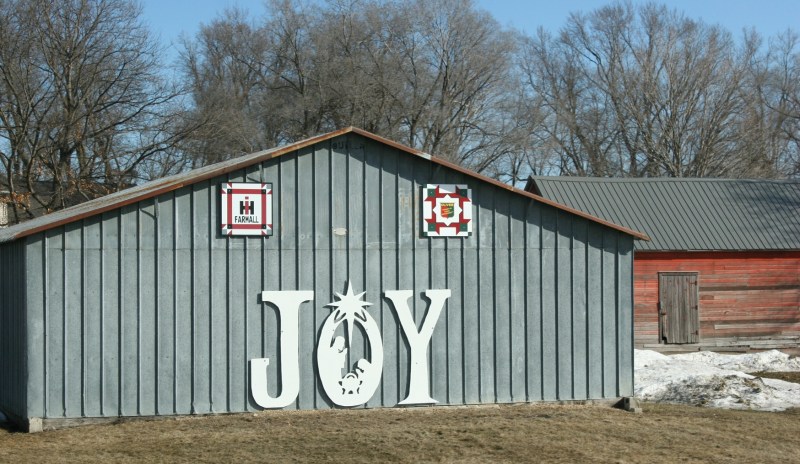
Christmas greetings on an outbuilding on a farm site just west of Mankato along U.S. Highway 14 photographed on Saturday.


It’s not uncommon here in Minnesota to see outdoor Christmas decorations up well into spring. Whatever the reason. I suppose the cold and snow hinder removal, especially this winter.


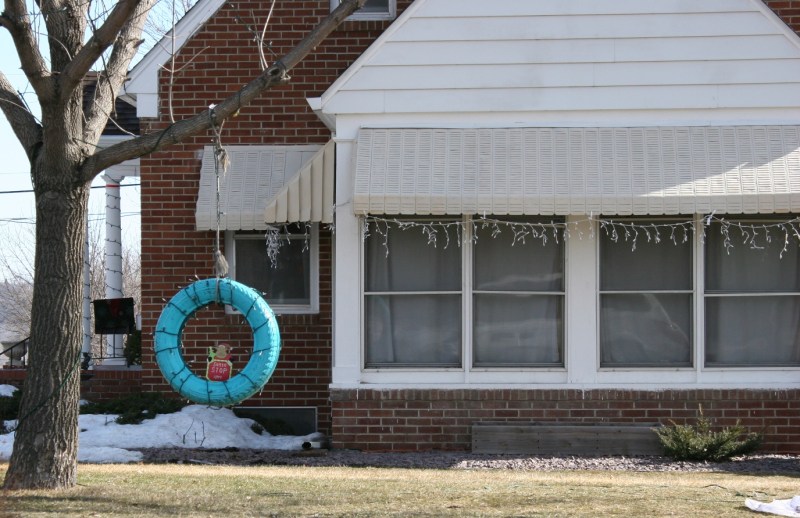
In a New Ulm yard, a sign on a tire swing says, “Santa stop here.” Christmas lights also wrap an entry column on the left. Photographed on Saturday, March 23.


Or, after awhile, we simply don’t notice whatever we pass by on a daily basis. That explains, for example, why cardboard covers a section of wall in my dining room. We removed a brick chimney about 10 years ago with plans to add a mini pantry. Such is the stuff of plans detoured by finances. Now I don’t think about that plan much anymore, unless a first-time visitor stops by and I find myself explaining why we have a cardboard wall. But I digress.


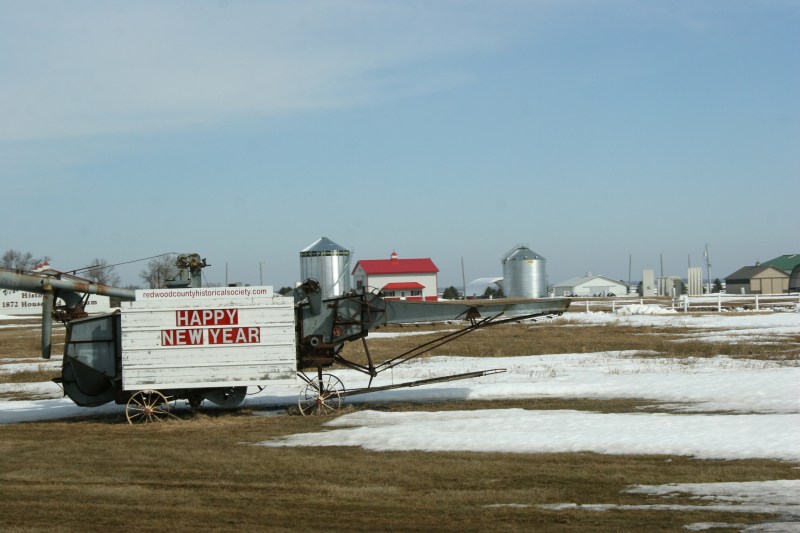
At the site of Farm Fest and the Gilfillan Estate, the Redwood County Historical Society wishes motorists a Happy New Year.


Back to that holiday décor. I photographed several examples of Christmas greetings still in place while traveling back to my native southwestern Minnesota this past Saturday. Hopefully soon spring and/or Easter themed décor replaces signs of Christmas.


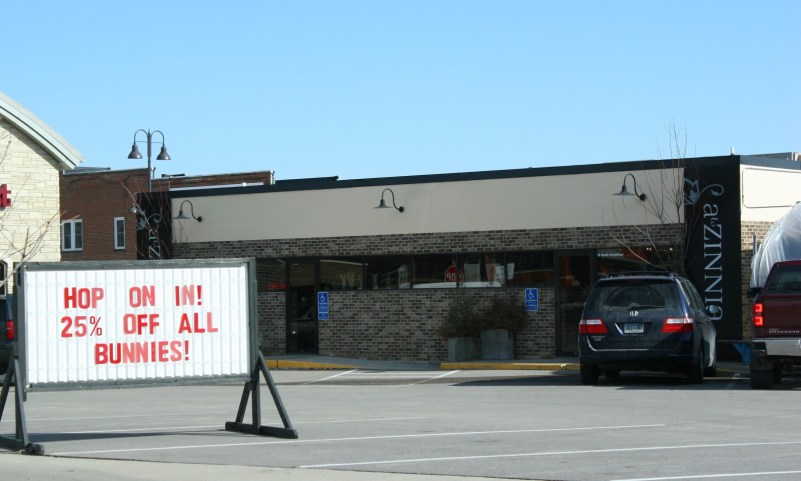
At least one New Ulm business, A to Zinnias Florals & Gifts, recognizes the seasonal change to spring by offering 25 percent off on all bunnies. That would be home decorating bunnies. Not real.


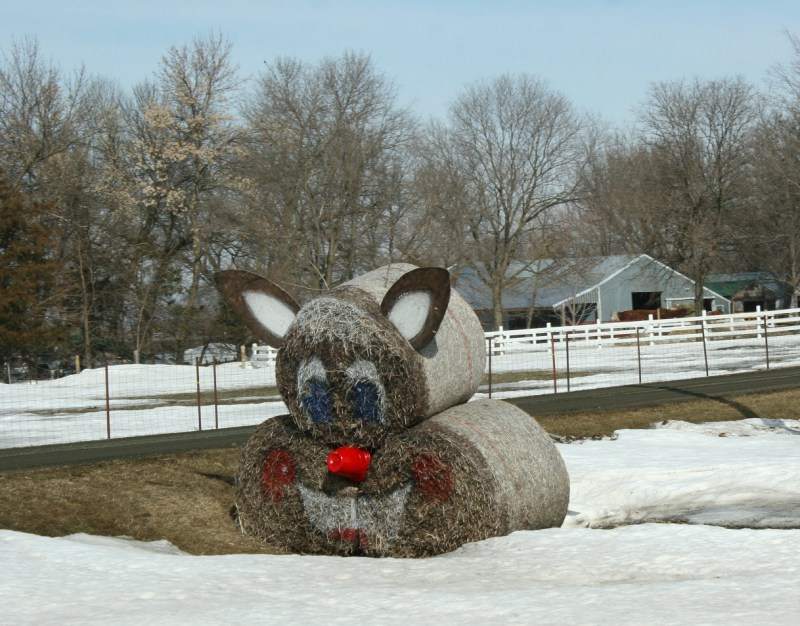
Rudolph in a farmyard along Brown County Road 29 west of New Ulm about half way to Morgan.


TELL ME: Is it common in your area for seasonal Christmas decorations to stay up too long? Or what defines “too long?”

© Copyright 2019 Audrey Kletscher Helbling
 

Defining spring in Minnesota March 27, 2019

Filed under: Uncategorized — Audrey Kletscher Helbling @ 5:00 AM
Tags: , , , , ,

Looking skyward in my Faribault, Minnesota, backyard Monday morning.
 

HOW DO YOU define spring?

By the calendar? By tulips, daffodils, crocuses popping color into the landscape? By warmth?
 

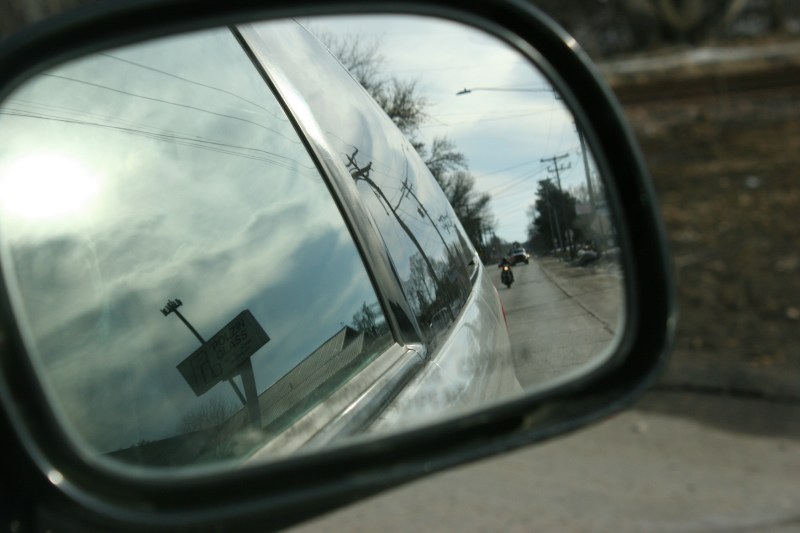
A sure sign of spring in Minnesota: More motorcyclists on the roads, as reflected in this photo taken late Saturday afternoon.
 

Whatever your measurement of spring, it’s likely as personal as you are and reflects wherever you live.

I’ve lived all of my life in Minnesota, a state associated with cold and snow. Long winters. And this winter, especially, has been long with way above average snowfall in February. Finally, in recent weeks, temps warmed and snow melted with amazing speed. It’s beginning to feel and look more spring-like. Temps today are predicted to reach into the 60s.


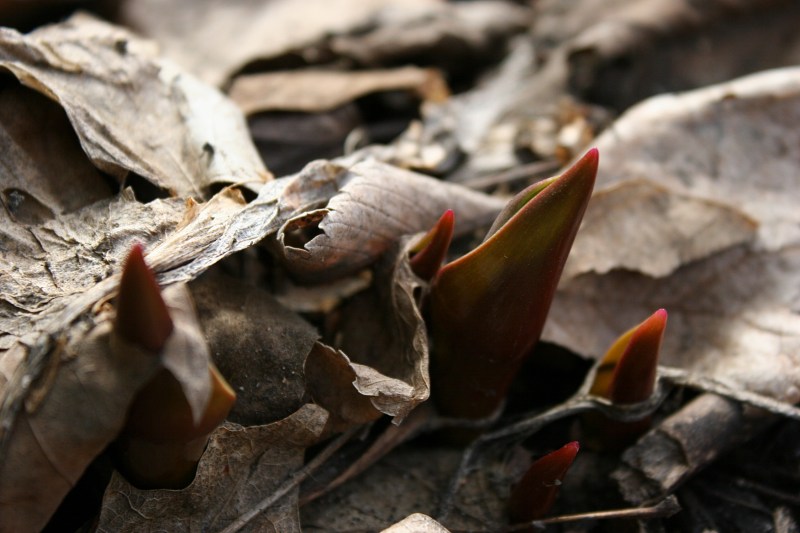
Emerging in a south-facing flowerbed in my backyard Monday morning. Every year my tulips start to grow and then snow falls in April and, well, that’s not good. I expect no different this year.


First signs of spring for me may seem atypical. I look beyond flower bulb leaves emerging from the cover of leaf mulch.


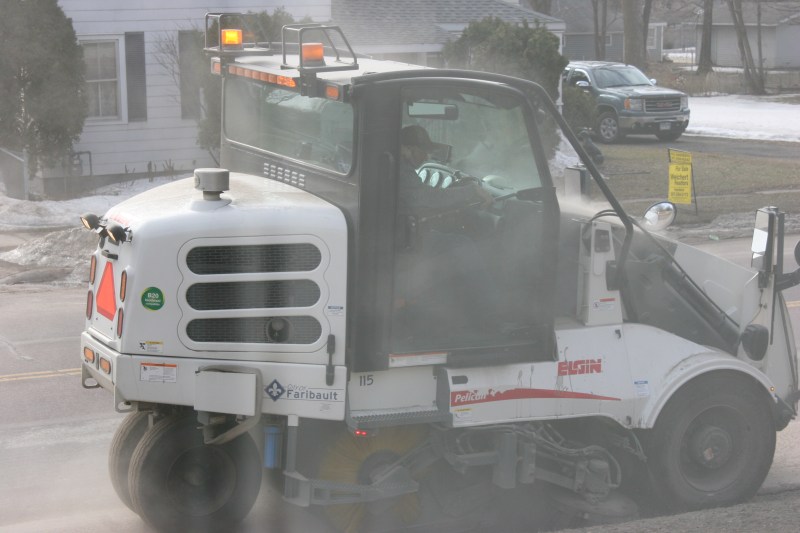
A cloud of dust envelopes the street sweeper cleaning Willow Street Monday morning.


I see spring in the street sweeper roaring past my house, sucking up sand, dirt and other winter debris from roadways.


I see spring in our Christmas tree now uncovered, dried and dead, from a snowbank.


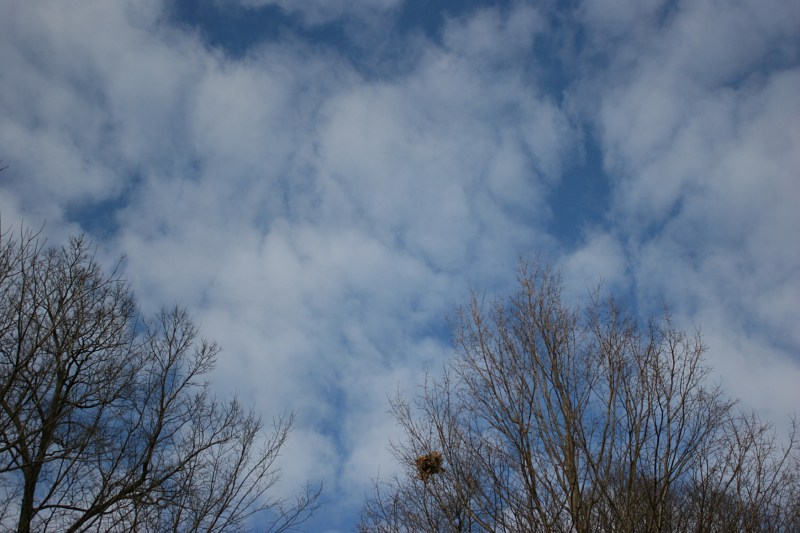
Aiming my camera lens directly upward to the sky from my backyard Monday morning.


I see spring in puffs of clouds against a sky morphed from the grey of winter to a sharp blue.


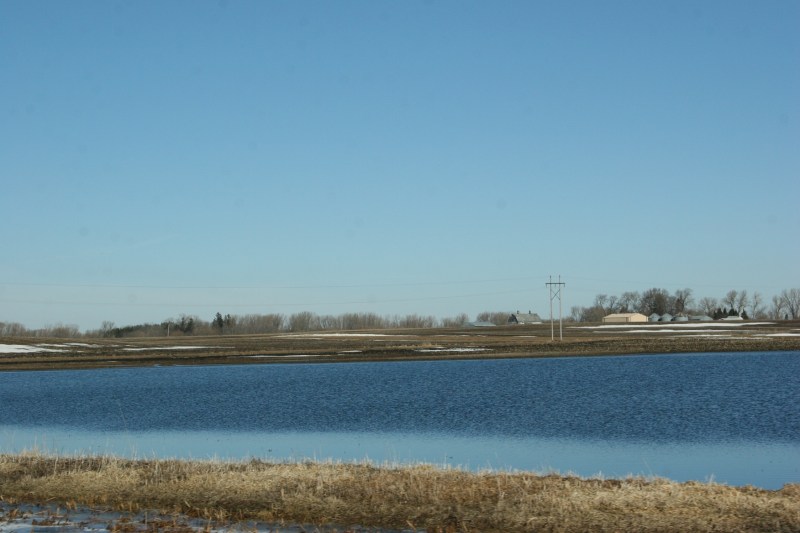
Flooded fields photographed Saturday morning in southern Minnesota.


I see spring in intense blue pools of water forming lakes in farm fields as the snow melts.


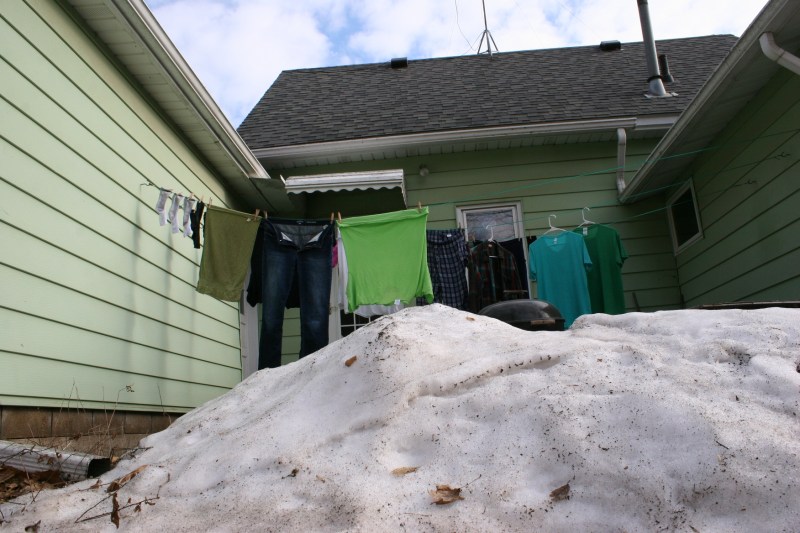
Typically, I would already have hung out laundry in 2019. But this year a snow-covered patio and too much snowfall and cold temps delayed that. Randy shoveled snow from the patio several days ago so I could hang out laundry Monday morning. That’s our Weber grill on the other side of the snowbank next to the clothesline.


I see spring in the laundry I now hang on the line, for the first time Monday morning. After the husband shoveled snow from the patio.


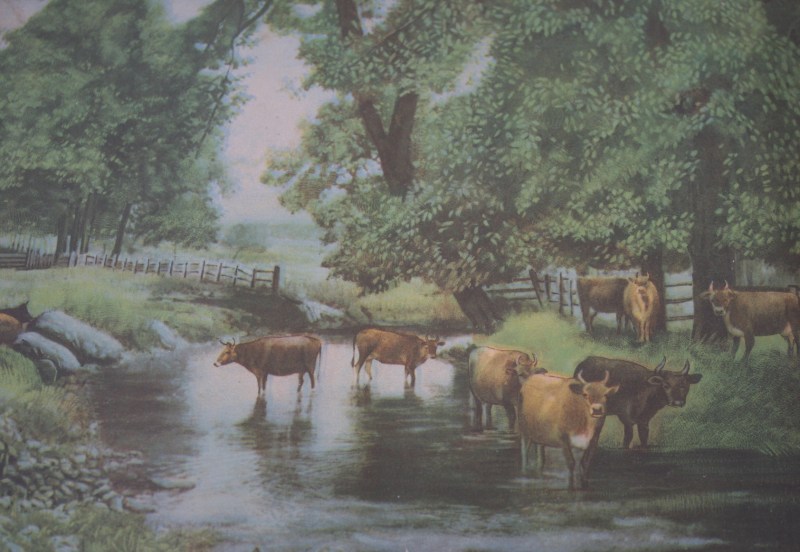
One of my favorite prints, picked up at a garage sale a number of years back.


I see spring, too, in the artwork I pull from my personal collection. Pastoral scenes that offer no hint of winter.


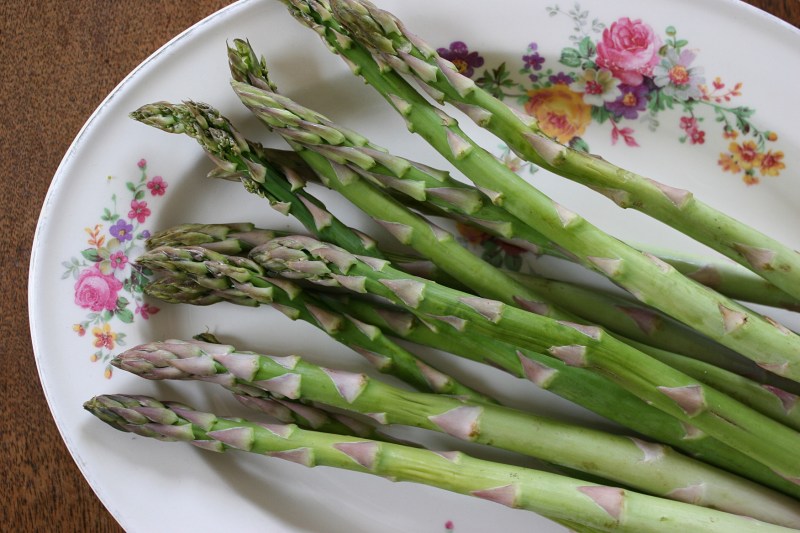
I appreciate that I can now find asparagus, one of my favorite vegetables, in local grocery stores.


I see spring in the bundle of asparagus I picked up at the grocery store. I can’t wait until locally-grown asparagus is available.

These things, for me, signal spring. How about you? Tell me what hearkens spring’s arrival for you.

© Copyright 2019 Audrey Kletscher Helbling