Minnesota Prairie Roots

Writing and photography by Audrey Kletscher Helbling

Shopping Wisconsin style at the Appleton Farm Market October 26, 2012

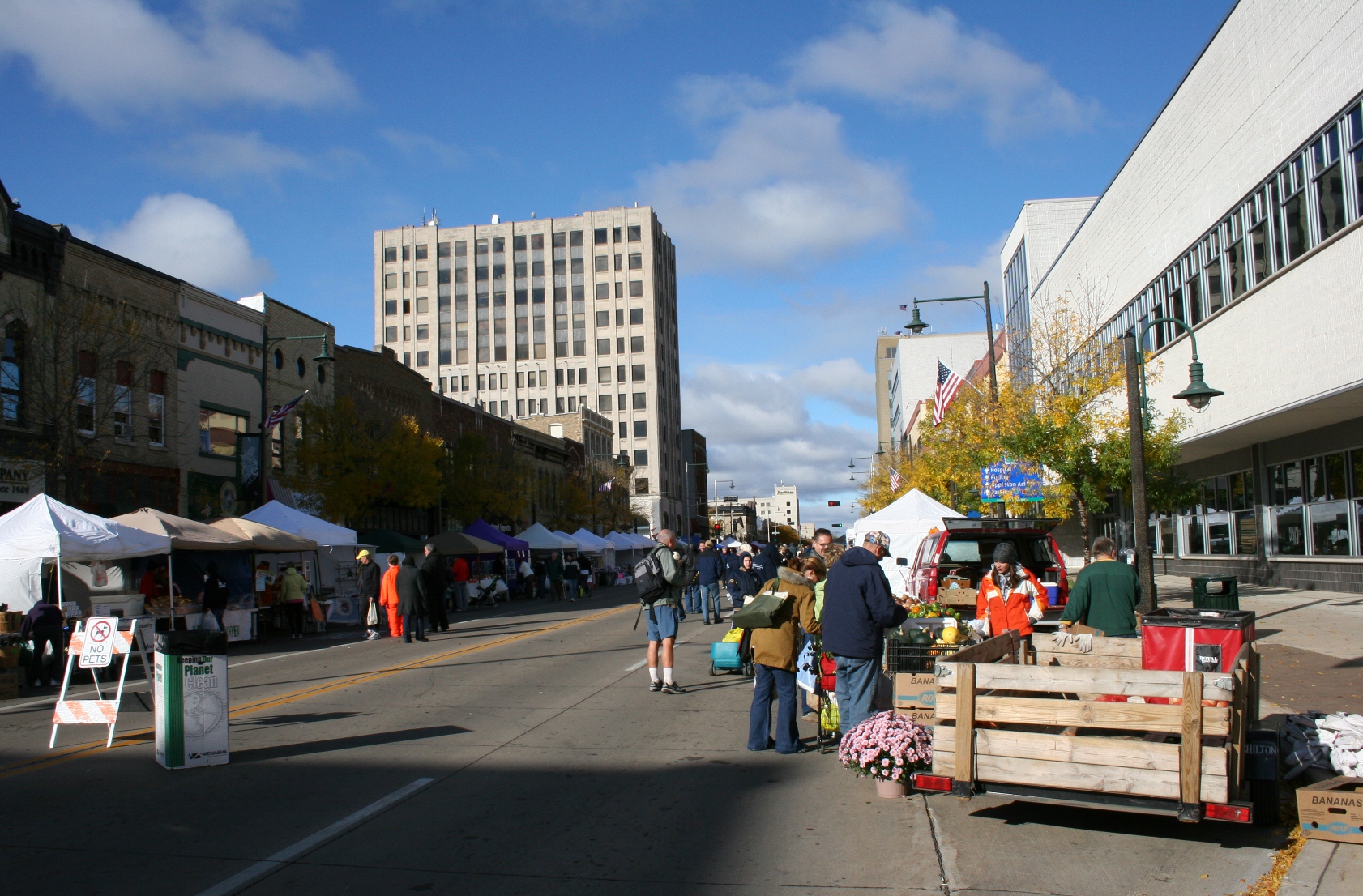
The Appleton Farm Market on a brisk, early October morning.

FOR THE PAST TWO YEARS, since moving to northeastern Wisconsin, our daughter Miranda has raved about the outdoor Appleton Farm Market. She enthuses about the trolley and the entertainment, the fresh produce and flowers and crafts in this open air market in the heart of a downtown that mixes old and modern, buildings, that is.
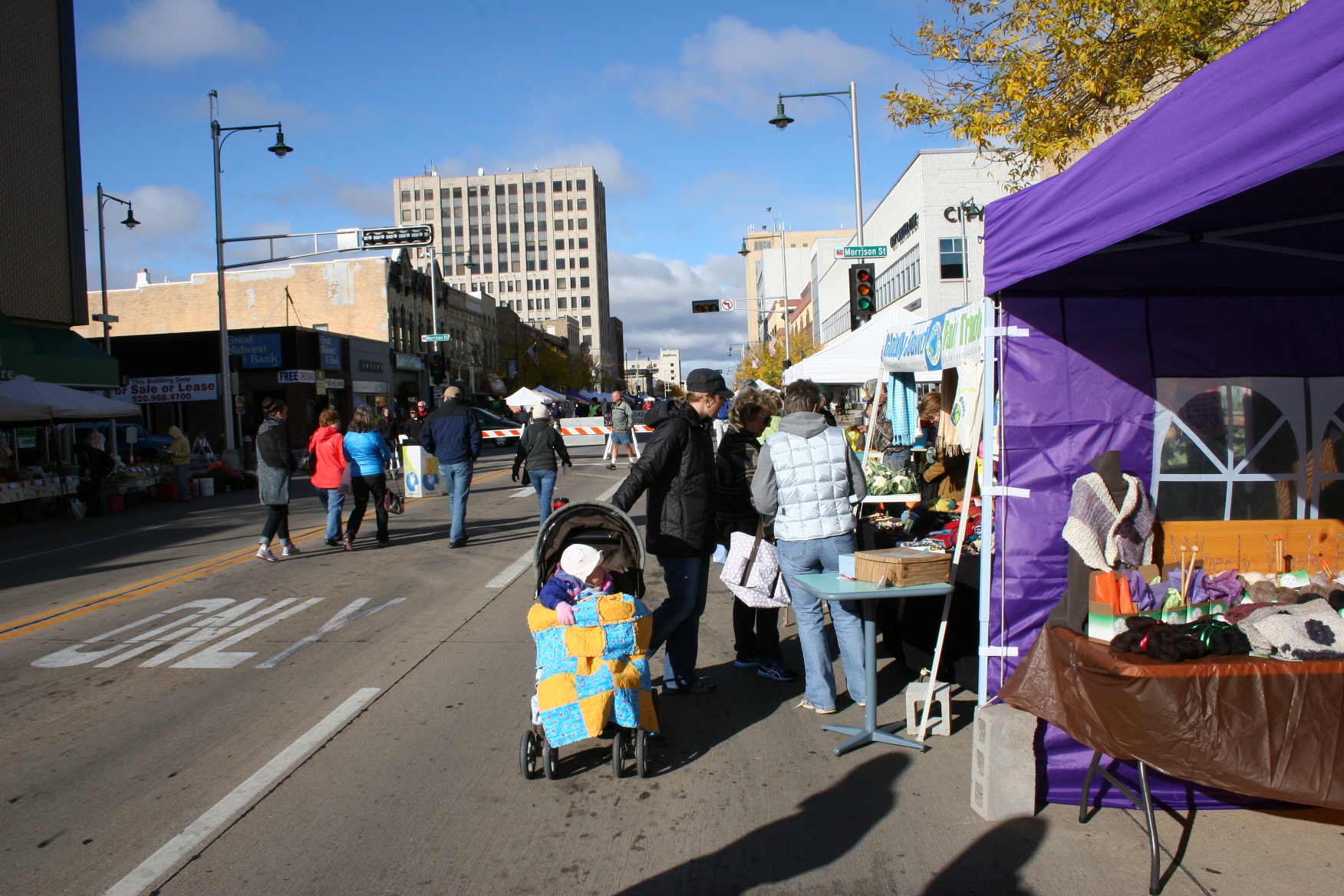
All ages, including babies in strollers, were bundled up in the blustery weather.

So on a recent visit to Appleton, which is south of Green Bay for those of you unfamiliar with the Badger state’s cities, we took in the outdoor farm market on a cold and windy Saturday morning. It was mitten and fleece-wearing weather, although we’d left both behind in Minnesota, not expecting such cool temps.
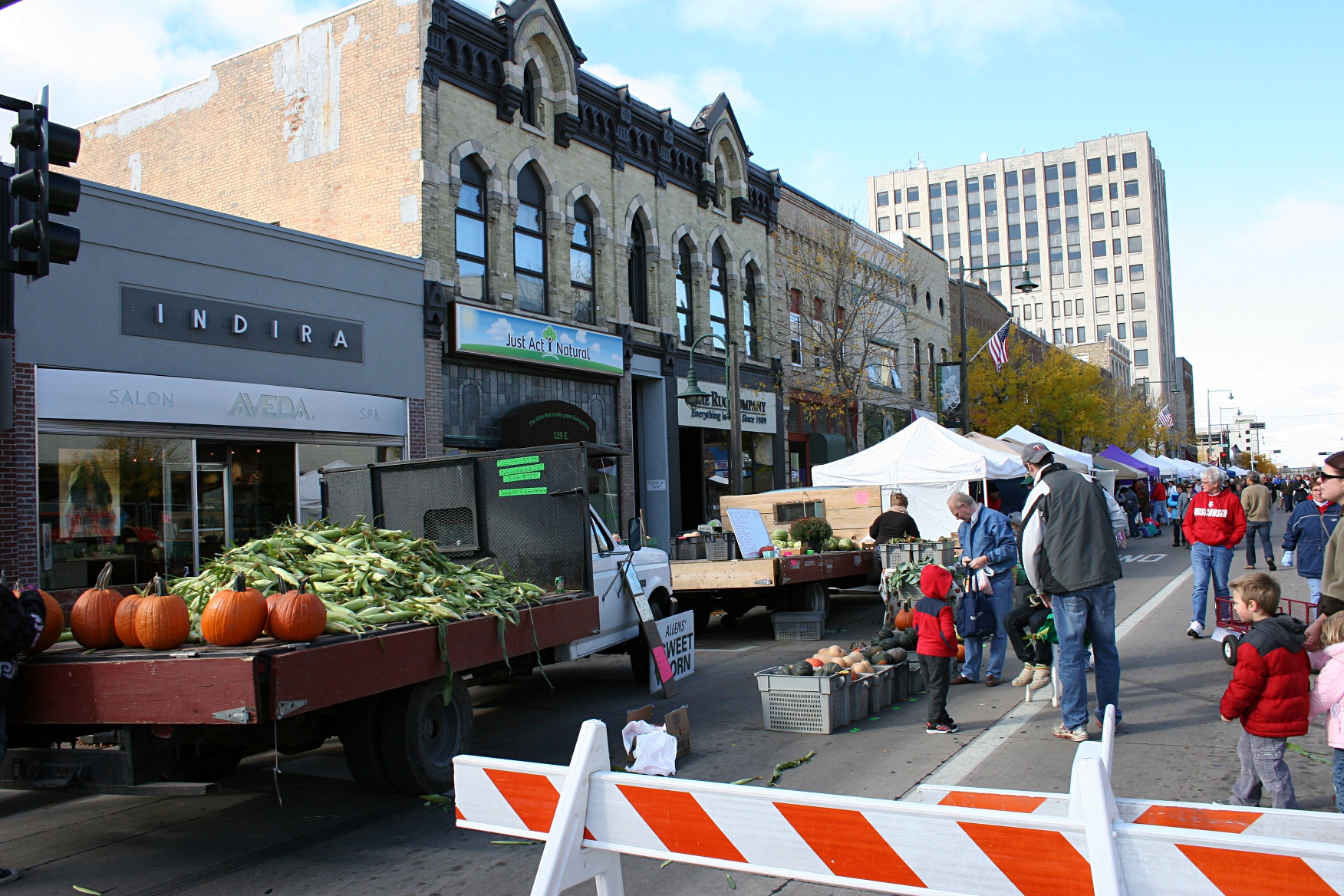
College Avenue is blocked off to vehicle traffic for several blocks.

Our daughter knows a secret, free parking spot (if you arrive early enough) just off the east end of College Avenue, the downtown street closed to motor traffic for several blocks during the market.
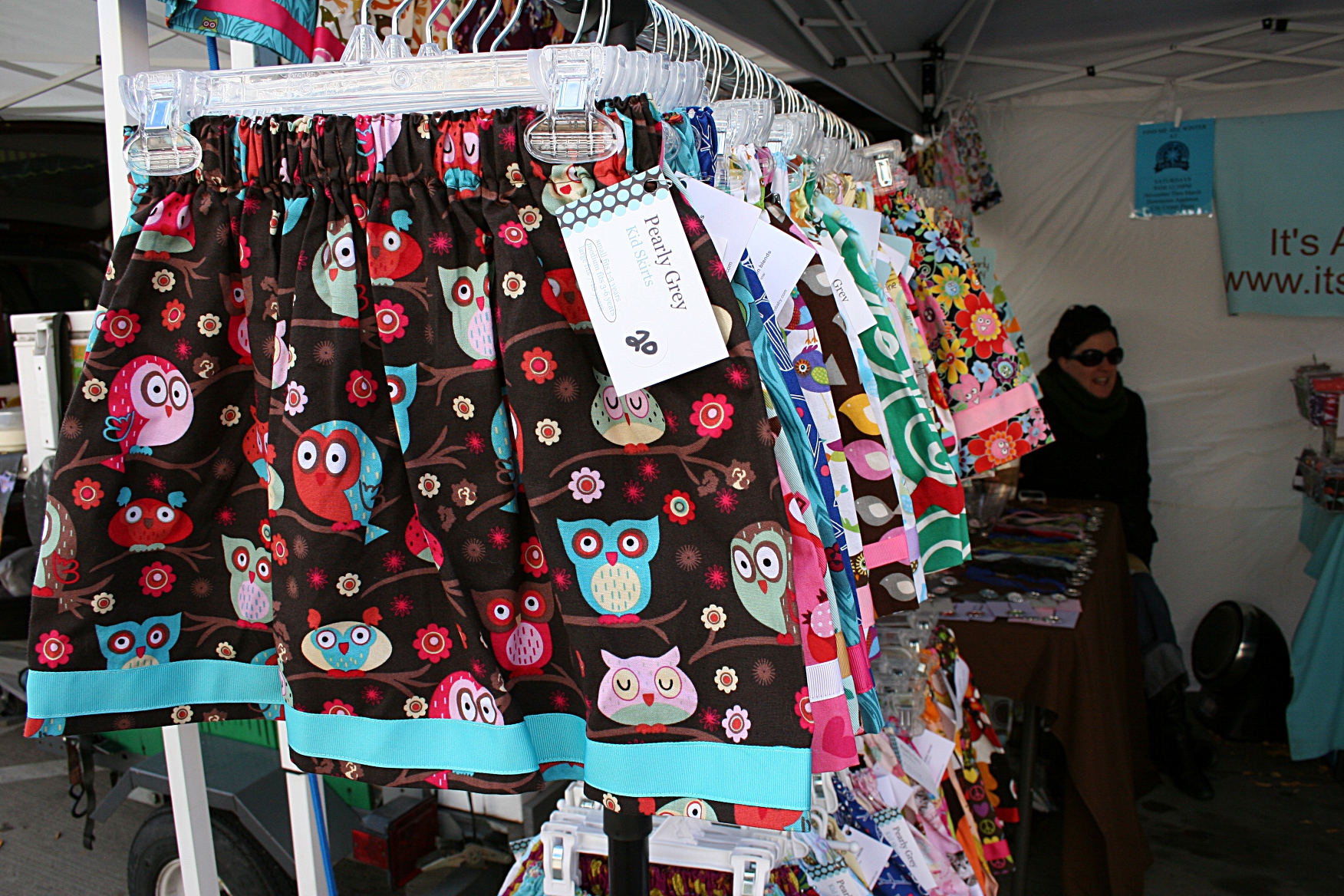
Pearly Grey designer Jen Nowak-Miller tries to stay warm in her booth where she marketed these eye-catching skirts and much more. I fell in love with the prints.  Jen loves them, too, and calls her  attraction to these an “addiction.” This talented designer, who holds a bachelor’s degree in Apparel Design and Manufacturing, also offers her retro/funky clothing designs online at  “It’s All Retro Baby.” She recently relocated from Oregon back to her native Wisconsin.

And so we set off from there to explore. I found myself lagging behind the daughter and husband as I chatted with vendors and took photos of this impressive market.
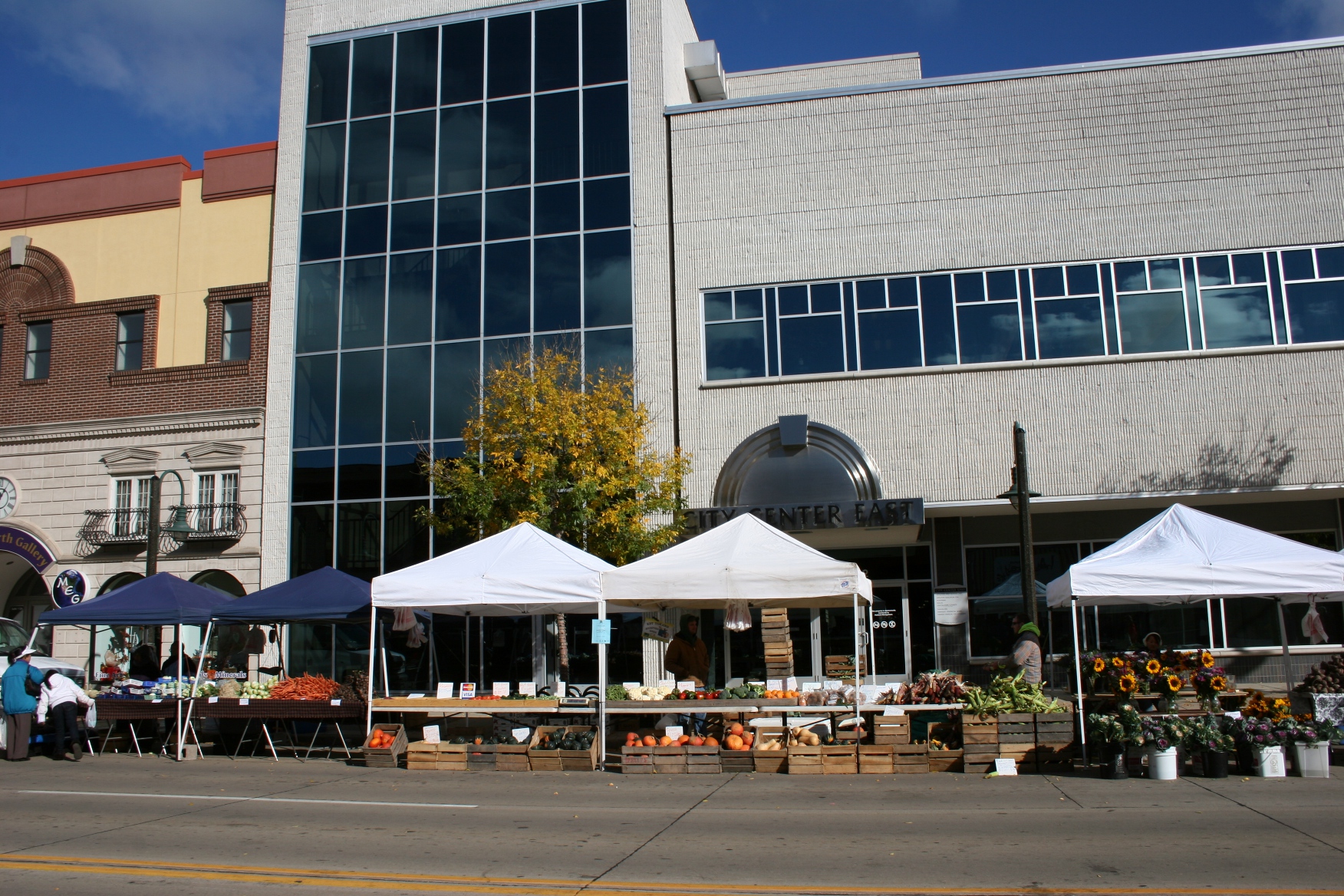
The Appleton Farm Market moves into City Center, the building pictured here on the right, beginning on the first Saturday in November.

I must qualify here that I’ve previously been to the indoor Appleton Farm Market at City Center. Although nice, you just don’t get the same vibe, the same variety, as an outdoor affair. And I think that could be said for any upper Midwest market that moves indoors in the colder, non-growing season.

This Saturday marks the year’s final outdoor venue (from 8 a.m. – 12:30 p.m.) in Appleton with the market moving into City Center from November through March (9 a.m. – 12:30 p.m.). The trolley stopped running at the end of September.
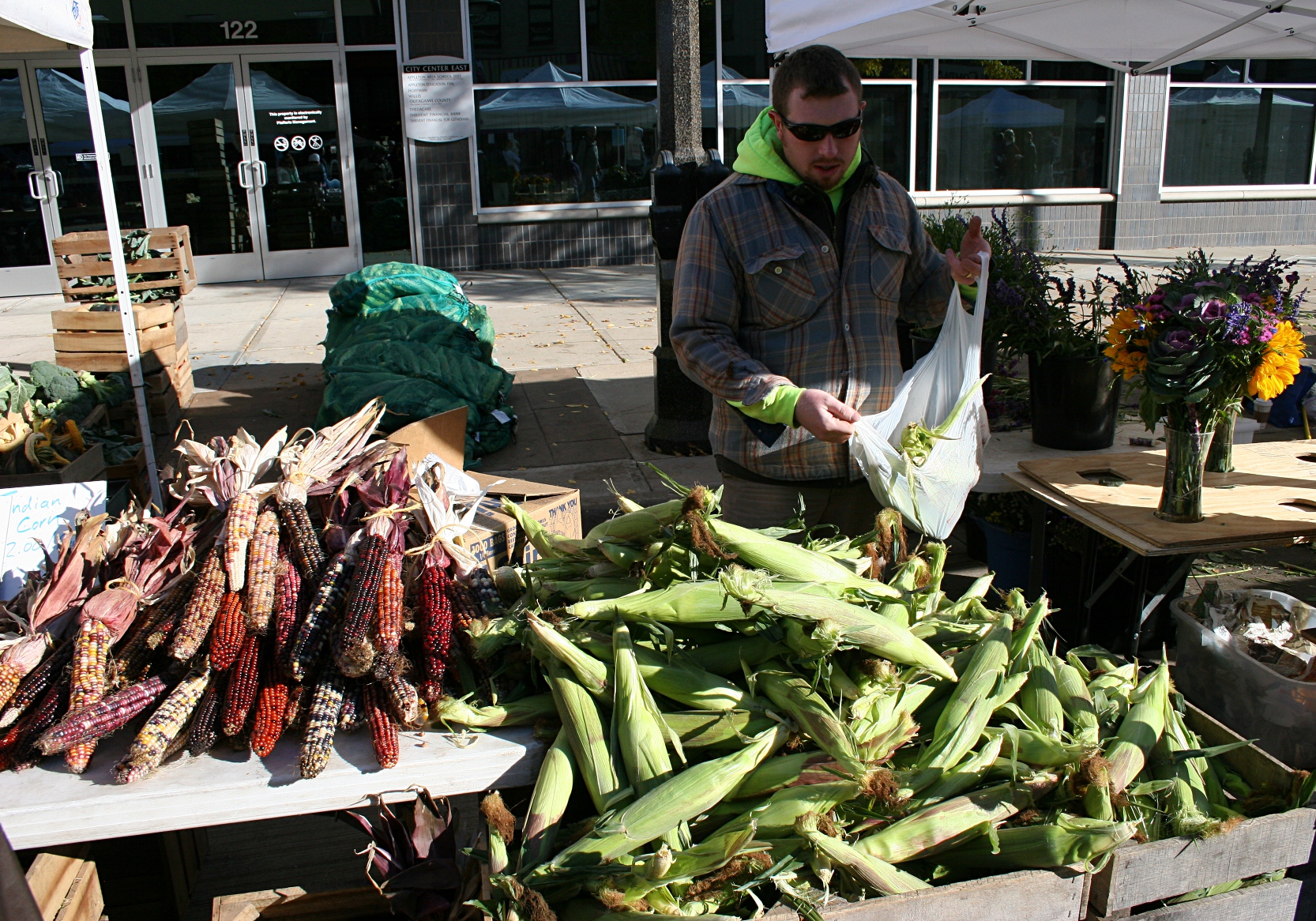
This vendor pitched something about the last sweetcorn dance, so my daughter purchased six ears.

And so we walked block after block through downtown Appleton as shoppers scooped up the last of the year’s sweet corn crop, sampled BBQ on pork, clustered at knitters’ booths to slip warm mittens onto cold hands, purchased $10 bouquets of fresh flowers, speared toothpicks into cubes of Wisconsin cheese…

Piles of fresh carrots highlighted in the morning sunshine.
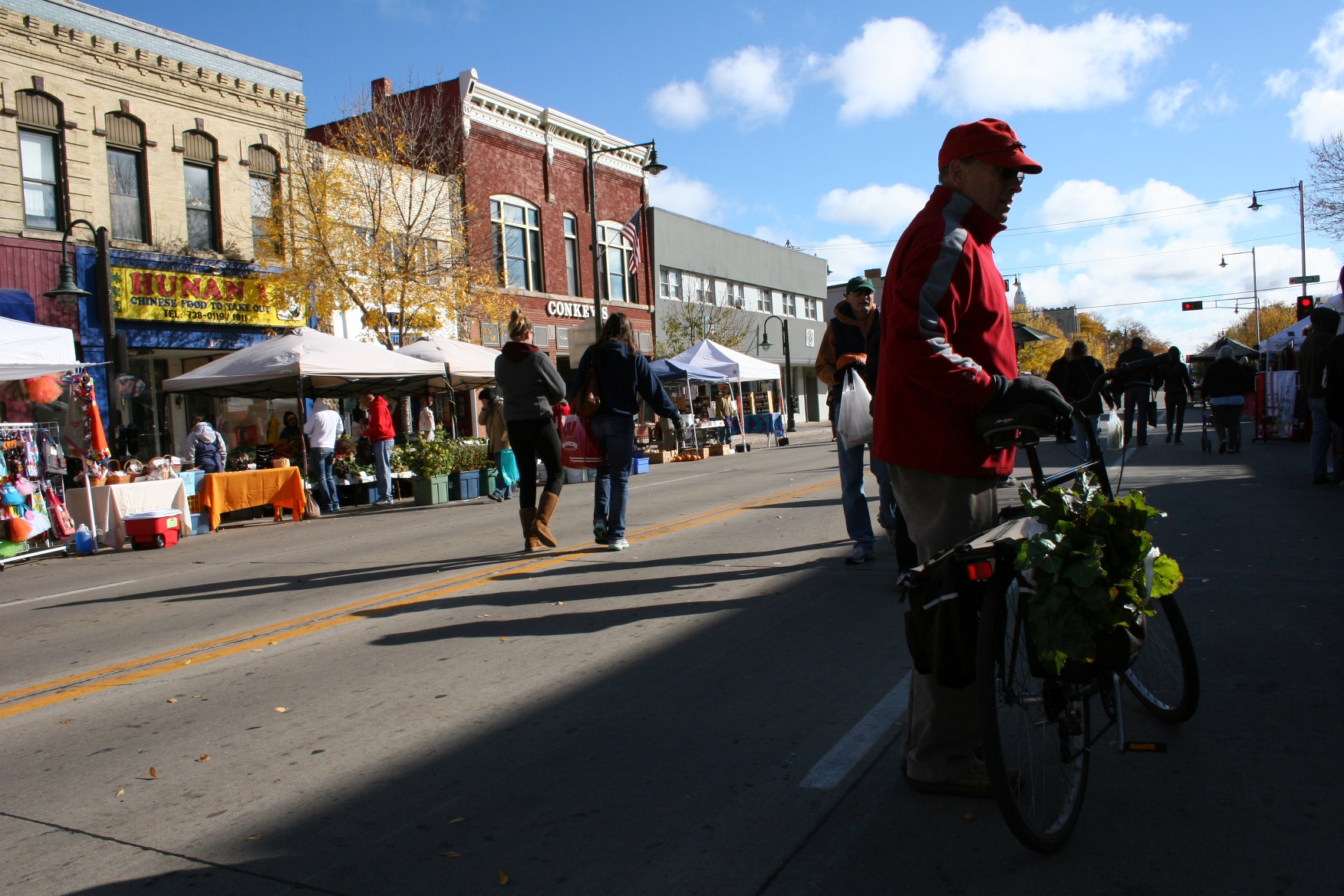
A shopper arrives on his bicycle and piles on the lettuce.
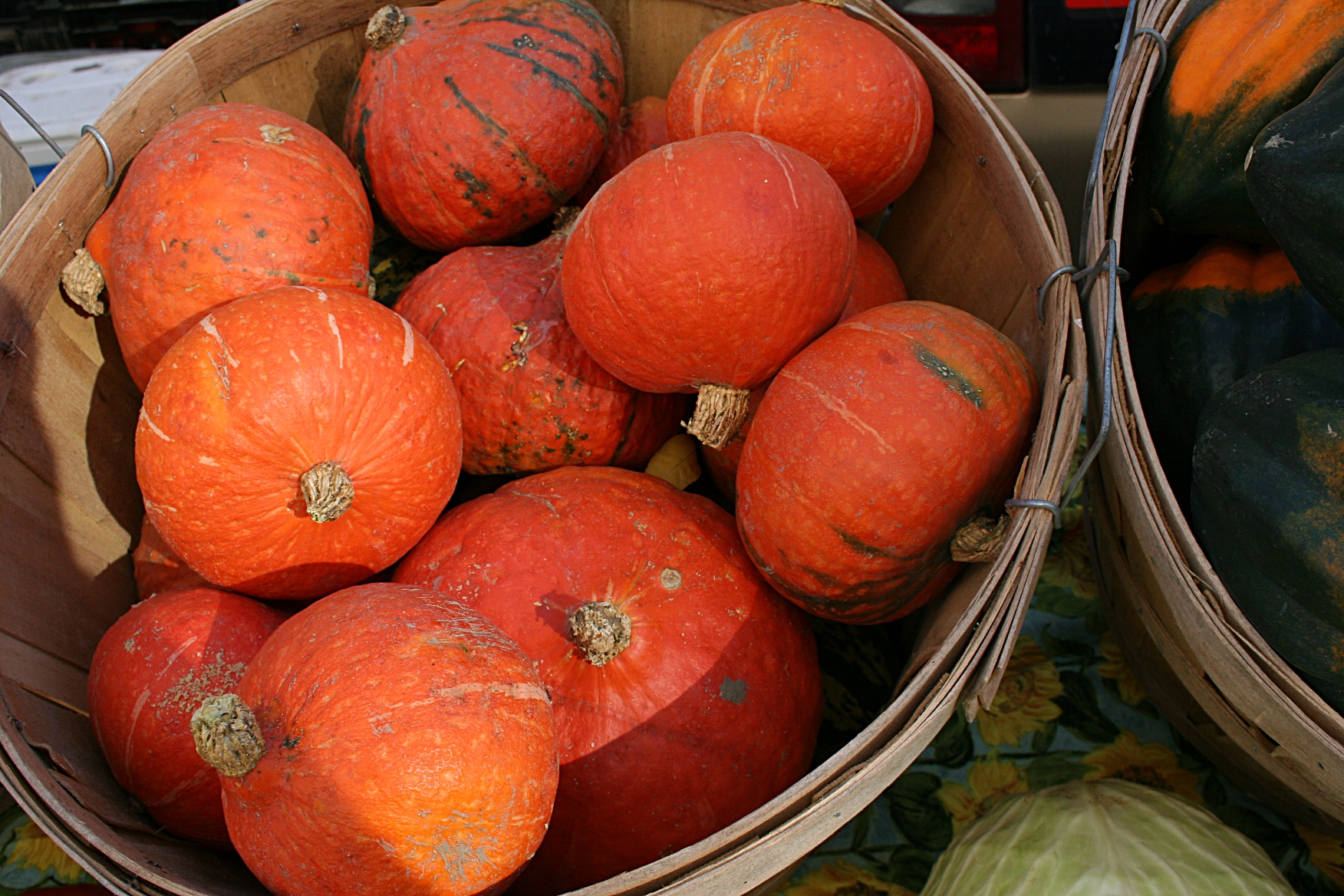
Ah, the bright colors of seasonal produce.

While the entertainment was limited to two young musicians under a canopy, our daughter says warmer weather brings more entertainers.

But on this Saturday in early October, the vendors and shoppers provided entertainment enough for this Minnesotan.

FYI: To learn more about the Appleton Farm Market and about downtown Appleton, click here and click here.

To learn more about the clothing designed by Jen Nowak-Miller, click here to link to her Pearly Grey, “It’s All Retro Baby,” website.

TO SEE MORE APPLETON FARM MARKET photos, keep scrolling:
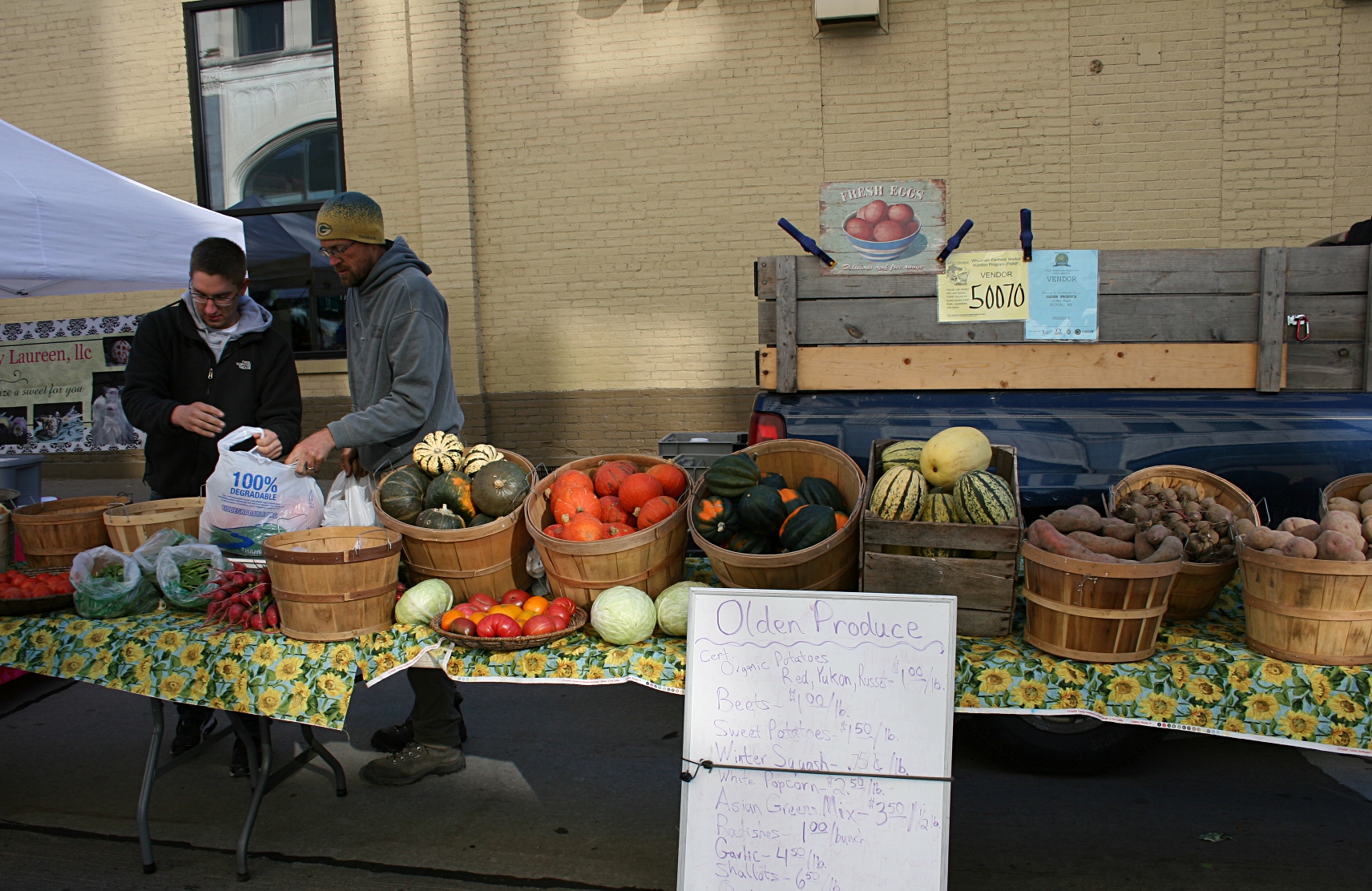
Just one of the many, many vendors offering garden fresh produce.

Several crafty types sold mittens which proved popular with shoppers on the cold, cold morning. At this booth I spotted green and gold Packers mittens and told the vendor I couldn’t buy them because I was from Minnesota. Not missing a beat, and with a huge smile spreading across her face, she reached under her table, whipped out a pair of purple mittens and told me she’d just made them the previous evening.  You should have seen the surprised look on my face.
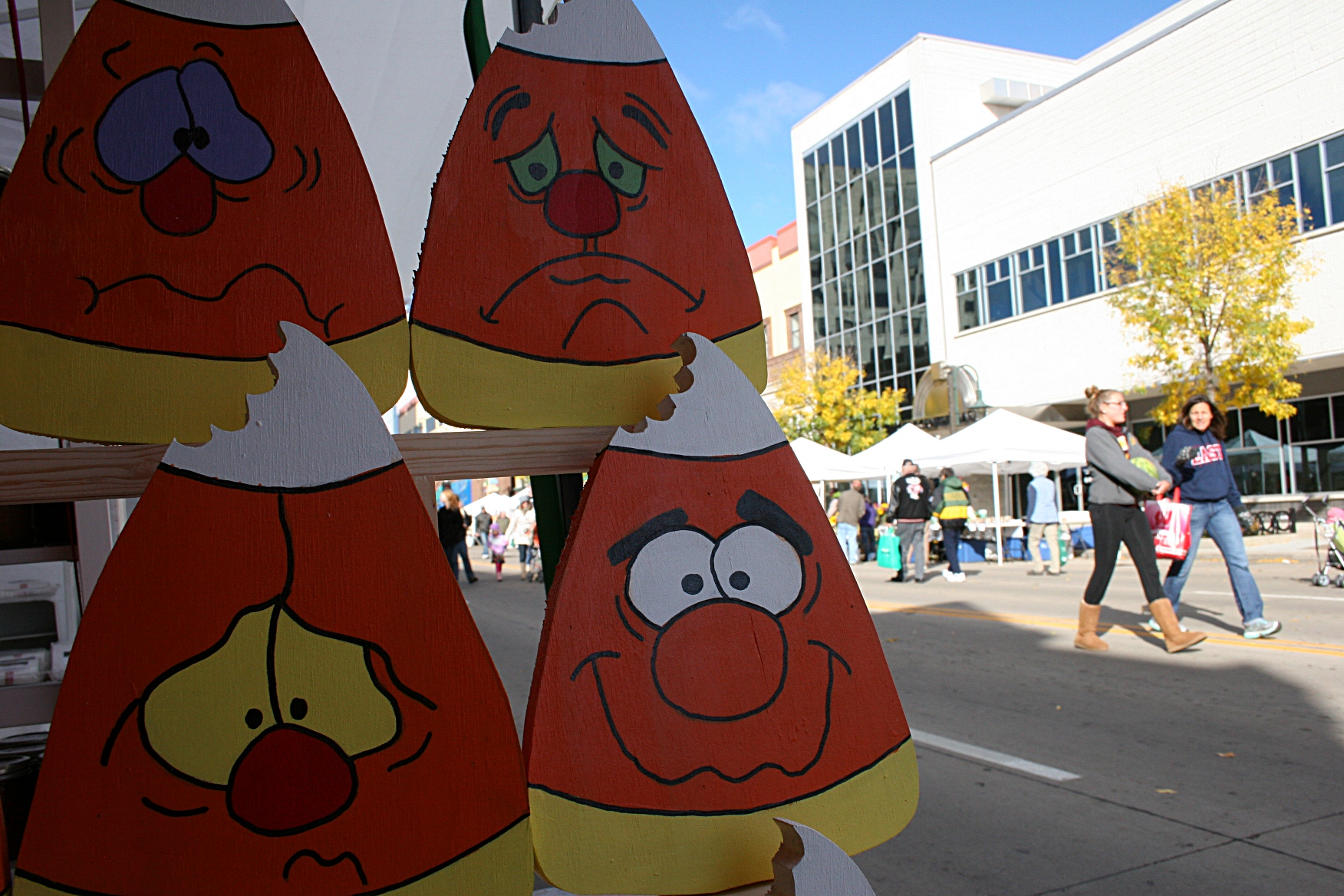
A father and son were selling these humorous candy corn faces they sawed from wood and painted.
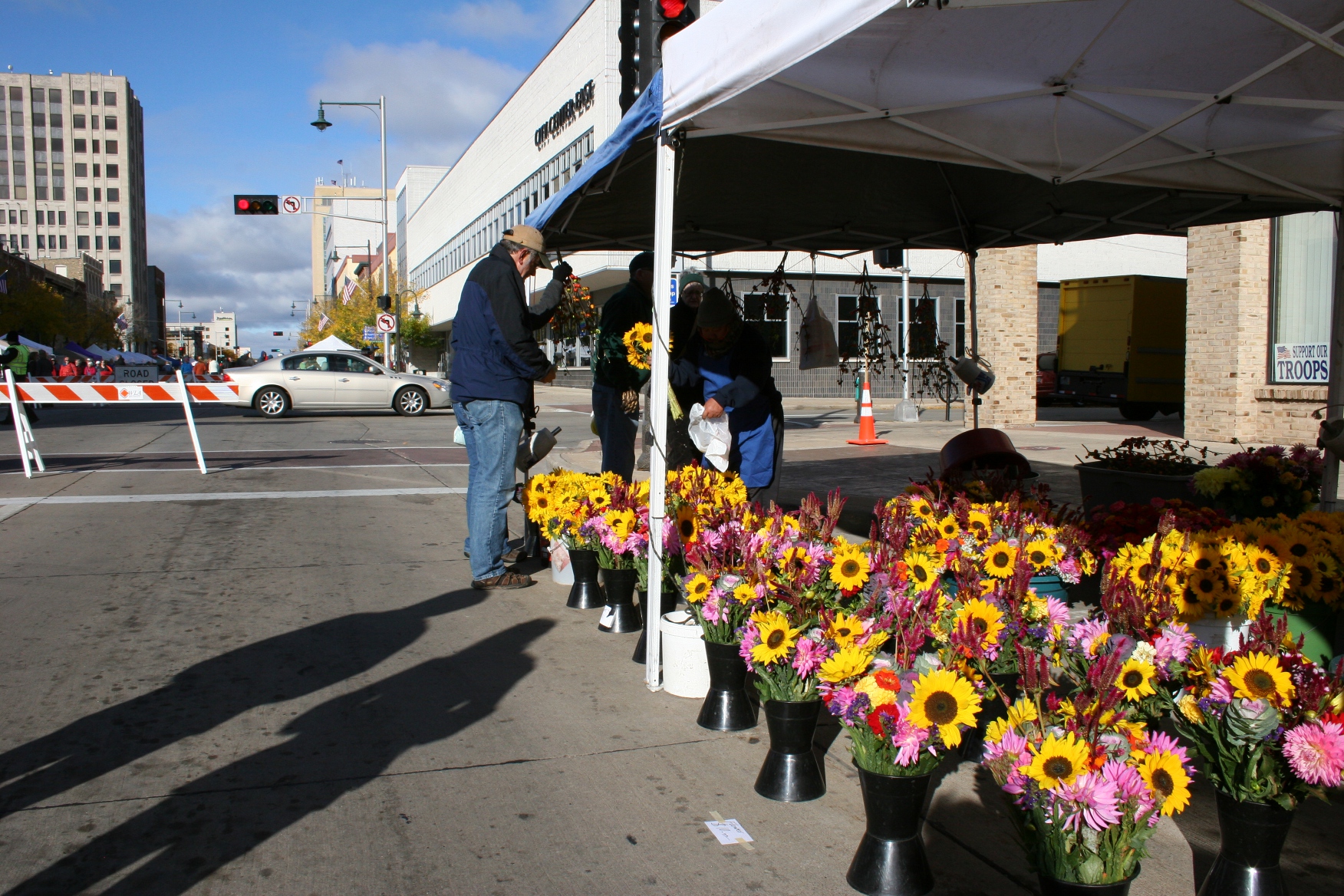
Beautiful floral bouquets and only $10. Should have bought some for my daughter.
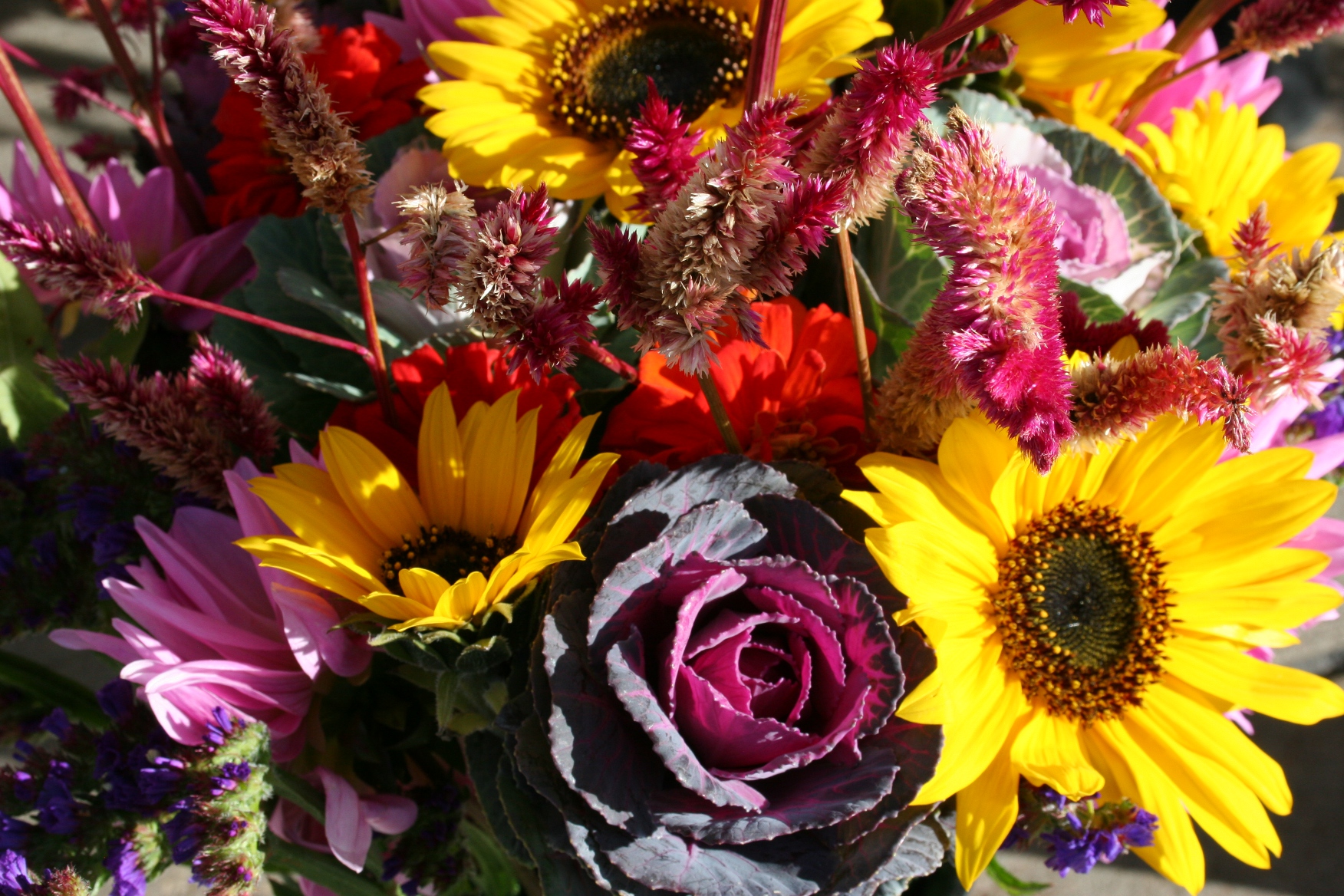
And just because I love flowers so much, here’s a close-up shot.
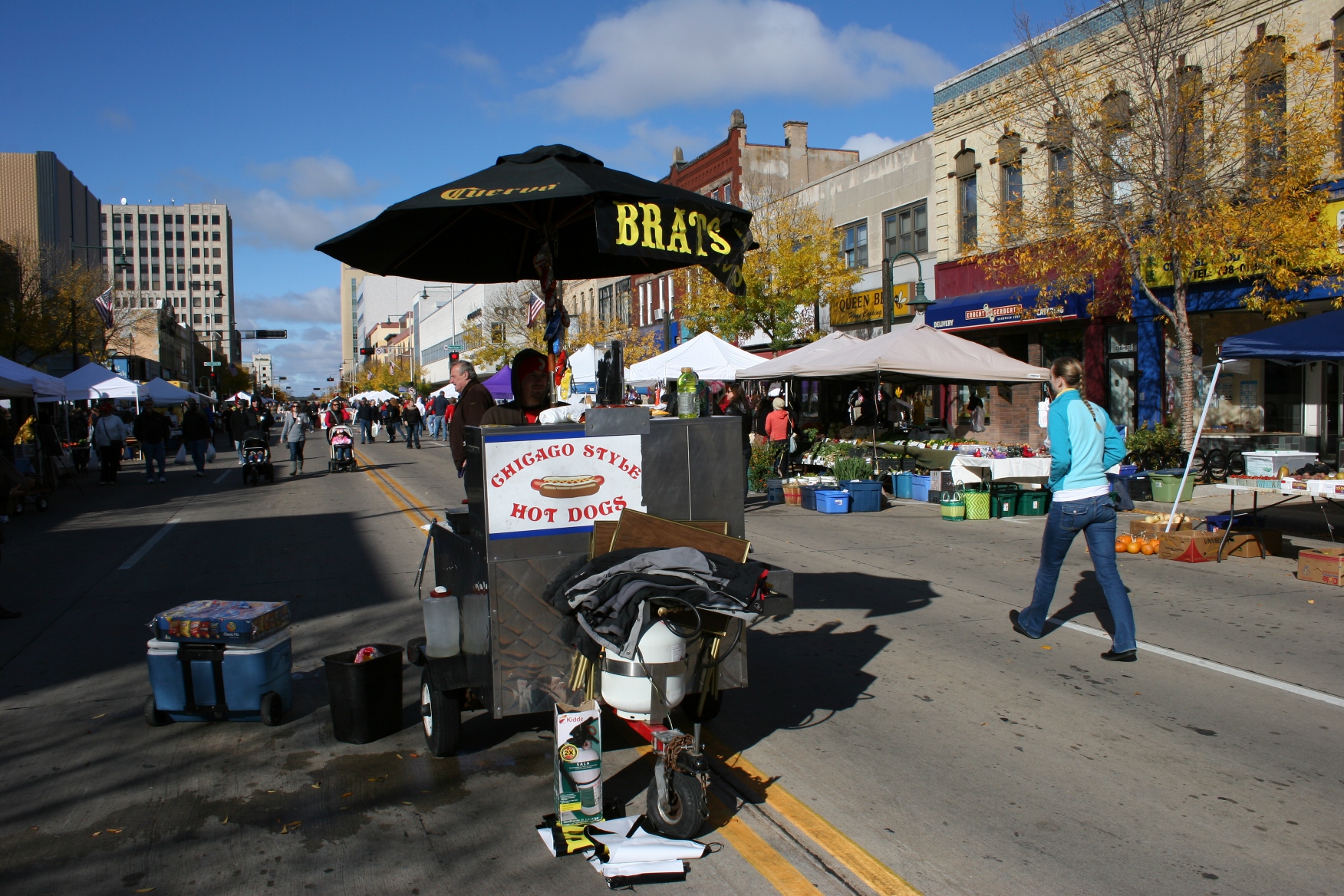
Every Wisconsin event needs brats, right?
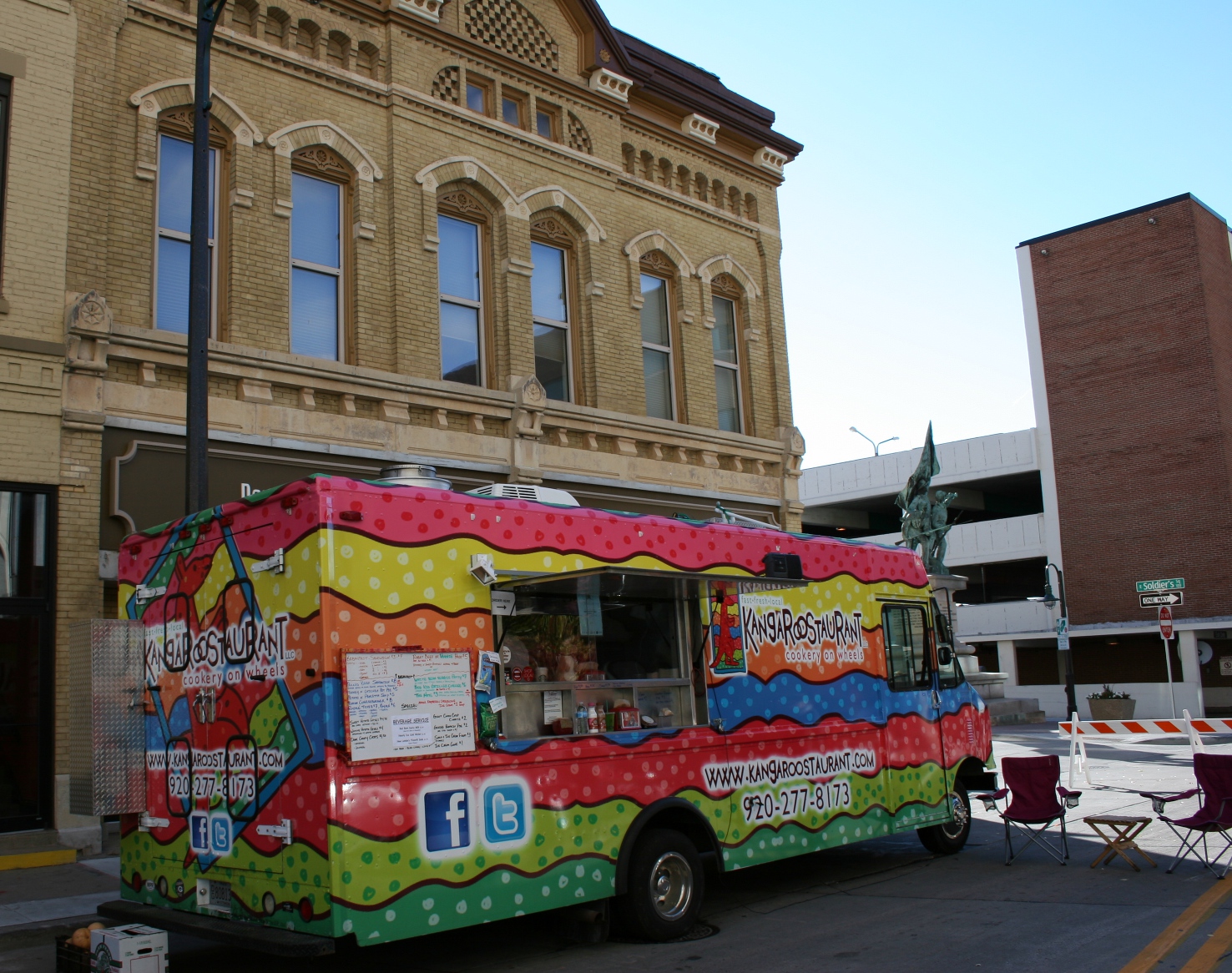
I spotted this food truck on a side street just off College Avenue. I know in other cities, food trucks have become a point of contention for local restaurants during events. I don’t know how the restaurant owners in downtown Appleton feel about the food truck’s presence.

Happy Halloween from the same father-son duo who created the candy corn faces.

DISCLAIMER: I received a gift certificate from Downtown Appleton Inc. last year after posting about a previous visit to this city. That did not affect my decision to write again about Appleton nor the content of this post. And you can expect another story coming soon from Appleton on the Leonardo da Vinci exhibit there.

© Copyright 2012 Audrey Kletscher Helbling


Seriously, beer for breakfast? October 25, 2012

Filed under: Uncategorized — Audrey Kletscher Helbling @ 7:16 AM
Tags: , , , , , ,

SITTING IN THE RECLINER the other night perusing a coupon book recently inserted in my local newspaper, the Faribault Daily News, I came upon this deal from L & M Bar & Grill in downtown Dundas, just south of Northfield:

I taped the word “VOID” across this coupon so you cannot use it.

I turned to my husband, informed him of the beer deal and said something like, “Can you believe this?/They must have made a mistake./Are you kidding, beer for breakfast?”

Breakfast is served at L& M from 7 – 11 a.m. Monday – Saturday and from 8:30 – 11 a.m. on Sunday.

What’s your take on this coupon, this offer of free beer with purchase of breakfast?


Making horseradish, a family tradition October 24, 2012

Filed under: Uncategorized — Audrey Kletscher Helbling @ 6:58 AM
Tags: , , , , ,

MY DAD WOULD HAVE loved it.

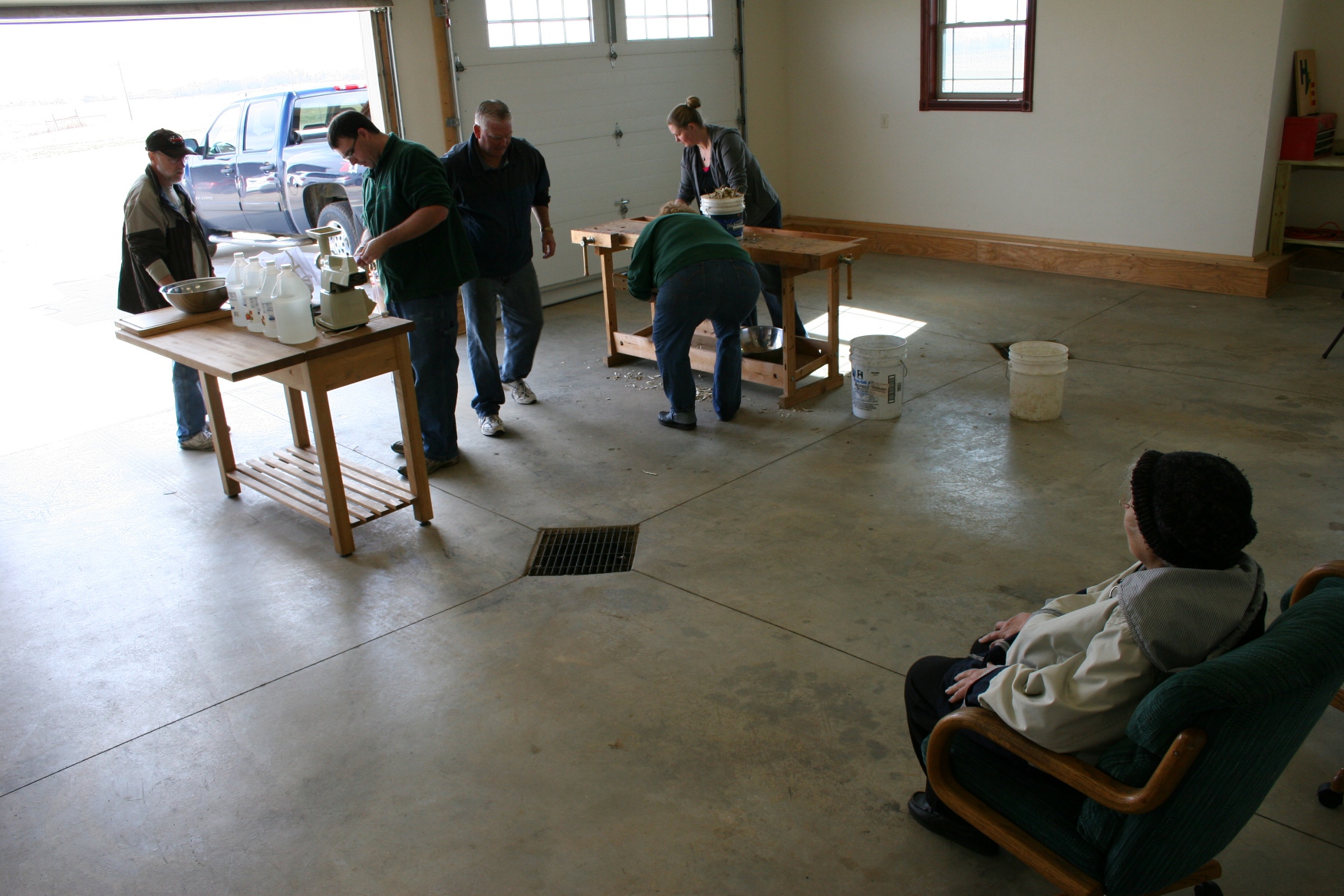
On Saturday, my husband and I gathered with extended family in a garage just north of Lamberton in rural southwestern Minnesota for the annual making of horseradish, a tradition started by my horseradish loving father many years ago.

Freshly dug horseradish, soaking in water and ready to be washed.

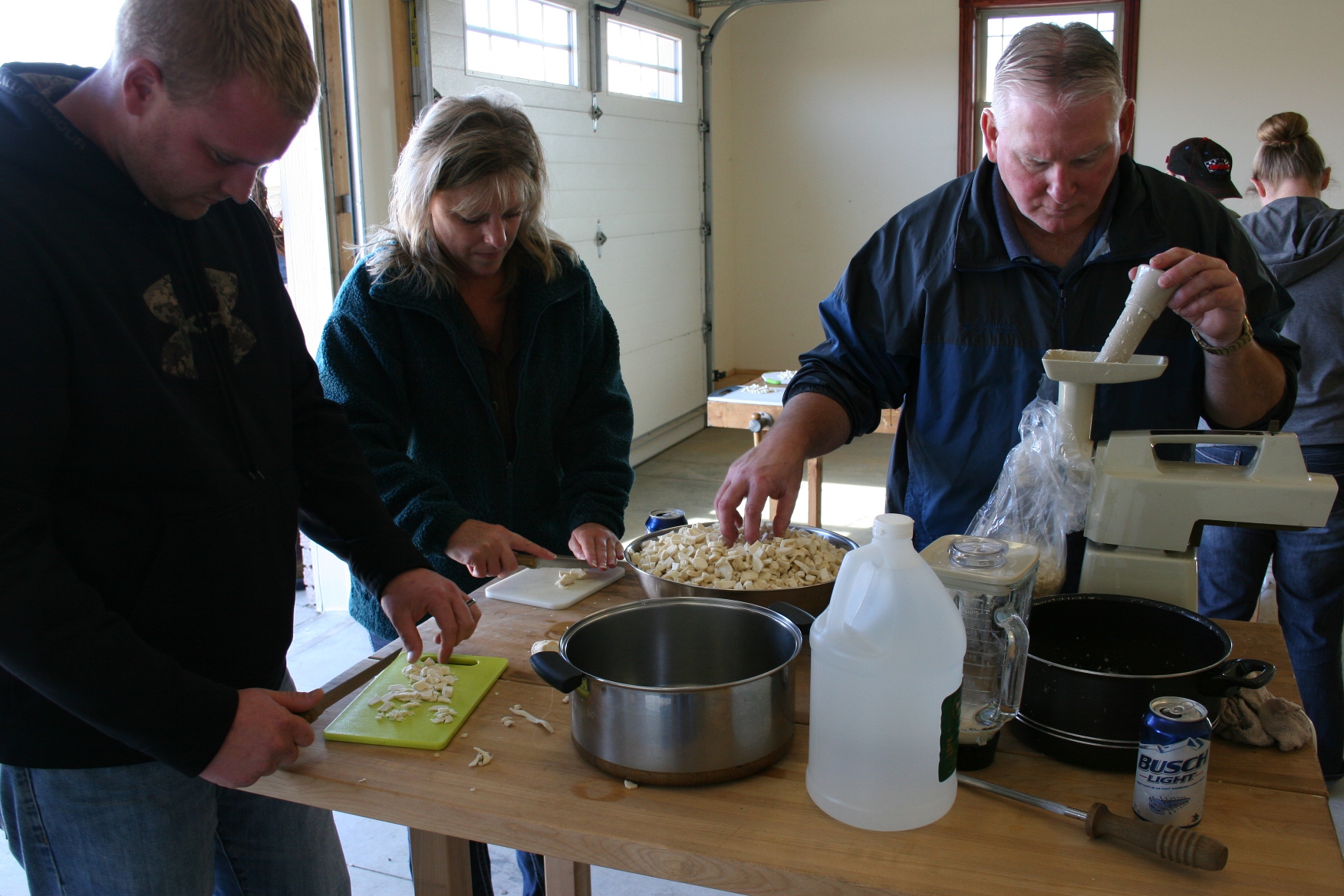
Back in the day, my dad and bachelor uncle, Mike, would occasionally make horseradish. Eventually my sister Lanae (and later her husband, Dale, too) began assisting Dad with the digging and washing and peeling and slicing and processing of this pungent root. And then, when the creamy white sauce was bottled, Dad would haul it down to the Vesta Community Hall for the annual Senior Citizens’ craft/bake/produce sale. Folks would wait in line to snap up Vern’s homemade horseradish.

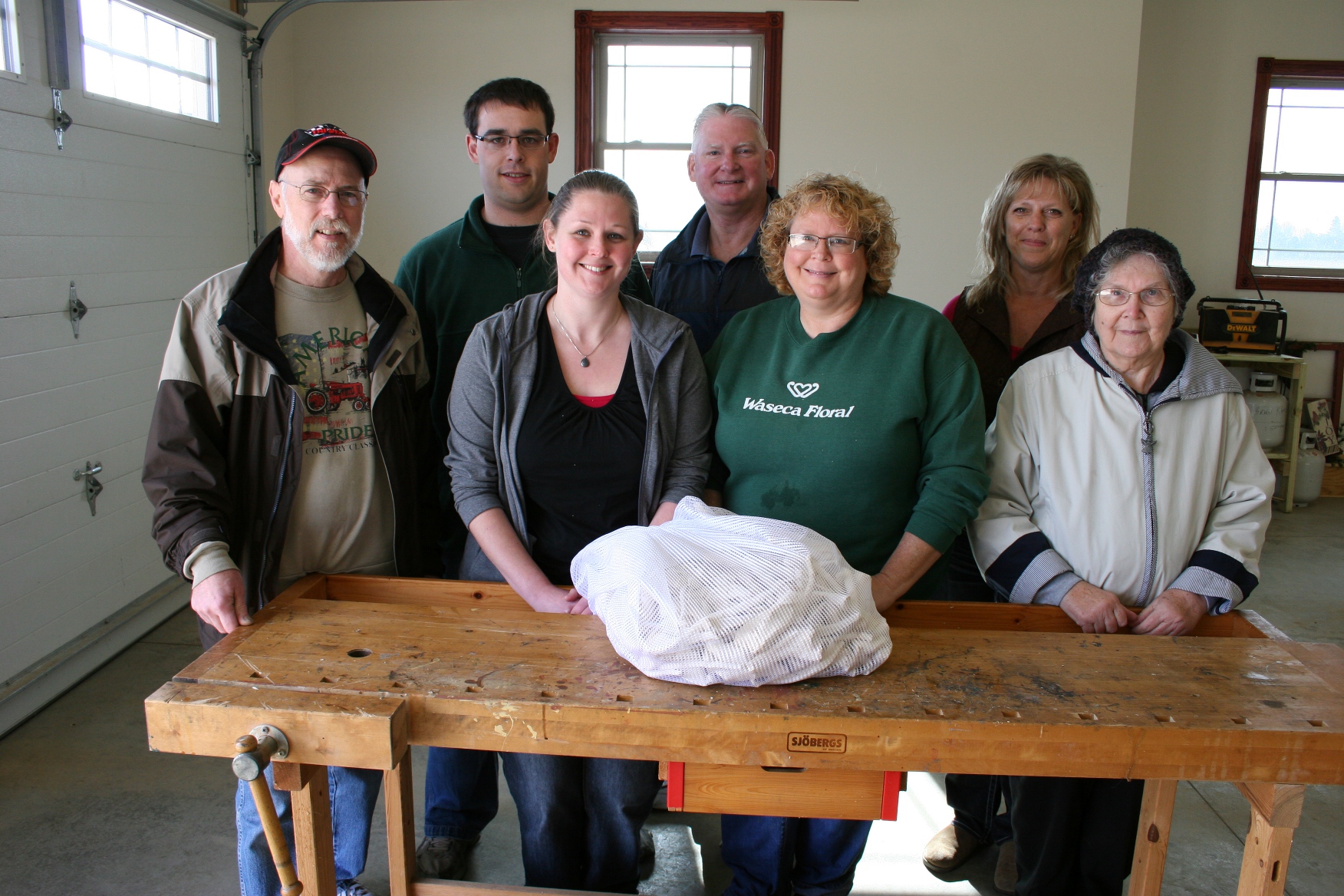
The 2012 horseradish making crew, front row, left to right, Randy, Tara, Lanae and Arlene. Back row: Andy, Brian and Vicki. I’m obviously missing from the photo as are Al and Alyssa, who arrived later.

Dad has been gone for nearly 10 years now, his annual root rite resurrected in recent years by Lanae and my middle brother, Brian. For the first time I joined them and other family in making horseradish, and, although I will eat horseradish, I am not a fanatical fan like my siblings and our father before us.

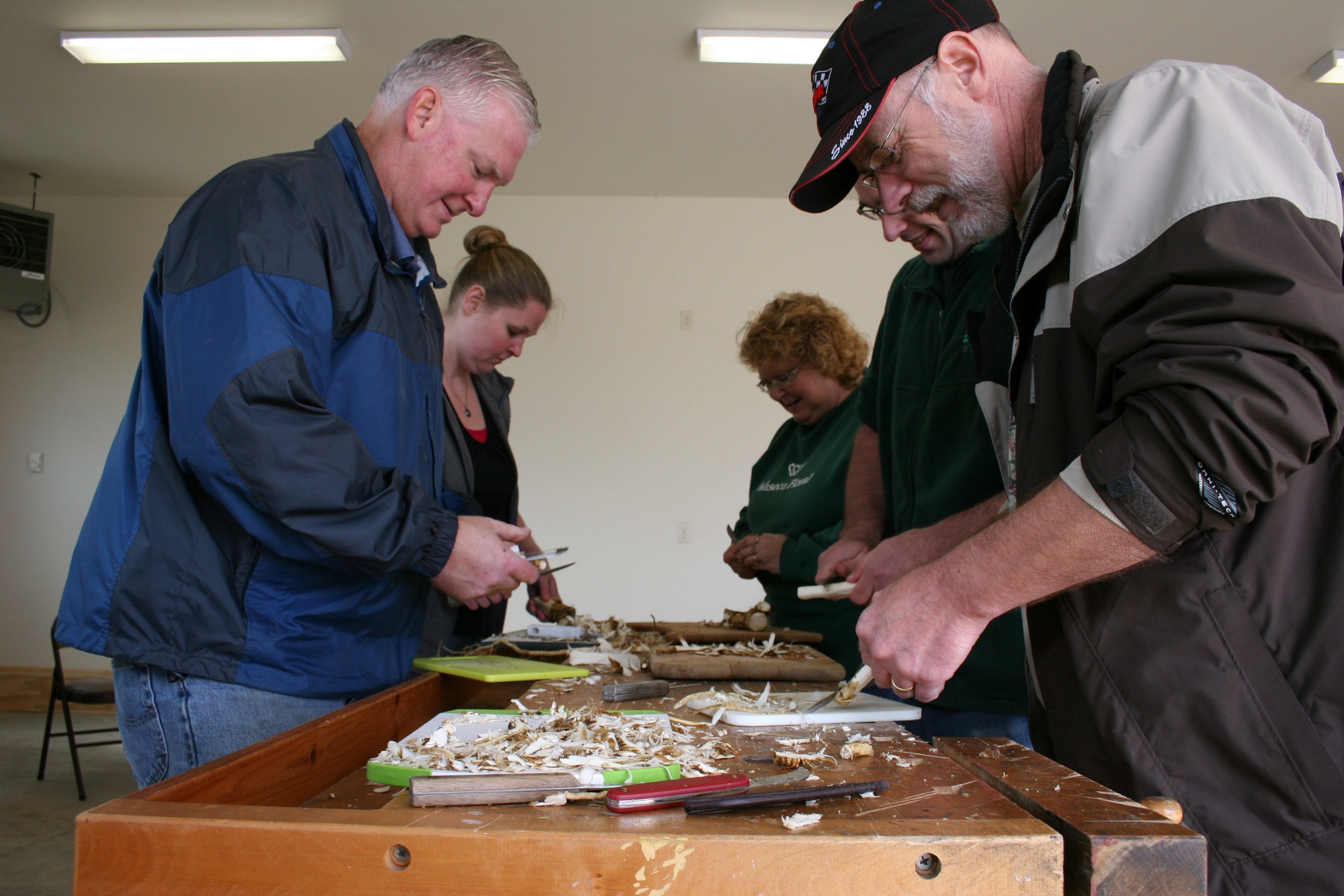
Peeling the horseradish, the third step after digging and washing.

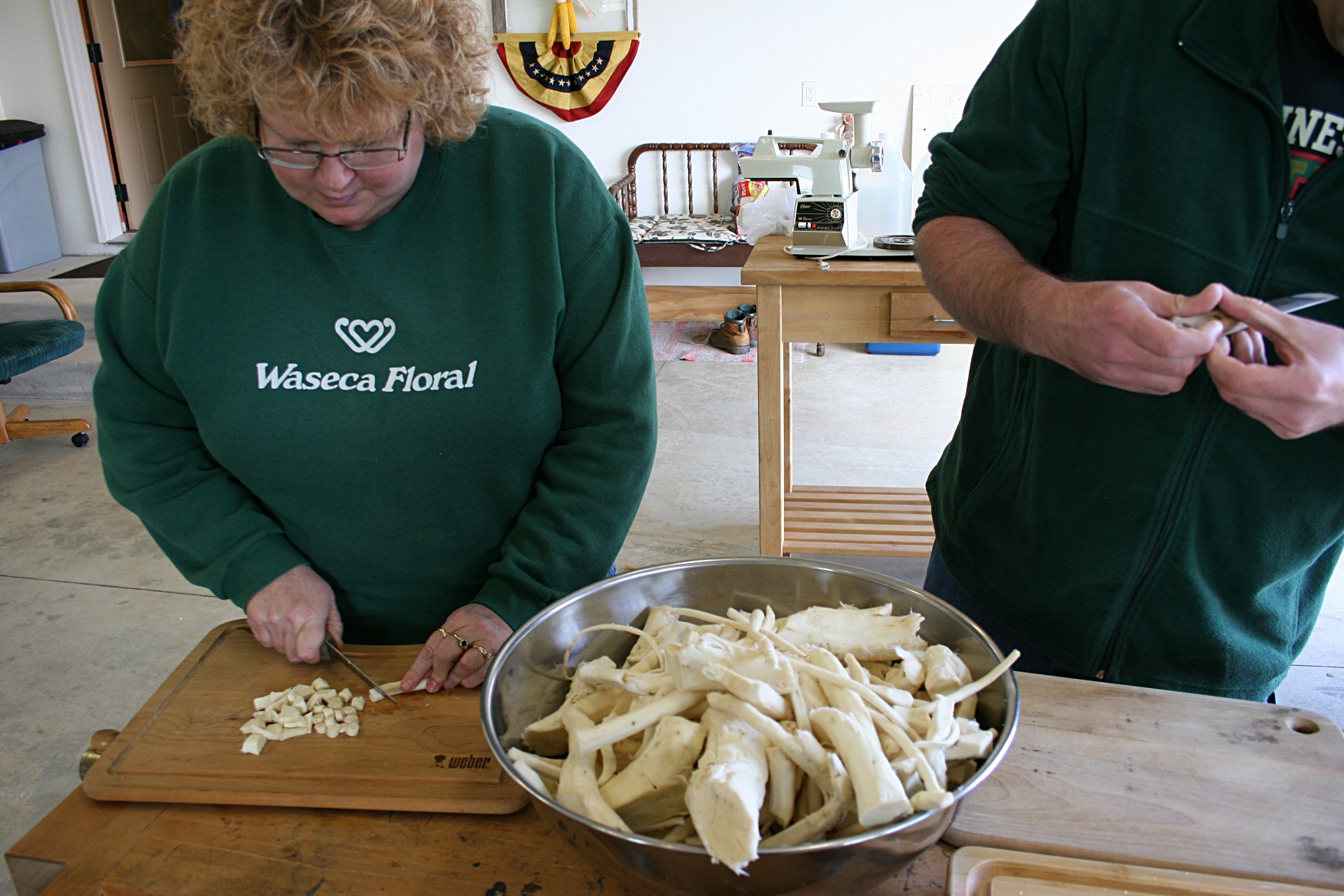
But it wasn’t the horseradish which drew Randy and me to drive more than two hours to Brian and Vicki’s rural acreage to stand at tables in a garage on a chilly Saturday to process horseradish that would soon overwhelm us with eye-stinging fumes.

It was family and tradition and memory-building and time together which brought us to this peaceful place, to this land where I grew up some 25 miles to the north and west. Any reason to return to my beloved prairie.

My mother, the main supervisor, watches from her chair. Vicki, who is recovering from surgery, also supervised.

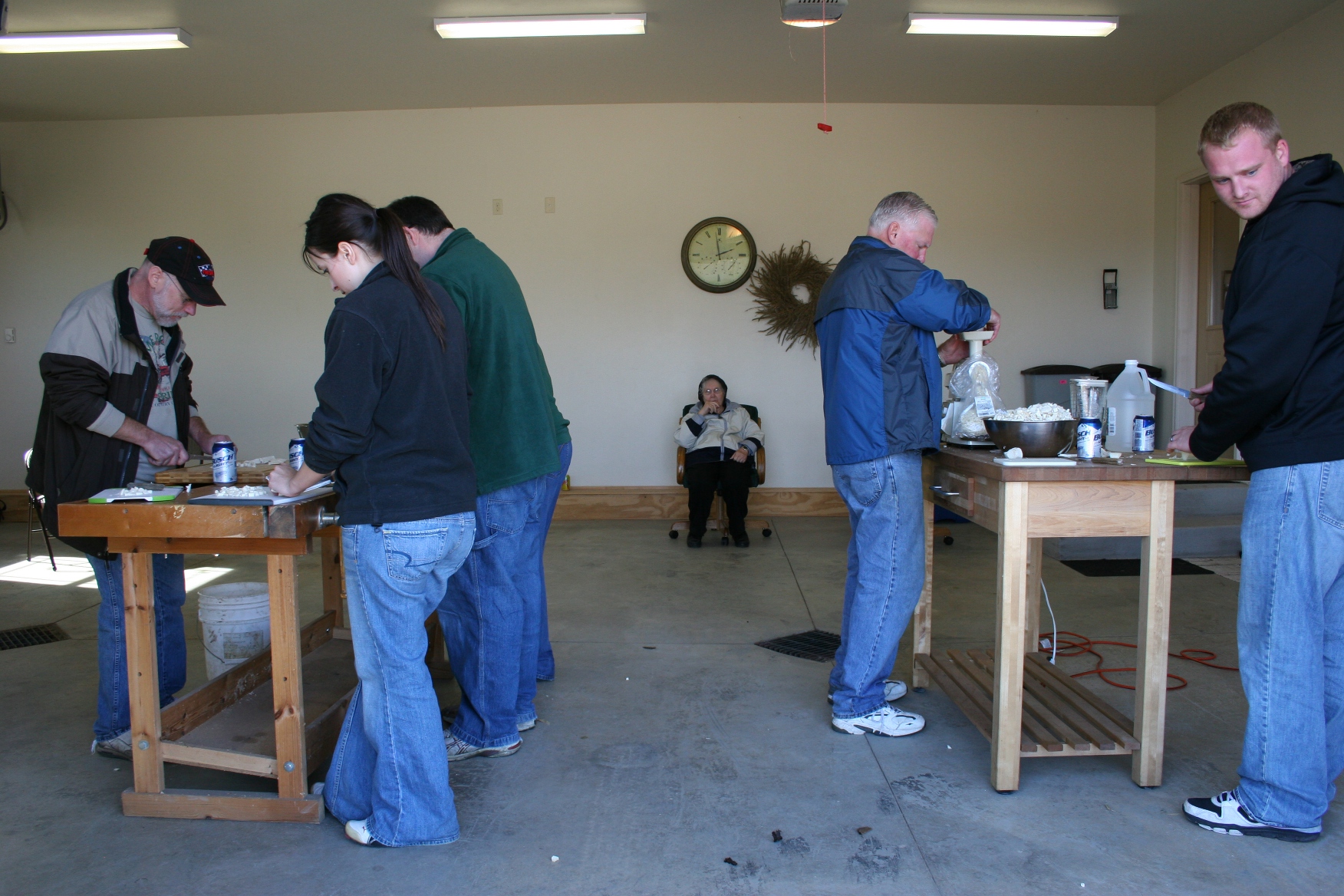
And so Randy and I were instructed in the art of horseradish making while my 80-year-old mother supervised from a comfy chair, occasionally rising to skirt the tables, to check the progress.

We listened to the tales of horseradish making past, when metal shavings from the old meat grinder flaked into the horseradish. We heard of Dad’s old drill shorting and shocking whoever was using the drill (which he had rigged to drive the meat grinder) to pulverize the roots.

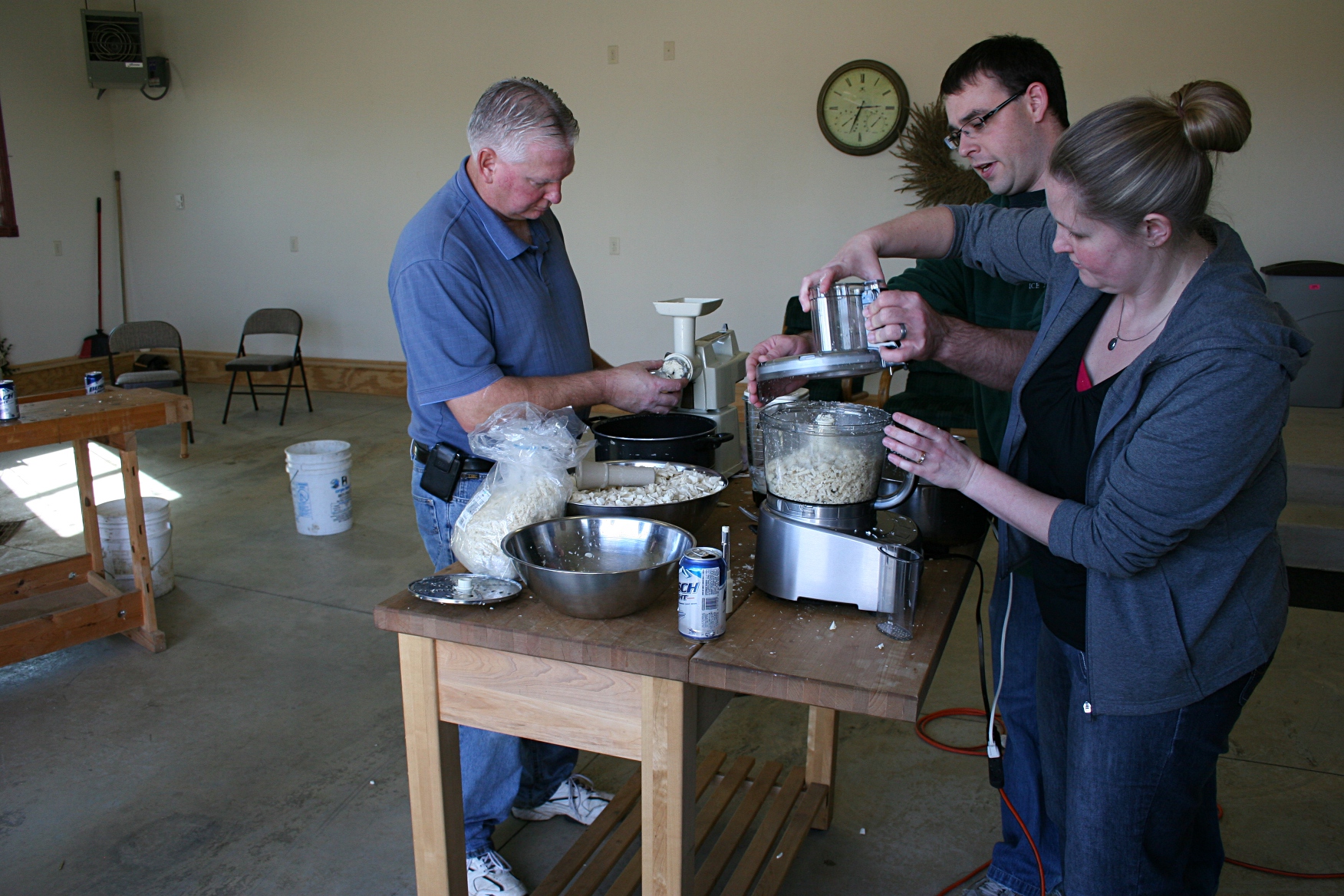
First the food grinder was used…

And when the food grinder continually plugged, the food processor was put into action and this worked.

The old meat grinder and drill have been stashed away now, replaced first by a modern electric grinder (which failed to work as planned) and then by a food processor before the pulverized roots were mixed with vinegar in a blender.

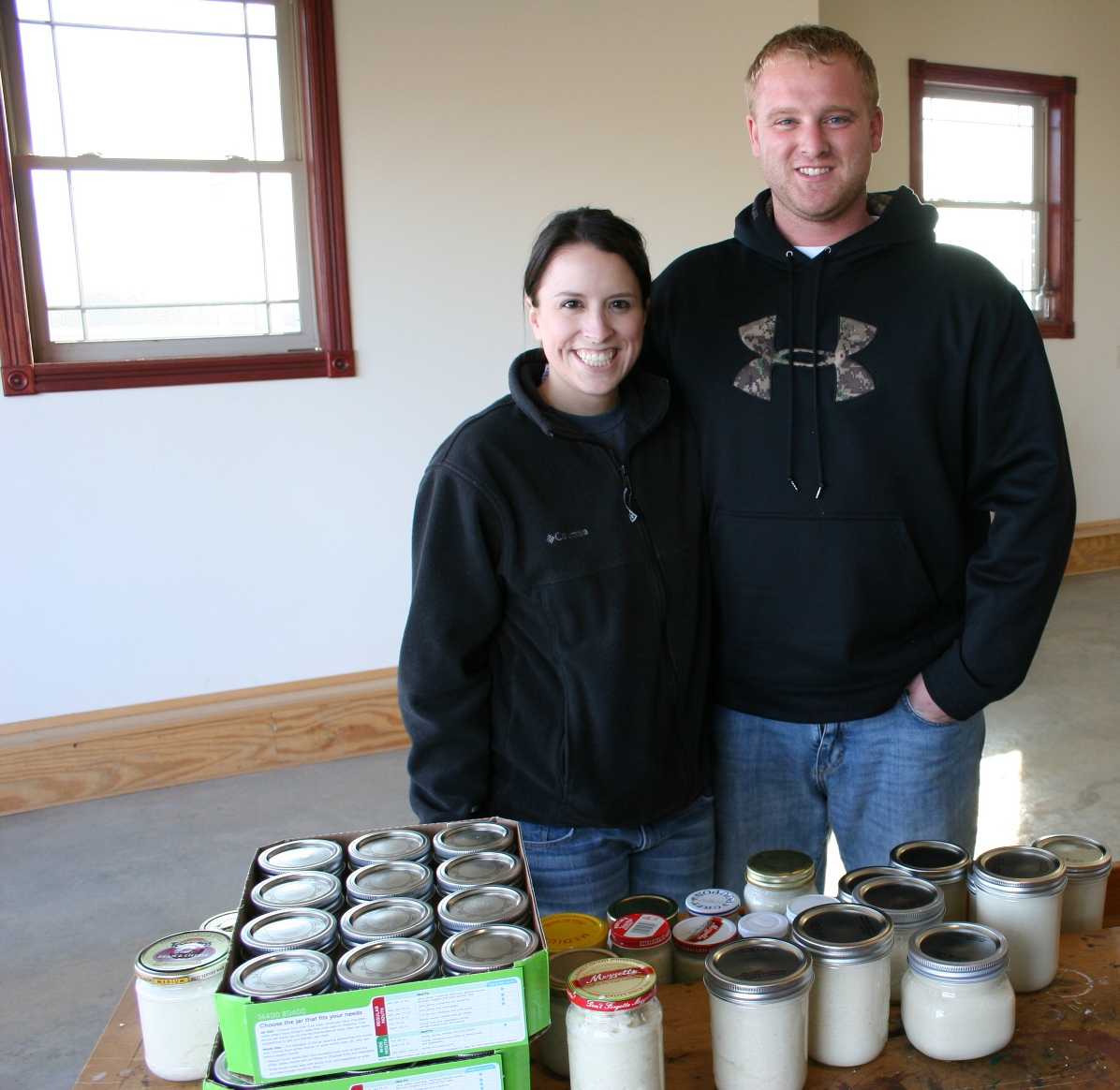
Proof that honeymooners Al and Alyssa helped make horseradish.

As words and horseradish peelings flew and laughter bounced around the garage, it was sometimes difficult to separate fact from fiction, especially when the beer was cracked open upon the arrival of honeymooners Al and Alyssa. Al and his bride of one week, on their way home from Duluth to Tyler, pitched in. And I photographed them so some day their children will believe their parents made horseradish on their honeymoon.

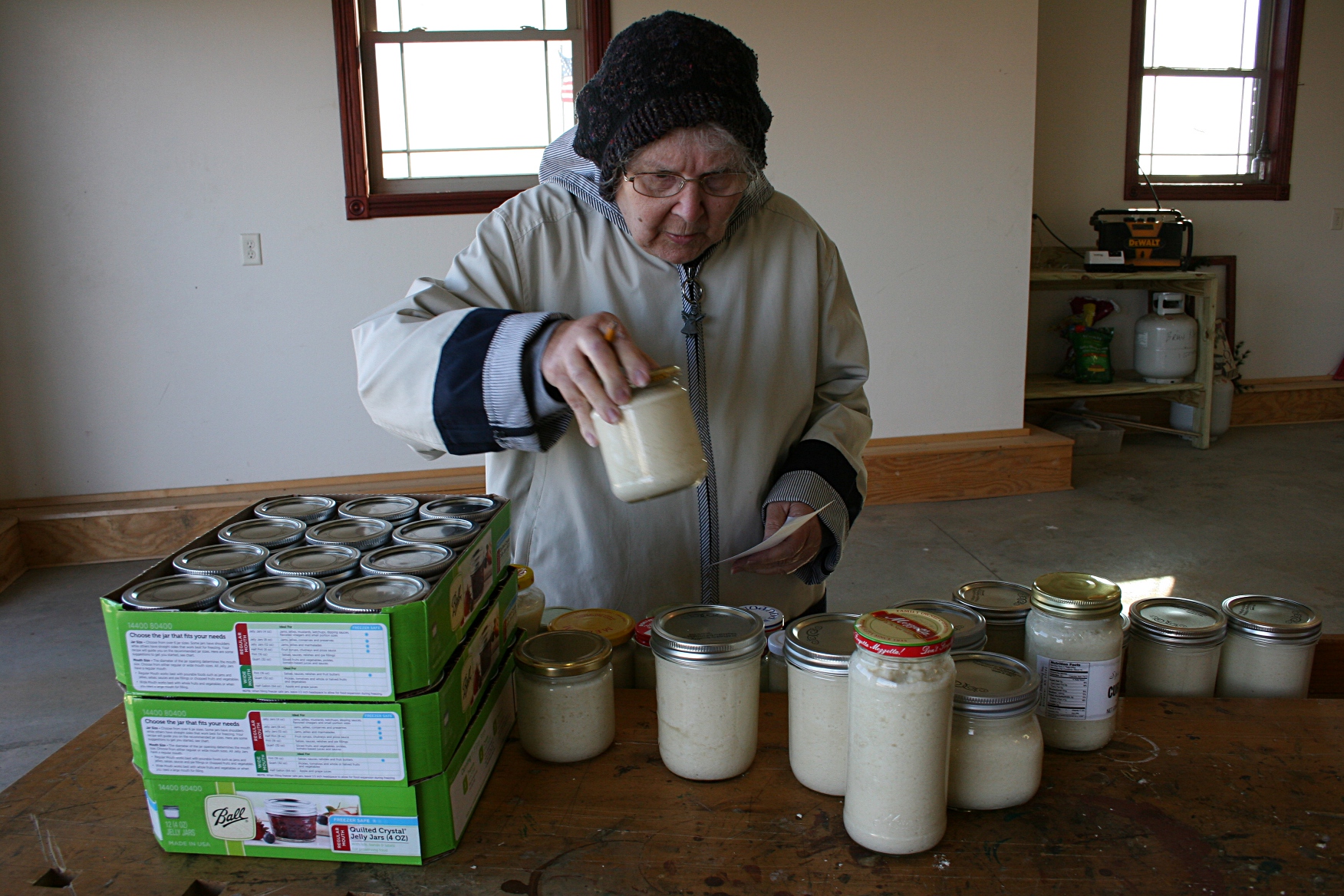
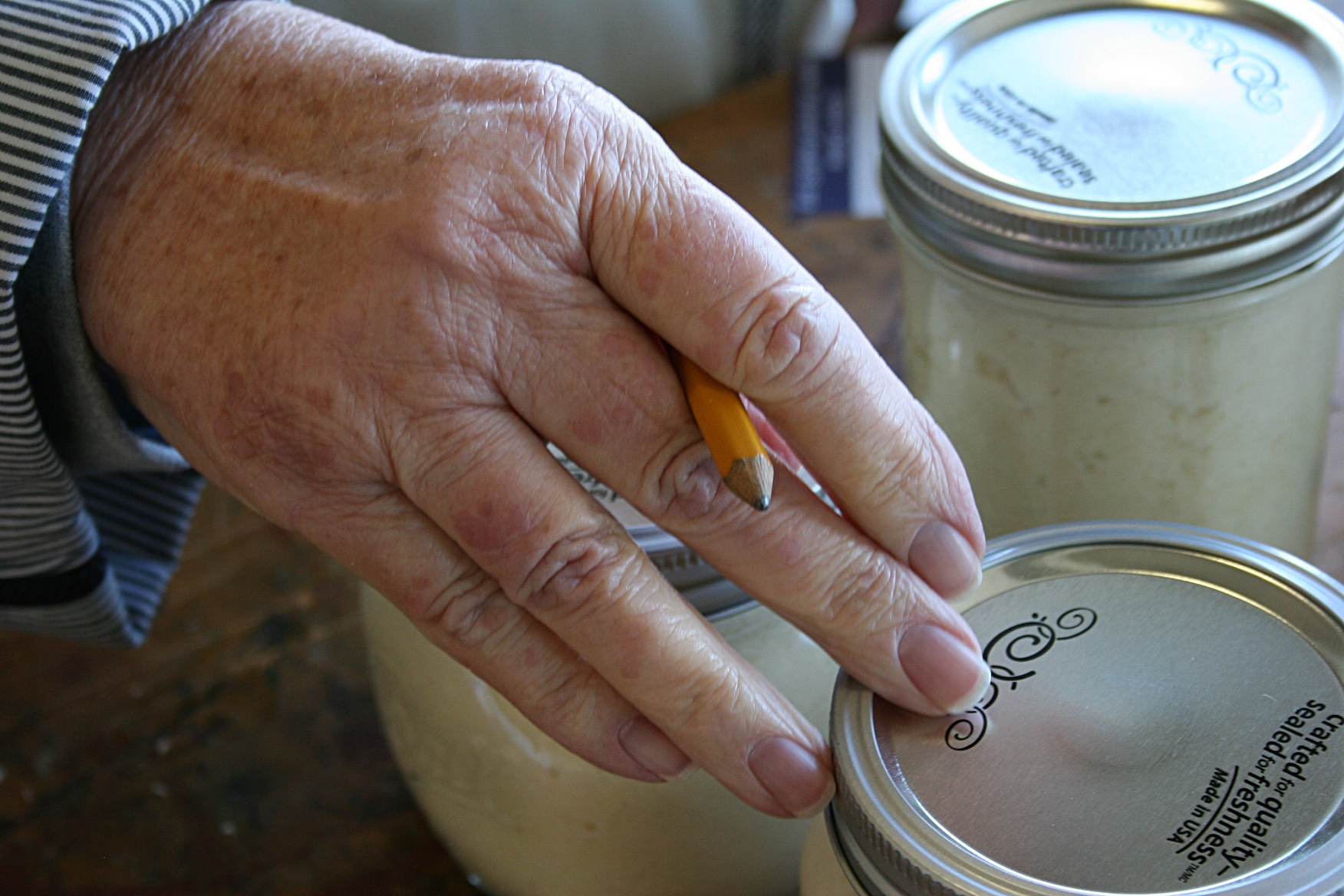
My mom, the supervisor, counts jars. We filled 66, a smaller yield than normal. Horseradish not kept by family is given away (never sold) as our Dad, except for those he sold at the fundraiser, gave his away. We honor him by gifting horseradish lovers with a jar.

The supervisor counts the jars of horseradish.

These are the moments that matter most in life, the sweet times with family. And nothing touched my heart more than watching my aging mom, the supervisor, rise from her chair to meticulously count and record the yield.

AND FOR THOSE OF YOU unfamiliar with the entire process, here are additional photos to show you the steps needed to grow and make horseradish:

STEP 1:

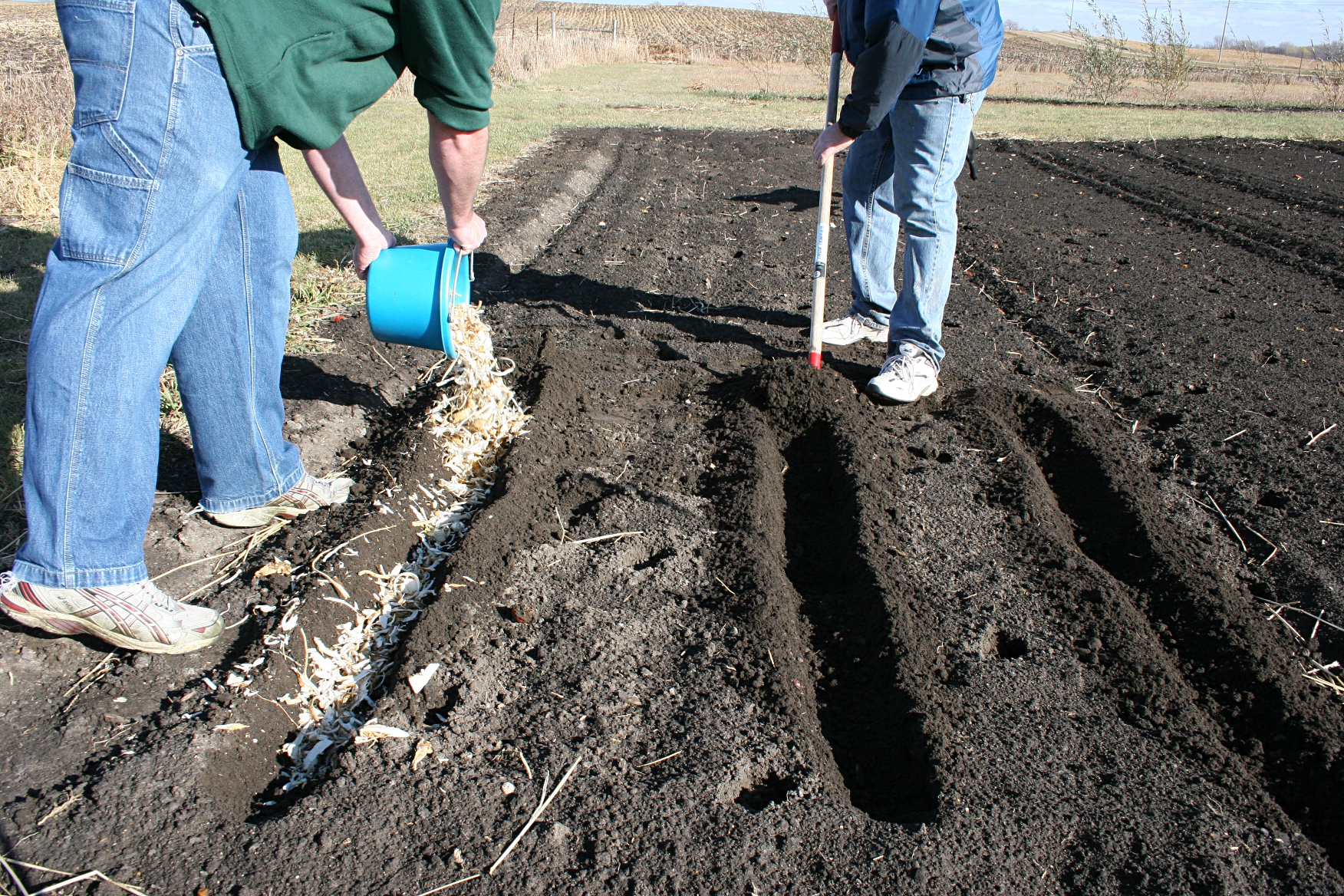
Plant the horseradish, which grows from the left-over scraps of roots, etc.

STEP 2:

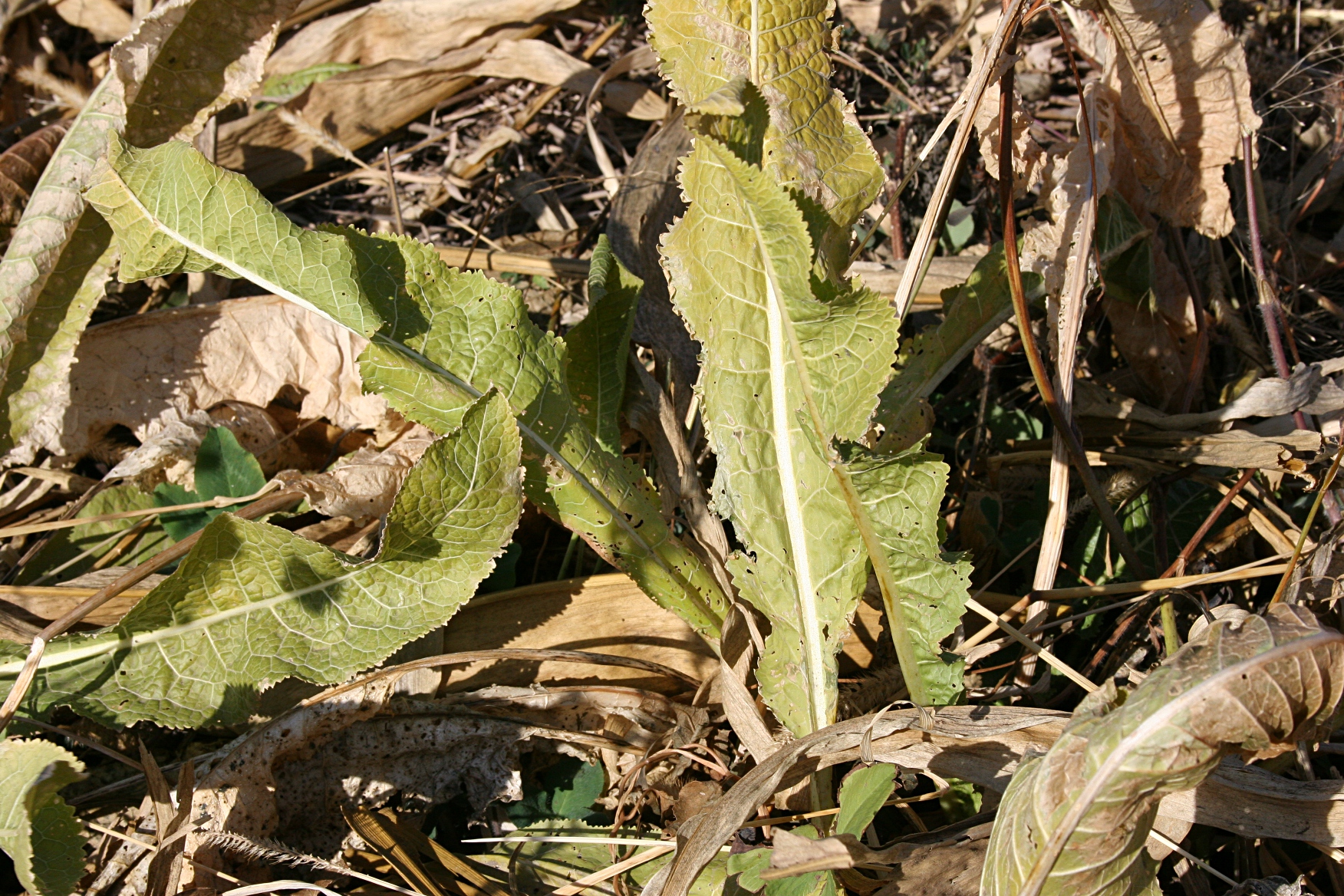
The plants will need to grow for about three years before you can reap the first harvest. We will be looking for additional horseradish to harvest in 2013. If you live anywhere near Lamberton, Vesta,  Faribault or Waseca, and have extra horseradish, let me know.

STEP 3: Dig up the roots; I missed photographing this given I arrived after the digging.

STEP 4:

Wash the dirt from the roots using a hose.

STEP 5:

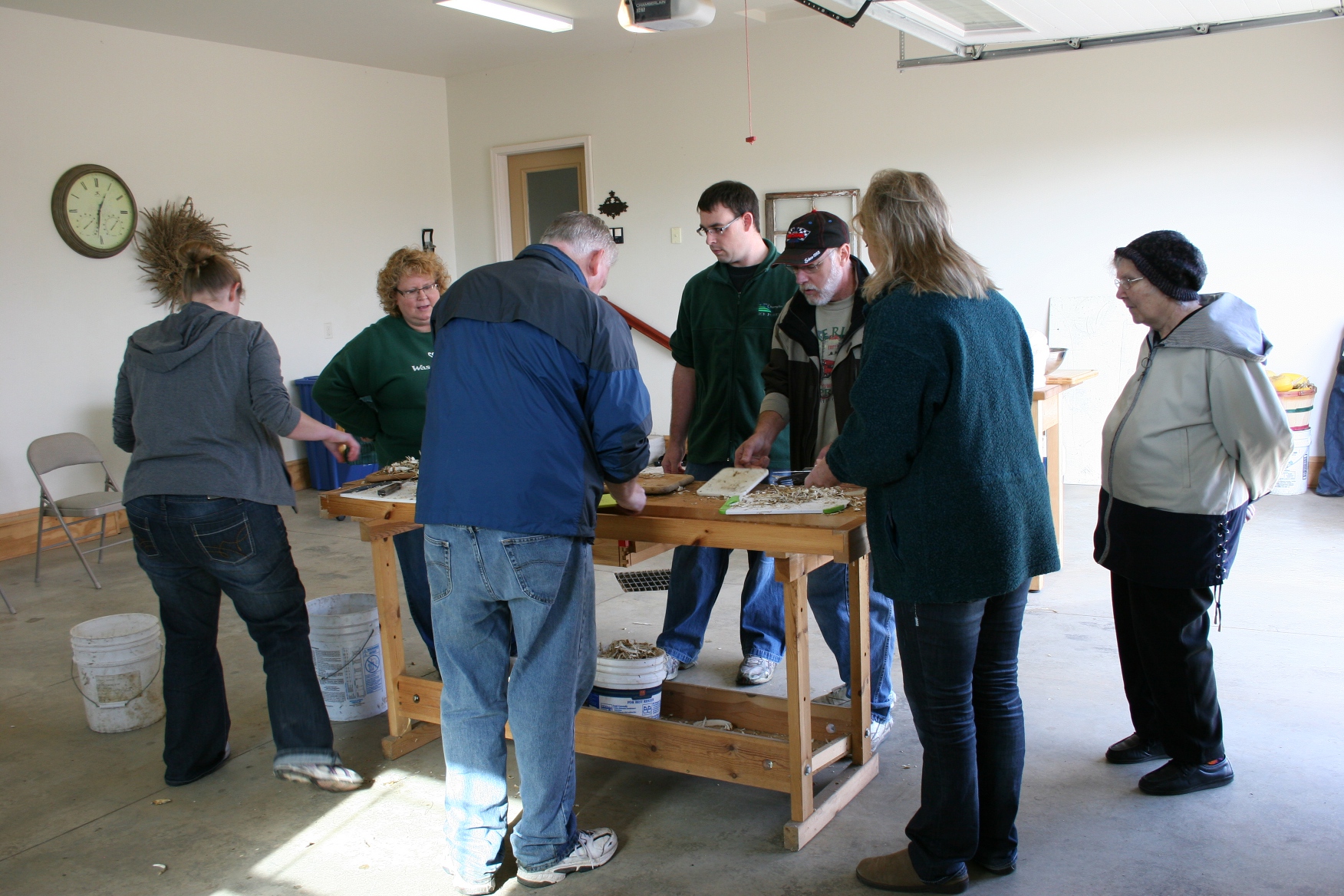
Peel the roots, remaining aware that your work is being closely monitored by the supervisor, right.

STEP 6:

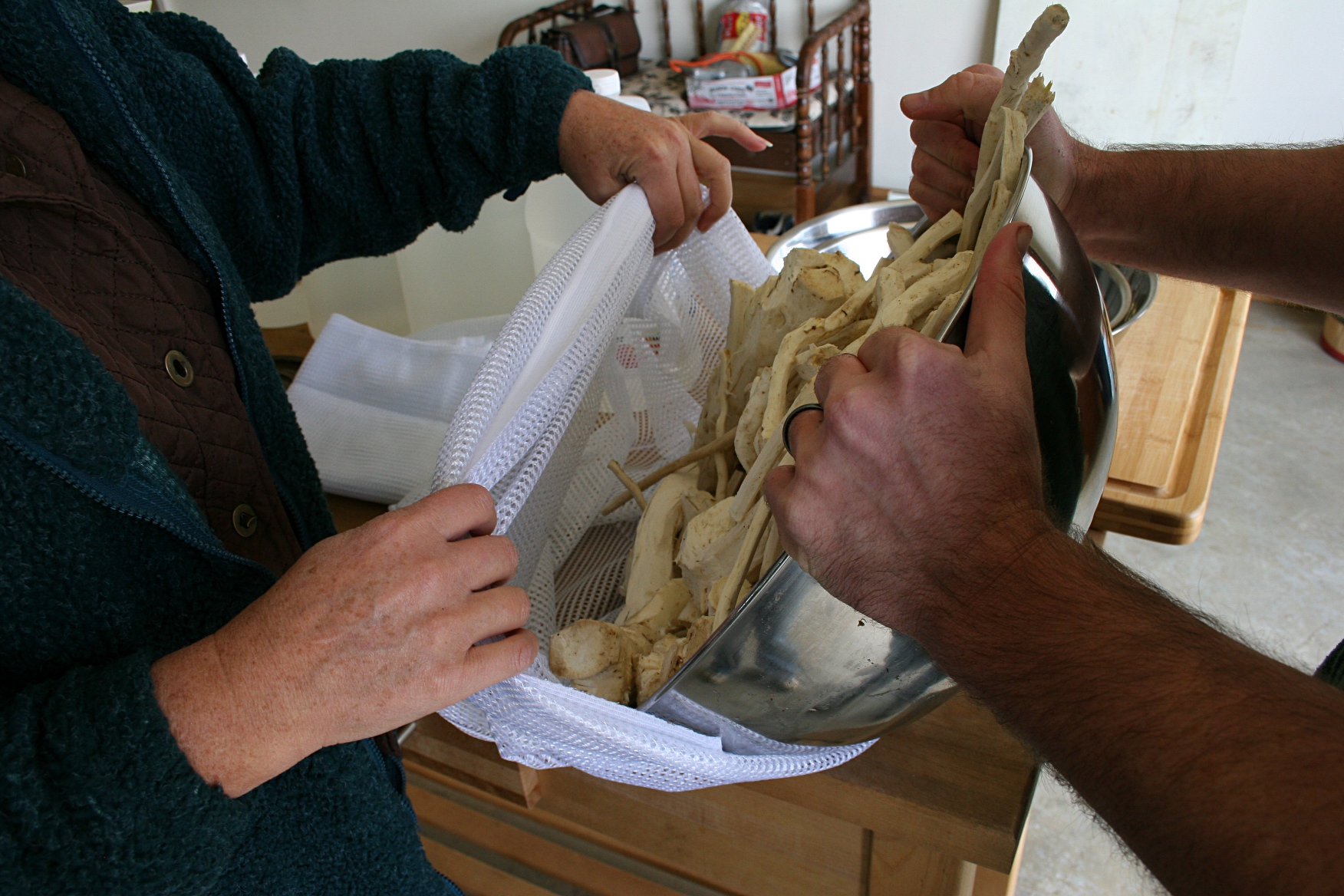
Dump the horseradish into a laundry bag and wash in the washing machine, without detergent, of course, and I think on a gentle cycle. About this time, your crew can take a break and eat lunch which may or may not include red Jell-O with bananas.

STEP 7:

Chop the machine-washed horseradish.

STEP 8:

While one crew chops ,left, the other grinds the horseradish, step 8, with a grinder (fail) or food processor. The supervisor keeps a watchful eye over operations.

STEP 9:

Dump the pulverized roots into the blender, add vinegar and blend until creamy. You may want to cover your face, or make a face, to deal with the eye-stinging fumes.

STEP 10:

Pour into jars and cap.

STEP 11:

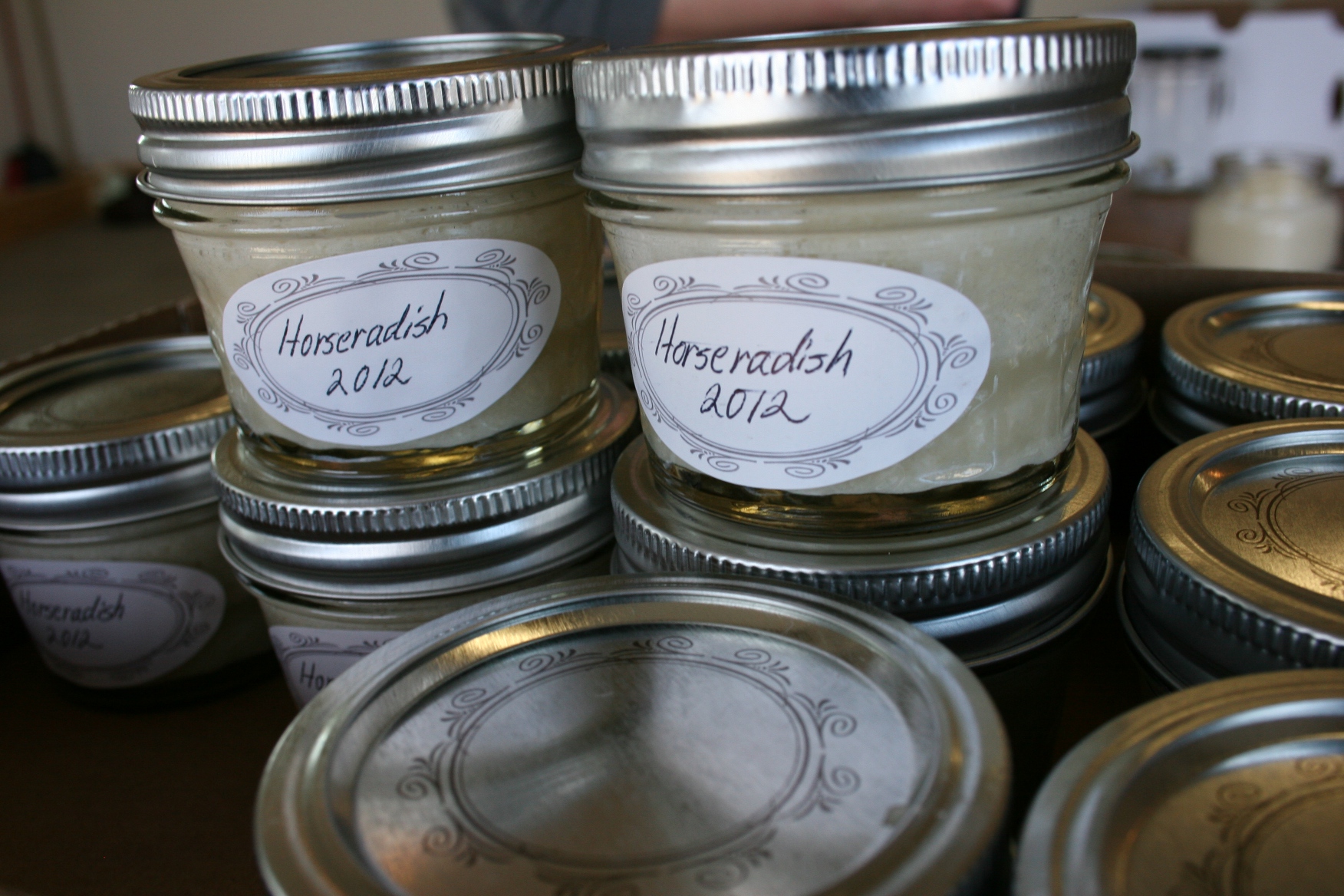
Label the jars. Stash jars in refrigerator. Give away or eat.

BONUS PHOTO:

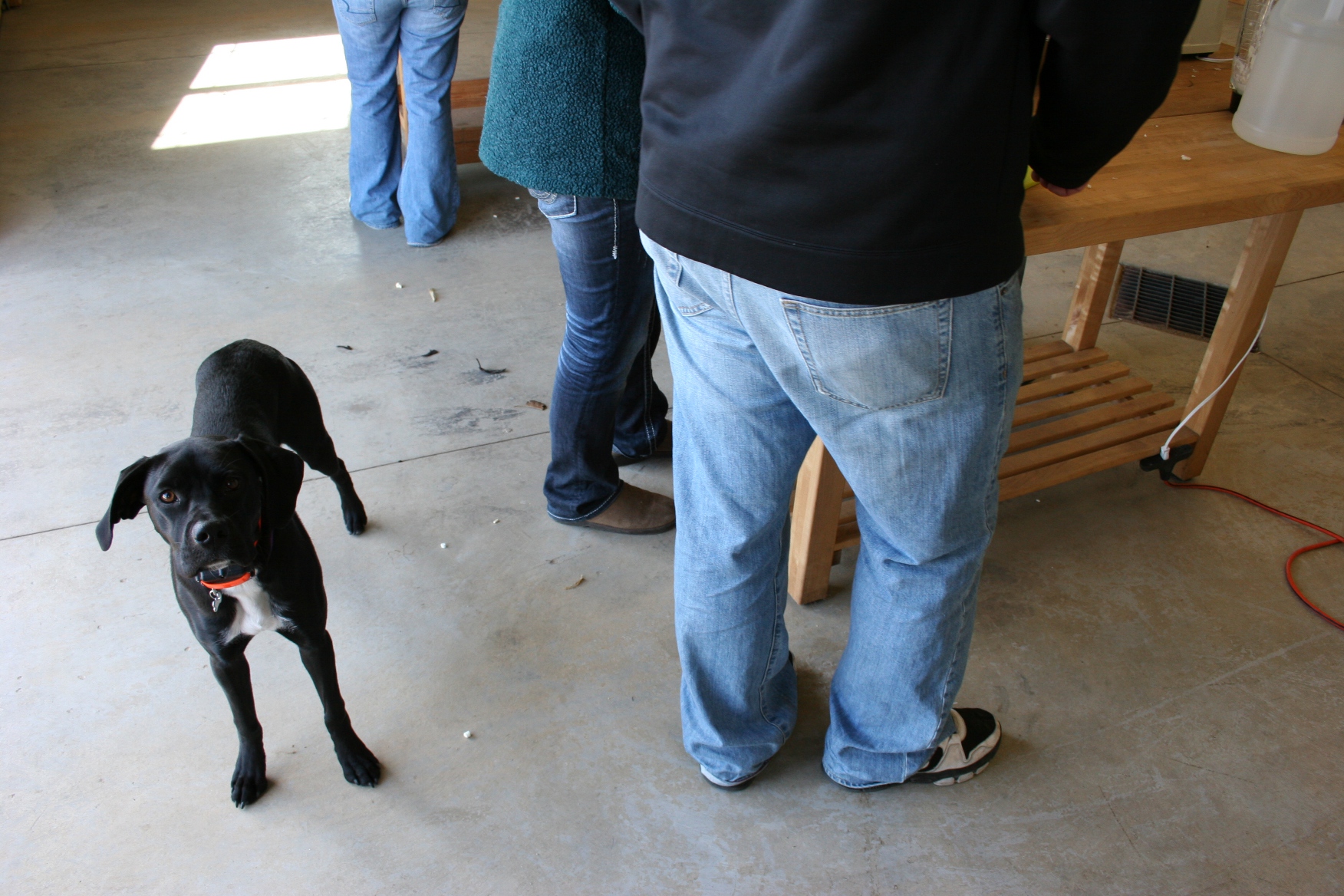
Al and Alyssa’s dog, Lily, whom we had to keep from eating errant chunks of horseradish that fell onto the floor.

© Copyright 2012 Audrey Kletscher Helbling

 

Transforming an historic building into Seven Sisters Coffee, a community gathering spot & more in rural Minnesota October 23, 2012

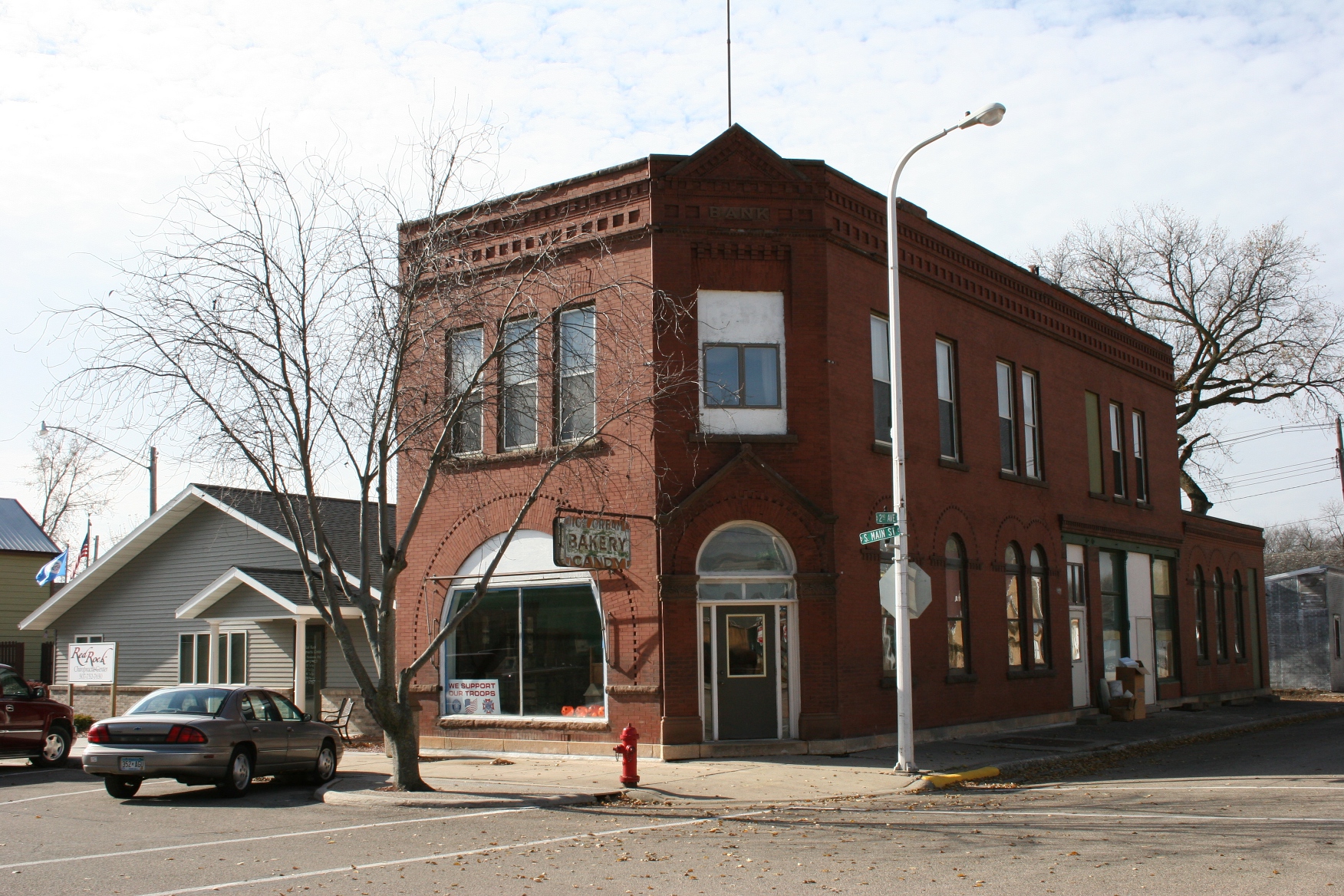
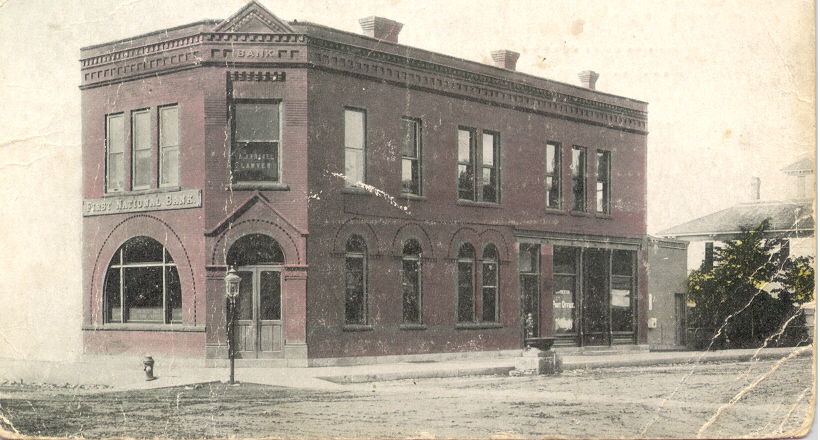
This 1892 former bank building and 95-year bakery anchoring a corner of Lamberton’s Main Street is being renovated into Seven Sisters Coffee by a young couple with connections to this area of southwestern Minnesota. After the business opens, the upstairs will be renovated into loft style apartments.

DAVID AND MICHELLE can see beyond the crumbling mortar, the moisture damage, the buckling floor boards, the teal paint.

Just barely into major renovation of an historic 1892 bank building and former long-time bakery in downtown Lamberton, this couple is thoughtfully and methodically working toward their summer 2013 goal of opening Seven Sisters Coffee.

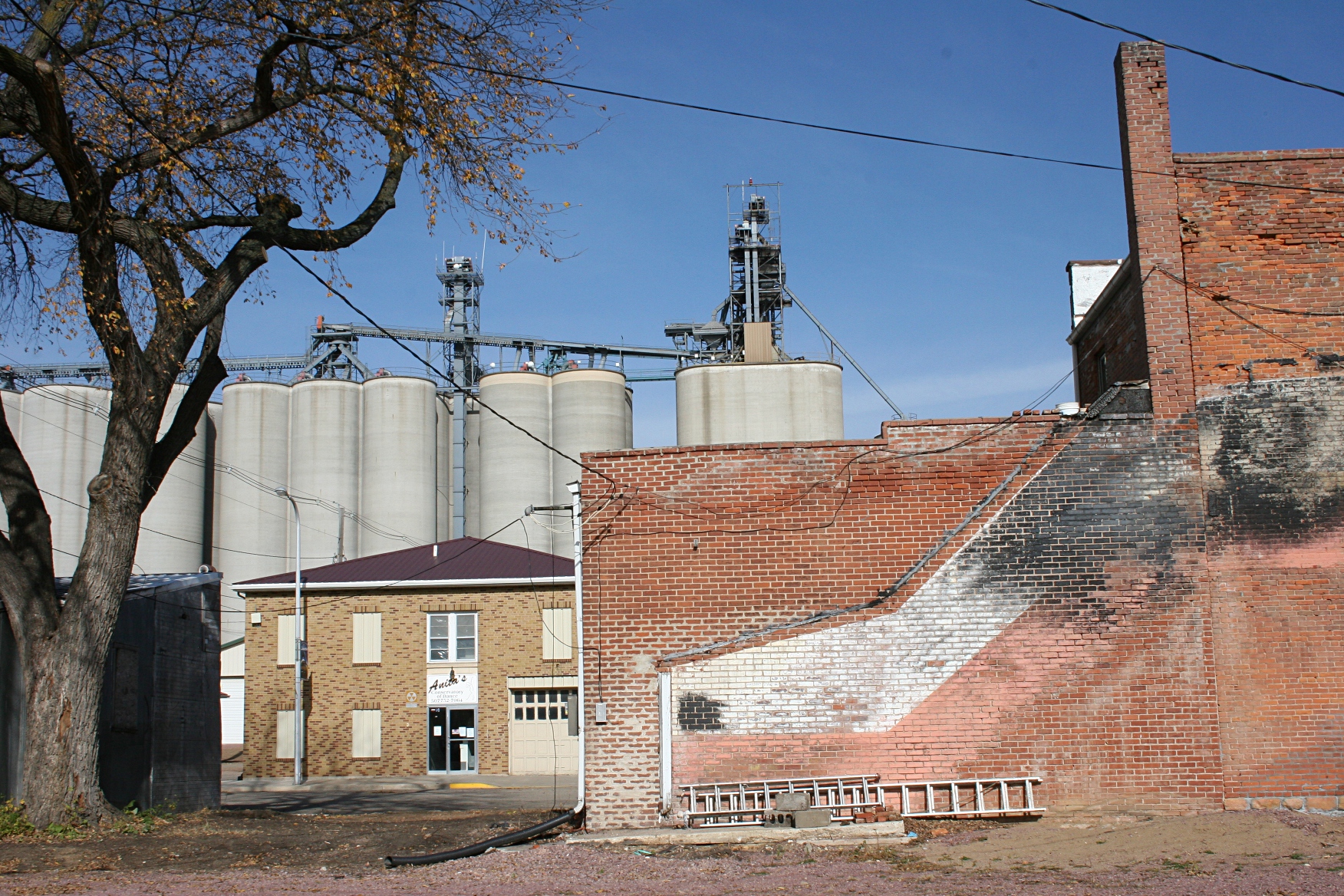
This shows the side and back view of the building, with the rear part added on to the original. Soot from a 2005 fire, which destroyed Plum Creek Crafts next door, mars the brick. Behind the building, a tree was removed and plans are to install a patio area for outdoor dining. They saved a slice of the tree to build a table.

Even the name, Seven Sisters, holds special significance for the pair as Michelle is one of seven sisters and three brothers who grew up in Lamberton, a strong agricultural community of 822 in Redwood County on the southwestern Minnesota prairie. Additionally, Michelle notes that Seven Sisters possesses multiple meanings—in Greek mythology, astronomy and even as a mountain range.

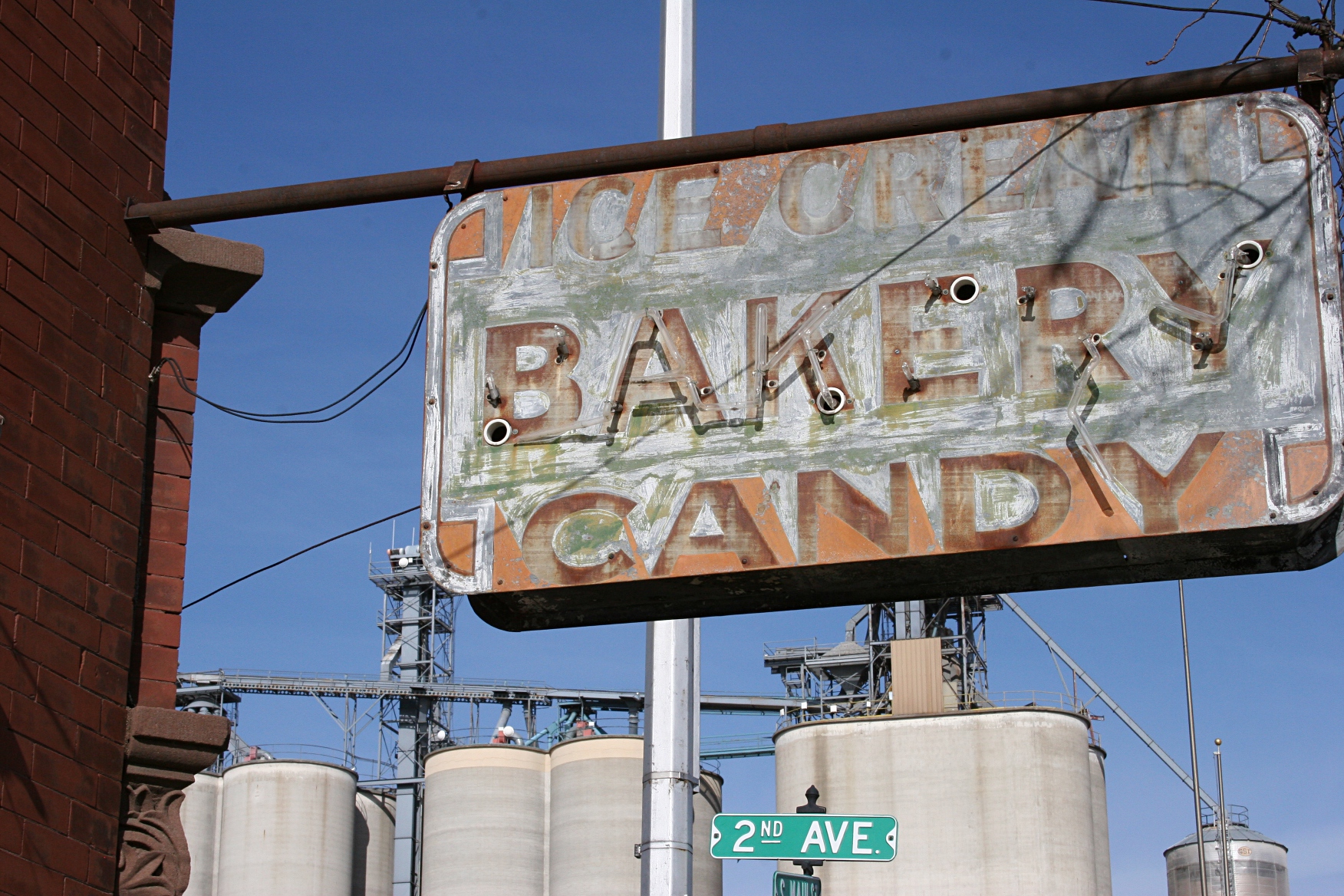
The old sign for the former Sanger’s Bakery still graces the building.

The couple may, perhaps, feel at times as if they are scaling a mountain to reach their goal of establishing a combination cafe, coffee shop and entertainment venue in the 1,900 square foot first floor of the 8,000 square foot brick building. But they are purposeful and focused and driven every week to travel 2 ½ hours from their home to proceed with their project on the prairie.

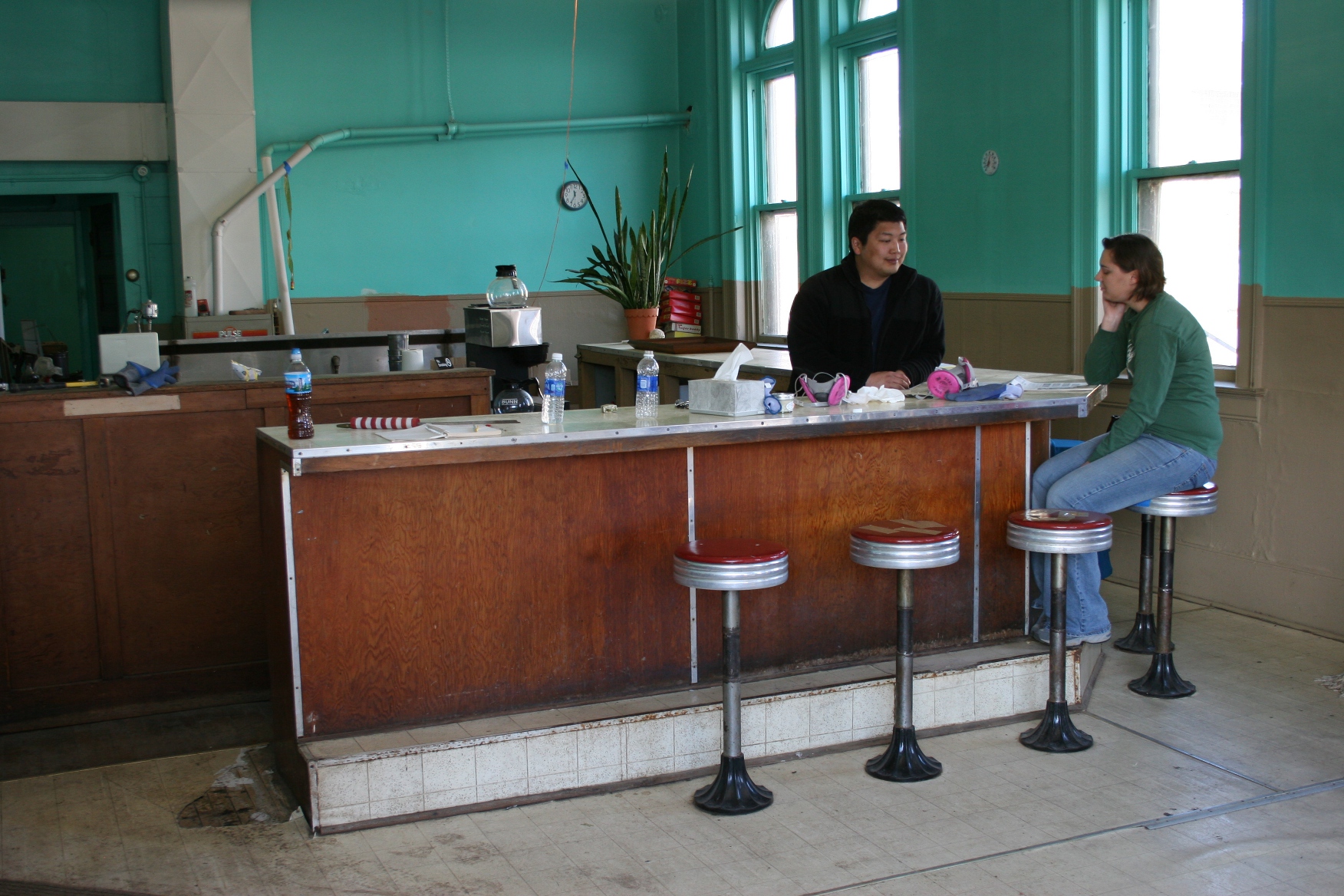
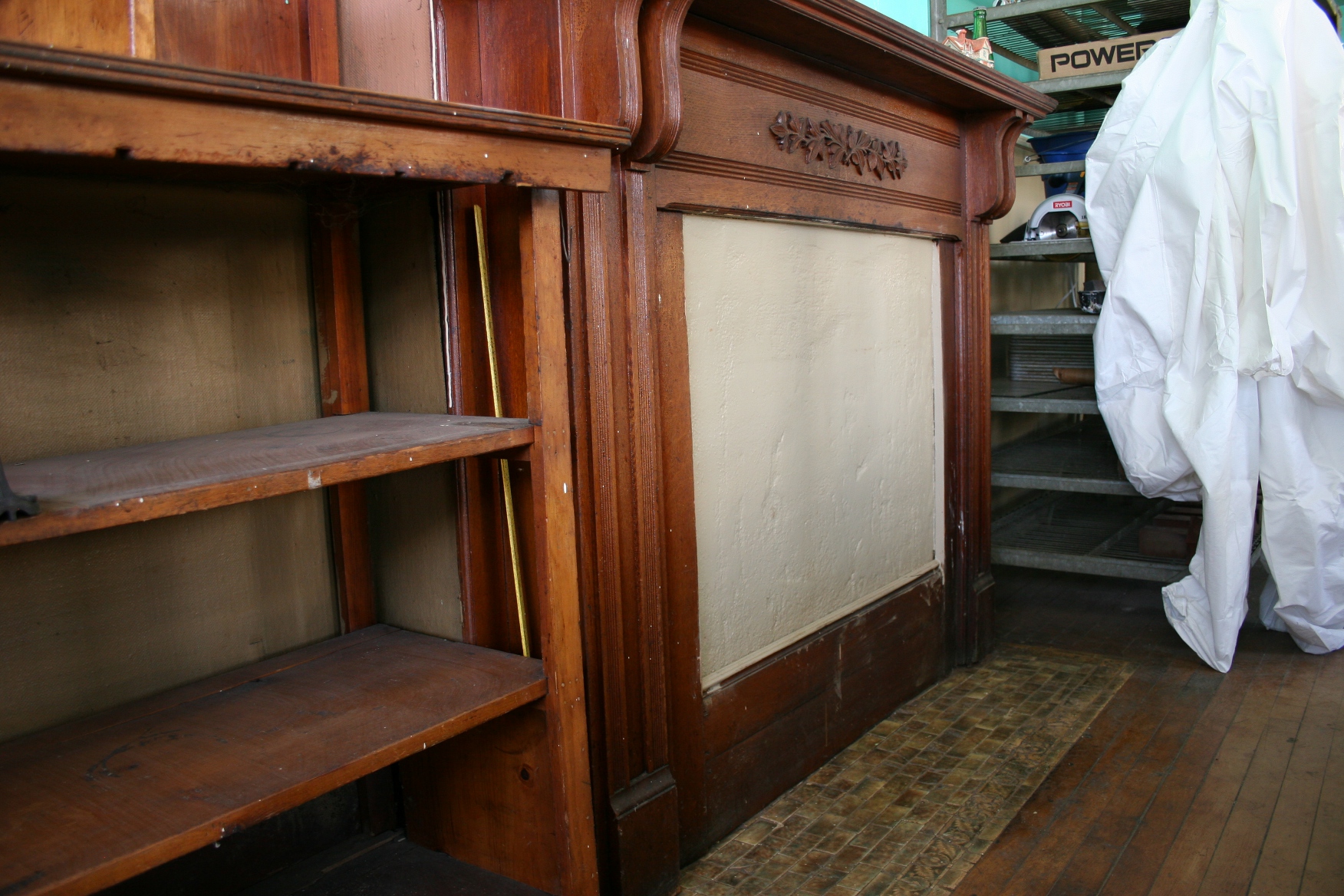
Michelle and David  are keeping the original candy and bakery goods counters and the vintage cabinet, photographed here in the front part of the building. This area of the former bank and bakery will house the cafe and soda fountain. The couple discovered a dumb waiter hidden in the area behind them in the corner.

David envisions Seven Sisters as “an artistic haven as well as a community space.” He expects “townies,” he says, to frequent the front Main Street side of the building, the bright and cheery cafe section offering a full breakfast and lunch menu and ice cream treats from a soda fountain.

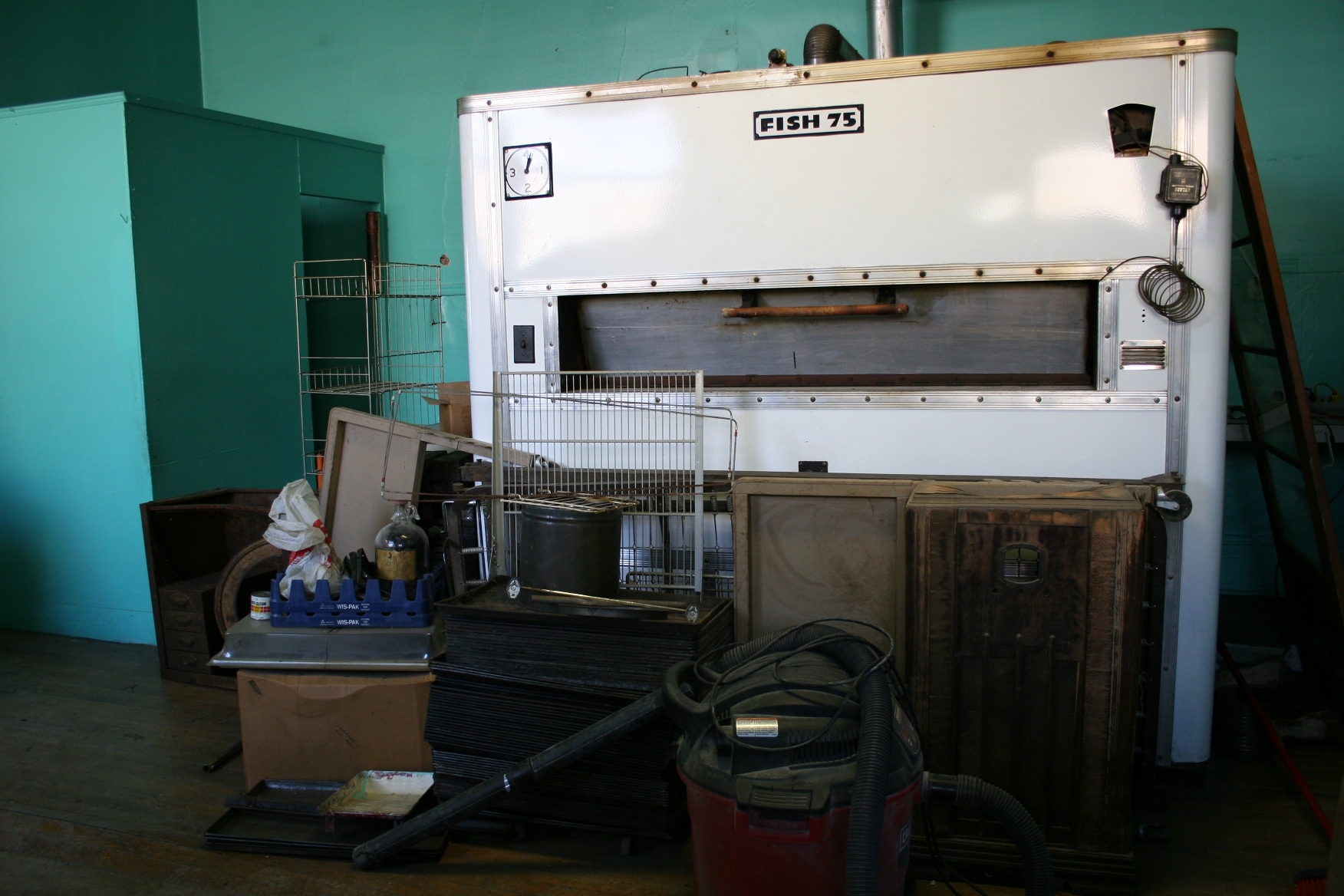
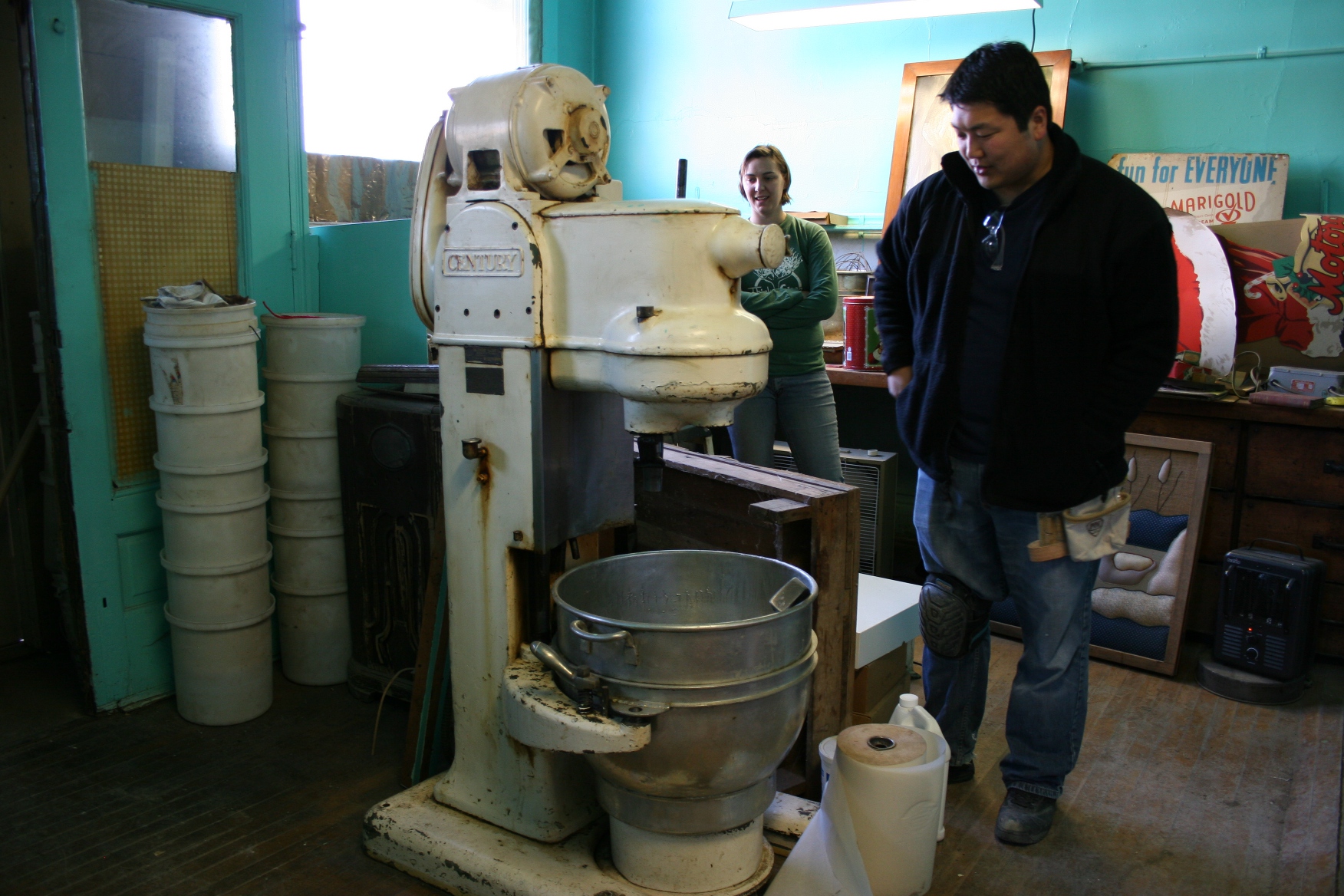
Fifty loaves of bread could be baked in this 1960s vintage two-ton rotary oven. It occupies much of the space in the middle room which will become a cozy coffee shop. This room and the front former bakery/soda fountain area were painted teal after Bob’s niece first chose that hue for the bathroom. Bob loved the color so much that he painted the rest of the place teal. The color has been on the walls for 50 years. No, they are not keeping the teal color.

An oversized mixer also occupies space in the middle room.

The smaller middle section, once a post office entry, baking area and even home to the Sanger family, will be transformed into a warm and intimate coffee shop.

The back room, with focal point brick walls, will become an entertainment venue and artists’ haven.

And in the rear area of exposed brick walls, David expects artists and others to hang out in a more energetic and modern New York loft style space devoted to music and art and private event rental.

Tour this building, inside and out, with David and Michelle and you can see the overwhelming amount of work, inside and out, that needs to be done before Seven Sisters becomes a reality in a community already embracing the business venture.

Locals as well as those living in neighboring towns such as Revere, Jeffers and Tracy and even farther away in the regional hub city of Marshall are ecstatic about Seven Sisters, David says.

Original coffee cups and Bob Sanger’s special cup are stacked under the lunch counter.

The older gas burners Bob Sanger apparently used to make coffee, etc.

When locals George and Vern, for example, stop by to check on the renovation, David invites them inside for coffee. The two were coffee klatsch buddies of Bob Sanger, long-time bakery owner who died in March. Sanger purchased the bakery from his father, Nick, in 1961. Between Bob, Nick and previous owner, Martin Kuhar, the building has housed a bakery in the First National Bank building for 95 years.

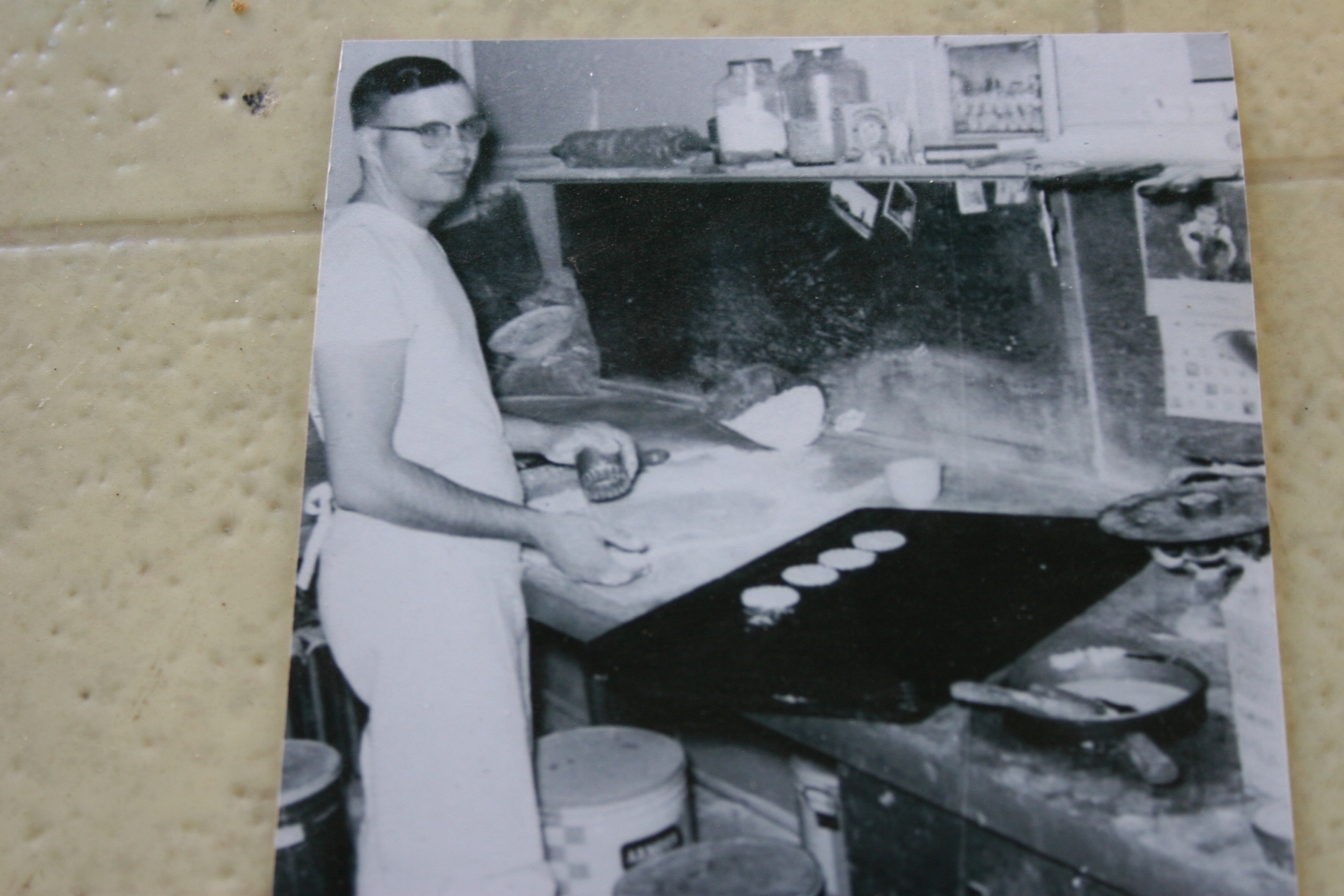
A vintage photo of bakery owner Bob Sanger who died in March at the age of 80.

A vintage photo of the First National Bank.

Says David of his and Michelle’s decision to purchase the former bakery after Bob Sanger’s death:

The building is positively gorgeous and has a fascinating history. We had admired it for some time. The quality of the construction is superior to similar buildings of that era. We’ve always talked about opening our own business and the location and timing were right.

Our review of the local economy and the needs of the surrounding area indicates a very strong potential for growth and a serious need for a business of this kind. By offering excellence in service in three different approaches (cafe, coffee shop, event space) we will offset some of the inherent risk of this type of business. In short, it was a perfect confluence of events. We got lucky.

The pair is determined also to buy local as much as possible. Dry goods will come from Griffith’s Grocery across the street. They plan to work with Brau Brothers Brewing and Fieldstone Vineyards, located in the region. They’ll grow their own herbs.

It is clear in talking to David and Michelle that they appreciate the historic gem they’ve purchased.

A section of this original lunch counter built by Bob Sanger will be refurbished and topped with granite.

They’re attempting, they say, to retain as much of the natural charm as possible. For example, they plan to refurbish the soda fountain built by Bob; relocate an original bank fireplace facade and tile into the coffee shop and install an electric fireplace; refinish the wood floors; keep the tin ceiling; reuse the candy and bakery counters; restore an old player piano; and more.

Wooden floors, like this behind the lunch counter, run throughout the building. In one section, however, where the bank vault once stood, the floor is made of pipestone granite.

This shows a section of the original tin ceiling in the front part of the building. Ceilings are a lofty 12 and one-half feet high.

Plans are to move the facade and tile from the this original First National Bank fireplace into the coffee shop, which David will manage. 

The couple is also uncovering and sifting through collectible treasures like WW I and WW II artifacts, signage, rocks, and more accumulated by Bob. So much was damaged though, beyond saving, by moisture problems in the building, David says. But they are saving what they can, possibly incorporating some of their treasures into Seven Sisters.

A pile of recently found treasures.

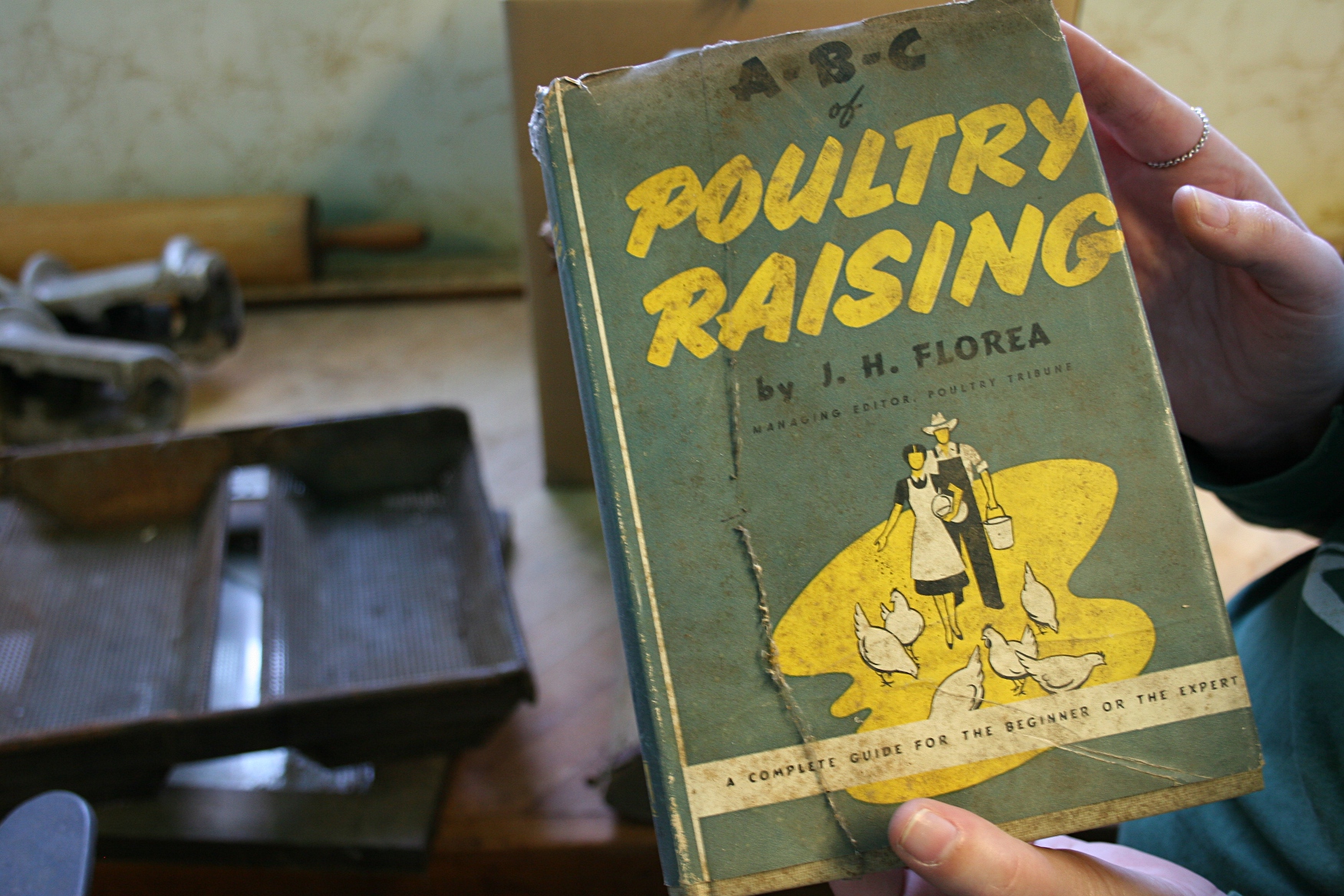
Among the old books uncovered was this one on poultry. Bob Sanger kept a flock of 100 chickens at his house, Michelle says. He used the eggs at his bakery and also sold eggs.

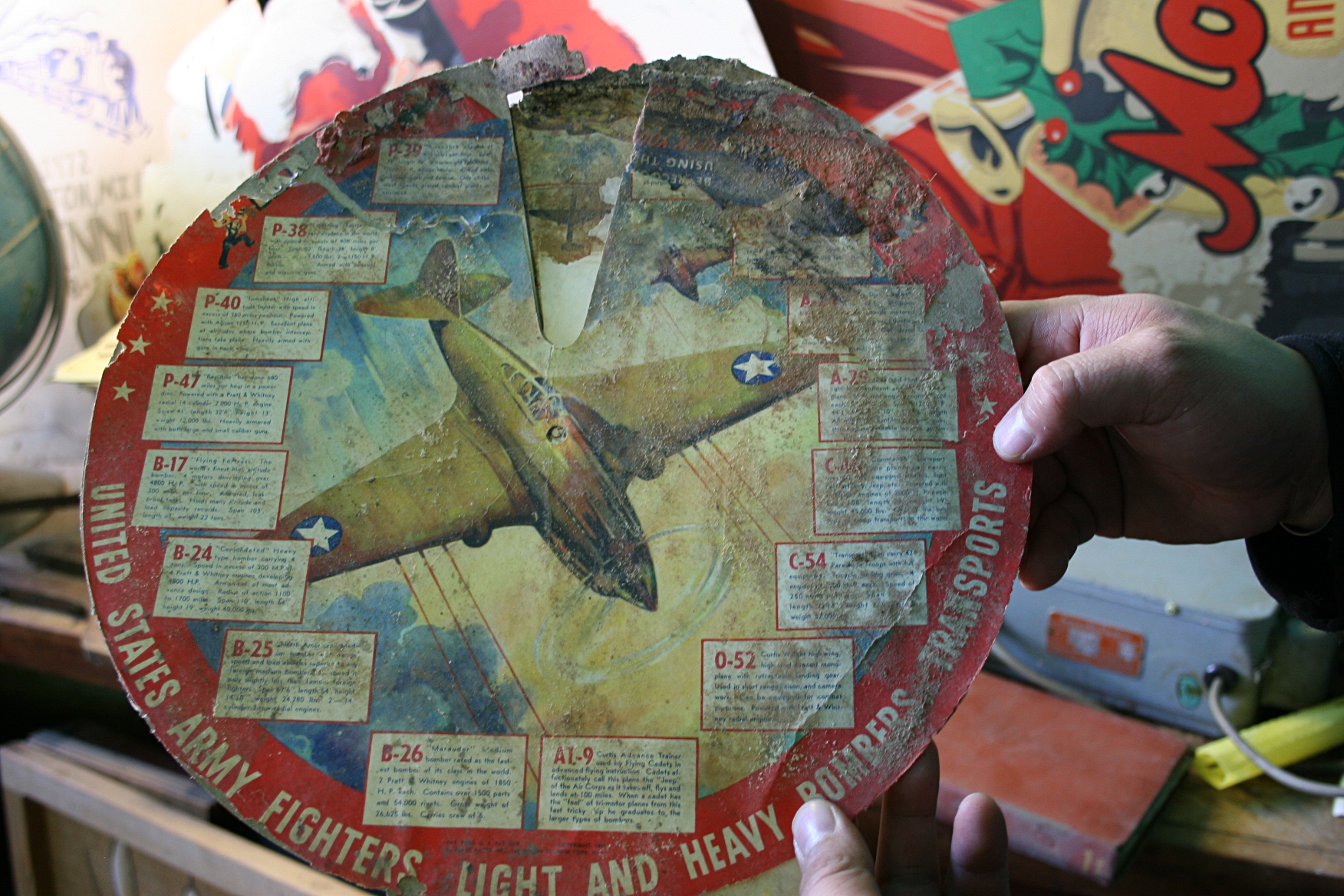
Another find, a vintage bomber transport chart damaged by water, like many of the old items found in the building.

Inedible silver cake decorating balls remain from Bob’s days of baking wedding cakes.

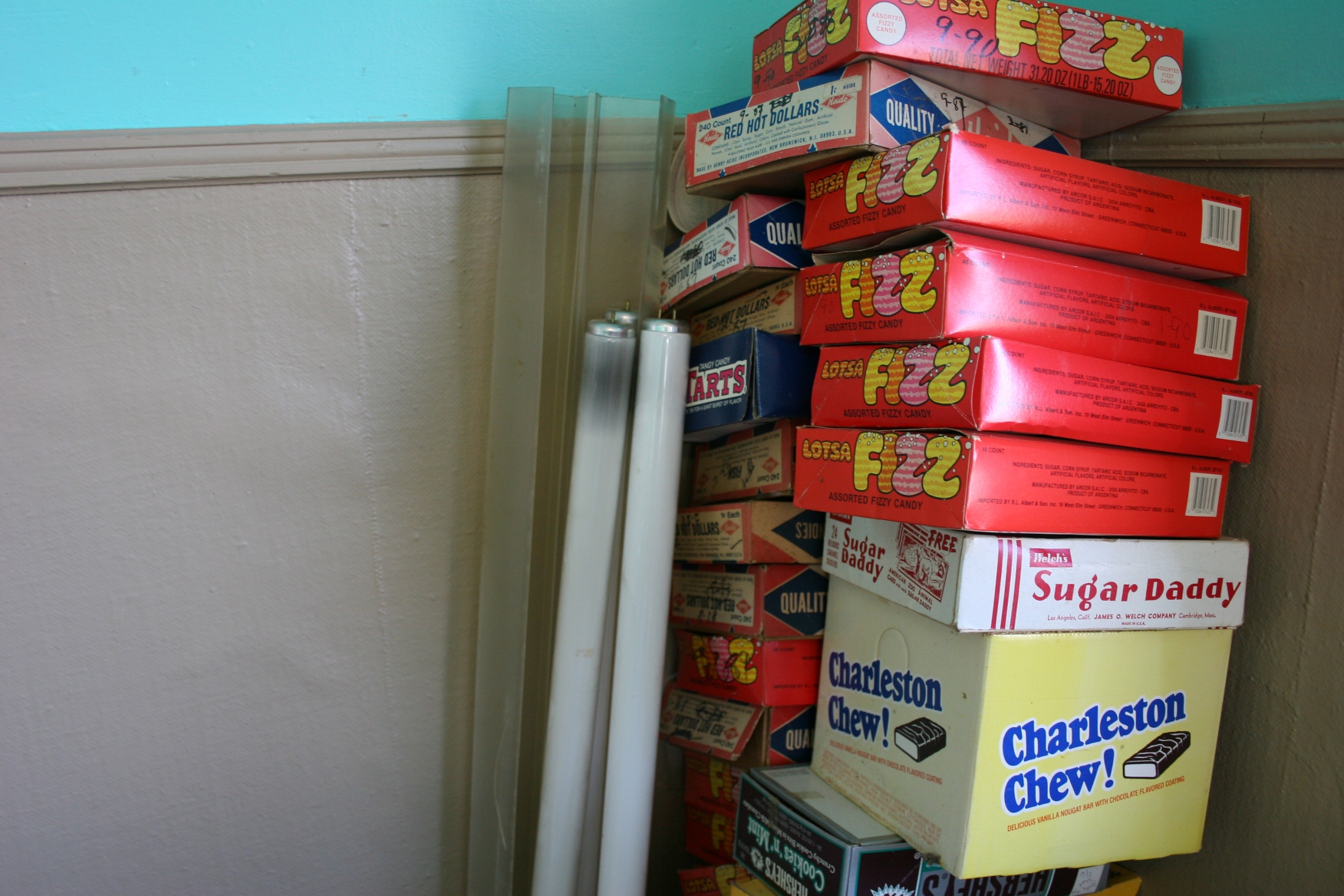
The couple found empty candy boxes (pictured here) and candy still in boxes inside the former bakery.

Michelle has fond memories of coming to Sanger’s for sweet treats. She remembers penny Tootsie Rolls and gumballs and candy cigarettes sold at the candy counter:

Thinking about the hundreds of people who have memories of this building, I really hope we can fill that same role for the next generations.

FYI: Lamberton is located along U.S. Highway 14 about 10 miles east of Walnut Grove, childhood home of Laura Ingalls Wilder, author of the Little House children’s book series. The area is a strong draw for summer tourists interested in Wilder’s books and the Little House on the Prairie television series set in Walnut Grove.

© Copyright 2012 Audrey Kletscher Helbling

 

Healthy & hearty dining at the retro Highland Cafe in southeastern Minnesota October 22, 2012

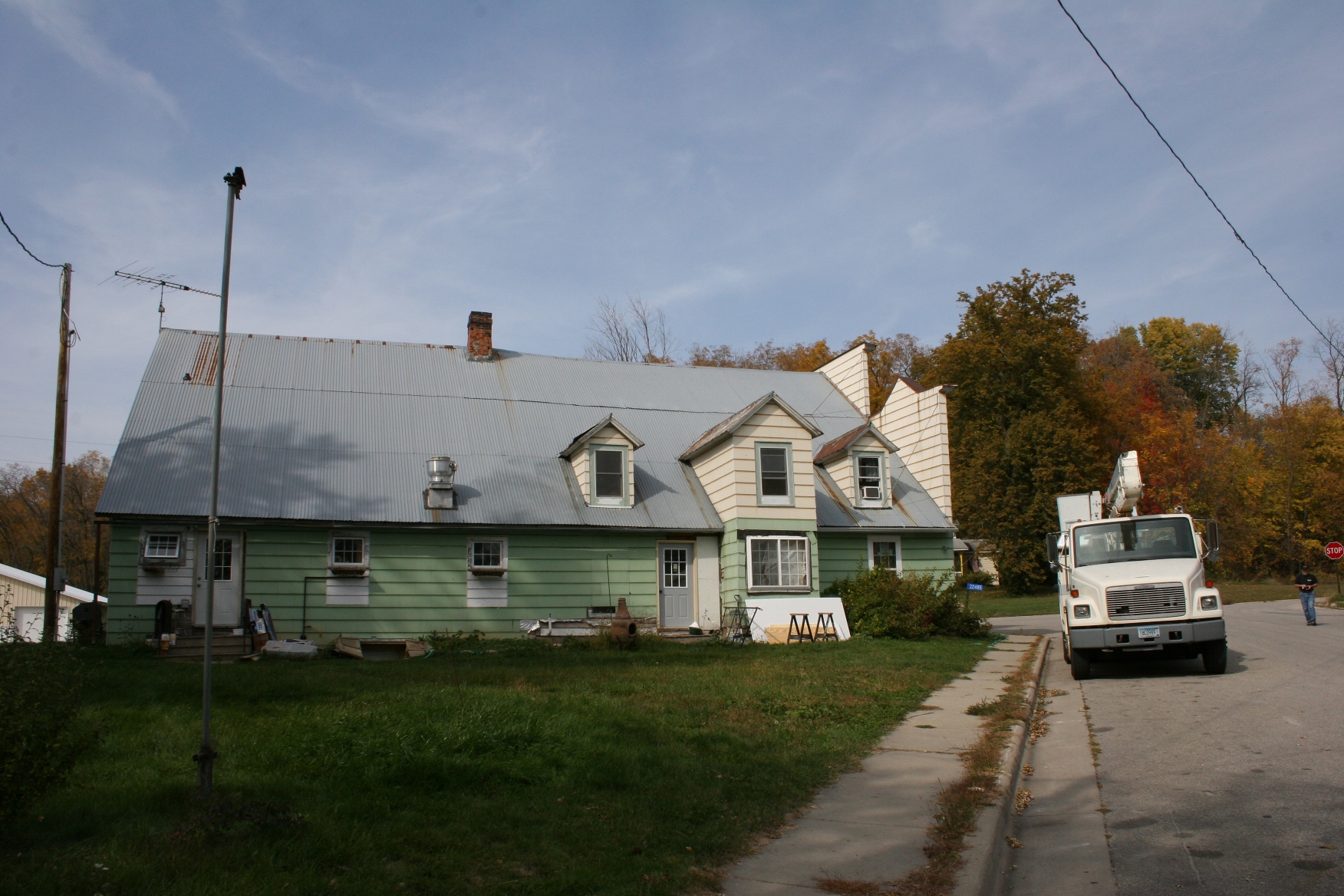
A side view of the Historic Highland Store and Cafe.

FROM THE EXTERIOR, a side view of the Historic Highland Store and Cafe in unincorporated Highland in rural Fillmore County, Minnesota, presents a mishmash of angles, work in progress and a corrugated metal roof that seems more fitting for a machine shed than a restaurant.

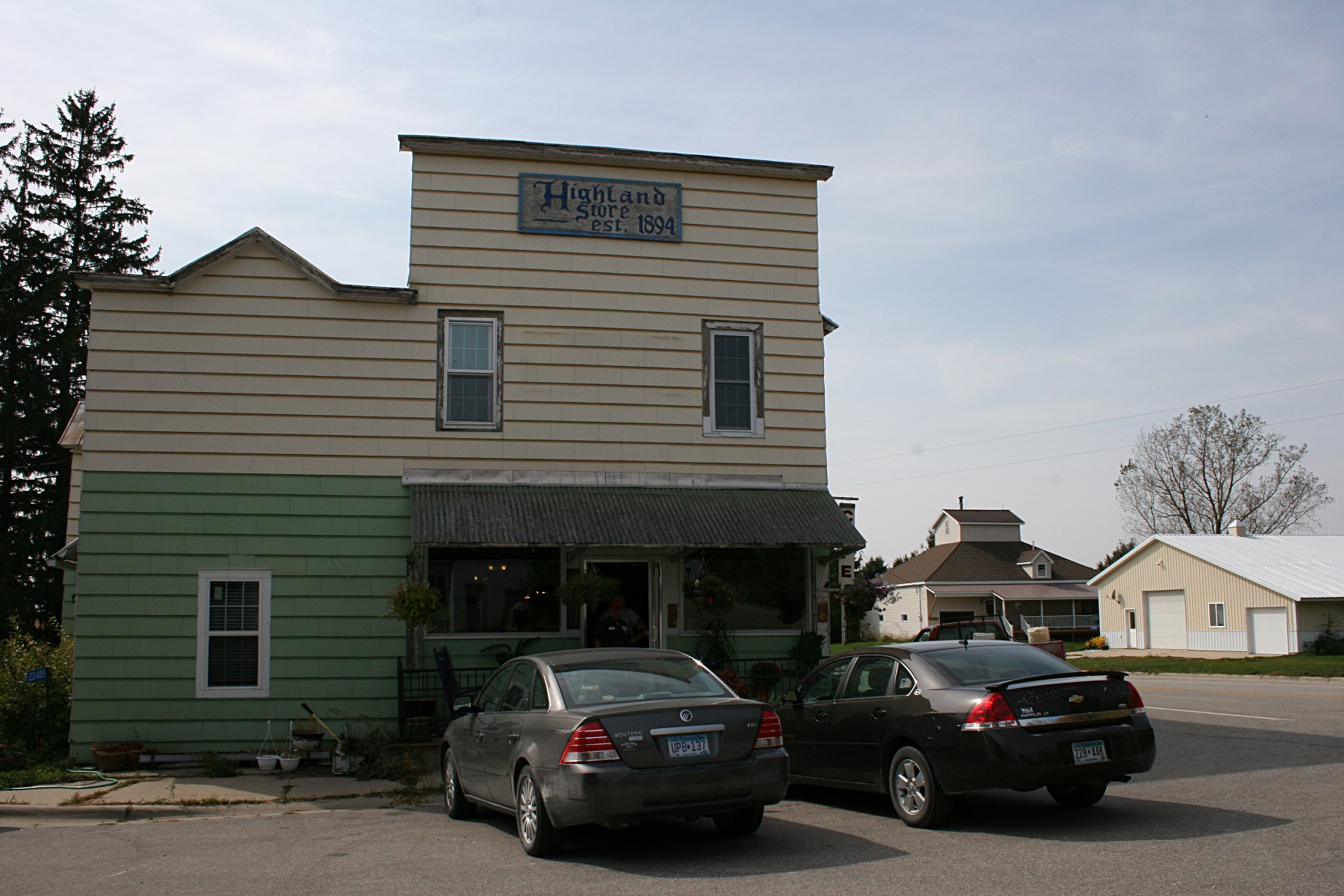
Face on, the front facade is rather plain and unassuming, until you aim your focus upward to the weathered wooden sign: “Highland Store est. 1894.”

The unassuming front of the Highland Cafe.

That single simple sign hints at the treasure you’ll discover once you step inside this combination cafe, mini-store and Seventh Day Adventist mission outreach next to County Road 10.

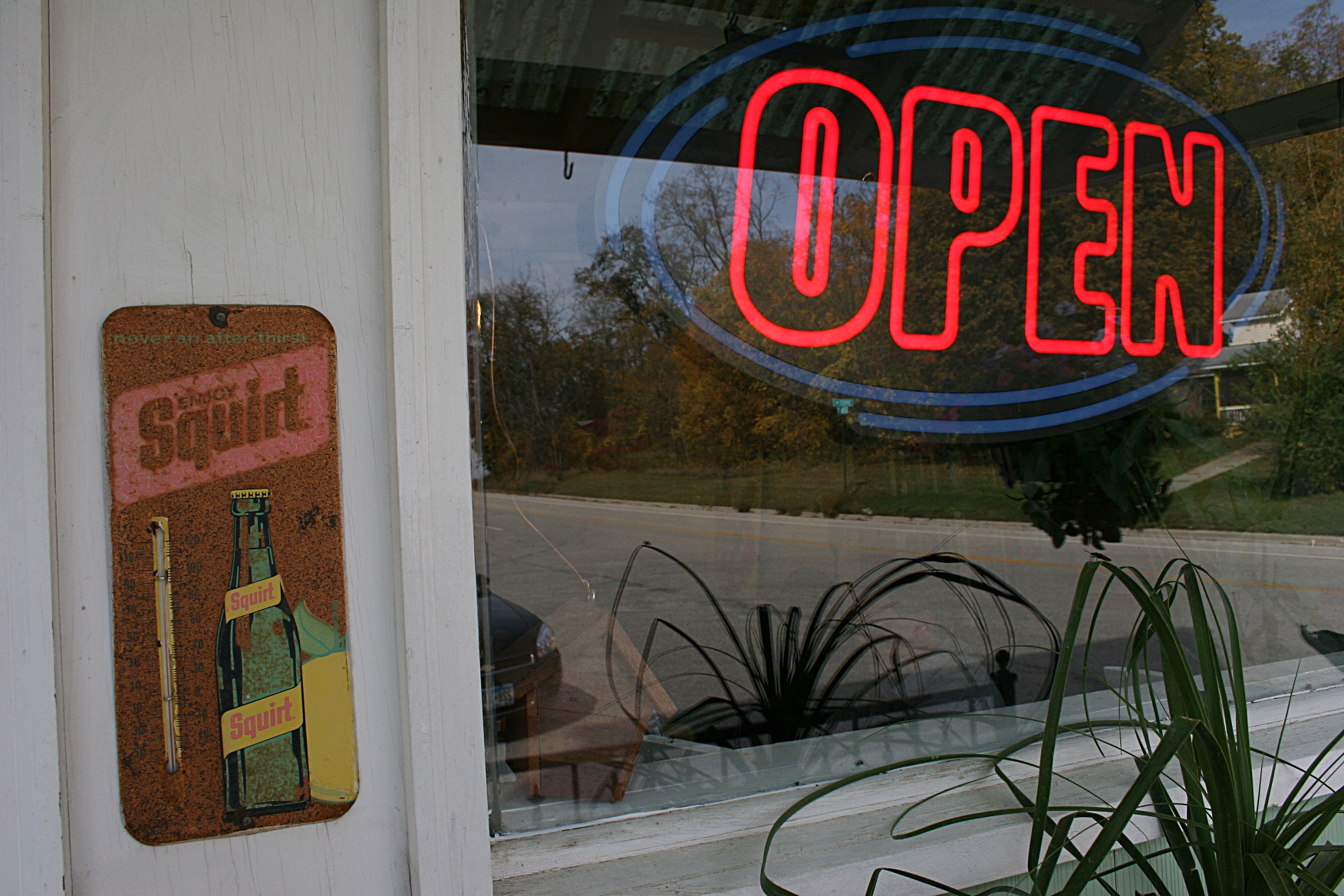
A vintage pop sign and a neon OPEN sign next to and on a front window.

Enter this historic building in Highland and you just have to stop and take in the novelty of this place which once served as a general store in this strong agricultural and tourism region of southeastern Minnesota.

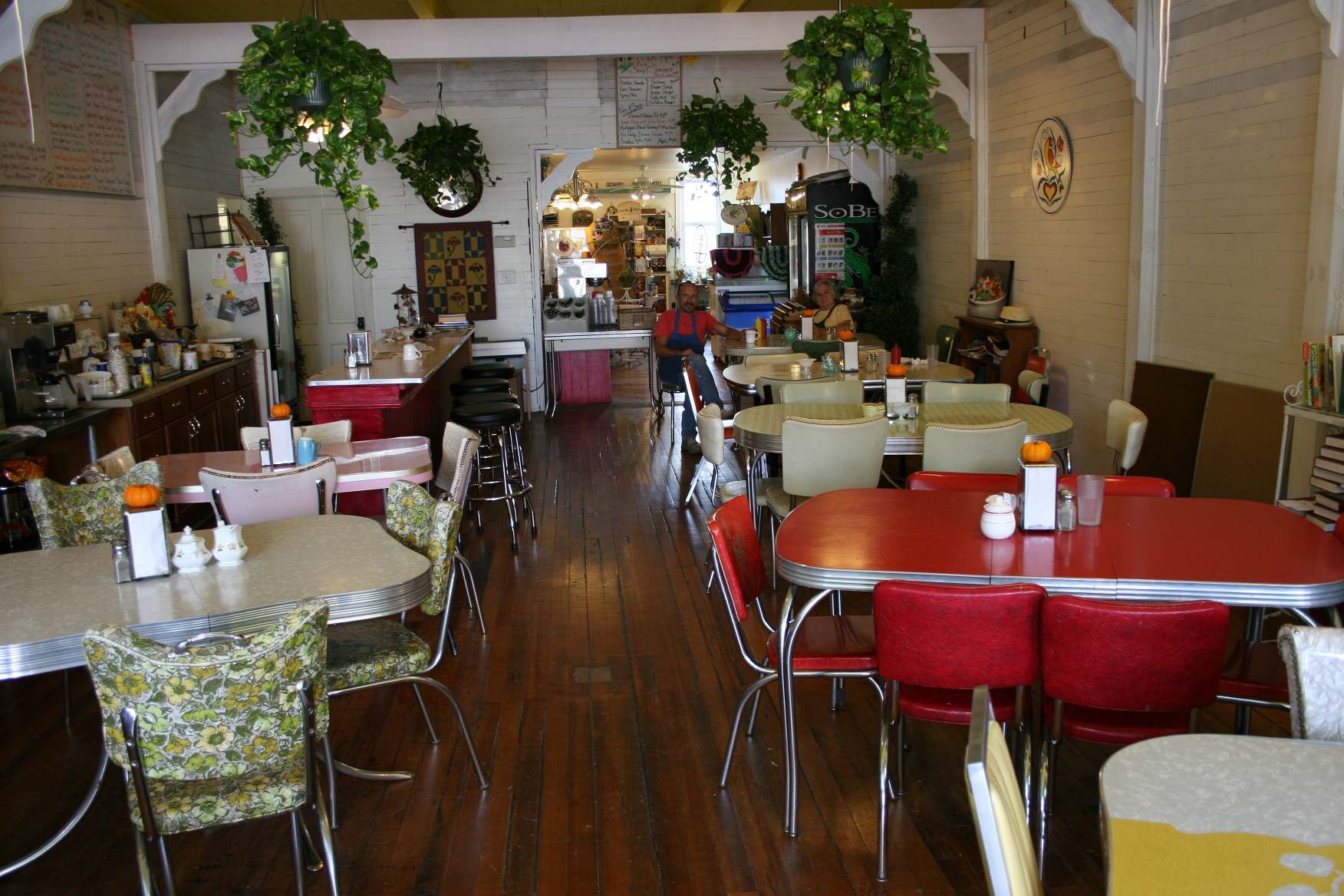
A dining room overview with a mini gift shop tucked in the back.

The cafe’s charm and good, home-cooked and healthy food draw not only locals, but tourists/users of the area’s state recreational trails and regional diners from Rochester some 50 miles to the north and west.

My husband and I have come here for lunch early on a Monday afternoon in early October while on a day trip to view the fall colors. We prefer one-of-a-kind small-town cafes to chain restaurants and are thrilled with the unique, down-home atmosphere we discover at the Highland Cafe. It’s as if we’ve walked into the kitchens of our childhood, minus the red-and-white checked linoleum floor.

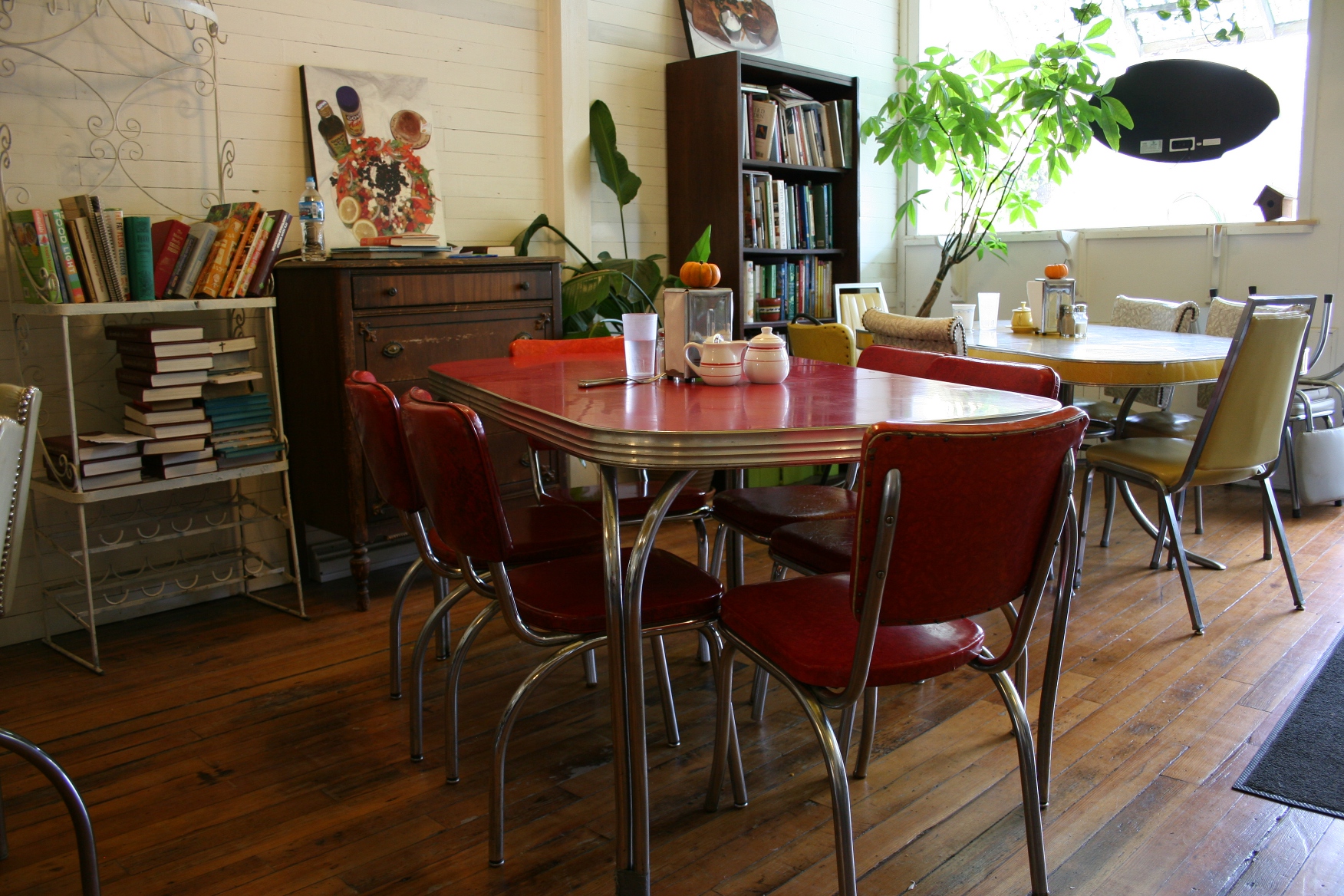
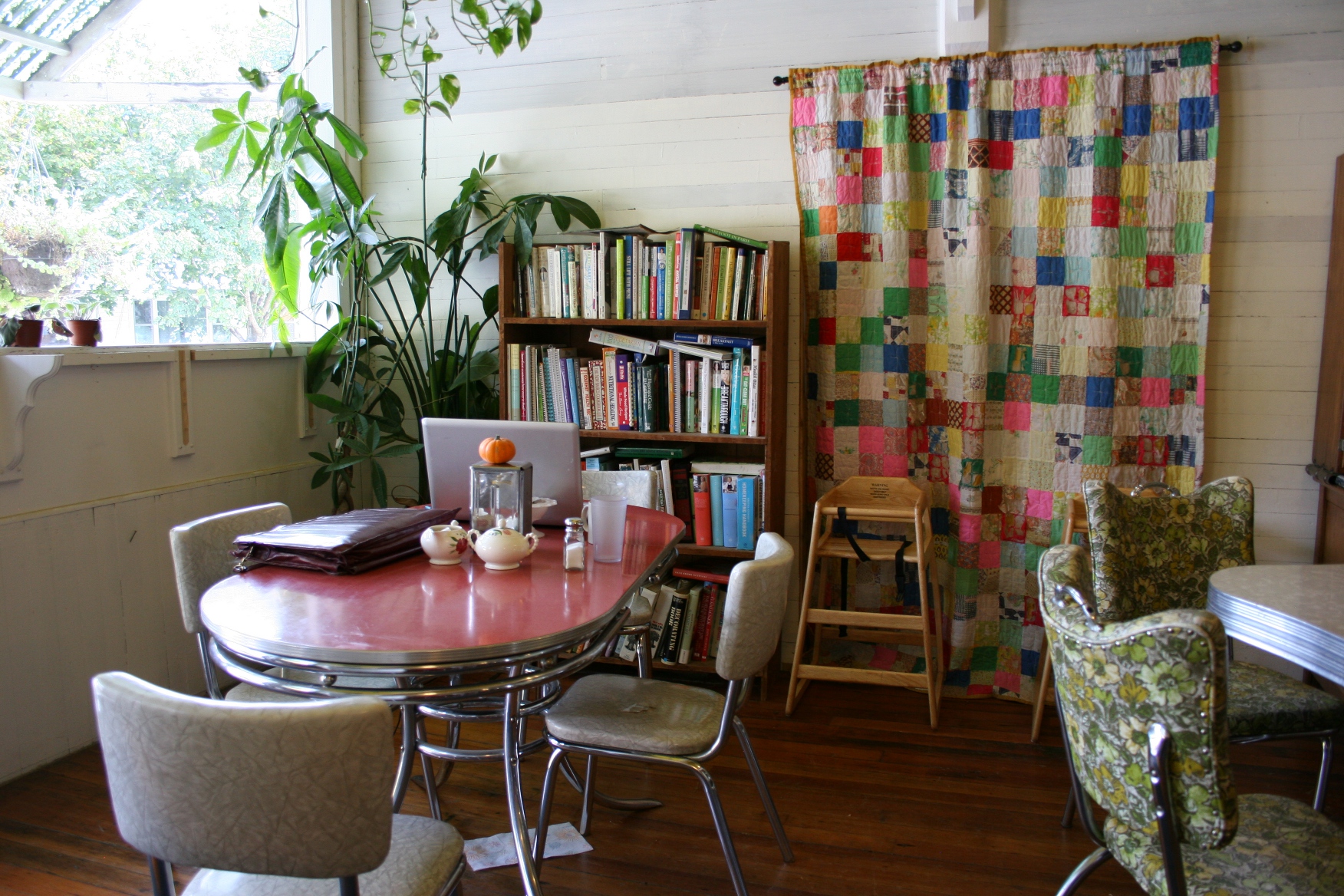
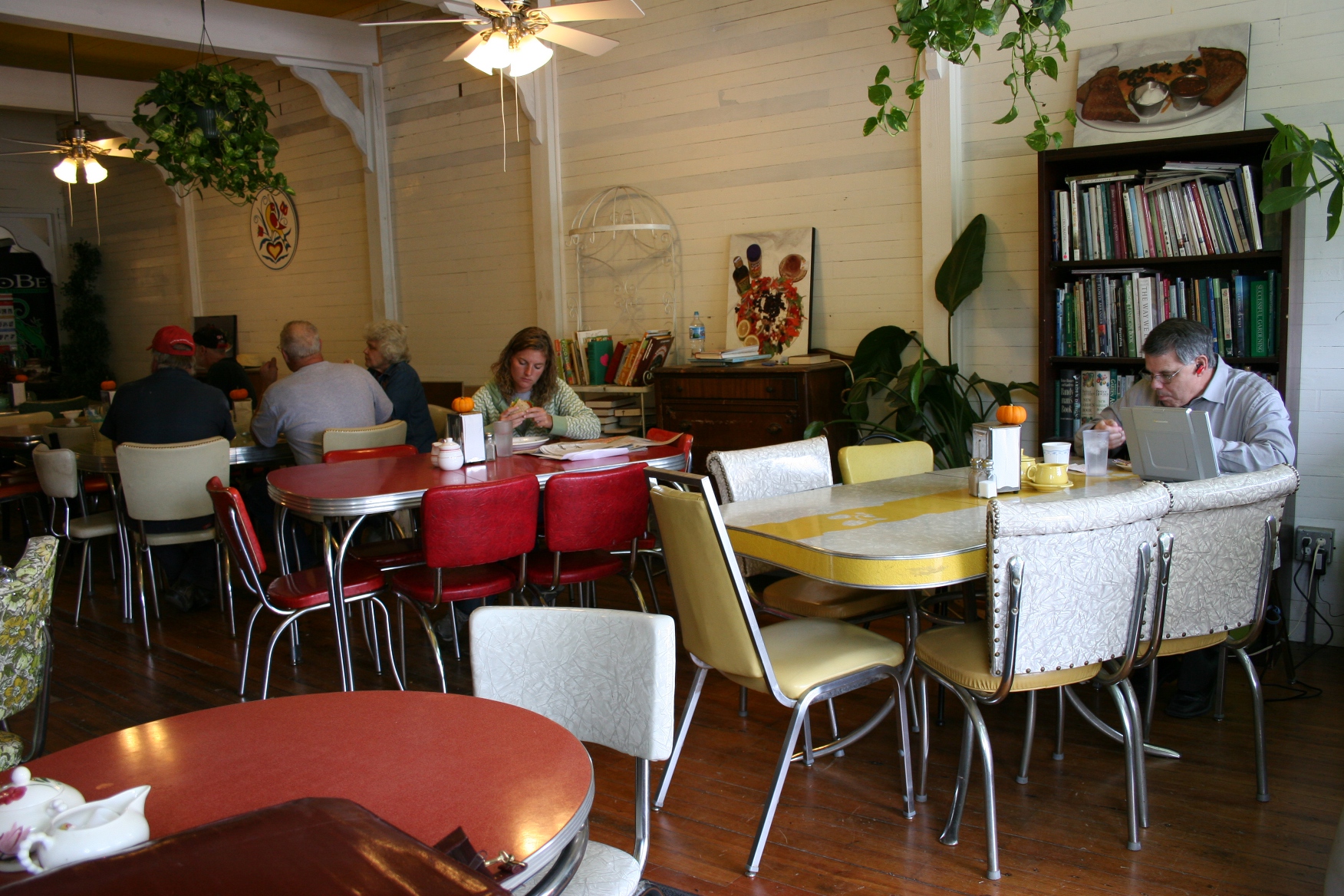
This is the scene near the front of the dining room where vintage tables and chairs are drenched in sunlight on an October afternoon. This is the kind of spot where you can read a book, work on your laptop or chat it up with the locals or others.

This eatery features the original wood floor topped by a mix of 1940s and 1950s vintage laminate chrome-legged/edged tables and chairs that set the mood for casual dining. There’s nothing matchy, matchy perfect about the décor here and that unpretentiousness suits me perfectly.

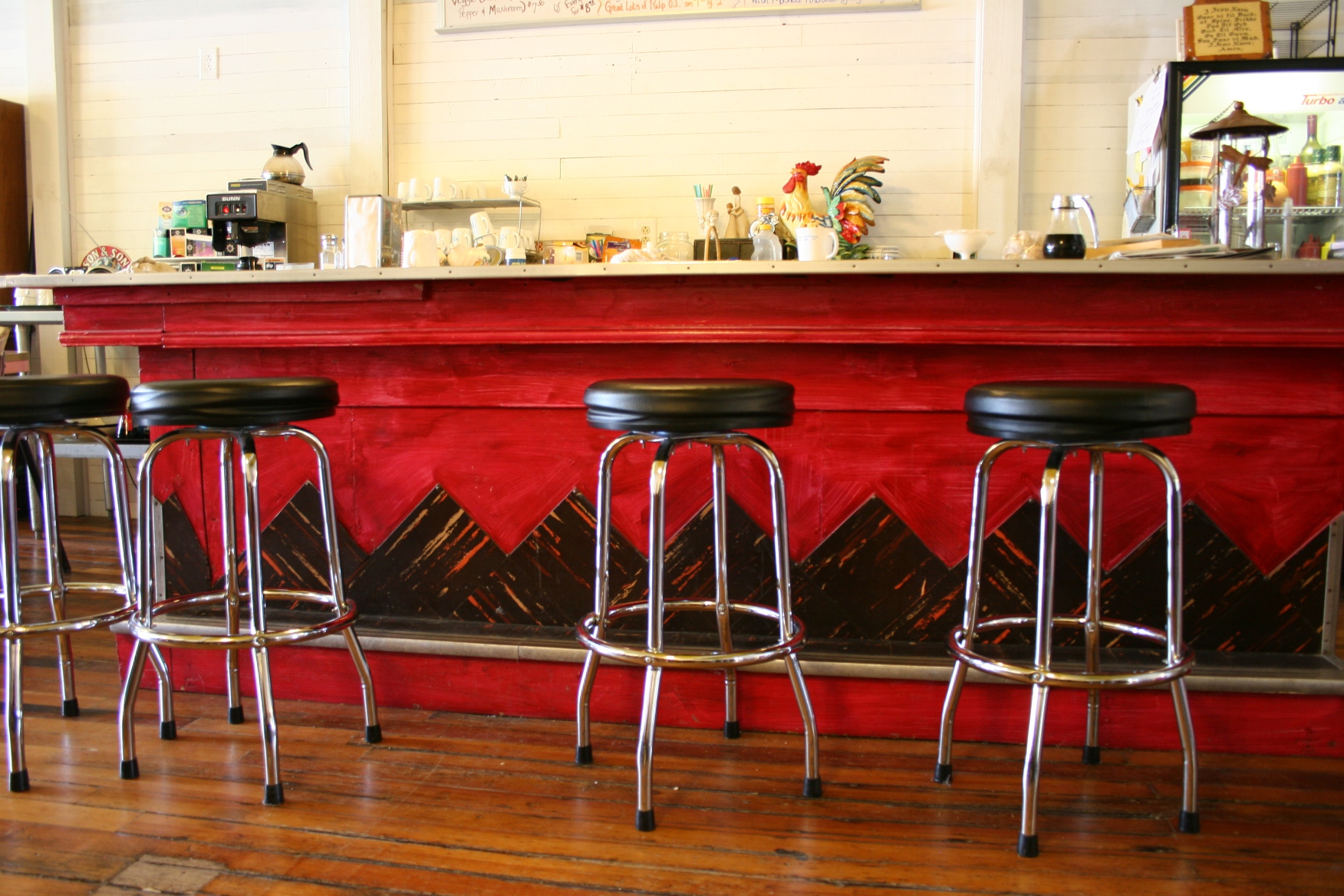
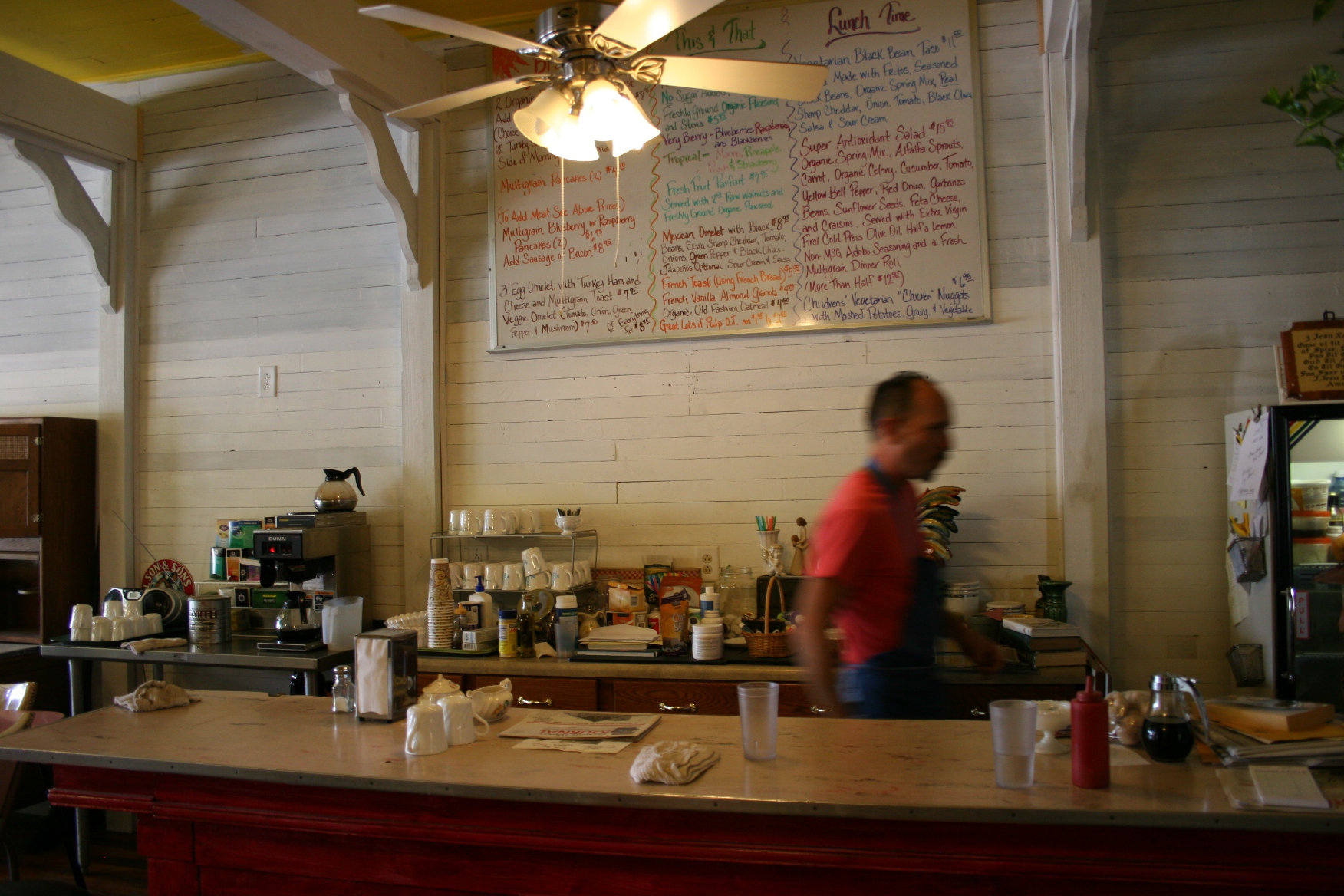
The absolutely fabulous lunch counter.

If you prefer to dine at a lunch counter, you’ll find one of those, too, painted in the most unexpected eye-jolting red that contrasts with the dark wood floor and cream-hued wood plank walls.

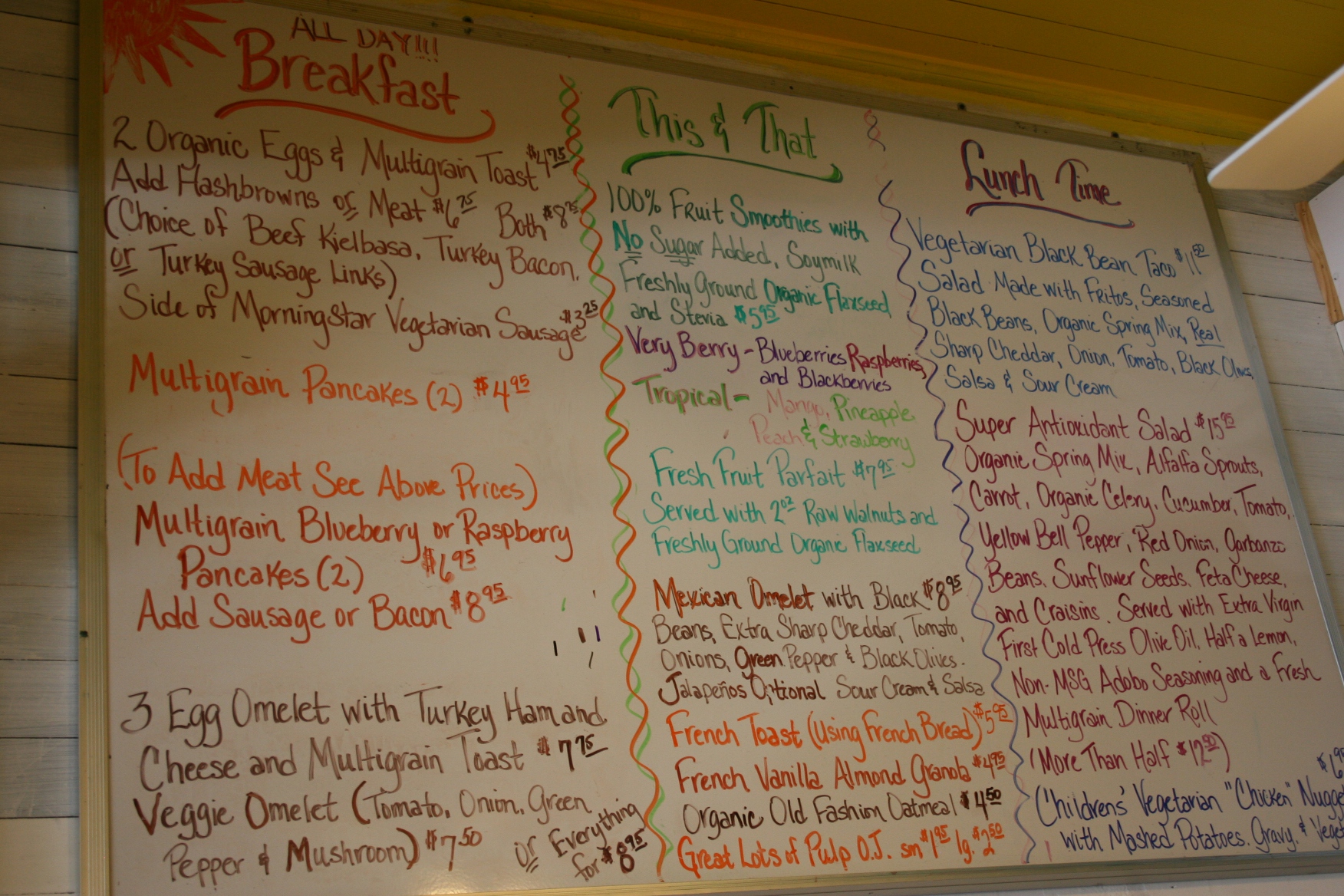
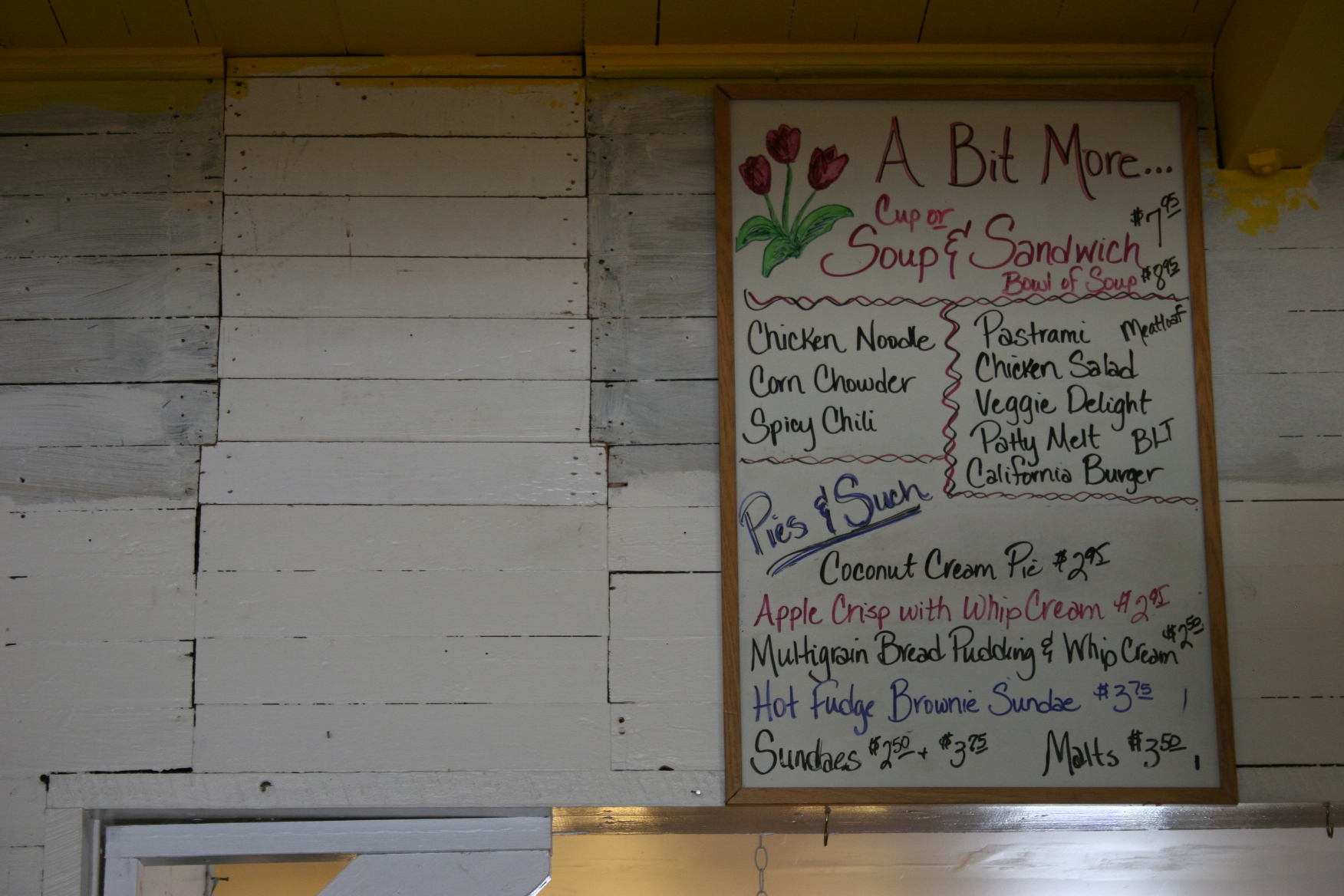
The main menu offers plenty of healthy choices.

The Highland Cafe, you’ll discover, is as much about the casual country atmosphere as about the food. You’ll read words like organic, multigrain, no sugar, soymilk, super antioxidant and fresh on the whiteboard main menu. You’ll also find comfort foods, like real mashed potatoes and gravy, along with fresh vegetables harvested from the cafe garden out back.

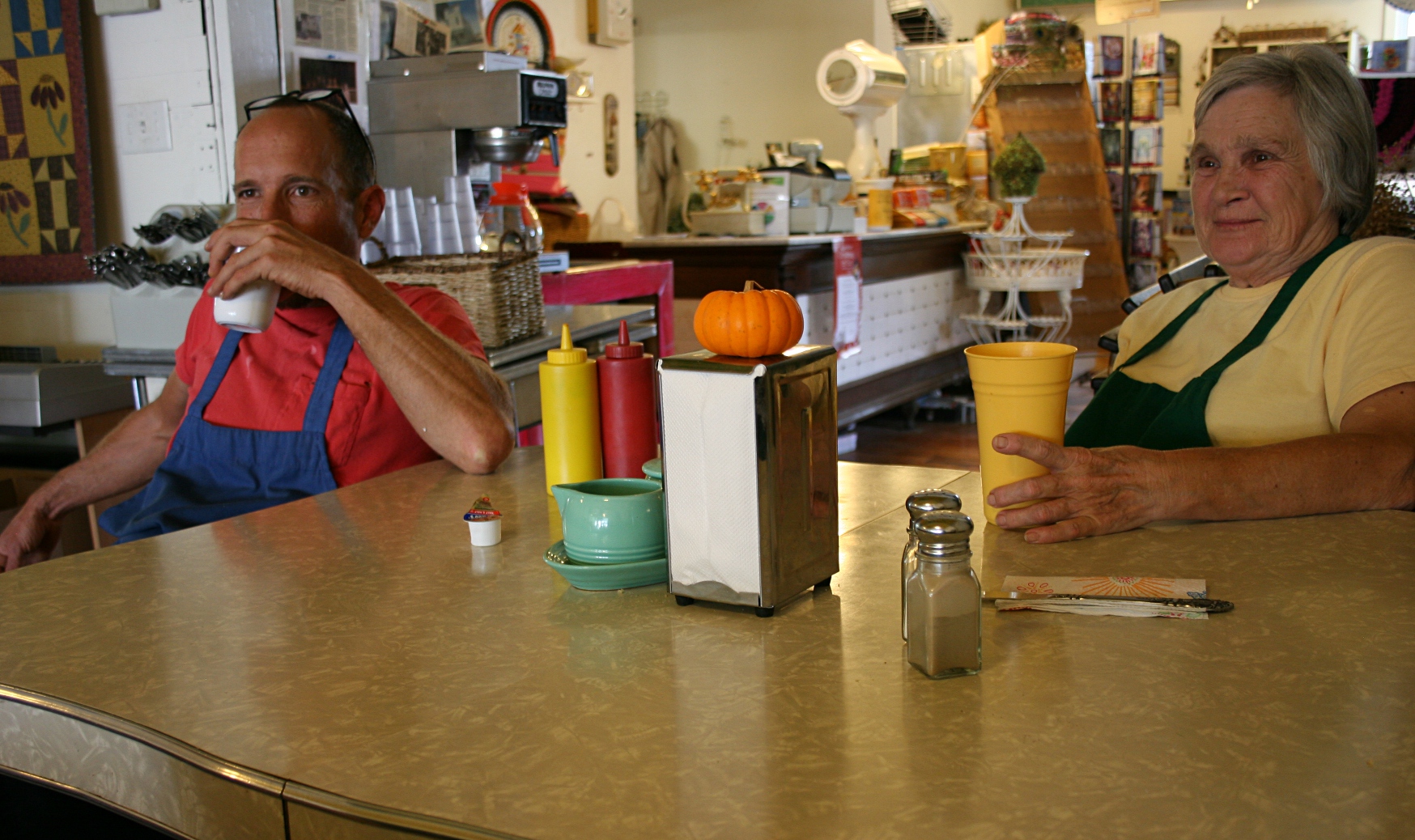
Troy Starks hustles behind the lunch counter toward the kitchen.

Even once mostly meat-and-potato eating local farmers have come around to eating healthier, says Troy Starks who on this Monday is waiting tables while his sister, cafe owner Vicki Hudson, is shopping for groceries. It took some time and convincing, but those stolid farmers are now sometimes ordering the cafe’s super oxidant salads.

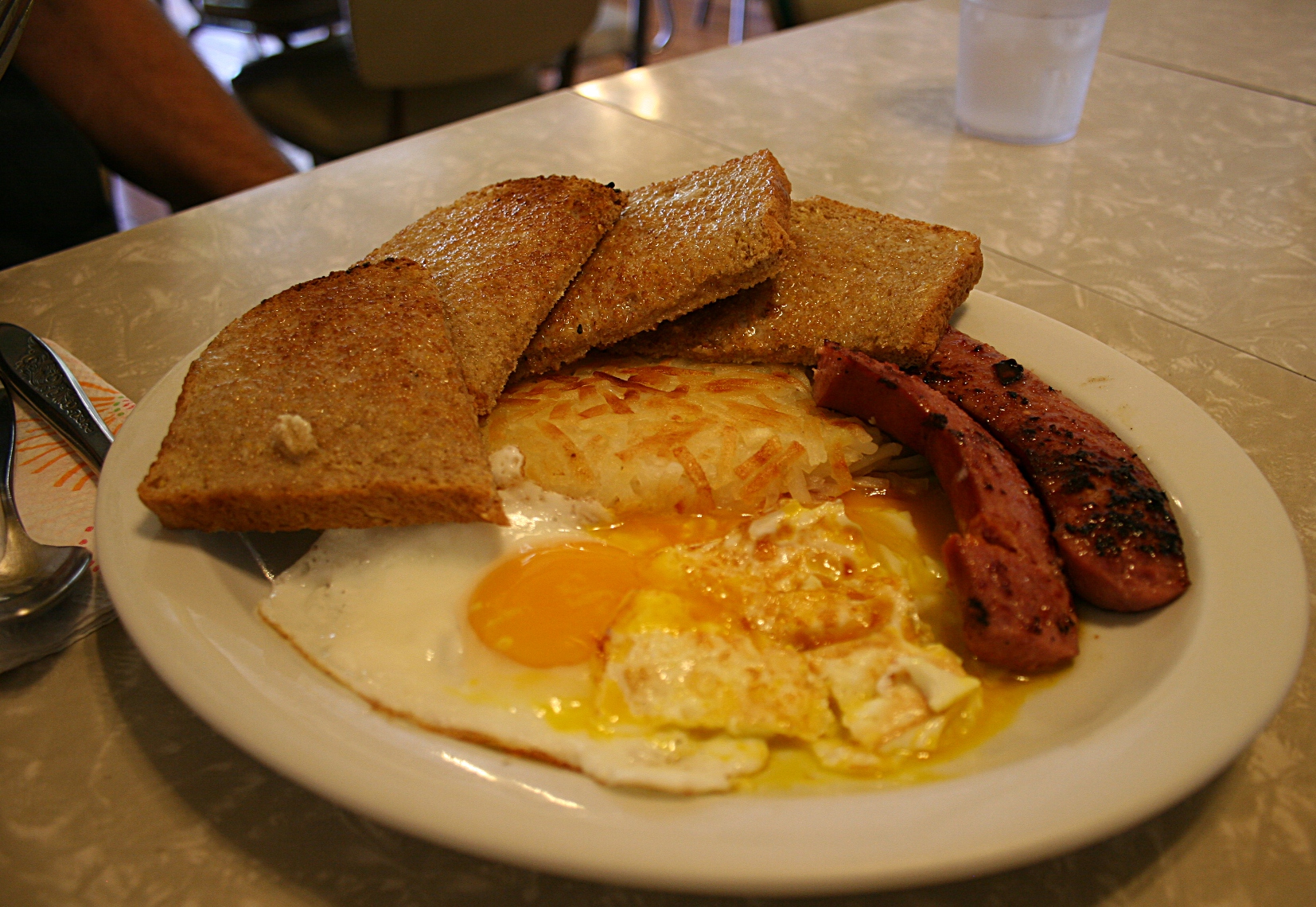
The hearty breakfast my husband ordered, even though the hour was well past breakfast: two organic eggs, multigrain toast, hashbrowns and kielbasa. He broke the egg yolks before I photographed his meal.

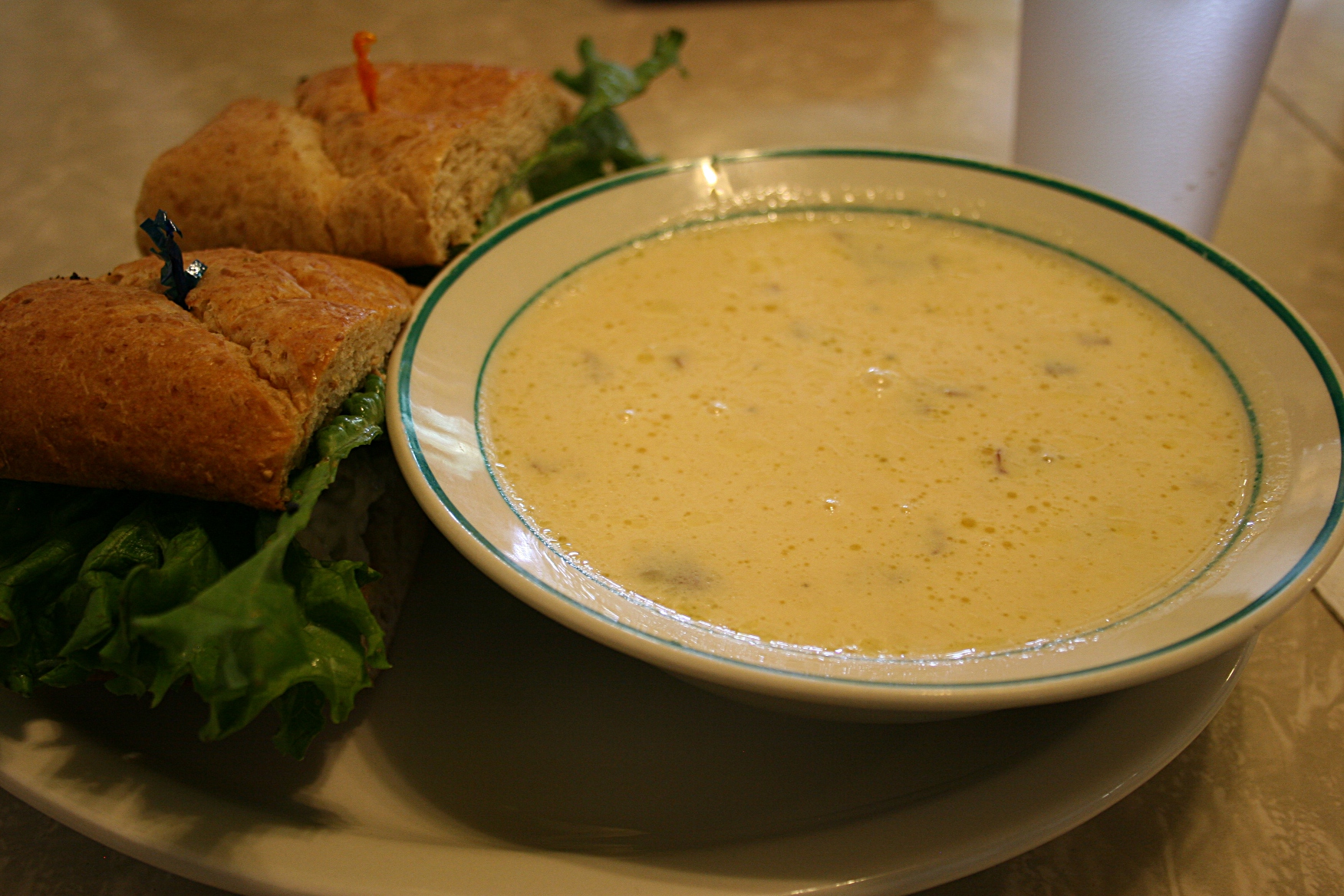
While my husband and I await our orders—his a plate of breakfast foods and mine a chicken salad sandwich and a bowl of corn chowder—I strike up a conversation with R.J., dining alone at the table next to us. He’s eating a burger. Turns out young R.J. farms just up the road and sells his grass-fed, antibiotic-free beef to the cafe.

When I point out to R.J. that he’s paying to eat the beef he sold to the cafe, he shoots back with a quick-witted, “Well, at least I know it’s (the beef) good.”

My meal: a chicken salad sandwich and tasty corn chowder.

Good and filling most assuredly define the food here. I wished I wasn’t too full to order a slice of pie or bread pudding or a piece of apple crisp for dessert. But I am. Next time…

And this, dear readers, is where I originally ended this post, which has been sitting in my draft box. Now I must add to this story because cafe owner Vicki Hudson announced to me in an email on Friday that the cafe she purchased five years ago will be closing just before Thanksgiving.

Her mother Sharyn Taylor, the cafe’s chief cook, is “getting tired and will not be up to working another year, so we are closing our doors,” Vicki writes. “…we are going to turn the upstairs into a bed and breakfast and then sell it as a combination bed and breakfast and cafe. It would not be the same without my mom and I feel she has done a tremendous job the past five years.”

Vicki continues: “Maybe there will be someone out there interested in carrying on.”

There. If you are interested in carrying on the fine tradition of the Historic Highland Store and Cafe, preserving a piece of southeastern Minnesota history and more, contact Vicki. Honestly, don’t you just love this unique small town dining spot? I do.

The dessert menu on this particular Monday in October.

FYI: The Historic Highland Store and Cafe is located along Fillmore County Road 10 southeast of Lanesboro in unicorporated Highland. Hours are from 7 a.m. – 3 p.m. Monday-Friday, closed Saturdays and open from 8 a.m. – 3 p.m. Sunday, until just before Thanksgiving.

Yes, the cafe is closed on Saturdays because the building also serves as a ministry for the Seventh Day Adventist Highland Chapel with Sabbath school beginning at 9:30 a.m. followed by an 11 a.m. church service and vegetarian potluck. Bible study is also held at 7 p.m. on Wednesdays and is open to all.

For more information about the Historic Highland Store and Cafe, click here to reach the cafe’s website.

After the lunch rush, Troy Starks and his mom, Sharyn Taylor, sit down to relax and chat. Sharyn is the cafe’s cook.

A comfy and cozy front corner of the cafe.

Even early on a Monday afternoon, the cafe is fairly busy. Occasionally local Amish dine here, intriguing tourists who come to this region of Minnesota. None were here on the Monday we visited. We were told that young Amish women have also worked here on occasion in the kitchen. And at least one  did not show up for work one day, having left the Amish order to “go Englisch.”

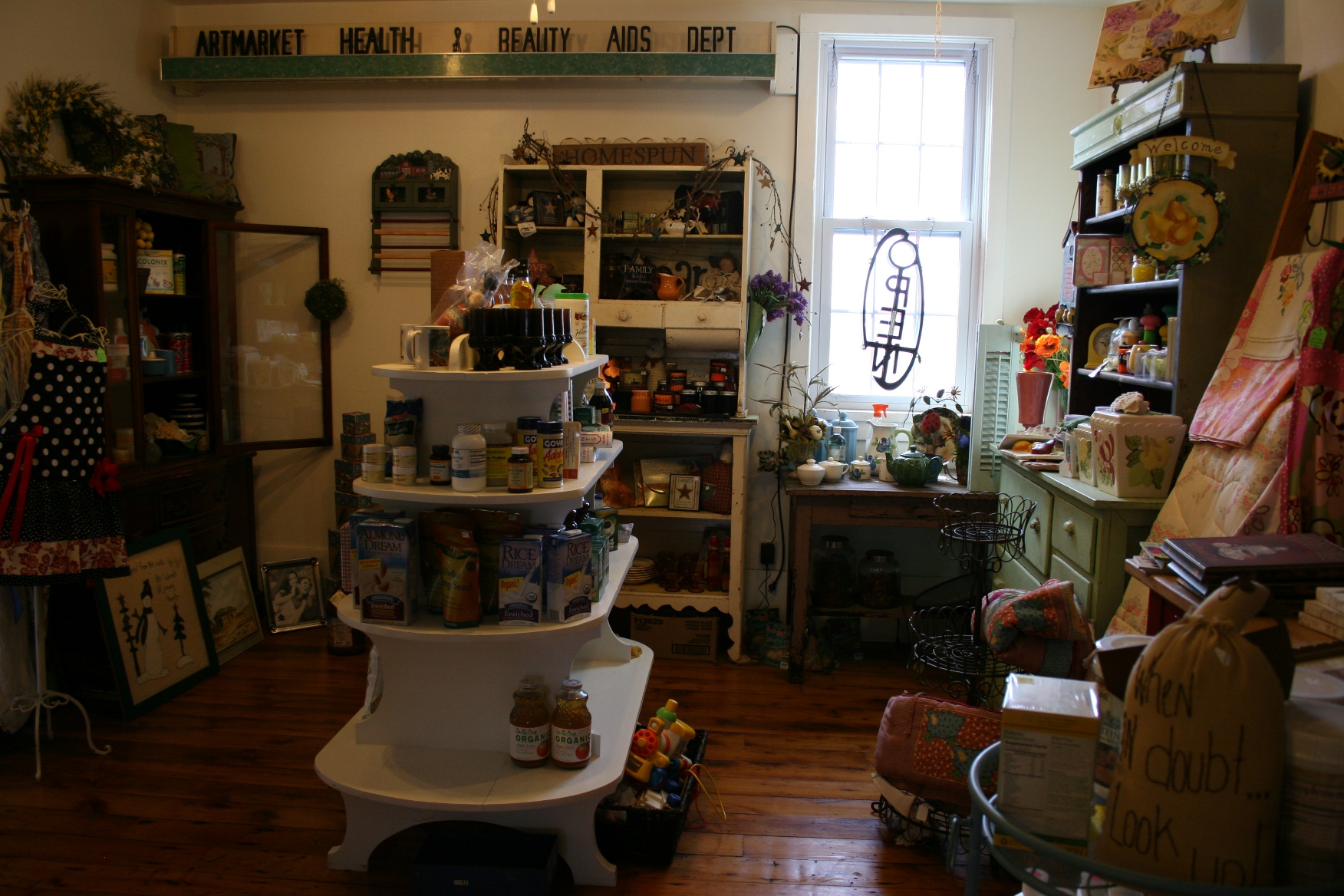
The art market and health and beauty aids department behind the dining room offers an eclectic mix of merchandise.

© Copyright 2012 Audrey Kletscher Helbling
 

Poets, photographers & penny pinchers connect in Zumbrota October 21, 2012

FRIDAY EVENING I SUCCESSFULLY read a poem about water before an audience of other poets and photographers and guests in an historic Zumbrota, Minnesota, theatre as part of the “It’s All One Water” exhibit.

I tell you this because I prefer to quietly write and read poetry (to myself) as opposed to standing before an ocean of seats in a darkened theatre with my lips pressed close to a microphone. But practice, practice, practice made all the difference in my feeling fairly confident and comfortable this go around.

(Yes, I’ve read in the State Theatre previously and you can read about that poet-artist collaboration by clicking here.)

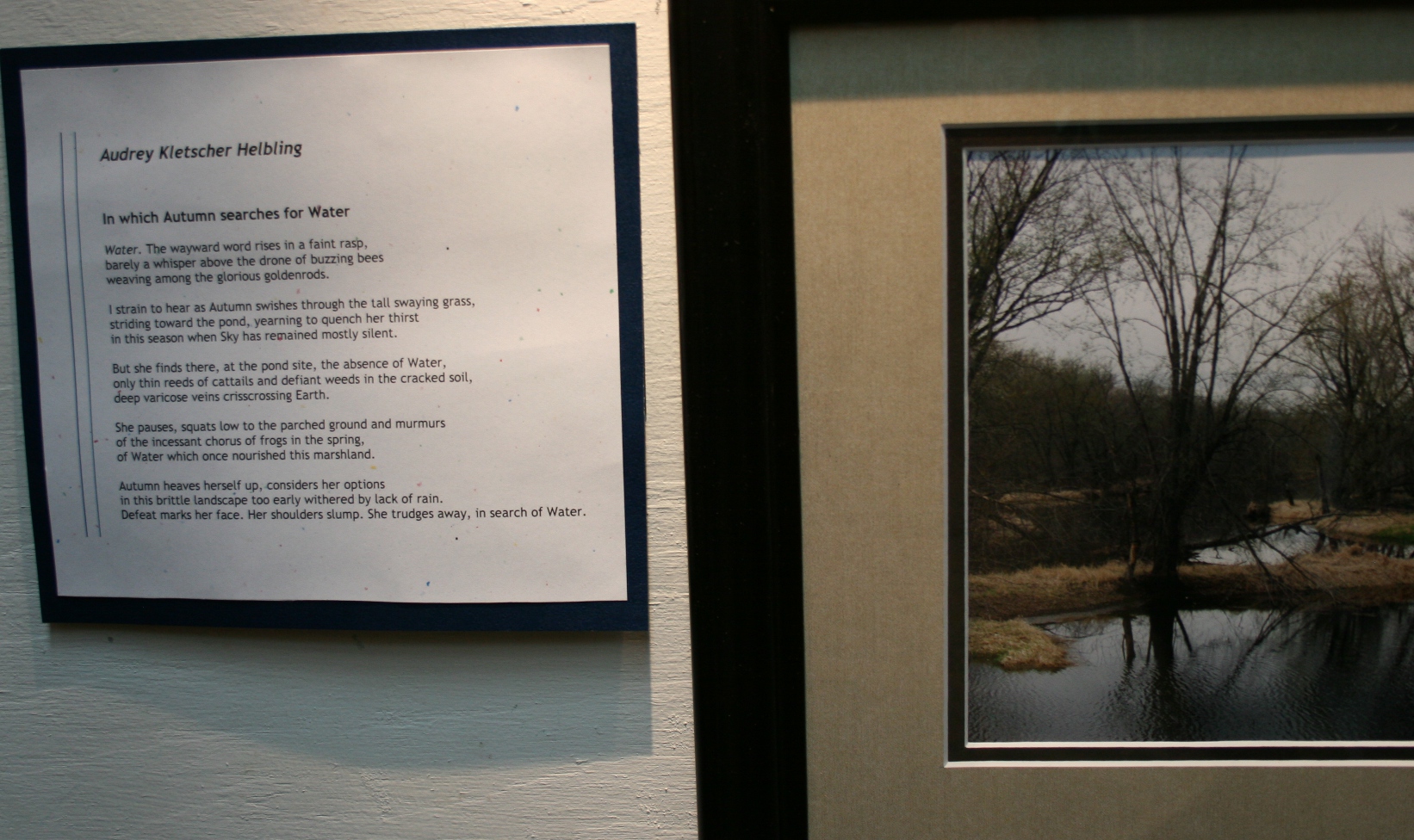
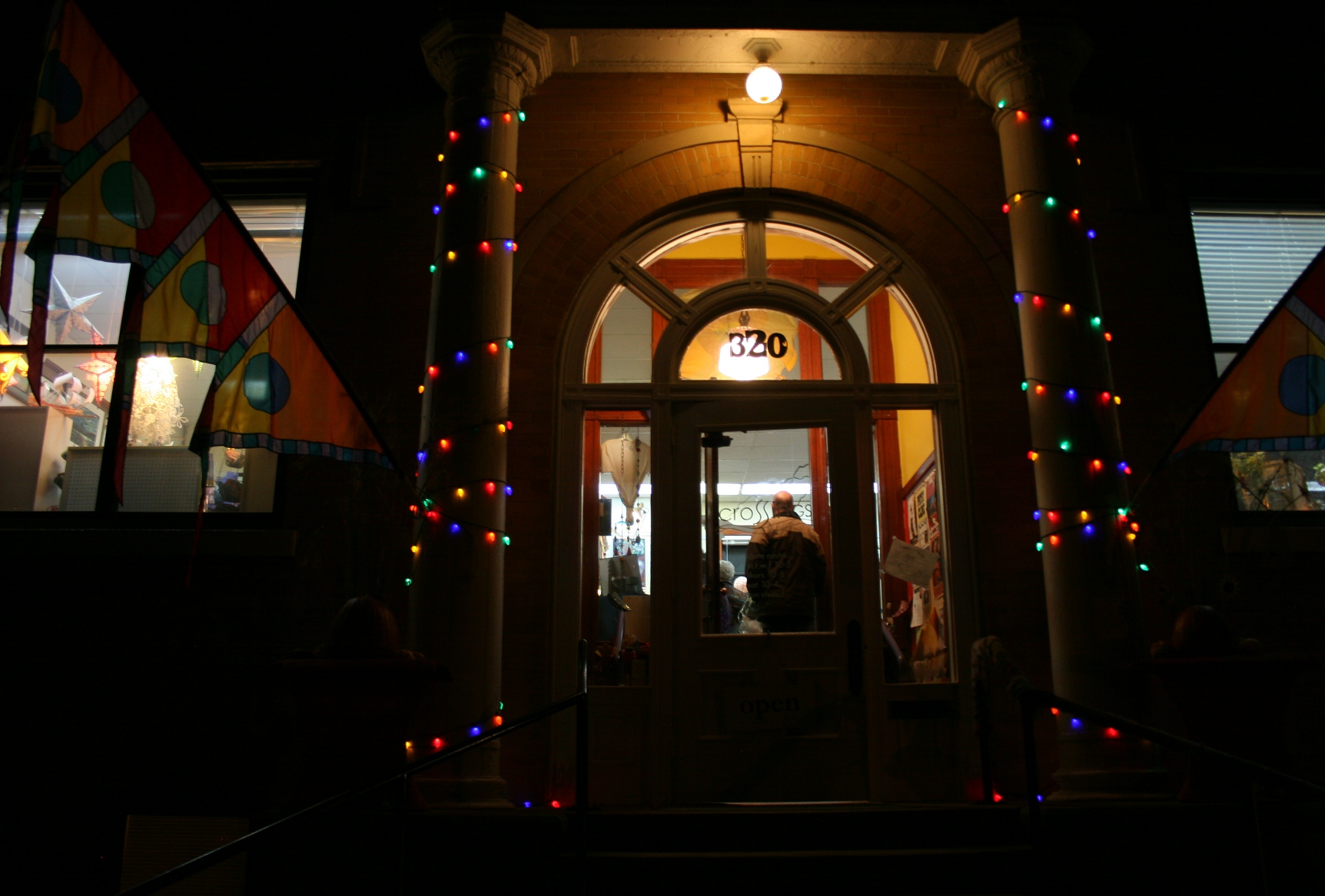
My poem,  left, was one of 28 selected and hung in a juried writing competition. Photos themed to water were also part of the “It’s All One Water” show which continues through the end of October at Crossings at Carnegie, 320 East Avenue, Zumbrota.

You’ll just have to imagine me reading my poem:

In which Autumn searches for Water

Water. The wayward word rises in a faint rasp,
barely a whisper above the drone of buzzing bees
weaving among the glorious goldenrods.

I strain to hear as Autumn swishes through the tall swaying grass,
striding toward the pond, yearning to quench her thirst
in this season when Sky has remained mostly silent.

But she finds there, at the pond site, the absence of Water,
only thin reeds of cattails and defiant weeds in the cracked soil,
deep varicose veins crisscrossing Earth.

She pauses, squats low to the parched ground and murmurs
of the incessant chorus of frogs in the spring,
of Water which once nourished this marshland.

Autumn heaves herself up, considers her options
in this brittle landscape too early withered by lack of rain.
Defeat marks her face. Her shoulders slump. She trudges away, in search of Water.

The “It’s All One Water” event included so much more than reading and listening to poetry and viewing photos on the subject of water. It was about mingling with other writers and artists, about connecting, or reconnecting.

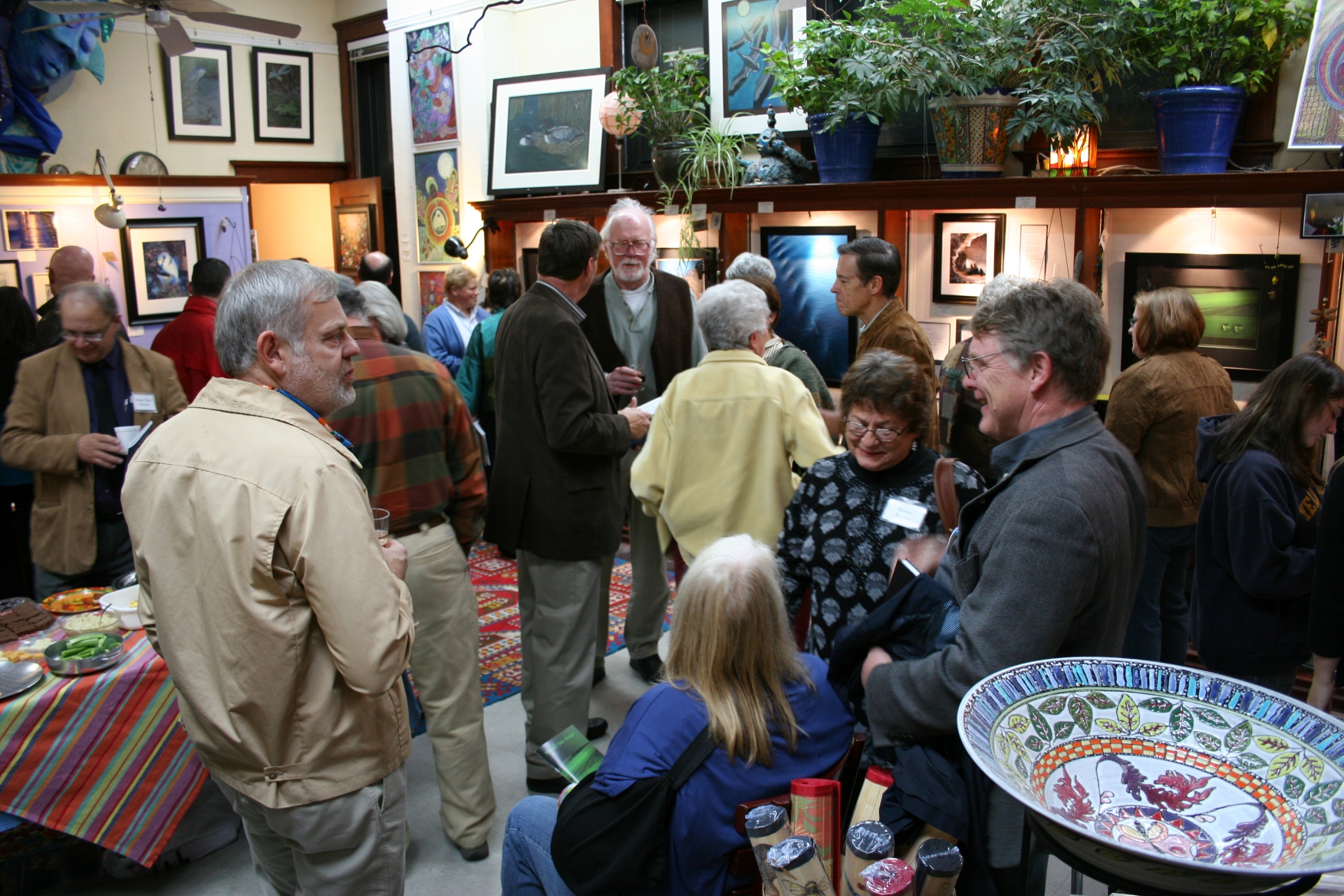
Poets, photographers and others mingle over wine and snacks at Crossings prior to the readings a block away at the State Theatre.

I chatted briefly with poet Patrick L. Colemen of Minneapolis, whom I met at Crossings at Carnegie, (the arts venue supporting the show) last spring, and caught up with him on the mystery book he is writing.

I talked with John Calvin Rezmerski of Mankato, a poet who is eons ahead of me, having published several books of poetry and having taught writing at the college level. I met him last year at a poetry-photography show/reading in Mankato. More connecting there and encouragement from other poets.

That is, I have found, the true benefit of attending events like the Friday evening reception and reading in Zumbrota. Connecting. Encouragement for me personally in my writing.

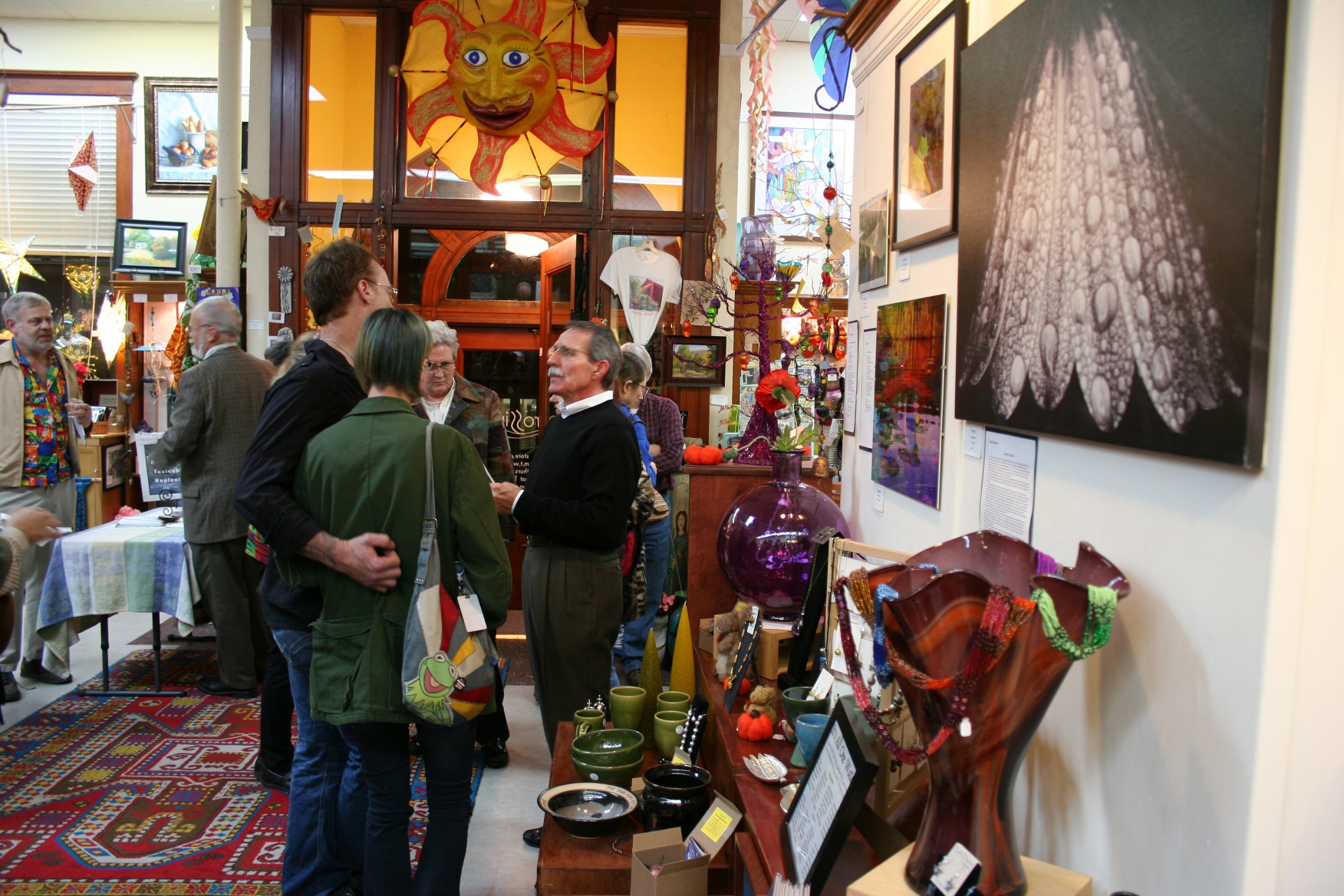
More mingling at Crossings, this time after the poetry readings. To the right is the photo “Tiffany” by Tim Rabe of Rochester. All of the “It’s All One Water” photos are for sale.

Among all the unfamiliar faces was the familiar face of Peter Allen, a gifted Faribault poet who lives several blocks away and a street over from me. Peter and I will be presenting on poetry at Buckham Memorial Library in Faribault in early December. Peter gave me two thumbs up for my poetry reading Friday evening.

I don’t know how Faribault High School English teacher Larry Gavin (he’s taught all three of my children) would have graded my reading. But he was in Zumbrota, too, on Friday evening reading his two poems. He, like Rezmerski, has published several volumes of poetry and reads with the confidence of a seasoned poet who truly has mastered the craft of entertaining an audience.

Likewise Susan Waughtal of Oronoco entertained the audience with her “Farm Water Cycle” poem which resonated with me, a former farm girl. Afterward I chatted with Susan and her husband. They are, she says midlife crisis farmers (farming since 2008) who live and farm on a 10-acre sustainable farmstead, raising chickens (and more), tending bees, operating community supported agriculture, and supporting music and the arts… Susan recently quit her off-farm job to work full-time on the farm.

When Susan told me about the old granary converted into an antique/thrift/arts shop on Squash Blossom Farm and how much she thrills in thrifting, I connected even more for I, too, am a thrifter.

Poets and photographers and penny pinchers. Wonderful company to keep on a Friday evening in October.

The festive exterior of Crossings at Carnegie, a privately-owned art center housed in a former Carnegie library.

FYI: For more information about Crossings at Carnegie, which collaborated with the Zumbro Watershed Partnership on “It’s All One Water,” click here.

© Copyright 2012 Audrey Kletscher Helbling
 

Meet 52 South Central Minnesota artists during weekend ArTour October 19, 2012

Faribault artist Julie Fakler’s paintings will be displayed in her JMF Studio at 1212 First Ave. N.W., Faribault, along with the textile art of Deb Johnson. Fakler specializes in animal portraits. Her cow painting graces promotional materials for this year’s South Central Minnesota Studio ArTour.

FIFTY-TWO ARTISTS. Twenty-four studios. And all showcased right here in the Faribault-Northfield-Cannon Falls area this weekend during the eighth annual South Central Minnesota Studio ArTour.

If you’ve never taken this studio tour, I’d encourage you to do so as a) You’ll meet a broad spectrum of talented local artists. b) You’ll view incredible art in wood, glass, photography, textiles, painting, ceramics, jewelry and more. c) It’s free, unless you purchase art, which, of course, you should consider doing. d) You’ll visit three charming communities.

I can’t attend this year’s tour. But I have in the past and here are the photos to prove it.

Just look at the talent we have, right here, in Greater Minnesota.

Meg Jensen Witt will showcase her ceramics at Lillart, 101 E. Fifth St., #209, Northfield, along with the paintings of Lilla Johnson. I photographed this example of Witt’s art in 2011.

At Holmquist Pottery, 11780 90th St. E., Northfield, you will find Lucky Rimpila’s glass art, like this photographed last year. Chris and Sue Holmquist will also display their ceramics and Marsha Kitchel will showcase her paintings.

Last year at Sunset Studio, 10754 Farrel Avenue, Northfield, I photographed the ceramics created by Tom Willis. You will find the work of six other artists at Sunset Studio.

During the 2010 ArTour, I visited Somers’ Studio & Gallery, 9775 Dennison Blvd. S., Northfield, where Fred Somers paints on his rural acreage.

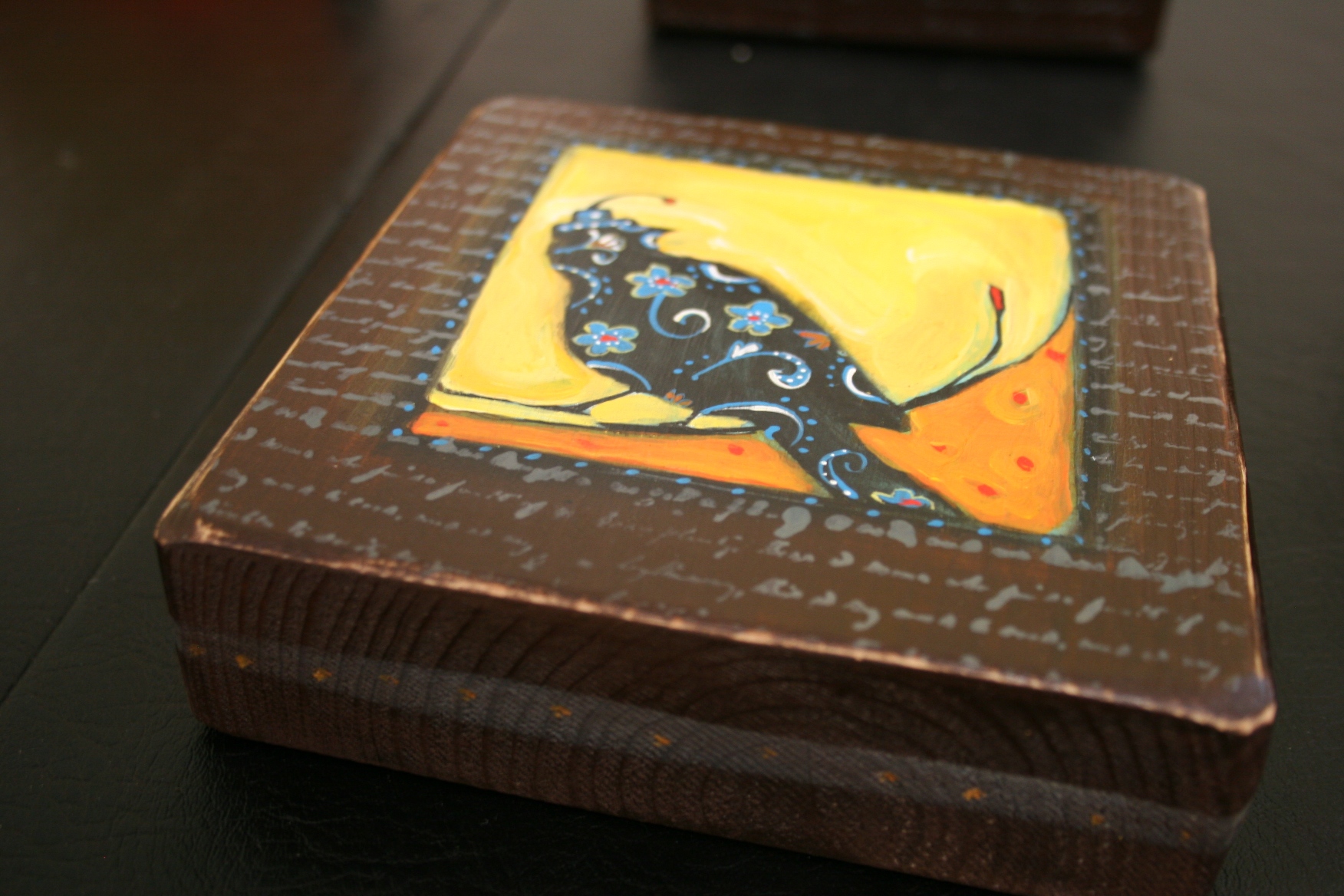
In 2010 I photographed this wood block art created by Carla Thompson. This year she will exhibit her painting, along with Julie Free Heart, at Revisions, 101 E. Fifth St., #302, Northfield.

Animal paintings propped on the floor of Julie Fakler’s JMF Studio during the 2010 ArTour.

FYI: The South Central Minnesota Studio ArTour runs from 10 a.m. – 6 p.m. on Saturday, October 20, and Sunday, October 21. Select studios will also be open from 4-8 p.m. today.

For details, including studio locations and participating artists, click here to reach the ArTour website.

I photographed this scene from the 2010 ArTour marking a Northfield studio.

Click here to read about my visit to Fred Somers’ gallery/studio during the 2010 tour.

Click here to see Faribault artist Julie Fakler’s studio, one of my stops on the 2010 tour.

© Copyright 2012 Audrey Kletscher Helbling
Cow image courtesy of Julie Fakler


Zumbrota exhibit explores water during this year of extreme drought

I LOVE THE ARTS.

And I expect part of that passion comes from the lack of arts in my life when I was growing up on the southwestern Minnesota prairie. Back in the 1960s and 1970s, out there in “the middle of nowhere,” as some would say, life focused more on survival than anything.

By survival I mean my father earning enough money to support his wife and six children on a modest crop and dairy farm.

So much depended on the weather, on the rain or lack thereof. Enough rain meant a bountiful crop to feed the cattle and/or sell grain on the market. Too little rain meant scrimping on feed and less money to pay the bills, buy the groceries, clothe the family.

But let’s circle back to my original statement about loving the arts and connect that to water.

Recently I entered, and successfully competed in, an “It’s All One Water” poetry competition sponsored by the Zumbro Watershed Partnership and Crossings at Carnegie, a privately-owned art center in Zumbrota.

This evening a public reception will be held at Crossings, 320 East Avenue, beginning at 6:30 p.m. It is an opportunity to view works by 56 writers and photographers who “explored the aspects of water which fascinate them and created their own artistic expression of this most basic foundation for life,” according to promo info for the event.

At 7:30 p.m., writers, photographers and guests will move down the block to the historic Zumbrota State Theatre where writers will read their works while the water-themed photographs are projected onto a screen.

I will read my “In which Autumn searches for Water.”

My poetic expression about water traces back to my farm roots, to that constant and undeniable link between the land and the sky.

That connection is so much a part of my fiber that I cannot think about water in recreational terms—I can’t swim, don’t like being on the water and grew up in a Minnesota county without a natural lake. Rather, for me, water has always been about sustaining life, about growing a crop, about watering the cows or watering plants or measuring rainfall.

So when I learned of the “It’s All One Water” poetry competition shortly after an autumn walk at the River Bend Nature Center in Faribault, where I found dry ponds, I knew exactly what I would write. I personified Autumn, creating a thirsty woman in search of an also personified Water. It works and I think well, especially given the current historic drought conditions throughout our country.

About a third of Minnesota is suffering from extreme drought. On Thursday the Minnesota Department of Natural Resources issued a news release urging Minnesotans to adopt water conservation measures (no washing vehicles, watering lawns and trees, etc.) as drought conditions are straining our state’s water resources.

Here’s a snippet of my drought-related water poem, verse three of five:

But she finds there, at the pond site, the absence of Water,
only thin reeds of cattails and defiant weeds in the cracked soil,
deep varicose veins crisscrossing Earth.

You can hear me read “In which Autumn searches for Water” this evening or view the entire exhibit from now until the end of October at Crossings. Hours are 10 a.m. – 5 p.m. Monday, Tuesday, Wednesday and Friday; 10 a.m. – 8 p.m. Thursdays; or from 10 a.m. – 4 p.m. Saturdays. A limited number of chapbooks are available. Monies from Minnesota’s Arts & Cultural Heritage Fund helped to fund the “It’s All One Water” exhibit.

CLICK HERE to reach the Crossings at Carnegie website.

CLICK HERE to link to the Zumbro Watershed Partnership website.

CLICK HERE TO VIEW drought conditions in the U.S.


Rural Americana: A personal tour of historic Canton, Minnesota October 18, 2012

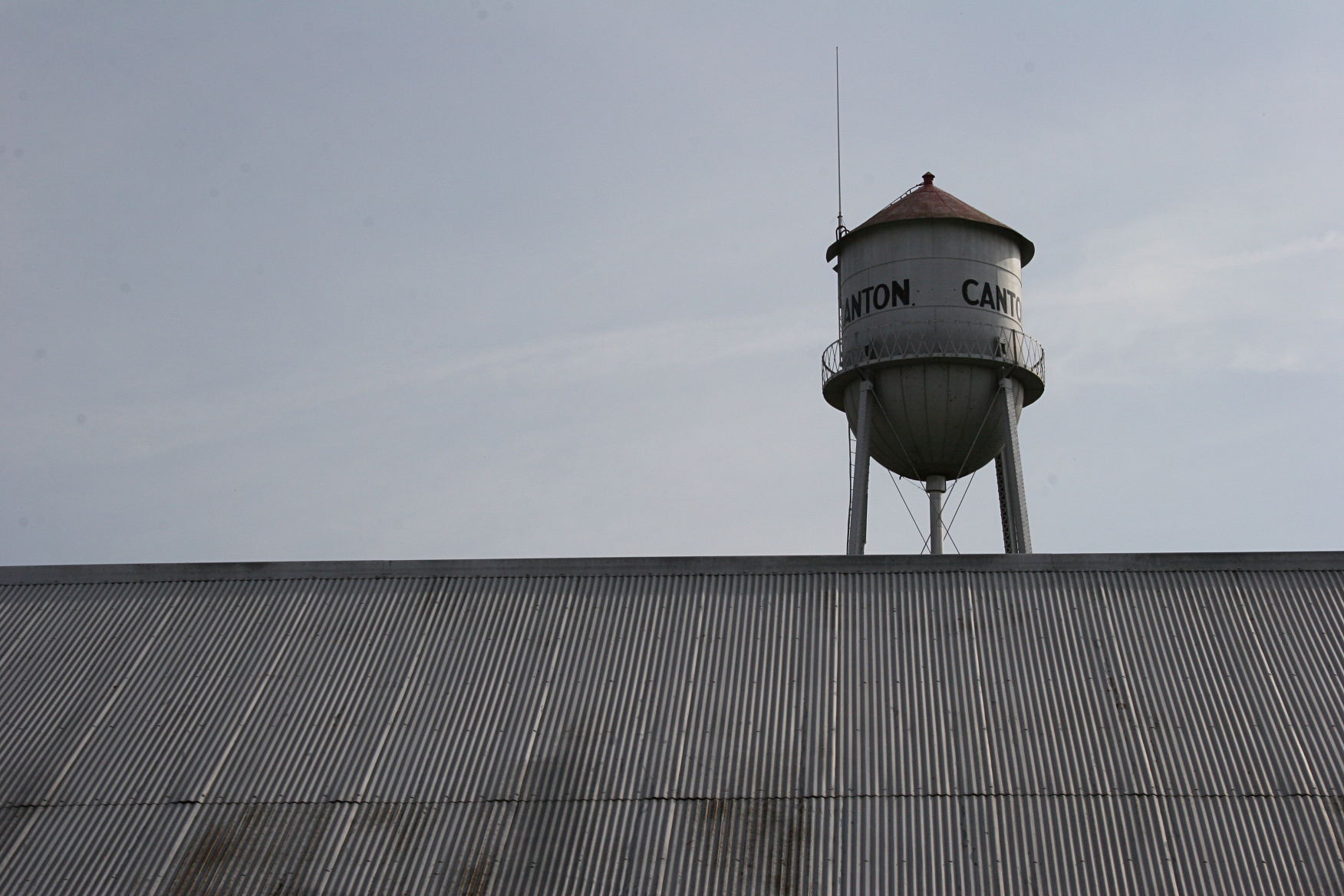
The water tower in Canton, on the other side of the roof line seen here in the foreground.

LeROY HAYNES WAS BRUSHING green paint onto wainscoting in the sunny warmth of an October afternoon when I happened upon him in Canton, a town of 328, in southeastern Minnesota near the Iowa border.

He was, he said, in the process of sprucing up Lumber Yard Antiques, the shop he and wife Kathie opened in July. Kathie’s originally from Canton where the couple now lives only three blocks from their antique store.

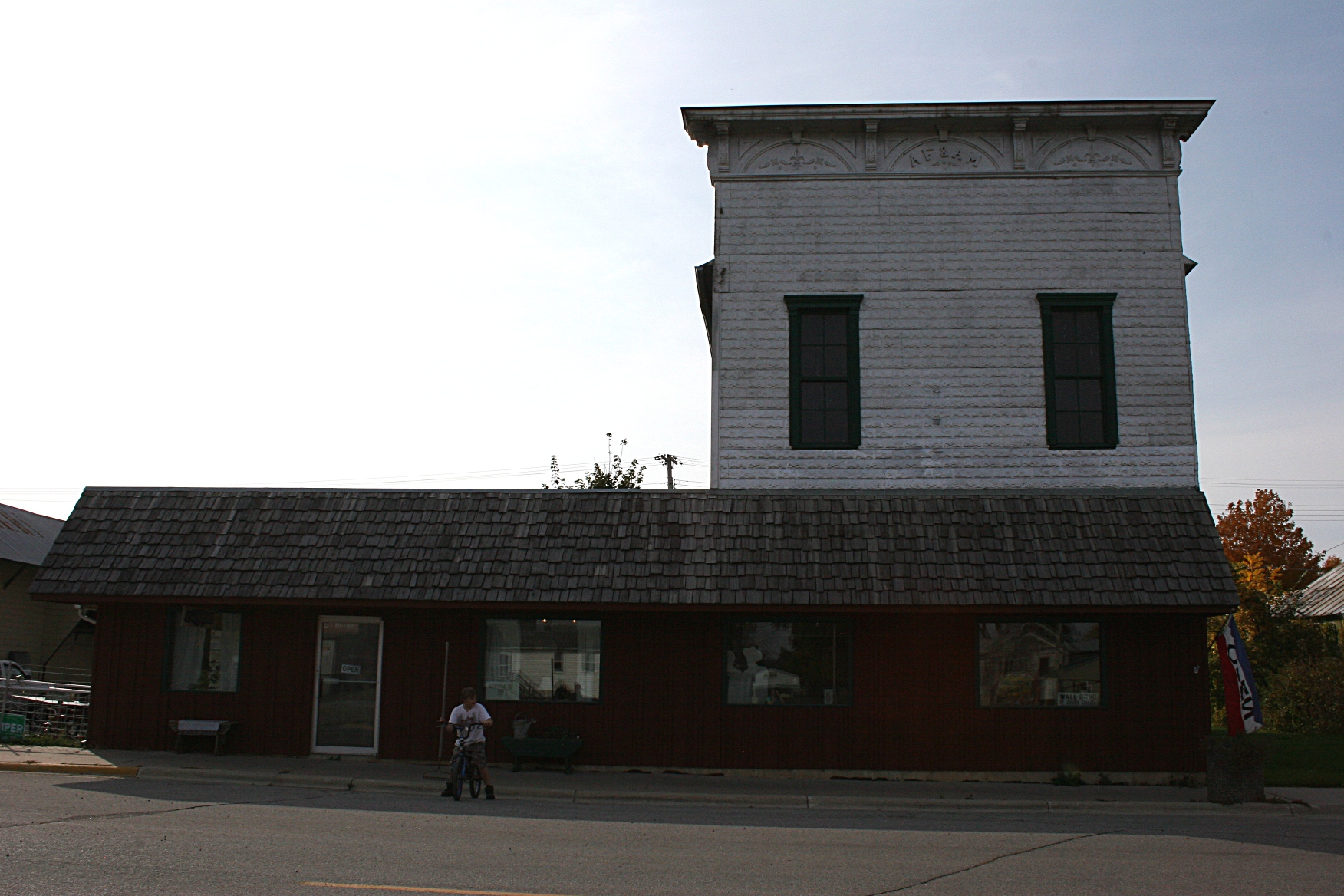
When the lumber yard moved here, it added the front red part of the building onto the former Masonic Lodge building on the right. The first floor of this complex now houses Lumber Yard Antiques.

They named their business after the lumber yard previously housed in the building complex which some 10-plus years ago was home to another antique shop and before that Canton city offices. The older part of the Haynes’ shop, the Masonic Lodge building, was once rented out by the Masons and used as a grocery store, barbershop and even as apartment space.

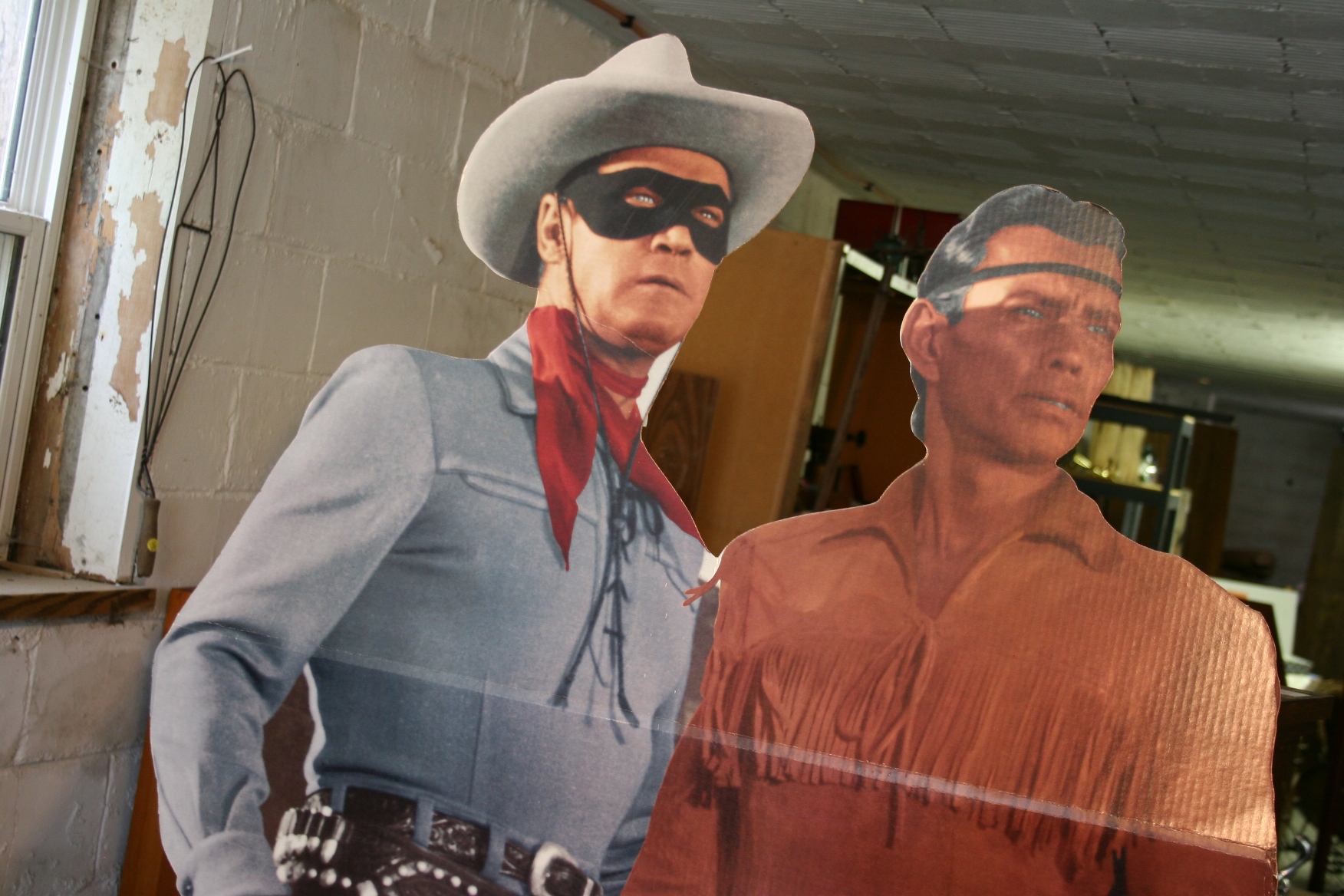
See what you learn when you start a conversation. I learned even more when I spotted a cut-out of Tonto and the Lone Ranger and mentioned to LeRoy that I’d seen one just like it in the basement of an antique shop in Stockholm, Wisconsin.

The Lone Ranger and Tonto cut-outs, photographed last fall in Stockholm, Wisconsin.

Imagine my surprise when LeRoy informed me that the cut-out had come from Stockholm, where he once sold his antiques and collectibles at A+ Antiques & Oddities.

It is a small world.

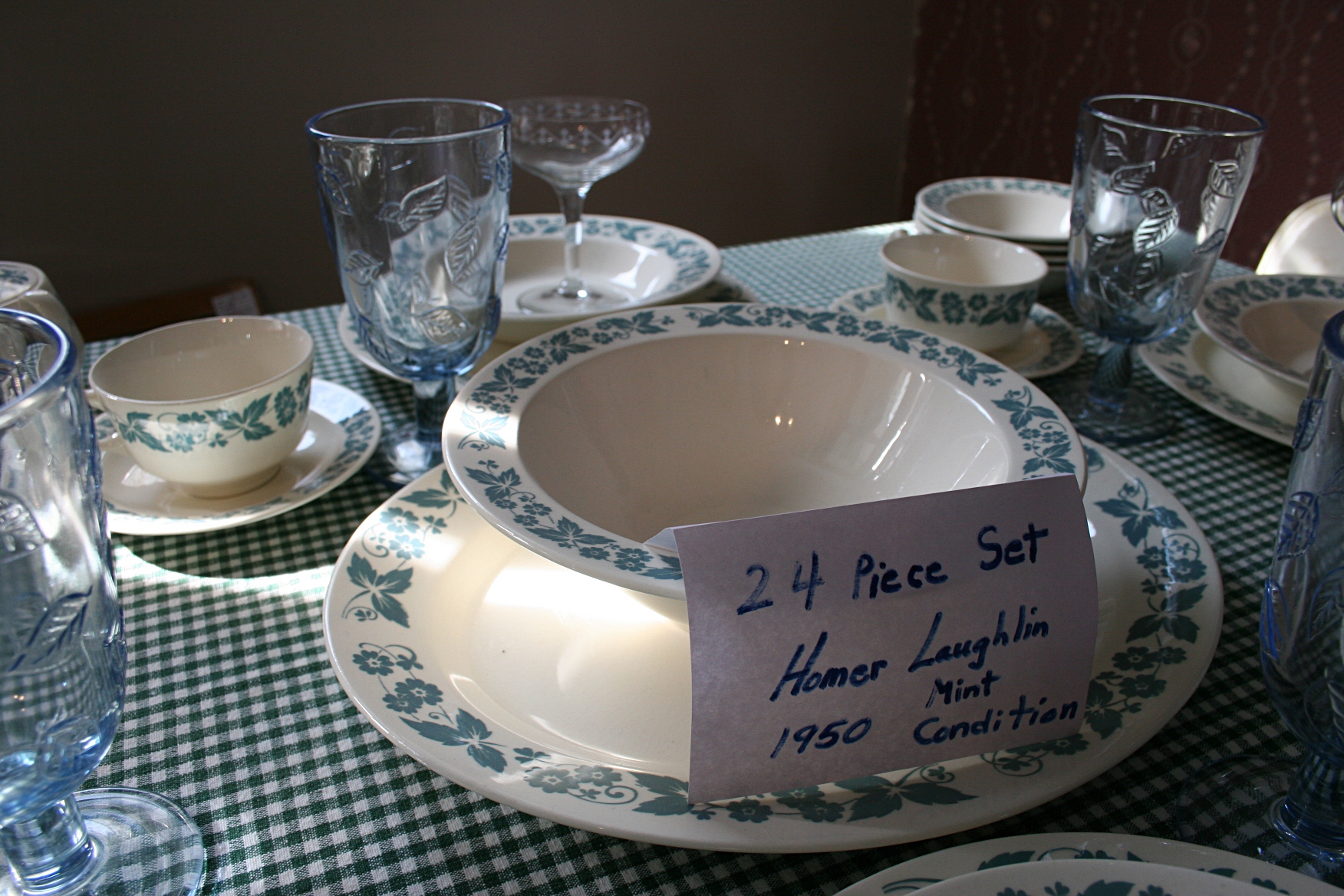
Beautiful 1950 Homer Laughlin china for sale at Lumber Yard Antiques.

LeRoy and I hit it off marvelously and soon he was offering to take me and my husband into the upstairs of the former Masonic Lodge. I had my doubts as this Presbyterian minister led us past a jumble of boxes, over broken glass and finally weaving our way up a steep and dark stairway littered with piles of bird poop. And I was wearing flip flops.

Inside the former Masonic Lodge, the second floor of Lumber Yard Antiques. Can you see the potential here?

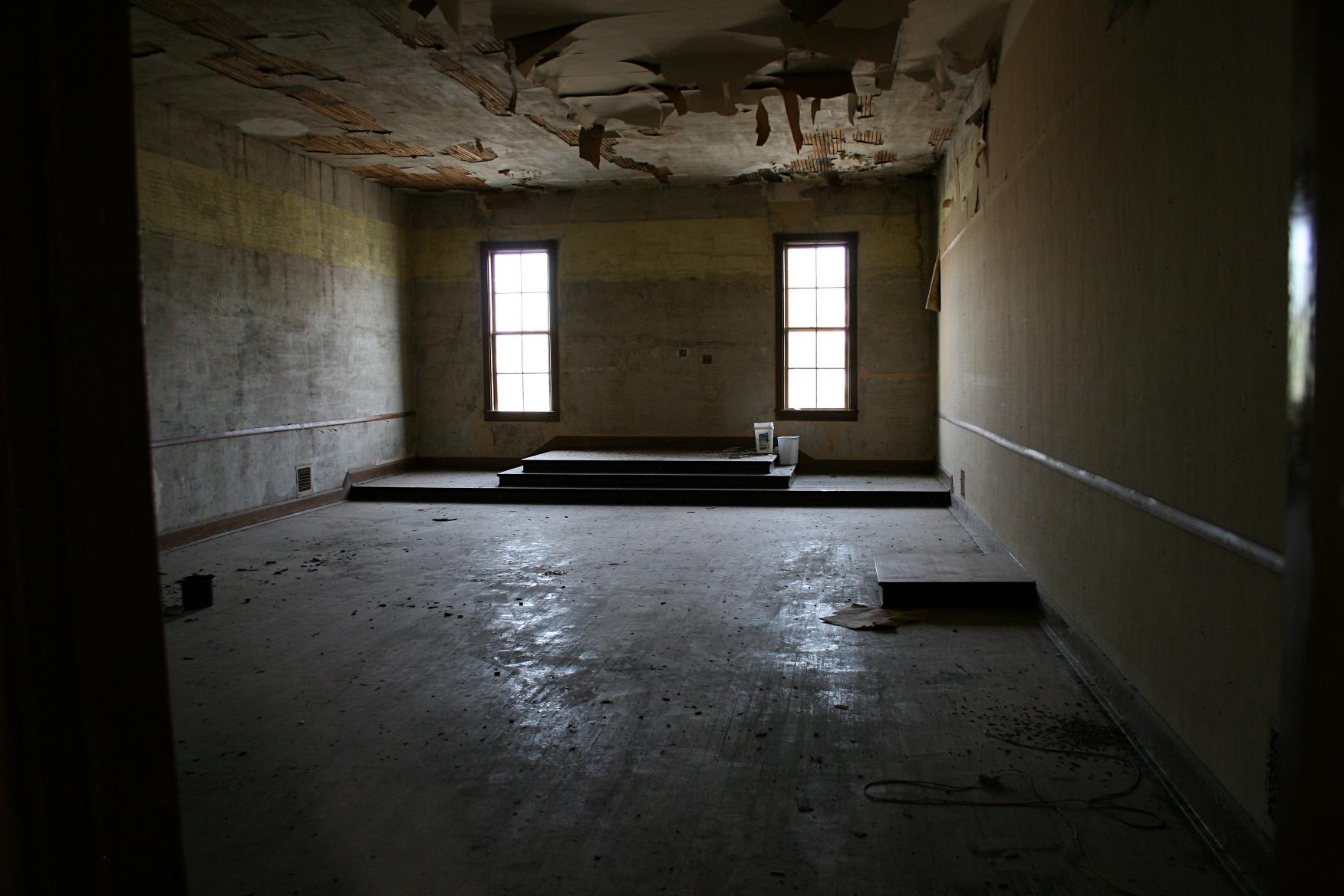
But it was worth the climb when LeRoy led us into a spacious room with incredible potential, despite the crumbling ceiling and general disrepair. The wood floor and the step-up small “stages” on both ends of the room—something to do with Masconic ritual, LeRoy said—instantly ignited my creative thoughts. This, I told our tour guide, would be perfect for theatre and/or music.

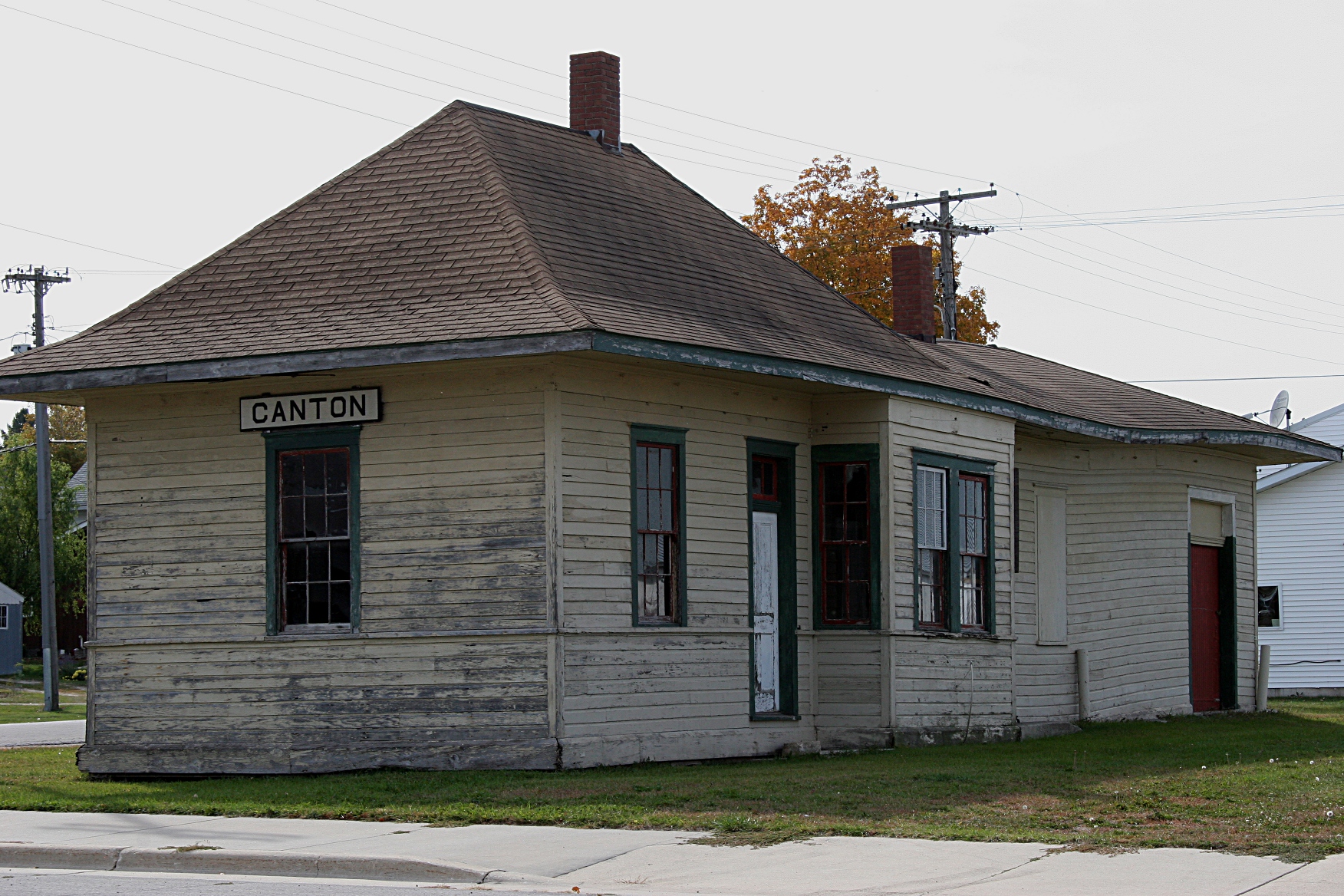
Canton’s original depot, recently reroofed.

I don’t know that LeRoy and Kathie share my vision. But they have been thinking preservation as has a railroad buff from California who bought the next door vintage railroad depot, sight unseen, according to LeRoy.

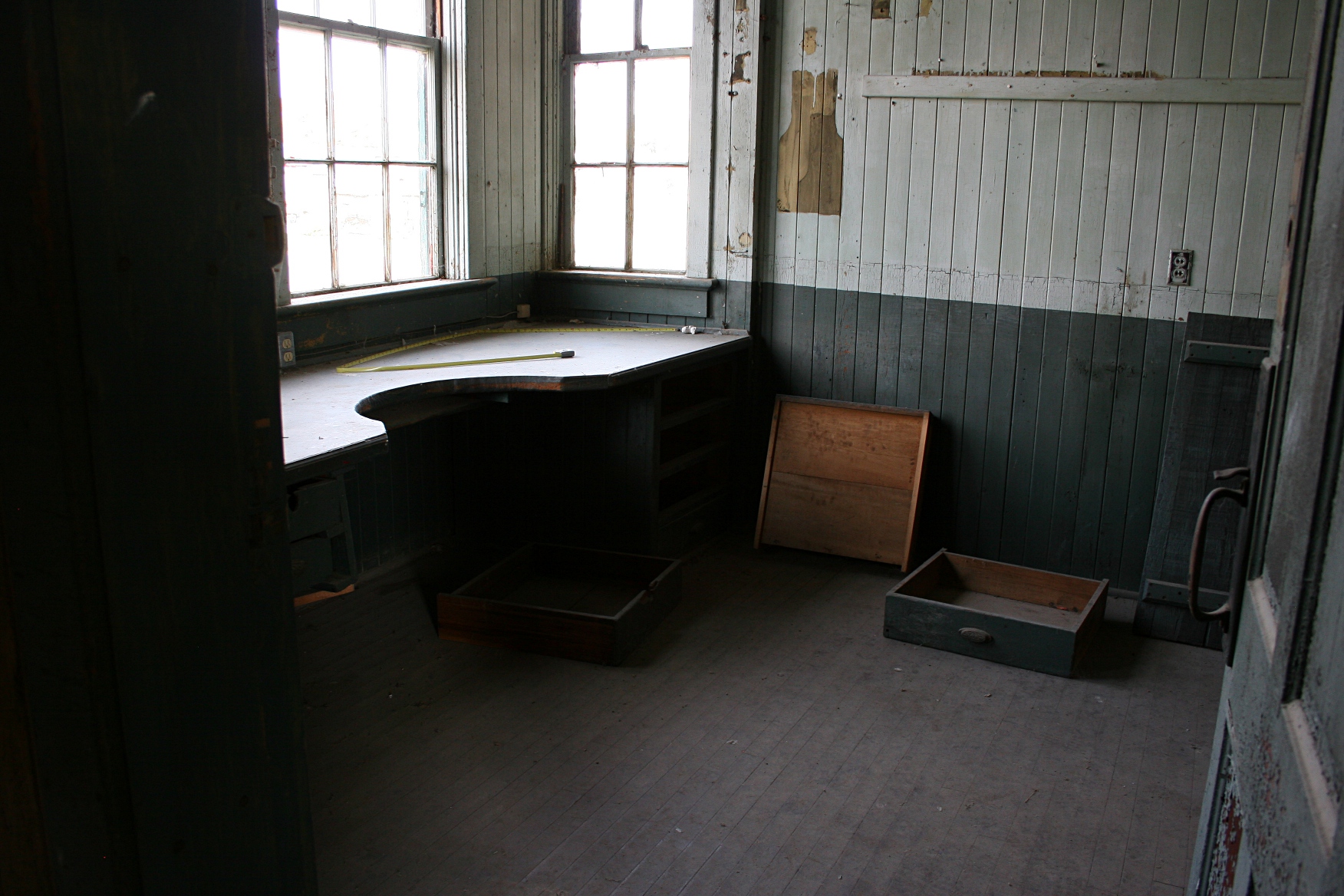
Inside the depot.

The depot came next on our tour (LeRoy’s been entrusted with a key) and I was just as delighted to get inside this historic building.

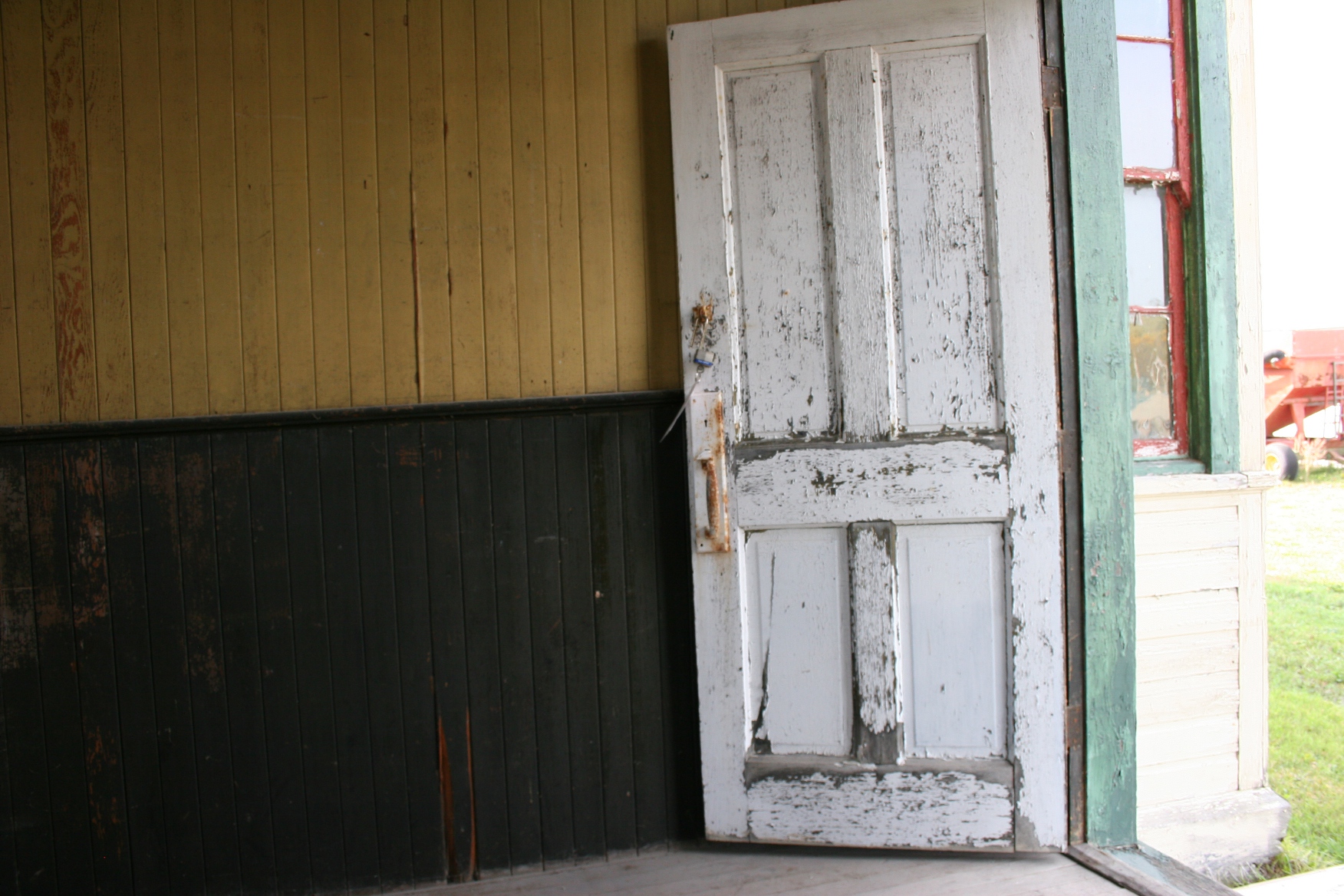
The door LeRoy unlocked into the depot. Love it.

The California man has a vision to create a historic site in Canton and a Canton Historical Society has been formed. Plans are to seek grants to restore old buildings like the depot.

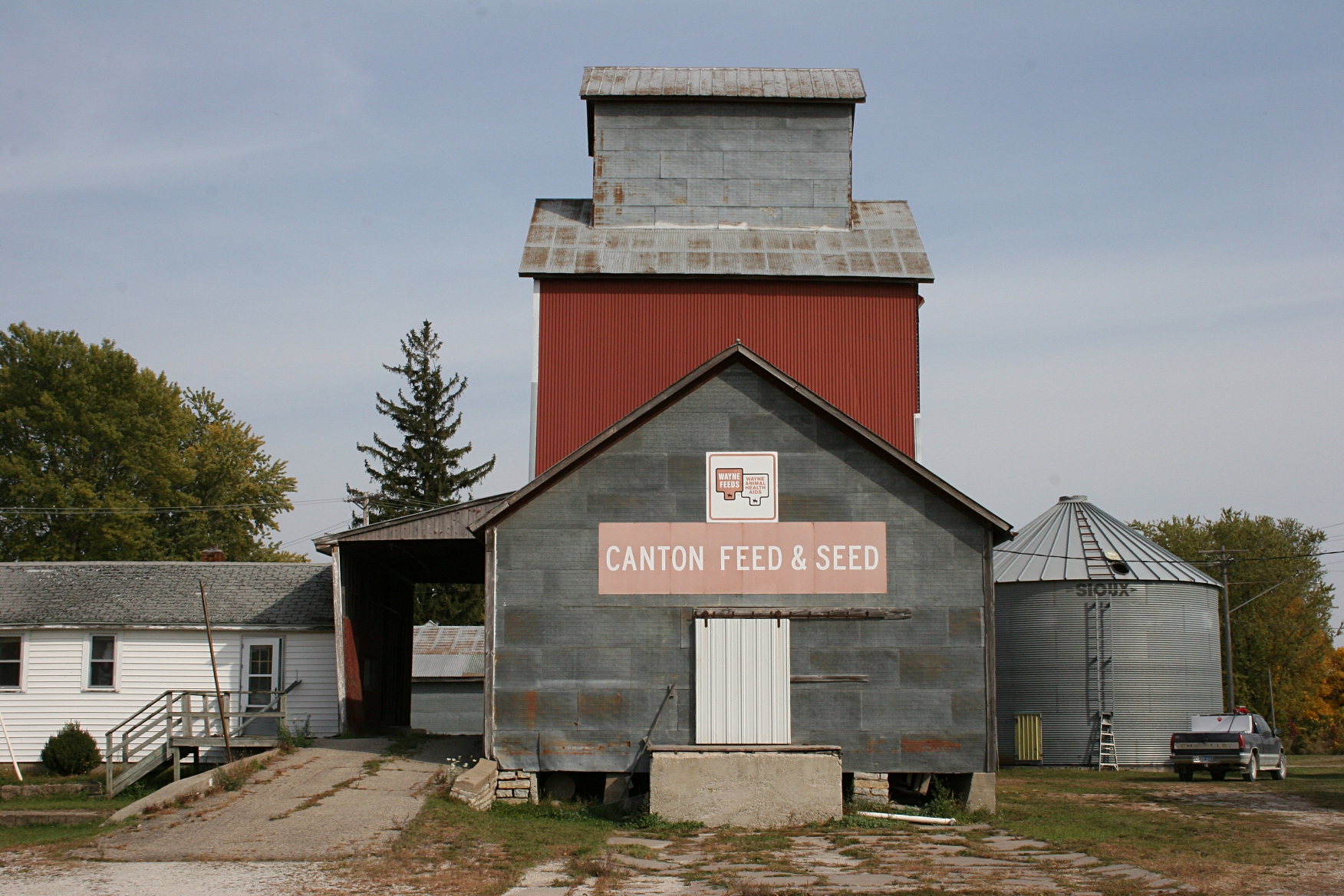
Old elevators like this are disappearing from our small towns, replaced by large, generic storage units. The Canton Historical Society hopes to save Canton Feed & Seed and other old buildings in town as part of an historic site.

And that pretty much ended our tour of the portion of Canton which lies off the main route past town, Minnesota Highway 44. Had we not driven into town via the back way, past the elevator, we may have missed all of this, and that personal, historic tour by LeRoy.

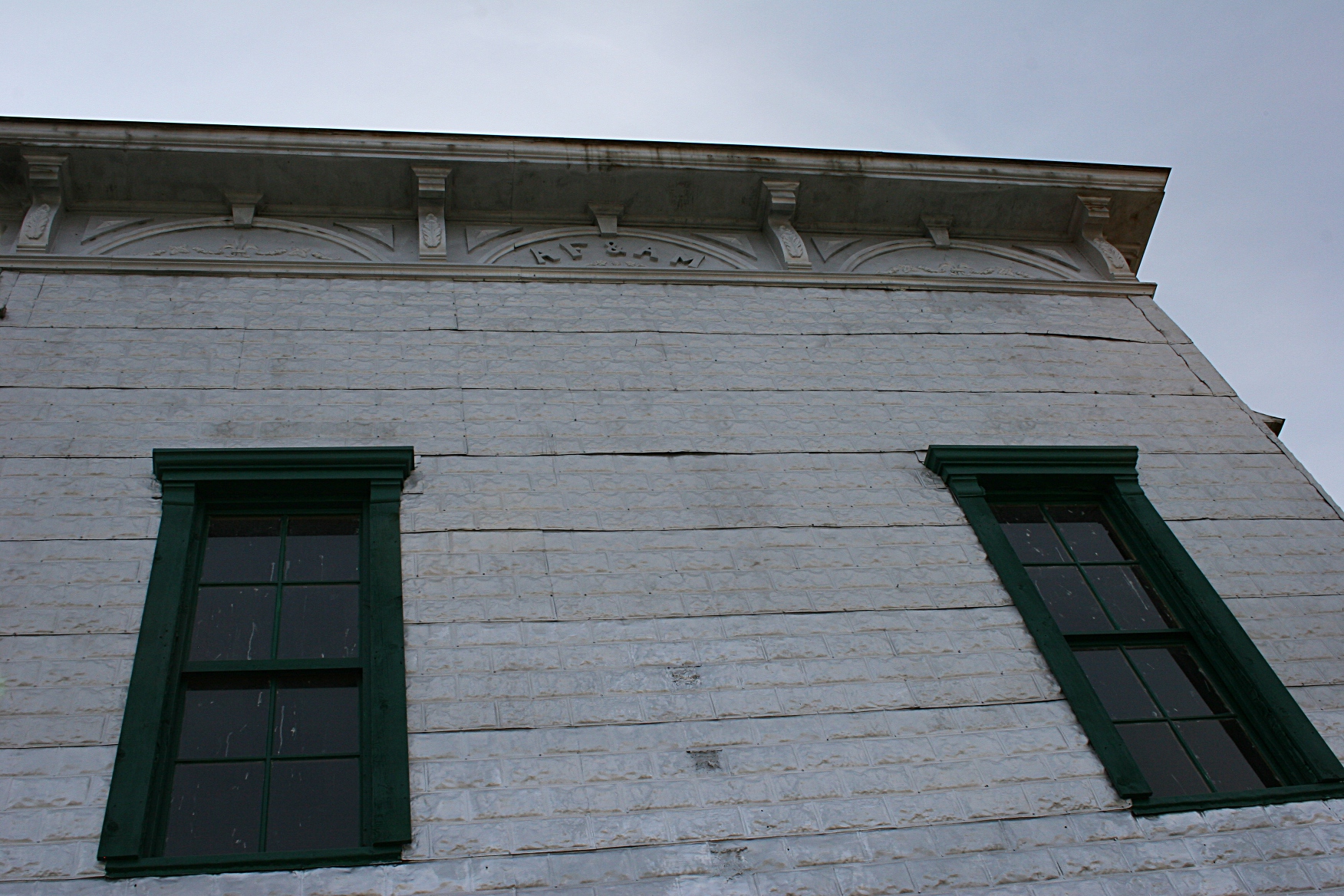
Exterior details on the old Masonic Lodge building.

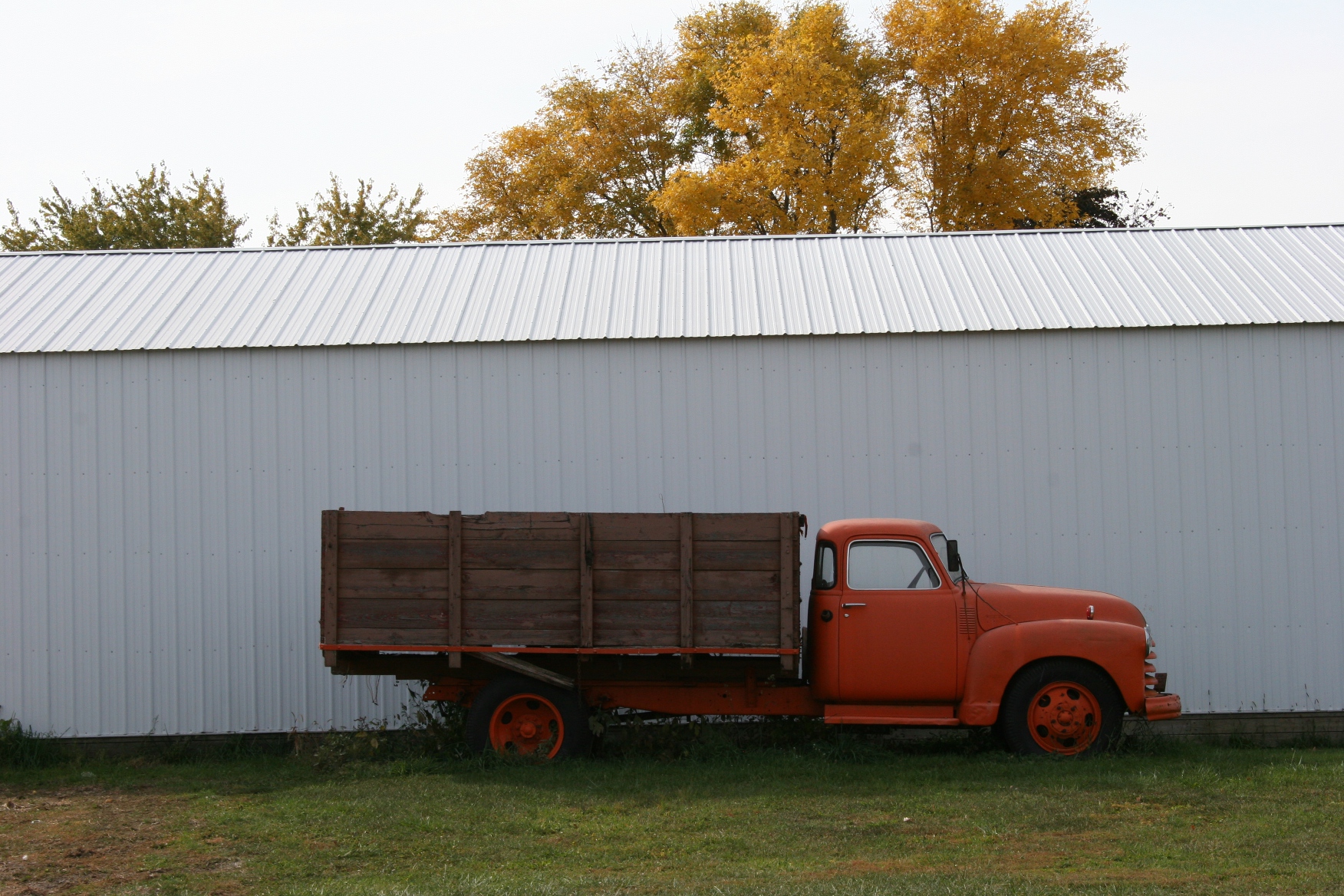
Outside the back door of the antique shop, this tangerine hued vintage truck contrasted against the gray metal caught my artist’s eye.

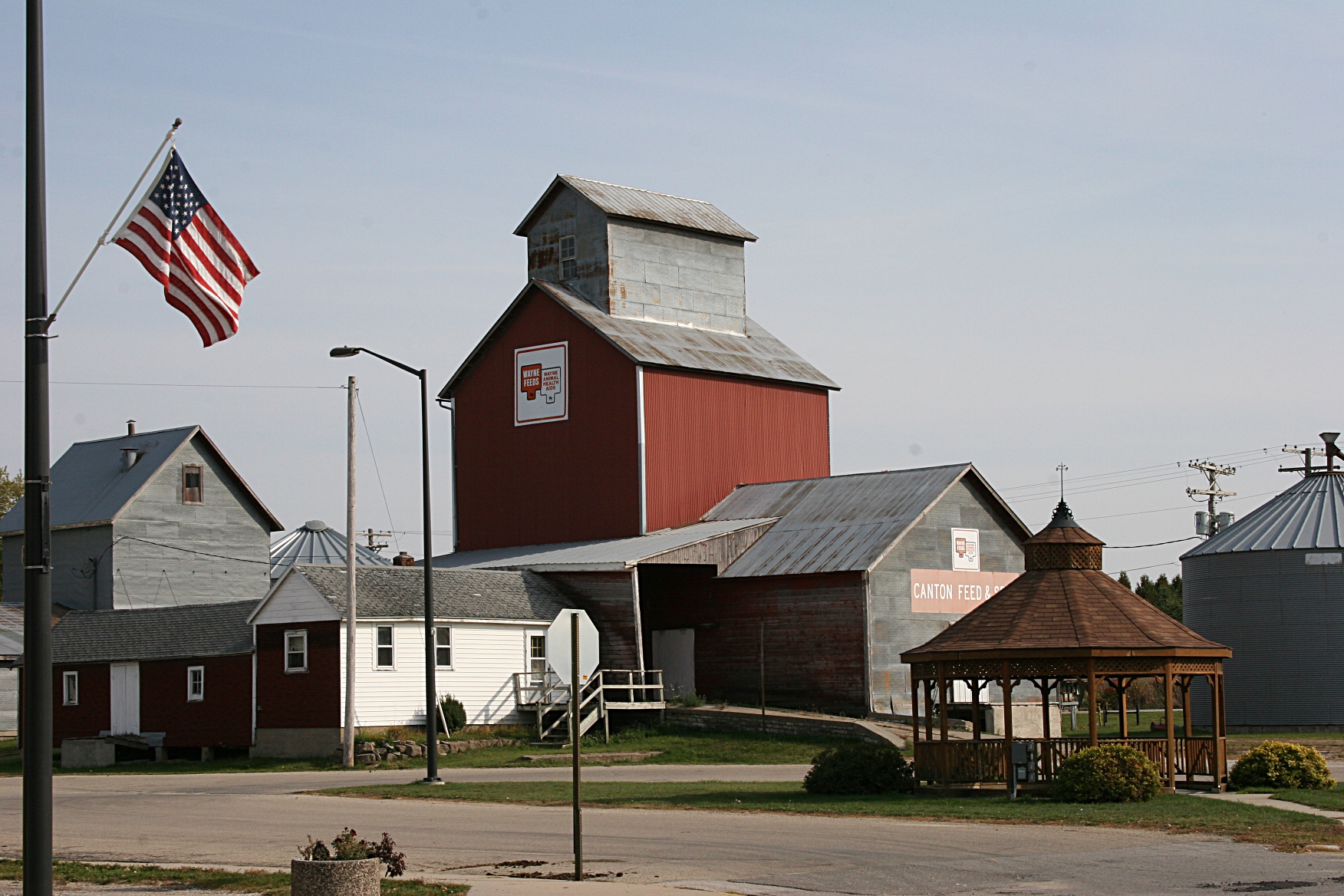
A broader view of the scene directly across the street from Lumber Yard Antiques and the depot. Pure rural Americana.

FYI: Lumber Yard Antiques is open from 11 a.m. – 5 p.m. “most days,” LeRoy says, but will be closed from January – March. My apologies for failing to photograph LeRoy and Kathie. What was I thinking? Clearly I was not.

CLICK HERE TO READ a previous post from Canton. 

© Copyright 2012 Audrey Kletscher Helbling
 

The corner bar in Canton October 17, 2012

If you can take your eyes off the vintage phone booth, you’ll notice a beer sign suspended from ZZs Tap (bar) along Canton’s Main Street.

PEER DOWN THE ONE-BLOCK Main Street of Small Town, USA, and your eyes likely will land on a bar or two anchoring a business district comprised of primarily vacant and crumbling buildings.

That’s an over-generalization, of course, but sadly all too true for many once-thriving small towns.
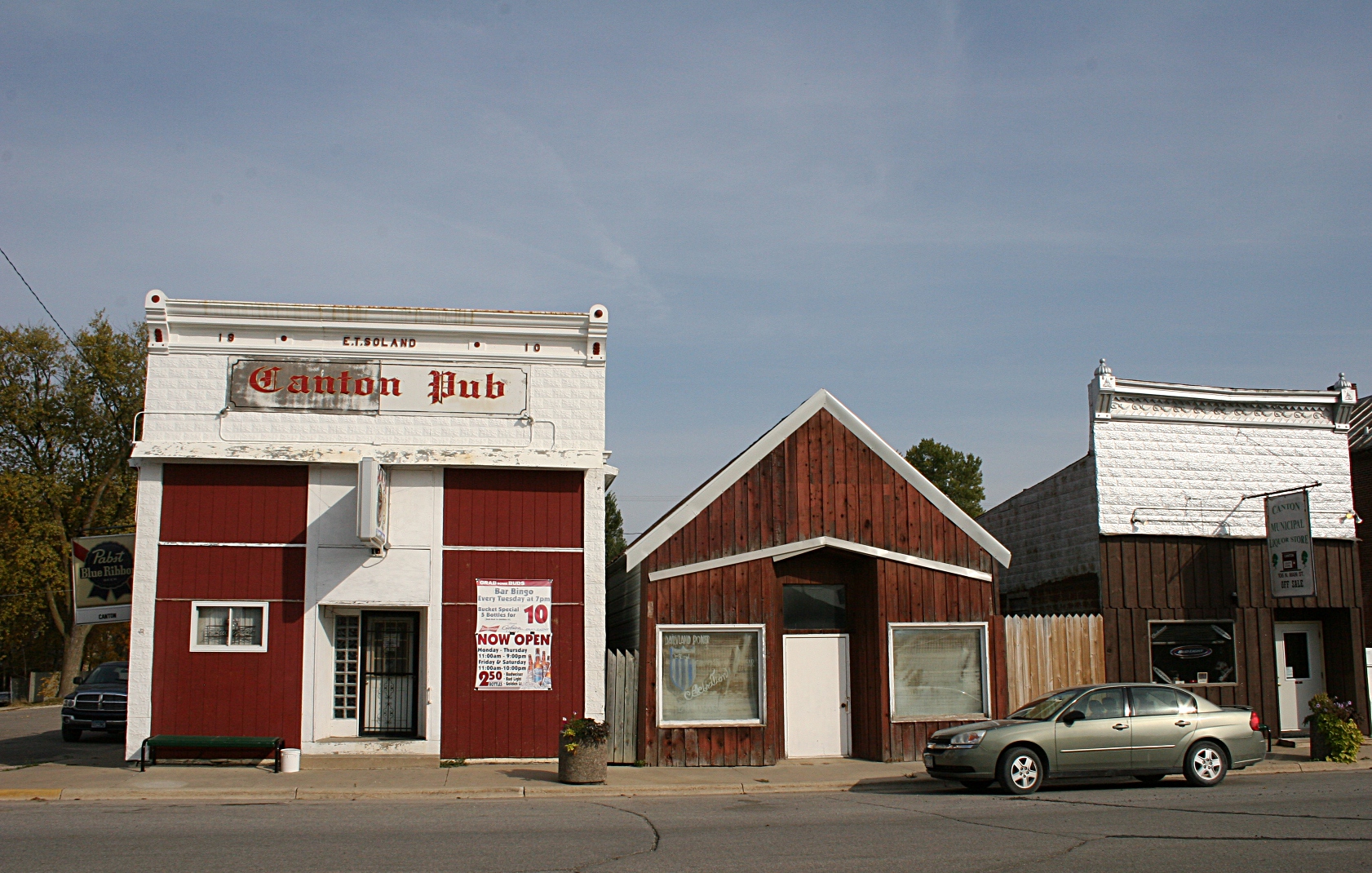
That’s the Canton Pub on the left and the Canton Municipal Liquor Store on the right with an unknown business sandwiched in between.

While hardware stores and grocery stores, even hometown cafes and barber shops, have closed, the corner bar typically endures.

I’ve never been a frequent bar customer and honestly can’t remember the last time I stepped into a small town bar where heads swivel when a stranger enters. You know what I mean, right?

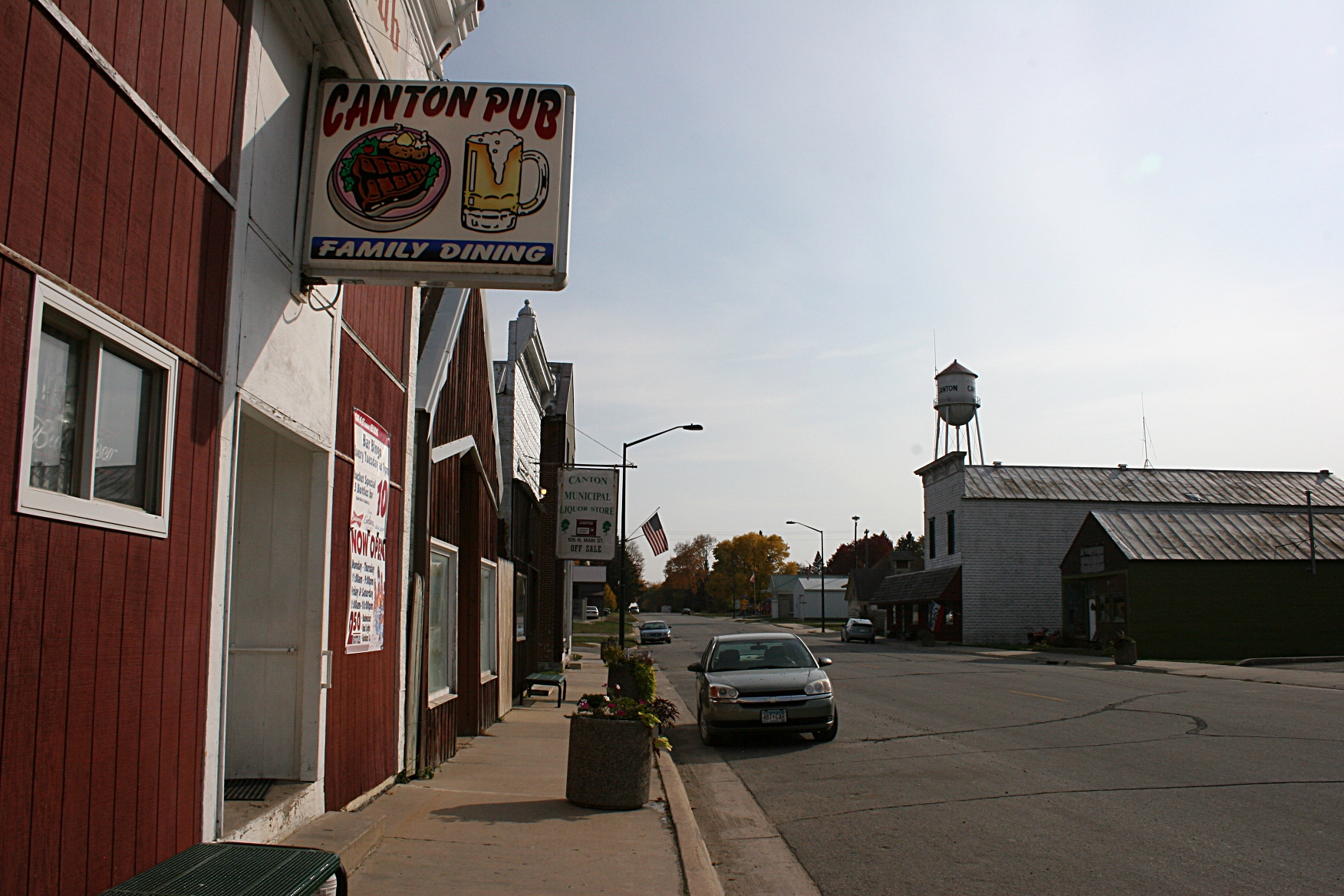
Food and drink and Tuesday night bar bingo can be found at the Canton Pub.

On a recent stop in Canton, a town of 328 nudging the Iowa border in southeastern Minnesota, I spotted the Canton Pub. I didn’t even try the pub door to see if I might slip inside for a cold one on an autumn afternoon.

I was too busy photographing the beer signs.
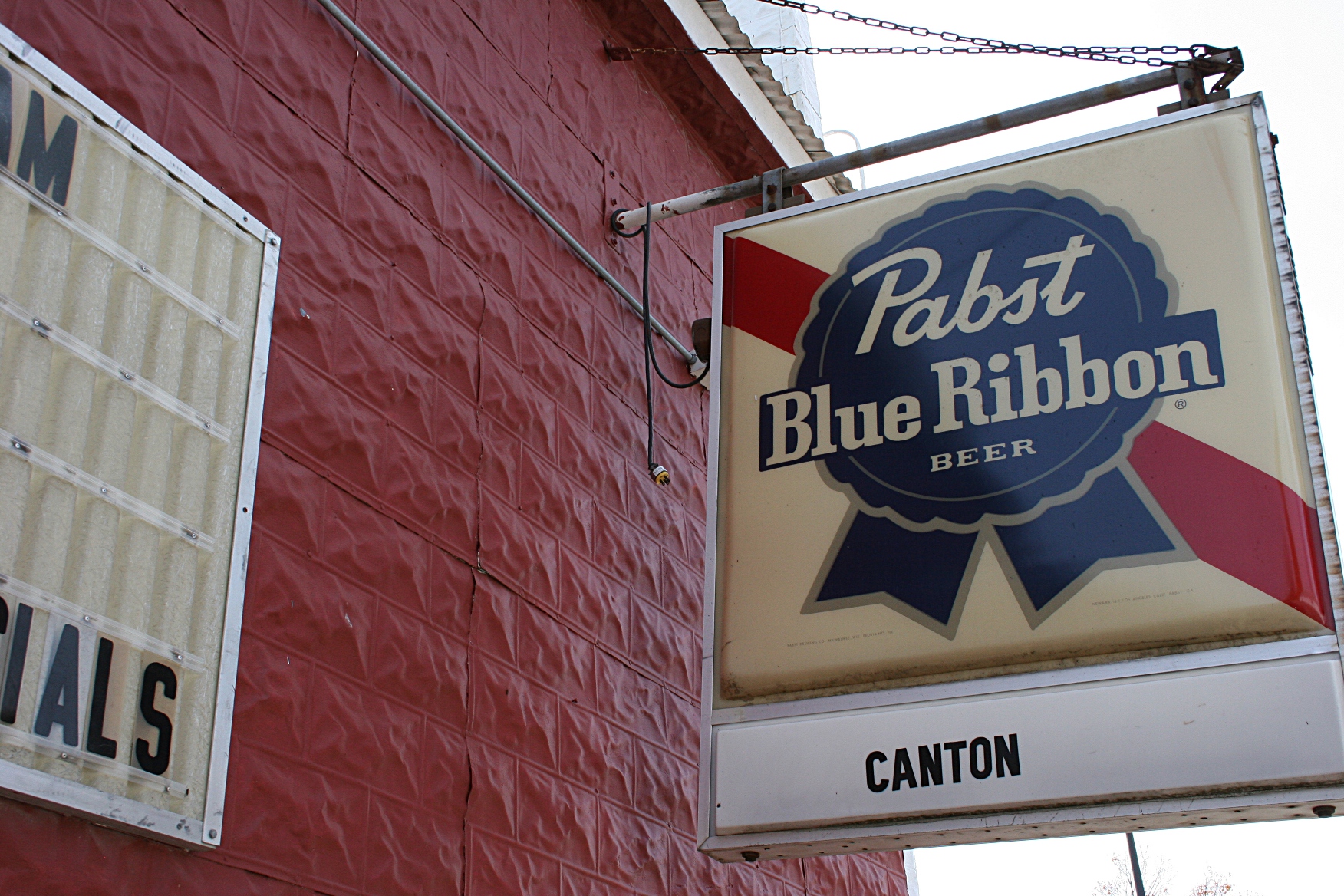
I photographed this sign at the Canton Pub for my oldest daughter’s boyfriend, Marc Schmidt, who recently relocated to the Twin Cities from LA.

Another beer sign on the Canton Pub.

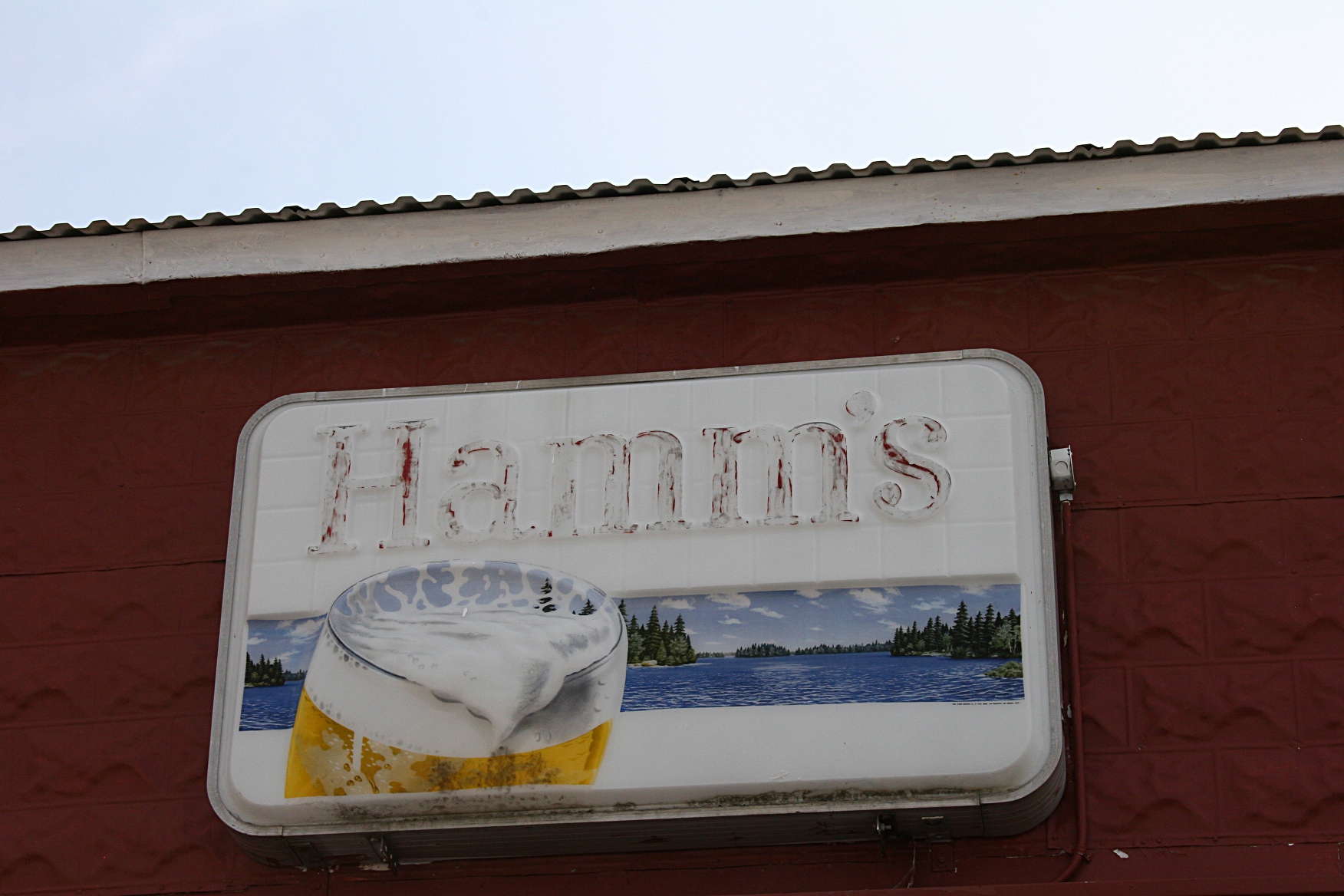
I almost missed the classic “land of sky blue waters” Hamm’s sign until my husband pointed it out at the Canton Pub.

CHECK BACK FOR ANOTHER post from Canton. There’s more to see in this small town than the bars.

© Copyright 2012 Audrey Kletscher Helbling