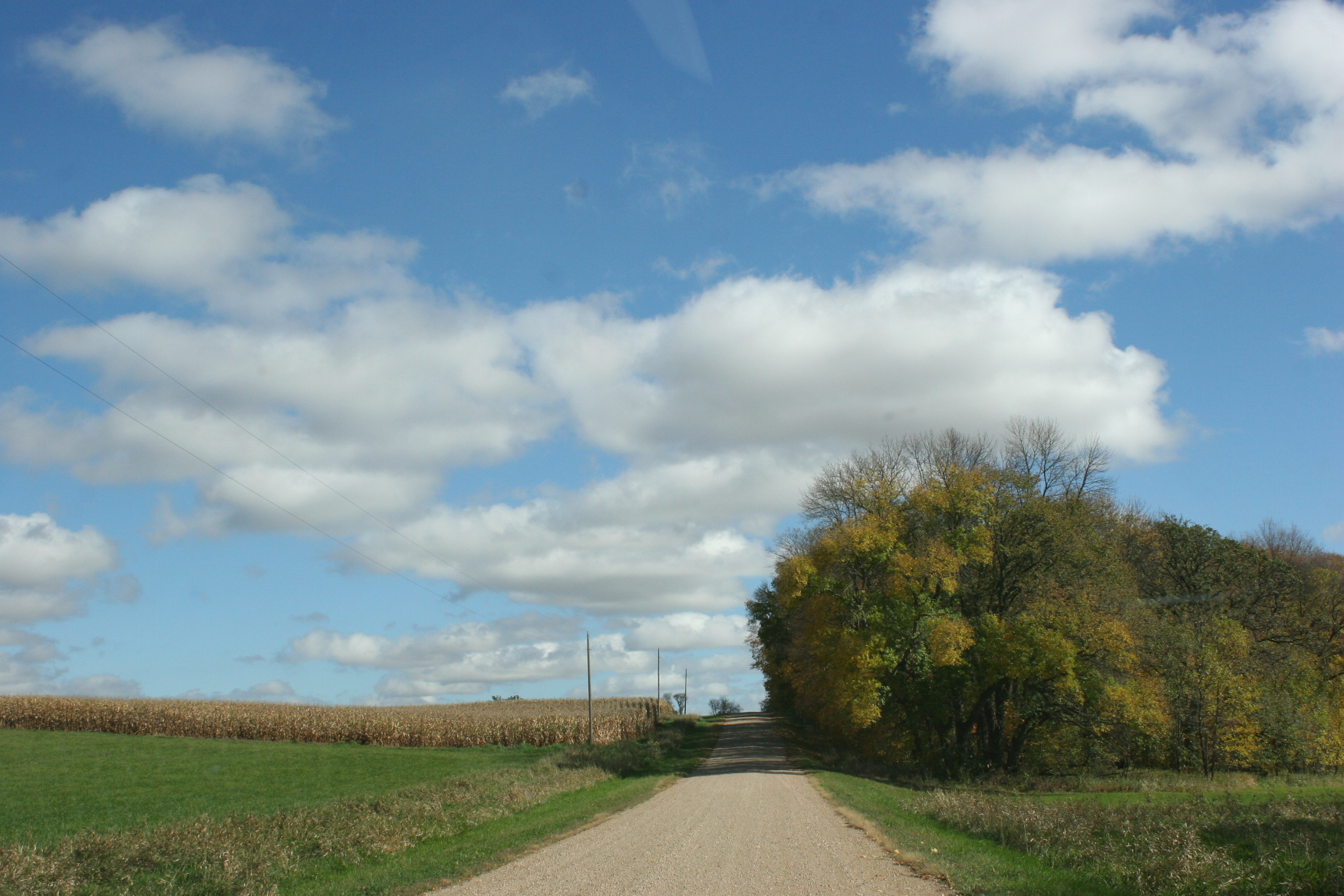
Gravel roads, sky and fields stretch before us in the southern Minnesota countryside. (Minnesota Prairie Roots copyrighted photo October 2021)
Polka music pulsed through the van in a rhythmic beat. It was an unusual station choice given I listen primarily to contemporary Christian music on KTIS and Randy enjoys talk radio. But, occasionally on his 22-minute drive home from work, Randy tunes in to KCHK to listen to late afternoon featured 50s-70s music.
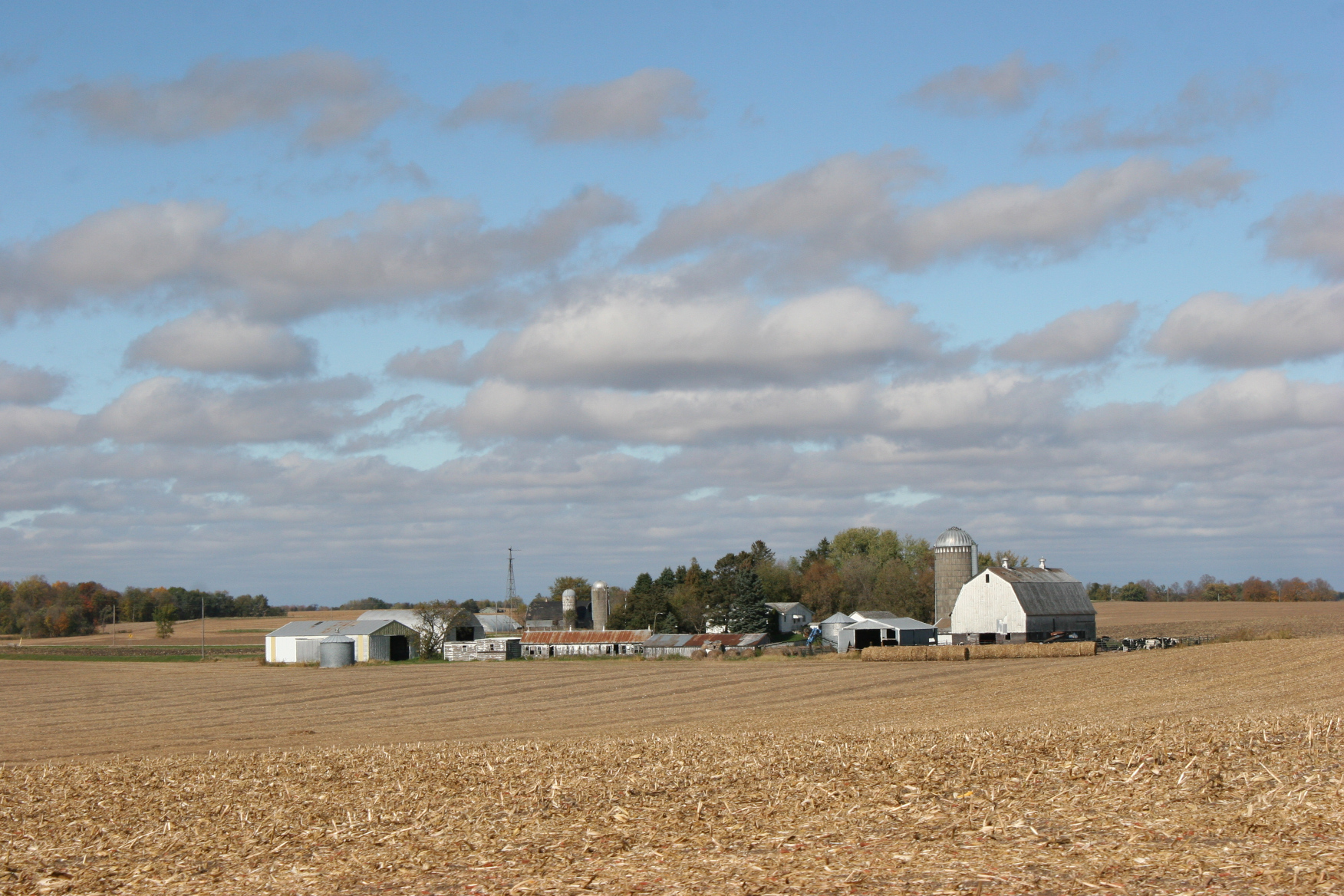
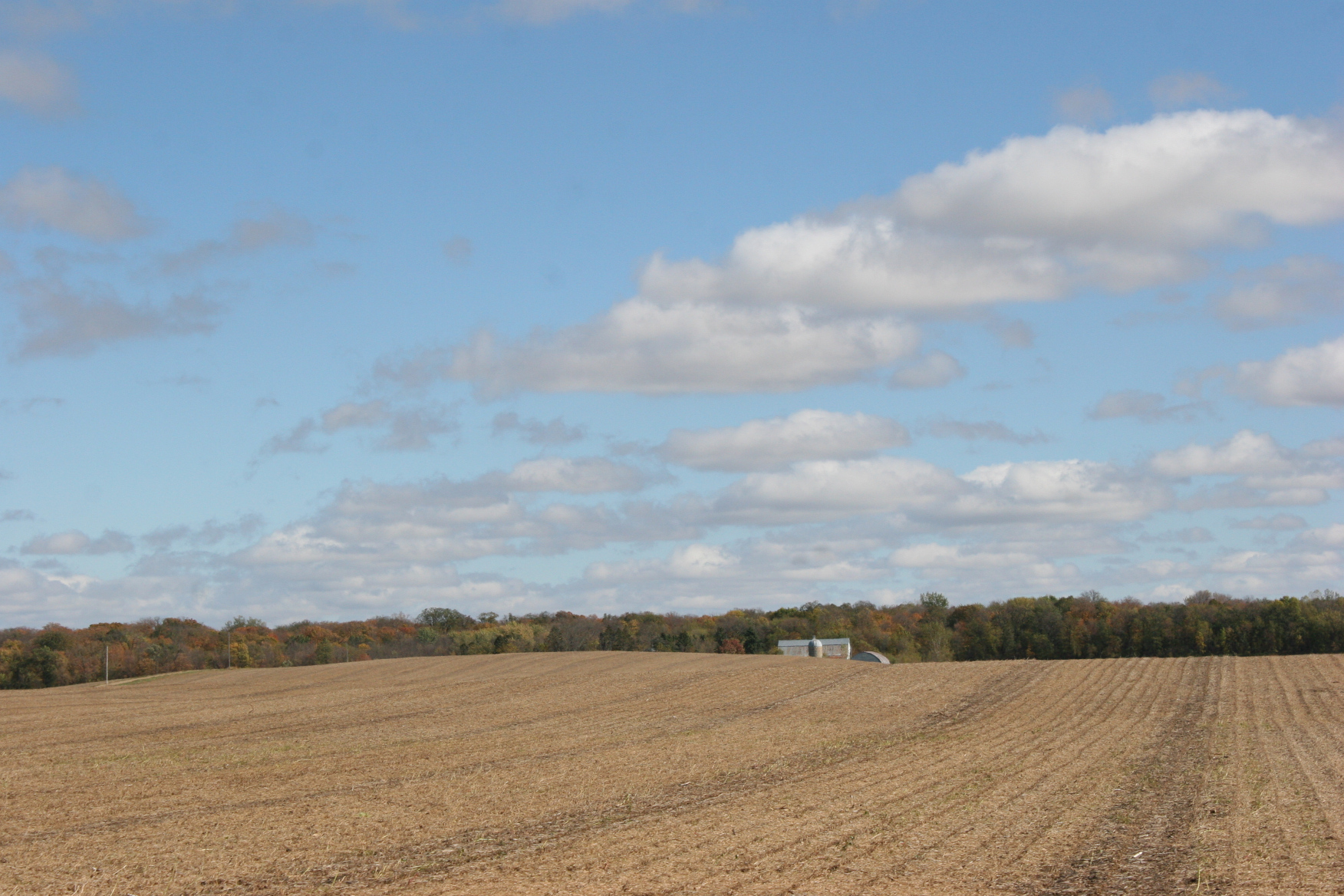
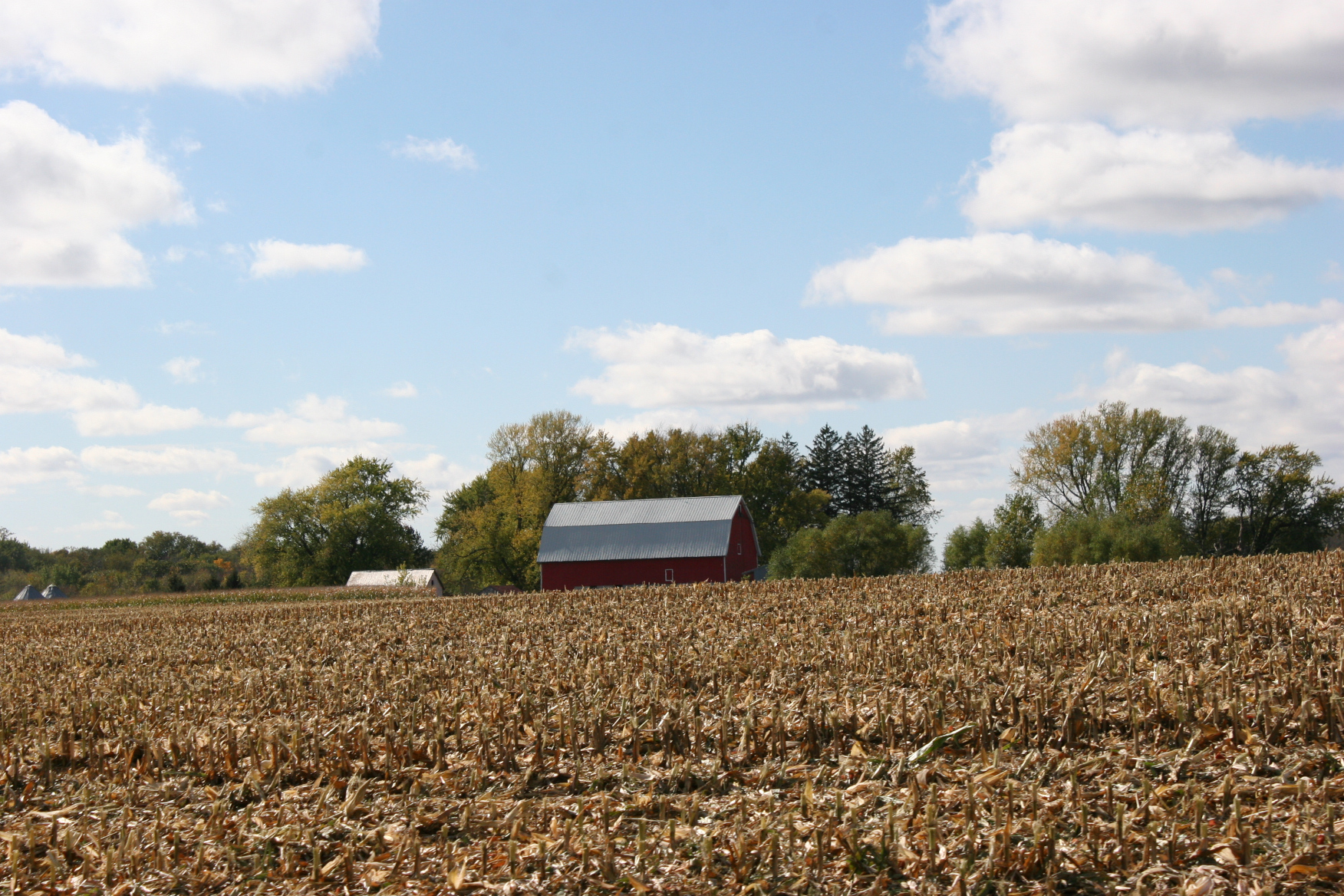
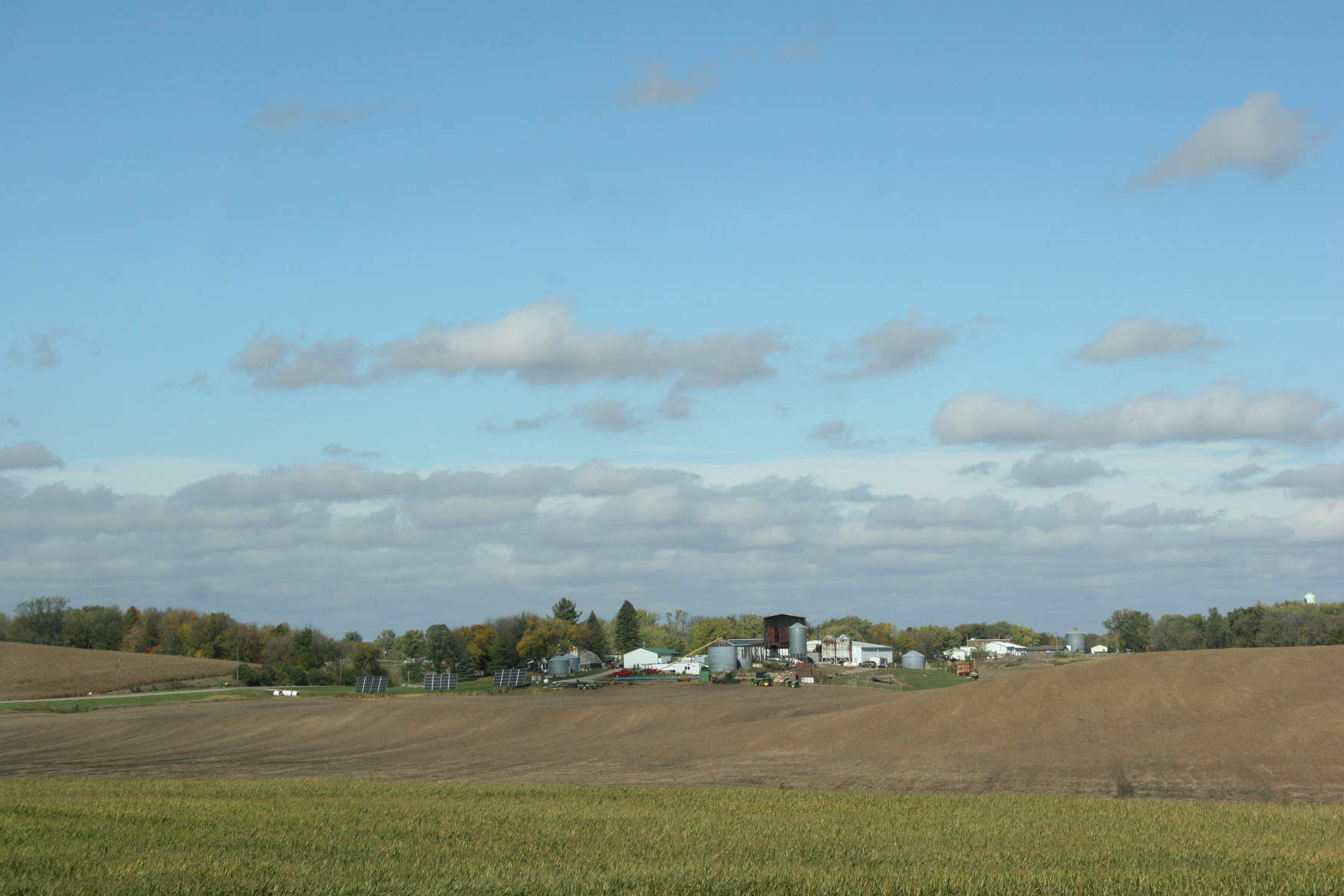
A farm site tucks behind a hillin LeSueur County. (Minnesota Prairie Roots copyrighted photo October 2021)
In the heart of Czech country, though, the radio station is known for its day-time polka programming.
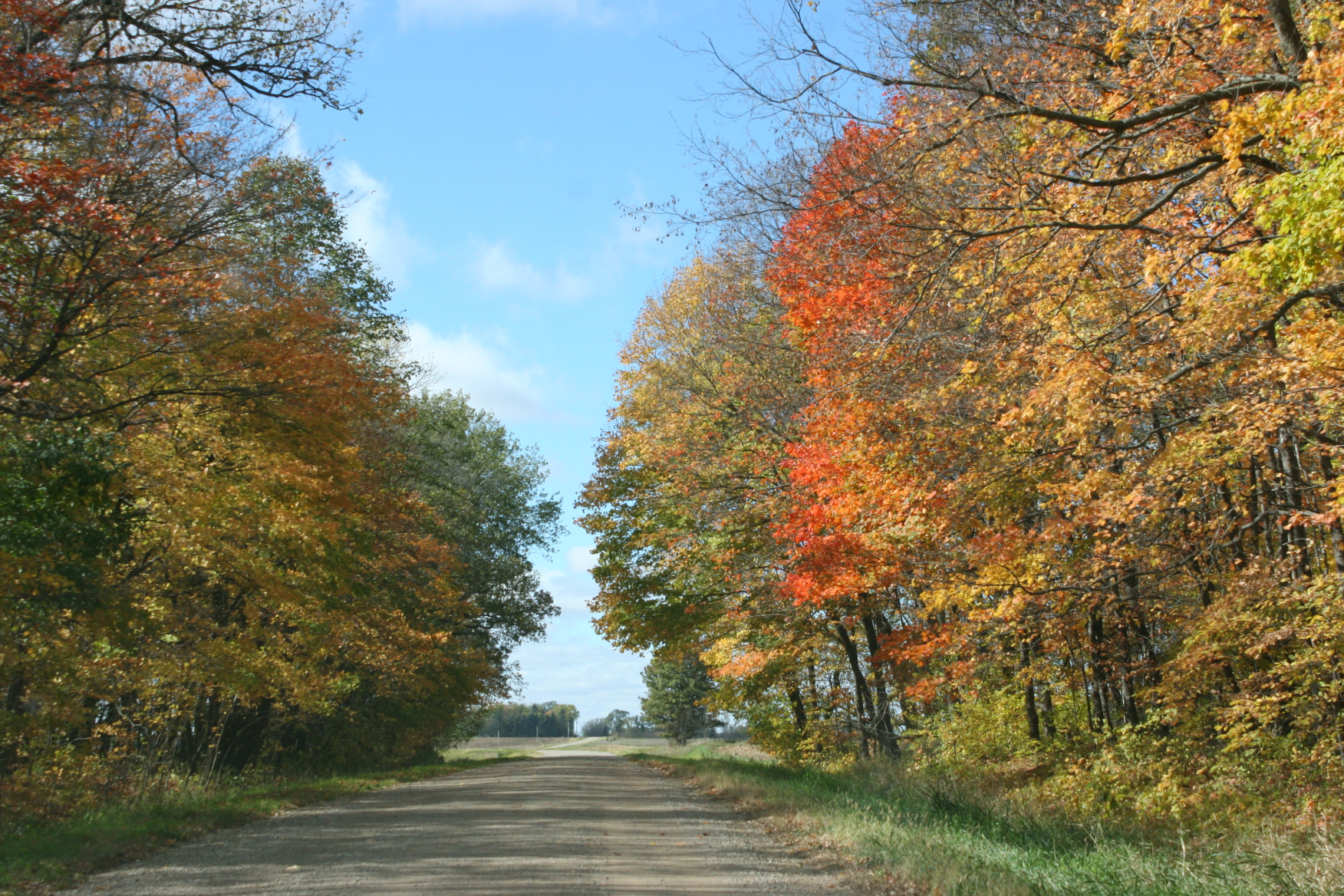
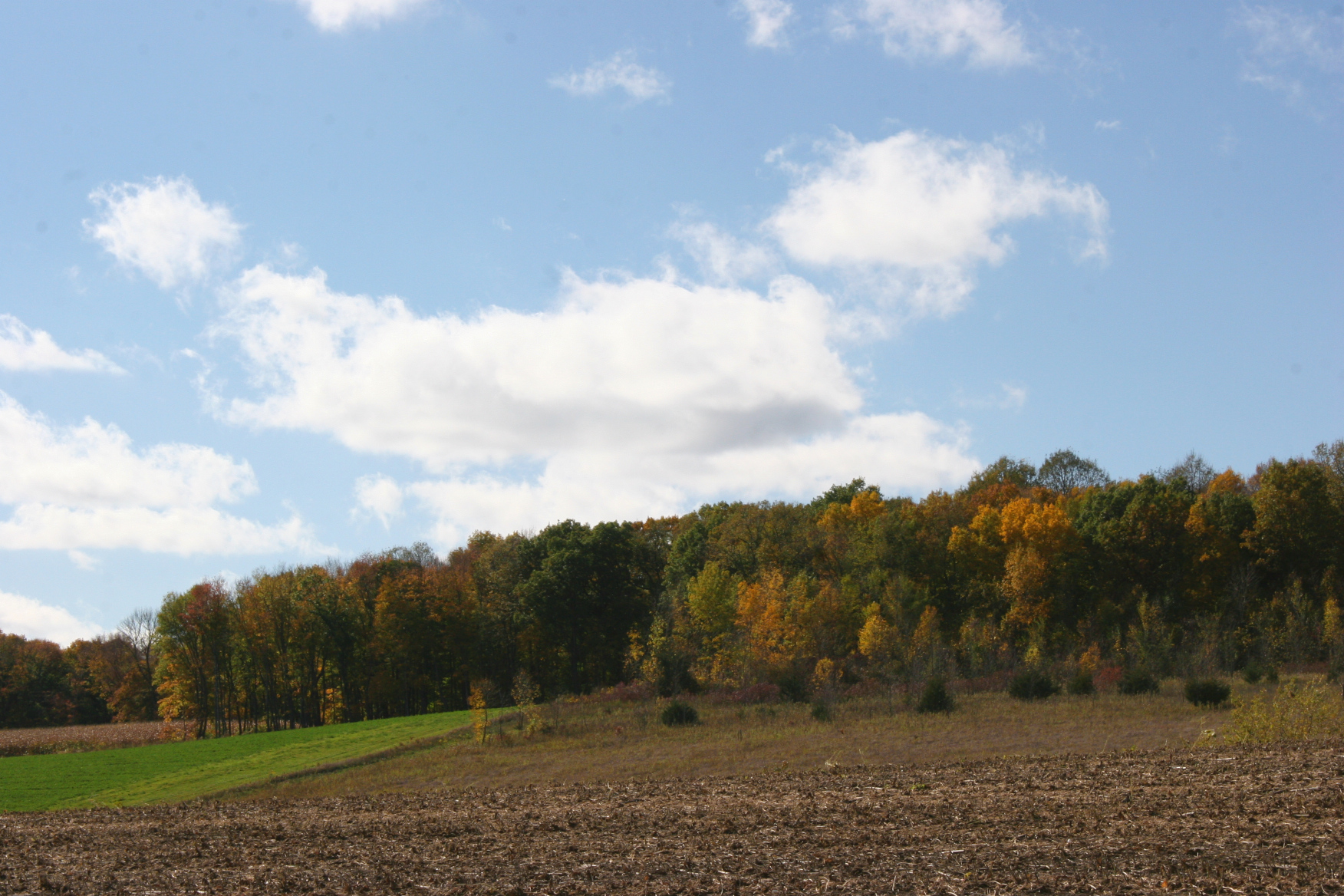
Occasionally we passed between colorful treelines. (Minnesota Prairie Roots copyrighted photo October 2021)
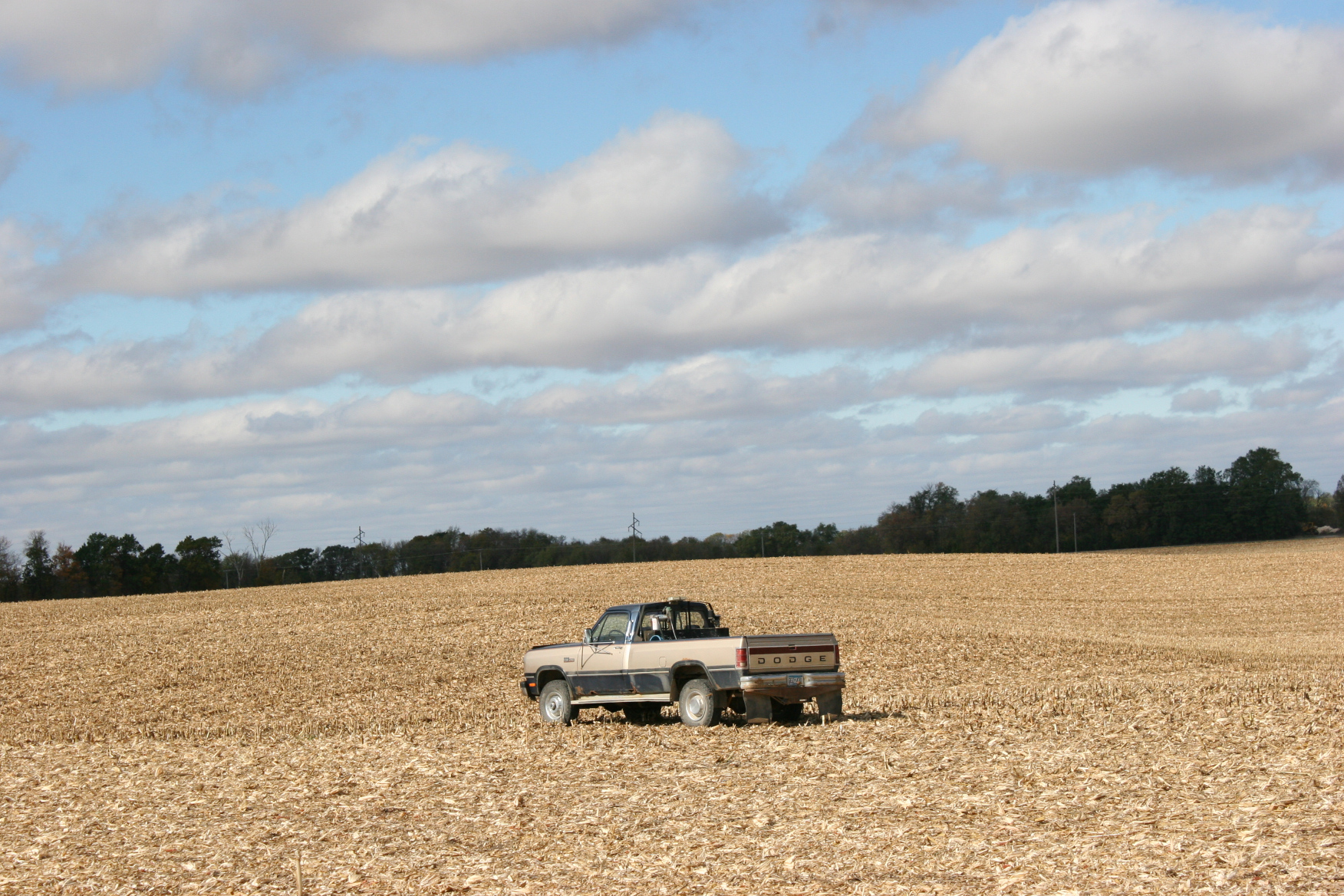
A common Minnesota harvest scene: a farm truck parked in a field. (Minnesota Prairie Roots copyrighted photo October 2021)
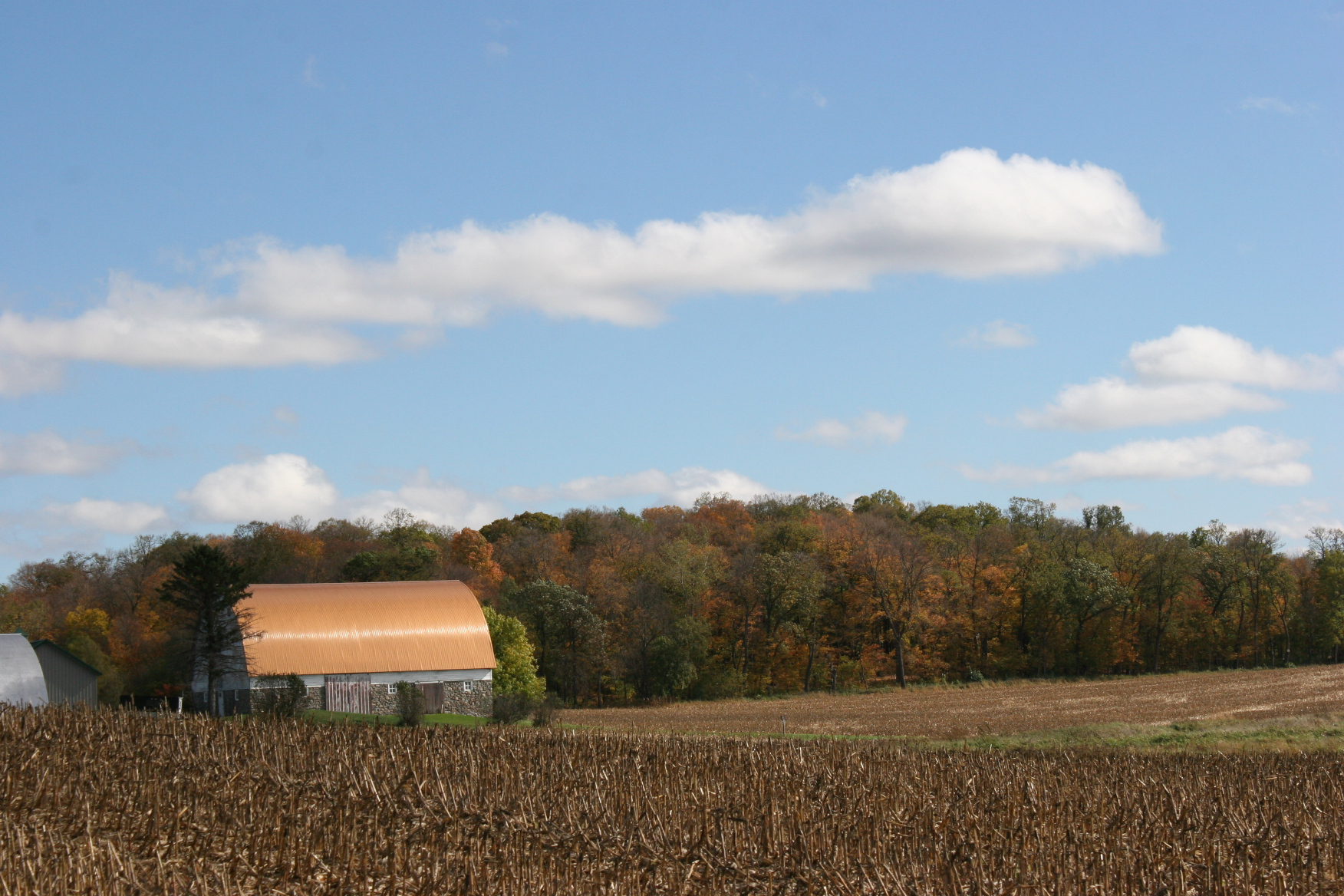
Love the copper hue of this barn roof on a farm just off State Highway 13 between New Prague and Montgomery. (Minnesota Prairie Roots copyrighted photo October 2021)
As we drove along back country gravel roads—past farm sites and harvested fields and farmers working in the fields—the rhythm of polkas, of accordions pushed in and pulled out to create music, set a joyful tone. The music fit the scenes unfolding before us.
The music reminded me, too, of wedding dances back home decades ago in southwestern Minnesota. Of couples twirling across a well-worn wooden dance floor. Of booze bottles wrapped in brown paper bags. Of extended families gathered in a simple town hall to celebrate a marriage. Of The Bunny Hop and The Butterfly and all those dances that brought people together for an evening of fun.
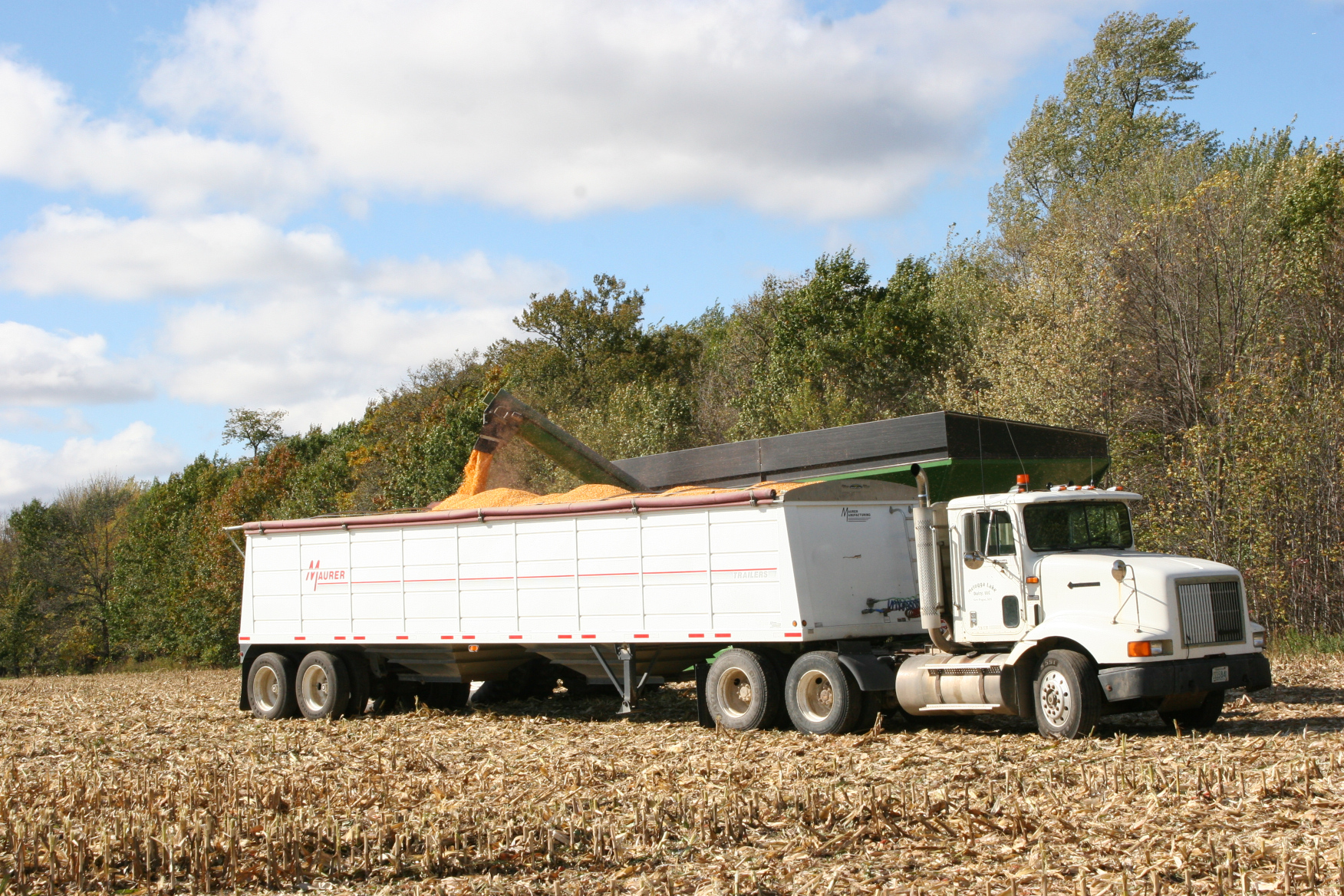
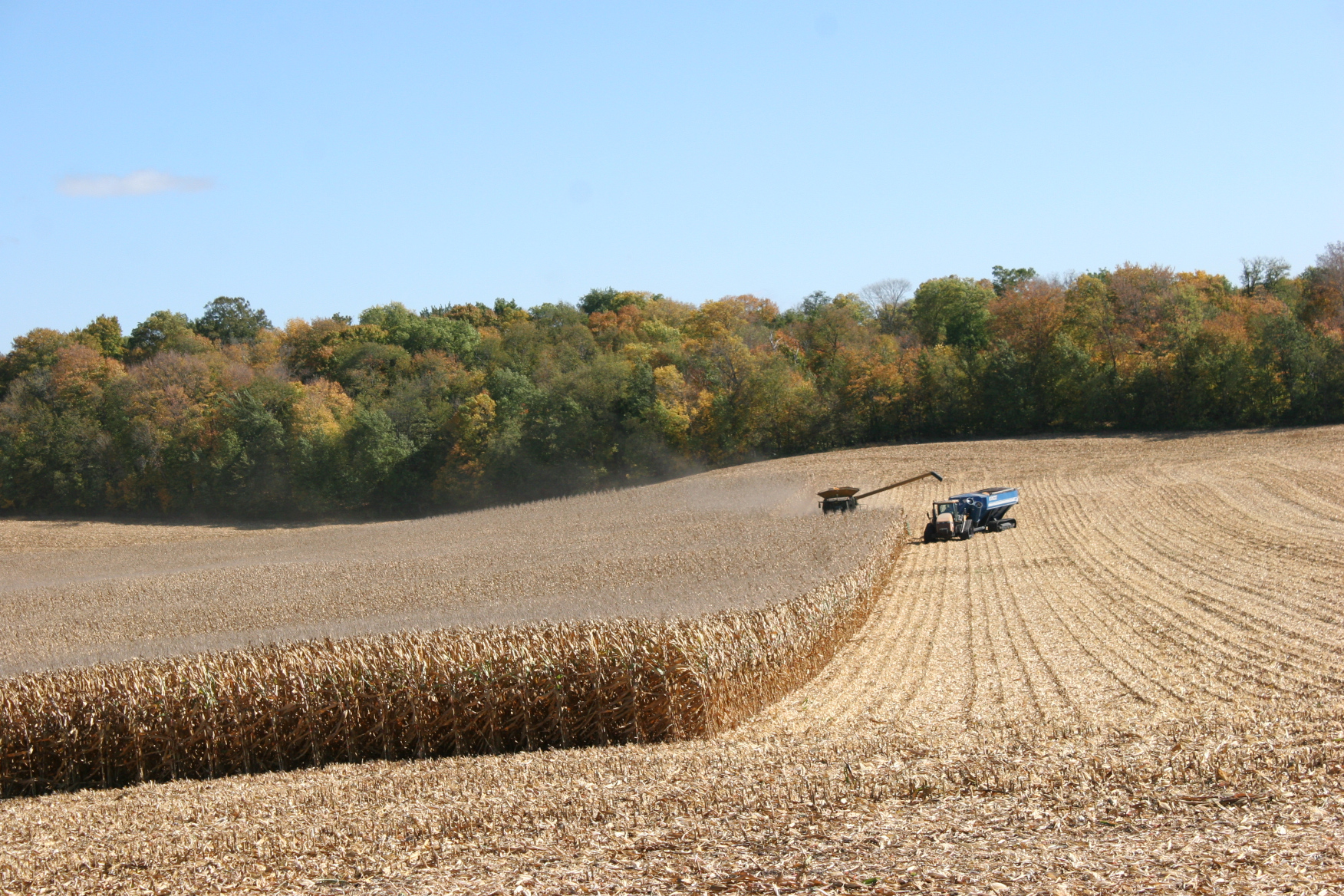
Just harvested corn flows into a grain truck along Lake Avenue west of Lonsdale. (Minnesota Prairie Roots copyrighted photo October 2021)
Those memories lingered as polkas played on KCHK. As just-harvested corn flowed into a grain truck. As we passed a mailbox with the name Skluzacek posted thereon. We were deep in the heart of Czech country near New Prague/Lonsdale/Montgomery.
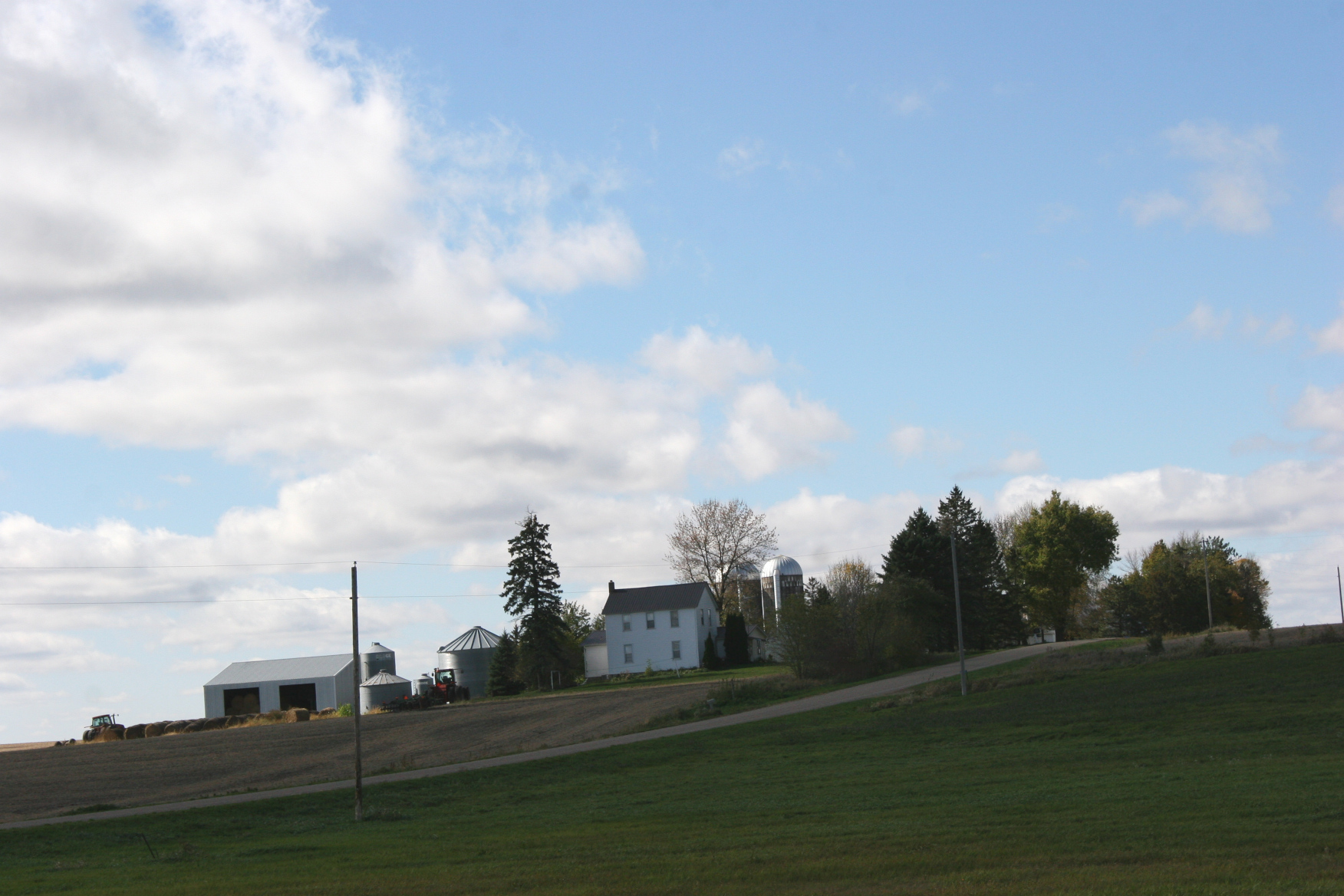
Near Richter Woods County Park west of Montgomery, a farm site overlooks the countryside. (Minnesota Prairie Roots copyrighted photo October 2021)
There is something incredibly comforting about the mix of memory and music and meandering in rural Minnesota. Moments like this impress upon me the need to simply be. To recognize the value in an afternoon drive in the country. No destination. No haste. No agenda.
A farm site hugs a cornfield along Lake Avenue west of Lonsdale. (Minnesota Prairie Roots copyrighted photo October 2021)
Time to just appreciate. The hard work of the farmer during harvest. The farm sites. Gravel roads.
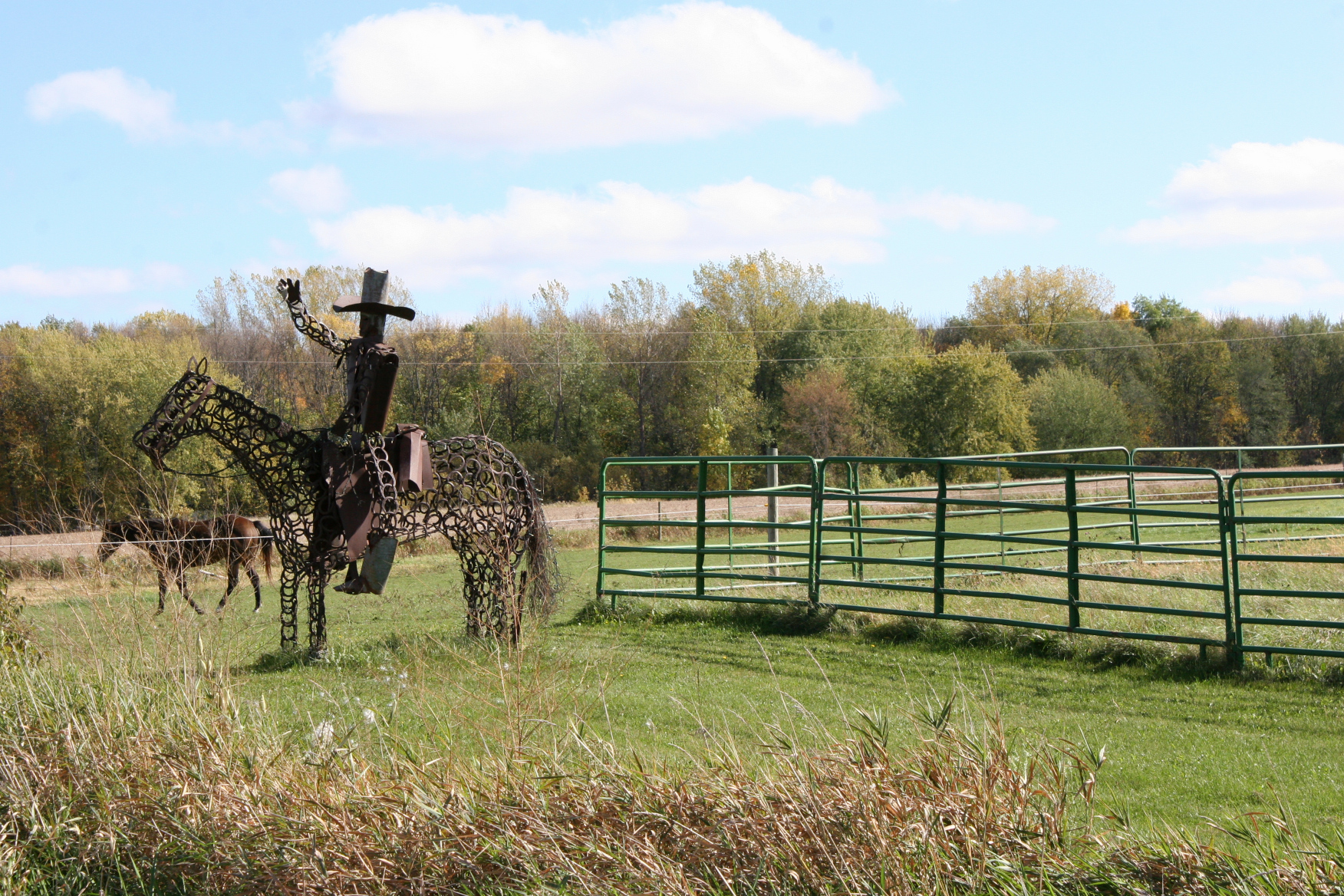
As we passedthis rural property along 60th Street West southeast of New Prague, I photographed this horse sculpture. (Minnesota Prairie Roots copyrighted photo October 2021)
And the unexpected sighting of horseshoe art where horses graze.
Oh, the glorious hues of autumn in rural southern Minnesota. (Minnesota Prairie Roots copyrighted photo October 2021)
I treasure the memories shared and made with my husband of nearly 40 years as we followed rural routes, polka music thrumming in the background.
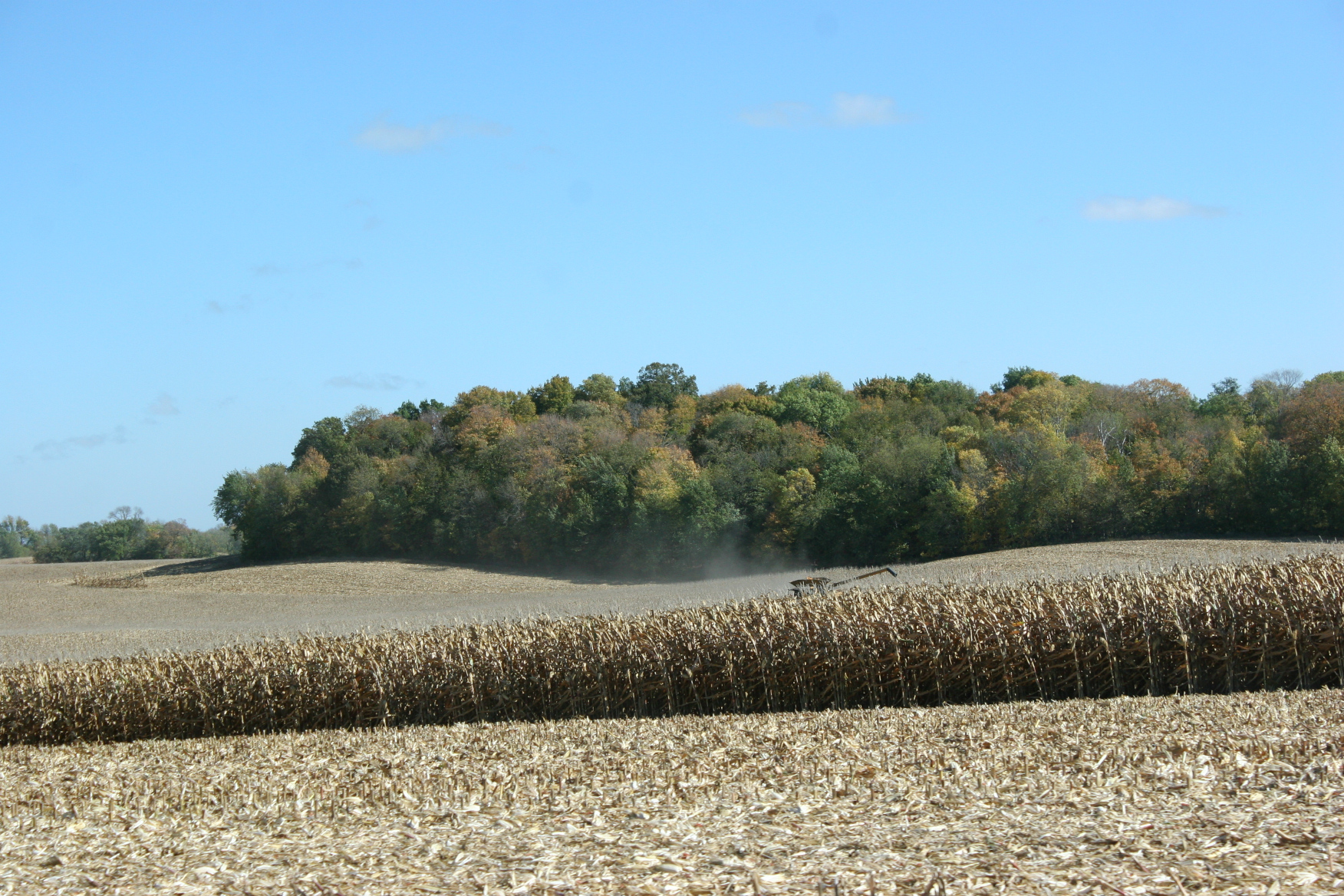
Harvesting corn in southern Minnesota. Minnesota Prairie Roots copyrighted photo October 2021.
DUST RISES FROM FIELDS, clouding the air as combines rake through rows of dry soybeans.
Barely visible, the top of the same combine featured in the photo above. Minnesota Prairie Roots copyrighted photo October 2021.
Combines comb corn rows, too, in this season of harvest in southern Minnesota.
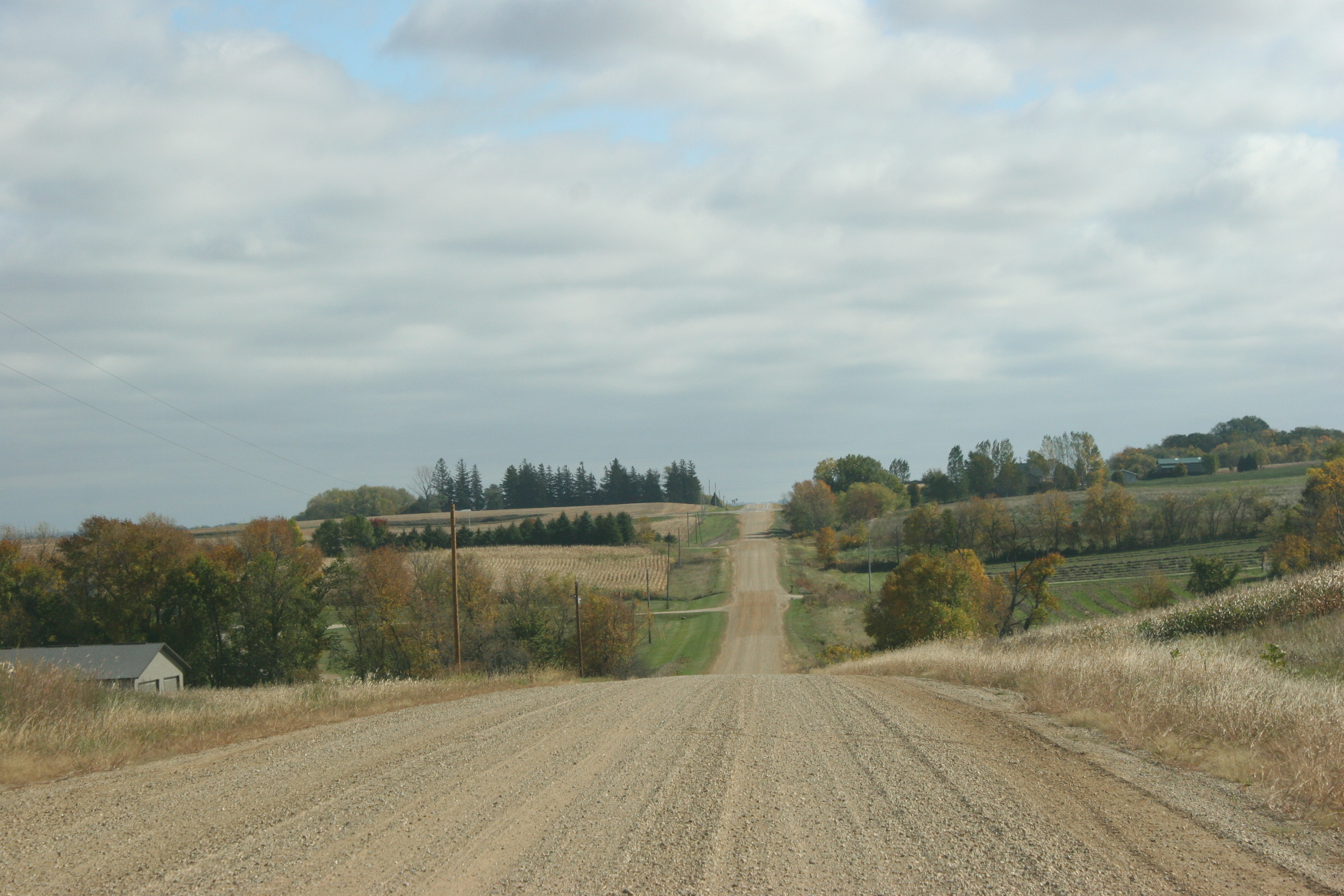
Follow country roads, like this one in eastern Rice County, to view fields at a slower pace. Minnesota Prairie Roots copyrighted photo October 2021.
Take a drive in the countryside these days and you will observe farmers hard at work, bringing in the crops.
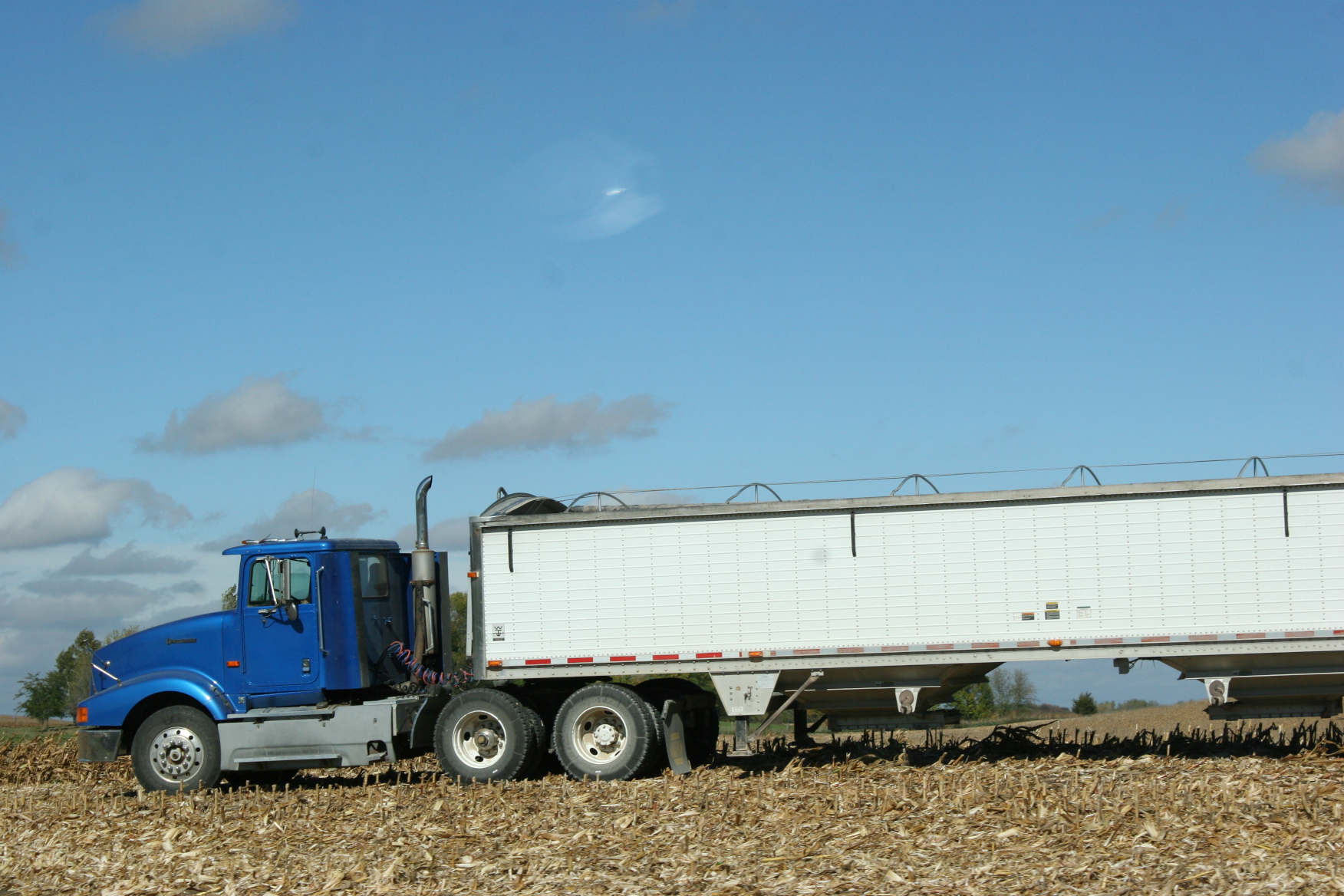
A common site, semi trucks parked in fields, awaiting the yield, this one in western Rice County. Minnesota Prairie Roots copyrighted photo October 2021.
As October moves to mid-month, a sense of urgency presses into long days in the field. By 7 pm, darkness envelopes the land and farm machinery still moves, like a mammoth beast lumbering across acres of corn and soybeans, eyes aglow.
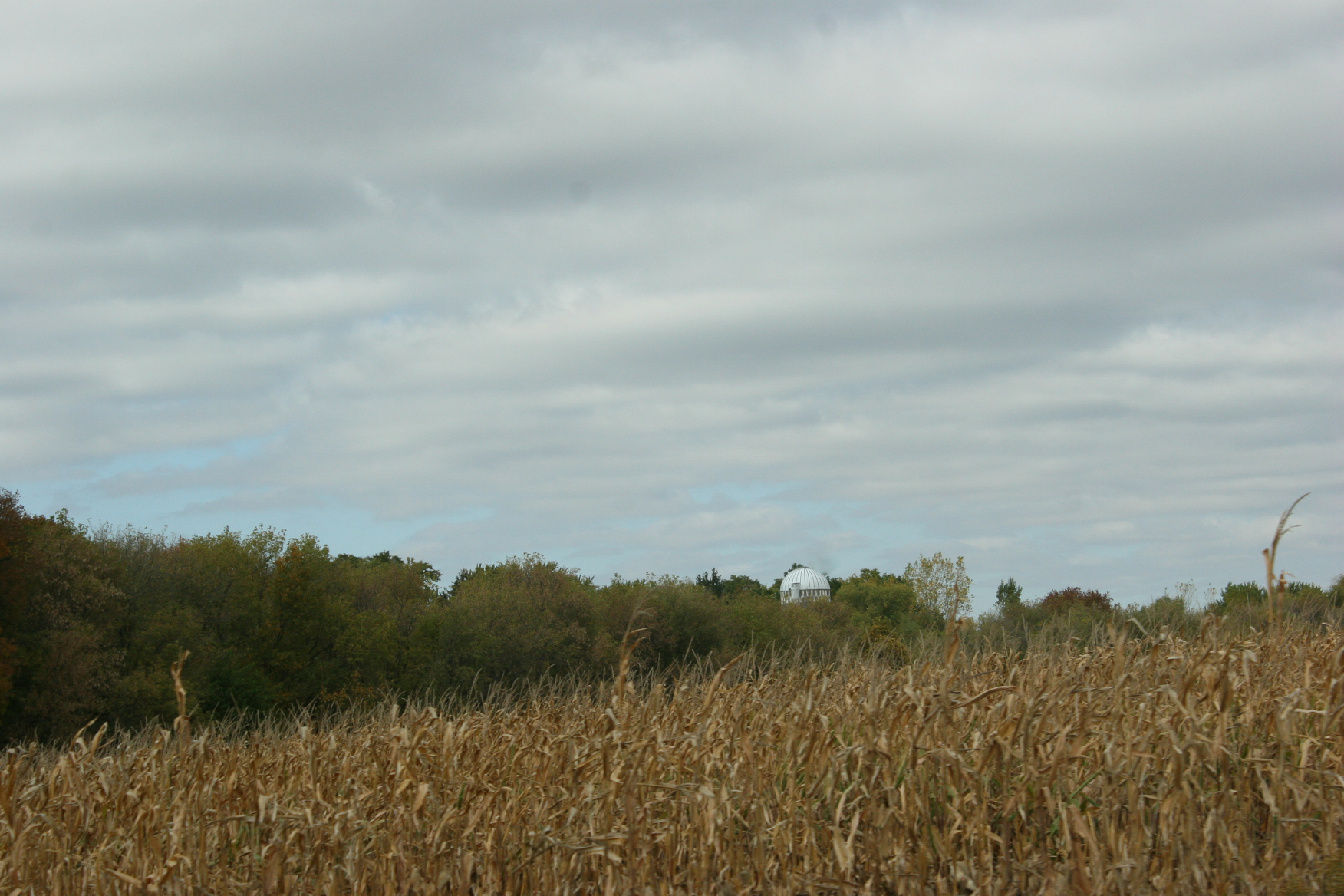
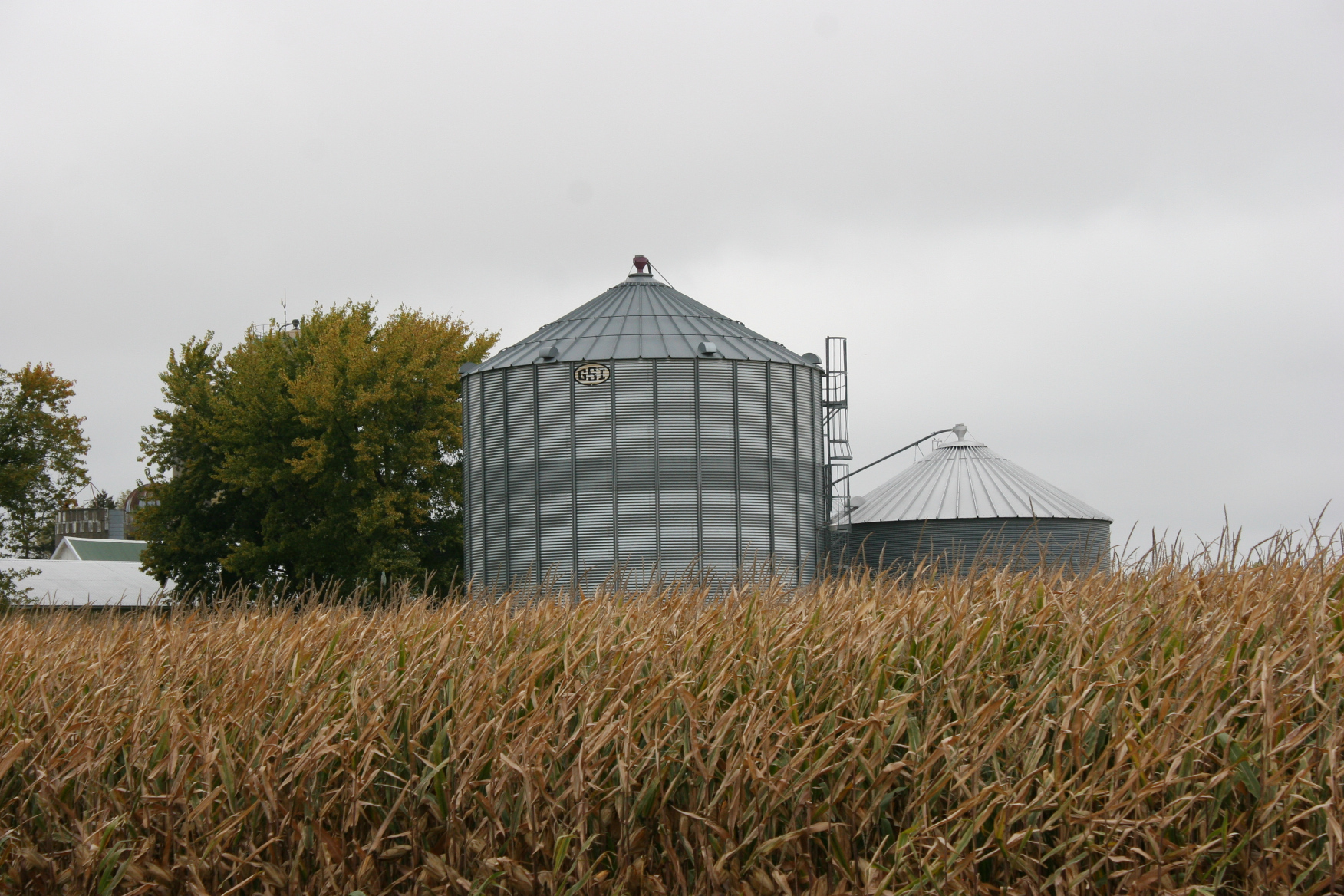
A silo peeks above a cornfield in eastern Rice County. Minnesota Prairie Roots copyrighted photo October 2021.
It is in this season of harvest that I feel a bit melancholy, missing my once close connection to the land. The scent of earth. The view of acres and acres and acres of crops drying to muted hues, visual evidence of a farmer’s work. The sound of combines roaring. The taste of dust and dirt. Golden orbs of soybeans sifting between fingers spread wide.
A farm site spreads across the land in western Rice County. Minnesota Prairie Roots copyrighted photo October 2021.
While I once experienced all those first-hand on my childhood farm in southwestern Minnesota, today I feel an outsider looking in. Watching. Remembering. Feeling grateful for the years I lived on a farm, never realizing then just how much those days would mean to me later in life.
Grain bins, like these in eastern Rice County, symbolize harvest as storehouses for grain. Minnesota Prairie Roots copyrighted photo October 2021.
Each autumn I yield to the call of harvest. I reconnect to the land. Observing. Recalling. Missing my farmer dad and my Uncle Mike, a bachelor farmer who lived the next farm place over to the east. They are decades gone now, their final harvests long-finished.
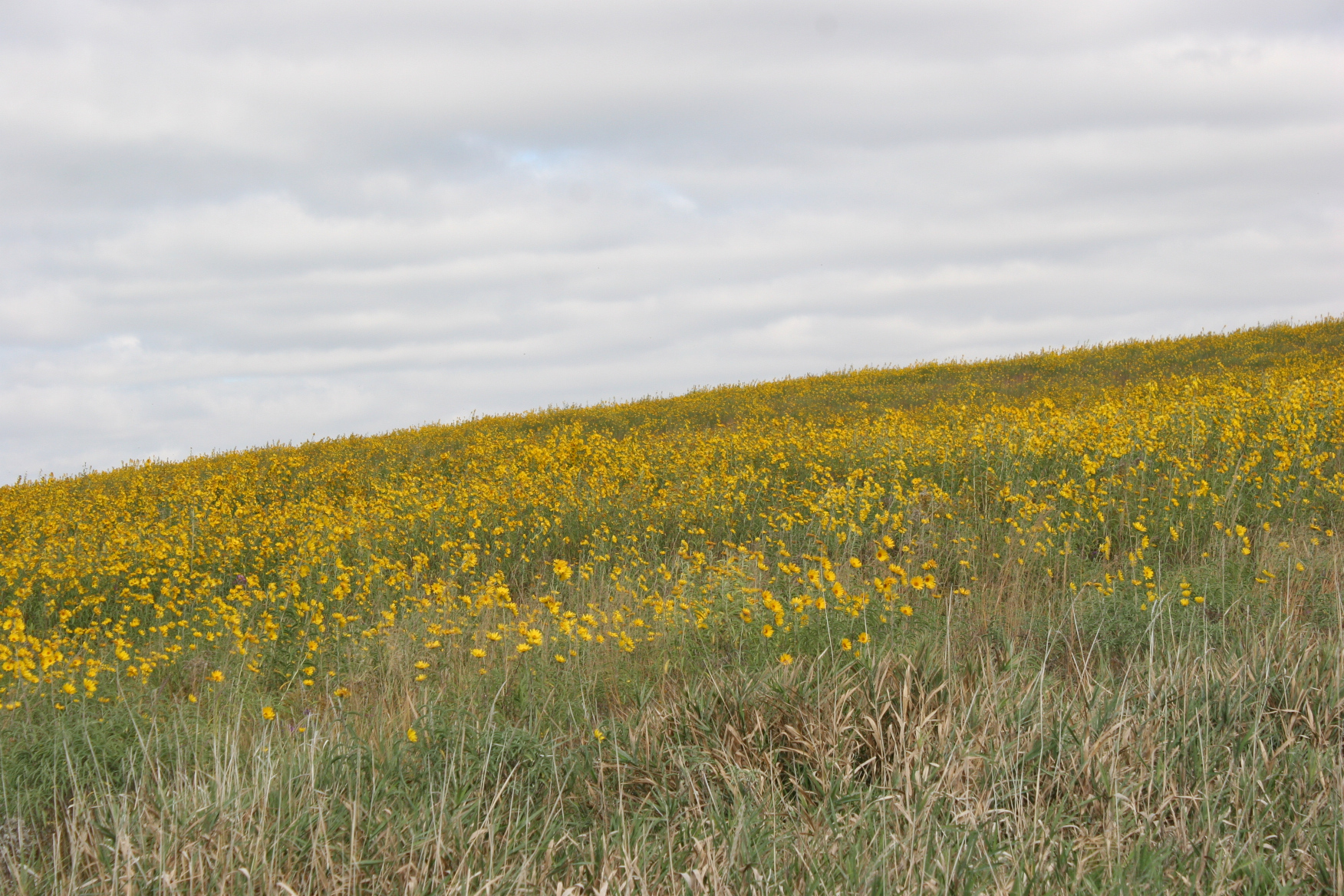
Acres of wildflowers bloom in a field off Rice County Road 20 between Northfield and Cannon City. Minnesota Prairie Roots copyrighted photo October 2021.
These emotions rush like a blustery October wind into my thoughts as winter approaches. As harvest continues, as seasons pass and life goes on.
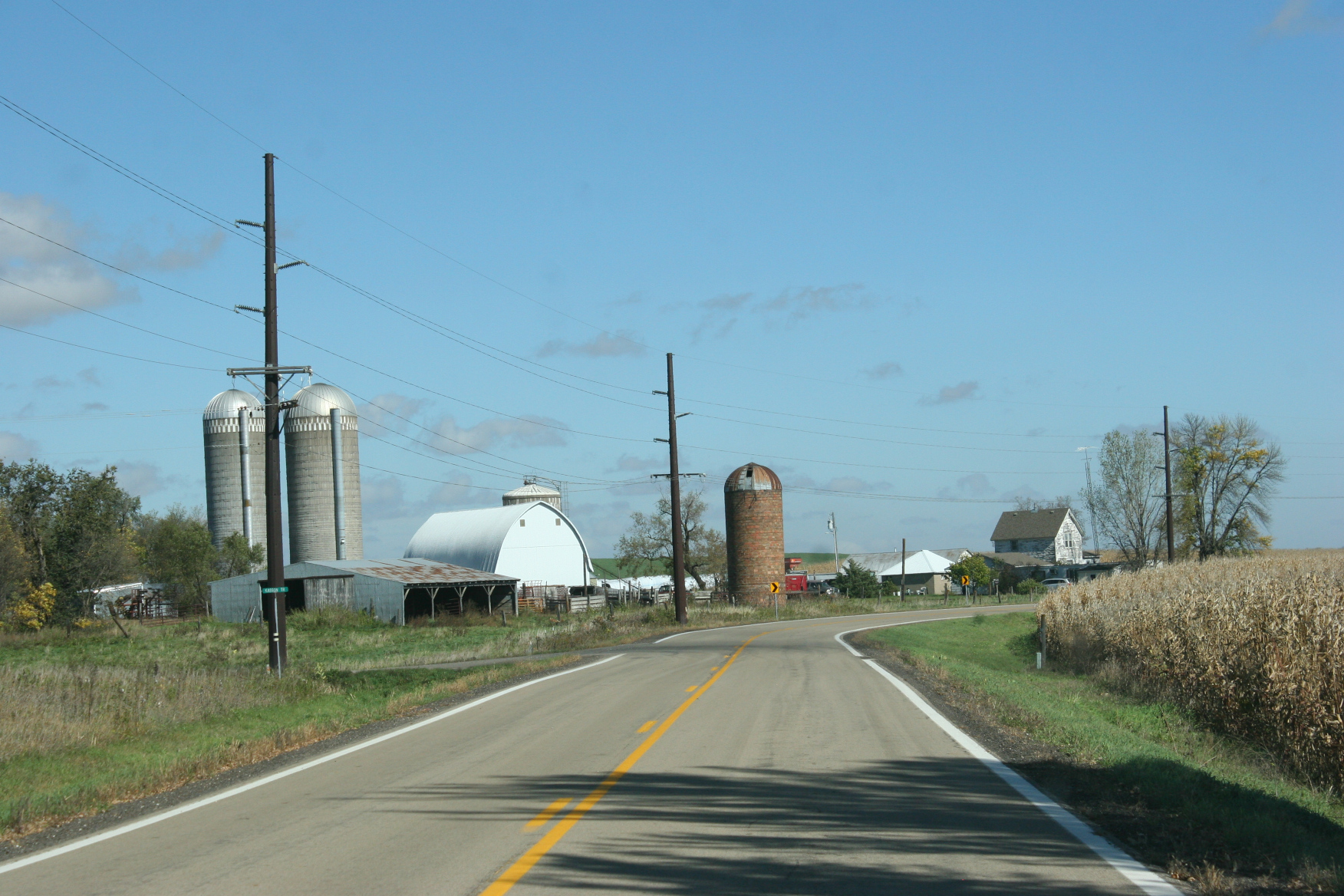
Cornfield to the right, farm site to the left, all part of a Sunday afternoon country drive in southern Minnesota. Minnesota Prairie Roots copyrighted photo October 2021.
TELL ME: Do you go for country drives to view the harvest? Or, if you live in a city, how do you celebrate autumn? I’d like to hear, wherever you live. I welcome harvest memories also.
Inviting decor and outdoor seating create a welcome seasonal setting outside the boutique/store at Apple Creek Orchard, rural Faribault. Minnesota Prairie Roots copyrighted photo October 2021.
MORE AND MORE, MINNESOTA apple orchards are growing more than just apples. They are growing memories, meeting public demand for experiences.
Bagged apples fill a crate just outside the boutique entry. Minnesota Prairie Roots copyrighted photo October 2021.
Apple Creek Orchard, located in the countryside just northwest of Faribault at 5524 185th Street, is among those producers embracing that trend. Here, in this rural setting, visitors can find not only 21 pre-picked apple varieties—including popular choices like Honeycrisp, Haralson, Zestar, SweeTango, Cortland and the new First Kiss—but also Halloween Town.
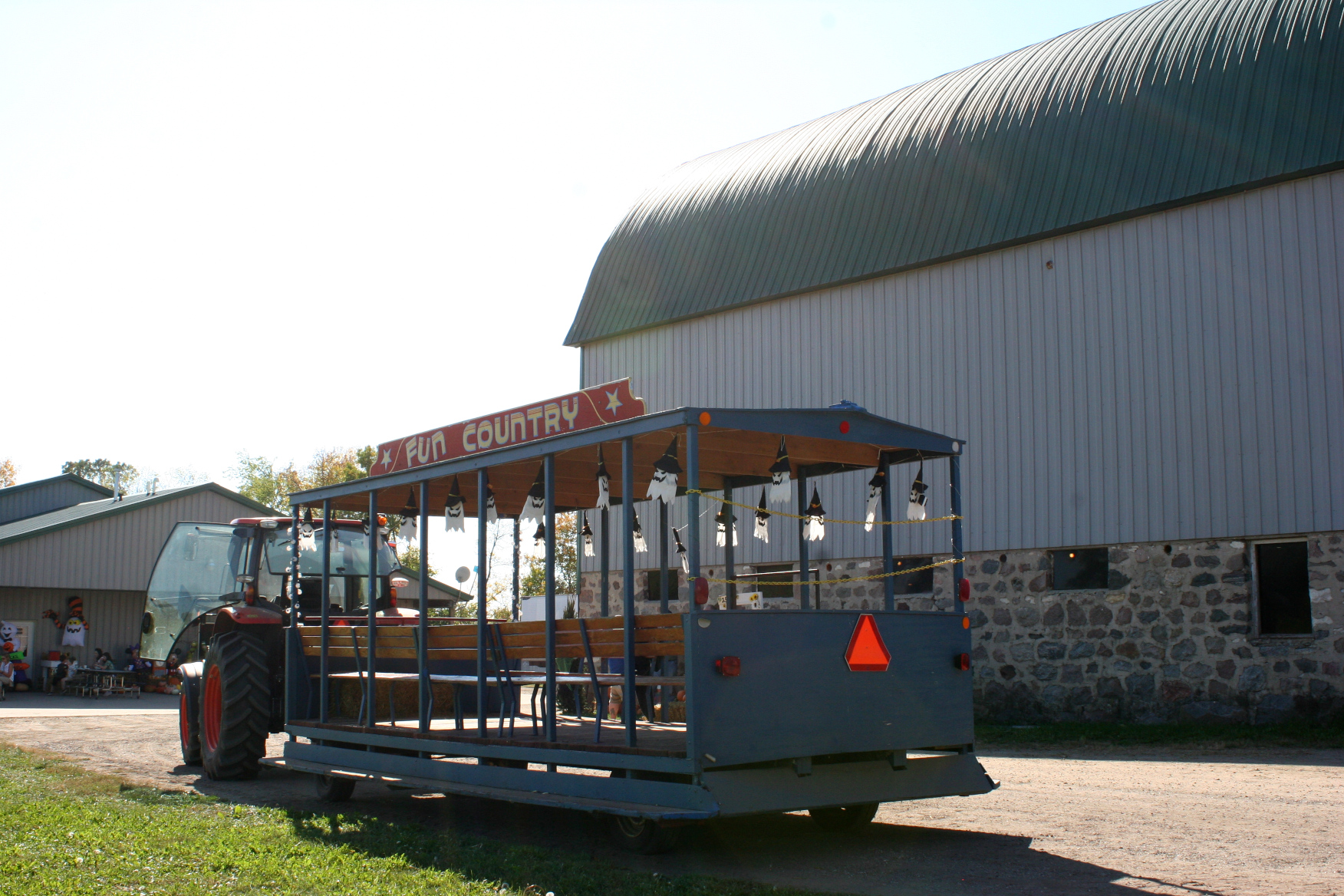
Riders spilled off this wagon shortly after our arrival. Minnesota Prairie Roots copyrighted photo October 2021.
That October attraction includes a Haunted Trail Wagon Ride (Friday-Sunday), Haunted Corn Maze and apple slinging.
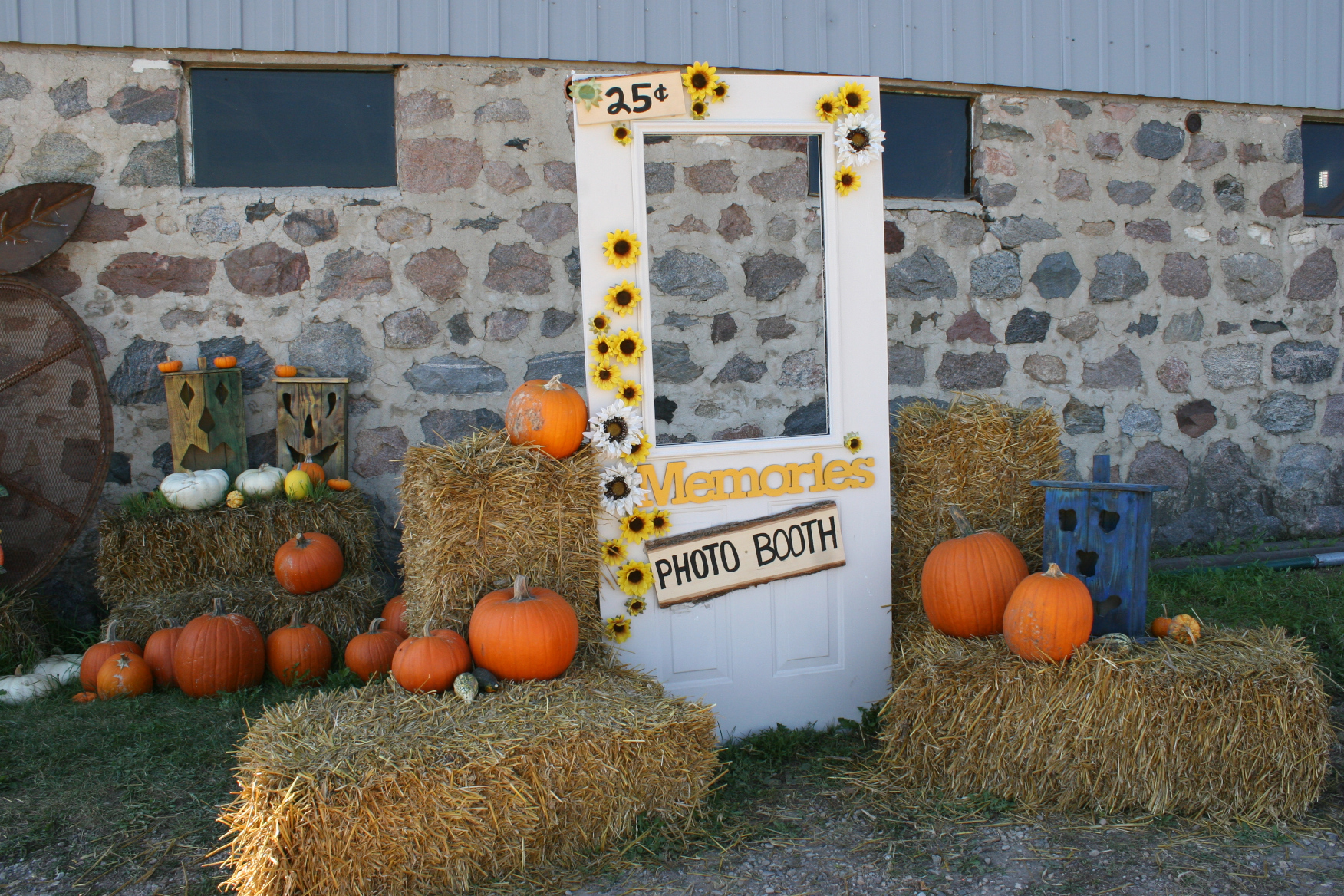
I saw many families posing here for photos. Minnesota Prairie Roots copyrighted photo October 2021.
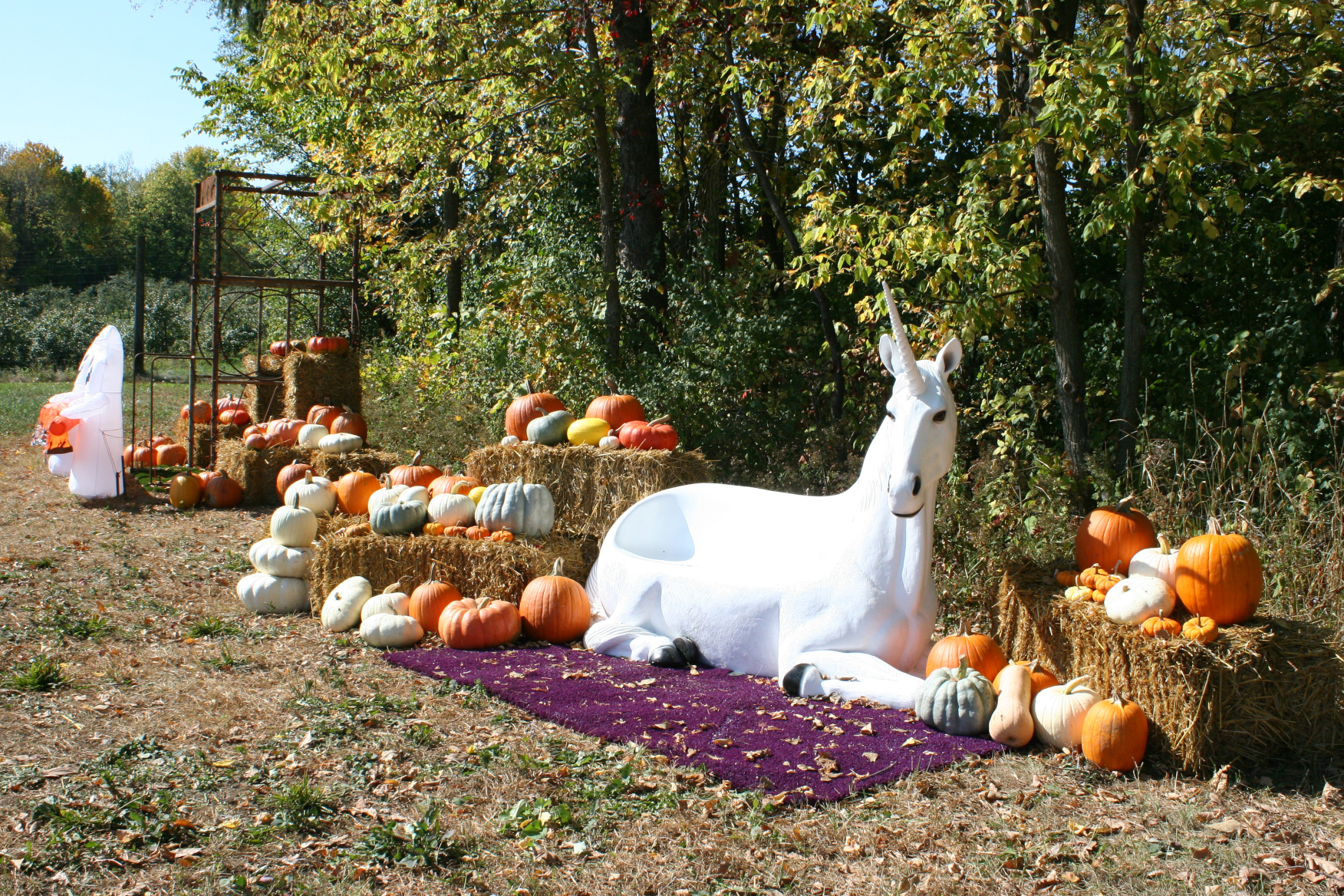
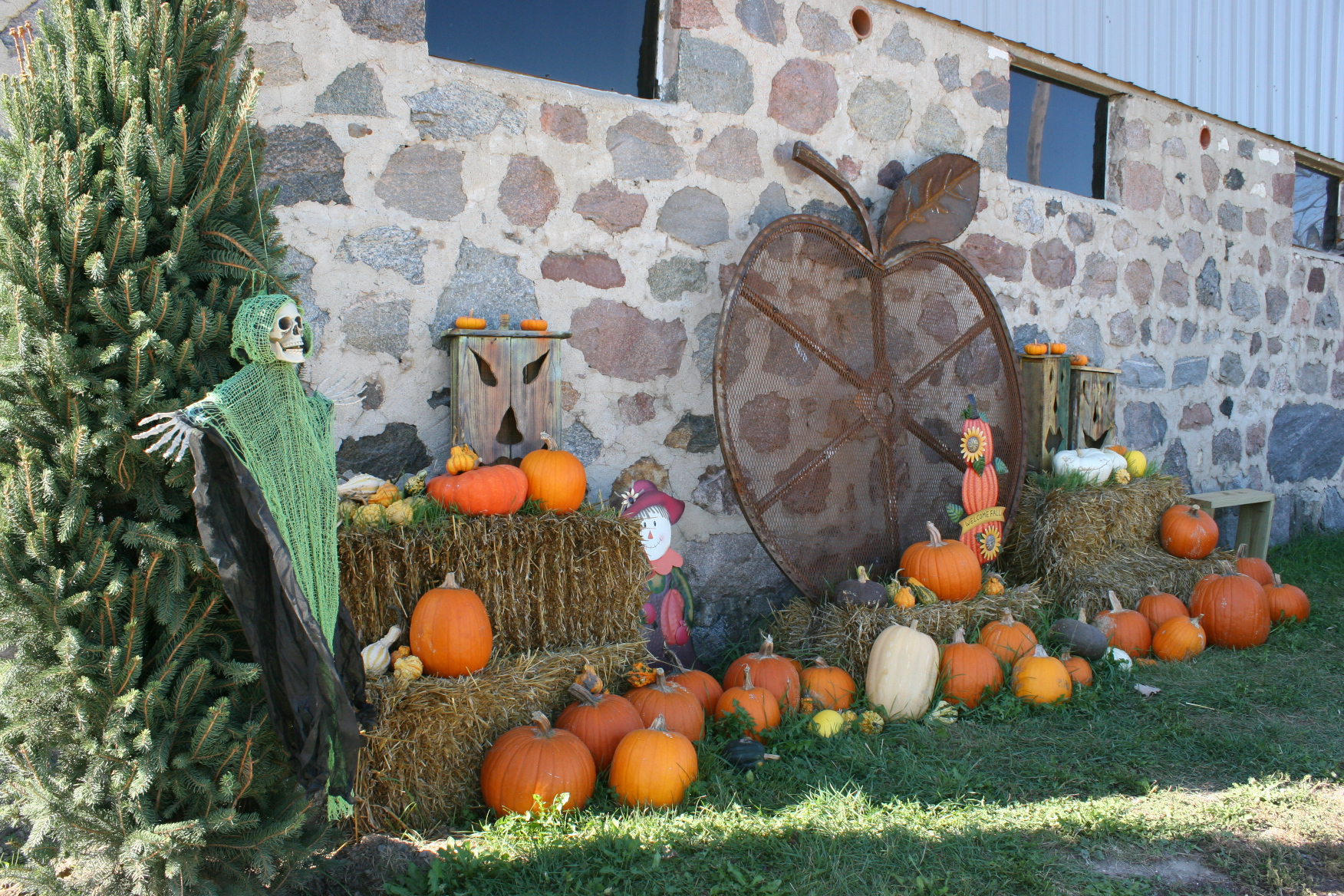
Last Sunday afternoon, Randy and I popped in for a bag of apples while on a country drive to view the fall colors. We had no idea the orchard had evolved into more than a place to buy local apples…until we pulled into the farmyard. There, next to the aged mammoth barn with fieldstone foundation, I spotted a seasonal display of pumpkins and other décor staged on/aside straw bales. Plus a photo prop.
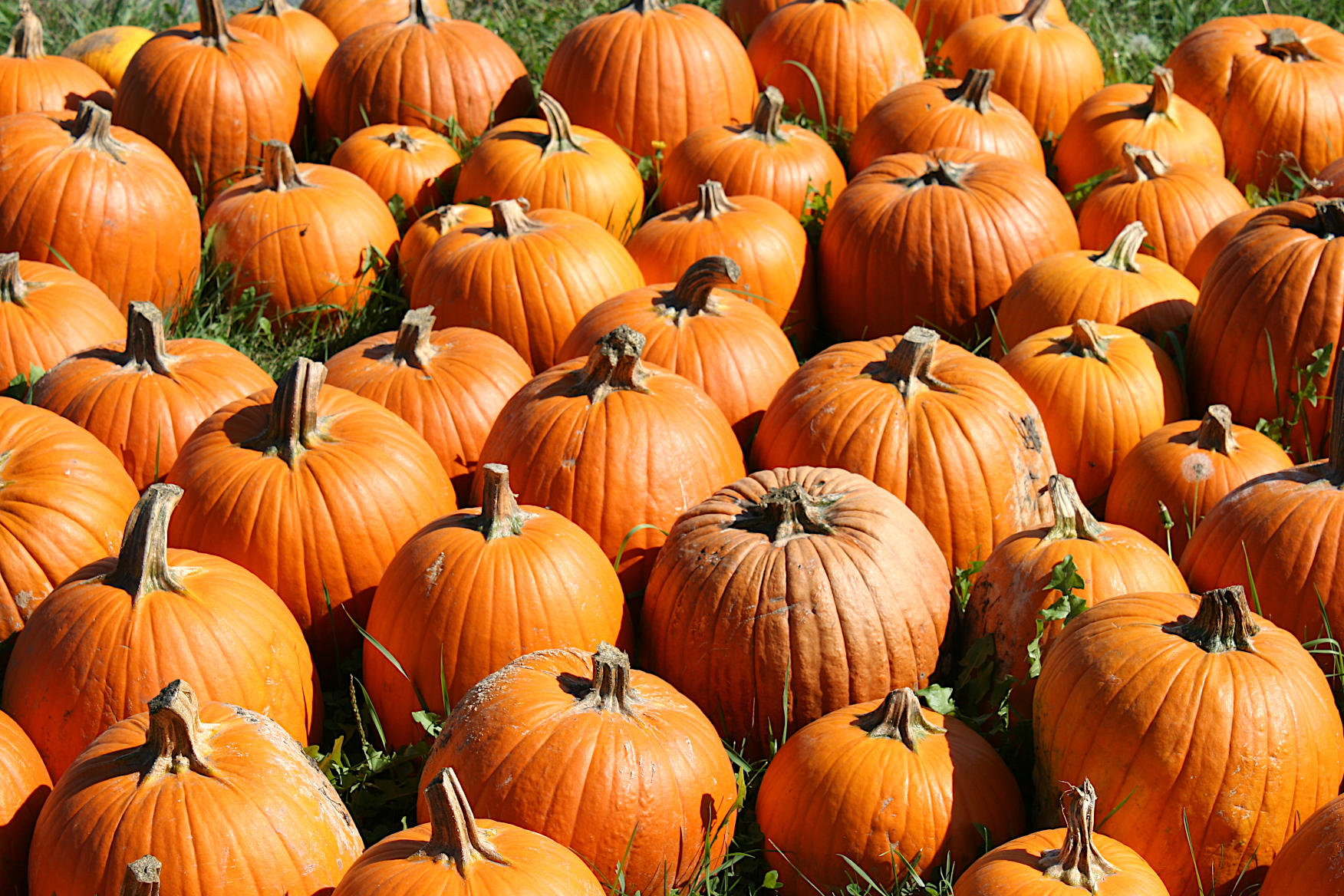
Plenty of pumpkins are available for purchase. Minnesota Prairie Roots copyrighted photo October 2021.
Rounding the end of the barn, I saw more. Vehicles lined along lawn’s edge near the barn and the multi-purpose poleshed housing Apple Creek Boutique. And up the hill, additional photo staging.
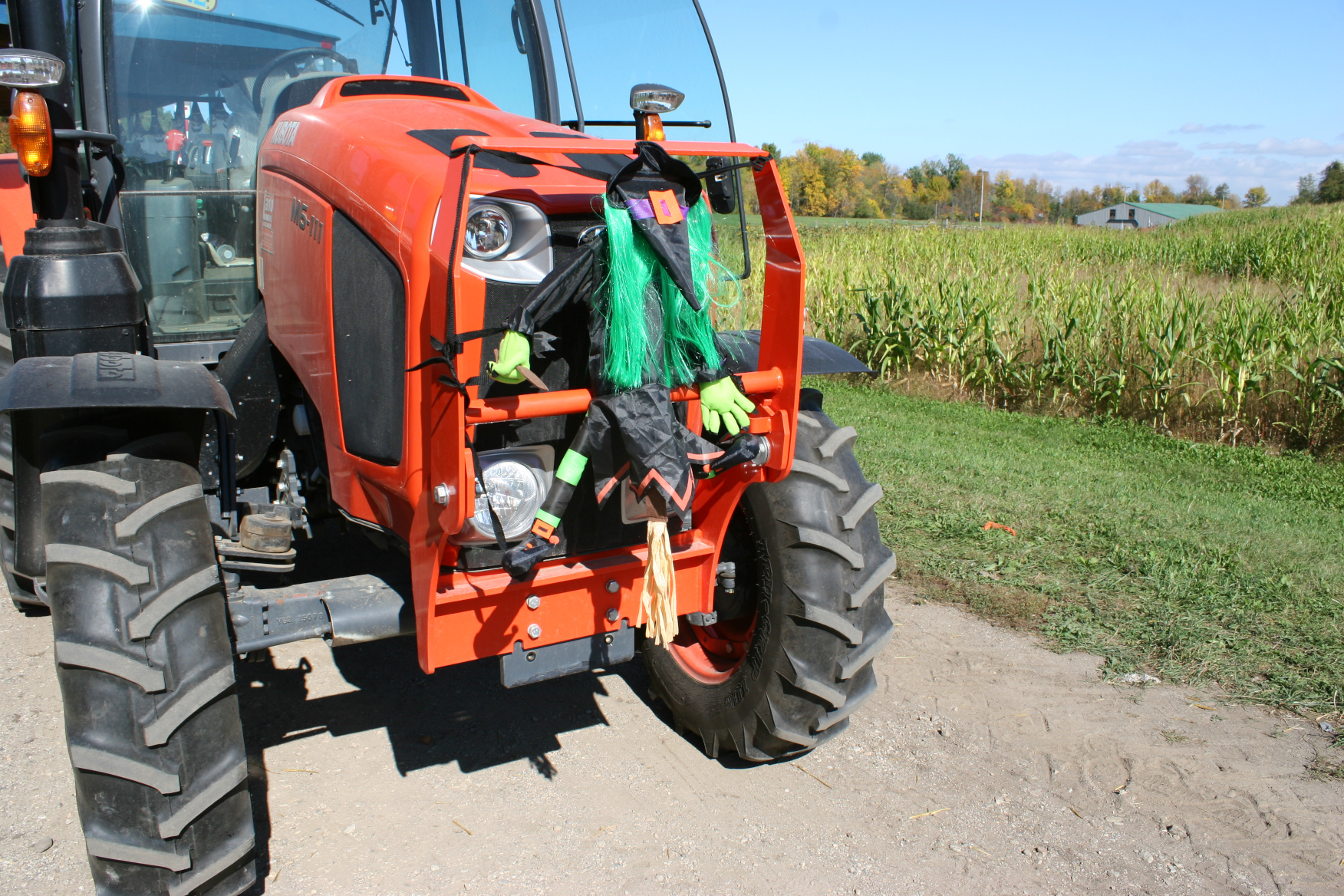
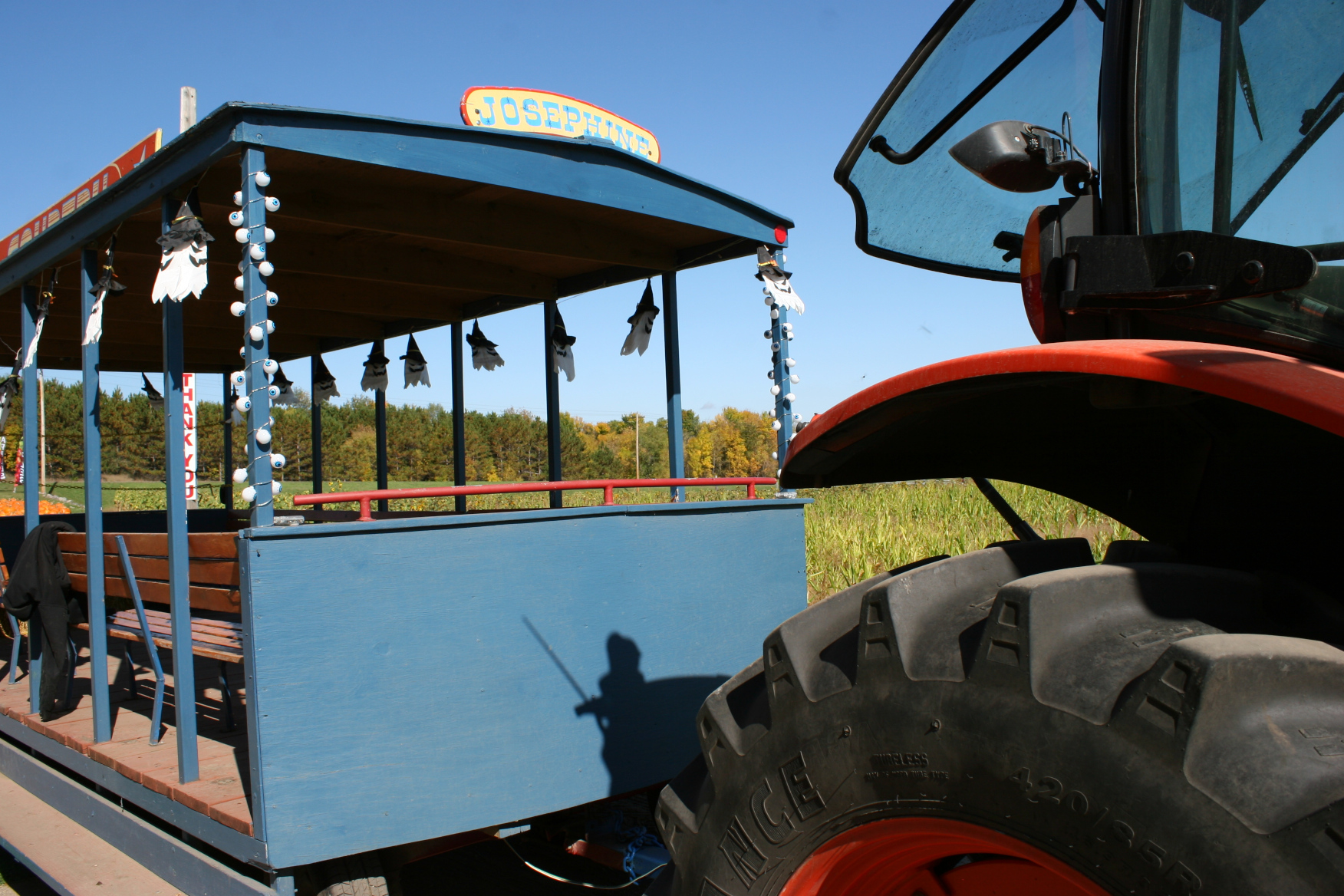
A fun touch on the front of the tractor adds to the Halloween spirit. Minnesota Prairie Roots copyrighted photo October 2021.
On this glorious autumn afternoon in rural Minnesota, folks clearly arrived here not only for the apples, but also for the experiences. Young families. Grandparents. Couples. Many boarded the Fun Country wagon for a ride through the property. Former orchard owner Dan Abelman steered the Kubota M5-111 tractor pulling the wagon. We chatted with him briefly afterwards. He sold the orchard to Tami and Kevin Theis late this summer and continues to help with the transition. He’s supportive and enthusiastic about the changes the couple has made. And ready, too, to be moving into retirement.
Hank the Unicorn, a popular photo prop for visitors. Minnesota Prairie Roots copyrighted photo October 2021.
We didn’t go on the Haunted Trail Ride on a wagon named Josephine (my maternal grandmother’s name), but we roamed the grounds. There I found more photo props. Randy prompted me to sit on Hank the Unicorn so he could take, and text, a photo to our 5-year-old granddaughter. Already I was thinking, we need to bring Isabelle and Isaac here next fall.
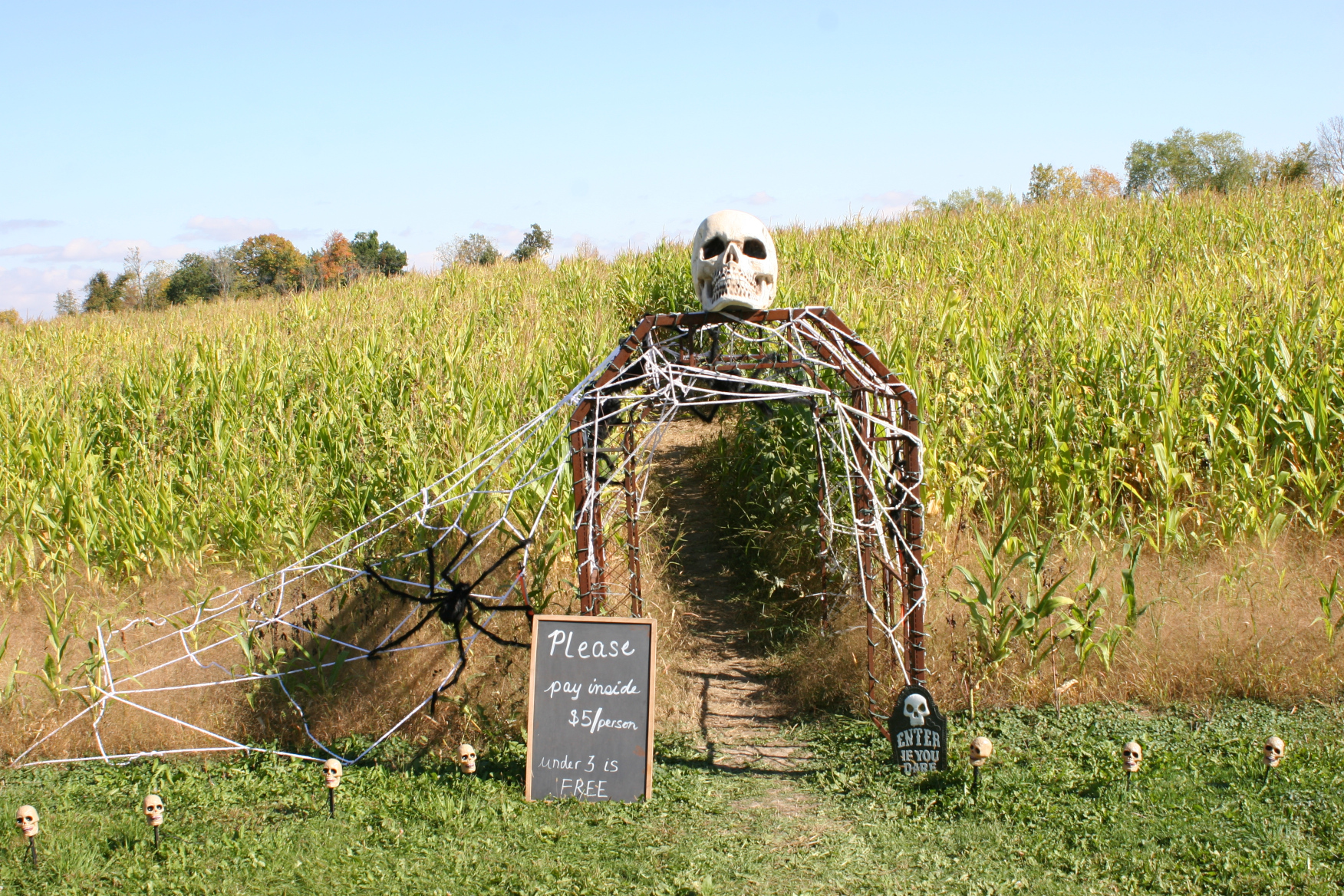
The frightening entry to the hillside corn maze. Minnesota Prairie Roots copyrighted photo October 2021.
While they may be a bit young for the 3-acre Haunted Corn Maze, I know they would enjoy the pumpkins, the autumn displays, the photo props…the experience…the time together as a family.
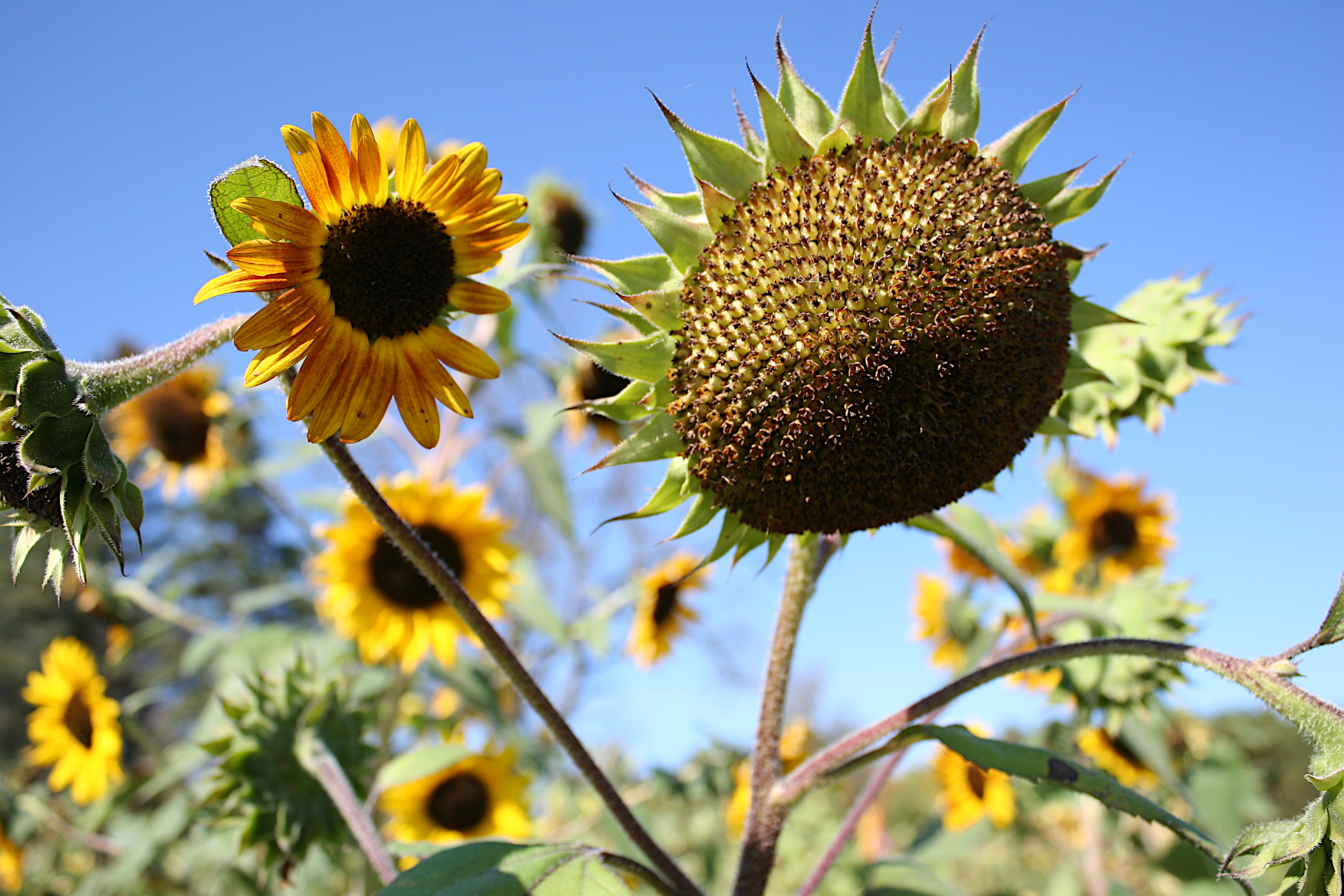
In the sunflower patch. Minnesota Prairie Roots copyrighted photo October 2021.
A path runs between the sunflower and corn fields with a vintage tractor parked field side. Minnesota Prairie Roots copyrighted photo October 2021.
Some sunflowers were still blooming. Minnesota Prairie Roots copyrighted photo October 2021.
I got sidetracked also by a field of sunflowers, past their prime, but still a visual delight.
Details in decorating. Minnesota Prairie Roots copyrighted photo October 2021.
Inside the on-site store, tagged Apple Creek Boutique because you’ll find more than fresh apples here, I poked around. There you’ll find local honey, apple juice-infused meat snack sticks and sausage from Odenthal Meats of New Prague, caramel apples, cider, Grandma Eileen’s homemade apple pies, mugs, seasonal décor and much more. But we came for the apples, stashed in a cooler. I opted for a bag of my favorite, Honeycrisp.
Love the thought put in to seasonal decorating. Minnesota Prairie Roots copyrighted photo October 2021.
In the future, Apple Creek Orchard hopes to offer pick-your-own apples. There are more plans in the works, too. Co-owner Tami Theis, a certified wedding planner, shared that a section of the poleshed will be converted in to an event venue, The Blossom. Also coming in 2022 are homemade pizzas, donuts and cider, plus a wiffle ball field.
Parked before the next boarding for a wagon ride. Minnesota Prairie Roots copyrighted photo October 2021.
I left feeling excited about this new local option for families, and others, to enjoy in rural Rice County. To learn more about apples. And to create memories via the agri entertainment now offered at Apple Creek Orchard.
Other area orchards include Trumps Orchard on Faribault’s east side; Montgomery Orchard, rural Montgomery; and Fireside Orchard & Gardens, rural Northfield. I’ve patronized each of these. What’s offered at each varies, so please visit their websites for details.
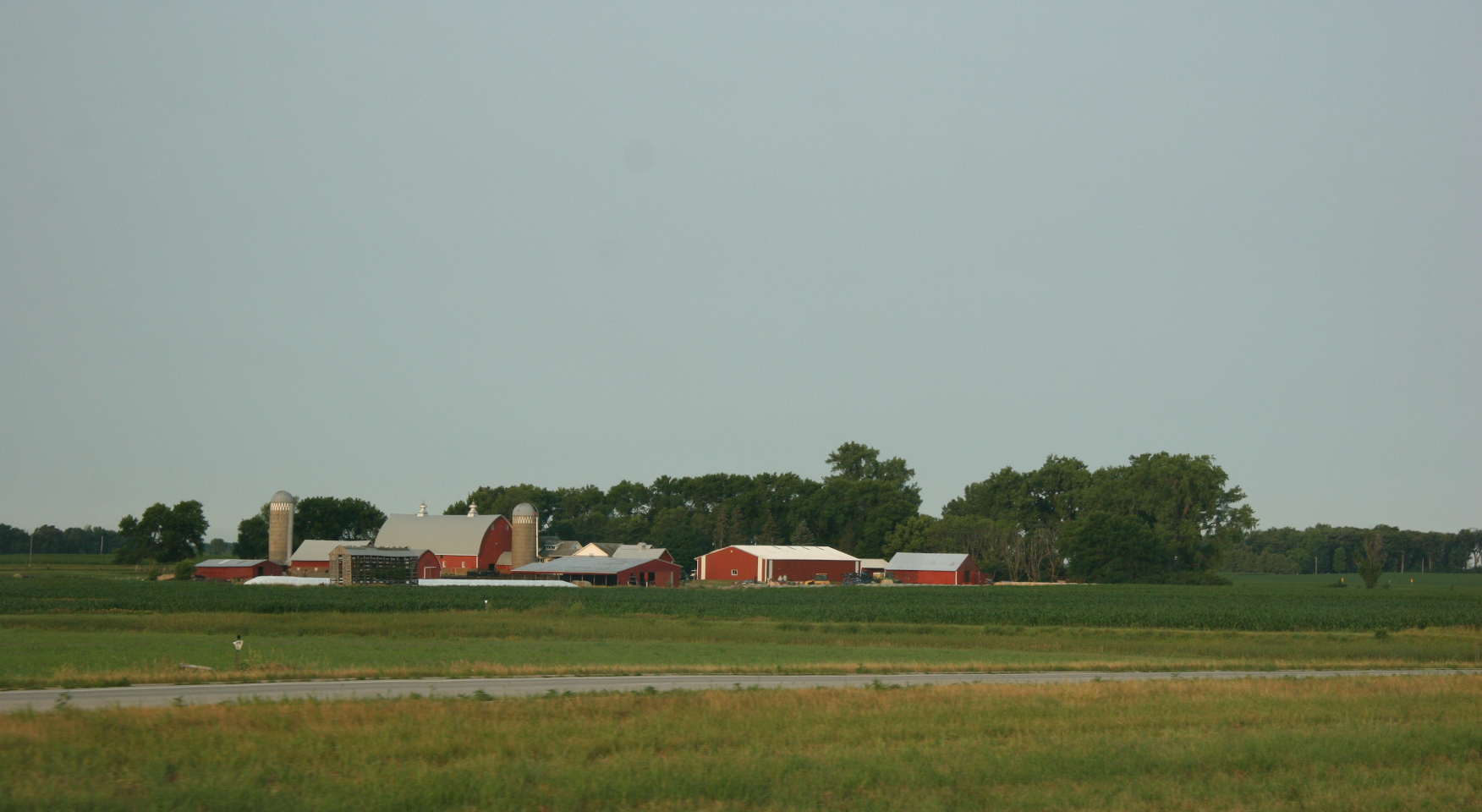
A well-kept farm site west of New Ulm. Minnesota Prairie Roots photo.
THE JULY FOURTH WEEKEND took me back home, home being my native southwestern Minnesota. There my extended family gathered at my middle brother’s rural acreage near Lamberton for the first time since December 2019. To see so many family members—not all attended—felt wonderful.
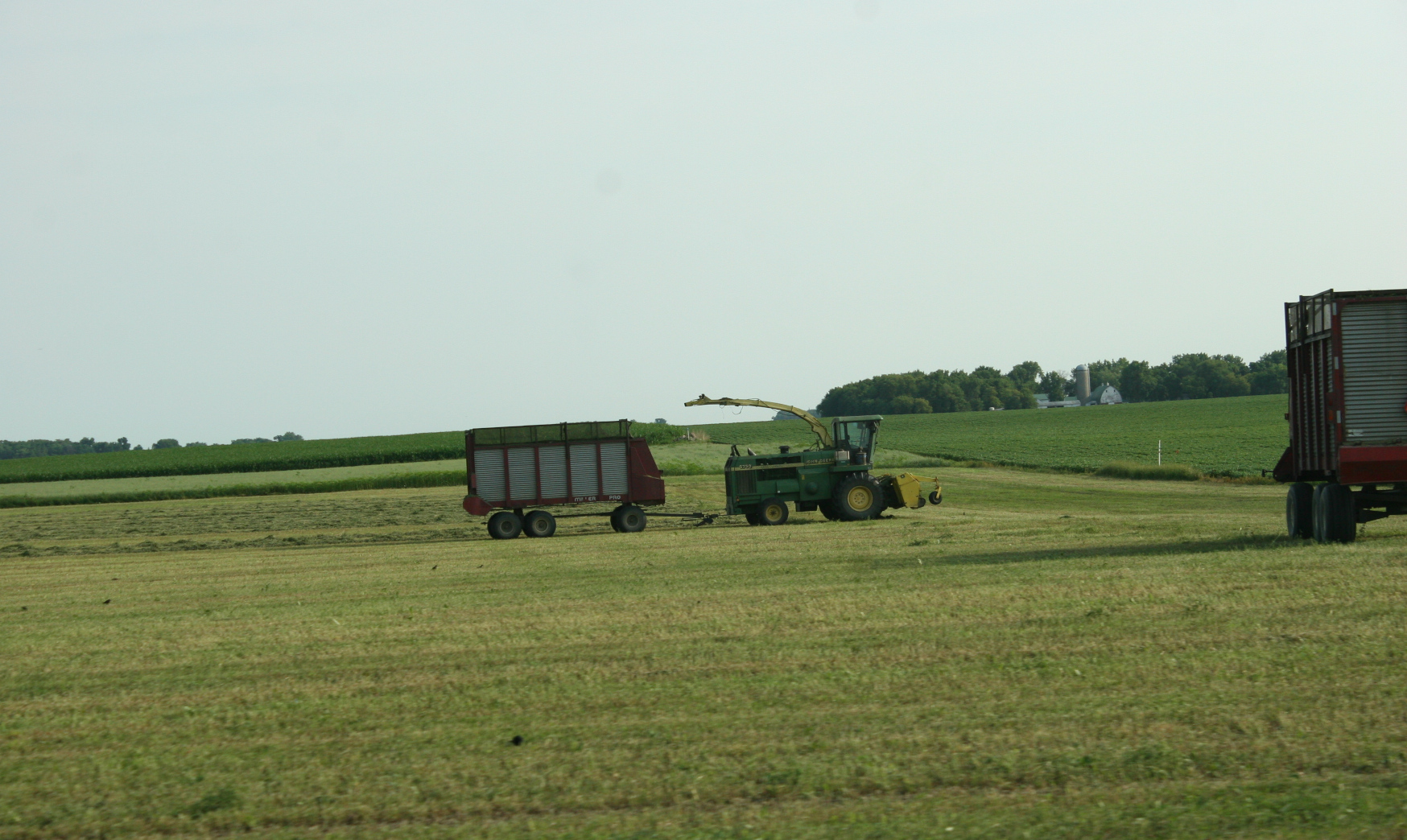
Heading west toward Redwood County, we passed this chopper and wagons in Brown County. Minnesota Prairie Root photo.
Being back in that rural area of our state, in a familiar landscape, felt comforting. No matter where I’ve lived as an adult, Redwood County remains home. The place of my roots. The land and sky and wind imprinted upon me like ink on the pages of a book. Words that thread through my writing even today.
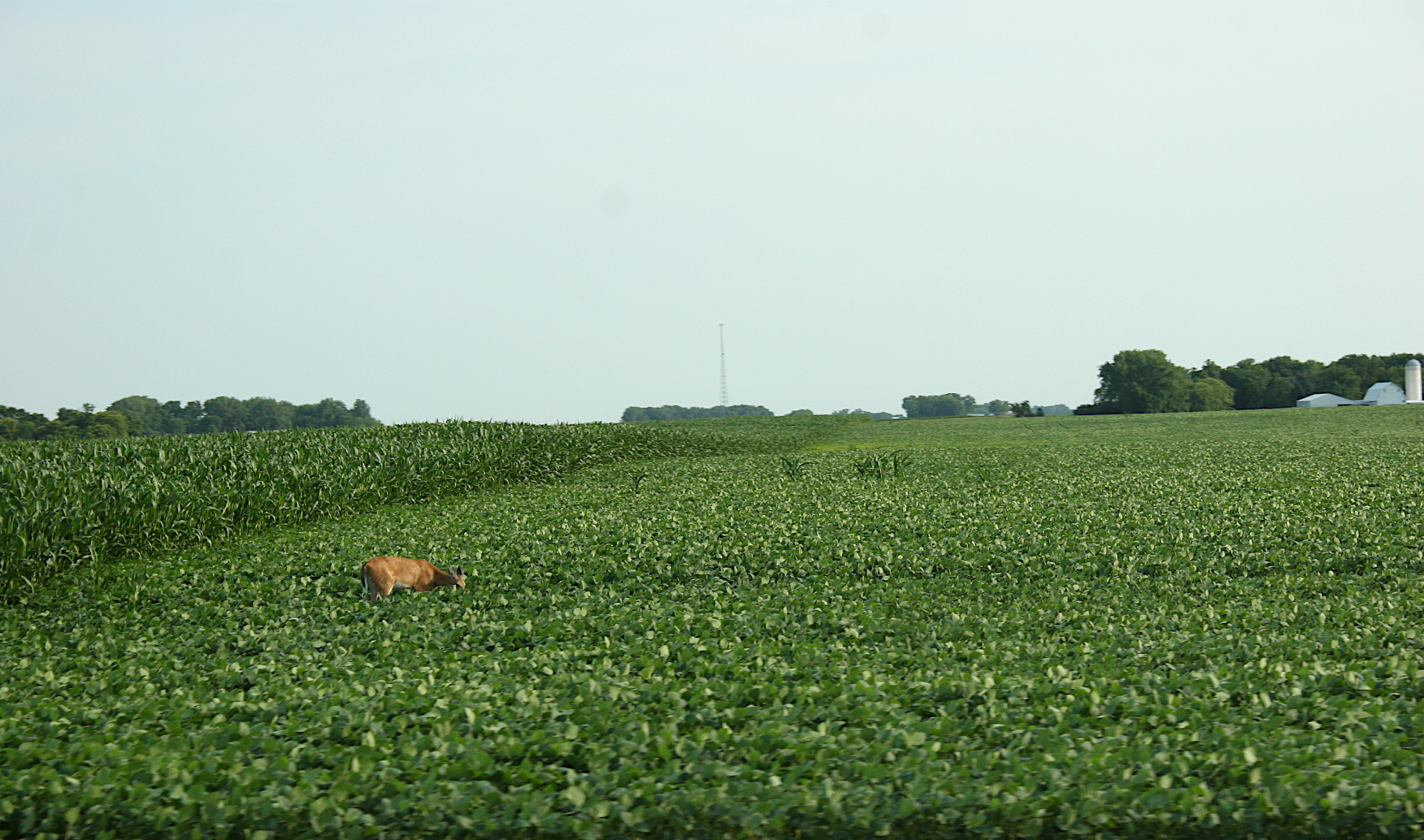
One of several deer spotted as we drove west. Minnesota Prairie Roots photo.
Perhaps my perspective seems too nostalgic. And if it does, I offer no apologies. I value the place which shaped me as a person and as a writer and photographer.
A farm site along US Highway 14 west of Owatonna as we begin our 2.5-hour drive west. Minnesota Prairie Roots photo.
Near Mankato, a truck pulls a farm wagon. Minnesota Prairie Roots photo.
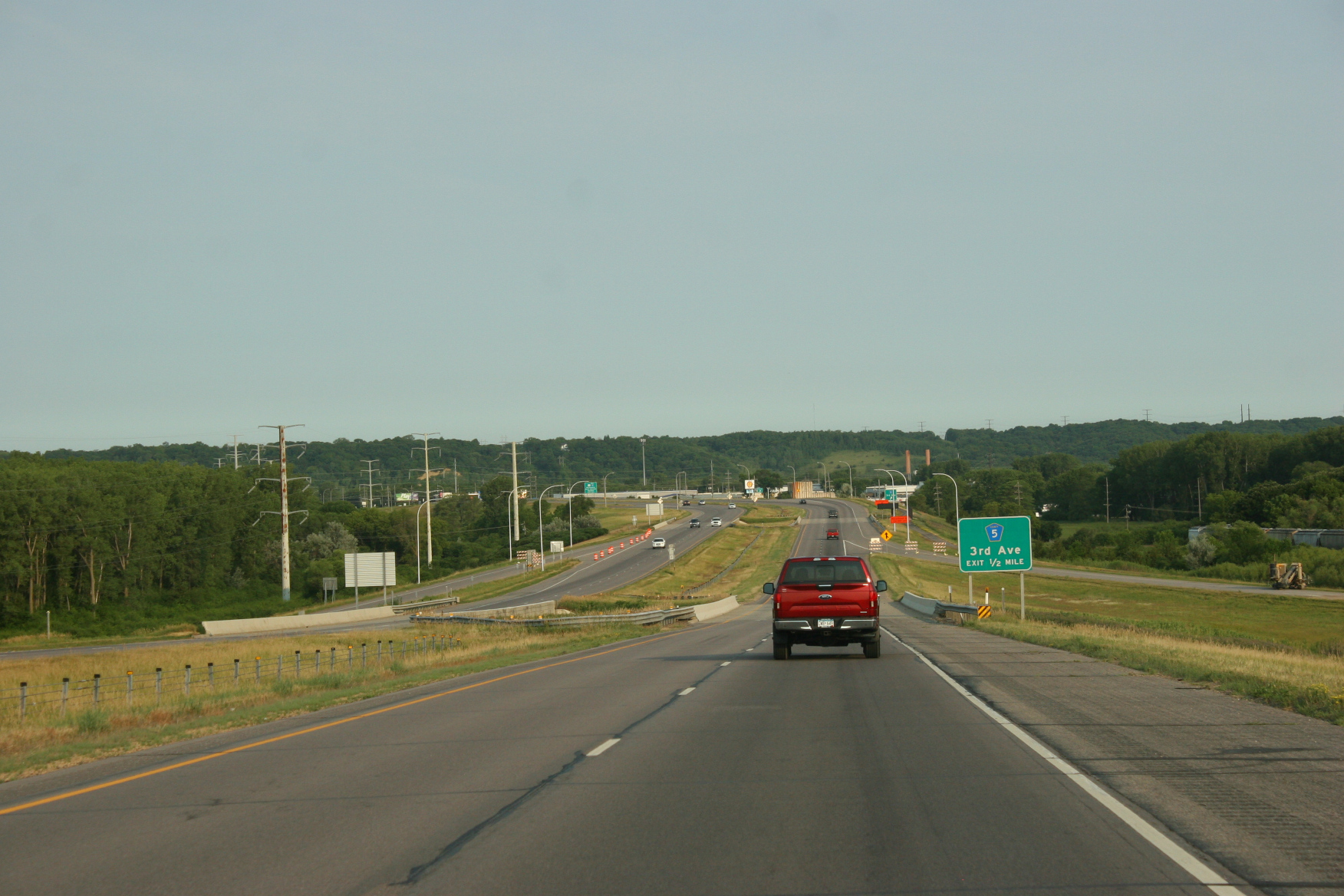
Skirting Mankato on US Highway 14, the land dips into the Minnesota River Valley, then rises, opening to flat farm land. Minnesota Prairie Roots photo.
The familiar scenes which appear before me en route from Faribault to southwestern Minnesota welcome me back. The red barns. The vast fields of corn and soybeans. The expansive sky. Even the tractors and farm wagons and pick-up trucks.
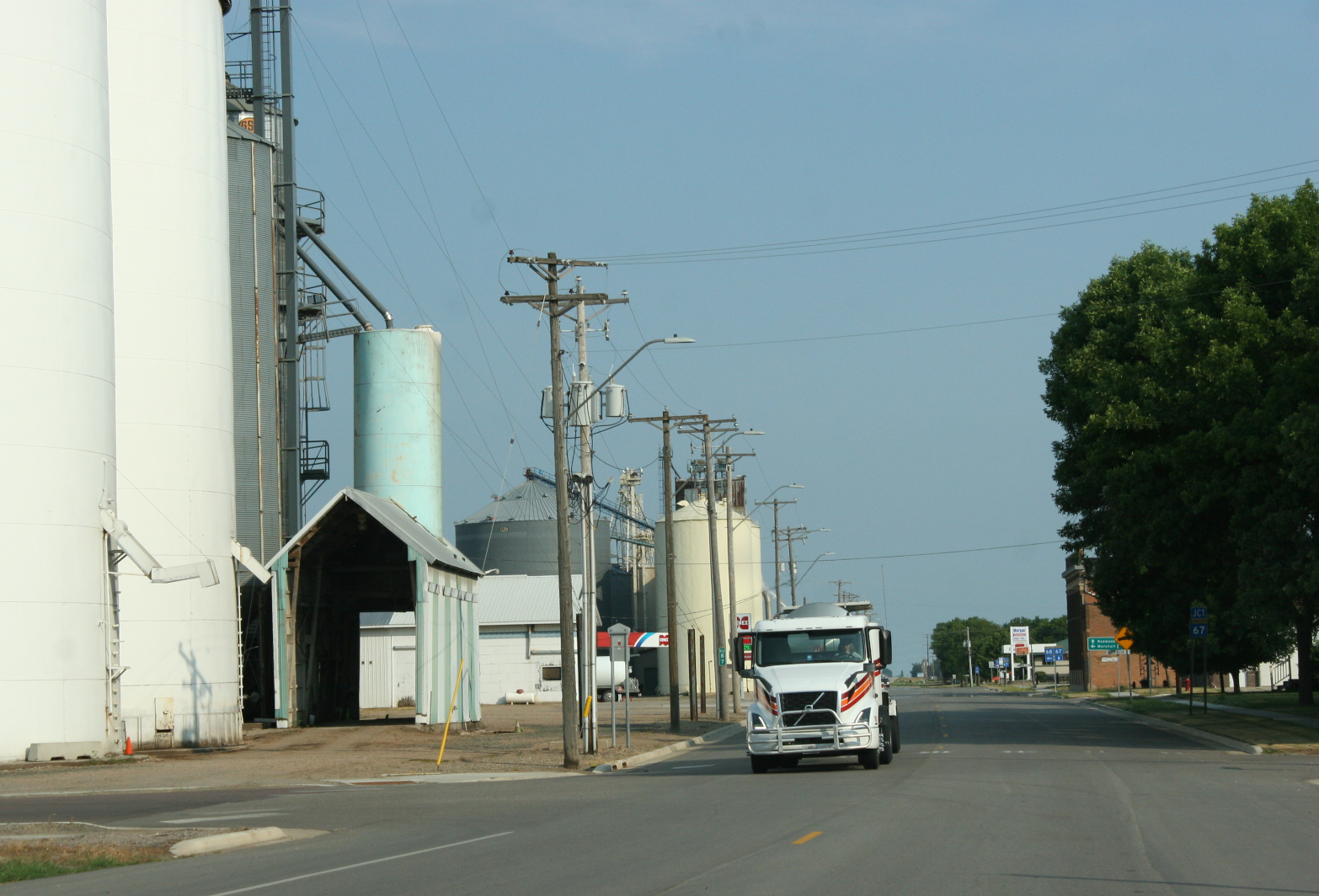
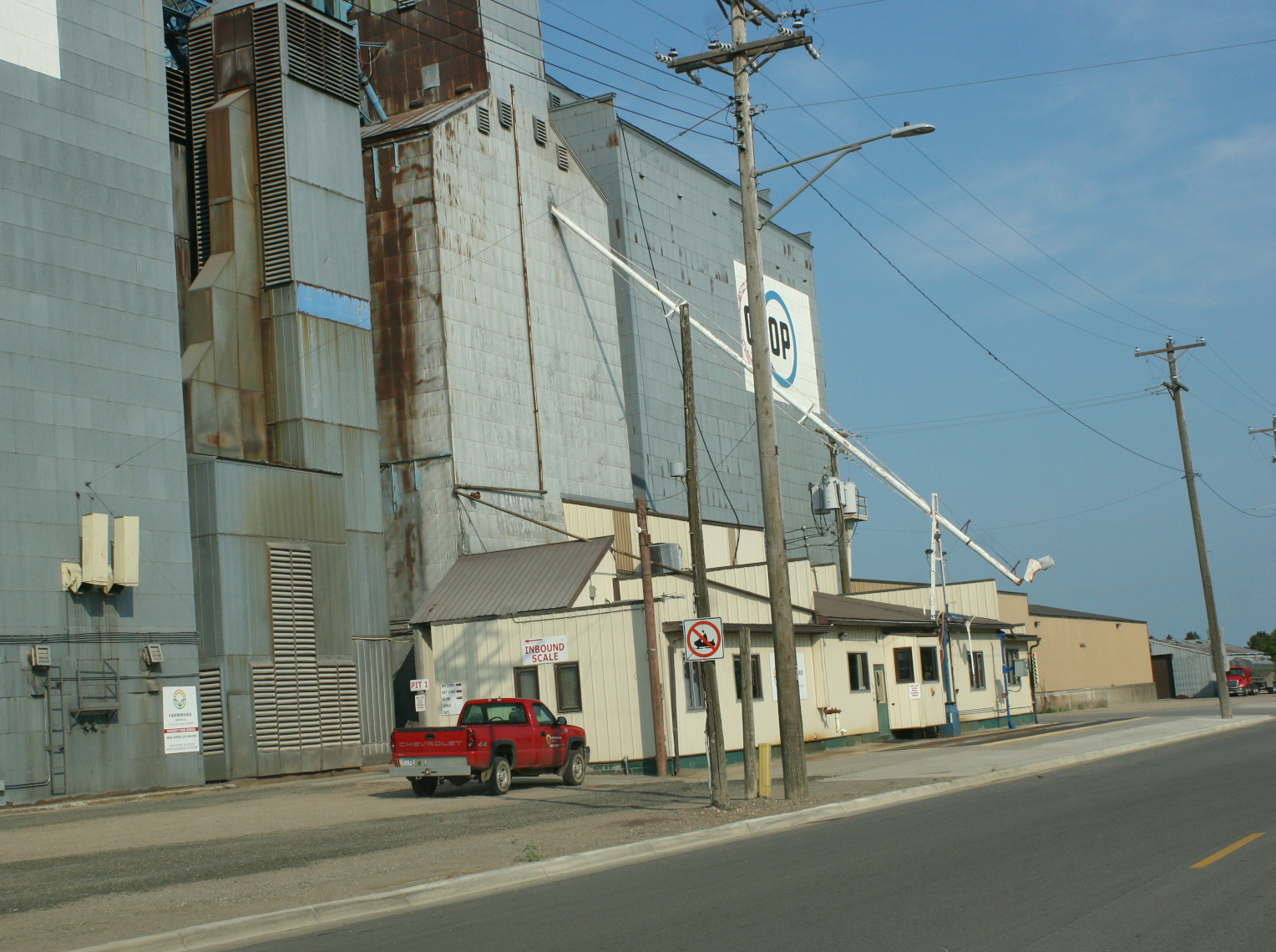
Entering Morgan, where grain elevators edge the main route through town. This is in eastern Redwood County. Minnesota Prairie Roots photo.
All are part of the rural-ness. My rural-ness. The grain elevators and gravel roads and power lines stretching seemingly to infinity.
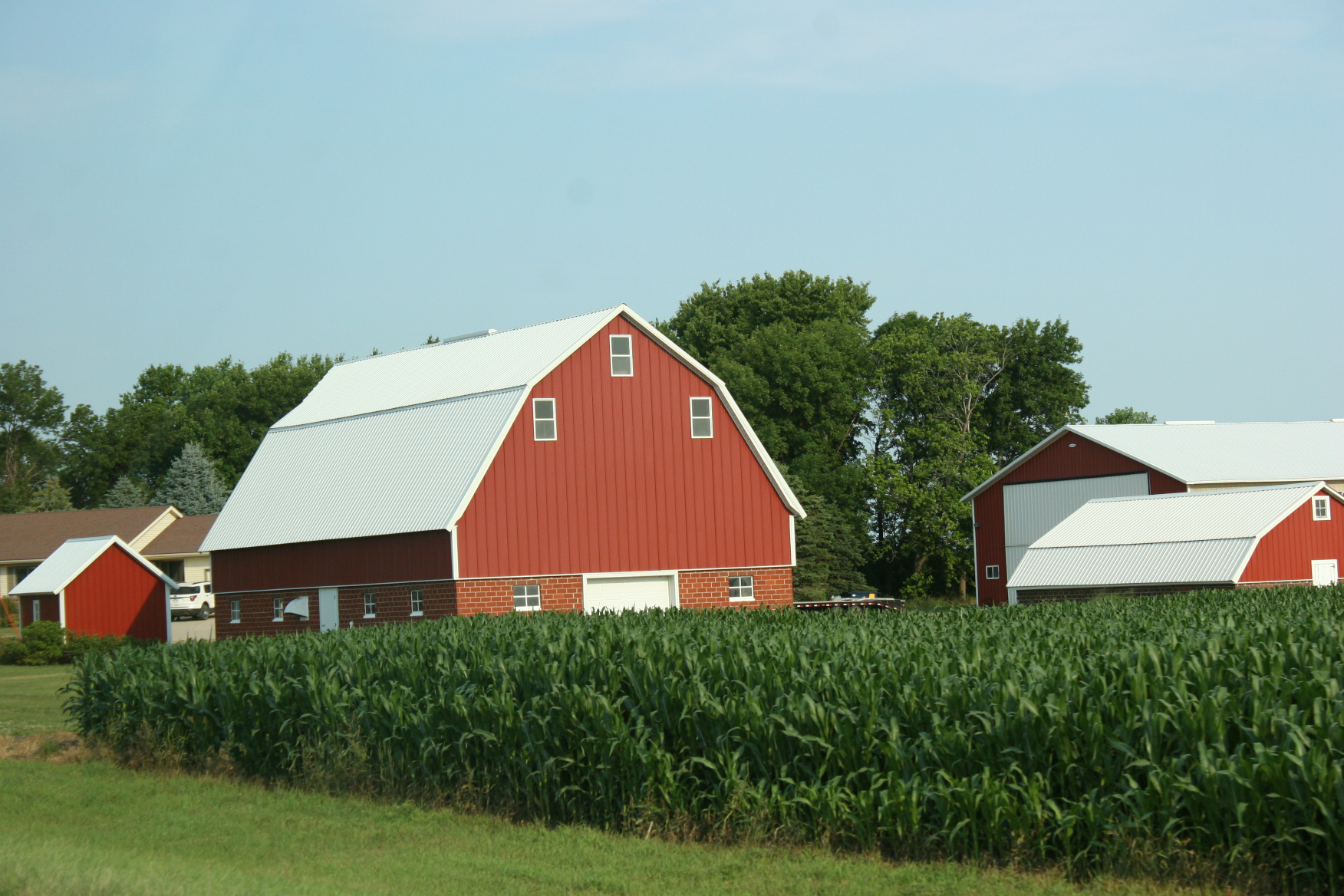
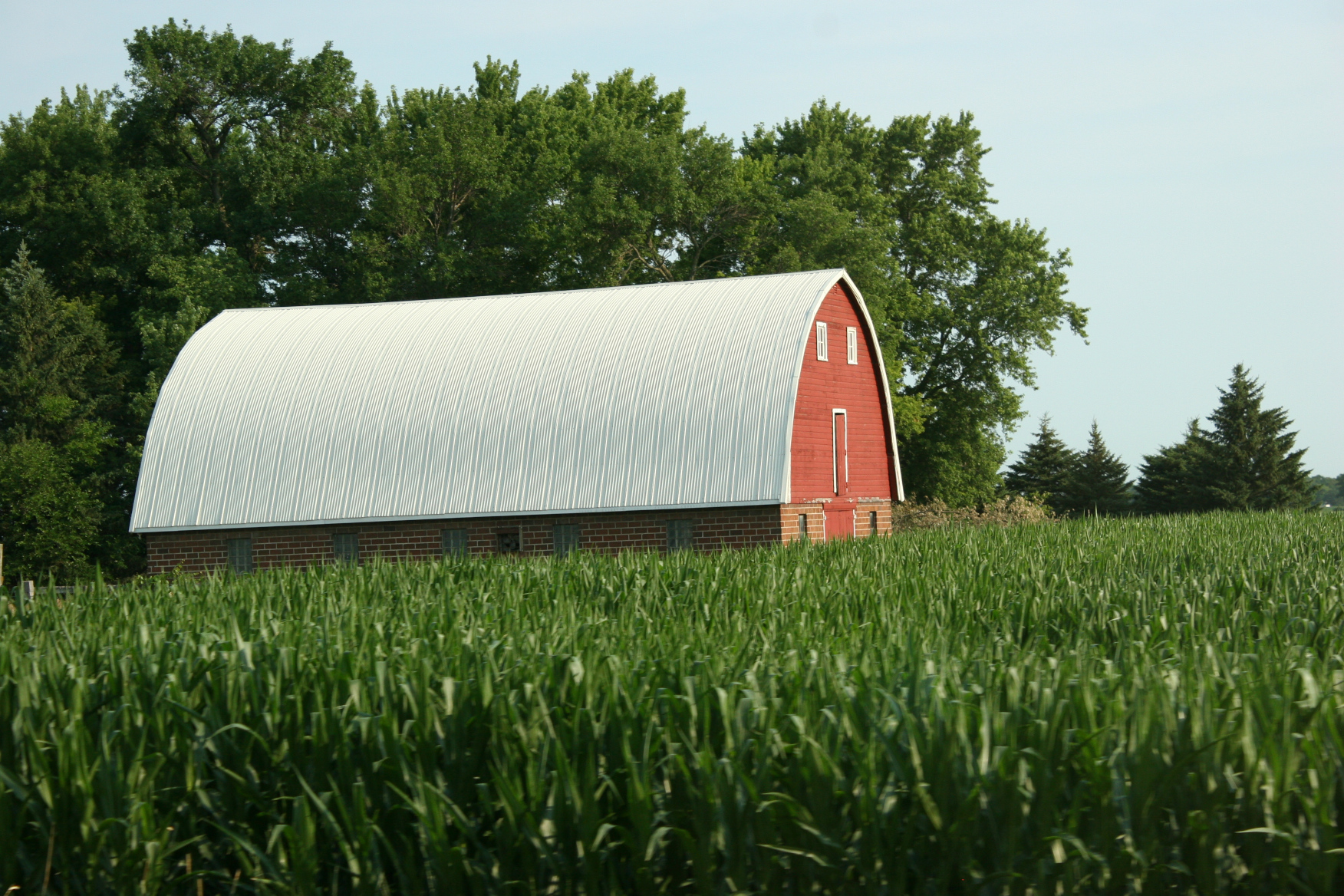
So many beautiful red barns along the route west. Minnesota Prairie Roots photo.
I could write chapters about the gravel roads I biked as a teen—how the gravel crunched beneath tires, how wild roses flourished in ditches, how vehicles kicked up dust. I could write chapters about barns—how I labored inside ours, feeding cows and calves, and pitching manure. I could write chapters about the ice and snow storms that left our farm without electricity, once for an entire week in the depth of winter.
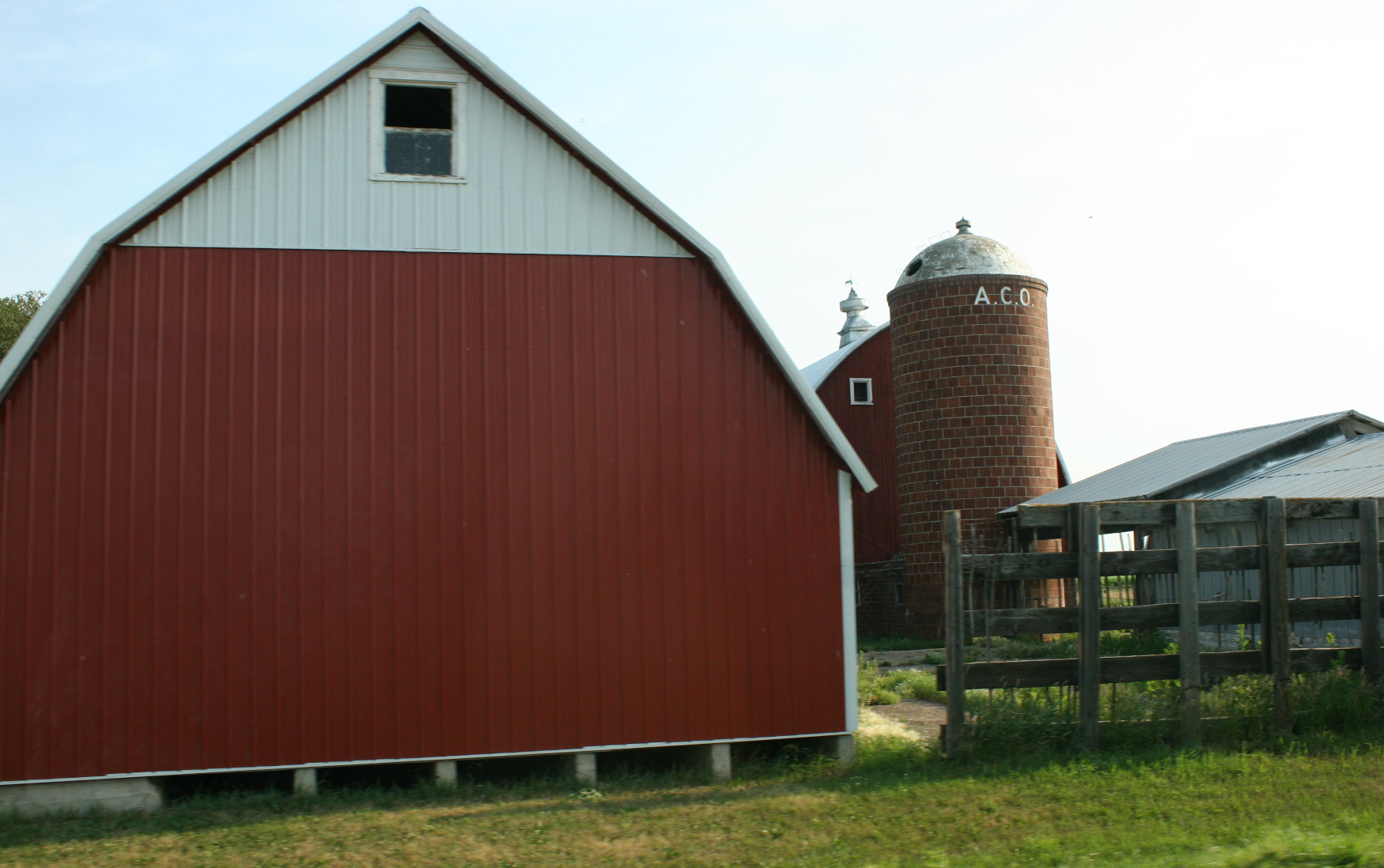
Love the old ACO silo on this farm site west of New Ulm. Minnesota Prairie Roots photo.
A trip back to southwestern Minnesota prompts such memories. I remember. I relive. But, most of all, I recognize just how thankful I am to have been raised in this rural region. On the land. In the shadows of silos and grain elevators. Just a softball pitch away from the barn. Within scent of cows, steers and calves. As close to the earth as bare feet or the end of a hoe hacking cockle burrs in a soybean field.
Co-ops like this one in Morgan are part of my rural history. Minnesota Prairie Roots photo.
As rural scenes unfold, my memories, too, unfurl. Memories of hard work and challenges balanced by carefree afternoons and prairie sunsets and all the beauty this place holds for me. Still today, some 40-plus decades after I left this land.
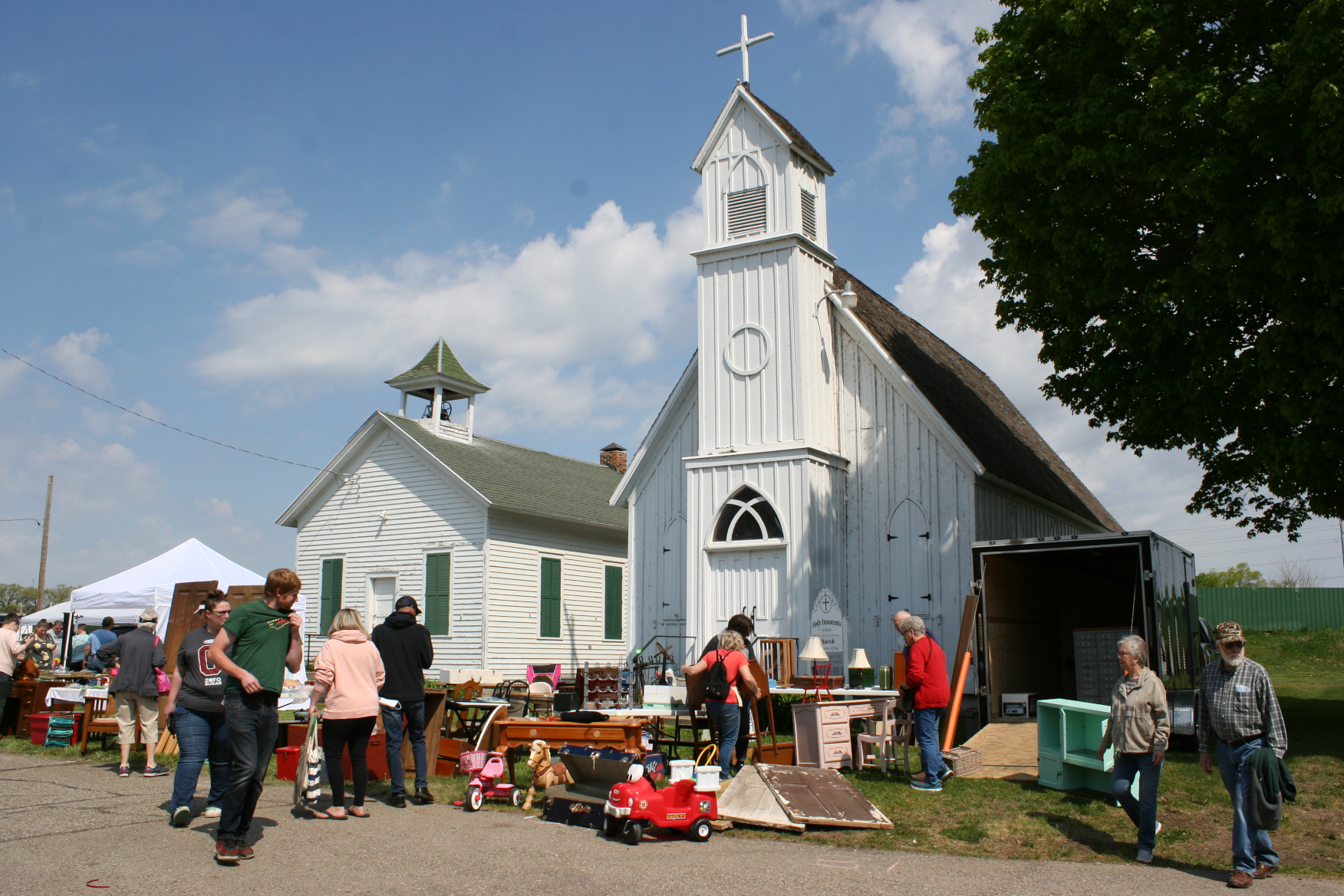
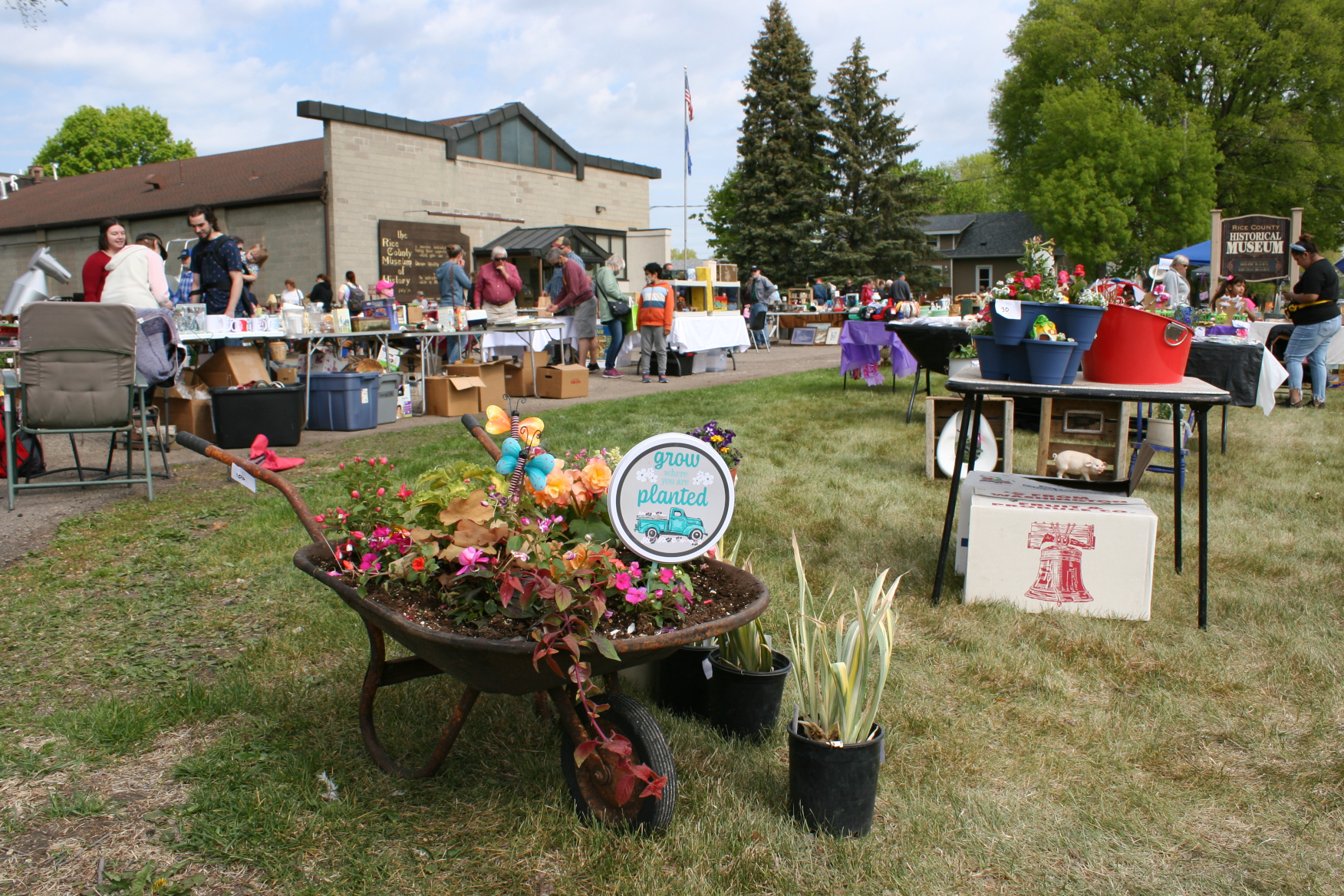
Shopping at the flea market by the Rice County Historical Society’s historic church and school. Minnesota Prairie Roots copyrighted photo.
YOU DON’T NEED THAT, I remind myself as I covet the vintage mixing bowls, the floral apron, the whatever. I’m at that point in life when I feel the need to declutter, to downsize, to let go. Not acquire more stuff.
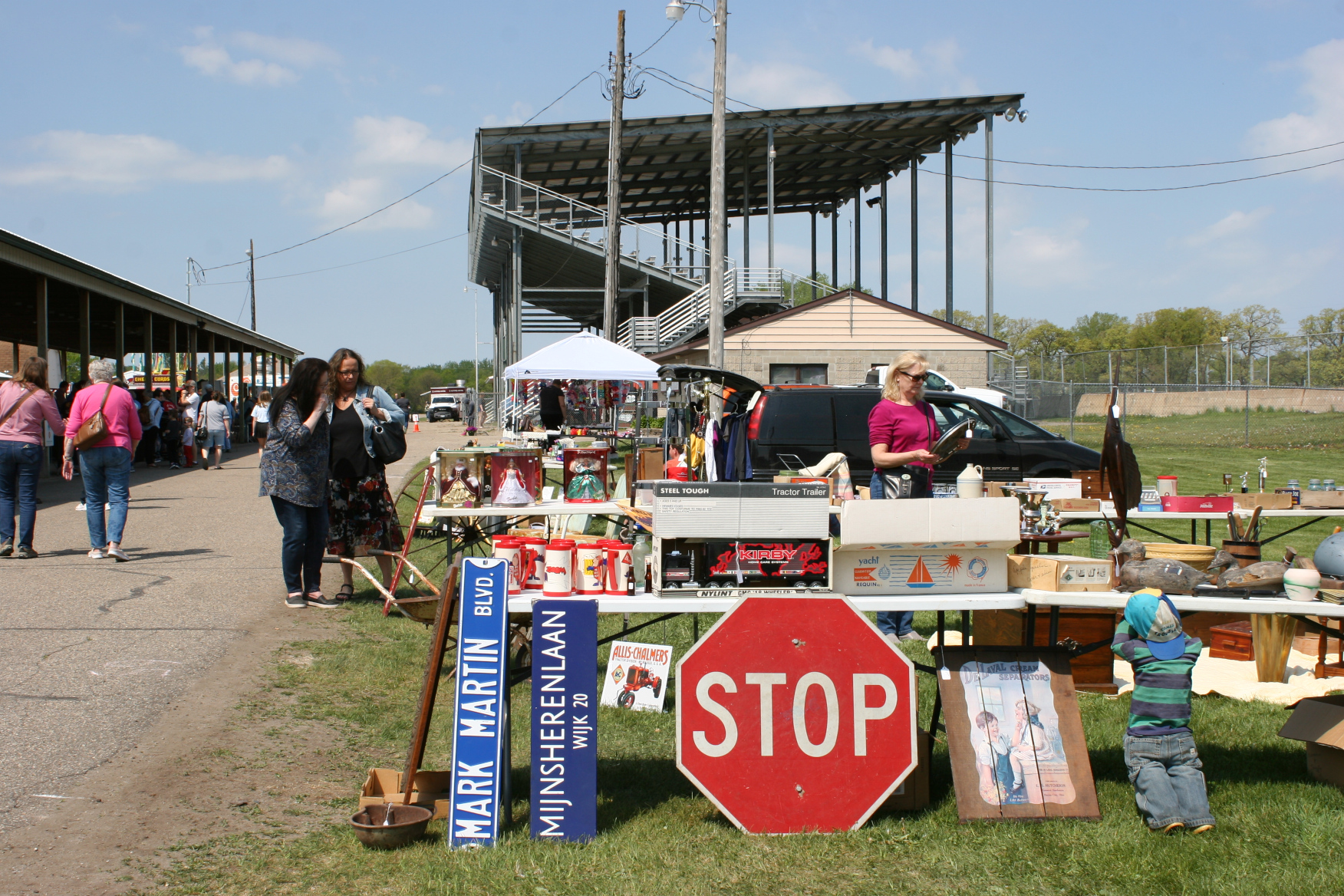
So many treasures… Minnesota Prairie Roots copyrighted photo.
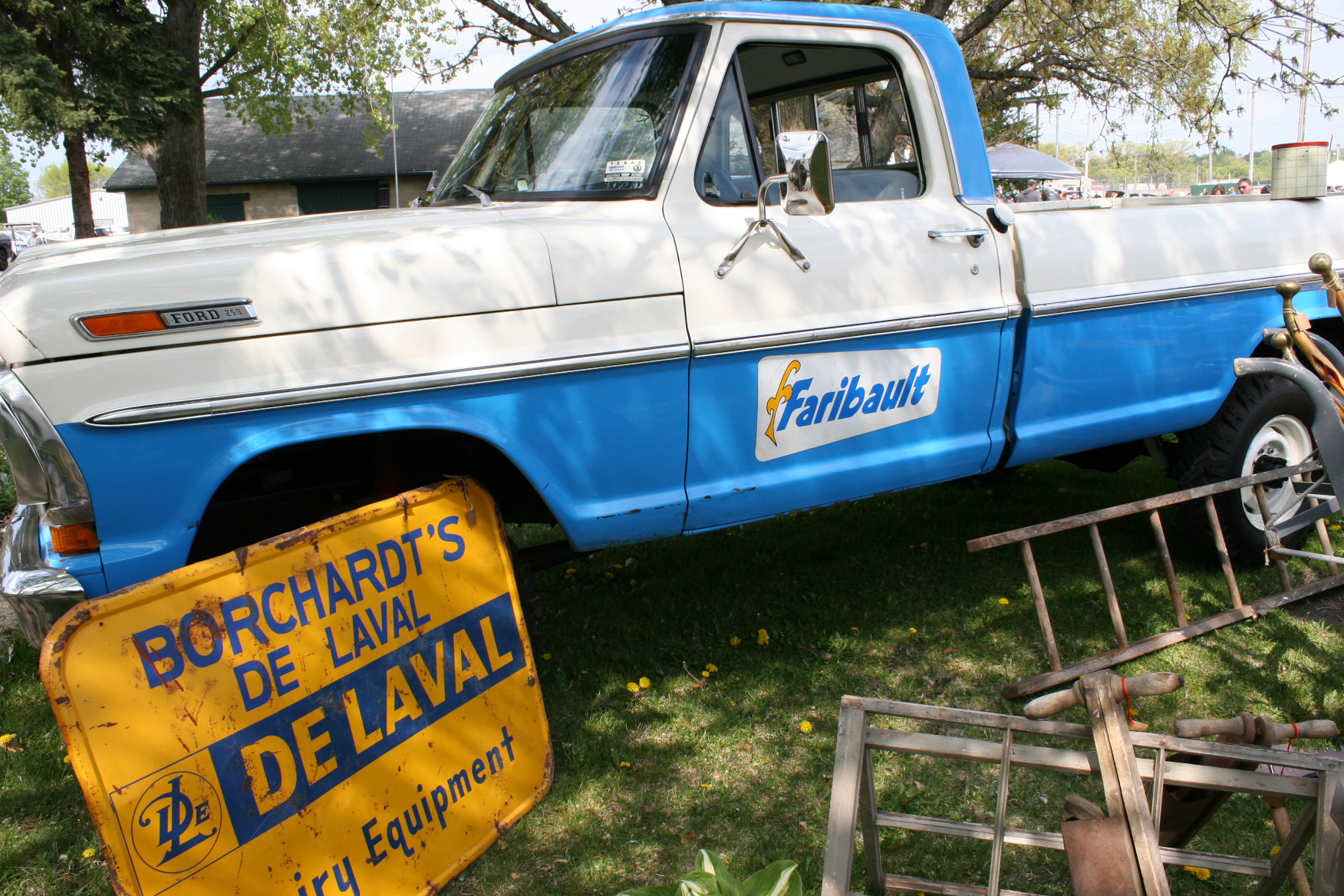
Loved the vintage City of Faribault signage on this vendor’s vintage truck. Minnesota Prairie Roots copyrighted photo.
These flea market vintage lawn chairs almost called for sitting down to visit, except for the rust. Minnesota Prairie Roots copyrighted photo.
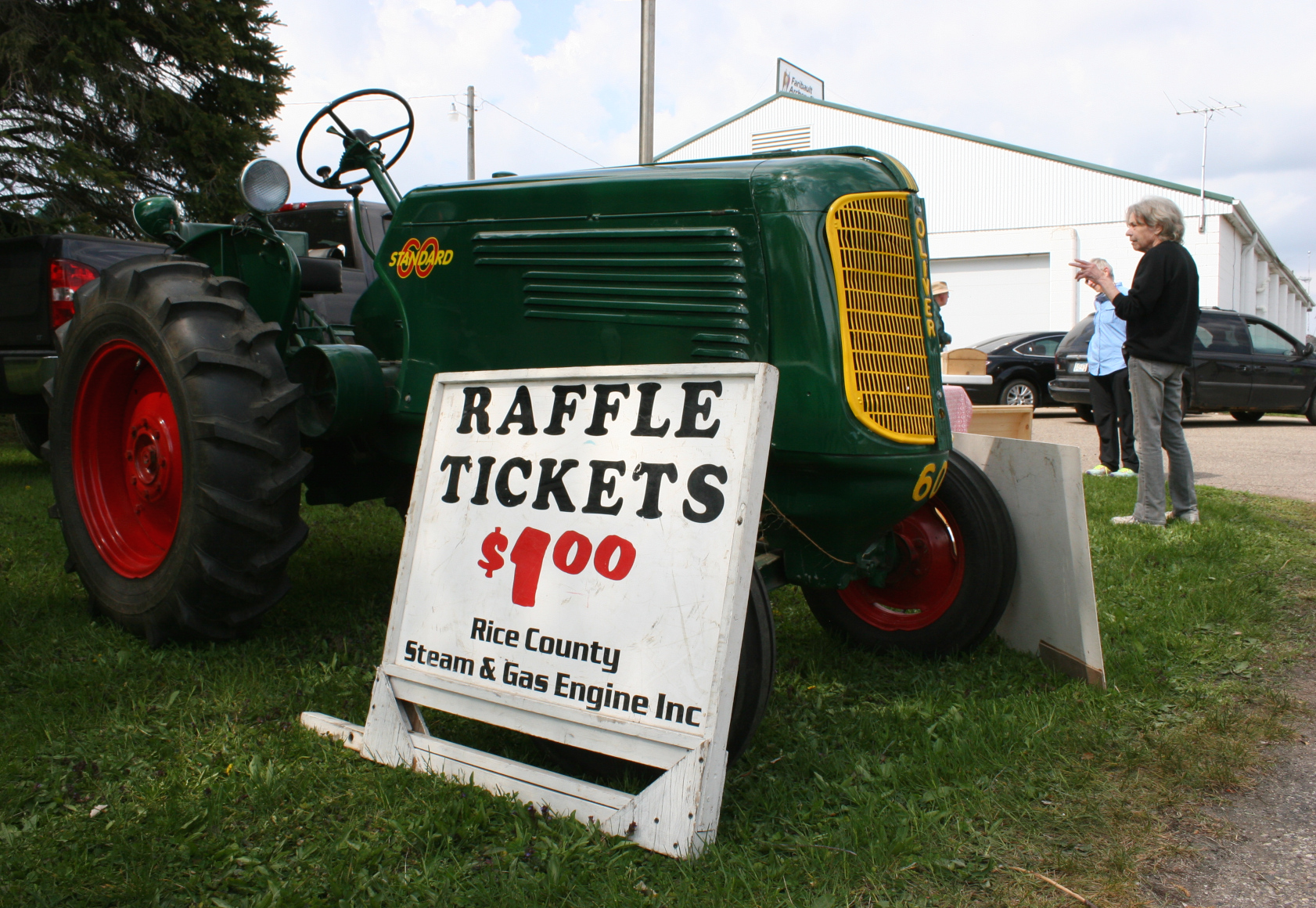
The Rice County Steam & Gas Engine folks were selling raffle tickets for this tractor. The organization hosts its annual swap meet/flea market on Saturday, May 29, and Sunday, May 30, just south of Northfield, in rural Dundas. Click here for details. Minnesota Prairie Roots copyrighted photo.
While I wandered among tables, pausing to chat with friends I haven’t seen in more than a year, I delighted in the beautiful spring day and the opportunity to be out and about among others.
Minnesota Prairie Roots copyrighted photo.
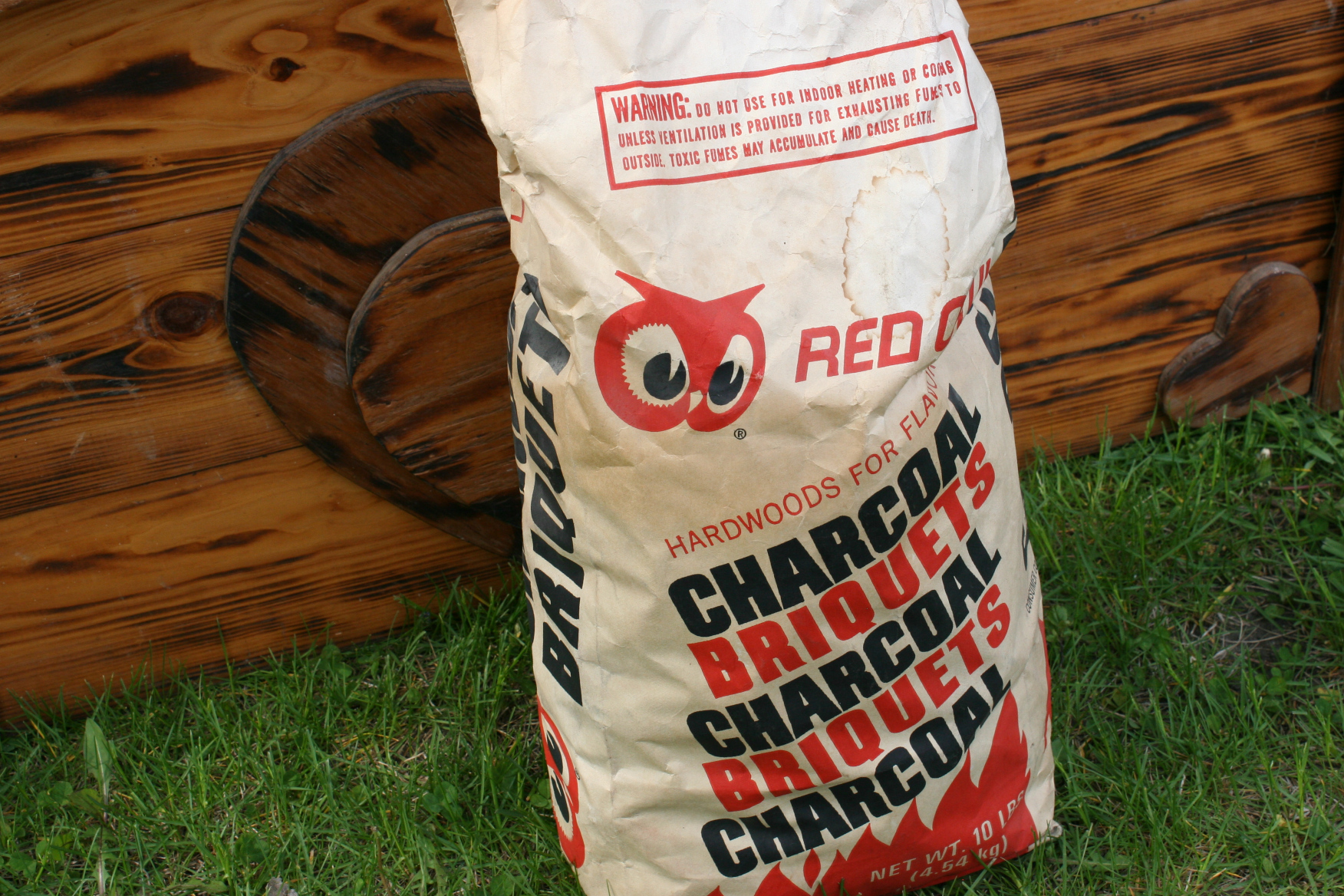
With camera in hand, I documented some of the merchandise. I recognize that memories and personal interest draw me to certain items. Like the bag of Red Owl charcoal, a reminder of my brief cashier’s job at that grocery chain. Red Owl was also the “go to” grocery store when I was growing up.
Minnesota Prairie Roots copyrighted photo.
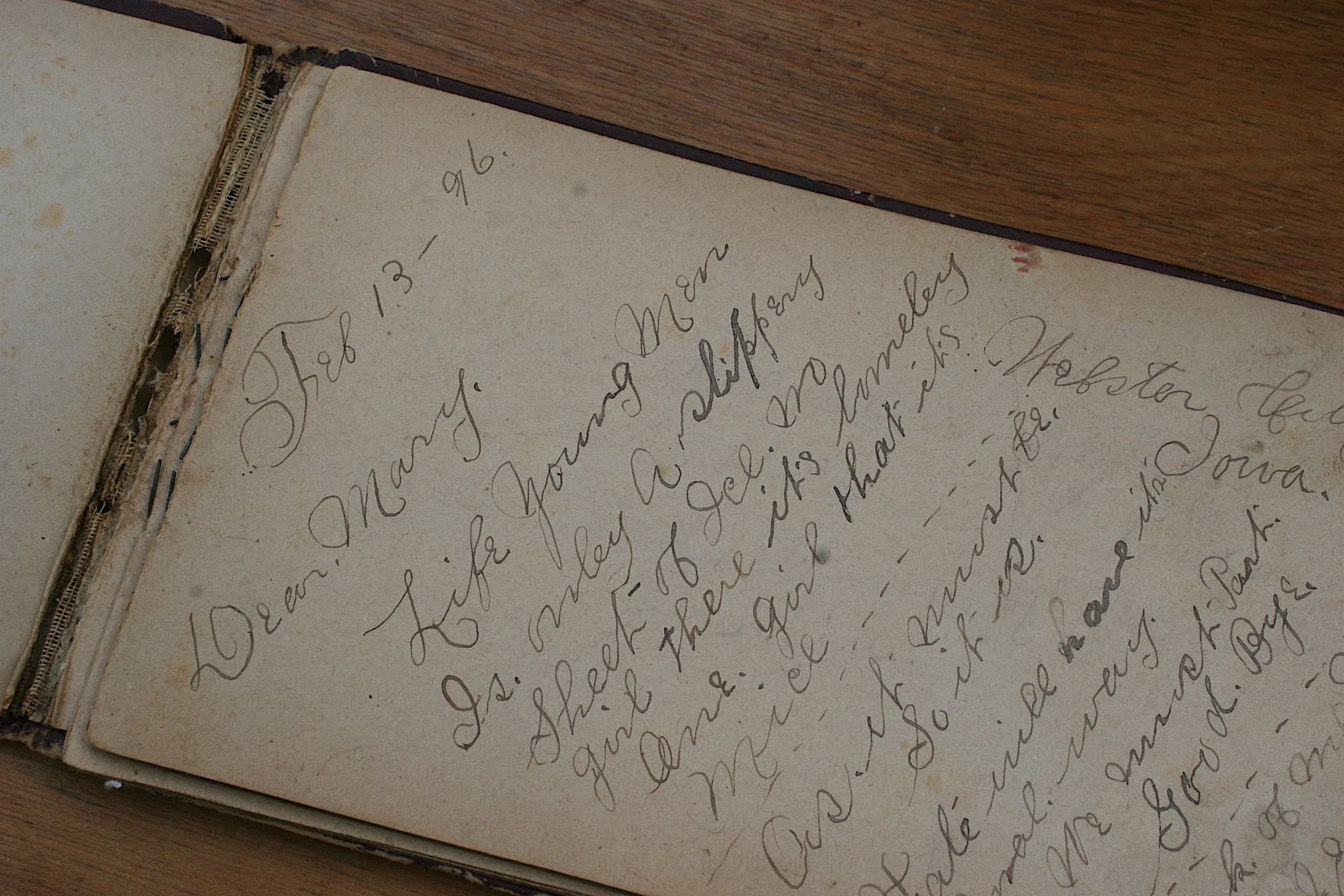
An autograph book from the 1890s also drew me to flip through the pages, to read the messages written to Mary. I have an autograph book stashed in a closet somewhere. I ought to find it.
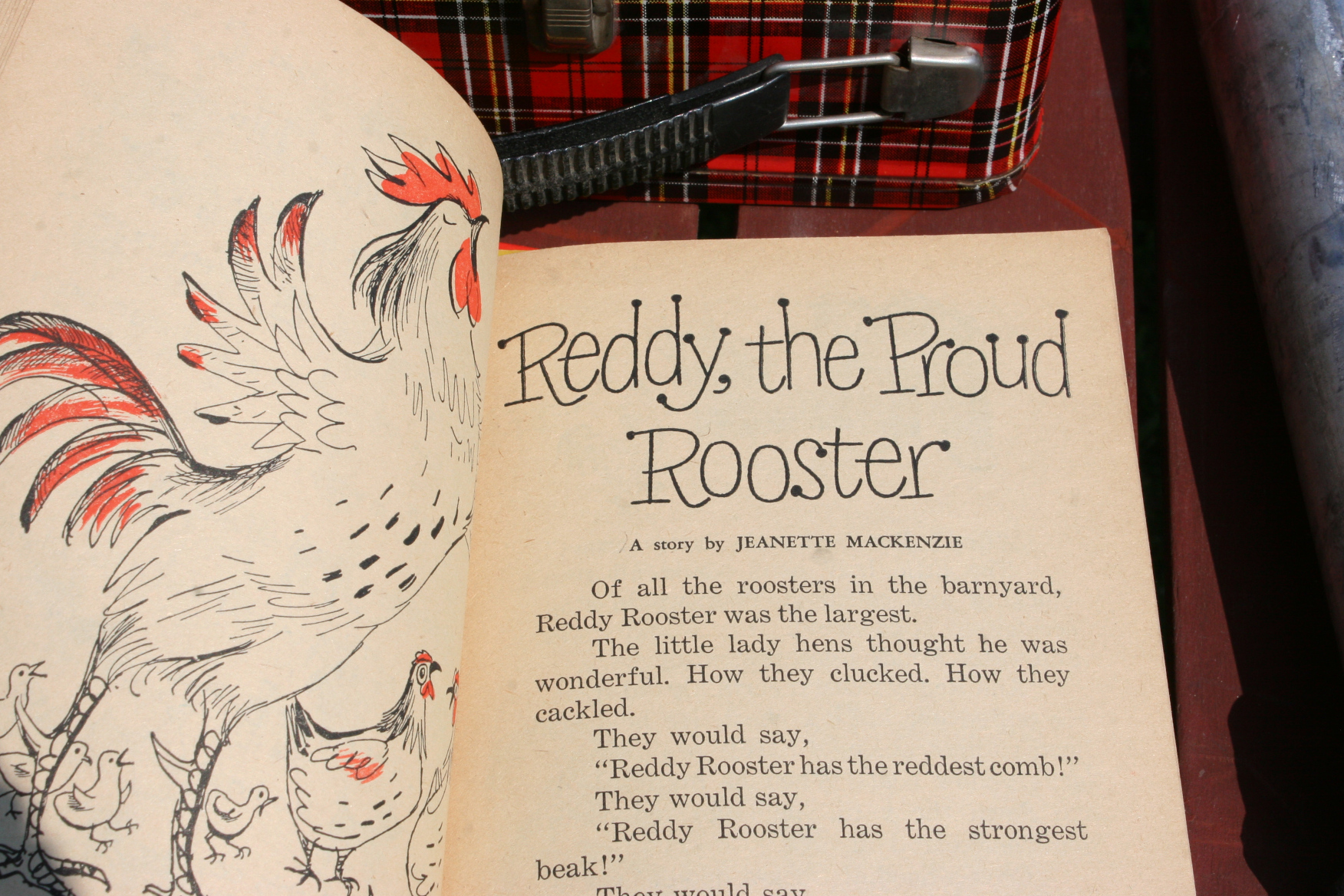
I especially like the art in this “Reddy, the Proud Rooster” story. Minnesota Prairie Roots copyrighted photo.
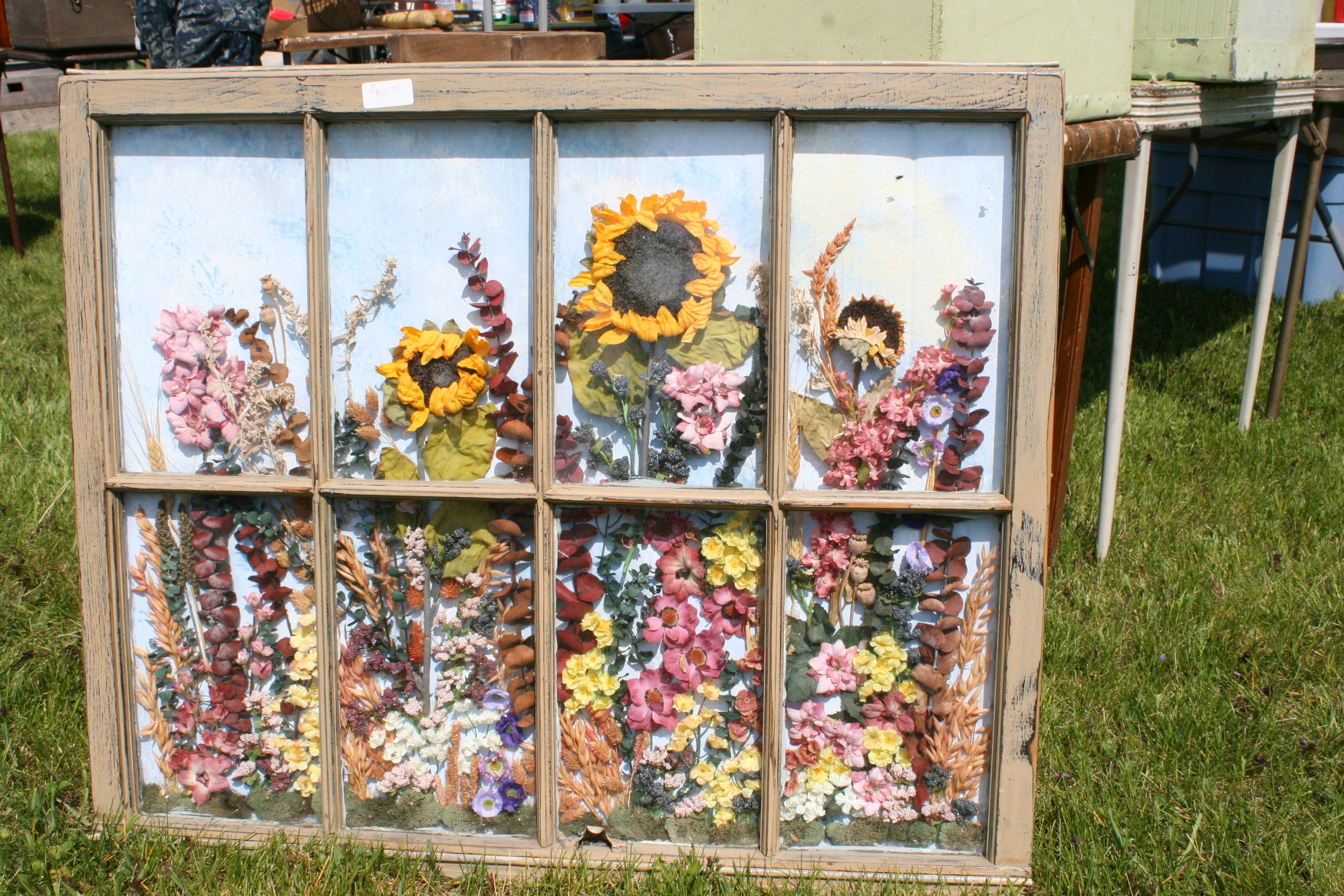
This reminds me of my grandma’s garden. Minnesota Prairie Roots copyrighted photo.
Some people find clowns to be creepy. I don’t. Found at the flea market. Minnesota Prairie Roots copyrighted photo.
Print items and art and oddities focused my interest, too.
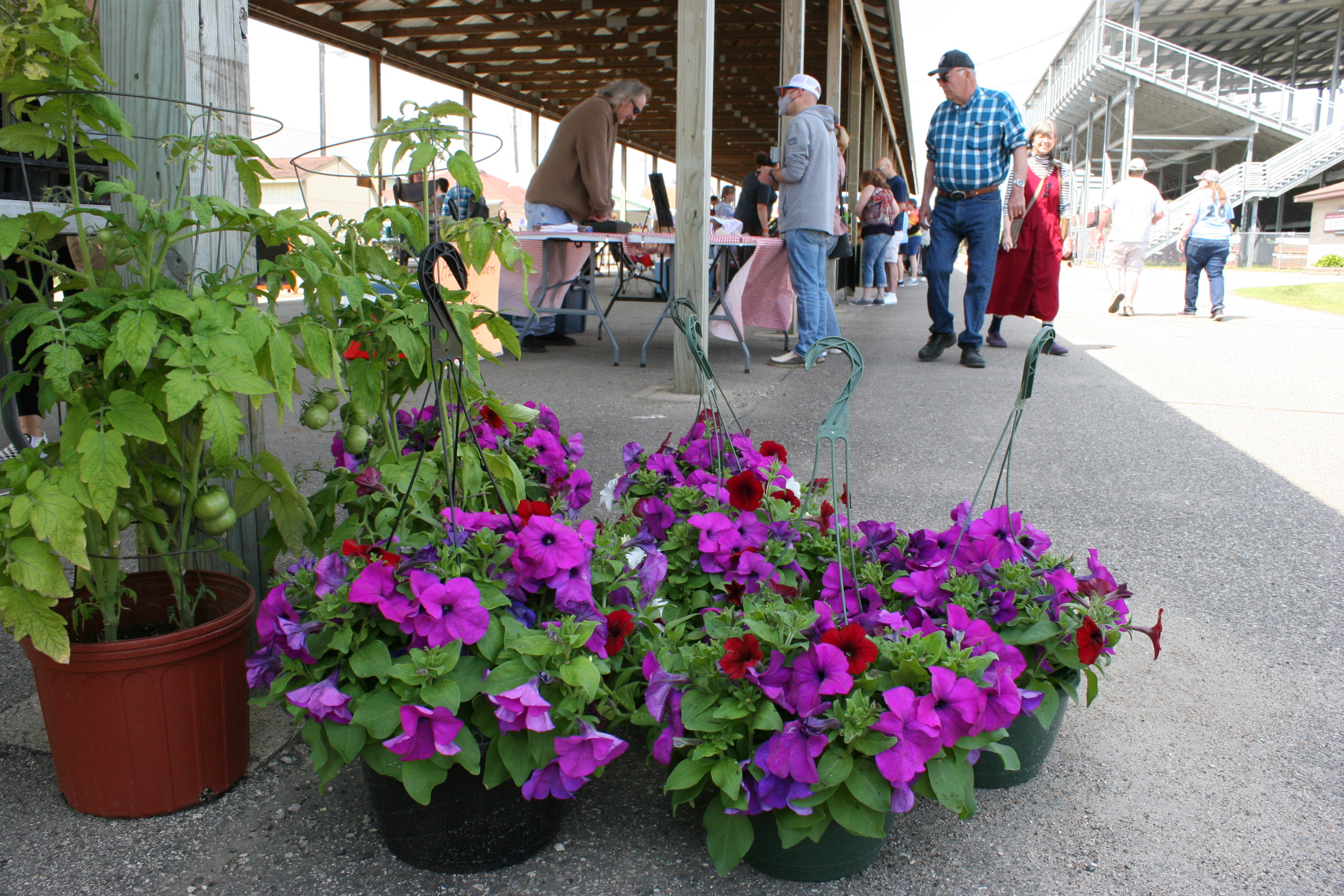
Hanging baskets, tomatoes and other plants were available for purchase at the Cannon Valley Farmers’ Market. Minnesota Prairie Roots copyrighted photo.
There was so much to take in at the flea market, before I moved on to the farmers’ market.
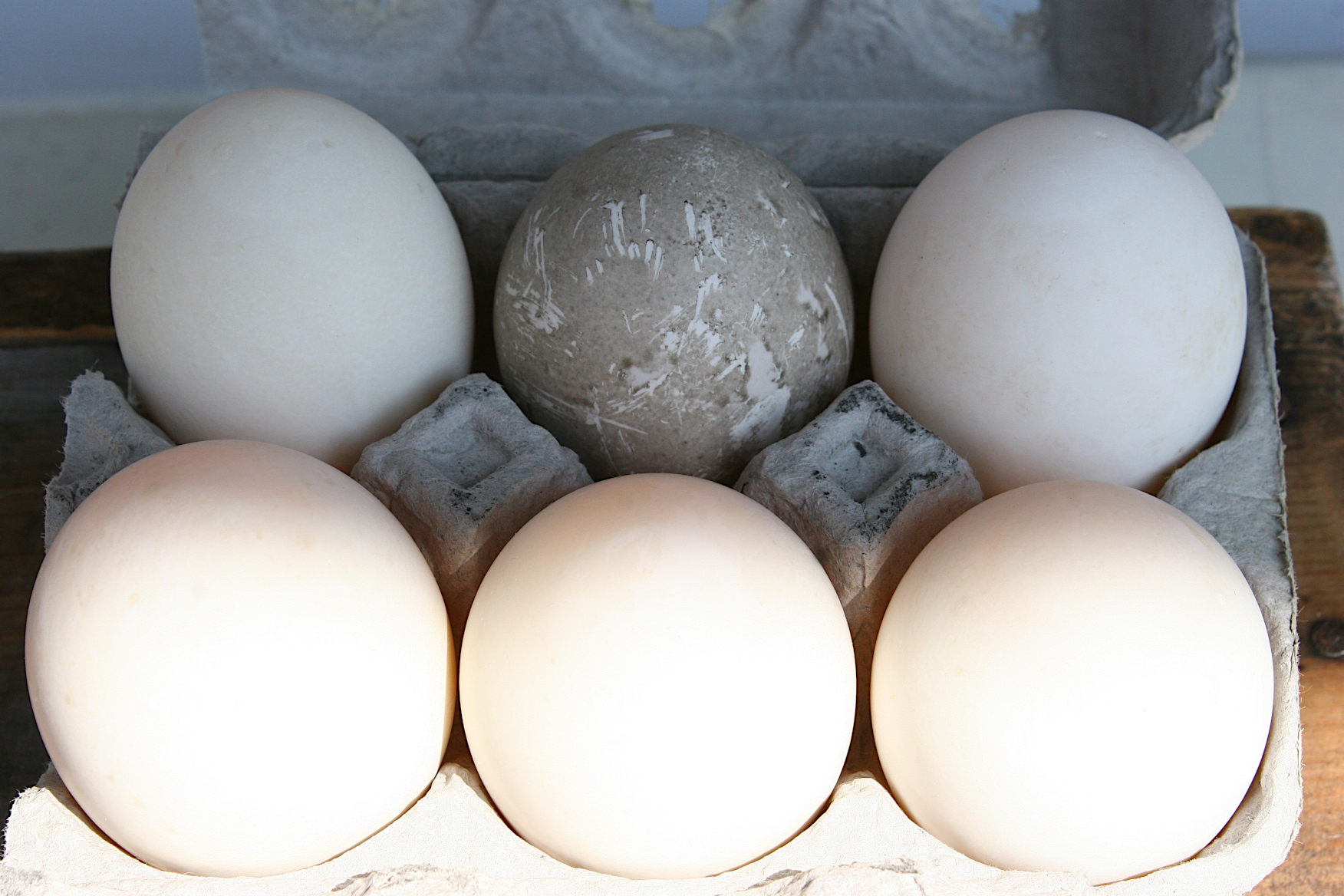
On display (and for sale), farm fresh eggs from Graise Farm. Minnesota Prairie Roots copyrighted photo.
Given my farming roots, I admire and appreciate those who gather eggs, spin yarn, grow plants, harvest honey, cook jams and jellies, bake sweet treats and more for sale at farmers’ markets. Theirs is a labor of love. To share the bounty, the works of their hands, truly is a gift.
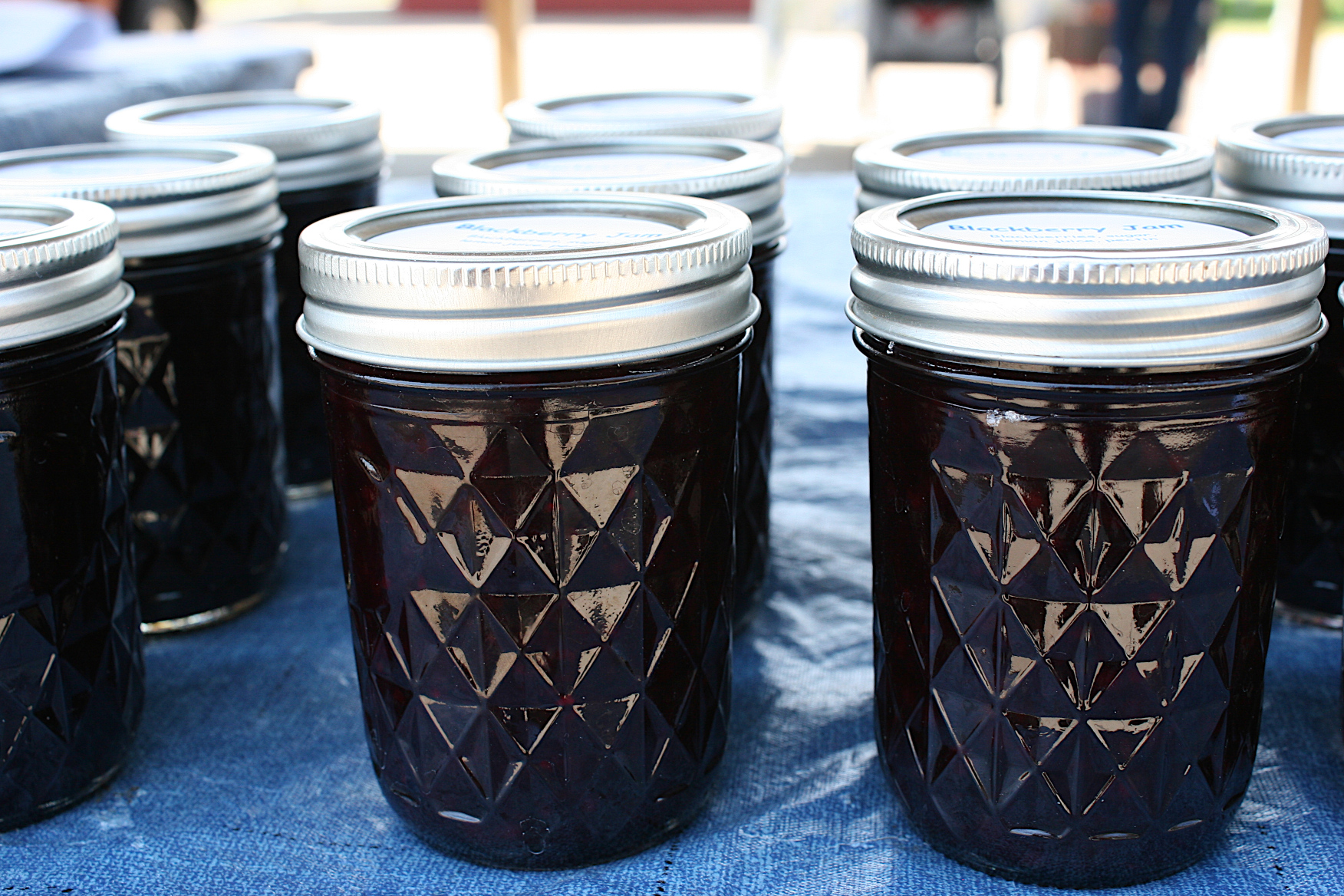
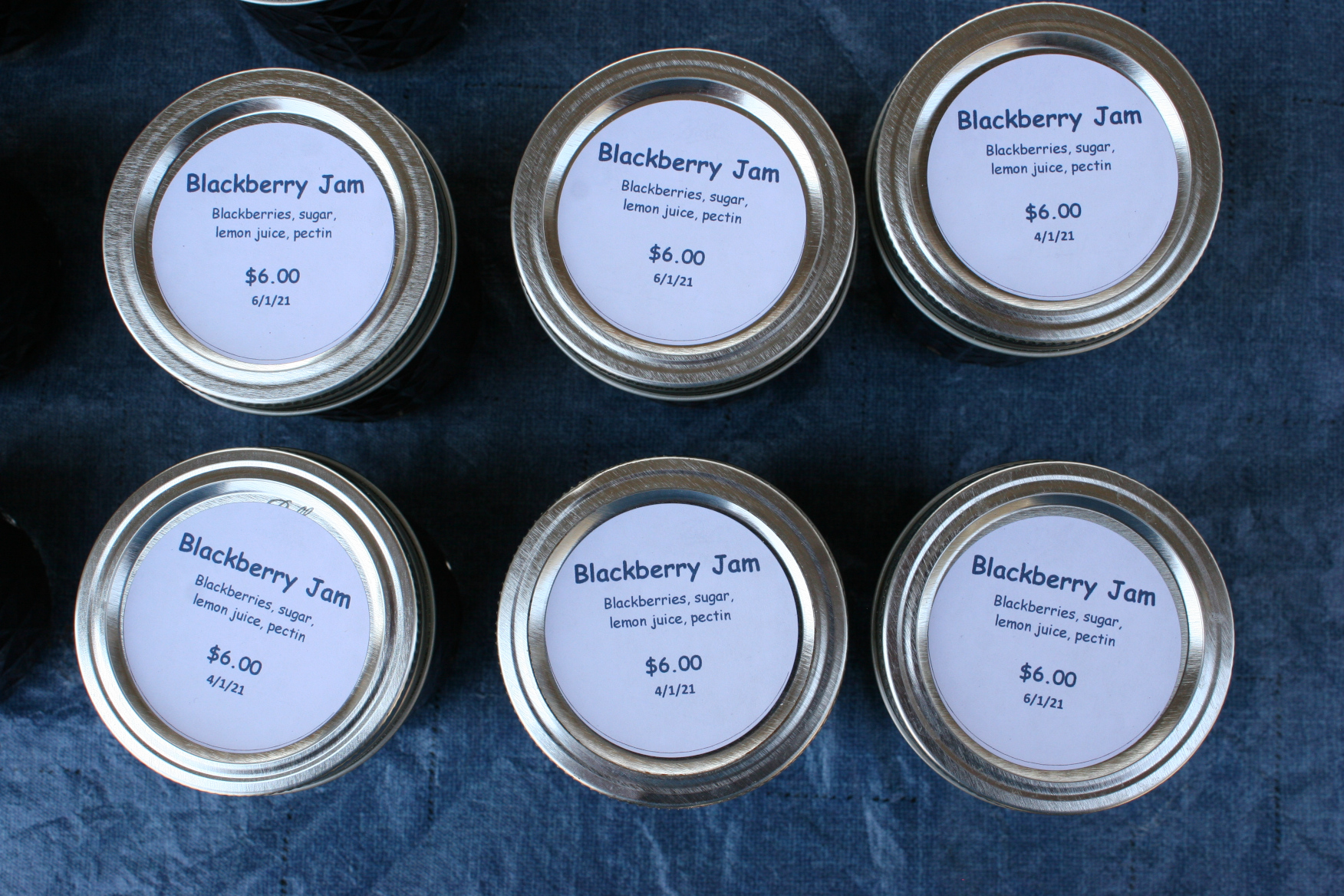
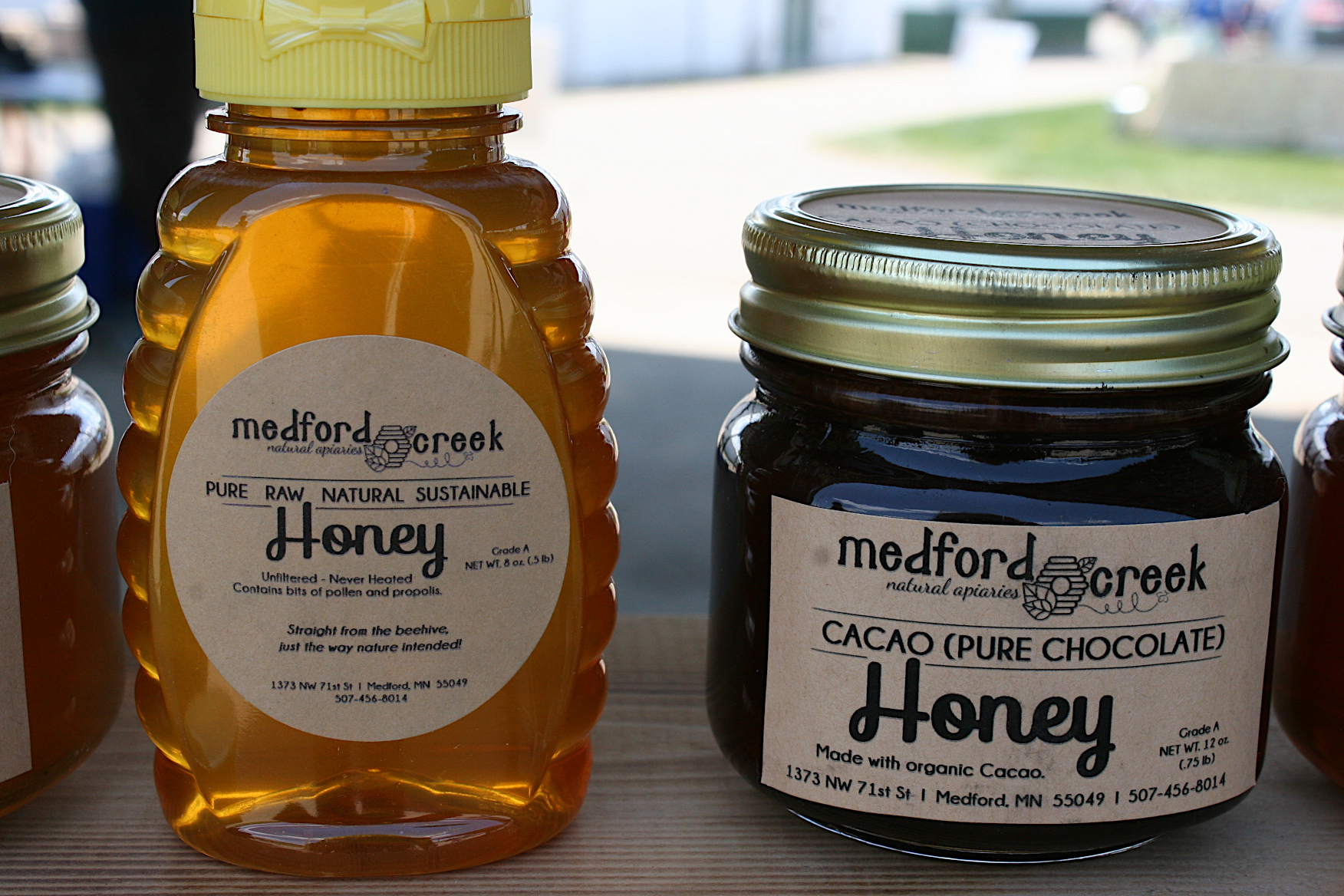
When I peruse market offerings, I also view products from a photographic, artistic and poetic perspective. The dark jewel tone of blackberry jam. The golden hue of honey. Both are beautiful to behold.
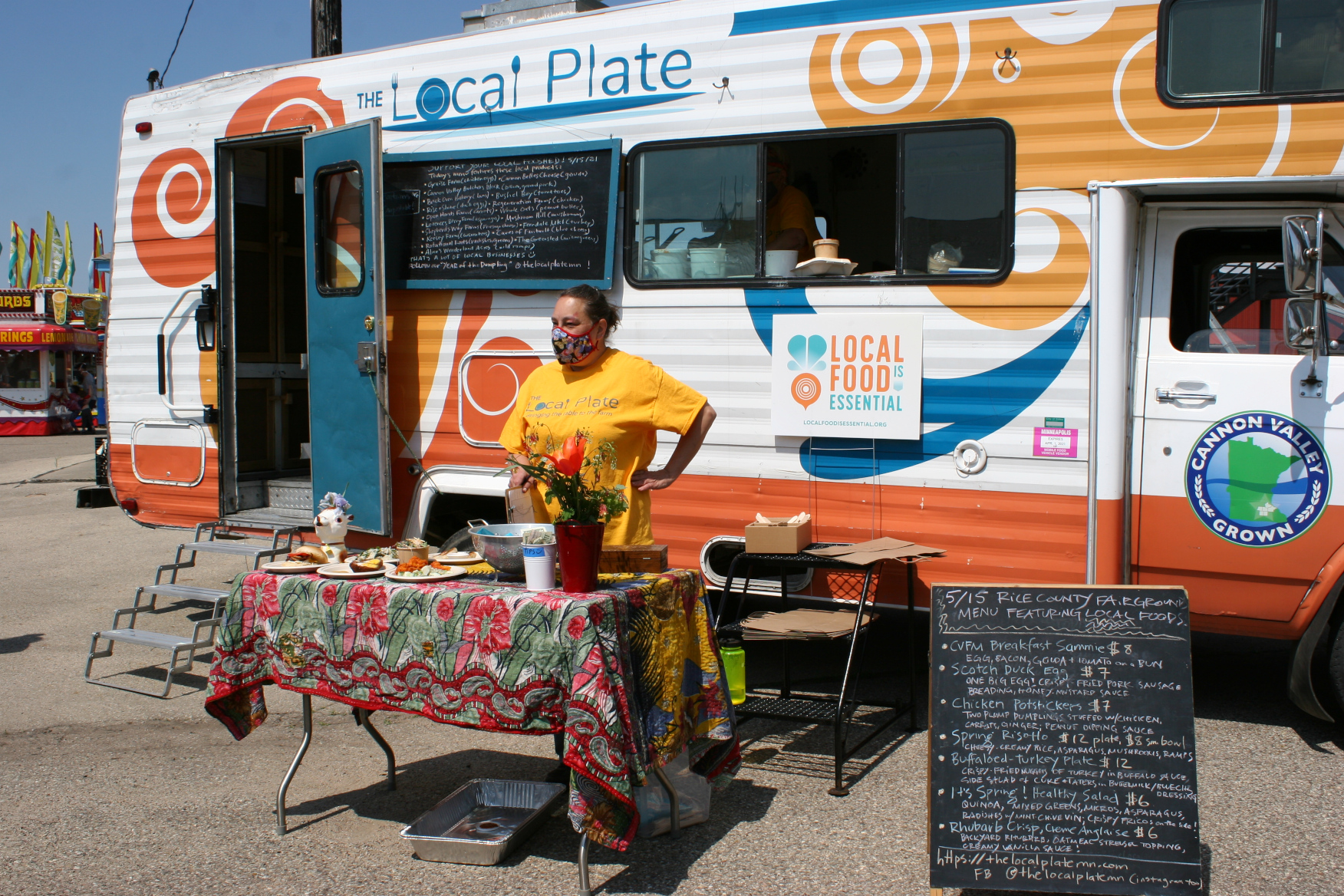
The Local Plate serves up meals created from local food sources. Minnesota Prairie Roots copyrighted photo.
My final stop took me to the food vendors and the decision to purchase The Buffaloed Turkey Plate to share with Randy. Other food offerings were standard fair food. I appreciated the opportunity to order more creative, locally-sourced food from The Local Plate.
Saturday’s event drew a large crowd. Here is a small portion of the flea market in the RCHS museum parking lot. Minnesota Prairie Roots copyrighted photo.
I love local events like this. They build community. And this year, more than ever, I appreciate local. And I appreciate community.
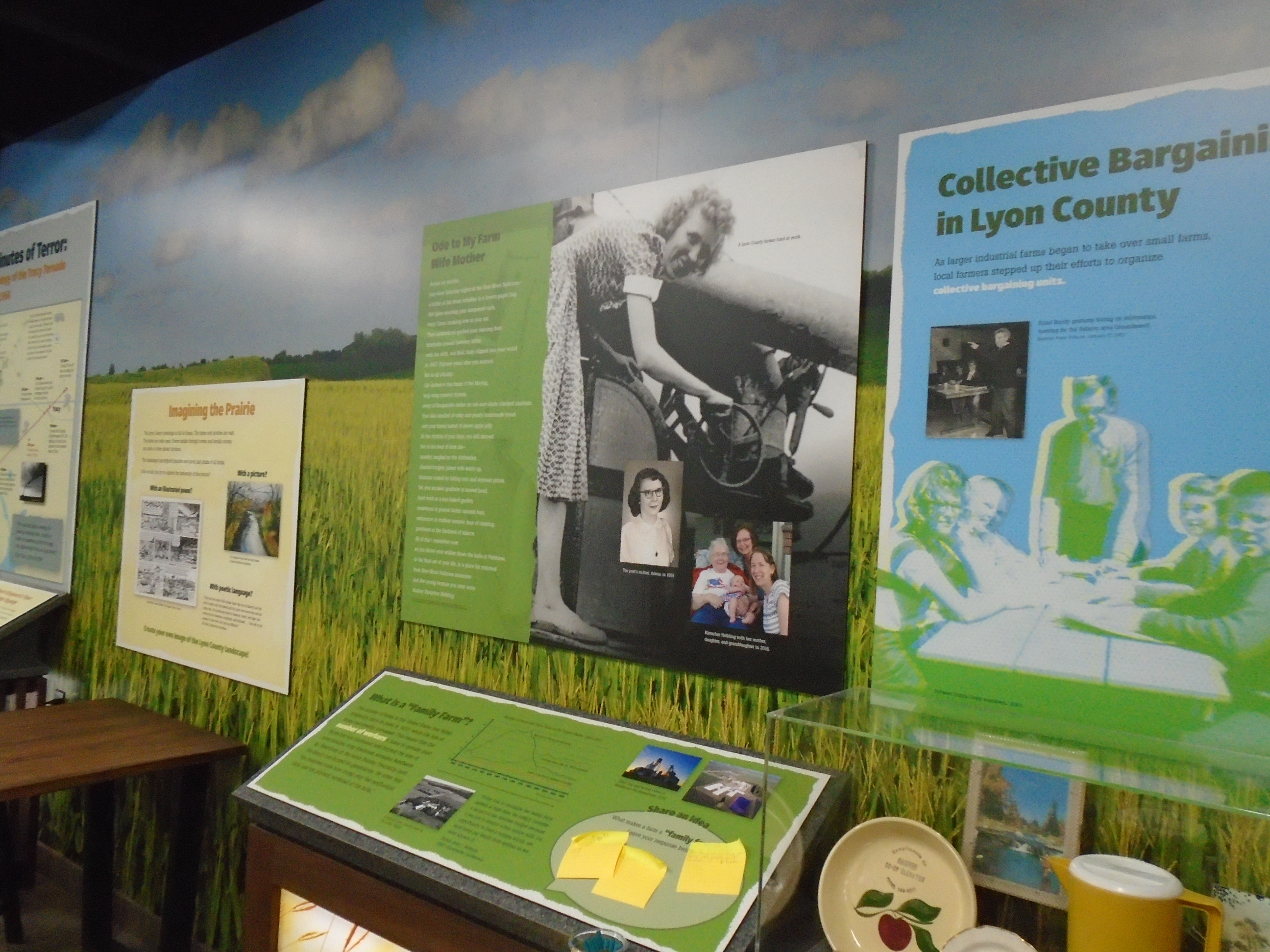
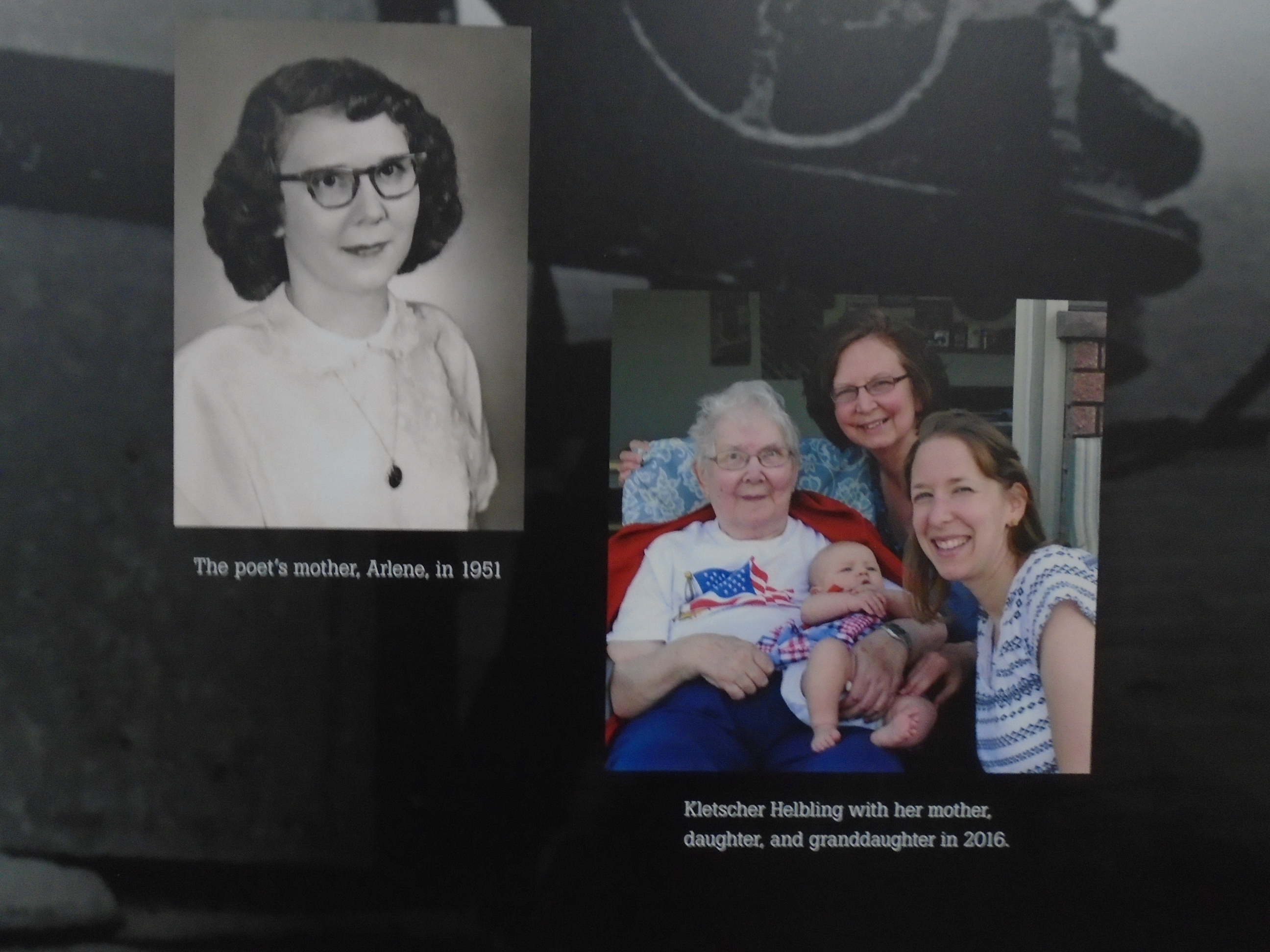
My poem (to the left of the woman in the dress), my mom’s high school graduation photo and a four-generation family photo of me, my mom, eldest daughter and granddaughter are included in a museum exhibit in southwestern Minnesota. Photo courtesy of the Lyon County Historical Society Museum.
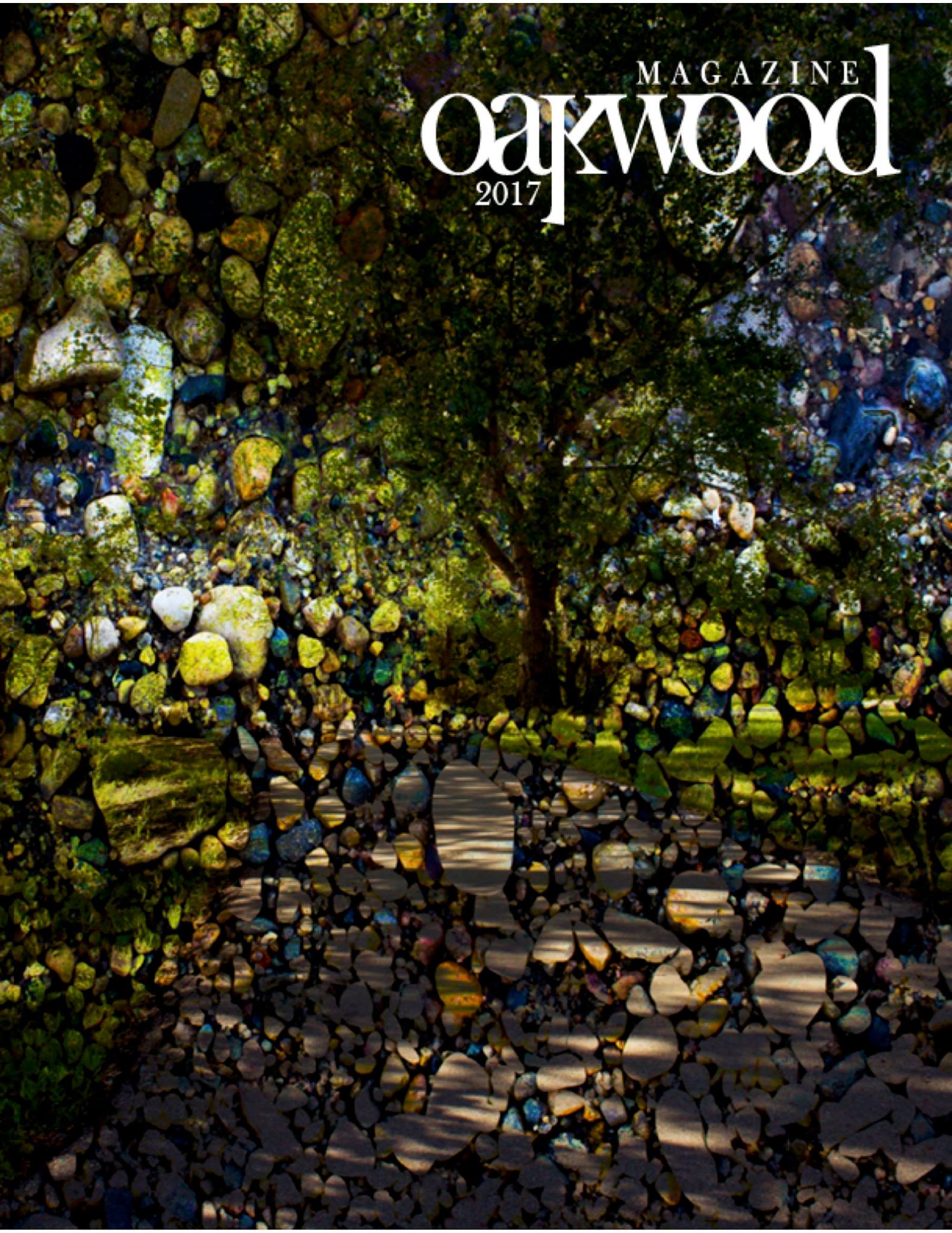
My poem first published in South Dakota State’s Oakwood literary magazine.
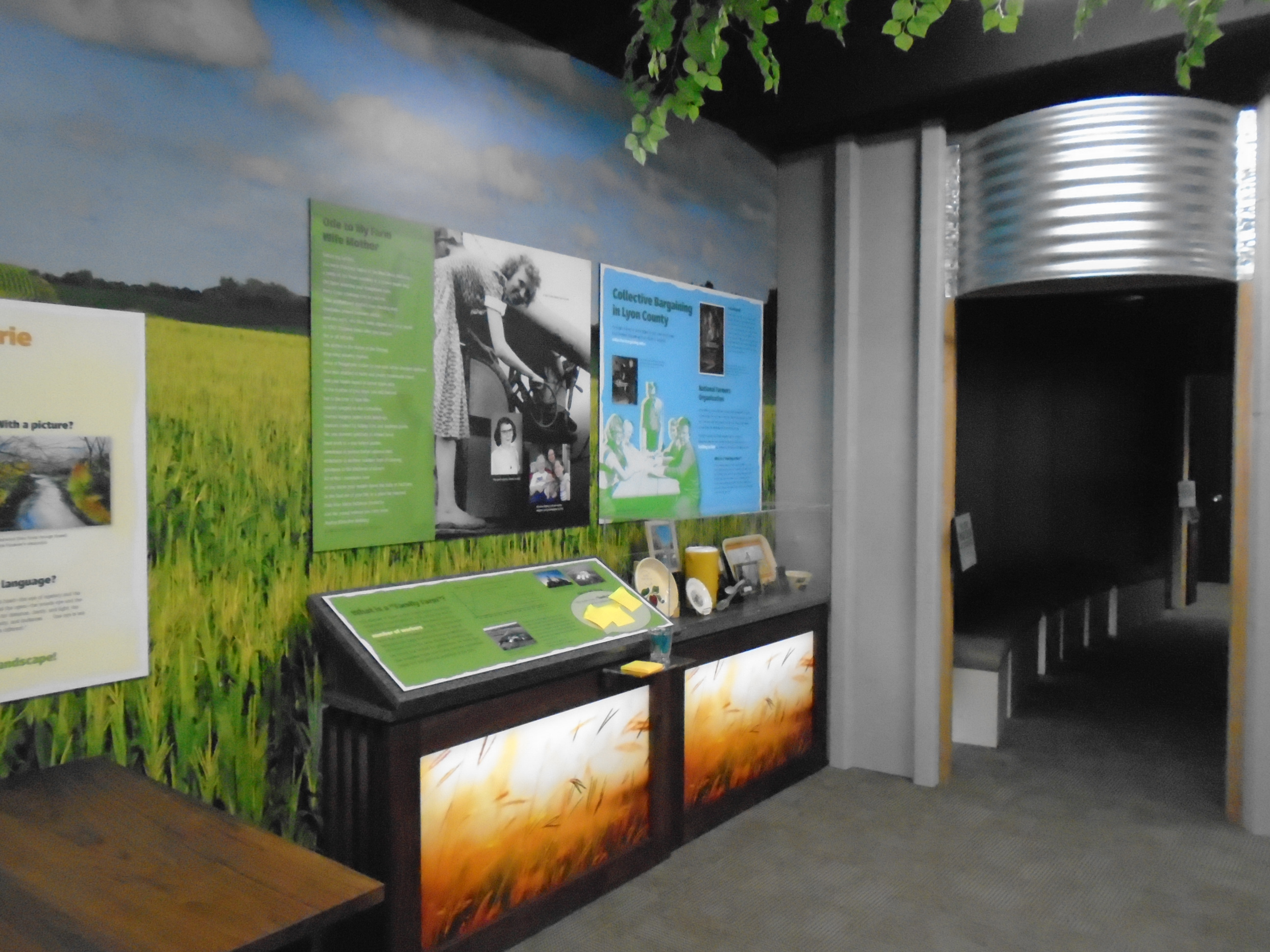
I feel humbled and honored to have my poem, inspired by memories of my hardworking farm wife mother, in the Lyon County Historical Society Museum’s newest semi-permanent exhibit, “Making Lyon County Home.” The exhibit opened in January. Its purpose, according to Executive Director Jennifer Andries, is “to share stories, artifacts, and photographs from Lyon County after World War II and to inspire residents and visitors to share their memories and experiences of growing up and living in Lyon County and the region.”
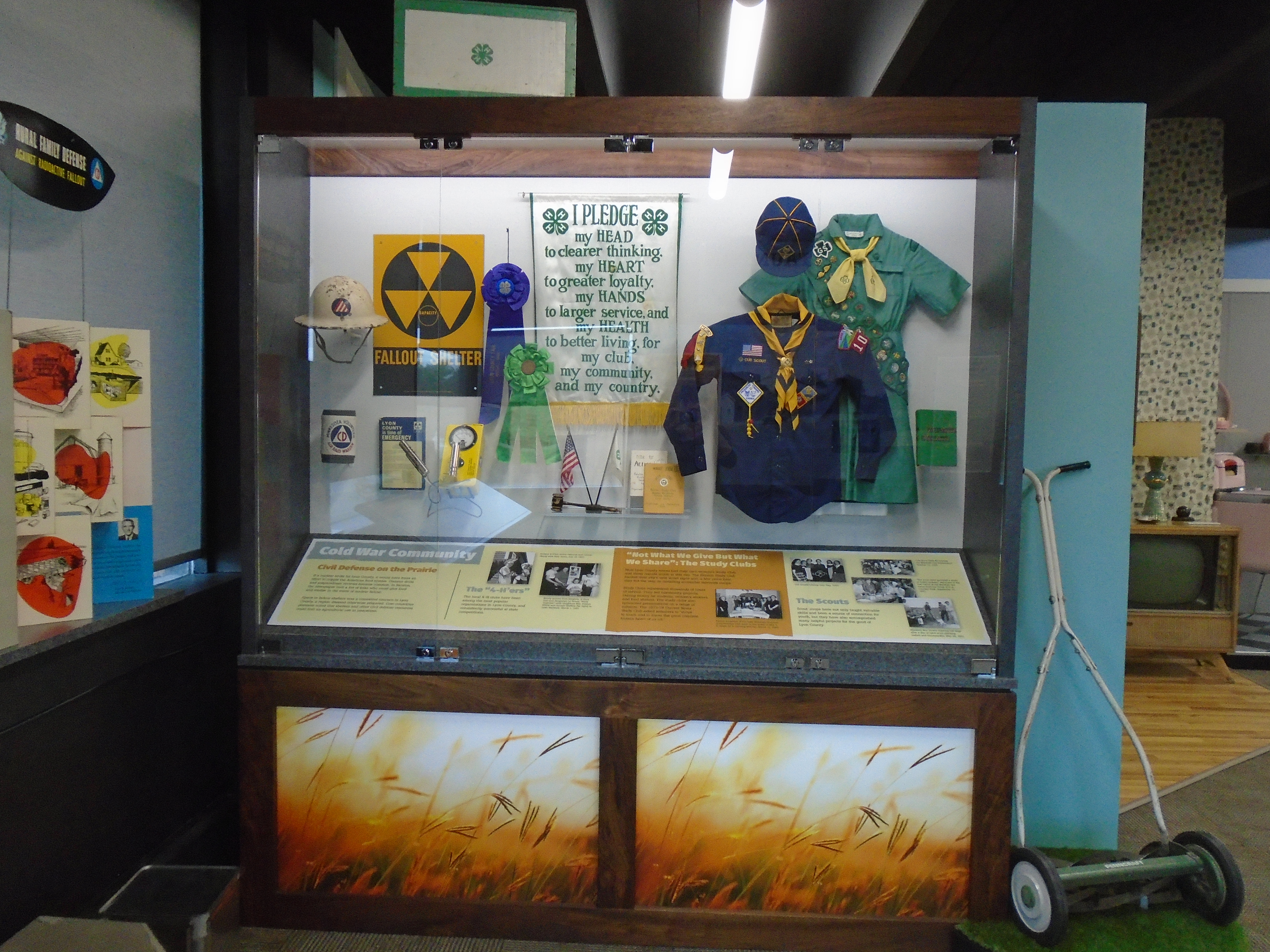
4-H and more are featured in this section of “Making Lyon County Home.” Photo courtesy of the Lyon County Historical Society Museum.
I grew up in this prime agricultural region, some 20 miles to the west on a dairy and crop farm near Vesta in Redwood County. I knew Marshall well back then as a shopping destination. A place to buy clothes, shoes and other essentials. But even more, I understood rural life decades ago because I lived it. I witnessed, too, how my mom worked hard to raise six children on our family farm. Before marriage, she attended Mankato Commercial College and then returned to her home area to work an office job in Marshall. Like most women of the 1950s, once she married, she stopped working off the farm.
These family photos complement my poem. Photo courtesy of the Lyon County Historical Society Museum.
My poem honors her in a poetic snapshot timeline of life beginning shortly before she married my farmer father. Saturday evening dances. Then rocking babies. Everyday life on the farm. Challenges. And finally, the final verse of Mom shoving her walker down the hallways of Parkview.
Whenever I write poetry, especially about life in rural Minnesota, I find myself deep within memory. Visualizing, tasting, smelling, hearing, even feeling. Although I took some creative license in penning “Ode to My Farm Wife Mother” (I don’t know that Mom ever drank whiskey or danced at the Blue Moon Ballroom in Marshall), it is primarily true. She met my dad at a dance in southwestern Minnesota. She washed laundry in a Maytag, baked bread every week, made the best peanut butter oatmeal bars…
An overview of the exhibit space featuring my poem and family photos. Photo courtesy of Lyon County Historical Society Museum.
I expect many who lived in this rural region in the 1950s-1970s can relate. Says LCHS Director Andries of my poem: “It is a good fit for the exhibit and fits with the agriculture section and the role of farm wives and mothers. The poem itself goes beyond just the agriculture area. I feel many people can resonate with the poem with the sense of being carefree while we are young but at some point we all have responsibilities but that doesn’t mean we lose our carefree spirit.”
Exactly.
Those sentiments were echoed by Tom Church, former managing director of Minneapolis-based Museology Museum Services, lead contractor for the “Making Lyon County Home” exhibit. Church first contacted me more than a year ago about using my poem. He said then that the poem “offers a nice snapshot of the era and setting we’re trying to evoke in several places within the exhibit and will fit well with our story.”
A 1950s era kitchen, left, is part of the “Making Lyon County Home” exhibit. Photo courtesy of the Lyon County Historical Society Museum.
I appreciate stories rooted in a strong sense of place. The new exhibit features themes of natural landscape, agriculture, education, industry and community. For example, the devastating and deadly June 13, 1968, F5 tornado in Tracy centers a display with information and oral histories. How well I remember that disaster. The 1980s farm crisis focuses another section. A late 1950s era kitchen fits the beginning time period of my poem.
Although I have yet to view the exhibit, I hope to do so this summer. And even more, I want my mom to know how she, and other farm women of the era, are honored via my poem. I want them to see themselves in my words, to understand the depth to which I value them. My mom, through her selflessness, her hard work, her kindness, her love, her faith, helped shape me. Today, as Mom lives out her final days in hospice, her memory and cognition diminished, I feel a deep sense of loss, of grief. But I hold onto the memories of a mother who read nursery rhymes, gardened, and, before I was born, enjoyed carefree Saturday evenings out with friends. Dancing. Laughing, Delighting in life.
FYI: The Lyon County Historical Society Museum, 301 West Lyon Street, Marshall, is open from 11 am – 4 pm Monday – Friday and from noon – 4 pm Saturdays. The “Making Lyon County Home” exhibit was partially funded by a Minnesota Historical and Cultural Heritage grant. The exhibit is semi-permanent, meaning artifacts and stories can be rotated to fit within the themes.
Ode to My Farm Wife Mother
Before my brother,
you were Saturday nights at the Blue Moon Ballroom—
a bottle of Jim Beam whiskey in a brown paper bag,
Old Spice scenting your dampened curls,
Perry Como crooning love in your ear.
Then motherhood quelled your dancing duet.
Interludes passed between births
until the sixth, and final, baby slipped into your world
in 1967. Thirteen years after you married.
Not at all unlucky.
Life shifted to the thrum of the Maytag,
sing-song nursery rhymes,
sway of Naugahyde rocker on red-and-white checked linoleum.
Your skin smelled of baby and yeasty homemade bread
and your kisses tasted of sweet apple jelly.
In the rhythm of your days, you still danced,
but to the beat of farm life—
laundry tangled on the clothesline,
charred burgers jazzed with ketch-up,
finances rocked by falling corn and soybean prices.
Yet, you showed gratitude in bowed head,
hard work in a sun-baked garden,
sweetness in peanut butter oatmeal bars,
endurance in endless summer days of canning,
goodness in the kindness of silence.
All of this I remember now
as you shove your walker down the halls of Parkview.
in the final set of your life, in a place far removed
Looking toward food stands and the Midway. To the right, is the outdoor entertainment center. Minnesota Prairie Roots photo March 2021.
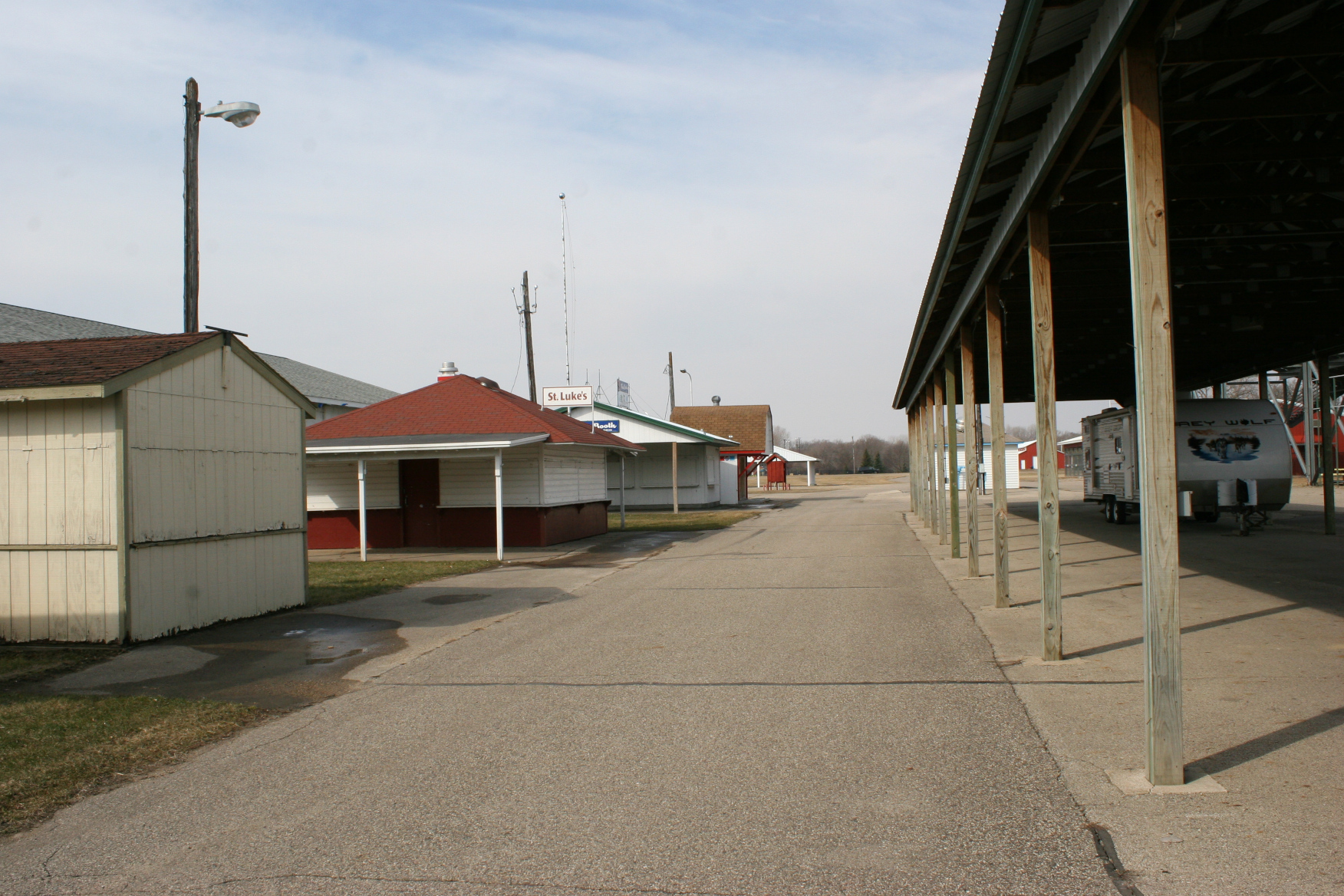
VACATED. That word best describes my assessment of the Rice County Fairgrounds in Faribault during a recent walk there.
Many local groups have food stands at the fair. Minnesota Prairie Roots photo March 2021.
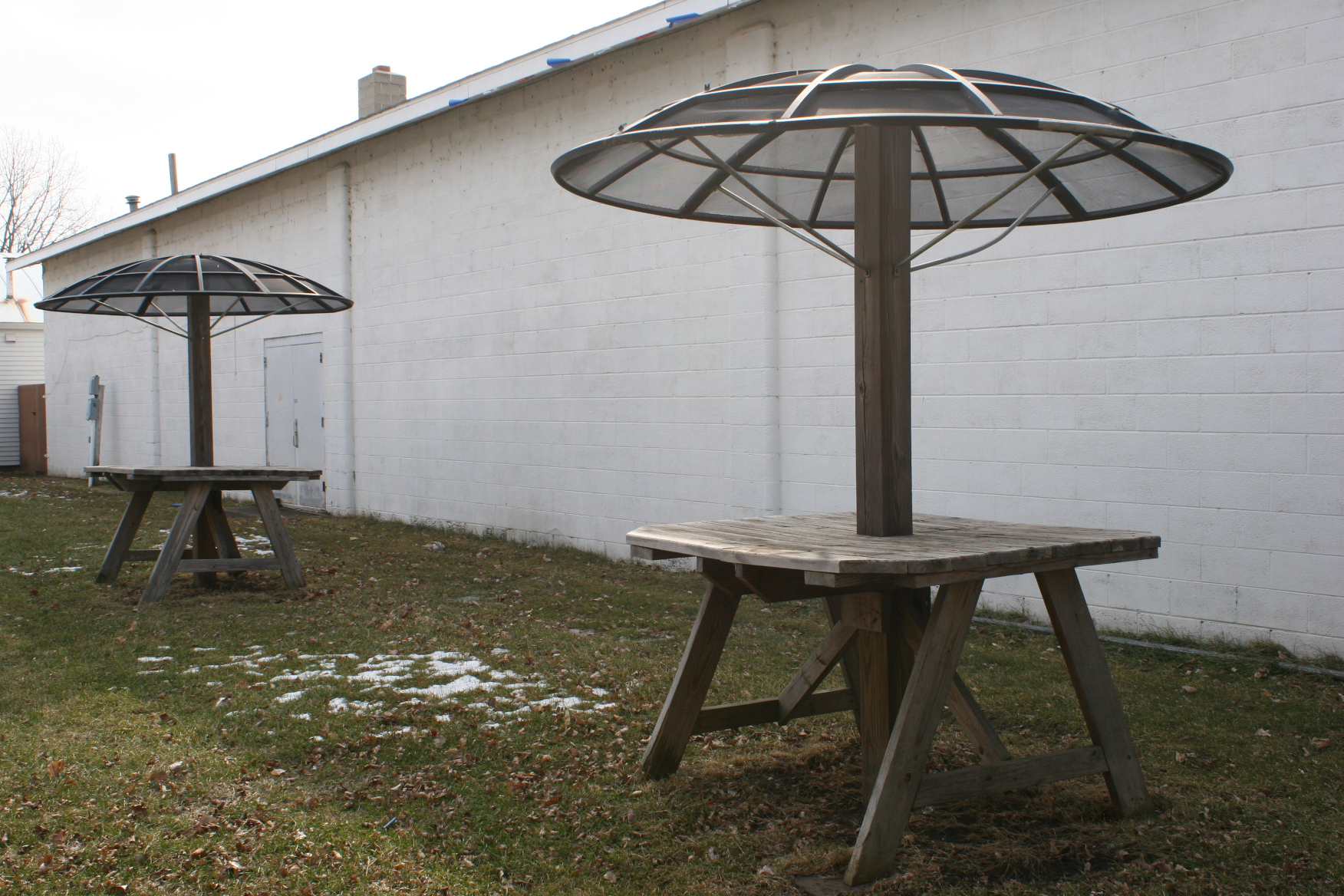
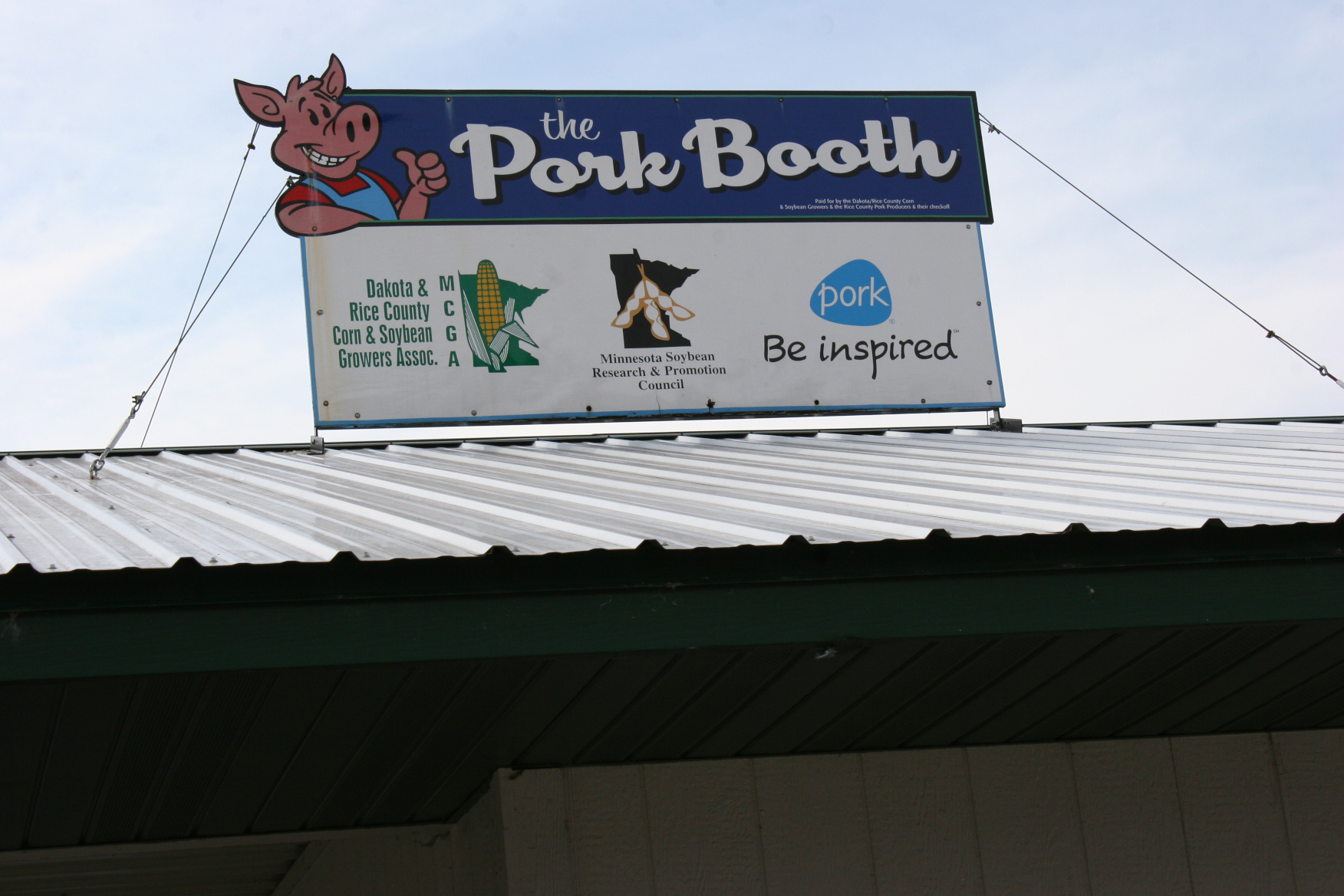
Picnic tables near the pork food stand. Minnesota Prairie Roots photo March 2021.
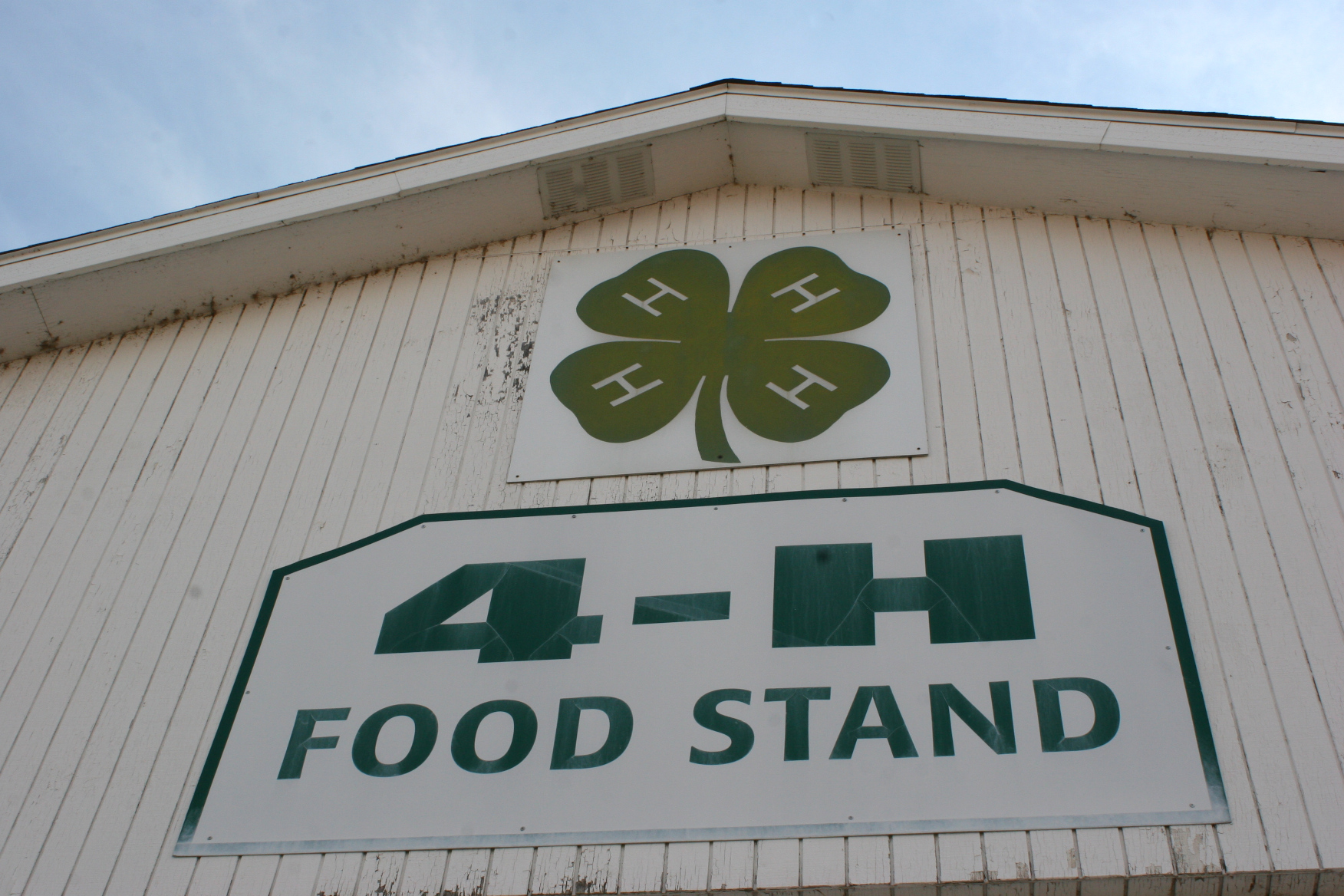
The presence of 4-Hers at the fair is strong. Minnesota Prairie Roots photo March 2021.
In the absence of people, the absence of animals, the absence of a carnival, the absence of exhibits, the place feels empty. No pulsating lights on the Midway. No smell of grilling burgers. No taste of sugary mini donuts. No shouts of kids. No feel of a prize stuffed animal clutched in arms.
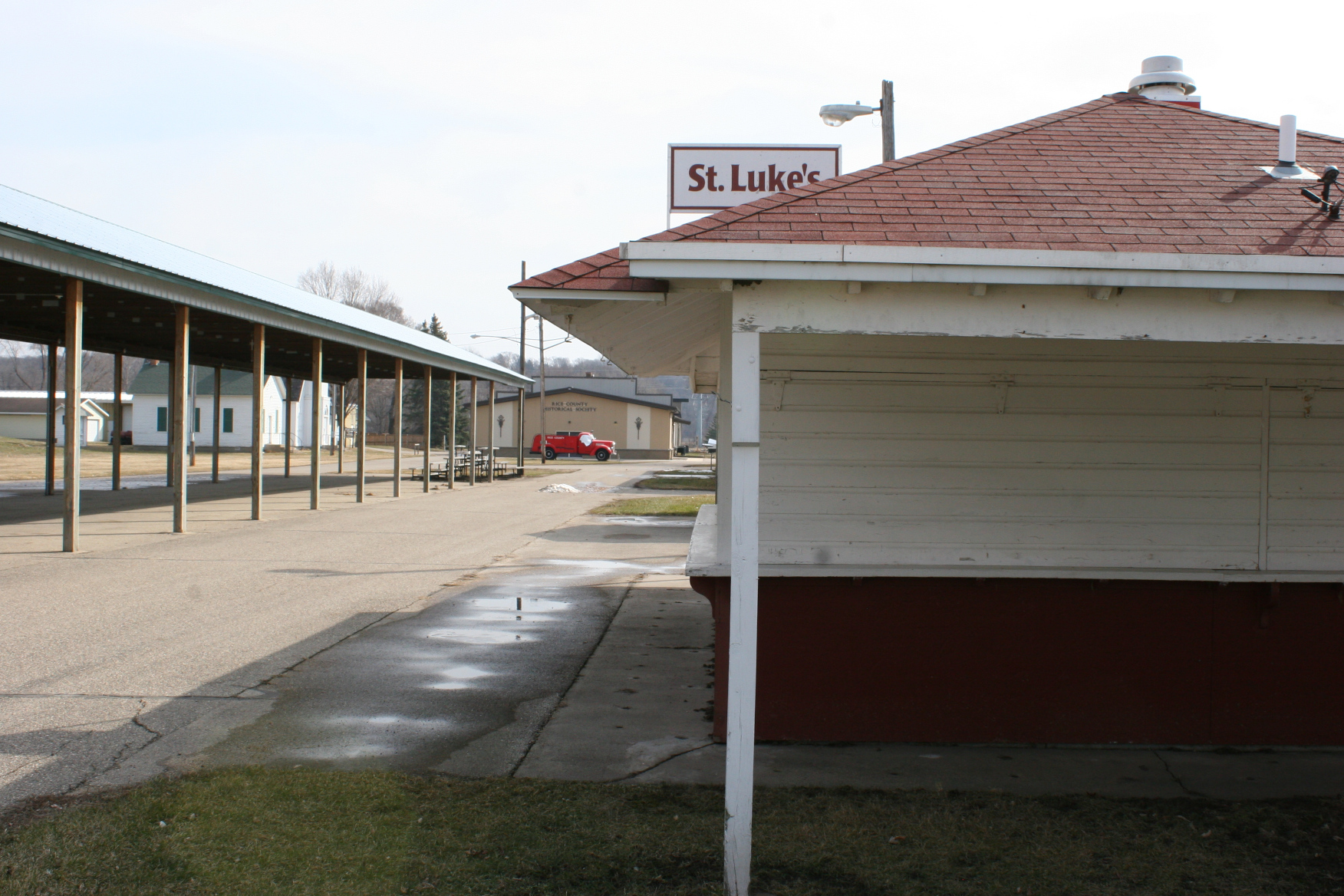
The entertainment space to the left with the St. Luke’s food stand on the right. Minnesota Prairie Roots photo March 2021.
If everything works out COVID-wise, this fairgrounds will teem with people come late July. Animals will fill barns. Ribbons will mark prize-winning 4-H entries. Greasy cheese curds will satisfy those who crave fair food. The sounds of music and clustered conversations and happy kids will create a steady buzz of noise. Little hands will grasp adult hands and teenage hands will lock in fair love. People will reconnect. Celebrate. Experience that which was lost last summer, during the height of the pandemic.
Love this signage. Minnesota Prairie Roots photo March 2021.
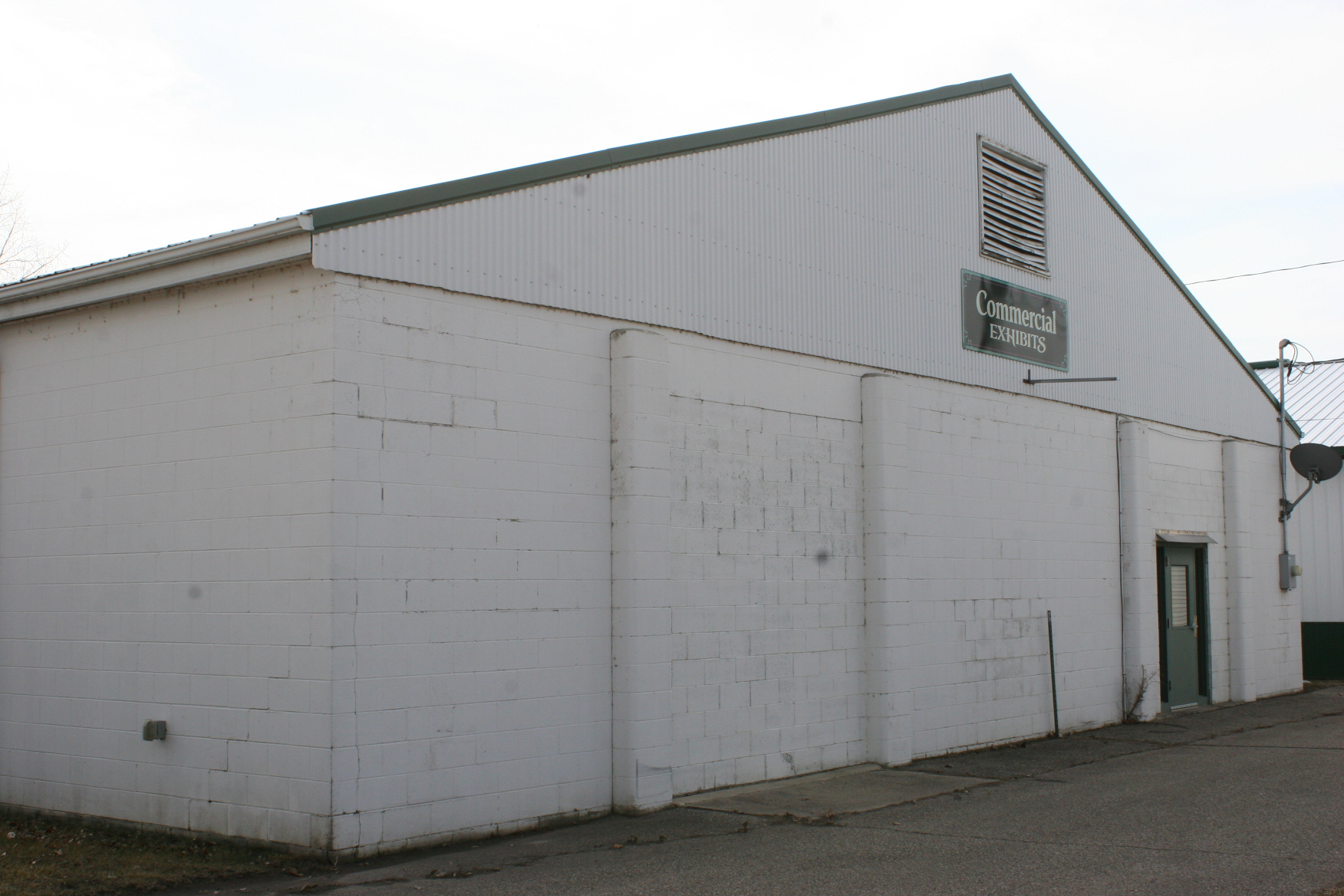
The commercial exhibit building. Minnesota Prairie Roots photo March 2021.
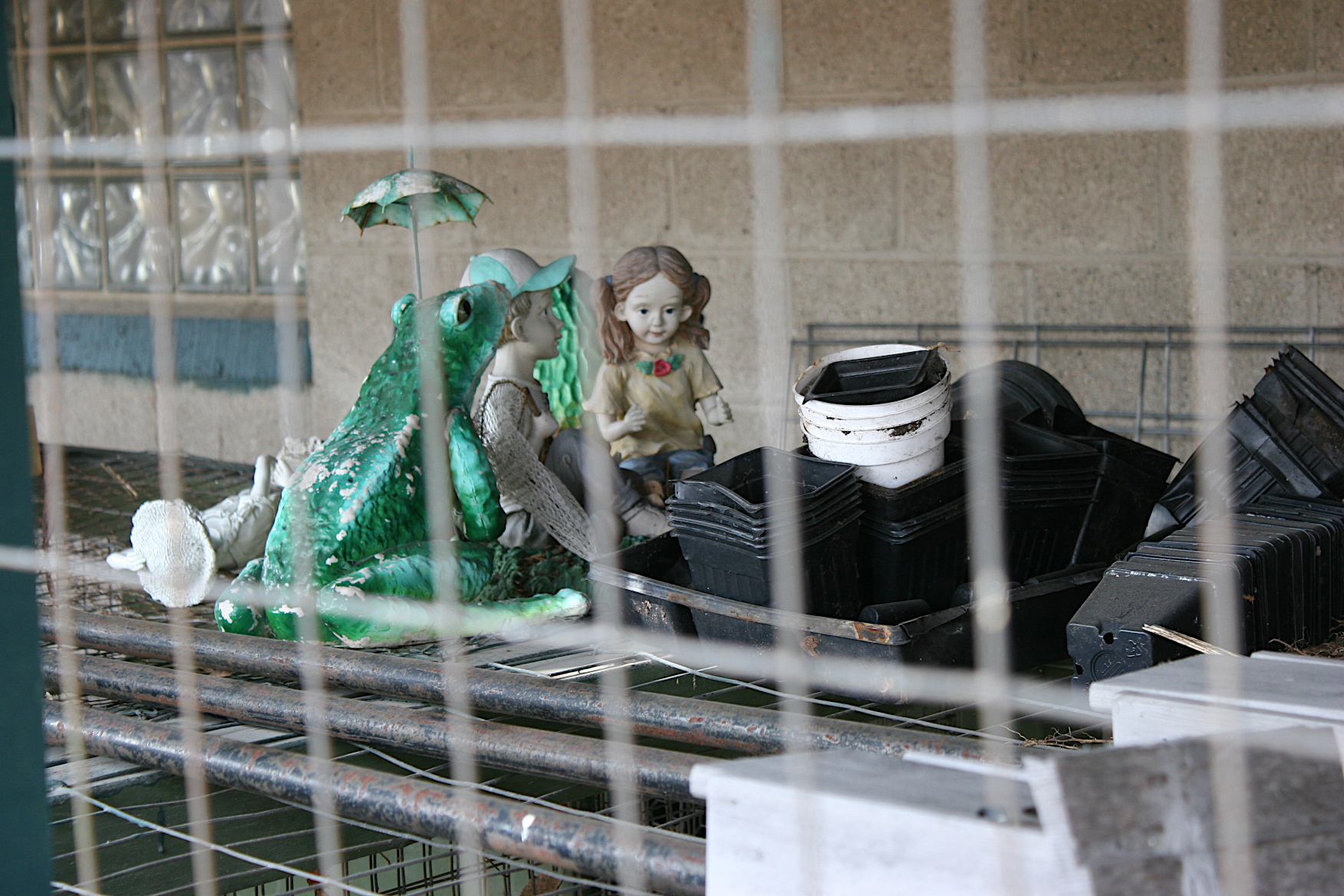
Garden decor stored until the fair. The garden is next to the conservation building. Minnesota Prairie Roots photo March 2021.
This is the fair I imagine as I walk past shuttered buildings, as I pause to photograph buildings and signs and expanses of open space.
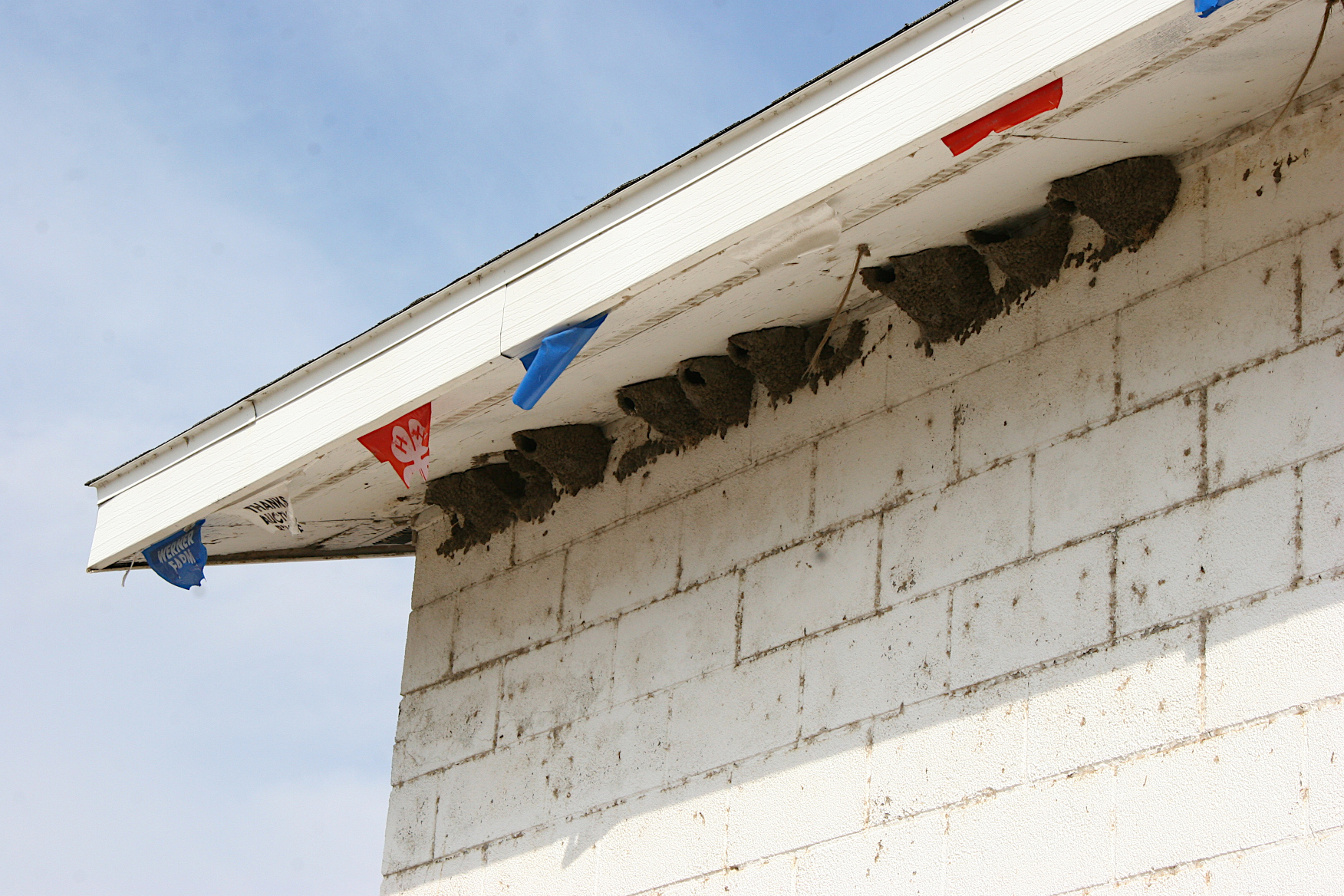
Just a snippet of the 32 barn swallow nests on Curtis Hall. Minnesota Prairie Roots photo March 2021.
And then I pause outside the 4-H building, Curtis Hall, to photograph the row of barn swallow nests mudded under the eaves. So many. Thirty-two. Too many. If there’s one bird I dislike, it’s the barn swallow. We have a history. As a child, I endured barn swallows swooping over me as I did farm chores. The swallows built their nests on beams above the barn aisle, my direct work route. I felt threatened by them as I shoveled manure into gutters, pushed a wheelbarrow full of ground feed down the aisle. My feelings for the swallow have not changed. Even though they eat mosquitoes, I still don’t like this bird.
Just another view of those swallow nests. Minnesota Prairie Roots photo March 2021.
That’s my sidebar from the fairgrounds, perhaps one you can relate to if you did farm chores like me.
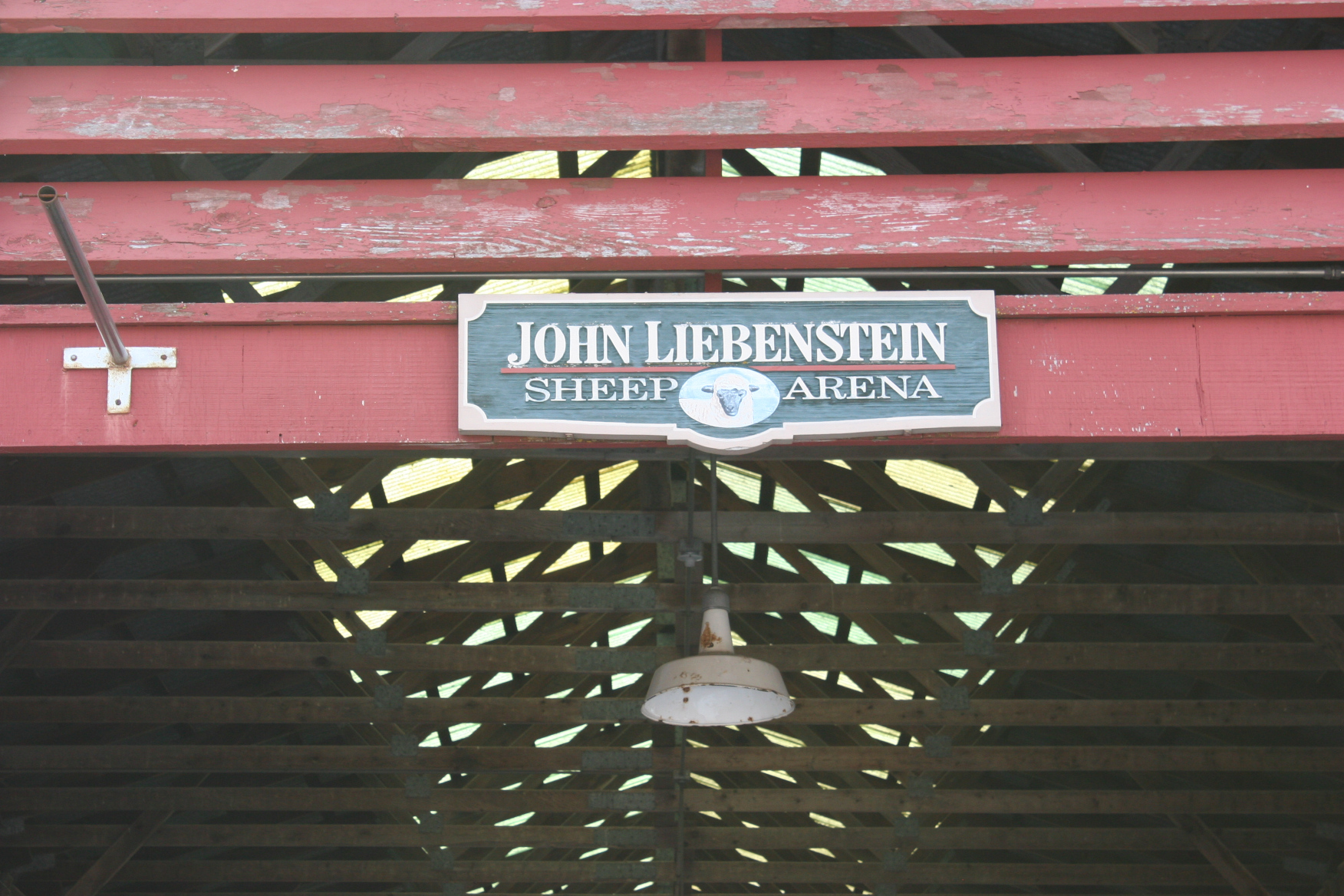
The sheep arena is named after a Rice County deputy killed in the line of duty. Minnesota Prairie Roots photo 2021.
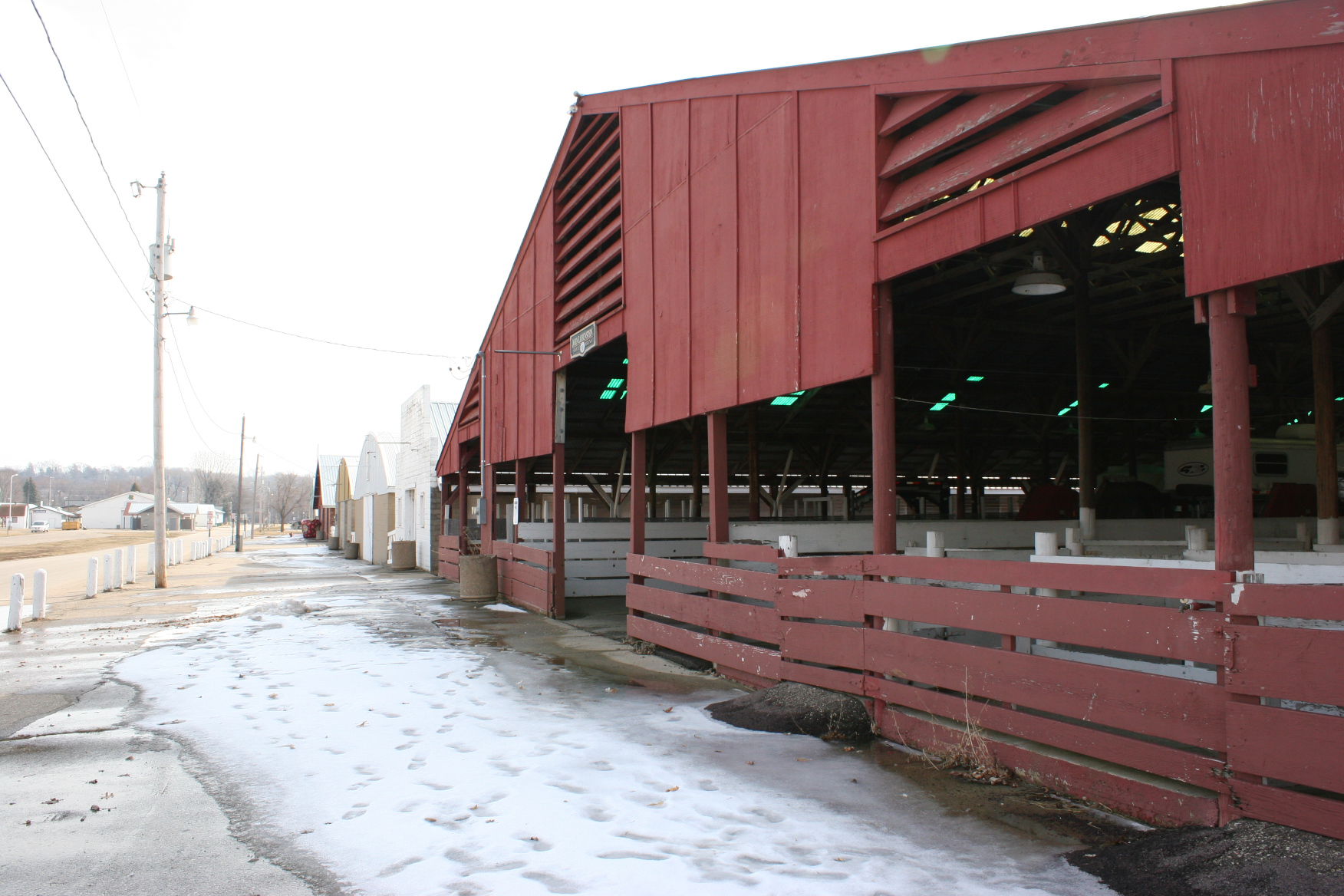
A view of the sheep barn. Minnesota Prairie Roots photo March 2021.
Each of the livestock buildings is numbered. Minnesota Prairie Roots photo March 2021.
Fairs are rooted in agriculture. Prize animals. Prize vegetables. A once-a-year opportunity to showcase the best of barns and of gardens. But today’s fair is much more. Entertainment. Creativity. And, above all, a place for communities to come together once a year in one place. To celebrate. To connect.
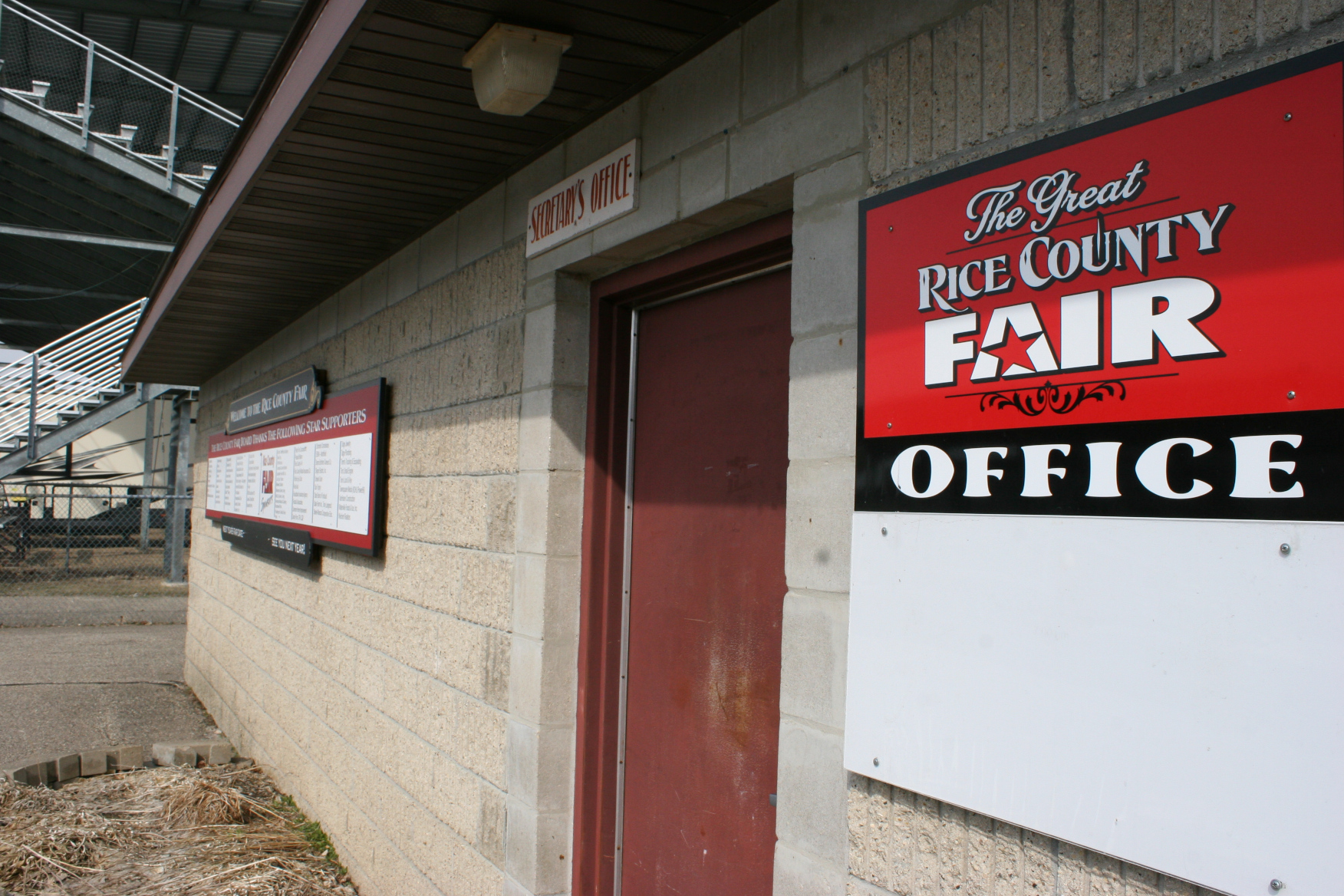
The Rice County Fair office with the grandstand in the background. Minnesota Prairie Roots photo March 2021.
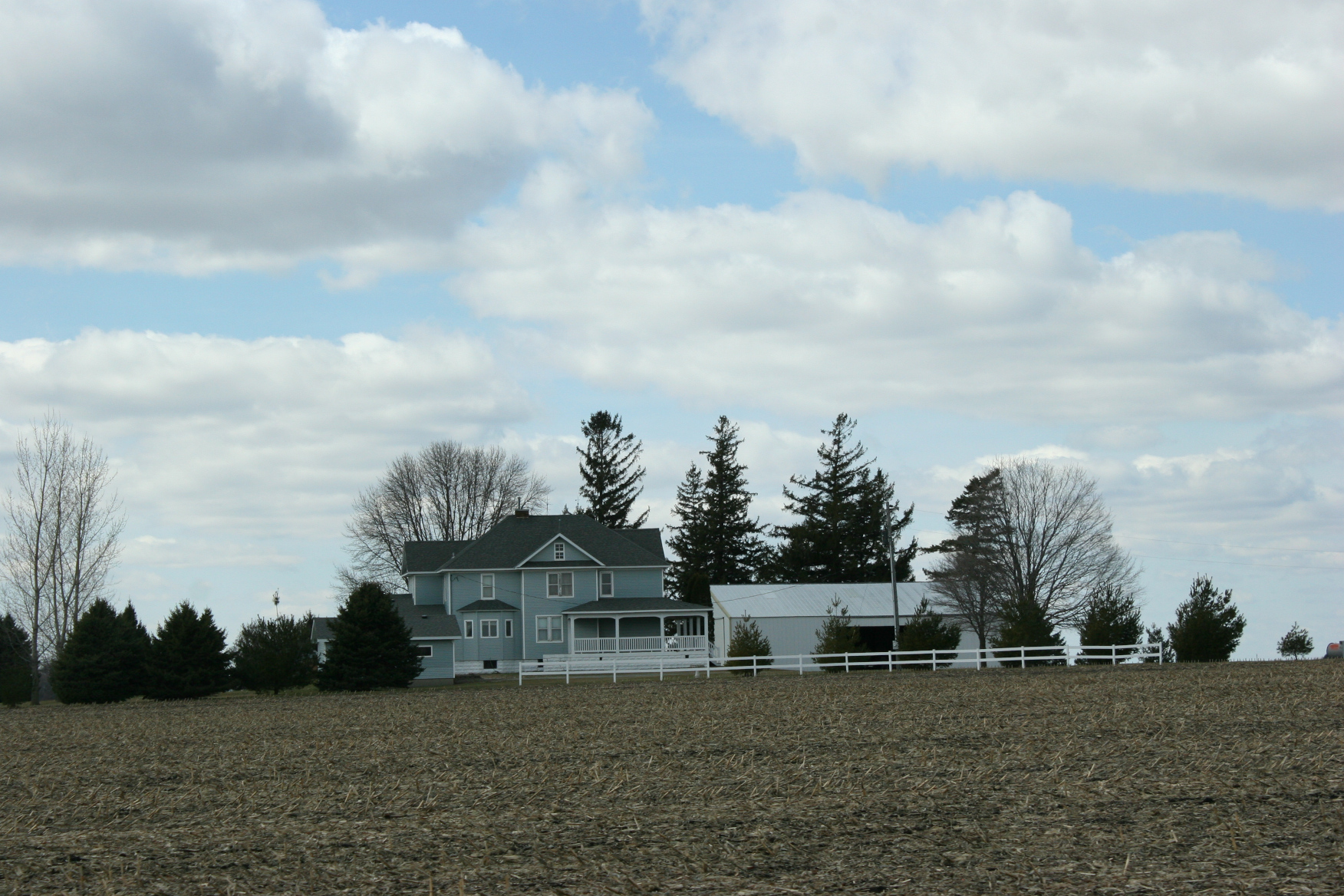
Farmland dominates the landscape east of Faribault near Minnesota State Highway 60.
EAST OF FARIBAULT, the land stretches long and flat. Wide open. Fields punctuated by farm sites.
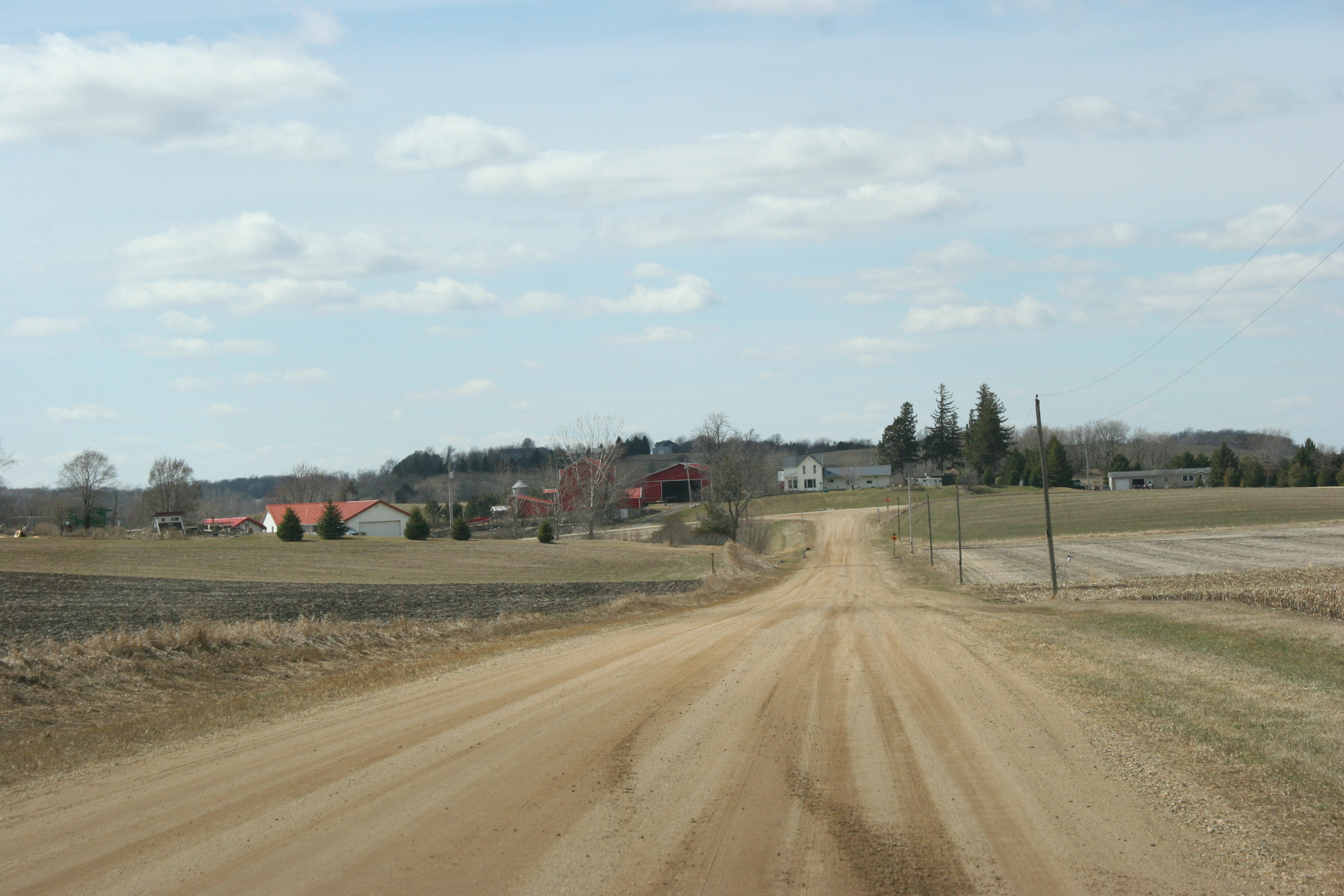
We followed this narrow, and muddy, gravel road.
Gravel and asphalt roads divide farmland into grids. Orderly. As if a ruler was laid across the earth and straight lines inked thereon.
Building sites break the monotony of fields.
Sunday afternoon, after a hike at Falls Creek County Park, Randy and I took a country drive. We are farm-raised, decades removed from the farm, but with an enduring connection to the land.
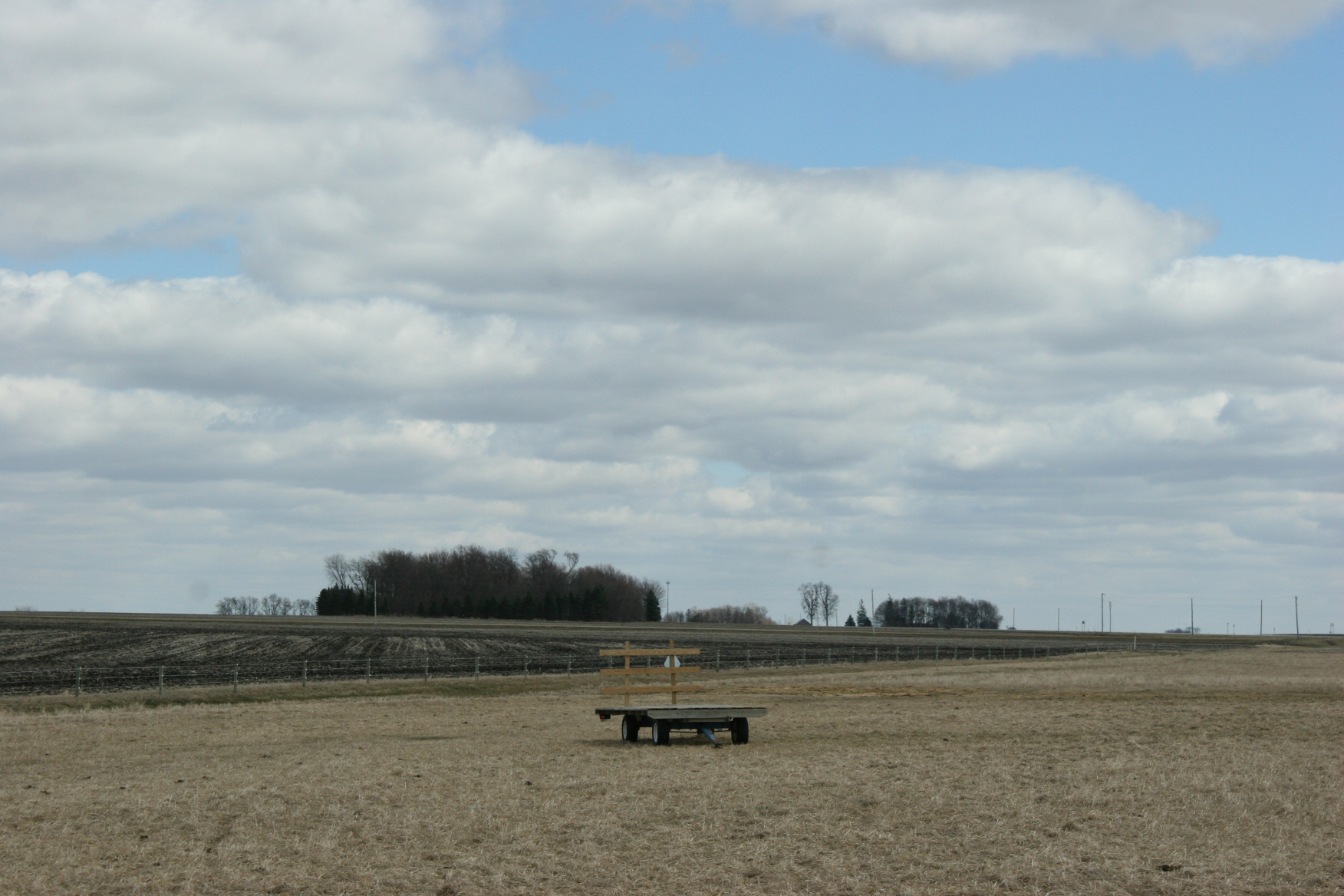
An old hayrack, so familiar to me, parked in a field east of Faribault.
On the cusp of spring planting time in Minnesota, the draw back to the land, to the familiarity of fields, calls. For me, there’s this deep yearning, this need to lay my eyes on the bare earth or the residue of last year’s crops.
I feel connected to all of this via my rural upbringing in southwestern Minnesota.
At times my heart aches for missing the land. I want to smell the scent of soil, to touch the cold earth, to remember all those springs back on the farm. The steady rhythm of the tractor, the corn kernels pouring into the planter and then the faint hint of green lining the black fields.
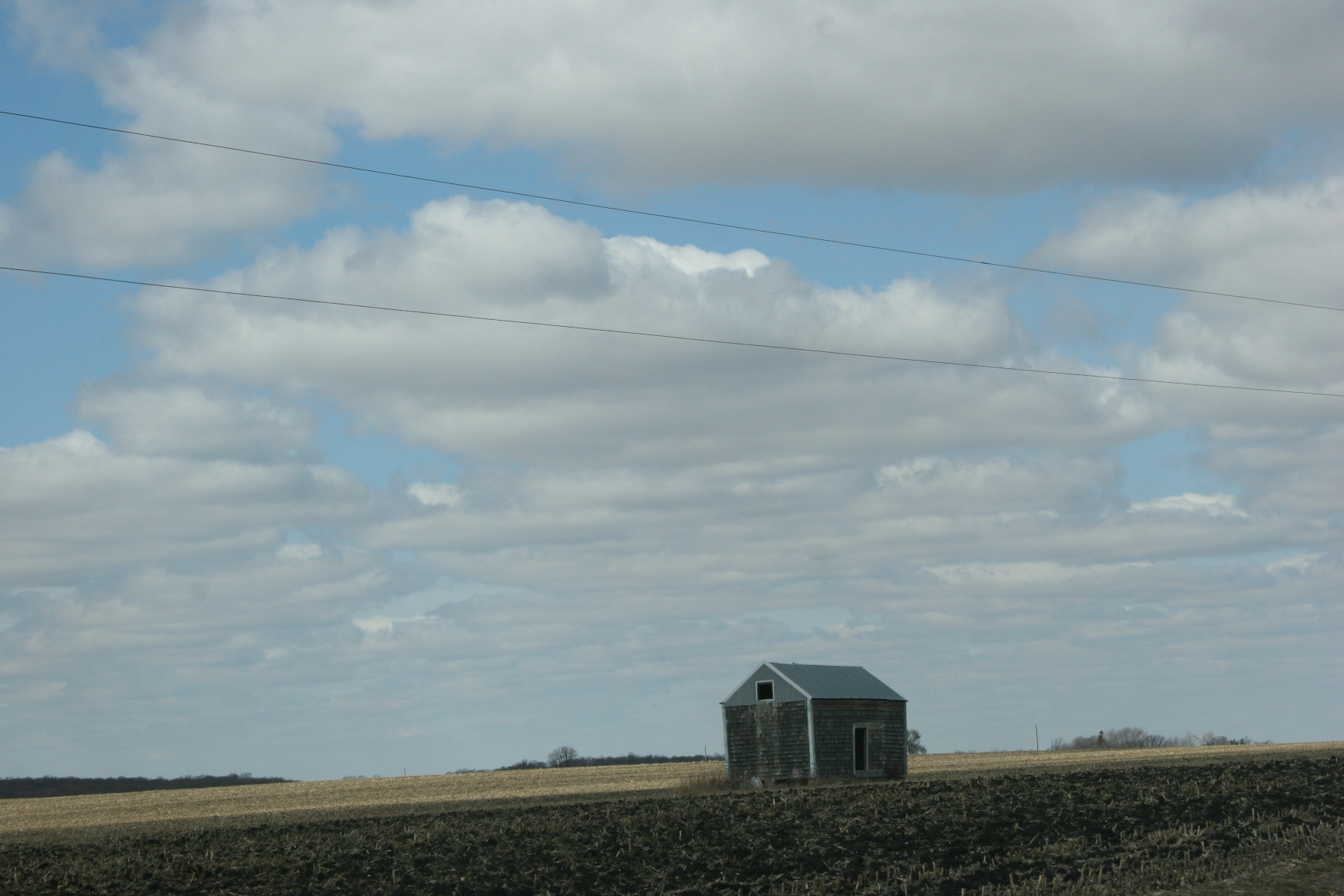
An aged abandoned outbuilding on a former farm site just outside Nerstrand.
Much about farming has changed since my leaving of the land in the early 1970s. But the basics remain. The planting, the growing and harvesting.
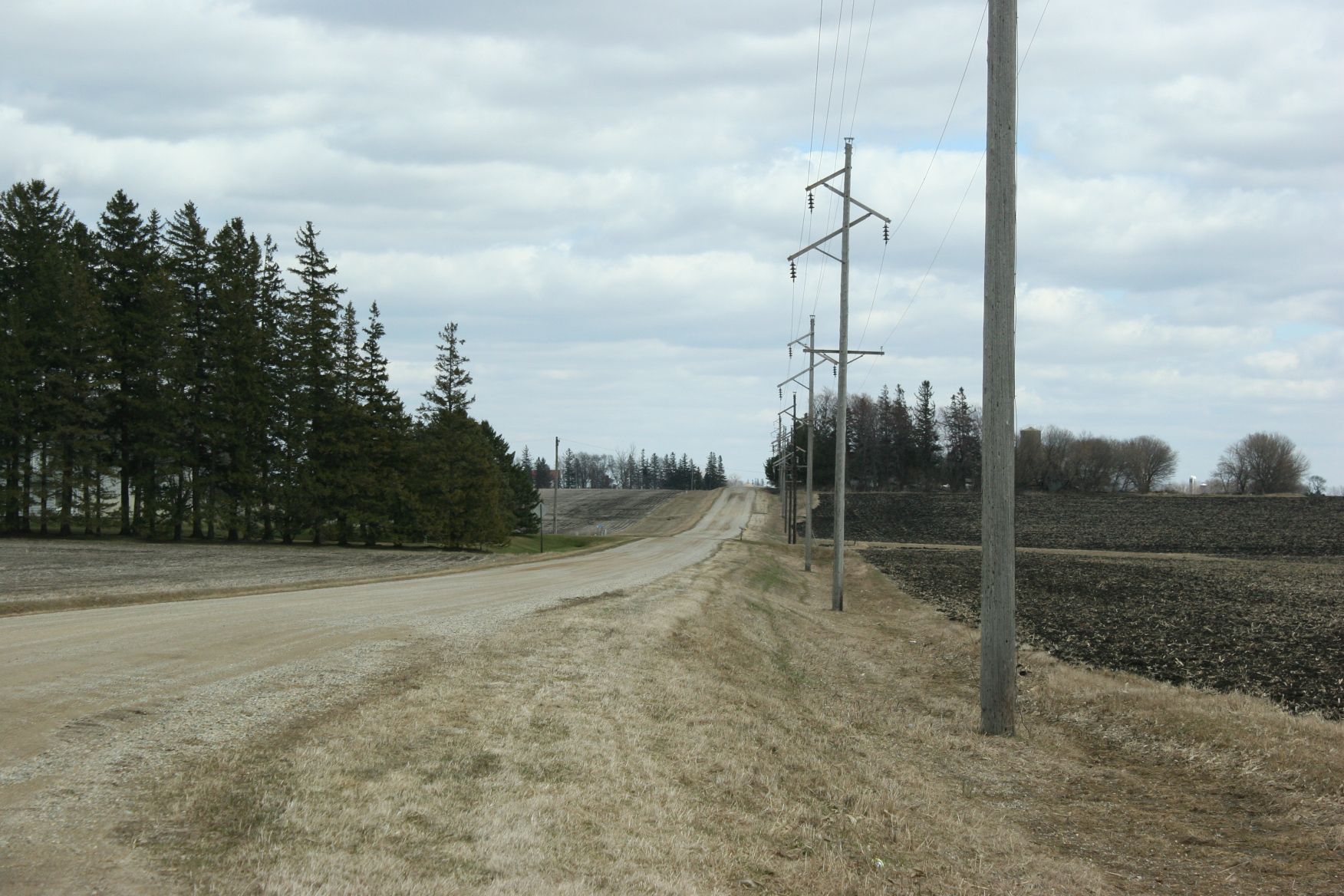
Power poles along a gravel road are such a strong rural visual.
And even though I’ve lived in town far more decades than on a farm, my rural upbringing roots me to the land and takes me back each season. To honor my hardworking farmer dad. To equally appreciate my mom who gardened and fed and raised six children on the land. My hardworking parents instilled in me a love of the land, a connection to place and the innate need to follow gravel roads into the countryside.
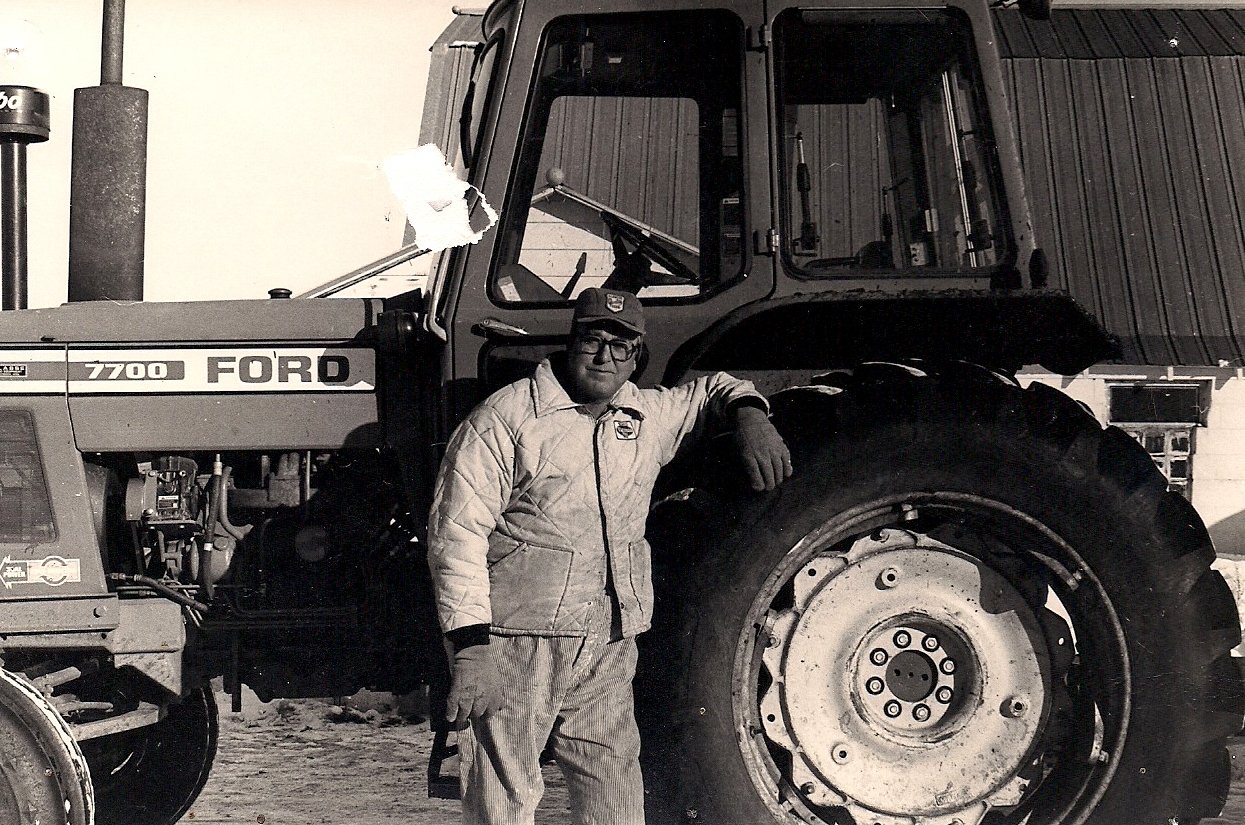
A photo of my dad, Elvern Kletscher, taken in 1980.
This post is dedicated in loving memory of my farmer father, Elvern Kletscher, who died on April 7, 2003. Thank you, Dad, for raising me to appreciate the land, for teaching me the value of hard work. for instilling in me a love of God and of family. I am grateful. And I miss you.
Billboards in my Roadside Poetry Project poem posted in Fergus Falls 10 years ago. Minnesota Prairie Roots file photo June 2011.
THE OFFICIAL ARRIVAL OF SPRING today seems reason to celebrate, especially here in Minnesota, the land of long winters. Or, as my California-raised son-in-law once thought, Almost Canada.
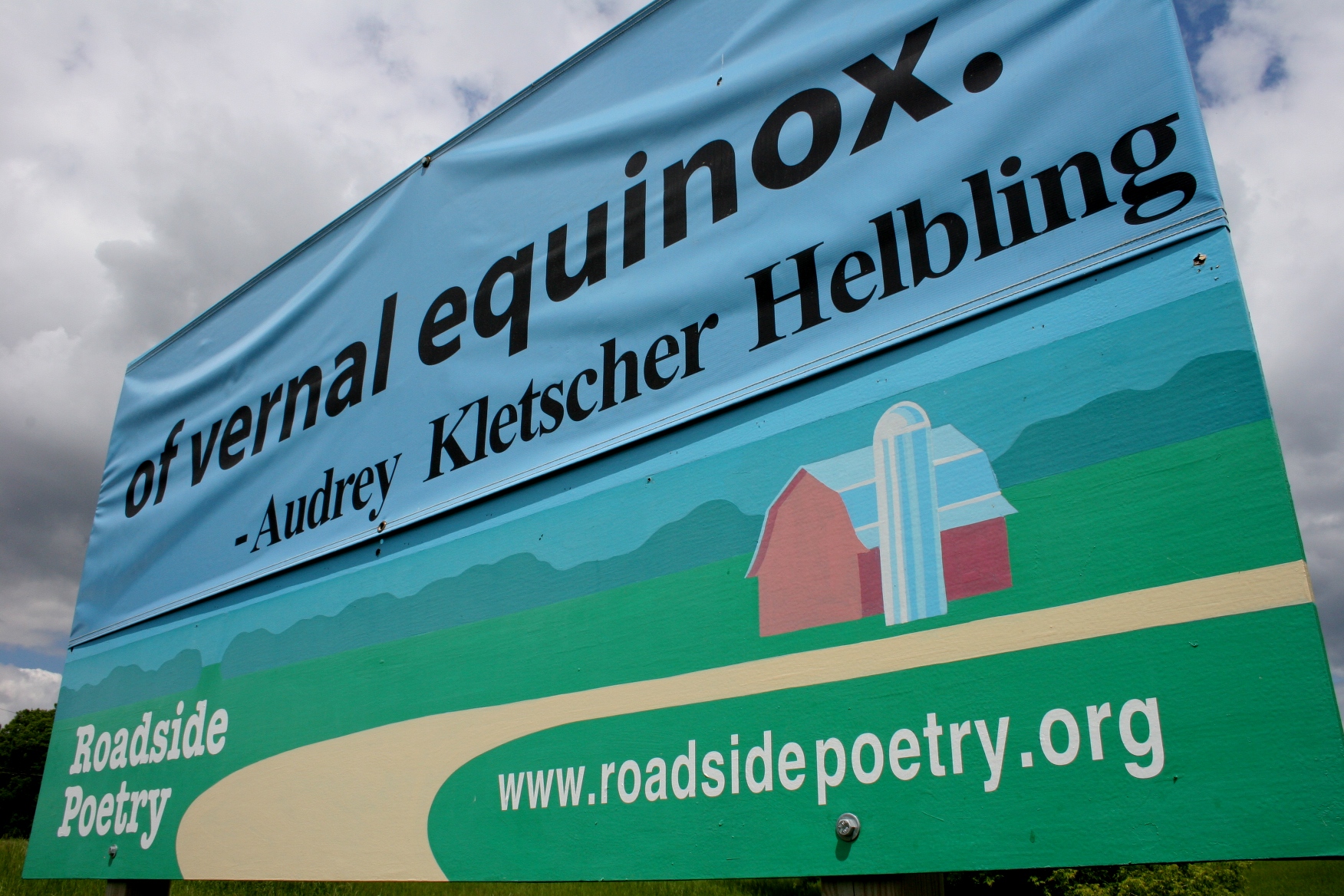
Billboard #2 in my poem. Minnesota Prairie Roots file photo June 2011.
From here on, daylight lengthens. And, after this past pandemic year, I’m thankful for the seasonal transition into more sunlight and resulting warmth and melting of snow. That said, this is still March and in Minnesota that likely means more cold and snowy days.
But, as we ease into spring, I feel a sense of renewal. Warm days with temps in the 50s and near 60, like those predicted for this weekend, are freeing, uplifting and promising.
Billboards #3 and 4. Minnesota Prairie Roots file photo June 2011.
Farmers, I expect, are itching to get into the fields, although it’s way too early for that. I still think like the farm-raised woman I am, connecting seasons to the cycle of planting, growing and harvesting. That will always remain an important part of my identity and continues to influence my writing and photography.
The last of four billboards featuring my Roadside Poetry spring poem. Minnesota Prairie Roots file photo June 2011.
Flash back to 10 years ago and you can read that influence in a poem I penned and submitted to the Roadside Poetry Project. In four lines, each with a 20 character limit, I wrote a spring-themed poem that bannered on four billboards in Fergus Falls. It’s the most unusual spot my poetry has ever published.
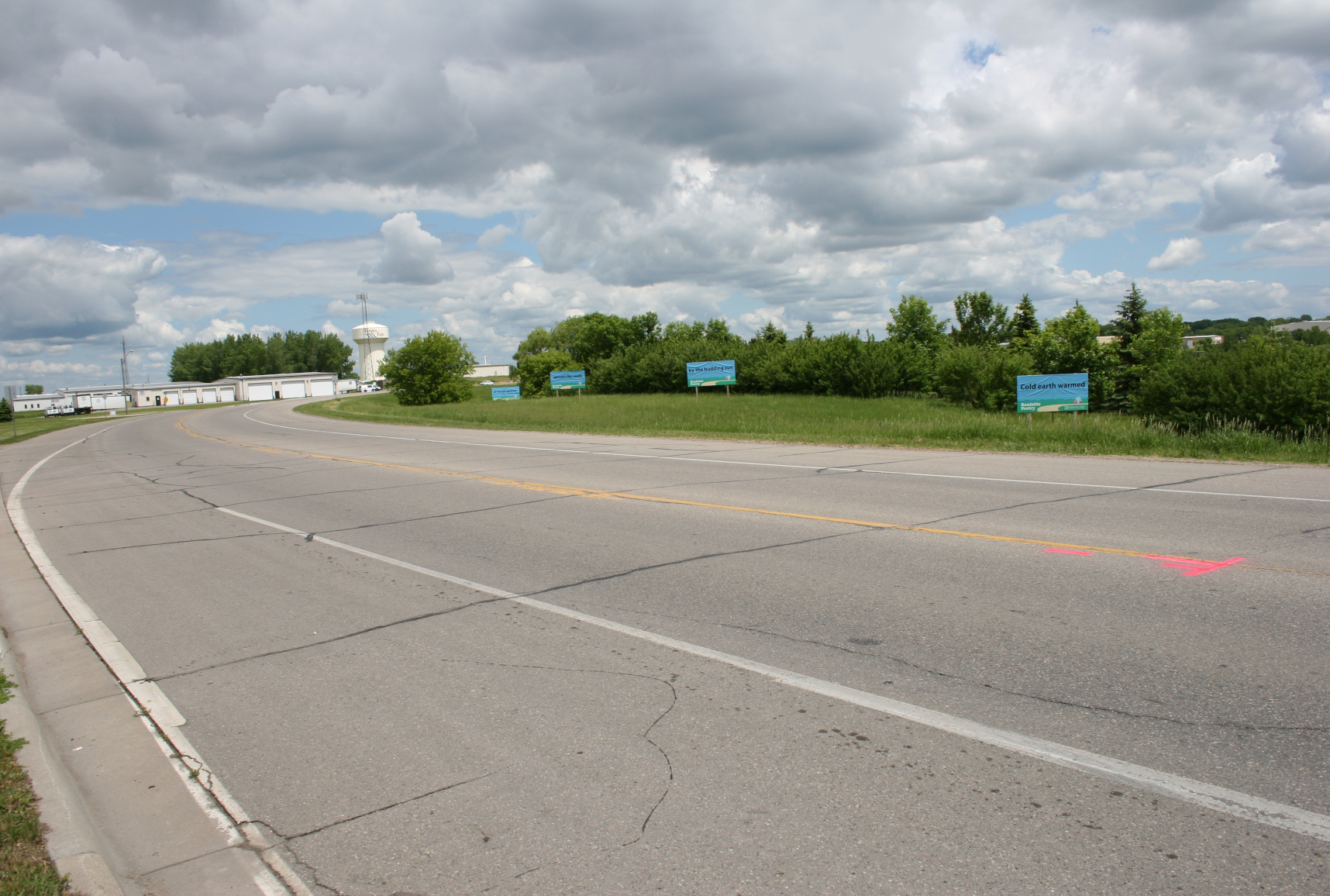
The billboards posted along a road on the edge of Fergus Falls in 2011. Minnesota Prairie Roots file photo June 2011.
Designed “to celebrate the personal pulse of poetry in the landscape,” according to then Project Coordinator Paul Carney, my poem truly fit that mission. I wrote from experience, from a closeness to the land, from a landscape of understanding.
While the Roadside Poetry Project, funded by the Fergus Falls College Foundation, no longer exists, my poem endures in the legacy of my writing. To have written about spring from the perspective of a farmer’s daughter celebrates my rural Minnesota prairie roots. And spring.
Housed in the former PIX Theatre, Sleepy Eye Brewing & Coffee Company, along US Highway 14 in downtown Sleepy Eye. Minnesota Prairie Roots file photo March 2020.
WHEN I WAS GROWING UP on the southwestern Minnesota prairie in the 60s and 70s, locally sourced meant harvesting vegetables from the garden, dipping milk from the bulk tank and pulling our own farm-raised beef from the freezer. Our farm family of eight was basically food self-sufficient, with the exception of fresh fruit (a rare treat) and staples like flour and sugar.
Information on tables informs customers of locally sourced food. Minnesota Prairie Roots file photo March 2020.
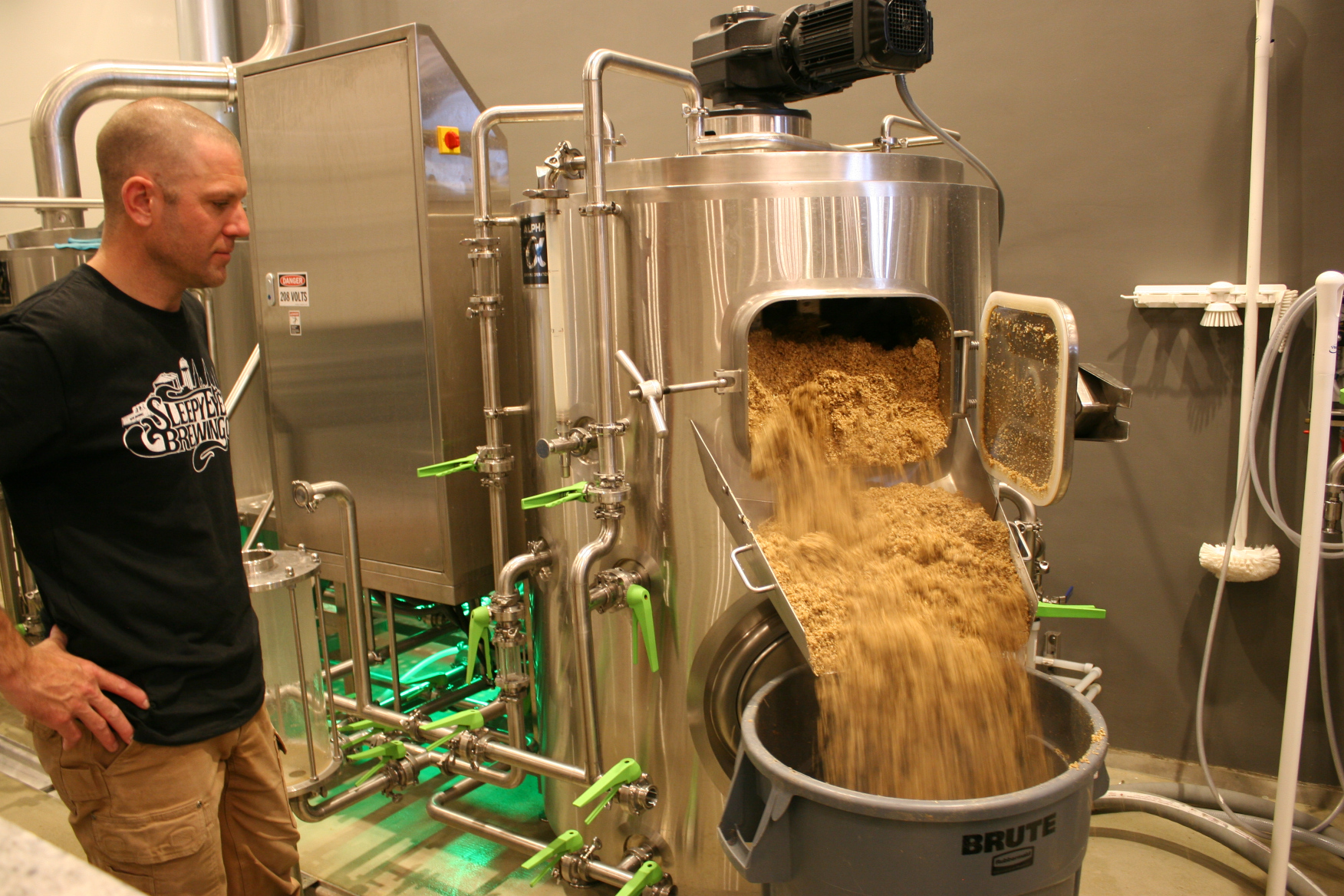
Spent grains from the beer making process go to Fischer’s Sleepy Bison Acres as supplemental food for the bison. Minnesota Prairie Roots file photo March 2020.
More info on the interaction and reliance on the community. Minnesota Prairie Roots file photo March 2020.
With that background, you’ll understand why I appreciate the efforts of businesses like Sleepy Eye Brewing and Sleepy Eye Coffee Company, which work with local farmers to source products. Bison meat. Milk. Honey. Eggs. It’s a win-win for everyone, including customers who value fresh, local and direct farm-to-table.
This is a stunningly beautiful space. Minnesota Prairie Roots file photo March 2020.
The brewery and coffee/bakery/sandwich/salad shop are housed in the historic former PIX Theatre in the heart of downtown Sleepy Eye. My first and only visit happened a year ago, just before COVID-19 changed everything, including my interest in dining out or imbibing at a craft brewery.
A flight served in a movie reel. Minnesota Prairie Roots file photo March 2020.
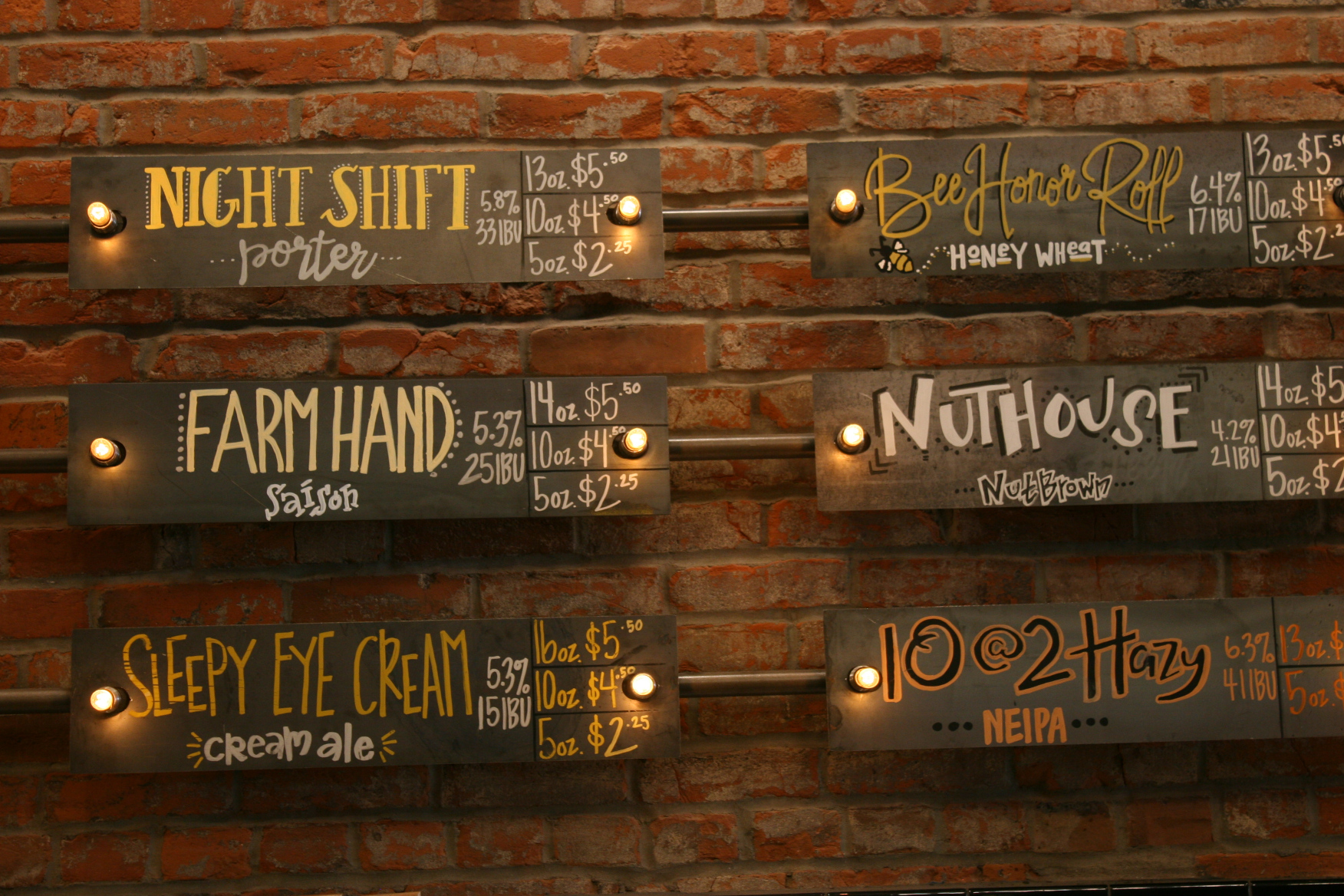
Some of the beer choices at Sleepy Eye Brewing. Minnesota Prairie Roots file photo March 2020.
Glasses advertise the brewery. Minnesota Prairie Roots file photo March 2020.
But I’ll be back once life returns to normal because I appreciate the former movie house setting, the beer and the small town friendliness. I intend also to sample a homemade sweet treat from the bakery. Or maybe a sandwich or salad.
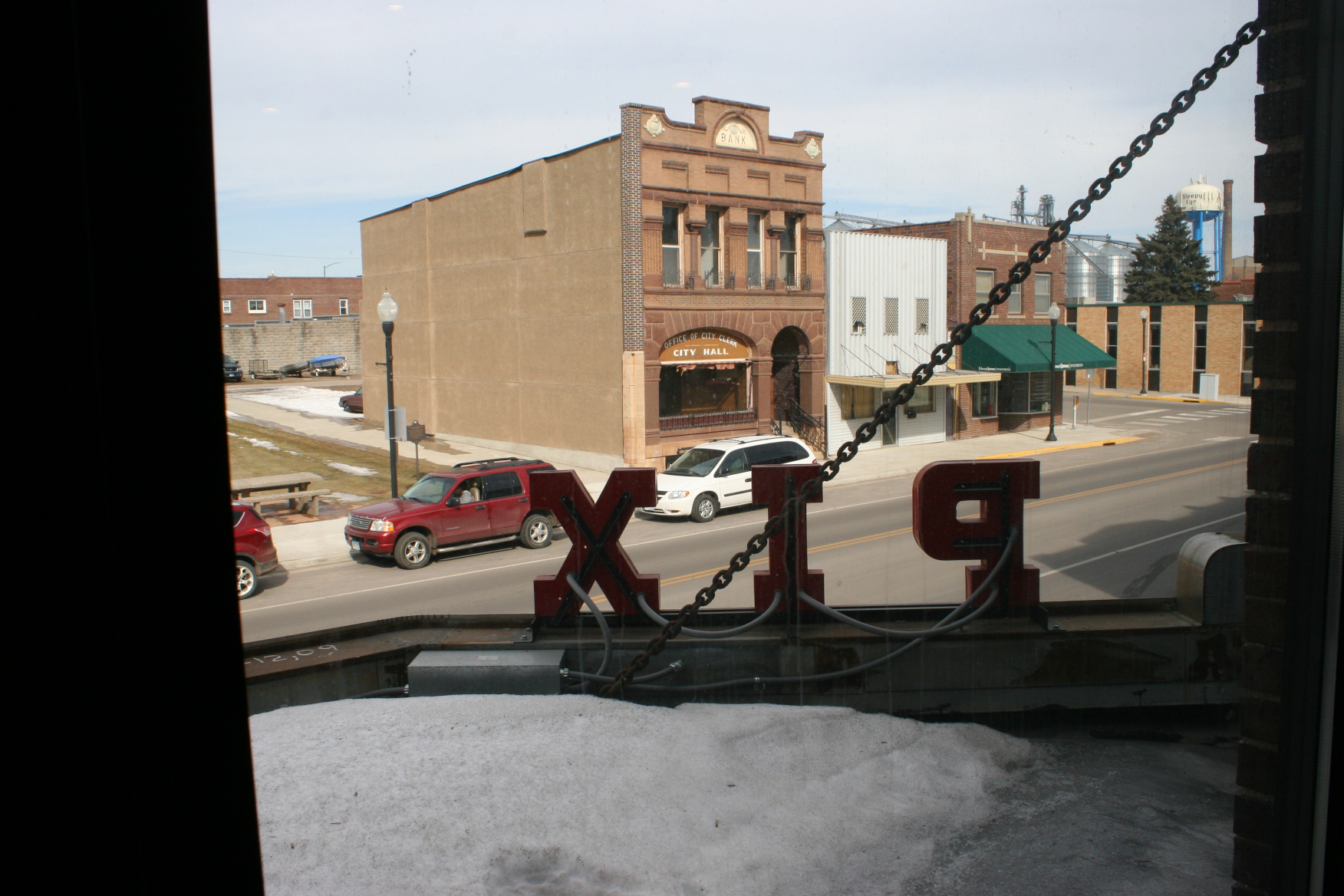
A view from the balcony window looking over US Highway 14 and Sleepy Eye’s main business district. Minnesota Prairie Roots file photo March 2020.
I love how some small towns are seeing a revival of sorts via businesses like craft breweries. Hometown bakeries also add to the draw.
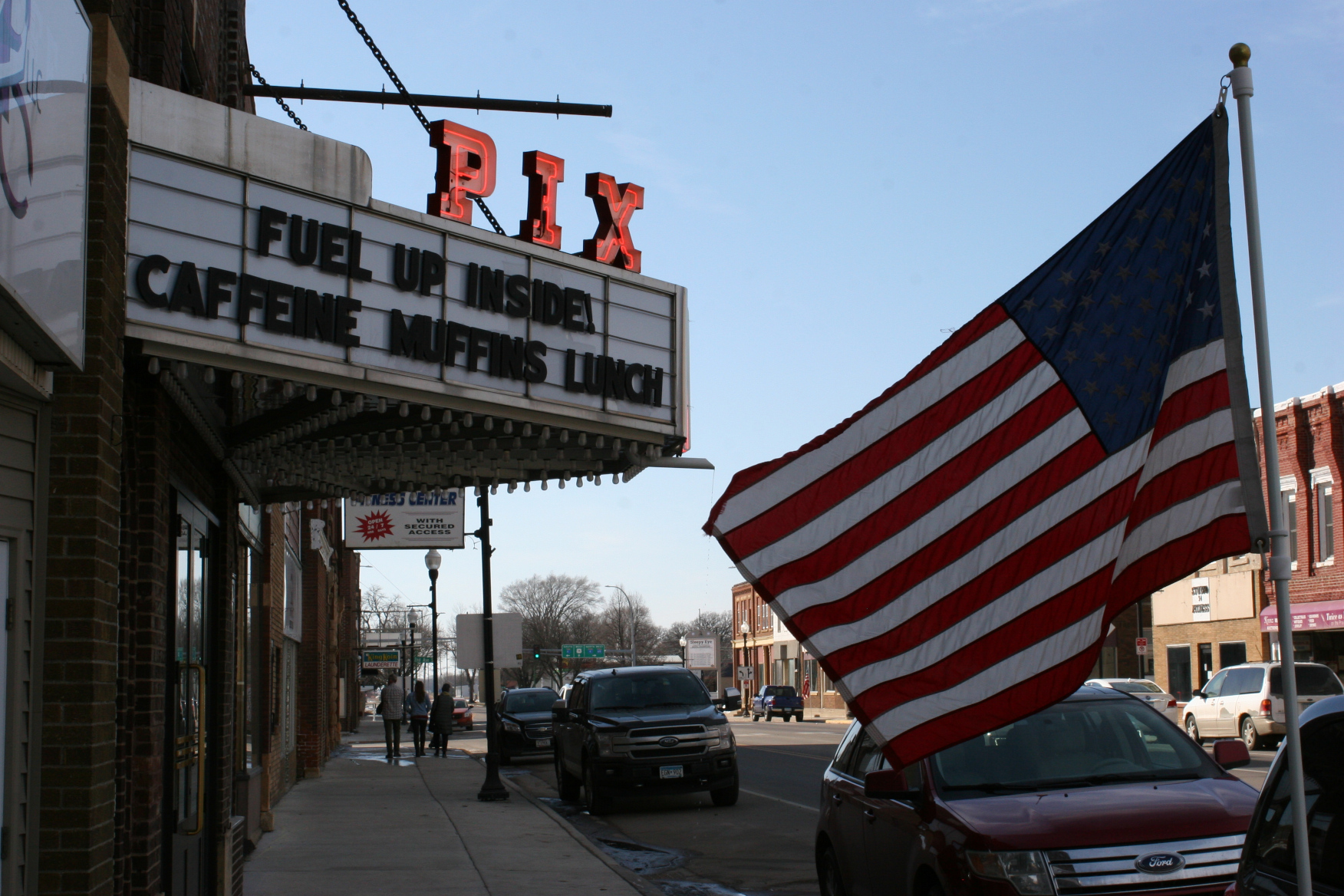
The restored marquee now advertises “fuel” rather than movies. Minnesota Prairie Roots file photo March 2020.
For someone like me who grew up with home-grown/home-raised food on premises, the current trend of locally sourced brings me full circle back to my roots. That’s 45 miles to the northwest of Sleepy Eye in rural Vesta.





















 Minnesota Prairie Roots
Recent Comments