Minnesota Prairie Roots

Writing and photography by Audrey Kletscher Helbling

Minnesota prairie roots revisited, remembered, reflected January 25, 2023

My “Hope of a Farmer” poem exhibited at the Lyon County Historical Society Museum. The exhibit also includes my poem, “Ode to My Farm Wife Mother.” (Minnesota Prairie Roots copyrighted file photo September 2022)

WHEN I RETURNED to my beloved southwestern Minnesota prairie in September, I did so with one primary purpose—to see my poetry showcased in the “Making Lyon County Home” exhibit at the Lyon County Historical Society Museum in Marshall. Any additional attractions—like viewing a public art sculpture outside the local ice arena and a stop at Brau Brothers Brewing—would only enhance the day trip.

Randy Walker’s “Prairie Roots” sculpture defines the entrance outside the Red Baron Arena on Marshall’s east side at 1651 Victory Drive. (Minnesota Prairie Roots copyrighted photo September 2022)

My one regret is that Randy and I didn’t stay overnight, allowing more time to explore local sites without feeling rushed. Forty years have passed since I visited Marshall en route to the Black Hills on our honeymoon. The college and county seat town lies 20 miles to the west of my hometown, Vesta in Redwood County, and 140 miles from my current home in Faribault.

A serene country scene just north of Lamberton in southern Redwood County on the southwestern Minnesota prairie. (Minnesota Prairie Roots copyrighted file photo September 2013)

This area of Minnesota is the place of my roots. My prairie roots. It is the place of wide open space, expansive skies, small towns and endless acres of cropland.

A prairie sunset photographed from Minnesota State Highway 67 between Redwood Falls and Morgan. (Minnesota Prairie Roots copyrighted file photo)

The land where I grew up inspired my blog name, Minnesota Prairie Roots. The name fits me as a person and a creative. The sparseness of the prairie taught me to notice details, to fully engage my senses. To appreciate the landscape and people. The vastness of the flat land and the star-flushed night sky and achingly beautiful sunsets. Here I connected to the land—bare feet upon dirt, bike tires crunching gravel, dirt etched into my hands from working the soil. Here I connected to the people—down-to-earth, hardworking, linked to the land.

A favorite children’s picture book about the prairie gifted to me by my friend Kathleen.

For those who are not of prairie stock, the sparse landscape can seem uninteresting, empty, desolate. Even I admit the challenge of “if you’re not from the prairie…” A children’s picture book by that title, written by David Bouchard and illustrated by Henry Ripplinger and published in 1995, speaks to the prairie sun, wind, sky, flatness…grasses.

The tall grasses stretch to the prairie sky. The bent tops of the stems are also meant to resemble hockey sticks given the sculpture’s location outside the ice arena. (Minnesota Prairie Roots copyrighted photo September 2022)

Tall grasses are often associated with the prairie. Yet, those grasses were mostly missing from the landscape of my youth as cultivated crops covered the earth. But on our farm site, a sliver of unmown grass grew between granary and grove and gravel driveway, stretching high, stems bending in the wind. That Little House on the Prairie (Walnut Grove is 20 miles from Vesta) space opened summer afternoons to imaginative play. I hold many memories rooted in those tall grasses, in the prairie.

Depending on the time of day and viewing point, the steel grass stems showcase different colors. (Minnesota Prairie Roots copyrighted photo September 2022)
The sculpture reflected in an arena window. (Minnesota Prairie Roots copyrighted photo September 2022)
Just another view of the grass stems, emphasizing the orange and yellow hues. (Minnesota Prairie Roots copyrighted photo September 2022)

Prairie Roots. That name graces a public art sculpture outside the Red Baron Arena in Marshall. Minneapolis artist Randy Walker was commissioned by the City of Marshall in 2018 to create the sculpture reflecting the prairie landscape. I knew in advance of my September visit that I needed to see this artwork if time allowed. We made time. Walker used 210 painted steel poles to represent tall stems of grass, prairie grass. They are colored in hues of yellow, orange, red and green, reflecting seasonal changes and light.

Prairie grass grows within the sculpture. (Minnesota Prairie Roots copyrighted file photo September 2022)

And in between all those steel stems, prairie grass grows, thrives.

A grasshopper clings to a steel grass stem in the “Prairie Roots” sculpture. (Minnesota Prairie Roots copyrighted photo September 2022)

I even spotted a grasshopper on a steel stalk, taking me back decades to the hoards of grasshoppers that amassed and hopped through that patch of uncut grass on the farm.

Viewing the sculpture toward the field, this perspective shows the meandering course of the Redwood River in the Marshall area on the floor of the gathering space. (Minnesota Prairie Roots copyrighted photo September 2022)

Walker’s sculpture holds visual appeal against an expansive backdrop sky and open field (when viewing the art from the arena entrance outward). Via that perspective, I see the enduring strength of the prairie, and the immensity of land and sky, this place of my Minnesota prairie roots.

Please check back for more posts about my day trip back to southwestern Minnesota in September 2022.

© Copyright 2023 Audrey Kletscher Helbling


Signs say a lot about small towns like Pine Island November 30, 2022

Filed under: Uncategorized — Audrey Kletscher Helbling @ 5:00 AM
Tags: , , , , , , , , ,

Photographed in the window of a downtown Pine Island business, a locally-focused message. (Minnesota Prairie Roots copyrighted photo September 2022)

SIGNS, WHETHER PROFESSIONALLY-CREATED, handcrafted or handwritten, provide insights into a community beyond simply identifying information.

Like many small towns, Pine Island has a hardware store. I’ve always liked the iconic Hardware Hank signage. (Minnesota Prairie Roots copyrighted photo September 2022)

I find myself drawn to signs, especially when exploring small towns. Three months ago my attention focused on signage in downtown Pine Island. This community of nearly 3,900 some 15 miles north of Rochester in Goodhue County provides plenty of signs to catch my interest.

A snapshot of historic architecture in downtown Pine Island. (Minnesota Prairie Roots copyrighted photo September 2022)

Likewise, I am drawn to the town’s historic architecture.

This banner hangs in the heart of Pine Island, where the Douglas State Trail runs through. (Minnesota Prairie Roots copyrighted photo September 2022)

This was not my first visit to Pine Island. I’ve dined here, picnicked at Trailhead Park, followed the Douglas State Trail a short distance, popped into an antique shop and more. I wonder how often motorists traveling along busy US Highway 52, if they have no connection to the community, pull off the four-lane to explore. Pine Island, along the Zumbro River, is worth a stop, a walk, a close-up look, as are most small towns.

My favorite signage find in Pine Island. (Minnesota Prairie Roots copyrighted file photo September 2022)

As historical accounts go, the Dakota sheltered here in tipis during the winter months, thick pine boughs protecting their temporary homes from the wind and snow. A stand of pines once stood here, like an island in the prairie. The town’s name comes from the Native word wazuweeta, translated to “Isle of Pines.”

Such a welcoming message on the window at Miss Angie’s Place. (Minnesota Prairie Roots copyrighted photo September 2022)

My brief walk through the heart of Pine Island revealed none of that Indigenous history. However, I spotted community pride, diversity, entrepreneurship, compassion and more in signs. Signage says a lot about what people value, about a business community, about communicating in a succinct and eye-catching way.

Entepreneurs posted their services in a business window in Pine Island. (Minnesota Prairie Roots copyrighted photo September 2022)
The smiley face drawn on this “Closed” sign shows a positive and appreciative spirit. (Minnesota Prairie Roots copyrighted photo September 2022)

Some of my favorite finds are handwritten or homemade notes posted in shop windows. I appreciate these messages in our fast-paced, technology-based world. A dash of writing, perhaps added art, combine to create meaningful, connective communication that feels decidedly personal.

Words and art make it clear this is a restaurant that serves tacos and more, perhaps with some heat. (Minnesota Prairie Roots copyrighted photo September 2022)
I especially like the graphics on this sandwich board with the “O” doubling as a head.
The comb and scissors back up the words for this Pine Island hair salon. (Minnesota Prairie Roots copyrighted photo September 2022)

My interest in signs traces to my love of words and of associated graphics. Both matter to me. I even make product decisions sometimes based solely on either. In Pine Island I noted the art on Taqueria Let’s Go Tacos signs and how that connects with the restaurant’s heritage and food. The same goes for The Little Hair Salon with comb and scissors graphics on signage.

Letters mark the location of the IOOF. (Minnesota Prairie Roots copyrighted photo September 2022)

In another location, I needed to sleuth online to decipher the meaning of I.O.O.F. and three other faded letters, FLT, linked in a link on a dirty window pane. The letters stand for Independent Order of Odd Fellows and their mission of Friendship, Love and Truth.

Potted mums and a sign draw customers to the lower level Henry’s Hair Designers. (Minnesota Prairie Roots copyrighted photo September 2022)

These are the things I discover in small towns, those places often passed by as people hurry from one destination to the next. Each community is unique. I discover individuality in words and art bannered upon buildings, taped on doors and windows, printed on sandwich boards…

In this touching scene near Pine Island’s Hardware Hank, the bold yellow sign to the left summarizes the subject of this post. (Minnesota Prairie Roots copyrighted file photo September 2022)

I glimpse a town’s personality through signage as I explore places like Pine Island.

© Copyright 2022 Audrey Kletscher Helbling
 

Celebrating the birthday of Charles M. Schulz November 26, 2022

Peanuts characters adorn the former Kay’s Floral building in downtown Faribault during a 2015 holiday decorating contest. (Minnesota Prairie Roots copyrighted file photo December 2015)

IF YOU READ A COMIC STRIP TODAY, November 26, you may notice something different. Something that honors Minneapolis-born cartoonist Charles M. Schulz. Cartoonists are celebrating what would have been Schulz’s 100th birthday by incorporating tributes into their comics today. I love this idea. It seems fitting for the Peanuts’ creator who died in 2000.

Generations have followed the antics, trials and stories of the Peanuts characters, 70 strong, since the comic strip debuted in October 1950. The beloved Charlie Brown. Vocal Lucy. Security blanket carrying Linus. Inquisitive Sally. Piano pounding Schroeder. The imaginative Snoopy. The list goes on and on.

When our kids were little, they sprawled across the living room floor on Sunday afternoons aside Randy as he read the funnies to them. I would watch from a corner of the couch, content and smiling as they progressed through the Sunday comics, Peanuts a favorite.

Linus greets visitors to the Dyckman Free Library in Sleepy Eye. (Minnesota Prairie Roots copyrighted file photo February 2015)

Schulz and his cast of characters will always hold a special place in the hearts of Minnesotans. Minneapolis-born, Schulz grew up in neighboring St. Paul. Eventually, he taught at Art Instruction Schools in Minneapolis, where he initially studied art through a correspondence course. There he met Linus Maurer, a native of Sleepy Eye in southwestern Minnesota. Maurer also taught at the school and was a successful syndicated cartoonist, magazine illustrator and painter. And, yes, Schulz honored his friend by naming one of his characters Linus van Pelt, brother of Lucy and best friend of Charlie Brown.

I lived and worked in Sleepy Eye for six months in 1980 as a journalist. Whenever I return to my home region, I typically go through Sleepy Eye, passing by Dyckman Free Library. A statue of Linus clutching his blue blankie and a red heart proclaiming love for Sleepy Eye sits on the library lawn bordering the Laura Ingalls Wilder Historic Highway/US Highway 14. Next time I need to stop, see Linus up close, step inside the library if it’s open.

Lucy van Pelt at MSAD. (Minnesota Prairie Roots copyrighted photo May 2022)

Here in Faribault, I discovered a statue of Lucy van Pelt while wandering the Minnesota State Academy for the Deaf campus earlier this year. There an over-sized rural-themed Lucy stood outside the entrance to Quinn Hall. It has since been relocated during a renovation and construction project. I don’t know the backstory on how Lucy came to be at MSAD. But I believe she is part of the 2002 “Peanuts on Parade, Looking for Lucy” artistic endeavor.

When I last stopped by the post office for stamps, I picked up a sheet of Peanuts stamps, not realizing at the time why Schulz and his characters were selected for postage stamp publication. I overlooked the “CHARLES M. SCHULZ CENTENNIAL 2022” wordage. But today I’m not overlooking this Minnesota-born creative who brought so much joy, so much insight (yes, insight), so much happiness into the world. Yesterday. And still today, 100 years after his birth.

TELL ME: Who’s your favorite Peanuts character and why?

© Copyright 2022 Audrey Kletscher Helbling
 

At Buckham Library: Portraits honor Faribault’s founding fathers November 21, 2022

“Faribault’s Founding Fathers,” Alexander Faribault (left to right), Chief Taopi and Bishop Henry Whipple, painted by Dana Hanson. “Yuonihan” means honor or respect. (Minnesota Prairie Roots copyrighted photo November 2022. Art copyrighted by Dana Hanson.)

MY LIBRARY, BUCKHAM MEMORIAL in Faribault, features dozens of art pieces by local artists scattered throughout the building. I’ll admit that I really don’t even notice the art any more in my frequent visits to the library. Like anything, after time, familiarity begets overlooking.

But that all changed recently when I looked across the library to the west by the adult fiction and saw a work of art I hadn’t previously noticed. It’s been there for about a year. Yet, just now, I happened to see Dana Hanson’s original art piece, “Faribault’s Founding Fathers.” I strode across the library toward the high-hanging portrait piece and took pause.

Dana Hanson’s artist statement posted at the 2016 Artgo! art show at Buckham Center. (Minnesota Prairie Roots copyrighted file photo October 2016)

I first met Dana, who specializes in portraits, in 2015 during Faribault’s summer Concerts in the Park weekly outdoor music series at Central Park. Local artists were invited to paint on-site and Dana was among them. She has since moved away from Faribault.

A close-up of Dana’s “The Native Man, His Eagle & His Chanupa,” an oil painting exhibited in Owatonna in 2018. (Minnesota Prairie Roots copyrighted file photo April 2018)

Eventually, her art started showing up in exhibits—at Buckham Center, at the Paradise Center for the Arts and at the Owatonna Arts Center. Her work ranged from faith-inspired to celebrity (like Bob Dylan, Prince and Judy Garland) and Native American portraits and more. In Owatonna, her “Healing the Land” exhibit several years ago focused on the Dakota people.

Up close with Chief Taopi, center, and Bishop Henry Whipple, right. (Minnesota Prairie Roots copyrighted photo November 2022)

So when I saw the recently-donated 2019 painting of Faribault’s founding fathers, I was not at all surprised. Dana holds a heart full of gratitude, love and compassion for Indigenous peoples. That shows in her art, including in these portraits of Chief Taopi, a member of the Little Crow Band of the Mdewakanton Dakota Tribe; town founder Alexander Faribault, “friend and protector” of the Dakota; and Bishop Henry Whipple, “Spiritual Father and Humanitarian” and “Advocate for the Native Americans.”

Another example of Dana’s art, MESSENGERS OF HOPE with the horses subtitled, from left to right, “Light,” “Passion Fire” and “Grace.” These were exhibited at the Paradise Center for the Arts in 2017. (Minnesota Prairie Roots copyrighted file photo March 2017.

Indigenous peoples were the original inhabitants of Faribault, of Rice County, a fact now only beginning to be widely-acknowledged and honored. The Wakpekute, part of the Dakota Nation, placed their dead on scaffolding on the hill just up from my house in today’s current-day Wapacuta (sic) Park, a fact I only learned this fall at an historical presentation. Eventually, they were buried in Peace Park, a triangle of land near the library. There’s so much rich local history I am beginning to learn.

“Protector of the 38 + 2,” an oil on canvas by Dana Hanson and previously displayed in Owatonna. Her art honors the 38 Dakota men who were hung in Mankato following the US-Dakota War of 1862. (Minnesota Prairie Roots copyrighted file photo April 2018)

Chief Taopi, who centers Dana’s portrait trio, was a leader among his people and a member of a Peace Party during the US-Dakota War of 1862. Eventually he landed in Faribault, living on land owned by founder and fur trader Alexander Faribault. Taopi and the Bishop forged a strong friendship also. The Dakota chief died in 1869 and is buried at Maple Lawn Cemetery in Faribault.

Now, to see these three men honored via a painting in a place of learning, a place of connection, a place where history writes onto pages, reminds me of their importance in my community. In the familiarity of the library and during this, Native American Heritage Month, I need to pause, appreciate and respect those who shaped this place I’ve called home for 40 years.

© Copyright 2022 Audrey Kletscher Helbling


About recycling, a hard truth & what we can do October 27, 2022

A graphic on a recycling dumpster in Northfield inspires. (Minnesota Prairie Roots copyrighted photo August 2022)

JUST INSIDE OUR GARAGE, a green plastic tote rests on a shelf. It’s located a few quick steps from the kitchen door, providing easy access to our temporary recycling box. Once the box fills, Randy dumps the contents into the official hideous dark-blue-with-bright-yellow-lid plastic recycling bin. Every other week the refuse hauler picks up our recyclables for delivery to the Rice County Recycling Center.

The City of Northfield “Youth Live Green Recycling Team” program aims to get youth involved in recycling corrugated cardboard. Participating groups get monetary funds for monitoring the public recycling containers, keeping the area clean and informing the public about cardboard recycling. (Minnesota Prairie Roots copyrighted photo August 2022)

Now I should feel mostly good about that, right? I’m placing milk jugs and other plastics, cans, newspapers, envelopes, an excessive amount of campaign mailings, other paper products and more into recycling. I’m doing my part to keep stuff out of the landfill, to protect the environment.

Rules on a recycling container in Northfield. (Minnesota Prairie Roots copyrighted photo August 2022)

But when it comes to plastic, most of my efforts may be for naught, according to a recent report by the environmental education and awareness group Greenpeace. The nonprofit shared that less than five percent of recycled plastics are made into new products. Why? Simply put, it’s costly to collect and sort the plastics. I’m not surprised by that explanation. Money factors into most business decisions.

Youth and adults painted a mural on Just Food Co-op, Northfield. Among the themes, Mother Earth. Rice County Neighbors United led the grant-funded project. (Minnesota Prairie Roots copyrighted photo October 2021)

Yet, I’ll continue to recycle and hope for an environmentally-friendly shift in attitudes on both consumer and corporate levels. We as consumers need to consciously choose non-plastics. I’m as guilty as anyone else in not thinking often enough about what I personally can do to reduce my use of plastics, focusing on reduce before I focus on recycle.

Mother Earth in progress on the Just Food Co-op mural. (Minnesota Prairie Roots copyrighted photo August 2022)

What am I doing right? This has nothing to do with plastic, but rather with reducing energy use. I either line dry my laundry outdoors or indoors on drying racks, with the exception of sheets and towels in the brutal cold of winter. Come a 40-degree sunny January day, though, and you will find my laundry on the line, snow layering the ground.

Mother Earth a month later. (Minnesota Prairie Roots copyrighted photo September 2022)

I also buy used. And I donate or give away—rather than toss—items I no longer need. The boulevard along our busy street has proven an ideal location to give away a swing set, bookcase, headboard, recliner and much more. Recently Randy and I hauled several purple dove tail drawers from a vintage school art table to a downtown shop, Lily of the Valley. The owner sells repurposed furniture, gifts, clothing and more in her boutique and I figured she could use the drawers to display merchandise or come up with some other creative use. We kept the maple top to possibly reuse ourselves.

Then there’s our yard. We live in a city with a compost center, a place to haul leaves and plants that are composted, basically recycled back into a nutrient-rich natural fertilizer for flowerbeds and gardens. This time of year we make multiple trips to the compost site to dump off mulched leaves fallen from the single tree on our property and from neighborhood trees. I feel good that we are keeping yard waste out of the landfill. I use some of the leaves as winter mulch for my flowerbeds.

A shopper rolls out her cart of purchases in reusable bags. (Minnesota Prairie Roots copyrighted photo August 2022)

Sometimes I use cloth tote bags while grocery shopping, but sometimes I don’t. I could do better.

Northfield’s recycling containers are outside two grocery stores. (Minnesota Prairie Roots copyrighted photo August 2022)

My efforts may not seem like much in the all of the environment. Yet, I know the recycling, the reusing, the things I do matter. What you do matters. Together we can make a difference by our choices.

TELL ME: Do you recycle? I’d like to hear more about your efforts to protect the environment.

FYI: To read the Greenpeace report on plastic recycling, click here.

© Copyright 2022 Audrey Kletscher Helbling
 

So many reasons to value the arts in southern Minnesota & beyond October 26, 2022

“Rain” by Ivan Whillock priced at $3,000 and exhibited at the Paradise Center for the Arts in Faribault. (Minnesota Prairie Roots copyrighted photo October 2022)

TO HAVE ACCESS TO THE ARTS, whether visual, literary or performing, here in southern Minnesota is such a gift. The arts enrich our lives, open our minds to new ideas and experiences, feed our souls, entertain us and, for me, also inspire.

As someone who grew up in rural southwestern Minnesota with minimal exposure to the arts, I especially value galleries, theaters, libraries, and any place that gives me access to creativity. Creating with images and words is my passion and my life’s work. I embrace the work of fellow creatives, who, like me, must create.

Woodcarvings fill the main gallery at the Paradise. (Minnesota Prairie Roots copyrighted photo October 2022)

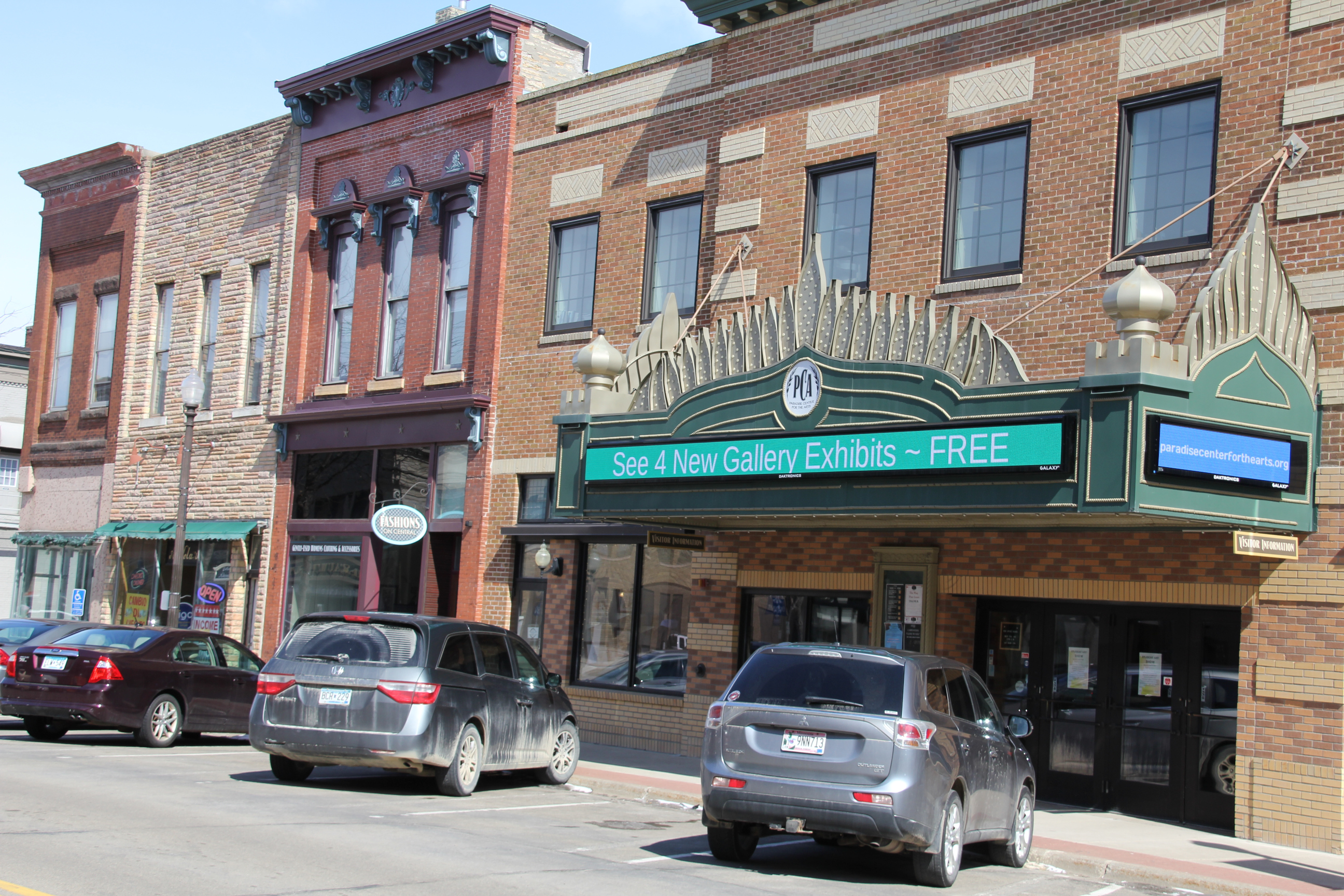
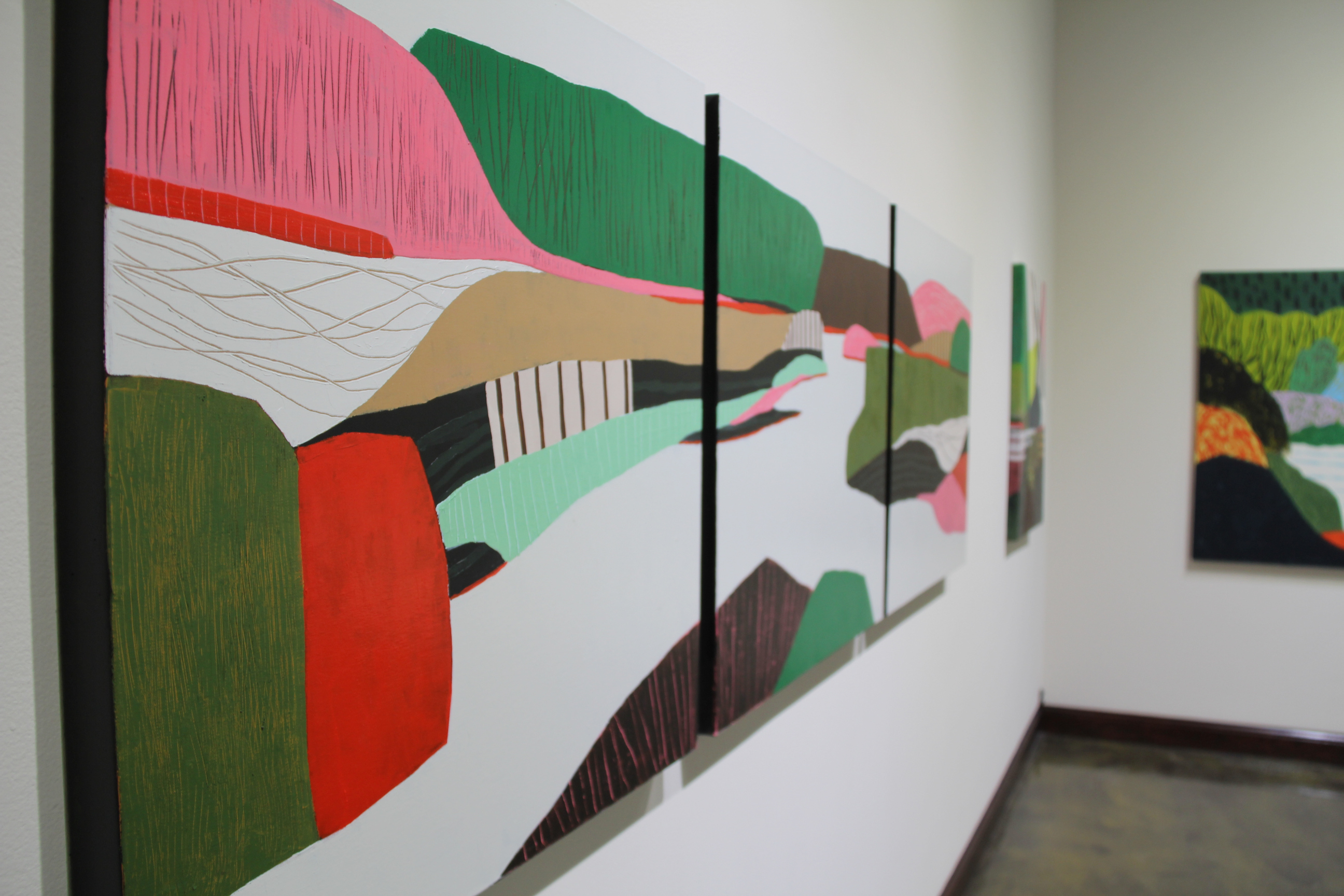
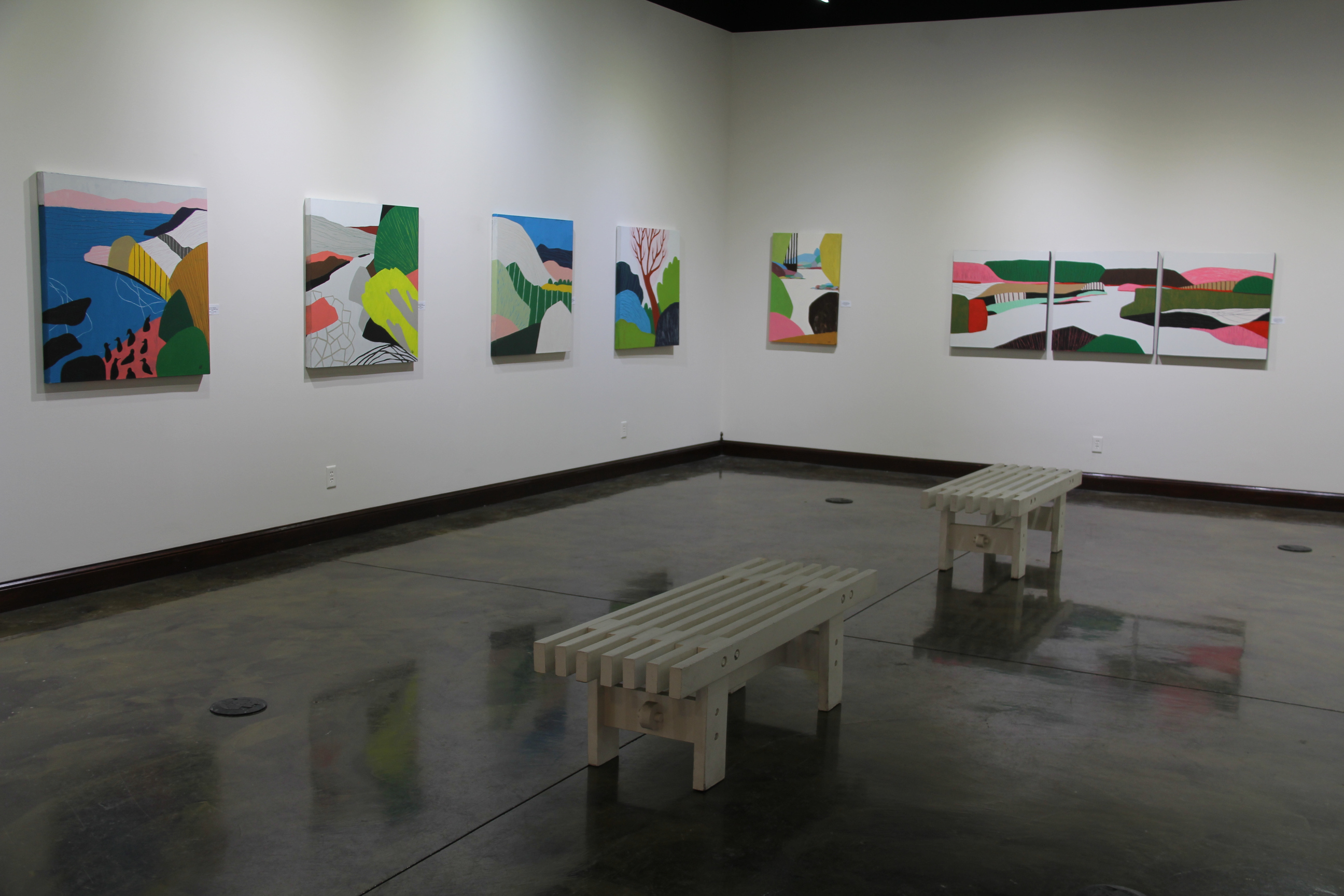
Recently, I stopped by the Paradise Center for the Arts in historic downtown Faribault. The PCA centers the arts in my community with four galleries, theater, music, art classes and more. Here in this space, creatives converge. And we as a community are the better for that. I hope those in neighboring Northfield, Owatonna, Waseca and even small town Montgomery, feel the same gratitude for their arts centers.

“Eileen” by Ivan Whillock, priced at $1,500. (Minnesota Prairie Roots copyrighted photo October 2022)

The arts broaden our perspectives, make us think, laugh, cry, ponder… When I write and photograph, I feel a sense of purpose and fulfillment if my work resonates, prompts emotions, stirs interest and more. I expect the artists currently exhibiting at the Paradise feel the same. There is joy in getting art out there into the community, joy in connecting.

Marv Kaisersatt specializes in caricatures such as “Portrait of a Pig,” displayed but not for sale. (Minnesota Prairie Roots copyrighted photo October 2022)

As I meandered through the Paradise’s current exhibits, I observed incredible talent and variety in the art displayed. Inside the largest gallery, I meandered among woodcarvings by three Faribault artists, two carving for more than 40 years. Ivan Whillock and Marv Kaisersatt, are award-winning long-time carvers, nationally and internationally-recognized. Their work is decidedly different, but their creative skills decidedly the same—excellent. Both are quiet, humble men.

“Wood Spirit” by Chris Whillock, priced at $40. (Minnesota Prairie Roots copyrighted photo October 2022)

Chris Whillock, Ivan’s son, is a talented carver in his own right. The pair create at Whillock Studio in Faribault and operate the Whittling Shack, source for woodcarving supplies, their art and more.

The plant-filled installment by Shelley Caldwell. (Minnesota Prairie Roots copyrighted photo October 2022)

In one of the most unusual installments I’ve ever seen is the art of Shelley Caldwell who lives in rural Faribault County near the Iowa border. Her artistic use of plants to shape art left me standing temporarily immobile, wowed by her imaginative creativity. Peace comes in connecting with nature and I felt that in the scene before me—all that green interspersed with light, air and a sense of movement. Her exhibit also includes mixed media drawings.

Photos of Autumn Carolynn line a gallery wall at the Paradise Center for the Arts. (Minnesota Prairie Roots copyrighted photo October 2022)

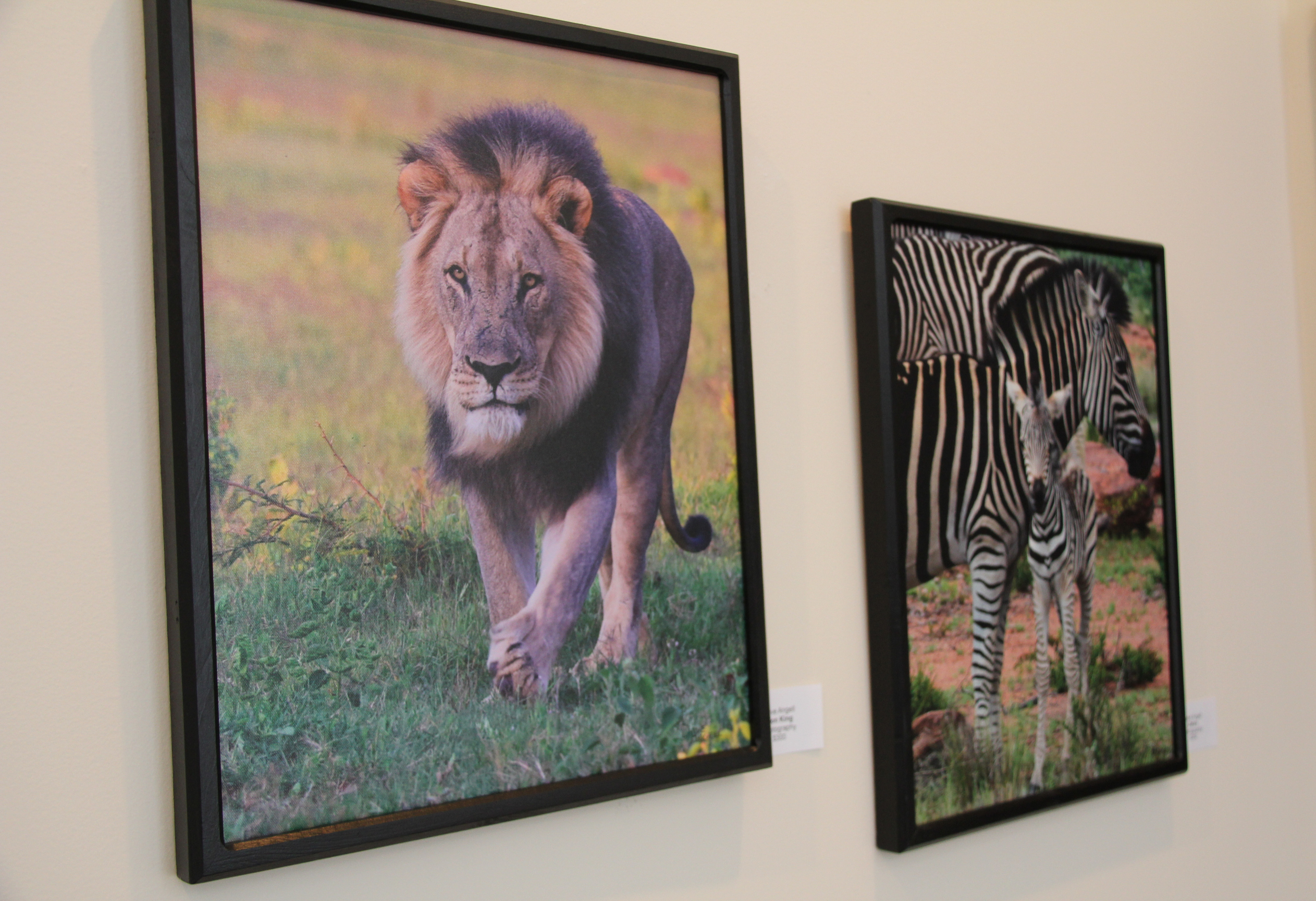
The images of Minneapolis-based travel photographer and writer Autumn Carolynn are displayed in another gallery. Studying the work of other photographers, especially one as talented as Autumn, helps me grow my skills, even if I’m not a world traveler. Her images take me to places I have never seen and never will. She expands my world through her photos and that, too, is an artful purpose.

This is an untitled acrylic and latex on canvas by Bethlehem Academy senior Tyler Hogate. (Minnesota Prairie Roots copyrighted photo October 2022)

In the final gallery, the art of selected students from Bethlehem Academy in Faribault is highlighted. I never fail to be impressed by the talent of these young people. I feel gratitude to their teachers, the PCA and others who support them in their creative pursuits. Now, more than ever, students need the arts as an outlet, a way to express themselves, a way to connect.

This shows a snippet of Ivan Whillock’s “He’s Late,” priced at $6,000. (Minnesota Prairie Roots copyrighted photo October 2022)

And now, more than ever in these unsettled times, we as a community, a state, a country, a world, need the arts.

FYI: The exhibit by artists featured here continues until November 12.

TELL ME: What do you appreciate about the arts?

© Copyright 2022 Audrey Kletscher Helbling
 

Fish art along the Mississippi in Monticello October 20, 2022

The Mississippi River in Monticello, MN. (Minnesota Prairie Roots copyrighted photo September 2022)

ALMOST ON A DAILY BASIS now I hear and read media reports about the Mississippi River, reportedly at its lowest level in a decade. Lack of rain led to this situation which is now causing shipping problems, concerns about drinking water supplies and issues with salt water creeping into the river.

Fish art along the Mississippi in Monticello. (Minnesota Prairie Roots copyrighted photo September 2022)

I need only look at lakes, rivers, streams and creeks in southern Minnesota to see how drought is affecting our waterways. Dry creek beds, exposed rock, clearly low water levels raise my concern.

Arrows on the public art list locations along the Mississippi. (Minnesota Prairie Roots copyrighted photo September 2022)

Some 270 miles to the north of Faribault in Itasca State Park, the Mississippi River begins. Like most Minnesotans, I’ve walked across the headwaters. The Mississippi starts as a narrow, knee-deep river that widens and deepens and flows 694 miles through Minnesota. It passes through communities like Bemidji (at its northern-most point), Brainerd, Little Falls, St. Cloud, Minneapolis, Hastings and many towns and cities in between before spilling into Iowa on its 2,350-mile journey to the Gulf of Mexico.

These lovely homes are next to the park by the river. (Minnesota Prairie Roots copyrighted photo September 2022)

Recently, on a return trip home from a family member’s lake cabin in the Brainerd Lakes area, Randy and I stopped for a picnic lunch at West Bridge Park in Monticello. On the northwest edge of the Twin Cities metro, this community hugs the Mississippi. The park, just off State Highway 25 by the river bridge, is easily accessible, but noisy with the steady drone of traffic.

Community members designed and painted the individual fish for this project. (Minnesota Prairie Roots copyrighted photo September 2022)

The creativity in these fish is unique, a reflection of the community. (Minnesota Prairie Roots copyrighted photo September 2022)

Another version of funky fish from community creators. (Minnesota Prairie Roots copyrighted photo September 2022)

Yet, even if not peaceful, the park is worth visiting. I discovered here a MontiArts Community Project, “The Funky Fish Sign.” Wooden fish cut-outs painted by community members are attached to the trunk of a dead oak as are wooden arrows crafted from old park benches. Those arrows list destinations and river miles from Monticello. To Lake Itasca, 443 river miles. To St. Paul, 43 river miles. To New Orleans, 1,776 river miles.

Public art posted on a dead oak removed from a local cemetery and “replanted” along the Mississippi River bank. (Minnesota Prairie Roots copyrighted photo September 2022)

This riverside fish tree meets MontiArts’ goal of “using the arts to build community.” This truly was a community project with residents, interns and city employees working together to create public art that connects Monticello to the Mississippi from beginning to end.

I especially like the buffalo plaid on this fish. (Minnesota Prairie Roots copyrighted photo September 2022)

But this is about more than a river and geography. In an online video about the project, I learned that the variety in the painted fish represents the differences in people. We are each unique.

From afar, “The Funky Fish Sign” blends into the riverside landscape. (Minnesota Prairie Roots copyrighted photo September 2022)

As individual as we are, though, we are collectively all residents of Earth. We are tasked with caring for natural resources like water, like the mighty Mississippi. This beautiful, scenic, powerful waterway is vital to our economy, vital to our water supply, vital to our leisure, our enjoyment, and, in Monticello, to connecting creativity and community.

© Copyright 2022 Audrey Kletscher Helbling
 

Reflections on harvest from fields to art October 13, 2022

Harvesting, left, in a field along a gravel road near Dundas. (Minnesota Prairie Roots copyrighted photo October 2022)

DUST HANGS OVER THE LANDSCAPE like smoke. Hazy. The air dirty with debris kicked up by combines sweeping across corn and soybean fields in southern Minnesota. Harvest is well underway here as farmers bring in the season’s crops.

Trucks haul harvested crops from fields to bins and/or grain elevators. (Minnesota Prairie Roots copyrighted photo October 2022)

From back country gravel roads to the interstate, I’ve witnessed this scene unfolding before me in recent weeks. Combines chomping. Harvested corn and beans spilling into grain trucks.

Harvesting beans. (Minnesota Prairie Roots copyrighted file photo October 2022)

Farmers work all hours of the day and night in the rush to finish gathering crops before winter arrives. In the dark of night, bright headlights spotlight fields. In daylight, sunlight filters through clouds of dust.

A grain truck pulls into a farmer’s grain drying and storage complex. (Minnesota Prairie Roots copyrighted photo October 2022)

Harvest is part of my DNA by having been raised on a southwestern Minnesota crop and dairy farm. Decades removed from the land, I still take notice of the harvest. The smell. The hues. The hurry. I understand this season in rural Minnesota.

“Harvest” by Raymond Jacobson. (Minnesota Prairie Roots copyrighted photo October 2022)

In nearby Northfield, I recently happened upon a bronze sculpture, “Harvest,” which had gone unnoticed by me. It’s been there since 2008 at Sesquicentennial Legacy Plaza along the Cannon River, near the post office, near Bridge Square. In all my visits to Northfield, to the Riverwalk area, I missed this public art created by Raymond Jacobson.

Close-up details of the wheat incorporated into “Harvest.” (Minnesota Prairie Roots copyrighted photo October 2022)

The historic Ames Mill along the Cannon River. (Minnesota Prairie Roots copyrighted photo October 2022)

An interpretation of a stone grist mill for grinding wheat into flour is included in the sculpture. (Minnesota Prairie Roots copyrighted photo October 2022)

It’s beautiful, fitting for a community rooted in agriculture. The 3,000-pound sculpture symbolizes Northfield’s heritage of wheat farming and milling. Just across the river sits the Ames Mill, where the gristmill in the late 1860s produced 150 barrels of wheat daily.

Malt-O-Meal was a major funder for the sculpture. (Minnesota Prairie Roots copyrighted photo October 2022)

In 1927, John Campbell of the Campbell Cereal Company took over the mill and began producing Malt-O-Meal hot cereal. Today Post Consumer Brands owns the mill and still makes that hot cereal. Dry cereal is manufactured at a nearby production facility. Many days the scent of cereal wafts over Northfield.

Harvested wheat and a plowed field cast into bronze. (Minnesota Prairie Roots copyrighted photo October 2022)

All of this—the smell of cereal, the “Harvest” sculpture, the historic Ames Mill—reminds me of the importance of agriculture in our region. It reminds me, too, of my rural roots. I am grateful for my farm upbringing. I am grateful, too, for those who today plant, tend and harvest crops. They are essential to our economy, feeding the world, providing raw product.

Wheat stalk details on an informational plaque which is nearly impossible to read due to weathering of the writing. (Minnesota Prairie Roots copyrighted photo October 2022)

That this season of harvest is honored in a “Harvest” sculpture shows a deep appreciation for history, heritage and agriculture in Northfield. The public art gives me pause to reflect on inspiration in creativity. Today I celebrate the artistic interpretation of harvest displayed along the banks of the Cannon River.

© Copyright 2022 Audrey Kletscher Helbling
 

Faribault celebrates community on the first day of October October 2, 2022

Plenty of people turned out to sample chili in downtown Faribault Saturday afternoon. (Minnesota Prairie Roots copyrighted photo October 2022)

DOWNTOWN FARIBAULT PROVED a busy place Saturday afternoon. It was good to see people out and about on a sun mixed with clouds kind of first day of October.

Some chili makers got creative with their serving stations. (Minnesota Prairie Roots copyrighted photo October 2022)

Serving up “MARVEL-ous chili. (Minnesota Prairie Roots copyrighted photo October 2022)

MARVEL characters guard the chili. (Minnesota Prairie Roots copyrighted photo October 2022)

The Faribault Main Street Chili Cook-off drew me downtown to sample chili served outdoors in front of nonprofits and businesses and even on a street corner. For me the event was as much about socializing as tasting chili.

Chili servers get in the Halloween spirit. (Minnesota Prairie Roots copyrighted photo October 2022)

Food always brings community together. And the cook-off effectively does that. I saw people I haven’t seen in a long time. Staying connected matters to me.

Mayor Kevin Voracek flanked by city councilmen Peter Van Sluis, left, and Royal Ross converse and serve chili. (Minnesota Prairie Roots copyrighted photo October 2022)

Even the mayor made and served chili with city council members assisting. I appreciate their community involvement, this everyday kind of interacting. As I spooned the mayor’s chili, a woman praised the naming of a new city park as Fleckenstein Bluffs in honor of a long ago brewery. Hearing her positive comment encouraged me as I expect it did our elected officials.

An out-of-town team works on finding answers to clues during a scavenger hunt in Faribault. (Minnesota Prairie Roots copyrighted photo October 2022)

The all-around vibe along and off Faribault’s Central Avenue on Saturday felt positive, welcoming, inviting. When I observed groups of people in matching tees and carrying clipboards, I finally asked what they were doing. They were part of an invitation-only scavenger hunt, HÖDAG, through southern Minnesota. I welcomed them to Faribault and invited them to return and spend more time in our city.

Serving chili with a smile. (Minnesota Prairie Roots copyrighted photo October 2022)

I’m a firm believer in making others feel welcome with a smile, friendly words and encouragement to return to Faribault.

Tami Resler’s art. (Minnesota Prairie Roots copyrighted photo October 2022)
Johnnie Walker’s pottery. (Minnesota Prairie Roots copyrighted photo October 2022)

Pet portraits by Julie Fakler. (Minnesota Prairie Roots copyrighted photo October 2022)

After eating and greeting, I headed to the Paradise Center for the Arts and the annual South Central Minnesota Studio ARTour. There I not only viewed the work of six talented artists, but also got some camera first aid from Johnnie Walker, a photographer and potter. While at the Paradise, my zoom lens locked and Johnnie, who teaches photography at Shattuck-St. Mary’s School, offered to take a look. He couldn’t fix the sticky lens problem, but he semi-eased my mind and promised to reconnect with me about getting a different lens. I tend to panic if anything goes wrong with my camera gear given my limited knowledge of equipment. Johnnie’s kindness reaffirms for me that there are good, kind people in this world.

Spotted on the windshield of a jeep, identifying the owner as a scavenger hunt participant. (Minnesota Prairie Roots copyrighted photo October 2022)

The events in downtown Faribault on Saturday brought a whole lot of people together. To serve and sample chili. To converse and explore. To follow clues in a scavenger hunt. To showcase and appreciate art. But, mostly, to connect, to build a sense of, and an appreciation of, community. And that is how, from my perspective, the first day of October unfolded in historic downtown Faribault.

Outside the entrance to the Paradise Center for the Arts. (Minnesota Prairie Roots copyrighted photo October 2022)

FYI: The South Central Studio ARTour continues from 10 am – 5 pm Sunday, October 2, featuring 35 artists at 18 studios in Faribault, Northfield, Nerstrand and Farmington.

© Copyright 2022 Audrey Kletscher Helbling
 

Connecting, celebrating & more at Valley Grove Country Social September 21, 2022
Vehicles line the gravel driveway leading to the hilltop Valley Grove churches, rural Nerstrand, during the September 18 Country Social. (Minnesota Prairie Roots copyrighted photo September 2022)
A COUNTRY SOCIAL EVOKES an essence of history, of community celebration, of activities that hearken to a bygone era. The Valley Grove Country Social held on Sunday afternoon high atop a hill near Nerstrand Big Woods State Park fits that and beyond. This site, the location of two historic churches and an adjoining cemetery, marks one of my favorite places in rural Rice County for its history, natural beauty and peace.

Inside the stone church, now used for fellowship, folks grab refreshments, converse and view historical information and art. (Minnesota Prairie Roots copyrighted photo September 2022)
Among the newest additions to the stone church are four tapestries woven by Minneapolis artist Robbie LaFleur and reflective of Valley Grove. This one is titled “Pastor Quammen Skis between Parishes.” He was the longest serving pastor at the church. (Minnesota Prairie Roots copyrighted photo September 2022)
A vintage buggy adds another historic aspect to the Valley Grove Country Social. (Minnesota Prairie Roots copyrighted photo September 2022)

On this September afternoon, I delighted in an event that brings people together to celebrate Norwegian heritage and history, people and place, stories past and present, the arts, and, oh, so much more.

Bouquets and vintage photos edge window sills in the oldest church. (Minnesota Prairie Roots copyrighted photo September 2022)

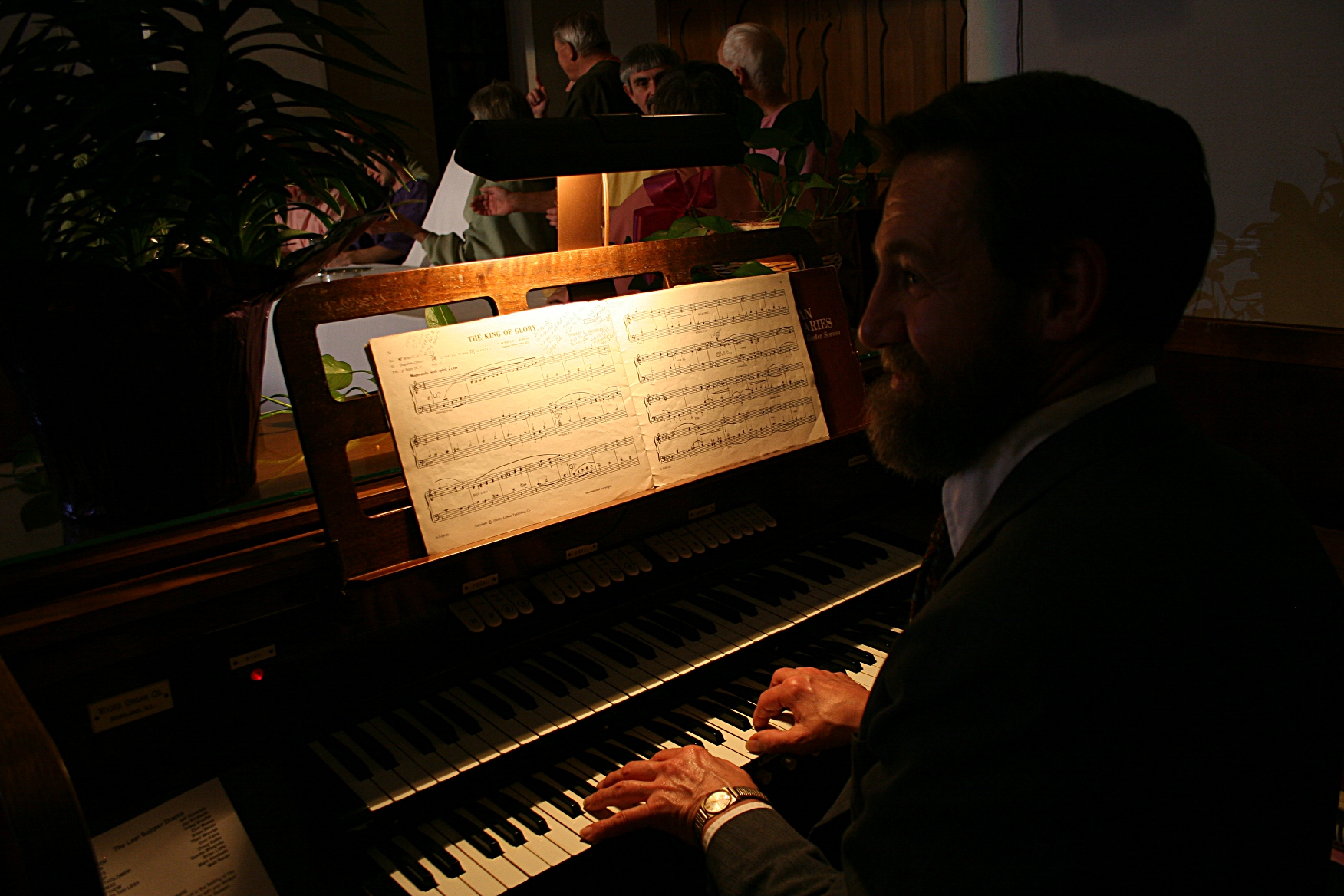
An organist and violinist play during a recital in the newer church. (Minnesota Prairie Roots copyrighted photo September 2022)

Horse-drawn wagon rides onto the prairie drew many passengers throughout the afternoon. (Minnesota Prairie Roots copyrighted photo September 2022)
Grinding corn as part of the hands-on learning opportunities. (Minnesota Prairie Roots copyrighted photo September 2022)
Northfield artist David Allen brought his brushes, watercolors and paper to paint on-site. (Minnesota Prairie Roots copyrighted photo September 2022)

From garden and prairie flowers tucked into Mason jars set atop window sills in the 1862 stone church to a recital inside the 1894 church to horse-drawn wagon rides to kids grinding corn to an artist painting, the scope of activities proved broad. There was something for everyone from the youngest to the eldest. Generations mingled, connected. One taught, the other learned.

From cemetery’s edge, the open prairie. (Minnesota Prairie Roots copyrighted photo September 2022)
Rope making, a nod to Valley Grove’s agrarian roots, was part of the Country Social. (Minnesota Prairie Roots copyrighted photo September 2022)
All ages were drawn to these two goats. (Minnesota Prairie Roots copyrighted photo September 2022)

To observe, to converse, to listen, to feel, to experience all of this imprints upon my soul gratitude for those who know this place, this Valley Grove, is worth preserving and sharing. Although I hold no personal connection here, I feel connected. It is my faith, my love of the land, especially the surrounding prairie and farmland, and the quiet of this remote rural location which cause me to feel comfortably at home, at peace.

One of David Allen’s paintings of Valley Grove. (Minnesota Prairie Roots copyrighted photo September 2022)

If you’ve never visited Valley Grove and live near enough to tour, then do. I’ve been here many times to walk the cemetery and grounds, to hike through the prairie, even once sitting on the front steps of the wooden church for a picnic lunch. The churches are locked when not open for events or special services like a wedding or Christmas Eve worship.

A musician performs with the group Hutenanny under the oak trees in the cemetery.

Still, whether inside or outside the two churches, a sense of the past prevails. Gravestone after gravestone bears the names of Norwegian immigrants and their descendants. Study the markers and stories begin to emerge, whether real or imagined. I can only imagine the joys and sorrows shared here.

Toys of yesteryear were available to try. (Minnesota Prairie Roots copyrighted photo September 2022)

Valley Grove is about more than a place where historic churches stand next to a cemetery. It is a gathering spot for those who are celebrating, those who are grieving, those who are remembering and, on this afternoon of a Country Social, a place of connecting with community.

Please check back for more photos from the Valley Grove Country Social. And click here to read my first post from the event, a personal piece about a young man named Bjorn.

© Copyright 2022 Audrey Kletscher Helbling