Shoppers peruse the RCHS Fall Flea Market. (Minnesota Prairie Roots copyrighted photo September 2022)
SATURDAY MORNING FOUND ME wandering among vendors at the Rice County Historical Society Fall Flea Market in Faribault. It was, as always, an enjoyable event, marked by conversations with friends I haven’t seen in awhile, conversations with vendors and reflecting on the past.
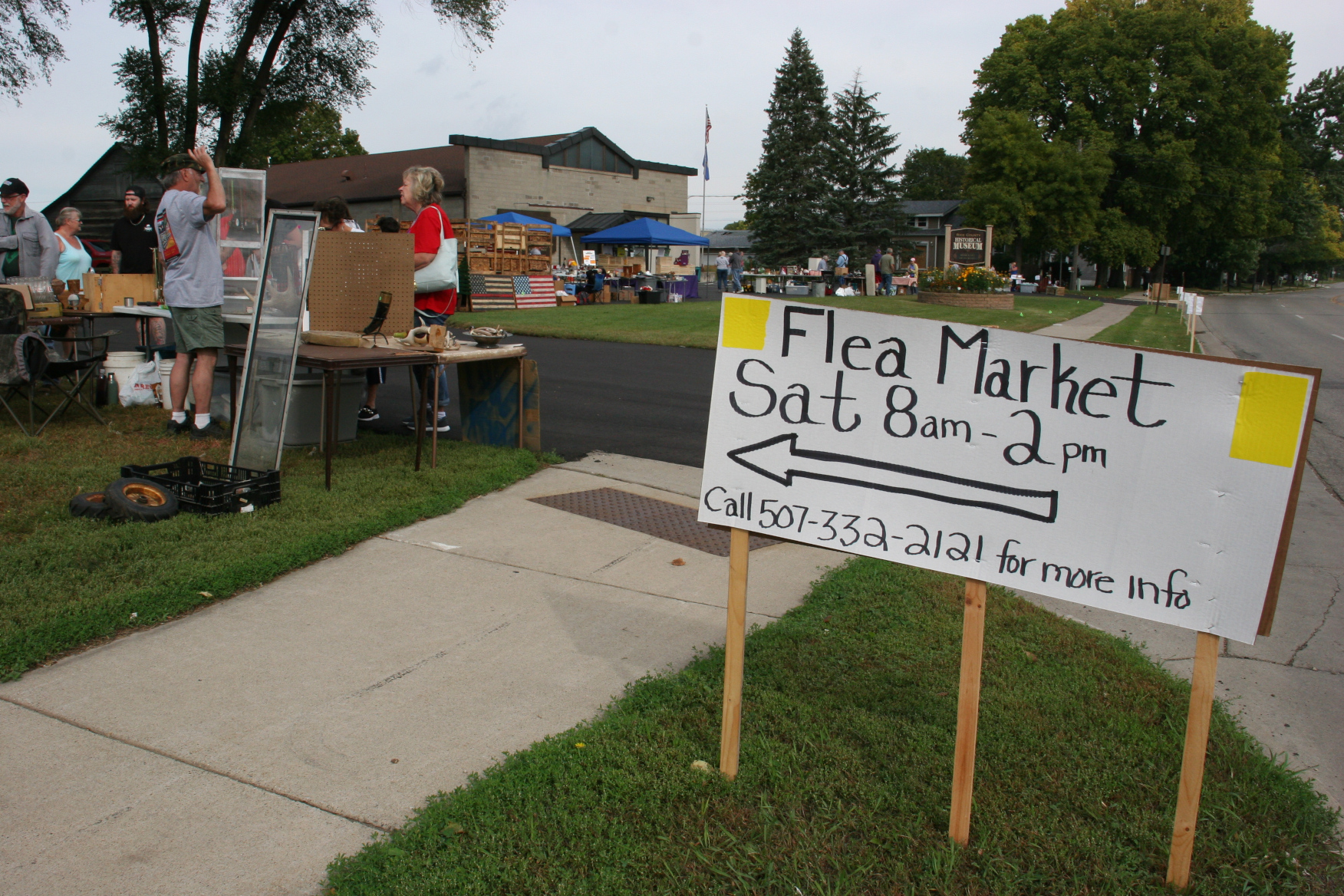
A handwritten sign along Second Avenue points to the flea market in the parking lot and on the grounds of the RCHS. (Minnesota Prairie Roots copyrighted photo September 2022)
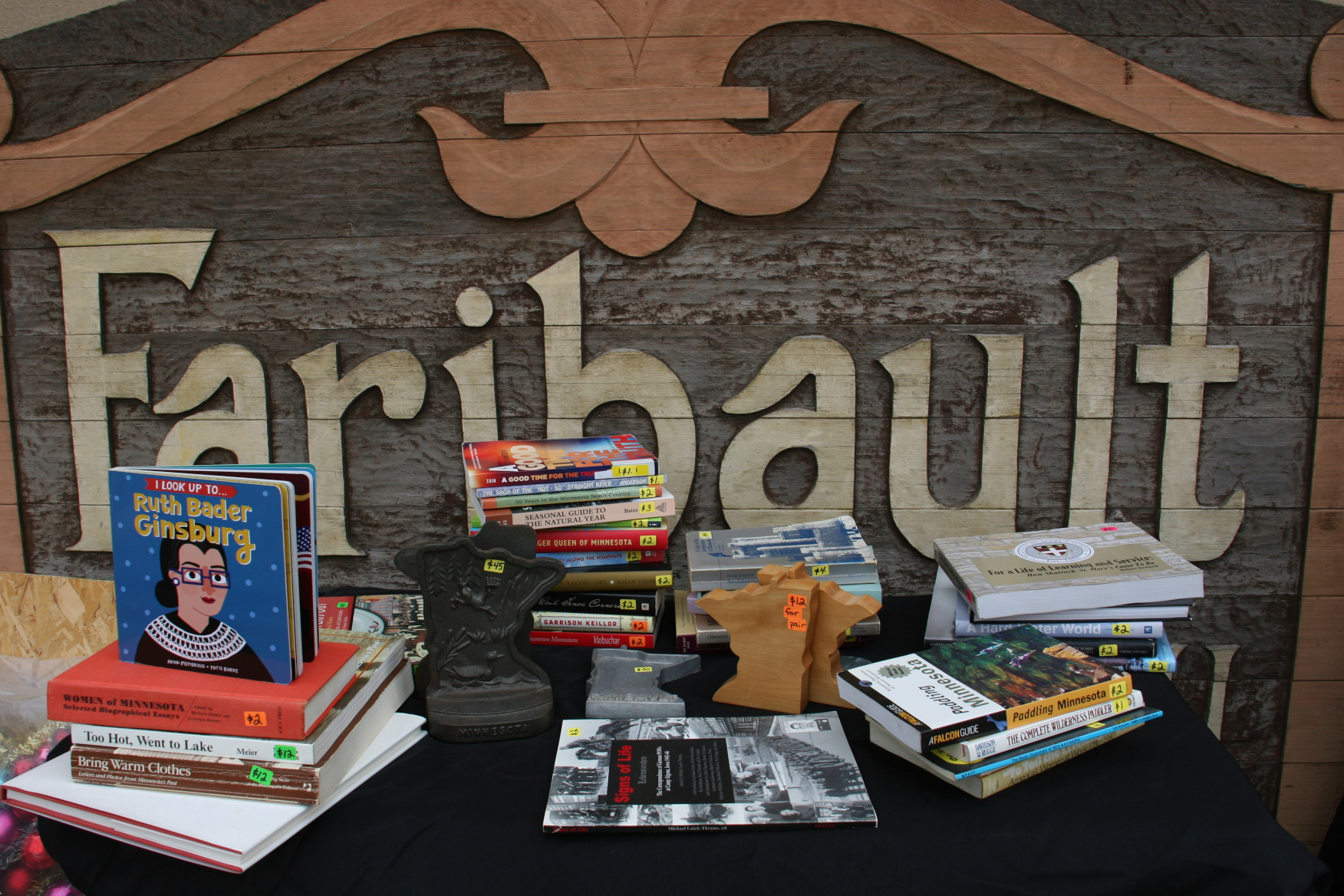
A RCHS Faribault sign provides the backdrop for a vendor’s book display themed primarily to Minnesota. (Minnesota Prairie Roots copyrighted photo September 2022)
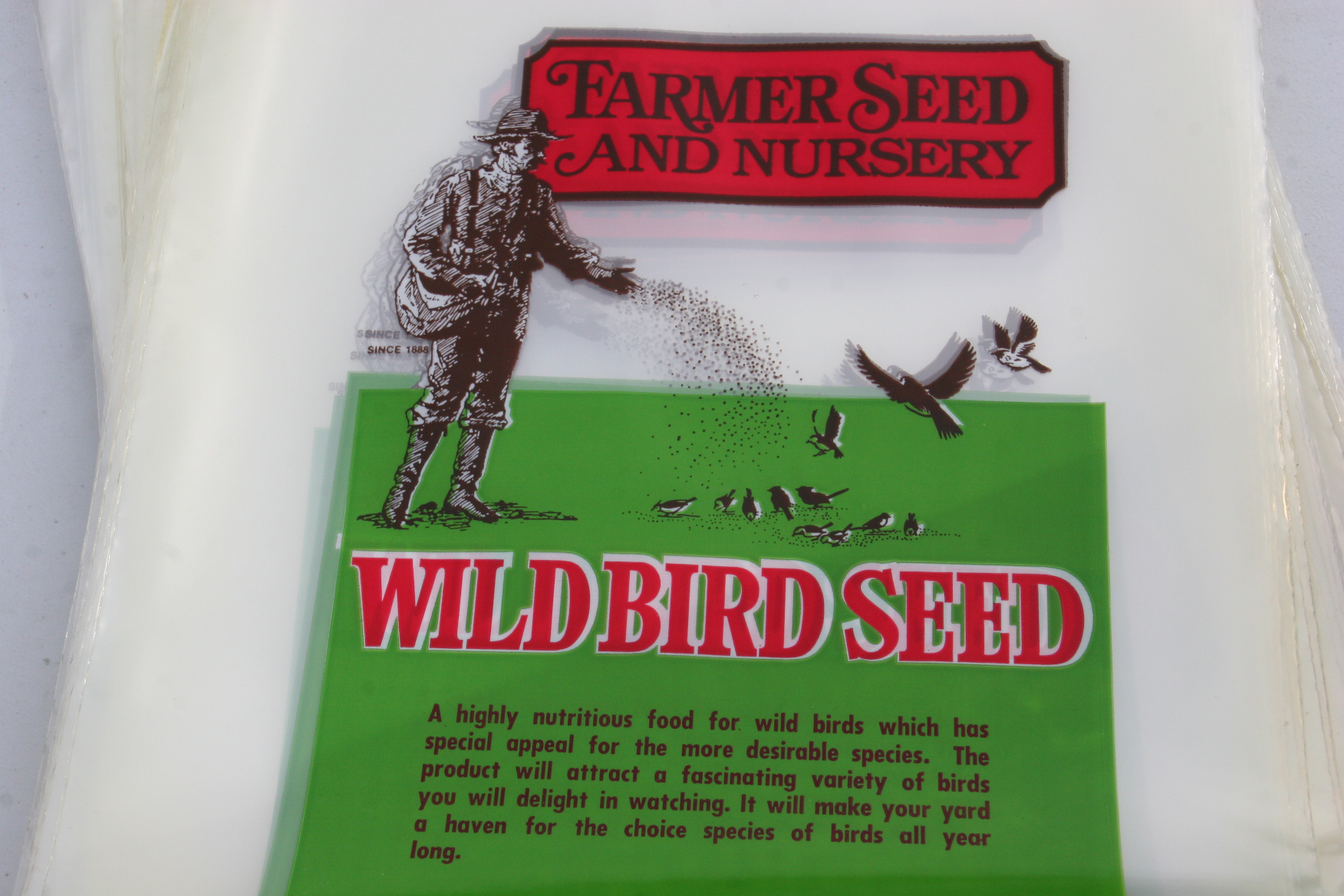
One vendor was giving away these plastic bags from the now closed Farmer Seed & Nursery in Faribault. (Minnesota Prairie Roots copyrighted photo September 2022)
Really, this is what local gatherings are all about for me. They’re about community and connecting, about embracing and appreciating this place I call home.
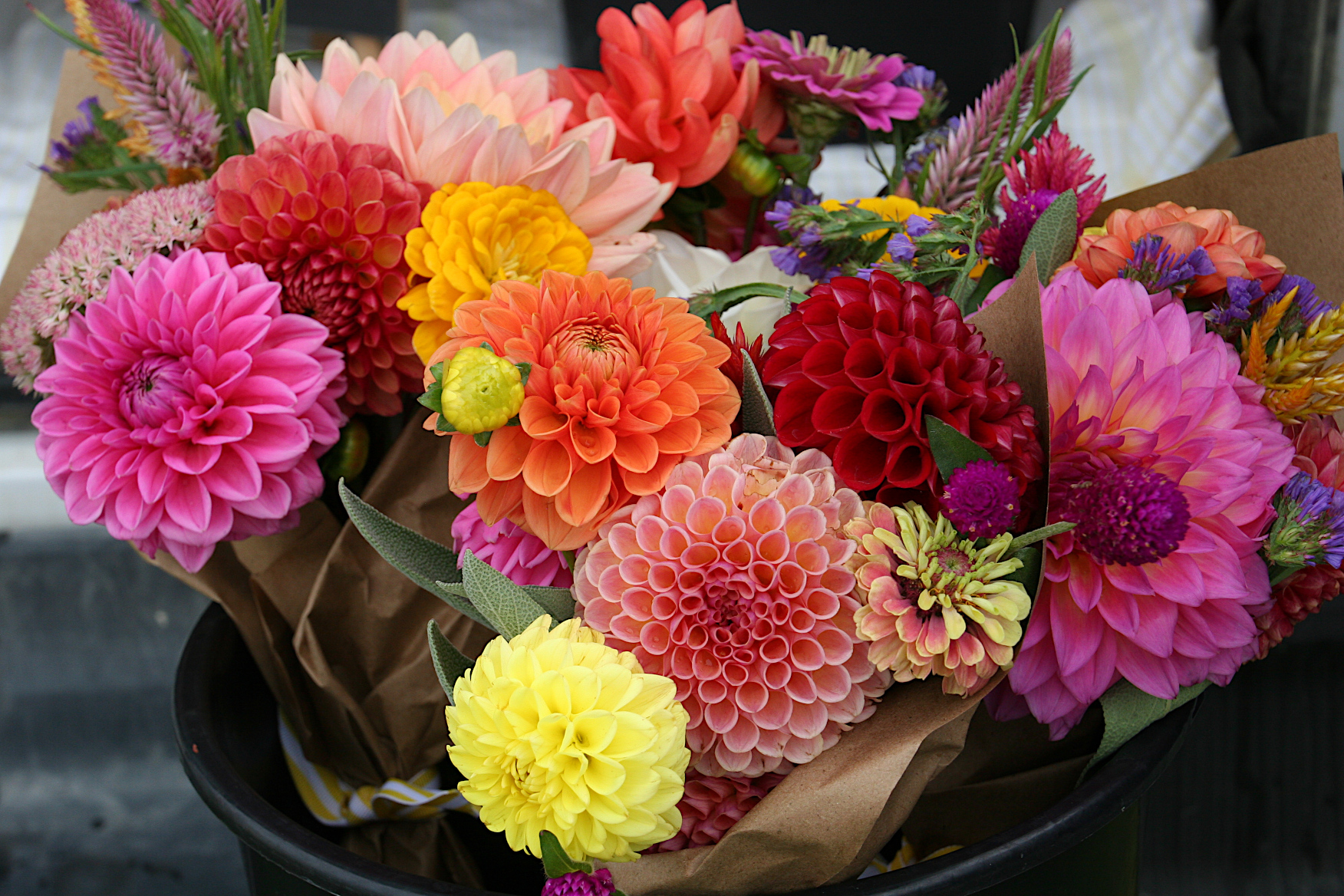
Beautiful bouquets from Erin’s Acre. (Minnesota Prairie Roots copyrighted photo September 2022)
I was especially delighted to find, among all the vendors of miscellaneous merchandise, several artists. That includes Erin Sellner Honken of Erin’s Acre at Honken Farms. Erin creates with flowers she grows, tends, harvests and arranges into stunning bouquets for CSA subscriptions and special events. With an abundance of flowers right now, she decided to do a pop-up sale at the flea market featuring $10 dahlia mixed bouquets.
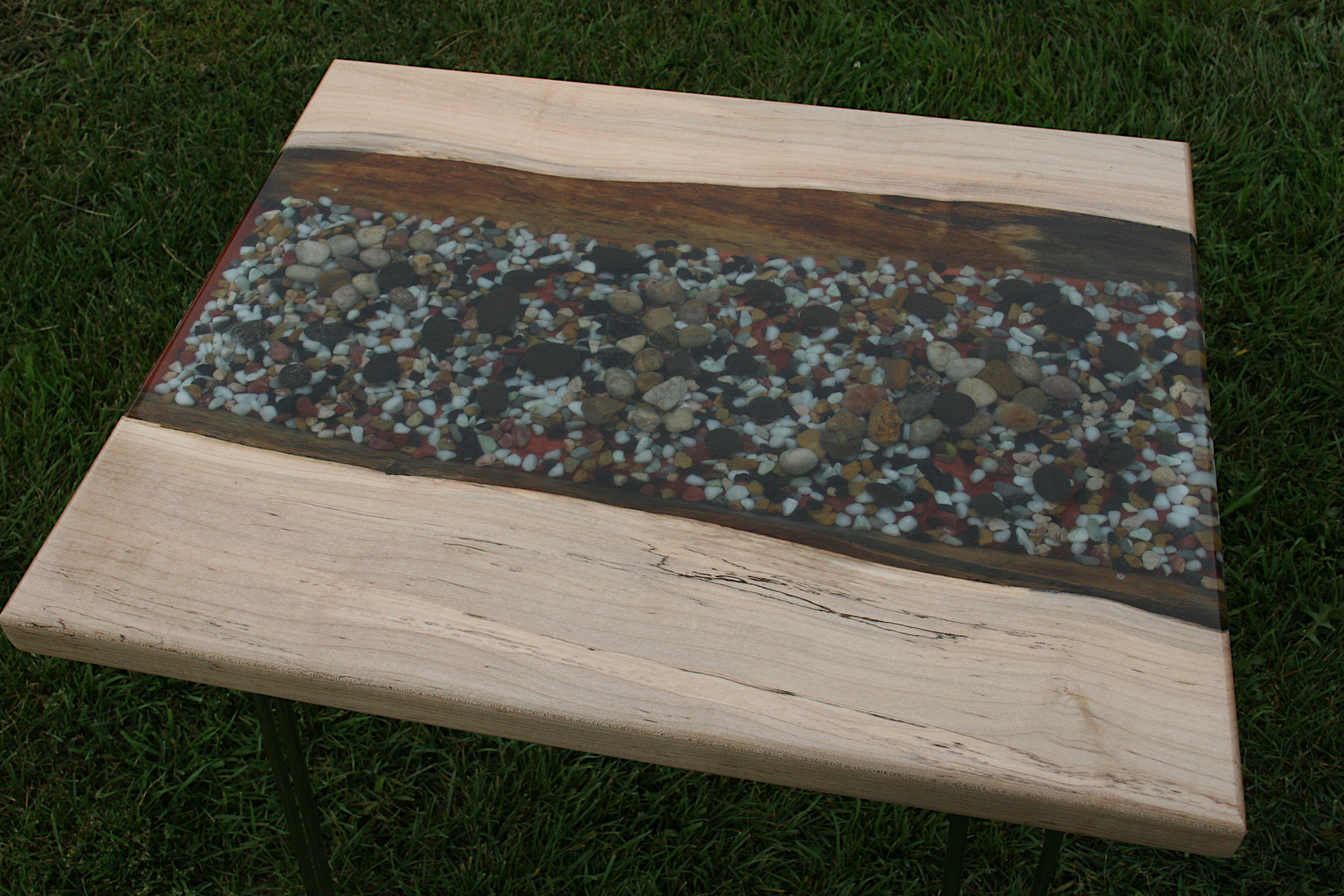
The stunning “river” table by JS Woodcrafts. (Minnesota Prairie Roots copyrighted photo September 2022)
Just down the way by the historic schoolhouse, I discovered Jeremy of JS Woodcrafts. It was his “river” table which drew my attention and admiration. If I could afford the $500 price tag, this maple top table with stones and pebbles epoxied in the middle like a river, would be mine. Love, love, love this work of art.
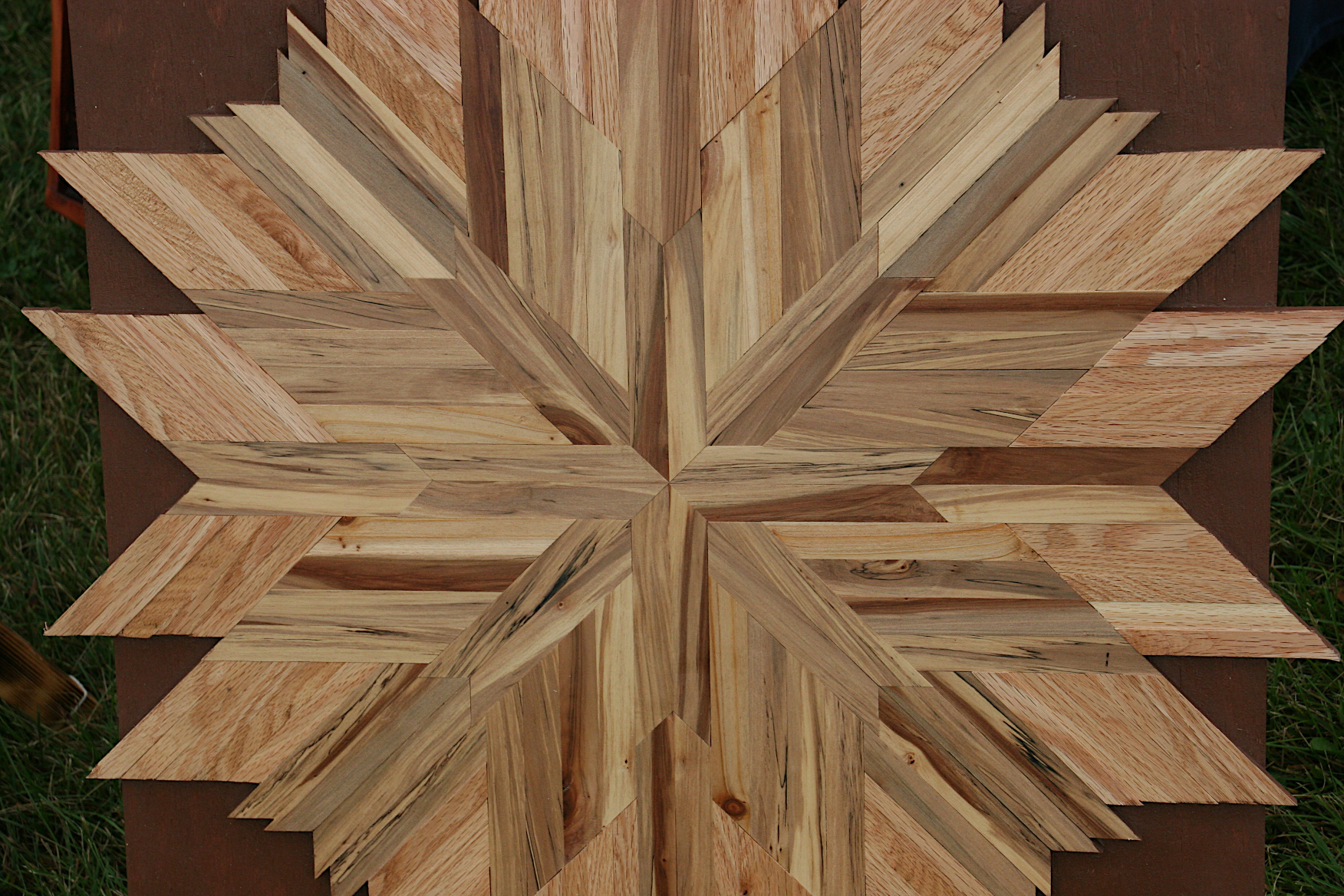
Spanky’s Woodshed art made from pallets. (Minnesota Prairie Roots copyrighted photo September 2022)
John “Spanky” St. Clair of Spanky’s Woodshed also specializes in woodcrafting. I learned that he uses pallets and aged barn wood to create. Anyone who recycles to create earns my praise.
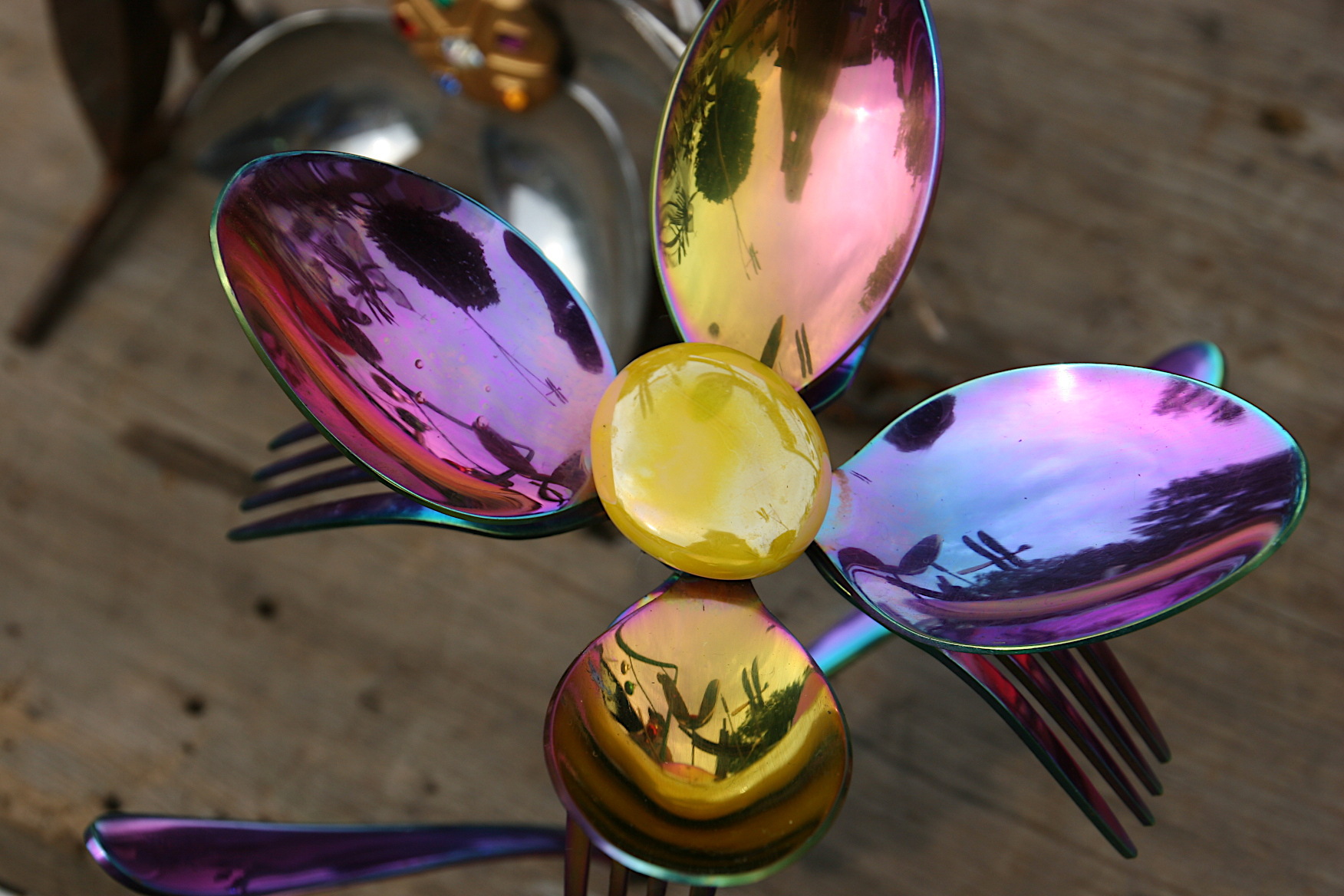
A flower created by recycling spoons and forks. (Minnesota Prairie Roots copyrighted photo September 2022)
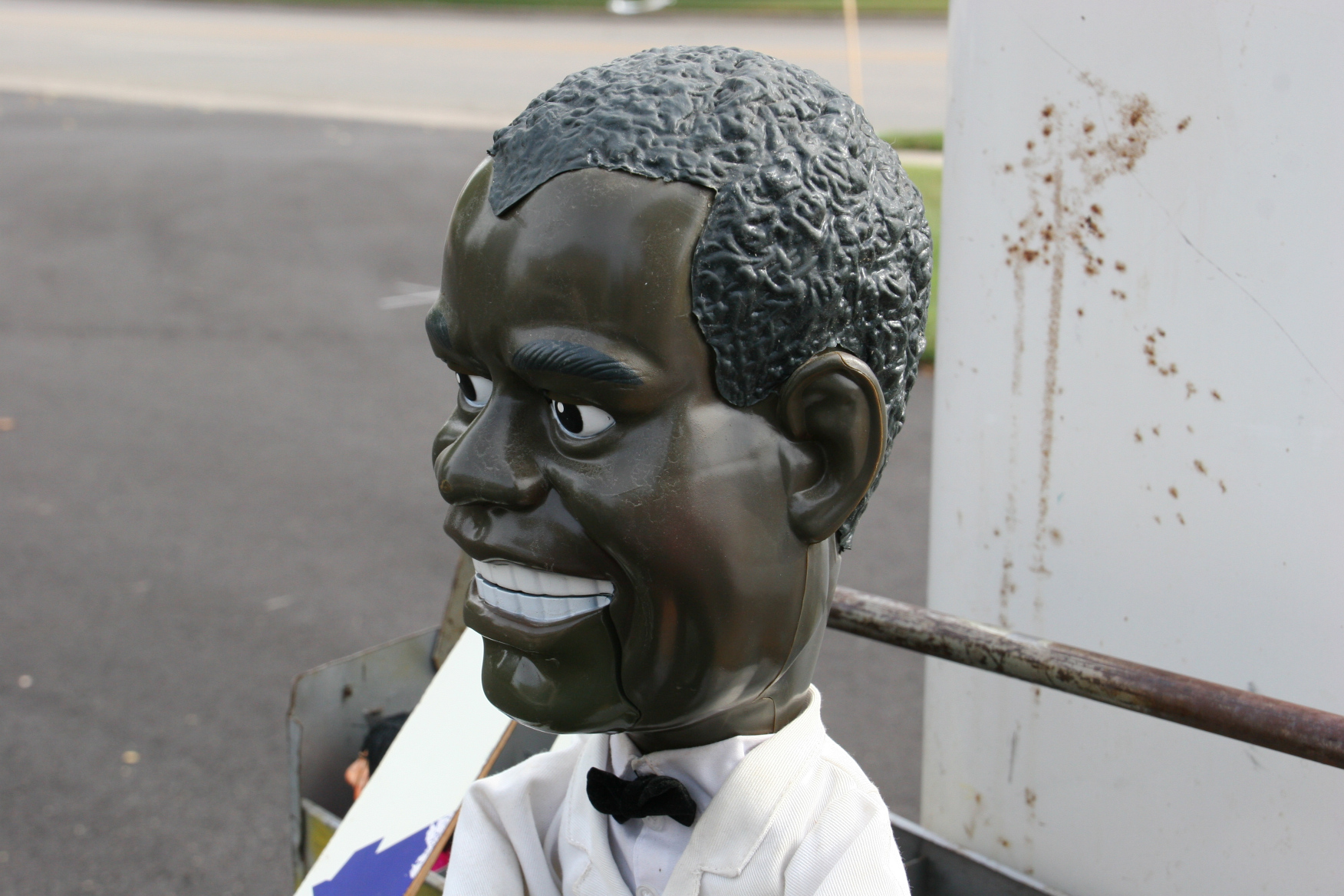
An eye-catching Louie Armstrong. (Minnesota Prairie Roots copyrighted photo September 2022)
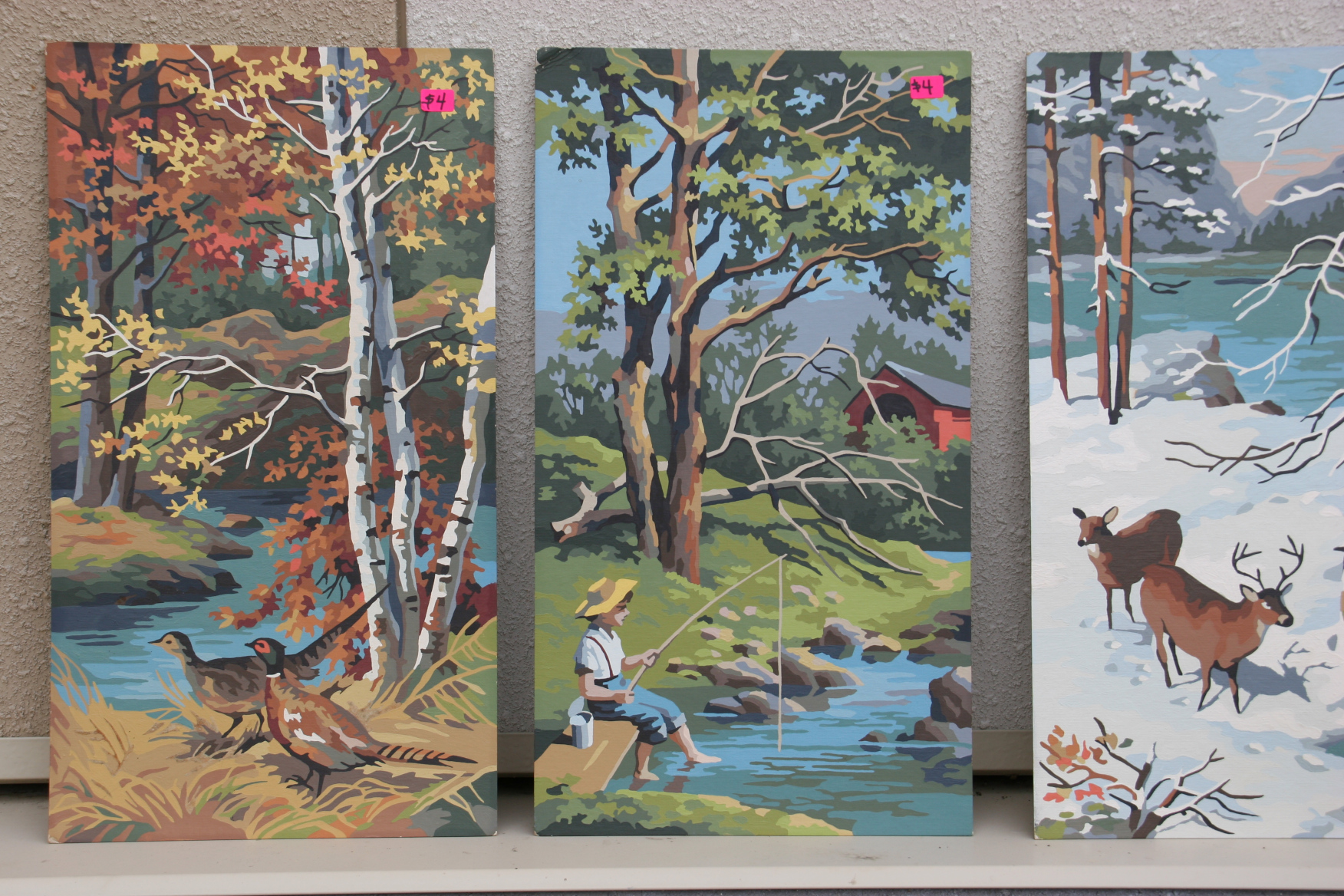
I almost bought the pheasant paint-by-number, one of a trio of paintings. (Minnesota Prairie Roots copyrighted photo September 2022)
I found more art in spoon flowers, in a Louie Armstrong figure, in paint-by-number paintings, in an endless array of merchandise.
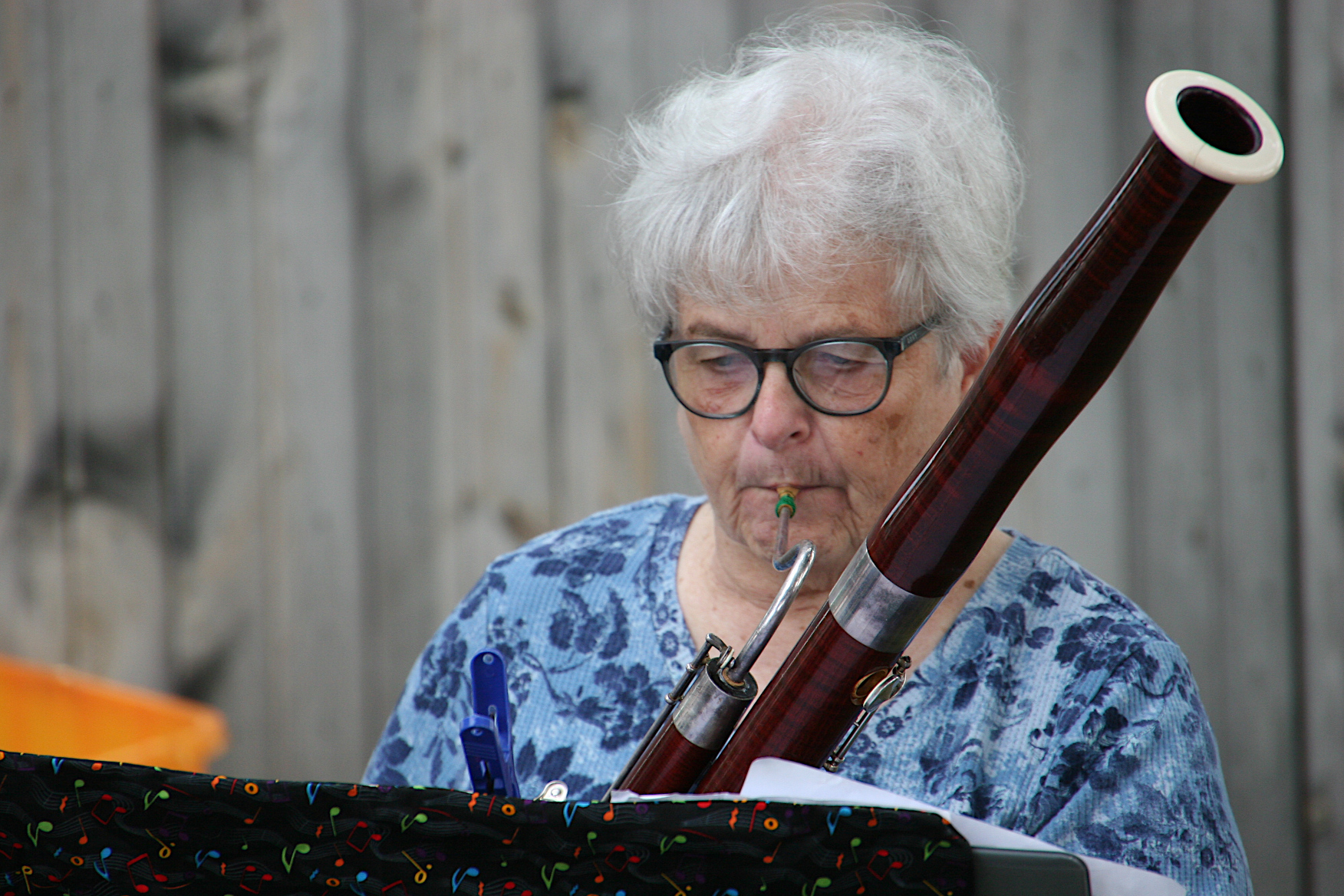
Playing a woodwind in A Fun Lil’ Band. (Minnesota Prairie Roots copyrighted photo September 2022)
Propped against the barn near the band (seemingly listening), cut-outs of Ed and Frank, spokesmen for Bartles & Jaymes winecoolers. (Minnesota Prairie Roots copyrighted photo September 2022)
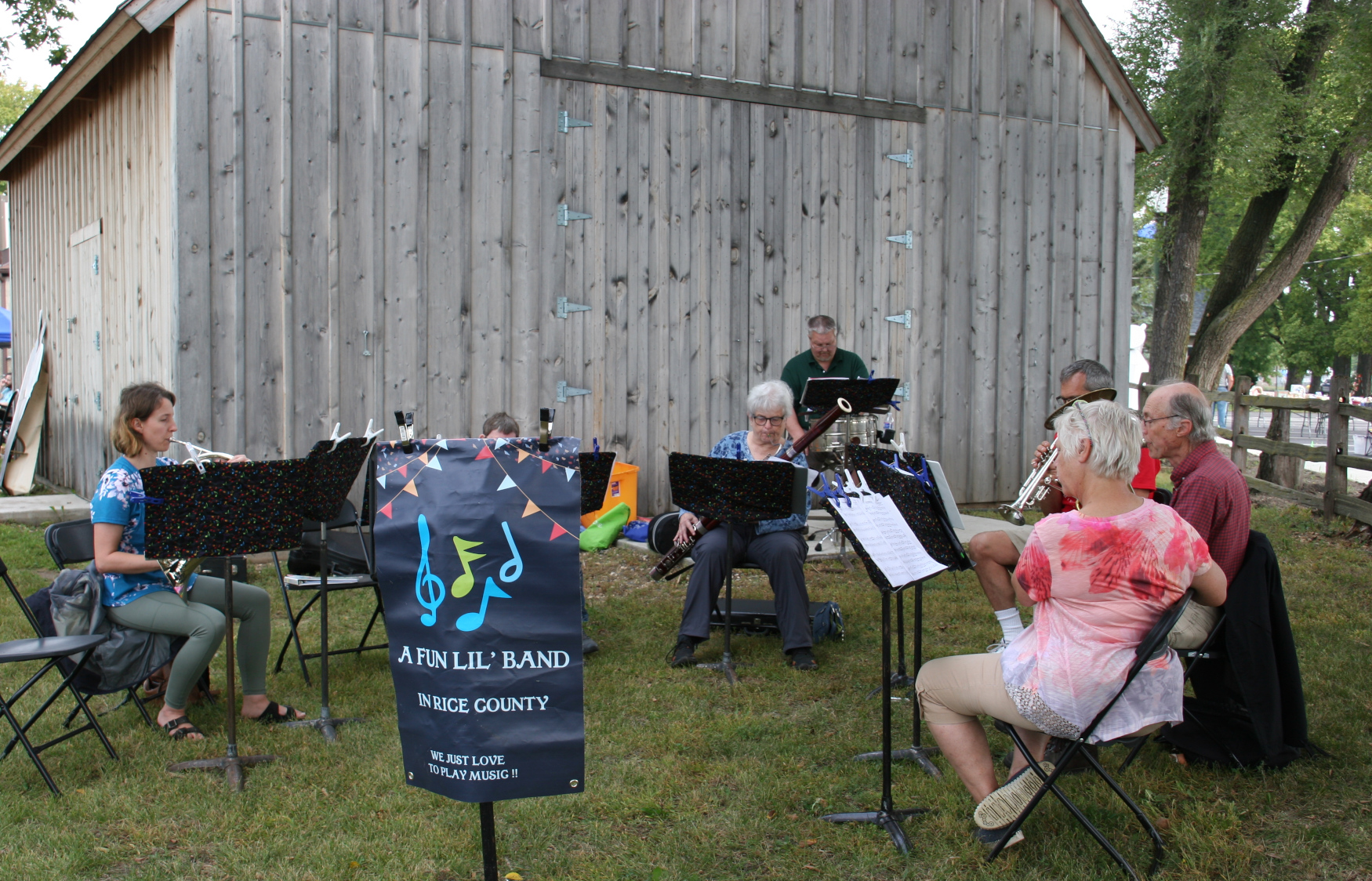
The band that loves to make music. (Minnesota Prairie Roots copyrighted photo September 2022)
And while I walked I heard music rising from A Fun Lil’ Band in Rice County with a sign declaring WE JUST LOVE TO PLAY MUSIC!! Their music added an extra touch of joy to the morning market.
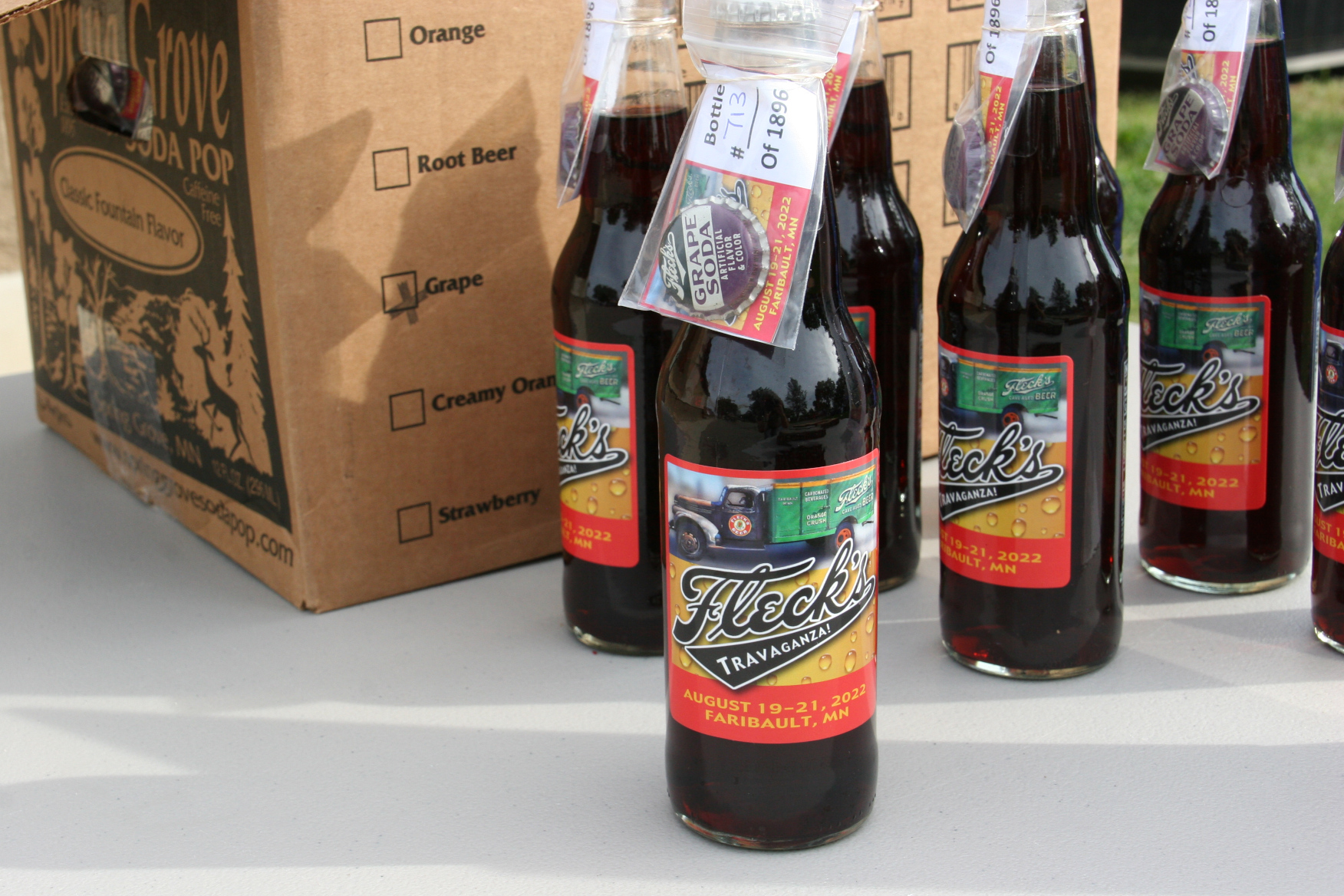
The RCHS was selling collector limited edition bottles of Fleck’s grape soda. (Minnesota Prairie Roots copyrighted photo September 2022)
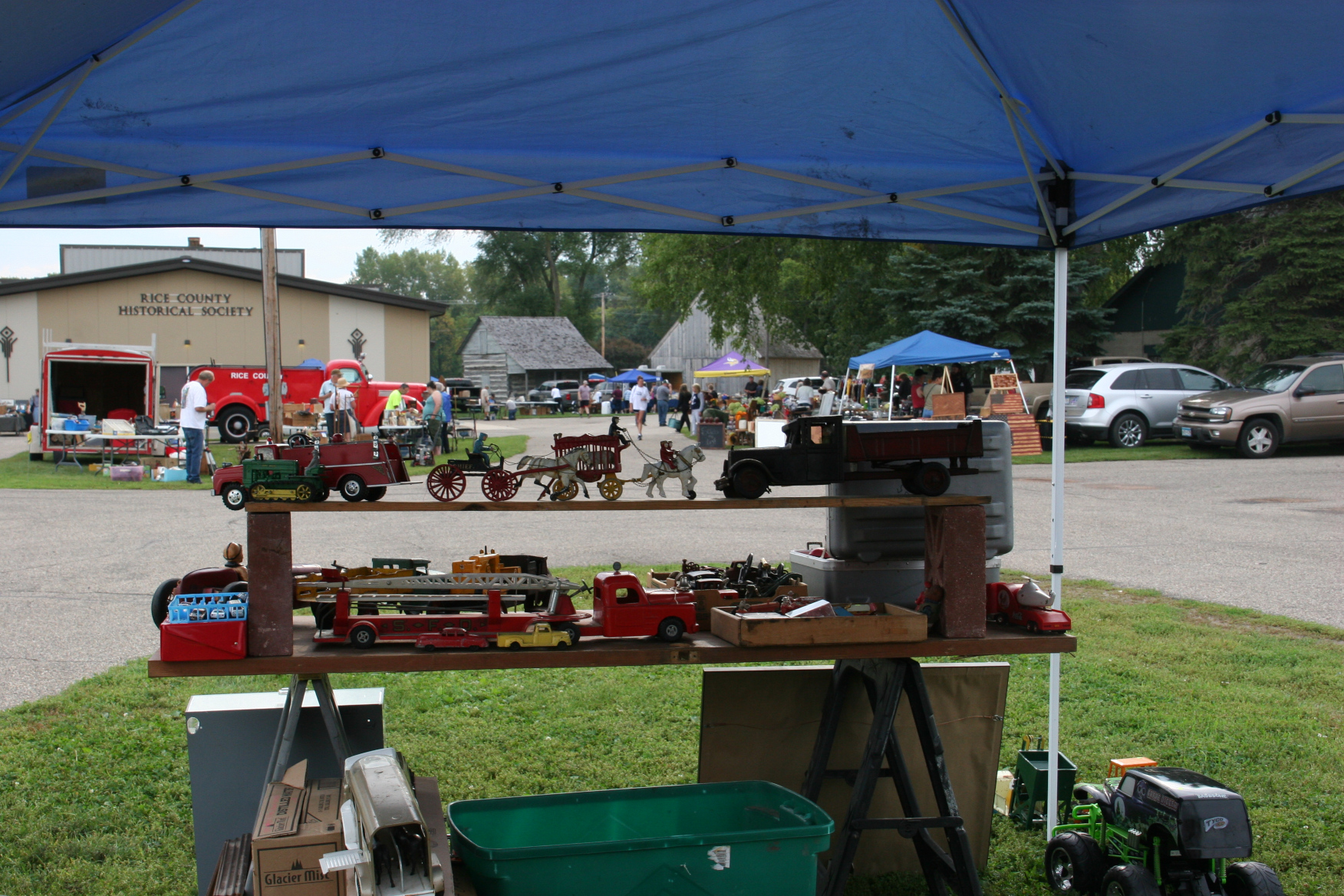
A view through a vendor’s booth featuring old toys. (Minnesota Prairie Roots copyrighted photo September 2022)
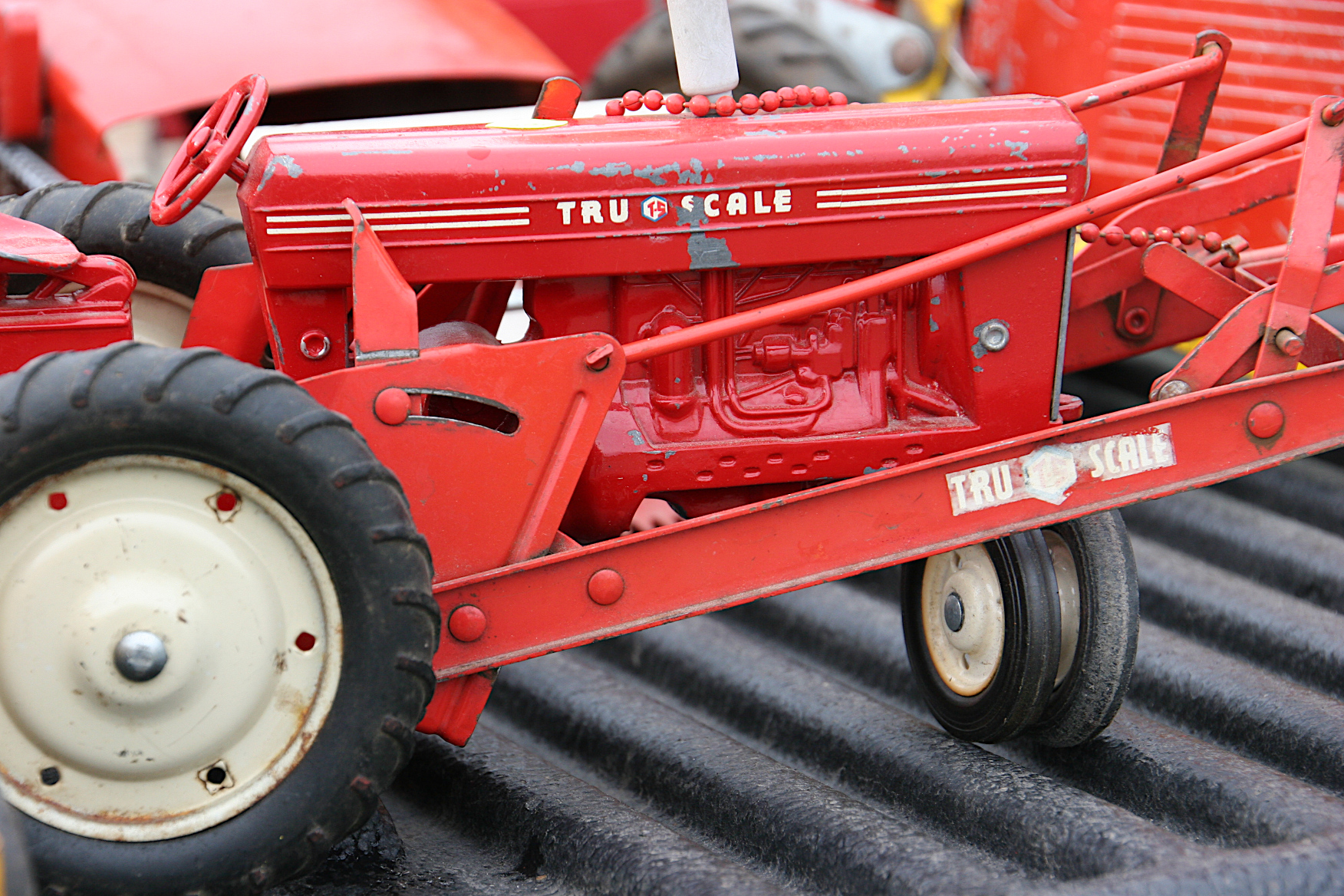
A vintage toy tractor reminded me of the farm toys I played with as a child. (Minnesota Prairie Roots copyrighted photo September 2022)
This event is a fundraiser for the Rice County Historical Society. But history is also very much a part of the market in aged and vintage merchandise vended. I reminisced over old farm toys, a baby stroller, a yellow Pyrex mixing bowl. I picked up a few items, pondering whether I should buy, but, in the end, held steady in my determination not to acquire more stuff. I’m at that age…
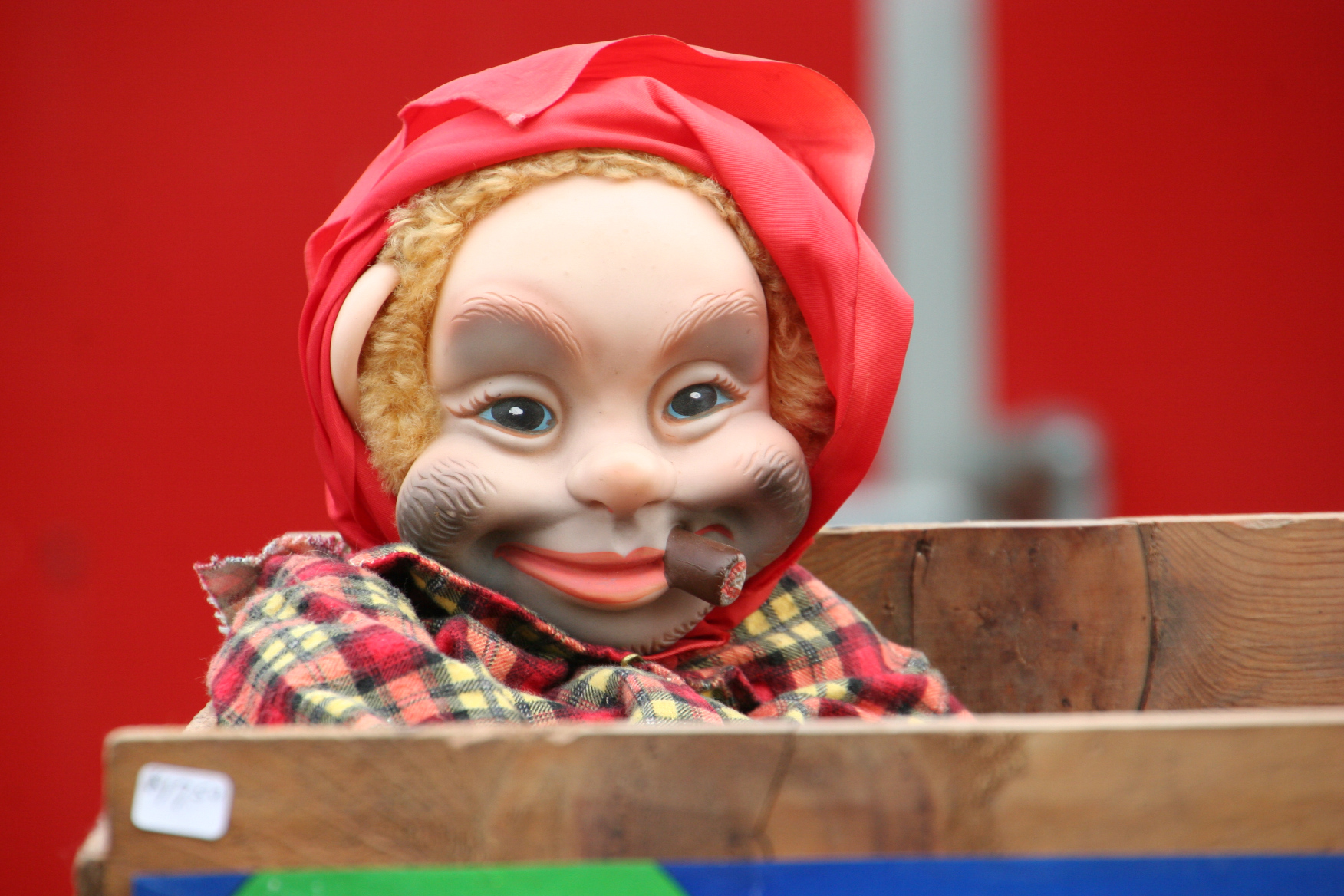
This colorful character caught my attention. (Minnesota Prairie Roots copyrighted photo September 2022)
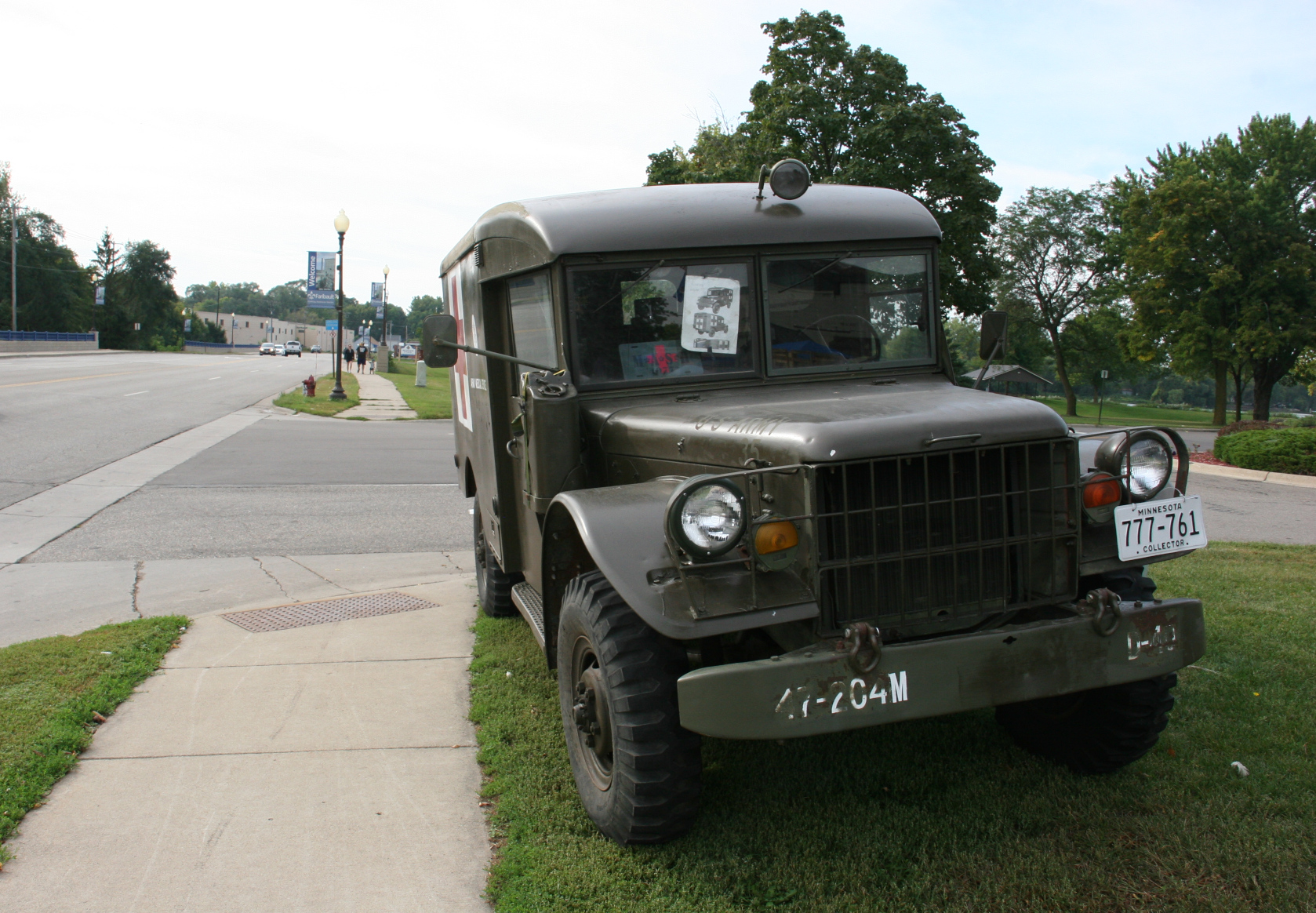
Parked along Second Avenue at the RCHS Fall Flea Market. (Minnesota Prairie Roots copyrighted photo September 2022)
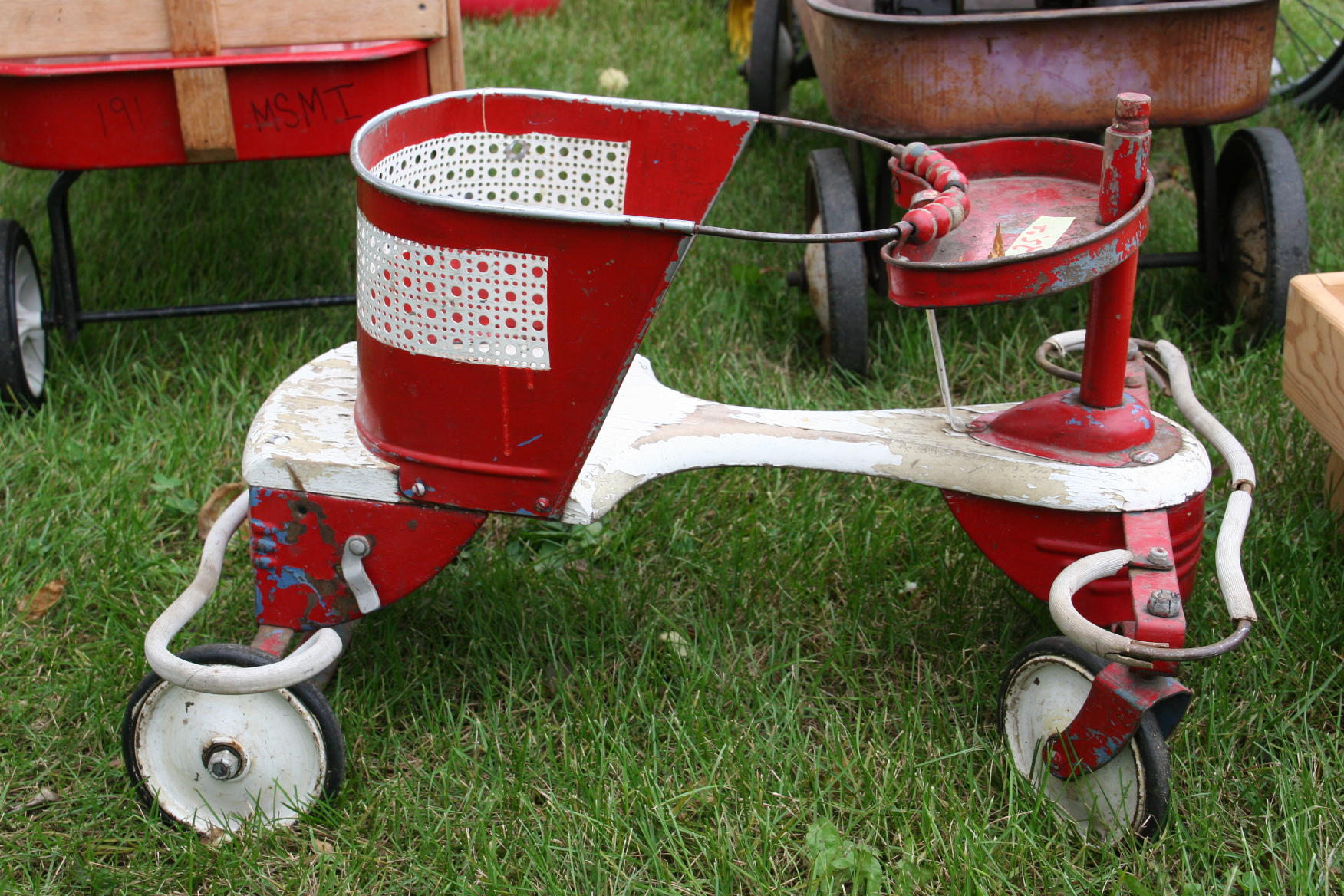
I was pushed in a stroller like this, except the stroller was blue. (Minnesota Prairie Roots copyrighted photo September 2022)
Instead, I collect with my camera, gathering images to tell a story, to share this market, to showcase the works of creatives, to express my appreciation for my community, this place I’ve called home for 40 years.
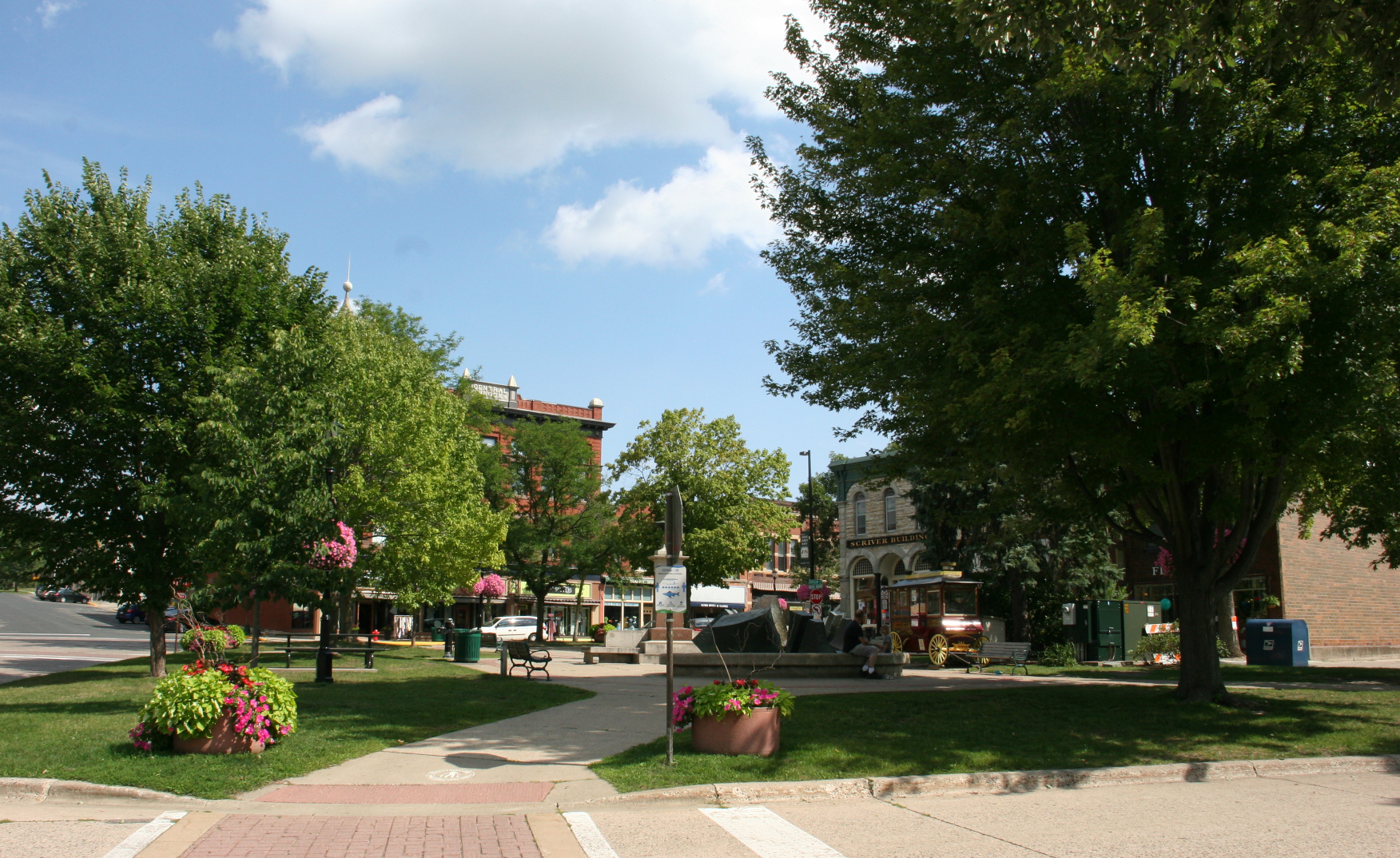
An overview of Bridge Square looking toward Division Street. (Minnesota Prairie Roots copyrighted photo August 2022)
BRIDGE SQUARE IN THE HEART of historic downtown Northfield holds a yesteryear appeal as a long-time community gathering spot along the Cannon River. Today its purpose remains as relevant as ever. I’ve observed festivals and concerts here, focused events like Earth Day and the Riverwalk Market Fair, read poetry here, heard music, watched college students chalk messages onto concrete. Individuals, too, pause here to enjoy the fountain sculpture and other art, to picnic, to simply embrace this beautiful spot.
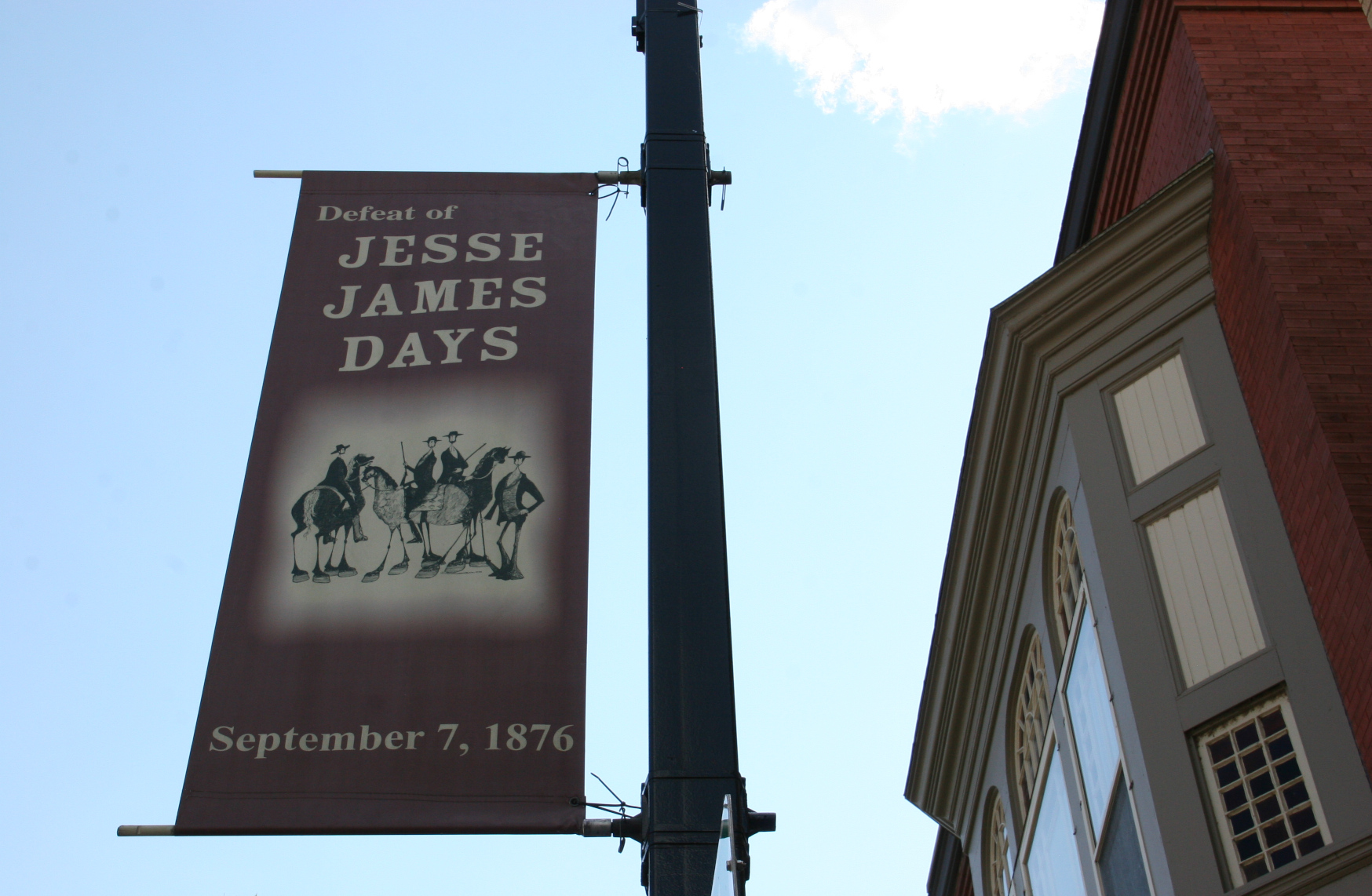
A banner in downtown Northfield promotes the community’s annual celebration. (Minnesota Prairie Roots copyrighted photo August 2022)
This park centers Northfield, home to many home-grown shops and eateries and best-known perhaps for the September 7, 1876, attempted robbery of the First National Bank by the James-Younger Gang. This week Northfield honors the long ago townspeople and a heroic bank cashier who stood up to the outlaws. The town will buzz with activities and people, all here to celebrate Defeat of Jesse James Days. That runs September 7-11.
Weeks before this event I was in Northfield, first touring the Northfield Cemetery to view the gravesites of bank employee Joseph Lee Heywood and Swedish immigrant Nicolaus Gustafson, both shot and killed by the outlaws. Gustafson, at the time of the raid, was vending vegetables in, I believe, current day Bridge Square. The First National Bank is located around the corner.
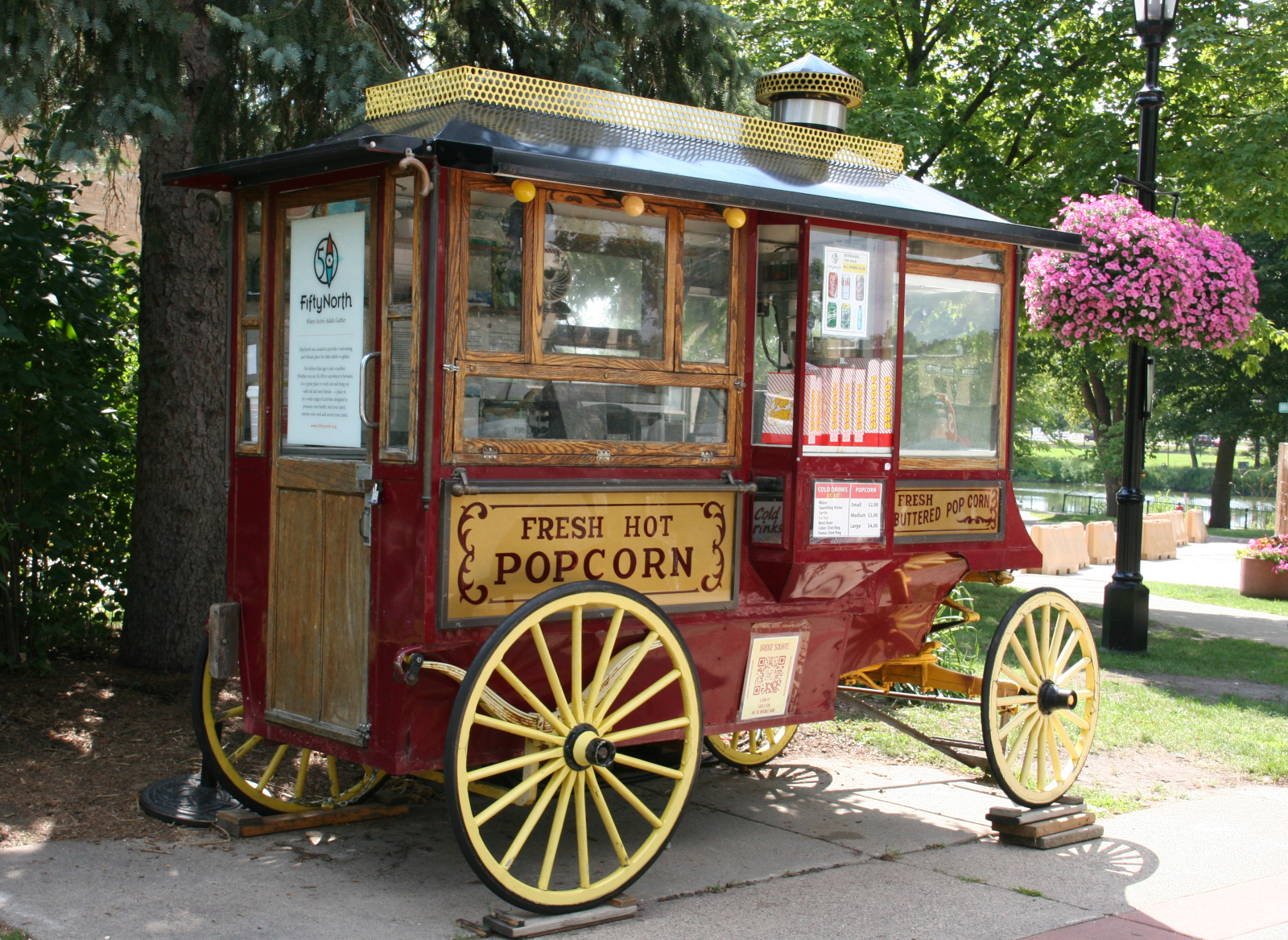
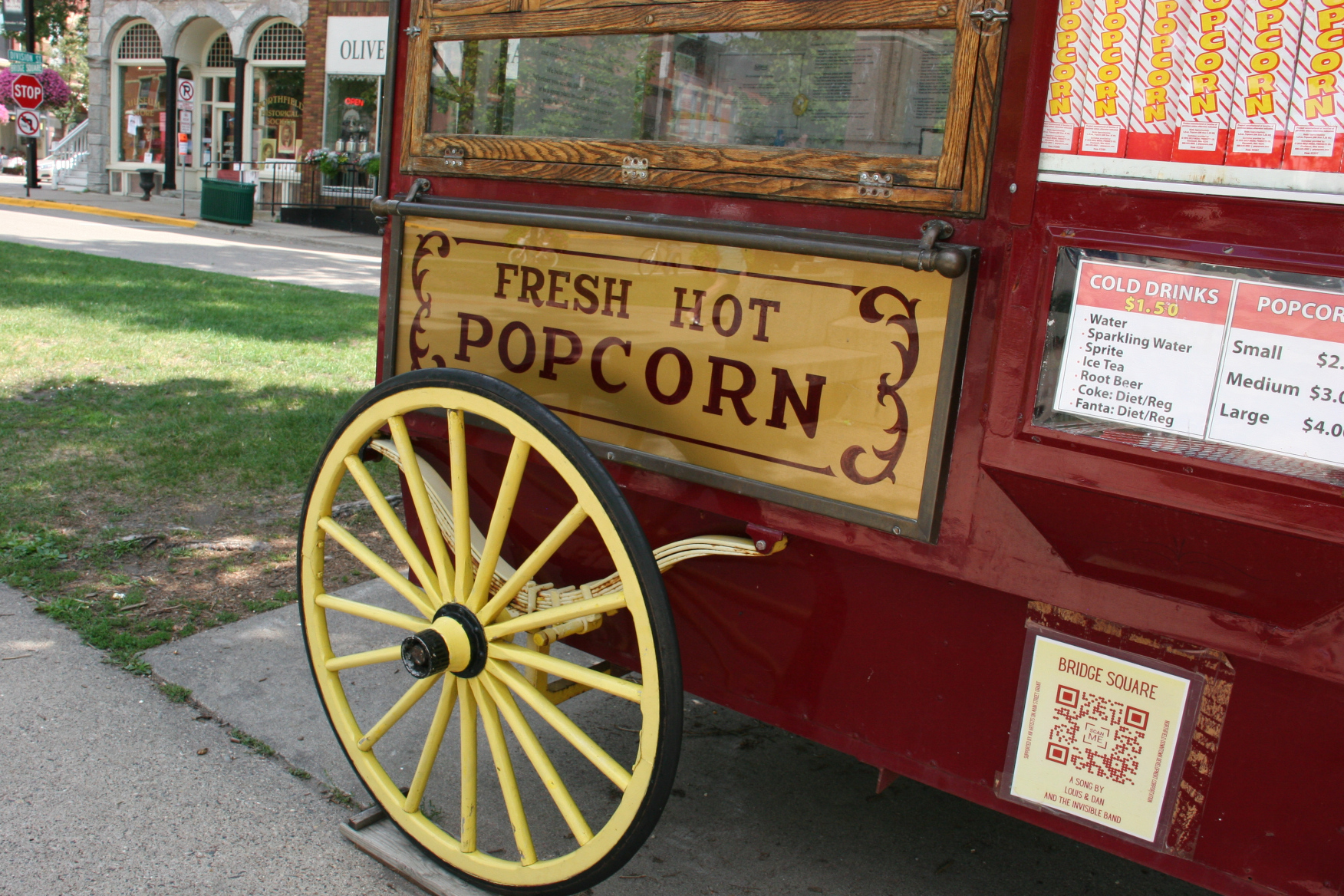
The popcorn wagon has set up in Bridge Square since the 1970s. (Minnesota Prairie Roots copyrighted photo August 2022)
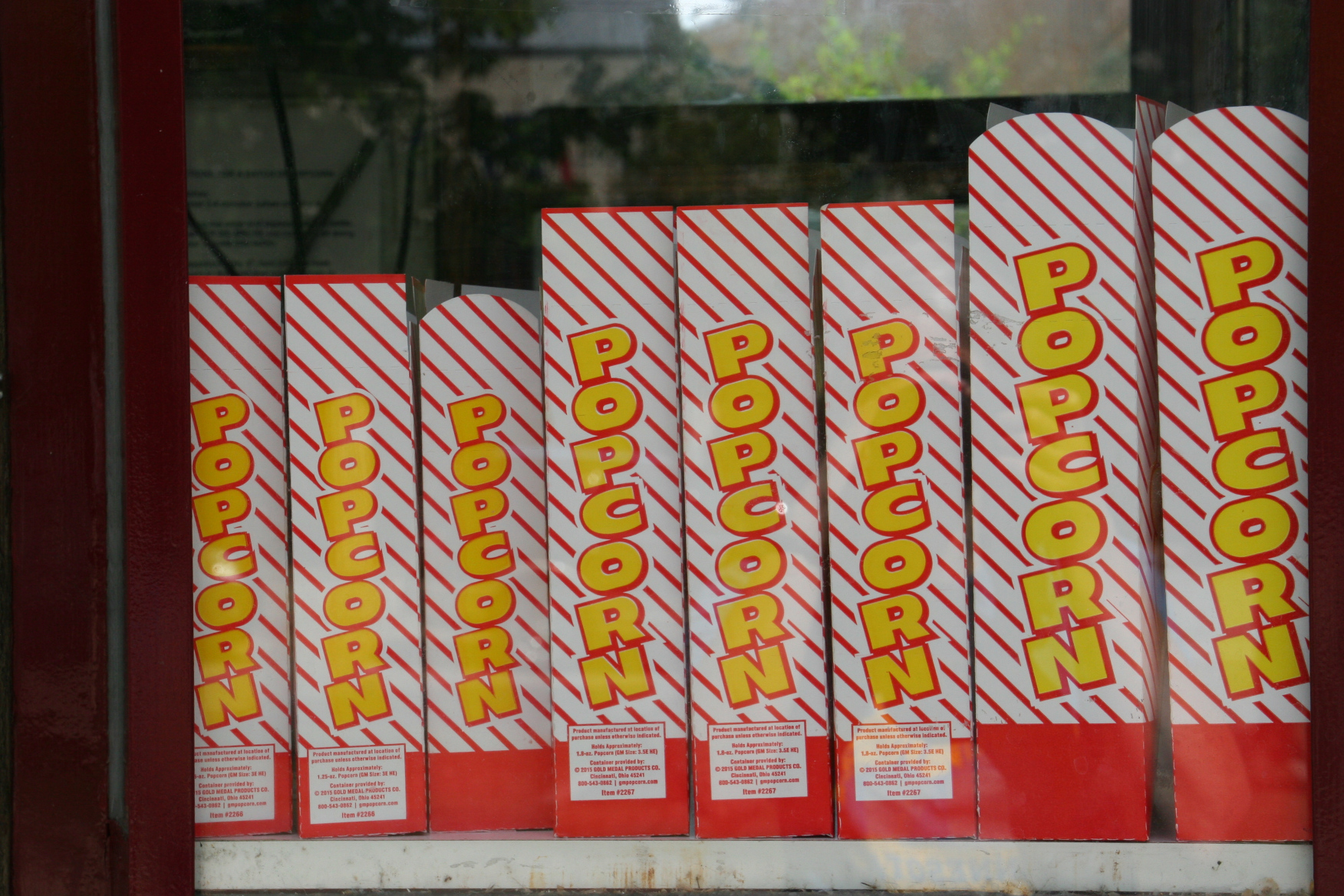
Popcorn boxes lined up in the wagon. (Minnesota Prairie Roots copyrighted photo August 2022)
The popcorn wagon brings back memories of Vern’s Popcorn Stand in my hometown of Vesta. (Minnesota Prairie Roots copyrighted photo August 2022)
My focus on that afternoon was not on the historic robbery, but rather on Bridge Square. I noticed first the 1918 popcorn wagon which is open from mid-May to mid-September and operated by FiftyNorth, the local center for seniors. It was closed when I was there. But I could imagine the sound of popping kernels, the scent, the taste of buttery popcorn scooped into boxes. There’s something about a popcorn stand that hearkens to bygone days.
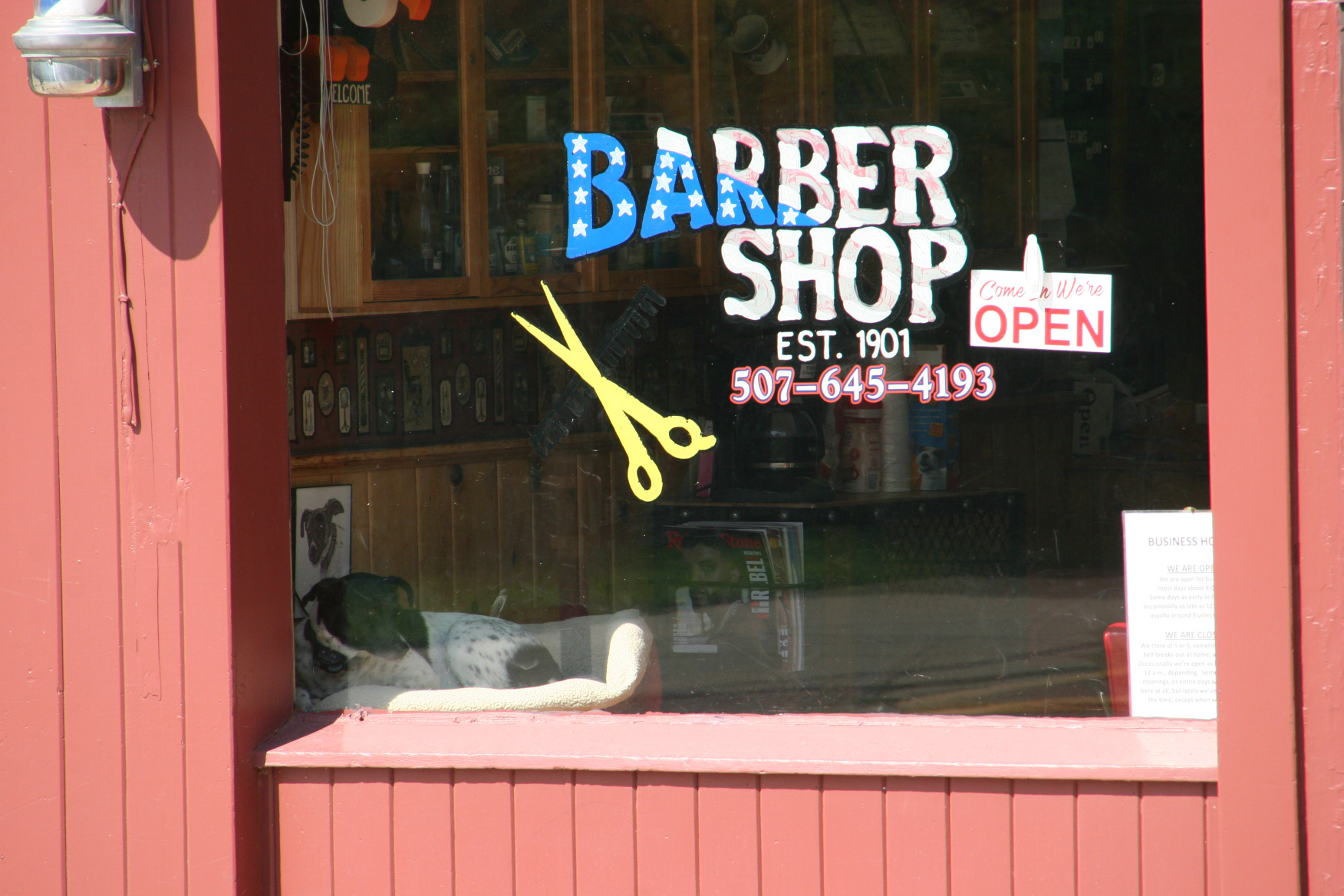
“How much for that doggie in the window?” (Minnesota Prairie Roots copyrighted photo August 2022)
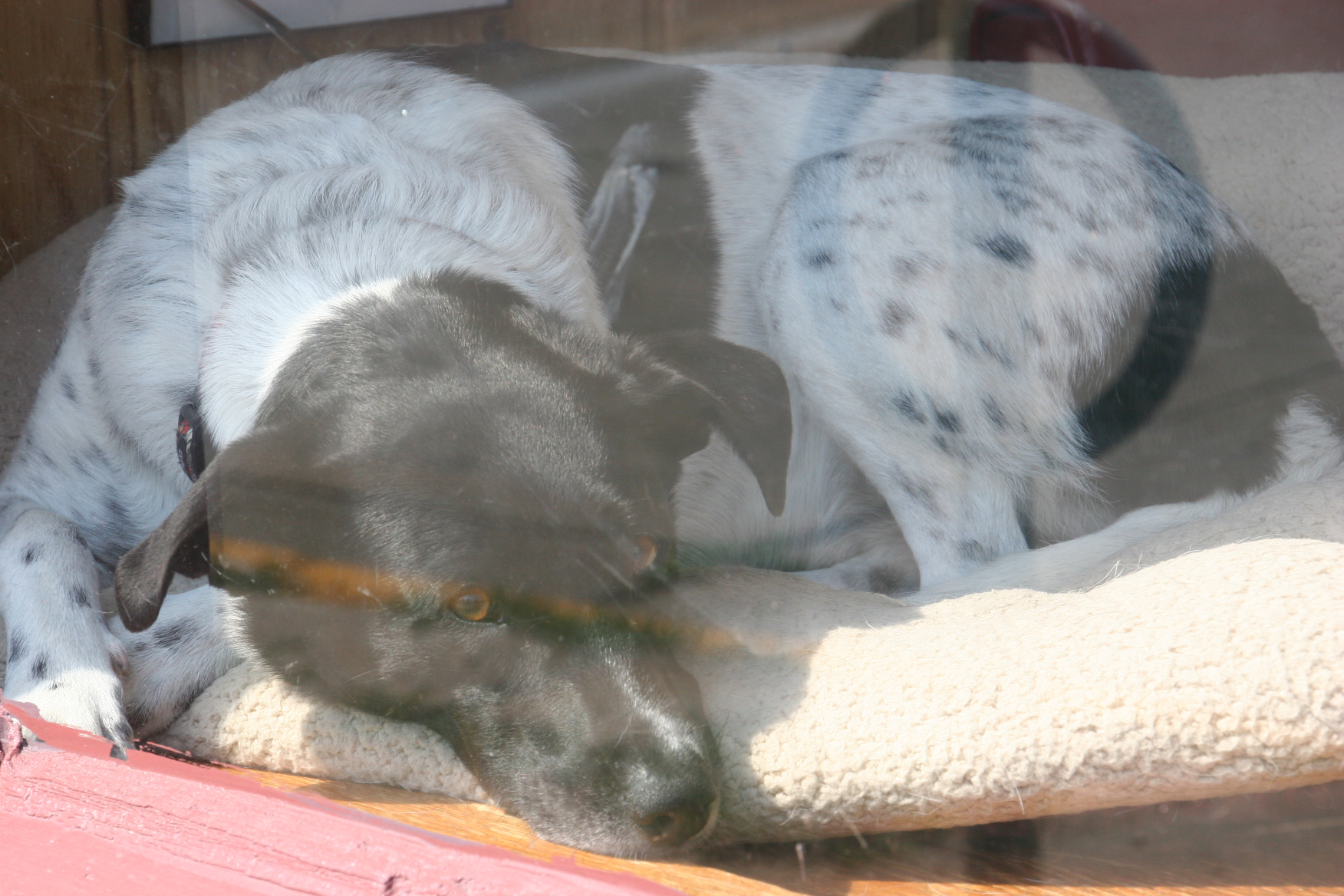
And there’s something about an old-time barbershop such as Bridge Square Barbers with a barbershop pole and then, bonus, a doggie in the window. I spotted the dog lying on a fleece bed in a corner. Seemingly content, only lifting his head when I approached for a close-up photo.
Love this barbershop dog photographed through the window. (Minnesota Prairie Roots copyrighted photo August 2022)
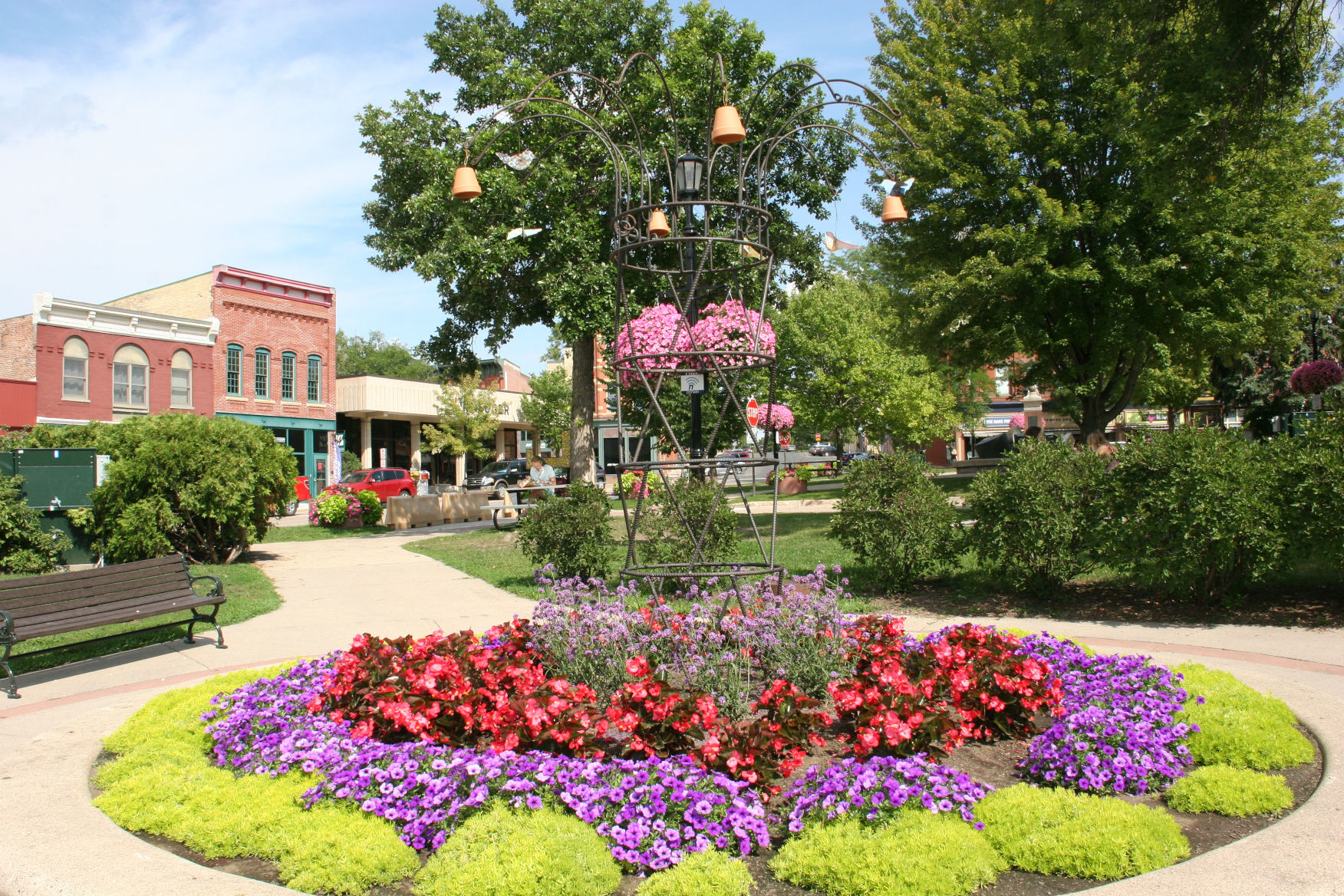
Beautiful flowers circle an art installation in Bridge Square near the Cannon River. (Minnesota Prairie Roots copyrighted photo August 2022)
I also took in the art of Bridge Square. Northfield is big on the arts with an Artists on Main Street program, sidewalk poetry and other art installations in addition to the performing arts.
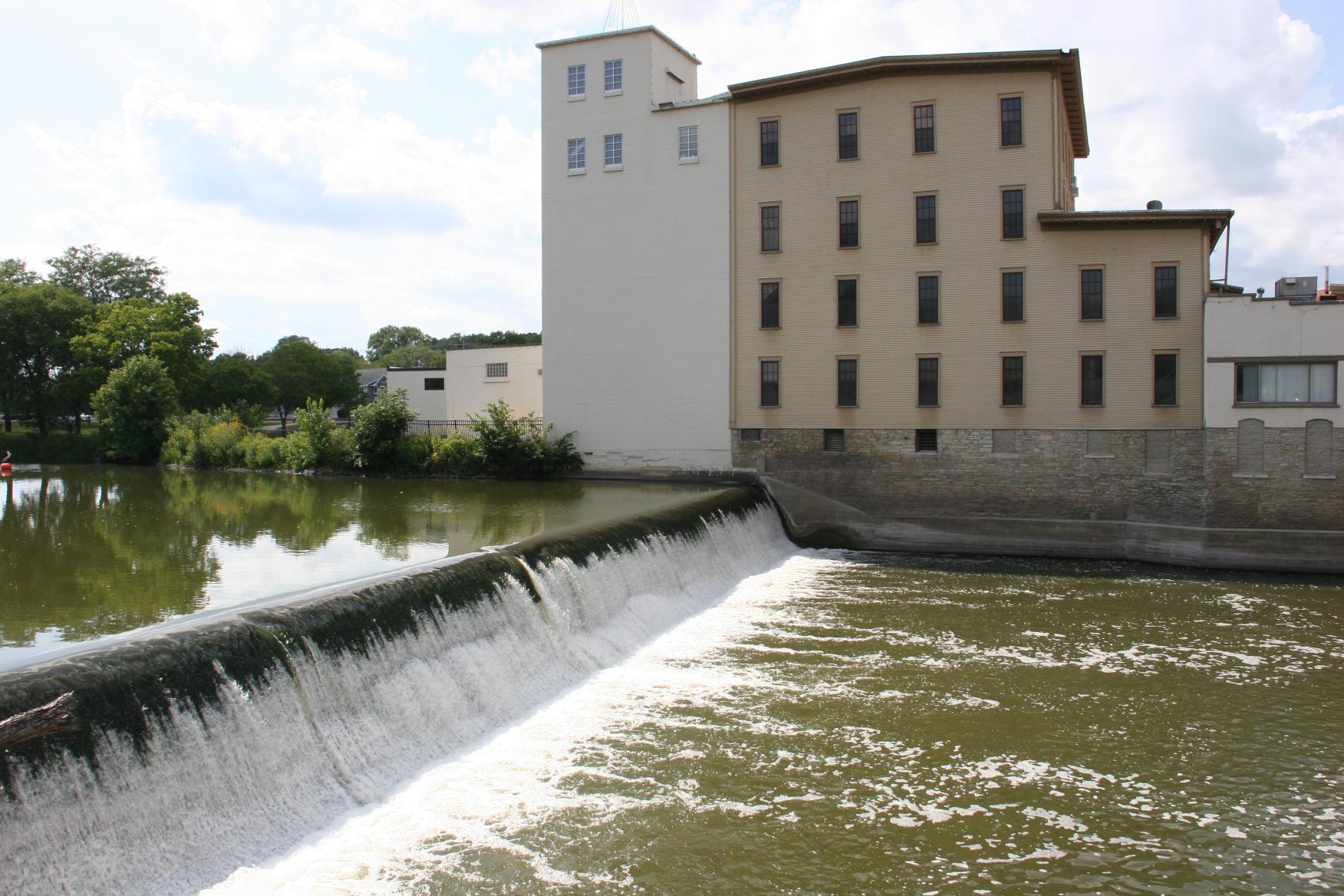
The historic Ames Mill sits along the Cannon River. Originally a flour mill, the mill later was used to produce Malt-O-Meal hot cereals and is today owned by Post Consumer Brands. (Minnesota Prairie Roots copyrighted photo August 2022)
And then there’s the history. Aged buildings like the riverside Ames Mill. The river running through is a real asset to the downtown, especially with a river walk behind buildings hugging Division Street.
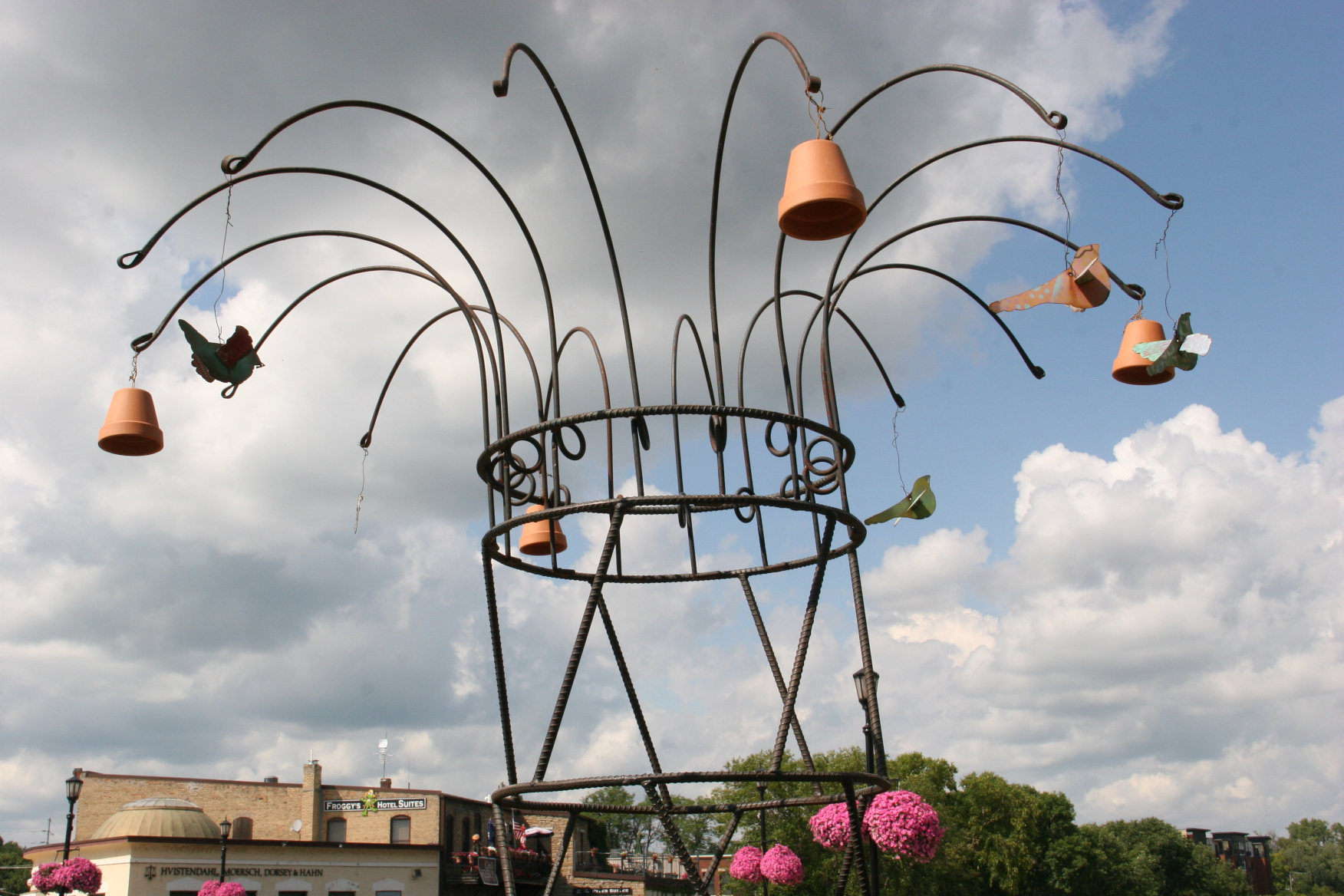
Detailed top of the art installation. (Minnesota Prairie Roots copyrighted photo August 2022)
At the heart of all of it is Bridge Square—a place which melds history and art, land and sky and river, commerce and individuality. Most importantly, the village square brings peoples together to converse, to celebrate, to honor, to discuss, to disagree, to buy popcorn from the popcorn wagon, to simply be.
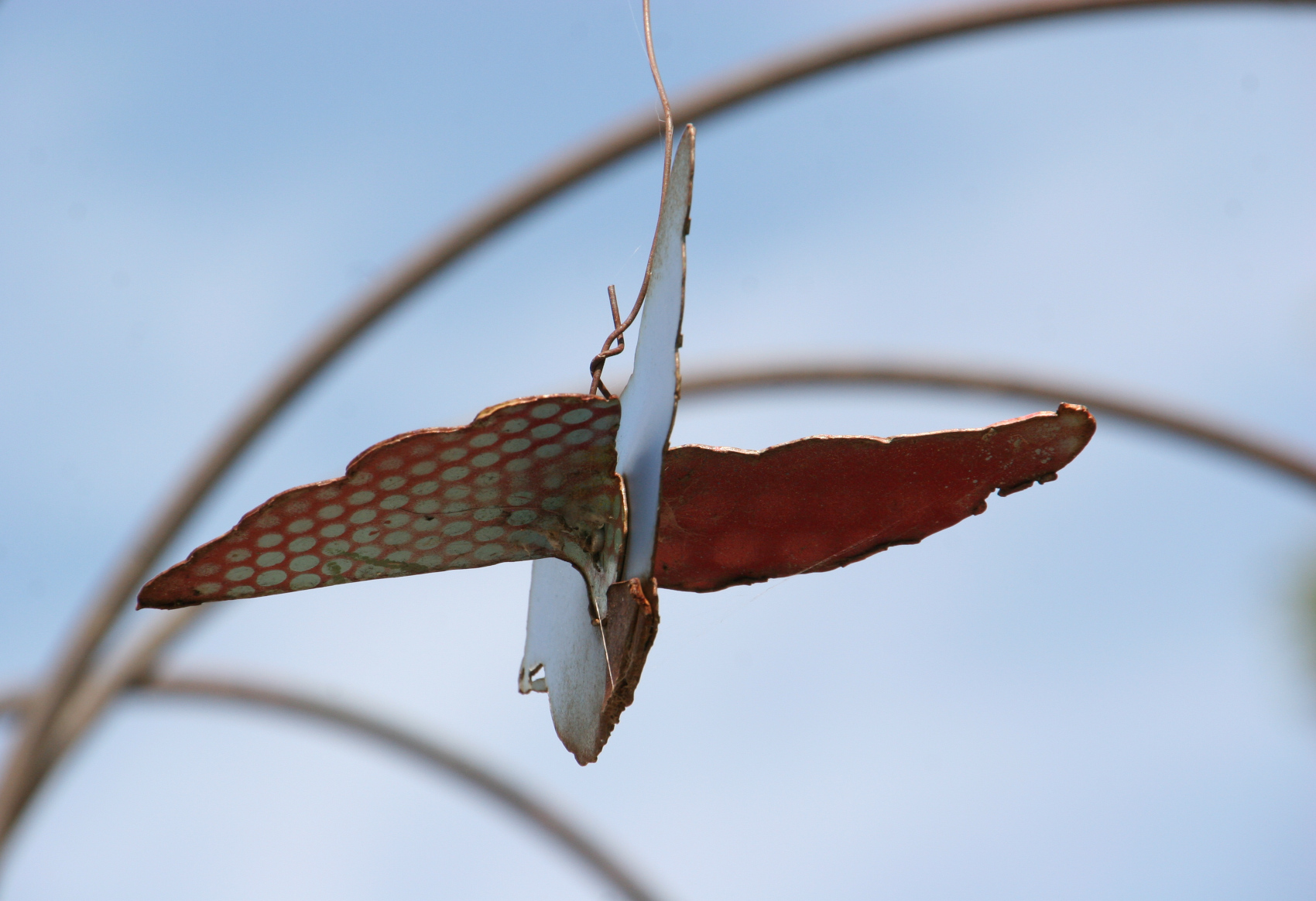
Bird in flight in the Bridge Square sculpture. (Minnesota Prairie Roots copyrighted photo August 2022)
TELL ME: Does your community have an outdoor gathering spot like Bridge Square?
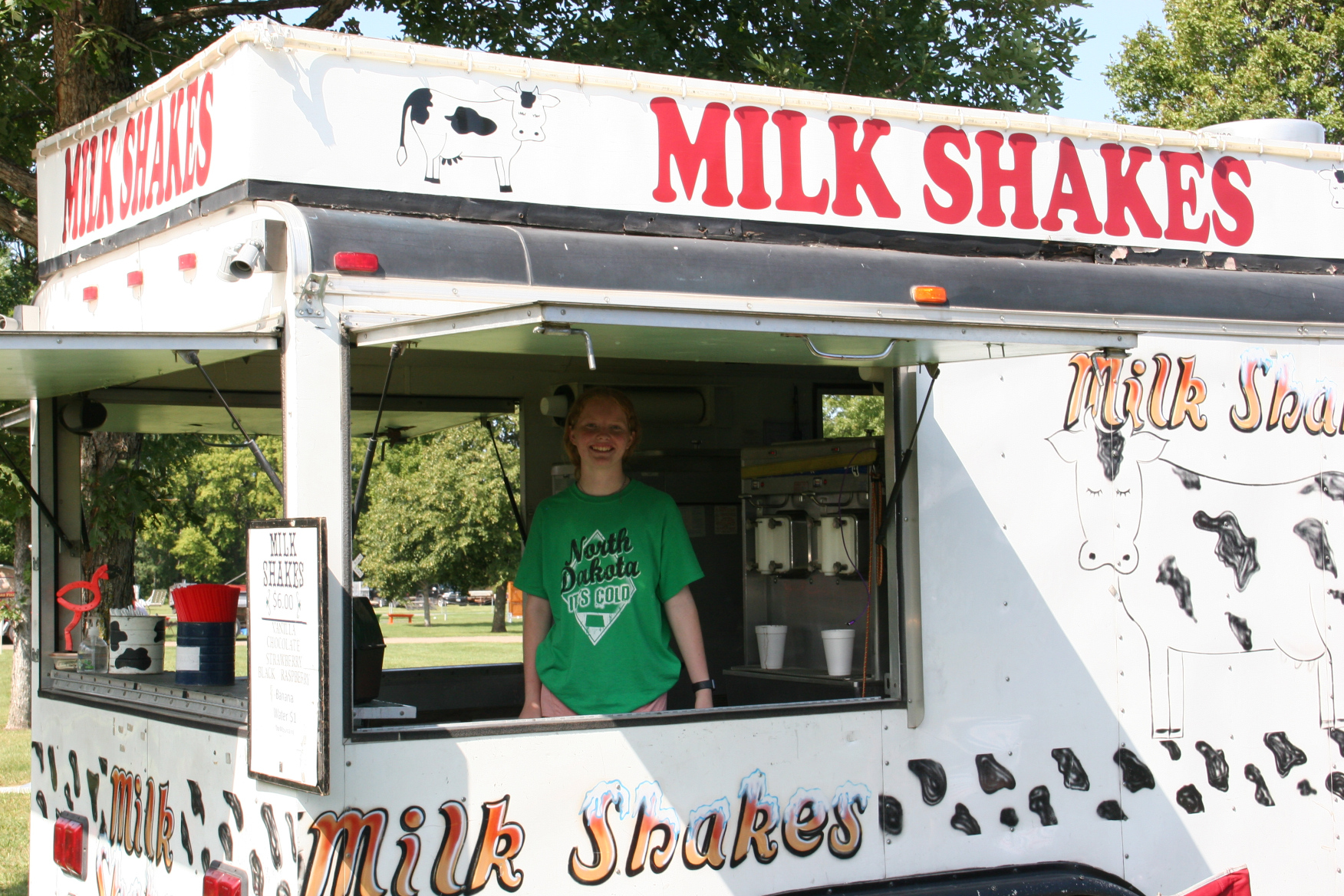
The Milk Shakes booth has a decidedly rural theme with Holstein cow art. (Minnesota Prairie Roots copyrighted photo September 2022)
AS A WRITER AND PHOTOGRAPHER, I view life through a creative lens. That means, even at a farm-themed event like the Rice County Steam and Gas Engines Show, I notice the artsy side.
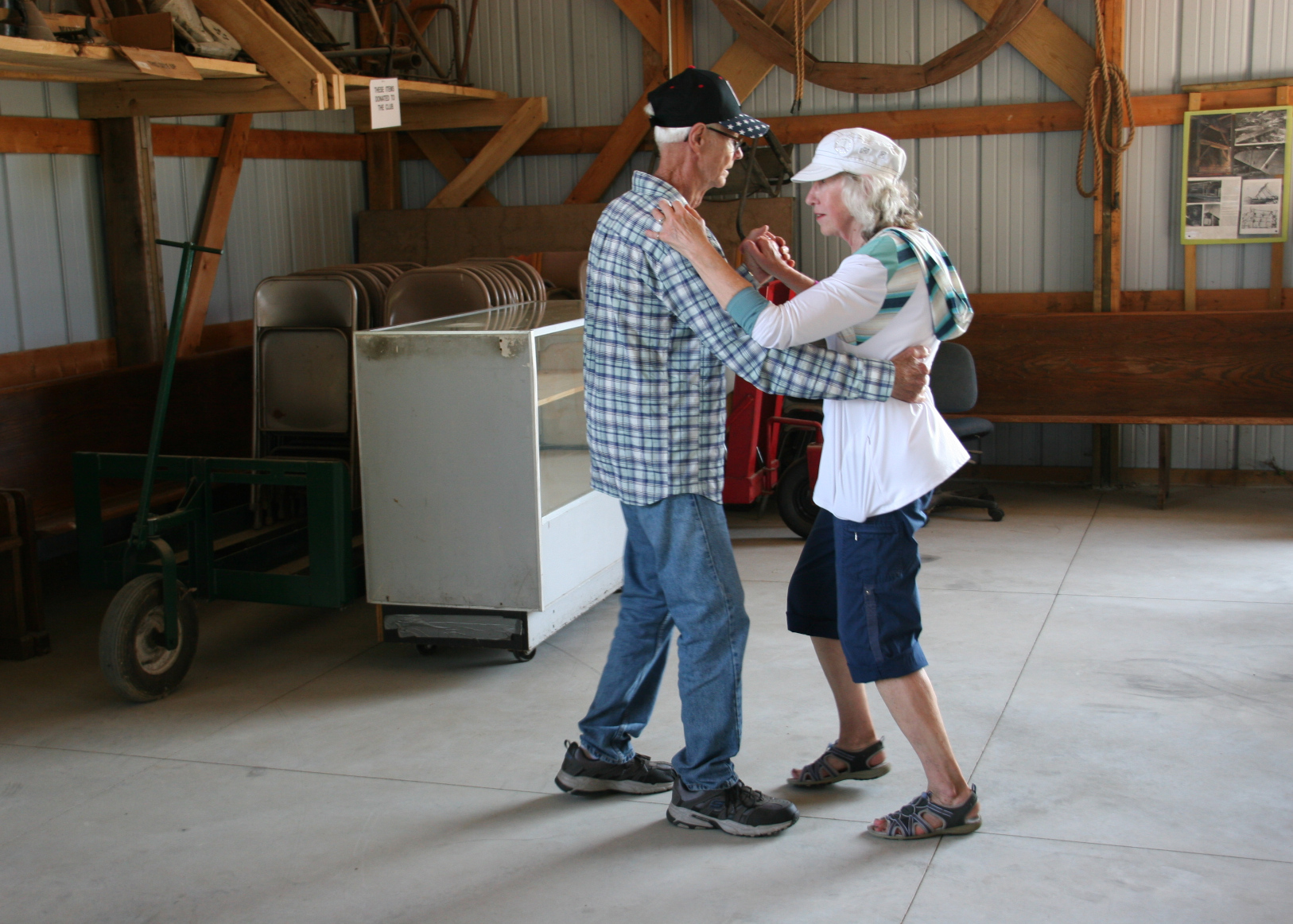
Dancing in the music shed to the band Steam Machine Friday afternoon.(Minnesota Prairie Roots copyrighted photo September 2022)
I attended the show in rural Dundas on Friday. While most attendees focus on the field of tractors, the multiple ag-related demonstrations, the flea market and more, I also focus on creative details within the all of it. Like hand-lettered signage, handcrafted items, music, and, yes, even the couple dancing to bluegrass tunes performed by Steam Machine.
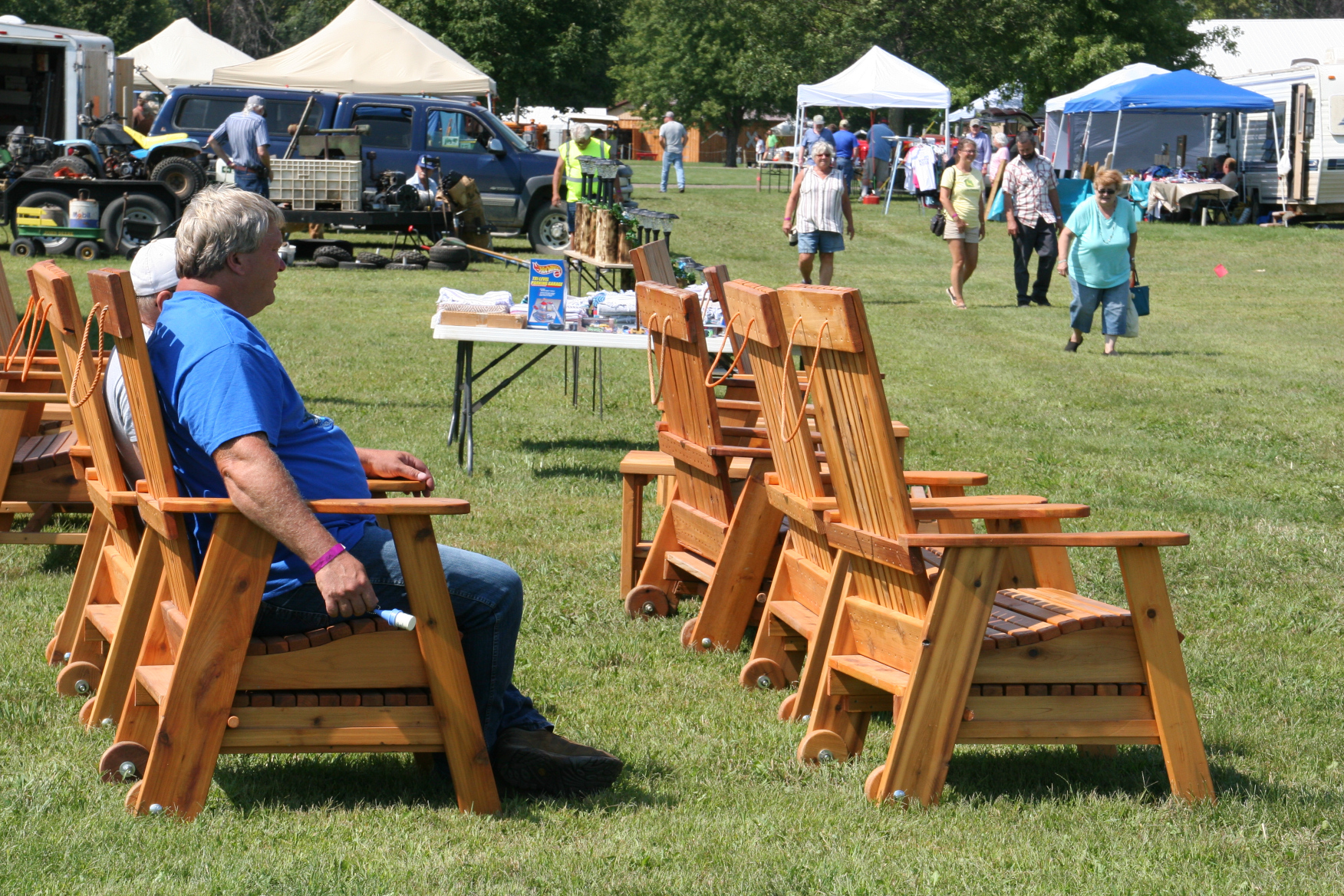
Flea market attendees try out a vendor’s yard chairs. (Minnesota Prairie Roots copyrighted photo September 2022)
The arts, whether literary, visual or performing, enhance our lives, bringing joy, comfort, diversion, entertainment, introspection and much more.
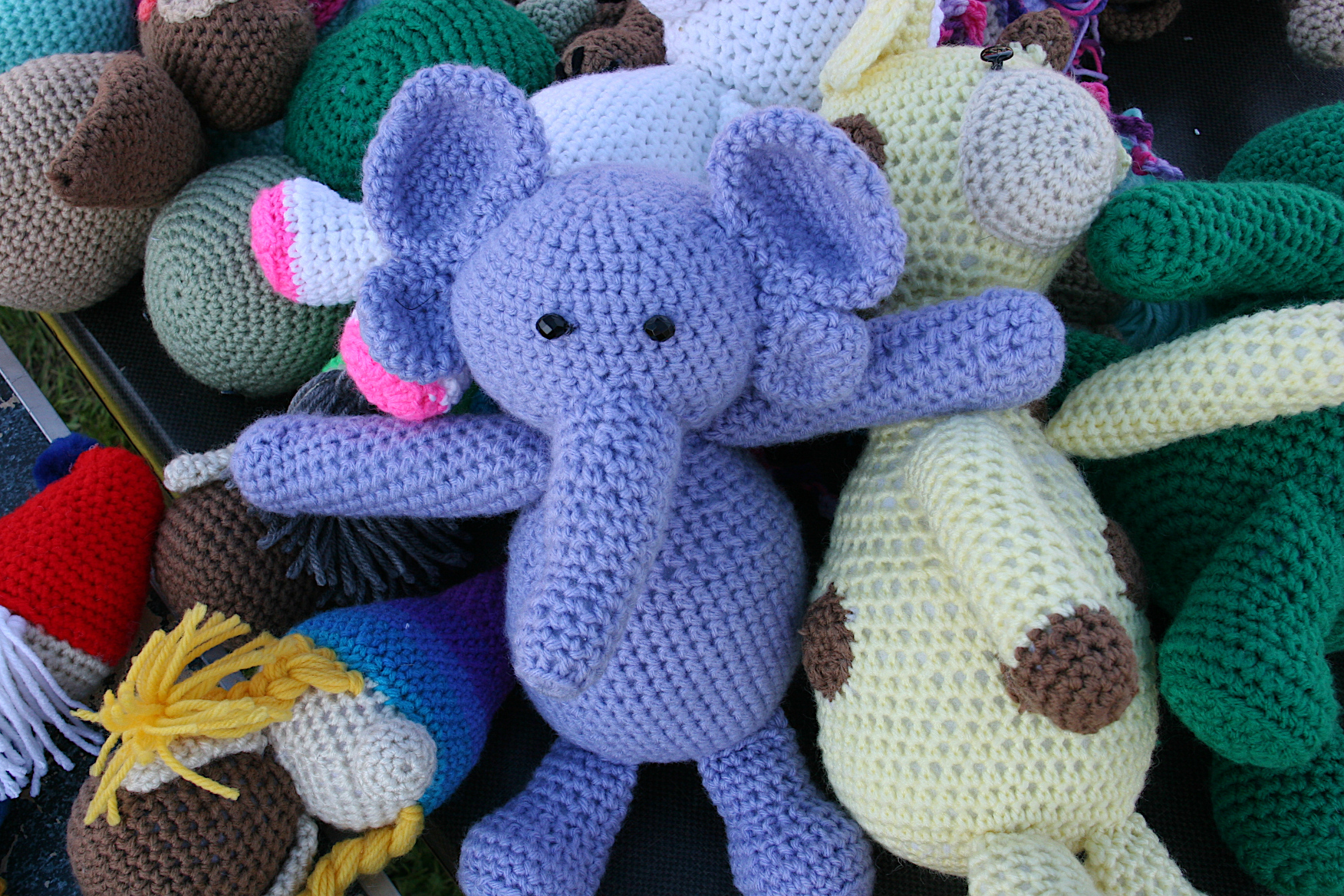
Cute crocheted animals by Kay Dudley. (Minnesota Prairie Roots copyrighted photo September 2022)
I value the talents of those who create. I create with words and with my camera. Put a paintbrush or crochet hook in my hand and I would be hard-pressed to make anything worthy of notice. But, gosh, do I admire creatives like Kay Dudley of Faribault who brought her crocheted animals to the flea market. Likewise, I admire the skill of the woodworker who built the sturdy yard chairs for sale.
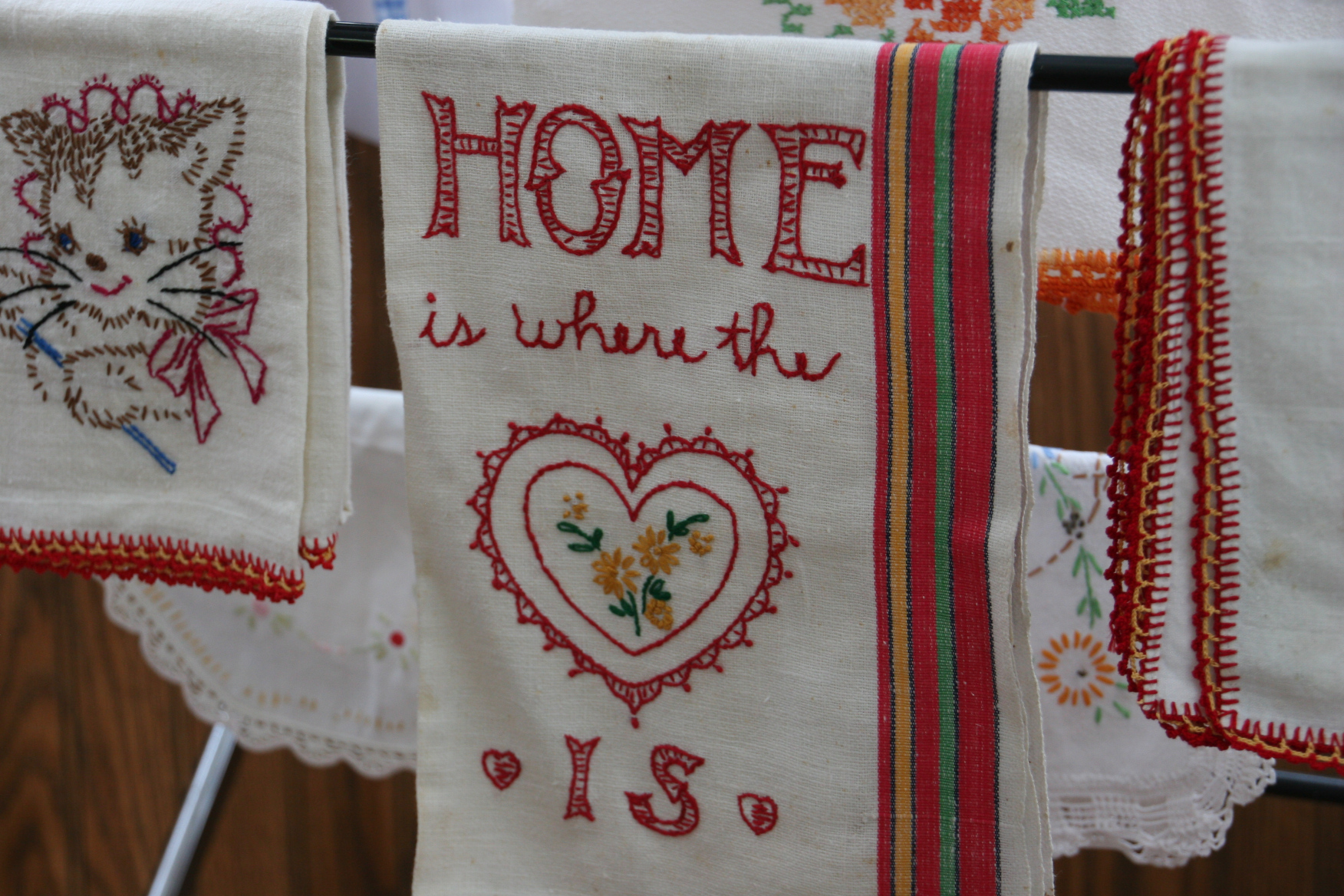
Hand-embroidered linens. (Minnesota Prairie Roots copyrighted photo September 2022)
On the other end of the show grounds, I found more to appreciate in the 1912 farmhouse. Embroidered linens displayed in the kitchen caught my eye. I know how to embroider, although decades have passed since I picked up a needle, embroidery floss and a hoop to stitch a design into cloth. I really ought to resume that craft.
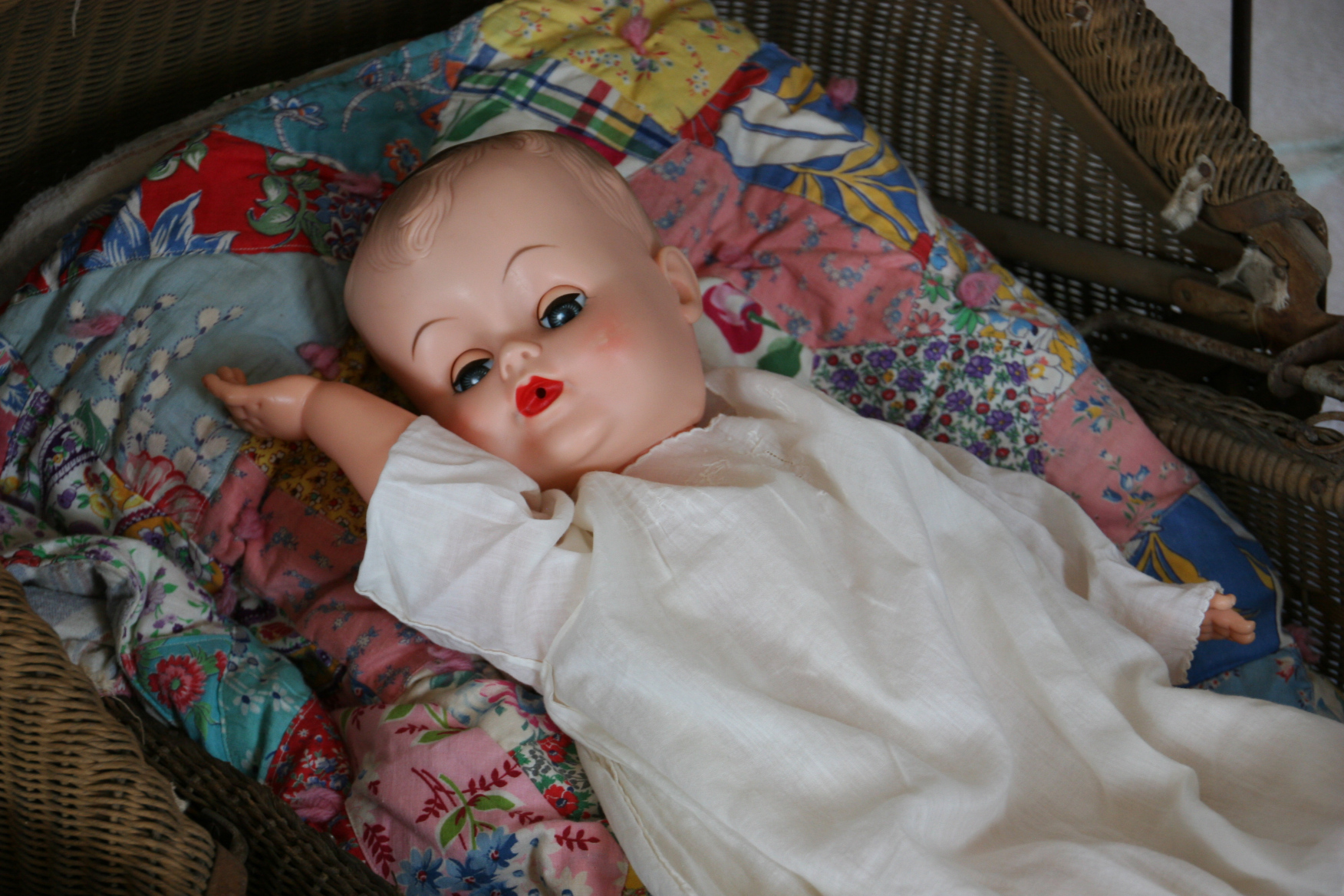
A vintage doll nestles in a quilt. (Minnesota Prairie Roots copyrighted photo September 2022)
In another room of the farmhouse, a doll laid upon a quilt, reminding me of my paternal grandmother who stitched endless quilts for her family, me included. I was quite the seamstress as a teen, sewing many of my clothes and dresses for Grandma, too. She could quilt, but she couldn’t make her own clothes. I always found that interesting. I haven’t touched my sewing machine in years.
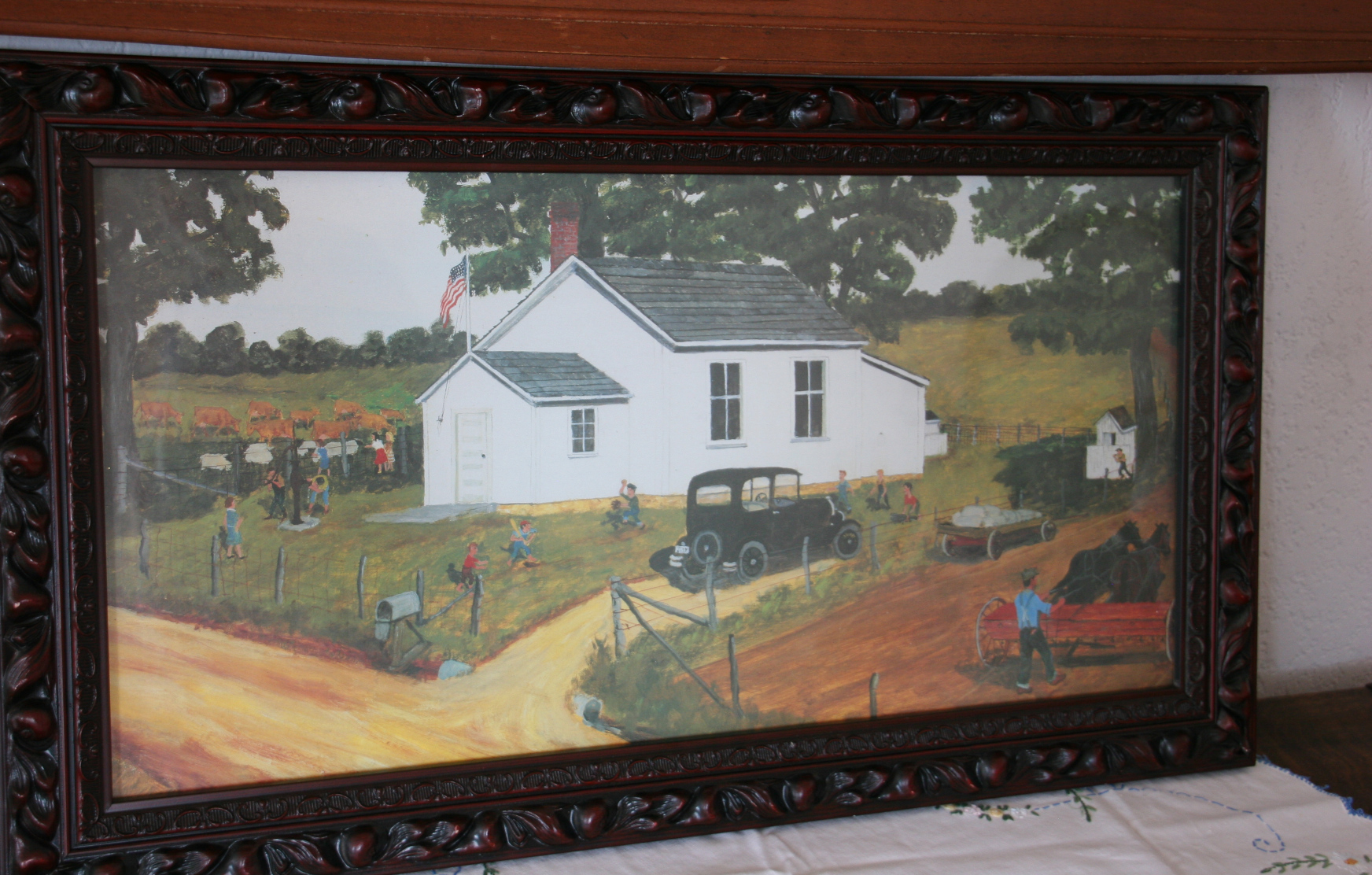
An original painting of a country schoolhouse. (Minnesota Prairie Roots copyrighted photo September 2022)
I was especially interested in the original painting of a rural schoolhouse scene propped on a table in the farmhouse. The vintage art, scored at a Goodwill store for $5, is exactly the type of art I collect.
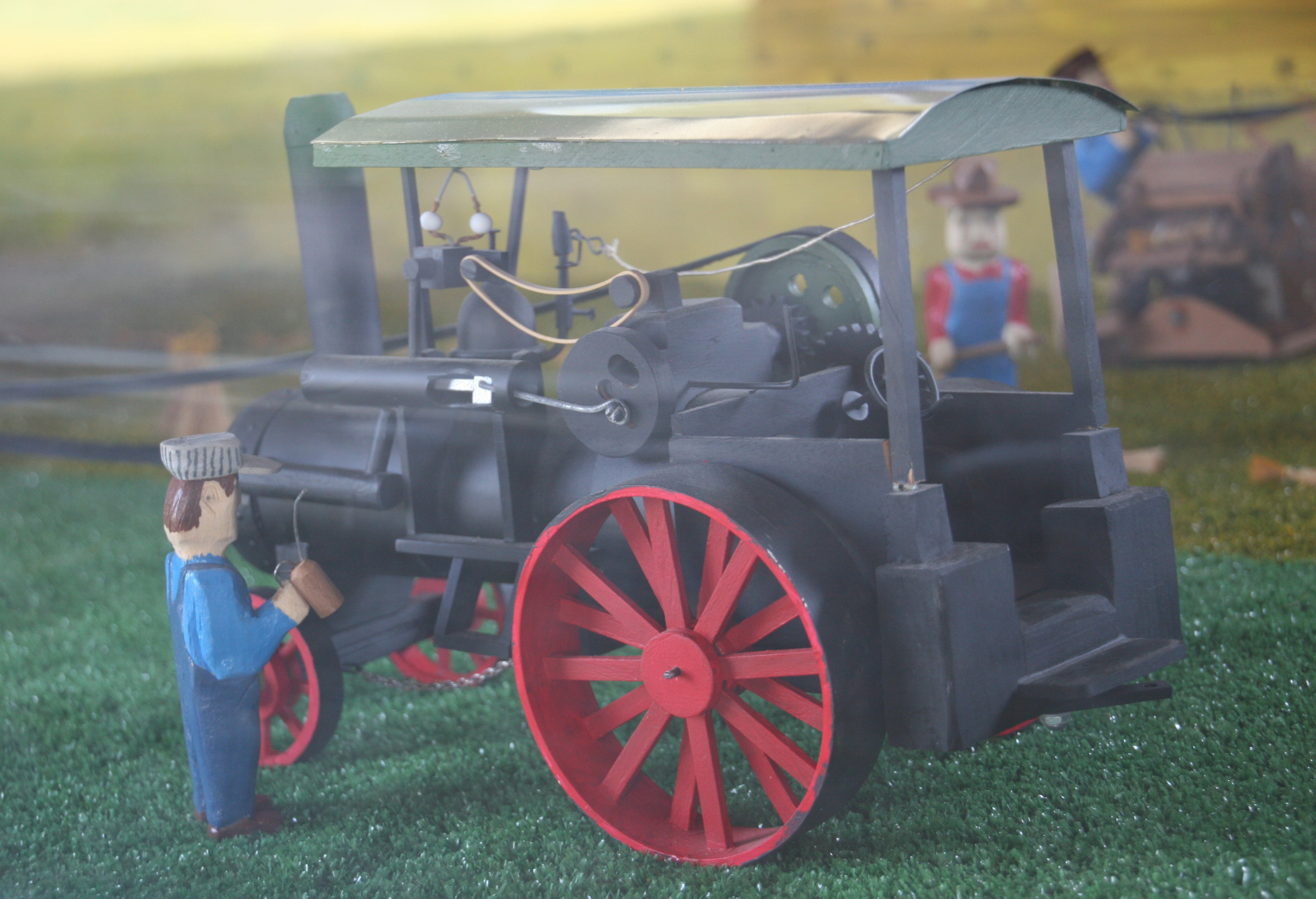
David Terry hand-carved a 1920 threshing scene displayed inside a large case in the music building. This is just a portion of his work. (Minnesota Prairie Roots copyrighted photo September 2022)
In my collection is a North Dakota threshing scene painted by my father-in-law and among my most treasured pieces of original art. So when I saw a hand-carved threshing scene displayed in the music building at the Rice County Steam and Gas Engines Show, I was reminded of Tom’s painting. I display it this time of year atop the entertainment center in my living room.
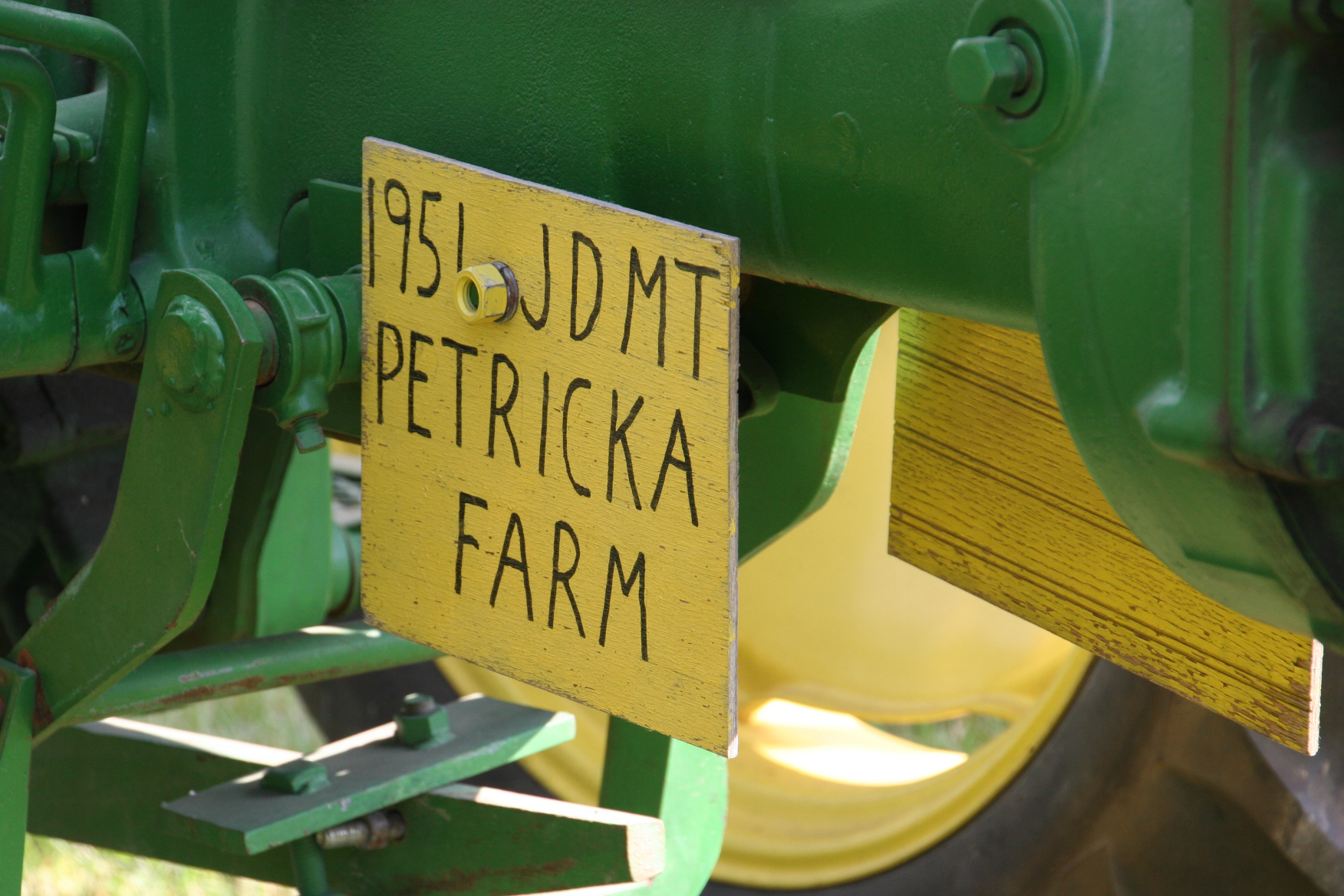
A handmade sign identifies the owner of a vintage John Deere tractor. (Minnesota Prairie Roots copyrighted photo September 2022)
Original paintings and other original art, including signs, always draw my appreciation. There’s just something about a handcrafted sign that makes me pause, take notice, remember. From signage on tractors to signage on buildings to signage among the food vendors, I noticed the creativity.
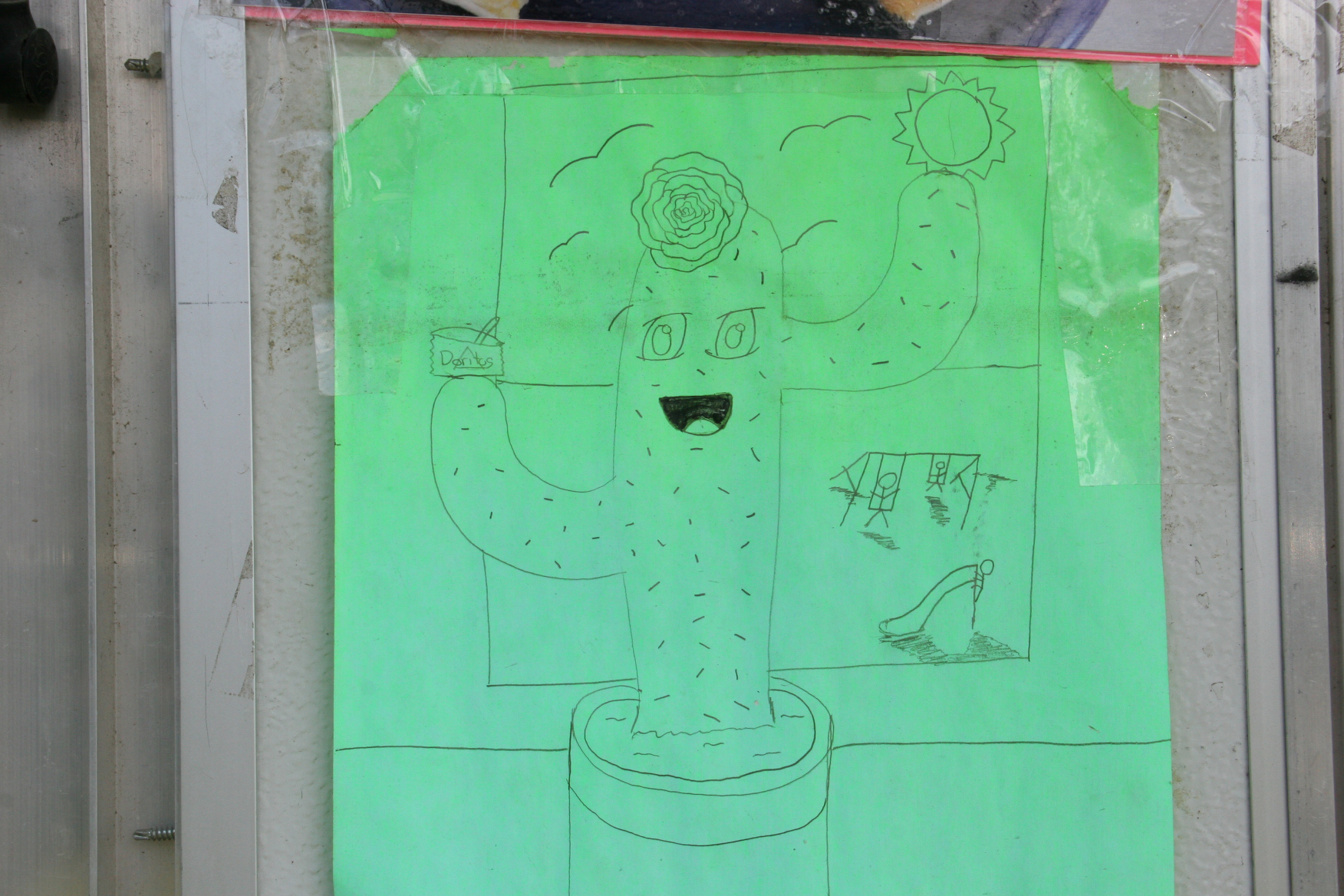
Loved this hand-drawn art posted by the food service window of El Tacazo Mexican Delights. (Minnesota Prairie Roots copyrighted photo September 2022)
Every piece of art I spotted added to my enjoyment of this southern Minnesota farm-themed show. Certainly I value the ag and history aspects of this event. But I value, too, the creativity.
An anvil-shaped sign fittingly marks the Blacksmith Shop where attendees can watch blacksmiths at work. (Minnesota Prairie Roots copyrighted photo September 2022)
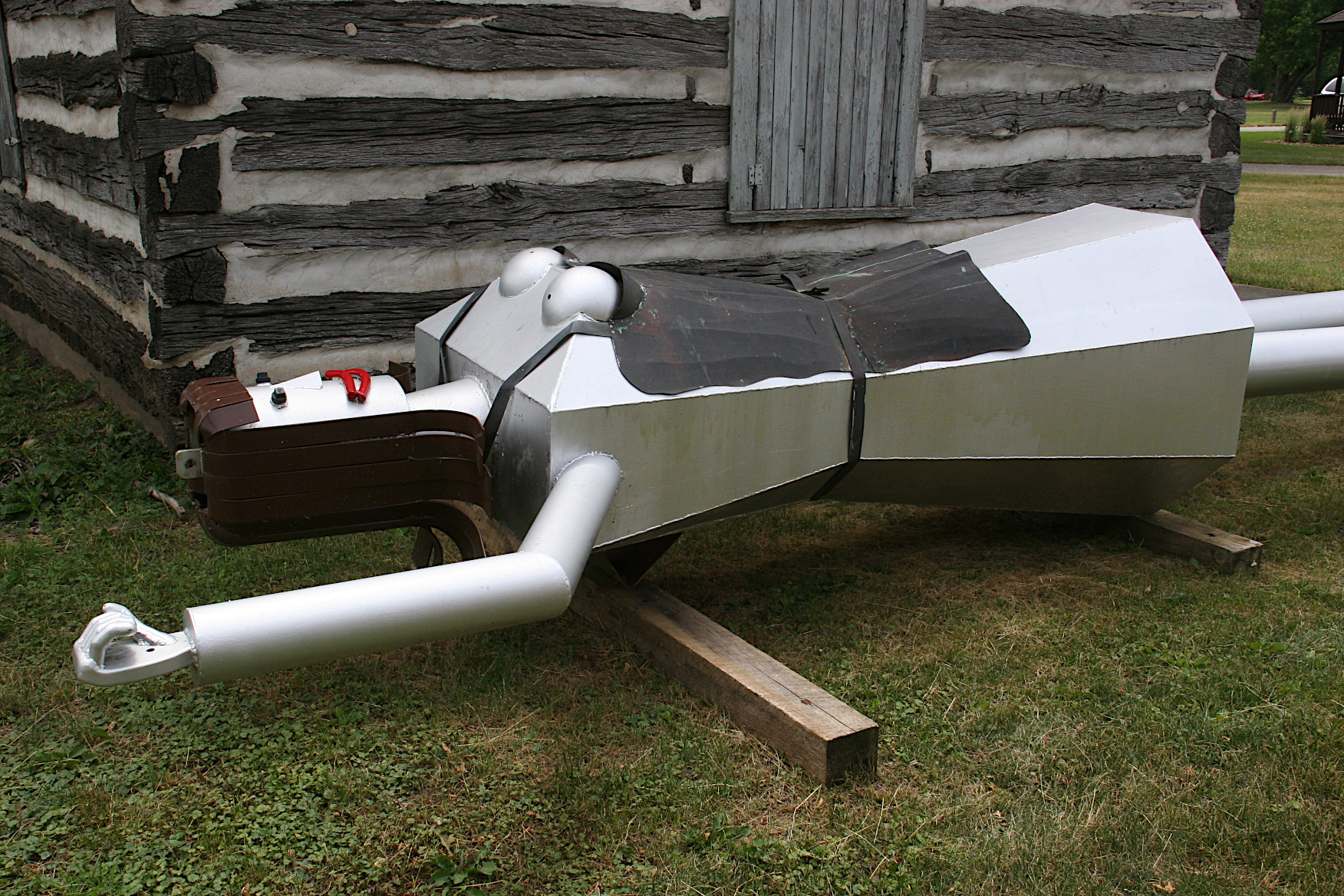
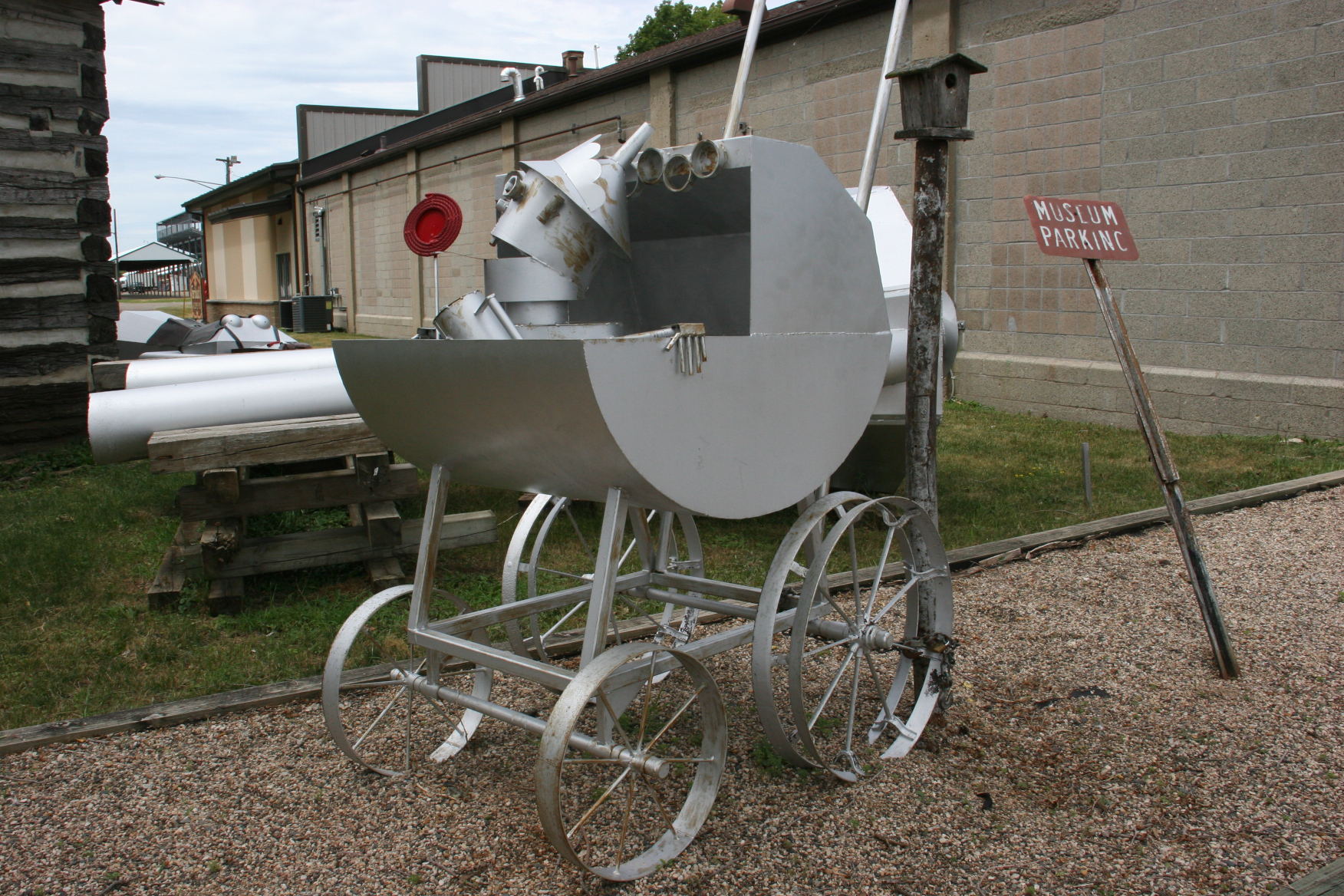
The Tin Woman sculpture from Lockerby Sheet Metal lies outside the log cabin at the Rice County Historical Society in Faribault where she will be placed. (Minnesota Prairie Roots copyrighted photo July 2022)
WHENEVER I THINK of a tin man, I think of three specifics: The Tin Man from The Wizard of Oz, The Tin Man and his family in Faribault, and the absence of a heart.
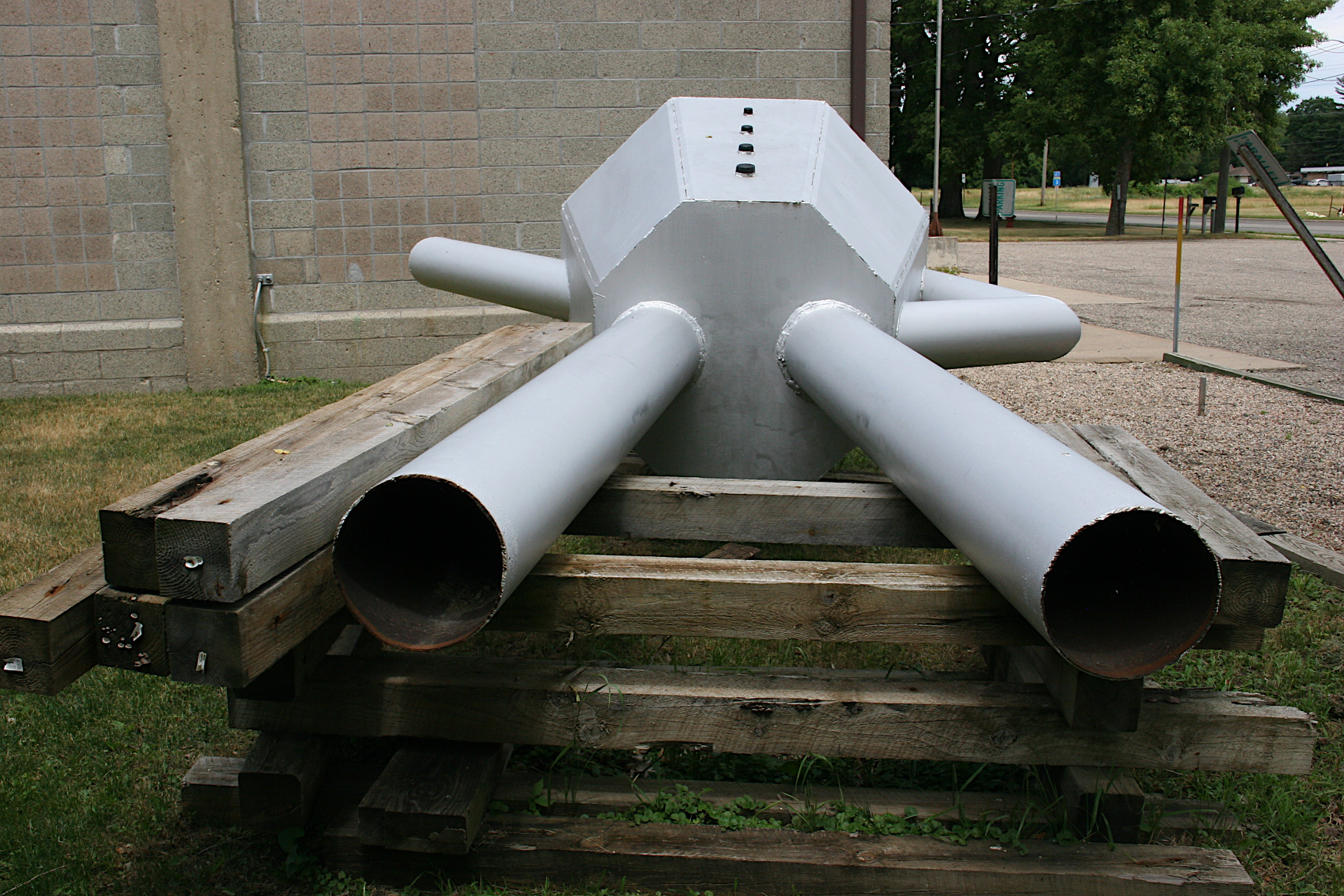
This Lockerby Sheet Metal Tin Man awaits reassembly outside the county museum. (Minnesota Prairie Roots copyrighted photo July 2022)
In the classic tale by L. Frank Baum, The Tin Man is in need of a heart, or love. The Scarecrow needs a brain. And the Lion needs courage.
The family includes a baby in a buggy. (Minnesota Prairie Roots copyrighted photo July 2022)
Now you can take away whatever you want from Baum’s book, for there are, indeed, many take-aways. But the basics of love, knowledge and courage stick all the way along The Yellow Brick Road to The Emerald City.
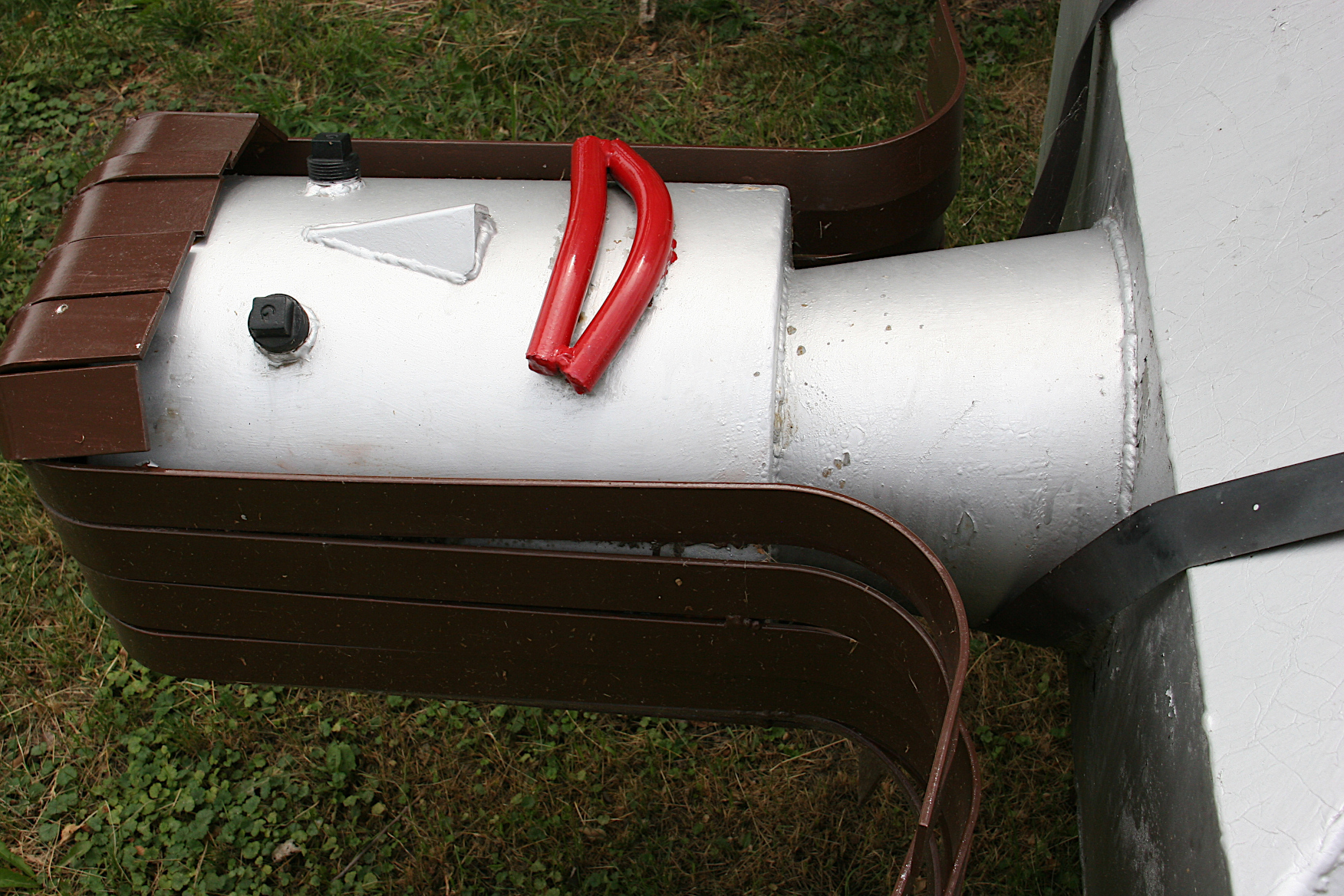
The Tin Woman, up close with her vivid red lips. (Minnesota Prairie Roots copyrighted photo July 2022)
I wish I didn’t believe this to be true. But too often these days I see heartless Tin Man after heartless Tin Man (you may also insert “woman” here) following a narrow pathway of self-focus with no regard for others. There’s no self-awareness of how actions, words, decisions hurt others. Or perhaps, more accurately, there’s no care for how others are affected by what we say or do. That can apply in business, in politics, in relationships, in friendships, in families…
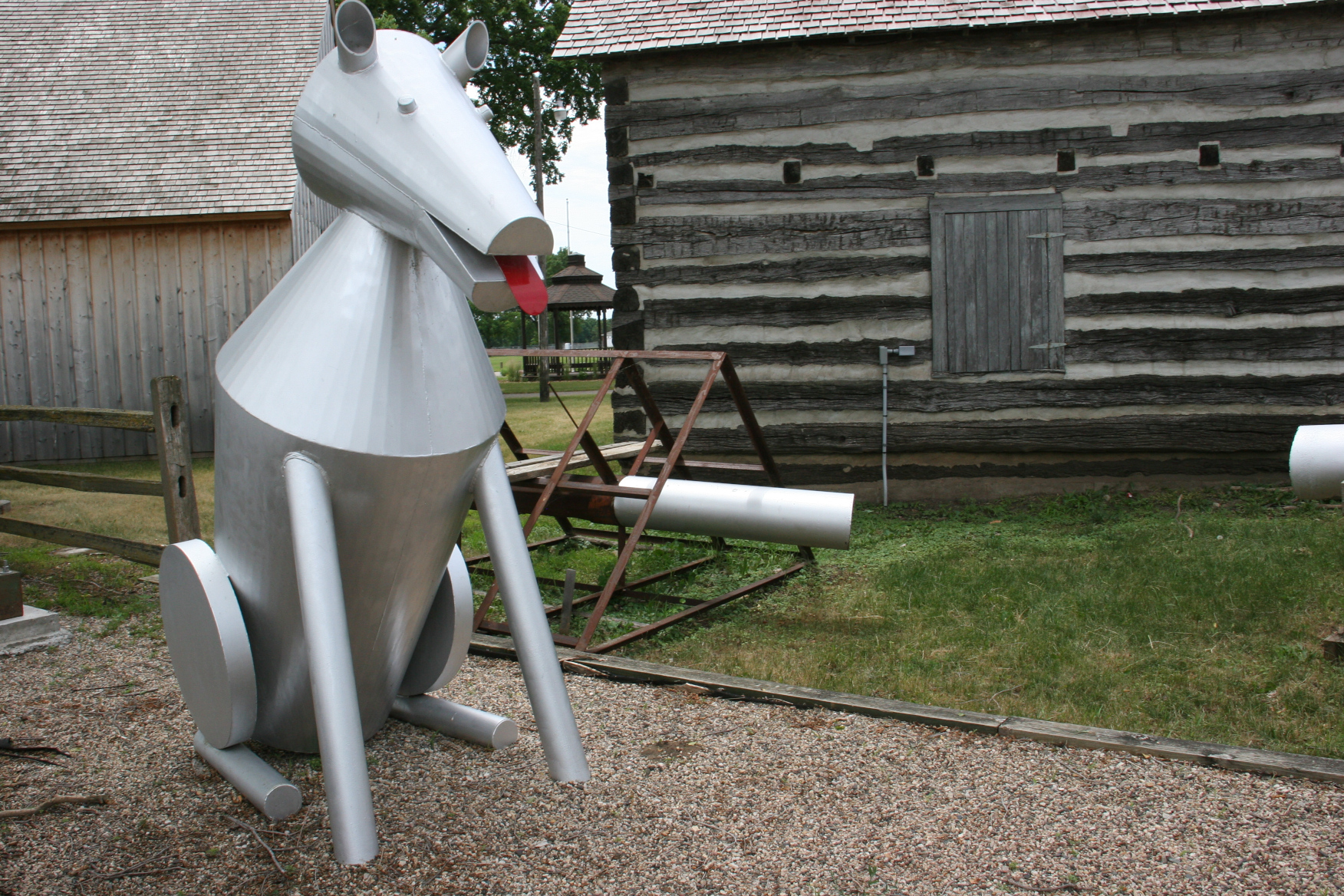
The family even has a dog. (Minnesota Prairie Roots copyrighted photo July 2022)
Sometimes I feel like our collective hearts are missing or atrophying and we really ought to work harder at being kinder, more caring, more considerate, more loving. Better people. Period.
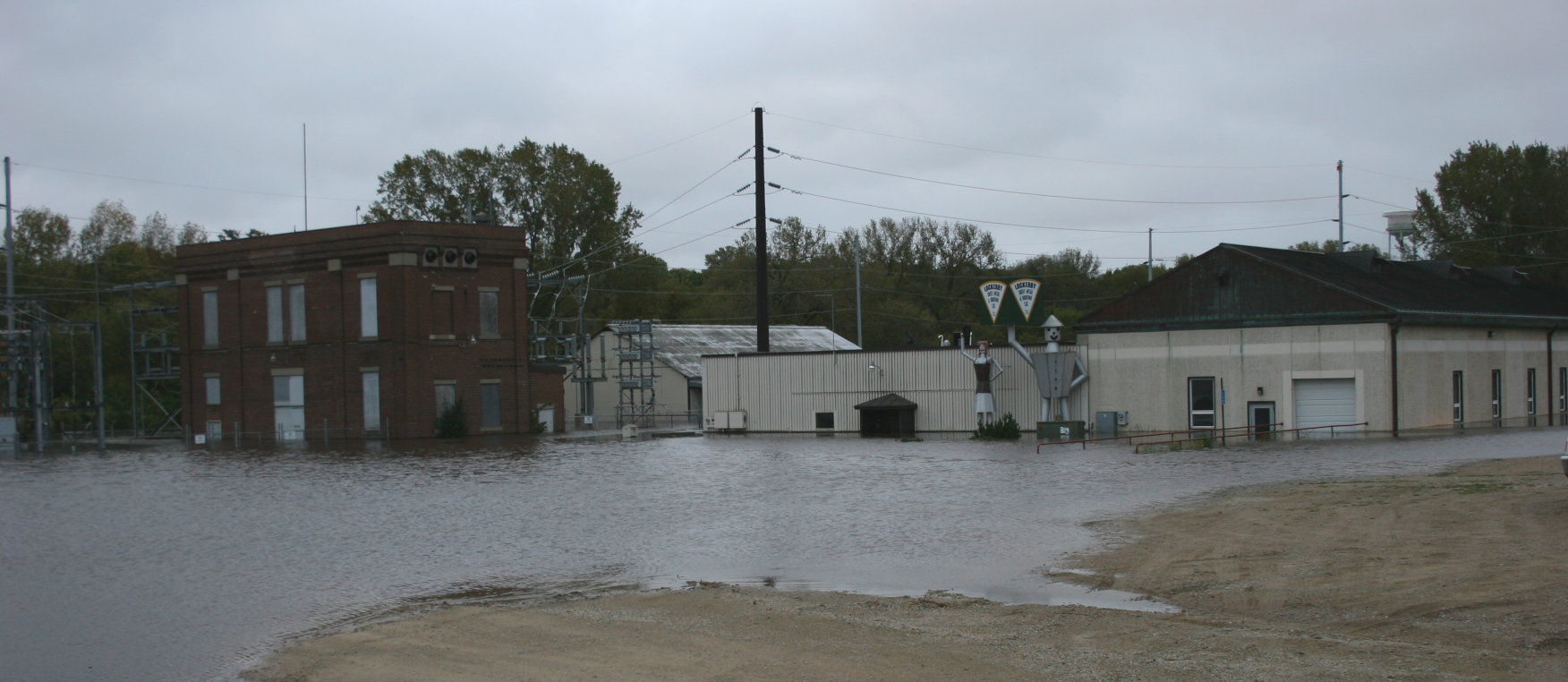
The Tin Man and Woman stand outside Lockerby Sheet Metal in September 2010, when the Straight River flooded. That event devastated the business. (Minnesota Prairie Roots copyrighted file photo September 2010)
That leads me to The Tin Man and his family in Faribault. A few weeks ago I photographed them at the Rice County Historical Society, where they’ve been hanging out for awhile. Originally, their home was at Lockerby Sheet Metal, which closed abruptly in October 2018 after 110 years in business in Faribault. I’m thankful this family found a new home at the RCHS. They are local icons.
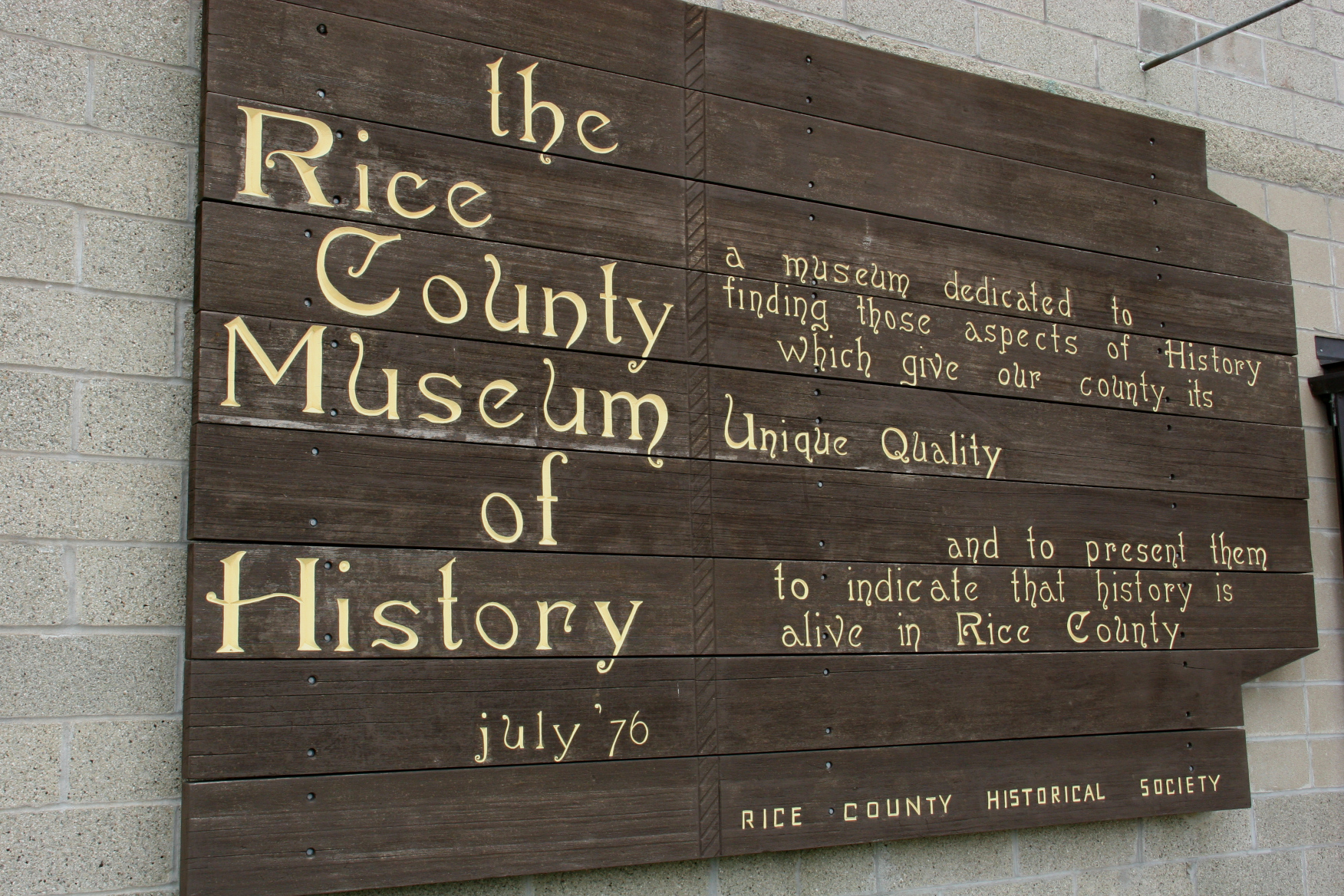
A sign on the Rice County Historical Society states its goal. (Minnesota Prairie Roots copyrighted photo July 2022)
Keeping this family together, recognizing their collective value, says something about the heart of a community. Locals care about The Tin Man and family from an historic, artistic and business perspective. And, perhaps, also from a love perspective. These creations of Lockerby Sheet Metal can visually represent community love. Yes, that’s the marketing, creative and hopeful side of me writing.
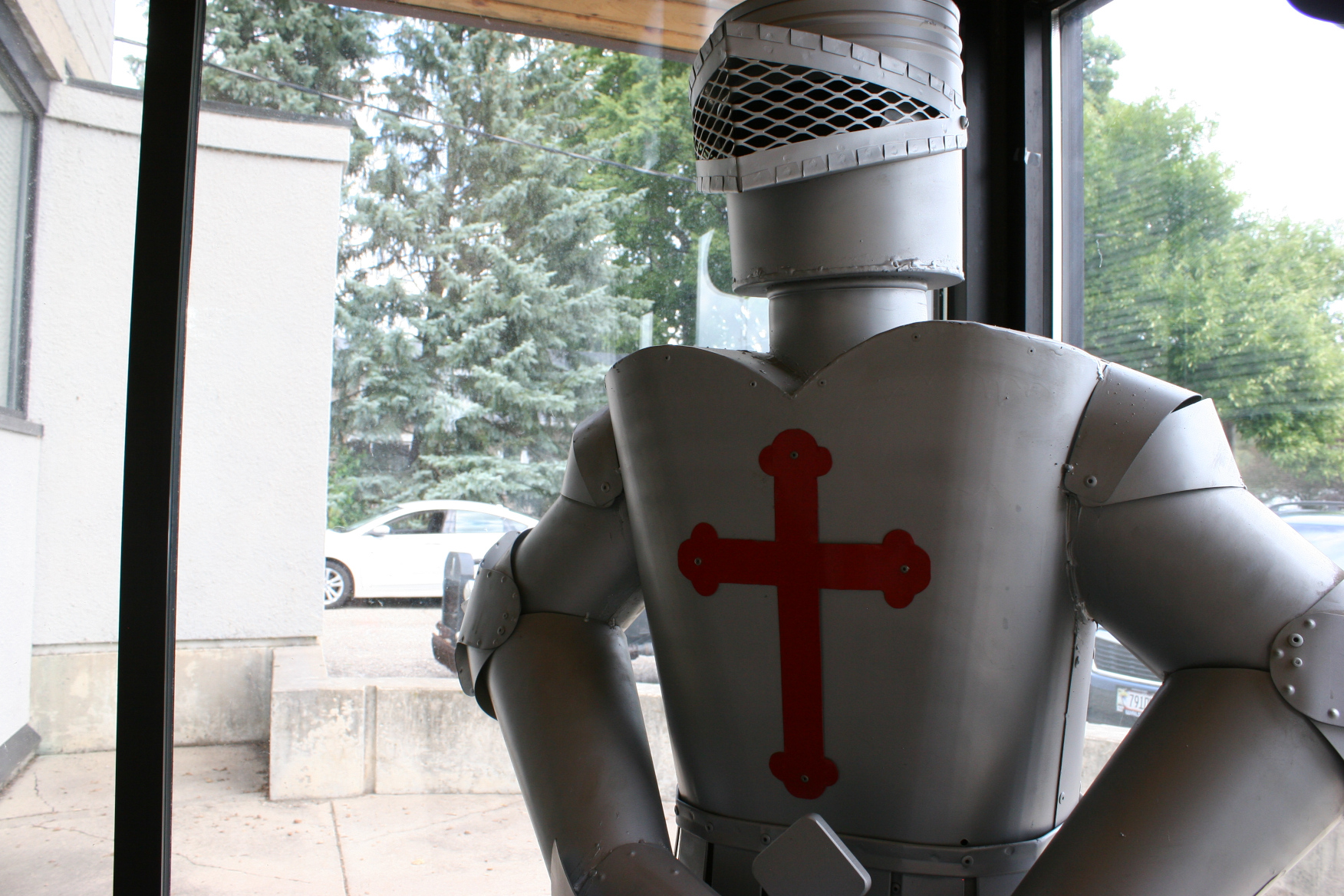
This knight metal art sculpture from Lockerby Sheet Metal stands inside the RCHS entry. (Minnesota Prairie Roots copyrighted file photo)
Even as I believe too much heartlessness exists in today’s world, I also believe that we are capable of growing our love for one another, of strengthening our hearts. Rather than follow a self-focused narrow Yellow Brick Road, we can pause, stop, consider. Pause. Stop. Consider. When we recognize how our words and actions affect others, then we no longer rattle around like a Tin Man (or Woman) without a heart.
Randy tells me the unpainted condition is intentional, that this is “a thing.” (Minnesota Prairie Roots copyrighted photo July 2022)
EVERY TIME I ATTEND a car show, like the Downtown Faribault Car Cruise Night last Friday evening, I discover new details that draw me in for a closer look. Often that means peering inside a vehicle. And often that means asking my automotive machinist husband for information. He’s knowledgeable about anything vehicle-related from under the hood to exterior to interior.
A beautiful vintage car interior. (Minnesota Prairie Roots copyrighted photo July 2022)
Because of Randy, I attended my first car show many years ago. Mostly I tagged along, expecting to be bored. But I wasn’t as I viewed the displayed cars and trucks through a creative, rather than an automotive, lens. That’s still my perspective.
Old and new vehicles parked outside Janna’s Market Grill, formerly Bernie’s Restaurant. (Minnesota Prairie Roots copyrighted photo July 2022)
Randy sees the whole of a vehicle, verbalizing how he wishes he still had his 64 Chevy, his first car. His mind is like a data bank of information on vehicle makes, models, years, original or not. It’s nice to have an automotive tour guide of sorts while meandering at a car show.
Dice are a popular adornment on vintage cars. (Minnesota Prairie Roots copyrighted photo July 2022)
Photographed through a car window, a footprint gas pedal. (Minnesota Prairie Roots copyrighted photo July 2022)
On the hood of a Cobra. (Minnesota Prairie Roots copyrighted photo July 2022)
My enthusiasm heightens when I spot something like a purple die atop a door lock or a footprint-shaped gas pedal. Randy noted some cars also had mini footprint dimmer switches. Who knew? Not me. And when I saw a Cobra emblem, he told me of their rarity.
The car show features a mix of vintage and newer vehicles. (Minnesota Prairie Roots copyrighted photo July 2022)
I appreciate his insights as we wind among the vehicles along three blocks of Faribault’s Central Avenue (we skipped the fourth block) on a lovely mid-July evening in southern Minnesota.
On the former bank building to the left, a ghost sign remains. (Minnesota Prairie Roots copyrighted photo July 2022)
Aged buildings flank the avenue, rising high, shadowing the street. I appreciate the architecture of these mostly well-kept buildings in this Historic District. I spot a ghost sign on the Security Bank building.
In the 300 block of Central Avenue, a sports car parks in front of the Paradise Center for the Arts. (Minnesota Prairie Roots copyrighted photo July 2022)
In the window of Good Day Coffee. (Minnesota Prairie Roots copyrighted photo July 2022)
Amazing how this windshield opens. (Minnesota Prairie Roots copyrighted photo July 2022)
At the Paradise Center for the Arts, marquee lights are visible in the dusk of day. Directly across the street, the neon of a Coffee sign glows in the window of Good Day Coffee. At 210 Central Avenue, two lights hang above double red doors. I notice them when Randy points to the open windshield of a car. Or maybe it was a truck. I don’t recall. But I’ve never seen anything like that—windshield hinging open.
I heeded this message, exercising extra caution while skirting this car. (Minnesota Prairie Roots copyrighted photo July 2022)
A car with a name, Tootie. (Minnesota Prairie Roots copyrighted photo July 2022)
I always spot interesting stickers on vehicle windows. (Minnesota Prairie Roots copyrighted photo July 2022)
Such nuances delight me, hold my interest, draw me to look closely. I notice stickers, license plates, messages to keep my hands off.
A mini model tops a car roof. (Minnesota Prairie Roots copyrighted photo July 2022)
Custom detailing on a Chevy. (Minnesota Prairie Roots copyrighted photo July 2022)
Sports cars join in the Car Cruise. (Minnesota Prairie Roots copyrighted photo July 2022)
Attending a car show is about so much more than looking at and admiring vehicles. It’s about viewing the whole from hood to trunk and everything in between, inside and out. It’s about appreciating those who own these vehicles and are willing to share them with the public. It’s about art and history, memories and stories, and if you have a personal tour guide like me, an opportunity to learn.
Cars evolve. So do communities. (Minnesota Prairie Roots copyrighted photo July 2022)
And it’s about community. A coming together. Appreciating each other and this place, Faribault. Sometimes I don’t think long-time residents value our city enough. We need to pause, look up, look around, reflect. See the beauty in the historic buildings and in the people who live here. Respect and celebrate those who call downtown home. Faribault is evolving, growing, changing. Just like the cars at Car Cruise Night.
A lovely lavender car drew my interest against a backdrop of historic buildings in downtown Faribault.(Minnesota Prairie Roots copyrighted photo July 2022)
ON A JULY EVENING, as the descending sun shone along the tops of historic buildings in downtown Faribault, I paused to take in the scene before me.
Although signage indicated only registered vehicles could park along Central, other vehicles were parked there. (Minnesota Prairie Roots copyrighted photo July 2022)
Checking out the vehicles parked along four blocks of Central Avenue. (Minnesota Prairie Roots copyrighted file photo July 2022)
Vehicles outside the Signature Bar & Grill, a popular downtown dining and drinking spot. (Minnesota Prairie Roots copyrighted photo July 2022)
Among the street-side food vendors, El Jefe, outside its downtown restaurant. (Minnesota Prairie Roots copyrighted photo July 2022)
Others visited in groups or stopped to purchase food from food trucks or from a downtown restaurant.
Faribault’s Car Cruise Nights continue to draw crowds to Central Avenue. (Minnesota Prairie Roots copyrighted photo July 2022)
I felt the energy, the pulse of people moving, of togetherness. I observed the mingling of cultures, of ages. I sensed a spirit of community which comes in a gathering of people on a lovely summer evening in southern Minnesota. It felt good to be part of this scene.
Vehicles began leaving as the car show wound down. (Minnesota Prairie Roots copyrighted photo July 2022)
I arrived close to 8 pm, nearing the end of an event which began hours earlier with a car cruise around area lakes. Yet, I still found plenty of cars, trucks and motorcycles to appreciate. Some old, others new.
I consider hood ornaments, whether original or added, to be works of art. (Minnesota Prairie Roots copyrighted photo July 2022)
My approach to Car Cruise Night is not defined by my interest in cars. Rather, it’s defined by art, by my photographic perspective. By my creativity.
I always peer inside vehicles to see what unusual things I’ll discover, here a Smurf theme. (Minnesota Prairie Roots copyrighted photo July 2022)
I always see lots of dice dangling inside vehicles. (Minnesota Prairie Roots copyrighted photo July 2022)
A quilt covers a seat in an old truck. (Minnesota Prairie Roots copyrighted photo July 2022)
I focus on details. Dice. Hood ornaments. Stickers. The gleam of wax-shined chrome. A Smurf. A patchwork quilt covering a truck seat. So much to take in.
A bold, jewel-toned truck drew my eye. (Minnesota Prairie Roots copyrighted photo July 2022)
Like a Dreamsicle. (Minnesota Prairie Roots copyrighted photo July 2022)
I appreciate, too, the colors. Some bold. Others as dreamy as a Dreamsicle.
Faribault’s downtown historic district is one of the largest in Minnesota. (Minnesota Prairie Roots copyrighted photo July 2022)
Banners identifying Faribault’s Historic District include a vintage photo. (Minnesota Prairie Roots copyrighted photo July 2022)
Flashback to yesteryear in this vintage vehicle. (Minnesota Prairie Roots copyrighted photo July 2022)
And then my eyes shift to the setting. Central Avenue, lined with aged buildings of extraordinary architecture, creates an historic feel, adding to the experience of Car Cruise Night. As I watched an open air vintage car head north along the avenue, it was easy to imagine bygone years.
Not all vehicles are old. These sports cars were part of the cruise, parked near Cardboard Vault. (Minnesota Prairie Roots copyrighted photo July 2022)
At street level, I see long-time businesses like the Signature Bar & Grill and Burkhartzmeyer Shoes and many new businesses like Good Day Coffee, El Jefe, Cardboard Vault and more, including the many shops opened by immigrants who now call Faribault home. Today’s diversity of ownership reminds me of yesteryear, when immigrants settled here, opened shoe and furniture factories, brewed beer, ran general stores, set up barber chairs and much more in a town settling and growing.
An historic building is reflected on the shiny chrome of a motorcycle parked along Central for Car Cruise Night. (Minnesota Prairie Roots copyrighted photo July 2022)
Faribault remains a place of settlement and growth. And a place where, on a Friday evening, I glimpse history in buildings and vehicles. I see, too, the essence of community in this cohesive coming together on a lovely summer evening in July.
FYI: Faribault’s next car show is scheduled for 6-9 PM Friday, August 12, during the Blue Collar BBQ Festival at Teepee Tonka Park on the east side along the Straight River.
Please check back for more photos from the July 15 Car Cruise Night I attended in historic downtown Faribault.
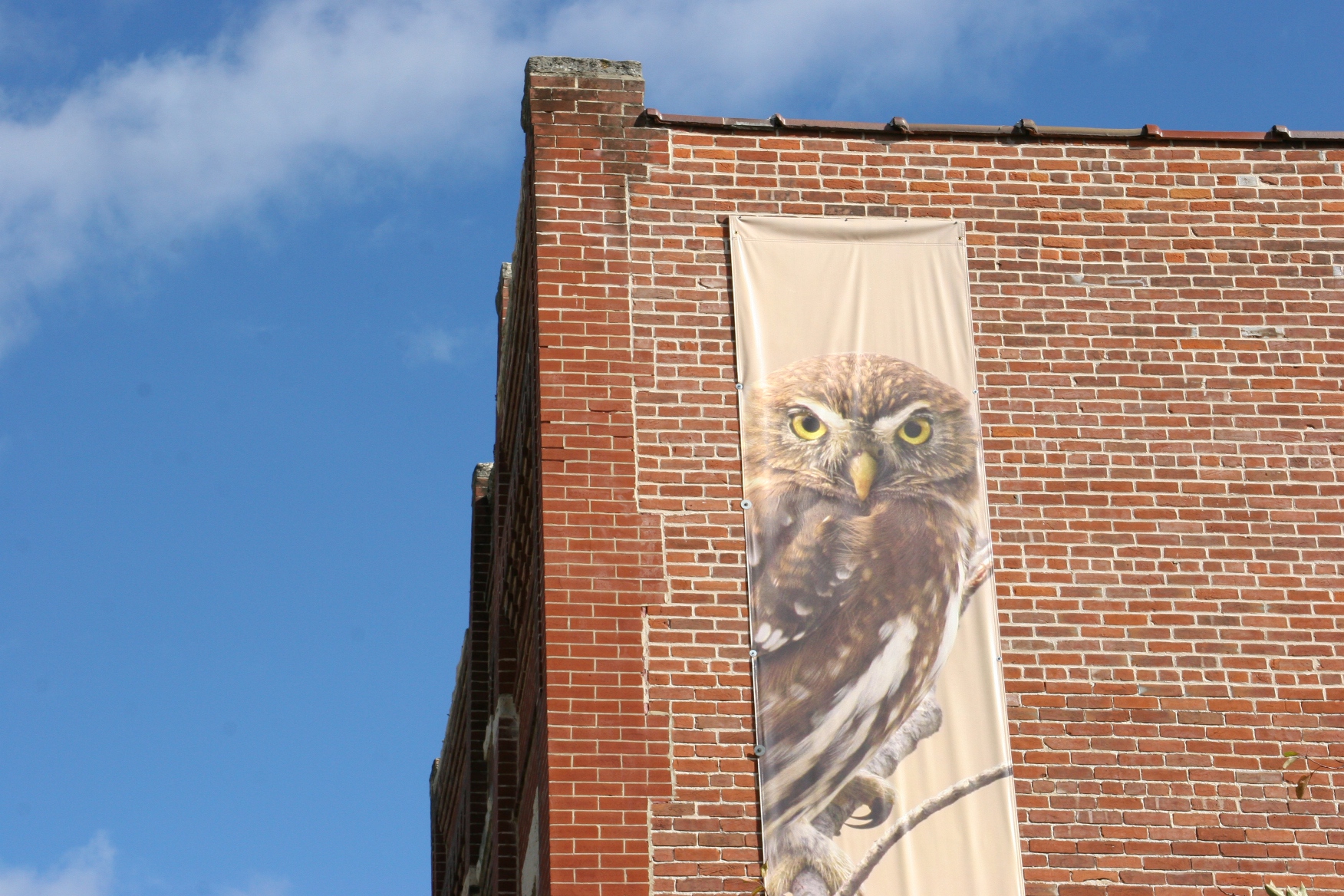
A banner on the side of the International Owl Center helps visitors find the building in downtown Houston, Minnesota. (Minnesota Prairie Roots copyrighted file photo October 2015)
One of the center’s live owls, photographed during my 2015 visit. (Minnesota Prairie Roots copyrighted file photo October 2015)
But this nonprofit has spread its wings to make life better for the children of Ukraine. How? By raising monies through online auctions of owl art with proceeds benefiting United Nations Children’s Fund (UNICEF) to help Ukrainian children.
Promo for the current art auction. (Source: International Owl Center)
The fourth Ukrainian Art Auction for Ukrainian Kids opens at 6 am Wednesday, June 22, and closes on Sunday, June 26. All 48 original art pieces were created through the years by Ukrainian children for the International Kids’ Owl Art Contest and are in the Owl Center collection. The current auction also features one piece of art by a teacher.
Three online auctions of owl art earlier this year, sales of gift card sets and donations have already raised $225,000 for UNICEF relief in Ukraine. Bids reached as high as $8,005 for a single piece of original artwork. A fifth auction is set for August 10-14. Total fundraising goal is $400,000.
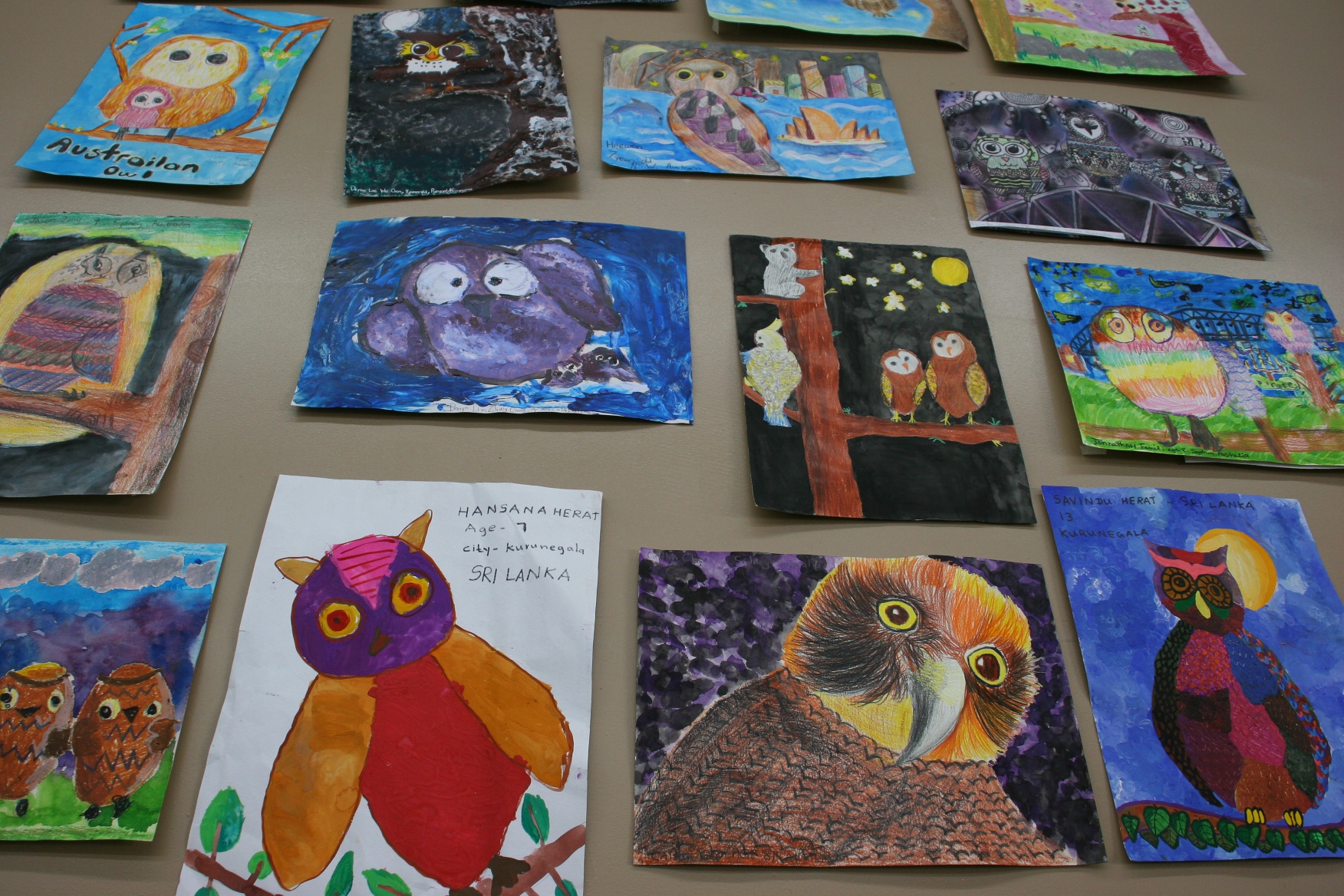
Owl art, from all over the world, decorated the Owl Center walls during my 2015 visit. (Minnesota Prairie Roots copyrighted file photo October 2015)
I’m beyond impressed by the ambition of the Owl Center and by the generosity of bidders. And I’m beyond impressed by the talent of these Ukrainian artists who range from preschool age to 18-years-old.
The Center plans to also re-offer sets of 20 blank owl art greeting cards during the International Owl Awareness Day weekend August 5-8. Those must be purchased in-person at the center with any remaining card sets then sold in the Center’s online store.
The International Owl Center in downtown Houston, Minnesota. (Minnesota Prairie Roots copyrighted file photo October 2015)
As the war in Ukraine continues, media coverage has lessened, replaced by other top news stories. But that doesn’t diminish the pain, the suffering, the fear, the terror, the hunger, the displacement, the destruction, the death…that remain very real for the people of Ukraine. I am thankful that the International Owl Center has partnered with the Houston Area Community Foundation to aid Ukrainian kids. Via these fundraisers, this Minnesota community of 1,040 is offering help, and hope.
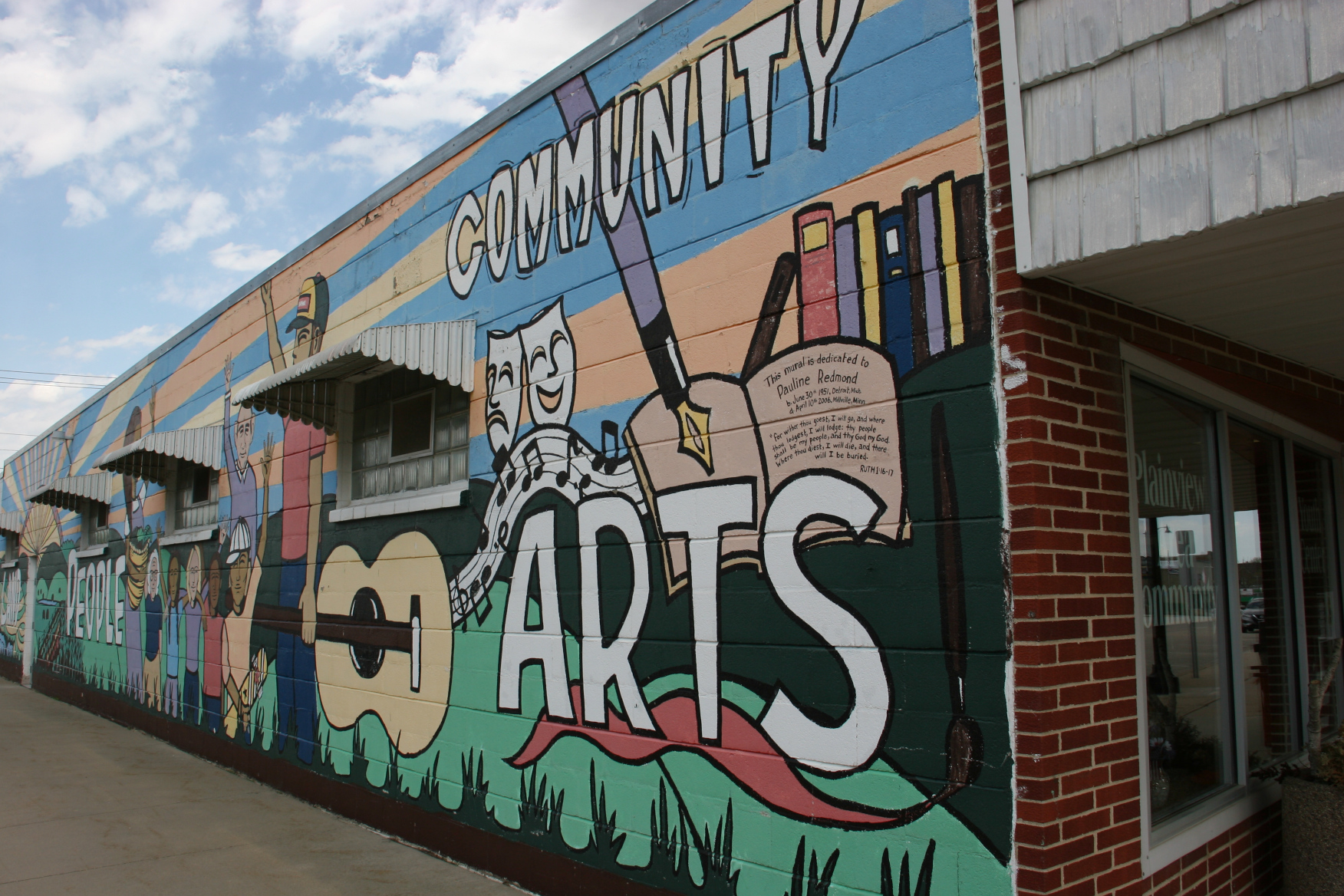
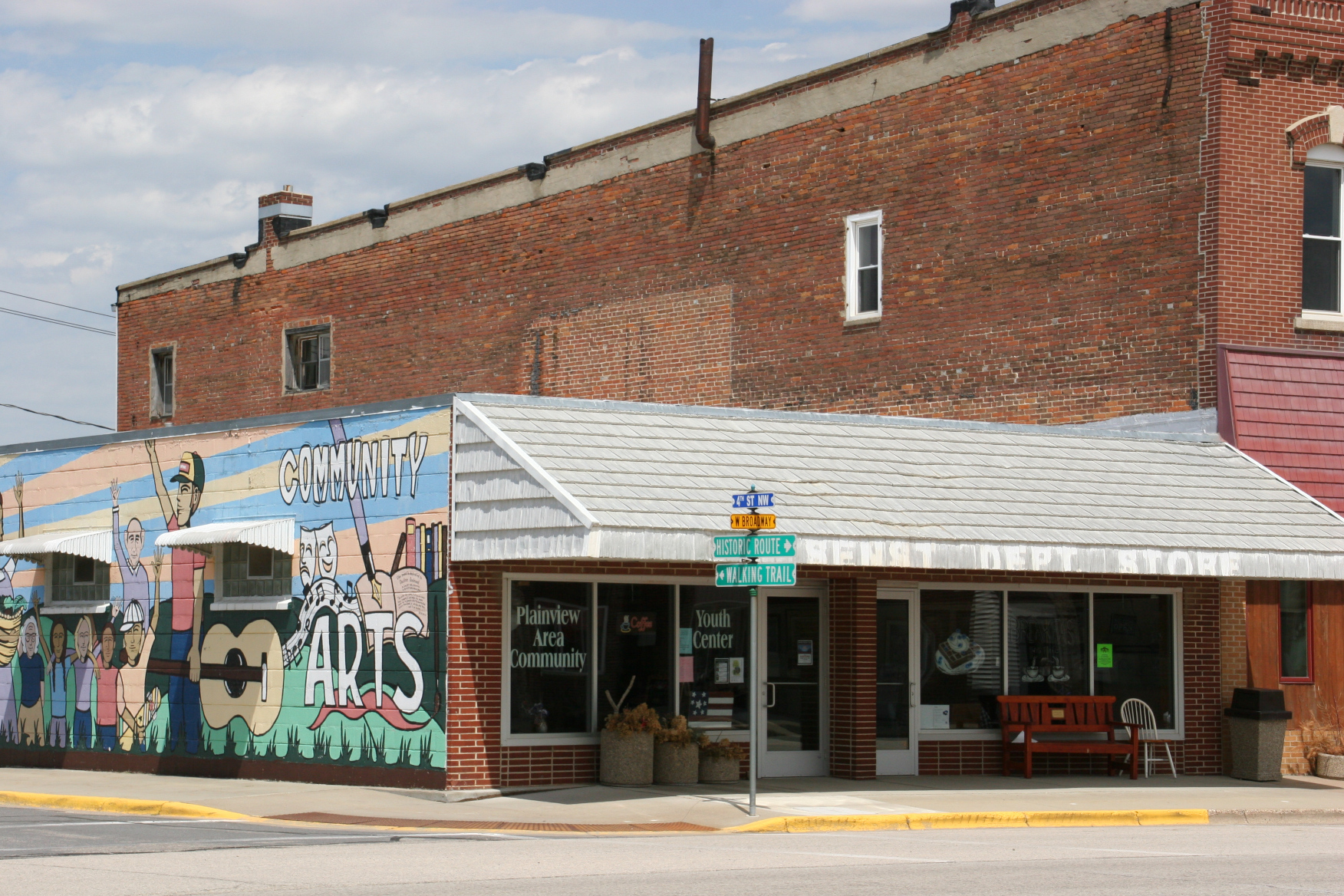
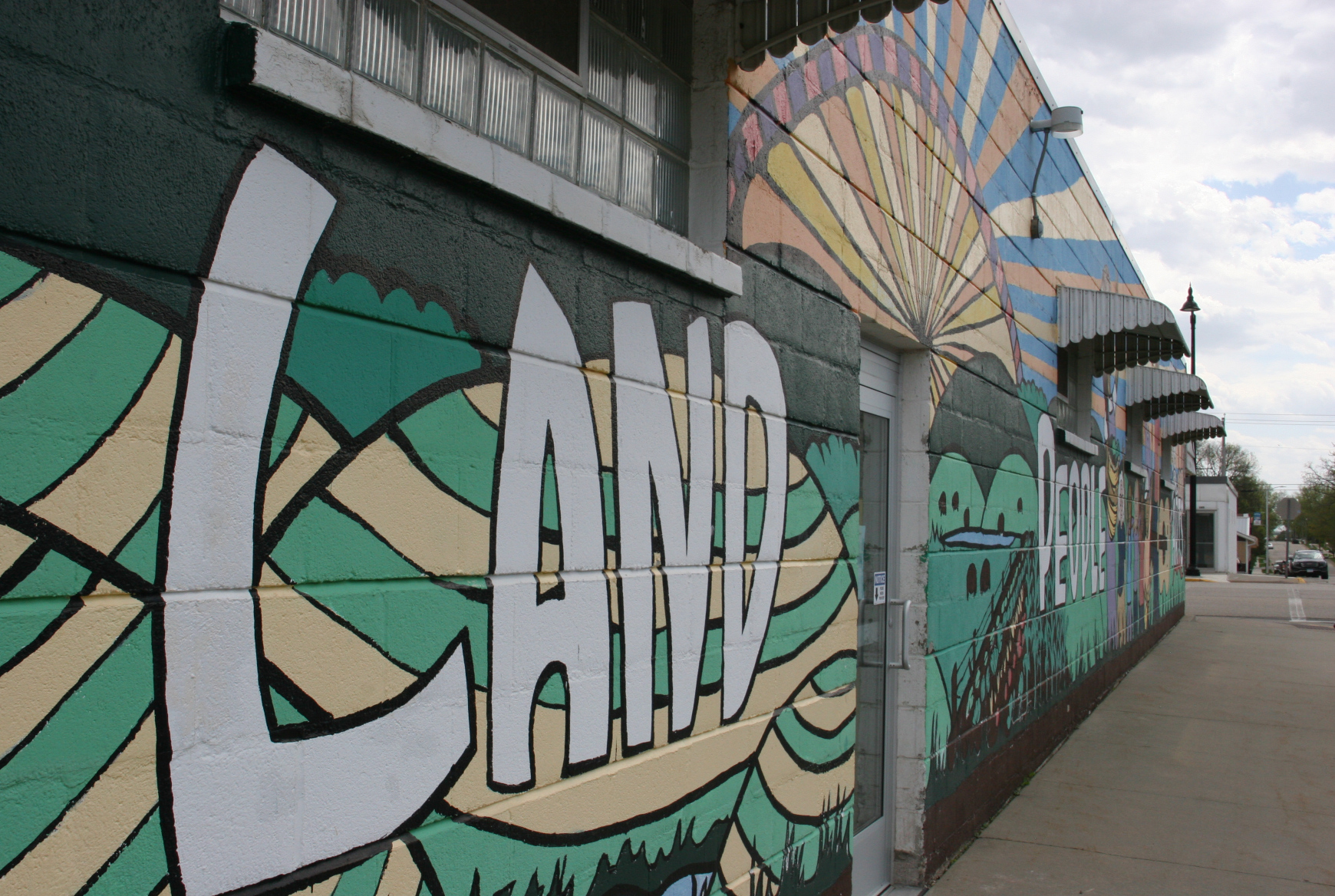
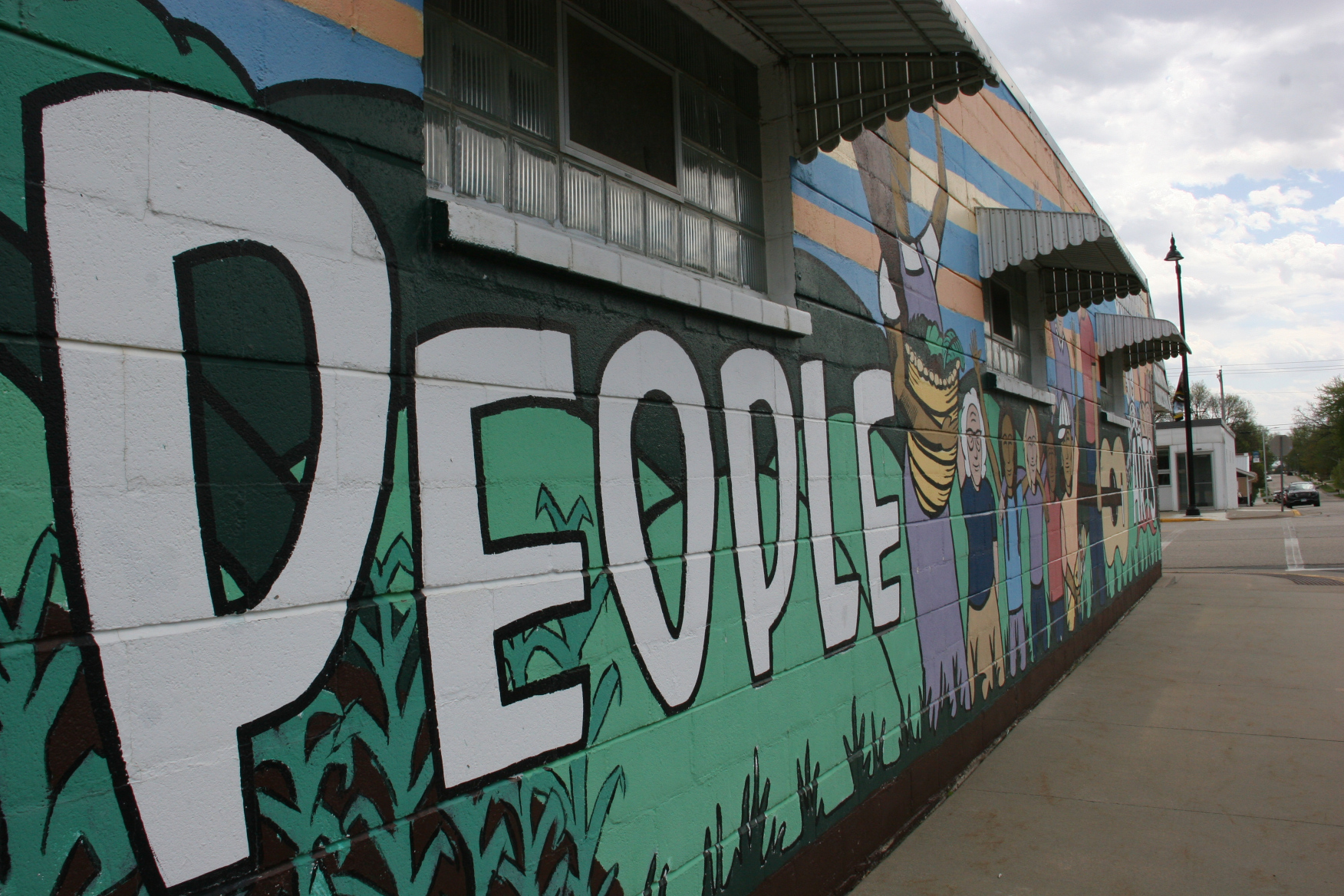
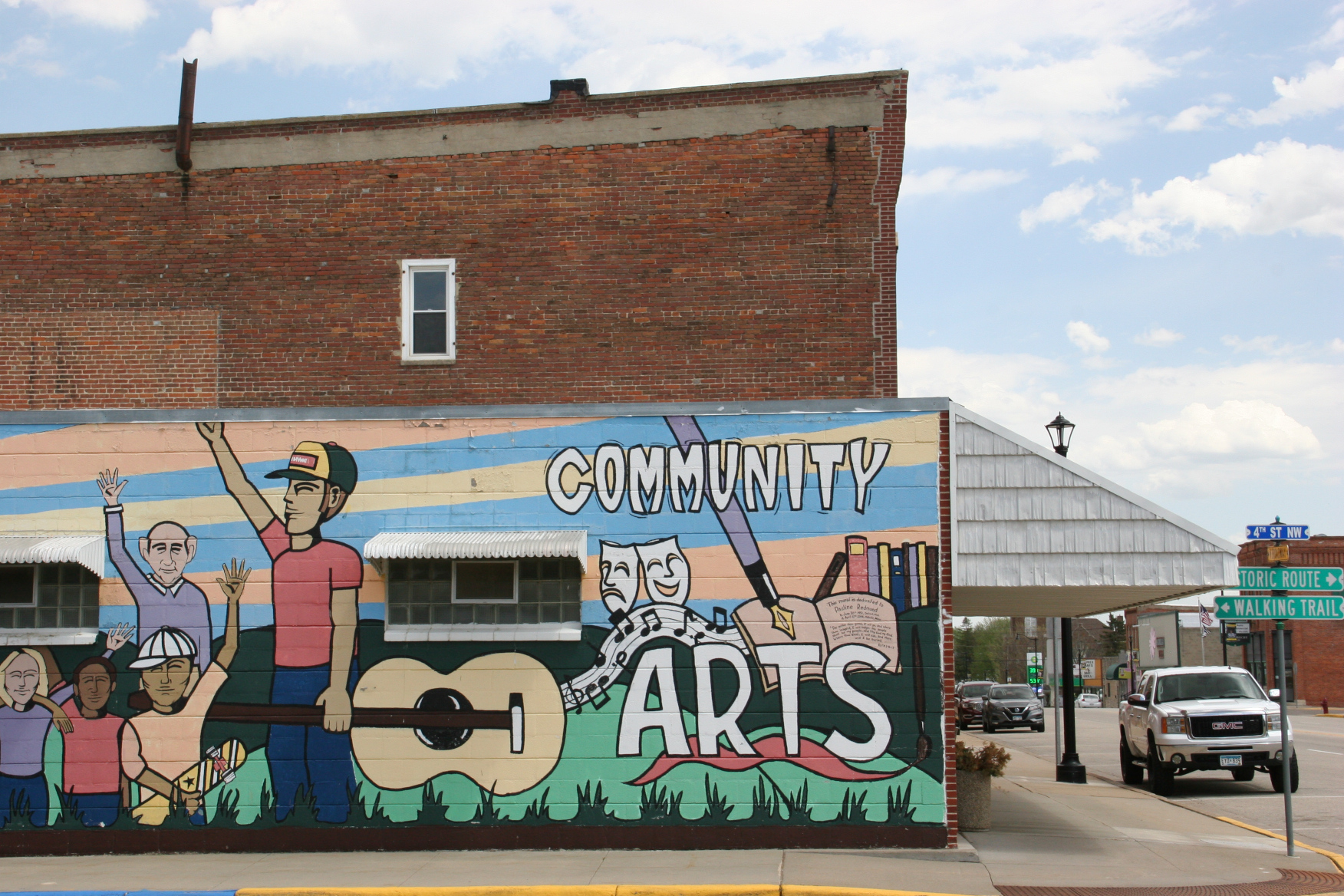
The mural graces a wall of the community center, across the street from the former Jon Hassler Theater. (Minnesota Prairie Roots copyrighted photo May 2022)
I remember the mural from my last visit here in 2013. I appreciate this public art now as much as I did then, for art can reveal much about a place.
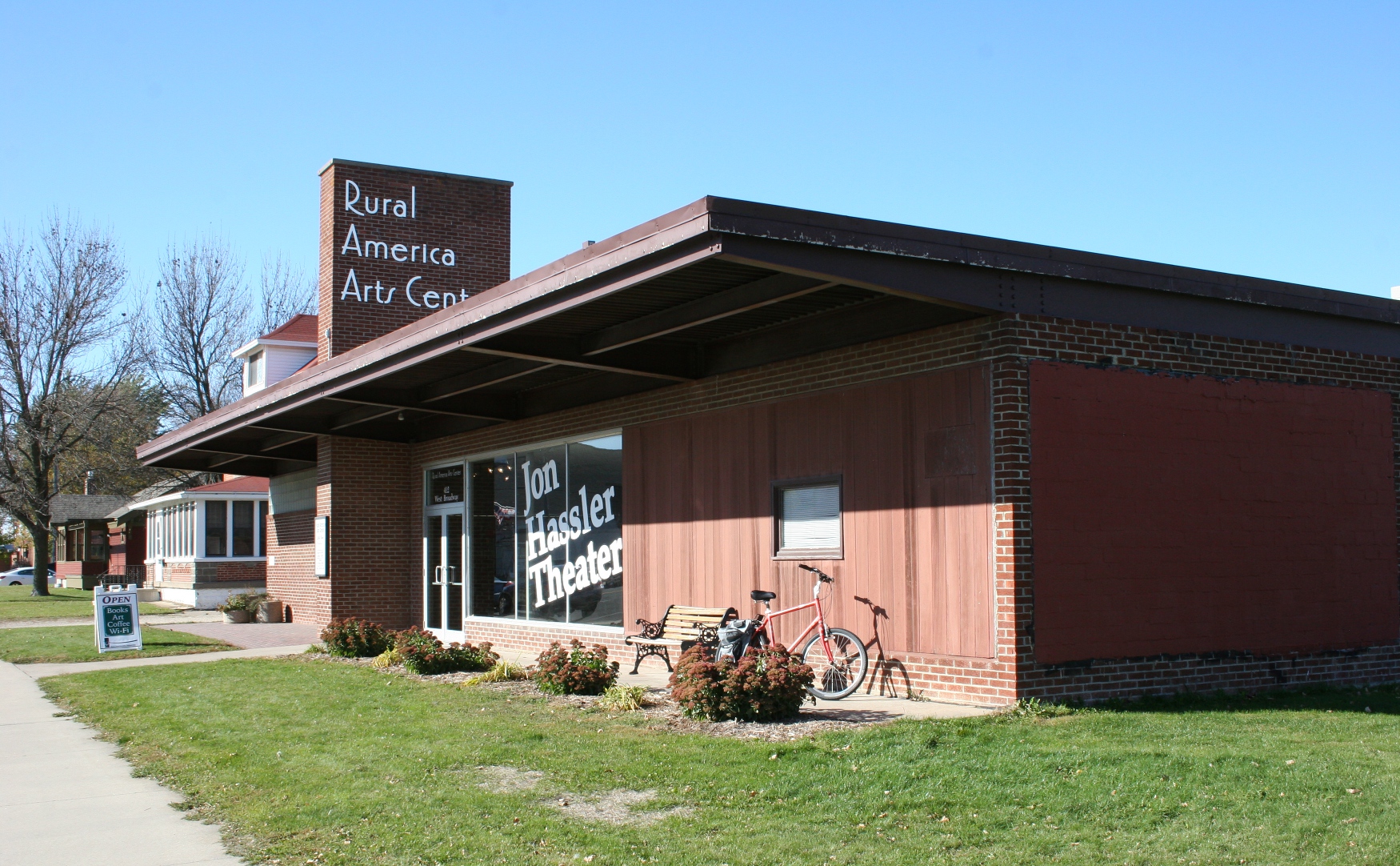
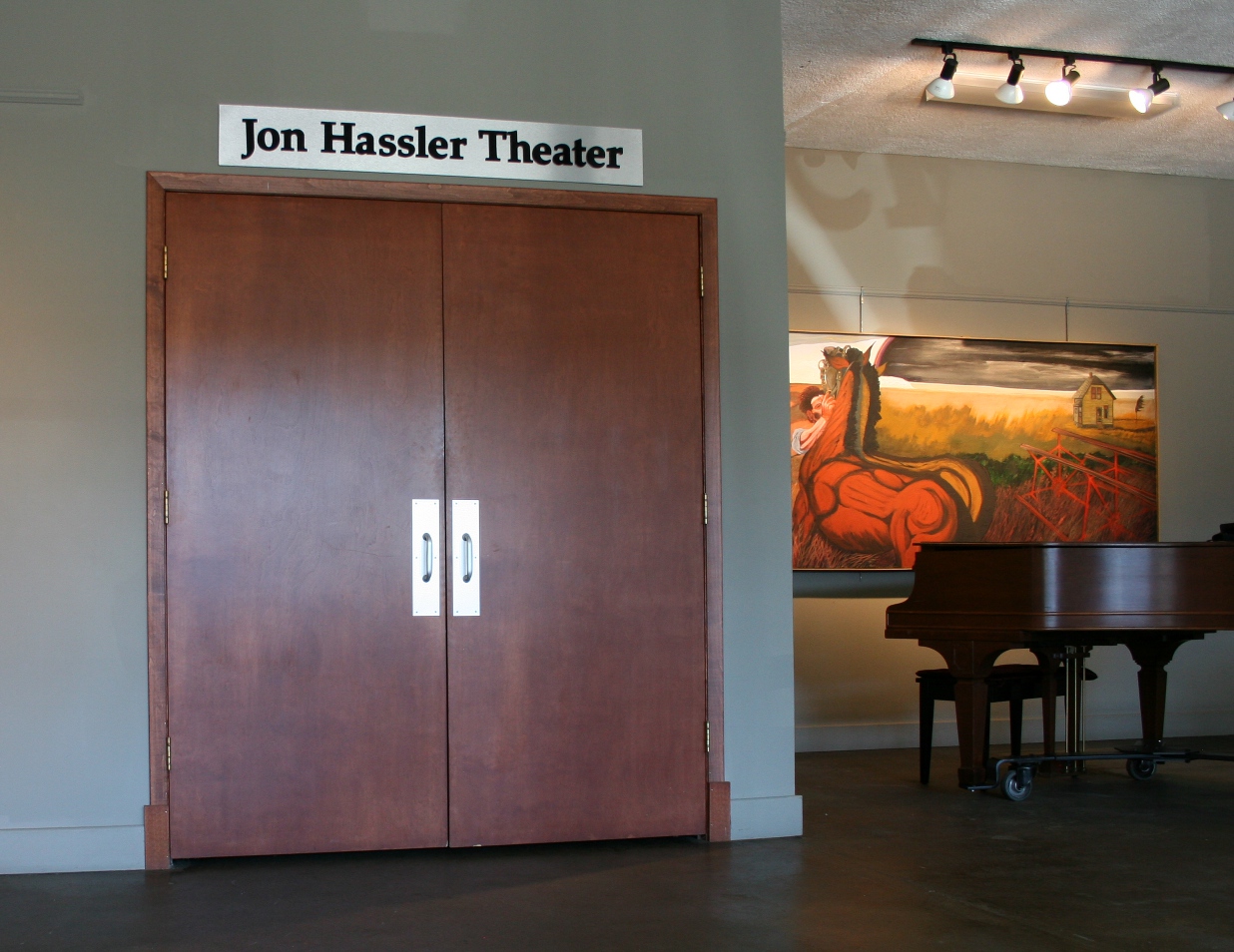
In the heart of the community, the Jon Hassler Theater and Rural America Arts Center, now closed. (Minnesota Prairie Roots copyrighted file photo November 2013)
While Plainview has lost some of its “arts” character with closure of the Jon Hassler Theater and Rural America Arts Center, it will always claim title (along with Staples) as the boyhood home (s) of noted Minnesota writer Jon Hassler. He moved to Plainview with his parents at the age of 10, remaining there until shortly after his 1951 high school graduation.
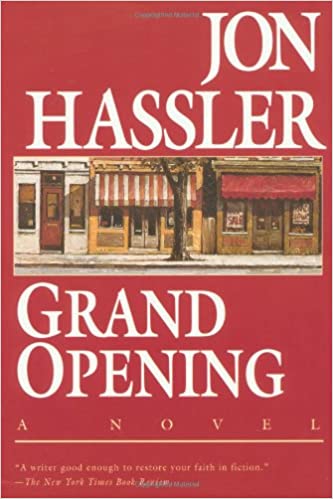
Hassler’s Grand Opening is based on Plainview.
Hassler, one of Minnesota’s most-beloved authors, focused his fiction on small town life. That includes Grand Opening, a novel based on Plainview. As in real life, the main character’s parents buy a run-down grocery store in rural Minnesota.
Source: Afton Press
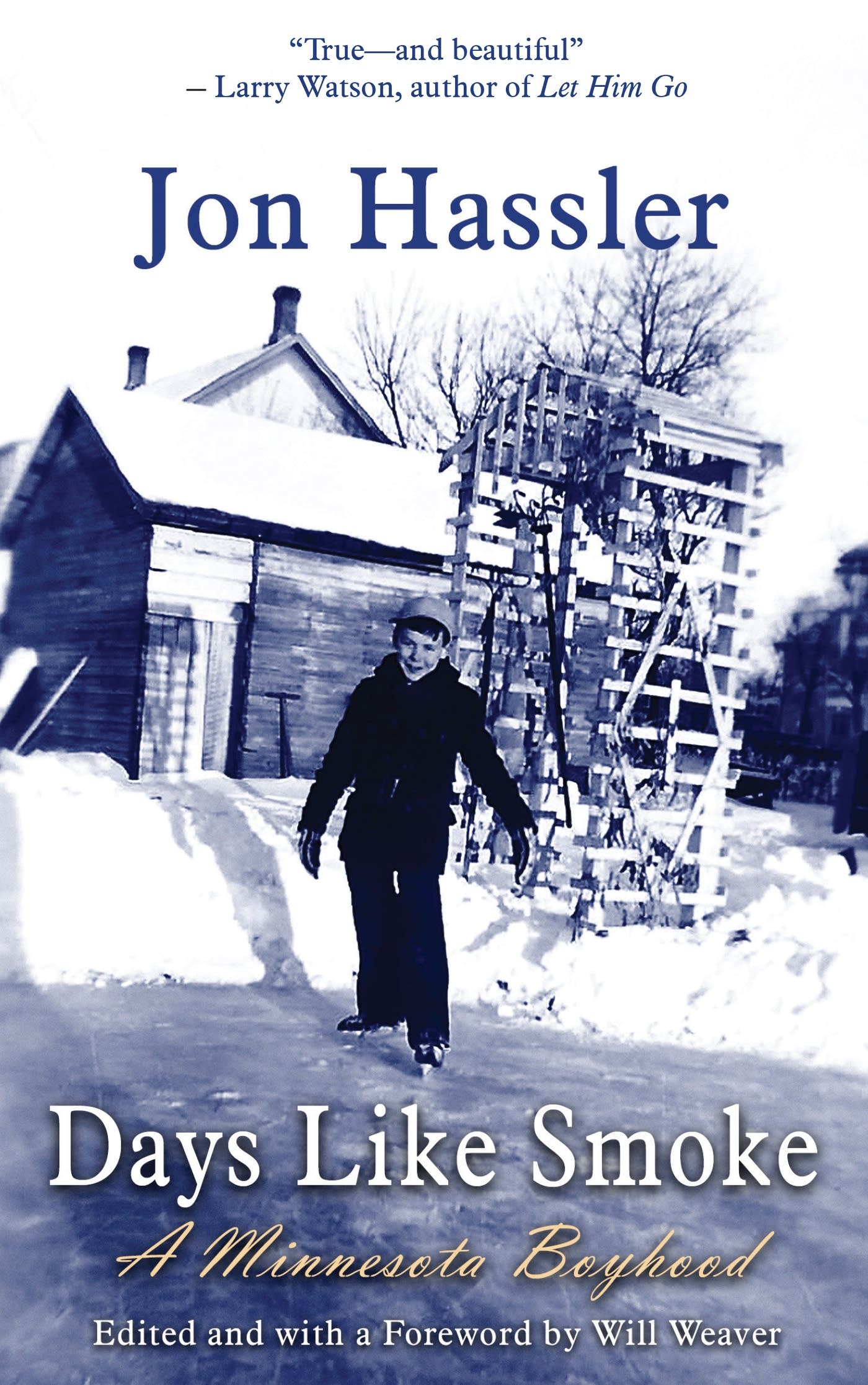
While I have not yet read Grand Opening, I just finished Days Like Smoke, A Minnesota Boyhood. This is Hassler’s memoir, a manuscript published by Afton Press in 2021, many years after the author’s 2008 death. Edited by friend Will Weaver, another well-known Minnesota writer, this slim volume offers insights into Plainview, into Hassler’s experiences there and how that shaped his writing. He credits his parents’ Red Owl Grocery Store as the training grounds for his writing, the place where he acquired the latent qualities necessary to the novelist. In that grocery store, Hassler stocked shelves, ground coffee, interacted with and observed customers, and more.
The land (farming) is integral to the economy of Plainview, which is surrounded by corn and soybean fields. (Minnesota Prairie Roots copyrighted photo May 2022)
This sentence in Hassler’s memoir is so telling of the influence Plainview had on his writing: I see the villagers passing along the checkout counter like the cast of characters they eventually turned out to be in my novel about this village in the corn. I love that phrase, “village in the corn,” for it fits agriculturally-based Plainview. The community is home to food processors, Plainview Milk Products Cooperative and Lakeside Foods, and celebrates Corn on the Cob Days each summer. Farming centers the local economy.
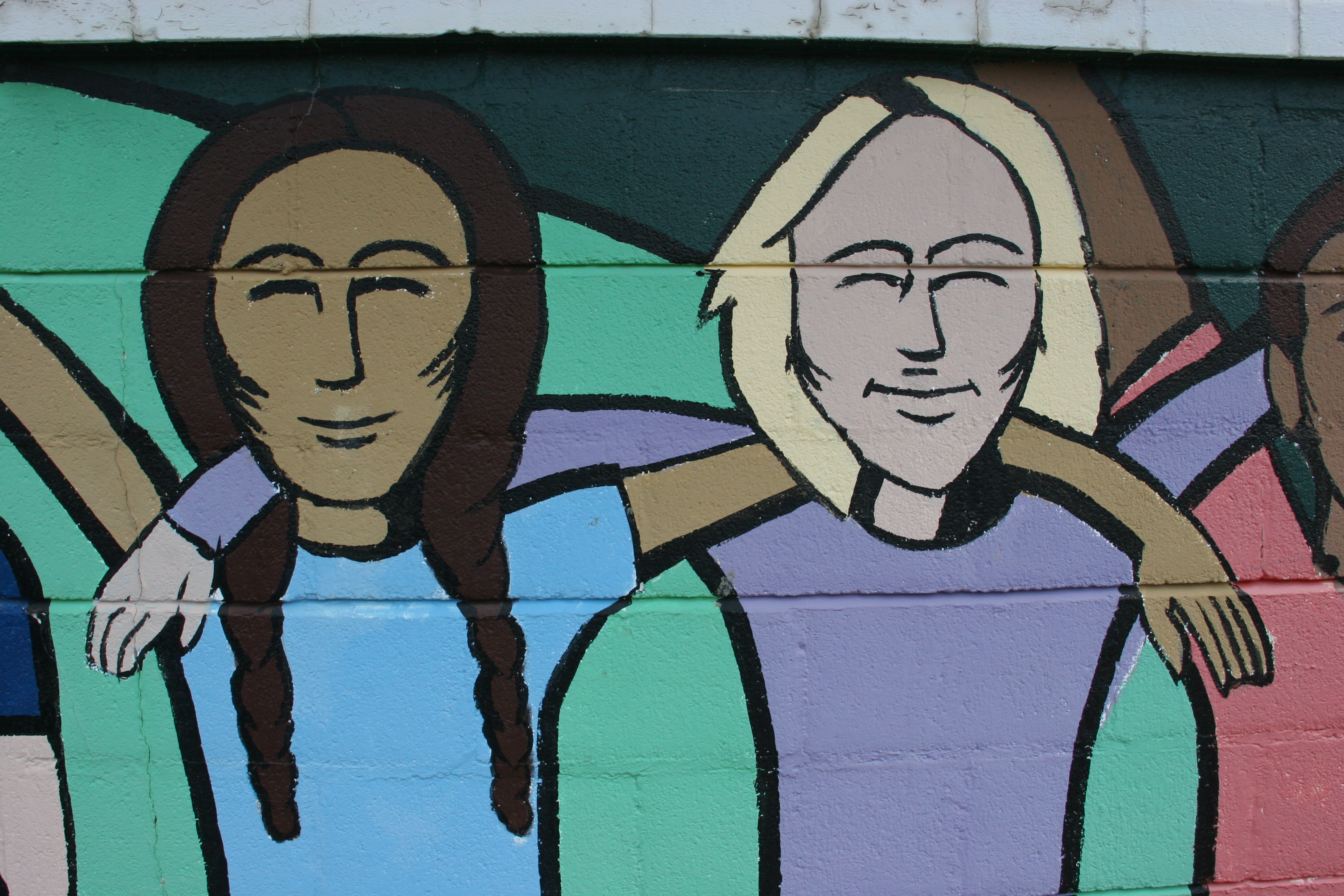
Two of the people featured on the mural. (Minnesota Prairie Roots copyrighted photo May 2022)
It’s the people, though, including the characters, who truly define community. And Hassler shares plenty from Plainview, where he lived across from the stockyards for awhile, tried to derail a train, played high school football for the Gophers, watched endless movies at the Gem Theater, bloodied the nose of a third grader, sat at the bedside of his dying 11-year-old friend, biked to the bluffs along the Whitewater River to camp and fish, served as an altar boy…
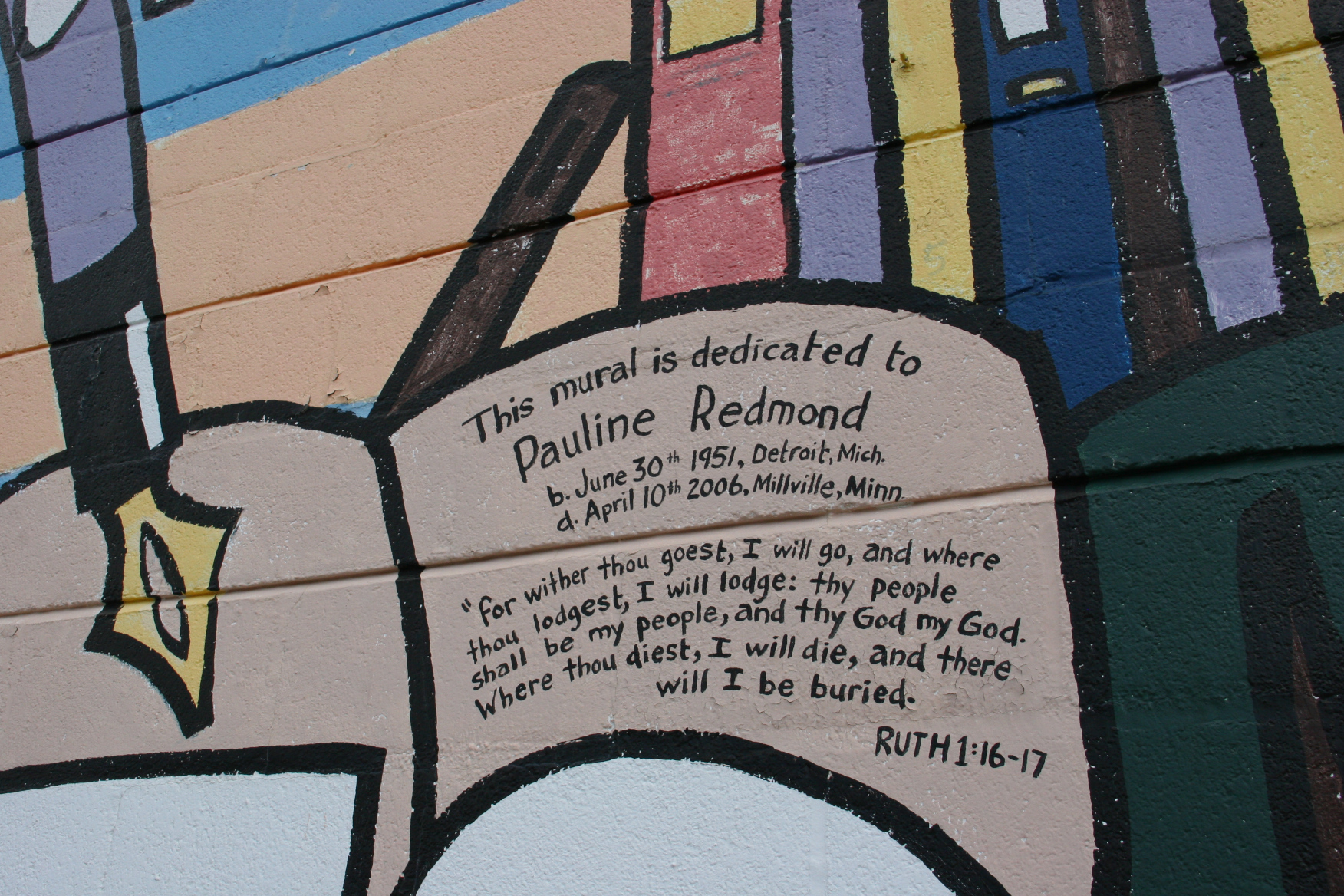
The mural includes a faith-based dedication to Pauline Redmond. She co-owned the North Country Anvil Magazine/Anvil Press with her husband, Jack Miller. (Minnesota Prairie Roots copyrighted photo May 2022)
In his memoir, Hassler remembers St. Joachim’s Catholic Church and Immanuel Lutheran Churchstanding as sentinels of the soul at opposite ends of Main Street. That’s such an insightful visual. Hassler valued his Catholic upbringing and faith throughout his life. But he also admits in his memoir to the strong current of religious animosity running under the surface of daily life in the village of my youth between Catholics and Lutherans. This comes as no surprise to me, growing up in rural Minnesota with the same denominational tension.
People also define place as noted on the mural. (Minnesota Prairie Roots copyrighted photo May 2022)
It was that undercurrent—specifically the defeat of Hassler’s father in a school board election—which ultimately caused Hassler’s parents to leave Plainview and return to Staples. He writes: I, newly graduated from high school, loved Plainview too dearly to follow them.
The interior entrance to the Jon Hassler Theater, photographed during a 2013 visit to Plainview. (Minnesota Prairie Roots copyrighted file photo November 2013)
Hassler’s love for Plainview endured, long after he left to attend college, then to teach, then to write and then to retire in 1997 after 17 years as writer-in-residence at Saint John’s University. Visit Plainview today and you get a strong sense of the place that shaped this writer. While businesses and people have come and gone, at its core, this remains “the village in the corn.”
TELL ME: Have you read any of Jon Hassler’s 12 novels or his nonfiction? I’d love to hear your take on his writing and what books you recommend.
Please check back for more posts from Plainview next week.Be sure to read my previous posts on Plainview published this week.
A mural themed to people, land, community and the arts graces a corner building in downtown Plainview. (Minnesota Prairie Roots copyrighted file photo May 2022)
This Norman Rockwell type scene depicts small town Minnesota, here on a Saturday afternoon in Plainview. (Minnesota Prairie Roots copyrighted photo May 2022)
Here kids bike along the main drag through town, passing by homegrown shops and other businesses. Here friendly shopkeepers engage in easy conversation that made me feel incredibly welcomed. And connected.
Just a block off Broadway, the local co-op. (Minnesota Prairie Roots copyrighted file photo May 2022)
This is a rural community through and through. Home to the Plainview Milk Products Cooperative. Surrounded by farm fields. And, at its essence, home to residents rooted in rural life. Noted Minnesota author Jon Hassler, who penned novels about small town life, grew up here (and in Staples). His parents owned the local Red Owl grocery store.
Right forefront, The Shop on Broadway vends antiques and collectibles. It’s an uncluttered shop with artfully displayed one-of-a-kind merchandise. (Minnesota Prairie Roots copyrighted photo May 2022)
At The Shop on Broadway, relative newcomer to the area and co-proprietor Sonia spoke about a recently-purchased rural property.
Like a step back in time…J.T. Varieties & Toys. (Minnesota Prairie Roots copyrighted photo May 2022)
At the variety store, the clerk and I exchanged histories of growing up on dairy farms.
Young Love is a combo floral and gift shop, plus small event center. (Minnesota Prairie Roots copyrighted photo May 2022)
A close-up of the lengthy mural on a building across the street from the former theater/arts center. (Minnesota Prairie Roots copyrighted photo May 2022)
Plainview, in many ways, surprised me. I’d been here previously, nearly 10 years ago when a wrong turn led Randy and me to this small town some 20 miles northeast of Rochester. During that brief stop, we popped into the Jon Hassler Theater/Rural America Arts Center. The theater closed soon after and the arts center followed. But both impressed me. This return trip to Plainview revealed a new side, a thriving business district of welcoming, one-of-a-kind shops.
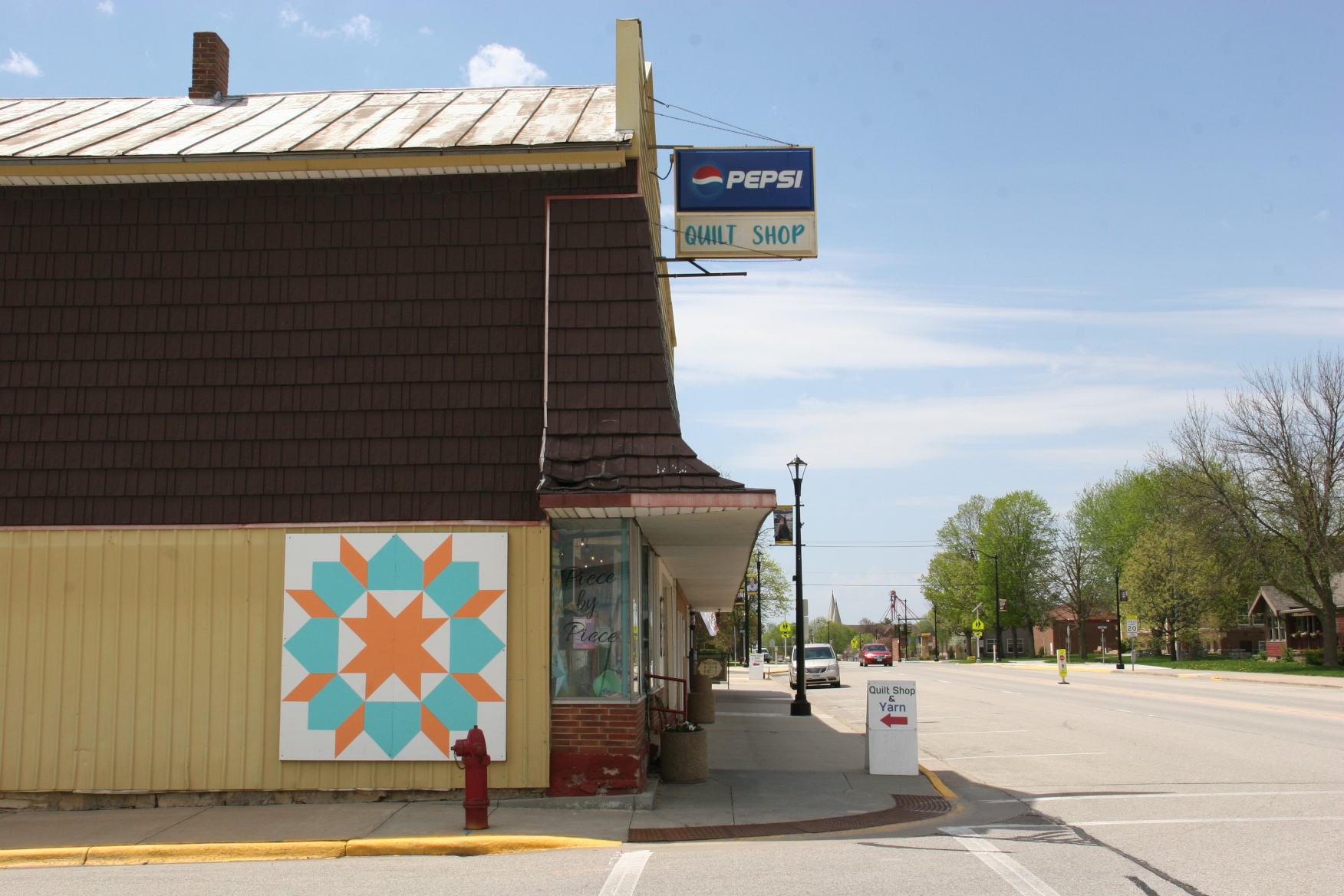
Although I didn’t pop into the quilt shop, Piece by Piece Creative Collaboration, I should have. Next time. (Minnesota Prairie Roots copyrighted photo May 2022)
Not all were open on the Saturday of my mid-May visit. But I perused enough to get a feel for what this community offers. As cliché as it sounds, Plainview seems an undiscovered gem with its independently-owned shops staffed by friendly folks with time to chat. I felt unrushed in uncrowded stores. Browse at my own pace. Take in the setting and merchandise and down-home feel of being in the moment in rural Minnesota.
J.T. Variety & Toys sells fabric and so much more. (Minnesota Prairie Roots copyrighted photo May 2022)
That comes from someone who is not a shopper, who easily tires of mass-produced whatever in Big Box stores. But I didn’t feel that here in Plainview. Inside The Shop on Broadway and J.T. Varieties & Toys, I found nostalgia. Antiques and collectibles in The Shop. And at the Variety store, I stepped back in time, into a mercantile akin to the Ben Franklin or Woolworth’s of my youth. I eased down narrow aisles jammed with merchandise—ran my hand across beautiful cotton fabric layered on shelves, eyed endless knick knacks, appreciated the Little Golden Book storybooks for sale.
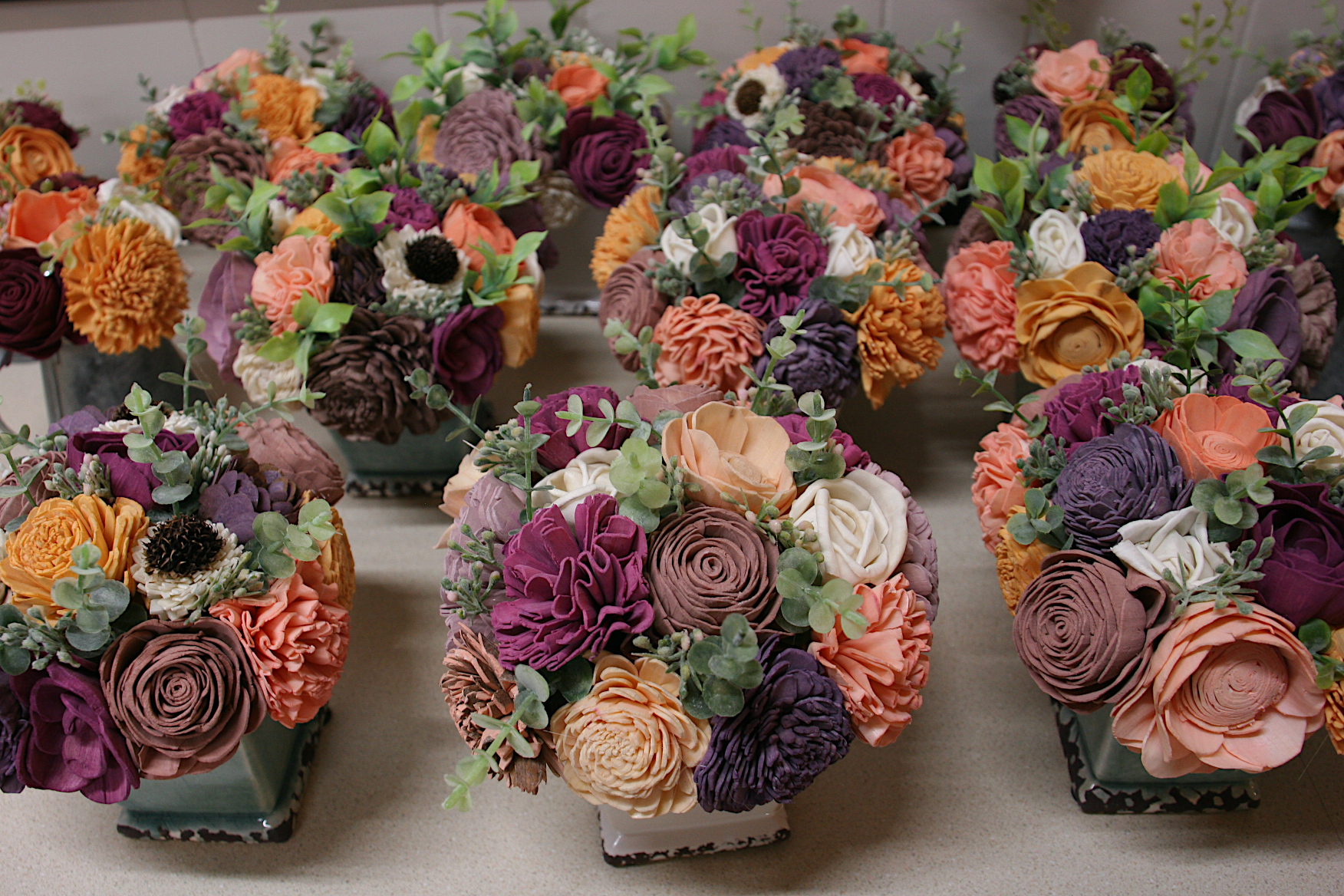
Created by Shantelle Speedling at Young Love Floral & Finds. (Minnesota Prairie Roots copyrighted photo May 2022)
At Young Love Floral & Finds, historic photos, a vintage Mallard Seeds sign (the seed company was once housed here as was a bank) and the First National Bank vault (now a storage space) revealed more about this community. I love this little shop owned by floral designer/creative Shantelle Speedling. The biggest surprise here: wood flowers. Speedling uses them in her floral designs and they are unbelievably beautiful.
The display window at Magnolia Cottage showcases women’s clothing. (Minnesota Prairie Roots copyrighted photo May 2022)
Another surprise came in finding The Magnolia Cottage Boutique. If this had not been my last shop stop, I may have tried on some of the clothing therein because I loved the styles. But I was tired and it takes a lot for me to try on clothes. The shop also sells home décor, gifts, flowers and more.
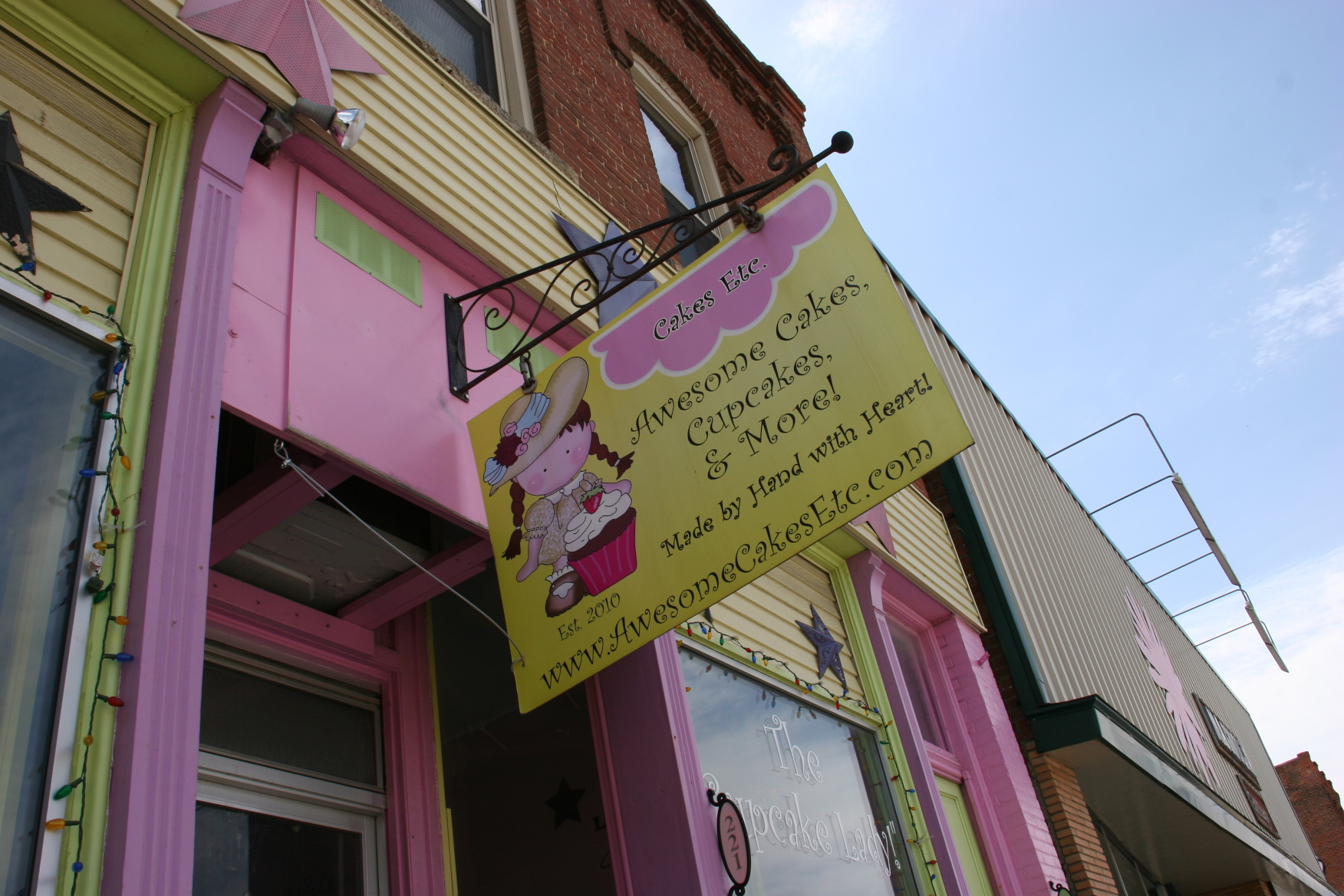
From what I read online, this cupcake shop is open only occasionally, It gets rave reviews for its artsy and delicious cupcakes. (Minnesota Prairie Roots copyrighted photo May 2022)
Next door, Cakes Etcetera was closed, so no cupcakes for me on this Saturday afternoon.
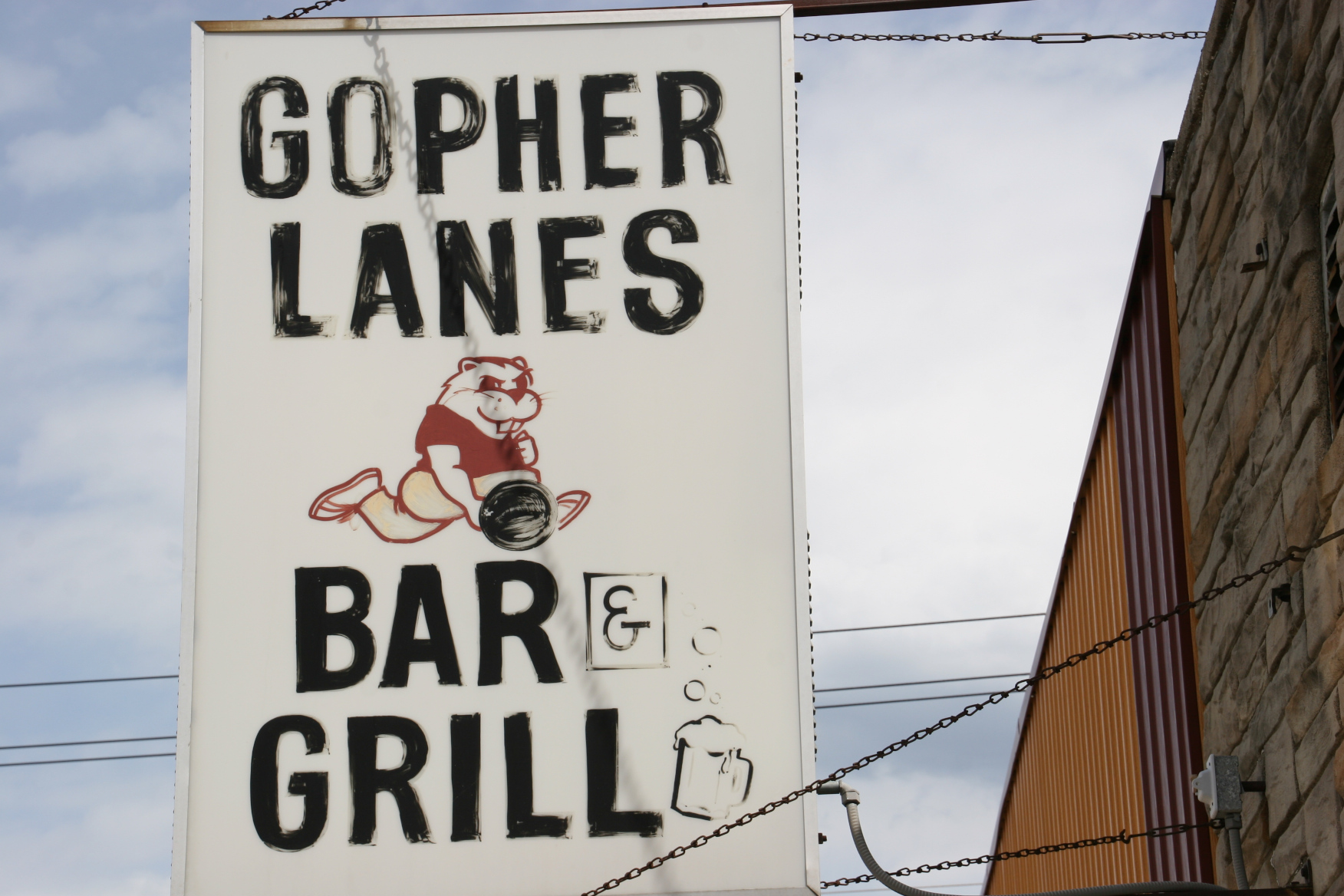
Love this vintage sign marking the bowling alley. (Minnesota Prairie Roots copyrighted photo May 2022)
A few doors down, I spotted a vintage sign for Gopher Lanes Bar & Grill. The bowling alley is closed—for the summer. But that didn’t keep me from admiring the sign which is, oh, so Minnesotan. Before Plainview schools merged with Elgin and Millville, their mascot was the Gophers. And just some 10 miles to the southwest of Plainview, the town of Viola celebrates the lowly pocket gopher with an annual community celebration, the Viola Gopher Count. The 148th annual festival is scheduled this week on June 15 and 16. That’s another story and Viola, another place to visit. Just like Plainview.
PLEASE CHECK BACK for more posts from Plainview. I’ll take you inside shops, show you signs, art and more discovered on a Saturday afternoon along Broadway. I’m sure I missed a lot of what Plainview offers. So if you are from this town, or have visited, I welcome your insights on places to check out.
Promotional graphic created by artist Jeff Jarvis. (Credit: Straight River Art Festival)
WE ARE A CREATIVE BUNCH, we Minnesotans. And this weekend, 20 creatives from Faribault, Northfield and the surrounding area will showcase their work at the Straight River Art Festival.
The new event runs from 9 am–6 pm Saturday, May 21, at Heritage Park, alongside the Straight River, just a block from Faribault’s historic downtown. There fine artists will set up booths to vend their art, engage in conversation and, for some, demonstrate their crafts.
An example of Tami Resler’s pottery. (Minnesota Prairie Roots copyrighted file photo March 2021)
Featured art includes stained glass, jewelry, pottery, apparel and accessories, photography, hand-blown glass, textile design, painting, drawing, fiber art, quilting and woodcarving. Some of the artists are familiar, others perhaps not as much. Yet each brings talent and enthusiasm to the creative process. To have them all together in an outdoor setting makes their art easily accessible and visible.
Mark Joseph. (Photo credit: Straight River Art Festival)
Performing artists are also part of the Straight River Art Festival with music by Lil’ Fun Band (11 am-1 pm), Pop Prohibition (1:30-2:30 pm) and Mark Joseph (3-4 pm).
Hands-on art created at a past arts-oriented event in Faribault and unrelated to this Saturday’s festival. (Minnesota Prairie Roots copyrighted file photo July 2019)
This mural on the back of The Upper East Side in downtown Faribault features the art of Jeff Jarvis, a multi-talented artist at West Cedar Studio, Morristown. (Minnesota Prairie Roots copyrighted photo May 2021)
Brigg Evans Textiles are fabric pieces printed from original scanned Seri Batiks created by Suz Klumb, aka Brigg Evans. (Photo credit: Straight River Art Festival)
Prill loves art festivals. And, obviously, art and artists given her creative bend and home-grown Fleur de Lis Gallery. “Faribault is an amazing town with a ton of talent to highlight so I knew this event would be a great way to do that,” she says. She also notes the need for “more fun things for people in the community to do in town.” Her desire to create a new arts festival drew her to Resler and Person, both actively engaged in the arts and with strong connections to local creatives.
Down to Earth Stoneware, pottery by Diane Lockerby. (Photo credit: Straight River Art Festival)
“We are all very passionate about the town and the arts and are very excited to bring this event to the community,” Prill continues.
Bending Sunlight Glassworks, artist Sandra Seelhammer. (Photo credit: Straight River Art Festival)
I’m excited, too, as I share Prill’s love of the arts. I cannot imagine a life without writing and photography. Both feed my spirit, my soul, my need to create. And this Saturday 20 creatives who share that passion will fill Heritage Park with their art and creative energy.





















Recent Comments