Minnesota Prairie Roots

Writing and photography by Audrey Kletscher Helbling

The art of reclaiming and repurposing in a Northfield shop April 20, 2013

Makeshift accessories

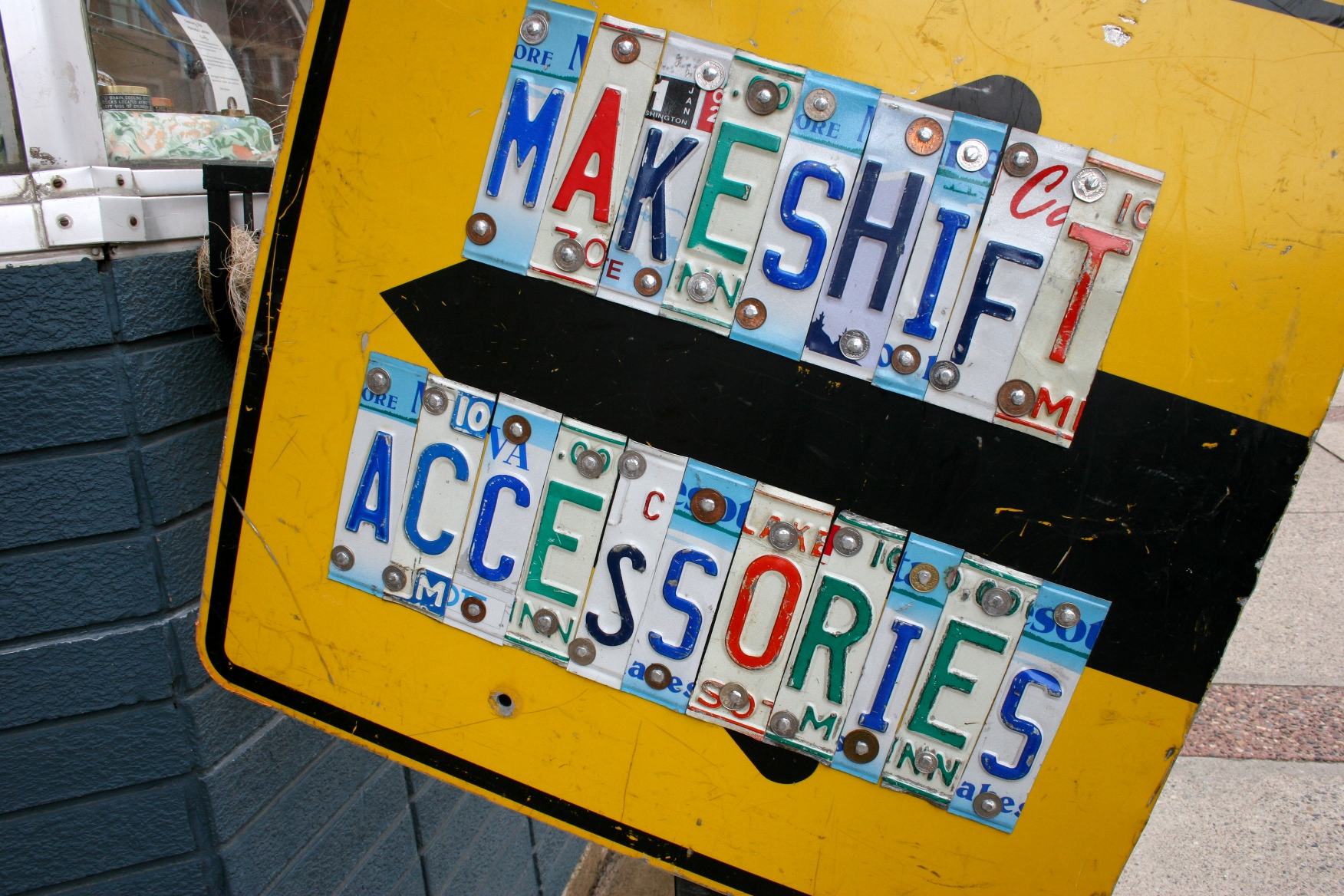
THE CLEVER CREATIVE sidewalk sign crafted from license plates catches my eye and draws me into a cozy shop in downtown Northfield.

Inside I finger rings formed from spoons, try to slide on bracelets shaped from old license plates and other materials, admire oversized blooms folded from pages.

But I don’t take a single photo to show you, save that outdoor sign.

I Should have asked to photograph the art. I didn’t.

So you will have to imagine a one-of-a-kind home-grown shop featuring handmade merchandise repurposed from reclaimed items.

MakeShift Accessories, owned by artist-enterpreuner Devin Johnson, hometown boy come back home to Northfield, is my kind of store with its authentic artsy vibe.

FYI: To learn more about MakeShift Accessories, 418 Division Street, click here to reach the business website. Or, if you’re at Junk Bonanza today at Canterbury Park in Shakopee, scout out Johnson’s booth.

His work is also sold in Minneapolis at “I like You,” Gallery 360 and Mill City Museum; in New Prague at Cranky Alice; and in other locations.

© Copyright 2013 Audrey Kletscher Helbling


Fifty-one years of presenting The Last Supper Drama at a rural Minnesota church March 22, 2013

St. John's members portray the disciples in this undated vintage photo, the first record of a photograph from The Last Supper Drama. Actors, from left to right, are Luverne Hafemeyere, Earl Meese, Vicgtor Luedke, Howard Meese, Virgil Bosshart, Arnold Keller, P.L. Golden, Alvin bosshart, Paul Bauer, Elmer Covert Sr. and Arnold Bauer. Photo courtesy of St. John's.

St. John’s members portray the disciples in this undated vintage photo, the first record of a photograph from The Last Supper Drama. Actors, from left to right, are Luverne Hafemeyere, Earl Meese, Vicgtor Luedke, Howard Meese, Virgil Bosshart, Arnold Keller, P.L. Golden, Alvin bosshart, Paul Bauer, Elmer Covert Sr. and Arnold Bauer. Photo courtesy of St. John’s.

THOUSANDS OF MILES from Milan, Italy, in the flat farm fields of Rice County in southeastern Minnesota, Leonardo da Vinci has left his mark on a small congregation.

For 50 consecutive years, St. John’s United Church of Christ, Wheeling Township, has presented The Last Supper Drama, a theatrical interpretation of the master artist’s most famous painting created in 1495 as a mural in an Italian monastery.

St. John's 50th presentation of The Last Supper Drama in the sanctuary.

St. John’s 50th presentation of The Last Supper Drama in 2012.

I penned those two opening blog post paragraphs during Holy Week 2012, shortly after attending the St. John’s performance.

So update that number. The congregation is slated to present its 51st The Last Supper Drama at 8 p.m. on March 24, Palm Sunday.

I’d advise attending because you don’t get more grassroots basic than this in the retelling of Christ’s final meal with his 12 disciples via a script penned by a long ago St. John’s pastor.

Judas grips the bag of silver, his reward for betraying Christ.

Judas grips the bag of silver, his reward for betraying Christ, as seen in the 2012 drama.

Each disciple speaks of his personal relationship to Christ, making this a particularly introspective drama presented by members and former members of St. John’s.

The parking lot at St. John's United Church of Christ, Wheeling Township, is nearly full 20 minutes before the congregation's annual performance of The Last Supper Drama.

The parking lot at St. John’s United Church of Christ, Wheeling Township, is nearly full 20 minutes before the congregation’s annual performance of The Last Supper Drama.

Truly, there’s something about slipping inside this rural 1800s limestone church as evening melds into night, settling upon aged pews among those who have worshiped here for generations, that is particularly comforting.

It is good for the soul to sing and pray and listen, to sweep your thoughts into a meditative mindset for Holy Week.

That this country congregation continues with a tradition begun in 1963 impresses me. Such uninterrupted longevity is a testament to faith, an appreciation of history and a clear understanding that still today, perhaps more than ever, The Last Supper Drama needs to be shared.

A view from the balcony before the drama begins shows the spotlight to the left and The Last Supper table below. The actors enter, spotlighted in the dark church, to take their seats at the table. There they "freeze" in place to mimic Leonardo da Vinci's painting.

A view from the balcony before the drama begins shows the spotlight to the left and The Last Supper table below. The actors enter, spotlighted in the dark church, to take their seats at the table. There they “freeze” in place to mimic Leonardo da Vinci’s painting.

FYI: St. John’s United Church of Christ, Wheeling Township, is located 10 miles northeast of Faribault. Take Minnesota State Highway 60 east for eight miles and then turn north onto Rice County 24. Drive two miles to 19086 Jacobs Avenue.

Click here and then here to read my detailed The Last Supper Supper Drama posts from 2012.

Click here to read my post from 2011.

© Copyright 2013 Audrey Kletscher Helbling
 

“Mending generations of bad feelings” in Redwood County during “The Year of the Dakota” February 28, 2013

WILL THE DIVIDING LINES ever connect into a complete circle of healing?

A century and a half after the U.S.-Dakota War of 1862 ended, can the Dakota and descendants of white settlers, and others, ever fully reconcile and forgive?

Words on a marker in Reconciliation Park in Mankato where 38 Dakota were hung on Dec. 26, 1862.

Words on a marker in Reconciliation Park in Mankato where 38 Dakota were hung on Dec. 26, 1862.

The issues that divide—of blame and of animosity, of death and of punishment, of land and of banishment, and more—remain, sometimes subtle and below the surface, sometimes exposed.

As a native of Redwood County in southwestern Minnesota and as a descendant of settlers who fled their New Ulm area homestead during the U.S.-Dakota War, I have always been especially interested in this conflict.

So when I learned that the City of Redwood Falls on January 15 joined the cities of Minneapolis and St. Paul in adopting resolutions “recognizing the 150th anniversary of the Dakota-U.S. War of 1862 and declaring 2012-2013 the Year of the Dakota,” I took note.

The resolution states, in part in paragraph two:

WHEREAS, much has yet to be learned about issues revolving around land, reparations and restitution, treaties, genocide, suppression of American Indian Spirituality and Ceremonies, suppression on Indigenous languages, bounties, concentration camps, force marches, mass executions and forcible removals; and…

For my home county, at the geographical center of the war and home to the Dakota, then and now, passage of this resolution reflects a desire to understand, to educate, to heal.

Now you wouldn’t think, after 150 years, that such a resolution would even be needed. Trust me. Hard feelings still exist. But because I have not lived in Redwood County for decades and am therefore only an outside observer, I contacted Redwood Falls Mayor and avid local historian Gary Revier with a few questions.

I posed this question, among others, to Revier: All these years after the Dakota War ended, what, if any, tensions still exist between the Dakota and Whites in Redwood County?

As I expected, the mayor, who could have danced around my question with political rhetoric, told it like he sees it:

To answer your question about tensions between the Dakota and White communities, I would have to say emphatically “yes.” I believe it is more of a trust issue for the Dakota. On the White side, I would have to say there is a lot of envy because of the success of the gaming industry among the various Indian communities.

When I hear from my fellow members of the White community, they almost always begin by saying, “I am not prejudiced, but…” They then go on to explain some good deed they did for a Native American or some distant cousin three times removed who they are related to.

The Milford State Monument along Brown County Road 29 west of New Ulm commemorates the deaths of 52 settlers who were killed in the area. Located along the eastern edge of the Lower Sioux Reservation, Milford had the highest war death rate of any single township.

The Milford State Monument along Brown County Road 29 west of New Ulm commemorates the deaths of 52 settlers in Milford Township during the U.S.-Dakota War.

Revier, who also happens to be a descendant of white settlers impacted by the U.S.-Dakota War, endorses the resolution which calls for presenting the Dakota perspective through discussion; efforts by the City of Redwood Falls to promote the well-being and growth of the American Indian Community; and that such efforts “will mark the beginning of future dialogues and efforts to rectify the wrongs that were perpetrated during, and since, the year 1862, a tragic and traumatic event for the Dakota People of Minnesota.”

Says Revier:

I do support the resolution for many reasons, but the one that provides me with the most satisfaction really starts mending generations of bad feelings between the two nations. The first step towards reconciliation is admitting to the aggrieved party that there were atrocities committed. Once again this is more complex than can be explained in one or two sentences.

The mayor is right. Summarizing and defining issues spanning 150 years would be a difficult undertaking, especially in the context of a blog post.

A photo panel at the Traverse des Sioux Treaty Center in St. Peter shows Dakota leaders photographed in Washington D.C. in 1858. The photo is from the Minnesota Historical Society.

A photo panel at the Traverse des Sioux Treaty Center in St. Peter shows Dakota leaders photographed in Washington D.C. in 1858. The photo is from the Minnesota Historical Society.

Now, though, through adoption of the “Year of the Dakota” resolution, the City of Redwood Falls, in discussion with the Dakota community and others, is aiming to “open additional dialogue and create better communication and feelings among the citizens of both communities,” Revier says.

While methods of accomplishing this have not yet been fully defined, the Redwood Falls community has already hosted roundtable discussions, author visits, video showings, presentations and historic site tours related to the U.S.-Dakota War during the war’s sesquicentennial in 2012.

Ramsey Falls in Alexander Ramsey Park. Minnesota Prairie Roots file photo.

Ramsey Falls in Alexander Ramsey Park. Minnesota Prairie Roots file photo.

Additionally, Revier notes that when the city celebrates the dedication anniversary of its 219-acre Alexander Ramsey Park this year, the event will also be “a celebration of the Dakota who consider it a very special place.”  The Dakota once lived on the land (which eventually became the park) and the name Redwood comes from the Dakota word Can-say-api, meaning “where they paint the tree red,” the mayor says. A “101st Celebration and Ramsey Park Jamboree” is set for June 5 at the Redwood Area Community Center, according to the Alexander Ramsey Park Facebook page.

The park is named after first Minnesota Territorial and (second) Minnesota Governor Alexander Ramsey who negotiated treaties with the Dakota and was accused, but later cleared, of fraud in those negotiations. Revier is interested in possibly renaming the park, he says, “to something that would be more descriptive of the area which is home to so many indigenous people.”

This artwork by Gordon M. Coons, which was on recent temporary display at the Traverse des Sioux Treaty Center, marks the 150th anniversary of the U.S.-Dakota War of 1862. According to information posted with the piece, "...the crows, known as messengers, are silent and unable to carry the stories of the 38 Dakota hanged in Mankato. Each crow carries the name of a Dakota hanged in Mankato. The texture on the crows is a blend of acrylic paint and soil from the historical sites of the Sioux Uprising of 1862. The soil is from the Traverse des Sioux treaty site of 1851 and eight other locations of the Sioux Uprising of 1862."

This artwork by Gordon M. Coons, which was on recent temporary display at the Treaty Site History Center in St. Peter, marks the 150th anniversary of the U.S.-Dakota War of 1862. According to information posted with the piece, “…the crows, known as messengers, are silent and unable to carry the stories of the 38 Dakota hanged in Mankato. Each crow carries the name of a Dakota hanged in Mankato. The texture on the crows is a blend of acrylic paint and soil from the …Traverse des Sioux treaty site of 1851 and eight other locations of the Sioux Uprising of 1862.” Coons is an enrolled member of the Lac Courte Oreilles Tribe of northern Wisconsin and now lives in Minneapolis.

WHILE COMMUNICATING with Revier and researching for this post, I noticed that the “Year of the Dakota” resolution passed by the city of Redwood Falls varies from those approved in Minneapolis and St. Paul. One difference comes in the number of Dakota who were executed, a figure referenced in the first paragraph of the resolution. The Twin Cities resolutions note the number of executed Dakota—those hung in a mass hanging in Mankato—at 38. The resolution from Redwood Falls defines the number as 38+2 Dakota.

I asked the mayor to clarify. Revier added the “2” to represent Medicine Bottle and Little Six (Shakopee), Dakota leaders who were hung at Fort Snelling for their roles in the U.S.-Dakota War.

When I consider all the mayor has shared with me and my own knowledge of the tensions that have existed in Redwood County for 150 years, I wonder how reconciliation will ever be achieved. But I have to hold onto hope—hope that this newly-adopted resolution will foster discussion and understanding, hope that each side can stop blaming the other, hope that forgiveness will come…

Gordon M. Coons also created this 1862 U.S. flag which features the names of the 38 Dakota who were executed during a mass hanging in Mankato. "...the 38 Dakota are woven into the history of the U.S. and appear to be woven into the flag," information posted with the display at the Traverse des Sioux Treaty Center states.

Gordon M. Coons also created this 1862 U.S. flag which features the names of the 38 Dakota who were executed during a mass hanging in Mankato. “…the 38 Dakota are woven into the history of the U.S. and appear to be woven into the flag,” information posted with the display at the Treaty Site History Center in St. Peter states.

NOTE: I contacted Dr. Chris Mato Nunpa,  retired former associate professor of Indigenous Nations and Dakota Studies who authored the resolution along with other Dakota people and supporters. He declined to comment.

To read the entire resolution adopted by the Minneapolis City Council, click here. The Redwood Falls version varies only in the number of Dakota specified (38+2) and, of course, in the council name stated in the resolution.

The Saint Paul City Council resolution differs from that of the other two cities as the city’s parks and recreation department  is directed to “work with the Dakota Bdote Restoration Consortium to identify, name and interpret sacred Native American sites at and nearby the sacred Bdote…” You can read the entire resolution by clicking here.

© Copyright 2013 Audrey Kletscher Helbling


Stitches of the past February 10, 2013

Filed under: Uncategorized — Audrey Kletscher Helbling @ 11:40 AM
Tags: , , , , , , ,

DECADES LATER I can still feel the slight resistance as I draw yarn through holes punched into light-weight cardboard.

I can hear, too, the grating of thread against pulp, as deplorable to me as chalk squeaking across a blackboard.

Yet, my remembrances of stitching yarn into sewing cards rate mostly as a favorite childhood activity I had long forgotten until recently rediscovering those cards tucked away in a chest of drawers.

I pulled out the cards and studied them, for the first time, as vintage works of art.

The cards are smudged and grimy and creased, corners bent, one even torn. But that adds to their character, to their nostalgic  folk art appeal.

It is during these years of aging, of realizing less of your life lies ahead of you than behind, that the past rushes back.

These sewing cards opened the doors to memories of nursery rhymes…

"There was an old woman who lives in a shoe..."

“There was an old woman who lived in a shoe…”

…and frightening stories of goats crossing bridges where trolls lurk…

"Three Billy Goats Gruff"

“Three Billy Goats Gruff”

…and Cinderella fairy tales with happily-ever-after endings…

...where frogs turn into princes

…where frogs turn into princes

…and vivid recollections of evil roosters that pursued and pecked (for real, not in any fairy tale)…

The real, pecking, children-chasing roosters were not at all this pretty.

The real, pecking, children-chasing roosters were not at all this pretty.

…and calves that needed to be fed and certainly didn’t smell of daisies.

The calves I fed were black-and-white Holsteins smelling of barn.

The calves I fed were black-and-white Holsteins smelling of barn.

Powerful memories are stitched into these time-worn cards that I now prop as rotating art on the chest of drawers once shared by my dad and his oldest brother.

It seems some days that my thoughts dwell more on memories than the future.

HOW ABOUT YOU? Do you have a particular possession that evokes strong childhood memories?

© Copyright 2012 Audrey Kletscher Helbling


Photo art magic February 1, 2013

IF THERE’S ONE THING I’ve learned about photography, it’s that you never stop learning.

Take, for example, my recent discovery that even not-so-good bad images can be salvaged via the magic of digital editing.

Well, you’re probably thinking right about now, “Duh, Audrey, everyone knows that.”

Sure I am aware photos can be cropped, sharpened, contrast changed, etc. I’ve used all of those basic editing tools.

But how about transforming a ho-hum, out-of-focus and/or low-light photo into a work of art? It can be done with minimal effort. I basically just play around with artistic and other editing tools until I achieve results which please my eyes and fit whatever mood or effect I’m trying to achieve.

Most important, I approach my photos from an artistic, rather than a purely photojournalistic, perspective.

Now I know everyone is not going to like artsy photos. When I gushed to my husband about the images I’d edited, he viewed the “before” and “after” and stated emphatically that he preferred the originals. I wasn’t about to sway his opinion. He was clear on that.

That said, here are some original and reworked photos from Louie’s Toy Box Farm Toy Show held recently in St. Peter. I aimed primarily for a more vintage look, in most instances, given the subjects are vintage collectibles. With other photos, I emphasized strong lines and colors, or lack thereof, for a more modern art approach.

BEFORE:

Problem: Focus and glare issues.

Problem: Not bad, but some focus and glare issues.

AFTER:

Solution: Apply cartoon tool to reduce glare and lend a more vintage look.

Solution: Apply cartoon tool to reduce glare and lend a more vintage look. (That’s a rotary lawnmower, BTW.)

BEFORE:

Problem: Out-of-focus and boring photo.

Problem: Out-of-focus and boring.

AFTER:

Solution: Simplify by converting to black-and-white and then apply the posterize tool. This emphasizes the element  of strong lines.

Solution: Simplify by converting to black-and-white and then applying the posterize tool. This emphasizes the element of strong lines without the distraction of color.

BEFORE:

Problem: Totally out of focus and in need of cropping.

Problem: Totally out of focus and in need of cropping.

AFTER:

Solution: Apply the posterize tool to divert the eyes from focus problems, thus emphasizing the interesting lines and strong colors in this image. Also crop.

Solution: Apply the posterize tool to divert the eyes from focus problems, thus emphasizing the interesting lines and strong colors in this image. Also crop.

BEFORE:

Problem: This photo of a child's Gilbert Chemistry Experiment Lab does not have issues and could be published unedited.

Problem: This photo of a child’s Gilbert Chemistry Experiment Lab does not have issues and could be published unedited. But I wanted to give it a more vintage look.

AFTER:

Solution: With the cartoon tool application, I added a subtle vintage vibe to the image.

Solution: With the cartoon tool application, I added a subtle vintage artsy vibe to the image.

Now if I was particularly tech savvy, which I am not, I’d be capable of producing even more creative photo art. But I’ve much to learn still and that keeps photography interesting.

THOUGHTS?

© Copyright 2013 Audrey Kletscher Helbling
 

Saint Peter’s version of the Super Bowl January 29, 2013

IN THIS WEEK of Super Bowl XLVII, at least one Minnesota community has already tapped into the super sporting event hype to benefit the local arts community. And that happened in a way you likely would not expect, via Souper Bowl VII.

The hand-thrown pottery bowl I chose at the Souper Bowl for my chicken wild rice soup.

The hand-thrown pottery bowl I chose at the Souper Bowl for my chicken wild rice soup.

Saturday afternoon, my husband and I joined arts-loving diners at the St. Peter Community Center for soup served in hand-thrown pottery bowls. And the bowls were ours to keep at a cost of $12 each (or $8 per kid) for the art and the meal.

Six local potters gave of their time and talents to create 240 soup bowls for the luncheon of donated breads and soups—tomato basil, chicken wild rice and chili—cookies and beverages.

Joel Moline and Thalia Taylor kneading clay during a visit to the Clay Center in March 2012..

Joel Moline and Thalia Taylor kneading clay during a visit to the Clay Center in March 2012..

While I really do like soup, a lot, I appreciate even more the whole Souper Bowl concept. What a creative way to expose the arts to the general public while raising monies for the Arts Center of Saint Peter Clay Center programming. (Read a previous post about the Clay Center by clicking here.) The goal is to keep arts center activities “accessible, affordable and vibrant to the St. Peter community and surrounding region,” according to promotional information.

The selection of bowls remaining when we arrived at noon, an hour after doors opened.

The selection of bowls remaining when we arrived at noon, an hour after doors opened.

Choosing a bowl added a fun  element to the event. Here’s how the process worked for me: I narrowed my selection to my favorite color, green. But with only a few green bowls on the table and the hue I liked best in the hands of a debating diner, I faced a dilemma. Should I pick my second favorite green bowl or wait for this woman to decide between the two bowls she balanced in her hands?

A few green bowls sat among the mostly brown and blue ones.

A few green bowls sat among the mostly brown and blue ones.

I opted to wait, to hover, but not so close as to call attention to my interest in the green bowl. My game plan paid off when the woman finally set the green bowl down and walked away. I moved in for the fumble, snatching up the coveted prize. Touchdown.

Diners line up for soup or chili. Seconds could be had for a freewill donation.

Diners line up for soup or chili. Seconds could be had for a freewill donation.

My ever patient spouse waited nearby as I took a few photos before we entered the dining area and washed our bowls which were then filled, his with chili, mine with chicken wild rice. A volunteer behind the serving counter even heated my soup in the microwave when I told her it wasn’t hot enough. How’s that for Saint Peter nice? And Randy was invited to return for more soup since his bowl was somewhat small; he tried tasty tomato basil in the second quarter.

A soup server heated my soup in the microwave and then placed the hot bowl on a plate.

A soup server heated my soup in the microwave and then placed the hot bowl on a plate.

A few more photos later and we were dining, in the fine company of arts center board member Harry Hunt and his wife, Bonnie. Harry, who works in financial services, shared that he isn’t an artist, seeming even a bit apologetic about his lack of artistic talent. But I was quick to tell him he could certainly contribute to the arts board with his financial expertise.

The Arts Center of Saint Peter, 315 South Minnesota Avenue, St. Peter, Minnesota.

The arts center in downtown St. Peter, photographed on a visit there in March 2012.

Eventually, I turned our table talk to the March 1998 tornado in St. Peter which caused an estimated $300 million in property damage and claimed one life. I wanted to know if the Hunts had been affected by the tornado.

Bonnie recalled how they had been visiting family in the metro when they learned of the bad weather in southern Minnesota. “Well, let’s see if we have a home left,” she joked as the couple drove back toward St. Peter, unaware that a tornado had ravaged their community. They arrived to find their home on the edge of town destroyed. The Hunts rebuilt.

Today they laugh at an incident shortly after the disaster. Harry was working in the basement of their destroyed home when someone called down to announce the arrival of then Minnesota Governor Arne Carlson. Harry emerged from the basement and greeted the Governor: “Welcome to our open house.”

You can bet Randy and I appreciated the winning company and humor of the Hunts as much as the soup and the hand-thrown pottery bowls we took home from Saint Peter’s Souper Bowl.

Potter Missy Wood created this teapot for the Souper Bowl silent auction.

Potter Missy Wood created this teapot for the Souper Bowl silent auction.

HAVE YOU ATTENDED a fundraiser like this? Please share your experiences, thoughts and ideas. We can all learn from one another.

© Copyright 2013 Audrey Kletscher Helbling
 

The art of healing at a Minnesota hospital January 28, 2013

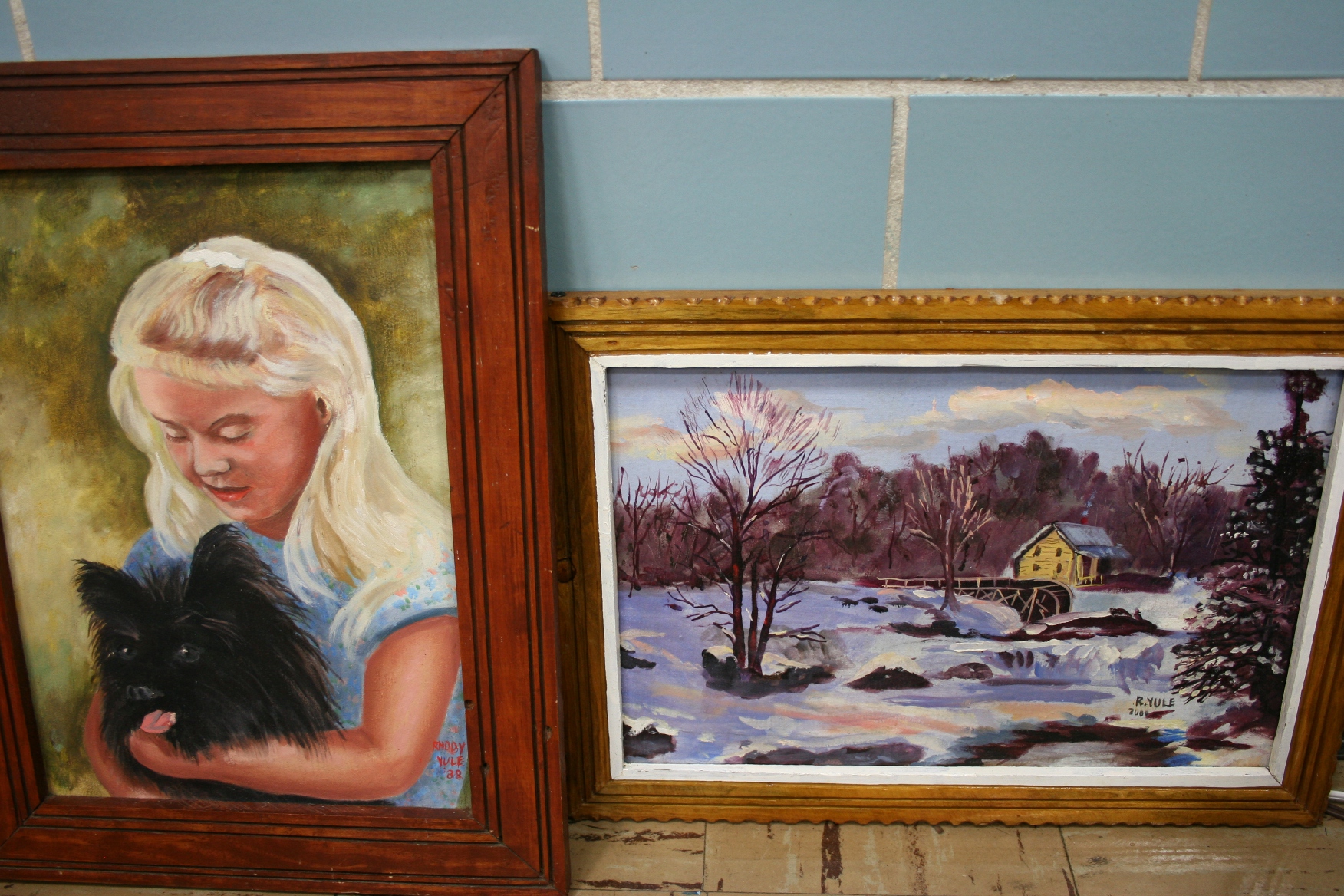
TWO YEARS AGO this month, my then 92-year-old artist friend, Rhody Yule, opened his first-ever gallery exhibit at the Paradise Center for the Arts in Faribault.

Six months later, he died.

But Rhody, and his art, live on, this time in a Paradise Center Healing Arts Program Exhibit at District One Hospital in Faribault. The arts center and hospital are partnering on the program.

Thursday evening I attended a reception for that show which features 70 pieces of art created by eight outstanding artists, each of them definitively different: Faribault artists Jody Hanscom, Jorge Ponticas, Pearl Tait and Rhody Yule; Marcus Moller of Morristown; Faribault native Tom Fakler, now living in Basel, Switzerland; Jane Strauss of Minneapolis; and Cynthia Ali of St. Paul.

As Healing Arts Coordinator Elizabeth Jacobs led my husband and me through the maze of hallways and centers that comprise the hospital complex, I thought how Rhody would have felt honored to be part of an exhibit designed to comfort patients and make their hospital experiences more pleasant.

The art selected by a committee of hospital staff fits the program’s criteria as “healing art,” meaning it must be calming, happy and a positive piece of work, Jacobs says.

Three of Jody Hanscom's horse portraits.

Three of Jody Hanscom’s horse portraits.

And you’ll see that, almost experience that positivity, from the minute you walk in the front doors of the hospital to view Jody Hanscom’s sizable horse portraits in the lobby waiting areas. Jody’s oil paintings capture both the gentleness and free spirit of horses, a combination that simultaneously calms and uplifts.

Tucked into a corner by the elevators, the fourth of Hanscom's horse oil paintings.

Tucked into a corner by the elevators, the fourth of Hanscom’s horses.

Just down the hallway, five oil paintings by Jorge Ponticas brighten the walls with vivid scenes from his native Chile and elsewhere. His art evokes happy thoughts. What can I say? I can’t resist the sweet face of a llama.

Pearl Tait's "Aubergine Drift I."

Pearl Tait’s “Aubergine Drift I.”

Moving along to the emergency room lobby, I find Pearl Tait’s moody mixed medium art the ideal choice for a setting often filled with emotion and uncertainty. Her work, which features textures like sand and tape incorporated into a painting, reflects, in my opinion, the intense layers of feelings that come with any visit to the ER.

A photo in a cozy private waiting room fronts Tom Fakler's Swiss Alps photos.

A sofa in a cozy private waiting room fronts Tom Fakler’s trio of Swiss Alps photos.

Around the corner inside a cozy ER room where families are taken to hear bad news (so says Jacobs), the mood totally changes with the soothing photography of Tom Fakler. His black-and-white canvas prints of the Swiss Alps offer a natural world escape during a particularly difficult time for patients’ families.

Likewise, the photography of Jane Strauss in the surgery center reflects that same sort of escapism, especially in panoramic landscape scenes. Jacobs notes that Strauss is autistic, meaning her approach to photography focuses on qualities like texture and detail, aspects others might not consider in photographing a scene.

Faribault native Cynthia Ali's floral pastels are not for sale. Ali, of St. Paul, is primarily a jewelry artist.

Faribault native Cynthia Ali’s floral pastels are not for sale. Ali, of St. Paul, is primarily a jewelry artist.

Also in the surgery center, Cynthia Ali infuses a soft natural beauty with her floral pastels. You can almost smell the heady perfume of her beautiful roses.

Marcus Moller's "Madison Lake Bait Shop" in watercolor.

Marcus Moller’s “Madison Lake Bait Shop” in watercolor. Moller’s art (mostly pastels) hangs in the surgery center waiting area, a place frequented by children. Thus his art is hung quite high, which made photographing it difficult.

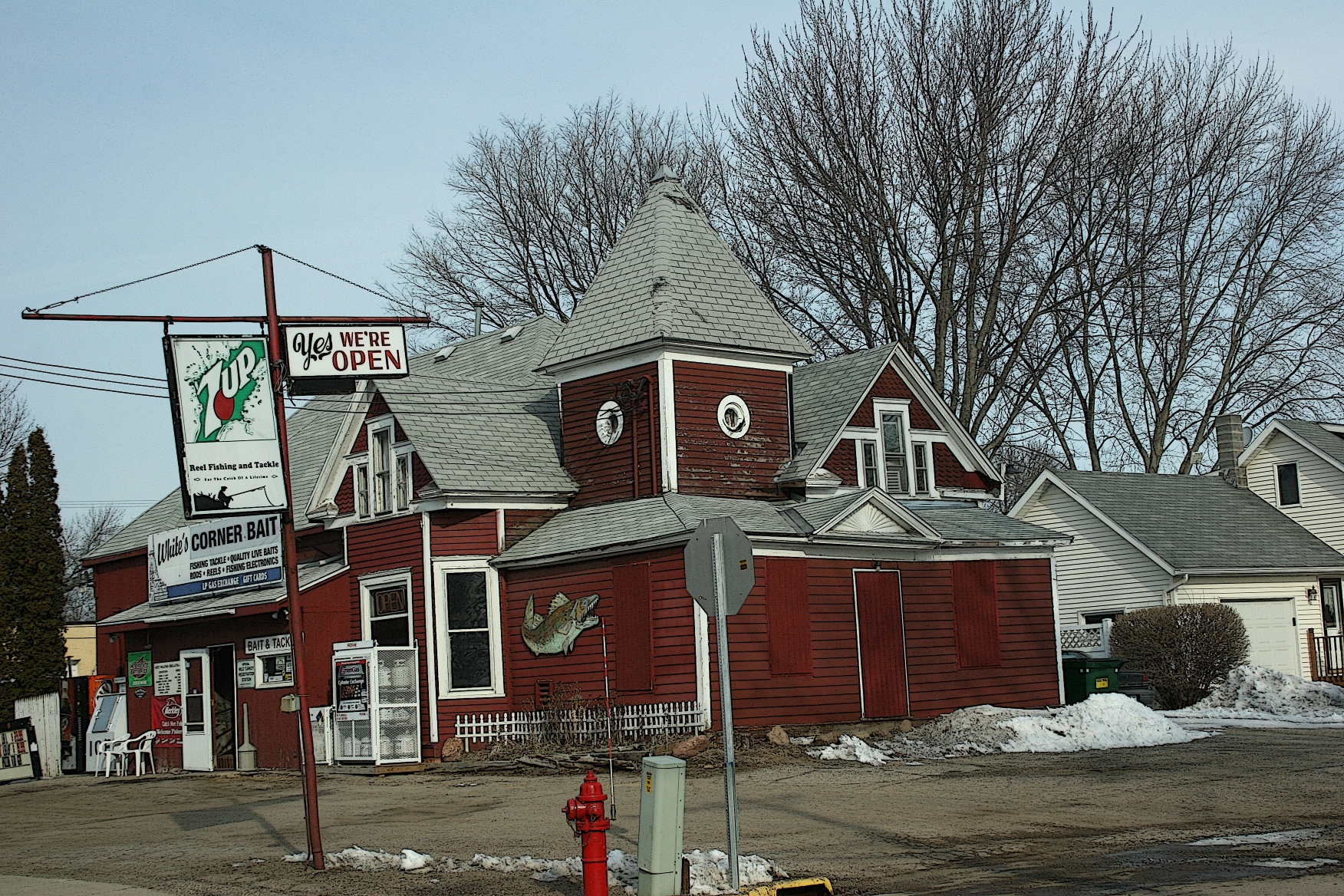
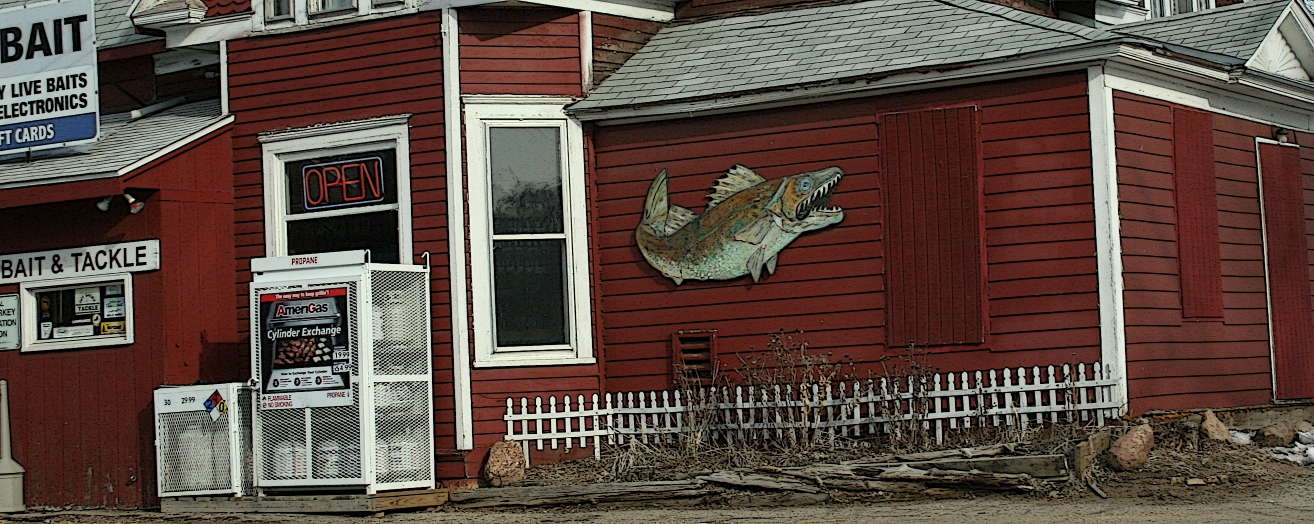
Marcus Moller works in pastels, too, and watercolors, covering a variety of subjects from autumn landscapes to a bold rooster to my favorite, “Madison Lake Bait Shop.” Those of you who’ve traveled Minnesota Highway 60 will recognize the kitschy red building backed by the Madison Lake water tower. I cannot even begin to count how many times I’ve considered photographing that building. Moller’s bait shop painting is nudging me to actually stop and take that photo.

Twenty-five of Rhody Yule's oils grace the hall and patient rooms in the cancer center.

Twenty-five of Rhody Yule’s oils grace the hall and patient rooms in the cancer center.

Finally, my open house tour ended in a hallway outside the District One Cancer Center with the oil paintings of my friend, Rhody Yule. I’d seen nearly every one of Rhody’s hundreds of paintings when I worked with his family and friends on the 2011 Paradise exhibit. But, still, it was as if I was viewing his pieces for the first time, appreciating the landscapes, many of them winter scenes in this show, and the other art he created through decades of painting. Rhody was a kind, gentle man with a heart full of goodness, and I remembered that, too.

Examples of Rhody Yules art close-up.

Examples of Rhody Yule’s art close-up.

Most of the artwork in the Healing Arts Exhibit, but not all, is available for sale. (Artwork not featured in photos here is because I did not have permission to photograph it.)  A portion of any proceeds from the sale of Yule’s work will go to the local hospice, per the family’s request.

If you wish to tour the winter installment of the Healing Arts Exhibit, check in at the main desk, 200 State Avenue, during hospital business hours. All areas of the exhibit may not be accessible for viewing at all times. The current show runs through February 28.

If you are an artist interested in being featured in a Healing Arts Exhibit, contact Jacobs at the Paradise Center for the Arts. You will find details and contact information by clicking here.

The Healing Arts program is sponsored by the District One Hospital Auxiliary, which initially proposed the concept.

To view information on the artists with an online presence, click on their highlighted names.

WHAT ARE YOUR THOUGHTS on art as a “healing” tool? Have you seen similar exhibits? Please share.

© Copyright 2013 Audrey Kletscher Helbling


The challenges of winter photography & a new perspective on art January 24, 2013

Filed under: Uncategorized — Audrey Kletscher Helbling @ 8:15 AM
Tags: , , , , , , , , ,

FOR A BLOGGER like me who incorporates so many photos into her posts, blogging in winter in Minnesota presents special challenges, the primary obstacle being the weather.

Simply put, I don’t like freezing my fingers, navigating icy surfaces, dodging snowflakes or battling frigid winds to get a photo. And when you live in Minnesota, you just can’t escape the cold, ice, snow and wind, especially not this week.

Yesterday I glanced outside to see a fresh dusting of snow sparkling like fairy dust in an enchanting scene. For a moment, as I slipped half my body outside to retrieve the morning paper, I considered bundling up to photograph the magic. But thoughts did not transform into action.

Later, though, after lunch, that fairy dust still danced in my brain so I zipped my fleece and stepped onto the patio to photograph the snow. I didn’t expect fantastic results; heck, the results rated as immediately deletable:

The original sparkling snow image, unedited except for down-sizing.

The original sparkling snow image, unedited except for down-sizing.

But then I worked my magic, trying several editing tools—sparkle effect, colorizing, cartoonifying and changing the contrast—to transform a blah image into an abstract work of art:

Sparkling snow in my backyard transformed into abstract art with photo editing tools.

Sparkling snow in my backyard transformed into abstract art with photo editing tools.

What’s really interesting about this entire process is that I’ve never been a fan of abstract art. I’ve always been inclined to view an abstract work and then blurt, “I could do that” or “That looks like the work of a kindergartner.”

I doubt I’ll ever quite stop thinking that.

But, through this digital editing process, I’ve discovered a part of me appreciates abstract photo art and the process of creating it. Temporary brain freeze perhaps?

WHAT ARE YOUR THOUGHTS on cold climate photography (as in Minnesota cold), abstract art, digital photo editing or anything along that line? (And don’t feel you have to like my abstract photo art.)

I prefer to shoot winter photos from the comfort of a building or a vehicle, as evidenced in these images I shot in March 2012:

I converted this image to black-and-white and upped the brightness. This was shot on the Minnesota Highway 19 curve just north of Vesta, my southwestern Minnesota hometown.

I converted this image to black-and-white and upped the brightness. This was shot on the Minnesota Highway 19 curve just north of Vesta, my southwestern Minnesota hometown.

I used the same photo editing techniques on this scene captured on the same date just south of Echo, which would be north of Vesta. We were on our way to church.

I used the same photo editing techniques on this scene captured on the same date just south of Echo, which would be north of Vesta. We were on our way to church.

The day prior, en route to Vesta, I photographed this barn between New Ulm and Morgan.

The day prior, en route to Vesta, I photographed this farmyard between New Ulm and Morgan.

To the east, also en route to my hometown, I photographed this rural scene just west of Waterville along Minnesota Highway 60.

To the east, also en route to my hometown, I photographed this rural scene just west of Waterville along Minnesota Highway 60.

© Copyright 2013 Audrey Kletscher Helbling
 

Friday night at the car wash January 19, 2013

Filed under: Uncategorized — Audrey Kletscher Helbling @ 11:47 AM
Tags: , , , , , , , , ,

HE LEANED ACROSS the front seat of the car, not to kiss me, but to spray Windex onto the passenger side windshield and then wipe the glass dry with a paper towel.

After 30 ½ years of marriage, this is Friday night—a date at a local car wash.

Not that my husband invited me along or even remotely suggested that this might be a date. But at the last minute I decided the car wash would make for an interesting photo shoot. Randy knows me well. He didn’t even question me or roll his eyes.

My first side view shot of the car wash, taken from the adjoining Kwik Trip gas station.

My first side view shot of the car wash, taken from the adjacent Kwik Trip gas station.

While he tended to gassing up the car, I strolled over to the car wash to shoot some exterior scenes before we joined the line of five waiting vehicles. Not bad for a 37-degree January evening topping off an exceptionally warm winter day with temps soaring into the 40s.

When you live in Minnesota, you have to jump on warm weather like this to wash away the destructive road salt that clings to vehicles. A sign at the car wash even states the business will close when temps dip to 10 degrees.

And we all know, because we’ve been hearing for days now from weather forecasters, that Minnesota is headed into the deep freeze. Wind chill advisories have already been issued for parts of the state. Strong winds, combined with air temperatures, will make the outdoor temp feel like 25 to 30 degrees below zero.

We’ve heard repeated warnings about frostbite and hypothermia and the need to protect our skin.

I tell you this to emphasize to those of you who live in much warmer locales and cannot fathom such extreme cold, why Minnesotans would wait in line at a car wash on a 37-degree evening.

While Randy and I waited, he fiddled with his cell phone, inputting the number to an area radio station. He’s good at music trivia or being the whatever number caller, having recently won tickets to a Trans-Siberian Orchestra concert and years ago a trip to the Bahamas and the chance to win $1 million (which he did not win).

Waiting in line at the car wash, our car is on the left.

Waiting in line at the car wash, our car is on the left.

At this point, I stepped briefly from the car to scope out photo ops and shoot a few frames, hoping the other motorists wouldn’t roll down their windows and question me.

Back inside the car, we chatted a bit—about what I can’t remember—and Randy cleaned the interior windshield and eventually the garage door rose, the car ahead began exiting and my spouse directed our car inside.

Now you might think that in the privacy of the enclosed car wash, this could have been a date-date. But, nope, I was too busy photographing the art.

You perhaps see simply a car. I see art in this photo-edited image.

You perhaps see simply a car. I see art in this photo-edited image.

Yes, more car wash art.

More car wash art.

Not just water spraying on the windshield, but abstract art.

Not just water spraying onto the windshield, but abstract art.

Nearing the end of the car wash art exhibit.

Nearing the end of the car wash art exhibit.

Exiting the car wash (exhibit).

Exiting the car wash (exhibit).

© Copyright 2013 Audrey Kletscher Helbling
 

Creativity unleashed at Bethany, my alma mater January 14, 2013

TYPICALLY, COLLEGE ALUMNI magazines hold my interest only long enough to thumb to the section where class updates are printed. I read those and then toss the publication into the recycling bin.
But recently, the bold, artsy cover of the November issue of the Bethany Report, the alumni magazine of Bethany Lutheran College, caused me to take a closer look at an article detailing the school’s new media arts program. I’m a Bethany grad, which in 1976 offered only a two-year associate arts degree to undergraduates.
Today this scenic hilltop campus in Mankato offers an array of four-year degrees, including one in communications, my eventual major at Minnesota State University, Mankato. Oh, how I wish majors and minors had been available back in my Bethany years, because I loved that small Christian college.
All of that aside, today’s Bethany students with an interest in communications, the fine arts and technology can enroll in the media arts major. I don’t pretend to know how Bethany’s program compares to that of other colleges.

I did my own editing on this recent photo of a Bethany billboard along U.S. Highway 14.
I did my own editing on this recent photo of a Bethany billboard along U.S. Highway 14.

But when I saw that magazine cover design emphasizing the media arts program and then an equally vivid, eye-catching billboard along U.S. Highway 14 near Janesville recently, I was impressed enough to visit the BLC website.

There I clicked onto a portfolio showcasing the creations of current and former students.

I’m no expert on the fusing of art, technology and communication. But I liked what I saw. And perhaps that uninformed spontaneous reaction counts for more than the dissected opinion of anyone in academia.

© Copyright 2012 Audrey Kletscher Helbling