Minnesota Prairie Roots

Writing and photography by Audrey Kletscher Helbling

The poetry of “Where the Crawdads Sing” April 8, 2022

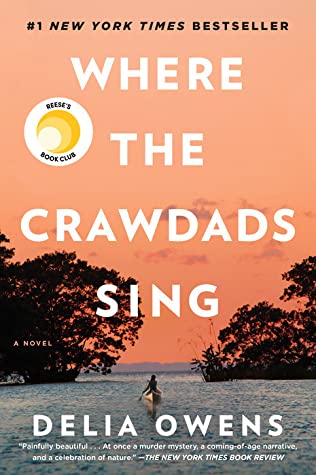
Image source: goodreads

IF I HADN’T CAUGHT the news flash in an entertainment segment on an early morning TV show recently, I doubt I would have read Where the Crawdads Sing by Delia Owens. But I did. And the book proved so riveting that I didn’t want to put it down. You know the type of book, when you stay up past your bedtime to read.

Published in 2018, this New York Times fiction bestseller, releases in July as a movie. So I suppose my timing in reading this is about right. Not that I will see the film. Big screen versions, after I’ve read a book, usually disappoint. Plus, I am not a movie-goer; the last time I went to a movie (three years ago), I walked out and asked for a refund (which I got).

All that aside, that I read Where the Crawdads Sing in April, National Poetry Month, is also fitting. More on that in a bit.

First a summary: Set along the coastal marshes of North Carolina, this book tells the story of young Kya, beginning in 1952. Her family abandons her and she grows up, isolated, alone, connecting with nature. Known to locals as “Marsh Girl,” she reads poetry to gulls, boats through the marshland, immerses herself in learning and studying and documenting the surrounding natural world.

In following her story, which is much more complicated than someone living alone in a remote location, I learned a lot about an area of the US I’ve never even come close to visiting. That includes the many birds which focus Kya’s attention. It’s good for me to stretch my reading wings to a region unfamiliar to me. To learn of landscape, sea life, culture, food, peoples and more in a focused time period, primarily 1960-1970.

The book broadens to include a mystery—the death of a well-known young man from the coastal town of Barkley Cove. Even the name of that community sounds foreign to my Minnesota ears. His life intertwines with Kya’s and that’s what left me wanting to stay up late reading.

Themes of abuse, abandonment, isolation, misconceptions, meanness, prejudice, privilege and small town narrow-mindedness thread through the pages of Where the Crawdads Sing. Love, too.

Author Delia Owens also weaves poetry into pages in poems quoted. Poems by Emily Dickinson. By Pulitzer Prize-winning poet James Wright, who taught in Minnesota at the University of Minnesota and Maclester College. By Amanda Hamilton (there’s a surprise). A fisherman named Scupper proclaims his love of poetry, declaring that poems “make ya feel something.” He’s right.

I encourage you to read this book for the story, the strong sense of place and, yes, for the poetry.

TELL ME: Have you read Where the Crawdads Sing? If yes, what are your thoughts and will you see the movie?

© Copyright 2022 Audrey Kletscher Helbling


When We Say Black Lives Matter February 8, 2022

A must-read book.

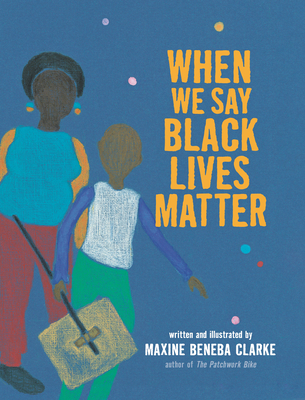
WHEN I STOPPED at Buckham Memorial Library on Saturday morning to pick up Valentine’s Day-themed books for a visit with the grandchildren, I left with a more important book. I discovered When We Say Black Lives Matter, written and illustrated by Maxine Beneba Clarke, among the new children’s picture books.

The award-winning Australian writer, poet and artist has crafted a story from the perspective of a Black child’s parents explaining why Black Lives Matter. It’s a powerful telling written in words kids can understand, yet with a depth that touches the adults who read this book. The illustrations in watercolor pencil and collage enhance/complement the text in ways that strengthen the message, as all book art should.

The love-filled words reflect on past and present injustices, on strength and song, on Black voices that matter. Just like Black Lives Matter.

I encourage you to read this picture book. The insights it offers are important. Especially now, as protests continue in Minnesota over yet another fatal shooting of a young Black man by police. Simultaneously, the federal trial of three former Minneapolis police officers charged with violating the rights of George Floyd during his May 2020 arrest (and subsequent death) continues. February also marks Black History Month.

Another must-read book.

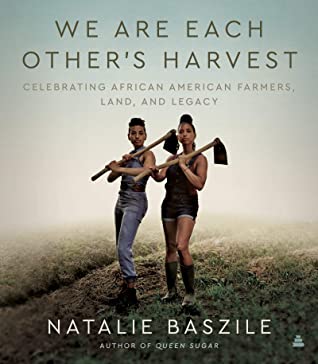
I encourage you to read a second book, which I also found at my library. I’m about a third of the way into We Are Each Other’s Harvest—Celebrating African American Farmers, Land, and Legacy. It’s a collection of stories by Natalie Baszile, author of award-winning Queen Sugar (which I now must read). The book is exactly as its title states, about Black farmers, their past and present connection to the land and the challenges they face. I’m learning a lot. As someone who grew up in rural southwestern Minnesota surrounded only by other White people, I need to read books like these to broaden my understanding about the challenges of being Black in America. Past and present. Because I grew up with a strong connection to the land, these stories really resonate.

It’s refreshing to see signs like this in small town Minnesota. I photographed this in October 2020 in Kenyon, MN. (Minnesota Prairie Roots file photo)

Although I never got around to reading Clarke’s picture book to my grandchildren (we ran out of time), I will tell you that Isabelle and Isaac are growing up in a diverse neighborhood. Izzy’s kindergarten class also includes classmates of assorted skin tones and backgrounds. Not just White, Lutheran/Catholic, German/Scandinavian like her maternal grandparents. I appreciate that diversity in the lives of these little people whom I love beyond measure. When they see their classmates and/or playmates, they don’t see color. They see friends.

#

TELL ME: Have you read either of these books? What similar books do you recommend I read? I’d love to hear.

© Copyright 2022 Audrey Kletscher Helbling
 

When life comes unglued, a Minnesota family’s experience June 23, 2021

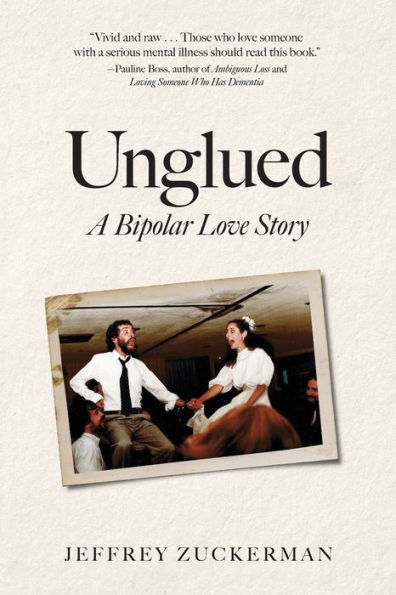
HE AROSE FROM HIS CHAIR, lost. I watched him stagger and collapse on Sarah’s chair, plunging his head into his big sister’s chest.

As that scene unfolds on page 297 of Unglued—A Bipolar Love Story by Minnesotan Jeffrey Zuckerman, I cried. I cried at the deep heartache adult siblings Joey and Sarah experience when learning of their mother Leah’s attempted suicide. I cried at the pain. I cried at the challenges Leah faces in living with bipolar disorder. I cried for those inside and outside my circle who have lost loved ones to suicide, who live with serious mental illnesses, who are brave beyond words.

Tears cleanse, releasing pain and emotions.

I feel grateful to freelance editor and writer Zuckerman for sharing his family’s story, which increases awareness, understanding, and, most importantly, offers hope.

HEART-WRENCHING HONESTY

Zuckerman writes about his wife’s “broken mind” with an honesty that is simultaneously heart-wrenching and beautiful. Although at times he literally runs away, his love for her endures and he never gives up. He never gives up through the manic episodes, the rage, the hurt, the personality changes, the exhaustion, the anhedonia (lack of feelings), the sleepless nights, the hospitalizations, the efforts to find the right medications that will help…

Through all of it, he learns. He begins to understand, to see bipolar disorder for what it is, a medical illness. He sees, too, the stigma, and he begins to open up. To neighbors. To friends. And also to those in a National Alliance on Mental Illness support group. He writes: It’s hard to explain just how listening to my story with grace and without judgment was exactly the help I needed.

THE 3 Cs

I listened to his story, taking notes as I read Unglued. Although I feel fairly informed about brain disorders like bipolar disorder, I find myself acquiring new knowledge every time I read personal stories like that of the Zuckerman family. This marks the first time I’ve read a book written from a spouse’s perspective. Even through the most difficult days, Jeff loves Leah and comes to realize that he didn’t cause her illness, nor can he control or cure it. He recognizes, too, that he must care for himself if he is to be of any help to his wife of 30-plus years.

SEPARATING THE INDIVIDUAL & THE ILLNESS

Theirs is a love story marked not only by loss and grief, but also by forgiveness, by strength and resilience. Zuckeman is able to see Leah, the individual, and not Leah the illness, first. From her, he learns to be more tolerant and less selfish.

Through his storytelling, this gifted Minneapolis writer personalizes bipolar in relatable and ordinary ways. Half-way through Unglued, he writes about stopping with Leah at Ben and Jerry’s for Chocolate Fudge Brownie ice cream before returning her to a psych ward. After 25 days of hospitalization, Leah is discharged and, writes Jeff, they begin gluing back together her life…and their long, fractured marriage. And that glue is love.

RESOURCES & HELP

FYI: If you or someone you love is considering suicide, get immediate professional help. Resources include the National Suicide Prevention Lifeline: 1-800-273-8255.

The National Alliance on Mental Illness (NAMI) also offers a helpline at 1-800-950-6264. Many resources are available through NAMI, including support groups for those dealing with mental health issues and their families.

Above all, care. Listen. Support. And continue to love.

AWARD-WINNING BOOK

Unglued was named a finalist for the 2020-2021 Minnesota Book Award, among other honors.

© Copyright 2021 Audrey Kletscher Helbling

 

Focus on mental health: A Minnesotan writes about her depression May 20, 2021

ARE YOU STRUGGLING with everyday tasks? Unable to get out of bed? Feeling hopeless? Overwhelmed?

You are not alone. I think all of us have struggled during this past pandemic year. Maybe not to the extent of the challenges listed, but in other ways. It’s been a lot. I’m thankful that, if anything good comes from this pandemic, it’s an increased awareness of mental health issues.

I am grateful for writers like K.J. (Kristine) Joseph for opening up about her clinical depression in her powerful memoir, Simply Because We Are Human. The Minnesota author reveals her life-long struggles with an incurable disease caused by a chemical imbalance in her brain. And that’s important to note—that depression like hers has a physical cause that can be treated, not cured. Clinical depression is much deeper than the typical I’m-feeling-kind-of-down today.

“If only my pain and illness were visible to the world…then people would understand,” Joseph writes. She’s right. Mental illness needs to be viewed through the same lens as any other illness. Except we know it all too often isn’t. The stigma remains. The lack of understanding remains. The misinformation remains. Too many still think you can will yourself, or snap yourself, out of depression or other mental illness. That doesn’t work.

That’s why books like this are so important in changing perceptions, in educating, and in building empathy and understanding.

For Joseph, her first memory of the darkness which would enter her life occurred at age eight. At age 13, feelings of emptiness, non-stop crying, sadness and, for the first time, suicidal thoughts developed. In her 20s, she would once again contemplate suicide as she stood in her kitchen, knife in hand.

It was the death of a 17-year-old friend in high school that propelled Joseph to open up about her depression. I especially appreciate Joseph’s assessment of Matt’s depression-caused suicide: “Matt took his own life because he was sick, and that was how I saw it.” By writing that, she helps ease blame and guilt which often follow a suicide.

In telling her story, Joseph also writes about ways in which she manages her clinical depression. And that is via medication, hard work and taking care of herself. She is a runner, a life-long interest/activity tracing back to childhood. In high school, she ran on the track team, even competed in the state meet. Running helps manage her depression, putting her in a calm, meditative state.

Therein lie the additional strengths of Joseph’s memoir. She offers hope. She reveals how she navigates her depression, what works for her, including taking medication. She acknowledges the reality of her mental illness. And she is open about her struggles. I applaud Joseph for writing about her clinical depression, for her raw honesty, for sharing her stories. For it is through personal stories that we most connect. And begin to understand.

TO PURCHASE Simply Because We Are Human, click here.

FYI: If you or someone you care about is struggling with mental health, please seek help. You are not alone. Here are some resources:

National Suicide Prevention Lifeline. Call 800-273-8255 (free, confidential and available 24/7).

National Alliance on Mental Illness

May marks Mental Health Awareness Month. I pledge to continue my efforts to raise awareness and to reduce the stigma of mental illness. Please read previous reviews I’ve written on books about mental illnesses by clicking here, then here, next, here, and, finally, here.

© Copyright 2021 Audrey Kletscher Helbling


Focus on mental health: The family living along Hidden Valley Road May 10, 2021

…I THOUGHT I WAS such a good mother. I baked a cake and a pie every night. Or at least had Jell-O with whipped cream.

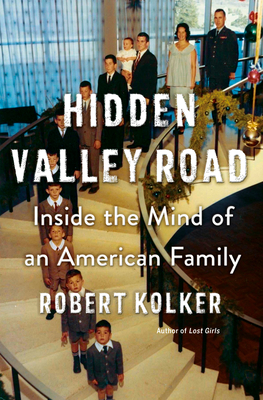
That quote from Mimi Galvin, mother of 12, struck me as particularly personal and profound in a 377-page book focusing on one family’s experiences with schizophrenia. Six of Mimi and Don Galvin’s children developed schizophrenia, labeled by author Robert Kolker as “humanity’s most perplexing disease.”

Kolker’s Hidden Valley Road—Inside the Mind of an American Family rates as a difficult read. But this 2020 Oprah’s Book Club pick is something every single person should read to understand the depths and intricacies of a biologically-based brain disorder like schizophrenia. And how it affected one Colorado family with children born between 1945-1965.

But back to that quote and the context thereof. Doctors and others blamed Mimi for her sons’ mental illnesses. Their criticism left her crushed, traumatized, paralyzed, ashamed. Feeling all alone and guilty, as if she wasn’t a “good mother.” Such was the accusatory thinking of medical professionals. Mothers, especially, were targeted and even labeled as “schizophrenogenic mothers.” Can you imagine? Movies like Alfred Hitchcock’s Psycho (released in 1960) reinforced that theory with Norman Bates’ mother blamed for his delusional homicidal mania.

This was also the era of shock therapy and restraints and so much misunderstanding and horror. Even unafflicted Galvin siblings wondered why their brothers couldn’t simply snap out of it. That thought pattern seems almost laughable, even absurd, to me. Yet, too many people still think that. Why can’t someone simply shut out delusional thoughts and paranoia, stop talking gibberish, separate perception from reality, silence the voices in their head, go to sleep rather than stay awake all night…? And more, much more, detailed with heartbreaking truth in this story of the Galvin family.

This family experienced heartbreak almost beyond belief. Tragedy. Abuse. Violence. Disconnect. Feelings of abandonment. So. Much. Trauma.

If I ended this review now, you would likely feel incredibly disheartened, wondering why you would even want to read such a book. And you would be justified in thinking that. But this story of an American family in the thick of schizophrenia is also inspiring. Hopeful. The Galvins allowed researchers to study their DNA, to learn more about “humanity’s most perplexing disease.” A disease centered in the brain. A disease with genetic markers. Mutations. A spectrum illness. No more mother/parent blaming.

I won’t attempt to further explain those scientific findings. I’m not, as I term myself, a medical person. I had to read and reread the medical parts of this book. But I grasp the basics. That researchers, although too often hindered by lack of funding (including from pharmaceutical companies), continue to work on researching and understanding schizophrenia, on finding better medications to treat symptoms and, ultimately, to prevent the onset of this horrible disease.

I encourage you to read Hidden Valley Road. You may struggle to get through this story. But press on. And then, when you’ve finished, vow to love, support and encourage anyone dealing with mental health issues. And their families.

#

FYI: May is Mental Health Awareness Month. If you or someone you love is struggling with mental health, seek help. The National Alliance on Mental Illness, which originated in Minnesota, is a good place to start. I will continue to do what I can to advocate, educate and increase awareness.

I invite you to read three previous reviews I’ve written on books that focus on mental health:

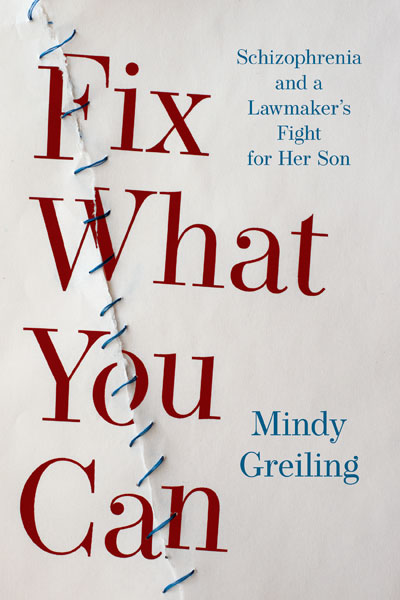
Fix What You Can—Schizophrenia and a Lawmaker’s Fight for Her Son by Mindy Greiling

Behind the Wall—The True Story of Mental Illness as Told by Parents by Mary Widdifield and Elin Widdifield

The Crusade for Forgotten Souls—Reforming Minnesota’s Mental Institutions, 1946-1954 by Susan Bartlett Foote

© Copyright 2021 Audrey Kletscher Helbling


The struggles behind the wall March 4, 2021

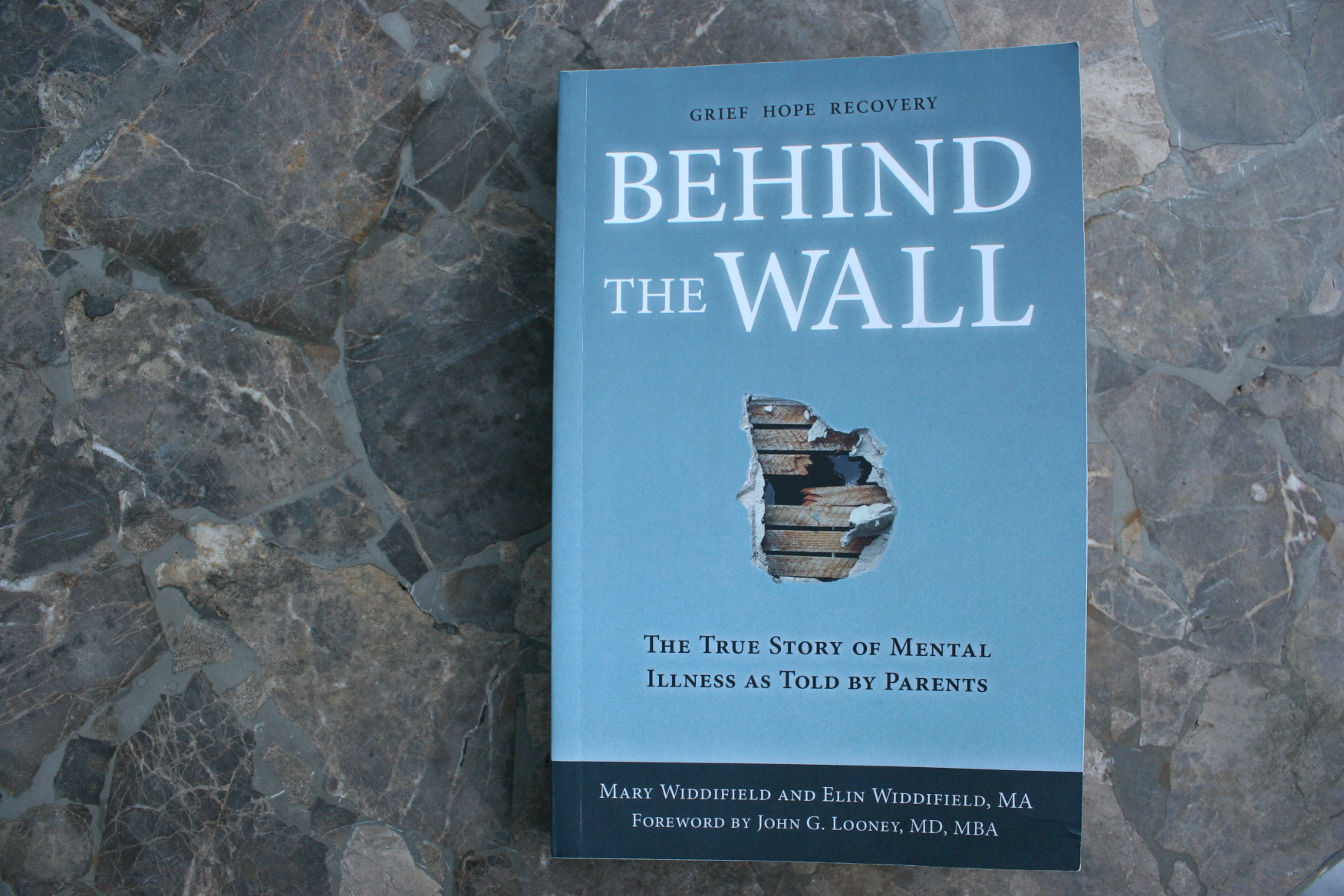
An edited snippet of the book cover for Behind the Wall, a powerful book about mental illness.

SOMETIMES IN LIFE, moments present that forever imprint upon one’s mind.

Like the Sunday morning I walked out of church after the pastor termed Vincent van Gogh “crazy” in his sermon. The artist wasn’t “crazy.” He suffered from mental illness. Delusions. Psychosis. Depression. The next morning, after I calmed, I phoned my pastor and we discussed his word choice and why I found that offensive.

On another occasion, while sampling craft beer in a small town southern Minnesota brewery, I noticed a customer with the name of a nearby brewery printed on the back of his jacket. Lost Sanity Brewing. As if that name wasn’t bad enough, the business logo—a straightjacket—proved even more insensitive.

Minnesota Prairie Roots file photo September 2019.

But then there was the day I spotted this message blazoned across the back of a shirt worn by a young woman attending a cultural event at the Northfield Public Library: THE STRUGGLE IS REAL. When I approached her, she shared how she lives with depression and how her family has loved and supported her through her struggles.

Encounters like that in Northfield give me hope. Hope that we’re making progress in erasing the stigma of mental illness. Hope that we’re raising awareness. Hope that people will become more understanding and compassionate. Hope that carelessly tossed words like “crazy” and images of straightjackets will vanish.

I highly recommend this book to every one of you. It’s a must-read insider view of individuals and their families struggling with mental illness.

I admire that strong young woman in Northfield who, through the message on her shirt, spoke truth. THE STRUGGLE IS REAL. Those struggles unfold in a particularly powerful book, Behind the Wall—The True Story of Mental Illness as Told by Parents. This book is a compilation of real-life experiences shared by parents of mentally ill adult children in their own words. Compiled by Mary Widdifield and Elin Widdifield, it’s an honest and often heart-wrenching look at the struggles these families face.

Behind the Wall is not an easy read. But it shouldn’t be. There’s nothing easy about depression or bipolar disorder or schizophrenia or any mental illness/brain disorder. These stories are deserving of our time, focus and attention. When you read these stories, you will feel the pain, experience the challenges, grieve the losses, encounter the frustrations, hold the worry and, hopefully, come away with a deeper understanding of mental illnesses. You will see, perhaps for the first time, the struggles that are all too real for many individuals and their families.

And you will see, too, incredible strength, resilience, determination and hope.

#

IF YOU OR A LOVED ONE are struggling with your mental health, seek professional help. The National Alliance on Mental Illness (NAMI) is also a great resource for information and support. Click here to learn more.

#

Thanks to my friend, Beth Ann Chiles, who gifted me with Behind the Wall. You can read her review of the book by clicking here on her “It’s Just Life” blog.

© Copyright 2021 Audrey Kletscher Helbling


Erica Staab’s latest book focuses on loss December 15, 2020

AS WE NEAR CHRISTMAS, perhaps you aren’t feeling all that merry. These past 10 months of dealing with COVID-19 proved challenging, resulting in feelings of depression, anxiety, isolation and uncertainty. Even anger.

In many ways, we’re all grieving. We’ve lost our sense of normalcy, of life as we once lived it. Some of us have lost jobs. We’re separated from family and friends. And, for too many, that separation came via death from COVID-19 and the inability to mourn in traditional ways.

The year 2020 redefined the meaning of the words “loss” and “grief” in the context of a global pandemic. Yet, the core meanings remain, as universal, yet as individual as each person experiencing them.

WRITING ROOTED IN PERSONAL LOSS

My friend Erica Staab, director of HOPE Center in Faribault, addresses loss in her latest book, The First Christmas—Finding Your Way After Loss. In this slim 32-page volume, Erica writes from the heart, as a sister who experienced the tragic death of her brother, Mitchell, in 2007. The 27-year-old died of injuries sustained in a fall after stopping to assist a motorist involved in a single-vehicle accident. Any death can be difficult, but especially when the loved one is so young, the death unexpected.

It comes as no surprise to me that Erica takes her personal loss and her life’s work of helping survivors of domestic abuse and sexual assault (and their families) to craft this insightful and encouraging book. She is one of those individuals who gives selflessly and with a heart full of compassion. Her words ring with authenticity rooted in experience.

GRIEF: “A WILD MESS OF THINGS”

She calls grief “a wild mess of things that can’t be anticipated.” That seems such a spot-on assessment as we all grieve in different and unexpected ways. Erica advises us to be gentle with ourselves, to allow grief in, to listen to what our hearts need.

I found this statement particularly profound: When grief is invited in…it is then that it loses its power over you, it is then that grief offers itself to share its gifts. It is then that there is space made for joy.

I appreciate that Erica embraces and acknowledges grief in all its pain and darkness. Yet, she writes with the light of hope, of joy-filled moments returning, of strength gained. When I emailed Erica to tell her that her writing touched me and caused me to cry as I thought of losses in my life, she responded, “…that was my prayer…that people would feel heard, understood, and not alone in their grief journey or their choices.”

PERMISSION TO EXPERIENCE LOSS IN YOUR UNIQUE WAY

Her book applies to many losses, not just loss through death. Loss of a relationship. Loss of a job. Loss of financial security. Loss of health and/or safety. And therein lies its even broader appeal, especially in 2020, a year of much loss. Erica wants her readers to realize they are not alone, that no one should try to erase their pain, that they need to experience it fully and in their own way and time.

And if that means you don’t feel like putting up a Christmas tree this year or mailing holiday cards, then don’t. That was me last year. Writes Erica: You have permission to simply make it through.

Her book also offers specific ways to ease loss, culled from her experiences and those of others. That’s helpful, too.

If you’re dealing with any type of loss, I suggest you buy The First Christmas—Finding Your Way After Loss. Purchase copies, too, for family and friends. Every funeral home and church should have copies to give away. The $10 book may be purchased at The Upper East Side, 213 Central Avenue North, Faribault, or online by clicking here. You can also reach out to Erica directly. I am so appreciative of Erica, her writing, her encouragement and her unique way of addressing difficult topics.

© Copyright 2020 by Audrey Kletscher Helbling


Focus on mental illness: A Minnesota family’s story December 2, 2020

I READ THE BOOK in a single day. That should tell you something. Fix What You Can—Schizophrenia and a Lawmaker’s Fight for Her Son by Mindy Greiling is an incredibly powerful book. It is painfully honest, deeply personal and informative. A must read, whether you know little or a lot about people with serious mental illnesses.

Greiling writes about the flaws in the mental healthcare system—from lack of providers and treatments and options to poor communication to the struggles families face, too often alone.

You will cry with this mother as she shares the challenges faced by her son, Jim, diagnosed with schizoaffective disorder and also a substance abuser. You will feel her pain, her fear, her anger. This is her story. Jim’s story. Her family’s story. Maybe your, or a loved one’s, story.

GRIEF. ANGER. ADVOCACY.

Mindy writes of transitioning through the stages of grief. From anger to advocacy. Not because her son has died, but rather grieving the loss of what may have been if not for Jim’s disease. She takes her personal experiences and uses her position as a state representative to effect changes in Minnesota laws and ways in which people view mental illness. She became involved in the National Alliance on Mental Illness. She became not only Jim’s advocate, but an advocate for the broader base. All the while managing her own fears and feelings of being alone through all of this, of experiencing trauma.

IMAGINE.

Imagine if your son heard voices directing him to kill you. Imagine if your son suffered from paranoia. Imagine if your son had to get off the one most effective medication for his disease because side effects could kill him. Imagine…

This was/is reality for the Greiling family as Jim continues to navigate life and his disease. But it is also a story of hope and resilience and the strength of not only Mindy, but of her son. She recognizes that, even with schizoaffective disorder, Jim is capable of so much. She believes in him. Never gives up. You will see that repeated throughout the pages of this book written by a determined and caring mother faced with crisis after crisis.

There is no fairy tale ending to this story. Jim’s is a life-long disease with no cure.

PUTTING A FACE TO A DISEASE

I admire Mindy, who sought her son’s input in writing this book released in early October. I admire Jim’s strength in the public telling of his story. Such first-hand accounts make an impact, take a disease beyond statistics to a face. An individual. A family. This is a mother trying her best to secure help for her son, to advocate when needed, to make tough decisions when necessary. This is a family in need of understanding and support, all too often missing when it comes to mental illness. When Mindy’s husband, Roger, emails extended family and asks them to send get well cards to Jim in a hospital psych ward, my heart breaks. But this is too often reality. Families feel alone, without much-needed support from family and friends.

LEARN. LISTEN. SUPPORT.

I encourage you to read Fix What You Can—Schizophrenia and a Lawmaker’s Fight for Her Son published by the University of Minnesota Press. And then, when you’ve finished, reassess how you feel about individuals who are dealing with mental illness. Consider that they did not choose these brain diseases, just like people do not choose cancer.

There is much to be learned from the Greiling family’s story. We’ve come a long way in opening up about mental health. But so much remains to be done. We need more mental healthcare providers. (Mindy writes of a six-week wait for Jim to see a psychiatrist, more common here in Minnesota than uncommon.) We need more programs. More funding. More housing and treatment options. More training for law enforcement. More understanding and compassion. And support. We can pledge, as individuals, to educate ourselves about mental illness and then to take that knowledge and be that person who sends a card, listens, prepares a meal…for an individual/family in need of our ongoing care, compassion, understanding and support. A family like the Greilings.

© Copyright 2020 Audrey Kletscher Helbling


Appreciating William Kent Krueger’s latest bestseller, This Tender Land January 24, 2020

I’VE LONG BEEN A FAN of Minnesota writer William Kent Krueger’s Cork O’Connor mystery series and stand-alone book, Ordinary Grace. But now I can add another title to that list. This Tender Land.

Ten days after I picked up the book from Buckham Memorial Library, where I’d been on a waiting list for months to get the 2019 release, I’d finished the novel. And I didn’t start reading it immediately as I had to first finish The Lager Queen of Minnesota by J. Ryan Stradal.

In a nutshell, This Tender Land tells the story of orphaned brothers, Odie and Albert, who are sent to the Lincoln Indian Training School, although they are not Native Americans. Yes, such schools really existed long ago. The school is not so much a school as a prison with cruelty and abuse defining life there.

This fictional book, set primarily in southern Minnesota along the Minnesota and Mississippi Rivers, weaves actual history into the storyline. Much of that history focuses on the mistreatment of native peoples during and following the U.S.-Dakota Conflict of 1862 and how that carried through to subsequent generations. I’m familiar with that history having grown up in Redwood County, at the epicenter (along with Brown County) of that war. Krueger clearly did his research and then took that information and made it personal through characters, scenes and setting.

But this is much more than a historically-based book of fiction. This is a story about family and friends, about searching and discovery, about hope and despair, about love and loss, about cruelty and kindness, about redefining rich and poor, about anger and spirituality and forgiveness and finding one’s self. This book really makes you think as the story twists and turns and all those themes emerge.

At one point, after reading a line on page 288, I cried. When was the last time you cried while reading a book? I cried at 12-year-old Odie’s observation of women who’ve suffered and yet never given up hope, who’ve forgiven… It was a powerful sentence for me personally.

When a book can move me like that, I feel a deep respect for the author, for his talent, for his writing. There’s a reason William Kent Krueger’s books are bestsellers and in demand at libraries. He writes with depth and authenticity in ways that resonate.

© Copyright 2020 Audrey Kletscher Helbling


Cheers to J. Ryan Stradal, now among my favorite Minnesota-raised writers January 14, 2020

Filed under: Uncategorized — Audrey Kletscher Helbling @ 5:00 AM
Tags: , , , , , ,

Pulling The Lager Queen of Minnesota from the Lucky Day bookshelves at Buckham Memorial Library in Faribault proved my lucky day. I’m always up for discovering a new-to-me Minnesota author like J. Ryan Stradal.

Yes, I admit a partiality for Minnesota writers and/or books with a strong Minnesota bend. The Lager Queen is both, although native-born and raised Stradal now lives in Los Angeles. I’ll forgive him for moving to the West Coast because I love his bestselling book that much.

You know a book is good when you don’t want to put it down, when all you want to do is keep reading, despite life’s obligations. I finished the book in days, not a single day, only because, well, I can’t realistically devote an entire day to reading.

As the cover art and title suggest, this is a book about beer. But not just beer. The Lager Queen is also a book about strong women, generations of women in one family who overcome challenges and tragedy. Stradal creates strong characters who grow and evolve and stretch themselves.

This is a story, too, about how generations interconnect, about relationships broken and built, about decisions that ripple their impact.

This is a story, too, of place, of Minnesota. There’s a familiarity in setting, both of real places and fictionalized locations.

As a fan of craft beer, I appreciated learning more about the business through Stradal’s writing. And, yes, he tapped into the knowledge of real craft brewers in Minnesota and beyond. I almost felt like I should be drinking a Minnesota-made craft beer while reading The Lager Queen of Minnesota.

Cheers to a Minnesota-rooted author whom I hope will continue to write similar books. Because I’m a fan. Even if I prefer IPAs to lagers.

FYI: Stradal is also the author of the New York Times bestseller, Kitchens of the Great Midwest.

© Copyright 2020 Audrey Kletscher Helbling