Minnesota Prairie Roots

Writing and photography by Audrey Kletscher Helbling

The names behind the numbers in the Titanic disaster & more April 13, 2012

ALL TOO OFTEN following a major disaster, numbers overwhelm, overtake and distance us from the personal loss. It is easy to overlook the individuals—those who lived and those who died—in the sheer immensity of the situation.

Consider the Titanic, which 100 years ago this Sunday, April 15, 1912, sank into the icy depths of the North Atlantic, claiming the lives of nearly 1,500 people. Around 700 survived.

Who are the individuals behind those numbers?

Writers Debbie and Michael Shoulders introduce us to 31 of those Titanic passengers and crew members in their children’s picture book, T is for Titanic: A Titanic Alphabet, illustrated by Gijsbert van Frankenhuyzen and published by Sleeping Bear Press in 2011:

Allen, Frederick
Astor, John Jacob
Astor, Madeleine
Bride, Harold
Brown, Margaret Tobin
Browne, Father Francis
Carney, William
Daniels, Robert W.
Dean, Milvina
Fleet, Frederick
Harper, Henry
Hart, Eva
Hartley, Wallace
Hays, Margaret
Hichens, Robert
Ismay, Joseph Bruce
King, Alfred
Lightoller, Charles Herbert
Loto
Louis
Murdoch, William
Navratil, Michel
Pacey, Reginald
Phillips, Jack
Rothschild, Elizabeth Barrett
Rothschild, Martin
Smith, Captain Edward John
Spedden, Douglas
Straus, Ida
Straus, Isidor
Zimmerman, Leo

It is that personal aspect, the brief telling of individual stories, which humanizes this book targeted for the 6 – 10-year-old age group (although most certainly of interest to any age). That several children are included in the list of 31 is a credit to the authors.

Among the children is 7-year-old Eva Hart, who became fascinated with one of the 10 dogs aboard the Titanic. More than 40 years after the disaster, she found a French bulldog like the one she’d favored on the ship.

The story of Loto and Louis is less joyful. Their father, Michel Navratil, estranged from his wife, boarded the ship with his two young sons. Navratil, who used aliases for himself and his boys, died. His sons survived. Eventually, they were reunited with their mother.

At just nine weeks old, Milvina Dean was the youngest passenger. She died at age 97 as the last Titanic survivor.

Scroll through the list above and you will read the names of the Titanic’s captain, elevator operators, a violinist, a pregnant woman, a publisher, a farmer from Germany and more.

These were real people with hopes and dreams. And it was the dream of one man, Joseph Bruce Ismay, director of White Star Line, the company that owned the Titanic, to sail this large luxury liner. He was aboard the Titanic on the fateful voyage. He climbed into one of the last lifeboats and survived.

The authors pack plenty of factual information about the ship, the disaster, the rescue and the aftermath into their book. But the strength of this book lies in the personal stories.

It is the names that touch the soul, stir the heart and cause one to pause and ponder the grief and pain resulting from this unforgettable tragedy.

DISCLAIMER: I received a free review copy of this book. However, that did not influence my decision to write this review or the content of the review.
Book cover image courtesy of Sleeping Bear Press. Click here to read more about T is for Titanic: A Titanic Alphabet.

#

TWO RESIDENTS of my community, Simon and Karen Zeller of Faribault, are currently aboard the MS Balmoral Titanic Memorial Cruise which left on April 8 from Southhampton, England, with 1,309 passengers. The Balmoral, owned by Fred Olsen Cruise Lines, is following the route of the Titanic and will arrive at the site of the disaster on Sunday. Its final destination is New York. Fred Olsen’s parent company, Harland and Wolff, Ltd., built the Titanic. Click here to read an article about the Zellers published in the Faribault Daily News.

#

JEFF OSBORNE, who works in Faribault and lives in nearby Montgomery, built a radio-controlled model of the Titanic in the late 1990s. The model is made of cardboard but has been waterproofed on the bottom so the replica ship can be placed in water. Read about the Titanic model in the Faribault Daily News by clicking here.


 

Photographing the magic in a dance performance February 29, 2012

Filed under: Uncategorized — Audrey Kletscher Helbling @ 8:09 AM
Tags: , , , , , ,

SATURDAY AFTERNOON I found myself kneeling on the floor of the Faribo West Mall to shoot photos of young dancers performing.

If my orthopedic surgeon had observed the way I crouched and bent my hip, he would have scolded me, even warned me that I could pop my 3 ½-year-old artificial right hip right out of place. Such an admonition would be well-deserved.

But in those photographic moments, I forget about the health consequences and pursue shots from a perspective that best tells the story. With kids, that typically means I get down on their level, on the floor. Now getting back up, well, that can be more of a challenge.

Let me show you three photos from that dance performance. They’re not your typical “proud parent” type shots and I’m certain more than one parent questioned why I was scooting around on the floor of the mall.

You won’t see the dancers’ faces. Rather, you’ll notice the stance, the clasp of hands and other details that tell a story from a broader perspective. See for yourself and read how, with my minor photo editing skills, I tweaked each photo.

It is the pose of this little girl, holding her hands close, eyes fixed on the older dancer, that show her admiration, her "I want to dance just like her someday," wonderment. In photo editing, I cropped the image just a wee on the left to cut out a distracting red EXIT sign. I sharpened the photo slightly and lowered the saturation of the yellow. While an entire crowd of onlookers ringed the two dancers, in this frame I opted to focus solely on the two dancers to emphasize the magic I saw between them. It was as if they were all alone in the mall, at a private dance lesson.

Here I crouched as low as I could without lying on the floor to capture this moment. This scene takes in all aspects of the performance from performer to the audience to those two little girls who look forward to someday dancing solo. The only editing change was a minor sharpening of the photo.

When the older girls took to the mall dance floor, I wanted to showcase the movement to tell their story and to truly engage you, the reader. So I set a slower shutter speed and focused on their legs. I cropped the frame on the right and then edited the distracting colors from the image. The sepia tone adds to the dreamy, artsy quality of the photo.

AFTER THE PHOTO shoot of the dancers, I stopped by my local public library where I found a photography guidebook that I’d highly recommend, Expressive Photography: The Shutter Sisters’ Guide to Shooting from the Heart.

Check out the Shutter Sisters’ photography blog by clicking here.
Their book is packed with tips about lighting, perspective, photo editing, composition and more. It’s one of the best photography books I’ve read.

And don’t you just love the cover?

© Copyright 2012 Audrey Kletscher Helbling


If you take away my microwave… February 24, 2012

Filed under: Uncategorized — Audrey Kletscher Helbling @ 8:25 AM
Tags: , , , , , ,

HAVE YOU EVER read Laura Numeroff’s children’s picture books, If You Give a Pig a Pancake or If You Give a Mouse a Cookie?

The storylines basically follow the premise that if you give someone something, they’ll want something else. Or one thing leads to another. For example, the mouse in Numeroff’s story asks for milk with his cookie then wants to look in a mirror and see if he has a milk mustache, etc. The pig needs syrup with his pancake, but gets so sticky he wants a bath, with bubbles, etc.

See how that works?

Now let’s apply that to my life, with this story:

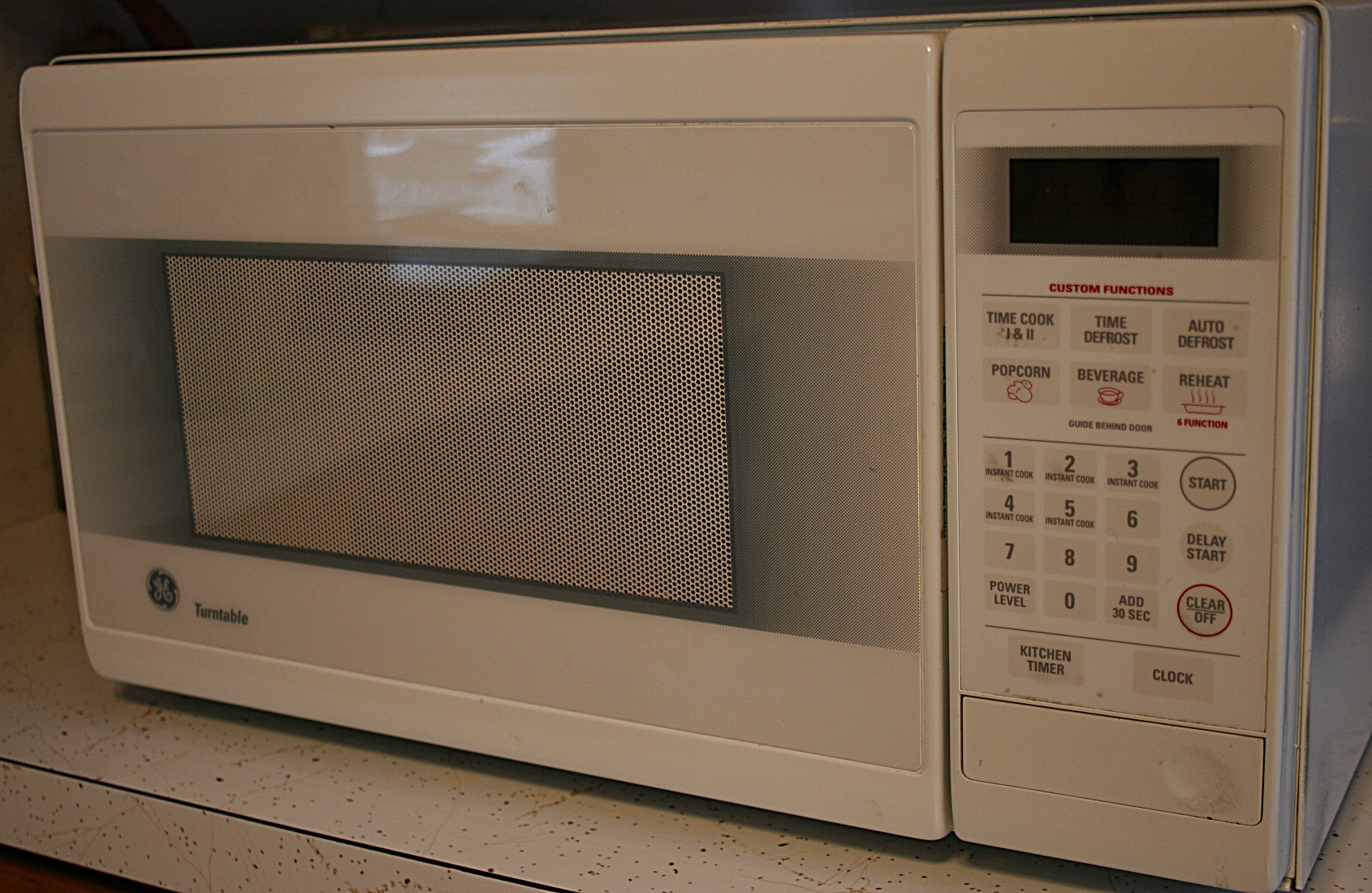
My microwave oven, useful for cooking & experiments.

If your 18-year-old son hauls your microwave oven to his Advanced Chemistry class so he can measure the speed of light by melting marshmallows, you will need to find another way to prepare your morning oatmeal, or choose another food for breakfast.

If you opt for sugary cereal, then you’ll break your personal commitment to consume oatmeal each morning because your Uncle John, who eats oatmeal daily, told you doing so lowers cholesterol.

You’ll also derail your plan to a healthier and slimmer you.

By skipping the oatmeal, which you have found satisfyingly filling, you will find yourself reaching for a mid-morning snack. And, if you reach for a mid-morning snack…

See how that storyline goes? And all because of an Advanced Chemistry experiment.

I’m all about education, but if I don’t get my microwave back soon, I’ll…

© Copyright 2012 Audrey Kletscher Helbling


I may not read music, but… January 29, 2012

GROWING UP, I ALWAYS wanted to play the piano. But I never had the opportunity, although one Christmas I received a toy accordion that temporarily satisfied my yearning to create music.

There was neither money nor space for a piano within the budget constraints of a poor farm family or within the walls of a cramped southwestern Minnesota farmhouse.

And so the years passed without music.

During junior high school I struggled through required music classes, once fake-playing the ukulele at a Christmas concert because the music teacher failed to recognize that I could not read musical notes.

In high school when so many classmates were joining band, I was not among them. Remember that money issue? Still there.

A few years later my younger siblings were allowed to join band—one sister choosing the flute, the other the clarinet. The brothers focused on sports. For awhile I tried to play my sister’s flute, without much success.

During college, a friend allowed me to strum her guitar. The strings bit into my fingertips so I quickly lost interest.

Years later when I had children, I was determined they would have the musical opportunities I never had. I started them on a mini toy organ. Later, the eldest tried playing my sister’s flute for awhile, then quit. The second daughter borrowed my youngest sister’s clarinet, sticking with band lessons for several years. My son had no interest in an instrument until recently, when he inquired about playing the guitar. He’s meeting with a family member soon to try out guitar-playing.

I tell you all of this because of a recent musical opportunity that came my way. It’s ironic really, given my inability to play any type of instrument or, in fact, read a single musical note. If you put a song sheet in front of me right now, I’d stare at it like I was reading Greek.

But composer Curtis Lanoue, also an elementary music teacher and the director of music at Lord of Life Lutheran Church in Miami, found the music in my soul. Seeking a cover photo for his 29-page Four Organ Preludes Based on Common Hymn Tunes book, Lanoue did an online image search and discovered my photo of the old pipe organ at Immanuel Lutheran Church, rural Courtland, Minnesota, the congregational home of my maternal forefathers.

“As you can imagine, there were a ton of (image) results,” Lanoue says. “Most of them were those flowery European organs in the cathedrals. That didn’t go too well with the style of the music. Somehow through the eye strain of looking through hundreds of photos, I found yours. It’s not surprising my eye was drawn to it as I was raised in a Midwest Lutheran church.”

Once I received a copy of this musician’s recently self-published book, I understood why he selected my photo of Immanuel’s organ that was built in 1895 by Vogelpohl and Spaeth Organ Company of New Ulm at a cost of $1,500.

It’s the perfect fit for Lanoue’s preludes based on the definitively Lutheran hymn, “A Mighty Fortress,” and on “Amazing Grace,” “Out of the Depths I Cry to Thee,” and “From Heaven Above to Earth I Come.”

As I flip through these compositions written by a musician with degrees in jazz performance and studio jazz writing and experience as a working organist since age 16, I can only smile at the contrast between his vast musical knowledge and talent and my musical illiteracy.

FYI: You can purchase Four Organ Preludes Based on Common Hymn Tunes for $9.99 by clicking on this link: https://www.createspace.com/3734555

Disclaimer: I am expecting payment for use of my cover image and have received a free copy of Lanoue’s book. This post, however, has been written solely at my discretion.

A rear photo shot of Immanuel Lutheran Church, Courtland, looking up to the balcony (where the 1895 pipe organ is located) and toward the spacious fellowship hall.

The beautiful pipes on Immanuel's organ.

JUST BECAUSE I THOUGHT it important to include, here’s some additional information about Immanuel’s organ, as shared by Immanuel’s pastor, Wayne Bernau:

The 1895 organ was renovated in 1988 at a cost of $25,000.

When Immanuel built a new church in 2007, Rollie Rutz and crew from Rutz Organ Company in Morristown (about 10 miles from my Faribault home), helped move the organ from the old church into the balcony of the new sanctuary.

A set of chimes was added to the organ in 2007.

Immanuel’s organ is today valued at around $200,000.

Says Pastor Bernau: “With the balcony constructed the way it is and the excellent acoustics for music in our new church, I believe the organ sounds better now, maybe twice as good, as it ever did in our 1881 building.”

I’ve heard the organ played in Immanuel and I agree. The acoustics in the new house of worship truly showcase the sounds of this 117-year-old organ played each Sunday by Lisa (Bode) Fischer, the daughter of my mom’s first cousin and a descendant of the Bode family members who helped found this rural congregation in the Minnesota River Valley more than a century ago.

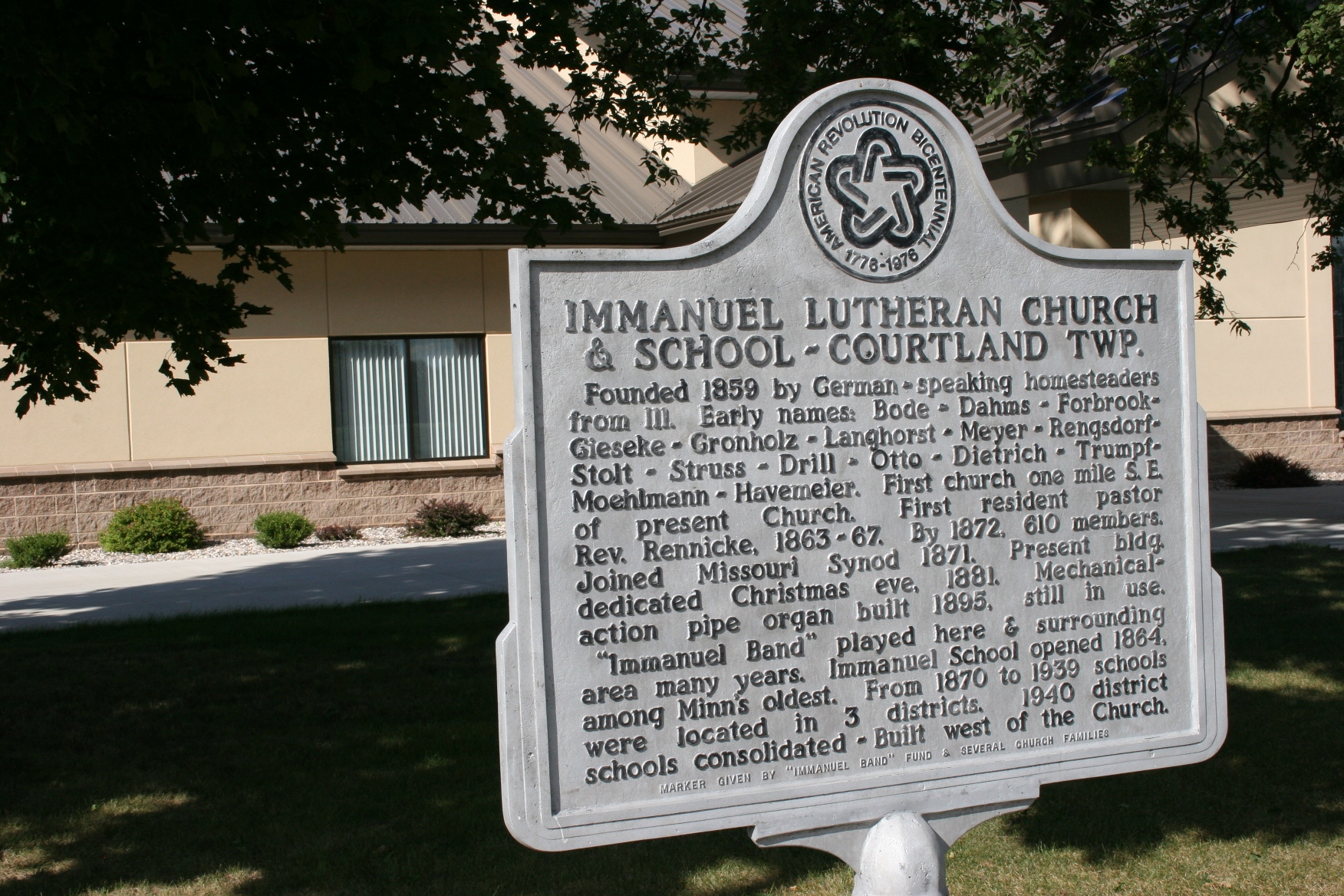
A historical sign outside of Immanuel Lutheran Church, east of Courtland, Minnesota.

This photo, taken in September, shows primarily Immanuel's social hall and the adjacent cemetery where many of my Bode forefathers are buried.

A view of Immanuel's sanctuary from the balcony. The pews, the chancel furnishings and the stained glass windows from the old church were incorporated into the new church.

© Copyright 2012 Audrey Kletscher Helbling


When your day fails to go as planned January 27, 2012

Filed under: Uncategorized — Audrey Kletscher Helbling @ 10:30 AM
Tags: , , , , , , , , , , ,

I RECENTLY READ somewhere—and I read a lot—if you want to make God laugh, plan your day.

Well, God must have been rolling on the floor, laughing until he cried and his belly hurt on Thursday because I had one of those days. You know, the kind that veers completely from your intended course of action.

My main goal for the day was to finish pulling together financial information for the professional who completes our taxes. Now those of you who know me, either personally or via this blog, realize how much I detest numbers. Math whiz I am not. And to add to the stress this year, I once again need to file a Free Application for Federal Student Aid after a two-year respite. I despise forms, especially when numbers comprise the bulk of the required information.

I never got to the numbers on Thursday.

Rather, I spent most of my morning researching information for a document my husband needs for a church meeting on Sunday. I’m happy to help him, but I never thought the project would consume hours of my time.

I expect God was getting a chuckle out of that, his subtle reminder that perhaps I should give just a little more of my time to him.

The rest of the day slipped away in work-related issues with precious little time for writing.

Have you noticed the repeat of the word “time” in all three of the above paragraphs? Why am I so obsessed with time?

Despite my day failing to go as planned, I knew I had a delightful evening ahead. My husband and I had been planning for weeks to attend a presentation by Minnesota photographer Doug Ohman who has published a series of “Minnesota Byways” books.

But then, 50 minutes before Ohman’s talk, my husband called. The car had broken down on his way home from work and he needed a ride and a tow.

Long story short, we missed Ohman’s 6 p.m.presentation. (Who chooses these times anyway?)

After a late supper, kitchen clean-up and e-mail catch-up, I finally kicked back in the recliner to finish the final chapters in Still Standing: The Story of SSG John Kriesel by John Kriesel as told to Jim Kosmo.

About then, God must have been muttering to himself, “Well, she thinks she’s had a bad day…”

He was right, of course. Put in the perspective of all the problems and tragedies a day can bring, my Thursday rated as just fine, thank you. My legs weren’t blown off in a roadside blast. I wasn’t fighting to live. None of my friends had been killed in Iraq.

Minnesota National Guardsman Kriesel had dealt with all of that and managed to overcome, to be positive, to move forward with his life. His story is about as inspiring as any you’ll ever read.

And then, when I finished that book Thursday evening, I picked up Conversations with the Land by Jim VanDerPol, a Chippewa County farmer and writer. I’m only a few essays into his book, but already I appreciate the approach he takes to the land and to life in general. He pauses to notice, to savor, to value his land and his role as tender of the earth. His writing resonates with me, reconnects me to the prairie of my youth, the land that still influences my writing.

And so my Thursday ended and a new day has begun with a sunrise so splendid that my husband called to tell me about it, as he often does when the morning sky is especially beautiful.

The remnants of today's sunrise as viewed from my office window.

Several weeks ago, I started penning this poem after pausing to watch the sunrise:

Jam on toast

My fingertips lift within a mere whisper of the keyboard

as I halt, half-thought, words interrupted mid-sentence,

to tilt my head toward the window and the sunrise

spreading gold and pink across the sky like jam on toast.

#

In that morning moment, I want nothing more

than to dip my fingers into the jar of dawn,

to sample her sweetness, to taste of her earthy goodness,

to delight in sunshine and rain and succulent fruit plucked from vines.

#

PERHAPS TODAY should be the day I finish this poem.

Copyright 2012 Audrey Kletscher Helbling


Doug Ohman preserves Minnesota in photos January 25, 2012

MANY YEARS AGO I heard Minnesota photographer Doug Ohman talk about his Churches of Minnesota book, a project in his “Minnesota Byways” series published by the Minnesota Historical Society Press.

He’s an impressive speaker, sharing his love for photographing those subjects which hold historical, community and personal significance for so many Minnesotans.

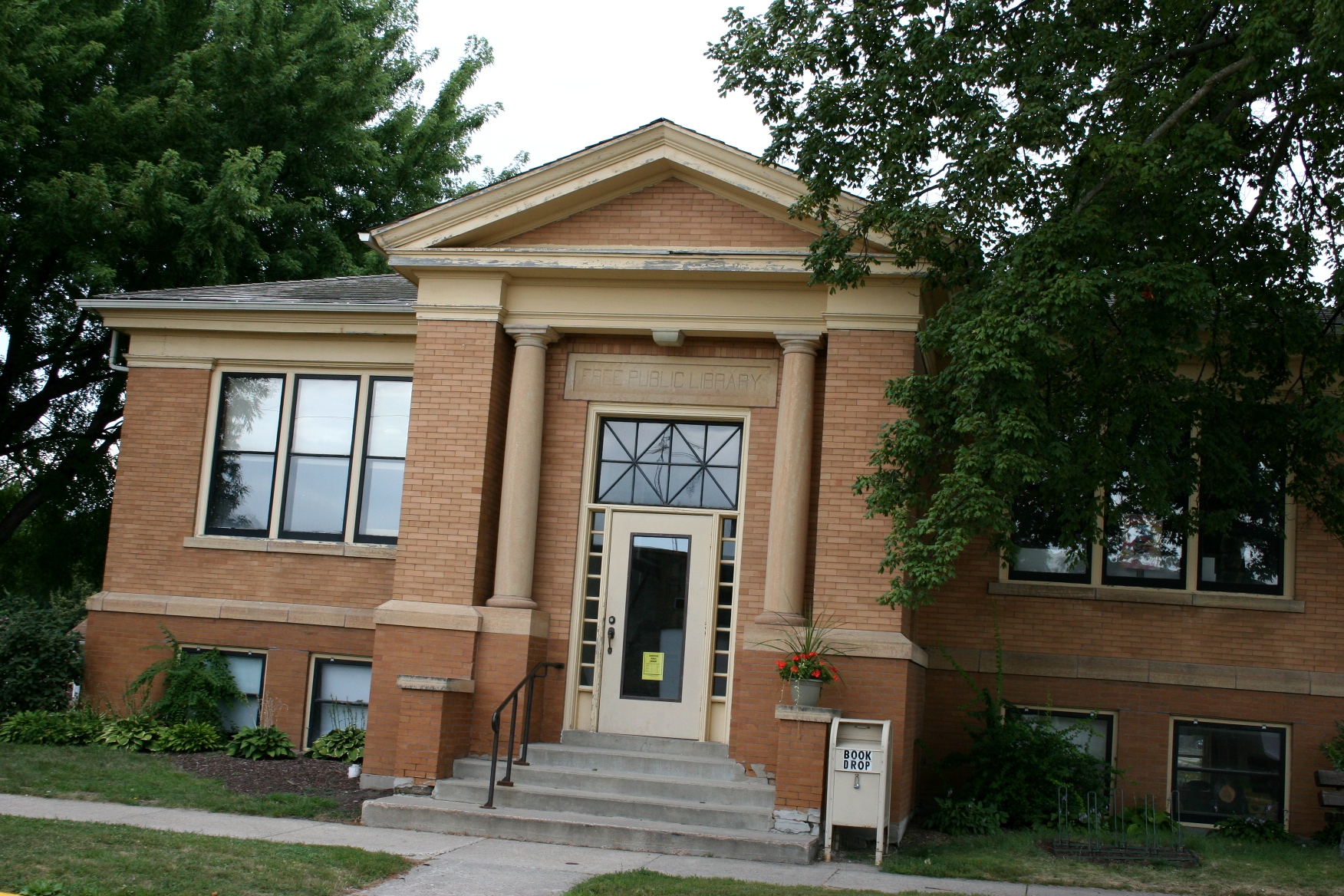
Thus far he’s covered Minnesota churches, barns, courthouses, schoolhouses, cabins and libraries in his series. I don’t think I’ve missed any and I’ve read most. His books also include prose by well-known Minnesota writers like Will Weaver, Jon Hassler and Bill Holm.

If you’re at all interested in the places that are so integral to our lives, you’ll want to read Ohman’s books and, if you have the opportunity, hear him speak.

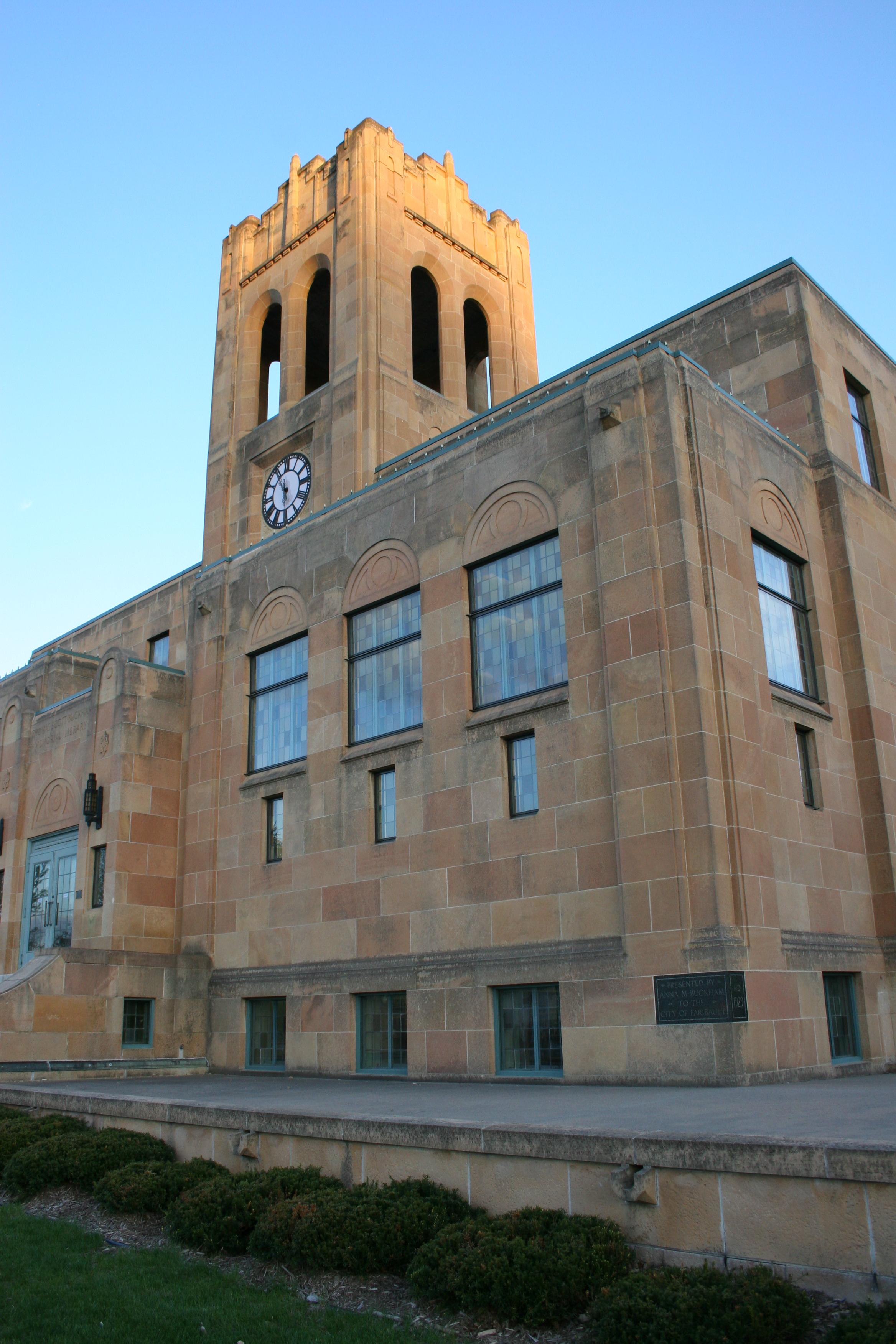
Buckham Memorial Library, built in 1929, features a Charles Connick stained glass window and Greek murals.

Thursday night, January 26, this noted photographer travels to my community of Faribault, to Buckham Memorial Library, to present “Free to All: Libraries of Minnesota” as part of the Minnesota Book Award Author Tour. His book, Prairie, Lake, Forest: Minnesota’s State Parks, was a 2011 MNBA nominee.

I’ll be there for several reasons: I enjoy Ohman’s books. I want to learn more about his approach to photography. I’m interested in learning more about libraries in Minnesota. I appreciate libraries.

He’ll be at the Faribault library at 6 p.m. for this free event. A photo of Buckham, by the way, is included in his Libraries of Minnesota.

Southeastern Minnesota residents will have plenty of other opportunities to hear Ohman speak on his “Minnesota Byways” series as a dozen additional appearances are scheduled through-out the Southeastern Libraries Cooperating regional library system. Click here to view a complete listing of Ohman’s upcoming visits. His presentations will vary—from schoolhouses to churches to farms and more—depending on location.

I’d recommend taking in one of Ohman’s presentations. You’ll gain insights into Minnesota history and photography and more from a photographer who possesses an unbridled enthusiasm for preserving, in images, that which is part of the Minnesota landscape.

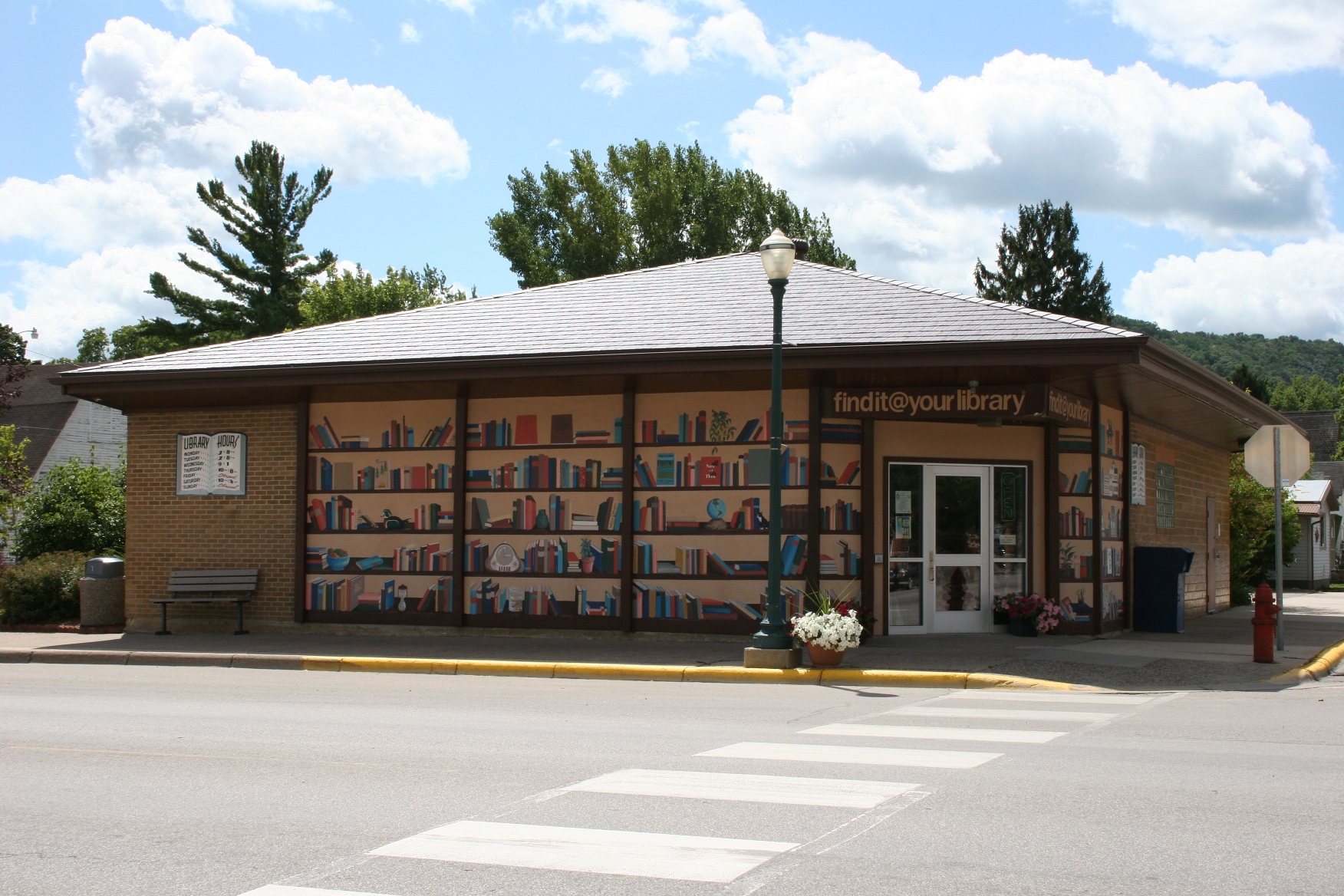
The Houston Public Library is on the cover of Ohman's book, Libraries of Minnesota. I shot this photo last summer of the library in the southeastern corner of our state.

Built in 1912, the library in Janesville is an Andrew Carnegie library on the National Register of Historic Places.

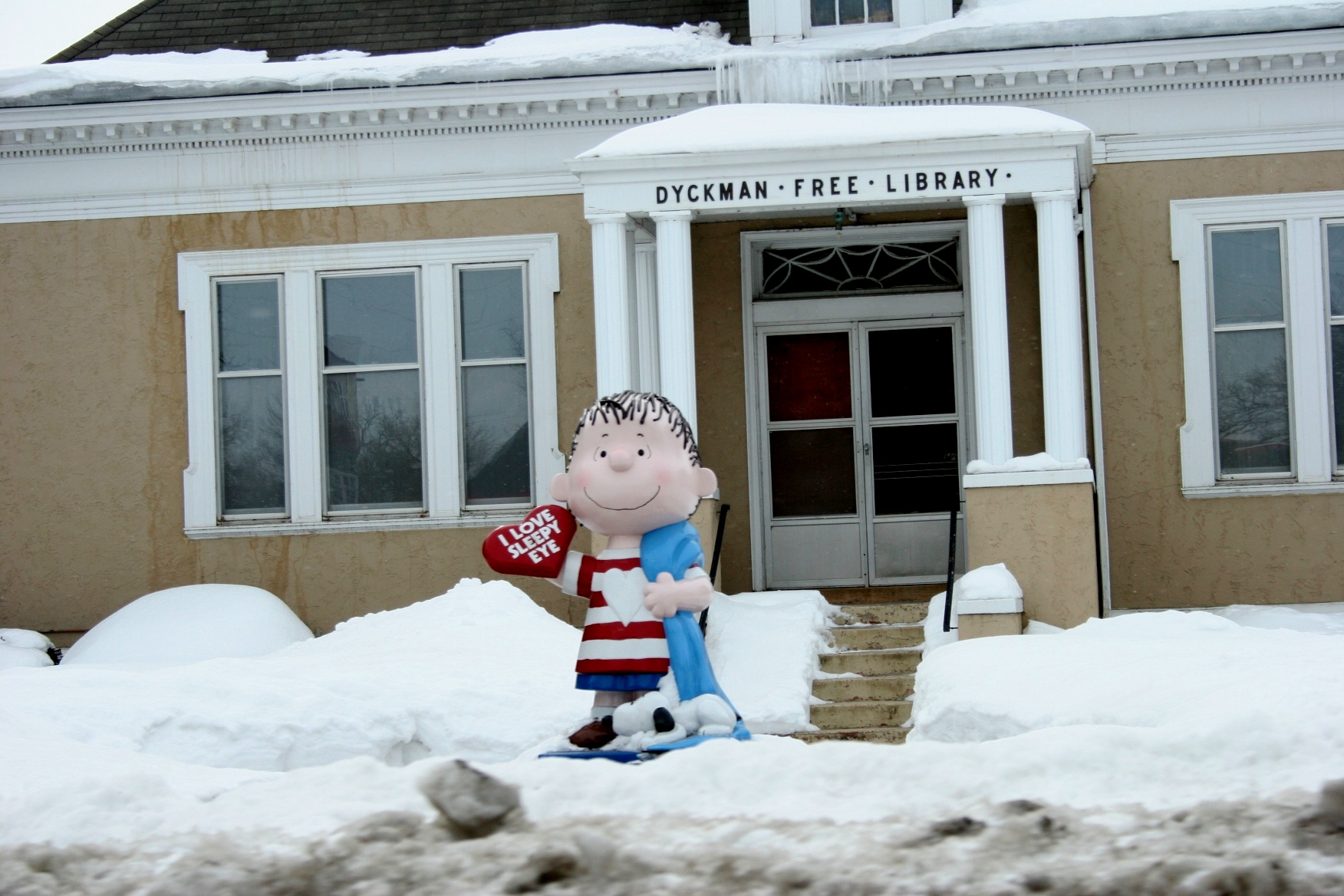
A statue of Linus greets visitors to the Dyckman Free Library in Sleepy Eye. Charles M. Schulz, creator of the Peanuts cartoons, based his character Linus on real-life friend Linus Maurer, a Sleepy Eye native. Maurer, a cartoonist, worked with Schulz. Ohman, who managed the former Camp Snoopy at the Mall of America, includes a photo of Linus at the Sleepy Eye library in his book.

Several summers ago I photographed this 1930s Works Progress Administration log cabin in Hackensack. Sitting on the shore of Birch Lake next to a towering statue of Lucette Diana Kensack (Paul Bunyan's sweetheart), the cabin today houses the Hackensack Lending Library.

IF YOU’RE INTERESTED in reading another book about libraries, check out Carnegie Libraries of Minnesota by Kevin Clemens. The book highlights the history and architecture of Minnesota’s Carnegie libraries, primarily in photos. Click here to learn more about the book.

© Copyright 2012 Audrey Kletscher Helbling


Give the gift of Minnesota writing December 20, 2011

Filed under: Uncategorized — Audrey Kletscher Helbling @ 10:49 PM
Tags: , , , , , , ,

ALRIGHT THEN, I’m going to put in a days-before-Christmas gift plug idea here for Lake Region Review, a Minnesota literary magazine. Even though the founders, term it a “magazine,” I’d call this 138-page volume a “book.”

Anyway, magazine/book/journal, whatever word you choose, it’s a collection of fiction, creative nonfiction and poetry by 27 Minnesotans, including me.

In my “This Barn Remembers” poem, you’ll read my memories of laboring in my childhood dairy barn on the southwestern Minnesota prairie. You may want to pull on your old boots as you muck your way through my true-to-reality poem. I tell it like it was, right down to “putrid piles of manure” and “streams of hot cow pee.”

I’m not going to choose a favorite piece of poetry or prose to highlight from Lake Region Review. But you’ll find regional writing from those as well-known as New York Times bestselling author Leif Enger to unknown college student Travis Moore in a collection that melds work by experienced and emerging writers. By the way, getting published in the Review was a competitive process. You’ll read quality writing here.

That all said, Lake Region Review would make an ideal gift for anyone who appreciates regional writing.

You can purchase the $10 volume in these Minnesota, and one North Dakota, locales:

  • Becker County Museum, 714 Summit Ave., Detroit Lakes
  • Cherry Street Books, 503 Broadway, Alexandria
  • Lakes Area Theatre, 2214 Geneva Road, N.E., Alexandria
  • Minnesota Historical Society Bookstore, 345 W. Kellogg Blvd, St. Paul
  • Otter Tail County Historical Society, 1110 Lincoln Ave. W., Fergus Falls
  • Victor Lundeens, 126 West Lincoln Ave., Fergus Falls
  • Zandbroz Variety, 420 Broadway, Fargo, N.D.

Or click on this link for instructions on how to order. (Sorry, the anthology won’t arrive by Christmas.)

Thanks for supporting Minnesota writers like me (not that I earned any money from the Review—I didn’t). But I certainly appreciate readers who value regional writing.

IF YOU’VE READ Lake Region Review, I’d like to hear your review.

CLICK HERE to read a previous post I wrote about Lake Region Review and another Minnesota literary journal, The Talking Stick.


Part II: Life as an orphan in Owatonna

The main building at the orphanage, built in 1886, housed offices, a reception room, chapel/auditorium, boys' cottage, living quarters for employees, a sewing room, attic and linen storage. This main portion today serves as the Owatonna city administration building.

THE TOWERING BRICK building with the enchanting turret represents no fairy tale. Not at all.

Within the confines of this place and the outlying cottages, some 12,000 – 15,000 children spent their formative childhood and teenage years institutionalized in the Minnesota State Public School for Dependent and Neglected Children. They were the orphaned, the abused, the abandoned, the unwanted.

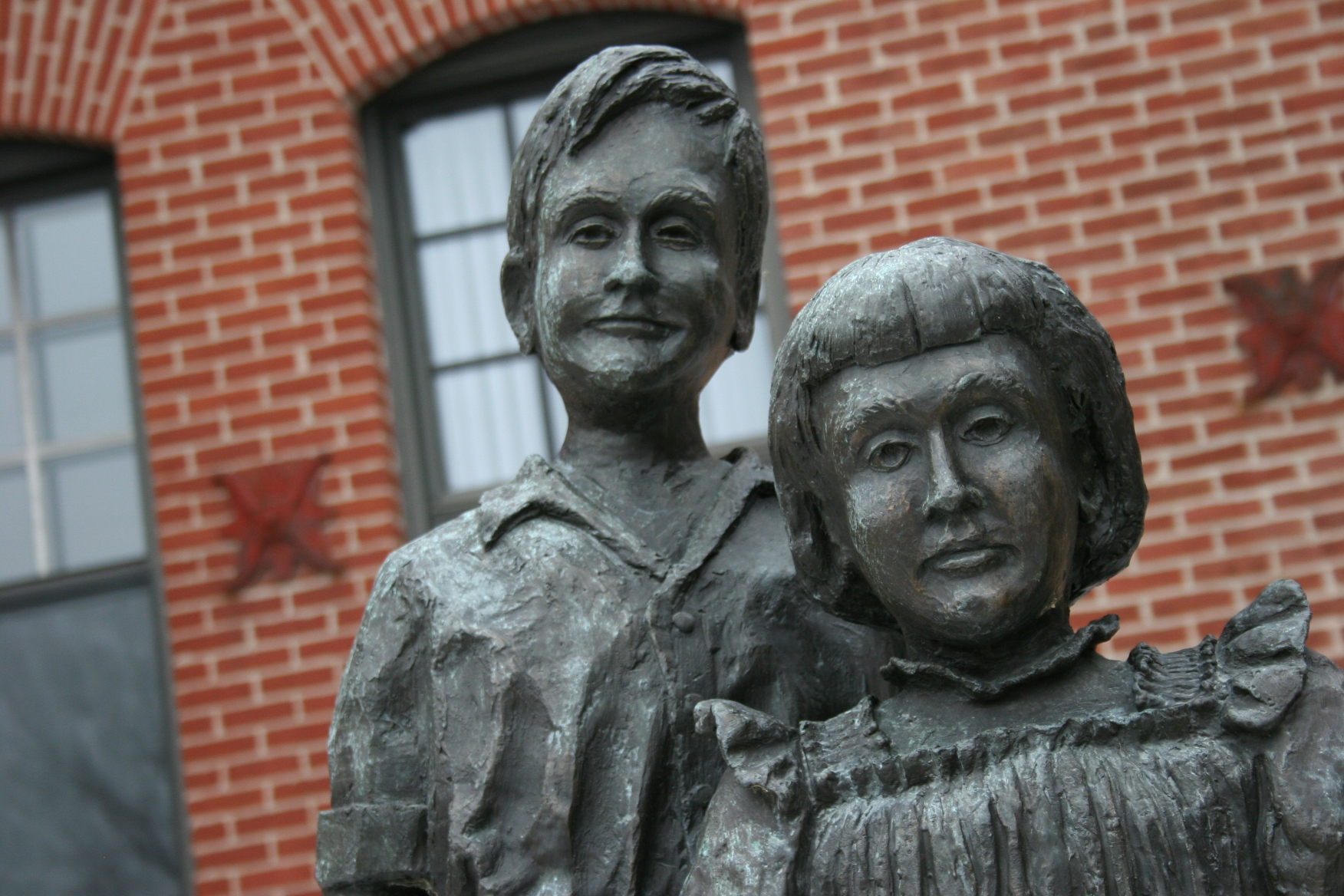
The "State School Kids" memorial stands in front of the main building and was dedicated in 1993.

Information in a brochure I picked up on a recent visit to this 1886- 1945 orphanage in Owatonna reads:

Such children became wards of the state and, in most instances, all parental rights were cancelled. Parents did not always realize they were relinquishing all rights to their children when they signed the State School commitment papers. Some parents returned to try to regain custody of their children and were refused.

Can you imagine?

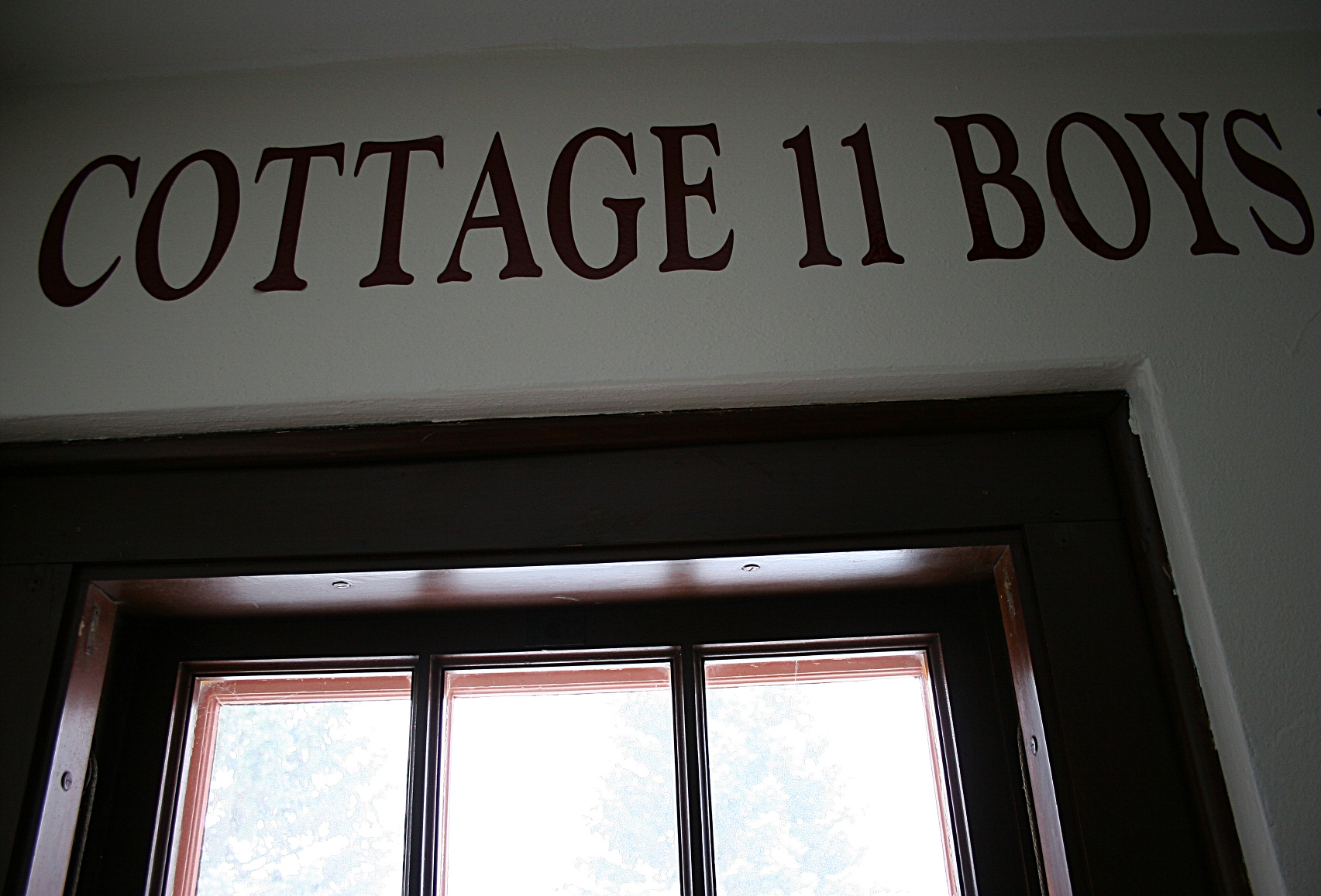
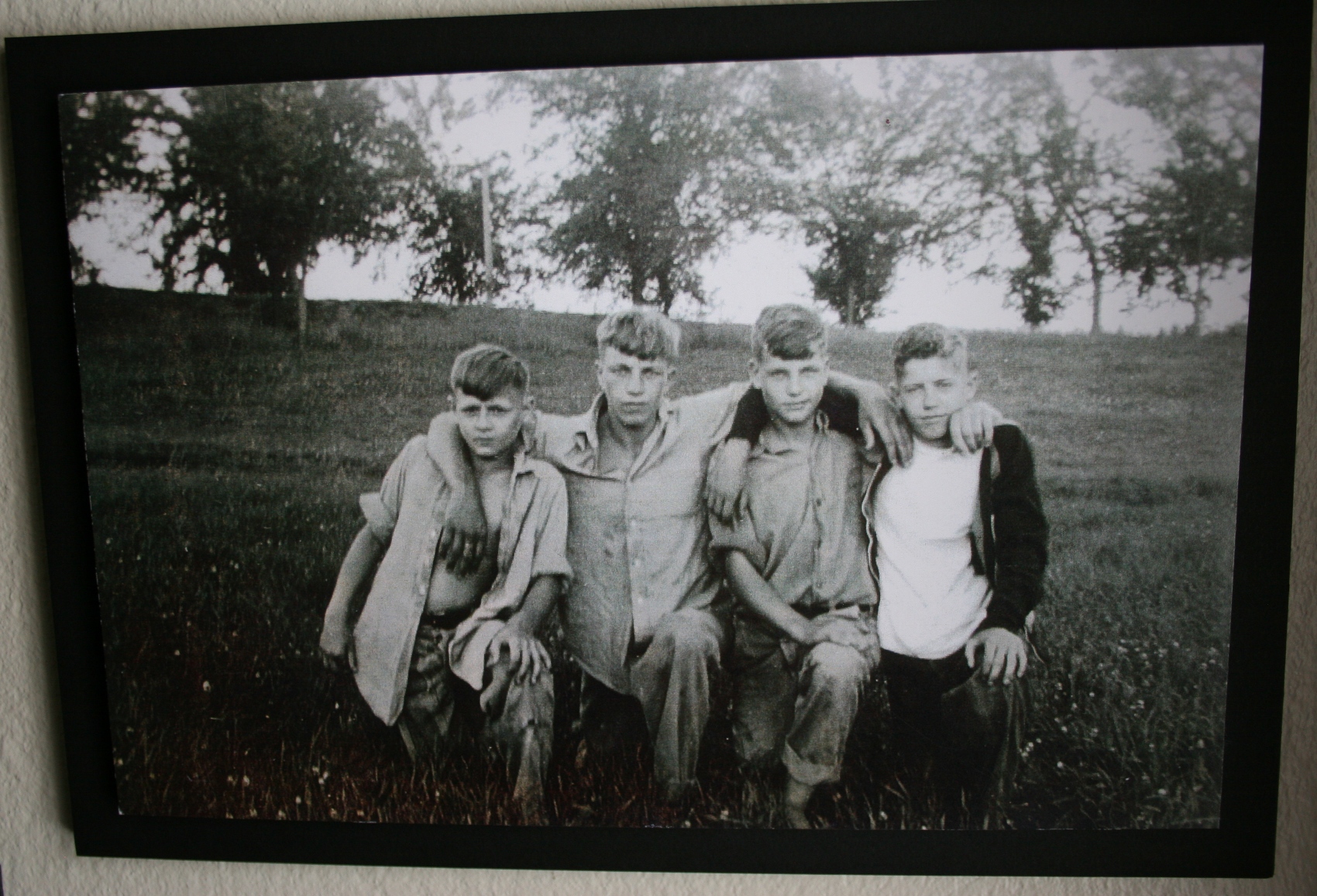
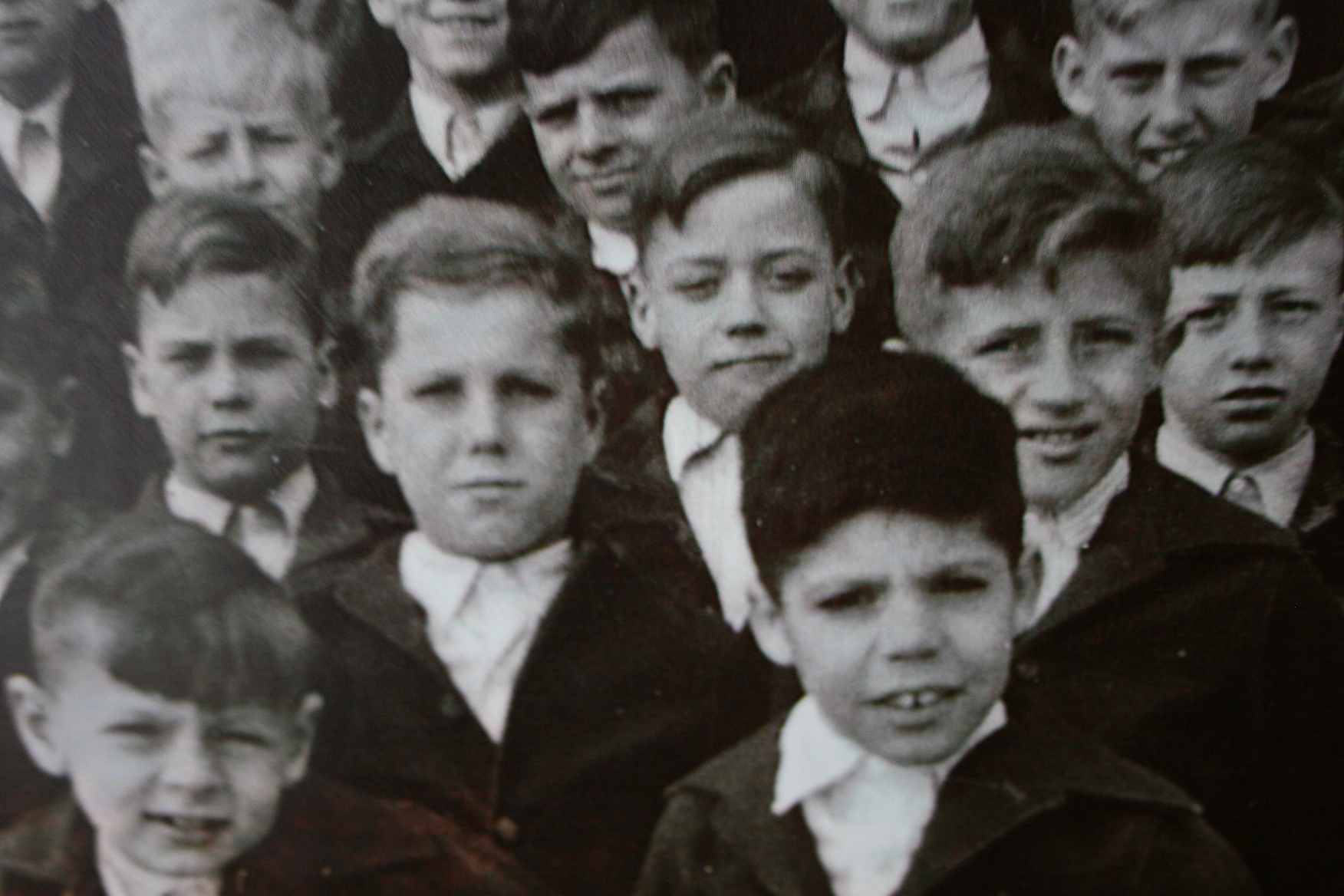
Residents of Cottage 11, which housed boys ages 6 - 13, pose for a photo now on exhibit at the museum.

While some children adjusted to living within the strict regiment and rules of the school, many did not. You will hear and read their tragic memories when you visit the orphanage museum. Be forewarned: These stories are difficult to hear.

A room in cottage 11 features the photos and memories of the boys who lived there.

Cottage 11 residents

The boys remember scrubbing floors throughout the cottage, including in the bathroom..

Beds were packed tight into sparse bedrooms in the cottage.

I’ve read several books written by former “state schoolers,” as they were called. Harvey Ronglien, who was the motivator behind the museum and the orphan’s memorial, wrote A Boy from C11, Case #9164, A Memoir. Peter Razor wrote While the Locust Slept, winner of a Minnesota Book Award. I read both books, as well as Crackers & Milk by Arlene Nelson, many years ago and still can’t shake the haunting memories of neglect and abuse and struggle.

Particularly troubling are the reports of abusive, neglectful and unloving matrons. Equally disturbing are the stories of children who were indentured to farm families and then treated like slaves.

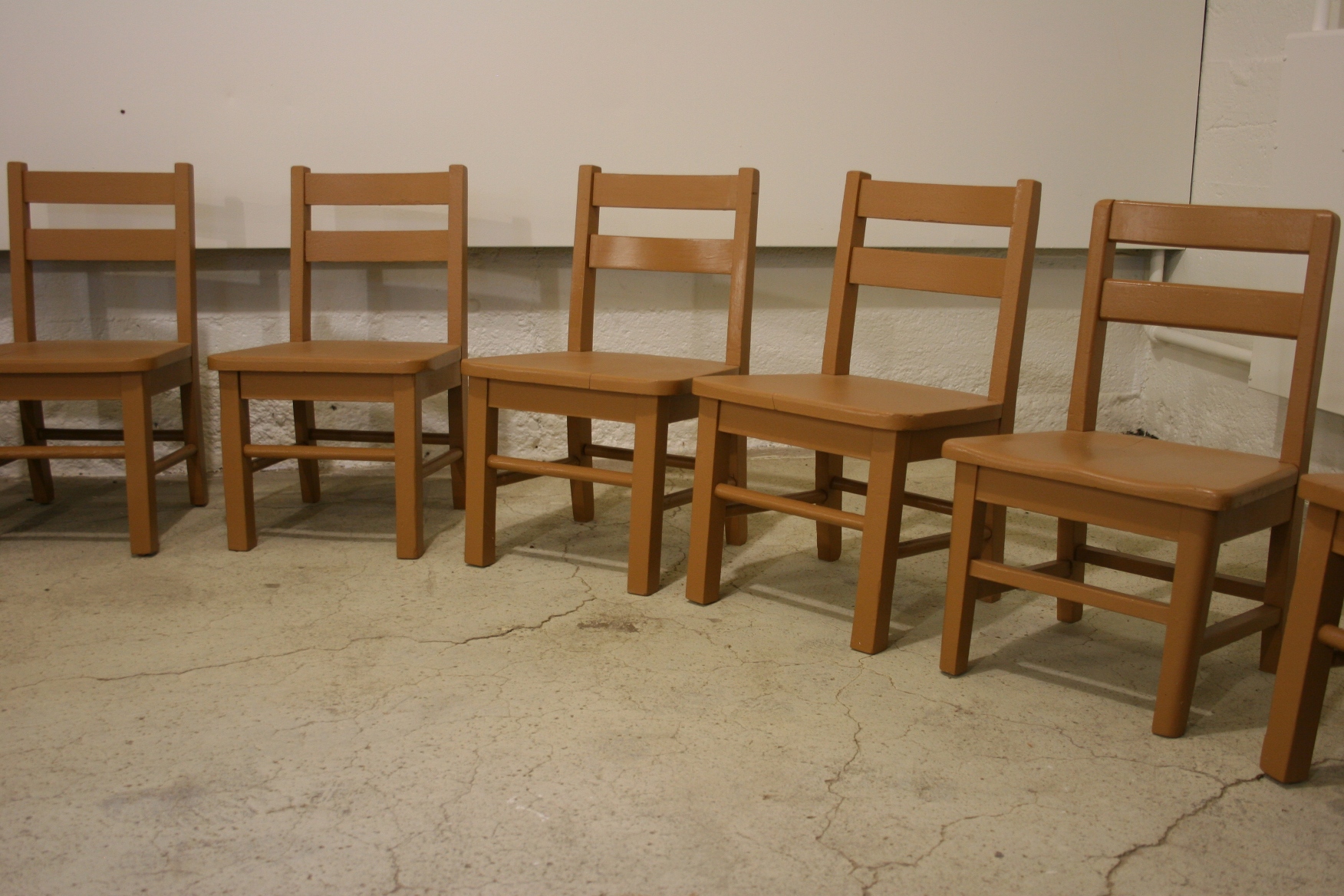
Each boy was assigned to a chair in the basement and could not leave the Cottage 11 basement without permission. This was a method used to keep order and control over the children.

Within the confines of the basement, the boys played with marbles, puzzles, checkers and other toys.

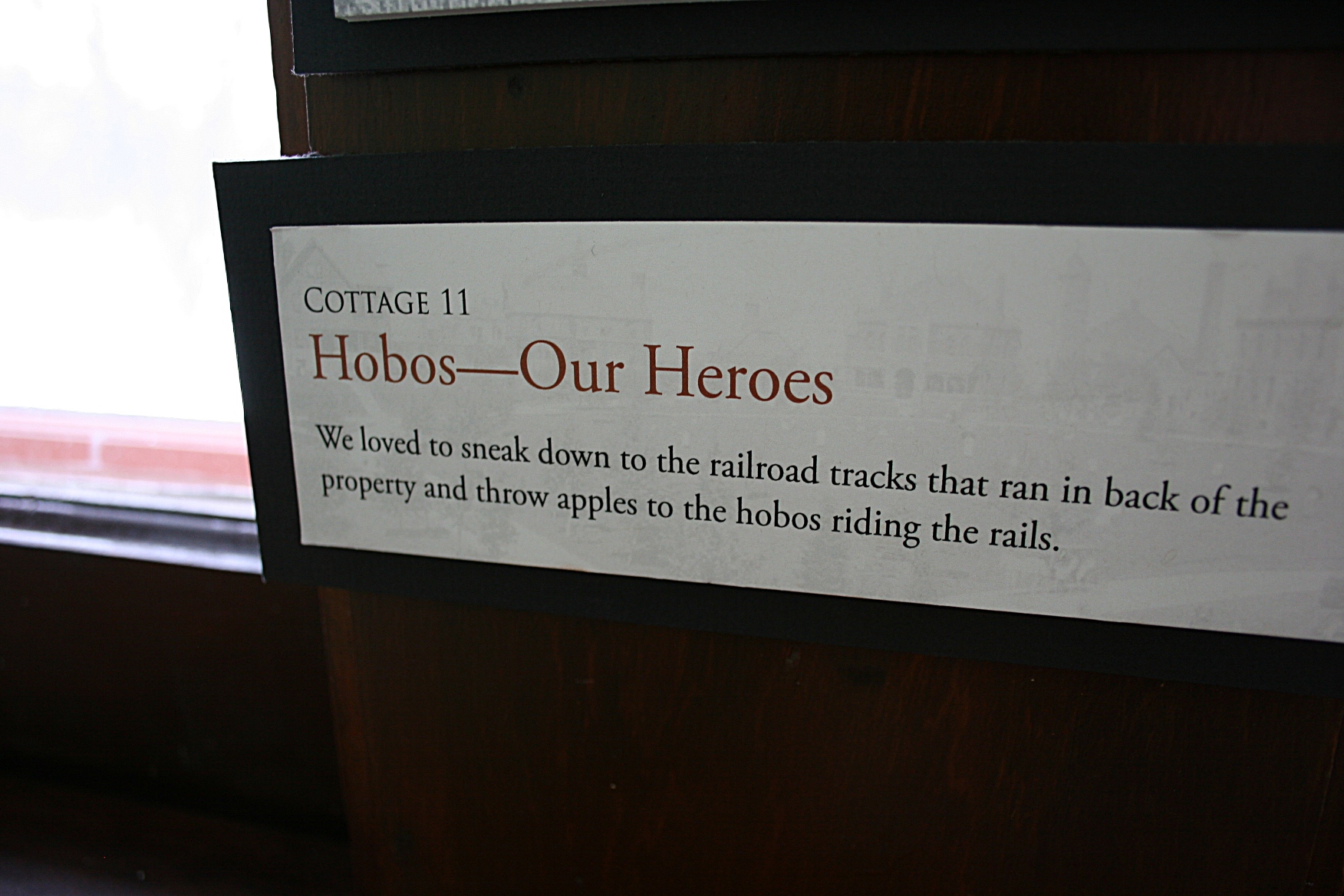
A sign on a stairway landing tells visitors about the boys' dreams of escaping via rail and of their admiration for hobos. Some boys did hop trains and ran away.

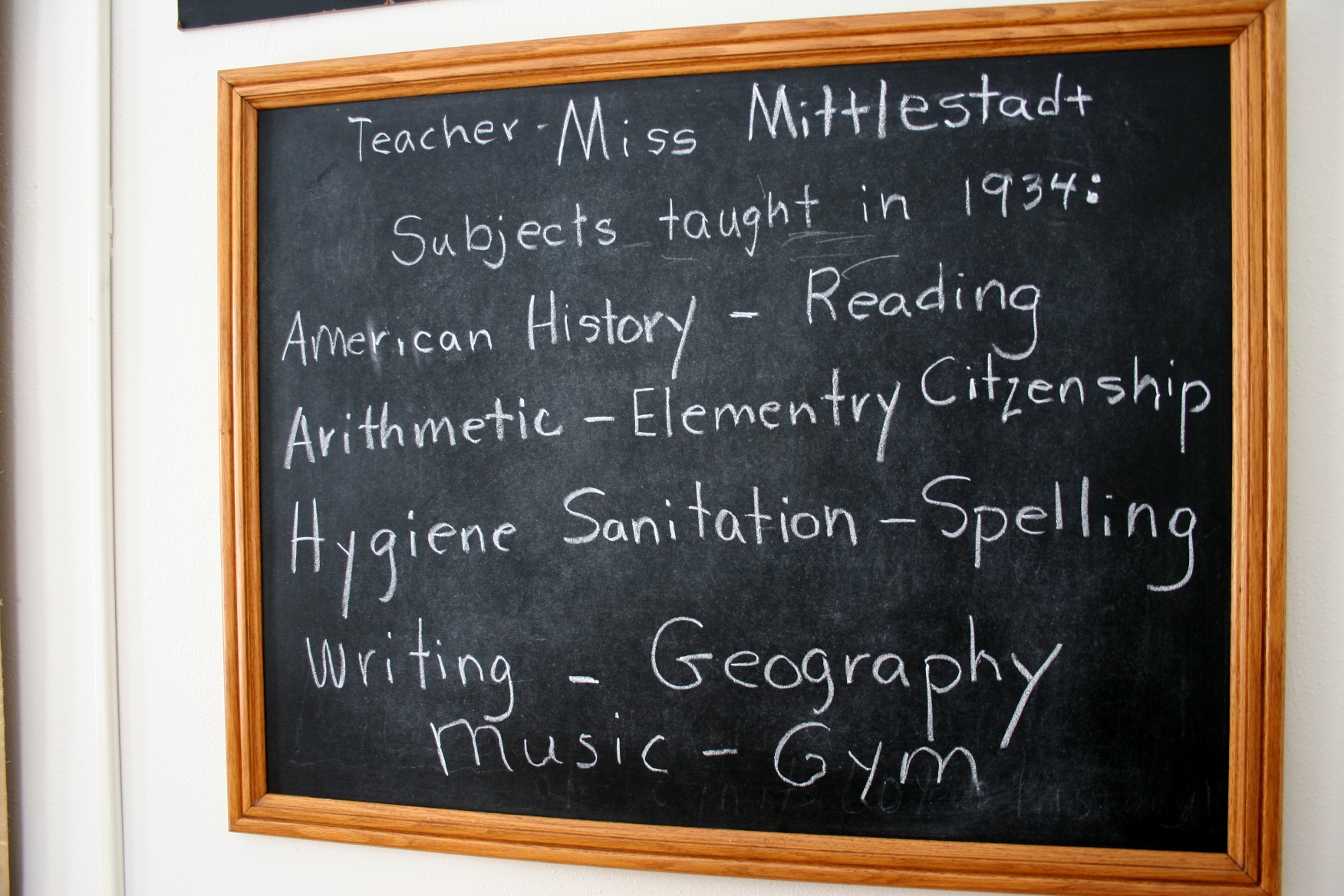
Children were educated through the eighth grade, with some selected during the early years to attend Owatonna High School. In later years, all students were allowed to attend high school.

If you’ve never visited the Minnesota State Public School Orphanage Museum, I’d encourage you to do so.

This exists as part of our state’s history. We need to know and understand life here.

Considering the thousands of children who lived in the orphanage during its 60-year span, I expect many Minnesotans are still carrying the emotional scars whether directly or indirectly passed through the generations.

IF YOU LIVED in the orphanage or have a family member who did, I’d like to hear from you. What’s your story? Good or bad.

The feet of the children in the memorial statue on the orphanage grounds.

CLICK HERE to read a previous blog post I published about Christmas in the orphanage.

© Copyright 2011 Audrey Kletscher Helbling


Beyond just a holiday art exhibit at the former Owatonna orphanage December 15, 2011

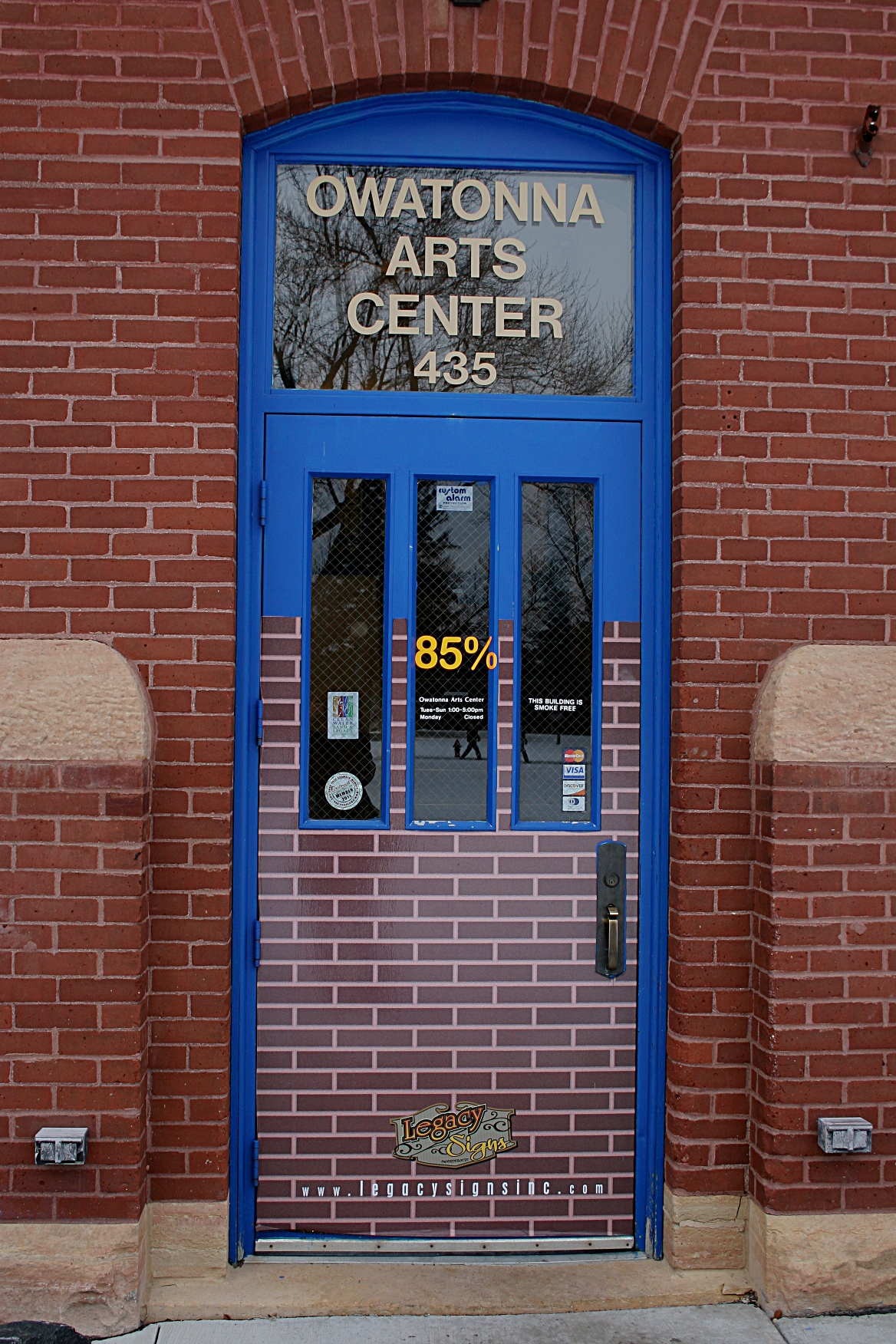
A door into the Owatonna Arts Center in southern Minnesota.

BEHIND THE BACK BLUE DOOR of the Owatonna Arts Center, housed in a former orphanage, past the guardian nutcracker, up the stairs and just to your left, you’ll discover a sprinkling of holiday magic and realism in “The Story Books of Christmas” exhibit.

As OAC Art Director Silvan Durben tells me, the exhibit doesn’t specifically emphasize Christmas books—although two are holiday-themed—but rather impresses the sharing of a storybook with a child and the warm memories that evokes.

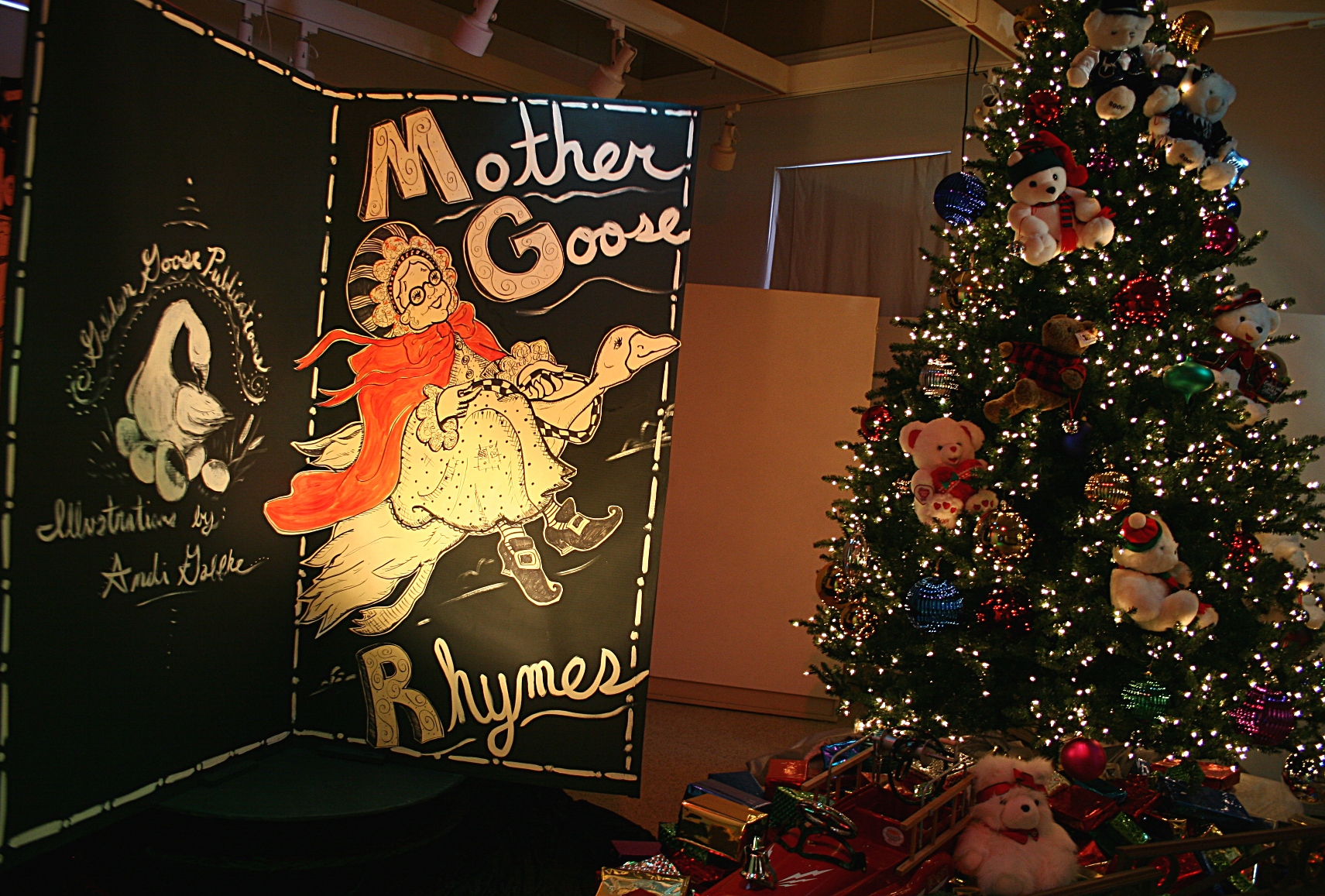
You’ll experience that bonding over books in a rotating display of Mother Goose tales crafted onto cardboard and placed next to a Christmas tree embraced by teddy bears tucked among branches.

Who among us doesn’t remember with fondness the recitation of nursery rhymes?

Jack be nimble, Jack be quick, Jack jump over the candlestick.

Hickory, dickory, dock, the mouse ran up the clock. The clock struck one. The mouse ran down. Hickory, dickory, dock.

Or the story of the “Old Man in the Moon?”

It was not lost on me, though, that the orphaned children who once tread these floors did not experience the closeness of clutching a teddy bear or cuddling on a lap while listening to nursery rhymes as they drifted into sleep.

A rotating exhibit of several Mother Goose nursery rhymes.

A close-up of art in the Hickory, dickory, dock rhyme.

Many dreamed of escaping—and some did via rail—the drudgery and abuse at the former Minnesota State Public School for Dependent and Neglected Children.

That reality struck me as I viewed an over-sized silver jingle bell and the word “BELIEVE” punched into an equally-large golden ticket at The Polar Express display. In that children’s picture book by Chris Van Allsburg, a young boy boards a train to the North Pole as the story unfolds to reveal the magic of Christmas.

The large, magical silver bell in The Polar Express display.

Although I did not ask, I wonder if the creators of “The Story Books of Christmas” considered the double-meaning of selecting The Polar Express to highlight in this place where so many children wished for a ticket out.

I found the selection fitting, touching and sad. And a wee bit hopeful.

FYI: “The Story Books of Christmas” exhibit runs through December 29 at the OAC, 435 Garden View Lane. OAC hours are from1 p.m. – 5 p.m. Tuesday – Sunday, closed Mondays. The OAC will also be closed December 23 – 26.

The display highlighting the book, Nestor, the Long-Eared Christmas Donkey.

CHECK BACK for another blog post from the art center and for a photographic tour of Cottage 11, once home to orphaned boys.

© Copyright 2011 Audrey Kletscher Helbling


The disturbing truths revealed in “Why I Left the Amish” December 13, 2011

ANY ILLUSION I’VE HELD of the Amish living Utopian existences has been shattered into a million shards after reading Why I Left the Amish: A Memoir.

Written by Saloma Miller Furlong, a woman raised in an Amish community in Ohio, this rates as one of the most disturbing books I’ve read given my preconceived notions about an idyllic Amish world.

Certainly, all Amish should not be pigeonholed by this single book.

Yet, the truths shared by Furlong cannot be ignored. The Amish, like none of us, live pastoral, simple, uncomplicated lives.

In Furlong’s situation, she lived a living hell. I can think of no other way to describe the horrific stories of abuse within her family shared in her memoir.

As I read her book, I began to understand how living within the confines of rigid rules and beliefs within a closed community can allow such abuse to continue without intervention.

According to Furlong:

Individuality is squelched in the name of “community.”

Women/girls are to be subservient to men/boys.

Obedience is demanded.

Rules rule.

Humbleness of spirit prevails and not always in a positive way.

Don’t get me wrong here. I am not condemning the Amish or their chosen beliefs or lifestyle. But I have, through Furlong’s memoir, come to understand how ideologies can keep the issues of abuse hidden and ignored deep within the community.
In Furlong’s case, she writes of the shame heaped upon her family by the Amish community aware of dysfunction within her family. Her father was mentally ill, her mother unwilling to protect her daughters, her brother abusive.

Her words hurt your heart. Simple as that.

Furlong writes:

“Our fear of Datt’s violence kept us trapped so that we could not even imagine freedom.”

Eventually that fear of violence also gave Furlong the courage to plan her escape and flee in 1977 at the age of 20.

But can you imagine how difficult that decision must have been, knowing this:

“It is a belief system that a child inherits, in which one believes one is damned if one leaves the Amish.”

FURLONG IS CURRENTLY co-writing a sequel, When We Were Young and She Was Amish, with her husband, David. After that initial escape, where Why I Left the Amish ends, Furlong was tracked by her family and the bishop and returned to her Amish community. Later she would flee for a second, and final, time.

Why I Left the Amish was published in 2011 by Michigan State University Press.

This is a must-read book, even if you’re not interested in the Amish. Furlong’s memoir addresses abuse and we can all learn from it, no matter our beliefs.

© Review text copyright 2011 Audrey Kletscher Helbling