Minnesota Prairie Roots

Writing and photography by Audrey Kletscher Helbling

A Minnesota bait shop Norman Rockwell could appreciate April 26, 2013

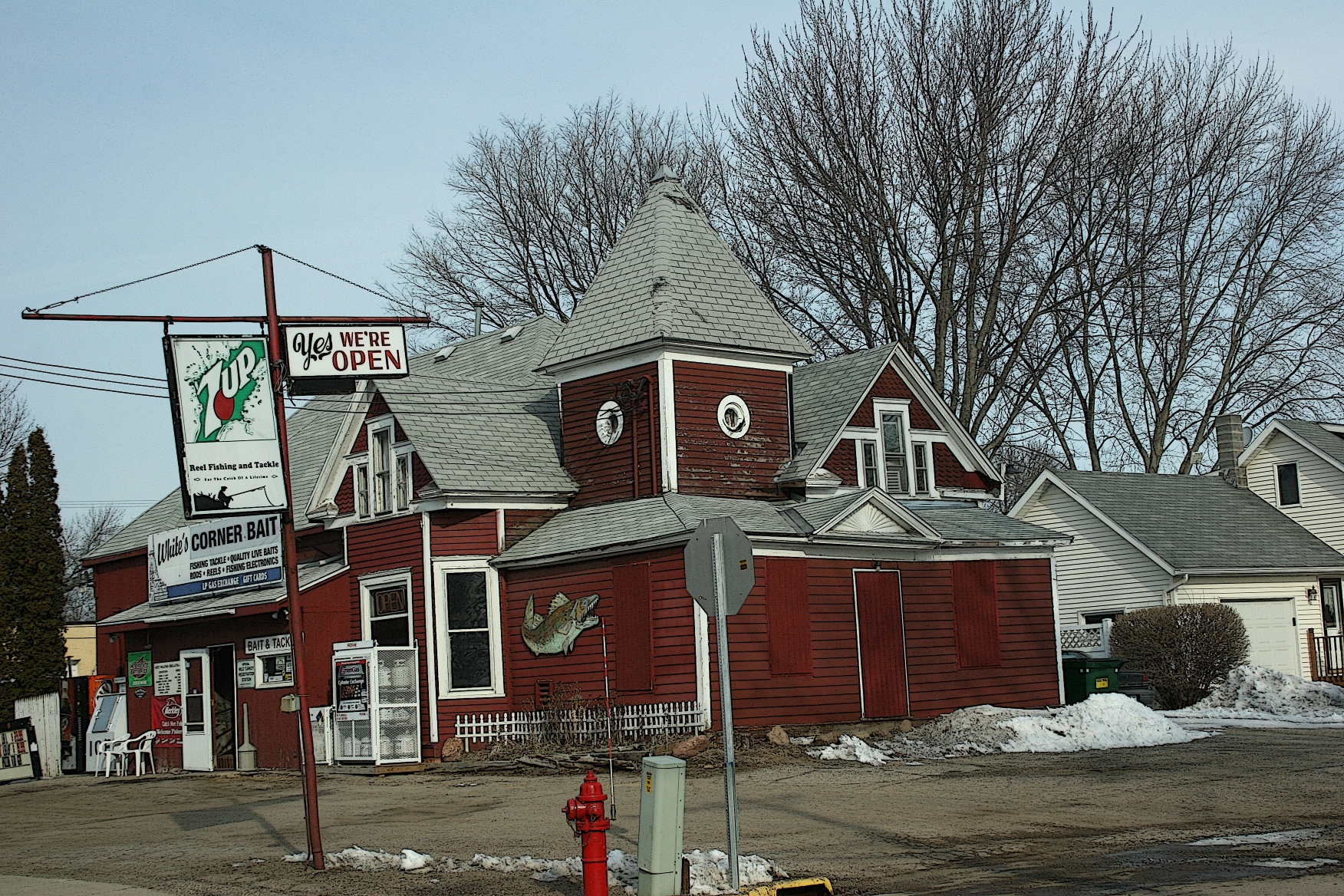
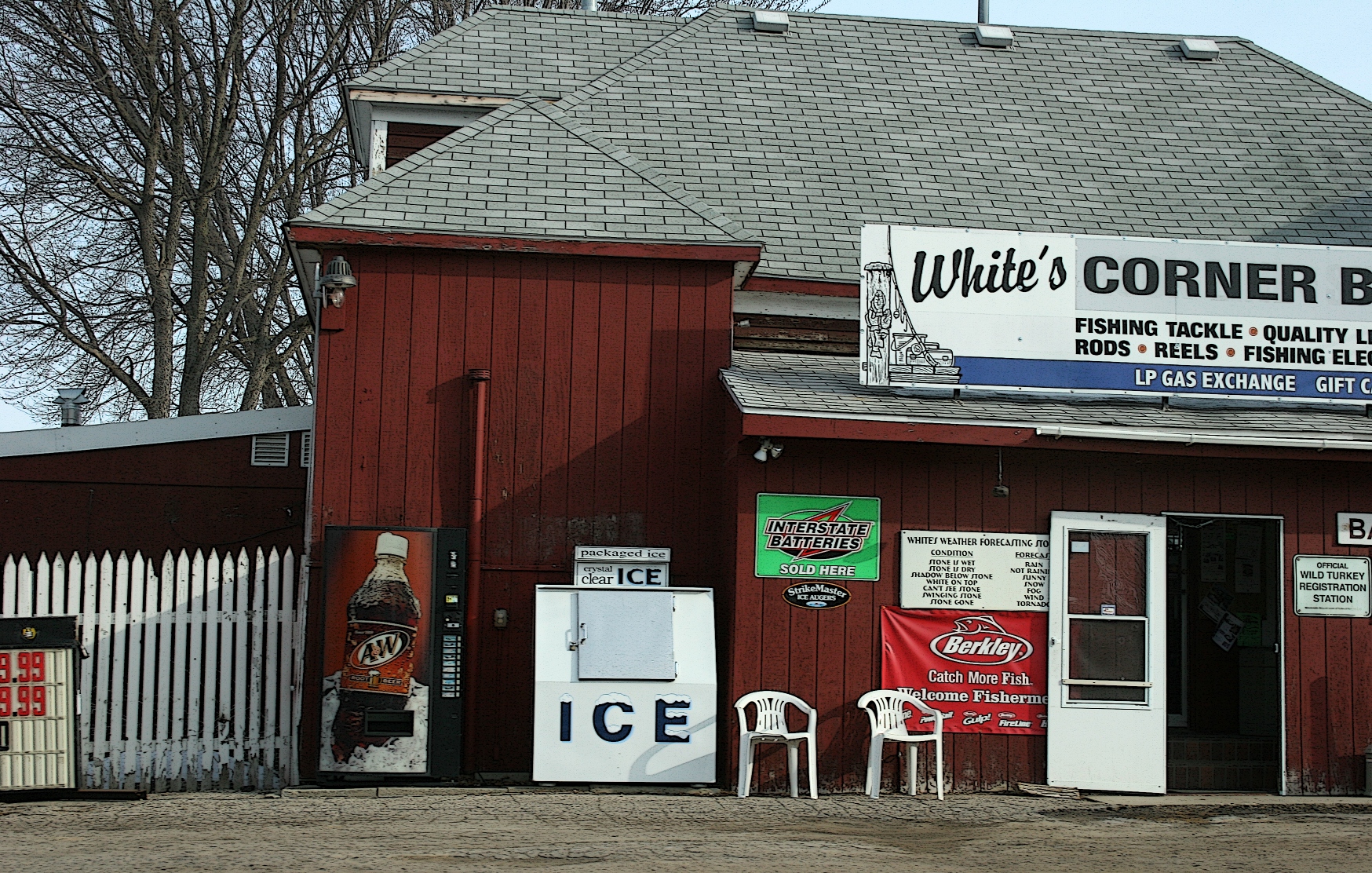
White's Bait Shop, Madison Lake, Minnesota

White’s Bait Shop, Madison Lake, Minnesota, photographed while passing by.

FROM A PURE visual perspective, White’s Corner Bait in Madison Lake confuses the eye with a mishmash of angles and cluttered signage. Too many words to read while passing by on Minnesota Highway 60.

Pop, ice, bait...

Pop, ice, bait, batteries, tackle, rods, reels…

But from an artistic perspective, this long-time bait shop delights with a Norman Rockwell-like Americana charm.

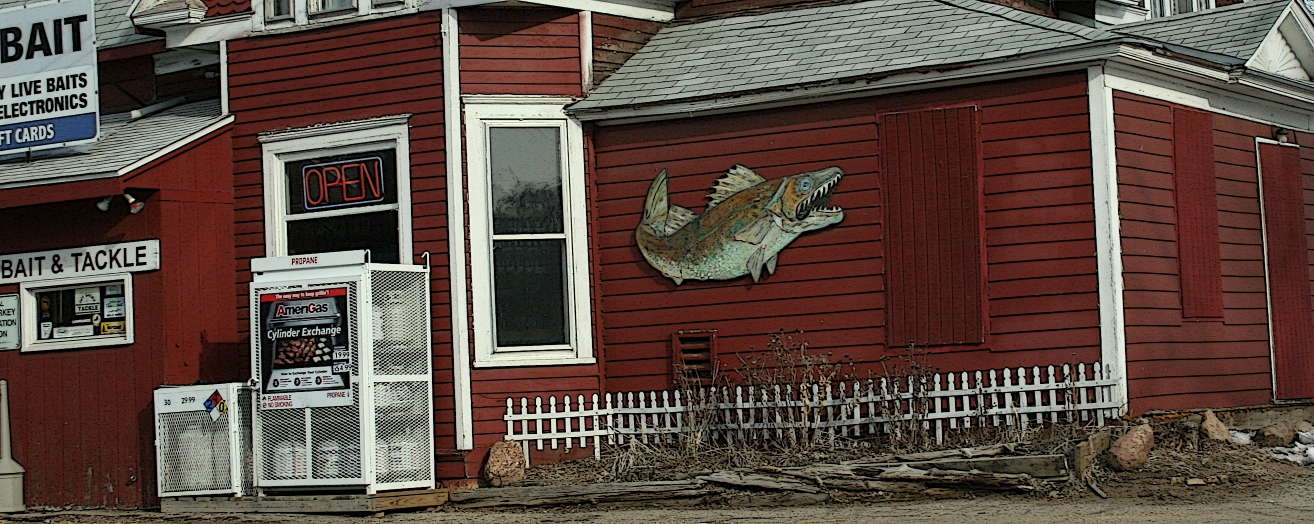
I have, for decades, admired this barn red multi-layered building of angles and assorted jumbled rooflines defined by a pointed corner tower.

Not once, though, have I stopped to photograph it, to step inside, to check out the bait, to gather information on where the fish are biting.

Oh, how I love that kitschy fish.

Oh, how I love that kitschy fish.

White’s Bait, open since 2011 in a building that has been a bait shop for more than 50 years, prides itself on providing “good quality bait and great customer service.” Says so, right there on the business website.

Seems quintessential Norman Rockwellish to me. That good quality, that great customer service.

Next time I’ll stop.

© Copyright 2013 Audrey Kletscher Helbling


Little General Store on the Prairie March 27, 2013

I LOVE BERNADETTE THOOFT’S infectious laugh and outgoing personality. And I love what this mother of seven is doing for my hometown.
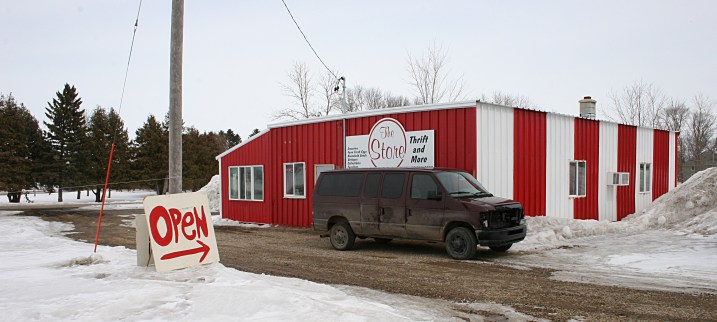
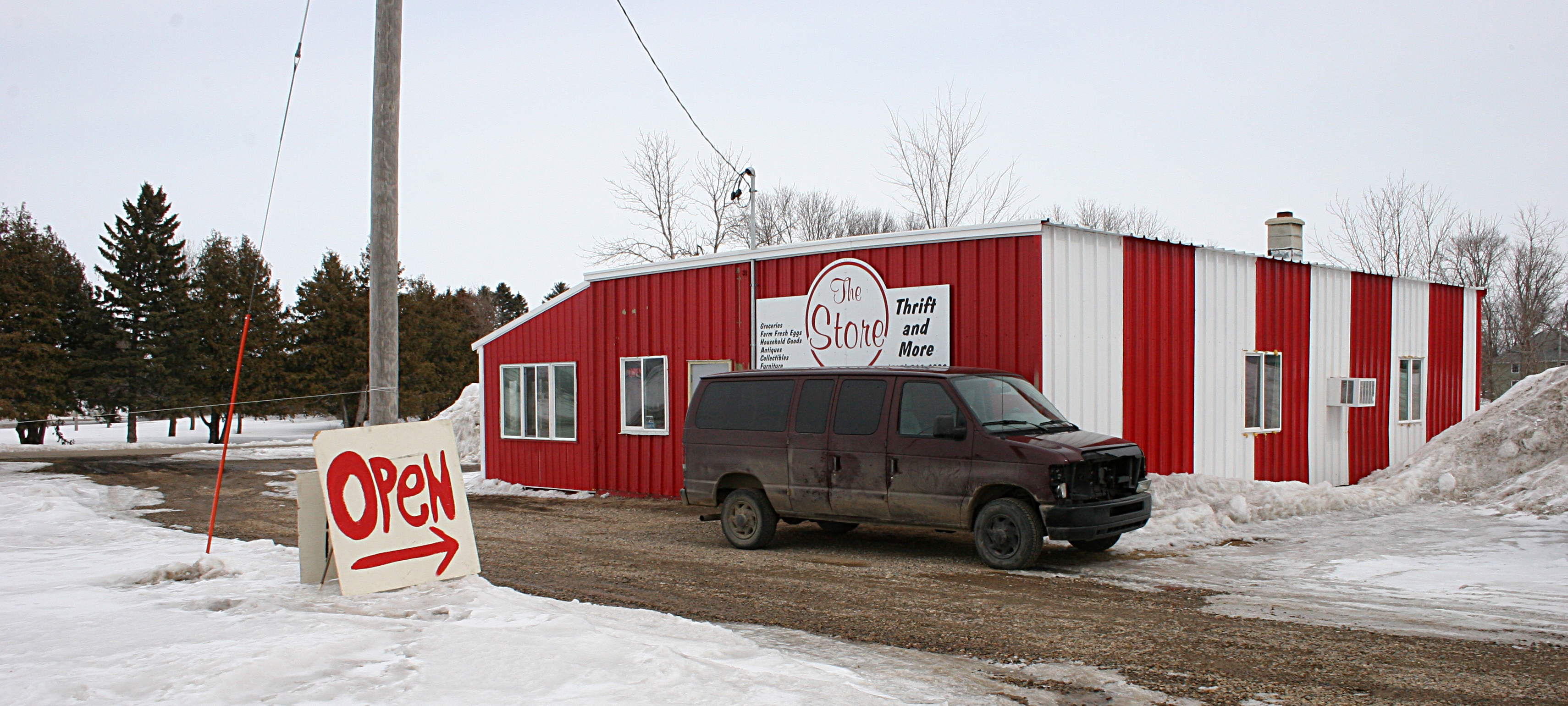
The Store: Thrift and More sits just off Minnesota Highway 19 in Vesta in Redwood County.

The Store: Thrift and More sits just off Minnesota Highway 19 in Vesta in Redwood County.

In February she opened The Store: Thrift and More in Vesta, population 330 and the only town along the 40-mile stretch of Minnesota Highway 19 between Redwood Falls and Marshall.

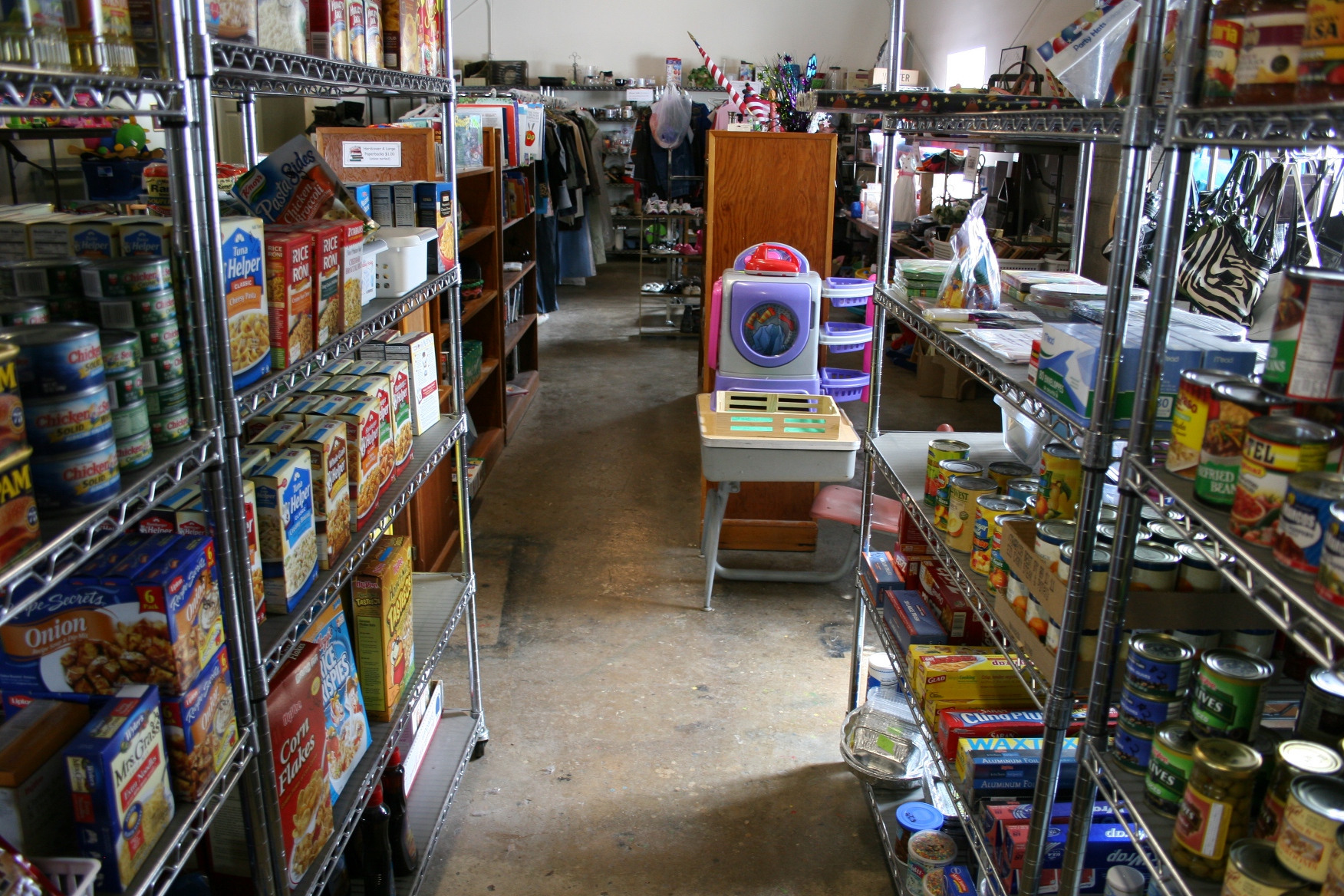
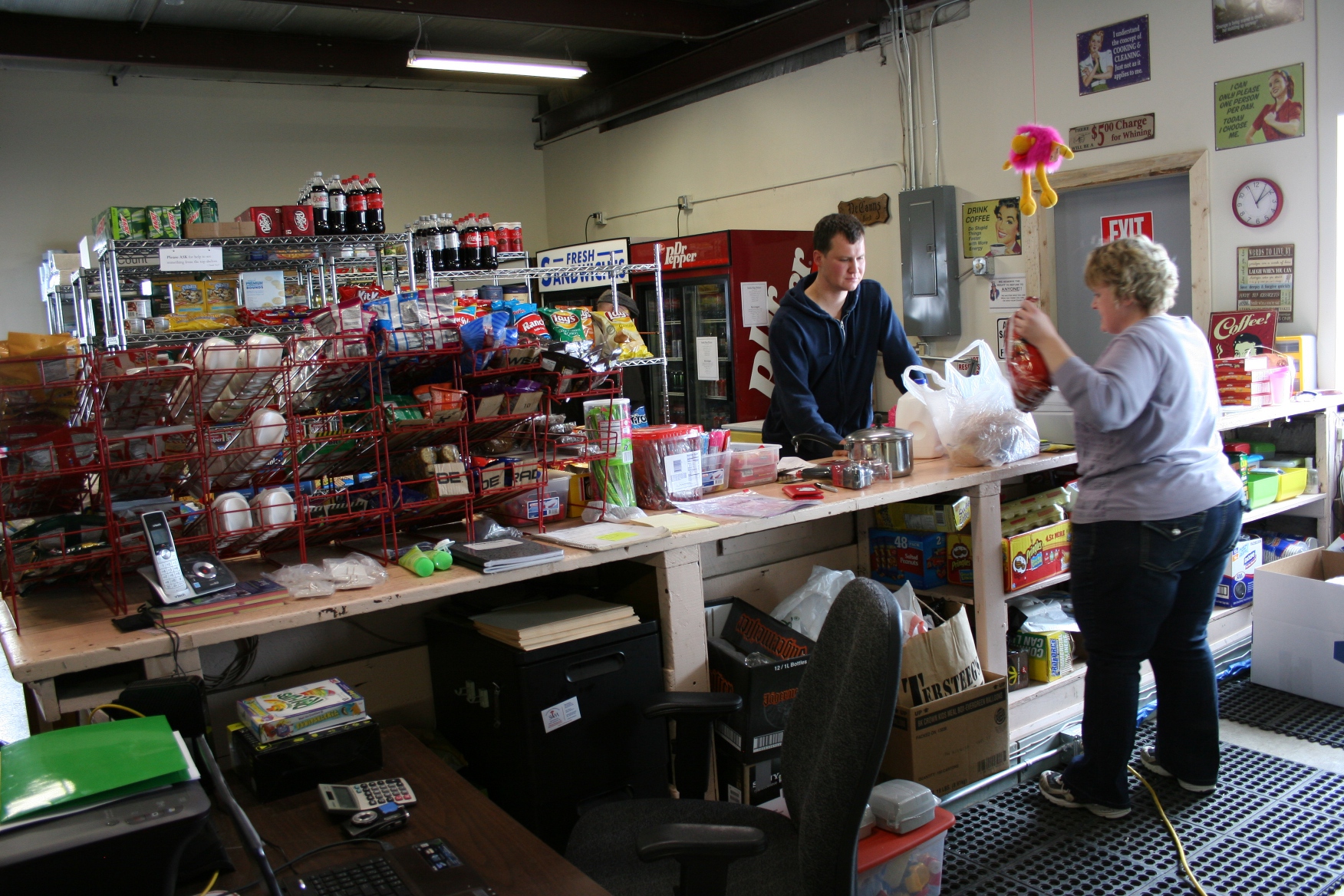
The “more” part of Bernadette’s store includes eight shelving units stocked with foodstuff, personal care items, paper products and more in addition to perishables stashed in nearby coolers.
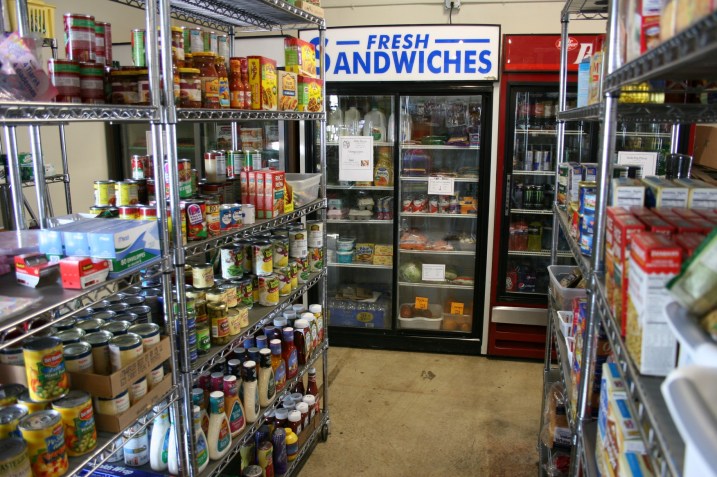
The grocery section of the store includes basic perishables like dairy products, some fruit, lettuce and more. Canned, boxed and bagged foods, personal care items, and miscellaneous items like greeting cards, tape and such fill eight shelving units.

The grocery section of the store includes basic perishables like dairy products, organic eggs, some fruit, lettuce and more. Canned, boxed and bagged foods; personal care items; and miscellaneous items like greeting cards, tape and such fill eight shelving units.

I don’t know exactly how long my hometown has been without a grocery store. But it’s been awhile. Locals, like my 80-year-old mom, have had to drive 20 miles either east or west to find the nearest grocery store. Now this community’s residents, many of them elderly, need only walk or drive to the west edge of town to buy a loaf of bread, a gallon of milk, organic eggs from Bernadette and Matt Thooft’s farm, fruit and an assortment of processed foods that include SPAM, much to my mom’s delight.

This is huge, to have groceries and basic necessities available in Vesta. Bernadette even offered to have her 11-year-old son deliver right to my mom’s doorstep a block away. Such small-town neighborliness simply warms my heart. Many times the good people of Vesta have assisted my mother. And for that, I am grateful.
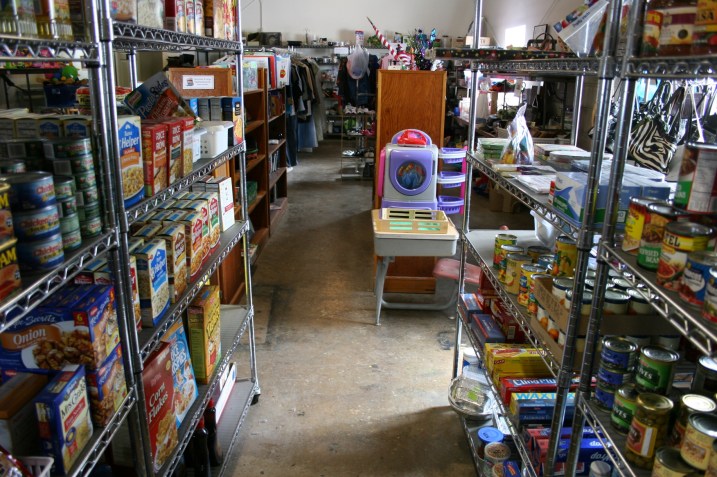
Looking toward the back thrift section of the floor.

Looking from the front grocery section toward the back thrift area of The Store.

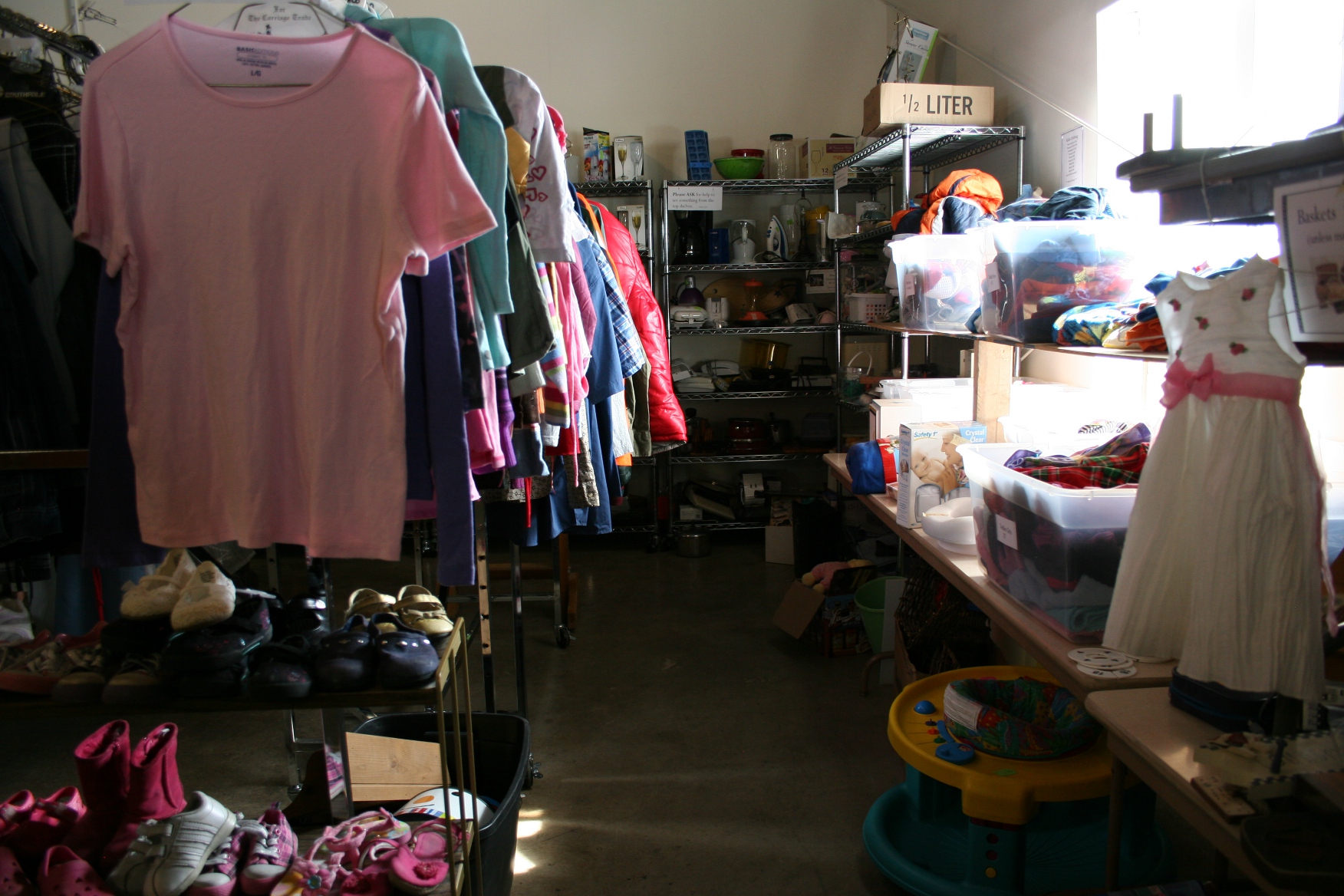
Bernadette tells me she originally hadn’t planned on stocking groceries, rather dedicating her floor space to thrift items that range from kitchenware to toys, books to clothing, gift items to home décor and an assortment of other merchandise.
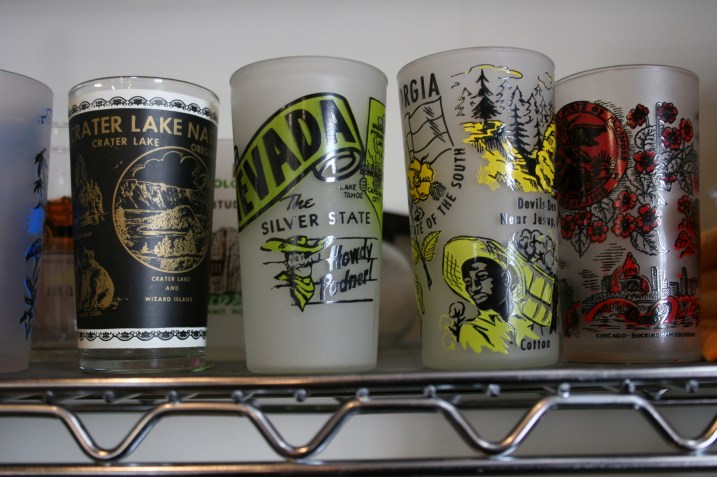
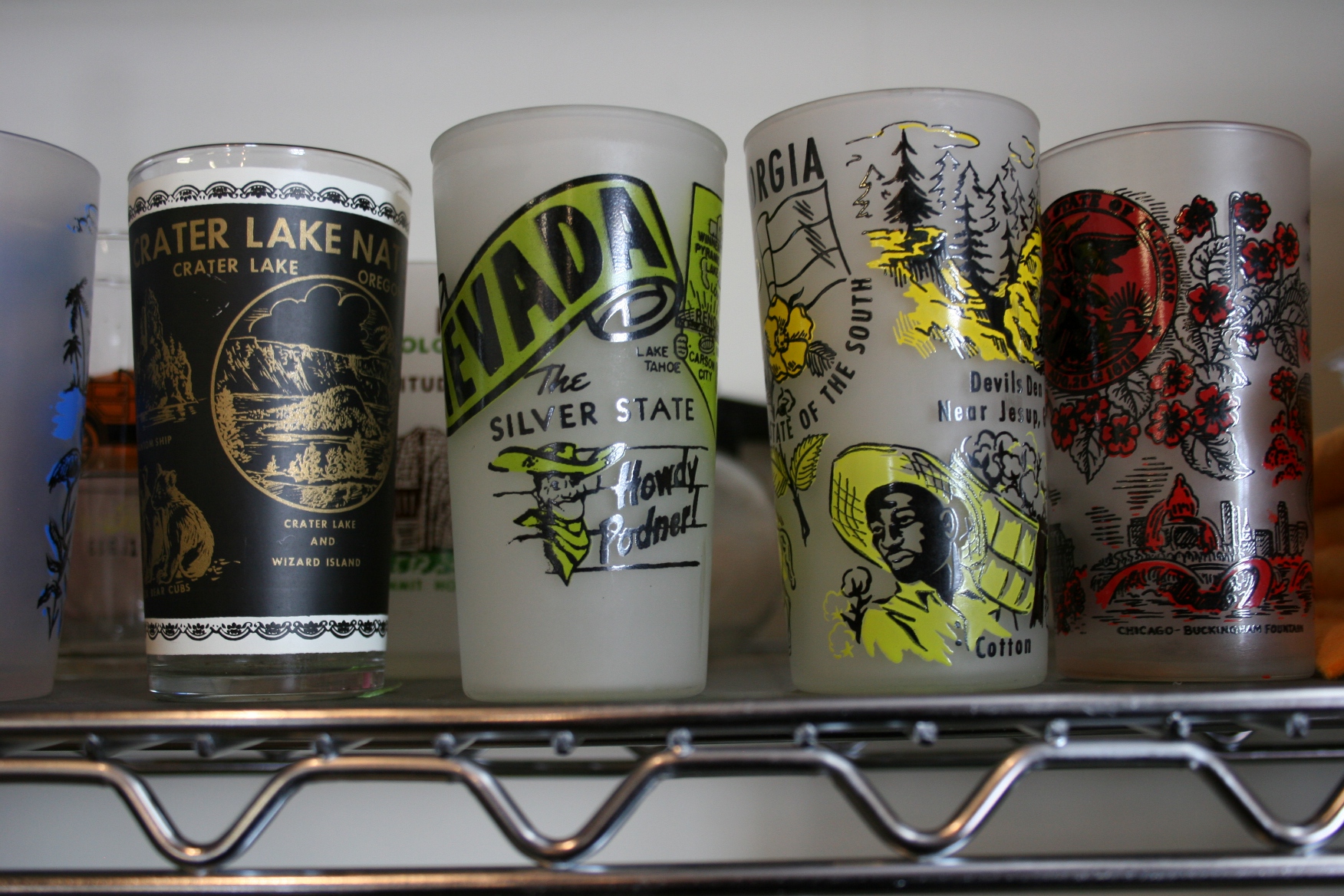
Vintage glasses in the thrift section.
Vintage glasses in the thrift section.

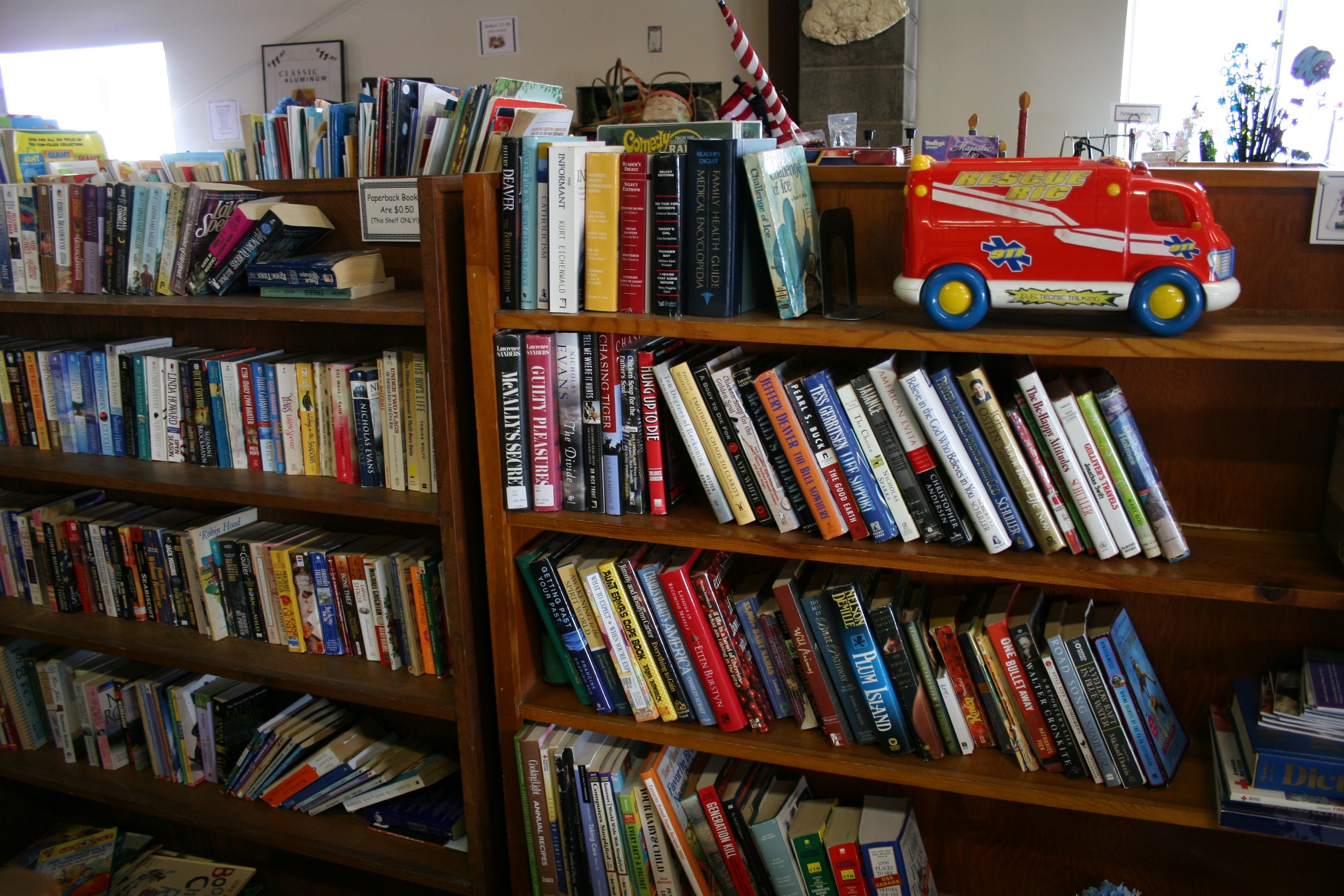
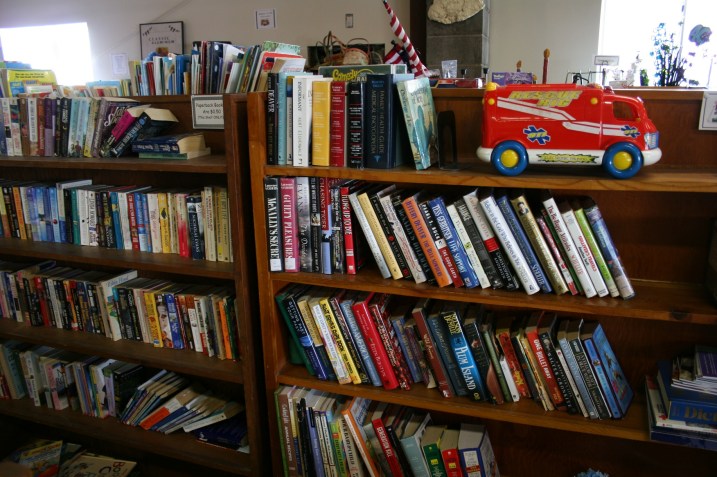
Bernadette offers a great selection of used books for all ages.
Bernadette offers a great selection of used books for all ages.

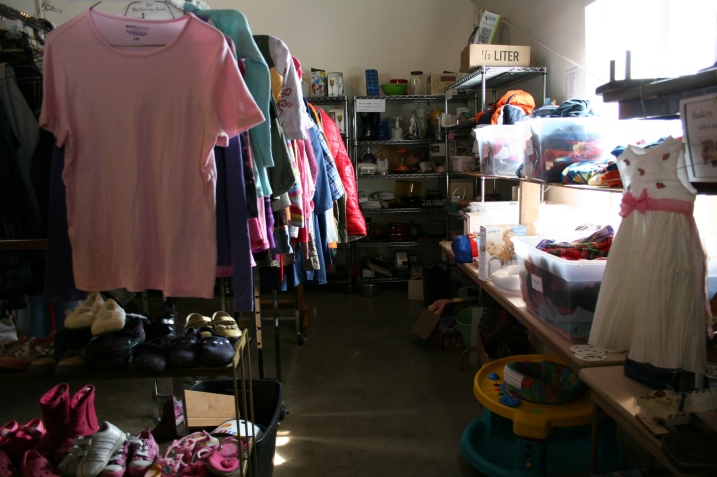
You'll also find a selection of clothes.

You’ll also find a shoes and clothing.
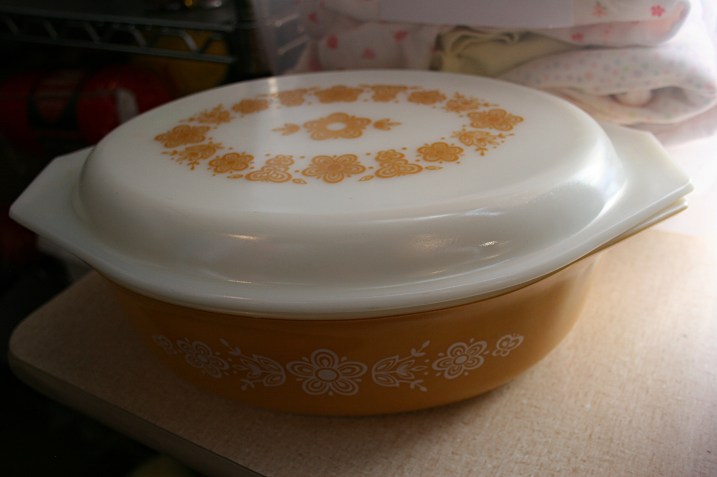
One of my favorite finds in The Store, an $8 vintage Pyrex casserole, which I nearly purchased.

One of my favorite finds in The Store, an $8 vintage Pyrex casserole, which I nearly purchased.

But then she started getting requests to carry groceries. So Bernadette decided to buy food and products her family can use. That way, if items don’t sell, she doesn’t lose anything. Once a week this entrepreneur mother drives the 20 miles west to Hy-Vee Foods in Marshall, reselling her purchases in Vesta at a slightly marked up price that will help cover gas expenses.
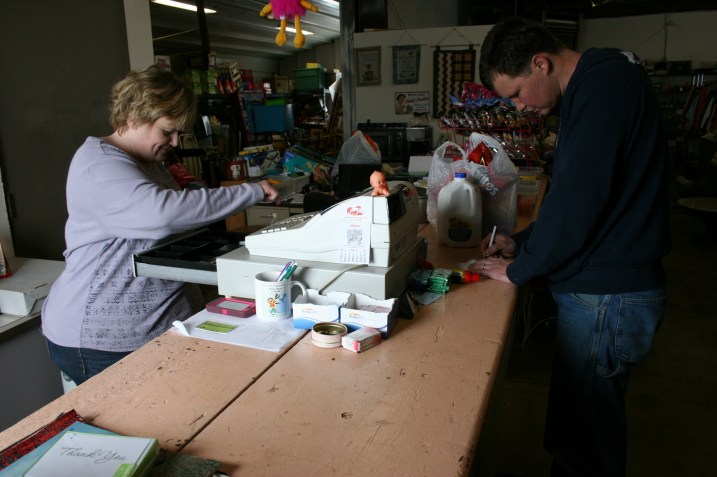
Jason Kramer stops in to buy a few grocery items from Bernadette.

Jason Kramer stops in to buy a few grocery items from Bernadette.

Already several local families come to The Store once a week to purchase their groceries, she says. On the Saturday afternoon I visited, Jason Kramer popped in from his home across the street to pick up Oreos, chips, bread and milk. He calls opening of The Store “flippin’ awesome.”

It is that type of enthusiasm Bernadette hopes for from other Vesta area residents. She needs their support, and business off the highway, to make her venture work in this isolated prairie town.
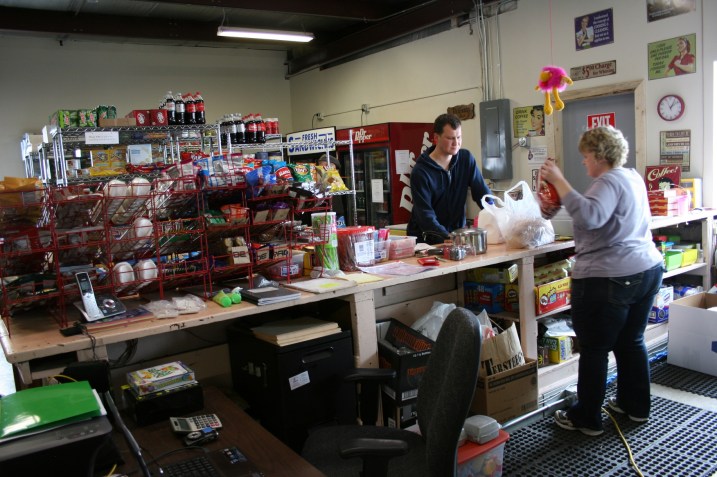
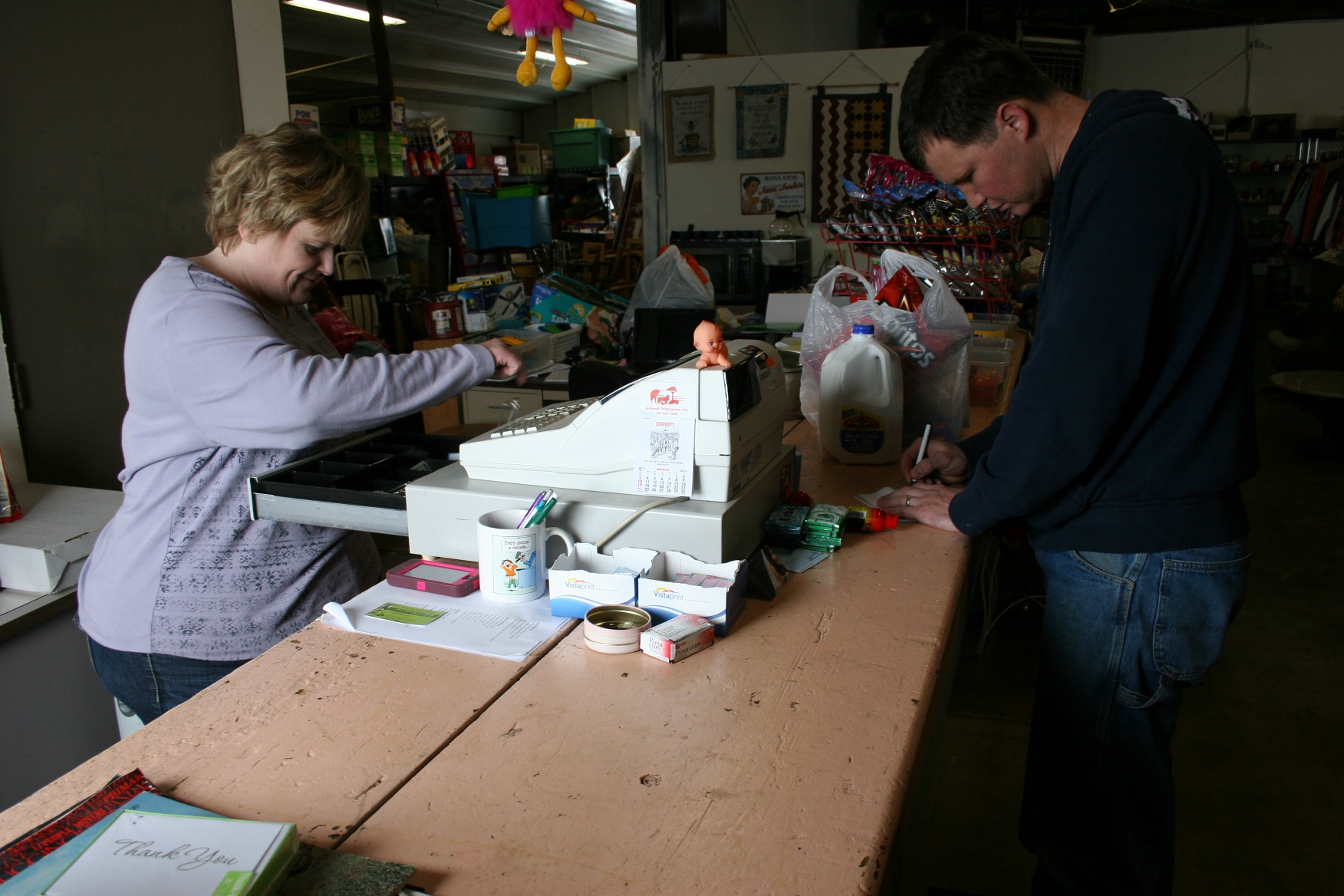
Just another view of the store with Bernadette bagging Jason's purchases.

Just another view of the store and Bernadette’s office with Bernadette bagging Jason’s purchases.

In the short time I perused the store and spoke with Bernadette, several others stopped in—two middle schoolers to eye the toy collection and eventually purchase candy, a middle-aged couple scanning thrift items and then Jason for his groceries. I walked out with a kettle for my college-aged son and my husband grabbed packaging tape and a dispenser.
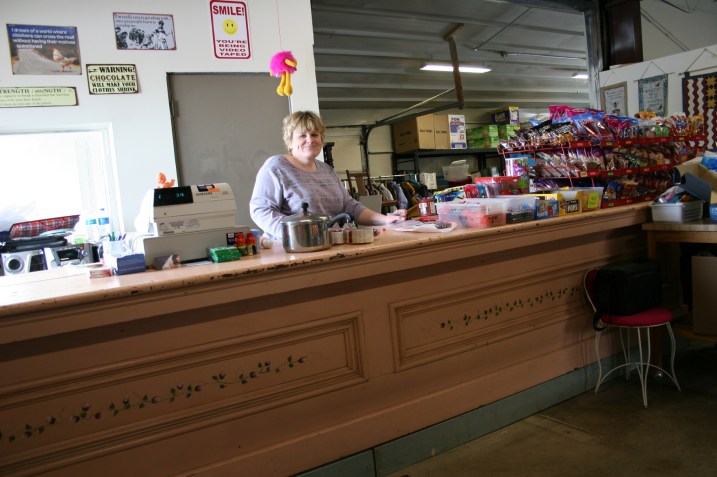
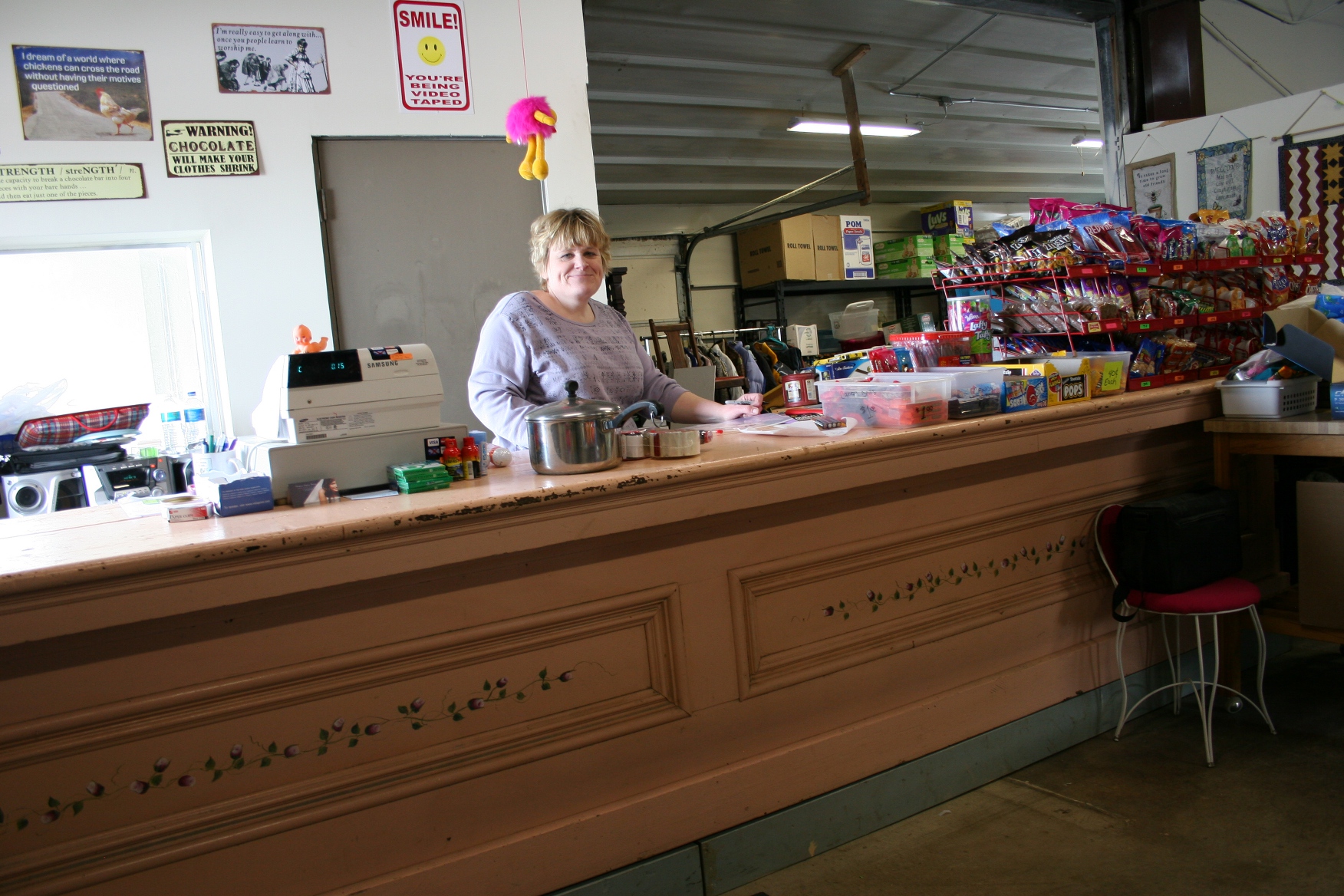
This 1800s general store counter anchors The Store.

This 1800s general store counter anchors The Store. Those are our purchases on the counter, that kettle and tape.

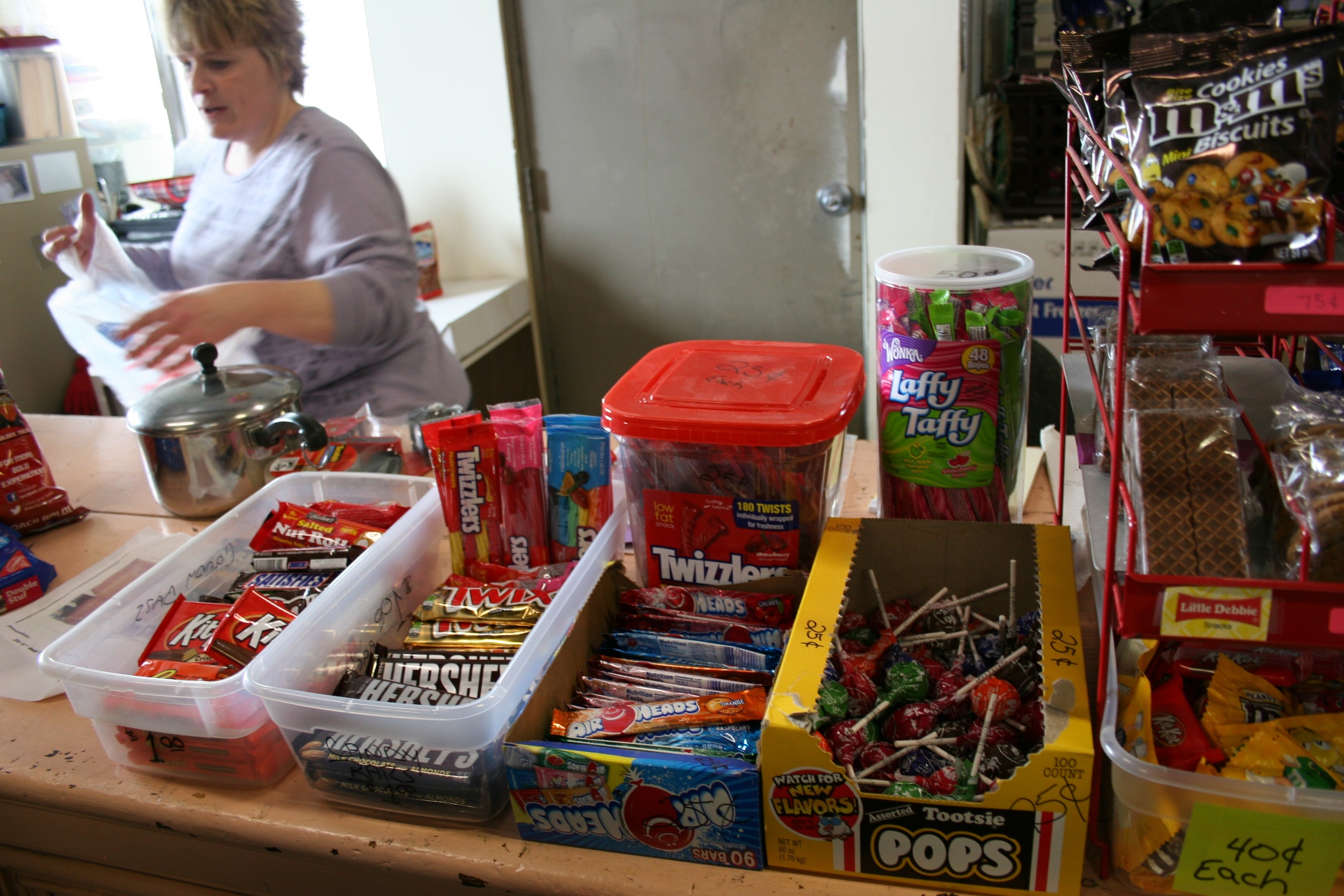
Bernadette says she’s aiming to recreate a Mom and Pop general store with a little bit of everything. I was delighted to find candy lining the 1800s checkout counter, reminding me of the penny candy I bought at Rasmussen’s Grocery while growing up in Vesta. The vintage counter, purchased from a Lake Benton antique store, originated from a general store between Lake Benton and Brookings, South Dakota. It’s the perfect fit for The Store, lending that historic authenticity reminiscent of yesteryear.

Like the old-fashioned general store, Bernadette has set up candy display, including my favorite Tootsie Pops.

Like the old-fashioned general store, Bernadette has set up a candy display, including my favorite Tootsie Pops.

I can remember when Vesta boasted two hardware stores, several restaurants/bars and a grocery store along with other businesses, in its one-block Main Street.

Rarely does a new business open here. But Bernadette, who lives on a farm near Lucan seven miles to the south, was looking to locate along the highway, conveniently next door to her husband’s business, Matt’s Frame Repair.
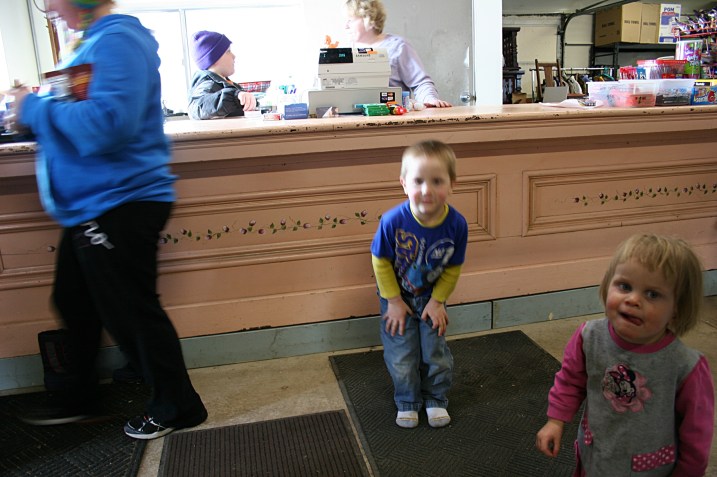
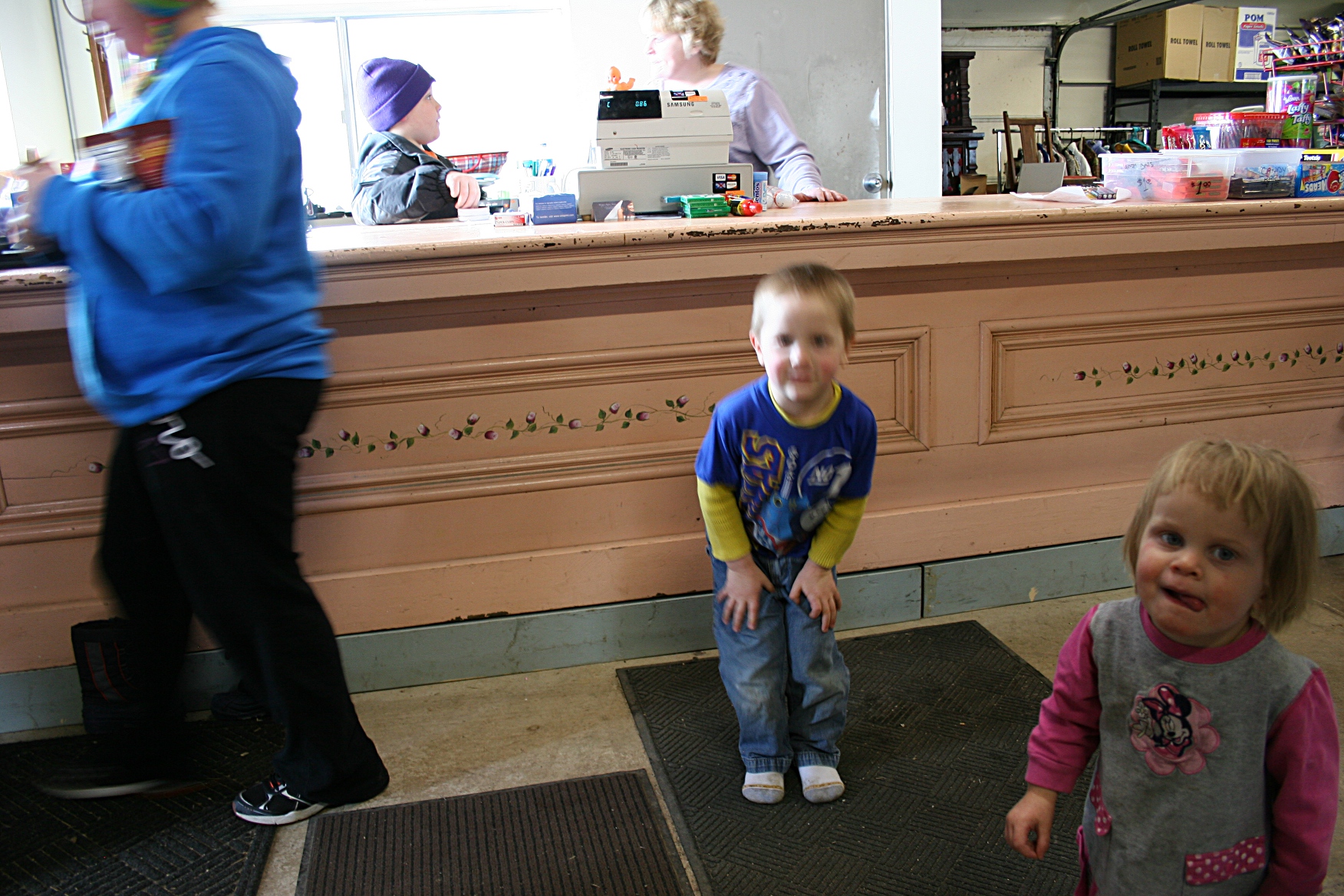
A young customer exits The Store, left, while three of the Thooft kids, including Maxwell, 4, and Beatrice, 21 months, hang out with Mom.

A young customer exits The Store, left, while three of the Thooft kids, including Maxwell, 4, and Beatrice, 21 months, hang out with Mom. The Thooft’s children include an 11-year-old, two 7-year-olds, two 4-year-olds, a 3-year-old and a 21-month-old.

She likes that Matt can walk over for lunch and spend time with her and the kids, ranging in age from 21 months to 11 years. She affectionately calls her seven, five of them birth children, two adopted, “the hoodlums.” The kids hang out in a room built into a corner of the poleshed style building.
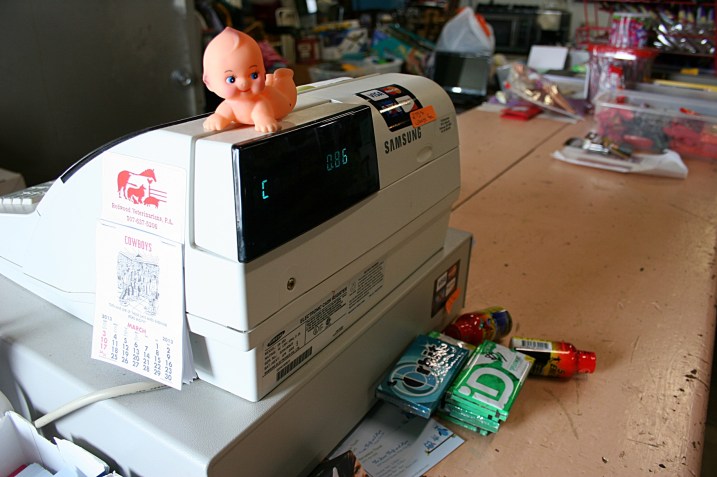
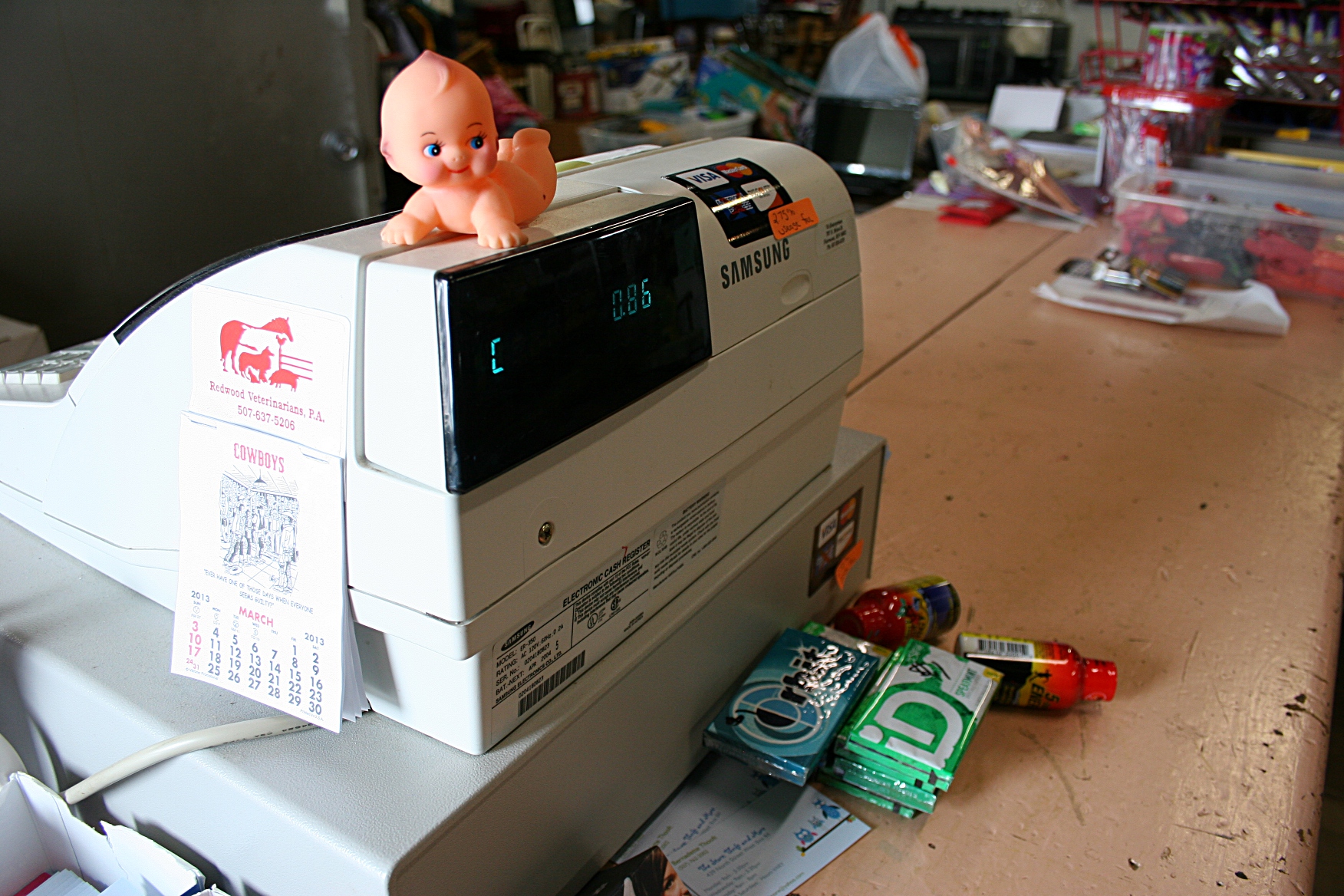
Look around and you'll see Bernadette's sense of humor in signage and props like this doll perched upon the cash register.

Look around and you’ll see Bernadette’s sense of humor in signage and props like this doll perched upon the cash register.

While the kids play and Matt naps in that corner playroom, Bernadette tends to customers on this Saturday afternoon in March. Her laptop sits open on her desk, her reference source for the thrift merchandise purchased primarily from online auctions and also from garage sales.
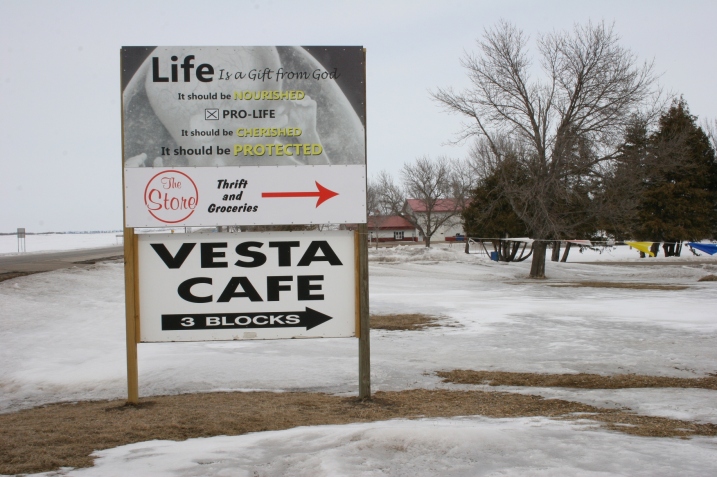
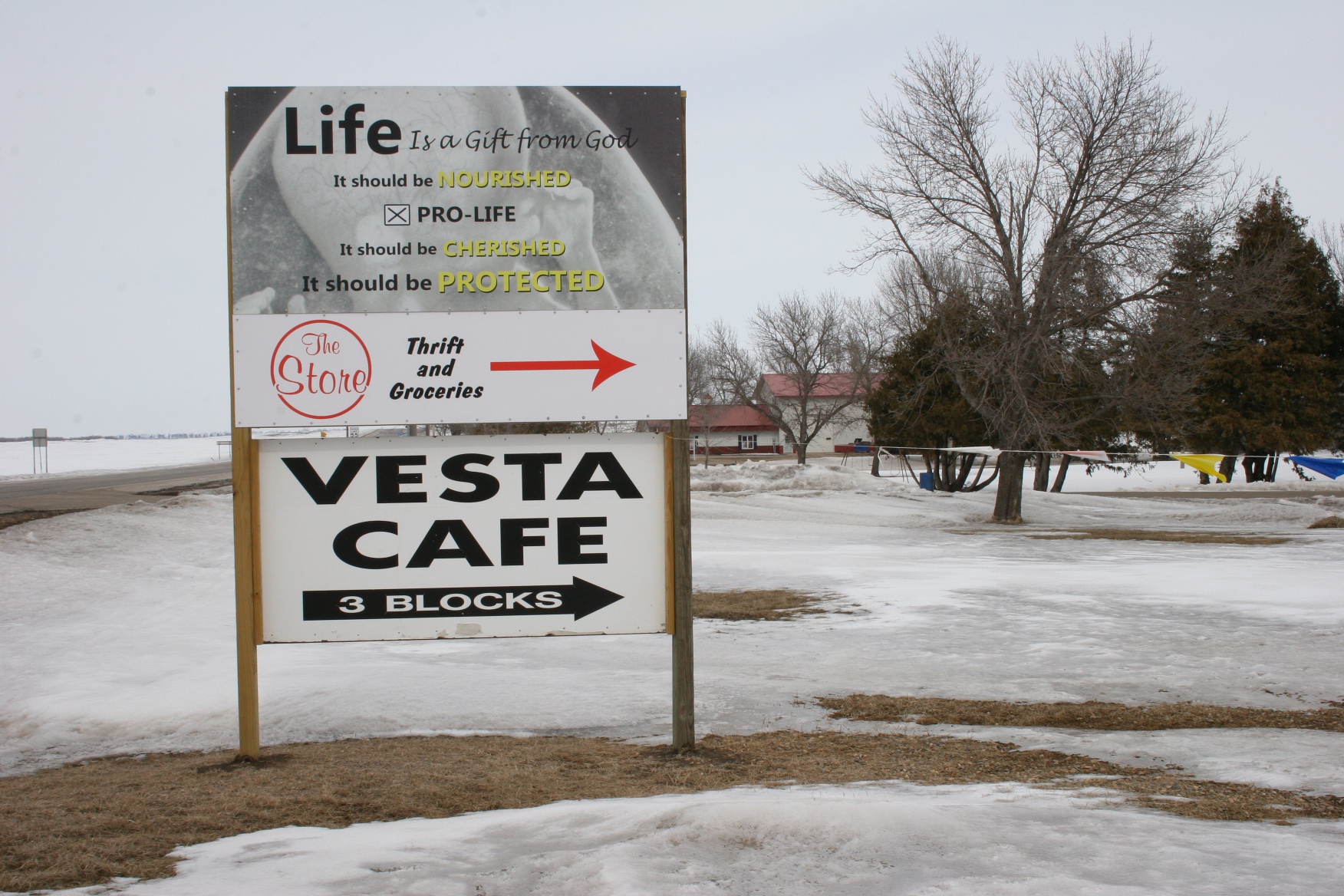
This sign by the thrift store points travelers along Minnesota Highway 19, left, to The Store and the Vesta Cafe.

This sign by the thrift store points travelers along Minnesota Highway 19, left, to The Store and the Vesta Cafe.

Bernadette is donating 10 percent of thrift sale proceeds to local charities like the United Way, a crisis nursery, area schools and the broader Minnesota Citizens Concerned for Life. She’s also created a “Believe in the Backpack” charity whereby she fills backpacks for kids in foster care.

In the short time I’ve spent with Bernadette, it’s clear to me that this Osakis native and former daycare provider loves kids and cares about folks in my hometown enough to open her own little general store on the prairie. And for that I am grateful.
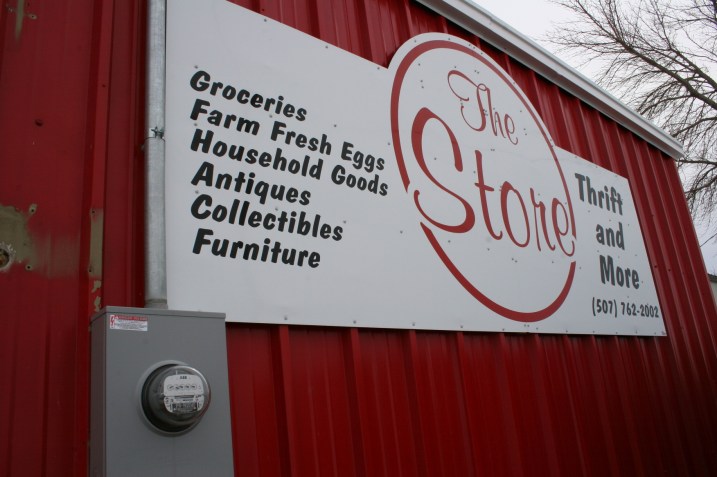
This sign graces the front of The Store: Thrift and More.

This sign graces the front of The Store: Thrift and More.

FYI: The Store: Thrift and More is open from 9 a.m. – 5:30 p.m. Monday and Wednesday; from 9 a.m. – 8 p.m. Thursday; and with varied hours on Friday and Saturday. Closed Sunday and Tuesday.

© Copyright 2013 Audrey Kletscher Helbling


Montgomery, Part IV: The unique way this Minnesota town honors its veterans, plus a haven for some March 7, 2013

NEARLY EVERY COMMUNITY, from the smallest to the largest, has a veterans’ memorial. And that is good, for honoring those who have served our country is worthy.

Often, though, these memorials are costly. So individual bricks or pavers are sold, fundraisers held, donations solicited to cover expenses. This, too is admirable, to garner that personal and community involvement, support and ownership.

But sometimes it is the simplest idea, the one that does not cost a great deal of money, which most impresses.

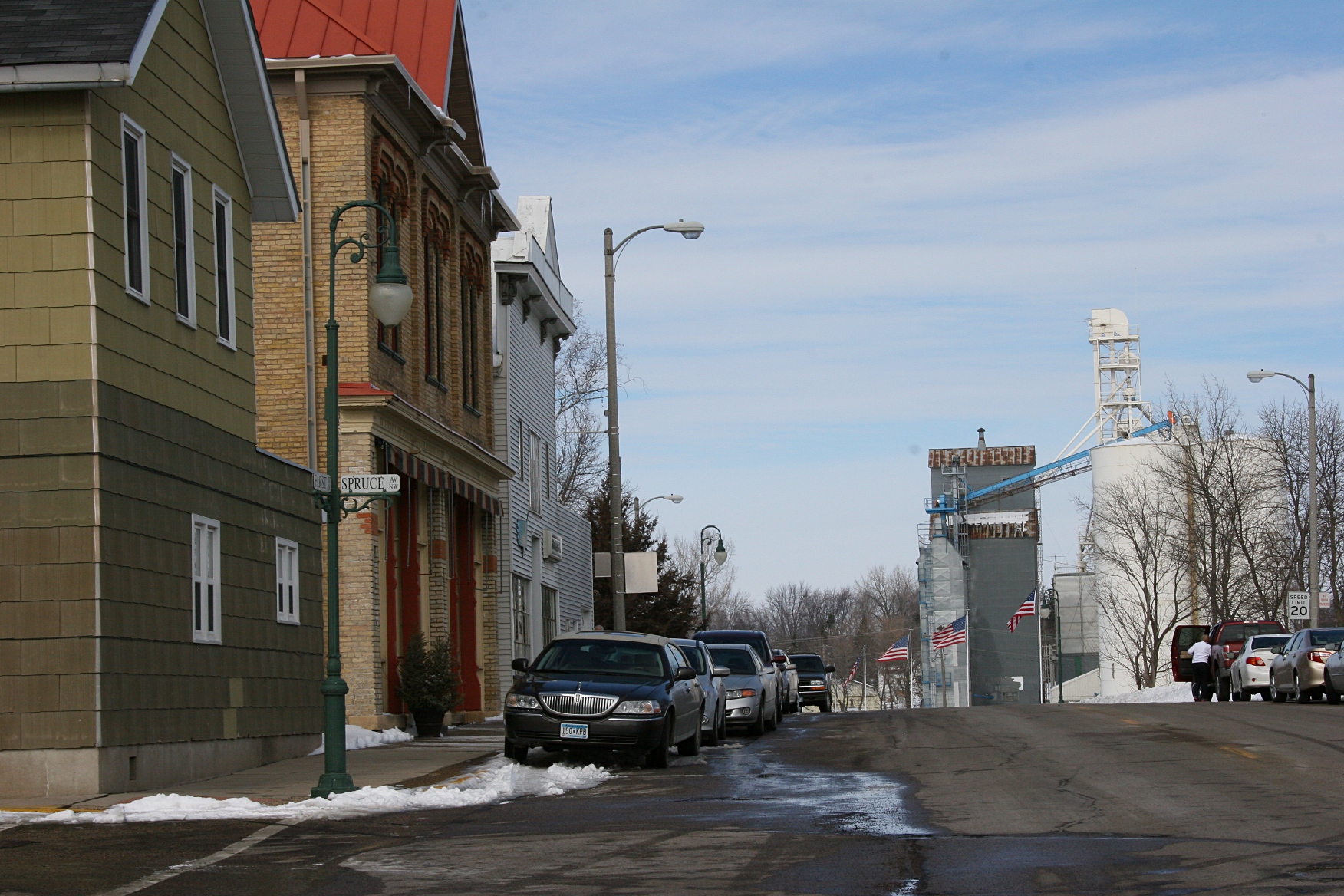
Patriotism is evident in downtown Montgomery.

Patriotism is evident in downtown Montgomery.

In Montgomery, Minnesota, you will find Veteran’s Memorial Park with its soldier and eagle statues, granite monument, inscribed brick pavers, park benches, flags and more.

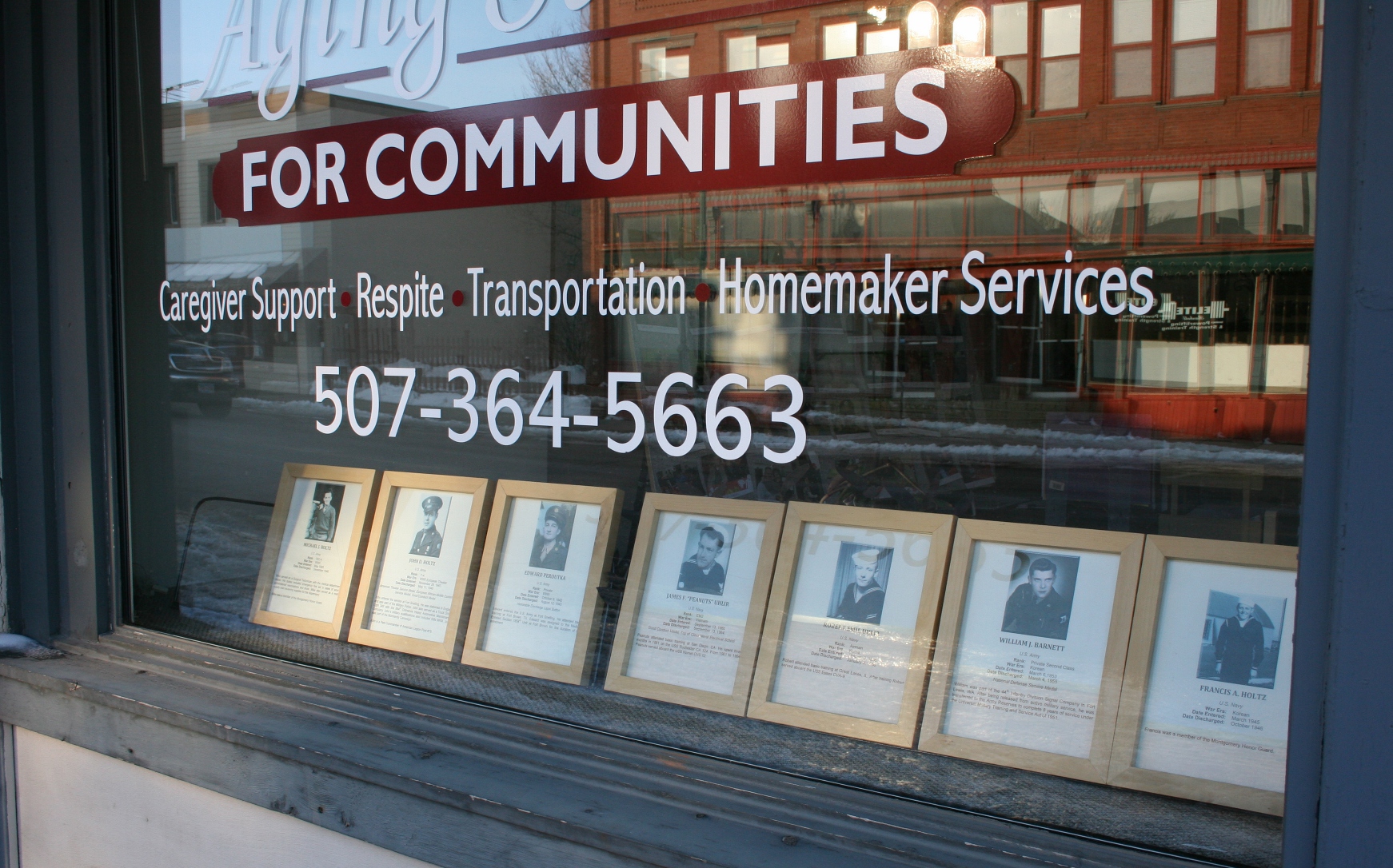
Veterans' photos and information in the window of Aging Services.

Veterans’ photos and information in the window of Aging Services.

But you will also find, in the vet’s park and primarily in the heart of downtown, the photos and stories of Montgomery’s veterans printed, framed and showcased.

It is a simple, but deeply personal and moving, way to honor hometown men and women who have served in the military.

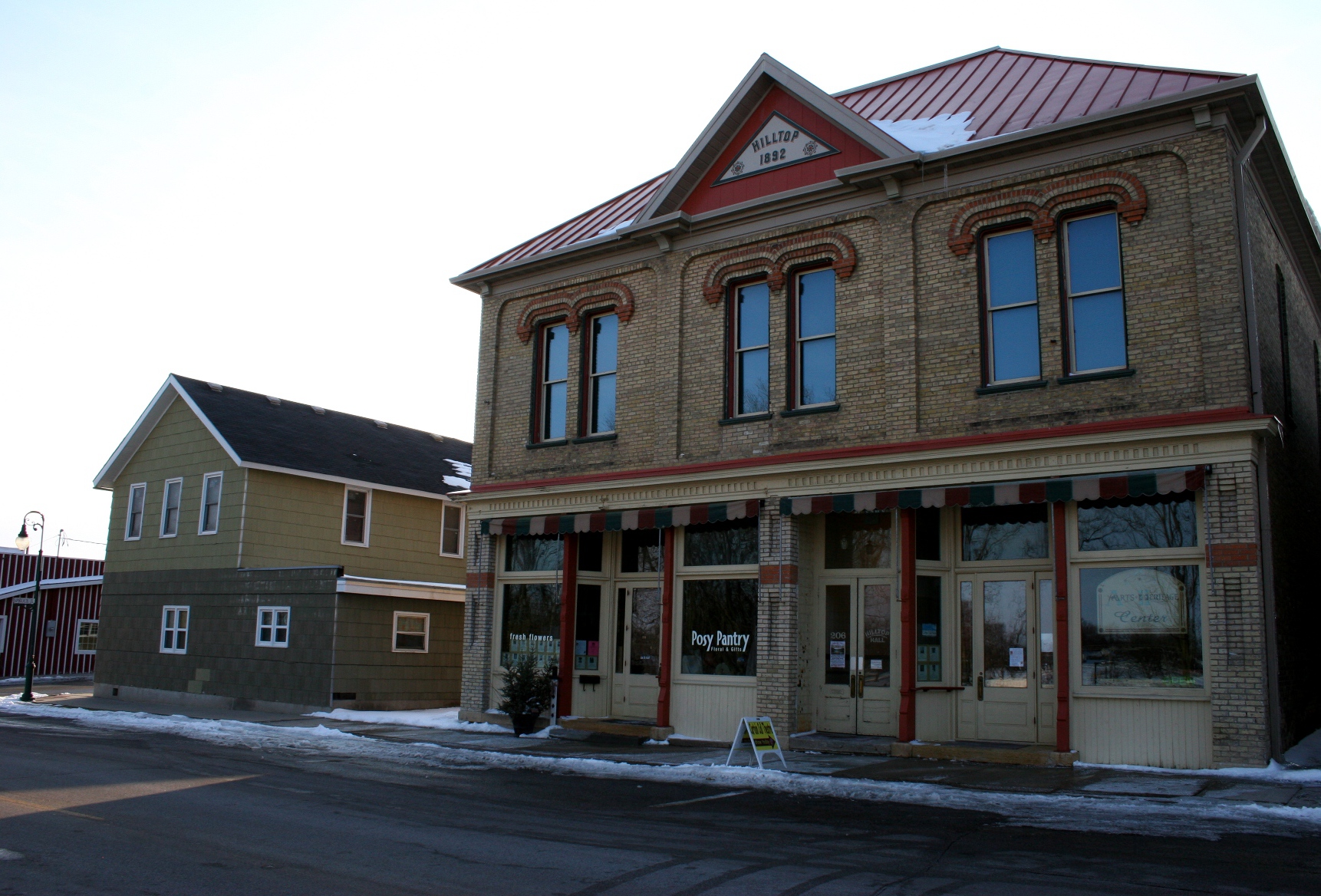
If you look closely, you can see the veterans' tributes in the lower windows of Hilltop Hall.

If you look closely, you can see the veterans’ tributes in the lower windows of Hilltop Hall.

I happened upon the Montgomery Veteran’s Project on a recent Sunday afternoon visit to see Curtain Call Theatre’s performance of “On Golden Pond” at historic Hilltop Hall. (Click here to read a previous post about Hilltop.) On Hilltop’s lower level, in the windows of Posy Pantry and the Montgomery Arts & Heritage Center, I first noticed the framed veterans’ tributes.

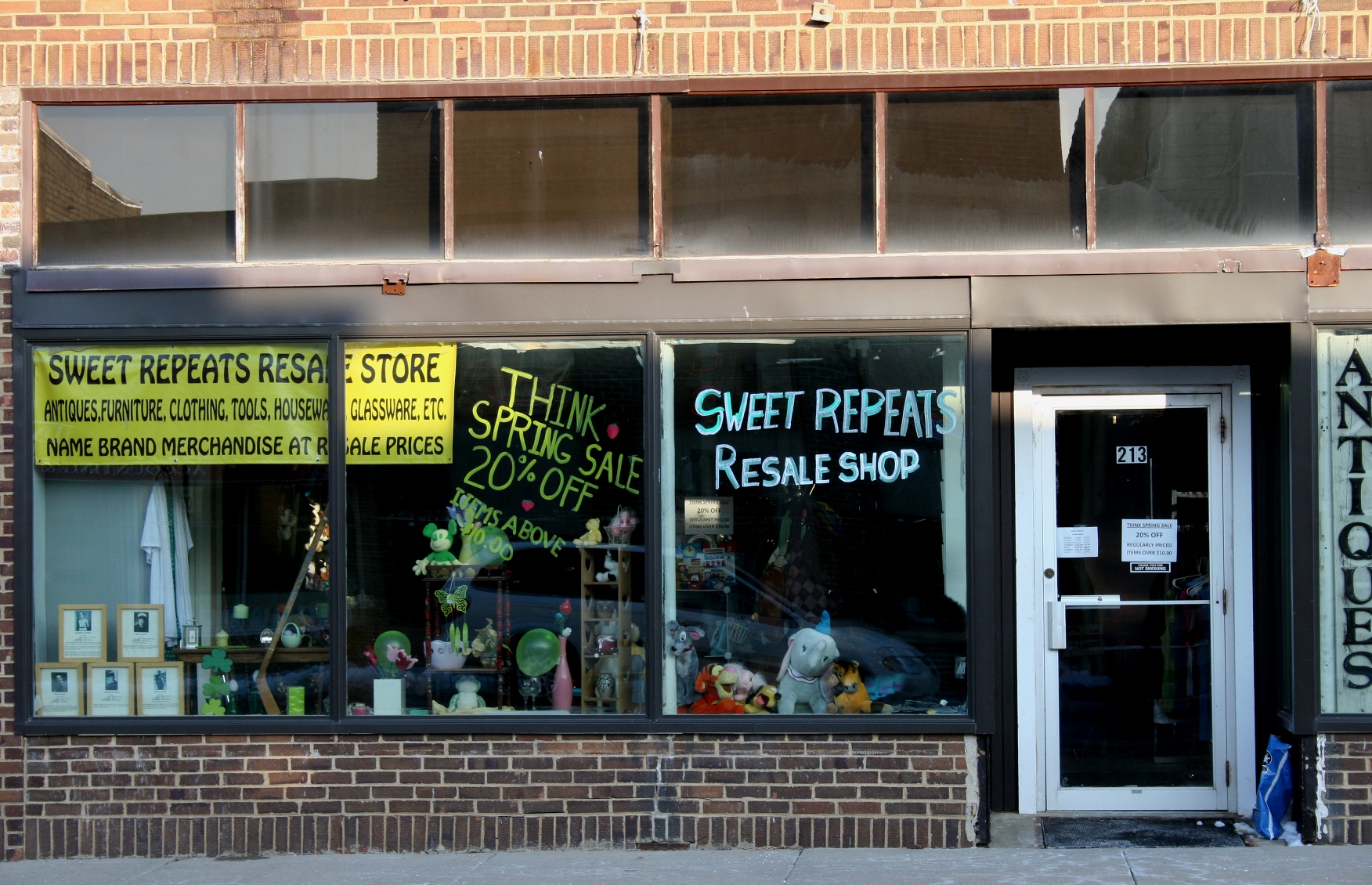
In the lower left corne you can see veterans' tributes in the window of Sweet Repeats Resale Shop.

In the lower left corner you can see veterans’ tributes in the window of Sweet Repeats Resale Shop.

But not until after the play, on a tour through the downtown, did I realize the scope of this project. Everywhere—from business storefront windows to exterior building walls—I spotted veterans’ photos and information, 279 total.

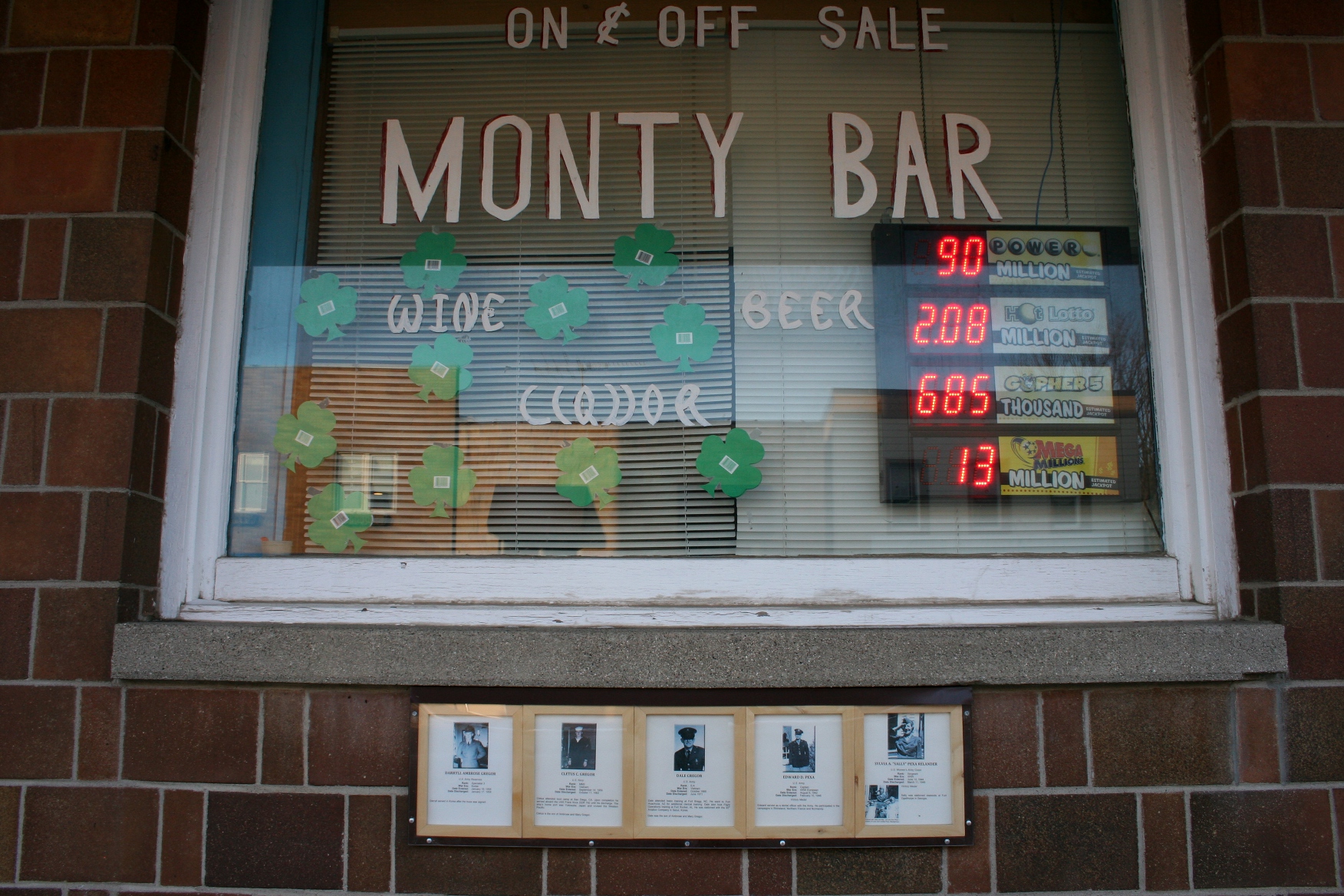
Honoring veterans at the Monty Bar.

Honoring veterans at the Monty Bar.

Framed and secured to the brick wall below a window at the Monty Bar are the pictures and military backgrounds of Cletus C., Dale and Darryll A. Gregor; Edward D. Pexa; and Sylvia A. Pexa Relander.

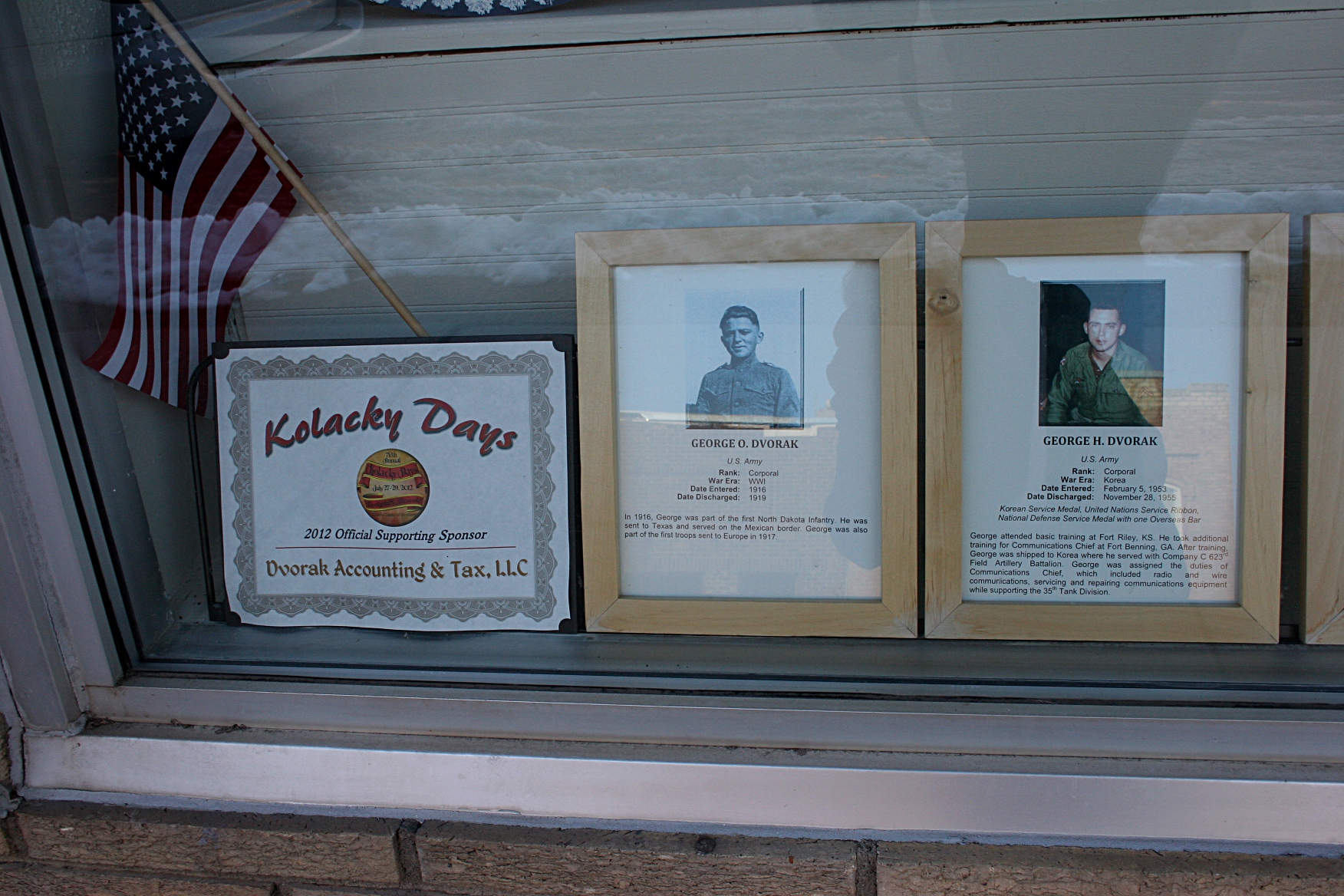
Veterans photos and info posted at Dvorak Accounting & Taxes.

Veterans photos and info posted at Dvorak Accounting & Tax.

Propped against a window at Dvorak Accounting & Tax, framed memorials reveal that George O. Dvorak was among the first troops sent to Europe in 1917. George H. Dvorak serviced communications equipment while supporting the 35th Tank Division in Korea.

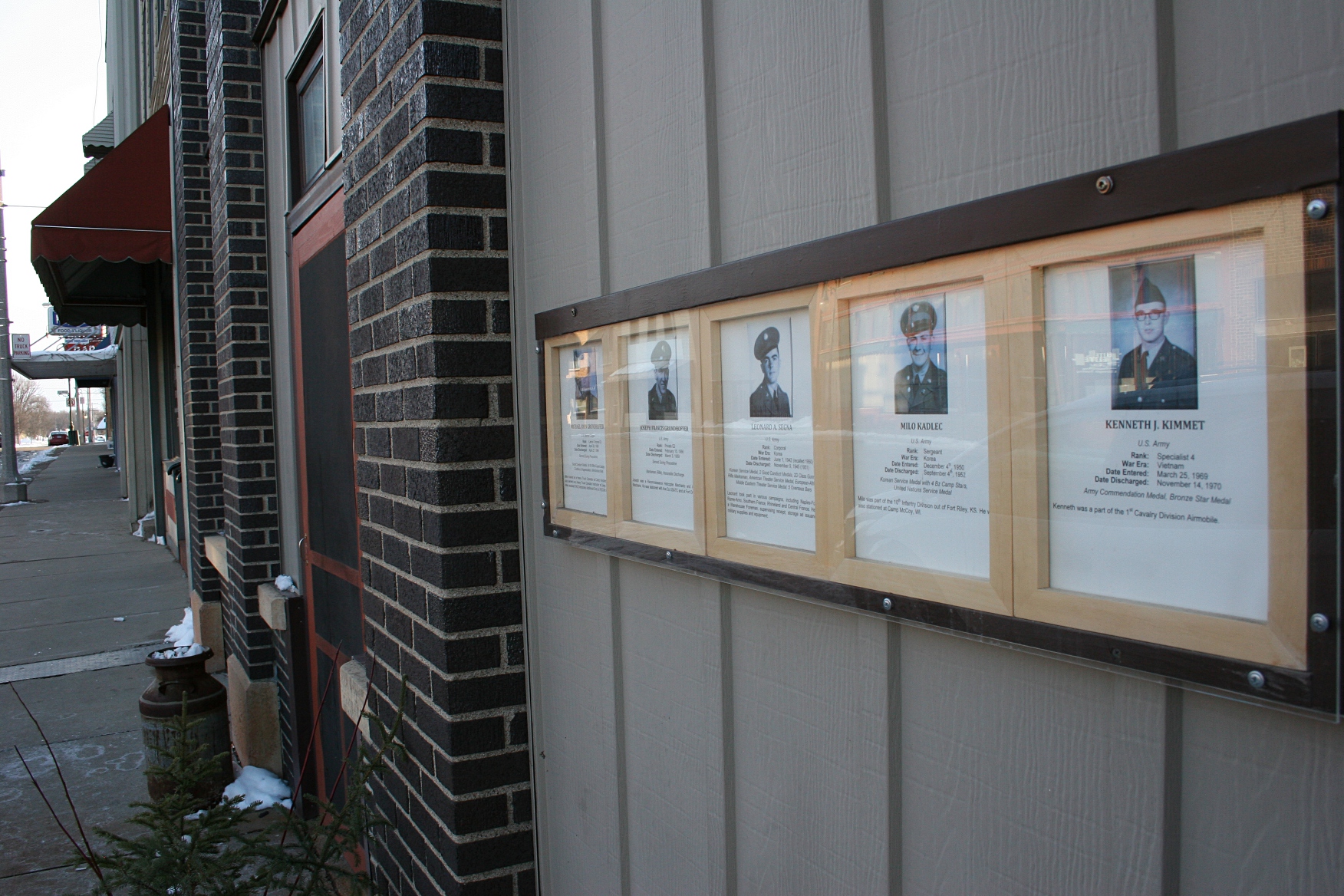
More tributes on the exterior of the Happy Hour Bar.

More tributes on the exterior of the Happy Hour Bar.

Over at the Happy Hour Bar, I learn that Milo Kadlec, part of the 10th Infantry Division, received the Korean Service Medal with four Bronze Stars and the United Nations Service Medal.

To see these photos, to read this information, truly allows me to view these veterans as individuals, as hometown men and women who left rural Minnesota to serve in the U.S. and abroad.

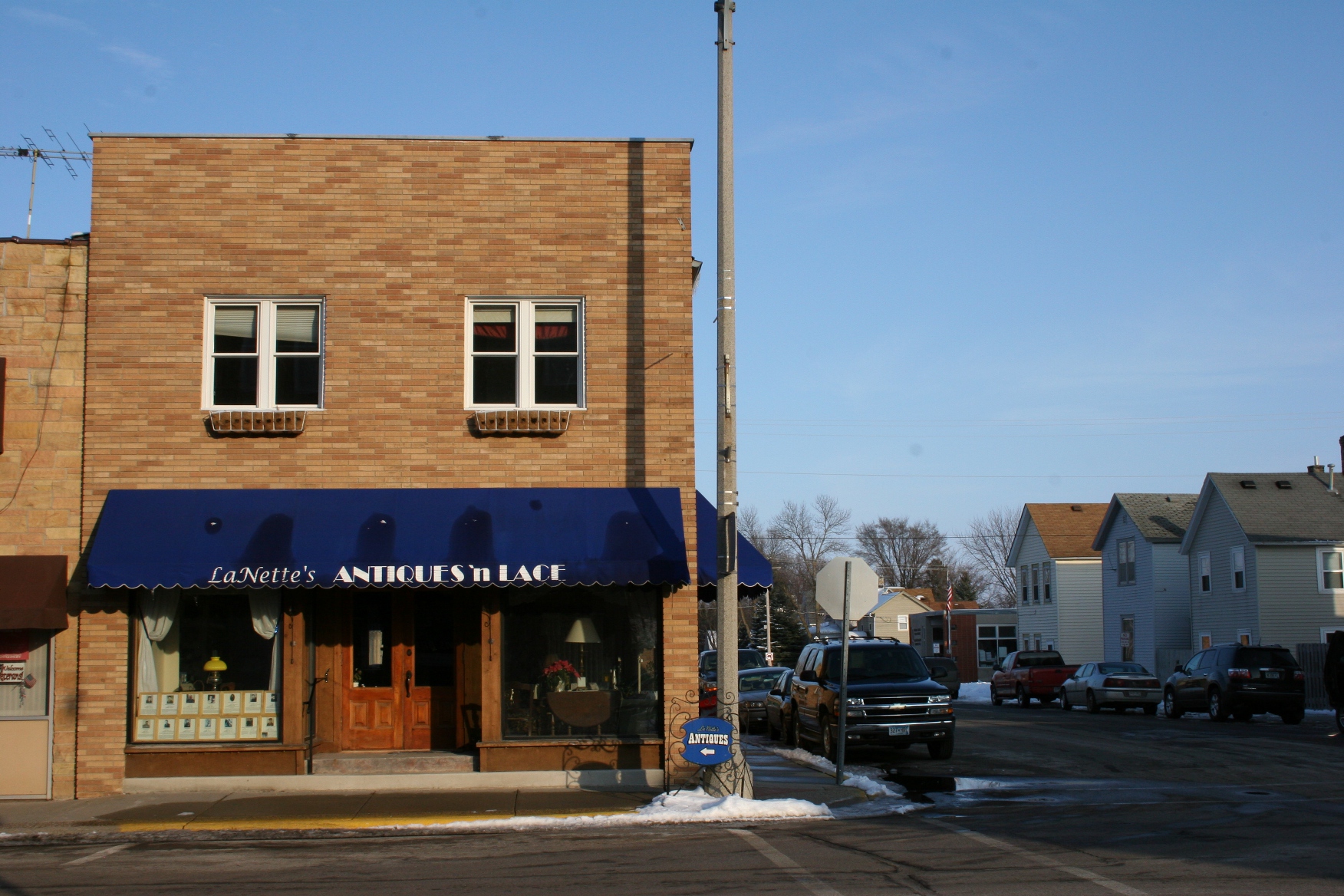
More personal memorials grace the windows of La Nette's Antiques.

More personal memorials grace the windows of La Nette’s Antiques’n Lace.

But how did this project come to be, I wondered. When interviewing Montgomery entrepreneur and Hilltop Hall owner John Grimm, I asked him about the framed veterans photos. Grimm, an Air Force instructor pilot in Texas during the Vietnam War, had seen a similar tribute at a veterans’ memorial in his hometown of Wautoma, Wisconsin, and suggested that Montgomery establish such a personalized memorial. That was nearly three years ago.

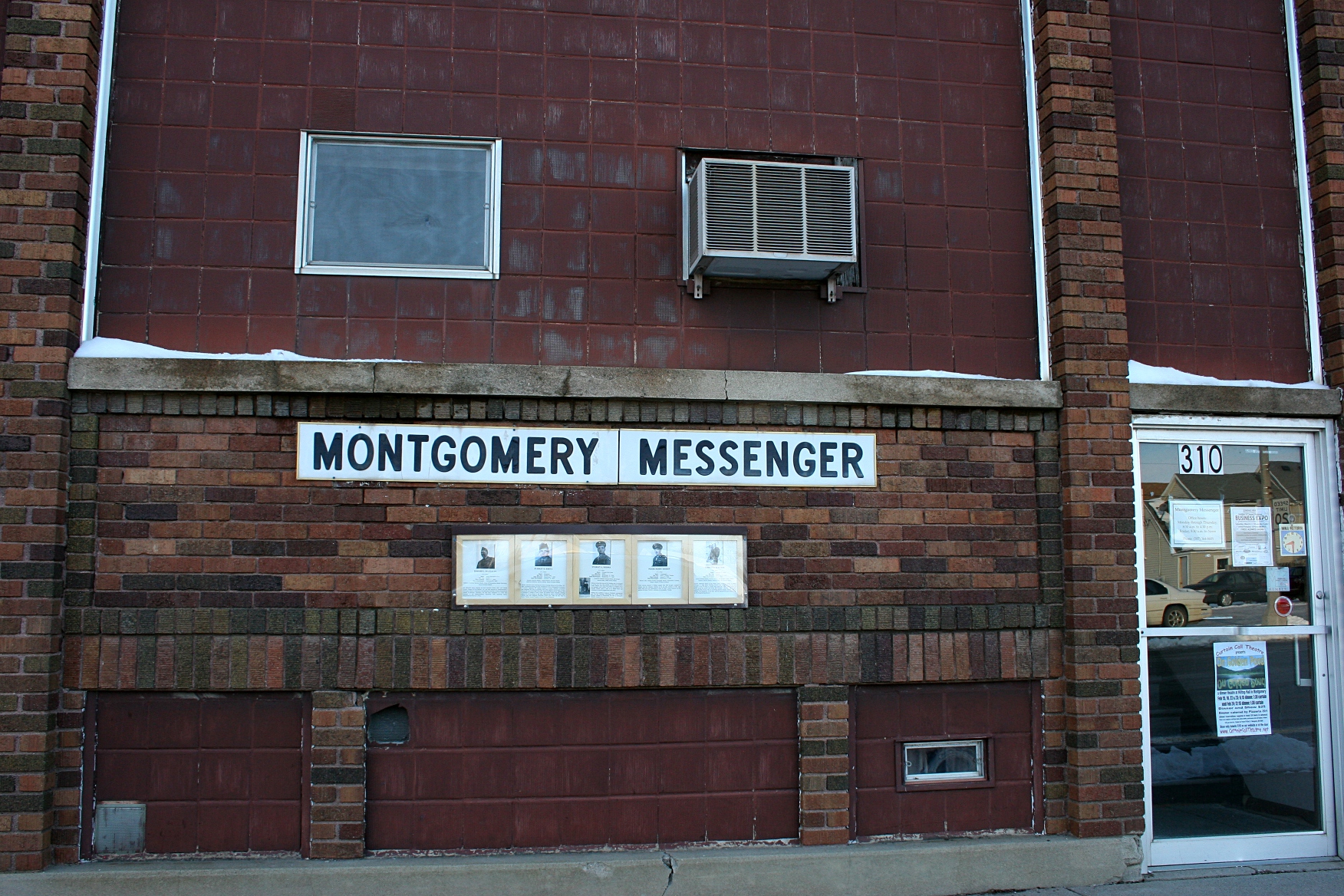
Several vets' photos hang on the exterior of the local newspaper office, The Montgomery Messenger.

Several vets’ photos hang on the exterior of the local newspaper office, The Montgomery Messenger.

Initially coordinated by Mobilize Montgomery, the installation of these individualized memorials is now handled by local American Legion Post 79. For a suggested $25 donation to defray printing, frame and display case costs, families can honor their loved ones via a personalized tribute.

That’s not a lot of money for the front and center memorials embraced by a patriotic community proud of those who served their country.

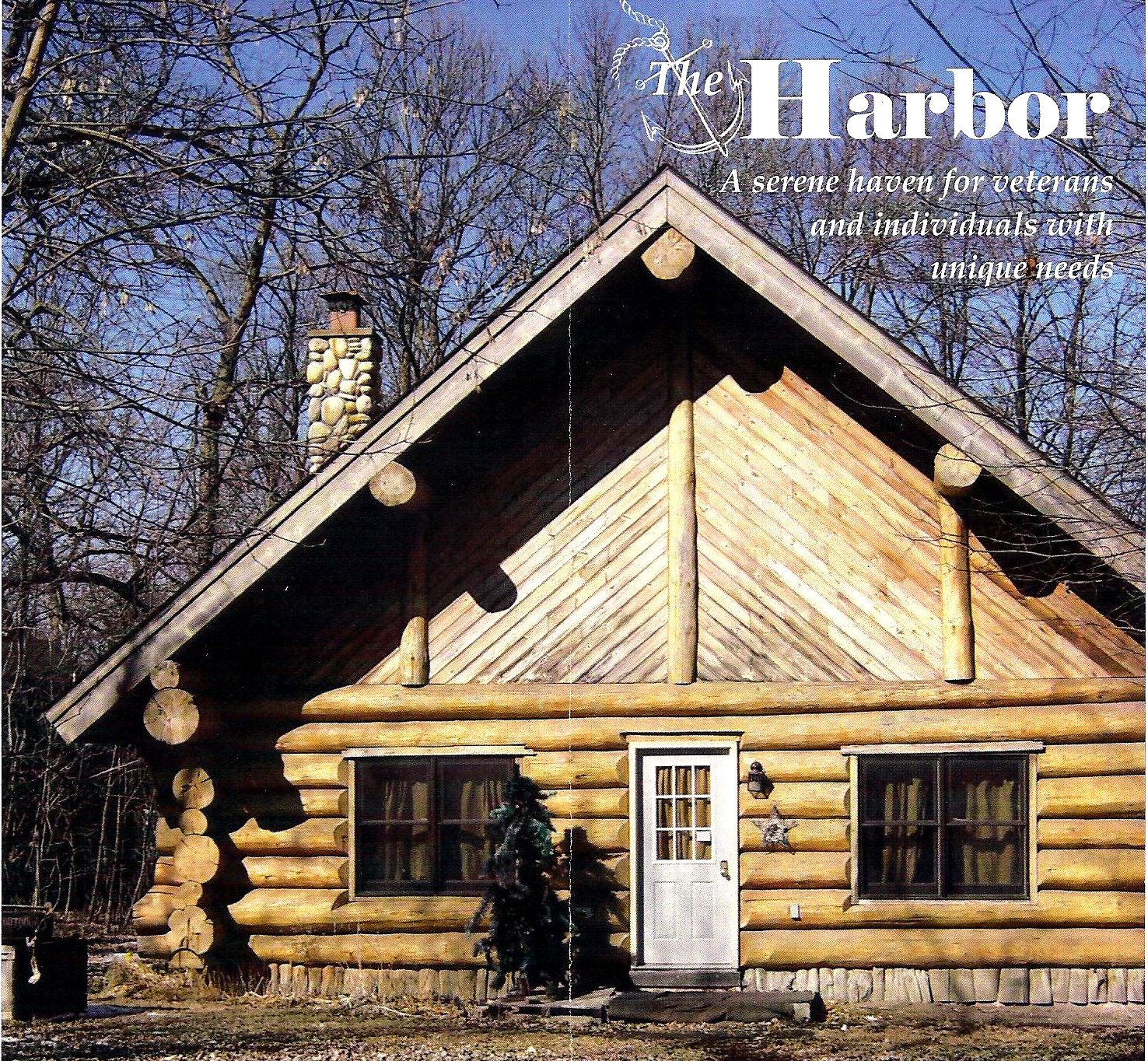
A portion of the promotional brochure from The Harbor. Courtesy of John Grimm.

A portion of the promotional brochure from The Harbor. Courtesy of John Grimm.

THAT’S NOT ALL. Grimm, who says he has a passion for helping veterans, recently undertook another project aimed at assisting aging veterans and others in need. He bought the former Cottagewood Resort along Minnesota Highway 13 between Montgomery and New Prague last May and has converted it into The Harbor, advertised as “a serene haven for veterans and individuals with unique needs.”

The Harbor features three log cabins and a central facility which can house a total of 14 on the 20-acre wooded, lakeside property.

His goal, Grimm says, is to negotiate individual rental rates based on whatever is reasonable and affordable to the renter and will work for him to keep the haven financially solvent.

This Vietnam War era veteran, who previously operated a Montgomery area assisted living facility, tells of a call he received about a 52-year-old homeless veteran while The Harbor was in the beginning of renovation. He thought about the housing request for awhile and decided if the vet had to choose between living under a bridge and living in a mess, he’d likely choose the mess. Turns out the vet had been a sheetrocker, so he moved into The Harbor in July to help tape and seam sheetrock.

THERE, DEAR READERS, are two feel-good stories from one small Minnesota town, stories I discovered because I took the time to really look at Montgomery, to see the veterans’ tributes, and then to inquire about them. These discoveries await you at every turn. Just slow down, and you will see them, too.

Watch for one more story in my five-part series from this southern Minnesota community.

© Copyright 2013 Audrey Kletscher Helbling
 

Montgomery, Part III: Franke’s Bakery, a sweet spot in the “Kolacky Capital of the World” March 6, 2013

Filed under: Uncategorized — Audrey Kletscher Helbling @ 8:10 AM
Tags: , , , , , , ,

EDITOR’S NOTE: In the spring of 2010, I visited Franke’s Bakery in Montgomery, a now 99-year-old business which truly embraces the community’s Czech heritage. This feature published in Minnesota Moments magazine and I’m reprinting it here as written three years ago, with the addition of many more photos. This is the third in a five-part series of stories from Montgomery. Enjoy.

Mary Ann Kaisersatt, left, and Jule Franke make prune-filled kolacky.

Mary Ann Kaisersatt, left, and Jule Franke make prune-filled kolacky.

JULE FRANKE AND MARY ANN KAISERSATT work side-by-side in the bakery kitchen, their fingers swiftly and expertly stretching, folding and tucking corners of dough squares across dollops of prune filling.

In an hour, they will have made 50 dozen kolacky, the trademark Czech pastry of 96-year-old Franke’s Bakery in downtown Montgomery, self-proclaimed “Kolacky Capital of the World.”

Unbaked prune kolacky.

Unbaked prune-filled kolacky.

As Franke shapes the neat little dough packages upon the lightly-floured wooden countertop in this room that smells of yeast and baking bread, she describes the Czech treat. It’s “like a sweet dough with a filling,” she says. And at Franke’s, those fillings are the popular prune and poppy seed, plus apricot, apple and raspberry.

For 50 years now, this woman, who confesses that she is not Czech but German, has been making kolacky. “I’m not from here and I’m not Czech, until I married the baker,” she says, smiling.

“The baker” would be Alvin “Butch” Franke, her husband of 52 years who died last December. His father, Emil, a German with a little Czech heritage, grew up in Czechoslovakia, immigrated to America in the early 1900s and opened the bakery in 1914. Butch followed in his baker father’s footsteps. And then Butch and Jule’s son, Bob, became involved in the family business 25 years ago.

Franke's Bakery anchors a corner of downtown Montgomery.

Franke’s Bakery anchors a corner of downtown Montgomery.

Today this bakery, located in the heart of Minnesota Czech country, is nationally-known for its ethnic pastry. Franke’s ships packages of kolacky via priority mail all over the U.S., especially before holidays like Easter. Those customers often grew up in the area, Franke says, and will simply mail a check and a request for kolacky.

Customers orders hang in the kitchen.

Customers orders hang in the kitchen.

The bakery also has a loyal customer base locally and in the Twin Cities area.

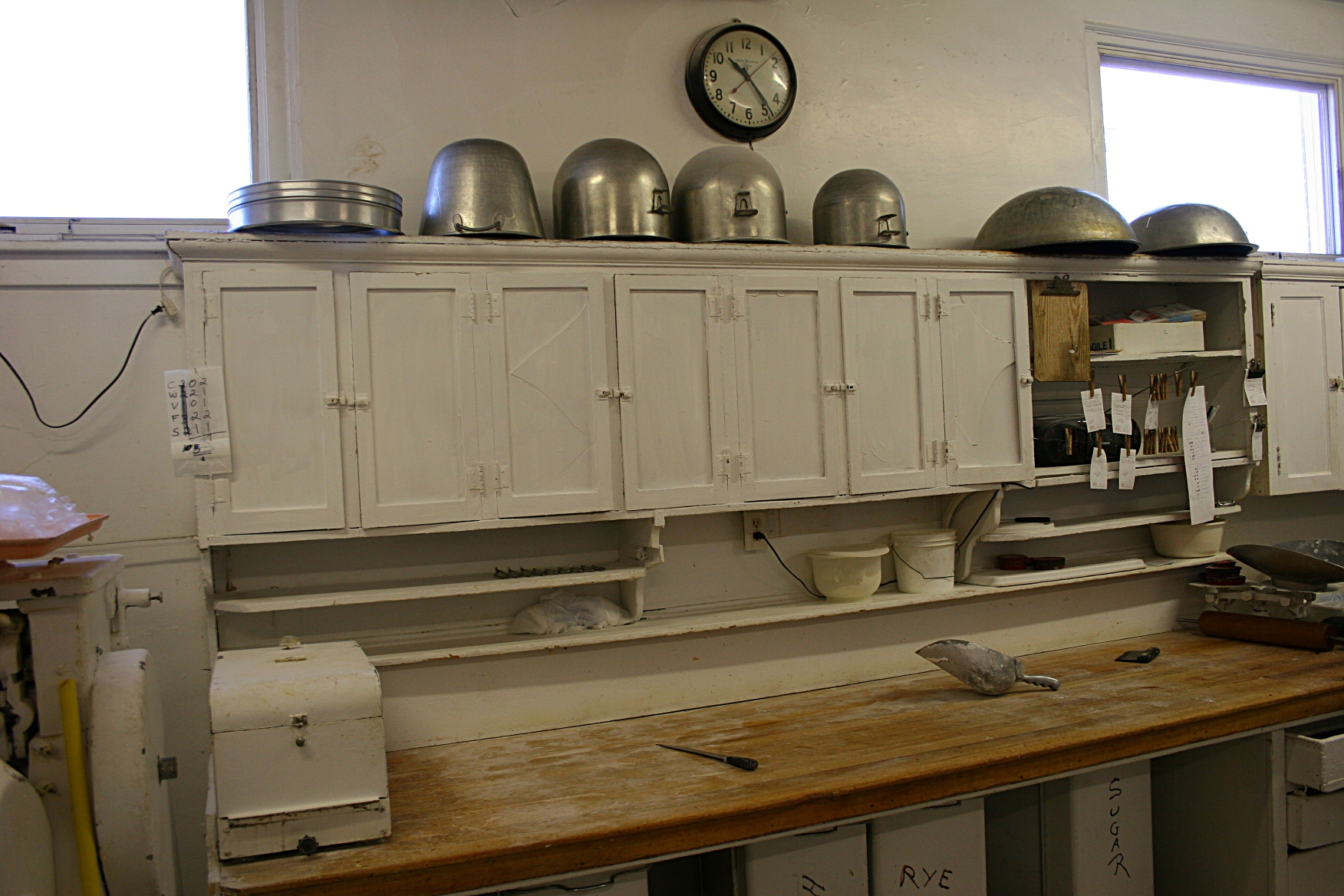
The bakery retains the charm of yesteryear.

The bakery retains the charm of yesteryear.

But at no time is the demand for Franke’s kolacky higher than during Montgomery’s annual celebration of its Czech heritage, Kolacky Days, set this summer for July 23 – 25. Franke enlists her children and their families to make 2,000 dozen kolacky for the weekend event that includes a home-baked kolacky contest and a kolacky eating competition. During the celebration, Franke’s kolacky are sold at the bakery and in Memorial Park.

A selection of Franke's Bakery bread.

A selection of Franke’s Bakery bread, made without preservatives.

Yet, day-to-day, this Czech treat remains a mainstay at this bakery, also known for its rye bread.

Czech, Slovakian and American flags grace the bakery counter.

Czech, Slovakian and American flags grace the bakery counter.

“Vitáme Vás!” (“We welcome you”) imprinted on a window placard, miniature Czech and Slovakian flags set upon the countertop and humorous signs like “PARKING FOR CZECHS ONLY—ALL OTHERS WILL BE TOWED” embrace the area’s rich Czech heritage.

Among the sweet treats.

Among the sweet treats.

Here locals gather for a cup of coffee and a sweet treat, sliding into wooden booths in this 1931 building—the original bakery burned—that retains the charm of yesteryear.

Behind the scenes in the bakery's kitchen.

Behind the scenes in the bakery’s kitchen.

Five days a week Franke arrives here at 5:30 a.m. to help prepare baked goods, following family recipes that have been passed down through the generations. Soon fresh-baked doughnuts, Bismarcks, cookies, breads, turnovers, bars, buns, kolacky and more fill display shelves.

She has no plans to retire.

“This is in her blood,” says employee Kaisersatt.

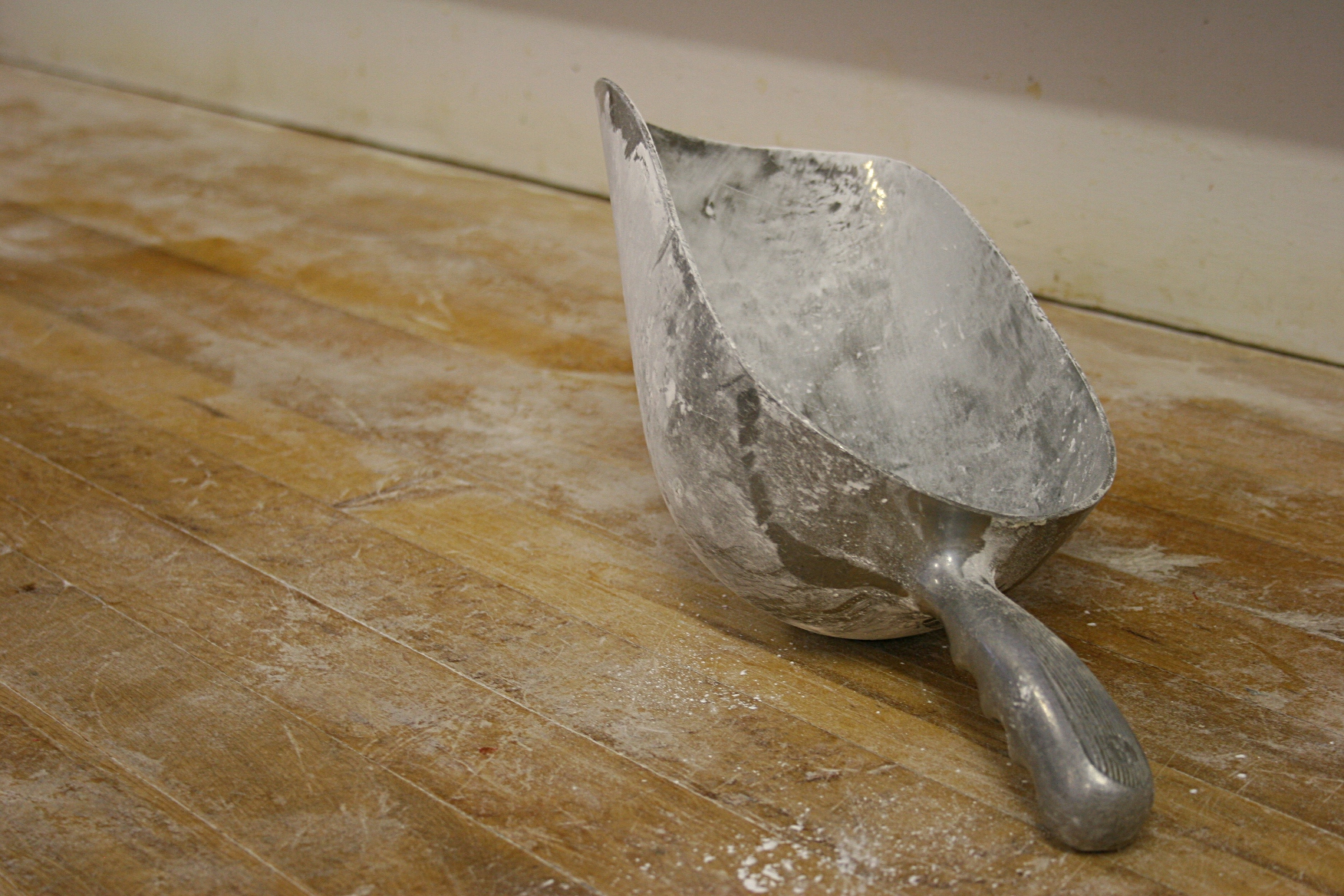
Flour scoop...

Flour scoop…

The women laugh as they continue to fold dough, lifting and gently placing the square treats onto parchment paper-lined trays that hold five dozen kolacky. Kaisersatt scoots around to the other side of the work station across the slippery, flour-dusted floor to grab a kettle of milk wash. She dips her wide brush into the liquid and sweeps the bristles across the unbaked mounds of dough.

This, Franke says, helps to brown and keep the kolacky moist. The dough will rest overnight, then go into a steambox for an hour to rise before baking in the morning.

As appealing as the ethnic treat is to customers, the slender Franke admits, “I don’t eat too many (kolacky). I don’t care too much for sweets.”

But, obviously, customers do, as they’ve supported this family-owned business through three generations, for nearly 100 years.

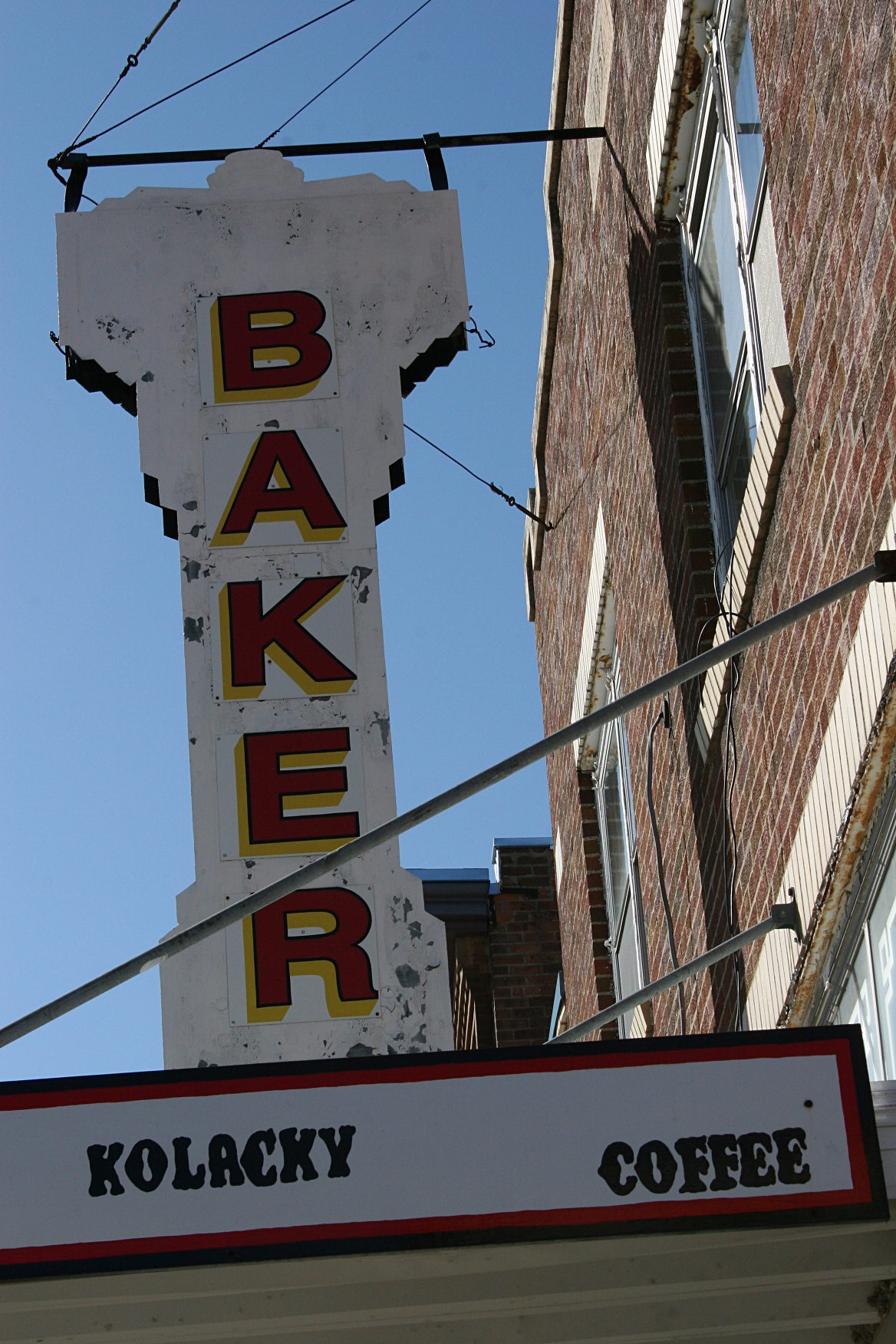
You can't miss the sign marking Franke's Bakery, a family-owned business in Montgomery for 99 years.

You can’t miss the sign marking Franke’s Bakery, a family-owned business in Montgomery for 99 years.

FYI: Franke’s Bakery is open from 6:15 a.m. – 5 p.m. Tuesday – Friday and from 6:15 a.m. – 3 p.m. on Saturday. The bakery is closed on Sunday and Monday. Call Franke’s at (507) 364-5025 for more information. Visit the bakery website by clicking here.


Faribault’s long-standing historic appreciation for Fleck’s beer February 19, 2013

YOU NEEDN’T LOOK FAR to see the notable imprint the Fleckenstein breweries made on Faribault.

A downtown Faribault mural featuring Fleck's beer.

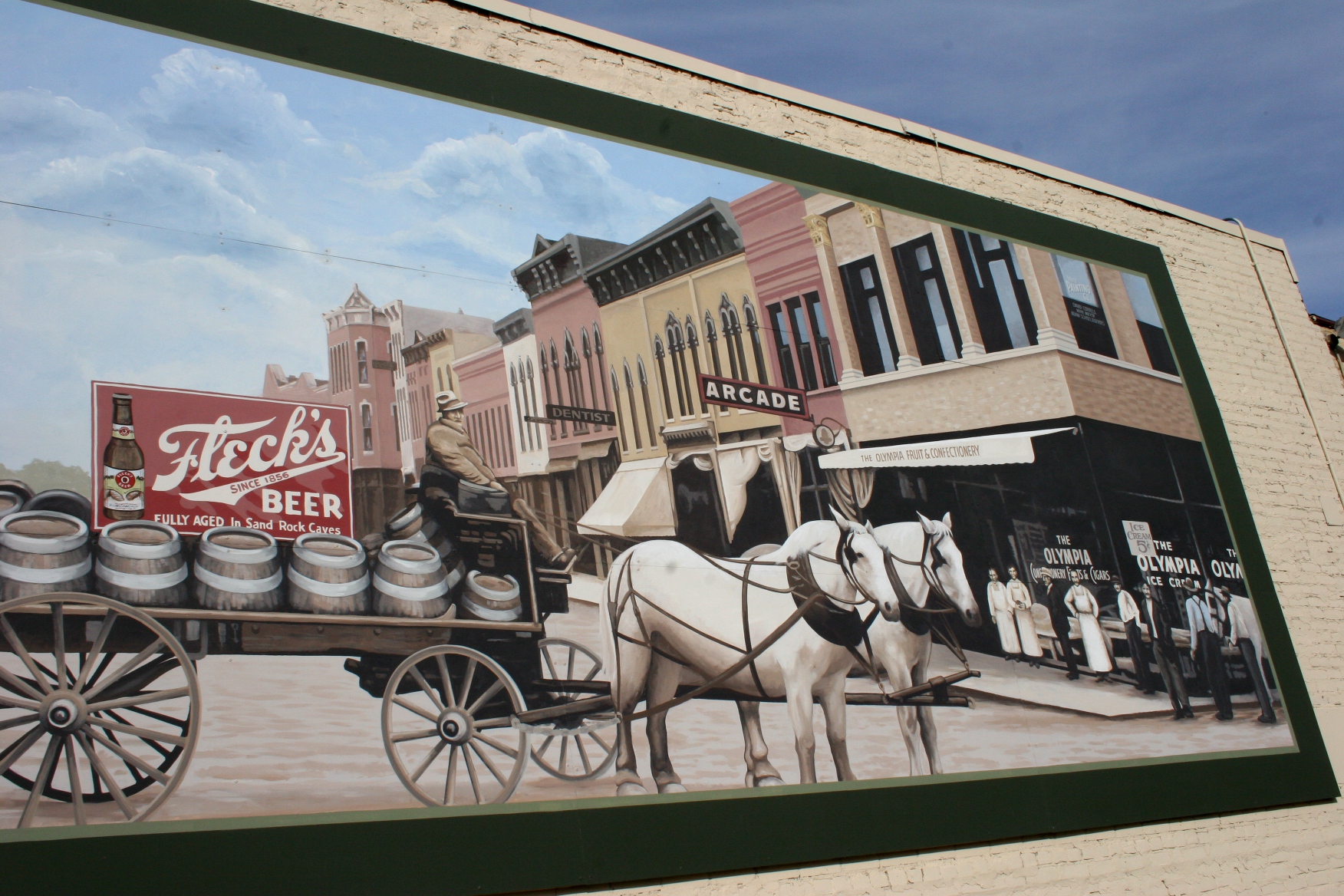
A downtown Faribault mural featuring Fleck’s beer.

In the heart of Faribault’s historic downtown, a mural at 513 Central Avenue features Fleck’s beer barrels stacked upon a horse-drawn wagon in one of seven historical-themed murals created by the Mural Society of Faribault.

Kitty-corner across the street at the State Bank of Faribault, 428 Central Avenue, bank President John R. Carlander’s personal collection of Fleckenstein/Fleck’s memorabilia is displayed.

The Fleckenstein building houses Twin City Underwriters in the south front with empty space for lease in the other half.

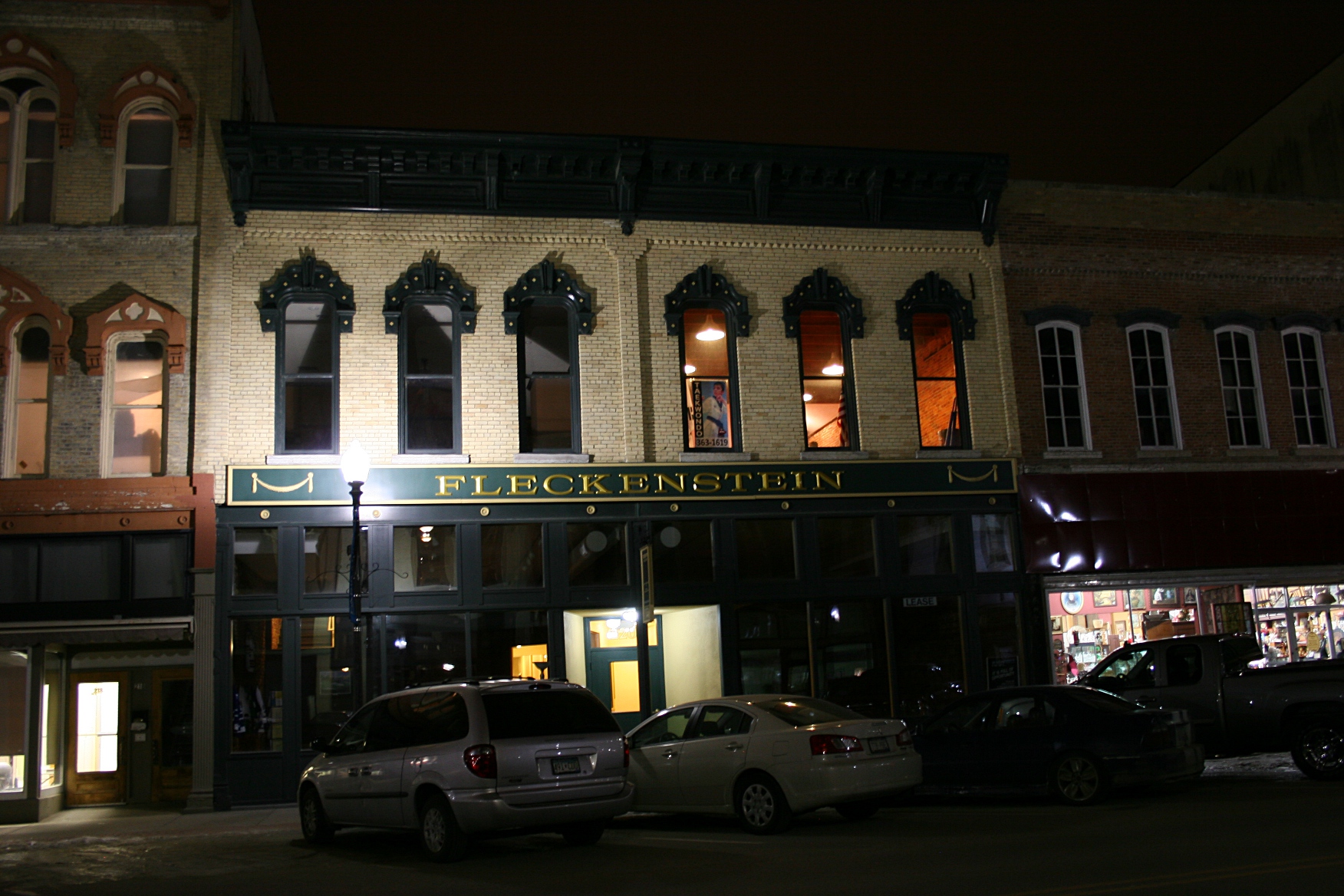
The Fleckenstein building, home to several businesses including an  insurance company, photo studio and salon. If anyone knows the story behind the Fleckenstein family’s connection to the building, I’d like to hear.

Two blocks away in Faribault’s Historic Commercial District, the Fleckenstein building stands at 220 Central Avenue.

Across town at the Rice County Historical Society, 1814 N.W. Second Avenue, you’ll find a permanent Fleckenstein breweries exhibit.

And who knows how many locals own pieces of Fleckenstein history from the breweries of brothers Gottfried and Ernst Fleckenstein. The two began as partners, opening the Fleckenstein Brewery along the banks of the Straight River in 1856. There they aged and stored their beer in caves.

Eventually the two split, Gottfried’s brewery remaining at the original site at 222 Third Avenue N.E. Meanwhile, Ernst moved farther north along the Straight River and established Ernst Fleckenstein Brewing Company in 1872. That would continue in operation until 1964. Gottfried’s brewery, which had been passed along to his son, Louis, closed in 1907.

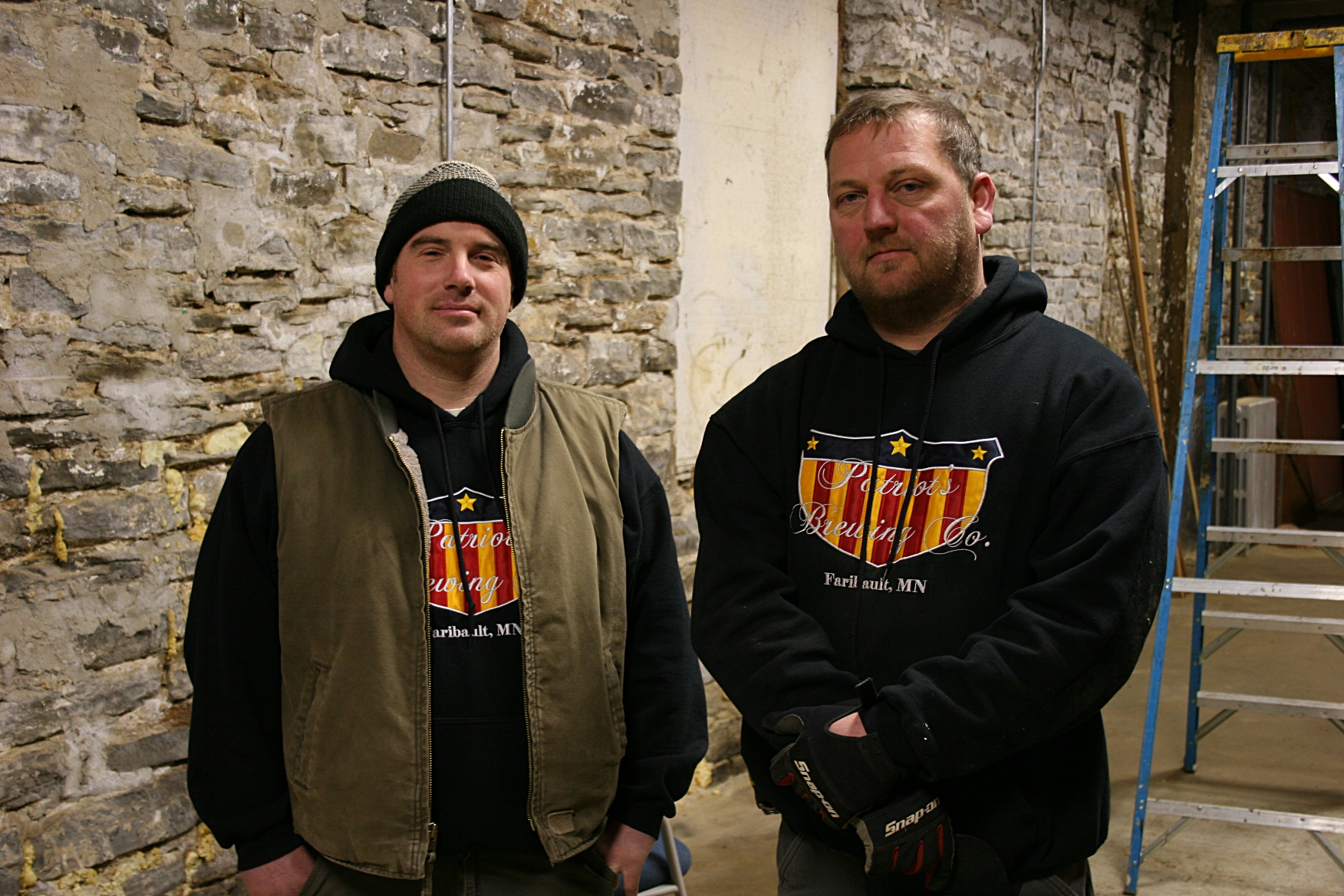
Chris Voegele, left, and Noah Strouth inside the space that will house Patriot's Brewing brewery.

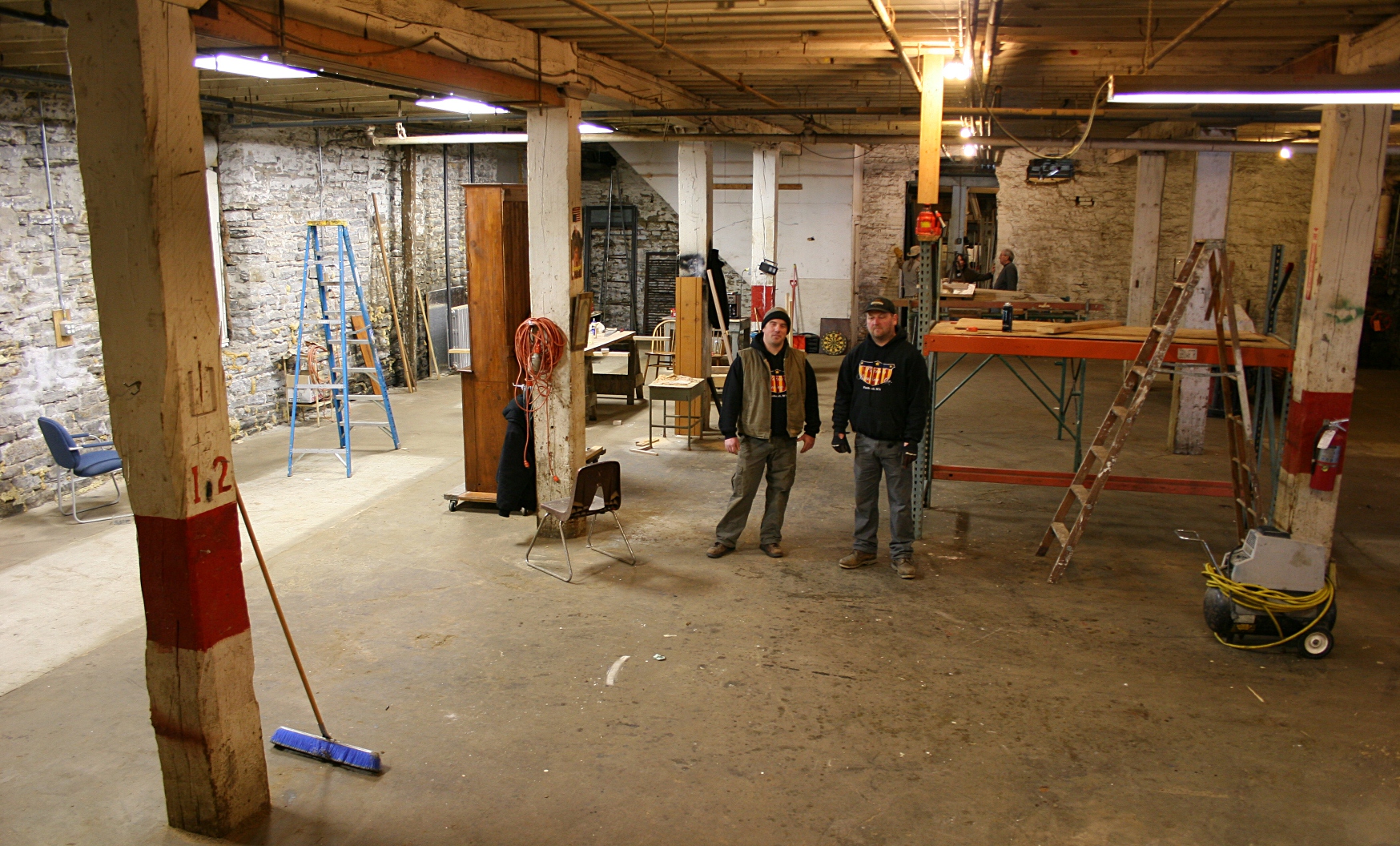
Chris Voegele, left, and Noah Strouth inside the space that will house Patriot’s Brewing brewery.

With 108 years of business history in Faribault, it’s no wonder the Fleckenstein breweries made an impression upon locals like Noah Strouth and Chris Voegele who will bottle Fleck’s branded beers at Patriot’s Brewing Company, set to open this fall in downtown Faribault within blocks of the first Fleckenstein brewery. You can read about that new brewery by clicking here to a previous post.

The two plan to eventually open a tap room which will feature Fleck’s/Fleckenstein memorabilia culled from their personal inventory and from the collections of others who’ve already offered their historical pieces for display. I don’t expect Strouth will show his 1958 unopened bottle of Fleck’s beer. But it’s interesting to hear his claim that this 55-year-old bottle has always been kept cold. He knows that, he says, because of the beer’s clarity.

If anyone knows Fleck’s beer, it would be Faribault resident Brian Schmidt who owns more than 300 collectible pieces from the Fleckenstein breweries and has created a Fleck’s website. (Click here to reach that.) Schmidt grew up on Faribault’s north side and remembers digging for bottles in the Fleckenstein brewery “bottle pit.”

Faribault artist Rhody Yule created this oil painting of the Fleckenstein Brewery in 1976. The building, and the brewery, no longer exist. The 20-foot Fleck's beer bottle on the right side of the painting sat near the brewery entrance. Children often had their pictures taken here when their parents took a brewery tour.

Faribault artist Rhody Yule created this oil painting of the Fleckenstein Brewery in 1976. The building, and the brewery, no longer exist. The 20-foot Fleck’s beer bottle on the right side of the painting sat near the brewery entrance. Children often had their pictures taken here when their parents took a brewery tour. The brewery also made soda.

I’ve yet to see Schmidt’s collection, although I’ve viewed one piece, a 1976 brewery painting by my artist friend Rhody Yule of Faribault. Schmidt brought the artwork, which he purchased for $90 at a local auction, to “A Lifetime of Art: The Rhody Yule Collection” exhibit in January 2011 at the Paradise Center for the Arts in Faribault. Click here to read my post about that brewery painting and another piece Schmidt shared at Yule’s show.

Equally as interesting are the brewery related stories shared by locals, including that of a 92-year-old friend who wished to remain anonymous. The Faribault native remembers her sister picking tight-bud peonies from the family farm in June and storing the flowers inside a brewery cave until her early July wedding.

This I learned when I phoned to ask about the Fleckenstein-donated stained glass windows which grace my church, Trinity Lutheran, along Fourth Street in Faribault. My friend couldn’t offer any details on the windows, or even if the Fleckensteins were Trinity members. But I certainly appreciated hearing her sister’s wedding flower story.

Likewise I spoke with another longtime Faribault resident who knew members of the Fleckenstein family—Al, Ruge, John and Chauncey—from his days of bowling against the Fleck’s Brewery team. In his early 20s at the time, my friend recalls the Fleckensteins, 15-plus years his senior, as strong supporters/sponsors of bowling in Faribault. Several generations of Fleckensteins operated the breweries.

Hearing stories like this reinforces the results of a Faribault Main Street downtown market analysis report prepared in September 2011. According to that report by (IN)ALLIANCE, LLC, “downtown Faribault would be an ideal location for a craft brew pub.”

The report went on to state this:

Given the history of brewing in Faribault and its consumer who is attracted to culture and history, naming a brewpub solicitation as “Fleckenstein Brew Pub” would prove to be a good promotional tool.

Chris Voegele , left, and Noah Strouth, owners of Patriot's Brewing Company

Chris Voegele , left, and Noah Strouth, owners of Patriot’s Brewing Company

When I interviewed Patriot Brewing owners Strouth and Voegele, I mentioned the market analysis (of which they were unaware) and they concurred with that important historic connection and Faribault promotional aspect. “People in Faribault seem to like their history,” Voegele said.

With the opening of a brewery and a tap room (not a brewpub), Patriot’s Brewing will assuredly add to the beloved history of Fleck’s beer in Faribault.

© Copyright 2013 Audrey Kletscher Helbling
 

Two Minnesota businessmen pitch vacuums & flowers for Valentine’s Day via poetry February 12, 2013

VACUUM CLEANERS AND ROSES seem an unlikely pair. But for long-time Waseca businessmen and friends, Rick Morris and Charlie Mathern, pairing the two has become a pre-Valentine’s Day tradition that began some 20 years ago when Rick noticed Charlie had vacuum cleaners on sale.

Rick, owner of Waseca Floral, suggested he pitch flowers and Charlie, owner of Charlie’s Hardware, push vacuums in a joint half-page print ad with this long-standing lead-in:

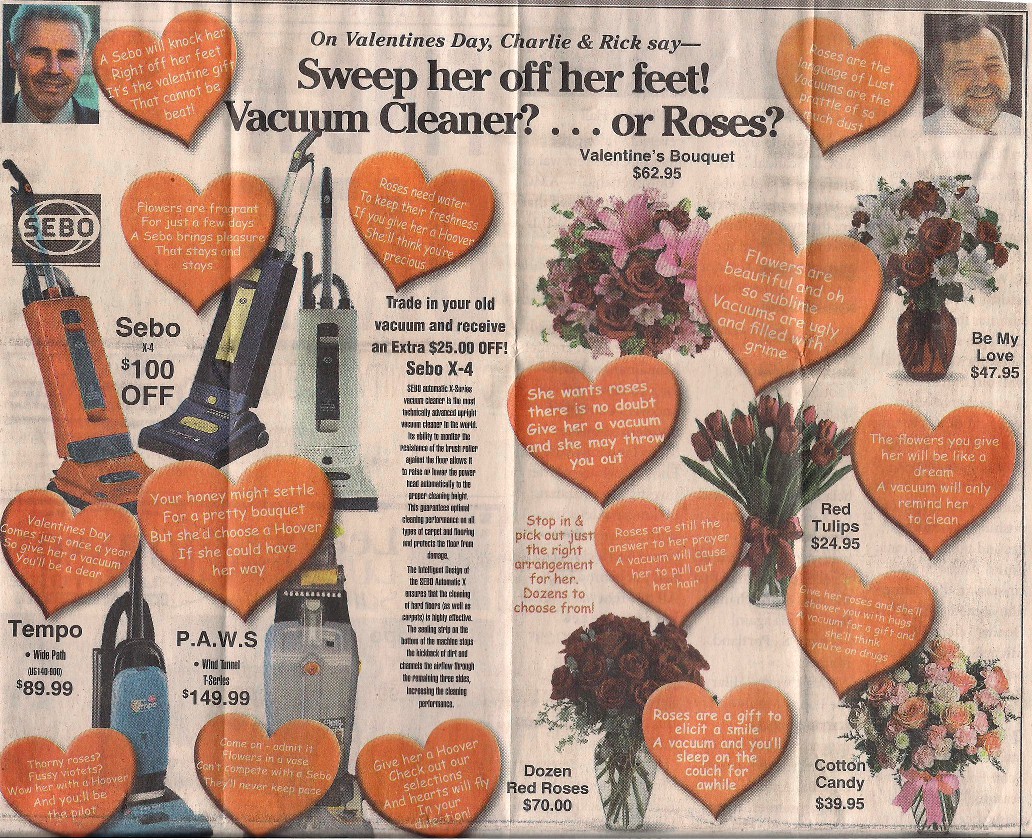
On Valentine’s Day, Charlie & Rick say—Sweep her off her feet! Vacuum Cleaner?…or Roses?

Then the fun began as each tried to persuade potential customers, via poetry, to choose a vacuum over roses or roses over a vacuum. This year’s ad, published February 5 in The Waseca Area Shopper, features these poems, among others:

Charlie:

Thorny roses? Fussy violets?
Wow her with flowers and you’ll be the pilot

Rick:

Roses are the language of Lust
Vacuums are the prattle of so much dust

Valentine's Day ad 2013

This shows all but the bottom portion of the 2013 print ad.

The back-and-forth bantering continues amid photos of vacuums intermixed with red poetry hearts on the left side of the ad and images of floral arrangements interspersed with poetry hearts on the right.

The valentine ad has always been about vacuums and flowers.

And, clearly, it’s also about fun.

“We just get silly with them (the poems),” says Ann Mathern, Charlie’s wife and the author of Charlie’s vacuum cleaner poetry. “The crazier, the better. I don’t know if we can call this poetry.”

Rick concurs: “I write a couple of lines at a time. It’s not exactly poetry.” He pulls out a blank sheet of paper and, in a few hours or less, pens floral-themed couplets like:

She wants roses, there is no doubt
Give her a vacuum and she may throw you out

Ann, a first grade teacher, meanwhile, sits at her computer and, in about 45 minutes, centers her eight rhyming poems around whatever vacuums Charlie is trying to sell:

Come on—admit it—flowers in a vase
Can’t compete with a Sebo, they’ll never keep pace

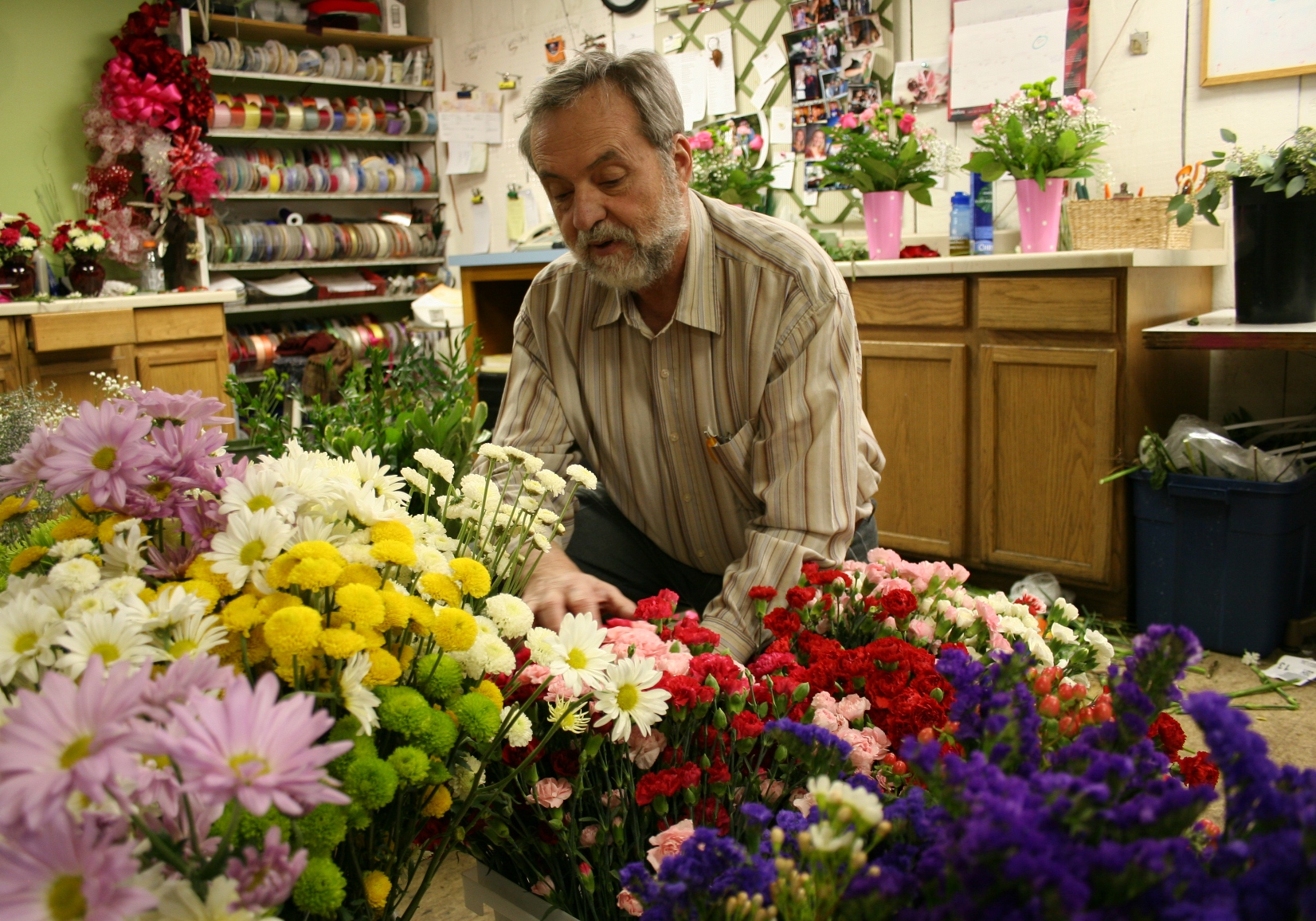
Rick Morris, owner of Waseca Floral for 40 years. Minnesota Prairie Roots file photo, February 2012.

Rick Morris, owner of Waseca Floral for 40 years. Minnesota Prairie Roots file photo, February 2012.

The poetry/sales competition gets exactly the results Rick and Charlie want—attention, laughter and sales. “People look for it (the ad),” Rick says, and will mention the ad when they purchase Valentine’s Day flowers.

Likewise, down at the hardware store, the ad generates sales. But it also sparks the occasional call from female customers angry about suggesting a vacuum cleaner as a Valentine’s Day gift, Ann Mathern says.

Charlie, who fields those sometimes unhappy calls, explains that the Valentine’s Day ad is all in good fun by mutual agreement with his good friend Rick. Occasionally Rick and Charlie need to remind themselves of that, especially when they read some of the barbed poetry.

Rick:

Flowers are beautiful and oh so sublime
Vacuums are ugly and filled with grime

Charlie:

Your honey might settle for a pretty bouquet
But she’d choose a Hoover if she could have her way

Roses pack coolers for Valentine's Day 2012 in this Minnesota Prairie Roots file photo from Waseca Floral.

Flowers pack a cooler for Valentine’s Day 2012 in this Minnesota Prairie Roots file photo from Waseca Floral.

No matter what’s written, Rick and Charlie take it all in good humor. After 30-plus years of friendship and eating breakfast together between 6:30 – 7 every morning except Wednesday (when Rick has bible study) at various Waseca cafes, they know each other well, even sharing the same dry sense of humor, Rick says. Their wives, Ann and Sheila, join them for breakfast on Fridays.

Just like the daily breakfast tradition, Rick expects he’ll continue publishing the joint flowers versus vacuums ad with Charlie as long as the two are in business and he and Ann can keep writing their so-called poetry.

© Copyright 2013 Audrey Kletscher Helbling
Disclaimer: My sister, Lanae, is a floral designer at Waseca Floral. That did not influence my decision to write this post. I know a great story when I see/hear one.


My in-house handyman rocks & so does Faribault Ace Hardware January 11, 2013

OH, MY DARLING, knock three times on the ceiling if you want me, twice on the pipes if the answer is no…

If you were a teen of the 70s, like me, you may remember that popular song by Tony Orlando and Dawn. I always connect “Knock Three Times” to a slumber party in the basement of my friend Marla’s house. Don’t ask because I really don’t remember details. I assume we were pounding the ceiling and/or pipes as that tune rocked out on the radio.

The other night it was my husband knocking thrice on the ceiling or pipes as he signaled for me to head to the basement with my camera. He had just finished vacuuming around the non-operating water heater and was ready for me to photograph him in handyman action. His idea, not mine.

So my Canon and I rocked our way down the basement stairs while I belted out the only line I remember from “Knock Three Times.”

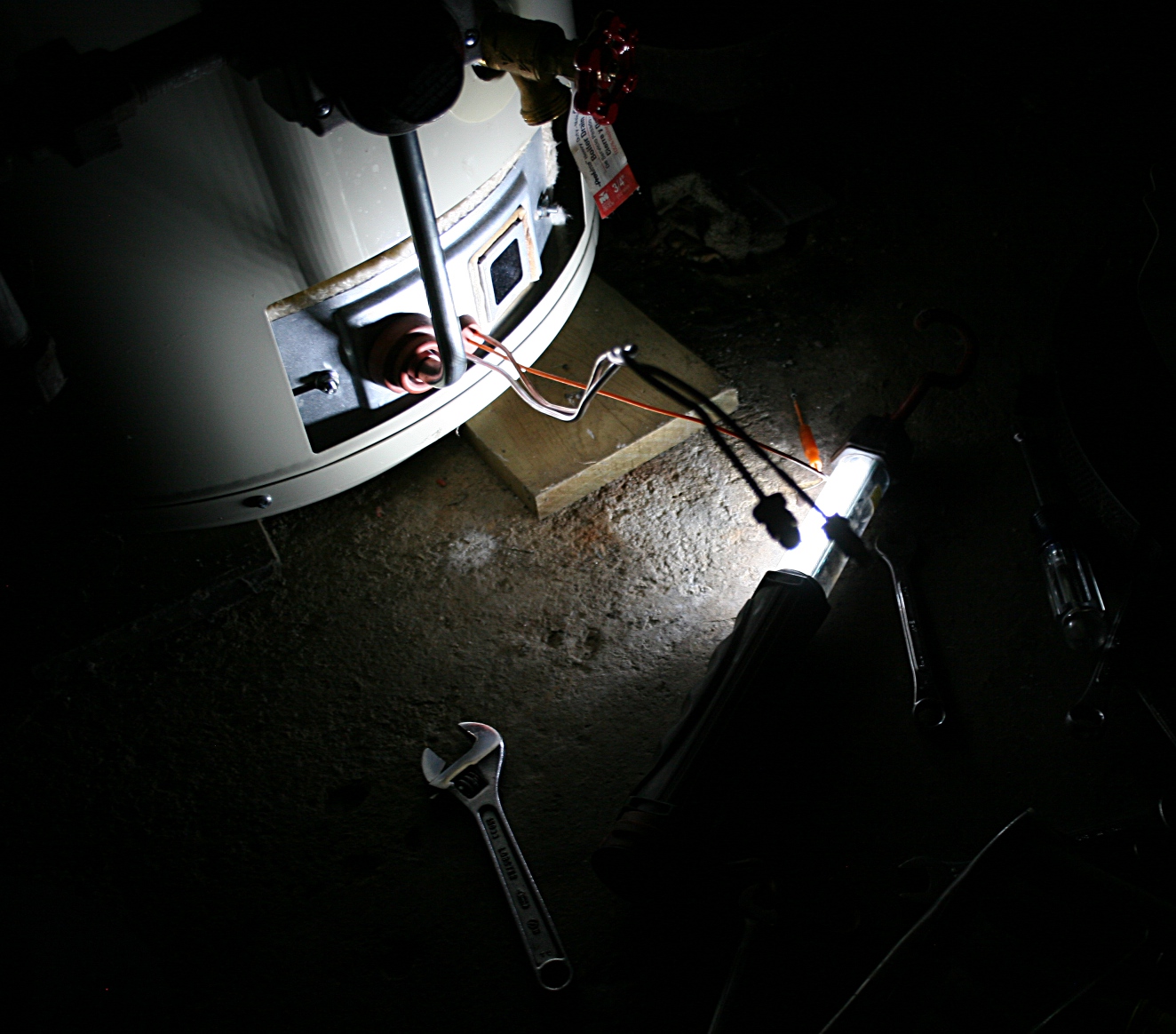
Tools and light are in place to replace the thermo couple control on the water heater.

Tools and light are in place to replace the thermocouple on the water heater.

Once inside the cramped utility room, I wondered how the heck I was going to photograph anything except Randy’s behind as he crouched low to the floor to replace the thermocouple on our just shy of six years old water heater. As you can see, I didn’t manage to snap much in the deep dark depths.

But what I gained was hot water again and the reassurance that my spouse is capable of repairing nearly anything in our house.

I hate this brown sink. But, hey, at least I have hot water again flowing from my leaky faucet.

I hate this brown sink. But, hey, at least I have hot water again flowing from my leaky faucet.

Say, about that hole in the dining room wall and the leaky kitchen faucet and the…

Oops, I nearly forgot to tell you this, and it’s an important part of the story. We bought our water heater in March 2007 at our local Faribault Ace Hardware. When Randy stopped by after work  to inquire about the warranty replacement part, the helpful Ace guy found the right piece and then told Randy to bring in the defective part and he’d get his money back. He didn’t even ask for a proof of purchase from six years ago. How’s that for great customer service?

We agreed that we likely would not have experienced the same ease in acquiring a replacement part under warranty had we purchased our water heater at an out-of-town Big Box retailer. Excellent customer service is the main reason we shop local as much as possible.

HAVE YOU EXPERIENCED similar outstanding customer service at a family-owned business? Let’s hear.

© Copyright 2013 Audrey Kletscher Helbling


Why I am not getting a kitchen redo November 30, 2012

Filed under: Uncategorized — Audrey Kletscher Helbling @ 8:19 AM
Tags: , , ,

The south side of the house roof, reshingled.

FOR TWO DAYS I LISTENED to the scritch-scratch scrape of shovel against roof and workmen tromping and pounding and thudding above.

This should not be.

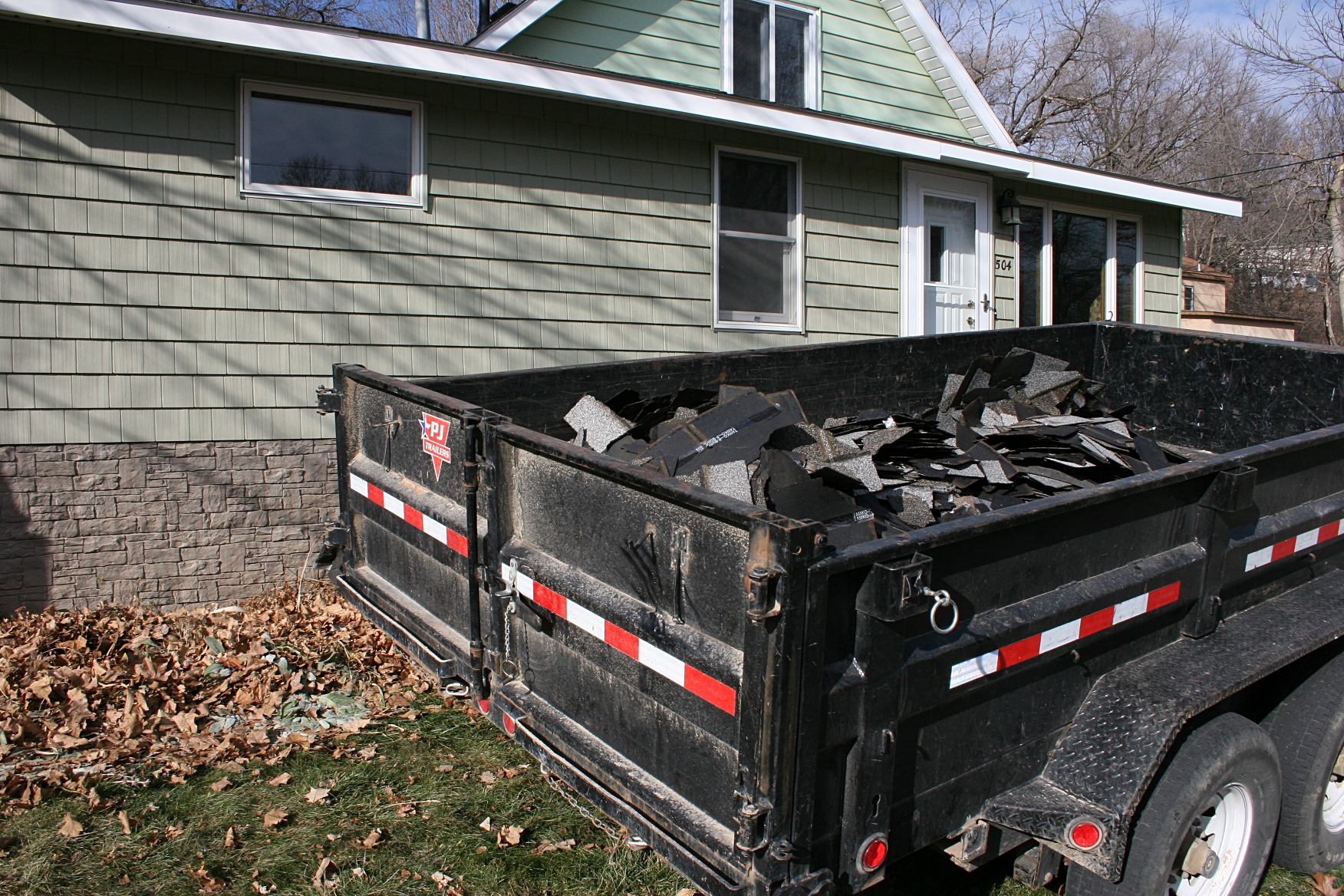
Thirteen unlucky years ago my husband shingled our home and garage with shingles that were supposed to last for 30 years or more.

Defective shingles torn from the roof and tossed into a trailer at the front of our house.

But within less than 10 years, the shingles were curling, lifting, cracking, breaking off and basically falling apart. In recent years, every time heavy rain fell, bits of shingle grit (or whatever it’s called) washed off the roof.

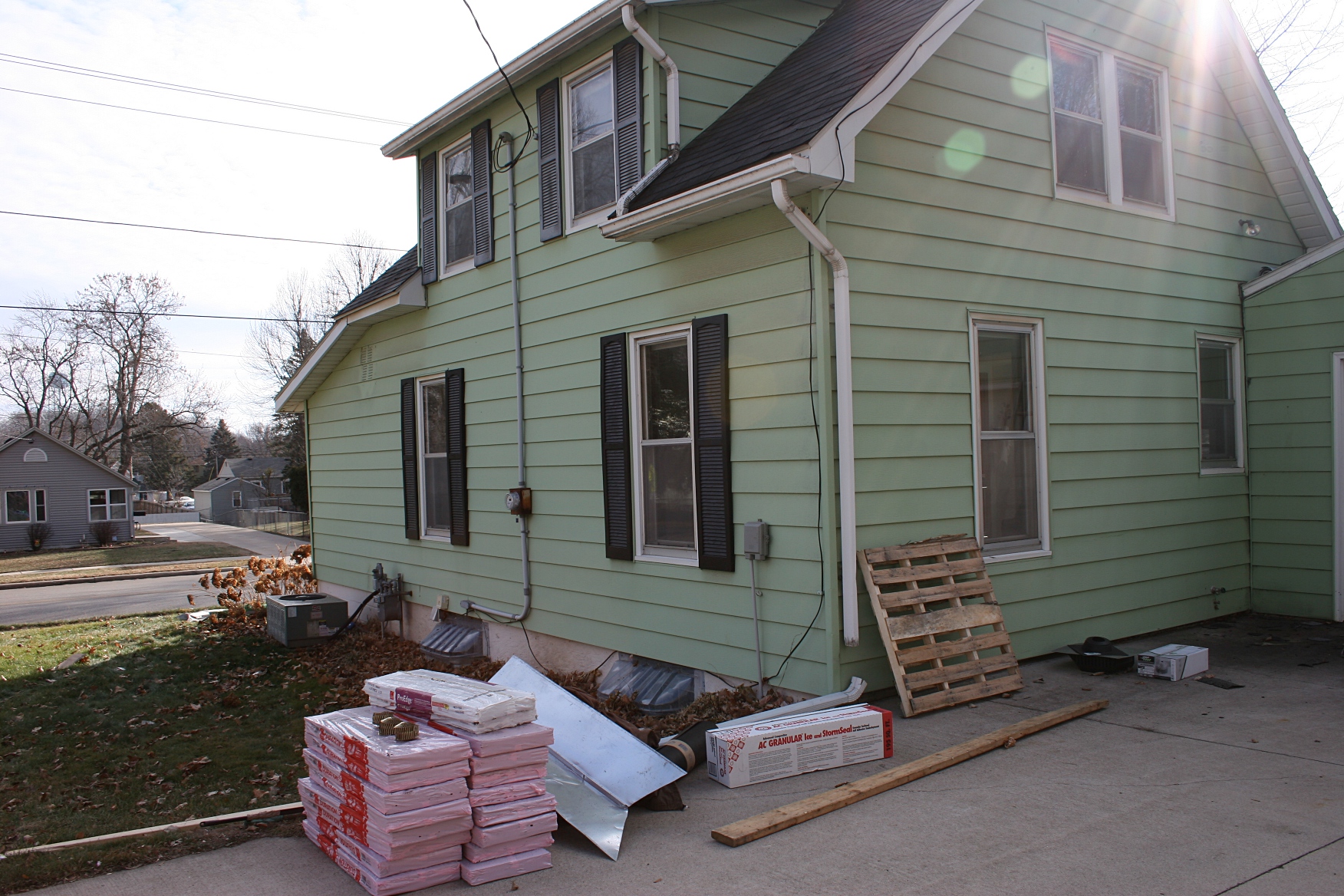
Shingles and equipment stacked on the garage roof.

Our contractor, Jerry Voegele of Voegele Builders, LLC, told me Tuesday morning, when he and his crew began the reshingling process in 17-degree temps, that the shingles should have come off five years ago. That means these shingles lasted only eight years. Eight short years.

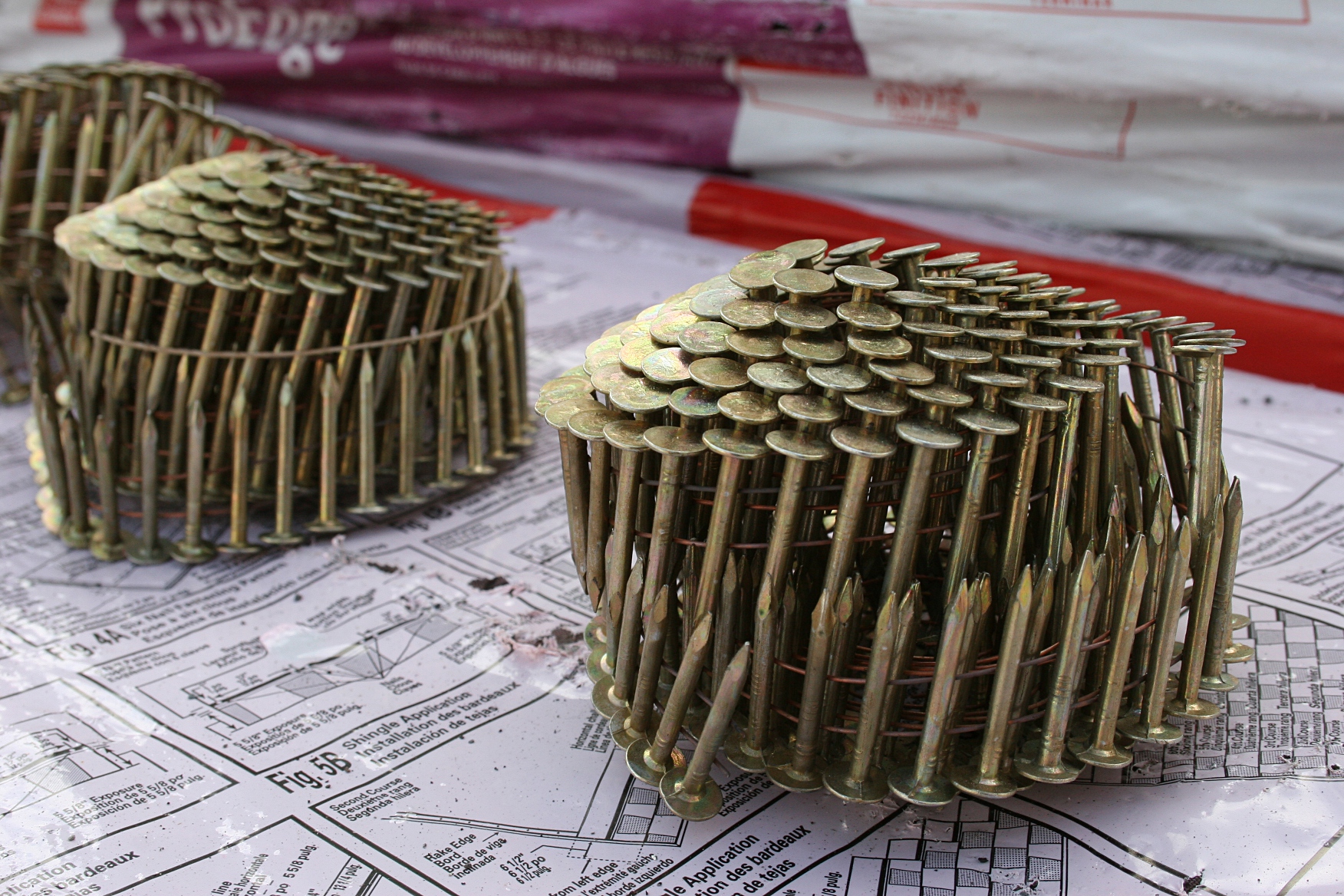
Rolls of roofing nails await roofers. I snapped all of these photos while the roofers were away on break so as not to bother them.

Am I angry? You bet.

First, the local lumberyard where we purchased these shingles did not stand behind the product they sold. I won’t name the lumberyard, but suffice to say I will never do business there again.

I buy local because I expect excellent customer service, and usually get it, not because I will save money. I do not expect to be directed to the manufacturer (even if “that’s the way it’s done”) and a lengthy claims submission process that involved my husband climbing onto the roof to pull off defective shingles and to photograph the roof. At least the shingle company reimbursed us $100 for our trouble and expenses.

Then, when we were offered only a minor prorated certificate for costly replacement shingles from the same manufacturer, I’d really had it. Why would I buy shingles from a company I did not feel worthy of my trust? Besides, labor is the major portion of the cost in shingling, not the product.

So here we are today, paying a contractor $x,000 (materials and labor) to shingle our roofs because a manufacturer produced defective shingles.

The north and west side of the house before reshingling began there.

Given the steep pitch of our roof and its many angles and the husband’s aging body and lack of time to re-roof, we had no choice this time but to hire professionals who re-roofed the house and garage in two days with shingles that should last a life time.

If not for this $x,000 expense, I could be remodeling my 1970s vintage kitchen right about now.

© Copyright 2012 Audrey Kletscher Helbling
 

Forget shopping in North Dakota on a Sunday morning November 25, 2012

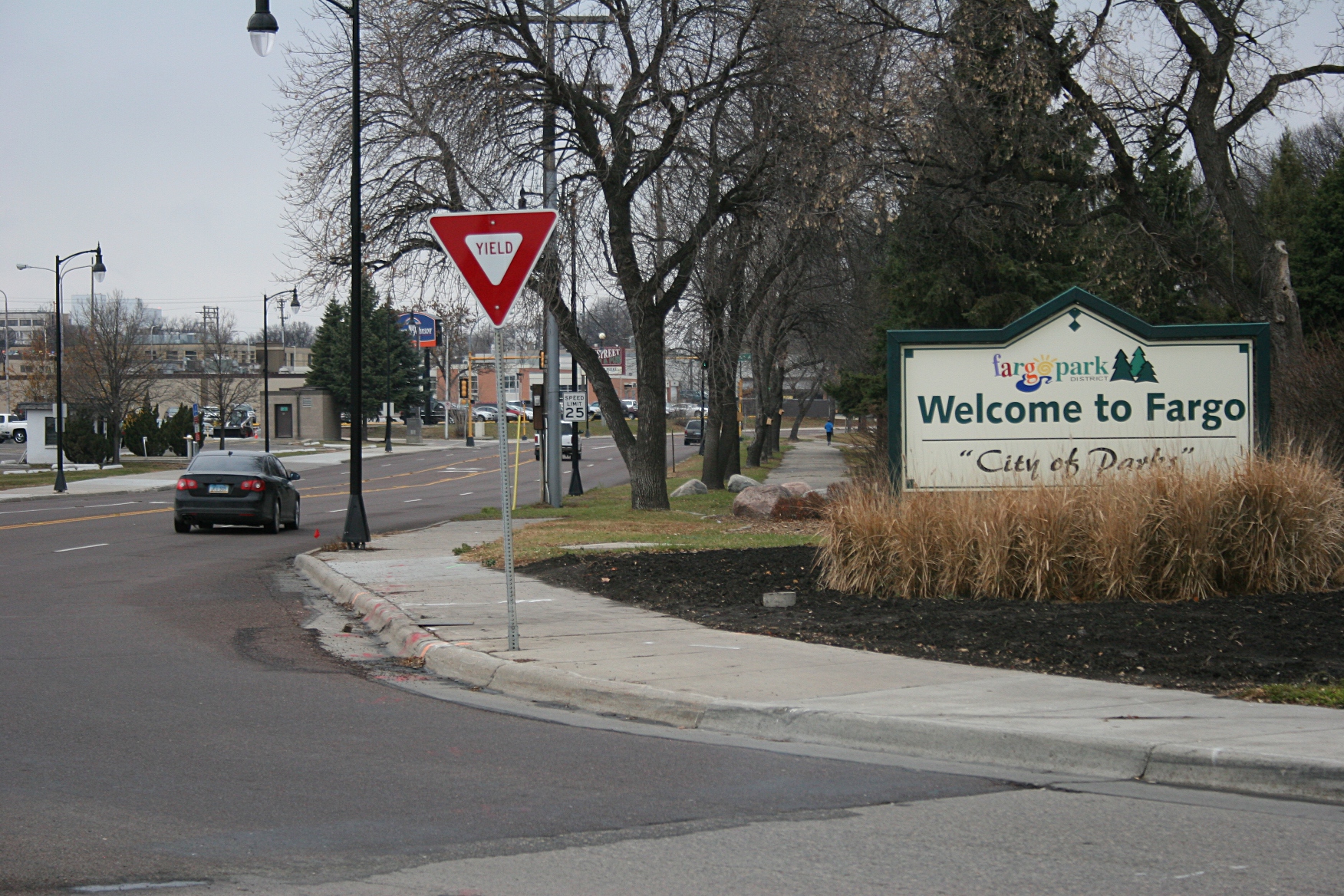
A sign along a city street welcomes us to Fargo, North Dakota, from Moorhead, Minnesota, just across the Red River.

LET’S PRETEND FOR A MOMENT that you are me. You’ve traveled nearly 300 miles from southeastern Minnesota to Fargo, North Dakota, with your husband to visit your son at North Dakota State University in mid-October.

Your son needs basic supplies like laundry detergent and deodorizing powder to sprinkle into his smelly athletic shoes. He also needs long-sleeved shirts, sweaters, socks and a warm scarf to wrap around his neck. Winter, after all, is waiting on flat and windy Fargo’s doorstep.

Being the nice parent that you are, you offer to take your boy shopping. And even though your son detests shopping, he agrees. He is no dummy. He would rather spend Mom and Dad’s money than his own.

So you plan a shopping trip to Target in West Fargo for 10 a.m. Sunday because that will allow the teen to sleep in. Afterward you’ll grab lunch around 11 a.m., then proceed to J.C. Penney (you checked online and Penneys does not open until noon) and leave town by 1 p.m. That is the plan. You have 300 miles to drive yet today.

But the entire plan is tossed out the window when you arrive at Target around 10:30 a.m. Sunday to find the doors locked. This big box retailer does not open until noon.

You suggest heading to Walmart. Your son gets on his smart phone, which he’s recently purchased quite successfully without your assistance or money, thank you. The three of you are soon winding your way around West Fargo, aiming for the discount retailer many love to hate.

Pulling into the parking lot, you notice that the place appears mostly deserted of cars and certainly of customers. As you draw nearer to the front doors, you spot signs stationed at the entrances:

The sign posted in front of the West Fargo Walmart on a Sunday morning.

OK, then.

Now what? Change of plans. Again.

Time to proceed with Plan C, which would be to check if Moorhead, Minnesota, just across the Red River, has a Target. It does. So you aim west for the border, driving five-plus miles, burning up gas because you don’t have time to wait for North Dakota’s stores to open.

You arrive at the Minnesota Target to find the parking lot packed with vehicles bearing mostly North Dakota license plates.

If only you had known about the Sunday morning shopping ban in NoDak, you would have planned differently and squeezed in a Saturday evening shopping outing. You would not be a now unhappy and grumpy Fargo visitor.

But you’ve heard/read nothing of this Blue Law (which you can read about in detail by clicking here)…

How are you supposed to know this stuff? You live in southeastern Minnesota.

And why is such a seemingly antiquated law still on the books?

FYI: I DID NOT REALIZE until I later spoke with a friend, a Minnesotan who grew up in North Dakota and whose son lives and works in Fargo, that the Blue Law not all that long ago prohibited retailers from any Sunday sales. So I suppose I should consider it progress that North Dakota retailers can now open their doors at noon on Sunday.

Secondly, this same friend told me that North Dakota has a five percent sales tax on clothing, of which I was unaware. The trip back across the river to the Target store in Moorhead thus saved us some tax dollars. However, according to information I found online, some North Dakota legislators want to repeal that tax. You can read about those efforts by some Fargo Democrats by clicking here.

Finally, can anyone explain the origin of the Blue Law in North Dakota? I expect it dates back to Sunday as a day of rest, as the Lord’s Day. I respect that and hope that most would choose worship over shopping. Yet, times have changed and church services are held on Saturdays too and, well, you know…

© Copyright 2012 Audrey Kletscher Helbling
 

One last chance to dine at The Historic Highland Cafe in southeastern Minnesota November 16, 2012

YOU SHOULD ALL know by now, if you’ve followed Minnesota Prairie Roots for any amount of time, that I’ll dine at a home-grown restaurant any day over a chain. I appreciate uniqueness and creativity and all those good qualities that typically define independent ownership.

In two days one of those delightful, mostly undiscovered by the general population, rural eateries closes.

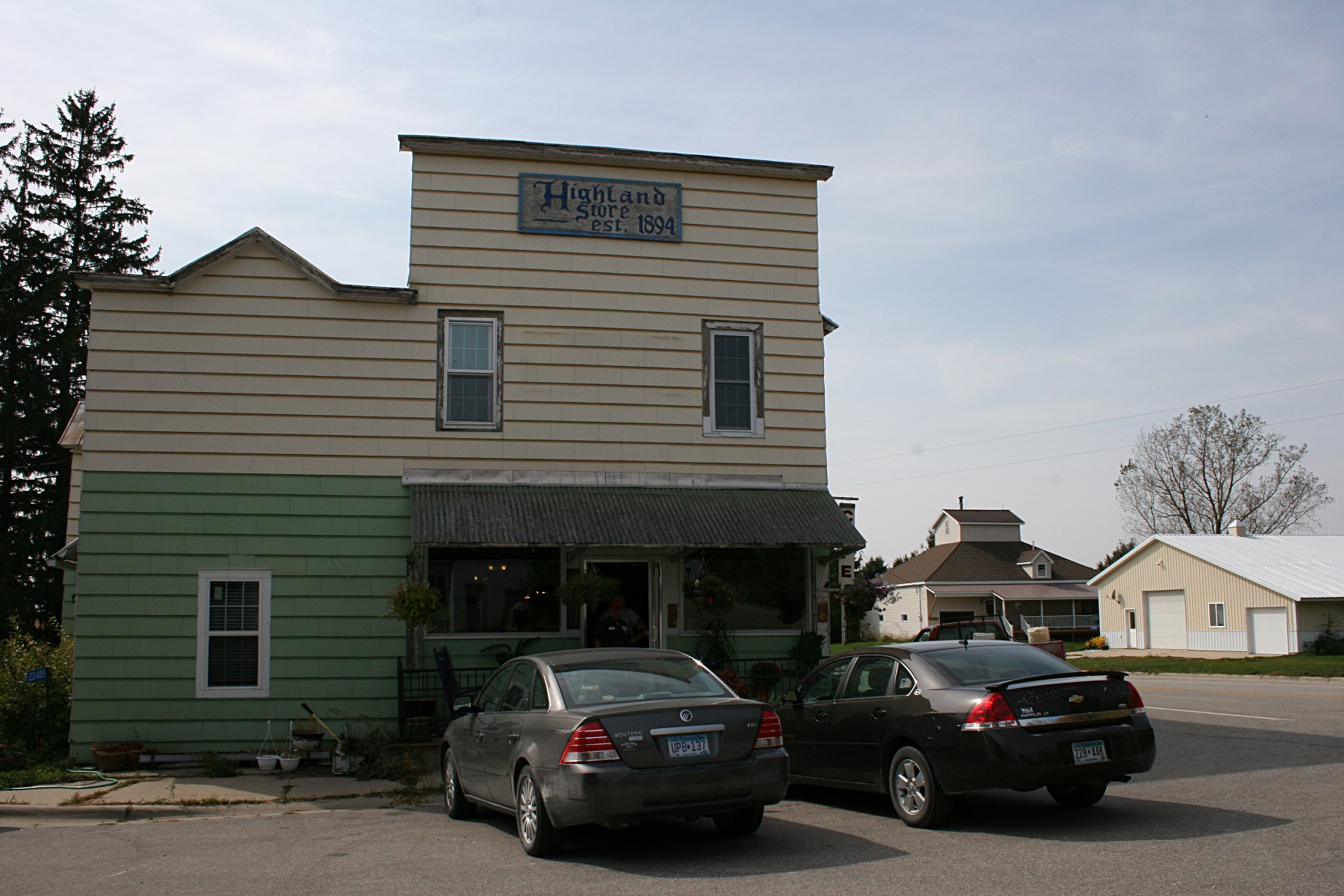
The unassuming front of The Historic Highland Store & Cafe.

And that saddens me because I only found The Historic Highland Store & Cafe in October and ate there with my husband for the first, and last, time. (You can read all about that experience, and why this cafe is closing, by clicking here.)

On Sunday, November 18, owner Vicki Starks Hudson and crew will open for the final time in the historic 1894 wood-frame building along Fillmore County Road 10 southeast of Lanesboro in unincorporated Highland. It’s about an 80-mile drive for me, so I won’t be heading back for another meal. Not that I don’t want to do so.
The special of the day will be a roast beef dinner featuring real mashed potatoes, gravy and carrots and a side organic spring mix salad. How enticingly Sunday dinner at Grandma’s house comforting does that sound? And you’ll get all of that home-cooked goodness for only $8.99. Be sure to thank long-time faithful cook Sharyn Taylor, Vicki’s mom.

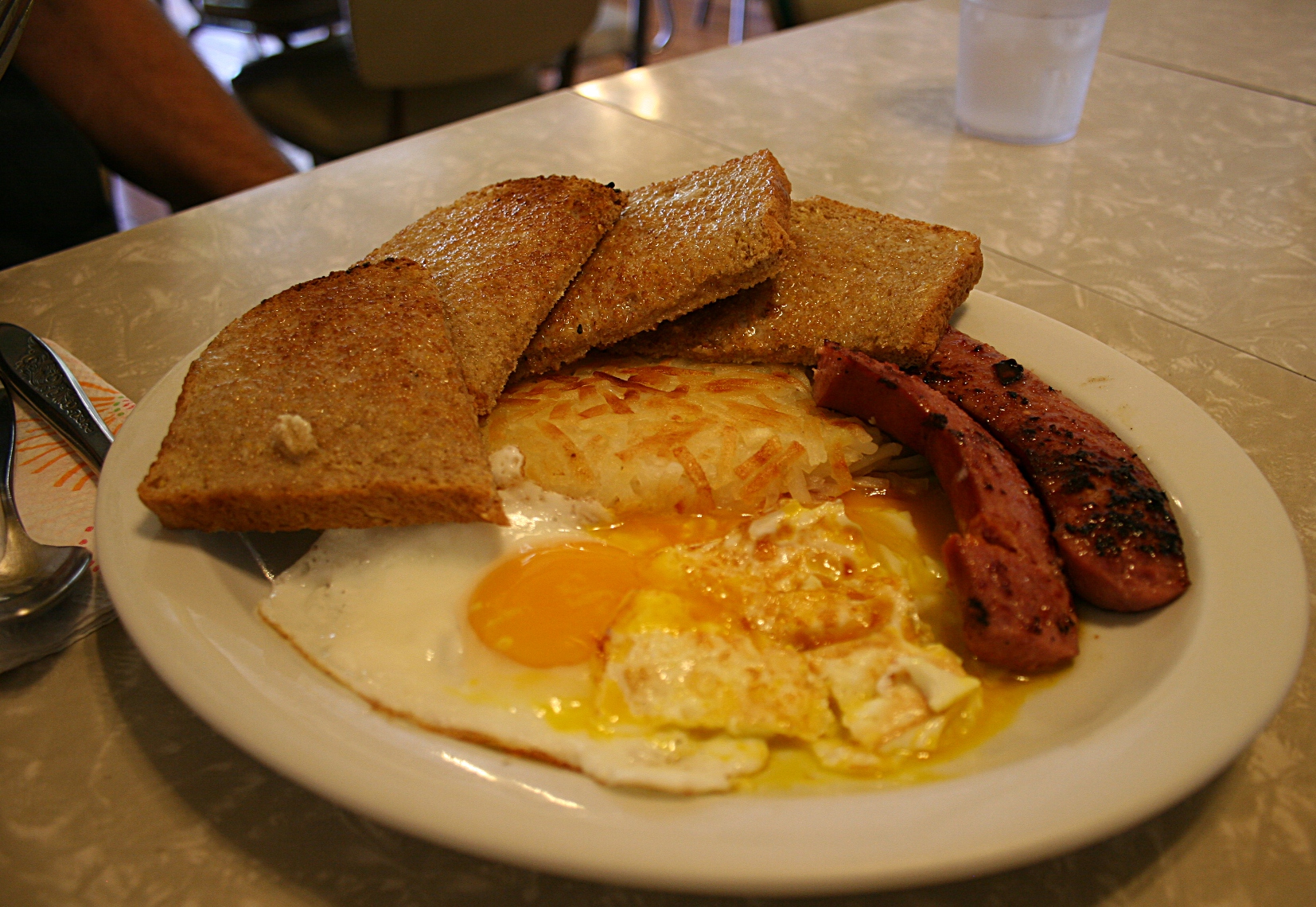
The breakfast my husband ordered when we dined here in October included two organic eggs, multigrain toast, hashbrowns and kielbasa. I photographed his plate after he broke the egg yolks.

You can also order soup and sandwiches or breakfast all day, hours being from 8 a.m. – 3 p.m.

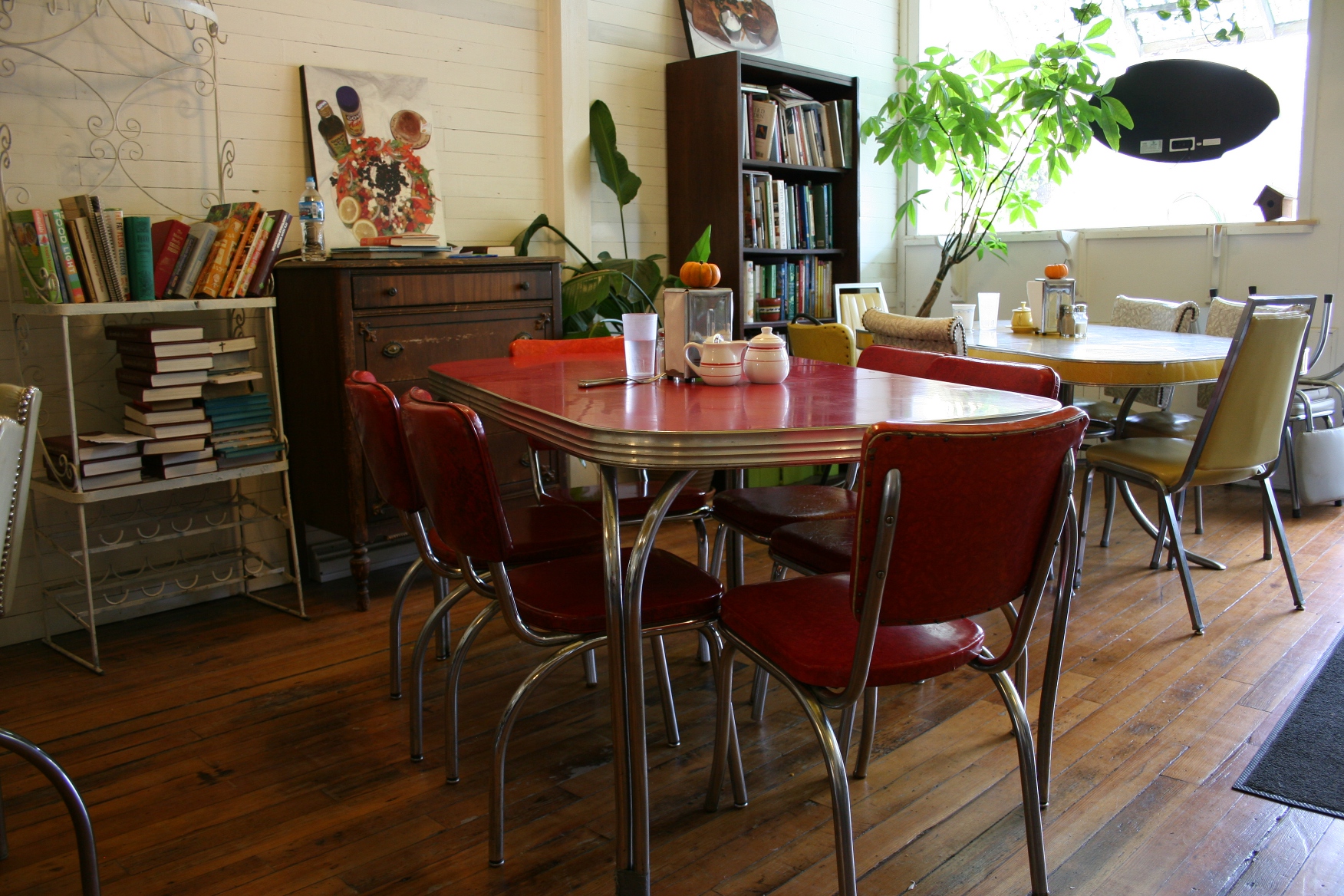
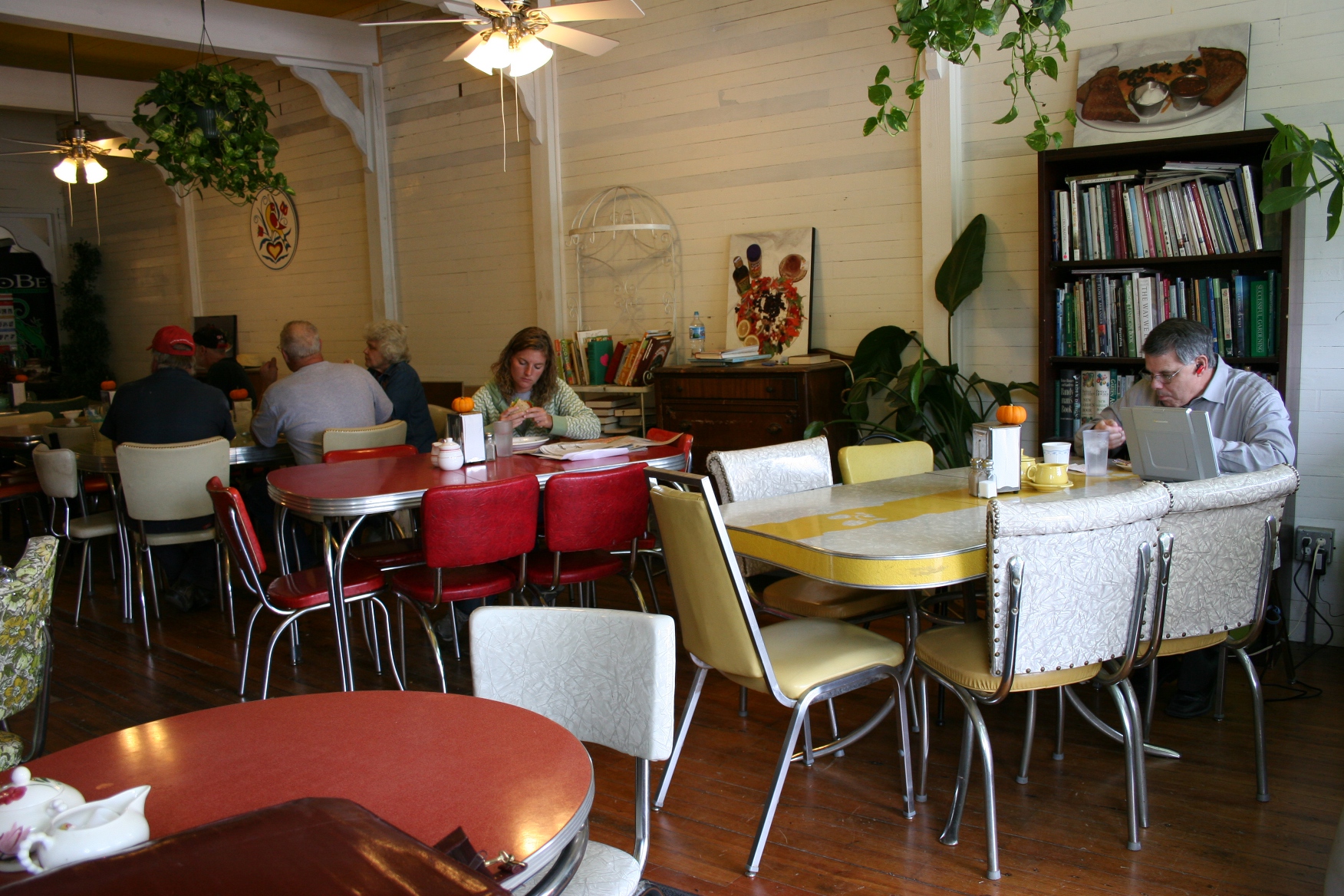
A sunny front corner of the restaurant showcasing the vintage tables and chairs.

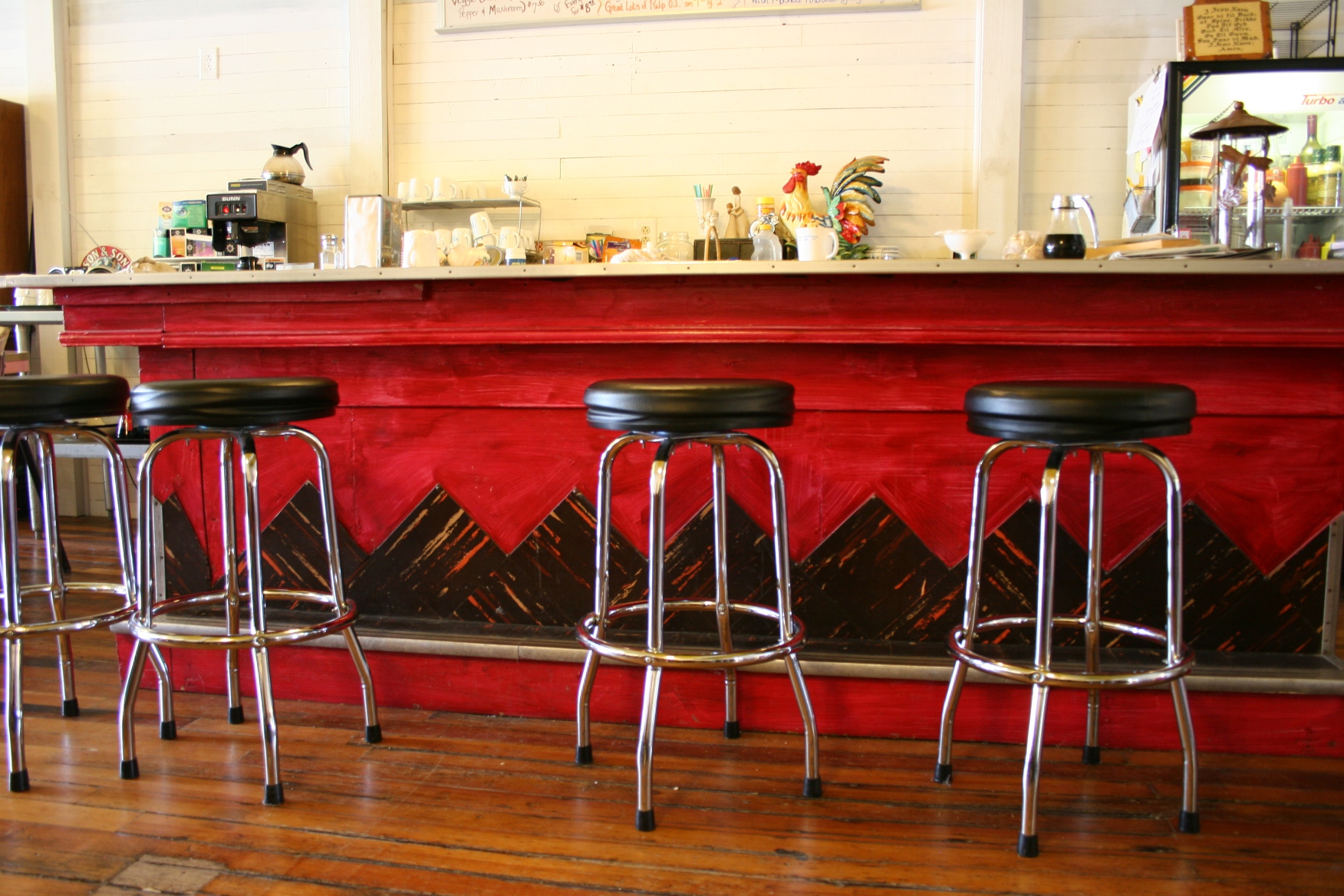
Not only is the food wholesome and homemade and delicious, but the atmosphere—with its original worn wood floor, wood-plank walls, lunch counter and hodge-podge of 1940s/1950s Formica and chrome tables and vinyl chairs—sets the scene for a relaxed and homey dining experience. Pure retro.

The absolutely fabulous lunch counter.

Now, if you dine there on Sunday and the place charms the bobby socks right off your feet and you are looking for an investment or a business to run, the building is for sale. Or it will be, in the spring after Vicki’s husband finishes some exterior updating.

On a Monday afternoon in October, the Highland Cafe was a popular dining spot.

But before then, you can also do a little shopping in this building which originally housed a general store. Vicki and her family had originally planned on opening a consignment shop upstairs. But they didn’t and now have some merchandise—mostly women’s clothing and home items—to sell.

Sale hours will be from 10 a.m. – 4 p.m. on Black Friday, November 23; 10 a.m. – 2 p.m. on Sunday, November 25; and 10 a.m. – 6 p.m. on Monday, November 26.

The Historic Highland Store & Cafe is closed on Saturdays as the building serves as the ministry site for the Seventh Day Adventist Highland Chapel.

FYI: Click here to reach The Historic Highland Store & Cafe website.

© Copyright 2012 Audrey Kletscher Helbling