Minnesota Prairie Roots

Writing and photography by Audrey Kletscher Helbling
Visiting a Red Wing bluff sacred to the Dakota November 19, 2025

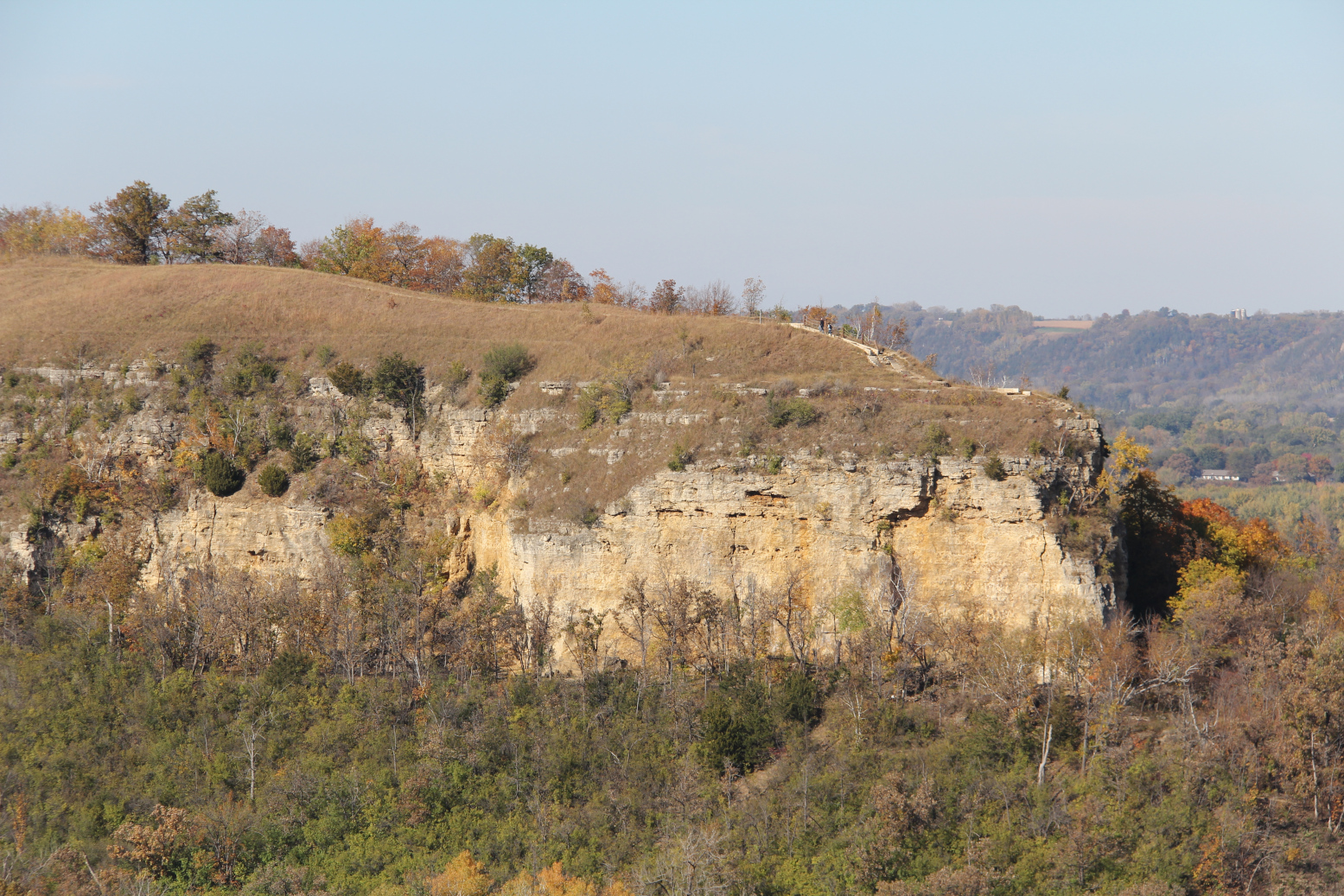
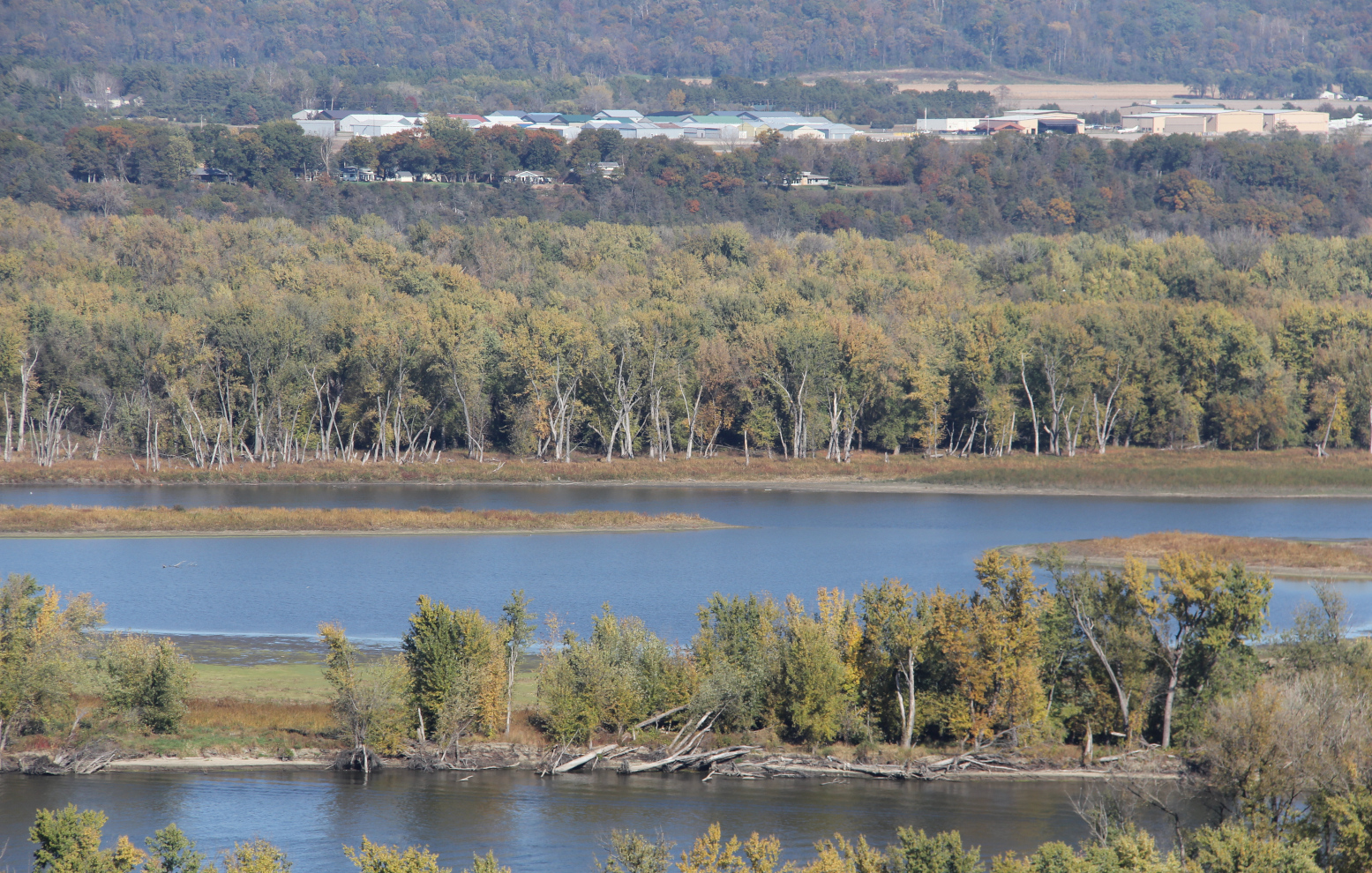
Barn Bluff in Red Wing as photographed from Sorin’s Bluff in Memorial Park. Zoom in and you will see people on a path atop the bluff. (Minnesota Prairie Roots copyrighted photo October 2025)

AT THE BASE of He Mni Caɳ, also known as “Barn Bluff,” I contemplated whether to climb the 340-foot cliff rising high above the Mississippi River in southern Minnesota. It seemed like a good idea when Randy and I were considering just that on our drive from Faribault to Red Wing recently. But reality set in once we found the bluff, started up a steep pathway and determined that this might be a little much for two people pushing seventy. My vision issues and fear of heights also factored into discontinuing our hike.

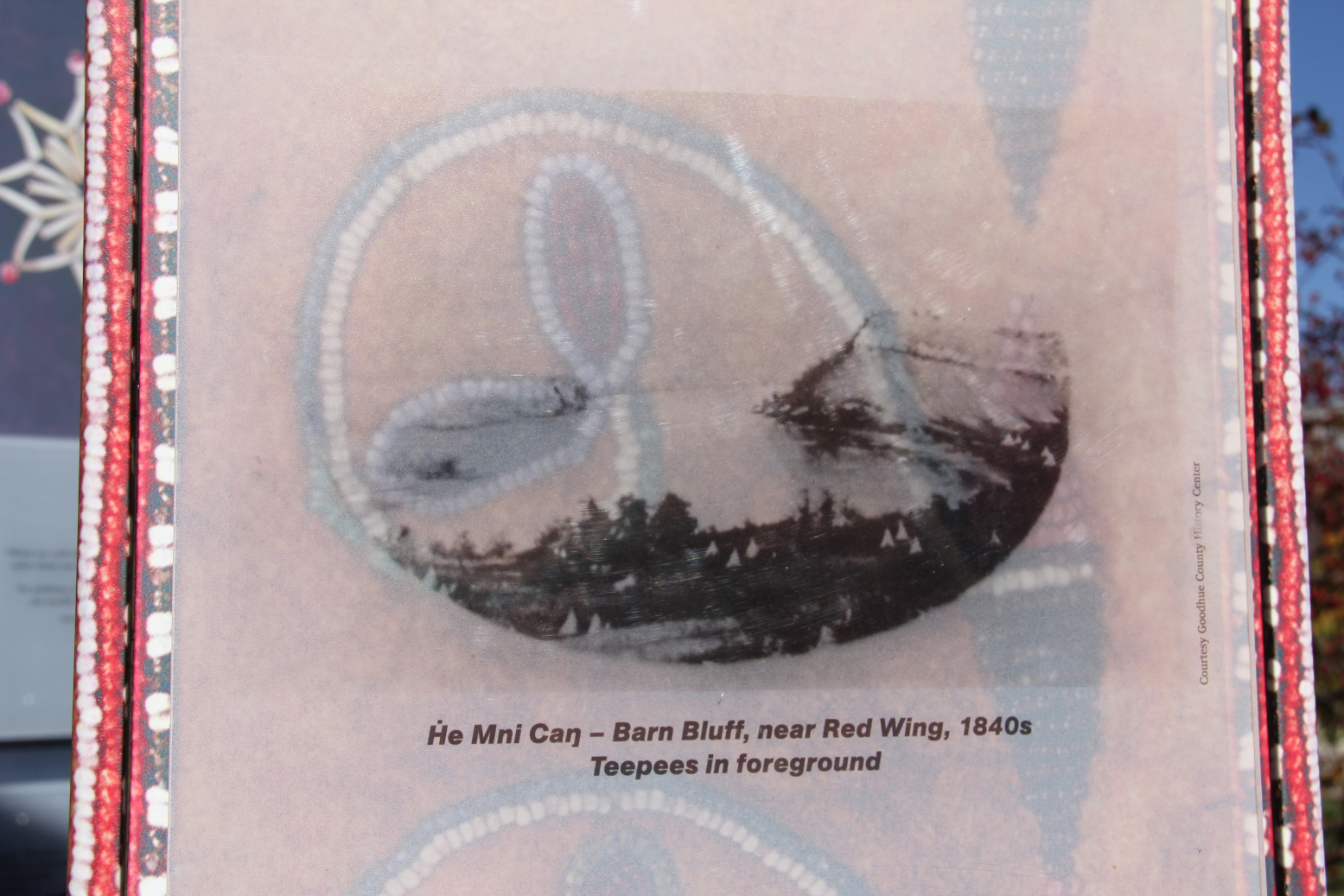
An historic photo in an informational plaza shows teepees at the bluff’s base, circa 1840s. (Minnesota Prairie Roots copyrighted photo October 2025)

While disappointed, I was still thankful we were here because He Mni Caɳ holds historical, cultural and sacred significance for the Bdewakantunwan Dakota Oyate, the Indigenous Peoples who originally inhabited this land. They lived on land below and around the bluff on the site of current-day Red Wing. They held ceremonies and rituals atop the bluff, also used for burial, shelter from enemies and more. This was, and always has been, a sacred place to the Dakota.

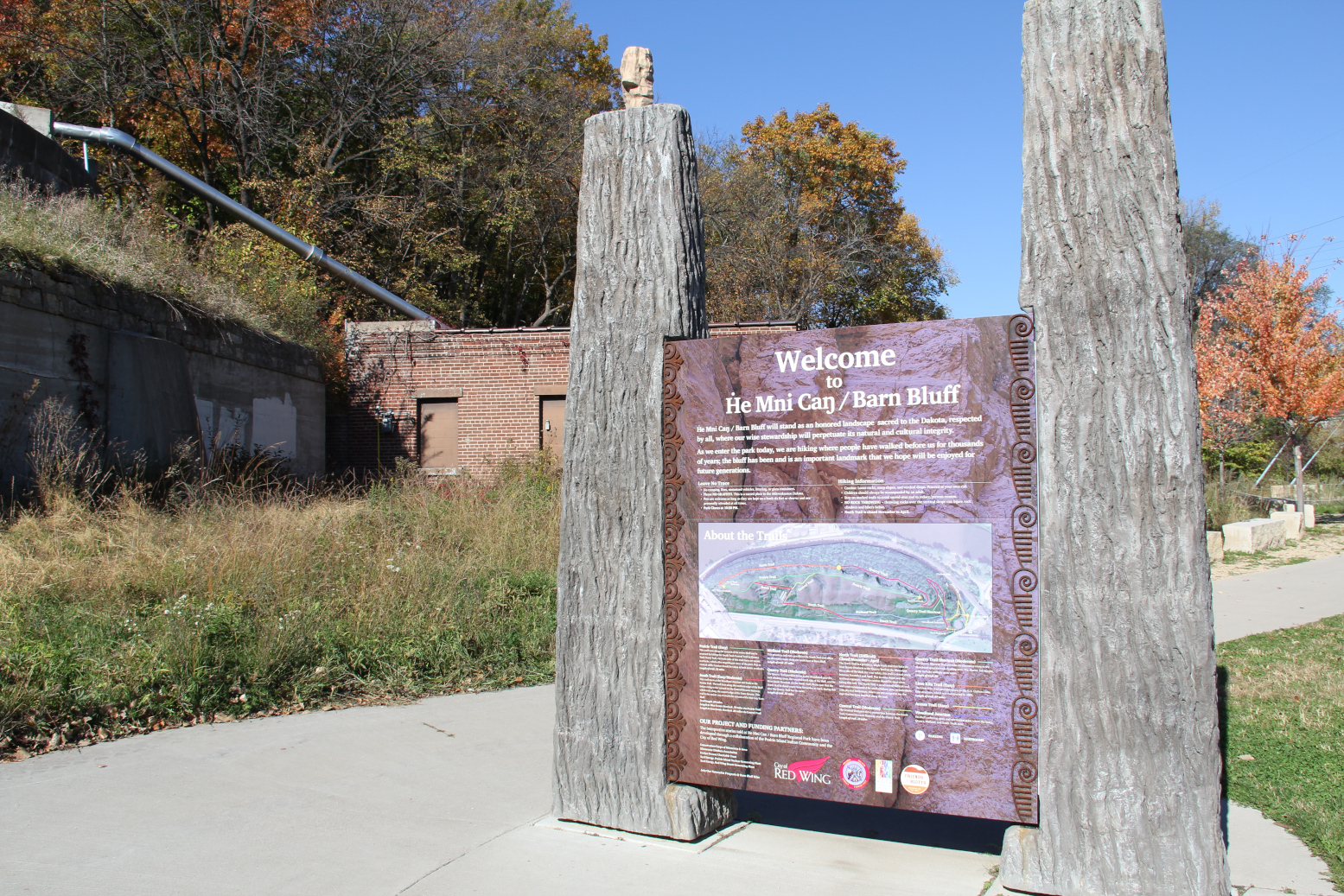
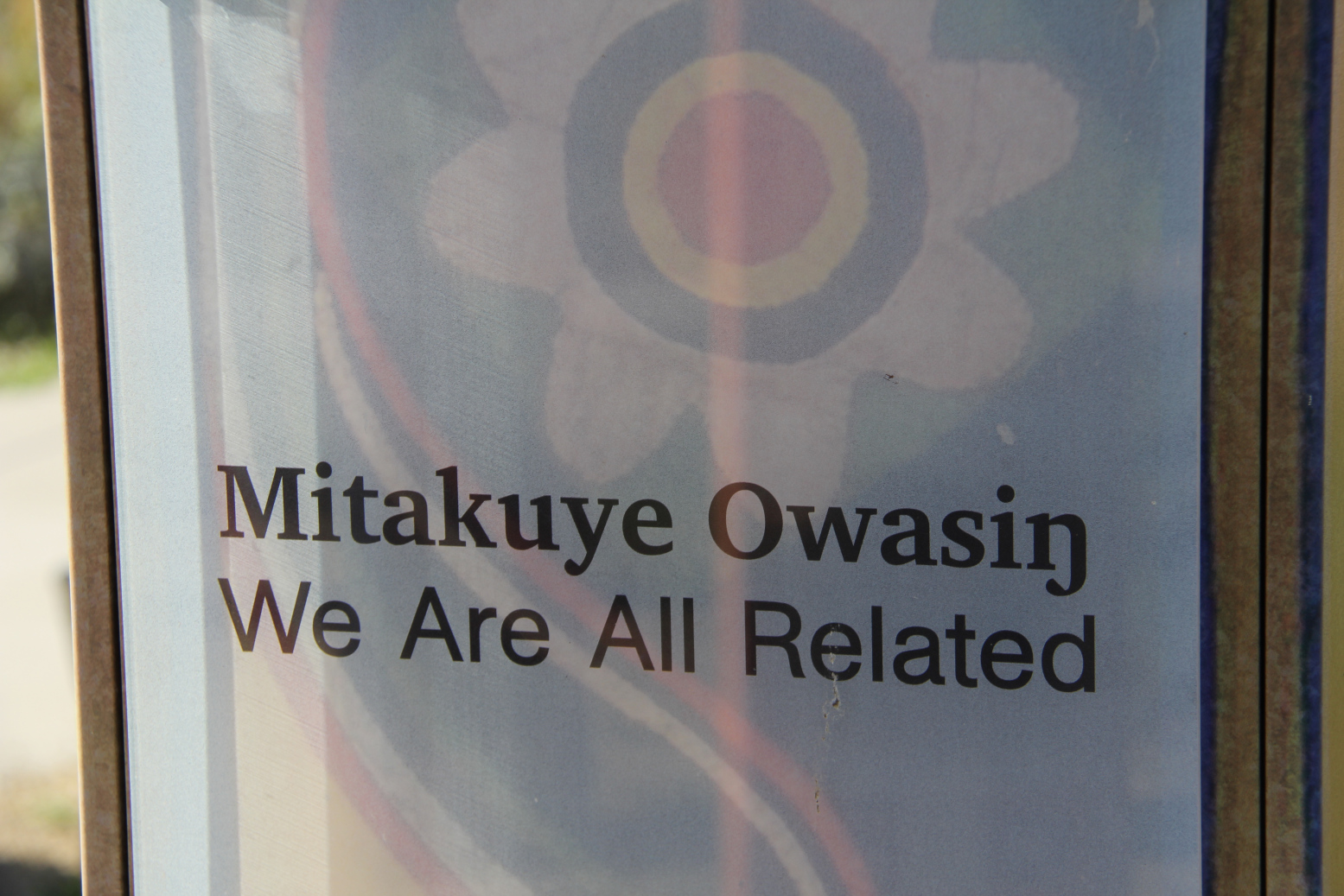
This sign welcomes visitors to Barn Bluff. (Minnesota Prairie Roots copyrighted photo October 2025)

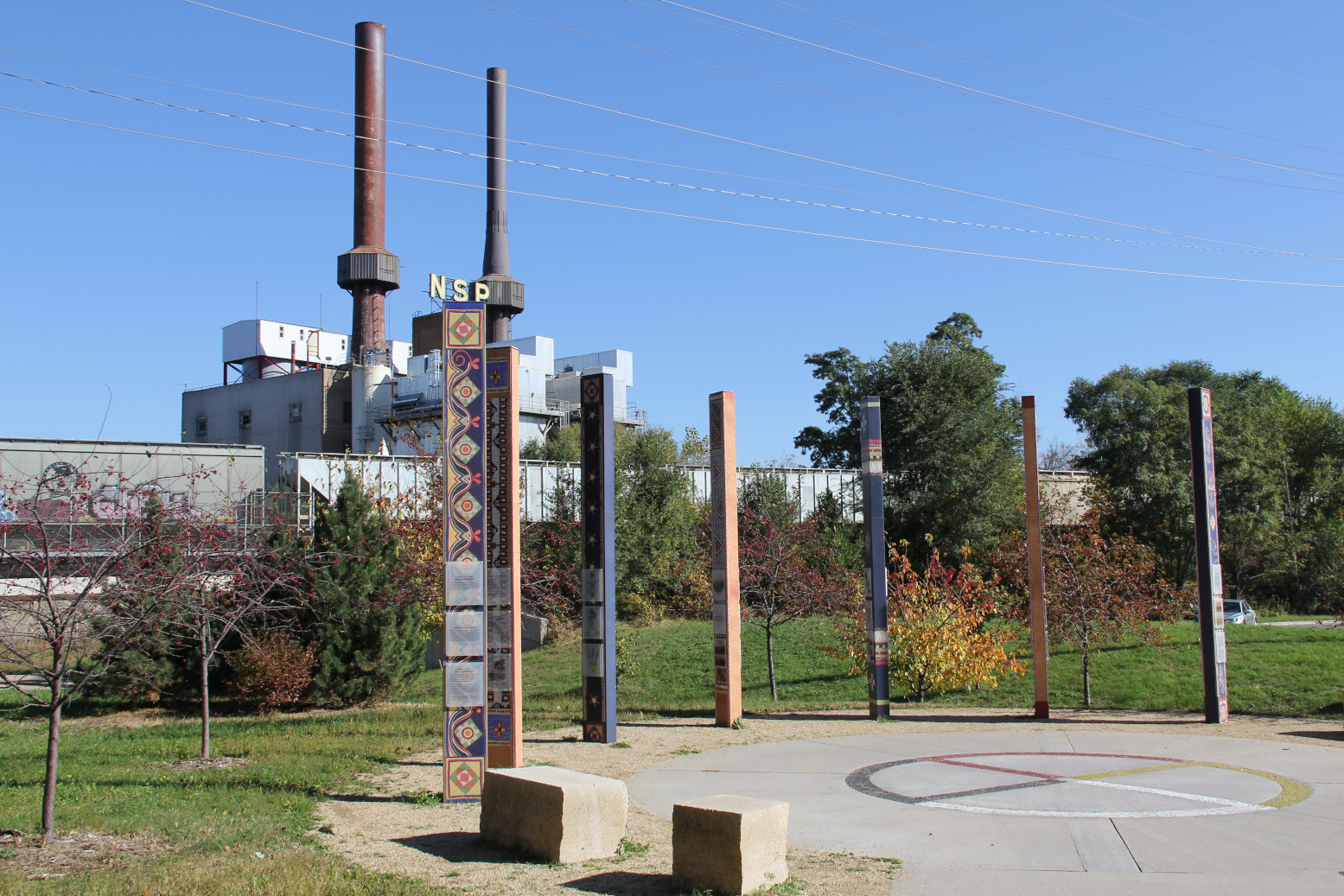
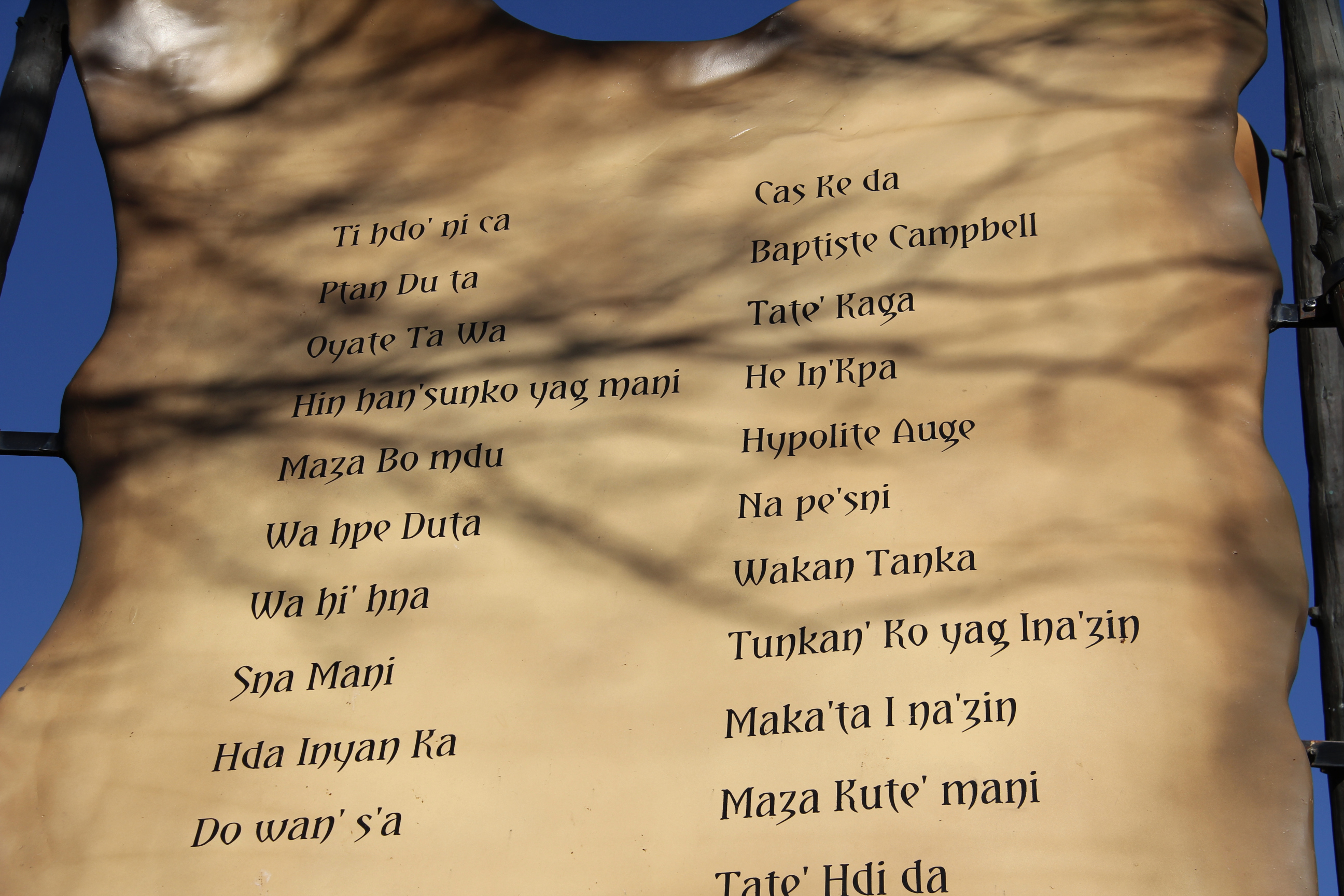
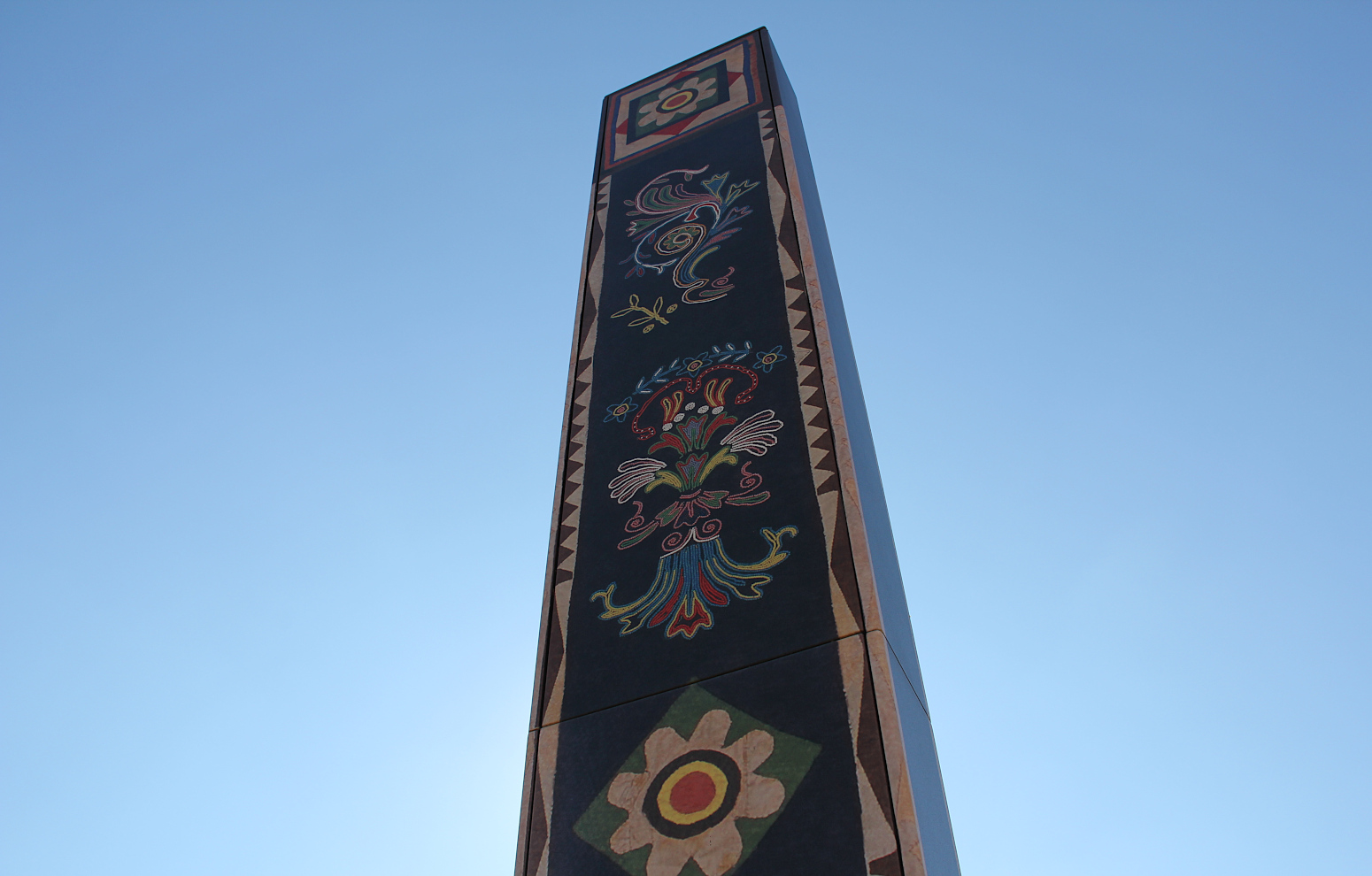
That message is shared in an Entrance Plaza to He Mni Caɳ. There storytelling markers and seven towering pillars reveal details about this place and its importance to Native Americans. Via images, words and art, I began to learn, to understand. By learning, I am also honoring National Native American Heritage Month celebrated in November.

An overview of the seven columns rimming a center plaza at the base of Barn Bluff. That’s an aged power plant in the background. (Minnesota Prairie Roots copyrighted photo October 2025)

I admittedly did not read every single word and somehow missed noticing the buttons to push on the storytelling markers that would allow me to hear the spoken Dakota language. But I still gathered enough information, enough story, to recognize the value of this land to the Dakota and the respect we should all hold for them, their history and the sacred He Mni Caɳ, which is on the National Register of Historic Places.

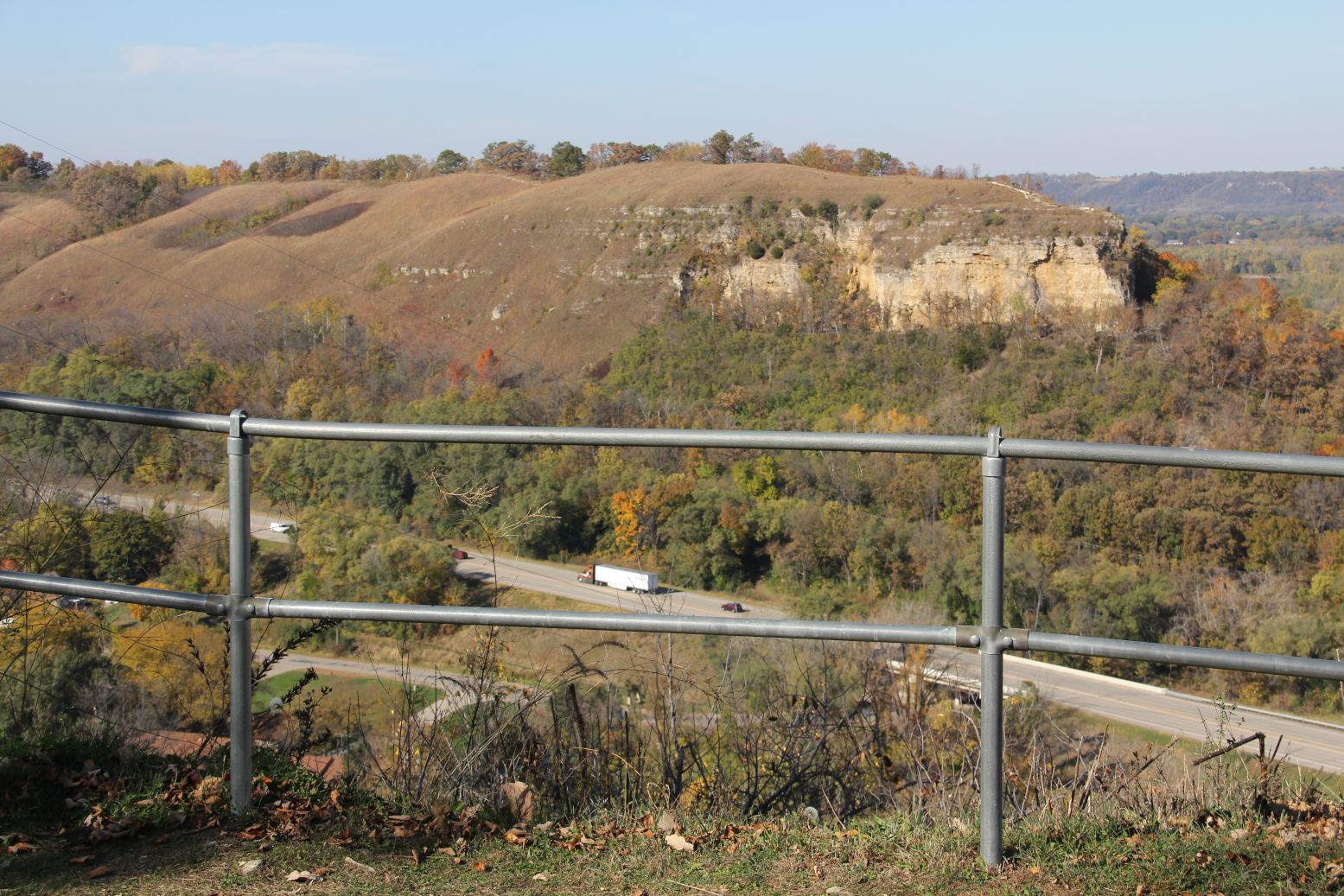
The Mississippi River Valley is a place of remarkable natural beauty, here photographed from atop Sorin’s Bluff in Memorial Park. (Minnesota Prairie Roots copyrighted photo October 2025)

The city of Red Wing and the nearby Prairie Island Indian Community have partnered to preserve and honor this place along the Mississippi following the guiding principles of heal, sustain, educate and honor. I saw that and read that in the plaza.

A message highlighted on a plaza column. (Minnesota Prairie Roots copyrighted photo October 2025)
The pillars feature traditional Dakota patterns. (Minnesota Prairie Roots copyrighted photo October 2025)
Strong words on a storytelling marker. (Minnesota Prairie Roots copyrighted photo October 2025)

As I viewed the historic Dakota patterns on the seven plaza columns and walked around this history circle reading and photographing, words and phrases popped out at me: We are all related. Interconnectedness. Kinship and a shared landscape. If only, I thought, we would all hold those words close, remember them in our differences, remember them in our relationships with each other and with the earth, remember them in our struggles and disconnect.

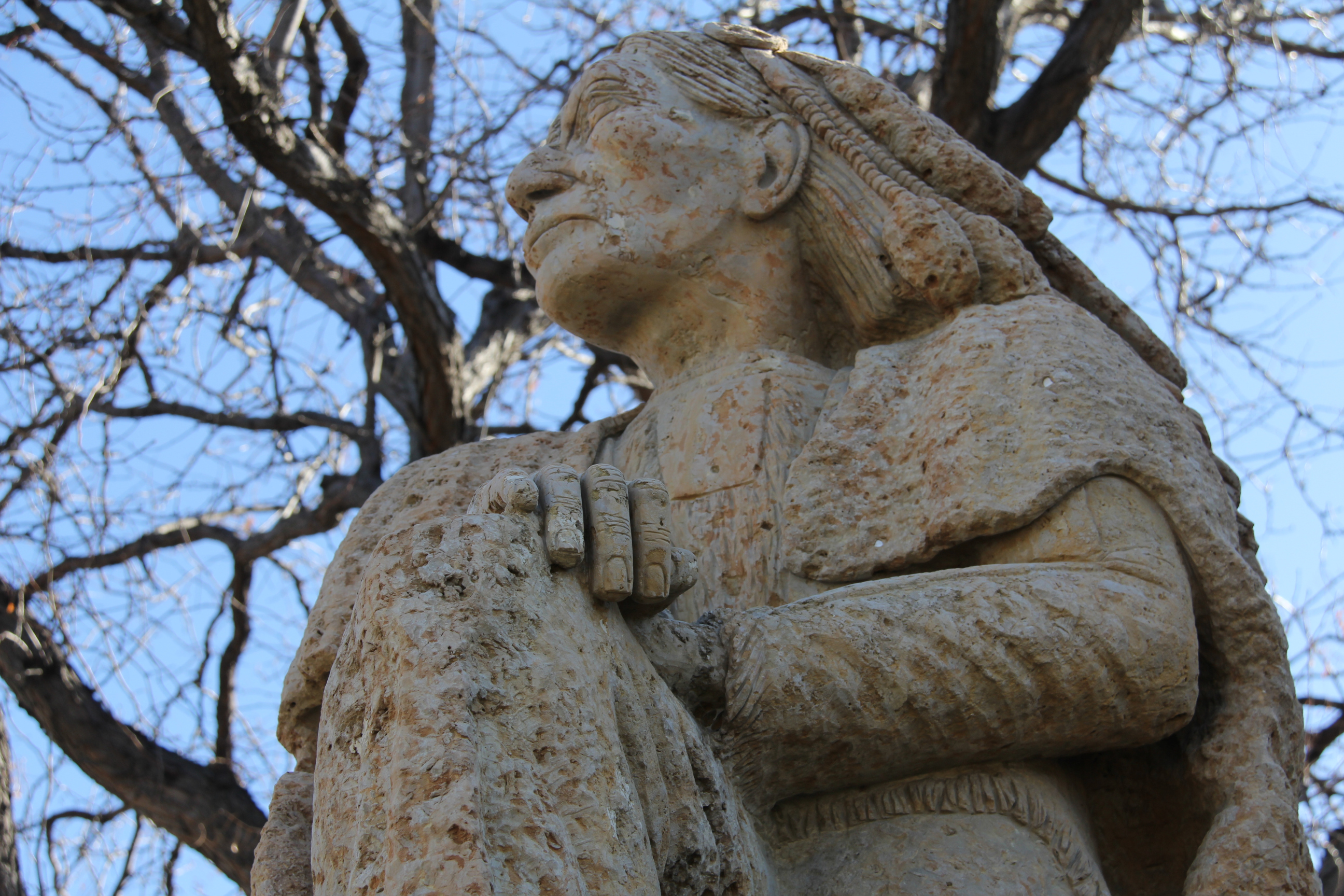
A sculptured head tops a storytelling marker. (Minnesota Prairie Roots copyrighted photo October 2025)

The city of Red Wing is named after Tatanka Mani (“Walking Buffalo”), long ago leader of the Mdewakanton Dakota in the upper Mississippi River Valley. Early immigrants who settled in the area gave him that name. Tatanka Mani helped shape the history of this region through his decisions and leadership. He was clearly connected to his people, to the non-Natives who arrived here, and to the land.

A current-day view of Barn’s Bluff from high atop Sorin’s Bluff. (Minnesota Prairie Roots copyrighted photo October 2025)

Today He Mni Caɳ/Barn Bluff remains a major attraction in Red Wing, just as it was years ago for those traveling the river, exploring the region. Henry David Thoreau, Henry Schoolcraft and Zebulon Pike are among the countless who viewed the river and river valley below from atop the bluff.

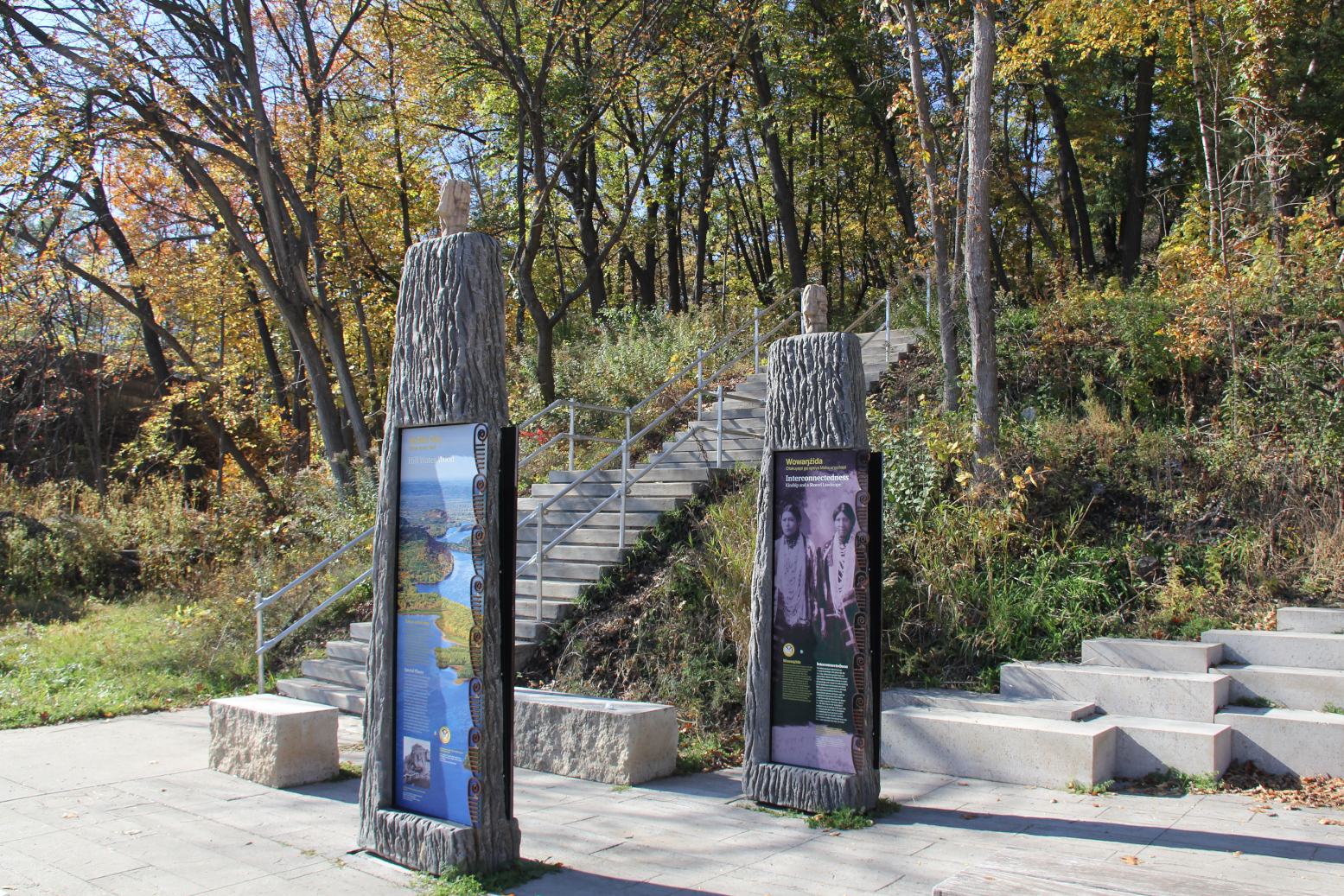
Two of the storytelling markers at the entrance plaza and steps leading to paths that take hikers onto and up the bluff. (Minnesota Prairie Roots copyrighted photo October 2025)

But not me. I was content to stand at its base, to take in the history shared there. And then later to view the bluff from Sorin’s Bluff in Memorial Park, a park with a road leading to the top. Even then I settled for a partial ascent, because I’d had enough of heights on this day when He Mni Caɳ challenged me and I learned the history of this sacred place.

© Copyright 2025 Audrey Kletscher Helbling
 

Beyond just fun, finding the history & heritage in Heritage Days June 11, 2025

This sculpture of Alexander Faribault and a Dakota trading partner stands in Faribault’s Heritage Park near the Straight River and site of Faribault’s trading post. (Minnesota Prairie Roots copyrighted file photo)

HOW DO YOU DEFINE heritage? I ask that question because this week my southern Minnesota community celebrates Heritage Days.

I would define heritage as a cultural or ethnic background. I am, for example, of German heritage.

So one would likely assume then that Heritage Days focuses on heritage. It did. Once. But no more. Not primarily. Rather, this multi-day event in Faribault seems more a June get together with the usual food, music, parade, craft fair and such of any summer community gathering.

It’s not that my city of some 24,000 lacks in cultural and ethnic diversity to theme Heritage Days. We are a bit of a melting pot with our newest residents arriving from Somalia and Sudan. Early on, the French, Irish, Germans and others settled here to shape and grow Faribault. Latinos also define a sizable part of our population. Many others have come from multiple countries to this place along the Cannon and Straight Rivers. Most are generations removed from the homeland. Some, though, are first-generation immigrants.

Jeff Jarvis created and handed out this mini booklet about the Wahpekute Band of the Dakota at a previous presentation at Books on Central. (Minnesota Prairie Roots copyrighted file photo)

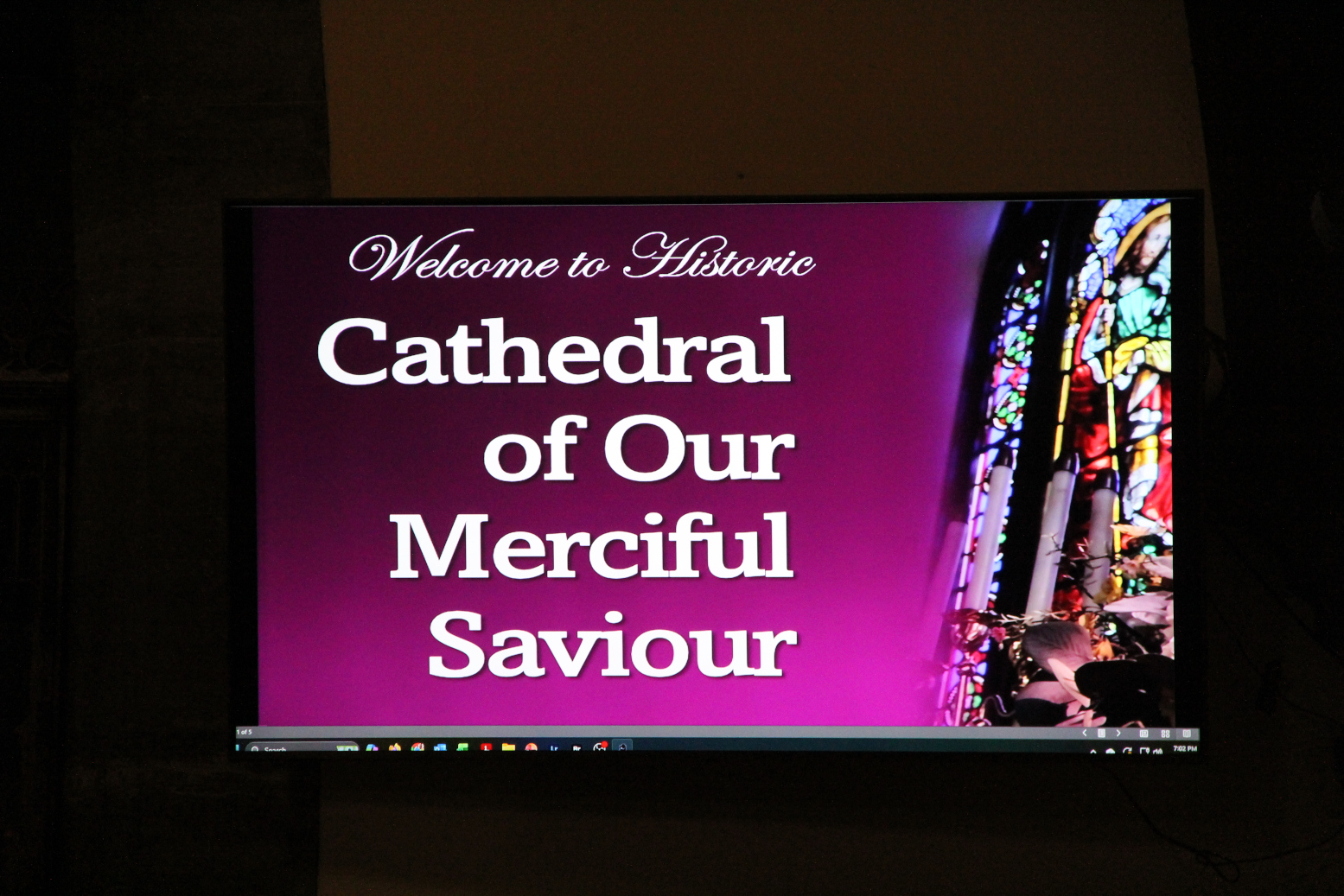
But back to Heritage Days. Looking through the long list of events, I see several opportunities to learn about local heritage and history. The first happens at 6:30 p.m. Wednesday, June 11, at the Cathedral of Our Merciful Saviour. Regional artist and historian Jeff Jarvis will talk about “The Wakpekute Dakota & Early Faribault History.” I’ve previously heard Jarvis speak on the Dakota, original inhabitants of the land. He’s done his research. I highly recommend attending his presentation. I’m always surprised by how little long-time residents seem to know about the Dakota and their long ago presence in what would become Faribault. Jarvis presents an informative lesson in local Native heritage.

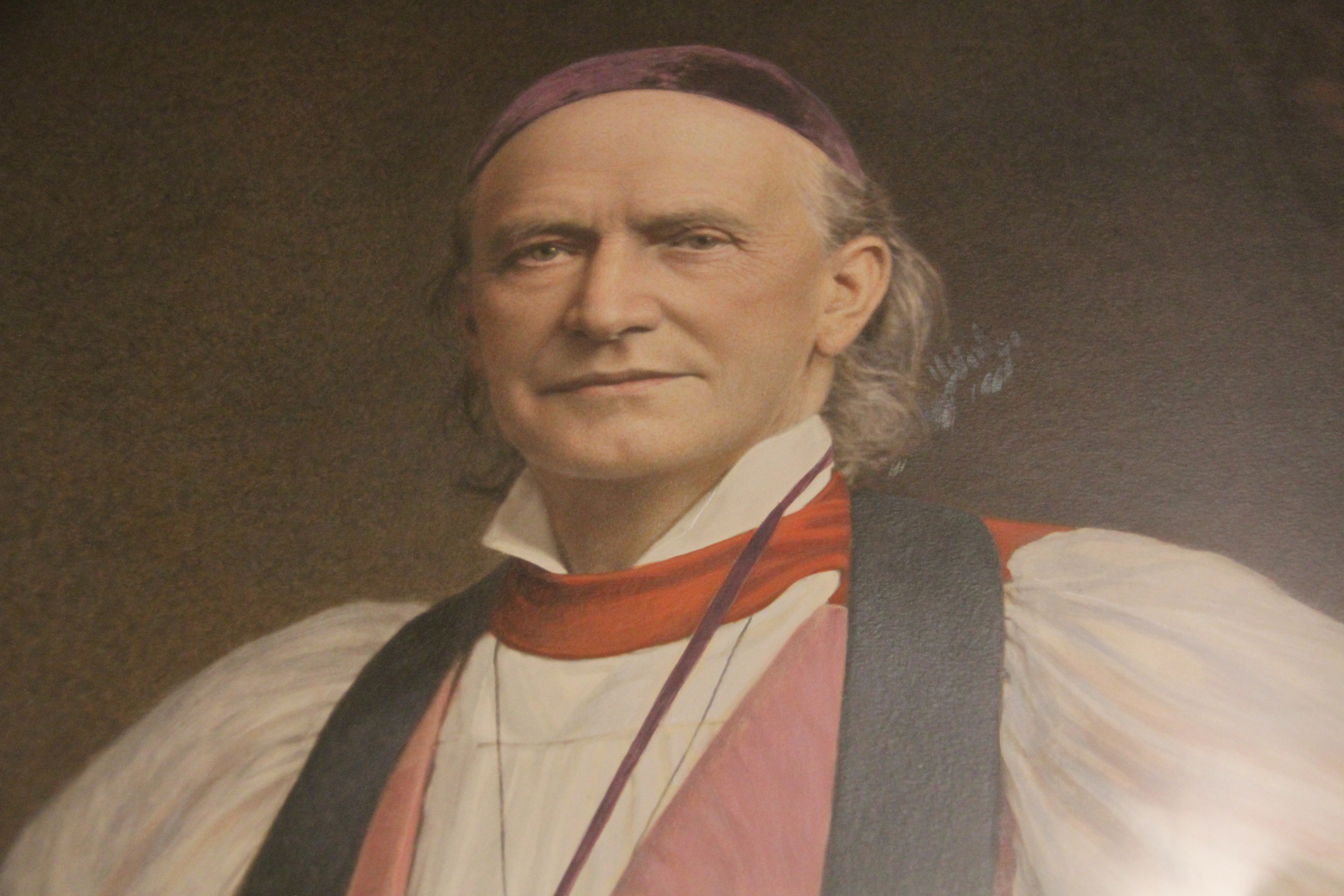
Likewise, the Rice County Historical Society Museum will be open, free of charge, from 10 a.m.-5 p.m. Thursday-Saturday. It’s a good place to see Native American and other artifacts, learn about our early fur trading and additional local history, learn about notable people like Chief Taopi and Bishop Henry Whipple, and more. Bishop Whipple founded and served the Cathedral where Jarvis is speaking.

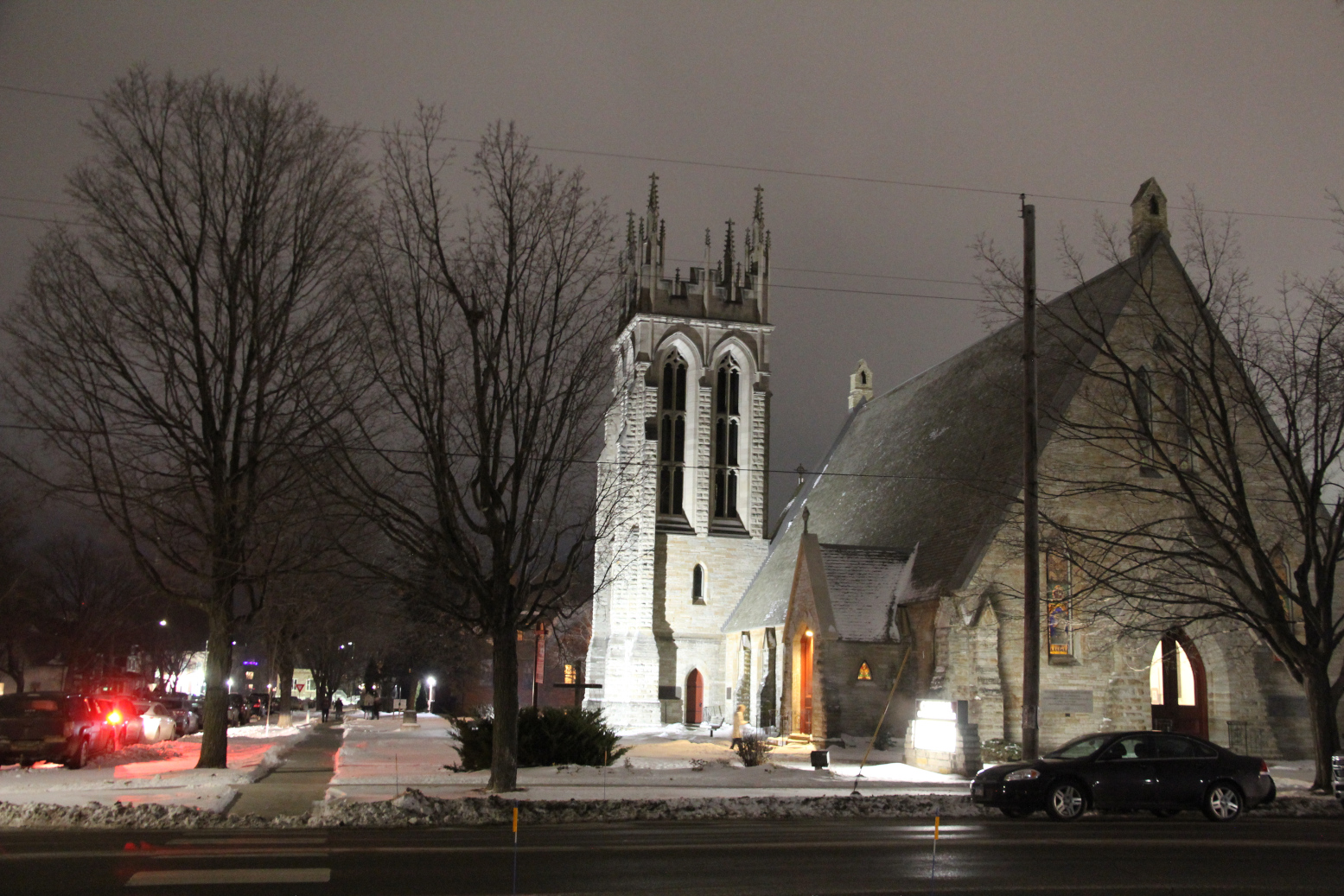
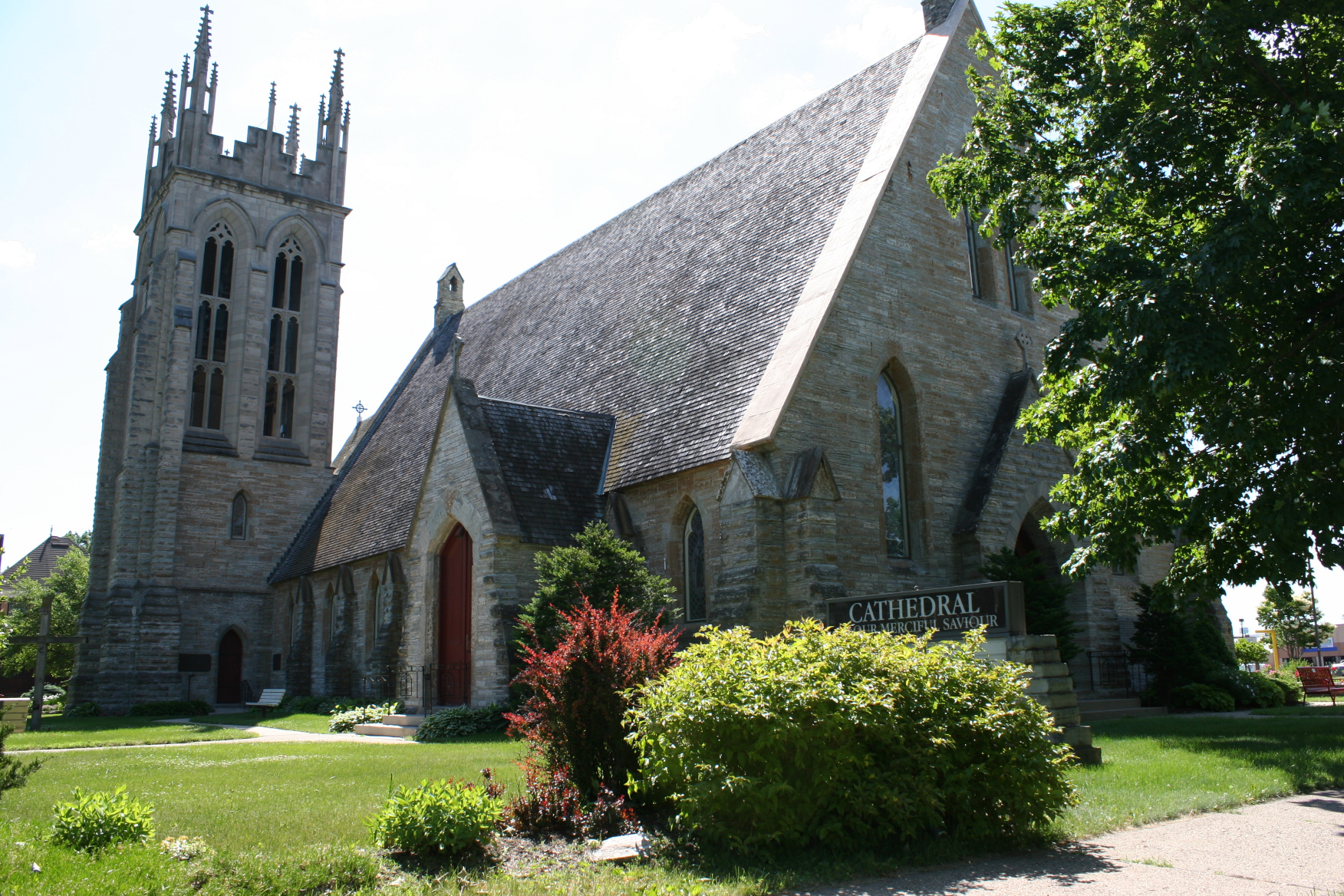
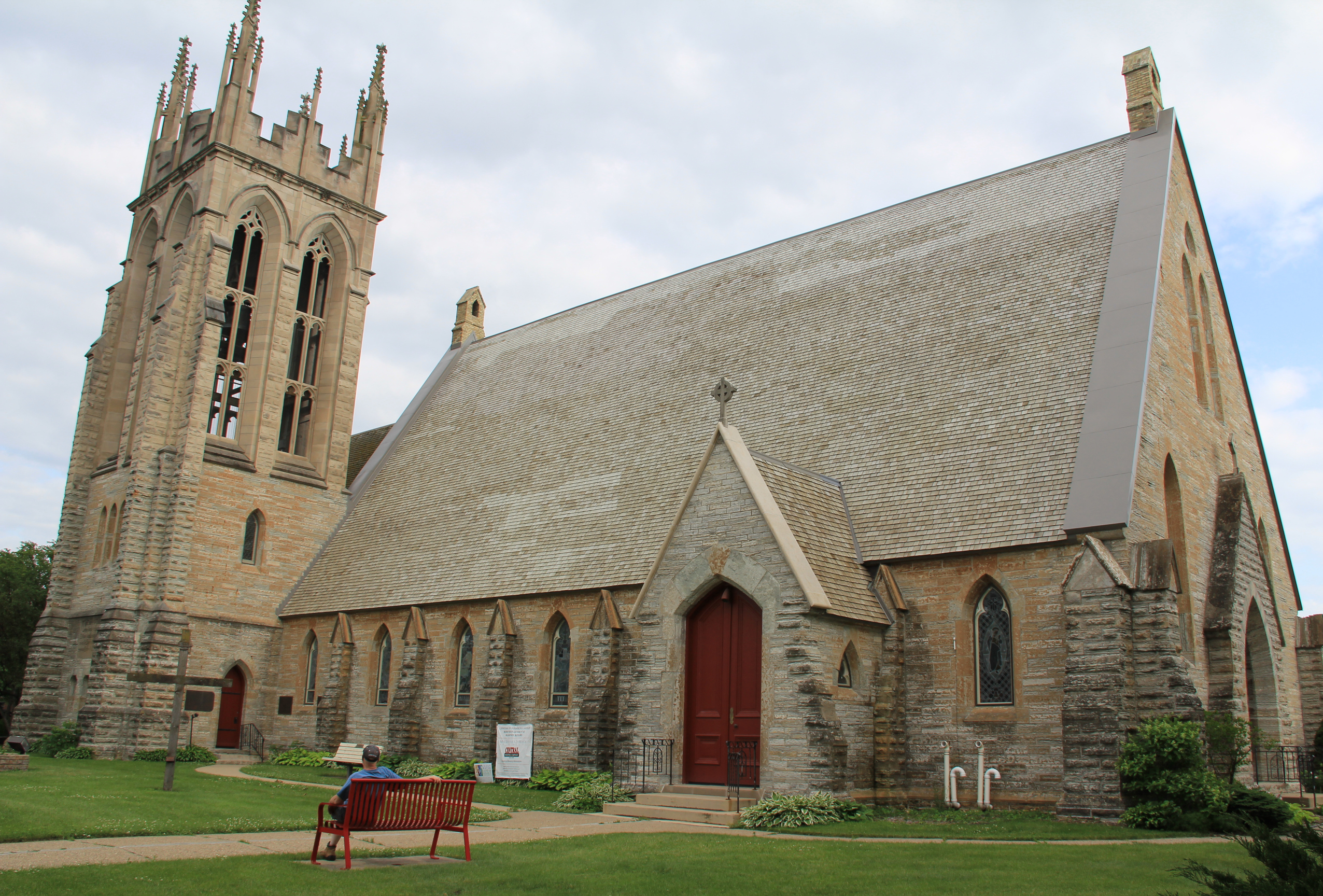
The historic Cathedral of Our Merciful Saviour sits across from Central Park and is a must-see in Faribault. (Minnesota Prairie Roots copyrighted file photo 2024)

The historic Cathedral will be open for tours at 11:30 a.m. Sunday, June 15, following a 10 a.m. Ecumenical Service including bluegrass music. This massive cathedral—and, yes, it really is a cathedral—is important in local Dakota history as the bishop worked closely with Native Americans, some of whom worshipped here.

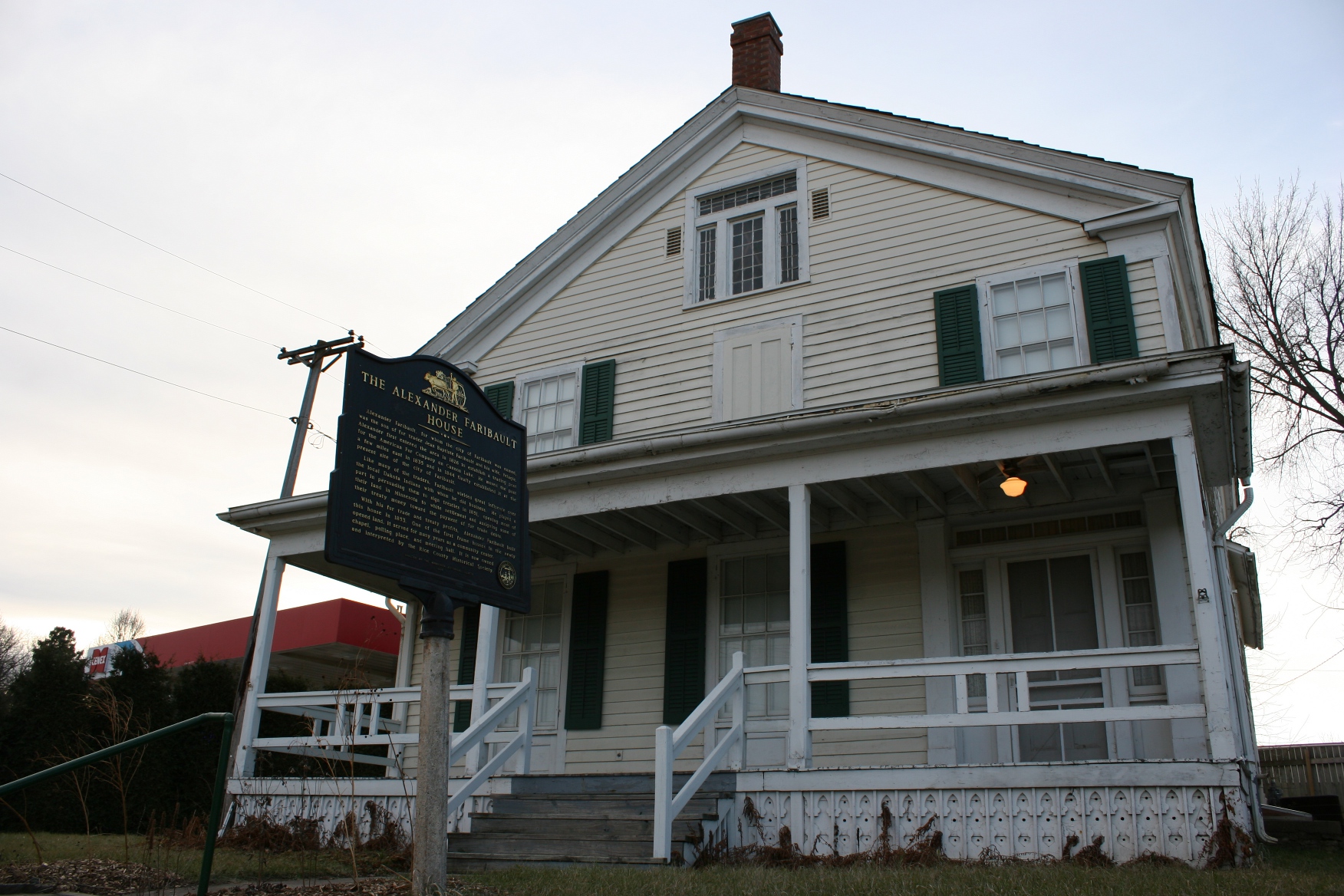
Fur trader and town founder Alexander Faribault, who was of Dakota and French Canadian heritage, also worked closely with the Dakota. His wood-frame house will be open for free tours from 11 a.m.-3 p.m. Saturday, June 14.

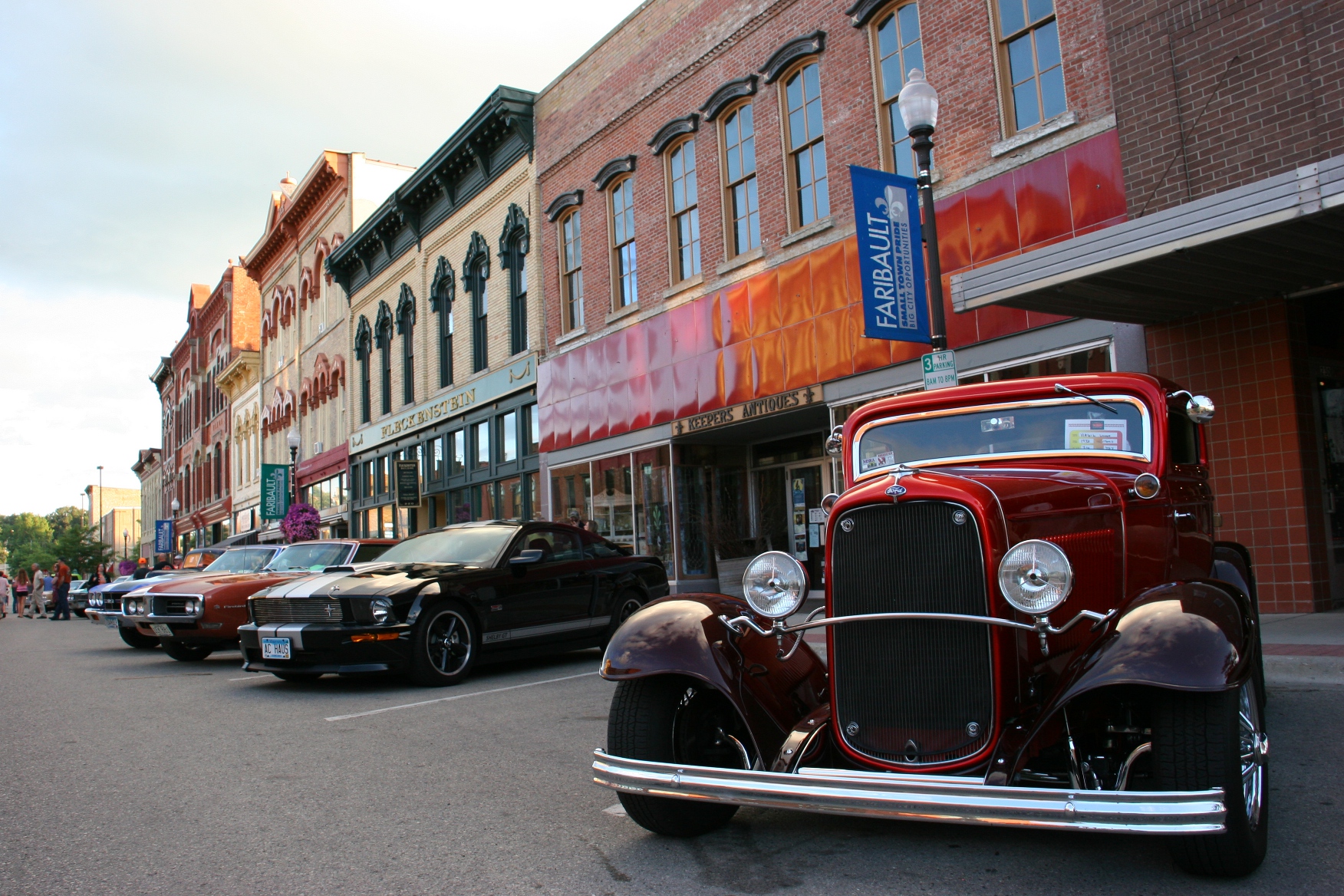
Downtown Faribault features well-kept aged buildings in our historic district. I photographed this scene during a Car Cruise Night. There’s a Car Cruise here Friday, June 13, from 6-9 p.m. (Minnesota Prairie Roots copyrighted file photo)

The Rice County Historical Society will also offer a guided Downtown Walking Tour on Friday and Saturday with two time slots of 11 a.m. and 2 p.m. The $5 tour, led by RCHS Program and Outreach Coordinator Kiran Loewenstein, begins at Central Park. Anticipated to take 1-1 ½ hours, the tour route follows Central Avenue with a focus on the historic district and buildings and early general Faribault history. I expect that will offer ample opportunity to not only learn about early history and heritage, but also to see the heritage of our newest residents in downtown core ethnic businesses.

Two more opportunities to embrace local history (although not officially part of Heritage Days) are inside the State Bank of Faribault along Central Avenue. Local streetscapes and landscapes by Father Jim Zotalis, spiritual leader of the Cathedral, are displayed in a pop-up exhibit in the bank lobby. And for those interested in Faribault’s brewing history, the bank holds an extensive collection of Fleck’s beer memorabilia form long ago Fleckenstein Brewery. Both are accessible during business hours only.

There’s lots happening during Heritage Days, activities that mostly aren’t about heritage. But some are. To see a complete listing of events, click here.

© Copyright 2025 Audrey Kletscher Helbling
 

Gathering beside the Cannon for history come alive at Riverside Rendezvous May 13, 2025

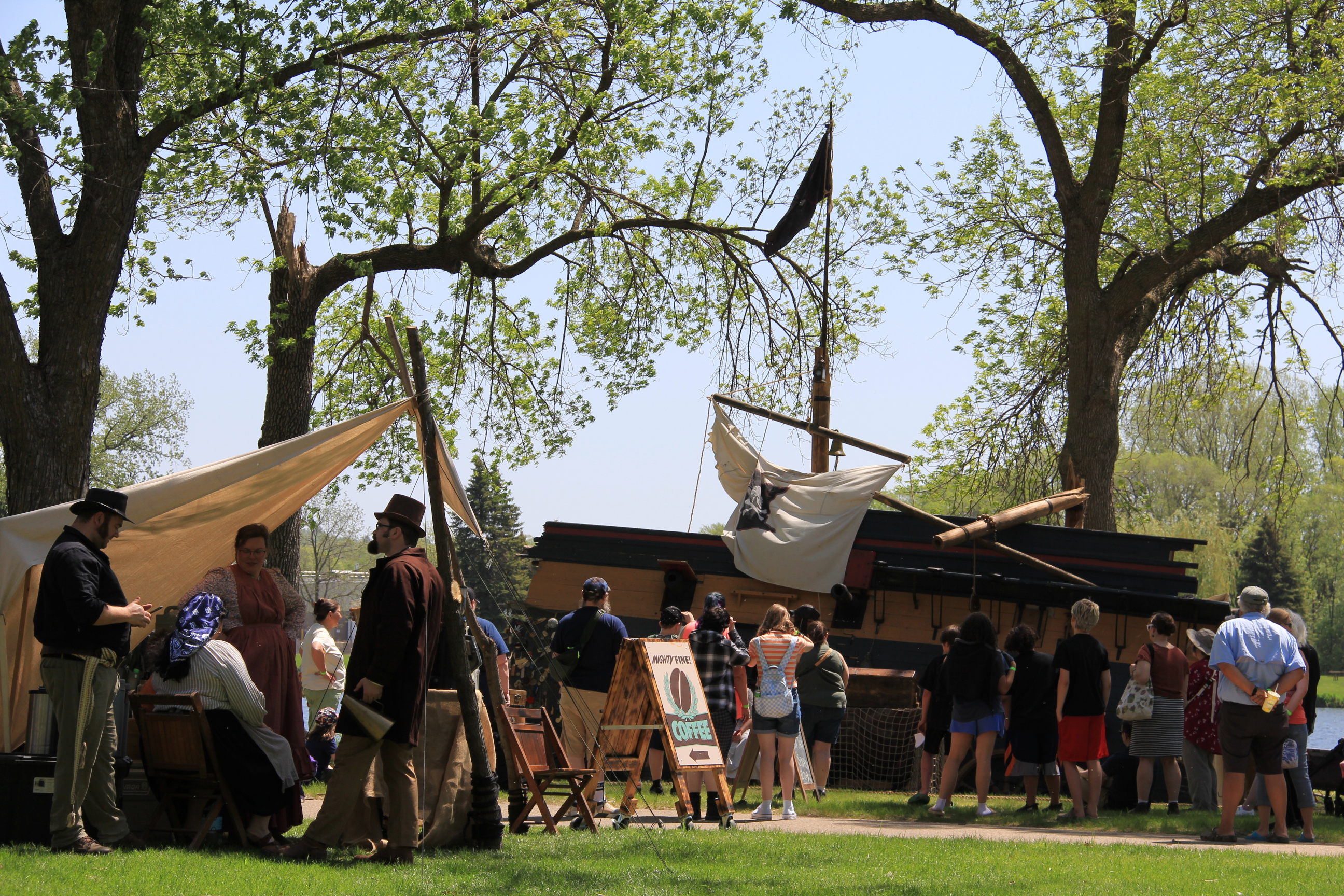
Learning about pirates at the pirate ship sitting near the Cannon River. (Minnesota Prairie Roots copyrighted photo May 2025)

TO READ ABOUT THE PAST is one thing. To learn about history via people passionate about the past is quite another.

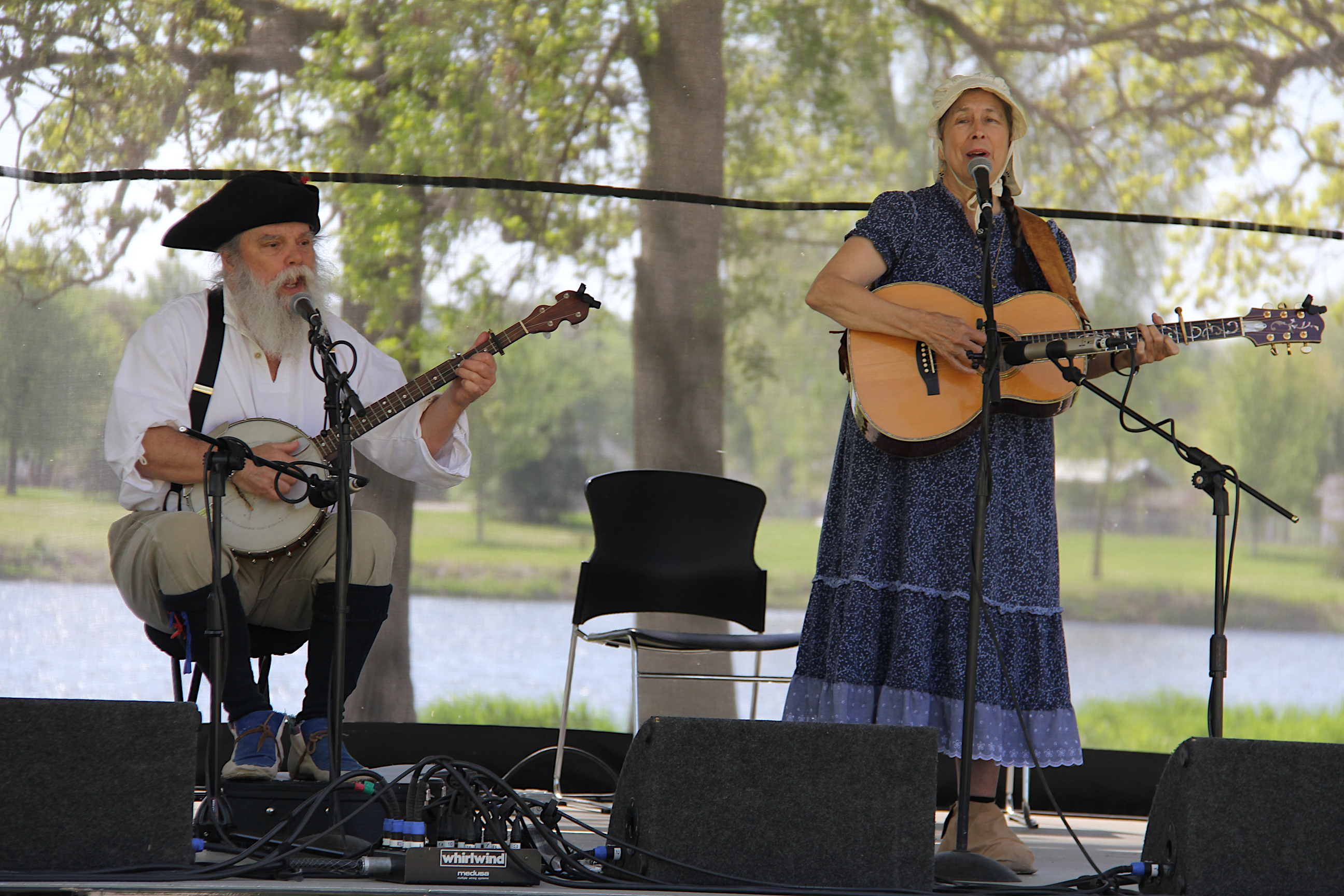
Folk singers Curtis & Loretta from Minneapolis perform Sunday morning. (Minnesota Prairie Roots copyrighted photo May 2025)

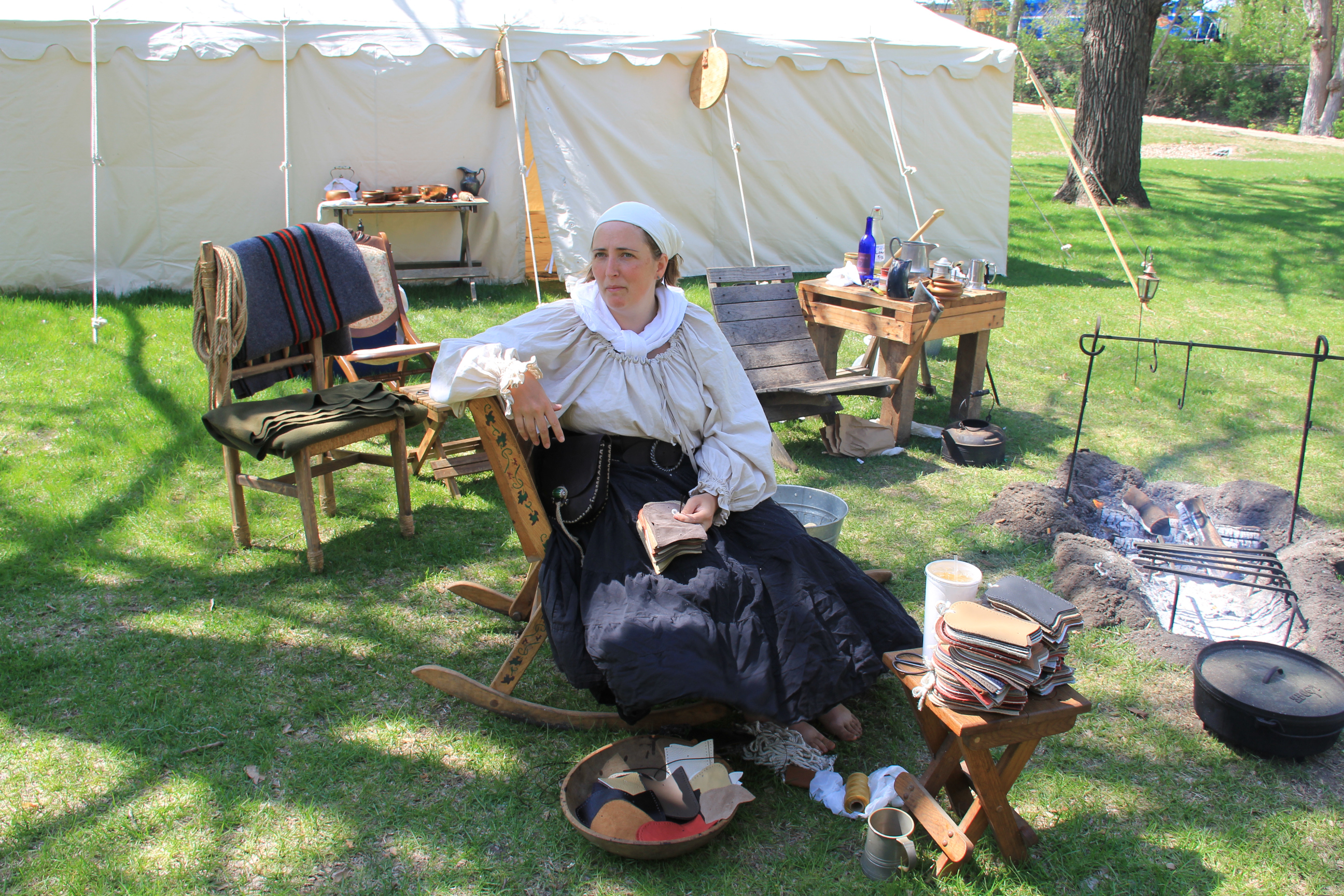
The past came alive over the weekend at the first-ever Riverside Rendezvous and History Festival in Faribault organized by the Rice County Historical Society. I spent four hours of my Mother’s Day roaming the festival grounds alongside the Cannon River at North Alexander Park. Listening. Learning. Connecting. Questioning. Observing. And photographing.

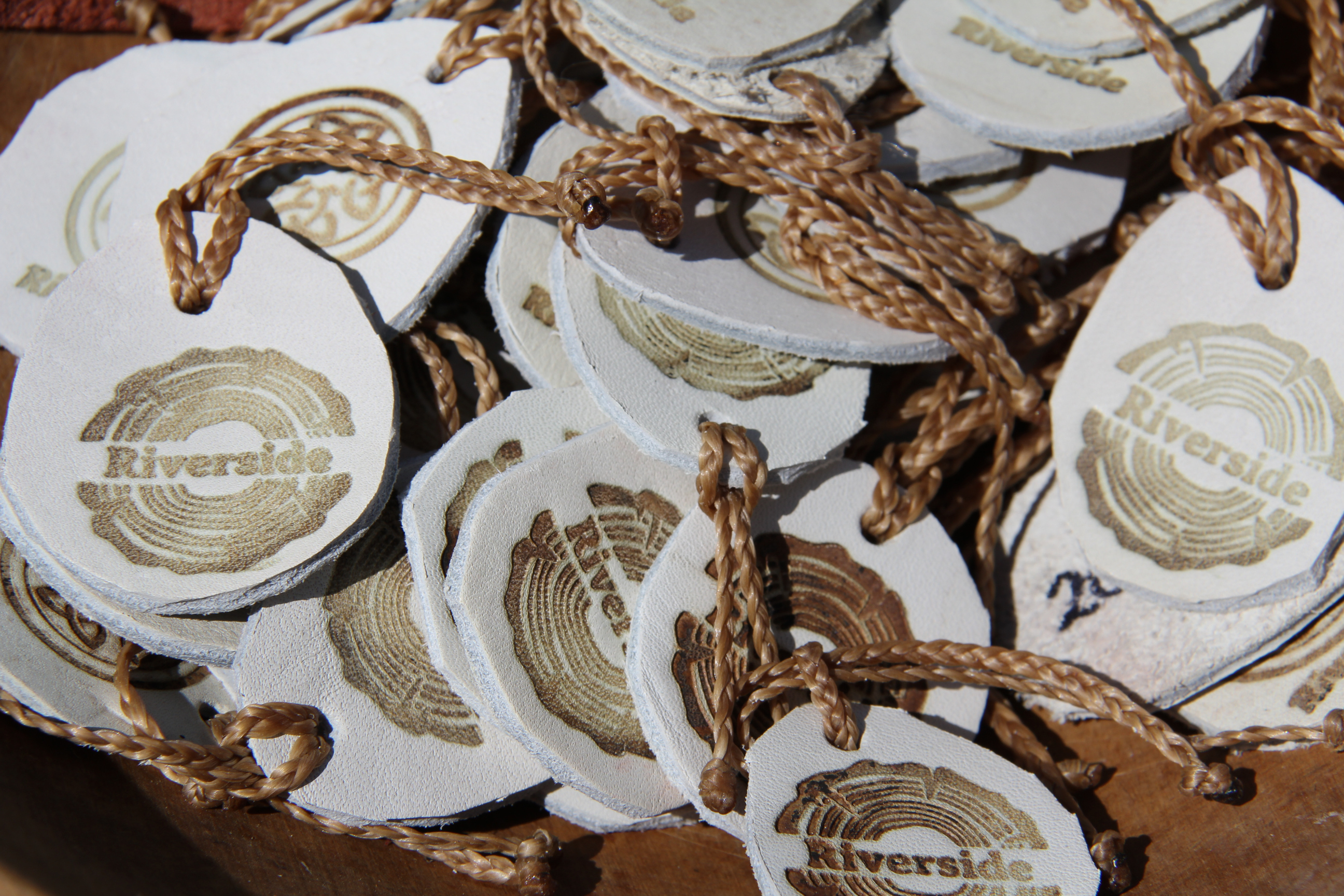
Many rendezvous feature medallions (like these for the Faribault festival) which participants post on their tents. (Minnesota Prairie Roots copyrighted photo May 2025)
This re-enactor taught kids and adults to stitch mini leather pouches. (Minnesota Prairie Roots copyrighted photo May 2025)
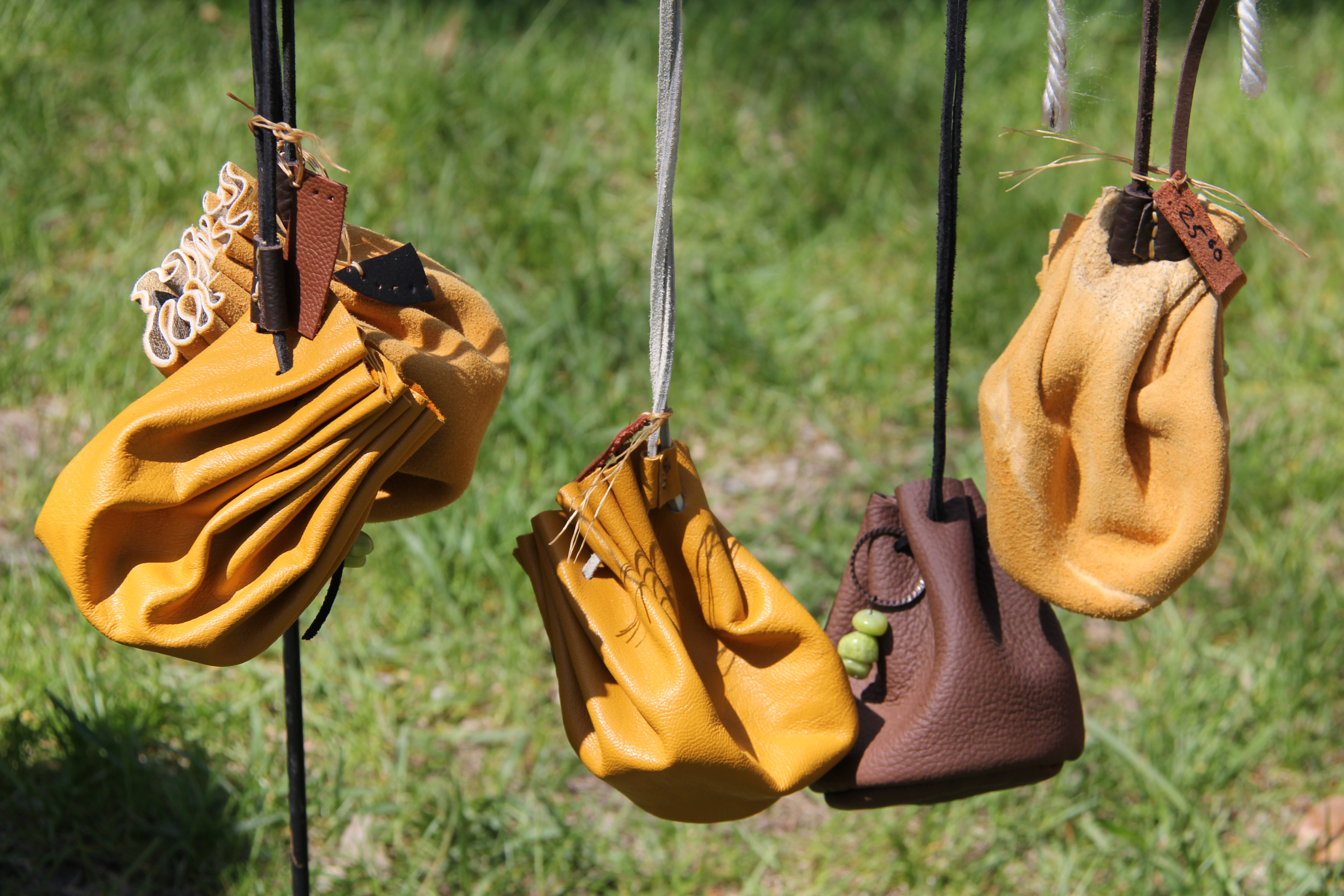
Small handcrafted leather bags for sale. (Minnesota Prairie Roots copyrighted photo May 2025)

The Rendezvous covered 1701-1900 with participants dressed in period costume. Think top hats, mountain hats, head scarves, long skirts, lots of leather and fur.

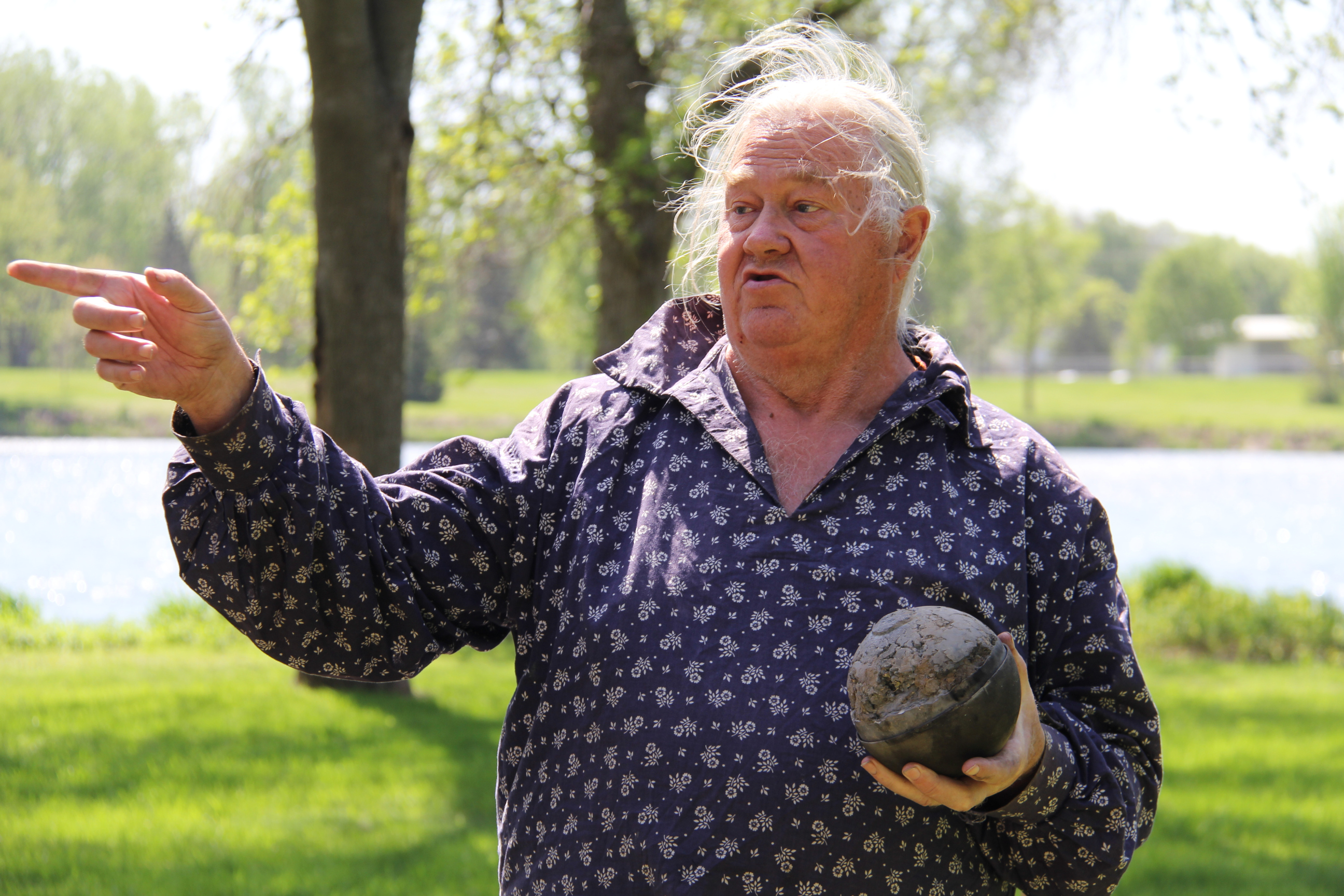
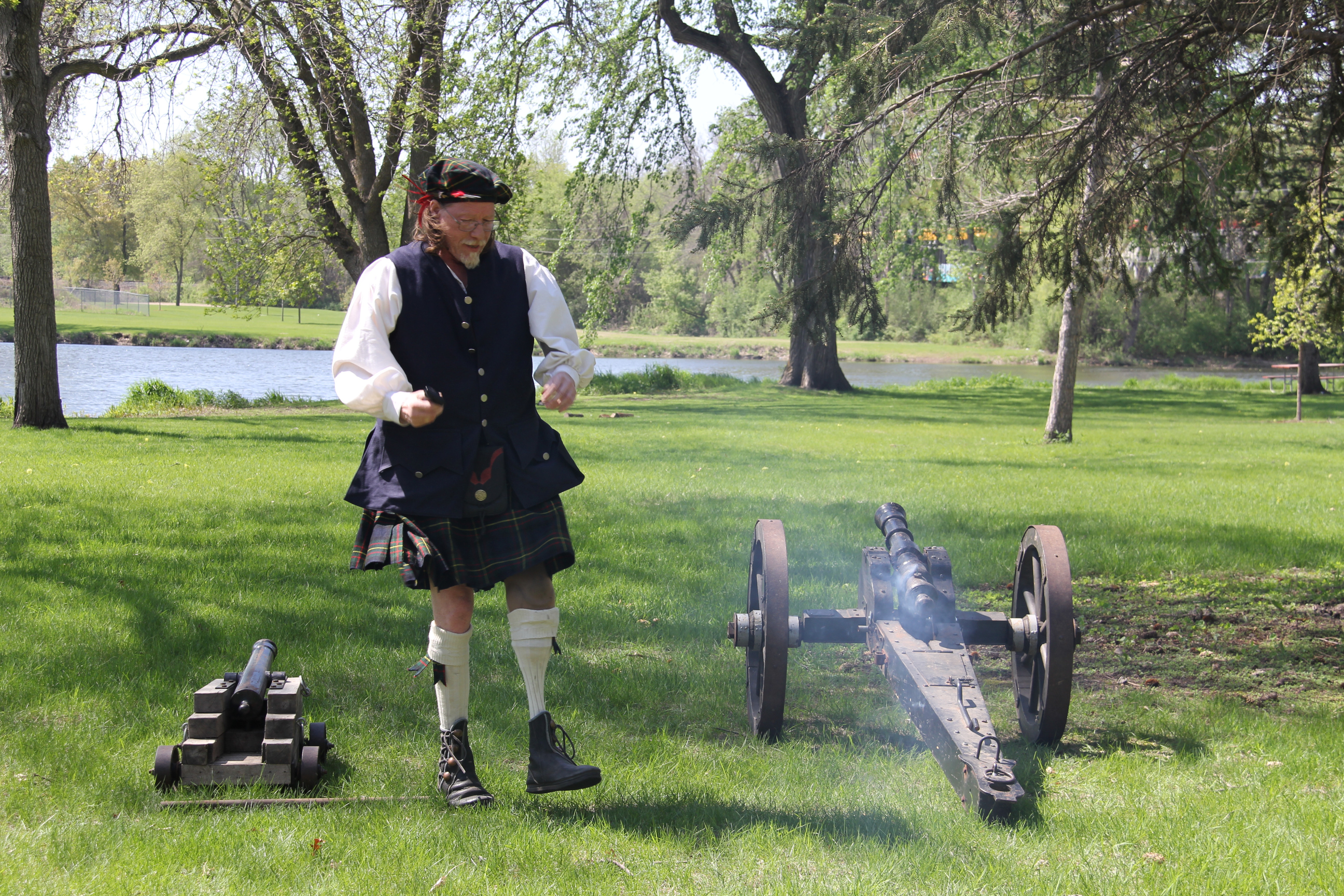
Before shooting off three cannons, this re-enactor talked about cannon balls, loading and firing a cannon, and safety. (Minnesota Prairie Roots copyrighted photo May 2025)
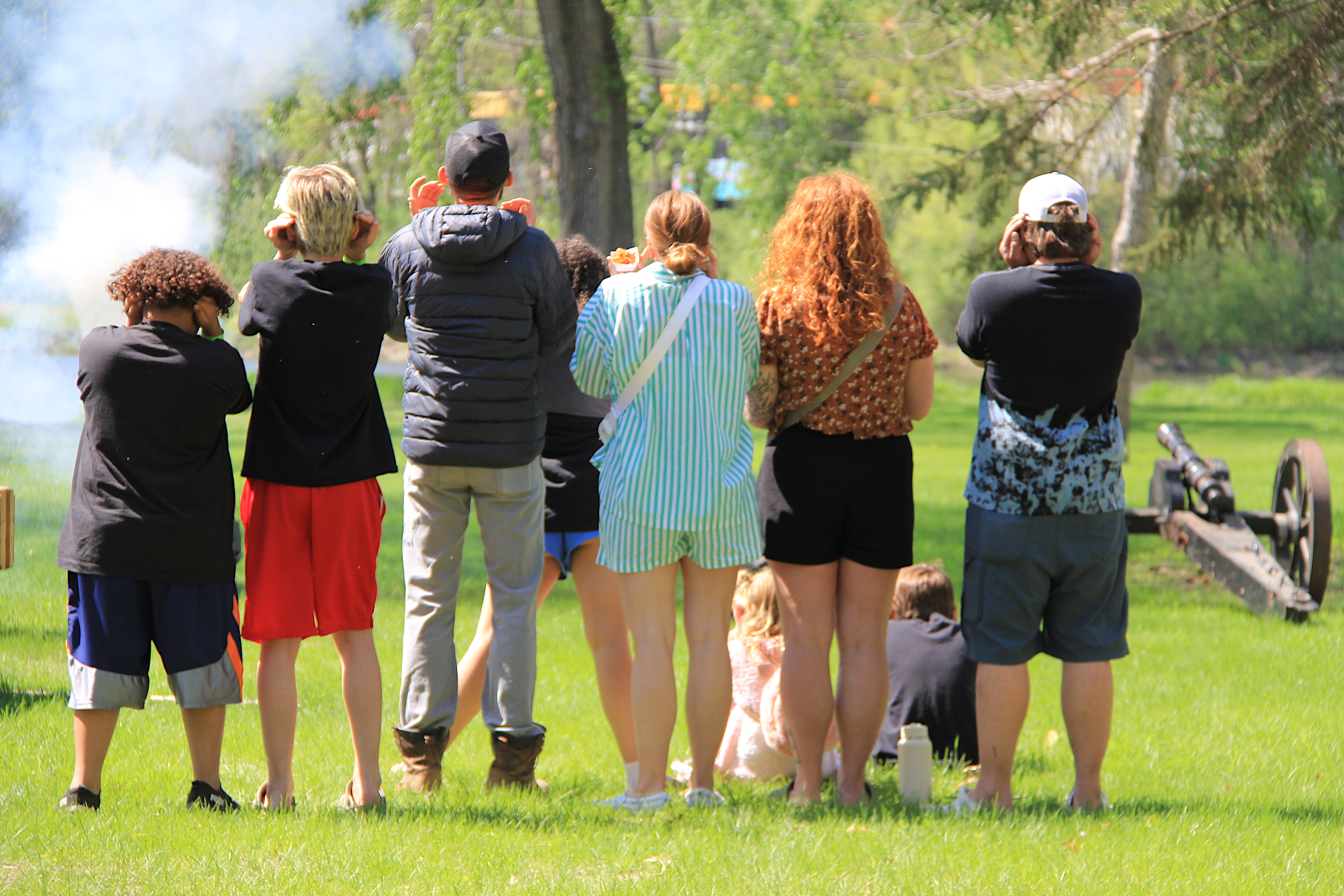
Firing one of three cannons. (Minnesota Prairie Roots copyrighted photo May 2025)
Before the cannons were fired, fest attendees were told to cover their ears “like fish.” The boom was loud. (Minnesota Prairie Roots copyrighted photo May 2025)

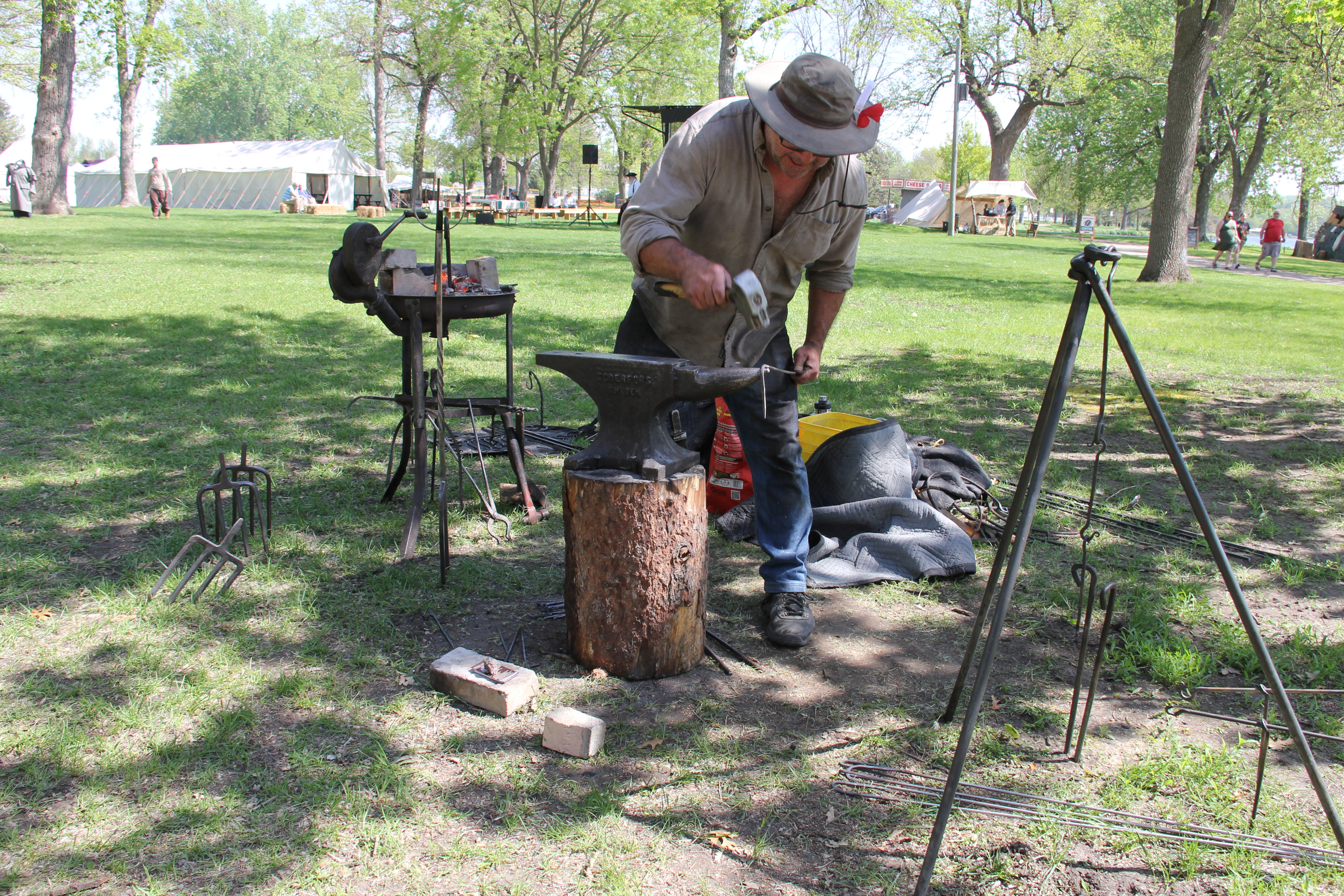
The re-enactors shared their period skills from blacksmithing to hat making to cannon shooting, rug weaving, leather stitching and much more. There was a lot to see, a lot to learn. And a lot to do, if you chose to participate.

Spools of colorful string for rug weaving fill a vintage suitcase. (Minnesota Prairie Roots copyrighted photo May 2025)
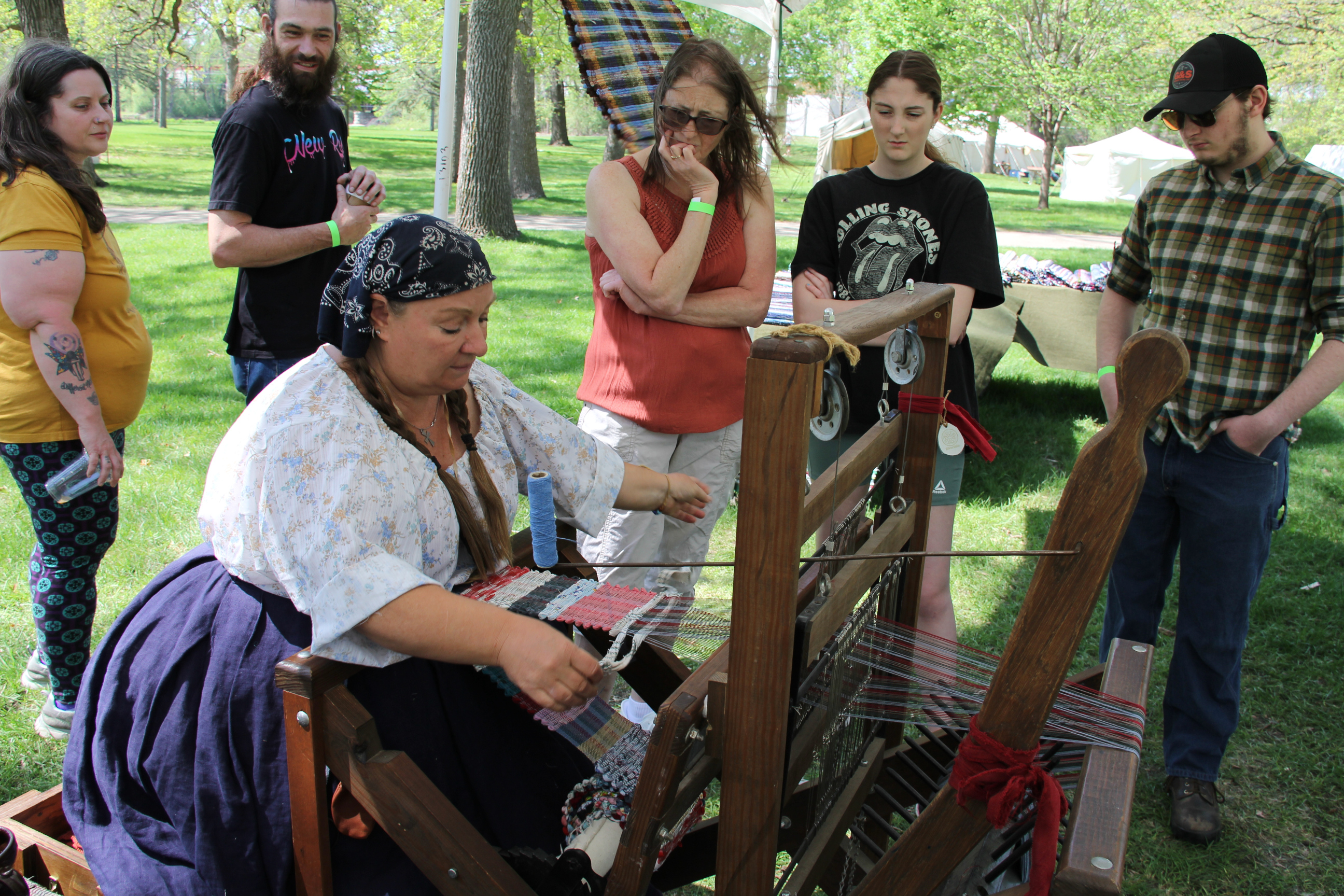
Folks gather around Lori Feltis as she weaves on her portable loom and talks about rug making. She operates Bohemian Rag Rug Studio near Stewartville. My grandkids enjoyed some hands-on weaving with Lori. (Minnesota Prairie Roots copyrighted photo May 2025)
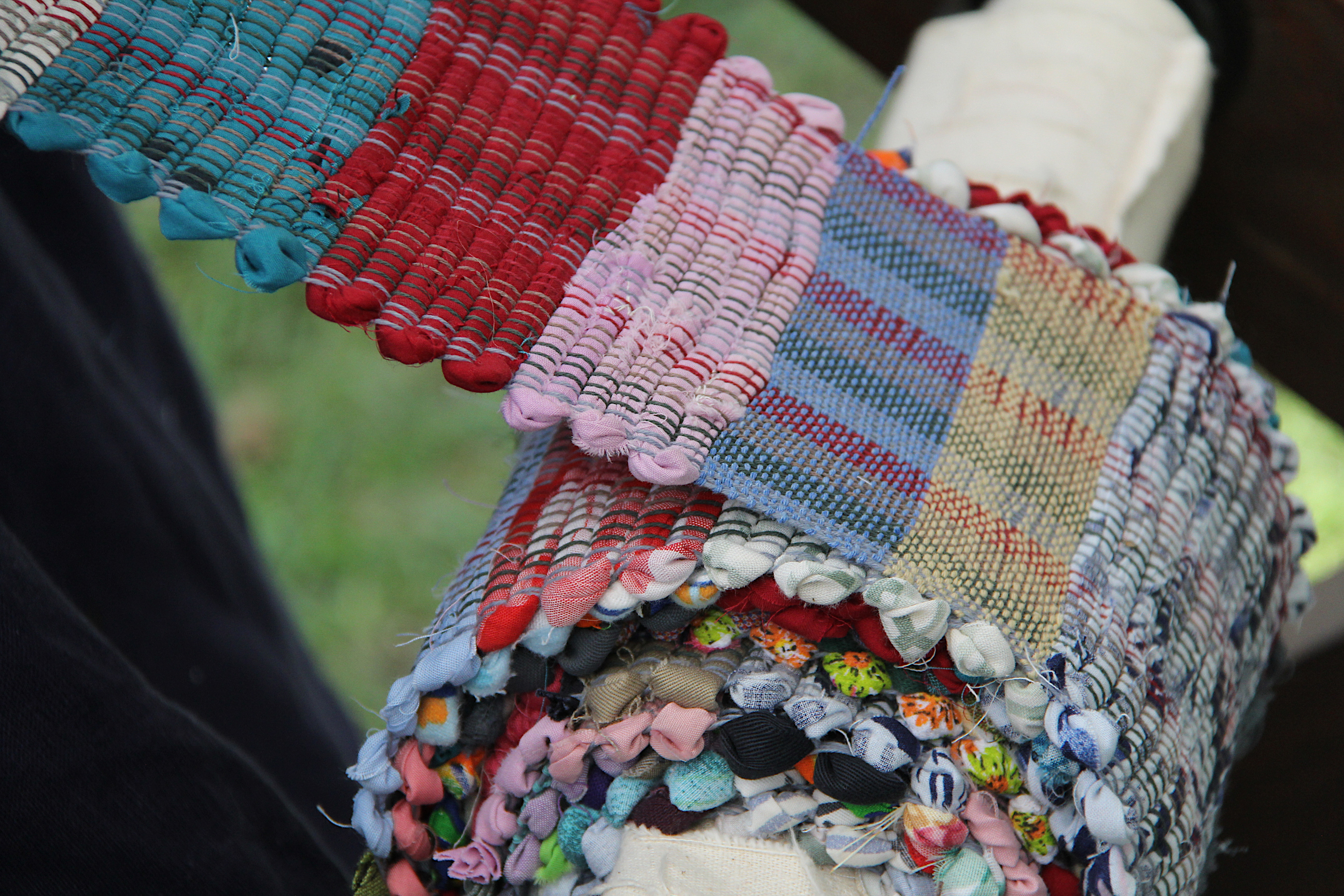
A narrow strip woven on Lori’s loom. (Minnesota Prairie Roots copyrighted photo May 2025)

I left the hands-on activities to others, including two of my elementary-aged grandkids. They joined many kids trying out new skills, making memories. School classes attended the festival Thursday and Friday. So many lessons taught and learned.

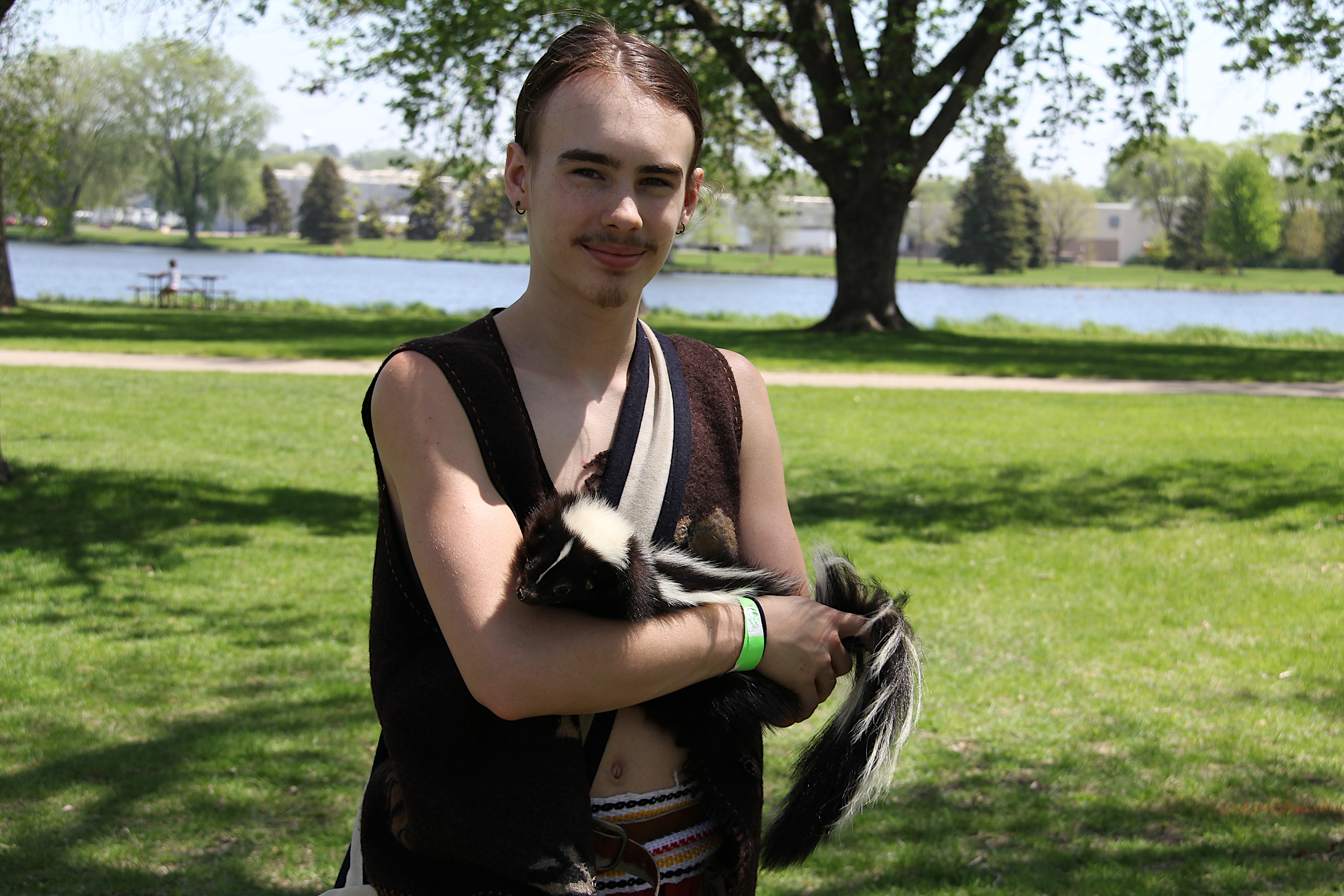
Valin with his “pet” skunk. (Minnesota Prairie Roots copyrighted photo May 2025)

My biggest personal lesson of the day came in an unexpected way, and not until I arrived home. While walking from one tent to another at the Rendezvous, I crossed paths with Valin cuddling his pet skunk. I’d never seen a real skunk up close and I was rather excited to photograph Little Stinky. I even called my husband over for a close-up look. Valin assured me Stinky’s stinky part had been removed. Back home, Randy revealed to me that Little Stinky was a pelt. “Didn’t you see his (Valin’s) hand underneath moving the skunk?” Uh, no. I can only imagine the story Valin told around the evening campfire about the lady who thought his skunk was alive. This is now the stuff of laughter and legend for my family. Lesson learned: Everything is not as it appears.

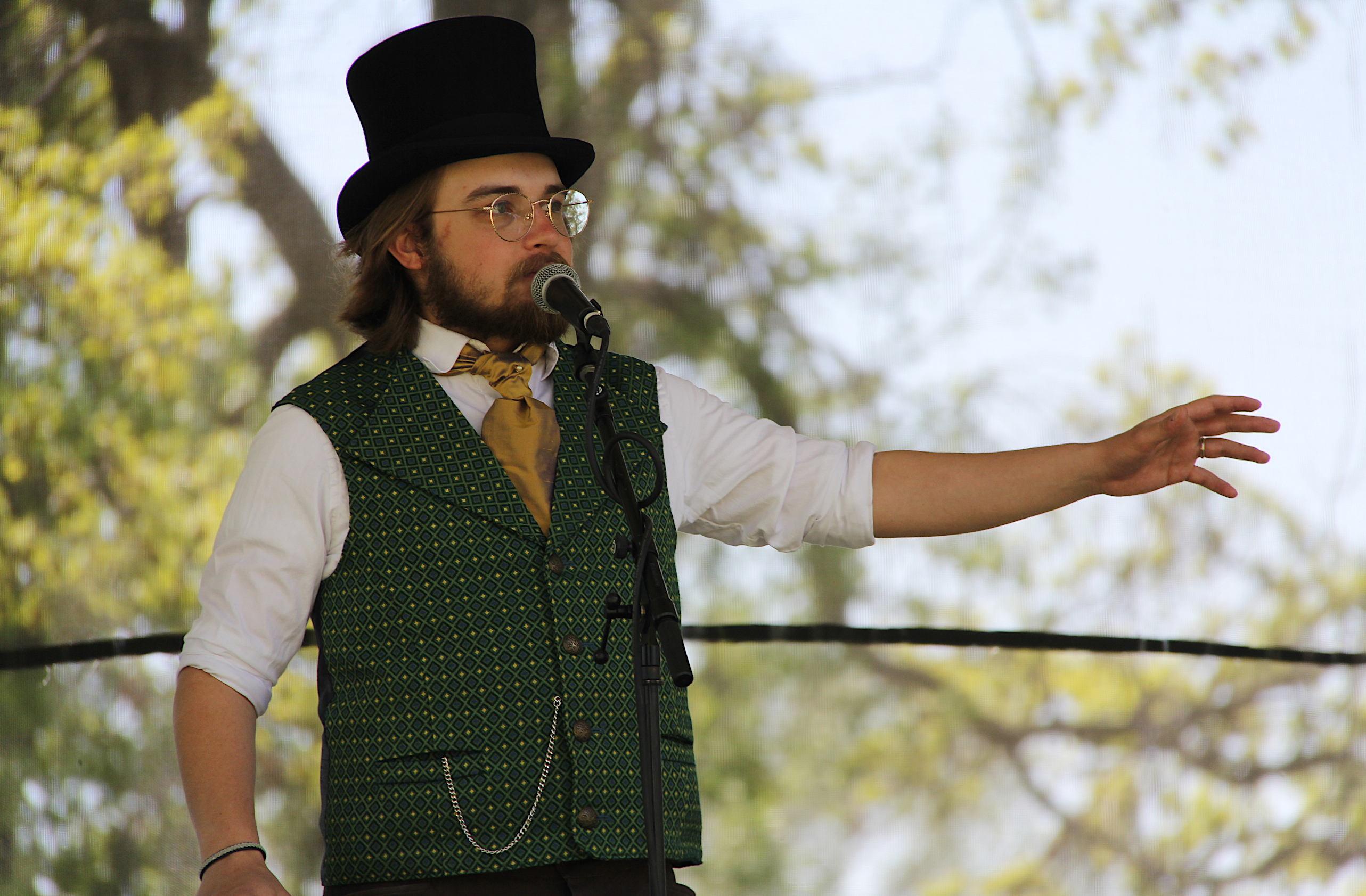
Sam Temple presented about early Minnesota history with a focus on Faribault. (Minnesota Prairie Roots copyrighted photo May 2025)

That humorous moment aside, I did appreciate the honest and informative storytelling of local historian and documentary filmmaker Sam Temple. Smartly attired in a top hat and dress clothes, he talked about early Minnesota, about Indigenous Peoples, about the illegal French Canadian fur traders who came here first—about their relationship of interdependence and co-existence with Native Peoples and how a new mixed race culture developed.

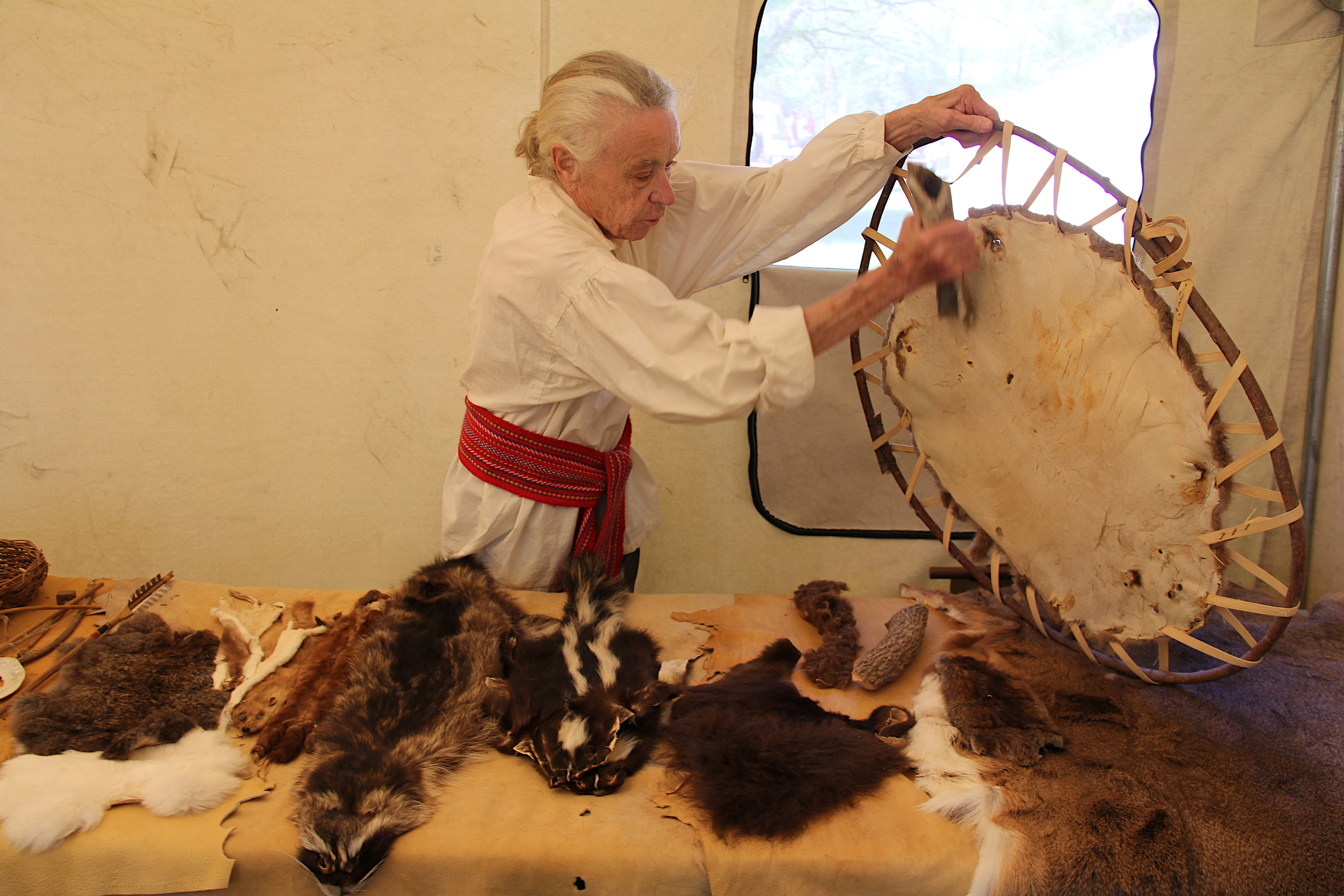
Scraping a beaver hide, the woman in this tent focused on the Dakota, their connection to nature and how that wove into their way of living. They traded furs for goods. (Minnesota Prairie Roots copyrighted photo May 2025)

Temple shared much more before shifting his focus to Faribault town founder Alexander Faribault, of mixed race (his mother was part Dakota) and a licensed fur trader by age 21. Alexander arrived in a multi-cultural community with “a foot in both worlds,” Temple said. Wood-frame houses and teepees stood side-by-side. As I listened, I considered my multi-cultural community today. Getting along, but not always. By the time Alexander Faribault, who was historically-influential both locally and state-wide, left Faribault, “the teepees were missing and his mother’s culture was gone,” Temple said.

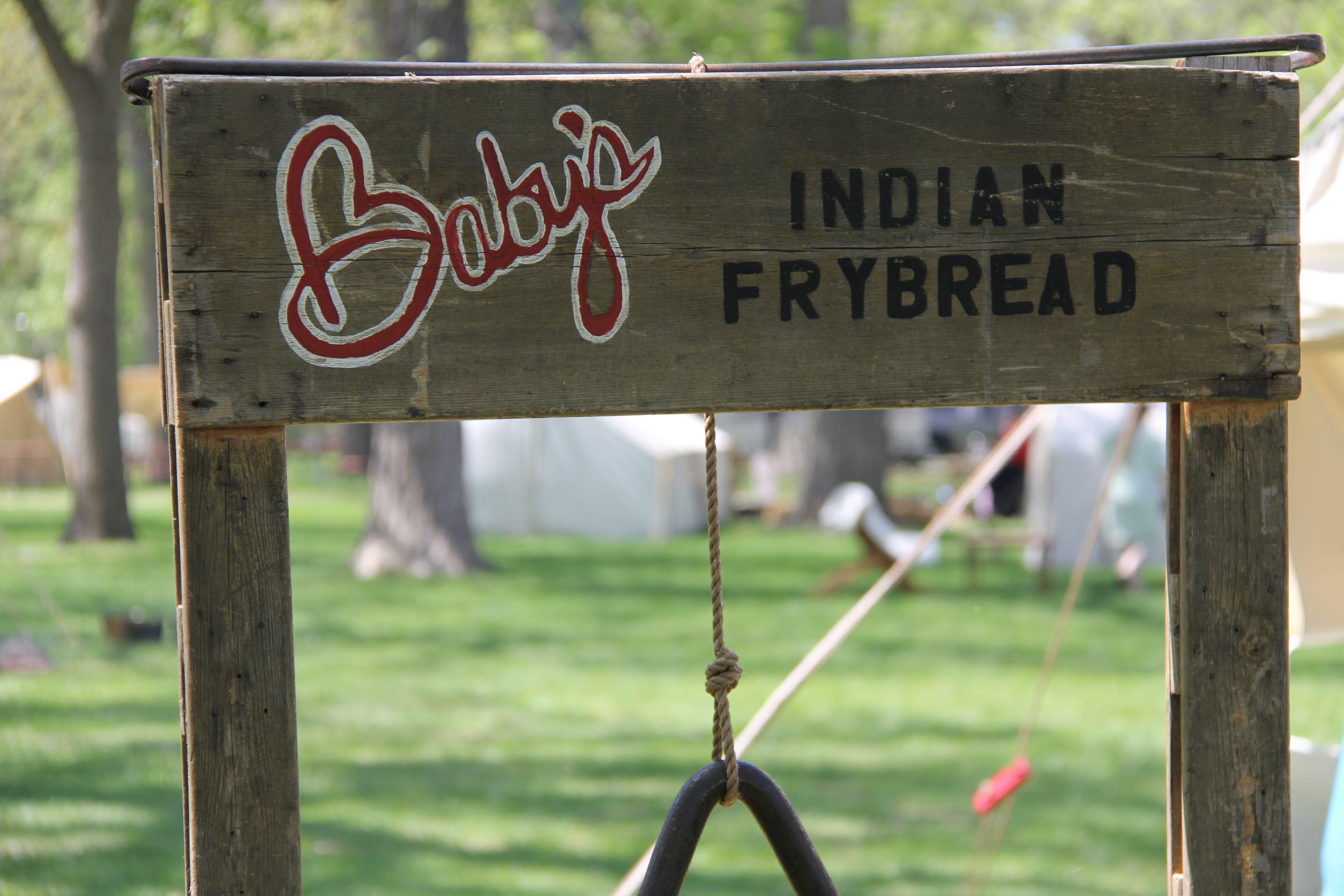
There were several food and beverage vendors on-site, with Baby’s Indian Frybread proving especially popular. (Minnesota Prairie Roots copyrighted photo May 2025)

If there’s something else I learned while attending the Rendezvous it is that I absolutely love fruit-filled Indian frybread, which I’ve not previously eaten. The sugar-topped pie-like dessert oozed blueberry filling and cream cheese. It was beyond decadent.

A blacksmithing demonstration. (Minnesota Prairie Roots copyrighted photo May 2025)

As much as I loved frybread and Little Stinky, the good folks who participate in history fests like the Riverside Rendezvous assuredly love stepping back in time. Their passion and desire to present the past in a way that engages people in history was something I felt, saw, heard while moving from tent to tent, space to space. To be part of this proved a cultural, historic experience, growing my knowledge and appreciation of those who shaped Minnesota and Faribault, this place I call home.

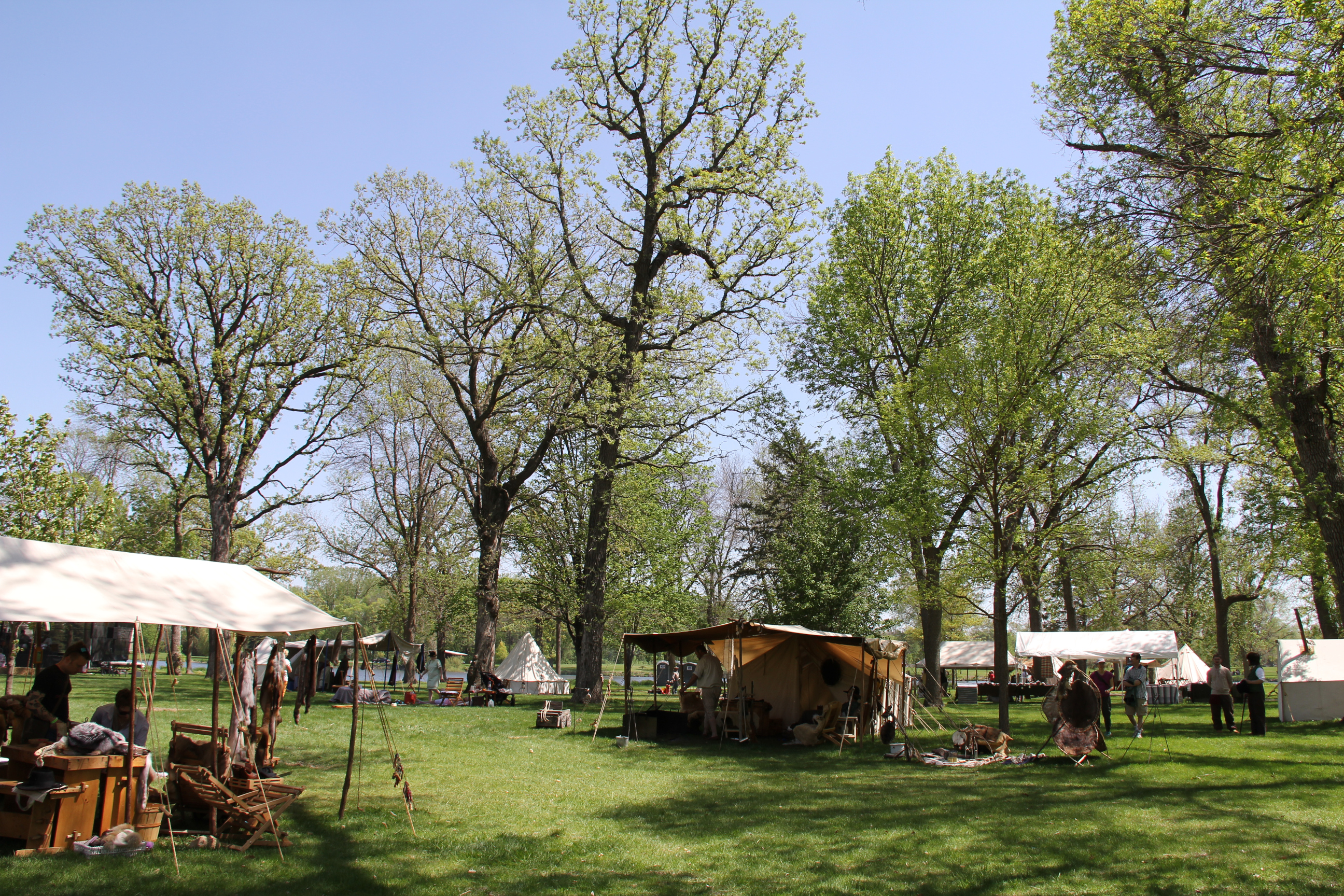
Tents were scattered across the spacious, shady grounds of riverside North Alexander Park. (Minnesota Prairie Roots copyrighted photo May 2025)

FYI: Please check back for more photos from the Riverside Rendezvous and History Festival in Faribault. This year’s Rendezvous was so successful that the Rice County Historical Society is planning a second one for 2026, but a weekend later so the event does not fall on Mother’s Day and the fishing opener weekend.

© Copyright 2025 Audrey Kletscher Helbling


Chief Taopi: Man of peace, community leader & more April 21, 2025

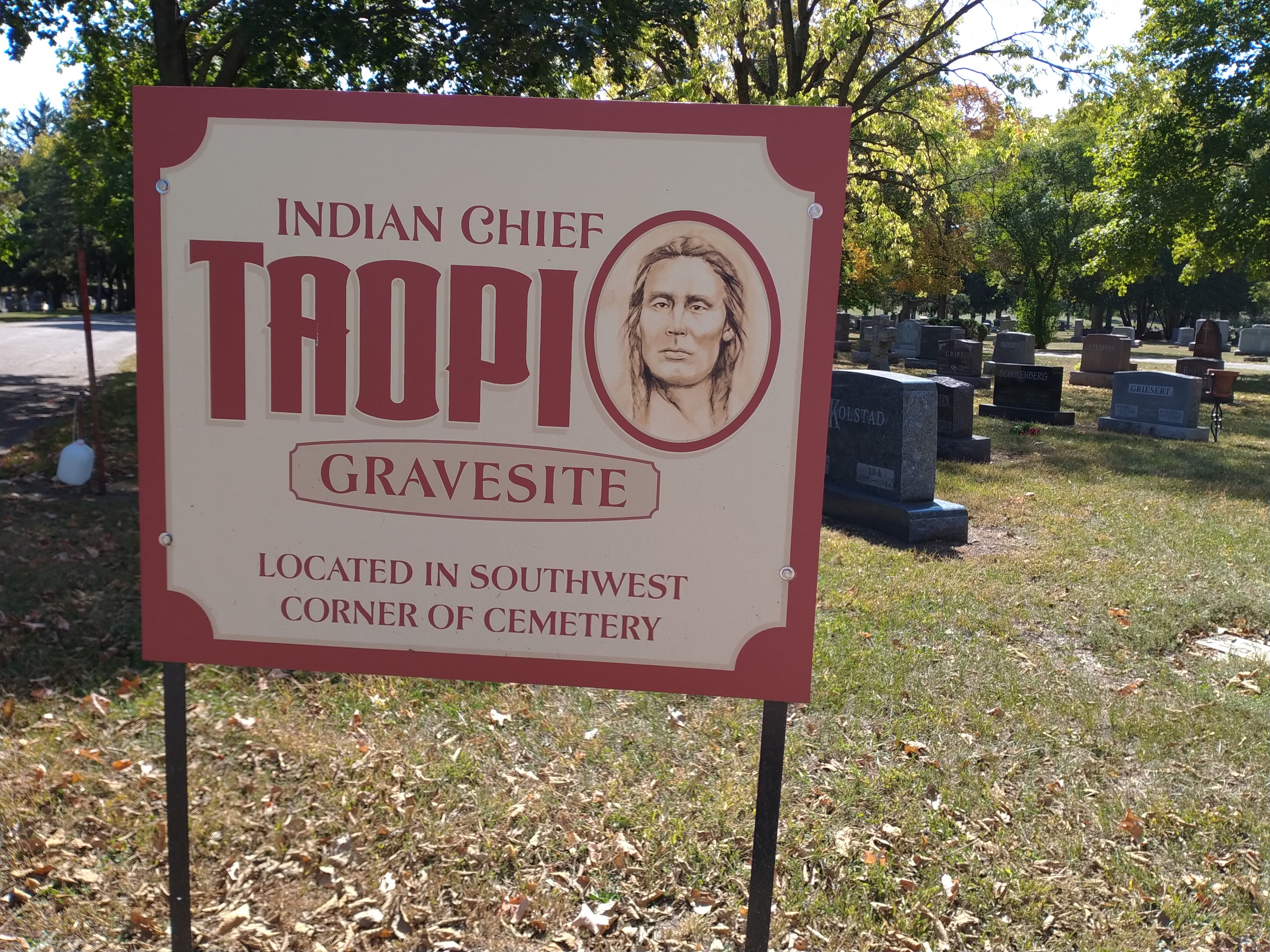
Prominent signage at Maple Lawn Cemetery directs visitors to the gravesite of Chief Taopi, “Wounded Man.” He was wounded in a battle with the Ojibwe. (Minnesota Prairie Roots copyrighted file photo)

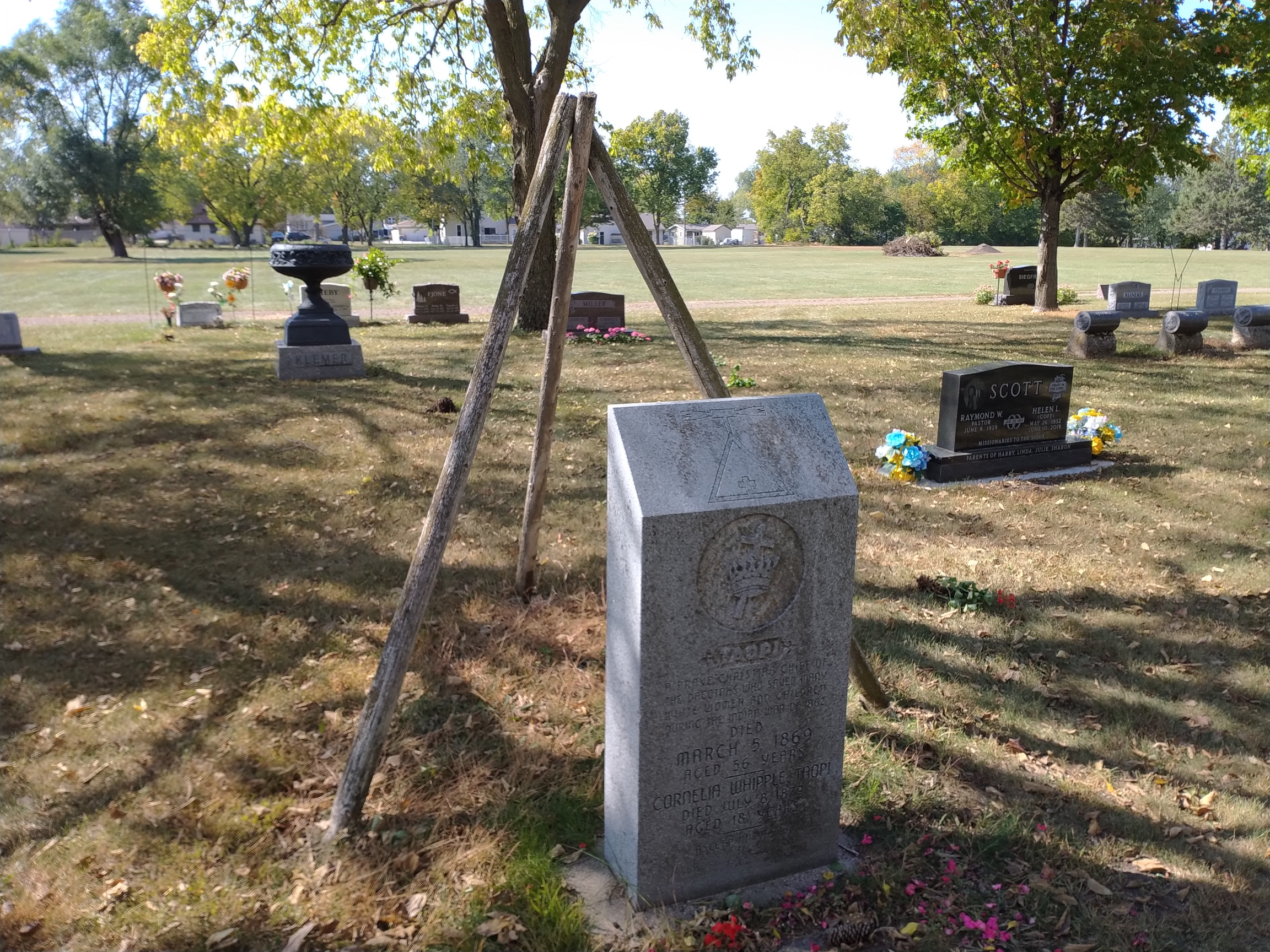
HE FOUND HIMSELF AT ODDS with his own people. A “Farmer Indian” among “Blanket Indians.” A peace promoter among those who favored war. He was Chief Taopi, a member of the Little Crow Band of the Mdewakanton Dakota. He’s buried in Faribault, at Maple Lawn Cemetery.

A tipi formation easily identifies the burial site of Taopi and his daughter, Cornelia Whipple Taopi. She died at age 18. He died at 56. (Minnesota Prairie Roots copyrighted file photo)

Recently, I attended a presentation about Taopi by Rice County Historical Society Executive Director Dave Nichols. It’s not the first time I’ve listened to local talks on the history of Native Americans in Minnesota, focused on those who called Faribault home. Each time I learn something new.

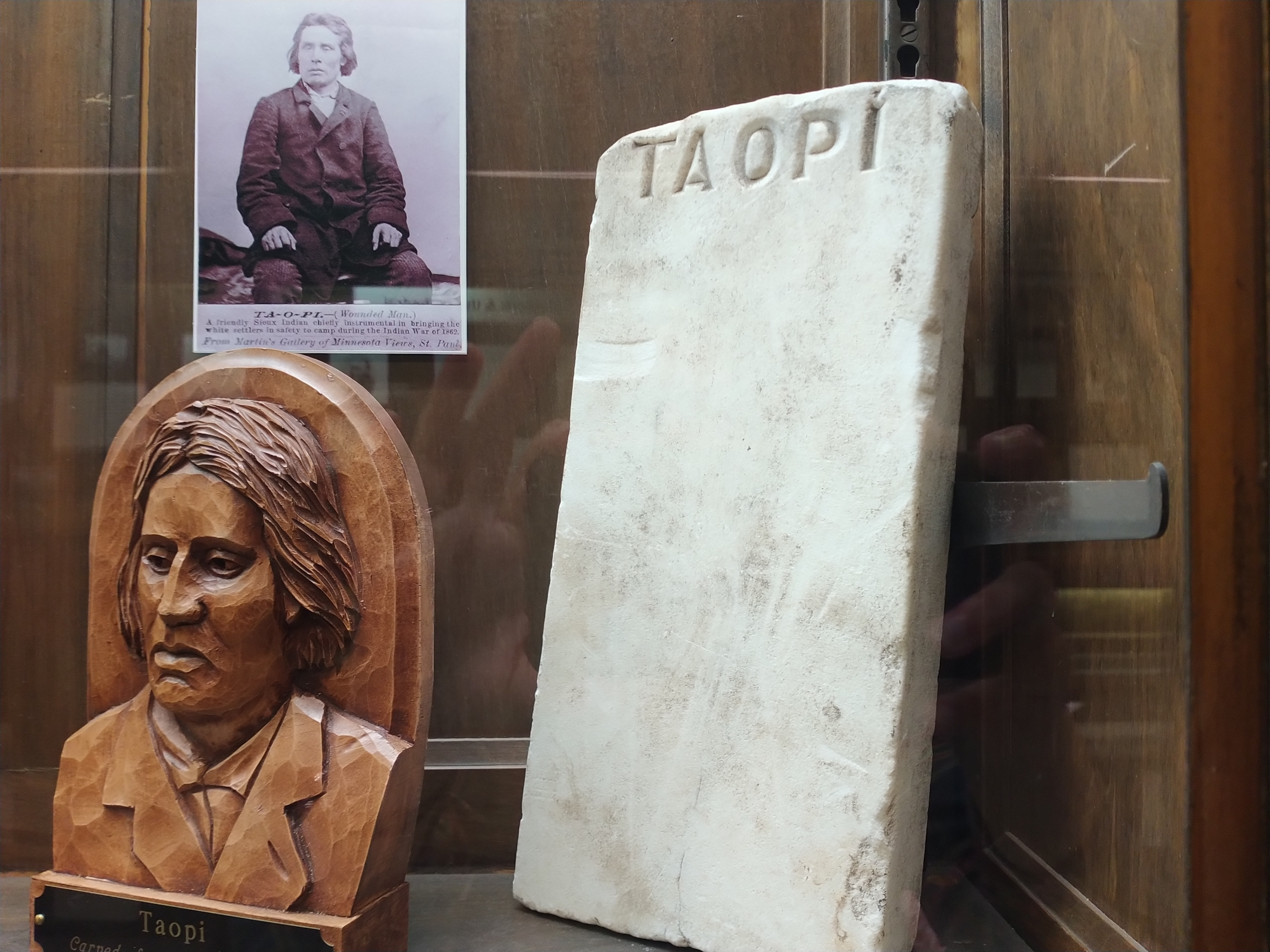
A Taopi exhibit at the Rice County Historical Society. The carving (by Ivan Whillock) and photo show Taopi with short hair as a “Farmer Indian.” (Minnesota Prairie Roots copyrighted file photo)

During his talk, Nichols called Taopi “a poster child for what an assimilated Dakota looks like.” And he didn’t mean that in a negative way. “You either assimilated or you would be destroyed,” Nichols said, qualifying that he wasn’t saying assimilation was right. Understood.

As settlers moved into Minnesota, pushing onto Native lands, the Dakota found themselves facing many challenges. Some, like Taopi, gave up their culture and adopted European ways, believing that was the only way to survive. That included learning to farm as the White man farmed. Taopi was considered the leader of the “Farmer Indians,” a term assigned during the U.S. Census. Dakota who continued in traditional cultural ways were labeled “Blanket Indians.”

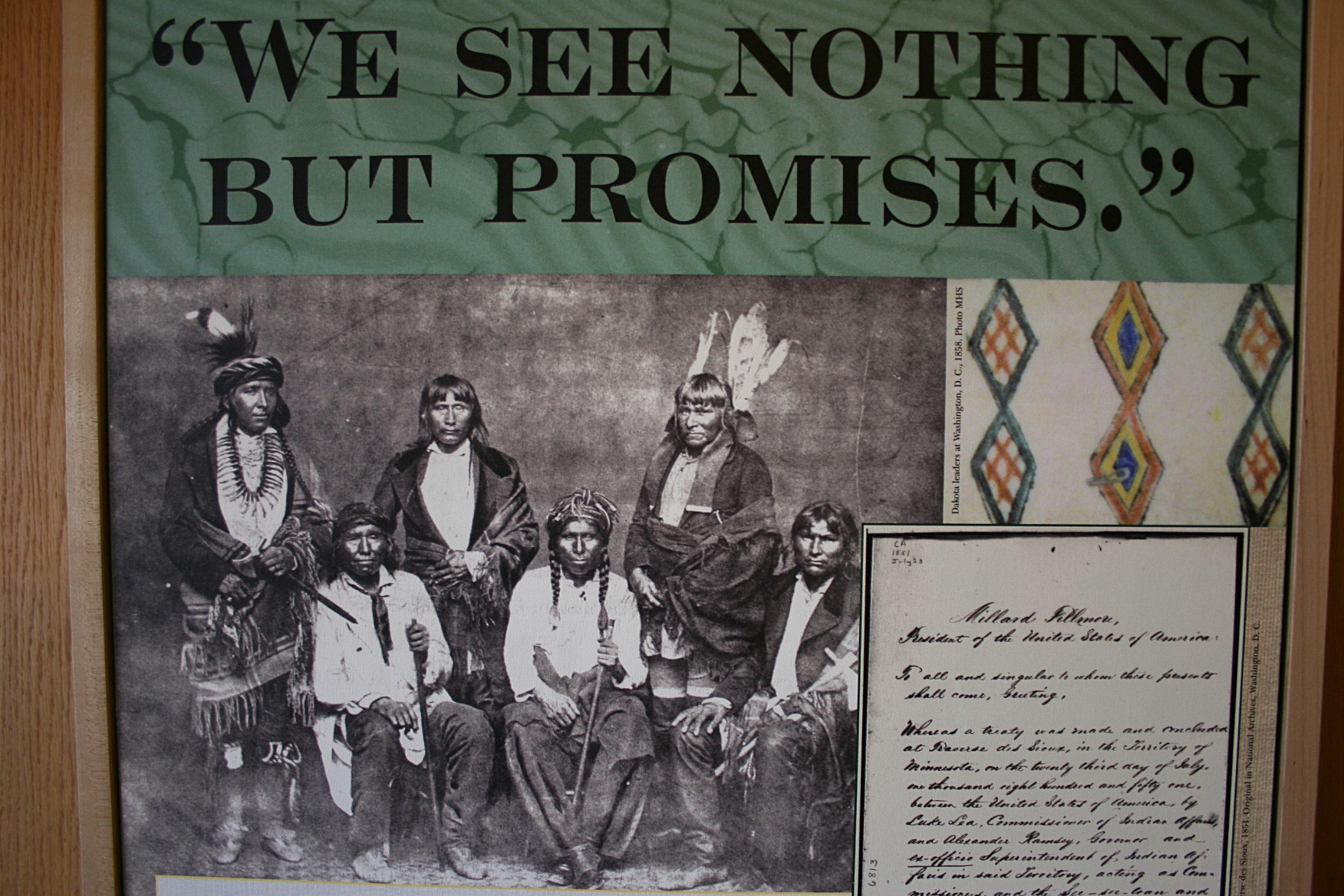
A photo panel at the Traverse des Sioux Treaty Center in St. Peter shows Dakota leaders photographed in Washington D.C. in 1858. The photo is from the Minnesota Historical Society. The war followed broken treaties. (Minnesota Prairie Roots copyrighted file photo)

Taopi farmed and established a school and mission, Hazelwood Republic, with chiefs Wabasha and Good Thunder on the Lower Sioux Reservation along the Minnesota River in southwestern Minnesota, Nichols shared. Because I grew up in that region, I’ve always been particularly interested in the Indigenous Peoples who were original inhabitants of the land, including Redwood and Brown counties. The region became the epicenter of the U.S.-Dakota War of 1862, which centered around issues of land, hunger and broken promises.

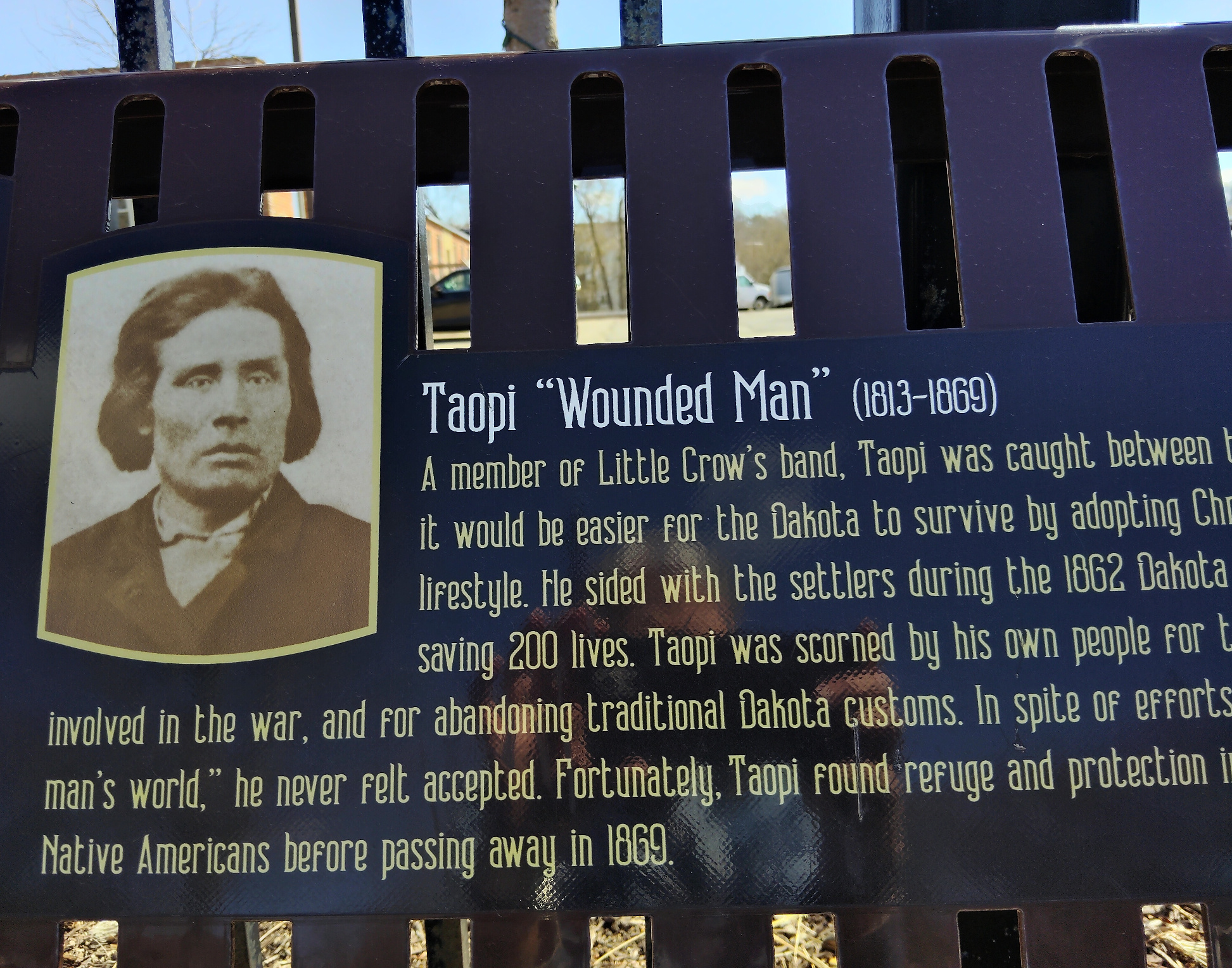
An historic-themed bench on the corner of Central Avenue and Sixth Street in Faribault highlights Taopi. (Minnesota Prairie Roots copyrighted photo April 2025)

That war facilitated the banishment of most Native Americans from Minnesota. If Taopi and other Dakota would have had their way, that war may not have happened. He led the Peace Party opposed to war, while his cousin, Little Crow, led the War Party, Nichols said. Taopi protected White settlers during the short war which claimed countless lives on both sides.

The names of the Dakota who were hung are listed at Reconciliation Park in Mankato. (Minnesota Prairie Roots copyrighted file photo)

Post-war, though, it mattered not to the U.S. government whether you were a Dakota person who opposed the war or who engaged in war, according to Nichols. All were considered guilty, imprisoned and eventually exiled from Minnesota (although not the Mdewakanton). Thirty-eight Dakota men were hung on December 26, 1862, in Mankato (40 miles from my community) during the largest mass execution ever in the U.S. It’s truly a tragic event in Minnesota history. But what multiples the awfulness is that 1,600 Dakota prisoners were marched to Mankato to watch the hangings before being marched back to Fort Snelling. That was new information I had not previously heard and it troubles me greatly.

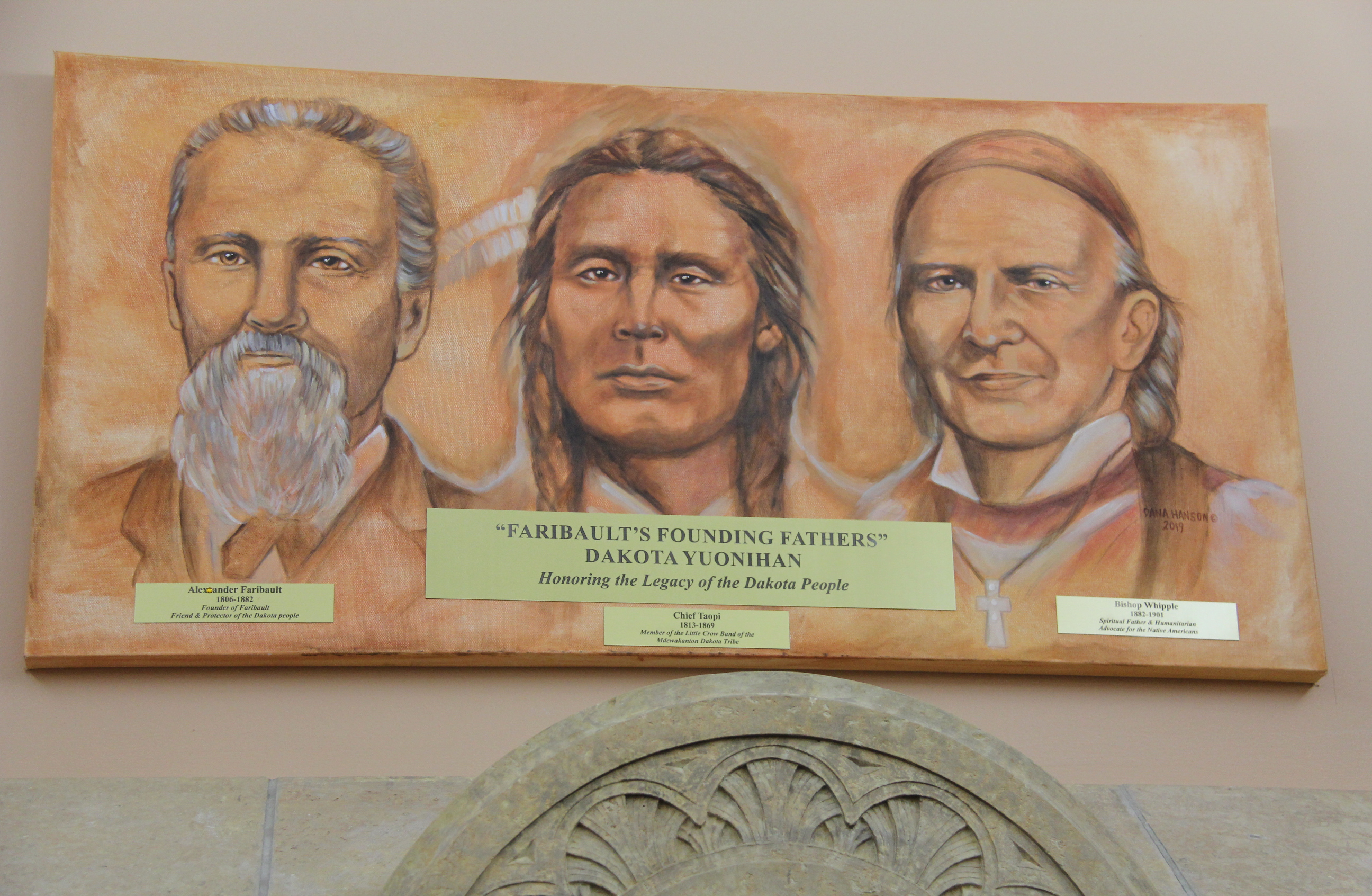
These portraits by Dana Hanson of Faribault’s Founding Fathers, Alexander Faribault (left to right), Taopi and Bishop Henry Whipple, hang in Buckham Memorial Library. (Minnesota Prairie Roots copyrighted file photo)

Taopi avoided prosecution and banishment, eventually landing in Faribault with 180 other Mdewakanton. About 80 were family members, according to Nichols. It was his friendship with Bishop Henry Whipple, who had long worked with and advocated for Native Peoples, that brought Taopi here. Town founder Alexander Faribault housed “the Peacefuls,” as the 180 were considered, on his land. They lived in tipis and lodges.

The home of fur trader and town founder Alexander Faribault. (Minnesota Prairie Roots copyrighted file photo 2017)

As you might rightly guess, not everyone in Faribault liked the Mdewakanton living among them. A wall was built in the area around Alexander Faribault’s house to protect them. Taopi became a community leader, said Nichols. As such he represented his people and mediated when necessary.

By the time of Taopi’s 1869 death, 90 of the 180 Mdewakanton who settled in Faribault had already left. But they left behind an imprint upon the land, not necessarily seen or appreciated even today. Yet, efforts are underway to change that with The Faribault Dakota Project. Nichols couldn’t speak specifically to that, only to say that local historian Jeff Jarvis has been working with the Dakota community on how to memorialize and honor the Indigenous Peoples of Faribault. That also includes the Wahpekute Dakota.

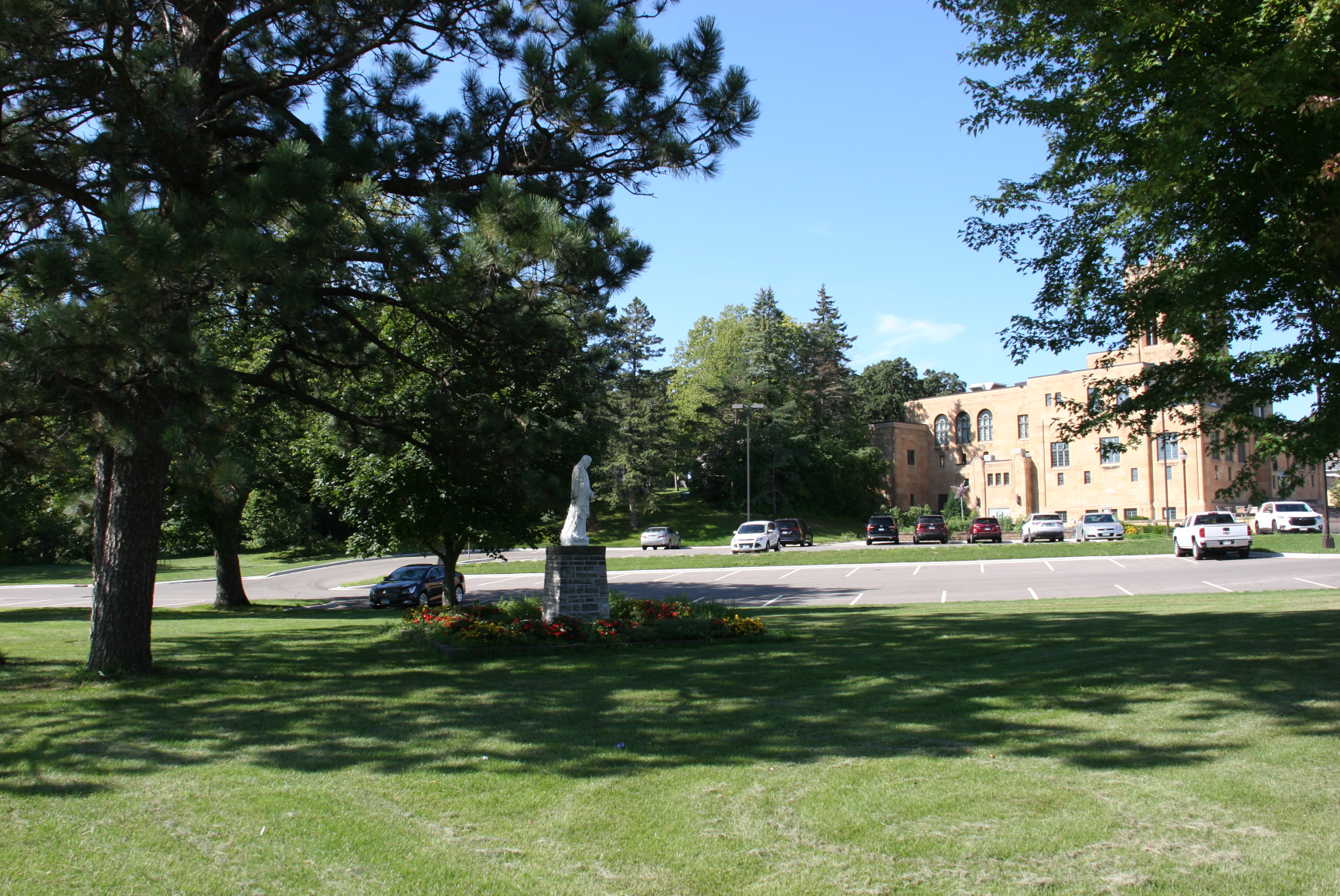
Peace Park, a protected Dakota burial site (but unmarked as such) next to the parking lot of Buckham Memorial Library. (Minnesota Prairie Roots copyrighted file photo)

Among the locales discussed by those attending Nichols’ talk was Peace Park, a triangle-shaped slice of property near Buckham Memorial Library. Alexander Faribault donated the land to the city with the stipulation that it never be developed. According to Nichols, the park is a protected burial site, where at least two Dakota are buried. Their bones were unintentionally uncovered in 1874 and then reburied. Today nothing marks that land as a cemetery. Rather a faith-based WWII monument stands in Peace Park. There is no reference to the Dakota. Perhaps some day this will be righted and the land publicly recognized as sacred ground. That is my hope as I continue to learn about the Dakota who once called Faribault home. I am grateful for every opportunity to grow my knowledge of them and their importance in local and state history.

#

FYI: Here are some suggested Dakota-connected places to visit in Faribault: the Rice County Historical Society Museum, Maple Lawn and Calvary cemeteries, the Cathedral of Our Merciful Saviour, a mural on the Central Park Bandshell and information on an historic-themed bench along Central Avenue.

Two fun facts: A small southeastern Minnesota town in Mower County near the Iowa border is called Taopi, named after the Mdewakanton Dakota chief. It suffered a devastating tornado in April 2022. The town celebrates its 150th birthday this year.

A woman attending Dave Nichols’ talk named her horse Taopi after Chief Taopi.

© Copyright 2025 Audrey Kletscher Helbling


Forgiveness on December 26 December 24, 2024

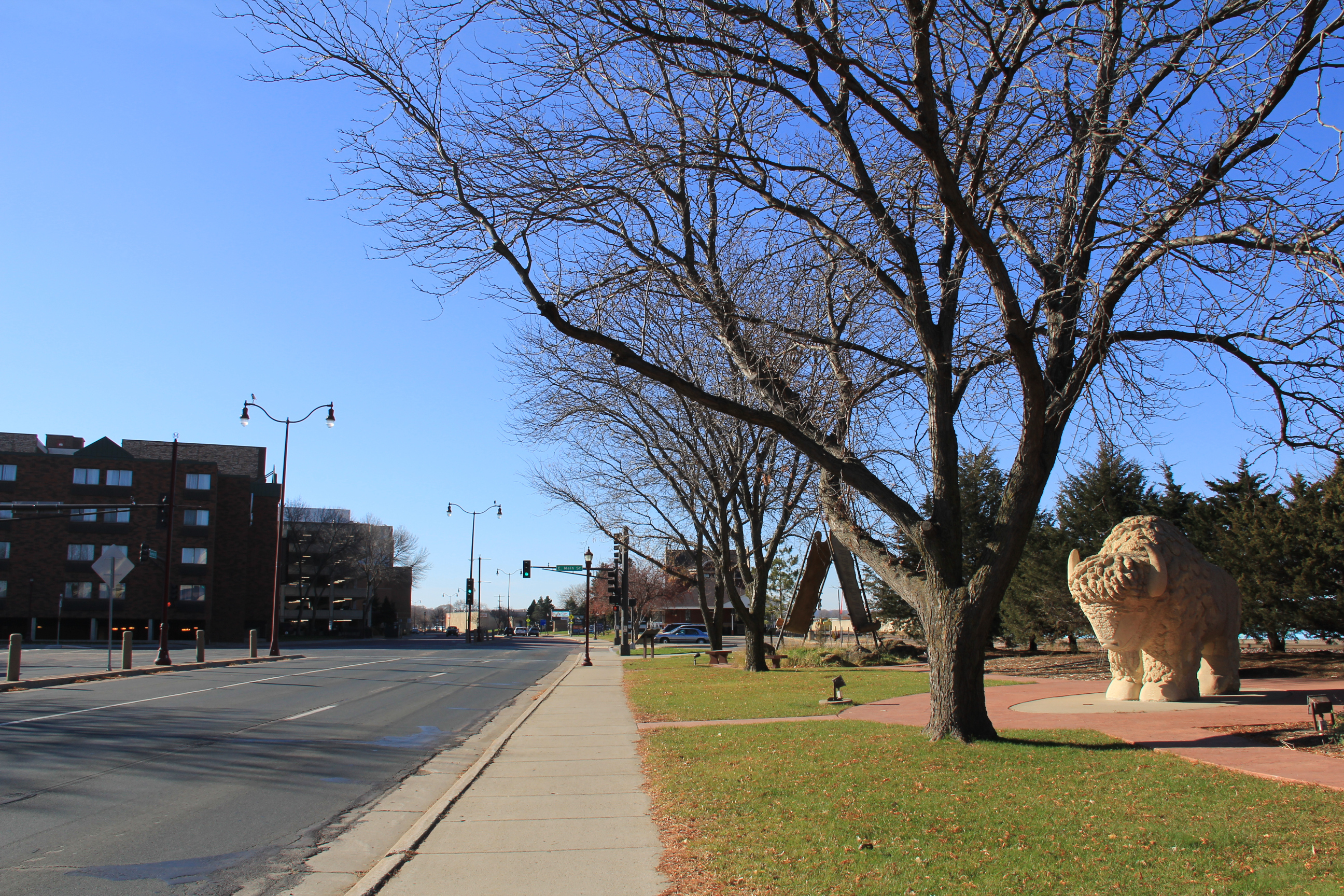
This limestone sculpture by Thomas Miller depicts a Dakota warrior. It sits across from Reconciliation Park in Mankato at the Blue Earth County Library. (Minnesota Prairie Roots copyrighted file photo November 2023)

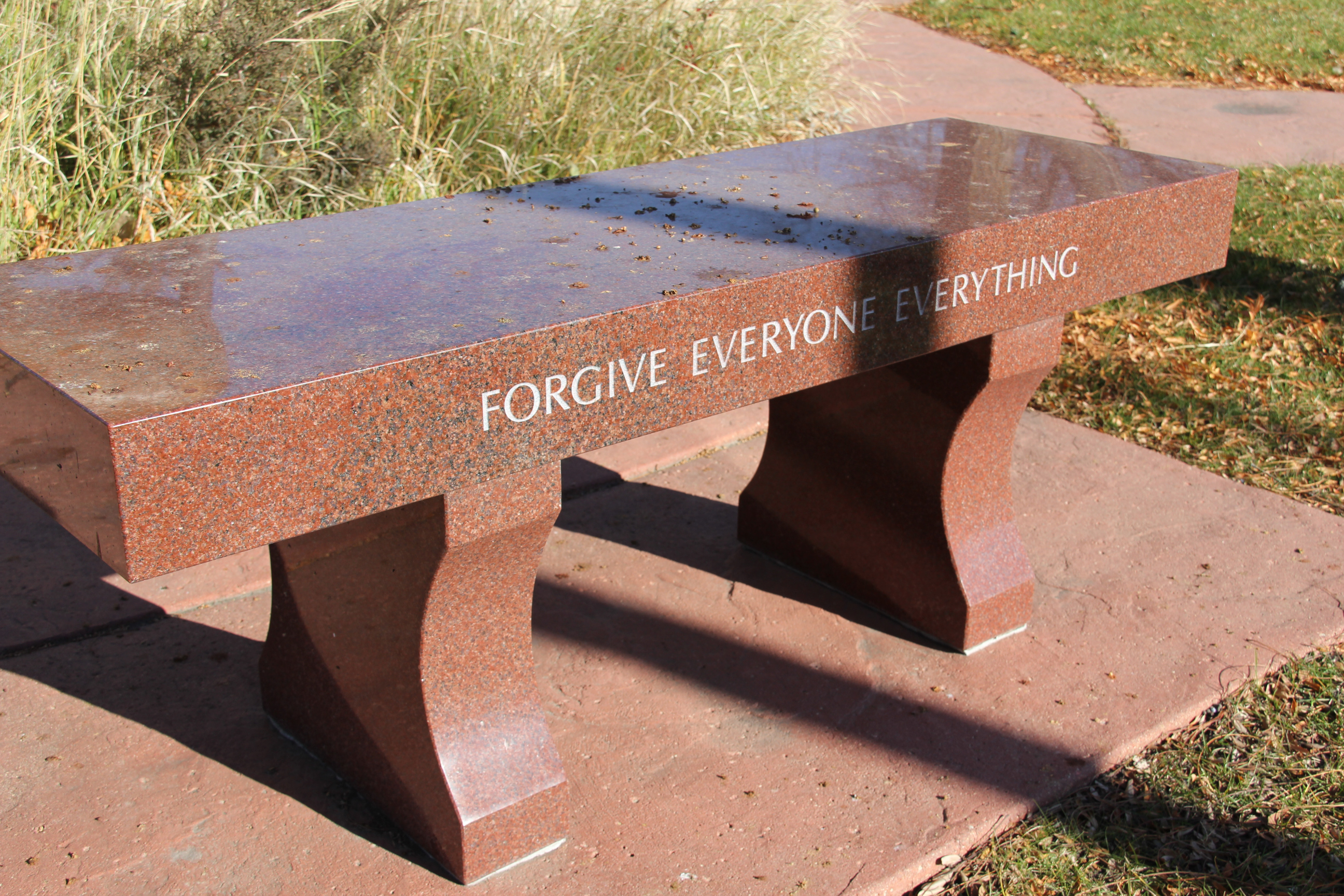
FORGIVE EVERYONE EVERYTHING.

Powerful words on a bench at the Dakota 38 Memorial in Reconciliation Park. (Minnesota Prairie Roots copyrighted file photo November 2023)

Those uppercase engraved block words, white against red on a stone bench at the Dakota 38 Memorial in the heart of downtown Mankato at Reconciliation Park, hold the strength of a people who really have no reason to forgive. But they choose to do so. And in forgiveness comes healing.

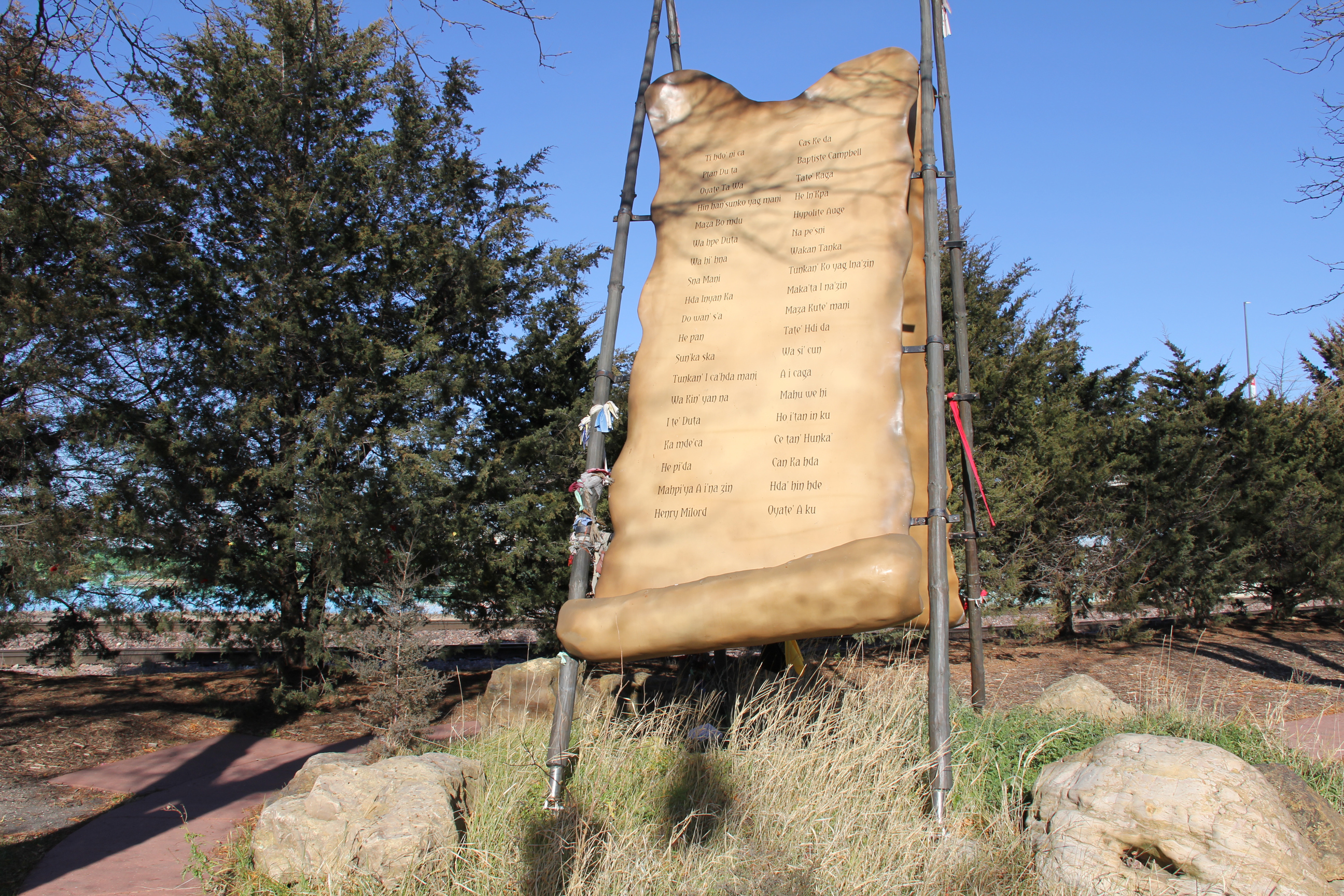
The names of the 38 Dakota men hung in Mankato are listed on the Dakota 38 Memorial. (Minnesota Prairie Roots copyrighted file photo November 2023)

December 26 marks the date in 1862 when 38 Dakota men were hung near this site along the Minnesota River in America’s largest mass execution. Originally, 303 Dakota were sentenced to death following “trials” (the quotes are intentional) after the U.S.-Dakota War of 1862. President Abraham Lincoln reviewed the list of those sentenced to death, approving the hanging of thirty-eight. Thousands gathered to watch the execution on the day after Christmas 162 years ago.

Up close, names of the Dakota who were hung. (Minnesota Prairie Roots copyrighted file photo November 2023)

This history I learned early on, but only from a White perspective and only because of my roots in southwestern Minnesota, at the epicenter of the war. I expect many Americans, including many Minnesotans, to this day know nothing of this conflict that killed hundreds of Whites and Dakota. Internment and exile of the Dakota followed. Native Peoples suffered because of the atrocities before and after the war.

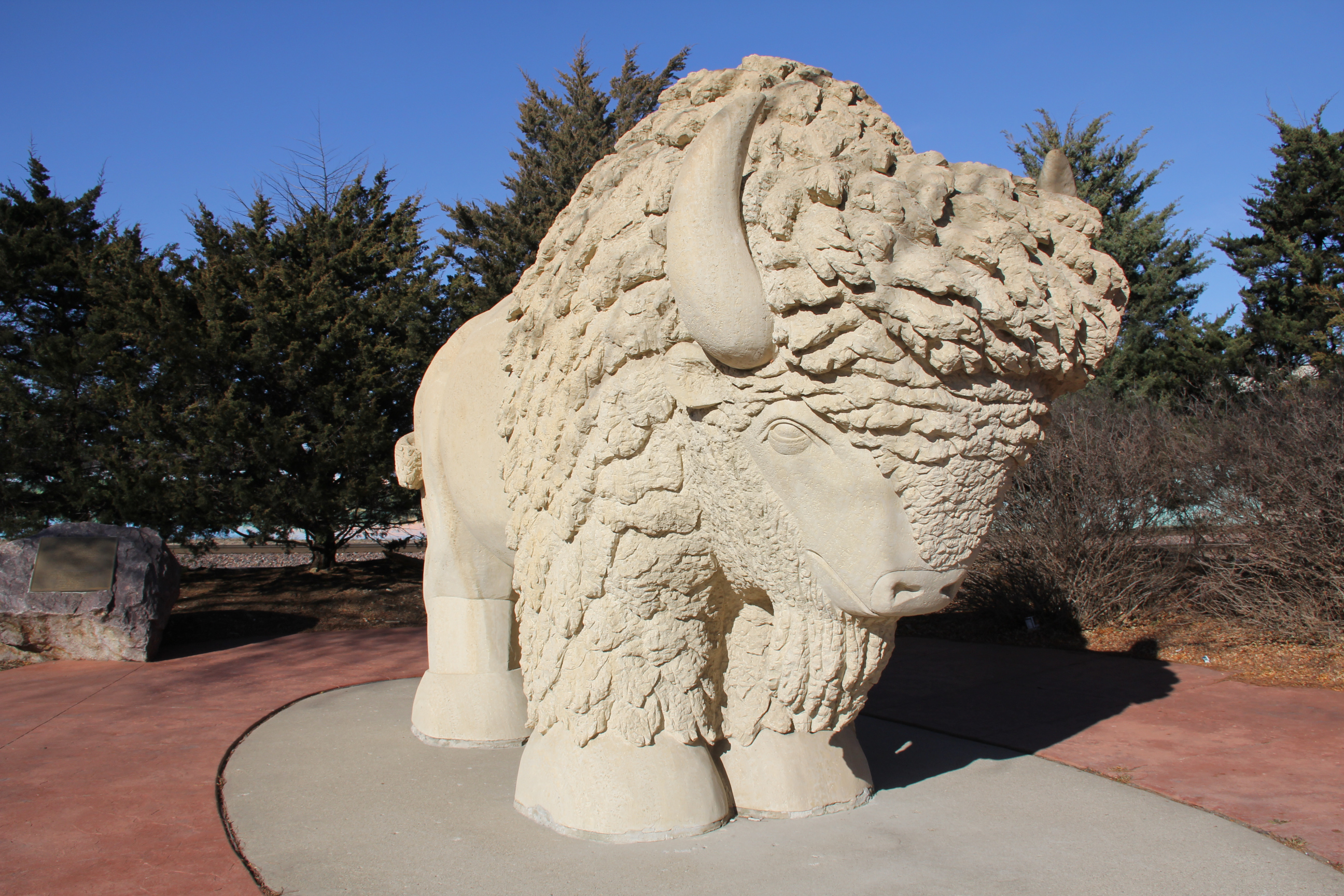
A massive limestone sculpture of a white buffalo in Reconciliation Park represents the spiritual survival of the Dakota. (Minnesota Prairie Roots copyrighted file photo November 2023)

This is history I’d encourage everyone to study. And not just from a one-sided perspective. I won’t pretend that I am fully-informed. I’m not. I do, though, have a much better understanding than I did growing up. I’ve read, listened, learned. I know of stolen land, broken treaties and promises. Starvation. Injustices. Demeaning words like those attributed to a trader who told starving Dakota to “eat grass.” Andrew Myrick was later reportedly found dead, his mouth stuffed with grass.

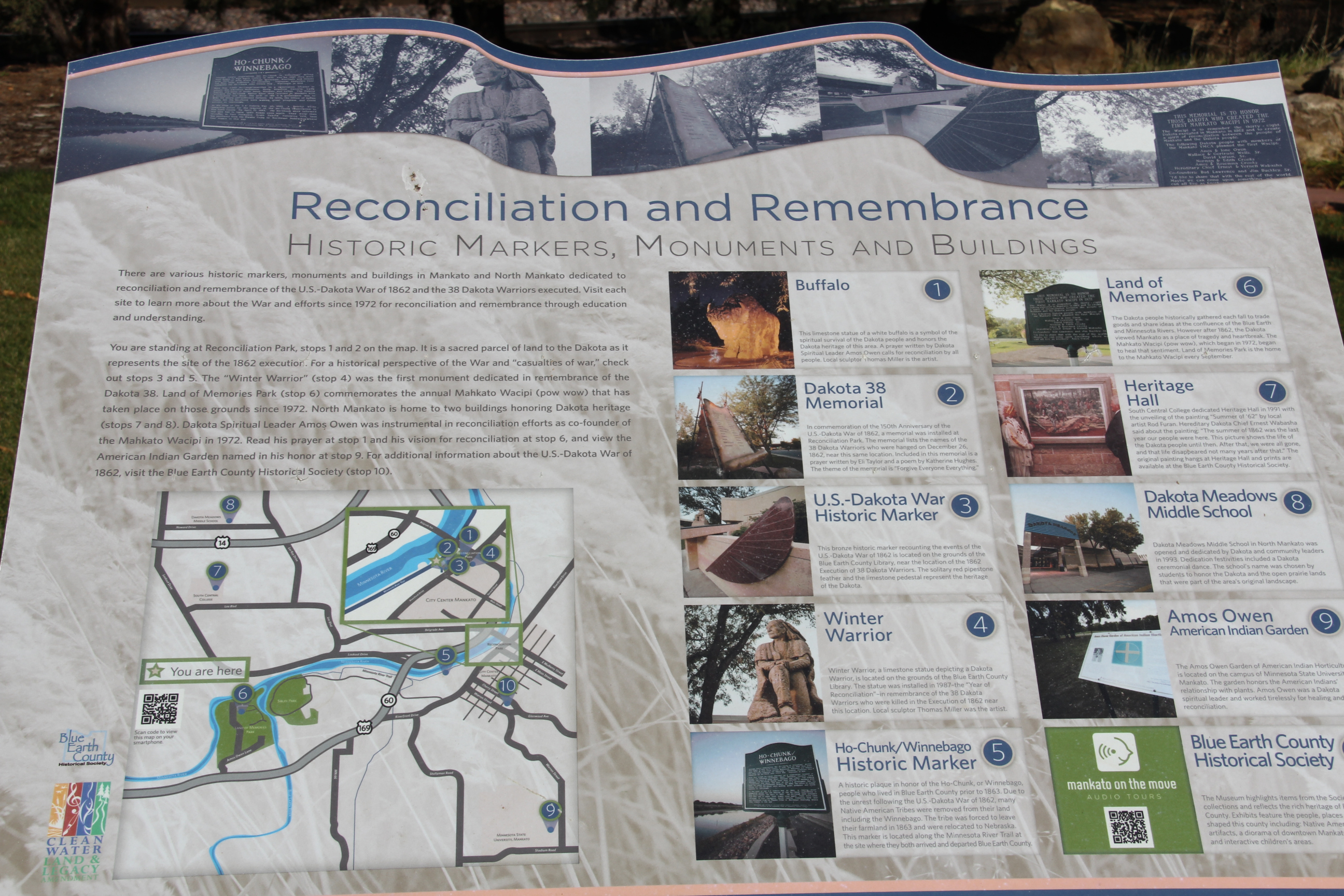
A sign in Reconciliation Park directs visitors to the many sites around Mankato focused on reconciliation and remembrance. (Minnesota Prairie Roots copyrighted file photo November 2023)

But back to those three words on that stone bench in Mankato: FORGIVE EVERYONE EVERYTHING. The Dakota truly have no reason to forgive. But they choose to do so. I’ve learned that forgiveness is part of Dakota culture and beliefs.

An overview of the location of Reconciliation Park along Riverfront Drive in Mankato, along the Minnesota River and across from the public library. (Minnesota Prairie Roots copyrighted file photo November 2023)

In the month of December, the attitude of forgiveness extends beyond words in stone to an annual horseback ride honoring the 38+2 (two more Dakota were sentenced to death two years later). This year, two rides—The Makatoh Reconciliation & Healing Horse Ride and The Dakota Exile Ride, the first originating in South Dakota, the other in Nebraska—will end on December 26 with gatherings at Reconciliation Park and the Blue Earth County Library, located across from each other.

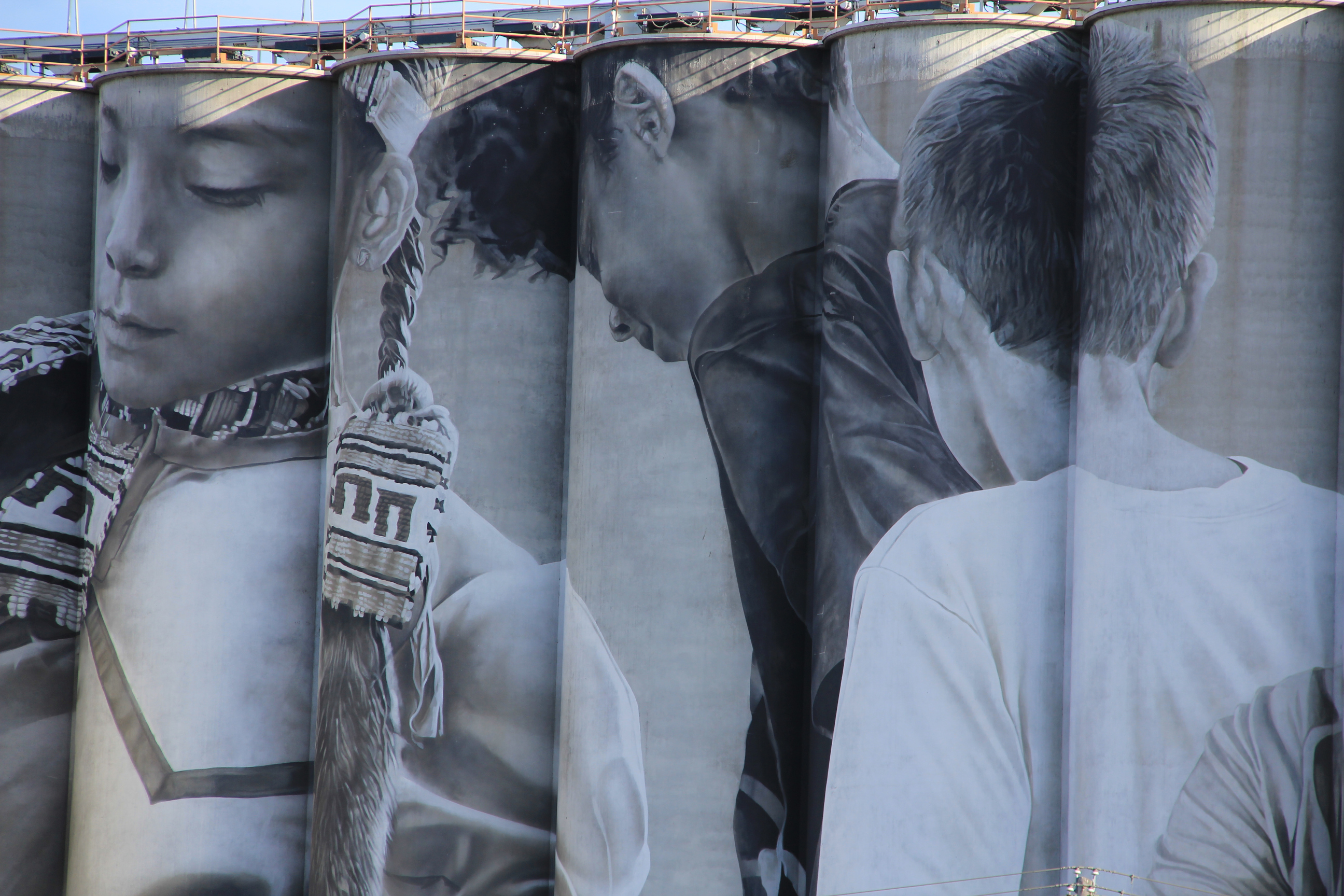
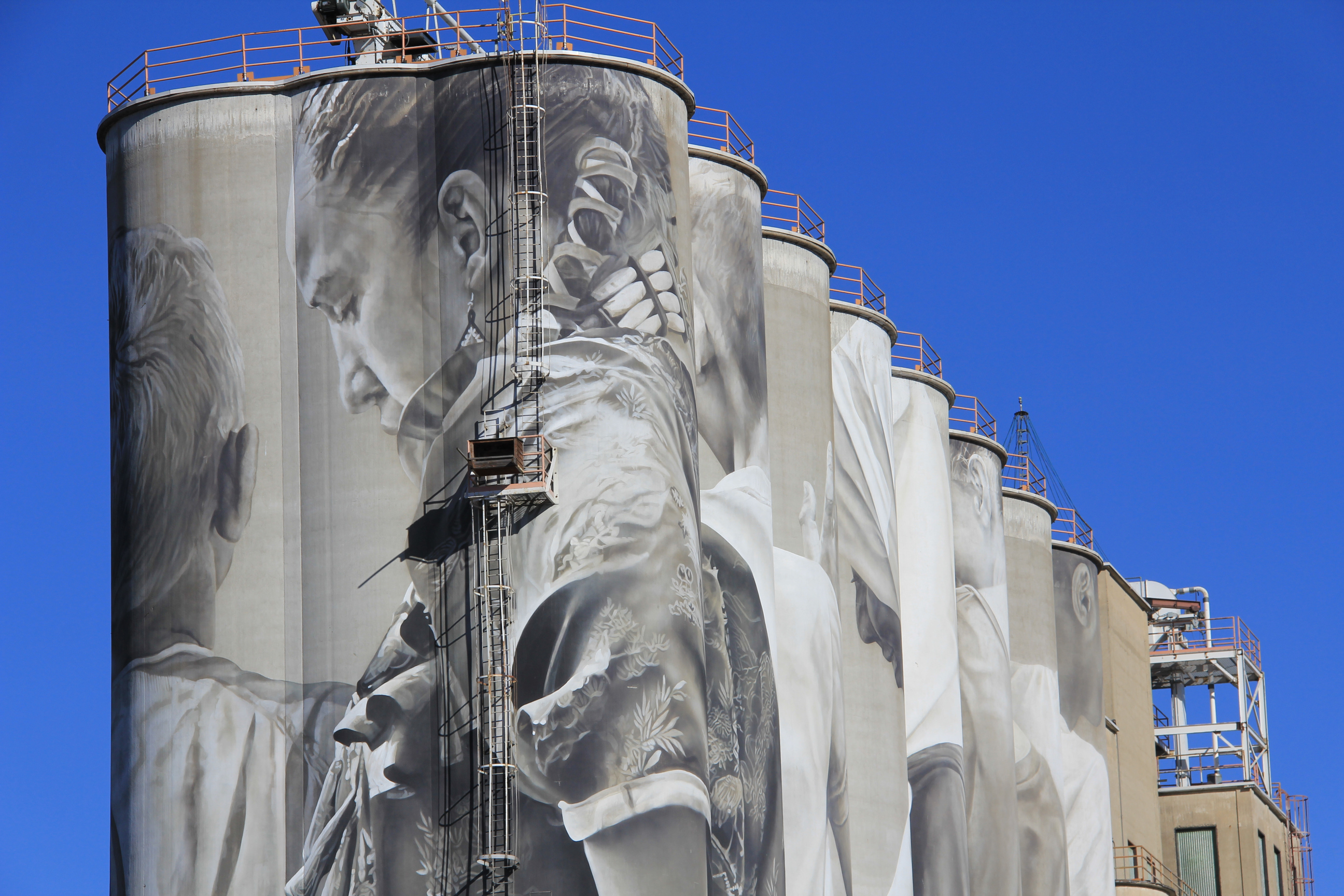
Just down the street from Reconciliation Park, murals on the Ardent Mills grain silos celebrate the diversity of Mankato, including that of the Dakota. (Minnesota Prairie Roots copyrighted file photo November 2023)

These rides focus on educating, remembering, honoring, healing and forgiving. Five powerful verbs when connected with the U.S.-Dakota War of 1862.

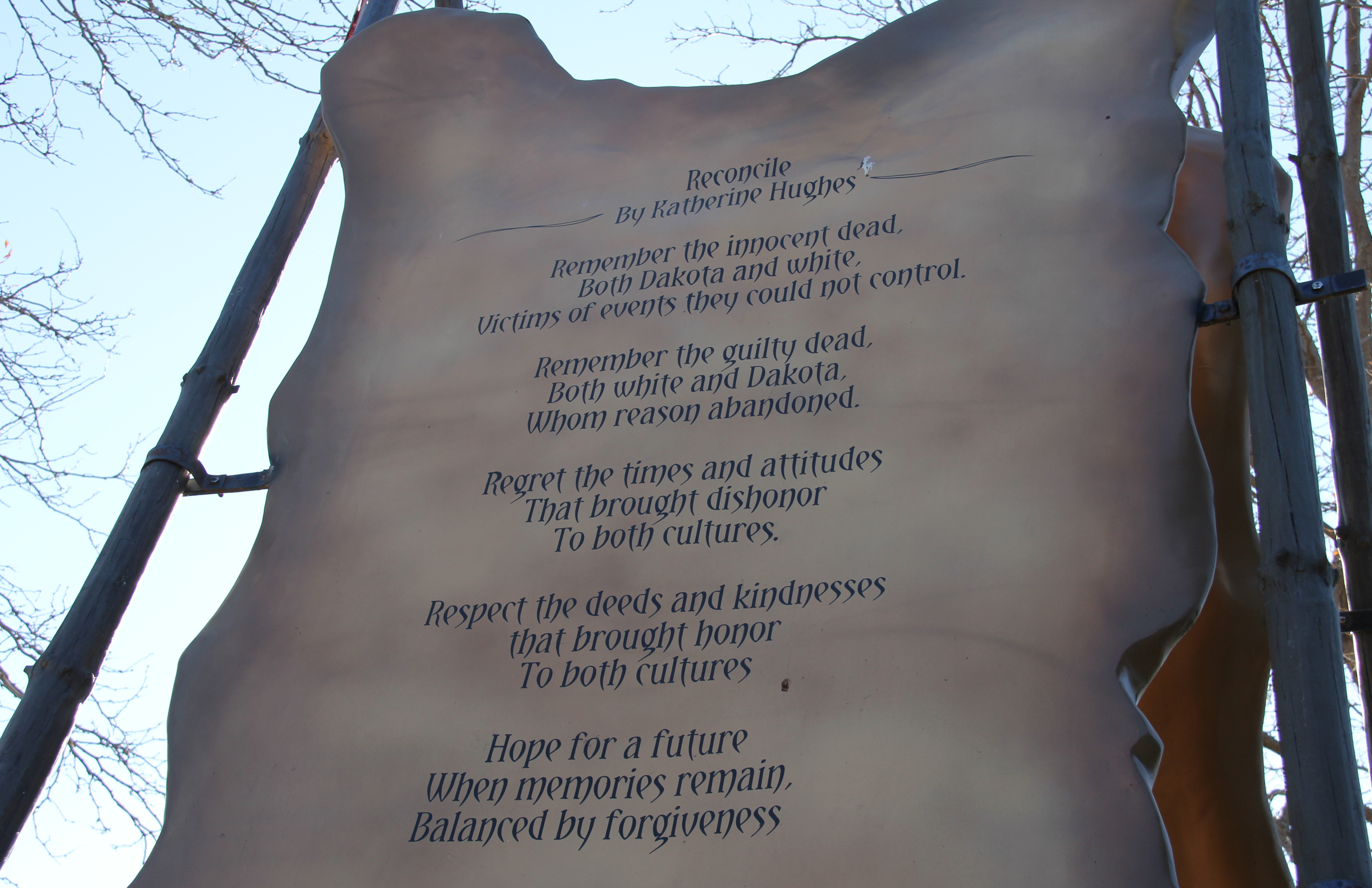
Katherine Hughes’ poem ends with the word “forgiveness.” (Minnesota Prairie Roots copyrighted file photo November 2023)

The poem “Reconcile,” written by Katherine Hughes and posted in Reconciliation Park, closes with this powerful verse: Hope for a future/When memories remain/Balanced by forgiveness.

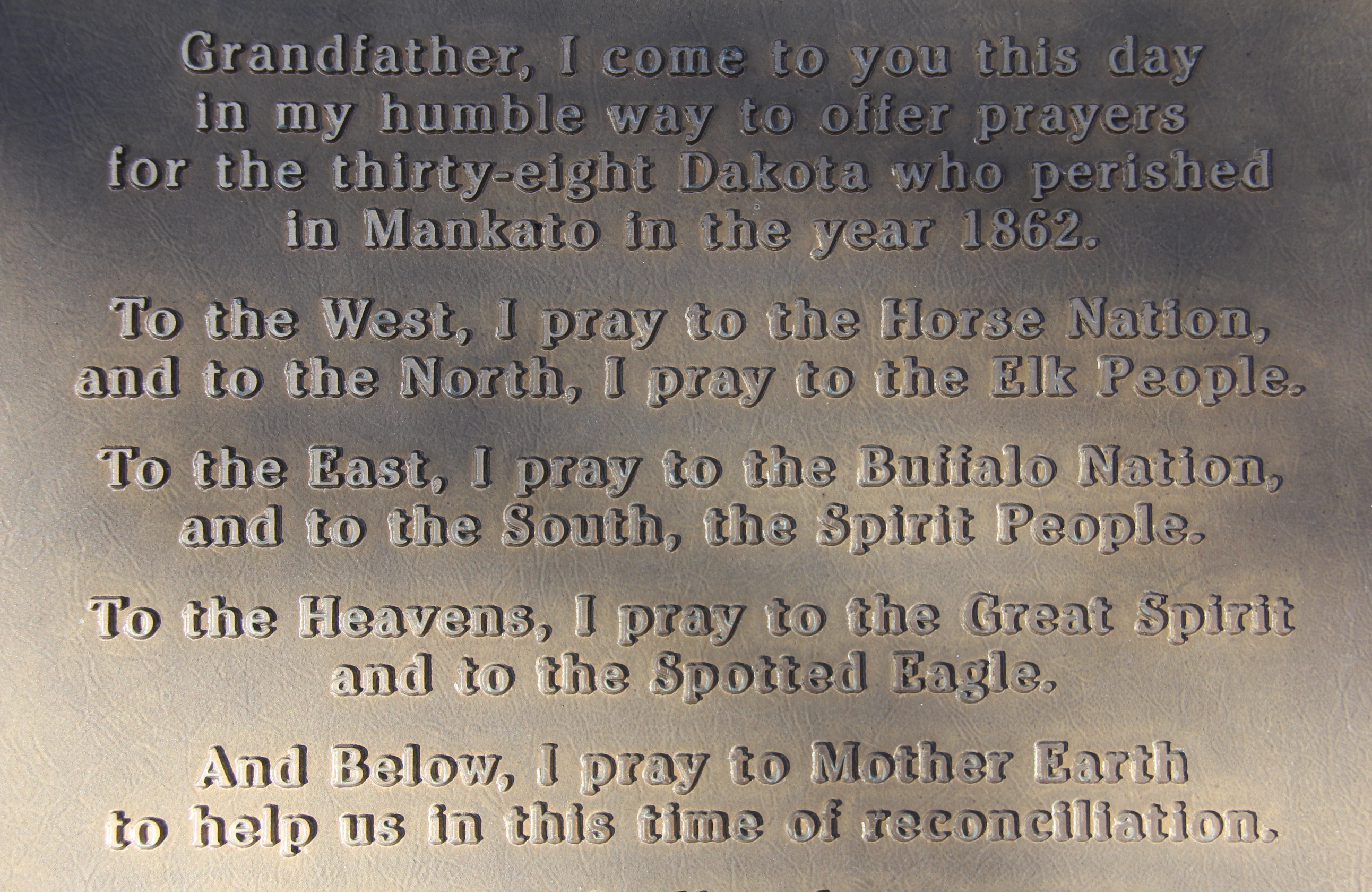
A Dakota prayer in the park ends with the word “reconciliation.” (Minnesota Prairie Roots copyrighted file photo November 2023)

FORGIVE EVERYONE EVERYTHING.

#

FYI: Here’s the schedule for the December 26 events. A community gathering is set for 9 am-10 am at Reconciliation Park and the library. Horseback riders arrive at 10 a.m. A ceremony in the park takes place from 10 am-11:30 am. From 11:30 am-1 pm, a healing circle will happen at the library with discussion surrounding the events of December 26, 1862, covering the past, present and future. A community meal for the horseback riders, who rode hundreds of miles to Mankato, follows.

© Copyright 2024 Audrey Kletscher Helbling
 

Spotlight shines on Minnesota, specifically Mankato (once my home) August 23, 2024

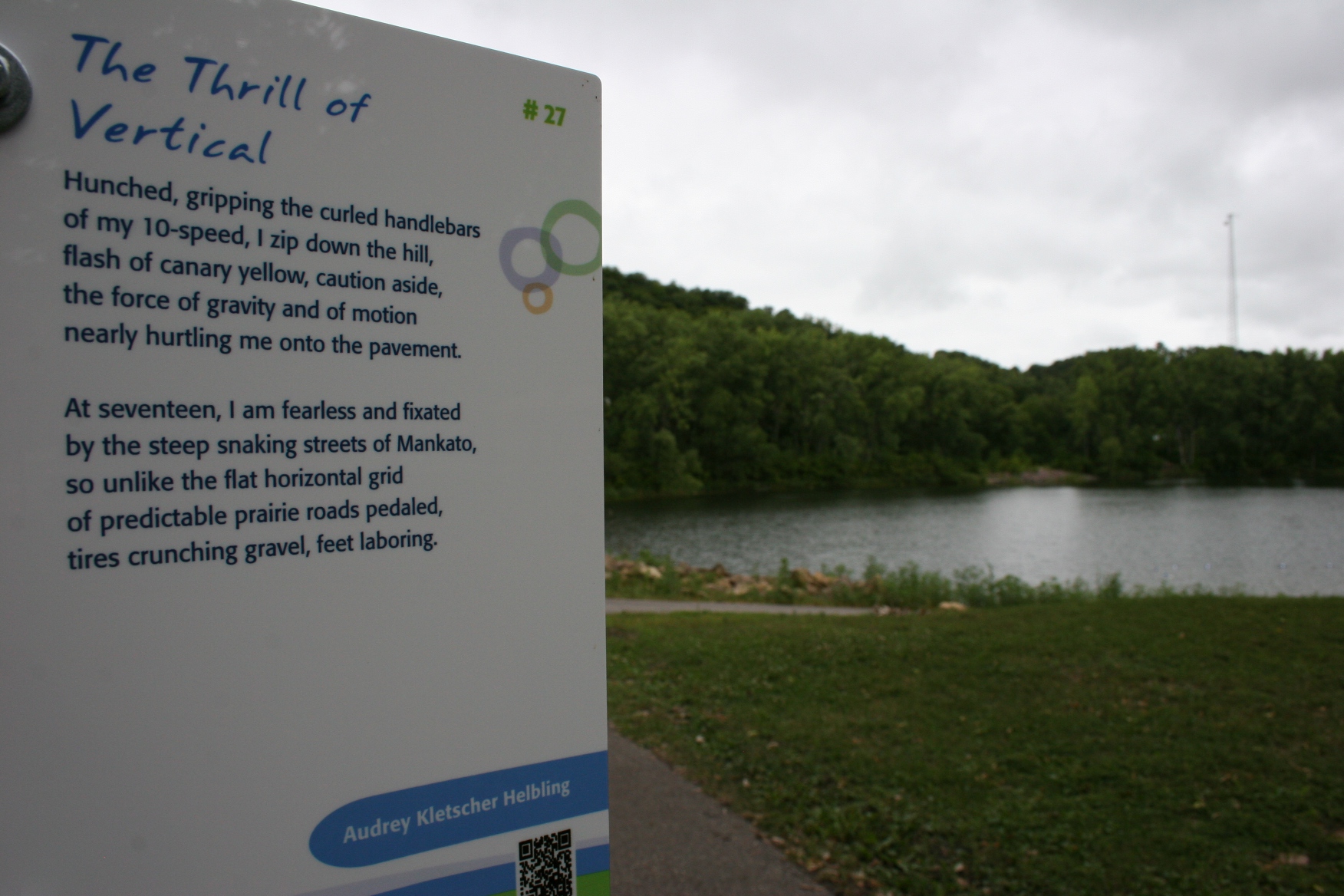
“The Thrill of Vertical,” posted on a sign in Spring Lake Park as part of the 2013 Mankato Poetry Walk & Ride, was inspired by my college years in Mankato. (Minnesota Prairie Roots copyrighted file photo 2013)

I ARRIVED IN MANKATO with a canary yellow 10-speed bike, a simple orange backpack, my Sears portable manual typewriter, a clock radio, a quilt stitched by Grandma Ida and a suitcase filled with clothes. The year was 1974, the beginning of my freshman year at Bethany Lutheran College, high atop a hill in this southern Minnesota city.

The Ardent Mills grain silos, a massive public art project, dominate the skyline along the Minnesota River in the heart of Mankato. The art depicts the diversity of the area. (Minnesota Prairie Roots copyrighted photo November 2023)

I was only 17, nervous, but ready to leave my childhood farm home some 85 miles to the west. I met my roommate, Rhonda, a beautiful high school cheerleader from western Wisconsin. She was well-traveled, outgoing, vastly different than me, quiet and shy. And she had a stereo for our cozy fourth floor corner dorm room. We were set. Despite our differences, we got along splendidly.

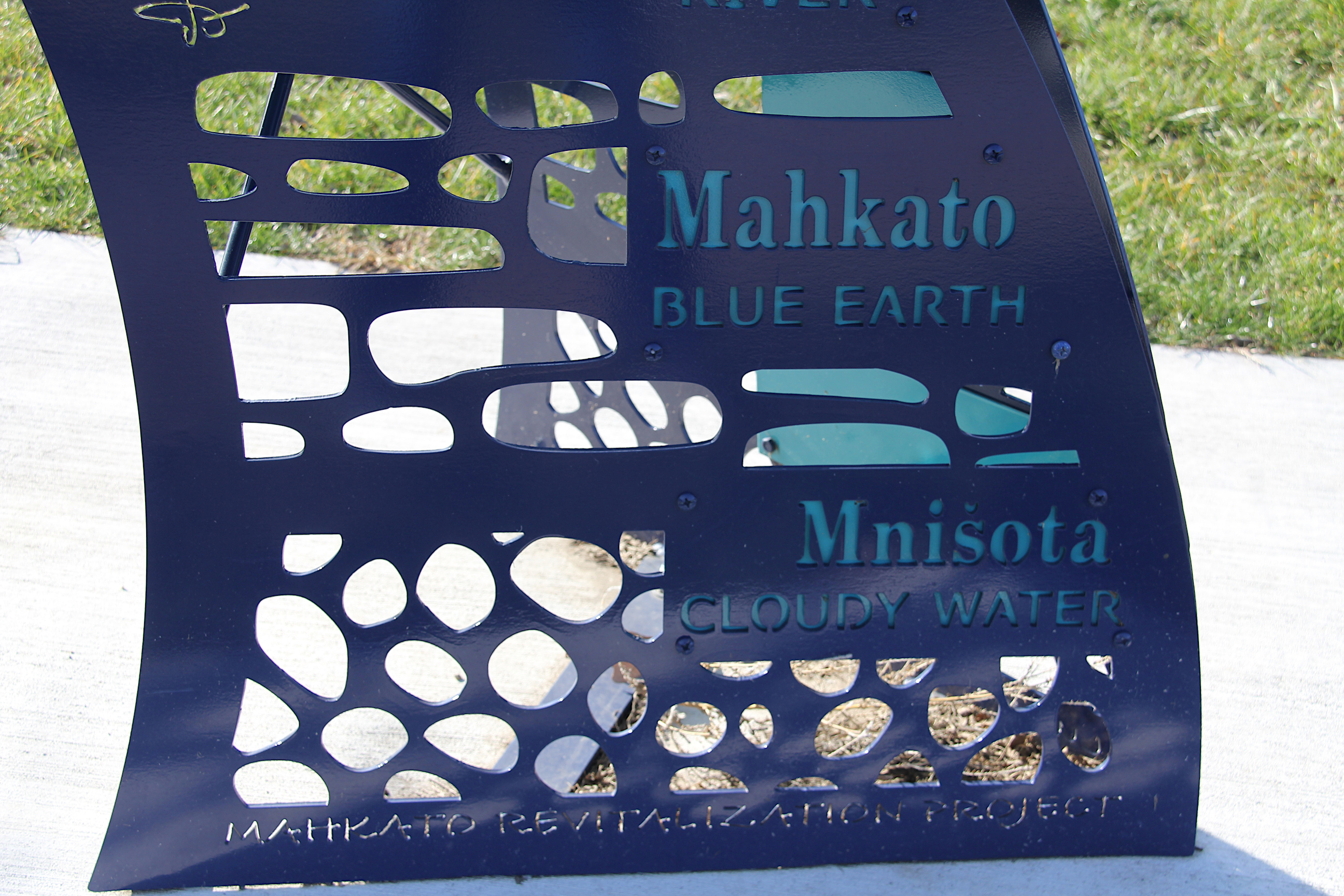
This shows the base of a place sculpture along the Minnesota River in Riverfront Park. The words for Mankato and Minnesota are written in the Dakota language and translated. (Minnesota Prairie Roots copyrighted photo November 2023)

As I settled into the big city (Mankato’s current population numbers around 45,000), big for me when you come from a town of 362, I began to feel at home. Not only on campus, but also in the community. Happy Chef became a go-to destination for conversation and for warm loaves of bread glazed with powdered sugar frosting. A Christian coffee house also drew me off campus. I wasn’t in to the bar scene.

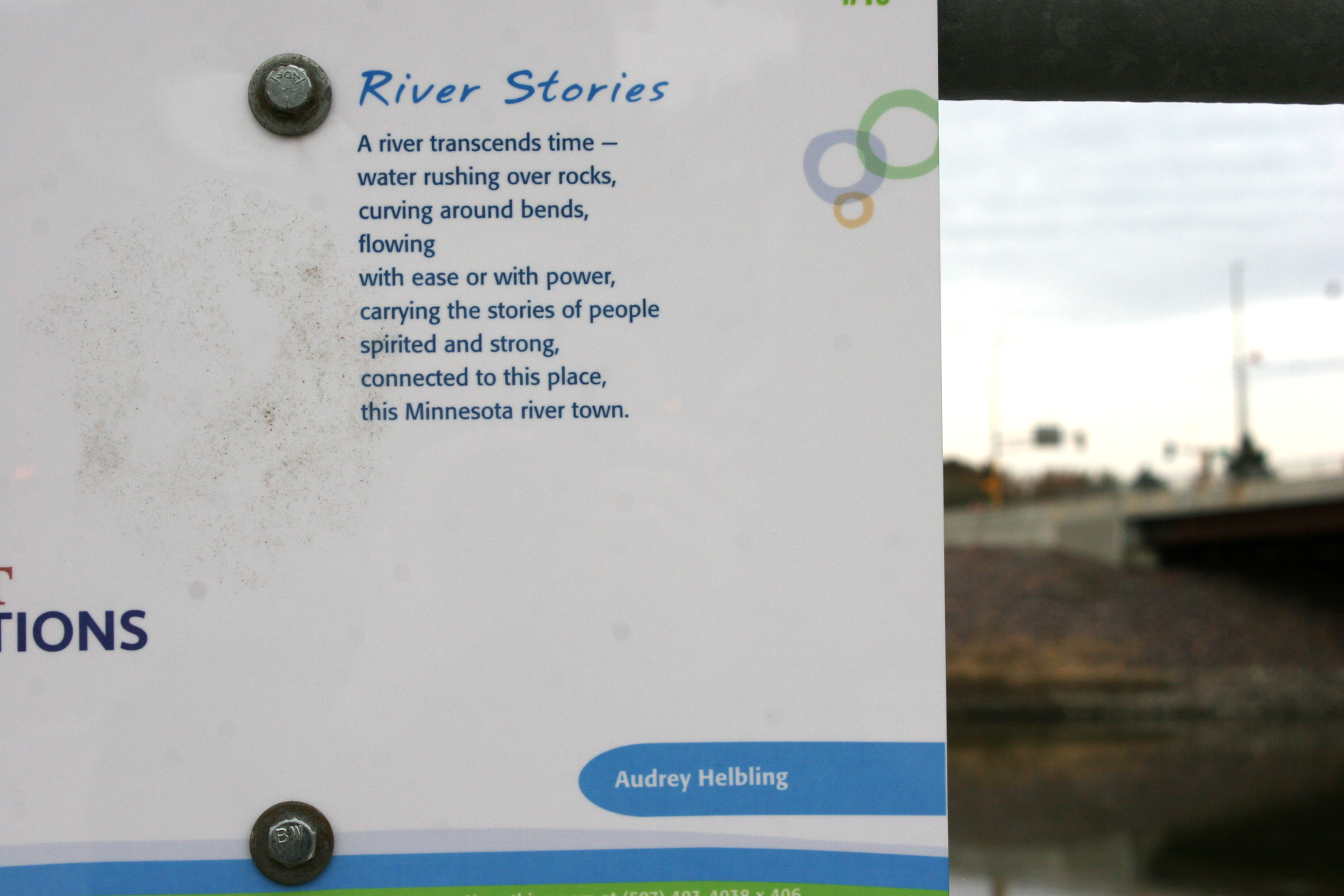
My poem, “River Stories,” highlights the Minnesota River, which winds through Mankato. It was posted along the river as part of the 2019 Mankato Poetry Walk & Ride. (Minnesota Prairie Roots copyrighted file photo 2019)

For nearly four years, Mankato became my home away from home. The place that grew me educationally and as a person. I earned an associate of arts degree from Bethany, then only a two-year college, before moving on to Minnesota State University, Mankato, to study journalism. I worked at the college newspaper, “The Reporter.” In the winter of 1978, I earned a mass communications degree with an emphasis in news/editorial. Soon thereafter, I started my career as a newspaper reporter and photographer. Years later I returned to work for “The Mankato Free Press,” heading up the paper’s St. James-based news bureau (me living and working from my apartment long before working remotely became a thing).

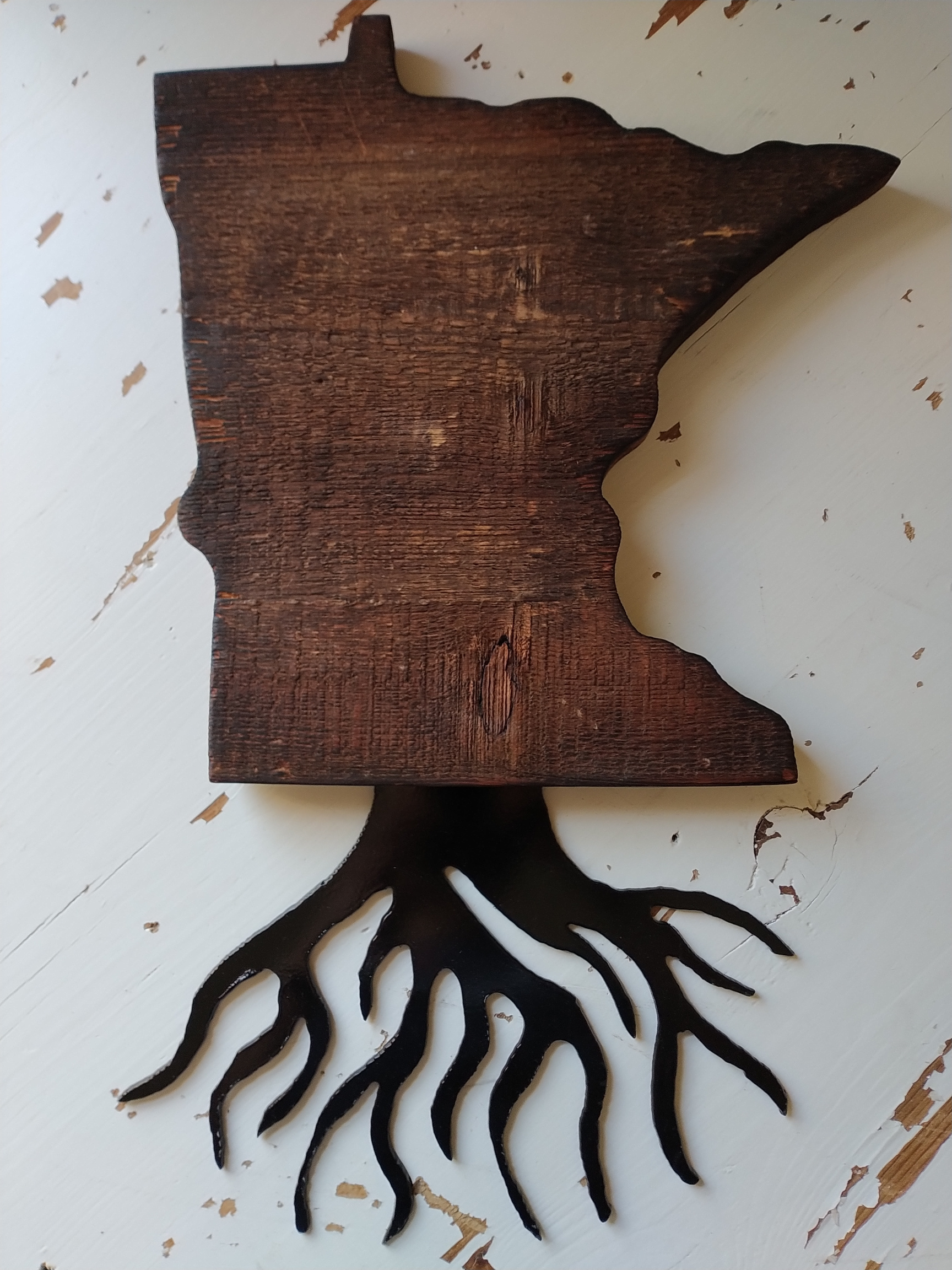
I am rooted in Minnesota. This art hangs in my home office. (Minnesota Prairie Roots copyrighted file photo)

Why am I sharing this with you today? Because of Minnesota Governor Tim Walz, now the vice presidential candidate on the DFL ticket. He lived in Mankato, where he worked as a social studies teacher and football coach at Mankato West High School. Walz, likely unfamiliar to most Americans up until recently, has put our state, specifically Mankato, on the map. As a life-long Minnesotan, I am proud to see my state, considered by many to be fly-over land, in the spotlight. No matter your political leanings, such publicity is good for Minnesota.

I’ve only attended the Minnesota State Fair a few times in my life. This mug came from my father-in-law’s collection. The State Fair started yesterday. (Minnesota Prairie Roots copyrighted file photo)

Like Walz, flannel shirts hang in my closet. I am wearing one as I write on this cool August morning. Flannel truly is a Minnesota thing, no matter political affiliations. We like our hotdishes (not “casseroles”) and the Minnesota State Fair (although not me; too many people), our cabins Up North. We claim musicians Bob Dylan and Prince, the Coen Brothers (of “Fargo” movie fame) and other notables like vice presidents Hubert Humphrey and Walter Mondale.

The grain silos are a massive work of public art. (Minnesota Prairie Roots copyrighted photo November 2023)

I cannot imagine living elsewhere, even if I don’t especially like the frigid cold and snow of a Minnesota winter. I loved winter as a Redwood County farm girl. Minnesota is home. I live 40 miles northeast of Mankato, a city originally inhabited by the Dakota. Mankato is a river town, a college town, a regional shopping hub, a community with a rich (but not always “good”) history. It is home to many creatives. I’ve been part of that with poetry showcased on signs through the Mankato Poetry Walk and Ride.

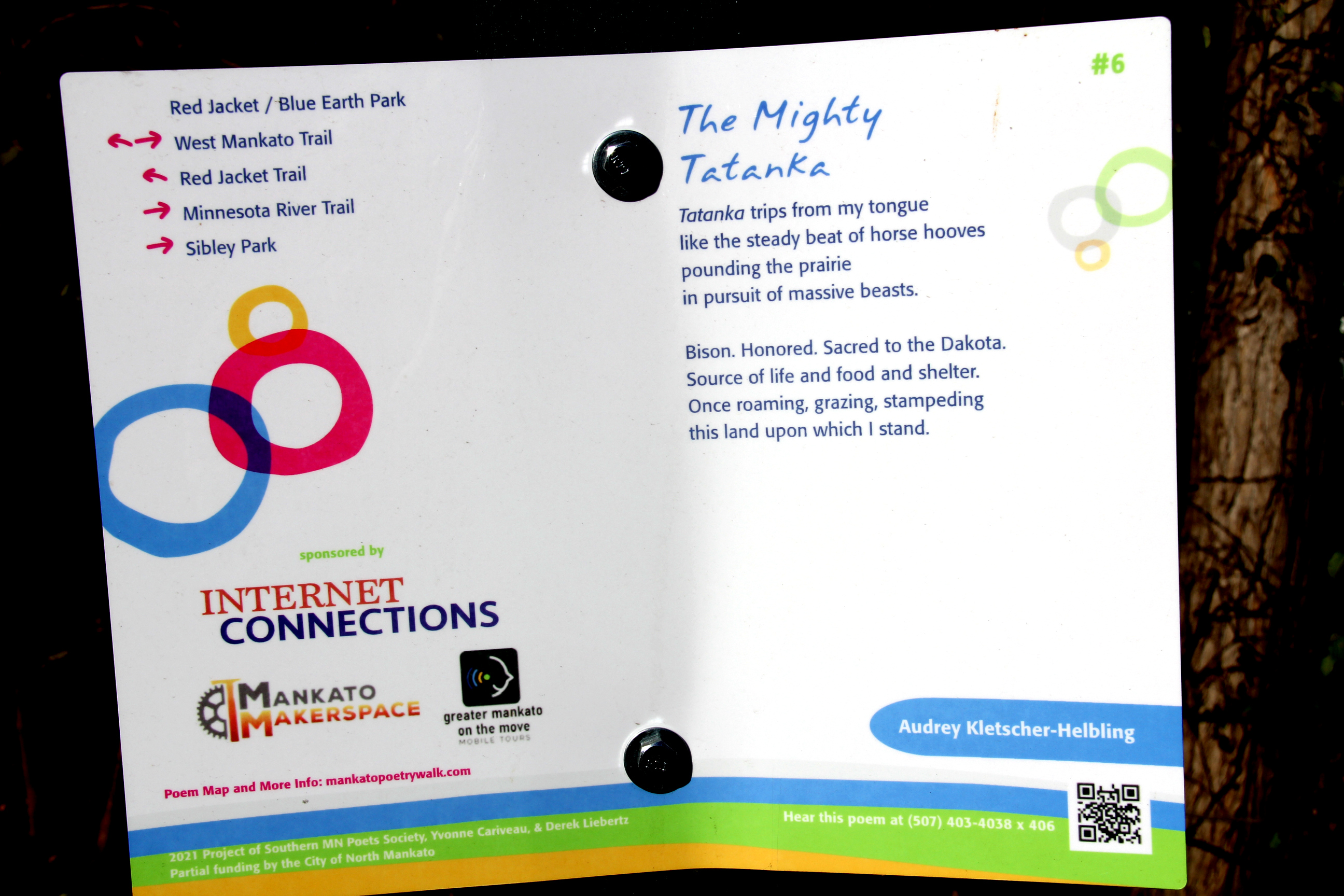
My latest poem, “The Mighty Tatanka,” posted along the West Mankato Trail near West Mankato High School. (Minnesota Prairie Roots copyrighted photo November 2023)

My connection with, and appreciation of, Mankato all started in that fourth floor dorm room with a roommate who was nothing like me. Despite our differences, we connected, forged a strong friendship, together grew and matured. We were on the cusp of our lives. Young. Open to new ideas and learning. The future held endless possibilities. For me, the 17-year-old with the canary yellow bike. And for Rhonda with her stereo system.

© Copyright 2024 Audrey Kletscher Helbling
 

Heritage Days talk focuses on the Wahpekute Dakota June 12, 2024

An exhibit at the Rice County Historical Society, Faribault, shares information on the original inhabitants of the county, the Dakota. (Minnesota Prairie Roots copyrighted file photo)

HERITAGE. It’s a word that identifies us, connects us to our families, to our ethnicity, to the way we were raised, the place of our roots. At least that’s my definition.

This week Faribault celebrates Heritage Days. I’ve never felt totally comfortable celebrating heritage in the city I’ve called home since 1982. My heritage, my home, my roots run deep in the southwestern Minnesota prairie some 2 ½ hours west of here.

But many are rooted in this community by birth, by families that trace back generations. If it’s one thing I’ve learned in four decades about the people of Faribault, it’s that many are related to one another via blood and marriage. But I’ve also learned much about the peoples who came before the French, the Irish, the Scandinavians, the Germans, the Cambodians, the Latinos, the Hispanics, the Sudanese, the Somalis… I’ve learned about the Dakota, the original inhabitants of this region.

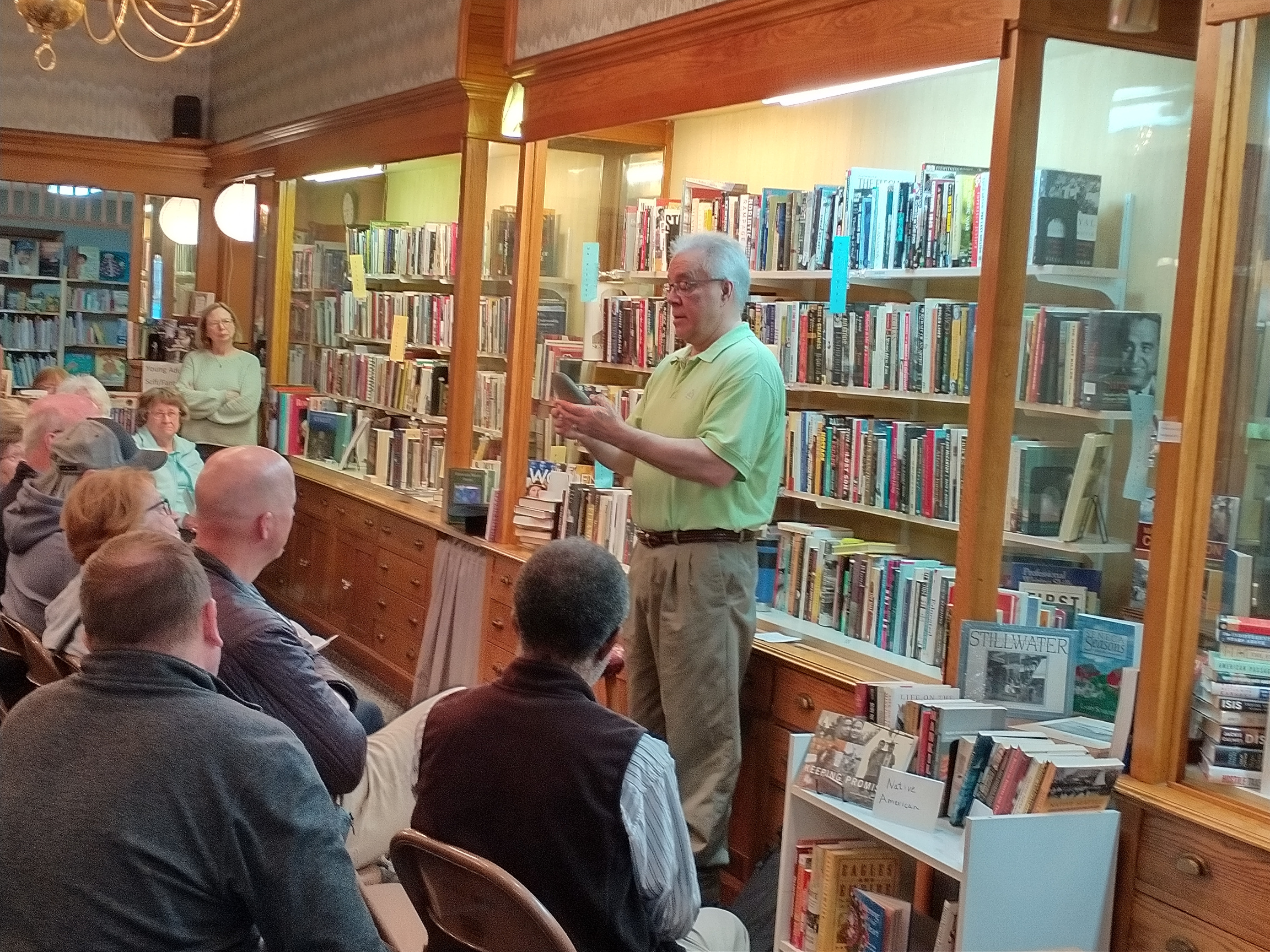
Jeff Jarvis talks about the Dakota at Books on Central. (Minnesota Prairie Roots copyrighted file photo April 2024)

That knowledge came through my own reading and via attending events focused on the Dakota. In April, I listened to local historian and artist Jeff Jarvis talk about the Dakota to a packed audience at Books on Central in Faribault. Jarvis is presenting again, speaking at 6:30 p.m., Wednesday, June 12, on the Wahpekute Dakota at The Cathedral of Our Merciful Saviour, 101 NW Sixth Street, across the street from Faribault’s Central Park.

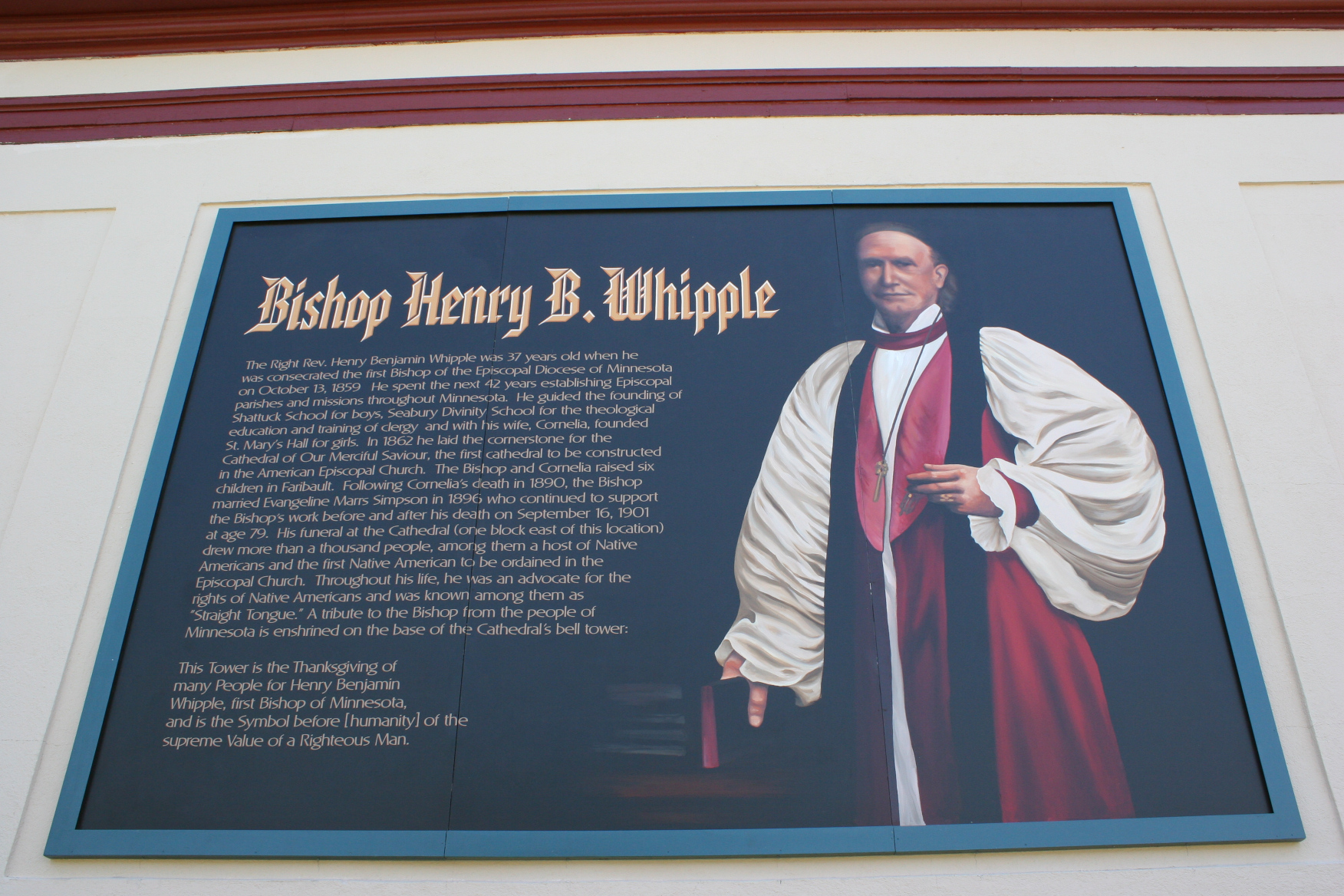
Information on Bishop Henry Whipple focuses one of the murals on the back of the bandshell at Central Park. (Minnesota Prairie Roots copyrighted file photo June 2020)

The Cathedral and its founding leader played an important part in local, state and national history with then Bishop Henry Whipple befriending the Wahpekute Dakota. He also pled with President Abraham Lincoln to spare the lives of 303 Dakota men sentenced to death by the US government following the US-Dakota War of 1862. Eventually all but 38 were pardoned, partially due to Whipple’s efforts.

The pamphlet Jeff Jarvis created about the Wahpekute Dakota. (Minnesota Prairie Roots copyrighted file photo April 2024)

I expect Jarvis will touch on that in his Wednesday evening presentation. He’s an engaging speaker, knowledgeable and passionate. He’s met with Dakota people, compiled a summary of his research in a mini pamphlet titled “The Faribault Dakota, Wahpekute Band.” It features an historic timeline, a Dakota primer of place names, his original art and more.

Chief Tapoi, a leader and member of the Little Crow Band of the Mdewakanton Dakota Tribe, lived in Faribault for a while and is buried at Maple Lawn Cemetery. (Minnesota Prairie Roots copyrighted file photo October 2023)

Jarvis is involved in the Faribault Dakota Project, a local endeavor that aims to increase awareness, visibility and knowledge of the original inhabitants of this land. To that end, presentations like his set during Heritage Days are important for locals to attend.

Just across the street from Central Park, the stunning Cathedral of Our Merciful Saviour. (Minnesota Prairie Roots copyrighted file photo)

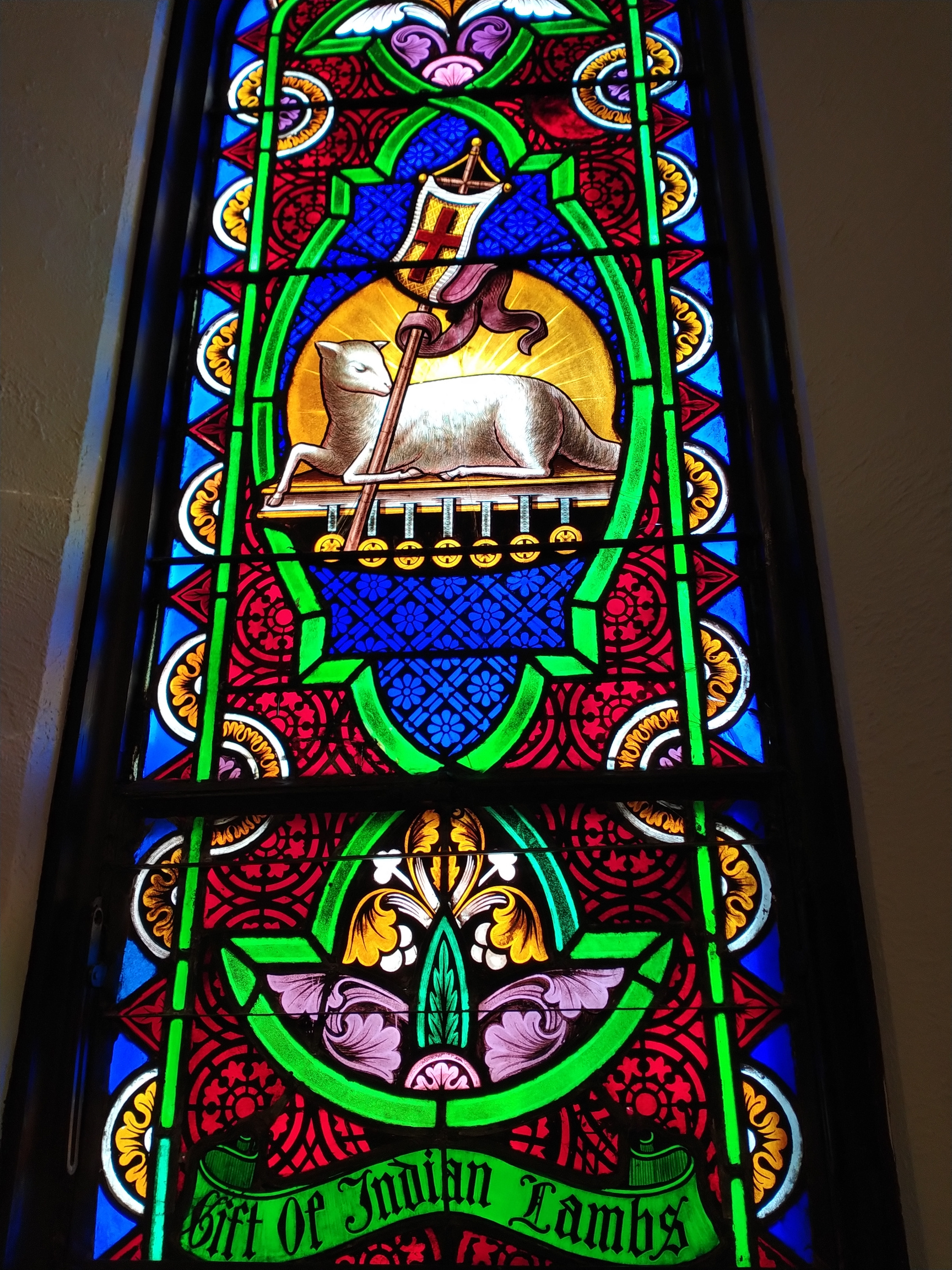
Likewise, free tours of the Cathedral at 11:30 a.m. Sunday, June 16, following a 10 a.m. ecumenical church service, likely will provide more information on the Wahpekute and their connection to Bishop Whipple and the massive limestone church. Several stained glass windows inside the sanctuary were gifted to the Cathedral by the Dakota.

This stained glass window was gifted by the Dakota to the Cathedral in honor of Dakota children. (Minnesota Prairie Roots copyrighted photo November 2023)

The Dakota and this house of worship, which focuses on connecting to the broader community, are such a vital part of Faribault’s history. That’s important to understand, to recognize, to honor no matter one’s heritage. I know locals who’ve lived here their entire lives and have never stepped inside the historic Cathedral. I find that almost unbelievable. We need to understand our past—our connections to peoples and land—to grow our future.

FYI: For a complete listing of Faribault Heritage Day events, click here.

© Copyright 2024 Audrey Kletscher Helbling


The art of the river in Northfield June 11, 2024

Looking down on the Cannon River from the pedestrian bridge, historic Ames Mill (and dam) in the distance, Riverwalk on each side of the river, where a man fishes, lower left. (Minnesota Prairie Roots copyrighted photo May 2024)

TO WALK ALONGSIDE a river, to watch a river, to hear a river is to experience the arts. A river, with its movement, is like a poetic dance. A river, when roaring over rocks or a dam, is like music. A river, too, is like watercolor flowing fluid and free.

Part of the “Creatures & Features of the Cannon River” art project by Kate Woodstrup and Kathy Larson Ness. (Minnesota Prairie Roots copyrighted photo May 2024)

In Northfield, the Cannon River and art flow one into the other along the Riverwalk in the heart of an historic downtown. This southern Minnesota community, in 2023, highlighted the river and the arts through the Artists on Main Street program. Eight art projects were chosen for these latest public art installments.

Part of the “Meet Me at the River” art. (Minnesota Prairie Roots copyrighted photo May 2024)

Recently I followed the Riverwalk to see the work of several creative placemaking artists. A $25,000 grant from the Minnesota State Arts Board and $10,000 from the City of Northfield 1% for the Arts Program funded last year’s “Meet Me at the River” artwork.

The popcorn wagon, operated by volunteers from FiftyNorth. (Minnesota Prairie Roots copyrighted photo May 2024)

I started at Bridge Square, a community gathering spot along the Cannon. The park centers the downtown business district. It’s a place to picnick, to meet, to buy popcorn from the popcorn wagon, to listen to music or to simply enjoy the outdoors next to the river.

Fishing the Cannon River at the Ames Mill Dam. (Minnesota Prairie Roots copyrighted photo May 2024)

Here water rushes over a dam next to the historic Ames Mill. Anglers dangle lines in the water from the Riverwalk. It’s a popular fishing spot. Definitely a “Meet Me at the River” site.

Blue heron art for “Creatures & Features.” (Minnesota Prairie Roots copyrighted photo May 2024)
Butterflies and plants native to the Cannon River area. (Minnesota Prairie Roots copyrighted photo May 2024)
Among fish found in the Cannon, striped bass. (Minnesota Prairie Roots copyrighted photo May 2024)

Artists Kate Woodstrup and Kathy Larson Ness added their art to Bridge Square via “Creatures & Features of the Cannon River” painted onto 11 plastic barriers that block traffic, keeping the square safe for pedestrians. A striped bass, blue heron, turtle, beavers, deer, frogs, butterflies, a dragonfly, native flowers and grasses, and more showcase life in and along the river. It’s a visual, nature-themed delight appealing to all ages. Part science. Part ecology. Part environmental awareness. Part art.

These “Poem Steps” lead up to Bridge Square, down to the Riverwalk. (Minnesota Prairie Roots copyrighted photo May 2024)

From Bridge Square, I aimed north, down the “Poem Steps,” a river poem collaboratively crafted by 17 Northfield poets during a past public arts project. Northfield has a strong community of poets. The city also stamps poetry into concrete as part of the Sidewalk Poetry initiative. The literary arts thrive in this college city.

“Lady Cannon” mural on the west side of the river along the Riverwalk. (Minnesota Prairie Roots copyrighted photo May 2024)
The goddess’ hair, like water, spills down steps. (Minnesota Prairie Roots copyrighted photo May 2024)

Next up, I spotted a colorful mural across the river. Maya Kenney and Raquel Santamaria created “Lady Cannon,” a water goddess whose flowing blue hair depicts the river. Fish weave into her locks and a heron stands riverside. This personification of the river connects people to the Cannon on a personal level. I crossed the pedestrian bridge for a closer look.

Fishermen line the Riverwalk on a May afternoon to fish the Cannon. (Minnesota Prairie Roots copyrighted photo May 2024)

A short distance from “Lady Cannon,” anglers stood nearly shoulder-to-shoulder fishing the river.

Fishing next to “River Light,” a mural by Andrew Wykes. (Minnesota Prairie Roots copyrighted photo May 2024)

Farther down, under the Second Street bridge, a trio of young men dropped lines in the water against backdrop art created by Andrew Wykes. His simplistic abstract mural, “River Light,” captures the movement, color and beauty of the Cannon River.

A sign spotted along the Riverwalk recognizes the Dakota’s homeland. (Minnesota Prairie Roots copyrighted photo May 2024)

The relationship between the river and people stretches back to a time long before these artists added their creative interpretations of the river and river life. A bold sign posted on a second story balcony high above the Cannon reads: WE STAND ON DAKOTA HOMELAND. Long before we became “Meet Me at the River,” the Dakota found, followed, fished this river. I appreciate the reminder that Indigenous Peoples were the original inhabitants of this land along the Cannon. They wrote the poetry, heard the music, watched the water dance, experienced the art of the river long before me, long before “Meet Me at the River.”

© Copyright 2024 Audrey Kletscher Helbling


Poetry that sings from Minnesota’s poet laureate May 2, 2024

Book cover sourced online. Cover watercolor painting, “The Musician,” is by Cherokee artist Roy Boney, Jr.

HER POEMS SING with the rhythm of a writer closely connected to land, heritage and history. She is Gwen Nell Westerman of Mankato, Minnesota poet laureate and author of Songs, Blood Deep, published by Duluth-based Holy Cow! Press.

Of Dakota and Cherokee heritage, Westerman honors her roots with poems that reflect a deep cultural appreciation for the natural world. The water. The sky. The seasons. The earth. The birds and animals. They are all there in her writing, in language that is down-to-earth descriptive. Readers can hear the birdsong, feel the breeze, see the morning light… That she pens nature poems mostly about the land of my heart—fields and prairie—endears me even more to her poetry.

This slim volume of collected poems is divided into seasons of the year, each chapter title written in the Dakota language. The book features multiple languages—Dakota, Cherokee, Spanish and English. That adds to its depth, showing that, no matter the language we speak, write or read, we are valued.

This silo mural in downtown Mankato celebrates the cultural diversity of the region, including the Dakota. (Minnesota Prairie Roots copyrighted photo November 2023)

Westerman clearly values her Native heritage, how lessons and stories have been passed to her through generations of women, especially. Songs, blood deep. In her poem “First Song,” she shares a lesson her grandmother taught her about the importance of sharing. After reading that thought-provoking poem, I considered how much better this world would be if we all focused on the singular act of sharing.

The Dakota 38 Memorial at Reconciliation Park in downtown Mankato lists the names of the 38 Dakota men hung at this site on December 26, 1862. (Minnesota Prairie Roots copyrighted photo November 2023)

This poet, who is also a gifted textile artist (creator of quilts), wraps us in her words. In the season of waniyetu, her poetry turns more reflective and introspective, as one would expect in winter. She writes of family, injustices and more. “Song for the Generations: December 26” is particularly moving as that date in history references the mass execution of 38 Dakota sentenced to death in 1862 and hung in Mankato. Westerman writes of rising and remembering, of singing and prayer. It’s a truly honorable poem that sings of sorrow and strength.

Her poems remind us that this land of which she writes was home first to Indigenous Peoples. Westerman writes of a state park in New Ulm, the sacred Jeffers Petroglyphs and Fort Snelling, where Dakota were imprisoned after the U.S.-Dakota War of 1862 and before their exile from Minnesota. The name of our state traces to Mni Sota Makoce, Dakota for “the land where the water reflects the sky.” It’s included in Westerman’s poetry.

I appreciate poems that counter the one-sided history I was taught. I appreciate Westerman’s style of writing that is gentle, yet strong, in spirit. Truthful in a way that feels forgiving and healing.

In the all of these poems, I read refrains of gratitude for the natural world, gratitude for heritage and gratitude for this place we share. We sang. We sing. Songs, blood deep.

FYI: Songs, Blood Deep, is a nominee for the 2024 Minnesota Book Award in poetry. The winner will be announced May 7. This is Westerman’s second poetry book. Her first: Follow the Blackbirds. In addition to writing poetry and creating quilts, Westerman teaches English, Humanities and Creative Writing at Minnesota State University, Mankato.

© Copyright 2024 Audrey Kletscher Helbling
 

Learning more about The Faribault Dakota from a local historian April 12, 2024

Jeff Jarvis shows an artifact while talking about the Dakota. (Minnesota Prairie Roots copyrighted photo April 2024)

WE’RE ALL CONNECTED. We’re all one.” Those closing words by local historian and artist Jeff Jarvis as he ended an hour-long presentation on “The Faribault Dakota” at Books on Central Thursday evening resonate. I’ve long been geographically-connected to Indigenous Peoples, first in my native Redwood County and now in Rice County. But Jarvis’ definition of connection stretches well beyond geography to the connection we all share simply via our humanity.

Jarvis, who is also an artist and graphic designer, handed out this mini guidebook at Thursday’s presentation. (Minnesota Prairie Roots copyrighted photo April 2024)

Jarvis spoke to a standing room only crowd packed into the Rice County Area United Way used bookstore on Faribault’s Central Avenue. The third speaker in the popular literary event series hosted by the bookshop since its fall opening, his talk was more history than literary. Interest ran high.

My interest in the Dakota traces back to the southwestern Minnesota prairie, where I grew up between the Upper and Lower Sioux Indian Reservations. Today the word “community,” references these homes of the Mdewakanton Dakota. When I moved to Rice County 42 years ago, I moved onto land once inhabited by the Wahpakute Dakota. But it wasn’t until I listened to Jarvis speak that I learned even more about the place I initially called home on the southeastern tip of Cannon Lake west of Faribault.

An Indigenous Peoples exhibit at the Rice County Historical Society. (Minnesota Prairie Roots copyrighted photo 2024)

Long before fur traders and settlers moved to this region of southern Minnesota, the Dakota called this land home, typically living along the area’s lakes and rivers, including the Cannon. I knew this; I’ve attended many presentations on the Dakota by local historians. But I wasn’t aware that the former Ackman Store, the rental home where Randy and I lived for 2 ½ years after our 1982 marriage, was near the site of a trading post opened by fur trader and town founder Alexander Faribault.

Native American artifacts found in Rice County and displayed at the Rice County Historical Society. These are not the artifacts shown by Jarvis. (Minnesota Prairie Roots copyrighted photo 2024)

Jarvis asked me after his presentation whether I saw ghosts while living there. I didn’t. And in a conversation with Lou Ackman, who grew up and lived along Cannon Lake and loaned Indian artifacts for Jarvis to show Thursday evening, I learned that people often searched the Ackmans’ farm fields for artifacts.

When Randy and I moved into Faribault, our geographic connection to Indigenous Peoples continued. We purchased a house below Wapacuta (sic) Park, where we still live today. It was upon this now park land that the Dakota placed their dead, (wrapped in buffalo robes or blankets) upon scaffolding until later burial. Jarvis also shared that the Dakota sometimes suspended wrapped bodies from trees to catch the spirits in the windy hilltop location prior to burial 1-2 years later. I’d never heard this prior to Thursday.

Peace Park, an unmarked Dakota cemetery near Buckham Memorial Library. (Minnesota Prairie Roots copyrighted file photo September 2022)

But I was aware that Peace Park, a triangle of land near Buckham Memorial Library, is an Indian burial grounds. Jarvis termed it an unfenced and unrecognized cemetery marked by a faith-based WW II monument and nothing indicating this is sacred ground of the Dakota. Several bodies were discovered buried there in 1874, he said, not wanting to delve deeper into that troubling topic at Thursday’s event.

Jarvis covered a lot more in his one-hour presentation. Most I knew. Some I didn’t. I always appreciate learning local history, especially about the 300-400 Dakota who relocated from Cannon Lake to live in elm bark huts and teepees in the area along the Straight River from Division Street to the wastewater treatment plant.

The community of Faribault, Jarvis said, had/has a lot of color and was/is “a beckoning place” to many peoples. He referenced the Indigenous Peoples of yesteryear and the immigrants of today. “We’re all connected. We’re all one,” Jarvis said. He’s right.

One of two rainbows arches over Faribault Thursday evening. (Copyrighted photo by Randy Helbling April 2024)
As I stepped outside the bookshop after Jarvis’ talk, cloudy skies opened to reveal stunning double rainbows—a symbol of promise and of hope. A symbol that we all live under the same sky, that we’re all connected.
FYI: To learn more about Jeff Jarvis’ work on the local Faribault Dakota Project, click here.

© Copyright 2024 Audrey Kletscher Helbling