Minnesota Prairie Roots

Writing and photography by Audrey Kletscher Helbling

“Peoples of Faribault,” an enlightening must-see video August 4, 2017

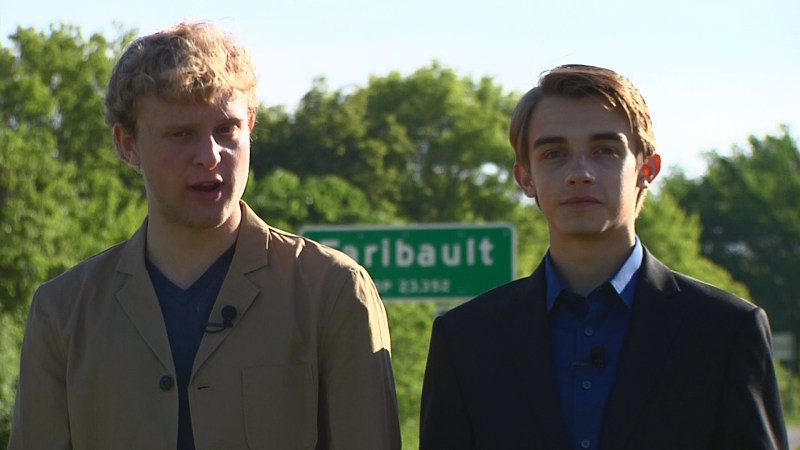
High school students Logan Ledman, left, and Samuel Temple produce “1855: A Faribault History Series on FCTV” in Faribault. Photo courtesy of Samuel Temple.


THEIR APPRECIATION FOR LOCAL HISTORY shines in the videos they produce. But it’s more than a passion for Faribault history that drives Samuel Temple of Faribault and Logan Ledman of Northfield. The 16-year-olds strive to make viewers think via the videos they create for Faribault Community Television.


Photo courtesy of Samuel Temple.


Nearly two years after their first of 11 history episodes aired, the teens tackled their most extensive project yet—a 40-some minute video titled “Peoples of Faribault.” I watched the show this week and am impressed by the research, the content and the clincher ending that challenges viewers to consider how their choices affect Faribault’s identity as a community.

Negative local perceptions of his hometown prompted Samuel to co-produce a video that counters that negativity. He and Logan do that through the art of entertaining, informative and thought-provoking storytelling. Their work is top-notch professional as they address issues of ethnicity in their latest and most lengthy film.


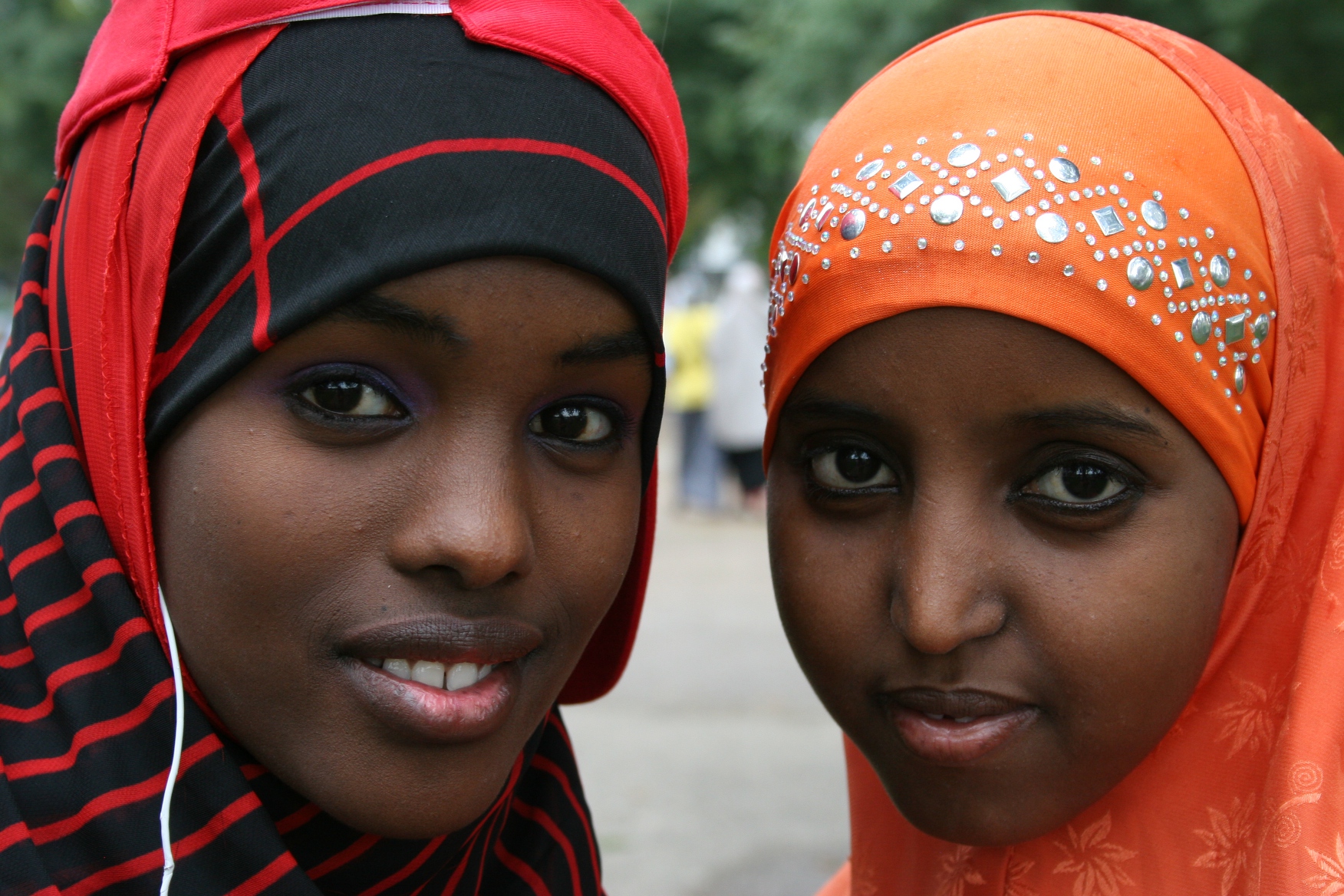
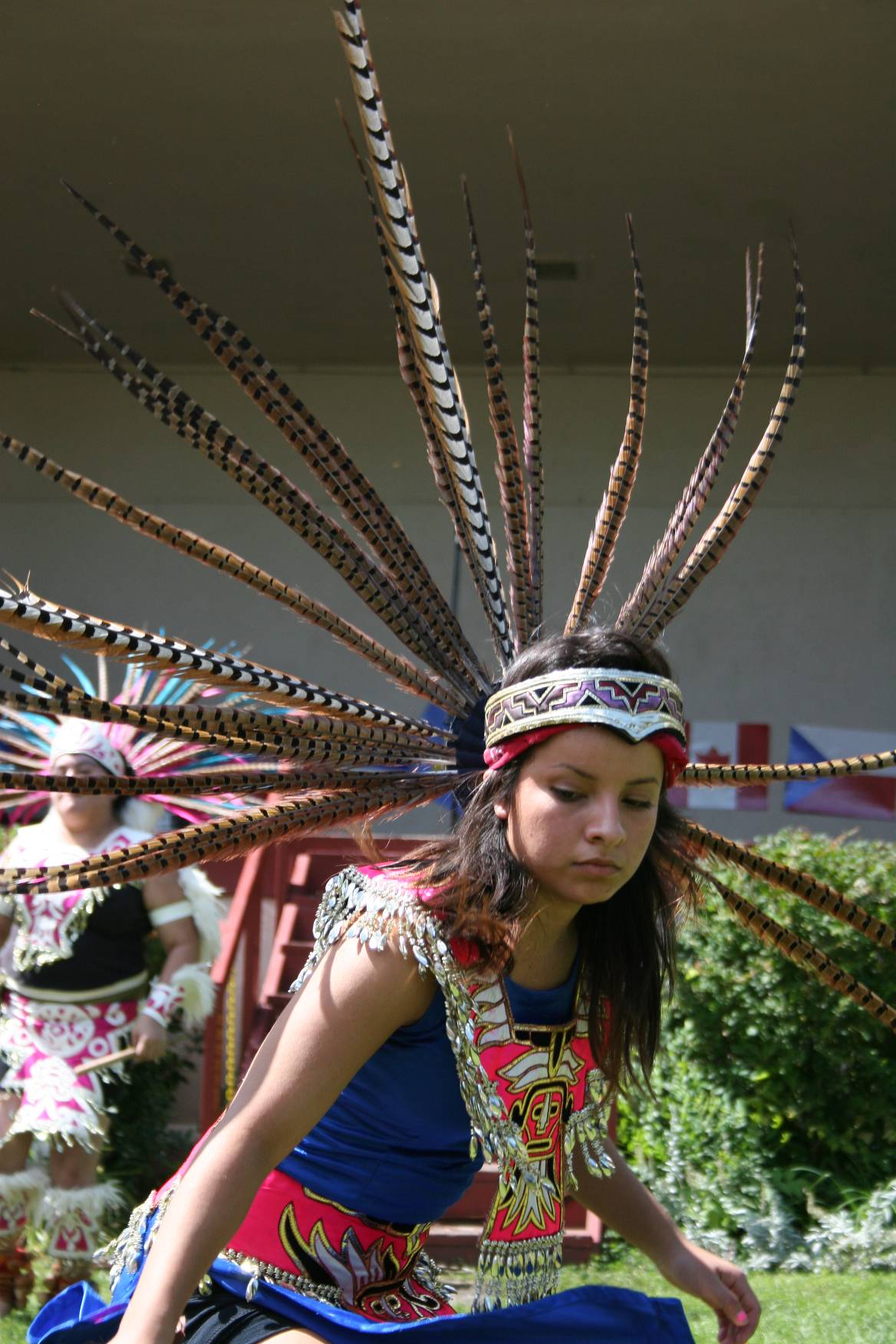
This prize-winning photo which I shot at the International Festival Faribault in 2012 reflects the cultural diversity of our community.


It’s no secret that Faribault has struggled with accepting newcomers. And newcomers have struggled to adapt. But Samuel and Logan put it all in perspective by tracing back to the town’s 1850s beginning and progressing from there. They cover the ethnic groups of the Dakota, French-Canadians, Swedes, Norwegians, Czech, Germans, Irish, Latinos, Cambodians, Chinese and Faribault’s newest immigrants, Somalis. Each group faced issues of assimilation and rejection, the two discovered through extensive research and interviews.
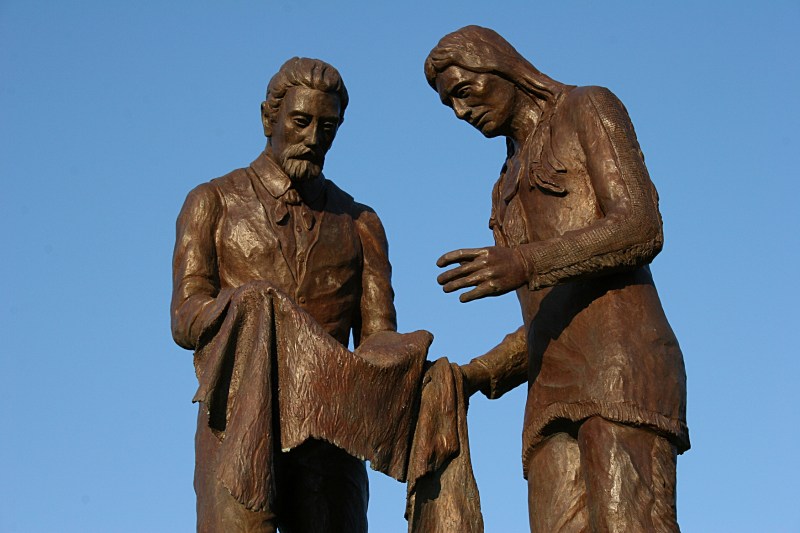
 

This sculptor of Alexander Faribault trading with a Dakota trading partner stands in Faribault’s Heritage Park near the Straight River and site of Faribault’s trading post. Faribault artist Ivan Whillock created this sculpture which sits atop the Bea Duncan Memorial Fountain. Minnesota Prairie Roots file photo.


Samuel summarizes the reason each group came to Faribault in one simple statement: “Everyone was looking for a home, for a wide array of reasons, and each found it in Faribault.”

Looking for a home. It doesn’t get more basic than that. But behind those four words are specifics such as war, famine, pursuing the American dream and more. It’s all covered in the film, for each of the featured ethnic groups.
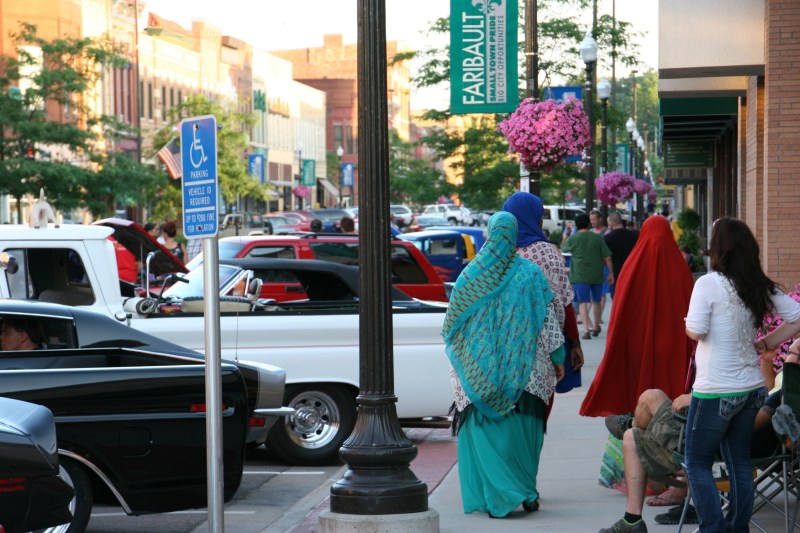
 

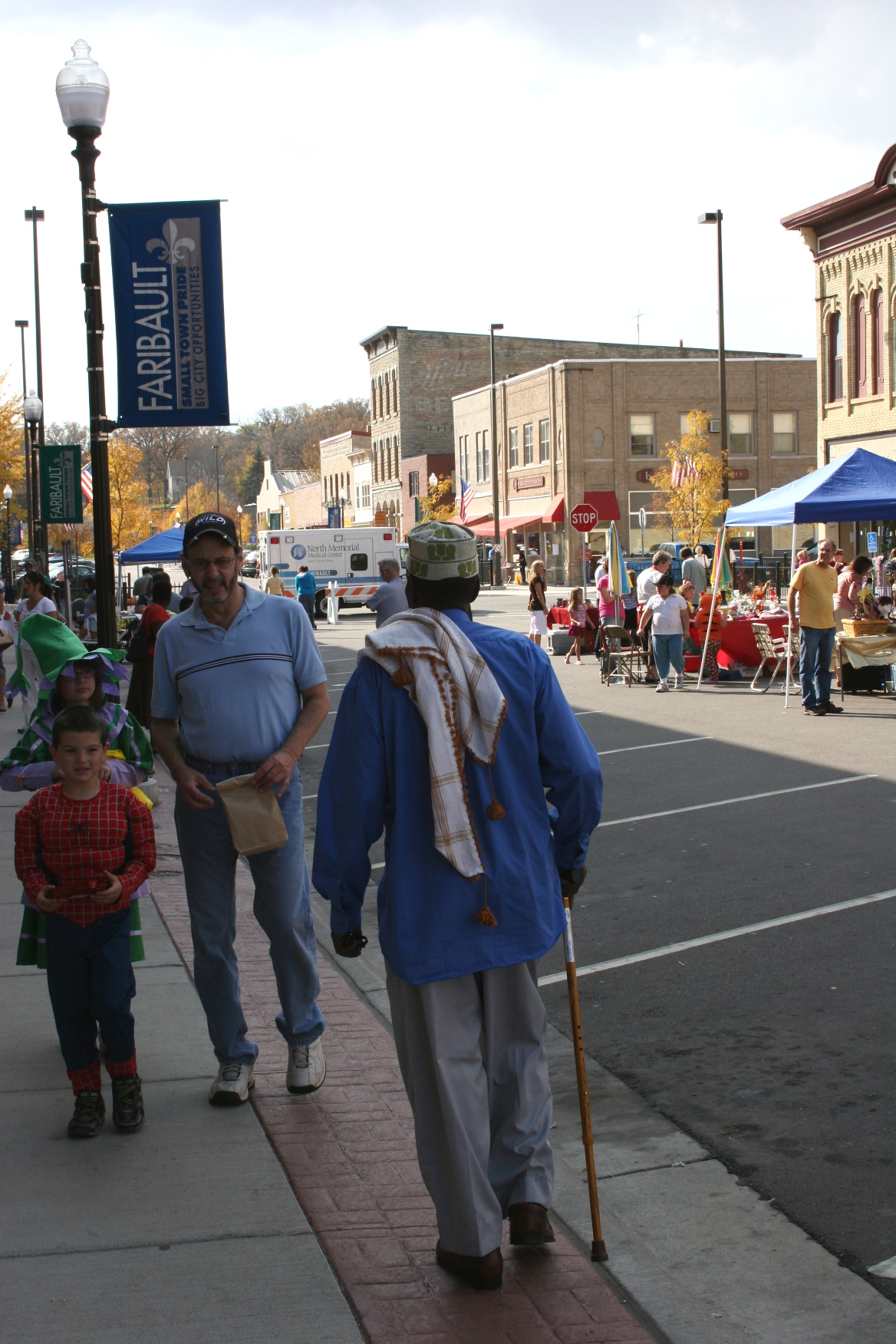
Many Somalis now call Faribault home. I took this photo at a 2015 car show in historic downtown Faribault.


While researching for the video, the producers began to see a pattern. Says Logan in an email response to my questions:

“Issues of racism, cultural conflict, and discrimination came up in our work for this video. It ended up being a consistent pattern; the town’s response to newcomers was, initially, consistently negative. Over time, though, as new Faribault townsfolk left a multi-generational mark on the community, there was a parallel, consistently positive final acceptance of those newcomers by the town. This was a pattern that repeated itself across every group we looked at, and it’s a pattern we see repeating itself today.”
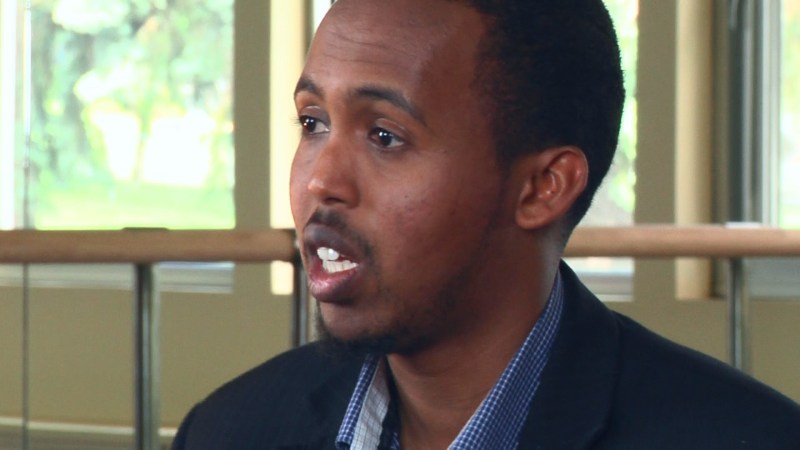
 

Bashir Omar. Photo courtesy of Samuel Temple.


Bashir Omar, a 10-year Faribault resident who serves on the Faribault Diversity Coalition and who works as a cultural liaison in the public school system, offers primarily praise for Faribault in comments aired in the “Peoples of Faribault” video. Although he says people fear the Somali culture, he’s always felt welcomed here and has not been targeted because of his Muslim faith. “Faribault has been a great town,” Bashir says.
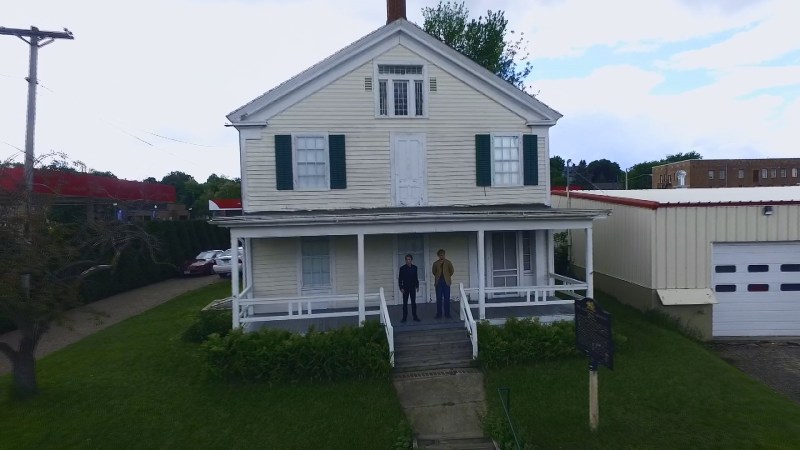
 

Samuel and Logan narrate from the front porch of the Alexander Faribault house, home to town founder Alexander Faribault. Photo courtesy of Samuel Temple.


Not all newcomers have received the same warm welcome, an issue Samuel and Logan sensitively address through narrative and interviews. They also spoke with a local historian/author, city official and author/English as a second language educator and collaborated with sixth graders from the Cannon River STEM School to create family trees. Town founder Alexander Faribault, son of a part Dakota woman and a French trader, for example, faced discrimination when he befriended the Dakota, according to historian Larry Richie. He reveals in the video that Alexander died a despised and broken man. “We gotta learn to accept others,” Larry says.
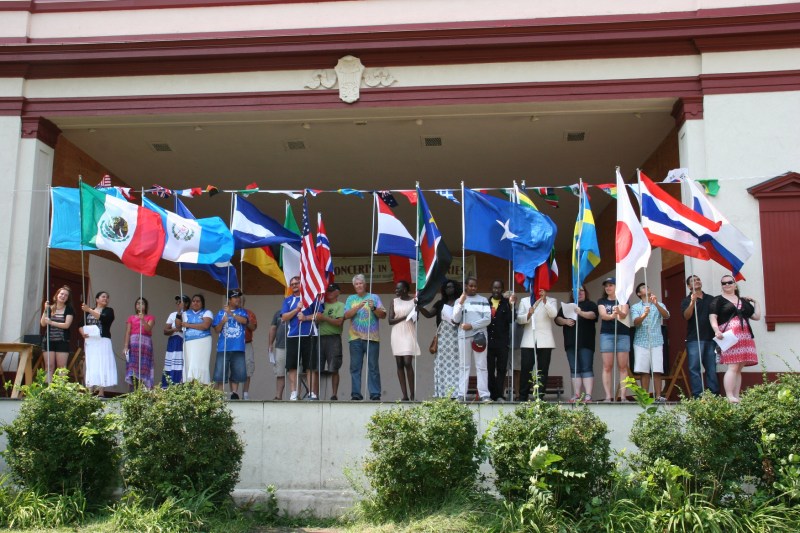
 

A flag ceremony during a past International Festival featured national anthems and information about the countries from which Faribault residents have originated. Minnesota Prairie Roots file photo.


In their research, the filmmakers learned a few things about Faribault that surprised and unsettled them. I asked. For Samuel, the strong presence of the Ku Klux Klan in Faribault, including a mass gathering at the Rice County Fairgrounds for a state convention in 1924, left him feeling queasy. He noted, too, the Klan’s strong anti-Catholic (in addition to anti-black and anti-Jew) sentiment. For Logan, discrimination against Germans especially during the world wars came as a surprise. In the video, the term “enemy aliens” is linked to Germans.
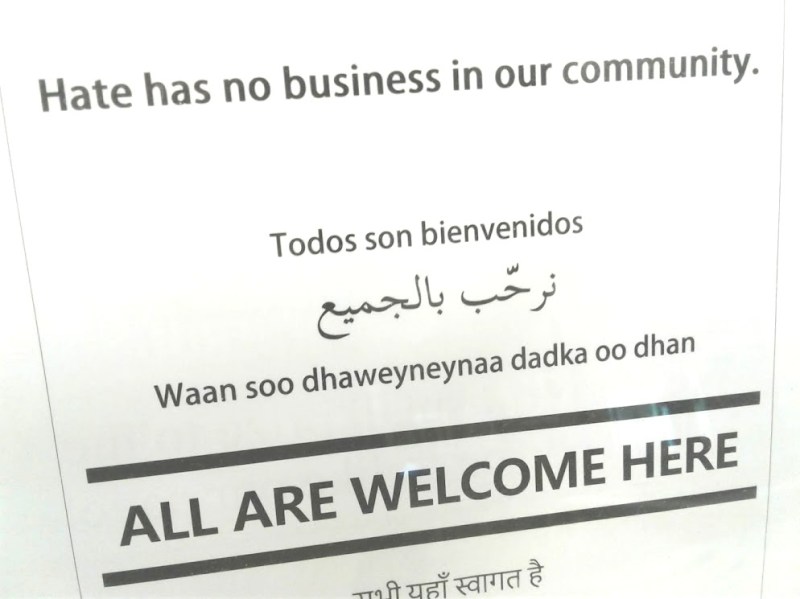
 

I photographed this sign on the front desk of Buckham Memorial Library in Faribault. Minnesota Prairie Roots file photo 2017.


“Faribault is not immune to hate,” Samuel says in the film and then adds this in an email to me:

“Gathering information about the adversity that quite literally every group has faced put in perspective a single truth: accusing any one nationality or ethnicity or religion or group of people of having evil values, or being the root cause of problems in a community is wrong across the board; if we want history to look back on us favorably, we must live by that without exception.”
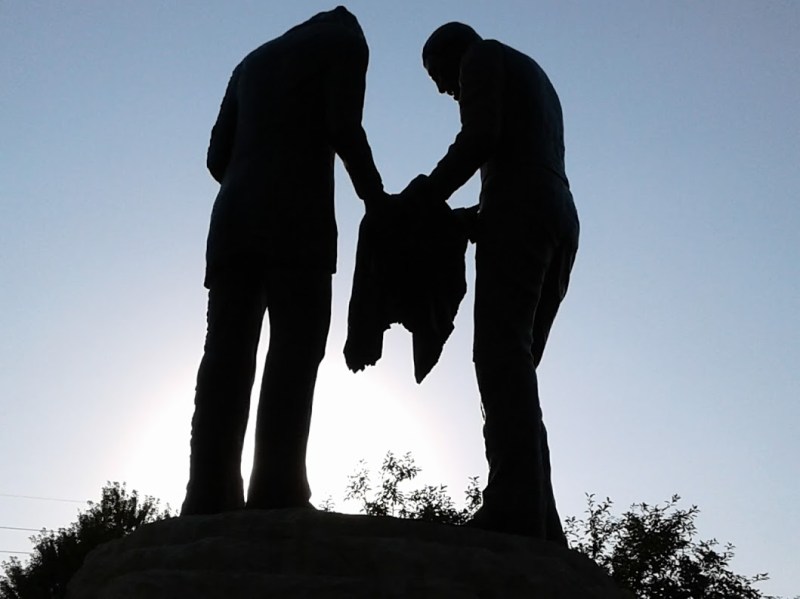
 

We learn from our past, looking back. This photo shows the back of the Alexander Faribault-Dakota sculpture at Faribault’s Heritage Park.


To read those words written by a 16-year-old inspires me and gives me hope. He and Logan are right. We can preserve our heritage while moving forward. We can learn from history. We can choose to focus on the positive, knowing that our choices affect our identity as a community. The choice is ours.


FYI: Joining Samuel and Logan in creating “Peoples of Faribault” are friends/musicians Sam Dwyer and Chase Ingraham of Northfield. Sam has also created original music for past episodes of “1855: A Faribault History Series.”

To view the “Peoples of Faribault” video, click here.

You can also see past episodes of “1855” that cover everything from the Fleckenstein Brewery to the Tilt-A-Whirl to local WASP Elizabeth Wall Strohfus at this same link.

© Copyright 2017 Audrey Kletscher Helbling
“Peoples of Faribault” images are courtesy of Samuel Temple

 

At the library: Making Faribault a better place June 14, 2017

Filed under: Uncategorized — Audrey Kletscher Helbling @ 5:00 AM
Tags: , , , , , , , ,

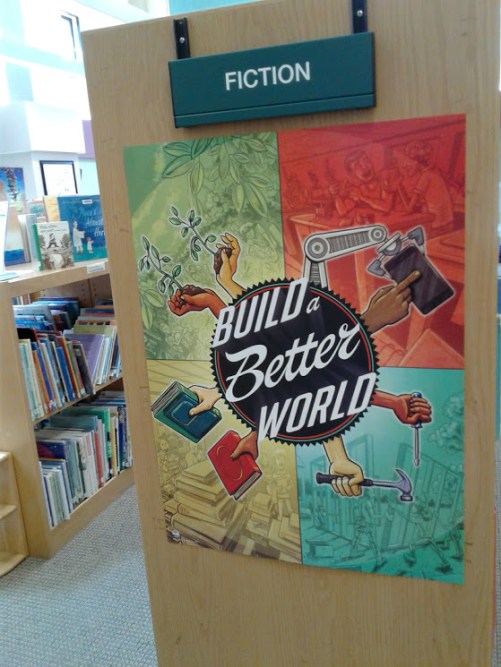
This poster at Buckham Memorial Library in Faribault promotes the theme of the summer reading program.


BUILD A BETTER WORLD.


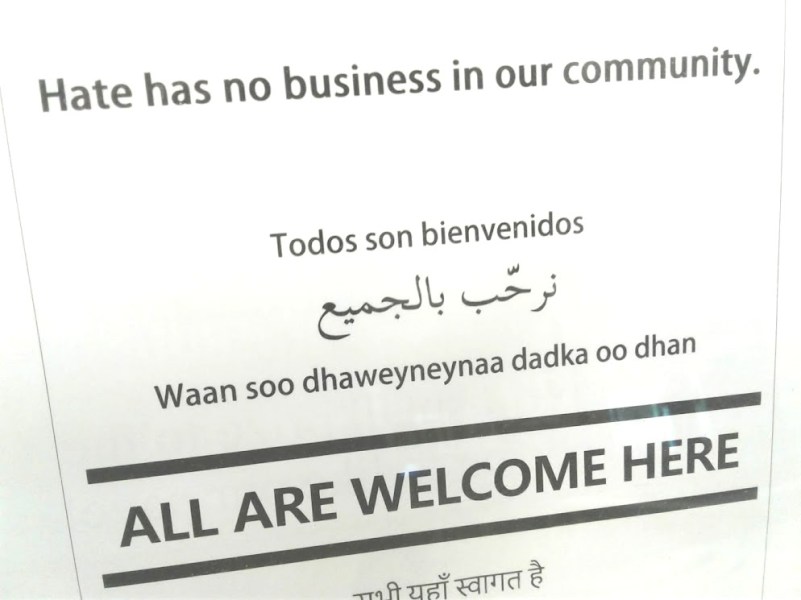
This sign rests on the check-out desk at the library for all to read.


Hate has no business in our community.


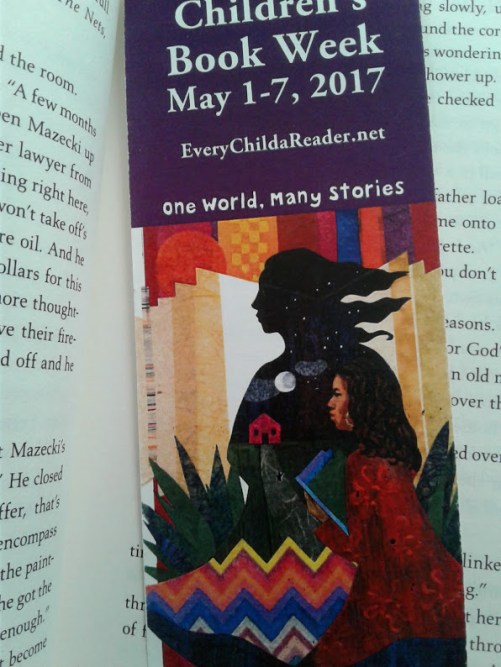
I picked up this bookmark at the library several days ago.


One world, many stories.

I appreciate these three messages, shared on a poster, on a sign and on a bookmark at my local library.


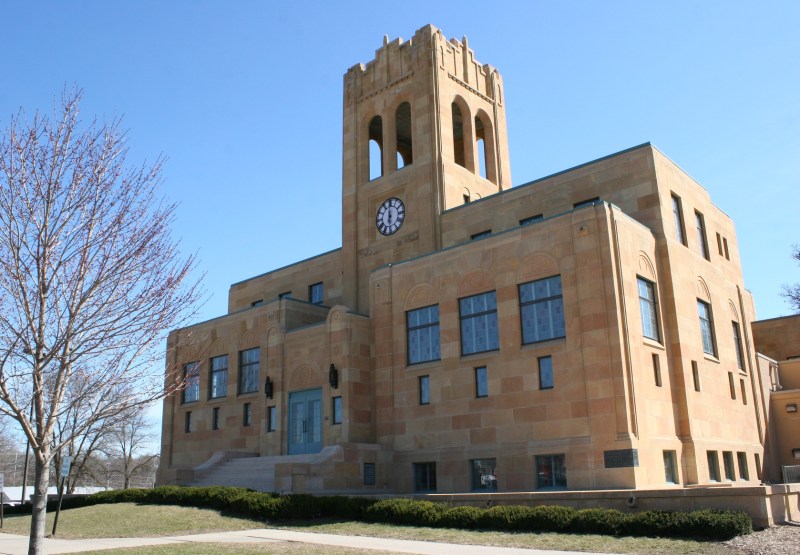
Buckham Memorial Library, Faribault, Minnesota. Minnesota Prairie Roots file photo.


In this public place along Division Street in Faribault, local residents of all ages, all colors, all backgrounds, gather. While there are certainly divisions and differences, there is also a coming together here facilitated by library staff.


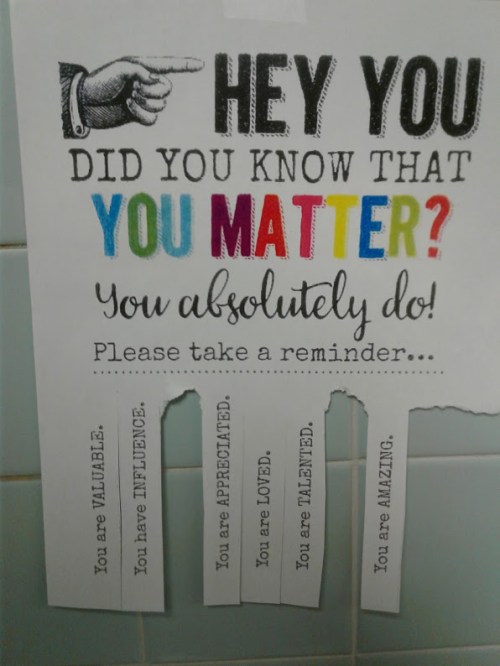
These signs were previously (and may still be) posted in the library restrooms. Minnesota Prairie Roots file photo.


Words matter. When I read words that encourage building up rather than tearing down, choosing love over hatred and fostering of unity instead of division, I am hopeful. I am hopeful that we can learn to get along, to appreciate the individual stories we each bring to our community. Once we begin to see each other as individuals, the building begins, the love flows, our world widens.

© Copyright 2017 Audrey Kletscher Helbling


In honor of Dr. Martin Luther King, Jr., I have a dream for my Minnesota community January 21, 2013

I HAVE A DREAM for my community of Faribault, Minnesota.

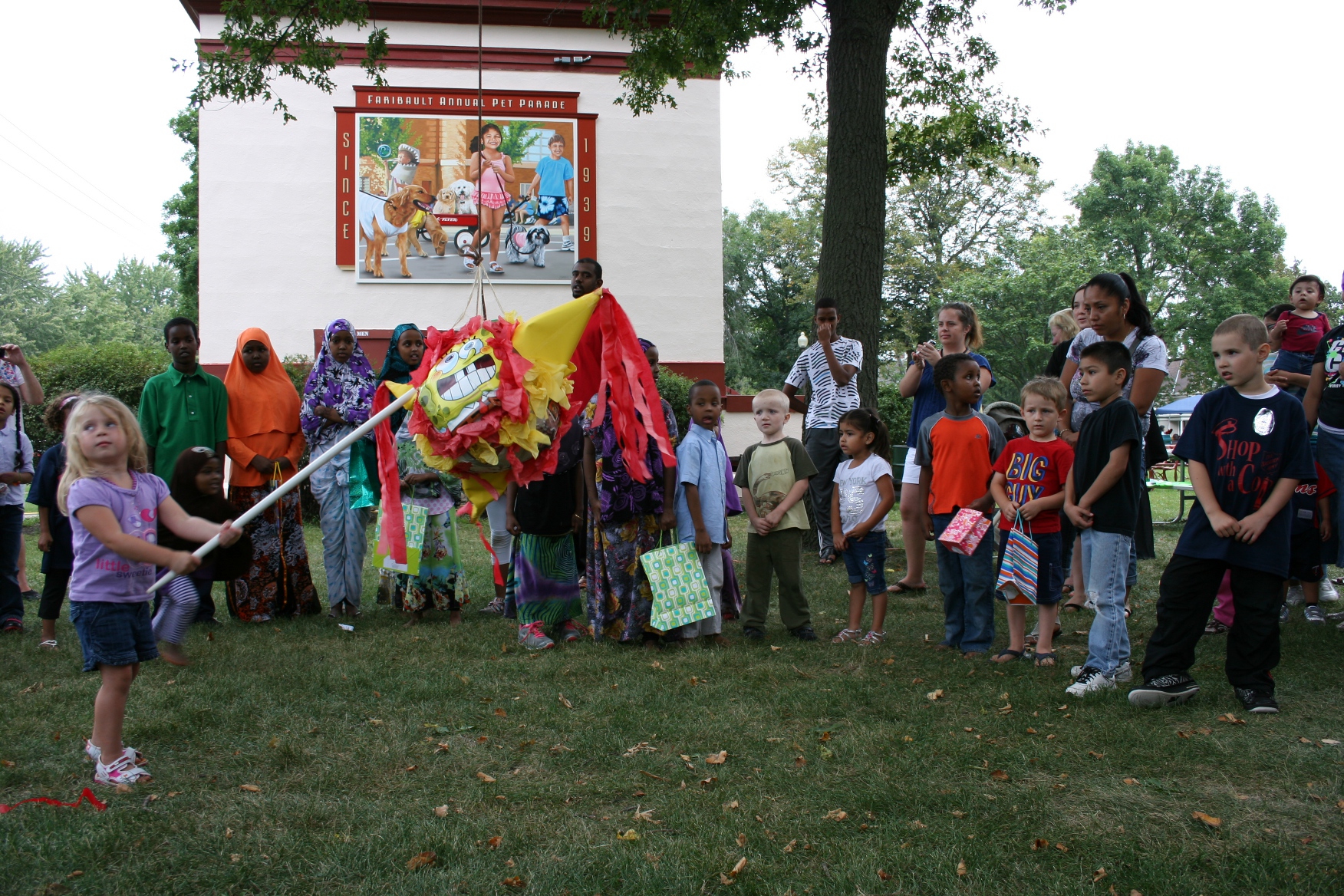
A little girl stands on the opposite side of the group of children waiting to swing at the pinata.

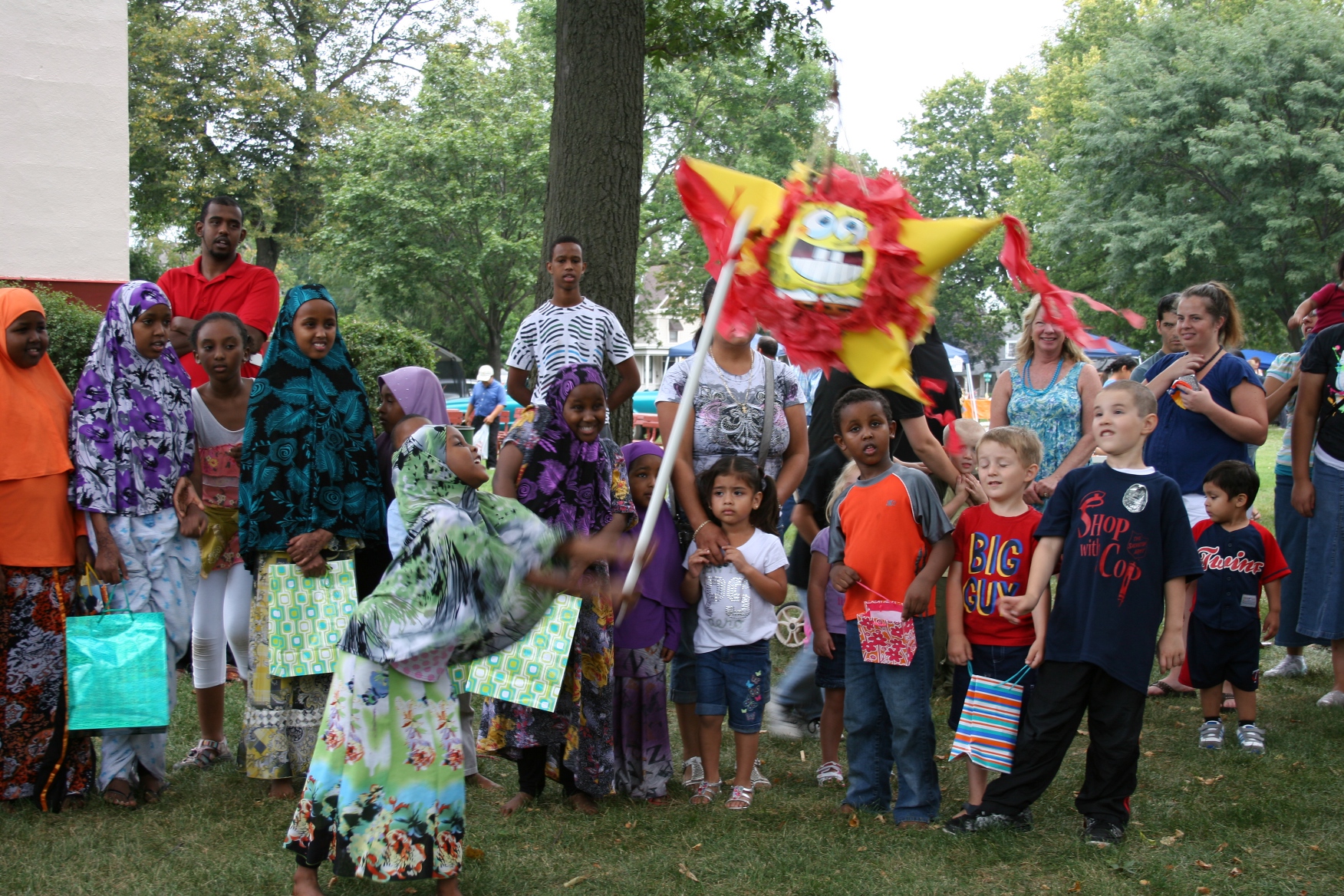
Skin color matters not during this pinata breaking at the International Festival Faribault held in August 2012.

And that dream is for those who live here to see beyond differences in skin color, language, culture and religion.

That same little boy who was so intently focused on the musician.

One of my favorite portraits from the 2012 International Festival Faribault.

I dream that someday my neighbors, and I use that term in the general sense of the word, will recognize that we are, no matter our differences, each human beings who deserve respect.

The scramble for candy once one of three pinatas is broken.

No barriers here as Faribault kids scramble for candy at the 2012 International Festival Faribault,

I dream that someday prejudice will vanish.

The ever-changing/growing diversity of Faribault High School as seen in this post commencement gathering outside the school.

The ever-growing diversity of Faribault High School as seen in this post 2012 commencement gathering outside the school.

I dream that long-time residents will begin to understand the difficulties local minorities—Somalis, Sudanese, Latinos and others—face in assimilating into a new culture, a new community, a new way of life.

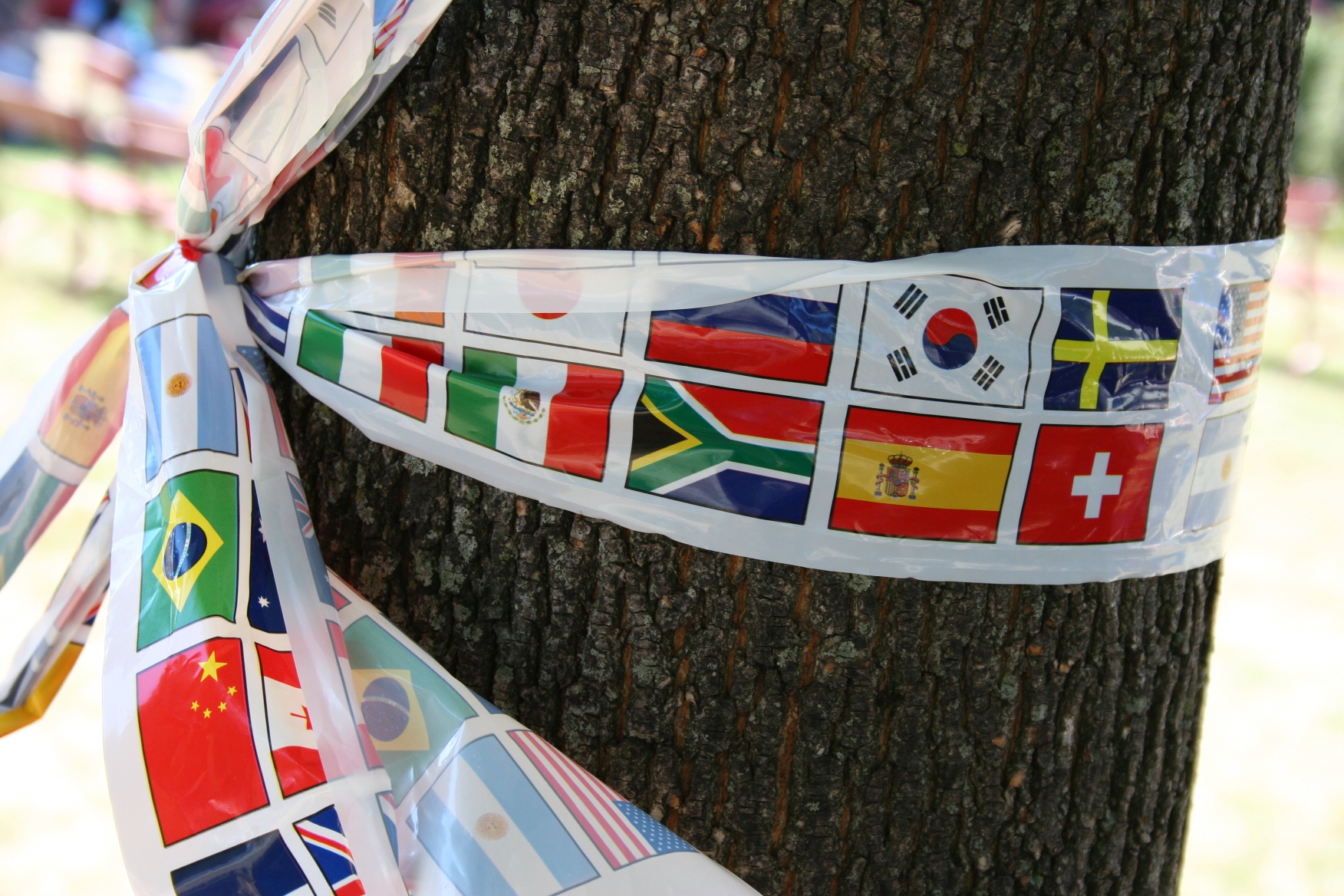
International flag ribbons were tied to trees in Central Park during the 2011 International Festival..

International flag ribbons were tied to trees in Central Park during the 2011 International Festival..

I dream the descendants of immigrants will remember that their forefathers were once newcomers to this land.

Friends, Nimo Abdi, a sophomore at Faribault High School, left, and Nasteho Farah, a senior.

Friends and Faribault residents, Nimo Abdi and Nasteho Farah, photographed at the International Festival Faribault 2012.

I dream that someday I will speak with a young Somali high school student and the words she shares will not be words of heartbreaking prejudice.

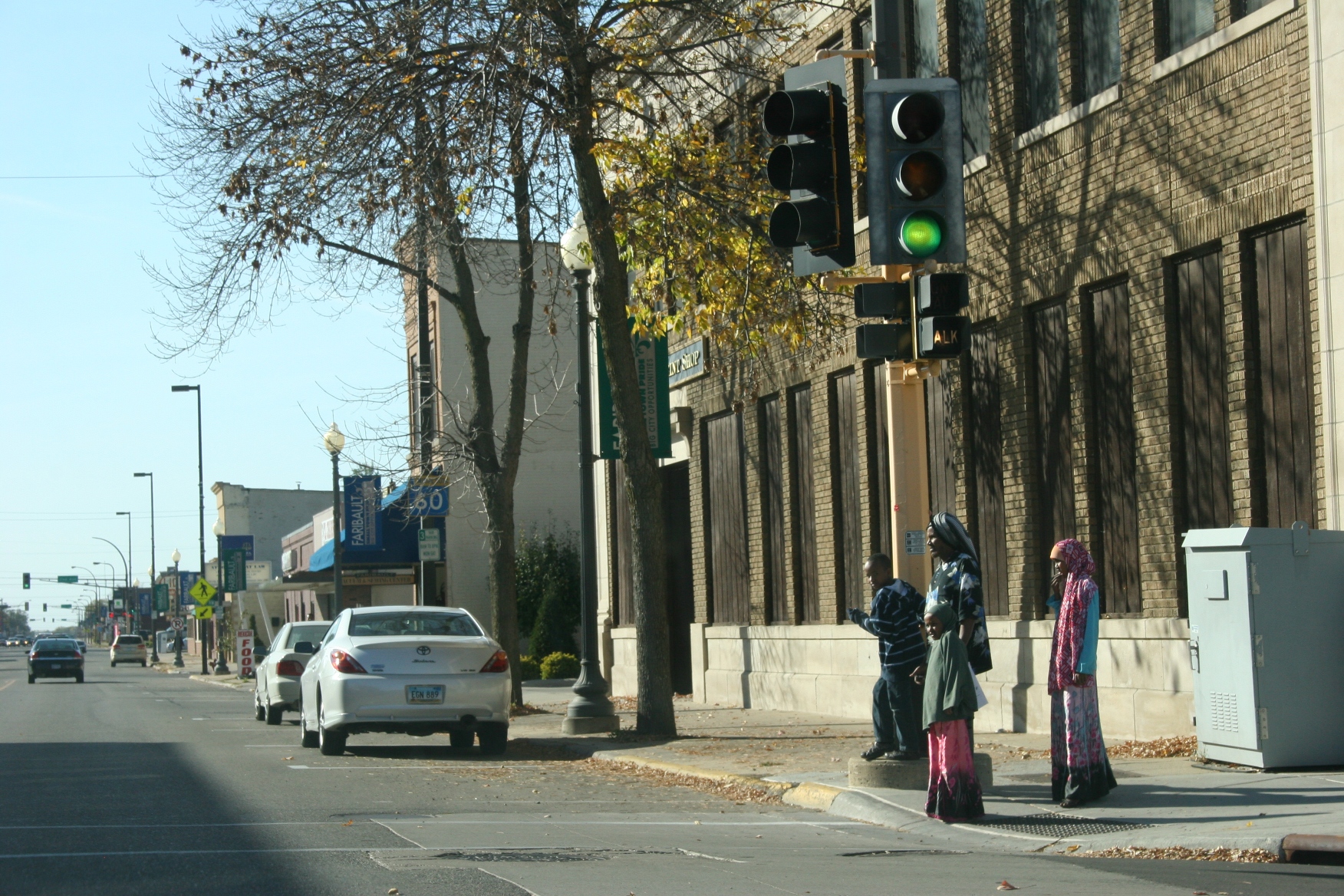
In this file photo, a Somali family waits to cross a downtown Faribault street.

In this file photo, a Somali family waits to cross a downtown Faribault street.

I dream that locals will stop fearing the Somali men who gather on downtown street corners, the street-level front porches of their Central Avenue apartments.

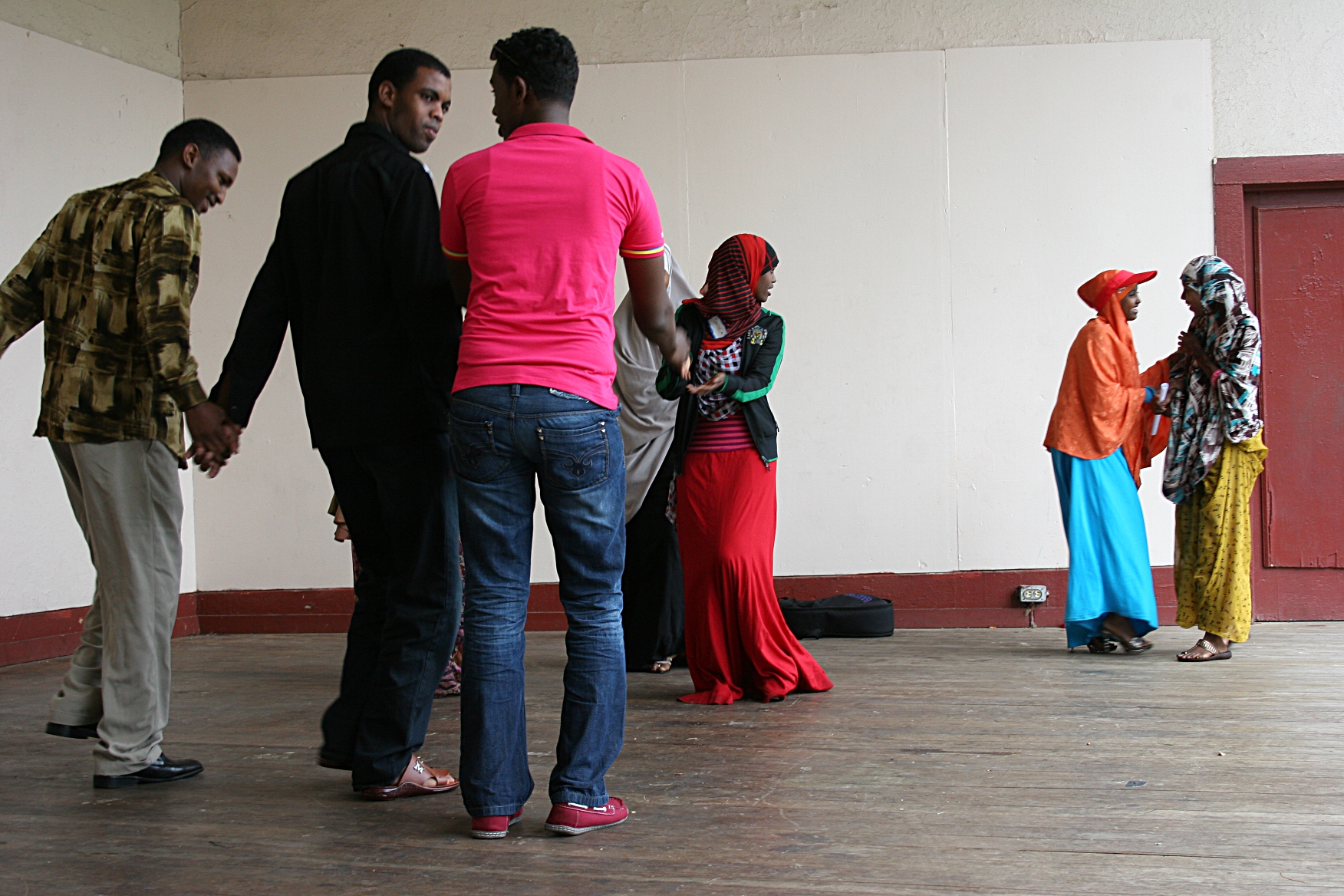
A group of young Somali dancers perform on the band shell stage during the festival.

A group of young Somali dancers perform on the band shell stage during the 2012 International Festival Faribault.

I dream that the minority population will no longer be lumped together into the category of those who commit the most crimes within my community.

Conversation and connecting..., no other words necessary.

Conversation and connecting…, no other words necessary.

I dream that all of us, no matter our color, can begin to connect on a personal level. For when that happens, the barriers begin to fall, the differences slip away, and the prejudices vanish.

#

I DON’T WANT TO LEAVE you with the impression that Faribault residents are a bunch of racists. We are not. But to claim that we are all accepting of one another, to deny that bigotry exists, would be inaccurate. I’ve heard all too many negative stories and comments, even from friends and acquaintances, about our minority population.

Faribault is an ever-changing community of diversity. One need only drive or walk about town to see that.  While 75 percent of our population is white, according to the 2010 U.S. Census, Hispanics or Latinos comprise 13 percent and black or African Americans seven percent of our residents.

We can form all sorts of committees, outreach and other groups to ease newcomers into Faribault, to advocate understanding and acceptance. These are necessary and commendable efforts. Yet, if we as individuals do not open our hearts, and that applies both to long-time residents and immigrants, nothing truly changes. We need to connect on a personal basis. For in shaking a hand, greeting one another by name, engaging in conversation, we begin to view each other as individuals, then as friends.

I am not so naive as to believe any of this will come easily or quickly. Change begins with something as simple as a smile, holding a door open, a kind word, an unwillingness to hear a prejudicial comment and then let it slide…
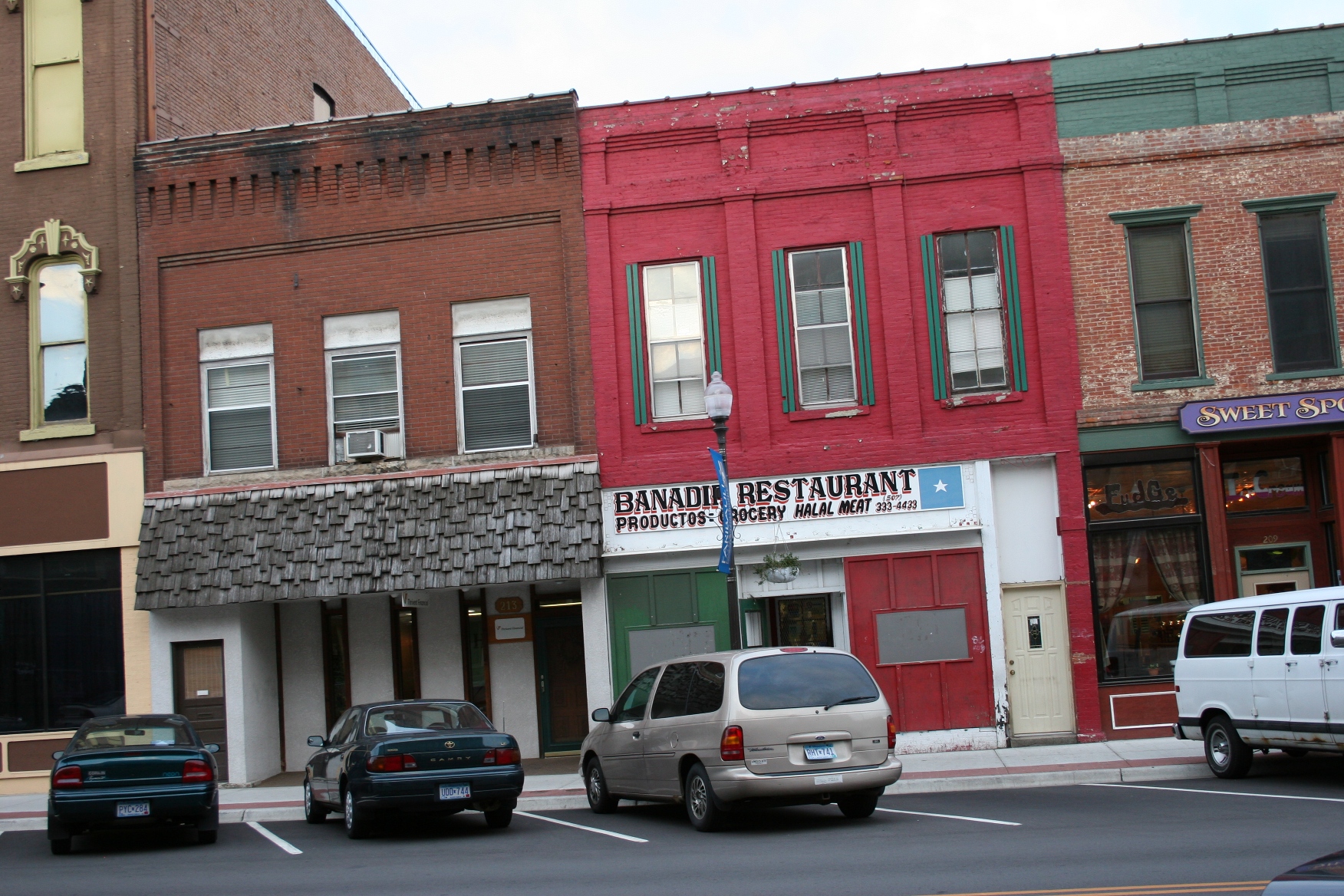
Downtown Faribault businesses include Banadir Restaurant, a Somali restaurant.

Downtown Faribault businesses include Banadir Restaurant, a Somali restaurant.

We can choose to support the ethnic businesses which are making our community a more diverse and interesting place to shop and dine. I’d like to see minorities actively and visibly involved/represented in the Chamber of Commerce and Faribault Main Street program. How about a campaign to showcase ethnic businesses to locals and visitors?

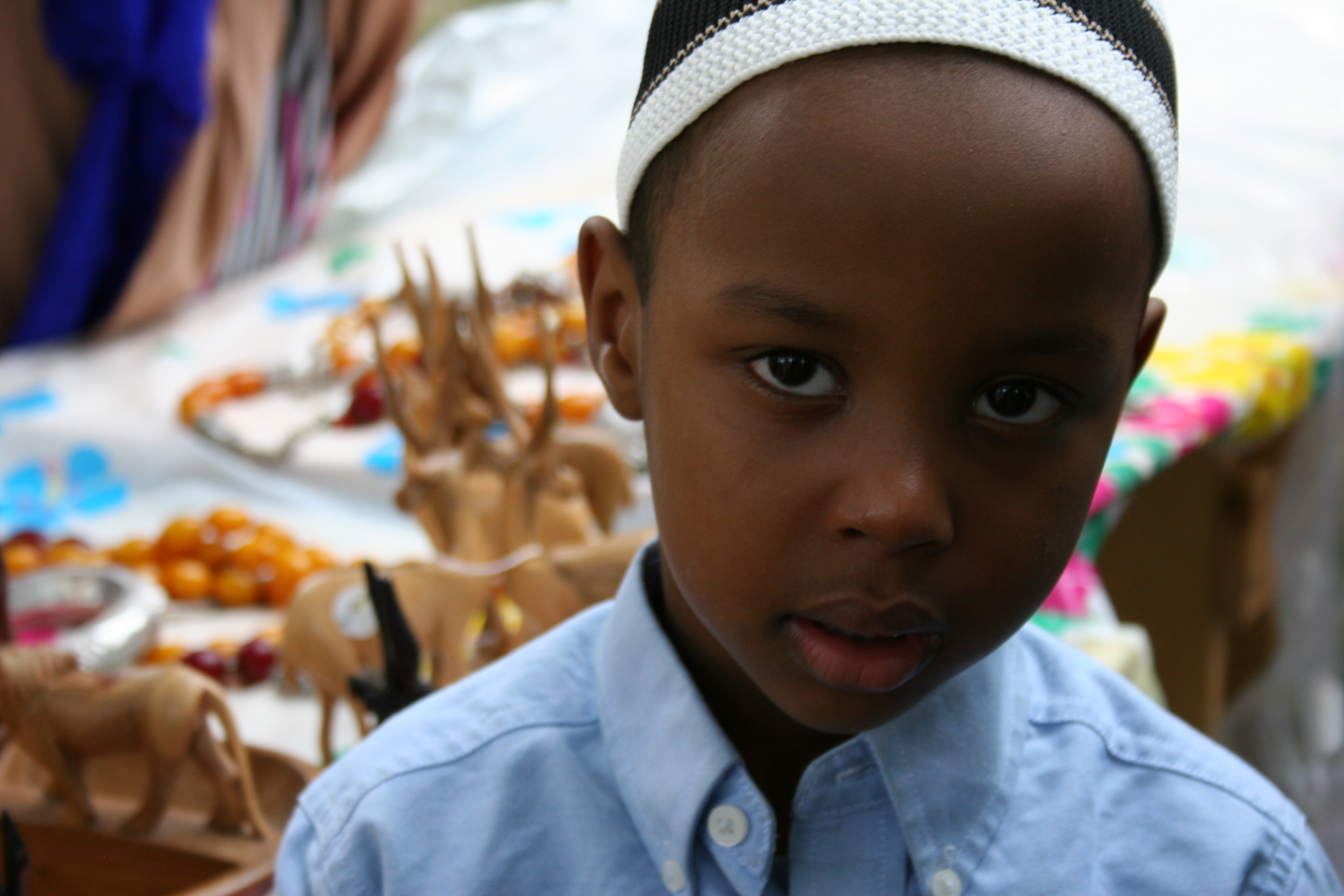
Lul Abdi shows off beautiful wood crafts from Kenya and Somalia.

Lul Abdi shows off beautiful art from Kenya and Somalia at the 2012 International Festival Faribault.

Perhaps our local arts center could connect with minority groups, integrating them into the arts scene via gallery showings, classes, diverse cultural events and the sale of their art in the arts center gift shop.

Ethnic musicians could be featured during the weekly Faribault Parks and Recreation Department summer band concerts in Central Park.

The Faribault Farmers’ Market could invite minorities to vend their ethnic art, crafts and food. The relaxed atmosphere of the Farmers’ Market offers an especially neighborly environment in which to connect people and cultures on a personal level.

My ideas are nothing novel. Perhaps some have already been tried, are in the works or are on the table…

#

CERTAINLY EFFORTS ARE being made to reach out to our newest residents, although one of the most valuable assets, The Welcome Center, closed several years ago due to lack of funding. Somali Community Services reaches the Somali population, at least.
A newly-formed group, Faribault’s Task Force on Cultural Diversity, has brought community leaders (including clergy, business representatives, healthcare and law enforcement professionals and others) together to address diversity-related concerns. I contacted Mayor John Jasinski, who is spearheading this committee, for an update, but have not yet received a response.

A woman, without my prompting, took this mask from the table manned by Bashir Omar and Asher Ali and asked me to photograph her.

Without prompting, this woman took this mask from a table manned by Bashir Omar and Asher Ali and asked me to photograph her during the 2012 International Festival Faribault.

The nonprofit International Festival Faribault organizes an annual outdoor fest aiming “to promote understanding between diverse cultures within Faribault, uniting the community with music, dance, ethnic foods and merchandise.”

HealthFinders Collaborative, which began with a healthcare clinic for the underinsured and uninsured in rural Dundas, recently opened an additional center in downtown Faribault.

St. Vincent de Paul Center offers financial assistance, food, clothing and other basic necessities to those in need.

Ten Faribault churches have joined to create the Community Cathedral Cafe, serving a free meal from 5 p.m. – 6:30 p.m. each Tuesday at the Cathedral of Our Merciful Saviour.

Divine Mercy Catholic Church has a Hispanic Ministry Program that includes, among many other aspects, annual summer masses at two Faribault trailer parks.

Within Our Savior’s Lutheran Church, Nile Our Savior’s, a Sudanese congregation, holds Sunday afternoon worship services at 1 p.m in the Nuer language.

Buckham Memorial Library offers a free online language program (Mango Languages) with 40 foreign languages and 12 English as a Second Language courses.

This list certainly is not all-encompassing. Our schools are reaching out, too, through nonprofits like Children’s Dental Services. I expect many individuals, whether via one-on-one tutoring, donations or other gifts are also assisting Faribault’s minority population.

Yet, more can be done. And it starts with each of us, in our hearts, on a personal level.

*NOTE: Some of the organizations listed above are not geared specifically toward assisting local minorities, but rather toward anyone in need, no matter their ethnicity.

#

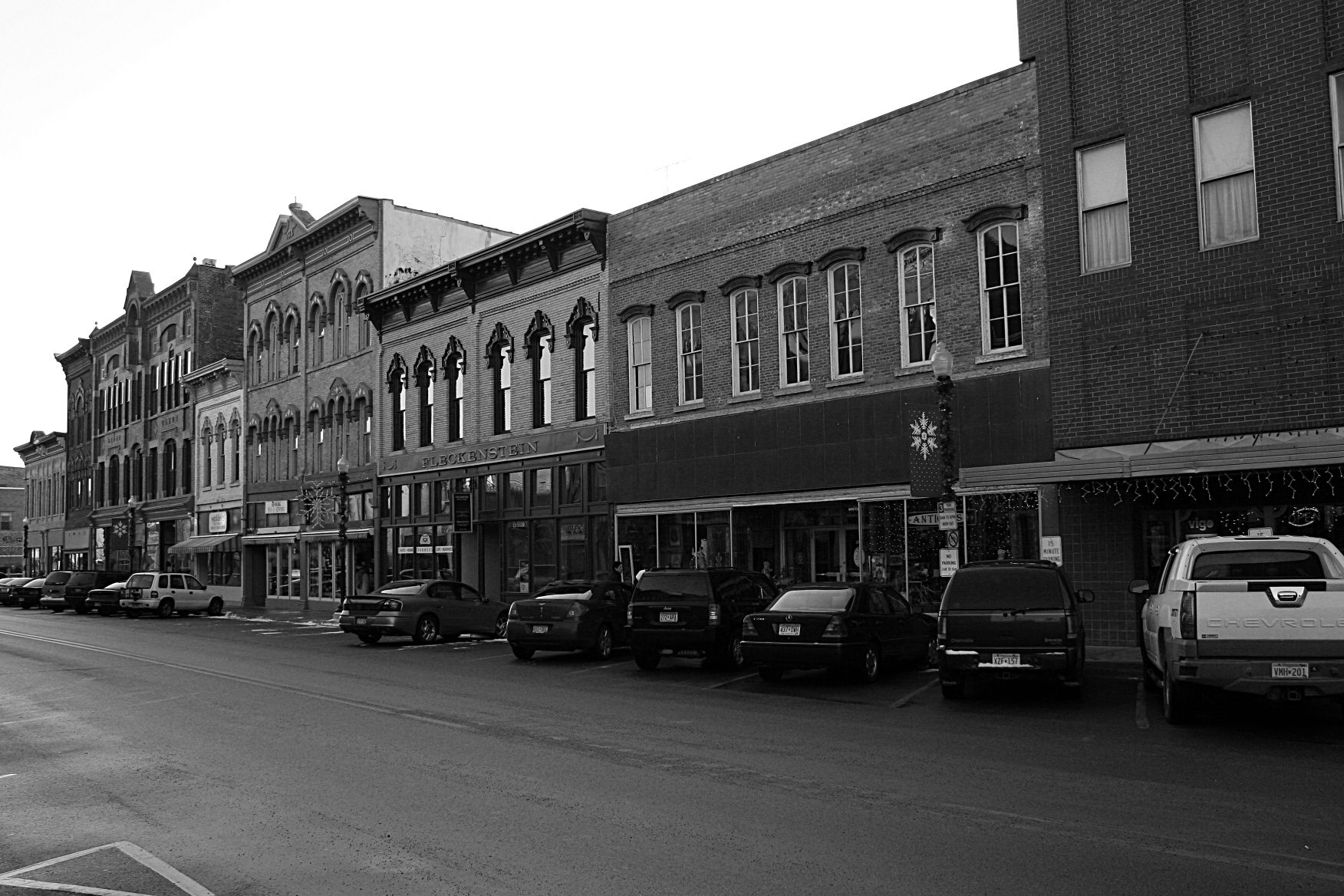
Historic buildings along Central Avenue.

Historic buildings along Central Avenue in downtown Faribault, Minnesota Prairie Roots file photo.

IN CELEBRATION of Dr. Martin Luther King, Jr.’s birthday and his “I have a dream” speech, I’d like to hear:  What is your dream for your community?

And what are your thoughts on anything I’ve presented in this post.

© Copyright 2013 Audrey Kletscher Helbling


Connecting, conversing and celebrating cultural diversity at Faribault festival August 28, 2012

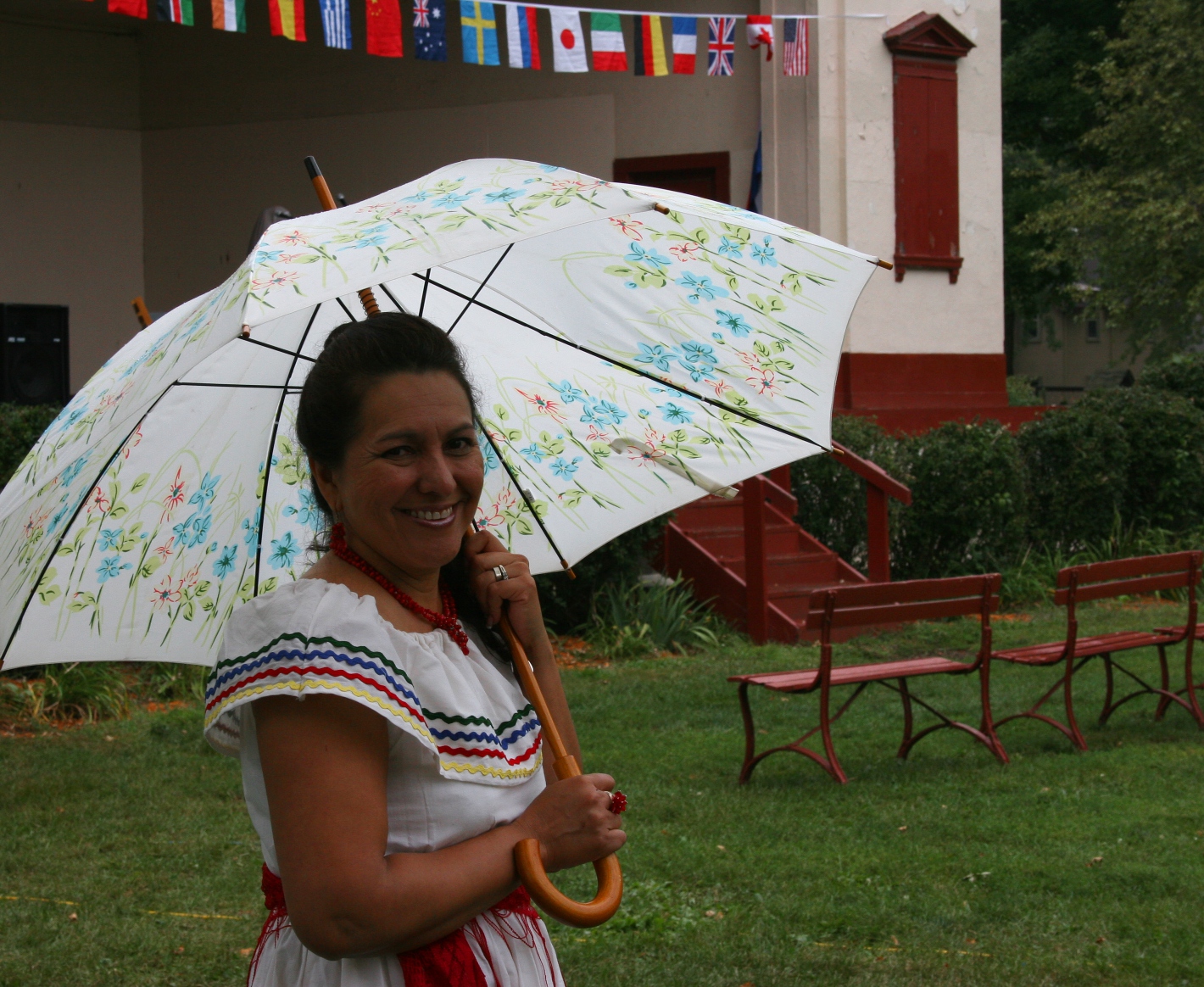
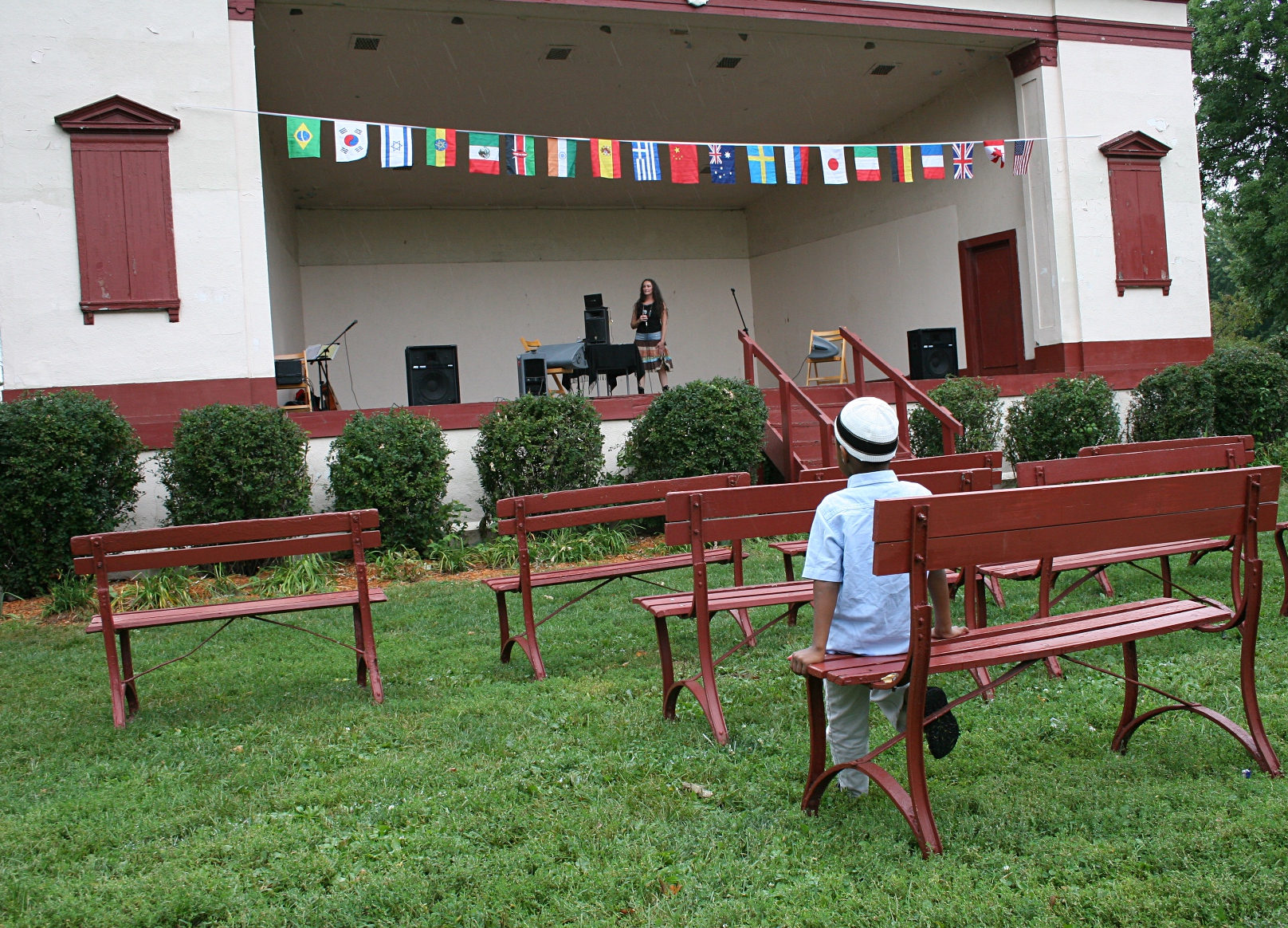
This woman represents El Salvador during the International Festival Faribault on a drizzly Saturday. Flags suspended from the Central Park band shell in the background show the countries participating in the event.

DESCRIBING AN EVENT like International Festival Faribault within the confines of a blog post or two seems daunting. How do I adequately convey the essence of this fest celebrating the cultural diversity of my community?

You can view my first effort by clicking here and reading “Yearning for respect & equality, ‘no matter what color you are.’”

Now, as I scroll again through the many photos I took during the fest (when rain wasn’t drizzling upon my camera), I ponder which images to share, what words to pen.

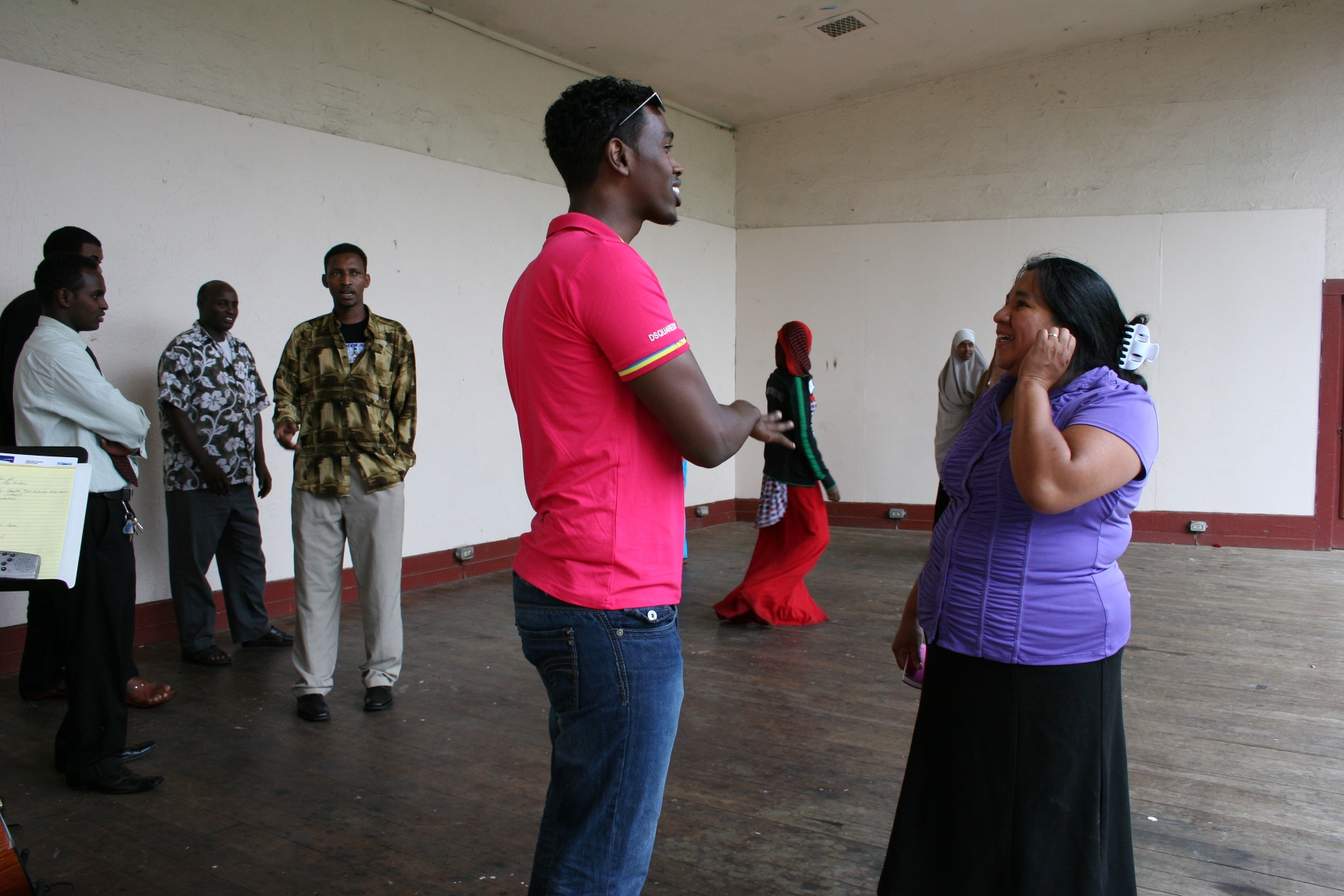
Cultures connecting on the band shell stage between musical acts.

And “c” words—like color, connecting, communicating, conversation, coloring, candy, culture, care, colorful clothing—pop out at me as I view my photos.

I should perhaps add “confusing” to that list because I felt overwhelmed when trying to photograph the wood carvings from Somalia and Kenya peddled by Bashir Omar and Asher Ali.

A woman, without prompting, took this mask from the table manned by Bashir Omar and Asher Ali and asked me to photograph her.

Suddenly, it seemed, everyone wanted to pose for a picture. And I much prefer candid to set up shots. I obliged, though, because it seemed the easiest thing to do.

Lul Abdi shows off beautiful wood crafts from Kenya and Somalia.

Then Lul Abdi, who had grabbed a wooden platter and giraffe, and held them up for me to photograph, asked me to write in my blog that an election is coming up in Somalia and I should tell everyone to vote for whomever it is she supports. Bashir Omar translated my answer—I don’t write about international political issues.

While this back-and-forth translation was occurring, I felt befuddled because, when too much noise (in this instance lots of conversation going on around me and music in the background), is coming my way, my brain doesn’t process anything. That issue is related to the 70 percent hearing loss in my right ear.

Despite the difficulties, this muddle served as an aha moment. Imagine if I was Lul, struggling on a daily basis to understand those around me. Life would be challenging.

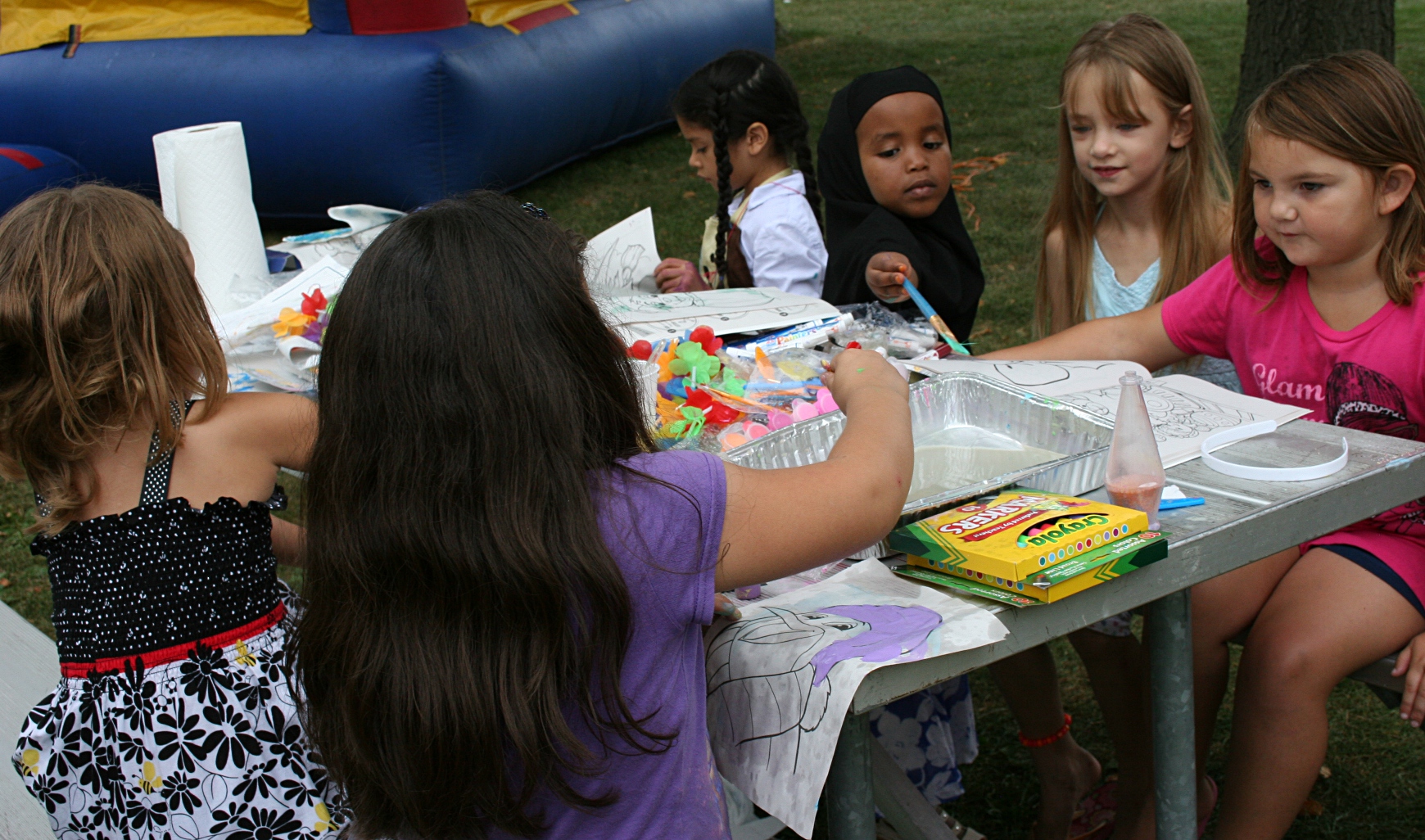
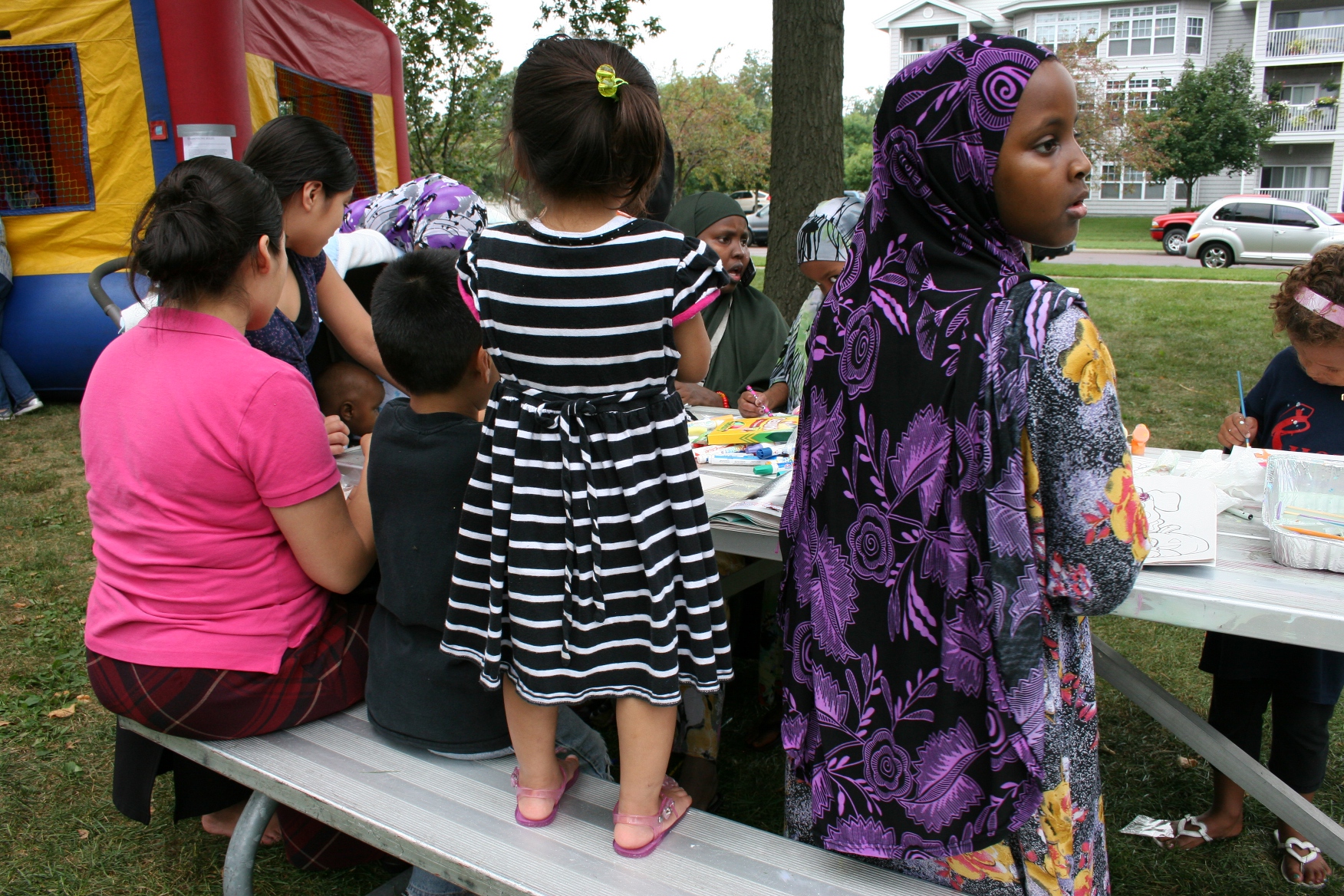
Busy artists at the kids’ activity table.

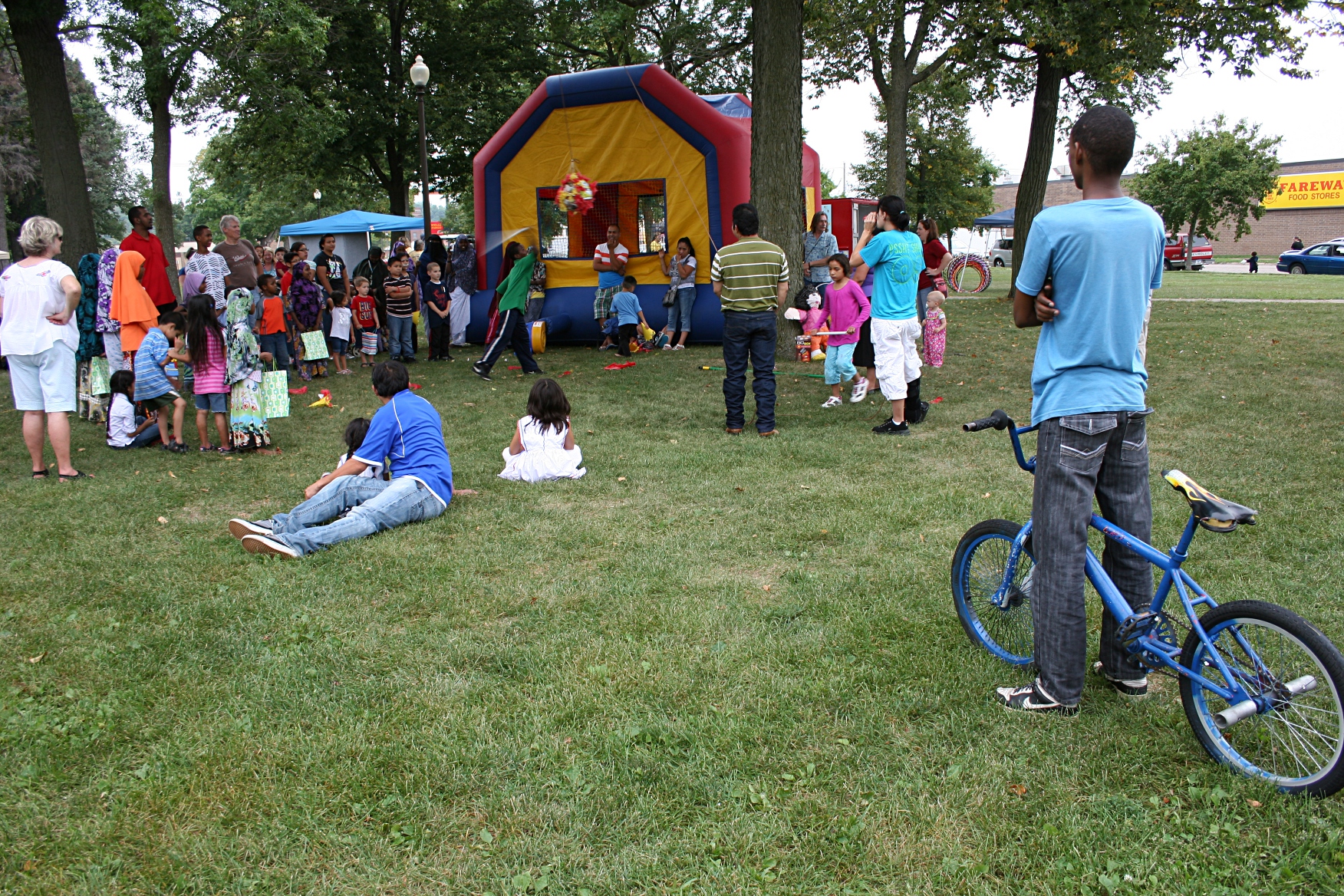
But sometimes we all speak the same language. And I saw, rather than heard, that on Saturday, at the festival, especially among the children. They sat side-by-side painting at the kids’ activity table, bounced side-by-side in the bouncy tent, stood side-by-side in line to take turns swinging at pinatas.

A little girl stands on the opposite side of the group of children waiting to swing at the pinata.

Differences in color and culture and language mattered not to these children. They shouldn’t matter to any of us. Therein lies the message I most want to communicate to you today and which was communicated so well via International Festival Faribault.

Happy children all focused on the same goal: breaking the pinata.

All around me, children and adults of all colors mingled.

The boy on the right was biking past Central Park and stopped to watch the activities at a distance.

The scramble for candy once one of three pinatas is broken.

AND HERE ARE SOME ADDITIONAL BONUS PHOTOS:

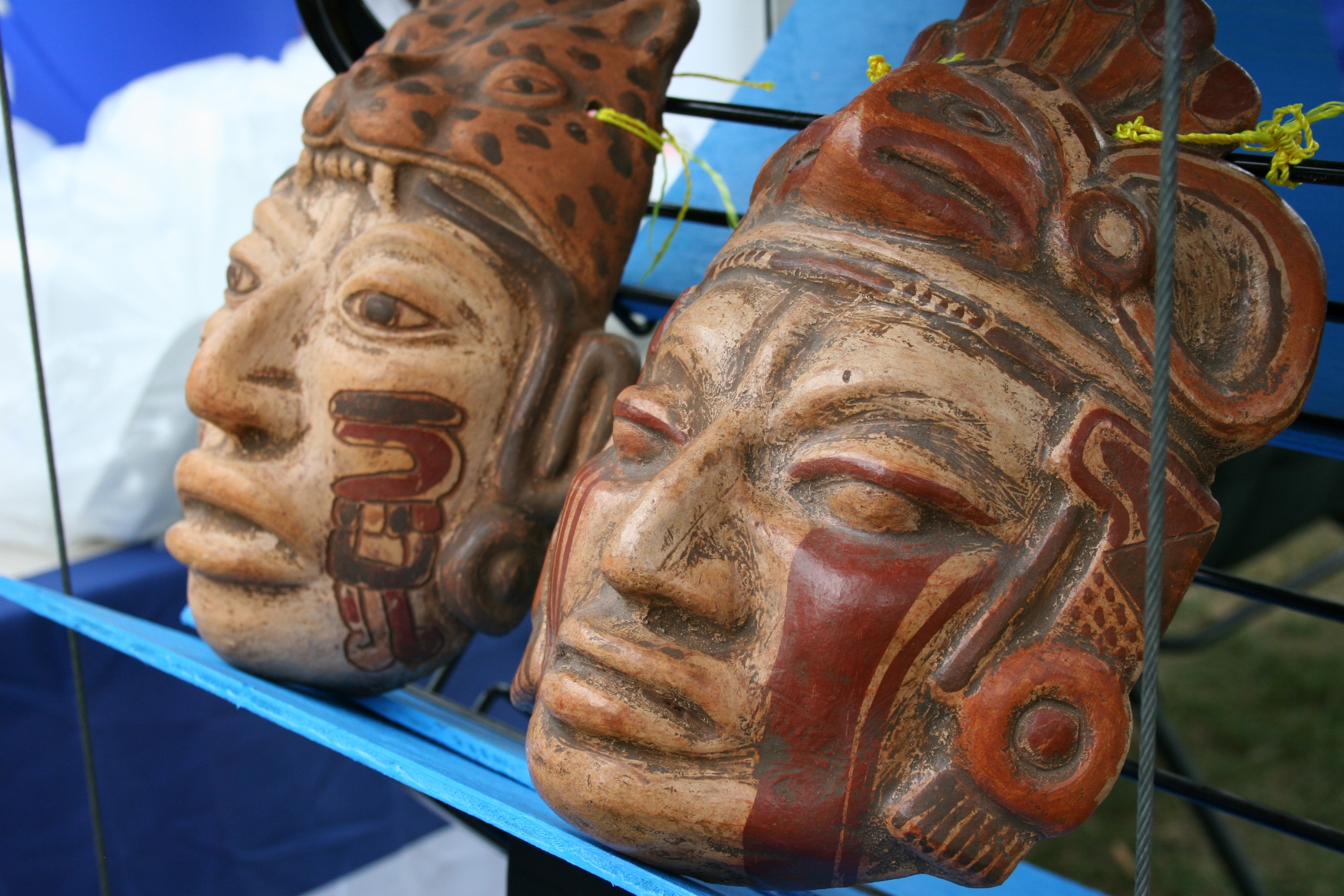
Masks displayed at the food vendor representing El Salvador.

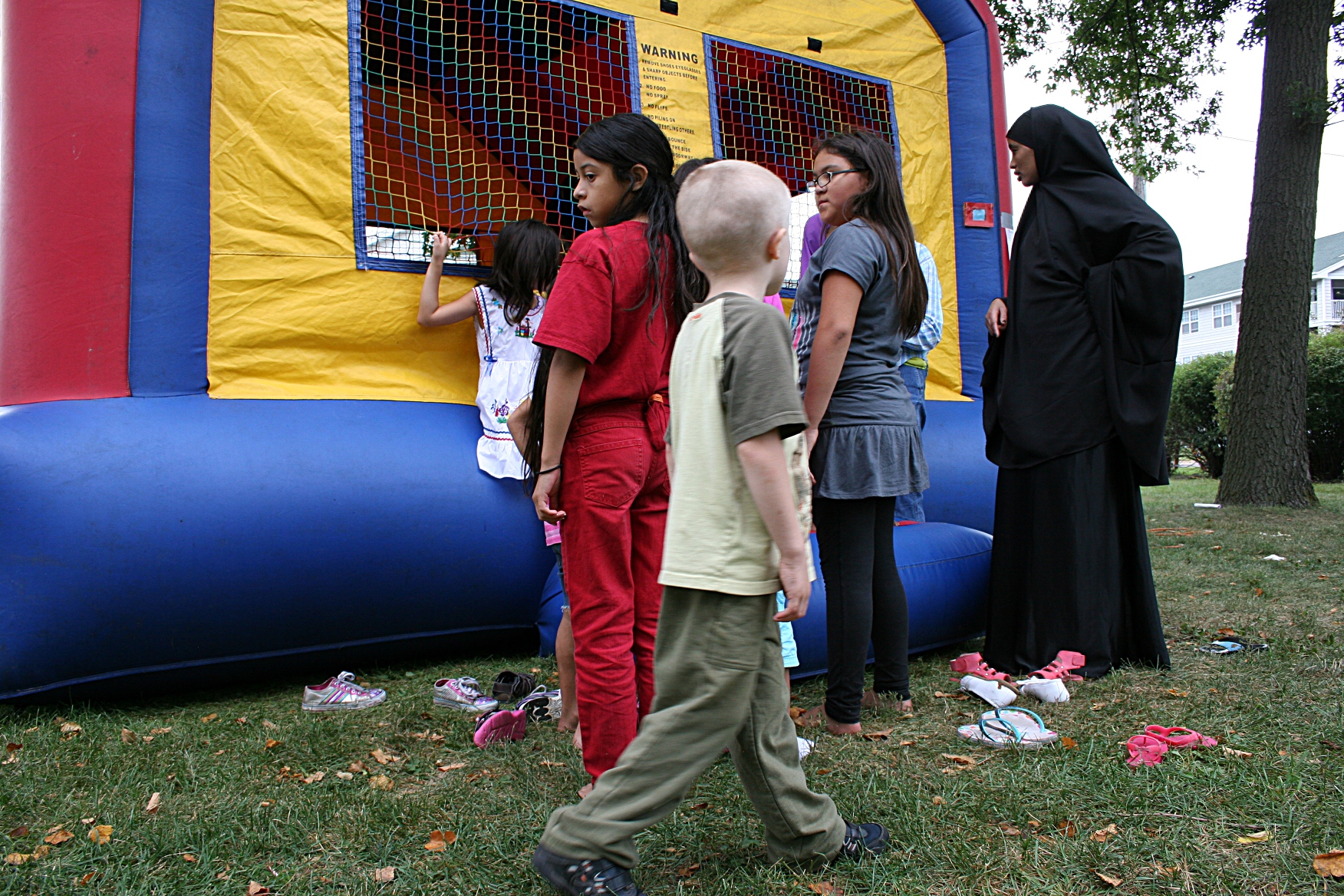
Waiting at the bouncy tent.

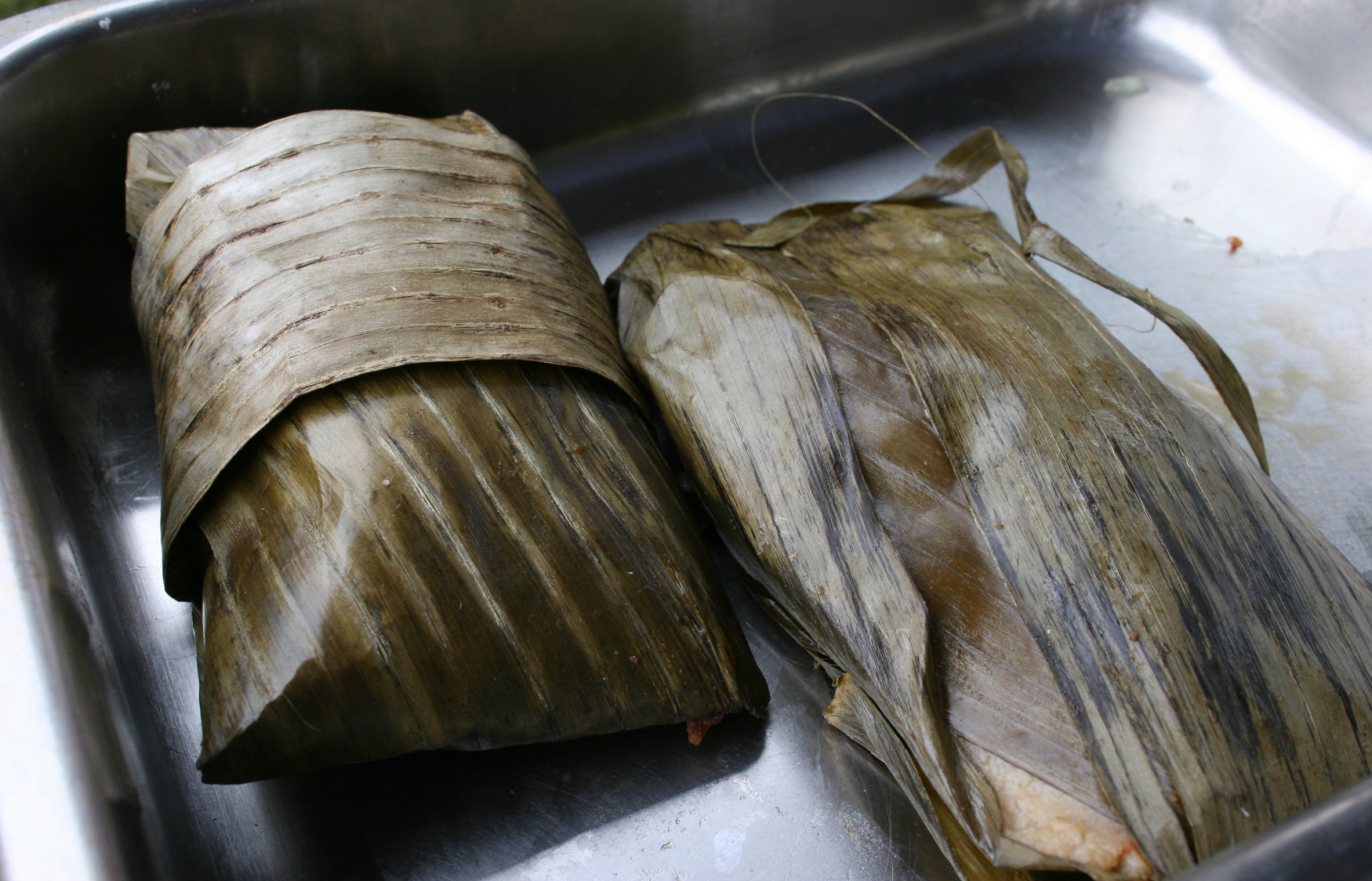
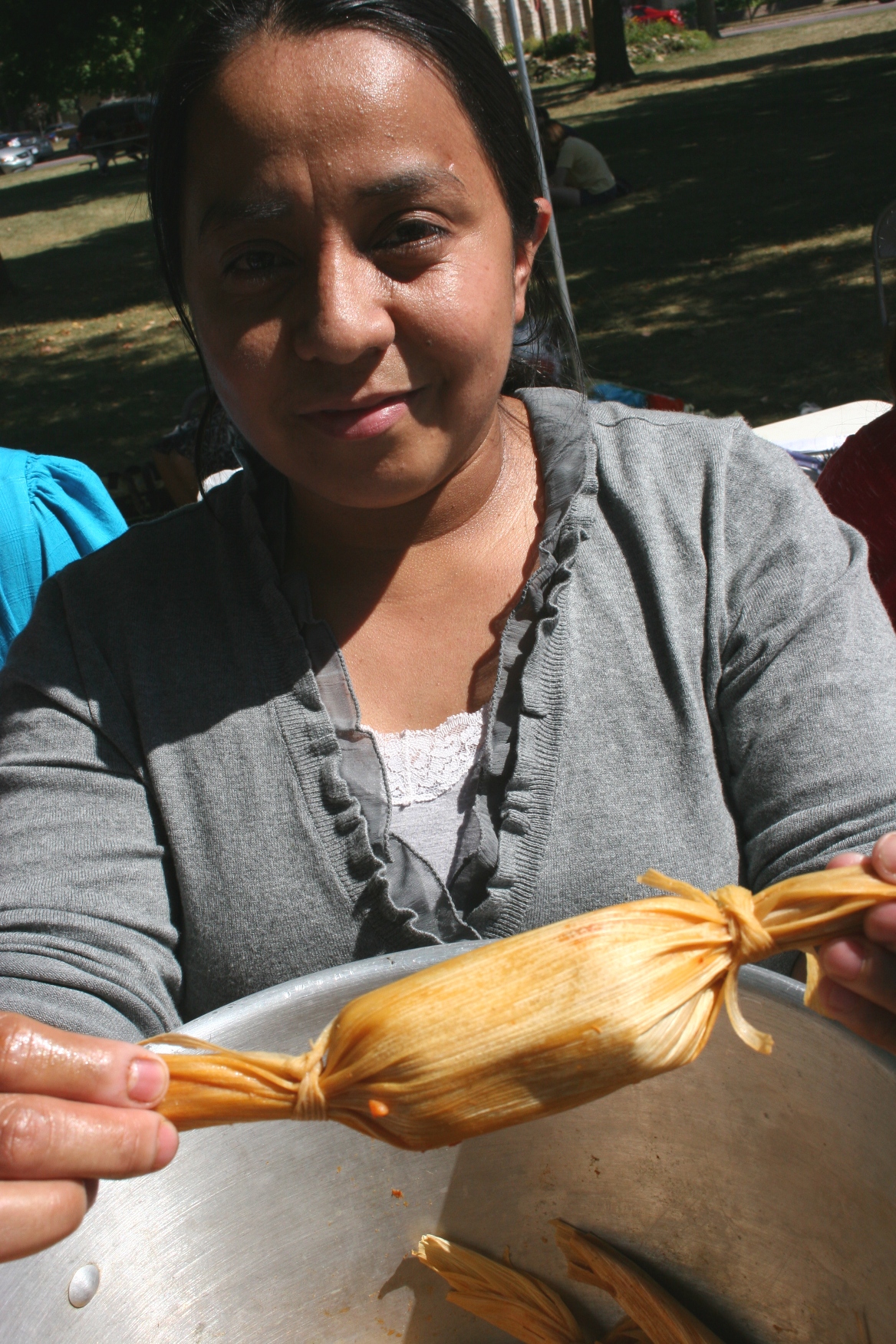
A Mexican dish (help me out if you know, but I think tortillas) was wrapped in banana leaves. My husband and I tried this.

Conversation and connecting…, no other words necessary.

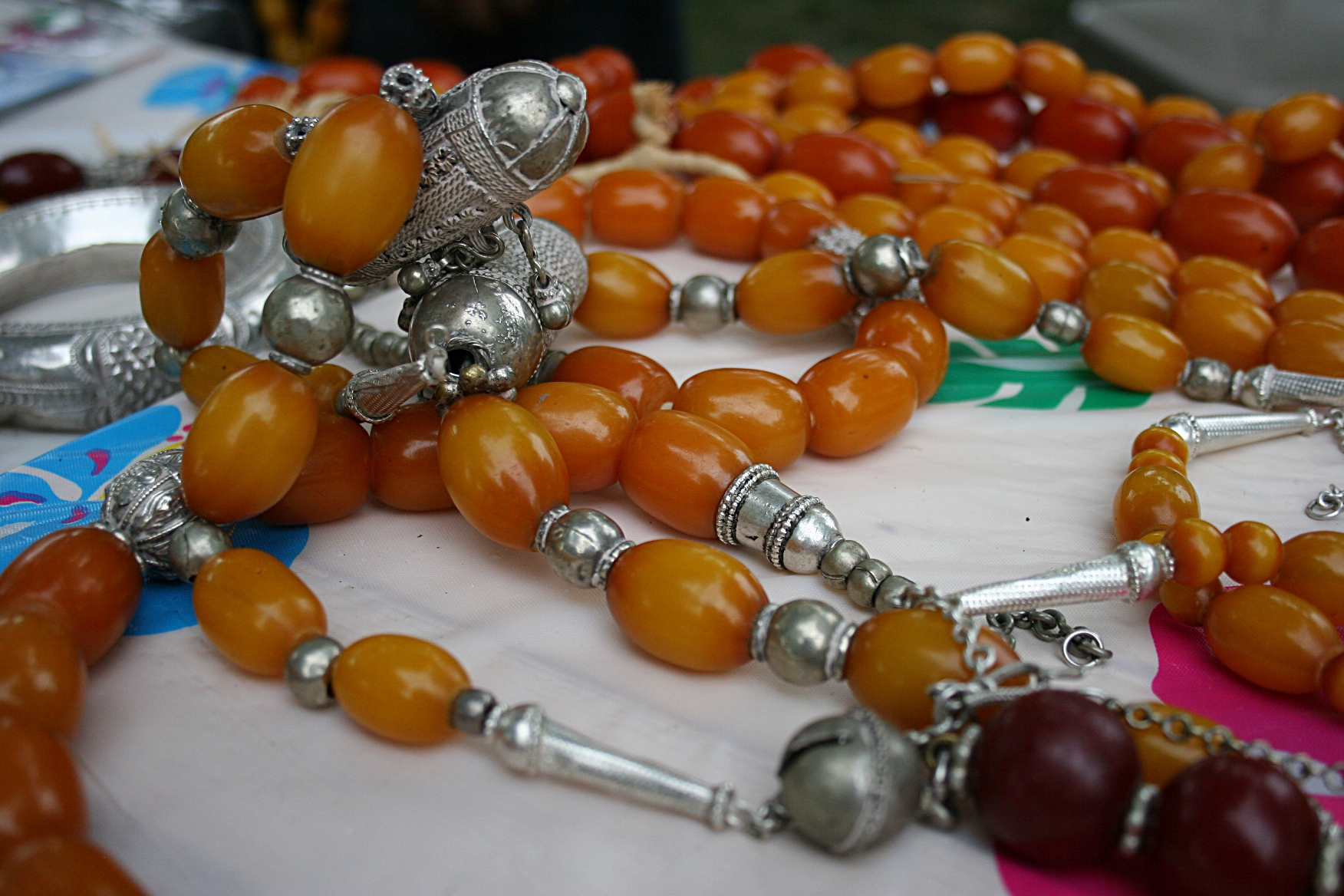
Necklaces and other jewelry from Kenya and/or Somalia and for sale at the festival.

Kids painted and colored, etc., elbow to elbow at the always busy kids’ activity table.

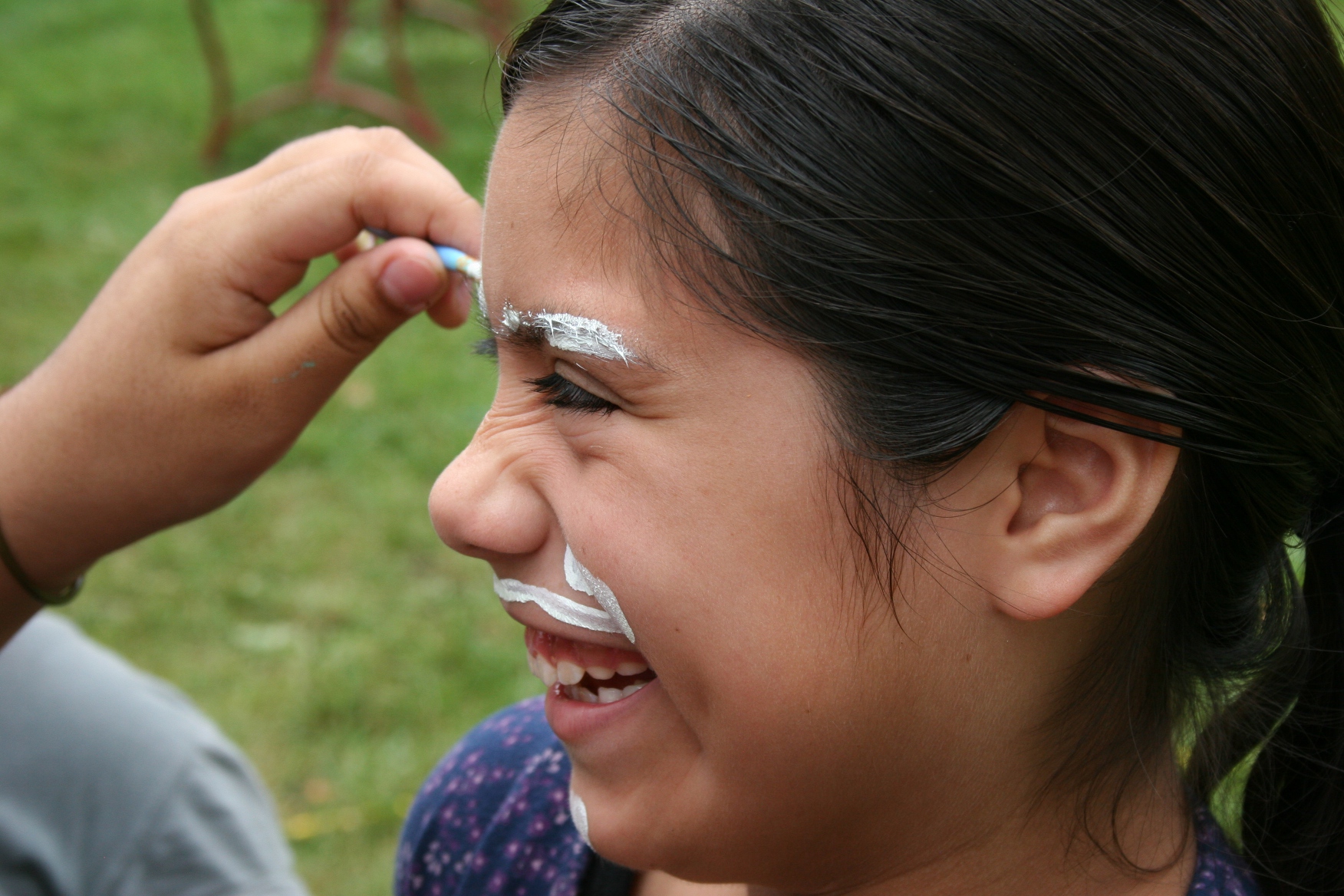
Some mischievous face painting was also part of the fun.

© Copyright 2012 Audrey Kletscher Helbling


Yearning for respect & equality, “no matter what color you are” August 26, 2012

I HAVE PHOTOGRAPHED them from a distance, their long skirts swaying as they walk across Central Park toward me.

Now the young women are standing before me and I am confused for a moment until Nasteho Farah tells me she wants to look her best and asks me to photograph them again.

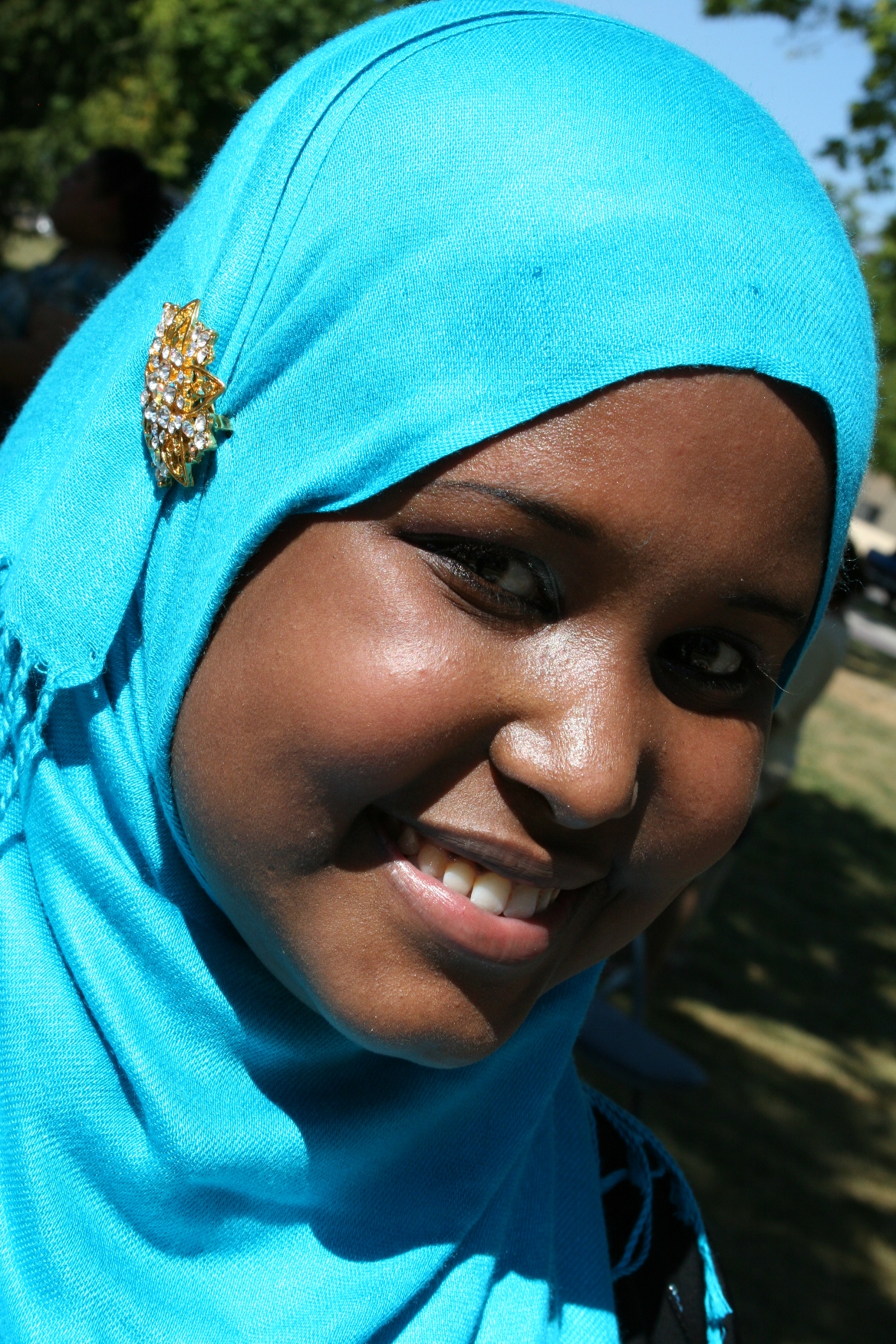
Friends, Nimo Abdi, a sophomore at Faribault High School, left, and Nasteho Farah, a senior.

I agree as I already envision the portrait possibilities—the expressive brown eyes, the warm skin tone, the way Nimo Abdi leans toward her friend, her hijab brushing Nasteho’s cheek. They are beautiful young women and I take only one shot, knowing I’ve captured a memorable portrait.

I love this image of  a fest performer and her single audience member for the message it portrays– the one on one connection that helps us understand one another, no matter our culture or skin color.

These Faribault High School students are among those participating in the International Festival Faribault on Saturday, an event designed to connect cultures through music, arts and crafts, kids’ activities, international cuisine, education and, on a personal level, conversation.

That same little boy who was so intently focused on the musician performing in the band shell.

After I photograph the friends, we talk about their experiences living in Faribault. And what Nasteho shares with me so upsets me that I apologize to her for the utter disrespect shown to her and her friend, who stands silently listening.

The native of Kenya, a Faribault resident for five years and prior to that a resident of Rochester, Owatonna and Waseca, says she is criticized for the scarf she wears, for her culture, for her…

“They assume I’m a terrorist.”

Her words temporarily stun me and I can feel my jaw drop.

She doesn’t define “they” specifically, but says the insults, the prejudice, happens randomly—in school, in the streets, even at work.

A group of young Somali dancers perform on the band shell stage during the festival.

When I ask for examples, Nasteho mentions the middle-aged man who comes through the drive-through at McDonalds in Faribault where she works. He tells her she should stop wearing her head scarf. She’s talked to her manager about it and he’s been supportive. For now, she mostly tries to ignore the customer’s spiteful comments.

When she walks into other businesses, like the grocery store, she feels the stares. When driving, she’s been flipped off.

“There is no respect for Somalis,” Nasteho assesses.

Yet, she doesn’t seem visibly angry, choosing instead to speak up or to take the position that those who choose to attack her or her culture do not know her or understand her.

I admire Nasteho’s positive attitude. She tells me she didn’t experience prejudice living in Rochester—a larger and more diverse community—but that it’s been much harder in a smaller town like Faribault. She was too young to remember what life was like in Owatonna or Waseca.

Faribault High School seniors Shukri Aden, left, and Khadra Muhumed.

Faribault High School students Shukri Aden and Khadra Muhumed, who are volunteering with STOPS, Students Together Offering Peer Support, at the International Festival, have also been subjected to hurtful comments from those who tell them to go back to their own country or that they smell.

“I try to talk to them,” says Shukri, who has lived in Faribault for seven years, since she came to the U.S. at age 12.

She wants everyone “to be equal no matter what color you are…to get to know each other.”

Lul Abdi shows off beautiful wood crafts from Kenya and Somalia for sale at the fest.

And this FHS senior has dreams—of going to college to become a nurse and then returning to Somali to help those in need.

On this Saturday, at this International Festival, the words of these young Somali women evoke mixed emotions within me. I am saddened by those in my community who fail to see beyond the scarves, the culture, the skin color, the language.

Mother and daughter check out the artwork from Kenya and Somalia.

These women are not terrorists. They are someone’s daughters. They are high school students. They live here, work here, shop here, worship here.

Despite the clear prejudice which angers me, I feel hope. These young women possess a maturity and poise beyond their teenage years. They yearn for understanding, for respect, for the personal connections that define them as individuals.

And on this Saturday afternoon they are trying, through their volunteerism at the International Festival Faribault, to, as Nasteho says, “bring everybody together.”

A mother’s love and care, the same in any language, any culture, any skin color.

CHECK BACK FOR A FUTURE post with photos from the seventh annual International Festival Faribault. Thank you to the organizers and participants in this festival who are trying to connect cultures, to make Faribault a better place to live, no matter your culture, skin color or country of origin.

© Copyright 2012 Audrey Kletscher Helbling


Faribault Festival offers opportunity to bridge differences & connect August 23, 2012

Filed under: Uncategorized — Audrey Kletscher Helbling @ 7:15 AM
Tags: , , , , , , , ,

TODAY I’D LIKE TO EXTEND an invitation to you. Pull out your calendars right now and add this event to your schedule: International Festival Faribault, 10 a.m. – 4 p.m. on Saturday, August 25, Central Park.

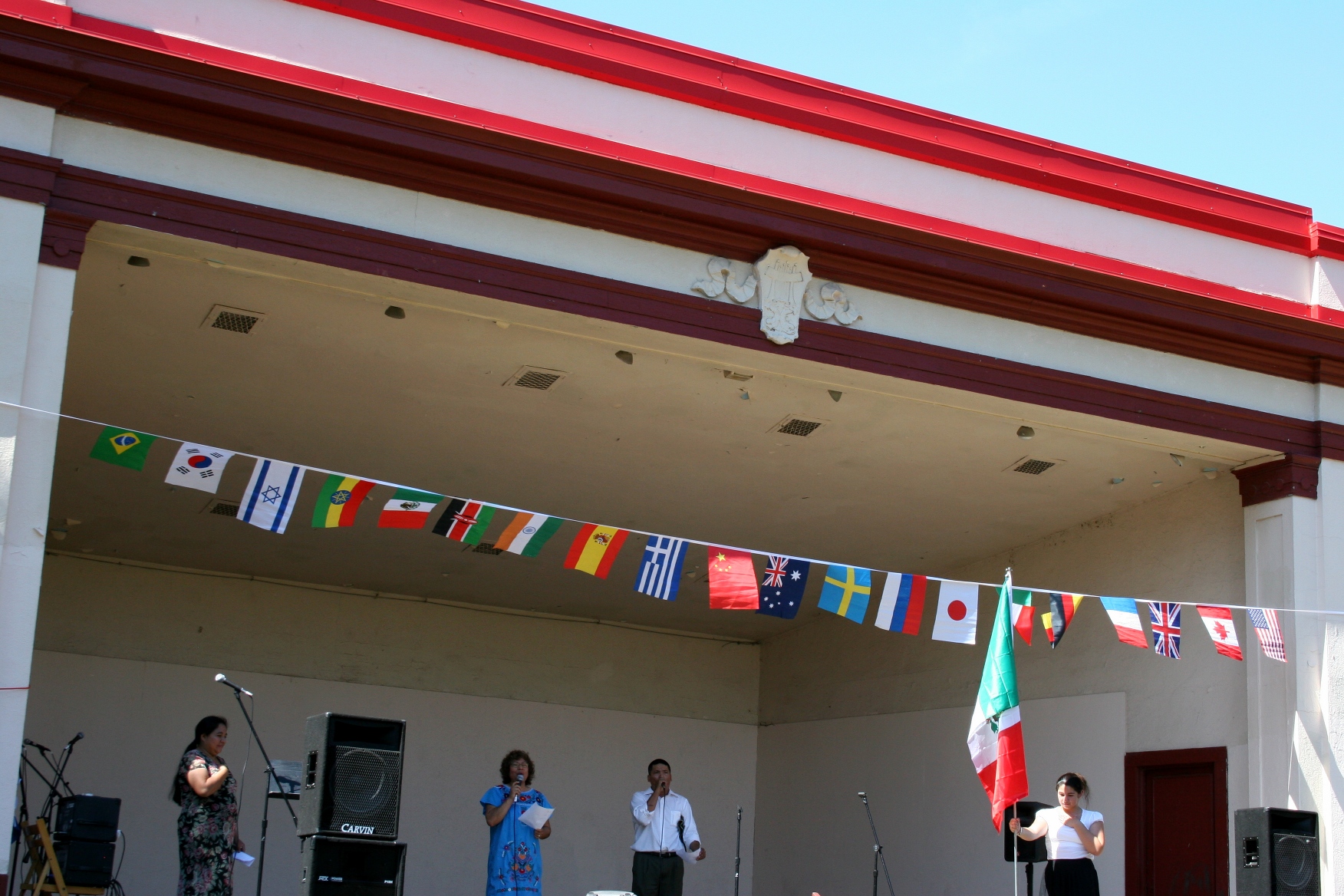
Several Latinos lead in singing of Mexico’s national anthem last September during the International Festival Faribault at Faribault’s Central Park. The flags strung across the band shell represent the countries featured at the fest. This weekend’s celebration marks the seventh such international fest in Faribault.

There. Done. Right?

The scramble for candy after the pinata is broken at last year’s festival. Kids of all races participated with no concern for skin color or cultural differences. So refreshing to see.

Served at the 2011 fest: Guatemalan chuchitos– chicken, corn and salsa wrapped in a corn husk. You’ll find vendors offering a variety of authentic international foods.

OK, why do I think it’s important for you to attend this festival which features multicultural entertainment, arts and crafts vendors, authentic international cuisine, kids’ activities, a silent auction and more?

Simple. We as a community need to meet each other, to connect on a personal level, to understand each other if we are ever to overcome the very obvious cultural differences which divide us.

I met then 16-year-old Riyaam, an Owatonna High School student, at last year’s festival. She spoke openly about the prejudice at OHS and a white student’s single comment, “Somalis don’t belong here,” which led to racial clashes and tension. OHS has since instituted a policy of “you fight, you’re out.” It broke my heart to listen to Riyaam.

You know what I’m talking about, the differences in skin color and language, in culture and in dress.

There’s way too much suspicion and mistrust, cautiousness and prejudice toward the minorities living and working in Faribault. I’ve heard the derogatory comments about the Somali men who hang out on downtown street corners, the Hispanics who commit all the crimes, the immigrants who take away our jobs, the people who don’t speak English.

Seriously, these Somali men live downtown and the sidewalk is their yard.

“Mexicans,” and I’ve heard that word spit out of too many mean mouths, do not commit all the crimes in our community. Do you know any Hispanics personally? I do. They are probably the most family-oriented individuals I’ve ever met and we could learn a lot from them about the importance they place on loving and caring for one another.

And about those Somalis and/or Sudanese who supposedly steal our jobs—I expect most of us would not want to work the factory jobs they work. I mean no offense to the places which employ them, like the local turkey plant. But if we are honest with ourselves, we’ll admit that we likely never would work at these physically-demanding and not always pleasant jobs.

As for speaking English, have you, as an adult, tried learning a new language? Now attempt learning a new language in a foreign country. Not so easy. Think back to a few generations before you. I bet your great grandparents didn’t speak English. Even my own mother’s first language was German, not English.

The other evening while shopping at a local Big Box retailer, I witnessed how difficult it was for a Hispanic woman to communicate due to her limited English. I almost got on my cell phone to call my second daughter who works as a Spanish medical interpreter in eastern Wisconsin to ask her to interpret.

Did you know that, according to the 2010 U.S. Census, 17.4 percent of Faribault’s 23,352 residents have a language other than English spoken at home? Stats show 9.4 percent of our city’s residents are foreign-born.

Vendors, like Riyaam, peddled their wares at the 2011 festival.

Instead of criticizing those who speak and dress and live differently than the majority of us, let’s begin to understand them. Mostly, I think, our misconceptions, our prejudices, are based on fear. We fear what we don’t understand.

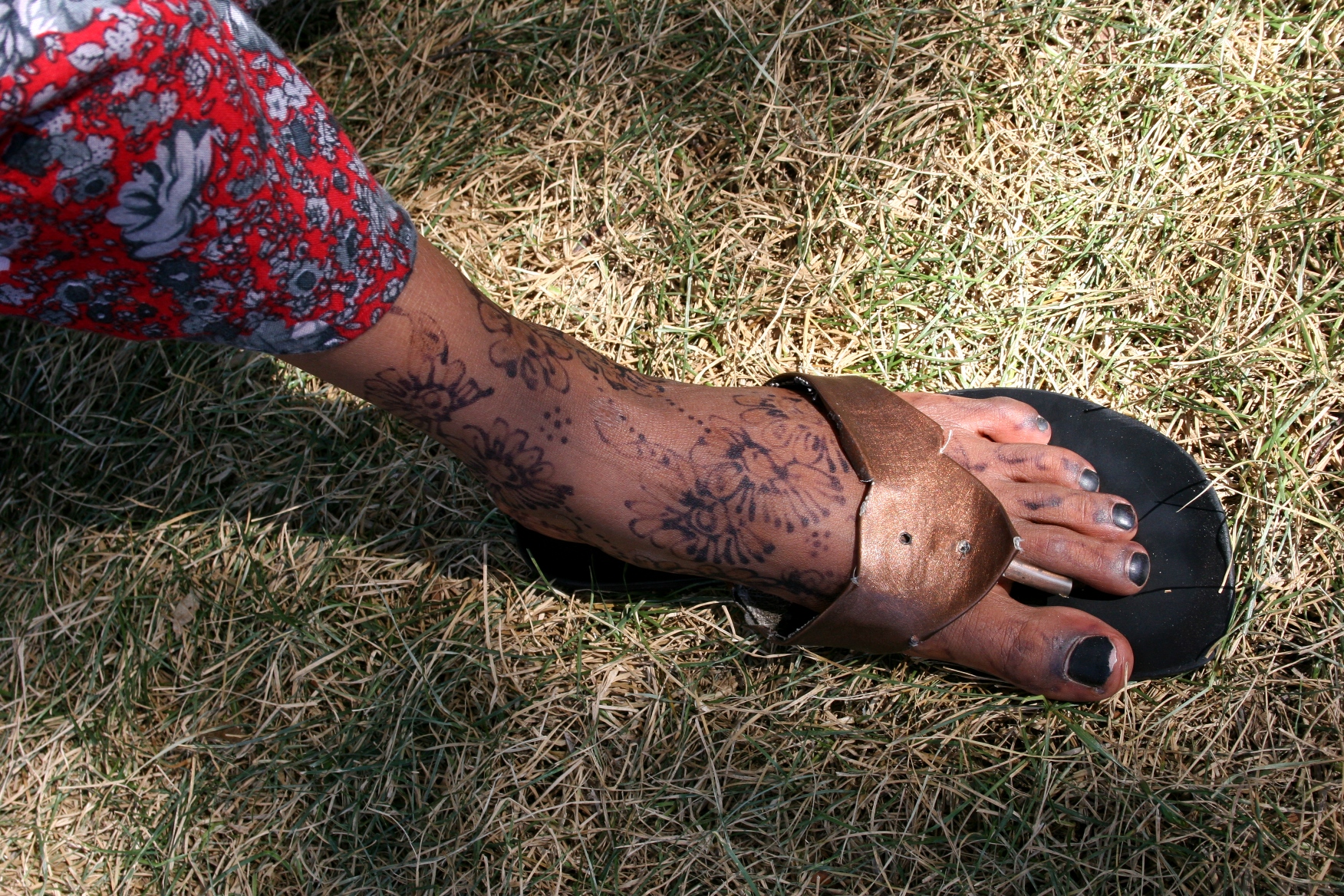
A young girl’s henna stained foot, photographed at the 2011 fest.

International Festival Faribault offers a common, public ground—a city park—on which to meet the minority individuals who call our community home. They are here to stay. Let’s get to know them. Engage in conversation. Show them you care, that you’re genuinely interested in learning more about them and their cultures. Once you’ve connected on a personal level, you will begin to view them as individuals and not by the color of their skin, the clothing they wear, the language they speak…

Xafsa, age 5, photographed at the 2011 festival.

FYI: Click here to link to the International Festival Faribault website.

While this post is directed specifically at the residents of my community, its content can apply to many communities. You’re all invited to Faribault for International Festival Faribault, no matter your community or country of origin. And just to be clear, many Faribault residents and organizations embrace the minorities who call our southeastern Minnesota city home. I in no way intend to mislead you into thinking we are all a bunch of bigots living here. However, neither am I going to hide the fact that obvious prejudices exist and are very much a concern in Faribault.

Click here to link to the post I wrote about last year’s International Festival Faribault.

© Copyright 2012 Audrey Kletscher Helbling


Yes, Faribault is a diverse community May 3, 2012

Filed under: Uncategorized — Audrey Kletscher Helbling @ 7:11 AM
Tags: , , , , ,

In this file photo, a Somali family waits to cross a downtown Faribault street.

ON ANY GIVEN DAY, I can drive on a street in Faribault, walk along the sidewalk, glance out my office window or go shopping and see a racial diversity of people.

I can stand in my side yard and look toward the home of an Asian couple. I can glance up the hill and watch two preschoolers, the daughters of a white mother and an African American father, play outside. In my front yard, I can see, several houses down, the Hispanic family that has lived in my neighborhood for years.

Yes, Faribault, population 23,352, is a community of diversity. Thirteen percent of our residents are Hispanic/Latino and another 7.4 percent, black or African American, according to the 2010 U.S. Census. All totaled, about one-fifth of our residents identify themselves as “non-white.”

As my husband would say—and this is not meant at all as derogatory—shopping in at least one local grocery store is like walking into the United Nations. We shop side-by-side with Spanish-speaking Latino families and with Somali women clothed in billowing dresses and head scarves.

Just the other evening, as I entered the local public library, a Sudanese man held the exterior library door open for me while his pre-teen son opened the interior door. It’s been a long time since a young boy held a door for me and I expressed to him my appreciation for his respect and good manners.

The other day, while waiting in the car for my husband to pick up milk at a local convenience store, I observed a cluster of teenaged Somali girls, dressed in head scarves and flowing dresses, move along the sidewalk while, just across the street, a 60-something white woman clad in a jacket resembling an American flag pushed a cart of groceries. It was a unique visual illustrating diversity in Faribault.

Several Latinos lead in singing of Mexico’s national anthem last September during the International Festival at Faribault’s Central Park. Flags represent the birthplace nations of those participating.

The diversity of my community bubbled to the surface Tuesday after I read a comment on City Pages, an online Minneapolis-based information source. A post I published last week about jewelry store thefts in Faribault and elsewhere in Minnesota was linked to in “The Blotter” section as was an article in the Faribault Daily News which identified the jewelry store thieves as “black males.”

Now I don’t want to get into the issue of whether the news reporter should have racially-tagged the suspects. But I was miffed by the first Blotter comment on the blog post.

It looks like “diversity” has now spread to Hastings and Faribault.

That comment was followed by a reply I won’t print here because of the language. But you can read it by clicking here.

So why did the initial diversity comment rile me? Well, I’m tired of over-generalizations that those of us living outside the Twin Cities metro area reside in closed-up communities comprised mostly of Anglo-Americans. We are not just a bunch of white descendants of Scandinavians or Germans or Irish or French… We are racially diverse and growing in diversity.

If you ask the residents of Willmar or Worthington, St. James or Madelia, or many other Minnesota towns, they’ll tell you the same. Latinos, Asians, Somalians, Sudanese and others call outstate Minnesota home.

Diversity spread to Faribault decades ago. Just stroll through my neighborhood.

How diverse is your neighborhood, your small town, your suburb, your city? Let’s hear.

© Copyright 2012 Audrey Kletscher Helbling


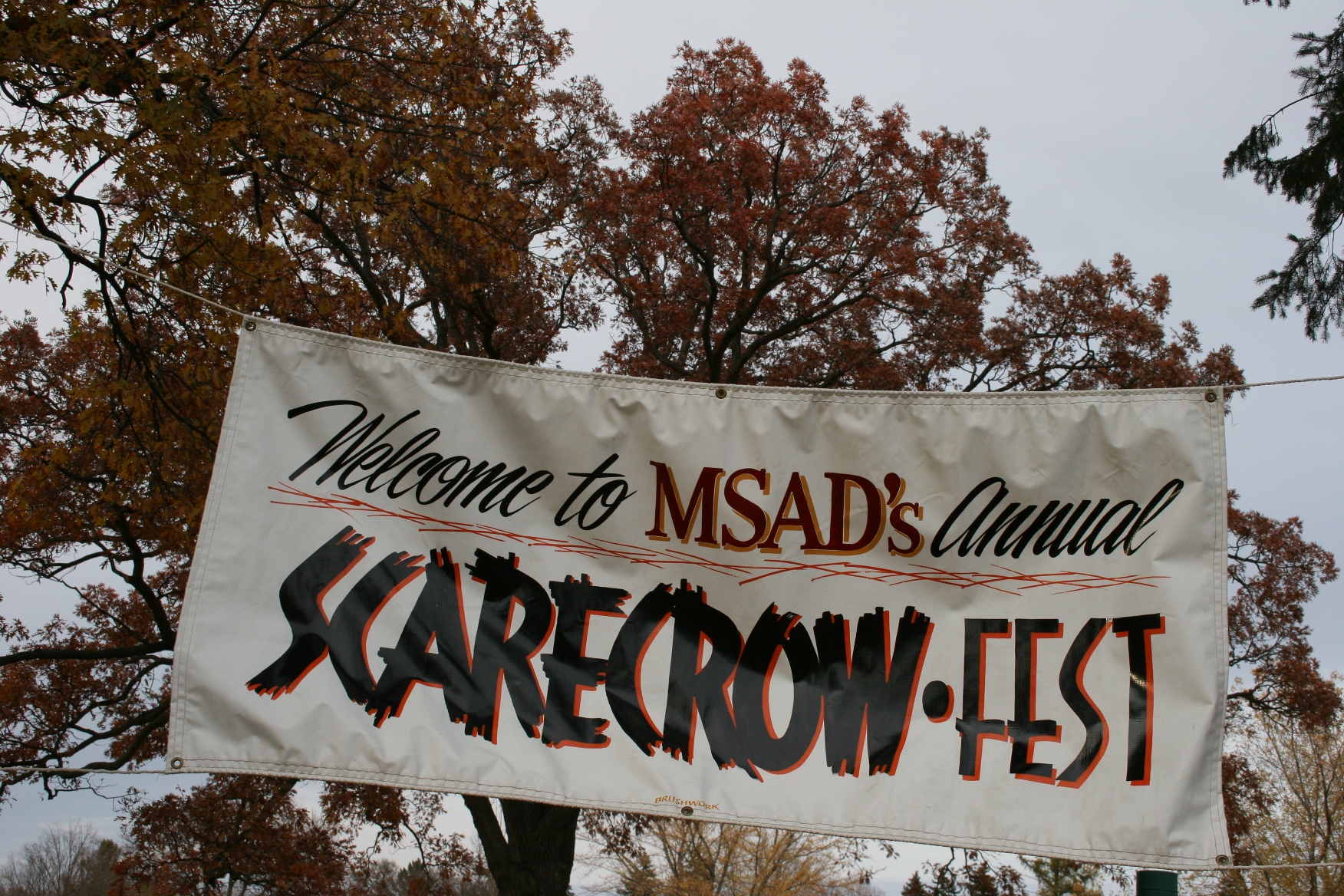
Scarecrows from around the world at MSAD October 29, 2011

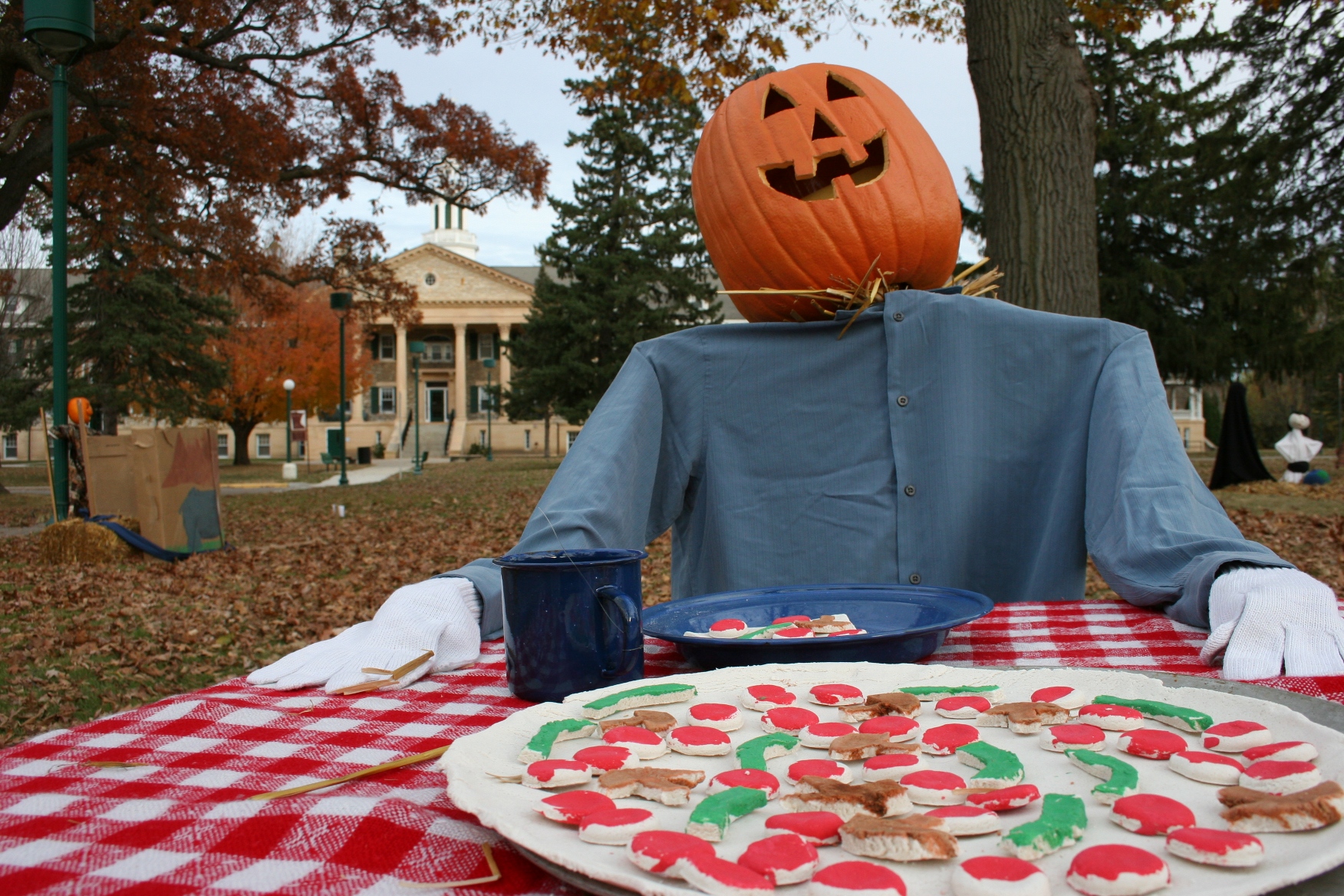
FROM EGYPT TO INDIA TO MEXICO…, you’ll find those countries and more represented at this year’s Minnesota State Academy for the Deaf Scarecrow Fest.

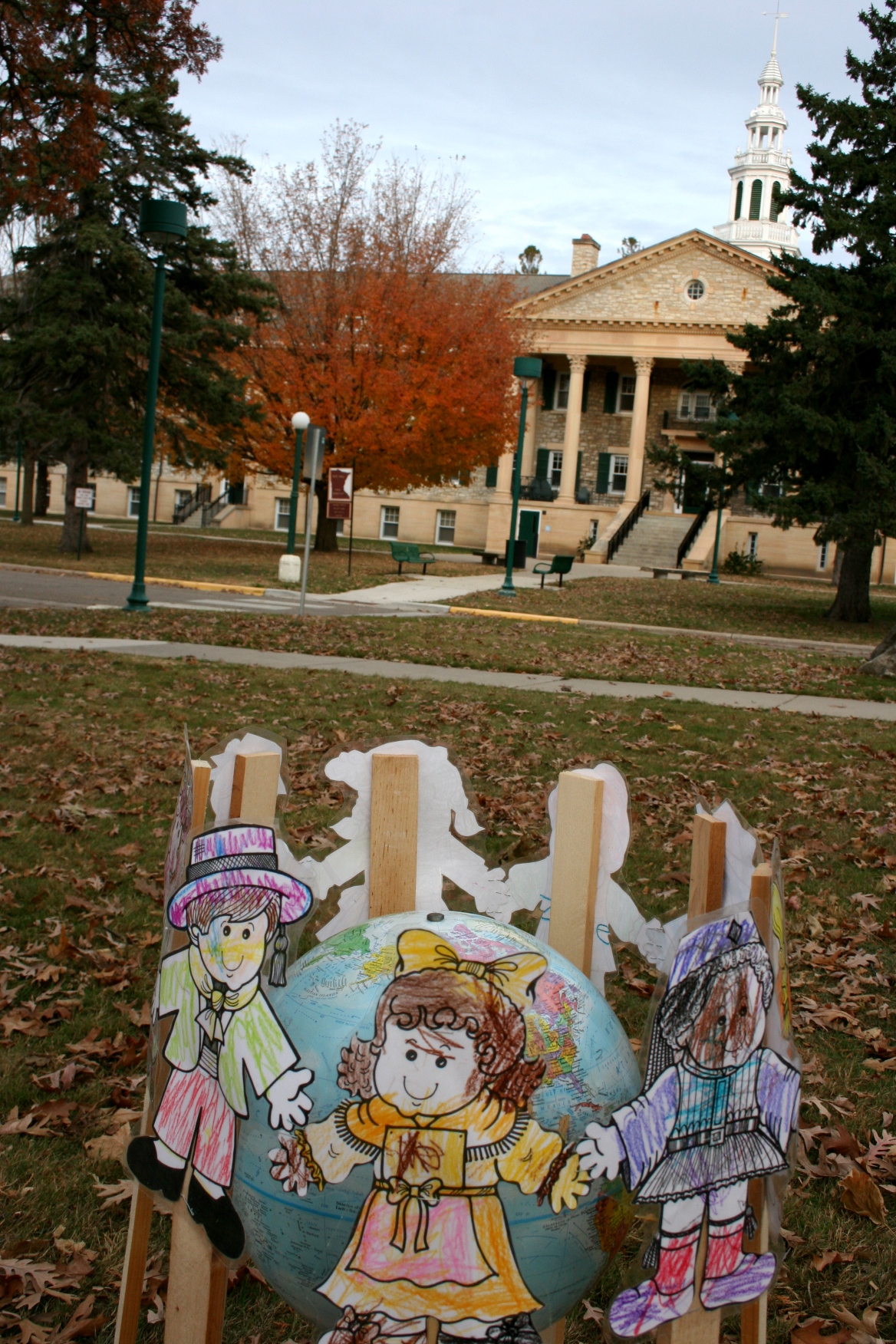
Autumn wouldn’t be quite the same without this annual display at the school’s picturesque campus on the east side of Faribault. For years my family has toured the scarecrows showcased in the school’s green space edged by lovely, historic limestone buildings.

Unlike past festivals, the scarecrows this year hadn’t been ravaged by the brisk winds that often sweep across this hilltop location. Durability is a requirement in construction of the scarecrow scenes, which are also judged on use of materials, overall appearance and creativity.

I don’t know how judges decided on the winners this year because so many entries in the themed “Cultures of the World” contest ranked as outstanding. MSAD classes, public school classes, dorm groups, community groups, families and staff can enter the competition.

This year’s theme, especially, pleased me given the ever-growing cultural diversity that defines Faribault.

If you want to see the scarecrows in person, you best hurry. The displays went up a few days ago, will remain up until Halloween, and must be removed from the campus on Tuesday.

"International ECE Children" by the MSAD ECE with historic Tate Hall in the background.

A close-up of "Barn Raising Rebels" by the Faribault High School American Sign Language Group 3.

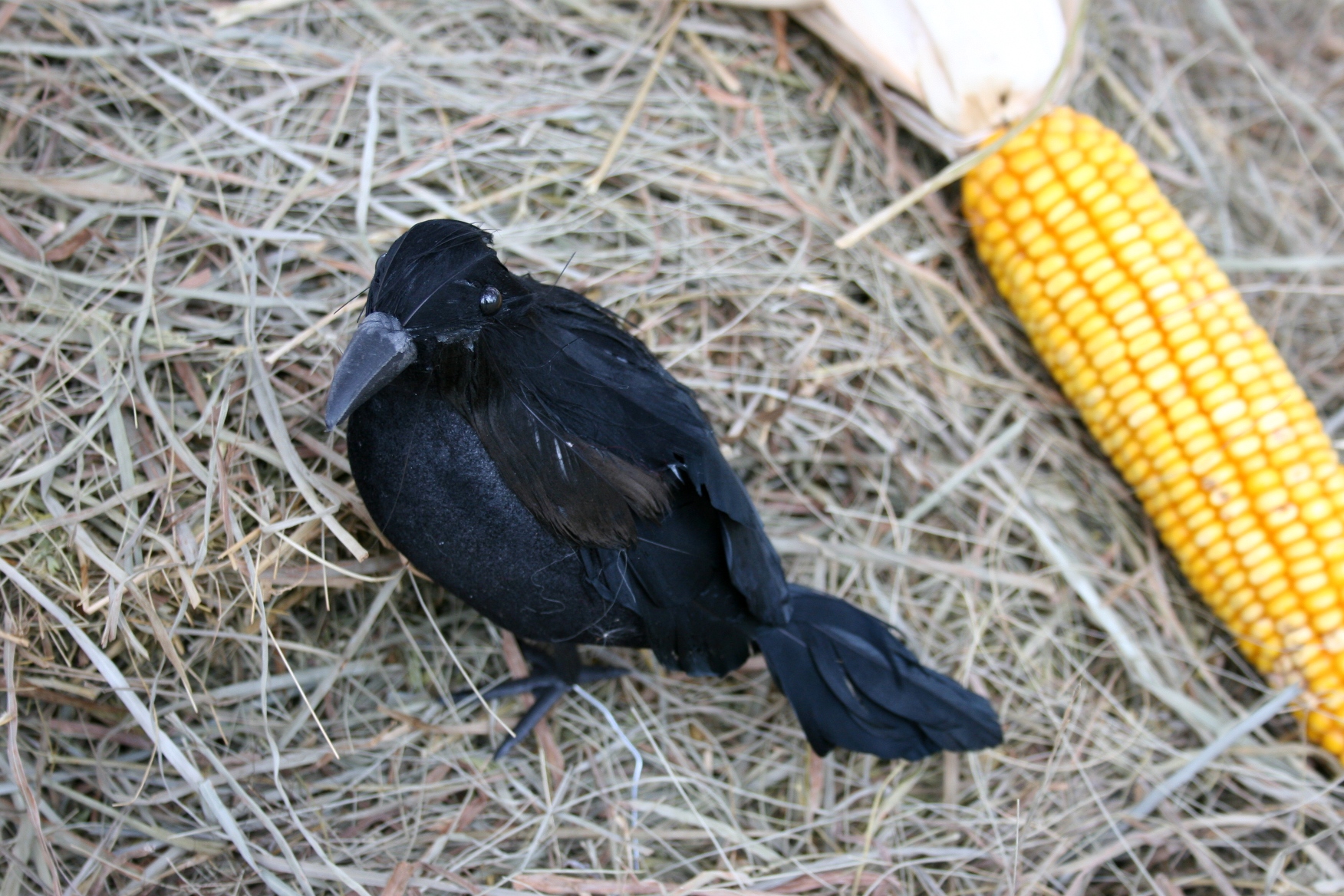
A detail in the "Barn Raising" scene that made me pause and wonder if this blackbird was about to take flight.

"Italian Pizzeria" by the MSAD ECE won third place.

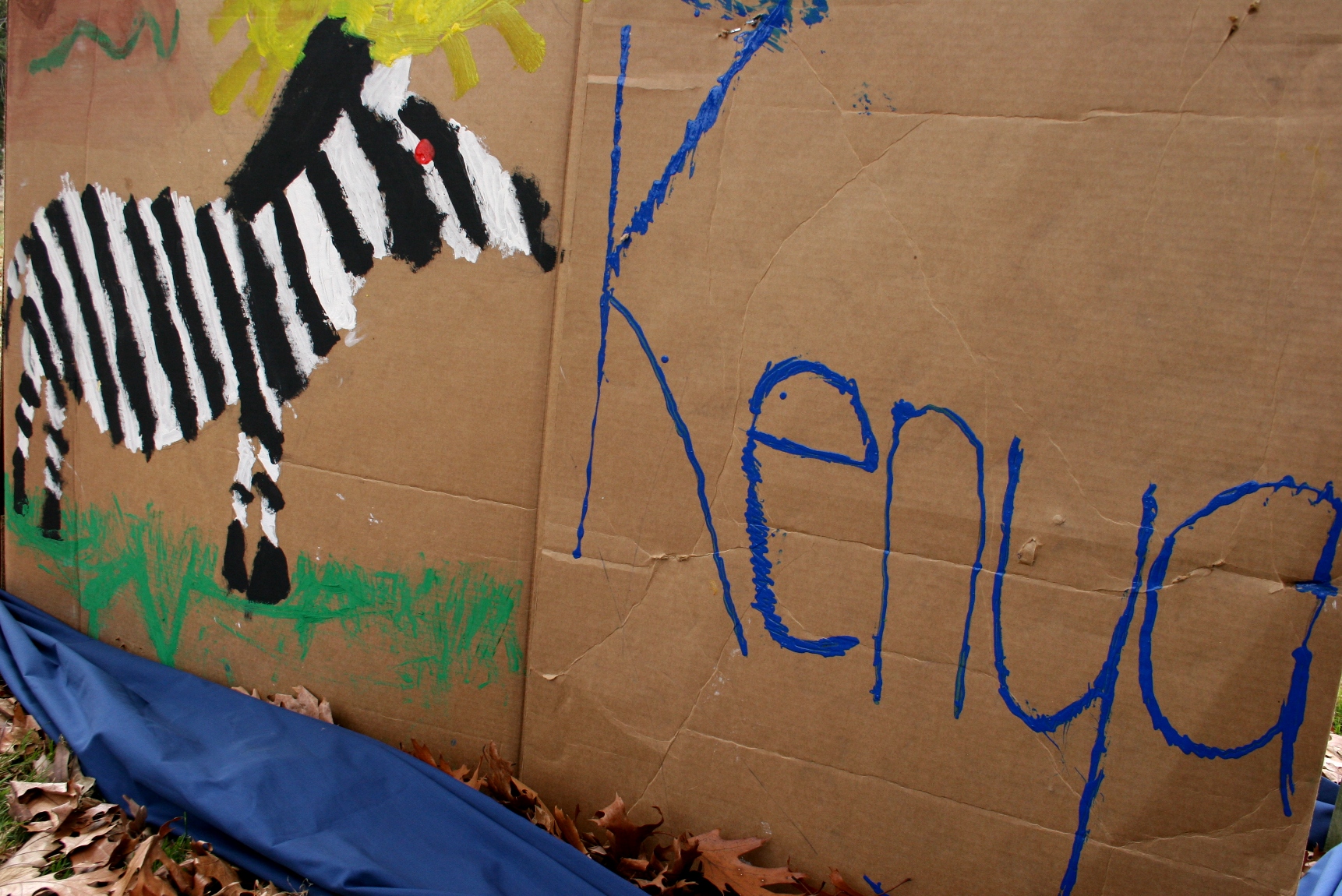
Animal art in the "Kenya" display by MSAD grades 2/3.

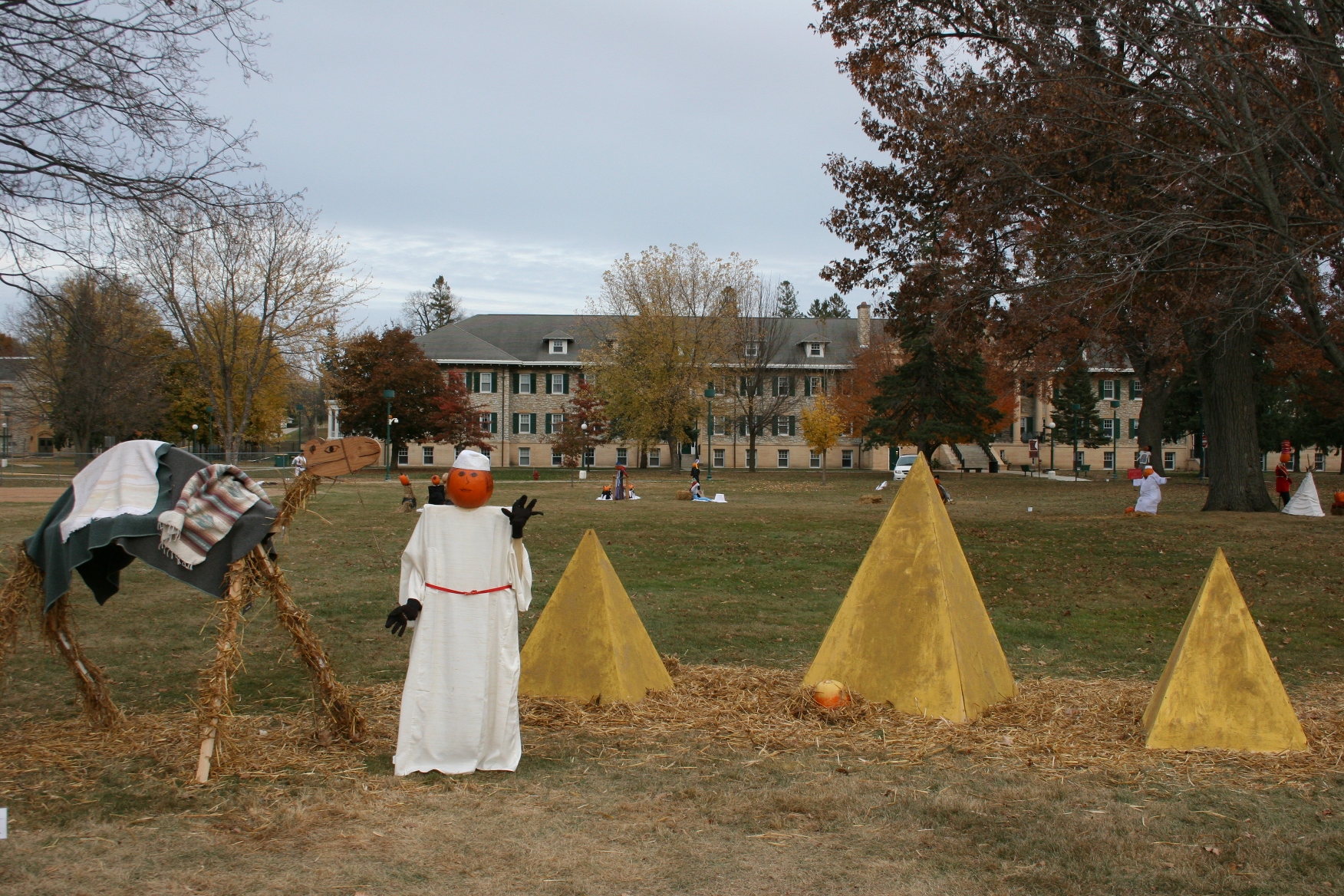
"Welcome to Egypt" by the MSAD Class of 2015 included an Egyptian, a camel and three pyramids.

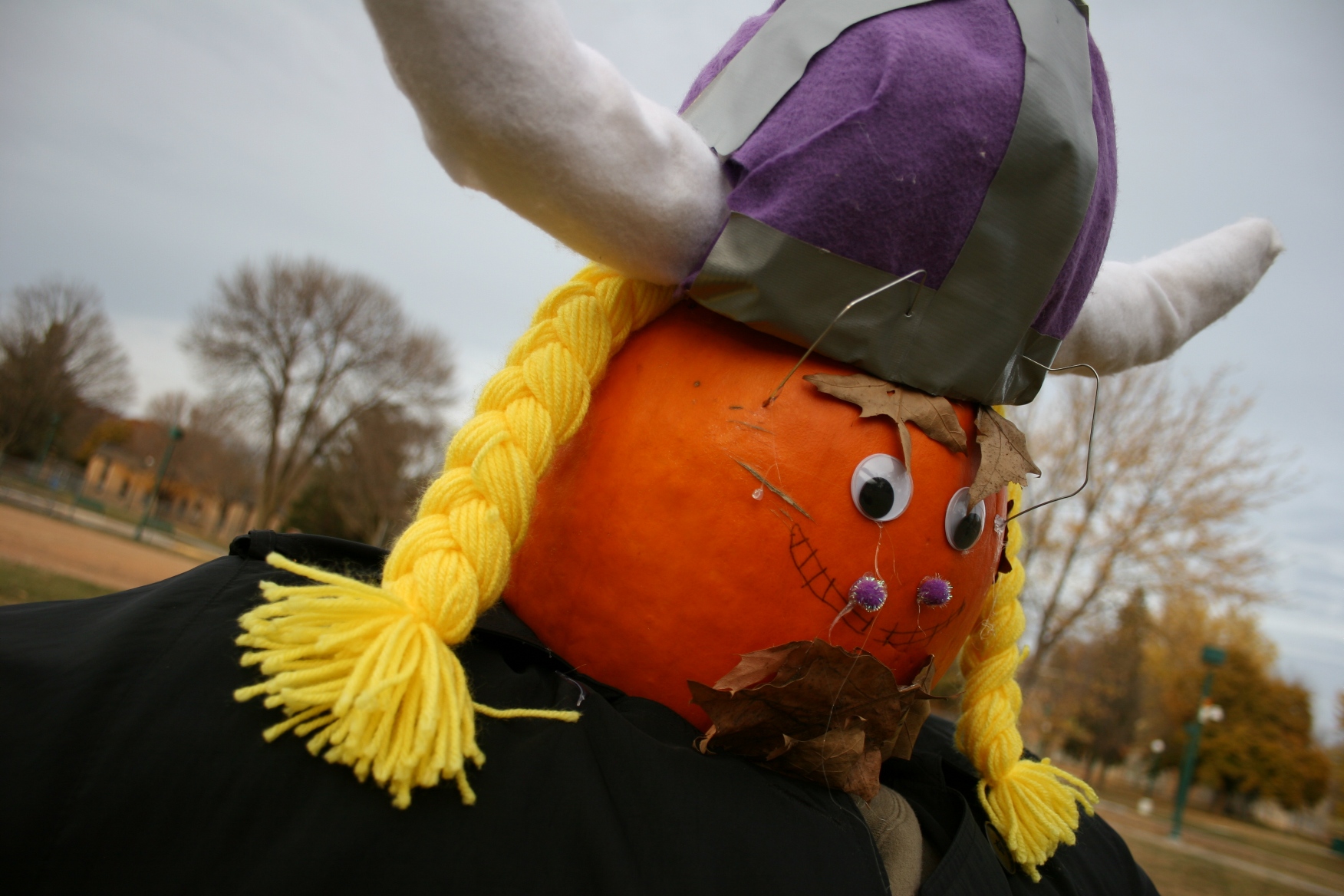
Viking Leif Erickson was part of the "Greenland" scarecrow scene by MSAD grades 4/5. The entry won second place.

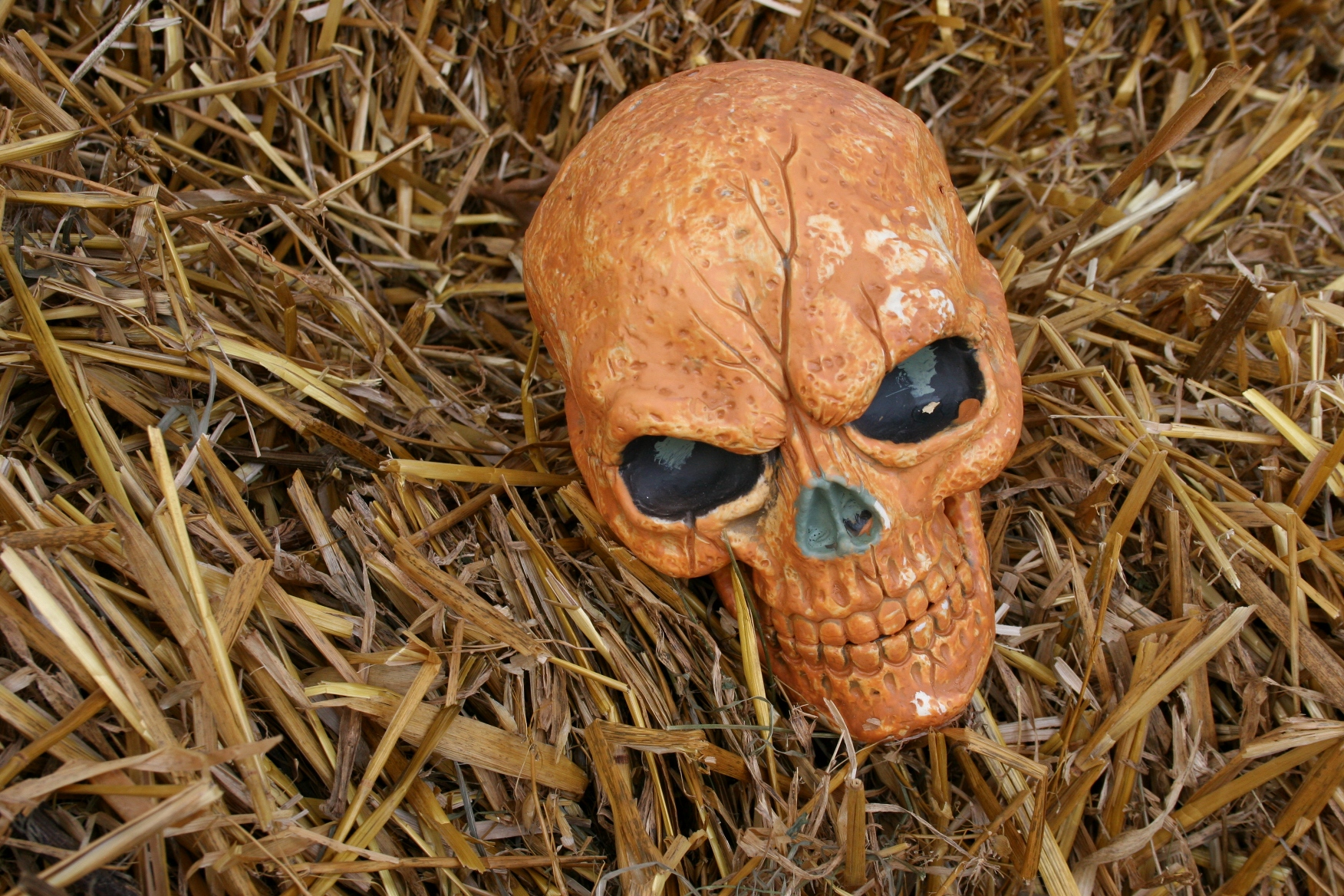
Several skulls were incorporated into "Mexico's Day of the Dead" by MSAD Class of 2013.

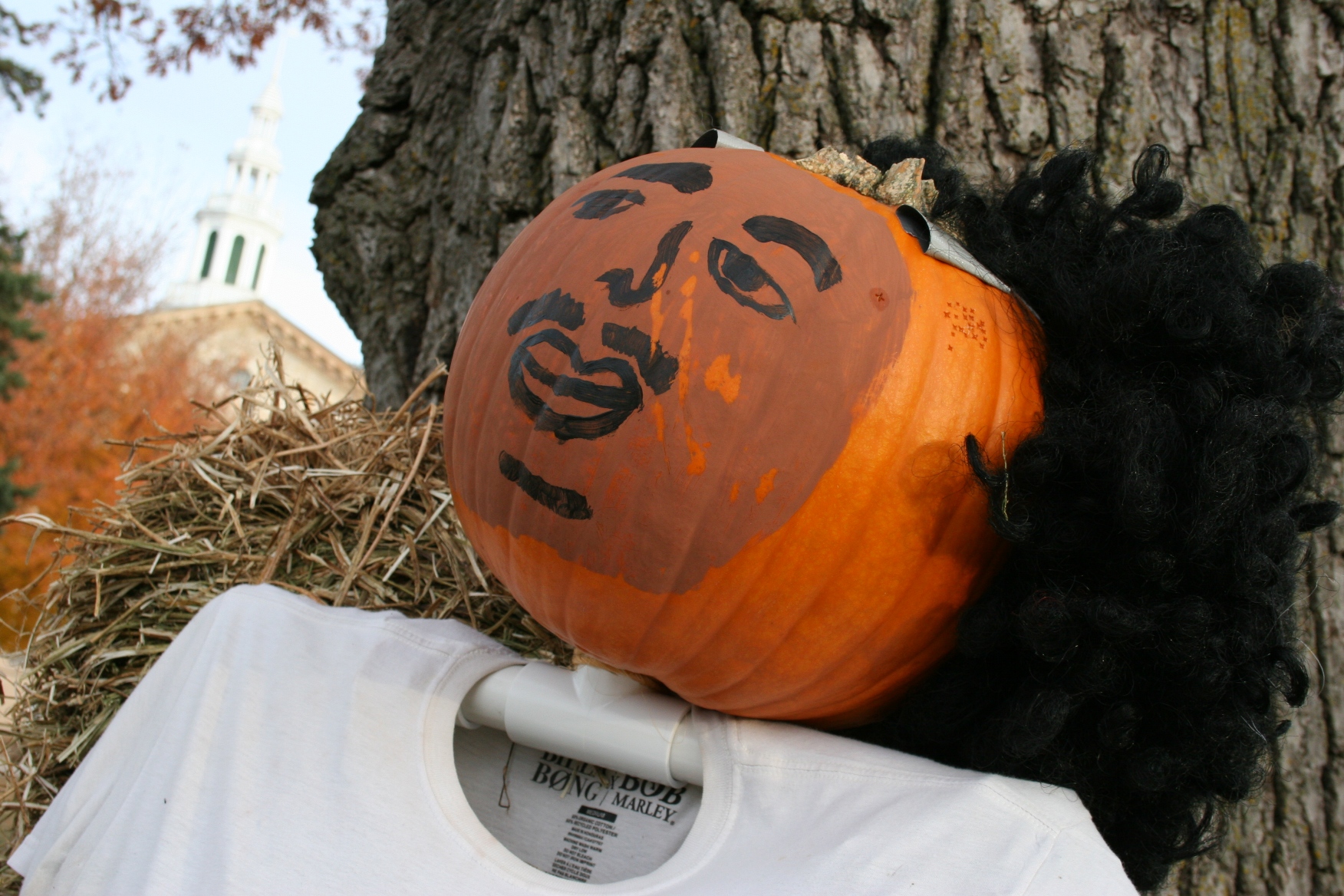
Faribault High School's American Sign Language Group 1 created this Jamaican.

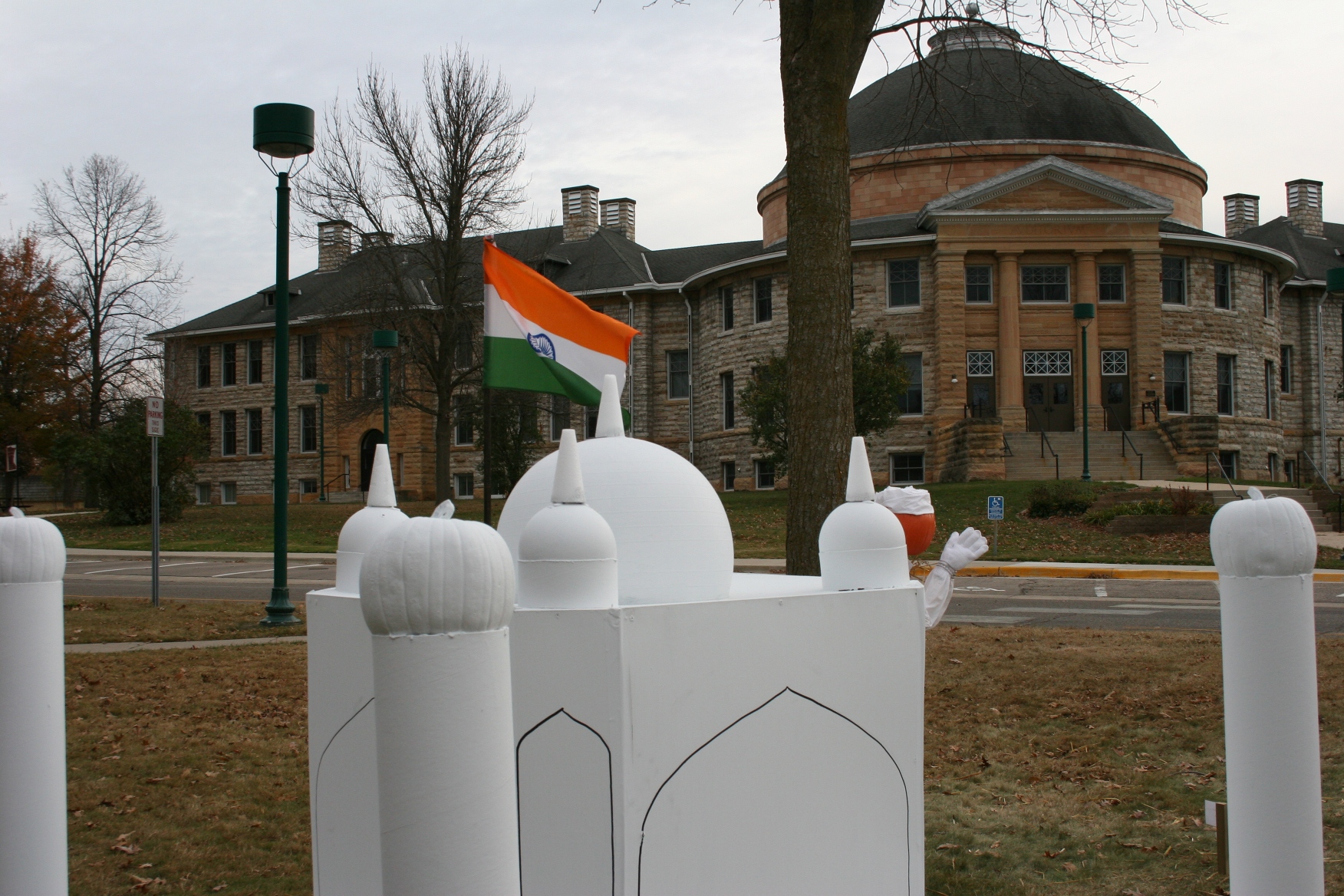
The Baker family built the Taj Mahal, which mimics the shape of Noyes Hall in the background, for their "Welcome to India" scarecrow display. The Bakers won first place.

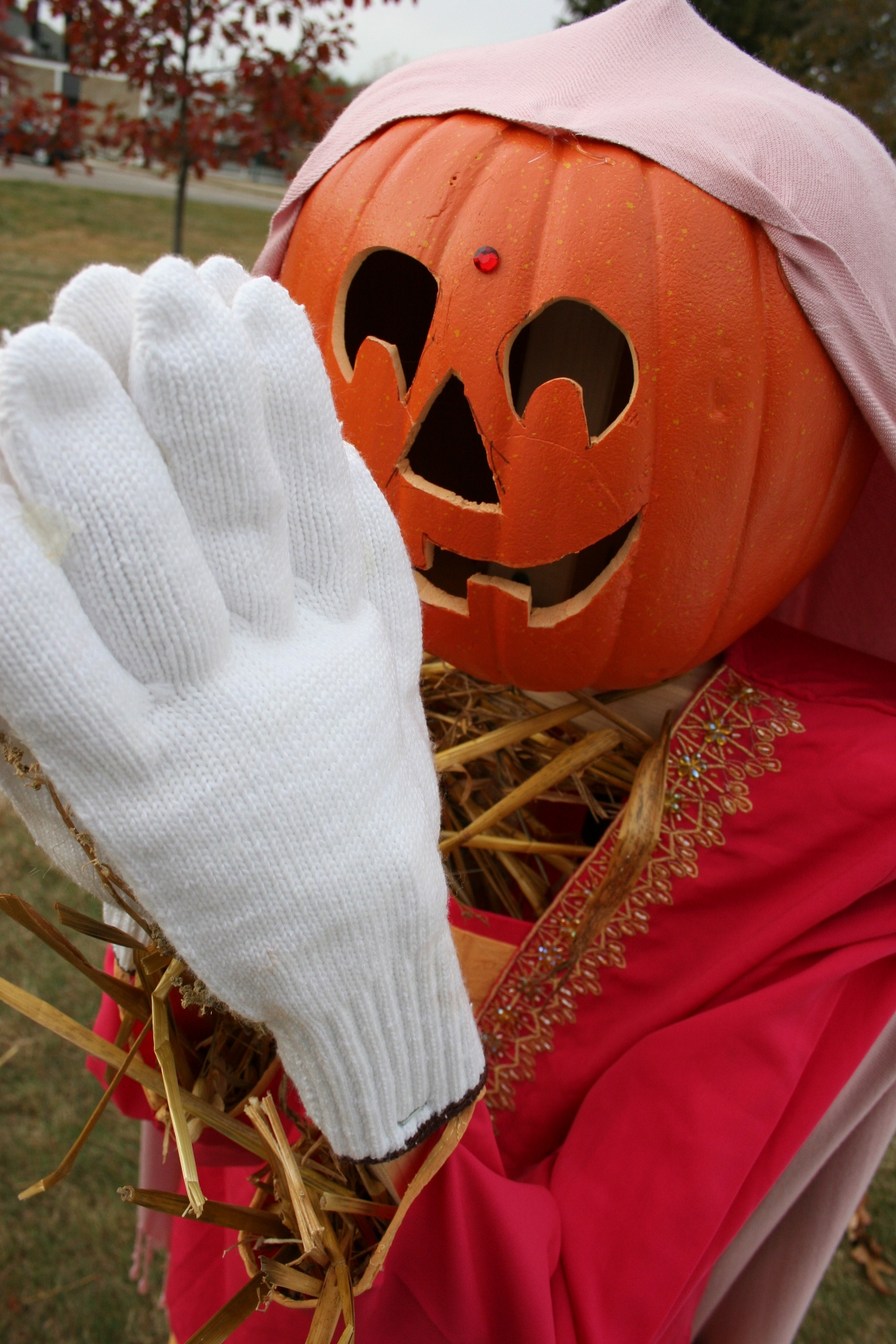
The Baker family got the details, right down to the jewel on the Indian woman's forehead.

© Copyright 2011 Audrey Kletscher Helbling


We’re not hyphenated Americans… September 12, 2011

Xafsa, age 5

THEY ARE THE FACES, the hands, the feet, the voices of a new Faribault. Not the community of only French or Germans, Scandinavians or whatever ethnic groups shaped and defined this southeastern Minnesota city for so many years.

Today the face of Faribault is changing with one-fifth of the population identifying itself as non-white in the 2010 U.S. Census. Most of those minorities are Latinos and Somalis, “drawn by the opportunity to live in a small town and work in food processing plants, especially meat-packing plants,” according to a recent research report, “After the Welcome Center: Renewing Conversations about Immigration and Diversity in Faribault,” conducted by students and staff with the St. Olaf College Political Science Department. To read that report, follow this link:

http://www.stolaf.edu/services/cel/students/CURI_Immigration.html

I can’t possibly attempt to summarize the contents of that report here. But it is packed with information that should be a must-read for every member of my community. We can all learn a thing or two or ten or 20 from this research project.

But mostly we can learn from meeting our neighbors at events like the International Festival held Saturday in Faribault’s Central Park. I’ve attended this meld of ethnic cultures several times already and each time enjoyed interacting with my neighbors whose skin color differs from my own.

That all sounds nice, politically-correct, and exactly what you’d expect me to write in a public venue like this blog. But I am sincere in my appreciation to the volunteer organizers of the International Festival and to those who participate. We just need more Caucasians to attend.

Several Latinos lead in singing of Mexico's national anthem on the band shell stage.

From the food and merchandise vendors to the musicians and everyone in between, I had ample opportunity to educate myself about Mexico, El Salvador, Guatemala, Honduras, Somalia, Holland and Norway. My husband and I sampled ethnic foods from five vendors.

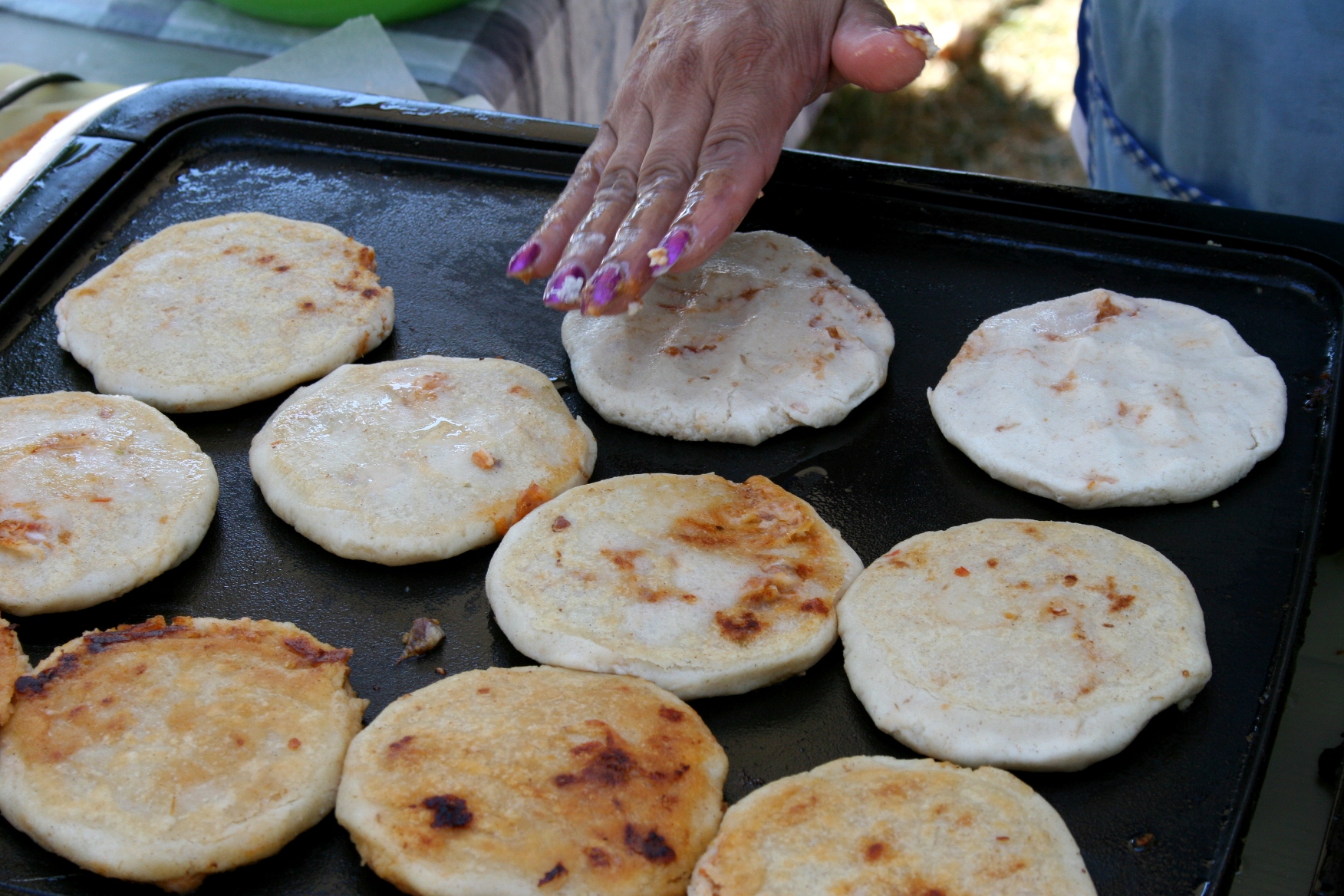
We sampled pupusas right off the griddle.

My husband and I tried Guatemalan chuchitos-- chicken, corn and salsa wrapped in a corn husk.

Faribault resident and one of the organizers, Peter van Sluis a Dutch citizen who has lived in the U.S. for 25 years, says the festival offers “a chance to mingle with different cultures.”

For me that mingling was most evident when children gathered under shade trees just south of the Central Park band shell to break piñatas. It didn’t matter if their skin was the beautiful color of sun-baked clay, or a nearly-black deep brown, or pale white. They were all kids, just kids, waiting to whack that swaying treasure-trove apart and then scramble for candy.

After the pinata was broken, the kids shared the candy.

While waiting for the piñata busting, I made a point of scanning the adult faces. I saw smiles—smiles nearly as wide as the brimmed hat worn by the man donning an El Salvador T-shirt. That’s an exaggeration, but you get my point. Viewing kids having fun has no color barriers.

Riyaam, 16

I would be remiss, however, if I didn’t mention my chat with Owatonna High School student Riyaam, a stunning Somali teen who was peddling shoes, skirts and other merchandise at a table. Well-spoken and seemingly mature beyond her 16 years, Riyaam and I talked about clashes between whites and Somalis at OHS which she says has led to a new policy of basically, “you fight, you’re out.”

She told me how the angry voice of a single white student, who declared, “Somalis don’t belong here,” triggered those racial tensions.

As she spoke, her voice became more agitated, edged with emotion. I wanted to reach across the table and hug her and I wish now that I had.

But I didn’t and it is too late for that now, but not too late to encourage Faribault residents to make the effort to meet the Somalis, the Sudanese, the Latinos and other immigrants who now live among us. It is easy to dismiss and stereotype an ethnic group if you’ve never made the effort to personally meet them individually.

A member of the Faribault-based band Circles and Squares, of which two members performed at Saturday’s International Festival, nicely summarized, I thought, the goal of the gathering: “Remember, we’re not hyphenated Americans. We’re friends.”

Well, said.

National flag ribbons were tied to trees in Central Park during the celebration.

Vendors peddled their wares at the festival.

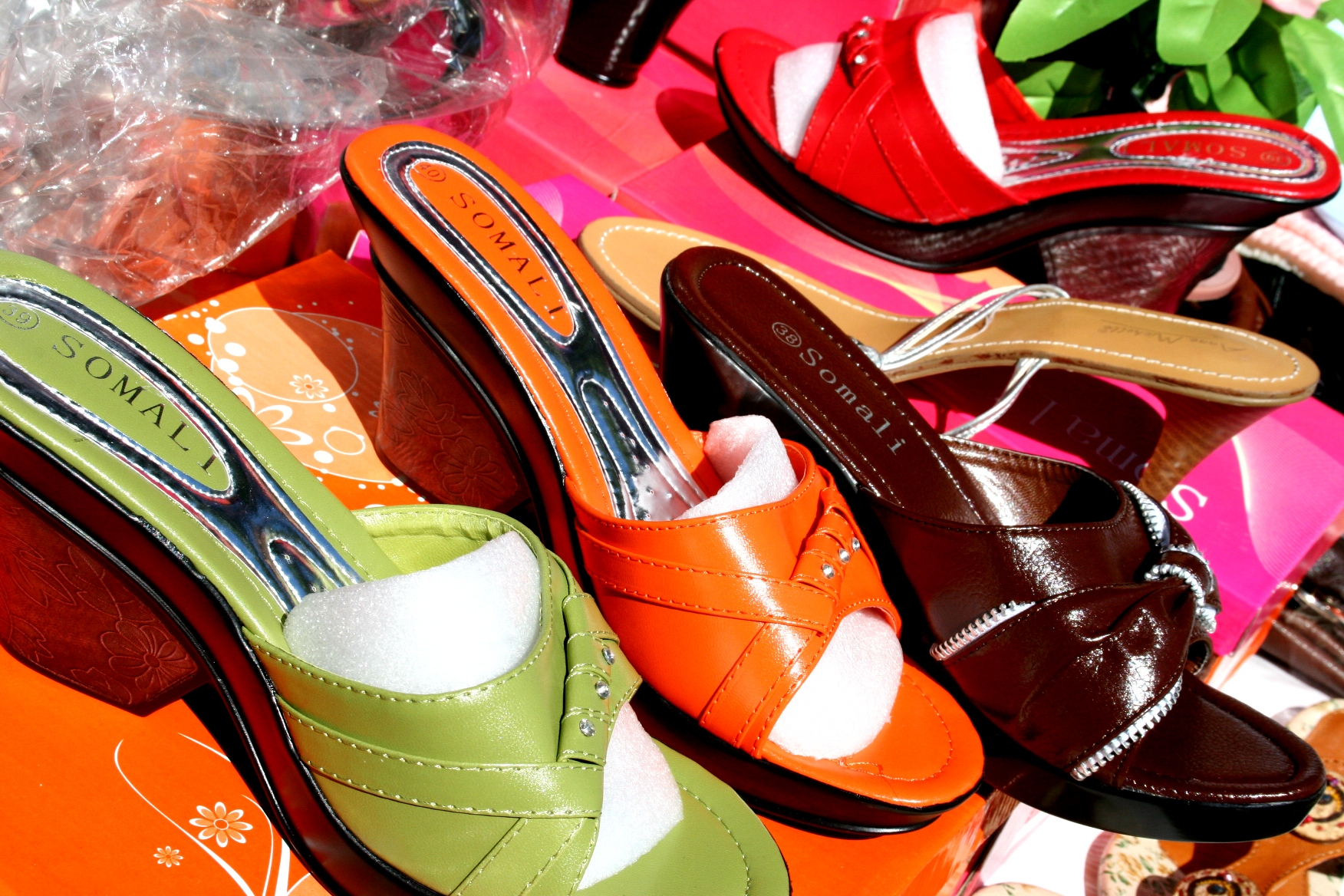
Shoes from Somalia on display at Riyaam's table.

A woman from El Salvador cooked at her food both.

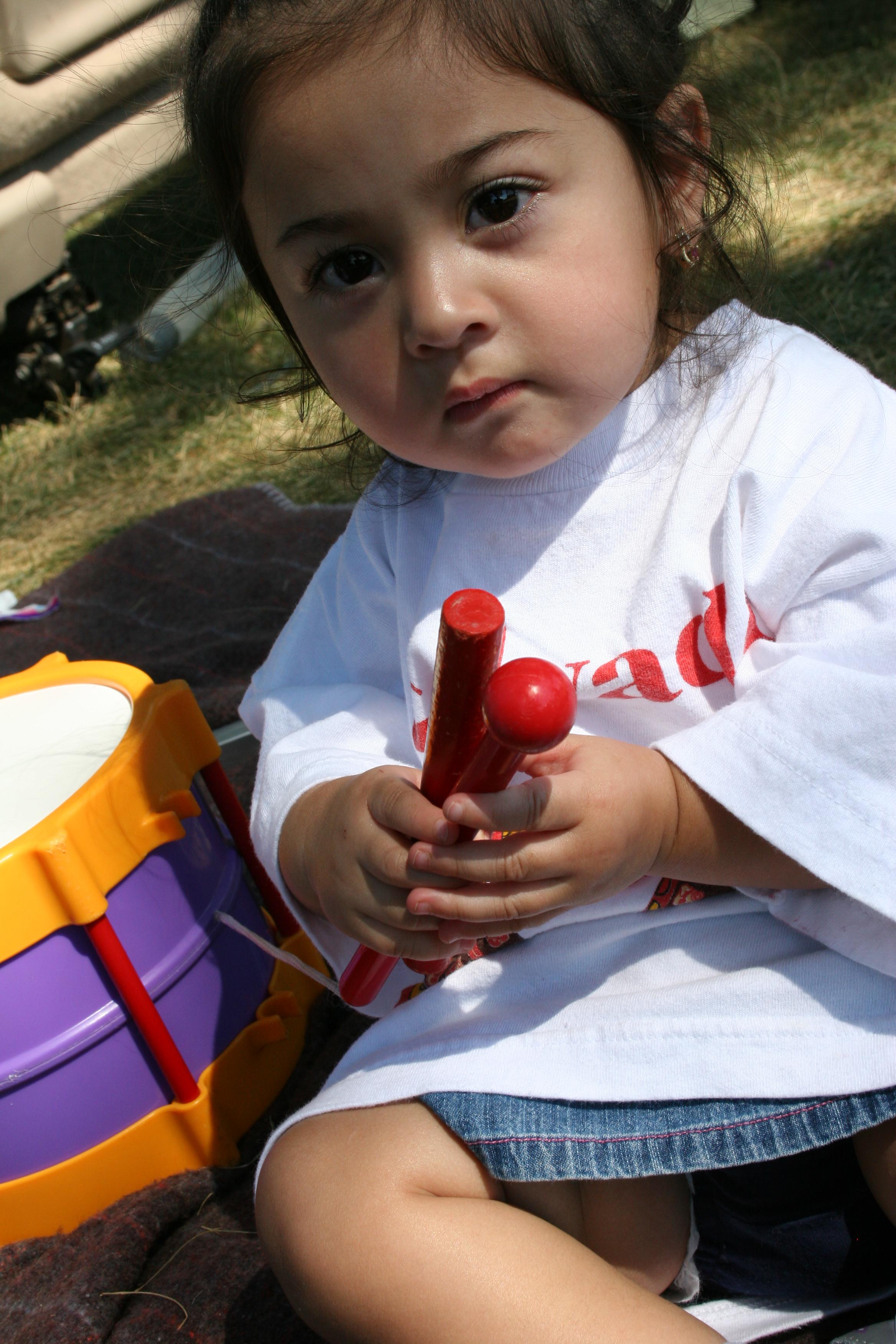
Sanji, 18 months, plays with toys in the kids' activity area of the fest.

Hoop maker, performer and teacher Adrienne Lee teaches a Girl Scout the art of hoop dancing. The Girl Scouts were among the non-profit groups with booths at the festival.

A young girl's henna stained foot.

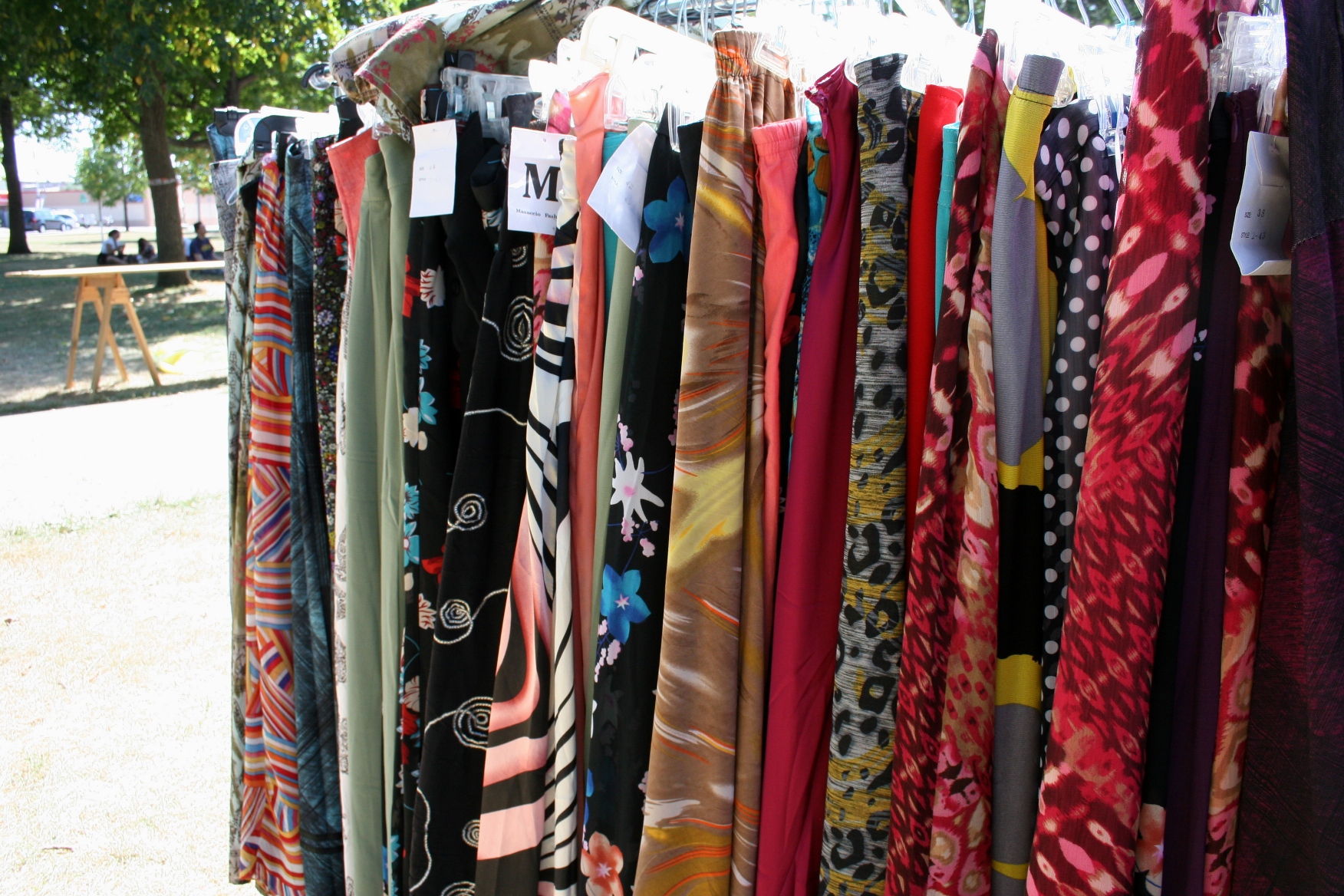
Colorful skirts for sale at Riyaam's booth.

THE ST. OLAF RESEARCH, which included interviews with 39 Faribault community members, states: “Most interviewees agree that Faribault’s immigrant and native-born communities operate alongside each other; coexisting peacefully, but not acting as a single integrated community.”

Exactly.

The report continues: “They do not agree about what should be done to unite these groups.

“We found Faribault leaders thus enmeshed in the long-standing American debate about which people ought to change and how much.”

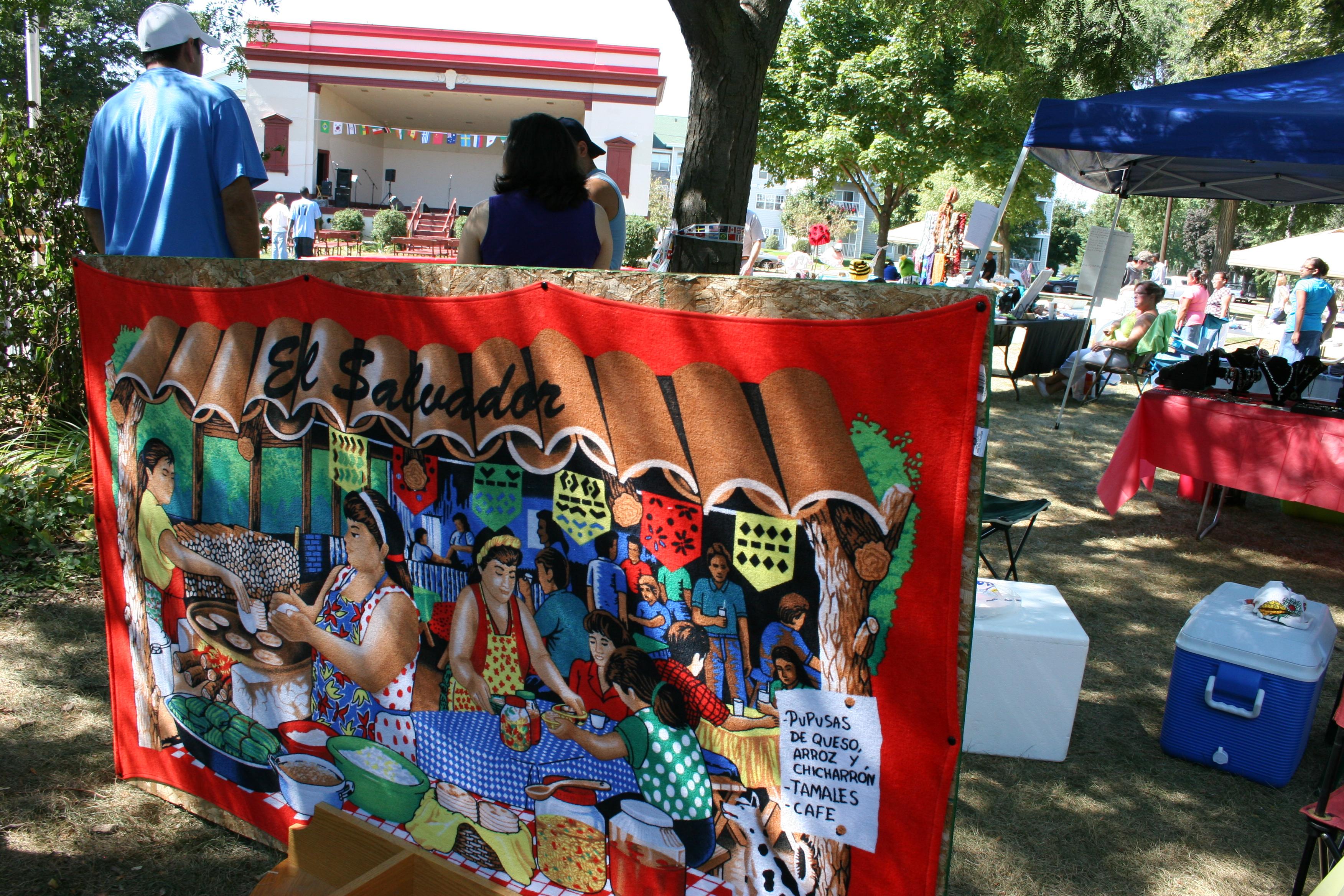
A colorful, detailed wall hanging/blanket represented El Salvador at one booth.

FYI: International Festival, Faribault, a recently-formed non-profit, has set its number one goal “to promote understanding of different cultures by organizing an annual event,” says Peter van Sluis. Secondly, the group wants to raise money and assist other non-profits.

© Copyright 2011 Audrey Kletscher Helbling


The not-so-surprising results to a diversity question March 23, 2011


An immigrant family in downtown Faribault represents the changing face of our community. I took this photograph in October 2010.

I DON’T KNOW WHY I was surprised. I should have expected the results given the many racist comments I’ve heard through the years.

Yet, when results of an online poll conducted by The Faribault Daily News were published in Tuesday’s edition, I was still shocked or, more honestly, embarrassed by the numbers.

The newspaper, after publishing stories on changing demographics in Faribault,  polled readers on this question: “Do you enjoy the increased diversity in Faribault?”

An overwhelming majority, 70.2 percent, responded with a “No.”

Only 20.8 percent voted “Yes.”

The other nine percent checked the “What increased diversity?” option.

Granted, polls like this, printed in each issue of the paper and then open for online voting, are not scientifically controlled and therefore could be substantially flawed. We have only the number of respondents, 312 for this question, and the tallied results, from which to draw conclusions.

However, when you live in a community long enough—I’ve been in Faribault for 29 years—you know how people feel. And, I think it would be fair to say that many residents in my community are not all that welcoming of minorities.

I hear it in the off-the-cuff negative comments about Somali men hanging around downtown or about the Hispanic family that moved in down the street. I hear it in the warning to avoid certain retail destinations at night. I hear it in the spewed words, “I don’t want any Somalians moving in next door.”

I read it in the comments submitted to the local newspaper whenever race or diversity is the subject of an article.

The words are mean, cutting, derogatory, and, most definitely, prejudiced.


Downtown Faribault businesses include Banadir Restaurant, a Somali restaurant.

Many times I find myself defending the Hispanic, Somali and Sudanese people who comprise most of the nearly 17 percent of minorities living in my community of 23,352.

My standard answer is something like this, “There are good white people and there are bad white people, just like there are good Hispanics (or fill in the blank with another race) and bad Hispanics. The only bad experiences I’ve had are with white people.”

That is almost true. Several years ago my husband and I, unbeknown to us, sold a car to a Minneapolis-based Latino gang member who then used our vehicle in a gang-related shooting.

I really struggle with individuals who negatively label an entire ethnic group. It is unfair and unjustified.

That said, many individuals, churches, schools and organizations in Faribault are working hard to welcome and assist our minority population. Such examples are the Society of St. Vincent de Paul Center for Charitable Services and The Faribault Diversity Coalition. Unfortunately, The Welcome Center closed late last year.


Different cultures, all the faces of today's Faribault, mingled during the Fall Festival in October 2010. Our town's current Black or African/American population is 7.5 percent.

But, really, efforts to embrace the newcomers in our community begin with each of us, on a personal level, in our hearts.

On my personal level, I’ve come to better understand other cultures because my second daughter is a Spanish language major who has lived and studied and done mission work abroad. She is currently a Spanish medical interpreter.

I try to attend ethnic events in Faribault like the annual summertime International Market Day celebration.


A member of Ollin Ayacaxtli dances at Faribault's International Market Day celebration. Faribault's Hispanic or Latino population numbers 3,026, according to the 2010 U.S. Census.

I’d like to see The Paradise Center for the Arts, reach out to minority artists, and that is a project I hope to help the local art center pursue.

I’ve wondered, too, and this might seem odd to mention, but why do I seldom, if ever, see obituaries published in the local newspaper for minority members of our community? We need to recognize these seemingly small things that set us apart.

If we take small steps, first as individuals, in educating ourselves, then our attitudes toward each other can change. We will have a stronger, better community that is built on understanding and acceptance rather than on differences.


A family matriarch oversees the making of pupusas from her chair at the International Market Day in Faribault in 2009. This is one of my all-time favorite portraits that I've ever taken.

CLICK HERE for 2010 U.S. Census results from Minnesota. Scroll down to Rice County, which includes Faribault, and shows a county minority population of 9,576 or 14.9 percent. Statewide, our minority population is 16.9 percent.

© Copyright 2011 Audrey Kletscher Helbling